S.Amdt. 853
What it does: Adds SEC. __. SENSE OF THE SENATE REGARDING LEADERS OF CONGRESS ENGAGING IN DIPLOMACY WITH STATE SPONSORS OF TERRORISM at the end of title V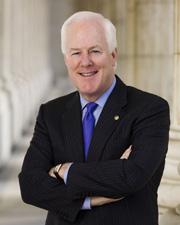 Sen. John Cornyn (R-TX)
What it changes
1 change to S. 372 · shown in the bill's text
Adds SEC. __. SENSE OF THE SENATE REGARDING LEADERS OF CONGRESS ENGAGING IN DIPLOMACY WITH STATE SPONSORS OF TERRORISM at the end of title V
Adds a sectionIn S. 372 · Reported to Senate
(2) Section 207(a)(2)(B) of the Legislative Branch Appropriations Act, 1993 (44 U.S.C. 501 note) is amended by striking "National Imagery and Mapping Agency" and inserting "National Geospatial- Intelligence Agency".
Inserted: SEC. __. SENSE OF THE SENATE REGARDING LEADERS OF CONGRESS ENGAGING IN DIPLOMACY WITH STATE SPONSORS OF TERRORISM.
Inserted: (a) Findings.--Congress makes the following findings:
Inserted: (1) The Secretary of State has designated certain countries that have repeatedly provided support for international acts of terrorism as state sponsors of terrorism.
Inserted: (2) State sponsors of terrorism provide critical support to non-state terrorist groups.
Inserted: (3) Without state sponsors, terrorist groups would have much more difficulty obtaining the funds, weapons, materials, and secure areas they require to plan and conduct operations.
Inserted: (4) United States policy seeks to pressure and isolate state sponsors of terrorism so they will renounce the use of terrorism, end support to terrorists, and bring terrorists to justice for past crimes.
Inserted: (5) Syria remains a designated state sponsor of terrorism, having first been designated as such on December 29, 1979.
Inserted: (6) Iran remains a designated state sponsor of terrorism, having first been designated as such on January 19, 1984.
Inserted: (7) The Secretary of State determined in 2006 that Syria and Iran continue to "routinely provide unique safe haven, substantial resources and guidance to terrorist organizations".
Inserted: (8) Senators themselves have historically recognized the constitutional principle that the foreign affairs power resides exclusively in the Executive Branch. For example, Senator J. William Fulbright, former Chairman of the Committee on Foreign Relations of the Senate explained in a speech at Cornell Law School in 1959, "[t]he pre-eminent responsibility of the President for the formulation and conduct of American foreign policy is clear and unalterable. . . . He possesses sole authority to communicate and negotiate with foreign powers." (published as J. William Fulbright, "American Foreign Policy in the 20th-Century Under an 18th-Century Constitution", 47 Cornell Law Quarterly 1, 3 (1961)).
Inserted: (9) The Supreme Court similarly recognized the "very delicate, plenary and exclusive power of the President as the sole organ of the Federal Government in the field of international relations" in the United States versus Curtiss-Wright Export Corporation (299 U.S. 304, 319 (1936)).
Inserted: (b) Sense of the Senate.--It is the sense of the Senate that leaders of Congress should not engage in diplomacy with state sponsors of terrorism over the expressed objections of officials of the Executive Branch, as the Executive Branch has the exclusively responsibility for foreign affairs matters under the Constitution.
Original wording
At the end of title V, add the following:
Read automatically from the Congressional Record. Check the original before relying on it.
As printed
SA 853. Mr. CORNYN submitted an amendment intended to be proposed by him to the bill S. 372, to authorize appropriations for fiscal year 2007 for the intelligence and intelligence-related activities of the United States Government, the Intelligence Community Management Account, and the Central Intelligence Agency Retirement and Disability System, and for other purposes; which was ordered to lie on the table; as follows:
At the end of title V, add the following:
SEC. __. SENSE OF THE SENATE REGARDING LEADERS OF CONGRESS ENGAGING IN DIPLOMACY WITH STATE SPONSORS OF TERRORISM.
(a) Findings.--Congress makes the following findings:
(1) The Secretary of State has designated certain countries that have repeatedly provided support for international acts of terrorism as state sponsors of terrorism.
(2) State sponsors of terrorism provide critical support to non-state terrorist groups.
(3) Without state sponsors, terrorist groups would have much more difficulty obtaining the funds, weapons, materials, and secure areas they require to plan and conduct operations.
(4) United States policy seeks to pressure and isolate state sponsors of terrorism so they will renounce the use of terrorism, end support to terrorists, and bring terrorists to justice for past crimes.
(5) Syria remains a designated state sponsor of terrorism, having first been designated as such on December 29, 1979.
(6) Iran remains a designated state sponsor of terrorism, having first been designated as such on January 19, 1984.
(7) The Secretary of State determined in 2006 that Syria and Iran continue to “routinely provide unique safe haven, substantial resources and guidance to terrorist organizations”.
(8) Senators themselves have historically recognized the constitutional principle that the foreign affairs power resides exclusively in the Executive Branch. For example, Senator J. William Fulbright, former Chairman of the Committee on Foreign Relations of the Senate explained in a speech at Cornell Law School in 1959, “[t]he pre-eminent responsibility of the President for the formulation and conduct of American foreign policy is clear and unalterable. . . . He possesses sole authority to communicate and negotiate with foreign powers.” (published as J. William Fulbright, “American Foreign Policy in the 20th-Century Under an 18th-Century Constitution”, 47 Cornell Law Quarterly 1, 3 (1961)).
(9) The Supreme Court similarly recognized the “very delicate, plenary and exclusive power of the President as the sole organ of the Federal Government in the field of international relations” in the United States versus Curtiss-Wright Export Corporation (299 U.S. 304, 319 (1936)).
(b) Sense of the Senate.--It is the sense of the Senate that leaders of Congress should not engage in diplomacy with state sponsors of terrorism over the expressed objections of officials of the Executive Branch, as the Executive Branch has the exclusively responsibility for foreign affairs matters under the Constitution.
Legislative Activity
Stay on top of the latest movement without scrolling through every action
Senate amendment submitted
April 16, 2007