S.Amdt. 879
What it does: Adds SEC. __. SENSE OF CONGRESS REGARDING PRESIDENTIAL AUTHORITY TO CONTROL FOREIGN POLICY at the end of the bill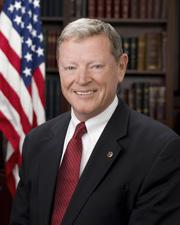 Sen. James M. Inhofe (R-OK)
What it changes
1 change to S. 372 · shown in the bill's text
Adds SEC. __. SENSE OF CONGRESS REGARDING PRESIDENTIAL AUTHORITY TO CONTROL FOREIGN POLICY at the end of the bill
Adds a sectionIn S. 372 · Reported to Senate
(2) Section 207(a)(2)(B) of the Legislative Branch Appropriations Act, 1993 (44 U.S.C. 501 note) is amended by striking "National Imagery and Mapping Agency" and inserting "National Geospatial- Intelligence Agency".
Inserted: SEC. __. SENSE OF CONGRESS REGARDING PRESIDENTIAL AUTHORITY TO CONTROL FOREIGN POLICY.
Inserted: (a) Findings.--Congress finds the following:
Inserted: (1) Article II, section 1 of the Constitution of the United States grants "executive Power" to the President of the United States.
Inserted: (2) James Madison wrote in Federalist No. 47 that Charles de Montesquieu was "[t]he oracle who is always consulted and cited" on issues dealing with separation of powers, and, in "The Spirit of the Laws", Montesquieu defined the executive power "in respect to things dependent on the law of nations" and as the power by which the "magistrate . . . makes peace or war, sends or receives embassies, establishes the public security, and provides against invasions".
Inserted: (3) In a speech to Congress in 1789, James Madison noted that the "association of the Senate with the President in exercising [the appointment] function, is an exception to this general rule [that executive power is vested solely in the President]; and exceptions to general rules . . . are ever to be taken strictly".
Inserted: (4) In 1790, Thomas Jefferson wrote, "The transaction of business with foreign nations is executive altogether. It belongs, then, to the head of that department, except as to such portions of it as are specially submitted to the Senate. Exceptions are to be construed strictly.".
Inserted: (5) Alexander Hamilton reaffirmed this view in 1793, asserting "that as the participation of the Senate in the making of treaties, and the power of the legislature to declare war, are exceptions out of the general 'executive power' vested in the President, they are to be construed strictly, and ought to be extended no further than is essential to their execution".
Inserted: (6) John Marshall, during his congressional term in 1799, reaffirmed that the President was "the sole organ of the nation in its external relations" because "[h]e possesses the whole Executive Power".
Inserted: (7) In 1936, the Supreme Court, in United States v. Curtiss-Wright Export Corporation, 299 U.S. 304, stated, "Not only, as we have shown, is the federal power over external affairs in origin and essential character different from that over internal affairs, but participation in the exercise of the power is significantly limited. In this vast external realm, with its important, complicated, delicate and manifold problems, the President alone has the power to speak or listen as a representative of the nation. He makes treaties with the advise and consent of the Senate; but he alone negotiates. Into the field of negotiation the Senate cannot intrude, and Congress itself is powerless to invade it.".
Inserted: (8) Section 953 of title 18, United States Code, originally enacted in 1799 as the Logan Act (1 Stat. 613), states, "Any citizen of the United States, wherever he may be, who, without authority of the United States, directly or indirectly commences or carries on any correspondence or intercourse with any foreign government or any officer or agent thereof, with intent to influence the measures or conduct of any foreign government or of any officer or agent thereof, in relation to any disputes or controversies with the United States, or to defeat the measures of the United States, shall be fined under this title or imprisoned not more than three years, or both. This section shall not abridge the right of a citizen to apply himself, or his agent, to any foreign government, or the agents thereof, for redress of any injury which he may have sustained from such government or any of its agents or subjects.".
Inserted: (9) In 1952, Senator Arthur Vandenberg asserted that "politics stop at the water's edge".
Inserted: (10) Intrusions on the executive power of the President by Members of Congress have had negative effects on foreign policy, and, in the past, some Members of Congress have tried to subvert the goals and aims of the executive branch by pursuing foreign policy goals that are contrary to those of the President.
Show 11 more inserted paragraphsShow less
Inserted: (11) In 1987 and 1988, Speaker of the House Jim Wright attempted to engage in diplomacy between the Sandinista Government of Nicaragua and the Contra regime against the expressed aims of President Ronald Reagan. Speaker Wright's actions undermined the authority and leveraging power of the President at a crucial time in the Nation's history and also ignored the finding of the Permanent Select Committee on Intelligence of the House of Representatives that the Government of Nicaragua was planning to use military force against coterminous states.
Inserted: (12) In 1980, Representative Charlie Wilson began urging the Central Intelligence Agency to arm Afghani mujahideen fighters. The decision to double funding to Afghanistan was unsolicited and was made without the knowledge of the President. The book "Charlie Wilson's War", written by George Crile, asserts that Representative Wilson thus violated the Logan Act.
Inserted: (13) In 1983, the decision of Congress to attach a stipulation to legislation authorizing the extension of the presence of the Marines in Beirut, which stated that the extension could be withdrawn if fatalities continued, possibly led to the suicide bombing of the Marine barracks on October 23, 1983, causing the deaths of 241 members of the Armed Forces of the United States.
Inserted: (14) It is essential that the President alone have the ability to formulate foreign policy and engage in diplomacy.
Inserted: (15) The offices of the Speaker of the House of Representatives and the Majority Leader of the Senate are positions of special responsibility, seen as "authoritative" by foreign governments, and thus, the Speaker of the House and the Majority Leader of the Senate should be held accountable for actions that may be seen by foreign governments as contrary to the foreign policy goals of the President.
Inserted: (16) Recent actions by Speaker of the House Nancy Pelosi, whether intentionally or unintentionally, have undermined the President's foreign policy toward Syria by giving a false impression of the positions of the United States and Israel on negotiations with the Government of Syria.
Inserted: (17) It is essential that Members of Congress be viewed as supportive of the President's execution of foreign policy.
Inserted: (18) It is harmful and dangerous for the executive power of the President to be subjugated by Congress.
Inserted: (b) Sense of Congress.--It is the sense of Congress that--
Inserted: (1) it is not in the interests of the United States for Members of Congress to intervene in disputes between the United States Government and governments of foreign countries without the authorization of the President; and
Inserted: (2) Members of Congress should heed the foreign policies of the President while traveling outside the United States and meeting with foreign governments.
Original wording
At the end, insert the following:
Read automatically from the Congressional Record. Check the original before relying on it.
As printed
SA 879. Mr. INHOFE (for himself and Mr. Craig) submitted an amendment intended to be proposed by him to the bill S. 372, to authorize appropriations for fiscal year 2007 for the intelligence and intelligence-related activities of the United States Government, the Intelligence Community Management Account, and the Central Intelligence Agency Retirement and Disability System, and for other purposes; which was ordered to lie on the table; as follows:
At the end, insert the following:
SEC. __. SENSE OF CONGRESS REGARDING PRESIDENTIAL AUTHORITY TO CONTROL FOREIGN POLICY.
(a) Findings.--Congress finds the following:
(1) Article II, section 1 of the Constitution of the United States grants “executive Power” to the President of the United States.
(2) James Madison wrote in Federalist No. 47 that Charles de Montesquieu was “[t]he oracle who is always consulted and cited” on issues dealing with separation of powers, and, in “The Spirit of the Laws”, Montesquieu defined the executive power “in respect to things dependent on the law of nations” and as the power by which the “magistrate . . . makes peace or war, sends or receives embassies, establishes the public security, and provides against invasions”.
(3) In a speech to Congress in 1789, James Madison noted that the “association of the Senate with the President in exercising [the appointment] function, is an exception to this general rule [that executive power is vested solely in the President]; and exceptions to general rules . . . are ever to be taken strictly”.
(4) In 1790, Thomas Jefferson wrote, “The transaction of business with foreign nations is executive altogether. It belongs, then, to the head of that department, except as to such portions of it as are specially submitted to the Senate. Exceptions are to be construed strictly.”.
(5) Alexander Hamilton reaffirmed this view in 1793, asserting “that as the participation of the Senate in the making of treaties, and the power of the legislature to declare war, are exceptions out of the general ‘executive power' vested in the President, they are to be construed strictly, and ought to be extended no further than is essential to their execution”.
(6) John Marshall, during his congressional term in 1799, reaffirmed that the President was “the sole organ of the nation in its external relations” because “[h]e possesses the whole Executive Power”.
(7) In 1936, the Supreme Court, in United States v. Curtiss-Wright Export Corporation, 299 U.S. 304, stated, “Not only, as we have shown, is the federal power over external affairs in origin and essential character different from that over internal affairs, but participation in the exercise of the power is significantly limited. In this vast external realm, with its important, complicated, delicate and manifold problems, the President alone has the power to speak or listen as a representative of the nation. He makes treaties with the advise and consent of the Senate; but he alone negotiates. Into the field of negotiation the Senate cannot intrude, and Congress itself is powerless to invade it.”.
(8) Section 953 of title 18, United States Code, originally enacted in 1799 as the Logan Act (1 Stat. 613), states, “Any citizen of the United States, wherever he may be, who, without authority of the United States, directly or indirectly commences or carries on any correspondence or intercourse with any foreign government or any officer or agent thereof, with intent to influence the measures or conduct of any foreign government or of any officer or agent thereof, in relation to any disputes or controversies with the United States, or to defeat the measures of the United States, shall be fined under this title or imprisoned not more than three years, or both. This section shall not abridge the right of a citizen to apply himself, or his agent, to any foreign government, or the agents thereof, for redress of any injury which he may have sustained from such government or any of its agents or subjects.”.
(9) In 1952, Senator Arthur Vandenberg asserted that “politics stop at the water's edge”.
(10) Intrusions on the executive power of the President by Members of Congress have had negative effects on foreign policy, and, in the past, some Members of Congress have tried to subvert the goals and aims of the executive branch by pursuing foreign policy goals that are contrary to those of the President.
(11) In 1987 and 1988, Speaker of the House Jim Wright attempted to engage in diplomacy between the Sandinista Government of Nicaragua and the Contra regime against the expressed aims of President Ronald Reagan. Speaker Wright's actions undermined the authority and leveraging power of the President at a crucial time in the Nation's history and also ignored the finding of the Permanent Select Committee on Intelligence of the House of Representatives that the Government of Nicaragua was planning to use military force against coterminous states.
(12) In 1980, Representative Charlie Wilson began urging the Central Intelligence Agency to arm Afghani mujahideen fighters. The decision to double funding to Afghanistan was unsolicited and was made without the knowledge of the President. The book “Charlie Wilson's War”, written by George Crile, asserts that Representative Wilson thus violated the Logan Act.
(13) In 1983, the decision of Congress to attach a stipulation to legislation authorizing the extension of the presence of the Marines in Beirut, which stated that the extension could be withdrawn if fatalities continued, possibly led to the suicide bombing of the Marine barracks on October 23, 1983, causing the deaths of 241 members of the Armed Forces of the United States.
(14) It is essential that the President alone have the ability to formulate foreign policy and engage in diplomacy.
(15) The offices of the Speaker of the House of Representatives and the Majority Leader of the Senate are positions of special responsibility, seen as “authoritative” by foreign governments, and thus, the Speaker of the House and the Majority Leader of the Senate should be held accountable for actions that may be seen by foreign governments as contrary to the foreign policy goals of the President.
(16) Recent actions by Speaker of the House Nancy Pelosi, whether intentionally or unintentionally, have undermined the President's foreign policy toward Syria by giving a false impression of the positions of the United States and Israel on negotiations with the Government of Syria.
(17) It is essential that Members of Congress be viewed as supportive of the President's execution of foreign policy.
(18) It is harmful and dangerous for the executive power of the President to be subjugated by Congress.
(b) Sense of Congress.--It is the sense of Congress that--
(1) it is not in the interests of the United States for Members of Congress to intervene in disputes between the United States Government and governments of foreign countries without the authorization of the President; and
(2) Members of Congress should heed the foreign policies of the President while traveling outside the United States and meeting with foreign governments.
Legislative Activity
Stay on top of the latest movement without scrolling through every action
Senate amendment submitted
April 16, 2007