To prohibit congressional earmarks of funds appropriated pursuant to authorizations in the bill.
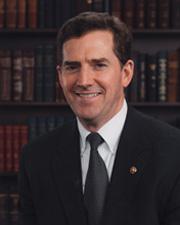 Sen. Jim DeMint (R-SC)
Legislative Activity
Stay on top of the latest movement without scrolling through every action
Senate amendment not agreed to: Amendment SA 930 not agreed to in Senate by Yea-Nay Vote. 22 - 71. Record Vote Number: 142.
April 25, 2007
View full timeline
Senate amendment not agreed to: Amendment SA 930 not agreed to in Senate by Yea-Nay Vote. 22 - 71. Record Vote Number: 142.
April 25, 2007
Roll call votes on amendments in Senate: Amendment SA 930 not agreed to in Senate by Yea-Nay Vote. 22 - 71. Record Vote Number: 142.
April 25, 2007
Senate amendment proposed (on the floor): Amendment SA 930 proposed by Senator DeMint.(consideration: CR S5029-5030, S5056-5057; text: CR S5209)
April 25, 2007
Amendment SA 930 proposed by Senator DeMint. (consideration: CR S5029-5030, S5056-5057; text: CR S5209) To prohibit congressional earmarks of funds appropriated pursuant to authorizations in the bill.
April 25, 2007
Amendment SA 930 not agreed to in Senate by Yea-Nay Vote. 22 - 71. Record Vote Number: 142.
April 25, 2007
Senate amendment submitted
April 24, 2007
Votes
1 roll call on this amendment
Text
Proposed
STATEMENTS ON INTRODUCED BILLS AND JOINT RESOLUTIONS

By Mr. DURBIN (for himself and Mr. Obama):
S. 1228. A bill to amend section 485(f) of the Higher Education Act
of 1965 regarding law enforcement emergencies; to the Committee on
Health, Education, Labor, and Pensions.
Mr. DURBIN. Mr. President, I ask unanimous consent that the text of
the bill be printed in the Reord.
There being no objection, the text of the bill was ordered to be
printed in the Record, as follows:

S. 1228

Be it enacted by the Senate and House of Representatives of
the United States of America in Congress assembled,

SECTION 1. SHORT TITLE.

This Act may be cited as the ``Campus Law Enforcement
Emergency Response Act of 2007''.

SEC. 2. LAW ENFORCEMENT EMERGENCIES.

Section 485(f) of the Higher Education Act of 1965 (20
U.S.C. 1092(f)) is amended--
(1) by redesignating paragraphs (9) through (15) as
paragraphs (10) through (16), respectively;
(2) by inserting after paragraph (8) the following:
``(9)(A) Each institution of higher education participating
in any program under this title shall develop and distribute
as part of the report described in paragraph (1)--
``(i) a statement of policy regarding the institution's law
enforcement emergency response program; and
``(ii) statistics concerning the occurrence of law
enforcement emergencies on the campus of the institution.
``(B) In this paragraph:
``(i) The term `campus' has the meaning given the term in
paragraph 6(A)(i), except that the term includes--
``(I) a noncampus building or property, as defined in
paragraph (6)(A)(ii), of an institution of higher education;
and
``(II) any public property, as defined in paragraph
(6)(A)(iii), of an institution of higher education.
``(ii) The term `law enforcement emergency' means a
shooting, the presence of an armed and dangerous person, a
bomb threat, the presence of an unauthorized hazardous or
toxic material that poses a threat to health and safety, a
lock-down, a reverse evacuation, or any other comparable type
of incident, on the campus of an institution of higher
education, that involves the participation of one or more law
enforcement agencies.
``(C) The policy described in subparagraph (A) shall
address the following:
``(i) Procedures students, employees, and others on the
campus of the institution will be directed to follow if a law
enforcement emergency occurs.
``(ii) Procedures the institution and law enforcement
agencies will follow to inform students, employees, and
others on the campus of the institution about a law
enforcement emergency on the campus and will follow to direct
the actions of the students, employees, and others. Such
procedures may include e-mail alerts, telephone alerts, text-
message alerts, radio announcements, television alerts,
audible alert signals, and public address announcements.
``(D) Each institution participating in any program under
this title shall test the institution's law enforcement
emergency response policy and procedures on at least an
annual basis.
``(E) Each institution participating in any program under
this title shall make reports to the students, employees, and
others on the campus of the institution, not later than 30
minutes after the discovery of a law enforcement emergency on
the campus, through the procedures described in subparagraph
(C)(ii).
``(F) The Secretary and the Attorney General shall jointly
have the authority--
``(i) to review, monitor, and ensure compliance with this
paragraph;
``(ii) to advise institutions of higher education on model
law enforcement emergency response policies, procedures, and
practices; and
``(iii) to disseminate information concerning those
policies, procedures, and practices.
``(G) Campus law enforcement emergency response grants.--
``(i) Program authority.--The Secretary may make grants to
institutions of higher education or consortia of such
institutions, or enter into contracts with such institutions,
consortia, and other organizations, to develop, implement,
operate, improve, test, or disseminate campus law enforcement
emergency response policies, procedures, or programs.

[[Page S5200]]

``(ii) Awards.--Grants and contracts under this
subparagraph shall be awarded--

``(I) on a competitive basis; and
``(II) for a period not to exceed 1 year.

``(iii) Applications.--An institution of higher education,
a consortium, or an organization that desires to receive a
grant or enter into a contract under this subparagraph shall
submit an application to the Secretary at such time, in such
manner, and containing or accompanied by such information as
the Secretary may reasonably require by regulation.
``(iv) Participation.--In awarding grants and contracts
under this subparagraph, the Secretary shall make every
effort to ensure--

``(I) the equitable participation of institutions of higher
education that are eligible to participate in programs under
this title;
``(II) the equitable geographic participation of such
institutions; and
``(III) the equitable participation of such institutions
with large and small enrollments.

``(v) Authorization of appropriations.--There are
authorized to be appropriated to carry out this subparagraph
$5,000,000 for fiscal year 2008 and such sums as may be
necessary for each of the 4 succeeding fiscal years.''.

Mr. DURBIN. Mr. President, I rise today to introduce the Campus Law
Enforcement Emergency Response Act of 2007. This legislation takes
several important steps to enhance the security of college and
university campuses, including ensuring that schools have created and
tested emergency response procedures and notification systems.
We will never forget the tragic events at Virginia Tech on April 16,
2007, when a mentally ill gunman brutally murdered 32 men and women
over a period of several hours. This horrible incident demonstrated the
need for colleges and universities to develop and test procedures for
responding to emergency situations that pose a large-scale threat to
public safety. In the era we live in today, college campuses may be
viewed as inviting targets for those who seek to terrorize or kill. We
have to be prepared for the possibility of mass-casualty attacks on our
college campuses, and we have to be ready to respond to them if they
occur.
Many schools in my home State of Illinois and elsewhere have taken
measures, both before and after the Virginia Tech shootings, to
safeguard against such emergency incidents. However, there are nearly
4,300 colleges and universities in the country, serving over 17 million
students and millions more faculty, staff and campus visitors each
year. We need to ensure that all of these institutions have effective
law enforcement emergency response procedures in place, and we need to
provide guidance and assistance for schools that need it.
The Campus Law Enforcement Emergency Response Act would ensure that
institutions of higher education meet baseline preparedness and testing
requirements for law enforcement emergencies. The bill would expand the
focus of the Clery Act, an existing law that requires colleges and
universities to issue annual reports on campus crime and crime security
measures, to cover ``law enforcement emergency'' situations. The term
``law enforcement emergency'' as defined in the bill would include
situations that occur on a college campus that involve a law
enforcement response and that pose a potential threat of continuing
danger. Such situations would include ``a shooting, the presence of an
armed and dangerous person, a bomb threat, the presence of an
unauthorized hazardous or toxic material that poses a threat to health
and safety, a lock-down, a reverse evacuation, or any other comparable
type of incident on the campus . . . that involves the participation of
one or more law enforcement agencies.'' Because of the threat of large-
scale dangers that these types of emergency incidents pose to the
campus community, additional preparations should be made for them.
First, the bill would require higher education institutions to
develop and distribute policies regarding the institution's law
enforcement emergency response program. These policies would have to
specify the procedures students and employees should follow if a law
enforcement emergency occurs and the procedures that the school and its
partner law enforcement agencies would follow to inform and guide
students and employees in case of such an emergency. Under this bill,
schools are encouraged to establish notification procedures such as e-
mail alerts, telephone alerts, text-message alerts, radio
announcements, television alerts, audible alert signals, and public
address announcements.
The bill would also require institutions to test their law
enforcement emergency response procedures at least annually. Such
testing is crucial for ensuring the efficient and effective
coordination of law enforcement response activities with the actions of
those on campus.
In addition, this legislation would require institutions to provide
notice to the campus community through its notification procedures no
later than 30 minutes after the discovery of a law enforcement
emergency. Many have pointed out that over 2 hours passed between the
discovery of the first shootings on the Virginia Tech campus and the
initial threat notification to the Virginia Tech community. In the
interim period, the Virginia Tech gunman moved across campus and shot
many more victims. A 30-minute notification requirement provides enough
time for law enforcement agencies to assess an emergency situation and
to issue, at minimum, an alert notifying the campus community about the
possibility of further danger.
The bill would give the Departments of Education and Justice joint
authority to review, monitor, and ensure compliance with the bill's
requirements. Given the Department of Justices experience in dealing
with law enforcement emergencies, joint authority and coordination with
the Department of Education will provide a significant benefit to
schools. Additionally, the bill would authorize the Education and
Justice Departments to advise schools on model law enforcement
emergency response procedures and to disseminate information about
these procedures. The bill would further require schools to report
statistics on the actual occurrence of law enforcement emergencies at
each school.
Finally, the bill would create a competitive grant program, to be
administered by the Department of Education, to help institutions
develop, implement, operate, improve, test, and disseminate campus law
enforcement emergency response programs. The program would be
authorized for 5 years, at $5 million for the first year and for such
sums as may be necessary thereafter.
The tragedy at Virginia Tech should cause us to reassess numerous
laws in an effort to prevent such tragedies from happening in the
future. We need to reevaluate the State and Federal laws that allowed a
man to purchase guns and ammunition despite a prior determination of
mental illness by a court. We need to take a hard look at mental health
in this country and to craft policies that identify and provide support
for those with signs of mental illness. We must also work to strengthen
the security of our primary and secondary schools in order to safeguard
against shootings and other dangerous incidents on those school
grounds. These issues will be the subject of discussions in the days to
come, and enhancing the preparedness of our college campuses for law
enforcement emergencies must be a part of those discussions as well.
Sadly, we cannot guarantee that a mass tragedy will never occur again
on an American campus. But it is imperative that the Government, law
enforcement agencies, and school administrations work together to guard
against mass-casualty threats as best we can and to be ready to respond
if they occur. The Campus Law Enforcement Emergency Response Act will
help ensure that those who live, work, and study at our colleges and
universities can do so more safely. I urge the Congress to pass this
important and critical legislation.
______

By Mr. DODD:
S. 1230. A bill to amend the Internal Revenue Code of 1986 to provide
a refundable credit for contributions to qualified tuition programs; to
the Committee on Finance.
Mr. DODD. Mr. President, I rise to introduce the College Saver's
Credit Act, a bill designed to open the dream of higher education to
many more Americans.
Few choices in life have the economic consequence as the decision to
enter college. Compare college-educated workers to their high-school-
educated peers: those with a college diploma will earn $1 million more
over

[[Page S5201]]

the course of a lifetime than their peers without one. That million-
dollar difference lays bare the power in college access.
And yet there are literally hundreds of thousands of young men and
women who want to choose a college education, and cannot. These young
men and women are prepared to enter into our college-educated middle
class--prepared in intellect, prepared in maturity, prepared in
ambition--and are shut out by the cost of tuition.
This year, 400,000 high school seniors whose families have low or
moderate incomes will be priced out of college. Of those, nearly
200,000 will never attend college at all. They will lose their chance
at higher education, and as a consequence, they will face almost twice
the odds of unemployment.
And unless we take action, the number of excluded Americans is only
likely to increase. Over the past 10 years, the cost of attending a 4-
year public college has increased by more than $2,800, or 96 percent,
and the cost of attending a four-year private college has increased by
more than $9,000, or 71 percent. These costs continue to rise today.
We must take steps to break down these barriers to access, starting
by making it easier for families to save for higher education. The
refundable College Saver's Credit created by this act would do just
that--even as it boosts personal and national savings, at a time when
these rates are setting new lows. It would provide a powerful
complement to the other forms of financial aid available to students,
which, I might add, we should also continue to work to strengthen.
The College Saver's Credit would be available to low- and moderate-
income taxpayers who save in Section 529 college savings plans:
specifically, to joint filers making up to $60,000, heads of households
making up to $45,000, and all other taxpayers making up to $30,000,
with all numbers indexed for inflation. In other words, the credit is
designed to provide the greatest benefit to those who have the greatest
difficulty affording college.
Taxpayers could claim a 50 percent credit for Section 529 plan
contributions, up to a maximum credit of $2,000. The College Saver's
Credit would be fully refundable--meaning that even taxpayers who do
not make enough money to have a high tax liability would be eligible to
claim the credit's full value--provided that the refunded amount is put
towards qualified higher educational expenses. Any refund would be
deposited directly and automatically into the taxpayer's or taxpayer's
beneficiary's designated 529 college savings plan, taking advantage of
the IRS's new ``split refund'' option. Funds attributable to refunds
from the College Saver's Credit could accumulate earnings tax-free
(like the rest of the taxpayer's savings in a 529 plan), but may only
be distributed to pay college costs--otherwise, they must be returned
to the Treasury.
In his budget this year, President Bush proposed expanding the
Saver's Credit for retirement savings to section 529 college savings
plans. Establishing the refundable College Saver's Credit would
accomplish this goal in a way that provides the greatest value to those
Americans who need it most.
And in doing that, this bill accomplishes two worthy, and linked,
goals: It encourages Americans to plan and prepare for the future; and
it truly widens the doors to college.
Savings and education: They are pillars of our prosperity--prosperity
that will grow even as it is shared more widely.
I ask unanimous consent that the text of the bill be printed in the
Record.
There being no objection, the text of the bill was ordered to be
printed in the Record, as follows:

S. 1230

Be it enacted by the Senate and House of Representatives of
the United States of America in Congress assembled,

SECTION 1. SHORT TITLE.

This Act may be cited as the ``College Saver's Credit Act
of 2007''.

SEC. 2. COLLEGE SAVER'S CREDIT.

(a) Allowance of Refundable Credit.--Subpart C of part IV
of subchapter A of chapter 1 of the Internal Revenue Code of
1986 (relating to refundable credits) is amended by
redesignating section 36 as section 37 and by inserting after
section 35 the following new section:

``SEC. 36. COLLEGE SAVER'S CREDIT.

``(a) Allowance of Credit.--In the case of an eligible
individual, there shall be allowed as a credit against the
tax imposed by this subtitle for the taxable year an amount
equal to 50 percent of so much of the qualified college
savings contributions made during the taxable year as do not
exceed $2,000.
``(b) Limitations.--
``(1) Limitation based on modified adjusted gross income.--
``(A) In general.--The amount which would (but for this
paragraph) be taken into account under subsection (a) for the
taxable year shall be reduced (but not below zero) by the
amount determined under subparagraph (B).
``(B) Amount of reduction.--The amount determined under
this subparagraph is the amount which bears the same ratio to
the amount which would be so taken into account as--
``(i) the excess of--

``(I) the taxpayer's modified adjusted gross income for the
taxable year, over
``(II) the applicable amount, bears to

``(ii) the phaseout amount.
``(C) Applicable amount; phaseout amount.--For purposes of
subparagraph (B), the applicable amount and the phaseout
amount shall be determined as follows:

The       The phase
applicable   out amount
amount is:      is:

In the case of a joint return.................      $60,000      $10,000
In the case of a head of household............      $45,000       $7,500
In any other case.............................      $30,000       $5,000

``(D) Modified adjusted gross income.--For purposes of this
paragraph, the term `modified adjusted gross income' means
the adjusted gross income of the taxpayer for the taxable
year increased by any amount excluded from gross income under
section 911, 931, or 933.
``(E) Inflation adjustment.--In the case of any taxable
year beginning in a calendar year after 2008, each of the
applicable amounts in the second column of the table in
subparagraph (C) shall be increased by an amount equal to--
``(i) such dollar amount, multiplied by
``(ii) the cost-of-living adjustment determined under
section 1(f)(3) for the calendar year in which the taxable
year begins, determined by substituting `calendar year 2007'
for `calendar year 1992' in subparagraph (B) thereof.

Any increase determined under the preceding sentence shall be
rounded to the nearest multiple of $500.
``(2) Earned income limitation.--The amount of the credit
allowable under subsection (a) to any taxpayer for any
taxable year shall not exceed the earned income (as defined
by section 32(c)(2)) of such taxpayer for such taxable year.
``(c) Eligible Individual.--For purposes of this section--
``(1) In general.--The term `eligible individual' means any
individual if such individual has attained the age of 18 as
of the close of the taxable year.
``(2) Dependents not eligible.--The term `eligible
individual' shall not include any individual with respect to
whom a deduction under section 151 is allowed to another
taxpayer for a taxable year beginning in the calendar year in
which such individual's taxable year begins.
``(d) Qualified College Savings Contributions.--The term
`qualified college savings contributions' means, with respect
to any taxable year, the aggregate contributions made by the
taxpayer to any account which--
``(1) is described in section 529(b)(1)(A)(ii),
``(2) is part of a qualified tuition program, and
``(3) is established for the benefit of--
``(A) the taxpayer,
``(B) the taxpayer's spouse, or
``(C) any dependent of the taxpayer with respect to whom
the taxpayer is allowed a deduction under section 151.
``(e) Treatment of Contributions by Dependent.--If a
deduction under section 151 with respect to an individual is
allowed to another taxpayer for a taxable year beginning in
the calendar year in which such individual's taxable year
begins--
``(1) no credit shall be allowed under subsection (a) to
such individual for such individual's taxable year, and
``(2) any qualified college savings contributions made by
such individual during such taxable year shall be treated for
purposes of this section as made by such other taxpayer.''.
(b) Refundable Amount Credited to Qualified Tuition Plan.--
(1) Transfer of refund to qualified tuition plans.--Section
6402 of the Internal Revenue Code of 1986 (relating to
authority to make credits or refunds) is amended by adding at
the end the following new subsection:
``(l) Special Rule for Overpayments Attributable to College
Saver's Credit.--
``(1) In general.--In the case of any overpayment
attributable to the credit allowed under section 36, the
Secretary shall transfer such amount to the qualified tuition
program to which the taxpayer made a qualified college
savings contribution.
``(2) Transfers to more than 1 qualified tuition program.--
If the taxpayer made qualified college savings contributions
to more than 1 qualified tuition program, the

[[Page S5202]]

Secretary shall transfer the overpayment described in
paragraph (1) to each such qualified tuition program in an
amount that bears the same ratio to the amount of such
overpayment as--
``(A) the amount of qualified college savings contributions
made by such taxpayer to such qualified tuition program,
bears to
``(B) the amount of qualified college savings contribution
made by such taxpayer to all qualified tuition programs.
``(3) Qualified college savings contribution.--For purposes
of this subsection, the term `qualified college savings
contribution' has the meaning given such term by section
36(d).''.
(2) Separate accounting for refundable amounts.--Section
529 of such Code is amended by redesignating subsection (f)
as subsection (g) and by inserting after subsection (e) the
following new subsection:
``(f) Special Rules for Contributions Attributable to
College Saver's Credit.--
``(1) In general.--A program shall not be treated as a
qualified tuition program unless it provides separate
accounting for contributions transferred by the Secretary
under section 6402(l) to an account in the program.
``(2) Special rules for distribution.--In the case of a
distribution under a qualified tuition program which includes
any amount transferred by the Secretary under section 6402(l)
(including any earnings attributable to such amount) and
which is includible in gross income, the tax imposed by this
chapter on the person receiving such distribution shall be
increased by 100 percent of the amount so includible.
``(3) Ordering rules.--For purposes of applying this
subsection to any distribution from a qualified tuition
program--
``(A) In general.--Except as provided in subparagraph (B),
such distribution shall be treated as made--
``(i) first from amounts contributed under the program, and
``(ii) second from amounts transferred by the Secretary
under section 6402(l).
``(B) Exception for distributions for qualified higher
education expenses.--In the case of a distribution described
in subsection (c)(3), such distribution shall be treated as
made--
``(i) first from amounts transferred by the Secretary under
section 6402(l), and
``(ii) second from other amounts contributed under the
program.''.
(c) Conforming Amendments.--
(1) Section 1324(b)(2) of title 31, United States Code, is
amended by inserting before the period at the end ``, or
enacted by the College Saver's Credit Act of 2007''.
(2) The table of sections for subpart C of part IV of
subchapter A of chapter 1 of the Internal Revenue Code of
1986 is amended by striking the item relating to section 36
and inserting the following:

``Sec. 36. College saver's credit.
``Sec. 37. Overpayments of tax.''.

(d) Effective Date.--The amendments made by this section
shall apply to taxable years beginning after December 31,
2007.

SEC. 3. DISTRIBUTION OF FINANCIAL EDUCATION MATERIALS TO
INDIVIDUALS INVESTING IN QUALIFIED TUITION
PROGRAMS.

(a) In General.--Subsection (b) of section 529 of the
Internal Revenue Code of 1986 is amended by adding at the end
the following new paragraph:
``(7) Financial education materials.--A program shall not
be treated as a qualified tuition program unless it requires
that financial education materials are distributed to
individuals participating in the program.''.
(b) Guidance.--Subsection (g) of section 529 of such Code,
as redesignated by this Act, is amended by inserting ``and
regulations providing guidance on the types of financial
education material required to be provided under subsection
(b)(7)'' before the period at the end.
(c) Effective Date.--The amendments made by this section
shall take effect 1 year after the date of the enactment of
this Act.

SEC. 4. STUDY ON PARTICIPATION IN QUALIFIED TUITION PROGRAMS.

(a) In General.--The Secretary of the Treasury shall
conduct a study on the participation of individuals in
qualified tuition programs under section 529 of the Internal
Revenue Code of 1986.
(b) Matter Studied.--The study conducted under subsection
(a) shall consider--
(1) the income and age of individuals participating in
qualified tuition programs, and
(2) the amount of fees charged under each qualified tuition
program established or maintained by a State (or agency or
instrumentality thereof).
(c) Report.--Not later than 1 year after the date of the
enactment of this Act, the Secretary of the Treasury shall
submit to Congress a report on the study conducted under
subsection (a).
______

By Mr. REED:
S. 1231. A bill to amend part A of title II of the Higher Education
Act of 1965 to enhance teacher training and teacher preparation
programs, and for other purposes; to the Committee on Health,
Education, Labor, and Pensions.
Mr. REED. Mr. President, today I am introducing the Preparing,
Recruiting, and Retaining Education Professionals (PRREP) Act to
improve education and student achievement through high-quality
preparation, induction, and professional development for teachers,
early childhood education providers, principals, and administrators.
Improving teacher quality is the single most effective measure we can
take to increase student achievement. As Congress turns to the
reauthorization of the Higher Education Act, we must ensure that
educators receive the training and support necessary to thrive in our
nation's early childhood programs, elementary schools, and secondary
schools. We have an opportunity to support the development of educators
so they not only have the credentials to be considered a ``highly
qualified teacher'' under the No Child Left Behind Act, but also the
skills and training to be truly effective in the classroom. By
strengthening the teacher preparation grants in Title II of the Higher
Education Act, my legislation will accomplish both of these important
goals.
Teacher attrition undermines teacher quality and creates teacher
shortages. According to the National Commission on Teaching and
America's Future, one-third of beginning teachers leave the profession
within three years, and nearly one-half leave within five years. In
high poverty schools turnover rates are even worse--approximately one-
third higher than the rate for all teachers. The PRREP Act would create
a year-long clinical learning experience for prospective teachers, and
establish a comprehensive induction program, including high quality
mentoring, for new teachers in at least their first two years of
teaching. Research consistently shows that induction programs reduce
the number of teachers who leave their schools or the profession.
Comprehensive induction programs can cut that number by half or more.
Additionally, my legislation strengthens teacher preparation programs
so that teachers will reach their maximum potential to positively
affect student achievement. A focus on scientific knowledge of
effective teaching skills and methods of student learning will equip
teachers to understand and respond to diverse student populations,
including students with disabilities, limited-English proficient
students, and students with different learning styles or special
learning needs. The legislation also seeks to ensure that teachers have
the ability to integrate technology into the classroom, use assessments
to improve instructional practices and curriculum, and communicate with
and involve parents in their children's education.
My legislation further focuses on teaching skills and learning
strategies by including in the partnership grants academic departments
such as psychology, human development, or one with comparable expertise
in the disciplines of teaching, learning, and child and adolescent
development. The PRREP Act also would include early childhood educators
for the first time in teacher preparation programs.
Teacher preparation grants under Title II of the Higher Education Act
are currently funded at only $60 million a year--far too small of an
investment for this critical enterprise. The stakes are too high, not
just in terms of meeting the highly qualified requirements of the No
Child Left Behind Act, but also for real students in real classrooms.
My bill significantly boosts this funding, authorizing $500 million for
these vital programs.
I urge my colleagues to cosponsor this legislation and work for its
inclusion in the reauthorization of the Higher Education Act.
I ask unanimous consent that the text of this legislation be printed
in the Record.
There being no objection, the text of the bill was ordered to be
printed in the Record, as follows:

S. 1231

Be it enacted by the Senate and House of Representatives of
the United States of America in Congress assembled,

SECTION 1. SHORT TITLE.

This Act may be cited as the ``Preparing, Recruiting, and
Retaining Education Professionals Act of 2007''.

SEC. 2. PURPOSES; DEFINITIONS.

Section 201 of the Higher Education Act of 1965 (20 U.S.C.
1021) is amended to read as follows:

``SEC. 201. PURPOSES; DEFINITIONS.

``(a) Purposes.--The purposes of this part are to--
``(1) improve student achievement;

[[Page S5203]]

``(2) improve the quality of the current and future
teaching force by improving the preparation of prospective
teachers and enhancing ongoing professional development
activities;
``(3) encourage partnerships among institutions of higher
education, early childhood education programs, elementary
schools or secondary schools, local educational agencies,
State educational agencies, teacher organizations, and
nonprofit educational organizations;
``(4) hold institutions of higher education and all other
teacher preparation programs (including programs that provide
alternative routes to teacher preparation) accountable in an
equivalent manner for preparing--
``(A) teachers who have strong teaching skills, are highly
qualified, and are trained in the effective uses of
technology in the classroom; and
``(B) early childhood education providers who are highly
competent;
``(5) recruit and retain qualified individuals, including
individuals from other occupations, into the teaching force
for early childhood education programs or in elementary
schools or secondary schools;
``(6) improve the recruitment, retention, and capacities of
principals to provide instructional leadership and to support
teachers in maintaining safe and effective learning
environments;
``(7) expand the use of research to improve teaching and
learning by teachers, early childhood education providers,
principals, and faculty; and
``(8) enhance the ability of teachers, early childhood
education providers, principals, administrators, and faculty
to communicate with, work with, and involve parents in ways
that improve student achievement.
``(b) Definitions.--In this part:
``(1) Arts and sciences.--The term `arts and sciences'
means--
``(A) when referring to an organizational unit of an
institution of higher education, any academic unit that
offers 1 or more academic majors in disciplines or content
areas corresponding to the academic subject matter areas in
which teachers provide instruction; and
``(B) when referring to a specific academic subject matter
area, the disciplines or content areas in which academic
majors are offered by the arts and science organizational
unit.
``(2) Early childhood education program.--The term `early
childhood education program' means a family child care
program, center-based child care program, prekindergarten
program, school program, or other out-of-home child care
program that is licensed or regulated by the State serving 2
or more unrelated children from birth until school entry, or
a Head Start program carried out under the Head Start Act or
an Early Head Start program carried out under section 645A of
that Act.
``(3) Exemplary teacher.--The term `exemplary teacher' has
the meaning given the term in section 9101 of the Elementary
and Secondary Education Act of 1965.
``(4) Faculty.--
``(A) In general.--The term `faculty' means individuals in
institutions of higher education who are responsible for
preparing teachers.
``(B) Inclusions.--The term `faculty' includes professors
of education and professors in academic disciplines such as
the arts and sciences, psychology, and human development.
``(5) High-need local educational agency.--The term `high-
need local educational agency' means a local educational
agency that serves an early childhood education program,
elementary school, or secondary school located in an area in
which--
``(A)(i) 15 percent or more of the students served by the
agency are from families with incomes below the poverty line;
``(ii) there are more than 5,000 students served by the
agency from families with incomes below the poverty line; or
``(iii) there are less than 600 students in average daily
attendance in all the schools that are served by the agency
and all of whose schools are designated with a school locale
code of 7 or 8, as determined by the Secretary; and
``(B)(i) there is a high percentage of teachers who are not
highly qualified; or
``(ii) there is a chronic shortage, or annual turnover rate
of 20 percent or more, of highly qualified teachers.
``(6) High-need school.--The term `high-need school' means
an early childhood education program, public elementary
school, or public secondary school--
``(A)(i) in which there is a high concentration of students
from families with incomes below the poverty line; or
``(ii) that, in the case of a public elementary school or
public secondary school, is identified as in need of school
improvement or corrective action pursuant to section 1116 of
the Elementary and Secondary Education Act of 1965; and
``(B) in which there exists--
``(i) in the case of a public elementary school or public
secondary school, a persistent and chronic shortage, or
annual turnover rate of 20 percent or more, of highly
qualified teachers; and
``(ii) in the case of an early childhood education program,
a persistent and chronic shortage of early childhood
education providers who are highly competent.
``(7) Highly competent.--The term `highly competent' when
used with respect to an early childhood education provider
means a provider--
``(A) with specialized education and training in
development and education of young children from birth until
entry into kindergarten;
``(B) with--
``(i) a baccalaureate degree in an academic major in the
arts and sciences; or
``(ii) an associate's degree in a related educational area;
and
``(C) who has demonstrated a high level of knowledge and
use of content and pedagogy in the relevant areas associated
with quality early childhood education.
``(8) Highly qualified.--
``(A) In general.--Except as provided in subparagraph (B),
the term `highly qualified' has the meaning given the term in
section 9101 of the Elementary and Secondary Education Act of
1965.
``(B) Special education teachers.--When used with respect
to a special education teacher, the term `highly qualified'
has the meaning given the term in section 602 of the
Individuals with Disabilities Education Act.
``(9) Induction.--The term `induction' means a formalized
program designed to provide support for, improve the
professional performance of, and promote the retention in the
teaching field of, beginning teachers, and that--
``(A) shall include--
``(i) mentoring;
``(ii) structured collaboration time with teachers in the
same department or field;
``(iii) structured meeting time with administrators; and
``(iv) professional development activities; and
``(B) may include--
``(i) reduced teaching loads;
``(ii) support of a teaching aide;
``(iii) orientation seminars; and
``(iv) regular evaluation of the teacher inductee, the
mentors, and the overall formalized program.
``(10) Mentoring.--The term `mentoring' means a process by
which a teacher mentor who is an exemplary teacher, either
alone or in a team with faculty, provides active support for
prospective teachers and new teachers through a system for
integrating evidence-based practice, including rigorous,
supervised training in high-quality teaching settings. Such
support includes activities specifically designed to
promote--
``(A) knowledge of the scientific research on, and
assessment of, teaching and learning;
``(B) development of teaching skills and skills in
evidence-based educational interventions;
``(C) development of classroom management skills;
``(D) a positive role model relationship where academic
assistance and exposure to new experiences is provided; and
``(E) ongoing supervision and communication regarding the
prospective teacher's development of teaching skills and
continued support for the new teacher by the mentor, other
teachers, principals, and administrators.
``(11) Parent.--The term `parent' has the meaning given the
term in section 9101 of the Elementary and Secondary
Education Act of 1965.
``(12) Parental involvement.--The term `parental
involvement' has the meaning given the term in section 9101
of the Elementary and Secondary Education Act of 1965.
``(13) Poverty line.--The term `poverty line' means the
poverty line (as defined by the Office of Management and
Budget, and revised annually in accordance with section
673(2) of the Community Services Block Grant Act (42 U.S.C.
9902(2))) applicable to a family of the size involved.
``(14) Professional development.--
``(A) In general.--Except as provided in subparagraph (B),
the term `professional development' has the meaning given the
term in section 9101 of the Elementary and Secondary
Education Act of 1965.
``(B) Early childhood education providers.--The term
`professional development' when used with respect to an early
childhood education provider means knowledge and skills in
all domains of child development (including cognitive,
social, emotional, physical, and approaches to learning) and
pedagogy of children from birth until entry into
kindergarten.
``(15) Teaching skills.--The term `teaching skills' means
skills--
``(A) grounded in the disciplines of teaching and learning
that teachers use to create effective instruction in subject
matter content and that lead to student achievement and the
ability to apply knowledge; and
``(B) that require an understanding of the learning process
itself, including an understanding of--
``(i) the use of teaching strategies specific to the
subject matter;
``(ii) the application of ongoing assessment of student
learning, particularly for evaluating instructional practices
and curriculum;
``(iii) ensuring successful learning for students with
individual differences in ability and instructional needs;
``(iv) effective classroom management; and
``(v) effective ways to communicate with, work with, and
involve parents in their children's education.''.

SEC. 3. STATE GRANTS.

Section 202 of the Higher Education Act of 1965 (20 U.S.C.
1022) is amended to read as follows:

[[Page S5204]]

``SEC. 202. STATE GRANTS.

``(a) In General.--From amounts made available under
section 211(1) for a fiscal year, the Secretary is authorized
to award grants under this section, on a competitive basis,
to eligible States to enable the eligible States to carry out
the activities described in subsection (d).
``(b) Eligible State.--
``(1) Definition.--In this part, the term `eligible State'
means--
``(A) a State educational agency; or
``(B) an entity or agency in the State responsible for
teacher certification and preparation activities.
``(2) Consultation.--The eligible State shall consult with
the Governor, State board of education, State educational
agency, State agency for higher education, State agency with
responsibility for child care, prekindergarten, or other
early childhood education programs, and other State entities
that provide professional development and teacher preparation
for teachers, as appropriate, with respect to the activities
assisted under this section.
``(3) Construction.--Nothing in this subsection shall be
construed to negate or supersede the legal authority under
State law of any State agency, State entity, or State public
official over programs that are under the jurisdiction of the
agency, entity, or official.
``(c) Application.--To be eligible to receive a grant under
this section, an eligible State shall, at the time of the
initial grant application, submit an application to the
Secretary that--
``(1) meets the requirements of this section and other
relevant requirements for States under this title;
``(2) describes how the eligible State intends to use funds
provided under this section in accordance with State-
identified needs;
``(3) describes the eligible State's plan for continuing
the activities carried out with the grant once Federal
funding ceases;
``(4) describes how the eligible State will coordinate
activities authorized under this section with other Federal,
State, and local personnel preparation and professional
development programs; and
``(5) contains such other information and assurances as the
Secretary may require.
``(d) Uses of Funds.--An eligible State that receives a
grant under this section shall use the grant funds to reform
teacher preparation requirements, and to ensure that current
and future teachers are highly qualified and possess strong
teaching skills and knowledge to assess student academic
achievement, by carrying out 1 or more of the following
activities:
``(1) Reforms.--Implementing reforms that hold institutions
of higher education with teacher preparation programs
accountable for, and assist such programs in, preparing
teachers who have strong teaching skills and are highly
qualified or early childhood education providers who are
highly competent. Such reforms shall include--
``(A) State program approval requirements regarding
curriculum changes by teacher preparation programs that
improve teaching skills based on scientific knowledge--
``(i) about the disciplines of teaching and learning,
including effective ways to communicate with, work with, and
involve parents in their children's education; and
``(ii) about understanding and responding effectively to
students with special needs, including students with
disabilities, limited-English proficient students, students
with low literacy levels, and students with different
learning styles or other special learning needs;
``(B) State program approval requirements for teacher
preparation programs to have in place mechanisms to measure
and assess the effectiveness and impact of teacher
preparation programs, including on student achievement;
``(C) assurances from institutions that such institutions
have a program in place that provides a year-long clinical
experience for prospective teachers;
``(D) collecting and using data, in collaboration with
institutions of higher education, schools, and local
educational agencies, on teacher retention rates, by school,
to evaluate and strengthen the effectiveness of the State's
teacher support system; and
``(E) developing methods and building capacity for teacher
preparation programs to assess the retention rates of the
programs' graduates and to use such information for
continuous program improvement.
``(2) Certification or licensure requirements.--Ensuring
the State's teacher certification or licensure requirements
are rigorous so that teachers have strong teaching skills and
are highly qualified.
``(3) Alternative routes to state certification.--Carrying
out programs that provide prospective teachers with high-
quality alternative routes to traditional preparation for
teaching and to State certification for well-prepared and
qualified prospective teachers, including--
``(A) programs at schools or departments of arts and
sciences, schools or departments of education within
institutions of higher education, or at nonprofit educational
organizations with expertise in producing highly qualified
teachers that include instruction in teaching skills;
``(B) a selective means for admitting individuals into such
programs;
``(C) providing intensive support, including induction,
during the initial teaching experience;
``(D) establishing, expanding, or improving alternative
routes to State certification of teachers for qualified
individuals, including mid-career professionals from other
occupations, paraprofessionals, former military personnel and
recent college graduates with records of academic
distinction, that have a proven record of effectiveness and
that ensure that current and future teachers possess strong
teaching skills and are highly qualified; and
``(E) providing support in the disciplines of teaching and
learning to ensure that prospective teachers--
``(i) have an understanding of evidence-based effective
teaching practices;
``(ii) have knowledge of student learning methods; and
``(iii) possess strong teaching skills, including effective
ways to communicate with, work with, and involve parents in
their children's education.
``(4) State certification reciprocity.--Establishing and
promoting reciprocity of certification or licensing between
or among States for general and special education teachers
and principals, except that no reciprocity agreement
developed pursuant to this paragraph or developed using funds
provided under this part may lead to the weakening of any
State certification or licensing requirement that is shown
through evidence-based research to ensure teacher and
principal quality and student achievement.
``(5) Recruitment and retention.--Developing and
implementing effective mechanisms to ensure that local
educational agencies, schools, and early childhood program
providers are able to effectively recruit and retain highly
qualified teachers, highly competent early childhood
education providers, and principals, and provide access to
ongoing professional development opportunities for teachers,
early childhood education providers, and principals,
including activities described in subsections (d) and (e) of
section 204.
``(6) Social promotion.--Development and implementation of
efforts to address the problem of social promotion and to
prepare teachers, principals, administrators, and parents to
effectively address the issues raised by ending the practice
of social promotion.''.

SEC. 4. PARTNERSHIP GRANTS.

Section 203 of the Higher Education Act of 1965 (20 U.S.C.
1023) is amended to read as follows:

``SEC. 203. PARTNERSHIP GRANTS.

``(a) Grants.--From amounts made available under section
211(2) for a fiscal year, the Secretary is authorized to
award grants under this section, on a competitive basis, to
eligible partnerships to enable the eligible partnerships to
carry out the activities described in subsections (d) and
(e).
``(b) Definitions.--
``(1) Eligible partnership.--In this part, the term
`eligible partnership' means an entity that--
``(A) shall include--
``(i) a partner institution;
``(ii) a school or department of arts and sciences within
the partner institution under clause (i);
``(iii) a school or department of education within the
partner institution under clause (i);
``(iv)(I) a department of psychology within the partner
institution under clause (i);
``(II) a department of human development within the partner
institution under clause (i); or
``(III) a department with comparable expertise in the
disciplines of teaching, learning, and child and adolescent
development within the partner institution under clause (i);
``(v) a high-need local educational agency; and
``(vi)(I) a high-need school served by the high-need local
educational agency under clause (v); or
``(II) a consortium of schools of the high-need local
educational agency under clause (v); and
``(B) may include a Governor, State educational agency, the
State board of education, the State agency for higher
education, an institution of higher education not described
in subparagraph (A) (including a community college), a public
charter school, other public elementary school or secondary
school, a combination or network of urban, suburban, or rural
schools, a public or private nonprofit educational
organization, a business, a teacher organization, or an early
childhood education program.
``(2) Partner institution.--In this section, the term
`partner institution' means a private independent or State-
supported public institution of higher education, or a
consortium of such institutions, that has not been designated
under section 208(a) and the teacher preparation program of
which demonstrates that--
``(A) graduates from the teacher preparation program who
intend to enter the field of teaching exhibit strong
performance on State-determined qualifying assessments and
are highly qualified; or
``(B) the teacher preparation program requires all the
students of the program to participate in intensive clinical
experience, to meet high academic standards, to possess
strong teaching skills, and--
``(i) in the case of prospective elementary school and
secondary school teachers, to become highly qualified; and
``(ii) in the case of prospective early childhood education
providers, to become highly competent.

[[Page S5205]]

``(c) Application.--Each eligible partnership desiring a
grant under this section shall submit an application to the
Secretary at such time, in such manner, and accompanied by
such information as the Secretary may require. Each such
application shall--
``(1) contain a needs assessment of all the partners with
respect to the preparation, ongoing training, and
professional development of early childhood education
providers, general and special education teachers, and
principals, the extent to which the program prepares new
teachers with strong teaching skills, a description of how
the partnership will coordinate strategies and activities
with other teacher preparation or professional development
programs, and how the activities of the partnership will be
consistent with State, local, and other education reform
activities that promote student achievement and parental
involvement;
``(2) contain a resource assessment that describes the
resources available to the partnership, including the
integration of funds from other related sources, the intended
use of the grant funds, including a description of how the
grant funds will be fairly distributed in accordance with
subsection (f), and the commitment of the resources of the
partnership to the activities assisted under this part,
including financial support, faculty participation, time
commitments, and continuation of the activities when the
grant ends;
``(3) contain a description of--
``(A) how the partnership will meet the purposes of this
part, in accordance with the needs assessment required under
paragraph (1);
``(B) how the partnership will carry out the activities
required under subsection (d) and any permissible activities
under subsection (e) based on the needs identified in
paragraph (1) with the goal of improving student achievement;
``(C) the partnership's evaluation plan pursuant to section
206(b);
``(D) how faculty at the partner institution will work
with, over the term of the grant, principals and teachers in
the classrooms of the high-need local educational agency
included in the partnership;
``(E) how the partnership will enhance the instructional
leadership and management skills of principals and provide
effective support for principals, including new principals;
``(F) how the partnership will design, implement, or
enhance a year-long, rigorous, and enriching preservice
clinical program component;
``(G) the in-service professional development strategies
and activities to be supported; and
``(H) how the partnership will collect, analyze, and use
data on the retention of all teachers, early childhood
education providers, or principals in schools located in the
geographic areas served by the partnership to evaluate the
effectiveness of its educator support system;
``(4) contain a certification from the partnership that it
has reviewed the application and determined that the grant
proposed will comply with subsection (f);
``(5) include, for the residency program described in
subsection (d)(3)--
``(A) a demonstration that the schools and departments
within the institution of higher education that are part of
the residency program have relevant and essential roles in
the effective preparation of teachers, including content
expertise and expertise in the science of teaching and
learning;
``(B) a demonstration of capability and commitment to
evidence-based teaching and accessibility to, and involvement
of, faculty documented by professional development offered to
staff and documented experience with university
collaborations;
``(C) a description of how the residency program will
design and implement an induction period to support all new
teachers through not less than the first 2 years of teaching
in the further development of their teaching skills,
including use of mentors who are trained and compensated by
such program for their work with new teachers; and
``(D) a description of how faculty involved in the
residency program will be able to substantially participate
in an early childhood education program or an elementary or
secondary classroom setting, including release time and
receiving workload credit for their participation; and
``(6) include an assurance that the partnership has
mechanisms in place to measure and assess the effectiveness
and impact of the activities to be undertaken, including on
student achievement.
``(d) Required Uses of Funds.--An eligible partnership that
receives a grant under this section shall use the grant funds
to carry out the following activities, as applicable to
teachers, early childhood education providers, or principals,
in accordance with the needs assessment required under
subsection (c)(1):
``(1) Reforms.--Implementing reforms within teacher
preparation programs, where needed, to hold the programs
accountable for preparing teachers who are highly qualified
or early childhood education providers who are highly
competent and for promoting strong teaching skills, including
integrating reliable evidence-based teaching methods into the
curriculum, which curriculum shall include parental
involvement training and programs designed to successfully
integrate technology into teaching and learning. Such reforms
shall include--
``(A) teacher preparation program curriculum changes that
improve, and assess how well all new teachers develop,
teaching skills;
``(B) use of scientific knowledge about the disciplines of
teaching and learning so that all prospective teachers--
``(i) understand evidence-based teaching practices;
``(ii) have knowledge of student learning methods; and
``(iii) possess teaching skills that enable them to meet
the learning needs of all students;
``(C) assurances that all teachers have a sufficient base
of scientific knowledge to understand and respond effectively
to students with special needs, such as providing instruction
to diverse student populations, including students with
disabilities, limited-English proficient students, students
with low literacy levels, and students with different
learning styles or other special learning needs;
``(D) assurances that the most recent scientifically based
research, including research relevant to particular fields of
teaching, is incorporated into professional development
activities used by faculty; and
``(E) working with and involving parents in their
children's education to improve the academic achievement of
their children and in the teacher preparation program reform
process.
``(2) Clinical experience and interaction.--Developing and
providing sustained and high-quality preservice clinical
education programs to further develop the teaching skills of
all general education teachers and special education
teachers, at schools within the partnership, at the school or
department of education within the partner institution, or at
evidence-based practice school settings. Such programs
shall--
``(A) incorporate a year-long, rigorous, and enriching
activity or combination of activities, including--
``(i) clinical learning opportunities;
``(ii) field experiences; and
``(iii) supervised practice; and
``(B) be offered over the course of a program of
preparation and coursework (that may be developed as a 5th
year of a teacher preparation program) for prospective
general and special education teachers, including mentoring
in instructional skills, classroom management skills,
collaboration skills, and strategies to effectively assess
student progress and achievement, and substantially
increasing closely supervised interaction between faculty and
new and experienced teachers, principals, and other
administrators at early childhood education programs,
elementary schools, or secondary schools, and providing
support, including preparation time and release time, for
such interaction.
``(3) Residency programs for new teachers.--Creating a
residency program that provides an induction period for all
new general education and special education teachers for not
less than such teachers' first 2 years. Such program shall
promote the integration of the science of teaching and
learning in the classroom, provide high-quality induction
opportunities (including mentoring), provide opportunities
for the dissemination of evidence-based research on
educational practices, and provide for opportunities to
engage in professional development activities offered through
professional associations of educators. Such program shall
draw directly upon the expertise of teacher mentors, faculty,
and researchers that involves their active support in
providing a setting for integrating evidence-based practice
for prospective teachers, including rigorous, supervised
training in high-quality teaching settings that promotes the
following:
``(A) Knowledge of the scientific research on teaching and
learning.
``(B) Development of skills in evidence-based educational
interventions.
``(C) Faculty who model the integration of research and
practice in the classroom, and the effective use and
integration of technology.
``(D) Interdisciplinary collaboration among exemplary
teachers, faculty, researchers, and other staff who prepare
new teachers on the learning process and the assessment of
learning.
``(E) A forum for information sharing among prospective
teachers, teachers, principals, administrators, and
participating faculty in the partner institution.
``(F) Application of scientifically based research on
teaching and learning generated by entities such as the
Institute of Education Sciences and by the National Research
Council.
``(4) Professional development.--Creating opportunities for
enhanced and ongoing professional development for experienced
general education and special education teachers, early
childhood education providers, principals, administrators,
and faculty that--
``(A) improves the academic content knowledge, as well as
knowledge to assess student academic achievement and how to
use the results of such assessments to improve instruction,
of teachers in the subject matter or academic content areas
in which the teachers are certified to teach or in which the
teachers are working toward certification to teach;
``(B) promotes strong teaching skills and an understanding
of how to apply scientific knowledge about teaching and
learning to their teaching practice and to their ongoing
classroom assessment of students;

[[Page S5206]]

``(C) provides mentoring, team teaching, reduced class
schedules, and intensive professional development;
``(D) encourages and supports training of teachers,
principals, and administrators to effectively use and
integrate technology--
``(i) into curricula and instruction, including training to
improve the ability to collect, manage, and analyze data to
improve teaching, decisionmaking, school improvement efforts,
and accountability; and
``(ii) to enhance learning by children, including students
with disabilities, limited-English proficient students,
students with low literacy levels, and students with
different learning styles or other special learning needs;
``(E) offers teachers, principals, and administrators
training on how to effectively communicate with, work with,
and involve parents in their children's education;
``(F) creates an ongoing retraining loop for experienced
teachers, principals, and administrators, whereby the
residency program activities and practices--
``(i) inform the research of faculty and other researchers;
and
``(ii) translate evidence-based research findings into
improved practice techniques and improved teacher preparation
programs; and
``(G) includes the rotation, for varying periods of time,
of experienced teachers--
``(i) who are associated with the partnership to early
childhood education programs, elementary schools, or
secondary schools not associated with the partnership in
order to enable such experienced teachers to act as a
resource for all teachers in the local educational agency or
State; and
``(ii) who are not associated with the partnership to early
childhood education programs, elementary schools, or
secondary schools associated with the partnership in order to
enable such experienced teachers to observe how teaching and
professional development occurs in the partnership.
``(5) Support and training for participants.--Providing
support and training for those individuals participating in
the required activities under paragraphs (1) through (4) who
serve as role models or mentors for prospective, new, and
experienced teachers, based on such individuals' experience.
Such support--
``(A) also may be provided to the preservice clinical
experience participants, as appropriate; and
``(B) may include--
``(i) release time for such individual's participation;
``(ii) receiving course workload credit and compensation
for time teaching in the partnership activities; and
``(iii) stipends.
``(6) Leadership and managerial skills.--
``(A) In general.--Developing and implementing proven
mechanisms to provide principals, superintendents, early
childhood education program directors, and administrators
(and mentor teachers, as practicable) with--
``(i) an understanding of the skills and behaviors that
contribute to effective instructional leadership and the
maintenance of a safe and effective learning environment;
``(ii) teaching and assessment skills needed to support
successful classroom teaching;
``(iii) an understanding of how students learn and develop
in order to increase achievement for all students; and
``(iv) the skills to effectively involve parents.
``(B) Mechanisms.--The mechanisms developed and implemented
pursuant to subparagraph (A) may include any of the
following:
``(i) Mentoring of new principals.
``(ii) Field-based experiences, supervised practica, or
internship opportunities.
``(iii) Other activities to expand the knowledge base and
practical skills of principals, superintendents, early
childhood education program directors, and administrators
(and mentor teachers, as practicable).
``(e) Allowable Uses of Funds.--An eligible partnership
that receives a grant under this section may use such funds
to carry out the following activities:
``(1) Dissemination and coordination.--Broadly
disseminating information on effective practices used by the
partnership, including teaching strategies and interactive
materials for developing skills in classroom management and
assessment and how to respond to individual student needs,
abilities, and backgrounds, to early childhood education
providers and teachers in elementary schools or secondary
schools that are not associated with the partnership.
Coordinating with the activities of the Governor, State board
of education, State higher education agency, and State
educational agency, as appropriate.
``(2) Curriculum preparation.--Supporting preparation time
for early childhood education providers, teachers in
elementary schools or secondary schools, and faculty to
jointly design and implement teacher preparation curricula,
classroom experiences, and ongoing professional development
opportunities that promote the acquisition and continued
growth of teaching skills.
``(3) Communication skills.--Developing strategies and
curriculum-based professional development activities to
enhance prospective teachers' communication skills with
students, parents, colleagues, and other education
professionals.
``(4) Coordination with other institutions of higher
education.--Coordinating with other institutions of higher
education, including community colleges, to implement teacher
preparation programs that support prospective teachers in
obtaining baccalaureate degrees and State certification or
licensure.
``(5) Teacher recruitment.--Activities described in
subsections (d) and (e) of section 204.
``(6) Program improvement.--Developing, for teacher
preparation program improvement purposes, methods and
infrastructure to assess retention rates in the teaching
field of teacher preparation program graduates and the
achievement outcomes of such graduates' students.
``(f) Special Rule.--No individual member of an eligible
partnership shall retain more than 50 percent of the funds
made available to the partnership under this section.
``(g) Construction.--Nothing in this section shall be
construed to prohibit an eligible partnership from using
grant funds to coordinate with the activities of more than 1
Governor, State board of education, State educational agency,
local educational agency, or State agency for higher
education.''.

SEC. 5. RECRUITMENT GRANTS.

Section 204 of the Higher Education Act of 1965 (20 U.S.C.
1024) is amended to read as follows:

``SEC. 204. RECRUITMENT GRANTS.

``(a) Program Authorized.--From amounts made available
under section 211(3) for a fiscal year, the Secretary is
authorized to award grants, on a competitive basis, to
eligible applicants to enable the eligible applicants to
carry out activities described in subsections (d) and (e).
``(b) Eligible Applicant Defined.--In this part, the term
`eligible applicant' means--
``(1) an eligible State described in section 202(b) that
has--
``(A) high teacher shortages or annual turnover rates; or
``(B) high teacher shortages or annual turnover rates of 20
percent or more in high-need local educational agencies; or
``(2) an eligible partnership described in section 203(b)
that--
``(A) serves not less than 1 high-need local educational
agency with high teacher shortages or annual turnover rates
of 20 percent or more;
``(B) serves schools that demonstrate great difficulty
meeting State challenging academic content standards; or
``(C) demonstrates great difficulty meeting the requirement
that teachers be highly qualified.
``(c) Application.--Any eligible applicant desiring to
receive a grant under this section shall submit an
application to the Secretary at such time, in such form, and
containing such information as the Secretary may require,
including--
``(1) a description of the assessment that the eligible
applicant, and the other entities with whom the eligible
applicant will carry out the grant activities, have
undertaken to determine the most critical needs of the
participating high-need local educational agencies;
``(2) a description of how the eligible applicant will
recruit and retain highly qualified teachers or other
qualified individuals, including principals and early
childhood education providers, or both, who are enrolled in,
accepted to, or plan to participate in teacher preparation
programs or professional development activities, as described
under section 203, in geographic areas of greatest need,
including data on the retention rate, by school, of all
teachers in schools located within the geographic areas
served by the eligible applicant;
``(3) a description of the activities the eligible
applicant will carry out with the grant; and
``(4) a description of the eligible applicant's plan for
continuing the activities carried out with the grant once
Federal funding ceases.
``(d) Required Uses of Funds.--An eligible applicant
receiving a grant under this section shall use the grant
funds--
``(1)(A) to award scholarships to help students pay the
costs of tuition, room, board, and other expenses of
completing a teacher preparation program;
``(B) to provide support services, if needed, to enable
scholarship recipients to complete postsecondary education
programs;
``(C) for followup services (including induction
opportunities, mentoring, and professional development
activities) provided to former scholarship recipients during
not less than the recipients' first 2 years of teaching; and
``(D) in the case where the eligible applicant also
receives a grant under section 203, for support and training
for mentor teachers who participate in the residency program;
or
``(2) to develop and implement effective mechanisms,
including a professional development system and career
ladders, to ensure that high-need local educational agencies,
high-need schools, and early childhood education programs are
able to effectively recruit and retain highly competent early
childhood education providers, highly qualified teachers, and
principals.
``(e) Allowable Use of Funds.--An eligible applicant
receiving a grant under this section may use the grant funds
to carry out the following:
``(1) Outreach.--Conducting outreach and coordinating with
urban and rural secondary schools to encourage students to
pursue teaching as a career.
``(2) Early childhood education compensation.--For eligible
applicants focusing on early childhood education,
implementing initiatives that increase compensation of

[[Page S5207]]

early childhood education providers who attain degrees in
early childhood education.
``(3) Program improvement.--Developing, for teacher
preparation program improvement purposes, methods and
infrastructure to assess retention rates in the teaching
field of teacher preparation program graduates and the
achievement outcomes of such graduates' students.
``(f) Service Requirements.--The Secretary shall establish
such requirements as the Secretary finds necessary to ensure
that recipients of scholarships under this section who
complete teacher education programs subsequently teach in a
high-need local educational agency, for a period of time
equivalent to the period for which the recipients receive
scholarship assistance, or repay the amount of the
scholarship. The Secretary shall use any such repayments to
carry out additional activities under this section.''.

SEC. 6. ADMINISTRATIVE PROVISIONS.

Section 205 of the Higher Education Act of 1965 (20 U.S.C.
1025) is amended--
(1) in subsection (a)--
(A) in the heading, by striking ``ONE-TIME AWARDS;'';
(B) by striking paragraph (2); and
(C) by redesignating paragraph (3) as paragraph (2);
(2) in subsection (b)--
(A) by redesignating paragraph (3) as paragraph (4);
(B) by striking paragraph (2) and inserting the following:
``(2) Composition of panel.--The peer review panel shall be
composed of experts who are competent, by virtue of their
training, expertise, or experience, to evaluate applications
for grants under this part. A majority of the panel shall be
composed of individuals who are not employees of the Federal
Government.'';
(C) by inserting after paragraph (2) the following:
``(3) Evaluation and priority.--The peer review panel shall
evaluate the applicants' proposals to improve the current and
future teaching force through program and certification
reforms, teacher preparation program activities (including
implementation and assessment strategies), and professional
development activities described in sections 202, 203, and
204, as appropriate. In recommending applications to the
Secretary for funding under this part, the peer review panel
shall--
``(A) with respect to grants under section 202, give
priority to eligible States that--
``(i) have initiatives to reform State program approval
requirements for teacher preparation programs that are
designed to ensure that current and future teachers are
highly qualified and possess strong teaching skills,
knowledge to assess student academic achievement, and the
ability to use this information in such teachers' classroom
instruction;
``(ii) include innovative reforms to hold institutions of
higher education with teacher preparation programs
accountable for preparing teachers who are highly qualified
and have strong teaching skills; or
``(iii) involve the development of innovative efforts aimed
at reducing the shortage of--

``(I) highly qualified teachers in high-poverty urban and
rural areas; and
``(II) highly qualified teachers in fields with
persistently high teacher shortages, including special
education;

``(B) with respect to grants under section 203--
``(i) give priority to applications from eligible
partnerships that involve broad participation within the
community, including businesses; and
``(ii) take into consideration--

``(I) providing an equitable geographic distribution of the
grants throughout the United States; and
``(II) the potential of the proposed activities for
creating improvement and positive change; and

``(C) with respect to grants under section 204, give
priority to eligible applicants that have in place, or in
progress, articulation agreements between 2- and 4-year
public and private institutions of higher education and
nonprofit providers of professional development with
demonstrated experience in professional development
activities.''; and
(D) by adding at the end the following:
``(5) Payment of fees and expenses of certain members.--The
Secretary may use available funds appropriated to carry out
this part to pay the expenses and fees of peer review panel
members who are not employees of the Federal Government.'';
and
(3) by striking subsection (e) and inserting the following:
``(e) Technical Assistance.--For each fiscal year, the
Secretary may expend not more than $500,000 or 0.75 percent
of the funds appropriated to carry out this title for such
fiscal year, whichever amount is greater, to provide
technical assistance to States and partnerships receiving
grants under this part.''.

SEC. 7. ACCOUNTABILITY AND EVALUATION.

Section 206 of the Higher Education Act of 1965 (20 U.S.C.
1026) is amended--
(1) in subsection (a)--
(A) in the matter preceding paragraph (1)--
(i) by striking ``Committee on Labor and Human Resources''
and inserting ``Committee on Health, Education, Labor, and
Pensions''; and
(ii) by striking ``Committee on Education and the
Workforce'' and inserting ``Committee on Education and
Labor'';
(B) in paragraph (2), by striking ``, including,'' and all
that follows through the period and inserting ``as a highly
qualified teacher.'';
(C) in paragraph (3)--
(i) by striking ``highly''; and
(ii) by striking the period at the end and inserting ``that
meet the same standards and criteria of State certification
or licensure programs.'';
(D) by striking paragraph (4) and inserting the following:
``(4) Teacher and provider qualifications.--
``(A) Elementary and secondary school classes.--Increasing
the percentage of elementary school and secondary school
classes taught by teachers--
``(i) who have strong teaching skills and are highly
qualified;
``(ii) who have completed preparation programs that provide
such teachers with the scientific knowledge about the
disciplines of teaching, learning, and child and adolescent
development so the teachers understand and use evidence-based
teaching skills to meet the learning needs of all students;
or
``(iii) who have completed a residency program through not
less than their first 2 years of teaching that includes
mentoring by faculty who are trained and compensated for
their work with new teachers.
``(B) Early childhood education programs.--Increasing the
percentage of classrooms in early childhood education
programs taught by providers who are highly competent.'';
(E) by striking paragraph (5) and inserting the following:
``(5) Decreasing shortages.--Decreasing shortages of--
``(A) qualified teachers and principals in poor urban and
rural areas; and
``(B) qualified teachers in fields with persistently high
teacher shortages, including special education.''; and
(F) by striking paragraph (6) and inserting the following:
``(6) Increasing opportunities for professional
development.--Increasing opportunities for enhanced and
ongoing professional development that--
``(A) improves--
``(i) the knowledge and skills of early childhood education
providers;
``(ii) the knowledge of teachers in special education;
``(iii) the knowledge of general education teachers,
principals, and administrators about special education
content and instructional practices;
``(iv) the knowledge and skills to assess student academic
achievement and use the results of such assessments to
improve instruction;
``(v) the knowledge of subject matter or academic content
areas--

``(I) in which the teachers are certified or licensed to
teach; or
``(II) in which the teachers are working toward
certification or licensure to teach; or

``(vi) the knowledge and skills to effectively communicate
with, work with, and involve parents in their children's
education;
``(B) promotes strong teaching skills and an understanding
of how to apply scientific knowledge about teaching and
learning to teachers' teaching practice and to teachers'
ongoing classroom assessment of students; and
``(C) provides enhanced instructional leadership and
management skills for principals.'';
(2) in subsection (b)--
(A) in the matter preceding paragraph (1), by striking
``for'' and inserting ``for teachers, early childhood
education providers, or principals, as appropriate, according
to the needs assessment required under section 203(c)(1),
for''; and
(B) by striking paragraphs (1) through (6) and inserting
the following:
``(1) increased demonstration by program graduates of
teaching skills grounded in scientific knowledge about the
disciplines of teaching and learning;
``(2) increased student achievement for all students as
measured by the partnership, including mechanisms to measure
student achievement due to the specific activities conducted
by the partnership;
``(3) increased teacher retention in the first 3 years of a
teacher's career based, in part, on teacher retention data
collected as described in section 203(c)(3)(H);
``(4) increased success in the pass rate for initial State
certification or licensure of teachers;
``(5) increased percentage of elementary school and
secondary school classes taught by teachers who are highly
qualified;
``(6) increased percentage of early childhood education
program classes taught by providers who are highly competent;
``(7) increased percentage of early childhood education
programs and elementary school and secondary school classes
taught by providers and teachers who demonstrate clinical
judgment, communication, and problem-solving skills resulting
from participation in a residency program;
``(8) increased percentage of highly qualified special
education teachers;
``(9) increased number of general education teachers
trained in working with students with disabilities, limited-
English proficient students, and students with different
learning styles or other special learning needs;
``(10) increased number of teachers trained in technology;
and

[[Page S5208]]

``(11) increased number of teachers, early childhood
education providers, or principals prepared to work
effectively with parents.''; and
(3) in subsection (d)--
(A) by inserting ``, with particular attention to the
reports and evaluations provided by the eligible States and
eligible partnerships pursuant to this section,'' after
``funded under this part'';
(B) by striking ``Committee on Labor and Human Resources''
and inserting ``Committee on Health, Education, Labor, and
Pensions''; and
(C) by striking ``Committee on Education and the
Workforce'' and inserting ``Committee on Education and
Labor''.

SEC. 8. ACCOUNTABILITY FOR PROGRAMS THAT PREPARE TEACHERS.

Section 207 of the Higher Education Act of 1965 (20 U.S.C.
1027) is amended--
(1) by striking subsection (a);
(2) by redesignating subsections (b) through (f) as
subsections (a) through (e), respectively;
(3) in subsection (a), as redesignated by paragraph (2)--
(A) in the matter preceding paragraph (1), by striking ``,
within 2 years'' and all that follows through ``the
following'' and inserting ``, on an annual basis and in a
uniform and comprehensible manner that conforms with the
definitions and reporting methods previously developed for
teacher preparation programs by the Commissioner for
Education Statistics, a State report card on the quality of
teacher preparation in the State, which shall include not
less than the following'';
(B) in paragraph (4)--
(i) by striking ``teaching candidates'' and inserting
``prospective teachers''; and
(ii) by striking ``candidate'' and inserting ``prospective
teacher'';
(C) in paragraph (5)--
(i) by striking ``teaching candidates'' and inserting
``prospective teachers'';
(ii) by striking ``teacher candidate'' and inserting
``prospective teacher''; and
(iii) by striking ``candidate's'' and inserting
``teacher's'';
(D) in paragraph (7), by inserting ``how the State has
ensured that the alternative certification routes meet the
same State standards and criteria for teacher certification
or licensure,'' after ``if any,''; and
(E) in paragraph (8)--
(i) by striking ``teacher candidate'' and inserting
``prospective teacher''; and
(ii) by inserting ``(including the ability to provide
instruction to diverse student populations (including
students with disabilities, limited-English proficient
students, and students with different learning styles or
other special learning needs) and the ability to effectively
communicate with, work with, and involve parents in their
children's education)'' after ``skills'';
(F) by adding at the end the following:
``(10) Information on the extent to which teachers or
prospective teachers in each State are prepared to work in
partnership with parents and involve parents in their
children's education.'';
(4) in subsection (b)(1), as redesignated by paragraph
(2)--
(A) by striking ``not later than 6 months of the date of
enactment of the Higher Education Amendments of 1998 and'';
(B) by striking ``subsection (b)'' and inserting
``subsection (a)'';
(C) by striking ``Committee on Labor and Human Resources''
and inserting ``Committee on Health, Education, Labor, and
Pensions'';
(D) by striking ``Committee on Education and the
Workforce'' and inserting ``Committee on Education and
Labor''; and
(E) by striking ``not later than 9 months after the date of
enactment of the Higher Education Amendments of 1998'';
(5) in subsection (c)(1), as redesignated by paragraph
(2)--
(A) by striking ``(9) of subsection (b)'' and inserting
``(10) of subsection (a)''; and
(B) by striking ``and made available not later than 2 years
6 months after the date of enactment of the Higher Education
Amendments of 1998 and annually thereafter'' and inserting
``, and made available annually''; and
(6) in subsection (e)(1), as redesignated by paragraph
(2)--
(A) by striking ``not later than 18 months after the date
of enactment of the Higher Education Amendments of 1998 and
annually thereafter, shall report'' and inserting ``shall
report annually''; and
(B) by striking ``methods established under subsection
(a)'' and inserting ``reporting methods developed for teacher
preparation programs''.

SEC. 9. STATE FUNCTIONS.

Section 208 of the Higher Education Act of 1965 (20 U.S.C.
1028) is amended--
(1) in subsection (a)--
(A) by striking ``, not later than 2 years after the date
of enactment of the Higher Education Amendments of 1998,'';
(B) by inserting ``and within entities providing
alternative routes to teacher preparation'' after
``institutions of higher education'';
(C) by inserting ``and entities'' after ``low-performing
institutions'';
(D) by inserting ``and entities'' after ``those
institutions''; and
(E) by striking ``207(b)'' and inserting ``207(a)'';
(2) by redesignating subsections (b) and (c) as subsections
(c) and (d), respectively;
(3) by inserting after subsection (a) the following:
``(b) Teacher Quality Plan.--In order to receive funds
under this Act, a State shall submit a State teacher quality
plan that--
``(1) details how such funds will ensure that all teachers
are highly qualified; and
``(2) indicates whether each teacher preparation program in
the State that has not been designated as low-performing
under subsection (a) is of sufficient quality to meet all
State standards and produce highly qualified teachers with
the teaching skills needed to teach effectively in the
schools of the State.'';
(4) in subsection (c), as redesignated by paragraph (2)--
(A) in paragraph (1), by striking ``of Education''; and
(B) in paragraph (2), by striking ``of this Act''; and
(5) in subsection (d), as redesignated by paragraph (2), by
striking ``subsection (b)(2)'' and inserting ``subsection
(c)(2)''.

SEC. 10. ACADEMIES FOR FACULTY EXCELLENCE.

Part A of title II of the Higher Education Act of 1965 (20
U.S.C. 1021 et seq.) is amended--
(1) by redesignating section 210 as section 211; and
(2) by inserting after section 209 the following:

``SEC. 210. ACADEMIES FOR FACULTY EXCELLENCE.

``(a) Program Authorized.--From amounts made available
under subsection (e), the Secretary is authorized to award
grants to eligible entities to enable such entities to create
Academies for Faculty Excellence.
``(b) Eligible Entity.--In this section:
``(1) In general.--The term `eligible entity' means a
consortium composed of institutions of higher education
that--
``(A) award doctoral degrees in education; and
``(B) are partner institutions (as such term is defined in
section 203).
``(2) Inclusions.--The term `eligible entity' may include
the following:
``(A) Institutions of higher education that--
``(i) do not award doctoral degrees in education; and
``(ii) are partner institutions (as such term is defined in
section 203).
``(B) Nonprofit entities with expertise in preparing highly
qualified teachers.
``(c) Application.--An eligible entity desiring to receive
a grant under this section shall submit an application to the
Secretary at such time, in such manner, and containing such
information as the Secretary may require, including--
``(1) a description of how the eligible entity will provide
professional development that is grounded in scientifically
based research to faculty;
``(2) evidence that the eligible entity is well versed in
current scientifically based research related to teaching and
learning across content areas and fields;
``(3) a description of the assessment that the eligible
entity will undertake to determine the most critical needs of
the faculty who will be served by the Academies for Faculty
Excellence; and
``(4) a description of the activities the eligible entity
will carry out with grant funds received under this section,
how the entity will include faculty in the activities, and
how the entity will conduct these activities in collaboration
with programs and projects that receive Federal funds from
the Institute of Education Sciences.
``(d) Required Use of Funds.--Each eligible entity that
receives a grant under this section shall use the grant funds
to enhance the caliber of teaching undertaken in preparation
programs for teachers, early childhood education providers,
and principals and other administrators through the
establishment and maintenance of a postdoctoral system of
professional development by carrying out the following:
``(1) Recruitment.--Recruit a faculty of experts who are
knowledgeable about scientifically based research related to
teaching and learning, who have direct experience working
with teachers and students in school settings, who are
capable of implementing scientifically based research to
improve teaching practice and student achievement in school
settings, and who are capable of providing professional
development to faculty and others responsible for preparing
teachers, early childhood education providers, principals,
and administrators.
``(2) Professional development curricula.--Develop a series
of professional development curricula to be used by the
Academies for Faculty Excellence and disseminated broadly to
teacher preparation programs nationwide.
``(3) Professional development experiences.--Support the
development of a range of ongoing professional development
experiences (including the use of the Internet) for faculty
to ensure that such faculty are knowledgeable about effective
evidence-based practice in teaching and learning. Such
experiences shall promote joint faculty activities that link
content and pedagogy.
``(4) Development programs.--Provide fellowships,
scholarships, and stipends for teacher educators to
participate in various faculty development programs offered
by the Academies for Faculty Excellence.
``(e) Authorization of Appropriations.--There are
authorized to be appropriated to carry out this section
$10,000,000 for fiscal

[[Page S5209]]

year 2008 and such sums as may be necessary for each of the 5
succeeding fiscal years.''.

SEC. 11. AUTHORIZATION OF APPROPRIATIONS.

Section 211 of the Higher Education Act of 1965 (20 U.S.C.
1030), as redesignated by section 10, is amended--
(1) by striking ``part $300,000,000 for fiscal year 1999''
and inserting ``part, other than section 210, $500,000,000
for fiscal year 2008'';
(2) by striking ``4 succeeding'' and inserting ``5
succeeding'';
(3) in paragraph (1), by striking ``45'' and inserting
``20'';
(4) in paragraph (2), by striking ``45'' and inserting
``60''; and
(5) in paragraph (3), by striking ``10'' and inserting
``20''.
______

By Mr. DODD:
S. 1232. A bill to direct the Secretary of Health and Human Services,
in consultation with the Secretary of Education, to develop a voluntary
policy for managing the risk of food allergy and anaphylaxis in
schools, to establish school-based food allergy management grants, and
for other purposes; to the Committee on Health, Education, Labor, and
Pensions.
Mr. DODD. Mr. President, I rise today to introduce the Food Allergy
and Anaphylaxis Management Act of 2007. Food allergies are an
increasing food safety and public health concern in this country,
especially among young children. I know firsthand just how frightening
food allergies can be in a young person's life. My own family has been
personally touched by this troubling condition and we continue to
struggle with it each and every day. Sadly, there is no cure for food
allergies.
In the past 5 years, the number of Americans with food allergies has
nearly doubled from 6 million to almost 12 million. While food
allergies were at one time considered relatively infrequent, today they
rank 3rd among common chronic diseases in children under 18 years of
age. Peanuts are among several allergenic foods that can produce life
threatening allergic reactions in susceptible children. Peanut
allergies have doubled among school age children from 1997-2002.
Clearly, food allergies are of great concern for school age children
nationwide, and yet, there are no federal guidelines concerning the
management of life threatening food allergies in our Nation's schools.
I have heard from parents, teachers and school administrators that
students with severe food allergies often face inconsistent food
allergy management approaches when they change schools. Too often,
families are not aware of the food allergy policy at their children's
school, or the policy is vastly different from the one they knew at
their previous school, and they are left wondering whether their child
is safe.
Recently, Connecticut became the first State to enact school-based
guidelines concerning food allergies and the prevention of life
threatening incidents in schools. I am very proud of these efforts, and
I know that the parents of children who suffer from food allergies in
Connecticut have confidence that their children are safe throughout the
school day. States such as Massachusetts and Tennessee have enacted
similar guidelines and Vermont, New Jersey, Arizona, Michigan and New
York have either passed or have pending legislation to enact statewide
guidelines. But too many States across the country have food allergy
management guidelines that are inconsistent from one school district to
the next. The result is a patchwork of guidelines that not only may
vary from state to state, but also from school district to school
district.

In my view, this lack of consistency underscores the need for
enactment of uniform Federal policies that school districts can choose
to adopt and implement. For this reason, I am introducing the Food
Allergy and Anaphylaxis Management Act of 2007 today to address the
growing need for uniform and consistent school-based food allergy
management policy. The bill I am introducing today closely mirrors
legislation I introduced last Congress with former Senator Frist. I
thank him for his past leadership and commitment to this important
legislation.
The legislation does two things. First, it directs the Secretary of
Health and Human Services, in consultation with the Secretary of
Education, to develop and make available voluntary food allergy
management guidelines for preventing exposure to food allergens and
assuring a prompt response when a student suffers a potentially fatal
anaphylactic reaction. The guidelines developed by the Secretary are
voluntary, not mandatory. Under the legislation, each school district
across the country can voluntarily choose to implement these
guidelines. The intent of the legislation is not to mandate individual
school policy, but rather to provide for consistency of policies
relating to school-based food allergy management by providing schools
with consistent guidelines at the Federal level.
Second, the bill provides for incentive grants to school districts to
assist them with adoption and implementation of the federal
government's allergy management guidelines in all K-12 public schools.
I would like to recognize the leadership of Congresswoman Nita Lowey
who is introducing companion legislation today in the House of
Representatives. She has been a longstanding champion for children and
for awareness of the devastating impact of food allergies. I also wish
to acknowledge and offer my sincere appreciation to the members of the
Food Allergy and Anaphylaxis Network for their commitment to this
legislation and for raising public awareness, providing advocacy, and
advancing research on behalf of all individuals who suffer from food
allergies.
This legislation is supported by the Food Allergy and Anaphylaxis
Network and the American Academy of Allergy, Asthma, and Immunology. I
ask unanimous consent that letters of support from these organizations
be printed in the Record.
I hope that my colleagues in the Senate and in the House will
consider and pass this important legislation before the end of the year
so that the Department of Health and Human Services can begin work on
developing national guidelines as soon as possible. Schoolchildren
across the country deserve nothing less than a safe and healthy
learning environment.
I ask unanimous consent that the text of the bill be printed in the
Record.
There being no objection, the text of the material was ordered to be
printed in the Record, as follows:

American Academy of Allergy,

Asthma & Immunology,

Washington, DC, April 26, 2007.
Hon. Chris Dodd,
U.S. Senate,
Washington, DC.
Dear Senator Dodd: I am writing on behalf of the American
Academy of Allergy, Asthma and Immunology (AAAAI) to express
our strong support for your legislation, the Food Allergy and
Anaphylaxis Management Act of 2007, which would make
available to schools appropriate guidelines for the
management of students with food allergy who are at risk of
anaphylactic shock. The AAAAI is the largest professional
medical specialty organization in the United States
representing allergists, asthma specialists, clinical
immunologists, allied health professionals and others
dedicated to improving the treatment of allergic diseases
through research and education.
The number of schoolchildren with food allergies has
increased dramatically in recent years. The policy developed
under your bill would assist schools in preventing exposure
to food allergens and assuring a prompt response when a child
suffers a potentially fatal anaphylactic reaction.
Strict avoidance of the offending food is the only way to
prevent an allergic reaction as there is no cure for food
allergy. Fatalities from anaphylaxis often result from
delayed administration of epinephrine. The importance of
managing life-threatening food allergies in the school
setting has been recognized by our own organization as well
as the American Medical Association, the American Academy of
Pediatrics, and the National Association of School Nurses.
The American Academy of Allergy, Asthma and Immunology
applauds your efforts to address the need to assist schools
with the policies and information needed to improve the
management of children with food allergy and avoid life-
threatening reactions. We are pleased to endorse your
legislation.
Sincerely,
Thomas B. Casale, President.
____

The Food Allergy

& Anaphylaxis Network,

Washington, DC, April 26, 2007.
Senator Christopher Dodd,
Washington, DC.
Dear Senator Dodd: On behalf of the Food Allergy and
Anaphylaxis Network (FAAN), I write to express strong support
for the Food Allergy and Anaphylaxis Management Act of 2007.
This important piece of legislation directs the Department of
Health and Human Services to develop guidelines for schools
to

[[Page S5210]]

prevent exposure to food allergens and assure a prompt
response when a child suffers a potentially fatal
anaphylactic reaction.
FAAN was established in 1991 to raise public awareness,
provide advocacy and education, and advance research on
behalf of the more than 12 million Americans affected by food
allergies and anaphylaxis. FAAN has nearly 30,000 members
worldwide, including families, dietitians, nurses,
physicians, and school staff as well as representatives of
government agencies and the food and pharmaceutical
industries.
An estimated 2 million school age children suffer from food
allergies, for which there is no cure. Avoiding any and all
products with allergy-causing ingredients is the only way to
prevent potentially life-threatening reactions for our
children. Reactions often occur at school including severe
anaphylaxis, which can kill within minutes unless epinephrine
(adrenaline) is administered. Deaths from anaphylaxis are
usually a result of delayed administration of epinephrine.
Nevertheless, there are no current, standardized guidelines
to help schools safely manage students with the disease.
The Food Allergy and Anaphylaxis Network applauds your
effort to address the seriousness of food allergies and
create a safe learning environment for those children who
deal with these issues on a daily basis. We are pleased to
endorse your legislation.
Sincerely,
Anne Munoz Furlong,
Founder and CEO.
____

S. 1232

Be it enacted by the Senate and House of Representatives of
the United States of America in Congress assembled,

SECTION 1. SHORT TITLE.

This Act may be cited as the ``Food Allergy and Anaphylaxis
Management Act of 2007''.

SEC. 2. FINDINGS.

Congress finds as follows:
(1) Food allergy is an increasing food safety and public
health concern in the United States, especially among
students.
(2) Peanut allergy doubled among children from 1997 to
2002.
(3) In a 2004 survey of 400 elementary school nurses, 37
percent reported having at least 10 students with severe food
allergies and 62 percent reported having at least 5.
(4) Forty-four percent of the elementary school nurses
surveyed reported that the number of students in their school
with food allergy had increased over the past 5 years, while
only 2 percent reported a decrease.
(5) In a 2001 study of 32 fatal food-allergy induced
anaphylactic reactions (the largest study of its kind to
date), more than half (53 percent) of the individuals were
aged 18 or younger.
(6) Eight foods account for 90 percent of all food-allergic
reactions: milk, eggs, fish, shellfish, tree nuts, peanuts,
wheat, and soy.
(7) Currently, there is no cure for food allergies; strict
avoidance of the offending food is the only way to prevent a
reaction.
(8) Anaphylaxis is a systemic allergic reaction that can
kill within minutes.
(9) Food-allergic reactions are the leading cause of
anaphylaxis outside the hospital setting, accounting for an
estimated 30,000 emergency room visits, 2,000
hospitalizations, and 150 to 200 deaths each year in the
United States.
(10) Fatalities from anaphylaxis are associated with a
delay in the administration of epinephrine (adrenaline), or
when epinephrine was not administered at all. In a study of
13 food allergy-induced anaphylactic reactions in school-age
children (6 fatal and 7 near fatal), only 2 of the children
who died received epinephrine within 1 hour of ingesting the
allergen, and all but 1 of the children who survived received
epinephrine within 30 minutes.
(11) The importance of managing life-threatening food
allergies in the school setting has been recognized by the
American Medical Association, the American Academy of
Pediatrics, the American Academy of Allergy, Asthma and
Immunology, the American College of Allergy, Asthma and
Immunology, and the National Association of School Nurses.
(12) There are no Federal guidelines concerning the
management of life-threatening food allergies in the school
setting.
(13) Three-quarters of the elementary school nurses
surveyed reported developing their own training guidelines.
(14) Relatively few schools actually employ a full-time
school nurse. Many are forced to cover more than 1 school,
and are often in charge of hundreds if not thousands of
students.
(15) Parents of students with severe food allergies often
face entirely different food allergy management approaches
when their students change schools or school districts.
(16) In a study of food allergy reactions in schools and
day-care settings, delays in treatment were attributed to a
failure to follow emergency plans, calling parents instead of
administering emergency medications, and an inability to
administer epinephrine.

SEC. 3. DEFINITIONS.

In this Act:
(1) ESEA definitions.--The terms ``local educational
agency'', ``secondary school'', and ``elementary school''
have the meanings given the terms in section 9101 of the
Elementary and Secondary Education Act of 1965 (20 U.S.C.
7801).
(2) School.--The term ``school'' includes public--
(A) kindergartens;
(B) elementary schools; and
(C) secondary schools.
(3) Secretary.--The term ``Secretary'' means the Secretary
of Health and Human Services, in consultation with the
Secretary of Education.

SEC. 4. ESTABLISHMENT OF VOLUNTARY FOOD ALLERGY AND
ANAPHYLAXIS MANAGEMENT POLICY.

(a) Establishment.--Not later than 1 year after the date of
enactment of this Act, the Secretary shall--
(1) develop a policy to be used on a voluntary basis to
manage the risk of food allergy and anaphylaxis in schools;
and
(2) make such policy available to local educational
agencies and other interested individuals and entities to be
implemented on a voluntary basis only.
(b) Contents.--The voluntary policy developed by the
Secretary under subsection (a) shall contain guidelines that
address each of the following:
(1) Parental obligation to provide the school, prior to the
start of every school year, with--
(A) documentation from the student's physician or nurse--
(i) supporting a diagnosis of food allergy and the risk of
anaphylaxis;
(ii) identifying any food to which the student is allergic;
(iii) describing, if appropriate, any prior history of
anaphylaxis;
(iv) listing any medication prescribed for the student for
the treatment of anaphylaxis;
(v) detailing emergency treatment procedures in the event
of a reaction;
(vi) listing the signs and symptoms of a reaction; and
(vii) assessing the student's readiness for self-
administration of prescription medication; and
(B) a list of substitute meals that may be offered to the
student by school food service personnel.
(2) The creation and maintenance of an individual health
care plan tailored to the needs of each student with a
documented risk for anaphylaxis, including any procedures for
the self-administration of medication by such students in
instances where--
(A) the students are capable of self-administering
medication; and
(B) such administration is not prohibited by State law.
(3) Communication strategies between individual schools and
local providers of emergency medical services, including
appropriate instructions for emergency medical response.
(4) Strategies to reduce the risk of exposure to
anaphylactic causative agents in classrooms and common school
areas such as cafeterias.
(5) The dissemination of information on life-threatening
food allergies to school staff, parents, and students, if
appropriate by law.
(6) Food allergy management training of school personnel
who regularly come into contact with students with life-
threatening food allergies.
(7) The authorization and training of school personnel to
administer epinephrine when the school nurse is not
immediately available.
(8) The timely accessibility of epinephrine by school
personnel when the nurse is not immediately available.
(9) Extracurricular programs such as non-academic outings
and field trips, before- and after-school programs, and
school-sponsored programs held on weekends that are addressed
in the individual health care plan.
(10) The collection and publication of data for each
administration of epinephrine to a student at risk for
anaphylaxis.
(c) Relation to State Law.--Nothing in this Act or the
policy developed by the Secretary under subsection (a) shall
be construed to preempt State law, including any State law
regarding whether students at risk for anaphylaxis may self-
administer medication.

SEC. 5. SCHOOL-BASED FOOD ALLERGY MANAGEMENT GRANTS.

(a) In General.--The Secretary may award grants of not more
than $50,000 to local educational agencies to assist such
agencies with implementing voluntary food allergy management
guidelines described in section 4.
(b) Application.--
(1) In general.--To be eligible to receive a grant under
this section, a local educational agency shall submit an
application to the Secretary at such time, in such manner,
and including such information as the Secretary may
reasonably require.
(2) Contents.--Each application submitted under paragraph
(1) shall include--
(A) a certification that the food allergy management
guidelines described in section 4 have been adopted by the
local educational agency;
(B) a description of the activities to be funded by the
grant in carrying out the food allergy management guidelines,
including--
(i) how the guidelines will be carried out at individual
schools served by the local educational agency;
(ii) how the local educational agency will inform parents
and students of the food allergy management guidelines in
place;
(iii) how school nurses, teachers, administrators, and
other school-based staff will be made aware of, and given
training on, when

[[Page S5211]]

applicable, the food allergy management guidelines in place;
and
(iv) any other activities that the Secretary determines
appropriate;
(C) an itemization of how grant funds received under this
section will be expended;
(D) a description of how adoption of the guidelines and
implementation of grant activities will be monitored; and
(E) an agreement by the local educational agency to report
information required by the Secretary to conduct evaluations
under this section.
(c) Use of Funds.--Each local educational agency that
receives a grant under this section may use the grant funds
for the following:
(1) Creation of systems and databases related to creation,
storage, and maintenance of student records.
(2) Purchase of equipment or services, or both, related to
the creation, storage, and maintenance of student records.
(3) In partnership with local health departments, school
nurse, teacher, and personnel training for food allergy
management.
(4) Purchase and storage of limited medical supplies,
including epinephrine and disposable wet wipes.
(5) Programs that educate students as to the presence of,
and policies and procedures in place related to, food
allergies and anaphylactic shock.
(6) Outreach to parents.
(7) Any other activities consistent with the guidelines
described in section 4.
(d) Duration of Awards.--The Secretary may award grants
under this section for a period of not more than 2 years. In
the event the Secretary conducts a program evaluation under
this section, funding in the second year of the grant, where
applicable, shall be contingent on a successful program
evaluation by the Secretary after the first year.
(e) Maximum Amount of Annual Awards.--A grant awarded under
this section may not be made in an amount that is more than
$50,000 annually.
(f) Priority.--In awarding grants under this section, the
Secretary shall give priority to local educational agencies
that receive Federal funding under title I of the Elementary
and Secondary Education Act of 1965 (20 U.S.C. 6301 et seq.).
(g) Administrative Funds.--A local educational agency that
receives a grant under this section may use not more than 2
percent of the grant amount for administrative costs related
to carrying out this section.
(h) Progress and Evaluations.--At the completion of the
grant period referred to in subsection (d), a local
educational agency shall provide the Secretary with
information on the status of implementation of the food
allergy management guidelines described in section 4.
(i) Supplement, Not Supplant.--Grant funds received under
this section shall be used to supplement, and not supplant,
non-Federal funds and any other Federal funds available to
carry out the activities described in this section.
(j) Authorization of Appropriations.--There is authorized
to be appropriated to carry out this section $30,000,000 for
fiscal year 2008 and such sums as may be necessary for each
of the 4 succeeding fiscal years.

SEC. 6. VOLUNTARY NATURE OF POLICY AND GUIDELINES.

(a) In General.--The policy developed by the Secretary
under section 4(a) and the food allergy management guidelines
contained in such policy are voluntary. Nothing in this Act
or the policy developed by the Secretary under section 4(a)
shall be construed to require a local educational agency or
school to implement such policy or guidelines.
(b) Exception.--Notwithstanding subsection (a), the
Secretary may enforce an agreement by a local educational
agency to implement food allergy management guidelines as a
condition on the receipt of a grant under section 5.
______

By Mr. AKAKA (for himself and Mr. Craig):
S. 1233. A bill to provide and enhance intervention, rehabilitive
treatment, and services to veterans with traumatic brain injury, and
for other purposes; to the Committee on Veterans' Affairs.
Mr. AKAKA. Mr. President, today I, along with my good friend and
ranking member, Senator Craig, introduce comprehensive legislation to
improve the capacity of the Department of Veterans Affairs to care for
veterans with traumatic brain injuries, otherwise referred to as TBI.
TBI has become the signature wound of the Iraq war. Blast injuries
account for over 60 percent of all combat wounds suffered by U.S.
forces in Iraq. The brain can be harmed by the shock of an explosion,
or by rattling or striking of the head as a consequence of the
explosion. The high incidence of powerful explosive attacks means that
potentially thousands of OIF/OEF veterans have incurred some form of
brain damage or impairment. Many servicemembers who would have perished
from their wounds in earlier conflicts are now saved by modern body
armor and rapid medical evacuation. Although these individuals survive,
many of them suffer brain damage in addition to other injuries. There
must be new approaches to best meet the health care needs of these
veterans.
On March 27, 2007, I chaired a Committee on Veterans' Affairs hearing
on VA's ability to deal with war injuries, including TBI. The
provisions of this bill are a direct outgrowth of that hearing and the
testimony given by those who suffer with TBI.
This bill addresses the immediate needs of veterans with TBI for
high-quality rehabilitation in their communities, and provides VA
clinicians with increased resources to develop the expertise and
capacity to meet the lifelong needs of these veterans. The bill has
seven core provisions, and authorizes a total of $63 million over 6
years to support new TBI-related initiatives. While this amounts to
significant new funding, every dollar was included in our Committee's
Views and Estimates Letter to the Budget Committee, and was
subsequently included in the Senate-passed Budget Resolution.
I will highlight a few of the provisions of this legislation:
First, VA health care providers would be required to develop a
comprehensive rehabilitation and community reintegration plan for each
veteran with TBI. A diverse team of VA health care providers would be
required to review and refine the plan to adapt to the needs of the
veteran. Giving an injured veteran or their caregiver an opportunity to
request a review of the rehabilitation plan would ensure VA's
responsiveness to the needs of these individuals. This provision stems
directly from the hearing testimony of Denise Mettie, whose severely
injured son Evan went for months without a coherent, well-thought-out
rehabilitation plan.
Second, as we heard from the story by ABC news anchor Bob Woodruff,
who himself suffered a TBI, VA's four lead polytrauma centers have
developed significant expertise in rehabilitative care, but most other
VA facilities lack capacity for specialized TBI services. The bill
would require VA to implement the individualized plan through outside
providers in cases where VA is unable to provide the required intensity
of care or the veteran lives too far away to make VA treatment
feasible. This provision is inspired by the hearing testimony of Dr.
Bruce Gans, who called for greater private sector involvement in
veterans' rehabilitation in those cases where VA lacks capacity or
geographic reach. Our goal is to ensure that VA care is the finest in
the country. When VA cannot adequately serve veterans with TBI,
community providers need to be utilized.
Third, care for veterans with severe TBI often leads to nursing home
care. This legislation would give VA providers, in collaboration with
the Defense and Veterans Brain Injury Center, the ability to conduct
innovative research and treatment to ``re-awaken'' veterans with severe
TBI, by making $15 million available for research and care over 5
years.
Finally, the legislation makes available $48 million over 6 years for
VA to maximize the independence, quality of life, and community
reintegration of veterans with TBI who are unable to manage routine
activities of daily living. These funds would be available for an
assisted living pilot program for those with TBI, so that veterans who
might otherwise be forced into institutional long-term care will
instead have an opportunity to live in group homes or under other
arrangements. The bill also requires special consideration for rural
veteran participation in this pilot program.
I urge all of my colleagues to support this innovative and
comprehensive legislation, which will bring hope and progress to many
brain injured veterans and their families.
I ask unanimous consent that the text of the bill be printed in the
Record.
There being no objection, the text of the bill was ordered to be
printed in the Record, as follows:

S. 1233

Be it enacted by the Senate and House of Representatives of
the United States of America in Congress assembled,

SECTION 1. SHORT TITLE; TABLE OF CONTENTS.

(a) Short Title.--This Act may be cited as the ``Veterans
Traumatic Brain Injury Rehabilitation Act of 2007''.
(b) Table of Contents.--The table of contents for this Act
is as follows:

Sec. 1. Short title; table of contents.

[[Page S5212]]

Sec. 2. Sense of Congress on Department of Veterans Affairs efforts in
the rehabilitation and reintegration of veterans with
traumatic brain injury.
Sec. 3. Individual rehabilitation and community reintegration plans for
veterans and others with traumatic brain injury.
Sec. 4. Use of non-Department of Veterans Affairs facilities for
implementation of rehabilitation and community
reintegration plans for traumatic brain injury.
Sec. 5. Research, education, and clinical care program on severe
traumatic brain injury.
Sec. 6. Pilot program on assisted living services for veterans with
traumatic brain injury.
Sec. 7. Age-appropriate nursing home care.
Sec. 8. Research on traumatic brain injury.

SEC. 2. SENSE OF CONGRESS ON DEPARTMENT OF VETERANS AFFAIRS
EFFORTS IN THE REHABILITATION AND REINTEGRATION
OF VETERANS WITH TRAUMATIC BRAIN INJURY.

It is the sense of Congress that--
(1) the Department of Veterans Affairs should have the
capacity and expertise to provide veterans who have a
traumatic brain injury with patient-centered health care,
rehabilitation, and community integration services that are
comparable to or exceed similar care and services available
to persons with such injuries in the academic and private
sector;
(2) rehabilitation for veterans who have a traumatic brain
injury should be individualized, comprehensive, and
multidisciplinary with the goals of optimizing the
independence of such veterans and reintegrating them into
their communities;
(3) family support is integral to the rehabilitation and
community reintegration of veterans who have sustained a
traumatic brain injury, and the Department should provide the
families of such veterans with education and support;
(4) the Department of Defense and Department of Veterans
Affairs have made efforts to provide a smooth transition of
medical care and rehabilitative services to individuals as
they transition from the health care system of the Department
of Defense to that of the Department of Veterans Affairs, but
more can be done to assist veterans and their families in the
continuum of the rehabilitation, recovery, and reintegration
of wounded or injured veterans into their communities; and
(5) in planning for rehabilitation and community
reintegration of veterans who have a traumatic brain injury,
it is necessary for the Department of Veterans Affairs to
provide a system for life-long case management for such
veterans.

SEC. 3. INDIVIDUAL REHABILITATION AND COMMUNITY REINTEGRATION
PLANS FOR VETERANS AND OTHERS WITH TRAUMATIC
BRAIN INJURY.

(a) In General.--Subchapter II of chapter 17 of title 38,
United States Code, is amended by inserting after section
1710B the following new section:

``Sec. 1710C. Traumatic brain injury: plans for
rehabilitation and reintegration into the community

``(a) Plan Required.--The Secretary shall, for each veteran
or member of the Armed Forces who receives inpatient
rehabilitation care from the Department for a traumatic brain
injury--
``(1) develop an individualized plan for the rehabilitation
and reintegration of such individual into the community; and
``(2) provide such plan to such individual before such
individual is discharged from inpatient care.
``(b) Contents of Plan.--Each plan developed under
subsection (a) shall include, for the individual covered by
such plan, the following:
``(1) Rehabilitation objectives for improving the physical,
cognitive, vocational, and psychosocial functioning of such
individual with the goal of maximizing the independence and
reintegration of such individual into the community.
``(2) A description of specific interventions,
rehabilitative treatments, and other services to achieve the
objectives described in paragraph (2), which description
shall set forth the type, frequency, duration, and location
of such interventions, treatments, and services.
``(3) The name of the case manager designated in accordance
with subsection (d) to be responsible for the implementation
of such plan.
``(4) Dates on which the effectiveness of the plan will be
reviewed in accordance with subsection (f).
``(c) Comprehensive Assessment.--
``(1) In general.--Each plan developed under subsection (a)
shall be based upon a comprehensive assessment, developed in
accordance with paragraph (2), of--
``(A) the physical, cognitive, vocational, and psychosocial
impairments of such individual; and
``(B) the family education and family support needs of such
individual after discharge from inpatient care.
``(2) Formation.--The comprehensive assessment required
under paragraph (1) with respect to an individual is a
comprehensive assessment of the matters set forth in that
paragraph by a team, composed by the Secretary for purposes
of the assessment, from among individuals with expertise in
traumatic brain injury as follows:
``(A) A neurologist.
``(B) A rehabilitation physician.
``(C) A social worker.
``(D) A neuropsychologist or neuropsychiatrist.
``(E) A physical therapist.
``(F) A vocational rehabilitation specialist.
``(G) An occupational therapist.
``(H) A rehabilitation nurse.
``(I) Such other health care professionals as the Secretary
considers appropriate, including--
``(i) an audiologist;
``(ii) a blind rehabilitation specialist;
``(iii) a recreational therapist;
``(iv) a speech language pathologist; and
``(v) a low vision optometrist.
``(d) Case Manager.--The Secretary shall designate a case
manager for each individual described in subsection (a) to be
responsible for the implementation of the plan required by
such subsection for such individual.
``(e) Participation and Collaboration in Development of
Plans.--(1) The Secretary shall involve each individual
described in subsection (a), and the family of such
individual, in the development of the plan for such
individual under that subsection to the maximum extent
practicable.
``(2) The Secretary shall collaborate in the development of
a plan for an individual under subsection (a) with an
individual with expertise in the protection of, and advocacy
for, individuals with traumatic brain injury if--
``(A) the individual covered by such plan requests such
collaboration; or
``(B) if such individual is incapacitated, the family or
guardian of such individual requests such collaboration.
``(3) In the case of a plan required by subsection (a) for
a member of the Armed Forces who is on active duty, the
Secretary shall collaborate with the Secretary of Defense in
the development of such plan.
``(4) In developing vocational rehabilitation objectives
required under subsection (b)(2) and in conducting the
assessment required under subsection (c), the Secretary shall
act through the Under Secretary for Health in coordination
with the Vocational Rehabilitation and Employment Service of
the Department of Veterans Affairs.
``(f) Evaluation.--
``(1) Periodic review by secretary.--The Secretary shall
periodically review the effectiveness of each plan developed
under subsection (a). The Secretary shall refine each such
plan as the Secretary considers appropriate in light of such
review.
``(2) Request for review by veterans.--In addition to the
periodic review required by paragraph (1), the Secretary
shall conduct a review of the plan of a veteran under
paragraph (1) at the request of such veteran, or in the case
that such veteran is incapacitated, at the request of the
guardian or the designee of such veteran.''.
(b) Clerical Amendment.--The table of sections at the
beginning of chapter 17 of such title is amended by inserting
after the item relating to section 1710B the following new
item:

``1710C. Traumatic brain injury: plans for rehabilitation and
reintegration into the community.''.

SEC. 4. USE OF NON-DEPARTMENT OF VETERANS AFFAIRS FACILITIES
FOR IMPLEMENTATION OF REHABILITATION AND
COMMUNITY REINTEGRATION PLANS FOR TRAUMATIC
BRAIN INJURY.

(a) In General.--Subchapter II of chapter 17 of title 38,
United States Code, is amended by inserting after section
1710C, as added by section 3 of this Act, the following new
section:

``Sec. 1710D. Traumatic brain injury: use of non-Department
facilities for rehabilitation

``(a) In General.--Subject to section 1710(a)(4) of this
title and subsection (b) of this section, the Secretary shall
provide intervention, rehabilitative treatment, or services
to implement a plan developed under section 1710C of this
title at a non-Department facility with which the Secretary
has entered into an agreement for such purpose, to an
individual--
``(1) who is described in subsection (a) of such section;
and
``(2)(A) to whom the Secretary is unable to provide such
intervention, treatment, or services at the frequency or for
the duration prescribed in such plan; or
``(B) who resides at such distance, as determined by the
Secretary, from a Department medical facility as to make the
implementation of such plan through a Department facility
infeasible or impracticable.
``(b) Standards.--The Secretary may not provide
intervention, treatment, or services as described in
subsection (a) at a non-Department facility under such
subsection unless such facility maintains standards for the
provision of such intervention, treatment, or services
established by an independent, peer-reviewed organization
that accredits specialized rehabilitation programs for adults
with traumatic brain injury.''.
(b) Clerical Amendment.--The table of sections at the
beginning of chapter 17 of such title is amended by inserting
after the item relating to section 1710C, as added by section
3 of this Act, the following new item:

``1710D. Traumatic brain injury: use of non-Department facilities for
rehabilitation.''.

SEC. 5. RESEARCH, EDUCATION, AND CLINICAL CARE PROGRAM ON
SEVERE TRAUMATIC BRAIN INJURY.

(a) Program Required.--Subchapter II of chapter 73 of title
38, United States Code, is

[[Page S5213]]

amended by inserting after section 7330 the following new
section:

``Sec. 7330A. Severe traumatic brain injury research,
education, and clinical care program

``(a) Program Required.--The Secretary shall establish a
program on research, education, and clinical care to provide
intensive neuro-rehabilitation to veterans with a severe
traumatic brain injury, including veterans in a minimally
conscious state who would otherwise receive nursing home
care.
``(b) Collaboration Required.--The Secretary shall
establish the program required by subsection (a) in
collaboration with the Defense and Veterans Brain Injury
Center of the Department of Defense and academic institutions
selected by the Secretary from among institutions having an
expertise in research in neuro-rehabilitation.
``(c) Education Required.--As part of the program required
by subsection (a), the Secretary shall conduct educational
programs on recognizing and diagnosing mild and moderate
cases of traumatic brain injury.
``(d) Authorization of Appropriations.--There is authorized
to be appropriated to the Secretary for each of fiscal years
2008 through 2012, $3,000,000 to carry out the program
required by subsection (a).''.
(b) Clerical Amendment.--The table of sections at the
beginning of chapter 73 of such title is amended by inserting
after the item relating to section 7330 the following new
item:

``7330A. Severe traumatic brain injury research, education, and
clinical care program.''.

(c) Report.--Not later than 120 days after the date of the
enactment of this Act, the Secretary of Veterans Affairs
shall submit to Congress a report on the research to be
conducted under the program required by section 7330A of
title 38, United States Code, as added by subsection (a).

SEC. 6. PILOT PROGRAM ON ASSISTED LIVING SERVICES FOR
VETERANS WITH TRAUMATIC BRAIN INJURY.

(a) Pilot Program.--Not later than 90 days after the date
of the enactment of this Act, the Secretary of Veterans
Affairs shall carry out a pilot program to assess the
effectiveness of providing assisted living services to
eligible veterans to enhance the rehabilitation, quality of
life, and community integration of such veterans.
(b) Duration of Program.--The pilot program shall be
carried out during the five-year period beginning on the date
of the commencement of the pilot program.
(c) Program Locations.--
(1) In general.--The pilot program shall be carried out at
locations selected by the Secretary for purposes of the pilot
program. Of the locations so selected--
(A) at least one shall be in each health care region of the
Veterans Health Administration that contains a polytrauma
center of the Department of Veterans Affairs; and
(B) any other locations shall be in areas that contain high
concentrations of veterans with traumatic brain injury, as
determined by the Secretary.
(2) Special consideration for veterans in rural areas.--
Special consideration shall be given to provide veterans in
rural areas with an opportunity to participate in the pilot
program.
(d) Provision of Assisted Living Services.--
(1) Agreements.--In carrying out the pilot program, the
Secretary may enter into agreements for the provision of
assisted living services on behalf of eligible veterans with
either of the following:
(A) A provider of services that has entered into a provider
agreement under section 1866(a) of the Social Security Act
(42 U.S.C. 1395cc(a)).
(B) A provider participating under a State plan under title
XIX of such Act (42 U.S.C. 1396 et seq.).
(2) Standards.--The Secretary may not place, transfer, or
admit a veteran to any facility for assisted living services
under this program unless the Secretary determines that the
facility meets such standards as the Secretary may prescribe
for purposes of the pilot program. Such standards shall, to
the extent practicable, be consistent with the standards of
Federal, State, and local agencies charged with the
responsibility of licensing or otherwise regulating or
inspecting such facilities.
(e) Continuation of Case Management and Rehabilitation
Services.--In carrying the pilot program under subsection
(a), the Secretary shall continue to provide each veteran who
is receiving assisted living services under the pilot program
with rehabilitative services and shall designate Department
health-care employees to furnish case management services for
veterans participating in the pilot program.
(f) Report.--
(1) In general.--Not later than 60 days after the
completion of the pilot program, the Secretary shall submit
to the congressional veterans affairs committees a report on
the pilot program.
(2) Contents.--The report required by paragraph (1) shall
include the following:
(A) A description of the pilot program.
(B) An assessment of the utility of the activities under
the pilot program in enhancing the rehabilitation, quality of
life, and community reintegration of veterans with traumatic
brain injury.
(C) Such recommendations as the Secretary considers
appropriate regarding the extension or expansion of the pilot
program.
(g) Definitions.--In this section:
(1) The term ``assisted living services'' means services of
a facility in providing room, board, and personal care for
and supervision of residents for their health, safety, and
welfare.
(2) The term ``case management services'' includes the
coordination and facilitation of all services furnished to a
veteran by the Department of Veterans Affairs, either
directly or through contract, including assessment of needs,
planning, referral (including referral for services to be
furnished by the Department, either directly or through a
contract, or by an entity other than the Department),
monitoring, reassessment, and followup.
(3) The term ``congressional veterans affairs committees''
means--
(A) the Committee on Veterans' Affairs of the Senate; and
(B) the Committee on Veterans' Affairs of the House of
Representatives.
(4) The term ``eligible veteran'' means a veteran who--
(A) is enrolled in the Department of Veterans Affairs
health care system;
(B) has received treatment for traumatic brain injury from
the Department of Veterans Affairs;
(C) is unable to manage routine activities of daily living
without supervision and assistance; and
(D) could reasonably be expected to receive ongoing
services after the end of the pilot program under this
section under another government program or through other
means.
(h) Authorization of Appropriations.--There is authorized
to be appropriated to the Secretary of Veterans Affairs to
carry out this section, $8,000,000 for each of fiscal years
2008 through 2013.

SEC. 7. AGE-APPROPRIATE NURSING HOME CARE.

(a) Finding.--Congress finds that young veterans who are
injured or disabled through military service and require
long-term care should have access to age-appropriate nursing
home care.
(b) Requirement to Provide Age-Appropriate Nursing Home
Care.--Section 1710A of title 38, United States Code, is
amended--
(1) by redesignating subsection (c) as subsection (d); and
(2) by inserting after subsection (b) the following new
subsection (c):
``(c) The Secretary shall ensure that nursing home care
provided under subsection (a) is provided in an age-
appropriate manner.''.

SEC. 8. RESEARCH ON TRAUMATIC BRAIN INJURY.

(a) Inclusion of Research on Traumatic Brain Injury Under
Ongoing Research Programs.--The Secretary of Veterans Affairs
shall, in carrying out research programs and activities under
the provisions of law referred to in subsection (b), ensure
that such programs and activities include research on the
sequelae of traumatic brain injury, including--
(1) research on visually-related neurological conditions;
(2) research on seizure disorders; and
(3) research on means of improving the diagnosis,
treatment, and prevention of such sequelae.
(b) Research Authorities.--The provisions of law referred
to in this subsection are the following:
(1) Section 3119 of title 38, United States Code, relating
to rehabilitation research and special projects.
(2) Section 7303 of title 38, United States Code, relating
to research programs of the Veterans Health Administration.
(3) Section 7327 of title 38, United States Code, relating
to research, education, and clinical activities on complex
multi-trauma associated with combat injuries.
(c) Collaboration.--In carrying out the research required
by subsection (a), the Secretary shall collaborate with
facilities that--
(1) conduct research on rehabilitation for individuals with
traumatic brain injury; and
(2) receive grants for such research from the National
Institute on Disability and Rehabilitation Research of the
Department of Education.
(d) Report.--Not later than 90 days after the date of the
enactment of this Act, the Secretary shall submit to the
Committees on Veterans' Affairs of the Senate and the House
of Representatives a report describing in comprehensive
detail the research to be carried out in order to fulfill the
requirement in subsection (a).

Mr. CRAIG. Mr. President, I rise today as the Ranking Member of the
Senate Committee on Veterans' Affairs to join my distinguished
colleague, Senator Akaka, who serves as the Chairman of the Committee,
in introducing this important legislation to assist veterans who suffer
from a traumatic brain injury.
Every so often an issue of incredible importance confronts this
institution and government as whole. And when it does, it is critical
that we here in Congress cut through the politics of this institution
and the red tape of government and do what is right and necessary for
Americans in need. The bill Senator Akaka and I are introducing today
is one of those times and veterans with traumatic brain injury is one
of those issues.
Sadly, hundreds and perhaps even thousands of our dedicated
servicemen

[[Page S5214]]

and women are returning from Iraq and Afghanistan with mild, moderate,
and even severe head trauma. Improvised Explosive Devices detonating
regularly throughout Iraq have exposed our soldiers, sailors, airmen
and Marines to countless instances in which a TBI can occur. The long-
term consequences of these injuries are, in many ways, unknown to us.
There's so much modern medicine doesn't know about how the brain
functions, let alone how little we know about the consequences of small
changes in its functioning.
Still, it is incumbent on us to do everything in our power to provide
the best care and services to those servicemembers and veterans in need
of TBI care and rehabilitation. To that end, Senator Akaka and I
believe that quality TBI care must include certain elements, which this
legislation would impose on VA.
Most important among these new requirements is the directive for VA
to provide every veteran who has an inpatient stay for a TBI with an
individual plan for rehabilitation and reintegration. This may sound to
many of my colleagues like a very simple, and thus unimportant,
requirement. But, I believe it is a critical component of recovery.
It is a requirement that patients, families, doctors, nurses, social
workers, etc., sit down and develop a detailed plan to maximize the
chances of recovery and independent living at some point in the future
for an injured servicemember or veteran. In short, it is the start of
the road to recovery.
In addition to the requirement for individual plans, VA must be given
some flexibility to seek out private care services when the situation
or the severity of the traumatic brain injury calls for it. This
legislation would establish the parameters for receipt of that care and
I believe send an important message to VA and our wounded veterans that
we want the best care possible regardless of whether it is obtained
through a door with the letters V-A over them or through a door with a
different name.
Also, this bill would establish a research, clinical care, and
education program for traumatic brain injury. The program would be
modeled on VA's very successful Mental Illness Research, Education and
Clinical Care program as well as the special programs for Parkinson's
disease and geriatric medicine. The nation must invest in learning more
about the debilitating conditions that accompany a traumatic brain
injury so that one day we might look forward to better treatment and,
most importantly, a better quality of life for these heroes.
Finally, the legislation would create a pilot program for assisted
living for veterans with severe traumatic brain injury. I recognize
that generally assisted living is not a program that VA has embraced in
the past. But, the sheer number of those suffering with TBI and the
severity of those conditions demand that we once again consider
assisted living as a viable means of providing some quality of life to
veterans and their families. And I am proud that assisted living will
once again be a component of care provided by VA.
I urge all of my colleagues to cosponsor this legislation. The
Chairman and I are very proud of the work we've done together in this
legislation. I see a lot of progress in VA with respect to the care
they are providing all of our wounded soldiers and veterans. But, more
can be done.
I think this bill will move VA further in the direction they are
heading and provide veterans with traumatic brain injuries an
opportunity to achieve a full and productive life.
With that, again, I want to again thank Chairman Akaka for his work.
______

By Mr. LAUTENBERG (for himself and Mrs. Clinton):
S. 1234. A bill to strengthen the liability of parent companies for
violations of sanctions by foreign entities, and for other purposes; to
the Committee on Banking, Housing, and Urban Affairs.
Mr. LAUTENBERG. Mr. President, I am pleased to introduce the Stop
Business With Terrorists Act of 2007. Senator Clinton is joining me as
an original cosponsor of this important bill. This bill will shut down
a source of revenue that flows to terrorists and rogue regimes that
threaten our nation's security.
President Bush has made the statement that money is the lifeblood of
terrorist operations. He could not be more right. Amazingly, some of
our corporations are providing revenue to terrorists by doing business
with these rogue regimes. My bill is simple. It closes a loophole in
the law that allows American companies to do business with our enemies.
Our current sanctions laws prohibit United States companies from
doing business directly with Iran, but the law contains a loophole. It
enables an American company to create a foreign-based subsidiary that
can do business with that prohibited country. As long as this loophole
is in place, our sanctions laws have no teeth.
My bill will close this loophole once and for all and will cut off a
major source of revenue for terrorists. It will require foreign
subsidiaries that are majority controlled by a U.S. parent company to
follow U.S. sanctions laws. For those companies that would need to
divest from such a situation, they would have 90 days to do so. This is
a simple concept with significant impact.
It is critical that we starve these rogue regimes and the terrorists
they support at the source. Of the companies that are taking advantage
of this loophole, the country that has benefited the most has been
Iran. And as we know, Iran funds Hamas, Hezbollah, the Palestinian
Islamic Jihad, and other terrorist organizations. We should not allow
American-controlled companies to provide cash to Iran so that they can
convert these funds into bullets and bombs to be used against us and
our allies.
It is inexcusable for American companies to engage in any business
practice that provides revenues to terrorists, and we have to stop it.
I urge my colleagues to support this bill and to close the terror
funding loophole.
I ask unanimous consent that the text of the bill be printed in the
Record.
There being no objection, the text of the bill was ordered to be
printed in the Record, as follows:

S. 1234

Be it enacted by the Senate and House of Representatives of
the United States of America in Congress assembled,

SECTION 1. SHORT TITLE.

This Act may be cited as the ``Stop Business with
Terrorists Act of 2007''.

SEC. 2. DEFINITIONS.

In this Act:
(1) Entity.--The term ``entity'' means a partnership,
association, trust, joint venture, corporation, or other
organization.
(2) Parent company.--The term ``parent company'' means an
entity that is a United States person and--
(A) the entity owns, directly or indirectly, more than 50
percent of the equity interest by vote or value in another
entity;
(B) board members or employees of the entity hold a
majority of board seats of another entity; or
(C) the entity otherwise controls or is able to control the
actions, policies, or personnel decisions of another entity.
(3) United states person.--The term ``United States
person'' means--
(A) a natural person who is a citizen of the United States
or who owes permanent allegiance to the United States; and
(B) an entity that is organized under the laws of the
United States, any State or territory thereof, or the
District of Columbia, if natural persons described in
subparagraph (A) own, directly or indirectly, more than 50
percent of the outstanding capital stock or other beneficial
interest in such entity.

SEC. 3. LIABILITY OF PARENT COMPANIES FOR VIOLATIONS OF
SANCTIONS BY FOREIGN ENTITIES.

(a) In General.--In any case in which an entity engages in
an act outside the United States that, if committed in the
United States or by a United States person, would violate the
provisions of Executive Order 12959 (50 U.S.C. 1701 note) or
Executive Order 13059 (50 U.S.C. 1701 note), or any other
prohibition on transactions with respect to Iran imposed
under the authority of the International Emergency Economic
Powers Act (50 U.S.C. 1701 et seq.), the parent company of
the entity shall be subject to the penalties for the act to
the same extent as if the parent company had engaged in the
act.
(b) Applicability.--Subsection (a) shall not apply to a
parent company of an entity on which the President imposed a
penalty for a violation described in subsection (a) that was
in effect on the date of the enactment of this Act if the
parent company divests or terminates its business with such
entity not later than 90 days after such date of enactment.
______

By Ms. MURKOWSKI (for herself and Mr. Stevens):
S. 1236. A bill to amend the Elementary and Secondary Education Act
of

[[Page S5215]]

1965 regarding highly qualified teachers, growth models, adequate
yearly progress, Native American language programs, and parental
involvement, and for other purposes; to the Committee on Health,
Education, Labor, and Pensions.
Ms. MURKOWSKI. Mr. President, I rise to speak about legislation I am
introducing entitled the School Accountability Improvements Act. We all
know about No Child Left Behind, the Federal legislation that was
introduced in 2001. We recognize that NCLB made significant changes to
Federal requirements for school districts in our States. Many of these
changes have been very positive and truly quite necessary. Because of
No Child Left Behind, there is clearly more national attention being
paid to ensure that school districts and the States are held
accountable for the achievement of students with disabilities and for
those who are economically disadvantaged and for minority students.
In Alaska, this has meant, for example, that more of our urban school
districts are paying closer attention than ever to the needs of our
Alaska Native students. People across the Nation are also more aware
that a teacher's knowledge of the subject matter and his or her ability
to teach that subject are perhaps the most important factors in a
child's achievement in school. Teachers, parents, administrators, and
communities have more data now than they have ever had, more data about
the achievement of the individual students and the subgroups of
students and about our schools. With that data, we are making changes
to school policies and procedures, and more students are now getting
the help they need to succeed.
While these are just a few of the positive effects of No Child Left
Behind, we recognize there have been problems. This is not surprising,
as it is quite difficult to write one law that will work for a large
urban city such as New York City in the East and have that be made
generally applicable to a small remote rural community such as
Nuiqsuit, AK.
My bill, the School Accountability Improvements Act, is meant to
address five issues that we have identified in Alaska that are of
particular concern to our State and of equal concern to other States.
The first area we are focusing on would give flexibility to States
regarding NCLB's highly qualified teacher requirements. In very small
rural schools, particularly in my State, we will see a school where you
have one teacher who is tasked with teaching multiple course subjects
in the middle and in the high school grades.
Under NCLB, the requirement is that the teacher must be highly
qualified in each of these subject matter areas. But I have been
listening to some of the teachers out in my remote communities. They
may be hired to be the English teacher, but in a remote community with
a small school, something may happen during the year. Say, the science
teacher or the math teacher has left in the middle of the school year--
not an uncommon situation--they are not able to get anyone into that
school to help. So now the English teacher is tasked to teach another
subject.
Under NCLB, he or she would then be required to be highly qualified
in every subject they teach. So what my legislation would allow is for
middle and high school teachers who work in schools with fewer than 200
students and that have difficulty hiring and retaining qualified
teachers in these areas to be deemed to be ``highly qualified'' if they
have a degree or they pass a rigorous subject matter test in one of the
core subjects they teach, as long as they can demonstrate they are
highly effective at delivering instruction on a State-developed
performance assessment.
We are doing this in the State of Alaska now, where essentially a
teacher can demonstrate, through the use of a video, their teaching
methodology. But we must recognize we will have situations in our
smaller schools, in our rural schools, where in order to be highly
qualified in every core subject area they are teaching, we simply are
not able to meet that. So we are asking for a level of flexibility for
the States.
We recognize it is vital that the teachers know the subjects they
teach. This is critical. But it is also unreasonable to expect teachers
in these very tiny schools to meet the current requirements in every
single subject they may end up teaching. It is almost impossible for
school districts to find and then hire such teachers. So this provision
is offered as a compromise in these limited situations.
The second area the legislation focuses on is how we determine or how
we calculate Adequate Yearly Progress. My legislation would require the
U.S. Department of Education to approve a State's use of a growth model
for calculating Adequate Yearly Progress if that model meets the core
requirements of No Child Left Behind.
Now, we know it can be useful for teachers, certainly for the
administrators, to know how one group of third grade students, how one
class compares to, say, the next year's class. But it is much more
useful for educators, students, and parents to know how well each
individual child has mastered each year's State standards.
As a parent, yes, I want to know how my son's class is advancing as a
whole. But as a parent, I want to know how he is doing from year to
year, not just how his third grade class did and how the next class
coming up behind him is going to do. I want to know what it means for
me and my child as an individual.
Schools should be held accountable for how well they are addressing
each child's needs. Is the child proficient? Is he or she on track to
be proficient? Or is he or she falling behind? These are things parents
want to know. Are the schools making great progress in bringing all
children to great proficiency, or are they maybe just missing the mark,
or are they having very systemic difficulties? We know so many of the
States now have very robust data systems that will allow them to track
this information. NCLB should allow them to use the statistical model
that is going to be most useful. It will actually be the best indicator
of how each child is doing.
Another area the legislation addresses is the issue of school choice
and tutoring. As you know, No Child Left Behind gives parents an
opportunity to move their children out of a dysfunctional school. If
the school fails to meet AYP 2 years running, then the next choice that
is offered the parent is your child can go to another school. In some
parts of my State, that is geographically, physically impossible, and
we have made accommodations around that. In the more urban school
districts in Alaska, what we have found is parents are not choosing, as
a general rule, to exercise that option. They are looking for something
else. The law requires school districts to offer the school choice and
to set aside funds to pay for the transportation in year 2 of
improvement status. Then, in year 3, schools are required to offer
tutoring if they reach that needs improvement status then.
What I am suggesting in my legislation as to school choice is that
moving children in year 2, if we fail to meet Adequate Yearly Progress,
is too early in the process. Schools should be given the opportunity to
address their deficiencies first, addressing them first within the
school before they transport the students all over town. I think most
parents agree with this. This is why, at least in Alaska, we are seeing
fewer than 2 percent of parents choosing to transfer their children to
another school. They would rather have those supplemental services
offered in the school to see if they can't help address the needs of
the child. Then if it still does not work, let's look to the next
option.
So my bill would flip the school choice and the tutoring. It would
also limit the requirement for schools to offer these options to
students who are not proficient rather than to all the children,
including those who are being well served by the school. It would also
allow the school districts to provide tutoring to students even if they
are in improvement status. It is recognizing, again, we should look at
the individual child and see if we can't tailor this to make it more
responsive.
As you know, assessing whether a child is proficient on State
standards in a reliable and valid way is difficult. It is even more
difficult when the child has a disability or has limited
English proficiency. Research has not caught up with assessments for
these subgroups, and no one is completely sure

[[Page S5216]]

whether the tests they are giving these students are measuring what
they know. Yet, NCLB requires that if a school does not make AYP for
any subgroup for 6 years, the school district has the option to
completely restructure that school. Similarly, a State has the option
to restructure an entire school district.

For those truly dysfunctional schools and districts, that may be
appropriate as determined by the individual district or State. But if
we do not even know if the assessment scores are valid and reliable,
how do we justify taking over a school, firing its teachers, turning
its governance over to another entity, or other such drastic measures?
We cannot. But we recognize that each child with a disability, and each
child who is limited English proficient deserves the best possible
education.
So that is why my bill would not allow a school or a school district
to be restructured if: No. 1, the school missed AYP for one or both of
those subgroups alone; and, No. 2, the school can show through a growth
model that the students in those two subgroups are on track to be
proficient.
Another area in the legislation we focus on is our Native heritage
languages. In Alaska, Hawaii, and several other States, Native
Americans are working hard to keep their heritage languages and their
cultures alive. Teachers will tell you, and the research backs them up,
that Alaskan Native, Native Hawaiian, and American Indian students
learn better when their heritage is a respected and vibrant part of
their education. This is true of any child, but I think particularly
true for these groups of Americans.
Many schools around the country that serve these students have
incorporated native language programs into their early curriculums--the
curriculums in grades K-3. The problem is that in many instances, there
is no valid and reliable way to assess whether the students have
learned their State standards in that language. Neither is it valid to
test what a student knows in a language they do not speak well.
The example I will give you is that in the Lower Kuskokwim School
District, in many of the schools, in an effort to get the children to
connect with their education and to connect with their Yupik heritage,
Yupik is taught in grades K-3. It is an immersion level program. If you
go out there, the children are reading in Yupik. They are doing their
math in Yupik. They are doing science experiments in Yupik. But then,
in grade 3, they are required to test, under NCLB, in English.
Now, not surprisingly, the children are not doing well on these
tests. We need to anticipate the results. If you have not taught a
child in a language in which they are going to be tested, perhaps,
initially, they are not going to be performing at the level we want.
I want to impress upon my colleagues the importance I believe we
should place on allowing for those heritage languages to be preserved,
to encourage our students in languages. Our research tells us--and I
can tell you from a very personal experience with my two boys, who were
part of a Spanish immersion program from the time they were in
kindergarten through 8th grade in the public schools in Anchorage, they
learned their sciences and math and geography and all their subjects in
Spanish as well as English. Initially, you are a little anxious
because: Are the test scores going to measure up? But what we can tell
you is that by the time the children are being tested, certainly up in
middle school, they are not only testing strong--very strong in both
languages--but they know a second language very well.
What my legislation will do in this area is allow schools with Native
American language programs in States where there is no assessment in
that heritage language to count the third graders--the first time they
take the standardized tests--to count the students for participation
rate only. It would then allow the school to make AYP if those students
are proficient or on track to be proficient in grades 4 through 7.
Then, the final area of my legislation is what I am calling the
parent piece. As a parent, we know--you know; my colleague from the
State of Washington was very involved with education before she came to
the Senate as well--we all know as parents how important it is to be
involved in our children's education.
At the end of the day, not only did my husband and I check on our
boys' homework, we asked them: What happened today? What is going on? I
was PTA president at my kids' elementary school.
NCLB recognizes that in many ways it is very important that parents
are part of a child's education. But we also recognize we can be doing
more. My bill would amend title II of NCLB, which authorizes subgrants
for preparing, training, and recruiting teachers and principals, to
allow--but not mandate--these funds to be used to develop parental
engagement strategies, to train educators to communicate more
effectively with parents, and better involve parents in their schools.
We all know how great our Nation's teachers are. But our reality is,
very few of them graduate from college having had a course on how to
effectively communicate with parents. They know how important it is,
but they are taught no techniques. Teachers are busy people. When a
parent shows up at a classroom door and says: Hey, I am here to help,
teachers often do not know how to react, how to allow them to help.
Many teachers have difficulty communicating with parents, who may be
working two jobs or have a different cultural background or language.
This section of the bill would allow schools to spend some of their
teacher training funds on these sorts of issues if they feel it would
benefit their students.
I know these five issues are not the only ones my colleagues and
Americans may have with the No Child Left Behind Act. I have been
talking with Alaskans all over the State about NCLB since I first came
to the Senate. I look forward to working very hard on the
reauthorization of the law this year with my colleagues. These, though,
are the five issues that educators and parents in Alaska have told me
are the most urgent for them, and I look forward to working to include
them in the reauthorization as we move forward.
I ask unanimous consent that the text of the bill be printed in the
Record.
There being no objection, the text of the bill was ordered to be
printed in the Record, as follows:

S. 1236

Be it enacted by the Senate and House of Representatives of
the United States of America in Congress assembled,

SECTION 1. SHORT TITLE.

This Act may be cited as the ``School Accountability
Improvements Act''.

SEC. 2. HIGHLY QUALIFIED TEACHERS IN SMALL SCHOOLS.

(a) Purpose.--The purpose of this section is to ensure that
teachers in public elementary and secondary schools know the
subject matter and curriculum that they are teaching and can
convey the subject matter to students.
(b) Highly Qualified Teachers of Multiple Academic Subjects
in Small Schools.--Section 1119(a) of the Elementary and
Secondary Education Act of 1965 (20 U.S.C. 6319(a)) is
amended by adding at the end the following:
``(4) Exception for multi-subject teachers in small
schools.--
``(A) In general.--Notwithstanding section 9101(23) or any
other provision of this Act, a middle or secondary school
teacher who is employed to teach multiple core academic
subjects in a school designated as a small school under
subparagraph (B) but who is not highly qualified as the term
is defined in such section, shall be deemed to be highly
qualified for purposes of this Act if the teacher--
``(i) meets the requirements of subparagraph (A) of such
section;
``(ii) meets the requirements of subclause (I) or (II) of
subparagraph (B)(ii) of such section for 1 or more of the
core academic subjects that the teacher teaches; and
``(iii) demonstrates highly effective delivery of
instruction on a performance assessment, developed or adopted
by the State within which the small school is located, that
assesses skills that are widely accepted as necessary for the
effective delivery of instruction.
``(B) Small school.--A State educational agency shall
designate a school as a small school for a school year if the
State educational agency determines, based on evidence
provided by the local educational agency serving the school,
that the school--
``(i) has unique staffing or hiring challenges that require
1 or more teachers at the school to teach multiple core
academic subjects for such year;
``(ii) has made a reasonable effort to recruit and retain
for such year middle or secondary school teachers who meet
the requirements of subparagraph (A) and either subparagraph
(B) or (C) of section 9101(23), to teach all students
attending the school; and

[[Page S5217]]

``(iii) had an average daily student membership of less
than 200 students for the previous full school year.''.

SEC. 3. GROWTH MODELS.

Section 1111(b)(2) of the Elementary and Secondary
Education Act (20 U.S.C. 6311(b)(2)) is amended by adding at
the end the following:
``(L) Growth models.--
``(i) In general.--In the case of a State that desires to
satisfy the requirements of a single, statewide State
accountability system under subparagraph (A) through the use
of a growth model, the Secretary shall approve such State's
use of the growth model if--

``(I) the State plan ensures that 100 percent of students
in each group described in subparagraph (C)(v)--

``(aa) meet or exceed the State's proficient level of
academic achievement on the State assessments under paragraph
(3) by the 2013-2014 school year; or
``(bb) are making sufficient progress to enable each
student to meet or exceed the State's proficient level on
such assessments for the student's corresponding grade level
not later than the student's final year in secondary school;

``(II) the State plan complies with all of the requirements
of this paragraph, except as provided in clause (ii);
``(III) the growth model is based on a fully approved
assessment system;
``(IV) the growth model calculates growth in student
proficiency for the purposes of determining adequate yearly
progress either by individual students or by cohorts of
students, and may use methodologies, such as confidence
intervals and the State-approved minimum designations, that
will yield statistically reliable data;
``(V) the growth model includes all students; and
``(VI) in the case of a growth model that tracks individual
students, the State has the capacity to track and manage the
data efficiently and effectively.

``(ii) Special rule.--Notwithstanding any other provision
of law, for purposes of any provision that requires the
calculation of a number or percentage of students who must
meet or exceed the proficient level of academic achievement
on a State assessment under paragraph (3), a State using a
growth model approved under clause (i) shall calculate such
number or percentage by counting--

``(I) the students who meet or exceed the proficient level
of academic achievement on the State assessment; and
``(II) the students who, as demonstrated through the growth
model, are making sufficient progress to enable each student
to meet or exceed the proficient level on the assessment for
the student's corresponding grade level not later than the
student's final year in secondary school.''.

SEC. 4. SCHOOL CHOICE AND SUPPLEMENTAL EDUCATIONAL SERVICES.

(a) School Choice and Supplemental Educational Services.--
Section 1116(b) of the Elementary and Secondary Education Act
of 1965 (20 U.S.C. 6316(b)) is amended--
(1) in paragraph (1)--
(A) by striking subparagraph (E) and inserting the
following:
``(E) Supplemental educational services.--In the case of a
school identified for school improvement under this
paragraph, the local educational agency shall, not later than
the first day of the school year following such
identification, make supplemental educational services
available consistent with subsection (e)(1).''; and
(B) by striking subparagraph (F);
(2) by striking paragraph (5) and inserting the following:
``(5) Failure to make adequate yearly progress after
identification.--
``(A) In general.--In the case of any school served under
this part that fails to make adequate yearly progress, as set
out in the State's plan under section 1111(b)(2), by the end
of the first full school year after identification under
paragraph (1), the local educational agency serving such
school shall--
``(i) provide students in grades 3 through 12 who are
enrolled in the school and who did not meet or exceed the
proficient level on the most recent State assessment in
mathematics or in reading or language arts with the option to
transfer to another public school served by the local
educational agency in accordance with subparagraph (B);
``(ii) continue to make supplemental educational services
available consistent with subsection (e)(1); and
``(iii) continue to provide technical assistance.
``(B) Public school choice.--
``(i) In general.--In carrying out subparagraph (A)(i) with
respect to a school, the local educational agency serving
such school shall, not later than the first day of the school
year following such identification, provide all students
described in subparagraph (A)(i) with the option to transfer
to another public school served by the local educational
agency, which may include a public charter school, that has
not been identified for school improvement under this
paragraph, unless such an option is prohibited by State law.
``(ii) Rule.--In providing students the option to transfer
to another public school, the local educational agency shall
give priority to the lowest achieving children from low-
income families, as determined by the local educational
agency for purposes of allocating funds to schools under
section 1113(c)(1).
``(C) Transfer.--Students who use the option to transfer
under subparagraph (A)(i), paragraph (7)(C)(i) or (8)(A)(i),
or subsection (c)(10)(C)(vii) shall be enrolled in classes
and other activities in the public school to which the
students transfer in the same manner as all other children at
the public school.''; and
(3) in paragraph (8)(A)(i), by striking ``all''.
(b) Supplemental Educational Services Providers.--Section
1116(e) of the Elementary and Secondary Education Act of 1965
(20 U.S.C. 6316(e)) is amended--
(1) by redesignating paragraph (12) as paragraph (13);
(2) by inserting after paragraph (11) the following:
``(12) Rule regarding providers.--Notwithstanding paragraph
(13)(B), a local educational agency identified under
subsection (c) that is required to arrange for the provision
of supplemental educational services under this subsection
may serve as a provider of such services in accordance with
this subsection.''; and
(3) in paragraph (13)(A) (as redesignated by paragraph
(1)), by inserting ``, who is in any of grades 3 through 12
and who did not meet or exceed the proficient level on the
most recent State assessment in mathematics or in reading or
language arts'' before the semicolon.

SEC. 5. CALCULATING ADEQUATE YEARLY PROGRESS FOR STUDENTS
WITH DISABILITIES AND STUDENTS WITH LIMITED
ENGLISH PROFICIENCY.

Section 1116 of the Elementary and Secondary Education Act
of 1965 (as amended by section 4) (20 U.S.C. 6316) is further
amended--
(1) by redesignating subsection (h) as subsection (i); and
(2) by inserting after subsection (g) the following:
``(h) Partial Satisfaction of AYP.--
``(1) Schools.--Notwithstanding this section or any other
provision of law, in the case of a school that failed to make
adequate yearly progress under section 1111(b)(2) solely
because the school did not meet or exceed 1 or more annual
measurable objectives set by the State under section
1111(b)(2)(G) for the subgroup of students with disabilities
or students with limited English proficiency, or both such
subgroups--
``(A) if such school is identified for school improvement
under subsection (b)(1), such school shall only be required
to develop or revise and implement a school plan under
subsection (b)(3) with respect to each such subgroup that did
not meet or exceed each annual measurable objective; and
``(B) if such school is identified for restructuring under
subsection (b)(8), the local educational agency serving such
school shall not be required to implement subsection
(b)(8)(B) if the local educational agency demonstrates to the
State educational agency that the school would have made
adequate yearly progress for each assessment and for each
such subgroup for the most recent school year if the
percentage of students who met or exceeded the proficient
level of academic achievement on the State assessment was
calculated by counting--
``(i) the students who met or exceeded such proficient
level; and
``(ii) the students who are making sufficient progress to
enable each such student to meet or exceed the proficient
level on the assessment for the student's corresponding grade
level not later than the student's final year in secondary
school, as demonstrated through a growth model that meets the
requirements described in subclauses (III) through (VI) of
section 1111(b)(2)(L)(i).
``(2) Local educational agencies.--Notwithstanding this
section or any other provision of law, in the case of a local
educational agency that is identified for corrective action
under subsection (c)(10) solely because the local educational
agency did not meet or exceed 1 or more annual measurable
objectives set by the State under section 1111(b)(2)(G) for
the subgroup of students with disabilities or students with
limited English proficiency, or both such subgroups, the
State educational agency shall not be required to implement
subsection (c)(10) if the State educational agency
demonstrates to the Secretary that the school would have made
adequate yearly progress for each assessment and for each
such subgroup if the percentage of students who met or
exceeded the proficient level of academic achievement on the
State assessment was calculated by counting--
``(A) the students who meet or exceed such proficient
level; and
``(B) the students who are making sufficient progress to
enable each such student to meet or exceed the proficient
level on the assessment for the student's corresponding grade
level not later than the student's final year in secondary
school, as demonstrated through a growth model that meets the
requirements described in subclauses (III) through (VI) of
section 1111(b)(2)(L)(i).''.

SEC. 6. NATIVE AMERICAN LANGUAGE PROGRAMS.

Section 1111(b)(2) of the Elementary and Secondary
Education Act of 1965 (as amended by section 3) (20 U.S.C.
6316(b)(2)) is further amended by adding at the end the
following:
``(M) Native american language programs.--Notwithstanding
subparagraph (I) or any other provision of law--
``(i) a school serving students who receive not less than a
half day of daily Native language instruction in an American
Indian language, an Alaska Native language, or Native
Hawaiian in at least grades kindergarten through grade 2 for
a school year that does

[[Page S5218]]

not have State assessments under paragraph (3) available in
the Native American language taught at the school as provided
for in paragraph (3)(C)(ix)(III)--

``(I) shall assess students in grade 3 as required under
paragraph (3), and such students shall be included in
determining if the school met the participation requirements
for all groups of students as required under subparagraph
(I)(ii) for such school year; and
``(II) shall not include such assessment results for
students in grade 3 in determining if the school met or
exceeded the annual measurable objectives for all groups of
students as required under subparagraph (I)(i) for such
school year; and

``(ii) in the case of a school serving students in any of
grades 4 through 8 who received such Native American language
instruction, such school shall count for purposes of
calculating the percentage of students who met or exceeded
the proficient level of academic achievement on the State
assessment--

``(I) the students who met or exceeded such proficient
level; and
``(II) the students who are making sufficient progress to
enable each such student to meet or exceed such proficient
level on the assessment for the student's corresponding grade
level by the time the student enters grade 7, as demonstrated
through a growth model that meets the requirements described
in subclauses (III) through (VI) of paragraph (L)(i).''.

SEC. 7. IMPROVING EFFECTIVE PARENTAL INVOLVEMENT.

Section 2134 of the Elementary and Secondary Education Act
of 1965 (20 U.S.C. 6634) is amended--
(1) in subsection (a)(2)(C), by inserting ``one or more
parent teacher associations or organizations,'' after ``such
local educational agencies,'';
(2) by redesignating subsection (b) as subsection (c); and
(3) by inserting after subsection (a) the following:
``(b) Optional Use of Funds.--An eligible partnership that
receives a subgrant under this section may use subgrant funds
remaining after carrying out all of the activities described
in subsection (a) for--
``(1) developing parental engagement strategies, with
accountability goals, as a key part of the ongoing school
improvement plan under section 1116(b)(3)(A) for a school
identified for improvement under section 1116(b)(1); or
``(2) providing training to teachers, principals, and
parents in skills that will enhance effective communication,
which training shall--
``(A) include the research-based standards and
methodologies of effective parent or family involvement
programs; and
``(B) to the greatest extent possible, involve the members
of the local and State parent teacher association or
organization in such training activities and in the
implementation of school improvement plans under section
1116(b)(3)(A).''.

SEC. 8. CONFORMING AMENDMENTS.

Section 1116 of the Elementary and Secondary Education Act
of 1965 (as amended by sections 4 and 5) (20 U.S.C. 6316) is
further amended--
(1) in subsection (b)--
(A) in paragraph (6)(F), by striking ``(1)(E),'';
(B) in paragraph (7)(C)(i), by striking ``paragraph (1)(E)
and (F)'' and inserting ``subparagraphs (B) and (C) of
paragraph (5)'';
(C) in paragraph (8)(A)(i), by striking ``paragraph (1)(E)
and (F)'' and inserting ``subparagraphs (B) and (C) of
paragraph (5)'';
(D) in paragraph (9)--
(i) by striking ``paragraph (1)(E)'' and inserting
``paragraph (5)(B)''; and
(ii) by striking ``(1)(A), (5),'' and inserting
``(5)(A),''; and
(E) in paragraph (11), by striking ``(1)(A),'';
(2) in subsection (c)(10)(C)(vii), by striking
``subsections (b)(1)(E) and (F),'' and inserting
``subparagraphs (B) and (C) of subsection (b)(5)'';
(3) in subsection (e)(1), by inserting ``(1),'' after
``described in paragraph'';
(4) in subsection (f)(1)(A)(ii), by inserting ``(A)'' after
``(b)(5)''; and
(5) in subsection (g)(3)(A), by striking ``subsection
(b)(1)(E)'' and inserting ``subsection (b)(5)(B)''.
______

By Mrs. CLINTON (for herself, Mr. Menendez, Mrs. Boxer, Ms.
Cantwell, Mr. Kerry, Mrs. Murray, and Mr. Lautenberg):
S. 1240. A bill to provide for the provision by hospitals receiving
Federal funds through the Medicare program or Medicaid program of
emergency contraceptives to women who are survivors of sexual assault;
to the Committee on Finance.
Mrs. CLINTON. Mr. President, in recognition of National Crime
Victim's Week, I am proud to reintroduce the ``Compassionate Assistance
for Rape Emergencies Act,'' a bill that will help rape and incest
survivors across the country get the medical care they need and
deserve.
Women deserve access to emergency contraception. For millions of
women, it represents peace of mind. For survivors of rape and incest,
it allows them to avoid the additional trauma of facing an unintended
pregnancy. This bill makes emergency contraception available for
survivors of rape and incest at any hospital receiving public funds.
Every 2 minutes a woman is sexually assaulted in the U.S. and each
year, 25 to 32,000 women become pregnant as a result of rape or incest.
According to a study published in the American Journal of Obstetrics
and Gynecology, 50 percent of those pregnancies end in abortion.
By providing access to emergency contraception, up to 95 percent of
those unintended pregnancies could be prevented if emergency
contraception is administered within the first 24 to 72 hours.
I am proud that for 4 years, this has already been law in New York
State. Survivors of rape and incest receive information and access to
emergency contraception at every hospital in the State. In New York
City, women are benefiting from Mayor Bloomberg's significant
initiative to expand access to emergency contraception and family
planning services and improve maternal and infant outcomes. I applaud
this focus on increasing awareness about emergency contraception--to
all women--so that we can work together at decreasing the rate of
unintended pregnancy in this country.
Last year, the FDA made emergency contraception available over the
counter for women 18 years of age and older. Despite the ideologically
driven agenda against Plan B, research shows that emergency
contraception is safe and effective for preventing pregnancy. More than
70 major medical organizations, including the American Academy of
Pediatrics, recommended that Plan B be made available over the counter.
This bill will make sure hospitals provide women in crisis with the
necessary information to evaluate this option for themselves. In
addition, the bill ensures that patients can receive post-exposure
treatment for sexually transmitted infections for which the deferral of
treatment either would significantly reduce treatment efficacy or would
pose substantial risk to the individual's health.
Public health employees at the Centers for Disease Control and
Prevention include access to emergency contraception as a protocol and
viable option for these victims. The U.S. Department of Justice
guidelines, however, make no reference to emergency contraception as a
potential option for rape and incest victims. This is why I'm
introducing this legislation today.
It is my sincere hope that my colleagues join me in the fight to
better protect and serve our Nation's rape and incest survivors.
______

By Mr. GRASSLEY:
S. 1241. A bill to amend the Internal Revenue Code of 1986 to clarify
student housing eligible for the low-income housing credit, and for
other purposes; to the Committee on Finance.
Mr. GRASSLEY. Mr. President, I ask unanimous consent that a bill
introduced by me today to amend the Internal Revenue Code of 1986 to
clarify student housing eligible for the low-income housing credit, and
for other purposes, be printed in the Reord.
There being no objection, the text of the bill was ordered to be
printed in the Record, as follows:

S. 1241

Be it enacted by the Senate and House of Representatives of
the United States of America in Congress assembled,

SECTION 1. CLARIFICATION OF STUDENT HOUSING ELIGIBLE FOR LOW-
INCOME HOUSING CREDIT.

(a) In General.--Subclause (I) of section 42(i)(3)(D)(ii)
of the Internal Revenue Code of 1986 (relating to certain
students not to disqualify unit) is amended to read as
follows:

``(I) single parents and their children and such parents
are not dependents (as defined in section 152, determined
without regard to subsections (b)(1), (b)(2), and (d)(1)(B)
thereof) of another individual and such children are not
dependents (as so defined) of another individual other than a
parent of such children, or.''

(b) Effective Date.--The amendment made by this section
shall apply to--
(1) housing credit amounts allocated before, on, or after
the date of the enactment of this Act, and
(2) buildings placed in service before, on, or after such
date to the extent paragraph (1) of section 42(h) of the
Internal Revenue Code of 1986 does not apply to any building
by reason of paragraph (4) thereof.
______

By Mr. TESTER:
S. 1242. A bill to amend the Federal Crop Insurance Act and Farm
Security

[[Page S5219]]

and Rural Investment Act of 2002 to establish a biofuel pilot program
to offer crop insurance to producers of experimental biofuel crops and
a program to make loans and loan guarantees to producers of
experimental biofuel crops; to the Committee on Agriculture, Nutrition,
and Forestry.
Mr. TESTER. Mr. President, I rise here today to introduce the Biofuel
Crop Insurance Act to provide a safety net to innovative American
farmers.
America's addiction to foreign oil is one of the greatest threats to
our national security and our economy. At the same time climate change
is threatening the world as we know it. We are experiencing wildly
shifting weather patterns, prolonged drought, intense hurricanes and
melting glaciers and icecaps. We need to do something to change our
energy sources to clean and domestic options, and our farmers and rural
communities are leading the way.
Unfortunately, some of the best potential crops for biofuel
production lack the same government safety nets like crop insurance and
loans that our commodity crops have. This legislation is designed to
change that by allowing the USDA to expedite the process for approving
insurance to dedicated biofuel crops.
In the last few years the ethanol industry has experienced explosive
growth. Ethanol is good for farmers, rural communities and our
consumers. I for one would rather buy my fuel from farmers in the
Midwest than dictators in the Mideast.
Corn will continue to be king of ethanol for some time. But we need
to start using other crops for ethanol and biodiesel production,
because if there is one thing that our recent energy crisis has taught
us it is that diversity is critical. We need to expand the use of crops
that don't compete with our food system that can be grown in different
parts of the country, are more affordable, and require fewer inputs
than corn.
In Montana, farmers are planting an oil seed crop called camelina
because it can be grown on marginal lands, with few inputs, and high
profits. Its oil can be crushed and made into biodiesel on farms and
small communities' rural landscapes. Camelina can be used in rotation
with other crops such as wheat and barley and bring new money and new
development to rural States like Montana, Washington, Idaho, and the
Dakotas. Montana State University is one of several academic
institutions that have done extensive research into the crop in regards
to what it needs to grow, where to grow it, and what farmers can expect
it to produce. All their tests are positive and this year we expect
that up to 20,000 acres of camelina will be planted in Montana alone.
Unfortunately, farmers are hesitant to seize this opportunity because
they lack an insurance safety net, and their banks won't loan them
money to plant crops that aren't insured.
Being a farmer myself, I know how agriculture is beholden to Mother
Nature. A dry year, a bad hail storm or a late frost can destroy a
year's worth of work. Farmers need safety nets, not handouts. Crop
insurance is a market mechanism that can mitigate risk for farmers. The
legislation I'm introducing today will be directly responsible for
extensive growth of camelina, and the emergence of a biodiesel industry
for States like Montana.
If I wasn't here right now, I would be sitting on my tractor in Big
Sandy, MT, planting oil seed crops on my farm and learning how to
process and crush oil seeds to make biodiesel. I use 3,000 gallons of
diesel fuel a year on my farm, and anxiously await the day when I can
use fuel grown on my land or bought from my neighbors instead of
imported from overseas.
This bill sets up a pilot insurance program for dedicated biofuel
crops that displace petroleum products, and provides loans for
stabilization of farm income and marketing assistance. It also creates
grants for research into planting and harvesting techniques and grants
to study the use of biofuel meal used as animal feeds.
I believe this bill will spark a biodiesel industry across the
Northern Great Plains and I encourage my colleagues to support this
legislation as it moves forward.
______

By Mr. KENNEDY (for himself, Mr. Dodd, Mr. Harkin, Ms. Mikulski,
Mr. Bingaman, Mrs. Murray, Mrs. Clinton, Mr. Obama, Mr.
Sanders, Mr. Brown, Mr. Inouye, Mr. Biden, Mr. Rockefeller,
Mrs. Boxer, Mr. Feingold, Mr. Durbin, Mr. Schumer, Mr.
Lautenberg, Mr. Menendez, Mr. Casey, and Mrs. McCaskill):
S. 1244. A bill to amend the Occupational Safety and Health Act of
1970 to expand coverage under the Act, to increase protections for
whistleblowers, to increase penalties for certain violators, and for
other purposes; to the Committee on Health, Education, Labor, and
Pensions.
Mr. KENNEDY. Mr. President, today I am pleased to introduce the
Protecting America's Workers Act.
This week, on Workers' Memorial Day, we remember those who have been
killed or injured on the job, and we reaffirm our commitment to workers
and their families to do all we can to end these senseless tragedies.
We've made progress in protecting worker safety since we passed the
Occupational Safety and Health Act in 1970.
But too many workers still are not safe. In 2005 alone, over 5,700
workers were killed on the job. Over 4 million became ill or were
injured. That's nearly 16 deaths and 12,000 workplace injuries or
illnesses each and every day.
Last year, the tragic deaths of miners at Sago and Alma mines showed
us the gaps and shortcomings in mine safety. Across the country,
America saw the senseless deaths of workers and the suffering of their
families and friends. Every day, workers in other industries are facing
equally dangerous conditions. Those dangers may not make headlines, but
they continue to threaten workers' health, their lives, and their
families' security.
One of the most obvious problems is that literally millions of
employees today are not covered by our safety laws. Too many other
firms blatantly ignore the law and refuse to do what is necessary to
keep their employees safe.
Too often, as well, we find that those responsible for administering
our safety laws aren't doing their job--not issuing new safety
standards, not vigorously enforcing the law, and not even going after
the worst offenders.
Many companies are doing too little to deal with this challenge. Some
employers blatantly ignore the law, but are rarely held accountable,
even when their actions or neglect kill a loyal employee who works for
them. Criminal penalties are so low that prosecutors don't pursue these
cases. And employers who repeatedly violate the law--time and time
again--pay only minimal fines, which they treat as just another cost of
doing business.
American workers and their families are paying the price. This
includes people like Mike Morrison, who was killed while installing
pipes at a construction site in Florida, when the nine-foot-deep trench
he was working in collapsed. An OSHA investigation found that the
trench had not been secured properly before workers were sent into it.
The employer whose failures had killed Mike was fined a mere $21,000, a
slap on the wrist. Two years earlier, the company had been cited and
fined for other safety violations. As Mike's step-daughter Michelle
says, ``If the penalties had been more substantial two years ago, maybe
Mike's company would have complied with the law and protected him
properly, and maybe he'd still be with us today.''
Or Eleazar Torres-Gomez, who was killed working at a laundry facility
in Tulsa, OK, where he had been employed for seven years. Eleazar was
dragged into an industrial dryer, where the temperatures were near 300
degrees. The company he worked for had been previously fined for not
installing protective guards on a similar dryer and belt at one of its
other plants. Eleazar's eldest son Emanuel said, ``If the company had
added the guards, which it knew were required by OSHA, my father would
be alive today. The sorrow we feel is overwhelming.''
And they include workers like Tracee Binion, a science teacher in
Pinson, AL. Tracee became ill after renovations on her school exposed
her to chemicals in unventilated classrooms. She developed chemical
pneumonitis and chemically-induced asthma, lost weeks of school and to
this day must manage her asthma with medication. In Alabama, Tracee and
thousands of

[[Page S5220]]

teachers like her are not covered by our safety laws. They have no one
to call when they need protection from workplace hazards.
We need to do everything we can to see that other workers and their
families don't have to suffer the same grief.
Congress can take concrete steps to address many of these failures.
That's why today we are reintroducing the Protecting America's Workers
Act. This legislation will do several key things:
It expands the coverage of our safety laws to protect 8.6 million
public employees and transportation workers.
It requires OSHA to investigate every case where a worker is killed
or seriously injured. And it gives family members greater rights to be
part of accident investigations.
It also protects workers who speak up about unsafe conditions on the
job, by bringing OSHA whistleblower laws in line with protections in
other areas.
It puts real teeth in our safety laws by increasing penalties. These
penalties have not been raised since 1990. This bill sets a minimum
penalty of $50,000 for a worker's death caused by a willful safety
violation. And it increases the maximum criminal penalty for killing or
seriously injuring a worker to ten years of prison, instead of six
months.
Beyond this legislation, we must also find new and smarter ways of
keeping workers safe. We must shine a light on OSHA to ensure that our
safety laws are implemented the way they were intended--to protect
workers by preventing hazards on the job. The administration needs to
put workers first and get the job done.
It's time to send a message to those who put their employees in
harm's way that life and health must be valued above profit and greed.
It's time to redouble our efforts and make our commitment a reality.
It's time for Congress to act, so that the hardworking men and women of
our country get what they deserve at last--the security of a safe and
healthy workplace.
I urge my colleagues to join me in fighting for safe workplaces for
all of America's workers. The best way for Congress to honor the
Nation's hardworking men and women on this Worker's Memorial Day is to
end our complacency and see that the full promise of OSHA becomes a
genuine reality for every working family in every community in America.
______

By Mr. CARDIN (for himself, Ms. Mikulski, and Mr. Warner):
S. 1245. A bill to reform mutual aid agreements for the National
Capitol Region; to the Committee on Homeland Security and Governmental
Affairs.

=========================== NOTE ===========================

On Page S5220, April 26, 2007, the following appears: ``S. 1245.
A bill to reform mutual aid agreements for the National Capitol
Region; to the Committee on Health, Education, Labor, and
Pensions.''

The online version was corrected to read: ``S. 1245. A bill to
reform mutual aid agreements for the National Capitol Region; to
the Committee on Homeland Security and Governmental Affairs.

========================= END NOTE =========================

Mr. CARDIN. Mr. President, today I am introducing legislation that
will improve mutual aid agreements for the National Capitol Region.
Senators Mikulski and Warner are original co-sponsors of my bill.
The Intelligence Reform and Terrorism Prevention Act of 2004 contains
provisions for cooperation among the National Capital Region's
jurisdictions in the event of a regional or national emergency. Since
that time, a model mutual aid agreement has been approved by 20 of the
21 jurisdictions in the Washington Council of Governments, the State of
Maryland, the Commonwealth of Virginia, the Metropolitan Washington
Airports Authority, and the Washington Metropolitan Area Transit
Authority. The model mutual aid agreement is designed to append
operational plans across the spectrum of public safety disciplines,
including police, fire and rescue, public health, water supply, and
debris removal, among others. This has opened the way for the region's
governments to begin hammering out the details of how emergency
responses will actually be executed.
As the jurisdictions began working on the mutual aid agreements,
concern arose that drinking water and wastewater utilities were not
included in the original language. The Metropolitan Washington Council
of Governments brought this issue to my attention. Today's legislation
will remedy the situation by providing a commonsense solution that will
allow our drinking water and wastewater facilities' staffs to
participate as appropriate in the mutual aid agreements.
Current law allows the jurisdictions in the Washington metropolitan
area to share their personnel freely in the event of a national
emergency. Firefighters in Fairfax County, for example, could be
enlisted to support their counterparts in the District of Columbia or
in Maryland in the event of a national or regional emergency.
Similarly, emergency responders in Montgomery and Prince George's
counties could support their counterparts in Alexandria or Arlington.
This legislation simply extends that same commonsense approach to
drinking water and wastewater treatment authorities. If a drinking
water plant were to become disabled because of a natural disaster or
terrorist attack, this bill would allow licensed engineers to cross
jurisdictional boundaries to come to the aid of the disabled system and
the thousands of regional residents who depend on these vital systems
for safe drinking water.
This legislation has the support of the Metropolitan Washington
Council of Governments and the National Capital Region Water Security
Workgroup, chaired by the Fairfax County Water Authority.
One section of the legislation requires some explanation. That
section relates to the terms ``agent'' and ``volunteer.'' It is
anticipated that the region's localities will rely on a variety of
authorized agents and volunteers to assist in fulfilling their mutual
aid response obligations. The act currently includes agents and
volunteers in the definition of ``employee'' and requires that all
agents and volunteers be ``committed in a mutual aid agreement'' to
prepare for or respond to an emergency. It has become apparent in
developing operational plans, however, that it is not likely that a
complete list of agents and volunteers will be identified and become
parties to a mutual aid agreement with one or more of the region's
localities. Instead, it is more likely that agents and volunteers will
be associated with a locality through a mechanism other than an actual
mutual aid agreement. Moreover, it is probable that the association
with an agent or volunteer will arise only in direct response to a
particular emergency. For example, a locality may find it necessary to
call upon volunteer fire companies to respond to a particular fire-
related event that threatens to overwhelm the localities' resources. In
such an instance, the agent and volunteers, as well as the locality
that has called upon them, should be accorded the liability protections
of the act. Perhaps more importantly, it is preferred by the region's
localities that a list of agents and volunteers not be brought within
the scope of the act prospectively and on a continuous basis, but only
as the need arises on a case-by-case basis.
The legislation I am introducing today simply strikes ``agents and
volunteers'' from the definition of ``employee'' and expressly extends
the liability protections of the act to agents. This term, consistent
with common dictionary usage, would encompass authorized volunteers.
The proposed language was drafted and approved by members of the
Council of Governments' Attorneys Committee, consisting of the lead
counsel of all 21 COG jurisdictions, with participation by the two
State's Attorneys General offices.
In short, this legislation will give local jurisdictions the ability
to respond fully and appropriately to the full range of emergencies
that they may face. I urge the Senate to pass this bill as
expeditiously as possible so that we can give these local and State
governments the tools they need to meet the challenges that the future
may present.
Mr. President, I ask unanimous consent that the text of the
legislation be printed in the Record following my remarks.
There being no objection, the text of the bill was ordered to be
printed in the Record, as follows:

S. 1245

Be it enacted by the Senate and House of Representatives of
the United States of America in Congress assembled,

SECTION 1. REFORM OF MUTUAL AID AGREEMENTS FOR THE NATIONAL
CAPITAL REGION.

Section 7302 of the Intelligence Reform and Terrorism
Prevention Act of 2004 (42 U.S.C. 5196 note) is amended--
(1) in subsection (a)--
(A) in paragraph (4), by striking ``, including its agents
or authorized volunteers,''; and
(B) in paragraph (5), by striking ``or town'' and all that
follows and inserting ``town, or other governmental agency,
governmental

[[Page S5221]]

authority, or governmental institution with the power to sue
or be sued in its own name, within the National Capital
Region.'';
(2) in subsection (b)(1), in the matter preceding
subparagraph (A), by striking ``, the Washington Metropolitan
Area Transit Authority, the Metropolitan Washington Airports
Authority, and any other governmental agency or authority'';
and
(3) in subsection (d), by striking ``or employees'' each
place that term appears and inserting ``, employees, or
agents''.
______

By Mr. LIEBERMAN (for himself, Mr. Brownback, and Mr. Akaka):
S. 1246. A bill to establish and maintain a wildlife global animal
information network for surveillance internationally to combat the
growing threat of emerging diseases that involve wild animals, such as
bird flu, and for other purposes; to the Committee on Health,
Education, Labor, and Pensions.
Mr. LIEBERMAN. Mr. President, today, Senator Brownback, Senator
Akaka, and I are introducing legislation that establishes a wildlife
global animal information network for surveillance to enhance
preparedness and awareness of emerging infectious diseases.
More than 60 percent of the approximately 1,400 currently known
infectious diseases are shared between wildlife and humans. Over the
past 30 years we have had many emerging infectious disease outbreaks,
including hantavirus, plague, ebola, HIV/AIDS, SARS, and H5N1
influenza. In fact, more than 35 new infectious diseases have emerged
in humans since 1980, which means that approximately one new infectious
disease in humans has appeared every 8 months. These diseases have
resulted in many deaths and billions of dollars in costs.
Millions of wild animals are traded globally and come into contact
with humans and dozens of other species, contributing to the
introduction of new diseases in humans. There are numerous examples of
these spreading viruses that pose significant threats across the globe.
For instance, the spreading H5N1 virus, a highly pathogenic avian
influenza (HPAI) strain, is a significant threat to global human
health, the global poultry industry, and the global economy more
generally. The emerging infectious disease HIV/AIDS, whose origin has
been traced back to the human consumption of African nonhuman primates,
has had a devastating impact in the developing world, with over 40
million people worldwide living with HIV/AIDS and 3 million AIDS deaths
globally in 2006. Despite the threats that these and future diseases
pose, we lack a comprehensive and coordinated approach to monitoring
these emerging infectious diseases and the nexus between wildlife,
people, and domestic animals.
Our legislation would establish a Wildlife Global Animal Information
Network for Surveillance (GAINS). This Wildlife GAINS system would
include Federal and State agency partners, multilateral agency
partners, conservation organizations with expertise in wildlife
monitoring and surveillance, veterinary and medical schools, and other
national and international partners. The legislation encourages the
establishment of critical public-private partnerships because of the
unique strengths and capabilities that NGOs have in developing
countries. They will play a key role in assisting developing countries
develop much needed surveillance mechanisms and in facilitating the
dissemination of critical data to all partners.
USAID has taken a leadership role and already committed $192 million
for avian influenza preparedness and response activities in developing
countries affected by the H5N1 virus. Congress must support these
efforts establishing a comprehensive worldwide wildlife health
surveillance system to detect and track emerging infectious diseases.
Wildlife GAINS would be a comprehensive tool to prevent the outbreak
and spread of new diseases that have no treatments or cures. We must
prevent and detect the next generation of infectious diseases to
prevent the pain and suffering that diseases such as HIV/AIDS and H5N1
have caused millions all over the world.
Mr. AKAKA. President, I rise to join my colleagues, Senators
Lieberman and Brownback in introducing legislation establishing a
wildlife global animal information network for detection of emerging,
highly contagious diseases in non-agricultural animals. This bill is an
important part of efforts to prevent and respond to natural or
intentional pandemic disease outbreaks in the U.S.
Our legislation focuses on the source of nearly all pandemic disease
outbreaks over the last 30 years--zoonotic diseases, or diseases that
originate in animals, either agricultural or non-agricultural, and,
through mutation, are passed to humans. Avian influenza, West Nile
Virus and severe acute respiratory syndrome (SARS) are all zoonotic
diseases originating in animals and subsequently transmitted to humans.
The prevalence of such diseases underscores the need to link veterinary
health and public health arenas. America's infrastructure for pandemic
flu preparedness and response should therefore include the ability to
monitor zoonotic diseases, creating an early warning and response
system which will alert public health officials and animal health
experts at the emergence of highly contagious diseases before they are
passed to humans.
The global animal information network for surveillance proposed in
this bill has its roots in the activities of the U.S. Agency for
International Development (USAID) to assist countries dealing with the
most recent outbreak of the H5N1 strain of avian influenza. In close
cooperation with the Centers for Disease Control and Prevention (CDC),
the Departments of State, Defense, Agriculture, Homeland Security and
the Wildlife Conservation Society, USAID is providing assistance to
those countries most hard hit by avian influenza. To date, animal
outbreaks have been reported in 55 countries, and 12 countries have had
confirmed human cases. A total of 291 humans have been infected,
resulting in 172 deaths. This translates into a case fatality rate of
roughly 60 percent.
To date, USAID has committed a total of $192 million for avian
influenza assistance activities in these countries for preparedness and
response. The goal of its activities is to lower the amount of
circulating virus and limiting the opportunity for people to become
infected with avian flu.
Despite these efforts, many of which have demonstrated the
effectiveness of interventions being used to control the spread of
avian flu, this zoonotic disease continues to mutate and as such,
persist as a threat, both to animals and to people. The animal
surveillance network being proposed in this bill is one critical tool
to detect other wildlife-based emergent contagious diseases before they
impact humans and agricultural animals.
While detecting and preventing these highly contagious diseases is
critical for human health and economic stability, I would like to
emphasize that, as the Government Accountability Office (GAO) observed
in a 2000 report entitled ``West Nile Virus Outbreak: Lessons for
Public Health Preparedness'', on the West Nile Virus outbreak in New
York City, ``Because a bioterrorist event could look like a natural
outbreak, bioterrorism preparedness rests in large part on public
health preparedness.'' Creating early warning tools such as this one
can aid efforts to protect the U.S. from natural outbreaks and
deliberate bioterrorist attacks. While the network alone does not
protect us, it does contribute to the mosaic of homeland security
activities designed to protect Americans, and those in other countries
most vulnerable to bioterrorist attacks.
It is for this reason that I am pleased to join Senators Lieberman
and Brownback in introducing this bill and urge its support.

____________________