An amendment numbered 11 printed in the Congressional Record to increase funding for the State Criminal Alien Assistance Program to a level of $100,000,000.
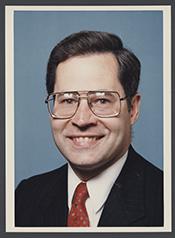 Rep. Alan B. Mollohan (D-WV)
Description
Amendment provides an additional $100,000,000 (by offset) for the State Criminal Alien Assistance Program, restoring it to the FY 2009 level of $400,000,000.
Legislative Activity
Stay on top of the latest movement without scrolling through every action
House amendment offered
June 18, 2009
View full timeline
House amendment offered
June 18, 2009
Roll call votes on amendments in House
June 18, 2009 • 2:54 PM
Amendment agreed to by House: On agreeing to the Mollohan amendment (A001) Agreed to by the Yeas and Nays: 405 - 1 (Roll no. 384).
June 18, 2009 • 2:54 PM
House amendment agreed to: On agreeing to the Mollohan amendment (A001) Agreed to by the Yeas and Nays: 405 - 1 (Roll no. 384).
June 18, 2009 • 2:54 PM
House amendment offered/reported by : Amendment (A001) offered by Mr. Mollohan.(consideration: CR H7000; text: CR H7000)
June 18, 2009 • 2:48 PM
Mr. Westmoreland demanded a separate vote on the Mollohan amendment (A001).
June 18, 2009 • 2:48 PM
Amendment (A001) offered by Mr. Mollohan. (consideration: CR H7000; text: CR H7000)
June 18, 2009 • 2:48 PM
On agreeing to the Mollohan amendment (A001) Agreed to by the Yeas and Nays: 405 - 1 (Roll no. 384).
June 18, 2009 • 2:54 PM
House amendment offered/reported by : Amendment (A001) offered by Mr. Mollohan.(consideration: CR H6895-6896; text: CR H6895)
June 16, 2009 • 7:52 PM
House amendment agreed to: On agreeing to the Mollohan amendment (A001) Agreed to by voice vote.
June 16, 2009 • 7:57 PM
Amendment agreed to Committee of the Whole
June 16, 2009 • 7:57 PM
Amendment (A001) offered by Mr. Mollohan. (consideration: CR H6895-6896; text: CR H6895)
June 16, 2009 • 7:52 PM
On agreeing to the Mollohan amendment (A001) Agreed to by voice vote.
June 16, 2009 • 7:57 PM
Votes
1 roll call on this amendment
Text
Offered
COMMERCE, JUSTICE, SCIENCE, AND RELATED AGENCIES APPROPRIATIONS ACT,
                                  2010

  The SPEAKER pro tempore. Pursuant to House Resolution 544 and rule
XVIII, the Chair declares the House in the Committee of the Whole House
on the State of the Union for the consideration of the bill, H.R. 2847.

                              {time}  1835


                     In the Committee of the Whole

  Accordingly, the House resolved itself into the Committee of the
Whole House on the state of the Union for the consideration of the bill
(H.R. 2847) making appropriations for the Departments of Commerce and
Justice, and Science, and Related Agencies for the fiscal year ending
September 30, 2010, and for other purposes, with Mr. Altmire in the
chair.
  The Clerk read the title of the bill.
  The CHAIR. Pursuant to the rule, the bill is considered read the
first time.
  The gentleman from West Virginia (Mr. Mollohan) and the gentleman
from Virginia (Mr. Wolf) each will control 30 minutes.
  The Chair recognizes the gentleman from West Virginia.
  Mr. MOLLOHAN. Mr. Chairman, I rise in regard to H.R. 2847, the
legislation appropriating funds for Commerce, Justice, Science, and
Related Agencies for 2010.
  Mr. Chairman, I yield myself such time as I may consume in general
debate.
  Mr. Chairman, if this is June, it must be appropriations season, and
today I'm pleased to present to the House the first of the
appropriations bills for fiscal year 2010, H.R. 2847, the Commerce,
Justice, Science, and Related Agencies Appropriation bill.
  While the summer may be hot and humid, as is typical in the Nation's
Capital, with the assistance of this body, our days and nights need not
be long for the House to fully consider this and the other 11
appropriations bills in regular order, or so we hope.
  I want to thank the ranking member of this subcommittee with most
sincerity for his assistance, help, counsel, and guidance in the
development of this bill. Mr. Frank Wolf of Virginia was chairman of
this committee for a number of years, served on it for a great number
of years. We served on it together. He brings to this bill a lot of
experience and knowledge and that is really helpful as you work up an
appropriation bill, and I appreciate, Frank, very much your assistance
on the bill and the credibility and knowledge you bring to it.
  I also want to thank publicly and personally the chairman of the full
committee, Mr. Obey, for his assistance in developing this bill. Mr.
Obey's courtesy and the assistance of the front office has been very
much appreciated, and we also appreciate, Mr. Chairman, the allocation
that you've given us for this bill that's allowed us to do what we are
allowed to do, however short the allocation may be.
  I would also like to sincerely recognize the staff: the excellent
work of the clerk, John Blazey, and the leadership he's provided to the
rest of the staff, and all of them have done excellent work, which I
appreciate: Adrienne Simonson, Dixon Butler, Diana Simpson, Darek
Newby, Tracey LaTurner, Scott Sammis, all with the subcommittee; Mike
Ringler and John Martens on the minority staff. And then on my personal
staff, Sally Moorhead and Julie Aaronson.
  It's a lot of work putting together one of these appropriation bills,
as anybody who's been involved with it or close to it understands, and
they have worked long hours diligently with great competence to move
this bill forward, and I most sincerely thank them for the efforts. We
couldn't do this without them.
  Mr. Chairman, in brief summary, this bill totals $64.4 billion, an
increase of $6.7 billion over last year, but it is $200 million below
the President's budget request. The bill provides $30.6 billion for
investments in science, technology, and innovation, an increase of $1
billion over comparable levels from last year.
  Within this level, the bill provides $6.9 billion for the National
Science Foundation and $18.2 billion for NASA. For NIST, the bill
provides $781.1 million. For NOAA, it's recommended at $4.6 billion.
The committee's recommendation continues to provide resources
consistent with the doubling path identified for NSF and NIST in the
COMPETES Act. It also considers the science and research conducted at
NOAA and at NASA as critical to the Nation's science enterprise just as
that performed by NSF and NIST.
  For law enforcement and other agencies of the Department of Justice,
the bill provides a total of $27.7 billion. Full funding of $7.9
billion for the FBI, $2 billion for the DEA, and $1.1 billion for ATF.
  For the Bureau of Prisons, the bill provides $6.2 billion to address
longstanding critical shortages in corrections' staffing and education,
in addition to drug treatment. For State and local law enforcement
activities, the bill provides a total of more than $3.4 billion,
restoring, in large part, reductions proposed by the administration.
  For programs funded through the Office of Violence Against Women, the
bill provides an increase of $11 million, including a $10 million
increase for STOP Formula Grants, and a $1 million increase for Sexual
Assault Victims Services.
  I want to be clear that while the funding table in the report for the
Office of Violence Against Women may appear in the report to show a
funding decrease, that is only because the bill moves a number of
programs to the Office of Justice programs which actually administers
those programs.
  So, let me repeat, the bill increases funding for the Office of
Violence Against Women by $11 million.
  The bill provides a full funding of $298 million for the COPS hiring
program. In other areas within the Justice Department, the bill
provides $325 million--an increase of $41 million over the fiscal year
2009 level--for the Adam Walsh Act.
  With respect to border security, the bill provides $1.5 billion, a 30
percent increase over fiscal year 2009. These funds will be used to
address firearms and narcotics trafficking between the United States
and Mexico, an issue on which every Member of this body has concerns,
and we're pleased to provide these increases.

[[Page H6887]]

                              {time}  1845

  For the Second Chance Act, the bill includes a total of $114 million
to develop and implement evidence-based strategies and programs at the
Federal and State levels to reduce recidivism and the future costs of
incarceration. I want to particularly compliment the authorizing
committee for the good job that they have done with the Second Chance
Act and other legislation they are considering. We are looking forward
and appreciate the opportunity to cooperate with them on the funding
side.
  A significant initiative across the Department of Justice is
increased investments in law enforcement and prosecution efforts in
Indian Country, for which the bill provides approximately $155 million,
and that is an increase of $65 million over fiscal 2009.
  For SCAAP, which the President proposed to eliminate, Mr. Chairman,
the bill includes $300 million.
  With respect to the Department of Commerce, $4.6 billion is slated
for the National Oceanic and Atmospheric Administration, an increase of
$129 million above the request.
  The bill provides $7.4 million for Census, the same level as the
budget request.
  For NASA, the bill provides a total of $18.2 billion, an increase of
$420 million over last year's level. Investments have been made in
Earth science to further the decadal surveys. The recommendation,
however, acknowledges, and this is important for Members to consider
and take note of, that the administration has established a blue ribbon
panel, Mr. Chairman, led by Dr. Norm Augustine, to review the current
vision for human spaceflight.
  Funds are provided in this bill to continue investments in human
spaceflight at the level of last year. Reductions from the budget
request should not be viewed by this body as any diminution of
certainly my support or the committee's support in NASA's human
spaceflight activities. Rather, it is a deferral. It is a deferral
taken without prejudice. It is a pause. It is a timeout.
  Call it what you will, it is an opportunity for the President to
establish his vision for human space exploration, looking at the
Augustine report when it becomes available in August, and then for his
administration to consider what their vision will be, and then, most
importantly, certainly for our committee, Mr. Chairman, to come forward
with a realistic future funding scheme for the human space exploration
program.
  We hope it is a vision worthy of the program, and we look forward to
realistic funding levels, which we have never had, or haven't had for
many, many years, for human spaceflight.
  It is also important to note that the total funding contained in this
bill for NASA is an increase of $421 million over the fiscal year 2009
level, and, moreover, some $1 billion was provided in the Recovery Act
for NASA activities.
  Lastly, the bill provides $440 million for the Legal Services
Administration. Appropriations for Legal Services increased by almost
$90 million over the last couple of years, with which we are very
pleased. It is still underfunded compared to base years in the
nineties. This is indicative of the rising need for legal support for
the poor, particularly because of mortgage fraud and the home crisis.
  The bill continues the existing limitations, Mr. Chairman, on the use
of these funds, except that it lifts the current restrictions on
attorney's fees.
  Mr. Chairman, that is a brief summary of the bill.
  I reserve the balance of my time.
  Mr. WOLF. Mr. Chairman, I yield myself such time as I may consume.
  (Mr. WOLF asked and was given permission to revise and extend his
remarks.)
  Mr. WOLF. Mr. Chairman, I am pleased to join our chairman, the
gentleman from West Virginia, in beginning consideration of H.R. 2847,
making appropriations for fiscal year 2010 for the Departments of
Commerce, Justice, Science and related agencies. The bill provides
funding for programs whose impact ranges from the safety of people in
their homes and communities to the study and exploration of space.
  The bill before the House today addresses a number of national needs
and requirements, and I think it is important for the Record to show
that I believe, and I think any fair-minded person would, to say that
the chairman has done a commendable job in balancing the many competing
interests and has put together a solid bill in a fair and evenhanded
way.
  At times I have felt the minority has not been treated very, very
fair, and I will say with the gentleman, we have been treated very,
very fair, and I think it is important to make sure everyone knows
that. We have not been foreclosed from anything.
  I also want to thank the members of the subcommittee for their help
and assistance, including the ranking member of the full committee, Mr.
Lewis, and the Republican members of the subcommittee, Mr. Culberson,
Mr. Aderholt and Mr. Bonner.
  I also want to thank the staff on both sides of the aisle who spent
long hours in putting this bill and report together. The majority
staff: John Blazey, Tracey LaTurner, Dixon Butler, Adrienne Simonson,
Diana Simpson, Darek Newby and Scott Sammis. And the minority staff:
Mike Ringler and John Martens. And on my staff, Tom Culligan, and on
the chairman's staff, Sally Moorhead and Julie Aaronson.
  Overall, the bill, as I said, includes important increases to
priority programs, including the need to address violent crime,
particularly crime related to drug trafficking and gangs; and the need
to boost our Nation's competitiveness through more investments in
scientific research and improving science, math in education.
  However, I believe we could have met the most pressing needs by
prioritizing within the lower allocation. This allocation given to the
subcommittee is $64.8 billion, which is $6.8 billion or 11.7 percent
above 2009. This allocation allows virtually every agency, account and
program to grow, and I believe it is more than a sufficient amount to
address the highest priority needs.
  The rate of increased spending in the bill corresponds with the
majority's overall budget blueprint, which increases discretionary
spending by $77 billion over the current fiscal year. Since the other
party took control of Congress, nondefense, nonveterans affairs
discretionary spending has increased by 85 percent.
  This rate of spending does not represent a step toward restoring
fiscal balance. There was an article today I think in Reuters
mentioning that our Nation, if we continue the current course, will
lose our triple A bond rating, it is the earliest date I have ever
seen, by 2010. It is 2009 now. That means next year. So how we deal
with that is really a tough, but an important, issue.
  Some highlights: for the Department of Commerce, the bill includes
$13.85 billion, including an increase of $4 billion to conduct the 2010
Census.
  The chairman has included strong funding for trade enforcement, which
I appreciate, particularly with regard to China and the full request
for Commerce Department programs to enforce dual-use export controls
and respond to cyber-espionage threats.
  For the Justice Department, the bill includes $27.5 billion, $672
million above the request. The FBI's operating level is funded at the
President's request, which is necessary in order to continue current
staffing operation levels, which also fund the urgent increases in
counterterrorism programs.
  Too often we fail to recognize the critical and often dangerous work
that the FBI is doing at home and abroad in order to detect and prevent
terrorist attacks. This is incredibly important work, and the bill
strongly supports those efforts while also providing necessary funding
for the FBI to fulfill its traditional roles and address emerging
problems such as mortgage and financial fraud, child exploitation, and
the spread of violent gangs.
  On the gang issue, this bill includes a new $35 million initiative to
fund the FBI's Safe Streets Task Force and ATF Violent Crime Impact
Teams. This will fund new task forces and new positions on existing
task forces in the areas, which is pretty much the entire country,
plagued by gang violence.
  The bill increases State and local law enforcement accounts by $197
million. Despite this increased funding for SCAAP, the State Criminal
Alien Assistance Program, the program is reduced to $300 million from
the current level of $400 million, and the chairman,

[[Page H6888]]

appropriately so I think, has drafted an amendment to increase SCAAP
that I hope will pass with bipartisan support.
  In the area of science, the bill includes important initiatives in
science competitiveness. Our country is falling behind. We have about
95,000 engineers working for the space program, and China has about
200,000.
  The previous administration launched the American Competitiveness
Initiative, which included a commitment to double the funding are for
basic scientific research over 10 years and also to strengthen
education and encourage entrepreneurship. I am pleased that the
chairman has done this and also that the new administration embraced
this goal.
  For the National Science Foundation, the bill provides $6.9 billion,
a 6.9 percent increase above the current year for research that will
set the groundwork for the development of new technologies and science
education that will ensure we have a well-educated and skilled
workforce to improve competitiveness.
  For NASA, the bill includes $18.2 billion. This includes the full
request for aeronautics, the shuttle program and the International
Space Station, as well as funding above the request for NASA science
and education. However, the bill freezes funding at the current level
for exploration activities pending the outcome of a blue ribbon panel
review of future options.

  The result of this cut is a funding level that will not be sufficient
to sustain the current development scheduled for the next generation of
space exploration vehicles and would result in severe disruption to the
Nation's human spaceflight program.
  I look forward to the recommendations, as the chairman does, of the
review panel being led by Norm Augustine, and to working with the
chairman and other Members to ensure that the final bill will include
sufficient funds to continue the U.S. leadership role in human
spaceflight.
  Finally, I want to acknowledge the important language that is
included in the bill regarding the release and transfer of Guantanamo
detainees. This bill does not prevent the closure of Guantanamo. It
seeks only to ensure in the process of carrying out the executive order
that national security, the security of our communities and the
security of our men and women in uniform overseas are the highest
priority.
  The bill prohibits the release of any detainees into the United
States. It also prohibits transfer to the U.S. for prosecution as well
as transfers or release to other countries unless and until the
administration presents a comprehensive report to the Congress on the
proposed disposition of each individual. This report will detail
security risks and measures to mitigate those risks and will include a
certification that affected State governments have been notified in
advance.
  Regarding transfers to other countries, the report must address the
risk of recidivism. Some are going to Saudi Arabia and Yemen. Saudi
Arabia has funded many of these radical madrasas up on the Pakistan-
Afghan border, and Yemen has been the center of a lot of terrorist
activities. The report must address the risks of recidivism and detail
the terms of any financial agreements related to the acceptance of the
individuals transferred.
  The language will ensure that detainees are not released into our
communities, and it places important restrictions and conditions on
future transfers and releases.
  It has become clear in the last few days that the administration is
rushing to release and transfer as many of these detainees as possible
before the will of Congress to place restrictions can be enacted.
  In closing, despite concerns about the overall levels of spending,
the bill represents the chairman's best efforts to distribute the
allocation he was given to the various competing requirements under the
subcommittee's jurisdiction. I commend the chairman and I thank the
chairman for his openness and his thoroughness to the minority.
  I would say that the chairman held a week of hearings on prison
reform. We, unfortunately, have the largest per capita prison
population in the world. They were the best hearings that I have seen
held in this Congress.
  Based on that, and I want to commend Mr. Mollohan, based on that, the
Council of Governments and the Pew Foundation will be putting on a
major conference this fall that I am sure the chairman will be very
much involved in to establish the best practices, because you cannot
just put a man or woman in prison and lock them up and throw away the
key without any job training and things like that.
  There was not a lot of coverage. I don't think The New York Times
ever covered the story. I don't think many of the major papers did. But
it was the best hearings in the time that I have been here, and I want
to thank the chairman for his efforts and concerns. I think a lot of
positive things will come out of that.
  Lastly, I am pleased to operate under an open rule today, and look
forward to the consideration of the many amendments that have been
filed and will be urging my Members on this side at final passage to
support the bill.
  I reserve the balance of my time.
  Mr. MOLLOHAN. Mr. Chairman, I thank the gentleman from Virginia (Mr.
Wolf) for those kind comments about our Bureau of Prisons hearings. I
would like to comment he was the leader with regard to prison reform
and has been for a great number of years. Based upon those hearings, he
is the one that contacted the State Council of Governments to encourage
them to follow up with their proceedings in the fall. Thank you, Mr.
Wolf.
  Mr. Chairman, I yield 2 minutes to the distinguished chairman of the
full committee, Mr. Obey.
  Mr. OBEY. Mr. Chairman, I yield to the gentlewoman from Ohio for the
purpose of colloquy.
  Ms. KAPTUR. Mr. Chairman, thank you for discussing with me a matter
of great importance to the citizens of the United States.
  At the heart of our financial crisis is the housing crisis and at the
heart of the housing crisis is mortgage fraud. The FBI redeployed
financial special agents in the last decade and have yet to allow the
White Collar Crime Division to replace those agents even when it warned
the public and the administration in 2004 of the potential for mortgage
fraud to become an epidemic. The vast majority of mortgage fraud in
fact goes unreported, and thus the depth of mortgage fraud is vastly
underestimated.
  In the savings and loan investigations of the late eighties and early
nineties, approximately 500 FBI agents worked on cases. In February
2009, however, Deputy Director of the FBI John Pistole testified before
the Senate stating: ``However, today's financial crisis dwarfs the S&L
crisis as financial institutions have reduced their assets by more than
$1 trillion related to the current global financial crisis, compared to
the estimated $160 million lost during the S&L crisis.''

                              {time}  1900

  According to the Department of Justice budget documents, there are
currently 175 FBI agents working mortgage fraud and corporate mortgage
fraud. That is laughable, given the vast amount of taxpayer dollars
still at risk. We know that the FBI Mortgage Fraud Division needs to
have an increase in special agents and an increase in the necessary
support personnel such as forensic accountants.
  I look forward to working with the chairman as the bill moves forward
to address this national need.
  Mr. OBEY. Let me thank the gentlelady for her comments on this issue
and her steadfast advocacy on behalf of those who are suffering during
this economic downturn.
  The bill we're considering today continues the process of rebuilding
the FBI's mortgage fraud capability by adding 50 new agents and $25
million to the white-collar crime program. We look forward to working
with the gentlelady to monitor the FBI's progress on mortgage fraud
investigations and to ensure as we move through the conference that the
Bureau is appropriately resourced and staffed to address a problem of
this magnitude.
  Ms. KAPTUR. Thank you, Mr. Chairman, for your leadership on this
issue and for your leadership on our full committee. I look forward to
working with you to bolster the FBI's critical investigative
capabilities and deliver justice to the American people through
prosecution of those who have perpetrated systemic financial fraud and
control fraud, which have brought our Republic to this dangerous
juncture.

[[Page H6889]]

  Mr. WOLF. I yield 5 minutes to the gentleman from Texas (Mr.
Culberson).
  Mr. CULBERSON. Mr. Chairman, I want to sincerely thank Chairman
Mollohan, Ranking Member Wolf for the bipartisan manner in which this
bill was put together. Mr. Mollohan truly has, and Mr. Wolf, opened up
this process to all members of the committee to participate. Majority
and minority views are included, and it is, truly, the bill was put
together in an open, bipartisan way, which I'm very grateful for.
  And I especially also want to thank Chairman Obey, Mr. Lewis,
Chairman Mollohan and Mr. Wolf for the strong commitment that they have
made to invest in the sciences, the National Science Foundation, the
scientific work that's being done at NASA and NOAA. The scientific
advancement that this Nation makes, and throughout our history, has
been one of the most important factors in the advance of America
throughout our history. And I'm very, very pleased at the investment
the committee is making in scientific research.
  However, I do have some serious concerns about the bill's reduction
in funding from the budget request for NASA's human spaceflight frame.
  Mr. Chairman, if I could engage in a colloquy with you, sir, to ask
about the manned spaceflight funding and what the committee, what the
country and NASA can expect as this bill moves through the legislative
process.
  Mr. Chairman, I want to ask if you'd agree that the United States
must maintain its world leadership in space exploration, and that, in
order to lead the world, America must have a robust human spaceflight
program; and also, that NASA's human spaceflight program must have a
clearly defined mission, and that Congress and the Obama administration
should fully fund that mission. And also, Mr. Chairman, that Congress
and NASA should do everything possible to mitigate the 5-year gap
between the retirement of the shuttle and the initial operating
capability of the next generation of human spaceflight.
  And then finally, Mr. Chairman, that the Appropriations Committee, we
will all work together in an absolutely bipartisan and open way to
fully fund the mission of NASA's manned space program as defined by the
Augustine Commission, the Obama administration and this Congress.
  Mr. MOLLOHAN. Mr. Chairman, let me thank my colleague, Congressman
Culberson, who is a fine member of our subcommittee, and who brings
particular expertise. As I often say, I aspire to know as much about
the sciences as he does and he makes significant contributions to our
committee. I thank him for his passion to our committee, and also to
our Nation's space programs.
  I share the sentiments the gentleman just expressed. I should note
that the bill before the House today does not cut human spaceflight
programs in fiscal year 2010; rather, the bill level funds ongoing
activities until such time as the Augustine Commission completes its
review, and the Obama administration commits to the next generation of
human spaceflight.
  Mr. CULBERSON. Mr. Chairman, I'm very confident that under the
leadership of Chairman Mollohan and Ranking Member Wolf that these
proposed reductions from the President's budget request will be
reviewed once again after the Augustine report is completed in an
announcement from the Obama administration on how to proceed in human
spaceflight. We genuinely appreciate the chairman's commitment to fund
that recommendation with, of course, the input of the authorizing
committee and the Appropriations Committee, because for America to
surrender the high ground of space exploration, Mr. Chairman, would be
as dangerous today as it would have been for General Meade to surrender
the high ground of Little Round Top and Cemetery Hill at the Battle of
Gettysburg. If General Meade had surrendered the high ground, I don't
think there's any doubt that the United States would have lost the
Battle of Gettysburg. And just as certainly as America would be at the
mercy of our enemies, in position to lose any future war, if America
surrenders the high ground of outer space to other nations.
  Mr. OLSON. Will the gentleman yield to me for the purposes of
continuing this colloquy?
  Mr. CULBERSON. I yield to the gentleman from Texas.
  Mr. OLSON. Thank you, Mr. Chairman, for this opportunity to
participate in this colloquy with you here today.
  This Nation has been the leader in human spaceflight for 50 years,
and the decisions we make today will determine whether we will continue
to lead in the next 50. And I'm worried that as other nations look at
the stars, we're staring at our feet.
  The proposed cut in the exploration budget threatens our economic,
military and technological standing, and would lead to a loss of up to
4,000 jobs, extend up to 2 years the time needed to fully design and
develop the Constellation system, and result in additional cost of up
to $8 billion. Therefore, I have prepared an amendment to restore that
funding.
  Mr. Chairman, I appreciate your pledge to revisit the funding issues
based on the outcome of the Augustine panel, and that if the panel
agrees, we will work as a Congress to reassess appropriate funding
levels. In light of that commitment, I will not offer my amendment, and
look forward to working with you to meet the pressing needs of human
spaceflight.
  Mr. MOLLOHAN. I appreciate the work of both my colleagues from Texas.
I appreciate and agree with the sentiments that they've expressed here
today. I just wish I could have expressed them as eloquently as my
colleague and committee member, Mr. Culberson, particularly as he
alludes to the Civil War. I can think of no comparison to match it. But
the sentiment I agree with.
  Mr. WOLF. Reclaiming my time, Mr. Culberson is definitely the science
man. I mean, he is the science guy. It's not debatable, and if we have
an amendment, and he also is a Civil War guy too, but he is the science
guy.
  I yield 2 minutes to the gentleman from California (Mr. Calvert).
  Mr. CALVERT. I would point out, Mr. Chairman, those were Texans that
were coming up on Little Round Top against Colonel Chamberlain that
day, but I did want to point that out.
  But I want to appreciate the subcommittee chairman, my good friend,
Alan Mollohan, for the hard work him and has staff have done while
drafting this bill. It's not an easy job being the committee chairman,
but I know you've done a great job to balance these many priorities.
  That being said, I just want to echo my comments, my colleague from
Texas, John Culberson, in regards to the current level of funding for
NASA. And hopefully we can, as you said, we'll work with you to make
sure that the $700 million, which obviously would be devastating to
NASA if that cut stayed in, to make sure that we get that money back in
the 2010 Commerce, Justice spending as enacted.
  As you know, as has been pointed out, the challenges that we have
with other countries that are making major investments in space--China,
India, Japan, Pakistan, Russia. And certainly we don't live in a world
today where we're the only ones involved in outer space.
  So I support the chairman and what he's trying to do with the
Augustine panel to wait to find out what the report is. But I'm
optimistic we'll work this out with our fellow NASA supporters in
Congress to provide necessary funding and the rules and tools it needs
to realize the agency's human space exploration under President Obama.
  And so I would again thank the chairman for your hard work on that.
  Mr. MOLLOHAN. I thank the gentleman for his comments, and look
forward to working with him on this issue.
  Mr. Chairman, I yield 3 minutes to the gentleman from Pennsylvania
(Mr. Carney).
  Mr. CARNEY. Mr. Chairman, I rise today to enter into a colloquy with
the distinguished chairman of the Subcommittee of Justice-Science, Mr.
Mollohan. And I want to thank the chairman for the increased funding in
the bill to hire more corrections officers in our Federal prison
system, which will allow the Bureau of Prisons to hire an additional
1,000 corrections officers nationwide.
  And while I fully support such an increase, I believe we must do
more,

[[Page H6890]]

given that the director of the Federal prison system has asked for an
additional 3,000 correctional officers to effectively run our Nation's
prison system.
  And by bringing this issue to the floor, I hope to raise the
awareness of our colleagues in the House regarding staffing levels at
the Federal correction facilities located not just in our districts but
in our communities all across the country.
  The district that I represent, Pennsylvania's 10th, contains three of
the 15 high-security penitentiaries operated by the BOP, in addition to
one minimum- and one medium-security facility. Also I represent
correction officers from communities working at two minimum- and two
medium-security Federal penitentiaries in neighboring districts.
  Additionally, we have one of the federal penitentiaries in my
district, USP Lewisburg, that is in the process of being converted to a
``special management unit,'' the only one of its kind in the entire
system. Lewisburg will house inmates from other penitentiaries who
prove too troublesome to manage, but who do not qualify for the ADMAX
facility at USP Florence in Colorado.
  For various reasons, funding for our Nation's corrections officers
has failed to keep pace with increased prison populations and
increasingly dangerous prisoners over the last several years.
  Mr. Chairman, I understand that you are making every effort to
reverse the trend of underfunding the BOP and to assure that
communities hosting Federal corrections sites, that they are safe, and
the corrections staff working within the walls will be able to work
together as this bill moves forward to ensure that the Bureau has the
funding it needs to catch up with the staffing needs.
  Mr. MOLLOHAN. I thank the gentleman. I appreciate his rising on this
important issue, and I appreciate his leadership in supporting
increased funding for the Bureau of Prisons.
  BOP funding has simply not kept pace, Mr. Chairman, with the rising
prison population and the aging BOP infrastructure. The Bureau of
Prisons prisoner population is currently 37 percent above the rated
capacity for BOP facilities, and the prisoner-to-staff ratio is an
appalling 4.9-1. We must begin to turn that around, and this bill takes
a big step in that direction. This committee has had this concern for a
number of years and has been working diligently to increase this
funding.
  The bill provides an increase of $481.5 million above the fiscal year
2009 level for the Bureau of Prisons salaries and expenses, which is
$97.4 million above the administration's request. We added that $97.4
million to help restore the BOP's base budget, which has been
progressively hollowed out in recent years by inadequate budget
requests. These additional funds will enable the Bureau of Prisons to
hire additional correctional officers and activate two newly
constructed prisons.
  The CHAIR. The time of the gentleman has expired.
  Mr. MOLLOHAN. I yield another 30 seconds to the gentleman.
  Mr. CARNEY. Mr. Chairman, I understand that you are making every
effort to reverse the trend of BOP funding to ensure that communities
hosting correction sites are safe, as are the corrections staff working
within the facility walls. I hope that we will be able to work together
as the bill moves forward, to ensure that the Bureau has the funding it
needs to catch up with staffing needs.

                              {time}  1915

  Mr. WOLF. Mr. Chairman, I yield 2 minutes to the gentleman from
Indiana (Mr. Burton).
  Mr. BURTON of Indiana. I thank the gentleman for yielding.
  Mr. Chairman, I guess the biggest problem I have with this bill is
that we've been talking about cutting spending and about controlling
the budget. So far this year, in the Emergency Economic Stabilization
Act, the TARP bill, we've spent $700 billion. In the Children's Health
Reauthorization Act, the State Children's Health Insurance, we've spent
$73.3 billion. In the America Recovery and Reinvestment Act, the
stimulus, we've spent $1.16 trillion. In the February '09 consolidated
appropriation, the omnibus bill, we've spent $625 billion. Now, I
understand the necessity of this bill, but it's 11.6 percent higher
than, I think, the same bill last year.
  The thing that really bothers me is that, I think, you have 80-some
pages of earmarks, of pork bill projects, whatever you want to call
them, at a time when we're suffering severely economically and at a
time when we're spending way, way more money than the American people
can afford. We're spending so much money that they're actually, I
think, running the printing presses over at Treasury day and night. I
can't understand why we're allowing all of these earmarks, many of
which have nothing to do with Commerce, Justice and Science.
  So I would just like to say that I think this is something that we
ought to take a hard look at when we get into the amendments. I wish
that we didn't have this kind of a tremendous amount of additional
expenses, and I sure wish we didn't have all of these earmarks.
  If there is one thing the American people are very concerned about
right now it is all of these additional projects, especially at a time
when they're suffering at home. People can't afford their houses. They
can't afford to take care of their kids' educational needs. There are
so many problems the American people have. The unemployment rate is
at--what?--9 percent nationally. Here we are with all of these
earmarks, and we're spending all of this money that they don't have and
that, certainly, the government doesn't have.
  Mr. Chairman, I would like to submit for the Record a June 16, 2009,
document on general funding levels.

     To: Congressman Dan Burton
     From: Legislative Staff
     Date: June 16, 2009
     Subject: Talking points


                        General Funding levels:

       The bill provides $6.7 billion (11.6 percent more than FY
     2009 for programs funded under the CJS Appropriations bill.
       Agencies funded through the bill received approximately $16
     billion in supplemental appropriations outside the normal FY
     2009 appropriations process, the vast majority of which came
     from the ``stimulus'' bill.
       H.R. 2847 would provide $13.85 billion for the Department
     of Commerce, which is an increase of $4.57 billion, or 49
     percent, over FY 2009. The majority of the increase for
     Commerce is due to a $4.2 billion increase in spending for
     the Census Bureau.
       The bill provides $27.74 billion for the Department of
     Justice, DOJ, which is an increase of $1.65 billion, or 6.3
     percent, above FY 2009.
       Funding for science agencies is $25.1 billion, an increase
     of $868 million, or 3.5 percent, above FY 2009.
       Spending for other related agencies is $956 million, which
     is $83 million, or 9.5 percent, above FY 2009.


                 Conservative Concerns About the bill:

       Earmarks: The Report accompanying H.R. 2847 contains $386
     million in funding for approximately 1,100 earmarks, listed
     on 80, non-searchable pages.
       Earmarks in the bill range from: $180,000 for ``Training
     the Next Generation Weather Forecasters'' at San Jose State
     University; $1 million for a forensics laboratory in South
     Carolina; $100,000 for Tennis, Sports, Literacy and Education
     Program in New York City
       Competitive Bidding Ban: The bill prohibits the Bureau of
     Prisons from using any funds to enter into a public/private
     contract under the OMB Circular A-76, which requires private
     contractors to compete for Federal money to ensure that the
     U.S. receives maximum value for tax dollars.
       Matching Funds Waived: The appropriation grants the
     Attorney General, AG, authority to waive a legislatively
     mandated requirement that Federal grants for prisoner reentry
     programs under the Second Chance Act be matched by State or
     local funds.

  Mr. MOLLOHAN. Mr. Chairman, I yield 1 minute to the gentlewoman from
Florida (Ms. Kosmas).
  Ms. KOSMAS. Mr. Chairman, I would now like to enter into a colloquy
with Mr. Mollohan.
  Mr. MOLLOHAN. Mr. Chairman, I would be glad to enter into a colloquy
with the gentlewoman from Florida.
  Ms. KOSMAS. Mr. Chairman, I would like to clarify a point in the
committee report related to the space shuttle program.
  It is my understanding that the committee's position relative to the
retirement of the space shuttle is consistent with NASA's testimony and
the administration's position that there is no hard date on shuttle
retirement. This position that the space shuttle will fly until it
completes its current manifest, even if it runs beyond 2010, has also
been supported by this Congress, as demonstrated by the inclusion in
this year's congressional budget resolution of shuttle funding in
fiscal year 2011.

[[Page H6891]]

We also expect the administration to fund the fly-out of the shuttle
when it submits its fiscal year 2011 budget request.
  I hope you can clarify whether this is the committee's position as
well.
  Mr. MOLLOHAN. The gentlewoman is correct. That is the committee's
position.
  Ms. KOSMAS. I thank you, Mr. Chairman, for this consideration.
  Mr. Chairman, I also rise to express my concern with the level of
funding for NASA contained in the bill.
  The CHAIR. The time of the gentlewoman has expired.
  Mr. MOLLOHAN. Mr. Chairman, I yield another 30 seconds to the
gentlewoman from Florida.
  Ms. KOSMAS. According to preliminary estimates, the funding included
in the bill for exploration could cause additional delays of up to 2
years and could increase the cost up to $8 billion. These levels will
also mean a greater reliance on Russia, a loss of our highly skilled
workforce, and it could create a situation that could be detrimental to
over 1,500 businesses that supply NASA and commercialized spinoff
technologies. This level would result in thousands of layoffs in 2010.
This will only exacerbate the challenges related to retaining our
uniquely skilled workforce, many of whom are already working on both
shuttle and exploration.
  So we must recognize that the investments in NASA have large
multiplier effects, contributing $100 billion to our economy last year
and employing nearly 300,000 people in 41 States.
  Thank you, Mr. Chairman, for your consideration.
  Mr. MOLLOHAN. I thank the gentlewoman.
  Mr. WOLF. Mr. Chairman, I yield 3 minutes to the gentleman from Texas
(Mr. Hall), the ranking member on the Science and Technology Committee.
  Mr. HALL of Texas. Mr. Chairman, at this time of economic turmoil and
of growing international technological competitiveness, it seems to me
that America should be funding those things that advance our
capabilities and that increase our standing in the world.
  As ranking member of the House Science and Technology Committee, I've
always felt that NASA has done more to advance America's technological
leadership than any other Federal agency, and this bill presently
reduces NASA's funding in human spaceflight at a very critical time.
  The House Appropriations' reduction of $670 million in exploration
systems represents a reduction of 17 percent from the President's FY
2010 budget request. With NASA on a path to retire the space shuttle
after only eight more flights, America needs to rapidly develop the
next generation of spacecraft. The $670 million reduction would have
prevented NASA from completing the Constellation system before March
2015. In fact, because this reduction would occur in the peak design
year when staffing is at its highest, NASA estimates that the work
stoppages, inefficiencies and loss of key skills and capabilities would
delay the Constellation program by as much as 2 years from that time.
  Moreover, the cut in exploration funding would increase costs by as
much as $8 billion to the program, and it would reduce the
Constellation workforce by more than 20 percent in 2010, or by
approximately 4,000 contractors, mostly from the existing workforce.
  During this gap in human spaceflight capability, America must buy
seats from the Russians to get to the International Space Station and
fulfill our obligations to our international partners.
  I am really encouraged that Chairman Mollohan, though, and Ranking
Member Frank Wolf are working to mitigate this loss. I am grateful to
them, and I thank them both for the colloquy.
  Mr. MOLLOHAN. Mr. Chairman, I yield 2 minutes to the gentleman from
Alabama (Mr. Griffith).
  Mr. GRIFFITH. Mr. Chairman, I rise to enter into a 2-minute colloquy
with the chairman.
  Thank you, Mr. Chairman, for allowing me.
  I rise from Alabama's 5th District, the birthplace of NASA and of the
space program. I, too, am concerned, but I appreciate very much the
hard work the chairman and Ranking Member Wolf have entered into in
trying to preserve the NASA budget. However, the decrease in funding is
of some concern to us.
  The Aries 1 and the Aries 5 will represent what the Saturn was to us
50 years ago with spaceflight and in putting a man on the Moon. This is
not just a matter of jobs; it's a matter of international security and
of national pride. I believe, after the Augustine Commission is done,
we'll find that the NASA program is underfunded and that the funding
will return to a level that will put us on the Moon in 2020 and that
will return us to manned spaceflight in 2015.
  Mr. MOLLOHAN. Let me just say that I appreciate my colleague's
comments this afternoon.
  Mr. Chairman, let me first note that the bill before the House today
does not actually cut human spaceflight programs in fiscal year 2010.
Rather, the bill level funds ongoing activities until such time as the
Augustine Commission completes its review and the Obama administration
commits to the next generation of human spaceflight. In fact, the total
in the bill before the House today provides an increase of over $420
million over the fiscal year 2009-enacted level across all NASA
activities and programs.
  We're talking only about the human spaceflight program here. I
believe that the Augustine panel is well-positioned to make an informed
review of planned U.S. human spaceflight activities and alternatives to
ensure that the Nation is undertaking efforts that are safe,
innovative, affordable, and sustainable in the years following the
completion of space shuttle manifests and its retirement.
  When that panel provides its information, its informed judgment, to
us and to our new President and when we have had an opportunity to
embrace the Nation's next human spaceflight program and to budget
accordingly, we look forward to moving forward.
  The CHAIR. The gentleman's time has expired.
  Mr. GRIFFITH. I appreciate those comments.
  Mr. Chairman, we will certainly work hand in hand with the committee.
  I will say one final thing, which is that the human spaceflight
community--the scientists who are involved in that--is a culture, and
that culture cannot be interrupted and put back together again as
though it were a puzzle.
  So I appreciate so much your efforts, and I appreciate the wording in
this bill. Thank you for allowing me to enter into a colloquy with you.
  Mr. MOLLOHAN. I thank the gentleman with those assurances, too.
  Mr. WOLF. Mr. Chairman, I yield 2 minutes to the gentleman from
Florida (Mr. Posey), who represents Cape Canaveral, who worked on the
Apollo, who helped put the first man on the Moon, and who is a strong
advocate for NASA and for the space program. He has advocated and has
talked to me over and over about this.
  Mr. POSEY. Thank you, Congressman Wolf, for that kind introduction.
  Mr. Chairman, I just want to take a brief moment and thank Chairman
Mollohan and Ranking Member Wolf for their bipartisan commitment to
fully fund America's manned space program.
  Of course, I want to thank Chairman Obey and Ranking Member Lewis for
bringing this bill to the floor and for allowing this process to work
like it is supposed to.
  The security of our great Nation and of the world will be enhanced
because of their efforts to provide our country and the world with
vehicles for our future Christopher Columbuses, Magellans and Marco
Polos.
  Mr. MOLLOHAN. Mr. Chairman, I yield 2\1/2\ minutes to the gentlewoman
from Arizona, Chairwoman Giffords.
  Ms. GIFFORDS. I rise for the purpose of a colloquy with the
subcommittee chairman.
  Mr. Chairman, I am deeply concerned about the reductions from the
request recommended for the NASA Constellation program in this
appropriations bill. As you know, this bill provides the same level of
funding as in the year 2009, and it's almost $600 million less than
what the President requested for 2010.
  As the Chair of the Space and Aeronautics Subcommittee, I strongly
believe that NASA should be given the funding needed to carry out one
of the

[[Page H6892]]

most important missions, which is exploration. I am very concerned that
the levels obtained in this bill will be viewed by the Augustine Human
Spaceflight Review Panel as a lack of support for Constellation and for
NASA's other human spaceflight programs, programs that have been
strongly endorsed, as we've heard by the colloquies here on the floor,
on a bipartisan basis in last year's NASA Authorization Act of 2008.
  So Chairman Mollohan, is it your view that the Augustine panel should
not interpret the House's action today as any weakening of
congressional support for the Nation's human spaceflight and
exploration programs?
  Mr. MOLLOHAN. That is absolutely correct.
  The funding deferral does not signify any weakening of the
committee's support for human spaceflight and exploration. I would also
direct the attention of my colleague to the bill's accompanying report
that states this very fact.

                              {time}  1930

  And if I could find it here quickly, I would read it for her.
  Ms. GIFFORDS. Mr. Chairman, let me continue, and when you find that--
  Mr. MOLLOHAN. And I did find it. At page 146 of that report, I would
refer the gentlelady to read a pertinent part. ``Accordingly, after the
work of the panel is complete''--that's the Augustine Panel--``the
committee expects the administration will amend its fiscal year 2010
budget request to fund fully the plan advocated by the panel, and that
the administration's subsequent budget request shall similarly include
resources that fund fully the Nation's Human Space Flight Program.''
That's in our report. And I am pleased to reaffirm that here tonight
with the gentlelady with this colloquy and with the others that we've
had colloquy.
  Ms. GIFFORDS. Thank you, Mr. Chairman.
  In addition, do you agree that it's imperative that the President--
  The CHAIR. The time of the gentlewoman has expired.
  Mr. MOLLOHAN. I yield the gentlelady 1 additional minute.
  Ms. GIFFORDS.--and Congress provide the appropriate resources that we
can avoid cost increases and further delays in the initial operating
capabilities of our Nation's next generation of human space flight
architecture?
  Mr. MOLLOHAN. Yes, I do. And I stated as much at the subcommittee
markup of this legislation. Again, I would turn my colleague's
attention to the accompanying report where these sentiments are also
expressed.
  Ms. GIFFORDS. And finally, do you agree with me that the Augustine
Panel should not be bound by arbitrary OMB budgetary projections as it
develops its best advice to the President and Congress on the future
conduct of the Nation's Human Space Flight Program?
  Mr. MOLLOHAN. I believe that the Augustine Panel is well positioned
to make an informed review of planned U.S. human space flight
activities and alternatives to ensure that the Nation is undertaking
efforts that are safe, innovative, affordable and sustainable in the
years following the completion of the space station manifest and
retirement. And when that panel provides its informed judgment to us
and the President and we are able to evaluate it, our new President and
our authorizers will have a chance to look at it and act on it, our new
President--and we--will have an opportunity to move forward together on
our Nation's future human space flight program and budget accordingly.
  Ms. GIFFORDS. Thank you, Mr. Chairman. As we've heard tonight, not
only is manned spaceflight strongly bipartisan, but it truly represents
the best that our civilization has ever achieved.
  Mr. MOLLOHAN. The gentlelady, among these other colleagues, is a
champion of the program. Thank you.
  The CHAIR. Both sides have 8\1/2\ minutes remaining.
  Mr. MOLLOHAN. I yield 2 minutes to the gentlelady from Maryland (Ms.
Edwards).
  Ms. EDWARDS of Maryland. I rise to engage in a colloquy with you, Mr.
Chairman, regarding the Commerce, Justice, Science and related agencies
programs.
  Mr. Chairman, as a long-time advocate for prevention of violence
against women, I know that Federal funding is really essential to
ensuring that victims of violence, especially in rural or underserved
areas, have access to life-saving programs and resources. There are
several programs that assist victims of domestic violence in need of
funding, including programs aimed at curtailing abuse in public and
assisted housing, establishing privacy for victims, and providing
outreach to underserved populations.
  According to the National Network to End Domestic Violence, poverty
and lack of education contribute to the economic dependency that keeps
many women dependent on their abusers for financial support. Especially
in these challenging economic times, though, as you recognize, domestic
violence doesn't discriminate on the basis of race, ethnicity, economic
status, or party identification.
  In 2005, Mr. Chairman, there were 34 domestic violence-related
homicides in your home State of West Virginia. And in my State of
Maryland, in my congressional district, in fact, in just 1 year, from
July 1, 2007 until June 30, 2008, there were 11 domestic violence-
related homicides just outside of the District of Columbia in Prince
George's and Montgomery County, totaling 16 domestic violence homicides
in my congressional district in that short time.
  Our communities need this increased funding in order to save lives,
and financial support for the programs really is a matter of life and
death. And so, Chairman Mollohan, I appreciate the funding increase
already provided in the bill, and I urge you to maintain this funding
and to possibly increase it because of the need.
  Ending domestic violence really requires, as you know, a collective
commitment for law enforcement, prosecution, training, outreach,
education, and of course shelters and programs as you have provided for
in this legislation. And so I would appreciate increased funding for
these programs as we work together in the future.
  Mr. MOLLOHAN. Let me first commend the gentlelady for her good work
in this area in the short time she has been in the United States
Congress and for her input into our subcommittee, which has certainly
influenced our markup of the bill in this important area.
  I thank the gentlelady for her comments. And I appreciate her support
and commitment to programs funded through the Office of Violence
Against Women.
  Ms. EDWARDS of Maryland. Thank you, Mr. Chairman.
  Mr. WOLF. Mr. Chairman, I yield 3 minutes to the gentleman from
Georgia (Mr. Price).
  Mr. PRICE of Georgia. I want to thank my friend from Virginia for his
leadership on this issue and his attempts to promote fiscal
responsibility and raise some significant concerns just in general
about this piece of legislation.
  The fact of the matter is that the rule that was adopted by this
House to consider this bill in fact waives rules that are supposed to
keep us fiscally responsible. So it waives rules that say that you have
to have appropriate information about earmarks, and it waives rules to
say that the PAYGO rule, that things have to be paid for, that we're
not going to drive the Nation further into debt and deficit with the
adoption of this.
  Now, waiving a rule means that you don't follow it. And we don't
follow it to such a huge degree in the area of earmarks that I have
here the list of earmarks. And they go on, Mr. Chairman, for page after
page after page after page in what I think is probably about six font.
So it's pretty small. And there are thousands of them, literally
thousands.
  The question becomes whether or not anybody in Washington is
listening to the concerns of the American people. And their concern
that I hear every weekend when I go home and every day when I talk to
my constituents and folks from around this land is that they don't
believe that Washington is being fiscally responsible. They see bailout
after bailout, they see expenditure after expenditure, they see bill
after bill of more money going out the door and not money coming in,
more things being done to depress the economy than to improve the
economy.

[[Page H6893]]

  And so, Mr. Chairman, it is with great concern that I believe we are
launching into this appropriation season, having started the process by
setting the precedent that thousands and thousands of earmarks are
appropriate and that we are not going to worry about whether or not we
pay for the bill itself.
  So I think that we all ought to listen to our constituents and take
pause and think about the issues with which we're dealing here and
attempt to be more responsible with the hard-earned taxpayer money.
  I thank my good friend from Virginia.
  Mr. MOLLOHAN. Mr. Chairman, I yield 2 minutes to the gentlelady from
Arizona (Mrs. Kirkpatrick).
  Mrs. KIRKPATRICK of Arizona. Mr. Chairman, before coming to Congress,
I was a prosecutor in Coconino County, home to five Native American
tribes. Many people do not realize that for many classes of serious
crimes committed on tribal land, prosecution can only be initiated by
the Federal Government.
  Today, I represent 11 federally recognized tribes in my congressional
district. I hear frequently from these communities who have seen major
crimes going unprosecuted because the Federal Government is not
providing enough help. This is why I have advocated for more Federal
support for tribal law enforcement. These areas have always been vastly
underserved by the government, and it is time we begin closing the gap.
  Therefore, I am very happy to see that this bill directs $6 million
to hire new assistant U.S. Attorneys who will be devoted to handling
cases coming from tribal areas. This should provide dozens more
prosecutors and will result in a huge increase in prosecuting major
crimes in Native American communities all across the country.
  Increasing the number of prosecutions will also reduce the level of
narcotics flowing through many Southwestern tribal lands, providing an
important step in closing a jurisdictional loophole that cartels have
been using to their advantage.
  Mr. WOLF. Mr. Speaker, I reserve the balance of my time.
  Mr. MOLLOHAN. Mr. Chairman, I yield 2 minutes to the gentleman from
Connecticut (Mr. Murphy).
  Mr. MURPHY of Connecticut. Thank you very much, Mr. Chairman.
  I rise in support of the bill, but to encourage the committee and
this Congress moving forward to better address the issue of gaps in our
missing persons database system. On August 24, a 31-year-old resident
of my district, Billy Smolinsky, went missing. Sadly, foul play is
suspected. And to this day, his parents, Janice and Bill, still don't
know what happened to their son. What they found out, when they tried
to go online to find databases that helped identify remains that had
been found and missing adults, was that there is no central repository
of information, and the databases that do exist don't communicate with
each other. In fact, up until 2 years ago, there wasn't even a database
that was open to the public, there were only databases that were
available to private law enforcement.
  Today, we have the Name Us database, which is available to
individuals and families who are looking to try and find this kind of
information, and yet it doesn't have enough information. The private
databases that are run by the FBI don't communicate with these public
databases.
  And so I come to the floor this evening simply to encourage my
colleagues in appropriations bills going forward to make sure that we
look to appropriating funds to allow for this kind of transfer of
information to make sure that families like the Smolinskys all across
this country have access to the best and most accurate information
possible to try to press their cases going forward.
  I understand that there are legitimate privacy concerns regarding
what kind of information the FBI might share with this public database,
but I think that we can solve those problems and create a much more
comprehensive public database for families going forward. I look
forward to that conversation in coming appropriations bills.
  Mr. MOLLOHAN. Mr. Chairman, would the Chair be kind enough to let
both sides know how much time they have remaining, respectively?
  The CHAIR. The gentleman from West Virginia has 3 minutes remaining.
The gentleman from Virginia has 6 minutes remaining.
  Mr. MOLLOHAN. Mr. Chairman, at this time, I yield 1 minute to the
gentleman from Colorado (Mr. Polis).
  Mr. POLIS. Mr. Chairman, I would like to congratulate Chairman
Mollohan and his staff for their hard work on H.R. 2847.
  I feel it is necessary, however, to highlight what I feel is an
egregious error on the part of the U.S. Census Bureau, the
misrepresentation of data collected in the lesbian, gay, bisexual and
transgender community.
  Last month, I, along with 51 of my colleagues, sent a letter to the
Director of Office of Management and Budget, Peter Orszag, expressing
concern over the U.S. Census Bureau's intention to continue altering
data of same-sex married couples in the reporting of the 2010 census.
  With same-sex marriage now legal in Connecticut, Massachusetts, Iowa,
Vermont, New Hampshire, and Maine, it is crucial to accurately
represent the collection of data for same-sex married couples.
Currently, if same-sex married couples in these States list themselves
as married, the U.S. Census Bureau will go back and manually alter the
data.
  The U.S. Census Bureau was created to collect data and provide the
American public with accurate reporting on the population, not to
collect data and then alter it based on political decisions. I hope the
Obama administration will reconsider this policy and direct the
Department of Commerce to provide the American public with an accurate
representation of LGBT families in the U.S. census.
  Mr. MOLLOHAN. Mr. Chairman, I yield 1 minute to the gentlelady from
Texas (Ms. Sheila Jackson-Lee).
  Ms. JACKSON-LEE of Texas. I thank the distinguished chairman and I
thank the ranking member for their collaboration on this appropriation.
This is a very difficult challenge dealing with issues of commerce,
science and justice.
  Mr. Chairman, I have listened to the debate going forward dealing
with the President's mark in the NASA space exploration, which was $400
million more than the House mark, and would only offer my support for
the continuing statements that have been made on the floor of the
House, hoping that we will have an opportunity to reimburse those
dollars to be able to provide for space exploration, particularly as
relates to the Constellation, the CEV vehicle, and to be able to
achieve the goals that we need to achieve with respect to the
international space station.

                                  1945

  I would hope that the Augustine report would not be impacted by this
particular mark. And I know that there has been a lot of hard work. I
obviously intended to offer an amendment. I will look forward to
discussing this further with the chairman as we move forward into this
section so that we'll have an opportunity to discuss possibly my
amendment and the idea of working to lay a mark, if you will, for the
idea that space exploration, the international space station, all are
linked together, and it is valuable for this Nation that we continue to
be on the cutting edge of science and provide the support we need for
human space flight.
  Mr. MOLLOHAN. Mr. Chairman, I reserve the balance of my time.
  Mr. WOLF. Mr. Chairman, in closing, as we look at this bill, I know
there is going to be a series of amendments at different times, and I
think a lot of the amendments that will be offered will be from Members
who are very sincerely concerned about the economic crisis that our
country faces. There was an article today in Reuters. Let me read it to
the Members here. It says:
  ``New York Reuters: Technical analyst Robert Prechter on Monday said
he sees the United States losing its top AAA credit rating by the end
of 2010, as he stuck by a deeply bearish outlook on the U.S. economy
and stock market.
  ``Prechter, known for predicting the 1987 stock market crash, joins a
growing group of market heavyweights in forecasting the United States
will lose its top credit rating as the government

[[Page H6894]]

issues trillions of dollars in debt to fund efforts to bail out the
economy.
  ``Fears about the long-term vulnerability of the prized U.S. credit
rating came to the fore after Standard & Poor's in May lowered its
outlook on Britain, threatening the U.K.'s top AAA rating. That move
raised fears that the United States could face a similar risk, with the
hefty amounts of government debt issued in both countries to pay for
financial rescues causing budget deficits to swell.''
  So as Members offer these, I would just say there are some things
there that are important in the country. We have got to get control of
spending. But in other areas, our country is facing a crisis--in the
area of science. Last year China and India graduated 700,000 engineers,
and we only graduated 70,000, and 40 percent of our engineers are
foreign students who are returning to their country.
  And, lastly, in the space program, we have 95,000 engineers working
on the space program. But China has 200,000. And unless we do some
fairly dramatic things, our factories will close and we will lose the
edge in science and engineering. So we need to gain control of the
entitlement spending, and I hope to be able to offer an amendment to
the Financial Services bill. I'm going to offer an amendment that sets
up a bipartisan commission to put every spending program on the table,
every spending program in the government on the table, and give that
bipartisan commission an opportunity to then go around the country
holding public hearings, but to send a proposal up to Congress and
require the Congress to vote on it.
  So I understand the frustration of many of the Members when they see
this Congress failing to address the fundamental issues of spending in
the Congress. And we also have the trustee's report showing that the
Social Security system is beginning to go bankrupt faster, the Medicare
system is going to go bankrupt faster, and young people have no
confidence and believe that the Social Security system is not sound.
  We have a moral obligation to deal with that, and I hope that
Congress will.
  With that, Mr. Chairman, I yield back the balance of my time.
  Mr. MOLLOHAN. Mr. Chairman, I have no further requests for time in
general debate. Let me again reiterate my appreciation to the
committee, subcommittee, and ranking member in marking up this bill.
And we look to proceeding through amendments at this time.
  Mr. EHLERS. Mr. Chair, thank you, Chairman Mollohan and Ranking
Member Wolf, for the opportunity to offer remarks on the fiscal year
2010 Commerce, Justice and Science Appropriations bill. I appreciate
your hard work and dedication bringing this important funding
legislation to the floor.
  As Ranking Member of the Subcommittee on Research and Science
Education and as a member of the House Committee on Science and
Technology, I work with my colleagues to support and strengthen several
agencies of great importance to our nation's technological innovation
capacity. The core of that capacity depends on basic scientific
research, and a vigorous research base is crucial to our national
economic security. Coupled with that research base is research in
education supported by the National Science Foundation (NSF).
  I am pleased that this legislation has essentially supported the
President's overall requested budget for the National Science
Foundation, an agency which has great significance to our federal
research endeavors. However, I do have some concerns about the science,
technology, engineering and math (collectively, STEM) education funding
provided for the NSF within this year's spending bill.
  In late April, the President announced ``. . . a renewed commitment
to education in mathematics and science, since we know that the
progress and prosperity of future generations will depend on what we do
now to educate the next generation.'' I support this commitment, but am
troubled that somehow the education directorate budget at the NSF is
not keeping pace with the budgets of the research directorates. While
the overall research budget of the NSF will receive a 9 percent
increase in this year's funding bill, the education budget will only
increase by 2 percent.
  Congress, economists, and scientists have consistently maintained
that the NSF's research and educational missions must be treated as co-
equal and core missions of the Foundation. Enhancing our research
competitiveness in scientific fields while neglecting the educational
component of such research will cripple our ability to succeed as an
innovative nation.
  I want to recognize that both the budgets for research and education
at the National Science Foundation are increasing in this budget, and I
greatly appreciate the work of the Committee in supporting both
activities. I simply want to emphasize that both of these endeavors are
equally critical to the competitiveness of our nation, and research and
education should be treated as parallel--and equally worthy entities--
at the National Science Foundation.
  I look forward to working with you on the NSF research and education
funding, and, again, thank you for your dedication to improving our
nation's research enterprise.
  Mr. ADERHOLT. Mr. Chair, I would like to associate myself with the
comments by Mr. Culberson and many others about NASA's Exploration
budget and the Constellation programs. I believe it is very important
to National Security and to many science related efforts for us to
aggressively move forward with our own launch capability and
exploration efforts.
  While I value international cooperation, it is very important that we
not have to depend on other nations for access to space. The Ares and
Orion programs have made progress, and we should accelerate them.
  I look forward to hearing the results of the Augustine Panel. It is
important that Congress take decisive action with regard to funding
Exploration in this Fiscal Year 2010 budget. I look forward to working
with my friends and colleagues, Chairman Mollohan and Ranking Member
Wolf, in the coming weeks.
  Mr. TOWNS. Mr. Chair, I thank the chair, and I'd like to thank the
gentleman/gentlelady for yielding.
  The Committee on Oversight and Government Reform has been conducting
extensive oversight of the Cenusu Bureau and its preparations for the
2010 census. We have identified many things that are working, along
with many areas that need remedial action. However, it is critical that
if these problems are to be fixed in time for the start of the census
less than one year away, the census needs sufficient funding.
  This bill includes a cut of $206 million dollars to the Census Bureau
at the worst possible time. I strongly oppose these cuts, and any
amendments that would divert money from the census. The Census Bureau
needs these funds in order to improve response rates in areas that have
been undercounted for many years. To cut money now on preparation and
outreach would do nothing but increase the costs to count
nonrespondents next year.
  And let me just say, I've heard a lot from my colleagues and my
constituents on this issue. My district in Brooklyn and other urban
areas in general have suffered from undercounts over the last few
decades, and we do not want to see this happen again next year. The
Bureau has promised to address the problems with undercounting in urban
communities and other areas, but we cannot expect them to fix their
problems in 2010 if we cut their funding here today.
  This cut would be devastating to outreach and education efforts and
very costly in the long run. The Bureau estimates that a one-percent
decrease in the mail response rate will add between $80 and $90 million
to the cost of the follow up operations.
  I urge my colleagues to support full funding for the Census Bureau
and oppose all amendments that would take funds from this effort to
accurately count all Americans.
  Mr. MOLLOHAN. Mr. Chairman, I yield back the balance of my time.
  The CHAIR. All time for general debate has expired.
  Pursuant to the rule, the bill shall be considered for amendment
under the 5-minute rule.
  No amendment to the bill may be offered except those received for
printing in the portion of the Congressional Record designated for that
purpose in a daily issue dated June 15, 2009, or earlier, and pro forma
amendments for the purpose of debate. Each amendment may be offered
only by the Member who submitted it to be printed, or his or her
designee, and shall be considered read.
  The Clerk will read.
  The Clerk read as follows:

                               H.R. 2847

       Be it enacted by the Senate and House of Representatives of
     the United States of America in Congress assembled,
       That the following sums are appropriated, out of any money
     in the Treasury not otherwise appropriated, for the fiscal
     year ending September 30, 2010, and for other purposes,
     namely:

[[Page H6895]]

                                TITLE I

                         DEPARTMENT OF COMMERCE

                   International Trade Administration


                     OPERATIONS AND ADMINISTRATION

       For necessary expenses for international trade activities
     of the Department of Commerce provided for by law, and for
     engaging in trade promotional activities abroad, including
     expenses of grants and cooperative agreements for the purpose
     of promoting exports of United States firms, without regard
     to 44 U.S.C. 3702 and 3703; full medical coverage for
     dependent members of immediate families of employees
     stationed overseas and employees temporarily posted overseas;
     travel and transportation of employees of the International
     Trade Administration between two points abroad, without
     regard to 49 U.S.C. 40118; employment of Americans and aliens
     by contract for services; rental of space abroad for periods
     not exceeding 10 years, and expenses of alteration, repair,
     or improvement; purchase or construction of temporary
     demountable exhibition structures for use abroad; payment of
     tort claims, in the manner authorized in the first paragraph
     of 28 U.S.C. 2672 when such claims arise in foreign
     countries; not to exceed $327,000 for official representation
     expenses abroad; purchase of passenger motor vehicles for
     official use abroad, not to exceed $45,000 per vehicle;
     obtaining insurance on official motor vehicles; and rental of
     tie lines, $444,504,000, to remain available until September
     30, 2011, of which $9,439,000 is to be derived from fees to
     be retained and used by the International Trade
     Administration, notwithstanding 31 U.S.C. 3302: Provided,
     That not less than $7,000,000 shall be for the Office of
     China Compliance, and not less than $4,400,000 shall be for
     the China Countervailing Duty Group: Provided further, That
     the provisions of the first sentence of section 105(f) and
     all of section 108(c) of the Mutual Educational and Cultural
     Exchange Act of 1961 (22 U.S.C. 2455(f) and 2458(c)) shall
     apply in carrying out these activities without regard to
     section 5412 of the Omnibus Trade and Competitiveness Act of
     1988 (15 U.S.C. 4912); and that for the purpose of this Act,
     contributions under the provisions of the Mutual Educational
     and Cultural Exchange Act of 1961 shall include payment for
     assessments for services provided as part of these
     activities: Provided further, That negotiations shall be
     conducted within the World Trade Organization to recognize
     the right of members to distribute monies collected from
     antidumping and countervailing duties: Provided further, That
     negotiations shall be conducted within the World Trade
     Organization consistent with the negotiating objectives
     contained in the Trade Act of 2002, Public Law 107-210:
     Provided further, That within the amounts appropriated,
     $3,715,000 shall be used for the projects, and in the
     amounts, specified in the table titled ``Congressionally-
     designate items'' in the report of the Committee on
     Appropriations of the House of Representatives to accompany
     this Act.


                Amendment No. 11 Offered by Mr. Mollohan

  Mr. MOLLOHAN. Mr. Chairman, I have an amendment at the desk.
  The CHAIR. The Clerk will designate the amendment.
  The text of the amendment is as follows:

       Amendment No. 11 offered by Mr. Mollohan:
       Page 3, line 4, after the dollar amount, insert ``(reduced
     by $100,000)''.
       Page 23, lines 18 and 19, after each dollar amount, insert
     ``(reduced by $21,132,000)''.
       Page 45, lines 1, 4, and 13, after each dollar amount,
     insert ``(reduced by $78,768,000)''.
       Page 47, line 22, after the dollar amount, insert
     ``(increased by $100,000,000)''.
       Page 48, line 17, after the dollar amount, insert
     ``(increased by $100,000,000)''.

  The CHAIR. The gentleman is recognized for 5 minutes.
  Mr. MOLLOHAN. Mr. Chairman, I rise to offer an amendment. I'm
offering this amendment on behalf of Mr. Honda, Mr. Calvert, Mr.
Schiff, Mr. Lewis of California, Mr. Edwards, Mr. Culberson, Ms. Linda
T. Sanchez of California, Mr. Dreier, Mr. Mitchell, Mr. Gary G. Miller
of California, Ms. Giffords, Mr. McCaul, Mrs. Kirkpatrick of Arizona,
Mr. Connolly of Virginia, and Mr. Marshall.
  This amendment would provide an additional $100 million, Mr.
Chairman, for the State Criminal Alien Assistance Program, restoring it
to the fiscal year 2009 funding level of $400 million.
  Mr. Chairman, the current administration and the predecessor
administrations have in turn each year proposed elimination of the
SCAAP program. And since our allocation is $200 million below the
administration's request, it is difficult to restore moneys such as to
the SCAAP program to $300 million in the subcommittee mark. When the
administration requests zero and then you have to fill that hole, that
makes a tremendous strain on the other accounts in the bill.
  I opposed the SCAAP amendment during committee consideration of this
bill largely because it would have unadvisedly used the Bureau of
Census as an offset. We are in the final year, final months of
preparing for a census that's just a year away, and this is not any
time to take money away from the Census. We have overcome hurdles in
the Census and challenges as a result of some mismanagement with regard
to census preparation. We are on track now. And this is not the time,
given this short period before we have to conduct the census, to take
money away from the Census, so we opposed it.
  However, I am aware that there is considerable support, as reflected
by the number of our colleagues who want to be cosponsors on this
amendment here today. There is tremendous broad-based support in the
body for the SCAAP program. It is supported by many Members; so I offer
this amendment in recognition of that support.
  Mr. Honda is a member of the subcommittee and a cosponsor of this
amendment, and he has been particularly persuasive about the need to
restore SCAAP funding to the level that this amendment would bring it
to.
  Mr. Chairman, I yield back the balance of my time.
  Mr. HONDA. Mr. Chairman, I move to strike the last word.
  The CHAIR. The gentleman from California is recognized for 5 minutes.
  Mr. HONDA. Mr. Chairman, I rise to support strongly the issue of
SCAAP.
  I come from the State of California, where the financial situation is
very grave, and help in this manner would be tremendous for the State
of California and I suspect for the other States that have these kinds
of problems too.
  Mr. DREIER. Mr. Chair, I rise in strong support of Mr. Mollohan's
amendment, of which I am a co-sponsor, to increase funds for the State
Criminal Alien Assistance Program (SCAAP). I'm pleased that we were
able to work in a bipartisan manner to increase SCAAP by $100 million,
from $300 million to $400 million. Representatives Lewis, Honda,
Calvert, Schiff, Edwards, Culberson, Linda Sanchez, Mitchell, Gary
Miller, Giffords, McCaul and Kirkpatrick all provided valuable input
and support to make this happen.
  Securing our nation's borders is the responsibility of the federal
government. Congress has consistently legislated that the federal
government must either take criminal aliens into federal custody or
reach an agreement to compensate state and local jurisdictions for
their incarceration.
  The cost of jailing criminal illegal immigrants has placed an
enormous cost on all of our states and local governments. My state of
California, in particular, shoulders the greatest burden of illegal
immigration, and has received over $2.5 billion in SCAAP funds since
the inception of the program, representing 42 percent of nationwide
SCAAP awards.
  Los Angeles County and San Bernardino County, which I represent,
receive only a fraction of what they spend to jail criminal illegal
immigrants. According to Los Angeles County Sheriff Lee Baca,
incarcerating illegal aliens costs the County $100 million per year.
And according to San Bernardino County Sheriff Rod Hoops, jailing
illegal immigrants costs the County $24 million per year. Yet last
year, Los Angeles and San Bernardino Counties only received $14 million
and $2.3 million, respectively. In fact, since 2000, Los Angeles County
has received $159 million in SCAAP funds and San Bernardino County has
been awarded $6.7 million. In nine years, Los Angeles County was
reimbursed an amount equal to what it spends on jailing criminal
illegal immigrants in just a year and a half, while San Bernardino
County received SCAAP funds equal to what it spends in less than half a
year.
  While the underlying bill provides $300 million for SCAAP, this is
still $100 million less than we provided last year. At a time when our
state and local governments are feeling the financial crunch, they
should not be forced to continue to shoulder what is a federal
responsibility. This amendment will add $100 million to SCAAP,
restoring the program to its 2009 level of $400 million.
  Mr. Chair, I urge my colleagues to vote in favor of this amendment.
  Mr. MITCHELL. Mr. Chair, I rise today in support of our amendment to
block the proposed 25 percent cut to the State Criminal Alien
Assistance Program, otherwise known as ``SCAAP''.
  SCAAP was created in 1994 to reimburse states and localities for the
arrest, incarceration and transportation of undocumented immigrants who
commit crimes in our communities.
  Immigration enforcement is supposed to be a federal responsibility,
but as any Arizonan can tell you, the federal government has yet to
meet them.

[[Page H6896]]

  When State and local governments are forced to step-in and do the
federal government's job, it is only fair that they be reimbursed.
  Last year, the Arizona Department of Corrections received $12.8
million from the federal government to house 5,600 criminal illegal
immigrants in our state prisons. That was only 10 percent of the $124
million Arizona spent to house illegal inmates that year.
  Currently, Arizona's state prisons hold 6,100 illegal immigrants,
nearly 15 percent of the total inmate population.
  The Arizona Department of Corrections estimates that it will spend
$128 million in 2009 to clothe, feed and provide medical care to
illegal immigrant inmates.
  Instead of boosting funding to help pay the actual expense imposed on
states like Arizona, however, the Fiscal Year 2010 Commerce Justice
Science Appropriations bill cut SCAAP funding by 25 percent.
  This is just plain wrong.
  That is why I am proud today to join with my colleagues, from both
sides of the aisle, to offer this amendment to restore full funding for
SCAAP.
  If we are serious about immigration enforcement, we need to reimburse
Arizona--and other states that bear brunt of our nation's broken
immigration policy--for keeping criminal illegal immigrants behind
bars.
  I want to thank Chairman Mollohan for his leadership on this issue,
and his willingness to listen to so many of us from the southwest who
know how critical this program is to our nation's immigration
enforcement efforts. Mr. Chair.
  I urge all my colleagues to vote for this amendment.
  Mr. HONDA. Mr. Chair, I yield back the balance of my time.
  The CHAIR. The question is on the amendment offered by the gentleman
from West Virginia (Mr. Mollohan).
  The amendment was agreed to.


                 Amendment No. 8 Offered by Mr. Schock

  Mr. SCHOCK. Mr. Chairman, I have an amendment at the desk.
  The CHAIR. The Clerk will designate the amendment.
  The text of the amendment is as follows:

       Amendment No. 8 offered by Mr. Schock:
       Page 3, line 4, after the dollar amount, insert
     ``(increased by $500,000)''.
       Page 7, line 5, after the dollar amount, insert ``(reduced
     by $500,000)''.

  The CHAIR. The gentleman from Illinois is recognized for 5 minutes.
  Mr. SCHOCK. Mr. Chairman, I rise today in support of amendment No. 8,
which seeks to transfer $500,000 from the Census salary and expenses to
the International Trade Administration.
  The intent of this amendment is to dedicate funding for the
International Trade Administration to conduct a study on the economic
impact, including the loss of U.S. jobs, due to the failure of this
body to pass the Colombian Free Trade Agreement. My intent is to have
the ITA submit this study to Congress no later than 60 days after the
date of this enactment.
  For more than a year now, Congress has left an agreement sitting in
our collective ``in box'' which will result in more good-paying
manufacturing jobs for all Americans. And I, for one, want to know the
price of this neglect.
  Now, I understand that not everybody in this body or this Chamber
shares my view. I know there are those who believe that the Colombian
Free Trade Agreement will, in essence, result in the loss of American
jobs. And to these Members, I would say vote for my amendment. If you
are right, my amendment will prove that and the study subsequently will
prove that. Please have the confidence in your convictions that I have
in mine and vote for this amendment, and we'll see which of the two
sides is correct.
  I recently had the opportunity to travel to Colombia and Panama with
a number of both Republican and Democrat colleagues. During this trip,
we met with President Uribe of Colombia. And the President detailed
with great specificity the human rights and labor strides that his
country has made over the last decade. Every question that my
colleagues raised to President Uribe, he had an excellent answer. Every
charge these Members made, Mr. Uribe described how his reforms had
addressed the issues. Colombia has done her part, and now we in our
country need to do our part to ensure our top democratic ally in the
region remains a good one.
  And while I found the President's answers remarkable, I was most
impressed with the view of the Colombian people. The vast majority of
the people in Colombia we met with support the free trade agreement,
even though they already enjoy virtually duty-free access to the U.S.
markets as a result of the Andean Trade Preferences Act. They support
the trade agreement because it will mean not only a new relationship
status with the United States, but they will also be able to buy even
more American products, putting more dollars back in American pockets.
  After our experience in Colombia, it was the overwhelming belief of
the Members on that trip, both Republicans and Democrats, that they
could see firsthand the benefits of a free trade agreement, truly
highlighting the bipartisan support in this body for the pending free
trade agreement.

                              {time}  2000

  The facts for a trade agreement speak for themselves. This free trade
agreement will help make American companies more competitive globally,
increase their profitability, allow them to hire new American workers
and help stimulate the economy. Currently we enjoy a $2.7 billion trade
surplus, including a manufacturing surplus with nations with which we
have a signed free trade agreement. But for more than a year, the
majority has disallowed this body to add Colombia to this list.
America's two-way trade with Colombia reached $18 billion in 2007,
making Colombia our fourth largest trading partner in Latin America.
Since America's market is already open duty free for imports from
Colombia, the U.S.-Colombia Free Trade Agreement will give American
businesses, farmers, ranchers and workers similar access to this
important market. The independent nonpartisan International Trade
Commission has estimated that the Colombia Free Trade Agreement would
increase U.S. exports by at least $1 billion. Since Colombia signed the
trade agreement in 2006, U.S. products have been charged more than $2
billion in needless duties, money that could have been spent by
companies near our country making the products and expanding
infrastructure here in our country to hire more domestic workers.
  In 2008 the United States had a trade surplus of $35 billion with
countries with FTAs that were signed under the Trade Promotion
Authority, the same authority that the Colombia Free Trade Agreement
was signed under. This surplus was up over 61 percent just in 2007.
Finally, Colombia is a model country for what we need to do by
providing an open hand from America to emerging democracies around the
world. This country's bipartisan approach with Colombia, taken 10 years
ago when they were on the verge of becoming a terrorist state, was a
comprehensive diplomatic approach, one of open trade market policy and
has brought them back toward a democracy. And the strongest way to
promote democracy is with that same kind hand and the benefits it
brings, not through an isolationist policy.
  Finally, I would be remiss if I did not mention that on January 1,
2010, Colombia will formally enter into free trade agreements with
Europe and Canada. For these reasons and more, I urge passage of this
amendment.
  I yield back the balance of my time.
  Mr. MOLLOHAN. Mr. Chairman, we have no objection to the amendment and
would be willing to accept the amendment.
  Mr. WOLF. I move to strike the requisite number of words.
  The CHAIR. The gentleman from Virginia is recognized for 5 minutes.
  Mr. WOLF. I rise in support of the amendment.
  As the gentleman says, Colombia is a strong ally and a partner in
this hemisphere; and I support the Congress acting to implement U.S.-
Colombia Free Trade Agreement. The trade agreement that has been
negotiated would bring important economic benefits to the U.S. and
level the playing field between our countries. It would create jobs.
The unemployment rate that just came out is 9.2 percent. Not to do this
would border on being crazy. The gentleman's amendment would serve the
ongoing debate by generating information about the economic impacts
here in the U.S. of our failure to adopt the agreement. So I urge
support of the amendment.
  I yield back the balance of my time.
  Mr. PRICE of Georgia. I move to strike the last word.

[[Page H6897]]

  The CHAIR. The gentleman is recognized for 5 minutes.
  Mr. PRICE of Georgia. Mr. Chairman, I rise to commend my friend from
Illinois for offering this amendment and just to point out a couple
items as it relates to these issues. The Census is slated in this bill
to receive $7.1 billion. So I think that the gentleman from Illinois
has picked an appropriate, responsible amount out of that $7.1 billion
to be used for a study that ought to be performed to demonstrate the
importance of what ought not really be called the Colombia Free Trade
Agreement. It ought to be called the Colombia Fair Trade Agreement.
  As the gentleman stated with great eloquence, the lack of enacting
the Colombia FTA by this majority is actually harming American
companies. That's right, Mr. Chairman. We're harming American jobs and
American companies by not acting on something that both executive
branches have already agreed to.
  So this is a wise amendment, an appropriate amendment, an appropriate
area of study that ought to be done. I wonder if the chairman of the
subcommittee would be willing to respond to a question.
  To my friend from West Virginia, I wonder, if this amendment passes,
is my friend from West Virginia able to commit to doing all that he can
to make certain that this amendment remains in the final work product
as it comes through the conference process?
  I will yield to my friend from West Virginia.
  Mr. MOLLOHAN. We're willing to accept the amendment. What happens in
conference is in the future, and I wouldn't be able to make any
commitments with regard to that in any way.
  Mr. PRICE of Georgia. Reclaiming my time, Mr. Chairman, that really
is where the rub is, is that there appears to be no significant resolve
on the part of the majority party to actually determine what the level
of harm is to the American economy and American businesses without
adoption of the Colombia Fair Trade Agreement.
  I appreciate my friend from West Virginia for agreeing to accept the
amendment. But it is with little comfort because, as you heard, Mr.
Chairman, there is little or no commitment to making certain that this
stays in this bill as it moves through the process. As you know, Mr.
Chairman, this is the first step in this appropriations process, and
we're early in the amendment process. But it seems to me that this
amendment is of significant import, and also significant knowledge
would be gained from this study to give Members of this body
appropriate information with which to be able to make decisions as they
move forward and decide for themselves whether or not to push their
leadership, the Speaker and the leadership on the Democrat side, to, in
fact, adopt the Colombia Fair Trade Agreement.
  So I want to commend my friend from Illinois for the work that he's
done and for the important amendment that he brings to the floor. I
urge support of the amendment.
  I yield back the balance of my time.
  Mr. BURTON of Indiana. Mr. Chairman, I move to strike the last word.
  The CHAIR. The gentleman is recognized for 5 minutes.
  Mr. BURTON of Indiana. I have great respect for my colleague, Mr.
Mollohan, and undoubtedly he is going to be one of the conferees. I
would like to ask him a question.
  What I would like to know is, when you go to conference, you and I
both know that there's a lot of give-and-take. And if you really feel
strongly about an amendment, you fight for it. So I'd just like to ask
you this question: Because the Colombia Free Trade Agreement is so
important, will you use every bit of your fiber and being to fight for
this in conference?
  Mr. MOLLOHAN. Will the gentleman yield?
  Mr. BURTON of Indiana. I yield to the gentleman from West Virginia.
  Mr. MOLLOHAN. As the gentleman understands--the gentleman has been to
conference before on bills.
  Mr. BURTON of Indiana. Sure.
  Mr. MOLLOHAN. And the gentleman understands that conferees come to
the conference from many different directions and have many different
attitudes. There are many different issues in the bill during
conference. I will tell the gentleman that we take seriously our bill
as it is fashioned, as we bring it to the floor, and as it is amended
on the floor as we proceed to conference.
  Beyond that, the gentleman clearly understands that conferences are
about process and that there's give-and-take in the Congress. All of
the attitudes expressed in conference must be taken into consideration,
and there is nothing about this amendment that precludes our not
seriously supporting it in conference. But the gentleman is asking for
something that the gentleman knows in the process cannot be guaranteed,
and that is, I guarantee that we're going to do something in
conference. I hope that's satisfactory. If it's not, it's the best I
can do for the gentleman.
  Mr. BURTON of Indiana. Let me just say that we've been fighting this
issue for a long, long time. One of the biggest problems that we've had
is drugs coming into the United States from Central and South America.
And President Uribe of Colombia has been one of our best friends and
allies down there. He has stabilized that country, and one of the
things that he really needs is a Free Trade Agreement to help further
stabilize his country. I think it's extremely important that Mr.
Mollohan, or whoever else is on the conference committee, realize the
gravity of this situation. And Mr. Mollohan well knows that when you go
to conference, and you're sitting across the table from your Democrat
counterparts, if you are willing to really hang tough on an amendment,
many times you can get that accepted, especially when you start
compromising on other issues that may be in the bill. So I asked the
question of Mr. Mollohan, will you fight for this in conference, and he
reluctantly skirted the issue just a little bit.
  So since this amendment has been accepted by Mr. Mollohan, it seems
to me that it should be pretty well guaranteed that he is going to do
everything he can to keep it in the bill when it goes to conference
committee. And if that is not the case, then, you know, this might
appear to be--I would never accuse my colleague of being insincere--but
it might appear to be a facade. So if you accept this, Mr. Mollohan, I
would just like to ask you one more time: Will you do everything you
can to keep this in the bill?
  Mr. MOLLOHAN. I thank the gentleman for his comments.
  Mr. BURTON of Indiana. Will you answer the question? Will you do
everything you can to keep it in the bill?
  Mr. MOLLOHAN. We will approach the conference, my colleague from
Indiana, exactly the way I described to you. We will consider every
issue that is in the bill as it comes out of the House of
Representatives seriously as we approach conference. If it's accepted,
it will be in the conference report. You have the ranking minority
member. He is going to be a part of the conference. The other members
of the committee are going to be a part of the conference, and we will
treat this issue just as seriously as we treat all issues. We will
support it in conference, and it will be a part of the process of the
conference as it moves forward. I hope that is satisfactory to the
gentleman.
  Mr. BURTON of Indiana. I thank the gentleman for his answer. I will
just end by saying, I really hope this stays in the bill. I can't think
of anything that's more important as far as stabilizing Central and
South America than free trade agreements. We've been fighting for a
free trade agreement with Panama and Colombia for a long, long time;
and if we're going to make sure that we slow down the illegal
immigration that's coming from Central and South America, we've got to
do things to stabilize that entire region, not only from a drug
standpoint, but also from the illegal immigration standpoint. So I
really hope that my colleague--and I'm sure Mr. Wolf will--I really
hope my colleagues will do everything they can to make sure that this
stays in the piece of legislation.
  The CHAIR. The question is on the amendment offered by the gentleman
from Illinois (Mr. Schock).
  The amendment was agreed to.


                             Motion to Rise

  Mr. MOLLOHAN. Mr. Chairman, I move that the Committee do now rise.
  The CHAIR. The question is on the motion to rise.
  Mr. PRICE of Georgia. Point of order.
  Mr. Chairman, I believe the gentleman from Illinois was on his feet

[[Page H6898]]

prior to the gentleman asking that the Committee do rise.
  The CHAIR. The gentleman from West Virginia was the Member who sought
recognition, and he had a motion preferential to an amendment.
  Mr. PRICE of Georgia. I thank the Chair.
  The CHAIR. The question is on the motion to rise.
  The question was taken; and the Chair announced that the ayes
appeared to have it.


                             Recorded Vote

  Mr. SCHOCK. Mr. Chairman, I demand a recorded vote.
  A recorded vote was ordered.
  The vote was taken by electronic device, and there were--ayes 179,
noes 124, not voting 136, as follows:

                             [Roll No. 350]

                               AYES--179

     Abercrombie
     Ackerman
     Adler (NJ)
     Altmire
     Andrews
     Arcuri
     Baca
     Baldwin
     Barrow
     Berry
     Bishop (GA)
     Bishop (NY)
     Blumenauer
     Boccieri
     Bordallo
     Boren
     Boswell
     Brady (PA)
     Bright
     Brown, Corrine
     Butterfield
     Capps
     Capuano
     Cardoza
     Carnahan
     Carson (IN)
     Castor (FL)
     Chandler
     Childers
     Clarke
     Cleaver
     Clyburn
     Cohen
     Connolly (VA)
     Cooper
     Costa
     Courtney
     Cuellar
     Dahlkemper
     Davis (AL)
     Davis (CA)
     Davis (TN)
     DeFazio
     Delahunt
     DeLauro
     Doggett
     Donnelly (IN)
     Driehaus
     Ellison
     Ellsworth
     Engel
     Etheridge
     Faleomavaega
     Farr
     Fattah
     Filner
     Foster
     Frank (MA)
     Fudge
     Giffords
     Gonzalez
     Grayson
     Green, Al
     Griffith
     Gutierrez
     Hall (NY)
     Halvorson
     Hastings (FL)
     Heinrich
     Herseth Sandlin
     Himes
     Hinchey
     Hirono
     Hodes
     Holt
     Honda
     Hoyer
     Inslee
     Israel
     Jackson (IL)
     Jackson-Lee (TX)
     Johnson (GA)
     Kagen
     Kanjorski
     Kildee
     Kilroy
     Kirkpatrick (AZ)
     Kissell
     Klein (FL)
     Kosmas
     Kratovil
     Kucinich
     Langevin
     Larsen (WA)
     Lee (CA)
     Levin
     Lipinski
     Loebsack
     Lofgren, Zoe
     Lowey
     Lujan
     Lynch
     Maloney
     Markey (CO)
     Marshall
     Massa
     McCarthy (NY)
     McGovern
     McIntyre
     McMahon
     McNerney
     Meek (FL)
     Melancon
     Michaud
     Miller (NC)
     Minnick
     Mitchell
     Mollohan
     Moore (KS)
     Moore (WI)
     Murphy (CT)
     Murphy (NY)
     Murphy, Patrick
     Nye
     Obey
     Ortiz
     Pascrell
     Pastor (AZ)
     Payne
     Perlmutter
     Perriello
     Peters
     Pingree (ME)
     Polis (CO)
     Pomeroy
     Price (NC)
     Quigley
     Rahall
     Reyes
     Richardson
     Rodriguez
     Ross
     Roybal-Allard
     Rush
     Ryan (OH)
     Sablan
     Salazar
     Sanchez, Loretta
     Schakowsky
     Schauer
     Schwartz
     Scott (GA)
     Sestak
     Shea-Porter
     Shuler
     Skelton
     Slaughter
     Smith (WA)
     Snyder
     Spratt
     Tauscher
     Taylor
     Teague
     Thompson (CA)
     Thompson (MS)
     Titus
     Tonko
     Towns
     Tsongas
     Van Hollen
     Visclosky
     Walz
     Wasserman Schultz
     Waters
     Watson
     Watt
     Welch
     Wilson (OH)
     Yarmuth

                               NOES--124

     Akin
     Austria
     Bachmann
     Bachus
     Barrett (SC)
     Bartlett
     Barton (TX)
     Biggert
     Bilbray
     Bishop (UT)
     Blackburn
     Boehner
     Boozman
     Boustany
     Broun (GA)
     Brown (SC)
     Brown-Waite, Ginny
     Buchanan
     Burgess
     Burton (IN)
     Buyer
     Calvert
     Camp
     Campbell
     Cantor
     Capito
     Carter
     Cassidy
     Castle
     Chaffetz
     Coble
     Coffman (CO)
     Cole
     Conaway
     Davis (KY)
     Deal (GA)
     Dent
     Diaz-Balart, M.
     Dreier
     Ehlers
     Fallin
     Flake
     Fleming
     Forbes
     Fortenberry
     Foxx
     Franks (AZ)
     Garrett (NJ)
     Gerlach
     Gingrey (GA)
     Gohmert
     Goodlatte
     Graves
     Guthrie
     Hall (TX)
     Harper
     Hastings (WA)
     Heller
     Herger
     Hoekstra
     Hunter
     Inglis
     Issa
     Jenkins
     Johnson (IL)
     Jones
     Jordan (OH)
     King (IA)
     Kirk
     Kline (MN)
     Lamborn
     Lance
     Latham
     Latta
     Lee (NY)
     Lewis (CA)
     LoBiondo
     Lummis
     McCarthy (CA)
     McCotter
     McHenry
     McKeon
     McMorris Rodgers
     Mica
     Miller (FL)
     Miller (MI)
     Murphy, Tim
     Neugebauer
     Nunes
     Paulsen
     Pence
     Platts
     Posey
     Price (GA)
     Putnam
     Rehberg
     Roe (TN)
     Rogers (AL)
     Rogers (MI)
     Rooney
     Ros-Lehtinen
     Ryan (WI)
     Scalise
     Schmidt
     Schock
     Sensenbrenner
     Sessions
     Shimkus
     Shuster
     Smith (NE)
     Smith (TX)
     Stearns
     Terry
     Thompson (PA)
     Thornberry
     Tiahrt
     Tiberi
     Turner
     Upton
     Walden
     Wilson (SC)
     Wittman
     Wolf
     Wu

                            NOT VOTING--136

     Aderholt
     Alexander
     Baird
     Bean
     Becerra
     Berkley
     Berman
     Bilirakis
     Blunt
     Bonner
     Bono Mack
     Boucher
     Boyd
     Brady (TX)
     Braley (IA)
     Cao
     Carney
     Christensen
     Clay
     Conyers
     Costello
     Crenshaw
     Crowley
     Culberson
     Cummings
     Davis (IL)
     DeGette
     Diaz-Balart, L.
     Dicks
     Dingell
     Doyle
     Duncan
     Edwards (MD)
     Edwards (TX)
     Emerson
     Eshoo
     Frelinghuysen
     Gallegly
     Gordon (TN)
     Granger
     Green, Gene
     Grijalva
     Hare
     Harman
     Hensarling
     Higgins
     Hill
     Hinojosa
     Holden
     Johnson, E. B.
     Johnson, Sam
     Kaptur
     Kennedy
     Kilpatrick (MI)
     Kind
     King (NY)
     Kingston
     Larson (CT)
     LaTourette
     Lewis (GA)
     Linder
     Lucas
     Luetkemeyer
     Lungren, Daniel E.
     Mack
     Maffei
     Manzullo
     Marchant
     Markey (MA)
     Matheson
     Matsui
     McCaul
     McClintock
     McCollum
     McDermott
     McHugh
     Meeks (NY)
     Miller, Gary
     Miller, George
     Moran (KS)
     Moran (VA)
     Murtha
     Myrick
     Nadler (NY)
     Napolitano
     Neal (MA)
     Norton
     Oberstar
     Olson
     Olver
     Pallone
     Paul
     Peterson
     Petri
     Pierluisi
     Pitts
     Poe (TX)
     Radanovich
     Rangel
     Reichert
     Rogers (KY)
     Rohrabacher
     Roskam
     Rothman (NJ)
     Royce
     Ruppersberger
     Sanchez, Linda T.
     Sarbanes
     Schiff
     Schrader
     Scott (VA)
     Serrano
     Shadegg
     Sherman
     Simpson
     Sires
     Smith (NJ)
     Souder
     Space
     Speier
     Stark
     Stupak
     Sullivan
     Sutton
     Tanner
     Tierney
     Velazquez
     Wamp
     Waxman
     Weiner
     Westmoreland
     Wexler
     Whitfield
     Woolsey
     Young (AK)
     Young (FL)

                              {time}  2101

  Messrs. AKIN and PLATTS, Ms. GINNY BROWN-WAITE of Florida, and
Messrs. McKEON and TERRY changed their vote from ``aye'' to ``no.''
  Mr. JACKSON of Illinois, Ms. BALDWIN, Ms. WASSERMAN SCHULTZ, Ms.
CASTOR of Florida, and Messrs. LIPINSKI, DOGGETT and MINNICK changed
their vote from ``no'' to ``aye.''
  So the motion to rise was agreed to.
  The result of the vote was announced as above recorded.
  Accordingly, the Committee rose; and the Speaker pro tempore (Mrs.
Tauscher) having assumed the chair, Mr. Altmire, Chair of the Committee
of the Whole House on the State of the Union, reported that that
Committee, having had under consideration the bill (H.R. 2847) making
appropriations for the Departments of Commerce and Justice, and
Science, and Related Agencies for the fiscal year ending September 30,
2010, and for other purposes, had come to no resolution thereon.

                          ____________________