An amendment numbered 86 printed in the Congressional Record to prohibit the use of funds to be used for the Innovative Science Learning Center of Science South, Florence, South Carolina, and decrease the appropriations for the National Oceanic and Atmospheric Administration cross agency support by $500,000.
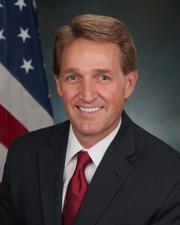 Rep. Jeff Flake (R-AZ)
Description
Amendment sought to prohibit the use of funds to be used for the Innovative Science Learning Center of Science South, Florence, South Carolina, and to decrease the appropriations for the National Oceanic and Atmospheric Administration cross agency support by $500,000.
Legislative Activity
Stay on top of the latest movement without scrolling through every action
House amendment not agreed to: On agreeing to the Flake amendment (A029) Failed by recorded vote: 107 - 320 (Roll no. 379).(consideration: CR H6996-6997)
June 18, 2009 • 2:07 PM
View full timeline
House amendment not agreed to: On agreeing to the Flake amendment (A029) Failed by recorded vote: 107 - 320 (Roll no. 379).(consideration: CR H6996-6997)
June 18, 2009 • 2:07 PM
Roll call votes on amendments in House
June 18, 2009 • 2:07 PM
Amendment failed in Committee of the Whole
June 18, 2009 • 2:07 PM
On agreeing to the Flake amendment (A029) Failed by recorded vote: 107 - 320 (Roll no. 379). (consideration: CR H6996-6997)
June 18, 2009 • 2:07 PM
House amendment offered
June 17, 2009
House amendment offered/reported by : Amendment (A029) offered by Mr. Flake.(consideration: CR H6964-6965; text: H6964)
June 17, 2009 • 11:13 PM
Amendment (A029) offered by Mr. Flake. (consideration: CR H6964-6965; text: H6964)
June 17, 2009 • 11:13 PM
Votes
1 roll call on this amendment
Text
Offered
COMMERCE, JUSTICE, SCIENCE, AND RELATED AGENCIES APPROPRIATIONS ACT,
                                  2010

  The SPEAKER pro tempore. Pursuant to House Resolution 552 and rule
XVIII, the Chair declares the House in the Committee of the Whole House
on the State of the Union for the further consideration of the bill,
H.R. 2847.

                              {time}  2304


                     In the Committee of the Whole

  Accordingly, the House resolved itself into the Committee of the
Whole House on the State of the Union for the further consideration of
the bill (H.R. 2847) making appropriations for the Departments of
Commerce and Justice, and Science, and Related Agencies for the fiscal
year ending September 30, 2010, and for other purposes, with Mr.
Altmire in the chair.
  The Clerk read the title of the bill.
  The CHAIR. When the Committee of the Whole rose earlier today, the
bill had been read through page 101, line 20.
  Pending is amendment No. 107 offered by the gentleman from California
(Mr. Campbell). The gentleman from California has 1\3/4\ minutes
remaining.
  Mr. PALLONE. Mr. Chair, I rise in opposition to this amendment. The
Partnership for Mid-Atlantic Fisheries Science is incredibly important
to the commercial and recreational fishing industry on the east coast.
It ensures fisheries managers have the best possible science when
making decisions regarding a multi-billion dollar industry. This
amendment would also arbitrarily cut much needed funding from the
National Oceanic and Atmospheric Administration.
  The Partnership for Mid-Atlantic Fisheries Science addresses the most
urgent scientific issues limiting successful management of the summer
flounder and black sea bass fisheries in the Mid-Atlantic region. It is
a multi-state multi-institutional partnership that will utilize
academic and recreational/commercial fisheries resources to develop
targeted science initiatives.
  Summer flounder and black sea Bass are among the most valuable
recreational fish in the Mid-Atlantic. Both are also important
commercial species. This project will benefit the participating
recreational and commercial fishermen of the Mid-Atlantic, their shore-
based supporting industries, and tee many consumers of seafood that
count these species among their preferred seafood items.
  This program helps us incorporate critical information into the
fisheries management process. By using the best possible science
fisheries managers will be able to create healthy sustainable fisheries
and protect the fishing industry.
  Mr. BISHOP of New York. Mr. Chairman, I rise in strong opposition to
the amendment.
  On behalf of eastern Long Island, I commend Chairman Obey and
Chairman Mollohan for their leadership on the underlying bill, and I
thank them on behalf of the taxpayers' best interests.
  As many of my colleagues know, the Partnership for Mid-Atlantic
Fisheries Science conducts urgent research to revive and manage
fisheries, including summer flounder and black sea bass fisheries in
the Mid-Atlantic region.
  I requested this, project along with my colleagues, both Republicans
and Democrats from New Jersey and New York, because the research to be
conducted will help stimulate an industry that is critically important
to my region--precisely what our economy is calling for and precisely
the opposite of what has been suggested by the gentleman from
California, whose district could not be further away or more detached
from the jobs and families this research benefits. In fact, on Long
Island, the fishing industry is a source of $2 billion to the local
economy and sustains more than 10,000 full and part-time jobs.
  I do not presume to know what is of critical importance to the people
and economies of Newport Beach or Laguna Beach and I doubt the
gentleman from California has spoken to fishermen in my district who
are struggling with outdated catch limits and quotas, and thus as a
result, struggling to make a living.
  This request is not a typical earmark. It does not serve only a
single district. It was not requested by one member or one party. It is
not a crutch for a fading industry. Rather, the Partnership for Mid-
Atlantic Fisheries Science is a reputable organization--with well-
established federal and regional partnerships, such as the National
Marine Fisheries Service, Mid-Atlantic Fishery Management Council, and
Atlantic States Marine Fisheries Commission committees and assessment
programs.
  Additionally, the Partnership will serve critical needs in the region
known as the Mid-Atlantic Bight, where the recreational and commercial
fishing industries--and the jobs and families that support them--depend
on summer flounder and black sea bass for their livelihood.
  Providing data based on the best possible science--as this research
funding provides--is vital to the health of our fisheries and the
economic well-being of our fishermen.
  If you support a down-payment on job creation and a prudent
investment of taxpayer dollars in the future of this economy, vote
against this misguided amendment and support the underlying bill.
  The CHAIR. Does any Member seek recognition on the Campbell
amendment?
  If not, the question is on the amendment offered by the gentleman
from California (Mr. Campbell).
  The question was taken; and the Chair announced that the noes
appeared to have it.
  Mr. FLAKE. Mr. Chairman, I demand a recorded vote.
  The CHAIR. Pursuant to clause 6 of rule XVIII, further proceedings on
the amendment offered by the gentleman from California will be
postponed.


                 Amendment No. 87 Offered by Mr. Flake

  Mr. FLAKE. Mr. Chairman, I have an amendment at the desk, designated
as No. 87 in the Congressional Record.
  The CHAIR. The Clerk will designate the amendment.
  The text of the amendment is as follows:

       Amendment No. 87 offered by Mr. Flake:
       At the end of the bill (before the short title), insert the
     following:
       Sec. __.  None of the funds provided in this Act under the
     heading ``Department of Justice--General Administration--
     National Drug Intelligence Center'' shall be available for
     operations of the National Drug Intelligence Center, and the
     amount otherwise provided under such heading is hereby
     reduced by $44,023,000.

  The CHAIR. Pursuant to House Resolution 552, the gentleman from
Arizona and a Member opposed each will control 5 minutes.
  The Chair recognizes the gentleman from Arizona.
  Mr. FLAKE. Mr. Chairman, my amendment would strike funding for the
National Drug Intelligence Center and reduce the cost of the bill by a
commensurate amount. This is not the first time I have come to the
floor to try to strike funding for the NDIC, but this is the first time
I have tried to come and strike this earmark when it was requested by
the President. In times past, the earmark was requested by another
Member of Congress, but this time the President has taken it up.
  After years of trying to close down this entity, the administration
has decided that they want to keep it. It has been described by the
previous administration as duplicative and ineffective. I think that
just about every report we have seen on this center has said that. It
is a considerable amount of money, I believe $44 million. We should be
saving that.
  According to the administration officials, by including funding for
the NDIC in his budget request, the President helped to establish the
Department of Justice as the NDIC's permanent funding source. In this
case, I think ``permanent'' is a troubling word, particularly when it
regards the NDIC.
  Reportedly, this shift will also change the NDIC's name to the Center
For Strategic Excellence. As Shakespeare once wrote, A rose by any
other name would smell as sweet. I submit that the metaphor remains
true, only it is not the perfume of roses that we smell here with the
NDIC.
  The NDIC was established in 1993 and has been the recipient of more
than 350 million taxpayer dollars in the 15 years it has been in
existence. Despite all the money and time, the NDIC, according to the
previous administration, ``has proven ineffective in achieving its
assigned mission.''
  Now, we all expect the Obama administration to disagree with many
determinations by the Bush administration, but the criticism of the
NDIC extends beyond the previous administration. A report by the GAO
issued shortly after the NDIC's opening way back in 1993 cited 19 other
drug intelligence centers that already existed whose functions

[[Page H6964]]

the NDIC duplicates. So it is not just the previous administration.
Long before that, we have recognized that this is money that should and
could be saved if we would close down this center.
  As reported in The Hill on May 14, a review by OMB agreed. They
concluded that NDIC's efforts were duplicative of those of the other
intelligence agencies.
  In 2006 a spokesman for DOJ asserted that the resources for the NDIC
should be ``realigned to support priority counterterrorism and national
security initiatives.''
  Mr. Chairman, this is a center begging to be shut down. I don't need
to remind anybody here of the problems we are having fiscally. We are
running the biggest deficit we have ever run, we have public debt that
is just astounding, we have unfunded liabilities that should make us
all shudder, and we simply can't keep a center like this open for tens
of millions of dollars a year that has been called duplicative and
ineffective. So I think that this is an amendment that should pass.
  We are not targeting, as I mentioned, any Member earmark this time.
This is the President's earmark. And part of the role of Congress, one
that we have not done well, is to police the administration and to look
at what they are allocating and earmarking for.
  With that, I reserve the balance of my time.

                              {time}  2320

  Mr. MOLLOHAN. I rise in opposition to the gentleman's amendment, Mr.
Chairman.
  The CHAIR. The gentleman from West Virginia is recognized for 5
minutes.
  Mr. MOLLOHAN. Mr. Chairman, the National Drug Intelligence Center was
requested by the administration. The President's request was for
$44.023 million. The request in that amount was approved by the
committee. The National Drug Intelligence Center provides strategic
drug-related intelligence, document and computer exploitation support,
and training assistance to the drug control, public health and law
enforcement and intelligence communities in order to reduce the adverse
effects of drug trafficking, drug abuse and other drug related criminal
activities.
  In this bill, Mr. Chairman, the organization is funded at our
recommendation of $44.023 million, which, I repeat, is at the budget
request.
  Mr. Chairman, I reserve the balance of my time.
  Mr. FLAKE. Mr. Chairman, I'm often told we shouldn't be challenging
Member earmarks. We shouldn't be challenging them because we ought to
be going after those faceless bureaucrats and the things that the
administration proposes that we don't look at enough. And I agree,
certainly.
  So here's a case where the administration, not just the previous
administration, but administrations before that have said this is
duplicative. It's a center in search of a mission, and it ought to be
shut down. You could save $44 million a year. And yet we won't do it.
If we're not going to shut down a center like this, where are we going
to cut?
  Let me just quote, according to the Department of Justice Budget and
Performance Summary for Fiscal Year 2010: ``The most significant
challenge for NDIC currently is its lack of a permanent funding
source.''
  Now, think of that for a minute. If that's the biggest challenge
they've got, not, you know, finding a strategic mission or way to aid
in our drug control effort, but is finding a permanent funding source.
That seems to be their mission. And from what we know, that may be
mission accomplished now, because the President is seeking to put it
under DOJ where it will remain permanently.
  But we in Congress, it's our role, part of our oversight function is
to ensure that money is not wasted by those, I'm always told, faceless
bureaucrats. Here's a perfect example of where we can make a
difference, where we can save money, and we ought to do it.
  I reserve the balance of my time.
  The CHAIR. The time of the gentleman has expired.
  Mr. MOLLOHAN. Mr. Chairman, I yield back the balance of my time.
  The CHAIR. The question is on the amendment offered by the gentleman
from Arizona (Mr. Flake).
  The question was taken; and the Chair announced that the noes
appeared to have it.
  Mr. FLAKE. Mr. Chairman, I demand a recorded vote.
  The CHAIR. Pursuant to clause 6 of rule XVIII, further proceedings on
the amendment offered by the gentleman from Arizona will be postponed.


                 Amendment No. 86 Offered by Mr. Flake

  Mr. FLAKE. Mr. Chairman, I have an amendment at the desk designated
as No. 86 in the Congressional Record.
  The CHAIR. The Clerk will designate the amendment.
  The text of the amendment is as follows:

       Amendment No. 86 offered by Mr. Flake:
       At the end of the bill (before the short title), insert the
     following:
       Sec. __.  None of the funds provided in this Act under the
     heading ``National Aeronautics and Space Administration--
     Cross Agency Support'' shall be available for the Innovative
     Science Learning Center of ScienceSouth, Florence, South
     Carolina, and the amount otherwise provided under such
     heading (and the portion of such amount specified for
     Congressionally-designated items) are hereby reduced by
     $500,000.

  The CHAIR. Pursuant to House Resolution 552, the gentleman from
Arizona (Mr. Flake) and a Member opposed each will control 5 minutes.
  The Chair recognizes the gentleman from Arizona.
  Mr. FLAKE. Mr. Chairman, this amendment would remove $500,000 funding
for the Innovative Science Learning Center at ScienceSouth in Florence,
South Carolina, and reduce the overall cost of the bill by a
commensurate amount.
  According to its Web site, ScienceSouth is a nonprofit institution
established in 2000 by educators and business leaders and seeks to
advance scientific understanding and increase the competitiveness of
future generations.
  ScienceSouth offers programming for schools and families, as well as
summer camp sessions, and currently offers hands-on science workshops
at its newly opened ScienceSouth pavilion.
  Additionally, ScienceSouth is planning to open a new permanent
facility. It's unclear whether the Innovative Science Learning Center
is connected to this. There's no mention of it in the ScienceSouth Web
site, and my staff was unable to find any information on the center
online. This project is likely connected to the growth of this
institution. Perhaps we'll have clarification here.
  Mr. Chairman, I agree with the sponsor of the project that
ScienceSouth appears to offer a valuable service to the community. I
appreciate efforts to make learning fun for families. I applaud
ScienceSouth's decision to expand.
  However, I have to question how essential it is that ScienceSouth
receive Federal funding. According to the Web site, ScienceSouth counts
DeLoitte and Touche, I guess, Honda, Wachovia, AT&T, Bank of America
and many other as its sponsors. It's also received funding from the
State legislature, and holds an annual gala to raise funds from private
donors. Yet year after year, we see earmarks such as these approved by
the House; and year after year, some of us try to come to the floor of
this House and ask why. Why do we continue to fund these projects?
  We're often told that we're trying to wean them off Federal funding.
Yet, that weaning never seems to be accomplished.
  This year I'd also like to draw attention to the fact that earmarks
like this exist because we have a pretty powerful spoils system. It
favors powerful Members of Congress over just about everyone else.
  With more than 1,000 earmarks in this bill, a full review and
breakdown of earmarks was in tall order. However, you look at just a
glance at one earmarked account in this bill, the COPS Law Enforcement
and Technology account reveals that Members of the House leadership,
appropriators, committee chairmen and ranking members are taking home
more than 45 percent of the earmarked dollars in that account.
  I wish I could say this was the exception to the rule. Unfortunately,
it's not.
  When you look at last year's Defense spending bill, for example, the
same powerful Members took home 54 percent of the total earmarks
contained in

[[Page H6965]]

the bill. I'd remind my colleagues that this subset of Members
comprises only 25 percent of this body.
  Mr. Chairman, I often hear that Members know their districts better
than those faceless bureaucrats. I would think it would be a tough case
to make that only Members of the Appropriations Committee, or only
Members who are in leadership positions on both sides of the aisle,
they just happen to know their districts a lot better than anybody
else, than the rank-and-file Members. Else, why should they get nearly
half of the earmarks when they comprise less than a quarter of the
body?
  I reserve the balance of my time.
  Mr. MOLLOHAN. Mr. Chairman, I rise in opposition to the gentleman's
amendment
  The CHAIR. The gentleman from West Virginia is recognized for 5
minutes.
  Mr. MOLLOHAN. Mr. Chairman, I yield 5 minutes to the distinguished
gentleman from South Carolina, our majority whip, Mr. Clyburn.
  Mr. CLYBURN. Mr. Chairman, I thank Chairman Mollohan for yielding me
the time.
  Ranking Member Wolf, Mr. Flake, Members of the committee,
subcommittee and staff, I very seldom come to this floor to make
statements. But I do tonight because I consider it to be very, very
critical to the education of our young people for us to continue and to
expand the partnerships that all of us are trying to develop with the
business community in trying to educate our children, most especially,
those children who live in disadvantaged or what we call at-risk
conditions.
  ScienceSouth is a hands-on, minds-on program that many of us have
worked a long time to develop.
  And I want the gentleman to know that we aren't talking about my
district here. We are talking about the I-95 corridor that has been
dubbed ``The Corridor of Shame,'' that runs for 200 miles through South
Carolina.
  One of the partners, as he may have mentioned in his statement, is
the city of Dillon. Dillon is not in my district. It is a city made
famous by its School District No. 2, on the evening that the President
of the United States addressed a joint session here in this room, and
he identified a young lady sitting next to his wife, Ty'Sheoma Bethea,
and talked about the letter she wrote to him. Ty'Sheoma Bethea is one
of the students benefiting from this program, and Dillon is not in my
district.
  This is not about seeking largesse for the district I represent. This
is about educating the children of this great Nation and of my home
State.

                              {time}  2320

  This program is very, very important, and it has been around for 9
years, and I would like the gentleman to know that this is not anything
that we are trying to wean off of. This is something that I wish we had
more money to spend on. We cannot put this kind of condition on the
education of our children.
  Now, I don't understand why it is that we can understand the
necessity for repeat expenditures to educate people and not understand
why partnerships ought to exist, because students are being born every
day. This program is not being maintained for the same students. It is
being maintained for students who are being born every day and who are
reaching a level every day of benefiting from this program.
  So Ty'Sheoma Bethea will go on to college or will go on to
university, and I am going to help ensure that she does. There will be
others behind her to benefit from this program. So this is not
repetition on the same students. This is the repetition of a program
that has proven to be very, very beneficial.
  In closing, might I say that this program is so important to the
business community in South Carolina until Richard Powell recently
ended his career at ESAB, which is a global welding and cutting firm,
where he held positions of senior vice president of strategic planning,
of senior vice president of information technology, vice president of
manufacturing, and controller, and he took over the directorship of
this program.
  This is one of the reasons we exist--to make the quality of life
better for those young people, especially those who live along the I-95
corridor that so many of us like to talk of as the ``corridor of
shame.'' What we're trying to do with this program is to turn that
corridor into an oasis of opportunity for those children.
  Mr. FLAKE. Mr. Chairman, there are a lot of commendable education
programs, and this is certainly one that is fulfilling its objective.
  We are facing a $2 trillion deficit this year alone, and I think it
behooves us as Members of Congress to make some choices at some time. I
think all of us would love to have money for every worthy project
that's out there, but here is a project that is receiving a lot of
money from the private sector. I listed off some of the sponsors.
They've been able to get large grants from corporations, and that
speaks well for this program. Yet it has been around for 9 years, and
since 2002, it has received $1.6 million in earmarks from this body.
  At what point do we say, ``Enough is enough''? At what point do we
say, ``Yes, it is time to wean this program off of Federal dollars''?
If not now, when? When we hit a $3 trillion deficit? At what point do
we say, ``We're spending too much''? We all know that we have to borrow
any money that we spend on any of these programs because we're running
a $2 trillion deficit. I would simply submit that we have got to make
some cuts somewhere, and we don't seem to be willing to do it anywhere.
So, with that, I would urge support of the amendment.
  I yield back the balance of my time.
  The CHAIR. The gentleman from West Virginia has 15 seconds.
  Mr. MOLLOHAN. I yield the gentleman from South Carolina 15 seconds.
  Mr. CLYBURN. Mr. Chairman, let me just say to the gentleman that I
agree that we must find places to cut, and I have worked very hard on
this side of the aisle to do that, but I think it is foolhardy to cut
from the education of our children. They are, in fact, our future. This
is an investment in the future of our children and of this great
country.
  The CHAIR. The question is on the amendment offered by the gentleman
from Arizona (Mr. Flake).
  The question was taken; and the Chair announced that the noes
appeared to have it.
  Mr. FLAKE. Mr. Chairman, I demand a recorded vote.
  The CHAIR. Pursuant to clause 6 of rule XVIII, further proceedings on
the amendment offered by the gentleman from Arizona will be postponed.


                 Amendment No. 85 Offered by Mr. Flake

  Mr. FLAKE. Mr. Chairman, I have an amendment at the desk designated
as No. 85 in the Congressional Record.
  The CHAIR. The Clerk will designate the amendment.
  The text of the amendment is as follows:

       Amendment No. 85 offered by Mr. Flake:
       At the end of the bill (before the short title), insert the
     following:
       Sec. __.  None of the funds provided in this Act under the
     heading ``National Aeronautics and Space Administration--
     Cross Agency Support'' shall be available for the Drew
     University Environmental Science Initiative of Drew
     University, Madison, New Jersey, and the amount otherwise
     provided under such heading (and the portion of such amount
     specified for Congressionally-designated items) are hereby
     reduced by $1,000,000.

  The CHAIR. Pursuant to House Resolution 552, the gentleman from
Arizona (Mr. Flake) and a Member opposed each will control 5 minutes.
  The Chair now recognizes the gentleman from Arizona.
  Mr. FLAKE. Mr. Chairman, this amendment would remove $1 million for
the Environmental Science Initiative at Drew University, and it would
lower the cost of the bill by a commensurate amount.
  I have nothing against environmental science. I think very highly of
the gentleman who has sponsored this earmark, but I do have a problem
with handing out these kinds of earmarks to private universities. Drew
University is not only a private institution; it also has a reported
endowment of more than $268 million. In addition, the university was
recently awarded a grant of $950,000 by the Andrew W. Mellon
Foundation, a grant that was for the establishment of the new
Environmental Studies and Sustainability major at the school. This is
according to the university's Web site.
  I applaud Drew University. It speaks highly of the university that it
was

[[Page H6966]]

able to secure a grant from a foundation like the Mellon Foundation.
Yet it's curious, in light of this grant, that Drew University should
receive a $1 million earmark for what the sponsor said is the
development of new environmental studies courses for the construction
and improvement of science laboratories.
  It sounds to me like this new course of study at Drew University not
only got a $1 million grant from the foundation for the new major but
that it is also getting a $1 million grant from the taxpayers as well.
I'm sure the curriculum Drew offers is competitive and noteworthy, but
so are the curricula of many universities across the country.
  Mr. Chairman, there has been increasing attention paid to earmarks
for private companies. What do we do about earmarks to private
universities that have demonstrated their ability to secure generous
grants from prestigious foundations? Why do the Federal taxpayers have
to provide funding as well?
  Drew University has the benefit of relationships with influential
Members of Congress, obviously; but does that justify this kind of
earmark?
  As I mentioned, there is a bit of a spoil system here. I mentioned
the CJS spending bill overall. When you look at simply one program,
again, like the COPS grant, it contains nearly $123 million in
earmarked funds. Powerful Members of Congress, appropriators,
leadership, and committee chairs and ranking members are taking home
more than $55 million of that. That represents 45 percent of the total
dollars earmarked. Yet I would remind my colleagues again that this
subset of Members comprises only 25 percent of this legislative body.
  I would submit that the taxpayers have already had an education.
We've received an education in Congress' wasteful earmarking ways. We
don't need to subsidize a private university in this manner. I urge
support of the amendment.
  I reserve the balance of my time.
  Mr. FRELINGHUYSEN. Mr. Chairman, I rise to claim time in opposition
to the amendment.
  The CHAIR. The gentleman from New Jersey is recognized for 5 minutes.
  Mr. FRELINGHUYSEN. Mr. Chairman, personally, I believe that we do
need to rein in excessive government spending and promote fiscal
discipline, and I've been heavily involved in that.
  With that said, I want to thank you, Representative Flake, for
bringing this very important project to everyone's attention. I know we
can all agree on the importance of math and science education.
Throughout my career in county, in State and now in Washington, I've
been a strong proponent of instilling an interest in STEM education in
our young people so that they may tackle our country's and our planet's
most pressing issues.
  The Drew University Environmental Science Initiative--and Drew is
located in Madison, New Jersey--fits perfectly in line with this goal
of advancing science education. This program benefits Drew's
undergraduate students, and it assists Drew in expanding its
partnership with local elementary, middle and high schools. Many
speakers had come to the floor earlier, saying, you know, How are we
going to meet the challenges of China and India?
  One of the ways you meet the challenges of China and India with
regard to their educational systems is to make sure that there are
colleges and universities that are doing what they can to graduate
students who are heavily involved in math and science studies.
  I strongly share Drew's belief that, in order to confront tomorrow's
environmental challenges, we must capture the interest and imagination
of our Nation's youth early in education, and Drew does this.

                              {time}  2330

  I'd also add that this project, this science initiative, like all
others proposed for funding, has been thoroughly vetted and completely
transparent.
  And may I add, unlike the gentleman's home State of Arizona, which
ranks 21st in the Nation in tax dollars returned from Washington, my
home State of New Jersey ranks 50 out of 50, dead last. So, quite
honestly, I don't apologize for looking after my State, my public and
private universities, because we want the best of America to be well
educated, and I think the investments we're making in science, math,
technology, and engineering in New Jersey and colleges and universities
across the country is money well spent.
  Mr. Chairman, I reserve the balance of my time.
  Mr. FLAKE. Mr. Chairman, again I would say if we're not going to cut
spending here, where are we going to do it? If we can't say that we are
not going to give a million dollar grant to a private university that
just received a million dollar grant, or close to, from the Mellon
Foundation for an almost identical purpose, a private university that
has an endowment of $268 million while we have a public debt of about
$11 trillion and a deficit this year of $2 trillion, if we can't decide
that we are not going to give a million dollar earmark in this manner,
where are we going to cut? When are we going to say enough is enough?
We're spending too much.
  So I commend those who are looking for ways to save, but I have to
remain a little skeptical if we can't do away with programs like this,
with earmarks like this.
  With that, I urge support of the amendment.
  Mr. Chairman, I yield back the balance of my time.
  Mr. FRELINGHUYSEN. Mr. Chairman, I yield back the balance of my time.
  The CHAIR. The question is on the amendment offered by the gentleman
from Arizona (Mr. Flake).
  The question was taken; and the Chair announced that the noes
appeared to have it.
  Mr. FLAKE. Mr. Chairman, I demand a recorded vote.
  The CHAIR. Pursuant to clause 6 of rule XVIII, further proceedings on
the amendment offered by the gentleman from Arizona will be postponed.


                 Amendment No. 91 Offered by Mr. Flake

  Mr. FLAKE. Mr. Chairman, I have an amendment at the desk designated
as No. 91 in the Congressional Record.
  The CHAIR. The Clerk will designate the amendment.
  The text of the amendment is as follows:

       Amendment No. 91 offered by Mr. Flake:
       At the end of the bill (before the short title), insert the
     following:
       Sec. __.  None of the funds provided in this Act under the
     heading ``National Oceanic and Atmospheric Administration--
     Operations, Research, and Facilities'' shall be available for
     the Science Education Through Exploration project of the
     JASON Project, Ashburn, Virginia, and the amount otherwise
     provided under such heading (and the portion of such amount
     specified for Congressionally-designated items) are hereby
     reduced by $4,000,000.

  The CHAIR. Pursuant to House Resolution 552, the gentleman from
Arizona (Mr. Flake) and a Member opposed each will control 5 minutes.
  The Chair recognizes the gentleman from Arizona.
  Mr. FLAKE. Mr. Chairman, this amendment would strike a $4 million
earmark for the JASON Project and lower the overall cost of the bill by
a commensurate amount.
  The JASON Project was founded in 1989. It's been around for 18 years.
According to their Web site, the purpose of the organization is to
design science curriculum for fifth- to eighth-grade classrooms.
  We all know that science is important for any child's education, and
if local schools wish to supplement their science curriculum with the
services provided by the JASON Project, I believe they certainly should
have that choice.
  However, this earmark is going to the JASON Project organization, not
to the schools who wish to purchase its products. This $4 million
earmark is one of the largest in this year's CJS bill, and I remain
unconvinced that JASON is so desperately in need of Federal funding.
  In 1995 JASON became a subsidiary of National Geographic, one of the
world's largest nonprofit science and educational organizations. In
addition to the funding it receives from National Geographic, JASON is
also partners with NASA and the National Oceanic and Atmospheric
Administration. The Motorola Foundation, Shell Oil Company, and
Microsoft also provide funding for JASON.
  Why, with so many resources, does the JASON Project still receive
earmarks year after year after year? This

[[Page H6967]]

is just the latest year that we have challenged this earmark on the
floor, and we're always told it's vital, we've got to have it. Next
year, it's vital, we've got to have it. When does the $4 million a year
stop?
  According to the JASON Project, support from all of these groups
enables the organization to offer its educational resources online for
free. However, all of JASON's curriculum materials must be purchased,
costing schools $788 for a classroom pack and about $2,500 for a school
pack. In 2007 the JASON Project was the recipient of a $2.2 million
earmark. Last year JASON received $5.6 million from the Federal
Government.
  The JASON Project has been so effective in securing money that its
Web site offers tips for teachers in securing funds from local entities
in order to buy JASON products. So here's what they offer: They offer
tips to teachers to go out and secure funds from local entities in
order to buy JASON products.
  If the JASON Project can't continue its operations without Federal
funds after 18 years, I think you have to question its effectiveness.
We have to stop funding projects like this year after year after year.
  With that, Mr. Chairman, I reserve the balance of my time.
  Mr. MOLLOHAN. Mr. Chairman, I rise to claim the time in opposition to
the gentleman's amendment.
  The CHAIR. The gentleman is recognized for 5 minutes.
  Mr. MOLLOHAN. Mr. Chairman, I yield 3 minutes to the gentleman from
Rhode Island (Mr. Langevin).
  Mr. LANGEVIN. I thank the gentleman for yielding, and I want to thank
Chairman Mollohan for his outstanding leadership as chairman of the
Subcommittee on Commerce, Justice, Science.
  Mr. Chairman, I rise in opposition to the Flake amendment to strike
funding from the Commerce, Justice, Science Appropriations bill for the
JASON Project. And I, again, do want to thank Chairman Mollohan in
particular for his unwavering support of this important program, which
ultimately results in its being a public-private partnership, which, I
think, is a great example of how to invest in education.
  The JASON Project was first created by Dr. Bob Ballard. Many of you
may remember Dr. Ballard was the famed underwater explorer who found
the Titanic. And Dr. Ballard has a real passion for children in
educating the next generation.
  I've had the opportunity to work with Dr. Ballard at the University
of Rhode Island on science education initiatives, and I am grateful for
his work to establish the JASON Project and for his dedication to
training and inspiring future scientists.
  As Congress addresses today's economic challenges, we must be
vigilant in giving our future generation the tools that they need to
succeed. The gentleman from Arizona noted the deficit that our country
faces. Well, how are we going to get out of our deficit and ensure that
we are creating wealth for the future, that we are creating prosperity
for our country if we don't invest in our young people, if we don't
invest in our future? That's what the science, technology, engineering,
and mathematics programs in particular do. They make sure that we are
educating our young people who are going to be the job creators, the
problem solvers, the innovators of tomorrow. We're investing in our
young people.
  STEM education has become a common theme during this debate tonight,
and the JASON Project focuses on just that. Since 1989 the JASON
curriculum, which is a free curriculum, has been distributed to over 7
million students and teachers. JASON fosters critical thinking and
problem-solving while engaging students in real hands-on science,
helping them understand complex scientific concepts.
  I urge Members to vote ``no'' on this amendment and support funding
to encourage and inspire our next generation of critical thinkers by
supporting the JASON Project.
  Again I want to thank Chairman Mollohan for his unwavering support of
this vitally important program.
  Mr. MOLLOHAN. I thank the gentleman from Rhode Island.
  Mr. Chairman, I thank the gentleman from Arizona for the opportunity
to stand up and speak about and in favor of the JASON Project.
  For those who might not know, the JASON Project is a powerful
education program, as Mr. Langevin just described, promoting hands-on
learning, science learning, that connects primarily fifth-grade and
eighth-grade students and their teachers with great explorers,
scientists, role models, cutting-edge research.
  This subcommittee, Mr. Chairman, held a number of hearings on science
education. It's a topic of great concern for the subcommittee as we
fund the National Science Foundation and NASA and NOAA, all agencies
that have wonderful science programs, and they also have an education
mission.

                              {time}  2340

  So we sponsored these hearings to try to determine what is the best
educational experience, how do we effectively promote science education
among our youth, a challenge that is difficult to me.
  The subcommittee heard from Dr. Harold Pratt, former president of the
National Science Teachers Association, and Bill Nye the Science Guy--if
Members on the floor don't know who he is, their children certainly
do--underscores the critical need for science education programs, such
as the JASON Project, to attract America's youth to science disciplines
and to better equip our teachers through professional development.
  Both of our witnesses agree that the struggle to attract and to
retain students to science begins early, begins in elementary school,
and that the preparation and education of science teachers is one of
the most important elements in that recruitment. The JASON Program,
which was founded in 1989 by Dr. Robert Ballard, who discovered the
Titanic, has helped inspire and motivate more than 7 million students
and teachers to become more proficient in science. And I can't think of
a program that has a better return on investment than one that has
reached so many and that has such a profound impact on America's
innovation and competitiveness in the long run.
  It does one other thing, Mr. Chairman: It promotes the private-public
partnerships that the gentleman, who is the author of the amendment,
frequently alludes to. It's a wonderful program. It serves the Nation.
And I urge a ``no'' vote on the amendment.
  I yield back the balance of my time.
  Mr. FLAKE. Mr. Chairman, we talk a lot about investment here. And it
seems that when we want to spend money that we don't have, we call it
an investment and assume everybody is going to be okay with it. We've
invested so much that we have a $2 trillion deficit now. We've got to
stop investing, spending, whatever you want to call it, if we want to
get out of this deficit; and this seems a perfect place to start.
  The Member mentioned that this is money well spent, that it's a great
return on investment. I'll tell you what was a great return on
investment. Over the past decade, the JASON Project has spent about $1
million lobbying the Federal Government, in most cases, I think,
lobbying for earmarks like this. For that $1 million, they've invested
in lobbying this body. They've received tens of millions of dollars in
earmarks. That's a pretty good investment, if you ask me; but it's
nothing that we ought to just be proud of taking part in. At some point
we've got to say, hey, there are a lot of private organizations that
are helping this organization. At some point they need to be weaned off
of Federal dollars. I would submit that $4 million in an earmark this
year, when we have a deficit of $2 trillion, is simply too much. If
we're not going to stand up here on this, again, I have to ask, when
are we going to stand up and start paring down this deficit? It's
amazing that we just don't see a real commitment here in this body at
this time to actually take control of Federal spending. It's
unfortunate we're not seeing it on this earmark, from the sounds of it;
but I'd like to urge support of it. Maybe now is the time that we'll
stand up and say, Enough is enough. I urge support of the amendment.
  I yield back the balance of my time.
  The CHAIR. The question is on the amendment offered by the gentleman
from Arizona (Mr. Flake).
  The question was taken; and the Chair announced that the noes
appeared to have it.

[[Page H6968]]

  Mr. FLAKE. Mr. Chairman, I demand a recorded vote.
  The CHAIR. Pursuant to clause 6 of rule XVIII, further proceedings on
the amendment offered by the gentleman from Arizona will be postponed.


                 Amendment No. 84 Offered by Mr. Flake

  Mr. FLAKE. Mr. Chairman, I have an amendment at the desk, designated
as amendment No. 84 in the Congressional Record.
  The CHAIR. The Clerk will designate the amendment.
  The text of the amendment is as follows:

       Amendment No. 84 offered by Mr. Flake:
       At the end of the bill (before the short title), insert the
     following:
       Sec. __.  None of the funds provided in this Act under the
     heading ``National Oceanic and Atmospheric Administration--
     Operations, Research, and Facilities'' shall be available for
     the Institute for Seafood Studies project of the Nicholls
     State University Department of Biological Sciences,
     Thibodaux, Louisiana, and the amount otherwise provided under
     such heading (and the portion of such amount specified for
     Congressionally-designated items) are hereby reduced by
     $325,000.

  The CHAIR. Pursuant to House Resolution 552, the gentleman from
Arizona and a Member opposed each will control 5 minutes.
  The Chair recognizes the gentleman from Arizona.
  Mr. FLAKE. Thank you, Mr. Chairman.
  This amendment would remove $325,000 in funding for the Institute for
Seafood Studies at the Nicholls State University Department of
Biological Sciences in Thibodaux, Louisiana, and reduce the overall
cost of the bill by a commensurate amount. It's my understanding that
this money would be used to fund the creation of an Institute for
Seafood Studies with the purpose of increasing and coordinating
research related to sustainable fisheries and the seafood industry.
  Mr. Chairman, it would seem that we're developing a trend in the
House, funding seafood earmarks. It seems a little fishy to me. We keep
coming up with--there are lobster things, there are shrimp things,
there are a lot of seafood things here in the bill, and then we never
seem to be offsetting this spending anywhere else. It's just another
earmark for this or for that or for this or for that.
  Every year we approve earmarks for projects associated with lobsters,
like I mentioned, crabs, mussels, oysters, whales, salmon, horseshoe
crabs, trout, shrimp. The list goes on and on and on. And now we are
going to approve an earmark that creates an institute, literally, to
study seafood. It's not enough to fund all of these other things. Now
we have to create an institute to study seafood. And I would venture a
guess that we'll be back here next year with another earmark for that
same program because now that we have an institute created by the
Federal Government through an earmark, then who is going to sustain it
but the Federal Government with another earmark and earmarks in
perpetuity?
  This earmark is only one of a thousand earmarks in this bill. As I
mentioned, this is another example of where we always hear that Members
know their districts best, but when you look at the earmarks funded in
this legislation, you see the same spoils system that we see elsewhere.
  Again, I have to ask, does an appropriator or does a member of the
leadership or a ranking member or a chairman of the committee just
happen to know his district that much better than a rank-and-file
Member, that they should receive almost double in dollar amount and in
number of the earmarks that are proffered by this institution? That
sounds fishy to me as well.
  We often get high-minded about, you know, we have to stand up for the
prerogatives of the House and that we keep our ability to earmark
because we know better than those faceless bureaucrats. But why do only
some of the Members here know better? And it always seems to me that it
is the same Members again and again.
  With that, I reserve the balance of my time.
  Mr. MOLLOHAN. Mr. Chairman, I rise in opposition to the gentleman's
amendment.
  The CHAIR. The gentleman from West Virginia is recognized for 5
minutes.
  Mr. MOLLOHAN. Mr. Chairman, I yield 5 minutes to the distinguished
Member from Louisiana (Mr. Melancon).
  Mr. MELANCON. I thank my friend.
  I thank Mr. Flake for his leadership on the issues of fiscal
responsibility. As a Blue Dog Democrat, I appreciate the importance of
fiscal responsibility; and getting our fiscal house in order is the
best way to come out of this recession quickly, a recession caused by 8
years of irresponsible spending. And I am aware that my friend was one
of the few people that continued to hawk his side of the aisle.
  Part of fiscal responsibility is the need for legislators to
prioritize spending, spending on projects that improve our
constituents' safety, health and their livelihood. This institute will
be working toward developing standards and guidelines for seafood
safety as well as methods to advance sustainable fishing practices. In
fact, this project dovetails nicely with the work being done in Energy
and Commerce as we speak regarding the food safety bill and the issues
that confront us. The rash of food-related illnesses and the deaths in
the past few years highlight the vulnerability of our country and what
we face from unsafe food sources and imports.
  Louisiana is the number one producer in the continental United States
of the most valuable commercial shellfish and finfish species,
providing about one-third of the Nation's commercial seafood species.
Our working coast sends fresh seafood around the country, including
States in the West like Arizona. I remember spending one Mardi Gras
week in meetings in Phoenix and enjoyed fresh crawfish from Louisiana
in Arizona restaurants. And that was because of the fact that our
people in Louisiana try to bring the freshest and the best to the rest
of the country.
  So it's imperative that we have the ability to ensure that this
valuable resource be kept safe and sustainable.

                              {time}  2350

  Why should we be using taxpayer funds? The seafood industry in
Louisiana--and in many parts of the country, not just Louisiana--is a
conglomerate of many small, single-owner businesses. Sometimes a member
of the industry owns a single boat, and that is part of the industry
that we know in south Louisiana along the entire gulf coast. And if you
go throughout the fishing industry in the United States, you will find
that does not differ a lot.
  Many beneficial domestic policies have strong, positive impacts on
all of our constituents. In the case of food safety and sustainability,
all of our constituents--regardless of whether they're from the north,
the west, the south, the east, middle-America--share in the peace of
mind that they can feed their families with clean, healthy, safe food.
While those benefits are shared by all, it makes sense that the costs
be shared as well.
  This project that we're discussing today focuses funding on food
safety and sustainability in the location that produces a large portion
of the Nation's seafood. By prioritizing the funding of the Institute
for Seafood Studies at Nicholls State University, we are responsibly
investing in a food supply that we can all enjoy. This is not just a
Nicholls State University, a Third Louisiana District, a south
Louisiana thing. This is about safe seafood, whether it's shrimp,
whether it's fin fish, regardless. It's about the study and the making
sure that the products that are delivered to America are safe for the
people to consume.
  With that, I urge a ``no'' vote on this amendment and hope that the
Congress of the United States will recognize the importance of the
working coast. We're not the Sun Coast, we are not the Sand Coast, we
are not the Condominium Coast. We are the coast of the United States
that produces over 30 percent of the seafood, and good quality, safe
seafood that we hope to preserve.
  Mr. FLAKE. Mr. Chairman, may I ask for the time remaining.
  The CHAIR. The gentleman has 2 minutes remaining.
  Mr. FLAKE. First, this is the last amendment tonight. I want to thank
the Members for staying around this long. I know their time is more
valuable than mine, and I appreciate your indulgence here on this
important process, and I apologize for keeping people this long,
particularly those who came to defend their projects.
  The Member mentioned that it's important that we think of the little
guys here. The last time I checked, we have an $11 trillion debt. That
amounts to about $36,000 per American, per person; for a family of
four, obviously it's

[[Page H6969]]

much bigger than that. It's time we start looking out for them.
  If we look at this bill itself, CJS, it's 12 percent bigger than it
was last year. In the year that we're running record deficits every
year, we're expanding this bill by 12 percent.
  I appreciate what the Member said about the last 8 years. We missed a
historic opportunity as Republicans to actually rein in spending. We
didn't do it, to our eternal shame, and that's part of the reason we're
smack dab in the minority today. We put ourselves on a course toward a
fiscal cliff.
  But now we're still headed toward that fiscal cliff. And with bills
like this that cost 12 percent more than last year, we've stepped on
the accelerator. Why are we doing that? And if we can't stop creating
new institutes to study seafood or anything else, then where are we
going to cut? Where is the fiscal responsibility that we keep hearing
about that's being employed? I just can't see it here.
  And like I said, we're creating a new institute here, a new institute
that will now be reliant, I'm sure--I will bet just about anything that
we will be back next year with another earmark for that same seafood
institute that we just created because we've just got to keep it going
now. And that will just add more to the deficit. Remember, we have to
spend more every year.
  I urge support of the amendment.
  With that, I yield back the balance of my time.
  The CHAIR. The gentleman from West Virginia has 1 minute remaining.
  Mr. MOLLOHAN. I just wanted to mention to the gentleman from Arizona
that I don't know if it's making him feel any better about the 12-
percent increase in the bill, which he accurately notes, but
approximately 7 percent of that--maybe a little more than 7 percent of
that is the increase in Census, about $4 billion to prepare for the
2010 census. It's an unusual increase, and it is directly related to
the census and would be a short-term funding increase for that.
  I yield back the balance of my time.
  The CHAIR. The question is on the amendment offered by the gentleman
from Arizona (Mr. Flake).
  The question was taken; and the Chair announced that the noes
appeared to have it.
  Mr. FLAKE. Mr. Chairman, I demand a recorded vote.
  The CHAIR. Pursuant to clause 6 of rule XVIII, further proceedings on
the amendment offered by the gentleman from Arizona will be postponed.
  Mr. OBEY. Mr. Chairman, I move to strike the last word.
  The CHAIR. The gentleman from Wisconsin is recognized for 5 minutes.
  Mr. OBEY. I just want to take this occasion to express my sympathy to
the gentleman on his loss this evening. I'm not talking about anything
that happened here on the floor, but I understand he was a victim in a
15-10 drubbing of the Republicans in the congressional baseball game by
the Democrats. And I understand that despite the fact that the
gentleman hit a triple, alas it was in a losing cause. We know how you
feel. We've felt it many times in the last decade.
  Mr. FLAKE. Will the gentleman yield?
  Mr. OBEY. Yes.
  Mr. FLAKE. I thank the gentleman not at all for bringing that up. I
had hoped to improve my batting average by coming to the floor tonight,
and it doesn't seem that I have. So I will have to settle for the one
triple.
  Mr. MOLLOHAN. Will the gentleman yield?
  Mr. OBEY. Surely.
  Mr. MOLLOHAN. I just wanted to tell the gentleman from Arizona that
learning that makes us all feel, on this side of the aisle, better
about waiting for him tonight.
  Mr. OBEY. I yield back.
  Mr. MOLLOHAN. Mr. Chairman, I move that the Committee do now rise.
  The motion was agreed to.
  Accordingly, the Committee rose; and the Speaker pro tempore (Mr.
Obey) having assumed the chair, Mr. Altmire, Chair of the Committee of
the Whole House on the State of the Union, reported that that
Committee, having had under consideration the bill (H.R. 2847) making
appropriations for the Departments of Commerce and Justice, and
Science, and Related Agencies for the fiscal year ending September 30,
2010, and for other purposes, had come to no resolution thereon.

                          ____________________