An amendment numbered 1 printed in Part C of House Report 111-183 to prohibit funds in the bill from going to Global Solar, Arizona, for portable solar charging rechargeable battery systems, and reduce the overall cost of the bill by a commensurate amount.
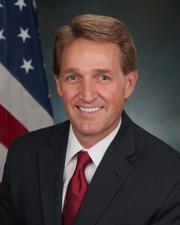 Rep. Jeff Flake (R-AZ)
Description
At the end of the bill (before the short title), insert the following: SEC.___. None of the funds provided in this Act under the heading "United States Customs and Border Protection--Salaries and Expenses" shall be available for award to Global Solar, Arizona, for the portable solar charging rechargeable battery systems, and the amount otherwise provided under such heading is hereby reduced by $800,000.
Legislative Activity
Stay on top of the latest movement without scrolling through every action
House amendment offered
June 24, 2009
View full timeline
House amendment offered
June 24, 2009
House amendment offered/reported by : Amendment (A013) offered by Mr. Flake.(consideration: CR H7213-7214, H7230-7231; text: CR H4213)
June 24, 2009 • 7:02 PM
House amendment not agreed to: On agreeing to the Flake amendment (A013) Failed by recorded vote: 110 - 318 (Roll no. 447).
June 24, 2009 • 9:42 PM
Roll call votes on amendments in House
June 24, 2009 • 9:42 PM
Amendment failed in Committee of the Whole
June 24, 2009 • 9:42 PM
Amendment (A013) offered by Mr. Flake. (consideration: CR H7213-7214, H7230-7231; text: CR H4213)
June 24, 2009 • 7:02 PM
On agreeing to the Flake amendment (A013) Failed by recorded vote: 110 - 318 (Roll no. 447).
June 24, 2009 • 9:42 PM
Votes
1 roll call on this amendment
Text
Offered
ALIEN SMUGGLING AND TERRORISM PREVENTION ACT OF 2009

  Ms. JACKSON-LEE of Texas. Madam Speaker, I move to suspend the rules

[[Page H4210]]

and pass the bill (H.R. 1029) to amend the Immigration and Nationality
Act and title 18, United States Code, to combat the crime of alien
smuggling and related activities, and for other purposes, as amended.
  The Clerk read the title of the bill.
  The text of the bill is as follows:

                               H.R. 1029

       Be it enacted by the Senate and House of Representatives of
     the United States of America in Congress assembled,

     SECTION 1. SHORT TITLE.

       This Act may be cited as the ``Alien Smuggling and
     Terrorism Prevention Act of 2009''.

     SEC. 2. FINDINGS.

       The Congress makes the following findings:
       (1) Alien smuggling by land, air and sea is a transnational
     crime that violates the integrity of United States borders,
     compromises our Nation's sovereignty, places the country at
     risk of terrorist activity, and contravenes the rule of law.
       (2) Aggressive enforcement activity against alien smuggling
     is needed to protect our borders and ensure the security of
     our Nation. The border security and anti-smuggling efforts of
     the men and women on the Nation's front line of defense are
     to be commended. Special recognition is due the Department of
     Homeland Security through the United States Border Patrol,
     United States Coast Guard, Customs and Border Protection, and
     Immigration and Customs Enforcement, and the Department of
     Justice through the Federal Bureau of Investigation.
       (3) The law enforcement community must be given the
     statutory tools necessary to address this security threat.
     Only through effective alien smuggling statutes can the
     Justice Department, through the United States Attorneys'
     Offices and the Domestic Security Section of the Criminal
     Division, prosecute these cases successfully.
       (4) Alien smuggling has a destabilizing effect on border
     communities. State and local law enforcement, medical
     personnel, social service providers, and the faith community
     play important roles in combating smuggling and responding to
     its effects.
       (5) Existing penalties for alien smuggling are insufficient
     to provide appropriate punishment for alien smugglers.
       (6) Existing alien smuggling laws often fail to reach the
     conduct of alien smugglers, transporters, recruiters, guides,
     and boat captains.
       (7) Existing laws concerning failure to heave to are
     insufficient to appropriately punish boat operators and crew
     who engage in the reckless transportation of aliens on the
     high seas and seek to evade capture.
       (8) Much of the conduct in alien smuggling rings occurs
     outside of the United States. Extraterritorial jurisdiction
     is needed to ensure that smuggling rings can be brought to
     justice for recruiting, sending, and facilitating the
     movement of those who seek to enter the United States without
     lawful authority.
       (9) Alien smuggling can include unsafe or recklessly
     dangerous conditions that expose individuals to particularly
     high risk of injury or death.

     SEC. 3. CHECKS AGAINST TERRORIST WATCHLIST.

       The Secretary of Homeland Security shall, to the extent
     practicable, check against all available terrorist watchlists
     those persons suspected of alien smuggling and smuggled
     individuals who are interdicted at the land, air, and sea
     borders of the United States.

     SEC. 4. STRENGTHENING PROSECUTION AND PUNISHMENT OF ALIEN
                   SMUGGLERS.

       Section 274(a) of the Immigration and Nationality Act (8
     U.S.C. 1324(a)) is amended--
       (1) by amending the subsection heading to read as follows:
     ``Bringing In, Harboring, and Smuggling of Unlawful and
     Terrorist Aliens.--'';
       (2) by amending paragraphs (1) through (2) to read as
     follows:
       ``(1)(A) Whoever, knowing or in reckless disregard of the
     fact that an individual is an alien who lacks lawful
     authority to come to, enter, or reside in the United States,
     knowingly--
       ``(i) brings that individual to the United States in any
     manner whatsoever regardless of any future official action
     which may be taken with respect to such individual;
       ``(ii) recruits, encourages, or induces that individual to
     come to, enter, or reside in the United States;
       ``(iii) transports or moves that individual in the United
     States, in furtherance of their unlawful presence; or
       ``(iv) harbors, conceals, or shields from detection the
     individual in any place in the United States, including any
     building or any means of transportation;

     or attempts or conspires to do so, shall be punished as
     provided in subparagraph (C).
       ``(B) Whoever, knowing that an individual is an alien,
     brings that individual to the United States in any manner
     whatsoever at a place, other than a designated port of entry
     or place designated by the Secretary of Homeland Security,
     regardless of whether such individual has received prior
     official authorization to come to, enter, or reside in the
     United States and regardless of any future official action
     which may be taken with respect to such individual, or
     attempts or conspires to do so, shall be punished as provided
     in subparagraph (C).
       ``(C) Whoever commits an offense under this paragraph
     shall, for each individual in respect to whom such a
     violation occurs--
       ``(i) if the offense results in the death of any person, be
     fined under title 18, United States Code, and subject to the
     penalty of death or imprisonment for any term of years or for
     life;
       ``(ii) if the offense involves kidnapping, an attempt to
     kidnap, the conduct required for aggravated sexual abuse (as
     defined in section 2241 of title 18, United States Code,
     without regard to where it takes place), or an attempt to
     commit such abuse, or an attempt to kill, be fined under
     title 18, United States Code, or imprisoned for any term of
     years or life, or both;
       ``(iii) if the offense involves an individual who the
     defendant knew was engaged in or intended to engage in
     terrorist activity (as defined in section 212(a)(3)(B)), be
     fined under title 18, United States Code, or imprisoned not
     more than 30 years, or both;
       ``(iv) if the offense results in serious bodily injury (as
     defined in section 1365 of title 18, United States Code) or
     places in jeopardy the life of any person, be fined under
     title 18, United States Code, or imprisoned not more than 20
     years, or both;
       ``(v) if the offense is a violation of paragraph (1)(A)(i)
     and was committed for the purpose of profit, commercial
     advantage, or private financial gain, or if the offense was
     committed with the intent or reason to believe that the
     individual unlawfully brought into the United States will
     commit an offense against the United States or any State that
     is punishable by imprisonment for more than 1 year, be fined
     under title 18, United States Code, and imprisoned, in the
     case of a first or second violation, not less than 3 nor more
     than 10 years, and for any other violation, not less than 5
     nor more than 15 years;
       ``(vi) if the offense is a violation of paragraphs
     (1)(A)(ii), (iii), or (iv), or paragraph (1)(B), and was
     committed for the purpose of profit, commercial advantage, or
     private financial gain, be fined under title 18, United
     States Code, or imprisoned not more than 10 years, or both;
       ``(vii) if the offense involves the transit of the
     defendant's spouse, child, sibling, parent, grandparent, or
     niece or nephew, and the offense is not described in any of
     clauses (i) through (vi), be fined under title 18, United
     States Code, or imprisoned not more than 1 year, or both; and
       ``(viii) in any other case, be fined under title 18, United
     States Code, or imprisoned not more than 5 years, or both.
       ``(2)(A) There is extraterritorial jurisdiction over the
     offenses described in paragraph (1).
       ``(B) In a prosecution for a violation of, or an attempt or
     conspiracy to violate, subsection (a)(1)(A)(i),
     (a)(1)(A)(ii), or (a)(1)(B), that occurs on the high seas, no
     defense based on necessity can be raised unless the
     defendant--
       ``(i) as soon as practicable, reported to the Coast Guard
     the circumstances of the necessity, and if a rescue is
     claimed, the name, description, registry number, and location
     of the vessel engaging in the rescue; and
       ``(ii) did not bring, attempt to bring, or in any manner
     intentionally facilitate the entry of any alien into the land
     territory of the United States without lawful authority,
     unless exigent circumstances existed that placed the life of
     that alien in danger, in which case the reporting requirement
     set forth in clause (i) is satisfied by notifying the Coast
     Guard as soon as practicable after delivering the alien to
     emergency medical or law enforcement personnel ashore.
       ``(C) It is not a violation of, or an attempt or conspiracy
     to violate, clause (iii) or (iv) of paragraph (1)(A), or
     paragraph (1)(A)(ii) (except if a person recruits,
     encourages, or induces an alien to come to or enter the
     United States), for a religious denomination having a bona
     fide nonprofit, religious organization in the United States,
     or the agents or officer of such denomination or
     organization, to encourage, invite, call, allow, or enable an
     alien who is present in the United States to perform the
     vocation of a minister or missionary for the denomination or
     organization in the United States as a volunteer who is not
     compensated as an employee, notwithstanding the provision of
     room, board, travel, medical assistance, and other basic
     living expenses, provided the minister or missionary has been
     a member of the denomination for at least one year.
       ``(D) For purposes of this paragraph and paragraph (1)--
       ``(i) the term `United States' means the several States,
     the District of Columbia, the Commonwealth of Puerto Rico,
     Guam, American Samoa, the United States Virgin Islands, the
     Commonwealth of the Northern Mariana Islands, and any other
     territory or possession of the United States; and
       ``(ii) the term `lawful authority' means permission,
     authorization, or waiver that is expressly provided for in
     the immigration laws of the United States or the regulations
     prescribed under those laws and does not include any such
     authority secured by fraud or otherwise obtained in violation
     of law or authority that has been sought but not approved.''.

     SEC. 5. MARITIME LAW ENFORCEMENT.

       (a) Penalties.--Subsection (b) of section 2237 of title 18,
     United States Code, is amended to read as follows:
       ``(b) Whoever intentionally violates this section shall--
       ``(1) if the offense results in death or involves
     kidnapping, an attempt to kidnap, the conduct required for
     aggravated sexual abuse (as defined in section 2241 without
     regard to where it takes place), or an attempt to commit such
     abuse, or an attempt to kill, be

[[Page H4211]]

     fined under such title or imprisoned for any term of years or
     life, or both;
       ``(2) if the offense results in serious bodily injury (as
     defined in section 1365 of this title) or transportation
     under inhumane conditions, be fined under this title,
     imprisoned not more than 15 years, or both;
       ``(3) if the offense is committed in the course of a
     violation of section 274 of the Immigration and Nationality
     Act (alien smuggling); chapter 77 (peonage, slavery, and
     trafficking in persons), section 111 (shipping), 111A
     (interference with vessels), 113 (stolen property), or 117
     (transportation for illegal sexual activity) of this title;
     chapter 705 (maritime drug law enforcement) of title 46, or
     title II of the Act of June 15, 1917 (Chapter 30; 40 Stat.
     220), be fined under this title or imprisoned for not more
     than 10 years, or both; and
       ``(4) in any other case, be fined under this title or
     imprisoned for not more than 5 years, or both.''.
       (b) Limitation on Necessity Defense.--Section 2237(c) of
     title 18, United States Code, is amended--
       (1) by inserting ``(1)'' after ``(c)'';
       (2) by adding at the end the following:
       ``(2) In a prosecution for a violation of this section, no
     defense based on necessity can be raised unless the
     defendant--
       ``(A) as soon as practicable upon reaching shore, delivered
     the person with respect to which the necessity arose to
     emergency medical or law enforcement personnel;
       ``(B) as soon as practicable, reported to the Coast Guard
     the circumstances of the necessity resulting giving rise to
     the defense; and
       ``(C) did not bring, attempt to bring, or in any manner
     intentionally facilitate the entry of any alien, as that term
     is defined in section 101(a)(3) of the Immigration and
     Nationality Act (8 U.S.C. 1101 (a)(3)), into the land
     territory of the United States without lawful authority,
     unless exigent circumstances existed that placed the life of
     that alien in danger, in which case the reporting requirement
     of subparagraph (B) is satisfied by notifying the Coast Guard
     as soon as practicable after delivering that person to
     emergency medical or law enforcement personnel ashore.''.
       (c) Definition.--Section 2237(e) of title 18, United States
     Code, is amended--
       (1) by striking ``and'' at the end of paragraph (3);
       (2) by striking the period at the end of paragraph (4) and
     inserting ``; and''; and
       (3) by adding at the end the following:
       ``(5) the term `transportation under inhumane conditions'
     means the transportation of persons in an engine compartment,
     storage compartment, or other confined space, transportation
     at an excessive speed, transportation of a number of persons
     in excess of the rated capacity of the means of
     transportation, or intentionally grounding a vessel in which
     persons are being transported.''.

     SEC. 6. AMENDMENT TO THE SENTENCING GUIDELINES.

       (a) In General.--Pursuant to its authority under section
     994 of title 28, United States Code, and in accordance with
     this section, the United States Sentencing Commission shall
     review and, if appropriate, amend the sentencing guidelines
     and policy statements applicable to persons convicted of
     alien smuggling offenses and criminal failure to heave to or
     obstruction of boarding.
       (b) Considerations.--In carrying out this section, the
     Sentencing Commission, shall--
       (1) consider providing sentencing enhancements or
     stiffening existing enhancements for those convicted of
     offenses described in subsection (a) that--
       (A) involve a pattern of continued and flagrant violations;
       (B) are part of an ongoing commercial organization or
     enterprise;
       (C) involve aliens who were transported in groups of 10 or
     more;
       (D) involve the transportation or abandonment of aliens in
     a manner that endangered their lives; or
       (E) involve the facilitation of terrorist activity; and
       (2) consider cross-references to the guidelines for
     Criminal Sexual Abuse and Attempted Murder.
       (c) Expedited Procedures.--The Commission may promulgate
     the guidelines or amendments under this section in accordance
     with the procedures set forth in section 21(a) of the
     Sentencing Act of 1987, as though the authority under that
     Act had not expired.

  The SPEAKER pro tempore. Pursuant to the rule, the gentlewoman from
Texas (Ms. Jackson-Lee) and the gentleman from Utah (Mr. Chaffetz) each
will control 20 minutes.
  The Chair recognizes the gentlewoman from Texas.

                              {time}  1800


                             General Leave

  Ms. JACKSON-LEE of Texas. Madam Speaker, I ask unanimous consent that
all Members have 5 legislative days to revise and extend their remarks
and include extraneous material on the bill under consideration.
  The SPEAKER pro tempore. Is there objection to the request of the
gentlewoman from Texas?
  There was no objection.
  Ms. JACKSON-LEE of Texas. I yield myself such time as I may consume.
  Madam Speaker, this legislation, sponsored by Baron Hill of Indiana,
is particularly important to Texas, and I want to congratulate the
gentleman for his foresight and his leadership. Maybe in his research
he knows that just a few short years ago we lost a number of
individuals, obviously smuggled for wrong reasons into Texas, who died
in an overheated 18-wheeler. And so this is a legislative initiative
that is long overdue.
  The legislation gives Federal prosecutors and agents stronger
enforcement weapons against human smuggling in all its forms, including
human trafficking and slavery, smuggling related to terrorism or
espionage, and smuggling that involves kidnapping, rape, serious injury
or death.
  The previous version of this bill passed the House in the last
Congress 412-0.
  As I noted, in Texas, we see these losses regularly, including in our
sister States, individuals dying who have been trafficked or smuggled,
dying in the desert out of desperation and thirst. And as I indicated,
the particular case that was so egregious in Texas, people smothered to
death in an 18-wheeler in the heat of the summer.
  Like the previous bill, H.R. 1029 amends the alien smuggling
provisions in the Immigration and Nationality Act, as well as the
criminal provision for failure to ``heave to,'' to provide for
extraterritorial jurisdiction, to increase maximum penalties for
serious offenses, and to clarify the necessity defense that applies to
legitimate maritime rescues.
  The bill also establishes for the first time in Federal law that it
is a serious felony to transport persons under inhumane conditions,
such as in an engine or storage compartment, or to intentionally run
vessels ashore at high speed to escape apprehension. Those kinds of
inhumane practices have resulted in death or serious injury to numerous
alien passengers.
  The bill directs the Department of Homeland Security to check against
all available terrorist watch lists those who are suspected of
smuggling, as well as smuggled individuals who are interdicted at U.S.
land, air and sea borders.
  I want to thank the gentleman for his foresight. As a member of the
Homeland Security Committee as well, and a member of the committee, the
chairperson of the committee that has oversight over the watch list, I
know how important an act this is, that it further ensures the security
of America.
  It provides tough penalties for the kind of serious smuggling
offenses I have just described, while distinguishing those offenses
from family reunification or humanitarian efforts, for which the
penalties are appropriately severe.
  While strengthening the current offense language, the bill preserves
important case law. For instance, it will remain a violation of Federal
law not only to bring illegal aliens to the United States, but to bring
any alien across the border through places other than those designated
as official entry ports.
  This is especially critical as Congress mandates that the Department
of Homeland Security institute biometric entry and exit systems. For an
orderly and fair immigration system to work, people must come in
through the designated sites. And certainly, I agree with the gentleman
as we look toward fixing that broken system.
  Finally, the bill directs the Sentencing Commission to consider
providing sentencing enhancements for particularly egregious offenses,
smuggling aliens in a life-threatening manner, abandoning them in the
desert or on a spit of land that will be submerged at high tide, or
smuggling aliens to facilitate acts of terrorism.
  I commend Baron Hill for his leadership and his persistence on this
bill. And I commend Chairman John Conyers and Ranking Member Lamar
Smith of the Judiciary Committee, and Chairman Bennie Thompson and
Ranking Member Peter King of the Homeland Security Committee for their
work in improving this bill and making it a consensus, bipartisan
measure.
  I would like to include in the Record at this point an exchange of
letters between our two committees.

[[Page H4212]]

                                         House of Representatives,


                               Committee on Homeland Security,

                                   Washington, DC, March 27, 2009.
     Hon. John Conyers, Jr.,
     Chairman, Committee on the Judiciary, House of
         Representatives, Rayburn House Office Building,
         Washington, DC.
       Dear Mr. Chairman: I am writing to you regarding H.R. 1029,
     the ``Alien Smuggling and Terrorism Prevention Act of 2009,''
     introduced on February 12, 2009, by Congressman Baron P.
     Hill. This legislation was initially referred to the
     Committee on the Judiciary and, in addition, to the Committee
     on Homeland Security.
       I recognize and appreciate your desire to bring this bill
     before the House in an expeditious manner. Accordingly, I am
     willing to waive further consideration of H.R. 1029. However,
     agreeing to waive consideration of this bill should not be
     construed as the Committee on Homeland Security waiving,
     altering, or otherwise affecting its jurisdiction over H.R.
     1029.
       Further, I request your support for the appointment of
     Committee on Homeland Security conferees during any House-
     Senate conference convened on this or similar legislation.
     Finally, I request that a copy of this letter be included in
     the Congressional Record during floor consideration of H.R.
     1029. I look forward to working with you on this legislation
     and other matters of great importance to this nation.
           Sincerely,
                                               Bennie G. Thompson,
     Chairman.
                                  ____

                                         House of Representatives,


                                   Committee on the Judiciary,

                                 Washington, D.C., March 26, 2008.
     Hon. Bennie G. Thompson,
     Chairman, Committee on Homeland Security, House of
         Representatives, Washington, DC.
       Dear Mr. Chairman: Thank you for your letter regarding your
     Committee's jurisdictional interest in H.R. 1029, the Alien
     Smuggling and Terrorism Prevention Act of 2009.
       I appreciate your willingness to support expediting floor
     consideration of this important legislation. I acknowledge
     that H.R. 1029 contains provisions under the jurisdiction of
     the Committee on Homeland Security. I understand and agree
     that your willingness to waive further consideration of the
     bill is without prejudice to your Committee's jurisdictional
     interests in this or similar legislation in the future. In
     the event a House-Senate conference on this or similar
     legislation is convened, I would support your request for an
     appropriate number of conferees.
       I will include a copy of your letter and this response in
     the Congressional Record in the debate on the bill. Thank you
     for your cooperation as we work towards enactment of this
     legislation.
           Sincerely,
                                                John Conyers, Jr.,
                                                         Chairman.

  I urge my colleagues to support this important legislation.
  Mr. Speaker, this legislation, sponsored by Baron Hill of Indiana,
gives Federal prosecutors and agents stronger enforcement weapons
against human smuggling in all its forms, including human trafficking
and slavery; smuggling related to terrorism or espionage; and smuggling
that involves kidnaping, rape, serious injury, or death.
  The previous version of this bill passed the House in the last
Congress unanimously, 412 to 0.
  Like the previous bill, H.R. 1029 amends the alien smuggling
provisions in the Immigration and Nationality Act, as well as the
criminal provision for failure to ``heave to,'' to provide for
extraterritorial jurisdiction, to increase maximum penalties for
serious offenses, and to clarify the necessity defense that applies to
legitimate maritime rescues.
  The bill also establishes for the first time in Federal law that it
is a serious felony to transport persons under inhumane conditions,
such as in an engine or storage compartment, or to intentionally run
vessels ashore at high speed to escape apprehension. Those kinds of
inhumane practices have resulted in death or serious injury to numerous
alien passengers.
  The bill directs the Department of Homeland Security to check against
all available terrorist watch lists those who are suspected of
smuggling, as well as smuggled individuals, who are interdicted at U.S.
land, air, and sea borders.
  It provides tough penalties for the kind of serious smuggling
offenses I've just described, while distinguishing those offenses from
family reunification or humanitarian efforts, for which the penalties
are appropriately less severe.
  While strengthening the current offense language, the bill preserves
important case law. For instance, it will remain a violation of federal
law not only to bring illegal aliens to the United States, but to bring
any alien across the border through places other than those designated
as official entry ports.
  This is especially critical as Congress mandates that the Department
of Homeland Security institute biometric entry and exit systems. For an
orderly and fair immigration system to work, people must come in
through the designated sites.
  Finally, the bill directs the Sentencing Commission to consider
providing sentencing enhancements for particularly egregious offenses--
smuggling aliens in a life-threatening manner, abandoning them in the
desert or on a spit of land that will be submerged at high tide, or
smuggling aliens to facilitate acts of terrorism.
  I commend Baron Hill for his leadership and persistence on this bill.
And I commend Chairman John Conyers and Ranking Member Lamar Smith of
the Judiciary Committee, and Chairman Bennie Thompson and Ranking
Member Peter King of the Homeland Security Committee, for their work in
improving this bill and making it a consensus, bipartisan measure.
  Mr. Speaker, I reserve the balance of my time.
  Mr. CHAFFETZ. Mr. Speaker, I yield myself such time as I may consume.
  Mr. Hill introduced H.R. 1029, the Alien Smuggling and Terrorism
Prevention Act of 2009, which improves the Federal Government's ability
to combat alien smuggling. I am a cosponsor of this legislation.
  But alien smuggling defines a group of crimes that involve the
recruiting, transportation or harboring of an alien who does not have
the lawful authority to be in the United States of America. This
legislation is a direct response to the increasing concern of Federal
prosecutors that the current alien smuggling statute is inadequate in
the face of rampant alien smuggling and human trafficking by organized
criminal syndicates.
  The current statute is a patchwork of amendments that does not
provide the tough penalties necessary to punish these dangerous
criminals and to deter the criminal organizations that dominate the
smuggling world today. These organizations are increasingly
sophisticated, international, profitable, and their means are ruthless
and inhumane.
  For example, the recent media reports indicate kidnappings on the
rise in Phoenix, Arizona. There were almost 370 reported kidnappings
for ransom there last year. However, it is difficult to know how many
kidnappings actually occurred because many kidnappings were not
reported to law enforcement officials.
  Most of the kidnappings involve drug smugglers and human traffickers
preying on one another. The kidnap victims are typically drug or alien
smugglers or their family members who are taken by fellow criminals and
held for ransom. These victims are inviting targets because they often
have a lot of money, or can raise large sums of cash on short notice,
and are unlikely to go to law enforcement.
  It may only be a matter of time before the kidnappers start targeting
law-abiding citizens, so we must do more to deter, identify and arrest
these alien smugglers.
  H.R. 1029 directs the Department of Homeland Security to check the
names of alien smuggling suspects who have been interdicted at a land,
air or sea border against all available terrorist watch lists.
  The bill also creates enhanced penalties for alien smuggling,
including tough sentences for smuggling that results in serious bodily
injury or death. Any person convicted of kidnapping, aggravated sexual
abuse or an attempt to kill as part of an alien smuggling scheme will
now face life in prison.
  H.R. 1029 imposes a penalty of up to 30 years imprisonment for
smugglers who know that the alien they bring to the United States
intends to engage in terrorist activities.
  Lastly, the bill amends the criminal statutes to add penalties for
maritime offenses committed in the course of smuggling, trafficking,
shipping, stolen property or drug trafficking.
  H.R. 1029 will help Federal law enforcement and prosecutors put alien
smugglers behind bars and send a clear message that these criminal
syndicates and the violence they pose to innocent civilians will not be
tolerated.
  I urge my colleagues to support this bill, and I reserve the balance
of my time.
  Ms. JACKSON-LEE of Texas. Mr. Speaker, it is my pleasure to now yield
to the distinguished sponsor of the legislation, Mr. Baron Hill of
Indiana, for such time as he might consume.
  (Mr. HILL asked and was given permission to revise and extend his
remarks.)
  Mr. HILL. Mr. Speaker, in the year 2007, I introduced the Alien
Smuggling and Terrorism Prevention Act. And as has already been
mentioned, it passed

[[Page H4213]]

this House without any opposition, and it has bipartisan support.
  When I came to Congress, back to Congress, I should say, in the year
2006, immigration was a very hot issue, and so I wanted to look at ways
that we could provide Americans some relief. And one of the shocking
things that I learned was the fact that if you smuggle an illegal alien
in here, either against their will or willfully, it is only a
misdemeanor, with a prison term for under 1 year and a small fine; and
I didn't think that that was justified.
  As has already been mentioned here by Congresswoman Jackson-Lee, it
passed overwhelmingly without opposition, and this year it does have,
again, bipartisan support. The bill failed in the Senate. For whatever
reason, the Senate did not pass it. That is the reason why I have
introduced it again, and have bipartisan support.
  I'm glad that Representative Chaffetz is on the bill, and also the
ranking member of the Judiciary Committee, Representative Lamar Smith.
  My bill, as has already been said, would significantly increase
penalties against human smugglers and traffickers, raising the crime
from a misdemeanor to a felony.
  Smugglers would see increased prison time if convicted of smuggling
persons under inhumane conditions, or for the purpose of criminal
exploitation, or in the event that they are smuggling someone into the
United States with the intent to carry out acts of terror.
  In the case of serious bodily injury, rape or murder, the smuggler or
trafficker could face upwards of life in prison.
  This bill serves two important goals. First, it holds those who
smuggle and traffic persons into the United States responsible for
their crimes. It is estimated that over 17,000 people are smuggled into
the United States each year. These are people who are forced into awful
situations against their will. Those found trafficking for those
purposes deserve a fitting punishment, and my bill works to ensure that
justice is served.
  Second, H.R. 1029 works to stem the flow of illegal immigration. I
believe this bill will act as a deterrent for illegal alien smugglers
and, therefore, greatly cut down on illegal immigration.
  I believe that we need to ensure that our Border Patrol and Coast
Guard have the tools they need to keep our borders safe.
  This bill is critical in bolstering our economic and national
security and, therefore, I strongly urge the passage of H.R. 1029.
  Mr. CHAFFETZ. Mr. Speaker, I would just inquire as to how many more
speakers.
  Ms. JACKSON-LEE of Texas. I have the right to close. I believe there
are no more speakers.
  Mr. CHAFFETZ. I have no more speakers as well. I yield back the
balance of my time.
  Ms. JACKSON-LEE of Texas. Mr. Speaker, again, I'd like to
congratulate the gentleman from Indiana (Mr. Hill) for his leadership
on this issue. This is a legislative initiative that really is long
overdue. And I'd like to respond as well to the point that he made that
was very, very succinct but also very, very potent about the need for
comprehensive reform. He is right. As he returned to the United States
Congress, it was an enormously vigorous debate. I believe some of the
satellite hearings might have wound up in Indiana that were held by the
U.S. House of Representatives.
  If we are to complement this legislation, we also need to engage in
comprehensive immigration reform so there are laws that will govern the
ingress and egress of individuals here in the United States. That is a
very important statement and challenge that we have. And, therefore, as
we move this legislation along and give a firm response of intolerance
to those who would human traffic or engage in trafficking slaves, or to
cause the loss of life or the dastardly treatment of individuals, we
are making the statement that we will take it seriously and that they
will be punished.
  In addition, I think it's very important that we complement this
legislation with strong response to the violence at the border that has
occurred due to drug cartels. I look forward to having the opportunity
to present to our Judiciary Committee legislation that I will introduce
on this issue of providing more resources for the, if you will,
inhibiting and prohibiting the kind of dastardly violence that is
occurring and providing the resources for DEA and ATF that I think are
so very necessary.
  Mr. Speaker, again I want to congratulate Mr. Hill on this
legislation, and I would enthusiastically urge my colleagues to support
this important legislation.
  Ms. JACKSON-LEE of Texas. Mr. Speaker, I rise in support of H.R.
1029, ``Alien Smuggling and Terrorism Prevention Act of 2009.'' I want
to thank my colleague Congressman Baron Hill of Indiana for introducing
this resolution.
  Mr. Speaker, as a Member of the Committee on Homeland Security, and
as a Member of the Subcommittee on Immigration, I have long been an
outspoken leader on this issue. Alien smuggling is not only a threat to
our national security, but it also diminishes the value of human lives,
and as the world's moral leader we must take a tough stance against
these horrific practices. In fact as part of the Save America Act,
immigration legislation that I introduced, I address this very issue.
My legislation would create a special class of aliens who act as
informants to assist U.S. authorities in the prosecution and
apprehension of alien smugglers. In special cases these individuals
would receive permanent resident status if the information
substantially led to a successful prosecution and apprehension of those
involved in alien smuggling.
  A few years ago in Texas, prosecutors indicted 14 people who
allegedly organized or facilitated the smuggling incident when a
crowded trailer was found abandoned at a truck stop in Victoria, 100
miles southwest of Houston, Texas. The 14 were charged with various
counts of conspiracy to conceal or transport immigrants. Twelve could
face the death penalty if prosecutors decide to pursue it. More than 70
immigrants from Mexico, Central America, and the Dominican Republic
were crammed into the tractor-trailer. Among the dead was a 5-year-old
boy from Mexico. Seventeen immigrants died at the scene, and 2 others
died later.
  My preference is to provide the Border Patrol with the additional
agents, equipment, and resources it needs to secure the border. I have
introduced legislation that would meet these needs by providing
critical resources and support for the men and women who enforce our
immigration, customs, and other laws. This would include adding 15,000
Border Patrol agents over the next five years, increasing the number of
agents from 11,000 to 26,000. It would require the Secretary of
Homeland Security to respond rapidly to border crises by deploying up
to 1,000 additional Border Patrol agents to a State when a border
security emergency is declared by the Governor. It would add 100,000
more detention beds to ensure that those who are apprehended entering
the United States unlawfully are sent home instead of being released
into our communities. And, it would provide critical equipment and
infrastructure improvements, including additional helicopters, power
boats, police-type vehicles, portable computers, reliable radio
communications, hand-held GPS devices, body armor, and night-vision
equipment.
  Mr. Speaker, I rise in strong support of this legislation for the
following reasons. This bill makes a strong statement against alien
smuggling while maintaining core Democratic principles. It is a tough
yet fair approach to border security. It is a holistic anti-smuggling
regime that reaches those who recruit aliens in their home countries,
smuggle aliens across the land borders, or transport or harbor aliens
in the United States.
  This legislation ensures border security. It recognizes the
contribution of the Border Patrol, Coast Guard, Customs & Border
Protection, Immigration & Customs Enforcement, FBI, Assistant United
States Attorneys, and Department of Justice prosecutors who are on the
front lines of interdiction and investigation of alien smugglers. It
gives agents and prosecutors tools to address alien smuggling and
terrorism by re-structuring the Alien Smuggling statutes.
  This legislation is tough on crime. It brings in new penalties of up
to life in prison for rape, kidnapping, or attempted murder in the
course of alien smuggling. H.R. 1029 revises the current statutes to
provide stiff sentences for those who commit alien smuggling that
facilitates terrorist activity, or those whose smuggling results in
serious bodily injury or placing the life of another in jeopardy. It
creates the first federal crime that recognizes transportation in
inhumane conditions as a ground for an increased sentence.
  The Act recognizes the needs of the Coast Guard for effective
maritime anti-smuggling tools, including tough penalties for those who
do not heave to, and risk their passengers' lives by intentionally
beaching their vessels at high speed in an attempt to discharge their

[[Page H4214]]

human cargo. It directs the Sentencing Guidelines Commission to put
``teeth'' into the statute by adopting sentencing enhancements for
terrorism, moving large groups of aliens, or abandoning aliens in harsh
conditions such as the desert or at sea. It maintains the current
sentencing structure in which smuggling for profit or to facilitate a
crime results in mandatory minimum sentences, and maintains the current
sentencing structure in capital cases.
  Alien smuggling will not stop until we establish an immigration
policy that substantially reduces the need for illegal entry into the
United States.
  I urge my colleagues to support this legislation.
  I yield back my time.
  The SPEAKER pro tempore (Mr. Lujan). The question is on the motion
offered by the gentlewoman from Texas (Ms. Jackson-Lee) that the House
suspend the rules and pass the bill, H.R. 1029, as amended.
  The question was taken; and (two-thirds being in the affirmative) the
rules were suspended and the bill, as amended, was passed.
  A motion to reconsider was laid on the table.

                          ____________________