An amendment numbered 6 printed in House Report 111-195 to prohibit funding for all of the member-requested earmarks for military construction projects.
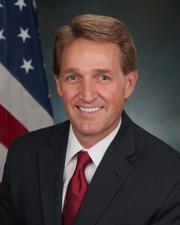 Rep. Jeff Flake (R-AZ)
Description
Amendment sought to prohibit funding for all of the member-requested earmarks for military construction projects.
Legislative Activity
Stay on top of the latest movement without scrolling through every action
House amendment offered
July 10, 2009
View full timeline
House amendment offered
July 10, 2009
House amendment offered/reported by : Amendment (A007) offered by Mr. Flake.(consideration: H7987-7990, H7991; text: CR H7987-7989)
July 10, 2009 • 12:38 PM
House amendment not agreed to: On agreeing to the Flake amendment (A007) Failed by recorded vote: 62 - 358 (Roll no. 528).
July 10, 2009 • 1:20 PM
Roll call votes on amendments in House
July 10, 2009 • 1:20 PM
Amendment failed in Committee of the Whole
July 10, 2009 • 1:20 PM
Amendment (A007) offered by Mr. Flake. (consideration: H7987-7990, H7991; text: CR H7987-7989)
July 10, 2009 • 12:38 PM
On agreeing to the Flake amendment (A007) Failed by recorded vote: 62 - 358 (Roll no. 528).
July 10, 2009 • 1:20 PM
Votes
1 roll call on this amendment
Text
Offered
MILITARY CONSTRUCTION AND VETERANS AFFAIRS APPROPRIATIONS ACT, 2010

The SPEAKER pro tempore. Pursuant to House Resolution 622 and rule
XVIII, the Chair declares the House in the Committee of the Whole House
on the state of the Union for the consideration of the bill, H.R. 3082.

{time}  1058

In the Committee of the Whole

Accordingly, the House resolved itself into the Committee of the
Whole House on the State of the Union for the consideration of the bill
(H.R. 3082) making appropriations for military construction, the
Department of Veterans Affairs, and related agencies for the fiscal
year ending September 30, 2010, and for other purposes, with Ms.
Baldwin in the chair.
The Clerk read the title of the bill.
The CHAIR. Pursuant to the rule, the bill is considered read the
first time. The gentleman from Texas (Mr. Edwards) and the gentleman
from Tennessee (Mr. Wamp) each will control 30 minutes.
The Chair recognizes the gentleman from Texas.

{time}  1100

Mr. EDWARDS of Texas. Madam Chair, I yield myself such time as I may
consume.
Madam Chair, Members, on behalf of America's service men and women,
our veterans, and their families, it is a privilege for me to present
the Fiscal Year 2010 Military Construction/Veterans Affairs
Appropriations bill.
I believe this bill and the work we have done since January of 2007
is work that all of us, Democrats and Republicans alike, can be very
proud of. In this time of war, we have continued our tradition of a
bipartisan Military Construction and Veterans Affairs Appropriations
bill, a bill that honors in a meaningful way the service and sacrifice
of our service men and women, our veterans, and their families.
In the past 2\1/2\ years, along with the passage of this bill, the
Congress will have increased veterans health care and benefits funding
by 58 percent. That is unprecedented in the history of this country,
and I believe our veterans and their families have earned every dime of
that funding.
In addition, we have a new 21st-century GI Education bill. And,
recently, President Obama signed into law a provision amending that
bill that will provide a college scholarship to every child who has
lost a mother or father in military service to our country since
September 11, 2001.
In 2\1/2\ years, this Congress will have done a number of things on
behalf of our veterans and troops, including adding 8,300 VA processors
to reduce the

[[Page H7961]]

unconscionable backlog that veterans are having to stand in in order to
receive their earned benefits.
We will have provided funding for an additional 115 VA community-
based outpatient clinics, and this bill adds 30 more. We will have
provided an additional 42 vet centers, and this bill adds 28 more.
We have allowed the Veterans Health Administration to hire an
additional 2,657 doctors, 11,509 nurses, and other critical additional
staff. We will increase the travel reimbursement rate, the per-mileage
reimbursement rate for veterans having to travel, in some cases,
hundreds of miles to VA hospitals--which has not been increased since
1979--we will increase that from 11 cents per mile to 41.5 cents per
mile. To many in America, that extra 30 cents may not sound like much.
To many of America's finest, our veterans, it's the difference between
them being able to afford to drive to get the VA health care they need
and deserve, or not.
Our increased funding for veterans in this bill and over the past
2\1/2\ years means our veterans have better access to health care they
need and deserve and have earned. It means improved access to health
care for veterans in rural areas. And it means the opening of the doors
of our VA hospitals and clinics to many middle- and low-income veterans
that have not been allowed the opportunity that they've earned through
their military service. Additionally, these resources ensure that our
veterans will have shorter waiting times for doctor appointments.
We have also worked hard to make sure that our service men and women
know that Congress deeply respects the sacrifices that they and the
unsung heroes of America's defense--their families--have made each and
every day to keep our Nation safe. We've heard time and again in
testimony that the best support we can give our military when they're
deployed overseas is the knowledge that their families are cared for
here at home. We have listened to that voice and have tried to fund a
number of key initiatives for our troops.
For example, in the past year, this subcommittee will have added $2.8
billion for new military hospitals so that our service men and women
know that their families will get the best possible health care in
high-quality facilities while they are serving overseas. We've added $1
billion for new child care centers to serve 20,000 additional military
children, and $570 million in additional funding for barracks because
Congress needs to show our volunteer forces from day one that we
appreciate their decision to serve.
The Subcommittee for Military Construction and Veterans' Affairs did
not accomplish this alone. There are several key leaders that worked
tirelessly behind the scenes to support these efforts. I want to
especially commend Speaker Pelosi, who promised over 3 years ago that
if she became Speaker she would make supporting our veterans and their
families one of Congress' highest priorities. Speaker Pelosi has kept
that promise to those who have kept their promise to serve our Nation,
and I salute her for that.
I want to salute Chairman Obey, another one of the unsung heroes in
supporting America's veterans, our military, the service men and women,
and their families. While Mr. Wamp and I, as ranking member and
chairman of the subcommittee, have often been out front on this,
Chairman Obey has provided the allocations, the unprecedented historic
increased allocations for our subcommittee that has allowed us to
accomplish many of the goals and achievements that I have mentioned in
the last few minutes.
In particular, above all other things that he has done, I want to
thank Chairman Obey for providing a green light and encouraging and
supporting and facilitating a historic initiative in this bill, which
is, for the first time ever we will provide forward funding for
veterans health care funding. That would not have happened without Mr.
Obey's support.
In addition, Chairman Spratt--not a member of our subcommittee, but
the chairman of the House Budget Committee--has played a key role,
along with Chairman Filner, the chairman of the Veterans' Affairs
Committee.
And, finally, but absolutely not least, I want to thank my colleague,
my friend, and the ranking member of this committee, Mr. Wamp of
Tennessee. He has been a partner and a leader at every step of the way
in supporting our troops and our veterans and their families. His
commitment to our military and our veterans is deep, is genuine, and he
puts it to work every day by working hard on their behalf. I want to
thank him for his vital role in not only shaping this bill, but our
bill last year as well.

Madam Chair, let me try to focus, rather than on a long list of
numbers, on some of the major initiatives in this bill.
As I referenced, for the first time in history we provide an advanced
appropriation for VA medical care. This will allow the VA to invest
taxpayer dollars more efficiently and more effectively. And I want to
thank Mr. Obey, Mr. Spratt, Mr. Wamp and Speaker Pelosi for making this
possible. I want to salute America's veteran service organizations,
leaders of our veterans organizations who have made this one of their
highest priorities.
Second, we provide $450 million to build new troop housing for Army
trainees, over 60,000 of whom are presently living in barracks that
don't even meet minimum DOD standards. You know, 18- and 19-year-old
military recruits don't have many lobbyists running around Capitol Hill
on their behalf, but they deserve our Nation's respect and support for
their decision to serve in the military.
Third, we provide $200 million for the Guard and Reserve Construction
Initiative, recognizing the vital role these troops are playing in Iraq
and Afghanistan and in our Nation's defense. And particularly, in
addition to his other efforts, I want to thank Mr. Wamp for taking a
leadership role on this Guard and Reserve Initiative.
Fourth, this bill begins a process of funding our operations in Iraq
and Afghanistan through the regular appropriations process, and we
include $1.4 billion for vital military construction to support our
troops in Afghanistan.
Fifth, recognizing that the mental wounds of war can sometimes be as
painful and long lasting as the physical wounds of war, we provide $4.6
billion for the VA to continue its improvements in PTSD and mental
health care for America's vets.
Six, this bill includes funding for the 1,200 new claims processors
to reduce the backlog of veterans receiving the benefits they've
earned.
Seven, this bill also continues to open up, as I referenced briefly,
VA medical care to more middle- and low-income veterans, many of whom
have been locked out since a cap was placed on income thresholds back
in 2003.
Finally, and this is important, we want to ensure that the historic
increases for VA health care and benefits, that those dollars are spent
wisely. And I know Mr. Wamp and I share a strong commitment to this; we
want to see that every dime of that is spent for the highest priority
needs of our veterans, so together we supported increasing the VA
Office of Inspector General by $19.2 million. And we have every
intention, through our subcommittee, of exercising increased oversight
of the VA to see that these tax dollars are spent effectively and
efficiently.
Just a few basic numbers: overall, this bill totals $77.9 billion in
discretionary funding for fiscal year 2010. This is $239 million above
President Obama's request and $5 billion more than fiscal year 2009.
The bill will include $48.2 billion in fiscal year 2011 advanced
funding for VA medical services, medical support and compliance. and
medical facilities, an 8.3 percent increase over the historic funding
level of 2010.
In military construction, family housing, and BRAC, the bill provides
$24.6 billion and fully funds BRAC 05 at $7.5 billion. For the VA in
fiscal year 2010, the bill provides $53 billion in discretionary
funding. This is $5.4 billion above the 2009 funding and matches
President Obama's VA request, which I should point out was the largest
increase requested by any President in over three decades. The fiscal
year 2010 increase for the Veterans Health Administration is $4.4
billion, which is 11 percent over fiscal year 2009.
Finally, I want to thank the people who work every day--in fact, day
and night--behind the scenes without public applause for our veterans
and our troops and their families. These are the people who make up the
staff of the

[[Page H7962]]

Military Construction and VA Appropriations Subcommittee, and I want to
thank them by name: the minority staff, led by Martin Delgado, Liz
Dawson and Kelly Shea, and Erin Fogelman and Juan Alvarez from Mr.
Wamp's staff. The majority staff: led by my subcommittee clerk Carol
Murphy, Tim Peterson, Mary Arnold, Walter Hearne, and Donna Shahbaz,
and Lindsey Davis on my staff.
I would also like to add a special thanks to John Conger, who has
recently left my staff to work for the military as an employee of the
Pentagon. All of these people have helped continue the long, proud
tradition and legacy of this subcommittee to work on a bipartisan--
frankly, a nonpartisan--basis, always putting our troops and veterans
first. And as I say that, I once again thank our ranking member for
always fighting and putting first our troops and our veterans.

[[Page H7963]]

[GRAPHIC] [TIFF OMITTED] TH10JY09.001

[[Page H7964]]

[GRAPHIC] [TIFF OMITTED] TH10JY09.002

[[Page H7965]]

[GRAPHIC] [TIFF OMITTED] TH10JY09.003

[[Page H7966]]

[GRAPHIC] [TIFF OMITTED] TH10JY09.004

[[Page H7967]]

[GRAPHIC] [TIFF OMITTED] TH10JY09.005

[[Page H7968]]

With that, I reserve the balance of my time.
Mr. WAMP. Madam Chairman, I yield myself such time as I may consume.
It is, indeed, a high privilege and a great honor to stand on the
floor today with Chairman Edwards and present the 2010 Military
Construction Veterans Affairs and Related Agencies Appropriations bill.
Indeed, this bill is not about us, it's not about our individual
districts. It's about them, those that volunteer to serve our country
in the uniform of our Armed Forces, past, present, and future, their
willingness to stand between a threat and our civilian population,
extend freedom from this generation to the next, and join the thousands
of others that have preserved our freedoms and protected our way of
life.
This is a very important bill; it is worthy of our support. It is a
bipartisan product. As the chairman said earlier, this bill is not
pushed by lobbyists or outside interests other than the veteran service
organizations and the families of those that are serving and have
served.
It is our honor, and frankly our sacred duty, to make sure that we
give these great Americans what they deserve and what they need. I
think if you ask our men and women in harm's way today, what can we do
for you, the first thing they would say is take care of our families
while we're serving and, when we come home, support us. This bill does
that, and I'm grateful for that.
I can't thank Chairman Edwards enough. He is diligent, he is fair, he
is honorable, and he is totally committed to these men and women in
uniform. And we are working together to guarantee the efficiencies of
these resources and the investments that we're making.
This bill funds the needs for military construction and family
housing for our troops, their families, the quality of life
construction projects, and provides funding for all the programs that
the Veterans Administration and related agencies have asked for in
their budget request. This bill literally touches every soldier,
sailor, aviator, marine, military spouse, child, every veteran who
participates in VA programs; and it takes good care of our national
cemeteries and monuments that are funded in this bill as well.
We worked together through 18 hearings. We asked a lot of questions;
we had very good witnesses. So a totally cooperative effort.
I want to thank all of our subcommittees from both sides.
Specifically today I want to thank Mr. Farr and Mr. Crenshaw, who
really supported the chairman and myself through this process, Mr. Farr
as vice chairman, Mr. Crenshaw when I could not be there on certain
days; outstanding work by them.

{time}  1115

This bill reflects bipartisan input and cooperation, and that is the
tradition of this bill, and we have honored that tradition and worked
very well together, and it truly is a bipartisan bill.
I want to just talk about a couple of initiatives in the bill without
going into specific numbers because Chairman Edwards has already
highlighted many of the numbers.
The Guard and Reserve initiative is extremely important because we
have been fighting terrorists since September the 11th, 2001. The op
tempo of our National Guard and Reserve forces remains at a very high
level. It's very likely to remain that way for the foreseeable future.
The Guard and Reserve have had more than 719,000 activations since
September the 11th, including the current level of 142,000. So I'm
pleased to join Chairman Edwards in supporting the additional $200
million in this bill to address urgent unfunded requirements for the
Army and Air National Guard and for the Reserve forces of the Army,
Navy, Marine Corps, and Air Force.
On BRAC, the BRAC 2005 account in the President's budget request is
$7.5 billion. The department and the services have testified that it's
going to be absolutely critical for them to have this funding on
October 1 of this year in order to meet their September 15, 2011,
statutory deadline to complete BRAC 2005. I will continue to work with
Chairman Edwards to make sure that this gets done on time. However, the
House-passed defense authorization bill cuts $350 million from this
BRAC account for this year on the cost of the provision that requires
prevailing wage equivalency with Hawaii for military construction on
Guam related to the relocation of our Marines from Japan. The CBO has
scored this provision as costing $10 billion over the next 10 years.
That's twice the amount of the entire relocation from Japan to Guam,
and this is the largest Milcon investment in a generation, and it's
really important that we address this issue throughout this process. I
spoke at the Rules Committee yesterday to raise this issue. We have
spoken with the leadership of the House. We have spoken with the
leadership of the Congress to say this is a problem and it has to be
addressed as this bill moves forward and as the process moves forward
because we simply can't afford to double the cost of the relocation
from Japan to Guam based on a prevailing wage issue. It's too much. Too
much. We've got to resolve it.
On the advanced appropriations issue, the chairman spoke eloquently
about this. We reached a bipartisan agreement. I am very pleased with
the way they allowed Ranking Member Mr. Lewis and me to weigh in
because none of us want to retreat from our constitutional prerogative
or obligation we have to oversee all the funding on an annual basis.
However, we share the goal of making sure that the VA has the money
they need in a timely manner and can make decisions that maximize their
effectiveness because it's a big bureaucracy, and when the money is in
doubt, the changes and reforms necessary to improve efficiency can't be
met. The bill contains $48.2 billion for advanced appropriations for
medical services, medical support and compliance, and medical
facilities, which is $3.7 billion above the amount recommended in the
fiscal year 2010 bill on these accounts.
On VA spending I continue to be concerned, as is Ranking Member
Lewis, about the ability of the VA to absorb large funding increases
provided in this bill. I'm very pleased to support the increases, but
it is absolutely our job to make sure not just that we raise the
funding levels but that the money is well spent, spent in a timely
manner, that it's effectively spent, and that there is accountability
through the entire process. So we continue to raise this issue. I think
there is a bipartisan commitment to this, and I want to point that out
as well.
Mr. LEWIS of California. Will the gentleman yield?
Mr. WAMP. I'm happy to yield to the ranking member.
Mr. LEWIS of California. It had not been my intention to speak on
this measure in order to save time, but you're making a point that's
really very fundamental. I would like to commend both of you, the
chairman and the ranking member, for the fabulous job here.
But, most importantly, some years ago I had the opportunity to Chair
the VA Appropriations Subcommittee. During those years, we were most
concerned that, while there was bipartisan support on the House floor
and funding rose for veterans, that the various organizations that
support funding and veterans here in Washington were not helping us
much out there where the people really get their service at the
veterans hospitals. There has been a radical change in our ability to
make sure that service is being delivered effectively. And it's due to
the work of the two of you and the bipartisan effort here that we have
had this success. So thank you.
Mr. WAMP. Reclaiming my time, on this same front, the information
technology account is a significant increase, $833 million above the
2009 enacted level, an increase of $559 million above the 2009 level
when the reprogramming action that was approved is taken into
consideration. It is a large, unchecked spending increase to one
account, and the GAO and the OIG and others have documented the VA's
inability to effectively manage these resources. I agree with Secretary
Shinseki when he testified that he's going to need IT to be a key part
of his plan to transform the VA. However, with the documented concerns
about this account, it remains doubtful that this will occur.
Not more than 3 hours after our subcommittee markup, the staff
participated in a briefing at the request of VA's Assistant Secretary
for IT. The

[[Page H7969]]

purpose of this briefing was to provide the committee an update on a
thorough analysis that the VA was undertaking to review their IT
portfolio. The VA reported that there are a number of IT programs that
are more than 13 months behind schedule and more than 50 percent over
budget. We asked for the list of these projects along with the 2009 and
2010 costs for these programs. More than 3 weeks have now passed, and
the VA has yet to provide the list to show the costs for these troubled
IT projects. That is an example of how increasing the funding can be
very helpful if the checks are in place to make sure that the money
gets to where it's supposed to go. So it's not just increasing the
funding; it's making sure that the veterans benefit from this increased
funding, to make sure that the bureaucracy of the VA is held
accountable, to make sure that we insist on efficiencies and that the
money flows down in a timely manner.
And then the National Cemetery Administration--I want to note the
increased funding for this account, $20 million above the 2009 enacted
level of $230 million, and that will go a long way to allow the VA to
meet the current needs as well as giving the ability to look at
cemetery expansion in areas where expansion is needed. That includes
Chattanooga, where we have a very historic national cemetery.
Without mentioning names, because the chairman already has, I can't
say enough about this professional staff, those behind me, those behind
him. It's an honor for all of us to be part of this team. I don't think
there is a higher privilege that any of us could ask for than to serve
the men and women in uniform of our Armed Forces past, present, and
future.
Madam Chairman, as I conclude, I want to thank Mr. Lewis and Mr.
Obey, who serve as the distinguished ranking member and chairman of
this committee. This is a good bill. It deserves our support. I look
forward to continuing our work through the conference committee, and I
want to encourage Chairman Edwards and Chairman Obey to insist that we
have a conference committee, that we meet with the Senate, that we look
eye to eye and we resolve any of our differences. I think that is the
regular order that we desire to return to.
Madam Chairman, I reserve the balance of my time.
Mr. EDWARDS of Texas. Madam Chair, if there is a single unsung hero
in this Congress on behalf of America's veterans, it's the gentleman
from Wisconsin, the chairman of the full Appropriations Committee, Mr.
Obey. And for that reason, I yield 2 minutes to him for any remarks he
would care to make.
Mr. OBEY. I thank the gentleman for yielding.
I simply have one question for the gentleman from Tennessee. Are you
really sure you want us to meet with the Senate?
Mr. WAMP. I'm running for Governor, sir.
Mr. OBEY. Does that mean you're running away from the Senate?
Madam Chair, let me simply congratulate both the gentleman from
Tennessee and the gentleman from Texas for the fine work they have done
on this bill. I think every Member of the House can be proud of what
has happened in terms of our delivering of benefits to veterans on the
health care front and on the education front.
Over the past 3 years or so, we have had very significant increases
in veterans health benefits. We also last year passed a landmark, an
historic, expansion of the GI Bill education benefits by passage of the
Webb amendment. In the supplemental appropriation bill this year, we
enhanced the ability of spouses and children of veterans to receive
transfer benefits to allow them to use the education benefits that
would otherwise have accrued to a veteran. There had been a hole in the
law which did not include the children of veterans who had died, and
that has been corrected, and now this bill goes a whole lot more down
the road in dealing with their needs.
When we go into wars, we have an obligation to provide all the
support that's necessary to the warriors during and after the wars, and
that's in part what this bill tries to do. And I congratulate both
gentlemen for the work they have done and urge support for the bill.
Mr. WAMP. Madam Chairman, at this time I yield 3 minutes to the
former chairman of the House Appropriations Committee and the current
ranking member of the Defense Appropriations Subcommittee who also
serves as a very valuable member of our subcommittee, Mr. Young of
Florida.
Mr. YOUNG of Florida. I thank the gentleman for yielding to me.
Madam Chairman, I just want today to start by saying most of us in
our jobs have parts of our job that we like better than other parts of
our job. Serving on this subcommittee is part of the job that I really
like, not only because of the importance of the subject, dealing with
and providing for the members of our military and those veterans who
have served in the past in the military and, as Mr. Wamp said, those
who will serve in the future, but also because of the way this
subcommittee does its work. With the leadership of Chairman Edwards and
the leadership of Ranking Member Zach Wamp, this subcommittee works
together for the good of this country. And while we may have some
objection to the process on how appropriations bills are brought to the
floor without totally open rules, you will be hard-pressed to find
something wrong with this bill or some reason to vote against this
bill. It's just not there.
There are some problems in the Veterans Administration, which is a
huge bureaucracy, that can't be solved by money. The money that the
committee has made available adequately meets the requirements as
proposed to us by the administration.
There is something else that this committee does that seldom gets
mentioned. And I want to just take a brief comment and talk about--
General Colin Powell was visiting in Europe. General Powell was asked a
rather critical question that, in effect, the question criticized the
United States for our arrogance and how we do things that are not good
for other people. And General Powell thought for a minute, and he said,
You know, the only thing that we have asked from you in Europe is
enough ground to bury our dead.
There are 22 American cemeteries in Europe. The subcommittee has
responsibility to provide funding to maintain those military
cemeteries, and they do a good job and they are beautiful. And for
those Members who haven't had a chance to visit them, you really
should.

{time}  1130

There are 22 American cemeteries, graves of 106,757 American soldiers
who lost their lives freeing the people of Europe from the oppression
of Hitler's Nazis.
This subcommittee has that responsibility and does a really good job,
and I am proud to work with Chet Edwards and I am proud to work with
Zach Wamp and all the other members of the subcommittee and the staff
who are so dedicated to meeting our mission, to doing the job that we
were responsible for doing.
As I want to say to our chairman and to my ranking member, this is
the part of the job that I really like around here. There are a lot of
other parts that I like too, but I really like this one. Working with
you two gentlemen is just very, very special.
This bill appropriates $108.9 billion for the Department of Veterans
Affairs for 2010, a 15.4 percent increase in the funds for veterans
medical and services available this year. This bill funds the expanded
GI Bill benefits authorized last year by the 110th Congress, it funds
an additional 1,200 claims processors to reduce the backlog of
veterans' disability claims, and it expands programs to help homeless
veterans.
Our subcommittee also reaffirms its longstanding support for veterans
medical care programs by providing $34.7 billion for VA medical
services, a 13 percent increase over current year funding. The members
of our subcommittee also approved a new method of funding veterans
medical care to ensure that the uncertainty of our legislative cycle
does not negatively impact the ability of the Department of Veterans
Affairs to plan for and deliver the best in medical care for those who
served our nation. In addition to providing funding for VA medical care
in Fiscal Year 2010, it also provides advanced funding for the
following year, Fiscal Year 2011.
Our committee also continues to place the highest priority on
providing the best care and services for our service members who have
returned from Iraq and Afghanistan and have

[[Page H7970]]

been diagnosed with Post Traumatic Stress Disorder and Traumatic Brain
Injury. One of our nation's centers for the treatment of PTSD and TBI
is the Department of Veterans Affairs Medical Center at Bay Pines,
which I have the privilege to represent. Included in the bill we
consider today is $96,800,000 to build a state-of-the-art medical
facility at Bay Pines to better screen our returning service members
for mental health problems and to provide the state-of-the-art
facilities in which to treat them. The Committee approved my request
for the design and engineering funding for this project last year to
accelerate the construction of this vitally needed unit.
We also include in the bill $371,300,000 for a new VA medical
facility in Orlando that will benefit veterans throughout the state.
Florida continues to experience one of the largest inflows of veterans
of any state in our nation. All of Florida's VA medical facilities feel
the strain of a growing caseload, especially during the winter months.
The construction of this long anticipated VA hospital in central
Florida will ease that burden on all the existing hospitals.

Madam Chair, this legislation honors those who wore the uniform in
the defense of our nation and freedom here and throughout the world. We
also honor those who wear the uniform today by ensuring that they live
and work in the best facilities today whether it be on U.S. soil or on
our bases in the furthest points of the world.
This includes the facilities for the forces leading the worldwide
battle against terrorism which is being directed by U.S. Central
Command and U.S. Special Operations Command at MacDill Air Force Base
in Tampa, Florida, which neighbors the 10th Congressional District I
represent.
Just this week, I joined General David Petraeus, the Commander of
U.S. Central Command, to break ground on a new headquarters facility
that was supported by this committee and for which this committee
approved my request four years ago to accelerate the funding to begin
its design and engineering. Our bill this year includes $21,000,000 to
accelerate construction of a Consolidated Communications Facility to
support the Joint Components of Central and Special Operations Command
at MacDill. Communications is critical for both commands to manage
operations that are underway half a world away. This facility will
ensure that our war fighters will have the most up-to-date and secure
communication capabilities for them to do their job.
This legislation also includes $15,300,000 for the Central Command
Commandant Facility which will coordinate air operations for Central
Command's commanding officers and support staff to enable them to
deploy rapidly and efficiently. This is imperative given the geographic
distance and the number of crises that continue in the Middle East and
Southwest Asia.
This facility will provide a secure facility to accommodate the Joint
Special Operations Air Component, train increasing numbers of
personnel, and store authorized equipment. In addition it will provide
a Sensitive Compartmented Intelligence Facility to conduct analysis and
assessments to provide Central Command with accurate and comprehensive
situational awareness for our forward deployed forces.
Another $7,000,000 is included for a much needed Child Development
Center to care for the children of our service members who work around
the clock to support their missions. This facility is designed to
accommodate and care for the many families of our many working parents
at MacDill Air Force Base. And $16,000,000 is included here for a new
dormitory to provide unaccompanied enlisted personnel with safe, energy
efficient housing.
Madam Chair, this is a good bill. It fulfills our nation's promise
and commitment to care for our nation's veterans, those who serve;
those have served in the past, and those who will serve our nation in
the future.
Mr. EDWARDS of Texas. Madam Chair, I consider it an honor to be even
able to speak after Mr. Young, who has committed his lifetime and his
heart to our servicemen and -women and our veterans. He and his wife
commit every week to going out to our DOD and VA hospitals to let those
great Americans know that their sacrifices are not forgotten. I want to
thank him for inspiring all of us to remember the sacrifice our troops
and veterans have made.
With that, it's a privilege for me to recognize the vice chair of our
subcommittee, who has been a leader at every step of the way on so many
issues on behalf of our veterans, Mr. Farr of California, for 2
minutes.
Mr. FARR. Thank you very much, Chairman Edwards, for yielding.
Madam Chairman, I just want to rise to speak on this bill, and I just
want to say something following Congressman Young's points.
What I love about this committee, more than any other committee I
have ever served on in the State legislature or here in Congress, I
think it's the best listening committee I have ever been on. We listen
to people, and what I call the felt needs, and we respond.
I think what we are so proud about is the fiscal year 2010 military
construction and veterans spending bill responds to what we heard and
addresses those issues. What I think is remarkably progressively
happening in this country is that for the first time these two huge
agencies, the Department of Defense and the Department of Veterans
Affairs, are beginning to be seamless in a sense.
I mean, you can't be a veteran without going through the Department
of Defense. And the new Secretary of Veterans Affairs Shinseki has said
that the minute you enroll in the Department of Defense you are
automatically enrolled in the Department of Veterans Affairs. So you
are going to begin seeing this, rather than having these lost records
and folders and everything that needs to be done, that it will be
administratively clean.
What I also really appreciate about this committee that probably is
not recognized is that we hear over and over again about the health
care of our veterans. And I can't think of two more sensitive people
than Chairman Edwards and Ranking Member Wamp and our colleague on the
committee, Patrick Kennedy, that listened so profoundly to the needs of
mental health care for veterans, not only those coming back with
posttraumatic stress syndrome from Iraq and Afghanistan, but we have
about 270,000 veterans that sleep on the streets of America.
That's the biggest embarrassment that this country has. We have not
been that good at taking care of them. This budget puts $800 million
more in mental health and does the outreach for homeless veterans.
I am very proud of that and would urge support of the legislation.
Mr. WAMP. Madam Chairman, I yield 3 minutes to Ander Crenshaw from
Jacksonville, Florida, who would be the vice ranking member if there
were such a position, but he is an incredibly valuable asset on our
subcommittee and has done just an extraordinary job this year.
Mr. CRENSHAW. I thank the gentleman, Mr. Wamp, for yielding the time.
I thank him for his hard work in the subcommittee and working with our
Chairman Edwards, thank you for your leadership and your bipartisan
spirit. And thank you both for involving all the members of the
subcommittee and drafting this legislation that I think we can all
support.
I ran for Congress in the first place because I believe the number
one responsibility of the Federal Government is to protect American
lives, and I think the best way to keep America safe is to keep America
strong. But I have been on this subcommittee now for 7 years, and I
think we have a tremendous responsibility not only to modernize and
upgrade these bases all around the world that we oversee, but we have a
responsibility to make sure that we take care of the men and women that
volunteer to defend our country. Nobody forces them to do that. Nobody
forces them to go into harm's way. They do it because they care about
America. And I think we have a responsibility to take care of them, and
that's what this bill does.
I think in terms of housing, there was a time when people that served
in our military lived in substandard housing, something they couldn't
be proud of. Through using some of the private sector ideas like
privatization, now over 90 percent of our military men and women live
in adequate housing that they can be proud of.
When they go off to deployment, they can be sure that their families
are going to be taken care of back home with a good quality of life.
They are going to have a peace of mind when they are gone and when they
are fighting for us.
And when they come home and they leave the service, now they know
they have a Veterans Administration that cares about them. This bill
continues the work that we have done to make sure that we have more
clinics, to make sure we have more doctors and nurses, more people to
process those claims. They don't have to wait in line. We are making
some giant strides.

[[Page H7971]]

And, finally, this bill, as has been pointed out, deals with national
cemeteries, to give those veterans a final resting place that they so
richly deserve.
And I know in my home district in Jacksonville, Florida, we opened a
new veterans cemetery this year. And I don't think I have ever been
more proud to be a Member of Congress, to be a part of that ceremony,
to see the sense of gratitude in these people's eyes knowing they are
going to have a place, a final resting place because of the way they
have defended our country.
Madam Chairman, I think this is a bill we can all support. I am again
thankful to our chairman, our ranking member, and all the members of
the subcommittee for the work that we put in that we can be so proud
of, so I urge adoption.
Mr. EDWARDS of Texas. Madam Chair, I would like to recognize a member
of our committee, the gentleman from Colorado (Mr. Salazar), an Army
veteran who has been a strong voice on behalf of our veterans and
military, for 1 minute.
Mr. SALAZAR. I want to take a moment to recognize both Chairman
Edwards and Ranking Member Wamp for their valiant effort in putting
this bill together. I don't think there are any greater champions for
military veterans and their families. All 17.5 million in the United
States should applaud the chairman and the ranking member for their
diligent fight.
Madam Chair, I would like to bring one specific project in the bill
forward and not only thank the chairman and the ranking member, but
also Secretary Shinseki and President Obama and the chairman of the
Veterans' Affairs Committee, Mr. Filner, for including the $119 million
for the new Fitzsimmons Veterans Hospital in Denver, Colorado.
This facility will provide full service to half a million veterans
currently residing in my home State of Colorado and many across the
Rocky Mountain west. This new facility will be open and begin serving
veterans by 2013. The 200-bed hospital will reach over a million square
feet in size and include 30 special beds for spinal cord injuries.
I am proud that after over a decade of waiting, the veterans of the
Rocky Mountain west and my State will finally benefit from this state-
of-the-art facility.
Mr. WAMP. Madam Chairman, I yield 3 minutes to my friend, the
gentleman from Indiana and the ranking member of the Committee on
Veterans' Affairs, Mr. Buyer, for the purpose of a colloquy.
Mr. BUYER. I want to commend my friend Mr. Wamp and Chairman Edwards
for your strong advocacy on behalf of America's veterans.
Mr. Chairman, last year, as you may remember, I offered an amendment
that would have provided direct funding for VA to advance projects at
16 VA medical centers that were identified for the use of solar
photovoltaic roof applications, but the amendment was ruled out of
order on a technical issue.
You and I have had several conversations about renewable energy
issues and, however, working with the Secretary, as I had indicated, I
was able to ensure that the VA funded these projects with the overall
amount that included the fiscal year 2009 appropriations act, of which
you had no objection.
Subsequently, at the beginning of this Congress, with the prospect of
a forthcoming stimulus bill, I had met with the Secretary of the VA on
renewable energy projects to benefit our veterans and to provide
additional funding to invest in these renewable energy projects at the
VA. I was pleased the stimulus bill provided the VA with more than $1.4
billion. That's almost half a billion more than what I even submitted
in the request, so I thank the chairman.
And the VA stimulus spending for the additional 31 solar photovoltaic
feasibility studies also included studies for cogeneration, of which
the chairman must have done, along with wind and geothermal projects.
And based on those study results, the VA plans to fund up to eight
solar projects, nine cogenerations, six wind, and five geothermal using
stimulus dollars.
Mr. Chairman, the VA also expects to implement the remaining 23 solar
projects, 29 cogeneration, 4 wind and 4 geothermal in fiscal year 2010,
subject to the feasibility determinations.
With this in mind, I want to ask my friend: Do I have your assurance
that the bill before us would provide the sufficient funds for the VA
to move forward with these renewable energy projects?
I yield to the gentleman from Texas.
Mr. EDWARDS of Texas. I first want to thank Mr. Buyer for taking the
lead and for fighting to ensure that alternative sources of energy are
utilized by the VA. This is an important issue and initiative.
Our bill does take into consideration this important need, and VA
plans to fund a significant number of renewable energy projects with
resources in this bill. I want to assure you that I will emphasize to
the VA the importance of this effort.
I recognize, and I think this is critical, the result of your
efforts, that every dollar saved through energy conservation in the VA
will result in an additional dollar going directly to better health
care and benefits for veterans.
I further look forward to continuing to work with you to ensure that
the VA appropriately employs the use of solar technology to reduce
energy costs and to benefit our environment.
Mr. WAMP. I want to thank the chairman for this commitment and
express my strong support for funding these renewable energy projects,
compliment Mr. Buyer for his tenacity and perseverance here on this
front, because I know that we can reduce VA's high energy costs with
the use of these new renewable energy technologies. I look forward to
working with each of you as we continue to advance renewable energy
projects at VA facilities.
The CHAIR. The time of the gentleman has expired.
Mr. WAMP. I yield the gentleman an additional 15 seconds.
Mr. BUYER. I would thank the leadership of Mr. Edwards and Mr. Wamp
for your commitment for renewable energy within the VA.
Mr. EDWARDS of Texas. Madam Chair, I would like to yield 3 minutes to
the gentleman from Rhode Island (Mr. Kennedy) who has been the leading
voice in this subcommittee and the House for improving mental health
care services for America's veterans and services to homeless veterans.
Mr. KENNEDY. I want to thank the chairman of the Appropriations
Subcommittee on Veterans Affairs, Chairman Edwards, for his leadership
on what has been an amazing increase in funding for veterans in this
country. As chairman of the Appropriations Committee, we have seen in
the last cycle the largest single increase in veterans funding in the
76-year history of the Veterans Administration in the last cycle. And,
as such, that has carried over till this cycle and will in the
succeeding years ahead as we continue to increase the veterans
appropriations.
And, again, this year, we are seeing another large, large increase in
the veterans spending, including increases in veterans mental health.
And that, my friends, is what I am so pleased to see, especially in the
wake of the terrible tragedy at Camp Victory, where we saw a murder-
suicide, once again highlighting the terrible tragedy that so many of
our veterans are facing with the psychological wounds that they are
facing and the combat that they are so readily seeing on a day-to-day
basis. They are not only suffering the physical wounds of war but the
psychological and mental wounds of war.
I would like to acknowledge the ranking member, Zach Wamp, for the
incredible support that he has given to our veterans in the area of
mental health services.
We have seen in this bill $4.6 billion for mental health services in
this bill. We have seen an additional $3.2 billion for homeless
veterans. It's a tragedy, as my friend Sam Farr said, that the single
largest percentage of the homeless population in this country are
veterans. That should not be the case. In this bill, we seek to try to
end that situation.
Madam Chairman, I am also pleased to see that this committee responds
to the veterans of America in providing advance funding for veterans
funding for the succeeding years, so that veterans do not have to wait
on Congress to provide those funds, and that we provide an additional
$48 billion in the 2011 budget.

[[Page H7972]]

{time}  1145

And that, my friends, is a result of General Shinseki, the VA
Secretary's strong advocacy and this President's commitment to our
veterans to make sure that they don't have to wait--they don't have to
wait for a budget in order to know that they're going to get the funds
they need to take care of our veterans.
For these and all the reasons, I'm so proud to be part of this
committee and to see that this country lives up to its promise to our
Nation's veterans. And I thank the chairman for all the good work that
he does, and I thank the ranking member for all the good work that he
does. And I'm proud to be on this committee.
Mr. WAMP. Madam Chairman, I yield myself 3 minutes and yield to the
gentleman from Delaware (Mr. Castle) for the purpose of a colloquy.
Mr. CASTLE. I thank the distinguished gentleman for yielding. Madam
Chairman, I'd like to speak about the Dover Air Force Base and what
it's doing with respect to its port mortuary.
For more than 50 years, Dover Air Force Base has been home to the
United States military's port mortuary. It's here that Dover's expert
staff receives from theater the remains of fallen American soldiers,
sailors, airmen, and marines and conducts a solemn, dignified transfer
from the aircraft to the port mortuary. The base and the community in
Dover take this responsibility very seriously and treat all fallen
servicemembers and their families with dignity, honor, and respect.
As you know, in March of this year the Department of Defense
announced a new policy regarding media access to the dignified transfer
of remains at the Dover Air Force Base. Under the new policy, the
decision regarding media coverage is made on an individual basis by the
families of the fallen. The new policy also expands the Department's
support to those family members wishing to attend the dignified
transfer by paying for travel to Dover and increasing the availability
of grief counseling and chaplain support services.
The immediate result of this policy change is that many more families
of fallen soldiers from across the country travel to Dover to attend.
Unfortunately, the wing commander and his staff at Dover Air Force Base
have expressed concern they do not have adequate chapel facilities to
provide for on-base memorial services, worship, and counseling. This
lack of chapel facilities would be particularly evident in the
unfortunate event of a mass casualty situation in the theater of
operations.
The base has submitted a proposal to build a new main base chapel
center to include private space for the expressed purpose of receiving
grieving families. I understand that the office of the Secretary of
Defense is supportive of this project, and I look forward to working
with the committee at the earliest possible opportunity to solve this
pressing matter.
Mr. EDWARDS of Texas. Will the ranking member yield?
Mr. WAMP. I yield to the chairman of the subcommittee.
Mr. EDWARDS of Texas. The gentleman from Delaware has raised a very
important issue, and as someone who once represented Fort Hood, Texas,
through three combat deployments, I strongly believe in the need to
treat our fallen and their families with the utmost dignity and
respect.
So it will be a privilege for me to work with the gentleman on this
issue. And I am hopeful that we can rectify this problem by the time we
get through conference.
Mr. WAMP. Reclaiming my time, I stand with you, Mr. Chairman, and
will work with Mr. Castle as well to resolve this matter in conference.
I yield to Mr. Castle.
Mr. CASTLE. I thank both the distinguished chairman of the committee
and the ranking member, Mr. Edwards and Mr. Wamp, for their work on
this legislation as well as discussing this particular issue. I look
forward to working with you and all of the servicemembers and families
who would be involved with this, and hopefully we can work it out in
the near future.
Mr. WAMP. I reserve the balance of my time.
Mr. EDWARDS of Texas. Madam Chair, I'd like to yield 1 minute to an
active voice on our subcommittee on behalf of veterans and our troops,
the gentleman from New York (Mr. Israel).
Mr. ISRAEL. I thank the chairman. Madam Chair, this bill addresses
one of the biggest concerns that I and many others have, and that is
homeless veterans. The bill provides $420 million over last year's
level for assistance and treatment for homeless veterans.
Tonight, Madam Chair, 154,000 veterans will go to bed without a home.
One out of four homeless men served in the United States military at
some point. They fought for our country, they came home, but they don't
have a house. They served in jungles, they served in cities, they
served in deserts and bases on the high seas, and they're sleeping on
sidewalks this evening in America.
That is a national shame. But thanks to the bipartisanship of this
subcommittee, we are making a bold leap on behalf of those homeless
veterans. We are making the investments necessary to stop this outrage
and to do what every nation must do, and that is to treat its veterans
as heroes, and in this case, heroes with a home. I thank the gentleman
and the ranking member for their cooperation.
Mr. EDWARDS of Texas. Madam Chair, I yield myself 2 minutes and yield
to the gentleman from Michigan (Mr. Dingell) for the purposes of a
colloquy.
Mr. DINGELL. Madam Chairman, I rise to enter into a colloquy with my
dear friend, the distinguished chairman of the subcommittee, regarding
language contained in the House report, Veterans Affairs and Related
Appropriations Bill for 2010.
I'm concerned the language could have the effect of postponing
activation of a much-needed clinic for our veterans in Toledo. Clearly,
it is not in the best interest of our veterans to postpone activation
of a new clinic that will better address a higher workload, especially
in light of the increasing numbers of veterans returning from the wars
in Iraq and Afghanistan.
I yield to my good friend.
Mr. EDWARDS of Texas. I thank the gentleman. I agree with the
gentleman that our veterans deserve quality health care. It's crucial
to move forward to get the new clinic operational as soon as possible.
The VA is recognized as a leader in quality health care, and we want to
do everything possible to enhance that reputation.
Mr. DINGELL. To continue, the existing clinic is undersized for its
current caseload. The VA has been working for several years to
establish larger replacements. It is my understanding if we move
forward with the current plans, which have been reviewed by the
majority of the impacted veterans service organizations, the VA is
prepared to have a new, larger LEED-certified clinic in the fall of
2011.
Mr. EDWARDS of Texas. Will the gentleman yield?
Mr. DINGELL. I will yield to the gentleman.
Mr. EDWARDS of Texas. It's of the utmost importance that we address
these concerns in a timely and expeditious manner so we can continue to
get the quality health care the VA provides to the veterans in
question.
I know that this matter has also been of concern to the veterans in
the district of the gentlewoman from Ohio, Ms. Kaptur, and I know that
she wants their concerns addressed as well.
The language in the committee report is not designed to needlessly
delay the activation of the Toledo clinic, but simply to ensure some of
the concerns raised by veterans are responded to.
Mr. DINGELL. I want to also express great respect and affection for
the gentlewoman from Ohio, Ms. Kaptur. As a veteran myself, I couldn't
agree more that we need more quality care for our veterans in a timely
manner. As already mentioned, given the increased workload because of
the veterans returning from Iraq and Afghanistan, doubling the size of
the existing clinic will help us to meet that goal.
Mr. EDWARDS of Texas. Madam Chair, I reserve the balance of my time.
Mr. WAMP. Madam Chair, may I inquire as to the time remaining on each
side.
The CHAIR. The gentleman from Tennessee controls 6\1/4\ minutes. The
gentleman from Texas controls 7\1/2\ minutes.
Mr. WAMP. I continue to reserve.

[[Page H7973]]

Mr. EDWARDS of Texas. Madam Chair, I yield myself 2 minutes, and I'd
like to yield to the gentleman from California (Mr. Thompson) for the
purposes of a colloquy.
Mr. THOMPSON of California. Thank you, Mr. Chairman. I appreciate the
great work that this chairman does on behalf of veterans. He's a true
friend and has done so much for so many veterans, and I appreciate
that.
Mr. Chairman, I just want you to know that I went to college on the
GI Bill, and I voted for the Post-9/11 GI Bill with my experience in
the GI Bill and in school and what it did for me in mind. And I did so
to ensure that all veterans would have the same access to this great
educational opportunity that I had.
Unfortunately, today in California, California veterans are being
denied this important chance to get the college education so that they
can have a better future. According to the Department of Veterans
Administration, veterans living in California are entitled to zero
dollars toward their private tuition bill, simply because California
charges ``fees,'' not ``tuition,'' to attend college.
So because zero ``tuition'' is charged in California, according to
the VA's tortured logic, zero tuition can be paid to veterans seeking
to attend private schools in California.
This simple semantic difference means that nearly 5,000 Iraq and
Afghanistan veterans residing in California, veterans who served our
Nation honorably, are not eligible to receive financial assistance to
attend the college of their choice. This is unlike every other Iraq and
Afghanistan veteran in the other 49 States.
My California colleagues and I sent a letter to the VA requesting the
Department fix this issue administratively. Six weeks later--6 weeks
later they sent a two-paragraph response denying--denying our request.
This is not fair to our veterans, and Congress should not stand by as
these brave men and women are denied the benefits they have earned.
I'd now like to yield to my colleague from California (Mr. McKeon).
Mr. McKEON. I thank the gentleman for yielding. As the gentleman and
I both know, this spring the VA released its Post-9/11 GI Bill tuition
benefit rates. Unfortunately, the VA has misinterpreted the intent of
Congress and by doing so will prevent veterans from attending private
institutions in California.
The CHAIR. The time of the gentleman has expired.
Mr. EDWARDS of Texas. I yield myself 1 additional minute.
Mr. McKEON. By doing so, they will prevent veterans attending private
institutions of higher education in California.
Certainly, when my home State enacted free in-State tuition, they
didn't anticipate the VA would use that to restrict our vets from
attending private universities as they are allowed to do in 49 other
States under the Post-9/11 GI Bill.
It's important that we provide Californians parity by enacting
legislation like H.R. 2474 that the gentleman from California and I
introduced in May. This legislation, which has near unanimous support
from our delegation, allows veterans in California to use their full
fee benefit towards tuition and fee expenses.
As the gentleman knows, it's important we act quickly, as this
program begins implementation on August 1, 2009. Without action, many
veterans could be unpleasantly surprised when they receive no tuition
assistance.
Can the chairman assure us that this exclusion of California veterans
from this important benefit was not the intent of the Congress in the
Post-9/11 GI Bill?
Mr. EDWARDS of Texas. The committee believes this exclusion of
California veterans was not the intent of Congress when it passed the
Post-9/11 GI Bill. The committee will ask the VA to work with the
affected States, including the State of California, to ensure that
veterans attending private institutions can participate fully in the
Post-9/11 educational assistance program.
Mr. WAMP. I continue to reserve.
Mr. EDWARDS of Texas. Madam Chair, I yield myself 2 minutes and yield
to the gentleman from Pennsylvania (Mr. Altmire) for the purpose of a
colloquy.
Mr. ALTMIRE. Let me thank Chairman Edwards for the excellent work
he's done on this important bill, which funds our military construction
projects and provides for the benefits and assistance that our Nation's
veterans have so clearly earned.
It's out of concern for our Nation's veterans, specifically veterans
in my home region of western Pennsylvania, that I requested this
colloquy.
Pittsburgh's Veterans Benefits Administration employees are alleged
to have manipulated an employee bonus reward system by delaying
processing veterans' claims to my district to secure additional
employee bonuses.
I yield to the distinguished gentleman from Texas (Mr. Edwards).
Mr. EDWARDS of Texas. I'm familiar with the unfortunate situation
that occurred in Pittsburgh. There was a report issued by the Office of
Inspector General, correct?
Mr. ALTMIRE. That's right. I thank the chairman for his awareness of
our concerns, and I would comment that this report issued by the
Inspector General was insufficient given the gravity of these
allegations. It failed to determine the sources of the problem. And I
would suggest the Office of the Inspector General should conduct a
second investigation of the Pittsburgh Veterans Benefits Administration
employee misconduct in delaying benefit processing to receive bonuses
and submit a more thorough report.
And this strikes me as particularly possible in light of the $19
million increase in the Inspector General's budget from last year.
I would yield again to the chairman.
Mr. EDWARDS of Texas. Given the increases we've provided the Office
of Inspector General at the VA, I look forward to working with the
gentleman to see if we can't get the IG to take a second look at this
serious issue in Pennsylvania.

{time}  1200

Mr. WAMP. Madam Chair, I yield myself the balance of our time.
As we close the general debate on the 2010 Military Construction and
Veterans Affairs appropriations bill, I want to tell a brief story
because today the President of the United States is in Italy at the G-
8; and photographs show him with my friend, the Prime Minister of
Australia, Kevin Rudd, over the last couple of days. I have to tell
you--I was with my friend, the Prime Minister, a couple of months ago
here in Washington, and I asked him about the extraordinary challenges
that our country faces today. And when I think of the men and women in
uniform of our Armed Forces--and I know in my heart that that is truly
what our country is all about, people volunteering, even sacrificing
for each other--I said to Kevin Rudd, ``What's the attitude in
Australia and around the world about these tremendous challenges that
we face? And what do you think about the United States of America's
ability to deal with these many challenges?'' He said, ``Well, we're
optimistic. We've read your history. We understand how extraordinarily
difficult it was during the Civil War and the great World Wars. We know
that you came out of the Great Depression and that you have overcome
extraordinary adversity. We've seen your free enterprise system, your
brilliance and your innovation, and we know how resilient your people
are. So we have great confidence that you will do it again,'' he said
with a smile on his face.
And I would just say to all those men and women that served us in
uniform--because they are the true patriots of our time. Yet again,
they stand on the shoulders of those that have come before us, and our
veterans are our most important citizens--that the burden is on us to
extend our way of life and preserve freedom and to try to secure our
liberty. This is the challenge of our time, and the world is counting
on us. This bill goes a long way to meeting these needs, and we do
truly stand at the water's edge together today. There is a lot of
rancor and division in the House over process in other appropriations
bills, but not today. Today we come together to do what's right for our
men and women in uniform, for our military installations around the
world under every command, for our veterans and their families and for
the quality of life of our troops.
I yield back the balance of my time.

[[Page H7974]]

Mr. EDWARDS of Texas. Madam Chair, I yield myself 1 minute, and I
yield to the gentleman from Texas (Mr. Cuellar) for the purpose of a
colloquy.
Mr. CUELLAR. I thank the chairman for yielding to me.
Most of the claims from veterans of my district in south Texas are
processed at the Houston VA Regional Office. A recent article in the
Houston Chronicle, which I will submit for the Record, notes that
nearly 18,000 veterans are waiting for their disability applications,
and 26 percent of these claims have been pending over a year and a
half. The number of claims on appeal from Houston are about 11,389,
which is the highest in the country.
I have written a letter to the Secretary of the VA that brings
attention to this problem, which I would like to be submitted into the
Record. Mr. Chairman, I ask for your help to address this very serious
problem so we can provide service to our veterans.
Mr. EDWARDS of Texas. I share the gentleman's concerns and look
forward to working with him and the VA to see that we address those
problems. Veterans serving out of the Houston office should not have to
wait the amount of time they are having to wait to receive their earned
benefits.

Backlog of VA Claims in Houston One of Country's Highest

Houston.--Houston has one of the biggest backlogs and some
of the longest waiting times in processing veterans' claims
for disability benefits in the nation, according to the most
recent data released by the U.S. Department of Veterans
Affairs.
Nearly 18,000 veterans are waiting for the Houston VA
Regional Office to process their applications for disability
benefits, the Houston Chronicle reported Saturday. Also, 26
percent of the Houston claims have been pending for more than
half a year, compared with the national average of 21
percent.
Total claims in Houston, including nondisability
compensations and pensions, add up to almost 24,000, with 24
percent pending for more than six months. That percentage is
also higher than the national average.
The number of claims on appeal from Houston--11,389--is the
highest in the country. ``The situation at VA's Houston
office is among the worst in America,'' said Paul Sullivan,
executive director of Veterans for Common Sense, a national
advocacy group. ``Our veterans and their families deserve
better.''
Nationwide, the total number of VA claims has increased
from 638,648 this time last year to 723,152, as of June 20.
The number of claims received by the Houston VA Regional
Office has increased by 26 percent since last year, more than
twice the national average of 12 percent, said spokeswoman
Valerie Martinez.
The Houston office has outsourced some of its claims
processing to other VA facilities, and it has been authorized
to hire 105 employees to improve efficiency, Martinez said.
At a congressional hearing in Washington last week, VA
Deputy Undersecretary for Benefits Michael Walcoff said it is
incorrect to designate all claims around the country as a
backlog because the total number ``includes all claims
received, whether pending for just a few hours or as long as
six months.''
____

House of Representatives,

Washington, DC, July 10, 2009.
Hon. Eric K. Shineki,
Secretary,
Washington, DC.
Dear Secretary Shinseki: Congratulations on your
appointment as Secretary of the Department of Veterans
Affairs. I look forward to working with you as we provide for
those who have served our country admirably in the United
States Military.
I was recently made aware of the attached article regarding
veterans' disability benefit applications. Most of the
disability benefit applications that come from my
congressional district are processed at the Houston VA
Regional Office. As the article explains, this office has one
of the largest backlogs in the nation.
In the last two fiscal years, funds have been made
available to hire more case workers in an effort to reduce
the application backlogs present in many parts of our nation.
I respectfully request that priority be given to the Houston
VA Regional Office as workers are being allocated to address
this important problem.
Thank you in advance for your consideration of this
request. If my staff or I may be of any more assistance,
please do not hesitate to call upon us.
Sincerely,
Henry Cuellar,
Member of Congress.

Mr. EDWARDS of Texas. Madam Chair, may I inquire as to how much time
I have remaining?
The CHAIR. The gentleman controls 2 minutes.
Mr. EDWARDS of Texas. I yield 1 minute to the gentlewoman from
Houston, Ms. Sheila Jackson-Lee.
Ms. JACKSON-LEE of Texas. Let me thank the distinguished chairman and
ranking member. Thank you very much, Mr. Edwards, for the grand work
that you have done over the years in helping our soldiers. I rise today
to support the underlying bill but to particularly focus on the medical
services, the $34.7 billion; the mental health services, $4.6 billion;
and the assistance for homeless vets, $3.2 billion. In my congressional
district I work with these populations in particular, visiting them,
listening to their situations; and as well, in my own community we have
had a high number of suicides among active duty soldiers. I am very
glad to announce that because of the legislation of this particular
appropriation and the leadership of Chairman Edwards, we are now
looking forward to having an offsite opportunity for a PTS treatment
center; and as well it will be able to secure funding in the future for
prospective TRICARE recipients. I am proud to have worked with
Riverside Hospital. We need to be able to provide more services for
PTSD, for the soldiers that are coming home. Believe it or not, Houston
has been cited as the city that has the largest number of returnees or
active duty soldiers who have been in Iraq and now, subsequently, will
be coming from Afghanistan. Today as I speak, Madam Chair, we are
burying a young seaman in my district. It is tragic, but we realize
that we have to provide for these soldiers. I am very glad to support
the rule and the underlying bill.
The CHAIR. The gentleman from Texas is recognized for 1 remaining
minute.
Mr. EDWARDS of Texas. Madam Chair, as I finish this debate, I want to
add in my thanks to others. I want to thank the gentleman from
California (Mr. Lewis). He, along with Mr. Young, has spent his entire
congressional career dedicated to fighting for a strong national
defense and for seeing that the men and women who provide that defense
are respected in a meaningful way, and that once they have taken off
our Nation's uniform, they continue to be respected as veterans. He has
been an active leader as chairman of the committee, as ranking member
of the committee and in our subcommittee deliberations has continued to
be an active voice on behalf of our troops, our veterans and their
families; and I thank the gentleman for that.
Finally, I think it's appropriate, Madam Chair, that the last word in
this debate from my side are not the words of my own, but the words of
America's veterans. I would like to include in the Record of this
debate letters in support of this legislation from the DAV, the
Veterans of Foreign Wars, The American Legion, the Paralyzed Veterans
of America and the AMVETS.

Disabled American Veterans

Washington DC, July 9, 2009.
Hon. Chet Edwards,
Chairman, Subcommittee on Military Construction, Veterans'
Affairs and Related Agencies, House Appropriations
Commitee, Washington, DC.
Dear Chairman Edwards: On behalf of the 1.4 million members
of the Disabled American Veterans (DAV) and its Auxiliary, I
would like to express our strongest support for H.R. 3082,
the FY 2010 Military Construction, Veterans Affairs and
Related Agencies Appropriations Act, which provides record
funding levels for Department of Veterans Affairs (VA) health
care and benefits programs for fiscal year 2010.
Perhaps even more significant than the FY 2010 funding, the
legislation also contains $48.2 billion in advance
appropriations for VA medical care for fiscal year 2011. As
you know, advance appropriations for VA health care has been
the highest legislative priority for DAV and many other
veterans service organizations in recent years. We applaud
you, Chairman Obey, House Leadership and other Members whose
support led to its inclusion in this bill.
Once enacted into law, advance appropriations for VA
medical care will prevent budget stalemates from threatening
the quality and timeliness of veterans health care services,
a problem that has plagued VA for decades. With this crucial
budget reform in place, VA will have the time and assurance
necessary to effectively plan how to meet the health care
needs of our nation's sick, injured and disabled veterans.
The House vote to approve H.R. 3082 will be a major
milestone towards ensuring sufficient, timely and predictable
funding for veterans health care programs, and DAV urges all
Members of the House to vote in favor of this legislation.
Again, thank you for all that you have done to ensure that
veterans, especially disabled veterans, have access to timely
and quality medical care today, and for years to come. I look
forward to continuing to work

[[Page H7975]]

with you in the future to build better lives for America's
disabled veterans and their families.
Sincerely,
Raymond E. Dempsey,
National Commander.
____

Veterans of Foreign Wars,

of the United States,

Washington, DC July 9, 2009.
Hon. Chet Edwards,
Chairman, Appropriations Subcommittee on Military
Construction, Veterans Affairs and Related Agencies,
House of Representatives, Washington, DC.
Dear Chairman Edwards: On behalf of the 2.2 million men and
women of the Veterans of Foreign Wars of the U.S. and its
Auxiliaries. I would like to offer our strong support for
H.R. 3082, the FY 2010 Military Construction and Veterans
Affairs Appropriation, which we understand will be up for a
vote on the floor of the House of Representatives this
Friday. It is our assessment that this funding legislation
will dramatically improve the health care and benefits this
nation provides for its former defenders.
Notably, the legislation would transform the health care
funding system by, for the first time, providing an advanced
appropriation for veterans' health care. Enacting an advanced
appropriation is one of the VFW's highest priorities. We
strongly believe that this mechanism along with the funding
provided in this bill for FY 2011 medical programs will far
better allow the Department of Veterans Affairs (VA) to
properly invest in its health care resources, including
hiring and retaining top quality health care and other
professionals.
The VFW also applauds this bill's historic funding levels
for FY 2010. The bill includes $77.9 billion in finding for
veterans programs with $45.1 billion targeted for veterans'
health care. Within that, there is additional funding aimed
at some of the biggest issues confronting the veteran
population: mental health, access to rural health care and
assistance for homeless veterans.
Additionally, we are especially appreciative of the $1.9
billion in major and minor construction funding contained
within the bill. This extra funding, which represents a $256
million increase over the current year's funding level, will
better allow VA to reduce the major projects construction
backlog, as well as increasing the numher of minor
construction projects, many of which are targeted towards
safety issues that directly affect the well-being of
veterans.
The VFW thanks you for your continuing efforts on behalf of
America's veterans. The record funding levels contained in
H.R. 3082 demonstrates the ongoing commitment of all
veteran's supporters in the House to those who have served
the nation in uniform. We salute your leadership and advocacy
in support of this bill, and we look forward to working with
you to ensure its passage.
Very truly yours,
Robert E. Wallace,
Executive Director.
____

The American Legion,

Washington, DC, July 9, 2009.
Hon. Chet Edwards,
Chairman, Subcommittee on Military Construction, Veterans'
Affairs and Related Agencies, Committee on
Appropriations, House of Representatives, Washington, DC.
Dear Chairman Edwards: As you and your colleagues consider
H.R. 3028, the Military Construction, Veterans' Affairs' and
Related Appropriations for FY 2010, The American Legion
offers its full support, especially for the advance
appropriations provision for the Department of Veterans
Affairs' (VA's) Veterans Health Administration (VHA) in FY
2011.
Overall. H.R. 3028 would provide $77.9 billion in
discretionary spending for FY 2010, including Overseas
Contingency Operations funding.
The bill would provide $48.2 billion in advance
appropriations for FY 2011 for three medical accounts of VA:
Medical Services; Medical Support and Compliance; and Medical
Facilities. This is an eight percent increase compared to FY
2010 and will provide reliable and timely funding to support
the delivery of medical care. The amount included in this
bill would provide FY 2010 current services level for the
start of FY 2011. It is intended to give the Administration
stability in execution, provide the subcommittee with
continued oversight and the ability to address new
initiatives, and allow veterans to have peace of mind when
funding bills are delayed..
The FY 2010 recommendation in the bill for Military
Construction, Family Housing and BRAC is $24.6 billion. This
funding level fully funds BRAC 2005 at $7.5 billion, provides
an increase of $140 million for BRAC 1990 to enhance the
cleanup of installations closed in prior BRAC rounds, and
provides for the modernization of training facilities, as
well as the building of child care centers, barracks, and
homes. The recommendation reflects the success of the housing
privatization program with a reduced need for additional
federal funding for family housing construction. It also
ensures that the active forces will have a better environment
in which to train and operate, as well as an improved quality
of life. It also would provide funds to support additional
requirements for operations in Afghanistan at $1.4 billion.
This bill includes two major military construction
initiatives. First, it provides $450 million to accelerate
the Army's program to modernize troop housing facilities for
trainees. Second, the bill provides an additional $200
million for a Guard and Reserve initiative to address
critical unfunded requirements. This funding would go toward
critical unfunded requirements for Army and Air National
Guard, as well as the Army, Navy, Marine Corps, and Air Force
Reserves.
This bill would also provide $53.0 billion in discretionary
funding for VA for FY 2010. Within this funding increase is
provided funding for the Veterans Benefits Administration to
hire 1,200 new claims processors.
This increase also would provide for an additional $4.4
billion for VHA. These funds will allow VA to increase access
to services, ensure safer facilities and improve treatment
including:
$4.6 billion for mental health services;
$3.2 billion for homeless veterans to include the $26
million for the Presidential Initiative to combat
homelessness, $150 million for the homeless grants and per
diem program, and $20 million for supportive services for low
income veterans and families;
$580 million for medical research to include a $48 million
increase for research to address the critical needs of
Operation Enduring Freedom and Operation Iraqi Freedom
veterans;
$1.1 billion to address the backlog in non-recurring
maintenance at our medical facilities; and
28 new Vet Centers and 30 new CBOCs.
Additionally, this bill continues the rural health
initiative and beneficiary travel rates that we provided last
year. Language has been included to continue oversight of VHA
to ensure that VA provides funding to the medical facilities
in a timely manner, delivers comprehensive mental health and
substance abuse services, and improves the delivery of care
to veterans who live in rural areas.
The National Cemetery Administration is funded at $250
million, an increase of $20 million above the FY 2009
appropriation. With 164 cemeteries in 39 states and Puerto
Rico, the Administration has an extensive backlog of
maintenance. The increase will give the Administration
additional resources to improve the appearance and condition
of cemeteries as identified in the study on veterans'
cemeteries which was submitted to the Congress in 2002.
H.R. 3028 would provide an additional $19.2 million for the
Office of Inspector General to provide additional personnel
to accomplish financial audit and increased oversight of
medical and information technology programs.
The bill includes $33 billion for Information Technology
Systems. This funding will continue the Department's
development of improvements to its electronic health record.
Other major programs include development of a new financial
management system, paperless benefits processing, and cyber
security initiatives.
This bill would provide $1.9 billion for VA's
construction--$256 million above FY 2009. The bill will
provide needed funding for five ongoing major construction
projects, planning and design funding for seven new projects,
and funding for approximately 100 minor construction projects
that can be completed in FY 2010.
Finally, the increased funding will enable the Armed Forces
Retirement Home to undertake a major capital construction
project on its Washington, DC campus as well as begin
operations at the Gulfport, Mississippi campus which is being
rebuilt from damage it sustained by hurricane Katrina. The
increase also would provide $5.3 million for a project at
Arlington National Cemetery to relocate power and telephone
lines to allow for an additional 8,000 to 10,000 gravesites.
The American Legion applauds you and your colleagues for
their hard work on this critical piece of legislation.
Thank you for your continued commitment to America's
veterans and their families.
Sincerely,
Steve Robertson,
Director, National Legislative Commission.
____

Paralyzed Veterans of America,

Washington, DC, July 9, 2009.
Hon. Chet Edwards,
Chairman, Subcommittee on Military Construction and Veterans
Affairs House Committee on Appropriations, Washington,
DC.
Dear Chairman Edwards: On behalf of Paralyzed Veterans of
America, I would like to take this opportunity to thank you
for your unwavering support for our nation's sick and
disabled veterans, as well as all of the men and women who
have so honorably served this country.
PVA appreciates your efforts as Chairman of the House
Appropriations Subcommittee on Military Construction and
Veterans' Affairs to achieve a historic funding level for the
Department of Veterans Affairs (VA) once again this year.
Through your leadership, the VA will receive funding for FY
2010 that meets and in some cases exceeds the recommendations
of The Independent Budget, co-authored by PVA, AMVETS,
Disabled American Veterans, and Veterans of Foreign Wars.
More importantly, the Military Construction and Veterans
Affairs appropriations bill also includes approximately $48.2
billion in advance appropriations for VA medical care
accounts--Medical Services, Medical Support and Compliance,
and Medical Facilities--for FY 2011. By providing the VA with
an advance appropriation for FY 2011, the VA will be able to
better plan for hiring critical new staff and addressing
demand on the health

[[Page H7976]]

care system. Approval of advance appropriations represents a
truly historic accomplishment that will benefit all veterans.
These actions reflect the priority that you and the House
leadership have placed on the needs of the men and women who
have so honorably served this country. Once again, we thank
you for your tireless efforts on behalf of veterans. We look
forward to working with you and all members to ensure that
the Military Construction and Veterans' Affairs
appropriations bill is approved by the full House.
Sincerely,

Carl Blake,

National Legislative Director,
Paralyzed Veterans of America.
____

AMVETS,

Lanham, MD, July 9, 2009.
Hon. Chet Edwards,
Chairman, Subcommittee on Military Construction and Veterans
Affairs, House Committee on Appropriations, Washington,
DC.
Dear Chairman Edwards: On behalf of AMVETS I would like to
take this opportunity to thank you for your leadership and
continued, undaunting support of America's veterans,
servicemembers and their families.
AMVETS wants to recognize your efforts as the Chairman of
the House Appropriations Subcommittee on Military
Construction and Veterans' Affairs for fighting for and
securing yet another year of incomparable funding for the
Department of Veterans Affairs. Because of your efforts, the
VA will receive an unparalleled budget for Fiscal Year 2010.
AMVETS also would like to extend our deepest gratitude for
your efforts in including approximately $48.2 billion in
advanced appropriations for FY 2011. By providing the VA with
advanced appropriations for 2011, VA will now have
sufficient, timely and predicable funding. This will allow VA
to better coordinate for the use of valuable resources, to
include hiring of key medical staff and other demands that
are unique to the health care setting.
Passage of advanced appropriations is a historic event that
will be looked back on as one of the most important
improvements to the VA health care system. It is with that, I
want to thank you, the House leadership, and all members of
Congress who have seen the value in advanced appropriations
and have made it a reality.
Again, thank you for your continued support and advocacy
for America's veterans.
Veterans serving veterans,
Raymond C. Kelley,
National Legislative Director, AMVETS.

Mr. LoBIONDO. Madam Chair, as per the requirements of the Republican
Conference Rules on member requests, I secured the following earmarks
in H.R. 3082.
Requesting Member: Congressman Frank LoBiondo (NJ-02)
Bill Number: H.R. 3082
Account: Air Force, Military Construction, Air National Guard
Legal Name of Requesting Entity: 177th Fighter Wing
Address of Requesting Entity: 400 Langley Road, Egg Harbor Township,
NJ 08234
Description of Request: Provide $1.7 million for the construction of
a properly sited, adequately sized, and configured functional space to
support conventional munitions administration, training and maintenance
in support of 18 PAA F-16 aircraft to better enable the 177th to
perform its Air Sovereignty Alert mission in defense of the homeland.
Mr. SMITH of Washington. Madam Chair, I rise today in support of the
Fiscal Year 2010 Military Construction and Veterans Affairs
appropriations bill and thank Chairman Edwards and Ranking Member Wamp
for their work in crafting this legislation.
As someone who represents thousands of military veterans and their
families, I believe that we have an obligation to provide them with the
benefits and treatment they deserve for their years of faithful
service. This legislation accomplishes that by providing $108.9 billion
for the Department of Veterans Affairs, a $14.5 billion increase over
Fiscal Year 2009, when not factoring in stimulus or supplemental
funding.
It is estimated that the VA will treat more than 6.1 million patients
in 2010, including more than 419,000 veterans of Iraq and Afghanistan.
To meet this demand, the bill provides important funding for mental
health programs, assistance to homeless veterans, and to improve access
for veterans in rural areas. The bill also provides vital funding to
hire additional claims processors to support the Department's continued
effort to reduce the backlog of benefit claims.
I was also pleased to see that the committee included a provision to
provide advanced budget authority and funding for fiscal year 2011 for
medical related accounts. This is a step to ensure that the VA
healthcare system continues to receive a timely and predictable stream
of funding without subjecting it to the delays that can arise due to
the larger annual budget debates.
In addition to the funds provided for our nation's veterans, I also
applaud the committee's work in providing the necessary funding to meet
the construction needs of our military. The bill provides $24.6 billion
for construction, facility modernization, and environmental cleanup.
Among other construction projects at Ft. Lewis and McChord, I was
specifically pleased to see funds included in the bill for the
construction of a Joint Access Road between Ft. Lewis and McChord Air
Force Base, a project that I specifically requested funding for. These
funds will help provide a link between the two installations, alleviate
congestion, and provide a deployment route for the air transportation
of Army vehicles and equipment.
Again, I thank the Chairman and Ranking Member for their work on this
legislation and urge my colleagues to support its passage.
Mr. EDWARDS of Texas. I yield back the balance of my time.
The CHAIR. All time for general debate has expired.
Pursuant to the rule, the bill shall be considered for amendment
under the 5-minute rule and the bill shall be considered read through
page 58, line 6.
The text of that portion of the bill is as follows:

H.R. 3082

Be it enacted by the Senate and House of Representatives of
the United States of America in Congress assembled, That the
following sums are appropriated, out of any money in the
Treasury not otherwise appropriated, for military
construction, the Department of Veterans Affairs, and related
agencies for the fiscal year ending September 30, 2010, and
for other purposes, namely:

TITLE I

DEPARTMENT OF DEFENSE

Military Construction, Army

(including rescission of funds)

For acquisition, construction, installation, and equipment
of temporary or permanent public works, military
installations, facilities, and real property for the Army as
currently authorized by law, including personnel in the Army
Corps of Engineers and other personal services necessary for
the purposes of this appropriation, and for construction and
operation of facilities in support of the functions of the
Commander in Chief, $4,554,906,000, to remain available until
September 30, 2014, of which $924,484,000 is designated as
being for overseas deployments and other activities pursuant
to section 423(a)(1) of S. Con. Res. 13 (111th Congress), the
concurrent resolution on the budget for fiscal year 2010, and
of which $450,000,000 shall be for trainee troop housing
facilities: Provided, That of this amount, not to exceed
$187,872,000 shall be available for study, planning, design,
architect and engineer services, and host nation support, as
authorized by law, unless the Secretary of Defense determines
that additional obligations are necessary for such purposes
and notifies the Committees on Appropriations of both Houses
of Congress of the determination and the reasons therefor:
Provided further, That, not later than 30 days after the date
of the enactment of this Act, the Secretary of Defense shall
submit to the Committees on Appropriations of both Houses of
Congress an expenditure plan for the funds provided for
trainee troop housing facilities:  Provided further, That the
amount appropriated in this paragraph shall be for the
projects and activities, and in the amounts, specified under
the heading ``Military Construction, Army'' and under the
headings ``Army'' in the tables entitled ``Military
Construction'' and ``Overseas Contingency Operations'' in the
report of the Committee on Appropriations of the House of
Representatives to accompany this bill: Provided further,
That of the funds appropriated for ``Military Construction,
Army'' under Public Law 110-329, $59,500,000 are hereby
rescinded.

Military Construction, Navy and Marine Corps

For acquisition, construction, installation, and equipment
of temporary or permanent public works, naval installations,
facilities, and real property for the Navy and Marine Corps
as currently authorized by law, including personnel in the
Naval Facilities Engineering Command and other personal
services necessary for the purposes of this appropriation,
$3,757,330,000, to remain available until September 30, 2014:
Provided, That of this amount, not to exceed $182,569,000
shall be available for study, planning, design, and architect
and engineer services, as authorized by law, unless the
Secretary of Defense determines that additional obligations
are necessary for such purposes and notifies the Committees
on Appropriations of both Houses of Congress of the
determination and the reasons therefor:  Provided further,
That the amount appropriated in this paragraph shall be for
the projects and activities, and in the amounts, specified
under the heading ``Military Construction, Navy and Marine
Corps'' and under the headings ``Navy'' in the table entitled
``Military Construction'' in the report of the Committee on
Appropriations of the House of Representatives to accompany
this bill.

Military Construction, Air Force

For acquisition, construction, installation, and equipment
of temporary or permanent public works, military
installations, facilities, and real property for the Air
Force as currently authorized by law, $1,833,671,000, to
remain available until September 30, 2014, of which
$474,500,000 is designated as being for overseas deployments
and other activities pursuant to section 423(a)(1) of S. Con.
Res. 13 (111th Congress), the concurrent resolution on the
budget for fiscal year 2010: Provided, That of this amount,
not to exceed

[[Page H7977]]

$93,407,000 shall be available for study, planning, design,
and architect and engineer services, as authorized by law,
unless the Secretary of Defense determines that additional
obligations are necessary for such purposes and notifies the
Committees on Appropriations of both Houses of Congress of
the determination and the reasons therefor: Provided further,
That the amount appropriated in this paragraph shall be for
the projects and activities, and in the amounts, specified
under the heading ``Military Construction, Air Force'' and
under the headings ``Air Force'' in the tables entitled
``Military Construction'' and ``Overseas Contingency
Operations'' in the report of the Committee on Appropriations
of the House of Representatives to accompany this bill.

Military Construction, Defense-Wide

(including transfer and rescission of funds)

For acquisition, construction, installation, and equipment
of temporary or permanent public works, installations,
facilities, and real property for activities and agencies of
the Department of Defense (other than the military
departments), as currently authorized by law, $2,743,526,000,
to remain available until September 30, 2014: Provided, That
such amounts of this appropriation as may be determined by
the Secretary of Defense may be transferred to such
appropriations of the Department of Defense available for
military construction or family housing as the Secretary may
designate, to be merged with and to be available for the same
purposes, and for the same time period, as the appropriation
or fund to which transferred: Provided further, That of the
amount appropriated, not to exceed $121,442,000 shall be
available for study, planning, design, and architect and
engineer services, as authorized by law, unless the Secretary
of Defense determines that additional obligations are
necessary for such purposes and notifies the Committees on
Appropriations of both Houses of Congress of the
determination and the reasons therefor: Provided further,
That the amount appropriated in this paragraph shall be for
the projects and activities, and in the amounts, specified
under the heading ``Military Construction, Defense-Wide'' and
under the headings ``Defense-Wide'' in the table entitled
``Military Construction'' in the report of the Committee on
Appropriations of the House of Representatives to accompany
this bill: Provided further, That of the funds appropriated
for ``Military Construction, Defense-Wide'' under Public Law
110-329, $25,800,000 are hereby rescinded.

Military Construction, Army National Guard

For construction, acquisition, expansion, rehabilitation,
and conversion of facilities for the training and
administration of the Army National Guard, and contributions
therefor, as authorized by chapter 1803 of title 10, United
States Code, and Military Construction Authorization Acts,
$529,129,000, to remain available until September 30, 2014,
of which $30,000,000 shall be for critical unfunded
requirements: Provided, That of the amount appropriated, not
to exceed $40,488,000 shall be available for study, planning,
design, and architect and engineer services, as authorized by
law, unless the Secretary of Defense determines that
additional obligations are necessary for such purposes and
notifies the Committees on Appropriations of both Houses of
Congress of the determination and the reasons therefor:
Provided further, That, not later than 30 days after the date
of the enactment of this Act, the Director of the Army
National Guard shall submit to the Committees on
Appropriations of both Houses of Congress an expenditure plan
for the funds provided for critical unfunded requirements:
Provided further, That the amount appropriated in this
paragraph shall be for the projects and activities, and in
the amounts, specified under the heading ``Military
Construction, Army National Guard'' and under the headings
``Army National Guard'' in the table entitled ``Military
Construction'' in the report of the Committee on
Appropriations of the House of Representatives to accompany
this bill.

Military Construction, Air National Guard

For construction, acquisition, expansion, rehabilitation,
and conversion of facilities for the training and
administration of the Air National Guard, and contributions
therefor, as authorized by chapter 1803 of title 10, United
States Code, and Military Construction Authorization Acts,
$226,126,000, to remain available until September 30, 2014,
of which $30,000,000 shall be for critical unfunded
requirements: Provided, That of the amount appropriated, not
to exceed $12,021,000 shall be available for study, planning,
design, and architect and engineer services, as authorized by
law, unless the Secretary of Defense determines that
additional obligations are necessary for such purposes and
notifies the Committees on Appropriations of both Houses of
Congress of the determination and the reasons therefor:
Provided further, That, not later than 30 days after the date
of the enactment of this Act, the Director of the Air
National Guard shall submit to the Committees on
Appropriations of both Houses of Congress an expenditure plan
for the funds provided for critical unfunded requirements:
Provided further, That the amount appropriated in this
paragraph shall be for the projects and activities, and in
the amounts, specified under the heading ``Military
Construction, Air National Guard'' and under the headings
``Air National Guard'' in the table entitled ``Military
Construction'' in the report of the Committee on
Appropriations of the House of Representatives to accompany
this bill.

Military Construction, Army Reserve

For construction, acquisition, expansion, rehabilitation,
and conversion of facilities for the training and
administration of the Army Reserve as authorized by chapter
1803 of title 10, United States Code, and Military
Construction Authorization Acts, $432,516,000, to remain
available until September 30, 2014, of which $30,000,000
shall be for critical unfunded requirements: Provided, That
of the amount appropriated, not to exceed $25,016,000 shall
be available for study, planning, design, and architect and
engineer services, as authorized by law, unless the Secretary
of Defense determines that additional obligations are
necessary for such purposes and notifies the Committees on
Appropriations of both Houses of Congress of the
determination and the reasons therefor: Provided further,
That, not later than 30 days after the date of the enactment
of this Act, the Chief of Army Reserve shall submit to the
Committees on Appropriations of both Houses of Congress an
expenditure plan for the funds provided for critical unfunded
requirements: Provided further, That the amount appropriated
in this paragraph shall be for the projects and activities,
and in the amounts, specified under the heading ``Military
Construction, Army Reserve'' and under the headings ``Army
Reserve'' in the table entitled ``Military Construction'' in
the report of the Committee on Appropriations of the House of
Representatives to accompany this bill.

Military Construction, Navy Reserve

For construction, acquisition, expansion, rehabilitation,
and conversion of facilities for the training and
administration of the reserve components of the Navy and
Marine Corps as authorized by chapter 1803 of title 10,
United States Code, and Military Construction Authorization
Acts, $125,874,000, to remain available until September 30,
2014, of which $20,000,000 shall be for critical unfunded
requirements of the Navy Reserve and $35,000,000 shall be for
critical unfunded requirements of the Marine Forces Reserve:
Provided, That of the amount appropriated, not to exceed
$2,951,000 shall be available for study, planning, design,
and architect and engineer services, as authorized by law,
unless the Secretary of Defense determines that additional
obligations are necessary for such purposes and notifies the
Committees on Appropriations of both Houses of Congress of
the determination and the reasons therefor: Provided further,
That, not later than 30 days after the date of the enactment
of this Act, the Chief of Navy Reserve and the Commander,
Marine Forces Reserve shall submit to the Committees on
Appropriations of both Houses of Congress an expenditure plan
for the funds provided for critical unfunded requirements:
Provided further, That the amount appropriated in this
paragraph shall be for the projects and activities, and in
the amounts, specified under the heading ``Military
Construction, Navy Reserve'' and under the headings ``Navy
Reserve'' in the table entitled ``Military Construction'' in
the report of the Committee on Appropriations of the House of
Representatives to accompany this bill.

Military Construction, Air Force Reserve

For construction, acquisition, expansion, rehabilitation,
and conversion of facilities for the training and
administration of the Air Force Reserve as authorized by
chapter 1803 of title 10, United States Code, and Military
Construction Authorization Acts, $103,169,000, to remain
available until September 30, 2014, of which $55,000,000
shall be for critical unfunded requirements: Provided, That
of the amount appropriated, not to exceed $4,669,000 shall be
available for study, planning, design, and architect and
engineer services, as authorized by law, unless the Secretary
of Defense determines that additional obligations are
necessary for such purposes and notifies the Committees on
Appropriations of both Houses of Congress of the
determination and the reasons therefor: Provided further,
That, not later than 30 days after the date of the enactment
of this Act, the Chief of Air Force Reserve shall submit to
the Committees on Appropriations of both Houses of Congress
an expenditure plan for the funds provided for critical
unfunded requirements:  Provided further, That the amount
appropriated in this paragraph shall be for the projects and
activities, and in the amounts, specified under the heading
``Military Construction, Air Force Reserve'' and under the
headings ``Air Force Reserve'' in the table entitled
``Military Construction'' in the report of the Committee on
Appropriations of the House of Representatives to accompany
this bill.

North Atlantic Treaty Organization

Security Investment Program

For the United States share of the cost of the North
Atlantic Treaty Organization Security Investment Program for
the acquisition and construction of military facilities and
installations (including international military headquarters)
and for related expenses for the collective defense of the
North Atlantic Treaty Area as authorized by section 2806 of
title 10, United States Code, and Military Construction
Authorization Acts, $234,914,000, to remain available until
expended.

[[Page H7978]]

Family Housing Construction, Army

For expenses of family housing for the Army for
construction, including acquisition, replacement, addition,
expansion, extension, and alteration, as authorized by law,
$273,236,000, to remain available until September 30, 2014:
Provided, That the amount appropriated in this paragraph
shall be for the projects and activities, and in the amounts,
specified under the heading ``Family Housing Construction,
Army'' in the table entitled ``Military Construction'' in the
report of the Committee on Appropriations of the House of
Representatives to accompany this bill.

Family Housing Operation and Maintenance, Army

For expenses of family housing for the Army for operation
and maintenance, including debt payment, leasing, minor
construction, principal and interest charges, and insurance
premiums, as authorized by law, $523,418,000.

Family Housing Construction, Navy and Marine Corps

For expenses of family housing for the Navy and Marine
Corps for construction, including acquisition, replacement,
addition, expansion, extension, and alteration, as authorized
by law, $146,569,000, to remain available until September 30,
2014:  Provided, That the amount appropriated in this
paragraph shall be for the projects and activities, and in
the amounts, specified under the heading ``Family Housing
Construction, Navy and Marine Corps'' in the table entitled
``Military Construction'' in the report of the Committee on
Appropriations of the House of Representatives to accompany
this bill.

Family Housing Operation and Maintenance, Navy and Marine Corps

For expenses of family housing for the Navy and Marine
Corps for operation and maintenance, including debt payment,
leasing, minor construction, principal and interest charges,
and insurance premiums, as authorized by law, $368,540,000.

Family Housing Construction, Air Force

For expenses of family housing for the Air Force for
construction, including acquisition, replacement, addition,
expansion, extension, and alteration, as authorized by law,
$66,101,000, to remain available until September 30, 2014:
Provided, That the amount appropriated in this paragraph
shall be for the projects and activities, and in the amounts,
specified under the heading ``Family Housing Construction,
Air Force'' in the table entitled ``Military Construction''
in the report of the Committee on Appropriations of the House
of Representatives to accompany this bill.

Family Housing Operation and Maintenance, Air Force

For expenses of family housing for the Air Force for
operation and maintenance, including debt payment, leasing,
minor construction, principal and interest charges, and
insurance premiums, as authorized by law, $502,936,000.

Family Housing Construction, Defense-Wide

For expenses of family housing for the activities and
agencies of the Department of Defense (other than the
military departments) for construction, including
acquisition, replacement, addition, expansion, extension, and
alteration, as authorized by law, $2,859,000, to remain
available until September 30, 2014:  Provided, That the
amount appropriated in this paragraph shall be for the
projects and activities, and in the amounts, specified under
the heading ``Family Housing Construction, Defense-Wide'' in
the table entitled ``Military Construction'' in the report of
the Committee on Appropriations of the House of
Representatives to accompany this bill.

Family Housing Operation and Maintenance, Defense-wide

For expenses of family housing for the activities and
agencies of the Department of Defense (other than the
military departments) for operation and maintenance, leasing,
and minor construction, as authorized by law, $49,214,000.

Department of Defense Family Housing Improvement Fund

For the Department of Defense Family Housing Improvement
Fund, $2,600,000, to remain available until expended, for
family housing initiatives undertaken pursuant to section
2883 of title 10, United States Code, providing alternative
means of acquiring and improving military family housing and
supporting facilities.

Homeowners Assistance Fund

For the Homeowners Assistance Fund established by section
1013 of the Demonstration Cities and Metropolitan Development
Act of 1966 (42 U.S.C. 3374), $23,225,000, to remain
available until expended.

Chemical Demilitarization Construction, Defense-wide

For expenses of construction, not otherwise provided for,
necessary for the destruction of the United States stockpile
of lethal chemical agents and munitions in accordance with
section 1412 of the Department of Defense Authorization Act,
1986 (50 U.S.C. 1521), and for the destruction of other
chemical warfare materials that are not in the chemical
weapon stockpile, as currently authorized by law,
$146,541,000, to remain available until September 30, 2014:
Provided, That the amount appropriated in this paragraph
shall be for the projects and activities, and in the amounts,
specified under the headings ``Chemical Demilitarization
Construction, Defense-Wide'' in the table entitled ``Military
Construction'' in the report of the Committee on
Appropriations of the House of Representatives to accompany
this bill.

Department of Defense Base Closure Account 1990

For deposit into the Department of Defense Base Closure
Account 1990, established by section 2906(a)(1) of the
Defense Base Closure and Realignment Act of 1990 (10 U.S.C.
2687 note), $536,768,000, to remain available until expended.

Department of Defense Base Closure Account 2005

For deposit into the Department of Defense Base Closure
Account 2005, established by section 2906A(a)(1) of the
Defense Base Closure and Realignment Act of 1990 (10 U.S.C.
2687 note), $7,479,498,000, to remain available until
expended: Provided, That the Department of Defense shall
notify the Committees on Appropriations of both Houses of
Congress 14 days prior to obligating an amount for a
construction project that exceeds or reduces the amount
identified for that project in the most recently submitted
budget request for this account by 20 percent or $2,000,000,
whichever is less: Provided further, That the previous
proviso shall not apply to projects costing less than
$5,000,000, except for those projects not previously
identified in any budget submission for this account and
exceeding the minor construction threshold under section 2805
of title 10, United States Code.

Administrative Provisions

Sec. 101.  None of the funds made available in this title
shall be expended for payments under a cost-plus-a-fixed-fee
contract for construction, where cost estimates exceed
$25,000, to be performed within the United States, except
Alaska, without the specific approval in writing of the
Secretary of Defense setting forth the reasons therefor.
Sec. 102.  Funds made available in this title for
construction shall be available for hire of passenger motor
vehicles.
Sec. 103.  Funds made available in this title for
construction may be used for advances to the Federal Highway
Administration, Department of Transportation, for the
construction of access roads as authorized by section 210 of
title 23, United States Code, when projects authorized
therein are certified as important to the national defense by
the Secretary of Defense.
Sec. 104.  None of the funds made available in this title
may be used to initiate construction of new installations for
which specific appropriations have not been made.
Sec. 105.  None of the funds made available in this title
shall be used for purchase of land or land easements in
excess of 100 percent of the value as determined by the Army
Corps of Engineers or the Naval Facilities Engineering
Command, except: (1) where there is a determination of value
by a Federal court; (2) purchases negotiated by the Attorney
General or the designee of the Attorney General; (3) where
the estimated value is less than $25,000; or (4) as otherwise
determined by the Secretary of Defense to be in the public
interest.
Sec. 106.  None of the funds made available in this title
shall be used to: (1) acquire land; (2) provide for site
preparation; or (3) install utilities for any family housing,
except housing for which funds have been made available in
annual Acts making appropriations for military construction.
Sec. 107.  None of the funds made available in this title
for minor construction may be used to transfer or relocate
any activity from one base or installation to another,
without prior notification to the Committees on
Appropriations of both Houses of Congress.
Sec. 108.  None of the funds made available in this title
may be used for the procurement of steel for any construction
project or activity for which American steel producers,
fabricators, and manufacturers have been denied the
opportunity to compete for such steel procurement.
Sec. 109.  None of the funds available to the Department of
Defense for military construction or family housing during
the current fiscal year may be used to pay real property
taxes in any foreign nation.
Sec. 110.  None of the funds made available in this title
may be obligated for architect and engineer contracts
estimated by the Government to exceed $500,000 for projects
to be accomplished in Japan, in any North Atlantic Treaty
Organization member country, or in countries bordering the
Arabian Sea, unless such contracts are awarded to United
States firms or United States firms in joint venture with
host nation firms.
Sec. 111.  None of the funds made available in this title
for military construction in the United States territories
and possessions in the Pacific and on Kwajalein Atoll, or in
countries bordering the Arabian Sea, may be used to award any
contract estimated by the Government to exceed $1,000,000 to
a foreign contractor: Provided, That this section shall not
be applicable to contract awards for which the lowest
responsive and responsible bid of a United States contractor
exceeds the lowest responsive and responsible bid of a
foreign contractor by greater than 20 percent: Provided
further, That this section shall not apply to contract awards
for military construction on Kwajalein Atoll for which the
lowest responsive and responsible bid is submitted by a
Marshallese contractor.

[[Page H7979]]

Sec. 112.  The Secretary of Defense is to inform the
appropriate committees of both Houses of Congress, including
the Committees on Appropriations, of the plans and scope of
any proposed military exercise involving United States
personnel 30 days prior to its occurring, if amounts expended
for construction, either temporary or permanent, are
anticipated to exceed $100,000.
Sec. 113.  Not more than 20 percent of the funds made
available in this title which are limited for obligation
during the current fiscal year shall be obligated during the
last two months of the fiscal year.
Sec. 114.  Funds appropriated to the Department of Defense
for construction in prior years shall be available for
construction authorized for each such military department by
the authorizations enacted into law during the current
session of Congress.
Sec. 115.  For military construction or family housing
projects that are being completed with funds otherwise
expired or lapsed for obligation, expired or lapsed funds may
be used to pay the cost of associated supervision,
inspection, overhead, engineering and design on those
projects and on subsequent claims, if any.
Sec. 116.  Notwithstanding any other provision of law, any
funds made available to a military department or defense
agency for the construction of military projects may be
obligated for a military construction project or contract, or
for any portion of such a project or contract, at any time
before the end of the fourth fiscal year after the fiscal
year for which funds for such project were made available, if
the funds obligated for such project: (1) are obligated from
funds available for military construction projects; and (2)
do not exceed the amount appropriated for such project, plus
any amount by which the cost of such project is increased
pursuant to law.

(including transfer of funds)

Sec. 117.  In addition to any other transfer authority
available to the Department of Defense, proceeds deposited to
the Department of Defense Base Closure Account established by
section 207(a)(1) of the Defense Authorization Amendments and
Base Closure and Realignment Act (10 U.S.C. 2687 note)
pursuant to section 207(a)(2)(C) of such Act, may be
transferred to the account established by section 2906(a)(1)
of the Defense Base Closure and Realignment Act of 1990 (10
U.S.C. 2687 note), to be merged with, and to be available for
the same purposes and the same time period as that account.

(including transfer of funds)

Sec. 118.  Subject to 30 days prior notification, or 14
days for a notification provided in an electronic medium
pursuant to sections 480 and 2883, of title 10, United States
Code, to the Committees on Appropriations of both Houses of
Congress, such additional amounts as may be determined by the
Secretary of Defense may be transferred to: (1) the
Department of Defense Family Housing Improvement Fund from
amounts appropriated for construction in ``Family Housing''
accounts, to be merged with and to be available for the same
purposes and for the same period of time as amounts
appropriated directly to the Fund; or (2) the Department of
Defense Military Unaccompanied Housing Improvement Fund from
amounts appropriated for construction of military
unaccompanied housing in ``Military Construction'' accounts,
to be merged with and to be available for the same purposes
and for the same period of time as amounts appropriated
directly to the Fund: Provided, That appropriations made
available to the Funds shall be available to cover the costs,
as defined in section 502(5) of the Congressional Budget Act
of 1974, of direct loans or loan guarantees issued by the
Department of Defense pursuant to the provisions of
subchapter IV of chapter 169 of title 10, United States Code,
pertaining to alternative means of acquiring and improving
military family housing, military unaccompanied housing, and
supporting facilities.
Sec. 119. (a) Not later than 60 days before issuing any
solicitation for a contract with the private sector for
military family housing the Secretary of the military
department concerned shall submit to the Committees on
Appropriations of both Houses of Congress the notice
described in subsection (b).
(b)(1) A notice referred to in subsection (a) is a notice
of any guarantee (including the making of mortgage or rental
payments) proposed to be made by the Secretary to the private
party under the contract involved in the event of--
(A) the closure or realignment of the installation for
which housing is provided under the contract;
(B) a reduction in force of units stationed at such
installation; or
(C) the extended deployment overseas of units stationed at
such installation.
(2) Each notice under this subsection shall specify the
nature of the guarantee involved and assess the extent and
likelihood, if any, of the liability of the Federal
Government with respect to the guarantee.

(including transfer of funds)

Sec. 120.  In addition to any other transfer authority
available to the Department of Defense, amounts may be
transferred from the accounts established by sections
2906(a)(1) and 2906A(a)(1) of the Defense Base Closure and
Realignment Act of 1990 (10 U.S.C. 2687 note), to the fund
established by section 1013(d) of the Demonstration Cities
and Metropolitan Development Act of 1966 (42 U.S.C. 3374) to
pay for expenses associated with the Homeowners Assistance
Program incurred under 42 USC 3374(a)(1)(A). Any amounts
transferred shall be merged with and be available for the
same purposes and for the same time period as the fund to
which transferred.
Sec. 121.  Notwithstanding this or any other provision of
law, funds made available in this title for operation and
maintenance of family housing shall be the exclusive source
of funds for repair and maintenance of all family housing
units, including general or flag officer quarters: Provided,
That not more than $35,000 per unit may be spent annually for
the maintenance and repair of any general or flag officer
quarters without 30 days prior notification, or 14 days for a
notification provided in an electronic medium pursuant to
sections 480 and 2883 of title 10, United States Code, to the
Committees on Appropriations of both Houses of Congress,
except that an after-the-fact notification shall be submitted
if the limitation is exceeded solely due to costs associated
with environmental remediation that could not be reasonably
anticipated at the time of the budget submission: Provided
further, That the Under Secretary of Defense (Comptroller) is
to report annually to the Committees on Appropriations of
both Houses of Congress all operation and maintenance
expenditures for each individual general or flag officer
quarters for the prior fiscal year.
Sec. 122.  Amounts contained in the Ford Island Improvement
Account established by subsection (h) of section 2814 of
title 10, United States Code, are appropriated and shall be
available until expended for the purposes specified in
subsection (i)(1) of such section or until transferred
pursuant to subsection (i)(3) of such section.
Sec. 123.  None of the funds made available in this title,
or in any Act making appropriations for military construction
which remain available for obligation, may be obligated or
expended to carry out a military construction, land
acquisition, or family housing project at or for a military
installation approved for closure, or at a military
installation for the purposes of supporting a function that
has been approved for realignment to another installation, in
2005 under the Defense Base Closure and Realignment Act of
1990 (part A of title XXIX of Public Law 101-510; 10 U.S.C.
2687 note), unless such a project at a military installation
approved for realignment will support a continuing mission or
function at that installation or a new mission or function
that is planned for that installation, or unless the
Secretary of Defense certifies that the cost to the United
States of carrying out such project would be less than the
cost to the United States of cancelling such project, or if
the project is at an active component base that shall be
established as an enclave or in the case of projects having
multi-agency use, that another Government agency has
indicated it will assume ownership of the completed project.
The Secretary of Defense may not transfer funds made
available as a result of this limitation from any military
construction project, land acquisition, or family housing
project to another account or use such funds for another
purpose or project without the prior approval of the
Committees on Appropriations of both Houses of Congress. This
section shall not apply to military construction projects,
land acquisition, or family housing projects for which the
project is vital to the national security or the protection
of health, safety, or environmental quality: Provided, That
the Secretary of Defense shall notify the congressional
defense committees within seven days of a decision to carry
out such a military construction project.

(including transfer of funds)

Sec. 124.  During the 5-year period after appropriations
available in this Act to the Department of Defense for
military construction and family housing operation and
maintenance and construction have expired for obligation,
upon a determination that such appropriations will not be
necessary for the liquidation of obligations or for making
authorized adjustments to such appropriations for obligations
incurred during the period of availability of such
appropriations, unobligated balances of such appropriations
may be transferred into the appropriation ``Foreign Currency
Fluctuations, Construction, Defense'', to be merged with and
to be available for the same time period and for the same
purposes as the appropriation to which transferred.
Sec. 125.  None of the funds appropriated or otherwise made
available in this title may be used for any action that is
related to or promotes the expansion of the boundaries or
size of the Pinon Canyon Maneuver Site, Colorado.
Sec. 126.  Amounts appropriated or otherwise made available
in an account funded under the headings in this title may be
transferred among projects and activities within the account
in accordance with the reprogramming guidelines for military
construction and family housing construction contained in the
report of the Committee on Appropriations of the House of
Representatives to accompany this bill and in the guidance
for military construction reprogrammings and notifications
contained in Department of Defense Financial Management
Regulation 7000.14-R, Volume 3, Chapter 7, of December 1996,
as in effect on the date of enactment of this Act.

[[Page H7980]]

TITLE II

DEPARTMENT OF VETERANS AFFAIRS

Veterans Benefits Administration

compensation and pensions

(including transfer of funds)

For the payment of compensation benefits to or on behalf of
veterans and a pilot program for disability examinations as
authorized by section 107 and chapters 11, 13, 18, 51, 53,
55, and 61 of title 38, United States Code; pension benefits
to or on behalf of veterans as authorized by chapters 15, 51,
53, 55, and 61 of title 38, United States Code; and burial
benefits, the Reinstated Entitlement Program for Survivors,
emergency and other officers' retirement pay, adjusted-
service credits and certificates, payment of premiums due on
commercial life insurance policies guaranteed under the
provisions of title IV of the Servicemembers Civil Relief Act
(50 U.S.C. App. 541 et seq.) and for other benefits as
authorized by sections 107, 1312, 1977, and 2106, and
chapters 23, 51, 53, 55, and 61 of title 38, United States
Code, $47,218,207,000, to remain available until expended:
Provided, That not to exceed $29,283,000 of the amount
appropriated under this heading shall be reimbursed to
``General operating expenses'', ``Medical support and
compliance'', and ``Information technology systems'' for
necessary expenses in implementing the provisions of chapters
51, 53, and 55 of title 38, United States Code, the funding
source for which is specifically provided as the
``Compensation and pensions'' appropriation: Provided
further, That such sums as may be earned on an actual
qualifying patient basis, shall be reimbursed to ``Medical
care collections fund'' to augment the funding of individual
medical facilities for nursing home care provided to
pensioners as authorized.

readjustment benefits

For the payment of readjustment and rehabilitation benefits
to or on behalf of veterans as authorized by chapters 21, 30,
31, 33, 34, 35, 36, 39, 51, 53, 55, and 61 of title 38,
United States Code, $8,663,624,000, to remain available until
expended: Provided, That expenses for rehabilitation program
services and assistance which the Secretary is authorized to
provide under subsection (a) of section 3104 of title 38,
United States Code, other than under paragraphs (1), (2),
(5), and (11) of that subsection, shall be charged to this
account.

veterans insurance and indemnities

For military and naval insurance, national service life
insurance, servicemen's indemnities, service-disabled
veterans insurance, and veterans mortgage life insurance as
authorized by title 38, United States Code, chapters 19 and
21, $49,288,000, to remain available until expended.

veterans housing benefit program fund

For the cost of direct and guaranteed loans, such sums as
may be necessary to carry out the program, as authorized by
subchapters I through III of chapter 37 of title 38, United
States Code: Provided, That such costs, including the cost of
modifying such loans, shall be as defined in section 502 of
the Congressional Budget Act of 1974: Provided further, That
during fiscal year 2010, within the resources available, not
to exceed $500,000 in gross obligations for direct loans are
authorized for specially adapted housing loans.
In addition, for administrative expenses to carry out the
direct and guaranteed loan programs, $165,082,000.

vocational rehabilitation loans program account

(including transfer of funds)

For the cost of direct loans, $29,000, as authorized by
chapter 31 of title 38, United States Code: Provided, That
such costs, including the cost of modifying such loans, shall
be as defined in section 502 of the Congressional Budget Act
of 1974: Provided further, That funds made available under
this heading are available to subsidize gross obligations for
the principal amount of direct loans not to exceed
$2,298,000.
In addition, for administrative expenses necessary to carry
out the direct loan program, $328,000, which may be
transferred to and merged with the appropriation for
``General operating expenses''.

native american veteran housing loan program account

For administrative expenses to carry out the direct loan
program authorized by subchapter V of chapter 37 of title 38,
United States Code, $664,000.

guaranteed transitional housing loans for homeless veterans program
account

For the administrative expenses to carry out the guaranteed
transitional housing loan program authorized by subchapter VI
of chapter 20 of title 38, United States Code, not to exceed
$750,000 of the amounts appropriated by this Act for
``General operating expenses'' and ``Medical support and
compliance'' may be expended.

Veterans Health Administration

medical services

(including transfer of funds)

For necessary expenses for furnishing, as authorized by
law, inpatient and outpatient care and treatment to
beneficiaries of the Department of Veterans Affairs and
veterans described in section 1705(a) of title 38, United
States Code, including care and treatment in facilities not
under the jurisdiction of the Department, and including
medical supplies and equipment, food services, and salaries
and expenses of health-care employees hired under title 38,
United States Code, and aid to State homes as authorized by
section 1741 of title 38, United States Code;
$71,840,500,000, plus reimbursements, of which
$37,136,000,000 shall become available on October 1, 2010,
and shall remain available through September 30, 2011:
Provided, That, of the amount made available under this
heading for fiscal year 2010, not to exceed $1,015,000,000
shall remain available until September 30, 2011: Provided
further, That, notwithstanding any other provision of law,
the Secretary of Veterans Affairs shall establish a priority
for the provision of medical treatment for veterans who have
service-connected disabilities, lower income, or have special
needs: Provided further, That, notwithstanding any other
provision of law, the Secretary of Veterans Affairs shall
give priority funding for the provision of basic medical
benefits to veterans in enrollment priority groups 1 through
6: Provided further, That, notwithstanding any other
provision of law, the Secretary of Veterans Affairs may
authorize the dispensing of prescription drugs from Veterans
Health Administration facilities to enrolled veterans with
privately written prescriptions based on requirements
established by the Secretary: Provided further, That the
implementation of the program described in the previous
proviso shall incur no additional cost to the Department of
Veterans Affairs: Provided further, That for the Department
of Defense/Department of Veterans Affairs Health Care Sharing
Incentive Fund, as authorized by section 8111(d) of title 38,
United States Code, a minimum of $15,000,000, to remain
available until expended, for any purpose authorized by
section 8111 of title 38, United States Code.

medical support and compliance

For necessary expenses in the administration of the
medical, hospital, nursing home, domiciliary, construction,
supply, and research activities, as authorized by law;
administrative expenses in support of capital policy
activities; and administrative and legal expenses of the
Department for collecting and recovering amounts owed the
Department as authorized under chapter 17 of title 38, United
States Code, and the Federal Medical Care Recovery Act (42
U.S.C. 2651 et seq.); $10,207,000,000, plus reimbursements,
of which $5,307,000,000 shall become available on October 1,
2010, and shall remain available through September 30, 2011:
Provided, That, of the amount made available under this
heading for fiscal year 2010, not to exceed $145,000,000
shall remain available until September 30, 2011.

medical facilities

For necessary expenses for the maintenance and operation of
hospitals, nursing homes, and domiciliary facilities and
other necessary facilities of the Veterans Health
Administration; for administrative expenses in support of
planning, design, project management, real property
acquisition and disposition, construction, and renovation of
any facility under the jurisdiction or for the use of the
Department; for oversight, engineering, and architectural
activities not charged to project costs; for repairing,
altering, improving, or providing facilities in the several
hospitals and homes under the jurisdiction of the Department,
not otherwise provided for, either by contract or by the hire
of temporary employees and purchase of materials; for leases
of facilities; and for laundry services, $10,633,000,000,
plus reimbursements, of which $5,740,000,000 shall become
available on October 1, 2010, and shall remain available
through September 30, 2011: Provided, That, of the amount
made available under this heading for fiscal year 2010, not
to exceed $145,000,000 shall remain available until September
30, 2011: Provided further, That, of the amount available for
fiscal year 2010, $200,000,000 for non-recurring maintenance
shall be allocated in a manner not subject to the Veterans
Equitable Resource Allocation.

medical and prosthetic research

For necessary expenses in carrying out programs of medical
and prosthetic research and development as authorized by
chapter 73 of title 38, United States Code, $580,000,000,
plus reimbursements, to remain available until September 30,
2011.

National Cemetery Administration

For necessary expenses of the National Cemetery
Administration for operations and maintenance, not otherwise
provided for, including uniforms or allowances therefor;
cemeterial expenses as authorized by law; purchase of one
passenger motor vehicle for use in cemeterial operations;
hire of passenger motor vehicles; and repair, alteration or
improvement of facilities under the jurisdiction of the
National Cemetery Administration, $250,000,000, of which not
to exceed $24,200,000 shall be available until September 30,
2011.

Departmental Administration

general operating expenses

For necessary operating expenses of the Department of
Veterans Affairs, not otherwise provided for, including
administrative expenses in support of Department-Wide capital
planning, management and policy activities, uniforms, or
allowances therefor; not to exceed $25,000 for official
reception and representation expenses; hire of passenger
motor vehicles; and reimbursement of the General Services
Administration for security guard services, and the
Department of Defense for the cost of overseas employee mail,
$2,083,700,000: Provided, That expenses for services and
assistance authorized under

[[Page H7981]]

paragraphs (1), (2), (5), and (11) of section 3104(a) of
title 38, United States Code, that the Secretary of Veterans
Affairs determines are necessary to enable entitled veterans:
(1) to the maximum extent feasible, to become employable and
to obtain and maintain suitable employment; or (2) to achieve
maximum independence in daily living, shall be charged to
this account: Provided further, That the Veterans Benefits
Administration shall be funded at not less than
$1,690,200,000: Provided further, That of the funds made
available under this heading, not to exceed $111,000,000
shall be available for obligation until September 30, 2011:
Provided further, That from the funds made available under
this heading, the Veterans Benefits Administration may
purchase (on a one-for-one replacement basis only) up to two
passenger motor vehicles for use in operations of that
Administration in Manila, Philippines.

information technology systems

For necessary expenses for information technology systems
and telecommunications support, including developmental
information systems and operational information systems; for
pay and associated cost; and for the capital asset
acquisition of information technology systems, including
management and related contractual costs of said
acquisitions, including contractual costs associated with
operations authorized by section 3109 of title 5, United
States Code, $3,307,000,000, plus reimbursements, to be
available until September 30, 2011: Provided, That none of
the funds made available under this heading may be obligated
until the Department of Veterans Affairs submits to the
Committees on Appropriations of both Houses of Congress, and
such Committees approve, a plan for expenditure that: (1)
meets the capital planning and investment control review
requirements established by the Office of Management and
Budget; (2) complies with the Department of Veterans Affairs
enterprise architecture; (3) conforms with an established
enterprise life cycle methodology; and (4) complies with the
acquisition rules, requirements, guidelines, and systems
acquisition management practices of the Federal Government:
Provided further, That within 30 days of enactment of this
Act, the Secretary of Veterans Affairs shall submit to the
Committees on Appropriations of both Houses of Congress a
reprogramming base letter which provides, by project, the
costs included in this appropriation.

office of inspector general

For necessary expenses of the Office of Inspector General,
to include information technology, in carrying out the
provisions of the Inspector General Act of 1978 (5 U.S.C.
App.), $107,000,000, of which $6,000,000 shall be available
until September 30, 2011.

construction, major projects

For constructing, altering, extending, and improving any of
the facilities, including parking projects, under the
jurisdiction or for the use of the Department of Veterans
Affairs, or for any of the purposes set forth in sections
316, 2404, 2406, 8102, 8103, 8106, 8108, 8109, 8110, and 8122
of title 38, United States Code, including planning,
architectural and engineering services, construction
management services, maintenance or guarantee period services
costs associated with equipment guarantees provided under the
project, services of claims analysts, offsite utility and
storm drainage system construction costs, and site
acquisition, where the estimated cost of a project is more
than the amount set forth in section 8104(a)(3)(A) of title
38, United States Code, or where funds for a project were
made available in a previous major project appropriation,
$1,194,000,000, to remain available until expended, of which
$16,000,000 shall be to make reimbursements as provided in
section 13 of the Contract Disputes Act of 1978 (41 U.S.C.
612) for claims paid for contract disputes: Provided, That
except for advance planning activities, including needs
assessments which may or may not lead to capital investments,
and other capital asset management related activities,
including portfolio development and management activities,
and investment strategy studies funded through the advance
planning fund and the planning and design activities funded
through the design fund, including needs assessments which
may or may not lead to capital investments, and funds
provided for the purchase of land for the National Cemetery
Administration through the land acquisition line item, none
of the funds made available under this heading shall be used
for any project which has not been approved by the Congress
in the budgetary process: Provided further, That funds made
available under this heading for fiscal year 2010, for each
approved project shall be obligated: (1) by the awarding of a
construction documents contract by September 30, 2010; and
(2) by the awarding of a construction contract by September
30, 2011: Provided further, That the Secretary of Veterans
Affairs shall promptly submit to the Committees on
Appropriations of both Houses of Congress a written report on
any approved major construction project for which obligations
are not incurred within the time limitations established
above: Provided further, That of the funds made available
under this heading, $933,030,000 shall be for the projects
and activities, and in the amounts, specified under this
heading in the report of the Committee on Appropriations of
the House of Representatives to accompany this bill.

construction, minor projects

For constructing, altering, extending, and improving any of
the facilities, including parking projects, under the
jurisdiction or for the use of the Department of Veterans
Affairs, including planning and assessments of needs which
may lead to capital investments, architectural and
engineering services, maintenance or guarantee period
services costs associated with equipment guarantees provided
under the project, services of claims analysts, offsite
utility and storm drainage system construction costs, and
site acquisition, or for any of the purposes set forth in
sections 316, 2404, 2406, 8102, 8103, 8106, 8108, 8109, 8110,
8122, and 8162 of title 38, United States Code, where the
estimated cost of a project is equal to or less than the
amount set forth in section 8104(a)(3)(A) of title 38, United
States Code, $726,800,000, to remain available until
expended, along with unobligated balances of previous
``Construction, minor projects'' appropriations which are
hereby made available for any project where the estimated
cost is equal to or less than the amount set forth in such
section: Provided, That funds made available under this
heading shall be available for: (1) repairs to any of the
nonmedical facilities under the jurisdiction or for the use
of the Department which are necessary because of loss or
damage caused by any natural disaster or catastrophe; and (2)
temporary measures necessary to prevent or to minimize
further loss by such causes.

grants for construction of state extended care facilities

For grants to assist States to acquire or construct State
nursing home and domiciliary facilities and to remodel,
modify, or alter existing hospital, nursing home, and
domiciliary facilities in State homes, for furnishing care to
veterans as authorized by sections 8131 through 8137 of title
38, United States Code, $85,000,000, to remain available
until expended.

grants for construction of state veterans cemeteries

For grants to assist States in establishing, expanding, or
improving State veterans cemeteries as authorized by section
2408 of title 38, United States Code, $42,000,000, to remain
available until expended.

Administrative Provisions

(including transfer of funds)

Sec. 201.  Any appropriation for fiscal year 2010 for
``Compensation and pensions'', ``Readjustment benefits'', and
``Veterans insurance and indemnities'' may be transferred as
necessary to any other of the mentioned appropriations:
Provided, That before a transfer may take place, the
Secretary of Veterans Affairs shall request from the
Committees on Appropriations of both Houses of Congress the
authority to make the transfer and such Committees issue an
approval, or absent a response, a period of 30 days has
elapsed.

(including transfer of funds)

Sec. 202.  Amounts made available for the Department of
Veterans Affairs for fiscal year 2010, in this Act or any
other Act, under the ``Medical services'', ``Medical support
and compliance'', and ``Medical facilities'' accounts may be
transferred among the accounts: Provided, That any transfers
between the ``Medical services'' and ``Medical support and
compliance'' accounts of 1 percent or less of the total
amount appropriated to the account in this or any other Act
may take place subject to notification from the Secretary of
Veterans Affairs to the Committees on Appropriations of both
Houses of Congress of the amount and purpose of the transfer:
Provided further, That any transfers between the ``Medical
services'' and ``Medical support and compliance'' accounts in
excess of 1 percent, or exceeding the cumulative 1 percent
for the fiscal year, may take place only after the Secretary
requests from the Committees on Appropriations of both Houses
of Congress the authority to make the transfer and an
approval is issued: Provided further, That any transfers to
or from the ``Medical facilities'' account may take place
only after the Secretary requests from the Committees on
Appropriations of both Houses of Congress the authority to
make the transfer and an approval is issued.
Sec. 203.  Appropriations available in this title for
salaries and expenses shall be available for services
authorized by section 3109 of title 5, United States Code,
hire of passenger motor vehicles; lease of a facility or land
or both; and uniforms or allowances therefore, as authorized
by sections 5901 through 5902 of title 5, United States Code.
Sec. 204.  No appropriations in this title (except the
appropriations for ``Construction, major projects'', and
``Construction, minor projects'') shall be available for the
purchase of any site for or toward the construction of any
new hospital or home.
Sec. 205.  No appropriations in this title shall be
available for hospitalization or examination of any persons
(except beneficiaries entitled to such hospitalization or
examination under the laws providing such benefits to
veterans, and persons receiving such treatment under sections
7901 through 7904 of title 5, United States Code, or the
Robert T. Stafford Disaster Relief and Emergency Assistance
Act (42 U.S.C. 5121 et seq.)), unless reimbursement of the
cost of such hospitalization or examination is made to the
``Medical services'' account at such rates as may be fixed by
the Secretary of Veterans Affairs.
Sec. 206.  Appropriations available in this title for
``Compensation and pensions'', ``Readjustment benefits'', and
``Veterans insurance and indemnities'' shall be available for
payment of prior year accrued obligations

[[Page H7982]]

required to be recorded by law against the corresponding
prior year accounts within the last quarter of fiscal year
2009.
Sec. 207.  Appropriations available in this title shall be
available to pay prior year obligations of corresponding
prior year appropriations accounts resulting from sections
3328(a), 3334, and 3712(a) of title 31, United States Code,
except that if such obligations are from trust fund accounts
they shall be payable only from ``Compensation and
pensions''.

(including transfer of funds)

Sec. 208.  Notwithstanding any other provision of law,
during fiscal year 2010, the Secretary of Veterans Affairs
shall, from the National Service Life Insurance Fund under
section 1920 of title 38, United States Code, the Veterans'
Special Life Insurance Fund under section 1923 of title 38,
United States Code, and the United States Government Life
Insurance Fund under section 1955 of title 38, United States
Code, reimburse the ``General operating expenses'' and
``Information technology systems'' accounts for the cost of
administration of the insurance programs financed through
those accounts: Provided, That reimbursement shall be made
only from the surplus earnings accumulated in such an
insurance program during fiscal year 2010 that are available
for dividends in that program after claims have been paid and
actuarially determined reserves have been set aside: Provided
further, That if the cost of administration of such an
insurance program exceeds the amount of surplus earnings
accumulated in that program, reimbursement shall be made only
to the extent of such surplus earnings: Provided further,
That the Secretary shall determine the cost of administration
for fiscal year 2010 which is properly allocable to the
provision of each such insurance program and to the provision
of any total disability income insurance included in that
insurance program.
Sec. 209.  Amounts deducted from enhanced-use lease
proceeds to reimburse an account for expenses incurred by
that account during a prior fiscal year for providing
enhanced-use lease services, may be obligated during the
fiscal year in which the proceeds are received.

(including transfer of funds)

Sec. 210.  Funds available in this title or funds for
salaries and other administrative expenses shall also be
available to reimburse the Office of Resolution Management of
the Department of Veterans Affairs and the Office of
Employment Discrimination Complaint Adjudication under
section 319 of title 38, United States Code, for all services
provided at rates which will recover actual costs but not
exceed $35,257,000 for the Office of Resolution Management
and $3,287,000 for the Office of Employment and
Discrimination Complaint Adjudication: Provided, That
payments may be made in advance for services to be furnished
based on estimated costs: Provided further, That amounts
received shall be credited to the ``General operating
expenses'' and ``Information technology systems'' accounts
for use by the office that provided the service.
Sec. 211.  No appropriations in this title shall be
available to enter into any new lease of real property if the
estimated annual rental cost is more than $1,000,000, unless
the Secretary submits a report which the Committees on
Appropriations of both Houses of Congress approve within 30
days following the date on which the report is received.
Sec. 212.  No funds of the Department of Veterans Affairs
shall be available for hospital care, nursing home care, or
medical services provided to any person under chapter 17 of
title 38, United States Code, for a non-service-connected
disability described in section 1729(a)(2) of such title,
unless that person has disclosed to the Secretary of Veterans
Affairs, in such form as the Secretary may require, current,
accurate third-party reimbursement information for purposes
of section 1729 of such title: Provided, That the Secretary
may recover, in the same manner as any other debt due the
United States, the reasonable charges for such care or
services from any person who does not make such disclosure as
required: Provided further, That any amounts so recovered for
care or services provided in a prior fiscal year may be
obligated by the Secretary during the fiscal year in which
amounts are received.

(including transfer of funds)

Sec. 213.  Notwithstanding any other provision of law,
proceeds or revenues derived from enhanced-use leasing
activities (including disposal) may be deposited into the
``Construction, major projects'' and ``Construction, minor
projects'' accounts and be used for construction (including
site acquisition and disposition), alterations, and
improvements of any medical facility under the jurisdiction
or for the use of the Department of Veterans Affairs. Such
sums as realized are in addition to the amount provided for
in ``Construction, major projects'' and ``Construction, minor
projects''.
Sec. 214.  Amounts made available under ``Medical
services'' are available--
(1) for furnishing recreational facilities, supplies, and
equipment; and
(2) for funeral expenses, burial expenses, and other
expenses incidental to funerals and burials for beneficiaries
receiving care in the Department.

(including transfer of funds)

Sec. 215.  Such sums as may be deposited to the Medical
Care Collections Fund pursuant to section 1729A of title 38,
United States Code, may be transferred to ``Medical
services'', to remain available until expended for the
purposes of that account.
Sec. 216.  Notwithstanding any other provision of law, the
Secretary of Veterans Affairs shall allow veterans who are
eligible under existing Department of Veterans Affairs
medical care requirements and who reside in Alaska to obtain
medical care services from medical facilities supported by
the Indian Health Service or tribal organizations. The
Secretary shall: (1) limit the application of this provision
to rural Alaskan veterans in areas where an existing
Department of Veterans Affairs facility or Veterans Affairs-
contracted service is unavailable; (2) require participating
veterans and facilities to comply with all appropriate rules
and regulations, as established by the Secretary; (3) require
this provision to be consistent with Capital Asset
Realignment for Enhanced Services activities; and (4) result
in no additional cost to the Department of Veterans Affairs
or the Indian Health Service.

(including transfer of funds)

Sec. 217.  Such sums as may be deposited to the Department
of Veterans Affairs Capital Asset Fund pursuant to section
8118 of title 38, United States Code, may be transferred to
the ``Construction, major projects'' and ``Construction,
minor projects'' accounts, to remain available until expended
for the purposes of these accounts.
Sec. 218.  None of the funds available to the Department of
Veterans Affairs, in this Act, or any other Act, may be used
to replace the current system by which the Veterans
Integrated Services Networks select and contract for diabetes
monitoring supplies and equipment.
Sec. 219.  None of the funds made available in this title
may be used to implement any policy prohibiting the Directors
of the Veterans Integrated Services Networks from conducting
outreach or marketing to enroll new veterans within their
respective Networks.
Sec. 220.  The Secretary of Veterans Affairs shall submit
to the Committees on Appropriations of both Houses of
Congress a quarterly report on the financial status of the
Veterans Health Administration.

(including transfer of funds)

Sec. 221.  Amounts made available under the ``Medical
services'', ``Medical support and compliance'', ``Medical
facilities'', ``General operating expenses'', and ``National
Cemetery Administration'' accounts for fiscal year 2010, may
be transferred to or from the ``Information technology
systems'' account: Provided, That before a transfer may take
place, the Secretary of Veterans Affairs shall request from
the Committees on Appropriations of both Houses of Congress
the authority to make the transfer and an approval is issued.
Sec. 222.  Amounts made available for the ``Information
technology systems'' account may be transferred between
projects: Provided, That no project may be increased or
decreased by more than $1,000,000 of cost prior to submitting
a request to the Committees on Appropriations of both Houses
of Congress to make the transfer and an approval is issued,
or absent a response, a period of 30 days has elapsed.
Sec. 223.  None of the funds appropriated or otherwise made
available by this Act or any other Act for the Department of
Veterans Affairs may be used in a manner that is inconsistent
with---
(1) section 842 of the Transportation, Treasury, Housing
and Urban Development, the Judiciary, the District of
Columbia, and Independent Agencies Appropriations Act, 2006
(Public Law 109-115; 119 Stat. 2506); or
(2) section 8110(a)(5) of title 38, United States Code.
Sec. 224.  Of the amounts made available to the Department
of Veterans Affairs for fiscal year 2010, in this Act or any
other Act, under the ``Medical facilities'' account for non-
recurring maintenance, not more than 20 percent of the funds
made available shall be obligated during the last 2 months of
that fiscal year: Provided, That the Secretary may waive this
requirement after providing written notice to the Committees
on Appropriations of both Houses of Congress.
Sec. 225.  Section 1925(d)(3) of title 38, United States
Code, is amended by striking ``appropriation `General
Operating Expenses, Department of Veterans Affairs' '' and
inserting ``appropriations for `General Operating Expenses
and Information Technology Systems, Department of Veterans
Affairs' ''.
Sec. 226.  Section 1922(a) of title 38, United States Code,
is amended by striking ``administrative costs to the
Government for the costs of'' and inserting ``administrative
support financed by the appropriations for `General Operating
Expenses, Department of Veterans Affairs' and `Information
Technology Systems, Department of Veterans Affairs' for''.

TITLE III

RELATED AGENCIES

American Battle Monuments Commission

salaries and expenses

For necessary expenses, not otherwise provided for, of the
American Battle Monuments Commission, including the
acquisition of land or interest in land in foreign countries;
purchases and repair of uniforms for caretakers of national
cemeteries and monuments outside of the United States and its
territories and possessions; rent of office and garage space
in foreign countries; purchase (one-for-one replacement basis
only) and hire of passenger motor vehicles; not to exceed

[[Page H7983]]

$7,500 for official reception and representation expenses;
and insurance of official motor vehicles in foreign
countries, when required by law of such countries,
$61,800,000, to remain available until expended.

foreign currency fluctuations account

For necessary expenses, not otherwise provided for, of the
American Battle Monuments Commission, such sums as may be
necessary, to remain available until expended, for purposes
authorized by section 2109 of title 36, United States Code.

United States Court of Appeals for Veterans Claims

salaries and expenses

For necessary expenses for the operation of the United
States Court of Appeals for Veterans Claims as authorized by
sections 7251 through 7298 of title 38, United States Code,
$27,115,000, of which $1,820,000 shall be available for the
purpose of providing financial assistance as described, and
in accordance with the process and reporting procedures set
forth, under this heading in Public Law 102-229.

Department of Defense--Civil

Cemeterial Expenses, Army

salaries and expenses

For necessary expenses, as authorized by law, for
maintenance, operation, and improvement of Arlington National
Cemetery and Soldiers' and Airmen's Home National Cemetery,
including the purchase of two passenger motor vehicles for
replacement only, and not to exceed $1,000 for official
reception and representation expenses, $42,500,000, to remain
available until expended: Provided, That none of the funds
available under this heading shall be for construction of a
perimeter wall at Arlington National Cemetery. In addition,
such sums as may be necessary for parking maintenance,
repairs and replacement, to be derived from the Lease of
Department of Defense Real Property for Defense Agencies
account.
Funds appropriated under this Act may be provided to
Arlington County, Virginia, for the relocation of the
federally-owned water main at Arlington National Cemetery
making additional land available for ground burials.

Armed Forces Retirement Home

trust fund

For expenses necessary for the Armed Forces Retirement Home
to operate and maintain the Armed Forces Retirement Home--
Washington, District of Columbia and the Armed Forces
Retirement Home--Gulfport, Mississippi, to be paid from funds
available in the Armed Forces Retirement Home Trust Fund,
$134,000,000, of which $72,000,000 shall remain available
until expended for construction and renovation of the
physical plants at the Armed Forces Retirement Home--
Washington, District of Columbia and the Armed Forces
Retirement Home--Gulfport, Mississippi.

TITLE IV

GENERAL PROVISIONS

Sec. 401.  No part of any appropriation contained in this
Act shall remain available for obligation beyond the current
fiscal year unless expressly so provided herein.
Sec. 402.  Such sums as may be necessary for fiscal year
2010 for pay raises for programs funded by this Act shall be
absorbed within the levels appropriated in this Act.
Sec. 403.  None of the funds made available in this Act may
be used for any program, project, or activity, when it is
made known to the Federal entity or official to which the
funds are made available that the program, project, or
activity is not in compliance with any Federal law relating
to risk assessment, the protection of private property
rights, or unfunded mandates.
Sec. 404.  No part of any funds appropriated in this Act
shall be used by an agency of the executive branch, other
than for normal and recognized executive-legislative
relationships, for publicity or propaganda purposes, and for
the preparation, distribution, or use of any kit, pamphlet,
booklet, publication, radio, television, or film presentation
designed to support or defeat legislation pending before
Congress, except in presentation to Congress itself.
Sec. 405.  All departments and agencies funded under this
Act are encouraged, within the limits of the existing
statutory authorities and funding, to expand their use of
``E-Commerce'' technologies and procedures in the conduct of
their business practices and public service activities.
Sec. 406.  None of the funds made available in this Act may
be transferred to any department, agency, or instrumentality
of the United States Government except pursuant to a transfer
made by, or transfer authority provided in, this or any other
appropriations Act.
Sec. 407.  Unless stated otherwise, all reports and
notifications required by this Act shall be submitted to the
Subcommittee on Military Construction, Veterans Affairs, and
Related Agencies of the Committee on Appropriations of the
House of Representatives and the Subcommittee on Military
Construction, Veterans Affairs, and Related Agencies of the
Committee on Appropriations of the Senate.
Sec. 408.  None of the funds made available in this Act may
be used for a project or program named for an individual
serving as a Member, Delegate, or Resident Commissioner of
the United States Congress.

The CHAIR. No amendment shall be in order except the amendments
printed in House Report 111-195. Each amendment may be offered only in
the order printed in the report, may be offered only by a Member
designated in the report, shall be considered as read, shall be
debatable for 10 minutes equally divided and controlled by the
proponent and an opponent, shall not be subject to a demand for
division of the question.
After disposition of the amendments specified in the first section of
House Resolution 622, the Chair and ranking minority member of the
Committee on Appropriations or their designees each may offer one pro
forma amendment to the bill for the purpose of debate, which shall be
controlled by the proponent.

Amendment No. 1 Offered by Mr. Edwards of Texas

The CHAIR. It is now in order to consider amendment No. 1 printed in
House Report 111-195.
Mr. EDWARDS of Texas. Madam Chair, I ask unanimous consent that I be
allowed to offer the amendment on behalf of Mr. Cohen of Tennessee.
It's an important amendment. I don't think there's any objection to it.
The CHAIR. The gentleman shall be considered the designee of the
gentleman from Tennessee (Mr. Cohen).
The Clerk will designate the amendment.
The text of the amendment is as follows:

Amendment No. 1 offered by Mr. Edwards of Texas:
Page 33, line 16, after the dollar amount insert the
following: ``(increased by $1,000,000)''.
Page 37, line 14, after the dollar amount insert the
following: ``(reduced by $1,000,000)''.
The CHAIR. Pursuant to House Resolution 622, the gentleman from Texas
(Mr. Edwards) and a Member opposed each will control 5 minutes.
The Chair recognizes the gentleman from Texas.
Mr. EDWARDS of Texas. I thank the Chair.
I want to salute Mr. Cohen of Tennessee for his leadership in
bringing this issue to the House. We are facing tremendous challenges.
The number of veterans who need mental health care services, including
PTSD services face a tremendous challenge finding enough psychiatrists,
psychologists and mental health care professionals to provide the
services that these great Americans so very much need. Mr. Cohen has
taken the lead in this amendment in providing an additional $1 million
for educational debt forgiveness for mental health care professionals
who agree to employment at the Department of Veterans Affairs. I have
actually had a number of discussions with VA employees in my district,
and I think there is a sense that this kind of incentive might really
encourage mental health care professionals who otherwise would not go
into the VA system to do so. So I think this is a very important
amendment, and I urge my colleagues to support it.
I reserve the balance of my time.
Mr. WAMP. Madam Chairman, I claim the time in opposition but not to
oppose this amendment but to support this amendment.
The CHAIR. Without objection, the gentleman from Tennessee is
recognized for 5 minutes.
There was no objection.
Mr. WAMP. I thank my colleague from the State of Tennessee (Mr.
Cohen) for this amendment. We support the amendment, Mr. Chairman.
Mr. COHEN. Madam Chair, my amendment offered by Mr. Edwards of Texas
increases the Medical Services account at the Veterans Administration
by $1M with an offset of the same amount to the General Operating
Expenses account.
It is my hope that this modest increase could be used toward the
budget of the VA's Education Debt Reduction Program (EDRP).
Started in 1998, the Education and Debt Reduction Program is an
excellent asset to VA. The program is a loan repayment and debt
cancellation program specifically for VA medical personnel. It helps
the VA to recruit and retain the most competitive and qualified
professionals.
Over the course of the year, I have encouraged the VA to review its
processes for hiring and retaining its doctors, nurses, clinicians,
psychologists, psychiatrists and other employees that are so critical
to the treatment and care of our veterans.
In years passed, more medical personnel have wanted to participate in
EDRP but were unable to enroll because of funding restrictions.

[[Page H7984]]

This amendment could directly address this program and I strongly
encourage my colleagues to support it.
In closing, Madam Speaker, I want to thank Congresswoman Slaughter
and staff for considering my amendment.
I also want to applaud Chairman Obey, subcommittee Chair Chet Edwards
and staff for crafting a fiscally responsible appropriations bill that
will benefit military construction projects, the veterans' affairs
administration, and veterans throughout this country.
This appropriations bill took into consideration the most feasible
parts of the President's requests as well as the concerns of our
veterans and veterans groups.
For years, the Veterans Administration, Veterans Service
Organizations, and veterans across the country have fought for advanced
funding to ensure that the VA Healthcare system is funded in a timely
and predictable fashion.
For the first time, Congress is providing advanced appropriations not
just for the upcoming fiscal year but for two years ahead of time. This
advanced funding will affect the medical services, medical support and
compliance, and medical facilities accounts and will enable the
Veterans Hospital in Memphis and Veterans Hospitals throughout the
country to plan and implement its programs early.
It offers $4.6 billion for mental health, the same as the President's
request and $800 million above the budget for 2009. This increase will
allow the VA to better deal with the mental health diagnosis, care, and
treatment of our courageous veterans.
I support this bill and again I ask for your support of my amendment
as offered by Mr. Edwards of Texas.
Mr. WAMP. I yield back the balance of my time.
Mr. EDWARDS of Texas. I yield back the balance of my time.
The CHAIR. All time for debate on the amendment having expired, the
question is on the amendment offered by the gentleman from Texas (Mr.
Edwards).
The amendment was agreed to.

Amendment No. 2 Offered by Mr. Filner

The CHAIR. It is now in order to consider amendment No. 2 printed in
House Report 111-195.
Mr. FILNER. Madam Chair, I rise to offer amendment No. 2.
The CHAIR. The Clerk will designate the amendment.
The text of the amendment is as follows:

Amendment No. 2 offered by Mr. Filner:
Page 35, line 4, after the dollar amount insert the
following: ``(reduced by $3,500,000)''.
Page 37, line 14, after the dollar amount insert the
following: ``(increased by $3,500,000)''.
The CHAIR. Pursuant to House Resolution 622, the gentleman from
California (Mr. Filner) and a Member opposed each will control 5
minutes.
The Chair recognizes the gentleman from California.
Mr. FILNER. I thank the Chair. I would like to thank Chairman Edwards
and Chairman Obey for the incredible work they have done on this budget
for the last, now, 2\1/2\ years. As I understand it, we have increased
the health care budget in that time 60 percent. In this bill we have
raised the health care budget 11 percent; and in a revolutionary kind
of approach, I think, we forward fund the health care items for the VA,
and the increase is 8 percent. This is an incredible victory for
veterans; and we thank, again, Mr. Edwards and Mr. Obey for leading the
charge on this.
You know, in the last 22 years I think we've only had the VA budget
approved on time in three out of those 22 years. From now on that VA
budget will be approved a year in advance. It will make sure that we
have timely and adequate funding, for the VA health care system needs
to know what its budget is in order to be able to run efficiently and
at high quality. So we thank Mr. Edwards for these items. I know there
are numerable things in here that we're going to pass that will
strengthen health care for our Nation's veterans.
Some of my colleagues may recall that last year we authorized the VA
to fund the Office of National Veterans Sports Programs and Special
Events at a $10 million authorization which we believe is the
appropriate amount to enhance and improve the quality of life for the
men and women who have made a tremendous sacrifice for our country. The
underlying bill provides $6.5 million, as requested by the
administration, but it does not provide the full authorized amount. But
what this amount does is it increases the level of funding by $3.5
million. I strongly believe that providing this program the needed
funding to assist our injured servicemembers and veterans will enhance
and improve the quality of life for these men and women while they heal
from their wounds.
Madam Chair, I think all of us have been inspired whenever we have a
chance to watch these warrior athletes, those who have been
``disabled''--and I put that in quotes--perform at an incredibly high
level in these Paralympics with their training. It obviously
strengthens their quality of life and their optimism, but it helps us
all as we realize not only do people sacrifice life and limb for their
country, but we can provide the resources to make sure that they have a
full and productive life. So I ask my colleagues to join me in
supporting this amendment.
Mr. EDWARDS of Texas. Will the gentleman yield?
Mr. FILNER. I yield to the gentleman from Texas.
Mr. EDWARDS of Texas. I would like to take this time to thank the
gentleman and Mr. Langevin for their leadership on this amendment. I
also want to thank the gentleman for everything he has done in the past
2\1/2\ years. Our subcommittee cannot appropriate without his
subcommittee authorizing it, and all the accomplishments we've listed
absolutely would not have happened without the leadership of Mr.
Filner. And a particular thanks to Mr. Filner who has been the national
champion in the Congress for advance funding. It's truly a historic
initiative this year.

{time}  1215

Mr. FILNER. I thank the gentleman.
I would yield the balance of my time to the cosponsor of this
amendment, Madam Chair, the gentleman from Rhode Island (Mr. Langevin).
I thank him for his leadership on these issues.
The CHAIR. The gentleman is recognized for 1\1/2\ minutes.
(Mr. LANGEVIN asked and was given permission to revise and extend his
remarks.)
Mr. LANGEVIN. I want to thank the gentleman for yielding.
Madam Chairman, I rise today in strong support of the Filner-Langevin
amendment to provide full funding to the United States Olympic
Committee's Paralympic Veterans Program.
I would like to thank in particular Chairman Edwards for his great
work in support of our service men and women through increased funding
levels in the underlying bill and Chairman Filner for his continued
advocacy for our disabled veterans especially.
The USOC Paralympic program provides a unique opportunity for
personal recovery and achievement for our wounded servicemembers who
return from combat with serious and life-changing injuries.
Daily physical activity is often the most critical mental and
physical aspect of the rehabilitation process. It reduces stress,
depression and secondary medical conditions while increasing self-
esteem, employment rates and quality of life.
Full funding of the U.S. Paralympic Adaptive Sports Program will
expedite the expansion of services and programs to injured veterans.
The USOC has created Paralympic programs in 99 communities, providing
access to physical activity and sports opportunities, regardless of
skill level, for over 5,000 injured servicemembers and veterans.
Paralympic, community and veteran organizations are partnering with
the USOC to invest more than $40 million in private resources annually
to develop programs, provide Paralympic mentors and expand to 250 U.S.
communities serving over 8,000 injured servicemembers by 2012.
After all our servicemembers have sacrificed for our country, we have
an obligation to provide services and opportunities for them as they
return home.
The Paralympic program has already touched thousands of lives, and
with additional resources, it can help countless more veterans regain
both physical strength and self-esteem. And I urge my colleagues to
support the Filner-Langevin amendment.
Mr. WAMP. Madam Chairman, I rise to claim the time in opposition,
even though we support the amendment.
The CHAIR. Without objection, the gentleman from Tennessee is
recognized for 5 minutes.

[[Page H7985]]

There was no objection.
Mr. WAMP. I yield our time to the gentleman from Indiana (Mr. Buyer).
Mr. BUYER. Is there any remaining time on the majority side?
The CHAIR. No.
Mr. BUYER. Madam Chair, I rise in support of this amendment to
increase funding for the Office of National Veterans Sports Programs
and Special Events by $3.5 million.
Seven or eight years ago, I had the opportunity to visit the U.S.
Olympic training center in San Diego, and I was inspired by the
attitude and positive example that our Olympians that train there
continue to set for all Americans. It is truly a remarkable place.
Then as I drove away from the training center, I was also upset. I
was upset because at that time in history the United States Olympic
Committee was embroiled in a scandal. I was very bothered that
individuals were seeking to profit off of someone else's ideal, the
pursuit of excellence. I then set the course to help reorganize the
United States Olympic Committee. I am very pleased that the committee
was reorganized. They did great things as we went into the 2004
Olympics and then the 2008 Olympics, summer Olympics on both. Based on
the experience and the relationships that developed with the Olympic
Committee and the relationships of the VA, we were able to create a
memorandum of understanding between the Olympic Committee and the VA to
further create these sports programs. That led then to our bipartisan
legislation, Public Law 110-389, to authorize a total of $10 million to
fund a VA grant program to increase participation in sports at all
levels by disabled athletes.
This program creates a partnership between the VA and the United
States Paralympic program and grassroots disabled sports programs such
as those sponsored by the Veterans Service Organizations, Disabled
Sports U.S.A., and local parks and recreation organizations.
Madam Chair, it is well known that sports are a great venue to
rehabilitate a wounded veteran both physically and mentally. We need to
offer every possible avenue for our wounded heroes to regain their
self-esteem in the face of what are often severe disabilities. By
increasing the funding to the full authorization, we will ensure a fast
start for the program and maximize its impact on the disabled veteran
community.
I want to thank Chairman Edwards and Mr. Wamp for meeting this
request. I ask all Members to support my amendment. You say, Steve,
``my'' amendment? What do you mean? Well, the amendment before the
House--are you ready for this--is word for word, comma for comma,
period for period the amendment that I submitted to the Rules
Committee.
Now bipartisanship is an affirmative act. It requires two people. It
is a choice. You can either do things the partisan way or you can do
things the bipartisan way. You see, when I drafted this amendment, I
sent my staff down to speak with Mr. Filner's staff. I made an offer to
him that if he wanted to be on this amendment. His staff then said, Mr.
Filner is working on an amendment. The two staffs then exchanged both
amendments. My staff said to Mr. Filner's staff, Your amendment could
be subject to a point of order, but if you would like Mr. Buyer to be
on your amendment, that's fine.
Mr. Filner made a choice. He wanted to have his own amendment. So he
submitted his amendment to the Rules Committee, which was subject to a
point of order. I submitted my amendment to the Rules Committee clean.
Clean. It is mystical, almost magical, how my amendment ends up with
somebody else's name on it before the House floor. It is truly magic.
But in the end, bipartisanship is a wonderful thing, because through
that magic and mystery that is what we have here, Mr. Chairman. We got
our bipartisanship in the end because the most important thing is these
disabled veterans will have an opportunity to use a platform of
healing. That is what we are about.
So it is important that we get rid of the politics. That is my quest
here. That is why I enjoy working with you, Mr. Edwards and Zack. Stop
the games. And I would yield to the gentleman.
Mr. EDWARDS of Texas. I thank the gentleman for yielding.
I don't know all the processes of the timing and who had what
amendment, but what I do want to make clear is Mr. Buyer obviously
clearly has been a real leader on this effort. So I salute you for your
leadership on it and commend you for it.
There was no intention of any partisan politics being involved in
this. I'm glad, as you are, at the end of the day because of your work
and Mr. Filner's work and Mr. Langevin's work that these great
Americans will be honored. I salute the gentleman for that.
Mr. BUYER. I reclaim my time, you are absolutely right. I applaud Mr.
Filner for his legislation. He worked with me to create that
legislation.
But, Mr. Filner, I want to work with you, and it is a choice. You
chose not to, but in the end, through mystery and magic, we got our
bipartisanship. So I will continue to extend my arm of the magic dust.
I ask for everyone to support this mystical and magical amendment.
I yield back.
The CHAIR. All time for debate on the amendment has expired.
The question is on the amendment offered by the gentleman from
California (Mr. Filner).
The amendment was agreed to.

Amendment No. 3 Offered by Mrs. Capito

The CHAIR. It is now in order to consider amendment No. 3 printed in
House Report 111-195.
Mrs. CAPITO. Madam Chair, I have an amendment at the desk.
The CHAIR. The Clerk will designate the amendment.
The text of the amendment is as follows:

Amendment No. 3 offered by Mrs. Capito:
Page 39, line 14, after the first dollar amount insert the
following: ``(reduced by $1,000,000)''.
Page 54, line 21, after each dollar amount insert the
following: ``(increased by $1,000,000)''.
The CHAIR. Pursuant to House Resolution 622, the gentlewoman from
West Virginia (Mrs. Capito) and a Member opposed each will control 5
minutes.
The Chair recognizes the gentlewoman from West Virginia.
Mrs. CAPITO. Madam Chairwoman, I would like to thank the chairman of
the subcommittee and the ranking member for the great work they do for
veterans and our military construction around the world.
I appreciate the opportunity today to rise to offer an amendment to
the Military Construction and Veterans Affairs Appropriations bill that
would increase funding for a program that provides free legal services
to our veterans under the U.S. Court of Appeals for Veterans Claims
Account.
I am sure all of us as Members of Congress have talked to a veteran
that has not received the benefits that they feel they are fairly
entitled to. And if that happens, they can appeal the decision in the
Court of Appeals for Veterans Claims. However, as many veterans are on
fixed incomes, they cannot afford the costly legal services associated
with appealing a Department of Veterans Affairs decision.
The present law entitles certain veterans who wish to appeal to free
legal services so that they can receive a fair hearing that they are
entitled to without the burden of huge legal fees.
Veterans from throughout my district have expressed their concern
that many veterans are struggling with the appeals process, and with so
many of our warriors returning from Iraq and Afghanistan, we must take
measures to ensure that all of our veterans' needs are provided for.
My amendment would increase the veterans' legal services account by
$1 million, providing for more services for our brave veterans.
I urge all of my colleagues to support this very important amendment.
I appreciate the opportunity to offer it.
I reserve my time.
Mr. EDWARDS of Texas. Madam Chair, I rise to claim time in
opposition. I want to clarify that I support this amendment.
The CHAIR. Without objection, the gentleman from Texas is recognized
for 5 minutes.
There was no objection.
Mr. EDWARDS of Texas. It is a good amendment. I thank the gentlewoman
for offering it. I just want to say I think it is important to send a
message that we want all veterans, regardless of their income levels,
to have access to the full appeals process. That is what this amendment
is about. I support it.

[[Page H7986]]

I yield back the balance of my time.
Mrs. CAPITO. I appreciate the chairman's support and the support of
the ranking member. I yield back my time.
The CHAIR. All time for debate on the amendment has expired.
The question is on the amendment offered by the gentlewoman from West
Virginia (Mrs. Capito).
The amendment was agreed to.

Amendment No. 4 Offered by Mr. Garrett of New Jersey

The CHAIR. It is now in order to consider amendment No. 4 printed in
House Report 111-195.
Mr. GARRETT of New Jersey. I have an amendment at the desk.
The CHAIR. The Clerk will designate the amendment.
The text of the amendment is as follows:

Amendment No. 4 offered by Mr. Garrett of New Jersey:

Page 42, line 5, after the dollar amount insert the
following: ``(decreased by $4,000,000)''.
Page 43, line 6, after the dollar amount insert the
following: ``(increased by $4,000,000)''.
The CHAIR. Pursuant to House Resolution 622, the gentleman from New
Jersey (Mr. Garrett) and a Member opposed each will control 5 minutes.
The Chair recognizes the gentleman from New Jersey.
Mr. GARRETT of New Jersey. My amendment seeks to increase funding for
the Grants For Construction of State Veterans Cemeteries account by $4
million and decrease funding for the Grants for Construction, Minor
Projects account by $4 million.
I have met with a number of veterans in my district for a period of
time, and one of the topics we have discussed at length was funding for
our veterans cemeteries. There are basically two types of veterans
cemeteries: Federal and State. When the original Federal cemeteries
began to run out of room, the Federal Government created an optional
program, the State Cemetery Grant Program that is administered by the
Veterans Administration.
The Veterans Administration provides funding for State Cemeteries
through this grant program. And all pending projects are evaluated by
the VA and ranked in priority of order. This is not an earmarked
program. It is a competitive type and ranking process.
The current priority list, however, shows there are $151 million
worth of projects where the State matching funds are in place and ready
to go. In other words, there are at present more than $150 million
worth of unfunded State Cemetery Projects waiting for the Federal
matching grant.
Yet the appropriations bill that we now consider provides only $42
million. Of course the very first priority for the State Cemetery
Program is to provide funding for new cemeteries and existing
cemeteries that are in need right now. However, this means that many
cemeteries which require expansion, and improvement projects will not
receive the funding if we keep it at the current level.
To make matters worse, the program has been underfunded for years
even though the number of World War II veterans needing interments will
increase rapidly.
My State of New Jersey is home to the BGWC Doyle Veterans Memorial
Cemetery. This cemetery has two improvement projects that are waiting
for Federal funding.
I communicated this with several VA officials in New Jersey, and they
agreed that there is a need for an overall increase in the annual
budget for this program, and my amendment would do just that. My
amendment will simultaneously decrease the Grants for Construction for
Minor Projects. It basically means we will put the money today for the
use of the veterans that need it today and deal later with some
administrative changes and costs like that.
Mr. EDWARDS of Texas. Madam Chair, I rise to claim my time in
opposition, although I do not oppose the amendment.
The CHAIR. Without objection, the gentleman from Texas is recognized
for 5 minutes.
There was no objection.
Mr. EDWARDS of Texas. Madam Chair, I rise in support of the
amendment. I commend the gentleman for this. I have seen firsthand what
it means to our living veterans to know that they will have a place of
honor to be remembered by their loved ones and the country which they
served.
The State Veterans Cemetery Program is a great State-Federal
partnership. This is a tremendously important amendment. I'm glad to
support it.
I yield back the rest of my time.

{time}  1230

Mr. GARRETT of New Jersey. Before the gentleman sits down, I wanted
to say thank you to the gentleman on the area of cemeteries and dealing
with our heroes in the past for the work we have done together here,
and the comments he made years ago in the Budget Committee dealing with
the situation of spouses of our veterans as well and making sure that
they are adequately taken care of as well. Besides this matter that is
before us today, I just want to say thanks for your work in those areas
as well.
Mr. EDWARDS of Texas. I thank the gentleman for his leadership.
Mr. GARRETT of New Jersey. I yield back the balance of my time.
The CHAIR. The question is on the amendment offered by the gentleman
from New Jersey (Mr. Garrett).
The amendment was agreed to.

Amendment No. 5 Offered by Mr. Sessions

The CHAIR. It is now in order to consider amendment No. 5 printed in
House Report 111-195.
Mr. SESSIONS. Madam Chairman, I have an amendment at the desk.
The CHAIR. The Clerk will designate the amendment.
The text of the amendment is as follows:

Amendment No. 5 offered by Mr. Sessions:
Page 58, after line 6, insert the following:
Sec. 409.  Not later than 60 days after the date of the
enactment of this Act, the Secretary of Veterans Affairs
shall submit to Congress a report detailing the current and
planned use of Hyperbaric Oxygen Therapy (hereinafter in this
section referred to as ``HBOT'') in Department of Veterans
Affairs medical facilities. Such report shall include the
number of veterans being treated with HBOT, the types of
conditions being treated with HBOT and their respective
success rates, and the current inventory of hyperbaric
chambers.
The CHAIR. Pursuant to House Resolution 622, the gentleman from Texas
(Mr. Sessions) and a Member opposed each will control 5 minutes.
The Chair recognizes the gentleman from Texas.
Mr. SESSIONS. Madam Chairman, the amendment that I bring forth today
requires the Secretary of Veterans Affairs to submit a report to
Congress on the use of hyperbaric oxygen therapy, commonly known as
HBOT, in VA medical facilities. My active interests in hyperbaric
therapy over the last 3 years has led me to more understanding of the
critical function it has performed and performs even today, and the
promising potential it has for injured active-duty soldiers and
veterans.
I would like to briefly comment on the currently approved uses of
HBOT and the promising research into hyperbaric therapy as a possible
treatment for traumatic brain injury, known as TBI.
Hyperbaric oxygen therapy uses a chamber to administer oxygen in
particular dosages for already FDA-approved treatments, many of which
provide remarkable benefits to our injured veterans. The oxygen acts as
a catalyst in healing wounds which often fail to respond to other
medical and surgical procedures and usually lack the blood circulation
and blood oxygen levels necessary to heal.
These treatments include, but are not limited to: treating nonhealing
diabetic foot wounds; advancing healing for crush injuries such as
gunshot wounds, falls, and vehicle accidents; support for individuals
suffering from exceptional blood loss; and advanced assistance in
reconstructing complex wounds which require the transferring of tissues
from one part of the body to another.
HBOT frequently saves a veteran from an expensive, painful, life-
altering, and potentially life-threatening amputation of an arm, a leg
or a foot. This therapy has been extremely impressive, and I look
forward to hearing the VA's report on its current and planned use of
hyperbaric therapy in its medical facilities.
Since 2006, I have been actively engaged in researching a new cross-
application of hyperbaric therapy for treating another very common and
life-threatening nonhealing wound: TBI,

[[Page H7987]]

traumatic brain injury. I have held numerous meetings with physicians,
Ph.D.'s, scientists, government officials, and our servicemen and
women, the Department of Defense, the Department of Veterans Affairs,
all regarding the treatment of TBI with hyperbaric therapy being
available to them.
Over the past year, I have seen a multitude of evidence from numerous
cases that show substantial progress in brain function of our injured
soldiers after treatment with hyperbaric oxygen.
As we speak today, veterans all across our country are suffering from
TBI, and they are in the process of receiving hyperbaric therapy from
private physicians with amazing real-world results. Many of these
soldiers who could not hold a job or properly care for their families,
they sometimes can't even leave their own bed, or others who have
suicidal tendencies, have returned to active duty, employment, school,
and perhaps more importantly, to the life of their own families.
These results have led me to believe in the promising potential of
healing our brain-injured soldiers suffering from TBI and PTSD.
The Defense Center on Excellence for Psychological Health and
Traumatic Brain Injury, under the command of Brigadier General Loree
Sutton, is conducting a study into hyperbaric therapy for the treatment
of TBI, and it is scheduled to be delivering study results in December
of 2010. I highly encourage my colleague to join me over the next few
months in engaging with General Sutton and the Department of Defense on
this promising new application of hyperbaric therapy.
My amendment today is very simple. It asks for the VA to submit a
report on their current and planned use of hyperbaric oxygen therapy.
By knowing today how it is used, we can have a greater understanding of
how we can assist our injured veterans tomorrow. So we are asking how
the VA uses it today and where those facilities are so we can be
prepared to work, when the Department of Defense has their answer
available soon, to where we then coincide that with the veterans who
are home with us today.
Madam Chairman, I want to say that the gentleman from Texas (Mr.
Edwards) and the gentleman from Tennessee (Mr. Wamp) both engaged me
yesterday in the Rules Committee on this amendment. I believe there
could be widespread agreement that this is a good application for both
of us to vote for.
Mr. EDWARDS of Texas. Madam Chairman, I rise to claim the time in
opposition to the amendment, but let me make it clear I am very honored
to support this amendment.
The CHAIR. Without objection, the gentleman from Texas is recognized
for 5 minutes.
There was no objection.
Mr. EDWARDS of Texas. I commend Mr. Sessions for his interest in
pursing innovative health care procedures for our veterans. We provided
tremendous increases for health care funding for our veterans over the
last 2\1/2\ years. In addition to that funding and the oversight of
that funding, we need to encourage the VA to be innovative. We want
them to be prudent and careful. Perhaps, as we go through to
conference, we should encourage the VA not only to provide a report on
where it is used and how often it is using hyperbaric oxygen therapy,
but perhaps we ought to work with them, encouraging them to do some
studies to look into the potential opportunities of this type of care
making a real difference in the lives of our veterans.
I am proud to join with the gentleman in support of his amendment.
I yield to the ranking member, Mr. Wamp, for any comments he would
care to make.
Mr. WAMP. I thank the gentleman for yielding. I want to thank,
actually, the Rules Committee yesterday for agreeing to this amendment
coming before the House today.
Mr. Sessions has persevered on this issue now for some time. He
deserves great credit. It has tremendous potential, and I look forward
to working with the chairman and Mr. Sessions as we go forward. I also
support the amendment.
Mr. EDWARDS of Texas. I yield back the balance of my time.
The CHAIR. The question is on the amendment offered by the gentleman
from Texas (Mr. Sessions).
The amendment was agreed to.

Amendment No. 6 Offered by Mr. Flake

The CHAIR. It is now in order to consider amendment No. 6 printed in
House Report 111-195.
Mr. FLAKE. Madam Chairman, I have an amendment at the desk.
The CHAIR. The Clerk will designate the amendment.
The text of the amendment is as follows:

Amendment No. 6 offered by Mr. Flake:
At the end of the bill (before the short title), insert the
following:
Sec. __.  None of the funds provided in this Act shall be
available from the following Department of Defense military
construction accounts for the following projects:

----------------------------------------------------------------------------------------------------------------
Account                           Location                    Project                Amount
----------------------------------------------------------------------------------------------------------------
Army...................................  Alabama: Anniston Depot...  Industrial Area Electric         $3,300,000
System Upgrade.
Army...................................   Alabama: Fort Rucker.....   Water Survival Training           $401,000
Facility.
Army...................................  Alabama: Redstone Arsenal.  Gate 7 Access Control            $3,550,000
Point.
Air Force..............................  Arkansas: Little Rock AFB.  Security Forces                  $1,400,000
Operations Facility.
Army NG................................  Arkansas: West Memphis....  Readiness Center.........        $1,240,000
Army...................................  Arizona: Fort Huachuca....   Fire Station, Two               $6,700,000
Company.
Navy...................................  California: Bridgeport      Commissary...............        $6,830,000
MWTC.
Air Force..............................  California: Los Angeles     Consolidated Parking Area        $8,000,000
AFB.                        Ph 1.
Air Reserve............................  California: March ARB.....  Small Arms Firing Range..        $9,800,000
Navy...................................  California: Monterey NSA..  Marine Meterology Center.       $10,240,000
Navy...................................  California: Point Loma NB.  Add/Alt Marine Mammal            $2,330,000
Surgical Center.
Air Force..............................  California: Travis AFB....  Taxiway Mike Bypass Road.        $6,000,000
Air Force..............................  Colorado: Peterson AFB....  East Gate Realignment....        $7,200,000
Air NG.................................  Connecticut: Bradley IAP..  CNAF Beddown--Upgrade            $9,000,000
Facilities.
Navy...................................  Connecticut: New London     MK-48 Torpedo Magazine...        $6,570,000
NSB.
Air Force..............................  Florida: Eglin AFB........  Flight Test Operations           $9,400,000
Facility (413 FLTS).
Air Force..............................  Florida: MacDill AFB......  Mission Support Facility.          $384,000
Air Force..............................  Florida: MacDill AFB......  Consolidated                    $21,000,000
Communications Facility.
Navy...................................  Florida: Mayport NS.......  Fitness Center...........       $26,360,000
Navy...................................  Florida: Panama City NSA..  Joint Diver A-School               $520,000
Dormitory.
Navy...................................  Georgia: Albany MCLB......  Weapons Maintenance              $4,870,000
Hardstand Facility.
Army NG................................  Georgia: Hunter AAF.......  Readiness Center.........        $8,967,000
Air Force..............................  Georgia: Robins AFB.......  Hot Cargo Pad/Taxiway....        $6,200,000
Air Force..............................  Hawaii: Hickam AFB........  Ground Control Tower.....        $4,000,000
Army NG................................  Hawaii: Kapolei...........  Readiness Center (JFHQ)..        $5,446,000
Navy...................................  Hawaii: Pearl Harbor NSY..  Drydock 2 Starboard                $850,000
Waterfront Facility.
Army NG................................  Iowa: Camp Dodge..........  Motor Vehicle Storage            $1,963,000
Buildings, Freedom
Center.

[[Page H7988]]

Army NG................................  Iowa: Davenport...........  Army Aviation Support            $2,000,000
Facility Add/Alt.
Army NG................................  Iowa: Fairfield...........  Field Maintenance Shop           $2,000,000
Add/Alt.
Army NG................................  Iowa: Iowa Falls..........  Add/Alt Readiness Center.        $2,000,000
Air Force..............................  Idaho: Mountain Home AFB..  Civil Engineer                     $690,000
Maintenance Complex.
Air NG.................................  Illinois: Lincoln Capital   Relocate Base Entrance...        $3,000,000
Airport.
Air Force..............................  Illinois: Scott AFB.......  Aeromedical Evacuation           $7,400,000
Facility.
Navy...................................  Indiana: Crane NSWC.......  Strategic Weapons System           $510,000
Engineering Facility.
Air NG.................................  Kansas: McConnell AFB.....  Upgrade DCGS.............        $8,700,000
Army...................................  Kentucky: Fort Campbell...  Physical Fitness Complex.          $900,000
Army...................................  Kentucky: Fort Campbell...  Chapel Complex...........       $14,400,000
Army NG................................  Kentucky: Frankfort.......  Joint Forces Headquarters          $334,000
Army NG................................  Kentucky: London..........  Phase IV Aviation                $1,805,000
Operations Facility.
Air NG.................................  Kentucky: Standiford Field  Contingency Response               $600,000
Group Facility.
Army...................................  Louisiana: Fort Polk......  Multipurpose Machine Gun         $6,400,000
Range.
Navy...................................  Maine: Portsmouth NSY.....  Consolidation of                 $2,000,000
Structural Shops.
Navy...................................  Maine: Portsmouth NSY.....  Gate 2 Security                  $7,090,000
Improvements.
Army...................................  Maryland: Aberdeen Proving  Information Processing             $956,000
Ground.                     Node, Ph 2.
Air Force..............................  Maryland: Andrews AFB.....  Physical Fitness Facility          $930,000
Navy...................................  Maryland: Carderock NSWC    RDTE Support Facility, Ph        $6,520,000
DET.                        2.
Army...................................  Maryland: Fort Detrick....  Auditorium and Training          $7,400,000
Center Expansion.
Army...................................  Maryland: Fort Meade......  Intersection, Rockenbach         $2,350,000
Road & Cooper Avenue.
Navy...................................  Maryland: Indian Head NSWC  Advanced Energetics             $16,460,000
Research Lab Complex, Ph
2.
Air NG.................................  Massachusetts: Barnes ANGB  F-15 Aircraft Ready              $8,100,000
Shelters.
Air NG.................................  Massachusetts: Hanscom AFB  Joint Forces Operations          $1,500,000
Center--ANG Share.
Army NG................................  Michigan: Camp Grayling...  Barracks Replacement, Ph           $440,000
2.
Army NG................................  Michigan: Fort Custer       Organizational                   $7,732,000
(Augusta).                  Maintenance Shop (ADRS).
Air NG.................................  Minnesota: Minneapolis-     Add/Alt Starbase Facility        $1,900,000
St.Paul IAP.
Air NG.................................  Mississippi: Gulfport-      Relocate Base Entrance...        $6,500,000
Biloxi RAP.
Army...................................  Missouri: Fort Leonard      Health Clinic............        $7,800,000
Wood.
Air Force..............................  Missouri: Whiteman AFB....  EOD Operations Complex...        $7,400,000
Air Force..............................  Missouri: Whiteman AFB....  Land Acquisition North           $5,500,000
and South Boundaries.
Army NG................................  Montana: Fort Harrison....  Add/Alt Troop Medical            $1,750,000
Facility.
Army NG................................  Nevada: Las Vegas.........  Civil Support Team Ready           $727,000
Building.
Air NG.................................  New Jersey: Atlantic City   Munitions Administration         $1,700,000
IAP.                        Facility.
Air Force..............................  New Jersey: McGuire AFB...  Warfighter and Family            $7,900,000
Support Center.
Army...................................   New Jersey: Picatinny      Ballistic Evaluation            $10,200,000
Arsenal.                    Facility, Ph 2.
Air Force..............................  New Mexico: Cannon AFB....  Dormitory (96 RM)........          $450,000
Air Force..............................  New Mexico: Holloman AFB..  Fire/Crash Rescue Station       $10,400,000
Air Force..............................  New Mexico: Kirtland AFB..  Add to Space RDTE                $5,800,000
Operations Center.
Army...................................  New York: Fort Drum.......   All Weather Marksmanship        $8,200,000
Facility.
Air NG.................................  New York: Fort Drum.......  Reaper LRE Beddown               $2,700,000
(Wheeler Sack AAF).
Air Reserve............................  New York: Niagara Falls     Indoor Small Arms Range..        $5,700,000
ARS.
Army NG................................  North Carolina: East Flat   Readiness Center Add/Alt.        $2,516,000
Rock.
Army...................................  North Carolina: Fort Bragg  Field Support Brigade              $720,000
Headquarters.
Army NG................................  North Carolina: Fort Bragg  Tactical UAS Support             $6,038,000
Facility.
Air Force..............................  North Carolina: Seymour     Radar Approach Control           $6,900,000
Johnson AFB.                Complex, Ph 1.
Air Force..............................  North Dakota: Minot AFB...  Control Tower/Base               $1,710,000
Operations Facility.
Army NG................................  Ohio: Beightler Armory....  Joint Forces Headquarters        $2,000,000
(JOC) Addition.
Army NG................................  Ohio: Ravenna.............  Shoot House..............        $2,000,000
Air NG.................................  Ohio: Toledo Express        Multi-Use Instructional          $2,000,000
Airport.                    Facility.
Air Force..............................  Ohio: Wright-Patterson AFB  Replace West Ramp, Ph 2..       $10,600,000
Air NG.................................  Ohio: Zanesville ANGS.....  New Supply Warehouse.....        $1,000,000
Air Force..............................  Oklahoma: Tinker AFB......  T-9 Noise Suppressor.....        $5,100,000
Army NG................................  Oregon: Camp Rilea........  Water Supply System......          $368,000
Army NG................................  Oregon: Polk County.......  Readiness Center.........       $12,100,000
Army NG................................  Pennsylvania: Luzerne.....  Readiness Center.........          $924,000
Navy...................................  Rhode Island: Newport NS..  Renovate Perry Hall......        $8,530,000
Air NG.................................  South Carolina: McEntire    Joint Use Armed Forces           $1,300,000
JRB.                        Reserve Center.
Air Force..............................  South Carolina: Shaw AFB..  Add/Alter USAFCENT              $21,183,000
Headquarters.
Air NG.................................  South Dakota: Joe Foss      Add to Munitions                 $1,300,000
Field.                      Maintenance Complex.
Army Reserve...........................  Texas: Bryan..............   Army Reserve Center.....       $12,200,000
Army...................................  Texas: Fort Bliss.........  Access Control Points....        $6,500,000
Army...................................  Texas: Fort Hood..........  Family Life Center.......        $8,500,000
Navy Reserve...........................  Texas: Fort Worth NAS/JRB.  Replace Joint Base               $6,170,000
Communications Building.
Air NG.................................  Texas: Kelly Field Annex..  Add/Alt Aircraft                 $7,900,000
Maintenance Shops.
Navy...................................  Texas: Kingsville NAS.....  Solar Panel Array........        $4,470,000
Army Reserve...........................  Texas: Robstown...........  Tactical Equipment              $10,200,000
Maintenance Facility.
Air Force..............................   Utah: Hill AFB...........  PCC Apron NW End Taxiway         $5,100,000
A.
Army NG................................  Vermont: Ethan Allen Range  BOQ Add/Alt..............        $1,996,000
Navy...................................  Virginia: Dahlgren NSWC...  Electromagnetic Research         $3,660,000
& Engineering Fac Ph 2.
Defense-Wide...........................  Virginia: Dam Neck Annex..  SOF Force Protection             $4,100,000
Improvements.
Army...................................  Virginia: Fort Lee........  Defense Access Roads.....        $5,000,000

[[Page H7989]]

Navy...................................  Washington: Everett NS....  Small Craft Launch.......        $3,810,000
Air Force..............................  Washington: Fairchild AFB.  Refueling Vehicle                $4,150,000
Maintenance Facility.
Army...................................  Washington: Fort Lewis....   Fort Lewis-McChord AFB          $9,000,000
Joint Access.
Navy...................................  Washington: Indian Island   Ordnance Storage Pads           $13,130,000
NM.                         with Covers.
Army NG................................  West Virginia: Logan/Mingo  Readiness Center.........          $501,000
County.
Army NG................................  West Virginia: Parkersburg  Readiness Center.........        $2,234,000
Army NG................................  West Virginia: Parkersburg  Field Maintenance Shop...          $967,000
Air NG.................................  Wisconsin: General          Add/Alt KC-135 Corrosion         $5,000,000
Mitchell IAP.               Control Hangar.
Air Force..............................  Guam: Andersen AFB........  Postal Service Center....        $3,500,000
Army NG................................  Puerto Rico: Camp Santiago  Urban Assault Course.....        $1,669,000
----------------------------------------------------------------------------------------------------------------

The CHAIR. Pursuant to House Resolution 622, the gentleman from
Arizona (Mr. Flake) and a Member opposed each will control 5 minutes.
The Chair recognizes the gentleman from Arizona.
Mr. FLAKE. Madam Chairman, this amendment would simply strike funding
for all of the Member-requested earmarks for military construction
projects and would return the money to the various accounts.
I am not here to dispute the merits of any of the earmarks in this
account. I have no doubt that each of these projects will vastly
improve the quality of life for military servicemembers and for their
families, but that is not the issue here. I am here to draw attention
to what we have talked about before, and that is the spoils system that
these earmarks represent.
There are 109 Member-requested earmarks in the bill; 43 of them are
going to powerful Members of Congress who serve in leadership or as
appropriators, committee chairs, or ranking members. That represents
about 40 percent of the share of earmarks being taken by less than 24
percent of the Members of the House.
I am sure my colleagues will tell me that these projects are sorely
needed at the military bases they are earmarked for and that
servicemembers will suffer without them, but what about the many
installations that don't receive Member-requested earmarks in the bill
and the servicemembers stationed there?
Neither Camp Lejeune nor Camp Pendleton received any Member-requested
earmarks in the bill. Each of these camps houses a Marine Expeditionary
Force comprised of tens of thousands of marines who deploy with great
frequency. I am willing to bet that each of these installations have
suggestions for new structures to build. Why haven't they received any
earmarks in this bill? The answer is pretty simple: Neither of them
resides in a district represented by a powerful Member of Congress.
The earmarks in this bill total more than $578 million. That is just
a little bit less than the earmark totals for the CJS and Ag bills put
together. Of that dollar amount, more than $240 million are being taken
home by powerful Members of Congress. That is nearly 41 percent. When
you take into account earmark dollars secured by rank-and-file Members
in conjunction with powerful Members, that number jumps to more than
$300 million, or 52 percent.
So just to reiterate, the earmarks in this bill favor powerful
Members by a ratio of 2 to 1. One-quarter of the Members of this House
are associated with more than half of the earmark dollars in this bill.
I wish I could say that this is an anomaly, but this is pretty
consistent with the rest of the appropriation bills we have considered
so far this year, and I have a chart that demonstrates that.
Earmark dollars associated with powerful Members of Congress. Again,
those are committee chairs, leadership, or those on the Appropriations
Committee, representing 24 percent of the Members in this body. In the
CJS bill that we considered earlier, 58 percent of the earmarked
dollars went to just 24 percent of the Members.
In the Homeland Security bill, 68 percent of the earmarked dollars
went to just 24 percent of the Members of the House.
In the Interior bill, 64 percent of the earmarked dollars went to
just 24 percent of the Members of the House.
In the Agriculture bill, 67 percent of the earmarked dollars go to
just 24 percent of the Members of the House.
And in this bill, 52 percent of the earmarked dollars go to just 24
percent of the Members of this House. That is a pretty stark pattern.
There are different types of earmarks, obviously. There are those
that are simply wasteful. We see those for the Rock and Roll Hall of
Fame and whatever else that is easy to laugh at. Sometimes it is small
amounts of money and sometimes it is a lot larger.
And then there are those, particularly in defense bills, where you
are giving no-bid contracts to private companies. There is often a
pattern of campaign contributions coming back to Members who secure no-
bid contracts in private companies. That does not describe what is
going on here.
These earmarks, as I mentioned, I have no doubt that they are for a
legitimate purpose. But here is another problem with earmarking: It
represents a spoils system where rank-and-file Members of the House are
not given access to those that others are.
In the Homeland Security bill, it was particularly stark. As I
mentioned, a huge percentage, nearly 70 percent, went to just 24
percent of the body. In fact, more than 50 percent went to just 14
percent, those represented on the Appropriations Committee, and these
were for predisaster mitigation programs, flood control districts and
the like. I don't think Mother Nature decides, I'm going to hit those
districts represented by appropriators more than I am going to hit
other districts. It is just because they are able to do it, and so they
do it. So the rest of the country that competes for these grants on a
competitive basis has, at least in that case, 25 percent of that
account is earmarked before they can even compete for the rest of the
grants that are given out on a competitive basis. Madam Chair, that is
just not fair. That is just not the way we should do this. I think we
ought to rethink this and we ought to strike that funding in this bill.
Mr. EDWARDS of Texas. Madam Chair, I rise to claim the time in strong
opposition to this ill-advised amendment.
The CHAIR. The gentleman from Texas is recognized for 5 minutes.
Mr. EDWARDS of Texas. I would like to begin by yielding to the
gentleman from Texas (Mr. Ortiz), the chairman of the House Armed
Services Readiness Subcommittee.
Mr. ORTIZ. Madam Chairman, I want to thank Chairman Edwards and my
good friend, Mr. Wamp--and to my other good friend, Mr. Flake--for
bringing this responsible bill to the floor.

{time}  1245

I rise in opposition to the Flake amendment. The Military
Construction authorization and appropriations process is a tedious
process, and it requires close coordination with my good friends on
both sides of the aisle, Chairman Edwards and Mr. Wamp, and members of
the committee. It also requires extensive coordination with the
Department of Defense.
The committees critically review the administration's request and
ensure that facilities are built for a sound requirement. The
committees also ensure that the projects are executable and validated
for the correct costs.
This process forces a dialogue with the local installation commanders
that requires that they communicate their needs to their
Representatives in Congress. This dialogue is critical to ensuring
Members of Congress that they have a complete understanding of local
military requirements and can correctly advocate for our Nation's
defense. It is a hard process, but in the

[[Page H7990]]

end it ensures that the right facilities are built at the right time
and at the right location. I would not be executing my oath of office
if we did anything else.
I would remind my colleagues that each of these projects has already
been debated in the National Defense Authorization Act.
I recommend that my colleagues vote ``no'' on the Flake amendment.
Mr. EDWARDS of Texas. Madam Chair, reclaiming the rest of my time, I
have great respect for the principled position of Mr. Flake. I disagree
with it. He believes that basically the administration should decide in
100 percent of the cases where America's tax dollars should go. I
believe article I of the Constitution gives the Congress the
responsibility for that.
And I feel very strongly that, while he has a principled position, he
misstates and inaccurately states the process by which these project
decisions were made. These were made based on what was right for our
military troops and their families. The vast majority of these
congressionally designated projects have gone through the Department of
Defense approval process, and the Department of Defense said they were
needed.
Now, he said he simply wanted to strike the earmarks. Despite his
intentions, let me tell you the impact, because it's not simple
intentions; it's actual impact where amendments make a difference.
If his amendment passes, we will cut $56 million for 16 National
Guard readiness centers and Reserve centers. We will cut $44 million
for nine military ranges and training facilities. We will cut $83
million for 16 quality-of-life facilities such as housing, clinics, and
military family centers. We will cut $98 million for 16 projects to
improve force protection, facilities for emergency responders, and
flightline safety. We will cut $86 million for 18 equipment maintenance
and storage facilities and $47 million for seven military research and
testing facilities.
We will cut a project to provide properly sized and configured
storage space for Mark-48 torpedoes at one of our key submarine bases,
and a new hardstand for weapons maintenance at the Marine Corps' East
Coast Logistics Base will be lost.
The gentleman would cut a new chapel complex to replace more than
15,000 square feet of trailers and World War II-era facilities. And he
would cut a platoon-sized machine gun range at the Army's Joint
Readiness Training Center.
I know he has no intention of harming our military--I would never
accuse him of that--but in my opinion, he misrepresented the process by
which these decisions were made. And I think not only Democrats, but my
Republican colleagues, would agree that this has been a fair,
legitimate process.
And by the way, it should be no surprise to anyone that Members of
Congress who ask to be on the Armed Services Committee and the Military
Construction Appropriations Committee are Members who represent
military installations. So the allegation that because they get a
higher percentage of congressionally designated funding compared to
other Members somehow suggests a spoils system is just simply dead
wrong, and I reject it categorically.
I would yield any time to my friend, the ranking member, Mr. Wamp,
for any comments he would care to make.
Mr. FLAKE. Will the gentleman yield for a 15-second clarification?
Mr. EDWARDS of Texas. I will yield the gentleman 15 seconds.
Mr. FLAKE. I thank the gentleman.
The gentleman mentioned that this would cut several programs. This
does not cut one dollar. It simply returns the money to the account and
the military services would decide where to best----
Mr. EDWARDS of Texas. Reclaiming my time, the amendment would cut
these projects out of this bill.
I would be glad to yield to Mr. Wamp for any comments he would like
to make.
The CHAIR. All time for debate on this amendment has expired.
The question is on the amendment offered by the gentleman from
Arizona (Mr. Flake).
The question was taken; and the Chair announced that the noes
appeared to have it.
Mr. FLAKE. Madam Chairman, I demand a recorded vote.
The CHAIR. Pursuant to clause 6 of rule XVIII, further proceedings on
the amendment offered by the gentleman from Arizona will be postponed.
The CHAIR. The Chair understands that amendment No. 7 will not be
offered.

Amendment No. 8 Offered by Ms. Moore of Wisconsin

The CHAIR. It is now in order to consider amendment No. 8 printed in
House Report 111-195.
Ms. MOORE of Wisconsin. Madam Chair, I have an amendment at the desk.
The CHAIR. The Clerk will designate the amendment.
The text of the amendment is as follows:

Amendment No. 8 offered by Ms. Moore of Wisconsin:
At the end of the bill (before the short title) insert the
following:
Sec. __.  None of the funds made available in this Act may
be used for the processing of new enhanced use leases in the
three original National Homes for Disabled Volunteer Soldiers
(soldier's home branches) established before 1868.

The CHAIR. Pursuant to House Resolution 622, the gentlewoman from
Wisconsin (Ms. Moore) and a Member opposed each will control 5 minutes.
The Chair recognizes the gentlewoman from Wisconsin.
Ms. MOORE of Wisconsin. Madam Chair, I rise today to offer my
amendment which would prohibit the use of funds in this bill for the
processing of enhanced use leases at the original National Homes for
Disabled Volunteer Soldiers or Soldiers' Homes established before 1868.
My amendment would protect these soldiers' homes established before
1868, these historic Civil War-era buildings or the campuses on which
they reside, from diversion from veteran activities to commercial
purposes and it would retain these national treasures for future
generations of veterans, their families, and an interested public.
The concept of a National Asylum for Disabled Volunteer Soldiers was
first established by congressional legislation and approved by
President Abraham Lincoln on March 3, 1865. The National Asylum was
established for officers and men of the volunteer forces of the United
States who had been totally disabled by wounds received or sickness
contracted while in the line of duty during the Civil War. In all, 11
national soldiers' homes across the country were opened and eventually
integrated into the newly established Veterans Administration in 1930.
These old homes reflect how the Forefathers chose to care for and honor
the soldiers who fought to keep the country united as one Nation. Their
creation changed the Nation's attitude toward the care of soldiers
after battle.
Built in 1867, the Milwaukee Soldiers' Home, located in my district
in the Fourth Congressional District of Wisconsin, was one of the three
original soldiers' homes; the other two are located in Maine and Ohio.
In late 2005, I learned that the VA and the city of Milwaukee were
aggressively pursuing an enhanced use lease proposal that included the
possible commercial development of several 19th century soldiers' homes
buildings located on the Milwaukee VA grounds, much to the dismay and
against the wishes of the Milwaukee veterans community, who wanted to
protect these historic buildings for veterans purposes.
The Allied Council of Veterans and their membership approached my
office with their concerns and they alerted me to the potential
outcomes of the proposal and reported that they had had no input in the
ongoing lease discussions.
Currently, the Milwaukee Soldiers' Home is on the National Park
Service list to be designated for a place on its National Register of
Historic Places. This will give the veterans an even stronger voice
against any attempts to lease out for commercial purposes these
historic buildings.
I urge my colleagues, on a bipartisan basis, to join me in standing
with veterans to protect these historic soldiers' homes grounds for
veterans' uses by voting ``yes'' on my amendment.
Madam Chair, I yield back the balance of my time.
Mr. EDWARDS of Texas. Madam Chair, I rise to claim the time in
opposition to the amendment, although I

[[Page H7991]]

don't oppose this amendment. I support this amendment.
The CHAIR. Without objection, the gentleman from Texas is recognized
for 5 minutes.
There was no objection.
Mr. EDWARDS of Texas. I want to thank the gentlewoman for raising
this issue, and I am glad to support her effort on this.
With that, I yield back the balance of my time.
The CHAIR. The question is on the amendment offered by the
gentlewoman from Wisconsin (Ms. Moore).
The amendment was agreed to.

Amendment No. 6 Offered by Mr. Flake

The CHAIR. The unfinished business is the demand for a recorded vote
on the amendment offered by the gentleman from Arizona (Mr. Flake) on
which further proceedings were postponed and on which the noes
prevailed by voice vote.
The Clerk will redesignate the amendment.
The Clerk redesignated the amendment.

Recorded Vote

The CHAIR. A recorded vote has been demanded.
A recorded vote was ordered.
The vote was taken by electronic device, and there were--ayes 62,
noes 358, not voting 18, as follows:

[Roll No. 528]

AYES--62

Bachmann
Barton (TX)
Boustany
Brady (TX)
Broun (GA)
Brown (SC)
Campbell
Cantor
Cassidy
Chaffetz
Coffman (CO)
Conaway
Cooper
Deal (GA)
Duncan
Ehlers
Flake
Foxx
Franks (AZ)
Garrett (NJ)
Gingrey (GA)
Gohmert
Goodlatte
Hall (TX)
Hensarling
Inglis
Issa
Jenkins
Johnson (IL)
Kirk
Kline (MN)
Lamborn
Lance
Linder
Luetkemeyer
Lummis
Marchant
Marshall
McCaul
McClintock
McCotter
McHenry
Minnick
Myrick
Neugebauer
Nunes
Pence
Petri
Pitts
Price (GA)
Roe (TN)
Rogers (MI)
Rohrabacher
Ryan (WI)
Sensenbrenner
Sessions
Shadegg
Stearns
Sullivan
Tiberi
Westmoreland
Wilson (SC)

NOES--358

Abercrombie
Ackerman
Aderholt
Adler (NJ)
Akin
Alexander
Altmire
Andrews
Arcuri
Austria
Baca
Bachus
Baird
Baldwin
Barrow
Bartlett
Bean
Becerra
Berkley
Berman
Berry
Biggert
Bilbray
Bilirakis
Bishop (GA)
Bishop (NY)
Blackburn
Blumenauer
Boccieri
Boehner
Bonner
Bono Mack
Boozman
Bordallo
Boren
Boswell
Boucher
Boyd
Brady (PA)
Braley (IA)
Bright
Brown, Corrine
Brown-Waite, Ginny
Buchanan
Burgess
Burton (IN)
Butterfield
Buyer
Calvert
Camp
Cao
Capito
Capps
Capuano
Cardoza
Carnahan
Carney
Carson (IN)
Carter
Castle
Castor (FL)
Chandler
Childers
Christensen
Clarke
Clay
Cleaver
Clyburn
Coble
Cohen
Cole
Connolly (VA)
Conyers
Costa
Costello
Courtney
Crenshaw
Crowley
Cuellar
Culberson
Cummings
Dahlkemper
Davis (AL)
Davis (CA)
Davis (IL)
Davis (KY)
Davis (TN)
DeFazio
DeGette
Delahunt
DeLauro
Dent
Diaz-Balart, L.
Diaz-Balart, M.
Dicks
Dingell
Doggett
Donnelly (IN)
Doyle
Dreier
Driehaus
Edwards (MD)
Edwards (TX)
Ellison
Ellsworth
Emerson
Eshoo
Etheridge
Fallin
Farr
Fattah
Filner
Fleming
Forbes
Fortenberry
Foster
Frank (MA)
Frelinghuysen
Gallegly
Gerlach
Giffords
Gonzalez
Gordon (TN)
Grayson
Green, Al
Green, Gene
Griffith
Grijalva
Guthrie
Gutierrez
Hall (NY)
Halvorson
Hare
Harman
Harper
Hastings (FL)
Hastings (WA)
Heinrich
Herger
Herseth Sandlin
Higgins
Hill
Himes
Hinchey
Hinojosa
Hirono
Hodes
Holden
Holt
Honda
Hoyer
Hunter
Inslee
Israel
Jackson (IL)
Johnson (GA)
Johnson, E. B.
Johnson, Sam
Jones
Jordan (OH)
Kagen
Kanjorski
Kennedy
Kildee
Kilpatrick (MI)
Kilroy
Kind
King (IA)
King (NY)
Kingston
Kirkpatrick (AZ)
Kissell
Kosmas
Kratovil
Kucinich
Langevin
Larsen (WA)
Larson (CT)
Latham
LaTourette
Latta
Lee (CA)
Lee (NY)
Levin
Lewis (CA)
Lewis (GA)
Lipinski
LoBiondo
Loebsack
Lofgren, Zoe
Lowey
Lucas
Lujan
Lungren, Daniel E.
Lynch
Maffei
Maloney
Manzullo
Markey (CO)
Markey (MA)
Massa
Matheson
Matsui
McCarthy (CA)
McCarthy (NY)
McCollum
McDermott
McGovern
McIntyre
McKeon
McMahon
McMorris Rodgers
McNerney
Meek (FL)
Meeks (NY)
Melancon
Mica
Michaud
Miller (FL)
Miller (MI)
Miller (NC)
Miller, Gary
Miller, George
Mitchell
Mollohan
Moore (KS)
Moore (WI)
Moran (KS)
Moran (VA)
Murphy (CT)
Murphy (NY)
Murphy, Patrick
Murphy, Tim
Murtha
Nadler (NY)
Napolitano
Neal (MA)
Nye
Oberstar
Obey
Olson
Olver
Ortiz
Pallone
Pascrell
Pastor (AZ)
Paulsen
Perlmutter
Perriello
Peters
Peterson
Pierluisi
Pingree (ME)
Platts
Poe (TX)
Polis (CO)
Pomeroy
Posey
Price (NC)
Putnam
Quigley
Radanovich
Rahall
Rangel
Rehberg
Reichert
Reyes
Richardson
Rodriguez
Rogers (AL)
Rogers (KY)
Rooney
Ros-Lehtinen
Roskam
Ross
Rothman (NJ)
Roybal-Allard
Royce
Ruppersberger
Rush
Ryan (OH)
Sablan
Salazar
Sanchez, Linda T.
Sanchez, Loretta
Sarbanes
Scalise
Schakowsky
Schauer
Schiff
Schmidt
Schock
Schrader
Schwartz
Scott (GA)
Scott (VA)
Serrano
Sestak
Shea-Porter
Sherman
Shimkus
Shuler
Shuster
Simpson
Sires
Skelton
Slaughter
Smith (NE)
Smith (NJ)
Smith (TX)
Smith (WA)
Snyder
Souder
Space
Speier
Spratt
Stark
Stupak
Sutton
Tanner
Taylor
Teague
Terry
Thompson (CA)
Thompson (MS)
Thompson (PA)
Thornberry
Tiahrt
Tierney
Titus
Tonko
Towns
Tsongas
Turner
Upton
Van Hollen
Velazquez
Visclosky
Walden
Walz
Wamp
Wasserman Schultz
Waters
Watson
Watt
Waxman
Weiner
Welch
Wexler
Whitfield
Wilson (OH)
Wittman
Wolf
Woolsey
Wu
Yarmuth
Young (AK)
Young (FL)

NOT VOTING--18

Barrett (SC)
Bishop (UT)
Blunt
Engel
Faleomavaega
Fudge
Granger
Graves
Heller
Hoekstra
Jackson-Lee (TX)
Kaptur
Klein (FL)
Mack
McHugh
Norton
Paul
Payne

Announcement by the Chair

The CHAIR (during the vote). There are 2 minutes remaining in this
vote.

{time}  1320

Messrs. DAVIS of Illinois, BOEHNER, Mrs. SCHMIDT, Messrs. MOORE of
Kansas, JOHNSON of Georgia, BURTON of Indiana, AKIN and MORAN of Kansas
changed their vote from ``aye'' to ``no.''
Messrs. BROWN of South Carolina and HALL of Texas changed their vote
from ``no'' to ``aye.''
So the amendment was rejected.
The result of the vote was announced as above recorded.
Stated for:
Mr. HELLER. Madam Chair, on rollcall No. 528, had I been present, I
would have voted ``aye.''
The CHAIR. The Clerk will read.
The Clerk read as follows:

This Act may be cited as the ``Military Construction and
Veterans Affairs Appropriations Act, 2010''.

The CHAIR. Under the rule, the Committee rises.
Accordingly, the Committee rose; and the Speaker pro tempore (Mr.
Weiner) having assumed the chair, Ms. Baldwin, Chair of the Committee
of the Whole House on the State of the Union, reported that that
Committee, having had under consideration the bill (H.R. 3082) making
appropriations for military construction, the Department of Veterans
Affairs, and related agencies for the fiscal year ending September 30,
2010, and for other purposes, pursuant to House Resolution 622, she
reported the bill back to the House with sundry amendments adopted by
the Committee of the Whole.
The SPEAKER pro tempore. Under the rule, the previous question is
ordered.
Pursuant to House Resolution 622, the question on adoption of the
amendments will be put en gros.
The question is on the amendments.
The amendments were agreed to.
The SPEAKER pro tempore. The question is on the engrossment and third
reading of the bill.
The bill was ordered to be engrossed and read a third time, and was
read the third time.
The question is on the passage of the bill.
Under clause 10 of rule XX, the yeas and nays are ordered.
The vote was taken by electronic device, and there were--yeas 415,
nays 3, not voting 14, as follows:

[Roll No. 529]

YEAS--415

Abercrombie
Ackerman
Adler (NJ)
Akin
Alexander
Altmire
Andrews
Arcuri
Austria
Baca
Bachmann
Bachus
Baird
Baldwin
Barrow
Bartlett
Barton (TX)
Bean
Becerra
Berkley
Berman
Berry
Biggert
Bilbray

[[Page H7992]]

Bilirakis
Bishop (GA)
Bishop (NY)
Bishop (UT)
Blackburn
Blumenauer
Blunt
Boccieri
Boehner
Bonner
Bono Mack
Boozman
Boren
Boswell
Boucher
Boustany
Boyd
Brady (PA)
Brady (TX)
Braley (IA)
Bright
Broun (GA)
Brown (SC)
Brown, Corrine
Brown-Waite, Ginny
Buchanan
Burgess
Burton (IN)
Butterfield
Buyer
Calvert
Camp
Cantor
Cao
Capito
Capps
Capuano
Cardoza
Carnahan
Carney
Carson (IN)
Carter
Cassidy
Castle
Castor (FL)
Chaffetz
Chandler
Childers
Clarke
Clay
Cleaver
Clyburn
Coble
Coffman (CO)
Cohen
Cole
Conaway
Connolly (VA)
Conyers
Cooper
Costa
Costello
Courtney
Crenshaw
Crowley
Cuellar
Culberson
Cummings
Dahlkemper
Davis (AL)
Davis (CA)
Davis (IL)
Davis (KY)
Davis (TN)
Deal (GA)
DeFazio
DeGette
Delahunt
DeLauro
Dent
Diaz-Balart, L.
Diaz-Balart, M.
Dicks
Dingell
Doggett
Donnelly (IN)
Doyle
Dreier
Driehaus
Duncan
Edwards (MD)
Edwards (TX)
Ehlers
Ellison
Ellsworth
Emerson
Engel
Eshoo
Etheridge
Fallin
Farr
Fattah
Filner
Fleming
Forbes
Fortenberry
Foster
Foxx
Frank (MA)
Franks (AZ)
Frelinghuysen
Gallegly
Garrett (NJ)
Gerlach
Giffords
Gingrey (GA)
Gohmert
Gonzalez
Goodlatte
Gordon (TN)
Grayson
Green, Al
Green, Gene
Griffith
Grijalva
Guthrie
Gutierrez
Hall (NY)
Hall (TX)
Halvorson
Hare
Harman
Harper
Hastings (FL)
Hastings (WA)
Heinrich
Hensarling
Herger
Herseth Sandlin
Higgins
Hill
Himes
Hinchey
Hinojosa
Hirono
Hodes
Holden
Holt
Honda
Hoyer
Hunter
Inglis
Inslee
Israel
Issa
Jackson (IL)
Jackson-Lee (TX)
Jenkins
Johnson (GA)
Johnson (IL)
Johnson, E. B.
Johnson, Sam
Jones
Jordan (OH)
Kagen
Kanjorski
Kennedy
Kildee
Kilroy
Kind
King (IA)
King (NY)
Kingston
Kirk
Kirkpatrick (AZ)
Kissell
Kline (MN)
Kosmas
Kratovil
Kucinich
Lamborn
Lance
Langevin
Larsen (WA)
Larson (CT)
Latham
LaTourette
Latta
Lee (CA)
Lee (NY)
Levin
Lewis (CA)
Lewis (GA)
Linder
Lipinski
LoBiondo
Loebsack
Lofgren, Zoe
Lowey
Lucas
Luetkemeyer
Lujan
Lummis
Lungren, Daniel E.
Lynch
Mack
Maffei
Maloney
Manzullo
Markey (CO)
Markey (MA)
Massa
Matheson
Matsui
McCarthy (CA)
McCarthy (NY)
McCaul
McClintock
McCollum
McCotter
McDermott
McGovern
McHenry
McIntyre
McKeon
McMahon
McMorris Rodgers
McNerney
Meek (FL)
Meeks (NY)
Melancon
Mica
Michaud
Miller (FL)
Miller (MI)
Miller (NC)
Miller, Gary
Miller, George
Minnick
Mitchell
Mollohan
Moore (KS)
Moore (WI)
Moran (KS)
Moran (VA)
Murphy (CT)
Murphy (NY)
Murphy, Patrick
Murphy, Tim
Murtha
Myrick
Nadler (NY)
Napolitano
Neal (MA)
Neugebauer
Nunes
Nye
Oberstar
Obey
Olson
Olver
Ortiz
Pallone
Pascrell
Pastor (AZ)
Paulsen
Payne
Pence
Perlmutter
Perriello
Peters
Peterson
Petri
Pingree (ME)
Pitts
Platts
Poe (TX)
Polis (CO)
Pomeroy
Posey
Price (GA)
Price (NC)
Putnam
Quigley
Radanovich
Rahall
Rangel
Rehberg
Reichert
Reyes
Richardson
Rodriguez
Roe (TN)
Rogers (AL)
Rogers (KY)
Rogers (MI)
Rohrabacher
Rooney
Ros-Lehtinen
Roskam
Ross
Rothman (NJ)
Roybal-Allard
Royce
Ruppersberger
Rush
Ryan (OH)
Ryan (WI)
Salazar
Sanchez, Linda T.
Sanchez, Loretta
Sarbanes
Scalise
Schakowsky
Schauer
Schiff
Schmidt
Schock
Schrader
Schwartz
Scott (GA)
Scott (VA)
Sensenbrenner
Serrano
Sessions
Sestak
Shadegg
Shea-Porter
Sherman
Shimkus
Shuler
Shuster
Simpson
Sires
Skelton
Slaughter
Smith (NE)
Smith (NJ)
Smith (TX)
Smith (WA)
Snyder
Souder
Space
Speier
Spratt
Stearns
Stupak
Sullivan
Sutton
Tanner
Taylor
Teague
Terry
Thompson (CA)
Thompson (MS)
Thompson (PA)
Thornberry
Tiahrt
Tiberi
Tierney
Titus
Tonko
Towns
Tsongas
Turner
Upton
Van Hollen
Velazquez
Visclosky
Walden
Walz
Wamp
Wasserman Schultz
Waters
Watson
Watt
Waxman
Weiner
Welch
Westmoreland
Wexler
Whitfield
Wilson (OH)
Wilson (SC)
Wittman
Wolf
Woolsey
Wu
Yarmuth
Young (AK)
Young (FL)

NAYS--3

Campbell
Flake
Stark

NOT VOTING--14

Aderholt
Barrett (SC)
Fudge
Granger
Graves
Heller
Hoekstra
Kaptur
Kilpatrick (MI)
Klein (FL)
Marchant
Marshall
McHugh
Paul

Announcement by the Speaker Pro Tempore

The SPEAKER pro tempore (during the vote). Members are reminded there
are less than 2 minutes remaining in this vote.

{time}  1337

So the bill was passed.
The result of the vote was announced as above recorded.
A motion to reconsider was laid on the table.
Stated for:
Mr. HELLER. Mr. Speaker, on rollcall No. 529, had I been present, I
would have voted ``yea.''

____________________