An amendment numbered 9 printed in House Report 111-208 to prohibit $285,000 from being used for the Proof of Concept Center of Idaho TechConnect, Inc., in Nampa, Idaho, and reduce the amount of Section 511 of the bill by the same amount.
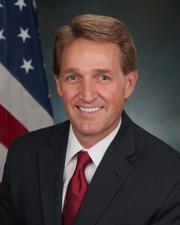 Rep. Jeff Flake (R-AZ)
Description
Amendment sought to prohibit $285,000 from being used for the Proof of Concept Center of Idaho TechConnect, Inc., in Nampa, Idaho, and reduce the amount of Section 511 of the bill by the same amount.
Legislative Activity
Stay on top of the latest movement without scrolling through every action
House amendment offered
July 16, 2009
View full timeline
House amendment offered
July 16, 2009
Roll call votes on amendments in House
July 16, 2009 • 6:05 PM
House amendment not agreed to: On agreeing to the Flake amendment (A009) Failed by recorded vote: 94 - 336 (Roll no. 561).
July 16, 2009 • 6:05 PM
Amendment failed in Committee of the Whole
July 16, 2009 • 6:05 PM
House amendment offered/reported by : Amendment (A009) offered by Mr. Flake.(consideration: CR H8242-8243, H8259-8260; text: CR H8242)
July 16, 2009 • 3:49 PM
Amendment (A009) offered by Mr. Flake. (consideration: CR H8242-8243, H8259-8260; text: CR H8242)
July 16, 2009 • 3:49 PM
On agreeing to the Flake amendment (A009) Failed by recorded vote: 94 - 336 (Roll no. 561).
July 16, 2009 • 6:05 PM
Votes
1 roll call on this amendment
Text
Offered
FINANCIAL SERVICES AND GENERAL GOVERNMENT APPROPRIATIONS ACT, 2010
The SPEAKER pro tempore. Pursuant to House Resolution 644 and rule
XVIII, the Chair declares the House in the Committee of the Whole House
on the state of the Union for the further consideration of the bill,
H.R. 3170.
{time} 1431
In the Committee of the Whole
Accordingly, the House resolved itself into the Committee of the
Whole House on the State of the Union for the further consideration of
the bill (H.R. 3170) making appropriations for financial services and
general government for the fiscal year ending September 30, 2010, and
for other purposes, with Mr. Hastings of Florida in the chair.
The Clerk read the title of the bill.
The CHAIR. When the Committee of the Whole rose earlier today, all
time for general debate had expired.
Pursuant to the rule, the bill is considered read for amendment under
the 5-minute rule and the bill shall be considered read through page
145, line 11.
The text of that portion of the bill is as follows:
H.R. 3170
Be it enacted by the Senate and House of Representatives of
the United States of America in Congress assembled, That the
following sums are appropriated, out of any money in the
Treasury not otherwise appropriated, for the fiscal year
ending September 30, 2010, and for other purposes, namely:
TITLE I
DEPARTMENT OF THE TREASURY
Departmental Offices
salaries and expenses
(including transfer of funds)
For necessary expenses of the Departmental Offices
including operation and maintenance of the Treasury Building
and Annex; hire of passenger motor vehicles; maintenance,
repairs, and improvements of, and purchase of commercial
insurance policies for, real properties leased or owned
overseas, when necessary for the performance of official
business, $303,388,000, of which not to exceed $21,983,000 is
for executive direction program activities; not to exceed
$46,249,000 is for economic policies and programs activities;
not to exceed $48,080,000 is for financial policies and
programs activities; not to exceed $64,611,000 is for
terrorism and financial intelligence activities; not to
exceed $22,679,000 is for Treasury-wide management policies
and programs activities; and not to exceed $99,786,000 is for
administration programs activities: Provided, That the
Secretary of the Treasury is authorized to transfer funds
appropriated for any program activity of the Departmental
Offices to any other program activity of the Departmental
Offices upon notification to the House and Senate Committees
on Appropriations: Provided further, That no appropriation
for any program activity shall be increased or decreased by
more than 4 percent by all such transfers: Provided further,
That any change in funding greater than 4 percent shall be
submitted for approval to the House and Senate Committees on
Appropriations: Provided further, That of the amount
appropriated under this heading, not to exceed $3,000,000, to
remain available until September 30, 2011, is for information
technology modernization requirements; not to exceed $200,000
is for official reception and representation expenses; and
not to exceed $258,000 is for unforeseen emergencies of a
confidential nature, to be allocated and expended under the
direction of the Secretary of the Treasury and to be
accounted for solely on his certificate: Provided further,
That of the amount appropriated under this heading,
$6,787,000, to remain available until September 30, 2011, is
for the Treasury-wide Financial Statement Audit and Internal
Control Program, of which such amounts as may be necessary
may be transferred to accounts of the Department's offices
and bureaus to conduct audits: Provided further, That this
transfer authority shall be in addition to any other provided
in this Act: Provided further, That of the amount
appropriated under this heading, $500,000, to remain
available until September 30, 2011, is for secure space
requirements: Provided further, That of the amount
appropriated under this heading, $3,400,000, to remain
available until September 30, 2012, is to develop and
implement programs within the Office of Critical
Infrastructure Protection and Compliance Policy, including
entering into cooperative agreements: Provided further, That
of the amount appropriated under this heading $3,000,000, to
remain available until September 30, 2012, is for modernizing
the Office of Debt Management's information technology.
department-wide systems and capital investments programs
(including transfer of funds)
For development and acquisition of automatic data
processing equipment, software, and services for the
Department of the Treasury, $9,544,000, to remain available
until September 30, 2012: Provided, That $4,544,000 is for
repairs to the Treasury Annex Building: Provided further,
That these funds shall be transferred to accounts and in
amounts as necessary to satisfy the requirements of the
Department's offices, bureaus, and other organizations:
Provided further, That this transfer authority shall be in
addition to any other transfer authority provided in this
Act: Provided further, That none of the funds appropriated
under this heading shall be used to support or supplement
``Internal Revenue Service, Operations Support'' or
``Internal Revenue Service, Business Systems Modernization''.
office of inspector general
salaries and expenses
For necessary expenses of the Office of Inspector General
in carrying out the provisions of the Inspector General Act
of 1978, not to exceed $2,000,000 for official travel
expenses, including hire of passenger motor vehicles; and not
to exceed $100,000 for unforeseen emergencies of a
confidential nature, to be allocated and expended under the
direction of the Inspector General of the Treasury,
$29,700,000, of which not to exceed $2,500 shall be available
for official reception and representation expenses.
treasury inspector general for tax administration
salaries and expenses
For necessary expenses of the Treasury Inspector General
for Tax Administration in carrying out the Inspector General
Act of 1978, including purchase (not to exceed 150 for
replacement only for police-type use) and hire of passenger
motor vehicles (31 U.S.C. 1343(b)); services authorized by 5
U.S.C. 3109, at such rates as may be determined by the
Inspector General for Tax Administration; $149,000,000, of
which not to exceed $6,000,000 shall be available for
official travel expenses; of which not to exceed $500,000
shall be available for unforeseen emergencies of a
confidential nature, to be allocated and expended under the
direction of the Inspector General for Tax Administration;
and of which not to exceed $1,500 shall be available for
official reception and representation expenses.
Financial Crimes Enforcement Network
salaries and expenses
For necessary expenses of the Financial Crimes Enforcement
Network, including hire of passenger motor vehicles; travel
and training expenses, including for course development, of
non-Federal and foreign government personnel to attend
meetings and training concerned with domestic and foreign
financial intelligence activities, law enforcement, and
financial regulation; not to exceed $14,000 for official
reception and representation expenses; and for assistance to
Federal law enforcement agencies, with or without
reimbursement, $102,760,000, of which not to exceed
$26,085,000 shall remain available until September 30, 2012;
and of which $9,316,000 shall remain available until
September 30, 2011: Provided, That funds appropriated in this
account may be used to procure personal services contracts.
Treasury Forfeiture Fund
(rescission)
Of the unobligated balances available under this heading,
$50,000,000 is permanently rescinded and returned to the
general fund.
Financial Management Service
salaries and expenses
For necessary expenses of the Financial Management Service,
$244,132,000, of which not to exceed $9,220,000 shall remain
available until September 30, 2012, for information systems
modernization initiatives; and of which not to exceed $2,500
shall be available for official reception and representation
expenses.
Alcohol and Tobacco Tax and Trade Bureau
salaries and expenses
For necessary expenses of carrying out section 1111 of the
Homeland Security Act of 2002, including hire of passenger
motor vehicles, $99,500,000; of which not to exceed $6,000
for official reception and representation expenses; not to
exceed $50,000 for cooperative research and development
programs for laboratory services; and provision of laboratory
[[Page H8217]]
assistance to State and local agencies with or without
reimbursement.
United States Mint
united states mint public enterprise fund
Pursuant to section 5136 of title 31, United States Code,
the United States Mint is provided funding through the United
States Mint Public Enterprise Fund for costs associated with
the production of circulating coins, numismatic coins, and
protective services, including both operating expenses and
capital investments. The aggregate amount of new liabilities
and obligations incurred during fiscal year 2010 under such
section 5136 for circulating coinage and protective service
capital investments of the United States Mint shall not
exceed $26,700,000.
Bureau of the Public Debt
administering the public debt
For necessary expenses connected with any public-debt
issues of the United States, $192,244,000, of which not to
exceed $2,500 shall be available for official reception and
representation expenses, and of which not to exceed
$2,000,000 shall remain available until September 30, 2012,
for systems modernization: Provided, That the sum
appropriated herein from the general fund for fiscal year
2010 shall be reduced by not more than $10,000,000 as
definitive security issue fees and Legacy Treasury Direct
Investor Account Maintenance fees are collected, so as to
result in a final fiscal year 2010 appropriation from the
general fund estimated at $182,244,000. In addition, $90,000
to be derived from the Oil Spill Liability Trust Fund to
reimburse the Bureau for administrative and personnel
expenses for financial management of the Fund, as authorized
by section 1012 of Public Law 101-380.
Community Development Financial Institutions Fund Program Account
(including transfer of funds)
To carry out the Community Development Banking and
Financial Institutions Act of 1994 (Public Law 103-325),
including services authorized by 5 U.S.C. 3109, but at rates
for individuals not to exceed the per diem rate equivalent to
the rate for ES-3, $243,600,000, to remain available until
September 30, 2011, notwithstanding subsections (d) and (e)
of section 108 of such Act (12 U.S.C. 4707); of which
$10,000,000 shall be for financial assistance, technical
assistance, training, and outreach programs under sections
105 through 109 of such Act (12 U.S.C. 4704-4708), designed
to benefit Native American, Native Hawaiian, and Alaskan
Native communities and provided primarily through qualified
community development lender organizations with experience
and expertise in community development banking and lending in
Indian country, Native American organizations, tribes and
tribal organizations, and other suitable providers; of which
$1,000,000 shall be available for the pilot project grant
program under section 1132(d) of division A of the Housing
and Economic Recovery Act of 2008 (Public Law 110-289); of
which $80,000,000 shall be transferred to the Capital Magnet
Fund, as authorized by section 1339 of the Federal Housing
Enterprises Financial Safety and Soundness Act of 1992 (12
U.S.C. 1301 et seq.), as amended by section 1131 of the
Housing and Economic Recovery Act of 2008 (``HERA''; Public
Law 110-289), to support financing for affordable housing and
economic development projects; of which up to $18,000,000 may
be used for administrative expenses, including administration
of the New Markets Tax Credit Program; of which up to
$7,500,000 may be used for the cost of direct loans; and of
which up to $250,000 may be used for administrative expenses
to carry out the direct loan program: Provided, That the cost
of direct loans, including the cost of modifying such loans,
shall be as defined in section 502 of the Congressional
Budget Act of 1974: Provided further, That these funds are
available to subsidize gross obligations for the principal
amount of direct loans not to exceed $16,000,000: Provided
further, That section 1339(h)(3) of the Federal Housing
Enterprises Financial Safety and Soundness Act of 1992, as
added by section 1131 of HERA, shall be applied by
substituting the term ``at least 10 times the grant amount or
such other amount that the Secretary may require'' for ``at
least 10 times the grant amount''.
Internal Revenue Service
taxpayer services
For necessary expenses of the Internal Revenue Service to
provide taxpayer services, including pre-filing assistance
and education, filing and account services, taxpayer advocacy
services, and other services as authorized by 5 U.S.C. 3109,
at such rates as may be determined by the Commissioner,
$2,273,830,000, of which not less than $5,100,000 shall be
for the Tax Counseling for the Elderly Program, of which not
less than $10,000,000 shall be available for low-income
taxpayer clinic grants, of which not less than $9,000,000, to
remain available until September 30, 2011, shall be available
for Community Volunteer Income Tax Assistance matching grants
for tax return preparation assistance, and of which not less
than $205,800,000 shall be available for operating expenses
of the Taxpayer Advocate Service.
enforcement
(including transfer of funds)
For necessary expenses for tax enforcement activities of
the Internal Revenue Service to determine and collect owed
taxes, to provide legal and litigation support, to conduct
criminal investigations, to enforce criminal statutes related
to violations of internal revenue laws and other financial
crimes, to purchase (for police-type use, not to exceed 850)
and hire passenger motor vehicles (31 U.S.C. 1343(b)), and to
provide other services as authorized by 5 U.S.C. 3109, at
such rates as may be determined by the Commissioner,
$4,904,000,000, of which not less than $59,206,000 shall be
for the Interagency Crime and Drug Enforcement program; and
of which not to exceed $126,500 shall be for official
reception and representation expenses associated with hosting
the Leeds Castle Meeting in the United States during 2010:
Provided, That up to $10,000,000 may be transferred as
necessary from this account to ``Operations Support'' solely
for the purposes of the Interagency Crime and Drug
Enforcement program: Provided further, That this transfer
authority shall be in addition to any other transfer
authority provided in this Act. In addition to amounts made
available above, $600,000,000 shall be made available for
enhanced tax enforcement activities.
operations support
For necessary expenses of the Internal Revenue Service to
support taxpayer services and enforcement programs, including
rent payments; facilities services; printing; postage;
physical security; headquarters and other IRS-wide
administration activities; research and statistics of income;
telecommunications; information technology development,
enhancement, operations, maintenance, and security; the hire
of passenger motor vehicles (31 U.S.C. 1343(b)); and other
services as authorized by 5 U.S.C. 3109, at such rates as may
be determined by the Commissioner; $4,082,984,000, of which
up to $75,000,000 shall remain available until September 30,
2011, for information technology support; of which not to
exceed $1,000,000 shall remain available until September 30,
2012, for research; of which not less than $2,000,000 shall
be for the Internal Revenue Service Oversight Board; of which
not to exceed $25,000 shall be for official reception and
representation; and of which $290,000,000 shall be made
available to support enhanced tax enforcement activities:
Provided, That of the amounts provided under this heading,
such sums as are necessary shall be available to fully
support tax enforcement and enhanced tax enforcement
activities.
business systems modernization
For necessary expenses of the Internal Revenue Service's
business systems modernization program, $253,674,000, to
remain available until September 30, 2012, for the capital
asset acquisition of information technology systems,
including management and related contractual costs of said
acquisitions, including related Internal Revenue Service
labor costs, and contractual costs associated with operations
authorized by 5 U.S.C. 3109: Provided, That, with the
exception of labor costs, none of these funds may be
obligated until the Internal Revenue Service submits to the
Committees on Appropriations, and such Committees approve, a
plan for expenditure that: (1) meets the capital planning and
investment control review requirements established by the
Office of Management and Budget, including Circular A-11; (2)
complies with the Internal Revenue Service's enterprise
architecture, including the modernization blueprint; (3)
conforms with the Internal Revenue Service's enterprise life
cycle methodology; (4) is approved by the Internal Revenue
Service, the Department of the Treasury, and the Office of
Management and Budget; (5) has been reviewed by the
Government Accountability Office; and (6) complies with the
acquisition rules, requirements, guidelines, and systems
acquisition management practices of the Federal Government.
health insurance tax credit administration
For expenses necessary to implement the health insurance
tax credit included in the Trade Act of 2002 (Public Law 107-
210), $15,512,000.
administrative provisions--internal revenue service
(including transfer of funds)
Sec. 101. Not to exceed 5 percent of any appropriation
made available in this Act to the Internal Revenue Service or
not to exceed 3 percent of appropriations under the heading
``Enforcement'' may be transferred to any other Internal
Revenue Service appropriation upon the advance approval of
the Committees on Appropriations.
Sec. 102. The Internal Revenue Service shall maintain a
training program to ensure that Internal Revenue Service
employees are trained in taxpayers' rights, in dealing
courteously with taxpayers, and in cross-cultural relations.
Sec. 103. The Internal Revenue Service shall institute and
enforce policies and procedures that will safeguard the
confidentiality of taxpayer information.
Sec. 104. Funds made available by this or any other Act to
the Internal Revenue Service shall be available for improved
facilities and increased staffing to provide sufficient and
effective 1-800 help line service for taxpayers. The
Commissioner shall continue to make the improvement of the
Internal Revenue Service 1-800 help line service a priority
and allocate resources necessary to increase phone lines and
staff to improve the Internal Revenue Service 1-800 help line
service.
[[Page H8218]]
Administrative Provisions--Department of the Treasury
(including transfers of funds)
Sec. 105. Appropriations to the Department of the Treasury
in this Act shall be available for uniforms or allowances
therefor, as authorized by law (5 U.S.C. 5901), including
maintenance, repairs, and cleaning; purchase of insurance for
official motor vehicles operated in foreign countries;
purchase of motor vehicles without regard to the general
purchase price limitations for vehicles purchased and used
overseas for the current fiscal year; entering into contracts
with the Department of State for the furnishing of health and
medical services to employees and their dependents serving in
foreign countries; and services authorized by 5 U.S.C. 3109.
Sec. 106. Not to exceed 2 percent of any appropriations in
this Act made available to the Departmental Offices--Salaries
and Expenses, Office of Inspector General, Financial
Management Service, Alcohol and Tobacco Tax and Trade Bureau,
Financial Crimes Enforcement Network, and Bureau of the
Public Debt, may be transferred between such appropriations
upon the advance approval of the Committees on
Appropriations: Provided, That no transfer may increase or
decrease any such appropriation by more than 2 percent.
Sec. 107. Not to exceed 2 percent of any appropriation
made available in this Act to the Internal Revenue Service
may be transferred to the Treasury Inspector General for Tax
Administration's appropriation upon the advance approval of
the Committees on Appropriations: Provided, That no transfer
may increase or decrease any such appropriation by more than
2 percent.
Sec. 108. Of the funds available for the purchase of law
enforcement vehicles, no funds may be obligated until the
Secretary of the Treasury certifies that the purchase by the
respective Treasury bureau is consistent with departmental
vehicle management principles: Provided, That the Secretary
may delegate this authority to the Assistant Secretary for
Management.
Sec. 109. None of the funds appropriated in this Act or
otherwise available to the Department of the Treasury or the
Bureau of Engraving and Printing may be used to redesign the
$1 Federal Reserve note.
Sec. 110. The Secretary of the Treasury may transfer funds
from Financial Management Service, Salaries and Expenses to
the Debt Collection Fund as necessary to cover the costs of
debt collection: Provided, That such amounts shall be
reimbursed to such salaries and expenses account from debt
collections received in the Debt Collection Fund.
Sec. 111. Section 122(g)(1) of Public Law 105-119 (5
U.S.C. 3104 note), is further amended by striking ``11
years'' and inserting ``12 years.''
Sec. 112. None of the funds appropriated or otherwise made
available by this or any other Act may be used by the United
States Mint to construct or operate any museum without the
explicit approval of the Committees on Appropriations of the
House of Representatives and the Senate, the House Committee
on Financial Services, and the Senate Committee on Banking,
Housing and Urban Affairs.
Sec. 113. None of the funds appropriated or otherwise made
available by this or any other Act or source to the
Department of the Treasury, the Bureau of Engraving and
Printing, and the United States Mint, individually or
collectively, may be used to consolidate any or all functions
of the Bureau of Engraving and Printing and the United States
Mint without the explicit approval of the House Committee on
Financial Services; the Senate Committee on Banking, Housing,
and Urban Affairs; the House Committee on Appropriations; and
the Senate Committee on Appropriations.
Sec. 114. Funds appropriated by this Act, or made
available by the transfer of funds in this Act, for the
Department of the Treasury's intelligence or intelligence
related activities are deemed to be specifically authorized
by the Congress for purposes of section 504 of the National
Security Act of 1947 (50 U.S.C. 414) during fiscal year 2010
until the enactment of the Intelligence Authorization Act for
Fiscal Year 2010.
Sec. 115. Not to exceed $5,000 shall be made available
from the Bureau of Engraving and Printing's Industrial
Revolving Fund for necessary official reception and
representation expenses.
Sec. 116. The Secretary is authorized to establish
additional Treasury accounts for the Alcohol & Tobacco Tax
and Trade Bureau, Department of the Treasury; U.S. Customs
and Border Protection, Department of Homeland Security; and
the Bureau of Alcohol, Tobacco Firearms and Explosives,
Department of Justice, for purposes of administering refunds
under 31 U.S.C. 1324.
This title may be cited as the ``Department of the
Treasury Appropriations Act, 2010''.
TITLE II
EXECUTIVE OFFICE OF THE PRESIDENT AND FUNDS APPROPRIATED TO THE
PRESIDENT
Compensation of the President
For compensation of the President, including an expense
allowance at the rate of $50,000 per annum as authorized by 3
U.S.C. 102 , $450,000: Provided, That none of the funds made
available for official expenses shall be expended for any
other purpose and any unused amount shall revert to the
Treasury pursuant to 31 U.S.C. 1552.
The White House
salaries and expenses
For necessary expenses for the White House as authorized by
law, including not to exceed $3,850,000 for services as
authorized by 5 U.S.C. 3109 and 3 U.S.C. 105; subsistence
expenses as authorized by 3 U.S.C. 105, which shall be
expended and accounted for as provided in that section; hire
of passenger motor vehicles, newspapers, periodicals,
teletype news service, and travel (not to exceed $100,000 to
be expended and accounted for as provided by 3 U.S.C. 103);
and not to exceed $19,000 for official entertainment
expenses, to be available for allocation within the Executive
Office of the President; and for necessary expenses of the
Office of Policy Development, including services as
authorized by 5 U.S.C. 3109 and 3 U.S.C. 107, $59,319,000, of
which not less than $1,400,000 shall be for the Office of
National AIDS Policy.
Executive Residence at the White House
operating expenses
For the care, maintenance, repair and alteration,
refurnishing, improvement, heating, and lighting, including
electric power and fixtures, of the Executive Residence at
the White House and official entertainment expenses of the
President, $13,838,000, to be expended and accounted for as
provided by 3 U.S.C. 105, 109, 110, and 112-114.
reimbursable expenses
For the reimbursable expenses of the Executive Residence at
the White House, such sums as may be necessary: Provided,
That all reimbursable operating expenses of the Executive
Residence shall be made in accordance with the provisions of
this paragraph: Provided further, That, notwithstanding any
other provision of law, such amount for reimbursable
operating expenses shall be the exclusive authority of the
Executive Residence to incur obligations and to receive
offsetting collections, for such expenses: Provided further,
That the Executive Residence shall require each person
sponsoring a reimbursable political event to pay in advance
an amount equal to the estimated cost of the event, and all
such advance payments shall be credited to this account and
remain available until expended: Provided further, That the
Executive Residence shall require the national committee of
the political party of the President to maintain on deposit
$25,000, to be separately accounted for and available for
expenses relating to reimbursable political events sponsored
by such committee during such fiscal year: Provided further,
That the Executive Residence shall ensure that a written
notice of any amount owed for a reimbursable operating
expense under this paragraph is submitted to the person owing
such amount within 60 days after such expense is incurred,
and that such amount is collected within 30 days after the
submission of such notice: Provided further, That the
Executive Residence shall charge interest and assess
penalties and other charges on any such amount that is not
reimbursed within such 30 days, in accordance with the
interest and penalty provisions applicable to an outstanding
debt on a United States Government claim under 31 U.S.C.
3717: Provided further, That each such amount that is
reimbursed, and any accompanying interest and charges, shall
be deposited in the Treasury as miscellaneous receipts:
Provided further, That the Executive Residence shall prepare
and submit to the Committees on Appropriations, by not later
than 90 days after the end of the fiscal year covered by this
Act, a report setting forth the reimbursable operating
expenses of the Executive Residence during the preceding
fiscal year, including the total amount of such expenses, the
amount of such total that consists of reimbursable official
and ceremonial events, the amount of such total that consists
of reimbursable political events, and the portion of each
such amount that has been reimbursed as of the date of the
report: Provided further, That the Executive Residence shall
maintain a system for the tracking of expenses related to
reimbursable events within the Executive Residence that
includes a standard for the classification of any such
expense as political or nonpolitical: Provided further, That
no provision of this paragraph may be construed to exempt the
Executive Residence from any other applicable requirement of
subchapter I or II of chapter 37 of title 31, United States
Code.
White House Repair and Restoration
For the repair, alteration, and improvement of the
Executive Residence at the White House, $2,500,000, to remain
available until expended, for required maintenance,
resolution of safety and health issues, and continued
preventative maintenance.
Council of Economic Advisers
salaries and expenses
For necessary expenses of the Council of Economic Advisers
in carrying out its functions under the Employment Act of
1946 (15 U.S.C. 1021 et seq.), $4,200,000.
National Security Council
salaries and expenses
For necessary expenses of the National Security Council,
including services as authorized by 5 U.S.C. 3109,
$12,231,000.
Office of Administration
salaries and expenses
For necessary expenses of the Office of Administration,
including services as authorized by 5 U.S.C. 3109 and 3
U.S.C. 107, and hire of passenger motor vehicles,
$115,280,000, of
[[Page H8219]]
which $16,768,000 shall remain available until expended for
continued modernization of the information technology
infrastructure within the Executive Office of the President.
Office of Management and Budget
salaries and expenses
For necessary expenses of the Office of Management and
Budget, including hire of passenger motor vehicles and
services as authorized by 5 U.S.C. 3109 and to carry out the
provisions of chapter 35 of title 44, United States Code,
$92,687,000, of which not to exceed $3,000 shall be available
for official representation expenses: Provided, That none of
the funds appropriated in this Act for the Office of
Management and Budget may be used for the purpose of
reviewing any agricultural marketing orders or any activities
or regulations under the provisions of the Agricultural
Marketing Agreement Act of 1937 (7 U.S.C. 601 et seq.):
Provided further, That none of the funds made available for
the Office of Management and Budget by this Act may be
expended for the altering of the transcript of actual
testimony of witnesses, except for testimony of officials of
the Office of Management and Budget, before the Committees on
Appropriations or their subcommittees: Provided further, That
none of the funds provided in this or prior Acts shall be
used, directly or indirectly, by the Office of Management and
Budget, for evaluating or determining if water resource
project or study reports submitted by the Chief of Engineers
acting through the Secretary of the Army are in compliance
with all applicable laws, regulations, and requirements
relevant to the Civil Works water resource planning process:
Provided further, That the Office of Management and Budget
shall have not more than 60 days in which to perform
budgetary policy reviews of water resource matters on which
the Chief of Engineers has reported: Provided further, That
the Director of the Office of Management and Budget shall
notify the appropriate authorizing and appropriating
committees when the 60-day review is initiated: Provided
further, That if water resource reports have not been
transmitted to the appropriate authorizing and appropriating
committees within 15 days after the end of the Office of
Management and Budget review period based on the notification
from the Director, Congress shall assume Office of Management
and Budget concurrence with the report and act accordingly.
Office of National Drug Control Policy
salaries and expenses
For necessary expenses of the Office of National Drug
Control Policy; for research activities pursuant to the
Office of National Drug Control Policy Reauthorization Act of
2006 (Public Law 109-469); not to exceed $10,000 for official
reception and representation expenses; and for participation
in joint projects or in the provision of services on matters
of mutual interest with nonprofit, research, or public
organizations or agencies, with or without reimbursement,
$27,575,000; of which $1,300,000 shall remain available until
expended for policy research and evaluation: Provided, That
the Office is authorized to accept, hold, administer, and
utilize gifts, both real and personal, public and private,
without fiscal year limitation, for the purpose of aiding or
facilitating the work of the Office.
Federal Drug Control Programs
high intensity drug trafficking areas program
(including transfers of funds)
For necessary expenses of the Office of National Drug
Control Policy's High Intensity Drug Trafficking Areas
Program, $248,000,000, to remain available until September
30, 2011, for drug control activities consistent with the
approved strategy for each of the designated High Intensity
Drug Trafficking Areas (``HIDTAs''), of which not less than
51 percent shall be transferred to State and local entities
for drug control activities and shall be obligated not later
than 120 days after enactment of this Act: Provided, That up
to 49 percent may be transferred to Federal agencies and
departments in amounts determined by the Director of the
Office of National Drug Control Policy (``the Director''), of
which up to $2,700,000 may be used for auditing services and
associated activities (including up to $250,000 to ensure the
continued operation and maintenance of the Performance
Management System): Provided further, That each High
Intensity Drug Trafficking Area designated as of September
30, 2009, shall be funded at not less than the fiscal year
2009 base level, unless the Director submits to the
Committees on Appropriations of the House of Representatives
and the Senate justification for changes to those levels
based on clearly articulated priorities and published Office
of National Drug Control Policy performance measures of
effectiveness: Provided further, That the Director shall
notify the Committees on Appropriations of the initial
allocation of fiscal year 2010 funding among HIDTAs not later
than 45 days after enactment of this Act, and shall notify
the Committees of planned uses of discretionary HIDTA
funding, as determined in consultation with the HIDTA
Directors, not later than 90 days after enactment of this
Act.
other federal drug control programs
(including transfer of funds)
For other drug control activities authorized by the Office
of National Drug Control Policy Reauthorization Act of 2006
(Public Law 109-469), $132,400,000, to remain available until
expended, which shall be available as follows: $20,000,000
for outreach and media activities related to drug abuse
prevention; $98,000,000 for the Drug-Free Communities
Program, of which $2,000,000 shall be made available as
directed by section 4 of Public Law 107-82, as amended by
Public Law 109-469 (21 U.S.C. 1521 note); $1,000,000 for the
National Drug Court Institute; $10,000,000 for the United
States Anti-Doping Agency for anti-doping activities;
$1,900,000 for the United States membership dues to the World
Anti-Doping Agency; $1,250,000 for the National Alliance for
Model State Drug Laws; and $250,000 for evaluations and
research related to National Drug Control Program performance
measures, which may be transferred to other Federal
departments and agencies to carry out such activities:
Provided, That any grantee under the Drug-Free Communities
Program seeking a renewal grant (year 2 through 5, or year 7
through 10) that is not awarded renewal funding shall be
afforded a fair, timely, and independent appeal of the non-
renewal decision prior to the beginning of the funding year.
Unanticipated Needs
For expenses necessary to enable the President to meet
unanticipated needs, in furtherance of the national interest,
security, or defense which may arise at home or abroad during
the current fiscal year, as authorized by 3 U.S.C. 108,
$1,000,000, to remain available until September 30, 2011.
Partnership Fund for Program Integrity Innovation
(including transfer of funds)
To execute the Partnership Fund for Program Integrity
Innovation, $40,000,000, to remain available until September
30, 2012, which may be used for grants, contracts,
cooperative agreements, and administrative costs for carrying
out Partnership Fund for Program Integrity Innovation pilot
projects: Provided, That funds made available under this
heading may be transferred by the Director of the Office of
Management and Budget to appropriate agencies to carry out
pilot projects and to conduct or provide for evaluation of
such projects: Provided further, That no funds may be
obligated for any pilot project unless the Director of the
Office of Management and Budget has determined that the
project (1) addresses programs that have a substantial state
role in eligibility determination or administration or where
Federal-state cooperation could otherwise be beneficial, (2)
in aggregate, is expected to save at least as much money as
it costs, (3) demonstrates the potential to streamline
administration and/or strengthen program integrity, and (4)
does not achieve savings primarily by reducing the
participation of eligible beneficiaries: Provided further,
That the Director shall notify the Committees on
Appropriations of the House of Representatives and the Senate
of each determination required by the preceding proviso at
least 15 days in advance of obligating funds for the pilot
project involved, and shall include in the notification a
statement of the purposes and objectives of the pilot project
and a plan for evaluating its results: Provided further, That
the Director shall submit a progress report on activities
funded under this heading to the Committee on Appropriations
not later than September 30, 2010, and annually thereafter
for the next four years.
Special Assistance to the President
salaries and expenses
For necessary expenses to enable the Vice President to
provide assistance to the President in connection with
specially assigned functions; services as authorized by 5
U.S.C. 3109 and 3 U.S.C. 106, including subsistence expenses
as authorized by 3 U.S.C. 106, which shall be expended and
accounted for as provided in that section; and hire of
passenger motor vehicles, $4,604,000.
Official Residence of the Vice President
operating expenses
(including transfer of funds)
For the care, operation, refurnishing, improvement, and to
the extent not otherwise provided for, heating and lighting,
including electric power and fixtures, of the official
residence of the Vice President; the hire of passenger motor
vehicles; and not to exceed $90,000 for official
entertainment expenses of the Vice President, to be accounted
for solely on his certificate, $330,000: Provided, That
advances or repayments or transfers from this appropriation
may be made to any department or agency for expenses of
carrying out such activities.
Administrative Provisions--Executive Office of the President and Funds
Appropriated to the President
(including transfer of funds)
Sec. 201. From funds made available in this Act under the
headings ``The White House'', ``Executive Residence at the
White House'', ``White House Repair and Restoration'',
``Council of Economic Advisers'', ``National Security
Council'', ``Office of Administration'', ``Special Assistance
to the President'', and ``Official Residence of the Vice
President'', the Director of the Office of Management and
Budget (or such other officer as the President may designate
in writing), may, 15 days after giving notice to the
Committees on Appropriations of the House of Representatives
and the Senate, transfer not to exceed 10 percent of any such
appropriation to any other such appropriation, to be merged
with and available for the same time and for the same
purposes as the appropriation to which transferred: Provided,
That the
[[Page H8220]]
amount of an appropriation shall not be increased by more
than 50 percent by such transfers: Provided further, That no
amount shall be transferred from ``Special Assistance to the
President'' or ``Official Residence of the Vice President''
without the approval of the Vice President.
Sec. 202. The Director of the Office of National Drug
Control Policy shall submit to the Committees on
Appropriations of the House of Representatives and the Senate
not later than 60 days after the date of enactment of this
Act, and prior to the initial obligation of more than 20
percent of the funds appropriated in any account under the
headings ``Office of National Drug Control Policy'' and
``Federal Drug Control Programs'', a detailed narrative and
financial plan on the proposed uses of all funds under the
account by program, project, and activity: Provided, That the
reports required by this section shall be updated and
submitted to the Committees on Appropriations every 6 months
and shall include information detailing how the estimates and
assumptions contained in previous reports have changed.
Sec. 203. Not to exceed 2 percent of any appropriations in
this Act made available to the Office of National Drug
Control Policy may be transferred between appropriated
programs upon the advance approval of the Committees on
Appropriations: Provided, That no transfer may increase or
decrease any such appropriation by more than 3 percent.
Sec. 204. Not to exceed $1,000,000 of any appropriations
in this Act made available to the Office of National Drug
Control Policy may be reprogrammed within a program, project,
or activity upon the advance approval of the Committees on
Appropriations.
This title may be cited as the ``Executive Office of the
President Appropriations Act, 2010''.
TITLE III
THE JUDICIARY
Supreme Court of the United States
salaries and expenses
For expenses necessary for the operation of the Supreme
Court, as required by law, excluding care of the building and
grounds, including purchase or hire, driving, maintenance,
and operation of an automobile for the Chief Justice, not to
exceed $10,000 for the purpose of transporting Associate
Justices, and hire of passenger motor vehicles as authorized
by 31 U.S.C. 1343 and 1344; not to exceed $10,000 for
official reception and representation expenses; and for
miscellaneous expenses, to be expended as the Chief Justice
may approve, $74,034,000, of which $2,000,000 shall remain
available until expended.
care of the building and grounds
For such expenditures as may be necessary to enable the
Architect of the Capitol to carry out the duties imposed upon
the Architect by 40 U.S.C. 6111, $14,525,000, which shall
remain available until expended.
United States Court of Appeals for the Federal Circuit
salaries and expenses
For salaries of the chief judge, judges, and other officers
and employees, and for necessary expenses of the court, as
authorized by law, $33,577,000.
United States Court of International Trade
salaries and expenses
For salaries of the chief judge and eight judges, salaries
of the officers and employees of the court, services, and
necessary expenses of the court, as authorized by law,
$21,350,000.
Courts of Appeals, District Courts, and Other Judicial Services
salaries and expenses
For the salaries of circuit and district judges (including
judges of the territorial courts of the United States),
justices and judges retired from office or from regular
active service, judges of the United States Court of Federal
Claims, bankruptcy judges, magistrate judges, and all other
officers and employees of the Federal Judiciary not otherwise
specifically provided for, and necessary expenses of the
courts, as authorized by law, $5,080,709,000 (including the
purchase of firearms and ammunition); of which not to exceed
$27,817,000 shall remain available until expended for space
alteration projects and for furniture and furnishings related
to new space alteration and construction projects.
In addition, for expenses of the United States Court of
Federal Claims associated with processing cases under the
National Childhood Vaccine Injury Act of 1986 (Public Law 99-
660), not to exceed $5,428,000, to be appropriated from the
Vaccine Injury Compensation Trust Fund.
defender services
For the operation of Federal Defender organizations; the
compensation and reimbursement of expenses of attorneys
appointed to represent persons under 18 U.S.C. 3006A, and
also under 18 U.S.C. 3599, in cases in which a defendant is
charged with a crime that may be punishable by death; the
compensation and reimbursement of expenses of persons
furnishing investigative, expert, and other services under 18
U.S.C. 3006A(e), and also under 18 U.S.C. 3599(f) and (g)(2),
in cases in which a defendant is charged with a crime that
may be punishable by death; the compensation (in accordance
with the maximums under 18 U.S.C. 3006A) and reimbursement of
expenses of attorneys appointed to assist the court in
criminal cases where the defendant has waived representation
by counsel; the compensation and reimbursement of travel
expenses of guardians ad litem acting on behalf of
financially eligible minor or incompetent offenders in
connection with transfers from the United States to foreign
countries with which the United States has a treaty for the
execution of penal sentences; the compensation and
reimbursement of expenses of attorneys appointed to represent
jurors in civil actions for the protection of their
employment, as authorized by 28 U.S.C. 1875(d); the
compensation and reimbursement of expenses of attorneys
appointed under 18 U.S.C. 983(b)(1) in connection with
certain judicial civil forfeiture proceedings; and for
necessary training and general administrative expenses,
$982,699,000, to remain available until expended.
fees of jurors and commissioners
For fees and expenses of jurors as authorized by 28 U.S.C.
1871 and 1876; compensation of jury commissioners as
authorized by 28 U.S.C. 1863; and compensation of
commissioners appointed in condemnation cases pursuant to
rule 71.1(h) of the Federal Rules of Civil Procedure (28
U.S.C. Appendix Rule 71.1(h)), $62,275,000, to remain
available until expended: Provided, That the compensation of
land commissioners shall not exceed the daily equivalent of
the highest rate payable under 5 U.S.C. 5332.
court security
(including transfers of funds)
For necessary expenses, not otherwise provided for,
incident to the provision of protective guard services for
United States courthouses and other facilities housing
Federal court operations, and the procurement, installation,
and maintenance of security systems and equipment for United
States courthouses and other facilities housing Federal court
operations, including building ingress-egress control,
inspection of mail and packages, directed security patrols,
perimeter security, basic security services provided by the
Federal Protective Service, and other similar activities as
authorized by section 1010 of the Judicial Improvement and
Access to Justice Act (Public Law 100-702), $457,353,000, of
which not to exceed $15,000,000 shall remain available until
expended, to be expended directly or transferred to the
United States Marshals Service, which shall be responsible
for administering the Judicial Facility Security Program
consistent with standards or guidelines agreed to by the
Director of the Administrative Office of the United States
Courts and the Attorney General.
Administrative Office of the United States Courts
salaries and expenses
For necessary expenses of the Administrative Office of the
United States Courts as authorized by law, including travel
as authorized by 31 U.S.C. 1345, hire of a passenger motor
vehicle as authorized by 31 U.S.C. 1343(b), advertising and
rent in the District of Columbia and elsewhere, $83,075,000,
of which not to exceed $8,500 is authorized for official
reception and representation expenses.
Federal Judicial Center
salaries and expenses
For necessary expenses of the Federal Judicial Center, as
authorized by Public Law 90-219, $27,328,000; of which
$1,800,000 shall remain available through September 30, 2011,
to provide education and training to Federal court personnel;
and of which not to exceed $1,500 is authorized for official
reception and representation expenses.
Judicial Retirement Funds
payment to judiciary trust funds
For payment to the Judicial Officers' Retirement Fund, as
authorized by 28 U.S.C. 377(o), $71,874,000; to the Judicial
Survivors' Annuities Fund, as authorized by 28 U.S.C. 376(c),
$6,500,000; and to the United States Court of Federal Claims
Judges' Retirement Fund, as authorized by 28 U.S.C. 178(l),
$4,000,000.
United States Sentencing Commission
salaries and expenses
For the salaries and expenses necessary to carry out the
provisions of chapter 58 of title 28, United States Code,
$16,837,000, of which not to exceed $1,000 is authorized for
official reception and representation expenses.
Administrative Provisions--The Judiciary
(including transfer of funds)
Sec. 301. Appropriations and authorizations made in this
title which are available for salaries and expenses shall be
available for services as authorized by 5 U.S.C. 3109.
Sec. 302. Not to exceed 5 percent of any appropriation
made available for the current fiscal year for the Judiciary
in this Act may be transferred between such appropriations,
but no such appropriation, except ``Courts of Appeals,
District Courts, and Other Judicial Services--Defender
Services'' and ``Courts of Appeals, District Courts, and
Other Judicial Services--Fees of Jurors and Commissioners'',
shall be increased by more than 10 percent by any such
transfers: Provided, That any transfer pursuant to this
section shall be treated as a reprogramming of funds under
sections 604 and 608 of this Act and shall not be available
for obligation or expenditure except in compliance with the
procedures set forth in section 608.
[[Page H8221]]
Sec. 303. Notwithstanding any other provision of law, the
salaries and expenses appropriation for ``Courts of Appeals,
District Courts, and Other Judicial Services'' shall be
available for official reception and representation expenses
of the Judicial Conference of the United States: Provided,
That such available funds shall not exceed $11,000 and shall
be administered by the Director of the Administrative Office
of the United States Courts in the capacity as Secretary of
the Judicial Conference.
Sec. 304. Within 90 days after the date of the enactment
of this Act, the Administrative Office of the U.S. Courts
shall submit to the Committees on Appropriations a
comprehensive financial plan for the Judiciary allocating all
sources of available funds including appropriations, fee
collections, and carryover balances, to include a separate
and detailed plan for the Judiciary Information Technology
Fund, which will establish the baseline referred to in the
second proviso of section 608.
Sec. 305. Section 3314(a) of title 40, United States Code,
shall be applied by substituting ``Federal'' for
``executive'' each place it appears.
Sec. 306. In accordance with 28 U.S.C. 561-569, and
notwithstanding any other provision of law, the United States
Marshals Service shall provide, for such courthouses as its
Director may designate in consultation with the Director of
the Administrative Office of the United States Courts, for
purposes of a pilot program, the security services that 40
U.S.C. 1315 authorizes the Department of Homeland Security to
provide, except for the services specified in 40 U.S.C.
1315(b)(2)(E). For building-specific security services at
these courthouses, the Director of the Administrative Office
of the United States Courts shall reimburse the United States
Marshals Service rather than the Department of Homeland
Security.
Sec. 307. Section 203(c) of the Judicial Improvements Act
of 1990 (Public Law 101-650; 28 U.S.C. 133 note), is
amended--
(1) in the third sentence (relating to the District of
Kansas), by striking ``18 years'' and inserting ``19 years'';
and
(2) in the sixth sentence (relating to the Northern
District of Ohio), by striking ``18 years'' and inserting
``19 years''.
This title may be cited as the ``Judiciary Appropriations
Act, 2010''.
TITLE IV
DISTRICT OF COLUMBIA
Federal Funds
federal payment for resident tuition support
For a Federal payment to the District of Columbia, to be
deposited into a dedicated account, for a nationwide program
to be administered by the Mayor, for District of Columbia
resident tuition support, $35,100,000, to remain available
until expended: Provided, That such funds, including any
interest accrued thereon, may be used on behalf of eligible
District of Columbia residents to pay an amount based upon
the difference between in-State and out-of-State tuition at
public institutions of higher education, or to pay up to
$2,500 each year at eligible private institutions of higher
education: Provided further, That the awarding of such funds
may be prioritized on the basis of a resident's academic
merit, the income and need of eligible students and such
other factors as may be authorized: Provided further, That
the District of Columbia government shall maintain a
dedicated account for the Resident Tuition Support Program
that shall consist of the Federal funds appropriated to the
Program in this Act and any subsequent appropriations, any
unobligated balances from prior fiscal years, and any
interest earned in this or any fiscal year: Provided further,
That the account shall be under the control of the District
of Columbia Chief Financial Officer, who shall use those
funds solely for the purposes of carrying out the Resident
Tuition Support Program: Provided further, That the Office of
the Chief Financial Officer shall provide a quarterly
financial report to the Committees on Appropriations of the
House of Representatives and the Senate for these funds
showing, by object class, the expenditures made and the
purpose therefor.
federal payment for emergency planning and security costs in the
district of columbia
For a Federal payment of necessary expenses, as determined
by the Mayor of the District of Columbia in written
consultation with the elected county or city officials of
surrounding jurisdictions, $15,000,000, to remain available
until expended and in addition any funds that remain
available from prior year appropriations under this heading
for the District of Columbia Government, for the costs of
providing public safety at events related to the presence of
the national capital in the District of Columbia, including
support requested by the Director of the United States Secret
Service Division in carrying out protective duties under the
direction of the Secretary of Homeland Security, and for the
costs of providing support to respond to immediate and
specific terrorist threats or attacks in the District of
Columbia or surrounding jurisdictions.
federal payment to the district of columbia courts
For salaries and expenses for the District of Columbia
Courts, $268,920,000 to be allocated as follows: for the
District of Columbia Court of Appeals, $12,022,000, of which
not to exceed $1,500 is for official reception and
representation expenses; for the District of Columbia
Superior Court, $108,524,000, of which not to exceed $1,500
is for official reception and representation expenses; for
the District of Columbia Court System, $65,114,000, of which
not to exceed $1,500 is for official reception and
representation expenses; and $83,260,000, to remain available
until September 30, 2011, for capital improvements for
District of Columbia courthouse facilities, including
structural improvements to the District of Columbia cell
block at the Moultrie Courthouse: Provided, That funds made
available for capital improvements shall be expended
consistent with the General Services Administration (GSA)
master plan study and building evaluation report: Provided
further, That notwithstanding any other provision of law, all
amounts under this heading shall be apportioned quarterly by
the Office of Management and Budget and obligated and
expended in the same manner as funds appropriated for
salaries and expenses of other Federal agencies, with payroll
and financial services to be provided on a contractual basis
with the GSA, and such services shall include the preparation
of monthly financial reports, copies of which shall be
submitted directly by GSA to the President and to the
Committees on Appropriations of the House of Representatives
and the Senate, the Committee on Oversight and Government
Reform of the House of Representatives, and the Committee on
Homeland Security and Governmental Affairs of the Senate:
Provided further, That 30 days after providing written notice
to the Committees on Appropriations of the House of
Representatives and the Senate, the District of Columbia
Courts may reallocate not more than $1,000,000 of the funds
provided under this heading among the items and entities
funded under this heading for operations, and not more than 4
percent of the funds provided under this heading for
facilities.
defender services in district of columbia courts
For payments authorized under section 11-2604 and section
11-2605, D.C. Official Code (relating to representation
provided under the District of Columbia Criminal Justice
Act), payments for counsel appointed in proceedings in the
Family Court of the Superior Court of the District of
Columbia under chapter 23 of title 16, D.C. Official Code, or
pursuant to contractual agreements to provide guardian ad
litem representation, training, technical assistance, and
such other services as are necessary to improve the quality
of guardian ad litem representation, payments for counsel
appointed in adoption proceedings under chapter 3 of title
16, D.C. Official Code, and payments for counsel authorized
under section 21-2060, D.C. Official Code (relating to
representation provided under the District of Columbia
Guardianship, Protective Proceedings, and Durable Power of
Attorney Act of 1986), $55,000,000, to remain available until
expended: Provided, That the funds provided in this Act under
the heading ``Federal Payment to the District of Columbia
Courts'' (other than the $83,260,000 provided under such
heading for capital improvements for District of Columbia
courthouse facilities) may also be used for payments under
this heading: Provided further, That in addition to the funds
provided under this heading, the Joint Committee on Judicial
Administration in the District of Columbia may use funds
provided in this Act under the heading ``Federal Payment to
the District of Columbia Courts'' (other than the $83,260,000
provided under such heading for capital improvements for
District of Columbia courthouse facilities), to make payments
described under this heading for obligations incurred during
any fiscal year: Provided further, That funds provided under
this heading shall be administered by the Joint Committee on
Judicial Administration in the District of Columbia: Provided
further, That notwithstanding any other provision of law,
this appropriation shall be apportioned quarterly by the
Office of Management and Budget and obligated and expended in
the same manner as funds appropriated for expenses of other
Federal agencies, with payroll and financial services to be
provided on a contractual basis with the General Services
Administration (GSA), and such services shall include the
preparation of monthly financial reports, copies of which
shall be submitted directly by GSA to the President and to
the Committees on Appropriations of the House of
Representatives and the Senate, the Committee on Oversight
and Government Reform of the House of Representatives, and
the Committee on Homeland Security and Governmental Affairs
of the Senate.
federal payment to the court services and offender supervision agency
for the district of columbia
For salaries and expenses, including the transfer and hire
of motor vehicles, of the Court Services and Offender
Supervision Agency for the District of Columbia, as
authorized by the National Capital Revitalization and Self-
Government Improvement Act of 1997, $212,408,000, of which
not to exceed $2,000 is for official reception and
representation expenses related to Community Supervision and
Pretrial Services Agency programs; of which not to exceed
$25,000 is for dues and assessments relating to the
implementation of the Court Services and Offender Supervision
Agency Interstate Supervision Act of 2002; of which
$153,856,000 shall be for necessary expenses of Community
Supervision and Sex Offender Registration, to include
expenses relating to the supervision of adults subject to
protection orders or the
[[Page H8222]]
provision of services for or related to such persons; of
which $58,552,000 shall be available to the Pretrial Services
Agency: Provided, That notwithstanding any other provision of
law, all amounts under this heading shall be apportioned
quarterly by the Office of Management and Budget and
obligated and expended in the same manner as funds
appropriated for salaries and expenses of other Federal
agencies: Provided further, That not less than $2,000,000
shall be available for re-entrant housing in the District of
Columbia: Provided further, That the Director is authorized
to accept and use gifts in the form of in-kind contributions
of space and hospitality to support offender and defendant
programs, and equipment and vocational training services to
educate and train offenders and defendants: Provided further,
That the Director shall keep accurate and detailed records of
the acceptance and use of any gift or donation under the
previous proviso, and shall make such records available for
audit and public inspection: Provided further, That the Court
Services and Offender Supervision Agency Director is
authorized to accept and use reimbursement from the District
of Columbia Government for space and services provided on a
cost reimbursable basis.
federal payment to the district of columbia public defender service
For salaries and expenses, including the transfer and hire
of motor vehicles, of the District of Columbia Public
Defender Service, as authorized by the National Capital
Revitalization and Self-Government Improvement Act of 1997,
$37,316,000: Provided, That notwithstanding any other
provision of law, all amounts under this heading shall be
apportioned quarterly by the Office of Management and Budget
and obligated and expended in the same manner as funds
appropriated for salaries and expenses of Federal agencies.
federal payment for water and sewer services
For a Federal payment for water and sewer services,
$20,400,000, which shall be used as follows: $20,000,000 for
a payment to the District of Columbia Water and Sewer
Authority (WASA), to remain available until expended, to
continue implementation of the Combined Sewer Overflow Long-
Term Plan and subject to a 100 percent match from WASA;
$400,000 for the District of Columbia Department of the
Environment, to conduct a study of lead levels in the
District's drinkng water.
federal payment to the criminal justice coordinating council
For a Federal payment to the Criminal Justice Coordinating
Council, $2,000,000, to remain available until expended, to
support initiatives related to the coordination of Federal
and local criminal justice resources in the District of
Columbia.
federal payment for judicial commissions
For a Federal payment to the Commission on Judicial
Disabilities and Tenure, $295,000, and for the Judicial
Nomination Commission, $205,000, to remain available until
September 30, 2011.
federal payment to the office of the chief financial officer of the
district of columbia
For a Federal payment to the Office of the Chief Financial
Officer of the District of Columbia, $1,700,000: Provided,
That each entity that receives funding under this heading
shall submit to the Office of the Chief Financial Officer of
the District of Columbia (CFO), not later than 60 days after
enactment of this Act, a detailed budget and comprehensive
description of the activities to be carried out with such
funds, and the CFO shall submit a comprehensive report to the
Committees on Appropriations of the House of Representatives
and the Senate not later than June 1, 2010.
federal payment for school improvement
For a Federal payment for a school improvement program in
the District of Columbia, $74,400,000, to be allocated as
follows: for the District of Columbia Public Schools,
$42,200,000 to improve public school education in the
District of Columbia; for the State Education Office,
$20,000,000 to expand quality public charter schools in the
District of Columbia, to remain available until expended; for
the Secretary of Education, $12,200,000 to provide
opportunity scholarships for students in the District of
Columbia in accordance with division C, title III of the
District of Columbia Appropriations Act, 2004 (Public Law
108-199; 118 Stat. 126), of which up to $1,000,000 may be
used to administer and fund assessments: Provided, That
notwithstanding the second proviso under this heading in
Public Law 111-8, funds provided herein may be used to
provide opportunity scholarships to students who received
scholarships in the 2009-2010 school year: Provided further,
That funds available under this heading for opportunity
scholarships, including from prior-year appropriations acts,
may be made available for scholarships to students who
received scholarships in the 2009-2010 school year: Provided
further, That none of the funds provided in this Act or any
other Act for opportunity scholarships may be used by an
eligible student to enroll in a participating school under
the DC School Choice Incentive Act of 2003 unless (1) the
participating school has and maintains a valid certificate of
occupancy issued by the District of Columbia; and (2) the
core subject matter teachers of the eligible student hold 4-
year bachelor's degrees.
federal payment for consolidated laboratory facility
For a Federal payment to the District of Columbia,
$15,000,000, to remain available until September 30, 2011,
for costs associated with the construction of a consolidated
bioterrorism and forensics laboratory: Provided, That the
District of Columbia provides a 100 percent match for this
payment.
federal payment for the district of columbia national guard
For a Federal payment to the District of Columbia,
$2,375,000, of which $2,000,000 is to remain available until
September 30, 2011, to support costs associated with the
District of Columbia National Guard; and of which $375,000 is
to remain available until expended for the District of
Columbia National Guard retention and college access
programs, which shall hereafter be known as the ``Major
General David F. Wherley, Jr. District of Columbia National
Guard Retention and College Access Program''.
federal payment for housing for the homeless
For a Federal payment to the District of Columbia,
$19,200,000, to remain available until September 30, 2011, to
support permanent supportive housing programs in the
District.
federal payment for youth services
For a Federal payment to the District of Columbia,
$5,000,000, to remain available until September 30, 2011, to
support the ``Reconnecting Disconnected Youth'' initiative.
federal payment for public health services
For a Federal payment to the District of Columbia,
$4,000,000, to remain available until September 30, 2011, for
HIV/AIDS prevention programs in the District.
District of Columbia Funds
The following amounts are appropriated for the District of
Columbia for the current fiscal year out of the General Fund
of the District of Columbia (``General Fund''), except as
otherwise specifically provided: Provided, That
notwithstanding any other provision of law, except as
provided in section 450A of the District of Columbia Home
Rule Act, (114 Stat. 2440; D.C. Official Code, section 1-
204.50a) and provisions of this Act, the total amount
appropriated in this Act for operating expenses for the
District of Columbia for fiscal year 2010 under this heading
shall not exceed the lesser of the sum of the total revenues
of the District of Columbia for such fiscal year or
$8,858,278,000 (of which $5,721,742,000 shall be from local
funds, (including $313,789,000 from dedicated taxes)
$2,575,447,000 shall be from Federal grant funds,
$556,429,000 shall be from other funds, and $4,660,000 shall
be from private funds); in addition, $125,274,000 from funds
previously appropriated in this Act as Federal payments,
which does not include funds appropriated under the American
Recovery and Reinvestment Act of 2009 (123 Stat. 115; 26
U.S.C. Section 1, note): Provided further, That of the local
funds, such amounts as may be necessary may be derived from
the District's General Fund balance: Provided further, That
of these funds the District's intradistrict authority shall
be $712,697,000: in addition for capital construction
projects, an increase of $2,963,810,000, of which
$2,373,879,000 shall be from local funds, $54,893,000 from
the District of Columbia Highway Trust fund, $212,854,000
from the Local Street Maintenance fund, $322,184,000 from
Federal grant funds, and a rescission of $1,833,594,000 from
local funds and a rescission of $91,327,000 from Local Street
Maintenance funds appropriated under this heading in prior
fiscal years for a net amount of $1,038,889,000, to remain
available until expended: Provided further, That the amounts
provided under this heading are to be available, allocated
and expended as proposed under ``Title III--District of
Columbia Funds Division of Expenses'' of the Fiscal Year 2010
Proposed Budget and Financial Plan transmitted to the Mayor
by the District of Columbia Council on June 5, 2009: Provided
further, That this amount may be increased by proceeds of
one-time transactions, which are expended for emergency or
unanticipated operating or capital needs: Provided further,
That such increases shall be approved by enactment of local
District law and shall comply with all reserve requirements
contained in the District of Columbia Home Rule Act (87 Stat.
777; D.C. Official Code Sec. 1-201.01 et seq.): Provided
further, That the Chief Financial Officer of the District of
Columbia shall take such steps as are necessary to assure
that the District of Columbia meets these requirements,
including the apportioning by the Chief Financial Officer of
the appropriations and funds made available to the District
during fiscal year 2010, except that the Chief Financial
Officer may not reprogram for operating expenses any funds
derived from bonds, notes, or other obligations issued for
capital projects.
This title may be cited as the ``District of Columbia
Appropriations Act, 2010''.
TITLE V
INDEPENDENT AGENCIES
Administrative Conference of the United States
salaries and expenses
For necessary expenses of the Administrative Conference of
the United States, authorized by 5 U.S.C. 591 et seq.,
$1,500,000, of which, not to exceed $1,000 is for official
reception and representation expenses.
[[Page H8223]]
Consumer Product Safety Commission
salaries and expenses
For necessary expenses of the Consumer Product Safety
Commission (CPSC), including hire of passenger motor
vehicles, services as authorized by 5 U.S.C. 3109, but at
rates for individuals not to exceed the per diem rate
equivalent to the maximum rate payable under 5 U.S.C. 5376,
purchase of nominal awards to recognize non-Federal
officials' contributions to Commission activities, and not to
exceed $2,000 for official reception and representation
expenses, $113,325,000, of which $2,000,000 shall remain
available for obligation until September 30, 2011 to
implement the Virginia Graeme Baker Pool and Spa Safety Act
grant program as provided by section 1405 of Public Law 110-
140 (15 U.S.C. 8004).
Election Assistance Commission
salaries and expenses
(including transfer of funds)
For necessary expenses to carry out the Help America Vote
Act of 2002, $17,959,000, of which $3,500,000 shall be
transferred to the National Institute of Standards and
Technology for election reform activities authorized under
the Help America Vote Act of 2002: Provided, That $750,000
shall be for the Help America Vote College Program as
provided by the Help America Vote Act of 2002 (Public Law
107-252): Provided further, That $300,000 shall be for a
competitive grant program to support community involvement in
student and parent mock elections.
election reform programs
For necessary expenses relating to election reform
programs, $106,000,000, to remain available until expended,
of which $100,000,000 shall be for requirements payments
under part 1 of subtitle D of title II of the Help America
Vote Act of 2002 (Public Law 107-252), $4,000,000 shall be
for grants to carry out research on voting technology
improvements as authorized under part 3 of subtitle D of
title II of such Act, and $2,000,000, shall be to conduct a
pilot program for grants to States and units of local
government for pre-election logic and accuracy testing and
post-election voting systems verification.
Federal Communications Commission
salaries and expenses
For necessary expenses of the Federal Communications
Commission, as authorized by law, including uniforms and
allowances therefor, as authorized by 5 U.S.C. 5901-5902; not
to exceed $4,000 for official reception and representation
expenses; purchase and hire of motor vehicles; special
counsel fees; and services as authorized by 5 U.S.C. 3109,
$335,794,000: Provided, That $334,794,000 of offsetting
collections shall be assessed and collected pursuant to
section 9 of title I of the Communications Act of 1934, shall
be retained and used for necessary expenses in this
appropriation, and shall remain available until expended:
Provided further, That the sum herein appropriated shall be
reduced as such offsetting collections are received during
fiscal year 2010 so as to result in a final fiscal year 2010
appropriation estimated at $1,000,000: Provided further, That
any offsetting collections received in excess of $334,794,000
in fiscal year 2010 shall not be available for obligation:
Provided further, That remaining offsetting collections from
prior years collected in excess of the amount specified for
collection in each such year and otherwise becoming available
on October 1, 2009, shall not be available for obligation:
Provided further, That notwithstanding 47 U.S.C.
309(j)(8)(B), proceeds from the use of a competitive bidding
system that may be retained and made available for obligation
shall not exceed $85,000,000 for fiscal year 2010.
Federal Deposit Insurance Corporation
office of the inspector general
For necessary expenses of the Office of Inspector General
in carrying out the provisions of the Inspector General Act
of 1978, $37,942,000, to be derived from the Deposit
Insurance Fund or, only when appropriate, the FSLIC
Resolution Fund.
Federal Election Commission
salaries and expenses
For necessary expenses to carry out the provisions of the
Federal Election Campaign Act of 1971, as amended,
$65,100,000, of which not to exceed $5,000 shall be available
for reception and representation expenses.
Federal Labor Relations Authority
salaries and expenses
For necessary expenses to carry out functions of the
Federal Labor Relations Authority, pursuant to Reorganization
Plan Numbered 2 of 1978, and the Civil Service Reform Act of
1978, including services authorized by 5 U.S.C. 3109, and
including hire of experts and consultants, hire of passenger
motor vehicles, and rental of conference rooms in the
District of Columbia and elsewhere, $24,773,000: Provided,
That public members of the Federal Service Impasses Panel may
be paid travel expenses and per diem in lieu of subsistence
as authorized by law (5 U.S.C. 5703) for persons employed
intermittently in the Government service, and compensation as
authorized by 5 U.S.C. 3109: Provided further, That
notwithstanding 31 U.S.C. 3302, funds received from fees
charged to non-Federal participants at labor-management
relations conferences shall be credited to and merged with
this account, to be available without further appropriation
for the costs of carrying out these conferences.
Federal Trade Commission
salaries and expenses
For necessary expenses of the Federal Trade Commission,
including uniforms or allowances therefor, as authorized by 5
U.S.C. 5901-5902; services as authorized by 5 U.S.C. 3109;
hire of passenger motor vehicles; and not to exceed $2,000
for official reception and representation expenses,
$291,700,000, to remain available until expended: Provided,
That not to exceed $300,000 shall be available for use to
contract with a person or persons for collection services in
accordance with the terms of 31 U.S.C. 3718: Provided
further, That, notwithstanding any other provision of law,
not to exceed $102,000,000 of offsetting collections derived
from fees collected for premerger notification filings under
the Hart-Scott-Rodino Antitrust Improvements Act of 1976 (15
U.S.C. 18a), regardless of the year of collection, shall be
retained and used for necessary expenses in this
appropriation: Provided further, That, notwithstanding any
other provision of law, not to exceed $19,000,000 in
offsetting collections derived from fees sufficient to
implement and enforce the Telemarketing Sales Rule,
promulgated under the Telemarketing and Consumer Fraud and
Abuse Prevention Act (15 U.S.C. 6101 et seq.), shall be
credited to this account, and be retained and used for
necessary expenses in this appropriation: Provided further,
That the sum herein appropriated from the general fund shall
be reduced as such offsetting collections are received during
fiscal year 2010, so as to result in a final fiscal year 2010
appropriation from the general fund estimated at not more
than $170,700,000: Provided further, That none of the funds
made available to the Federal Trade Commission may be used to
implement subsection (e)(2)(B) of section 43 of the Federal
Deposit Insurance Act (12 U.S.C. 1831t).
General Services Administration
real property activities
federal buildings fund
limitations on availability of revenue
For an additional amount to be deposited in the Federal
Buildings Fund, $459,900,000. Amounts in the Fund, including
revenues and collections deposited into the Fund shall be
available for necessary expenses of real property management
and related activities not otherwise provided for, including
operation, maintenance, and protection of federally owned and
leased buildings; rental of buildings in the District of
Columbia; restoration of leased premises; moving governmental
agencies (including space adjustments and telecommunications
relocation expenses) in connection with the assignment,
allocation and transfer of space; contractual services
incident to cleaning or servicing buildings, and moving;
repair and alteration of federally owned buildings including
grounds, approaches and appurtenances; care and safeguarding
of sites; maintenance, preservation, demolition, and
equipment; acquisition of buildings and sites by purchase,
condemnation, or as otherwise authorized by law; acquisition
of options to purchase buildings and sites; conversion and
extension of federally owned buildings; preliminary planning
and design of projects by contract or otherwise; construction
of new buildings (including equipment for such buildings);
and payment of principal, interest, and any other obligations
for public buildings acquired by installment purchase and
purchase contract; in the aggregate amount of $8,465,585,000,
of which: (1) $722,537,000 shall remain available until
expended for construction (including funds for sites and
expenses and associated design and construction services) of
additional projects at the following locations:
New Construction:
Alabama:
Mobile, United States Courthouse, $96,000,000.
California:
Calexico, Calexico West, Land Port of Entry, $9,437,000.
Colorado:
Lakewood, Denver Federal Center Remediation, $9,962,000.
District of Columbia:
Columbia Plaza, $100,000,000.
Southeast Federal Center Remediation, $15,000,000.
Florida:
Miami, Federal Bureau of Investigation Field Office
Consolidation, $190,675,000.
Georgia:
Savannah, United States Courthouse, $7,900,000
Maine:
Madawaska, Land Port of Entry, $50,127,000.
Maryland:
White Oak, Food and Drug Administration Consolidation,
$137,871,000.
Greenbelt, United States Courthouse, $10,000,000.
Texas:
El Paso, Tornillo-Guadalupe, Land Port of Entry,
$91,565,000.
San Antonio, United States Courthouse, $4,000,000:
Provided, That each of the foregoing limits of costs on new
construction projects may be exceeded to the extent that
savings are effected in other such projects, but not to
exceed 10 percent of the amounts included in an approved
prospectus, if required, unless advance approval is obtained
from the Committees on Appropriations of a greater amount:
Provided further, That all funds for direct construction
projects shall expire on September 30, 2011 and remain in the
Federal Buildings Fund except for funds for projects
[[Page H8224]]
as to which funds for design or other funds have been
obligated in whole or in part prior to such date; (2)
$400,276,000 shall remain available until expended for
repairs and alterations, which includes associated design and
construction services:
Repairs and Alterations:
District of Columbia:
East Wing Infrastructure Systems Replacement, $35,000,000.
Eisenhower Executive Office Building (roof replacement),
$15,000,000.
New Executive Office Building, $30,276,000.
Special Emphasis Programs:
Fire and Life Safety Program, $20,000,000.
Energy and Water Retrofit and Conservation Measures,
$20,000,000.
Federal High-Performance Green Buildings--Energy
Independence and Security Act of 2007, $20,000,000.
Basic Repairs and Alterations, $260,000,000:
Provided further, That funds made available in this or any
previous Act in the Federal Buildings Fund for Repairs and
Alterations shall, for prospectus projects, be limited to the
amount identified for each project, except each project in
this or any previous Act may be increased by an amount not to
exceed 10 percent unless advance approval is obtained from
the Committees on Appropriations of a greater amount:
Provided further, That additional projects for which
prospectuses have been fully approved may be funded under
this category only if advance approval is obtained from the
Committees on Appropriations: Provided further, That the
amounts provided in this or any prior Act for ``Repairs and
Alterations'' may be used to fund costs associated with
implementing security improvements to buildings necessary to
meet the minimum standards for security in accordance with
current law and in compliance with the reprogramming
guidelines of the appropriate Committees of the House and
Senate: Provided further, That the difference between the
funds appropriated and expended on any projects in this or
any prior Act, under the heading ``Repairs and Alterations'',
may be transferred to Basic Repairs and Alterations or used
to fund authorized increases in prospectus projects: Provided
further, That all funds for repairs and alterations
prospectus projects shall expire on September 30, 2011 and
remain in the Federal Buildings Fund except funds for
projects as to which funds for design or other funds have
been obligated in whole or in part prior to such date:
Provided further, That the amount provided in this or any
prior Act for Basic Repairs and Alterations may be used to
pay claims against the Government arising from any projects
under the heading ``Repairs and Alterations'' or used to fund
authorized increases in prospectus projects; (3) $140,525,000
for installment acquisition payments including payments on
purchase contracts which shall remain available until
expended; (4) $4,861,871,000 for rental of space which shall
remain available until expended; and (5) $2,340,376,000 for
building operations which shall remain available until
expended: Provided further, That funds available to the
General Services Administration shall not be available for
expenses of any construction, repair, alteration and
acquisition project for which a prospectus, if required by
the Public Buildings Act of 1959, has not been approved,
except that necessary funds may be expended for each project
for required expenses for the development of a proposed
prospectus: Provided further, That funds available in the
Federal Buildings Fund may be expended for emergency repairs
when advance approval is obtained from the Committees on
Appropriations: Provided further, That amounts necessary to
provide reimbursable special services to other agencies under
40 U.S.C. 592(b)(2), and amounts to provide such reimbursable
fencing, lighting, guard booths, and other facilities on
private or other property not in Government ownership or
control as may be appropriate to enable the United States
Secret Service to perform its protective functions pursuant
to 18 U.S.C. 3056, shall be available from such revenues and
collections: Provided further, That revenues and collections
and any other sums accruing to this Fund during fiscal year
2010, excluding reimbursements under 40 U.S.C. 592(b)(2) in
excess of the aggregate new obligational authority authorized
for Real Property Activities of the Federal Buildings Fund in
this Act shall remain in the Fund and shall not be available
for expenditure except as authorized in appropriations Acts.
general activities
government-wide policy
For expenses authorized by law, not otherwise provided for,
for Government-wide policy and evaluation activities
associated with the management of real and personal property
assets and certain administrative services; Government-wide
policy support responsibilities relating to acquisition,
telecommunications, information technology management, and
related technology activities; and services as authorized by
5 U.S.C. 3109; $63,165,000, of which $3,000,000, to be
available until expended, is provided for the Office of
Federal High-Performance Green Buildings.
operating expenses
For expenses authorized by law, not otherwise provided for,
for Government-wide activities associated with utilization
and donation of surplus personal property; disposal of real
property; agency-wide policy direction, management, and
communications; the Civilian Board of Contract Appeals;
services as authorized by 5 U.S.C. 3109; and not to exceed
$7,500 for official reception and representation expenses;
$72,881,000, of which $1,000,000 shall be for a payment to
the Oklahoma City National Memorial Foundation as authorized
by 16 U.S.C. 450ss-5.
office of inspector general
For necessary expenses of the Office of Inspector General
and service authorized by 5 U.S.C. 3109, $60,080,000:
Provided, That not to exceed $15,000 shall be available for
payment for information and detection of fraud against the
Government, including payment for recovery of stolen
Government property: Provided further, That not to exceed
$2,500 shall be available for awards to employees of other
Federal agencies and private citizens in recognition of
efforts and initiatives resulting in enhanced Office of
Inspector General effectiveness.
electronic government fund
(including transfer of funds)
For necessary expenses in support of interagency projects
that enable the Federal Government to expand its ability to
conduct activities electronically, through the development
and implementation of innovative uses of the Internet and
other electronic methods, $33,000,000, to remain available
until expended: Provided, That these funds may be transferred
to Federal agencies to carry out the purpose of the Fund:
Provided further, That this transfer authority shall be in
addition to any other transfer authority provided in this
Act: Provided further, That such transfers may not be made
until 10 days after a proposed spending plan and explanation
for each project to be undertaken has been submitted to the
Committees on Appropriations of the House of Representatives
and the Senate.
allowances and office staff for former presidents
For carrying out the provisions of the Act of August 25,
1958 (3 U.S.C. 102 note), and Public Law 95-138, $3,756,000.
federal citizen services fund
For necessary expenses of the Office of Citizen Services,
including services authorized by 5 U.S.C. 3109, $36,515,000,
to be deposited into the Federal Citizen Services Fund:
Provided, That the appropriations, revenues, and collections
deposited into the Fund shall be available for necessary
expenses of Federal Citizen Services activities in the
aggregate amount not to exceed $61,000,000. Appropriations,
revenues, and collections accruing to this Fund during fiscal
year 2010 in excess of such amount shall remain in the Fund
and shall not be available for expenditure except as
authorized in appropriations Acts.
administrative provisions--general services administration
(including transfers of funds)
Sec. 501. Funds available to the General Services
Administration shall be available for the hire of passenger
motor vehicles.
Sec. 502. Funds in the Federal Buildings Fund made
available for fiscal year 2010 for Federal Buildings Fund
activities may be transferred between such activities only to
the extent necessary to meet program requirements: Provided,
That any proposed transfers shall be approved in advance by
the Committees on Appropriations.
Sec. 503. Except as otherwise provided in this title,
funds made available by this Act shall be used to transmit a
fiscal year 2011 request for United States Courthouse
construction only if the request: (1) meets the design guide
standards for construction as established and approved by the
General Services Administration, the Judicial Conference of
the United States, and the Office of Management and Budget;
(2) reflects the priorities of the Judicial Conference of the
United States as set out in its approved 5-year construction
plan; and (3) includes a standardized courtroom utilization
study of each facility to be constructed, replaced, or
expanded.
Sec. 504. None of the funds provided in this Act may be
used to increase the amount of occupiable square feet,
provide cleaning services, security enhancements, or any
other service usually provided through the Federal Buildings
Fund, to any agency that does not pay the rate per square
foot assessment for space and services as determined by the
General Services Administration in compliance with the Public
Buildings Amendments Act of 1972 (Public Law 92-313).
Sec. 505. From funds made available under the heading
``Federal Buildings Fund, Limitations on Availability of
Revenue'', claims against the Government of less than
$250,000 arising from direct construction projects and
acquisition of buildings may be liquidated from savings
effected in other construction projects with prior
notification to the Committees on Appropriations.
Sec. 506. In any case in which the Committee on
Transportation and Infrastructure of the House of
Representatives and the Committee on Environment and Public
Works of the Senate adopt a resolution granting lease
authority pursuant to a prospectus transmitted to Congress by
the Administrator of General Services under 40 U.S.C. 3307,
the Administrator shall ensure that the delineated area of
procurement is identical to the delineated area included in
the prospectus for all lease agreements, except that, if the
Administrator determines that the delineated area of the
procurement should not be identical to the delineated area
included in the prospectus, the Administrator shall provide
an explanatory statement to each of such committees and the
[[Page H8225]]
House and Senate Committees on Appropriations prior to
exercising any lease authority provided in the resolution.
Sec. 507. In furtherance of the emergency management
policy set forth in the Robert T. Stafford Disaster Relief
and Emergency Assistance Act, the Administrator of the
General Services Administration may provide for the use of
the Federal supply schedules of the General Services
Administration by relief and disaster assistance
organizations as described in section 309 of that Act.
Purchases under this authority shall be limited to use in
preparation for, response to, and recovery from hazards as
defined in section 602 of that Act.
Merit Systems Protection Board
salaries and expenses
(including transfer of funds)
For necessary expenses to carry out functions of the Merit
Systems Protection Board pursuant to Reorganization Plan
Numbered 2 of 1978, the Civil Service Reform Act of 1978, and
the Whistleblower Protection Act of 1989 (5 U.S.C. 5509
note), including services as authorized by 5 U.S.C. 3109,
rental of conference rooms in the District of Columbia and
elsewhere, hire of passenger motor vehicles, direct
procurement of survey printing, and not to exceed $2,000 for
official reception and representation expenses, $40,339,000
together with not to exceed $2,579,000 for administrative
expenses to adjudicate retirement appeals to be transferred
from the Civil Service Retirement and Disability Fund in
amounts determined by the Merit Systems Protection Board.
Morris K. Udall Scholarship and Excellence in National Environmental
Policy Foundation
morris k. udall scholarship and excellence in national environmental
policy trust fund
(including transfer of funds)
For payment to the Morris K. Udall Scholarship and
Excellence in National Environmental Policy Trust Fund,
pursuant to the Morris K. Udall Scholarship and Excellence in
National Environmental and Native American Public Policy Act
of 1992 (20 U.S.C. 5601 et seq.), $2,200,000, to remain
available until expended, of which up to $50,000 shall be
used to conduct financial audits pursuant to the
Accountability of Tax Dollars Act of 2002 (Public Law 107-
289) notwithstanding sections 8 and 9 of Public Law 102-259:
Provided, That up to 60 percent of such funds may be
transferred by the Morris K. Udall Scholarship and Excellence
in National Environmental Policy Foundation for the necessary
expenses of the Native Nations Institute.
environmental dispute resolution fund
For payment to the Environmental Dispute Resolution Fund to
carry out activities authorized in the Environmental Policy
and Conflict Resolution Act of 1998, $3,800,000, to remain
available until expended.
National Archives and Records Administration
operating expenses
For necessary expenses in connection with the
administration of the National Archives and Records
Administration (including the Information Security Oversight
Office) and archived Federal records and related activities,
as provided by law, and for expenses necessary for the review
and declassification of documents and the activities of the
Public Interest Declassification Board, and for the hire of
passenger motor vehicles, and for uniforms or allowances
therefor, as authorized by law (5 U.S.C. 5901 et seq.),
including maintenance, repairs, and cleaning, $339,770,000.
office of inspector general
For necessary expenses of the Office of Inspector General
in carrying out the provisions of the Inspector General
Reform Act of 2008, Public Law 110-409, 122 Stat. 4302-16
(2008), and the Inspector General Act of 1978 (5 U.S.C.
Appendix), and for the hire of passenger motor vehicles,
$4,100,000.
electronic records archives
For necessary expenses in connection with the development
of the electronic records archives, to include all direct
project costs associated with research, analysis, design,
development, and program management, $85,500,000, of which
$61,757,000 shall remain available until September 30, 2012:
Provided, That none of the multi-year funds may be obligated
until the National Archives and Records Administration
submits to the Committees on Appropriations, and such
Committees approve, a plan for expenditure that: (1) meets
the capital planning and investment control review
requirements established by the Office of Management and
Budget, including Circular A-11; (2) complies with the
National Archives and Records Administration's enterprise
architecture; (3) conforms with the National Archives and
Records Administration's enterprise life cycle methodology;
(4) is approved by the National Archives and Records
Administration and the Office of Management and Budget; (5)
has been reviewed by the Government Accountability Office;
and (6) complies with the acquisition rules, requirements,
guidelines, and systems acquisition management practices of
the Federal Government.
repairs and restoration
For the repair, alteration, and improvement of archives
facilities, and to provide adequate storage for holdings,
$27,500,000, to remain available until expended.
national historical publications and records commission
grants program
For necessary expenses for allocations and grants for
historical publications and records as authorized by 44
U.S.C. 2504, $13,000,000, to remain available until expended.
National Credit Union Administration
central liquidity facility
During fiscal year 2010, gross obligations of the Central
Liquidity Facility for the principal amount of new direct
loans to member credit unions, as authorized by 12 U.S.C.
1795 et seq., shall be the amount authorized by section
307(a)(4)(A) of the Federal Credit Union Act (12 U.S.C.
1795f(a)(4)(A)): Provided, That administrative expenses of
the Central Liquidity Facility in fiscal year 2010 shall not
exceed $1,250,000.
community development revolving loan fund
For the Community Development Revolving Loan Fund program
as authorized by 42 U.S.C. 9812, 9822 and 9910, $1,000,000
shall be available until September 30, 2011 for technical
assistance to low-income designated credit unions.
Office of Government Ethics
salaries and expenses
For necessary expenses to carry out functions of the Office
of Government Ethics pursuant to the Ethics in Government Act
of 1978, and the Ethics Reform Act of 1989, including
services as authorized by 5 U.S.C. 3109, rental of conference
rooms in the District of Columbia and elsewhere, hire of
passenger motor vehicles, and not to exceed $1,500 for
official reception and representation expenses, $14,415,000.
Office of Personnel Management
salaries and expenses
(including transfer of trust funds)
For necessary expenses to carry out functions of the Office
of Personnel Management pursuant to Reorganization Plan
Numbered 2 of 1978 and the Civil Service Reform Act of 1978,
including services as authorized by 5 U.S.C. 3109; medical
examinations performed for veterans by private physicians on
a fee basis; rental of conference rooms in the District of
Columbia and elsewhere; hire of passenger motor vehicles; not
to exceed $2,500 for official reception and representation
expenses; advances for reimbursements to applicable funds of
the Office of Personnel Management and the Federal Bureau of
Investigation for expenses incurred under Executive Order No.
10422 of January 9, 1953; and payment of per diem and/or
subsistence allowances to employees where Voting Rights Act
activities require an employee to remain overnight at his or
her post of duty, $97,970,000, of which $5,908,000 shall
remain available until expended for the Enterprise Human
Resources Integration project; $1,364,000 shall remain
available until expended for the Human Resources Line of
Business project; and in addition $113,238,000 for
administrative expenses, to be transferred from the
appropriate trust funds of the Office of Personnel Management
without regard to other statutes, including direct
procurement of printed materials, for the retirement and
insurance programs, of which $9,364,000 shall remain
available until expended for the cost of implementing the new
integrated financial system, and of which $4,248,000 shall
remain available until expended for the cost of automating
the retirement recordkeeping systems: Provided, That the
provisions of this appropriation shall not affect the
authority to use applicable trust funds as provided by
sections 8348(a)(1)(B), and 9004(f)(2)(A) of title 5, United
States Code: Provided further, That no part of this
appropriation shall be available for salaries and expenses of
the Legal Examining Unit of the Office of Personnel
Management established pursuant to Executive Order No. 9358
of July 1, 1943, or any successor unit of like purpose:
Provided further, That the President's Commission on White
House Fellows, established by Executive Order No. 11183 of
October 3, 1964, may, during fiscal year 2010, accept
donations of money, property, and personal services: Provided
further, That such donations, including those from prior
years, may be used for the development of publicity materials
to provide information about the White House Fellows, except
that no such donations shall be accepted for travel or
reimbursement of travel expenses, or for the salaries of
employees of such Commission.
office of inspector general
salaries and expenses
(including transfer of trust funds)
For necessary expenses of the Office of Inspector General
in carrying out the provisions of the Inspector General Act
of 1978, including services as authorized by 5 U.S.C. 3109,
hire of passenger motor vehicles, $3,148,000, and in
addition, not to exceed $20,428,000 for administrative
expenses to audit, investigate, and provide other oversight
of the Office of Personnel Management's retirement and
insurance programs, to be transferred from the appropriate
trust funds of the Office of Personnel Management, as
determined by the Inspector General: Provided, That the
Inspector General is authorized to rent conference rooms in
the District of Columbia and elsewhere.
[[Page H8226]]
government payment for annuitants, employees health benefits
For payment of Government contributions with respect to
retired employees, as authorized by chapter 89 of title 5,
United States Code, and the Retired Federal Employees Health
Benefits Act (74 Stat. 849), such sums as may be necessary.
government payment for annuitants, employee life insurance
For payment of Government contributions with respect to
employees retiring after December 31, 1989, as required by
chapter 87 of title 5, United States Code, such sums as may
be necessary.
payment to civil service retirement and disability fund
For financing the unfunded liability of new and increased
annuity benefits becoming effective on or after October 20,
1969, as authorized by 5 U.S.C. 8348, and annuities under
special Acts to be credited to the Civil Service Retirement
and Disability Fund, such sums as may be necessary: Provided,
That annuities authorized by the Act of May 29, 1944, and the
Act of August 19, 1950 (33 U.S.C. 771-775), may hereafter be
paid out of the Civil Service Retirement and Disability Fund.
Office of Special Counsel
salaries and expenses
For necessary expenses to carry out functions of the Office
of Special Counsel pursuant to Reorganization Plan Numbered 2
of 1978, the Civil Service Reform Act of 1978 (Public Law 95-
454), the Whistleblower Protection Act of 1989 (Public Law
101-12), Public Law 107-304, and the Uniformed Services
Employment and Reemployment Rights Act of 1994 (Public Law
103-353), including services as authorized by 5 U.S.C. 3109,
payment of fees and expenses for witnesses, rental of
conference rooms in the District of Columbia and elsewhere,
and hire of passenger motor vehicles; $18,495,000.
Postal Regulatory Commission
salaries and expenses
(including transfer of funds)
For necessary expenses of the Postal Regulatory Commission
in carrying out the provisions of the Postal Accountability
and Enhancement Act (Public Law 109-435), up to $14,333,000,
to be derived by transfer from the Postal Service Fund and
expended as authorized by section 603(a) of such Act:
Provided, That unobligated balances remaining in this account
on October 1, 2009 shall be transferred back to the Postal
Service Fund: Provided further, That unobligated balances
remaining in this account on October 1, 2010 shall be
transferred back to the Postal Service Fund.
Privacy and Civil Liberties Oversight Board
salaries and expenses
For necessary expenses of the Privacy and Civil Liberties
Oversight Board, as authorized by section 1061 of the
Intelligence Reform and Terrorism Prevention Act of 2004 (5
U.S.C. 601 note), $2,000,000, to remain available until
September 30, 2011.
Securities and Exchange Commission
salaries and expenses
For necessary expenses for the Securities and Exchange
Commission, including services as authorized by 5 U.S.C.
3109, the rental of space (to include multiple year leases)
in the District of Columbia and elsewhere, and not to exceed
$3,500 for official reception and representation expenses,
$1,036,000,000, to remain available until expended; of which
not less than $4,400,000 shall be for the Office of Inspector
General; of which not to exceed $20,000 may be used toward
funding a permanent secretariat for the International
Organization of Securities Commissions; and of which not to
exceed $100,000 shall be available for expenses for
consultations and meetings hosted by the Commission with
foreign governmental and other regulatory officials, members
of their delegations, appropriate representatives and staff
to exchange views concerning developments relating to
securities matters, development and implementation of
cooperation agreements concerning securities matters and
provision of technical assistance for the development of
foreign securities markets, such expenses to include
necessary logistic and administrative expenses and the
expenses of Commission staff and foreign invitees in
attendance at such consultations and meetings including: (1)
such incidental expenses as meals taken in the course of such
attendance; (2) any travel and transportation to or from such
meetings; and (3) any other related lodging or subsistence:
Provided, That fees and charges authorized by sections 6(b)
of the Securities Exchange Act of 1933 (15 U.S.C. 77f(b)),
and 13(e), 14(g) and 31 of the Securities Exchange Act of
1934 (15 U.S.C. 78m(e), 78n(g), and 78ee), shall be credited
to this account as offsetting collections: Provided further,
That not to exceed $1,025,780,000 of such offsetting
collections shall be available until expended for necessary
expenses of this account: Provided further, That $10,220,000
shall be derived from prior year unobligated balances from
funds previously appropriated to the Securities and Exchange
Commission: Provided further, That the total amount
appropriated under this heading from the general fund for
fiscal year 2010 shall be reduced as such offsetting fees are
received so as to result in a final total fiscal year 2010
appropriation from the general fund estimated at not more
than $0.
Selective Service System
salaries and expenses
For necessary expenses of the Selective Service System,
including expenses of attendance at meetings and of training
for uniformed personnel assigned to the Selective Service
System, as authorized by 5 U.S.C. 4101-4118 for civilian
employees; purchase of uniforms, or allowances therefor, as
authorized by 5 U.S.C. 5901-5902; hire of passenger motor
vehicles; services as authorized by 5 U.S.C. 3109; and not to
exceed $750 for official reception and representation
expenses; $24,150,000: Provided, That during the current
fiscal year, the President may exempt this appropriation from
the provisions of 31 U.S.C. 1341, whenever the President
deems such action to be necessary in the interest of national
defense: Provided further, That none of the funds
appropriated by this Act may be expended for or in connection
with the induction of any person into the Armed Forces of the
United States.
Small Business Administration
salaries and expenses
For necessary expenses, not otherwise provided for, of the
Small Business Administration as authorized by Public Law
108-447, including hire of passenger motor vehicles as
authorized by 31 U.S.C. 1343 and 1344, and not to exceed
$3,500 for official reception and representation expenses,
$428,387,000: Provided, That the Administrator is authorized
to charge fees to cover the cost of publications developed by
the Small Business Administration, and certain loan program
activities, including fees authorized by section 5(b) of the
Small Business Act: Provided further, That, notwithstanding
31 U.S.C. 3302, revenues received from all such activities
shall be credited to this account, to remain available until
expended, for carrying out these purposes without further
appropriations: Provided further, That $110,000,000 shall be
available to fund grants for performance in fiscal year 2010
or fiscal year 2011 as authorized, of which $1,000,000 shall
be for the Veterans Assistance and Services Program
authorized by section 21(n) of the Small Business Act, as
added by section 107 of Public Law 110-186, and of which
$1,000,000 shall be for the Small Business Energy Efficiency
Program authorized by section 1203(c) of Public Law 110-140:
Provided further, That $11,690,500 shall be available for the
Loan Modernization and Accounting System, to be available
until September 30, 2011: Provided further, That $10,000,000,
to remain available until September 30, 2011, shall be for
expenses for the relocation of the headquarters of the Small
Business Administration.
office of inspector general
For necessary expenses of the Office of Inspector General
in carrying out the provisions of the Inspector General Act
of 1978, $16,300,000.
surety bond guarantees revolving fund
For additional capital for the Surety Bond Guarantees
Revolving Fund, authorized by the Small Business Investment
Act of 1958, $1,000,000, to remain available until expended.
business loans program account
(including transfers of funds)
For the cost of direct loans, $3,000,000, to remain
available until expended, and for the cost of guaranteed
loans, $80,000,000, as authorized by section 7(a) of the
Small Business Act, to remain available until expended:
Provided, That such costs, including the cost of modifying
such loans, shall be as defined in section 502 of the
Congressional Budget Act of 1974: Provided further, That
subject to section 502 of the Congressional Budget Act of
1974, during fiscal year 2010 commitments to guarantee loans
under section 503 of the Small Business Investment Act of
1958 shall not exceed $7,500,000,000: Provided further, That
during fiscal year 2010 commitments for general business
loans authorized under section 7(a) of the Small Business Act
shall not exceed $17,500,000,000: Provided further, That
during fiscal year 2010 commitments to guarantee loans for
debentures under section 303(b) of the Small Business
Investment Act of 1958, shall not exceed $3,000,000,000:
Provided further, That during fiscal year 2010, guarantees of
trust certificates authorized by section 5(g) of the Small
Business Act shall not exceed a principal amount of
$12,000,000,000. In addition, for administrative expenses to
carry out the direct and guaranteed loan programs,
$153,000,000, which may be paid to the appropriations account
for Salaries and Expenses.
disaster loans program account
(including transfers of funds)
For the cost of guaranteed loans, including the cost of
modifying loans, as defined in section 502 of the
Congressional Budget Act of 1974, $1,690,000, to remain
available until expended, of which $352,357 is for loan
guarantees as authorized by section 42 of the Small Business
Act, and $1,337,643 is for loan guarantees as authorized by
section 12085 of Public Law 110-246.
In addition, for administrative expenses to carry out the
direct and guaranteed loan programs, $102,310,000, to be
available until expended, of which $91,000,000 is for direct
administrative expenses of loan making and servicing to carry
out the direct loan program, which may be paid to the
appropriations for Salaries and Expenses; of which $9,000,000
is for indirect administrative expenses for the direct loan
program, which may be paid to the appropriations for Salaries
and Expenses; of which $1,000,000 is for
[[Page H8227]]
the Office of Inspector General of the Small Business
Administration for audits and reviews of disaster loans and
the disaster loan programs and shall be paid to the
appropriations for the Office of Inspector General; and of
which $1,310,000 is for administrative expenses to carry out
the guaranteed loan programs, which may be paid to the
appropriations account for Salaries and Expenses.
administrative provisions--small business administration
(including transfer of funds)
Sec. 510. Not to exceed 5 percent of any appropriation
made available for the current fiscal year for the Small
Business Administration in this Act may be transferred
between such appropriations, but no such appropriation shall
be increased by more than 10 percent by any such transfers:
Provided, That any transfer pursuant to this paragraph shall
be treated as a reprogramming of funds under section 608 of
this Act and shall not be available for obligation or
expenditure except in compliance with the procedures set
forth in that section.
Sec. 511. For an additional amount under the heading
``Small Business Administration--Salaries and Expenses'',
$62,300,000, to remain available until September 30, 2011,
which shall be for initiatives related to small business
development and entrepreneurship, including programmatic and
construction activities, in the amounts and for the purposes
specified in the table that appears under the heading
``Administrative Provisions--Small Business Administration''
in the reports of the Committees on Appropriations of the
House of Representatives and the Senate accompanying this
Act.
United States Postal Service
payment to the postal service fund
For payment to the Postal Service Fund for revenue forgone
on free and reduced rate mail, pursuant to subsections (c)
and (d) of section 2401 of title 39, United States Code,
$118,328,000, of which $89,328,000 shall not be available for
obligation until October 1, 2010: Provided, That mail for
overseas voting and mail for the blind shall continue to be
free: Provided further, That 6-day delivery and rural
delivery of mail shall continue at not less than the 1983
level: Provided further, That none of the funds made
available to the Postal Service by this Act shall be used to
implement any rule, regulation, or policy of charging any
officer or employee of any State or local child support
enforcement agency, or any individual participating in a
State or local program of child support enforcement, a fee
for information requested or provided concerning an address
of a postal customer: Provided further, That none of the
funds provided in this Act shall be used to consolidate or
close small rural and other small post offices in fiscal year
2010.
office of inspector general
(including transfer of funds)
For necessary expenses of the Office of Inspector General
in carrying out the provisions of the Inspector General Act
of 1978, up to $244,397,000, to be derived by transfer from
the Postal Service Fund and expended as authorized by section
603(b)(3) of the Postal Accountability and Enhancement Act
(Public Law 109-435): Provided, That unobligated balances
remaining in this account on October 1, 2009 shall be
transferred back to the Postal Service Fund: Provided
further, That unobligated balances remaining in this account
on October 1, 2010 shall be transferred back to the Postal
Service Fund
United States Tax Court
salaries and expenses
For necessary expenses, including contract reporting and
other services as authorized by 5 U.S.C. 3109, $49,242,000:
Provided, That travel expenses of the judges shall be paid
upon the written certificate of the judge.
TITLE VI
GENERAL PROVISIONS--THIS ACT
Sec. 601. None of the funds in this Act shall be used for
the planning or execution of any program to pay the expenses
of, or otherwise compensate, non-Federal parties intervening
in regulatory or adjudicatory proceedings funded in this Act.
Sec. 602. None of the funds appropriated in this Act shall
remain available for obligation beyond the current fiscal
year, nor may any be transferred to other appropriations,
unless expressly so provided herein.
Sec. 603. The expenditure of any appropriation under this
Act for any consulting service through procurement contract
pursuant to 5 U.S.C. 3109, shall be limited to those
contracts where such expenditures are a matter of public
record and available for public inspection, except where
otherwise provided under existing law, or under existing
Executive order issued pursuant to existing law.
Sec. 604. None of the funds made available in this Act may
be transferred to any department, agency, or instrumentality
of the United States Government, except pursuant to a
transfer made by, or transfer authority provided in, this Act
or any other appropriations Act.
Sec. 605. None of the funds made available by this Act
shall be available for any activity or for paying the salary
of any Government employee where funding an activity or
paying a salary to a Government employee would result in a
decision, determination, rule, regulation, or policy that
would prohibit the enforcement of section 307 of the Tariff
Act of 1930 (19 U.S.C. 1307).
Sec. 606. No funds appropriated pursuant to this Act may
be expended by an entity unless the entity agrees that in
expending the assistance the entity will comply with the Buy
American Act (41 U.S.C. 10a-10c).
Sec. 607. No funds appropriated or otherwise made
available under this Act shall be made available to any
person or entity that has been convicted of violating the Buy
American Act (41 U.S.C. 10a-10c).
Sec. 608. Except as otherwise provided in this Act, none
of the funds provided in this Act, provided by previous
appropriations Acts to the agencies or entities funded in
this Act that remain available for obligation or expenditure
in fiscal year 2010, or provided from any accounts in the
Treasury derived by the collection of fees and available to
the agencies funded by this Act, shall be available for
obligation or expenditure through a reprogramming of funds
that: (1) creates a new program; (2) eliminates a program,
project, or activity; (3) increases funds or personnel for
any program, project, or activity for which funds have been
denied or restricted by the Congress; (4) proposes to use
funds directed for a specific activity by either the House or
Senate Committees on Appropriations for a different purpose;
(5) augments existing programs, projects, or activities in
excess of $5,000,000 or 10 percent, whichever is less; (6)
reduces existing programs, projects, or activities by
$5,000,000 or 10 percent, whichever is less; or (7) creates
or reorganizes offices, programs, or activities unless prior
approval is received from the Committees on Appropriations of
the House of Representatives and the Senate: Provided, That
prior to any significant reorganization or restructuring of
offices, programs, or activities, each agency or entity
funded in this Act shall consult with the Committees on
Appropriations of the House of Representatives and the
Senate: Provided further, That not later than 60 days after
the date of enactment of this Act, each agency funded by this
Act shall submit a report to the Committees on Appropriations
of the House of Representatives and the Senate to establish
the baseline for application of reprogramming and transfer
authorities for the current fiscal year: Provided further,
That the report shall include: (1) a table for each
appropriation with a separate column to display the
President's budget request, adjustments made by Congress,
adjustments due to enacted rescissions, if appropriate, and
the fiscal year enacted level; (2) a delineation in the table
for each appropriation both by object class and program,
project, and activity as detailed in the budget appendix for
the respective appropriation; and (3) an identification of
items of special congressional interest: Provided further,
That the amount appropriated or limited for salaries and
expenses for an agency shall be reduced by $100,000 per day
for each day after the required date that the report has not
been submitted to the Congress.
Sec. 609. Except as otherwise specifically provided by
law, not to exceed 50 percent of unobligated balances
remaining available at the end of fiscal year 2010 from
appropriations made available for salaries and expenses for
fiscal year 2010 in this Act, shall remain available through
September 30, 2011, for each such account for the purposes
authorized: Provided, That a request shall be submitted to
the Committees on Appropriations of the House of
Representatives and the Senate for approval prior to the
expenditure of such funds: Provided further, That these
requests shall be made in compliance with reprogramming
guidelines.
Sec. 610. None of the funds made available in this Act may
be used by the Executive Office of the President to request
from the Federal Bureau of Investigation any official
background investigation report on any individual, except
when--
(1) such individual has given his or her express written
consent for such request not more than 6 months prior to the
date of such request and during the same presidential
administration; or
(2) such request is required due to extraordinary
circumstances involving national security.
Sec. 611. The cost accounting standards promulgated under
section 26 of the Office of Federal Procurement Policy Act
(Public Law 93-400; 41 U.S.C. 422) shall not apply with
respect to a contract under the Federal Employees Health
Benefits Program established under chapter 89 of title 5,
United States Code.
Sec. 612. For the purpose of resolving litigation and
implementing any settlement agreements regarding the
nonforeign area cost-of-living allowance program, the Office
of Personnel Management may accept and utilize (without
regard to any restriction on unanticipated travel expenses
imposed in an Appropriations Act) funds made available to the
Office of Personnel Management pursuant to court approval.
Sec. 613. No funds appropriated by this Act shall be
available to pay for an abortion, or the administrative
expenses in connection with any health plan under the Federal
employees health benefits program which provides any benefits
or coverage for abortions.
Sec. 614. The provision of section 613 shall not apply
where the life of the mother would be endangered if the fetus
were carried to term, or the pregnancy is the result of an
act of rape or incest.
Sec. 615. In order to promote Government access to
commercial information technology, the restriction on
purchasing nondomestic articles, materials, and supplies set
forth in the Buy American Act (41 U.S.C. 10a et seq.), shall
not apply to the acquisition by
[[Page H8228]]
the Federal Government of information technology (as defined
in section 11101 of title 40, United States Code), that is a
commercial item (as defined in section 4(12) of the Office of
Federal Procurement Policy Act (41 U.S.C. 403(12)).
Sec. 616. Notwithstanding section 1353 of title 31, United
States Code, no officer or employee of any regulatory agency
or commission funded by this Act may accept on behalf of that
agency, nor may such agency or commission accept, payment or
reimbursement from a non-Federal entity for travel,
subsistence, or related expenses for the purpose of enabling
an officer or employee to attend and participate in any
meeting or similar function relating to the official duties
of the officer or employee when the entity offering payment
or reimbursement is a person or entity subject to regulation
by such agency or commission, or represents a person or
entity subject to regulation by such agency or commission,
unless the person or entity is an organization described in
section 501(c)(3) of the Internal Revenue Code of 1986 and
exempt from tax under section 501(a) of such Code.
Sec. 617. The Public Company Accounting Oversight Board
shall have authority to obligate funds for the scholarship
program established by section 109(c)(2) of the Sarbanes-
Oxley Act of 2002 (Public Law 107-204) in an aggregate amount
not exceeding the amount of funds collected by the Board as
of December 31, 2009, including accrued interest, as a result
of the assessment of monetary penalties. Funds available for
obligation in fiscal year 2010 shall remain available until
expended.
Sec. 618. During fiscal year 2010, for purposes of section
908(b)(1) of the Trade Sanctions Reform and Export
Enhancement Act of 2000 (22 U.S.C. 7207(b)(1)), the term
``payment of cash in advance'' shall be interpreted as
payment before the transfer of title to, and control of, the
exported items to the Cuban purchaser.
Sec. 619. None of the funds made available in this Act may
be used to implement or enforce section 101(a) of the
Consumer Product Safety Improvement Act of 2008 in regards to
off-highway vehicles. For purposes of this section the term
``off-highway vehicles'' mean motorized vehicle designed to
travel on 2, 3, or 4 wheels, having a seat designed to be
straddled by the operator and handlebars for steering
control, and such term includes snowmobiles.
Sec. 620. (a) Section 101(a)(1) of the Federal and District
of Columbia Government Real Property Act of 2006 (Public Law
109-396; 120 Stat. 2711) is amended to read as follows:
``(1) In general.--
``(A) U.S. reservation 13.--On the date on which the
District of Columbia conveys to the Administrator of General
Services all right, title, and interest of the District of
Columbia in the property described in subsection (c), the
Administrator shall convey to the District of Columbia all
right, title, and interest of the United States in U.S.
Reservation 13, subject to the conditions described in
subsection (b).
``(B) Old naval hospital.--Not later than 60 days after the
date of the enactment of the Financial Services and General
Government Appropriations Act, 2010, the Administrator shall
convey to the District of Columbia all right, title, and
interest of the United States in Old Naval Hospital.''.
(b) The amendment made by subsection (a) shall take effect
as if included in the enactment of the Federal and District
of Columbia Government Real Property Act of 2006.
TITLE VII
GENERAL PROVISIONS--GOVERNMENT-WIDE
Departments, Agencies, and Corporations
Sec. 701. No department, agency, or instrumentality of the
United States receiving appropriated funds under this or any
other Act for fiscal year 2010 shall obligate or expend any
such funds, unless such department, agency, or
instrumentality has in place, and will continue to administer
in good faith, a written policy designed to ensure that all
of its workplaces are free from the illegal use, possession,
or distribution of controlled substances (as defined in the
Controlled Substances Act (21 U.S.C. 802)) by the officers
and employees of such department, agency, or instrumentality.
Sec. 702. Unless otherwise specifically provided, the
maximum amount allowable during the current fiscal year in
accordance with section 16 of the Act of August 2, 1946 (60
Stat. 810), for the purchase of any passenger motor vehicle
(exclusive of buses, ambulances, law enforcement, and
undercover surveillance vehicles), is hereby fixed at $13,197
except station wagons for which the maximum shall be $13,631:
Provided, That these limits may be exceeded by not to exceed
$3,700 for police-type vehicles, and by not to exceed $4,000
for special heavy-duty vehicles: Provided further, That the
limits set forth in this section may not be exceeded by more
than 5 percent for electric or hybrid vehicles purchased for
demonstration under the provisions of the Electric and Hybrid
Vehicle Research, Development, and Demonstration Act of 1976:
Provided further, That the limits set forth in this section
may be exceeded by the incremental cost of clean alternative
fuels vehicles acquired pursuant to Public Law 101-549 over
the cost of comparable conventionally fueled vehicles.
Sec. 703. Appropriations of the executive departments and
independent establishments for the current fiscal year
available for expenses of travel, or for the expenses of the
activity concerned, are hereby made available for quarters
allowances and cost-of-living allowances, in accordance with
5 U.S.C. 5922-5924.
Sec. 704. Unless otherwise specified during the current
fiscal year, no part of any appropriation contained in this
or any other Act shall be used to pay the compensation of any
officer or employee of the Government of the United States
(including any agency the majority of the stock of which is
owned by the Government of the United States) whose post of
duty is in the continental United States unless such person:
(1) is a citizen of the United States; (2) is a person in the
service of the United States on the date of the enactment of
this Act who, being eligible for citizenship, has filed a
declaration of intention to become a citizen of the United
States prior to such date and is actually residing in the
United States; (3) is a person who owes allegiance to the
United States; (4) is an alien from Cuba, Poland, South
Vietnam, the countries of the former Soviet Union, or the
Baltic countries lawfully admitted to the United States for
permanent residence; (5) is a South Vietnamese, Cambodian, or
Laotian refugee paroled in the United States after January 1,
1975; or (6) is a national of the People's Republic of China
who qualifies for adjustment of status pursuant to the
Chinese Student Protection Act of 1992 (Public Law 102-404):
Provided, That for the purpose of this section, an affidavit
signed by any such person shall be considered prima facie
evidence that the requirements of this section with respect
to his or her status have been complied with: Provided
further, That any person making a false affidavit shall be
guilty of a felony, and, upon conviction, shall be fined no
more than $4,000 or imprisoned for not more than 1 year, or
both: Provided further, That the above penal clause shall be
in addition to, and not in substitution for, any other
provisions of existing law: Provided further, That any
payment made to any officer or employee contrary to the
provisions of this section shall be recoverable in action by
the Federal Government. This section shall not apply to
citizens of Ireland, Israel, or the Republic of the
Philippines, or to nationals of those countries allied with
the United States in a current defense effort, or to
international broadcasters employed by the Broadcasting Board
of Governors, or to temporary employment of translators, or
to temporary employment in the field service (not to exceed
60 days) as a result of emergencies: Provided further, That
this section does not apply to the employment as Wildland
firefighters for not more than 120 days of nonresident aliens
employed by the Department of the Interior or the USDA Forest
Service pursuant to an agreement with another country.
Sec. 705. Appropriations available to any department or
agency during the current fiscal year for necessary expenses,
including maintenance or operating expenses, shall also be
available for payment to the General Services Administration
for charges for space and services and those expenses of
renovation and alteration of buildings and facilities which
constitute public improvements performed in accordance with
the Public Buildings Act of 1959 (73 Stat. 479), the Public
Buildings Amendments of 1972 (86 Stat. 216), or other
applicable law.
Sec. 706. In addition to funds provided in this or any
other Act, all Federal agencies are authorized to receive and
use funds resulting from the sale of materials, including
Federal records disposed of pursuant to a records schedule
recovered through recycling or waste prevention programs.
Such funds shall be available until expended for the
following purposes:
(1) Acquisition, waste reduction and prevention, and
recycling programs as described in Executive Order No. 13423
(January 24, 2007), including any such programs adopted prior
to the effective date of the Executive order.
(2) Other Federal agency environmental management programs,
including, but not limited to, the development and
implementation of hazardous waste management and pollution
prevention programs.
(3) Other employee programs as authorized by law or as
deemed appropriate by the head of the Federal agency.
Sec. 707. Funds made available by this or any other Act
for administrative expenses in the current fiscal year of the
corporations and agencies subject to chapter 91 of title 31,
United States Code, shall be available, in addition to
objects for which such funds are otherwise available, for
rent in the District of Columbia; services in accordance with
5 U.S.C. 3109; and the objects specified under this head, all
the provisions of which shall be applicable to the
expenditure of such funds unless otherwise specified in the
Act by which they are made available: Provided, That in the
event any functions budgeted as administrative expenses are
subsequently transferred to or paid from other funds, the
limitations on administrative expenses shall be
correspondingly reduced.
Sec. 708. No part of any appropriation contained in this
or any other Act shall be available for interagency financing
of boards (except Federal Executive Boards), commissions,
councils, committees, or similar groups (whether or not they
are interagency entities) which do not have a prior and
specific statutory approval to receive financial support from
more than one agency or instrumentality.
[[Page H8229]]
Sec. 709. None of the funds made available pursuant to the
provisions of this Act shall be used to implement,
administer, or enforce any regulation which has been
disapproved pursuant to a joint resolution duly adopted in
accordance with the applicable law of the United States.
Sec. 710. (a) Notwithstanding any other provision of law,
and except as otherwise provided in this section, no part of
any of the funds appropriated for fiscal year 2010, by this
or any other Act, may be used to pay any prevailing rate
employee described in section 5342(a)(2)(A) of title 5,
United States Code--
(1) during the period from the date of expiration of the
limitation imposed by the comparable section for previous
fiscal years until the normal effective date of the
applicable wage survey adjustment that is to take effect in
fiscal year 2010, in an amount that exceeds the rate payable
for the applicable grade and step of the applicable wage
schedule in accordance with such section; and
(2) during the period consisting of the remainder of fiscal
year 2010, in an amount that exceeds, as a result of a wage
survey adjustment, the rate payable under paragraph (1) by
more than the sum of--
(A) the percentage adjustment taking effect in fiscal year
2010 under section 5303 of title 5, United States Code, in
the rates of pay under the General Schedule; and
(B) the difference between the overall average percentage
of the locality-based comparability payments taking effect in
fiscal year 2010 under section 5304 of such title (whether by
adjustment or otherwise), and the overall average percentage
of such payments which was effective in the previous fiscal
year under such section.
(b) Notwithstanding any other provision of law, no
prevailing rate employee described in subparagraph (B) or (C)
of section 5342(a)(2) of title 5, United States Code, and no
employee covered by section 5348 of such title, may be paid
during the periods for which subsection (a) is in effect at a
rate that exceeds the rates that would be payable under
subsection (a) were subsection (a) applicable to such
employee.
(c) For the purposes of this section, the rates payable to
an employee who is covered by this section and who is paid
from a schedule not in existence on September 30, 2009, shall
be determined under regulations prescribed by the Office of
Personnel Management.
(d) Notwithstanding any other provision of law, rates of
premium pay for employees subject to this section may not be
changed from the rates in effect on September 30, 2009,
except to the extent determined by the Office of Personnel
Management to be consistent with the purpose of this section.
(e) This section shall apply with respect to pay for
service performed after September 30, 2009.
(f) For the purpose of administering any provision of law
(including any rule or regulation that provides premium pay,
retirement, life insurance, or any other employee benefit)
that requires any deduction or contribution, or that imposes
any requirement or limitation on the basis of a rate of
salary or basic pay, the rate of salary or basic pay payable
after the application of this section shall be treated as the
rate of salary or basic pay.
(g) Nothing in this section shall be considered to permit
or require the payment to any employee covered by this
section at a rate in excess of the rate that would be payable
were this section not in effect.
(h) The Office of Personnel Management may provide for
exceptions to the limitations imposed by this section if the
Office determines that such exceptions are necessary to
ensure the recruitment or retention of qualified employees.
Sec. 711. During the period in which the head of any
department or agency, or any other officer or civilian
employee of the Federal Government appointed by the President
of the United States, holds office, no funds may be obligated
or expended in excess of $5,000 to furnish or redecorate the
office of such department head, agency head, officer, or
employee, or to purchase furniture or make improvements for
any such office, unless advance notice of such furnishing or
redecoration is transmitted to the Committees on
Appropriations of the House of Representatives and the
Senate. For the purposes of this section, the term ``office''
shall include the entire suite of offices assigned to the
individual, as well as any other space used primarily by the
individual or the use of which is directly controlled by the
individual.
Sec. 712. Notwithstanding section 31 U.S.C 1346, or
section 708 of this Act, funds made available for the current
fiscal year by this or any other Act shall be available for
the interagency funding of national security and emergency
preparedness telecommunications initiatives which benefit
multiple Federal departments, agencies, or entities, as
provided by Executive Order No. 12472 (April 3, 1984).
Sec. 713. (a) None of the funds appropriated by this or any
other Act may be obligated or expended by any Federal
department, agency, or other instrumentality for the salaries
or expenses of any employee appointed to a position of a
confidential or policy-determining character excepted from
the competitive service pursuant to 5 U.S.C. 3302, without a
certification to the Office of Personnel Management from the
head of the Federal department, agency, or other
instrumentality employing the Schedule C appointee that the
Schedule C position was not created solely or primarily in
order to detail the employee to the White House.
(b) The provisions of this section shall not apply to
Federal employees or members of the armed forces detailed to
or from--
(1) the Central Intelligence Agency;
(2) the National Security Agency;
(3) the Defense Intelligence Agency;
(4) the National Geospatial-Intelligence Agency;
(5) the offices within the Department of Defense for the
collection of specialized national foreign intelligence
through reconnaissance programs;
(6) the Bureau of Intelligence and Research of the
Department of State;
(7) any agency, office, or unit of the Army, Navy, Air
Force, and Marine Corps, the Department of Homeland Security,
the Federal Bureau of Investigation and the Drug Enforcement
Administration of the Department of Justice, the Department
of Transportation, the Department of the Treasury, and the
Department of Energy performing intelligence functions; and
(8) the Director of National Intelligence or the Office of
the Director of National Intelligence.
Sec. 714. No part of any appropriation contained in this
or any other Act shall be available for the payment of the
salary of any officer or employee of the Federal Government,
who--
(1) prohibits or prevents, or attempts or threatens to
prohibit or prevent, any other officer or employee of the
Federal Government from having any direct oral or written
communication or contact with any Member, committee, or
subcommittee of the Congress in connection with any matter
pertaining to the employment of such other officer or
employee or pertaining to the department or agency of such
other officer or employee in any way, irrespective of whether
such communication or contact is at the initiative of such
other officer or employee or in response to the request or
inquiry of such Member, committee, or subcommittee; or
(2) removes, suspends from duty without pay, demotes,
reduces in rank, seniority, status, pay, or performance or
efficiency rating, denies promotion to, relocates, reassigns,
transfers, disciplines, or discriminates in regard to any
employment right, entitlement, or benefit, or any term or
condition of employment of, any other officer or employee of
the Federal Government, or attempts or threatens to commit
any of the foregoing actions with respect to such other
officer or employee, by reason of any communication or
contact of such other officer or employee with any Member,
committee, or subcommittee of the Congress as described in
paragraph (1).
Sec. 715. (a) None of the funds made available in this or
any other Act may be obligated or expended for any employee
training that--
(1) does not meet identified needs for knowledge, skills,
and abilities bearing directly upon the performance of
official duties;
(2) contains elements likely to induce high levels of
emotional response or psychological stress in some
participants;
(3) does not require prior employee notification of the
content and methods to be used in the training and written
end of course evaluation;
(4) contains any methods or content associated with
religious or quasireligious belief systems or ``new age''
belief systems as defined in Equal Employment Opportunity
Commission Notice N-915.022, dated September 2, 1988; or
(5) is offensive to, or designed to change, participants'
personal values or lifestyle outside the workplace.
(b) Nothing in this section shall prohibit, restrict, or
otherwise preclude an agency from conducting training bearing
directly upon the performance of official duties.
Sec. 716. No funds appropriated in this or any other Act
may be used to implement or enforce the agreements in
Standard Forms 312 and 4414 of the Government or any other
nondisclosure policy, form, or agreement if such policy,
form, or agreement does not contain the following provisions:
``These restrictions are consistent with and do not
supersede, conflict with, or otherwise alter the employee
obligations, rights, or liabilities created by Executive
Order No. 12958; section 7211 of title 5, United States Code
(governing disclosures to Congress); section 1034 of title
10, United States Code, as amended by the Military
Whistleblower Protection Act (governing disclosure to
Congress by members of the military); section 2302(b)(8) of
title 5, United States Code, as amended by the Whistleblower
Protection Act of 1989 (governing disclosures of illegality,
waste, fraud, abuse or public health or safety threats); the
Intelligence Identities Protection Act of 1982 (50 U.S.C. 421
et seq.) (governing disclosures that could expose
confidential Government agents); and the statutes which
protect against disclosure that may compromise the national
security, including sections 641, 793, 794, 798, and 952 of
title 18, United States Code, and section 4(b) of the
Subversive Activities Act of 1950 (50 U.S.C. 783(b)). The
definitions, requirements, obligations, rights, sanctions,
and liabilities created by said Executive order and listed
statutes are incorporated into this agreement and are
controlling.'': Provided, That notwithstanding the preceding
paragraph, a nondisclosure policy form or agreement that is
to be executed by a person connected with
[[Page H8230]]
the conduct of an intelligence or intelligence-related
activity, other than an employee or officer of the United
States Government, may contain provisions appropriate to the
particular activity for which such document is to be used.
Such form or agreement shall, at a minimum, require that the
person will not disclose any classified information received
in the course of such activity unless specifically authorized
to do so by the United States Government. Such nondisclosure
forms shall also make it clear that they do not bar
disclosures to Congress, or to an authorized official of an
executive agency or the Department of Justice, that are
essential to reporting a substantial violation of law.
Sec. 717. No part of any funds appropriated in this or any
other Act shall be used by an agency of the executive branch,
other than for normal and recognized executive-legislative
relationships, for publicity or propaganda purposes, and for
the preparation, distribution or use of any kit, pamphlet,
booklet, publication, radio, television, or film presentation
designed to support or defeat legislation pending before the
Congress, except in presentation to the Congress itself.
Sec. 718. None of the funds appropriated by this or any
other Act may be used by an agency to provide a Federal
employee's home address to any labor organization except when
the employee has authorized such disclosure or when such
disclosure has been ordered by a court of competent
jurisdiction.
Sec. 719. None of the funds made available in this Act or
any other Act may be used to provide any non-public
information such as mailing or telephone lists to any person
or any organization outside of the Federal Government without
the approval of the Committees on Appropriations of the House
of Representatives and the Senate.
Sec. 720. No part of any appropriation contained in this
or any other Act shall be used directly or indirectly,
including by private contractor, for publicity or propaganda
purposes within the United States not heretofore authorized
by the Congress.
Sec. 721. (a) In this section, the term ``agency''--
(1) means an Executive agency, as defined under 5 U.S.C.
105;
(2) includes a military department, as defined under
section 102 of such title, the Postal Service, and the Postal
Regulatory Commission; and
(3) shall not include the Government Accountability Office.
(b) Unless authorized in accordance with law or regulations
to use such time for other purposes, an employee of an agency
shall use official time in an honest effort to perform
official duties. An employee not under a leave system,
including a Presidential appointee exempted under 5 U.S.C.
6301(2), has an obligation to expend an honest effort and a
reasonable proportion of such employee's time in the
performance of official duties.
Sec. 722. Notwithstanding 31 U.S.C. 1346 and section 708
of this Act, funds made available for the current fiscal year
by this or any other Act to any department or agency, which
is a member of the Federal Accounting Standards Advisory
Board (FASAB), shall be available to finance an appropriate
share of FASAB administrative costs.
(transfer of funds)
Sec. 723. Notwithstanding 31 U.S.C. 1346 and section 708
of this Act, the head of each Executive department and agency
is hereby authorized to transfer to or reimburse ``General
Services Administration, Government-wide Policy'' with the
approval of the Director of the Office of Management and
Budget, funds made available for the current fiscal year by
this or any other Act, including rebates from charge card and
other contracts: Provided, That these funds shall be
administered by the Administrator of General Services to
support Government-wide financial, information technology,
procurement, and other management innovations, initiatives,
and activities, as approved by the Director of the Office of
Management and Budget, in consultation with the appropriate
interagency groups designated by the Director (including the
President's Management Council for overall management
improvement initiatives, the Chief Financial Officers Council
for financial management initiatives, the Chief Information
Officers Council for information technology initiatives, the
Chief Human Capital Officers Council for human capital
initiatives, the Chief Acquisition Officers Council for
procurement initiatives, and the Performance Improvement
Council for performance improvement initiatives): Provided
further, That the total funds transferred or reimbursed shall
not exceed $17,000,000: Provided further, That such transfers
or reimbursements may only be made after 15 days following
notification of the Committees on Appropriations by the
Director of the Office of Management and Budget.
Sec. 724. Notwithstanding any other provision of law, a
woman may breastfeed her child at any location in a Federal
building or on Federal property, if the woman and her child
are otherwise authorized to be present at the location.
Sec. 725. Notwithstanding 31 U.S.C. 1346, or section 708
of this Act, funds made available for the current fiscal year
by this or any other Act shall be available for the
interagency funding of specific projects, workshops, studies,
and similar efforts to carry out the purposes of the National
Science and Technology Council (authorized by Executive Order
No. 12881), which benefit multiple Federal departments,
agencies, or entities: Provided, That the Office of
Management and Budget shall provide a report describing the
budget of and resources connected with the National Science
and Technology Council to the Committees on Appropriations,
the House Committee on Science and Technology, and the Senate
Committee on Commerce, Science, and Transportation 90 days
after enactment of this Act.
Sec. 726. Any request for proposals, solicitation, grant
application, form, notification, press release, or other
publications involving the distribution of Federal funds
shall indicate the agency providing the funds, the Catalog of
Federal Domestic Assistance Number, as applicable, and the
amount provided: Provided, That this provision shall apply to
direct payments, formula funds, and grants received by a
State receiving Federal funds.
Sec. 727. (a) Prohibition of Federal Agency Monitoring of
Individuals' Internet Use.--None of the funds made available
in this or any other Act may be used by any Federal agency--
(1) to collect, review, or create any aggregation of data,
derived from any means, that includes any personally
identifiable information relating to an individual's access
to or use of any Federal Government Internet site; or
(2) to enter into any agreement with a third party
(including another government agency) to collect, review, or
obtain any aggregation of data, derived from any means, that
includes any personally identifiable information relating to
an individual's access to or use of any non-Federal
government Internet site.
(b) Exceptions.--The limitations established in subsection
(a) shall not apply to--
(1) any record of aggregate data that does not identify
particular persons;
(2) any voluntary submission to the Federal government of
personally identifiable information;
(3) any action taken for law enforcement, regulatory, or
supervisory purposes, in accordance with applicable law; or
(4) any action described in subsection (a)(1) that is a
system security action taken by the operator of an Internet
site and is necessarily incident to providing the Internet
site services or to protecting the rights or property of the
provider of the Internet site.
(c) Definitions.--For the purposes of this section:
(1) The term ``regulatory'' means agency actions to
implement, interpret or enforce authorities provided in law.
(2) The term ``supervisory'' means examinations of the
agency's supervised institutions, including assessing safety
and soundness, overall financial condition, management
practices and policies and compliance with applicable
standards as provided in law.
Sec. 728. (a) None of the funds appropriated by this Act
may be used to enter into or renew a contract which includes
a provision providing prescription drug coverage, except
where the contract also includes a provision for
contraceptive coverage.
(b) Nothing in this section shall apply to a contract
with--
(1) any of the following religious plans:
(A) Personal Care's HMO; and
(B) OSF HealthPlans, Inc.; and
(2) any existing or future plan, if the carrier for the
plan objects to such coverage on the basis of religious
beliefs.
(c) In implementing this section, any plan that enters into
or renews a contract under this section may not subject any
individual to discrimination on the basis that the individual
refuses to prescribe or otherwise provide for contraceptives
because such activities would be contrary to the individual's
religious beliefs or moral convictions.
(d) Nothing in this section shall be construed to require
coverage of abortion or abortion-related services.
Sec. 729. The Congress of the United States recognizes the
United States Anti-Doping Agency (USADA) as the official
anti-doping agency for Olympic, Pan American, and Paralympic
sport in the United States.
Sec. 730. Notwithstanding any other provision of law,
funds appropriated for official travel by Federal departments
and agencies may be used by such departments and agencies, if
consistent with Office of Management and Budget Circular A-
126 regarding official travel for Government personnel, to
participate in the fractional aircraft ownership pilot
program.
Sec. 731. Notwithstanding any other provision of law, none
of the funds appropriated or made available under this Act or
any other appropriations Act may be used to implement or
enforce restrictions or limitations on the Coast Guard
Congressional Fellowship Program, or to implement the
proposed regulations of the Office of Personnel Management to
add sections 300.311 through 300.316 to part 300 of title 5
of the Code of Federal Regulations, published in the Federal
Register, volume 68, number 174, on September 9, 2003
(relating to the detail of executive branch employees to the
legislative branch).
Sec. 732. Notwithstanding any other provision of law, no
executive branch agency shall purchase, construct, and/or
lease any additional facilities, except within or contiguous
to existing locations, to be used for the purpose of
conducting Federal law enforcement training without the
advance approval of the Committees on Appropriations, except
that the Federal Law Enforcement Training Center is
authorized to obtain the temporary use of additional
facilities by lease, contract, or other agreement for
training which cannot be accommodated in existing Center
facilities.
[[Page H8231]]
Sec. 733. (a) For fiscal year 2010, no funds shall be
available for transfers or reimbursements to the E-Government
initiatives sponsored by the Office of Management and Budget
prior to 15 days following submission of a report to the
Committees on Appropriations by the Director of the Office of
Management and Budget and receipt of approval to transfer
funds by the Committees on Appropriations of the House of
Representatives and the Senate.
(b) The report in (a) and other required justification
materials shall include at a minimum--
(1) a description of each initiative including but not
limited to its objectives, benefits, development status,
risks, cost effectiveness (including estimated net costs or
savings to the government), and the estimated date of full
operational capability;
(2) the total development cost of each initiative by fiscal
year including costs to date, the estimated costs to complete
its development to full operational capability, and estimated
annual operations and maintenance costs; and
(3) the sources and distribution of funding by fiscal year
and by agency and bureau for each initiative including agency
contributions to date and estimated future contributions by
agency.
(c) No funds shall be available for obligation or
expenditure for new E-Government initiatives without the
explicit approval of the Committees on Appropriations of the
House of Representatives and the Senate.
Sec. 734. None of the funds appropriated or otherwise made
available by this or any other Act may be used to begin or
announce a study or public-private competition regarding the
conversion to contractor performance of any function
performed by Federal employees pursuant to Office of
Management and Budget Circular A-76 or any other
administrative regulation, directive, or policy.
Sec. 735. Unless otherwise authorized by existing law,
none of the funds provided in this Act or any other Act may
be used by an executive branch agency to produce any
prepackaged news story intended for broadcast or distribution
in the United States, unless the story includes a clear
notification within the text or audio of the prepackaged news
story that the prepackaged news story was prepared or funded
by that executive branch agency.
Sec. 736. None of the funds made available in this Act may
be used in contravention of section 552a of title 5, United
States Code (popularly known as the Privacy Act) and
regulations implementing that section.
Sec. 737. Each executive department and agency shall
evaluate the creditworthiness of an individual before issuing
the individual a government travel charge card. Such
evaluations for individually-billed travel charge cards shall
include an assessment of the individual's consumer report
from a consumer reporting agency as those terms are defined
in section 603 of the Fair Credit Reporting Act (Public Law
91-508): Provided, That the department or agency may not
issue a government travel charge card to an individual that
either lacks a credit history or is found to have an
unsatisfactory credit history as a result of this evaluation:
Provided further, That this restriction shall not preclude
issuance of a restricted-use charge, debit, or stored value
card made in accordance with agency procedures to: (1) an
individual with an unsatisfactory credit history where such
card is used to pay travel expenses and the agency determines
there is no suitable alternative payment mechanism available
before issuing the card; or (2) an individual who lacks a
credit history. Each executive department and agency shall
establish guidelines and procedures for disciplinary actions
to be taken against agency personnel for improper,
fraudulent, or abusive use of government charge cards, which
shall include appropriate disciplinary actions for use of
charge cards for purposes, and at establishments, that are
inconsistent with the official business of the Department or
agency or with applicable standards of conduct.
Sec. 738. (a) Definitions.--For purposes of this section
the following definitions apply:
(1) Great lakes.--The terms ``Great Lakes'' and ``Great
Lakes State'' have the same meanings as such terms have in
section 506 of the Water Resources Development Act of 2000
(42 U.S.C. 1962d-22).
(2) Great lakes restoration activities.--The term ``Great
Lakes restoration activities'' means any Federal or State
activity primarily or entirely within the Great Lakes
watershed that seeks to improve the overall health of the
Great Lakes ecosystem.
(b) Report.--Not later than 45 days after submission of the
budget of the President to Congress, the Director of the
Office of Management and Budget, in coordination with the
Governor of each Great Lakes State and the Great Lakes
Interagency Task Force, shall submit to the appropriate
authorizing and appropriating committees of the Senate and
the House of Representatives a financial report, certified by
the Secretary of each agency that has budget authority for
Great Lakes restoration activities, containing--
(1) an interagency budget crosscut report that--
(A) displays the budget proposed, including any planned
interagency or intra-agency transfer, for each of the Federal
agencies that carries out Great Lakes restoration activities
in the upcoming fiscal year, separately reporting the amount
of funding to be provided under existing laws pertaining to
the Great Lakes ecosystem; and
(B) identifies all expenditures since fiscal year 2004 by
the Federal Government and State governments for Great Lakes
restoration activities;
(2) a detailed accounting of all funds received and
obligated by all Federal agencies and, to the extent
available, State agencies using Federal funds, for Great
Lakes restoration activities during the current and previous
fiscal years;
(3) a budget for the proposed projects (including a
description of the project, authorization level, and project
status) to be carried out in the upcoming fiscal year with
the Federal portion of funds for activities; and
(4) a listing of all projects to be undertaken in the
upcoming fiscal year with the Federal portion of funds for
activities.
Sec. 739. (a) In General.--None of the funds appropriated
or otherwise made available by this or any other Act may be
used for any Federal Government contract with any foreign
incorporated entity which is treated as an inverted domestic
corporation under section 835(b) of the Homeland Security Act
of 2002 (6 U.S.C. 395(b)) or any subsidiary of such an
entity.
(b) Waivers.--
(1) In general.--Any Secretary shall waive subsection (a)
with respect to any Federal Government contract under the
authority of such Secretary if the Secretary determines that
the waiver is required in the interest of national security.
(2) Report to congress.--Any Secretary issuing a waiver
under paragraph (1) shall report such issuance to Congress.
(c) Exception.--This section shall not apply to any Federal
Government contract entered into before the date of the
enactment of this Act, or to any task order issued pursuant
to such contract.
Sec. 740. None of the funds made available by this or any
other Act may be used to implement, administer, enforce, or
apply the rule entitled ``Competitive Area'' published by the
Office of Personnel Management in the Federal Register on
April 15, 2008 (73 Fed. Reg. 20180 et seq.).
Sec. 741. Notwithstanding section 748 of division D of the
Omnibus Appropriations Act, 2009, the President may modify or
replace Executive Order 13423 if the President determines
that a revised or new Executive Order will achieve equal or
better environmental or energy efficiency results in terms of
emission of greenhouse gases, use of renewable energy,
reduction in water use, sustainable environmental practices,
toxic and hazardous chemicals, construction and renovation
practices, vehicle consumption of petroleum products, and use
of electronic equipment and its disposition and notifies the
appropriate committees of Congress at least 15 days in
advance of the change.
Sec. 742. Not later than 120 days after enactment of this
Act, each executive department and agency shall submit to the
Director of the Office of Management and Budget a report
stating the total size of its workforce, differentiated by
number of civilian, military, and contract workers as of
December 31, 2009. Not later than 180 days after enactment of
this Act, the Director of the Office of Management and Budget
shall submit to the Committee a comprehensive statement
delineating the workforce data by individual department and
agency, as well as aggregate totals of civilian, military,
and contract workers.
Sec. 743. (a)(1) Not later than the end of the third
quarter of fiscal year 2010 and each subsequent fiscal year,
and for each department or agency not later than its
inventory required under the Federal Activities Inventory
Reform Act of 1998 (Public Law 105-270), the head of each
Federal department or agency (other than the Department of
Defense) shall submit to Congress an annual inventory of the
activities performed during the preceding fiscal year
pursuant to contracts for services for or on behalf of such
department or agency, as the case may be. The entry for an
activity on an inventory under this section shall include,
for the fiscal year covered by such entry, the following:
(A) The functions performed by the contractor.
(B) The contracting organization, the component of the
department or agency administering the contract, and the
organization whose requirements are being met through
contractor performance of the function.
(C) The dollar size and funding source for the contract
under which the function is performed by appropriation and
operating agency.
(D) The fiscal year for which the activity first appeared
on an inventory under this section.
(E) The number of full-time contractor employees (or its
equivalent) paid for the performance of the activity.
(F) A determination whether the contract pursuant to which
the activity is performed is a personal services contract.
(G) Whether the contract has been performed pursuant to a
contract awarded on a noncompetitive basis, either originally
or upon a subsequent renewal.
(H) Whether the contract has been performed poorly, as
determined by a contracting officer, during the 5-year period
preceding the date of such determination, because of
excessive costs or inferior quality.
(2) The inventory required under this subsection shall be
submitted in unclassified form, but may include a classified
annex.
(b) Not later than 30 days after the date on which an
inventory with respect to a department or agency is required
to be submitted to Congress under subsection (a), the head of
such department or agency shall--
[[Page H8232]]
(1) make the inventory available to the public; and
(2) publish in the Federal Register a notice that the
inventory is available to the public.
(c) Not later than 90 days after the date on which an
inventory is submitted under subsection (a), the head of the
department or agency, or component thereof, responsible for
activities in the inventory shall--
(1) review the contracts and activities in the inventory
for which such head is responsible;
(2) ensure that--
(A) each contract on the list that is a personal services
contract has been entered into, and is being performed, in
accordance with applicable statutory and regulatory
requirements;
(B) the activities on the list do not include any
inherently governmental functions; and
(C) to the maximum extent practicable, the activities on
the list do not include any functions closely associated with
inherently governmental functions;
(3) identify activities that should be considered for
conversion--
(A) to performance by employees of the department or
agency; or
(B) to an acquisition approach that would be more
advantageous to the department or agency; and
(4) develop a plan to provide for appropriate consideration
of the conversion of activities identified under paragraph
(3) within a reasonable period of time.
(d) Nothing in this section shall be construed to authorize
the performance of personal services by a contractor except
where expressly authorized by a provision of law other than
this section.
(e)(1) The term ``function closely associated with
inherently governmental functions'' means the functions
described in section 7.503(d) of the Federal Acquisition
Regulation.
(2) The term ``inherently governmental functions'' has the
meaning given such term in subpart 7.5 of part 7 of the
Federal Acquisition Regulation.
(3) The term ``personal services contract'' means a
contract under which, as a result of its terms or conditions
or the manner of its administration during performance,
contractor personnel are subject to the relatively continuous
supervision and control of one or more Government officers or
employees, except that the giving of an order for a specific
article or service, with the right to reject the finished
product or result, is not the type of supervision or control
that makes a contract a personal services contract.
Sec. 744. Congress requests the President, and directs the
Attorney General, to transmit to each House of Congress, not
later than 14 days after the date of the adoption of this
Act, copies of any portions of all documents, records, and
communications in their possession referring or relating to
the notification of rights under Miranda v. Arizona, 384 U.S.
436 (1966), by the Department of Justice, including all
component agencies, to captured foreign persons who are
suspected of terrorism and detainees in the custody of the
Armed Forces of the United States.
Sec. 745. (a) None of the funds made available in this or
any other Act may be used to obtain a financial or ownership
interest (or right to acquire such an interest) in an
automobile manufacturer that deprives an automobile dealer of
its economic rights under a dealer agreement and does not
assume (or assign to a successor in interest) each dealer
agreement which is valid and in existence (and has not been
lawfully terminated under applicable State law) before the
date of the commencement of a case under title 11 of the
United States Code by such automobile manufacturer.
(b) Any automobile manufacturer with respect to which the
Federal Government has a financial or ownership interest (or
right to acquire such an interest) shall, to the extent that
a valid dealer agreement existing immediately before the date
of the commencement of a case under title 11 of the United
States Code by such automobile manufacturer is not assumed by
or assigned to another automobile manufacturer, require any
new entity created in such case to enter into a new dealer
agreement with the dealer whose agreement was not so assumed
or assigned, and on the same terms as existed immediately
before such date.
Sec. 746. Except as expressly provided otherwise, any
reference to ``this Act'' contained in any title other than
title IV or VIII shall not apply to such title IV or VIII.
TITLE VIII
GENERAL PROVISIONS--DISTRICT OF COLUMBIA
(including transfer of funds)
Sec. 801. Whenever in this Act, an amount is specified
within an appropriation for particular purposes or objects of
expenditure, such amount, unless otherwise specified, shall
be considered as the maximum amount that may be expended for
said purpose or object rather than an amount set apart
exclusively therefor.
Sec. 802. Appropriations in this Act shall be available
for expenses of travel and for the payment of dues of
organizations concerned with the work of the District of
Columbia government, when authorized by the Mayor, or, in the
case of the Council of the District of Columbia, funds may be
expended with the authorization of the Chairman of the
Council.
Sec. 803. There are appropriated from the applicable funds
of the District of Columbia such sums as may be necessary for
making refunds and for the payment of legal settlements or
judgments that have been entered against the District of
Columbia government.
Sec. 804. (a) None of the Federal funds provided in this
Act shall be used for publicity or propaganda purposes or
implementation of any policy including boycott designed to
support or defeat legislation pending before Congress or any
State legislature.
(b) The District of Columbia may use local funds provided
in this title to carry out lobbying activities on any matter.
Sec. 805. (a) None of the Federal funds provided under this
Act to the agencies funded by this Act, both Federal and
District government agencies, that remain available for
obligation or expenditure in fiscal year 2010, or provided
from any accounts in the Treasury of the United States
derived by the collection of fees available to the agencies
funded by this Act, shall be available for obligation or
expenditures for an agency through a reprogramming of funds
which--
(1) creates new programs;
(2) eliminates a program, project, or responsibility
center;
(3) establishes or changes allocations specifically denied,
limited or increased under this Act;
(4) increases funds or personnel by any means for any
program, project, or responsibility center for which funds
have been denied or restricted;
(5) reestablishes any program or project previously
deferred through reprogramming;
(6) augments any existing program, project, or
responsibility center through a reprogramming of funds in
excess of $3,000,000 or 10 percent, whichever is less; or
(7) increases by 20 percent or more personnel assigned to a
specific program, project or responsibility center,
unless the Committees on Appropriations of the House of
Representatives and the Senate and the President are notified
in writing 15 days in advance of the reprogramming.
(b) The District of Columbia government is authorized to
approve and execute reprogramming and transfer requests of
local funds under this title through November 1, 2010.
Sec. 806. Consistent with the provisions of section
1301(a) of title 31, United States Code, appropriations under
this Act shall be applied only to the objects for which the
appropriations were made except as otherwise provided by law.
Sec. 807. None of the Federal funds provided in this Act
may be used by the District of Columbia to provide for
salaries, expenses, or other costs associated with the
offices of United States Senator or United States
Representative under section 4(d) of the District of Columbia
Statehood Constitutional Convention Initiatives of 1979 (D.C.
Law 3-171; D.C. Official Code, sec. 1-123).
Sec. 808. Except as otherwise provided in this section,
none of the funds made available by this Act or by any other
Act may be used to provide any officer or employee of the
District of Columbia with an official vehicle unless the
officer or employee uses the vehicle only in the performance
of the officer's or employee's official duties. For purposes
of this section, the term ``official duties'' does not
include travel between the officer's or employee's residence
and workplace, except in the case of--
(1) an officer or employee of the Metropolitan Police
Department who resides in the District of Columbia or a
District of Columbia government employee as may otherwise be
designated by the Chief of the Department;
(2) at the discretion of the Fire Chief, an officer or
employee of the District of Columbia Fire and Emergency
Medical Services Department who resides in the District of
Columbia and is on call 24 hours a day or is otherwise
designated by the Fire Chief;
(3) at the discretion of the Director of the Department of
Corrections, an officer or employee of the District of
Columbia Department of Corrections who resides in the
District of Columbia and is on call 24 hours a day or is
otherwise designated by the Director;
(4) the Mayor of the District of Columbia; and
(5) the Chairman of the Council of the District of
Columbia.
Sec. 809. (a) None of the Federal funds contained in this
Act may be used by the District of Columbia Attorney General
or any other officer or entity of the District government to
provide assistance for any petition drive or civil action
which seeks to require Congress to provide for voting
representation in Congress for the District of Columbia.
(b) Nothing in this section bars the District of Columbia
Attorney General from reviewing or commenting on briefs in
private lawsuits, or from consulting with officials of the
District government regarding such lawsuits.
Sec. 810. Nothing in this Act may be construed to prevent
the Council or Mayor of the District of Columbia from
addressing the issue of the provision of contraceptive
coverage by health insurance plans, but it is the intent of
Congress that any legislation enacted on such issue should
include a ``conscience clause'' which provides exceptions for
religious beliefs and moral convictions.
Sec. 811. None of the Federal funds contained in this Act
may be used to enact or carry out any law, rule, or
regulation to legalize or otherwise reduce penalties
associated with the possession, use, or distribution of any
schedule I substance under the Controlled Substances Act (21
U.S.C. 801 et seq.) or any tetrahydrocannabinols derivative.
[[Page H8233]]
Sec. 812. None of the Federal funds appropriated under
this Act shall be expended for any abortion except where the
life of the mother would be endangered if the fetus were
carried to term or where the pregnancy is the result of an
act of rape or incest.
Sec. 813. (a) No later than 30 calendar days after the date
of the enactment of this Act, the Chief Financial Officer of
the District of Columbia shall submit to the appropriate
committees of Congress, the Mayor, and the Council of the
District of Columbia, a revised appropriated funds operating
budget in the format of the budget that the District of
Columbia government submitted pursuant to section 442 of the
District of Columbia Home Rule Act (D.C. Official Code, sec.
1-204.42), for all agencies of the District of Columbia
government for fiscal year 2010 that is in the total amount
of the approved appropriation and that realigns all budgeted
data for personal services and other-than-personal-services,
respectively, with anticipated actual expenditures.
(b) This section shall apply only to an agency for which
the Chief Financial Officer of the District of Columbia
certifies that a reallocation is required to address
unanticipated changes in program requirements.
Sec. 814. No later than 30 calendar days after the date of
the enactment of this Act, the Chief Financial Officer of the
District of Columbia shall submit to the appropriate
committees of Congress, the Mayor, and the Council for the
District of Columbia, a revised appropriated funds operating
budget for the District of Columbia Public Schools that
aligns schools budgets to actual enrollment. The revised
appropriated funds budget shall be in the format of the
budget that the District of Columbia government submitted
pursuant to section 442 of the District of Columbia Home Rule
Act (D.C. Official Code, Sec. 1-204.42).
Sec. 815. Amounts appropriated in this Act as operating
funds may be transferred to the District of Columbia's
enterprise and capital funds and such amounts, once
transferred, shall retain appropriation authority consistent
with the provisions of this Act.
Sec. 816. None of the funds contained in this Act may be
used to distribute any needle or syringe for the hypodermic
injection of any illegal drug in any area of the District of
Columbia which is within 1,000 feet of a public or private
day care center, elementary school, vocational school,
secondary school, college, junior college, or university, or
any public swimming pool, park, playground, video arcade, or
youth center, or an event sponsored by any such entity.
Sec. 817. Except as expressly provided otherwise, any
reference to ``this Act'' contained in this title or in title
IV shall be treated as referring only to the provisions of
this title or of title IV.
The CHAIR. No amendment to the bill shall be in order except those
printed in House Report 111-208. Each amendment may be offered only in
the order printed in the report, may be offered only by a Member
designated in the report, shall be considered read, shall be debatable
for 10 minutes equally divided and controlled by the proponent and an
opponent, and shall not be subject to a demand for division of the
question.
After consideration of the bill for amendment, the chair and ranking
minority member of the Committee on Appropriations or their designees
each may offer one pro forma amendment to the bill for the purpose of
debate, which shall be controlled by the proponent.
Amendment No. 1 Offered by Mr. Serrano
The CHAIR. It is now in order to consider amendment No. 1 printed in
House Report 111-208.
Mr. SERRANO. Mr. Chairman, I rise to offer amendment No. 1 printed in
the report of the Committee on Rules.
The CHAIR. The Clerk will designate the amendment.
The text of the amendment is as follows:
Amendment No. 1 offered by Mr. Serrano:
Page 57, line 24, insert ``(increased by $4,875,000)''
after the dollar amount.
Page 64, line 5, insert ``(reduced by $5,125,000'' after
the first dollar amount.
Page 68, line 11, insert ``(reduced by $2,875,000)'' after
the dollar amount.
Page 68, line 13, insert ``(reduced by $2,250,000)'' after
the dollar amount.
Page 79, line 21, insert ``(increased by $250,000)'' after
the dollar amount.
At the end of the bill (before the short title), insert the
following:
TITLE IX
ADDITIONAL GENERAL PROVISIONS
Sec. 901. None of the funds made available in this Act may
be used for first-class travel by the employees of Federal
departments and agencies in contravention of sections 301-
10.122 through 301-10.124 of title 41, Code of Federal
Regulations.
The CHAIR. Pursuant to House Resolution 644, the gentleman from New
York (Mr. Serrano) and a Member opposed each will control 5 minutes.
The Chair recognizes the gentleman from New York.
Mr. SERRANO. Mr. Chairman, this amendment does several things. First,
it increases FY 2010 funding for the Consumer Product Safety Commission
by $4.9 million to its authorized level of $118,200,000. I thank my
colleagues Debbie Wasserman Schultz and Rosa DeLauro for cosponsoring
my amendment to increase funding for the CPSC. Recently enacted
consumer protection legislation has increased the workload of the CPSC
considerably. The Consumer Product Safety Improvement Act was signed
into law last August. This law sets strict limits on the amount of lead
and chemicals that can be used in making children's products. The CPSC
has faced many challenges in implementing the new law, and this
additional funding will enable them to fully address workload needs.
This amendment incorporates an amendment first offered by my
colleague Mr. Hastings to provide an additional $250,000 for the
National Credit Union Administration's Community Development Revolving
Loan Fund. This is a worthy program that provides loans and grants to
credit unions that serve low-income communities with the goal of
improving the quality of financial services provided to those
communities.
This amendment also incorporates an amendment first offered by my
colleague Mr. Cuellar to prohibit the use of funds for first-class
travel for employees of agencies funded by the bill. I think it makes
sense to prohibit first-class travel for Federal employees.
I will close by saying that this is a good amendment, and I urge my
colleagues to join me in supporting it.
I reserve the balance of my time.
Mrs. EMERSON. Mr. Chairman, I claim time in opposition to the
manager's amendment.
The CHAIR. The gentlewoman from Missouri is recognized for 5 minutes.
Mrs. EMERSON. Mr. Chairman, while I don't oppose the content of this
amendment, I do oppose the process in which it was offered.
Mr. Chairman, this is a controversial bill to many Americans.
Increasing spending by $1.6 billion, or 7 percent, should be allowed to
be debated under this bill. In addition, the changes in long-standing
policy on abortion and on medical marijuana should also have an
opportunity to be debated. I think that the responsible regular
functioning of this institution is so important, especially on spending
measures that demand the full attention of Congress, because they've
got the full attention of the American people.
As my colleagues know, a manager's amendment traditionally is meant
not to be controversial. It's meant to be offered and supported by both
sides of the aisle to improve the bill in ways on which we can all
agree. The manager's amendment is meant to have a quick debate,
typically followed by debate on more difficult issues. Taking three
proposed amendments by our Democratic colleagues and rolling them into
a manager's amendment while prohibiting debate on the majority of
amendments submitted by the Republicans is not in the tradition of this
House or the tradition of what a manager's amendment should be.
I urge a ``no'' vote.
I yield back the balance of my time.
Mr. SERRANO. Mr. Chairman, I yield back the balance of my time.
The CHAIR. The question is on the amendment offered by the gentleman
from New York (Mr. Serrano).
The amendment was agreed to.
Amendment No. 2 Offered by Mr. Paulsen
The CHAIR. It is now in order to consider amendment No. 2 printed in
House Report 111-208.
Mr. PAULSEN. Mr. Chair, I have an amendment at the desk.
The CHAIR. The Clerk will designate the amendment.
The text of the amendment is as follows:
Amendment No. 2 offered by Mr. Paulsen:
Page 6, line 25, after the dollar amount insert
``(increased by $15,000,000)''.
Page 63, line 6, after the dollar amount insert ``(reduced
by $15,000,000)''.
Page 64, line 5, after the first dollar amount insert
``(reduced by $15,000,000)''.
Page 68, line 11, after the dollar amount insert ``(reduced
by $15,000,000)''.
The CHAIR. Pursuant to House Resolution 644, the gentleman from
Minnesota (Mr. Paulsen) and a Member opposed each will control 5
minutes.
The Chair recognizes the gentleman from Minnesota.
Mr. PAULSEN. I yield myself as much time as I may consume.
Mr. Chair, I rise today to offer an amendment that would provide an
additional $15 million for the Financial
[[Page H8234]]
Crimes Enforcement Network, which is also known as FinCEN. The
Department of the Treasury established FinCEN in 1990 to provide a
government-wide multi-source financial intelligence and analysis
network. The agency's functions have expanded over the years and now
include some regulatory responsibilities as well as providing important
information on new incidents and patterns of fraud to the SEC,
Department of Justice, the FBI and other intelligence organizations.
Now part of the Department of Treasury's Office of Terrorism and
Financial Intelligence, FinCEN is also the lead office in fighting the
financial war on terror, combating financial crime and enforcing
economic sanctions against rogue nations. The recent economic crisis
has demonstrated how important FinCEN's efforts are to our national
financial security because it was FinCEN that was providing some of the
earliest information regarding the financial crisis. FinCEN was one of
the first to highlight the ever-growing problem of mortgage fraud, and
it continues to track this problem today. Earlier this month, for
instance, FinCEN helped the FBI release a new report, estimating a 36
percent increase in mortgage fraud between fiscal years '07 and '08. We
must make greater efforts at reversing this trend.
The information provided to government organizations by FinCEN is
essential to catch criminals and defeat terrorists. The ability to
follow the money trail really and truly provides our intelligence and
law enforcement community with information that leads to a broader
understanding of terrorist organizations and drug dealers.
My amendment will provide FinCEN with additional resources and is an
investment in the financial and economic security of the country.
FinCEN is currently going through a process of modernizing and
upgrading their technologies so they are better equipped to monitor,
detect and battle crimes in the 21st century. We need these efforts to
support continued success. Investing in FinCEN's IT modernization will
provide a greater capability of identifying those who have
misrepresented the health and size of their investments to their
clients. It will provide the necessary tools for analyzing financial
information and detecting criminal wrongdoing. And finally, this
measure will provide needed support in coordination with Federal, State
and local law enforcement. Especially in this time of economic crisis,
our government agencies need the best information possible to confront
these important issues of financial and economic security, and FinCEN
can be that helper.
I reserve the balance of my time.
Mr. SERRANO. I ask unanimous consent to claim the time in opposition,
although I am not opposed to the amendment.
The CHAIR. Without objection, the gentleman from New York is
recognized for 5 minutes.
There was no objection.
Mr. SERRANO. I appreciate the gentleman's attention to the Financial
Crimes Enforcement Network. I would like to point out that the
Appropriations Committee has been very supportive of FinCEN. The
reported bill provides the administration's requested funding increase
of $11.3 million, or 12.3 percent, including $10 million to begin
upgrades of the Bank Secrecy Act database used by law enforcement and
intelligence agencies. We recognize the intent of the gentleman. We
think it's a good amendment, and we accept it.
Mr. LaTOURETTE. Will the gentleman yield?
Mr. SERRANO. I yield to the gentleman from Ohio.
Mr. LaTOURETTE. I thank the chairman for yielding.
I just wanted to indicate that, as I am also in support of the
gentleman's amendment, financial crimes are really something that needs
to be looked at. The gentleman's amendment takes care of it. And I just
want to commend the gentleman from Minnesota, who is a new Member of
the House, for bringing this important issue to our attention.
Mr. SERRANO. I yield back the balance of my time.
Mr. PAULSEN. I yield back the balance of my time.
The CHAIR. The question is on the amendment offered by the gentleman
from Minnesota (Mr. Paulsen).
The amendment was agreed to.
Amendment No. 3 Offered by Mr. Price of Georgia
The CHAIR. It is now in order to consider amendment No. 3 printed in
House Report 111-208.
Mr. PRICE of Georgia. Mr. Chair, I have an amendment made in order
under the rule.
The CHAIR. The Clerk will designate the amendment.
The text of the amendment is as follows:
Amendment No. 3 offered by Mr. Price of Georgia:
Page 24, strike lines 1 through 5.
The CHAIR. Pursuant to House Resolution 644, the gentleman from
Georgia (Mr. Price) and a Member opposed each will control 5 minutes.
The Chair recognizes the gentleman from Georgia.
Mr. PRICE of Georgia. Mr. Chairman, this is a very simple amendment.
It strikes $4.2 million from the bill, decreases the funding in the
bill to strike the funding for the President's Council of Economic
Advisers.
On January 20, 2009, when Barack Obama was inaugurated as President
of the United States, the national unemployment rate stood at 7.6
percent, and the outstanding public debt of the Nation stood at $10.627
trillion. Confronted with this dire situation, the President urged
Congress to pass an economic stimulus package. His solution--an end
product containing $787 billion in new deficits for special interest
giveaways.
{time} 1445
Despite many of us who claimed, and I would suggest knew, that it
wouldn't work, the American people expected immediate results because
the President and his administration sold it as such.
Peter Orszag, the Director of the Office of Management and Budget, in
responding to a question from CNN on when would Americans feel some
benefit from the job losses, stated that it will take weeks to months.
Now the President and his administration are backtracking on the
stimulus package. In his most recent weekly address, the President
said, ``The Recovery Act was not designed to work in 4 months. It was
designed to work over 2 years.''
Well, Mr. Chairman, that is news to the American people who have
taken notice and they have lost faith in the President's economic
policies. Most folks think he simply doesn't have a plan that works.
And one of the biggest cheerleaders of the President's economic
policies, the executive offices most responsible for the ineffective
and destructive policies that we are seeing today, is the Council of
Economic Advisers and its chairman, Christine Romer. She touted in a
report which served as the basis for selling the nonstimulus plan to
the American people that under such a plan the unemployment rate would
max out at 8 percent if the plan were adopted. In fact, she said,
without it, the unemployment rate would top out at 9 percent.
Well, Mr. Chairman, as you know, as well I do, to put it mildly, the
administration and Ms. Romer were just plain wrong. The unemployment
rate today stands at 9.5 percent, and more than 14 million individuals
are unemployed under their watch.
Now the Council of Economic Advisers is championing a sweeping new
health care reform and selling it as part of the economic recovery. A
recent report by the Council of Economic Advisers entitled, ``The
Economic Case for Health Care Reform,'' actually claims that slowing
the annual growth rate of health care costs by 1.5 percentage points
would increase real domestic product. Yet using the Chair's own
modeling, House Republicans have determined that 4.7 million jobs would
be lost as a result of the taxes on businesses which cannot afford to
provide health insurance coverage.
So it has become abundantly clear, Mr. Chairman, that everything with
this administration is about more government, more taxes, more spending
and less jobs. If the stimulus and the health care package aren't proof
enough, take a look at the auto bailout, the national energy tax, the
upcoming plan to destroy the private student lending system, and on and
on and on.
So the question must be asked, What responsible economist would
actually advocate for this administration's job-
[[Page H8235]]
killing policies in the midst of a recession? And the answer, Mr.
Chairman, is the Council of Economic Advisers.
My amendment is more than a vote to eliminate funding. It is a vote
of ``no confidence'' on this administration's economic policies and
those of the Council of Economic Advisers. They don't have a plan to
get America back to work.
I would urge that we adopt this amendment, which is a commonsense
amendment that moves us in the direction of not only saving money but
coming up with a responsible, commonsense plan.
I reserve the balance of my time.
Mr. SERRANO. Mr. Chairman, I rise to oppose the amendment.
The CHAIR. The gentleman from New York is recognized for 5 minutes.
Mr. SERRANO. First of all, I think it is important to realize that a
lot of Members, especially--well, all Members from the other side will
get up and make it sound as if the last few months have been the months
that caused the economic crisis that we are in. The fact of life is
that this President is trying to clean up the mess that was created
during the last 8 years, because the prior President left this economy
in pretty much good shape. It fell apart during these last 8 years. And
we are trying to recover.
On this particular matter, the Council of Economic Advisers, or the
CEA, was created in 1946 when the country faced a major economic
crisis, just as we are doing today. At the end of the Second World War,
many feared that the economy would sink back into depression with the
phase-out of war spending. The Congress wanted to ensure that sound
economic advice would be provided at the highest levels of the
administration.
In the wake of a stock market bubble followed by a housing bubble
that we have recently had, people have reason to worry about where the
growth and jobs of the future will come from. We need the CEA to help
the administration make better policy for the future.
Today, CEA has been involved in developing and evaluating the
Recovery Act, health care options, energy and greenhouse gas policies,
tax changes, job and training programs and other major economic
challenges of our time.
As the administration develops policies in all these critical areas,
the CEA brings solid, scientific evidence on the economic effects of
alternative policies into the discussion. This is probably one of those
times where we really need this kind of a Federal agency. And this is
not the time to do away with it.
I reserve the balance of my time.
Mr. PRICE of Georgia. Mr. Chairman, how much time remains on each
side?
The CHAIR. The gentleman has 1\1/4\ minutes remaining.
The gentleman from New York has 2 minutes remaining.
Mr. PRICE of Georgia. Mr. Chairman, I appreciate the comments of my
friend, but if we could hear the American people and their response to,
once again, this blaming previous administrations, they would say,
look, give me a break. Give me a break.
The American people are hurting. Millions of Americans are out of
work. Yet the Obama administration and congressional Democrats promised
that their $1 trillion stimulus bill would create jobs immediately and
that the unemployment rate wouldn't rise above 8 percent.
Instead, 1.96 million jobs have been lost since this administration
started, and we are $2 trillion more in debt since this administration
started. In June alone, almost half a million jobs were lost, driving
the unemployment rate to 9.5 percent, the highest level in 26 years.
So it is clear that the Democrats' $1 trillion stimulus plan just
isn't working. And every American has the right to ask, where are the
jobs? Where are the jobs, Mr. Chairman? This is about jobs. This
majority clearly doesn't have the appropriate program. This
administration clearly doesn't have the appropriate program. Democrats
are clearly on the side of more government and more taxes. Republicans,
however, Mr. Chairman, are on the side of the American people.
I urge adoption of this amendment.
I yield back the balance of my time.
Mr. SERRANO. It is very easy for folks on the other side to say,
let's not talk about the past administration. I agree. That is not my
intention. In fact, our President has said on many occasions the past
is the past. But if we keep coming up and making it sound like
something happened January 20 until today that brought us to our knees
economically, then it is my role, and everybody else's role on this
side, just to clarify and to discuss a little history. And the history
is the fact that this economy is in bad shape not for anything that has
happened this year, but what happened in the past.
On this amendment, this is the wrong time to get rid of this. This is
the wrong time to move against it. We need it more than ever. I hope
that people will defeat this amendment.
I yield back the balance of my time.
The CHAIR. The question is on the amendment offered by the gentleman
from Georgia (Mr. Price).
The question was taken; and the Chair announced that the noes
appeared to have it.
Mr. PRICE of Georgia. Mr. Chairman, I demand a recorded vote.
The CHAIR. Pursuant to clause 6 of rule XVIII, further proceedings on
the amendment offered by the gentleman from Georgia will be postponed.
Amendment No. 4 Offered by Mrs. Emerson
The CHAIR. It is now in order to consider amendment No. 4 printed in
House Report 111-208.
Mrs. EMERSON. Mr. Chairman, I have an amendment at the desk.
The CHAIR. The Clerk will designate the amendment.
The text of the amendment is as follows:
Amendment No. 4 offered by Mrs. Emerson:
Page 58, line 19, insert ``(reduced by $50,000,000)'' after
the dollar amount.
Page 58, line 20, insert ``(reduced by $50,000,000)'' after
the dollar amount.
The CHAIR. Pursuant to House Resolution 644, the gentlewoman from
Missouri (Mrs. Emerson) and a Member opposed each will control 5
minutes.
The Chair recognizes the gentlewoman from Missouri.
Mrs. EMERSON. Mr. Chairman, my amendment would strike $50 million
from the $100 million under the Election Assistance Commission for Help
America Vote grants for States.
The President's budget requested a total of $52 million for election
reform programs, $50 million for grants to States, and $2 million for
research and other initiatives. My amendment would simply return the
State grant funding level in this account to the same amount that the
President's budget requested.
Sixty-two percent of the States have not even applied for their
fiscal year 2008--2008--Help America Vote funds. Of the $115 million
provided for State grants in fiscal year 2008, only about 20 percent of
the funds have been obligated to the States; $25 million has been given
to 18 States. Of the $100 million provided for State grants in fiscal
year 2009, not even 4 percent has left the Treasury. Only two States
have received fiscal year 2009 funds. So we have almost $186 million
still sitting in the Treasury for these grants.
Now, I think you all know me and you know me well enough to know that
if there is a need, I'm fully supportive of matching the funding level
to that need. However, I see little need to provide another $100
million in unused funds to then get to a total of $286 million in
untapped funds.
I respect my chairman, and I respect the need for election reform and
certainty in the election process. There is no question that we are
obligated to provide for free and fair elections. It is a hallmark of
our democracy, and we must always work to safeguard our elections.
However, this is one account that has a demonstrated lack of funding
needs for the coming fiscal year. Even the President recognized the
opportunity to save the taxpayer $50 million.
I urge all to do the same and vote ``yes'' on my amendment.
I reserve the balance of my time.
Mr. SERRANO. Mr. Chairman, I rise in opposition to the amendment.
The CHAIR. The gentleman from New York is recognized for 5 minutes.
Mr. SERRANO. I would like to yield 2 minutes to the gentleman from
New Jersey (Mr. Holt).
Mr. HOLT. I thank the gentleman. Nothing is more important in a
democracy than the integrity of the democratic process. Everything we
do in this body is based on the assumption that the voters put us here
as the result of a fair, accessible, and accurate
[[Page H8236]]
process. If there is anything we should not shortchange, it is our
ability to conduct the most exemplary elections in the world. And we
have not reached that standard yet.
In fact, the major national election official organizations and more
than 25 civil rights, disability rights and other public interest
groups have asserted that local jurisdictions still need all the
funding originally authorized by HAVA simply to carry out HAVA's
original requirements.
I have heard the gentlelady speak. But this letter addressed to every
Member of Congress from such organizations as the National Association
of Counties, the National Association of Secretaries of State, the
American Association of People with Disabilities, NAACP Legal Defense
and Educational Fund, Paralyzed Veterans of America, and others says
that it is ``imperative,'' in their words, that State and local
governments receive all the funding that is coming to them, that should
be coming to them from HAVA. It should not be cut.
They need this funding for poll-worker training, for voter education
and for putting in place voter systems that are accessible and
reliable, and as we discussed earlier, auditable.
They say in this letter that full funding is necessary to fulfill the
promise of HAVA, and I include this letter for the Record.
I urge my colleagues to support the modest HAVA funding in this bill
and to defeat this amendment.
March 17, 2009.
Make Election Reform a Reality--Support Full Funding for HAVA
Dear Member of Congress: We, the undersigned organizations,
are deeply appreciative of the funding appropriated for the
Help America Vote Act (HAVA) in FY08 and FY09 and urge you to
support full funding and appropriate the remaining $470
million of authorized funding in FY10. Of this amount, $442
million is for the federally-mandated processes and equipment
that state and local governments were required to have in
place for federal elections beginning in 2006 and $28 million
is for assisting state and local governments in making all
polling places accessible and the protection and advocacy
payments. It is imperative that state and local governments
receive all of the funding they were promised to fully
implement statewide voter registration databases, to keep up
with the spiraling costs of purchasing and maintaining voting
equipment and to ensure proper poll worker training and voter
education in this environment of continually changing voting
processes and procedures.
The lack of full federal funding for HAVA has led man state
and local governments to scale back on their inital plans for
implementation. Most devastatingly, initial Congressional
delay in providing proper funding for the Election Assistance
Commission (EAC) and the National Institute of Standards and
Technology (NIST) ultimately prevented the timely development
of the voting system guidelines and the implementation of a
federal voting system certification program. This led to cost
increases for state and local governments that in some cases
were unable to utilize existing equipment and others that had
to replace voting equipment more than once in an effort to
comply with evolving guidance to ensure both accessibility
and security. While the efforts of the EAC and NIST have
since been funded, delay in their funding has contributed
significantly to cost increases for state and local
governments.
Full funding is necessary to fulfill the promise of HAVA
and provide resources to state and local governments to meet
the new and changing expectations for voting equipment and
procedures. Should you have any questions, please contact the
organizations listed below.
Sincerely,
organizations representing state and local election officials
International Association of Clerks, Recorders, Election
Officials and Treasurers (IACREOT).
National Association of Counties (NACo).
National Association of Election Officials (The Election
Center).
National Association of State Election Directors (NASED).
National Association of Secretaries of State (NASS).
National Conference of State Legislators (NCSL).
civil and disability rights and voter advocacy organizations
Leadership Conference on Civil Rights.
American Association of People with Disabilities (AAPD).
American Civil Liberties Union (ACLU).
American Federation of Labor-Congress of Industrial
Organizations (AFL-CIO).
American Federation of State, County and Municipal
Employees.
Asian American Justice Center.
Association of Community Organizations for Reform Now
(ACORN).
Brennan Center for Justice at NYU School of Law.
Common Cause.
Demos.
Fair Elections Legal Network.
FairVote.
International Union, United Automobile, Aerospace &
Agricultural Implement Workers of America, UAW.
Lawyers' Committee for Civil Rights Under Law.
League of Women Voters of the United States.
NAACP Legal Defense and Educational Fund, Inc.
National Association for the Advancement of Colored People
(NAACP).
National Association of Latino Elected and Appointed
Officials Educational Fund (NALEO).
National Council of La Raza.
National Gay and Lesbian Task Force Action Fund.
Paralyzed Veterans of America.
People For the American Way.
Project Vote.
SAVE.
Union for Reform Judaism.
U.S. Public Interest Research Group.
Mrs. EMERSON. I continue to reserve my time.
Mr. SERRANO. How much time do we have on this side?
The CHAIR. The gentleman from New York has 3 minutes remaining.
Mr. SERRANO. I would like to yield myself whatever time I may
consume.
You know, when we buy a car, the first thing they tell us is to make
sure we service that car regularly, change the parts that are
necessary, oil it and keep it in good shape.
We have a democracy, and as the gentleman from New Jersey says, and
as everyone knows, at the core of that democracy is the ability to vote
and to have our votes counted properly. Yet what we are trying to do
here today is to cut away, if you will, from that maintenance program,
which is more than a maintenance program. What happened here in 2000
and in other places after 2000 was that the American people, regardless
of the outcome of the election, were left with the understanding that
something was wrong and that the greatest democracy on Earth was having
a difficult time counting people's votes properly. And so HAVA was
created.
HAVA is still in operation. HAVA is having moneys go out to
communities. This is not the time to cut HAVA funds. On the contrary,
this is the time to reinforce the core of our democracy by allocating
the necessary funds. Give the States the opportunity to deal with the
issue. Let the States deal with the issues back home that they have to
as they meet the Federal requirements.
So I would oppose this amendment, and I would remind us that we don't
pay that much attention to elections and how we run them because we
have had this for so long in this society and this country that we take
it for granted. But 2000 should tell us that we should never take it
for granted again and that we should pay strict attention to it.
I reserve the balance of my time.
Mrs. EMERSON. Mr. Chairman, I said earlier that I have great respect
for my chairman, and I certainly have great respect for the gentleman
from New Jersey who has worked tirelessly on HAVA and worked to ensure
that we have fair elections across this country.
{time} 1500
And I do not believe that we should, to take a quote, shortchange any
piece of the electoral process. But I bring to my colleagues'
attention, once again, the fact that we have $186 million that is
sitting in the Treasury the States have not tapped into. Sixty-two
percent of the funds from 2008 haven't been used. We've only used 4
percent for 2009. And I think that nobody better than our President
understands the need for us to find savings. And when we're sitting on
$186 million, and with the additional $52 million that we will have in
this account, we're still well over $200 million. And I dare say that
at the rate that the States are using this money, we will never spend
it.
And certainly, in difficult economic times, I truly believe that
deferring to the President's budget request makes good economic sense.
I yield back the balance of my time, and urge a ``yes'' vote on my
amendment.
Mr. SERRANO. I would urge a ``no'' vote on this amendment. And I
yield the balance of my time to Mr. Holt from New Jersey.
Mr. HOLT. Again, I hear the comments of the ranking member. It's
important to point out, in this letter,
[[Page H8237]]
signed by the major election official organizations in the country, the
Secretaries of State, associations of counties, election officials and
so forth, they say that the rate at which the funding has been
available to them in the past has led, in their words, ``many state and
local governments to scale back on their initial plans for
implementation'' of HAVA. We must, again, in their words, meet the
promise of HAVA. This is not an imagined expense. This is a real
expense to preserve democracy, and we have it on good authority, from
the people who are doing the work, that this money is needed.
Mr. SERRANO. I urge a ``no'' vote, and I yield back the balance of my
time.
The CHAIR. The question is on the amendment offered by the
gentlewoman from Missouri (Mrs. Emerson).
The question was taken; and the Chair announced that the noes
appeared to have it.
Mrs. EMERSON. Mr. Chairman, I demand a recorded vote.
The CHAIR. Pursuant to clause 6 of rule XVIII, further proceedings on
the amendment offered by the gentlewoman from Missouri will be
postponed.
Amendment No. 5 Offered by Mrs. Blackburn
The Acting CHAIR (Mr. Holden). It is now in order to consider
amendment No. 5 printed in House Report 111-208.
Mrs. BLACKBURN. Mr. Chairman, I have an amendment at the desk.
The Acting CHAIR. The Clerk will designate the amendment.
The text of the amendment is as follows:
Amendment No. 5 offered by Mrs. Blackburn:
At the end of the bill (before the short title) insert the
following:
TITLE IX--FIVE PERCENT REDUCTION
Sec. 901. Each amount appropriated or otherwise made
available by this Act that is not required to be appropriated
or otherwise made available by a provision of law is hereby
reduced by 5 percent.
The Acting CHAIR. Pursuant to House Resolution 644, the gentlewoman
from Tennessee (Mrs. Blackburn) and a Member opposed each will control
5 minutes.
The Chair recognizes the gentlewoman from Tennessee.
Mrs. BLACKBURN. Mr. Chairman, again, today I rise in defense of the
American taxpayer.
Mr. Chairman, we were greeted this week with the unfortunate news
that we have already spent $1 trillion more than we have taken in in
this fiscal year. The projections for next year are no better. Many
think they're even worse. And yet, here we find ourselves on the floor
again, one more day, one more ``approps'' bill, one more debate about
spend, spend, spend.
Everybody in this Chamber knows that I am the grandmother of two
precious little boys. Their future is so special and precious to me.
And because of that, every day when I come to work, I think about the
ramifications of the votes that I take and what it is going to do to
them. And every day, I come down here, and what I try to do is slow the
growth of government spending. It is completely out of control. It is
about to bankrupt this Nation, and it is costing us jobs, jobs, jobs.
And I do that because my grandsons already, at the age of 14 months and
1 month, they already owe $70,000 to Uncle Sam. The debt that we run up
here will be paid in their denied opportunities of tomorrow. I just
can't run up that debt with a clear conscience, and I really don't
think that, if my colleagues stopped to think about it, that they would
want to be running up that type of debt either.
That is especially true when we consider the funding for the programs
that are before us today, because that funding has risen over 52
percent in the past 3 years. These same programs have already received
$7 billion this year in stimulus funding. And yet, we propose another
6.4 percent increase, another $1.5 billion increase more than last
year. That will include a new $5 million for a program called Youth
Services. When I saw that, I thought, my goodness. I wonder how our
youth will end up servicing the massive debt that we are leaving them
to handle.
My 5 percent across-the-board cut will save the taxpayers $1.2
billion. My friends on the other side of the aisle will, no doubt, rise
in opposition to this bill, and they're going to tell their
constituents how hard they've worked in committee, how responsible the
bill is. And as one of my constituents said, it must be mighty hard
work to spend a billion dollars an hour, 24 hours a day, 7 days a week,
which is exactly what is happening in Congress.
I just don't buy the lines about hard work anymore, and neither does
the American taxpayer. How hard can we be working? How many hard
choices can possibly be being made by Members of this Chamber when
every year we spend more and more and more.
My colleagues may say that they aren't increasing funding by all that
much, if you don't count the stimulus money, and you don't count the
special appropriations. But we have already spent that money on
programs. And I do count that money, and I count it because the ones
who are going to have to pay that back are our children and our
grandchildren.
Mr. Chairman, the gentleman across the aisle from me may offer a
series of programs that his party claims are just too vital to be cut.
And I would challenge him to take that list to his constituents, to
lots of grandmoms like me, and just ask them if they agree.
I would concede that yes, indeed we do have critical programs that
need to be funded. I would simply suggest that, in this economy, when
people are losing their jobs, when businesses are struggling, with a $1
trillion deficit already on the books for this year, that we consider
reducing by 5 percent the amount of increase that is before us today.
And so now, so that my colleagues can dazzle me with their
Washington-style math, I will reserve the balance of my time.
Mr. SERRANO. I rise in opposition to the amendment.
The Acting CHAIR. The gentleman from New York is recognized for 5
minutes.
Mr. SERRANO. It's interesting that when we speak about debt we never
bring up the debt that the last administration rang up through the Iraq
war. That's got to be at least half a trillion dollars, if not more.
And I'm still waiting to find the weapons of mass destruction.
Secondly, if I may brag for a second, I've got the gentlewoman beat.
I have four grandchildren. And I don't want to saddle them with any
debt in the future. But I think that this bill speaks to another issue
that deals with them, and that is their present, so that they don't
continue to be ripped off by crooks on Wall Street.
And yet the gentlewoman's cut, for instance, would cut $51 million
from the Securities and Exchange Commission, which would slash 120
staff members who have been placed here now to go after the crooks on
Wall Street and all the other folks that created a problem for my four
grandchildren now.
And so, yes, it is important to talk about the future. But it's also
important to talk about the present. And what I keep hearing from folks
is that, in a desire to save money now, we should do nothing to go
after those people who created, who created much of the problems that
we are facing now.
Let me give you another example. The IRS--new enforcement initiatives
would go unfunded, resulting in over $600 million in lost tax revenues.
In other words, your 5 percent cut, the gentlewoman's 5 percent cut,
would take away funding that goes after my grandchildren? No. After
their parents? No. They would go after the millionaires and the
zillionaires who are parking money overseas and who are not paying
their fair share of taxes. So you would cut, she would cut, the
gentlewoman would cut people to go after this.
If this amendment passes, the Small Business Administration would not
be able to meet the borrowing needs of small businesses. SBA lending,
in its popular 7(a) loan program, which both sides support, would be
reduced by $875 million. Many small businesses, and we hear so often on
that side about how much they love small business people, many small
businesses have turned to the SBA or loans as the credit markets have
tightened up, making less credit available to small businesses in this
economic downturn. What this amendment proposes, is exactly the wrong
thing to do.
The Federal courts would be impacted with a 5 percent reduction
[[Page H8238]]
across the board. One thousand full-time employees would be reduced
from the Federal courts. On and on, absolutely, you were right. I have
a list, but the list is not a list made up by staff or myself just for
me to have something to say; it is the result of the impact of a 5
percent reduction. And so, it makes a lot of sense to say, in some
cases, it scores a lot of points to say I want to cut the budget by 5
percent. But I think when you look at what we're talking about, you're
hurting the very people we should protect.
So let me once again say, I appreciate the fact that the gentlewoman
has two grandchildren that she wants to protect in the future. I have
four that I want to protect in the future, but I want to make sure that
we protect them now by making sure they don't get ripped off again, or
their parents, as we did the last couple of years.
I reserve the balance of my time.
Mrs. BLACKBURN. What we are saying is save a nickel out of a dollar.
A nickel out of a dollar, out of the amount of increase that is being
given.
All of these programs sound great, but may I remind my colleagues,
this administration has piled up more debt, more debt than every
previous administration from George Washington to George Bush. You must
have liked the deficit spending so much that you're doing more and more
and more and more of it.
There are some of us that have come to this floor repeatedly. Budgets
and appropriations should be about priorities.
I encourage a ``yes'' vote on my amendment.
Mr. SERRANO. We always talk about the debt. The debt was as a result
of the last administration. In fact, all of these bailout programs
started while we had another President in office.
The fact of life is that we have to protect the present. We have to
make sure the past doesn't come back. And this 5 percent cut would hurt
the very agencies in this bill that are supposed to assure us of a
better present and a better future.
I oppose the amendment and urge its defeat.
I yield back the balance of my time.
The Acting CHAIR. The question is on the amendment offered by the
gentlewoman from Tennessee (Mrs. Blackburn).
The question was taken; and the Acting Chair announced that the noes
appeared to have it.
Mrs. Blackburn. Mr. Chairman, I demand a recorded vote.
The Acting CHAIR. Pursuant to clause 6 of rule XVIII, further
proceedings on the amendment offered by the gentlewoman from Tennessee
will be postponed.
Amendment No. 6 Offered by Mr. Broun of Georgia
The Acting CHAIR. It is now in order to consider amendment No. 6
printed in House Report 111-208.
Mr. BROUN of Georgia. Mr. Chairman, I have an amendment at the desk.
The Acting CHAIR. The Clerk will designate the amendment.
The text of the amendment is as follows:
Amendment No. 6 offered by Mr. Broun of Georgia:
At the end of the bill (before the short title) insert the
following:
TITLE IX
ADDITIONAL GENERAL PROVISIONS
Sec. 901. None of the funds made available in this Act may
be used for the salary of the Assistant to the President on
Energy and Climate Change, the Deputy Assistant to the
President on Energy and Climate Change, or any position in
the Council on Environmental Quality.
The Acting CHAIR. Pursuant to House Resolution 644, the gentleman
from Georgia (Mr. Broun) and a Member opposed each will control 5
minutes.
The Chair recognizes the gentleman from Georgia.
Mr. BROUN of Georgia. Mr. Chairman, I rise today in support of my
amendment, which eliminates funding for the climate czar, their deputy,
and staff salaries for the Council on Environmental Quality.
For too long the executive branch has skirted Senate confirmation
proceedings and congressional oversight by appointing officials to
oversee vast parts of the Federal Government. Administrations from both
parties have been guilty of this practice. It's time for it to stop.
Mr. Chairman, we do not need and should not have czars. The last time
I checked, only pre-Communist Russia had czars, and we are most
certainly not Russia. But the word czar aptly describes the kind of
power that these positions hold in our Federal Government. And the
current administration has no fewer than 30 czars.
Unfortunately, the Rules Committee, as has been their practice, did
not allow an amendment to eliminate all of these positions.
{time} 1515
The CEQ was mandated by Congress 40 years ago. While their chairman
is Senate confirmed and their members are various agency heads, the
veil of secrecy by which this council operates is totally unacceptable,
and it should be unacceptable to every Member of this House. It's no
small secret that the council's actions are overtly political and
lacking a proper legislative check, and it didn't just happen
overnight. The previous administration's CEQ had its fair share of
problems as well.
I have no problem with this administration, or any administration for
that matter, seeking advice from outside experts on the important
issues of the day. In fact, that's how it should be. But the recent
actions by the council with regards to the Army Corps of Engineers as
well as their so-called oversight on the projects from the Democrats'
nonstimulus bill, to name just two, have forced me to resort to
defunding their operations. Obviously, I would have preferred to remedy
this problem through the normal committee process, but that option has
not been afforded Members of the minority of this Congress.
Attempting to fix these issues in the appropriations process is less
than desirable, but that's all that's afforded the minority right now,
and that should be unacceptable to the American people.
I urge my colleagues to wake up and reclaim our constitutional
footing as the check on the executive branch and vote ``yes'' on my
amendment.
I reserve the balance of my time.
Mr. SERRANO. Mr. Chairman, I rise in opposition to the amendment.
The Acting CHAIR. The gentleman from New York is recognized for 5
minutes.
Mr. SERRANO. I would like to yield 2 minutes to one of our colleagues
and subcommittee chairman, the gentleman from Washington (Mr. Dicks).
Mr. DICKS. The gentleman's amendment represents a misguided view on
the subject of climate change and global warming. As the United States
finally faces up to its responsibility to adapt to climate change, the
gentleman wants to hobble our efforts for some illogical reason.
I, for one, am very comforted by the fact that Carol Browner is
serving President Obama on energy and climate change issues and our
response to them. We need all of the expertise that we can muster as we
figure out how to adapt and mitigate climate change. My friend Carol
Browner brings her respected experience as the former head of EPA to
this job. The President, as well as the entire country, could not be
better served in this important battle.
Also, the gentleman appears to want to defund the Council on
Environmental Quality. The CEQ, under Nancy Sutley, is probably one of
the best repositories of environmental expertise, and the United States
is well served by them. NEPA was created in 1969 and Richard Nixon
signed it into law.
As the chairman of the Interior and Environmental Appropriations
Committee, I'm proud of the fact that we have dramatically increased
funding for climate change science and wildlife adaptation over the
last few years. But as my good friend Mike Simpson, who is the ranking
member on the Interior Subcommittee, repeatedly has said, we must make
sure that the increased spending to combat climate change is spent
properly. And I think that Carol Browner can also provide that kind of
oversight at the White House. Why anyone would want to refuse her work
is beyond me.
I urge a ``no'' vote on this very, very mischievous amendment.
Mr. BROUN of Georgia. How much time do I have left?
The Acting CHAIR. The gentleman from Georgia has 2 minutes, and the
gentleman from New York has 3 minutes remaining.
[[Page H8239]]
Mr. BROUN of Georgia. This is about transparency and accountability.
This administration has appointed more czars than pre-Communist Russia
has appointed, and this one that we're trying to defund is just one of
many.
Congress has no oversight. This is totally unacceptable. It should be
unacceptable to you guys, too, Mr. Chairman, as well as every Member of
this House. It should be unacceptable that we have czars appointed in
what's supposed to be a free society, in a democratic Republic,
representative government. Congress has the authority and
responsibility to oversee the administration, and we're not doing our
job, frankly, and it's about time for us to do our job.
Mr. DICKS. Will the gentleman yield on that point?
Mr. BROUN of Georgia. If I can have your time.
Mr. DICKS. I will just say this. We had at least 50 oversight
hearings on this deal. Mr. Simpson and I----
Mr. BROUN of Georgia. I reclaim the balance of my time.
The thing is, this administration has given all of these czars
tremendous amounts of power outside the purview of what they should
have under the Constitution of the United States, and this particular
czar doesn't look at scientific facts that there are thousands of
scientists that say that there is minimal, if any, human effect on
global temperatures.
We have an administration who has loaded up this council with people
who are carrying out a political process, and it's been politicized,
and it should be totally unacceptable. It is to me. It should be to all
us of us.
I reserve the balance of my time.
The Acting CHAIR. The gentleman's time has expired.
Mr. SERRANO. I yield myself 1 minute.
It's amazing that we hear about oversight now. Yes, we do have
oversight. It's funny how the other side never claimed oversight when
the White House was having meetings determining what our energy policy
should be between the White House and lobbyists and no Members of
Congress were present, or when the White House and the administration
knew that there was torture and other actions going on and nothing was
being said.
The problem here is this may rise to a new legislative low because on
these committees we respect the White House. When President Bush was in
and this committee was in function, we let basically the White House
have the staff members it said it needed, and now what we're trying to
do here legislatively is to fire people at the White House. That's the
wrong thing to do, and we should oppose it.
I yield the balance of my time to Chairman Rahall. He takes care of
all Puerto Rico issues, so I'm very nice to him.
Mr. RAHALL. I thank the gentlemen for that recognition.
Mr. Chairman, I rise in opposition to the pending amendment. It is,
in what I view, a vindictive manner that seeks to prohibit the payment
of a salary to any person employed by the White House Council on
Environmental Quality, in addition the Assistant to the President for
Energy and Climate Change and a deputy assistant.
As the chairman of the Committee on Natural Resources, which has
jurisdiction over the National Environmental Policy Act, and hence,
CEQ, I can assure my colleagues that eliminating this entity, which is
the goal with the pending amendment, would have severe repercussions on
our Nation's environment and our economy. CEQ, at least under President
Obama, has served to coordinate policy among various Federal agencies
and provide regulatory stability, coordination and stability.
I witnessed this firsthand recently with respect to coal surface
mining in my home State in Appalachia. The EPA was off in one course,
the U.S. Army Corps of Engineers were off on another course, and the
coal industry caught in between was the subject of conflict and
requirements with nobody able to provide it with a roadmap on how to
obtain permits in order to mine coal in this country.
It was CEQ which stepped in, got the regulatory entities together,
resulting in an interagency action plan on Appalachian surface coal
mining. Now, the efficacy of that action plan remains to be seen, I
grant you, but at least a plan is in place and the rules of engagement
are set forth.
Now, if this amendment is part of a continued protest against the
administration's position on climate change, let me be clear on that
point. I voted against the House cap-and-trade bill. I did not support
it, but I do support, as the subcommittee has said, the right of this
President or any President to establish positions in his or her own
White House. And if President Obama finds that he wants a White House
assistant on energy and climate change, that's his prerogative. That's
his right. It was the right of President Bush before him and many other
Presidents in the past.
So I urge my colleagues to indeed oppose this ill-conceived,
vindictive amendment.
The Acting CHAIR. The question is on the amendment offered by the
gentleman from Georgia (Mr. Broun).
The question was taken; and the Acting Chair announced that the noes
appeared to have it.
Mr. BROUN of Georgia. Mr. Chairman, I demand a recorded vote.
The Acting CHAIR. Pursuant to clause 6 of rule XVIII, further
proceedings on the amendment offered by the gentleman from Georgia will
be postponed.
Amendment No. 7 Offered by Mr. Flake
The Acting CHAIR. It is now in order to consider amendment No. 7
printed in House Report 111-208.
Parliamentary Inquiry
Mr. FLAKE. Parliamentary inquiry, Mr. Chairman.
The Acting CHAIR. The gentleman may state his parliamentary inquiry.
Mr. FLAKE. I plan to ask for unanimous consent to modify my amendment
to reflect some of the amendments throughout this process that were not
made in order by the Rules Committee. What I want to know is, is it in
order, if the other side agrees with the unanimous consent request, and
is it possible for them to do so and allow these other amendments to be
offered?
Mr. SERRANO. I object, Mr. Chairman.
The Acting CHAIR. The gentleman has not stated a parliamentary
inquiry.
The gentleman will state his inquiry.
Mr. FLAKE. The inquiry is, under unanimous consent, can the majority
party agree to modify my amendment?
The Acting CHAIR. That is a hypothetical question.
If the gentleman wishes to make a unanimous consent to modify his
amendment, that request is in order at the time the amendment is
pending.
Does the gentleman wish to offer amendment No. 7?
Mr. FLAKE. Yes, I do.
The Acting CHAIR. The Clerk will designate the amendment.
The text of the amendment is as follows:
Amendment No. 7 offered by Mr. Flake:
At the end of the bill (before the short title), insert the
following:
TITLE IX
ADDITIONAL GENERAL PROVISIONS
Sec. 901. None of the funds provided in section 511 for
``Small Business Administration--Salaries and Expenses''
shall be available for a small business incubator project of
the University of West Georgia in Carrollton, Georgia, and
the amount otherwise provided in such section is hereby
reduced by $100,000.
The Acting CHAIR. Pursuant to House Resolution 644, the gentleman
from Arizona (Mr. Flake) and a Member opposed each will control 5
minutes.
The Chair recognizes the gentleman from Arizona.
Mr. FLAKE. I ask unanimous consent that my amendment be modified to
the form I have at the desk.
The Acting CHAIR. Without objection, the Clerk will report the
modification.
Mr. SERRANO. I object.
The Acting CHAIR. Objection is heard.
The Chair recognizes the gentleman from Arizona.
Mr. FLAKE. I thank the Chair.
What I wanted to establish is that by unanimous consent the majority
party could agree for me to modify my amendment. Now, I was allowed for
11 amendments under this rule to strike earmarks from the bill.
Unfortunately, numerous Members, dozens of Members, were denied the
ability to offer any amendments on this bill. It seems the majority
party only wants to deal
[[Page H8240]]
with those amendments that they know they could win.
Now, under tradition, this House has brought appropriations bills of
the House to the floor under an open rule. We've broken with tradition
this year. There is a headline on AP wire right now that says, ``House
Democrats muzzle GOP on sensitive issues.'' That's a pretty accurate
headline. That's exactly what's happening here.
Now, we were told that it was a time constraint issue, that we simply
couldn't finish all of the appropriations bills under a certain amount
of time so we had to restrict the number of amendments. That's what the
world was told here, the country was told. We find out that's not the
case at all. We have a time limit under this bill. I have 11
amendments. I'm willing to modify my amendments to reflect some of
those that were denied, amendments that were germane.
The first one that I have at the desk is one that would protect
broadcaster freedom. This is an amendment that was offered last year in
the appropriation bill. It was germane, and it received 309 votes from
this Chamber, but the majority leadership doesn't want to vote on that,
and so they've denied the authors of that amendment the ability to come
to the floor and offer it. And so I'm willing to substitute that for
one of mine under unanimous consent, but the gentleman objected twice,
so we won't be able to do that.
So I just want to say it on the record--and I will say it again and
again--this process is not right. We know this isn't the way it should
be done. House Democrats are muzzling the GOP on sensitive issues, just
like the headlines now read. It's not an issue of time. We're under
time constraints already. We're willing to simply substitute time for
time, but the majority party simply will not allow it.
Now to the merits of this amendment.
I'm seeking to strike funding, $100,000 for funding a small business
incubator at the University of West Georgia. This would reduce the
overall cost of the bill by a commensurate amount. This is money that's
going to a business incubator. You will see that theme throughout a lot
of these amendments, whether they're at a university or under some
other umbrella. We're taking money from the Treasury here, money that
we have to borrow, and funding business incubators.
{time} 1530
Now a business incubator, that's a bit of a nebulous term and I
haven't quite figured out what it is. It means different things in
different places. But apparently here it's simply to offer counseling,
resource information exchange, and distance-learning opportunities for
entrepreneurs and small business ventures. That kind of thing is done
all the time in every State, everywhere. But not everybody gets a
Federal earmark to do that and it's not fair to do it here. People that
get this kind of money should have to compete for it if that money is
available at all.
With that, I reserve the balance of my time.
Mrs. EMERSON. Mr. Chairman, I rise in opposition to the gentleman's
amendment.
The Acting CHAIR. The gentlewoman from Missouri is recognized for 5
minutes.
Mrs. EMERSON. Funding recommendations included in this bill were made
in full compliance with the applicable rules and procedures of the
House. On a bipartisan basis, we have scrutinized thousands of Member
requests and recommended funding for those projects we believe are most
meritorious. In addition, the Small Business Administration was given
an opportunity to vet this project and provided the committee with no
negative feedback regarding the project or the grantee. I urge my
colleagues to oppose this amendment.
I yield such time as he may consume to the gentleman from Georgia
(Mr. Gingrey).
Mr. GINGREY of Georgia. I thank the ranking member for yielding to
me.
I want to say right off that I support the gentleman's request for
unanimous consent but I certainly rise to oppose this striking
amendment No. 7 by my friend and colleague from Arizona. I want to
thank Chairman Serrano and Ranking Member Emerson for supporting this
request, this project.
I commend the gentleman from Arizona. I think that his heart is true
and consistent in regard to wanting to reduce government spending and
waste, and I think he is to be commended for that. And I think the
gentleman from Arizona knows that I too feel the same way. In fact, I
have introduced legislation to bring some fairness and equity to Member
initiatives, to cut them in half indeed. I know the gentleman is aware
of that.
He doesn't know a lot about this project, and I'm sure that a lot of
Members when their project for their district, for their constituents
is challenged, they may dread coming down here to the floor. But I
don't dread it at all. I'm thrilled to have an opportunity to come down
and explain to the gentleman about this project.
Very simply, this $100,000 would go to the University of West
Georgia's Small Business Development Center and their partnership with
the Carroll County Economic Development Foundation's Burson Center to
simply fund the expansion of their small business support center, or
incubator. This center, which already exists, provides resources
ranging from business counseling, to temporary office space, to
technical support and access to an online database of Angel Investors
Networks looking to support a potentially successful small business.
Specifically, this expansion will target the more than 12,000
veterans from west Georgia that will be returning in the coming year.
Given the tight job market, 30 percent or more of these returning
veterans will attempt to start their own business and will likely
require some type of support in beginning that effort.
I urge my colleagues to oppose this striking amendment.
The Acting CHAIR. The gentleman from Arizona has 1\1/2\ minutes
remaining.
Mr. FLAKE. I thank the Chair and I thank the gentleman for his kind
words. I think I'm the most commended Member in this body who never
wins an amendment. Nevertheless, I think when you look at what's being
funded here, these are activities that go on all over the country,
whether they're sponsored by universities, whether they're sponsored by
business groups, chambers of commerce, other associations. And to
single one out and say that the University of West Georgia is deserving
of a Federal earmark for their project, for their business incubator
simply doesn't make sense.
We have a deficit this year that will approach $2 trillion by the
time we finish the fiscal year. We are borrowing money from the
taxpayers all over this country, or actually borrowing it from foreign
countries, and we're asking the taxpayers and future generations of
taxpayers to pay for it because we don't have the money to fund these
programs.
This bill increases spending in the Financial Services appropriations
bill, I think, $1.6 billion or so increase over last year. Yet we're
funding projects as if we have no problem at all, as if money grows on
trees here. And it doesn't. At some point I think we have to step back
and say, We can't continue to do business this way. At some point we
have to say, We're going to strike an earmark, or we're going to save
some money somewhere. I would suggest that now is the time. If we're
not going to do it now, I don't know when we're going to do it.
With that, I yield back the balance of my time.
The Acting CHAIR. The gentlewoman from Missouri has 2 minutes
remaining.
Mrs. EMERSON. I yield the balance of my time to the gentleman from
Georgia (Mr. Gingrey).
Mr. GINGREY of Georgia. Mr. Chairman, again, a lot of what the
gentleman says, I can agree with, but I continue to believe that some
portion of Federal dollars that my constituents send to Washington is
returned back to them and to our district, the 11th of Georgia. Yes,
preferably through tax relief. But when necessary, through direct
support of responsible and well-vetted local initiatives.
Let me explain to the gentleman and provide just a little more
context for this request and the needs that this center is seeking to
meet. Here are the six counties that the center services as well as the
unemployment rate in each
[[Page H8241]]
county: Carroll County, 11 percent unemployment; Bartow, 11.5; Floyd
County, 10.4 percent; Paulding, 9.8 percent; Haralson, 12.2 percent
unemployment; and Polk, 10.5 percent unemployment.
As I said, Mr. Chairman, at the outset in defending this initiative
against the gentleman's amendment to strike, this is a good project.
And as he says, Well, why don't they go through the regular process.
Well, I think if they went through the regular process, this project
would have a 98 percent chance of getting funded. But I think it's my
responsibility if I can to make sure that we don't take that 2 percent
chance. I proudly stand here and defend this project.
The Acting CHAIR. The question is on the amendment offered by the
gentleman from Arizona (Mr. Flake).
The question was taken; and the Acting Chair announced that the noes
appeared to have it.
Mr. FLAKE. Mr. Chairman, I demand a recorded vote.
The Acting CHAIR. Pursuant to clause 6 of rule XVIII, further
proceedings on the amendment offered by the gentleman from Arizona will
be postponed.
Amendment No. 8 Offered by Mr. Flake
The Acting CHAIR. It is now in order to consider amendment No. 8
printed in House Report 111-208.
Mr. FLAKE. I have an amendment at the desk.
The Acting CHAIR. The Clerk will designate the amendment.
The text of the amendment is as follows:
Amendment No. 8 offered by Mr. Flake:
At the end of the bill (before the short title), insert the
following:
TITLE IX
ADDITIONAL GENERAL PROVISIONS
Sec. 901. None of the funds provided in section 511 for
``Small Business Administration--Salaries and Expenses''
shall be available for the Commercial Driver Training
Institute project of Arkansas State University in Newport,
Arkansas, and the amount otherwise provided in such section
is hereby reduced by $200,000.
The Acting CHAIR. Pursuant to House Resolution 644, the gentleman
from Arizona (Mr. Flake) and a Member opposed each will control 5
minutes.
The Chair recognizes the gentleman from Arizona.
Mr. FLAKE. Mr. Chairman, I ask unanimous consent that my amendment be
modified to the form I have at the desk.
The Acting CHAIR. Without objection, the Clerk will report the
modification.
Mr. SERRANO. I object.
The Acting CHAIR. Objection is heard.
The Chair recognizes the gentleman from Arizona.
Mr. FLAKE. That didn't sound like the Clerk, so I guess we've been
objected to again.
Again what I am trying to do here is modify my amendment to reflect
one of the amendments that was rejected by the Rules Committee. This
particular amendment would keep in place the restrictions that have
been in place for a long, long time against using taxpayer money to
fund abortion services.
The sponsors of this amendment, on both sides of the aisle, felt so
strongly about it that many of them on the other side of the aisle
voted against the rule. So when time expired just about an hour or so
ago to vote on the rule for this bill, it was about 10 votes short of
passing because more than 30 Democrats voted against the rule. Now the
vote was held open for an inordinate amount of time so that leadership
could twist some arms and change some votes to get this rule to pass.
You had Members on both sides of the aisle feel that strongly about
bringing an amendment to the floor, but the majority party leadership
decided, no, that we should be muzzled, not just on this side but
Members on that side of the aisle as well.
Mr. Chairman, that's just not right, but that's what happens when you
declare martial law on appropriations bills and say to the world, We
can't do it because time does not allow. And then when somebody here
asks for unanimous consent to simply substitute time for time, one
amendment that wasn't allowed in order for one amendment that was, the
majority stands up and says, I object.
So let's get rid of the fiction once and for all that this is an
issue of time. What it's an issue of, the majority leadership does not
want Members to have the ability to offer the amendments they would
like to. We had the gentleman stand up in the last hour who presided a
couple of years ago over the Interior appropriation bill. He noted that
he sat in the Chair for over 3 days to listen to amendments come up on
the Interior appropriation bill. I remember that time. I offered many
of those amendments. There were many amendments that people on both
sides of the aisle offered that the leadership on both sides of the
aisle was uncomfortable with. But they allowed it to occur, because
that's the way it should work here.
Under this martial law rule, we have a structured rule and the
majority leadership picks which amendments can be offered and which
ones cannot. That is simply not right, Mr. Chairman.
Now in terms of this amendment, this amendment would prohibit
$200,000 from funding the Arkansas Commercial Driving Training
Institute, and it would lower the cost of the bill by a commensurate
amount. The recipient of this earmark is Arkansas State University.
It's had a truck driving institute for more than 20 years. I am all for
driver safety, particularly big 18-wheelers that are on the road, but
I'm not sure why the Federal Government is funding this particular
driving program. Nor do I understand why this institute is receiving
another earmark, having received nearly a quarter of a million dollars
in earmark funds in the omnibus bill that we passed just a few short
months ago.
In fact, it appears that this institute was established and built in
part with taxpayer dollars, Federal taxpayer dollars, thanks to a
nearly $350,000 earmark it received in the fiscal 2008 transportation
spending bill.
A quick search on the Internet shows there are dozens and dozens and
dozens of commercial driving training schools all over the country.
None of them have received this kind of Federal largesse. Why do we
continue to fund institutes like this? Aren't some of the others just
as deserving? Or is it just because we have Members in a position to do
it?
If you look at this chart, you'll get the answer there. This is the
Financial Services bill that we're dealing with now. Sixty percent of
the earmarks in this bill are going to just 24 percent of the body.
That represents appropriators, chairmen, ranking minority members, so-
called powerful Members. Sixty percent. If you look at the dollar value
of the earmark, that goes up to 70 percent. Seventy percent of the
earmark dollars in this bill are going to less than 24 percent of the
body.
Now you'll hear a lot of high-minded rhetoric about we can't let
those faceless bureaucrats in the bureaucracy decide where the money
goes. Well, most of the Members in this body would do better with
faceless bureaucrats than with the Appropriations Committee, because
time and time again, and this is a trend that we've seen throughout the
appropriation bills this year, a small number of Members get a big
chunk of the cash. And this is going to some organizations that have
gotten earmarks year after year after year after year.
I reserve the balance of my time.
Mr. BERRY. Mr. Chairman, I rise in opposition to the amendment.
The Acting CHAIR. The gentleman is recognized for 5 minutes.
Mr. BERRY. Thank you, Mr. Chairman.
I certainly want to thank our distinguished chairman and ranking
member of this committee and the staff that's done magnificent work
preparing this bill and getting it to the floor. We all appreciate them
and what they've done.
I try to never rise to speak that I don't encourage anyone that will
listen to me to keep in their hearts and minds and in their prayers our
men and women in uniform and their families. I am delighted to be here
to not only hopefully defend this amendment against attacks but I have
heard my friend from Arizona's complaints.
I would refer him first of all to article I, section 9 of the United
States Constitution that says no money shall be drawn from the Treasury
but in consequence of appropriations made by law.
[[Page H8242]]
{time} 1545
It says, ``No money shall be drawn from the Treasury but in
consequence of appropriations made by law.'' I don't think the
bureaucrats have the authority under the Constitution to appropriate
money. That's the job of this Congress, this House, and the
Appropriations Committee.
And I know my friend from Arizona means well. He has good intentions.
He does these things in a spirit of camaraderie and never gets too
vicious with his attacks. And I appreciate that. He is indeed a good
fellow. But my mother used to tell me that the road to the bad place
was paved with good intentions.
These people this truck driving course takes care of, the people that
it makes possible for them to get trained, they're trained for good
jobs that already exist. They're not going to get trained and then be
out of work. They're going to be trained to operate vehicles over the
Nation's highways in a safe manner.
This program helps to filter out any people that would not be
suitable for that type work. That's part of what it does. This is a
need that has existed for many, many years, and we have put lots and
lots of State money, a lot of local money into this program and this
community college, which does an outstanding job--and it has other
programs where it trains people for jobs that already exist, and this
is just one of its programs.
It would be absolutely foolish for us to deny this little bit of
funding for a place that has worked so hard, has a very difficult time
economically, and does only take up an effort to try to improve the
lives of the people that want to work hard and participate in these
programs and be trained for a good job.
And so I urge a ``no'' vote on this amendment, and I would urge my
colleagues that choose to oppose earmarks--I like to call them Member-
directed spending--but I think the Constitution is very clear on who's
supposed to do that. If they would choose to be opposed to these
Member-directed spending in these bills, then they need to go back to
the Constitution and see where it says bureaucracy or bureaucrat or
Federal agency or the executive branch or anything like that. It
doesn't say that. It says the Congress has to pass these laws and make
this money available.
So, I'm delighted to be here and appreciate the opportunity to speak
against this amendment.
I reserve the balance of my time.
Mr. FLAKE. I urge support of the amendment.
Mr. BERRY. I urge a ``no'' vote on this amendment.
The Acting CHAIR. The question is on the amendment offered by the
gentleman from Arizona (Mr. Flake).
The question was taken; and the Acting Chair announced that the noes
appeared to have it.
Mr. FLAKE. Mr. Chairman, I demand a recorded vote.
The Acting CHAIR. Pursuant to clause 6 of rule XVIII, further
proceedings on the amendment offered by the gentleman from Arizona will
be postponed.
Amendment No. 9 Offered by Mr. Flake
The Acting CHAIR. It is now in order to consider amendment No. 9
printed in House Report 111-208.
Mr. FLAKE. I have an amendment at the desk designated as No. 9.
The Acting CHAIR. The Clerk will designate the amendment.
The text of the amendment is as follows:
Amendment No. 9 offered by Mr. Flake:
At the end of the bill (before the short title), insert the
following:
TITLE IX
ADDITIONAL GENERAL PROVISIONS
Sec. 901. None of the funds provided in section 511 for
``Small Business Administration--Salaries and Expenses''
shall be available for the Proof of Concept Center of Idaho
TechConnect, Inc., in Nampa, Idaho, and the amount otherwise
provided in such section is hereby reduced by $285,000.
The Acting CHAIR. Pursuant to House Resolution 644, the gentleman
from Arizona (Mr. Flake) and a Member opposed each will control 5
minutes.
The Chair recognizes the gentleman from Arizona.
Mr. FLAKE. Mr. Chairman, I ask unanimous consent that my amendment be
modified in the form I have at the desk.
The CHAIR. Without objection, the Clerk will report the modification.
Mr. SERRANO. I object.
The CHAIR. Objection is heard.
The gentleman from Arizona is recognized for 5 minutes.
Mr. FLAKE. I'd like to engage on my time a colloquy with the
gentleman, the chair of the relevant subcommittee, if I could.
I'm just wondering why the majority doesn't want to consider these
amendments that weren't made in order.
Mr. SERRANO. The Rules Committee made in order a certain amount of
amendments. The Rules Committee is a body composed of Members from both
sides. That's the rule that we're working under. And I think that out
of respect for the House and the rules that we work under, we should
accept that as the format for this debate today, and not to change it
in any way just when we feel like it.
Mr. FLAKE. I thank the gentleman. He makes an important point. We
have traditions in this House that we ought to uphold--and one
tradition is appropriation bills being brought to the floor under an
open rule. And we shouldn't be able to change that just because we feel
like.
What I'm trying to do is return to the traditions of the House and
allow Members to bring the amendments that they would like to offer;
that their constituents, with their voice in Washington, would like
them to be able to offer. But we're not allowed to. As the headline out
there right now reads, ``House Democrats muzzle GOP on sensitive
issues.''
Now this amendment that I would like to have offered instead of mine
would allow the School Choice Initiative in Washington, D.C., to
continue. Funding will go away for everyone except those who are
currently in the program.
Over the past several years, thousands of residents of D.C. schools
have been able to go to the schools of their choice. Now, because of
this bill being passed today, unless an amendment is accepted
otherwise, those children will be denied that choice.
Now that is an amendment that has support on this side of the aisle
and the other side of the aisle. It was an amendment that was offered
at the Rules Committee that was fully germane. It was in order to be
considered. It was simply rejected because the majority leadership did
not want this body to vote on it. I don't know why. We will have to all
speculate.
But the fact is that we're taking the time that could have been
offered for this amendment and allowing that one to be offered instead.
So we're not increasing the time for these appropriation bills. The
majority party is still objecting to that unanimous consent request.
Now, with regard to this amendment, this amendment would prohibit
$285,000 from going to Idaho TechConnect, Inc., for the Proof of
Concept Center, and reduce the overall cost of the bill by a
commensurate amount. This Idaho TechConnect accelerates Idaho's
innovation-based economy by connecting people, resources, and ideas.
Here's another one that's pretty much indistinguishable, I think,
from the last one. It's a business incubator of some type that a group
here, Idaho TechConnect, seems to think is worthy of Federal largess or
an earmark. It doesn't want to compete for dollars that might be in an
account that Congress, through its role under article I, has instructed
the agency to set up. No. It attempts to earmark dollars beyond that.
The last gentleman mentioned that Congress has the power to
appropriate. It certainly does. That's what we do here. That's the most
important part of what we do here. And we tell the agencies what they
can fund and what they can't, and we provide the money for them to do
so.
We will often tell them to set up a program by which individuals and
organizations around the country can compete for Federal dollars. But
instead, here what Congress is doing is saying, We don't like what
you've set up so we're going to run a parallel program, we're going to
earmark dollars for these programs, because if the organization in my
district had to compete for those dollars, they may not get them.
There's only a 98 percent chance that they would get them. I want to
make sure they do. Or, there's a 5 percent chance they would get it. I
want
[[Page H8243]]
to make sure that they get those monies. And so we run a parallel track
here.
I would say that I can't find the word bureaucrat in the
Constitution, nor can I find the word earmark. Congress has the power
to appropriate. But we authorize, we appropriate, and we have oversight
functions. And we're circumventing that process when we earmark in this
fashion.
I reserve the balance of my time.
Mrs. EMERSON. Mr. Chairman, I claim time in opposition.
The Acting CHAIR. The gentlewoman from Missouri is recognized for 5
minutes.
Mrs. EMERSON. Funding recommendations included in this bill were made
in full compliance with the applicable rules and procedures of the
House. In addition, the Small Business Administration was given an
opportunity to vet this project, and it provided the committee with no
negative feedback regarding the project or the grantee.
Unfortunately, Mr. Simpson, the sponsor of the amendment, was unable
to come to the floor due to other important business.
I yield the balance of my time to the distinguished minority leader,
Mr. Boehner.
Mr. BOEHNER. I want to thank the gentlelady for yielding. I want to
thank Mr. Flake for his attempt to have my amendment offered. As you
know, the gentleman asked unanimous consent to substitute for his
amendment an amendment that would provide for a continuing scholarship
program for students--poor students here in the District of Columbia.
This is an issue that many of us fought very hard for some 5 or 6
years ago. Unfortunately, the administration and the majority party
here in the House have decided to end this program and only allow those
students who are currently enrolled to finish. It does nothing to
address the siblings of these students that are in these schools.
The reason this program was set up is because the District of
Columbia had some of the worst schools in America. And while we spend
nearly $15,000 per student for the students here in the District of
Columbia, this small program is serving about 2,200 kids--2,200 kids,
to give them a chance.
And all they wanted was the opportunity to debate the continuation of
this program. But the majority party says, No, no, no. We can't have a
debate on that. Why? Because we might win. And it wouldn't be us
winning, it would be the poor kids in D.C. who are currently getting
these scholarships. But we can't even have the debate. We can't even
have a vote. What has this place become?
I just think it's outrageous that Members on either side of the aisle
don't have an opportunity to offer amendments to these appropriation
bills. This process now has gone on for 4 or 5 weeks, and it appears
that it will go on for the next couple of weeks.
This is not what has ever happened in the 18\1/2\ years that I've
been here--the 19th appropriation season I've been through. I've never
seen anything like this in terms of the majority willing to suppress
virtually all the Members of the House on both sides of the aisle.
And I think that the amendment that I wanted to offer to help save
this program for poor kids here in D.C. was a worthy amendment. And I
think Members on both sides of the aisle wanted to have an opportunity
to debate that amendment and have a vote on it. But, no, it couldn't
happen.
So I would urge my colleagues to vote against this bill.
Mr. FLAKE. I thank the gentleman and the gentleman's comments, the
minority leader. We ought to allow substitution of this amendment.
There's no reason, other than the majority party simply doesn't want to
have the debate or have the vote.
With that, I urge support of this amendment, and I yield back the
balance of my time.
The Acting CHAIR. The question is on the amendment offered by the
gentleman from Arizona (Mr. Flake).
The question was taken; and the Acting Chair announced that the noes
appeared to have it.
Mr. FLAKE. Mr. Chairman, I demand a recorded vote.
The Acting CHAIR. Pursuant to clause 6 of rule XVIII, further
proceedings on the amendment offered by the gentleman from Arizona will
be postponed.
Amendment No. 10 Offered by Mr. Flake
The Acting CHAIR. It is now in order to consider amendment No. 10
printed in House Report 111-208.
Mr. FLAKE. I have an amendment at the desk.
The Acting CHAIR. The Clerk will designate the amendment.
The text of the amendment is as follows:
Amendment No. 10 offered by Mr. Flake:
At the end of the bill (before the short title), insert the
following:
TITLE IX
ADDITIONAL GENERAL PROVISIONS
Sec. 901. None of the funds provided in section 511 for
``Small Business Administration--Salaries and Expenses''
shall be available for the Greenstone Group project of the
Northeast Entrepreneur Fund in Virginia, Minnesota, and the
amount otherwise provided in such section is hereby reduced
by $200,000.
The CHAIR. Pursuant to House Resolution 644, the gentleman from
Arizona (Mr. Flake) and a Member opposed each will control 5 minutes.
The Chair recognizes the gentleman from Arizona.
Mr. FLAKE. I ask unanimous consent that my amendment be modified to
the form I have at the desk.
The Acting CHAIR. Without objection, the Clerk will report the
modification.
Mr. SERRANO. I object.
The CHAIR. Objection is heard.
The gentleman from Arizona is recognized for 5 minutes.
Mr. FLAKE. This amendment that I had hoped to substitute was an
amendment offered by the gentleman, Mr. Gingrey of Georgia, which would
simply have prohibited union activity on government time. Apparently,
it's an amendment that the majority leadership did not want--it's a
debate that they didn't want this body to have. It's an amendment they
didn't want this body to vote on.
{time} 1600
Now, it's a shame because it would be a 5-minute time limit, or 5
minutes per side, just the same as this amendment. This isn't an issue
of time. There were a lot of amendments submitted to the Rules
Committee. Far fewer were made in order, but now we have the time
established and we're simply wanting to substitute one germane
amendment for another germane amendment, but the majority party is
objecting once again. So I think that the headline that was just out--
House Democrats muzzle GOP on sensitive issues--is completely correct,
and it is a shame, Mr. Chairman.
This amendment would prohibit $200,000 in funding for the Northeast
Entrepreneur Fund, and it would reduce the cost of the bill by a
commensurate amount.
According to the sponsor's Web site, the Northeast Entrepreneur Fund
has helped start, stabilize or expand more than 1,100 local businesses
and helped train or retain more than 3,000 jobs.
The certification letter indicated the funding for the Greenstone
Group would strengthen 500 entrepreneurs in the region through group-
based learning, peer support and access to various business services.
Again, here we have another business incubator. This is something
that private-sector organizations, chambers of commerce, trade
associations, and other businesses offer and do all over this country--
hundreds in every State. Yet here we are singling one out and are
saying this one is worthy of a Federal earmark, and we're going to give
$200,000 to it. That's not right, Mr. Chairman. We can't continue to
spend money this way.
Every dime that we are spending over and above what we spent last
year, and a lot of what we spent last year is borrowed. When will we
decide enough is enough and that we can't continue to do business as
usual and fund earmarks in this fashion?
I reserve the balance of my time.
Mr. OBERSTAR. I rise in opposition to the amendment.
The Acting CHAIR. The gentleman from Minnesota is recognized for 5
minutes.
Mr. OBERSTAR. Mr. Chairman, I want to take the opportunity to thank
the chairman of the full committee, Mr. Obey, the chairman of the
subcommittee, Mr. Serrano, and the
[[Page H8244]]
ranking member, Mrs. Emerson, for acknowledging the merits of this
proposal and for including these funds for Greenstone Group.
I respect the gentleman from Arizona. He is consistent, persistent
and sincere in his opposition to constituent-inspired investments that
Members offer on their behalf; but were he to prevail, he would, in
fact, be muzzling job-creating opportunities in northeastern Minnesota,
an area in my district where unemployment rates are 12.9 percent, 15
percent and 16 percent in one community after another.
The term ``Greenstone Group'' is derived from the mineral deposit
that underlies much of northeastern Minnesota's iron ore mining
country. It is a natural resource-based economy. We've been losing jobs
with the downturn in steel and iron ore production. In fact, the iron
ore mines are completely shut down, and some 6,000 jobs have been lost.
The bright spot is the Northeast Entrepreneur Fund, which the
gentleman, in fact, cited from the application proposal.
The Entrepreneur Fund, which I have supported for over 20 years, has
stabilized and has created 1,000 businesses, 2,500 jobs, people who are
employed, who are paying Federal, State and local taxes that would not
otherwise be paid. The return to the Federal Government on this
investment is significant and real and tangible. The Entrepreneur Fund
has provided $7 million in loans to 350 businesses. Over 9,000
individuals have been helped by the fund, by the Northeast Entrepreneur
Fund. They have established a Women's Business Center. They've been an
SBA microlender.
They're not doing it all by themselves. The gentleman from Arizona
said, well, this can and should be done by the private sector. Well,
the John S. and James L. Knight Foundation, the Blandin Foundation,
Minnesota Power Company, and the Lloyd K. Johnson Foundation all are
partners and participants with the Northeast Entrepreneur Fund and with
the Greenstone Group. There is a public-private partnership that has
been very successful and that has the support of the private sector.
How does this translate?
Carol Willoughby, whom I know personally, has a very small company,
Let the Whole World Know.
Without the training, the technical training from the Northeast
Entrepreneur Fund, I could not have done it. I wouldn't be in business
without them, she wrote.
Luke Popham and Jeremy Rebrovich, two beginning entrepreneurs, were
turned down by nine banks until the Northeast Entrepreneur Fund found
them, helped them and guided them.
Jeremy says, Without the Northeast Entrepreneur Fund, I wouldn't be
in business today.
They built a fitness center with their carpentry skills, and they
have 900 clients. They're producing, and they're creating jobs in an
area that is losing jobs.
What the Entrepreneur Fund and the Greenstone Group do is simply
provide, in participation with the private sector, professional
business coaching. People with real world business experience have
helped these beginning entrepreneurs do the right thing--develop good
business plans, get on their feet, and operate successful businesses.
These one-on-one meetings with their coaches help the business owners
step back from the day-to-day job of running their businesses and help
them to see the possibilities for growth. They develop sound business
plans. This is a good investment of Federal dollars.
I urge opposition to the gentleman's amendment, and I reserve the
balance of my time.
The Acting CHAIR. The gentleman from Arizona has 2\1/2\ minutes
remaining and the right to close.
Mr. FLAKE. I thank the Chair.
I would yield to the gentleman just 30 seconds for him to explain
whether there is any time in the foreseeable future that he believes
the entity will not be reliant, or dependent, on Federal funds.
Mr. OBERSTAR. When the private-sector lending enterprises can step up
on their own and can support startup enterprises like that, you won't
need a helping hand, but when the private sector says, We can't do this
alone and we need a helping hand, then I think there is an appropriate
role for the Federal sector to be a partner with the private sector.
Mr. FLAKE. I thank the gentleman. I thank him for that clarification.
Mr. Chairman, no Member of Congress will ever say that, in his
district, there is full employment and that there is no need for
outside assistance. This particular entity isn't just receiving this
earmark. It received an earmark for nearly $250,000 in the FY09 omnibus
bill that we passed just a few months ago. So we have last year's bill,
this year's bill and likely next year's bill.
There are organizations all over the country that would like, one, to
compete for SBA funds on merit rather than on earmark, and there are
private-sector organizations that would like to provide this
assistance, but they're competing with government entities that are
providing some of the same services, a lot of these services that are
indicated here--strengthening entrepreneurs, group-based learning, peer
support, access to various business services. These are services
provided by the private sector all over the place as well, but these
private-sector organizations now have to compete with government
organizations to survive. In some cases, it is no wonder there aren't
private-sector organizations. They're crowded out by their government
counterparts.
So, rather than continuing to fund entities that have received
earmarks year after year and that have no real prospect of not being
reliant on Federal Government funding in the future, we've got to say
enough is enough. We can't continue to spend money this way when we're
running a deficit that might approach $2 trillion this year.
With that, I urge support of the amendment, and I yield back the
balance of my time.
Mr. OBERSTAR. When the gentleman from Arizona waves his magic wand
over the northeastern part of my district and restores economic
stability and growth and job creation, then we won't need this helping
hand.
As I pointed out, there is no crowding out of the private sector. In
fact, as I cited, one of the participants was turned down nine times by
small banks that don't have the backing of big correspondent banks.
They couldn't do it on their own. Then the Northeast Entrepreneur Fund
came in and partnered with them, and now we have got jobs created and
we have got people working. That is what we're doing. There is no
crowding out. There is a partnership, a public-private partnership,
that is successful in job creation and in payroll creating, taking
people off the unemployment rolls and putting them on payrolls.
The Acting CHAIR. The question is on the amendment offered by the
gentleman from Arizona (Mr. Flake).
The question was taken; and the Acting Chair announced that the noes
appeared to have it.
Mr. FLAKE. Mr. Chairman, I demand a recorded vote.
The Acting CHAIR. Pursuant to clause 6 of rule XVIII, further
proceedings on the amendment offered by the gentleman from Arizona will
be postponed.
Amendment No. 11 Offered by Mr. Flake
The Acting CHAIR. It is now in order to consider amendment No. 11
printed in House Report 111-208.
Mr. FLAKE. I have an amendment at the desk designated as No. 11.
The Acting CHAIR. The Clerk will designate the amendment.
The text of the amendment is as follows:
Amendment No. 11 offered by Mr. Flake:
At the end of the bill (before the short title), insert the
following:
TITLE IX
ADDITIONAL GENERAL PROVISIONS
Sec. 901. None of the funds provided in section 511 for
``Small Business Administration--Salaries and Expenses''
shall be available for the Green Business Incubator project
of Montgomery County, Maryland, and the amount otherwise
provided in such section is hereby reduced by $150,000.
The Acting CHAIR. Pursuant to House Resolution 644, the gentleman
from Arizona (Mr. Flake) and a Member opposed each will control 5
minutes.
The Chair recognizes the gentleman from Arizona.
Mr. FLAKE. Mr. Chairman, I ask unanimous consent that my amendment be
modified to the form I have at the desk.
Mr. SERRANO. I object.
The Acting CHAIR. Hearing an objection, the gentleman from Arizona is
recognized for 5 minutes.
[[Page H8245]]
Mr. FLAKE. I'm just proud of myself for getting those words out
before the objection came.
Again, I would have substituted, this time, the Broadcaster Freedom
Act amendment, which would have been the same amendment we passed last
year, which needs to be passed every year to prohibit the FCC from
bringing back the so-called Fairness Doctrine, which would muzzle or
gag, much like we're being muzzled or gagged on this side during this
debate. It would muzzle or gag, particularly, conservative talk radio.
That is the purpose that has been raised in the past, and there are
fears and, certainly, some support among certain powerful Members of
this body to reinstate the so-called Fairness Doctrine.
This would prohibit the FCC from spending any money to implement that
Fairness Doctrine. Again, first we're being told that we don't have
time to consider this amendment. We know that's not the case. So the
real reason is the majority leadership does not want this amendment to
be considered. They don't want the debate to happen. They don't want a
vote to happen. They don't want to put their Members on record. They
simply don't want to prohibit funding for that purpose. It is too bad,
Mr. Chairman. I would hope that we could return to the traditions of
this House, have open appropriations bills and have an open debate.
This amendment would remove $150,000 in funding for the Montgomery
County Green Business Incubator, and it would reduce the cost of the
bill by a commensurate amount. The recipient of this earmark is the
Montgomery County Department of Economic Development. Now, I should say
I don't know how many counties there are around this country. States
like Arizona have large counties. A few States in the Midwest and in
the South have literally hundreds of counties. In just about every
county in the country there is a Department of Economic Development.
Cities have them. States have them. There are literally thousands
across this country, but we're singling out one here, the Montgomery
County Department of Economic Development.
We're saying, You don't have to compete with everybody else for any
dollars that the SBA has to send out, because we're going to earmark
those dollars, and you're going to get them regardless of the merit of
your program. It may be good; it may not be, but it doesn't matter
because a powerful Member of Congress can simply say you're going to
get that money, and that's what's happening here.
Again, these are business incubators, which is a pretty broad topic,
providing services that a lot of private-sector organizations across
this country already provide.
I reserve the balance of my time.
Mr. VAN HOLLEN. I rise to claim the time in opposition, Mr. Chairman.
The Acting CHAIR. The gentleman from Maryland is recognized for 5
minutes.
Mr. VAN HOLLEN. Mr. Chairman, first of all, I want to commend my
colleague from Arizona for taking the time to scrutinize many of these
projects.
I am pleased with the changes we have made in this body with respect
to the transparency and accountability of the earmark reform process.
It's something that my colleague has fought for for many years, but
those changes did not actually take place until the new Congress was
sworn in in January 2006. I am pleased we have gotten to this point,
and I think the gentleman performs a very useful function here.
Montgomery County, Maryland, has become one of the Nation's centers
in the biotech area. It is one of the top 10 biotech centers in the
country. One of the reasons they were able to do that is they pursued a
successful strategy of creating incubators.
Mr. Chairman, I include for the Record a whole list of success
stories for the Montgomery County Incubator.
Montgomery County Incubator Network Success Stories--June 2009
1. Avalon Pharmaceuticals.
Ken Carter, Ph.D., President, 20358 Seneca Meadows Parkway,
Germantown, MD 20876, 301-556-9900.
Admitted: January 2000.
Graduated: October 2000.
Current Employees: 50+.
At admission: 3.
Avalon Pharmaceuticals, Inc is a bio company that utilizes
an innovative forward chemical genetics approach to create
safer and more effective small molecules medicines-focused in
the area of cancer. The company has received more than 60
million in venture capital funding. In December 2004 the
company was selected as a Top 100 Innovator by Red Herring.
Red Herring covers technology innovation, venture financing,
and the deals that make a difference. Its award-winning
journalists go deeper, providing a comprehensive, critical
analysis of what's new and why it matters. Red Herring's
editorial staff evaluated over 1,200 submissions from 900
public and private companies, and selected the Top Innovator
companies. The company executed an IPO in 2005 and was sold
in 2009 to Clinical Data.
2. Nextone Communications.
Ravi Narayan, COO and Co-founder, 101 Orchard Ridge Dr.,
Suite 300, Gaithersburg, MD 20878, Tel. 240-912-1300.
Admitted: April 1999.
Graduated: January 2003.
Current Employees: 100+.
At admission: 4.
Nextone develops carrier-grade products that provide
scalable session management of voice over IP (VoIP) and other
real-time services. Nextone's portfolio of core and edge
session management technologies enables service providers and
carriers to interconnect their voice networks in the most
simple and cost effective way. Nextone has offices in Asia
and Europe.
3. Systems Integration & Development, INC (SID).
Ajay Agrawal, President & Founder, 15200 Shady Grove Road,
Suite 300, Rockville, MD 20850, Tel. 301-840-2120.
Admitted: January 1999.
Graduated: July 2002.
Current Employees: 110.
At admission: 4.
SID specializes in designing, developing, and implementing
superior quality web based software solutions for commercial
enterprises and government agencies. SID has developed
several web based COTS tools as solutions for workflow
management, document management and tracking systems. 2004
has been a stellar year for SID. The company has been named
members of several key ``who's who'' lists in the IT world,
including Maryland Technology Fast 50 (ranked 21st),
Washington Technology Fast 50 (ranked 13th), and the
Technology Fast 500 for North America (ranked 483rd.)
4. GeneDX, Inc.
Sherri Bale, Founder, President & Clinical Director, 207
Perry Parkway, Gaithersburg, MD 20877, Tel: 301-519-2100,
x102.
Admitted: July 1999.
Graduated: September 2002.
Current Employees: 25.
At admission: 2.
GeneDx specializes in genetic testing for rare hereditary
disorders. Its mission is to make clinical testing available
to people with rare genetic conditions and their families.
5. Opgen, Inc.
Noel Doheny, CEO, 708 Quince Orchard Boulevard,
Gaithersburg, MD 20878, Tel: 301-919-6635.
Admitted: March 2008.
Graduated: July 2008.
Current Employees: 56.
At Admission: 2.
Opgen holds the record for the fastest graduation in the
Incubator Network. The company owns a proprietary molecular
detection system. The purpose of its technology is to detect
and identify pathogens. Opgen's technology was utilized by
the U.S. FDA to detect and trace the source of e-coli and
salmonella that broke out in the produce markets. The company
has received $50MM in venture funding and has contracts with
the FDA and DARPA.
7. Aeras Global TB Foundation.
Jerald Sadoff, MD, President & CEO, 1405 Research
Boulevard, Rockville, MD 20850, Tel: 301-547-2900.
Admitted: February 2004.
Graduated: September 2006.
Current Employees: 110.
At Admittance: 5.
Aeras is the recipient of over $200MM in grants, namely
from the Bill & Melinda Gates Foundation. The organization is
focused on developing a new and improved vaccine for
tuberculosis, as well as diagnostics and therapeutics.
8. Advanced Vision Therapies, Inc.--``Finding Solutions to
Prevent Blindness''.
Michael Kaleko MD, PhD, President, 9 West Watkins Mill
Road, Gaithersburg, MD 20878.
Admitted: June 2003.
Graduated: January 2007.
Current Employees: 18.
At Admittance: 4.
Advanced Vision Therapies, Inc. (AVT) is focused on the
treatment of sight-threatening eye diseases, such as age-
related macular degeneration and finding a cure that works.
AVT recognized that an improved delivery system is required
to enable the broad application of ocular therapeutics. The
company has identified two novel therapeutics and developed a
proprietary delivery system, which, with a single
administration, will provide sustained, possibly life-long
therapy. AVT was aquired by the Wellstadt group who was
subsequently aquired by Roche.
9. 20/20 GeneSystems, Inc.
Jonathan Cohen, Esq., CEO, 9430 Key West Avenue, Rockville,
MD 20850.
Admitted: September 2001.
Graduated: December 2006.
[[Page H8246]]
Current Employees: 14.
At Admittance: 2.
20/20 GeneSystems, Inc. is dedicated to the development and
commercialization of novel protein biomarker based
diagnostics useful for both early disease detection and
personalized medicine. The company presently utilizes several
proprietary protein array technologies including a technique
for multiplex tumor profiling that is a platform for
``companion diagnostics'' that predict patient response to
targeted therapies. The company is using its technology to
develop what it believes will be the first blood test for the
early detection of lung cancer that will be a routine screen
for smokers and others at high risk for the world's leading
cancer killer. The company also has a profitable business
unit, 20/20 BioResponse, dedicated to delivering
biotechnology solutions to first responders.
10. ADF Solutions, Inc.
JJ Wallia, CEO, 4641 Montgomery Avenue, Suite 515,
Bethesda, MD 20814.
Admitted: October 2005.
Graduated: June 2007.
Current Employees: 18.
At Admittance: 2.
ADF Solutions is the leading provider of software triage
tools for forensic analysis. These tools allow for first
responders, case agents and forensic examiners to quickly and
cleanly analyze suspect computers and drive images, both in
the field, and in forensic laboratories. The company's
solutions are currently being deployed and tested at agencies
worldwide for child exploitation cases, drive images
analysis, cyber crimes, financial crimes and others.
11. Ariadne Genomics, Inc.
lya Mazo, PhD, CEO, 9430 Key West Avenue, Rockville, MD
20850.
Admitted: October 2005.
Graduated: June 2007.
Current Employees: 30.
At Admittance: 4.
Ariadne brings together a unique combination of talents in
algorithm design, commercial bioinformatics system
construction and bench-level biological expertise. The
availability of public human and other genomic date,
organism-wide protein-protein interaction data and widespread
gene profiling technologies presents new challenges to the
storage and analysis of biological and pre-clinical data. In
recognition of this trend, Ariadne introduces a new
generation of bioinformatics products that combine
flexibility of desktop applications and browsing power of
web-based solutions.
12. NetImmune (now known as RioRey).
Jason Lu, Original Founder, 7920 Norfolk Avenue, Bethesda,
MD 20814.
Admitted: October 2005.
Graduated: April 2006.
Current Employees: 26.
At Admittance: 2.
Distributed Denial of Service (DDOS) attacks, in which a
targeted server is crippled or shut down by a flood of
malicious traffic, are a growing threat to both public and
private networks, endangering revenue, productivity and
confidential data. NetImmune's technology provides a unique,
hardware-based solution to the DDOS threat. The technology
was originally developed by the University of Maryland,
commercialized by NetImmune and is now sold under the name of
RioRey.
13. Radius Technology Group, Inc.
Chris Archer, CEO, 804 Pershing Court, Suite 001, Silver
Spring, MD 20910.
Admitted: August 2004.
Graduated: August 2007.
Current Employees: 23.
At Admittance: 3.
Radius Technology is an award winning Information Assurance
and Security Services Firm. They offer innovative,
comprehensive information assurance and technology security
services. Their risk-based approach aligns the most effective
information assurance solutions with the unique needs and
business objectives of its clients.
14. Get Real Consulting (formerly InetXperts).
Robin Weiner, CEO, 51 Monroe Street, Suite 1903, Rockville,
MD 20850.
Admitted : October 2002.
Graduated : December 2007.
Current Employees: 30.
At Admittance: 3.
Get Real Consulting is the 2009 Microsoft Health Users
Group--Innovation Awards Winner and the 2008 Emerging
Business of the Year (Montgomery County Chamber). The company
focuses on delivering high quality IT/Healthcare solutions
and was one of the first Microsoft Health Vault solutions
provider.
15. Institute for Biological Energy Alternatives (IBEA).
J. Craig Venter, CEO, 9704 Medical Center Drive, Rockville,
MD 20850.
Admitted : May 2002.
Graduated : September 2004.
Current Employees : 200+.
At Admittance : 4.
IBEA is now a part of the consolidated J. Craig Venter
Institute. The JCVI in May of 2009 received a $43 million,
five year contract from the NIH/NIAID to provide genomics
resources that are responsive to the needs of the global
infectious disease community. To do this, JCVI investigators
with scientific and technical expertise in infectious
diseases, human genomics, DNA sequencing, genotyping, and
bioinformatics, will continue to generate comprehensive
genomic data sets that will enable pathogen countermeasures
such as vaccines, therapeutics, diagnostics, and surveillance
methods.
About the Craig Venter institute: The JCVI is a not-for-
profit research institute in Rockville, MD and San Diego, CA
dedicated to the advancement of the science of genomics; the
understanding of its implications for society; and
communication of those results to the scientific community,
the public, and policymakers. Founded by J. Craig Venter,
Ph.D., the JCVI is home to approximately 400 scientists and
staff with expertise in human and evolutionary biology,
genetics, bioinformatics/informatics, information technology,
high-throughput DNA sequencing, genomic and environmental
policy research, and public education in science and science
policy. The legacy organizations of the JCVI are: The
Institute for Genomic Research (TIGR), The Center for the
Advancement of Genomics (TCAG), the Institute for Biological
Energy Alternatives (IBEA), the Joint Technology Center
(JTC), and the J. Craig Venter Science Foundation.
{time} 1615
Mr. VAN HOLLEN. Thank you, Mr. Chairman.
We are now adjusting to a new imperative, which is to make sure that
we, as a Nation and as communities, move in the direction of clean
energy technology and energy efficiency. These funds would be used by
Montgomery County on a competitive basis to provide seed funding for
startup small businesses, companies that have to meet very rigorous
criteria, just as the kind of criteria they used and was applied in the
biotech sector. So I think this is an incredible example of strong
public-private partnerships. Again, these will be distributed on a very
competitive basis. There is going to be a long line of people waiting
for these requests, and they are going to have to meet the competition
requirements. I'm pleased to join in this request with my colleague
Donna Edwards. Unfortunately, Mr. Chairman, we're in Ways and Means
marking up the health bill, so I am going to have to turn it over to my
colleague.
The Acting CHAIR. Without objection, the gentlewoman from Maryland
will control the balance of the time.
There was no objection.
Mr. FLAKE. Mr. Chairman, how much time is remaining?
The Acting CHAIR. The gentleman from Arizona has 2\1/2\ minutes
remaining and the gentlewoman from Maryland has 3 minutes remaining.
Mr. FLAKE. And I have the right to close?
The Acting CHAIR. The gentleman is correct.
Mr. FLAKE. I will reserve the balance of my time.
Ms. EDWARDS of Maryland. Mr. Chairman, I rise in strong opposition to
this amendment. This amendment would prohibit funding for a project
that will have a tremendously positive economic impact not only to
Montgomery County but to the entire State of Maryland. This Green
Business Incubator is expected to house 20 to 25 new businesses that
will create an estimated 460 green jobs in our State. This project is
both unique and innovative, and it's timely. This is a transformational
time for American entrepreneurs, creators and innovators; and we have
an opportunity not to do the work as government but to facilitate it,
to jump-start it and to get out of the way of smart green
entrepreneurs.
This is not the type of project that should be cut. Instead, this
project should be used as a model for local areas around the Nation.
The project is an example of how local communities can spark economic
growth within a region, not with the help of giant outside
corporations, but with small local businesses that are most closely
connected to the people and their communities.
Now aside from providing economic growth, this Green Business
Incubator and others like it around the country is a way to invest in
our environment and new environmental technologies, 21st century
technologies. The project will use both critical environmental
investments and technologies that have resulted in new energy and
climate policies and that have accelerated demand for green
technologies.
This particular area of Maryland is a technology hub. Montgomery
County intends to use the linkage locally with some of our strongest
Federal laboratories, NIST, NOAA, NASA and the Department of Energy to
develop new technologies that are environmentally sound. It is going to
take a continuum of technologies to meet our global, environmental and
energy needs in the 21st century. We have a strong track
[[Page H8247]]
record in Montgomery County with these Federal research to
commercialization models. In FY09, Montgomery County had 135 companies
in incubators with a fiscal impact of $465,000 to county coffers. This
Green Business Incubator will contain the 21st century labs and
communications facilities that fledgling green businesses need to grow,
flourish, employ hundreds of workers and generate thousands of dollars
in private market capital.
I would like to thank Chairman Serrano and Ranking Member Emerson for
seeing the importance of this project for this century and for seeing
its potential to spur environmentally sound economic growth for small
business in Maryland. I urge a ``no'' vote on this amendment.
I reserve the balance of my time.
Mr. FLAKE. The gentleman who spoke earlier mentioned that this was in
the top 10 of something. I know that Montgomery County beat out eight
competing counties to house the Maryland Clean Energy Center, which is
the State's first clearinghouse to drive clean energy and technologies.
So we have an organization here, a county that is beating out
competition. That's a good thing. But we're telling them, because
you're beating out that competition, we're going to give you an earmark
so you won't have to compete anymore. I mentioned that there are
literally thousands of county Departments of Economic Development
around the country who would like a shot at these funds, I'm quite
sure. But when they apply for these funds at the SBA, they're probably
being told, Sorry. That account is oversubscribed. There are too many
earmarks in it so you won't be able to compete because a particular
powerful Member of Congress simply siphoned off the funding so that an
organization or institution in his or her district could receive those
funds without competing for them. Just remember, what earmarks really
are are no-bid contracts. It's basically an acknowledgement that you
don't want the organization or institution in your district or
elsewhere to compete for the funding, so you are going to ensure that
they get it. And when you look at a chart like this, it's particularly
pernicious when 60 percent of the share of earmarks are associated with
appropriators, leadership, committee Chairs or ranking minority
members, who comprise just 24 percent of this body, and 70 percent of
the dollar value is associated with that group. And so you have a
spoils system that decides where this money goes. Remember, Congress
has the power to appropriate; and what we should do is first authorize,
then appropriate and then conduct proper oversight but not circumvent
that process by saying, We're just going to run a parallel program over
here in Congress and earmark the dollars.
With that, I reserve the balance of my time.
The Acting CHAIR. The gentlewoman from Maryland has 30 seconds
remaining.
Ms. EDWARDS of Maryland. Mr. Chair, with all due respect to the
gentleman from Arizona--and I definitely understand his purpose--the
fact of the matter is, this is a great project not just for the State
of Maryland but for this country. It's important for us to look
specifically at what a project will accomplish, how many jobs it's
going to create in our State of Maryland and the value of that. I
agree. I'm not going to pick and choose winners and losers among
businesses in my congressional district, but I will pick and chose for
the growth of small business in our community and stand behind those
choices.
I yield back the balance of my time.
The Acting CHAIR. The gentleman from Arizona has 30 seconds
remaining.
Mr. FLAKE. I thank the Chair.
The argument we're hearing is akin to saying--you know this whole
college bowl system that we have, the BCS? That's good. But we think
the University of Maryland or Arizona State University or BYU or
another organization, we think they're better. So we're just going to
award them the national championship. They shouldn't even have to
compete in the BCS or anywhere else because we think they're better.
And because we can, we're going to do that. That's one of the problems
with the contemporary practice of earmarking. And for that, I hope that
we will object this amendment and at some point say that we can't
continue to spend money in this way.
I yield back the balance of my time.
The Acting CHAIR. The question is on the amendment offered by the
gentleman from Arizona (Mr. Flake).
The question was taken; and the Acting Chair announced that the noes
appeared to have it.
Mr. FLAKE. Mr. Chairman, I demand a recorded vote.
The Acting CHAIR. Pursuant to clause 6 of rule XVIII, further
proceedings on the amendment offered by the gentleman from Arizona will
be postponed.
Amendment No. 12 Offered by Mr. Flake
The Acting CHAIR. It is now in order to consider amendment No. 12
printed in House Report 111-208.
Mr. FLAKE. I have an amendment at the desk.
The Acting CHAIR. The Clerk will designate the amendment.
The text of the amendment is as follows:
Amendment No. 12 offered by Mr. Flake:
At the end of the bill (before the short title), insert the
following:
TITLE IX
ADDITIONAL GENERAL PROVISIONS
Sec. 901. None of the funds provided in section 511 for
``Small Business Administration--Salaries and Expenses''
shall be available for the Activity Based Total
Accountability project of the Florida Institute of Technology
in Melbourne, Florida, and the amount otherwise provided in
such section is hereby reduced by $100,000.
The Acting CHAIR. Pursuant to House Resolution 644, the gentleman
from Arizona (Mr. Flake) and a Member opposed each will control 5
minutes.
The Chair recognizes the gentleman from Arizona.
Mr. FLAKE. Mr. Chairman, I ask unanimous consent that my amendment be
modified in the form I have at the desk.
Mr. SERRANO. I object.
The Acting CHAIR. Hearing objection, the gentleman from Arizona is
recognized for 5 minutes.
Mr. FLAKE. I thank the chairman.
It's unfortunate that it's been objected to again. Again, this
amendment that I would have substituted is one that had bipartisan
support, many Democrats, many Republicans, that would simply keep in
place the restrictions that have been in place for years with regard to
taxpayer-funded abortion. This is one that the rule for this bill just
narrowly passed after the vote was held open for longer than it was
supposed to so that a few arms could be twisted to make the rule pass
because so many Members wanted this amendment to be considered. But yet
the leadership on the majority side has said, We don't want to have a
debate on this. We don't want to have a vote on this.
Now it doesn't matter which side you're on on this issue. I think
everyone should agree that we should have a vote on it. This is the
people's House. People should have the opportunity to vote on issues
like this. It is not increasing the time for debate. It's simply
substituting one amendment for another. It is unfortunate we won't be
able to do that.
This amendment would remove $100,000 in funding for the Florida
Institute of Technology in Melbourne, Florida, to be used for, quote,
activity-based total accountability. According to the earmark sponsor's
Web site, he requested just short of $1 million to ``create a national
government services standards program to provide guidelines for which
the efficiency of government services can be compared.''
I reserve the balance of my time.
Mr. CULBERSON. I rise in opposition to the gentleman's amendment.
The Acting CHAIR. The gentleman from Texas is recognized for 5
minutes.
Mr. CULBERSON. Mr. Chairman and Members, funding recommendations
included in this bill were made in full compliance with the applicable
rules and procedures of the House. On a bipartisan basis, we have
scrutinized thousands of Members' requests and recommended funding for
those projects that the committee believes are most meritorious. In
addition, the Small Business Administration was given an opportunity to
vet this project and provided the committee with no negative feedback
regarding the project or the grantee. I urge my colleagues to oppose
this amendment.
[[Page H8248]]
I yield such time as he may consume to the gentleman from Florida
(Mr. Posey).
Mr. POSEY. I thank the gentleman from Texas for yielding, and I want
to thank our good friend, the Congressman from Arizona, for filing this
well-intentioned but badly misguided amendment. It's not often that
Members of Congress get the opportunity to specifically vote to make
government more accountable. By defeating this amendment, you will have
done that. You will have cast a vote, a stand-alone vote to make
government more accountable.
The amendment strikes funding for a government accountability program
known as the Activity-Based Total Accountability Institute. Government
accountability is not a partisan issue. Thank goodness it's a
bipartisan issue. The Florida legislature established this Activity-
Based Total Accountability Institute on a strong bipartisan vote. In
fact, it was a unanimous vote of the State legislature. And I am proud
to point out that eight Members of the current Congress, Republicans
and Democrats, supported this legislation when it was first passed by
the Florida legislature. Those Members include the likes of outstanding
congresspeople, Representative Wasserman Schultz, Representative
Kendrick Meek, Representative Ginny Brown-Waite, Representative Mario
Diaz-Balart, Representative Ron Klein, Representative Suzanne Kosmas,
Representative Connie Mack, Representative Adam Putnam and
Representative Gus Bilirakis. We joined together in a bipartisan
fashion because we know we need a greater accountability in government
and in how taxpayer dollars are being spent, and this was a way to
accomplish that.
I think we can accomplish much when we come together and reach across
party lines for greater accountability and for the most efficient use
of taxpayer dollars. That's why we did this; and that's what we did
when we passed it; and hopefully that's what we will continue to do
here today.
Activity-Based Total Accountability has been proposed as model
legislation by the American Legislative Exchange Council, the Nation's
oldest and largest bipartisan and nonprofit association of State
lawmakers. Also the National Conference of State Legislators
recommended that it be model legislation in each and every State. In
fact, ALEC called it ``the best legislation to come out of any State
capital in over a decade.'' If you support better government
accountability, you should vote against this amendment, obviously.
Activity-Based Total Accountability helps us better understand unit-
based accounting--what it does, what it costs the government to
accomplish a certain task, how does that compare on a State-by-State
basis. That's what ABTA tells decision makers, and that's what it tells
the public. It's the most useful kind of cost accounting which presents
the cost for all government activities in a format anyone can
understand. Taxpayers can see line by line what government actually
accomplishes with its resources.
Florida put $750,000 into the establishment of the institute to
gather budget data from every State. The comprehensive analysis of
apples to apples will help every State spend its resources more
efficiently and the Federal Government's as well. Defeating the
amendment will allow the program to continue, and I would respectfully
request that you join me in voting ``no'' on the amendment.
Mr. CULBERSON. If the gentleman will yield, I think it's important to
point out--and I want to say that I share my colleague Mr. Flake's zeal
for trying to cut spending and control spending. I know Mr. Posey
shares that concern. We all, as fiscal conservatives, are committed to
controlling spending. But under the rules that this liberal majority
has established, under their PAYGO, this bunch thinks that to cut taxes
increases the deficit; and therefore, under the rules of this House, it
is forbidden, essentially, to cut taxes and impossible to cut spending.
{time} 1630
So, even if Mr. Flake's amendment were passed, the money that he is
reducing, $100,000, would churn right back in to the appropriations
bill to be spent elsewhere. I know that aggravates Mr. Flake as much as
it does me.
We have to reform the budget process. We have to be able, as fiscally
conservative Members of Congress, to get up on this floor and offer
cutting amendments that actually cut spending. But the game is rigged
against taxpayers. Taxpayers are the losers in the way the rules of the
House operate. And it is just not right.
Now, Mr. Posey has got a very worthwhile project here in his own
district, and that is something that he believes in his heart works. I
join in opposing this amendment, but I would ask the Members to help us
reform the budget process so we can actually cut spending and cut
taxes.
Mr. FLAKE. I thank the gentleman from Texas for his comments. I think
if we could bottle up all the shared zeal to cut spending, then maybe
we could pass one of these amendments to cut spending.
The gentleman points out that we are not cutting it, and that year
after year, when those of us who want to come down here and strike
funding for earmarks want to do it, we receive objection from those on
the Appropriations Committee to say, well, you're not really saving
anything because it will go right back into there.
But you can go and lower the 301(b)s and (a)s, and you can do it the
way you want to, but maybe, just maybe the reason the Appropriations
Committee, on both sides of the aisle, unfortunately, and it pains me
to say this as a Republican, but part of the reason you don't see the
Appropriations Committee very anxious to cut spending is because of
this. When you look at 70 percent of the dollar value of the earmarks
being associated with Members who make up less than 24 percent of the
body, if you take the Appropriations Committee, it is less than 14
percent of the body, and more than half of the dollar value of earmarks
goes to just 14 percent of the body.
So I have to take with a rather large grain of salt the lamenting
year after year after year by appropriators on both sides of the aisle
that we can't cut this earmark spending because that darn money will
just go right back into the system. So we can change any time we want.
I should say, also, this amendment made in order here will cut the
funding and reduce it in the bill by the same amount. And to hear the
excuse that we simply can't do that--and also this is something called
activity-based total accountability, and the sponsor says that the
purpose of the earmark is so that we can have more transparency in our
funding structures at the State and local level. I find it ironic that
we are using the least accountable system for distributing funds in
order to increase transparency somewhere else.
At some point, we are all going to scratch our heads and say,
wouldn't it be better when we are running at what could be a $2
trillion deficit this year to actually save the money and not spend it
and concede to the taxpayers we can't continue to go on this way? But
simply to say we can't cut these earmarks because, oh, that money will
just go somewhere else, really, is a bit, it is just----
Mr. CULBERSON. Will the gentleman yield?
Mr. FLAKE. For 15 seconds. I think I have heard this before.
Mr. CULBERSON. We tried in committee, Jeff. Mr. Lewis, the ranking
member, offered an amendment in full committee to cut the overall
spending levels in the Appropriations Committee, and we were defeated
by the liberal majority. So we have made the effort. We are trying. And
we are doing it at every opportunity. The frustration is your amendment
won't save any money. I join you in wanting to cut, but this won't do
it.
Mr. FLAKE. Reclaiming my time, we were in control for 6 years while I
have been in this Congress, and we didn't make any effort to do that.
That is the unfortunate thing. And we haven't done any better under the
current leadership. But, unfortunately, we didn't send a very good
example when we were in charge because we could have, at any time,
ensured that the money went back to the taxpayer. But we didn't.
With that, I urge adoption of the amendment.
I yield back the balance of my time.
The Acting CHAIR. The question is on the amendment offered by the
gentleman from Arizona (Mr. Flake).
[[Page H8249]]
The question was taken; and the Acting Chair announced that the noes
appeared to have it.
Mr. FLAKE. Mr. Chairman, I demand a recorded vote.
The Acting CHAIR. Pursuant to clause 6 of rule XVIII, further
proceedings on the amendment offered by the gentleman from Arizona will
be postponed.
Amendment No. 13 Offered by Mr. Flake
The Acting CHAIR. It is now in order to consider amendment No. 13
printed in House Report 111-208.
Mr. FLAKE. I have an amendment at the desk.
The Acting CHAIR. The Clerk will designate the amendment.
The text of the amendment is as follows:
Amendment No. 13 offered by Mr. Flake:
At the end of the bill (before the short title), insert the
following:
TITLE IX
ADDITIONAL GENERAL PROVISIONS
Sec. 901. None of the funds provided in section 511 for
``Small Business Administration--Salaries and Expenses''
shall be available for the Commercial Kitchen Business
Incubator project of the El Pajaro Community Development
Corporation in Watsonville, California, and the amount
otherwise provided in such section is hereby reduced by
$90,000.
The Acting CHAIR. Pursuant to House Resolution 644, the gentleman
from Arizona (Mr. Flake) and a Member opposed each will control 5
minutes.
The Chair recognizes the gentleman from Arizona.
Mr. FLAKE. Mr. Chairman, I ask unanimous consent that my amendment be
modified in the form I have at the desk.
The Acting CHAIR. Is there objection?
Mr. SERRANO. I object.
The Acting CHAIR. Objection being heard, the gentleman from Arizona
is recognized for 5 minutes.
Mr. FLAKE. Is the gentleman sure he doesn't want to just reserve the
right to object until he hears which amendment I have?
The Acting CHAIR. The gentleman is recognized for 5 minutes.
Mr. FLAKE. All right. This amendment, I would submit, the
modification would be to allow the school choice initiative to continue
in D.C., again, a bipartisan amendment offered to the Rules Committee,
rejected by the Rules Committee, because the Democratic leadership
decided that this House should not debate the topic nor vote on it.
We have the time. It is not an issue of time. I'm willing to forgo
one of my amendments to allow this one to be offered. But, again, the
House leadership has decided they don't want to debate nor vote on this
amendment, and so we are not allowed to.
We are breaking tradition that has held for decades and decades and
decades in this House in order to simply shield Members or shield
parties or whatever from votes that might be taken in the body. And
that is unfortunate.
This amendment would prohibit $90,000 in funding for the Commercial
Kitchen Business Incubator in Watsonville, California, and would lower
the overall cost of the bill by a commensurate amount. According to the
sponsor, the funding would be used for a small business incubator for
food service microenterprise. Specifically it would be used to purchase
industrial kitchen equipment.
With that, I reserve the balance of my time.
Mr. FARR. I rise in opposition to the amendment.
The Acting CHAIR. The gentleman from California is recognized for 5
minutes.
Mr. FARR. Mr. Chairman, I rise in opposition to this amendment. And
let me explain, as others have explained the situation. Pajaro Valley
is in the central part of California. It is probably the most
agriculturally productive area in the region and in the whole Nation.
It is also the epicenter for the Loma Prieta earthquake in 1989. It was
the largest plant closure for food processing plants, and it now has an
unemployment rate of over 25 percent.
We have been struggling for many years to try to get involved in how
do you create businesses, create new businesses, create businesses that
people who have no capital, have no ability to go out and borrow money
can start. And a lot of that is cottage industry. One of the cottage
industries is the catering business, areas where you learn to be chefs
at restaurants, learn, particularly with all of our specialty crops and
organic crops, how do you take those crops and move them to the next
stage. It is also a struggle because in order to do that and to get
into the commercial world, you have to have a commercially licensed
kitchen.
So we have been struggling. The local community is very involved in
this. Local businessmen sit on the board of directors of the community
development corporation. This is a corporation set up under Federal
law. Under the small business development corporations, you have
bankers sitting on this, you have business people sitting on it, and
you have lawyers sitting on it. And what they do is they work with
people in giving them the skills they need to go into business for
themselves.
Part of that is to build a place where you can come and learn all of
this food processing and food cooking. You need to have a kitchen. It
needs to be industrialized. It needs to be certified. You just can't
run a business out of the back of your home. It is just not legal in a
residential area to start a commercial enterprise like that. It has
strong backing from the small business community. This is a one-time
expenditure, never to be done again.
I really have to say that I object to going after the poorest of the
poor who want to get on their feet, who want to get off welfare and
have that American Dream. And this is one area, one niche, that
everybody has identified as a niche that needs to be filled. So I think
this amendment would kill the American Dream. I suggest that you oppose
it.
I reserve the balance of my time.
Mr. FLAKE. I thank the gentleman. I respect the gentleman from
California. He and I have worked together on a lot of legislation.
But in this case, I would simply say there are a lot of areas in the
country that are hurting. In California, El Centro has an unemployment
rate of 27 percent. Just across the California border in Arizona, Yuma
has an unemployment rate of 20 percent. There are a lot of people
hurting in a lot of places. But when I hear the gentleman say this is
going to be a one-time expenditure, we have heard that before. We have
heard that many, many times before. I'm sure some of the earmarks that
we talked about earlier, the first year the Member got the earmark, he
would have said, this is going to be a one-time expenditure. And yet
year after year after year, we are funding the same earmark.
These business incubators are particularly prone to repetitive
earmarks over the years. We seem to keep funding them again and again.
Again, let me say that there are a lot of business incubator services
provided by chambers of commerce, trade associations and private sector
organizations just wishing to supply services and to make a dollar. And
yet now they are going to be asked to compete with a government entity
that is receiving Federal largesse. And it simply doesn't work very
well. We know we don't have sufficient money to spread around to
everybody who wants it. We are running a deficit that could approach $2
trillion. So we have to prioritize here. I would suggest it is time to
say that we can no longer fund these business incubators that have kind
of a nebulous mission that is provided by a lot of private sector
organizations around there.
I reserve the balance of my time.
Mr. FARR. There is absolutely no competition with the private sector.
They have endorsed this. They are the members of the board of
directors. They are trying to assist this community to get on its feet.
And why I take umbrage with this, there are 201 earmarks in this piece
of legislation. The author of this amendment has chosen 11 to go after.
And they are about attacking poor people, the poorest of poor. That is
what incubator centers are about, to get people on their feet, people
who can't get loans, can't get access to the capital that the normal
business community can do. And who is helping them? The business people
who say, yes, we need these jobs. These are niche jobs that are
unfilled.
If you're going to begin the entrepreneurial spirit in America, then
you
[[Page H8250]]
have to get people into the entrepreneurial capability. That is legal.
That is fiscal. And that is what this does.
So I object to the fact that you have gone through this bill and only
picked out 11 of 201 earmarks, less than 10 percent of this bill. If
you want to attack earmarks, attack an F-22. Attack something that is
big that really saves some money, instead of something that attacks
poor people.
Mr. FLAKE. I thank the gentleman. I hope I have the opportunity,
because I will offer an amendment to the Defense Appropriations bill to
stop funding the F-22. The gentleman has a good point. But we should
also make the point that we cannot continue to pick and choose winners
and losers here. What we are doing is borrowing money from our kids and
our grandkids all around the country. We are borrowing money from small
businesses and others because we simply don't have the money here. We
are running a deficit.
So what we are doing is selling bonds to finance the deficit that is
going to have to be paid back at some time. We are saying, Mr. Small
Businessman or Mrs. Small Businesswoman, we are going to take money
from you now because we think we know how to spend it better on that
business over there or on that incubator over there.
I would submit that that simply is not the most efficient use of
resources. The market would tell us that is the most inefficient way to
allocate money. Government doesn't do a particularly good job of
allocating money, allocating money to startup businesses or anything
else. So we have got to say ``stop'' somewhere.
I will be glad to support some of the programs that the gentleman
has, some of the amendments to cut big items of spending from our
entitlement programs and elsewhere. But we have got to do that, and we
have got to do this. We can't let any program go and simply say that we
are not going to cut spending when we have a deficit of nearly $2
trillion.
With that, Mr. Chairman, I would urge support of the amendment.
I yield back the balance of my time.
Mr. FARR. Mr. Chairman, this amendment doesn't save the Federal
taxpayer one penny. It just takes it out of the earmark and puts it
into the general fund. This earmark is to help the poorest of the poor
get on their feet.
I recommend a strong ``no'' vote on this amendment.
The Acting CHAIR. The question is on the amendment offered by the
gentleman from Arizona (Mr. Flake).
The question was taken; and the Acting Chair announced that the noes
appeared to have it.
Mr. FLAKE. Mr. Chairman, I demand a recorded vote.
The Acting CHAIR. Pursuant to clause 6 of rule XVIII, further
proceedings on the amendment offered by the gentleman from Arizona will
be postponed.
Amendment No. 14 Offered by Mr. Flake
The Acting CHAIR. It is now in order to consider amendment No. 14
printed in House Report 111-208.
Mr. FLAKE. Mr. Chairman, I have an amendment at the desk.
The Acting CHAIR. The Clerk will designate the amendment.
The text of the amendment is as follows:
Amendment No. 14 offered by Mr. Flake:
At the end of the bill (before the short title), insert the
following:
TITLE IX
ADDITIONAL GENERAL PROVISIONS
Sec. 901. None of the funds provided in section 511 for
``Small Business Administration--Salaries and Expenses''
shall be available for the Defense Procurement Assistance
Program of the Economic Growth Connection of Westmoreland in
Greensburg, Pennsylvania, and the amount otherwise provided
in such section is hereby reduced by $125,000.
The Acting CHAIR. Pursuant to House Resolution 644, the gentleman
from Arizona (Mr. Flake) and a Member opposed each will control 5
minutes.
The Chair recognizes the gentleman from Arizona.
Mr. FLAKE. Mr. Chairman, I ask unanimous consent that my amendment be
modified in the form that I have at the desk.
The Acting CHAIR. Is there objection?
Mr. SERRANO. I object.
The Acting CHAIR. The gentleman from Arizona is recognized for 5
minutes.
Mr. FLAKE. I thought the seventh time might be the charm, but
apparently not. Apparently, the majority party is insistent that it
only hear the amendments that it wants to have debated and that it
wants to vote on, rather than the amendments that the Members here
decide what they want to debate and vote on.
It is unfortunate. I would have substituted the amendment that would
prohibit union activity on government time. It seems to be a simple
concept, not controversial. But it is apparently one that the
leadership did not want to debate nor to vote on. It is not an issue of
time. Time constraints are already here.
{time} 1645
The only issue is the majority leadership decided they don't want to
debate or have a vote on this issue.
This amendment would prohibit $125,000 from going to the Economic
Growth Connection of Westmoreland in Greensburg, Pennsylvania, and
reduce the overall cost of the bill by a commensurate amount. This
funding would go toward the EGC's defense procurement and assistance
program to, according to the sponsor, provide small and medium-sized
business with additional support for all phases of the government
contracting and acquisition process.
I reserve the balance of my time.
Mr. SERRANO. I rise in opposition to the amendment.
The Acting CHAIR. The gentleman from New York is recognized for 5
minutes.
Mr. SERRANO. The Economic Growth Connection of Westmoreland operates
a Defense Procurement Assistance Center to serve two counties in
southwestern Pennsylvania having a combined population base of 500,000
and combined workforce of over 257,000. The Economic Growth Connection
is dedicated to growing small business and making local firms more
competitive. This particular project, the Defense Procurement
Assistance Program, advances these goals by: Offering assistance to
small businesses on how to work with the DOD, including assistance with
Federal Acquisition Regulations and workforce training; acting as a
liaison between prime contractors and local suppliers to identify
opportunities for subcontracting; conducting seminars to enhance the
skill sets of the local workforce in this supply chain, including
workshops on military certifications, process improvements, and quality
assurance; and developing a manufacturing database to identify local
companies and their capabilities. This database lists over 800
companies employing an estimated 48,000 people. And over the last 3
years, clients have been awarded on average $40 million each year in
procurement contracts.
This is a worthy project. And I think it should be retained.
I reserve the balance of my time.
Mr. FLAKE. Mr. Chairman, to be honest, I'm not sure how much more
help southwestern Pennsylvania needs in the way of defense procurement
assistance. And I'm not sure how much more the taxpayers in this body
can actually afford.
According to usaspending.gov, the district in which the Economic
Growth Connection of Westmoreland appears to reside has benefited from
nearly $1.4 billion in Federal contracts from 2004 to 2009, hardly the
poorest of the poor. The Army, Navy, Air Force and Defense Logistics
Agency make up four of the top 10 contracting agencies, and more than
60 percent of these funds were not subject to full and open
competition.
Similarly, usaspending.gov indicates that the district of the sponsor
of this earmark has benefited from more than a billion dollars in
Federal contracts from 2004 to 2009, with less than half available for
everyone to compete for.
Among the list of contractors receiving these funds, according to
usaspending.gov, are many that we've come to know very well, all too
well: Kuchera Defense Systems, Argon ST, KDH Defense, and Concurrent
Technologies. Kuchera Defense Systems. That is a defense contractor for
whom the sponsor of this earmark requested funding over the past 2
years, was raided by the FBI in January, suspended by the Navy,
reported for ``alleged fraud,'' including multiple instances of
incorrect charges, along with allegations of defective pricing and
ethical violations.
[[Page H8251]]
Argon ST has been in the news lately because it purchased Coherent
Systems International in 2007. It has been reported that the former
head of Coherent Systems pled guilty in Federal Court Tuesday, just
this last Tuesday, to a kickback scheme and defrauding the U.S. Air
Force.
KDH Defense also made headlines when Roll Call reported that the
bulletproof vest company received millions of taxpayer dollars to build
a sonar system that it had no experience to design.
Concurrent Technologies has long been the focus of defense earmark
critics. For example, at the end of 2007 the Washington Post
highlighted that the National Defense Center For Environmental
Excellence that was managed by Concurrent had received more than $600
million in funding, and that little of the center's work had been
useful to the Department of Defense.
How long can we continue to provide defense-related procurement
dollars for an area with so many organizations that have been
associated with conduct that I think people in this body would say are
certainly not deserving of more earmarks? Yet we're doing it here
again.
How much longer are we going to do this, Mr. Chairman?
With that, I reserve the balance of my time.
Mr. SERRANO. I yield back the balance of my time.
Mr. FLAKE. It shouldn't surprise anybody that several of these
companies in this area were clients of the PMA Group, a now defunct
lobbying firm that specialized in obtaining defense earmarks for its
clients. Since PMA was raided by the FBI and closed its doors, multiple
press reports have noted questions related to campaign contributions
made on or behalf of the firm, including questions related to straw man
contributions, reimbursement of employees for political giving,
pressure on clients to give, suspicious pattern of giving, and the
timing of donations related to legislative activity. So here we are,
yet again, with another defense-related earmark for an area that has
received billions in defense spending that has previously been
associated with contractors that have run into trouble, and a lobbying
group that has cast a long shadow over this House.
I urge my colleagues, if we're going to step up at any time, and say,
enough is enough, let's step up here. For an earmark for $125,000 to
going to help in defense procurement for an area that receives billions
and billions of dollars in defense procurement.
When is enough enough, Mr. Chairman?
I ask for support of the amendment, and I yield back the balance of
my time.
The Acting CHAIR. The question is on the amendment offered by the
gentleman from Arizona (Mr. Flake).
The question was taken; and the Acting Chair announced that the noes
appeared to have it.
Mr. Flake. Mr. Chairman, I demand a recorded vote.
The Acting CHAIR. Pursuant to clause 6 of rule XVIII, further
proceedings on the amendment offered by the gentleman from Arizona will
be postponed.
Amendment No. 15 Offered by Mr. Flake
The Acting CHAIR. It is now in order to consider amendment No. 15
printed in House Report 111-208.
Mr. FLAKE. I have an amendment at the desk designated as No. 15.
The Acting CHAIR. The Clerk will designate the amendment.
The text of the amendment is as follows:
Amendment No. 15 offered by Mr. Flake:
At the end of the bill (before the short title), insert the
following:
TITLE IX
ADDITIONAL GENERAL PROVISIONS
Sec. 901. None of the funds provided in section 511 for
``Small Business Administration--Salaries and Expenses''
shall be available for the Myrtle Beach International Trade
and Conference Center of the City of Myrtle Beach, South
Carolina, and the amount otherwise provided in such section
is hereby reduced by $100,000.
The Acting CHAIR. Pursuant to House Resolution 644, the gentleman
from Arizona (Mr. Flake) and a Member opposed each will control 5
minutes.
The Chair recognizes the gentleman from Arizona.
Mr. FLAKE. Mr. Chairman, I ask unanimous consent that my amendment be
modified in the form I have at the desk.
The Acting CHAIR. Is there objection?
Mr. SERRANO. I object.
The Acting CHAIR. Hearing objection, the gentleman from Arizona (Mr.
Flake) is recognized for 5 minutes.
Mr. FLAKE. This is, I believe, number 8 times the majority has
objected to simply substituting an amendment that was not ruled in
order by the Rules Committee, an amendment that was germane. This
particular amendment was one that would have protected broadcaster
freedom to make sure that talk radio stations around the country and
other media organizations would not be subjected to new regulations
which would try to control their content. This amendment passed last
year by a margin, I think, 309 votes in favor. Yet, it's one that the
majority party did not want to hear debated, or did not want to see a
vote on, and despite the fact that it has bipartisan support.
Again, Mr. Chairman, we can't continue to go down this road, having
martial law on appropriation bills and simply saying that we're going
to decide, as a majority party, the majority leadership, which
amendments can be offered, which ones can be debated.
This particular amendment would prohibit $100,000 from being used to
expand the Myrtle Beach International Trade and Conference Center in
Myrtle Beach, South Carolina. It would reduce the overall cost of the
bill by a commensurate amount.
According to the Myrtle Beach Area Chamber of Commerce, the Myrtle
Beach Convention Center hosted over 500 groups in 2008, has an economic
impact of more than $55 million per year. It was the host site of the
2008 South Carolina GOP Presidential candidates debate. It draws a
large number of civic and public events.
Why in the world are we spending another $100,000, when we have
nearly a $2 trillion deficit, for a convention center, convention and
conference center? There are convention and conference centers all over
the country. There are many in my home State of Arizona. Why we should
choose one and say they're worthy of an earmark and the other one
isn't, and saying that they shouldn't compete for dollars, we're just
going to hand them out.
I reserve the balance of my time.
Mrs. EMERSON. I rise in opposition to the gentleman's amendment.
The Acting CHAIR. The gentlewoman from Missouri is recognized for 5
minutes.
Mrs. EMERSON. Funding recommendations included in this bill were made
in full compliance with the applicable rules and procedures of the
House, and the Small Business Administration was given an opportunity
to vet this project, and provided the committee with no negative
feedback regarding the project or the grantee. Therefore, I urge my
colleagues to oppose this amendment.
I yield to Mr. Brown of South Carolina.
Mr. BROWN of South Carolina. Mr. Chairman, I rise today to speak
against the amendment offered by my friend from Arizona. I am proud to
represent coastal South Carolina. I know that the economy of Myrtle
Beach is suffering, and jobs are being lost every day.
The tourism industry is the number one industry in the Myrtle Beach
region, and the lifeblood of the surrounding area. The Myrtle Beach
International Trade and Conference Center is an important part of that
industry, with local economy impact of over $55 million every year.
However, it has reached capacity, limiting its ability to attract major
conventions. In light of this, the community has embarked upon a
multiyear effort to expand the Center, funded through a mix of local
and other dollars.
Not only will improvements to the Center assist in attracting
national conventions to Myrtle Beach, which will result in more good-
paying jobs for the region, but it also serves as the emergency command
center for the city of Myrtle Beach in the event of a hurricane or
other types of national disasters, which is why this project has
received past support from the Department of Homeland Security.
Horry County is one of the hardest-hit counties in South Carolina
during this recession, and I am proud to do everything I can to assist
my district to
[[Page H8252]]
create jobs and improve the quality of life of my constituents.
Mr. Chairman, I would submit, for the Record, a letter from Myrtle
Beach Mayor John Rhodes, as well as a letter from the Myrtle Beach
Chamber of Commerce, detailing why this funding is needed and how it
will be spent.
Mr. Chairman, I urge my colleagues to vote ``no'' on the Flake
amendment No. 15.
Myrtle Beach Area
Chamber of Commerce,
Myrtle Beach, SC, July 15, 2009.
Hon. Henry Brown,
House of Representative,
Washington, DC.
Dear Congressman Brown: I am writing to thank you for your
efforts to secure federal funds for the expansion of the
Myrtle Beach Convention Center. In particular, I thank you
for seeking $100,000.00 in the current legislation moving
through Congress. Your support of this important project is
greatly appreciated.
The expansion project, once underway, will create hundreds
of jobs in our area. With our unemployment rate reaching
record levels, we desperately need more jobs and this project
will help us accomplish that objective.
Once complete, the expanded convention center will attract
more groups and thousands of visitors to the area, boosting
tourism and creating jobs. Since tourism is the key
cornerstone to our local economy, we simply must find ways to
grow the economic base and create more jobs. Because the
convention center is so important to our economy today, an
expanded convention center will undoubtedly create new jobs
in our local community.
We appreciate your past support of expanding the Myrtle
Beach Convention Center and urge you to continue to seek
funding for this important project. Your leadership is
crucial to this project and I hope you will continue to press
forward on this project.
Thank you for all you do to lead South Carolina and the
First Congressional District.
With warmest regards, I am,
Brad Dean,
President.
____
City of Myrtle Beach,
Office of the Mayor,
Myrtle Beach, SC, July 15, 2009.
Hon. Henry Brown,
House of Representatives,
Washington, DC.
Dear Congressman Brown: I understand that you will head to
the floor tomorrow to defend the $100,000 that you have
requested for the Myrtle Beach Convention Center. I want to
first thank you for your continued support for this project.
Not only will an enhanced convention and trade center
create jobs in Horry County, which is one the state's leaders
in unemployment (not something that we are proud of nor happy
about), but will further enhance overall tourism to the Grand
Strand, which in turn will help create jobs.
While I have the opportunity, I wanted to give you a quick
update on the expansion. The property has been purchased and
a needed expanded parking lot has been completed. Designs are
now underway for the performing arts portion of the structure
which will be around 30,000 sq ft. City Council is ready to
issue bonds for that construction as soon as design is
completed and bid. The program work is ongoing for the
further expansion of 100 to 150 thousand sq ft. The design
team and center staff just completed a whirlwind tour of
facilities in three states to get ideas of what is working
and not working in other facilities. There is a lot of work
ahead of us, but this facility plays a huge role in the
multi-billion dollar tourism economy for the Grand Strand and
the State and the expansion thereof is critical to us.
Thank you again for all of your support.
Sincerely,
John T. Rhodes,
Mayor.
Mrs. EMERSON. I yield 3 minutes to my good friend, Mr. Culberson from
Texas.
Mr. CULBERSON. Mr. Chairman, the budget deficit this year, this week,
for the very first time in history has exceeded $1 trillion. The
national debt is now over $12 trillion.
The liberal majority that controls this House, passing the energy tax
just before the Fourth of July break, the biggest tax increase in the
history of America, the liberal majority that controls this House,
passing this ``spendulus'' bill in a single shot, more money than is
spent by the entire annual budget of the United States. We are on the
brink--this liberal majority that controls the House has taken over the
automobile industry, the insurance industry, the banking industry.
They're on the brink of taking over the health care industry. And by
the way, Business Investors Daily reports today, the health care bill
will make it illegal to even buy private insurance.
This is the most massive expansion of government in the history of
the United States. This Congress has spent more money in less time than
any Congress in history, is about to raise taxes more than any Congress
in history.
We are on an unsustainable path for the future of this Nation. It's
vitally important for us to control spending. No new taxes, no new
spending, no new debt. That's very simple. Yet, the game, the rules of
the House are rigged against the taxpayers.
Even if every one of Mr. Flake's amendments were adopted, even if
every amendment offered on the floor to cut these earmarks were
adopted, taxpayers won't save a dime.
Imagine sitting down to a game of chess, and even if you think you've
got checkmate you don't, because the rules are rigged against you. The
rules of this House are set up in such a way by the liberal majority
that on a spending bill, it's impossible to cut spending. You've got to
cut another bill, the budget bill, and reduce what's called the 302(a)
overall spending level, which can't be done on this bill.
{time} 1700
On the tax bill, you can't cut taxes. It's forbidden to cut taxes
under the rules of the way this bunch runs the House. Their game is
rigged against the taxpayers, and that's my greatest frustration.
First of all, each Member of this House, no one will do a better job
of representing the people of South Carolina than my good friend, Mr.
Brown, and he publishes his request on his Web site. This is all done
in a very transparent and open way. All of us are accountable to our
constituents about the way we run our office, but it is time for the
American people to stand up and demand that the rules be rigged in
favor of the taxpayers.
I'm sick and tired of this Congress spending money that our kids
don't have, of rigging the game or the rules of the game so that we
cannot cut taxes, so you can't cut spending. This is a charade. It's
not right. It's wrong for our kids, and it's time to cut spending, cut
taxes, and quit driving up the national debt.
Mr. FLAKE. If the gentleman would continue in that vein, I would give
him more time. I even got a bit of whiplash here. I thought the
gentleman was arguing to not spend another $100,000 on Myrtle Beach,
the convention center attached to the Myrtle Beach hotel, the Sheraton.
Mr. CULBERSON. Would the gentleman yield? I would be glad to engage
in a debate.
Mr. FLAKE. If the gentleman is in support of the amendment, I would
yield. If not, please don't say any more.
My frustration was we were in the majority for the first 6 years I
was here. There were a lot of the same Members of the same
appropriations committee. We could have cut the 302(a)s, but we didn't.
And now we have appropriators now in the minority party blaming the
appropriators in the majority party for doing what we should have done
a few years ago.
So it all seems to me to make sense when you see a chart like this,
that explains the spoils system that earmarks really are, when 70
percent of the dollar value of earmarks go to just 24 percent of the
House, and when less than 14 percent of the House gets well over 50
percent of the dollar value overall of earmarks.
So I have to say we have to start somewhere, and if we can't start by
saving $100,000 for the Myrtle Beach conference center, I don't know
where we can start. I really, really don't.
So I would just urge my colleagues, if we say that we're fiscally
responsible, then show it instead of standing up and saying, Hey, we
need to cut spending, but first before we cut spending we've got to
spend another $100,000 on the Myrtle Beach Convention Center. I think
the taxpayers have heard that for far too long, when we were in the
majority and now with the new majority. At some point, we're going to
have to say we're not going to do this anymore. That's what we're
attempting to do with this amendment. I would urge support of it.
I yield back the balance of my time.
The Acting CHAIR. The question is on the amendment offered by the
gentleman from Arizona (Mr. Flake).
The question was taken; and the Acting Chair announced that the noes
appeared to have it.
Mr. FLAKE. Mr. Chairman, I demand a recorded vote.
[[Page H8253]]
The Acting CHAIR. Pursuant to clause 6 of rule XVIII, further
proceedings on the amendment offered by the gentleman from Arizona will
be postponed.
Amendment No. 16 Offered by Mr. Flake
The Acting CHAIR. It is now in order to consider amendment No. 16
printed in House Report 111-208.
Mr. FLAKE. I have an amendment at the desk designated No. 16.
The Acting CHAIR. The Clerk will designate the amendment.
The text of the amendment is as follows:
Amendment No. 16 offered by Mr. Flake:
At the end of the bill (before the short title), insert the
following:
TITLE IX
ADDITIONAL GENERAL PROVISIONS
Sec. 901. None of the funds provided in section 511 for
``Small Business Administration--Salaries and Expenses''
shall be available for the Tech Belt Life Sciences Greenhouse
project of the Pittsburgh Life Sciences Greenhouse in
Pittsburgh, Pennsylvania, and the amount otherwise provided
in such section is hereby reduced by $100,000.
The Acting CHAIR. Pursuant to House Resolution 644, the gentleman
from Arizona (Mr. Flake) and a Member opposed each will control 5
minutes.
The Chair recognizes the gentleman from Arizona.
Mr. FLAKE. Mr. Chairman, I ask unanimous consent that my amendment be
modified in the form that I have at the desk.
The Acting CHAIR. Is there objection?
Mr. SERRANO. I object.
The Acting CHAIR. The gentleman from Arizona is recognized for 5
minutes.
Mr. SERRANO. Would the gentleman yield?
Mr. FLAKE. For the purpose--the gentleman has time, I believe.
I will yield the gentleman 30 seconds.
Mr. SERRANO. I just wanted to know if there was a time during this
debate where you were going to show any gratitude to the Rules
Committee for the fact that of the 17 amendments you got 11?
Mr. FLAKE. I have said from the beginning I'm grateful for the
amendments I get. But the vote on my amendments typically has all of
the excitement and drama of a Cuban election where we know the outcome,
unfortunately, and it serves as a useful purpose for the majority
party.
I'm grateful for the amendments I get. I guess you have to be
grateful and express gratitude for the benevolence of the majority
party for granting me a few amendments on a bill that has traditionally
come to the Congress under an open rule.
If that's what we've come to in this House, to just express gratitude
for the crumbs that fall from the table in terms of being allowed to
offer amendments on appropriation bills, I hope we haven't come to that
but, Mr. Chairman, I'm starting to wonder.
I would like to have offered an amendment in substitute for one of
mine that would--again, this would be for the D.C. School Choice
Initiative, to allow it to continue, to allow students to have the
choice of where they go to school, but we're denied once again.
This amendment would remove $100,000 in funding for the Pittsburgh
Life Sciences Greenhouse, Tech Belt Biosciences Initiative and reduce
the cost of the bill by the commensurate amount.
This earmark states that the funding will be used for the creation of
a Biosciences Tech Belt, and I am anxious to learn what that is.
I would reserve the balance of my time.
Mr. DOYLE. Mr. Chairman, I rise to oppose the amendment.
The Acting CHAIR. The gentleman from Pennsylvania is recognized for 5
minutes.
Mr. DOYLE. The goal of this project is to promote partnerships
between various biotech industries and encourage growth in biosciences.
Pittsburgh Life Sciences Greenhouse is a private-public partnership
that provides entrepreneurial life science enterprises in Pittsburgh
and western Pennsylvania with the resources and tools they need to make
global advances in research and patient care.
Both Pittsburgh and Cleveland are hubs of innovation and
entrepreneurship. There are currently 800 companies in the biosciences
sector employing more than 25,000 people in this tech belt region. This
project will foster growth in the biotech sector by linking companies
between the two cities.
Pittsburgh Life Sciences Greenhouse has worked with companies in over
20 counties throughout western Pennsylvania since its inception in
2001. Due to their extraordinary work, 14.5 million has been committed
in over 60 companies which have leveraged over $300 million in
additional funding from venture capitalists and angel investors. 228
companies have been launched or grown using Pittsburgh Life Sciences
Greenhouse services. Over 300 jobs have been created or retained in the
Pittsburgh Life Sciences Greenhouse-invested companies.
The Tech Belt Biosciences Initiative takes these activities to the
next level by creating, with its counterpart in Cleveland, an
organization called BioEnterprise. Together, Pittsburgh and Cleveland
pull in $1 billion in combined NIH research dollars which can spin off
hundreds of companies and, in turn, create jobs.
The Tech Belt Biosciences Initiative is designed to maximize this
tremendous opportunity to improve public health, generate economic
growth in a region in need of jobs, and ultimately make the region an
international destination for biosciences and high-tech innovation.
Promoting such growth and development not only benefits the State of
Ohio, but the State of Pennsylvania and the entire country as a whole.
It's now my pleasure to yield 2 minutes to my friend from Pittsburgh
(Mr. Altmire).
Mr. ALTMIRE. I understand what the gentleman from Arizona is doing
here. He was going through the earmarks, as he does, and somebody needs
to do that to make sure that they're all on the up-and-up. He saw the
word ``greenhouse'' and he said, Why are we giving $100,000 to a
greenhouse in Pittsburgh?
Well, what this is is the Pittsburgh Life Sciences Greenhouse. We in
Pittsburgh have the University of Pittsburgh Medical Center. We have
Carnegie Mellon University. We are partnering with Cleveland, as
Congressman Doyle just talked about, where you have the Cleveland
Clinic and Case Western Reserve.
So we have literally thousands of life science biotech startups
throughout the region that are doing great work, that are creating
jobs, that are growing the economy. And when you heard the word
``greenhouse,'' that's what that's about. We're growing the economy in
western Pennsylvania and northeastern Ohio. And this relatively modest
investment that we're making through this earmark is going to fund an
organization that has promoted 80 different venture capital firms that
have directly funded 60 different companies through the initiatives
that we're talking about.
So it attracts private investment, angel investors, and venture
capital firms that otherwise would not be involved in the Pittsburgh
and Cleveland technology corridor, which has suffered with job losses
because of trade agreements and because of the down economy over the
past several years. And what we've done here is put together a group
that's going to attract outside investment to capitalize manyfold above
and beyond the relatively modest investment that we make here.
And we are talking about an organization that just directly through
this Pittsburgh technology belt, Pittsburgh-Cleveland Tech corridor,
has grown 400 jobs and generated $300 million in venture capital and
angel investment.
So I think this is a very worthwhile investment that we can make to
grow the economy, and Pittsburgh has weathered the storm very well.
What we're talking about today has resulted in the fact that Pittsburgh
has an unemployment rate that's below the national average.
Mr. DOYLE. Mr. Chairman, I would like to yield any remaining time to
our friend and colleague from Ohio, Mr. Ryan.
Mr. RYAN of Ohio. I want to thank the gentlemen from the Pittsburgh
area.
This is a great investment for our community to pull these two,
Cleveland-Youngstown-Pittsburgh corridor together.
[[Page H8254]]
And I would just like to remind the gentleman from Arizona, as I have
before and will continue on every amendment, his congressional
district, Mr. Chairman, wouldn't even exist. You in Arizona, it's a
desert. All of the water lines, all the sewer lines, the $7 billion
Central Arizona Project was paid for by the taxes of the steelworkers
in Pittsburgh. We helped build the West, our area, and now we're saying
we need to retool our economy.
And I think it is imperative for everybody in this House to know,
we're all Americans here. And so to take investment during the 1950s
and 1960s to build the West and then have a Member of Congress come
before us here living in the largesse, spreading water into the desert
so they can have nice golf courses, and come tell two Members of
Congress from Pittsburgh, Pennsylvania, that are trying to retool their
economy that somehow this is a bad use of Federal money, I have an
answer for this.
Why don't we send the State of Arizona a bill for the $7 billion that
built the Central Arizona Project, that sent all of these water lines
and sewer lines and public investment out there. Maybe we should ask
for that money back and put it towards deficit reduction.
Mr. FLAKE. Well, that was an interesting recitation of western
history, I will tell you that, but this tech belt was created 2 years
ago. The CEO of Pittsburgh Life Sciences Greenhouse and the CEO of
BioEnterprise, Cleveland, decided to collaborate and leverage the
existing resources in Pittsburgh and Cleveland, and this tech belt
initiative was born.
But this is an interesting quote. I want everyone to hear this. John
Manzetti, the CEO of Pittsburgh Life Sciences Greenhouse said the
objective of the tech belt was to ``create some excitement and get
funding from the Federal Government'' to build up their regions. It's
been successful at that. Believe me. There's a lot of money that has
gone in Federal earmark money, that's for sure.
According to the press release of the sponsor of this earmark, in
this year's omnibus appropriation act alone, his district received $55
million in Federal funding from earmarks. That's just in the omnibus
bill itself.
May I inquire as to how much time is remaining?
The Acting CHAIR. The gentleman has 1 minute remaining.
Mr. FLAKE. I will yield to the gentleman from Pennsylvania. The
gentleman from Pennsylvania wanted to speak on a previous earmark, and
I will yield him the last minute I have here.
Mr. TIM MURPHY of Pennsylvania. With regard to Flake No. 14
amendment, I want to let my colleagues know that the economic growth
connection of Westmoreland County located in Greensburg is actually a
very valuable resource to manufacturers in helping to keep the local
employees, especially at a time when we are struggling with our
economy.
The funding for this will be used for small and medium-sized
businesses and give them some additional support they otherwise would
not be able to afford in helping small manufacturers compete with large
firms to gain defense contracts and other jobs.
It helps them find building and maintenance databases that showcase
the unique capabilities they have. It helps them locate places for
their manufacturing to take place. It provides several services that
otherwise these businesses would have to, at a much larger expense,
hire someone to take care of. It provides jobs. It provides help.
And I hope my colleagues, in response, will oppose that amendment and
help preserve some jobs in the area.
The Acting CHAIR. The question is on the amendment offered by the
gentleman from Arizona (Mr. Flake).
The question was taken; and the Acting Chair announced that the noes
appeared to have it.
Mr. FLAKE. Mr. Chairman, I demand a recorded vote.
The Acting CHAIR. Pursuant to clause 6 of rule XVIII, further
proceedings on the amendment offered by the gentleman from Arizona will
be postponed.
Amendment No. 17 Offered by Mr. Flake
The Acting CHAIR. It is now in order to consider amendment No. 17
printed in House Report 111-208.
Mr. FLAKE. I have an amendment at the desk, No. 17, my final
amendment.
The Acting CHAIR. The Clerk will designate the amendment.
The text of the amendment is as follows:
Amendment No. 17 offered by Mr. Flake:
At the end of the bill (before the short title), insert the
following:
TITLE IX
ADDITIONAL GENERAL PROVISIONS
Sec. 901. None of the funds provided in section 511
``Small Business Administration--Salaries and Expenses''
shall be available for an infrastructure expansion project to
promote small business of the City of Loma Linda and the City
of Grand Terrace, California, and the amount otherwise
provided in such section is hereby reduced by $900,000.
The Acting CHAIR. Pursuant to House Resolution 644, the gentleman
from Arizona (Mr. Flake) and a Member opposed each will control 5
minutes.
The Chair recognizes the gentleman from Arizona.
Mr. FLAKE. Mr. Chairman, I ask unanimous consent, for the 11th time,
that my amendment be modified in the form at the desk.
The Acting CHAIR. Is there objection?
Mr. SERRANO. I object.
The Acting CHAIR. The gentleman from Arizona is recognized for 5
minutes.
{time} 1715
Mr. FLAKE. I wish we could have modified the amendment. I would have,
again, submitted the Broadcaster Freedom Act to allow us to limit
funding to the FCC so that they wouldn't be able to restrict
broadcaster freedom across this country, but I wasn't allowed one more
time.
I'd like to yield 1 minute to the gentleman from California (Mr.
Daniel E. Lungren).
Mr. DANIEL E. LUNGREN of California. I thank the gentleman for
yielding.
Mr. Chairman, I've been sitting in my office watching this debate,
and I am absolutely astounded that the general criticism of the
gentleman from Arizona appears to be that his amendments appear to be
of really no consequence, why are you nitpicking, going after different
earmarks. And yet the gentleman has on 11 occasions, I believe, asked
to be able to substitute what no one could disagree with, that is, that
there would be serious substantive amendments that would go to
consequential issues that this House should be given an opportunity to
vote upon.
And yet because of the actions of the Rules Committee and the
majority party, time and time again this gentleman has not been allowed
to do that. And so the American people are being prohibited an
opportunity to have their general membership in this House be able to
make decisions.
I first came to this House in 1979. One of the things that was
crystal clear at that point in time is when you had appropriation
bills, every single Member, no matter whether they were a Member of the
majority or minority side, had an opportunity to present amendments.
Why? Because the power of the purse is the strongest weapon we have in
the House of Representatives to be able to exercise the will of the
American people, and yet time and time again we are being prohibited
from doing that.
The Acting CHAIR. The time of the gentleman has expired.
Mr. FLAKE. I yield the gentleman an additional 15 seconds.
Mr. DANIEL E. LUNGREN of California. And yet the gentleman from
Arizona is attempting to give us an opportunity to exercise our
constitutional prerogative, to represent our constituents here, and we
are being denied that time and time again.
Shame on this House.
Mr. FLAKE. This amendment would strike $900,000 in funding for the
City of Loma Linda, California, and the City of Grand Terrace,
California, for an infrastructure expansion project to promote small
business and reduce the overall cost of the bill by a commensurate
amount.
The sponsor of this earmark states on his Web site these funds would
be used to establish a fiber optic infrastructure expansion pilot
program between the City of Loma Linda and the City of the Grand
Terrace's new business park. The pilot program would demonstrate how
updated and expanded Internet access can promote
[[Page H8255]]
small business, create jobs, enhance local competitiveness, on and on
and on.
The sponsor says that this is needed because private loans are
unavailable as a result of the credit crunch and this region would
benefit from the use of Federal dollars as an initial investment for
future expansions. Well, we have heard that song before. There is a
credit crunch out there. No doubt every business across the country
will tell you about it, but not every business can say I am going to
grab $900,000 in funding. Yet that's what we're doing here.
We're picking and choosing which cities and municipalities and which
organizations can get these dollars rather than say, you know, Mr.
Taxpayer, maybe you ought to keep that money and spend it yourself.
We're going to have to increase taxes at some point to pay for this,
and we're telling everybody out there just to live with it because we
make better decisions here on business investments in the U.S. House
than you do as a small businessman.
That's, in essence, what we're saying, and it's time that we stop
that, Mr. Chairman. We can't continue to go on, and if we can't strike
$900,000 in funding for a project like this, then I don't know where we
start. I really don't.
I reserve the balance of my time.
Mrs. EMERSON. Mr. Chairman, I claim the time in opposition.
The Acting CHAIR. The gentlewoman from Missouri is recognized for 5
minutes.
Mrs. EMERSON. Mr. Chairman, funding recommendations included in this
bill were made in full compliance with the applicable rules and
procedures of the House. In addition, the Small Business Administration
was given an opportunity to vet this project and provided the committee
with no negative feedback regarding the project or the grantee.
Unfortunately, Mr. Lewis, the sponsor of the amendment, was unable to
come to the floor due to other important business.
I yield back the balance of my time.
Mr. FLAKE. Mr. Chairman, we passed a milestone that probably we
shouldn't be proud of. Just last week, I think, the Webster dictionary
finally put the definition of ``earmark'' in its dictionary, not the
traditional definition that I was used to as a kid on a ranch where you
mark cattle, but rather, earmark as a designation of dollars from the
Congress by a particular Congressman.
When we passed that milestone, I think we've probably gone too far.
When it's in the lexicon so frequently that the dictionaries are now
picking it up, the appropriators have been trying to find earmark in
the Constitution for years without success. At least they will find it
now in the dictionary. That's not something we should be proud of.
At some point we do have to stand up and say we've got to stop this
when we have thousands and thousands and thousands of earmarks in
appropriation bills over the year and we can't seem to cut funding for
one of them here. I don't know when we're going to cut funding. I don't
know when we're going to get a hold of this deficit that we have unless
we start somewhere, and I would suggest that we start here on this
amendment.
Mr. LEWIS of California. Mr. Chair, I rise in opposition to this
amendment. The item under consideration would meet the goals set by
this Congress as part of our efforts to deal with the ongoing economic
crisis. This measure is directly targeted to improving infrastructure
and creating new jobs.
In an effort to keep the United States competitive in an increasingly
high-tech world, Congress is committed to expanding technology-based
job training and cutting-edge communications connectivity. Such efforts
are evidenced in the broadband funding provided in the American
Recovery and Reinvestment Act and funding for technology research and
development in the Enhancing Small Business Research and Innovation Act
of 2009. The benefits of such investment are evident in this project,
known as the Connected Communities Program in the City of Loma Linda
and the City of Grand Terrace.
California communities are facing some of the worst problems in the
nation of public infrastructure funding and an economic crisis. The
devastating effects of the mortgage crisis continue driving
unemployment. In the last year, unemployment in my district has almost
doubled from 6.7% to 12.9%, far surpassing the national average. The
technology sector is one of the few bright spots--in my District, the
number of jobs in technology and health care are projected to double in
the next five years.
In an effort to capitalize on growth in the technology and health
sectors, the Cities of Loma Linda and Grand Terrace began a
comprehensive effort to connect homes, business and teaching
institutions to a community-based advanced fiber-optic network. This
program complements the national effort to upgrade connectivity
infrastructure and promote creation of highly skilled jobs. From
employing and training skilled network technicians to attracting
cutting-edge small business, the network has successfully approached
the national and local economic development goals. The program has
stalled, however, and the communities are hard-pressed to find the
funds to complete it. Credit markets and investment dollars have dried
up because of the drastic economic downturn in Southern California.
Small cities like Loma Linda and Grand Terrace have been especially
impacted, and are faced with being unable to finance the very
infrastructure that can help lead to economic recovery. This request
will complete the program and provide fiber-optic connectivity to 95%
of the community.
It is my belief that this proven program will play an integral role
in the economic recovery of my District and southern California. I ask
my colleagues to support the Connected Communities project and defeat
this amendment.
Mr. FLAKE. I yield back the balance of my time.
The Acting CHAIR. The question is on the amendment offered by the
gentleman from Arizona (Mr. Flake).
The question was taken; and the Acting Chair announced that the noes
appeared to have it.
Mr. FLAKE. Mr. Chairman, I demand a recorded vote.
The Acting CHAIR. Pursuant to clause 6 of rule XVIII, further
proceedings on the amendment offered by the gentleman from Arizona will
be postponed.
Announcement by the Acting Chair
The Acting CHAIR. Pursuant to clause 6 of rule XVIII, proceedings
will now resume on those amendments printed in House Report 111-208 on
which further proceedings were postponed, in the following order:
Amendment No. 3 by Mr. Price of Georgia;
Amendment No. 4 by Mrs. Emerson of Missouri;
Amendment No. 5 by Mrs. Blackburn of Tennessee;
Amendment No. 6 by Mr. Broun of Georgia;
Amendment No. 7 by Mr. Flake of Arizona;
Amendment No. 8 by Mr. Flake of Arizona;
Amendment No. 9 by Mr. Flake of Arizona;
Amendment No. 10 by Mr. Flake of Arizona;
Amendment No. 11 by Mr. Flake of Arizona;
Amendment No. 12 by Mr. Flake of Arizona;
Amendment No. 13 by Mr. Flake of Arizona;
Amendment No. 14 by Mr. Flake of Arizona;
Amendment No. 15 by Mr. Flake of Arizona;
Amendment No. 16 by Mr. Flake of Arizona;
Amendment No. 17 by Mr. Flake of Arizona.
The Chair will reduce to 2 minutes the time for any electronic vote
after the first vote in this series.
Amendment No. 3 Offered by Mr. Price of Georgia
The Acting CHAIR. The unfinished business is the demand for a
recorded vote on the amendment offered by the gentleman from Georgia
(Mr. Price) on which further proceedings were postponed and on which
the noes prevailed by voice vote.
The Clerk will redesignate the amendment.
The Clerk redesignated the amendment.
Recorded Vote
The Acting CHAIR. A recorded vote has been demanded.
A recorded vote was ordered.
The vote was taken by electronic device, and there were--ayes 146,
noes 279, not voting 14, as follows:
[Roll No. 555]
AYES--146
Aderholt
Akin
Alexander
Austria
Bachmann
Bartlett
Barton (TX)
Biggert
Bilbray
Bilirakis
Bishop (UT)
Blackburn
Blunt
Boehner
Bonner
[[Page H8256]]
Bono Mack
Boozman
Boustany
Brady (PA)
Brady (TX)
Bright
Broun (GA)
Brown (SC)
Burton (IN)
Buyer
Calvert
Camp
Campbell
Cantor
Cao
Capito
Carter
Cassidy
Chaffetz
Cleaver
Coble
Coffman (CO)
Cole
Conaway
Crenshaw
Culberson
Davis (KY)
Deal (GA)
DeFazio
Dreier
Duncan
Fallin
Flake
Fleming
Forbes
Foxx
Franks (AZ)
Gallegly
Garrett (NJ)
Gingrey (GA)
Gohmert
Goodlatte
Granger
Graves
Guthrie
Hall (TX)
Harper
Hastings (WA)
Heller
Hensarling
Herger
Hoekstra
Hunter
Issa
Jenkins
Johnson (IL)
Johnson, Sam
Jordan (OH)
Kaptur
King (IA)
Kingston
Kirk
Kline (MN)
Lamborn
Latham
Latta
Lee (NY)
Linder
Luetkemeyer
Lummis
Mack
Manzullo
Marchant
McCarthy (CA)
McCaul
McClintock
McHenry
McKeon
McMorris Rodgers
Mica
Michaud
Miller (FL)
Moran (KS)
Myrick
Napolitano
Neugebauer
Nunes
Olson
Paul
Paulsen
Petri
Pitts
Platts
Poe (TX)
Posey
Price (GA)
Rehberg
Reichert
Roe (TN)
Rogers (AL)
Rogers (KY)
Rohrabacher
Rooney
Roskam
Royce
Ryan (WI)
Scalise
Schmidt
Schock
Sensenbrenner
Sessions
Shadegg
Shimkus
Shuster
Smith (NE)
Smith (NJ)
Smith (TX)
Souder
Stearns
Sullivan
Terry
Thompson (PA)
Tiahrt
Tiberi
Wamp
Westmoreland
Wilson (SC)
Wittman
Wolf
Young (AK)
Young (FL)
NOES--279
Abercrombie
Ackerman
Adler (NJ)
Altmire
Andrews
Arcuri
Baca
Bachus
Baird
Baldwin
Barrow
Bean
Becerra
Berkley
Berman
Berry
Bishop (GA)
Bishop (NY)
Blumenauer
Boccieri
Boren
Boswell
Boucher
Boyd
Braley (IA)
Brown, Corrine
Brown-Waite, Ginny
Buchanan
Butterfield
Capps
Capuano
Cardoza
Carnahan
Carney
Carson (IN)
Castle
Castor (FL)
Chandler
Childers
Christensen
Chu
Clarke
Clay
Clyburn
Cohen
Connolly (VA)
Conyers
Cooper
Costello
Courtney
Crowley
Cuellar
Cummings
Dahlkemper
Davis (AL)
Davis (CA)
Davis (IL)
Davis (TN)
DeGette
Delahunt
DeLauro
Dent
Diaz-Balart, L.
Diaz-Balart, M.
Dicks
Dingell
Doggett
Donnelly (IN)
Doyle
Driehaus
Edwards (MD)
Edwards (TX)
Ehlers
Ellison
Ellsworth
Emerson
Eshoo
Etheridge
Farr
Fattah
Filner
Fortenberry
Foster
Frank (MA)
Frelinghuysen
Fudge
Gerlach
Giffords
Gonzalez
Gordon (TN)
Grayson
Green, Al
Green, Gene
Griffith
Grijalva
Gutierrez
Hall (NY)
Halvorson
Hare
Harman
Hastings (FL)
Heinrich
Herseth Sandlin
Higgins
Hill
Himes
Hinchey
Hinojosa
Hirono
Hodes
Holden
Holt
Honda
Hoyer
Inglis
Inslee
Israel
Jackson (IL)
Jackson-Lee (TX)
Johnson (GA)
Johnson, E. B.
Jones
Kagen
Kanjorski
Kennedy
Kildee
Kilpatrick (MI)
Kilroy
Kind
King (NY)
Kirkpatrick (AZ)
Kissell
Klein (FL)
Kosmas
Kratovil
Kucinich
Lance
Langevin
Larsen (WA)
Larson (CT)
LaTourette
Lee (CA)
Levin
Lewis (CA)
Lewis (GA)
Lipinski
LoBiondo
Loebsack
Lofgren, Zoe
Lowey
Lujan
Lungren, Daniel E.
Lynch
Maffei
Maloney
Markey (CO)
Markey (MA)
Marshall
Massa
Matheson
Matsui
McCarthy (NY)
McCollum
McCotter
McDermott
McGovern
McHugh
McIntyre
McMahon
McNerney
Meek (FL)
Meeks (NY)
Melancon
Miller (MI)
Miller (NC)
Miller, Gary
Miller, George
Minnick
Mitchell
Mollohan
Moore (KS)
Moore (WI)
Moran (VA)
Murphy (CT)
Murphy (NY)
Murphy, Patrick
Murphy, Tim
Murtha
Nadler (NY)
Neal (MA)
Nye
Oberstar
Obey
Olver
Ortiz
Pallone
Pascrell
Pastor (AZ)
Perlmutter
Perriello
Peters
Peterson
Pierluisi
Pingree (ME)
Polis (CO)
Pomeroy
Price (NC)
Putnam
Quigley
Radanovich
Rahall
Rangel
Reyes
Richardson
Rodriguez
Ros-Lehtinen
Ross
Rothman (NJ)
Roybal-Allard
Ruppersberger
Rush
Ryan (OH)
Sablan
Salazar
Sanchez, Linda T.
Sanchez, Loretta
Sarbanes
Schakowsky
Schauer
Schiff
Schrader
Schwartz
Scott (GA)
Serrano
Sestak
Shea-Porter
Sherman
Shuler
Simpson
Sires
Skelton
Slaughter
Smith (WA)
Snyder
Speier
Spratt
Stark
Stupak
Sutton
Tanner
Taylor
Teague
Thompson (CA)
Thompson (MS)
Thornberry
Tierney
Titus
Tonko
Towns
Tsongas
Turner
Upton
Van Hollen
Visclosky
Walden
Walz
Wasserman Schultz
Waters
Watson
Watt
Waxman
Weiner
Welch
Wexler
Whitfield
Wilson (OH)
Woolsey
Wu
Yarmuth
NOT VOTING--14
Barrett (SC)
Bordallo
Burgess
Costa
Engel
Faleomavaega
Lucas
Norton
Payne
Pence
Rogers (MI)
Scott (VA)
Space
Velazquez
{time} 1746
Messrs. COHEN, TIERNEY, Mrs. McCARTHY of New York, Messrs. COURTNEY,
HINOJOSA, CARNEY, LEVIN, Ms. GINNY BROWN-WAITE of Florida, Messrs.
BERRY and KENNEDY, Ms. JACKSON-LEE of Texas, and Ms. BEAN changed their
vote from ``aye'' to ``no.''
Messrs. PETRI, CULBERSON, SMITH of Texas, and DeFAZIO changed their
vote from ``no'' to ``aye.''
So the amendment was rejected.
The result of the vote was announced as above recorded.
Amendment No. 4 Offered by Mrs. Emerson
The Acting CHAIR. The unfinished business is the demand for a
recorded vote on the amendment offered by the gentlewoman from Missouri
(Mrs. Emerson) on which further proceedings were postponed and on which
the noes prevailed by voice vote.
The Clerk will redesignate the amendment.
The Clerk redesignated the amendment.
Recorded Vote
The Acting CHAIR. A recorded vote has been demanded.
A recorded vote was ordered.
The Acting CHAIR. This will be a 2-minute vote.
The vote was taken by electronic device, and there were--ayes 172,
noes 250, not voting 17, as follows:
[Roll No. 556]
AYES--172
Aderholt
Akin
Alexander
Arcuri
Austria
Bachmann
Bachus
Bartlett
Barton (TX)
Bean
Biggert
Bilbray
Bilirakis
Bishop (UT)
Blackburn
Blunt
Boehner
Bonner
Bono Mack
Boozman
Boren
Boustany
Brady (TX)
Bright
Broun (GA)
Brown (SC)
Brown-Waite, Ginny
Buchanan
Burgess
Burton (IN)
Buyer
Calvert
Camp
Campbell
Cantor
Cao
Cassidy
Castle
Chaffetz
Childers
Cleaver
Coble
Coffman (CO)
Cole
Conaway
Costello
Crenshaw
Culberson
Davis (KY)
Deal (GA)
Dent
Diaz-Balart, L.
Diaz-Balart, M.
Dreier
Duncan
Ehlers
Emerson
Fallin
Flake
Fleming
Forbes
Foxx
Franks (AZ)
Frelinghuysen
Gallegly
Garrett (NJ)
Gingrey (GA)
Gohmert
Goodlatte
Granger
Graves
Guthrie
Hall (TX)
Harper
Hastings (WA)
Heller
Hensarling
Herger
Hoekstra
Hunter
Inglis
Issa
Jenkins
Johnson (IL)
Johnson, Sam
Jones
Jordan (OH)
King (IA)
Kingston
Kline (MN)
Kratovil
Lamborn
Lance
Latham
LaTourette
Latta
Linder
Luetkemeyer
Lummis
Lungren, Daniel E.
Mack
Manzullo
Marchant
Marshall
McCarthy (CA)
McCaul
McClintock
McCotter
McHenry
McKeon
McMorris Rodgers
Mica
Miller (FL)
Miller, Gary
Minnick
Myrick
Neugebauer
Nunes
Nye
Olson
Paul
Paulsen
Perlmutter
Peters
Petri
Pitts
Poe (TX)
Posey
Price (GA)
Putnam
Radanovich
Rehberg
Reichert
Roe (TN)
Rogers (AL)
Rogers (KY)
Rogers (MI)
Rohrabacher
Rooney
Ros-Lehtinen
Roskam
Royce
Ryan (WI)
Scalise
Schmidt
Sensenbrenner
Sessions
Shadegg
Shimkus
Shuster
Simpson
Smith (NE)
Smith (TX)
Smith (WA)
Souder
Stearns
Sullivan
Taylor
Thompson (PA)
Thornberry
Tiahrt
Tiberi
Upton
Walden
Wamp
Westmoreland
Whitfield
Wilson (SC)
Wittman
Wolf
Young (AK)
Young (FL)
NOES--250
Abercrombie
Ackerman
Adler (NJ)
Altmire
Andrews
Baca
Baird
Baldwin
Barrow
Becerra
Berkley
Berman
Berry
Bishop (GA)
Bishop (NY)
Blumenauer
Boccieri
Boswell
Boucher
Boyd
Brady (PA)
Brown, Corrine
Butterfield
Capps
Capuano
Cardoza
Carnahan
Carney
Carson (IN)
Castor (FL)
Chandler
Christensen
Chu
Clarke
Clay
Clyburn
Cohen
Connolly (VA)
Conyers
Cooper
Costa
Courtney
Crowley
Cuellar
Cummings
Dahlkemper
Davis (AL)
Davis (CA)
Davis (IL)
Davis (TN)
DeFazio
DeGette
Delahunt
DeLauro
Dicks
Dingell
Doggett
Donnelly (IN)
Doyle
Driehaus
Edwards (MD)
Edwards (TX)
Ellison
Ellsworth
Engel
Eshoo
Etheridge
Farr
Fattah
Filner
Fortenberry
Foster
Frank (MA)
Fudge
Gerlach
Giffords
Gonzalez
Gordon (TN)
Grayson
Green, Al
Green, Gene
Griffith
Grijalva
Gutierrez
Hall (NY)
Halvorson
Hare
Harman
Hastings (FL)
Heinrich
Herseth Sandlin
Higgins
Hill
Himes
Hinchey
Hinojosa
Hirono
Hodes
Holden
Holt
Honda
Hoyer
Inslee
Israel
Jackson (IL)
[[Page H8257]]
Jackson-Lee (TX)
Johnson (GA)
Johnson, E. B.
Kagen
Kanjorski
Kaptur
Kildee
Kilpatrick (MI)
Kilroy
Kind
King (NY)
Kirk
Kirkpatrick (AZ)
Kissell
Klein (FL)
Kosmas
Kucinich
Langevin
Larsen (WA)
Larson (CT)
Lee (CA)
Lee (NY)
Levin
Lewis (GA)
Lipinski
LoBiondo
Loebsack
Lofgren, Zoe
Lowey
Lujan
Lynch
Maffei
Maloney
Markey (CO)
Markey (MA)
Massa
Matheson
Matsui
McCarthy (NY)
McCollum
McDermott
McHugh
McIntyre
McMahon
McNerney
Meek (FL)
Meeks (NY)
Melancon
Michaud
Miller (MI)
Miller (NC)
Mitchell
Mollohan
Moore (KS)
Moore (WI)
Moran (KS)
Moran (VA)
Murphy (CT)
Murphy (NY)
Murphy, Patrick
Murphy, Tim
Murtha
Nadler (NY)
Napolitano
Neal (MA)
Oberstar
Obey
Ortiz
Pallone
Pascrell
Pastor (AZ)
Payne
Perriello
Peterson
Pierluisi
Pingree (ME)
Platts
Polis (CO)
Pomeroy
Price (NC)
Quigley
Rahall
Reyes
Richardson
Rodriguez
Ross
Rothman (NJ)
Roybal-Allard
Ruppersberger
Rush
Ryan (OH)
Sablan
Salazar
Sanchez, Linda T.
Sanchez, Loretta
Sarbanes
Schakowsky
Schauer
Schiff
Schock
Schrader
Schwartz
Scott (GA)
Serrano
Sestak
Shea-Porter
Sherman
Shuler
Sires
Skelton
Slaughter
Smith (NJ)
Snyder
Space
Speier
Spratt
Stark
Stupak
Sutton
Tanner
Teague
Terry
Thompson (CA)
Thompson (MS)
Tierney
Titus
Tonko
Towns
Tsongas
Turner
Van Hollen
Visclosky
Walz
Wasserman Schultz
Waters
Watson
Watt
Waxman
Weiner
Welch
Wexler
Wilson (OH)
Woolsey
Wu
Yarmuth
NOT VOTING--17
Barrett (SC)
Bordallo
Braley (IA)
Capito
Carter
Faleomavaega
Kennedy
Lewis (CA)
Lucas
McGovern
Miller, George
Norton
Olver
Pence
Rangel
Scott (VA)
Velazquez
Announcement by the Acting Chair
The Acting CHAIR (during the vote). There is 1 minute remaining in
this vote.
{time} 1749
So the amendment was rejected.
The result of the vote was announced as above recorded.
Stated against:
Mr. BRALEY of Iowa. Mr. Chair, on rollcall No. 556, had I been
present, I would have voted ``no.''
PERSONAL EXPLANATION
Ms. NORTON. Mr. Chair, on rollcall Nos. 555 and 556, had I been
present, I would have voted ``no.''
Amendment No. 5 Offered by Mrs. Blackburn
The Acting CHAIR. The unfinished business is the demand for a
recorded vote on the amendment offered by the gentlewoman from
Tennessee (Mrs. Blackburn) on which further proceedings were postponed
and on which the noes prevailed by voice vote.
The Clerk will redesignate the amendment.
The Clerk redesignated the amendment.
Recorded Vote
The Acting CHAIR. A recorded vote has been demanded.
A recorded vote was ordered.
The Acting CHAIR. This will be a 2-minute vote.
The vote was taken by electronic device, and there were--ayes 184,
noes 247, not voting 8, as follows:
[Roll No. 557]
AYES--184
Aderholt
Adler (NJ)
Akin
Alexander
Altmire
Arcuri
Austria
Bachmann
Bachus
Bartlett
Barton (TX)
Biggert
Bilbray
Bilirakis
Bishop (UT)
Blackburn
Blunt
Boehner
Bonner
Bono Mack
Boozman
Boren
Boustany
Brady (TX)
Bright
Broun (GA)
Brown (SC)
Brown-Waite, Ginny
Buchanan
Burgess
Burton (IN)
Buyer
Calvert
Camp
Campbell
Cantor
Cao
Capito
Carter
Cassidy
Castle
Chaffetz
Childers
Coble
Coffman (CO)
Cole
Conaway
Cooper
Culberson
Davis (KY)
Deal (GA)
Dent
Diaz-Balart, L.
Diaz-Balart, M.
Dreier
Driehaus
Duncan
Fallin
Flake
Fleming
Forbes
Fortenberry
Foxx
Franks (AZ)
Frelinghuysen
Gallegly
Garrett (NJ)
Gerlach
Giffords
Gingrey (GA)
Gohmert
Goodlatte
Granger
Graves
Guthrie
Gutierrez
Hall (TX)
Harper
Hastings (WA)
Heinrich
Heller
Hensarling
Herger
Hoekstra
Hunter
Issa
Jenkins
Johnson (IL)
Johnson, Sam
Jones
Jordan (OH)
King (IA)
King (NY)
Kingston
Kirk
Kirkpatrick (AZ)
Kline (MN)
Kratovil
Lamborn
Lance
Larson (CT)
Latham
Latta
Lee (NY)
Linder
LoBiondo
Luetkemeyer
Lummis
Lungren, Daniel E.
Mack
Manzullo
Marchant
McCarthy (CA)
McCaul
McClintock
McCotter
McHenry
McKeon
McMorris Rodgers
Melancon
Mica
Miller (FL)
Miller (MI)
Miller, Gary
Mitchell
Moran (KS)
Murphy, Patrick
Myrick
Neugebauer
Nunes
Nye
Olson
Paul
Paulsen
Peters
Petri
Pitts
Platts
Poe (TX)
Posey
Price (GA)
Putnam
Radanovich
Rehberg
Reichert
Roe (TN)
Rogers (AL)
Rogers (MI)
Rohrabacher
Rooney
Ros-Lehtinen
Roskam
Royce
Ryan (WI)
Scalise
Schmidt
Schock
Sensenbrenner
Sessions
Shadegg
Shimkus
Shuster
Simpson
Smith (NE)
Smith (NJ)
Smith (TX)
Souder
Stearns
Sullivan
Taylor
Terry
Thompson (PA)
Thornberry
Tiahrt
Tiberi
Upton
Walden
Wamp
Westmoreland
Whitfield
Wilson (SC)
Wittman
Wolf
Young (FL)
NOES--247
Abercrombie
Ackerman
Andrews
Baca
Baird
Baldwin
Barrow
Bean
Becerra
Berkley
Berman
Berry
Bishop (GA)
Bishop (NY)
Blumenauer
Boccieri
Boswell
Boucher
Boyd
Brady (PA)
Braley (IA)
Brown, Corrine
Butterfield
Capps
Capuano
Cardoza
Carnahan
Carney
Carson (IN)
Castor (FL)
Chandler
Christensen
Chu
Clarke
Clay
Cleaver
Clyburn
Cohen
Connolly (VA)
Conyers
Costa
Costello
Courtney
Crenshaw
Crowley
Cuellar
Cummings
Dahlkemper
Davis (AL)
Davis (CA)
Davis (IL)
Davis (TN)
DeFazio
DeGette
Delahunt
DeLauro
Dicks
Dingell
Doggett
Donnelly (IN)
Doyle
Edwards (MD)
Edwards (TX)
Ehlers
Ellison
Ellsworth
Emerson
Engel
Eshoo
Etheridge
Farr
Fattah
Filner
Foster
Frank (MA)
Fudge
Gonzalez
Gordon (TN)
Grayson
Green, Al
Green, Gene
Griffith
Grijalva
Hall (NY)
Halvorson
Hare
Harman
Hastings (FL)
Herseth Sandlin
Higgins
Hill
Himes
Hinchey
Hinojosa
Hirono
Hodes
Holden
Holt
Honda
Hoyer
Inglis
Inslee
Israel
Jackson (IL)
Jackson-Lee (TX)
Johnson (GA)
Johnson, E. B.
Kagen
Kanjorski
Kaptur
Kennedy
Kildee
Kilpatrick (MI)
Kilroy
Kind
Kissell
Klein (FL)
Kosmas
Kucinich
Langevin
Larsen (WA)
LaTourette
Lee (CA)
Levin
Lewis (CA)
Lewis (GA)
Lipinski
Loebsack
Lofgren, Zoe
Lowey
Lujan
Lynch
Maffei
Maloney
Markey (CO)
Markey (MA)
Marshall
Massa
Matheson
Matsui
McCarthy (NY)
McCollum
McDermott
McGovern
McHugh
McIntyre
McMahon
McNerney
Meek (FL)
Meeks (NY)
Michaud
Miller (NC)
Miller, George
Minnick
Mollohan
Moore (KS)
Moore (WI)
Moran (VA)
Murphy (CT)
Murphy (NY)
Murphy, Tim
Murtha
Nadler (NY)
Napolitano
Neal (MA)
Norton
Oberstar
Obey
Olver
Ortiz
Pallone
Pascrell
Pastor (AZ)
Payne
Perlmutter
Perriello
Peterson
Pierluisi
Pingree (ME)
Polis (CO)
Pomeroy
Price (NC)
Quigley
Rahall
Rangel
Reyes
Richardson
Rodriguez
Rogers (KY)
Ross
Rothman (NJ)
Roybal-Allard
Ruppersberger
Rush
Ryan (OH)
Sablan
Sanchez, Linda T.
Sanchez, Loretta
Sarbanes
Schakowsky
Schauer
Schiff
Schrader
Schwartz
Scott (GA)
Serrano
Sestak
Shea-Porter
Sherman
Shuler
Sires
Skelton
Slaughter
Smith (WA)
Snyder
Space
Speier
Spratt
Stark
Stupak
Sutton
Tanner
Teague
Thompson (CA)
Thompson (MS)
Tierney
Titus
Tonko
Towns
Tsongas
Turner
Van Hollen
Visclosky
Walz
Wasserman Schultz
Waters
Watson
Watt
Waxman
Weiner
Welch
Wexler
Wilson (OH)
Woolsey
Wu
Yarmuth
Young (AK)
NOT VOTING--8
Barrett (SC)
Bordallo
Faleomavaega
Lucas
Pence
Salazar
Scott (VA)
Velazquez
Announcement by the Acting Chair
The Acting CHAIR (during the vote). There is 1 minute remaining in
this vote.
{time} 1753
So the amendment was rejected.
The result of the vote was announced as above recorded.
Stated for:
Mr. INGLIS. Mr. Chair, on rollcall No. 557, had I been present, I
would have voted ''aye.''
Amendment No. 6 Offered by Mr. Broun of Georgia
The Acting CHAIR. The unfinished business is the demand for a
recorded vote on the amendment offered by the gentleman from Georgia
(Mr. Broun) on which further proceedings were postponed and on which
the noes prevailed by voice vote.
The Clerk will redesignate the amendment.
The Clerk redesignated the amendment.
[[Page H8258]]
Recorded Vote
The Acting CHAIR. A recorded vote has been demanded.
A recorded vote was ordered.
The Acting CHAIR. This will be a 2-minute vote.
The vote was taken by electronic device, and there were--ayes 149,
noes 282, not voting 8, as follows:
[Roll No. 558]
AYES--149
Aderholt
Akin
Alexander
Austria
Bachmann
Bachus
Bartlett
Barton (TX)
Biggert
Bilirakis
Bishop (UT)
Blackburn
Blunt
Boehner
Bonner
Boozman
Boustany
Brady (TX)
Broun (GA)
Brown (SC)
Burgess
Burton (IN)
Buyer
Calvert
Camp
Campbell
Cantor
Capito
Carter
Chaffetz
Coble
Coffman (CO)
Cole
Conaway
Culberson
Davis (KY)
Deal (GA)
Dent
Dreier
Duncan
Emerson
Fallin
Flake
Fleming
Forbes
Foxx
Franks (AZ)
Gallegly
Garrett (NJ)
Gerlach
Gingrey (GA)
Gohmert
Goodlatte
Granger
Graves
Guthrie
Hall (TX)
Harper
Hastings (WA)
Heller
Hensarling
Herger
Hoekstra
Hunter
Issa
Johnson (IL)
Johnson, Sam
Jones
Jordan (OH)
King (IA)
Kingston
Kline (MN)
Lamborn
Latham
LaTourette
Latta
Lee (NY)
Lewis (CA)
Linder
Luetkemeyer
Lummis
Lungren, Daniel E.
Mack
Manzullo
Marchant
McCarthy (CA)
McCaul
McClintock
McCotter
McHenry
McKeon
McMorris Rodgers
Mica
Miller (FL)
Miller (MI)
Miller, Gary
Moran (KS)
Myrick
Neugebauer
Nunes
Olson
Paul
Paulsen
Petri
Pitts
Platts
Poe (TX)
Posey
Price (GA)
Radanovich
Rehberg
Reichert
Roe (TN)
Rogers (AL)
Rogers (KY)
Rogers (MI)
Rohrabacher
Rooney
Roskam
Royce
Ryan (WI)
Scalise
Schmidt
Schock
Sensenbrenner
Sessions
Shadegg
Shimkus
Shuster
Smith (NE)
Smith (TX)
Souder
Space
Stearns
Sullivan
Terry
Thompson (PA)
Thornberry
Tiahrt
Tiberi
Upton
Wamp
Westmoreland
Whitfield
Wilson (SC)
Wittman
Wolf
Young (AK)
Young (FL)
NOES--282
Abercrombie
Ackerman
Adler (NJ)
Altmire
Andrews
Arcuri
Baca
Baird
Baldwin
Barrow
Bean
Becerra
Berkley
Berman
Berry
Bilbray
Bishop (GA)
Bishop (NY)
Blumenauer
Boccieri
Bono Mack
Boren
Boswell
Boucher
Boyd
Brady (PA)
Braley (IA)
Bright
Brown, Corrine
Brown-Waite, Ginny
Buchanan
Butterfield
Cao
Capps
Capuano
Cardoza
Carnahan
Carney
Carson (IN)
Cassidy
Castle
Castor (FL)
Chandler
Childers
Christensen
Chu
Clarke
Clay
Cleaver
Clyburn
Cohen
Connolly (VA)
Conyers
Cooper
Costa
Costello
Courtney
Crenshaw
Crowley
Cuellar
Cummings
Dahlkemper
Davis (AL)
Davis (CA)
Davis (IL)
Davis (TN)
DeFazio
DeGette
Delahunt
DeLauro
Diaz-Balart, L.
Diaz-Balart, M.
Dicks
Dingell
Doggett
Donnelly (IN)
Doyle
Driehaus
Edwards (MD)
Edwards (TX)
Ehlers
Ellison
Ellsworth
Engel
Eshoo
Etheridge
Farr
Fattah
Filner
Fortenberry
Foster
Frank (MA)
Frelinghuysen
Fudge
Giffords
Gonzalez
Gordon (TN)
Grayson
Green, Al
Green, Gene
Griffith
Grijalva
Gutierrez
Hall (NY)
Halvorson
Hare
Harman
Hastings (FL)
Heinrich
Herseth Sandlin
Higgins
Hill
Himes
Hinchey
Hinojosa
Hirono
Hodes
Holden
Holt
Honda
Hoyer
Inglis
Inslee
Israel
Jackson (IL)
Jackson-Lee (TX)
Jenkins
Johnson (GA)
Johnson, E. B.
Kagen
Kanjorski
Kaptur
Kildee
Kilpatrick (MI)
Kilroy
Kind
King (NY)
Kirk
Kirkpatrick (AZ)
Kissell
Klein (FL)
Kosmas
Kratovil
Kucinich
Lance
Langevin
Larsen (WA)
Larson (CT)
Lee (CA)
Levin
Lewis (GA)
Lipinski
LoBiondo
Loebsack
Lofgren, Zoe
Lowey
Lujan
Lynch
Maffei
Maloney
Markey (CO)
Markey (MA)
Marshall
Massa
Matheson
Matsui
McCarthy (NY)
McCollum
McDermott
McGovern
McHugh
McIntyre
McMahon
McNerney
Meek (FL)
Meeks (NY)
Melancon
Michaud
Miller (NC)
Miller, George
Minnick
Mitchell
Mollohan
Moore (KS)
Moore (WI)
Moran (VA)
Murphy (CT)
Murphy (NY)
Murphy, Patrick
Murphy, Tim
Murtha
Nadler (NY)
Napolitano
Neal (MA)
Norton
Nye
Oberstar
Obey
Olver
Ortiz
Pallone
Pascrell
Pastor (AZ)
Payne
Perlmutter
Perriello
Peters
Peterson
Pierluisi
Pingree (ME)
Polis (CO)
Pomeroy
Price (NC)
Putnam
Quigley
Rahall
Rangel
Reyes
Richardson
Rodriguez
Ros-Lehtinen
Ross
Rothman (NJ)
Roybal-Allard
Ruppersberger
Rush
Ryan (OH)
Sablan
Salazar
Sanchez, Linda T.
Sanchez, Loretta
Sarbanes
Schakowsky
Schauer
Schiff
Schrader
Schwartz
Scott (GA)
Serrano
Sestak
Shea-Porter
Sherman
Shuler
Simpson
Sires
Skelton
Slaughter
Smith (NJ)
Smith (WA)
Snyder
Speier
Spratt
Stark
Stupak
Sutton
Tanner
Taylor
Teague
Thompson (CA)
Thompson (MS)
Tierney
Titus
Tonko
Towns
Tsongas
Turner
Van Hollen
Visclosky
Walden
Walz
Wasserman Schultz
Waters
Watson
Watt
Waxman
Weiner
Welch
Wexler
Wilson (OH)
Woolsey
Wu
Yarmuth
NOT VOTING--8
Barrett (SC)
Bordallo
Faleomavaega
Kennedy
Lucas
Pence
Scott (VA)
Velazquez
Announcement by the Acting Chair
The Acting CHAIR (during the vote). Thirty seconds remain in this
vote.
{time} 1756
So the amendment was rejected.
The result of the vote was announced as above recorded.
Amendment No. 7 Offered by Mr. Flake
The Acting CHAIR. The unfinished business is the demand for a
recorded vote on the amendment offered by the gentleman from Arizona
(Mr. Flake) on which further proceedings were postponed and on which
the noes prevailed by voice vote.
The Clerk will redesignate the amendment.
The Clerk redesignated the amendment.
Recorded Vote
The Acting CHAIR. A recorded vote has been demanded.
A recorded vote was ordered.
The Acting CHAIR. This will be a 2-minute vote.
The vote was taken by electronic device, and there were--ayes 89,
noes 342, not voting 8, as follows:
[Roll No. 559]
AYES--89
Bachmann
Bishop (NY)
Bishop (UT)
Blackburn
Boehner
Boustany
Brady (TX)
Bright
Broun (GA)
Burgess
Buyer
Campbell
Cassidy
Chaffetz
Coble
Coffman (CO)
Conaway
Cooper
Ehlers
Fallin
Flake
Fleming
Fortenberry
Foxx
Franks (AZ)
Garrett (NJ)
Giffords
Gohmert
Goodlatte
Graves
Hall (TX)
Heller
Hensarling
Herger
Hoekstra
Inglis
Issa
Jenkins
Johnson (IL)
Johnson, Sam
Jordan (OH)
Kind
King (IA)
Kirk
Kline (MN)
Lamborn
Latta
Linder
Luetkemeyer
Lummis
Lungren, Daniel E.
Mack
Matheson
McCaul
McClintock
McCotter
McHenry
McMahon
Miller (FL)
Minnick
Moran (KS)
Myrick
Neugebauer
Nunes
Olson
Paul
Petri
Pitts
Platts
Price (GA)
Roe (TN)
Rohrabacher
Royce
Ryan (WI)
Scalise
Schmidt
Sensenbrenner
Sessions
Shadegg
Shimkus
Smith (NE)
Speier
Stearns
Sullivan
Thornberry
Tiberi
Wamp
Westmoreland
Wilson (SC)
NOES--342
Abercrombie
Ackerman
Aderholt
Adler (NJ)
Akin
Alexander
Altmire
Andrews
Arcuri
Austria
Baca
Bachus
Baird
Baldwin
Barrow
Bartlett
Barton (TX)
Bean
Becerra
Berkley
Berman
Berry
Biggert
Bilbray
Bilirakis
Bishop (GA)
Blumenauer
Blunt
Boccieri
Bonner
Bono Mack
Boozman
Boren
Boswell
Boucher
Boyd
Brady (PA)
Braley (IA)
Brown (SC)
Brown, Corrine
Brown-Waite, Ginny
Buchanan
Burton (IN)
Butterfield
Calvert
Camp
Cantor
Cao
Capito
Capps
Capuano
Cardoza
Carnahan
Carney
Carson (IN)
Carter
Castle
Castor (FL)
Chandler
Childers
Christensen
Chu
Clarke
Clay
Cleaver
Clyburn
Cohen
Cole
Connolly (VA)
Conyers
Costa
Costello
Courtney
Crenshaw
Crowley
Cuellar
Culberson
Cummings
Dahlkemper
Davis (AL)
Davis (CA)
Davis (IL)
Davis (KY)
Davis (TN)
Deal (GA)
DeFazio
DeGette
Delahunt
DeLauro
Dent
Diaz-Balart, L.
Diaz-Balart, M.
Dicks
Dingell
Doggett
Donnelly (IN)
Doyle
Dreier
Driehaus
Duncan
Edwards (MD)
Edwards (TX)
Ellison
Ellsworth
Emerson
Engel
Eshoo
Etheridge
Farr
Fattah
Filner
Forbes
Foster
Frank (MA)
Frelinghuysen
Fudge
Gallegly
Gerlach
Gingrey (GA)
Gonzalez
Gordon (TN)
Granger
Grayson
Green, Al
Green, Gene
Griffith
Grijalva
Guthrie
Gutierrez
Hall (NY)
Halvorson
Hare
Harman
Harper
Hastings (FL)
Hastings (WA)
Heinrich
Herseth Sandlin
Higgins
Hill
Himes
Hinchey
Hinojosa
Hirono
Hodes
Holden
Holt
Honda
Hoyer
Hunter
Inslee
Israel
Jackson (IL)
Jackson-Lee (TX)
Johnson (GA)
Johnson, E. B.
Jones
Kagen
Kanjorski
Kaptur
Kildee
Kilpatrick (MI)
Kilroy
King (NY)
Kingston
Kirkpatrick (AZ)
[[Page H8259]]
Kissell
Klein (FL)
Kosmas
Kratovil
Kucinich
Lance
Langevin
Larsen (WA)
Larson (CT)
Latham
LaTourette
Lee (CA)
Lee (NY)
Levin
Lewis (CA)
Lewis (GA)
Lipinski
LoBiondo
Loebsack
Lofgren, Zoe
Lowey
Lujan
Lynch
Maffei
Maloney
Manzullo
Marchant
Markey (CO)
Markey (MA)
Marshall
Massa
Matsui
McCarthy (CA)
McCarthy (NY)
McCollum
McDermott
McGovern
McHugh
McIntyre
McKeon
McMorris Rodgers
McNerney
Meek (FL)
Meeks (NY)
Melancon
Mica
Michaud
Miller (MI)
Miller (NC)
Miller, Gary
Miller, George
Mitchell
Mollohan
Moore (KS)
Moore (WI)
Moran (VA)
Murphy (CT)
Murphy (NY)
Murphy, Patrick
Murphy, Tim
Murtha
Nadler (NY)
Napolitano
Neal (MA)
Norton
Nye
Oberstar
Obey
Olver
Ortiz
Pallone
Pascrell
Pastor (AZ)
Paulsen
Payne
Perlmutter
Perriello
Peters
Peterson
Pierluisi
Pingree (ME)
Poe (TX)
Polis (CO)
Pomeroy
Posey
Price (NC)
Putnam
Quigley
Radanovich
Rahall
Rangel
Rehberg
Reichert
Reyes
Richardson
Rodriguez
Rogers (AL)
Rogers (KY)
Rogers (MI)
Rooney
Ros-Lehtinen
Roskam
Ross
Rothman (NJ)
Roybal-Allard
Ruppersberger
Rush
Ryan (OH)
Sablan
Salazar
Sanchez, Linda T.
Sanchez, Loretta
Sarbanes
Schakowsky
Schauer
Schiff
Schock
Schrader
Schwartz
Scott (GA)
Serrano
Sestak
Shea-Porter
Sherman
Shuler
Shuster
Simpson
Sires
Skelton
Slaughter
Smith (NJ)
Smith (TX)
Smith (WA)
Snyder
Souder
Space
Spratt
Stark
Stupak
Sutton
Tanner
Taylor
Teague
Terry
Thompson (CA)
Thompson (MS)
Thompson (PA)
Tiahrt
Tierney
Titus
Tonko
Towns
Tsongas
Turner
Upton
Van Hollen
Visclosky
Walden
Walz
Wasserman Schultz
Waters
Watson
Watt
Waxman
Weiner
Welch
Wexler
Whitfield
Wilson (OH)
Wittman
Wolf
Woolsey
Wu
Yarmuth
Young (AK)
Young (FL)
NOT VOTING--8
Barrett (SC)
Bordallo
Faleomavaega
Kennedy
Lucas
Pence
Scott (VA)
Velazquez
Announcement by the Acting Chair
The Acting CHAIR (during the vote). There is 1 minute remaining in
this vote.
{time} 1800
So the amendment was rejected.
The result of the vote was announced as above recorded.
Amendment No. 8 Offered by Mr. Flake
The Acting CHAIR. The unfinished business is the demand for a
recorded vote on the amendment offered by the gentleman from Arizona
(Mr. Flake) on which further proceedings were postponed and on which
the noes prevailed by voice vote.
The Clerk will redesignate the amendment.
The Clerk redesignated the amendment.
Recorded Vote
The Acting CHAIR. A recorded vote has been demanded.
A recorded vote was ordered.
The Acting CHAIR. This will be a 2-minute vote.
The vote was taken by electronic device, and there were--ayes 115,
noes 314, not voting 10, as follows:
[Roll No. 560]
AYES--115
Akin
Austria
Bachmann
Bean
Biggert
Bilbray
Bishop (UT)
Blackburn
Boehner
Boustany
Brady (TX)
Bright
Broun (GA)
Brown-Waite, Ginny
Buchanan
Burgess
Burton (IN)
Campbell
Cantor
Cassidy
Castle
Chaffetz
Coble
Coffman (CO)
Conaway
Cooper
Deal (GA)
Dent
Duncan
Ehlers
Fallin
Flake
Fleming
Fortenberry
Foxx
Franks (AZ)
Garrett (NJ)
Gohmert
Goodlatte
Graves
Hall (TX)
Heller
Hensarling
Herger
Hoekstra
Inglis
Issa
Jenkins
Johnson (IL)
Johnson, Sam
Jordan (OH)
Kind
King (IA)
Kingston
Kirk
Kline (MN)
Lamborn
Lance
Latta
Lee (NY)
Linder
Luetkemeyer
Lummis
Lungren, Daniel E.
Mack
Manzullo
Marchant
McCarthy (CA)
McCaul
McClintock
McCotter
McHenry
McMorris Rodgers
Miller (FL)
Minnick
Moran (KS)
Myrick
Neugebauer
Nunes
Olson
Paul
Paulsen
Petri
Pitts
Platts
Poe (TX)
Price (GA)
Roe (TN)
Rogers (MI)
Rohrabacher
Rooney
Roskam
Royce
Ryan (WI)
Scalise
Schauer
Schmidt
Schock
Sensenbrenner
Sessions
Shadegg
Shimkus
Smith (NE)
Souder
Stearns
Sullivan
Terry
Thornberry
Tiberi
Upton
Walden
Wamp
Westmoreland
Wilson (SC)
Wittman
NOES--314
Abercrombie
Ackerman
Aderholt
Adler (NJ)
Alexander
Altmire
Andrews
Arcuri
Baca
Bachus
Baird
Baldwin
Barrow
Bartlett
Barton (TX)
Becerra
Berkley
Berman
Berry
Bilirakis
Bishop (GA)
Bishop (NY)
Blumenauer
Blunt
Boccieri
Bonner
Bono Mack
Boozman
Boren
Boswell
Boucher
Boyd
Brady (PA)
Braley (IA)
Brown (SC)
Brown, Corrine
Butterfield
Buyer
Calvert
Camp
Cao
Capito
Capps
Capuano
Cardoza
Carnahan
Carney
Carson (IN)
Carter
Castor (FL)
Chandler
Childers
Christensen
Chu
Clarke
Clay
Cleaver
Clyburn
Cohen
Cole
Connolly (VA)
Conyers
Costa
Costello
Courtney
Crenshaw
Crowley
Cuellar
Culberson
Cummings
Dahlkemper
Davis (AL)
Davis (CA)
Davis (IL)
Davis (KY)
Davis (TN)
DeFazio
DeGette
Delahunt
DeLauro
Diaz-Balart, L.
Diaz-Balart, M.
Dicks
Dingell
Doggett
Donnelly (IN)
Doyle
Dreier
Driehaus
Edwards (MD)
Edwards (TX)
Ellison
Ellsworth
Emerson
Engel
Eshoo
Etheridge
Farr
Fattah
Filner
Forbes
Foster
Frank (MA)
Frelinghuysen
Fudge
Gallegly
Gerlach
Giffords
Gingrey (GA)
Gonzalez
Gordon (TN)
Granger
Grayson
Green, Al
Green, Gene
Griffith
Grijalva
Guthrie
Gutierrez
Hall (NY)
Halvorson
Hare
Harman
Harper
Hastings (FL)
Hastings (WA)
Heinrich
Herseth Sandlin
Higgins
Hill
Himes
Hinchey
Hinojosa
Hirono
Hodes
Holden
Holt
Honda
Hoyer
Hunter
Inslee
Israel
Jackson (IL)
Jackson-Lee (TX)
Johnson (GA)
Johnson, E. B.
Jones
Kagen
Kanjorski
Kaptur
Kildee
Kilpatrick (MI)
Kilroy
King (NY)
Kirkpatrick (AZ)
Kissell
Klein (FL)
Kosmas
Kratovil
Kucinich
Langevin
Larsen (WA)
Larson (CT)
Latham
LaTourette
Lee (CA)
Levin
Lewis (CA)
Lewis (GA)
Lipinski
LoBiondo
Loebsack
Lofgren, Zoe
Lowey
Lujan
Lynch
Maffei
Maloney
Markey (CO)
Markey (MA)
Marshall
Massa
Matheson
Matsui
McCarthy (NY)
McCollum
McDermott
McGovern
McHugh
McIntyre
McKeon
McMahon
McNerney
Meek (FL)
Meeks (NY)
Melancon
Mica
Michaud
Miller (MI)
Miller (NC)
Miller, Gary
Miller, George
Mitchell
Mollohan
Moore (KS)
Moore (WI)
Moran (VA)
Murphy (CT)
Murphy (NY)
Murphy, Patrick
Murphy, Tim
Murtha
Nadler (NY)
Napolitano
Neal (MA)
Norton
Nye
Oberstar
Obey
Ortiz
Pallone
Pascrell
Pastor (AZ)
Payne
Perlmutter
Perriello
Peters
Peterson
Pierluisi
Pingree (ME)
Polis (CO)
Pomeroy
Posey
Price (NC)
Putnam
Quigley
Radanovich
Rahall
Rangel
Rehberg
Reichert
Reyes
Richardson
Rodriguez
Rogers (AL)
Ros-Lehtinen
Ross
Rothman (NJ)
Roybal-Allard
Ruppersberger
Rush
Ryan (OH)
Sablan
Salazar
Sanchez, Linda T.
Sanchez, Loretta
Sarbanes
Schakowsky
Schiff
Schrader
Schwartz
Scott (GA)
Serrano
Sestak
Shea-Porter
Sherman
Shuler
Shuster
Simpson
Sires
Skelton
Slaughter
Smith (NJ)
Smith (TX)
Smith (WA)
Snyder
Space
Speier
Spratt
Stark
Stupak
Sutton
Tanner
Taylor
Teague
Thompson (CA)
Thompson (MS)
Thompson (PA)
Tiahrt
Tierney
Titus
Tonko
Towns
Tsongas
Turner
Van Hollen
Visclosky
Walz
Wasserman Schultz
Waters
Watson
Watt
Waxman
Weiner
Welch
Wexler
Whitfield
Wilson (OH)
Wolf
Woolsey
Wu
Yarmuth
Young (AK)
Young (FL)
NOT VOTING--10
Barrett (SC)
Bordallo
Faleomavaega
Kennedy
Lucas
Olver
Pence
Rogers (KY)
Scott (VA)
Velazquez
Announcement by the Acting Chair
The Acting CHAIR (during the vote). There is 1 minute remaining in
this vote.
{time} 1802
So the amendment was rejected.
The result of the vote was announced as above recorded.
Amendment No. 9 Offered by Mr. Flake
The Acting CHAIR. The unfinished business is the demand for a
recorded vote on the amendment offered by the gentleman from Arizona
(Mr. Flake) on which further proceedings were postponed and on which
the noes prevailed by voice vote.
The Clerk will redesignate the amendment.
The Clerk redesignated the amendment.
Recorded Vote
The Acting CHAIR. A recorded vote has been demanded.
A recorded vote was ordered.
The Acting CHAIR. This will be a 2-minute vote.
The vote was taken by electronic device, and there were--ayes 94,
noes 336, not voting 9, as follows:
[[Page H8260]]
[Roll No. 561]
AYES--94
Austria
Bachmann
Bishop (UT)
Blackburn
Boozman
Boustany
Bright
Broun (GA)
Brown-Waite, Ginny
Burgess
Campbell
Cassidy
Chaffetz
Coble
Coffman (CO)
Conaway
Cooper
Deal (GA)
Duncan
Ehlers
Fallin
Flake
Fleming
Forbes
Fortenberry
Foxx
Franks (AZ)
Garrett (NJ)
Giffords
Gohmert
Goodlatte
Graves
Heller
Hensarling
Herger
Hoekstra
Inglis
Issa
Jenkins
Johnson (IL)
Jordan (OH)
Kind
King (IA)
Kline (MN)
Lamborn
Latta
Linder
Luetkemeyer
Lummis
Lungren, Daniel E.
Mack
Marchant
McCaul
McClintock
McCotter
McHenry
Miller (FL)
Minnick
Moran (KS)
Myrick
Neugebauer
Nunes
Nye
Olson
Paul
Paulsen
Perlmutter
Petri
Pitts
Price (GA)
Roe (TN)
Rogers (MI)
Rohrabacher
Rooney
Royce
Ryan (WI)
Scalise
Schauer
Schmidt
Schock
Sensenbrenner
Sessions
Shadegg
Shimkus
Smith (NE)
Stearns
Sullivan
Terry
Thornberry
Tiberi
Wamp
Westmoreland
Wilson (SC)
Wittman
NOES--336
Abercrombie
Ackerman
Aderholt
Adler (NJ)
Akin
Alexander
Altmire
Andrews
Arcuri
Baca
Bachus
Baird
Baldwin
Barrow
Bartlett
Barton (TX)
Bean
Becerra
Berkley
Berman
Berry
Biggert
Bilbray
Bilirakis
Bishop (GA)
Bishop (NY)
Blumenauer
Blunt
Boccieri
Boehner
Bonner
Bono Mack
Boren
Boswell
Boyd
Brady (PA)
Brady (TX)
Braley (IA)
Brown (SC)
Brown, Corrine
Buchanan
Burton (IN)
Butterfield
Buyer
Calvert
Camp
Cantor
Cao
Capito
Capps
Capuano
Cardoza
Carnahan
Carney
Carson (IN)
Carter
Castle
Castor (FL)
Chandler
Childers
Christensen
Chu
Clarke
Clay
Cleaver
Clyburn
Cohen
Cole
Connolly (VA)
Conyers
Costa
Costello
Courtney
Crenshaw
Crowley
Cuellar
Culberson
Cummings
Dahlkemper
Davis (AL)
Davis (CA)
Davis (IL)
Davis (KY)
Davis (TN)
DeFazio
DeGette
Delahunt
DeLauro
Dent
Diaz-Balart, L.
Diaz-Balart, M.
Dicks
Dingell
Doggett
Donnelly (IN)
Doyle
Dreier
Driehaus
Edwards (MD)
Edwards (TX)
Ellsworth
Emerson
Engel
Eshoo
Etheridge
Farr
Fattah
Filner
Foster
Frank (MA)
Frelinghuysen
Fudge
Gallegly
Gerlach
Gingrey (GA)
Gonzalez
Gordon (TN)
Granger
Grayson
Green, Al
Green, Gene
Griffith
Grijalva
Guthrie
Gutierrez
Hall (NY)
Hall (TX)
Halvorson
Hare
Harman
Harper
Hastings (FL)
Hastings (WA)
Heinrich
Herseth Sandlin
Higgins
Hill
Himes
Hinchey
Hinojosa
Hirono
Hodes
Holden
Holt
Honda
Hoyer
Hunter
Inslee
Israel
Jackson (IL)
Jackson-Lee (TX)
Johnson (GA)
Johnson, E. B.
Johnson, Sam
Jones
Kagen
Kanjorski
Kaptur
Kennedy
Kildee
Kilpatrick (MI)
Kilroy
King (NY)
Kingston
Kirk
Kirkpatrick (AZ)
Kissell
Klein (FL)
Kosmas
Kratovil
Kucinich
Lance
Langevin
Larsen (WA)
Larson (CT)
Latham
LaTourette
Lee (CA)
Lee (NY)
Levin
Lewis (CA)
Lewis (GA)
Lipinski
LoBiondo
Loebsack
Lofgren, Zoe
Lowey
Lujan
Lynch
Maffei
Maloney
Manzullo
Markey (CO)
Markey (MA)
Marshall
Massa
Matheson
Matsui
McCarthy (CA)
McCarthy (NY)
McCollum
McDermott
McGovern
McHugh
McIntyre
McKeon
McMahon
McMorris Rodgers
McNerney
Meek (FL)
Meeks (NY)
Melancon
Mica
Michaud
Miller (MI)
Miller (NC)
Miller, Gary
Miller, George
Mitchell
Mollohan
Moore (KS)
Moore (WI)
Moran (VA)
Murphy (CT)
Murphy (NY)
Murphy, Patrick
Murphy, Tim
Murtha
Nadler (NY)
Napolitano
Neal (MA)
Norton
Oberstar
Obey
Olver
Ortiz
Pallone
Pascrell
Pastor (AZ)
Payne
Perriello
Peters
Peterson
Pierluisi
Pingree (ME)
Platts
Poe (TX)
Polis (CO)
Pomeroy
Posey
Price (NC)
Putnam
Quigley
Radanovich
Rahall
Rangel
Rehberg
Reichert
Reyes
Richardson
Rodriguez
Rogers (AL)
Rogers (KY)
Ros-Lehtinen
Roskam
Ross
Rothman (NJ)
Roybal-Allard
Ruppersberger
Rush
Ryan (OH)
Sablan
Salazar
Sanchez, Linda T.
Sanchez, Loretta
Sarbanes
Schakowsky
Schiff
Schrader
Schwartz
Scott (GA)
Serrano
Sestak
Shea-Porter
Sherman
Shuler
Shuster
Simpson
Sires
Skelton
Slaughter
Smith (NJ)
Smith (TX)
Smith (WA)
Snyder
Souder
Space
Speier
Spratt
Stark
Stupak
Sutton
Tanner
Taylor
Teague
Thompson (CA)
Thompson (MS)
Thompson (PA)
Tiahrt
Tierney
Titus
Tonko
Towns
Tsongas
Turner
Upton
Van Hollen
Visclosky
Walden
Walz
Wasserman Schultz
Waters
Watson
Watt
Waxman
Weiner
Welch
Wexler
Whitfield
Wilson (OH)
Wolf
Woolsey
Wu
Yarmuth
Young (AK)
Young (FL)
NOT VOTING--9
Barrett (SC)
Bordallo
Boucher
Ellison
Faleomavaega
Lucas
Pence
Scott (VA)
Velazquez
Announcement by the Acting Chair
The Acting CHAIR (during the vote). There is 1 minute remaining in
this vote.
{time} 1805
So the amendment was rejected.
The result of the vote was announced as above recorded.
Amendment No. 10 Offered by Mr. Flake
The Acting CHAIR. The unfinished business is the demand for a
recorded vote on the amendment offered by the gentleman from Arizona
(Mr. Flake) on which further proceedings were postponed and on which
the noes prevailed by voice vote.
The Clerk will redesignate the amendment.
The Clerk redesignated the amendment.
Recorded Vote
The Acting CHAIR. A recorded vote has been demanded.
A recorded vote was ordered.
The Acting CHAIR. This will be a 2-minute vote.
The vote was taken by electronic device, and there were--ayes 93,
noes 337, not voting 9, as follows:
[Roll No. 562]
AYES--93
Austria
Bachmann
Bishop (UT)
Blackburn
Blunt
Boehner
Boozman
Boustany
Brady (TX)
Bright
Broun (GA)
Burgess
Burton (IN)
Buyer
Campbell
Cantor
Cassidy
Castle
Chaffetz
Coble
Coffman (CO)
Conaway
Cooper
Deal (GA)
Fallin
Flake
Fleming
Fortenberry
Foxx
Franks (AZ)
Garrett (NJ)
Gingrey (GA)
Gohmert
Goodlatte
Heller
Hensarling
Herger
Hoekstra
Inglis
Issa
Jenkins
Johnson (IL)
Johnson, Sam
Jordan (OH)
Kind
King (IA)
Kingston
Kirk
Kline (MN)
Lamborn
Latta
Linder
Luetkemeyer
Lummis
Lungren, Daniel E.
Mack
Marchant
McCarthy (CA)
McCaul
McClintock
McCotter
McHenry
McMorris Rodgers
Miller (FL)
Minnick
Myrick
Neugebauer
Nunes
Olson
Paul
Petri
Pitts
Price (GA)
Roe (TN)
Rogers (MI)
Rohrabacher
Rooney
Royce
Ryan (WI)
Schmidt
Sensenbrenner
Sessions
Shadegg
Shimkus
Smith (NE)
Stearns
Sullivan
Terry
Thornberry
Tiberi
Wamp
Westmoreland
Wilson (SC)
NOES--337
Abercrombie
Ackerman
Aderholt
Adler (NJ)
Akin
Alexander
Altmire
Andrews
Arcuri
Baca
Bachus
Baird
Baldwin
Barrow
Bartlett
Barton (TX)
Bean
Becerra
Berkley
Berman
Berry
Biggert
Bilbray
Bilirakis
Bishop (GA)
Bishop (NY)
Blumenauer
Boccieri
Bonner
Bono Mack
Boren
Boswell
Boucher
Boyd
Brady (PA)
Braley (IA)
Brown (SC)
Brown, Corrine
Brown-Waite, Ginny
Buchanan
Butterfield
Calvert
Camp
Cao
Capito
Capps
Capuano
Cardoza
Carnahan
Carney
Carson (IN)
Carter
Castor (FL)
Chandler
Childers
Christensen
Chu
Clarke
Clay
Cleaver
Clyburn
Cohen
Cole
Connolly (VA)
Conyers
Costa
Costello
Courtney
Crenshaw
Crowley
Cuellar
Culberson
Cummings
Dahlkemper
Davis (AL)
Davis (CA)
Davis (IL)
Davis (KY)
Davis (TN)
DeFazio
DeGette
Delahunt
DeLauro
Dent
Diaz-Balart, L.
Diaz-Balart, M.
Dicks
Dingell
Doggett
Donnelly (IN)
Doyle
Dreier
Driehaus
Duncan
Edwards (MD)
Edwards (TX)
Ehlers
Ellison
Ellsworth
Emerson
Engel
Eshoo
Etheridge
Farr
Fattah
Filner
Forbes
Foster
Frank (MA)
Frelinghuysen
Fudge
Gallegly
Gerlach
Giffords
Gonzalez
Gordon (TN)
Granger
Graves
Grayson
Green, Al
Green, Gene
Griffith
Grijalva
Guthrie
Gutierrez
Hall (NY)
Hall (TX)
Halvorson
Hare
Harman
Harper
Hastings (FL)
Hastings (WA)
Heinrich
Herseth Sandlin
Higgins
Hill
Himes
Hinchey
Hinojosa
Hirono
Hodes
Holden
Holt
Honda
Hoyer
Hunter
Inslee
Israel
Jackson (IL)
Jackson-Lee (TX)
Johnson (GA)
Johnson, E. B.
Jones
Kagen
Kanjorski
Kaptur
Kennedy
Kildee
Kilpatrick (MI)
Kilroy
King (NY)
Kirkpatrick (AZ)
Kissell
Klein (FL)
Kosmas
Kratovil
Kucinich
Lance
Langevin
Larsen (WA)
Larson (CT)
Latham
Lee (CA)
Lee (NY)
Levin
Lewis (CA)
Lewis (GA)
Lipinski
LoBiondo
Loebsack
Lofgren, Zoe
Lowey
Lujan
[[Page H8261]]
Lynch
Maffei
Maloney
Manzullo
Markey (CO)
Markey (MA)
Marshall
Massa
Matheson
Matsui
McCarthy (NY)
McCollum
McDermott
McGovern
McHugh
McIntyre
McKeon
McMahon
McNerney
Meek (FL)
Melancon
Mica
Michaud
Miller (MI)
Miller (NC)
Miller, Gary
Miller, George
Mitchell
Mollohan
Moore (KS)
Moore (WI)
Moran (KS)
Moran (VA)
Murphy (CT)
Murphy (NY)
Murphy, Patrick
Murphy, Tim
Murtha
Nadler (NY)
Napolitano
Neal (MA)
Norton
Nye
Oberstar
Obey
Olver
Ortiz
Pallone
Pascrell
Pastor (AZ)
Paulsen
Payne
Perlmutter
Perriello
Peters
Peterson
Pierluisi
Pingree (ME)
Platts
Poe (TX)
Polis (CO)
Pomeroy
Posey
Price (NC)
Putnam
Quigley
Radanovich
Rahall
Rangel
Rehberg
Reichert
Reyes
Richardson
Rodriguez
Rogers (AL)
Rogers (KY)
Ros-Lehtinen
Roskam
Ross
Rothman (NJ)
Roybal-Allard
Ruppersberger
Rush
Ryan (OH)
Sablan
Salazar
Sanchez, Linda T.
Sanchez, Loretta
Sarbanes
Scalise
Schakowsky
Schauer
Schiff
Schock
Schrader
Schwartz
Scott (GA)
Serrano
Sestak
Shea-Porter
Sherman
Shuler
Shuster
Simpson
Sires
Skelton
Slaughter
Smith (NJ)
Smith (TX)
Smith (WA)
Snyder
Souder
Space
Speier
Spratt
Stark
Stupak
Sutton
Tanner
Taylor
Teague
Thompson (CA)
Thompson (MS)
Thompson (PA)
Tiahrt
Tierney
Titus
Tonko
Towns
Tsongas
Turner
Upton
Van Hollen
Visclosky
Walden
Walz
Wasserman Schultz
Waters
Watson
Watt
Waxman
Weiner
Welch
Wexler
Whitfield
Wilson (OH)
Wittman
Wolf
Woolsey
Wu
Yarmuth
Young (AK)
Young (FL)
NOT VOTING--9
Barrett (SC)
Bordallo
Faleomavaega
LaTourette
Lucas
Meeks (NY)
Pence
Scott (VA)
Velazquez
Announcement by the Acting Chair
The Acting CHAIR (during the vote). There is 1 minute remaining in
this vote.
{time} 1808
So the amendment was rejected.
The result of the vote was announced as above recorded.
Amendment No. 11 Offered by Mr. Flake
The Acting CHAIR. The unfinished business is the demand for a
recorded vote on the amendment offered by the gentleman from Arizona
(Mr. Flake) on which further proceedings were postponed and on which
the noes prevailed by voice vote.
The Clerk will redesignate the amendment.
The Clerk redesignated the amendment.
Recorded Vote
The Acting CHAIR. A recorded vote has been demanded.
A recorded vote was ordered.
The Acting CHAIR. This will be a 2-minute vote.
The vote was taken by electronic device, and there were--ayes 114,
noes 318, not voting 7, as follows:
[Roll No. 563]
AYES--114
Akin
Bachmann
Barton (TX)
Biggert
Bilbray
Bilirakis
Bishop (UT)
Blackburn
Blunt
Boehner
Boozman
Boustany
Brady (TX)
Broun (GA)
Burgess
Burton (IN)
Buyer
Camp
Campbell
Cantor
Carter
Cassidy
Castle
Chaffetz
Coble
Coffman (CO)
Conaway
Cooper
Deal (GA)
Dent
Duncan
Ehlers
Fallin
Flake
Fleming
Fortenberry
Foxx
Franks (AZ)
Gallegly
Garrett (NJ)
Gerlach
Gohmert
Goodlatte
Graves
Heller
Hensarling
Herger
Hoekstra
Hunter
Inglis
Issa
Jenkins
Johnson (IL)
Johnson, Sam
Jordan (OH)
Kind
King (IA)
Kingston
Kirk
Kline (MN)
Lamborn
Lance
Latta
Linder
Luetkemeyer
Lummis
Lungren, Daniel E.
Mack
McCarthy (CA)
McCaul
McClintock
McCotter
McHenry
McMorris Rodgers
Miller (FL)
Minnick
Moran (KS)
Myrick
Neugebauer
Nunes
Olson
Paul
Paulsen
Petri
Pitts
Platts
Poe (TX)
Price (GA)
Roe (TN)
Rogers (MI)
Rohrabacher
Rooney
Roskam
Royce
Ryan (WI)
Scalise
Schmidt
Sensenbrenner
Sessions
Shadegg
Shimkus
Smith (NE)
Souder
Stearns
Sullivan
Terry
Thornberry
Tiberi
Upton
Walden
Wamp
Westmoreland
Wilson (SC)
Young (AK)
NOES--318
Abercrombie
Ackerman
Aderholt
Adler (NJ)
Alexander
Altmire
Andrews
Arcuri
Austria
Baca
Bachus
Baird
Baldwin
Barrow
Bartlett
Bean
Becerra
Berkley
Berman
Berry
Bishop (GA)
Bishop (NY)
Blumenauer
Boccieri
Bonner
Bono Mack
Boren
Boswell
Boucher
Boyd
Brady (PA)
Braley (IA)
Bright
Brown (SC)
Brown, Corrine
Brown-Waite, Ginny
Buchanan
Butterfield
Calvert
Cao
Capito
Capps
Capuano
Cardoza
Carnahan
Carney
Carson (IN)
Castor (FL)
Chandler
Childers
Christensen
Chu
Clarke
Clay
Cleaver
Clyburn
Cohen
Cole
Connolly (VA)
Conyers
Costa
Costello
Courtney
Crenshaw
Crowley
Cuellar
Culberson
Cummings
Dahlkemper
Davis (AL)
Davis (CA)
Davis (IL)
Davis (KY)
Davis (TN)
DeFazio
DeGette
Delahunt
DeLauro
Diaz-Balart, L.
Diaz-Balart, M.
Dicks
Dingell
Doggett
Donnelly (IN)
Doyle
Dreier
Driehaus
Edwards (MD)
Edwards (TX)
Ellison
Ellsworth
Emerson
Engel
Eshoo
Etheridge
Farr
Fattah
Filner
Forbes
Foster
Frank (MA)
Frelinghuysen
Fudge
Giffords
Gingrey (GA)
Gonzalez
Gordon (TN)
Granger
Grayson
Green, Al
Green, Gene
Griffith
Grijalva
Guthrie
Gutierrez
Hall (NY)
Hall (TX)
Halvorson
Hare
Harman
Harper
Hastings (FL)
Hastings (WA)
Heinrich
Herseth Sandlin
Higgins
Hill
Himes
Hinchey
Hinojosa
Hirono
Hodes
Holden
Holt
Honda
Hoyer
Inslee
Israel
Jackson (IL)
Jackson-Lee (TX)
Johnson (GA)
Johnson, E. B.
Jones
Kagen
Kanjorski
Kaptur
Kennedy
Kildee
Kilpatrick (MI)
Kilroy
King (NY)
Kirkpatrick (AZ)
Kissell
Klein (FL)
Kosmas
Kratovil
Kucinich
Langevin
Larsen (WA)
Larson (CT)
Latham
LaTourette
Lee (CA)
Lee (NY)
Levin
Lewis (CA)
Lewis (GA)
Lipinski
LoBiondo
Loebsack
Lofgren, Zoe
Lowey
Lujan
Lynch
Maffei
Maloney
Manzullo
Marchant
Markey (CO)
Markey (MA)
Marshall
Massa
Matheson
Matsui
McCarthy (NY)
McCollum
McDermott
McGovern
McHugh
McIntyre
McKeon
McMahon
McNerney
Meek (FL)
Meeks (NY)
Melancon
Mica
Michaud
Miller (MI)
Miller (NC)
Miller, Gary
Miller, George
Mitchell
Mollohan
Moore (KS)
Moore (WI)
Moran (VA)
Murphy (CT)
Murphy (NY)
Murphy, Patrick
Murphy, Tim
Murtha
Nadler (NY)
Napolitano
Neal (MA)
Norton
Nye
Oberstar
Obey
Olver
Ortiz
Pallone
Pascrell
Pastor (AZ)
Payne
Perlmutter
Perriello
Peters
Peterson
Pierluisi
Pingree (ME)
Polis (CO)
Pomeroy
Posey
Price (NC)
Putnam
Quigley
Radanovich
Rahall
Rangel
Rehberg
Reichert
Reyes
Richardson
Rodriguez
Rogers (AL)
Rogers (KY)
Ros-Lehtinen
Ross
Rothman (NJ)
Roybal-Allard
Ruppersberger
Rush
Ryan (OH)
Sablan
Salazar
Sanchez, Linda T.
Sanchez, Loretta
Sarbanes
Schakowsky
Schauer
Schiff
Schock
Schrader
Schwartz
Scott (GA)
Serrano
Sestak
Shea-Porter
Sherman
Shuler
Shuster
Simpson
Sires
Skelton
Slaughter
Smith (NJ)
Smith (TX)
Smith (WA)
Snyder
Space
Speier
Spratt
Stark
Stupak
Sutton
Tanner
Taylor
Teague
Thompson (CA)
Thompson (MS)
Thompson (PA)
Tiahrt
Tierney
Titus
Tonko
Towns
Tsongas
Turner
Van Hollen
Visclosky
Walz
Wasserman Schultz
Waters
Watson
Watt
Waxman
Weiner
Welch
Wexler
Whitfield
Wilson (OH)
Wittman
Wolf
Woolsey
Wu
Yarmuth
Young (FL)
NOT VOTING--7
Barrett (SC)
Bordallo
Faleomavaega
Lucas
Pence
Scott (VA)
Velazquez
Announcement by the Acting Chair
The Acting CHAIR (during the vote). There is 1 minute remaining in
this vote.
{time} 1812
So the amendment was rejected.
The result of the vote was announced as above recorded.
Amendment No. 12 Offered by Mr. Flake
The Acting CHAIR. The unfinished business is the demand for a
recorded vote on the amendment offered by the gentleman from Arizona
(Mr. Flake) on which further proceedings were postponed and on which
the noes prevailed by voice vote.
The Clerk will redesignate the amendment.
The Clerk redesignated the amendment.
Recorded Vote
The Acting CHAIR. A recorded vote has been demanded.
A recorded vote was ordered.
The Acting CHAIR. This will be a 2-minute vote.
The vote was taken by electronic device, and there were--ayes 102,
noes 326, answered ``present'' 1, not voting 10, as follows:
[[Page H8262]]
[Roll No. 564]
AYES--102
Austria
Bachmann
Barton (TX)
Biggert
Bishop (NY)
Bishop (UT)
Blackburn
Boehner
Boozman
Boustany
Brady (TX)
Bright
Broun (GA)
Burgess
Burton (IN)
Campbell
Cantor
Cassidy
Castle
Chaffetz
Coble
Coffman (CO)
Conaway
Cooper
Dent
Duncan
Ehlers
Fallin
Flake
Fortenberry
Foxx
Franks (AZ)
Garrett (NJ)
Gerlach
Gohmert
Goodlatte
Graves
Heller
Hensarling
Herger
Hoekstra
Inglis
Issa
Jenkins
Johnson (IL)
Jordan (OH)
Kind
King (IA)
Kirk
Kline (MN)
Lamborn
Latta
Lee (NY)
Linder
Luetkemeyer
Lummis
Lungren, Daniel E.
Mack
Manzullo
Marchant
McCarthy (CA)
McCaul
McClintock
McCotter
McHenry
McMorris Rodgers
Miller (FL)
Minnick
Moran (KS)
Myrick
Neugebauer
Nunes
Nye
Paul
Petri
Pitts
Platts
Price (GA)
Roe (TN)
Rohrabacher
Roskam
Royce
Ryan (WI)
Scalise
Schauer
Schmidt
Sensenbrenner
Sessions
Shadegg
Shimkus
Smith (NE)
Souder
Sullivan
Terry
Thornberry
Tiberi
Upton
Walden
Wamp
Westmoreland
Wilson (SC)
Young (AK)
NOES--326
Abercrombie
Ackerman
Aderholt
Adler (NJ)
Akin
Alexander
Altmire
Andrews
Arcuri
Baca
Bachus
Baird
Baldwin
Barrow
Bartlett
Bean
Becerra
Berkley
Berman
Berry
Bilbray
Bilirakis
Bishop (GA)
Blumenauer
Blunt
Boccieri
Bonner
Bono Mack
Boren
Boswell
Boucher
Boyd
Brady (PA)
Braley (IA)
Brown (SC)
Brown, Corrine
Brown-Waite, Ginny
Buchanan
Butterfield
Buyer
Calvert
Camp
Cao
Capito
Capps
Capuano
Cardoza
Carnahan
Carney
Carson (IN)
Carter
Castor (FL)
Chandler
Childers
Christensen
Chu
Clarke
Clay
Cleaver
Clyburn
Cohen
Cole
Connolly (VA)
Conyers
Costa
Costello
Courtney
Crenshaw
Crowley
Cuellar
Culberson
Cummings
Dahlkemper
Davis (AL)
Davis (CA)
Davis (IL)
Davis (KY)
Davis (TN)
Deal (GA)
DeFazio
DeGette
Delahunt
DeLauro
Diaz-Balart, L.
Diaz-Balart, M.
Dicks
Dingell
Doggett
Donnelly (IN)
Doyle
Dreier
Driehaus
Edwards (MD)
Edwards (TX)
Ellison
Ellsworth
Emerson
Engel
Etheridge
Farr
Fattah
Filner
Forbes
Foster
Frank (MA)
Frelinghuysen
Fudge
Gallegly
Giffords
Gingrey (GA)
Gonzalez
Granger
Grayson
Green, Al
Green, Gene
Griffith
Grijalva
Guthrie
Gutierrez
Hall (NY)
Hall (TX)
Halvorson
Hare
Harman
Harper
Hastings (FL)
Hastings (WA)
Heinrich
Herseth Sandlin
Higgins
Hill
Himes
Hinchey
Hinojosa
Hirono
Hodes
Holden
Holt
Honda
Hoyer
Hunter
Inslee
Israel
Jackson (IL)
Jackson-Lee (TX)
Johnson (GA)
Johnson, E. B.
Johnson, Sam
Jones
Kagen
Kanjorski
Kaptur
Kildee
Kilpatrick (MI)
Kilroy
King (NY)
Kingston
Kirkpatrick (AZ)
Kissell
Klein (FL)
Kosmas
Kratovil
Kucinich
Lance
Langevin
Larsen (WA)
Larson (CT)
Latham
LaTourette
Lee (CA)
Levin
Lewis (CA)
Lewis (GA)
Lipinski
LoBiondo
Loebsack
Lofgren, Zoe
Lowey
Lujan
Lynch
Maffei
Maloney
Markey (CO)
Markey (MA)
Marshall
Massa
Matheson
Matsui
McCarthy (NY)
McDermott
McGovern
McHugh
McIntyre
McKeon
McMahon
McNerney
Meek (FL)
Meeks (NY)
Melancon
Mica
Michaud
Miller (MI)
Miller (NC)
Miller, Gary
Miller, George
Mitchell
Mollohan
Moore (KS)
Moore (WI)
Moran (VA)
Murphy (CT)
Murphy (NY)
Murphy, Patrick
Murphy, Tim
Murtha
Nadler (NY)
Napolitano
Neal (MA)
Norton
Oberstar
Obey
Olson
Olver
Ortiz
Pallone
Pascrell
Pastor (AZ)
Paulsen
Payne
Perlmutter
Perriello
Peters
Peterson
Pierluisi
Pingree (ME)
Poe (TX)
Polis (CO)
Pomeroy
Posey
Price (NC)
Putnam
Quigley
Radanovich
Rahall
Rangel
Rehberg
Reichert
Reyes
Richardson
Rodriguez
Rogers (AL)
Rogers (KY)
Rogers (MI)
Rooney
Ros-Lehtinen
Ross
Rothman (NJ)
Roybal-Allard
Ruppersberger
Rush
Ryan (OH)
Sablan
Salazar
Sanchez, Linda T.
Sanchez, Loretta
Sarbanes
Schakowsky
Schiff
Schock
Schrader
Schwartz
Scott (GA)
Serrano
Sestak
Shea-Porter
Sherman
Shuler
Shuster
Simpson
Sires
Skelton
Slaughter
Smith (NJ)
Smith (TX)
Smith (WA)
Snyder
Space
Speier
Spratt
Stark
Stearns
Stupak
Sutton
Tanner
Taylor
Teague
Thompson (CA)
Thompson (MS)
Thompson (PA)
Tiahrt
Tierney
Titus
Tonko
Towns
Tsongas
Turner
Van Hollen
Velazquez
Visclosky
Walz
Wasserman Schultz
Waters
Watson
Watt
Waxman
Weiner
Welch
Wexler
Whitfield
Wilson (OH)
Wittman
Wolf
Woolsey
Wu
Yarmuth
Young (FL)
ANSWERED ``PRESENT''--1
Fleming
NOT VOTING--10
Barrett (SC)
Bordallo
Eshoo
Faleomavaega
Gordon (TN)
Kennedy
Lucas
McCollum
Pence
Scott (VA)
Announcement by the Acting Chair
The Acting CHAIR (during the vote). One minute remains in this vote.
{time} 1815
So the amendment was rejected.
The result of the vote was announced as above recorded.
personal explanation
Mr. KENNEDY. Mr. Chair, on rollcall Nos. 556, 558, 559, 560 and 564,
I was detained by a phone conversation with George Soros regarding the
state/the U.S. economy and world economy and what would be done to
rectify it.
Had I been present, I would have voted ``no.''
Amendment No. 13 Offered by Mr. Flake
The Acting CHAIR. The unfinished business is the demand for a
recorded vote on the amendment offered by the gentleman from Arizona
(Mr. Flake) on which further proceedings were postponed and on which
the noes prevailed by voice vote.
The Clerk will redesignate the amendment.
The Clerk redesignated the amendment.
Recorded Vote
The Acting CHAIR. A recorded vote has been demanded.
A recorded vote was ordered.
The Acting CHAIR. This will be a 2-minute vote.
The vote was taken by electronic device, and there were--ayes 120,
noes 311, not voting 8, as follows:
[Roll No. 565]
AYES--120
Austria
Bachmann
Barton (TX)
Bean
Bilirakis
Bishop (UT)
Blackburn
Boehner
Boozman
Boustany
Brady (TX)
Bright
Broun (GA)
Burgess
Burton (IN)
Buyer
Calvert
Camp
Campbell
Cantor
Cassidy
Castle
Chaffetz
Coble
Coffman (CO)
Conaway
Cooper
Deal (GA)
Dent
Ehlers
Fallin
Flake
Fleming
Forbes
Fortenberry
Foxx
Franks (AZ)
Gallegly
Garrett (NJ)
Gohmert
Goodlatte
Graves
Hall (TX)
Heller
Hensarling
Herger
Hoekstra
Hunter
Inglis
Issa
Jenkins
Johnson (IL)
Johnson, Sam
Jordan (OH)
Kind
King (IA)
Kirk
Kline (MN)
Lamborn
Lance
Latta
Lee (NY)
Linder
Luetkemeyer
Lummis
Lungren, Daniel E.
Mack
Manzullo
Marchant
McCarthy (CA)
McCaul
McClintock
McCotter
McHenry
McMorris Rodgers
Miller (FL)
Miller, Gary
Minnick
Moran (KS)
Myrick
Neugebauer
Nunes
Nye
Olson
Paul
Paulsen
Petri
Pitts
Platts
Poe (TX)
Price (GA)
Radanovich
Roe (TN)
Rogers (MI)
Rohrabacher
Rooney
Roskam
Royce
Ryan (WI)
Scalise
Schauer
Schmidt
Sensenbrenner
Sessions
Shadegg
Shimkus
Smith (NE)
Souder
Stearns
Sullivan
Terry
Thornberry
Tiberi
Tierney
Walden
Wamp
Westmoreland
Wilson (SC)
Wittman
Young (AK)
NOES--311
Abercrombie
Ackerman
Aderholt
Adler (NJ)
Akin
Alexander
Altmire
Andrews
Arcuri
Baca
Bachus
Baird
Baldwin
Barrow
Bartlett
Becerra
Berkley
Berman
Berry
Biggert
Bilbray
Bishop (GA)
Bishop (NY)
Blumenauer
Blunt
Boccieri
Bonner
Bono Mack
Boren
Boswell
Boucher
Boyd
Brady (PA)
Braley (IA)
Brown (SC)
Brown, Corrine
Brown-Waite, Ginny
Buchanan
Butterfield
Cao
Capito
Capps
Capuano
Cardoza
Carnahan
Carney
Carson (IN)
Carter
Castor (FL)
Chandler
Childers
Chu
Clarke
Clay
Cleaver
Clyburn
Cohen
Cole
Connolly (VA)
Conyers
Costa
Costello
Courtney
Crenshaw
Crowley
Cuellar
Culberson
Cummings
Dahlkemper
Davis (AL)
Davis (CA)
Davis (IL)
Davis (KY)
Davis (TN)
DeFazio
DeGette
Delahunt
DeLauro
Diaz-Balart, L.
Diaz-Balart, M.
Dicks
Dingell
Doggett
Donnelly (IN)
Doyle
Dreier
Driehaus
Duncan
Edwards (MD)
Edwards (TX)
Ellison
Ellsworth
Emerson
Engel
Eshoo
Etheridge
Farr
Fattah
Filner
Foster
Frank (MA)
Frelinghuysen
Fudge
Gerlach
Giffords
Gingrey (GA)
Gonzalez
Gordon (TN)
Granger
Grayson
Green, Al
Green, Gene
Griffith
Grijalva
Guthrie
Gutierrez
Hall (NY)
Halvorson
Hare
Harman
Harper
Hastings (FL)
[[Page H8263]]
Hastings (WA)
Heinrich
Herseth Sandlin
Higgins
Hill
Himes
Hinchey
Hinojosa
Hirono
Hodes
Holden
Holt
Honda
Hoyer
Inslee
Israel
Jackson (IL)
Jackson-Lee (TX)
Johnson (GA)
Johnson, E. B.
Jones
Kagen
Kanjorski
Kaptur
Kennedy
Kildee
Kilpatrick (MI)
Kilroy
King (NY)
Kingston
Kirkpatrick (AZ)
Kissell
Klein (FL)
Kosmas
Kratovil
Kucinich
Langevin
Larsen (WA)
Larson (CT)
Latham
LaTourette
Lee (CA)
Levin
Lewis (CA)
Lewis (GA)
Lipinski
LoBiondo
Loebsack
Lofgren, Zoe
Lowey
Lujan
Lynch
Maffei
Maloney
Markey (CO)
Marshall
Massa
Matheson
Matsui
McCarthy (NY)
McCollum
McDermott
McGovern
McHugh
McIntyre
McKeon
McMahon
McNerney
Meek (FL)
Meeks (NY)
Melancon
Mica
Michaud
Miller (MI)
Miller (NC)
Miller, George
Mitchell
Mollohan
Moore (KS)
Moore (WI)
Moran (VA)
Murphy (CT)
Murphy (NY)
Murphy, Patrick
Murphy, Tim
Murtha
Nadler (NY)
Napolitano
Neal (MA)
Norton
Oberstar
Obey
Olver
Ortiz
Pallone
Pascrell
Pastor (AZ)
Payne
Perlmutter
Perriello
Peters
Peterson
Pierluisi
Pingree (ME)
Polis (CO)
Pomeroy
Posey
Price (NC)
Putnam
Quigley
Rahall
Rangel
Rehberg
Reichert
Reyes
Richardson
Rodriguez
Rogers (AL)
Rogers (KY)
Ros-Lehtinen
Ross
Rothman (NJ)
Roybal-Allard
Ruppersberger
Rush
Ryan (OH)
Sablan
Salazar
Sanchez, Linda T.
Sanchez, Loretta
Sarbanes
Schakowsky
Schiff
Schock
Schrader
Schwartz
Scott (GA)
Serrano
Sestak
Shea-Porter
Sherman
Shuler
Shuster
Simpson
Sires
Skelton
Slaughter
Smith (NJ)
Smith (TX)
Smith (WA)
Snyder
Space
Speier
Spratt
Stark
Stupak
Sutton
Tanner
Taylor
Teague
Thompson (CA)
Thompson (MS)
Thompson (PA)
Tiahrt
Titus
Tonko
Towns
Tsongas
Turner
Upton
Van Hollen
Velazquez
Visclosky
Walz
Wasserman Schultz
Waters
Watson
Watt
Waxman
Weiner
Welch
Wexler
Whitfield
Wilson (OH)
Wolf
Woolsey
Wu
Yarmuth
Young (FL)
NOT VOTING--8
Barrett (SC)
Bordallo
Christensen
Faleomavaega
Lucas
Markey (MA)
Pence
Scott (VA)
Announcement by the Acting Chair
The Acting CHAIR (during the vote). One minute remains in this vote.
{time} 1818
So the amendment was rejected.
The result of the vote was announced as above recorded.
Amendment No. 14 Offered by Mr. Flake
The Acting CHAIR. The unfinished business is the demand for a
recorded vote on the amendment offered by the gentleman from Arizona
(Mr. Flake) on which further proceedings were postponed and on which
the noes prevailed by voice vote.
The Clerk will redesignate the amendment.
The Clerk redesignated the amendment.
Recorded Vote
The Acting CHAIR. A recorded vote has been demanded.
A recorded vote was ordered.
The Acting CHAIR. This will be a 2-minute vote.
The vote was taken by electronic device, and there were--ayes 119,
noes 312, not voting 8, as follows:
[Roll No. 566]
AYES--119
Austria
Bachmann
Bachus
Bean
Bishop (UT)
Blackburn
Blunt
Boehner
Bono Mack
Boozman
Boustany
Brady (TX)
Bright
Broun (GA)
Buchanan
Burgess
Burton (IN)
Buyer
Campbell
Cantor
Cassidy
Castle
Chaffetz
Coble
Coffman (CO)
Conaway
Cooper
Davis (KY)
Deal (GA)
Duncan
Ehlers
Emerson
Fallin
Flake
Fleming
Forbes
Fortenberry
Foster
Foxx
Franks (AZ)
Garrett (NJ)
Gohmert
Goodlatte
Graves
Halvorson
Heller
Hensarling
Herger
Hodes
Hoekstra
Hunter
Inglis
Issa
Jenkins
Johnson (IL)
Johnson, Sam
Jordan (OH)
Kind
King (IA)
Kirk
Kline (MN)
Lamborn
Lance
Latta
Lee (NY)
Linder
Luetkemeyer
Lummis
Lungren, Daniel E.
Mack
Manzullo
Marchant
McCarthy (CA)
McCaul
McClintock
McCotter
McHenry
McMorris Rodgers
Mica
Miller (FL)
Minnick
Moran (KS)
Myrick
Neugebauer
Nunes
Olson
Paul
Paulsen
Petri
Pitts
Poe (TX)
Price (GA)
Roe (TN)
Rogers (MI)
Rohrabacher
Roskam
Royce
Ryan (WI)
Scalise
Schauer
Schmidt
Schock
Sensenbrenner
Sessions
Shadegg
Shimkus
Smith (NE)
Souder
Speier
Stearns
Sullivan
Thornberry
Tiberi
Upton
Walden
Wamp
Westmoreland
Wilson (SC)
Wittman
NOES--312
Abercrombie
Ackerman
Aderholt
Adler (NJ)
Akin
Alexander
Altmire
Andrews
Arcuri
Baca
Baird
Baldwin
Barrow
Bartlett
Barton (TX)
Becerra
Berkley
Berman
Berry
Biggert
Bilbray
Bilirakis
Bishop (GA)
Bishop (NY)
Blumenauer
Boccieri
Bonner
Boren
Boswell
Boucher
Boyd
Brady (PA)
Braley (IA)
Brown (SC)
Brown, Corrine
Brown-Waite, Ginny
Butterfield
Calvert
Camp
Cao
Capito
Capps
Capuano
Cardoza
Carnahan
Carney
Carson (IN)
Carter
Castor (FL)
Chandler
Childers
Christensen
Chu
Clarke
Clay
Cleaver
Clyburn
Cohen
Cole
Connolly (VA)
Conyers
Costa
Costello
Courtney
Crenshaw
Crowley
Cuellar
Cummings
Dahlkemper
Davis (AL)
Davis (CA)
Davis (IL)
Davis (TN)
DeFazio
DeGette
Delahunt
DeLauro
Dent
Diaz-Balart, L.
Diaz-Balart, M.
Dicks
Dingell
Doggett
Donnelly (IN)
Doyle
Dreier
Driehaus
Edwards (MD)
Edwards (TX)
Ellison
Ellsworth
Engel
Eshoo
Etheridge
Farr
Fattah
Filner
Frank (MA)
Frelinghuysen
Fudge
Gallegly
Gerlach
Giffords
Gingrey (GA)
Gonzalez
Gordon (TN)
Granger
Grayson
Green, Al
Green, Gene
Griffith
Grijalva
Guthrie
Gutierrez
Hall (NY)
Hall (TX)
Hare
Harman
Harper
Hastings (FL)
Hastings (WA)
Heinrich
Herseth Sandlin
Higgins
Hill
Himes
Hinchey
Hinojosa
Hirono
Holden
Holt
Honda
Hoyer
Inslee
Israel
Jackson (IL)
Jackson-Lee (TX)
Johnson (GA)
Johnson, E. B.
Jones
Kagen
Kanjorski
Kaptur
Kennedy
Kildee
Kilpatrick (MI)
Kilroy
King (NY)
Kingston
Kirkpatrick (AZ)
Kissell
Klein (FL)
Kosmas
Kratovil
Kucinich
Langevin
Larsen (WA)
Larson (CT)
Latham
LaTourette
Lee (CA)
Levin
Lewis (CA)
Lewis (GA)
Lipinski
LoBiondo
Loebsack
Lofgren, Zoe
Lowey
Lujan
Lynch
Maffei
Maloney
Markey (CO)
Markey (MA)
Marshall
Massa
Matheson
Matsui
McCarthy (NY)
McCollum
McDermott
McGovern
McHugh
McIntyre
McKeon
McMahon
McNerney
Meek (FL)
Meeks (NY)
Melancon
Michaud
Miller (MI)
Miller (NC)
Miller, Gary
Miller, George
Mitchell
Mollohan
Moore (KS)
Moore (WI)
Moran (VA)
Murphy (CT)
Murphy (NY)
Murphy, Patrick
Murphy, Tim
Murtha
Nadler (NY)
Napolitano
Neal (MA)
Nye
Oberstar
Obey
Olver
Ortiz
Pallone
Pascrell
Pastor (AZ)
Payne
Perlmutter
Perriello
Peters
Peterson
Pierluisi
Pingree (ME)
Platts
Polis (CO)
Pomeroy
Posey
Price (NC)
Putnam
Quigley
Radanovich
Rahall
Rangel
Rehberg
Reichert
Reyes
Richardson
Rodriguez
Rogers (AL)
Rogers (KY)
Rooney
Ros-Lehtinen
Ross
Rothman (NJ)
Roybal-Allard
Ruppersberger
Rush
Ryan (OH)
Sablan
Salazar
Sanchez, Linda T.
Sanchez, Loretta
Sarbanes
Schakowsky
Schiff
Schrader
Schwartz
Scott (GA)
Serrano
Sestak
Shea-Porter
Sherman
Shuler
Shuster
Simpson
Sires
Skelton
Slaughter
Smith (NJ)
Smith (TX)
Smith (WA)
Snyder
Space
Spratt
Stark
Stupak
Sutton
Tanner
Taylor
Teague
Terry
Thompson (CA)
Thompson (MS)
Thompson (PA)
Tiahrt
Tierney
Titus
Tonko
Towns
Tsongas
Turner
Van Hollen
Velazquez
Visclosky
Walz
Wasserman Schultz
Waters
Watson
Watt
Waxman
Weiner
Welch
Wexler
Whitfield
Wilson (OH)
Wolf
Woolsey
Wu
Yarmuth
Young (AK)
Young (FL)
NOT VOTING--8
Barrett (SC)
Bordallo
Culberson
Faleomavaega
Lucas
Norton
Pence
Scott (VA)
Announcement by the Acting Chair
The Acting CHAIR (during the vote). One minute remains on this vote.
{time} 1821
So the amendment was rejected.
The result of the vote was announced as above recorded.
Amendment No. 15 Offered by Mr. Flake
The Acting CHAIR. The unfinished business is the demand for a
recorded vote on the amendment offered by the gentleman from Arizona
(Mr. Flake) on which further proceedings were postponed and on which
the noes prevailed by voice vote.
The Clerk will redesignate the amendment.
The Clerk redesignated the amendment.
Recorded Vote
The Acting CHAIR. A recorded vote has been demanded.
A recorded vote was ordered.
The Acting CHAIR. This will be a 2-minute vote.
[[Page H8264]]
The vote was taken by electronic device, and there were--ayes 99,
noes 332, not voting 8, as follows:
[Roll No. 567]
AYES--99
Akin
Austria
Bachmann
Barton (TX)
Bean
Blackburn
Boehner
Boustany
Brady (TX)
Bright
Broun (GA)
Brown-Waite, Ginny
Buchanan
Burgess
Campbell
Cantor
Cassidy
Chaffetz
Coble
Coffman (CO)
Conaway
Cooper
Deal (GA)
Ehlers
Fallin
Flake
Fleming
Fortenberry
Foster
Foxx
Franks (AZ)
Garrett (NJ)
Giffords
Goodlatte
Graves
Halvorson
Heller
Hensarling
Herger
Hoekstra
Inglis
Issa
Jenkins
Johnson (IL)
Jordan (OH)
Kind
King (IA)
Kirk
Kline (MN)
Lamborn
Latta
Lee (NY)
Linder
Luetkemeyer
Lummis
Lungren, Daniel E.
Mack
Manzullo
Marchant
McCaul
McClintock
McCotter
McHenry
Minnick
Moran (KS)
Myrick
Neugebauer
Nye
Olson
Paul
Paulsen
Petri
Pitts
Poe (TX)
Price (GA)
Roe (TN)
Rogers (MI)
Rohrabacher
Rooney
Royce
Ryan (WI)
Scalise
Schauer
Schmidt
Sensenbrenner
Sessions
Shadegg
Shimkus
Smith (NE)
Souder
Speier
Stearns
Sullivan
Terry
Thornberry
Tiberi
Upton
Walden
Westmoreland
NOES--332
Abercrombie
Ackerman
Aderholt
Adler (NJ)
Alexander
Altmire
Andrews
Arcuri
Baca
Bachus
Baird
Baldwin
Barrow
Bartlett
Becerra
Berkley
Berman
Berry
Biggert
Bilbray
Bilirakis
Bishop (GA)
Bishop (NY)
Bishop (UT)
Blumenauer
Blunt
Boccieri
Bonner
Bono Mack
Boozman
Boren
Boswell
Boucher
Boyd
Brady (PA)
Braley (IA)
Brown (SC)
Brown, Corrine
Burton (IN)
Butterfield
Buyer
Calvert
Camp
Cao
Capito
Capps
Capuano
Cardoza
Carnahan
Carney
Carson (IN)
Carter
Castle
Castor (FL)
Chandler
Childers
Christensen
Chu
Clarke
Clay
Cleaver
Clyburn
Cohen
Cole
Connolly (VA)
Conyers
Costa
Costello
Courtney
Crenshaw
Crowley
Cuellar
Culberson
Cummings
Dahlkemper
Davis (AL)
Davis (CA)
Davis (IL)
Davis (KY)
Davis (TN)
DeFazio
DeGette
Delahunt
DeLauro
Dent
Diaz-Balart, L.
Diaz-Balart, M.
Dicks
Dingell
Doggett
Donnelly (IN)
Doyle
Dreier
Driehaus
Duncan
Edwards (MD)
Edwards (TX)
Ellison
Ellsworth
Emerson
Engel
Eshoo
Etheridge
Farr
Fattah
Filner
Forbes
Frank (MA)
Frelinghuysen
Fudge
Gallegly
Gerlach
Gingrey (GA)
Gonzalez
Gordon (TN)
Granger
Grayson
Green, Al
Green, Gene
Griffith
Grijalva
Guthrie
Gutierrez
Hall (NY)
Hall (TX)
Hare
Harman
Harper
Hastings (FL)
Hastings (WA)
Heinrich
Herseth Sandlin
Higgins
Hill
Himes
Hinchey
Hinojosa
Hirono
Hodes
Holden
Holt
Honda
Hoyer
Hunter
Inslee
Israel
Jackson (IL)
Jackson-Lee (TX)
Johnson (GA)
Johnson, E. B.
Johnson, Sam
Jones
Kagen
Kanjorski
Kaptur
Kennedy
Kildee
Kilpatrick (MI)
Kilroy
King (NY)
Kingston
Kirkpatrick (AZ)
Kissell
Klein (FL)
Kosmas
Kratovil
Kucinich
Lance
Langevin
Larsen (WA)
Larson (CT)
Latham
LaTourette
Lee (CA)
Levin
Lewis (CA)
Lewis (GA)
Lipinski
LoBiondo
Loebsack
Lofgren, Zoe
Lowey
Lujan
Lynch
Maffei
Maloney
Markey (CO)
Markey (MA)
Marshall
Massa
Matheson
Matsui
McCarthy (CA)
McCarthy (NY)
McCollum
McDermott
McGovern
McHugh
McIntyre
McMahon
McMorris Rodgers
McNerney
Meek (FL)
Meeks (NY)
Melancon
Mica
Michaud
Miller (FL)
Miller (MI)
Miller (NC)
Miller, Gary
Miller, George
Mitchell
Mollohan
Moore (KS)
Moore (WI)
Moran (VA)
Murphy (CT)
Murphy (NY)
Murphy, Patrick
Murphy, Tim
Murtha
Nadler (NY)
Napolitano
Neal (MA)
Norton
Nunes
Oberstar
Obey
Olver
Ortiz
Pallone
Pascrell
Pastor (AZ)
Payne
Perlmutter
Perriello
Peters
Peterson
Pierluisi
Pingree (ME)
Platts
Polis (CO)
Pomeroy
Posey
Price (NC)
Putnam
Quigley
Radanovich
Rahall
Rangel
Rehberg
Reichert
Reyes
Richardson
Rodriguez
Rogers (AL)
Rogers (KY)
Ros-Lehtinen
Roskam
Ross
Rothman (NJ)
Roybal-Allard
Ruppersberger
Rush
Ryan (OH)
Sablan
Salazar
Sanchez, Linda T.
Sanchez, Loretta
Sarbanes
Schakowsky
Schiff
Schock
Schrader
Schwartz
Scott (GA)
Serrano
Sestak
Shea-Porter
Sherman
Shuler
Shuster
Simpson
Sires
Skelton
Slaughter
Smith (NJ)
Smith (TX)
Smith (WA)
Snyder
Space
Spratt
Stark
Stupak
Sutton
Tanner
Taylor
Teague
Thompson (CA)
Thompson (MS)
Thompson (PA)
Tiahrt
Tierney
Titus
Tonko
Towns
Tsongas
Turner
Van Hollen
Velazquez
Visclosky
Walz
Wamp
Wasserman Schultz
Waters
Watson
Watt
Waxman
Weiner
Welch
Wexler
Whitfield
Wilson (OH)
Wilson (SC)
Wittman
Wolf
Woolsey
Wu
Yarmuth
Young (AK)
Young (FL)
NOT VOTING--8
Barrett (SC)
Bordallo
Faleomavaega
Gohmert
Lucas
McKeon
Pence
Scott (VA)
Announcement by the Acting Chair
The Acting CHAIR (during the vote). One minute remains in this vote.
{time} 1824
So the amendment was rejected.
The result of the vote was announced as above recorded.
Amendment No. 16 Offered by Mr. Flake
The Acting CHAIR. The unfinished business is the demand for a
recorded vote on the amendment offered by the gentleman from Arizona
(Mr. Flake) on which further proceedings were postponed and on which
the noes prevailed by voice vote.
The Clerk will redesignate the amendment.
The Clerk redesignated the amendment.
Recorded Vote
The Acting CHAIR. A recorded vote has been demanded.
A recorded vote was ordered.
The Acting CHAIR. This will be a 2-minute vote.
The vote was taken by electronic device, and there were--ayes 104,
noes 325, not voting 10, as follows:
[Roll No. 568]
AYES--104
Akin
Austria
Bachmann
Biggert
Blackburn
Boehner
Boozman
Boustany
Brady (TX)
Bright
Broun (GA)
Brown-Waite, Ginny
Buchanan
Burgess
Campbell
Cantor
Cassidy
Chaffetz
Coble
Coffman (CO)
Conaway
Cooper
Deal (GA)
Duncan
Ehlers
Fallin
Flake
Fleming
Forbes
Fortenberry
Foxx
Franks (AZ)
Garrett (NJ)
Giffords
Gohmert
Goodlatte
Graves
Hall (TX)
Heller
Hensarling
Herger
Hoekstra
Hunter
Inglis
Issa
Jenkins
Johnson (IL)
Johnson, Sam
Jordan (OH)
Kind
Kingston
Kirk
Kline (MN)
Lamborn
Latta
Luetkemeyer
Lummis
Lungren, Daniel E.
Mack
Manzullo
Marchant
McCarthy (CA)
McCaul
McClintock
McCotter
McHenry
McMorris Rodgers
Mica
Miller (FL)
Minnick
Moran (KS)
Myrick
Neugebauer
Nunes
Olson
Paul
Petri
Pitts
Poe (TX)
Price (GA)
Roe (TN)
Rogers (MI)
Rohrabacher
Roskam
Royce
Ryan (WI)
Scalise
Schauer
Schmidt
Schock
Sensenbrenner
Sessions
Shadegg
Shimkus
Smith (NE)
Stearns
Sullivan
Terry
Thornberry
Tiberi
Walden
Westmoreland
Wilson (SC)
Wittman
NOES--325
Abercrombie
Ackerman
Aderholt
Adler (NJ)
Alexander
Altmire
Andrews
Arcuri
Baca
Bachus
Baird
Baldwin
Barrow
Bartlett
Barton (TX)
Bean
Becerra
Berkley
Berman
Berry
Bilbray
Bilirakis
Bishop (GA)
Bishop (NY)
Bishop (UT)
Blunt
Boccieri
Bonner
Bono Mack
Boren
Boswell
Boucher
Boyd
Brady (PA)
Braley (IA)
Brown (SC)
Brown, Corrine
Burton (IN)
Butterfield
Buyer
Calvert
Camp
Cao
Capito
Capps
Capuano
Cardoza
Carnahan
Carney
Carson (IN)
Carter
Castle
Castor (FL)
Chandler
Childers
Christensen
Chu
Clarke
Clay
Cleaver
Clyburn
Cohen
Cole
Connolly (VA)
Conyers
Costa
Costello
Courtney
Crenshaw
Crowley
Cuellar
Culberson
Cummings
Dahlkemper
Davis (AL)
Davis (CA)
Davis (IL)
Davis (KY)
Davis (TN)
DeFazio
DeGette
Delahunt
DeLauro
Dent
Diaz-Balart, L.
Diaz-Balart, M.
Dicks
Dingell
Doggett
Donnelly (IN)
Doyle
Dreier
Driehaus
Edwards (MD)
Edwards (TX)
Ellison
Ellsworth
Emerson
Engel
Eshoo
Etheridge
Farr
Fattah
Filner
Foster
Frank (MA)
Frelinghuysen
Fudge
Gallegly
Gerlach
Gingrey (GA)
Gonzalez
Gordon (TN)
Granger
Grayson
Green, Al
Green, Gene
Griffith
Grijalva
Guthrie
Gutierrez
Hall (NY)
Halvorson
Hare
Harman
Harper
Hastings (FL)
Hastings (WA)
Heinrich
Herseth Sandlin
Higgins
Hill
Himes
Hinchey
Hinojosa
Hirono
Hodes
Holden
Holt
Honda
Hoyer
Inslee
Israel
Jackson (IL)
Jackson-Lee (TX)
Johnson (GA)
Johnson, E. B.
Jones
Kagen
Kanjorski
Kaptur
Kennedy
Kildee
Kilpatrick (MI)
Kilroy
King (NY)
Kirkpatrick (AZ)
Kissell
Klein (FL)
Kosmas
Kratovil
Kucinich
Lance
Langevin
Larsen (WA)
Larson (CT)
Latham
LaTourette
Lee (CA)
Lee (NY)
Levin
Lewis (CA)
Lewis (GA)
[[Page H8265]]
Lipinski
LoBiondo
Loebsack
Lofgren, Zoe
Lowey
Lujan
Lynch
Maffei
Maloney
Markey (CO)
Markey (MA)
Marshall
Massa
Matheson
Matsui
McCollum
McDermott
McGovern
McHugh
McIntyre
McKeon
McMahon
McNerney
Meek (FL)
Meeks (NY)
Melancon
Michaud
Miller (MI)
Miller (NC)
Miller, Gary
Miller, George
Mitchell
Mollohan
Moore (KS)
Moore (WI)
Moran (VA)
Murphy (CT)
Murphy (NY)
Murphy, Patrick
Murphy, Tim
Murtha
Nadler (NY)
Napolitano
Neal (MA)
Norton
Nye
Oberstar
Obey
Olver
Ortiz
Pallone
Pascrell
Pastor (AZ)
Paulsen
Payne
Perlmutter
Perriello
Peters
Peterson
Pierluisi
Pingree (ME)
Platts
Polis (CO)
Pomeroy
Posey
Price (NC)
Putnam
Quigley
Radanovich
Rahall
Rangel
Rehberg
Reichert
Reyes
Richardson
Rodriguez
Rogers (AL)
Rogers (KY)
Rooney
Ros-Lehtinen
Ross
Rothman (NJ)
Roybal-Allard
Ruppersberger
Rush
Ryan (OH)
Sablan
Salazar
Sanchez, Linda T.
Sanchez, Loretta
Sarbanes
Schakowsky
Schiff
Schrader
Schwartz
Scott (GA)
Serrano
Sestak
Shea-Porter
Sherman
Shuler
Shuster
Simpson
Sires
Skelton
Slaughter
Smith (NJ)
Smith (TX)
Smith (WA)
Snyder
Souder
Space
Speier
Spratt
Stark
Stupak
Sutton
Tanner
Taylor
Teague
Thompson (CA)
Thompson (MS)
Thompson (PA)
Tiahrt
Tierney
Titus
Tonko
Towns
Tsongas
Turner
Upton
Van Hollen
Velazquez
Visclosky
Walz
Wamp
Wasserman Schultz
Waters
Watson
Watt
Waxman
Weiner
Welch
Wexler
Whitfield
Wilson (OH)
Wolf
Woolsey
Wu
Yarmuth
Young (AK)
Young (FL)
NOT VOTING--10
Barrett (SC)
Blumenauer
Bordallo
Faleomavaega
King (IA)
Linder
Lucas
McCarthy (NY)
Pence
Scott (VA)
Announcement by the Acting Chair
The Acting CHAIR (during the vote). One minute remains in this vote.
{time} 1827
So the amendment was rejected.
The result of the vote was announced as above recorded.
Amendment No. 17 Offered by Mr. Flake
The Acting CHAIR. The unfinished business is the demand for a
recorded vote on the amendment offered by the gentleman from Arizona
(Mr. Flake) on which further proceedings were postponed and on which
the noes prevailed by voice vote.
The Clerk will redesignate the amendment.
The Clerk redesignated the amendment.
Recorded Vote
The Acting CHAIR. A recorded vote has been demanded.
A recorded vote was ordered.
The Acting CHAIR. This will be a 2-minute vote.
The vote was taken by electronic device, and there were--ayes 74,
noes 356, not voting 9, as follows:
[Roll No. 569]
AYES--74
Bachmann
Barrow
Blackburn
Boehner
Boustany
Bright
Broun (GA)
Burgess
Campbell
Cantor
Cassidy
Chaffetz
Coble
Coffman (CO)
Conaway
Cooper
Deal (GA)
Duncan
Ehlers
Fallin
Flake
Fleming
Fortenberry
Foster
Foxx
Franks (AZ)
Garrett (NJ)
Gingrey (GA)
Goodlatte
Graves
Halvorson
Heller
Hensarling
Herger
Hoekstra
Inglis
Issa
Jenkins
Johnson (IL)
Jordan (OH)
Kind
King (IA)
Kline (MN)
Lamborn
Luetkemeyer
Lummis
Marchant
McCaul
McClintock
McCotter
McHenry
Miller (FL)
Minnick
Moran (KS)
Myrick
Neugebauer
Nye
Paul
Petri
Pitts
Price (GA)
Rohrabacher
Ryan (WI)
Schauer
Schmidt
Sensenbrenner
Sessions
Shadegg
Shimkus
Smith (NE)
Thornberry
Tiberi
Westmoreland
Wilson (SC)
NOES--356
Abercrombie
Ackerman
Aderholt
Adler (NJ)
Akin
Alexander
Altmire
Andrews
Arcuri
Austria
Baca
Bachus
Baird
Baldwin
Bartlett
Barton (TX)
Bean
Becerra
Berkley
Berman
Berry
Biggert
Bilbray
Bilirakis
Bishop (GA)
Bishop (NY)
Bishop (UT)
Blumenauer
Blunt
Boccieri
Bonner
Bono Mack
Boozman
Boren
Boswell
Boucher
Boyd
Brady (PA)
Brady (TX)
Braley (IA)
Brown (SC)
Brown, Corrine
Brown-Waite, Ginny
Buchanan
Burton (IN)
Butterfield
Buyer
Calvert
Camp
Cao
Capito
Capps
Capuano
Cardoza
Carnahan
Carney
Carson (IN)
Carter
Castle
Castor (FL)
Chandler
Childers
Christensen
Chu
Clarke
Clay
Cleaver
Clyburn
Cohen
Cole
Connolly (VA)
Conyers
Costa
Costello
Courtney
Crenshaw
Crowley
Cuellar
Culberson
Cummings
Dahlkemper
Davis (AL)
Davis (CA)
Davis (IL)
Davis (KY)
Davis (TN)
DeFazio
DeGette
Delahunt
DeLauro
Dent
Diaz-Balart, L.
Diaz-Balart, M.
Dicks
Dingell
Doggett
Donnelly (IN)
Doyle
Dreier
Driehaus
Edwards (MD)
Edwards (TX)
Ellison
Ellsworth
Emerson
Engel
Eshoo
Etheridge
Farr
Fattah
Filner
Forbes
Frank (MA)
Frelinghuysen
Fudge
Gallegly
Gerlach
Giffords
Gonzalez
Gordon (TN)
Granger
Grayson
Green, Al
Green, Gene
Griffith
Grijalva
Guthrie
Gutierrez
Hall (NY)
Hall (TX)
Hare
Harman
Harper
Hastings (FL)
Hastings (WA)
Heinrich
Herseth Sandlin
Higgins
Hill
Himes
Hinchey
Hinojosa
Hirono
Hodes
Holden
Holt
Honda
Hoyer
Hunter
Inslee
Israel
Jackson (IL)
Jackson-Lee (TX)
Johnson (GA)
Johnson, E. B.
Johnson, Sam
Jones
Kagen
Kanjorski
Kaptur
Kennedy
Kildee
Kilpatrick (MI)
Kilroy
King (NY)
Kingston
Kirk
Kirkpatrick (AZ)
Kissell
Klein (FL)
Kosmas
Kratovil
Kucinich
Lance
Langevin
Larsen (WA)
Larson (CT)
Latham
LaTourette
Latta
Lee (CA)
Lee (NY)
Levin
Lewis (CA)
Lewis (GA)
Lipinski
LoBiondo
Loebsack
Lofgren, Zoe
Lowey
Lujan
Lungren, Daniel E.
Lynch
Mack
Maffei
Maloney
Manzullo
Markey (CO)
Markey (MA)
Marshall
Massa
Matheson
Matsui
McCarthy (CA)
McCollum
McDermott
McGovern
McHugh
McIntyre
McKeon
McMahon
McMorris Rodgers
McNerney
Meek (FL)
Meeks (NY)
Melancon
Mica
Michaud
Miller (MI)
Miller (NC)
Miller, Gary
Miller, George
Mitchell
Mollohan
Moore (KS)
Moore (WI)
Moran (VA)
Murphy (CT)
Murphy (NY)
Murphy, Patrick
Murphy, Tim
Murtha
Nadler (NY)
Napolitano
Neal (MA)
Norton
Nunes
Oberstar
Obey
Olson
Olver
Ortiz
Pallone
Pascrell
Pastor (AZ)
Paulsen
Payne
Perlmutter
Perriello
Peters
Peterson
Pierluisi
Pingree (ME)
Platts
Poe (TX)
Polis (CO)
Pomeroy
Posey
Price (NC)
Putnam
Quigley
Radanovich
Rahall
Rangel
Rehberg
Reichert
Reyes
Richardson
Rodriguez
Roe (TN)
Rogers (AL)
Rogers (KY)
Rogers (MI)
Rooney
Ros-Lehtinen
Roskam
Ross
Rothman (NJ)
Roybal-Allard
Royce
Ruppersberger
Rush
Ryan (OH)
Sablan
Salazar
Sanchez, Linda T.
Sanchez, Loretta
Sarbanes
Scalise
Schakowsky
Schiff
Schock
Schrader
Schwartz
Scott (GA)
Serrano
Sestak
Shea-Porter
Sherman
Shuler
Shuster
Simpson
Sires
Skelton
Slaughter
Smith (NJ)
Smith (TX)
Smith (WA)
Snyder
Souder
Space
Speier
Spratt
Stark
Stearns
Stupak
Sullivan
Sutton
Tanner
Taylor
Teague
Terry
Thompson (CA)
Thompson (MS)
Thompson (PA)
Tiahrt
Tierney
Titus
Tonko
Towns
Tsongas
Turner
Upton
Van Hollen
Velazquez
Visclosky
Walden
Walz
Wamp
Wasserman Schultz
Waters
Watson
Watt
Waxman
Weiner
Welch
Wexler
Whitfield
Wilson (OH)
Wittman
Wolf
Woolsey
Wu
Yarmuth
Young (AK)
Young (FL)
NOT VOTING--9
Barrett (SC)
Bordallo
Faleomavaega
Gohmert
Linder
Lucas
McCarthy (NY)
Pence
Scott (VA)
{time} 1830
So the amendment was rejected.
The result of the vote was announced as above recorded.
Mrs. EMERSON. Mr. Chairman, I move to strike the last word.
The Acting CHAIR. The gentlewoman from Missouri is recognized for 5
minutes.
Mrs. EMERSON. Mr. Chairman, I would like to take this time to yield
to the gentleman from Kansas (Mr. Tiahrt).
Mr. TIAHRT. I thank the gentlewoman from Missouri for her leadership
and for allowing me time to speak.
Mr. Chairman, it is my goal to have a clean, up-or-down vote to
restrict tax dollars from paying for abortions in the District of
Columbia. I'm just asking for a clean, up-or-down vote because I think
many people in America do not want us to take tax dollars and provide
abortions.
Now, there has been a letter sent to Speaker Pelosi, to Chairman
Obey, and Chairwoman Slaughter on this very important issue back on
February 25. I was a cosigner of this letter to the Speaker, to the
chairman of the Appropriations Committee and the chairwoman of the
Rules Committee, along with another 179 Members, including 21
[[Page H8266]]
Democrats. It was requested that any changes to pro-life riders would
be allowed an up-or-down vote on the floor of the House.
I was joined in an amendment on this bill by Mr. Davis of Tennessee,
Mr. Shuler of North Carolina, Mr. Jordan of Ohio, Mr. Stupak of
Michigan, Mr. Smith of New Jersey, Mr. Costello of Illinois, Mr. Pitts
of Pennsylvania, Mr. Marshall of Georgia and Mrs. Bachmann of
Minnesota. We simply requested that we strike the word ``Federal'' from
the bill, saying no funds shall be made available to provide for
abortions. That rule, or that amendment was not made in order by the
rule.
Mr. Flake of Arizona has tried to substitute one of his amendments
that were made in order for this amendment so that we could have a
clean, up-or-down vote.
So the whole purpose of the motion to recommit that I intend to offer
will be to get a clean, up-or-down vote on this issue.
Now, currently, the bill allows for public funds to be spent on
abortions. It does limit Federal funds, but all this money goes into
the same bank account. It is a bookkeeping exercise to try to sort it
all out. It is impossible to sort it all out. What it means is there
will be no prohibitions on abortions in the District of Columbia in
this bill, and, in fact, tax dollars will be providing abortions in the
bill. Regardless of whether it's Federal or local funds, they will
occur.
Now, we know this has happened in the past. In 1996, there was an
amendment passed called the Dornan amendment which restricted funds
from providing abortions. Following that bill, once they were stopped,
there was a study done by the Alan Guttmacher Institute. They found out
that there was a 34 percent drop in abortions in the District of
Columbia when these funds were restricted.
Now, I've heard the President say, and I have heard many people who
are pro-choice say, that they are for reducing the number of abortions.
This clearly will be a reduction in the number of abortions if you will
oppose this, or if you will support this amendment and allow me a
clean, up-or-down vote on the amendment that I'm joined with by many
others.
Seventy percent of Americans, according to polling data, oppose using
public funds for abortions. So, regardless of where you're at on the
issue, certainly, those folks, those 70 percent of Americans need an
opportunity for their voice to be heard on the floor of the House. They
need an up-or-down, clean vote on whether we're going to take public
funds to provide abortions or not.
If you think of it in human terms, there is a financial incentive
that will be put in place, paid for by tax dollars, that will encourage
women who are single parents, living below the poverty level, to have
the opportunity for a free abortion.
If you take that scenario and apply it to many of the great minds we
have today, who would we have been deprived of? Our President grew up
in those similar circumstances. If that financial incentive was in
place, is it possible that his mother may have taken advantage of it?
Clarence Thomas, Supreme Court justice, if those circumstances were
in place, is it possible that we would have been denied his great mind?
The opportunity to have tax-funded abortions, a financial incentive,
is something that I think most of us want to oppose in America. And it
certainly deserves a clean, up-or-down vote.
So it's my intent to offer a motion to recommit that is clean that
simply strikes the world ``Federal'' on page 143, line 8, and allows an
up-or-down vote. Now if this is ruled out of order, I would like to
encourage those of us here to please allow this vote, a clean vote up
or down.
Mrs. EMERSON. I yield back the balance of our time.
Mr. SERRANO. Mr. Chairman, I move to strike the last word.
The Acting CHAIR. The gentleman from New York is recognized for 5
minutes.
Mr. SERRANO. I think what this needs is not necessarily an up-or-down
vote. It needs clarification. What the gentleman is doing is just using
this device to bring up an issue, a very difficult issue that we deal
with in this society that does not belong anywhere on this bill. The
fact of life is that his amendment is out of order. But we will discuss
that later at the proper time.
Let's be clear on what this bill does on that particular issue. For a
long time, for as long as I can remember, this Congress, that side of
the aisle, has been telling the people, the citizens of the Washington,
D.C. what to do, not only on the issue of abortion, on the issue of
needle exchange, on the issue of guns, on the issue of gay marriages.
On whatever issue is important to go back home and say, I am strong on
this issue, rather than do it in their districts, they do it on the
District of Columbia. And so they stand up and they say, I'm strong on
this issue. Yeah, you are in D.C. I'm strong on that other issue. Yes,
you are, in D.C. I'm strong on this third issue. Absolutely, in D.C.
Well, D.C. is not a foreign country. D.C. is American citizens,
residents of this Nation who, under some behavior, have been put down
by that side year after year after year as something other than second-
class citizens.
What my bill does, what our bill does is simply say this: There is
now a ban on use of Federal funds for abortions in D.C. There is a ban
on local tax dollars being used for abortion services. What I do is
remove the local ban so that they can have their own debate and decide
whether or not they're going to do it.
You assume they're going to do it. I don't know. They're going to
debate that later. They may not do it. But the Federal ban stays in
place.
So when you say we will now allow taxpayers dollars, no. The American
taxpayer who pays Federal dollars will not have a single dollar be used
in Washington, D.C., for abortion services. But it may be that the tax
dollars paid by the local residents of D.C. may be used for that. But
we don't know that.
So this is not, ladies and gentlemen, a vote on abortion or how you
feel about that. It's another form of colonialism, and I know a little
bit about that. It is about telling people in D.C. you're not equal to
the rest of us. We will tell you what to do. You can't think for
yourself.
I'm not the mayor of D.C. I'm not the city council of D.C. They have
a mayor. They have a city council. But year after year, on issue, after
issue, you pick unfairly on the people who live in the District of
Columbia.
I know there are folks on both sides of the aisle who have very
strong feelings about the issue of abortion. I only implore you to look
at the issue and understand that you're not voting on whether abortions
will be taking place in this country or not, or anywhere or not. There
are abortions taking place in D.C. right now by those people that can
have them. That hasn't stopped. These are services that could be
granted to them if they wish to.
So I implore you, do not think about the issue of abortion, but think
about the issue of rights of American citizens to conduct their own
business and to govern themselves.
The Acting CHAIR. The Clerk will read.
The Clerk read as follows:
This Act may be cited as the ``Financial Services and
General Government Appropriations Act, 2010''.
The Acting CHAIR. Under the rule, the Committee rises.
Accordingly, the Committee rose; and the Speaker pro tempore (Mr.
Weiner) having assumed the chair, Mr. Holden, Acting Chair of the
Committee of the Whole House on the State of the Union, reported that
that Committee, having had under consideration the bill (H.R. 3170)
making appropriations for financial services and general government for
the fiscal year ending September 30, 2010, and for other purposes,
pursuant to House Resolution 644, he reported the bill back to the
House with sundry amendments adopted by the Committee of the Whole.
The SPEAKER pro tempore. Under the rule, the previous question is
ordered.
Pursuant to House Resolution 644, the question on adoption of the
amendments will be put en gros.
The question is on the amendments.
The amendments were agreed to.
The SPEAKER pro tempore. The question is on the engrossment and third
reading of the bill.
The bill was ordered to be engrossed and read a third time, and was
read the third time.
Motion to Recommit
Mr. TIAHRT. Mr. Speaker, I have a motion to recommit at the desk.
[[Page H8267]]
The SPEAKER pro tempore. Is the gentleman opposed to the bill?
Mr. TIAHRT. In its current form I am opposed to the bill.
The SPEAKER pro tempore. The Clerk will report the motion to
recommit.
The Clerk read as follows:
Mr. Tiahrt moves to recommit the bill H.R. 3170 to the
Committee on Appropriations with instructions to report the
same back to the House forthwith with the following
amendment:
Page 143, line 8, strike ``Federal''.
Point of Order
Mr. SERRANO (during the reading). Mr. Speaker, I make a point of
order against the motion under clause 2 of rule XXI. Although the
instructions in the motion propose to amend a legislative limitation
permitted to remain, it does not propose to merely perfect that
language, but adds further legislation.
The instructions would broaden the application of the provision to
include the District of Columbia funds and would not be in order under
clause 2 of rule XXI.
And I ask for a ruling from the Chair.
The SPEAKER pro tempore. Before making a ruling, the Chair will
request that the Clerk continue reading the motion.
The Clerk continued to read.
The SPEAKER pro tempore. The gentleman's point of order has been
made. Does anyone seek to be heard on the point of order?
Mr. TIAHRT. Mr. Speaker, I wish to be heard on the point of order.
The SPEAKER pro tempore. The gentleman from Kansas is recognized.
Mr. TIAHRT. Mr. Speaker, first of all, this is a restriction of funds
on this amendment. So I think it should be considered as in order on
that.
But further, we have a constitutional requirement to oversee the
expenditure of funds in the District of Columbia. It has been said that
we are sidestepping our responsibility, or overstepping our
responsibility by becoming mayor and city council member for the
District of Columbia. But, in fact, we have a constitutional
requirement to deal with the finances of the District of Columbia.
We also have many people who have asked to have an opportunity to
reduce the number of abortions. So in your point of order, it's very
clear that since it's a restriction of funds, since we have had so many
people ask for a clean vote on this, that I would urge the Speaker to
make this motion to recommit in order so that we can have this clean,
up-or-down vote on the restriction of funds on this spending bill.
The SPEAKER pro tempore. Does any other Member seek to be heard on
the point of order? If not, the Chair is prepared to rule.
Under settled precedent, where legislative language is permitted to
remain in a general appropriation bill, a germane amendment merely
perfecting that language and not adding further legislation is in
order, but an amendment effecting further legislation is not in order.
The amendment proposed in the instant motion to recommit offered by
the gentleman from Kansas is unlike the amendment addressed in the
precedent of May 25, 1959, recorded in Deschler's Precedents at volume
8, chapter 26, section 22.11, which was held in order as merely
perfecting because it simply narrowed the sweep of a limitation in the
bill.
Instead, the precedent of November 15, 1989, recorded in section 1054
of the House Rules and Manual, is more pertinent. Indeed, the 1989
precedent is controlling. In that situation, as here, a legislative
provision applicable to Federal funds--a limitation adorned with
legislative exceptions--was permitted to remain in the general
appropriations bill including funding for the District of Columbia. An
amendment striking the word ``Federal'' was held to broaden the
legislative provision to address District of Columbia funds as well.
On these premises, the Chair holds that the amendment proposed in the
motion to recommit--even if it had been considered in the Committee of
the Whole--presents a violation of clause 2(c) of rule XXI. The point
of order is sustained. The motion is not in order.
{time} 1845
Mr. TIAHRT. Mr. Speaker, I appeal the ruling of the Chair.
The SPEAKER pro tempore. The question is, Shall the decision of the
Chair stand as the judgment of the House?
Motion to Table
Mr. SERRANO. Mr. Speaker, I move to table the appeal of the ruling of
the Chair.
The SPEAKER pro tempore. The question is on the motion to table.
The question was taken; and the Speaker pro tempore announced that
the ayes appeared to have it.
Recorded Vote
Mr. TIAHRT. Mr. Speaker, I demand a recorded vote.
A recorded vote was ordered.
The SPEAKER pro tempore. Pursuant to clause 8 and clause 9 of rule
XX, this 15-minute vote on the motion to table will be followed by 5-
minute votes on the passage of the bill, if arising without further
proceedings in recommittal, and a motion to suspend the rules on H.
Res. 476.
The vote was taken by electronic device, and there were--ayes 225,
noes 195, not voting 13, as follows:
[Roll No. 570]
AYES--225
Abercrombie
Ackerman
Adler (NJ)
Andrews
Arcuri
Baca
Baird
Baldwin
Barrow
Bean
Becerra
Berkley
Berman
Bishop (GA)
Bishop (NY)
Blumenauer
Boswell
Boucher
Boyd
Brady (PA)
Braley (IA)
Brown, Corrine
Butterfield
Capps
Capuano
Cardoza
Carnahan
Carney
Carson (IN)
Castor (FL)
Chandler
Chu
Clarke
Clay
Cleaver
Clyburn
Cohen
Connolly (VA)
Conyers
Cooper
Costa
Courtney
Crowley
Cuellar
Cummings
Davis (CA)
Davis (IL)
DeFazio
DeGette
Delahunt
DeLauro
Dicks
Dingell
Doggett
Doyle
Edwards (MD)
Edwards (TX)
Ellison
Engel
Eshoo
Etheridge
Farr
Fattah
Filner
Foster
Frank (MA)
Fudge
Giffords
Gonzalez
Grayson
Green, Al
Green, Gene
Grijalva
Gutierrez
Hall (NY)
Halvorson
Hare
Harman
Hastings (FL)
Heinrich
Herseth Sandlin
Higgins
Hill
Himes
Hinchey
Hinojosa
Hirono
Hodes
Holden
Holt
Honda
Hoyer
Inslee
Israel
Jackson (IL)
Jackson-Lee (TX)
Johnson (GA)
Johnson, E. B.
Kagen
Kanjorski
Kaptur
Kennedy
Kildee
Kilpatrick (MI)
Kilroy
Kind
Kirkpatrick (AZ)
Kissell
Klein (FL)
Kosmas
Kratovil
Kucinich
Langevin
Larsen (WA)
Larson (CT)
Lee (CA)
Levin
Lewis (GA)
Loebsack
Lofgren, Zoe
Lowey
Lujan
Lynch
Maffei
Maloney
Markey (CO)
Massa
Matheson
Matsui
McCarthy (NY)
McCollum
McDermott
McGovern
McMahon
McNerney
Meek (FL)
Meeks (NY)
Michaud
Miller (NC)
Miller, George
Minnick
Mitchell
Mollohan
Moore (KS)
Moore (WI)
Moran (VA)
Murphy (CT)
Murphy (NY)
Murphy, Patrick
Murtha
Nadler (NY)
Napolitano
Neal (MA)
Nye
Obey
Olver
Ortiz
Pallone
Pascrell
Pastor (AZ)
Payne
Perlmutter
Perriello
Peters
Pingree (ME)
Polis (CO)
Pomeroy
Price (NC)
Quigley
Rahall
Rangel
Reyes
Richardson
Rodriguez
Rothman (NJ)
Roybal-Allard
Ruppersberger
Rush
Ryan (OH)
Salazar
Sanchez, Linda T.
Sanchez, Loretta
Sarbanes
Schakowsky
Schauer
Schiff
Schrader
Schwartz
Scott (GA)
Serrano
Sestak
Shea-Porter
Sires
Slaughter
Smith (WA)
Snyder
Space
Speier
Spratt
Stark
Sutton
Tanner
Teague
Thompson (CA)
Thompson (MS)
Tierney
Titus
Tonko
Towns
Tsongas
Van Hollen
Velazquez
Visclosky
Walz
Wasserman Schultz
Waters
Watson
Watt
Waxman
Weiner
Wexler
Wilson (OH)
Woolsey
Wu
Yarmuth
NOES--195
Aderholt
Akin
Alexander
Altmire
Austria
Bachmann
Bachus
Bartlett
Barton (TX)
Berry
Biggert
Bilbray
Bilirakis
Bishop (UT)
Blackburn
Blunt
Boccieri
Boehner
Bonner
Bono Mack
Boozman
Boren
Boustany
Brady (TX)
Bright
Broun (GA)
Brown (SC)
Brown-Waite, Ginny
Buchanan
Burgess
Burton (IN)
Buyer
Calvert
Camp
Campbell
Cantor
Cao
Capito
Carter
Cassidy
Castle
Chaffetz
Childers
Coble
Coffman (CO)
Cole
Conaway
Costello
Crenshaw
Culberson
Dahlkemper
Davis (AL)
Davis (KY)
Davis (TN)
Deal (GA)
Dent
Diaz-Balart, L.
Diaz-Balart, M.
Donnelly (IN)
Dreier
Driehaus
Duncan
Ehlers
Ellsworth
Emerson
Fallin
Flake
Fleming
Forbes
Fortenberry
Foxx
Franks (AZ)
Frelinghuysen
Gallegly
Garrett (NJ)
Gerlach
Gingrey (GA)
Gohmert
Goodlatte
Gordon (TN)
Granger
Graves
Griffith
Guthrie
Hall (TX)
Harper
Hastings (WA)
Heller
Hoekstra
Hunter
Inglis
Issa
Jenkins
Johnson (IL)
Johnson, Sam
[[Page H8268]]
Jones
Jordan (OH)
King (NY)
Kingston
Kirk
Kline (MN)
Lamborn
Lance
Latham
LaTourette
Latta
Lee (NY)
Lewis (CA)
Lipinski
LoBiondo
Luetkemeyer
Lummis
Lungren, Daniel E.
Mack
Manzullo
Marchant
Marshall
McCarthy (CA)
McCaul
McClintock
McCotter
McHenry
McHugh
McIntyre
McKeon
McMorris Rodgers
Melancon
Mica
Miller (FL)
Miller (MI)
Miller, Gary
Moran (KS)
Murphy, Tim
Myrick
Neugebauer
Nunes
Oberstar
Olson
Paul
Paulsen
Peterson
Petri
Pitts
Platts
Poe (TX)
Posey
Price (GA)
Putnam
Radanovich
Rehberg
Reichert
Roe (TN)
Rogers (AL)
Rogers (KY)
Rogers (MI)
Rohrabacher
Rooney
Ros-Lehtinen
Roskam
Ross
Royce
Ryan (WI)
Scalise
Schmidt
Schock
Sensenbrenner
Sessions
Shadegg
Shimkus
Shuler
Simpson
Skelton
Smith (NE)
Smith (NJ)
Smith (TX)
Souder
Stearns
Stupak
Taylor
Terry
Thompson (PA)
Thornberry
Tiahrt
Tiberi
Turner
Upton
Walden
Wamp
Westmoreland
Whitfield
Wilson (SC)
Wittman
Wolf
Young (AK)
Young (FL)
NOT VOTING--13
Barrett (SC)
Hensarling
Herger
King (IA)
Linder
Lucas
Markey (MA)
Pence
Scott (VA)
Sherman
Shuster
Sullivan
Welch
Announcement by the Speaker Pro Tempore
The SPEAKER pro tempore (during the vote). Members are reminded there
are 2 minutes remaining on this vote.
{time} 1901
Mr. DUNCAN changed his vote from ``aye'' to ``no.''
Mr. GEORGE MILLER of California changed his vote from ``no'' to
``aye.''
So the motion to table was agreed to.
The result of the vote was announced as above recorded.
A motion to reconsider was laid on the table.
Parliamentary Inquiry
Mr. LaTOURETTE. Mr. Speaker, parliamentary inquiry.
The SPEAKER pro tempore. The gentleman from Ohio will state his
inquiry.
Mr. LaTOURETTE. Mr. Speaker, this bill has the potential or it is
causing some angst among a number of people, and so my question is, as
a Member of the House who happens to be not pleased with the abortion
language in the bill relative to the District of Columbia but who is
tickled pink about the auto dealer language that's in the bill, how
does such a Member resolve that? What procedure exists for such a
Member to come to some accommodation?
The SPEAKER pro tempore. The Chair can affirm that on a question of
adopting a motion or approving a measure, a Member may respond either
in the affirmative, in the negative, or as present. A Member who favors
a proposition votes ``aye.'' A Member who opposes a proposition votes
``no.'' A Member who wishes to abstain, whether for doubt or recusal or
otherwise, might record as ``present.'' Each Member is his or her own
counsel on how to resolve his or her response on a given question.
Mr. LaTOURETTE. Mr. Speaker, further parliamentary inquiry.
The SPEAKER pro tempore. The gentleman will state his further
inquiry.
Mr. LaTOURETTE. Really, I guess I want to ask why is the ``present''
button yellow, but that's not my parliamentary inquiry.
The parliamentary inquiry is, that should the Member that finds
himself in that conundrum now is going to push red or green choose to
insert a statement into the Record, where exactly would that appear in
the Record?
The SPEAKER pro tempore. It would appear with the debate on the
question.
The question is on the passage of the bill. Under clause 10 of rule
XX, the yeas and nays are ordered.
This will be a 5-minute vote.
The vote was taken by electronic device, and there were--yeas 219,
nays 208, answered ``present'' 1, not voting 5, as follows:
[Roll No. 571]
YEAS--219
Abercrombie
Ackerman
Adler (NJ)
Andrews
Arcuri
Baca
Baird
Baldwin
Barrow
Bean
Becerra
Berkley
Berman
Berry
Bishop (GA)
Bishop (NY)
Blumenauer
Boswell
Boucher
Boyd
Brady (PA)
Braley (IA)
Brown, Corrine
Butterfield
Capito
Capps
Capuano
Cardoza
Carnahan
Carson (IN)
Castle
Castor (FL)
Chandler
Chu
Clarke
Clay
Cleaver
Clyburn
Cohen
Connolly (VA)
Conyers
Cooper
Costa
Courtney
Crowley
Cuellar
Cummings
Davis (CA)
Davis (IL)
DeFazio
DeGette
Delahunt
DeLauro
Dicks
Doggett
Doyle
Edwards (MD)
Edwards (TX)
Ellison
Engel
Eshoo
Etheridge
Farr
Fattah
Filner
Foster
Frank (MA)
Fudge
Giffords
Gonzalez
Gordon (TN)
Grayson
Green, Al
Green, Gene
Grijalva
Gutierrez
Hall (NY)
Halvorson
Hare
Harman
Hastings (FL)
Heinrich
Herseth Sandlin
Higgins
Himes
Hinchey
Hinojosa
Hirono
Hodes
Holden
Holt
Honda
Hoyer
Inslee
Israel
Jackson (IL)
Jackson-Lee (TX)
Johnson (GA)
Johnson, E. B.
Kagen
Kanjorski
Kaptur
Kennedy
Kilpatrick (MI)
Kilroy
Kind
Kissell
Klein (FL)
Kosmas
Kratovil
Kucinich
Langevin
Larsen (WA)
Larson (CT)
LaTourette
Lee (CA)
Lewis (GA)
Loebsack
Lofgren, Zoe
Lowey
Lujan
Lynch
Maffei
Maloney
Markey (MA)
Massa
Matsui
McCarthy (NY)
McCollum
McDermott
McGovern
McHugh
McMahon
McNerney
Meek (FL)
Meeks (NY)
Michaud
Miller (NC)
Miller, George
Minnick
Moore (KS)
Moore (WI)
Moran (VA)
Murphy (CT)
Murphy, Patrick
Murtha
Nadler (NY)
Napolitano
Neal (MA)
Obey
Olver
Ortiz
Pallone
Pascrell
Pastor (AZ)
Payne
Perriello
Peters
Pingree (ME)
Polis (CO)
Pomeroy
Price (NC)
Quigley
Rangel
Reyes
Richardson
Rodriguez
Rothman (NJ)
Roybal-Allard
Ruppersberger
Rush
Ryan (OH)
Salazar
Sanchez, Linda T.
Sanchez, Loretta
Sarbanes
Schakowsky
Schauer
Schiff
Schrader
Schwartz
Scott (GA)
Serrano
Sestak
Shea-Porter
Sherman
Sires
Slaughter
Smith (WA)
Snyder
Space
Speier
Spratt
Stark
Sutton
Tanner
Teague
Thompson (CA)
Thompson (MS)
Tierney
Titus
Tonko
Towns
Tsongas
Van Hollen
Velazquez
Visclosky
Walz
Wasserman Schultz
Waters
Watson
Watt
Waxman
Weiner
Welch
Wexler
Woolsey
Wu
Yarmuth
NAYS--208
Aderholt
Akin
Alexander
Altmire
Austria
Bachmann
Bachus
Bartlett
Barton (TX)
Biggert
Bilbray
Bilirakis
Bishop (UT)
Blackburn
Blunt
Boccieri
Boehner
Bonner
Bono Mack
Boozman
Boren
Boustany
Brady (TX)
Bright
Broun (GA)
Brown (SC)
Brown-Waite, Ginny
Burgess
Burton (IN)
Buyer
Calvert
Camp
Campbell
Cantor
Cao
Carney
Carter
Cassidy
Chaffetz
Childers
Coble
Coffman (CO)
Cole
Conaway
Costello
Crenshaw
Culberson
Dahlkemper
Davis (AL)
Davis (KY)
Davis (TN)
Deal (GA)
Dent
Diaz-Balart, L.
Diaz-Balart, M.
Dingell
Donnelly (IN)
Dreier
Driehaus
Duncan
Ehlers
Ellsworth
Emerson
Fallin
Flake
Fleming
Forbes
Fortenberry
Foxx
Franks (AZ)
Frelinghuysen
Gallegly
Garrett (NJ)
Gerlach
Gingrey (GA)
Gohmert
Goodlatte
Granger
Graves
Griffith
Guthrie
Hall (TX)
Harper
Hastings (WA)
Heller
Hensarling
Herger
Hill
Hoekstra
Hunter
Inglis
Issa
Jenkins
Johnson (IL)
Johnson, Sam
Jones
Jordan (OH)
Kildee
King (IA)
King (NY)
Kingston
Kirk
Kirkpatrick (AZ)
Kline (MN)
Lamborn
Lance
Latham
Latta
Lee (NY)
Levin
Lewis (CA)
Linder
Lipinski
LoBiondo
Luetkemeyer
Lummis
Lungren, Daniel E.
Mack
Manzullo
Marchant
Markey (CO)
Marshall
Matheson
McCarthy (CA)
McCaul
McClintock
McCotter
McHenry
McIntyre
McKeon
McMorris Rodgers
Melancon
Mica
Miller (FL)
Miller (MI)
Miller, Gary
Mitchell
Mollohan
Moran (KS)
Murphy (NY)
Murphy, Tim
Myrick
Neugebauer
Nunes
Nye
Oberstar
Olson
Paul
Paulsen
Peterson
Petri
Pitts
Platts
Poe (TX)
Posey
Price (GA)
Putnam
Radanovich
Rahall
Rehberg
Reichert
Roe (TN)
Rogers (AL)
Rogers (KY)
Rogers (MI)
Rohrabacher
Rooney
Ros-Lehtinen
Roskam
Ross
Royce
Ryan (WI)
Scalise
Schmidt
Schock
Sensenbrenner
Sessions
Shadegg
Shimkus
Shuler
Shuster
Simpson
Skelton
Smith (NE)
Smith (NJ)
Smith (TX)
Souder
Stearns
Stupak
Sullivan
Taylor
Terry
Thompson (PA)
Thornberry
Tiahrt
Tiberi
Turner
Upton
Walden
Wamp
Westmoreland
Whitfield
Wilson (OH)
Wilson (SC)
Wittman
Wolf
Young (AK)
Young (FL)
ANSWERED ``PRESENT''--1
Buchanan
NOT VOTING--5
Barrett (SC)
Lucas
Pence
Perlmutter
Scott (VA)
Announcement by the Speaker Pro Tempore
The SPEAKER pro tempore (during the vote). Members are reminded there
are 2 minutes remaining in this vote.
[[Page H8269]]
{time} 1910
So the bill was passed.
The result of the vote was announced as above recorded.
A motion to reconsider was laid on the table.
____________________