An amendment numbered 2 printed in House Report 111-255 to freeze authorization amounts at FY2010 levels through FY2013 and cut funding in FY2014.
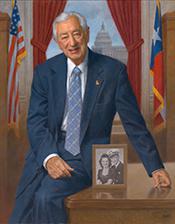 Rep. Ralph M. Hall (R-TX)
Description
Amendment sought to freeze authorization amounts at FY2010 levels through FY2013 and cut funding in FY2014.
Legislative Activity
Stay on top of the latest movement without scrolling through every action
House amendment offered
September 16, 2009
View full timeline
House amendment offered
September 16, 2009
Roll call votes on amendments in House
September 16, 2009 • 3:08 PM
House amendment not agreed to: On agreeing to the Hall (TX) amendment (A002) Failed by recorded vote: 179 - 253 (Roll no. 705).
September 16, 2009 • 3:08 PM
Amendment failed in Committee of the Whole
September 16, 2009 • 3:08 PM
House amendment offered/reported by : Amendment (A002) offered by Mr. Hall (TX).(consideration: CR H9578-9579, H9586-9587; text: CR H9578)
September 16, 2009 • 1:31 PM
Amendment (A002) offered by Mr. Hall (TX). (consideration: CR H9578-9579, H9586-9587; text: CR H9578)
September 16, 2009 • 1:31 PM
On agreeing to the Hall (TX) amendment (A002) Failed by recorded vote: 179 - 253 (Roll no. 705).
September 16, 2009 • 3:08 PM
Votes
1 roll call on this amendment
Text
Offered
ADVANCED VEHICLE TECHNOLOGY ACT OF 2009

The SPEAKER pro tempore. Pursuant to House Resolution 745 and rule
XVIII, the Chair declares the House in the Committee of the Whole House
on the state of the Union for the consideration of the bill, H.R. 3246.

{time}  1245

In the Committee of the Whole

Accordingly, the House resolved itself into the Committee of the
Whole House on the State of the Union for the consideration of the bill
(H.R. 3246) to provide for a program of research, development,
demonstration and commercial application in vehicle technologies at the
Department of Energy, with Mr. Pierluisi in the chair.
The Clerk read the title of the bill.
The CHAIR. Pursuant to the rule, the bill is considered read the
first time.
The gentleman from Tennessee (Mr. Gordon) and the gentleman from
Texas (Mr. Hall) each will control 30 minutes.
The Chair recognizes the gentleman from Tennessee.
Mr. GORDON of Tennessee. Mr. Chairman, I yield myself such time as I
may consume.
H.R. 3246, the Advanced Vehicle Technology Act of 2009, is authored
by the gentleman from Michigan (Mr. Peters) and co-sponsored by our
colleague from Illinois (Mrs. Biggert). This legislation provides a
comprehensive authorization for long-term, sustained funding of public-
private vehicle research, development, demonstration and commercial
application activities in the Department of Energy Vehicle Technologies
Program.
From passenger cars to heavy duty long-haul trucks, we are all aware
of the economic, environmental, and strategic importance of
diversifying our Nation's vehicle sector through innovation in cleaner
and more efficient technologies.
However, the current economic situation has made it all the more
difficult for companies to invest in the research and technology
development to get us there. Department of Energy programs play an
invaluable role in filling this critical gap.
This bill provides a critical foundation of support to ensure U.S.
leadership in developing and producing the next generation of advanced
vehicle technologies. The bill instructs the Secretary to continue
support for longer-term higher-risk technologies such as hydrogen,
while recognizing the importance of research in areas that can deliver
significant improvements in the near term, such as vehicle
electrification.
It also makes important investments in areas such as vehicle
manufacturing and medium- to heavy-duty vehicles research. It
accomplishes this goal through continued partnership with industry and
strengthened DOE coordination with other Federal research agencies.
This is a bipartisan bill reported from the Science and Technology
Committee which incorporated a number of our Republican colleagues'
suggestions. It follows on recommendations of the National Academies of
Science and a diverse group of stakeholders and is endorsed by the
likes of the Alliance of Automobile Manufacturers, GM, Ford, Chrysler,
the UAW, Motor and Equipment Manufacturers Association, the National
Association of Manufacturers, and the U.S. Chamber of Commerce, among
many others.
After a very productive and bipartisan process in the committee, I am
looking forward to a constructive floor debate and passage of this very
important bill.
Mr. Chairman, I reserve the balance of my time.
Mr. HALL of Texas. Mr. Chairman, I yield myself such time as I may
consume.
I rise today in support of H.R. 3246, the Advanced Vehicle Technology
Act of 2009. It has the stated objective to develop technologies that
improve efficiency and emissions of vehicles, reduces reliance on
petroleum, and supports vehicle manufacturing in the United States.
Among other things, it develops cost-effective vehicle technologies for
wide-scale utilization, enhanced commercial and passenger vehicle
performance, allows for greater consumer choice, shortens technology
penetration times, ensures balance and diversity in Federal R&D
investment, strengthens public-private R&D partnerships, and probably
many other things.
I would like to thank Congressman Peters for the good job he did
working with us and working with the Science

[[Page H9571]]

Committee on this bill, and for incorporating our suggestions and the
suggestions of our chairman into his manager's amendment for ways to
improve the bill during the full committee markup, including a
provision in Title I that requires the Secretary to ensure that
activities do not duplicate those of other programs within the
Department of Energy or other relevant research agencies. In our
country's tough financial situation, we want to ensure that taxpayer
dollars are being used efficiently and responsibly and not being wasted
or mismanaged as well.
The manager's amendment, agreed to in the full committee, included
bipartisan language supportive of applied and basic research and
development of hydrogen and natural gas vehicle technologies.
Congressman Teague offered an amendment that seemed to reiterate the
spirit of comity, but it was unfortunately not made in order by a
party-line vote at the Rules Committee hearing yesterday.
As I said during the full committee markup, the cost of the bill
gives me some pause; but I understand the costs associated with the
level, degree, and scope of the bill that deals with research,
development, and commercial application activities on materials,
technologies, and processes of not only passenger vehicles, but also
medium- to heavy-duty commercial and transit vehicles, including long-
haul class 8 truck and trailer platforms.
With that said, I plan to vote for an amendment that will be offered
by Representative Broun of Georgia to reduce the authorization amount
in the bill by $650 million.
The transportation sector uses 67.9 percent of the petroleum that is
used in our country. If we want to reduce or wean our dependence on
foreign sources of oil, we are going to need technological advances in
the vehicles that Americans drive to help us reach that goal. The bill
before us today will certainly help to achieve these advances.
I reserve the balance of my time.
Mr. GORDON of Tennessee. Mr. Chairman, I yield 3 minutes to the
author of this excellent piece of legislation, Mr. Gary Peters from
Michigan, and concur with Mr. Hall in saying that he did a terrific job
in reaching out to all parties to make this a bipartisan bill that has
great support both here in Congress, as well as throughout industry.
Mr. PETERS. Mr. Chairman, I thank Chairman Gordon for those kind
words.
It is no secret that the global economic crisis has had an absolutely
devastating impact on the automobile industry. Automobile and truck
manufacturers and parts suppliers around the globe are struggling to
deal with substantially decreased demand in vehicle sales.
At the same time, we are in the midst of a transformation to a more
energy-independent economy which will require the production of new
vehicle technologies that will increase fuel efficiency and reduce
harmful emissions. Development of advanced technologies for both heavy
duty trucks and passenger vehicles is of vital national interest and
requires a coordinated effort at the Federal level.
That is why I am proud to have worked with Chairman Gordon to
introduce the Advanced Vehicle Technology Act of 2009. This legislation
will build upon the current research efforts of the Department of
Energy and the private sector by providing an increased Federal
investment in passenger and heavy duty vehicle research and
development.
By directing the Department of Energy to partner with industry
stakeholders and agencies across the Federal Government, the bill will
ensure that our investment leverages the maximum amount of talent and
innovation and leads to faster development of new technologies that
will help us meet our energy challenges and promote American innovation
in the advanced vehicle technologies field.
There is intense global competition right now to determine which
countries will produce the cars and trucks of the future. There is no
doubt that in the years ahead more Americans will be driving hybrids,
plug-in hybrids, battery electric vehicles, and cars and trucks powered
by hydrogen fuel cells. The only question is whether these new
technologies will be researched, developed, and manufactured here in
United States, creating American jobs, or whether this technology will
be built overseas. The Advanced Vehicle Technology Act will help ensure
that the American automobile industry will continue to be globally
competitive and that we as a Nation will not trade our dependence on
foreign oil for a dependence on foreign batteries and other emerging
technology.
This legislation has strong support from industry. It has been
endorsed by the United States Chamber of Commerce and by the National
Association of Manufacturers, who understand how important it is for
our Nation to maintain its competitiveness in research and development
and emerging technology in order to preserve our manufacturing base.
H.R. 3246 has been endorsed by the Alliance of Automobile
Manufacturers and by individual automakers like Chrysler, General
Motors, Ford, and Daimler. It is strongly supported by the Motor and
Equipment Manufacturers Association, which is the industry trade group
representing auto parts suppliers, as well as key suppliers based in my
congressional district like ArvinMeritor, Magna International, Delphi
and Bosch.
I am also proud to report that this bill has the support of organized
labor, including my good friends at the United Auto Workers, and from
the environmental community as well, including such organizations as
the League of Conservation Voters, the Natural Resources Defense
Council, and the Sierra Club.
The CHAIR. The gentleman's time has expired.
Mr. GORDON of Tennessee. I yield the gentleman an additional 30
seconds.
Mr. PETERS. This bill's broad support includes the steel industry,
which is excited by the opportunities this legislation will create for
them to partner with the Federal Government on research projects that
will continue to make steel lighter and stronger. High-mileage cars
will need to reduce weight while keeping passengers safe, and the steel
industry can and must play an important role in helping us achieve that
goal.
I thank Chairman Gordon and his staff for leadership on this
legislation and for their helpfulness to both me and to my staff. And I
would also like to thank my Republican colleagues on the Science
Committee, especially Mrs. Biggert, for working with me to improve this
important bill. And I would also like to thank the Democratic
leadership, and in particular Majority Leader Hoyer, for working on
this bill.
The Advanced Vehicle Technology Act will help reduce our Nation's
dependence on foreign oil and preserve and create manufacturing jobs in
Michigan and across the country. I encourage my colleagues to support
H.R. 3246.
Mr. HALL of Texas. Mr. Chairman, I yield 5 minutes to the gentleman
from Indiana (Mr. Souder).
(Mr. SOUDER asked and was given permission to revise and extend his
remarks.)
Mr. SOUDER. Mr. Chairman, I want to thank my friend from Texas.
I strongly support this bill, but I do so with some reservations. I
would like to discuss some of the pressures that the government has put
on a region like mine. My district is number one in manufacturing jobs
and number one in percent in manufacturing, and actually gained
slightly over number two last year because we lost fewer jobs than
other areas of the country in manufacturing.
Without core value-added industries, our country is in deep trouble.
I grew up in retailing. Retailing and service industry and so on
circulate the money among themselves. To add value to our country, it
can be in software, it can be in manufacturing or agriculture, but it
has to be something that has a value-added addition to the economy.
Now, the challenge we have in our country, for a variety of reasons,
to improve our environment, to improve the safety of our workers, to
make sure we have pensions and health care, our costs have soared
compared to our international competition because government has put
additional pressures because we as a society felt they should be there.
But that means as the companies in my district go to make a product,
they

[[Page H9572]]

start with costs that are higher than other countries start in their
costs. We then watch China cheat on the currency, anywhere from 20 to
80 percent, and we expect our manufacturers who are already
disadvantaged in price competition to compete with countries that don't
even play fair in international currency that further artificially
lower their prices.

{time}  1300

Now the challenge we have is that when we make a car or a pickup, we
start with a huge disadvantage in price, and then compound that with
currency changes, and then we wind up trying to sell more value-added
units. In other words, just like a house gets most of the profits from
adding a bigger kitchen, a bigger bedroom, we get value from making
bigger cars, making bigger trucks, making SUVs and vans, in order to
pay pensions and health care.
Then, all of a sudden, the world shifts. We start to mandate that
you're going to have to get higher mileage. And where are we to get R&D
dollars to do that? How are we to reduce the cost to be able to
compete; that as we look at the cap-and-tax bill in my area, the number
one manufacturing area, we're 85 percent coal and 15 percent nuclear.
We don't have a lot of wind and solar that's going to be able to employ
many of these people who had a middle class lifestyle, the American
Dream, because they worked at these different factories, they worked to
upgrade them. They're doing every lean management technique they can
possibly do in these companies. How are they supposed to keep their
jobs if we raise the energy costs in the manufacturing area of the
United States?
It's not an accident that the four districts hardest hit are my
district, Congressman Donnelly's in the South Bend area, Congressman
Latta, just over to the other side of Ohio, and Congressman Jordan's,
because of the energy use we have, combined with the heavy
manufacturing.
Then we look at additional health care costs on these companies. The
question becomes how to survive. They have no dollars for the R&D to
meet these new demands. A bill like this, then, becomes essential. We
don't really have money right now to spend. In case anybody hasn't
figured out, we have incredible deficits.
I don't believe that this is really the role predominantly for the
Federal Government to do. But I'm now left representing a district
that, unless the Federal Government does this, and having piled on the
mandates and having allowed China to cheat in international trade,
unless we do this, I don't know how we survive. I don't know how the
people in my district survive.
This program authorizes $2.85 billion to conduct vehicle research and
development. It has $1.75 billion to create a new demonstration program
to find commercial applications to reduce or eliminate petroleum use
and emissions in passenger and commercial vehicles. There's $1.1
billion to implement a similar program that applies to medium- and
heavy-duty commercial vehicles.
I first want to thank my neighbor, friend, and colleague--it shows
that you can do things in a bipartisan way--Congressman Joe Donnelly,
along with Congressman DeFazio, for making sure that RVs were included
in this. Between us, we have 58 percent--between Joe and I, and then
Congressman DeFazio has another chunk--of the RV industry in America.
This is a huge challenge. Guess what? Not only do you have these
motor homes, of which 12 percent, I believe, of American people own
either a towable or a mobile home, but you have to have a big vehicle
to tow them. You can't tow them with a little, tiny car. We've got to
figure out how we're going to deal with the mileage in that.
I also have the largest pickup plant in the United States, a
Silverado and Sierra pickup plant that's actually getting a plus-up
that is heavily robotics. But they need the technology, even though
they're some of the most efficient pickups sold by any company. If
they're going to compete with the mileage standards and GM is going to
survive, they need to find new breakthroughs.
Navistar has just contracted to build electric delivery trucks in an
abandoned RV plant in Elkhart County in Wakarusa, in my district.
Alcoa, in Auburn, in my district, is working with aluminum to try to
reduce the weight of the vehicles.
The CHAIR. The time of the gentleman has expired.
Mr. HALL of Texas. Mr. Chairman, I'm glad to yield 3 more minutes to
the gentleman, knowing of his interest in the RV industry, and his
support.
Mr. SOUDER. As we heard in steel, in my area I have two massive SDI,
Steel Dynamics plants, as well as a whole bunch of supplementary
facilities from OmniSource and others who provide recycled steel to
them.
I have five Nucor facilities in my district, that if our steel is
going to compete and get the weight down and get different methods,
we're going to have to have more innovation and research.
Navistar also at this point has around 1,350 to 1,500 jobs in my area
doing engineering and designing big trucks, military vehicles. We have
a challenge in this in the military area, too, because the Humvee is
done in Congressman Donnelly's district, but the engine blocks and the
hood and a lot of those parts that we're constantly struggling with on
weight, are in my district as well.
I rise in support of this bill, even though I'm reluctant to have the
government take over big parts of the R&D industry. We're in fact
seeing other countries do this around the world. I don't know how we're
going to achieve our goals to become greener, to get more efficient
vehicles to help save our industrial base in the United States, if we
don't do this.
So I rise in support of this. It's why the manufacturing groups
support it, why the Chamber supports it, it's why the unions support
it, because without some assistance it is not clear how in the world
we're going to save the manufacturing jobs in America that are so
critical to the industrial base.
And one last point. The industrial base that does the trucks, that
does the RVs, that does the pickups, also does our military. And if we
don't have the basic core manufacturing, it is not clear how we stay an
independent Nation.
Mr. GORDON of Tennessee. Mr. Chairman, I yield such time as he may
consume to the dean of the United States House of Representatives, and
my mentor, the gentleman from Michigan (Mr. Dingell).
(Mr. DINGELL asked and was given permission to revise and extend his
remarks.)
Mr. DINGELL. I rise to thank my dear friend, the gentleman from
Tennessee, for his courtesy to me and for the expeditious way in which
he has handled this bill. The Nation owes him a debt for this and for
many other things. And I thank him.
I also rise in strong support of H.R. 3246, the Advanced Vehicle
Technology Act of 2009. I want to commend my colleague from Michigan,
Mr. Peters, for the superb work that he and his staff have done on this
important piece of legislation. And I want to also thank my colleagues
on the Republican side, including the Republican coauthors and my good
friend, the ranking minority member of the committee, the gentleman
from Texas (Mr. Hall).
The bill that we consider today is going to help America to grasp the
new technology in automobile manufacturing and save jobs and
opportunities for our people in the future.
It will augment the Department of Energy's ability to research and to
develop advanced technologies, which are necessary for the fuel-
efficient vehicles of tomorrow. I take no small degree of personal
interest in this subject, as several of the companies, such as A123
Systems, are located in my district, and they will produce new types of
technologies under H.R. 3246 which will help them to foster these
efforts, which are so much in our national interest.
Not only do these technologies have the potential to reduce vehicle
fleet emissions and national fuel consumption, freeing us from
dependence on foreign oil, but also their production represents a
growth industry, something of which my home State, Michigan, and which
the entire country is in great need. H.R. 3246 is therefore both an
environmental and an economic blessing.
I urge my colleagues to vote in support of H.R. 3246, and I commend,
again, my dear friend from Tennessee

[[Page H9573]]

and my friend from Michigan for their authorship and for their
leadership of this important matter.
Mr. HALL of Texas. Mr. Chairman, I continue to reserve the balance of
my time.
Mr. GORDON of Tennessee. Mr. Chairman, I yield 1\1/2\ minutes to my
friend, the gentleman from Connecticut (Mr. Larson).
Mr. LARSON of Connecticut. Thank you, Mr. Chairman. I rise in strong
support of H.R. 3246, the Advanced Vehicle Technology Act, and I want
to especially applaud Congressman Peters and Chairman Gordon, who I
have had the honor to serve with on the Science Committee, and the
distinguished ranking member, Mr. Hall, for his continued and
outstanding commitment to science and technology and innovation. That's
what moves the Nation forward. It's where his political career has been
invested, in making sure that we continue to see America be the
preeminent military, social, cultural, and economic leader in the
world, and largely because of the embrace of technology and innovation
like fuel cell technology.
We know, for example, that every time we replace a gasoline-powered
bus with a fuel cell bus, it's equal to removing 77 cars from our
roadways.
Hydrogen and fuel cell industries support in Connecticut some 2,100
jobs. With the vision that the chairman has laid out, that will only
increase and expand across this country.
We had a young visionary President in the sixties who said that we
could put a man on the moon within 10 years. We actually did it in
nine. With this technology embracing the most abundant element in the
universe, you can't tell me that we can't heat and cool our buildings
and get people back and forth to their jobs if we make the appropriate
investment.
When you look at the certification from NASA of our ability to
utilize fuel cell technology in flight and also in our space station,
you understand the great potential that it has. But unless you have the
backing of a visionary leader like Bart Gordon, it will not come to
fruition.
The CHAIR. The time of the gentleman has expired.
Mr. GORDON of Tennessee. I yield the gentleman an additional 30
seconds.
Mr. LARSON of Connecticut. So, again, Mr. Chairman, I would like to
thank you and the committee for your commitment to this very important
technology that seeks to advance our country and wean ourselves from
dependency on foreign nations and help bring our troops home.
Mr. HALL of Texas. May I ask how much time I have? I continue to
reserve, and I want to see if I might let the chairman have some of my
time, if he needs it. He apparently has half a dozen or so other
speakers over there.
The CHAIR. The gentleman from Texas has 21\1/2\ minutes.
Mr. HALL of Texas. I reserve the balance of my time
Mr. GORDON of Tennessee. Thank you, Mr. Hall. Mr. Chairman, I yield 2
minutes to a member of our committee, the gentleman from New York (Mr.
Tonko).
Mr. TONKO. I rise today in support of H.R. 3246, the Advanced Vehicle
Technology Act. H.R. 3246 supports the key public policy goals of
improving our Nation's energy security and our environment.
Specifically, this legislation encourages research and development for
a diverse range of near-term and long-term vehicle electrification
technologies that will improve vehicle fuel efficiency, reduce
emissions, and support the United States manufacturing and American
workers.
We must address our energy problems as we continue to address our
economic problems. By doing so, I believe we can ensure that while our
economy recovers, we will be competitive and secure in the energy
sector as well. The passage of H.R. 3246 is indeed vital to addressing
both of these concerns.
As Congress moves through this session, we must continue to pass
policies that will promote energy efficiency--policies which drill and
mine efficiencies as we previously drilled for oil and mined for coal.
Finally, we must continue to invest in research and development to
ensure that our United States are at the forefront of the energy
revolution: Creating jobs, embracing intellectual capacity, and
promoting clean domestic energy.
I urge my colleagues to join me today and vote in favor of H.R. 3246.
I commend the sponsor for his vision.
Mr. HALL of Texas. Mr. Chairman, I yield 3 minutes to the gentlewoman
from Illinois (Mrs. Biggert).
Mrs. BIGGERT. I thank the gentleman for yielding, Mr. Chairman. I
rise in support of H.R. 3246, the Advanced Vehicle Technology Act, and
I'd like to thank the chairman of the committee, Mr. Gordon, and the
ranking member, Mr. Hall, and my colleague particularly, Mr. Peters,
for bringing to the floor such a good bill.
H.R. 3246 will advance technologies of the future by reauthorizing
the Department of Energy's vehicle technology program and build on an
existing energy infrastructure to demonstrate and deploy more fuel-
efficient automobiles and heavy equipment.
Over the years, the Department of Energy has worked with the industry
to develop, demonstrate, and deploy vehicle technologies for
automobiles and heavy-duty vehicles. Some of those research needs have
been addressed through public-private research programs like the 21st
Century Truck Partnership, the FreedomCAR, and Hydrogen Fuel
Initiatives.
Unfortunately, in the past, our research priorities have shifted
inconsistently between passenger and heavy-duty vehicles. As a result,
many long-term goals remain unfulfilled.

{time}  1315

H.R. 3246 offers the research parity and focus to advance
technologies all across transportation sectors by including medium- to
heavy-duty trucks and nonroad equipment. While the total number of
heavy trucks is small compared to passenger vehicles, their fuel
consumption and emissions justify a consistent investment in basic
research and development of hybrid models and other advanced truck
technologies. There is no one-size-fits-all approach that will address
the unique needs and demands on construction, industrial and
agricultural equipment. Therefore, we must examine the full range of
components within nonroad equipment systems to produce the greatest
overall efficiency benefits at the least cost.
I know everyone here recognizes the essential role nonroad equipment
plays in improving our infrastructure. Fuel remains a primary driver in
the cost of major construction and infrastructure projects. With
advances in nonroad equipment technologies, we will further our drive
for efficiency and fuel savings beyond the engine alone so that we can
see tremendous benefits in project productivity and energy efficiency.
For these reasons, Mr. Chair, I support H.R. 3246 and urge my
colleagues to do the same.
Mr. GORDON of Tennessee. Mr. Chairman, I yield 3 minutes to the
champion for Cash for Clunkers, the gentlelady from Ohio (Ms. Sutton).
Ms. SUTTON. I thank the chairman for yielding the time, and I thank
him for his strong leadership on this issue and on so many initiatives
that are leading our country forward. I would like to commend my friend
Congressman Gary Peters for his great work on this bill, which I am
delighted to rise in support of.
The Advanced Vehicle Technology Act provides this Congress with a
great opportunity to help create green automotive jobs for American
workers. Currently, almost all of the major components for advanced
technology vehicles sold in the United States are imported. That needs
to change. We must ensure that our workers are assembling the vehicles
of tomorrow and producing the components and next-generation
technologies right here at home.
The Advanced Vehicle Technology Act invests in a diverse and
comprehensive range of technologies and programs that will improve fuel
efficiency and reduce harmful emissions. In my district, a startup
company has been working on a process to recover engine waste heat to
convert into electricity to power the very same vehicle. Under this
bill, they could partner with the Department of Energy and other
industry partners to further develop and commercialize this energy-
producing and saving technology.
I'm also pleased that this bill has a provision for the research,
development, demonstration and commercialization of lightweight
materials.

[[Page H9574]]

Mr. Chair, Akron, Ohio, is the polymer capital of the world. There is a
strong interest for research and commercialization of polymers and
plastics by companies across the country. In addition, our steelworkers
in the domestic steel industry can produce advanced high-strength steel
which makes vehicles considerably stronger while requiring less mass
and increasing fuel economy.
Recently, with the overwhelming success of the CARS program,
Americans demonstrated their desire to trade in their less efficient
clunker for a more fuel-efficient vehicle. Thanks to the CARS program,
nearly 700,000 clunkers were taken off the road and replaced with
vehicles that had on average 58 percent increased fuel economy. The
CARS program brought thousands of workers back to work, making autos
and parts for more fuel-efficient vehicles. With this bill before us,
we will take another step to help our environment and grow jobs. That's
why this bill has earned the support of the UAW as well as Ford, GM,
Chrysler and other industry and business groups.
Mr. Chair, I'm also proud that we worked on an amendment that was
added to this bill, working with Representative Chellie Pingree and
Chairman Gordon, which is also supported by the UAW, requiring an
annual report on the technologies developed from the Advanced Vehicle
Technology Program. The report must disclose whether these technologies
were successfully adopted for commercial applications; and if they
were, whether these technologies are manufactured in the United States.
With taxpayer dollars invested, we want them to be manufactured right
here in the United States. I commend the gentlemen for their great
work.
Mr. HALL of Texas. Mr. Chair, I continue to reserve the balance of my
time.
Mr. GORDON of Tennessee. Mr. Chairman, I yield 2 minutes to the
gentleman from New York (Mr. Maffei).
Mr. MAFFEI. Thank you very much, to the distinguished chairman of the
Science and Technology Committee, Bart Gordon. I also want to thank my
colleague on the Financial Services Committee, a very distinguished new
Member of the House, Gary Peters, the sponsor of this bill.
By increasing the power of alternative and renewable energy, we have
the opportunity to break our addiction to foreign oil, reduce global
warming and create millions of new jobs in the process, ones that
cannot be shipped overseas. In my own region, we are doing research in
alternative fuels such as butanol at the School of Environmental
Science and Forestry in Syracuse, and we have hydrogen fuel cell
technology in Rochester institutions of higher education, as well as at
a Delphi plant there. We're already using these new fuel vehicles, the
ones that have already come out.
On Monday I stood at an old train station in downtown Syracuse which
had been abandoned for years, creating an eyesore. But using stimulus
money, the Clean Communities Group will turn this building into a
charging station for electric cars as well as an alternative fueling
hub for CuseCar, an alternative fuel car sharing company in Syracuse.
Under this bill, it can become a center for research on the practical
use of these advanced technology vehicles.
Our energy policy, Mr. Chairman, is heading in the right direction,
and the Advanced Vehicle Technology Act ensures that we are charting
the right course for our new energy future.
Mr. HALL of Texas. Mr. Chair, I continue to reserve the balance of my
time.
Mr. GORDON of Tennessee. Mr. Chairman, I yield 2 minutes to the
gentleman from Kentucky (Mr. Yarmuth).
Mr. YARMUTH. I thank the chairman for his work and his committee's
great work on this bill.
Mr. Chair, I rise today in support of H.R. 3246. This bill is another
example of Congress' commitment to reducing our dependence on foreign
oil, creating green jobs to revitalize our economy, and reestablishing
America as a global innovation leader.
I have seen firsthand how our investments are paying off for my
hometown of Louisville, Kentucky. There, 400 new jobs are being created
thanks to Recovery Act funding that incentivized General Electric to
move the production of an energy-efficient water heater from China back
to the United States in Louisville.
H.R. 3246 represents another step forward--this time, by ensuring our
Nation's auto industry will drive innovation by developing clean and
efficient technologies for every type of vehicle. This important
legislation establishes research and development programs that will
lower petroleum usage and emissions in heavy-duty vehicles that are key
to commerce but are often recognized as some of the least efficient in
operation.
At the Kentucky truck plant, also in my hometown, hardworking
employees produce the F-Series heavy-duty truck. By developing new
technologies to make heavy-duty trucks more energy efficient, more fuel
efficient and, therefore, more in demand, Ford will be able to expand
operations and create new jobs.
That's what this legislation is all about, investing in green
technology to create good-paying U.S. jobs and to stimulate economic
growth while continuing our efforts to ensure that America leads the
world in the industry that will dominate the global economy for decades
to come. We cannot afford to pass up this opportunity.
I, therefore, urge all my colleagues to join me in supporting the
Advanced Vehicle Technology Act.
Mr. LEVIN. Mr. Chairman, I rise in strong support of the Advanced
Vehicle Technology Act. I am proud to be an original co-sponsor of this
important bill introduced by my colleague from Michigan, Mr. Peters.
This legislation builds on the success of the Department of Energy's
vehicle technology programs in collaborating with industry to develop
the cars and trucks of the future. Hybrids, plug-in hybrids, pure
electric cars, fuel cell vehicles, alternative fuel vehicles: these
technologies all require enormous and sustained investments in R&D.
Through vehicle technology programs like FutureCar and the 21st Century
Truck Partnership, DOE is partnering with industry to make this R&D
more feasible and more fruitful.
The bill before us would rationalize the authorization for DOE's
varied vehicle technology programs and substantially increase the
authorized funding levels. In total this bill authorizes $2.9 billion
over the next 5 years to invest in vehicle technology. It will be
essential for Congress to follow through and fully fund this
authorization in the annual appropriations process.
I am particularly pleased that this bill recognizes the enormous fuel
savings potential in the medium and heavy duty market and specifies
that up to $200 million per year be devoted to developing advanced
technology medium and heavy duty trucks. This complements legislation
I've introduced to extend the tax credits for the purchase of medium
and heavy duty trucks for 5 years and double the amount of the credits.
These vehicles move 80 percent of the goods transported in the U.S.,
serve as utility maintenance vehicles, and perform refuse collection
services in our communities. It is estimated that the fuel consumption
of the 90,000 refuse collection trucks in the U.S. is equivalent to 2.5
million passenger vehicles. Putting as few as 10,000 hybrid electric
trucks on the road would reduce diesel fuel use by 7.2 million gallons
per year and reduce carbon dioxide emissions by 83,000 tons.
In a word Mr. Chair, this bill is vital. It is a vital step toward a
full partnership between the Federal Government and the domestic auto
industry in developing the cars and trucks of the future and building
them here in the United States. I urge all my colleagues to support it.
Mr. AL GREEN of Texas. Mr. Chair, I wish to express my strong support
for H.R. 3246, the Advanced Vehicle Technology Act of 2009.
The global competition for producing the cars and trucks of the
future is happening now. There is no question that in the years ahead,
people will be driving hybrids, plug-in hybrids, battery electric
vehicles, and cars and trucks powered by hydrogen fuel cells. The
question is whether these technologies will be imported from abroad, or
produced right here in the United States by a sustainable, cutting-edge
American automobile industry.
The global economic downturn and credit crisis have limited the
resources that automakers and vehicle manufacturers can draw on to
support their research and development activities. As American
automakers struggle to become globally competitive and we race to make
the best and most fuel-efficient vehicles, we have a chance to
accelerate their development through the Advanced Vehicle Technology
Act of 2009.
The Advanced Vehicle Technology Act will reauthorize the Department
of Energy's Vehicle Technologies Program, through which the Department
partners with industry to provide research, development, demonstration,
and commercial application of advanced vehicle

[[Page H9575]]

technologies in the U.S. These programs have led to numerous successes,
including a dual-mode hybrid transmission system used in transit buses
and trucks manufactured in the U.S.
Through supporting advanced vehicle technologies, this legislation
also reaffirms our commitment to reducing energy use to combat global
warming and increase America's energy independence by reducing the need
for imported oil.
Recognizing the importance of this legislation, H.R. 3246 has been
endorsed by General Motors, Ford Motor Company, Chrysler, the UAW,
Nissan, the Motor and Equipment Manufacturers Association, Daimler,
Magna International Delphi, ArvinMeritor, Robert Bosch LLC,
Caterpillar, Dueco Odyne, Achates Power, and the Engine Manufacturers
Association.
Let us invest in American energy independence, American jobs, a
cleaner environment and cleaner communities by voting in favor of the
Advanced Vehicle Technology Act of 2009. I urge my colleagues to
support H.R. 3246.
Mr. LARSON of Connecticut. Mr. Chair, I rise in support of H.R. 3246,
the Advanced Vehicle Technology Act, and applaud the efforts of
Congressman Peters, Chairman Gordon, and his colleagues on the Science
and Technology Committee for their contributions to the future of
advanced automobile technologies in the U.S. As long as we are
exporting our dollars overseas in exchange for oil, our economic and
national security are at risk. The future of the American auto industry
and thousands of American jobs rest on the ability of domestic car
companies to research, develop, and commercialize new, clean, efficient
technologies, including hydrogen and fuel cell technologies, that will
be the backbone of a new U.S. vehicle market and economy.
Hydrogen fuel cells can provide power for a wide array of
transportation applications. Fuel Cells are a proven technology and
already in use today. In Hartford, CT, the transit department is using
a fuel cell powered bus that emits no pollution. Every time we replace
a gasoline powered bus with a fuel cell bus it is equal to removing 77
cars from our roadways. The hydrogen and fuel cell industry already
supports 2,100 jobs in Connecticut alone and with this bill is poised
to add many others.
Hydrogen fuel cells are clean and efficient and will allow us to
become more energy independent while reducing carbon emissions.
Supporting this bill will give us more options to create jobs in
Connecticut, keep America competitive, and reduce pollution. I
encourage a ``yes'' vote on this bill.
Mr. VAN HOLLEN. Mr Chair, I rise in support of the Advanced Vehicle
Technology Act of 2009.
This bipartisan bill will provide long term, sustained funding for a
comprehensive research and development program across a spectrum of
vehicle sizes and advanced vehicle technologies. It will focus and
better coordinate the ongoing work of our federal agencies, research
institutions and private industry on this important task. And it will
benefit all Americans by strengthening our energy security, reducing
harmful emissions, providing consumers with more vehicle choice,
boosting our manufacturing sector and enhancing our international
competitiveness.
I commend Representatives Peters and Biggert for crafting this
forward-looking legislation. I urge my colleagues' support.
Mr. HALL of Texas. I yield back the balance of my time. Thank you,
Mr. Chair.
Mr. GORDON of Tennessee. Having no additional speakers, Mr. Chairman,
I yield back the balance of my time.
The CHAIR. All time for general debate has expired.
Pursuant to the rule, the amendment in the nature of a substitute
printed in the bill shall be considered as an original bill for the
purpose of amendment under the 5-minute rule and shall be considered
read.
The text of the committee amendment is as follows:

H.R. 3246

Be it enacted by the Senate and House of Representatives of
the United States of America in Congress assembled,

SECTION 1. SHORT TITLE.

This Act may be cited as the ``Advanced Vehicle Technology
Act of 2009''.

SEC. 2. FINDINGS.

Congress finds the following:
(1) According to the Energy Information Administration, the
transportation sector accounts for approximately 28 percent
of the United States primary energy demand and greenhouse gas
emissions, and 24 percent of global oil demand.
(2) The United States transportation sector is over 95
percent dependent on petroleum, and over 60 percent of
petroleum demand is met by imported supplies.
(3) United States heavy truck fuel consumption will
increase 23 percent by 2030, while overall transportation
energy use will decline by 1 percent.
(4) The domestic automotive and commercial vehicle
manufacturing sectors have increasingly limited resources for
research and development of advanced technologies.
(5) Vehicle, engine, and component manufacturers are
playing a more important role in vehicle technology
development, and should be better integrated into Federal
research efforts.
(6) Priorities for the Department of Energy's vehicle
technologies research have shifted drastically in recent
years among diesel hybrids, hydrogen fuel cell vehicles, and
plug-in electric hybrids, with little continuity among them.
(7) The integration of vehicle, communication, and
infrastructure technologies has great potential for
efficiency gains through better management of the total
transportation system.
(8) The Federal Government should balance its role in
researching longer-term exploratory concepts and developing
nearer-term transformational technologies for vehicles.

SEC. 3. OBJECTIVES.

The objectives of this Act are to--
(1) develop technologies and practices that--
(A) improve the fuel efficiency and emissions of all
vehicles produced in the United States; and
(B) reduce vehicle reliance on petroleum-based fuels;
(2) support domestic research, development, demonstration,
and commercial application and manufacturing of advanced
vehicles, engines, and components;
(3) enable vehicles to move larger volumes of goods and
more passengers with less energy and emissions;
(4) develop cost-effective advanced technologies for wide-
scale utilization throughout the passenger, commercial,
government, and transit vehicle sectors;
(5) allow for greater consumer choice of vehicle
technologies and fuels;
(6) shorten technology development and integration cycles
in the vehicle industry;
(7) ensure a proper balance and diversity of Federal
investment in vehicle technologies; and
(8) strengthen partnerships between Federal and State
governmental agencies and the private and academic sectors.

SEC. 4. DEFINITIONS.

For the purposes of this Act:
(1) Department.--The term ``Department'' means the
Department of Energy.
(2) Secretary.--The term ``Secretary'' means the Secretary
of Energy.

SEC. 5. AUTHORIZATION OF APPROPRIATIONS.

(a) In General.--The following sums are authorized to be
appropriated to the Secretary for research, development,
demonstration, and commercial application of vehicles and
related technologies, including activities authorized under
this Act:
(1) $550,000,000 for fiscal year 2010.
(2) $560,000,000 for fiscal year 2011.
(3) $570,000,000 for fiscal year 2012.
(4) $580,000,000 for fiscal year 2013.
(5) $590,000,000 for fiscal year 2014.
(b) Medium and Heavy Duty Commercial Vehicles.--From the
amounts authorized under subsection (a), there are authorized
to be appropriated for carrying out title II--
(1) $200,000,000 for fiscal year 2010;
(2) $210,000,000 for fiscal year 2011;
(3) $220,000,000 for fiscal year 2012;
(4) $230,000,000 for fiscal year 2013; and
(5) $240,000,000 for fiscal year 2014.
(c) User Facilities.--From the amounts authorized under
subsection (a), there are authorized to be appropriated for
carrying out section 104--
(1) $35,000,000 for fiscal year 2010;
(2) $30,000,000 for fiscal year 2011;
(3) $20,000,000 for fiscal year 2012;
(4) $15,000,000 for fiscal year 2013; and
(5) $15,000,000 for fiscal year 2014.
(d) Non-Road Pilot Program.--From the amounts authorized
under subsection (a), there are authorized to be appropriated
for carrying out section 204--
(1) $20,000,000 for fiscal year 2010;
(2) $20,000,000 for fiscal year 2011; and
(3) $20,000,000 for fiscal year 2012.

TITLE I--VEHICLE RESEARCH AND DEVELOPMENT

SEC. 101. PROGRAM.

(a) Activities.--The Secretary shall conduct a program of
basic and applied research, development, demonstration, and
commercial application activities on materials, technologies,
and processes with the potential to substantially reduce or
eliminate petroleum use and the emissions of the Nation's
passenger and commercial vehicles, including activities in
the areas of--
(1) hybridization or full electrification of vehicle
systems;
(2) batteries and other energy storage devices;
(3) power electronics;
(4) vehicle, component, and subsystem manufacturing
technologies and processes;
(5) engine efficiency and combustion optimization;
(6) waste heat recovery;
(7) transmission and drivetrains;
(8) hydrogen vehicle technologies, including fuel cells and
internal combustion engines, and hydrogen infrastructure;
(9) aerodynamics, rolling resistance, and accessory power
loads of vehicles and associated equipment;
(10) vehicle weight reduction;
(11) friction and wear reduction;
(12) engine and component durability;
(13) innovative propulsion systems;
(14) advanced boosting systems;
(15) hydraulic hybrid technologies;
(16) engine compatibility with and optimization for a
variety of transportation fuels including liquid and gaseous
fuels;
(17) predictive engineering, modeling, and simulation of
vehicle and transportation systems;
(18) refueling and charging infrastructure for alternative
fueled and electric or plug-in electric hybrid vehicles;

[[Page H9576]]

(19) gaseous fuels storage system integration and
optimization;
(20) sensing, communications, and actuation technologies
for vehicle, electrical grid, and infrastructure;
(21) efficient use and recycling of rare earth materials,
and reduction of precious metals and other high-cost
materials in vehicles;
(22) aftertreatment technologies;
(23) thermal management of battery systems;
(24) development of common standards, specifications, and
architectures for both transportation and stationary battery
applications; and
(25) other research areas as determined by the Secretary.
(b) Transformational Technology.--The Secretary shall
ensure that the Department continues to support activities
and maintains competency in mid- to long-term
transformational vehicle technologies with potential to
achieve deep reductions in petroleum use and emissions,
including activities in the areas of--
(1) hydrogen vehicle technologies, including fuel cells,
internal combustion engines, hydrogen storage,
infrastructure, and activities in hydrogen technology
validation and safety codes and standards;
(2) multiple battery chemistries and novel energy storage
devices, including electromechanical batteries and other
nonchemical batteries;
(3) communication and connectivity among vehicles,
infrastructure, and the electrical grid; and
(4) other innovative technologies research and development,
as determined by the Secretary.
(c) Industry Participation.--To the maximum extent
practicable, activities under this Act shall be carried out
in partnership or collaboration with automotive
manufacturers, heavy commercial and transit vehicle
manufacturers, vehicle and engine equipment and component
manufacturers, manufacturing equipment manufacturers,
advanced vehicle service providers, fuel producers and energy
suppliers, electric utilities, universities, national
laboratories, and independent research laboratories. In
carrying out this Act the Secretary shall--
(1) determine whether a wide range of companies that
manufacture or assemble vehicles or components in the United
States are represented in ongoing public private partnership
activities, including firms that have not traditionally
participated in federally-sponsored research and development
activities, and where possible, partner with such firms that
conduct significant and relevant research and development
activities in the United States;
(2) leverage the capabilities and resources of, and
formalize partnerships with, industry-led stakeholder
organizations, nonprofit organizations, industry consortia,
and trade associations with expertise in the research and
development of, and education and outreach activities in,
advanced automotive and commercial vehicle technologies;
(3) develop more efficient processes for transferring
research findings and technologies to industry;
(4) give consideration to conversion of existing or former
vehicle technology manufacturing facilities for the purposes
of this Act; and
(5) promote efforts to ensure that technologies developed
under this Act are produced in the United States.
(d) Interagency and Intraagency Coordination.--To the
maximum extent practicable, the Secretary shall coordinate
research, development, demonstration, and commercial
application activities among--
(1) relevant programs within the Department, including--
(A) the Office of Energy Efficiency and Renewable Energy;
(B) the Office of Science;
(C) the Office of Electricity Delivery and Energy
Reliability;
(D) the Office of Fossil Energy;
(E) the Advanced Research Projects Agency--Energy; and
(F) other offices as determined by the Secretary; and
(2) relevant technology research and development programs
within other Federal agencies, as determined by the
Secretary.
(e) Coordination and Nonduplication.--In coordinating
activities the Secretary shall ensure, to the maximum extent
practicable, that activities do not duplicate those of other
programs within the Department or other relevant research
agencies.
(f) Federal Demonstration of Technologies.--The Secretary
shall make information available to procurement programs of
Federal agencies regarding the potential to demonstrate
technologies resulting from activities funded through
programs under this Act.
(g) Intergovernmental Coordination.--The Secretary shall
seek opportunities to leverage resources and support
initiatives of State and local governments in developing and
promoting advanced vehicle technologies, manufacturing, and
infrastructure.

SEC. 102. SENSING AND COMMUNICATIONS TECHNOLOGIES.

The Secretary, in coordination with the relevant research
programs of other Federal agencies, shall conduct research,
development, and demonstration activities on connectivity of
vehicle and transportation systems, including on sensing,
computation, communication, and actuation technologies that
allow for reduced fuel use, optimized traffic flow, and
vehicle electrification, including technologies for--
(1) onboard vehicle, engine, and component sensing and
actuation;
(2) vehicle-to-vehicle sensing and communication;
(3) vehicle-to-infrastructure sensing and communication;
and
(4) vehicle integration with the electrical grid.

SEC. 103. MANUFACTURING.

The Secretary shall carry out a research, development,
demonstration, and commercial application program of advanced
vehicle manufacturing technologies and practices, including
innovative processes to--
(1) increase the production rate and decrease the cost of
advanced battery manufacturing;
(2) vary the capability of individual manufacturing
facilities to accommodate different battery chemistries and
configurations;
(3) reduce waste streams, emissions, and energy-intensity
of vehicle, engine, and component manufacturing processes;
(4) recycle and remanufacture used batteries and other
vehicle components for reuse in vehicles or stationary
applications;
(5) produce cost-effective lightweight materials such as
advanced metal alloys, polymeric composites, and carbon
fiber;
(6) produce lightweight high pressure storage systems for
gaseous fuels;
(7) design and manufacture purpose-built hydrogen and fuel
cell vehicles and components; and
(8) produce permanent magnets for advanced vehicles.

SEC. 104. USER TESTING FACILITIES.

Activities under this Act may include construction,
expansion, or modification of new and existing vehicle,
engine, and component research and testing facilities for--
(1) testing or simulating interoperability of a variety of
vehicle components and systems;
(2) subjecting whole or partial vehicle platforms to fully
representative duty cycles and operating conditions;
(3) developing and demonstrating a range of chemistries and
configurations for advanced vehicle battery manufacturing;
and
(4) developing and demonstrating test cycles for new and
alternative fuels, and other advanced vehicle technologies.

TITLE II--MEDIUM AND HEAVY DUTY COMMERCIAL AND TRANSIT VEHICLES

SEC. 201. PROGRAM.

(a) In General.--The Secretary, in partnership with
relevant research and development programs in other Federal
agencies, and a range of appropriate industry stakeholders,
shall carry out a program of cooperative research,
development, demonstration, and commercial application
activities on advanced technologies for medium- to heavy-duty
commercial and transit vehicles, including activities in the
areas of--
(1) engine efficiency and combustion research;
(2) on board storage technologies for compressed and
liquefied natural gas;
(3) development and integration of engine technologies
designed for natural gas operation of a variety of vehicle
platforms;
(4) waste heat recovery and conversion;
(5) improved aerodynamics and tire rolling resistance;
(6) energy and space-efficient emissions control systems;
(7) heavy hybrid, hybrid hydraulic, plug-in hybrid, and
electric platforms, and energy storage technologies;
(8) drivetrain optimization;
(9) friction and wear reduction;
(10) engine idle and parasitic energy loss reduction;
(11) electrification of accessory loads;
(12) onboard sensing and communications technologies;
(13) advanced lightweighting materials and vehicle designs;
(14) increasing load capacity per vehicle;
(15) thermal management of battery systems;
(16) recharging infrastructure;
(17) complete vehicle modeling and simulation;
(18) hydrogen vehicle technologies, including fuel cells
and internal combustion engines, and hydrogen infrastructure;
(19) retrofitting advanced technologies onto existing truck
fleets; and
(20) integration of these and other advanced systems onto a
single truck and trailer platform.
(b) Leadership.--The Secretary shall appoint a full-time
Director to coordinate research, development, demonstration,
and commercial application activities in medium- to heavy-
duty commercial and transit vehicle technologies.
Responsibilities of the Director shall be to--
(1) improve coordination and develop consensus between
government agency and industry partners, and propose new
processes for program management and priority setting to
better align activities and budgets among partners;
(2) regularly convene workshops, site visits,
demonstrations, conferences, investor forums, and other
events in which information and research findings are shared
among program participants and interested stakeholders;
(3) develop a budget for the Department's activities with
regard to the interagency program, and provide consultation
and guidance on vehicle technology funding priorities across
agencies;
(4) determine a process for reviewing program technical
goals, targets, and timetables and, where applicable, aided
by life-cycle impact and cost analysis, propose revisions or
elimination based on program progress, available funding, and
rate of technology adoption;
(5) evaluate ongoing activities of the program and
recommend project modifications, including the termination of
projects, where applicable;
(6) recruit new industry participants to the interagency
program, including truck, trailer, and component
manufacturers who have not traditionally participated in
federally sponsored research and technology development
activities; and
(7) other responsibilities as determined by the Secretary,
in consultation with interagency and industry partners.
(c) Reporting.--At the end of each fiscal year the
partnership shall submit to the Secretary

[[Page H9577]]

and relevant Congressional committees of jurisdiction an
annual report describing activities undertaken in the
previous year, active industry participants, efforts to
recruit new participants, progress of the program in meeting
goals and timelines, and a strategic plan for funding of
activities across agencies.

SEC. 202. CLASS 8 TRUCK AND TRAILER SYSTEMS DEMONSTRATION.

The Secretary shall conduct a competitive grant program to
demonstrate the integration of multiple advanced technologies
on Class 8 truck and trailer platforms with a goal of
improving overall freight efficiency, as measured in tons and
volume of freight hauled or other work performance-based
metrics, by 50 percent, including a combination of
technologies listed in section 201(a). Applicant teams may be
comprised of truck and trailer manufacturers, engine and
component manufacturers, fleet customers, university
researchers, and other applicants as appropriate for the
development and demonstration of integrated Class 8 truck and
trailer systems.

SEC. 203. TECHNOLOGY TESTING AND METRICS.

The Secretary, in coordination with the partners of the
interagency research program described in section 201(a)--
(1) shall develop standard testing procedures and
technologies for evaluating the performance of advanced heavy
vehicle technologies under a range of representative duty
cycles and operating conditions, including for heavy hybrid
propulsion systems;
(2) shall evaluate heavy vehicle performance using work
performance-based metrics other than those based on miles per
gallon, including those based on units of volume and weight
transported for freight applications, and appropriate metrics
based on the work performed by nonroad systems; and
(3) may construct heavy duty truck and bus testing
facilities.

SEC. 204. NONROAD SYSTEMS PILOT PROGRAM.

The Secretary shall undertake a pilot program of research,
development, demonstration, and commercial applications of
technologies to improve total machine or system efficiency
for heavy duty nonroad equipment, and shall seek
opportunities to transfer relevant research findings and
technologies between the nonroad and on-highway equipment and
vehicle sectors.

The CHAIR. No amendment to the committee amendment is in order except
those printed in House Report 111-255. Each amendment may be offered
only in the order printed in the report, by a Member designated in the
report, shall be considered read, shall be debatable for the time
specified in the report, equally divided and controlled by the
proponent and an opponent of the amendment, shall not be subject to
amendment, and shall not be subject to a demand for division of the
question.

Amendment No. 1 Offered by Mr. Gordon of Tennessee

The CHAIR. It is now in order to consider amendment No. 1 printed in
House Report 111-255.
Mr. GORDON of Tennessee. Mr. Chairman, I have an amendment at the
desk.
The CHAIR. The Clerk will designate the amendment.
The text of the amendment is as follows:

Amendment No. 1 offered by Mr. Gordon of Tennessee:
Page 15, after line 9, insert the following new section:

SEC. 105. REPORTING.

Not later than 18 months after the date of enactment of
this Act and annually thereafter through 2015, the Secretary
of Energy shall transmit to Congress a report regarding the
technologies developed as a result of the activities
authorized by this title, with a particular emphasis on
whether the technologies were successfully adopted for
commercial applications, and if so, whether those
technologies are manufactured in the United States.
Page 18, line 20, through page 19, line 2, amend subsection
(c) to read as follows:
(c) Reporting.--At the end of each fiscal year, the
Secretary shall submit to the Congress an annual report
describing activities undertaken in the previous year, active
industry participants, efforts to recruit new participants,
progress of the program in meeting goals and timelines, and a
strategic plan for funding of activities across agencies.
Page 20, line 13, strike ``heavy duty''.
Page 20, line 13, insert ``mobile'' after ``nonroad''.

The CHAIR. Pursuant to House Resolution 745, the gentleman from
Tennessee (Mr. Gordon) and a Member opposed each will control 10
minutes.
The Chair recognizes the gentleman from Tennessee.
Mr. GORDON of Tennessee. Mr. Chairman, I yield myself as much time as
I may consume.
The amendment I have offered has three parts. First, it makes a small
technical change at the request of the Department of Justice to clarify
that the Secretary shall report to Congress on the medium- to heavy-
duty vehicle program; second, it incorporates an amendment from my
colleague from Maine (Ms. Pingree) to require a report on
commercialized technologies from the overall vehicle technology
program; and third, it incorporates the amendment offered by Mr. Hare
of Illinois to ensure that a range of nonroad mobile equipment is
eligible for the pilot program in section 204.
This is a simple amendment which incorporates a few small changes
suggested by my colleagues to make the bill even better. I urge its
adoption.
I reserve the balance of my time.
Mr. HALL of Texas. Mr. Chair, I rise to claim the time on the Gordon
amendment.
The CHAIR. The gentleman is recognized for 10 minutes.
Mr. HALL of Texas. I yield myself as much time as I may consume.
I support the Gordon amendment with a caveat. I support the title II
reporting requirement classification that the Secretary shall submit
the annual report to Congress. In regards to the report requirement for
title I, I would prefer the reporting language that is in
Representative Broun's amendment as it's more comprehensive and mirrors
the report language requirement in title II. Perhaps in conference, the
two authors of the reporting amendments could agree to merge that
language so that all bases are covered.
The third part of Mr. Gordon's amendment deals with striking ``heavy
duty'' from the Nonroad Systems Pilot Program in section 204 in the
bill and adding the word ``mobile'' so that we are now referring to
nonroad mobile equipment. I understand that there is some concern that
the term heavy duty has a different meaning in the nonroad world than
it does in the on-road world. So I appreciate the addition of
``mobile'' in the section as well as Mr. Holt's upcoming amendment that
would further clarify that the pilot program is intended to include
agricultural and construction nonroad equipment.
With that, I reserve the balance of my time.
Mr. GORDON of Tennessee. Mr. Chairman, let me say to Mr. Hall, I
understand his concern about the additional accountability with Mr.
Broun, and he has an amendment that we will be supporting later. So
hopefully those will be complementary, and we will have additional
accountability and transparency.
If the gentleman from Texas has nothing more to say, I don't either.
Mr. HALL of Texas. I have a speaker on the way. I don't believe he's
here yet.
I would like to reserve my time. If you could take another 2 or 3
minutes to do whatever you want to do or say.
Mr. GORDON of Tennessee. Well, if you would like to compliment me for
a couple of minutes, I would be happy to accept that while we wait.
Mr. HALL of Texas. Well, first I appreciate your trip to Texas
Monday, up and back. And I appreciate Mr. Broun's position on this. You
know, we had amendments, and Mr. Broun's amendment, I believe, was
voted down by a party vote when we had the hearing. I may be wrong on
that. But he's here to support the position that he's taken. I'd like
to have some time for him to at least talk about how the two could fit
together when we head to conference or any of the conference
committees.

{time}  1330

Mr. GORDON of Tennessee. Well, I would say to Mr. Hall, certainly I
think Mr. Broun is a constructive force, certainly in our committee as
well as here. I think he has two amendments today. I would suggest this
potentially to my friend; if whomever you have coming to speak, we
could allow them to speak during another amendment if that would be
consistent.
Mr. HALL of Texas. I would ask unanimous consent that that be
granted.
Mr. GORDON of Tennessee. If that's the case, then I think we can
complete this amendment now.
The CHAIR. The gentleman's request is not in order in the Committee
of the Whole.
Mr. GORDON of Tennessee. Well, we don't really need a UC. Mr. Hall
and I know that we can trust each other, and so if he has someone that
wants to speak later, we will certainly make that available at any time
they come in on whatever amendment it might be.
Mr. Chairman, I reserve my time.
Mr. HALL of Texas. Mr. Chairman, I yield back the balance of my time.

[[Page H9578]]

Mr. GORDON of Tennessee. Mr. Chairman, I yield back the balance of my
time.
The CHAIR. The question is on the amendment offered by the gentleman
from Tennessee (Mr. Gordon).
The amendment was agreed to.

Amendment No. 2 Offered by Mr. Hall of Texas

The CHAIR. It is now in order to consider amendment No. 2 printed in
House Report 111-255.
Mr. HALL of Texas. Mr. Chairman, I rise as the designee for the
amendment by the gentleman of Georgia (Mr. Broun).
The CHAIR. The Clerk will designate the amendment.
The text of the amendment is as follows:

Amendment No. 2 offered by Mr. Hall of Texas:
Page 6, line 8, strike ``$560,000,000'' and insert
``$550,000,000''.
Page 6, line 9, strike ``$570,000,000'' and insert
``$550,000,000''.
Page 6, line 10, strike ``$580,000,000'' and insert
``$550,000,000''.
Page 6, line 11, strike paragraph (5).
Page 6, line 17, strike ``$210,000,000'' and insert
``$200,000,000''.
Page 6, line 18, strike ``$220,000,000'' and insert
``$200,000,000''.
Page 6, line 19, strike ``$230,000,000'' and insert
``$200,000,000''.
Page 6, line 20, strike paragraph (5).
Page 7, line 2, strike paragraph (5).

The CHAIR. Pursuant to House Resolution 745, the gentleman from Texas
(Mr. Hall) and a Member opposed each will control 5 minutes.
The Chair recognizes the gentleman from Texas.
Mr. HALL of Texas. Mr. Chairman, I yield such time as he may consume
to the gentleman from Georgia, Dr. Broun, for his amendment.
(Mr. BROUN of Georgia asked and was given permission to revise and
extend his remarks.)
Mr. BROUN of Georgia. Thank you, Mr. Hall.
Mr. Chairman, I rise to support my amendment.
Mr. Chairman, my amendment is very straightforward. To be blunt, I'm
asking this body to show the tiniest sliver of fiscal restraint to
freeze the authorization levels that this bill outlines at next year's
levels.
As the bill is currently written, next year this body will authorize
$550 million for advanced vehicle technology. This is money in addition
to the billions of dollars in funding already authorized and made
available to the auto industry in the Energy Independence and Security
Act of 2007, and the millions more made available to them just this
year in the nonstimulus bill.
Starting in 2011, and for the next 3 years, this authorization calls
for $10 million in increases for each ensuing year. Surely, Mr.
Chairman, we can all agree that with all of the money out there already
and with the massive increases authorized in this bill, saving $30
million is more than reasonable. Additionally, because of all the money
that is already available to this program and similar programs, my
amendment asks that we end this legislation's funding authorization
after 2013.
Mr. Chairman, we are spending money at record rates. And with a
proposed health care reform bill, a potential highway bill, cap-and-
trade, and a whole slew of other bills that will be considered in the
near future, there does not seem to be any end in sight. Surely we can
all agree that showing just a tiny bit of fiscal responsibility is in
all of our best interests.
The American taxpayers and future generations are on the hook for
trillions of dollars in spending, borrowing, and interest payments over
the coming decades. I'm simply asking for us to show a modicum of
restraint. For simply put, isn't $550 million a year for a program that
already has multiple funding sources enough? I think so.
Mr. GORDON of Tennessee. Mr. Chairman, I rise in opposition to the
amendment and claim the time.
The CHAIR. The gentleman from Tennessee is recognized for 5 minutes.
Mr. GORDON of Tennessee. Mr. Chairman, I yield 1\1/2\ minutes to the
gentleman from Michigan (Mr. Stupak).
Mr. STUPAK. Mr. Chairman, I'd like to speak about the merits of this
bill, the Advanced Vehicle Technology Act, which is an important step
forward for revitalizing the auto industry in my district, in Michigan,
and across our Nation.
This legislation will authorize $550 million in essential research
funding, with the emphasis on medium and heavy duty commercial trucks
and trailers that have previously been overlooked. Through federally
directed research and development, the auto industry can move toward
better, more fuel-efficient vehicles through applied research and
development of materials and technologies. This will directly benefit a
number of existing companies in their transition toward new parts and
technologies for the domestic auto industry, and encourages
entrepreneurs with an innovative idea to enter the market. This
includes a number of existing and potential auto part suppliers and
manufacturers in my district and throughout Michigan.
I would like to thank Chairman Gordon for yielding me the time, and I
would also like to thank Congressman Peters and Congresswoman Biggert
for introducing this important legislation. I would encourage all my
colleagues to support this bill and support the chairman on the
amendments.
Mr. HALL of Texas. Mr. Chairman, I yield myself such time as I may
consume.
I rise in support of the Broun amendment to reduce the authorization
level in H.R. 3246. As I mentioned during the full committee markup, I
have concerns over the amount of money being authorized in this bill;
$2.43 billion over the 2010-2014 period, and $423 million after 2014,
according to the Congressional Budget Office.
The Broun amendment would reduce the multiyear authorization by $650
million. Where the bill authorizes an increase of $10 million over the
previous fiscal year for sections 5(a) and 5(b), the Broun amendment
keeps each fiscal year's authorization constant and removes the
authorization for fiscal year 2014 in sections 5(a), (b) and (c).
Mr. Chairman, I reserve the balance of my time.
Mr. GORDON of Tennessee. Mr. Chairman, I reserve the balance of my
time to close.
Mr. HALL of Texas. Mr. Chairman, I yield Dr. Broun an additional 2
minutes.
Mr. BROUN of Georgia. I thank my friend, Mr. Hall, from Texas for
yielding me more time.
Mr. Chairman, this legislation has support from both sides of the
aisle, but as was made perfectly clear in our committee markup back in
July, there are some serious concerns with the amount of money being
authorized and where exactly it will go. In recent bills, such as the
Wall Street bailout and the stimulus bill from earlier this year, we
have provided a lack of appropriate oversight for the money being
spent. I do not want to see us make the same mistake with this
legislation.
Most of us can agree that developing alternative fuel cell technology
is a necessary precursor to taking control of our energy consumption
needs, and all of us on both sides of the aisle have that philosophy
and believe in that, but simply throwing money at a problem is never a
solution, and my amendment is just a good, commonsense improvement,
however minor, to this otherwise very noble legislation. So I ask my
colleagues to support this amendment, and I thank Mr. Hall.
Mr. HALL of Texas. Mr. Chairman, I yield back the balance of my time.
Mr. GORDON of Tennessee. Mr. Chairman, while my colleague from
Georgia has another amendment which we will gladly support, I am afraid
I must reluctantly oppose this amendment on the grounds that it freezes
funding for the bill at the 2010 levels and cuts the final year of
funding.
I appreciate the gentleman's effort to keep costs down. He has been a
champion, both in our committee and on this floor, for trying to make
the government live in a more frugal way. However, in this situation, I
need to point out that the funds that are authorized in this particular
program do not duplicate any funds that are in the energy bill or the
Recovery Act for this particular purpose.
I also want to point out that the amounts authorized in this bill
fall upon recommendations from the National Academies of Science review
of the program, as well as testimony in the committee and historic
trends in the programs. The annual increases provided for in this bill
are very modest and necessary for it to fulfill its goals, and I think
for that reason we

[[Page H9579]]

have an unusual situation where this amendment is opposed by both the
National Association of Manufacturers and the UAW.
Again, Mr. Broun is doing nothing but trying to make us justify, I
think, our spending, as he should. He has been a champion for that. In
this situation, I think that we have made that case, and his amendment
should be opposed and our good bill should move forward.
Mr. Chairman, I yield back the balance of my time.
The CHAIR. The question is on the amendment offered by the gentleman
from Texas (Mr. Hall).
The question was taken; and the Chair announced that the noes
appeared to have it.
Mr. BROUN of Georgia. Mr. Chairman, I demand a recorded vote.
The CHAIR. Pursuant to clause 6 of rule XVIII, further proceedings on
the amendment offered by the gentleman from Texas will be postponed.

Amendment No. 3 Offered by Mr. Broun of Georgia

The CHAIR. It is now in order to consider amendment No. 3 printed in
House Report 111-255.
Mr. BROUN of Georgia. Mr. Chairman, I have an amendment at the desk.
The CHAIR. The Clerk will designate the amendment.
The text of the amendment is as follows:

Amendment No. 3 offered by Mr. Broun of Georgia:
Page 15, after line 9, insert the following new section:

SEC. 105. REPORTING.

At the end of each fiscal year the Secretary shall submit
to the relevant Congressional committees of jurisdiction an
annual report describing activities undertaken in the
previous year under this title, active industry participants,
efforts to recruit new participants, progress of the program
in meeting goals and timelines, and a strategic plan for
funding of activities across agencies.

The CHAIR. Pursuant to House Resolution 745, the gentleman from
Georgia (Mr. Broun) and a Member opposed each will control 5 minutes.
The Chair recognizes the gentleman from Georgia.
Mr. BROUN of Georgia. Mr. Chairman, I yield myself such time as I may
consume and rise in support of my amendment.
(Mr. BROUN of Georgia asked and was given permission to revise and
extend his remarks.)
Mr. BROUN of Georgia. Mr. Chairman, this amendment is very
straightforward. In fact, it's just a small technical correction to the
bill. As the bill is written, there are two titles. The first is
specific to commercial and passenger vehicles, and the second is to
medium-size and heavy duty vehicles. Both sections obviously deal with
advanced vehicle technologies, but only one has a reporting
requirement, title II. My amendment adds a reporting requirement to
title I as well.
If enacted, the Secretary of Energy will have to submit an annual
report to the relevant congressional committees on the implementation,
progress, and long-term goals of this program.
This legislation authorizes a large amount of taxpayer dollars to a
program that, like every other government program, is susceptible to
waste, fraud, and abuse. The easiest way to combat that is through
diligence and a certain amount of oversight and transparency. My
amendment fits both of these requirements.
Mr. Chairman, we need to exercise more caution with where taxpayer
dollars are being spent. That entails both doing more research about
the programs that we are funding before we write and pass legislation
as well as exercising our oversight responsibilities after the money
has been authorized. This amendment is very simple. The simple
technical corrections go directly towards fulfilling the latter
objective.
Mr. Chairman, I reserve the balance of my time.
Mr. GORDON of Tennessee. Mr. Chairman, I claim time in opposition to
the amendment, although I am not opposed to the amendment.
The CHAIR. Without objection, the gentleman from Tennessee is
recognized for 5 minutes.
There was no objection.
Mr. GORDON of Tennessee. Mr. Chairman, I want to thank Dr. Broun for
bringing this constructive amendment to our attention. I think the
additional transparency and accountability will make this good bill an
even better bill, and for that reason I urge adoption of Dr. Broun's
amendment.
Mr. Chairman, I yield back the balance of my time.
Mr. BROUN of Georgia. I thank the chairman. He has been a great
chairman for us, and I enjoyed working with Chairman Gordon on this
issue. My dear friend from Texas, our ranking member, Mr. Hall, would
like to speak, so I yield him 2 minutes. And I just very much
appreciate the Chairman's acceptance of my amendment.

{time}  1345

Mr. HALL of Texas. Mr. Chairman, I rise in support of the Broun
amendment. This amendment would require the Secretary to report to
Congress on a yearly basis on the activities undertaken in the previous
year under title I, such as active industry participants, efforts to
recruit new participants, progress of the program in meeting goals and
timelines, and a strategic plan for the funding of activities across
agencies. This amendment allows the Congress and the public to monitor
the success of activities in title I and to ensure that the money that
is ultimately appropriated is being well spent.
Now, while I realize the Gordon amendment added a title I report, as
I stated earlier, I would prefer the reporting language that is in
Representative Broun's amendment, as it is more comprehensive and
mirrors the report language requirement in title II.
I would again express my hope that, in conference, the two authors of
the reporting amendments could agree to merge their language so that
all bases are covered.
Mr. BROUN of Georgia. Mr. Chairman, again, I thank Chairman Gordon
for accepting my amendment. I greatly appreciate it. I think this is a
commonsense amendment. It will offer more transparency and more
accountability, which I think we ought to do in all legislation we
pass. Unfortunately, there is not a lot of that around here with
multiple branches of the Federal Government. I thank the chairman for
accepting my amendment.
I urge a ``yes'' vote for everybody.
I yield back the balance of my time.
The CHAIR. The question is on the amendment offered by the gentleman
from Georgia (Mr. Broun).
The amendment was agreed to.

Amendment No. 4 Offered by Mr. Peters

The CHAIR. It is now in order to consider amendment No. 4 printed in
House Report 111-255.
Mr. PETERS. Mr. Chairman, I rise as the designee for Mr. Polis, and I
have an amendment at the desk.
The CHAIR. The Clerk will designate the amendment.
The text of the amendment is as follows:

Amendment No. 4 offered by Mr. Peters:
Page 9, lines 11 and 14, redesignate paragraphs (24) and
(25) as paragraphs (25) and (26), respectively.
Page 9, after line 10, insert the following new paragraph:
(24) retrofitting advanced vehicle technologies to existing
vehicles;

The CHAIR. Pursuant to House Resolution 745, the gentleman from
Michigan (Mr. Peters) and a Member opposed each will control 5 minutes.
The Chair recognizes the gentleman from Michigan.
Mr. PETERS. Mr. Chairman, my colleague's amendment, which has been
read, recognizes that it takes many years for a technology to be fully
integrated into the Nation's vehicle fleet and that some technologies
may actually be appropriate for the retrofitting of existing vehicles.
Automakers have expressed some very strong concerns about how these
aftermarket conversions are going to affect vehicles that are under
warranty, and I share these concerns.
However, I support Mr. Polis in the work that he is attempting to do
with this amendment. I support the amendment, and I look forward to
working with the gentleman to perfect the language in conference.
I reserve the balance of my time.
Mr. HALL of Texas. Mr. Chairman, though not opposed, I rise to claim
the time on the Polis amendment.
The CHAIR. Without objection, the gentleman from Texas is recognized
for 5 minutes.
There was no objection.
Mr. HALL of Texas. I support the Polis amendment. The amendment would
enable our constituents to continue driving the vehicles they currently
own while taking advantage of

[[Page H9580]]

technology that would enable them to reduce their petroleum use perhaps
faster than if they were to wait for a new vehicle to make its way from
concept to showroom.
Mr. POLIS. Mr. Chair, I rise in support of my amendment to H.R. 3246,
The Advanced Vehicle Technology Act of 2009, which was offered by Mr.
Peters, and the underlying bill. I would first like to thank
Representative Gary Peters, Representative Judy Biggert, Science and
Technology Committee Chairman Gordon, my colleagues on the committee,
and the committee staff for crafting this legislation that will
increase the efficiency of our nation's vehicle fleet while reducing
our dependence of foreign oil.
Mr. Chair, at a time when manufacturers are struggling with rising
costs and foreign competition, all too often companies are forced to
choose between research and the development of new clean technologies
or keeping their factory doors open. No manufacturer can be blamed for
choosing to not turn their employees' families loose into the winter of
unemployment.
America's talented workforce is our greatest resource and our
manufacturing companies understand that preserving their workforce
wherever possible is essential to weathering the storm of this
recession. However, to best achieve economic recovery, we must not stop
at merely creating jobs. We must restore America's role as a
manufacturing leader. And this cannot be done without investing in
innovation. H.R. 3246 will provide the research and design dollars
essential to supporting innovation, and it will do so in a competitive
process to ensure that the best technologies are supported and that
America's transportation fleet is the most modern and efficient in the
world.
This bill's economic impact--increased production, reduced
operational costs, and ease of both private and commercial
transportation--is matched in its environmental benefits. The
investments we will make in biofuels and electric drivetrains, as well
as refinements to reduce the consumption of combustion engines--
including clean diesel--will clear our skies of smog while reducing our
dependence on foreign oil. America's love affair with the automobile by
right should continue; however, it is imperative that we take the
initiative today to make vehicles cleaner and greener for tomorrow.
Future generations should be able to take part in the tradition of the
summer family road trip with a vehicle that not only meets the needs of
a family, but is also powered by clean energy to preserve the pristine
lands such as Rocky Mountain National Park in my home State of
Colorado.
These innovations, however, do not come without costs nor do they
help us by sitting on a shelf. Our environment does not have time to
wait for our nation's entire fleet of vehicles to cycle through their
useful lives. Our economy cannot afford for these advancements to be
available only to the wealthy. This legislation wisely recognizes this
issue as it pertains to costly heavy duty vehicles used by industry and
mass transit by investing in technologies that can be retrofitted to
existing fleets.
Mr. Chair, my amendment simply adds that we must invest in
retrofitting passenger cars. Retrofit technology is essential to
reducing our environmental impact, and it is so an issue of social
equity. The financial relief from reduced fuel costs and the ability to
choose clean domestic fuel over polluting foreign oil should be made
available to all Americans, not only those who have the resources to
buy a new car. My amendment ensures that the millions of Americans who
are unable or uninterested in a new vehicle will benefit from this
investment. Whether it is a beloved '69 Mustang or the family minivan,
it is vital to our national economy and security to encourage private
investment in our nascent biofuels industry, and most importantly, it
is vital to our planet that every vehicle on the road is capable of
being powered by clean, domestic energy.
Mr. Chair, the Advanced Vehicle Technology Act will be the jumpstart
our nation's manufacturers, large and small, need to make our nation's
transportation network clean, green, and powered by energy made in
America. I congratulate Chairman Gordon, Representative Peters,
Representative Biggert and the Committee on Science and Technology on
crafting this legislation and ask that my colleagues support my
amendment and pass the underlying bill.
Mr. HALL of Texas. I yield back the balance of my time.
Mr. PETERS. Mr. Chairman, I yield back the balance of my time.
The CHAIR. The question is on the amendment offered by the gentleman
from Michigan (Mr. Peters).
The amendment was agreed to.

Amendment No. 5 Offered by Mr. Posey

The CHAIR. It is now in order to consider amendment No. 5 printed in
House Report 111-255.
Mr. POSEY. Mr. Chairman, I have an amendment at the desk.
The CHAIR. The Clerk will designate the amendment.
The text of the amendment is as follows:

Amendment No. 5 offered by Mr. Posey:
Page 15, after line 9, insert the following new section:

SEC. 105. INNOVATIVE AUTOMOTIVE DEMONSTRATION PROGRAM.

The Secretary shall establish an Innovative Automotive
Demonstration Program, within the existing Vehicle
Technologies Program, to encourage the introduction of new
vehicles into the marketplace that are designed in their
entirety to achieve very high energy efficiency but still
provide the capabilities required by the American consumer.
This program shall encourage introduction of new light duty
vehicles into the marketplace capable of achieving energy
efficiencies significantly greater than required under
current and pending Federal Corporate Average Fuel Economy
(CAFE) standards. This program shall also encourage the use
of materials and manufacturing techniques that minimize
environmental impacts. Awards under this section shall be
made on a competitive basis for demonstration of vehicles
that--
(1) carry at least four passengers;
(2) meet all Federal safety requirements;
(3) achieve at least 70 miles per gallon or the equivalent
on the Environmental Protection Agency drive cycle;
(4) provide vehicle performance that is judged acceptable
to the United States consumer;
(5) be affordable to the American consumer;
(6) use materials and manufacturing processes that minimize
environmental impacts;
(7) meet all Federal and State emission requirements; and
(8) provide new high technology engineering and production
employment opportunities.

The CHAIR. Pursuant to House Resolution 745, the gentleman from
Florida (Mr. Posey) and a Member opposed each will control 5 minutes.
The Chair recognizes the gentleman from Florida.
Mr. POSEY. Mr. Chairman, I yield myself such time as may be
necessary.
(Mr. POSEY asked and was given permission to revise and extend his
remarks.)
Mr. POSEY. I thank the chairman and the ranking member for their work
on this bill. Creating advanced vehicles is important if we are to
reduce our dependence on foreign oil and to reduce emissions.
I am pleased to be joined by my colleague from Florida (Ms. Kosmas)
in offering this amendment. Our amendment makes sure that we explore
all near-term options for increasing vehicle fuel efficiency. There are
very near-term technologies that can be applied to develop and produce
very high-mileage vehicles. Unfortunately, the possibility has not been
a priority for the Department of Energy, and it has not been
incorporated into the vehicle technologies program. The Department has
been doing some very good work, but that work is focused on longer-term
possibilities.
I think we need nearer-term solutions and interim advances. Our
amendment would ask the Department to give full consideration to these
nearer-term advances.
I am aware of companies that are close to demonstrating very high-
mileage passenger vehicles. A partnership with the Department of Energy
could be enough to make this a reality in a relatively short period.
Our amendment asks the Department of Energy, within existing funds, to
create a competitive program for demonstrating very high-mileage
vehicles. These would be four-person vehicles that are affordable to
the average family. We're talking about vehicles that would get 70, 80,
90, maybe 100 miles per gallon or more, which is clearly in excess of
three times the current CAFE standards.
If there is a vehicle that could get that kind of performance and it
could be made in America and could be on the market within 3 years, I
think we definitely should explore that, and our amendment makes sure
that the Department does explore that possibility.
I urge you to support the Posey-Kosmas amendment, and I reserve the
balance of my time.
Ms. KOSMAS. Mr. Chairman, I rise to claim the time in opposition,
although I do not oppose the amendment.
The CHAIR. Without objection, the gentlewoman from Florida is
recognized for 5 minutes.
There was no objection.
Ms. KOSMAS. I rise in support of the Posey-Kosmas amendment and of
this bill, H.R. 3246, the Advanced Vehicle Technology Act.

[[Page H9581]]

Our amendment would direct the Department of Energy to establish an
Innovative Automotive Demonstration Program to award competitive grants
for the purpose of demonstrating and for bringing to the market very
high energy-efficient vehicles, achieving at least 70 miles per gallon
in the near term.
Creating opportunities such as this ensures that we are utilizing the
expertise of both the Department of Energy and of those in the industry
who have real-world experience. This program will help to ensure that
our Nation remains competitive in the world automotive market. Here at
home, it will not only help us to meet new mileage and emissions
requirements but to far exceed them.
Right now, companies across the Nation, including in central Florida,
are researching and developing vehicles that will use lightweight
materials and highly efficient engines, enabling them to potentially
reach 100 miles per gallon. This program will help ensure that these
companies are able to move past the R&D stage to demonstration and to
full-scale manufacturing in the near term. Our Nation can lead the
world in innovation and in technology achievements if we are willing to
make the investment.
I would like to thank my friend and colleague, Congressman Posey, for
working with me on this important program which, I think, will be
beneficial to consumers, which will help us to reduce our emissions and
dependence on foreign oil, and which will lead to new jobs in central
Florida and across the Nation.
I urge my colleagues to support the bipartisan Posey-Kosmas amendment
and the underlying bill.
I reserve the balance of my time.
Mr. POSEY. Mr. Chairman, I yield to my colleague, the ranking member,
the gentleman from Texas (Mr. Hall).
Mr. HALL of Texas. Mr. Chairman, I rise in support of the Posey
amendment.
Mr. Posey's goal is to direct the Department of Energy to give the
same consideration to demonstrating vehicles using fossil fuels that
can achieve 70 miles per gallon or more as they are to alternatively
fueled vehicles and hybrids. I support that.
Mr. POSEY. Mr. Chairman, I yield back the balance of my time.
Ms. KOSMAS. Mr. Chairman, I yield to Chairman Bart Gordon.
Mr. GORDON of Tennessee. Thank you, Ms. Kosmas.
I appreciate your hard work on this amendment as well as Mr. Posey's.
You've brought us an amendment that is consistent with the overall
goals of the bill but which requires some fine-tuning as we move
through the conference process. With that understanding, we would still
like to work with the gentleman and gentlewoman on perfecting the
language as we move forward, and I support the amendment and urge its
adoption.
Ms. KOSMAS. Mr. Chairman, I yield back the balance of my time.
The CHAIR. The question is on the amendment offered by the gentleman
from Florida (Mr. Posey).
The amendment was agreed to.

Amendment No. 6 Offered by Mr. Gordon of Tennessee

The CHAIR. It is now in order to consider amendment No. 6 printed in
House Report 111-255.
Mr. GORDON of Tennessee. Mr. Chairman, I rise as the designee for Mr.
Kennedy, and I have an amendment at the desk.
The CHAIR. The Clerk will designate the amendment.
The text of the amendment is as follows:

Amendment No. 6 offered by Mr. Gordon of Tennessee:
Page 10, line 12, insert ``qualified plug-in electric
vehicle manufacturers,'' after ``transit vehicle
manufacturers,''.

The CHAIR. Pursuant to House Resolution 745, the gentleman from
Tennessee (Mr. Gordon) and a Member opposed each will control 5
minutes.
The Chair recognizes the gentleman from Tennessee.
Mr. GORDON of Tennessee. Mr. Chairman, Mr. Kennedy's amendment seeks
to recognize that the Nation's vehicle fleet encompasses more than just
4-wheel passenger cars and large commercial trucks and that the ultra-
efficient 2-wheel and 3-wheel vehicles should also be considered
eligible for Federal research activities. I support my colleague's
amendment and urge its adoption.
I reserve the balance of my time.
Mrs. BIGGERT. Mr. Chairman, I rise to claim time in opposition to the
Kennedy amendment even though I am not necessarily opposed to the
amendment.
The CHAIR. Without objection, the gentlewoman from Illinois is
recognized for 5 minutes.
There was no objection.
Mrs. BIGGERT. Mr. Chairman, I just have a question of the designee,
Mr. Gordon.
I am not sure that this amendment is necessary as I believe that a
qualified plug-in electric vehicle manufacturer is considered an
automotive manufacturer.
Do you think that there definitely needs to be something written into
the amendment saying that a qualified plug-in electric vehicle
manufacturer is considered an automotive manufacturer?
Mr. GORDON of Tennessee. I will yield to Mr. Kennedy.
Mr. KENNEDY. Yes. To answer the gentlewoman's question, obviously,
with advanced technology and energy-efficient vehicles, we're looking
at all sorts of modes of transportation. Of course, in Europe, these
modes of transportation, for the most part, are these small motor
scooters. In fact, if we're looking to become energy independent and
efficient and if we're trying to incentivize in this country the
production and manufacturing of vehicles that are going to reduce our
dependence on foreign oil and are going to promote energy efficiency,
we cannot do this and miss a large part of the market that the rest of
the world is utilizing in order for them to become more energy
independent and more energy efficient.
That's why it is important that we actually put this in the language
of the bill, because, otherwise, they will not be eligible for the
incentives that we make available for 4-wheel vehicles. In fact, if the
idea is to promote all of these kinds of vehicles, we ought to make
sure that it says that distinctly in the language.

{time}  1400

Mrs. BIGGERT. Reclaiming my time, as I said, I am not necessarily
opposed. I just wanted clarification whether you thought that these
vehicles would not be included in this bill, if they were not
addressed.
Mr. KENNEDY. We have found already that these vehicles have not been
able to garner the loan assistance that has been already available in
other pieces of legislation and in the stimulus bill and previous
legislation because they don't come under the strict definition of a 4-
wheel vehicle.
We have tried to make the regulations flexible enough to say that
they are two and can be retrofitted to become four, but, of course,
that's kind of a stretch in the fact that the manufacturing process can
be expanded to make 4-wheel vehicles out of these 2-wheel kinds of
systems, but it's not the intended purpose of these manufacturing
facilities. That's why we want to put it in specifically to mention 2-
or 3-wheel vehicles.
Mrs. BIGGERT. Reclaiming my time, I would not oppose the amendment.
I yield back the balance of my time.
Mr. GORDON of Tennessee. First let me thank Mrs. Biggert for the work
she has done in bringing this bill to us, as well as the work for those
legitimate questions that I think need to be answered, and I think Mr.
Kennedy did answer.
I yield the balance of my time to the gentleman from Rhode Island
(Mr. Kennedy).
Mr. KENNEDY. I appreciate the gentlelady, and thank the gentleman
from Tennessee for yielding me this time.
I won't go on any further than I have already explained except to say
that obviously there are good green jobs. We talk about good green jobs
in this bill. This is about good green jobs.
These vehicles are already being sold to police departments as public
safety vehicles all across America. These Vectrix vehicles that are
made in my State are electrical vehicles that have enormous capacity in
the metropolitan areas. And, frankly, they are obviously great for the
environment, but they are also fuel efficient, and they provide a great
alternative to vehicles that we have since relied on that create such
pollution in our air.

[[Page H9582]]

So I think this is good. It's creating good jobs here domestically.
And if we provide the loans, then we can keep these manufacturing
jobs here at home. Roughly, 16,000 jobs are anticipated,
conservatively, within the next 5 years as a result of just loans that
can be made through the Department of Energy as a result of this
amendment.
So I would ask that my colleagues favorably support this amendment.
Mr. Chair, I rise in support of my amendment, offered by Mr. Gordon,
an amendment to ensure that this valuable legislation includes all
manufacturers of qualified plug-in electric vehicles.
Right now, there are a dozen companies in our country that are
designing and manufacturing 2- and 3-wheeled electric vehicles. They
have not been able to participate in Department of Energy funding
opportunities, not because they lack merit, but because they simply
don't have 4 wheels.
If these companies had access to Department of Energy loans on the
same basis as the rest of their industry, they could create 900 green
jobs in the next year and 16,000 jobs in the next 5 years. With our
current unemployment, we cannot afford to leave one job on the table.
My amendment is simple. It ensures that all manufacturers producing
qualified plug-in electric vehicles are eligible under this
legislation. In the past, innovative vehicles like electric motorcycles
were left out simply because they did not conform to outdated
definitions.
My amendment clarifies that these ground-breaking vehicles and their
manufacturers are eligible under the program using a definition from
existing law.
The electric vehicle industry has an opportunity to profoundly
influence our nation's future. It can help to preserve our environment,
revitalize our manufacturing base and help free us from our dependence
on fossil fuels.
I urge my colleagues in the House to join me in support of all plug-
in electric vehicles and adopt this amendment.
Mr. GORDON of Tennessee. I yield back the balance of my time.
The CHAIR. The question is on the amendment offered by the gentleman
from Tennessee (Mr. Gordon).
The amendment was agreed to.

Amendment No. 7 Offered by Mr. Gordon of Tennessee

The Acting CHAIR (Mr. Sablan). It is now in order to consider
amendment No. 7 printed in House Report 111-255.
Mr. GORDON of Tennessee. Mr. Chairman, I rise as the designee for Mr.
Holt, and I have an amendment at the desk.
The Acting CHAIR. The Clerk will designate the amendment.
The text of the amendment is as follows:

Amendment No. 7 offered by Mr. Gordon of Tennessee:
Page 20, line 13, insert ``including agricultural and
construction equipment,'' after ``nonroad equipment,''.

The Acting CHAIR. Pursuant to House Resolution 745, the gentleman
from Tennessee (Mr. Gordon) and a Member opposed each will control 5
minutes.
The Chair recognizes the gentleman from Tennessee.
Mr. GORDON of Tennessee. Mr. Chairman, Mr. Holt's amendment would
further clarify the pilot program for nonroad equipment. It is meant to
include large mobile equipment as found in sectors such as agriculture
and construction. The technologies used in these sectors are analogous
to those found in on-road medium to heavy-duty trucks, and greater
transfer of technology between sectors would benefit all.
This is a good amendment, and I urge the adoption.
I reserve the balance of my time.
Mrs. BIGGERT. Mr. Chairman, I rise to claim the time in opposition to
the Holt amendment, even though I am not opposed to the amendment.
The Acting CHAIR. Without objection, the gentlewoman from Illinois is
recognized for 5 minutes.
There was no objection.
Mrs. BIGGERT. Mr. Chairman, I support the Holt amendment. I think
that this amendment makes clear that the pilot program was intended to
include agricultural and construction nonroad equipment.
Therefore, I do support the amendment.
I yield back the balance of my time.
Mr. GORDON of Tennessee. I yield back the balance of my time.
The Acting CHAIR. The question is on the amendment offered by the
gentleman from Tennessee (Mr. Gordon).
The amendment was agreed to.

Amendment No. 8 Offered by Mr. Marshall

The Acting CHAIR. It is now in order to consider amendment No. 8
printed in House Report 111-255.
Mr. MARSHALL. I have an amendment at the desk.
The Acting CHAIR. The Clerk will designate the amendment.
The text of the amendment is as follows:

Amendment No. 8 offered by Mr. Marshall:
Page 8, line 24, insert ``, including the unique challenges
facing rural areas'' after ``electric hybrid vehicles''.

The Acting CHAIR. Pursuant to House Resolution 745, the gentleman
from Georgia (Mr. Marshall) and a Member opposed each will control 5
minutes.
The Chair recognizes the gentleman from Georgia.
Mr. MARSHALL. Mr. Chairman, the bill provides that the Secretary
shall conduct research. It actually mandates that the Secretary conduct
research that's designed to improve the efficiency of vehicles that are
used in transportation and the infrastructure that refuels or recharges
those vehicles.
Mr. Chairman, it does not specifically, as it now stands, direct the
Secretary to consider the unique challenges that face rural areas with
regard to these issues. The population is not as dense. It can be more
expensive to develop the infrastructure.
The distances typically that have to be covered by those who are
using vehicles are greater. The infrastructure is probably going to
have to be a little denser to take that into account, relatively
speaking.
In rural areas you will find that many people use larger vehicles.
Pickup trucks are very common, and it's not simply because folks like
pickup trucks, it's because folks have heavy things to carry, large
loads fairly regularly.
These are unique challenges that face rural America. And rural
America is also that portion of America that really doesn't have a lot
of extra money in its pocket to meet transportation costs.
So I think it's particularly appropriate that we specifically direct
the Secretary to take into account the unique challenges facing rural
America when it comes to transportation issues generally, and when it
comes to our attempts to improve, make more efficient, make more cost
efficient, make cleaner our use of transportation across the country.
I think the amendment should be noncontroversial. I certainly hope
so.
I reserve the balance of my time.
Mrs. BIGGERT. Mr. Chairman, I rise to claim the time in opposition to
the Marshall amendment, even though I am not opposed to the amendment.
The Acting CHAIR. Without objection, the gentlewoman from Illinois is
recognized for 5 minutes.
There was no objection.
Mrs. BIGGERT. Mr. Chairman, I am supportive of the Marshall
amendment. As the amendment states, there are unique challenges facing
rural areas, especially in regards to refueling and infrastructure for
alternative-fuel vehicles, such as those that run on natural gas and
hydrogen or electric or plug-in electric hybrid vehicles that require
an electrical outlet.
I thank Mr. Marshall for trying to ensure that rural Americans have
the same benefits in this area as their urban counterparts.
With that, I would support this amendment.
I yield back the balance of my time.
Mr. MARSHALL. I thank the gentlelady for her support. I think all
rural Americans thank the gentlelady for her support.
What I would like to do right now, Mr. Chairman, if I could ask, is
yield some time to the gentleman from New Jersey (Mr. Holt) whose
amendment was just considered and adopted. Mr. Holt couldn't be here at
the time the amendment was considered, and I know he wants to speak a
little bit about his amendment.
Mr. HOLT. Mr. Chairman, I thank my respected friend from Georgia and
also the chairman for their support of my legislation, this amendment
that is really quite simple, and I appreciate their support of it.
There is nothing in the bill that would prohibit the use of funds for
advanced agriculture vehicles. My

[[Page H9583]]

amendment, as adopted, simply underscores the importance of research
and development in this arena.
Rising food costs have been one of the greatest burdens of America's
struggling families, and the cost of fuel in transporting agricultural
products has been a major factor in these costs increases.
According to the U.S. Department of Agriculture, prices for what the
department calls ``food at home,'' which includes grocery stores,
convenience stores and food at farmers markets, will rise 2 to 3
percent this year following an increase of 6.4 percent last year, they
say the highest jump in nearly two decades. Increasing food prices are
expected to outpace increases in the Consumer Price Index.
Granted, the cost of fuel is only one factor in these increases. But
everything we can do to ease the burden of high fuel costs of
agricultural products certainly will help. Coming from the Garden
State, which has a long agricultural tradition, I feel that this is as
important an issue for my constituents as for those in the other 49
States.
I will continue to work to find ways to make agricultural production
less costly, more sustainable.
Mr. Chair, I rise today in support of my amendment to the Advanced
Vehicle Technology Act (H.R. 3246 which was offered by Mr. Gordon of
Tennessee), to ensure that funding for the pilot program will be
applied towards the development of more fuel efficient agricultural
vehicles.
There is nothing in the bill that would have prohibited the use of
funds for advanced agriculture vehicles; my amendment simply
underscores the importance of research and development in this arena.
Rising food costs have been one of the greatest burdens on our
struggling families, and the cost of fuel in producing and transporting
agricultural products has been a major factor in these cost increases.
According to experts from the U.S. Department of Agriculture, prices
for what the Department calls ``food at home,'' which includes
purchases at grocery stores, convenience stores and farmers' markets,
will rise 2 to 3 percent this year, following an increase of 6.4
percent last year, ``the highest jump in nearly two decades.''
Increasing food prices are expected to outpace increases in the
Consumer Price Index.
Granted, the cost of fuel is not the only factor behind the
increasing price of food. But everything we can do to ease the burden
of high fuel costs on agricultural production will help. Coming from
the Garden State which has a long agricultural tradition, this is an
important issue to my constituents.
I will continue to work to find ways to make agricultural production
less costly and more sustainable, because I believe it is critical to
our food security. I urge my colleagues to support this amendment.
Mr. MARSHALL. Mr. Chairman, I would like to yield 30 seconds to the
chairman of the committee, who continues to regularly beat me in every
running race we have, the gentleman from Tennessee.
Mr. GORDON of Tennessee. More importantly, I want to thank you for
this very excellent, constructive amendment. It seeks to recognize the
unique challenges faced by rural communities as we move toward greater
electrification of the transportation sector.
I too share the concern for my constituents in Middleton, Tennessee.
This is an excellent amendment, an improvement to a good bill, and I
urge its adoption.
Mr. MARSHALL. If I could just wrap up, you know, I am no expert in
this area, but I do know rural areas. And with the distances, the
weights of vehicles, it seems to me that natural gas and natural gas
distribution facilities and hybrid engines probably are what we are
going to need in rural areas more than anything else, and that pure
electric isn't going to work very well.
But that's for the experts to figure out. What this amendment does is
essentially direct the Secretary to make sure that the experts do focus
on questions like that.
Mr. Chairman, I yield back the balance of my time.
The Acting CHAIR. The question is on the amendment offered by the
gentleman from Georgia (Mr. Marshall).
The amendment was agreed to.

Amendment No. 9 Offered by Mr. Cohen

The Acting CHAIR. It is now in order to consider amendment No. 9
printed in House Report 111-255.
Mr. COHEN. Mr. Chairman, I have an amendment at the desk.
The Acting CHAIR. The Clerk will designate the amendment.
The text of the amendment is as follows:

Amendment No. 9 offered by Mr. Cohen:
Page 10, lines 1 through 3, amend paragraph (2) to read as
follows:
(2) multiple battery chemistries and novel energy storage
devices, including nonchemical batteries and
electromechanical storage technologies such as hydraulics,
flywheels, and compressed air storage;

The Acting CHAIR. Pursuant to House Resolution 745, the gentleman
from Tennessee (Mr. Cohen) and a Member opposed each will control 5
minutes.
The Chair recognizes the gentleman from Tennessee.
Mr. COHEN. I yield myself such time as I may consume.
I would first like to commend Representative Peters and the Science
and Technology Committee for sponsoring this forward-looking piece of
legislation and, of course, Chairman Gordon for his outstanding work in
bringing this to the floor.
For more than a century the United States has been the home to
automobile innovation. This innovation made the U.S.A. the world leader
in automobile production and automobile design. Cars and the United
States were almost synonymous.
However in recent years the United States has fallen far behind Asian
and European automakers and countries there with regard to vehicle
innovation, especially when it comes to fuel efficiency. As gas prices
continue to rise and American citizens become more concerned about
global warming and energy security, they have responded by purchasing
more fuel-efficient vehicles.
So the American car manufacturer must meet that demand to stay active
and viable. Finding a safe, affordable and clean alternative to oil
will not be cheap nor easy. Public and private entities will have to
work cooperatively to solve this technological problem. Old-fashioned
American entrepreneurship will need to be working on the cutting edge
of technological advancements to keep our automobile industry alive.
From hydrogen fuel cells to electric cars, these innovators are
leaving no stone unturned when it comes to finding energy solutions. So
with such an array of technologies holding so much promise, we cannot
afford to ignore any promising technology. With this in mind, Amendment
No. 9 assures electromechanical storage technologies such as
hydraulics, flywheels and compressed air storage are also allowed to be
researched under this Department of Energy program.
These technologies hold tremendous promise and need to be explored as
energy alternatives. For example, existing compressed air cars average
more than 115 gas-equivalent miles per gallon and can reach speeds of
up to 90 miles an hour. Most importantly, these cars emit almost zero
carbon dioxide and only cost $2 to $3 to fill up.

{time}  1415

Technologies such as compressed air are not yet perfect; however,
with the passage of the Advanced Vehicles Technology Act, these
innovative technologies can receive the funding they need to transform
a novel fuel source into an energy solution of the future. Doing so
will spur development throughout the country in small scientific
laboratories, and one in Memphis, Bioworks, in my district might be one
that engages in this, as well as in the massive grounds of General
Motors, Ford, and other American manufacturing plants.
The economic competitiveness and safety of the United States depends
upon the ability of American entrepreneurs to develop viable
alternatives to oil. In order to ensure our future security, we must
make a down payment on the future of our country by seriously investing
in alternative energy research.
For these reasons, I strongly urge the passage of this amendment to
the Advanced Vehicles Technology Act, which simply gives another
alternative to the Department of Energy to move us into the future in a
progressive and sound way.
Mrs. BIGGERT. Mr. Chairman, I rise to claim the time in opposition to
the Cohen amendment even though I am not opposed to the amendment.
The Acting CHAIR. Without objection, the gentlewoman from Illinois is
recognized for 5 minutes.

[[Page H9584]]

There was no objection.
Mrs. BIGGERT. Mr. Chairman, I do support the amendment. I think it
simply lays out examples of electromechanical storage technologies to
make sure that they are included in this bill.
Mr. Chairman, I yield back the balance of my time.
Mr. COHEN. Mr. Chairman, I yield to the gentleman from Murfreesboro,
Tennessee (Mr. Gordon), the chairman of the committee.
Mr. GORDON of Tennessee. I thank Mr. Cohen for yielding.
I also thank him for presenting this good amendment to us. It seeks
to recognize the full range of energy storage devices that can be
incorporated into vehicles, including beyond batteries. We have worked
with Mr. Cohen in perfecting the language. It's a good amendment, and I
urge adoption.
Mr. COHEN. Mr. Chairman, I urge a positive vote on the amendment, and
I yield back the balance of my time.
The Acting CHAIR. The question is on the amendment offered by the
gentleman from Tennessee (Mr. Cohen).
The amendment was agreed to.

Amendment No. 10 Offered by Donnelly of Indiana

The Acting CHAIR. It is now in order to consider amendment No. 10
printed in House Report 111-255.
Mr. DONNELLY of Indiana. Mr. Chairman, I have an amendment at the
desk.
The Acting CHAIR. The Clerk will designate the amendment.
The text of the amendment is as follows:

Amendment No. 10 offered by Mr. Donnelly of Indiana:
Page 15, line 20, insert ``, recreational,'' after ``heavy-
duty commercial''.
Page 17, line 11, insert ``, recreational,'' after ``heavy-
duty commercial''.

The Acting CHAIR. Pursuant to House Resolution 745, the gentleman
from Indiana (Mr. Donnelly) and a Member opposed each will control 5
minutes.
The Chair recognizes the gentleman from Indiana.
Mr. DONNELLY of Indiana. Mr. Chairman, I yield myself such time as I
may consume.
Americans across the country have, for decades, taken their families
and recreational vehicles to national parks, historic battlefields, and
other tourist sites and towns that are uniquely American. Despite the
recent economic downturn and increase in gas prices, thousands more RVs
will continue to be sold each year.
My amendment is simple: Include RVs as eligible for vehicle
technologies research at the Department of Energy under section 201 of
the bill dealing with medium and heavy duty and transit vehicles.
The RV industry has been moving in the right direction with fuel
efficiency research; however, just as with other medium and heavy duty
vehicles, the costs of such research for RVs are high. High costs in a
tough economic climate slow progress by making it difficult for
companies to set sufficient research funding aside.
Including RVs among medium and heavy duty vehicles makes sense
because of their similar size, weight, and power train. H.R. 3246
prioritizes making our vehicle fleet in the United States as fuel
efficient as possible by developing and promoting new technologies, and
our amendment clarifies that recreational vehicles should be part of
these efforts, ensuring that the thousands of new RVs that drive onto
America's roads each year are using the least amount of fuel possible.
I strongly support H.R. 3246 and believe this amendment to include
RVs will make the program more successful in ensuring medium and heavy
duty vehicles are more efficient energy users.
Mr. Chairman, I strongly support this bill, and I thank Chairman
Gordon and Mr. Peters for their work on this legislation to help make
the vehicles on our roads more fuel efficient and our auto industry
more competitive for the future. I would also like to thank my good
friends and colleagues Mr. Souder and Mr. DeFazio for their support of
this amendment.
I urge the House to support my amendment and also to support the
underlying bill.
Mr. Chairman, I reserve the balance of my time.
Mrs. BIGGERT. Mr. Chairman, I rise to claim time in opposition to the
Donnelly amendment.
The Acting CHAIR. The gentlewoman from Illinois is recognized for 5
minutes.
Mrs. BIGGERT. Mr. Chairman, I have some real concerns with this
amendment. I just wonder if this bill is really the proper place for
this amendment that includes recreational vehicles in a title of the
bill that is intended to provide research, development, demonstration,
and commercial application on medium to heavy duty commercial and
transit vehicles, and I'm afraid that this amendment would divert funds
from an area of research that would be more beneficial to the
population at large. And I would have a question to ask of the sponsor
for clarification.
There is a definition of the recreational vehicle. Would this include
not just a commercial truck or bus type of vehicle, but does this
include all RVs that could be a pickup or a van that they would be
attached to?
Mr. DONNELLY of Indiana. If the gentlewoman will yield, this includes
bus-like vehicles. This does not include towables or pickups.
Mrs. BIGGERT. Reclaiming my time, so in other words, this would be
the same kind of chassis that would be in one of the commercial trucks?
Mr. DONNELLY of Indiana. It would be very similar to those chassis,
yes, to fit in with the spirit of this section.
Mrs. BIGGERT. Another concern is that this is for recreational
vehicles and this is limited taxpayer money. Do you think that the
American people would like to see this included as the type of research
and development that we would be asking to designate----
Mr. DONNELLY of Indiana. Will the gentlewoman yield?
Mrs. BIGGERT. I yield.
Mr. DONNELLY of Indiana. I absolutely think the American taxpayers
would be in support of this because it creates jobs and it creates
opportunity. So, yes, I do.
Mrs. BIGGERT. Mr. Chairman, the RV is an optional purchase for a
consumer, usually used for vacation purposes. We've been talking about
recreational. And, again, I really have some concerns of spending
taxpayer funds on research and development. If the gentleman could
convince me that this would lower the fuel consumption so much that it
would save--
Do you have any idea how many recreational vehicles there are that
would benefit from this research?
Mr. DONNELLY of Indiana. Will the gentlewoman yield?
Mrs. BIGGERT. Yes, I yield to the gentleman.
Mr. DONNELLY of Indiana. We would have a lot more sold if we had
better mileage. That's the attempt on this. We are trying to save
millions of gallons of gasoline and of diesel each year and to create
thousands and thousands of additional jobs and strengthen our economy,
very much the same type of goals that we have had in the other programs
that are part of this.
Mrs. BIGGERT. I thank the gentleman. And I'm afraid I must still
stand in opposition to this amendment.
Mr. Chairman, I yield back the balance of my time.
Mr. DONNELLY of Indiana. Mr. Chairman, I yield 30 seconds to the
chairman, the gentleman from Tennessee (Mr. Gordon).
Mr. GORDON of Tennessee. I thank Mr. Donnelly for yielding.
In this bipartisan amendment, my colleagues seek to recognize the
unique requirements of the types of vehicles commonly known as
recreational vehicles. They highlight an important industry within the
medium to heavy duty truck sector, and I would point out that these are
heavy users of fuel. If we can make them more fuel efficient, we
certainly are going to make our country less dependent on foreign oil.
I think that this is an excellent use of these research dollars, and I
support the amendment.
Mr. DONNELLY of Indiana. Mr. Chairman, I yield back the balance of my
time.
The Acting CHAIR. The question is on the amendment offered by the
gentleman from Indiana (Mr. Donnelly).
The question was taken; and the Acting Chair announced that the ayes
appeared to have it.
Mrs. BIGGERT. Mr. Chairman, I demand a recorded vote.
The Acting CHAIR. Pursuant to clause 6 of rule XVIII, further
proceedings on the amendment offered by

[[Page H9585]]

the gentleman from Indiana will be postponed.

Amendment No. 11 Offered by Mr. Altmire

The Acting CHAIR. It is now in order to consider amendment No. 11
printed in House Report 111-255.
Mr. ALTMIRE. Mr. Chairman, I rise as the designee of Congressman
Sestak, the author of amendment No. 11.
The Acting CHAIR. The Clerk will designate the amendment.
The text of the amendment is as follows:

Amendment No. 11 offered by Mr. Altmire:
Page 14, line 5, insert ``advanced battery'' after
``vehicle, engine,''.
Page 14, line 16, strike ``; and'' and insert a semicolon.
Page 14, line 17, redesignate paragraph (8) as paragraph
(9).
Page 14, after line 16, insert the following new paragraph:
(8) improve the calendar life and cycle life of advanced
batteries; and

The Acting CHAIR. Pursuant to House Resolution 745, the gentleman
from Pennsylvania (Mr. Altmire) and a Member opposed each will control
5 minutes.
The Chair recognizes the gentleman from Pennsylvania.
Mr. ALTMIRE. Mr. Chairman, the legislation before us would
reauthorize the Department of Energy's Vehicle Technologies Program,
which invests in advanced vehicle research and development. This
program taps American ingenuity to create good-paying American jobs
and, importantly, reduce our dependence on foreign oil.
The Advanced Vehicle Technology Act requires the Energy Secretary to
research and develop advanced automobile battery manufacturing.
Automotive batteries for plug-in hybrids and electric vehicles are
promising, but they are not yet fully competitive in the market.
Congressman Sestak's amendment would require the Secretary to
consider two additional factors in bringing advanced batteries for
plug-in vehicles and electric cars to market.
First, electric vehicle batteries are limited by the number of times
they can be charged and depleted before the battery fails entirely. To
extend battery life cycles, vehicle manufacturers oversize the
batteries, often extending battery life but then sacrificing cost and
efficiency in the process. The gentleman's amendment would require
research and development of technology to efficiently increase battery
life.
Second, vehicle battery manufacturing is an energy-and emissions-
intensive process, which ultimately contributes to an electric
vehicle's carbon footprint. Congressman Sestak's amendment would
require the Energy Secretary to research and develop new technologies
to increase efficiency in the battery manufacturing process.
I thank Chairman Gordon, and I urge support for Mr. Sestak's
amendment.
Mr. Chairman, I reserve the balance of my time.
Mrs. BIGGERT. Mr. Chairman, I rise to claim the time in opposition to
the Sestak amendment even though I am not opposed to the amendment.
The Acting CHAIR. Without objection, the gentlewoman from Illinois is
recognized for 5 minutes.
There was no objection.
Mrs. BIGGERT. Mr. Chairman, I rise in support of the Sestak
amendment.
As we conduct research and development and produce and manufacture
advanced batteries, it makes sense to, at the same time, look into ways
to not only reduce waste streams, emissions, and energy intensity, but
also to improve the calendar life and cycle life of these advanced
batteries.
Mrs. BIGGERT. Mr. Chairman, I yield back the balance of my time.
Mr. ALTMIRE. Mr. Chairman, I yield back the balance of my time.
The Acting CHAIR. The question is on the amendment offered by the
gentleman from Pennsylvania (Mr. Altmire).
The amendment was agreed to.

Amendment No. 12 Offered by Mr. Massa

The Acting CHAIR. It is now in order to consider amendment No. 12
printed in House Report 111-255.
Mr. MASSA. Mr. Chairman, I have an amendment at the desk made in
order under the rule.
The Acting CHAIR. The Clerk will designate the amendment.
The text of the amendment is as follows:

Amendment No. 12 offered by Mr. Massa:
Page 11, lines 12 through 14, amend paragraph (4) to read
as follows:
(4) give consideration to conversion of existing or former
vehicle technology development or manufacturing facilities
for the purposes of this Act, and support public-private
partnerships dedicated to overcoming barriers in commercial
application of transformational vehicle technologies that
utilize such industry-led facilities; and

The Acting CHAIR. Pursuant to House Resolution 745, the gentleman
from New York (Mr. Massa) and a Member opposed each will control 5
minutes.
The Chair recognizes the gentleman from New York.

{time}  1430

Mr. MASSA. Mr. Chairman, I yield myself such time as I may consume.
The importance of this bill and the support for critical new vehicle
technologies in the United States simply cannot be overstated. The
future of the American automobile industry and its accompanying tens of
thousands of American jobs rest on the ability of domestic car
companies to research, develop and commercialize new, clean, efficient
technologies that will be the backbone of a new U.S. vehicle market in
the future and for future generations.
We have achieved many breakthroughs in advanced vehicle technologies;
and I am certain with the continued support from Congress and the
American people, this progress will continue. Taking these
breakthroughs from research to reality, however, has been an ongoing
challenge for American innovators. Facing many barriers that prevent
breaking new technologies getting to the marketplace, automobile
companies have always had challenges commercializing advanced vehicles
to help reduce our Nation's dangerous, if not critically dangerous,
dependence on foreign oil, should I say hostile foreign oil.
Much of the focus of the past efforts by the Federal Government has
been on the research side. With this amendment, the equally important
commercialization part will now receive attention.
My amendment will help change this emphasizing the importance of
those barriers to commercialization and by supporting new ways to help
our domestic car companies bring advanced vehicle technologies online.
Beyond support for research and development, we must follow through
completely on our obligations to the American people to develop real
solutions to our growing energy crisis. We cannot be satisfied with
abandoning new technologies every time they leave the laboratory. We
must help our automobile makers carry these technologies across the
finish line or face the alternative as we have in the past and seen
time and time again where U.S. innovation and research is picked up and
developed by foreign competitors. Thus, we lose our market share and
advantage in the marketplace.
To support true, real change and to bring about a serious new change
for new generations of advanced technology vehicles in the United
States, we must focus on basic research and on public-private
partnerships that utilize the expertise of industry to conquer the many
impediments to commercializing these promising new technologies.
I reserve the balance of my time.
Mrs. BIGGERT. Mr. Chairman, I claim the time in opposition to the
Massa amendment, and I am not necessarily in opposition to the
amendment.
The Acting CHAIR. Without objection, the gentlewoman from Illinois is
recognized for 5 minutes.
There was no objection.
Mrs. BIGGERT. Mr. Chairman, I do have some concerns about the
gentleman's amendment. As I read the amendment, I note that Mr. Massa
is adding language that would support public-private partnerships
dedicated to overcoming barriers in commercial application of
transformational vehicle technologies that utilize such industry-led
facilities.
Perhaps the gentleman could explain in a little more detail who would
be able to take advantage of this change and what types of activities
it would allow.
Mr. MASSA. Would the gentlelady yield?
Mrs. BIGGERT. I yield to the gentleman.
Mr. MASSA. I think your question cuts to the core of what public-
private

[[Page H9586]]

partnerships can do to help American industry. First, this is targeted
at the domestic American automobile industry. As we have seen over and
over again as our competitors around the world do everything they can
to lower barriers to business competition and business
commercialization, I seek to give that opportunity to our industries as
well.
You know, having spent some time in business running a factory line,
I understand what it means to get to the finish line, have a great
product and then face barrier upon barrier of unnecessary regulation
when all I need is an open line of communication to be able to overcome
these. This is the spirit in which this amendment is offered, to offer
the maximum amount of opportunity to our domestic industry. I think
that not only the American people but my colleagues and good friends
across the aisle can join me in that spirit.
Mrs. BIGGERT. Reclaiming my time, can you give me an example of a
barrier?
Mr. MASSA. Would the gentlelady yield?
Mrs. BIGGERT. I yield.
Mr. MASSA. As a specific opportunity, we all know that State and
Federal governments have a tremendous amount of data capability to be
able to do market research and understand how the marketplace operates.
And yet many times, because a corporation or a company or a private
manufacturer is private, they cannot readily access that information.
That is a key example of the kinds of barriers to commercialization
that we must remove. These are lessons that our good friends and allies
across the world, who frankly are our economic competitors, have
already realized and moved forward on. I seek to give our domestic
manufacturers the exact same advantages.
Mrs. BIGGERT. Reclaiming my time, you said it would help the American
manufacturers. Is it one specific manufacturer, or who would this
benefit? I want to make sure that it is not just a specific
manufacturer.
Mr. MASSA. Would the gentlelady yield?
Mrs. BIGGERT. I yield.
Mr. MASSA. Certainly the context of this amendment is offered with
the specific focus of assisting domestic automobile manufacturers. But
as I am sure the gentlelady would agree with me, automobile
manufacturing is such a large and encompassing industrial activity,
that this will not only go from the factory floor in Detroit but may in
fact help the small mom-and-pop manufacturers that support that
activity. So this will have a very broad benefit across a wide spectrum
of economic activities, ultimately focused on helping advanced vehicle
technologies.
Mrs. BIGGERT. Reclaiming my time, I just want to make sure that we
all understand the intent so we can make an informed decision as to
whether it is appropriate to this bill.
Could you give me a little more on who benefits from this and the
barriers?
Mr. MASSA. Would the gentlelady yield?
Mrs. BIGGERT. I yield to the gentleman.
Mr. MASSA. I can certainly do that, perhaps with your concurrence, by
offering a specific example.
As we face new technologies, be they hybrid, be they new fuel sources
like second-generation ethanol or hydrogen, those technologies as they
mature across a pilot production line will ultimately produce a vehicle
that will be offered to the American people. The business model of
going from the laboratory to the actual showroom floor is as complex as
the research and development.
This amendment seeks to recognize that and lower those barriers.
Visualize, if I might offer this: as the vehicle rolls out of the
laboratory, and we have all raised children, I have a teenager. I know
how to get that teenager through college. And by golly, that is what
this concept does. It helps that vehicle stand on its own so it can be
proudly purchased by Americans.
Mrs. BIGGERT. Reclaiming my time, I know you are talking about the
commercialization, which is what we sometimes call the ``valley of
death'' for companies to get out beyond the demonstration to the
marketplace which is probably the hardest for so many companies. And
you think that this will help a lot of different companies be able to
do that?
Mr. MASSA. Would the gentlelady yield?
Mrs. BIGGERT. I yield.
Mr. MASSA. Based on my personal experience of having run production
lines in factories, I am certain that this will help in the
commercialization of American-made products and thus help the American
manufacturing sector.
Mrs. BIGGERT. With that, I yield back the balance of my time.
Mr. MASSA. Mr. Chairman, I yield 1 minute to the Chair and the
individual who is responsible for allowing me the honor of presenting
this amendment, the gentleman from Tennessee (Mr. Gordon).
Mr. GORDON of Tennessee. Let me thank Mr. Massa for bringing this
excellent amendment to our attention. It makes a good bill better. I
support it.
Let me conclude by saying that this bill moved relatively smoothly
today. This is a very important bill, but it didn't happen by accident.
I want to thank Mrs. Biggert and Mr. Hall for working with Mr. Peters
in really a collegial way to bring this important bill before us.
But as all Members of Congress know, if it wasn't for diligent,
dedicated staff, we could not bring this type of important legislation
before us. So I want to thank Chris King, who is the staff director for
the Energy Subcommittee on the Science and Technology Committee, and
for leading a good team of John Piazza, Hillary Cain, Elizabeth Chapel,
and for working with Jonathan Smith from Mr. Peters' office. Without
your work, we could not have brought this bill, and I thank you for it.
Mr. MASSA. Mr. Chairman, I yield back the balance of my time.
The Acting CHAIR. The question is on the amendment offered by the
gentleman from New York (Mr. Massa).
The question was taken; and the Acting Chair announced that the ayes
appeared to have it.
Mr. MASSA. Mr. Chairman, I demand a recorded vote.
The Acting CHAIR. Pursuant to clause 6 of rule XVIII, further
proceedings on the amendment offered by the gentleman from New York
will be postponed.

Announcement by the Acting Chair

The Acting CHAIR. Pursuant to clause 6 of rule XVIII, proceedings
will now resume on those amendments printed in House Report 111-255 on
which further proceedings were postponed, in the following order:
amendment No. 2 by Mr. Hall of Texas,
amendment No. 10 by Mr. Donnelly of Indiana,
amendment No. 12 by Mr. Massa of New York.
The Chair will reduce to 5 minutes the time for any electronic vote
after the first vote in this series.

Amendment No. 2 Offered by Mr. Hall of Texas

The Acting CHAIR. The unfinished business is the demand for a
recorded vote on the amendment offered by the gentleman from Texas (Mr.
Hall) on which further proceedings were postponed and on which the noes
prevailed by voice vote.
The Clerk will redesignate the amendment.
The Clerk redesignated the amendment.

Recorded Vote

The Acting CHAIR. A recorded vote has been demanded.
A recorded vote was ordered.
The vote was taken by electronic device, and there were--ayes 179,
noes 253, not voting 7, as follows:

[Roll No. 705]

AYES--179

Aderholt
Adler (NJ)
Akin
Alexander
Altmire
Bachmann
Bachus
Barton (TX)
Berry
Biggert
Bilbray
Bilirakis
Bishop (UT)
Blackburn
Blunt
Boehner
Bono Mack
Boozman
Boustany
Brady (TX)
Bright
Broun (GA)
Brown (SC)
Brown-Waite, Ginny
Buchanan
Burgess
Burton (IN)
Buyer
Calvert
Campbell
Cantor
Cao
Capito
Carney
Carter
Cassidy
Castle
Chaffetz
Childers
Coble
Coffman (CO)
Cole
Conaway
Crenshaw
Culberson
Davis (KY)
Deal (GA)
Dent
Diaz-Balart, L.
Diaz-Balart, M.
Doggett
Dreier
Duncan
Emerson
Fallin
Flake
Fleming
Forbes
Fortenberry
Foxx
Franks (AZ)
Frelinghuysen

[[Page H9587]]

Gallegly
Garrett (NJ)
Gerlach
Gingrey (GA)
Goodlatte
Granger
Graves
Guthrie
Hall (TX)
Harper
Hastings (WA)
Heller
Hensarling
Herger
Himes
Hunter
Inglis
Issa
Jenkins
Johnson (IL)
Johnson, Sam
Jones
Jordan (OH)
King (IA)
King (NY)
Kingston
Kirkpatrick (AZ)
Kline (MN)
Kratovil
Lamborn
Lance
Latham
LaTourette
Latta
Lee (NY)
Lewis (CA)
Linder
LoBiondo
Lucas
Luetkemeyer
Lummis
Lungren, Daniel E.
Mack
Maloney
Manzullo
Marchant
McCarthy (CA)
McCaul
McClintock
McHenry
McKeon
McMahon
McMorris Rodgers
Mica
Miller (FL)
Miller, Gary
Minnick
Mitchell
Moran (KS)
Murphy (NY)
Myrick
Neugebauer
Nunes
Olson
Paul
Paulsen
Pence
Petri
Pitts
Platts
Poe (TX)
Posey
Price (GA)
Putnam
Radanovich
Rehberg
Reichert
Roe (TN)
Rogers (KY)
Rogers (MI)
Rohrabacher
Rooney
Ros-Lehtinen
Roskam
Royce
Ryan (WI)
Scalise
Schock
Sensenbrenner
Sessions
Shadegg
Shimkus
Shuster
Simpson
Skelton
Smith (NE)
Smith (NJ)
Smith (TX)
Souder
Stearns
Sullivan
Taylor
Teague
Terry
Thompson (PA)
Thornberry
Tiahrt
Tiberi
Walden
Wamp
Westmoreland
Whitfield
Wilson (SC)
Wittman
Wolf
Young (AK)
Young (FL)

NOES--253

Abercrombie
Ackerman
Andrews
Arcuri
Austria
Baca
Baird
Baldwin
Barrow
Bartlett
Bean
Becerra
Berkley
Berman
Bishop (GA)
Bishop (NY)
Blumenauer
Boccieri
Bonner
Bordallo
Boren
Boswell
Boucher
Boyd
Brady (PA)
Braley (IA)
Brown, Corrine
Butterfield
Camp
Capuano
Cardoza
Carnahan
Carson (IN)
Castor (FL)
Chandler
Christensen
Chu
Clarke
Clay
Cleaver
Clyburn
Cohen
Connolly (VA)
Conyers
Cooper
Costa
Costello
Courtney
Crowley
Cuellar
Cummings
Dahlkemper
Davis (AL)
Davis (CA)
Davis (IL)
Davis (TN)
DeFazio
DeGette
Delahunt
DeLauro
Dicks
Dingell
Donnelly (IN)
Doyle
Driehaus
Edwards (MD)
Edwards (TX)
Ehlers
Ellison
Ellsworth
Engel
Eshoo
Etheridge
Faleomavaega
Farr
Fattah
Filner
Foster
Frank (MA)
Fudge
Giffords
Gonzalez
Gordon (TN)
Grayson
Green, Al
Green, Gene
Griffith
Grijalva
Gutierrez
Hall (NY)
Halvorson
Hare
Harman
Hastings (FL)
Heinrich
Herseth Sandlin
Higgins
Hill
Hinchey
Hinojosa
Hirono
Hodes
Hoekstra
Holden
Holt
Honda
Hoyer
Inslee
Israel
Jackson (IL)
Jackson-Lee (TX)
Johnson (GA)
Johnson, E.B.
Kagen
Kanjorski
Kaptur
Kennedy
Kildee
Kilpatrick (MI)
Kilroy
Kind
Kirk
Kissell
Klein (FL)
Kosmas
Kucinich
Langevin
Larsen (WA)
Larson (CT)
Lee (CA)
Levin
Lewis (GA)
Lipinski
Loebsack
Lofgren, Zoe
Lowey
Lujan
Lynch
Maffei
Markey (CO)
Markey (MA)
Marshall
Massa
Matheson
Matsui
McCarthy (NY)
McCollum
McCotter
McDermott
McGovern
McIntyre
McNerney
Meek (FL)
Meeks (NY)
Melancon
Michaud
Miller (MI)
Miller (NC)
Miller, George
Mollohan
Moore (KS)
Moore (WI)
Moran (VA)
Murphy (CT)
Murphy, Patrick
Murphy, Tim
Murtha
Nadler (NY)
Napolitano
Neal (MA)
Norton
Nye
Oberstar
Obey
Olver
Ortiz
Pallone
Pascrell
Pastor (AZ)
Payne
Perlmutter
Perriello
Peters
Peterson
Pierluisi
Pingree (ME)
Polis (CO)
Pomeroy
Price (NC)
Quigley
Rahall
Rangel
Reyes
Richardson
Rodriguez
Rogers (AL)
Ross
Rothman (NJ)
Roybal-Allard
Ruppersberger
Rush
Ryan (OH)
Sablan
Salazar
Sanchez, Linda T.
Sanchez, Loretta
Sarbanes
Schakowsky
Schauer
Schiff
Schrader
Schwartz
Scott (GA)
Scott (VA)
Serrano
Shea-Porter
Sherman
Shuler
Sires
Slaughter
Smith (WA)
Snyder
Space
Speier
Spratt
Stark
Stupak
Sutton
Thompson (CA)
Thompson (MS)
Tierney
Titus
Tonko
Towns
Tsongas
Turner
Upton
Van Hollen
Velazquez
Visclosky
Walz
Wasserman Schultz
Waters
Watson
Watt
Waxman
Weiner
Welch
Wexler
Wilson (OH)
Woolsey
Wu
Yarmuth

NOT VOTING--7

Barrett (SC)
Capps
Gohmert
McHugh
Schmidt
Sestak
Tanner

{time}  1507

Messrs. WALZ, ROTHMAN of New Jersey, SALAZAR, DICKS, POLIS of
Colorado, Ms. WOOLSEY, Messrs. BRALEY of Iowa, McCOTTER, HOEKSTRA,
McDERMOTT, DAVIS of Tennessee, CAPUANO, Mrs. McCARTHY of New York,
Messrs. BONNER, LYNCH, FALEOMAVAEGA, MOLLOHAN, and Ms. TSONGAS changed
their vote from ``aye'' to ``no.''
So the amendment was rejected.
The result of the vote was announced as above recorded.
(By unanimous consent, Mr. Baca was allowed to speak out of order.)

Roll Call Cup

Mr. BACA. Mr. Chair, on Monday we had a match, which is the Roll Call
Cup, between the Democrats and the Republicans, our Ryder Cup, and
we've had a series of matches. In the past, the Republicans have won it
4 years in a row. This year the Democrats won it to make it 4 years in
a row by winning the series 12-5.
I want to thank both of the team captains who have worked so hard on
the Ryder Cup, and that's Zach Wamp on the Republican side for doing a
good job and John Tanner, who has been the representative for us.
But the real winners here are First Tee and Roll Call because this
really goes out to help many underprivileged kids here in Washington,
D.C., with the ability to play golf.
So again, on behalf of the Democrats who retain the cup for the
fourth year in a row, thank you very much.
At this time I would like to yield some time to Zach Wamp.
Mr. WAMP. Mr. Chairman, I just would like to add that we want to
thank Dan Tate, Sr. with the PGA. We want to thank the First Tee
program, which is much more than golf, ladies and gentlemen. It is a
leadership, development and training program for young people. They now
have First Tee facilities compliments of, frankly, the Congress at
military bases all across the country and in 19 foreign countries.
The only highlight of this year's loss was that our three freshmen,
Mr. Roe of Tennessee, Mr. Rooney of Florida and Mr. Hunter of
California, performed admirably. So there is hope for next year and for
the future. With that, congratulations to the Democrats. It is now 4-4.
We look forward to raising money for First Tee in the future. From this
year and in previous years, this event in 7 years has raised well over
$1 million for the First Tee program, and for that, we should all be
grateful.
I yield back to the gentleman from California.
Mr. BACA. Thank you very much.
Mr. Chair, if I may thank the Democrats who participated, and that is
John Yarmuth, John Tanner, Chet Edwards, Jim Clyburn, Albio Sires, Jim
Cooper, Mike Doyle, Bart Stupak, Chris Carney and Ed Perlmutter. I want
to thank the Ryder Cup team for their participation.

Announcement by the Acting Chair

The Acting CHAIR. Without objection, 5-minute voting will continue.
There was no objection.

Amendment No. 10 Offered by Mr. Donnelly of Indiana

The Acting CHAIR. The unfinished business is the demand for a
recorded vote on the amendment offered by the gentleman from Indiana
(Mr. Donnelly) on which further proceedings were postponed and on which
the ayes prevailed by voice vote.
The Clerk will redesignate the amendment.
The Clerk redesignated the amendment.

Recorded Vote

The Acting CHAIR. A recorded vote has been demanded.
A recorded vote was ordered.
The Acting CHAIR. This will be a 5-minute vote.
The vote was taken by electronic device, and there were--ayes 369,
noes 62, not voting 8, as follows:

[Roll No. 706]

AYES--369

Abercrombie
Ackerman
Aderholt
Adler (NJ)
Akin
Alexander
Altmire
Andrews
Arcuri
Austria
Baca
Bachmann
Bachus
Baird
Baldwin
Barrow
Bean
Becerra
Berkley
Berman
Berry
Bilbray
Bilirakis
Bishop (GA)
Bishop (NY)
Blackburn
Blumenauer
Blunt
Boccieri
Bonner
Bono Mack
Boozman
Bordallo
Boren
Boswell
Boucher
Boyd
Brady (PA)
Brady (TX)
Braley (IA)
Bright
Brown (SC)
Brown, Corrine
Brown-Waite, Ginny
Buchanan
Burton (IN)
Butterfield
Buyer
Calvert
Camp
Campbell
Cao
Capito
Capuano
Cardoza
Carnahan
Carney
Carson (IN)
Cassidy
Castor (FL)
Chandler
Childers
Christensen
Chu
Clay
Cleaver
Clyburn
Coffman (CO)
Cohen
Cole
Connolly (VA)
Conyers
Cooper
Costa
Costello
Courtney
Crenshaw

[[Page H9588]]

Crowley
Cuellar
Culberson
Cummings
Dahlkemper
Davis (AL)
Davis (CA)
Davis (KY)
Davis (TN)
Deal (GA)
DeFazio
DeGette
Delahunt
DeLauro
Diaz-Balart, L.
Diaz-Balart, M.
Dicks
Dingell
Donnelly (IN)
Doyle
Dreier
Driehaus
Duncan
Edwards (MD)
Edwards (TX)
Ehlers
Ellison
Ellsworth
Emerson
Engel
Eshoo
Etheridge
Faleomavaega
Fallin
Farr
Fattah
Filner
Forbes
Foster
Frank (MA)
Franks (AZ)
Frelinghuysen
Fudge
Garrett (NJ)
Gerlach
Giffords
Gingrey (GA)
Gonzalez
Goodlatte
Gordon (TN)
Grayson
Green, Al
Green, Gene
Griffith
Grijalva
Guthrie
Gutierrez
Hall (NY)
Halvorson
Hare
Harman
Harper
Hastings (FL)
Herger
Herseth Sandlin
Higgins
Hill
Himes
Hinchey
Hinojosa
Hirono
Hodes
Hoekstra
Holden
Holt
Honda
Hoyer
Hunter
Inslee
Israel
Jackson (IL)
Jackson-Lee (TX)
Jenkins
Johnson (GA)
Johnson (IL)
Johnson, E. B.
Jones
Jordan (OH)
Kagen
Kanjorski
Kaptur
Kennedy
Kildee
Kilpatrick (MI)
Kilroy
Kind
King (IA)
King (NY)
Kirk
Kirkpatrick (AZ)
Kissell
Klein (FL)
Kline (MN)
Kosmas
Kratovil
Kucinich
Lance
Langevin
Larsen (WA)
Larson (CT)
Latham
LaTourette
Latta
Lee (CA)
Lee (NY)
Levin
Lewis (CA)
Lewis (GA)
Lipinski
LoBiondo
Loebsack
Lofgren, Zoe
Lowey
Lucas
Luetkemeyer
Lujan
Lynch
Mack
Maffei
Maloney
Manzullo
Markey (CO)
Markey (MA)
Marshall
Massa
Matheson
Matsui
McCarthy (NY)
McClintock
McCollum
McCotter
McDermott
McGovern
McHenry
McIntyre
McKeon
McMahon
McMorris Rodgers
McNerney
Meek (FL)
Meeks (NY)
Melancon
Mica
Michaud
Miller (FL)
Miller (MI)
Miller (NC)
Miller, George
Minnick
Mitchell
Mollohan
Moore (KS)
Moore (WI)
Moran (VA)
Murphy (CT)
Murphy (NY)
Murphy, Patrick
Murtha
Myrick
Nadler (NY)
Napolitano
Neal (MA)
Norton
Nye
Oberstar
Obey
Olson
Olver
Ortiz
Pallone
Pascrell
Pastor (AZ)
Paulsen
Payne
Pence
Perlmutter
Perriello
Peters
Peterson
Pierluisi
Pingree (ME)
Pitts
Platts
Polis (CO)
Posey
Price (GA)
Price (NC)
Putnam
Quigley
Rahall
Rangel
Rehberg
Reichert
Reyes
Richardson
Rodriguez
Roe (TN)
Rogers (AL)
Rogers (KY)
Rogers (MI)
Ros-Lehtinen
Roskam
Ross
Rothman (NJ)
Roybal-Allard
Ruppersberger
Rush
Ryan (OH)
Sablan
Salazar
Sanchez, Linda T.
Sanchez, Loretta
Sarbanes
Scalise
Schakowsky
Schauer
Schiff
Schock
Schrader
Schwartz
Scott (GA)
Scott (VA)
Serrano
Shea-Porter
Sherman
Shimkus
Shuler
Shuster
Simpson
Sires
Skelton
Slaughter
Smith (NE)
Smith (NJ)
Smith (TX)
Smith (WA)
Snyder
Souder
Space
Speier
Spratt
Stearns
Stupak
Sutton
Taylor
Teague
Terry
Thompson (CA)
Thompson (MS)
Thompson (PA)
Tiberi
Titus
Tonko
Towns
Tsongas
Turner
Upton
Van Hollen
Velazquez
Visclosky
Walden
Walz
Wamp
Wasserman Schultz
Waters
Watson
Watt
Waxman
Weiner
Welch
Westmoreland
Wexler
Whitfield
Wilson (OH)
Wilson (SC)
Wittman
Wolf
Woolsey
Wu
Yarmuth
Young (AK)
Young (FL)

NOES--62

Bartlett
Barton (TX)
Biggert
Bishop (UT)
Boehner
Boustany
Broun (GA)
Burgess
Cantor
Carter
Castle
Chaffetz
Coble
Conaway
Dent
Doggett
Flake
Fleming
Fortenberry
Foxx
Gallegly
Gohmert
Granger
Graves
Hall (TX)
Hastings (WA)
Heinrich
Heller
Hensarling
Inglis
Issa
Johnson, Sam
Kingston
Lamborn
Linder
Lummis
Lungren, Daniel E.
Marchant
McCarthy (CA)
McCaul
Miller, Gary
Moran (KS)
Murphy, Tim
Neugebauer
Nunes
Paul
Petri
Poe (TX)
Pomeroy
Radanovich
Rohrabacher
Rooney
Royce
Ryan (WI)
Sensenbrenner
Sessions
Shadegg
Stark
Sullivan
Thornberry
Tiahrt
Tierney

NOT VOTING--8

Barrett (SC)
Capps
Clarke
Davis (IL)
McHugh
Schmidt
Sestak
Tanner

____________________