Amendment numbered 5 printed in House Report 111-39 to set an authorization for AmeriCorps, the Trust, Innovative programs, audits and evaluations at the FY 2008 level for FY 2010, and as such sums as may be necessary for fiscal years 2011 through 2014.
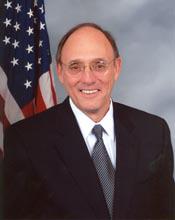 Rep. David P. Roe (R-TN)
Description
Amendment, as modified, sought to cap the authorization level in the bill for FY 2010 at the FY 2008 level of $405 million. The amendment also sought to provide such sums as may be necessary for FY 2011 through FY 2014.
Legislative Activity
Stay on top of the latest movement without scrolling through every action
House amendment offered
March 18, 2009
View full timeline
House amendment offered
March 18, 2009
House amendment not agreed to: On agreeing to the Roe (TN) amendment (A005) as modified Failed by recorded vote: 175 - 256 (Roll no. 135).
March 18, 2009 • 3:44 PM
Amendment failed in Committee of the Whole
March 18, 2009 • 3:44 PM
Roll call votes on amendments in House
March 18, 2009 • 3:44 PM
House amendment offered/reported by : Amendment (A005) offered by Mr. Roe (TN).(consideration: CR H3593-3594, H3602; text: CR H3593)
March 18, 2009 • 2:06 PM
Amendment (A005) offered by Mr. Roe (TN). (consideration: CR H3593-3594, H3602; text: CR H3593)
March 18, 2009 • 2:06 PM
Roe (TN) amendment (A005) modified by unanimous consent. The amendment is technical in nature. (text as modified: CR H3593)
March 18, 2009 • 2:06 PM
On agreeing to the Roe (TN) amendment (A005) as modified Failed by recorded vote: 175 - 256 (Roll no. 135).
March 18, 2009 • 3:44 PM
Votes
1 roll call on this amendment
Text
Offered
GENERATIONS INVIGORATING VOLUNTEERISM AND EDUCATION ACT
The SPEAKER pro tempore. Pursuant to House Resolution 250 and rule
XVIII, the Chair declares the House in the Committee of the Whole House
on the State of the Union for the consideration of the bill, H.R. 1388.
{time} 1228
In the Committee of the Whole
Accordingly, the House resolved itself into the Committee of the
Whole House on the State of the Union for the consideration of the bill
(H.R. 1388) to reauthorize and reform the national service laws, with
Mr. Pastor of Arizona in the chair.
The Clerk read the title of the bill.
The CHAIR. Pursuant to the rule, the bill is considered read the
first time.
The gentleman from California (Mr. George Miller) and the gentleman
from Pennsylvania (Mr. Platts) each will control 30 minutes.
The Chair recognizes the gentleman from California.
Mr. GEORGE MILLER of California. I yield myself 4 minutes.
Mr. Chairman, today we consider legislation that is vital to the
spirit of America and to our future. A few weeks ago, President Obama
called on Congress to quickly deliver legislation that will launch a
new era of American service.
[[Page H3544]]
Today the House will answer that call. The GIVE Act will help our
country get through these crises and recognize that service is a deeply
ingrained and deeply valued American trait.
I want to thank all my colleagues on the committee on both sides of
the aisle for their support of this legislation.
We consider this bill at a time when our Nation faces enormous
challenges. Families are losing jobs, health care, child care and other
key services. Schools and colleges are seeing their budgets evaporate.
Our public needs are growing while the resources to meet them are
disappearing.
This legislation will make Americans part of the solution in getting
our country back on track. Service is the lifeblood of this country. We
have seen this throughout our history. In times of crisis, Americans
stand up. Americans give back.
We saw it during World Wars I and II, when the Red Cross helped
soldiers and their families and returning veterans, and later relief
efforts during the Great Depression. We saw this after 9/11 when our
citizens, young and old, sprung into action to help their fellow
neighbors.
We saw it in the wake of Hurricanes Katrina and Rita when volunteers
on the ground were there before the Federal Government. They were
beacons of hope amidst serious despair. Today volunteers continue to
play a huge role in gulf coast relief efforts. We have seen it in my
State of California when communities were ravaged by floods, by
earthquakes and wildfires.
We saw it this last June in the floods that devastated homes and
businesses in southeast Iowa. Even before the storms came, volunteers
were there. To date, AmeriCorps has coordinated over 800,000 volunteer
hours in Iowa.
Volunteers play many roles. They teach in our classrooms. They clean
up our trails and our public lands. They build and weatherize homes.
They shelter the homeless and feed the hungry. That's what Americans do
for one another. That's what Americans do in the name of service.
They learn skills. They teach others those skills so they can not
only participate with Habitat for Humanity but they can develop a
career ladder in the construction trades. They pass on those skills to
others in communities so communities can help build, help build
stronger communities and better homes to be weatherized and to be
energy-efficient.
They tutor our children. They mentor students in school. They help
our community. They build our communities. They strengthen our
communities. We have seen them come from all walks of life, from young
students who want to give to their community, who want to participate,
to senior citizens who continue to take their skills and their talents
from their working life and repatriate them back to the community and
helping others, the next generation after them.
Our generation was called by President Kennedy to do this. This
generation is being called by President Obama to do this, and millions
of Americans are answering the call and preparing others to answer that
call. This is what strengthens our communities. This is what builds our
communities. This is what makes America, America.
People do it, some for a small stipend, some for an educational
benefit, some for free. They come from all different places on the
compass to help Americans in our communities.
There is a huge focus in this legislation, from middle school to
senior citizens, to tying this to a benefit for education. Young
students in middle schools can earn a small educational benefit that
they can redeem when they go to community college or to the university.
For students, for young people who work full time in AmeriCorps, they
can earn a stipend of almost $4,700, $4,800 that they can redeem to
help pay for their college education. Senior citizens too can get a
stipend and get help for education if they want to continue their
education.
It's a very important piece, and it's about American values. It's
about the value of education, it's about the value of Americans helping
one another, it's about how we treat our communities. That's what
AmeriCorps has done.
We have an organization that has been building homes in Louisiana
after Hurricane Katrina in St. Bernard Parish, and today they will
welcome their 200th family back to a home, a gift from the community,
from volunteers in America, to those families that were ravaged, that
lost everything.
That's what this bill will enable more Americans to do. That's what
this bill will do for our communities.
I reserve the balance of my time.
Mr. PLATTS. Mr. Chairman, I yield myself such time as I may consume.
Mr. Chairman, I rise in support of H.R. 1388, the Generations
Invigorating Volunteerism and Education Act, the GIVE Act, which will
strengthen and reauthorize America's national community service
programs. After 16 years, this reauthorization is certainly overdue.
In 1973, Congress passed the Domestic Volunteer Service Act, DVSA, to
foster and expand voluntary service in communities while helping
vulnerable and disadvantaged populations, such as the elderly and the
poor. DVSA also authorized the National Senior Volunteer Corps, made up
of the Foster Grandparents Program, the Senior Companion Program and
the Retired and Senior Volunteer Program.
Seventeen years later, Congress passed the National and Community
Service Act, NCSA, of 1990. NCSA aims to address unmet human,
educational, environmental and public safety needs as well as to renew
a sense of civic responsibility by encouraging citizens to participate
in national service programs. Authorized under NCSA are Learn and Serve
America, AmeriCorps State and National Grants and the National Civilian
Community Corps.
Both DVSA and NCSA are administered by the Corporation for National
and Community Service, and both laws were most recently amended in 1993
by the National and Community Service Act. While authorization of
appropriations for both of these laws expired at the end of fiscal year
2006, the programs have remained funded through annual appropriations
measures.
I am pleased to have worked with the chairman of the Education and
Labor Committee, Chairman Miller, with my subcommittee chairwoman,
Carolyn McCarthy from New York, as well as the distinguished ranking
member of the full committee, Buck McKeon of California, on crafting
the GIVE Act, and believe that the bill makes commonsense improvements
to our Nation's national service programs. Not only does it provide
increased flexibility for States but it also increases accountability
and efficiency within the administration of the programs.
H.R. 1388 strengthens existing community and national service
programs by providing year-round service opportunities for students and
the elderly alike, and further encourages volunteer involvement by
disadvantaged youth.
This legislation also expands eligibility requirements for senior-
focused programs such as Foster Grandparents and the Senior Companion
Program, ensuring that individuals with an interest in serving have
options available to them. Finally, I am pleased that the legislation
reorganizes AmeriCorps activities into several different corps focused
on national areas of need such as education, health care, clean energy
and veterans.
In recent years, natural disasters such as hurricanes in the South as
well as the wildfires in California have showcased the important
efforts of AmeriCorps and NCCC volunteers. I am proud to support this
effort to strengthen national service programs and to ensure that
participants can continue to aid disadvantaged and needy populations.
Mr. Chairman, I hope all Members will join me in supporting the GIVE
Act.
I reserve the balance of my time.
Mr. GEORGE MILLER of California. I yield myself 15 seconds.
I want to thank Congressman Platts and Congressman McKeon for all
their cooperation, and for the staff on the minority side, because
without their cooperation, I don't think we would be here today. I want
to thank them.
At this time I want to recognize for 3 minutes subcommittee Chair
Carolyn McCarthy from New York who has been an absolute driving force
on this issue of national service and thank her for all of her work.
Mrs. McCARTHY of New York. I would like to thank Chairman Miller for
his leadership and dedication to national service and for moving this
important bill towards passage.
[[Page H3545]]
Also Ranking Member McKeon, and certainly my good friend on the
Subcommittee on Healthy Families and Communities, Mr. Todd Platts, I
would like to thank them for all the work they have done, and also the
staff. This is a bill that has been put together for over a year and a
half, and they have worked tireless hours.
Last month President Obama stood in this Chamber and called on
Congress to pass legislation that would inspire a new generation of
service and volunteerism in our Nation. Serving our fellow citizens for
the sake of the service itself has become a hallmark of who we are as
Americans.
Beginning with President Roosevelt's Civilian Conservation Corps and
continuing with President Kennedy's creation of the Peace Corps and
more recently programs like AmeriCorps, our Nation has time and again
shown that Americans respond when they are needed. Mr. Chairman, I want
to say that over the process of this last year and a half, so many
different groups that have already been serving this country have come
forward with new ideas, new suggestions, and we have put that all into
this bill.
The GIVE Act is a piece of legislation, in my opinion, that is going
to change, again, the way we as Americans work together. After World
War II we had the veterans that came home and gave so much to this
country to make it what it is. In this bill, we are reaching out, from
students in middle school all the way through to our seniors and our
retirees who have done so much to improve people's lives.
We have programs in here that are going to basically help with our
energy. We have mentoring programs. We have programs for our veterans
coming home to help other veterans get accustomed to being home again
and helping them find jobs and also to see service.
I have to say, for those who have disabilities, we are bringing them
into the fold now, too, so they can work with other students that might
have disabilities and to help them.
Mr. Chairman, this is a bill that in my opinion is going to change
the communities around this country. We have always seen Americans
stand together any time there was an emergency. We saw that during,
unfortunately, Hurricane Katrina. We have seen it after 9/11. We have
seen it in so many tragedies.
This is going to encourage those that have been trained to continue
with their service, to be there, the first responders, when neighbors
need help.
Mr. Chairman, this is a bill that Republicans and Democrats alike
should support. There is no name on this on who should be part of this.
This is a bill that could actually get this country up and going. We
all know that we are facing terrible times during this economic
downturn. I happen to believe that we will come out of it fully. I
happen to believe that Americans will come together and make this a
better country. This is our opportunity.
I encourage everyone to vote for this bill.
Last month, President Obama stood in this chamber and called on
Congress to pass legislation that would inspire a new generation of
service and volunteerism in our nation.
In calling for a national service bill, President Obama has renewed
the spirit of a practice in our country that is as old as the Union
itself; the call to public service.
Americans have developed an extraordinary tradition of public service
and volunteerism.
Serving our fellow citizens for the sake of the service itself, has
become a hallmark of what it means to be an American.
Beginning with President Roosevelt's Civilian Conservation Corps and
continued with President Kennedy's creation of the Peace Corps and more
recent programs like AmeriCorps, our nation has time and again shown
that Americans respond when they are needed.
No statement has put the sentiment of Americans' willingness to serve
better than when President Kennedy told a generation to ``Ask not what
your country can do for you, but what you can do for your country.''
Public service and volunteerism provide the means through which
Americans can give back to their communities while gaining the tools
they need to achieve their own goals.
The GIVE Act will create a framework to develop national service
programs that will improve their communities and enrich the lives of
all of those who answer the call to serve.
The GIVE Act contains important provisions that will help strengthen
communities and provide real opportunities for Americans to serve in
meaningful ways.
The bill before us, which builds upon last year's GIVE act, will help
thousands of Americans who choose to serve our communities.
I am proud of the focus the bill places on providing opportunities
for disadvantaged youth, strengthening mentoring programs, increasing
service opportunities in cities and urban centers for vets and people
with disabilities.
This bill creates 175,000 new service opportunities for Americans.
Under the GIVE Act volunteer and service opportunities are made
available to people of all ages.
The bill puts an emphasis on service-learning efforts, establishing
programs to engage kids of all ages, middle school, high school and
college.
For middle school and high school students, there are opportunities
through the Summer of Service service-learning program to earn an award
to pay toward college expenses and serve in the summer months when
school is out of session. Priority is given to programs enrolling
middle school students.
The bill makes high school students part of the solution to
challenges faced in their communities by establishing Youth Engagement
Zones. These programs will help bridge partnerships between community
based organizations and schools in high-need, low-income communities to
engage high school students and out-of-school youth in service learning
to address specific challenges their communities face.
I am proud that this bill contains an important focus on
disadvantaged youth.
By providing the right types of outlets, young people coming from
difficult circumstances will have a chance to lift themselves up
through service.
In addition to strengthened efforts in our middle and high schools,
the bill also recognizes outstanding institutions of higher education
which engage in service learning through the Campuses of Service.
The bill will help students by linking the full-time education awards
to the maximum authorized Pell Grant award amount for the first time,
in order to keep up with rising college costs.
It will also engage more retirees to volunteer, particularly those
who have backgrounds in the science, law enforcement and military
professions to help in afterschool programs.
This will give thousands of older Americans the opportunity to share
their knowledge and skills for the benefit of their communities while
offering young people guidance and support.
We establish Silver Scholarships and Encore Fellowships to further
expand service opportunities for older Americans.
Encore Fellows are individuals, age 55 or older, that want to
transition into a second career in the public or nonprofit sector and
who agree to be placed with a nonprofit organization to carry out
service projects in specified areas of national need.
Silver Scholarships give individuals age fifty five or older who
complete five hundred hours of service in a year an education award of
one thousand dollars.
To focus on addressing the nation's most pressing needs, the GIVE Act
establishes a Clean Energy Corps to encourage energy conservation in
low income communities, an Education Corps to help improve graduation
rates, a Healthy Futures Corps to increase access to healthcare, and a
Veterans Corps that will help provide services to those brave Americans
that have already served our nation.
What the GIVE Act will do is to build a national infrastructure for
service and volunteerism and makes an historic investment in way our
service programs are administered.
Just as we did in the last Congress the bill expands the focus of the
National Civilian Community CORE (NCCC) to include disaster relief.
It was NCCC members who answered the call when disasters such as
Hurricane Katrina occurred and this bill recognizes how important it is
to have trained folks on the ground during a disaster by allowing
members engaged in disaster relief to extend their service term if
necessary.
The bill focuses on building our national service participation while
providing much needed streamlining to reduce administrative burdens.
One of the concerns I have heard during this process was that
currently there is not enough consultation between the Corporation,
States and local government.
This can result in local program needs not being addressed when
national service plans are being developed.
This bill requires states to ensure outreach to local government such
as cities and counties when preparing national service plans.
Better outreach will result in being able to target program funds to
where the local folks think they need to go.
I am also pleased that this bill includes an investment in mentoring
partnerships.
I would like to thank Rep. Susan Davis for her hard work on this
issue.
[[Page H3546]]
Youth mentoring programs can have a profound effect on efforts to
increase both the quality and quantity of mentoring opportunities
available to America's young people.
In my home district, we have the Mentoring Partnership of Long Island
and they do terrific work getting students connected with successful
mentoring programs in Nassau County.
Finally, the bill includes a requirement that the Corporation conduct
a nationwide ``Call to Service'' campaign to encourage all of our
nation's citizens to engage in service.
I worked with my colleague from New York, Rep. Peter King, on this
provision.
As part of this campaign, Americans will be urged to observe
September 11th as a National Day of Service and Remembrance.
It is important that Congress work together to continue to build on
America's traditions of public service and volunteerism.
The GIVE Act creates a path through which we can help ourselves by
helping others.
We need to work to create more volunteer and service opportunities by
finding more ways for more Americans to become stewards of public
service--and the GIVE Act does exactly that.
We have worked for years to develop a comprehensive service program
in this nation.
We have the opportunity to do something truly significant with this
bill, which is to make a cultural change in the way we relate to our
community and support each others needs.
As a young woman I was inspired by President Kennedy's call to public
service.
Today, a new generation is being called on by this Congress and
President Obama to contribute to the strength of our nation by engaging
in public service and volunteerism.
The GIVE Act is a once in a generation bill that will change the
fabric of our nation for generations to come and I call on all of my
colleagues to enthusiastically support this groundbreaking legislation.
Mr. PLATTS. Mr. Chairman, I yield such time as he may consume to the
distinguished ranking member of the full committee, Mr. McKeon from
California.
Mr. McKEON. I thank the gentleman for yielding, and I rise in strong
support of H.R. 1388.
Neighbors helping neighbors. This happens countless times every day
across America. A college student teaching English to immigrants, a Boy
Scout troop collecting canned food for the hungry, families taking in
neighbors who have lost their homes in floods or tornado or fire.
Mr. Chairman, the bill before us today, aptly named the GIVE Act,
encourages the selfless actions I just described by updating decades-
old national service programs to make them even more effective in the
21st century.
H.R. 1388 allows for year-round service learning opportunities. It
also offers a new emphasis on emergency and disaster relief and
recovery. Finally, it offers increased opportunities for baby boomers,
a generation known for its social activism.
But I would like to inform my colleagues of one fact that has not
been given much attention. This bill includes powerful new safeguards
to protect taxpayers by making the service programs more accountable
and performance based. The bill also makes the programs it funds more
competitive to ensure efficiency and effectiveness. In addition to H.R.
1388, individuals can receive Federal funding to serve at organizations
of their choosing.
Of course, to prevent fraud, these organizations will be closely
examined. But after such screening, part of the funds the bill provides
will be dedicated to those people who believe they can make the
greatest difference at small organizations.
And yet this bill also addresses national needs. For example, this
proposal adds a new Veterans Corps, giving people who served in our
military a chance to serve their Nation once more and a chance for our
Nation to serve them. Through the Veterans Corps, veterans and others
can help the families of servicemembers through their hardships and aid
fellow veterans as they readjust to civilian life.
Finally, this bill makes disaster assistance a priority. It allows
the Corporation for National and Community Service to develop a system
to quickly mobilize former participants, if they are needed. It also
allows people to extend their service if their term has run out in the
middle of a disaster.
I would like to thank Chairman Miller, Subcommittee Chairman
McCarthy, Ranking Member Platts and our staff for such an excellent job
to work together to craft this bill.
This is the way legislation should be passed, and I think it has been
an example, and I wish all bills were passed in this manner.
You know, we have been hearing a lot in the last couple of days about
AIG and about the bonuses that were made to leaders of that company, a
company that would not even be in existence if it were not for the
Federal Government and the taxpayers that bailed them out.
The stimulus package that was passed was the last attempt that would
have been able to stop those bonuses. There was an amendment in there,
and I know the Senator that's credited for that amendment, he says he
didn't know about it, or didn't have part in it. That could have been
taken care of if we had what was promised to us, 48 hours at least, to
review that bill, or if we had worked together in a bipartisan way to
craft that bill.
{time} 1245
I'm sorry that that did not happen. Because of that, we have found
now a terrible tragedy has taken place, and I hope that we will be able
to correct it. But it could have been avoided if we had just simply
worked, as we did on this bill, in a bipartisan way to see that that
never happened.
Mr. Chair, I support this bill because Americans who give their time,
talent, and compassion to others clearly can help our Nation. And we,
as their representatives, should help them.
Thank you. I ask all of our colleagues to support this bill.
Mr. GEORGE MILLER of California. I yield 1\1/2\ minutes to a
gentleman who's been key in this legislation, given his background and
history in energy conservation and efficiencies and weatherization, the
gentleman from New York (Mr. Tonko).
Mr. TONKO. Thank you, Mr. Chairman. The GIVE Act before us responds
to President Obama's call to service for our Nation's volunteers to
help move our country forward by launching a new era of service during
these challenging economic times.
Certainly, there are many new corps established in this legislation;
amongst them, Clean Energy as a corps. Those members will be able to
work in their given communities providing valuable services that range
from retrofitting housing for low-income households to improving their
energy efficiency outcomes; to building energy-efficient housing in
low-income communities; conducting energy audits for low-income
households; and to installing renewable energy technologies, amongst
other things.
This energy improvement will be an empowerment to the given
communities. I am fortunate to have thriving programs in my Capital
District region of New York State. Amongst them are the Self Advocacy
Association of New York, conducted through the auspices of an
organization in Schenectady. They deal with those of the developmental
disability community that enable them to provide for self-advocacy for
people with disabilities. Also, the Capital District RSVP, which places
retired people in projects that address the needs of their community,
where we have over 1,200 volunteers providing over 250,000 hours of
service.
Mr. Chair, this is an exciting bit of legislation. It allows us to
utilize volunteer power that has been a tradition with this Nation. It
dispels loneliness and despair, it builds a sense of dignity and hope,
and certainly, as they do that, they will deliver services, very
valuable services, to the doorstep of their communities.
Let it be said that volunteers are the muscle of America.
Mr. PLATTS. I yield such time as he may consume to the ranking member
of the Ways and Means Subcommittee on Social Security, the
distinguished gentleman from Texas (Mr. Sam Johnson).
Mr. SAM JOHNSON of Texas. Today, we're debating the merits of paying
volunteers. Experts estimate this bill will cost the government about
$1 billion for just 1 year.
I've got a better idea. Let's redirect just a small portion of that
money to the real volunteers--those who voluntarily serve in the Armed
Forces. They volunteer to wear the uniform. There is no draft. Some
volunteer their limbs, their lives. Surely, these folks deserve special
treatment too. Not so, says the White House.
[[Page H3547]]
The White House has floated a plan to save the government $540
million. The White House will cut costs by forcing wounded warriors to
pay for their own treatment. Talk about the cost of war!
As a combat-wounded fighter pilot who served in two wars, I find the
White House idea of charging wounded war heroes for care absurd,
abhorrent, and unconscionable.
It's sad and shameful that the administration is willing to force our
combat wounded to foot the bill for their own recovery and rehab.
I will fight like mad to stop this rash and reckless proposal and
back a new resolution blasting the White House plan. I urge every
American who loves freedom and supports the troops, why don't you just
call the White House at 202-456-1414.
Tell the President those who voluntarily choose the Armed Forces and
voluntarily serve in harm's way, voluntarily leave their loved ones,
and voluntarily endure enemy fire, are the absolute last people we need
to hit up to balance any budget.
Again, that number is 202-456-1414. Tell the White House that forcing
veterans to pay for the cost of war out of pocket is just plain wrong.
Our troops fight, they lose legs, they lose arms. Support the troops.
Mr. GEORGE MILLER of California. Mr. Chairman, I yield myself 30
seconds.
Mr. Chairman, one of the very exciting parts of this legislation, as
pointed out by Mr. McKeon, is the full integration of our veterans into
national service.
Today, earlier, we heard from Captain Scott Quilty, who is a
decorated infantry captain and Army major retired who lost both his
legs and one of his arms in Iraq. Scott has come back to assume the
management responsibilities for Survivor Corps, a U.S.-based program
that serves the needs of servicemembers and veterans returning from
Iraq and Afghanistan. And Survivor Corps spoke in strong support of
this legislation, recognizing that we now are extending full
partnership to the veterans of this country, thanking them for their
services, and providing services to them as they return home.
I yield 1\1/2\ minutes to a leader in service, the gentleman from
Georgia (Mr. Lewis).
Mr. LEWIS of Georgia. Mr. Chairman, I want to thank Chairman Miller,
my good friend, for yielding time. Mr. Chairman, I rise in strong
support of H.R. 1388, the GIVE Act. People are hurting. Americans are
having to choose between paying their mortgages and putting food on the
table. In these tough times, it's more important than ever that we, as
American citizens, yield back to those in need.
National service becomes ever more important when people are hurting,
when people are in need. We need to do more to show our appreciation to
people who get out there, they get in the way, they stand up, they
speak up, they speak out. They work hard to get their hands dirty
helping their neighbor.
The GIVE Act is a great step forward for national service. However,
we also need to make the AmeriCorps Education Award, in my estimation,
tax exempt. We need to do more to encourage and reward Americans who
answer the call of national service. It is a call that we responded to
in 1961 when President Kennedy issued a call for the Peace Corps. And
it is a call now in 2009 when President Barack Obama is urging national
service.
I urge all of my colleagues to support national service and vote
``yes'' on this important piece of legislation.
Mr. PLATTS. I reserve the balance of my time.
Mr. GEORGE MILLER of California. I yield 1\1/2\ minutes to a member
of the committee, a strong supporter of the bill, the gentleman from
the Northern Mariana Islands (Mr. Sablan).
Mr. SABLAN. Thank you, Mr. Chairman. H.R. 1388 answers President
Obama's call to service and helps Americans invest in their communities
by greatly expanding potential service opportunities and increasing
educational and other benefits.
Provisions like those in the GIVE Act are especially effective in the
Northern Mariana Islands. They allow our young people to help their
communities while also doing something positive for themselves.
In these areas of high unemployment, community service programs like
those in the GIVE Act allow participants to receive benefits, including
health care, earn money for college, receive important career and
technical training, make connections with potential employers, and
develop confidence, self-esteem, and leadership skills.
Not just that, but participants are also able to give back to those
around them, providing support for the people and communities that are
suffering during these tough economic times. This is what America is
all about.
We hope that this program, along with the President's call to action,
strengthens our citizens' pride in themselves, their communities, and
their Nation, and allows them to feel like they are truly a part of the
American Dream.
For these reasons, I urge my colleagues to support H.R. 1388, the
GIVE Act.
Mr. PLATTS. Mr. Chairman, I continue to reserve the balance of my
time.
Mr. GEORGE MILLER of California. I yield 1\1/2\ minutes to the
gentleman from Maryland (Mr. Sarbanes).
Mr. SARBANES. Chairman Miller, Americans everywhere should thank you
and they should thank Congresswoman McCarthy, and all of those who are
part of this GIVE Act and made it happen, because it stands for a very
simple and elegant proposition and purpose, and that is that if
Americans want to serve, they ought to be given that opportunity.
The GIVE Act creates many different dimensions of service that
Americans can pursue. I'm very proud to have worked closely with
Congressman Phil Hare in introducing the Vet Corps component of this
service corps. I want to thank Chairman Miller for working to include
that in the final version of the bill.
We owe so much to our veterans. We can never fully repay the debt
that we owe them, but we can try. The way we can try is to create a
service corps program like Vet Corps that is going to make sure that
when veterans return from their service, we have an opportunity to
serve them and that they in turn can serve the broader communities and
serve other military families and other veterans.
The statistics are alarming. The unemployment rate for returning
veterans is as high as 18 percent. We can give them the training and
the opportunity to become engaged and re-engaged in our communities
through service corps programs like Vet Corps. I'm so very pleased that
that is part of this opportunity here.
I'd also like to say before I yield back that I enjoyed working with
Congressman Jay Inslee on the Clean Energy Corps, which is going to
provide opportunities for young people to get involved in improving
energy efficiency and the green revolution.
Mr. PLATTS. I continue to reserve the balance of my time.
Mr. GEORGE MILLER of California. Mr. Chairman, I yield 1\1/2\ minutes
for the purpose of entering into a colloquy with the gentleman from
Florida (Mr. Grayson.)
Mr. GRAYSON. Mr. Chair, I'd like to engage in a colloquy with the
chairman.
Mr. Chairman, I want to thank you for working with me on increasing
the number of volunteers trained and available for immediate deployment
to States with high vulnerability to hurricanes and various natural
disasters, like my State of Florida.
As you know, the National Civilian Community Corps is a full-time
team-based residential program for men and women aged 18 to 24 that
helps meet critical community needs. The mission of the NCCC is to
strengthen communities and to develop leaders through direct, team-
based national and community service.
Drawn from the successful models of the Civilian Conservation Corps
in the 1930s and the U.S. military, the NCCC is built on the belief
that civic responsibility is an inherent duty of all citizens. These
members have been instrumental in assisting communities with relief and
recovery needs during times of natural disasters.
According to the Corporation for National and Community Service, more
than 2,900 NCCC members have served on disaster-related projects in the
Gulf Coast region since September 2005, in
[[Page H3548]]
coordination with such groups as the Red Cross, Salvation Army, the
Army Corps of Engineers, and various State service commissions.
In all, NCCC members have contributed more than 1.4 million hours of
service and have completed nearly 13,000 damage assessments,
refurbished more than 6,500 homes, put tarps on thousands of homes,
served 1.3 million meals, and distributed more than 2,200 tons of food.
Given the critical needs that this program provides, I would like to
work with you on exploring potential options to establish an NCCC
campus in Florida.
Mr. GEORGE MILLER of California. I yield myself 15 seconds to respond
to the gentleman and say that I agree that many of our communities'
needs, especially in times of natural disaster, are being met through
the hard work of the NCCC members, and I look forward to working with
you in exploring this issue and certainly recognizing the needs of
those States that are hit repeatedly by natural disasters, representing
one of those States, but knowing what has taken place in Florida and
others with hurricanes and storms that we are now experiencing. And I
look forward to working with him as this bill progresses.
Mr. PLATTS. Mr. Chairman, I continue to reserve the balance of my
time.
Mr. GEORGE MILLER of California. I yield 2 minutes to the gentlewoman
from Connecticut (Ms. DeLauro).
{time} 1300
Ms. DeLAURO. Mr. Chairman, I want to say thank you to Chairman Miller
for his commitment to this effort.
For generations, during times of great crisis, Americans have stepped
up and served their country and their communities. Today, with soaring
unemployment, rising health care costs, and a financial system turned
upside down, we face one of those moments.
When the National Community Service Act was enacted in 1990, we saw
powerful new opportunities to inspire civic engagement to transform our
communities. And today, the Generations Invigorating Volunteerism and
Education Act, yes, the GIVE Act, renews and enhances these
opportunities by providing Americans of all ages, from middle schoolers
to baby boomers, the chance to reach their full potential as engaged
and active members of their community.
The Summer of Service initiative is geared toward middle school
students and provides a new opening to reach many young people who we
know will benefit from the opportunity to spend a summer in service in
their communities, a right of passage, as students make the transition
from middle to high school. Through a competitive grant program, States
and localities can offer students an opportunity to participate in a
structured community service program, earning educational awards of up
to $500 upon completing 100 hours of service.
Research shows that, among those students who participate in in-
service learning, teens from disadvantaged communities who serve hold
more positive civic attitudes. Students who engage in volunteering are
more likely to be successful at school and avoid risky behaviors, such
as drugs, alcohol, and crime.
This legislation also provides a long-awaited increase to the Segal
AmericaCorps Education Award, tying it to Pell grants to ensure that it
stays in step with rising tuition rates. It will make it easier for
older Americans to give back as well, to share their experience and
expertise through Encore Fellowships and Silver Scholarships.
This is a transformational moment in our Nation's history. So today,
with these efforts we hope to mark a new beginning, ready to meet that
responsibility again to the greater good and to our shared community. I
urge my colleagues to vote ``yes.''
Mr. PLATTS. Mr. Chairman, I yield such time as he may consume to the
distinguished ranking member of the Homeland Security Subcommittee on
Border and Port Security, Mr. Souder from Indiana.
Mr. SOUDER. I thank my friend from Pennsylvania, and Chairman Miller.
I have some concerns about this bill. One of the challenges as a
conservative Republican in a Congress dominated by the Democrats in the
House and Senate and the President is that it is likely to be that, for
most bills, we are likely to have some concerns. We lost the election,
we are not writing the bills, and so therefore we are likely to have
some concerns.
When the Republicans last wrote this bill, for example, we had a
clause in restricting sex education money usage. It is not likely to be
a use of this bill, but as a conservative I sometimes have justifiable
paranoia about how liberals may use this money. At the same time, we
are not the majority, we don't get to write every clause in it, and, it
is not necessarily a likely use.
I also have concerns about the amount of money that the Federal
Government is spending. There are going to be bills in this cycle that
many Republicans who might have supported them in the past will have
reservations on. We have run up in the first 2 months more additions to
the deficit than we had in the first 5 years of the last
administration. At some point the question is, how are we going to fund
these Treasury bills? Are interest rates going to go up and drive out
the private market? How is a district like is mine that is hammered,
how is Elkhart County going to recover? So I have deep concerns.
Now, I understand this is an authorizing bill, not an appropriations
bill. Authorizing bills merely set the cap. That leads, however, to a
lot of pressure internally of, like we saw in No Child Left Behind, you
are only funding X amount of a bill. No, that was a cap; that wasn't a
guarantee that the funding was going to go through. So when we go
through authorizing bills, does this in fact push the spending, or not?
But authorizing bills fundamentally guide the programs. And if we as
Republicans say we are never going to participate because we are not in
the majority and these are authorizing bills that guide the guidelines,
are we going to give up both the actual spending and not participating
in the authorizing process?
There are fundamental differences inside any kind of coalition of
people on what the role of government should be. If you are a pure
libertarian, it is unlikely that you like any of these kind of
programs. Volunteers are volunteers; government employees are
government employees. But if you have, as I have in the past, supported
these different programs, some more than others, but basically believe
that everything from the seniors' different programs to domestic
volunteer groups are, as a whole, a benefit to the community, then
trying to shape that as best we can and to participate I think is
helpful.
In this particular bill, I want to thank the chairman for two
particular amendments that we have worked with, with Congressman
Grijalva who heads the National Parks Committee in the Resources
Committee, and Congressman Rush Holt who has been a big supporter of
the national parks, and I, who along with Brian Baird cochair the
National Parks Caucus, we have worked from the Leave No Child Inside
bill to this bill to try to include parks, and working with others to
include not only the national parks, but other types of parks,
particularly with Mr. Sarbanes of Maryland in the previous bill.
But inside the Energy Corps, this will allow volunteers to work with
our National Parks Service to help address backlog and maintenance
issues; that whenever, particularly when you look at the type of
economy we have right now, and we are coming up on the 100th birthday
of the National Park Service, during the Great Depression quite frankly
was one of the greatest moves toward American architecture. What we
think of as a national park actually came from many of the summer jobs
programs and WPA and CCC.
While this is not the same, this is a blended program, it is
important that as we see whatever types of legislation goes through,
even if I as a Republican have some concerns about the scope of
government and the cost, I still feel that it is important that we
participate in that. And one of the best uses of this is the National
Park Service, which everybody benefits from, and it is an opportunity
to try to address some of the backlog issues there.
There is a second part that was a program developed, Serve America,
and I want to thank in this case not only
[[Page H3549]]
Chairman Miller and Ranking Member Platts and our Ranking Member Buck
McKeon, but Senator Hatch, in working with a clause and refining it
from the first bill where we had it a larger percentage. But basically
it says that one-third of the Serve America grants can go to small
institutions. As somebody who has been very passionate, who believes
that many of these programs which are very small, don't have good grant
writers, often don't have the ability to get as much match,
particularly when you get into urban centers or in some of the rural
areas, particularly when you get into a lot of the African American and
Hispanic church groups or volunteer groups. They aren't United Way, so
how can they partake of this? This says that up to one-third of this
can be used for organizations with 10 full-time and up to 10 part-time,
or 20 total, employees. And then they get up to one-third of the Serve
America program, and they only have to have a smaller match of roughly
$1,000. This will enable lots of these small neighborhood groups to be
eligible.
Now, Senator Hatch correctly pointed out, he and his staff, that
maybe there won't be enough of these smaller groups. So it doesn't
guarantee a third of this, but it says that up to one-third can be used
this way. I think this is a diversification of this program that it is
an invaluable addition, and will empower lots of people to be able to
do this in this community.
So while I have some reservations, I think this is basically a good
bill. It is a bill that we worked on together cooperatively, and I
appreciate the opportunity to do that even in a Congress that is marked
by partisanship. But it is a way to show the American people that in
fact we do work together on most pieces of legislation that come
through here. There are differences between our parties, but we try to
work in a bipartisan way when we can.
Mr. GEORGE MILLER of California. I yield to the gentleman from Texas
(Mr. Al Green) for 1\1/2\ minutes.
Mr. AL GREEN of Texas. Mr. Chairman, Gandhi reminds us that we should
be the change we wish to see.
I want to thank the President, President Obama, for sounding the
clarion call for volunteerism such that we can see this change that we
all desire to have in our country. I would like to thank Chairman
Miller and Ranking Member McKeon for answering the clarion call from
the President with this bill, H.R. 1388.
This is a good piece of legislation. And, if I may be so bold as to
say so, we are doing, Mr. Chairman, God's work today. This is what we
are called upon to do, to be our brother's keeper, and we can do so by
utilizing this army of volunteers to go out and make the change we wish
to see in society.
Mr. Chairman, I especially thank you for including language in this
legislation that will allow volunteers to help in the area of housing.
You know and we know that we have an affordable housing crisis. We have
lost more than 600,000 units in affordable housing since the mid-1990s
that are subsidized. It is time for us to restock our affordable
housing. These volunteers will help us to do so.
I will close with this. I thank you and all of the Members who have
supported this legislation, and I trust that Gandhi would be proud of
us today because we are affording people to transform neighborhoods
into brotherhoods, and to make sure that we can see the change in our
society and bring it about by virtue of our own hands and our creation.
The CHAIR. The time of the gentleman has expired.
Mr. GEORGE MILLER of California. I yield the gentleman 10 additional
seconds, and I want to thank the gentleman for bringing the housing
language that is based upon his expertise in this field, and along with
Maxine Waters, thank you so very much. We are happy to include it.
Mr. AL GREEN of Texas. I thank you again, Mr. Chairman, as well as
Chairperson Waters and Chairman Frank.
Mr. PLATTS. I yield 3 minutes to the distinguished gentleman from
Louisiana (Mr. Cassidy).
Mr. CASSIDY. Mr. Chairman, I wish to engage the chairman of Education
and Labor in a colloquy.
Mr. Chairman, Teach for America has been in the AmericaCorps program
since 1994 and is the Nation's largest professional service corps. This
program recruits top college graduates of all backgrounds and career
interests to commit to teach for at least 2 years in our Nation's most
underserved classrooms.
To date, 20,000 Teach for America corps members have enriched the
lives of more than 3 million low-income students in our Nation's lowest
performing schools. While only the one in ten Teach for America corps
members initially planned on a career in education, two-thirds remain
in the field in some capacity. This only goes to further demonstrate
the life-changing impact this kind of service can have on an
individual.
Teach for America is also experiencing remarkable growth as more and
more Americans look to give back to their communities. Applications are
up 40 percent this year, with 35,000 people applying to serve through
Teach for America alone.
Given this growth and its potential to expand and meet the needs of
underserved students across the Nation, is it correct that, under this
bill, Teach for America will continue to be eligible under the
professional corps' description of the model for funding under the
Education Corps or any of the other newly created corps programs under
section 122?
I yield to the chairman of the Education and Labor Committee, and ask
if this understanding is correct.
Mr. GEORGE MILLER of California. I thank the gentleman for yielding
and for raising this issue. Thank you so much for bringing this to our
attention.
I am proud to be a long-time supporter of Teach for America, and I am
pleased to say that they will continue to be eligible to participate in
AmeriCorps through the newly-created National Service Corps exactly as
you have described.
Teach for America has demonstrated measurable effectiveness in the
classroom and is exactly the type of measurable success that we are
looking to scale up. Thank you again, Mr. Cassidy, for your support of
this program and for raising this issue and for the support of the GIVE
Act.
Mr. CASSIDY. I thank the chairman.
Mr. GEORGE MILLER of California. I yield to the gentlewoman from
Pennsylvania (Mrs. Dahlkemper) for 1\1/2\ minutes.
Mrs. DAHLKEMPER. Mr. Chairman, service has always been a deeply
rooted American value, from service to our country during times of war
to service to our neighborhood in times of need. I believe that a
commitment to service is one of the defining characteristics of being
an American.
Service has also played an important role for my family and is a
value I have tried to impart to my five children. I am so proud of my
son, Nathan, who spent his time this spring volunteering in a homeless
shelter in New York City. And I love our family tradition of adopting a
family at the holiday season.
I have spent my life doing community service, founding and operating
a Lake Erie arboretum for over a decade, and serving on the board of
the Erie Community Foundation. Mr. Chairman, it is because of this
background and service that I rise today in strong support of the GIVE
Act.
This legislation will provide hundreds of thousands of Americans the
opportunity to invest through service in our Nation's recovery. And it
will not have a bigger impact anywhere than in Pennsylvania's Third
District. One county in my district, Erie County, has nearly 250
different nonprofit organizations that depend on volunteers to support
their work, work that improves the quality of life for the region.
Mr. Chairman, the economic recession has been especially difficult to
my constituents. With lines at our food banks, and our shelters
literally full, these groups take care of tens of thousands of adults
and children who live in poverty.
{time} 1315
Last year, the Erie County homeless shelters served 1,500 homeless
individuals, 200 of which were children.
With the recession deepening, there is no better time to support
community service and volunteerism to help our country get through this
economic crisis, restore confidence and prepare our Nation for the
future.
[[Page H3550]]
Therefore, I urge my colleagues to join me in supporting the GIVE
Act.
Mr. PLATTS. Mr. Chairman, I continue to reserve my time.
Mr. GEORGE MILLER of California. I yield 1\1/2\ minutes to the
gentleman from Ohio (Mr. Driehaus).
Mr. DRIEHAUS. Mr. Chairman, I stand today on the floor to also give
my support to this important piece of legislation. Mr. Chairman, I am
one of four Members of this House who is a former Peace Corps
volunteer. I had the privilege of serving this country in the United
States Peace Corps for almost 2\1/2\ years in West Africa. I can speak
on behalf of the returning volunteers in this body and the returning
volunteers across this country as to the importance of service, both at
home and abroad.
This is an important step in the right direction. As we ask so many
sons and daughters of this country to serve in our military in Iraq and
Afghanistan, I think it is critically important that we open up doors
of opportunity for young men and women and older men and women across
this country to also serve right here at home. Service is critically
important to show that they believe in this country, to show that they
believe in their community and that they are able to give back. This is
an important step in the right direction.
I have had the privilege in Cincinnati of working with the Public
Allies Program, an AmeriCorps program which has contributed to
tremendous work for nonprofit organizations across the region. This
expands that opportunity for so many more people.
Again I applaud the President for his efforts. I applaud the First
Lady for shining the light on service in the United States. I want to
thank the chairman and the committee for their tremendous work.
Mr. PLATTS. Mr. Chairman, I continue to reserve.
Mr. GEORGE MILLER of California. I yield now 1 minute to the
gentleman from Maryland, the leader, Mr. Hoyer.
Mr. HOYER. I thank the chairman for yielding. I thank Mr. Platts for
his leadership on this bill, and I thank Buck McKeon, the ranking
Republican who leads this committee for his party. I want to say this
is a perfect example of when we can work in a bipartisan way, we do
work in a bipartisan way.
Mr. Chairman, in my view what has angered so many people about this
recession is the perception that its causes are not simply material,
not simply financial, but in many ways moral. Ask most Americans what
got us to this point, and I doubt the first words they will reach for
will be ``credit default swaps'' or ``troubled assets'' or
``overleveraging.'' They will turn, I think, to older ideas--greed,
recklessness, self-dealing and profit-taking. In sum, they will think
there is a moral deficiency.
It follows that our economy and our recovery will not be whole if it
only encompasses renewed balance sheets or consumer demand. What is
also required is a renewed public spirit. Government cannot create that
spirit. We would be fools to think it could. But it can recognize it,
applaud it and give avenues for its manifestation. We can coordinate it
and give it productive outlets. That is exactly what this bill does.
I want to congratulate the President of the United States, Barack
Obama, for his leadership, and Michelle Obama for working so avidly on
behalf of public service and a renewed spirit of giving to our country.
Our President has not just talked about that, he has lived a life of
service. I said with Chairman Miller at a press conference just a few
hours ago that Barack Obama graduated from one of the best law schools
in this country. He was editor of the Law Review. He had one of the
keenest minds in his class, indeed in the country. He could have made
literally millions of dollars practicing law representing the most
powerful interests of our country. He choose not to do that. He went to
Chicago, his hometown, and he spent his time reaching out to those who
needed help, those who didn't have power and those who did not have
economic might, to assist them in making their lives better and their
communities better.
That is what this bill does. So the principal spokesperson for this
bill, President Obama, has lived it, not just talked it. We are blessed
with a young generation remarkably committed to public service. This
bill gives them the outlets and the opportunities to contribute to our
recovery.
Mr. Chairman, I would also say there are a whole lot of seniors who
have retired from their careers but don't want to retire from life,
don't want to retire from their communities and don't want to retire
from continuing to give service to their fellow men and women. This
bill strengthens the bond between service and education by helping
volunteers pay for college. It focuses volunteer efforts on our most
pressing needs, including rebuilding our infrastructure and retooling
our economy for clean energy and expands opportunity for volunteers of
all ages, from middle schoolers to baby boomers.
In sum, this bill represents the greatest expansion in national
service since the days of John F. Kennedy. He asked us to not ask what
the country could do for us, but what we could do for our country. In
fact, that is what our faiths ask us as well, for all of our faiths
have a central theme: love God and love God's children as well. And we
love God's children by giving them a hand up and helping to serve with
them in making their lives better.
These new ranks of volunteers will be making tangible contributions
that benefit all of us. According to House testimony from Time
Magazines's managing editor, Richard Stengel, and I quote, 61 million
Americans volunteered in their communities in 2007, giving more than 8
billion hours--that is billion--8 billion hours of community service
worth more than $158 billion to America's communities.
In my community, we have volunteer fire companies in the southern
part of my district. The cost of providing fire service in St. Mary's,
Calvert and Charles Counties would be a lot higher if it weren't for
the literally tens of thousands of hours volunteered by citizens who
care about their communities and care about keeping us safe when fire
occurs.
He continued:
``A cost-benefit analysis of AmeriCorps programs has concluded that
every $1 that we invest in AmeriCorps results in $1.50 to $3.90 of
direct measurable benefits to the community.''
Wouldn't it be wonderful if all of our businesses had been as
successful? We wouldn't be in the pickle we are in.
Those are the material rewards of this bill. But, Mr. Chairman, I
think we all know that the rewards we can't measure are far greater.
They are the virtues of community and self-sacrifice, of responsibility
and teamwork, of a better country and a better community. John Lewis
talks about the beloved community. This bill seeks to serve the beloved
community.
I urge its adoption. I thank Mr. Miller for his leadership, I thank
the Speaker for her pressing us to consider this early, and I thank Mr.
Platts and Mr. McKeon for their leadership and work on this bill as
well.
Mr. PLATTS. Mr. Chairman, I continue to reserve my time.
Mr. GEORGE MILLER of California. Mr. Chairman, I yield myself 1
minute.
Questions have been raised about the intent of section 1705 giving
the Chief Executive Officer authority to delegate specific programmatic
authority to the States. In particular, strong concerns have been
raised that corporation officials would use this authority to eliminate
the State offices of the corporation and adversely impact the operation
of VISTA and the Senior Corps.
The committee intends that the Chief Executive Officer will use this
authority judiciously to improve the operation of all of the
corporation's programs by using a consultative process that includes
all of the stakeholders in the affected programs. The committee expects
the corporation to continue the staff from State offices at an
operational level that is at least equal to the current one.
I yield 1\1/2\ minutes to the gentleman from Texas (Mr. Cuellar).
Mr. CUELLAR. I thank Chairman Miller for the work that he has done on
this bill.
I rise to support the manager's amendment which has language from an
amendment that I have submitted. This language goes a long way to
support the poor communities in different parts of the Nation,
especially around the southern border.
In particular, I'm talking about adding the definition of colonias as
part of
[[Page H3551]]
the definition of ``severely economically distressed areas'' that under
this bill receive special financial consideration in the operation of
national volunteer services. Colonias are found in Texas, New Mexico,
Arizona and California along the border. These colonias are areas that
have no water, no sewage or paving. It is almost Third World
conditions, Mr. Chairman and Members of Congress, where we have to do
something to help these people. Just in my area, for example, it is
estimated in the State of Texas that we have over 400,000 Texans that
live along the border in colonias.
This help will go a long way, and this is why the manager's amendment
that includes my language gives critical financial assistance to the
areas that contain colonias to facilitate the operation in support of
national service programs that are working to solve many of these
problems in colonias.
With this amendment, we are one step closer to helping colonias to
have the basic living conditions that all Americans deserve. Mr.
Chairman, I want to thank you for allowing this language to be added
dealing with colonias.
I urge all colleagues to vote ``yes.''
Mr. PLATTS. Mr. Chairman, I continue to reserve.
Mr. ANDREWS. Mr. Chairman, I ask unanimous consent to control the
time for the chairman of the committee.
The CHAIR. Is there objection to the request of the gentleman from
New Jersey?
There was no objection.
Mr. ANDREWS. Mr. Chairman, may I inquire as to how much time we have
left in general debate.
The CHAIR. The gentleman has 5 minutes. The gentleman from
Pennsylvania has 12\1/2\ minutes.
The Chair recognizes the gentleman from New Jersey.
Mr. ANDREWS. Mr. Chairman, I yield myself 3 minutes.
Mr. Chairman, this bill answers the question, whose skills does
America need? Every day in our districts and in our travels, we see
heartrending examples of the needs of our country. There are men and
women who are struggling to find a job who cannot read and write. They
need a literacy coach. There are elderly people who don't see anyone
come visit with them at all during the course of a week who may be sick
or hungry or certainly are very lonely. They need geriatric care
workers to come in, friends to come in and be with them. There are
children who today after school will face a choice between the ravages
of drugs and alcohol, the irresponsibility of bad personal behavior,
the violence of gang warfare, and really nothing else. They need an
afterschool program. They need a loving and supportive family or
religious institution to help them out.
Everywhere we look in this country, there are examples of great,
unmet needs. Now, many of these needs require money to meet. And this
President has proposed a budget, and this Congress just enacted, and
the President signed, a stimulus bill that provides great new resources
toward those needs. But money will never be enough, because in addition
to financial resources, we also need the spirit, enthusiasm and
integrity of our people.
The answer to the question, whose skills does America need, is
America needs everyone's skills, everyone's skills to move forward as a
country. This legislation is supported by both the Republican and
Democratic Parties and is supported by the President. We are very
hopeful it will be supported by the other body in short order. This
legislation provides powerful new ways for people to offer those skills
that America needs. It will be open to very young Americans who want to
gain the experience of helping their neighbors while helping to finance
their own education. It will be open to vastly experienced Americans
who have achieved success in the classroom or the lab or the military
base who now want to use the lessons of that success to help their
friends and neighbors.
This is a bill that unlocks the door for opportunity, not just for
those of our neighbors who are in need of these services, but also for
those of us who will provide those services. There is very little in
life that is more fulfilling than doing a job well whose benefits reach
beyond your own personal interests and values.
{time} 1330
The power of this bill, which is so well put together, is not its
scholarship programs, although they are very needed; it is not its
broad reach among the American people, although it is very desirable;
it is not the track record of success that national service has already
provided, although it is very admirable. The power of this bill is it
provides bold new pathways for people to do right by their communities
and right by themselves. I would urge a ``yes'' vote.
I reserve the balance of my time.
Mr. PLATTS. Mr. Chairman, I reserve the balance of my time.
Mr. ANDREWS. I yield to the gentleman from Mississippi (Mr. Taylor),
who has been a leader in the reconstruction efforts after the
devastation in the gulf, and I am pleased to yield to him 1 minute.
Mr. TAYLOR. Mr. Chairman, I thank the gentleman. There is nothing I
can say that can top the words of the gentleman from New Jersey, but I
do want to use this opportunity to say what a magnificent job the
AmeriCorps volunteers did down in southern Mississippi after Hurricane
Katrina. They showed up almost as soon as the dust settled from the
storm, and they are still there 3\1/2\ years later doing things for
people who need some hope. I wanted to take this opportunity to
heartily endorse this program.
Mr. PLATTS. Mr. Chairman, I yield myself the balance of my time to
close.
Mr. Chairman, just again I would urge a ``yes'' vote in favor of GIVE
Act. I want to again recognize both Chairman Miller and Ranking Member
McKeon, and especially the staff on both sides, for their tireless
effort and many, many hours working together in a bipartisan way to
bring this bill to fruition.
The last speaker's comments about the work of AmeriCorps working in
the gulf region, it is my understanding that over the last 3 years,
more than 4 million hours of service have been provided through
national service programs, and that is just one example of how
effective these programs can be to assisting those in need. Again I
encourage a ``yes'' vote in favor of the GIVE Act.
I yield back the balance of my time.
Mr. ANDREWS. On behalf of the chairman and the ranking member, we
would urge a ``yes'' vote from all Members. We proudly support this
legislation.
Mr. KING of New York. Mr. Chair, today I rise in support of H.R.
1388, the GIVE Act, which would encourage a new generation of Americans
to answer the call and get involved in service to their communities and
their country. However, there is one provision of particular importance
to me and my constituents.
The GIVE Act will authorize a call to service campaign, encouraging
all Americans to observe September 11th as a national day of service.
As the representative of a district that lost over a hundred people on
9/11 and includes thousands more who worked in the area or were
involved in cleanup efforts, I believe it is right that we as a nation
honor the lives lost on 9/11 by giving back to our country.
In my district office in New York, I have hosted a blood drive on the
anniversary of 9/11 and I know that many others in my home state have
taken part in similar activities. I am pleased that this bill will
encourage all those across the United States to join in this effort,
which is important not only for the 9/11 families, volunteers, rescue
and recovery workers, but for the entire country.
America came together in the aftermath of 9/11, reminding us what it
truly means to be part of this great nation. By making 9/11 a national
day of service, that same spirit of giving will continue in a day of
remembrance, unity, and selflessness. Let us never forget the unity we
felt as a nation following the tragedy of 9/11.
I would like to thank my friend and colleague Representative McCarthy
for her work on this issue, as well as Jay Winuk and David Paine of the
organization My Good Deed, who pioneered the 9/11 day of service
movement. I look forward to working with my colleagues on both sides of
the aisle to continue to ensure that we always remember 9/11,
particularly to preserve the spirit of patriotism we all felt as
Americans in the months and weeks following the attacks.
Mr. EHLERS. Mr. Chair, I rise in support of the Generations
Invigorating Volunteerism and Education (GIVE) Act.
For many years, organizations in my congressional district have run
excellent service programs. For example, approximately 26 AmeriCorps
members serve low-income people with health care needs through the
Cherry
[[Page H3552]]
Street Health Center in Grand Rapids, Michigan. I applaud the efforts
of all of the organizations and participants that have served the needs
of West Michigan and our nation.
Recently, I met with a group of seniors who were very motivated to
help their community with energy efficiency projects. They gave me the
idea to expand the focus of the Senior Corps programs. I am very
pleased that the Education and Labor Committee accepted my amendment to
clarify that activities for older adults who participate in the
National Senior Volunteer Programs may include conducting energy
audits, insulating homes, and conducting other activities to promote
energy efficiency.
The number of participants in the Senior Corps programs will be
increasing as the almost 79 million members of the ``Baby Boomer''
generation retire and look for other activities to fill their days.
Many of these individuals have unique skill sets that could be put to
use in helping our country become more energy efficient. Also, in the
modern home, insulation and other energy efficiency techniques have
become very sophisticated.
This program will provide participants with the opportunity to learn
about these new methods. These participants can also pass their
knowledge on to the younger generations through the relationships
developed with youth, including disadvantaged youth, through the Senior
Corps programs. The concept of energy efficiency provides
multidisciplinary learning opportunities in math, science, and language
arts--subjects that America's Baby Boomers and seniors can assist
students with by using hands-on, real-world projects.
I urge all Members to support this important legislation to
reauthorize our national service programs, and I encourage people of
all ages to seek ways to serve our communities.
Mr. SPACE. Mr. Chair, I rise today in support the Generations
Invigorating Volunteerism and Education, GIVE, Act. The GIVE Act is an
important piece of legislation that is instrumental expanding
AmeriCorps and increasing volunteerism in our country. I commend
Chairman Miller and Ranking Member McKeon for their work on this
critical piece of legislation.
In particular, I would like to thank Chairman Miller for his work to
include language, in the Manager's Amendment, which encourages the
recruitment of youth to work in health professions in communities where
there are unmet needs. This legislation is extremely important to my
District, where we are facing a lack of access to health care. The
recruitment of health professionals is vital to maintaining a strong,
healthy country and I am grateful that the Chairman and Ranking Member
recognize this as they work to enact this legislation.
Community service is a cornerstone of American society and our
Domestic Volunteer Programs, which encourage individuals to meet needs
of others, are critical in hard economic times such as these. National
support for reauthorization and expansion of community service programs
is a testament to the resolve of Americans to help those who are most
in need. Again, I thank Chairman Miller and Ranking Member McKeon for
taking the steps to expand the recruitment of youth to health care
professions.
Mr. STARK. Mr. Chair, I rise today in support of H.R. 1388, the
Generations Invigorating Volunteerism & Education, GIVE, Act.
The challenges we face have never been greater. Unemployment,
foreclosures, inadequate health care, and dwindling retirement accounts
are plaguing communities all over our country. Congress and the
President are acting quickly and boldly, passing unprecedented measures
to create jobs and bolster the frayed safety net.
Ordinary Americans are also rising to the challenge. They understand
that this recession is not just a collection of statistics but an
everyday reality for them and their neighbors. People are lining up in
record numbers--for AmeriCorps, VISTA, Learn and Serve America and many
other national volunteer programs--hoping to have the opportunity to
contribute to their communities. Yet these organizations are turning
people away because they do not have the necessary funds. This is a
tragedy and a wasted opportunity. In these times of crisis, it is
imperative that we make use of all our resources.
H.R. 1388 brings together America's human capital--our engineers and
entrepreneurs, our students and seniors--to find new solutions to
pressing community challenges. This bill will more than triple the
number of volunteers in these programs nationwide to 250,000 and give
people from all backgrounds the opportunity to contribute to a common
purpose. In addition to improving existing service programs, the bill
also creates a number of new programs that will allow volunteers to
help address the energy, health care and education needs in our
communities.
The GIVE Act is the right legislation at the right time. Thousands of
Americans want to invest their time and their energy in the future of
our nation. I urge my colleagues to join me in providing them that
opportunity.
Mr. PAUL. Mr. Chair, I rise to oppose HR 1388. The idea that it is
legitimate for the federal government to take money from one group of
citizens and use that money to bribe other citizens into performing
``national service'' violates the basic moral principles of individual
liberty that this country was founded upon.
I would make three points to those of my colleagues who try to
justify this bill by saying that participation in the programs are
voluntary. First, participation in the program is not voluntary for the
taxpayers. Second, nothing in the bill prevents federal taxpayer
dollars from being used to support state and local programs that force
children to perform ``community service'' as a condition of graduating
from high school. Because an increasing number of schools across the
nation are forcing children to provide ``service'' as a condition of
graduating, it is quite likely that the funds authorized by this bill
will be used to support mandatory service. Third, and most importantly,
by legitimizing the idea that it is an appropriate role for the
government to promote ``service,'' legislation such as H.R. 1388 opens
the door for mandatory national service. Today, influential voices in
both major parties are calling for a national program of mandatory
service as well as a resumption of the military draft. With the
increased need for more troops for the administration's expanded
military adventurism in Afghanistan, as well as the continuing movement
to conscript young people not eligible for military service to serve
the government at home, can anyone doubt that this bill is only the
down payment on a much larger program of mandatory national service?
The moral case against national service was eloquently expressed by
former President Ronald Reagan in the publication Human Events in 1979:
``. . . it [national service and conscription] rests on the assumption
that your kids belong to the state. If we buy that assumption then it
is for the state--not for parents, the community, the religious
institutions or teachers--to decide who shall have what values and who
shall do what work, when, where and how in our society. That assumption
isn't a new one. The Nazis thought it was a great idea.''
Mr. Chair, millions of Americans including many young people, are
already volunteering their time and talents to help their fellow
citizens and better their communities without being bribed by the
government. In fact, to suggest that the young Americans need a federal
check as an incentive to volunteer is an insult to the American people.
I hope all my colleagues to join me in standing up for individual
liberty, the great American tradition of true volunteerism, and the
Constitution by opposing H.R. 1388.
Mrs. MALONEY. Mr. Chair, I am pleased to support H.R. 1388, the
Generations Invigorating Volunteerism and Education (GIVE) Act,
legislation which will launch a new era of American service and
volunteerism. I thank Mrs. McCarthy of New York for her hard work on
the bill, which answers President Obama's call for Americans of all
ages to help get the country through the economic crisis by serving and
volunteering in their communities.
Among other provisions, the bill creates 175,000 new service
opportunities and rewards Americans for their commitment to service.
From middle school students to baby boomers and retirees, the GIVE Act
provides incentives for Americans of all generations to be part of the
solution to challenges in their communities. To meet the key needs in
low income communities, the legislation also establishes four new
service corps to tackle important issues including clean energy,
education, health care access, and services for veterans.
In addition, I am pleased that the bill encourages Americans to
observe September 11 th as a National Day of Service and Remembrance.
There is no better time to support and energize community service and
volunteerism to help our country get through the economic crisis we
face. I will proudly cast my vote for the GIVE Act and encourage my
colleagues to do the same.
Mrs. BIGGERT. Mr. Chair, I rise today in strong support of H.R. 1338,
the Generations Invigorating Volunteerism and Education, or GIVE Act.
This important legislation will reauthorize AmeriCorps and other
programs under the Corporation for National and Community Service. I
was particularly pleased by the addition of new performance measures
that will ensure that AmeriCorps funds go to organizations that are
efficient and effective with taxpayers' dollars. Also, by using fixed
grants and eliminating costly bureaucratic red tape, the GIVE Act will
ensure that small organizations have an equal opportunity to obtain
federal service funds, without compromising the accountability of the
program.
Finally, I would like to applaud the addition of a veterans corps,
which will dedicate a specific funding stream to organizations that
assist veterans and their families. These brave men and women have
served our country honorably, and we have a responsibility to
[[Page H3553]]
help them in their transition back to civilian life.
I would like to thank Chairman Miller and Ranking Member McKeon for
crafting a compromise bill that will receive broad, bipartisan support.
It is my hope that this can be a model for cooperation on future
legislation.
I urge my colleagues to support this bill.
Mr. VAN HOLLEN. Mr. Chair, throughout our history, American citizens
have never hesitated to heed the call to service. They have answered in
times of peace and prosperity, in times of war and recession. They have
donated time and money and sweat--as much as they could, whenever it
was needed.
When our nation faced the Great Depression, President Roosevelt
formed the Civilian Conservation Corps and put citizens to work for the
national interest. When we faced political uncertainty in the world,
President Kennedy challenged our young people to serve and dispatched
the Peace Corps on missions of international aid and public diplomacy.
And when neighbors have challenges, when communities struggle, or when
the nation sees tragedy, our citizens rally and lend a hand.
In recent years, we have seen some of the largest increases in
volunteerism in history. This new trend is led by our young people, who
are serving in record numbers. The number of college students who
volunteer increased by 20 percent between 2002 and 2005. And the
programs we consider today are a key part of that service.
Today's legislation will create new opportunities for Americans to
volunteer and serve their communities while encouraging innovation and
expanding on successful models. I have no doubt that Americans will
take advantage of these programs.
As we emphasize the importance of volunteer service, I also want to
call attention to the tremendous work done by our federal workforce. In
the coming weeks, I will be introducing legislation to continue our
support for service by cultivating our next generation of civil
servants. My legislation will set up a scholarship program that will
identify areas of national need in the federal workforce and recruit
exceptional students to fill those positions after they graduate. In
exchange for their commitment to serve, we will help them pay for
school.
Mr. Chair, Americans have made tremendous investments through
national service. Let us, in turn, pass this legislation today to
assist their efforts and continue their commitment to our nation's
future.
Mr. HONDA. Mr. Chair, I rise today in support of the Generations
Invigorating Volunteerism and Education Act, the GIVE Act. In this time
of economic crisis, when people all around our nation are suffering, an
increase in service and volunteerism is what we need for a better,
safer, kinder country and world.
It is more important now than ever before to support and reinvigorate
the spirit of service in our country. As the recession intensifies, as
more families are left without food, health care, or homes and as our
schools suffer, the GIVE Act offers solutions to restore confidence and
put our nation on a path to recovery by rebuilding cities, creating
green jobs, improving communities, and establishing new service corps
for every walk of life.
President Obama has asked us all to expand and create new
opportunities for service and to recommit ourselves to the spirit of
service that has always characterized our Nation. President Obama
understands that the benefits of service are immeasurable. Other than
the obvious personal gains that can be derived from volunteering, the
concept of volunteerism is a simple one--service to our neighbors, near
or far, that need a hand in this time of economic hardship.
America is facing challenges today. We have seen higher unemployment,
more people without insurance, more homes in foreclosure, and the
number of people in poverty rise all as a result of a struggling
economy, a lack of skills training, and poor education. The GIVE Act
will help fund service programs for high-need, low-income communities
which will in turn provide training programs, support social
entrepreneurship, and help engage citizens in service-learning to
address the specific challenges faced by their communities.
As a teacher and returned Peace Corps Volunteer, I cannot tell you
how happy I am to see us focus our attention on national service. The
GIVE Act's strength lies not only in the number of programs it expands
and creates, but in its desire to provide service opportunities for
people of all ages and for future generations. It takes important steps
to incentivize service, grow the number of Americorps volunteers
nationwide to 250,000, and assist students in the pursuit of public
service careers.
The GIVE Act is an incredibly important and comprehensive piece of
legislation that reflects our values as a nation. I urge my colleagues
in the House to support this legislation and those in the Senate to
quickly pass it so that we can expand federally funded national service
opportunities.
Ms. EDDIE BERNICE JOHNSON of Texas. Mr. Chair, I rise today in strong
support of the Generations Invigorating Volunteerism and Education Act.
During this time of economic challenges the idea of helping one's
community through volunteerism is particularly important.
The GIVE Act will expand the Corporation for National and Community
Service which has been instrumental in helping connect Americans to
high quality, meaningful service and service-learning opportunities.
The GIVE Act will create new service programs for thousands of
Americans and provide additional opportunities and incentives for
middle and high school students to participate in service programs. The
GIVE Act also improves program quality, ensures participant diversity,
increases the value of the AmeriCorps education award, and reduces the
age eligibility for Senior Corps to 55.
In particular, I would like to thank Chairman Miller for
incorporating into the Manager's Amendment my proposed language to
engage public safety officers to volunteer with disadvantaged youth and
provide opportunities for community based crime prevention efforts. It
is important that we engage our communities and at-risk youth with law
enforcement efforts. Too often there is a disconnect between the police
and citizens of high-crime communities. It is important that these two
groups recognize they can be partners in crime prevention, instead of
having a fearful or untrusting relationship.
Since AmeriCorps was created in 1994, Texas has benefited from over
22,000 young people serving for at least one year in our communities.
Through programs such as the `National Civilian Community Corps' and
`City Year,' AmeriCorps volunteers address critical Texas needs in the
areas of education, public safety, disaster response and recovery, and
environment preservation. These programs serve the important role of
providing an outlet for service to the country in a manner previously
not afforded.
Mr. Chair, the AmeriCorps program has done great things for Texas and
this nation as a whole, as is reflected in the AmeriCorps members'
pledge to `get things done.' I am indeed honored to support this
wonderful program which represents the very best of the United States
of America.
Mr. LARSON of Connecticut. Mr. Chair, I rise today in strong support
of H.R. 1388, the Generations Invigorating Volunteerism and Education
Act. I would like to thank Congresswoman McCarthy and Congressman
Miller for their persistent advocacy on such an important priority for
our country. The GIVE Act will build on the President's call to action
for public service by increasing opportunities available to citizens to
help their communities and enhancing incentives for participation.
This bill will amend and extend programs that promote active
community engagement. It will strengthen programs like Learn and Serve
and AmeriCorps and will establish the Summer of Service program, which
will reward middle and high school students that participate in
eligible community service activities with money toward their college
education.
In Connecticut, these programs have had an impact on thousands of our
residents. Over 3,700 students participated in Learn and Serve
activities last year and across the state we had 549 AmeriCorps
volunteers. These programs offer vital services for our residents.
Hartford's AmeriCorps program provided classroom support to 633
students last year, giving them one-on-one tutoring and helping them to
improve their reading skills. The Learn and Serve program has also
provided great benefits to Connecticut through programs that promote
Civic engagement, environmental awareness, and fire-safety.
The GIVE Act is really a stimulus bill. It is estimated that every
dollar spent on service initiatives is worth three dollars of
investment in a community. These dollars go to repair community
centers, build homes and bring back the neighborhoods that have been
hit hardest by the economic downturn. This money will go to our
students to provide them with the resources they need to go to college
and the skills that will help them land jobs when they are done.
This legislation speaks to what is at the heart of American values.
America is strongest when we are united and work together. The GIVE Act
encourages just that. Once again, I would like to express my support
for this bill and urge my colleagues to vote in favor of the GIVE Act.
Mr. ANDREWS. I yield back the balance of my time.
The CHAIR. All time for general debate has expired.
Pursuant to the rule, the amendment in the nature of a substitute
printed in the bill shall be considered as an original bill for the
purpose of amendment under the 5-minute rule and shall be considered
read.
The text of the committee amendment is as follows:
Be it enacted by the Senate and House of Representatives of
the United States of America in Congress assembled,
[[Page H3554]]
SECTION 1. SHORT TITLE; TABLE OF CONTENTS.
(a) Short Title.--This Act may be cited as the
``Generations Invigorating Volunteerism and Education Act''
or the ``GIVE Act''.
(b) Table of Contents.--The table of contents for this Act
is as follows:
Sec. 1. Short title; table of contents.
TITLE I--AMENDMENTS TO NATIONAL AND COMMUNITY SERVICE ACT OF 1990
Sec. 1001. References.
Subtitle A--Amendments to Subtitle A (General Provisions)
Sec. 1101. Purposes; sense of Congress.
Sec. 1102. Definitions.
Subtitle B--Amendments to Subtitle B (Learn and Serve America)
Sec. 1201. School-based allotments.
Sec. 1202. Higher education provisions and Campuses of Service.
Sec. 1203. Innovative programs and research.
Subtitle C--Amendments to Subtitle C (National Service Trust Program)
Sec. 1301. Prohibition on grants to Federal agencies; limits on
Corporation costs.
Sec. 1302. Required and eligible national service programs.
Sec. 1303. Types of positions.
Sec. 1304. Conforming repeal relating to training and technical
assistance.
Sec. 1305. Assistance to State Commissions; challenge grants.
Sec. 1306. Allocation of assistance to States and other eligible
entities.
Sec. 1307. Additional authority.
Sec. 1308. State selection of programs.
Sec. 1309. National service program assistance requirements.
Sec. 1310. Consideration of applications.
Sec. 1311. Description of participants.
Sec. 1312. Selection of national service participants.
Sec. 1313. Terms of service.
Sec. 1314. Adjustments to living allowance.
Subtitle D--Amendments to Subtitle D (National Service Trust and
Provision of National Service Educational Awards)
Sec. 1401. Availability of funds in the National Service Trust.
Sec. 1402. Individuals eligible to receive a national service
educational award from the Trust.
Sec. 1403. Determination of the amount of national service educational
awards.
Sec. 1404. Disbursement of educational awards.
Sec. 1405. Process of approval of national service positions.
Subtitle E--Amendments to Subtitle E (National Civilian Community
Corps)
Sec. 1501. Purpose.
Sec. 1502. Program components.
Sec. 1503. Eligible participants.
Sec. 1504. Summer national service program.
Sec. 1505. Team leaders.
Sec. 1506. Training.
Sec. 1507. Consultation with State Commissions.
Sec. 1508. Authorized benefits for Corps members.
Sec. 1509. Permanent cadre.
Sec. 1510. Contract and grant authority.
Sec. 1511. Other departments.
Sec. 1512. Advisory Board.
Sec. 1513. Evaluation.
Sec. 1514. Repeal of funding limitation.
Sec. 1515. Definitions.
Sec. 1516. Terminology.
Subtitle F--Amendments to Subtitle F (Administrative Provisions)
Sec. 1601. Family and medical leave.
Sec. 1602. Additional prohibitions on use of funds.
Sec. 1603. Notice, hearing, and grievance procedures.
Sec. 1604. Resolution of displacement complaints.
Sec. 1605. State Commissions on National and Community Service.
Sec. 1606. Evaluation and accountability.
Sec. 1607. Technical amendment.
Sec. 1608. Partnerships with schools.
Sec. 1609. Rights of access, examination, and copying.
Sec. 1610. Additional administrative provisions.
Subtitle G--Amendments to Subtitle G (Corporation for National and
Community Service)
Sec. 1701. Terms of office.
Sec. 1702. Board of Directors authorities and duties.
Sec. 1703. Chief executive officer compensation.
Sec. 1704. Authorities and duties of the Chief Executive Officer.
Sec. 1705. Delegation to States.
Sec. 1706. Chief financial officer compensation.
Sec. 1707. Nonvoting members; personal services contracts.
Sec. 1708. Donated services.
Sec. 1709. Study to examine and increase service programs for displaced
workers.
Sec. 1710. Study to evaluate the effectiveness of a centralized
electronic citizenship verification system.
Subtitle H--Amendments to Subtitle H
Sec. 1801. Technical amendments to subtitle H.
Sec. 1802. Repeals.
Sec. 1803. New Fellowships.
Sec. 1804. Innovative and model program support.
Sec. 1805. Clearinghouses.
Subtitle I--Training and Technical Assistance
Sec. 1821. Training and technical assistance.
Subtitle J--Repeal of Title III (Points of Light Foundation)
Sec. 1831. Repeal.
Subtitle K--Amendments to Title V (Authorization of Appropriations)
Sec. 1841. Authorization of appropriations.
TITLE II--AMENDMENTS TO THE DOMESTIC VOLUNTEER SERVICE ACT OF 1973
Sec. 2001. References.
Subtitle A--Amendments to Title I (National Volunteer Antipoverty
Programs)
Sec. 2101. Purpose.
Sec. 2102. Purpose of the VISTA program.
Sec. 2103. Applications.
Sec. 2104. VISTA programs of national significance.
Sec. 2105. Terms and periods of service.
Sec. 2106. Support Service.
Sec. 2107. Sections repealed.
Sec. 2108. Conforming amendment.
Sec. 2109. Financial assistance.
Subtitle B--Amendments to Title II (National Senior Volunteer Corps)
Sec. 2201. Change in name.
Sec. 2202. Purpose.
Sec. 2203. Grants and contracts for volunteer service projects.
Sec. 2204. Foster Grandparent Program grants.
Sec. 2205. Senior Companion Program grants.
Sec. 2206. Promotion of National Senior Service Corps.
Sec. 2207. Technical amendments.
Sec. 2208. Programs of national significance.
Sec. 2209. Additional provisions.
Sec. 2210. Authority of Director.
Subtitle C--Amendments to Title IV (Administration and Coordination)
Sec. 2301. Nondisplacement.
Sec. 2302. Notice and hearing procedures.
Sec. 2303. Definitions.
Sec. 2304. Protection against improper use.
Subtitle D--Amendments to Title V (Authorization of Appropriations)
Sec. 2401. Authorization of appropriations for VISTA and other
purposes.
Sec. 2402. Authorization of appropriations for National Senior Service
Corps.
TITLE III--AMENDMENTS TO OTHER LAWS
Sec. 3101. Inspector General Act of 1978.
TITLE IV--TECHNICAL AMENDMENTS TO TABLES OF CONTENTS
Sec. 4101. Table of contents for the National and Community Service Act
of 1990.
Sec. 4102. Table of contents amendments for the Domestic Volunteer
Service Act.
TITLE V--EFFECTIVE DATE
Sec. 5101. Effective date.
Sec. 5102. Service assignments and agreements.
TITLE VI--CONGRESSIONAL COMMISSION ON CIVIC SERVICE
Sec. 6101. Short title.
Sec. 6102. Findings.
Sec. 6103. Establishment.
Sec. 6104. Duties.
Sec. 6105. Membership.
Sec. 6106. Director and Staff of Commission; Experts and Consultants.
Sec. 6107. Powers of Commission.
Sec. 6108. Reports.
Sec. 6109. Termination.
TITLE I--AMENDMENTS TO NATIONAL AND COMMUNITY SERVICE ACT OF 1990
SEC. 1001. REFERENCES.
Except as otherwise specifically provided, whenever in this
title an amendment or repeal is expressed in terms of an
amendment to, or repeal of, a provision, the reference shall
be considered to be made to a provision of the National and
Community Service Act of 1990 (42 U.S.C. 12501 et seq.).
Subtitle A--Amendments to Subtitle A (General Provisions)
SEC. 1101. PURPOSES; SENSE OF CONGRESS.
(a) Purposes.--Section 2(b) (42 U.S.C. 12501(b)) is
amended--
(1) in paragraph (2), by striking ``community throughout''
and inserting ``community and service throughout the varied
and diverse communities of'';
(2) in paragraph (4), by inserting after ``income,'' the
following: ``geographic location,'';
(3) in paragraph (6), by inserting after ``existing'' the
following: ``national'';
(4) in paragraph (7)--
(A) by striking ``programs and agencies'' and inserting
``programs, agencies, and communities''; and
(B) by striking ``and'' at the end;
(5) in paragraph (8), by striking the period and inserting
a semicolon; and
(6) by adding at the end the following:
``(9) recognize and increase the impact of social
entrepreneurs and other nonprofit community organizations in
addressing national and local challenges;
``(10) increase public and private investment in nonprofit
community organizations that are effectively addressing
national and local challenges and to encourage such
organizations to replicate and expand successful initiatives;
``(11) leverage Federal investments to increase State,
local, business, and philanthropic resources to address
national and local challenges;
``(12) expand and strengthen service-learning programs
through year-round opportunities, including during the summer
months, to improve the education of children and youth and to
maximize the benefits of national and community service, in
order to renew the ethic of civic responsibility and the
spirit of community to children and youth throughout the
United States;
``(13) assist in coordinating and strengthening Federal and
other service opportunities, including opportunities for
participation in emergency and disaster preparedness, relief,
and recovery;
``(14) increase service opportunities for our Nation's
retiring professionals, including such opportunities for
those retiring from the science, technical, engineering, and
mathematics professions to improve the education of our
Nation's youth and keep America competitive in the global
knowledge economy, and to further utilize the
[[Page H3555]]
experience, knowledge, and skills of older Americans;
``(15) encourage the continued service of the alumni of the
national service programs, including service in times of
national need;
``(16) support institutions of higher education that engage
students in community service activities, provide service-
learning courses, and encourage or assist graduates to pursue
careers in public service in the nonprofit or government
sector; and
``(17) encourage members of the Baby Boom generation to
partake in service opportunities.''.
(b) Sense of Congress.--The Act is amended by inserting
after section 2 the following:
``SEC. 3. SENSE OF CONGRESS.
``It is the sense of Congress that the number of
participants in the programs authorized under subtitle C,
including the Volunteers in Service to America (VISTA) and
the National Civilian Community Corps (NCCC), should grow to
reach 250,000 participants by 2014.''.
SEC. 1102. DEFINITIONS.
Section 101 (42 U.S.C. 12511) is amended--
(1) by redesignating--
(A) paragraphs (21) through (29) as paragraphs (28) through
(36), respectively;
(B) paragraphs (9) through (20) as paragraphs (15) through
(26), respectively;
(C) paragraphs (7) and (8) as paragraphs (10) and (11),
respectively; and
(D) paragraphs (3) through (6) as paragraphs (5) through
(8), respectively;
(2) by inserting after paragraph (2) the following:
``(3) Approved summer of service position.--The term
`approved summer of service position' means a position in a
program described under section 120(c)(8) for which the
Corporation has approved the provision of a summer of service
educational award as one of the benefits to be provided for
successful service in the position.
``(4) Baby boom generation.--The term `Baby Boom
generation' means the generation that consists of individuals
born during the period beginning with 1946 and ending with
1964.'';
(3) in paragraph (5) (as so redesignated), by striking
``described in section 122'';
(4) in paragraph (7) (as so redesignated), by striking
``church or other'';
(5) by inserting after paragraph (8) (as so redesignated)
the following:
``(9) Disadvantaged youth.--The term `disadvantaged youth'
includes those youth who are economically disadvantaged and
one or more of the following:
``(A) Who are out-of-school youth, including out-of-school
youth who are unemployed.
``(B) Who are in or aging out of foster care.
``(C) Who have limited English proficiency.
``(D) Who are homeless or who have run away from home.
``(E) Who are at-risk to leave school without a diploma.
``(F) Who are former juvenile offenders or at risk of
delinquency.
``(G) Who are individuals with a disability.'';
(6) by inserting after paragraph (11) (as so redesignated)
the following:
``(12) Community-based organization.--The term `community-
based organization' means a public or private nonprofit
organization that--
``(A) has experience with meeting unmet human, educational,
environmental, or public safety needs; and
``(B) meets other such criteria as the Chief Executive
Officer may establish.
``(13) Hispanic-serving institution.--The term `Hispanic-
serving institution' has the meaning given such term in
section 502(a) of the Higher Education Act of 1965 (20 U.S.C.
1101a(a)).
``(14) Historically black college or university.--The term
`historically black college or university' means a part B
institution, as defined in section 322 of the Higher
Education Act of 1965 (20 U.S.C. 1101a(a)).'';
(7) in paragraph (19) (as so redesignated), by striking
``section 101(a) of the Higher Education Act of 1965'' and
inserting ``sections 101(a) and 102(a)(1) of the Higher
Education Act of 1965'';
(8) in paragraph (23)(B) (as so redesignated), by striking
``program in which the participant is enrolled'' and
inserting ``organization receiving assistance under the
national service laws through which the participant is
enrolled in an approved national service position'';
(9) by inserting after paragraph (26) (as so redesignated)
the following:
``(27) Qualified organization.--The term `qualified
organization' means a public or private nonprofit
organization with experience working with school-age youth
that meets such criteria as the Chief Executive Officer may
establish.'';
(10) in paragraph (28)(B) (as so redesignated)--
(A) by striking ``602'' and inserting ``602(3)''; and
(B) by striking ``1401'' and inserting ``1401(3)''; and
(11) by adding at the end the following:
``(37) Predominantly black institution.--The term
`predominantly black institution' has the meaning given such
term in section 318 of the Higher Education Act of 1965 (20
U.S.C. 1059e).
``(38) Tribally controlled college or university.--The term
`tribally controlled college or university' has the meaning
given such term in section 2 of the Tribally Controlled
College or University Assistance Act of 1978 (25 U.S.C.
1801).
``(39) Medically underserved population.--The term
`medically underserved population' has the meaning given that
term in section 330(b)(3) of the Public Health Service Act
(42 U.S.C. 254b(b)(3)).
``(40) Veteran.--The term `veteran' means any individual
who has engaged in the active duty in the United States Army,
Navy, Air Force, or Coast Guard and was released under a
condition other than dishonorable.''.
Subtitle B--Amendments to Subtitle B (Learn and Serve America)
SEC. 1201. SCHOOL-BASED ALLOTMENTS.
Part I of subtitle B of title I (42 U.S.C. 12521 et seq.)
is amended to read as follows:
``PART I--PROGRAMS FOR ELEMENTARY AND SECONDARY STUDENTS
``SEC. 111. ASSISTANCE TO STATES, TERRITORIES, AND INDIAN
TRIBES.
``(a) Purpose.--School-based service learning programs
promote service-learning as a strategy to--
``(1) support high-quality service-learning projects that
engage students in meeting community needs with demonstrable
results, while enhancing students' academic and civic
learning; and
``(2) support efforts to build institutional capacity,
including the training of educators, and to strengthen the
service infrastructure to expand service opportunities.
``(b) Allotments to States, Territories, and Indian
Tribes.--The Corporation, in consultation with the Secretary
of Education, may make allotments to State educational
agencies, Territories, and Indian tribes to pay for the
Federal share of--
``(1) planning and building the capacity within the State,
Territory, or Indian tribe to implement service-learning
programs that are based principally in elementary and
secondary schools, including--
``(A) providing training for teachers, supervisors,
personnel from community-based agencies (particularly with
regard to the recruitment, utilization, and management of
participants), and trainers, to be conducted by qualified
individuals or organizations that have experience with
service-learning;
``(B) developing service-learning curricula, consistent
with State or local academic content standards, to be
integrated into academic programs, including an age-
appropriate learning component that provides participants an
opportunity to analyze and apply their service experiences;
``(C) forming local partnerships described in paragraph (2)
or (4) to develop school-based service-learning programs in
accordance with this part;
``(D) devising appropriate methods for research and
evaluation of the educational value of service-learning and
the effect of service-learning activities on communities;
``(E) establishing effective outreach and dissemination of
information to ensure the broadest possible involvement of
community-based agencies with demonstrated effectiveness in
working with school-age youth in their communities; and
``(F) establishing effective outreach and dissemination of
information to ensure the broadest possible participation of
schools throughout the State, with particular attention to
schools identified for school improvement under title I of
the Elementary and Secondary Education Act of 1965 (20 U.S.C.
6301 et seq.);
``(2) implementing, operating, or expanding school-based
service-learning programs, which may include paying for the
cost of the recruitment, training, supervision, placement,
salaries, and benefits of service-learning coordinators,
through distribution of Federal funds by State educational
agencies, Territories, and Indian tribes made available under
this part to projects operated by local partnerships among--
``(A) local educational agencies; and
``(B) 1 or more community partners that--
``(i) shall include a public or private nonprofit
organization that--
``(I) has a demonstrated expertise in the provision of
services to meet unmet human, education, environmental, or
public safety needs;
``(II) will make projects available for participants, who
shall be students; and
``(III) was in existence at least 1 year before the date on
which the organization submitted an application under section
113; and
``(ii) may include a private for-profit business, private
elementary or secondary school, or Indian tribe (except that
an Indian tribe distributing funds to a project under this
paragraph is not eligible to be part of the partnership
operating that project);
``(3) planning of school-based service-learning programs,
through distribution by State educational agencies,
Territories, and Indian tribes of Federal funds made
available under this part to local educational agencies and
Indian tribes, which planning may include paying for the cost
of--
``(A) the salaries and benefits of service-learning
coordinators; or
``(B) the recruitment, training, supervision, and placement
of service-learning coordinators who may be participants in a
program under subtitle C or receive a national service
educational award under subtitle D, who may be participants
in a project under section 201 of the Domestic Volunteer
Service Act of 1973 (42 U.S.C. 5001), or who may participate
in a Youthbuild program under section 173A of the Workforce
Investment Act of 1998 (29 U.S.C. 2918a),
who will identify the community partners described in
paragraph (2)(B) and assist in the design and implementation
of a program described in paragraph (2);
``(4) implementing, operating, or expanding school-based
service-learning programs to utilize adult volunteers in
service-learning to improve the education of students,
through distribution by State educational agencies,
Territories, and Indian tribes of Federal funds made
available under this part to--
``(A) local educational agencies;
``(B) Indian tribes (except that an Indian tribe
distributing funds under this paragraph is not eligible to be
a recipient of those funds);
[[Page H3556]]
``(C) public or private nonprofit organizations; or
``(D) partnerships or combinations of local educational
agencies and entities described in subparagraph (B) or (C);
and
``(5) developing civic engagement programs that promote a
better understanding of--
``(A) the principles of the Constitution, the heroes of
American history (including military heroes), and the meaning
of the Oath of Allegiance;
``(B) promote a better understanding of how the Nation's
government functions; and
``(C) promote a better understanding of the importance of
service in the Nation's character.
``(c) Consultation With Secretary of Education.--The
Corporation is authorized to enter into agreements with the
Secretary of Education for initiatives that may include--
``(1) Identification and dissemination of research findings
on service-learning and scientifically-valid research based
practices; and
``(2) Provision of professional development opportunities
that--
``(A) improve the quality of service-learning instruction
and delivery for teachers both pre-service and in-service,
personnel from community-based agencies and youth workers;
and
``(B) create and sustain effective partnerships between
local education agencies, community-based organizations,
businesses, and other stakeholders.
``(d) Duties of Service-Learning Coordinator.--A service-
learning coordinator referred to in paragraph (2) or (3) of
subsection (b) shall provide services that may include--
``(1) providing technical assistance and information to,
and facilitating the training of, teachers and assisting in
the planning, development, execution, and evaluation of
service-learning in their classrooms;
``(2) assisting local partnerships described in subsection
(b) in the planning, development, and execution of service-
learning projects, including summer of service programs; and
``(3) carrying out such other duties as the recipient of
assistance under this part may determine to be appropriate.
``(e) Related Expenses.--An entity that receives financial
assistance under this part may, in carrying out the
activities described in subsection (b), use such assistance
to pay for the Federal share of reasonable costs related to
the supervision of participants, program administration,
transportation, insurance, and evaluations and for other
reasonable expenses related to the activities.
``SEC. 112. ALLOTMENTS.
``(a) Indian Tribes and Territories.--Of the amounts
appropriated to carry out this part for any fiscal year, the
Corporation shall reserve an amount of not less than 2
percent and not more than 3 percent for payments to Indian
tribes, the United States Virgin Islands, Guam, American
Samoa, and the Commonwealth of the Northern Mariana Islands,
to be allotted in accordance with their respective needs.
``(b) Allotments Through States.--After reserving the
amount under subsection (a), the Corporation shall use the
remainder of the funds appropriated to carry out this part
for any fiscal year as follows:
``(1) Allotments.--
``(A) School-age youth.--From 50 percent of such remainder,
the Corporation shall allot to each State an amount that
bears the same ratio to 50 percent of such remainder as the
number of school-age youth in the State bears to the total
number of school-age youth of all States.
``(B) Allocation under elementary and secondary education
act of 1965.--From 50 percent of such remainder, the
Corporation shall allot to each State an amount that bears
the same ratio to 50 percent of such remainder as the
allocation to the State for the previous fiscal year under
title I of the Elementary and Secondary Education Act of 1965
(20 U.S.C. 6311 et seq.) or its successor authority bears to
such allocations to all States.
``(2) Definition.--Notwithstanding section 101, for
purposes of this subsection, the term `State' means each of
the several States, the District of Columbia, and the
Commonwealth of Puerto Rico.
``(c) Reallotment.--If the Corporation determines that the
allotment of a State, Territory, or Indian tribe under this
section will not be required for a fiscal year because the
State, Territory, or Indian tribe did not submit and receive
approval of an application for the allotment under section
113, the Corporation shall make the allotment for such State,
Territory, or Indian tribe available for grants to community-
based organization to carry out service-learning programs as
described in section 111(b) in such State, Territory, or
Indian tribe. After community-based organizations apply for
the allotment with an application at such time and in such
manner as the Corporation requires and receive approval, the
remainder of such allotment shall be available for
reallotment to such other States, Territories, or Indian
tribes with approved applications submitted under section 113
as the Corporation may determine to be appropriate.
``(d) Minimum Amount.--For any fiscal year for which
amounts appropriated for this part exceed $50,000,000, the
minimum allotment to each State (as defined in subsection
(b)(2)) under this section shall be $65,000.
``SEC. 113. APPLICATIONS.
``(a) In General.--To be eligible to receive an allotment
under section 112, a State, acting through the State
educational agency, Territory, or Indian tribe shall prepare,
submit to the Corporation, and obtain approval of, an
application at such time and in such manner as the Chief
Executive Officer may reasonably require.
``(b) Contents.--An application for an allotment under this
part shall include--
``(1) a proposal for a 3-year plan promoting service-
learning, which shall contain such information as the Chief
Executive Officer may reasonably require, including how the
applicant will integrate service opportunities into the
academic program of the participants;
``(2) information about the criteria the State educational
agency, Territory, or Indian tribe will use to evaluate and
grant approval to applications submitted under subsection
(c), including an assurance that the State educational
agency, Territory, or Indian tribe will comply with the
requirement in section 114(a);
``(3) assurances about the applicant's efforts to--
``(A) ensure that students of different ages, races, sexes,
ethnic groups, disabilities, and economic backgrounds have
opportunities to serve together;
``(B) include any opportunities for students enrolled in
schools or other programs of education providing elementary
or secondary education to participate in service-learning
programs and ensure that such service-learning programs
include opportunities for such students to serve together;
``(C) involve participants in the design and operation of
the program;
``(D) promote service-learning in areas of greatest need,
including low-income or rural areas; and
``(E) otherwise integrate service opportunities into the
academic program of the participants; and
``(4) assurances that the applicant will comply with the
nonduplication and nondisplacement requirements of section
177 and the grievance procedures required by section 176.
``(c) Application to State, Territory, or Indian Tribe To
Receive Assistance To Carry Out School-Based Service-Learning
Programs.--
``(1) In general.--Any--
``(A) qualified organization, Indian tribe, Territory,
local educational agency, for-profit business, private
elementary, middle, or secondary school, or institution of
higher education that desires to receive financial assistance
under this subpart from a State, Territory, or Indian tribe
for an activity described in section 111(b)(1);
``(B) partnership described in section 111(b)(2) that
desires to receive such assistance from a State, Territory,
or Indian tribe or community-based organization described in
section 111(b)(2);
``(C) entity described in section 111(b)(3) that desires to
receive such assistance from a State, Territory, or Indian
tribe for an activity described in such section;
``(D) partnership described in section 111(b)(4) that
desires to receive such assistance from a State, Territory,
or Indian tribe for an activity described in such section;
and
``(E) agency or partnership described in section 120(c)(8)
that desires to receive such assistance, or approved summer
of service positions, from a State, Territory, or Indian
tribe for an activity described in such section to be carried
out through a service-learning program described in section
111,
shall prepare, submit to the State educational agency,
Territory, community-based organization, or Indian tribe, and
obtain approval of, an application for the program.
``(2) Submission.--Such application shall be submitted at
such time and in such manner, and shall contain such
information, as the agency, Territory, Indian tribe, or
entity may reasonably require.
``SEC. 114. CONSIDERATION OF APPLICATIONS.
``(a) Priority.--In considering competitive applications
under this part, the Corporation shall give priority to
innovation, sustainability, capacity building, involvement of
disadvantaged youth, and quality of programs, as well as
other criteria approved by the Chief Executive Officer.
``(b) Rejection of Applications.--If the Corporation
rejects an application submitted by a State, Territory, or
Indian tribe under section 113 for an allotment, the
Corporation shall promptly notify the State, Territory, or
Indian tribe of the reasons for the rejection of the
application. The Corporation shall provide the State,
Territory, or Indian tribe with a reasonable opportunity to
revise and resubmit the application and shall provide
technical assistance, if needed, to the State, Territory, or
Indian tribe as part of the re-submission process. The
Corporation shall promptly reconsider such resubmitted
application.
``SEC. 115. PARTICIPATION OF STUDENTS AND TEACHERS FROM
PRIVATE SCHOOLS.
``(a) In General.--To the extent consistent with the number
of students in the State, Territory, or Indian tribe or in
the school district of the local educational agency involved
who are enrolled in private nonprofit elementary and
secondary schools, such State, Territory, Indian tribe, or
agency shall (after consultation with appropriate private
school representatives) make provision--
``(1) for the inclusion of services and arrangements for
the benefit of such students so as to allow for the equitable
participation of such students in the programs implemented to
carry out the objectives and provide the benefits described
in this part; and
``(2) for the training of the teachers of such students so
as to allow for the equitable participation of such teachers
in the programs implemented to carry out the objectives and
provide the benefits described in this part.
``(b) Waiver.--If a State, Territory, Indian tribe, or
local educational agency is prohibited by law from providing
for the participation of students or teachers from private
nonprofit schools as required by subsection (a), or if the
Corporation determines that a State, Territory, Indian tribe,
or local educational agency substantially fails or is
unwilling to provide for such participation on an equitable
basis, the Chief Executive Officer shall waive such
requirements and shall arrange for the provision
[[Page H3557]]
of services to such students and teachers. Such waivers shall
be subject to the requirements of sections 9503 and 9504 of
the Elementary and Secondary Education Act of 1965 (20 U.S.C.
7883 and 7884).
``SEC. 116. FEDERAL, STATE, AND LOCAL CONTRIBUTIONS.
``(a) Federal Share.--
``(1) In general.--The Federal share of the cost of
carrying out a program for which assistance is provided under
this part--
``(A) for new grants, may not exceed 80 percent of the
total cost for the first year of the grant, 65 percent for
the second year, and 50 percent for each remaining year; and
``(B) for continuing grants, may not exceed 50 percent of
the total cost of the program.
``(2) Non-federal contribution.--In providing for the
remaining share of the cost of carrying out such a program,
each recipient of assistance under this part--
``(A) shall provide for such share through a payment in
cash or in kind, fairly evaluated, including facilities,
equipment, or services; and
``(B) may provide for such share through State sources or
local sources, including private funds or donated services.
``(b) Waiver.--
``(1) In general.--The Chief Executive Officer may, with
respect to any such program for any fiscal year, and upon
determination that such action would be equitable due to lack
of resources at the local level--
``(A) waive the requirements of subsection (a) in whole or
in part; or
``(B) allow a recipient to provide the non-Federal
contribution required under subsection (a)(2) from funding
available pursuant to title I of the Elementary and Secondary
Education Act of 1965 (20 U.S.C. 6301 et seq.).
``(2) Rules.--The following rules apply to paragraph
(1)(B):
``(A) Paragraph (1)(B) applies only to recipients that are
schools receiving funding under title I of the Elementary and
Secondary Education Act of 1965 (20 U.S.C. 6301 et seq.).
``(B) The non-Federal contribution provided under paragraph
(1)(B) may only be used for purposes consistent with title I
of such Act (20 U.S.C. 6301 et seq.).
``SEC. 117. LIMITATIONS ON USES OF FUNDS.
``Not more than 6 percent of the amount of assistance
received by an applicant in a fiscal year may be used to pay,
in accordance with such standards as the Corporation may
issue, for administrative costs, incurred by--
``(1) the original recipient; or
``(2) the entity carrying out the service-learning program
supported with the assistance.''.
SEC. 1202. HIGHER EDUCATION PROVISIONS AND CAMPUSES OF
SERVICE.
(a) Part Heading.--The heading relating to part II of
subtitle B of title I is amended to read as follows:
``PART II--HIGHER EDUCATION PROVISIONS AND CAMPUSES OF SERVICE''.
(b) Higher Education.--Section 119 (42 U.S.C. 12561) is
redesignated as section 118 and amended--
(1) in subsection (a), by inserting after ``community
service programs'' the following: ``through service-
learning'';
(2) in subsection (b)--
(A) in the matter preceding paragraph (1), by striking
``combination'' and inserting ``consortia'';
(B) in paragraph (1)--
(i) in subparagraph (A), by striking ``and'' at the end;
(ii) in subparagraph (B), by adding ``and'' at the end; and
(iii) by adding at the end the following:
``(C) may coordinate with service-learning curricula being
offered in the academic curricula at the institution of
higher education or at one or more members of the
consortia;'';
(3) in subsection (b)(3)--
(A) in the matter preceding subparagraph (A), by striking
``teachers at the elementary, secondary, and postsecondary
levels'' and inserting ``institutions of higher education and
their faculty'';
(B) in subparagraph (A), by striking ``education of the
institution; and'' and inserting ``curricula of the
institution to strengthen the instructional capacity of
service-learning at the elementary and secondary levels;'';
(C) by redesignating subparagraph (B) as subparagraph (E);
and
(D) by inserting after subparagraph (A) the following:
``(B) including service-learning as a key component of the
health professionals curricula, including nursing, pre-
medicine, medicine, and dentistry curricula of the
institution;
``(C) including service-learning as a key component of the
criminal justice professionals curricula of the institution;
``(D) including service-learning as a key component of the
public policy and public administration curricula of the
institution; and'';
(4) by striking subsections (c), (d), (e), and (g);
(5) by redesignating subsection (f) as (i); and
(6) by inserting after subsection (b) the following:
``(c) Special Consideration.--To the extent practicable,
the Corporation shall give special consideration to
applications submitted by predominantly Black institutions,
Historically Black Colleges and Universities, Hispanic-
serving institutions, Tribal Colleges and Universities, and
community colleges serving predominantly minority
populations.
``(d) Federal, State, and Local Contributions.--
``(1) Federal share.--
``(A) In general.--The Federal share of the cost of
carrying out a program for which assistance is provided under
this part may not exceed 50 percent of the total cost of the
program.
``(B) Non-federal contribution.--In providing for the
remaining share of the cost of carrying out such a program,
each recipient of a grant under this part--
``(i) shall provide for such share through a payment in
cash or in kind, fairly evaluated, including facilities,
equipment, or services; and
``(ii) may provide for such share through State sources or
local sources, including private funds or donated services.
``(2) Waiver.--The Chief Executive Officer may waive the
requirements of paragraph (1) in whole or in part with
respect to any such program for any fiscal year if the
Corporation determines that such a waiver would be equitable
due to a lack of available financial resources at the local
level.
``(e) Application for Grant.--
``(1) Submission.--To receive a grant or enter into a
contract under this part, an applicant shall prepare, submit
to the Corporation, and obtain approval of, an application at
such time, in such manner, and containing such information
and assurances as the Corporation may reasonably require. In
requesting applications for assistance under this part, the
Corporation shall specify such required information and
assurances.
``(2) Contents.--An application submitted under paragraph
(1) shall contain, at a minimum--
``(A) assurances that--
``(i) prior to the placement of a participant, the
applicant will consult with the appropriate local labor
organization, if any, representing employees in the area who
are engaged in the same or similar work as that proposed to
be carried out by such program, to prevent the displacement
and protect the rights of such employees; and
``(ii) the applicant will comply with the nonduplication
and nondisplacement provisions of section 177 and the
grievance procedures required by section 176; and
``(B) such other assurances as the Chief Executive Officer
may reasonably require.
``(f) Priority.--In making grants and entering into
contracts under subsection (b), the Corporation shall give
priority to applicants or institutions that submit
applications containing proposals that--
``(1) demonstrate the commitment of the institution of
higher education, other than by demonstrating the commitment
of the students, to supporting the community service projects
carried out under the program;
``(2) specify the manner in which the institution will
promote faculty, administration, and staff participation in
the community service projects;
``(3) specify the manner in which the institution will
provide service to the community through organized programs,
including, where appropriate, clinical programs for students
in professional schools and colleges;
``(4) describe any partnership that will participate in the
community service projects, such as a partnership comprised
of--
``(A) the institution;
``(B)(i) a community-based agency;
``(ii) a local government agency; or
``(iii) a non-profit entity that serves or involves school-
age youth, older adults, or low-income communities; and
``(C)(i) a student organization;
``(ii) a department of the institution; or
``(iii) a group of faculty comprised of different
departments, schools, or colleges at the institution;
``(5) demonstrate community involvement in the development
of the proposal and the extent to which the proposal will
contribute to the goals of its community partners;
``(6) describe research on effective strategies and methods
to improve service utilized in the design of the project;
``(7) demonstrate a commitment to perform service projects
in underserved urban and rural communities;
``(8) specify that the institution will use such assistance
to strengthen the service infrastructure in institutions of
higher education;
``(9) with respect to projects involving delivery of
services, specify projects that involve leadership
development of school aged youth; or
``(10) describe how service projects and activities are
associated with such ideas as housing, economic development,
infrastructure, health care, job training, education, crime
prevention, urban planning, transportation technology, and
child welfare.
``(g) Definition.--Notwithstanding section 101, as used in
this part, the term `student' means an individual who is
enrolled in an institution of higher education on a full- or
part-time basis.
``(h) Federal Work-Study.--To be eligible for assistance
under this part, an institution of higher education must
demonstrate that it meets the minimum requirements under
section 443(b)(2) of the Higher Education Act of 1965 (42
U.S.C. 2753(b)(2)) relating to the participation of Federal
Work-Study students in community service activities, or has
received a waiver of those requirements from the Secretary of
Education.''.
(c) Campuses of Service.--Title I of the National and
Community Service Act of 1990 (42 U.S.C. 12521 et seq.) is
amended by adding after section 118 (as redesignated by
subsection (a)) at the end the following:
``SEC. 119. CAMPUSES OF SERVICE.
``(a) In General.--The Corporation, after consultation with
the Secretary of Education, may annually designate not more
than 25 institutions of higher education as Campuses of
Service, from among institutions nominated by State
Commissions.
``(b) Applications for Nomination.--
``(1) In general.--To be eligible for a nomination to
receive designation under subsection (a), and have an
opportunity to apply for funds under subsection (d) for a
fiscal year, an institution of higher education in a State
shall submit an application to the State Commission at
[[Page H3558]]
such time, in such manner, and containing such information as
the State Commission may require.
``(2) Contents.--At a minimum, the application shall
include information specifying--
``(A)(i) the number of undergraduate and, if applicable,
graduate service-learning courses offered at such institution
for the most recent full academic year preceding the fiscal
year for which designation is sought; and
``(ii) the number and percentage of undergraduate students
and, if applicable, the number and percentage of graduate
students at such institution who were enrolled in the
corresponding courses described in clause (i), for such
preceding academic year;
``(B) the percentage of undergraduate students engaging in
and, if applicable, the percentage of graduate students
engaging in activities providing community services, as
defined in section 441(c) of the Higher Education Act of 1965
(42 U.S.C. 2751(c)), during such preceding academic year, the
quality of such activities, and the average amount of time
spent, per student, engaged in such activities;
``(C) for such preceding academic year, the percentage of
Federal work-study funds made available to the institution
under part C of title IV of the Higher Education Act of 1965
(42 U.S.C. 2751 et seq.) that is used to compensate students
employed in providing community services, as so defined, and
a description of the efforts the institution undertakes to
make available to students opportunities to provide such
community services and be compensated through such work-study
funds;
``(D) at the discretion of the institution, information
demonstrating the degree to which recent graduates of the
institution, and all graduates of the institution, have
obtained full-time public service employment in the nonprofit
sector or government, with a private nonprofit organization
or a Federal, State, or local public agency; and
``(E) any programs the institution has in place to
encourage or assist graduates of the institution to pursue
careers in public service in the nonprofit sector or
government.
``(c) Nominations and Designation.--
``(1) Nomination.--
``(A) In general.--A State Commission that receives
applications from institutions of higher education under
subsection (b) may nominate, for designation under subsection
(a), not more than 3 such institutions of higher education,
consisting of--
``(i) not more than one 4-year public institution of higher
education;
``(ii) not more than one 4-year private institution of
higher education; and
``(iii) not more than one 2-year institution of higher
education.
``(B) Submission.--The State Commission shall submit to the
Corporation the name and application of each institution
nominated by the State Commission under subparagraph (A).
``(2) Designation.--The Corporation shall designate, under
subsection (a), not more than 25 institutions of higher
education from among the institutions nominated under
paragraph (1). In making the designations, the Corporation
shall, if feasible, designate various types of institutions,
including institutions from each of the categories of
institutions described in clauses (i), (ii), and (iii) of
paragraph (1)(A).
``(d) Awards.--
``(1) In general.--Using sums appropriated under section
501(a)(1)(C), the Corporation shall provide an award to
institutions designated under subsection (c), to be used by
the institutions to develop or disseminate service-learning
models and best practices regarding service-learning to other
institutions of higher education.
``(2) Plans.--To be eligible to receive funds under this
subsection, an institution designated under subsection (c)
shall submit a plan to the Corporation describing how the
institution intends to use the funds to encourage or assist
those students to pursue public service careers in the
nonprofit sector or government.
``(3) Allocation.--The Corporation shall determine how the
funds appropriated under section 501(a)(1)(C) for a fiscal
year will be allocated among the institutions submitting
acceptable plans under paragraph (2). In determining the
amount of funds to be allocated to such an institution, the
Corporation shall consider the number of students at the
institution, and the quality and scope of the plan submitted
by the institution under paragraph (2) and the institution's
current (as of the date of submission of the plan) strategies
to encourage or assist students to pursue public service
careers in the nonprofit sector or government.''.
SEC. 1203. INNOVATIVE PROGRAMS AND RESEARCH.
Subtitle B of title I (42 U.S.C. 12521 et seq.) is further
amended by adding after part II the following new part:
``PART III--INNOVATIVE DEMONSTRATION SERVICE-LEARNING PROGRAMS AND
RESEARCH
``SEC. 120. INNOVATIVE DEMONSTRATION SERVICE-LEARNING
PROGRAMS AND RESEARCH.
``(a) In General.--From the amounts appropriated to carry
out this part for a fiscal year, the Corporation may make
grants and fixed-amount grants (in accordance with section
129(l)) with eligible entities for activities described in
subsection (c).
``(b) Definitions.--For purposes of this part, the
following definitions apply:
``(1) Eligible entities.--The term `eligible entity' means
a State education agency, a State Commission, a Territory, an
Indian tribe, an institution of higher education, or a public
or private nonprofit organization (including community-based
organizations), a public or private elementary or secondary
school, a local educational agency, or a consortia of such
entities, where a consortia of two or more such entities may
also include a for-profit organization.
``(2) Youth engagement zone.--The term `youth engagement
zone' means the area in which a youth engagement zone program
is carried out.
``(3) Youth engagement zone program.--The term `youth
engagement zone program' means a service learning program in
which members of an eligible partnership described in
paragraph (4) collaborate to provide coordinated school-based
or community-based service learning opportunities, to address
a specific community challenge, for an increasing percentage
of out-of-school youth and secondary school students served
by local educational agencies where--
``(A) not less than 90 percent of the students participate
in service-learning activities as part of the program; or
``(B) service-learning is a mandatory part of the
curriculum in all of the secondary schools served by the
local educational agency.
``(4) Eligible partnership.--
``(A) In general.--The term `eligible partnership' means--
``(i) one or more community-based agencies that have
demonstrated records of success in carrying out service-
learning programs with disadvantaged students, and that meet
such criteria as the Chief Executive Officer may establish;
in combination with;
``(ii) (I) one or more local educational agencies for
which--
``(aa) a high number or percentage of the students served
by the agency, as determined by the Corporation, are
disadvantaged students; and
``(bb) the graduation rate for the secondary school
students served by the agency is less than 70 percent; or
``(II) a State Commission; or
``(III) a State educational agency.
``(B) Additional entities.--An eligible partnership may
also include--
``(i) a local government agency that is not described in
subparagraph (A);
``(ii) the office of the chief executive officer of a unit
of general local government; or
``(iii) an institution of higher education.
``(c) Authorized Activities.--Funds under this part may be
used to--
``(1) integrate service-learning programs into the science,
technology, engineering, and mathematics (STEM) curricula at
the elementary, secondary, or post-secondary, and post-
baccalaureate levels in coordination with practicing or
retired STEM professionals;
``(2) involve students in service-learning programs
focusing on energy conservation in their community, including
conducting educational outreach on energy conservation and
working to improve energy efficiency in low income housing
and in public spaces;
``(3) involve students in service-learning projects in
emergency and disaster preparedness;
``(4) involve students in service-learning projects aimed
at improving access to and obtaining benefits from computers
and other emerging technologies, including improving such
access to individuals with disabilities, in low income or
rural communities, in senior centers and communities, in
schools, in libraries, and in other public spaces;
``(5) involve high school age youth in the mentoring of
middle school youth while involving all participants in
service-learning to seek to meet unmet human, educational,
environmental, public safety, or emergency disaster
preparedness needs in their community;
``(6) conduct research and evaluations on service-learning,
including service-learning in middle schools, and disseminate
such research and evaluations widely;
``(7) conduct innovative and creative activities as
described in section 111(b);
``(8) establish or implement summer of service programs
(giving priority to programs that enroll youth in grades 6
through 9) during the summer months, including the cost of
recruitment, training, and placement of service-learning
coordinators--
``(A) for youth who will be enrolled in any grade from
grade 6 through grade 12 at the end of the summer concerned;
``(B) for community-based service-learning projects that--
``(i) shall--
``(I) meet unmet human, educational, environmental
(including energy conservation and stewardship), emergency
and disaster preparedness, and public service needs; and
``(II) be intensive, structured, supervised, and designed
to produce identifiable improvements to the community; and
``(ii) may include the extension of academic year service-
learning programs into the summer months;
``(C) under which any student who completes 100 hours of
service in an approved summer of service position, as
certified through a process determined by the Corporation
through regulations consistent with section 138(f), shall be
eligible for a summer of service educational award of not
more than $500 (or, at the discretion of the Chief Executive
Officer, not more than $1,000 in the case of a participant
who is economically disadvantaged) from funds deposited in
the National Service Trust and distributed by the Corporation
as described in section 148; and
``(D) subject to the limitation that a student may not
receive more than 2 summer of service educational awards from
funds deposited in the National Service Trust;
``(9) establish or implement youth engagement zone service
learning programs in youth engagement zones for students in
secondary school served by local educational agencies where a
majority of such students do not participate in service
learning activities carried out by eligible
[[Page H3559]]
partnerships as defined in paragraph (4) that are designed
to--
``(A) involve all students in secondary school in the local
educational agency in service-learning to address a specific
community challenge;
``(B) improve student engagement, including student
attendance and student behavior, and student achievement,
graduation rates, and college-going rates in secondary
schools;
``(C) involve an increasing percentage of students in
secondary school and out-of-school youth in the community in
school-based or community based service-learning activities
each year, with the goal of involving all students in
secondary schools served by the local educational agency and
involving an increasing percentage of the out-of-school youth
in service learning activities; and
``(D) encourage participants to engage in service
throughout their lives; and
``(10) carry out any other innovative service-learning
programs or research that the Corporation considers
appropriate.
``(d) Priority.--Priority shall be given to programs that--
``(1) involve students and community stakeholders in the
design and implementation of the service-learning program;
``(2) implement service-learning programs in low-income or
rural communities; and
``(3) utilize adult volunteers, including tapping the
resource of retired and retiring adults, in the planning and
implementation of the service-learning programs.
``(e) Requirements.--
``(1) Three-year term.--Each program funded under this part
shall be carried out over a period of three years, including
one planning year and two additional grant years, with a 1-
year extension possible, if the program meets performance
measures developed in accordance with section 179(a) and any
other criteria determined by the Corporation.
``(2) Collaboration encouraged.--Each program funded under
this part is encouraged to collaborate with other Learn and
Serve programs, AmeriCorps, VISTA, and the National Senior
Service Corps.
``(3) Evaluation.--Upon completion of the program, the
Corporation shall conduct an independent evaluation of the
program and widely disseminate the results to the service
community through multiple channels, including the
Corporation's Resource Center or a clearinghouse of effective
strategies and recommendations for improvement.
``(f) Matching Funds.--
``(1) In general.--The Federal share of the cost of
carrying out a program for which a grant (that is not a
fixed-amount grant as described in section 129(l)) is made
under this part may not exceed 75 percent of the total cost
of the program in the first year of the grant and 50 percent
of the total cost of the program in the remaining years of
the grant, including if the grant is extended for a fourth
year.
``(2) Non-federal contribution.--In providing for the
remaining share of the cost of carrying out such a program,
each recipient of a grant under this part--
``(A) shall provide for such share through a payment in
cash or in kind, fairly evaluated, including facilities,
equipment, or services; and
``(B) may provide for such share through State sources or
local sources, including private funds or donated services.
``(3) Waiver.--The Chief Executive Officer may waive the
requirements of paragraph (1) in whole or in part with
respect to any such program for any fiscal year if the
Corporation determines that such action would be equitable
due to lack of resources at the local level.
``(g) Applications.--To be eligible to carry out a program
under this part, an entity shall prepare, submit to the
Corporation, and obtain approval of, an application at such
time and in such manner as the Chief Executive Officer may
reasonably require.''.
Subtitle C--Amendments to Subtitle C (National Service Trust Program)
SEC. 1301. PROHIBITION ON GRANTS TO FEDERAL AGENCIES; LIMITS
ON CORPORATION COSTS.
Section 121 (42 U.S.C. 12571) is amended--
(1) in subsection (a), in the matter preceding paragraph
(1), by inserting after ``subdivisions of States,'' the
following: ``Territories,'';
(2) in subsection (b)--
(A) in the heading, by striking ``Agreements With Federal
Agencies'' and inserting ``Restrictions on Agreements With
Federal Agencies'';
(B) in paragraph (1)--
(i) by striking ``a contract or cooperative agreement'' and
inserting ``an interagency agreement other than a grant'';
(ii) by inserting ``or otherwise supported'' after
``program carried out'';
(iii) by striking ``by the agency.'' and inserting ``by the
agency, including programs under the Public Lands Corps and
Urban Youth Corps as described in section 122(a)(2).''; and
(iv) by striking the second sentence;
(C) by striking paragraph (2) and inserting the following:
``(2) Prohibition on grants.--The Corporation may not
provide a grant under this section to a Federal agency.'';
and
(D) in paragraph (3), by striking ``receiving assistance
under this subsection'' and inserting ``operating a national
service program''; and
(3) in subsection (c)(2)(B), by striking ``to be provided''
and inserting ``to be provided or otherwise approved'';
(4) in subsection (d)--
(A) in the subsection heading, by striking ``Five'' and
inserting ``Six''; and
(B) in paragraph (1), by striking ``5 percent'' and
inserting ``6 percent''; and
(5) in subsection (e)--
(A) in paragraph (1)--
(i) by striking ``section 140'' and inserting ``paragraph
(2)'';
(ii) by striking ``Federal share of the cost'' and
inserting ``Corporation share of the cost, including member
living allowances, employment-related taxes, health care
coverage, and worker's compensation and other necessary
operation costs,'';
(iii) by striking ``may not exceed 75 percent of such
cost.'' and inserting ``may not exceed--''; and
(iv) by adding at the end the following:
``(A) for the first 3 years in which the recipient receives
such assistance, 76 percent of such cost;
``(B) for the fourth through ninth years in which the
recipient receives such assistance, a decreasing share of
such cost between 76 percent and 50 percent, as established
by the Corporation in regulation; and
``(C) for the tenth year (and each year thereafter) in
which the recipient receives such assistance, 50 percent of
such cost.'';
(B) by striking paragraph (3);
(C) by redesignating paragraph (2) as paragraph (3); and
(D) by inserting after paragraph (1) the following:
``(2) Alternative corporation share for programs in rural
or severely economically distressed communities.--Upon
approval by the Corporation, the Corporation share of the
cost, including member living allowances, employment-related
taxes, health care coverage, and worker's compensation, of
carrying out a national service program that receives
assistance under subsection (a) and that is located in a
rural or severely economically distressed community may not
exceed--
``(A) for the first 6 years in which the recipient receives
such assistance, 76 percent of such cost;
``(B) for the seventh through ninth years in which the
recipient receives such assistance, a decreasing share of
such cost between 76 and 65 percent as established by the
Corporation in regulation; and
``(C) for the tenth year (and each year thereafter) in
which the recipient receives such assistance, 65 percent of
such cost.''; and
(E) by adding at the end the following:
``(5) Other federal funds.--
``(A) Recipient report.--A recipient of assistance under
section 121 (other than a recipient of assistance of a fixed-
amount grant) shall report to the Corporation the amount and
source of any Federal funds used to carry out the program
other than those provided by the Corporation.
``(B) Corporation report.--The Corporation shall report to
the appropriate committees of Congress on an annual basis
information regarding each recipient under subparagraph (A)
that uses Federal funds other than those provided by the
Corporation to carry out the program, including amounts and
sources of other Federal funds.''.
SEC. 1302. REQUIRED AND ELIGIBLE NATIONAL SERVICE PROGRAMS.
Section 122 is amended to read as follows:
``SEC. 122. NATIONAL SERVICE PROGRAMS ELIGIBLE FOR PROGRAM
ASSISTANCE.
``(a) Required National Service Corps.--The recipient of a
grant under section 121(a) and each Federal agency operating
or supporting a national service program under section 121(b)
shall, directly or through grants or subgrants to other
entities, carry out or support the following national service
corps, as full- or part-time corps, including during the
summer months, to address unmet educational, health, veteran,
or environmental needs:
``(1) Education corps.--An Education Corps that identifies
unmet educational needs within communities through activities
such as those described in subparagraph (A) and meets or
exceeds the performance indicators under subparagraph (B).
``(A) Activities.--An Education Corps described in this
paragraph may carry out activities such as--
``(i) tutoring, or providing other academic support to
students;
``(ii) full-time classroom instruction;
``(iii) mentoring students, including adult or peer
mentoring;
``(iv) linking needed integrated services and comprehensive
supports with students, their families, and their public
schools;
``(v) improving school climate;
``(vi) providing assistance to a school in expanding the
school day by strengthening the quality of staff and
expanding the academic programming offered in an expanded
learning time initiative, a program of a 21st century
community learning center (as defined in section 4201 of the
Elementary and Secondary Education Act of 1965 (20 U.S.C.
7171)), or a high-quality after-school program, such as
through recruiting, placing, training and supporting a full-
time corps of Fellows who are graduates of 4-year
institutions of higher education or 2-year institutions of
higher education with a certificate or degree in youth
development to administer the initiative or program at high-
need school;
``(vii) assisting schools and local educational agencies in
improving and expanding high-quality service-learning
programs that keep students engaged in schools by providing
service-learning coordinators;
``(viii) assisting students in being prepared for college-
level work;
``(ix) involving family members of students in supporting
teachers and students;
``(x) conducting a pre-professional training program in
which students enrolled in an institution of higher
education--
``(I) receive training in specified fields, which may
include classes containing service-learning, including early
childhood education, elementary and secondary education and
other professions
[[Page H3560]]
such as those in health care, criminal justice, environmental
stewardship and conservation or public safety;
``(II) perform service related to such training outside the
classroom during the school term and during summer or other
vacation periods; and
``(III) agree to provide service upon graduation to meet
unmet human, educational, environmental, or public safety
needs related to such training;
``(xi) A campus-based program that is designed to provide
substantial service in a community during the school term and
during summer or other vacation periods through the use of--
``(I) students who are attending an institution of higher
education, including students participating in a work-study
program assisted under part C of title IV of the Higher
Education Act of 1965 (42 U.S.C. 2751 et seq.);
``(II) teams composed of such students;
``(III) teams composed of a combination of such students
and community residents; or
``(IV) students participating in service-learning programs
at an institution of higher education;
``(xii) a program that provides specialized training to
individuals in service-learning and places the individuals
after such training in positions, including positions as
service-learning coordinators, to facilitate service-learning
in programs eligible for funding under part I of subtitle B;
``(xiii) providing education or job training services that
are designed to meet the needs of rural communities; and
``(xiv) other activities addressing unmet educational needs
as the Corporation may designate.
``(B) Education corps indicators.--The corps indicators for
a corps described in this paragraph are--
``(i) student engagement, including student attendance and
student behavior;
``(ii) student academic achievement;
``(iii) high school graduation rates;
``(iv) rate of college enrollment and continued college
enrollment for recipients of a high school diploma;
``(v) an additional indicator relating to improving
education for students that the Corporation, in consultation
with the Secretary of Education, establishes for a given
year;
``(vi) a local indicator (applicable to a particular
eligible entity and on which an improvement in performance is
needed) relating to improving education for students,
proposed by that eligible entity in an application submitted
to, and approved by, a State Commission or the Corporation
under this section; and
``(vii) any additional local indicator (applicable to a
particular eligible entity and on which an improvement in
performance is needed) that is approved by the Corporation.
``(2) Healthy futures corps.--A Healthy Futures Corps that
identifies unmet health needs within communities through
activities such as those described in subparagraph (A) and
meets or exceeds the performance indicators under
subparagraph (B).
``(A) Activities.--A Healthy Futures Corps described in
this paragraph may carry out activities such as--
``(i) assisting economically disadvantaged individuals in
navigating the health care system;
``(ii) assisting individuals in obtaining access to health
care for themselves or their children;
``(iii) educating economically disadvantaged individuals
and individuals who are members of medically underserved
populations about, and engaging individuals described in this
clause in, initiatives regarding navigating the health care
system and regarding disease prevention and health promotion,
with a particular focus on common health conditions, chronic
diseases, and conditions, for which disease prevention and
health promotion measures exist and for which socioeconomic,
geographic, and racial and ethnic health disparities exist;
``(iv) improving health literacy of patients;
``(v) providing translation services at clinics and in
emergency rooms to improve health care;
``(vi) providing services designed to meet the needs of
rural communities;
``(vii) assisting in health promotion interventions that
improve health status, and helping people adopt and maintain
healthy lifestyles and habits to improve health status; and
``(viii) other activities addressing unmet health needs as
the Corporation may designate.
``(B) Healthy futures corps indicators.--The corps
indicators for a corps described in this paragraph are--
``(i) access to health care among economically
disadvantaged individuals and individuals who are members of
medically underserved populations;
``(ii) access to health care for uninsured individuals,
including such individuals who are economically disadvantaged
children;
``(iii) participation, among economically disadvantaged
individuals and individuals who are members of medically
underserved populations, in disease prevention and health
promotion initiatives, particularly those with a focus on
addressing common health conditions, addressing chronic
diseases, and decreasing health disparities;
``(iv) health literacy of patients;
``(v) an additional indicator, relating to improving or
protecting the health of economically disadvantaged
individuals and individuals who are members of medically
underserved populations, that the Corporation, in
consultation with the Secretary of Health and Human Services
and the Director of the Centers for Disease Control and
Prevention, establishes for a given year;
``(vi) a local indicator (applicable to a particular
eligible entity and on which an improvement in performance is
needed) relating to improving or protecting the health of
economically disadvantaged individuals and individuals who
are members of medically underserved populations, proposed
by that eligible entity in an application submitted to,
and approved by, a State Commission or the Corporation
under this section; and
``(vii) any additional local indicator (applicable to a
particular eligible entity and on which an improvement in
performance is needed) that is approved by the Corporation.
``(3) Clean energy corps.--A Clean Energy Corps that
identifies unmet environmental needs within communities
through activities such as those described in subparagraph
(A) and meets or exceeds the performance indicators under
subparagraph (B).
``(A) Activities.--A Clean Energy Corps described in this
paragraph may carry out activities such as--
``(i) weatherizing and retrofitting housing units for low-
income households to significantly improve the energy
efficiency and reduce carbon emissions of such housing units;
``(ii) building energy efficient housing units in low-
income communities;
``(iii) conducting energy audits for low-income households
and recommending ways for the households to improve energy
efficiency;
``(iv) the enhancement of renewable energy production by
facilitating the installation or repair of renewable energy
technologies;
``(v) assisting in emergency operations, such as disaster
prevention and relief;
``(vi) the repair, renovation, or rehabilitation of an
existing infrastructure facility including, but not limited
to, rail, mass transportation, ports, inland navigation,
schools and hospitals;
``(vii) working with schools and youth programs to educate
students and youth about ways to reduce home energy use and
improve the environment, including conducting service-
learning projects to provide such education;
``(viii) assisting in the development of local recycling
programs;
``(ix) improving national and State parks, city parks,
county parks, forest preserves, and trails owned or
maintained by the Federal Government or a State, including
planting trees, carrying out reforestation, and making trail
enhancements;
``(x) cleaning and improving rivers maintained by the
Federal Government or a State;
``(xi) full-time, year-round youth corps program or full-
time summer youth corps program, such as a conservation corps
or youth service corps (including youth corps programs under
subtitle I, the Public Lands Corps established under the
Public Lands Corps Act of 1993, the Urban Youth Corps
established under section 106 of the National and Community
Service Trust Act of 1993, and other conservation corps or
youth service corps that performs service on Federal or other
public lands or on Indian lands or Hawaiian home lands),
that--
``(I) undertakes meaningful service projects with visible
public benefits, including projects involving urban renewal,
sustaining natural resources, or improving human services;
``(II) includes as participants youths and young adults
between the ages of 16 and 25, inclusive, and at least 50
percent of whom are out-of-school youths and other
disadvantaged youths (such as youths with limited basic
skills, youths in foster care who are becoming too old for
foster care, youths of limited-English proficiency, homeless
youths, youths who are individuals with disabilities), and
youths who are economically disadvantaged who are between
those ages; and
``(III) provides those participants who are youths and
young adults with--
``(aa) crew-based, highly structured, and adult-supervised
work experience, life skills, education, career guidance and
counseling, employment training, and support services
including mentoring; and
``(bb) the opportunity to develop citizenship values and
skills through service to their community and the United
States;
``(xii) projects designed to renew and rehabilitate
National Park resources and enhance services and learning
opportunities for National Park visitors, communities, and
schools; and
``(xiii) other activities addressing unmet environmental
needs as the Corporation may designate.
``(B) Clean energy corps indicators.--The corps indicators
for a corps described in this paragraph are--
``(i) the number of housing units of low-income households
weatherized or retrofitted to significantly improve energy
efficiency and reduce carbon emissions;
``(ii) annual energy costs (to determine savings in those
costs) at facilities where participants have provided
service;
``(iii) the number of students and youth receiving
education or training in energy-efficient and environmentally
conscious practices;
``(iv) the number of national parks, State parks, city
parks, county parks, forest preserves, or trails or rivers
owned or maintained by the Federal Government or a State,
that are cleaned or improved;
``(v) another indicator relating to clean energy that the
Corporation, in consultation with the Administrator of the
Environmental Protection Agency and the Secretary of Energy
and the Department of Interior, as appropriate, establishes
for a given year;
``(vi) another indicator relating to education or skill
attainment for clean energy jobs that the Corporation, in
consultation with the Secretary of Labor, establishes for a
given year;
``(vii) a local indicator (applicable to a particular
eligible entity and on which an improvement in performance is
needed) relating to clean energy, or education or skill
attainment for clean energy jobs, proposed by that eligible
entity in an application submitted to, and approved by, a
State Commission or the Corporation under this section; and
[[Page H3561]]
``(viii) any additional local indicator (applicable to a
particular eligible entity and on which improvement in
performance is needed) that is approved by the Corporation.
``(4) Veterans' corps.--A Veterans' Corps that identifies
unmet needs of veterans through activities such as those
described in subparagraph (A) and meets or exceeds the
performance indicators under subparagraph (B).
``(A) Activities.--A Veterans' Corps described in this
paragraph may carry out activities such as--
``(i) promoting community-based efforts to meet the unique
needs of military families while a family member is deployed
and upon that family member's return home;
``(ii) recruiting veterans, particularly returning
veterans, into service opportunities;
``(iii) working to assist veterans in developing their
educational opportunities, including opportunities for
professional certification;
``(iv) promoting efforts within the community to serve the
needs of veterans and active duty military members;
``(v) assisting veterans in developing mentoring
relationships with economically disadvantaged students;
``(vi) developing projects to assist disabled, unemployed,
and older veterans; and
``(vii) other activities addressing unmet veterans' needs
as the Corporation may designate.
``(B) Veterans' corps indicators.--The corps indicators for
a corps described in this paragraph are--
``(i) the number of housing units created for veterans;
``(ii) the number of veterans who pursue educational
opportunities;
``(iii) the number of veterans receiving professional
certification;
``(iv) outreach efforts to service organizations serving
the needs to veterans;
``(v) the number of veterans engaged in service
opportunities;
``(vi) the number of military families assisted by
organizations while the family member is deployed and when
the family member returns from deployment;
``(vii) the number of economically disadvantaged students
engaged in mentoring relationships with veterans;
``(viii) projects designed to meet identifiable public
needs with a specific emphasis on projects in support of
veterans, especially disabled and older veterans;
``(ix) another indicator relating to education or skill
attainment that assists in providing veterans with the skills
to address identifiable public needs, that is approved by the
Corporation;
``(x) other additional indicators that improve the lives of
veterans and families of individuals deployed in service,
that the Corporation, in consultation with the Department of
Veterans Affairs, establishes for a given year; and
``(xi) any additional local indicator (applicable to a
particular eligible entity and on which an improvement in
performance is needed) that is approved by the Corporation.
``(b) Eligible Opportunity Corps Programs.--The recipient
of a grant under section 121(a) and each Federal agency
operating or supporting a national service program under
section 121(b) shall, directly or through grants or subgrants
to other entities, carry out or support full-or part-time
national service programs, including summer programs, to
address unmet community needs.
``(1) Eligible programs.--National service programs under
this subsection shall be known as `Opportunity Corps' and may
include the following types of national service programs:
``(A) A community corps program that meets unmet human,
educational, environmental, or public safety needs and
promotes greater community unity through the use of organized
teams of participants of varied social and economic
backgrounds, skill levels, physical and developmental
capabilities, ages, ethnic backgrounds, or genders.
``(B) A professional corps program that recruits and places
qualified participants in positions--
``(i) such as teachers, nurses and other health care
providers, police officers, early childhood development
staff, engineers, or other professionals providing service to
meet educational, human, environmental, or public safety
needs in communities with an inadequate number of such
professionals;
``(ii) that may include a salary in excess of the maximum
living allowance authorized in subsection (a)(3) of section
140, as provided in subsection (c) of such section; and
``(iii) that are sponsored by public or private employers
who agree to pay 100 percent of the salaries and benefits
(other than any national service educational award under
subtitle D) of the participants.
``(C) A community service program designed to meet the
needs of rural communities, using teams or individual
placements to address the development needs of rural
communities, including the issues of rural poverty, health
care, education, and job training.
``(D) A program that seeks to eliminate hunger in
communities and rural areas through service in projects--
``(i) involving food banks, food pantries, and nonprofit
organizations that provide food during emergencies;
``(ii) involving the gleaning of prepared and unprepared
food that would otherwise be discarded as unusable so that
the usable portion of such food may be donated to food banks,
food pantries, and other nonprofit organizations;
``(iii) seeking to address the long-term causes of hunger
through education and the delivery of appropriate services;
or
``(iv) providing training in basic health, nutrition, and
life skills necessary to alleviate hunger in communities and
rural areas.
``(E) An E-Corps program that involves participants who
provide services in a community by developing and assisting
in carrying out technology programs which seek to increase
access to technology and the benefits thereof in such
community.
``(F) A program that engages citizens in public safety,
public health, and emergency and disaster preparedness, and
may include the recruitment and placing of qualified
participants in positions to be trainees as law enforcement
officers, firefighters, search and rescue personnel, and
emergency medical service workers, and may engage Federal,
State, and local stakeholders in collaboration to organize
more effective responses to issues of public safety and
public health, emergencies, and disasters.
``(G) A program, initiative, or partnership that seeks to
expand the number of mentors for youths (including by
recruiting high-school and college-aged individuals to enter
into mentoring relationships), including mentors for
disadvantaged youths, either through provision of direct
mentoring services, provision of supportive services to
direct mentoring service organizations (in the case of a
partnership), or through the creative utilization of current
and emerging technologies to connect youth with mentors.
``(H) A program that has the primary purpose of re-engaging
court-involved youth and adults with the goal of reducing
recidivism.
``(I) Programs to support the needs of veterans or active
duty service members and their families, including providing
opportunities to participate in service projects.
``(J) Such other national service programs addressing unmet
human, educational, environmental, or public safety needs as
the Corporation may designate.
``(2) Opportunity corps indicators.--The corps indicators
for programs under this subsection are--
``(A) financial literacy among economically disadvantaged
individuals;
``(B) housing units built or improved for economically
disadvantaged individuals or low-income families;
``(C) economically disadvantaged individuals with access to
job training and other skill enhancement;
``(D) economically disadvantaged individuals with access to
information about job placement services;
``(E) a reduced crime rate in the community where service
is provided;
``(F) established or improved access to technology in the
community where service is provided;
``(G) mentor relationships among disadvantaged youth;
``(H) food security among economically disadvantaged
individuals;
``(I) service opportunities through the programs described
in subparagraphs (A), (B), and (F) for economically
disadvantaged individuals;
``(J) an additional indicator relating to improving
economic opportunity for economically disadvantaged
individuals that the Corporation, in consultation with the
Secretary of Health and Human Services, the Secretary of
Labor, and the Attorney General, establishes for a given
year;
``(K) a local indicator (applicable to a particular
eligible entity and on which an improvement in performance is
needed) relating to improving economic opportunity for
economically disadvantaged individuals, proposed by that
eligible entity in an application submitted to, and approved
by, a State Commission or the Corporation under this section;
``(L) increase capacity of local nonprofit organizations to
meet the needs of disadvantaged people and communities;
``(M) any additional indicator proposed by a Governor or
State Commission that is approved by the Corporation; and
``(N) any additional local indicator (applicable to a
particular eligible entity and on which an improvement in
performance is needed) that is approved by the Corporation.
``(c) Priorities for Certain Required Corps.--In awarding
financial assistance and approved national service positions
to eligible entities proposed to carry out the required corps
described in subsection (a)--
``(1) in the case of a corps described in subsection
(a)(2)--
``(A) the Corporation may give priority to such eligible
entities that propose to develop policies to provide, and
provide, support for participants who, after completing
service under this section, will undertake careers to improve
performance on health indicators; and
``(B) the Corporation shall give priority to such eligible
entities that propose to carry out national service programs
in medically underserved areas (as designated by the
Secretary of Health and Human Services as an area with a
shortage of personal health services); and
``(2) in the case of a corps described in subsection
(a)(3), the Corporation shall give priority to such eligible
entities that propose to recruit individuals for the Clean
Energy Corps so that significant percentages of participants
in the Corps are economically disadvantaged individuals, and
provide to such individuals support services and education
and training to develop skills needed for clean energy jobs
for which there is current demand or projected future demand.
``(d) Consultation on Performance Indicators.--The
Corporation shall consult with the Secretaries of Education,
Health and Human Services, Energy, Veterans Affairs,
Department of Interior, the Administrator of the
Environmental Protection Agency, and the Attorney General, as
appropriate, in developing additional performance indicators
for the corps and programs described in subsections (a) and
(b).
``(e) Qualification Criteria To Determine Eligibility.--
``(1) Establishment by corporation.--The Corporation shall
establish qualification criteria for different types of
national service programs for the purpose of determining
whether a particular national service program should be
considered to be a national service program eligible
[[Page H3562]]
to receive assistance or approved national service positions
under this subtitle.
``(2) Consultation.--In establishing qualification criteria
under paragraph (1), the Corporation shall consult with
organizations and individuals with extensive experience in
developing and administering effective national service
programs or regarding the delivery of human, educational,
environmental, or public safety services to communities or
persons.
``(3) Application to subgrants.--The qualification criteria
established by the Corporation under paragraph (1) shall also
be used by each recipient of assistance under section 121(a)
that uses any portion of the assistance to conduct a grant
program to support other national service programs.
``(4) Encouragement of intergenerational components of
programs.--The Corporation shall encourage national service
programs eligible to receive assistance or approved national
service positions under this subtitle to establish, if
consistent with the purposes of the program, an
intergenerational component of the program that combines
students, out-of-school youths, disadvantaged youth, and
older adults as participants to provide services to address
unmet human, educational, environmental, or public safety
needs.
``(f) National Service Priorities.--
``(1) Establishment.--
``(A) By corporation.--In order to concentrate national
efforts on meeting certain human, educational, environmental,
or veterans' needs and to achieve the other purposes of this
Act, the Corporation, consistent with the strategic plan
approved under section 192A(g)(1), shall establish (and may
periodically alter) priorities regarding the types of
national service programs and corps to be assisted under
section 129 and the purposes for which such assistance may be
used. In establishing such priorities, the Corporation--
``(i) shall select 2 or more of the corps described in
subsection (a) to receive assistance under section 129(d);
and
``(ii) may select other programs described in subsection
(b) to receive assistance under such section.
``(B) By states.--Consistent with paragraph (4), States
shall establish, and through the national service plan
process described in section 178(e)(1), periodically alter
priorities as appropriate regarding the national service
programs to be assisted under section 129(d) and 129(e). The
State priorities shall be subject to Corporation review as
part of the application process under section 130.
``(2) Notice to applicants.--The Corporation shall provide
advance notice to potential applicants of any national
service priorities to be in effect under this subsection for
a fiscal year. The notice shall specifically include--
``(A) a description of any alteration made in the
priorities since the previous notice; and
``(B) a description of the national service programs that
are designated by the Corporation under section 133(d)(2) as
eligible for priority consideration in the next competitive
distribution of assistance under section 121(a).
``(3) Regulations.--The Corporation shall by regulation
establish procedures to ensure the equitable treatment of
national service programs that--
``(A) receive funding under this subtitle for multiple
years; and
``(B) would be adversely affected by annual revisions in
such national service priorities.
``(4) Application to subgrants.--Any national service
priorities established by the Corporation under this
subsection shall also be used by each recipient of funds
under section 121(a) that uses any portion of the assistance
to conduct a grant program to support other national service
programs.
``(g) Requirements for Tutors.--
``(1) In general.--Except as provided in paragraph (2), the
Corporation shall require that each recipient of assistance
under the national service laws that operates a tutoring
program involving elementary or secondary school students
certifies that individuals serving in approved national
service positions as tutors in such program have--
``(A) either--
``(i) obtained their high school diploma; or
``(ii) passed a proficiency test demonstrating that such
individuals have the skills necessary to achieve program
goals; and
``(B) have successfully completed pre- and in-service
training for tutors.
``(2) Exception.--The requirements in paragraph (1) do not
apply to an individual serving in an approved national
service position who is enrolled in an elementary or
secondary school and is providing tutoring services through a
structured, school-managed cross-grade tutoring program.
``(h) Requirements for Tutoring Programs.--Each tutoring
program that receives assistance under the national service
laws shall--
``(1) offer a curriculum that is high quality, research-
based, and consistent with the State academic content
standards required by section 1111 of the Elementary and
Secondary Education Act of 1965 (20 U.S.C. 6311) and the
instructional program of the local educational agency; and
``(2) offer high quality, research-based pre- and in-
service training for tutors.
``(i) Citizenship Training.--The Corporation shall
establish requirements for recipients of assistance under the
national service laws relating to the promotion of
citizenship and civic engagement, that are consistent with
the principles on which citizenship programs administered by
U.S. Citizenship and Immigration Services are based and are
appropriate to the age, education, and experience of the
participants enrolled in approved national service positions
and approved summer of service positions.
``(j) Report.--Not later than 60 days after the end of each
fiscal year for which the Corporation makes grants under
section 121(a), the Corporation shall prepare and submit to
the appropriate committees of Congress a report containing--
``(1) information describing how the Corporation allocated
financial assistance and approved national service positions
among eligible entities proposed to carry out national
service corps described in that subsection (a) for that
fiscal year; and
``(2) information describing the amount of financial
assistance and the number of approved national service
positions the Corporation provided to each national service
corps described in subsection (a) for that fiscal year;
``(3) a measure of the extent to which the national service
corps improved performance on the corresponding indicators;
and
``(4) information describing how the Corporation is
coordinating--
``(A) the national service corps funded under subsection
(a); with
``(B) applicable programs, as determined by the
Corporation, carried out under subtitles B of this title, and
part A of title I and parts A and B of title II of the
Domestic Volunteer Service Act of 1973 (42 U.S.C. 4951 et
seq., 5001, 5011) that improve performance on those
indicators or otherwise address identified community
needs.''.
SEC. 1303. TYPES OF POSITIONS.
Section 123 (42 U.S.C. 12573) is amended--
(1) in paragraph (2)(A) by inserting after ``subdivision of
a State,'' the following: ``a Territory,''; and
(2) in paragraph (5) by inserting ``National'' before
``Civilian Community Corps''.
SEC. 1304. CONFORMING REPEAL RELATING TO TRAINING AND
TECHNICAL ASSISTANCE.
Section 125 (42 U.S.C. 12575) is repealed.
SEC. 1305. ASSISTANCE TO STATE COMMISSIONS; CHALLENGE GRANTS.
Section 126 (42 U.S.C. 12576) is amended--
(1) in subsection (a)--
(A) in paragraph (1), by striking ``$125,000 and $750,000''
and inserting ``$250,000 and $1,000,000''; and
(B) by striking paragraph (2) and inserting the following:
``(2) Matching requirement.--In making grants to a State
under this subsection, the Corporation shall require the
State to provide matching funds of $1 from non-Federal
sources for every $1 provided by the Corporation.
``(3) Alternative.--Notwithstanding paragraph (2), the
Chief Executive Officer may permit a State that demonstrates
hardship or a new State Commission to use an alternative
match as follows:
``(A) First $100,000.--For the first $100,000 of grant
amounts provided by the Corporation, a State shall not be
required to provide matching funds.
``(B) Amounts greater than $100,000.--For grant amounts of
more than $100,000 and not exceeding $200,000 provided by the
Corporation, a State shall provide $1 from non-Federal
sources for every $2 provided by the Corporation.
``(C) Amounts greater than $200,000.--For grant amounts of
more than $200,000 provided by the Corporation, a State shall
provide $1 from non-Federal sources for every $1 provided by
the Corporation.
``(D) Reservation of funds.--The corporation shall ensure
that it reserves funds for assistance provided under section
126(a) at an aggregate amount equal to that of at least 150
percent allocated in fiscal year 2004 for the first full
fiscal year after the date of enactment of the GIVE Act. Each
subsequent year the corporation shall increase the amount
reserved proportionately including minimum and maximum
amounts described in paragraph (1) to the amount of program
funding allocated in subtitle C.'';
(2) in subsection (b), by striking the period and inserting
``and to support, including through mission-assignments under
the Robert T. Stafford Disaster Relief and Emergency
Assistance Act (42 U.S.C. 5147), nonprofit organizations and
public agencies responding to the needs of communities in
disasters.''; and
(3) in subsection (c)--
(A) in paragraph (1), by striking ``to national service
programs that receive assistance under section 121'' and
inserting ``to programs supported under the national service
laws''; and
(B) by striking paragraph (3) and inserting the following:
``(3) Amount of assistance.--A challenge grant under this
subsection may provide, for an initial 3-year grant period,
not more than $1 of assistance under this subsection for each
$1 in cash raised from private sources by the program
supported under the national service laws in excess of
amounts required to be provided by the program to satisfy
matching funds requirements. After an initial 3-year grant
period, grants under this subsection may provide not more
than $1 of assistance for each $2 in cash raised from private
sources by the program in excess of amounts required to be
provided by the program to satisfy matching funds
requirements. The Corporation may permit the use of local or
State funds as matching funds if the Corporation determines
that such use would be equitable due to a lack of available
private funds at the local level. The Corporation shall
establish a ceiling on the amount of assistance that may be
provided to a national service program under this
subsection.''.
SEC. 1306. ALLOCATION OF ASSISTANCE TO STATES AND OTHER
ELIGIBLE ENTITIES.
Section 129 (42 U.S.C. 12581) is amended to read as
follows:
``SEC. 129. PROVISION OF ASSISTANCE AND APPROVED NATIONAL
SERVICE POSITIONS.
``(a) 1-Percent Allotment for Certain Territories.--Of the
funds allocated by the
[[Page H3563]]
Corporation for provision of assistance under section 121(a)
for a fiscal year, the Corporation shall reserve 1 percent
for grants to the United States Virgin Islands, Guam,
American Samoa, and the Commonwealth of the Northern Mariana
Islands upon approval by the Corporation of an application
submitted under section 130. The amount allotted as a grant
to each such Territory under this subsection for a fiscal
year shall be equal to the amount that bears the same ratio
to 1 percent of the allocated funds for that fiscal year as
the population of the Territory bears to the total population
of such Territories.
``(b) Allotment for Indian Tribes.--Of the funds allocated
by the Corporation for provision of assistance under section
121(a) for a fiscal year, the Corporation shall reserve at
least 1 percent for grants to Indian tribes, including
nonprofit organizations applying on behalf of a tribe or
tribes, to be allotted by the Corporation on a competitive
basis. In the case of a nonprofit organization applying on
behalf of a tribe or tribes such nonprofit organization shall
include in its application--
``(1) written documentation from such tribe or tribes that
such tribe or tribes has approved the application and
authorized such nonprofit organization to submit an
application on the behalf of the tribe or tribes; and
``(2) certification that the nonprofit organization will
use the grant exclusively to serve members of such tribe or
tribes and will, to the maximum extent practicable, do so on
tribal lands.
``(c) Reservation of Approved Positions.--The Corporation
shall ensure that each individual selected during a fiscal
year for assignment as a VISTA volunteer under title I of the
Domestic Volunteer Service Act of 1973 (42 U.S.C. 4951 et
seq.) or as a participant in the Civilian Community Corps
Demonstration Program under subtitle E shall receive the
national service educational award described in subtitle D if
the individual satisfies the eligibility requirements for the
award. Funds for approved national service positions required
by this paragraph for a fiscal year shall be deducted from
the total funding for approved national service positions to
be available for distribution under subsections (d) and (e)
for that fiscal year.
``(d) Allotment for Competitive Grants.--Of the funds
allocated by the Corporation for provision of assistance
under section 121(a) for a fiscal year and subject to section
133(d)(3), the Corporation shall reserve up to 62.7 percent
for grants awarded on a competitive basis to States for
national service programs and to nonprofit organizations
seeking to operate a national service program in 2 or more
States.
``(e) Allotment to Certain States on Formula Basis.--
``(1) Grants.--Of the funds allocated by the Corporation
for provision of assistance under subsection (a) of section
121 for a fiscal year, the Corporation shall make a grant to
each of the several States, the District of Columbia, and the
Commonwealth of Puerto Rico that submits an application under
section 130 that is approved by the Corporation.
``(2) Allotments.--The amount allotted as a grant to each
such State under this subsection for a fiscal year shall be
equal to the amount that bears the same ratio to 35.3 percent
of the allocated funds for that fiscal year as the population
of the State bears to the total population of the several
States, the District of Columbia, and the Commonwealth of
Puerto Rico, in compliance with paragraph (3).
``(3) Minimum amount.--Notwithstanding paragraph (2), the
minimum grant made available to each State approved by the
Corporation under paragraph (1) for each fiscal year must be
at least $600,000, or 0.5 percent of the amount allocated for
the State formula under this section, whichever is greater.
``(f) Effect of Failure To Apply.--If a State or Territory
fails to apply for, or fails to give notice to the
Corporation of its intent to apply for an allotment under
this section, or the Corporation does not approve the
application consistent with section 133, the Corporation may
use the amount that would have been allotted under this
section to the State or Territory to--
``(1) make grants (and provide approved national service
positions in connection with such grants) to other community-
based organizations under section 121 that propose to carry
out national service programs in such State or Territory; and
``(2) make a reallotment to other States or Territories
with approved applications submitted under section 130, to
the extent community-based organizations do not apply as
described in paragraph (1).
``(g) Application Required.--The allotment of assistance
and approved national service positions to a recipient under
this section shall be made by the Corporation only pursuant
to an application submitted by a State or other applicant
under section 130.
``(h) Approval of Positions Subject to Available Funds.--
The Corporation may not approve positions as approved
national service positions under this subtitle for a fiscal
year in excess of the number of such positions for which the
Corporation has sufficient available funds in the National
Service Trust for that fiscal year, taking into consideration
funding needs for national service educational awards under
subtitle D based on completed service. If appropriations are
insufficient to provide the maximum allowable national
service educational awards under subtitle D for all eligible
participants, the Corporation is authorized to make necessary
and reasonable adjustments to program rules.
``(i) Sponsorship of Approved National Service Positions.--
``(1) Sponsorship authorized.--The Corporation may enter
into agreements with persons or entities who offer to sponsor
national service positions for which the person or entity
will be responsible for supplying the funds necessary to
provide a national service educational award. The
distribution of these approved national service positions
shall be made pursuant to the agreement, and the creation
of these positions shall not be taken into consideration
in determining the number of approved national service
positions to be available for distribution under this
section.
``(2) Deposit of contribution.--Funds provided pursuant to
an agreement under paragraph (1) shall be deposited in the
National Service Trust established in section 145 until such
time as the funds are needed.
``(j) Reservation of Funds for Special Assistance.--From
amounts appropriated for a fiscal year pursuant to the
authorization of appropriations in section 501(a)(2) and
subject to the limitation in such section, the Corporation
may reserve such amount as the Corporation considers to be
appropriate for the purpose of making assistance available
under section 126.
``(k) Reservation of Funds To Increase the Participation of
Individuals With Disabilities.--
``(1) Reservation.--To make grants to public or private
nonprofit organizations to increase the participation of
individuals with disabilities in national service and for
demonstration activities in furtherance of this purpose, and
subject to the limitation in paragraph (2), the Chief
Executive Officer shall reserve not less than 1 percent from
the amount allocated to carry out program grants under the
national service laws.
``(2) Limitation.--The amount reserved in paragraph (1) may
not exceed $10,000,000.
``(3) Remainder.--After making grants under subsection (k),
excess funds may be used by the Chief Executive Officer for
other activities under section 501(a)(2).
``(l) Authority for Fixed-Amount Grants.--
``(1) In general.--
``(A) Authority.--From amounts appropriated for a fiscal
year to provide financial assistance under the national
service laws, the Corporation, subject to the limitation in
subparagraph (B) may provide assistance in the form of fixed-
amount grants in an amount determined by the Corporation
under paragraph (2) rather than on the basis of actual costs
incurred by a program.
``(B) Limitation.--Other than fixed-amount grants to
support programs described in section 129A, for the 1-year
period beginning on the date of enactment of the GIVE Act,
the Corporation may provide assistance in the form of fixed-
amount grants only to support full-time positions.
``(2) Determination of amount of fixed-amount grants.--A
fixed-amount grant authorized by this subsection shall be in
an amount determined by the Corporation that is--
``(A) significantly less than the reasonable and necessary
costs of administering the program receiving the grant; and
``(B) based on the amount per individual enrolled in the
program receiving the grant, taking into account--
``(i) the program's capacity to manage funds and achieve
programmatic results;
``(ii) the number of national service positions approved
for the program;
``(iii) the proposed design of the program;
``(iv) whether the program provides service to or involves
the participation of disadvantaged youth or otherwise would
reasonably incur a relatively higher level of costs; and
``(v) such other factors as the Corporation may consider
under section 133 in considering applications for assistance.
``(3) Requirements for grant recipients.--In awarding a
fixed-amount grant under this subsection, the Corporation--
``(A) shall require the grant recipient--
``(i) to return a pro rata amount of the grant funds based
upon the difference between the number of hours served by a
participant and the minimum number of hours for completion of
a term of service (as established by the Corporation);
``(ii) to report on standardized and other performance
measures established by the Corporation;
``(iii) to cooperate with any evaluation activities
undertaken by the Corporation; and
``(iv) to provide assurances that additional funds shall be
raised in support of the proposed program, in addition to
those received under the national service laws; and
``(B) may adopt other terms and conditions as it considers
necessary or appropriate based on the relative risks (as
determined by the Corporation) associated with any
application for a fixed-amount grant.
``(4) Other requirements not applicable.--Limitations on
administrative costs and matching fund documentation
requirements shall not apply to fixed-amount grants provided
in accordance with this subsection.
``(5) Rule of construction.--Nothing in this subsection
shall relieve a grant recipient of the responsibility to
comply with the requirements of the Single Audit Act (31
U.S.C. 7501 et seq.) or other requirements of Office of
Management and Budget Circular A-133.''.
SEC. 1307. ADDITIONAL AUTHORITY.
Part II of subtitle C of title I is amended by inserting
after section 129 (42 U.S.C. 12581) the following:
``SEC. 129A. EDUCATION AWARDS ONLY PROGRAM.
``(a) In General.--From amounts appropriated for a fiscal
year to provide financial assistance under this subtitle and
consistent with the restriction in subsection (b), the
Corporation may, through fixed-amount grants (in accordance
with section 129(l)), provide operational assistance to
programs that receive approved national service positions but
do not receive funds under section 121(a).
``(b) Limit on Corporation Grant Funds.--Operational
support under this section may not
[[Page H3564]]
exceed $600 per individual enrolled in an approved national
service position and may reach $800 per individual if the
program supports at least 50 percent disadvantaged youth.
``(c) Adjustments for Inflation.--For each year after 2008,
the amounts specified in subsection (b) shall be adjusted for
inflation as measured by the Consumer Price Index for all
Urban Consumers published by the Secretary of Labor.
``(d) Inapplicable Provisions.--The provisions under
section 129(l)(4) and the living allowances and other
benefits under sections 131(e) and section 140 (other than
individualized support services for disabled members under
section 140(f)) shall not apply to programs that receive
assistance under this section.''.
SEC. 1308. STATE SELECTION OF PROGRAMS.
Section 130 (42 U.S.C. 12582) is amended--
(1) in subsection (a)--
(A) by inserting after ``State,'' the following:
``Territory,''; and
(B) by striking ``institution of higher education, or
Federal agency'' and inserting ``or institution of higher
education'';
(2) in subsection (b)--
(A) in paragraph (9), by striking ``section 122(c)'' and
inserting ``section 122(f)''; and
(B) in paragraph (12), by inserting ``municipalities and
county governments in the areas being served,'' after
``services,''.
(3) in subsection (c)--
(A) in paragraph (1)--
(i) by striking ``jobs or positions'' and inserting
``proposed positions''; and
(ii) by striking ``, including'' and all that follows
through the period at the end and inserting a period;
(B) in paragraph (2) by inserting ``proposed'' before
``minimum''; and
(C) by adding at the end the following:
``(3) In the case of a nonprofit organization operating
programs in 2 or more States, a description of the manner and
extent to which the State Commissions of each State in which
the nonprofit organization intends to operate were consulted
and the nature of the consultation.'';
(4) by redesignating subsections (d) through (g) as
subsections (e) through (h), respectively and inserting after
subsection (c) the following:
``(d) Additional Required Application Information.--An
application submitted under subsection (a) for programs
described in 122(a) shall also contain--
``(1) measurable goals, to be used for annual measurements
of the program on 1 or more of the corresponding performance
indicators;
``(2) information describing how the applicant proposes to
utilize funds to improve performance on the corresponding
performance indicators utilizing participants, including the
activities in which such participants will engage to improve
performance on those indicators;
``(3) information identifying the geographical area in
which the eligible entity proposed to carry out the program
proposes to use funds to improve performance on the
corresponding performance indicators including demographic
information on the students or individuals, as appropriate,
in such area, and statistics demonstrating the need to
improve such indicators in such area; and
``(4) if applicable, information on how the eligible entity
will work with other community-based agencies to carry out
activities to improve performance on the corresponding
performance indicators using such funds.'';
(5) in subsection (f)(2) (as so redesignated) by striking
``were selected'' and inserting ``were or will be selected'';
(6) in subsection (g) (as so redesignated)--
(A) in paragraph (1), by striking ``a program applicant''
and inserting ``an applicant''; and
(B) in paragraph (2)--
(i) in the heading, by striking ``Program applicant'' and
inserting ``Applicant'';
(ii) in the matter preceding subparagraph (A), by striking
``program applicant'' and inserting ``applicant'';
(iii) in subparagraph (A)--
(I) by inserting after ``subdivision of a State,'' the
following: ``Territory,''; and
(II) by striking ``institution of higher education, or
Federal agency'' and inserting ``or institution of higher
education''; and
(iv) in subparagraph (B)--
(I) by inserting after ``subdivision of a State,'' the
following: ``Territory,''; and
(II) by striking ``institution of higher education, or
Federal agency'' and inserting ``or institution of higher
education''; and
(7) in subsection (h) (as so redesignated), by striking the
period and inserting ``or is already receiving financial
assistance from the Corporation.''.
SEC. 1309. NATIONAL SERVICE PROGRAM ASSISTANCE REQUIREMENTS.
Section 131(c) (42 U.S.C. 12583(c)) is amended--
(1) in paragraph (1)--
(A) by amending subparagraph (A) to read as follows:
``(A) the community served, including, if appropriate,
municipal and county governments in the area served, and
potential participants in the program;'';
(B) in subparagraph (B), by inserting ``and'' after
``program;''; and
(C) by adding at the end the following:
``(C) municipalities and county governments in the areas
being served;''; and
(2) by amending paragraph (3) to read as follows:
``(3) in the case of a program that is not funded through a
State, including programs operated by nonprofit organizations
seeking to operate a national service program in 2 or more
States--
``(A) consult with and coordinate with the State Commission
for the State in which the program operates; and
``(B) obtain confirmation from the State Commission that
the applicant seeking assistance under this Act has consulted
with and coordinated with the State Commission when seeking
to operate a program in that State.''.
SEC. 1310. CONSIDERATION OF APPLICATIONS.
Section 133 (42 U.S.C. 12585) is amended--
(1) in subsection (c)(6), insert after subparagraph (E) the
following:
``(F) Areas that have a mortgage foreclosure rate greater
than the national average mortgage foreclosure rate for the
most recent 12 months for which satisfactory data are
available.'';
(2) in subsection (b)(2)(B), by striking ``jobs or''; and
(3) in subsection (d)(2)--
(A) by striking ``and'' at the end of subparagraph (F);
(B) by striking the period at the end of subparagraph (G)
and inserting a semicolon; and
(C) by adding at the end the following:
``(H) programs that recruit veterans, particularly
returning veterans, into service opportunities; and
``(I) programs that promote community-based efforts to meet
the unique needs of military families while a member of the
family is deployed, or when a member of the family returns
from deployment.''.
SEC. 1311. DESCRIPTION OF PARTICIPANTS.
Section 137 (42 U.S.C. 12591) is amended--
(1) in subsection (a)--
(A) by striking paragraph (3); and
(B) by redesignating paragraphs (4), (5), and (6) as
paragraphs (3), (4), and (5), respectively;
(2) in subsection (b)--
(A) in paragraph (1), by striking ``paragraph (4)'' and
inserting ``paragraph (3)''; and
(B) in paragraph (2), by striking ``between the ages of 16
and 25'' and inserting ``a 16-year-old out of school youth or
an individual between the ages of 17 and 25''; and
(3) in subsection (c), by striking ``(a)(5)'' and inserting
``(a)(4)''.
SEC. 1312. SELECTION OF NATIONAL SERVICE PARTICIPANTS.
Section 138 (42 U.S.C. 12592) is amended--
(1) in subsection (a) by striking ``conducted by the
State'' and all that follows through ``or other entity'' and
inserting ``conducted by the entity''; and
(2) in subsection (e)(2)(C) by inserting before the
semicolon at the end the following: ``, particularly those
who were considered at the time of their service
disadvantaged youth''.
SEC. 1313. TERMS OF SERVICE.
Section 139 (42 U.S.C. 12593) is amended--
(1) in subsection (b)(1), by striking ``not less than 9
months and'';
(2) in subsection (b)(2), by striking ``during a period
of--'' and all that follows through the period at the end and
inserting ``during a period of not more than 2 years.''; and
(3) in subsection (b) by inserting at the end the
following:
``(4) Extension of term for disaster purposes.--
``(A) An individual in an approved national service
position performing service directly related to disaster
relief efforts may continue in a term of service for a period
of 90 days beyond the period otherwise specified in sections
139(b) and 153 (e) or in section 104 of the Domestic
Volunteer Service Act of 1973.
``(B) Service performed by an individual in an originally-
agreed to term of service and service performed under this
paragraph shall constitute a single term of service for
purposes of sections 146(b) and (c) but may not receive an
additional education award under section 141.'';
(4) in subsection (c)--
(A) in paragraph (1)(A), by striking ``as demonstrated by
the participant'' and inserting ``as determined by the
organization responsible for granting a release, if the
participant has otherwise performed satisfactorily and has
completed at least 15 percent of the original term of
service'';
(B) in paragraph (2)(A), by striking ``provide to the
participant that portion of the national service educational
award'' and inserting ``certify the participant's eligibility
for that portion of the national service educational award'';
and
(C) in paragraph (2)(B), by striking ``to allow return to
the program with which the individual was serving in order''.
SEC. 1314. ADJUSTMENTS TO LIVING ALLOWANCE.
Section 140 (42 U.S.C. 12594) is amended--
(1) in subsection (a)--
(A) in paragraph (1), by striking ``paragraph (3)'' and
inserting ``paragraphs (2) and (3)'';
(B) by striking paragraph (2);
(C) by redesignating paragraph (3) as (2);
(D) by inserting after paragraph (2) (as so redesignated)
the following:
``(3) Federal work-study students.--The living allowance
that may be provided to an individual whose term of service
includes hours for which the individual receives Federal work
study wages shall be reduced by the amount of the
individual's Federal work study award.''; and
(E) in paragraph (4), by striking ``a reduced term of
service under section 139(b)(3)'' and inserting ``a term of
service that is less than 12 months'';
(2) in subsection (b), by striking ``shall include an
amount sufficient to cover 85 percent of such taxes'' and all
that follows through the period at the end and inserting
``may be used to pay such taxes.'';
(3) in subsection (c)--
(A) in paragraph (1) by adding ``and'' at the end;
(B) by striking paragraph (2); and
(C) by redesignating paragraph (3) as (2);
(4) in subsection (d)(1), by striking the second sentence;
and
(5) by striking subsections (g) and (h).
Subtitle D--Amendments to Subtitle D (National Service Trust and
Provision of National Service Educational Awards)
SEC. 1401. AVAILABILITY OF FUNDS IN THE NATIONAL SERVICE
TRUST.
Section 145 (42 U.S.C. 12601) is amended--
[[Page H3565]]
(1) in subsection (a)--
(A) in paragraph (1)(B), by striking ``section 148(e)'' and
inserting ``section 148(f)''; and
(B) in paragraph (2), by striking ``pursuant to section
196(a)(2)'' and inserting ``pursuant to section 196(a)(2), if
the terms of such donations direct that they be deposited in
the National Service Trust''; and
(2) in subsection (c), by striking ``for payments of
national service educational awards in accordance with
section 148.'' and inserting ``for--
``(1) payments of summer of service educational awards and
national service educational awards in accordance with
section 148; and
``(2) payments of interest in accordance with section
148(f).''.
SEC. 1402. INDIVIDUALS ELIGIBLE TO RECEIVE A NATIONAL SERVICE
EDUCATIONAL AWARD FROM THE TRUST.
Section 146 (42 U.S.C. 12602) is amended--
(1) in subsection (a)--
(A) in the matter preceding paragraph (1), by striking ``if
the individual'' and inserting ``if the organization
responsible for an individual's supervision certifies that
the individual'';
(B) by striking paragraphs (1), (2), and (3) and inserting
the following:
``(1) met the applicable eligibility requirements for the
position; and
``(2)(A) for a full-time or part-time educational award,
successfully completed the required term of service described
in subsection (b) in an approved national service position;
or
``(B) for a partial educational award--
``(i) satisfactorily performed prior to being granted a
release for compelling personal circumstances under section
139(c); and
``(ii) served at least 15 percent of the required term of
service described in subsection (b); and''; and
(C) by redesignating paragraph (4) as paragraph (3);
(2) by striking subsection (c) and inserting the following:
``(c) Limitation on Receipt of National Service Educational
Awards.--An individual may not receive, in national service
educational awards, more than an amount equal to the
aggregate value of 2 such awards for full-time service. The
aggregate value of summer of service educational awards that
an individual receives shall have no effect on the aggregate
value of national service educational awards the individual
may receive.'';
(3) in subsection (d)--
(A) in paragraph (1)--
(i) by striking ``Seven-year requirement'' and inserting
``In general'';
(ii) by striking ``An'' and inserting ``Subject to
paragraph (2), an''; and
(B) in paragraph (2)--
(i) in subparagraph (A) by striking ``or'' at the end;
(ii) in subparagraph (B) by striking the period at the end
and inserting ``; or''; and
(iii) by adding at the end the following:
``(C) is an individual eligible to receive a summer of
service educational award, in which case the individual shall
have a 10-year period to use such educational award beginning
on the date that the individual completes the term of service
that is the basis of such educational award.''; and
(4) in subsection (e)(1)--
(A) by inserting after ``qualifying under this section''
the following: ``or under section 120(c)(8)''; and
(B) by inserting after ``to receive a national service
educational award'' the following: ``or a summer of service
educational award''.
SEC. 1403. DETERMINATION OF THE AMOUNT OF NATIONAL SERVICE
EDUCATIONAL AWARDS.
Section 147 (42 U.S.C. 12603) is amended--
(1) by amending subsection (a) to read as follows:
``(a) Amount for Full-Time National Service.--Except as
provided in subsection (c), an individual described in
section 146(a) who successfully completes a required term of
full-time national service in an approved national service
position shall receive a national service educational award
having a value equal to the maximum amount of a Federal Pell
Grant that a student eligible under section 401(b)(2)(A) of
the Higher Education Act of 1965 may receive for the award
year for which the national service position is approved by
the Corporation.''; and
(2) in subsection (b), by inserting after ``for each of not
more than 2 of such terms of service'' the following: ``in
the period of one year''.
SEC. 1404. DISBURSEMENT OF EDUCATIONAL AWARDS.
Section 148 (42 U.S.C. 12604) is amended--
(1) in subsection (a)--
(A) in paragraph (2), by striking ``cost of attendance''
and inserting ``cost of attendance or other educational
expenses'';
(B) in paragraph (3), by striking ``and'';
(C) by redesignating paragraph (4) as paragraph (5); and
(D) by inserting after paragraph (3) the following:
``(4) to pay expenses incurred in enrolling in an
educational institution or training establishment that meets
the requirements of chapter 36 of title 38, United States
Code (38 U.S.C. 3451 et seq.); and'';
(2) in subsection (b)(1) by inserting after ``the national
service educational award of the individual'' the following:
``, or an eligible individual under section 120(c)(8) who
received a summer of service educational award'';
(3) in subsection (b)(2) by inserting after ``the national
service educational award'' the following: ``or the summer of
service educational award, as applicable,'';
(4) in subsection (b)(5) by inserting after ``the national
service educational award'' the following: ``or the summer of
service educational award, as applicable'';
(5) in subsection (b)(7)--
(A) in subparagraph (A), by striking ``, other than a loan
to a parent of a student pursuant to section 428B of such Act
(20 U.S.C. 1078-2); and'' and inserting a semicolon;
(B) in subparagraph (B), by striking the period and
inserting ``; and''; and
(C) by adding at the end the following:
``(C) any loan (other than a loan described in subparagraph
(A) or (B)) determined by an institution of higher education
to be necessary to cover a student's educational expenses and
made, insured, or guaranteed by--
``(i) an eligible lender, as defined in section 435 of the
Higher Education Act of 1965 (20 U.S.C. 1085);
``(ii) the direct student loan program under part D of
title IV of such Act;
``(iii) a State agency; or
``(iv) a lender otherwise determined by the Corporation to
be eligible to receive disbursements from the National
Service Trust.'';
(6) in subsection (c)(1), by inserting after ``national
service educational award'' the following: ``, or an eligible
individual under section 120(c)(8) who desires to apply the
individual's summer of service educational award,'';
(7) in subsection (c)(2)(A), by inserting after ``national
service educational award'' the following: ``or summer of
service educational award, as applicable,'';
(8) in subsection (c)(2)(C)(iii), by inserting after
``national service educational awards received under this
subtitle'' the following: ``or summer of service educational
awards received under section 120(c)(8)'';
(9) in subsection (c)(3), by inserting after ``national
service educational awards'' the following: ``and summer of
service educational awards'';
(10) in subsection (c)(5)--
(A) by inserting after ``national service educational
award'' the following: ``, or summer of service educational
award, as applicable,''; and
(B) by inserting after ``additional'' the following:
``summer of service educational awards and additional'';
(11) in subsection (c)(6), by inserting after ``national
service educational award'' the following: ``and summer of
service educational award'';
(12) in subsection (d), by inserting after ``national
service educational awards'' the following: ``and summer of
service educational awards'';
(13) in subsection (e), by striking ``subsection (b)(6)''
and inserting ``subsection (b)(7)''; and
(14) in subsection (f), by striking ``Director'' and
inserting ``Chief Executive Officer''.
SEC. 1405. PROCESS OF APPROVAL OF NATIONAL SERVICE POSITIONS.
(a) In General.--Subtitle D of title I (42 U.S.C. 12601 et
seq.) is further amended by adding at the end the following
new section:
``SEC. 149. PROCESS OF APPROVAL OF NATIONAL SERVICE
POSITIONS.
``(a) Timing and Recording Requirements.--
``(1) In general.--Notwithstanding subtitles C and D, and
any other provision of law, in approving a position as an
approved national service position, the Corporation--
``(A) shall approve the position at the time the
Corporation--
``(i) enters into an enforceable agreement with an
individual participant to serve in a program carried out
under subtitle E of title I of this Act or under title I of
the Domestic Volunteer Service Act of 1973 (42 U.S.C. 4951 et
seq.), or a summer of service educational award; or
``(ii) except as provided in clause (i), awards a grant to
(or enters into a contract or cooperative agreement with) an
entity to carry out a program for which such a position is
approved under section 123; and
``(B) shall record as an obligation an estimate of the net
present value of the national service educational award
associated with the position, based on a formula that takes
into consideration historical rates of enrollment in such a
program, and of earning and using national service
educational awards for such a program and remain available.
``(2) Formula.--In determining the formula described in
paragraph (1)(B), the Corporation shall consult with the
Director of the Congressional Budget Office.
``(3) Certification report.--The Chief Executive Officer of
the Corporation shall annually prepare and submit to the
appropriate committees of Congress a report that contains a
certification that the Corporation is in compliance with the
requirements of paragraph (1).
``(4) Approval.--The requirements of this subsection shall
apply to each approved national service position that the
Corporation approves--
``(A) during fiscal year 2009; and
``(B) during any subsequent fiscal year.
``(b) Reserve Account.--
``(1) Establishment and contents.--
``(A) Establishment.--Notwithstanding subtitles C and D,
and any other provision of law, within the National Service
Trust established under section 145, the Corporation shall
establish a reserve account.
``(B) Contents.--To ensure the availability of adequate
funds to support the awards of approved national service
positions for each fiscal year, the Corporation shall place
in the account--
``(i) during fiscal year 2009, a portion of the funds that
were appropriated for fiscal year 2009 or a previous fiscal
year under section 501(a)(2), were made available to carry
out subtitle C, D, or E of this title, subtitle A of title I
of the Domestic Volunteer Service Act of 1973, or summer of
service under section 120(c)(8), and remain available; and
``(ii) during fiscal year 2009 or a subsequent fiscal year,
a portion of the funds that were appropriated for that fiscal
year under section
[[Page H3566]]
501(a)(2) and were made available to carry out subtitle C, D,
or E of this title, subtitle A of title I of the Domestic
Volunteer Service Act of 1973, or summer of service under
section 111(a)(5), and remain available.
``(2) Obligation.--The Corporation shall not obligate the
funds in the reserve account until the Corporation--
``(A) determines that the funds will not be needed for the
payment of national service educational awards associated
with previously approved national service positions and
summer of service educational awards; or
``(B) obligates the funds for the payment of national
service educational awards for such previously approved
national service positions or summer of service educational
awards, as applicable.
``(c) Audits.--The accounts of the Corporation relating to
the appropriated funds for approved national service
positions, and the records demonstrating the manner in which
the Corporation has recorded estimates described in
subsection (a)(1)(B) as obligations, shall be audited
annually by independent certified public accountants or
independent licensed public accountants certified or licensed
by a regulatory authority of a State or other political
subdivision of the United States in accordance with generally
accepted auditing standards. A report containing the results
of each such independent audit shall be included in the
annual report required by subsection (a)(3).
``(d) Availability of Amounts.--Except as provided in
subsection (b), all amounts included in the National Service
Trust under paragraphs (1), (2), and (3) of section 145(a)
shall be available for payments of national service
educational awards or summer of service educational awards
under section 148.''.
(b) Conforming Repeal.--Section 2 of the Strengthen
AmeriCorps Program Act (Public Law 108-145; 117 Stat. 844; 42
U.S.C. 12605) is repealed.
Subtitle E--Amendments to Subtitle E (National Civilian Community
Corps)
SEC. 1501. PURPOSE.
Section 151 (42 U.S.C. 12611) is amended to read as
follows:
``SEC. 151. PURPOSE.
``It is the purpose of this subtitle to authorize the
operation of, and support for, residential and other service
programs that combine the best practices of civilian service
with the best aspects of military service, including
leadership and team building, to meet national and community
needs. Such needs to be met under such programs include those
related to--
``(1) natural and other disasters;
``(2) infrastructure improvement;
``(3) environmental stewardship and conservation;
``(4) energy conservation;
``(5) urban and rural development; and
``(6) other unmet needs consistent with the purpose as
described in this section.''.
SEC. 1502. PROGRAM COMPONENTS.
Section 152 (42 U.S.C. 12612) is amended--
(1) by amending the section heading to read as follows:
``SEC. 152. ESTABLISHMENT OF NATIONAL CIVILIAN COMMUNITY
CORPS PROGRAM.''.
(2) in subsection (a), by striking ``Civilian Community
Corps Demonstration Program'' and inserting ``National
Civilian Community Corps Program'';
(3) in subsection (b)--
(A) by striking ``Civilian Community Corps Demonstration
Program'' and inserting ``National Civilian Community Corps
Program''; and
(B) by striking ``a Civilian Community Corps'' and
inserting ``a National Civilian Community Corps'';
(4) in the heading of subsection (c), by striking
``Programs'' and inserting ``Components''; and
(5) in subsection (c), by striking ``program components are
residential programs'' and all that follows and inserting
``programs referred to in subsection (b) may include a
residential component.''.
SEC. 1503. ELIGIBLE PARTICIPANTS.
Section 153 (42 U.S.C. 12613) is amended--
(1) in subsection (a)--
(A) by striking ``Civilian Community Corps Demonstration
Program'' and inserting ``National Civilian Community Corps
Program''; and
(B) by striking ``on Civilian Community Corps'' and
inserting ``on National Civilian Community Corps'';
(2) in subsection (b), by striking ``if the person'' and
all that follows through the period at the end and inserting
``if the person will be at least 18 years of age on or before
December 31 in the calendar year in which the individual
enrolls in the program.'';
(3) in subsection (c)--
(A) by striking ``Backrounds'' and inserting
``Backgrounds''; and
(B) by adding at the end the following: ``The Director
shall take appropriate steps, including through outreach and
recruitment activities carried out by the chief executive
officer, to increase the percentage of participants in the
program who are disadvantaged youth toward 50 percent of all
participants by year 2011. The Director shall report to the
appropriate committees of Congress biennially on such
efforts, any challenges faced, and the annual participation
rates of disadvantaged youth in the program.''; and
(4) by striking subsection (e).
SEC. 1504. SUMMER NATIONAL SERVICE PROGRAM.
Section 154 (42 U.S.C. 12614) is amended--
(1) in subsection (a)--
(A) by striking ``Civilian Community Corps Demonstration
Program'' and inserting ``National Civilian Community Corps
Program''; and
(B) by striking ``on Civilian Community Corps'' and
inserting ``on National Civilian Community Corps''; and
(2) in subsection (b), by striking ``shall be'' and all
that follows through the period at the end and inserting
``shall be from economically and ethnically diverse
backgrounds, including youth who are in foster care.''.
SEC. 1505. TEAM LEADERS.
Section 155 (42 U.S.C. 12615) is amended--
(1) by amending the section heading to read as follows:
``SEC. 155. NATIONAL CIVILIAN COMMUNITY CORPS.'';
(2) in subsection (a)--
(A) by striking ``Civilian Community Corps Demonstration
Program'' and inserting ``National Civilian Community Corps
Program''; and
(B) by striking ``the Civilian Community Corps shall'' and
inserting ``the National Civilian Community Corps shall'';
(3) in subsection (b)--
(A) by amending the subsection heading to read as follows:
``(b) Membership in National Civilian Community Corps.--'';
(B) in paragraph (1), by inserting ``National'' before
``Civilian Community Corps'';
(C) in paragraph (3)--
(i) by striking ``superintendent'' and inserting ``campus
director''; and
(ii) by striking ``camp'' and inserting ``campus''; and
(D) by adding at the end the following:
``(4) Team leaders.--The Director may select from Corps
members individuals with prior supervisory or service
experience to be team leaders within units in the National
Civilian Community Corps to perform service that includes
leading and supervising teams of Corps members. Team leaders
shall--
``(A) be selected without regard to the age limitation
under section 153(b);
``(B) be members of the National Civilian Community Corps;
and
``(C) be provided the rights and benefits applicable to
Corps members, except that the limitation on the amount of
living allowance shall not exceed 10 percent more than the
amount established under section 158(b).'';
(4) in subsection (d)--
(A) by amending the subsection heading to read as follows:
``(d) Campuses.--'';
(B) in paragraph (1)--
(i) by amending the paragraph heading to read as follows:
``(1) Units to be assigned to campuses.--'';
(ii) by striking ``in camps'' and inserting ``in
campuses'';
(iii) by striking ``camp'' and inserting ``campus''; and
(iv) by striking ``in the camps'' and inserting ``in the
campuses'';
(C) by amending paragraph (2) to read as follows:
``(2) Campus director.--There shall be a campus director
for each campus. The campus director is the head of the
campus.'';
(D) in paragraph (3)--
(i) by amending the paragraph heading to read as follows:
``(3) Eligible site for campus.--'';
(ii) by striking ``A camp may be located'' and inserting
``A campus must be cost-effective and may, upon the
completion of a feasibility study, be located'';
(5) in subsection (e)--
(A) by amending the paragraph heading to read as follows:
``(e) Distribution of Units and Campuses.--'';
(B) by striking ``camps are distributed'' and inserting
``campuses are cost-effective and are distributed''; and
(C) by striking ``rural areas'' and all that follows
through the period at the end and inserting ``rural areas
such that each Corps unit in a region can be easily deployed
for disaster and emergency response to such region.''; and
(6) in subsection (f)--
(A) in paragraph (1)--
(i) by striking ``superintendent'' and inserting ``campus
director''; and
(ii) by striking ``camp'' both places such term appears and
inserting ``campus'';
(B) in paragraph (2)--
(i) in the matter preceding subparagraph (A), by striking
``superintendent of a camp'' and inserting ``campus director
of a campus'';
(ii) in subparagraph (A)--
(I) by striking ``superintendent'' and inserting ``campus
director'';
(II) by striking ``superintendent's'' and inserting
``campus director's''; and
(III) by striking ``camp'' each place such term appears and
inserting ``campus''; and
(iii) in subparagraph (B), by striking ``superintendent''
and inserting ``campus director''; and
(C) in paragraph (3), by striking ``camp superintendent''
and inserting ``campus director''.
SEC. 1506. TRAINING.
Section 156 (42 U.S.C. 12616) is amended--
(1) in subsection (a)--
(A) by inserting ``National'' before ``Civilian Community
Corps''; and
(B) by adding at the end the following: ``The Director
shall ensure that to the extent practicable, each member of
the Corps is trained in CPR, first aid, and other skills
related to disaster preparedness and response.'';
(2) in subsection (b)(1), by inserting before the period at
the end the following: ``, including a focus on energy
conservation, environmental stewardship or conservation,
infrastructure improvement, urban and rural development, or
disaster preparedness needs''; and
(3) by amending subsection (c)(2) to read as follows:
``(2) Coordination with other entities.--Members of the
cadre may provide, either directly or through grants,
contracts, or cooperative agreements, the advanced service
training
[[Page H3567]]
referred to in subsection (b)(1) in coordination with
vocational or technical schools, other employment and
training providers, existing youth service programs, other
qualified individuals, or organizations with expertise in
training youth, including disadvantaged youth, in the skill
areas described in such subsection.''.
SEC. 1507. CONSULTATION WITH STATE COMMISSIONS.
Section 157 (42 U.S.C. 12617) is amended--
(1) in subsection (a)--
(A) in the matter preceding paragraph (1), by inserting
``National'' before ``Civilian Community Corps'';
(B) in paragraph (1), by inserting before the semicolon the
following: ``with specific emphasis on projects in support of
infrastructure improvement, disaster relief and recovery, the
environment, energy conservation, and urban and rural
development''; and
(C) in paragraph (2) by striking ``service learning'' and
inserting ``service-learning'';
(2) in subsection (b)--
(A) in paragraph (1)(A), by striking ``and the Secretary of
Housing and Urban Development'' and inserting ``the Secretary
of Housing and Urban Development, the Administrator of the
Environmental Protection Agency, the Administrator of the
Federal Emergency Management Agency, the Secretary of Energy,
the Secretary of Transportation, and the Chief of the United
States Forest Service'';
(B) in paragraph (1)(B)--
(i) by inserting ``community-based organizations and''
before ``representatives of local communities''; and
(ii) by striking ``camp'' both places such term appears and
inserting ``campus''; and
(C) in paragraph (2), by inserting ``State Commissions,''
before ``and persons involved in other youth service
programs.''; and
(3) in subsection (c)--
(A) in paragraph (1)--
(i) by striking ``superintendent'' both places such term
appears and inserting ``campus director''; and
(ii) by striking ``camp'' both places such term appears and
inserting ``campus''; and
(B) in paragraph (2), by striking ``camp superintendents''
and inserting ``campus directors''.
SEC. 1508. AUTHORIZED BENEFITS FOR CORPS MEMBERS.
Section 158 (42 U.S.C. 12618) is amended--
(1) in subsection (a) by inserting ``National'' before
``Civilian Community Corps''; and
(2) in subsection (c)--
(A) in the matter preceding paragraph (1)--
(i) by inserting ``National'' before ``Civilian Community
Corps''; and
(ii) by inserting before the colon the following: ``, as
the Director determines appropriate'';
(B) in paragraph (6), by striking ``Clothing'' and
inserting ``Uniforms''; and
(C) in paragraph (7), by striking ``Recreational services
and supplies'' and inserting ``Supplies''.
SEC. 1509. PERMANENT CADRE.
Section 159 (42 U.S.C. 12619) is amended--
(1) in subsection (a)--
(A) in the matter preceding paragraph (1), by striking
``Civilian Community Corps Demonstration Program'' and
inserting ``National Civilian Community Corps Program''; and
(B) in paragraph (1)--
(i) by inserting ``including those'' before
``recommended''; and
(ii) by inserting ``National'' before ``Civilian Community
Corps'';
(2) in subsection (b)(1), by inserting ``National'' before
``Civilian Community Corps'';
(3) in subsection (c)--
(A) in paragraph (1)(B)(i), by inserting ``National''
before ``Civilian Community Corps''; and
(B) in paragraph (2)--
(i) in subparagraph (A)--
(I) by striking ``The Director shall establish a permanent
cadre of'' and inserting ``The Chief Executive Officer shall
establish a permanent cadre that includes the Director and
other appointed''; and
(II) by inserting ``National'' before ``Civilian Community
Corps'';
(ii) in subparagraph (B), by striking ``The Director shall
appoint the members'' and inserting ``The Chief Executive
Officer shall consider the recommendations of the Director in
appointing the other members'';
(iii) in subparagraph (C)--
(I) in the matter preceding clause (i), by striking ``the
Director'' and inserting ``the Chief Executive Officer'';
(II) in clause (iii) by striking ``and'' at the end;
(III) by redesignating clause (iv) as (v); and
(IV) by inserting after clause (iii) the following:
``(iv) give consideration to retired and other former law
enforcement, fire, rescue, and emergency personnel, and other
individuals with backgrounds in disaster preparedness,
relief, and recovery; and''; and
(iv) in subparagraph (E)--
(I) by inserting after ``techniques'' the following: ``,
including techniques for working with and enhancing the
development of disadvantaged youth,''; and
(II) by striking ``service learning'' and inserting
``service-learning''; and
(C) in the first sentence of paragraph (3), by striking
``the members'' and inserting ``other members''.
SEC. 1510. CONTRACT AND GRANT AUTHORITY.
Section 161 (42 U.S.C. 12621) is amended--
(1) in subsection (a), by striking ``perform any program
function under this subtitle'' and inserting ``carry out the
National Civilian Community Corps program''; and
(2) in subsection (b)(2), by inserting ``National'' before
``Civilian Community Corps''.
SEC. 1511. OTHER DEPARTMENTS.
Section 162 (42 U.S.C. 12622) is amended--
(1) in subsection (a)--
(A) in paragraph (1)--
(i) in subparagraph (A), by inserting ``National'' before
``Civilian Community Corps''; and
(ii) in subparagraph (B)(i), by striking ``the registry
established by'' and all that follows through the semicolon
and inserting ``the registry established by section 1143a of
title 10, United States Code;'';
(B) in paragraph (2)(A), by striking ``to be recommended
for appointment'' and inserting ``from which individuals may
be selected for appointment by the Director''; and
(C) in paragraph (3), by inserting ``National'' before
``Civilian Community Corps''; and
(2) by striking subsection (b).
SEC. 1512. ADVISORY BOARD.
Section 163 (42 U.S.C. 12623) is amended--
(1) in subsection (a)--
(A) by striking ``Upon the establishment of the Program,
there shall also be'' and inserting ``There shall be'';
(B) by inserting ``National'' before ``Civilian Community
Corps Advisory Board''; and
(C) by striking ``to assist'' and all that follows through
the period at the end and inserting ``to assist the Corps in
responding rapidly and efficiently in times of natural and
other disasters. Consistent with the needs outlined in
section 151, the Advisory Board members shall help coordinate
activities with the Corps as appropriate, including the
mobilization of volunteers and coordination of volunteer
centers to help local communities recover from the effects of
natural and other disasters.'';
(2) in subsection (b)--
(A) by redesignating paragraphs (8) and (9) as paragraphs
(13) and (14), respectively;
(B) by inserting after paragraph (7) the following:
``(8) The Administrator of the Federal Emergency Management
Agency.
``(9) The Secretary of Transportation.
``(10) The Chief of the United States Forest Service.
``(11) The Administrator of the Environmental Protection
Agency.
``(12) The Secretary of Energy.''; and
(C) in paragraph (13), as so redesignated, by striking
``industry,'' and inserting ``public and private
organizations,''.
SEC. 1513. EVALUATION.
Section 164 (42 U.S.C. 12624) is amended--
(1) in the section heading, by striking
``<sup>annual</sup>'';
(2) by striking ``annual evaluation'' and inserting
``evaluation before September 30, 2014'';
(3) by inserting ``National'' before ``Civilian Community
Corps''; and
(4) by adding at the end the following: ``Upon completing
each such evaluation, the Corporation shall transmit to the
appropriate committees of Congress a report on the
evaluation.''.
SEC. 1514. REPEAL OF FUNDING LIMITATION.
Section 165 (42 U.S.C. 12625) is repealed.
SEC. 1515. DEFINITIONS.
Section 166 (42 U.S.C. 12626) is amended--
(1) by striking paragraphs (2), (3), and (9);
(2) by redesignating paragraphs (4) through (8) as
paragraphs (5) through (9), respectively;
(3) by inserting after paragraph (1) the following:
``(2) Campus director.--The term `campus director', with
respect to a Corps campus, means the head of the campus under
section 155(d).
``(3) Corps.--The term `Corps' means the National Civilian
Community Corps required under section 155 as part of the
Civilian Community Corps Program.
``(4) Corps campus.--The term `Corps campus' means the
facility or central location established as the operational
headquarters and boarding place for particular Corps
units.'';
(4) in paragraph (5) (as so redesignated), by striking
``Civilian Community Corps Demonstration Program'' and
inserting ``National Civilian Community Corps Program'';
(5) in paragraph (6) (as so redesignated), by inserting
``National'' before ``Civilian Community Corps'';
(6) in paragraph (8) (as so redesignated), by striking
``The terms'' and all that follows through ``Demonstration
Program'' the first place such term appears and inserting
``The term `Program' means the National Civilian Community
Corps Program''; and
(7) in paragraph (9) (as so redesignated)--
(A) in the heading by striking ``Service learning'' and
inserting ``Service-learning''; and
(B) in the matter preceding subparagraph (A) by striking
``service learning'' and inserting ``service-learning''.
SEC. 1516. TERMINOLOGY.
Subtitle E of title I (42 U.S.C. 12611 et seq.) is
amended--
(1) by striking the subtitle heading and inserting the
following:
``Subtitle E--National Civilian Community Corps'';
and
(2) in section 160(a) (42 U.S.C. 12620(a)) by inserting
``National'' before ``Civilian Community Corps''.
Subtitle F--Amendments to Subtitle F (Administrative Provisions)
SEC. 1601. FAMILY AND MEDICAL LEAVE.
Section 171(a)(1) (42 U.S.C. 12631(a)(1)) is amended by
striking ``with respect to a project'' and inserting ``with
respect to a project authorized under the national service
laws''.
SEC. 1602. ADDITIONAL PROHIBITIONS ON USE OF FUNDS.
Section 174 (42 U.S.C. 12634) is amended by adding at the
end the following:
``(d) Referrals for Federal Assistance.--A program may not
receive assistance under the national service laws for the
sole purpose of referring individuals to Federal assistance
programs or State assistance programs funded in part by the
Federal Government.''.
[[Page H3568]]
SEC. 1603. NOTICE, HEARING, AND GRIEVANCE PROCEDURES.
Section 176 (42 U.S.C. 12636) is amended--
(1) in subsection (a)(2)(A), by striking ``30 days'' and
inserting ``1 or more periods of 30 days not to exceed 90
days in total''; and
(2) in subsection (f)--
(A) in paragraph (1), by striking ``A State or local
applicant'' and inserting ``An entity''; and
(B) in paragraph (6)--
(i) in subparagraph (C), by striking ``and'';
(ii) by redesignating subparagraph (D) as subparagraph (E);
and
(iii) by inserting after subparagraph (C) the following:
``(D) in a grievance filed by an individual applicant or
participant--
``(i) the applicant's selection or the participant's
reinstatement, as the case may be; and
``(ii) other changes in the terms and conditions of
service; and''.
SEC. 1604. RESOLUTION OF DISPLACEMENT COMPLAINTS.
Section 177 (42 U.S.C. 12637) is amended--
(1) in subsections (a) and (b), by striking ``under this
title'' each place it appears and inserting ``under the
national service laws'';
(2) in subsection (b)(1), by striking ``employee or
position'' and inserting ``employee, position, or volunteer
(other than a participant under the national service laws)'';
and
(3) by adding at the end the following:
``(f) Parental Involvement.--
``(1) In general.--Programs that receive assistance under
the national service laws shall consult with the parents or
legal guardians of children in developing and operating
programs that include and serve children.
``(2) Parental permission.--Programs that receive
assistance under the national service laws shall, consistent
with State law, before transporting minor children, provide
the reason for and obtain written permission of the
children's parents.''.
SEC. 1605. STATE COMMISSIONS ON NATIONAL AND COMMUNITY
SERVICE.
Section 178 (42 U.S.C. 12638) is amended--
(1) in subsection (c)(1), by adding at the end the
following:
``(J) A representative of the volunteer sector.'';
(2) in subsection (c)(3), by striking ``, unless the State
permits the representative to serve as a voting member of the
State Commission or alternative administrative entity'';
(3) by striking subsection (e)(1) and inserting the
following:
``(1) Preparation of a national service plan for the State
that--
``(A) is developed through an open and public process (such
as through regional forums, hearings, and other means) that
provides for maximum participation and input from companies,
organizations, and public agencies using service and
volunteerism as a strategy to meet critical community needs,
including programs funded under the national service laws;
``(B) covers a 3-year period, the beginning of which may be
set by the State;
``(C) is subject to approval by the chief executive officer
of the State;
``(D) includes measurable goals and outcomes for the State
consistent with those for national service programs as
described in section 179(a)(1)(A);
``(E) ensures outreach to diverse community-based agencies
that serve under-represented populations, by using
established networks and registries at the State level, or
establishing such networks and registries;
``(F) provides for effective coordination of funding
applications submitted by the State and others within the
State under the national service laws;
``(G) is updated annually, reflecting changes in practices
and policies that will improve the coordination and
effectiveness of Federal, State, and local resources for
service and volunteerism within the State; and
``(H) contains such information as the State Commission
considers to be appropriate or as the Corporation may
require.'';
(4) by redesignating subsections (f) through (j) as
subsections (h) through (l), respectively;
(5) by inserting after subsection (e) the following:
``(f) Relief From Administrative Requirements.--Upon
approval of a State plan submitted under subsection (e)(1),
the Chief Executive Officer may waive, or specify
alternatives to, administrative requirements (other than
statutory provisions) otherwise applicable to grants made to
States under the national service laws, including those
requirements identified by a State as impeding the
coordination and effectiveness of Federal, State, and local
resources for service and volunteerism within a State.
``(g) State Plan for Baby Boomer and Older Adult Volunteer
and Paid Service.--
``(1) In general.--Notwithstanding any other provision of
this section, to be eligible to receive a grant or allotment
under subtitle B or C or to receive a distribution of
approved national service positions under subtitle C, a State
must work with appropriate State agencies and private
entities to develop a comprehensive State plan for volunteer
and paid service by members of the Baby Boom generation and
older adults.
``(2) Matters included.--The State plan shall include--
``(A) recommendations for public policy initiatives,
including how to best tap the population of members of the
Baby Boom generation and older adults as sources of social
capital and as ways to address community needs;
``(B) recommendations to the State unit on aging on--
``(i) a marketing outreach plan to businesses;
``(ii) outreach to--
``(I) non-profit organizations;
``(II) the State's Department of Education;
``(III) institutions of higher education; and
``(IV) other State agencies; and
``(C) recommendations for civic engagement and
multigenerational activities, such as--
``(i) early childhood education, family literacy, and after
school programs;
``(ii) respite services for older adults and caregivers;
and
``(iii) transitions for members of the Baby Boom generation
and older adults to purposeful work in their post career
lives.
``(3) Knowledge incorporated.--The State plan shall
incorporate the current knowledge base regarding--
``(A) the economic impact of older workers' roles in the
economy;
``(B) the social impact of older workers' roles in the
community; and
``(C) the health and social benefits of active engagement
for members of the Baby Boom generation and older adults.
``(4) Publication.--The State plan must be made public and
be transmitted to the Chief Executive Officer.''; and
(6) in subsection (k)(1) (as redesignated by this section),
by striking the period at the end and inserting ``,
consistent with section 174(d).''.
SEC. 1606. EVALUATION AND ACCOUNTABILITY.
Section 179 (42 U.S.C. 12639) is amended--
(1) by amending subsection (a) to read as follows:
``(a) In General.--The Corporation shall provide, directly
or through grants or contracts, for the continuing evaluation
of programs that receive assistance under the national
service laws, including evaluations that measure the impact
of such programs, to determine--
``(1) the effectiveness of programs receiving assistance
under the national service laws in achieving stated goals and
the costs associated with such, including--
``(A) an evaluation of performance measures, as established
by the Corporation in consultation with each grantee
receiving assistance under the national service laws, which
may include--
``(i) number of participants enrolled and completing terms
of service compared to the stated goals of the program;
``(ii) number of volunteers recruited from the community in
which the program was implemented;
``(iii) if applicable based on the program design, the
number of individuals receiving or benefitting from the
service conducted;
``(iv) number of disadvantaged and under-represented youth
participants;
``(v) sustainability of project or program, including
measures to ascertain the level of community support for the
project or program;
``(vi) measures to ascertain the change in attitude toward
civic engagement among the participants and the beneficiaries
of the service; and
``(vii) other quantitative and qualitative measures as
determined to be appropriate by the recipient of assistance;
and
``(B) review of the implementation plan for reaching such
measures described in subparagraph (A); and
``(2) the effectiveness of the structure and mechanisms for
delivery of services, such as the effective utilization of
the participants' time, the management of the participants,
and the ease with which recipients were able to receive
services, to maximize the cost-effectiveness and the impact
of such programs.'';
(2) in subsection (g)--
(A) in paragraph (3), by striking ``National Senior
Volunteer Corps'' and inserting ``National Senior Service
Corps''; and
(B) in paragraph (9), by striking ``to public service'' and
all that follows through the period at the end and inserting
``to engage in service that benefits the community.''; and
(3) by adding at the end the following:
``(j) Reserved Program Funds for Accountability.--In
addition to amounts appropriated to carry out this section,
the Corporation may reserve up to 1 percent of total program
funds appropriated for a fiscal year under the national
service laws to support program accountability activities
under this section.
``(k) Corrective Plans.--
``(1) In general.--A grantee that fails to reach the
performance measures in subsection (a)(1)(A) as determined by
the Corporation, shall reach an agreement with the
Corporation on a corrective action plan to achieve the agreed
upon performance measures.
``(2) Assistance.--
``(A) New program.--For a program that has received
assistance for less than 3 years and is failing to achieve
the performance measures agreed upon under subsection
(a)(1)(A), the Corporation shall--
``(i) provide technical assistance to the grantee to
address targeted performance problems relating to the
performance measures in subsection (a)(1)(A); and
``(ii) require quarterly reports from the grantee on the
program's progress toward achieving the performance measures
in subsection (a)(1)(A) to the appropriate State, Territory,
or Indian tribe and the Corporation.
``(B) Established programs.--For a program that has
received assistance for 3 years or more and is failing to
achieve the performance measures agreed upon under subsection
(a)(1)(A), the Corporation shall require quarterly reports
from the grantee on the program's progress towards achieving
performance measures in subsection (a)(1)(A) to the
appropriate State, Territory, or Indian tribe and the
Corporation.
``(l) Failure To Meet Performance Levels.--If, after a
period for correction as approved by the Corporation, a
grantee or subgrantee fails to achieve the established levels
of performance, the Corporation shall--
``(1) reduce the annual amount of the grant award
attributable to the underperforming grantee or subgrantee by
at least 25 percent; or
[[Page H3569]]
``(2) terminate assistance to the underperforming grantee
or subgrantee, consistent with section 176(a).
``(m) Reports.--The Corporation shall submit to the
appropriate committees of Congress not later than two years
after the date of the enactment of this subsection, and
annually thereafter, a report containing information on the
number of--
``(1) grantees implementing corrective action plans;
``(2) grantees for which the Corporation offers technical
assistance under subsection (k);
``(3) grantees for which the Corporation terminates
assistance for a program under subsection (l);
``(4) entities that expressed interest in applying for
assistance under a national service law but did not apply;
``(5) entities whose application was rejected; and
``(6) grantees meeting or exceeding their performance
measures in subsection (a).''.
SEC. 1607. TECHNICAL AMENDMENT.
Section 181 (42 U.S.C. 12641) is amended by striking
``Section 414'' and inserting ``Section 422''.
SEC. 1608. PARTNERSHIPS WITH SCHOOLS.
Section 182(b) (42 U.S.C. 12642(b)) is amended to read as
follows:
``(b) Report.--
``(1) Federal agency submission.--The head of each Federal
agency shall prepare and submit to Corporation for Community
and National Service a report concerning the implementation
of this section, including an evaluation of the performance
goals and benchmarks of the partnership programs.
``(2) Report to congress.--The Corporation for National and
Community Service shall prepare and submit to the appropriate
committees of Congress a compilation of the information
received under paragraph (1).''.
SEC. 1609. RIGHTS OF ACCESS, EXAMINATION, AND COPYING.
Section 183 (42 U.S.C. 12643) is amended--
(1) in subsection (a)--
(A) in the matter preceding paragraph (1), by striking
``The'' and inserting ``Consistent with otherwise applicable
law, the''; and
(B) in paragraph (1), by inserting after ``local
government,'' the following: ``Territory,'';
(2) in subsection (b)--
(A) in the matter preceding paragraph (1), by striking
``The'' and inserting ``Consistent with otherwise applicable
law, the''; and
(B) in paragraph (1), by inserting after ``local
government,'' the following: ``Territory,''; and
(3) by adding at the end the following:
``(c) Inspector General.--Consistent with otherwise
applicable law, the Inspector General of the Corporation
shall have access to, and the right to examine and copy, any
books, documents, papers, records, and other recorded
information in any form--
``(1) within the possession or control of the Corporation
or any State or local government, Territory, Indian tribe, or
public or private nonprofit organization receiving assistance
directly or indirectly under this Act that relates to the
assistance received, directly or indirectly, under this Act;
and
``(2) that relates to the duties of the Inspector General
under the Inspector General Act of 1978.''.
SEC. 1610. ADDITIONAL ADMINISTRATIVE PROVISIONS.
Subtitle F of title I (42 U.S.C. 12631 et seq.) is amended
by adding at the end the following:
``SEC. 185. SUSTAINABILITY.
``(a) Goals.--To ensure that recipients of assistance under
the national service laws are carrying out sustainable
projects or programs, the Corporation, after collaboration
with State Commissions and consultation with recipients of
assistance under the national service laws, may set
sustainability goals supported by policies and procedures
to--
``(1) build the capacity of the projects that receive
assistance under the national service laws to meet community
needs and lessen the dependence on Federal dollars to do so,
taking into consideration challenges that programs in
underserved rural or urban areas may face;
``(2) provide technical assistance to aid the recipients of
assistance under the national service laws in acquiring and
leveraging non-Federal funds for the projects; and
``(3) implement measures to ascertain whether the projects
are generating sufficient community support.
``(b) Enforcement.--If a recipient does not meet the
sustainability goals in subsection (a) for a project, the
Corporation may take action as described in sections 176 and
179.
``SEC. 186. GRANT PERIODS.
``Unless otherwise specifically provided, the Corporation
has authority to make a grant under the national service laws
for a period of 3 years.
``SEC. 187. GENERATION OF VOLUNTEERS.
``In making decisions on applications for assistance or
approved national service positions under the national
service laws, the Corporation shall take into consideration
the extent to which the applicant's proposal will increase
the involvement of volunteers in meeting community needs. In
reviewing the application for this purpose, the Corporation
may take into account the mission of the applicant.
``SEC. 188. LIMITATION ON PROGRAM GRANT COSTS.
``(a) Limitation on Grant Amounts.--Except as otherwise
provided by this section, the amount of funds approved by the
Corporation in a grant to operate a program authorized under
the national service laws supporting individuals serving in
approved national service positions may not exceed $17,000
per full-time equivalent position.
``(b) Costs Subject to Limitation.--The limitation in
subsection (a) applies to the Corporation's share of member
support costs, staff costs, and other costs borne by the
grantee or subgrantee to operate a program.
``(c) Costs Not Subject to Limitation.--The limitation in
subsection (a) and (e)(1) shall not apply to expenses that
are not included in the program operating grant award.
``(d) Adjustments for Inflation.--The amount specified in
subsections (a) and (e)(1) shall be adjusted each year after
2008 for inflation as measured by the Consumer Price Index
for All Urban Consumers published by the Secretary of Labor.
``(e) Waiver Authority and Reporting Requirement.--
``(1) Waiver.--The Chief Executive Officer may waive the
requirements of this section, up to a maximum of $19,500, if
necessary to meet the compelling needs of a particular
program, such as exceptional training needs for a program
serving disadvantaged youth, increased costs relating to
the participation of individuals with disabilities, tribal
programs or programs located in the Territories and start-
up costs associated with a first-time grantee, and up to a
maximum of $22,000 for Tribal residential programs.
``(2) Reports.--The Chief Executive Officer shall report to
the appropriate committees of Congress annually on all
waivers granted under this section, with an explanation of
the compelling needs justifying such waivers.
``SEC. 189. AUDITS AND REPORTS.
``The Corporation shall comply with applicable audit and
reporting requirements as provided in the Chief Financial
Officers Act of 1990 (31 U.S.C. 501 et seq.) and the
Government Corporation Control Act of 1945 (31 U.S.C. 9101 et
seq.). The Corporation shall report to the appropriate
committees of Congress any failure to comply with the
requirements of such audits.
``SEC. 190. CRIMINAL HISTORY CHECKS.
``(a) In General.--Entities selecting individuals to serve
in a position in which the individual receives a Corporation
grant-funded living allowance, stipend, education award,
salary, or other remuneration in a program receiving
assistance under the national service laws, shall, subject to
regulations and requirements established by the Corporation,
conduct criminal history checks for such individuals.
``(b) Requirements.--A criminal history check shall, except
in cases approved for good cause by the Corporation, include
a name-based search of the National Sex Offender Registry
established under the Adam Walsh Child Protection and Safety
Act of 2006 (42 U.S.C. 16901 et seq.) and--
``(1) a search of the State criminal registry or repository
in the State in which the program is operating and the State
in which the individual resides at the time of application;
or
``(2) a Federal Bureau of Investigation fingerprint check.
``(c) Eligibility Prohibition.--An individual shall be
ineligible to serve in a position described under subsection
(a) if such individual--
``(1) refuses to consent to the criminal history check
described in subsection (b);
``(2) makes a false statement in connection with such
criminal history check;
``(3) is registered, or is required to be registered, on a
State sex offender registry or the National Sex Offender
Registry established under the Adam Walsh Child Protection
and Safety Act of 2006 (42 U.S.C. 16901 et seq.); or
``(4) has been convicted of murder, as described in section
1111 of title 18, United States Code.
``SEC. 190A. REPORT ON PARTICIPANT INFORMATION.
``(a) In General.--The Corporation shall annually collect
and report to the appropriate committees of Congress any
demographic and socioeconomic information on the participants
of all programs or projects receiving assistance under the
national service laws.
``(b) Information Collected and Reported.--
``(1) Participants ages 18 and older.--The information
collected and reported under this section for participants
ages 18 and older shall include age, gender, race, ethnicity,
annual income, employment status, disability status, veteran
status, marital status, educational attainment, and household
size, type, and income.
``(2) Participants under age 18.--The information collected
and reported under this section for participants under age 18
shall only include age, gender, race, ethnicity, and
eligibility for free or reduced price lunch under the Richard
B. Russell National School Lunch Act (42 U.S.C. 1751 et
seq.).
``(c) Public Availability.--The information collected and
reported under this section shall be available to the public.
``(d) Confidentiality.--The information collected and
reported under this section shall not contain any personally
identifiable information of any participant.''.
Subtitle G--Amendments to Subtitle G (Corporation for National and
Community Service)
SEC. 1701. TERMS OF OFFICE.
Section 192 (42 U.S.C. 12651a) is amended--
(1) by striking subsection (c) and inserting the following:
``(c) Terms.--Subject to subsection (e), each appointed
member shall serve for a term of 5 years.'';
(2) by adding at the end the following:
``(e) Service Until Appointment of Successor.--A voting
member of the Board whose term has expired may continue to
serve for one year beyond expiration of the term if no
successor is appointed or until the date on which a successor
has taken office.''.
SEC. 1702. BOARD OF DIRECTORS AUTHORITIES AND DUTIES.
Section 192A(g) (42 U.S.C. 12651b(g)) is amended--
[[Page H3570]]
(1) in the matter preceding paragraph (1) by striking
``shall--'' and inserting ``shall have responsibility for
setting overall policy for the Corporation and shall--'';
(2) in paragraph (1), by inserting before the semicolon at
the end the following: ``, and review the budget proposal in
advance of submission to the Office of Management and Budget
and to Congress'';
(3) in paragraph (5)--
(A) in subparagraph (A) by striking ``and'' at the end;
(B) in subparagraph (B) by inserting ``and'' at the end;
and
(C) by adding at the end the following:
``(C) review the performance of the Chief Executive Officer
annually and forward a report on that review to the
President;'';
(4) by amending paragraph (10) to read as follows:
``(10) notwithstanding any other provision of law--
``(A) make grants to or contracts with Federal and other
public departments or agencies, and private nonprofit
organizations for the assignment or referral of volunteers
under the provisions of Title I of the Domestic Volunteer
Service Act of 1973 (except as provided in section 108 of the
Domestic Volunteer Service Act of 1973) which may provide
that the agency or organization shall pay all or a part of
the costs of the program; and
``(B) enter into agreements with other Federal agencies for
the support of programs under the national service laws
which--
``(i) may provide that the agency or organization shall pay
all or a part of the costs of the program; and
``(ii) shall provide that the program (including any
program operated by another Federal agency) will comply with
all requirements related to evaluation, performance, and
other goals applicable to similar programs under the national
service laws, as determined by the Corporation; and'';
(5) in paragraph (11), by striking ``September 30, 1995''
and inserting ``January 1, 2012''.
SEC. 1703. CHIEF EXECUTIVE OFFICER COMPENSATION.
Section 193(b) (42 U.S.C. 12651c(b)) is amended by striking
the period and inserting ``, plus 3 percent.''.
SEC. 1704. AUTHORITIES AND DUTIES OF THE CHIEF EXECUTIVE
OFFICER.
Section 193A (42 U.S.C. 12651d) is amended--
(1) in subsection (b)--
(A) in the matter preceding paragraph (1), by striking
``shall--'' and inserting ``, in collaboration with State
Commissions, shall--'';
(B) in paragraph (1), by inserting after ``a strategic
plan'' the following: ``, including a plan for achieving 50
percent full-time approved national service positions by
2012,'';
(C) in paragraph (10)--
(i) in the matter preceding subparagraph (A), by striking
``June 30, 1995,'' and inserting ``June 30 of each even-
numbered year,''; and
(ii) in subparagraph (A)(i), by striking ``section
122(c)(1)'' and inserting ``section 122(c)''; and
(D) by adding at the end the following:
``(12) bolster the public awareness of and recruitment
efforts for the wide range of service opportunities for
citizens of all ages, regardless of socioeconomic status or
geographic location, through a variety of methods,
including--
``(A) print media;
``(B) the Internet and related emerging technologies;
``(C) television;
``(D) radio;
``(E) presentations at public or private forums;
``(F) other innovative methods of communication; and
``(G) outreach to offices of economic development, State
employment security agencies, labor unions and trade
associations, local education agencies, institutions of
higher education, agencies and organizations serving veterans
and people with disabilities, and other institutions or
organizations from which participants for programs receiving
assistance from the national service laws can be recruited;
``(13) identify and implement methods of recruitment to--
``(A) increase the diversity of participants in the
programs receiving assistance under the national service
laws; and
``(B) increase the diversity of service sponsors of
programs desiring to receive assistance under the national
service laws;
``(14) coordinate with organizations of former participants
of national service programs for service opportunities that
may include capacity building, outreach, and recruitment for
programs receiving assistance under the national service
laws;
``(15) collaborate with organizations with demonstrated
expertise in supporting and accommodating individuals with
disabilities, including institutions of higher education, to
identify and implement methods of recruitment to increase the
number of participants with disabilities in the programs
receiving assistance under the national service laws;
``(16) identify and implement recruitment strategies and
training programs for bilingual volunteers in the National
Senior Service Corps under title II of the Domestic Volunteer
Service Act of 1973;
``(17) collaborate with organizations which have
established volunteer recruitment programs, including those
on the Internet, to increase the recruitment capacity of the
Corporation;
``(18) where practicable, provide application materials in
languages other than English for those with limited English
proficiency who wish to participate in a national service
program;
``(19) collaborate with the training and technical
assistance programs described in subtitle J and in
appropriate paragraphs of section 199N(b);
``(20) coordinate the clearinghouses described in section
198F;
``(21) coordinate with entities receiving funds under
Subtitle Establishing the Reserve Corps for alumni of the
national service programs to serve in emergencies, disasters,
and other times of national need;
``(22) identify and implement strategies to increase
awareness among Indian tribes of the types and availability
of assistance under the national service laws, increase
Native American participation in national service, and
collect information on challenges facing Native American
communities;
``(23) conduct outreach to ensure the inclusion of low-
income persons in national service programs and activities
authorized under the National Senior Service Corps; and
``(24) ensure that outreach, awareness, and recruitment
efforts are consistent with the Americans with Disabilities
Act of 1990 (42 U.S.C. 12101 et seq.) and section 504 of the
Rehabilitation Act of 1973 (29 U.S.C. 794).'';
(2) in subsection (c)--
(A) in paragraph (9), by striking ``and'' at the end;
(B) by redesignating paragraph (10) as paragraph (11); and
(C) by inserting after paragraph (9) the following:
``(10) obtain the opinions of peer reviewers in evaluating
applications to the Corporation for assistance under this
title; and''; and
(3) in subsection (f)--
(A) by inserting ``and Studies'' after ``Evaluations'' in
the subsection heading; and
(B) by adding at the end the following new paragraphs:
``(3) Evaluation on reaching 50 percent goal.--The
Corporation shall submit a report to the appropriate
committees of Congress, not later than 18 months after the
enactment of this section on actions taken to achieve the
goal of 50 percent full-time approved national service
positions as described in 193A(b)(1), including an assessment
of the progress made toward achieving that goal and the
actions to be taken in the coming year toward achieving that
goal.
``(4) Evaluation on applications.--The Corporation shall
submit a report to the appropriate committees of Congress,
not later than 18 months after the enactment of this section
a report on the actions taken to modify the application
procedures and reporting requirements for programs and
activities funded under then national service laws, including
a description of the consultation procedures with grantees.
``(5) Study of involvement of veterans.--The Corporation
shall submit to the appropriate committees of Congress, not
later than 3 years after the enactment of this section, on--
``(A) the number of veterans serving in national service
programs historically by year;
``(B) strategies being undertaken to identify the specific
areas of need of veterans, including any goals set by the
Corporation for veterans participating in the service
programs;
``(C) the impact of the strategies described in paragraph
(2) and the Veterans Corps on enabling greater participation
by veterans in the national service programs carried out
under the national service laws;
``(D) how existing programs and activities carried out
under the national service laws could be improved to serve
veterans, veterans service organizations, families of active-
duty military, including gaps in services to veterans;
``(E) the extent to which existing programs and activities
carried out under the national service laws are coordinated
and recommendations to improve such coordination including
the methods for ensuring the efficient financial organization
of services directed towards veterans; and
``(F) how to improve utilization of veterans as resources
and volunteers.
``(6) Consultation.--In conducting the studies and
preparing the reports required under this subsection, the
Corporation shall consult with veterans' service
organizations, the Department of Veterans Affairs, State
veterans agencies, the Department of Defense, as appropriate,
and other individuals and entities the Corporation considers
appropriate.'';
(4) by adding at the end the following:
``(h) Authority To Contract With a Business.--The Chief
Executive Officer may, through contracts or cooperative
agreements, carry out the marketing duties described in
subsection (b)(13), with priority given to those entities who
have established expertise in the recruitment of
disadvantaged youth, members of Indian tribes, and members of
the Baby Boom generation.
``(i) Campaign To Solicit Funds.--The Chief Executive
Officer may conduct a campaign to solicit non-Federal funds
to support outreach and recruitment of a diverse population
of service sponsors of and participants in programs and
projects receiving assistance under the national service
laws.''.
SEC. 1705. DELEGATION TO STATES.
Consistent with section 193A(c)(1) (42 U.S.C.
12651d(c)(1)), the Chief Executive Officer may delegate to
States specific programmatic authority upon a determination
that such a delegation will increase efficiency in the
operation or oversight of a program under the national
service laws.
SEC. 1706. CHIEF FINANCIAL OFFICER .
Section 194(c) (42 U.S.C. 12651e(c)) is amended--
(1) by striking paragraphs (1) and (2) and inserting:
``(1) In general.--The Corporation shall have a chief
financial officer appointed subject to the provisions of
title 5, United States Code, governing appointment in the
competitive service and paid in accordance with the
provisions of
[[Page H3571]]
chapter 51 and subchapter III of chapter 53 of that title
relating to classification and General Schedule pay rates.'';
and
(2) by redesignating paragraph (3) as paragraph (2).
SEC. 1707. NONVOTING MEMBERS; PERSONAL SERVICES CONTRACTS.
Section 195 (42 U.S.C. 12651f) is amended--
(1) in subsection (c)--
(A) in paragraph (2)(B), by inserting after ``subdivision
of a State,'' the following: ``Territory,''; and
(B) in paragraph (3)--
(i) in the heading, by striking ``Member'' and inserting
``Non-voting member''; and
(ii) by inserting ``non-voting'' before ``member''; and
(2) by adding at the end the following new subsection:
``(g) Personal Services Contracts.--The Corporation may
enter into personal services contracts to carry out research,
evaluation, and public awareness related to the national
service laws.''.
SEC. 1708. DONATED SERVICES.
Section 196(a) (42 U.S.C. 12651g(a)) is amended--
(1) in paragraph (1)--
(A) by striking subparagraph (A) and inserting the
following:
``(A) Organizations and individuals.--Notwithstanding
section 1342 of title 31, United States Code, the Corporation
may solicit and accept the services of organizations and
individuals (other than participants) to assist the
Corporation in carrying out the duties of the Corporation
under the national service laws, and may provide to such
individuals the travel expenses described in section
192A(d).'';
(B) in subparagraph (B)--
(i) in the matter preceding clause (i), by striking ``Such
a volunteer'' and inserting ``A person who is a member of an
organization or is an individual covered by subparagraph
(A)'';
(ii) in clause (i), by striking ``a volunteer'' and
inserting ``such a person'';
(iii) in clause (ii), by striking ``volunteers'' and
inserting ``such a person''; and
(iv) in clause (iii), by striking ``such a volunteer'' and
inserting ``such a person''; and
(C) in subparagraph (C)(i), by striking ``Such a
volunteer'' and inserting ``Such a person''; and
(2) by striking paragraph (3).
SEC. 1709. STUDY TO EXAMINE AND INCREASE SERVICE PROGRAMS FOR
DISPLACED WORKERS.
(a) Planning Study.--The Corporation for National and
Community Service shall conduct a study to identify--
(1) specific areas of need for displaced workers;
(2) how existing programs and activities carried out under
the national service laws could better serve displaced
workers and communities that have been adversely affected by
plant closings and job losses;
(3) prospects for better utilization of skilled workers as
resources and volunteers; and
(4) methods for ensuring the efficient financial
organization of services directed towards displaced workers.
(b) Consultation.--The study shall be carried out in
consultation with the Department of Labor, State labor
agencies, and other individuals and entities the Corporation
considers appropriate.
(c) Report.--Not later than 1 year after the date of the
enactment of this Act, the Corporation shall submit to the
appropriate committees of Congress a report on the results of
the planning study required by subsection (a), together with
a plan for implementation of a pilot program using promising
strategies and approaches for better targeting and serving
displaced workers.
(d) Pilot Program.--From amounts made available to carry
out this section, the Corporation shall develop and carry out
a pilot program based on the findings in the report submitted
under subsection (c).
(e) Authorization of Appropriations.--There are authorized
to be appropriated to carry out this section such sums as may
be necessary for each of fiscal years 2010 through 2014.
SEC. 1710. STUDY TO EVALUATE THE EFFECTIVENESS OF A
CENTRALIZED ELECTRONIC CITIZENSHIP VERIFICATION
SYSTEM.
(a) Study.--The Corporation for National and Community
Service shall conduct a study to determine the effectiveness
of a centralized electronic citizenship verification system
which would allow the Corporation to share employment
eligibility information with the Department of Education in
order to reduce administrative burden and lower costs for
member programs. This study shall identify--
(1) the costs associated with establishing this program
both for the Corporation and for the Department of Education;
(2) the benefits or detriments of such a system both for
the Corporation and for the Department of Education;
(3) strategies for ensuring the privacy and security of
member information that is shared between agencies and member
organizations;
(4) the information that needs to be shared in order to
fulfill employment eligibility requirements; and
(5) recommendations for implementation of such a program.
(b) Consultation.--The study shall be carried out in
consultation with the Department of Education and other
individuals and entities the Corporation considers
appropriate.
(c) Report.--Not later than 18 months after the date of the
enactment of this Act, the Corporation shall submit to the
appropriate committees of Congress a report on the results of
the study required by subsection (a), together with a plan
for implementation of a pilot program using promising
strategies and approaches identified in such study, if the
Corporation determines such program to be feasible.
(d) Pilot Program.--From amounts made available to carry
out this section, the Corporation may develop and carry out a
pilot program based on the findings in the report submitted
under subsection (c).
(e) Authorization of Appropriations.--There are authorized
to be appropriated to carry out this section such sums as may
be necessary for each of fiscal years 2010 through 2014.
Subtitle H--Amendments to Subtitle H
SEC. 1801. TECHNICAL AMENDMENTS TO SUBTITLE H.
(a) Additional Corporation Activities To Support National
Service.--Subtitle H is amended by inserting after the
subtitle heading and before section 198 the following:
``PART I--ADDITIONAL CORPORATION ACTIVITIES TO SUPPORT NATIONAL
SERVICE''.
(b) Technical Amendments.--Section 198 (42 U.S.C. 12653) is
amended--
(1) in subsection (a), by striking ``subsection (r)'' and
inserting ``subsection (g)'';
(2) in subsection (b), by striking ``to improve the
quality'' and all that follows through ``including'' the
first place such term appears and inserting ``to address
emergent needs through summer programs and other activities,
and to support service-learning programs and national service
programs, including''; and
(3) by striking subsections (c), (d), (e), (f), (h), (i),
(j), (l), (m), and (p) and redesignating subsections (g),
(k), (n), (o), (q), (r), and (s) as subsections (c), (d),
(e), (f), (g), (h), and (i), respectively.
(c) Call to Service Campaign and September 11th Day of
Service.--Section 198 (as amended by subsection (b) (42
U.S.C. 12653) is further amended by adding at the end the
following:
``(j) Call to Service Campaign.--Not less than 180 days
after enactment of this Act, the Corporation shall conduct a
nationwide `Call To Service' campaign, to encourage all
people of the United States, regardless of age, race,
ethnicity, religion, or economic status, to engage in full-
or part-time national service, long- or short-term public
service in the nonprofit sector or government, or
volunteering. In conducting the campaign, the Corporation may
collaborate with other Federal agencies and entities, State
Commissions, Governors, nonprofit and faith-based
organizations, businesses, institutions of higher education,
elementary schools, and secondary schools.
``(k) September 11th Day of Service.--
``(1) Federal activities.--The Corporation may organize and
carry out appropriate ceremonies and activities, which may
include activities that are part of the broader Call to
Service Campaign, in order to observe September 11th National
Day of Service and Remembrance at the Federal level.
``(2) Activities.--The Corporation may make grants and
provide other support to community-based organizations to
assist in planning and carrying out appropriate service,
charity, and remembrance opportunities in conjunction with
the September 11th National Day of Service and Remembrance.
``(3) Consultation.--The Corporation may consult with and
make grants or provide other forms of support to nonprofit
organizations with expertise in representing September 11th
families and other impacted constituencies, in promoting the
establishment of September 11th as an annually recognized
National Day of Service and Remembrance.''.
SEC. 1802. REPEALS.
(a) Repeals.--The following provisions are repealed:
(1) Clearinghouses.--Section 198A (42 U.S.C. 12653a).
(2) Military installation conversion demonstration
programs.--Section 198C (42 U.S.C. 12653c).
(3) Special demonstration project.--Section 198D (42 U.S.C.
12653d).
(b) Redesignation.--Section 198B is redesignated as section
198A.
SEC. 1803. NEW FELLOWSHIPS.
Subtitle H is further amended by adding at the end the
following new sections:
``SEC. 198B. SERVE AMERICA FELLOWSHIPS.
``(a) Definitions.--In this section:
``(1) Area of national need.--The term `area of national
need' means an area involved in efforts to--
``(A) improve education in schools for economically
disadvantaged students;
``(B) expand and improve access to health care;
``(C) improve energy efficiency and conserve natural
resources;
``(D) improve economic opportunities for economically
disadvantaged individuals; or
``(E) improve disaster preparedness and response.
``(2) Eligible fellowship recipient.--The term `eligible
fellowship recipient' means an individual who is selected by
a State Commission under subsection (c), as a result of such
selection, is eligible for a ServeAmerica Fellowship.
``(3) Fellow.--The term `fellow' means an eligible
fellowship recipient who is awarded a ServeAmerica Fellowship
and is designated a fellow under subsection (e).
``(b) Grants.--
``(1) In general.--From the amounts appropriated under
section 501(a)(2) and allotted under paragraph (2)(A), the
Corporation shall make grants (including financial assistance
and a corresponding allotment of approved national service
positions), to the State Commission of each of the several
States, the District of Columbia, or the Commonwealth of
Puerto Rico with an application approved under this section,
to
[[Page H3572]]
enable such State Commission to award ServeAmerica
Fellowships under subsection (e).
``(2) Allotment; rules.--
``(A) Allotment.--The amount allotted to a State Commission
for a fiscal year shall be equal to an amount that bears the
same ratio to the amount appropriated under section
501(a)(2), as the population of the State bears to the total
population of the several States, the District of Columbia,
and the Commonwealth of Puerto Rico.
``(B) Rules.--Of the amount allotted to a State Commission
under subparagraph (A)--
``(i) \1/3\ of such amount shall be awarded to Fellows
serving in organizations that maintain not more than 10 full-
time staff and not more than 10 part-time staff; and
``(ii) not more than 1.5 percent of such amount may be used
for administrative costs.
``(C) Reallotment.--If a State Commission does not apply
for an allotment under this subsection, or if a State
Commission's application is not approved, the Corporation
shall reallot the amount of the State Commission's allotment
to the remaining State Commissions in accordance with
subparagraph (A).
``(3) Number of positions.--The Corporation shall--
``(A) establish or increase the number of approved national
service positions under this subsection during each of fiscal
years 2010 through 2014;
``(B) establish the number of approved positions at 500 for
fiscal year 2010; and
``(C) increase the number of the approved positions to--
``(i) 750 for fiscal year 2011;
``(ii) 1,000 for fiscal year 2012;
``(iii) 1,250 for fiscal year 2013; and
``(iv) 1,500 for fiscal year 2014.
``(4) Uses of grant funds.--
``(A) Required uses.--A grant awarded under this subsection
shall be used to enable fellows to carry out service projects
in areas of national need.
``(B) Permitted uses.--A grant awarded under this
subsection may be used for--
``(i) oversight activities and mechanisms for the service
sites as determined by the State Commission or the
Corporation, which may include site visits;
``(ii) activities to augment the experience of participants
in approved national service positions under this section,
including activities to engage such participants in
networking opportunities with other national service
participants; and
``(iii) recruitment or training activities for participants
in approved national service positions under this section.
``(5) Applications.--To be eligible to receive a grant
under this subsection, a State Commission shall submit an
application to the Corporation at such time, in such manner,
and containing such information as the Corporation may
require, including information on the criteria and procedures
that the State Commission will use for overseeing
ServeAmerica Fellowship placements for service projects,
under subsection (e).
``(c) Eligible Fellowship Recipients.--
``(1) Application.--
``(A) In general.--An applicant desiring to become an
eligible fellowship recipient shall submit an application to
a State Commission, at such time and in such manner as the
Commission may require, and containing the information
described in subparagraph (B) and such additional information
as the Commission may require. An applicant may submit such
application to only one State Commission for a fiscal year.
``(B) Contents.--The Corporation shall specify information
to be provided in an application submitted under this
subsection, which shall include--
``(i) a description of the area of national need that the
applicant intends to address in the service project;
``(ii) a description of the skills and experience the
applicant has to address the area of national need;
``(iii) a description of the type of service the applicant
plans to provide as a fellow; and
``(iv) information identifying the local area in which the
applicant plans to serve, for the service project.
``(2) Selection.--Each State Commission shall select the
applicants received by the State Commission for a fiscal
year, the number of eligible fellowship recipients that may
be supported for that fiscal year based on the grant received
by the State Commission under subsection (b).
``(d) Service Sponsor Organizations.--
``(1) In general.--Each service sponsor organization
shall--
``(A) be a nonprofit organization or an institution of
higher education that is not a Campus of Service (as
described in section 119);
``(B) satisfy qualification criteria established by the
Corporation or the State Commission, including standards
relating to organizational capacity, financial management,
and programmatic oversight;
``(C) not be a recipient of other national service awards;
and
``(D) at the time of registration with a State Commission,
enter into an agreement providing that the service sponsor
organization shall--
``(i) abide by all program requirements;
``(ii) provide an amount described in subsection (e)(3)(b)
for each fellow serving with the organization through the
ServeAmerica Fellowship;
``(iii) be responsible for certifying whether each fellow
serving with the organization successfully completed the
ServeAmerica Fellowship, and record and certify in a manner
specified by the Corporation the number of hours served by a
fellow for purposes of determining the fellow's eligibility
for benefits; and
``(iv) provide timely access to records relating to the
ServeAmerica Fellowship to the State Commission, the
Corporation, and the Corporation's Inspector General.
``(2) Registration.--
``(A) Requirement.--No service sponsor organization may
receive a fellow under this subsection until the organization
registers with the State Commission;
``(B) Clearinghouse.--The State Commission shall maintain a
list of registered service sponsor organizations on a public
website;
``(C) Revocation.--If a State Commission determines that a
service sponsor organization is in violation of any of the
applicable provisions of this section--
``(i) the State Commission shall revoke the registration of
the organization;
``(ii) the organization shall not be eligible to receive a
national service award under this title, for not less than 5
years; and
``(iii) the State Commission shall have the right to remove
a fellow from the organization and relocate the fellow to
another site.
``(e) Fellows.--
``(1) In general.--To be eligible to participate in a
service project as a fellow and receive a ServeAmerica
Fellowship, an eligible fellowship recipient shall--
``(A) within 3 months after being selected as an eligible
fellowship recipient, select a registered service sponsor
organization described in subsection (d) with which the
recipient is interested in serving under this section; and
``(B) enter into an agreement with the organization--
``(i) that specifies the service the recipient will provide
if the placement is approved; and
``(ii) in which the recipient agrees to serve for 1 year on
a full-time or part-time basis (as determined by the
Corporation); and
``(iii) submit such agreement to the State Commission.
``(2) Award.--Upon receiving the eligible fellowship
recipient's agreement under paragraph (1), the State
Commission shall award a ServeAmerica Fellowship to the
recipient and designate the recipient as a fellow.
``(3) Fellowship amount.--
``(A) In general.--From amounts received under subsection
(b), each State Commission shall award each of the State's
fellows a ServeAmerica Fellowship amount that is equal to 50
percent of the amount of the total average annual subsistence
allowance provided to VISTA volunteers under section 105 of
the Domestic Volunteer Service Act of 1973 (42 U.S.C. 4955).
``(B) Amount from service sponsor organization.--Except as
provided in subsection (C), the service sponsor organization
shall award to the fellow serving such organization an amount
that will ensure that the total award received by the fellow
for service in the service project (consisting of such amount
and the ServeAmerica Fellowship amount the fellow receives
under subparagraph (A)) is equal to or greater than 70
percent of the average annual subsistence allowance provided
to VISTA volunteers under section 105 of the Domestic
Volunteer Service Act of 1973 (42 U.S.C. 4955).
``(C) Maximum living allowance.--
``(i) In general.--The total amount that may be provided to
a fellow under this subparagraph shall not exceed 100 percent
of the average annual subsistence allowance provided to VISTA
volunteers under section 105 of the Domestic Volunteer
Service Act of 1973 (42 U.S.C. 4955).
``(ii) Small organizations.--A service sponsor organization
meeting the requirements of subsection (b)(2)(B)(i) shall
award to the fellow serving such organization an amount that
will ensure that the total award received by the fellow for
service in the service project (consisting of that amount and
the ServeAmerica Fellowship amount that fellows receive under
clause (i) is equal to or greater than 60 percent of the
average annual subsistence allowance provided to VISTA
volunteers under section 105 of the Domestic Volunteers
Service Act of 1973.
``(D) Proration of amount.--In the case of a fellow who is
authorized to serve a part-time term of service under the
agreement described in subparagraph (1)(B)(ii), the amount
provided to a fellow under this subparagraph shall be
prorated accordingly.
``(E) Waiver.--The Corporation may allow a State Commission
to waive the amount required under subparagraph (B) from the
service sponsor organization for a fellow serving the
organization if--
``(i) such requirement is inconsistent with the objectives
of the ServeAmerica Fellowship program; and
``(ii) the amount provided to the fellow under subparagraph
(A) is sufficient to meet the necessary costs of living
(including food, housing, and transportation) in the area in
which the ServeAmerica Fellowship program is located.
``(f) Compliance With Ineligible Service Categories.--
Service under a ServeAmerica Fellowship shall comply with
section 132(a). For purposes of applying that section to this
subsection, a reference to assistance shall be considered to
be a reference to assistance provided under this section.
``(g) Reports.--Each service sponsor organization that
receives a fellow under this subsection shall, on a biweekly
basis, report to the State Commission on the number of hours
served and the services provided by that fellow. The
Corporation shall establish a web portal for the
organizations to use in reporting the information.
``(h) Educational Awards.--A fellow who serves in a service
project under this section shall be considered to have served
in an approved national service position and, upon meeting
the requirements of section 147 for full-time or part-time
national service, shall be eligible for a national service
educational award described in such section. The Corporation
shall transfer an appropriate amount of funds to the
[[Page H3573]]
National Service Trust to provide for the national service
educational awards for such fellow.
``SEC. 198C. SILVER SCHOLARSHIPS AND ENCORE FELLOWSHIPS.
``(a) Silver Scholarship.--
``(1) Establishment.--The Corporation may award grants,
including fixed-amount grants (in accordance with section
129(l)) to community-based organizations to carry out a
Silver Scholarship Grant Program for individuals age 55 and
older to complete not less than 500 hours of service in a
year carrying out projects of national need and to receive a
Silver Scholarship in the form of a $1,000 education award.
Under such a program--
``(A) the Corporation shall establish criteria for the
types of the service required to be performed to receive such
award; and
``(B) the individual receiving the award shall use such
award in accordance with sections 146(c), 146(d), and 148(c).
``(2) Term.--Each program funded under this subsection
shall be carried out over a period of 3 years, which may
include 1 planning year and 2 additional grant years, with a
1-year extension possible, if the program meets performance
measures developed in accordance with section 179(a) and any
other criteria determined by the Corporation.
``(3) Applications.--To be eligible to carry out a program
under this subsection, a community-based organization shall
submit to the Corporation an application at such time and in
such manner as the Chief Executive Officer may reasonably
require. A community-based organization approved by the
Corporation shall be a listed organization as described in
subsection (b)(2)(D).
``(4) Collaboration encouraged.--A community-based
organization awarded a grant under this subsection is
encouraged to collaborate with programs funded under title II
of the Domestic Volunteer Service Act in carrying out this
program.
``(5) Eligibility for scholarship.--An individual is
eligible to receive a Silver Scholarship if the community-
based organization certifies to the Corporation that the
individual has completed not less than 500 hours of service
under this section.
``(6) Support services.--A community-based organization
receiving a grant under this subsection may use a portion of
the fixed-amount grant to provide transportation services to
an eligible individual to allow such individual to
participate in a service project.
``(b) Encore Fellowships.--
``(1) Establishment.--The Corporation may award 1-year
Encore Fellowships to enable individuals age 55 or older to--
``(A) carry out service projects in areas of national need;
and
``(B) to receive training and development in order to
transition to full- or part-time public service in the
nonprofit sector or government.
``(2) Program.--In carrying out the program, the
Corporation shall--
``(A) maintain a list of eligible organizations for which
Encore Fellows may be placed to carry out service projects
through the program and shall provide the list to all
Fellowship recipients; and
``(B) at the request of a Fellowship recipient--
``(i) determine whether the requesting recipient is able to
meet the service needs of a listed organization, or another
organization that the recipient requests in accordance with
subparagraph (E), for a service project; and
``(ii) upon making a favorable determination under clause
(i), award the recipient with an Encore Fellowship, and place
the recipient with the organization as an Encore Fellow under
subparagraph (E).
``(C) Eligible recipients.--
``(i) In general.--An individual desiring to be selected as
a Fellowship recipient shall--
``(I) be an individual who--
``(aa) is at least 55 years of age as of the time the
individual applies for the program; and
``(bb) is not engaged in, but who wishes to engage in,
full- or part-time public service in the nonprofit sector or
government; and
``(II) submit an application to the Corporation, at such
time, in such manner, and containing such information as the
Corporation may require, including--
``(aa) a description of the area of national need that the
applicant hopes to address through the service project;
``(bb) a description of the skills and experience the
applicant has to address an area of national need; and
``(cc) information identifying the region of the United
States in which the applicant wishes to serve.
``(ii) Selection basis.--In determining which individuals
to select as Fellowship recipients, the Corporation shall--
``(I) select not more than 10 individuals from each State;
and
``(II) give priority to individuals with skills and
experience for which there is an ongoing high demand in the
nonprofit sector and government.
``(D) Listed organizations.--To be listed under
subparagraph (A), an organization shall--
``(i) be a nonprofit organization; and
``(ii) submit an application to the Corporation at such
time, in such manner, and containing such information as the
Corporation may require, including--
``(I) a description of--
``(aa) the services and activities the organization carries
out generally;
``(bb) the area of national need that the organization
seeks to address through a service project; and
``(cc) the services and activities the organization seeks
to carry out through the proposed service project;
``(II) a description of the skills and experience that an
eligible Encore Fellowship recipient needs to be placed with
the organization as an Encore Fellow for the service project;
``(III) a description of the training and leadership
development the organization shall provide an Encore Fellow
placed with the organization to assist the Encore Fellow in
obtaining a public service job in the nonprofit sector or
government after the period of the Encore Fellowship; and
``(IV) evidence of the organization's financial stability.
``(E) Placement.--
``(i) Request for placement with listed organizations.--To
be placed with a listed organization in accordance with
subparagraph (B)(ii) for a service project, an eligible
Encore Fellowship recipient shall submit an application for
such placement to the Corporation at such time, in such
manner, and containing such information as the Corporation
may require.
``(ii) Request for placement with other organization.--An
eligible Encore Fellowship recipient may apply to the
Corporation to serve the recipient's Encore Fellowship year
with a nonprofit organization that is not a listed
organization. Such application shall be submitted to the
Corporation at such time, in such manner, and containing such
information as the Corporation shall require, and shall
include--
``(I) an identification and description of--
``(aa) the organization;
``(bb) the area of national need the organization seeks to
address; and
``(cc) the services or activities the organization carries
out to address such area of national need;
``(II) a description of the services the eligible Encore
Fellowship recipient shall provide for the organization as an
Encore Fellow; and
``(III) a letter of support from the leader of the
organization, including--
``(aa) a description of the organization's need for the
eligible Encore Fellowship recipient's services;
``(bb) evidence that the organization is financially sound;
``(cc) an assurance that the organization will provide
training and leadership development to the eligible Encore
Fellowship recipient if placed with the organization as an
Encore Fellow, to assist the Encore Fellow in obtaining a
public service job in the nonprofit sector or government
after the period of the Encore Fellowship; and
``(dd) a description of the training and leadership
development to be provided to the Encore Fellowship recipient
if so placed.
``(iii) Placement and award of fellowship.--If the
Corporation determines that the eligible Encore Fellowship
recipient is able to meet the service needs (including skills
and experience to address an area of national need) of the
organization that the eligible fellowship recipient requests
under clause (ii) or (iii), the Corporation shall--
``(I) approve the placement of the eligible Encore
Fellowship recipient with the organization;
``(II) award the eligible Encore Fellowship recipient an
Encore Fellowship for a period of 1 year and designate the
eligible Encore Fellowship recipient as an Encore Fellow; and
``(III) in awarding the Encore Fellowship, make a payment,
in the amount of $11,000, to the organization to enable the
organization to provide living expenses to the Encore Fellow
for the year in which the Encore Fellow agrees to serve.
``(F) Matching funds.--An organization that receives an
Encore Fellow under this subsection shall agree to provide,
for the living expenses of the Encore Fellow during the year
of service, non-Federal contributions in an amount equal to
not less than $1 for every $1 of Federal funds provided to
the organization for the Encore Fellow through the
fellowship.
``(G) Training and assistance.--Each organization that
receives an Encore Fellow under this subsection shall provide
training, leadership development, and assistance to the
Encore Fellow, and conduct oversight of the service provided
by the Encore Fellow.
``(H) Leadership development.--Each year, the Corporation
shall convene current and former Encore Fellows to discuss
the Encore Fellows' experiences related to service under this
subsection and discuss strategies for increasing leadership
and careers in public service in the nonprofit sector or
government.
``(c) Evaluations.--The Corporation shall conduct an
independent evaluation of the programs authorized under
subsections (a) and (b) and widely disseminate the results,
including recommendations for improvement, to the service
community through multiple channels, including the
Corporation's Resource Center or a clearinghouse of effective
strategies.''.
SEC. 1804. INNOVATIVE AND MODEL PROGRAM SUPPORT.
Subtitle H is further amended by adding at the end the
following:
``PART II--INNOVATIVE AND MODEL PROGRAM SUPPORT
``SEC. 198D. INNOVATIVE AND MODEL PROGRAM SUPPORT.
``(a) Methods of Conducting Activities.--The Corporation
may, through grants and fixed-amount grants (in accordance
with section 129(l)), carry out the following programs:
``(1) Programs for disadvantaged youth.--A program selected
from among those listed in 122(a) where no less than 75
percent of the participants are disadvantaged youth.
``(A) Components of programs.--Such programs may include
life skills training, employment training, educational
counseling, program to complete a high-school diploma or GED,
counseling, or a mentoring relationship with an adult
volunteer.
``(B) Priority.--Priority shall be given to programs that
engage retirees to serve as mentors.
``(2) Programs that engage youth under the age of 17.--
Programs that engage youth
[[Page H3574]]
under the age of 17 in service to the community to meet unmet
human, educational, environmental, emergency and disaster
preparedness, or public safety needs and may be a summer
program or a year-round program. Priority shall be given to
programs that collaborate with the RSVP Program and the
AmeriCorps programs.
``(3) Programs that reduce recidivism.--Programs that re-
engage court-involved youth and adults with the goal of
reducing recidivism. Priority shall be given to such programs
that create support systems beginning in corrections
facilities, and programs that have life skills training,
employment training, an education program, including a
program to complete a high-school diploma or GED, educational
and career counseling, post program placement, and support
services, which could begin in corrections facilities. The
program may include health and wellness programs, including
but not limited to drug and alcohol treatment, mental health
counseling, and smoking cessation.
``(4) Programs that recruit certain individuals.--
Demonstration projects for programs that have as one of their
primary purposes the recruitment and acceptance of court-
involved youth and adults as participants, volunteers, or
members. Such a program may serve any purpose otherwise
permitted under this Act.
``(5) Programs that support mentoring.--Programs that
support and strengthen direct-service youth mentoring
programs by increasing State resources dedicated to mentoring
and to allow mentoring partnerships to assist direct-service
mentoring programs through subgrants, to promote quality
standards for mentoring programs, to expand mentoring
opportunities tailored to the needs and circumstances of
youth, to increase the number of at-risk youth in the State
receiving mentoring from screened and trained adult mentors;
and
``(6) Programs that build state and national mentoring
infrastructure.--Programs to create statewide Mentoring
Partnerships or implement youth mentoring projects of
national scope.
``(7) Other innovative and model programs.--Any other
innovative and model programs that the Corporation considers
appropriate.
``(b) Requirements.--
``(1) Three-year term.--Each program funded under this part
shall be carried out over a period of three years, which may
include one planning year and two additional grant years,
with a 1-year extension possible, if the program meets
performance measures developed in accordance with section
179(a) and any other criteria determined by the Corporation.
``(2) Matching funds.--
``(A) In general.--The Federal share of the cost of
carrying out a program for which a grant is made under this
part may not exceed 76 percent of the total cost of the
program in the first year and may not exceed 50 percent of
the total cost of the program for the remaining years of the
grant, including if the grant is extended for 1 year.
``(B) Non-federal contribution.--In providing for the
remaining share of the cost of carrying out such a program,
each recipient of a grant under this part--
``(i) shall provide for such share through a payment in
cash or in kind, fairly evaluated, including facilities,
equipment, or services; and
``(ii) may provide for such share through State sources or
local sources, including private funds or donated services.
``(3) Collaboration encouraged.--Each program funded under
this part is encouraged to collaborate with Learn and Serve,
AmeriCorps, VISTA, and the National Senior Service Corps.
``(4) Evaluation.--Upon completion of the program, the
Corporation shall conduct an independent evaluation of the
program and widely disseminate the results, including
recommendations for improvement, to the service community
through multiple channels, including the Corporation's
Resource Center or a clearinghouse of effective strategies.
``(c) Applications.--To be eligible to carry out a program
under this part, an entity shall prepare, submit to the
Corporation, and obtain approval of, an application at such
time and in such manner as the Chief Executive Officer may
reasonably require.''.
SEC. 1805. SOCIAL INNOVATION FUND.
Subtitle H is further amended by adding after Part II (as
added by section 1804) the following new part:
``PART III--SOCIAL INNOVATION FUND
``SEC. 198E. SOCIAL INNOVATION FUND.
``(a) Findings.--Congress finds the following:
``(1) Social entrepreneurs and other nonprofit community
organizations are developing innovative and effective
solutions to national and local challenges.
``(2) Increased public and private investment in
replicating and expanding proven effective solutions
developed by social entrepreneurs and other nonprofit
community organizations, could allow those entrepreneurs and
organizations to replicate and expand proven initiatives in
communities.
``(3) Increased public and private investment to seed new
solutions to our nation's most serious challenges will create
a pipeline of new social innovations.
``(4) A Social Innovation Fund could leverage Federal
investments to increase State, local, business, and
philanthropic resources to replicate and expand proven
solutions, and invest in seeding new innovations, to tackle
specific identified community challenges.
``(b) Purposes.--The purposes of this section are--
``(1) to recognize and increase the impact of social
entrepreneurs and other nonprofit community organizations in
tackling national and local challenges;
``(2) to stimulate the development of a Social Innovation
Fund that will increase private and public investment in
nonprofit community organizations that are effectively
addressing national and local challenges to allow such
organizations to replicate and expand successful initiatives;
``(3) to assess the effectiveness of--
``(A) leveraging Federal investments to increase State,
local, business, and philanthropic resources to address
national and local challenges;
``(B) providing resources to replicate and expand effective
initiatives; and
``(C) seeding experimental initiatives; and
``(4) to strengthen the infrastructure to identify, invest
in, and replicate and expand, initiatives with effective
solutions to national and local challenges.
``(c) Definitions.--In this section--
``(1) the term `community organization' means a nonprofit
organization that carries out innovative, effective
initiatives to address community challenges;
``(2) the term `covered entity' means--
``(A) an existing grantmaking institution (existing as of
the date on which the institution applies for a grant under
this section); or
``(B) a partnership between--
``(i) such an existing grantmaking institution; and
``(ii) an additional grantmaking institution, a State
Commission, or a chief executive officer of a unit of general
local government; or
``(C) an individual nonprofit organization; and
``(3) the term `issue area' means an area described in
subsection (f)(3).
``(d) Program.--The Corporation shall establish a Social
Innovation Fund grant program to make grants on a competitive
basis to eligible entities.
``(e) Periods; Amounts.--
``(1) For covered entities described in subsection
(c)(2)(A) and (B), the Corporation shall make such grants for
periods of 5 years, and may renew the grants for additional
periods of 5 years, in amounts of not less than $1,000,000
and not more than $10,000,000 per year.
``(2) For covered entities described in subsection
(c)(2)(C), the Corporation shall make grants for up to 3
years, and may renew the grants for additional periods of 3
years, in amounts up to $500,000 per year.
``(f) Eligibility.--To be eligible to receive a grant under
this section, an entity shall--
``(1) be a covered entity;
``(2) be focused on--
``(A) serving a specific local geographical area; or
``(B) addressing a specific issue area, in geographical
areas that have the highest need in that issue area, as
demonstrated by statistics concerning that need.
``(3) be focused on improving measurable outcomes relating
to--
``(A) education for economically disadvantaged students;
``(B) child and youth development;
``(C) reductions in poverty or increases in economic
opportunity for economically disadvantaged individuals;
``(D) health, including access to health care and health
education;
``(E) resource conservation and local environmental
quality;
``(F) individual or community energy efficiency;
``(G) civic engagement; or
``(H) reductions in crime;
``(4) For covered entities described in subsection
(c)(2)(A) and (B), have an evidence-based decision-making
strategy including, but not limited to--
``(A) use of evidence produced by prior rigorous
evaluations of program effectiveness including, where
available, well-implemented randomized controlled trials; and
``(B) a well-articulated plan to--
``(i) replicate and expand research-proven initiatives that
have been shown to produce sizeable, sustained benefits to
participants or society; or
``(ii) partner with a research organization to carry out
rigorous evaluations to assess the effectiveness of
approaches.
``(5) For covered entities described in subsection
(c)(2)(C), have an evidence-based decision-making strategy
including, but not limited to--
``(A) use of evidence produced by prior rigorous
evaluations of program effectiveness including, where
available, well-implemented randomized controlled trials; or
``(B) a well-articulated plan to--
``(i) conduct rigorous evaluations to assess the
effectiveness of approaches; or
``(ii) partner with a research organization to carry out
rigorous evaluations to assess the effectiveness of
approaches to addressing national or local challenges.
``(6) For covered entities described in subsection
(c)(2)(A) and (B), have a well-articulated process for
assessing community organizations for subgrants; and
``(7) have appropriate policies, as determined by the
Corporation, that protect against conflict of interest, self-
dealing, and other improper practices.
``(g) Application.--To be eligible to receive a grant under
subsection (d) for national leveraging capital, an eligible
entity shall submit an application to the Corporation at such
time, in such manner, and containing such information as the
Corporation may specify, including, at a minimum--
``(1) an assurance that the eligible entity will--
``(A) use the funds received through that capital in order
to make subgrants to community organizations that will use
the funds to test new initiatives, or replicate or expand
proven initiatives in low-income communities;
[[Page H3575]]
``(B) use the funds for growth capital or to test new
initiatives;
``(C) in making decisions about subgrants for communities,
consult with a diverse cross section of community
representatives in the decisions, including individuals from
the public, nonprofit, and for-profit private sectors; and
``(D) make subgrants of a sufficient size and scope to
enable the community organizations to build their capacity to
test or manage initiatives, and sustain replication or
expansion of the initiatives;
``(2) an assurance that the eligible entity will not make
any subgrants to the parent organizations of the eligible
entity, a subsidiary organization of the parent organization,
or, if the eligible entity applied for funds under this
section as a partnership, any member of the partnership;
``(3) an identification of, as appropriate--
``(A) the specific local geographical area referred to in
subsection (f)(2)(A) that the eligible entity is proposing to
serve; or
``(B) geographical areas referred to in subsection
(f)(2)(B) that the eligible entity is likely to serve;
``(4)(A) information identifying the issue areas in which
the eligible entity will work to improve measurable outcomes;
``(B) statistics on the needs related to those issue areas
in, as appropriate--
``(i) the specific local geographical area described in
paragraph (3)(A); or
``(ii) the geographical areas described in paragraph
(3)(B), including statistics demonstrating that those
geographical areas have the highest need in the specific
issue area that the eligible entity is proposing to address;
and
``(C) information on the specific measurable outcomes
related to the issue areas involved that the eligible entity
will seek to improve;
``(5) information describing the process by which the
eligible entity selected, or will select, community
organizations to receive the subgrants, to ensure that the
community organizations--
``(A) are institutions with proven initiatives, with track
records of achieving specific outcomes related to the
measurable outcomes for the eligible entity, or are
institutions that articulate a new solution with potential
for substantial impact;
``(B) articulate measurable outcomes for the use of the
subgrant funds that are connected to the measurable outcomes
for the eligible entity;
``(C) will use the funds to test, replicate or expand their
initiatives;
``(D) provide a well-defined plan for testing, replicating
or expanding the initiatives funded;
``(E) can sustain the initiatives after the subgrant period
concludes through reliable public revenues, earned income, or
private sector funding;
``(F) have strong leadership and financial and management
systems;
``(G) are committed to the use of data collection and
evaluation for improvement of the initiatives;
``(H) will implement and evaluate innovative initiatives,
to be important contributors to knowledge in their fields;
and
``(I) will meet the requirements for providing matching
funds specified in subsection (k);
``(6) information about the eligible entity, including its
experience managing collaborative initiatives, or assessing
applicants for grants and evaluating the performance of grant
recipients for outcome-focused initiatives, and any other
relevant information;
``(7) a commitment to meet the requirements of subsection
(i) and a plan for meeting the requirements, including
information on any funding that the eligible entity has
secured to provide the matching funds required under that
subsection;
``(8) a description of the eligible entity's plan for
providing technical assistance and support, other than
financial support, to the community organizations that will
increase the ability of the community organizations to
achieve their measurable outcomes;
``(9) information on the commitment, institutional
capacity, and expertise of the eligible entity concerning--
``(A) collecting and analyzing data required for
evaluations, compliance efforts, and other purposes;
``(B) supporting relevant research; and
``(C) submitting regular reports to the Corporation,
including information on the initiatives of the community
organizations, and the replication or expansion of such
initiatives; and
``(10) a commitment to use data and evaluations to improve
their model and be more transparent about its challenges; and
``(11) a commitment to cooperate with any evaluation
activities undertaken by the Corporation.
``(h) Selection Criteria.--In selecting eligible entities
to receive grants under this section, the Corporation shall--
``(1) select eligible entities on a competitive basis;
``(2) select eligible entities on the basis of the quality
of their selection process, as described in subsection
(g)(5), the capacity of the eligible entities to manage
Social Innovation Funds, and the potential of the eligible
entities to sustain the Funds after the conclusion of the
grant period;
``(3) solicit broad community perspectives that inform
grant-making decisions;
``(4) include among the grant recipients eligible entities
that propose to provide subgrants to serve communities (such
as rural low-income communities) that the eligible entities
can demonstrate are significantly philanthropically
underserved; and
``(5) select a geographically diverse set of eligible
entities.
``(i) Matching Funds for Grants.--
``(1) In general.--The Corporation may not make a grant to
an eligible entity under this section for a Community
Solutions Fund unless the entity agrees that, with respect to
the cost described in subsection (d) for that Fund, the
entity will make available matching funds in an amount not
less than $1 for every $1 of funds provided under the grant.
``(2) Non-federal share.--The eligible entity shall provide
the matching funds in cash.
``(j) Reserved Program Funds for Research and Evaluation.--
The Corporation may reserve up to 5 percent of total program
funds appropriated to carry out this section for a fiscal
year to support research and evaluation related to this
section.
``(k) Advisory Panel.--
``(1) In general.--Under authority of section 195 (f) of
the National and Community Service Act of 1990, the Chief
Executive Officer, in consultation with the Board, shall
establish an Advisory Panel to provide advice and input about
carrying out this section. The Advisory Panel may
collectively have experience in--
``(A) social entrepreneurship and social enterprise;
``(B) the management and operation of small nonprofit
organizations and large nonprofit organizations;
``(C) business, including a business with experience
working with a startup enterprises, experience growing
businesses, experience with corporate social responsibility
or a business with experience working with the nonprofit
sector;
``(D) philanthropy, including an understanding of
philanthropic challenges in urban and rural areas and in
areas that are philanthropically underserved;
``(E) qualitative and quantitative social science research,
including scientifically-rigorous evaluations of program
effectiveness; data driven decision making and evidence-based
policymaking;
``(F) volunteering, including effective volunteer
management; and
``(G) government, including the management of government
agencies and the role of government programs in providing
services.
``(2) Other qualifications.--The Advisory Panel shall
include a diverse range of individuals, including young
people, and individuals from diverse economic, racial,
ethnic, and religious backgrounds, and individuals from
diverse geographic areas.
``(l) Authorization of Appropriations.--There is authorized
to be appropriated such sums as may be necessary to carry out
this section.''.
SEC. 1806. CLEARINGHOUSES.
Subtitle H is further amended by adding at the end the
following:
``PART IV--NATIONAL SERVICE PROGRAMS CLEARINGHOUSE
``SEC. 198F. NATIONAL SERVICE PROGRAMS CLEARINGHOUSE.
``(a) In General.--The Corporation shall provide
assistance, either by grant, contract, or cooperative
agreement, to entities with expertise in the dissemination of
information through clearinghouses to establish one or more
clearinghouses for the national service laws.
``(b) Function of Clearinghouse.--Such a clearinghouse
may--
``(1) assist entities carrying out State or local service-
learning and national service programs with needs assessments
and planning;
``(2) conduct research and evaluations concerning service-
learning or programs receiving assistance under the national
service laws unless the recipient is receiving funds for such
purpose under part III of subtitle B and under subtitle H;
``(3)(A) provide leadership development and training to
State and local service-learning program administrators,
supervisors, service sponsors, and participants; and
``(B) provide training to persons who can provide the
leadership development and training described in subparagraph
(A);
``(4) facilitate communication among entities carrying out
service-learning programs and programs offered under the
national service laws and participants in such programs;
``(5) provide and disseminate information and curriculum
materials relating to planning and operating service-learning
programs and programs offered under the national service
laws, to States, Territories, Indian tribes, and local
entities eligible to receive financial assistance under the
national service laws;
``(6) provide and disseminate information regarding methods
to make service-learning programs and programs offered under
the national service laws accessible to individuals with
disabilities;
``(7) disseminate applications in languages other than
English;
``(8)(A) gather and disseminate information on successful
service-learning programs and programs offered under the
national service laws, components of such successful
programs, innovative curricula related to service-learning,
and service-learning projects; and
``(B) coordinate the activities of the Clearinghouse with
appropriate entities to avoid duplication of effort;
``(9) make recommendations to State and local entities on
quality controls to improve the quality of service-learning
programs and programs offered under the national service
laws;
``(10) assist organizations in recruiting, screening, and
placing a diverse population of service-learning coordinators
and program sponsors;
``(11) disseminate effective strategies for working with
disadvantaged youth in national service programs as
determined by organizations with an established expertise
working with such youth;
``(12) collaborate with State and local Mentoring
Partnerships and directly with youth mentoring organizations
to disseminate effective
[[Page H3576]]
strategies for the recruiting, training, and screening of
responsible adult mentors and best practices for building
quality relationships between adult mentors and youth
mentees; and
``(13) carry out such other activities as the Chief
Executive Officer determines to be appropriate.''.
Subtitle I--Training and Technical Assistance
SEC. 1821. TRAINING AND TECHNICAL ASSISTANCE.
Title I is further amended by adding at the end the
following new subtitle:
``Subtitle J--Training and Technical Assistance
``SEC. 199N. TRAINING AND TECHNICAL ASSISTANCE.
``(a) In General.--The Corporation shall conduct, either
directly or through grants, contracts, or cooperative
agreements, including through State Commissions on National
and Community Service, appropriate training and technical
assistance to--
``(1) programs receiving assistance under the national
service laws; and
``(2) entities (particularly those in rural areas and
underserved communities)--
``(A) that desire to carry out or establish national
service programs;
``(B) that desire to apply for assistance under the
national service laws; or
``(C) that desire to apply for a subgrant under the
national service laws.
``(b) Activities Included.--Such training and technical
assistance activities may include--
``(1) providing technical assistance to those applying to
carry out national service programs or those carrying out
national service programs;
``(2) promoting leadership development in national service
programs;
``(3) improving the instructional and programmatic quality
of national service programs;
``(4) developing the management and budgetary skills of
those operating or overseeing national service programs,
including to increase the cost effectiveness of the programs
under the national service laws;
``(5) providing for or improving the training provided to
the participants in programs under the national service laws;
``(6) facilitating the education of national service
programs in risk management procedures, including the
training of participants in appropriate risk management
practices;
``(7) training of those operating or overseeing national
service programs in volunteer recruitment, management, and
retention to improve the abilities of such individuals to use
participants and other volunteers in an effective manner
which results in high quality service and the desire of
participants or volunteers to continue to serve in other
capacities after the program is completed;
``(8) training of those operating or overseeing national
service programs in program evaluation and performance
measures to inform practices to augment the capacity and
sustainability of the program;
``(9) training of those operating or overseeing national
service programs to effectively accommodate people with
disabilities to increase the participation of people with
disabilities in national service programs. Such activities
may utilize funding from the reservation of funds to increase
the participation of individuals with disabilities as
described in section 129(j);
``(10) establishing networks and collaboration among
employers, educators, and other key stakeholders in the
community to further leverage resources to increase local
participation and to coordinate community-wide planning and
service;
``(11) providing training and technical assistance for the
National Senior Service Corps, including providing such
training and technical assistance to programs receiving
assistance under section 201 of the Domestic Volunteer
Service Act of 1973; and
``(12) carrying out such other activities as the Chief
Executive Officer determines to be appropriate.
``(c) Priority.--The Corporation shall give priority to
programs under the national service laws and those entities
eligible to establish programs under the national service
laws seeking training or technical assistance that--
``(1) seek to carry out high quality programs where the
services are needed most;
``(2) seek to carry out high quality programs where
national service programs do not currently exist or where the
programs are too limited to meet community needs;
``(3) seek to carry out high quality programs that focus on
and provide service opportunities for underserved rural and
urban areas and populations; and
``(4) assist programs in developing a service component
that combines students, out-of-school youths, and older
adults as participants to provide needed community
services.''.
Subtitle J--Repeal of Title III (Points of Light Foundation)
SEC. 1831. REPEAL.
Title III (42 U.S.C. 12661 et seq.) is repealed.
Subtitle K--Amendments to Title V (Authorization of Appropriations)
SEC. 1841. AUTHORIZATION OF APPROPRIATIONS.
Section 501 (42 U.S.C. 12681) is amended to read as
follows:
``SEC. 501. AUTHORIZATION OF APPROPRIATIONS.
``(a) Title I.--
``(1) Subtitle b.--
``(A) In general.--There are authorized to be appropriated
to provide financial assistance under subtitle B of title I--
``(i) $97,000,000 for fiscal year 2010; and
``(ii) such sums as may be necessary for each of fiscal
years 2011 through 2014.
``(B) Programs.--Of the amount appropriated under
subparagraph (A) for a fiscal year--
``(i) not more than 60 percent shall be available to
provide financial assistance under part I of subtitle B of
title I;
``(ii) not more than 25 percent shall be available to
provide financial assistance under part II of such subtitle;
and
``(iii) not less than 15 percent shall be available to
provide financial assistance under part III of such subtitle.
``(C) Special allocations.--Of the amount appropriated
under subparagraph (A) for a fiscal year, up to $10,000,000
shall be for summer of service grants, $20,000,000 for youth
engagement zones, $7,000,000 for Campuses of Service, and up
to $10,000,000 shall be deposited in the National Service
Trust to support summer of service educational awards,
consistent with section 120(c)(8).
``(2) Subtitles c, d, and h.--
``(A) In general.--There are authorized to be appropriated
to provide financial assistance under subtitles C and H of
title I, to administer the National Service Trust and
disburse national service educational awards and scholarships
under subtitle D of title I, and to carry out such audits and
evaluations as the Chief Executive Officer of the Corporation
may determine to be necessary, such sums as may be necessary
for each of fiscal years 2010 through 2014.
``(B) Priority.--Notwithstanding any other provision of
this Act, in obligating the amounts made available pursuant
to the authorization of appropriations in subparagraph (C),
priority shall be given to programs carried out in areas for
which the President has declared the existence of a major
disaster, in accordance with section 401 of the Robert T.
Stafford Disaster Relief and Emergency Assistance Act (42
U.S.C. 5170), as a consequence of Hurricanes Katrina and
Rita.
``(3) Subtitle e.--There are authorized to be appropriated
to operate the National Civilian Community Corps and provide
financial assistance under subtitle E of title I, $35,000,000
for fiscal year 2010 and such sums as may be necessary for
each of fiscal years 2011 through 2014.
``(4) Administration.--
``(A) Corporation.--There are authorized to be appropriated
for the Corporation's administration of the national service
laws such sums as may be necessary for each of fiscal years
2010 through 2014.
``(B) State commissions.--There are authorized to be
appropriated for assistance to State Commissions under
section 126(a), such sums as may be necessary for each of
fiscal years 2010 through 2014.
``(5) Training and technical assistance.--Of the amounts
appropriated for a fiscal year under subtitles B, C, and H of
title I of this Act and under titles I and II of the Domestic
Volunteer Service Act of 1973, the Corporation shall reserve
up to 2.5 percent to carry out subtitle J of this Act.
Notwithstanding subsection (b), amounts so reserved shall be
available only for the fiscal year for which they are
reserved.
``(b) Availability of Appropriations.--Funds appropriated
under this section shall remain available until expended.''.
TITLE II--AMENDMENTS TO THE DOMESTIC VOLUNTEER SERVICE ACT OF 1973
SEC. 2001. REFERENCES.
Except as otherwise specifically provided, whenever in this
title an amendment or repeal is expressed in terms of an
amendment to, or repeal of a provision, the reference shall
be considered to be made to a provision of the Domestic
Volunteer Service Act of 1973 (42 U.S.C. 4950 et seq.).
Subtitle A--Amendments to Title I (National Volunteer Antipoverty
Programs)
SEC. 2101. PURPOSE.
Section 2 (42 U.S.C. 4950) is amended--
(1) in subsection (a), by striking ``both young and older
citizens'' and inserting ``citizens of all ages and
backgrounds''; and
(2) in subsection (b), by striking ``local agencies'' and
all that follows through the period at the end and inserting
``local agencies, expand relationships with, and support for,
the efforts of civic, community, and educational
organizations, and utilize the energy, innovative spirit,
experience, and skills of all Americans.''.
SEC. 2102. PURPOSE OF THE VISTA PROGRAM.
Section 101 (42 U.S.C. 4951) is amended--
(1) in the second sentence, by striking ``afflicted with''
and inserting ``affected by''; and
(2) in the third sentence, by striking ``local level'' and
all that follows through the period at the end and inserting
``local level, to support efforts by local agencies and
organizations to achieve long-term sustainability of
projects, consistent with section 185 of the National and
Community Service Act of 1990, initiated or expanded under
the VISTA program activities, and to strengthen local
agencies and community organizations to carry out the purpose
of this part.''.
SEC. 2103. APPLICATIONS.
Section 103 (42 U.S.C. 4953) is amended--
(1) in subsection (a)--
(A) in paragraph (1), by inserting ``the Commonwealth of
the Northern Mariana Islands,'' after ``American Samoa,'';
and
(B) in paragraph (2)--
(i) by striking ``handicapped'' and inserting ``disabled'';
and
(ii) by striking ``handicaps'' and inserting
``disabilities'';
(C) in paragraph (3), by striking ``jobless, the hungry,
and low-income'' and inserting ``unemployed, the hungry, and
low-income'';
(D) in paragraph (4), by striking ``prevention,
education,'' and inserting ``through prevention, education,
rehabilitation, and treatment,'';
(E) in paragraph (5), by inserting ``, mental illness,''
after ``including'';
(F) in paragraph (6), by striking ``; and'' and inserting a
semicolon;
[[Page H3577]]
(G) in paragraph (7), by striking the period and inserting
a semicolon; and
(H) by adding at the end the following new paragraphs:
``(8) in the re-entry and re-integration of formerly
incarcerated youth and adults into society, including life
skills training, employment training, counseling, educational
training, and educational counseling;
``(9) in developing and carrying out financial literacy,
financial planning, budgeting, savings, and reputable credit
accessibility programs in low-income communities, including
those programs which educate on financing home ownership and
higher education;
``(10) in initiating and supporting before-school and
after-school programs servicing children in low-income
communities that may engage participants in mentoring
relationships, tutoring, life skills, or study skills
programs, service-learning, physical, nutrition, and health
education programs, including programs aimed at fighting
childhood obesity, and other activities addressing the needs
of the community's children;
``(11) in establishing and supporting community economic
development initiatives, including micro-enterprises, with a
priority on such programs in rural areas and other areas
where such programs are needed most;
``(12) in assisting veterans and their families through
establishing or augmenting programs which assist such persons
with access to legal assistance, health care (including
mental health), employment counseling or training, education
counseling or training, affordable housing, and other support
services; and
``(13) in addressing the health and wellness of low-income
and underserved communities, including programs to increase
access to preventive services, insurance, and health care.'';
(2) in subsection (b)--
(A) in paragraph (1), by striking ``recruitment and
placement procedures'' and inserting ``placement procedures
that involve sponsoring organizations and'';
(B) in paragraph (2)--
(i) in subparagraph (A)--
(I) by striking ``related to the recruitment and'' and
inserting ``related to the'';
(II) by striking ``in conjunction with recruitment and''
and inserting ``in conjunction with the''; and
(III) by striking ``1993. Upon'' and all that follows
through the period at the end and inserting ``1993.'';
(ii) in subparagraph (B), by striking ``central information
system that shall, on request, promptly provide'' and
inserting ``database that provides''; and
(iii) in subparagraph (C)--
(I) by striking ``timely and effective'' and inserting
``timely and cost-effective''; and
(II) by striking ``the recruitment of volunteers'' and
inserting ``recruitment and management of volunteers''; and
(C) in paragraph (3), by adding at the end the following:
``The Director shall give priority to--
``(A) disadvantaged youth (as defined in section 101 of the
National and Community Service Act of 1990) and low-income
adults; and
``(B) retired adults of any profession, but with an
emphasis on those professions whose services and training are
most needed in a community, such as the health care
professions, teaching, counseling, and engineering and other
professions requiring a high level of technical and project
management skills, to utilize their experience, including
professional skills, in the VISTA program.'';
(D) in paragraph (5)(B), by striking ``information system''
and inserting ``database'';
(3) in subsection (c)--
(A) in paragraph (1)--
(i) in the matter preceding subparagraph (A), by striking
``personnel described in subsection (b)(2)(C)'' and inserting
``personnel described in subsection (b)(2)(C) and sponsoring
organizations'';
(ii) in subparagraph (A), by inserting ``the Internet and
related technologies,'' after ``television,'';
(iii) in subparagraph (B), by inserting ``Internet and
related technologies,'' after ``through the'';
(iv) in subparagraph (C), by inserting after ``senior
citizens organizations,'' the following: ``offices of
economic development, State employment security agencies,
employment offices,'';
(v) in subparagraph (F), by striking ``National and
Community Service Trust Act of 1993'' and inserting
``National and Community Service Act of 1990''; and
(vi) in subparagraph (G), by striking ``, on request,'';
(B) in paragraph (3), by striking ``this subsection'' and
inserting ``this subsection and related public awareness and
recruitment activities under the national service laws''; and
(C) in paragraph (4)--
(i) by striking ``Beginning'' and all that follows through
``for the purpose'' and inserting ``For the purpose''; and
(ii) by striking ``1.5 percent'' and inserting ``2
percent'';
(4) by amending the second sentence of subsection (d) to
read as follows: ``Whenever feasible, such efforts shall be
coordinated with an appropriate local workforce investment
board established under section 117 of the Workforce
Investment Act of 1998.'';
(5) in subsection (g) by striking ``and has been submitted
to the Governor'' and all that follows and inserting a
period; and
(6) by adding at the end the following:
``(i) The Director may enter into agreements under which
public and private nonprofit organizations, with sufficient
financial capacity and size, pay for all or a portion of the
costs of supporting the service of volunteers under this
title, consistent with the provisions of section 186 of the
National and Community Service Act of 1990.''.
SEC. 2104. VISTA PROGRAMS OF NATIONAL SIGNIFICANCE.
Part A of title I is amended by inserting after section 103
(42 U.S.C. 4953) the following:
``SEC. 103A. VISTA PROGRAMS OF NATIONAL SIGNIFICANCE.
``(a) In General.--With not less than one-third of the
funds made available under subsection (d) in each fiscal
year, the Director shall make grants for VISTA positions to
support programs of national significance. Each program for
which a grant is received under this subsection shall be
carried out in accordance with the requirements applicable to
that program.
``(b) Activities Supported.--The Director shall make grants
under subsection (a) to support one or more of the following
programs to address problems that concern low-income and
rural communities in the Nation:
``(1) In the re-entry and re-integration of formerly
incarcerated youth and adults into society, including life
skills training, employment training, counseling, educational
training, and educational counseling.
``(2) In developing and carrying-out financial literacy,
financial planning, budgeting, savings, and reputable credit
accessibility programs in low-income communities, including
those programs which educate on financing home ownership and
higher education.
``(3) In initiating and supporting before-school and after-
school programs in low-income communities that may include
such activities as establishing mentoring relationships,
physical education, tutoring, instruction in 21st century
thinking skills, life skills, and study skills, community
service, service-learning, nutrition and health education,
and other activities aimed at keeping children, safe,
educated, and healthy, which serve the children in such
community.
``(4) In establishing and supporting community economic
development initiatives, including micro-enterprises, with a
priority on such programs in rural areas and areas where such
programs are needed most.
``(5) In assisting veterans and their families through
establishing or augmenting programs which assist such persons
with access to legal assistance, health care (including
mental health), employment counseling or training, education
counseling or training, affordable housing, and other support
services.
``(6) In addressing the health and wellness of low-income
and underserved communities across our Nation, including
programs to fight childhood obesity through nutrition,
physical fitness, and other associated life skills education
programs and programs to increase access to preventive
services, insurance, and health care.
``(c) Requirements.--
``(1) Eligibility.--In order to receive a grant under
subsection (a), an applicant shall submit an application to
the Director at such time and in such manner as the Director
requires and receive approval of the application. Such
application shall, at a minimum, demonstrate to the Director
a level of expertise in carrying out such a program.
``(2) Supplement not supplant.--Funds made available under
subsection (d) shall be used to supplement and not supplant
the number of VISTA volunteers engaged in programs addressing
the problem for which such funds are awarded unless such sums
are an extension of funds previously provided under this
title.
``(d) Funding.--
``(1) In general.--From the amounts appropriate under
section 501 for each fiscal year there shall be available to
the Director such sums as may be necessary to make grants
under subsection (a).
``(2) Limitation.--No funds shall be made available to the
Director to make grants under subsection (a) unless the
amounts appropriated under section 501 available for such
fiscal year to carry out part A are sufficient to maintain
the number of projects and volunteers funded under part A in
the preceding fiscal year.
``(e) Information.--The Director shall widely disseminate
information on grants that may be made under this section,
including through volunteer recruitment programs being
carried out by public or private non-profit organizations.''.
SEC. 2105. TERMS AND PERIODS OF SERVICE.
Section 104(d) (42 U.S.C. 4954(d)) is amended--
(1) in the first sentence, by striking ``with the terms and
conditions of their service.'' and inserting ``with the terms
and conditions of their service or any adverse action, such
as termination, proposed by the sponsoring organization. The
procedure shall provide for an appeal to the Director of any
proposed termination.''; and
(2) in the third sentence (as amended by this section), by
striking ``and the terms and conditions of their service''.
SEC. 2106. SUPPORT SERVICE.
Section 105(a)(1)(B) (42 U.S.C. 4955(a)(1)(B)) is amended
by striking ``Such stipend'' and all that follows through
``in the case of persons'' and inserting ``Such stipend shall
be set at a minimum of $125 per month and a maximum of $150
per month, subject to the availability of funds to accomplish
such a maximum. The Director may provide a stipend of $250
per month in the case of persons''.
SEC. 2107. SECTIONS REPEALED.
The following provisions are repealed:
(1) VISTA literacy corps.--Section 109 (42 U.S.C. 4959).
(2) University year for vista.--Part B of title I (42
U.S.C. 4971 et seq.).
(3) Literacy challenge grants.--Section 124 (42 U.S.C.
4995).
SEC. 2108. CONFORMING AMENDMENT.
Section 121 (42 U.S.C. 4991) is amended in the second
sentence by striking ``situations'' and inserting
``organizations''.
SEC. 2109. FINANCIAL ASSISTANCE.
Section 123 (42 U.S.C. 4993) is amended--
[[Page H3578]]
(1) in the section heading by striking ``TECHNICAL AND'';
and
(2) by striking ``technical and''.
Subtitle B--Amendments to Title II (National Senior Volunteer Corps)
SEC. 2201. CHANGE IN NAME.
Title II (42 U.S.C. 5000 et seq.) is amended in the title
heading by striking ``NATIONAL SENIOR VOLUNTEER CORPS'' and
inserting ``NATIONAL SENIOR SERVICE CORPS''.
SEC. 2202. PURPOSE.
Section 200 (42 U.S.C. 5000) is amended to read as follows:
``SEC. 200. STATEMENT OF PURPOSE.
``It is the purpose of this title to provide--
``(1) opportunities for senior service to meet unmet local,
State, and national needs in the areas of education, public
safety, emergency and disaster preparedness, relief, and
recovery, health and human needs, and the environment;
``(2) for the National Senior Service Corps, comprised of
the Retired and Senior Volunteer Program, the Foster
Grandparent Program, and the Senior Companion Program, and
demonstration and other programs to empower people 55 years
of age or older to contribute to their communities through
service, enhance the lives of those who serve and those whom
they serve, and provide communities with valuable services;
``(3) opportunities for people 55 years of age or older,
through the Retired and Senior Volunteer Program, to share
their knowledge, experiences, abilities, and skills for the
betterment of their communities and themselves;
``(4) opportunities for low-income people 55 years of age
or older, through the Foster Grandparents Program, to have a
positive impact on the lives of children in need;
``(5) opportunities for low-income people 55 years of age
or older, through the Senior Companion Program, to provide
critical support services and companionship to adults at risk
of institutionalization and who are struggling to maintain a
dignified independent life; and
``(6) for research, training, demonstration, and other
program activities to increase and improve opportunities for
people 55 years of age or older to meet unmet needs,
including those related to public safety, public health, and
emergency and disaster preparedness, relief, and recovery, in
their communities.''.
SEC. 2203. GRANTS AND CONTRACTS FOR VOLUNTEER SERVICE
PROJECTS.
Section 201 (42 U.S.C. 5001) is amended--
(1) in subsection (a)--
(A) in the matter preceding paragraph (1), by striking
``avail themselves of opportunities for volunteer service in
their community'' and inserting ``share their experiences,
abilities, and skills for the betterment of their communities
and themselves through service'';
(B) in paragraph (2), by striking ``, and individuals 60
years of age or older will be given priority for
enrollment,'';
(C) in paragraph (3), by inserting ``either prior to or
during the volunteer service'' after ``may be necessary'';
and
(D) by striking paragraph (4) and inserting the following:
``(4) the project is being designed and implemented with
the advice of experts in the field of service to be delivered
as well as with those who have expertise in the recruitment
and management of volunteers, particularly those of the Baby
Boom generation.'';
(2) by amending subsection (c) to read as follows:
``(c) The Director shall give priority to projects--
``(1) utilizing retired scientists, technicians, engineers,
and mathematicians (the STEM professionals) to improve
Science, Technology, Engineering, and Mathematics (STEM)
education through activities such as assisting teachers in
classroom demonstrations or laboratory experiences, running
after-school, weekend, or summer programs designed to engage
disadvantaged youth (as defined in section 101 of the
National and Community Service Act of 1990) or low-income,
minority youth in the STEM fields and to improve mastery of
the STEM content, providing field trips to businesses,
institutions of higher education, museums, and other
locations where the STEM professions are practiced or
illuminated;
``(2) utilizing retired health care professionals to
improve the health and wellness of low income or rural
communities;
``(3) utilizing retired criminal justice professionals for
programs designed to prevent disadvantaged youth (as defined
in section 101 of the National and Community Service Act of
1990) from joining gangs or committing crimes;
``(4) utilizing retired military and emergency
professionals for programs to improve public safety,
emergency and disaster preparedness, relief, and recovery,
search and rescue, and homeland security efforts; and
``(5) utilizing retired computer science professionals,
technicians of related technologies, business professionals,
and others with relevant knowledge to increase, for low
income individuals and families, access to and obtaining the
benefits from computers and other existing and emerging
technologies.''; and
(3) by adding at the end the following:
``(e) Competitive Grant Awards Required.--
``(1) In general.--Effective for fiscal year 2013 and each
fiscal year thereafter, each grant or contract awarded under
this section in such a year shall be--
``(A) awarded for a period of 3 years; and
``(B) awarded through a competitive process.
``(2) Elements of competitive process.--The competitive
process required by paragraph (1)(B)--
``(A) shall include the use of a peer review panel,
including members with expertise in senior service and aging;
``(B) shall ensure that--
``(i) the resulting grants (or contracts) support no less
than the volunteer service years of the previous grant (or
contract) cycle in a given geographic service area;
``(ii) the resulting grants (or contracts) maintain a
similar program distribution; and
``(iii) every effort is made to minimize the disruption to
volunteers; and
``(C) shall include the performance measures, outcomes, and
other criteria established under subsection (f).
``(3) Establishment of competitive process.--The
Corporation shall establish and make available the
competitive process required by paragraph (1)(B) no later
than 18 months after the date of the enactment of this
subsection. The Corporation shall consult with the program
directors of the Retired Senior Volunteer Program during
development and implementation of the competitive process.
``(f) Evaluation Process Required.--
``(1) In general.--Notwithstanding section 412, and
effective beginning 180 days after the date of the enactment
of this subsection, each grant or contract under this section
that expires in fiscal year 2011, 2012, and 2013 shall be
subject to an evaluation process. The evaluation process
shall be carried out, to the maximum extent practicable, in
fiscal year 2010, 2011, and 2012, respectively.
``(2) Elements of evaluation process.--The evaluation
process required by paragraph (1)--
``(A) shall include performance measures, outcomes, and
other criteria; and
``(B) shall evaluate the extent to which the recipient of
the grant or contract meets or exceeds such performance
measures, outcomes, and other criteria.
``(3) Establishment of evaluation process.--The Corporation
shall, in collaboration and consultation with program
directors of the Retired Senior Volunteer Program, establish
and make available the evaluation process required by
paragraph (1), including the performance measures, outcomes,
and other criteria required by paragraph (2)(A), with
particular attention to the different needs of rural and
urban programs. The processes shall be established and made
available, including notification of the available training
and technical assistance, no later than 180 days after the
date of the enactment of this subsection.
``(4) Effect of failing to meet performance measures.--If
the evaluation process determines that the recipient has
failed to meet or exceed the performance measures, outcomes,
and other criteria established under this subsection, the
grant or contract shall not be renewed. Any successor grant
or contract shall be awarded through the competitive process
described in subsection (e)(1).
``(5) Special rule.--The Corporation may continue to fund a
program which has failed to meet or exceed the performance
measures, outcomes, and other criteria established under this
subsection for up to 12 months if competition does not result
in a successor grant or contract for such program, in order
to minimize the disruption to volunteers and disruption of
services. In such a case, outreach shall be conducted and a
new competition shall be established. The previous recipient
shall remain eligible for the new competition.
``(6) Performance measures.--
``(A) In general.--The performance measures, outcomes, and
other criteria established under this subsection may be
updated or modified as necessary, in consultation with
program directors for the Retired Senior Volunteer Program,
but no earlier than fiscal year 2014.
``(B) Operational problems.--Effective for fiscal years
before fiscal year 2014, the Corporation may, after
consulting with program directors of the Retired Senior
Volunteer Program, determine that a performance measure,
outcome, or criterion established under this subsection is
operationally problematic, and may, in consultation with
program directors of the Retired Senior Volunteer Program and
after notifying the appropriate committees of Congress--
``(i) eliminate the use of that performance measure,
outcome, or criterion; or
``(ii) modify that performance measure, outcome, or
criterion as necessary to render it no longer operationally
problematic.
``(g) Online Resource Guide.--The Corporation shall develop
and disseminate an online resource guide for the Retired
Senior Volunteer Program within 180 days after the date of
the enactment of this subsection, which shall include, but
not be limited to--
``(1) examples of high performing programs;
``(2) corrective actions for underperforming programs; and
``(3) examples of meaningful outcome-based performance
measures that capture a program's mission and priorities.
``(h) Report to Congress.--Not later than September 30,
2013, the Corporation shall submit to the appropriate
committees of Congress a report on--
``(1) the number of programs that did not meet or exceed
the established performance measures, outcomes, and other
criteria established under subsection (f);
``(2) the number of new grants awarded;
``(3) the challenges to the implementation of evaluation
and competition, including but not limited to geographic
distribution and the minimization of disruption to
volunteers; and
``(4) how the current program geographic distribution
affects recruitment for the Retired Senior Volunteer
Program.''.
SEC. 2204. FOSTER GRANDPARENT PROGRAM GRANTS.
Section 211 (42 U.S.C. 5011) is amended--
(1) in subsection (a)--
(A) by striking ``low-income persons aged sixty or over''
and inserting ``low-income and other persons aged 55 or
over''; and
(B) by striking ``children having exceptional needs'' and
inserting ``children having special
[[Page H3579]]
or exceptional needs or with conditions or circumstances
identified as limiting their academic, social, or emotional
development'';
(2) in subsection (b)--
(A) in paragraph (1)--
(i) in the matter preceding subparagraph (A), by striking
``shall have the exclusive authority to determine, pursuant
to the provisions of paragraph (2) of this subsection--'' and
inserting ``may determine--'';
(ii) in subparagraph (A), by striking ``and'';
(iii) in subparagraph (B), by striking the period and
inserting ``; and''; and
(iv) by adding after subparagraph (B) the following:
``(C) whether it is in the best interests of a child
receiving, and of a particular foster grandparent providing,
services in such a project, to continue such relationship
after the child reaches the age of 21, if such child was
receiving such services prior to attaining the age of 21.'';
(B) by striking paragraph (2);
(C) by redesignating paragraph (3) as paragraph (2);
(D) in paragraph (2) (as redesignated by this section), by
striking ``paragraphs (1) and (2)'' and inserting ``paragraph
(1)''; and
(E) by adding after paragraph (2) (as redesignated by this
section) the following:
``(3) If an assignment of a foster grandparent is suspended
or discontinued, the replacement of that foster grandparent
shall be determined through the mutual agreement of all
parties involved in the provision of services to the
child.'';
(3) in subsection (d), in the second sentence, by striking
``Any stipend'' and all that follows through ``inflation,''
and inserting ``Any stipend or allowance provided under this
part shall not exceed 75 percent of the minimum wage under
section 6 the Fair Labor Standards Act of 1938 (29 U.S.C.
206), and the Federal share shall not be less than $2.65 per
hour, provided that the Director shall adjust the Federal
share once prior to December 31, 2012, to account for
inflation,'';
(4) in subsection (e)--
(A) in paragraph (1), by striking ``125'' and inserting
``200''; and
(B) in paragraph (2), by striking ``, as so adjusted'' and
all that follows through ``local situations'';
(5) by striking subsection (f) and inserting:
``(f)(1) Subject to the restrictions in paragraph (3),
individuals who are not low-income persons may serve as
volunteers under this part. The regulations issued by the
Director to carry out this part (other than regulations
relating to stipends or allowances to individuals authorized
by subsection (d)) shall apply to all volunteers under this
part, without regard to whether such volunteers are eligible
to receive a stipend or allowance under subsection (d).
``(2) Except as provided under paragraph (1), each
recipient of a grant or contract to carry out a project under
this part shall give equal treatment to all volunteers who
participate in such project, without regard to whether such
volunteers are eligible to receive a stipend or allowance
under subsection (d).
``(3) An individual who is not a low-income person may not
become a volunteer under this part if allowing that
individual to become a volunteer under this part would
prevent a low-income person from becoming a volunteer under
this part or would displace a low-income person from being a
volunteer under this part.''; and
(6) by adding at the end the following new subsections:
``(g) The Director may also provide a stipend or allowance
in an amount not to exceed 10 percent more than the amount
established under subsection (d) to leaders who, on the basis
of past experience as volunteers, special skills, and
demonstrated leadership abilities, may coordinate activities,
including training, and otherwise support the service of
volunteers under this part.
``(h) The program may accept up to 15 percent of volunteers
serving in a project under this part for a fiscal year who do
not meet the definition of `low-income' under subsection (e),
upon certification by the recipient of a grant or contract
that it is unable to effectively recruit and place low-income
volunteers in the number of placements approved for the
project.''.
SEC. 2205. SENIOR COMPANION PROGRAM GRANTS.
Section 213 (42 U.S.C. 5013) is amended--
(1) in subsection (a), by striking ``low-income persons
aged 60 or over'' and inserting ``low-income and other
persons aged 55 or over'';
(2) in subsection (b), by striking ``Subsections (d), (e),
and (f)'' and inserting ``Subsections (d) through (h)''; and
(3) by striking subsection (c)(2)(B) and inserting the
following:
``(B) Senior companion volunteer trainers and leaders may
receive a stipend or allowance consistent with subsection (g)
authorized under subsection (d) of section 211, as approved
by the Director.''.
SEC. 2206. PROMOTION OF NATIONAL SENIOR SERVICE CORPS.
Section 221 (42 U.S.C. 5021) is amended--
(1) in the section heading, by striking ``volunteer'' and
inserting ``service''; and
(2) in subsection (b)(2), by inserting ``of all ages and
backgrounds living in rural, suburban, and urban localities''
after ``greater participation of volunteers''.
SEC. 2207. TECHNICAL AMENDMENTS.
(a) Change in Age Eligibility.--Section 223 (42 U.S.C.
5023) is amended by striking ``sixty years and older from
minority groups'' and inserting ``55 years and older from
minority and underserved populations''.
(b) Name Change.--Section 224 (42 U.S.C. 5024) is amended
in the heading by striking ``volunteer'' and inserting
``service''.
SEC. 2208. PROGRAMS OF NATIONAL SIGNIFICANCE.
Section 225 (42 U.S.C. 5025) is amended--
(1) in subsection (a)--
(A) by amending paragraph (2) to read as follows:
``(2) Applicants for grants under paragraph (1) shall
determine which program under part A, B, or C the program
shall be carried out and submit an application as required
for programs under part A, B, or C.''; and
(B) by adding at the end the following:
``(4) To the maximum extent practicable, the Director shall
ensure that at least 25 percent of the grants under this
subsection are made to applicants not receiving assistance
from the Corporation at the time of such grant and, when
possible, from locations where no programs under part A, B,
or C are in effect at the time of such grant. In a fiscal
year where less than 25 percent of the applicants are
applicants not receiving such assistance, the Director may
make more than 75 percent of such grants to applicants
receiving such assistance.'';
(2) in subsection (b)--
(A) in paragraph (1), by inserting before the period at the
end the following: ``or Alzheimer's disease, with an intent
of allowing those served to age in place'';
(B) in paragraph (2), by inserting before the period at the
end the following: ``through education, prevention,
treatment, and rehabilitation'';
(C) in paragraph (3), by inserting before the period at the
end the following: ``, including programs that teach
parenting skills, life skills, and family management
skills'';
(D) by amending paragraph (4) to read as follows:
``(4) Programs that establish and support mentoring
programs for disadvantaged youth (as defined in section 101
of the National and Community Service Act of 1990), including
those mentoring programs that match youth with volunteer
mentors leading to apprenticeship programs and employment
training.'';
(E) in paragraph (5), by inserting before the period at the
end the following: ``, including those programs that serve
youth and adults with limited English proficiency'';
(F) in paragraph (6), by striking ``and'' and all that
follows through the period and insert ``and for individuals
and children with disabilities or chronic illnesses living at
home.'';
(G) in paragraph (7), by striking ``after-school
activities'' and all that follows through the period at the
end and inserting ``after-school programs serving children in
low-income communities that may engage participants in
mentoring relationships, tutoring, life skills or study
skills programs, service-learning, physical, nutrition, and
health education programs, including programs aimed at
fighting childhood obesity, and other activities addressing
the needs of the community's children, including those of
working parents.'';
(H) by striking paragraphs (8), (9), (12), (13), (14),
(15), (16), and (18);
(I) by redesignating paragraphs (10) and (11) as paragraphs
(8) and (9), respectively;
(J) by inserting after paragraph (9) (as so redesignated)
the following:
``(10) Programs that engage older adults with children and
youth to complete service in energy conservation,
environmental stewardship, or other environmental needs of a
community, including conducting energy audits, insulating
homes, or conducting other activities to promote energy
efficiency.
``(11) Programs that collaborate with criminal justice
professionals and organizations in prevention programs aimed
at disadvantaged youth (as defined in section 101 of the
National and Community Service Act of 1990) or youth re-
entering society after incarceration and their families,
which may include mentoring and counseling, which many
include employment counseling.'';
(K) by redesignating paragraph (17) as paragraph (12); and
(L) by adding at the end the following:
``(13) Programs that strengthen community efforts in
support of homeland security.'';
(3) in subsection (c)(1), by striking ``shall demonstrate
to the Director'' and all that follows through the period at
the end and inserting ``shall demonstrate to the Director a
level of expertise in carrying out such a program.''; and
(4) in subsection (e)--
(A) by inserting ``widely'' before ``disseminate''; and
(B) by striking ``to field personnel'' and all that follows
through the period at the end and inserting ``, including
through volunteer recruitment programs being carried out by
public or private non-profit organizations.''.
SEC. 2209. ADDITIONAL PROVISIONS.
Part D of title II (42 U.S.C. 5000 et seq.) is amended by
adding after section 227 the following:
``SEC. 228. CONTINUITY OF SERVICE.
``To ensure the continued service of individuals in
communities served by the Retired and Senior Volunteer
Program prior to enactment of this section, in making grants
under this title the Corporation shall take actions it
considers necessary to maintain service assignments for such
seniors and to ensure continuity of service for communities.
``SEC. 229. ACCEPTANCE OF DONATIONS.
``(a) In General.--Except as provided in subsection (b), a
program receiving assistance under this title may accept
donations, including donations in cash or in kind.
``(b) Exception.--Notwithstanding subsection (a), a program
receiving assistance under this title shall not accept
donations from the beneficiaries of the program.''.
SEC. 2210. AUTHORITY OF DIRECTOR.
Section 231 (42 U.S.C. 5028) is amended--
(1) by amending subsection (a) to read as follows:
``(a) In General.--
``(1) Activities authorized.--The Director is authorized
to--
[[Page H3580]]
``(A) make grants to or enter into contracts with public or
nonprofit organizations, including organizations funded under
part A, B, or C, for the purposes of demonstrating innovative
activities involving older Americans as volunteers; and
``(B) make incentive grants under subsection (d).
``(2) Support of volunteers.--The Director may support
under this part both volunteers receiving stipends and
volunteers not receiving stipends.'';
(2) in subsection (b)--
(A) in the matter preceding paragraph (1), by striking
``subsection (a)'' and inserting ``subsection (a)(1)(A)'';
(B) in paragraph (1), by striking ``activities;'' and
inserting ``activities described in section 225(b) and
carried out through programs described in parts A, B, and
C;''; and
(C) by striking paragraphs (2) and (3) and inserting the
following:
``(2) programs that support older Americans in aging in
place while augmenting the capacity of members of a community
to serve each other through reciprocal service centers,
service credit banking, community economic scripts, barter
services, timebanking, and other similar programs where
services are exchanged and not paid for; or
``(3) grants to non-profit organizations to establish sites
or programs to--
``(A) assist retiring or retired individuals in locating
opportunities for--
``(i) public service roles, including through paid or
volunteer service;
``(ii) participating in life-planning programs, including
financial planning and issues revolving around health and
wellness; and
``(iii) continuing education, including leadership
development, health and wellness, and technological literacy;
and
``(B) connect retiring or retired individuals with members
of the community to serve as leaders and mentors in life
planning, relationships, employment counseling, education
counseling, and other areas of expertise as developed by the
retiring or retired adults.''; and
(3) by adding at the end the following:
``(c) Priority.--For purposes of subsection (b)(2),
priority shall be given to--
``(1) programs with established experience in carrying out
such a program and engaging the entire community in service
exchange;
``(2) programs with the capacity to connect to similar
programs throughout a city or region to augment the available
services to older Americans and for members of the community
to serve each other;
``(3) programs seeking to establish in an area where needs
of older Americans are left unmet and older Americans are
unable to consider aging in place without such service
exchange in place; and
``(4) programs that integrate participants in or
collaborate with service-learning programs, AmeriCorps State
and National programs, the VISTA program, the Retired and
Senior Volunteer Program, Foster Grandparents program, and
the Senior Companion programs, and programs described in
section 411 of the Older Americans Act of 1965 (42 U.S.C.
3032).
``(d) Incentive Grants.--The incentive grants referred to
in subsection (a)(1)(B) are incentive grants to programs
receiving assistance under this title, subject to the
following:
``(1) Such grants (which may be fixed-amount grants) shall
be grants in an amount equal to $300 per volunteer enrolled
in the program, except that such amount shall be reduced as
necessary to meet the goals of this section.
``(2) Such a grant shall be awarded to a program only if
the program--
``(A) exceeds performance measures established under
section 179 of the National and Community Service Act of
1990;
``(B) provides non-Federal matching funds in an amount that
is not less than 50 percent of the amount received by the
program under this title;
``(C) enrolls more than 50 percent of the volunteers in
outcome-based service programs with measurable objectives
meeting community needs, as determined by the Corporation;
and
``(D) enrolls more volunteers from among members of the
Baby Boom generation, as defined in section 101 of the
National and Community Service Act of 1990, than were
enrolled in the program during the previous fiscal year.
``(3) For each such grant, the Corporation shall require
the recipient to provide matching funds of 70 cents from non-
Federal sources for every $1 provided under the grant.
``(4) Such a grant shall be awarded to a program only if
the program submits, at such time and in such manner as the
Corporation may reasonably require, an application that
contains--
``(A) a demonstration that the program has met the
requirements of paragraph (2);
``(B) if applicable, a plan for innovative programs as
described in paragraph (6)(B)(ii);
``(C) a sustainability plan that describes how the program
will maintain the activities described in paragraph (6) when
the grant terminates; and
``(D) other information that the Corporation may require.
``(5) Such grants shall be awarded for a period of 3 years,
except that the grant shall be reviewed by the Corporation at
the end of the first and second fiscal years and revoked if
the Corporation finds that the program has failed to continue
to meet the requirements of paragraph (2) for those fiscal
years.
``(6) Such grants--
``(A) shall be used to increase the number of volunteers in
outcome-based service with measurable objectives meeting
community needs as determined by the Corporation; and
``(B) may be used--
``(i) for activities for which the program is authorized to
receive assistance under this title; and
``(ii) for innovative programs focused on the Baby Boom
generation, as defined in section 101 of the National and
Community Service Act of 1990, that have been accepted by the
Corporation through the application process in paragraph (4)
and are outcome-based programs with measurable objectives
meeting community needs as determined by the Corporation.
``(7) The Director shall, in making such grants, give high
priority to programs receiving assistance under section
201.''.
Subtitle C--Amendments to Title IV (Administration and Coordination)
SEC. 2301. NONDISPLACEMENT.
Section 404(a) (42 U.S.C. 5044(a)) is amended by striking
``displacement of employed workers'' and inserting
``displacement of employed workers or volunteers (other than
participants under the national service laws)''.
SEC. 2302. NOTICE AND HEARING PROCEDURES.
Section 412(a) (42 U.S.C. 5052(a)) is amended--
(1) in paragraph (2)--
(A) by striking ``75'' and inserting ``60''; and
(B) by adding ``and'' at the end;
(2) by striking paragraph (3); and
(3) by redesignating paragraph (4) as paragraph (3).
SEC. 2303. DEFINITIONS.
Section 421 (42 U.S.C. 5061) is amended--
(1) in paragraph (2), by inserting ``, the Commonwealth of
the Northern Mariana Islands'' after ``American Samoa'';
(2) in paragraph (13), by striking ``National Senior
Volunteer Corps'' and inserting ``National Senior Service
Corps''; and
(3) in paragraph (14)--
(A) by striking ``National Senior Volunteer Corps'' and
inserting ``National Senior Service Corps''; and
(B) by striking ``parts A, B, C, and E of'';
SEC. 2304. PROTECTION AGAINST IMPROPER USE.
Section 425 (42 U.S.C. 5065) is amended by striking
``National Senior Volunteer Corps'' and inserting ``National
Senior Service Corps''.
Subtitle D--Amendments to Title V (Authorization of Appropriations)
SEC. 2401. AUTHORIZATION OF APPROPRIATIONS FOR VISTA AND
OTHER PURPOSES.
Section 501 (42 U.S.C. 5081) is amended--
(1) in subsection (a)--
(A) in paragraph (1), by striking ``, excluding section
109'' and all that follows and inserting ``$100,000,000 for
fiscal year 2010 and such sums as may be necessary for each
of fiscal years 2011 through 2014.'';
(B) by striking paragraphs (2) and (4) and redesignating
paragraphs (3) and (5) as paragraphs (2) and (3); and
(C) in paragraph (2) (as redesignated by this section), by
striking ``, excluding section 125'' and all that follows and
inserting ``such sums as may be necessary for each of fiscal
years 2010 through 2014.''; and
(2) by striking subsection (e).
SEC. 2402. AUTHORIZATION OF APPROPRIATIONS FOR NATIONAL
SENIOR SERVICE CORPS.
Section 502 (42 U.S.C. 5082) is amended to read as follows:
``SEC. 502. NATIONAL SENIOR SERVICE CORPS.
``(a) Retired and Senior Volunteer Program.--There are
authorized to be appropriated to carry out part A of title
II, $70,000,000 for fiscal year 2010 and such sums as may be
necessary for each of fiscal years 2011 through 2014.
``(b) Foster Grandparent Program.--There are authorized to
be appropriated to carry out part B of title II, $115,000,000
for fiscal year 2010 and such sums as may be necessary for
each of fiscal years 2011 through 2014.
``(c) Senior Companion Program.--There are authorized to be
appropriated to carry out part C of title II, $55,000,000 for
fiscal year 2010 and such sums as may be necessary for each
of fiscal years 2011 through 2014.
``(d) Demonstration Programs.--There are authorized to be
appropriated to carry out part E of title II such sums as may
be necessary for each of fiscal years 2011 through 2014.''.
TITLE III--AMENDMENTS TO OTHER LAWS
SEC. 3101. INSPECTOR GENERAL ACT OF 1978.
Section 8F(a)(1) of the Inspector General Act of 1978 (5
U.S.C. App.) is amended by striking ``National and Community
Service Trust Act of 1993'' and inserting ``National and
Community Service Act of 1990''.
TITLE IV--TECHNICAL AMENDMENTS TO TABLES OF CONTENTS
SEC. 4101. TABLE OF CONTENTS FOR THE NATIONAL AND COMMUNITY
SERVICE ACT OF 1990.
Section 1(b) of the National and Community Service Act of
1990 (42 U.S.C. 12501 note) is amended to read as follows:
``(b) Table of Contents.--The table of contents for this
Act is as follows:
``Sec. 1. Short title and table of contents.
``Sec. 2. Findings and purpose.
``Sec. 3. Sense of Congress.
``TITLE I--NATIONAL AND COMMUNITY SERVICE STATE GRANT PROGRAM
``Subtitle A--General Provisions
``Sec. 101. Definitions.
``Sec. 102. Authority to make State grants.
``Subtitle B--School-Based and Community-Based Service-Learning
Programs
``Part I--Programs For Elementary and Secondary Students
``Sec. 111. Assistance to States, Territories, and Indian tribes.
``Sec. 112. Allotments.
``Sec. 113. Applications.
``Sec. 114. Consideration of applications.
``Sec. 115. Participation of students and teachers from private
schools.
``Sec. 116. Federal, State, and local contributions.
``Sec. 117. Limitation on uses of funds.
[[Page H3581]]
``Part II--Higher Education Provisions and Campuses of Service
``Sec. 118. Higher education innovative programs for community service.
``Sec. 119. Campuses of Service.
``Part III--Innovative Demonstration Service-Learning Programs and
Research
``Sec. 120. Innovative demonstration service-learning programs and
research.
``Subtitle C--National Service Trust Program
``Part I--Investment in National Service
``Sec. 121. Authority to provide assistance and approved national
service positions.
``Sec. 122. National service programs eligible for program assistance.
``Sec. 123. Types of national service positions eligible for approval
for national service educational awards.
``Sec. 124. Types of program assistance.
``Sec. 125. [Repealed]
``Sec. 126. Other special assistance.
``Part II--Application and Approval Process
``Sec. 129. Provision of assistance and approved national service
positions.
``Sec. 129A. Education awards only program.
``Sec. 130. Application for assistance and approved national service
positions.
``Sec. 131. National service program assistance requirements.
``Sec. 132. Ineligible service categories.
``Sec. 133. Consideration of applications.
``Part III--National Service Participants
``Sec. 137. Description of participants.
``Sec. 138. Selection of national service participants.
``Sec. 139. Terms of service.
``Sec. 140. Living allowances for national service participants.
``Sec. 141. National service educational awards.
``Subtitle D--National Service Trust and Provision of National Service
Educational Awards
``Sec. 145. Establishment of the National Service Trust.
``Sec. 146. Individuals eligible to receive a national service
educational award from the Trust.
``Sec. 147. Determination of the amount of the national service
educational award.
``Sec. 148. Disbursement of national service educational awards.
``Sec. 149. Process of approval of national service positions.
``Subtitle E--National Civilian Community Corps
``Sec. 151. Purpose.
``Sec. 152. Establishment of National Civilian Community Corps program.
``Sec. 153. National service program.
``Sec. 154. Summer national service program.
``Sec. 155. National Civilian Community Corps.
``Sec. 156. Training.
``Sec. 157. Service projects.
``Sec. 158. Authorized benefits for Corps members.
``Sec. 159. Administrative provisions.
``Sec. 160. Status of Corps members and Corps personnel under Federal
law.
``Sec. 161. Contract and grant authority.
``Sec. 162. Responsibilities of other departments.
``Sec. 163. Advisory board.
``Sec. 164. Evaluation.
``Sec. 165. [Repealed]
``Sec. 166. Definitions.
``Subtitle F--Administrative Provisions
``Sec. 171. Family and medical leave.
``Sec. 172. Reports.
``Sec. 173. Supplementation.
``Sec. 174. Prohibition on use of funds.
``Sec. 175. Nondiscrimination.
``Sec. 176. Notice, hearing, and grievance procedures.
``Sec. 177. Nonduplication and nondisplacement.
``Sec. 178. State Commissions on National and Community Service.
``Sec. 179. Evaluation.
``Sec. 180. Engagement of participants.
``Sec. 181. Contingent extension.
``Sec. 182. Partnerships with schools.
``Sec. 183. Rights of access, examination, and copying.
``Sec. 184. Drug-free workplace requirements.
``Sec. 185. Sustainability.
``Sec. 186. Grant periods.
``Sec. 187. Generation of volunteers.
``Sec. 188. Limitation on program grant costs.
``Sec. 189. Audits and reports.
``Sec. 190. Criminal history checks.
``Sec. 190A. Report on participant information.
``Subtitle G--Corporation for National and Community Service
``Sec. 191. Corporation for National and Community Service.
``Sec. 192. Board of Directors.
``Sec. 192A. Authorities and duties of the Board of Directors.
``Sec. 193. Chief Executive Officer.
``Sec. 193A. Authorities and duties of the Chief Executive Officer.
``Sec. 194. Officers.
``Sec. 195. Employees, consultants, and other personnel.
``Sec. 196. Administration.
``Sec. 196A. Corporation State offices.
``Subtitle H--Investment for Quality and Innovation
``Part I--Additional Corporation Activities to Support National Service
``Sec. 198. Additional corporation activities to support national
service.
``Sec. 198A. Presidential awards for service.
``Sec. 198B. ServeAmerica Fellowships.
``Sec. 198C. Silver Scholarships and Encore Fellowships.
``Part II--Innovative and Model Program Support
``Sec. 198D. Innovative and model program support.
``Part III--Social Innovation Fund
``Sec. 198E. Social innovation fund.
``Part IV--National Service Programs Clearinghouse
``Sec. 198F. National service programs clearinghouse.
``Subtitle I--American Conservation and Youth Corps
``Sec. 199. Short title.
``Sec. 199A. General authority.
``Sec. 199B. Limitation on purchase of capital equipment.
``Sec. 199C. State application.
``Sec. 199D. Focus of programs.
``Sec. 199E. Related programs.
``Sec. 199F. Public lands or Indian lands.
``Sec. 199G. Training and education services.
``Sec. 199H. Preference for certain projects.
``Sec. 199I. Age and citizenship criteria for enrollment.
``Sec. 199J. Use of volunteers.
``Sec. 199K. Living allowance.
``Sec. 199L. Joint programs.
``Sec. 199M. Federal and State employee status.
``Subtitle J--Training and Technical Assistance
``Sec. 199N. Training and technical assistance.
``TITLE II--MODIFICATIONS OF EXISTING PROGRAMS
``Subtitle A--Publication
``Sec. 201. Information for students.
``Sec. 202. Exit counseling for borrowers.
``Sec. 203. Department information on deferments and cancellations.
``Sec. 204. Data on deferments and cancellations.
``Subtitle B--Youthbuild Projects
``Sec. 211. Youthbuild projects.
``Subtitle C--Amendments to Student Literacy Corps
``Sec. 221. Amendments to Student Literacy Corps.
``TITLE IV--PROJECTS HONORING VICTIMS OF TERRORIST ATTACKS
``Sec. 401. Projects.
``TITLE V--AUTHORIZATION OF APPROPRIATIONS
``Sec. 501. Authorization of appropriations.
``TITLE VI--MISCELLANEOUS PROVISIONS
``Sec. 601. Amtrak waste disposal.
``Sec. 602. Exchange program with countries in transition from
totalitarianism to Democracy.''.
SEC. 4102. TABLE OF CONTENTS AMENDMENTS FOR THE DOMESTIC
VOLUNTEER SERVICE ACT.
The table of contents in section 1(b) of the Domestic
Volunteer Service Act of 1973 is amended as follows:
(1) By inserting after the item relating to section 103 the
following new item:
``Sec. 103A. VISTA programs of national significance.''.
(2) By striking the item relating to section 123 and
inserting the following new item:
``Sec. 123. Financial assistance.''.
(3) By amending the item relating to title II to read as
follows:
``TITLE II--NATIONAL SENIOR SERVICE CORPS''.
(4) By striking the item relating to section 224 and
inserting the following new item:
``Sec. 224. Use of locally generated contributions in National Senior
Service Corps.''.
(5) By inserting after the item relating to section 227 the
following new items:
``Sec. 228. Continuity of service.
``Sec. 229. Acceptance of donations.''.
(6) By striking the item relating to section 502 and
inserting the following new item:
``Sec. 502. National Senior Service Corps.''.
TITLE V--EFFECTIVE DATE
SEC. 5101. EFFECTIVE DATE.
Unless specifically provided otherwise, the amendments made
by this Act shall take effect on the date of the enactment of
this Act.
SEC. 5102. SERVICE ASSIGNMENTS AND AGREEMENTS.
(a) Service Assignments.--Changes pursuant to this Act in
the terms and conditions of terms of service and other
service assignments under the national service laws
(including the amount of the education award) shall apply
only to individuals who enroll or otherwise begin service
assignments after 90 days after the date of enactment of this
Act, except when agreed upon by all interested parties.
(b) Agreements.--Changes pursuant to this Act in the terms
and conditions of grants, contracts, or other agreements
under the national service laws shall apply only to such
agreements entered into after 90 days after the date of
enactment of this Act, except when agreed upon by the parties
to such agreements.
(c) Exception.--Subsections (a) and (b) do not apply to the
amendments made by this Act to section 201 of the Domestic
Volunteer Service Act of 1973 (42 U.S.C. 5001). Any changes
pursuant to those amendments apply as specified in those
amendments.
TITLE VI--CONGRESSIONAL COMMISSION ON CIVIC SERVICE
SEC. 6101. SHORT TITLE.
This title may be cited as the ``Congressional Commission
on Civic Service Act''.
SEC. 6102. FINDINGS.
Congress finds the following:
(1) The social fabric of the United States is stronger if
individuals in the United States are committed to protecting
and serving our Nation by utilizing national service and
volunteerism to overcome our civic challenges.
(2) A more engaged civic society will strengthen the Nation
by bringing together people from
[[Page H3582]]
diverse backgrounds and experiences to work on solutions to
some of our Nation's major challenges.
(3) Despite declines in civic health in the past 30 years,
national service and volunteerism among the Nation's youth
are increasing, and existing national service and volunteer
programs greatly enhance opportunities for youth to engage in
civic activity.
(4) In addition to the benefits received by nonprofit
organizations and society as a whole, volunteering and
national service provide a variety of personal benefits and
satisfaction and can lead to new paths of civic engagement,
responsibility, and upward mobility.
SEC. 6103. ESTABLISHMENT.
There is established in the legislative branch a commission
to be known as the ``Congressional Commission on Civic
Service'' (in this title referred to as the ``Commission'').
SEC. 6104. DUTIES.
(a) General Purpose.--The purpose of the Commission is to
gather and analyze information in order to make
recommendations to Congress to--
(1) improve the ability of individuals in the United States
to serve others and, by doing so, to enhance our Nation and
the global community;
(2) train leaders in public service organizations to better
utilize individuals committed to national service and
volunteerism as they manage human and fiscal resources;
(3) identify and offer solutions to the barriers that make
it difficult for some individuals in the United States to
volunteer or perform national service; and
(4) build on the foundation of service and volunteer
opportunities that are currently available.
(b) Specific Topics.--In carrying out its general purpose
under subsection (a), the Commission shall address and
analyze the following specific topics:
(1) The level of understanding about the current Federal,
State, and local volunteer programs and opportunities for
service among individuals in the United States.
(2) The issues that deter volunteerism and national
service, particularly among young people, and how the
identified issues can be overcome.
(3) Whether there is an appropriate role for Federal,
State, and local governments in overcoming the issues that
deter volunteerism and national service and, if appropriate,
how to expand the relationships and partnerships between
different levels of government in promoting volunteerism and
national service.
(4) Whether existing databases are effective in matching
community needs to would-be volunteers and service providers.
(5) The effect on the Nation, on those who serve, and on
the families of those who serve, if all individuals in the
United States were expected to perform national service or
were required to perform a certain amount of national
service.
(6) Whether a workable, fair, and reasonable mandatory
service requirement for all able young people could be
developed, and how such a requirement could be implemented in
a manner that would strengthen the social fabric of the
Nation and overcome civic challenges by bringing together
people from diverse economic, ethnic, and educational
backgrounds.
(7) The need for a public service academy, a 4-year
institution that offers a federally funded undergraduate
education with a focus on training future public sector
leaders.
(8) The means to develop awareness of national service and
volunteer opportunities at a young age by creating,
expanding, and promoting service options for elementary and
secondary school students, through service learning or other
means, and by raising awareness of existing incentives.
(9) The effectiveness of establishing a training program on
college campuses to recruit and educate college students for
national service.
(10) The effect on United States diplomacy and foreign
policy interests of expanding service opportunities abroad,
such as the Peace Corps, and the degree of need and capacity
abroad for an expansion.
(11) The constraints that service providers, nonprofit
organizations, and State and local agencies face in utilizing
federally funded volunteer programs, and how these
constraints can be overcome.
(12) Whether current Federal volunteer programs are suited
to address the special skills and needs of senior volunteers,
and if not, how these programs can be improved such that the
Federal Government can effectively promote service among the
``baby boomer'' generation.
(c) Methodology.--
(1) Public hearings.--The Commission shall conduct public
hearings in various locations around the United States.
(2) Regular and frequent consultation.--The Commission
shall regularly and frequently consult with an advisory panel
of Members of Congress appointed for such purpose by the
Speaker of the House of Representatives and the majority
leader of the Senate.
SEC. 6105. MEMBERSHIP.
(a) Number and Appointment.--
(1) In general.--The Commission shall be composed of 8
members appointed as follows:
(A) 2 members appointed by the Speaker of the House of
Representatives.
(B) 2 members appointed by the minority leader of the House
of Representatives.
(C) 2 members appointed by the majority leader of the
Senate.
(D) 2 members appointed by the minority leader of the
Senate.
(2) Qualifications.--The members of the Commission shall
consist of individuals who are of recognized standing and
distinction in the areas of international public service,
national public service, service-learning, local service,
business, or academia.
(3) Deadline for appointment.--The members of the
Commission shall be appointed not later than 90 days after
the date of the enactment of this title.
(4) Chairperson.--The Chairperson of the Commission shall
be designated by the Speaker of the House of Representatives
at the time of the appointment.
(b) Terms.--
(1) In general.--The members of the Commission shall serve
for the life of the Commission.
(2) Vacancies.--A vacancy in the Commission shall not
affect the power of the remaining members to execute the
duties of the Commission but any such vacancy shall be filled
in the same manner in which the original appointment was
made.
(c) Compensation.--
(1) Rates of pay; travel expenses.--Each member shall serve
without pay, except that each member shall receive travel
expenses, including per diem in lieu of subsistence, in
accordance with applicable provisions under subchapter I of
chapter 57 of title 5, United States Code.
(2) Prohibition of compensation of federal employees.--
Notwithstanding paragraph (1), any member of the Commission
who is a full-time officer or employee of the United States
may not receive additional pay, allowances, or benefits
because of service on the Commission.
(d) Meeting Requirements.--
(1) Frequency.--
(A) Quarterly meetings.--The Commission shall meet at least
quarterly.
(B) Additional meetings.--In addition to quarterly
meetings, the Commission shall meet at the call of the
Chairperson or a majority of its members.
(2) Quorum.--5 members of the Commission shall constitute a
quorum but a lesser number may hold hearings.
(3) Meeting by telephone or other appropriate technology.--
Members of the Commission are permitted to meet using
telephones or other suitable telecommunications technologies
provided that all members of the Commission can fully
communicate with all other members simultaneously.
SEC. 6106. DIRECTOR AND STAFF OF COMMISSION; EXPERTS AND
CONSULTANTS.
(a) Director.--
(1) Appointment.--The Commission shall have a Director who
shall be appointed by the Chairperson with the approval of
the Commission.
(2) Credentials.--The Director shall have credentials
related to international public service, national public
service, service-learning, or local service.
(3) Salary.--The Director shall be paid at a rate
determined by the Chairperson with the approval of the
Commission, except that the rate may not exceed the rate of
basic pay for GS-15 of the General Schedule.
(b) Staff.--With the approval of the Chairperson, the
Director may appoint and fix the pay of additional qualified
personnel as the Director considers appropriate.
(c) Experts and Consultants.--With the approval of the
Commission, the Director may procure temporary and
intermittent services under section 3109(b) of title 5,
United States Code, but at rates for individuals not to
exceed the daily equivalent of the maximum annual rate of
basic pay for GS-15 of the General Schedule.
(d) Staff of Federal Agencies.--Upon request of the
Commission, Chairperson, or Director, the head of any Federal
department or agency may detail, on a reimbursable basis, any
of the personnel of that department or agency to the
Commission to assist it in carrying out its duties under this
title.
SEC. 6107. POWERS OF COMMISSION.
(a) Hearings and Sessions.--The Commission may, for the
purpose of carrying out this title, hold public hearings, sit
and act at times and places, take testimony, and receive
evidence as the Commission considers appropriate.
(b) Powers of Members and Agents.--Any member or agent of
the Commission may, if authorized by the Commission, take any
action which the Commission is authorized to take by this
section.
(c) Obtaining Official Data.--Upon request of the
Chairperson, the head of any department or agency shall
furnish information to the Commission that the Commission
deems necessary to enable it to carry out this title.
(d) Physical Facilities and Equipment.--The Architect of
the Capitol, in consultation with the appropriate entities in
the legislative branch, shall locate and provide suitable
facilities and equipment for the operation of the Commission
on a nonreimbursable basis.
(e) Administrative Support Services.--Upon the request of
the Commission, the Architect of the Capitol and the
Administrator of General Services shall provide to the
Commission on a nonreimbursable basis such administrative
support services as the Commission may request in order for
the Commission to carry out its responsibilities under this
title.
SEC. 6108. REPORTS.
(a) Interim Report.--The Commission shall submit an interim
report on its activities to the appropriate committees of
Congress not later than 20 months after the date of the
enactment of this title.
(b) Final Report.--
(1) Deadline.--The Commission shall submit a final report
on its activities to the appropriate committees of Congress
not later than 120 days after the submission of the interim
report under subsection (a).
(2) Contents.--The final report shall contain a detailed
statement of the findings and conclusions of the Commission,
together with its recommendations for proposed legislation.
SEC. 6109. TERMINATION.
The Commission shall terminate not later than 30 days after
submitting its final report under section 6108(b)(1).
[[Page H3583]]
The CHAIR. No amendment to the committee amendment is in order except
those printed in House Report 111-39. Each amendment may be offered
only in the order printed in the report, by a Member designated in the
report, shall be considered read, shall be debatable for the time
specified in the report, equally divided and controlled by the
proponent and an opponent of the amendment, shall not be subject to
amendment, and shall not be subject to a demand for division of the
question.
Amendment No. 1 Offered by Mr. Andrews, as Modified
The CHAIR. It is now in order to consider amendment No. 1 printed in
House Report 111-39.
Mr. ANDREWS. Mr. Chairman, I have an amendment at the desk.
The CHAIR. The Clerk will designate the amendment.
The text of the amendment is as follows:
Amendment No. 1 offered by Mr. Andrews:
In the table of contents in section 1(b) of the bill,
strike the item relating to title VI and the items relating
to sections 6101 through 6109.
In section 3 of the National and Community Service Act of
1990 (as proposed to be inserted by section 1101 of the
bill), strike ``the programs authorized under subtitle C''
and insert ``approved national service positions''.
In section 101(12) of the National and Community Service
Act of 1990 (as proposed to be inserted by section 1102(6) of
the bill), strike ``Organization'' and insert ``Entity'' in
the heading.
In section 101(12) of the National and Community Service
Act of 1990 (as proposed to be inserted by section 1102(6) of
the bill), in the matter preceding subparagraph (A), strike
``organization'' and insert ``entity''.
In section 1102 of the bill, redesignate paragraph (11) as
paragraph (12) and insert after paragraph (10) the following:
(11) in paragraph (33) (as so redesignated), strike the
last sentence.
In the matter proposed to be added by section 1102(12) of
the bill (as redesignated by the preceding amendment),
redesignate paragraphs (38) through (40) as paragraphs (41)
through (43), respectively, and insert after paragraph (37)
the following:
``(38) Scientifically valid research.--The term
`scientifically valid research' includes applied research,
basic research, and field-initiated research in which the
rationale, design, and interpretation are soundly developed
in accordance with principles of scientific research.
``(39) Principles if scientific research.--The term
`principles of scientific research' means principles of
research that--
``(A) applies rigorous, systematic, and objective
methodology to obtain reliable and valid knowledge relevant
to education activities and programs;
``(B) presents findings and makes claims that are
appropriate to and supported by methods that have been
employed; and
``(C) includes, as appropriate to the research being
conducted--
``(I) use of systematic, empirical methods that draw on
observation or experiment;
``(ii) use of data analyses that are adequate to support
the general findings;
``(iii) reliance on measurements or observational methods
that provide reliable and generalizable findings;
``(iv) strong claims of causal relationships, only with
research designs that eliminate plausible competing
explanations for observed results, such as, but not limited
to, random assignment experiments;
``(v) presentation of studies and methods in sufficient
detail and clarity to allow for replication or, at a minimum,
to offer the opportunity to build systematically on the
findings of the research;
``(vi) acceptance by a peer-reviewed journal or critique by
a panel of independent experts through a comparably rigorous,
objective, and scientific review; and
``(vii) consistency of findings across multiple studies or
sites to support the generality of results and conclusions.
``(40) Severely economically distressed community.--The
term `severely economically distressed community' means an
area that has a mortgage foreclosure rate, home price
decline, and unemployment rate greater than the national
mortgage foreclosure rate, home price decline, and
unemployment rate for the last 12 months for which
satisfactory data are available, or a residential area that
lacks basic living necessities, such as water and sewer
systems, electricity, paved roads, and safe sanitary
housing.''.
In section 101(42) (as so redesignated) of the National and
Community Service Act of 1990 (as proposed to be amended by
section 1102(12) (as so redesignated) of the bill), strike
``means any individual'' and all that follows through
``condition other than dishonorable'' and insert ``has the
meaning given the term in section 101 of title 38, United
States Code.''
In section 111(a)(2) of the National and Community Service
Act of 1990 (as proposed to be amended by section 1201 of the
bill), strike ``training'' and insert ``professional
development''.
In section 111(b)(1)(A) of the National and Community
Service Act of 1990 (as proposed to be amended by section
1201 of the bill), strike ``training'' and insert
``professional development''.
In section 111(b)(3)(B) of the National and Community
Service Act of 1990 (as proposed to be amended by section
1201 of the bill), strike ``training'' and insert
``professional development''.
In section 111(b)(5)(B) of the National and Community
Service Act of 1990 (as proposed to be amended by section
1201 of the bill), strike ``promote a better understanding
of''.
In section 111(b)(5)(C) of the National and Community
Service Act of 1990 (as proposed to be amended by section
1201 of the bill), strike ``promote a better understanding
of''.
In section 111(c) of the National and Community Service Act
of 1990 (as proposed to be amended by section 1201 of the
bill), in the matter preceding paragraph (1), strike ``The''
and insert ``From the amounts appropriated under section
501(a)(4), the''.
In section 111(d)(1) of the National and Community Service
Act of 1990 (as proposed to be amended by section 1201 of the
bill), strike ``training'' and insert ``professional
development''.
In section 111(d)(2) of the National and Community Service
Act of 1990 (as proposed to be amended by section 1201 of the
bill), strike ``and'' at the end.
In section 111(d)(3) of the National and Community Service
Act of 1990 (as proposed to be amended by section 1201 of the
bill), strike the period at the end and insert ``; and''.
In section 111(d) of the National and Community Service Act
of 1990 (as proposed to be amended by section 1201 of the
bill), insert at the end the following:
``(4) assisting schools and school districts in developing
school policies and practices that support the integration of
service-learning into the curriculum.''.
In section 112(c) of the National and Community Service Act
of 1990 (as proposed to be amended by section 1201 of the
bill), strike ``community-based organization'' and insert
``community-based entity'', and strike ``community-based
organizations'' and insert ``community-based entities''.
In section 112(d) of the National and Community Service Act
of 1990 (as proposed to be amended by section 1201 of the
bill), strike ``this part'' and insert ``this subtitle''.
In section 112(d) of the National and Community Service Act
of 1990 (as proposed to be amended by section 1201 of the
bill), strike ``$65,000'' and insert ``$75,000''.
In section 113(b)(1) of the National and Community Service
Act of 1990 (as proposed to be amended by section 1201 of the
bill), strike ``service'' and insert ``service-learning''.
In section 113(c)(1) of the National and Community Service
Act of 1990 (as proposed to be amended by section 1201 of the
bill), in the matter following subparagraph (E), strike
``community-based organization'' and insert ``community-based
entity''.
In section 113(c)(1) of the National and Community Service
Act of 1990 (as proposed to be amended by section 1201 of the
bill), insert ``and'' at the end of subparagraph (C).
In section 113(c)(1) of the National and Community Service
Act of 1990 (as proposed to be amended by section 1201 of the
bill), strike ``and'' at the end of subparagraph (D).
In section 113(c)(1) of the National and Community Service
Act of 1990 (as proposed to be amended by section 1201 of the
bill), strike paragraph (E).
In section 115(a)(2) of the National and Community Service
Act of 1990 (as proposed to be amended by section 1201 of the
bill), strike ``training'' and insert ``professional
development''.
In section 116(b)(2)(B) of the National and Community
Service Act of 1990 (as proposed to be amended by section
1201 of the bill), strike ``purposes consistent with title I
of such Act (20 U.S.C. 6301 et seq.)'' and insert
``activities authorized under section 1114 or 1115 of title I
of such Act (as applicable) subject to the approval of the
local educational agency''.
Strike clause (iii) of section 1301(2)(B) of the bill, and
insert the following:
(iii) by striking ``by the agency.'' and inserting ``by the
agency, and may approve national service positions for a
program carried out or otherwise supported by the agency.''
In section 122(a)(1)(A) of the National and Community
Service Act of 1990 (as proposed to be amended by section
1302 of the bill), strike clause (ii) and redesignate clauses
(iii) through (xiv) as clauses (ii) through (xiii),
respectively.
In section 122(a)(2)(A)(vi) of the National and Community
Service Act of 1990 (as proposed to be amended by section
1302 of the bill), insert before the semicolon ``including
the recruitment of youth to work in health professions in
such communities''.
In section 122(a)(3)(A)(xi) of the National and Community
Service Act of 1990 (as proposed to be amended by section
1302 of the bill), in the matter preceding subclause (I),
strike ``(including youth corps programs'' and all that
follows through ``Hawaiian home lands),''.
In section 122(a)(3)(A)(xi)(II) of the National and
Community Service Act of 1990 (as proposed to be amended by
section 1302 of the bill), strike ``youths who are
individuals with disabilities and youths who are economically
disadvantaged'' and insert ``and youths who are individuals
with disabilities''.
In section 122(a)(3)(A)(xii) of the National and Community
Service Act of 1990 (as proposed to be amended by section
1302 of the bill), insert ``in partnership with the National
Park Service'' after ``projects''.
[[Page H3584]]
In section 122(a) of the National and Community Service Act
of 1990 (as proposed to be amended by section 1302 of the
bill), insert at the end the following:
``(5) Program models for service corps.--In addition to any
activities described in paragraphs (1) through (4), a
recipient of a grant under section 121(a) and a Federal
agency operating or supporting a national service program
under section 121(b) may directly or through grants or
subgrants to other entities carry out a national service
corps through the following program models:
``(A) a community corps program that meets unmet human,
educational, heath, veteran, environmental, or public safety
needs and promotes greater community unity through the use of
organized teams of participants of varied social and economic
backgrounds, skill levels, physical and developmental
capabilities, ages, ethnic backgrounds, or genders;
``(B) a service program that--
``(i) recruits individuals with special skills or provides
specialized preservice training to enable participants to be
placed individually or in teams in positions in which the
participants can meet such unmet needs; and
``(ii) if consistent with the purposes of the program,
brings participants together for additional training and
other activities designed to foster civic responsibility,
increase the skills of participants, and improve the quality
of the service provided;
``(C) a campus based program that is designed to provide
substantial service in a community during the school term and
during summer or other vacation periods through the use of--
``(i) students who are attending an institution of higher
education, including students participating in a work study
program assisted under part C of title IV of the Higher
Education Act of 1965 (42 U.S.C. 2751 et seq.);
``(ii) teams composed of such students; or
``(iii) teams composed of a combination of such students
and community residents;
``(D) a professional corps program that recruits and places
qualified participants in positions--
``(i) as teachers, nurses and other health care providers,
police officers, early childhood development staff,
engineers, or other professionals providing service to meet
educational, human, environmental, or public safety needs in
communities with an inadequate number of such professionals;
``(ii) that may include a salary in excess of the maximum
living allowance authorized in subsection (a)(3) of section
140, as provided in subsection (c) of such section; and
``(iii) that are sponsored by public or private employers
who agree to pay 100 percent of the salaries and benefits
(other than any national service educational award under
subtitle D) of the participants; and
``(E) such other program models as approved by the
Corporation or a State commission, as appropriate.''.
In section 122(a)(3)(A)(xi) of the National and Community
Service Act of 1990 (as proposed to be amended by section
1302 of the bill), in subclause II, strike ``and at least 50
percent of whom are'' and insert ``including''.
In section 122(b)(1)(D) of the National and Community
Service Act of 1990 (as proposed to be amended by section
1302 of the bill), in the matter preceding clause (i), insert
``and improve nutrition'' after ``hunger''.
In section 122(b)(1)(D) of the National and Community
Service Act of 1990 (as proposed to be amended by section
1302 of the bill), insert ``faith-based entities'' after
``food pantries'' both places it appears in clauses (i) and
(ii), respectively.
In section 122(b)(1)(D) of the National and Community
Service Act of 1990 (as proposed to be amended by section
1302 of the bill), redesignate clauses (iii) and (iv) as
clauses (v) and (vi), respectively, and after clause (ii)
insert the following:
``(iii) increasing access to and participation in federally
supported nutrition programs;
``(iv) involving the preparation and delivery of nutritious
food and the dissemination of nutrition education to
critically and chronically ill individuals;''.
In section 122(b)(1) of the National and Community Service
Act of 1990 (as proposed to be amended by section 1302 of the
bill), redesignate subparagraph (J) as subparagraph (R) and
insert after subparagraph (I) the following:
``(J) Providing financial literacy education to
economically disadvantaged individuals, including financial
literacy education with regard to credit management,
financial institutions including banks and credit unions, and
utilization of savings plans.
``(K) Assisting in building, improving, and preserving
affordable housing and in the construction and rehabilitation
of housing units, including energy efficient homes, for
economically disadvantaged individuals.
``(L) Assisting individuals in obtaining access to health
care for themselves or their children.
``(M) Assisting individuals in obtaining information about
Federal, State, local, or private programs or benefits
focused on assisting economically disadvantaged individuals,
economically disadvantaged children, or low-income families.
``(N) Facilitating enrollment in and completion of job
training for economically disadvantaged individuals.
``(O) Assisting economically disadvantaged individuals in
obtaining access to job placement assistance.
``(P) Promoting community-based efforts to reduce crime and
recruiting public safety officers into service opportunities
to work with disadvantaged youth.
``(Q) A musician and artist corps program that trains and
deploys skilled musicians and artists to promote greater
community unity through the use of music and arts education
and engagement through work in low income communities,
education, healthcare and therapeutic settings, and other
work in the public domain with citizens of all ages.''.
In section 126(a)(3)(B) of the National and Community
Service Act of 1990 (as proposed to be amended by section
1305 of the bill), strike ``$200,000'' and insert
``$250,000'', and insert before the period ``in excess of
$100,000''.
In section 126(a)(3)(C) of the National and Community
Service Act of 1990 (as proposed to be amended by section
1305 of the bill), strike ``$200,000'' in the heading and
insert ``$250,000'', and insert before the period ``in excess
of $250,000''.
In section 126(a)(3)(C) of the National and Community
Service Act of 1990 (as proposed to be amended by section
1305 of the bill), strike ``$200,000'' and insert
``$250,000'', and insert before the period ``in excess of
$250,000''.
Strike subparagraph (D) of section 126(a)(3) of the
National and Community Service Act of 1990 (as proposed to be
inserted by section 1305(1)(B) of the bill), and insert the
following:
``(4) Reservation of funds.--From the amounts appropriated
to carry out this subsection each fiscal year, the
corporation shall ensure that it reserves funds for
assistance provided under this subsection at an aggregate
amount equal to that of at least 150 percent allocated in
fiscal year 2004 for the first full fiscal year after the
date of enactment of the GIVE Act. Each subsequent year the
corporation shall increase the amount reserved
proportionately including minimum and maximum amounts
described in paragraph (1) to the amount of program funding
allocated in subtitle C.''.
In section 129(b) of the National and Community Service Act
of 1990 (as proposed to be amended by section 1306 of the
bill), in the matter preceding paragraph (1), strike ``,
including nonprofit organizations applying on behalf of a
tribe or tribes'' and strike ``In the case of a'' and all
that follows through ``its application--''.
In section 129(b) of the National and Community Service Act
of 1990 (as proposed to be amended by section 1306 of the
bill), strike paragraphs (1) and (2).
In section 129(f)(1) of the National and Community Service
Act of 1990 (as proposed to be amended by section 1306 of the
bill), strike ``organizations'' and insert ``entities''.
In section 1308 of the bill, strike paragraph (7) and
insert the following:
(7) by amending subsection (h) (as so redesignated) to read
as follows:
``(h) Limitation on Same Project Receiving Multiple
Grants.--Unless specifically authorized by law, the
Corporation may not provide more than 1 grant under the
national service laws to support the same project.''.
In section 133(c)(6)(F) of the National and Community
Service Act of 1990 (as proposed to be amended by section
1310(1) of the bill), insert ``or home price decline'' after
each place ``mortgage foreclosure rate'' appears.
In section 1303 of the bill, amend paragraph (2) to read as
follows:
(2) in paragraph (5),
(A) by inserting ``National'' before ``Civilian Community
Corps''; and
(B) by inserting before the period ``the Summer of Service
program under section 120(c)(8), the ServeAmerica Fellowship
under 198B or the Silver Scholarship under section 198C(a)''.
In section 129(j) of the National and Community Service Act
of 1990 (as proposed to be amended by section 1306 of the
bill), strike ``section 126'' and insert ``section 126(b) and
(c)''.
In section 129A(c) of the National and Community Service
Act of 1990 (as proposed to be inserted by section 1307 of
the bill), strike ``2008'' and insert ``2009''.
In section 1310 of the bill, amend paragraph (3) to read as
follows:
(3) in subsection (d), by adding at the end the following:
``(5) Diversity in program size.--The Corporation shall
ensure that recipients of assistance provided under section
121 are diverse in terms of program size, as reflected in the
number of participants.''.
In paragraph (1) of the matter proposed to be inserted by
section 1402(3) of the bill insert ``, including in the
Summer of Service program under section 120(c)(8), the
ServeAmerica program under section 198B, or the Silver
Scholarship program under section 198E'' after ``position''.
In section 149(a)(1) of the National and Community Service
Act of 1990 (as proposed to be added by section 1405 of the
bill), in the matter preceding subparagraph (A), strike
``subtitle C and D'' and insert ``subtitles C, D, and H''.
In section 149(a)(4)(A) of the National and Community
Service Act of 1990 (as proposed to be added by section 1405
of the bill), strike ``2009'' and insert ``2010''.
In section 149(b)(1)(A) of the National and Community
Service Act of 1990 (as proposed to be added by section 1405
of the bill), strike ``C and D'' and insert ``C, D, and H''.
In section 149(b)(1)(B)(i) of the National and Community
Service Act of 1990 (as proposed to be added by section 1405
of the bill), strike ``2009'' and insert ``2010'' each place
such term appears.
[[Page H3585]]
In section 149(b)(1)(B)(i) of the National and Community
Service Act of 1990 (as proposed to be added by section 1405
of the bill), strike ``D, or E'' and insert ``D, E, or H''.
In section 149(b)(1)(B)(i) of the National and Community
Service Act of 1990 (as proposed to be added by section 1405
of the bill), strike ``or'' before ``summer'' and insert ``,
Silver Scholarship under section 198C, or ServeAmerica
Fellowship under section 198B'' after ``section 120(c)(8),''.
In section 149(b)(1)(B)(ii) of the National and Community
Service Act of 1990 (as proposed to be added by section 1405
of the bill), strike ``2009'' and insert ``2010''.
In section 149(b)(1)(B)(ii) of the National and Community
Service Act of 1990 (as proposed to be added by section 1405
of the bill), strike ``or E'' and insert ``E, or H''.
In section 149(b)(1)(B)(ii) of the National and Community
Service Act of 1990 (as proposed to be added by section 1405
of the bill), strike ``or'' before ``summer'' and insert ``,
Silver Scholarship under section 198C, or ServeAmerica
Fellowship under section 198B'' after ``section 120(c)(8),''.
In section 1503(4) of the bill, strike ``subsection (e)''
and insert ``subsection (d)''.
In section 155(b)(4) of the National and Community Service
Act of 1990 (as proposed to be amended by section 1505 of the
bill), in the matter preceding subparagraph (A), strike
``from Corps members''.
In section 155(b)(4)(C) of the National and Community
Service Act of 1990 (as proposed to be amended by section
1505 of the bill), strike ``limitation on the amount'' and
all that follows through ``established under'' and insert
``Director may establish a separate living allowance amount
consistent with the limitation in''.
In section 1503(3)(B) of the bill, in the matter proposed
to be amended by such section, strike ``2011'' and insert
``2012''.
In section 178(e)(1)(G) of the National and Community
Service Act of 1990 (as proposed to be amended by section
1605(3) of the bill), strike ``and'' at the end.
In section 178(e)(1)(H) of the National and Community
Service Act of 1990 (as proposed to be amended by section
1605(3) of the bill), strike the period at the end and insert
``; and''.
In section 1605(3) of the bill, strike the close quotation
mark and following semicolon after the matter proposed to be
inserted by such section and at the end of such section
insert the following:
``(I) ensures outreach to and coordination with
municipalities and county governments, including large
cities.'';
In section 178(g)(1) of the National and Community Service
Act of 1990 (as proposed to be amended by section 1605(5) of
the bill), strike ``B or''.
In subsection (m) of section 179 of the National and
Community Service Act of 1990 (as proposed to be added by
section 1606 of the bill), strike paragraph (4) and
redesignate paragraphs (5) and (6) as paragraphs (4) and (5),
respectively.
Insert after section 189 of the National and Community
Service Act of 1990 (as proposed to be added by section 1610
of the bill) the following:
``SEC. 189A. RESTRICTIONS ON FEDERAL GOVERNMENT AND USE OF
FEDERAL FUNDS.
``(a) General Prohibition.--Nothing in this Act shall be
construed to authorize an officer or employee of the Federal
Government to mandate, direct, or control a State, local
educational agency, or school's curriculum, program of
instruction, specific instructional content, academic
achievement standards, assessments, or allocation of State or
local resources, or mandate a State or any subdivision
thereof to spend any funds or incur any costs not paid for
under this Act.
``(b) Prohibition on Endorsement of Curriculum.--No funds
provided to the Chief Executive Officer under this Act may be
used by the Corporation to endorse, approve, or sanction any
curriculum designed to be used in an elementary school or
secondary school.
``(c) Prohibition on Requiring Federal Approval or
Certification Standards.--No State shall be required to have
academic content or student academic achievement standards
approved or certified by the Federal Government, in order to
receive assistance under this Act.''.
In paragraph (12)(G) of section 193A of the National and
Community Service Act of 1990 as proposed to be added by
section 1704 of the bill, insert ``cultural institutions,''
after ``disabilities,''.
In section 1704(1)(D) of the bill, strike paragraph (21) of
the matter proposed to be added by such section and
redesignate subparagraphs (22) through (24) as subparagraphs
(21) through (23), respectively.
In the matter proposed to be inserted by section 1704(3)(B)
of the bill, redesignate paragraphs (4) through (6) as
paragraphs (5) through (7) and insert after paragraph (3) the
following:
``(4) Consolidated application.--To promote efficiency and
eliminate duplicative requirements, the Corporation shall
consolidate or modify application procedures and reporting
requirements for programs and activities funded under the
national service laws.''.
In section 1705 of the bill, add at the end the following:
``In carrying out this section and before executing any
delegation of authority, the Chief Executive Officer shall
seek input from and consult with Corporation employees, State
commissions on national and community service, State
educational agencies, and other interested stakeholders.''
In section 198C(a) of the National and Community Service
Act of 1990 (as proposed to be added by section 1805 of the
bill), strike ``community-based organization'' and insert
``community-based entity'' each place such term appears.
In section 194(c)(1) of the National and Community Service
Act of 1990 (as proposed to be amended by section 1706 of the
bill), strike ``subject to the provisions of title 5, United
States Code'' and all that follows through ``pay rates'' and
insert ``pursuant to sections 195(a) and 195(b) of this
Act''.
In section 198B(d)(1)(A) of the National and Community
Service Act of 1990 (as proposed to be added by section 1803
of the bill), strike ``or an institution of higher education
that is not a Campus of Service (as described in section
119)''.
In section 198C(a)(6) of the National and Community Service
Act of 1990 (as proposed to be added by section 1803 of the
bill), strike ``fixed-amount''.
In section 198D(a) of the National and Community Service
Act of 1990 (as proposed to be added by section 1804 of the
bill), amend paragraph (5) to read as follows:
``(5) Programs that support mentoring.--Programs to support
mentoring partnerships, including statewide and local
partnerships that strengthen direct-service youth mentoring
programs by increasing State resources dedicated to
mentoring, assisting direct-service mentoring programs
through subgrants, promoting quality standards for mentoring
programs, expanding mentoring opportunities tailored to the
needs and circumstances of youth, and increasing the number
of at-risk youth in the State receiving mentoring from
screened and trained adult mentors, as well as programs to
support the creation of statewide mentoring partnerships and
programs of national scope through collaborative efforts
between entities such as local mentoring partnerships, units
of State or local government, or direct service mentoring
programs.''.
In section 198D(a) of the National and Community Service
Act of 1990 (as proposed to be added by section 1804 of the
bill), strike paragraph (6) and redesignate paragraph (7) as
paragraph (6).
In section 198E of the National and Community Service Act
of 1990 (as proposed to be added by section 1805 of the
bill), strike subsection (c) and redesignate subsections (d)
through (l) as subsections (c) through (k), respectively.
In section 501(a)(2)(B) of the National and Community
Service Act of 1990 (as proposed to be amended by section
1841 of the bill), strike ``subparagraph (C)'' and insert
``subparagraph (A)'', and insert before the period at the end
the following: ``, and disasters of similar magnitude''.
In section 501(a)(3) of the National and Community Service
Act of 1990 (as proposed to be amended by section 1841 of the
bill), strike ``$35,000,000'' and insert ``$30,000,000''.
In section 2103(3) of the bill, insert ``and'' at the end
of subparagraph (A), strike ``and'' at the end of
subparagraph (B), and strike subparagraph (C).
In section 201(e)(1) of the Domestic Volunteer Service Act
of 1973 (as proposed to be amended by section 2203 of the
bill), strike ``2013'' and insert ``2014''.
In section 225(a)(4) of the Domestic Volunteers Service Act
of 1973 (as propose to be amended by section 2208 of the
bill), strike ``grants'' the first place it appears and
insert ``funds'', and strike ``grants'' the last place it
appears and insert ``funds available''.
In the table of contents of the National and Community
Service Act of 1990 (as proposed to be amended by section
4101 of the bill), after the item relating to section 189,
insert the following:
``Sec. 189A. Restrictions on Federal Government and use of Federal
funds.''.
Strike title VI of the bill.
The CHAIR. Pursuant to House Resolution 250, the gentleman from New
Jersey (Mr. Andrews) and a Member opposed each will control 15 minutes.
Mr. ANDREWS. Mr. Chair, I ask unanimous consent to modify the
manager's amendment by replacing it with the modification at the desk.
The CHAIR. The Clerk will report the modification.
The Clerk read as follows:
Modification to amendment No. 1 offered by Mr. Andrews:
In the table of contents in section 1(b) of the bill,
strike the item relating to title VI and the items relating
to sections 6101 through 6109.
In section 3 of the National and Community Service Act of
1990 (as proposed to be inserted by section 1101 of the
bill), strike ``the programs authorized under subtitle C''
and insert ``approved national service positions''.
In section 101(12) of the National and Community Service
Act of 1990 (as proposed to be inserted by section 1102(6) of
the bill), strike ``Organization'' and insert ``Entity'' in
the heading.
In section 101(12) of the National and Community Service
Act of 1990 (as proposed to be inserted by section 1102(6) of
the bill), in the matter preceding subparagraph (A), strike
``organization'' and insert ``entity''.
In section 1102 of the bill, redesignate paragraph (11) as
paragraph (12) and insert after paragraph (10) the following:
[[Page H3586]]
(11) in paragraph (33) (as so redesignated), strike the
last sentence.
In the matter proposed to be added by section 1102(12) of
the bill (as redesignated by the preceding amendment),
redesignate paragraphs (38) through (40) as paragraphs (41)
through (43), respectively, and insert after paragraph (37)
the following:
``(38) Scientifically valid research.--The term
`scientifically valid research' includes applied research,
basic research, and field-initiated research in which the
rationale, design, and interpretation are soundly developed
in accordance with principles of scientific research.
``(39) Principles if scientific research.--The term
`principles of scientific research' means principles of
research that--
``(A) applies rigorous, systematic, and objective
methodology to obtain reliable and valid knowledge relevant
to education activities and programs;
``(B) presents findings and makes claims that are
appropriate to and supported by methods that have been
employed; and
``(C) includes, as appropriate to the research being
conducted--
``(i) use of systematic, empirical methods that draw on
observation or experiment;
``(ii) use of data analyses that are adequate to support
the general findings;
``(iii) reliance on measurements or observational methods
that provide reliable and generalizable findings;
``(iv) strong claims of causal relationships, only with
research designs that eliminate plausible competing
explanations for observed results, such as, but not limited
to, random assignment experiments;
``(v) presentation of studies and methods in sufficient
detail and clarity to allow for replication or, at a minimum,
to offer the opportunity to build systematically on the
findings of the research;
``(vi) acceptance by a peer-reviewed journal or critique by
a panel of independent experts through a comparably rigorous,
objective, and scientific review; and
``(vii) consistency of findings across multiple studies or
sites to support the generality of results and conclusions.
``(40) Severely economically distressed community.--The
term `severely economically distressed community' means an
area that has a mortgage foreclosure rate, home price
decline, and unemployment rate greater than the national
mortgage foreclosure rate, home price decline, and
unemployment rate for the last 12 months for which
satisfactory data are available, or a residential area that
lacks basic living necessities, such as water and sewer
systems, electricity, paved roads, and safe sanitary
housing.''.
In section 101(43) (as so redesignated) of the National and
Community Service Act of 1990 (as proposed to be amended by
section 1102(12) (as so redesignated) of the bill), strike
``means any individual'' and all that follows through
``condition other than dishonorable'' and insert ``has the
meaning given the term in section 101 of title 38, United
States Code.''
In section 111(a)(2) of the National and Community Service
Act of 1990 (as proposed to be amended by section 1201 of the
bill), strike ``training'' and insert ``professional
development''.
In section 111(b)(1)(A) of the National and Community
Service Act of 1990 (as proposed to be amended by section
1201 of the bill), strike ``training'' and insert
``professional development''.
In section 111(b)(3)(B) of the National and Community
Service Act of 1990 (as proposed to be amended by section
1201 of the bill), strike ``training'' and insert
``professional development''.
In section 111(b)(5)(B) of the National and Community
Service Act of 1990 (as proposed to be amended by section
1201 of the bill), strike ``promote a better understanding
of''.
In section 111(b)(5)(C) of the National and Community
Service Act of 1990 (as proposed to be amended by section
1201 of the bill), strike ``promote a better understanding
of''.
In section 111(c) of the National and Community Service Act
of 1990 (as proposed to be amended by section 1201 of the
bill), in the matter preceding paragraph (1), strike ``The''
and insert ``From the amounts appropriated under section
501(a)(4), the''.
In section 111(d)(1) of the National and Community Service
Act of 1990 (as proposed to be amended by section 1201 of the
bill), strike ``training'' and insert ``professional
development''.
In section 111(d)(2) of the National and Community Service
Act of 1990 (as proposed to be amended by section 1201 of the
bill), strike ``and'' at the end.
In section 111(d)(3) of the National and Community Service
Act of 1990 (as proposed to be amended by section 1201 of the
bill), strike the period at the end and insert ``; and''.
In section 111(d) of the National and Community Service Act
of 1990 (as proposed to be amended by section 1201 of the
bill), insert at the end the following:
``(4) assisting schools and school districts in developing
school policies and practices that support the integration of
service-learning into the curriculum.''.
In section 112(c) of the National and Community Service Act
of 1990 (as proposed to be amended by section 1201 of the
bill), strike ``community-based organization'' and insert
``community-based entity'', and strike ``community-based
organizations'' and insert ``community-based entities''.
In section 112(d) of the National and Community Service Act
of 1990 (as proposed to be amended by section 1201 of the
bill), strike ``this part'' and insert ``this subtitle''.
In section 112(d) of the National and Community Service Act
of 1990 (as proposed to be amended by section 1201 of the
bill), strike ``$65,000'' and insert ``$75,000''.
In section 113(b)(1) of the National and Community Service
Act of 1990 (as proposed to be amended by section 1201 of the
bill), strike ``service'' and insert ``service-learning''.
In section 113(c)(1) of the National and Community Service
Act of 1990 (as proposed to be amended by section 1201 of the
bill), in the matter following subparagraph (E), strike
``community-based organization'' and insert ``community-based
entity''.
In section 113(c)(1) of the National and Community Service
Act of 1990 (as proposed to be amended by section 1201 of the
bill), insert ``and'' at the end of subparagraph (C).
In section 113(c)(1) of the National and Community Service
Act of 1990 (as proposed to be amended by section 1201 of the
bill), strike ``and'' at the end of subparagraph (D).
In section 113(c)(1) of the National and Community Service
Act of 1990 (as proposed to be amended by section 1201 of the
bill), strike paragraph (E).
In section 115(a)(2) of the National and Community Service
Act of 1990 (as proposed to be amended by section 1201 of the
bill), strike ``training'' and insert ``professional
development''.
In section 116(b)(2)(B) of the National and Community
Service Act of 1990 (as proposed to be amended by section
1201 of the bill), strike ``purposes consistent with title I
of such Act (20 U.S.C. 6301 et seq.)'' and insert
``activities authorized under section 1114 or 1115 of title I
of such Act (as applicable) subject to the approval of the
local educational agency''.
Strike clause (iii) of section 1301(2)(B) of the bill, and
insert the following:
(iii) by striking ``by the agency.'' and inserting ``by the
agency, and may approve national service positions for a
program carried out or otherwise supported by the agency.''
In section 122(a)(1)(A) of the National and Community
Service Act of 1990 (as proposed to be amended by section
1302 of the bill), strike clause (ii) and redesignate clauses
(iii) through (xiv) as clauses (ii) through (xiii),
respectively.
In section 122(a)(2)(A)(vi) of the National and Community
Service Act of 1990 (as proposed to be amended by section
1302 of the bill), insert before the semicolon ``including
the recruitment of youth to work in health professions in
such communities''.
In section 122(a)(3)(A)(xi) of the National and Community
Service Act of 1990 (as proposed to be amended by section
1302 of the bill), in the matter preceding subclause (I),
strike ``(including youth corps programs'' and all that
follows through ``Hawaiian home lands),''.
In section 122(a)(3)(A)(xi)(II) of the National and
Community Service Act of 1990 (as proposed to be amended by
section 1302 of the bill), strike ``youths who are
individuals with disabilities and youths who are economically
disadvantaged'' and insert ``and youths who are individuals
with disabilities''.
In section 122(a)(3)(A)(xii) of the National and Community
Service Act of 1990 (as proposed to be amended by section
1302 of the bill), insert ``in partnership with the National
Park Service'' after ``projects''.
In section 122(a) of the National and Community Service Act
of 1990 (as proposed to be amended by section 1302 of the
bill), insert at the end the following:
``(5) Program models for service corps.--In addition to any
activities described in paragraphs (1) through (4), a
recipient of a grant under section 121(a) and a Federal
agency operating or supporting a national service program
under section 121(b) may directly or through grants or
subgrants to other entities carry out a national service
corps through the following program models:
``(A) a community corps program that meets unmet human,
educational, heath, veteran, environmental, or public safety
needs and promotes greater community unity through the use of
organized teams of participants of varied social and economic
backgrounds, skill levels, physical and developmental
capabilities, ages, ethnic backgrounds, or genders;
``(B) a service program that--
``(i) recruits individuals with special skills or provides
specialized preservice training to enable participants to be
placed individually or in teams in positions in which the
participants can meet such unmet needs; and
``(ii) if consistent with the purposes of the program,
brings participants together for additional training and
other activities designed to foster civic responsibility,
increase the skills of participants, and improve the quality
of the service provided;
``(C) a campus based program that is designed to provide
substantial service in a community during the school term and
during summer or other vacation periods through the use of--
``(i) students who are attending an institution of higher
education, including students participating in a work study
program assisted under part C of title IV of the Higher
Education Act of 1965 (42 U.S.C. 2751 et seq.);
``(ii) teams composed of such students; or
``(iii) teams composed of a combination of such students
and community residents;
``(D) a professional corps program that recruits and places
qualified participants in positions--
[[Page H3587]]
``(i) as teachers, nurses and other health care providers,
police officers, early childhood development staff,
engineers, or other professionals providing service to meet
educational, human, environmental, or public safety needs in
communities with an inadequate number of such professionals;
``(ii) that may include a salary in excess of the maximum
living allowance authorized in subsection (a)(3) of section
140, as provided in subsection (c) of such section; and
``(iii) that are sponsored by public or private employers
who agree to pay 100 percent of the salaries and benefits
(other than any national service educational award under
subtitle D) of the participants; and
``(E) such other program models as approved by the
Corporation or a State commission, as appropriate.''.
In section 122(a)(3)(A)(xi) of the National and Community
Service Act of 1990 (as proposed to be amended by section
1302 of the bill), in subclause II, strike ``and at least 50
percent of whom are'' and insert ``including''.
In section 122(b)(1)(D) of the National and Community
Service Act of 1990 (as proposed to be amended by section
1302 of the bill), in the matter preceding clause (i), insert
``and improve nutrition'' after ``hunger''.
In section 122(b)(1)(D) of the National and Community
Service Act of 1990 (as proposed to be amended by section
1302 of the bill), insert ``faith-based entities'' after
``food pantries'' both places it appears in clauses (i) and
(ii), respectively.
In section 122(b)(1)(D) of the National and Community
Service Act of 1990 (as proposed to be amended by section
1302 of the bill), redesignate clauses (iii) and (iv) as
clauses (v) and (vi), respectively, and after clause (ii)
insert the following:
``(iii) increasing access to and participation in federally
supported nutrition programs;
``(iv) involving the preparation and delivery of nutritious
food and the dissemination of nutrition education to
critically and chronically ill individuals;''.
In section 122(b)(1) of the National and Community Service
Act of 1990 (as proposed to be amended by section 1302 of the
bill), redesignate subparagraph (J) as subparagraph (R) and
insert after subparagraph (I) the following:
``(J) Providing financial literacy education to
economically disadvantaged individuals, including financial
literacy education with regard to credit management,
financial institutions including banks and credit unions, and
utilization of savings plans.
``(K) Assisting in building, improving, and preserving
affordable housing and in the construction and rehabilitation
of housing units, including energy efficient homes, for
economically disadvantaged individuals.
``(L) Assisting individuals in obtaining access to health
care for themselves or their children.
``(M) Assisting individuals in obtaining information about
Federal, State, local, or private programs or benefits
focused on assisting economically disadvantaged individuals,
economically disadvantaged children, or low-income families.
``(N) Facilitating enrollment in and completion of job
training for economically disadvantaged individuals.
``(O) Assisting economically disadvantaged individuals in
obtaining access to job placement assistance.
``(P) Promoting community-based efforts to reduce crime and
recruiting public safety officers into service opportunities
to work with disadvantaged youth.
``(Q) A musician and artist corps program that trains and
deploys skilled musicians and artists to promote greater
community unity through the use of music and arts education
and engagement through work in low income communities,
education, healthcare and therapeutic settings, and other
work in the public domain with citizens of all ages.''.
In section 126(a)(3)(B) of the National and Community
Service Act of 1990 (as proposed to be amended by section
1305 of the bill), strike ``$200,000'' and insert
``$250,000'', and insert before the period ``in excess of
$100,000''.
In section 126(a)(3)(C) of the National and Community
Service Act of 1990 (as proposed to be amended by section
1305 of the bill), strike ``$200,000'' in the heading and
insert ``$250,000'', and insert before the period ``in excess
of $250,000''.
In section 126(a)(3)(C) of the National and Community
Service Act of 1990 (as proposed to be amended by section
1305 of the bill), strike ``$200,000'' and insert
``$250,000'', and insert before the period ``in excess of
$250,000''.
Strike subparagraph (D) of section 126(a)(3) of the
National and Community Service Act of 1990 (as proposed to be
inserted by section 1305(1)(B) of the bill), and insert the
following:
``(4) Reservation of funds.--From the amounts appropriated
to carry out this subsection each fiscal year, the
corporation shall ensure that it reserves funds for
assistance provided under this subsection at an aggregate
amount equal to that of at least 150 percent allocated in
fiscal year 2004 for the first full fiscal year after the
date of enactment of the GIVE Act. Each subsequent year the
corporation shall increase the amount reserved
proportionately including minimum and maximum amounts
described in paragraph (1) to the amount of program funding
allocated in subtitle C.''.
In section 129(b) of the National and Community Service Act
of 1990 (as proposed to be amended by section 1306 of the
bill), in the matter preceding paragraph (1), strike ``,
including nonprofit organizations applying on behalf of a
tribe or tribes'' and strike ``In the case of a'' and all
that follows through ``its application--''.
In section 129(b) of the National and Community Service Act
of 1990 (as proposed to be amended by section 1306 of the
bill), strike paragraphs (1) and (2).
In section 129(f)(1) of the National and Community Service
Act of 1990 (as proposed to be amended by section 1306 of the
bill), strike ``organizations'' and insert ``entities''.
In section 1308 of the bill, strike paragraph (7) and
insert the following:
(7) by amending subsection (h) (as so redesignated) to read
as follows:
``(h) Limitation on Same Project Receiving Multiple
Grants.--Unless specifically authorized by law, the
Corporation may not provide more than 1 grant under the
national service laws to support the same project.''.
In section 133(c)(6)(F) of the National and Community
Service Act of 1990 (as proposed to be amended by section
1310(1) of the bill), insert ``or home price decline'' after
each place ``mortgage foreclosure rate'' appears.
In section 1303 of the bill, amend paragraph (2) to read as
follows:
(2) in paragraph (5),
(A) by inserting ``National'' before ``Civilian Community
Corps''; and
(B) by inserting before the period ``the Summer of Service
program under section 120(c)(8), the ServeAmerica Fellowship
under 198B or the Silver Scholarship under section 198C(a)''.
In section 129(j) of the National and Community Service Act
of 1990 (as proposed to be amended by section 1306 of the
bill), strike ``section 126'' and insert ``section 126(b) and
(c)''.
In section 129A(c) of the National and Community Service
Act of 1990 (as proposed to be inserted by section 1307 of
the bill), strike ``2008'' and insert ``2009''.
In section 1310 of the bill, amend paragraph (3) to read as
follows:
(3) in subsection (d), by adding at the end the following:
``(5) Diversity in program size.--The Corporation shall
ensure that recipients of assistance provided under section
121 are diverse in terms of program size, as reflected in the
number of participants.''.
In paragraph (1) of the matter proposed to be inserted by
section 1402(1) of the bill insert ``, including in the
Summer of Service program under section 120(c)(8), the
ServeAmerica program under section 198B, or the Silver
Scholarship program under section 198E'' after ``position''.
In section 149(a)(1) of the National and Community Service
Act of 1990 (as proposed to be added by section 1405 of the
bill), in the matter preceding subparagraph (A), strike
``subtitle C and D'' and insert ``subtitles C, D, and H''.
In section 149(a)(4)(A) of the National and Community
Service Act of 1990 (as proposed to be added by section 1405
of the bill), strike ``2009'' and insert ``2010''.
In section 149(b)(1)(A) of the National and Community
Service Act of 1990 (as proposed to be added by section 1405
of the bill), strike ``C and D'' and insert ``C, D, and H''.
In section 149(b)(1)(B)(i) of the National and Community
Service Act of 1990 (as proposed to be added by section 1405
of the bill), strike ``2009'' and insert ``2010'' each place
such term appears.
In section 149(b)(1)(B)(i) of the National and Community
Service Act of 1990 (as proposed to be added by section 1405
of the bill), strike ``D, or E'' and insert ``D, E, or H''.
In section 149(b)(1)(B)(i) of the National and Community
Service Act of 1990 (as proposed to be added by section 1405
of the bill), strike ``or'' before ``summer'' and insert ``,
Silver Scholarship under section 198C, or ServeAmerica
Fellowship under section 198B'' after ``section 120(c)(8),''.
In section 149(b)(1)(B)(ii) of the National and Community
Service Act of 1990 (as proposed to be added by section 1405
of the bill), strike ``2009'' and insert ``2010''.
In section 149(b)(1)(B)(ii) of the National and Community
Service Act of 1990 (as proposed to be added by section 1405
of the bill), strike ``or E'' and insert ``E, or H''.
In section 149(b)(1)(B)(ii) of the National and Community
Service Act of 1990 (as proposed to be added by section 1405
of the bill), strike ``or'' before ``summer'' and insert ``,
Silver Scholarship under section 198C, or ServeAmerica
Fellowship under section 198B'' after ``section 111(a)(5),''.
In section 1503(4) of the bill, strike ``subsection (e)''
and insert ``subsection (d)''.
In section 155(b)(4) of the National and Community Service
Act of 1990 (as proposed to be amended by section 1505 of the
bill), in the matter preceding subparagraph (A), strike
``from Corps members''.
In section 155(b)(4)(C) of the National and Community
Service Act of 1990 (as proposed to be amended by section
1505 of the bill), strike ``limitation on the amount'' and
all that follows through ``established under'' and insert
``Director may establish a separate living allowance amount
consistent with the limitation in''.
In section 1503(3)(B) of the bill, in the matter proposed
to be amended by such section, strike ``2011'' and insert
``2012''.
In section 178(e)(1)(G) of the National and Community
Service Act of 1990 (as proposed to be amended by section
1605(3) of the bill), strike ``and'' at the end.
In section 178(e)(1)(H) of the National and Community
Service Act of 1990 (as proposed to be amended by section
1605(3) of the bill),
[[Page H3588]]
strike the period at the end and insert ``; and''.
In section 1605(3) of the bill, strike the close quotation
mark and following semicolon after the matter proposed to be
inserted by such section and at the end of such section
insert the following:
``(I) ensures outreach to and coordination with
municipalities and county governments, including large
cities.'';
In section 178(g)(1) of the National and Community Service
Act of 1990 (as proposed to be amended by section 1605(5) of
the bill), strike ``B or''.
In subsection (m) of section 179 of the National and
Community Service Act of 1990 (as proposed to be added by
section 1606 of the bill), strike paragraph (4) and
redesignate paragraphs (5) and (6) as paragraphs (4) and (5),
respectively.
Insert after section 189 of the National and Community
Service Act of 1990 (as proposed to be added by section 1610
of the bill) the following:
``SEC. 189A. RESTRICTIONS ON FEDERAL GOVERNMENT AND USE OF
FEDERAL FUNDS.
``(a) General Prohibition.--Nothing in this Act shall be
construed to authorize an officer or employee of the Federal
Government to mandate, direct, or control a State, local
educational agency, or school's curriculum, program of
instruction, specific instructional content, academic
achievement standards, assessments, or allocation of State or
local resources, or mandate a State or any subdivision
thereof to spend any funds or incur any costs not paid for
under this Act.
``(b) Prohibition on Endorsement of Curriculum.--No funds
provided to the Chief Executive Officer under this Act may be
used by the Corporation to endorse, approve, or sanction any
curriculum designed to be used in an elementary school or
secondary school.
``(c) Prohibition on Requiring Federal Approval or
Certification Standards.--No State shall be required to have
academic content or student academic achievement standards
approved or certified by the Federal Government, in order to
receive assistance under this Act.''.
In paragraph (12)(G) of section 193A of the National and
Community Service Act of 1990 as proposed to be added by
section 1704 of the bill, insert ``cultural institutions,''
after ``disabilities,''.
In section 1704(1)(D) of the bill, strike paragraph (21) of
the matter proposed to be added by such section and
redesignate subparagraphs (22) through (24) as subparagraphs
(21) through (23), respectively.
In the matter proposed to be inserted by section 1704(3)(B)
of the bill, redesignate paragraphs (4) through (6) as
paragraphs (5) through (7) and insert after paragraph (3) the
following:
``(4) Consolidated application.--To promote efficiency and
eliminate duplicative requirements, the Corporation shall
consolidate or modify application procedures and reporting
requirements for programs and activities funded under the
national service laws.''.
In section 1705 of the bill, add at the end the following:
``In carrying out this section and before executing any
delegation of authority, the Chief Executive Officer shall
seek input from and consult with Corporation employees, State
commissions on national and community service, State
educational agencies, and other interested stakeholders.''
In section 198C(a) of the National and Community Service
Act of 1990 (as proposed to be added by section 1803 of the
bill), strike ``community-based organization'' and insert
``community-based entity'' each place such term appears.
In section 194(c)(1) of the National and Community Service
Act of 1990 (as proposed to be amended by section 1706 of the
bill), strike ``subject to the provisions of title 5, United
States Code'' and all that follows through ``pay rates'' and
insert ``pursuant to sections 195(a) and 195(b) of this
Act''.
In section 198B(d)(1)(A) of the National and Community
Service Act of 1990 (as proposed to be added by section 1803
of the bill), strike ``or an institution of higher education
that is not a Campus of Service (as described in section
119)''.
In section 198C(a)(6) of the National and Community Service
Act of 1990 (as proposed to be added by section 1803 of the
bill), strike ``fixed-amount''.
In section 198D(a) of the National and Community Service
Act of 1990 (as proposed to be added by section 1804 of the
bill), amend paragraph (5) to read as follows:
``(5) Programs that support mentoring.--Programs to support
mentoring partnerships, including statewide and local
partnerships that strengthen direct-service youth mentoring
programs by increasing State resources dedicated to
mentoring, assisting direct-service mentoring programs
through subgrants, promoting quality standards for mentoring
programs, expanding mentoring opportunities tailored to the
needs and circumstances of youth, and increasing the number
of at-risk youth in the State receiving mentoring from
screened and trained adult mentors, as well as programs to
support the creation of statewide mentoring partnerships and
programs of national scope through collaborative efforts
between entities such as local mentoring partnerships, units
of State or local government, or direct service mentoring
programs.''.
In section 198D(a) of the National and Community Service
Act of 1990 (as proposed to be added by section 1804 of the
bill), strike paragraph (6) and redesignate paragraph (7) as
paragraph (6).
In section 198E of the National and Community Service Act
of 1990 (as proposed to be added by section 1805 of the
bill), strike subsection (c) and redesignate subsections (d)
through (l) as subsections (c) through (k), respectively.
In section 501(a)(2)(B) of the National and Community
Service Act of 1990 (as proposed to be amended by section
1841 of the bill), strike ``subparagraph (C)'' and insert
``subparagraph (A)'', and insert before the period at the end
the following: ``, and disasters of similar magnitude''.
In section 501(a)(3) of the National and Community Service
Act of 1990 (as proposed to be amended by section 1841 of the
bill), strike ``$35,000,000'' and insert ``$30,000,000''.
In section 2103(3) of the bill, insert ``and'' at the end
of subparagraph (A), strike ``and'' at the end of
subparagraph (B), and strike subparagraph (C).
In section 201(e)(1) of the Domestic Volunteer Service Act
of 1973 (as proposed to be amended by section 2203 of the
bill), strike ``2013'' and insert ``2014''.
In section 225(a)(4) of the Domestic Volunteers Service Act
of 1973 (as propose to be amended by section 2208 of the
bill), strike ``grants'' the first place it appears and
insert ``funds'', and strike ``grants'' the last place it
appears and insert ``funds available''.
In the table of contents of the of the National and
Community Service Act of 1990 (as proposed to be amended by
section 4101 of the bill), after the item relating to section
189, insert the following:
``Sec. 189A. Restrictions on Federal Government and use of Federal
funds.''.
Strike title VI of the bill.
Mr. ANDREWS (during the reading). Mr. Chairman, I ask unanimous
consent to dispense with the reading of the modification.
The CHAIR. Is there objection to the request of the gentleman from
New Jersey?
There was no objection.
The CHAIR. Without objection, the amendment is modified.
There was no objection.
Mr. ANDREWS. Mr. Chairman, I yield myself such time as I may consume.
Mr. Chairman, this bill has moved to the floor under an open spirit
of bipartisan cooperation. The Committee on Education and Labor had a
markup very much in that spirit. Members' views have been solicited and
received from throughout the House, and this manager's amendment is
very much in that same spirit. I want to briefly review the substance
of the manager's amendment so that the Members may understand it.
The amendment clarifies that the goal of reaching a quarter of a
million volunteers is throughout all national service programs and not
simply AmeriCorps. It promotes the use of interagency agreements
between the Corporation For National and Community Service and other
Federal agencies. Many of these agencies have innovative service
projects they carry out through nonprofits, and this manager's
amendment will allow these participants to earn education benefits.
The amendment adds a new definition of ``severely economically
distressed community,'' and allows the corporation to consider whether
projects in the bill respond to the needs of economically distressed
communities.
The amendment includes language that will allow participants in the
Opportunity Corps to conduct activities that would increase access to
child nutrition programs.
The amendment also ensures that programs and models currently
authorized could be incorporated into the new corps created in the
bill.
The amendment is needed to make further technical clarifications in
the bill, and we would ask for our colleagues to support the bill.
I reserve the balance of my time.
The CHAIR. Without objection, the gentleman from Pennsylvania is
recognized for 15 minutes.
There was no objection.
Mr. PLATTS. Mr. Chairman, I yield myself such time as I may consume.
First, I would like to recognize Chairman Miller and the staff for
working to include a number of important changes in this manager's
amendment. While there are many technical changes included, there are a
number of important changes, including protections against double
dipping and Federal control of curriculum, and provisions designed to
streamline the application process for grants under the national
service programs.
This amendment includes language that would clarify current law to
ensure that the corporation is only able
[[Page H3589]]
to provide one grant to support the same project. This protection
ensures that Federal funds are used wisely and that the same project is
not funded through multiple funding streams.
The manager's amendment also includes important language that
specifically prohibits an employee of the Federal Government from
mandating, directing or controlling a school's curriculum or
instructional program. Under the amendment, States would also not be
required to have academic content or student academic achievement
standards approved or certified by the Federal Government in order to
receive a national service grant.
Although we agree there is a role for the Federal Government to play
in supporting State and local service learning programs, I believe that
the decision on what type of instructional practices or curriculum is
used in the classroom should very importantly be made by teachers and
principals in the Nation's elementary and secondary schools, not here
in Washington. This is an important change that will ensure that the
corporation's activities conform to the highest standards of quality,
integrity and accuracy, and are objective, neutral, nonideological, and
free of partisan political influence.
Finally, the manager's amendment includes a provision that requires
the corporation to promote efficiency by consolidating application
procedures and reporting requirements for programs funded under the
national service laws. Small organizations may currently be unwilling
to participate in these programs because the application procedures and
reporting requirements are too burdensome on them. This change will
help promote diversity among the size of the organizations
participating in this program and applying for grants.
Again, I want to thank the majority and urge a ``yes'' vote in favor
of this amendment.
I yield back the balance of my time.
Mr. ANDREWS. Mr. Chairman, before I yield back, I would like to thank
the gentleman from Pennsylvania for his very diligent work on this bill
and this amendment, and for his spirit of bipartisanship. It is very
much appreciated.
I am pleased to yield 3 minutes to the gentleman from Texas (Mr.
Hinojosa), the chairman of the Subcommittee on Higher Education.
Mr. HINOJOSA. Mr. Chairman, I rise in strong support of the manager's
amendment and the underlying bill, the GIVE Act, H.R. 1388. This
legislation reauthorizes and strengthens our national service programs.
I would like to thank my good friend, Carolyn McCarthy, chairwoman of
the Healthy Families and Community Subcommittee, as well as the
gentleman from Pennsylvania (Mr. Platts), Chairman Miller and Ranking
Member McKeon for their bipartisan work on this fine legislation.
The spirit of service runs strong in our Nation. Many Americans--
young and old, rich and poor--look for ways to give back to their
communities and to the Nation. During difficult times such as those we
are facing today, we need to enable more people to answer the call to
serve.
I am proud to have served on our Knapp Hospital board in Weslaco for
nearly 10 years. Another great board where I served from 1984 to 1994
was the Boys and Girls Club board of directors. During those 10 years,
I saw the need for helping young children get involved after school and
on weekends, and saw how the programs that we developed on education
and sports helped keep them out of trouble and helped raise them to be
college-ready.
The GIVE Act is the first reauthorization of our national service
programs in 16 years, and it is long overdue. With this legislation, we
will set a national goal for volunteers of 250,000 by the year 2014. It
addresses a wide range of community needs, from disaster relief to
health care to education, nonprofits, and housing.
I am especially proud that the GIVE Act, through this manager's
amendment, harnesses the power of service to promote and strengthen
financial literacy. Our economic crisis has shed an unflattering light
on the lack of financial and economic knowledge across the Nation,
especially in the communities that can least afford it. The GIVE Act
will put resources and volunteers into our communities to help turn
this around.
The GIVE Act will make our great tradition of service even stronger.
I urge all of my colleagues to vote ``yes.''
Mr. ANDREWS. Mr. Chairman, I yield back the balance of my time.
The CHAIR. The question is on the amendment offered by the gentleman
from New Jersey (Mr. Andrews), as modified.
The question was taken; and the Chair announced that the ayes
appeared to have it.
Mr. ANDREWS. Mr. Chairman, I demand a recorded vote.
The CHAIR. Pursuant to clause 6 of rule XVIII, further proceedings on
the amendment offered by the gentleman from New Jersey will be
postponed.
Amendment No. 2 Offered by Ms. Pingree of Maine
The CHAIR. It is now in order to consider amendment No. 2 printed in
House Report 111-39.
Ms. PINGREE of Maine. Mr. Chairman, I have an amendment at the desk.
The CHAIR. The Clerk will designate the amendment.
The text of the amendment is as follows:
Amendment No. 2 offered by Ms. Pingree of Maine:
In section 122(a)(3)(A) of the National and Community
Service Act of 1990 as proposed to be amended by section 1302
of the bill, redesignate clauses (xi) and (xii) as clauses
(xii) and (xiii), respectively, and insert after clause (x)
the following new clause:
``(xi) providing clean-energy-related services designed to
meet the needs of rural communities;''.
The CHAIR. Pursuant to House Resolution 250, the gentlewoman from
Maine (Ms. Pingree) and a Member opposed each will control 5 minutes.
The Chair recognizes the gentlewoman from Maine.
Ms. PINGREE of Maine. Mr. Chairman, I yield myself such time as I may
consume.
Mr. Chairman, H.R. 1388 is an important call to service for the
entire country. It will offer opportunities to people of all ages,
races, and backgrounds to get involved in their communities and make
lasting changes in the places they live. I strongly support this bill
and want to commend the authors for their hard work in crafting this
essential piece of legislation.
Among the many important provisions of this bill, I was pleased to
see the inclusion of the Clean Energy Corps. In my home State of Maine,
we have some of the oldest housing stock in the Nation, and we are one
of the most dependent on home heating oil. Clean energy innovation is
essential to our economic growth and survival.
I believe our rural State can become a leader in clean energy and in
creating good-paying, sustainable jobs. Clean energy development is an
important issue for both urban and rural communities, but rural
communities often have to address their clean energy needs in different
ways than big cities do.
In addition, rural areas frequently have a wide array of natural
resources at their disposal that enable them to effectively address
their clean energy needs.
This amendment will give service-based projects in small towns the
flexibility to design clean energy solutions that are specific to their
rural needs.
{time} 1345
I would like to share with you one short example of an innovative and
groundbreaking project that was developed in my hometown, the island of
North Haven.
I live in a rural community on an island 12 miles off the coast of
Maine. Because we have to get our electricity from the mainland over an
undersea cable, electric rates are extremely high. Most recently, we
paid 27 to 29 cents per kilowatt hour. So the people of my tiny town,
where we have 350 year-round residents, have gotten together with a
neighboring island and have put together a plan to construct a wind
turbine that will provide our electricity, and may even allow us to
send some back to the mainland.
This is nearly a $10 million project. This project could not and
would not happen without the volunteer efforts of dozens of people in
our community who have donated thousands of hours to make this clean
energy project a reality.
It is crucial to encourage volunteerism and ingenuity in rural areas
which are traditionally underserved by these types of service projects.
This
[[Page H3590]]
amendment extends additional opportunities for volunteerism into rural
areas so we can continue to help and encourage our citizens of all ages
to contribute to our clean energy future.
I urge you to vote ``yes'' on this amendment.
Mr. ANDREWS. Will the gentlewoman yield?
Ms. PINGREE of Maine. I yield to the gentleman from New Jersey.
Mr. ANDREWS. On behalf of the committee, I just want to congratulate
the author of the amendment and indicate my enthusiastic support for
your amendment.
In hearing the gentlelady tell the story of her neighbors
volunteering to bring wind energy to her hometown, imagine how many
hours of volunteer effort we will leverage by AmeriCorps and other
participants being expanded under this bill. I think the gentlelady is
not only directly addressing one of the great needs of rural America,
which is energy diversification, but also opening the door for many
more people to participate. I thank the gentlelady for her amendment.
The majority strongly supports the amendment.
Ms. PINGREE of Maine. Mr. Chairman, I reserve the balance of my time.
The CHAIR. Without objection, the gentleman from Pennsylvania is
recognized for 5 minutes.
There was no objection.
Mr. PLATTS. Mr. Chairman, I rise in support of this amendment, which
adds to the list of approved Clean Energy Corps activities the
development of clean energy programs designed to meet the needs of
rural communities. Our rural communities are a vital part of America,
and this amendment helps to ensure that they are equally served under
this act.
I urge a ``yes'' vote.
Mr. Chairman, I reserve the balance of my time.
Ms. PINGREE of Maine. Mr. Chairman, I yield 1 minute to the gentleman
from Washington (Mr. Inslee).
Mr. INSLEE. I want to thank the sponsor of this amendment for
broadening the application of this bill.
I just want to make the point that this is a bill that is not only
for the benefit of the individuals, the people who are going to gain
these skills, but the whole country. When we weatherize homes, when we
install solar panels, when we engage in all of these activities, it is
part of the whole clean energy revolution that this country is going
through, and it is going to help all 50 States.
The best vote I have ever cast, the very first vote I ever cast in
Congress was for AmeriCorps, and I am happy that that is being
extended. Mr. Sarbanes and I introduced a stand-alone bill to get this
Energy Corps going, and now I'm glad that we make sure it is all across
the country. I thank the gentlelady for her sponsorship.
Mr. PLATTS. Mr. Chairman, I urge a ``yes'' vote in favor of the
amendment, and I yield back the balance of my time.
Ms. PINGREE of Maine. Mr. Chairman, I yield back the balance of my
time.
The CHAIR. The question is on the amendment offered by the
gentlewoman from Maine (Ms. Pingree).
The question was taken; and the Chair announced that the ayes
appeared to have it.
Mr. ANDREWS. Mr. Chairman, I demand a recorded vote.
The CHAIR. Pursuant to clause 6 of rule XVIII, further proceedings on
the amendment offered by the gentlewoman from Maine will be postponed.
Mr. ANDREWS. Mr. Chairman, I ask unanimous consent to withdraw the
request for the rollcall vote on the manager's amendment and to
reinstate the voice vote for which the Chair ruled in favor of the
amendment.
The CHAIR. Without objection, amendment No. 1, as modified, is
adopted by voice vote.
There was no objection.
Amendment No. 3 Offered by Mr. Hunter
The CHAIR. It is now in order to consider amendment No. 3 printed in
House Report 111-39.
Mr. HUNTER. Mr. Chairman, I have an amendment at the desk.
The CHAIR. The Clerk will designate the amendment.
The text of the amendment is as follows:
Amendment No. 3 offered by Mr. Hunter:
Amend section 1404(11) of the bill to read as follows:
(11) in section (c)(6)--
(A) in the matter preceding subparagraph (A), by inserting
after ``national service educational award'' the following:
``and summer of service educational award''; and
(B) by amending subparagraph (B) to read as follows:
``(B) the student's estimated financial assistance for such
period under part A of title IV of such Act (20 U.S.C. 1070
et seq.).'';
The CHAIR. Pursuant to House Resolution 250, the gentleman from
California (Mr. Hunter) and a Member opposed each will control 5
minutes.
The Chair recognizes the gentleman from California.
Mr. HUNTER. Mr. Chairman, I yield myself such time as I may consume.
I rise today to offer an amendment to H.R. 1388, the Generations
Invigorating Volunteerism and Education Act, that ensures veterans are
no longer denied the educational benefits they earn through national
service programs. My amendment simply removes GI benefits from the
maximum educational award calculation so that veterans have full access
to national service educational benefits.
Under current law, individuals who participate in national service
programs earn educational awards to support their postsecondary
education. The total amount a student can draw down for any one period
takes into account the cost of attendance at an institution, Pell
Grants, and the amount a student receives in veterans' educational
benefits. In other words, veterans qualify for lower benefits if they
choose to participate in national service programs.
At some low-cost institutions, educational benefits provided to
veterans through the GI Bill either significantly reduce the national
service award or deny access to this benefit altogether. In States such
as California, where the true cost of living is not accurately captured
by an institution's cost of attendance, veterans are often unfairly
denied the educational award they earn for participation in national
service programs.
Full access to these benefits would make a significant difference for
some students in high-cost areas, particularly when college costs
continue to increase at a rate of 6 or 7 percent a year. Additionally,
removing GI Bill benefits from the maximum educational award
calculation would likely increase the enrollment of veterans in
national service programs, an idea that I hope all of us would support.
Our Nation's veterans are experienced leaders with invaluable skills
acquired through years of military service. These qualities make them
ideal candidates for volunteer opportunities, yet only about 2 percent
of the total AmeriCorps participants are veterans. That is due in large
part to the fact that current law discourages this type of service
among America's veteran population.
National service programs provide important services that improve the
lives of others. Increasing the enrollment of veterans in these
programs will only serve to improve their quality and effectiveness.
This amendment is consistent with provisions included in the Higher
Education Opportunity Act enacted last year that excluded veterans'
educational benefits from a student's eligibility for Federal financial
aid. Policies on veterans' educational benefits should be consistent.
Students should not be denied the educational assistance they earn
through volunteer programs because of their service in America's Armed
Forces.
I urge my colleagues to support this amendment so that we can build
on our commitment to promote and advance educational opportunities for
America's veterans.
Mr. Chairman, I reserve the balance of my time.
The CHAIR. Without objection, the gentleman from New Jersey is
recognized for 5 minutes.
There was no objection.
Mr. ANDREWS. Mr. Chairman, the committee majority supports the
amendment and thanks the gentleman for offering it.
The amendment is a great idea for two reasons: First, it will
significantly broaden participation by our veterans in the national
service programs. The skills and abilities and integrity that veterans
bring to these programs will no doubt enhance each one of them. And
then secondly, we share with the author of the amendment the conclusion
that service in the Armed Forces should not act as a penalty, which it
[[Page H3591]]
sort of does right now. By counting veterans' benefits against the
subsidy characterization, the award characterization, in effect we say
that veterans aren't entitled to the same benefit everybody else is. So
we think it is an excellent amendment, and we enthusiastically support
it.
I yield back the balance of my time.
Mr. HUNTER. Mr. Chairman, I yield 2 minutes to the honorable
gentleman from California, the ranking member on Education and Labor,
Congressman McKeon.
Mr. McKEON. Mr. Chairman, I thank the gentleman for yielding, and I
rise in support of the Hunter amendment.
The gentleman that is the sponsor of this amendment speaks with great
expertise when he talks of military and veterans affairs, having joined
the Marine Corps the day after 9/11 and having served two tours in Iraq
and one in Afghanistan. In fact, when he signed up to run for Congress,
he was recalled up, sent back to Afghanistan, and couldn't even
campaign. So I thank him for offering this amendment.
Since passage of the original GI Bill, we have provided educational
benefits to soldiers returning from battle. Helping these brave men and
women pursue a college education is a small price to pay for their
valiant service to our Nation. These benefits are not a government
handout; rather, they're a small token of our appreciation for their
willingness to serve. Unfortunately, the education awards under the GI
Bill may actually be held against veterans participating in national
service by sometimes decreasing their ability to receive other
educational awards.
I support the Hunter amendment because it restores fairness in how
veterans' educational awards are treated. This amendment is consistent
with bipartisan reforms enacted last year to the Higher Education Act,
and it is consistent with our commitment to the veterans who have
already given so much to our Nation.
Mr. HUNTER. I would like to thank Congressman Andrews and the
Democrat side for just recognizing that we have the best of this
generation serving in the U.S. military at this time. They are put
under extreme stress all the time. If there is any way that we can give
back to them, for them to have higher education opportunities and for
them to share in those things which people who did not serve share in
and not to penalize them, we should do so.
Mr. Chairman, I yield back the balance of my time.
The CHAIR. The question is on the amendment offered by the gentleman
from California (Mr. Hunter).
The amendment was agreed to.
Amendment No. 4 offered by Mr. Loebsack
The CHAIR. It is now in order to consider amendment No. 4 printed in
House Report 111-39.
Mr. LOEBSACK. Mr. Chairman, I have an amendment at the desk.
The CHAIR. The Clerk will designate the amendment.
The text of the amendment is as follows:
Amendment No. 4 offered by Mr. Loebsack:
Insert after section 1821 the following:
SEC. 1822. VOLUNTEER GENERATION FUND.
Title I is further amended by adding at the end the
following new subtitle:
``Subtitle K--Volunteer Generation Fund
``SEC. 199P. VOLUNTEER GENERATION FUND.
``(a) Purpose.--The purpose of this section is to--
``(1) assist nonprofit, faith-based, and other civic
organizations in the United States and State Commissions in
expanding the supply of volunteers and improving the capacity
of such organizations and State Commissions to utilize new
volunteers;
``(2) spur innovation in volunteer recruitment and
management practices, with a goal of increasing the number of
volunteers in the United States; and
``(3) enable the people of the United States to effect
change throughout the United States by participating in
active volunteer and citizen service.
``(b) Grants Authorized.--Subject to the availability of
appropriations for this purpose, the Corporation may make
grants to State commissions and nonprofit organizations for
the purpose of assisting the recipients of the grants to--
``(1) develop and carry out volunteer programs described in
this section;
``(2) make subgrants to support and create new local
organizations that generate volunteers as described in this
section.
``(c) Eligible Volunteer Programs.-- The recipient of a
grant under this section shall use the assistance, directly
or through subgrants to other entities, to carry out
volunteer programs and develop and support organizations that
generate volunteers through the following types of grants:
``(1) Grants to community based organizations for
activities that are consistent with the priorities set by the
State's national service plan as described in section 178(e).
``(2) Grants to nonprofit organizations that recruit,
manage, and support volunteers, such as a volunteer
coordinating agency, a nonprofit resource center, a volunteer
training clearinghouse, an institution of higher learning, or
collaborative partnerships of faith-based and community
organizations.
``(3) Grants to develop strong volunteer infrastructure
organizations in communities without such a resource or to
strengthen struggling volunteer infrastructure organizations.
``(4) Grants to nonprofit organizations whose activities
are consistent with national volunteer generating priorities
set by the President and the Corporation.
``(5) Grants to nonprofit organizations that provide
technical assistance and support to--
``(A) strengthen the capacity of local volunteer
infrastructure organizations;
``(B) address areas of national need; and
``(C) expand the number of volunteers nationally.
``(d) Allocation of Funds.--Of the funds allocated by the
Corporation for provision of assistance under this section
for a fiscal year, the Corporation shall reserve 50 percent
to be allotted on a competitive basis. Of the remaining 50
percent of funds, the Corporation shall make a grant to each
of the several States, the District of Columbia, and the
Commonwealth of Puerto Rico in accordance with the formula in
section 129(e) and (f). The corporation may designate a
minimum amount to ensure that each State is able to improve
efforts to generate volunteers.
``(e) Limitation on Administrative Costs.--Not more than 6
percent of the amount of any grant provided under this
section for a fiscal year may be used to pay for
administrative costs incurred by either the recipient of the
grant or any community based organization receiving
assistance from such grant.
``(f) Matching Fund Requirements.--The Corporation share of
the cost of carrying out a program that receives assistance
under this section, whether the assistance is provided
directly or as a subgrant from the original recipient of the
assistance, may not exceed--
``(1) 80 percent of such cost for the first year in which
the recipient receives such assistance;
``(2) 70 percent of such cost for the second year in which
the recipient receives such assistance;
``(3) 60 percent of such cost for the third year in which
the recipient receives such assistance; and
``(4) 50 percent of such cost for the fourth year in which
the recipient receives such assistance and each year
thereafter.
``(g) Authorization of Appropriations.--There is authorized
to be appropriated to carry out this section--
``(1) $50,000,000 for fiscal year 2010;
``(2) $60,000,000 for fiscal year 2011;
``(3) $70,000,000 for fiscal year 2012;
``(4) $80,000,000 for fiscal year 2013; and
``(5) $100,000,000 for fiscal year 2014.''.
In the table of contents in section 1(b), strike the item
relating to subtitle I of title I and insert the following:
Subtitle I--Training and Technical Assistance and Volunteer Generation
Fund
In the table of contents in section 1(b), insert after the
item relating to section 1821 the following new item:
Sec. 1822. Volunteer generation fund.
In the table of contents of the National and Community
Service Act of 1990, as proposed to be amended by section
4101 of the bill, insert after the item relating to section
199N the following:
Subtitle K--Volunteer Generation Fund
Sec. 199P. Volunteer generation fund.
The CHAIR. Pursuant to House Resolution 250, the gentleman from Iowa
(Mr. Loebsack) and a Member opposed each will control 5 minutes.
The Chair recognizes the gentleman from Iowa.
Mr. LOEBSACK. Mr. Chairman, I yield myself as much time as I may
consume.
Mr. Chairman, I want to thank Chairman Miller, Ranking Member McKeon,
Subcommittee Chairwoman McCarthy, and Ranking Member Platts for their
bipartisan work on the GIVE Act. I am offering this amendment today to
build on this important legislation and increase volunteerism across
America.
My amendment authorizes grants to nonprofits, including faith-based
organizations, and to States to increase the supply of volunteers in
this country, and to strengthen volunteer infrastructure organizations
nationwide. These grants will help address national and State
priorities, especially in areas with the greatest need for this
support.
I have never seen more clearly the need for volunteers than in Iowa
this past year. In June 2008, Iowa was overcome by severe flooding. As
my colleagues know, 85 of Iowa's 99 counties were declared Presidential
disaster
[[Page H3592]]
areas. The Second District, which I represent, sustained the greatest
damage. Thousands of homes and businesses were destroyed, families were
displaced, and the devastation was indescribable.
{time} 1400
Needless to say, we are still struggling to get back on our feet.
In the initial days of the floods, we faced many challenges. Among
them was the need to coordinate volunteer efforts. United Way of East
Central Iowa; Serve the City, a local ecumenical group; and several
major corporations were all involved in various efforts to recruit and
deploy volunteers, but there was no centralized location and point of
contact.
In late June United Way of East Central Iowa formed a partnership
with Community Corrections Improvement Association, the Iowa Commission
on Volunteer Service, and AmeriCorps. Together they created the East
Central Iowa Volunteer Reception Center to organize and coordinate
volunteer responses to the disasters. AmeriCorps/VISTA team members,
working with the United Way and the Iowa Commission staff, opened the
volunteer center within 3 weeks of the flood's crest and began taking
calls from both volunteers and those who needed volunteer help.
AmeriCorps members have helped coordinate over 800,000 volunteer hours
through eight volunteer reception centers.
Iowa would not have made the progress it has made in the wake of
disasters without volunteers, and Iowa is not alone. Across this
country States are faced with growing unmet public needs which can be
better addressed by leveraging the work of volunteers. And I might just
say, as we speak, we have over 600 student volunteers from universities
from all over the country taking time in their spring break to help us
continue work in Iowa. This amendment is the missing link in the
current set of strategies at the Corporation For National and Community
Service to achieve the goal of enabling all Americans to make a
contribution through service.
A modest but critical Federal investment in a new volunteer
generation fund that builds capacity and access for millions of new
volunteers can leverage billions of dollars in volunteer services to
some of the country's neediest citizens. I urge my colleagues to
support this amendment, and I will submit an article written by an
AmeriCorps intern, Lacy White, who was inspired by the work of all the
AmeriCorps members in what they were doing and asked if she could do
her part by recording their story.
AmeriCorps Fuels Hope Through Disaster Relief
(By Lacy White)
The summer of 2008 brought tornados and floods that
devastated many Iowa towns. In May, an F5 tornado tore
through Parkersburg, leveling almost half the town.
Homeowners emerged from their basements to find nothing on
their lots but piles of rubble and debris. In June, record
flooding submerged towns like Oakville and Cedar Rapids. When
the waters receded, residents were left with houses full of
molding walls and possessions beyond salvaging.
Families across the state were in dire need of help, the
damage so extensive that any hope of rebuilding their homes--
and their lives--seemed out of reach. Many did not know how
or where to begin the enormous task that lie ahead.
AmeriCorps quickly stepped in to offer its service--
hundreds of members arrived eager to do whatever necessary to
rally and relieve distressed communities. Arriving in
Parkersburg less than a week after the tornado, Bill Dillon,
a Corporation for National Community Service (CNCS) program
director, realized the greatest need was for organization.
Dozens of volunteers sat waiting to be deployed, but there
was no system for coordinating them. ``We determined the most
appropriate use for our team was to set up a Volunteer
Reception Center (VRC) to which all groups--internal and
traveling through--could report,'' said Dillon. This is also
where homeowners could call in and register for assistance.
The VRCs established by AmeriCorps teams across the state
provided the key element of efficiency to the work being done
in each town, benefiting not only AmeriCorps members, but any
volunteer who registered at the VRC. They also became a place
for residents to socialize with volunteers, to tell their
stories or take their minds off their trouble. Perry Onorio,
a member of the Washington Conservation Corps AmeriCorps
program, served as head of the Oakville VRC. ``I had direct
contact with almost everyone in that town,'' he said. ``I
talked to them and let them vent or let them know what was
going on. I assured them there were people who had come in
solely to help them rebuild their lives.''
It was this assurance by Onorio--and countless other
AmeriCorps members like him--that helped facilitate one of
the program's most important duties: to offer hope to those
who could not see past the devastation in front of them,
those who saw their belongings lost or destroyed, their
futures uncertain. Many thought their homes were beyond
repair and there was nothing they could do. But, as Onorio
observed in Oakville, their outlook evolved: ``As people
started seeing things change in town it became more hopeful.
Once a group like AmeriCorps comes in and does a lot of the
work for you--rips out your carpet and drywall--it looks much
more doable. You can say, 'I can totally fix this up now.' I
saw that change in people on a daily basis as homes were
gutted out.''
In flooded towns, the work consisted of draining houses of
water and mud, throwing out waterlogged furniture and
appliances, removing everything down to the studs and power
washing inside and out. In Parkersburg, it was removing
debris--everything from trees to metal to glass to concrete
to piles of lumber--and anything salvageable from inside
houses. AmeriCorps members were able to undertake a
tremendous amount of manual labor, freeing many residents
from the emotional task of gutting their own homes. Their
tireless commitment to backbreaking work in sweltering
humidity and the enthusiasm with which they met each
challenge provided the support residents needed to endure the
summer.
AmeriCorps members also took something away from the
experience of disaster relief. Katie Graham, a member of
Volunteers in Service to America (VISTA), shared the lesson
she learned from her ten week term in Cedar Rapids: ``I
learned the importance of living for someone other than
yourself, for giving even when you think you have nothing to
give, for giving without an expectation of being thanked. And
I learned how much community service can tie you to the place
where you serve; you sow a part of yourself into whatever
community you serve, so returning is a little like coming
back home. It's familiar, it's comfortable, it's yours.''
This is a sentiment echoed by many other members who found it
difficult to leave when their first term was up, often
requesting to extend their service to a second term. In Cedar
Rapids, VISTA remains a strong presence as it continues to
help the town in its rebuilding process.
Across the state, AmeriCorps helped accomplish in weeks
what it would have taken individual homeowners and volunteers
months to complete. The program's quick and effective
response cleared a space for hope to rise up from the muck
and debris, and there are those now rebuilding on foundations
AmeriCorps helped clear and cleanse. It has left a lasting
impression on the towns through proactive and sustainable
volunteer coordination systems, thousands of eager helping
hands and relentless positivity. It was this selfless desire
to alleviate the frustration and vulnerability of those left
suddenly in need that put so many Iowa residents on the road
to reclaiming their lives in the wake of disaster.
Mr. Chairman, I reserve the balance of my time.
Mr. McKEON. Mr. Chairman, I rise to claim the time in opposition to
this amendment.
The CHAIR. The gentleman from California is recognized for 5 minutes.
Mr. McKEON. Mr. Chairman, Members on both sides of the aisle have
worked hard to strike a balance on this legislation. We have produced a
major reorganization and renewal of national service programs, and
we've done so without layering on unnecessary new programs.
The purpose of this amendment is to generate volunteers, which is the
purpose of the whole bill. It's a worthy goal, and that's why we've
taken steps to ensure that all national service programs, in one way or
another, encourage volunteerism. The approach included in the bill,
agreed to in a bipartisan manner, is the right one. Rather than
creating a new program, which this amendment does, we should work to
achieve the goal of generating volunteers under the existing programs
authorized in this legislation.
Therefore, I oppose this redundant amendment and encourage my
colleagues to do the same.
Mr. Chairman, I yield back the balance of my time.
Mr. LOEBSACK. Mr. Chairman, I yield 1 minute to my colleague Rob
Andrews.
Mr. ANDREWS. I thank my friend for yielding.
I rise in support of the amendment he's offering.
The ranking member is correct that the purpose of the underlying bill
is to generate volunteers, but I think that the gentleman from Iowa has
put a finer point on that and given the structure of the program a
specific place at which volunteers will be generated.
[[Page H3593]]
It is a full-time job to generate volunteers. You need someone who
gets up every morning dedicated to that purpose. And although the
present program has generated millions of hours of volunteer service, I
think too often that's been done in a way that's not as effective and
robust as it could be.
So we support the gentleman's amendment and urge its adoption because
I believe it will result in a quantum leap in the number of volunteer
hours.
Mr. LOEBSACK. Mr. Chairman, at this time I want to thank my
colleagues for their consideration of my amendment and urge its
passage.
Mr. Chairman, I yield back the balance of my time.
The CHAIR. The question is on the amendment offered by the gentleman
from Iowa (Mr. Loebsack).
The question was taken; and the Chair announced that the ayes
appeared to have it.
Mr. McKEON. Mr. Chairman, I demand a recorded vote.
The CHAIR. Pursuant to clause 6 of rule XVIII, further proceedings on
the amendment offered by the gentleman from Iowa will be postponed.
Amendment No. 5 Offered by Mr. Roe of Tennessee, as Modified
The CHAIR. It is now in order to consider amendment No. 5 printed in
House Report 111-39.
Mr. ROE of Tennessee. Mr. Chairman, I have an amendment made in order
under the rule.
The CHAIR. The Clerk will designate the amendment.
The text of the amendment is as follows:
Amendment No. 5 offered by Mr. Roe of Tennessee:
In paragraph (1)(C) of section 501(a) of the National and
Community Service Act of 1990 as proposed to be added by
section 1841 of the bill, strike ``such sums as may be
necessary'' and all that follows and insert ``$405,000,000
for fiscal year 2010 and such sums as may be necessary for
fiscal years 2011 through 2014.''.
The CHAIR. Pursuant to House Resolution 250, the gentleman from
Tennessee (Mr. Roe) and a Member opposed each will control 5 minutes.
Mr. ROE of Tennessee. Mr. Chairman, I ask unanimous consent that the
amendment be modified by the text I placed at the desk.
The CHAIR. The Clerk will report the modification.
The Clerk read as follows:
Modification to amendment No. 5 offered by Mr. Roe of
Tennessee:
In paragraph (2)(A) of section 501(a) of the National and
Community Service Act of 1990 as proposed to be added by
section 1841 of the bill, strike ``such sums as may be
necessary'' and all that follows and insert ``$405,000,000
for fiscal year 2010 and such sums as may be necessary for
fiscal years 2011 through 2014.''.
The CHAIR. Is there objection to the modification of the amendment?
There was no objection.
Mr. ROE of Tennessee. Mr. Chairman, I yield myself 1\1/2\ minutes.
My amendment would cap the authorization level in this legislation
for fiscal year 2010 at the fiscal year 2008 level of $405 million.
This is 5 percent less than fiscal year 2009, which I think reflects
what State and local governments are asking their programs to do all
over the country.
The legislation we have before us today continues the process of
turning the AmeriCorps program into a much more streamlined, cost-
effective program that is leveraging a great deal of service for
dollars we are spending. While I have some concerns that a few programs
want additional scrutiny, the majority of the programs within the
national service laws are performing well.
With that being said, the fact is we are in a recession and face
record deficits. The legislation before us includes a sense of Congress
that the AmeriCorps and several other programs should increase the
number of volunteers to 250,000, up from its current level of just over
75,300, which, if achieved, would represent a 300 percent increase.
While it seems to me this is a worthy goal for the future, I'm
concerned about the temptation to try to get there all at once without
some direction to the Appropriations Committee on how much funding to
allocate the program.
Nothing in this amendment prevents the program from growing in future
years. If our economy gets back on track and revenues increase, which
we all are hoping will happen, I think it's perfectly reasonable in the
future years to increase the funding for the program. At least for this
year, however, when our focus should be on tightening our belts to
lower our deficits, this amendment sets what I think is a reasonable
boundary for the program.
I urge adoption of this amendment.
Mr. Chairman, I reserve the balance of my time.
Mr. ANDREWS. Mr. Chairman, I rise to claim time in opposition to the
amendment.
The CHAIR. The gentleman from New Jersey is recognized for 5 minutes.
Mr. ANDREWS. Mr. Chairman, we oppose this amendment because it
replaces carefully reasoned consideration of the growth of the program
with an arbitrary standard.
I'm quite sympathetic to the author's concern that no program grow
more quickly than it should. I think that he's right, and I think that
that's a concern we should have in every aspect of the Federal budget.
But I think that the proper place to adjudicate that concern is in the
appropriations bill.
What the bill before us does is to set a maximum limit, an
authorization limit, for how much money can go into these programs. As
the gentleman knows, each year the Appropriations Committee will
consider, among competing priorities for the public funds, how much
money this program should receive. The purpose of an authorization
level is aspirational. It is to set a goal that we think is the optimal
goal. But we may be wrong. It's shocking, but it's been known to happen
around here. If that's the case, it is the job of the Appropriations
Committee, after full public hearing and usually under a very open
procedure here on the floor, for Members to come and debate the proper
amount of funding that should go into such a program.
So we believe that the goals are right. We believe that the
aspirational goals in this organization bill are quite right. But we
understand that it's our responsibility to subject those aspirational
goals to the rigor of the annual appropriations process, and that is
what would happen if the bill passes without this amendment's being
adopted.
So although we certainly understand the gentleman's concerns, we
respectfully oppose his amendment because it deprives the appropriate
committee, the Appropriations Committee, and the entire body of the
right to make that annual assessment as to what the appropriate level
of funding is.
Mr. Chairman, I reserve the balance of my time.
Mr. ROE of Tennessee. Mr. Chair, I yield such time as he may consume
to the distinguished ranking member of the Education and Labor
Committee, the gentleman from California (Mr. McKeon).
Mr. McKEON. I thank the gentleman for yielding and welcome him to the
committee, a new member of our committee and a great addition to the
committee.
The gentleman that just spoke is correct. We do have the
appropriators who spend the money, but that does not mean that the
authorizers should give up their responsibilities, and they have the
responsibility of putting in the bills what they think should be spent.
None of us needs reminding about the grave economic and fiscal
challenges we face at this time. In fact, a child born today carries a
debt of at least $175,000. That's the equivalent of having a mortgage
and no house.
The Roe amendment is a small step but a very important one. It
underscores our commitment to fiscal responsibility. And I think, as
authorizers, we can step up and do that, and I commend him for offering
the amendment.
The GIVE Act, as currently drafted, offers no clear guidance on
funding levels for AmeriCorps and its supporting programs. Rather, this
section of the bill is merely authorized to spend ``such sums as may be
required,'' and we would be giving up the opportunity to advise the
appropriators.
As we implement major structural changes in the bill, such as the new
fixed-price grant structure, it would be prudent to take our time
before deploying on a larger scale. Therefore, although we have
encouraged the corporation to actually expand these programs, I support
this amendment to authorize funding for the coming year at the fiscal
year 2008 level and allow
[[Page H3594]]
flexibility in future years to help reach the goal we have articulated.
I urge my colleagues to support this amendment.
Mr. ANDREWS. Mr. Chairman, I continue to reserve the balance of my
time.
Mr. ROE of Tennessee. Mr. Chairman, I yield myself the balance of my
time.
I know I am new here in Congress and probably don't understand the
way things work, but I have a basic philosophy that I have applied
throughout my public service. It's very simple: The government should
spend less than it takes in. It's a concept that our State governments
and local governments achieve every year, and I know there's pain, but
they get it, and it's because that's what they have to do. States like
California and Tennessee have to make major spending cuts this year to
bring their budgets in balance. The city I was mayor of has a 5 percent
cut in their budget this year.
Congress, unfortunately, seems to be best at completely ignoring this
principle. I'm not blaming Republicans or Democrats, because it has
occurred under the watch of Presidents of both parties. But now is our
chance to do something about it. Our economy is in crisis, our deficits
are soaring, and I think it's reasonable to ask good programs like
AmeriCorps to join the rest of the country in tightening our belts and
making do with what we have for 1 more year while we try to get out of
this crisis.
With that I urge adoption of my amendment.
Mr. Chairman, I yield back the balance of my time.
Mr. ANDREWS. Mr. Chairman, we would again respectfully request a
``no'' vote on this amendment.
The fiscal concerns that the gentleman raises are quite valid. We
believe that the procedure that's in place to address those fiscal
concerns is the right one, and we actually believe that this bill in
many ways is a partial answer to the country's fiscal crisis in three
ways:
First, it promotes many more people getting a higher education. A
skilled workforce is one of the most important ways we can grow the
economy.
Second, it addresses some of the most pressing needs of the country
that are precluding us from growth. Whether it's illiteracy, juvenile
delinquency, gaps in our health care system, this underlying bill, we
believe, addresses those needs, and this amendment artificially cuts
off funding for some of those needs.
And, finally, we think that the volunteer hours that are leveraged by
this legislation accomplish so much more for the commonwealth at no
cost to the public treasury.
{time} 1415
We believe that the amendment artificially cuts off those
possibilities and we urge a ``no'' vote.
I yield back the balance of my time.
The CHAIR. The question is on the amendment offered by the gentleman
from Tennessee (Mr. Roe), as modified.
The question was taken; and the Chair announced that the noes
appeared to have it.
Mr. ROE of Tennessee. Mr. Chairman, I demand a recorded vote.
The CHAIR. Pursuant to clause 6 of rule XVIII, further proceedings on
the amendment offered by the gentleman from Tennessee will be
postponed.
Mr. ANDREWS. Mr. Chairman, I move that the Committee do now rise.
The motion was agreed to.
Accordingly, the Committee rose; and the Speaker pro tempore (Ms.
Kilroy) having assumed the chair, Mr. Pastor of Arizona, Chair of the
Committee of the Whole House on the State of the Union, reported that
that Committee, having had under consideration the bill (H.R. 1388) to
reauthorize and reform the national service laws, had come to no
resolution thereon.
____________________