An amendment numbered 2 printed in Part B of House Report 111-340 to authorize a nationwide survey to assess compliance of fire departments with certain best practices on firefighter safety. The amendment establishes a task force of fire service industry to make recommendations to Congress on ways to increase compliance with those firefighter safety standards.
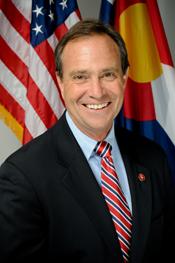 Rep. Ed Perlmutter (D-CO)
Description
Amendment authorizes a nationwide survey to assess compliance of fire departments with certain best practices on firefighter safety and establishes a task force of fire service industry to make recommendations to Congress on ways to increase compliance with those firefighter safety standards.
Legislative Activity
Stay on top of the latest movement without scrolling through every action
House amendment offered
November 18, 2009
View full timeline
House amendment offered
November 18, 2009
House amendment agreed to: On agreeing to the Perlmutter amendment (A002) Agreed to by recorded vote: 358 - 75 (Roll no. 899).
November 18, 2009 • 3:29 PM
Roll call votes on amendments in House
November 18, 2009 • 3:29 PM
Amendment agreed to Committee of the Whole
November 18, 2009 • 3:29 PM
House amendment offered/reported by : Amendment (A002) offered by Mr. Perlmutter.(consideration: CR H13104-13105, H13113; text: CR H13104)
November 18, 2009 • 1:50 PM
Amendment (A002) offered by Mr. Perlmutter. (consideration: CR H13104-13105, H13113; text: CR H13104)
November 18, 2009 • 1:50 PM
On agreeing to the Perlmutter amendment (A002) Agreed to by recorded vote: 358 - 75 (Roll no. 899).
November 18, 2009 • 3:29 PM
Votes
1 roll call on this amendment
Text
Offered
FIRE GRANTS REAUTHORIZATION ACT OF 2009

The SPEAKER pro tempore. Pursuant to House Resolution 909 and rule
XVIII, the Chair declares the House in the Committee of the Whole House
on the State of the Union for the consideration of the bill, H.R. 3791.

{time}  1254

In the Committee of the Whole

Accordingly, the House resolved itself into the Committee of the
Whole House on the State of the Union for the consideration of the bill
(H.R. 3791) to amend sections 33 and 34 of the Federal Fire Prevention
and Control Act of 1974, and for other purposes, with Mr. Jackson of
Illinois in the chair.
The Clerk read the title of the bill.
The CHAIR. Pursuant to the rule, the bill is considered read the
first time.
The gentleman from Tennessee (Mr. Gordon) and the gentleman from
Nebraska (Mr. Smith) each will control 30 minutes.
The Chair recognizes the gentleman from Tennessee.
Mr. GORDON of Tennessee. Mr. Chairman, I yield myself such time as I
may consume.
Mr. Chairman, I rise today in support of H.R. 3791, the Fire Grants
Reauthorization Act of 2009. This bill reauthorizes the Assistance to
Firefighters Grant (AFG) program and the Staffing for Adequate Fire and
Emergency Response (SAFER) program. Over the past 9 years, these
programs have provided over $5 billion to purchase firefighting
equipment and training, and for communities to hire additional
firefighters. This Federal support for public safety is even more
important in this tough economy as local officials struggle to provide
services in the face of decreasing budgets.
The provisions in this bill make several changes to the program to
enable more fire departments to apply for grants, and to ensure that
the programs can benefit all types of communities, from small towns to
our largest cities.
As part of this, the bill apportions the AFG funding between the
career, volunteer, and combination fire departments according to a
formula that authorizes a minimum of 25 percent of each year's total
AFG dollars for each type of department.
The bill also authorizes the director to waive matching funds, budget
maintenance requirements and other requirements for fire departments
facing exceptional economic hardships. It further lowers the matching
requirement for AFG and modifies the matching structure of SAFER to
make it easier for communities to plan for the commitment of a SAFER
grant.
The Science Committee heard testimony from fire service experts in
July that, particularly in this economy, the current matching
requirements dissuaded some departments from applying. These provisions
enable those fire departments with the most need to apply.
Finally, H.R. 3791 also increases the amount of money larger
jurisdictions may apply for under the AFG program. These amounts better
reflect the needs of larger metropolitan areas as well as fire
departments that have been consolidated to provide unified coverage to
a large area.
H.R. 3791 is the product of much hard work by the International
Association of Fire Chiefs, the International Association of Fire
Fighters, the National Volunteer Fire Council, the National Fire
Protection Association, and the Congressional Fire Services Institute.
It has been endorsed by all of these groups. This bill has bipartisan
support and passed out of the Science and Technology Committee by voice
vote.
I would like to once again thank Mr. Mitchell for sponsoring this
important legislation. I would also like to recognize the efforts of
our subcommittee chairman, Mr. Wu, in getting the policy right in this
bill and working to get a consensus piece of legislation. I also want
to thank Mr. Pascrell of New Jersey for being the father of the
origination of these bills, as well as Majority Leader Steny Hoyer for
bringing all of the parties together and working together to get a good
bill out.
Finally, I would like to recognize the staff who have been integral
in crafting this legislation: Meghan Housewright and Mike Quear on the
majority staff, and Dan Byers on the minority staff.
We have some amendments today. I look forward to working with my
colleagues today to make a good bill better.
Mr. Chairman, I reserve the balance of my time.
Mr. SMITH of Nebraska. Mr. Chairman, I yield myself such time as I
may consume.
Mr. Chairman, I rise today in support of H.R. 3791, the Fire Grants
Reauthorization Act of 2009. This bill reauthorizes both the Assistance
to Firefighters Grant (AFG) program and the Staffing for Adequate Fire
and Emergency Response (SAFER) program, which both provide much-needed
assistance to fire departments across the Nation.
As we learned through our committee work on this bill, and as I have
heard firsthand in discussions with fire chiefs and firefighters in my
district, the AFG program is frequently cited as a ``life safer'' and
the only means by which many departments can acquire up-to-date
equipment and training--which requires a significant portion of their
budget--for their firefighters.
This is particularly true in rural areas such as my district in rural
Nebraska, where many communities rely upon all-volunteer departments to
respond to fires and other emergencies. The equipment needed to fight
fires and save lives and property is costly, and required for
departments to meet certain minimum response capabilities regardless of
whether they are protecting a community of a few hundred people or a
large city of a few hundred thousand people. As such, firefighter
grants have proven absolutely vital for rural and volunteer fire
departments, which have small tax bases and the least ability to
acquire such equipment.

{time}  1300

The bill before us today makes several modest changes to the AFG and
SAFER programs, reflecting a compromise reached by the leading national
fire service organizations who worked closely with the Science and
Technology Committee to develop this legislation. I support these
changes and the underlying reauthorization effort, and I want to call
attention to two in particular which I offered as amendments during
committee consideration

[[Page H13094]]

of this bill. They are intended to support the ability of smaller
combination and volunteer departments to successfully compete for and
receive AFG grants and to emphasize the AFG program should be a funding
priority generally.
The first amendment added language to the bill clarifying in awarding
grants competitively, FEMA must consider a broad range of factors
related to a fire department's ability to respond to hazards, not just
the size of the population a department protects but also other factors
such as its geographic response area, hazard vulnerability, or
financial situation. This addition does not make any changes to the
underlying AFG program but, rather, explicitly codifies FEMA's existing
practice.
Second, I was pleased to incorporate amendment language in committee
calling attention to the dramatic decline in funding for the AFG
program over the last 5 years and emphasize restoring it should be a
priority.
The AFG program is authorized in this legislation at $1 billion a
year; however, its actual appropriated funding has never reached that
amount and, in fact, has steadily declined in recent years. In fiscal
year 2003, $750 million was appropriated for AFG. Since this time,
funding has steadily declined. Last year it was $565 million, and this
year the Obama administration requested only $390 million. This
represents a 48 percent decline since fiscal year 2003. Given the
importance of AFG to helping fire departments around the country meet
minimum response requirements, especially those in rural areas with
limited tax bases, this trend is troubling and should be reversed.
I was pleased our colleagues in the majority accepted these
amendments, and I appreciate the chairman's work. I thank them for
working closely with me and the leading national fire service
organizations to develop an agreeable compromise under which we could
move this reauthorization forward.
I urge Members to support passage of this bill, and I hope for and
expect a continued smooth process as we do go forward.
Mr. GORDON of Tennessee. Mr. Chairman, I yield 4 minutes to the
author of the bill, the gentleman from Arizona (Mr. Mitchell).
Mr. MITCHELL. Mr. Chairman, I rise today in strong support of H.R.
3791, the Fire Grants Reauthorization Act of 2009.
Firefighters are often the first and the last to leave an emergency
scene. Whether it's putting out a house fire or wildfire or responding
to terrorist attacks or a car accident, we depend upon firefighters
every day.
But firefighters also depend on us. They depend on the public and
their elected officials to make sure they have the resources,
equipment, and training they need for their jobs. Without those tools,
we put them and all of us at unnecessary risk.
H.R. 3791 reauthorizes the Assistance to Firefighters Grant program,
or AFG, and the Staffing for Adequate Fire and Emergency Response
program, or SAFER. This bill also makes several key improvements to
those programs to assist the cities and towns in Arizona and across the
country which are facing major budget shortfalls and cuts in services.
Since the AFG program was established in 2000, this program has
provided more than $5 billion directly to fire departments through
competitive award grants. These FIRE grants have also provided critical
support to Arizona's fire departments. Between 2005 and 2008, Arizona
received 165 AFG grants for a total of approximately $22.5 million.
These grants are made available to local fire departments to purchase
response equipment, training, and fire trucks. The AFG program also
supports fire prevention and safety grants, which are used for smoke
detectors, fire prevention education, and research to reduce the causes
of fire-related injuries and death. The SAFER program provides
competitively awarded funds for the hiring, recruiting, and retention
of firefighting personnel.
Over the past 4 years, this program has provided nearly $700 million
to local fire departments nationally, and Arizona has received 26 SAFER
grants for a total of approximately $16 million. This funding is
especially critical during these difficult economic times.
Based on testimony that the Science and Technology Committee heard
from fire service representatives, H.R. 3791 makes several key
improvements to this legislation.
First of all, this bill will change the matching requirements to
enable fire departments with the greatest need to take advantage of the
programs. The bill sets the matching requirement for the Assistance to
Firefighters Grant program from 20 percent to 10 percent, with fire
departments serving populations under 20,000 paying a 5 percent match.
This greatly benefits rural and less urban areas.
H.R. 3791 also modifies the matching requirements for the SAFER
program. Based on the recommendations of fire service organizations,
reflecting the hardships faced by our State and local governments,
SAFER will require instead a 20 percent match for each of 3 years.
This bill also gives the administrator the authority to waive the
matching requirements for both programs in case of exceptional economic
hardship. Such waivers may also be given for the programs' budget
maintenance requirements and SAFER provisions that restrict the funding
to hiring only additional firefighters, rather than retaining current
firefighters. This is a necessary step at a time when fire departments
in many areas of the country are confronted with the prospect of laying
off firefighters.
This bill is the result of a consensus among the fire service
organizations, including the International Association of Fire Chiefs,
the International Association of Fire Fighters, the National Fire
Protection Association, the National Volunteer Fire Council, and the
Congressional Fire Services Institute.
I would like to take a moment to thank Chairman Gordon, Chairman Wu,
and the Science and Technology Committee for their tireless work on
this legislation. In particular, I would like to thank Meghan
Housewright, Mike Quear, Louis Finkel, and Lori Pepper for their hard
work. I would also like to thank the majority leader, Mr. Hoyer, and
Congressman Pascrell for their leadership on this important issue.
I urge my colleagues to support this legislation that provides vital
resources to our Nation's firefighters. During these tough economic
times, this support is crucial to our public safety.
Mr. SMITH of Nebraska. Mr. Chairman, I yield 2 minutes to the
gentlewoman from Illinois (Mrs. Biggert).
Mrs. BIGGERT. Mr. Chairman, I rise in support of H.R. 3791, the Fire
Grants Reauthorization bill.
As a longtime supporter of firefighters and a cosponsor of this bill,
I'm very happy we are considering this important and timely legislation
to help our firefighters and our fire departments across the country.
Whether it's a fire, a vehicle crash, a dangerous spill, or even a
terrorist attack, our firefighters, men and women, put their lives on
the line in almost every emergency situation they come across. The
least we can do is to ensure that they have the equipment needed to do
their jobs without exposing themselves to unnecessary risk.
Today we have the opportunity to improve two FIRE grant programs: the
Assistance to Firefighters Grant program, which provides the
departments access to proper training and equipment; and the SAFER
program that helps fire departments hire new firefighters.
No time is more important than now to reauthorize the FIRE grant
programs. It should be no surprise when I say that the economic
downturn that has adversely affected everyone has also hit our fire
departments hard. With local tax revenue on a steady decline, fire
stations across the country and at home in Illinois are feeling far
greater pressure to do more with less. H.R. 3791 will help our
frontline responders meet their basic firefighting and emergency
medical responsibilities with additional resources for staffing,
training, and equipment. In passing this important legislation today,
we improve the safety of our communities and that of the men and women
who keep us safe.
Mr. Chairman, I urge our colleagues to support H.R. 3791.

[[Page H13095]]

Mr. GORDON of Tennessee. Mr. Chairman, I yield 1 minute to the
majority leader, as I said earlier, the person who really was the
sheriff in bringing everybody together for this bill, and we thank him
for it.
Mr. HOYER. I thank the gentleman from Tennessee (Mr. Gordon), who
does such an extraordinary job of leading the committee. I thank Mr.
Smith for his leadership. I also want to thank David Wu, the chairman
of the subcommittee, for his leadership. All of them have joined
together to get this bill to the floor. And I would be remiss if I did
not acknowledge their contribution, because this bill, the genesis of
it, was really with Mr. Pascrell of New Jersey, who worked so many
years ago to work with the Senate in generating this idea so that it
came back to the House, but he was the godfather, if you will, of this
piece of legislation. I want to acknowledge his presence here and thank
him for his leadership. And I certainly want to thank Mr. Mitchell,
Congressman Mitchell, who has been so critical in getting this bill to
this point in time. He is an extraordinarily able Member of the
Congress, and the firefighters throughout our country I know are
appreciative of his efforts on this bill.
Every day, Mr. Chairman, we and our families live under the blanket
of protection provided by America's firefighters, both career and
volunteer, men and women who are willing to risk their lives to
safeguard us, our loved ones, and our property. We may not often think
about those sacrifices but every firefighter does.
Last year, more than 100 of them died in the line of duty, and tens
of thousands more sustained injuries. To honor those sacrifices and to
make our communities safer places to live, Congress has worked to
become a partner with the fire departments across the Nation. Today we
can reaffirm that commitment by reauthorizing two successful grant
programs for firefighters: FIRE and SAFER.
I also want to mention a former fire chief from Pennsylvania who was
also critically important in working on this legislation. He's no
longer a Member of this body, Curt Weldon, a Member of the other side
of the aisle. He and I cochaired the Fire Service Caucus for over 15
years. His leadership was critical in moving us towards the partnership
of which I have just spoken between the Congress and the emergency
responders throughout our country, career and volunteer.
This bill reauthorizes both programs through fiscal year 2014,
pledging a total of $2.2 billion per year to our firefighters. The FIRE
grant program authorizes $1 billion per year for state-of-the-art fire
equipment, up-to-date training, and fire prevention programs. These
competitive grants will benefit career, volunteer, and combination fire
departments throughout the country. I know the chairman and
subcommittee Chair have already spoken of what it will do, but I wanted
to add as well State training academies and volunteer EMS departments,
so critical to our emergency response strategies and team.
The SAFER grant program ensures that our community firehouses never
have to sit empty: Its $1.2 billion per year will ensure 24-hour
staffing at eligible departments so that there are always firefighters
on duty in case of emergency. In fact, of course, it is the
firefighters and emergency medical response teams that are usually the
first on the scene at almost any disaster. It is therefore critical
that they be available during a 24-hour, 7-day-a-week schedule. It also
commits money each year to help volunteer departments recruit and
retain new members.
Since FIRE's inception in 2000 and SAFER's in 2004, these programs
have won support from Democrats and Republicans alike. This is truly a
bipartisan effort on behalf of our communities. Our respect for
firefighters and our commitment to get them the tools and training they
need has transcended party lines, as it should have, and I hope today
it will be no different and I know it will be no different.
I want to commend my colleagues Harry Mitchell and Bill Pascrell, as
I said, the father of the FIRE grants program, for their leadership on
this issue, as well as Chairman Gordon and Chairman Wu and my fellow
Fire Caucus co-Chairs Peter King, Rob Andrews, and Jo Ann Emerson.
I urge all of my colleagues to vote to reauthorize these grants and
carry forward this successful and vital partnership.
Mr. SMITH of Nebraska. Mr. Chairman, I yield 1 minute to the
gentleman from Indiana (Mr. Burton).
Mr. BURTON of Indiana. I thank the gentleman from Nebraska for
yielding this time.
I agree with everything the majority leader just said. You know, the
firefighters of this country are not only protectors of us from a
domestic standpoint; they are leaders in the war against terrorism.
We all remember what happened at
9/11 when so many firefighters gave their lives to try to protect those
people who died in the Twin Towers in New York City. And we should not
forget that because there is the threat of terrorism every single day
in this country, and the frontline fighters, in addition to the
policemen, are the firefighters. They're the ones that are going to
have to rush in to protect people and save lives in the event that we
have another tragedy like 9/11.
So I'd just like to say in the short time I have here today we need
to give them every single tool they need. This is one area of
government that's absolutely essential, and the firefighters of this
country need to know the Congress of the United States is behind them
100 percent.

{time}  1315

Mr. GORDON of Tennessee. Mr. Chairman, I yield 1 minute to the
gentlelady from Texas, a former member of the Science and Technology
Committee, Ms. Jackson-Lee.
Ms. JACKSON-LEE of Texas. I thank the distinguished chairman, and I
thank him for his leadership. I rise to support H.R. 3791 and the $1
billion for the AFG per year, and the $1.2 billion for the SAFER. In my
community, over the last 3 months we've had 17 fires in Heights and
Shady Acres, putting firefighters in jeopardy and threatening lives.
This legislation is enormously important, in that it allows cities over
2.5 million to get grants up to $9 million. I would be looking forward
or like to look forward to work with the chairman to establish a study
to determine the propensity of serial fire instigators, if you will,
threatening the lives of firefighters, and I'd like to be able to work
with the chairman on this crucial issue of providing a study so that we
can emphasize these grants going to fight against serial fires.
I yield to the gentleman from Tennessee.
Mr. GORDON of Tennessee. My friend from Texas raises a valid point
and an excellent point. You can be well assured that we will continue
to work with you through this, through the conference process to bring
your legitimate points to light.
Ms. JACKSON-LEE of Texas. Our community is in jeopardy, and this will
be an important step for them. As a member of the Fire Caucus and
Homeland Security, I rise to support the bill and thank you for working
with me to help those in need in Houston, Texas.
Mr. SMITH of Nebraska. I reserve the balance of my time.
Mr. GORDON of Tennessee. Mr. Chairman, I yield 5 minutes to the
gentleman from Oregon (Mr. Wu), the chairman of the subcommittee.
Mr. WU. Mr. Chairman, I rise in strong support of this legislation,
which reauthorizes the AFG and SAFER grant programs. These important
programs help keep firefighters and the public safe, and I want to
commend Chairman Gordon's leadership in bringing this crucial
legislation to the floor today, Mr. Mitchell's contributions to this
legislation, Mr. Hoyer for his crucial role in bringing this
legislation to the floor, and Mr. Pascrell for originating the
legislation 9 years ago and carrying this bill for many years.
Over the past 9 years, the AFG program has provided nearly $5 billion
in competitive awards to help local fire departments purchase
equipment, training and other crucial resources. This program has
played a vital role in improving the readiness and capabilities of fire
departments across the country.
Despite the program's success so far, an alarming number of local
fire departments remain without adequate training and equipment. The
AFG program helps address crucial shortfalls, and this bill will
further empower the Federal Government to assist local fire

[[Page H13096]]

departments as they improve their capabilities. AFG also supports fire
prevention and safety grants, which help provide smoke detectors, fire
prevention education, and research to reduce the causes of fire and
fire-related injury and death. Three thousand Americans die every year
in fires. We have made progress, and I'm proud of the progress the
Science and Technology Committee has made in advancing the goals of the
FIRE grant program.
This bill also reauthorizes the SAFER program, which provides funding
to help fire departments maintain adequate staffing levels. Through the
SAFER program, the Federal Government has provided nearly $700 million
to local fire departments in the past 4 years, funding that is
especially crucial during the current economic downturn. And I have to
note that the changes in matching requirements are especially helpful
in these hard economic times.
At a time when many local governments are facing major budget
shortfalls and cuts in services, Federal support to fire departments is
crucial to public safety. It is particularly important in Oregon, where
the unemployment rate is at about 11\1/2\ percent. The bill is an
important step forward in our efforts to protect communities across the
country and the firefighters who serve them. I'm particularly proud of
my subcommittee's work on this very important piece of legislation.
For more than 6 months it has worked with multiple fire service
organizations to identify opportunities to improve the AFG and SAFER
grant programs, culminating in hearings held earlier this year. In that
context, I want to especially thank Meghan Housewright for her hard
work in this field. The bill addresses the needs and priorities
identified by fire service experts, and I'm grateful for the
cooperation of the International Association of Fire Chiefs, the
International Association of Fire Fighters, the National Volunteer Fire
Council and the National Fire Protection Association and the
Congressional Fire Services Institute. Your ability to come together on
this legislation made our job much, much easier.
This bill improves both the SAFER and the AFG programs by ensuring
that fire departments with the greatest need will be able to apply for
funding. The bill also provides for an equitable balance in the
distribution of grant funding, ensuring that funding will benefit
communities, both large and small.
I would like to thank the ranking member of the Technology and
Innovation Subcommittee, Mr. Smith, for working closely with me. I
would also like to thank the fire service organizations for their hard
work in crafting this bill. I urge my colleagues to support this
important legislation.
Mr. SMITH of Nebraska. I reserve the balance of my time.
Mr. GORDON of Tennessee. Mr. Chairman, I want to thank Chairman
Thompson and Chairman Oberstar for working with me to get this
important bill to the floor.
I would like to insert an exchange of committee correspondence in the
Record at this time.

House of Representatives,

Committee on Homeland Security,

Washington, DC, November 7, 2009.
Hon. Bart Gordon,
Chairman, Committee on Science and Technology, House of
Representatives, Rayburn House Office Building,
Washington, DC.
Dear Mr. Chairman: I am writing you regarding H.R. 3791,
the ``Fire Grants Reauthorization Act of 2009,'' introduced
on October 13, 2009. This legislation was initially referred
to the Committee on Science and Technology and sequentially
referred to the Committee on Homeland Security on November 6,
2009.
In the interest of permitting this important legislation to
proceed expeditiously to floor consideration, I am willing to
waive further consideration of H.R. 3791. I do so with the
understanding that waiving further consideration of the bill
should not be construed as the Committee on Homeland Security
waiving, altering, or otherwise affecting its jurisdiction
over subject matters contained in the bill which fall within
its Rule X jurisdiction.
Further, I request your support for the appointment of
Homeland Security conferees during any House-Senate
conference convened on this or similar legislation. I also
ask that a copy of this letter and your response be placed in
the Congressional Record during floor consideration of this
bill.
I look forward to working with you on this legislation and
other matters of great importance to this nation.
Sincerely,
Bennie G. Thompson,
Chairman.
____

House of Representatives, Committee on Science and
Technology,
Washington, DC, November 7, 2009.
Hon. Bennie G. Thompson,
Chairman, Committee on Homeland Security, House of
Representatives, Ford House Office Building, Washington,
DC.
Dear Chairman Thompson: Thank you for your letter regarding
H.R. 3791, the Fire Grants Reauthorization Act of 2009. Your
support for this legislation and your assistance in ensuring
its timely consideration are greatly appreciated.
I agree that provisions in the bill are within the
jurisdiction of the Committee on Homeland Security. I
acknowledge that by waiving rights to further consideration
of H.R. 3791, your Committee is not relinquishing its
jurisdiction and I will fully support your request to be
represented in a House-Senate conference on those provisions
over which the Committee on Homeland Security has
jurisdiction in H.R. 3791. A copy of our letters will be
placed in the Congressional Record during consideration of
the bill on the House floor.
I value your cooperation and look forward to working with
you as we move ahead with this important legislation.
Sincerely,
Bart Gordon,
Chairman.
____

House of Representatives, Committee on Transportation and
Infrastructure,
Washington, DC, November 12, 2009.
Hon. Bart Gordon,
Chairman, Committee on Science and Technology, House of
Representatives, Rayburn House Office Building,
Washington, DC.
Dear Chairman Gordon: I write to you regarding H.R. 3791,
the ``Fire Grants Reauthorization Act of 2009''.
H.R. 3791 contains provisions that fall within the
jurisdiction of the Committee on Transportation and
Infrastructure. I recognize and appreciate your desire to
bring this legislation before the House in an expeditious
manner and, accordingly, I will not seek a sequential
referral of the bill. However, I agree to waive consideration
of this bill with the mutual understanding that my decision
to forgo a sequential referral of the bill does not waive,
reduce, or otherwise affect the jurisdiction of the Committee
on Transportation and Infrastructure over H.R. 3791.
Further, the Committee on Transportation and Infrastructure
reserves the right to seek the appointment of conferees
during any House-Senate conference convened on this
legislation on provisions of the bill that are within the
Committee's jurisdiction. I ask for your commitment to
support any request by the Committee on Transportation and
Infrastructure for the appointment of conferees on H.R. 3791
or similar legislation.
Please place a copy of this letter and your response
acknowledging the Committee on Transportation and
Infrastructure's jurisdictional interest in the Committee
Report on H.R. 3791 and in the Congressional Record during
consideration of the measure in the House.
I look forward to working with you as we prepare to pass
this important legislation.
Sincerely,
James L. Oberstar, M.C.
Chairiman.
____

House of Representatives, Committee on Science and
Technology,
Washington, DC, November 12, 2009.
Hon. James L. Oberstar,
Chairman, Committee on Transportation and Infrastructure,
House of Representatives, Rayburn House Office Building,
Washington, DC.
Dear Chairman Oberstar: Thank you for your November 12,
2009 letter regarding H.R. 3791, the Fire Grants
Reauthorization Act of 2009. Your support for this
legislation and your assistance in ensuring its timely
consideration are greatly appreciated.
I agree that provisions in the bill are of jurisdictional
interest to the Committee on Transportation and
Infrastructure. I acknowledge that by forgoing a sequential
referral, your Committee is not relinquishing its
jurisdiction and I will fully support your request to be
represented in a House-Senate conference on those provisions
over which the Committee on Transportation and Infrastructure
has jurisdiction in H.R. 3791. A copy of our letters will be
placed in the Committee report on H.R. 3791 and in the
Congressional Record during consideration of the bill on the
House floor.
I value your cooperation and look forward to working with
you as we move ahead with this important legislation.
Sincerely,
Bart Gordon,
Chairman.

I would like to now yield 3 minutes to the gentleman from Mississippi
and chairman of the Homeland Security Committee, Mr. Thompson.

[[Page H13097]]

Mr. THOMPSON of Mississippi. Mr. Chairman, I'd like to thank Chairman
Gordon, Chairman Wu and Mr. Mitchell for working to move this important
legislation. Every Member of this body represents a community that is
secured by a firehouse. But in recent times, too many fire stations
have had to short change their own training or community fire awareness
programs just to stay operational.
Today, we have the opportunity to reaffirm our support for our
hometown first responders by supporting H.R. 3791, the Fire Grants
Reauthorization Act of 2009. This legislation seeks to enhance and
improve two of FEMA's programs that directly award grants on a
competitive basis to local fire stations and departments. This critical
reauthorization will help ensure that departments large and small,
volunteer and career, can continue to provide lifesaving services,
including fire prevention and safety programs.
As a former volunteer firefighter, I'd like to thank Mr. Pascrell,
the gentleman from New Jersey, the father of the Assistance to
Firefighter Grants program, for working to help pioneer the original
program and working diligently to help produce this legislation. The
so-called AFG grant and the SAFER grant programs provide funding
directly to local fire departments so they can purchase needed
equipment, conduct fire awareness and prevention service activities,
insure that personnel are well trained for all of the duties,
assignments as required for certification. And, in the case of SAFER,
recruit and hire and retain firefighters without bureaucratic delays.
This bill also authorizes an additional $9.8 billion in funding for
these vital programs. Mr. Chairman, within the AFG program, this bill
revises grant allocations so that career volunteer and combination fire
departments will have access to equal slices of the available grant
dollar pie.
Mr. Chairman, I'd also like to say that during these tough economic
times, many communities across America are being forced to cut back on
public service. Cutbacks to public services should be avoided at all
costs. Again, Mr. Chairman, the International Association of Fire
Chiefs, Congressional Fire Service Institute, International Association
of Volunteer Fire Fighters, National Volunteer Fire Council, National
Fire Protection Association, all these organizations support this
legislation.
Mr. Chairman, I urge my colleagues to support this bill.
Mr. SMITH of Nebraska. I reserve the balance of my time.
Mr. GORDON of Tennessee. Mr. Chairman, I now yield 2 minutes to the
Chairman of the Transportation Committee, the gentleman from Minnesota,
Chairman Oberstar, and I want to once again thank him for helping bring
this bill to the floor.
Mr. OBERSTAR. Mr. Chairman, I do thank Chairman Gordon for the
splendid work that his committee has done and the cooperation that
we've had with the Committee on Science and Technology and that of the
Committee on Homeland Security with the gentleman from Mississippi (Mr.
Thompson). We've worked very well together and very diligently to bring
this very important Fire Grants Reauthorization Act to the House floor.
Many fire departments in my district point with great pride and with
gratitude to the fire trucks, the breathing equipment, the protective
clothing, the radios, the other technology they have received through
this valuable program. These are small grants, often just $2,500 to
maybe a quarter of a million dollars for a new fire truck, but
desperately needed in small communities and rural areas, replacing
equipment, often more than 40 years old, or new gear to combat new
issues such as fires at meth labs in the countryside or as we call it,
the back woods of Northern Minnesota. The fire department needs that
equipment, whether to combat a house fire or a chemical spill or a fire
in the center of small communities.
The FIRE grants program goes back to the year 2000 and predates the
horrific events of September 11. It was never intended to be a
terrorism preparedness program, but the Department of Homeland Security
made it one. And in recent years, I've been concerned by reports, and
I've met with the small fire departments that didn't receive a grant
because they could not show a specific connection to terrorism.
Our terror in Northern Minnesota is fire. Our terror is blizzards,
tornados, floods. Those are the things that we need, and we need to be
prepared for.
The CHAIR. The time of the gentleman has expired.
Mr. GORDON of Tennessee. I yield the gentleman 30 additional seconds.
Mr. OBERSTAR. There are a lot of organizations that support this
legislation. I just want to mention Pete Makowski, my district staff
person in Northern Minnesota who is a volunteer firefighter who has
introduced me to these issues and to these concerns, has brought me
together with the volunteer fire departments in my district. And I just
want to say, the pleasure, the joy, the pride that those volunteer
firefighters have in getting this small bit of assistance is
overwhelming to me. I am so pleased that we have in this legislation
very clear language that these small firefighting organizations do not
have to show that they're combating weapons of mass destruction.
The CHAIR. The time of the gentleman has again expired.
Mr. SMITH of Nebraska. I would yield 30 seconds more to the Chairman
of the Transportation Committee if he wishes to continue.
Mr. OBERSTAR. I thank the gentleman for the time.
I'm sure that the gentleman has the same experience with small
volunteer firefighters who have to hire a grant application writer to
fill out forms this thick. That's absurd. I think we changed that in
this legislation and we take away this need to show a connection with
terrorism. Our terror is fire. That's all we need to be prepared for.
Mr. SMITH of Nebraska. Mr. Chairman, I would also add briefly that,
for right now, that the demands on volunteer fire departments are far
greater than the population might reflect, especially when we talk
about public lands and the susceptibility to fire in the midst of
drought and other things as well.
I reserve the balance of my time.
Mr. GORDON of Tennessee. I thank my friend from Nebraska for his
courtesy to Mr. Oberstar. I would request of the Chairman, what time is
left for each side?
The CHAIR. The gentleman from Tennessee has 11\1/2\ minutes
remaining. The gentleman from Nebraska has 22\1/2\ minutes remaining.
Mr. SMITH of Nebraska. I reserve the balance of my time.

{time}  1330

Mr. GORDON of Tennessee. Mr. Chairman, as has been pointed out
earlier, I'm not sure whether it's the godfather or the grandfather of
the FIRE Grants program, Mr. Pascrell from New Jersey. He is here, and
he is recognized for 3 minutes.
Mr. PASCRELL. I want to thank Chairman Bart Gordon; Subcommittee
Chairman Dave Wu; Mr. Mitchell; Chairman Thompson; and my friend who is
not here today on the other side, Peter King. They all deserve
recognition as partners in this quest to get people's attention on the
most neglected side of the public safety equation, our firefighters.
This legislation, we think, is unique. We had a difficult time in the
beginning when were writing this legislation. It took about 2\1/2\
years. We had about enough people to fit in a telephone booth. And then
we brought the firefighters to Washington, and all of a sudden, we had
over 280 sponsors.
In the 106th Congress, prior to, the former speaker just pointed out,
9/11, that FIRE Act passed. It had bipartisan support. There was no
Federal support for our brave firefighters, be they career or
volunteer. They were working with outdated equipment. In some places in
the country, they had to push the equipment to the fire, literally.
They couldn't get the necessary training in order to provide the best
protection for their local communities.
The one thing we made sure we took care of is that there would not be
a differential, there would not be a firewall, so to speak, between the
volunteers and the career. If you look at the grants of the first 5 or
6 years, there is an over-preponderance of volunteer departments,
because we did not want to make this what so many bills in the past had
been.
And I might add, Mr. Chairman, this money goes directly to the
communities, no skimming, no nonsense: $6.5

[[Page H13098]]

billion, both of these bills, the SAFER bill, which deals with our
personnel, in 9 years, over $15 billion requested. We are far from even
close to responding to the needs that existed before 9/11.
This legislation, in its ranking and review, the FIRE Grants program
itself received the second highest rating of any program in the
Department of Homeland Security. The only agency that beat it out by
one percentage point was the Secret Service.
Since the inception of the FIRE and SAFER grants, the programs have
provided over, as I said, $6.5 billion for our local communities. And
the point I want to make here is that the FIRE Grants programs are as
vital and necessary today as they were in 2000.
The CHAIR. The time of the gentleman has expired.
Mr. GORDON of Tennessee. I yield the gentleman 1 additional minute.
Mr. PASCRELL. I have always said that real homeland security starts
on the streets of our local towns and not in the hallways of
Washington. I truly believe these FIRE grants awarded to local
municipalities are key to our homeland security infrastructure. Today
we move a great step toward furthering that commitment.
And just today, Mr. Chairman, on the west lawn outside the Capitol,
firefighters, police officers and construction workers who responded at
9/11 gathered to hear what the Congress was going to do to respond to
what had happened at 9/11. We salute them. We've had two major studies
from Mount Sinai Hospital in New York. The ``all clear'' should not
have been given to these people who worked in hazardous situations. We
can again down the road to pass legislation to help these guys and gals
that have suffered the consequences of their responding mostly,
voluntarily.
I thank all of those who participated today.
Mr. SMITH of Nebraska. I reserve the balance of my time.
Mr. GORDON of Tennessee. Mr. Chairman, I yield 2 minutes to the
gentlewoman from Colorado (Ms. Markey).
Ms. MARKEY of Colorado. Mr. Chairman, I rise today in support of the
Fire Grants Reauthorization Act of 2009. From cities on Colorado's
front range to small towns on the eastern plains, firefighters and
other emergency personnel are the first to respond to everything from
traffic accidents to wildfires. These brave men and women dedicate
their lives to helping people and protecting their communities.
More than three-quarters of the fire departments in Colorado's Fourth
District are mostly or entirely volunteer run. In addition to full-time
jobs and families, these men and women devote their time and energy to
help the small rural communities in which they live, often at great
risk to themselves. In my district, last year, three brave volunteers
lost their lives in the line of duty. Captain Shane Stewart, Fire Chief
Terry DeVore and Firefighter John Schwartz, Jr., lost their lives while
fighting to keep their rural communities safe.
Mr. Chairman, it is with the memory of these men who gave everything
to defend their neighbors and communities that I am proud to stand here
today as a cosponsor of the Fire Grants Reauthorization Act. I
encourage all of my colleagues to support this important
reauthorization, because these grant programs help support the
operations of all fire departments, urban and rural, career and
volunteer, and protect the lives of the men and women who selflessly
serve to protect their communities.
The CHAIR. The gentleman from Tennessee has 6 minutes remaining. The
gentleman from Nebraska has 22\1/2\ minutes remaining.
Mr. SMITH of Nebraska. I reserve the balance of my time.
Mr. GORDON of Tennessee. Mr. Chairman, I yield 2 minutes to the
gentlewoman from Arizona (Mrs. Kirkpatrick).
Mrs. KIRKPATRICK of Arizona. Mr. Chairman, this spring my office was
approached by two fire chiefs with the same problem. Chief Casson of
the Cottonwood Fire Department and Chief Moore of the Clarkdale Fire
Department both explained that for their small departments, SAFER
grants can make all the difference in whether they have the number of
firefighters on staff required to keep their communities safe.
With the economic downturn, SAFER has become more important than
ever, but falling tax revenues make meeting the matching requirement
difficult. This has happened to small fire departments across the
Nation. Many have even returned the grants they were awarded.
This is why I introduced H.R. 2759, which would waive the cost-
sharing requirement for the most recent grant cycle, helping
departments hire the staff they need during this tough time. While my
legislation is not specifically contained within this act, I am glad
that this bill significantly improves the SAFER program to help
departments with these conditions.
This act reduces the overall cost-share requirement for departments
and, more importantly, allows the director to waive this requirement in
the case of economic hardship. Therefore, in the future, the
departments with the greatest need should be able to take advantage of
this program.
Mr. Chairman, will you work with me to ensure that the SAFER works as
intended, helps the departments most in need, and addresses the
concerns of small, rural fire departments?
Mr. GORDON of Tennessee. Will the gentlewoman yield?
Mrs. KIRKPATRICK of Arizona. I yield to the chairman.
Mr. GORDON of Tennessee. I would like to thank the gentlewoman for
her efforts with the SAFER program and her support for the bill.
You raise a very good point that fire departments in many communities
are struggling with shrinking budgets. Some of these struggling
communities do have SAFER grants. I would be happy to work with you on
this issue as we work to enact this legislation into law.
Mr. SMITH of Nebraska. Mr. Chairman, I reserve the balance of my
time.
Mr. GORDON of Tennessee. Mr. Chairman, I yield 2 minutes to a very
active member of our committee, the gentleman from New Mexico (Mr.
Lujan).
Mr. LUJAN. Mr. Chairman, I rise in strong support of the Fire Grants
Reauthorization Act of 2009.
It has been almost 10 years since the Cerro Grande fire ripped
through thousands of acres in my district in northern New Mexico with
devastating effect for the wildlife, the environment and the people in
its path. Drought conditions and high temperatures contributed to the
size of this fire, while dry winds accelerated its path through Los
Alamos. Each year, fires plague our communities. They hurt people. They
devastate communities. They devastate families. But when we can come
together and make sure that we are working to provide support for our
local fire departments, for our first responders and for those that put
their lives on the line every day, we are able to make a difference.
These FIRE grants will provide volunteer and career fire departments
across the country with vital funding to increase firefighting
capabilities, better respond to medical emergencies, handle natural
disasters and operate more effectively.
Supporting local fire departments is more important now than ever
before. Now that States are facing many budgetary shortfalls, it has
become increasingly difficult for local governments to maintain the
equipment and training necessary.
Mr. Chairman, as we came down today, I was reminded of a chief in New
Mexico who lost his life responding to a fire about a week after he had
just gotten word that he had received a grant for the fire district to
replace the truck that broke down in the midst of a range fire that he
lost his life in. These grants make a difference in people's lives. To
his wife, to his spouse, that fought so hard with us in New Mexico to
get a fire fund in place to be able to help us out locally, I commend
my colleagues here, the chairman, Mr. Pascrell for making this happen,
and for believing in firefighters and for making sure that we in
Congress are doing our part to get funding to them.
The CHAIR. The gentleman from Tennessee has 2 minutes remaining and
has the right to close.
Mr. SMITH of Nebraska. Mr. Chairman, I would inquire of the committee
chairman how much time he is looking to need, perhaps.

[[Page H13099]]

Mr. GORDON of Tennessee. You are courteous to ask. I think we have
marshaled it just right. We have 2 more minutes and one speaker.
Mr. SMITH of Nebraska. I would yield 2 minutes to the chairman if he
would wish to use that.
Mr. GORDON of Tennessee. Again, I thank you for the courtesy. I
believe we are going to be able to do it, but thank you very much.
Mr. SMITH of Nebraska. I would reserve the balance of my time.
Mr. GORDON of Tennessee. Mr. Chairman, I would yield 1\1/2\ minutes
to my friend from St. Louis, Missouri (Mr. Carnahan).
Mr. CARNAHAN. Thank you, Mr. Chairman, and the gentleman from
Nebraska for managing this today.
On behalf of the firefighters, the amazing firefighters that serve my
constituents in Missouri, I rise today in strong support of the Fire
Grants Reauthorization Act of 2009. H.R. 3791 reauthorizes and improves
the FIRE and SAFER Grant programs which assist firefighters, first
responders and local communities in my home State of Missouri and
nationwide with the equipment, training, and personnel needed to
protect the public.
In these difficult economic times, it is imperative that we provide
local fire departments around the country the needed equipment,
training and staffing for both full-time and volunteer firefighters,
urban and rural, to quickly respond to emergencies.
This legislation will reduce the grantee matching requirement at a
time when many jurisdictions are finding it increasingly difficult or
impossible to maintain equipment, training, and personnel. FIRE grants
will provide funding to hire additional personnel, modify facilities,
and obtain protective gear and other resources to respond to fire and
related hazards.
I'm pleased to be a cosponsor of this legislation and to have joined
my colleagues on the Science and Technology Committee to bring it to
the floor. I now urge the full House to support and pass the Fire
Grants Reauthorization Act of 2009.
Mr. SMITH of Nebraska. I would reserve the balance of my time.
Mr. GORDON of Tennessee. I will use the remainder of my time to
close, so if the gentleman would like to close.
Mr. SMITH of Nebraska. Thank you, Mr. Chairman. I will be very brief.
We were expecting some other Members here. But I will say that I
appreciate the process that we have gone through this. It involved
quite a bit of discussion early on at the subcommittee level and full
committee level. I'm grateful that the chairman considered amendments
from our side so that we can meet the public safety needs of our
country. It's not just about my district, it's not just about certain
districts, but the entire country. I'm grateful to be a part of this
process, and I will say it does work.
With that, I would yield back the balance of my time.
Mr. GORDON of Tennessee. Mr. Chairman, in quick closing, I want to
concur with Mr. Smith's remarks, thanking him for his cooperation. This
has been a good subcommittee, committee process. It has been
bipartisan. And because of that, we have a good bill.
Ms. RICHARDSON. Mr. Chair, as a member of the Committee on Homeland
Security and an original co-sponsor, I rise in strong support of H.R.
3791, the Fire Grants Reauthorization Act of 2009, which reauthorizes
for five years $1 billion per year for FEMA's Assistance to
Firefighters Grants (AFG) program and reauthorizes $1.2 billion for the
Staffing for Adequate Fire and Emergency Response (SAFER) program.
This increase in federal support for the nation's fire departments is
especially important in this tough economy as local officials struggle
to provide critical services--including public safety services--in the
face of declining revenues and decreasing budgets.
I thank Chairman Gordon and my colleague, Congressman Mitchell of
Arizona, for their hard work in shepherding this critical legislation
to the floor today.
We all remember the wildfires from this summer that hit my home state
of California especially hard. Over 160,000 acres were destroyed in the
``Station Fire,'' the most in the history of Los Angeles County. But
not only did people lose their homes in this terrible tragedy, two
firefighters lost their lives as well. Incidents like these underscore
the importance of providing firefighters with the best possible
equipment and training to perform their dangerous jobs. And that is
probably the most important reason of all for passing H.R. 3791, the
Fire Grants Reauthorization Act of 2009.
Mr. Chair, I support H.R. 3791 because it:
Provides a fairer distribution of FIRE Grant funding among fire
departments by setting a 25 percent distribution of the appropriated
funds among the categories of career, volunteer and combination fire
departments;
Lowers matching and maintenance of expenditure requirements and
authorizes the FEMA Administrator to waive or reduce such requirements
for applicants facing demonstrated economic hardship;
Raises the limit on FIRE Grant awards to $9 million for jurisdictions
based on population so that large urban areas with population more than
2.5 million like the one I represent.
Makes the SAFER Grant program more accessible to fire departments by
making it a three-year program with a 20 percent match.
Raises the maximum amount for individual Fire Prevention and Safety
Grants to $1.5 million.
Mr. Chair, in the last nine years the Assistance to Firefighters
Grant (AFG) program, or FIRE grant program, has aided thousands of fire
departments nationwide by providing more than $5 billion in federal aid
for critically-needed training, equipment, health and wellness programs
and other fire service needs.
The Staffing for Adequate Fire and Emergency Response or ``SAFER''
program has provided nearly $700 million to fire departments to help
hire and retain firefighters since its creation in 2004.
Yet, despite the success of the programs, effectiveness has been
curtailed by the uneven distribution of grants among jurisdictions of
varying sizes. Statutory restrictions have inadvertently hampered
larger fire departments that protect the majority of the population
from receiving much-needed federal assistance. As a result, the
majority of FIRE Grant funds currently are being spent to protect a
relatively small portion of the population. H.R. 3791 corrects this
imbalance by targeting more funding to larger fire departments in the
more populous jurisdictions.
Mr. Chair, H.R. 3791 is the product of bipartisan cooperation and is
broadly supported by the firefighting community because it strikes an
equitable balance in the distribution of the grants so that the funding
can benefit all types of communities and ensures that fire departments
with the greatest need can apply for and receive funding in amounts
sufficient to address their real needs. That is why this legislation is
broadly supported by the firefighting and fire prevention community,
including the following major organizations: the International
Association of Fire Chiefs, the National Fire Protection Association,
the National Volunteer Fire Council, the International Association of
Fire Fighters, the International Association of Arson Investigators,
and the Congressional Fire Services Institute.
Mr. Chair, H.R. 3791 is good for our firefighters. It is good for our
local governments. It is good for the nation and good for my district.
I am proud to be an original co-sponsor of the critical legislation and
urge my colleagues to join me in voting for its passage.
Mr. DINGELL. Mr. Chair, I rise today to support H.R. 3791, the Fire
Grants Reauthorization Act. This act reauthorizes the Assistance to
Firefighters Grant, AFG, program and the Staffing for Adequate Fire and
Emergency Response, SAFER, grant program. These two successful programs
provide critical support for our Nation's fire departments and
Emergency Medical Services, EMS, organizations, thus enabling our
firefighters and emergency personnel to adequately respond to fire
emergencies in our communities.
H.R. 3791 authorizes $1 billion per year for the AFG program for
fiscal years, FY, 2010 through 2014 and $1.2 billion per year for the
SAFER program for FY 2010 through FY 2014. The AFG program, created in
2000, provides grants to local fire departments and related EMS
organizations to provide them needed equipment, training, vehicles and
other resources. The SAFER, created in 2004, program provides grants to
local fire departments to increase their staffing and deployment
capabilities.
Both programs have proven highly successful. In 2003, the U.S.
Department of Agriculture's Leadership Development Academy Execptive
Potential Program independent assessment of the AFG program concluded
it was ``highly effective in improving the readiness and capabilities
of firefighters across the nation.'' Since that time, the program has
received high marks from Department of Homeland Security, DHS,
Inspector General as well as the Bush Administration's budgetary
program evaluation tool. And since 2004, the SAFER program has been
ensuring that our local fire departments can provide 24-hour staffing
to so that they can respond to our communities during emergencies.
Unfortunately, during times of economic hardship, public safety
budgets are often hard hit. Thus, the importance of continued Federal
support for these programs cannot be underestimated. That is why this
legislation lowers

[[Page H13100]]

the matching requirement from 20 percent to 10 percent for the AFG
program and allows the DHS to waive cost share requirements for the
SAFER program in times of economic hardship.
In addition, H.R. 3791 ensures that funding to our career and
volunteer fire departments is equitable by requiring that AFG funds are
apportioned in the following way: 25 percent to career fire
departments, 25 percent to combination fire departments, and 25 percent
to volunteer fire departments, 10 percent for open competition among
all types of fire departments, and the remaining 15 percent for certain
other important functions, including ire prevention and safety grants.
Mr. Chair, the fire grants program has directly benefited the 15th
Congressional District of Michigan, including Frenchtown Township,
Ypsilanti, Monroe, Woodhaven, Flat Rock, Romulus, and many other
communities I have the honor of representing. Clearly, these programs
are a boon to other communities across our country. That is why I
strongly urge my colleagues to join me in voting ``yes'' on H.R. 3791.
Mr. KING of New York. Mr. Chair, I rise to express my support for
H.R. 3791, the Fire Grants Reauthorization Act of 2009. The Fire and
SAFER grant programs reauthorized by this bill are highly effective and
vitally important programs which provide much-needed support to fire
departments and emergency responders across the country.
As chairman of the Congressional Fire Services Caucus and ranking
member of the Homeland Security Committee, I strongly support
reauthorization of these two grant programs. First responders rely on
Fire grants for the training, vehicles, and equipment that are
necessary to keep our communities safe, while SAFER grants provide the
necessary funds to hire and train new firefighters and to help recruit
and train volunteer firefighters.
In 2008 alone, the Fire grant program received $3.2 billion in
requests for grants, which highlights a serious need in the firefighter
and first responder community for more resources. I continue to support
strong funding for both the Fire and SAFER programs. I am pleased that
H.R. 3791 authorizes $1 billion annually for the Fire program and
approximately $1.2 billion annually for the SAFER program over the next
5 years.
The Fiscal Year 2010 Homeland Security Appropriations Act that passed
the House in June provided double the amount of funding for the SAFER
program over last year. However, I am disappointed that the final
funding level approved by Congress for the Fire grant program in Fiscal
Year 2010 is $175 million less than last year's funding for that
program. Both of these programs merit robust funding.
The bill under consideration today incorporates the unified
recommendations of the major fire service organizations that represent
volunteer, career, and combination fire departments across the country.
For example, this bill adds an ``economic hardship waiver'' for the
Fire grant program for fire departments that are unable to meet certain
matching requirements or budget requirements. In addition, the bill
adds an economic hardship waiver to allow fire departments to retain
staff with SAFER grant funds whom they would otherwise have to lay off
in these difficult economic times. This bill also allots 10 percent of
Fire grants to the Fire Prevention and Safety program, which is up from
5 percent in previous years.
I hope that both the Fire and SAFER grant programs will see continued
support from this administration and the Democratic leadership.
I urge my colleagues to support passage of this important bill.
Mr. GORDON of Tennessee. I yield back the balance of my time.
The CHAIR. All time for general debate has expired.
Pursuant to the rule, the amendment in the nature of a substitute
printed in the bill, modified by the amendment printed in part A of
House Report 111-340, shall be considered as an original bill for the
purpose of amendment and shall be considered as read.
The text of the amendment in the nature of a substitute, as amended,
is as follows:

H.R. 3791

Be it enacted by the Senate and House of Representatives of
the United States of America in Congress assembled,

SECTION 1. SHORT TITLE.

This Act may be cited as the ``Fire Grants Reauthorization
Act of 2009''.

SEC. 2. ASSISTANCE TO FIREFIGHTERS GRANT PROGRAM
REAUTHORIZATION.

(a) In General.--Section 33 of the Federal Fire Prevention
and Control Act of 1974 (15 U.S.C. 2229) is amended to read
as follows:

``SEC. 33. FIREFIGHTER ASSISTANCE.

``(a) Assistance Program.--
``(1) Authority.--In accordance with this section, the
Director may--
``(A) make grants on a competitive basis directly to fire
departments of a State, in consultation with the chief
executive of the State, for the purpose of protecting the
health and safety of the public and firefighting personnel
throughout the Nation against fire and fire-related hazards;
``(B) make grants on a competitive basis directly to State
fire training academies, in consultation with the chief
executive of the State, in accordance with paragraph (11)(C);
``(C) provide assistance for fire prevention and
firefighter safety research and development programs and fire
prevention or fire safety programs and activities in
accordance with paragraph (4); and
``(D) provide assistance for volunteer, non-fire service
EMS and rescue organizations for the purpose of paragraph
(3)(F).
``(2) Administrative assistance.--The Director shall
establish specific criteria for the selection of recipients
of assistance under this section and shall provide grant-
writing assistance to applicants.
``(3) Use of fire department grant funds.--The Director may
make a grant under paragraph (1)(A) only if the applicant for
the grant agrees to use the grant funds for one or more of
the following purposes:
``(A) To hire additional firefighting personnel.
``(B) To train firefighting personnel in firefighting,
emergency medical services and other emergency response
(including response to a terrorism incident or use of a
weapon of mass destruction), arson prevention and detection,
maritime firefighting, or the handling of hazardous materials
or to train firefighting personnel to provide any of the
training described in this subparagraph.
``(C) To fund the creation of rapid intervention teams to
protect firefighting personnel at the scenes of fires and
other emergencies.
``(D) To certify fire and building inspectors employed by a
fire department or serving as a volunteer building inspector
with a fire department.
``(E) To establish wellness and fitness programs for
firefighting personnel to ensure that the firefighting
personnel can carry out their duties, including programs
dedicated to raising awareness of, and prevention of, job-
related mental health issues.
``(F) To fund emergency medical services provided by fire
departments and volunteer, non-fire service EMS and rescue
organizations.
``(G) To acquire additional firefighting vehicles,
including fire trucks.
``(H) To acquire additional firefighting equipment,
including equipment for communications, monitoring, and
response to a terrorism incident or use of a weapon of mass
destruction.
``(I) To acquire personal protective equipment required for
firefighting personnel by the Occupational Safety and Health
Administration and other personal protective equipment for
firefighting personnel, including protective equipment to
respond to a terrorism incident or the use of a weapon of
mass destruction.
``(J) To modify fire stations, fire training facilities,
and other facilities to protect the health and safety of
firefighting personnel.
``(K) To enforce fire codes and standards.
``(L) To fund fire prevention programs.
``(M) To educate the public about arson prevention and
detection.
``(N) To provide incentives for the recruitment and
retention of volunteer firefighting personnel for volunteer
firefighting departments and other firefighting departments
that utilize volunteers.
``(4) Fire prevention and firefighter safety research and
development programs.--
``(A) In general.--For each fiscal year, the Director shall
use not less than 10 percent of the funds made available
under subsection (e)--
``(i) to make grants to fire departments for the purpose
described in paragraph (3)(L);
``(ii) to make grants to, or enter into contracts or
cooperative agreements with, national, State, local, or
community organizations that are not fire departments but--

``(I) that are recognized for their experience and
expertise with respect to fire prevention or fire safety
programs and activities and that partner with fire
departments, for the purpose of carrying out such programs
and activities;
``(II) engage in fire- and life safety-related activities
as a primary purpose or function, for the purpose of carrying
out fire prevention or fire safety programs and activities;
or
``(III) that are recognized for their experience and
expertise with respect to firefighter research and
development programs, for the purpose of carrying out
research on fire prevention or fire safety programs and
activities or to improve firefighter health and life safety;
and

``(iii) if the Director determines that it is necessary, to
make grants or enter into contracts in accordance with
subsection (c).
``(B) Priority.--In selecting organizations described in
subparagraph (A)(ii) to receive assistance under this
paragraph, the Director shall give priority to organizations
that focus on prevention of injuries to high risk groups from
fire, as well as research programs that demonstrate the
potential to improve firefighter safety.
``(C) Grant limitation.--A grant under this paragraph shall
not exceed $1,500,000 for a fiscal year.
``(D) Limitation.--None of the funds made available under
this paragraph may be provided to the Association of
Community Organizations for Reform Now (ACORN) or any of its
affiliates, subsidiaries, or allied organizations.
``(5) Application.--The Director may provide assistance to
a fire department or organization (including a State fire
training academy) under this subsection only if the fire
department or organization seeking the assistance submits to
the Director an application that meets the following
requirements:
``(A) Form.--The application shall be in such form as the
Director may require.
``(B) Information.--The application shall include the
following information:
``(i) Information that demonstrates the financial need of
the applicant for the assistance for which applied.

[[Page H13101]]

``(ii) An analysis of the costs and benefits, with respect
to public safety, of the use of the assistance.
``(iii) An agreement to provide information to the national
fire incident reporting system for the period covered by the
assistance.
``(iv) A list of other sources of Federal funding received
by the applicant.
``(v) Any other information that the Director may require.
``(C) Unnecessary duplication.--The Director, in
coordination with the Secretary of Homeland Security, shall
use the list provided under subparagraph (B)(iv) to prevent
the unnecessary duplication of grant funds.
``(6) Matching requirement.--
``(A) In general.--Subject to subparagraphs (B) and (C) and
paragraph (8), the Director may provide assistance under this
subsection only if the applicant for such assistance agrees
to match 10 percent of such assistance for any fiscal year
with an equal amount of non-Federal funds.
``(B) Requirement for small community organizations.--In
the case of an applicant whose personnel serve jurisdictions
of 20,000 or fewer residents, the percent applied under the
matching requirement of subparagraph (A) shall be 5 percent.
``(C) Fire prevention and firefighter safety grants
exception.--There shall be no matching requirement for a
grant described in paragraph (4).
``(7) Maintenance of expenditures.--Subject to paragraph
(8), the Director may provide assistance under this
subsection only if the applicant for the assistance agrees to
maintain in the fiscal year for which the assistance will be
received the applicant's aggregate expenditures for the uses
described in paragraph (3) or (4) at or above 80 percent of
the average level of such expenditures in the 2 fiscal years
preceding the fiscal year for which the assistance will be
received.
``(8) Economic hardship waiver.--
``(A) In general.--In exceptional circumstances, the
Director may waive or reduce the matching requirement under
paragraph (6) and the maintenance of expenditures requirement
under paragraph (7) for applicants facing demonstrated
economic hardship.
``(B) Criteria development.--The criteria under which the
Director may waive or reduce such requirements shall be
developed in consultation with individuals who are--
``(i) recognized for expertise in firefighting, emergency
medical services provided by fire services, or the economic
affairs of State and local governments; and
``(ii) members of national fire service organizations or
national organizations representing the interests of State
and local governments.
``(C) Public availability.--The Director shall make the
criteria developed under subparagraph (B) publicly available.
``(9) Variety of fire department grant recipients.--
``(A) In general.--Of the amounts made available under
subsection (e), the Director shall ensure that grants under
paragraph (1)(A) for a fiscal year are allocated, to the
extent that there are eligible applicants to carry out the
activities under paragraph (3), as follows:
``(i) 25 percent shall be made available to career fire
departments.
``(ii) 25 percent shall be made available to volunteer fire
departments.
``(iii) 25 percent shall be made available to combination
fire departments.
``(B) Evaluation criteria.--
``(i) In general.--In awarding grants under paragraph
(1)(A), the Director shall, within each category of
applicants under subparagraph (A), consider a broad range of
factors important to the applicant's ability to respond to
fires and related hazards, such as population served,
geographic response area, hazard vulnerability, call volume,
financial situation, and need for training or equipment.
``(ii) High population and incident response.--In
considering such factors under clause (i), applicants serving
areas with high population and with a high number of
incidents requiring a response shall receive a higher level
of consideration.
``(iii) Prohibited basis for denial.--In considering such
factors under clause (i), the Director may not deny a grant
to an applicant solely based on such applicant failing to
demonstrate that the grant will be used to prepare for or
respond to a terrorism incident or use of a weapon of mass
destruction.
``(C) Remainder.--Of the amounts made available under
subsection (e) that are not allocated for use and awarded
under subparagraph (A) or designated for use under any other
provision of this section, the Director shall provide for an
open competition for grants among career fire departments,
volunteer fire departments, and combination fire departments
to carry out the activities under paragraph (3).
``(10) Report to the director.--The Director may provide
assistance under this subsection only if the applicant for
the assistance agrees to submit to the Director a report,
including a description of how the assistance was used, with
respect to each fiscal year for which the assistance was
received.
``(11) Grant limitations.--
``(A) Recipient limitations.--A grant recipient under
paragraph (1)(A)--
``(i) that serves a jurisdiction with 100,000 people or
less may not receive grants in excess of $1,000,000 for any
fiscal year;
``(ii) that serves a jurisdiction with more than 100,000
people but less than 500,000 people may not receive grants in
excess of $2,000,000 for any fiscal year;
``(iii) that serves a jurisdiction with 500,000 people or
more but less than 1,000,000 people may not receive grants in
excess of $3,000,000 for any fiscal year;
``(iv) that serves a jurisdiction with 1,000,000 people or
more but less than 2,500,000 people may not receive grants in
excess of $6,000,000 for any fiscal year; and
``(v) that serves a jurisdiction with 2,500,000 people or
more may not receive grants in excess of $9,000,000 for any
fiscal year.
The Director may award grants in excess of the limitations
provided in clauses (i), (ii), (iii), and (iv) if the
Director determines that extraordinary need for assistance by
a jurisdiction warrants a waiver.
``(B) Limitation on expenditures for firefighting
vehicles.--Not more than 25 percent of the funds appropriated
to provide grants under this section for a fiscal year may be
used to assist grant recipients to purchase vehicles, as
authorized by paragraph (3)(G).
``(C) State fire training academies.--
``(i) In general.--In accordance with clause (ii), the
Director shall award not more than 3 percent of the amounts
made available under subsection (e) for a fiscal year for
grants under this subsection for State fire training
academies.
``(ii) Limitation.--The Director shall--

``(I) award not more than 1 grant under this subparagraph
per State in a fiscal year;
``(II) limit the amount of a grant to a State fire training
academy to less than or equal to$1,000,000 in each fiscal
year; and
``(III) ensure that any grant awarded to a State fire
training academy shall be used for the purposes described in
paragraphs 3(G), 3(H), or 3(I).

``(D) Requirements for grants for emergency medical
services.--The Director shall award not more than 2 percent
of the amounts made available under subsection (e) for a
fiscal year to volunteer, non-fire service EMS and rescue
organizations for the purposes described in paragraph (3)(F).
``(E) Application of selection criteria to grant
applications from volunteer, non-fire service ems and rescue
organizations.--In reviewing applications submitted by
volunteer, non-fire service EMS and rescue organizations, the
Director shall consider the extent to which other sources of
Federal funding are available to provide the assistance
requested in such grant applications.
``(F) Consensus standards.--
``(i) In general.--Any grant amounts used to obtain
training under this section shall be limited to training that
complies with applicable national voluntary consensus
standards (if applicable national voluntary consensus
standards have been established), unless a waiver has been
granted under clause (ii).
``(ii) Waiver.--

``(I) Explanation for non-standard training.--If an
applicant for a grant seeks to use the assistance provided
under the grant to obtain training that does not meet or
exceed applicable voluntary consensus standards, the
applicant shall include in the application an explanation of
why such training will serve the needs of the applicant
better than training that does meet or exceed such standards.
``(II) Procedures.--In making a determination whether or
not to waive the requirement under clause (i) with respect to
a specific standard, the Director shall, to the greatest
extent practicable--

``(aa) consult with other members of the fire services
regarding the impact on fire departments of the requirement
to meet or exceed the specific standard;
``(bb) take into consideration the explanation provided by
the applicant under subclause (I); and
``(cc) seek to minimize the impact of the requirement to
meet or exceed the specific standard on the applicant,
particularly if meeting the standard would impose additional
costs.

``(III) Additional requests.--Applicants that apply for a
grant under the terms of subclause (I) may include a second
grant request in the application to be considered by the
Director in the event that the Director does not approve the
primary grant request on the grounds of the training not
meeting applicable voluntary consensus standards.

``(12) Eligible grantee on behalf of alaska native
villages.--The Alaska Village Initiatives, a non-profit
organization incorporated in the State of Alaska, shall be
considered an eligible grantee for purposes of receiving
assistance under this section on behalf of Alaska Native
villages.
``(13) Annual meeting.--The Director shall convene an
annual meeting of individuals who are members of national
fire service organizations and are recognized for expertise
in firefighting or emergency medical services provided by
fire services, and who are not employees of the Federal
Government, for the purpose of recommending criteria for
awarding grants under this section for the next fiscal year
and any necessary administrative changes to the grant
program.
``(14) Guidelines.--
``(A) In general.--Each year, prior to ``accepting any
application for a grant under each program'' under this
section, the Director shall publish in the Federal Register--
``(i) guidelines that describe the process for applying for
grants and the criteria for awarding grants;
``(ii) an explanation of any differences between the
guidelines and the recommendations made pursuant to paragraph
(13); and
``(iii) the criteria developed under paragraph (8) which
the Director will use to evaluate applicants for waivers from
program requirements.
``(B) Specific requirement.--The criteria for awarding
grants under paragraph (1)(A) shall include the extent to
which the grant would enhance the daily operations of the
applicant and the impact of such a grant on the protection of
lives and property.
``(15) Peer review.--The Director, after consultation with
national fire service organizations, shall appoint fire
service personnel to

[[Page H13102]]

conduct peer review of applications received under paragraph
(5). In making grants under this section, the Director shall
consider the results of such peer review evaluations.
``(16) Applicability of federal advisory committee act.--
The Federal Advisory Committee Act (5 U.S.C. App.) shall not
apply to activities under paragraphs (13) and (15).
``(17) Accounting determination.--Notwithstanding any other
provision of law, rule, regulation, or guidance, for purposes
of receiving assistance under this section, equipment costs
shall include all costs attributable to any design, purchase
of components, assembly, manufacture, and transportation of
equipment not otherwise commercially available.
``(b) Audits.--A recipient of a grant under this section
shall be subject to audits to ensure that the grant proceeds
are expended for the intended purposes and that the grant
recipient complies with the requirements of paragraphs (6)
and (7) of subsection (a) unless the Director has granted a
waiver under subsection (a)(8).
``(c) Fire Safety Research Centers.--
``(1) In general.--The Director may make a grant under
subsection (a)(4)(A)(iii) to an institution of higher
education, a national fire service organization, or a
national fire safety organization to establish and operate a
fire safety research center.
``(2) Objectives.--A grant received under this subsection
shall be used by such an institution or organization to
advance significantly the Nation's ability to reduce the
number of fire-related deaths and injuries among firefighters
and the general public through research, development, and
technology transfer activities.
``(3) Limitation.--The Director may establish no more than
3 fire safety research centers. An institution of higher
education, a national fire service organization, or a
national fire safety organization may not directly receive a
grant under this section for a fiscal year for more than 1
fire safety research center.
``(4) Application.--In order to be eligible to receive a
fire safety research center grant, an institution of higher
education, a national fire service organization, or a
national fire safety organization shall submit to the
Director an application that is in such form and contains
such information and assurances as the Director may require.
``(5) General selection criteria.--The Director shall
select each recipient of a grant under this subsection
through a competitive process on the basis of the following:
``(A) The demonstrated research and extension resources
available to the recipient to carry out the research,
development, and technology transfer activities.
``(B) The capability of the recipient to provide leadership
in making national contributions to fire safety.
``(C) The recipient's ability to disseminate the results of
fire safety research.
``(D) The strategic plan the recipient proposes to carry
out under the grant.
``(6) Consideration.--The Director shall give special
consideration under paragraph (5) to an applicant for a grant
that consists of a partnership between a national fire
service organization or a national fire safety organization
and at least 1 of the following:
``(A) An institution of higher education.
``(B) A minority-serving institution (defined as an
eligible institution under section 371(a) of the Higher
Education Act of 1965 (20 U.S.C. 1067q(a))).
``(7) Research needs.--Within 90 days after the date of
enactment of the Fire Grants Reauthorization Act of 2009, the
Director shall convene a workshop of the fire safety research
community, fire service organizations, and other appropriate
stakeholders to identify and prioritize fire safety research
needs. The results of the workshop shall be made public, and
the Director shall consider such results in making awards
under this section.
``(d) Definitions.--In this section, the following
definitions apply:
``(1) Career fire department.--The term `career fire
department' means a firefighting department that has an all
professional force of firefighting personnel.
``(2) Combination fire department.--The term `combination
fire department' means a firefighting department that has a
combined force of professional and volunteer firefighting
personnel.
``(3) Director.--The term `Director' means the Director,
acting through the Administrator.
``(4) Firefighting personnel.--The term `firefighting
personnel' means individuals, including volunteers, who are
firefighters, officers of fire departments, or emergency
medical service personnel of fire departments.
``(5) Institution of higher education.--The term
`institution of higher education' has the meaning given such
term in section 101 of the Higher Education Act of 1965 (20
U.S.C. 1001).
``(6) Volunteer, non-fire service ems and rescue
organization.--The term `volunteer, non-fire service EMS and
rescue organization' means a public or private nonprofit
emergency medical services organization that--
``(A) is not affiliated with a hospital;
``(B) does not serve a geographic area in which the
Director finds that emergency medical services are adequately
provided by a fire department; and
``(C) is staffed primarily by volunteers.
``(7) Volunteer fire department.--The term `volunteer fire
department' means a firefighting department that has an all
volunteer force of firefighting personnel.
``(e) Authorization of Appropriations.--
``(1) In general.--There are authorized to be appropriated
for the purposes of this section $1,000,000,000 for each of
the fiscal years 2010 through 2014.
``(2) Administrative expenses.--
``(A) In general.--Of the funds appropriated pursuant to
paragraph (1) for a fiscal year, the Director may use not
more than 3 percent of the funds to cover salaries and
expenses and other administrative costs incurred by the
Director to make grants and provide assistance under this
section.
``(B) Formula.--The Director shall subtract the amount to
be used for subparagraph (A) from the amount appropriated
pursuant to paragraph (1) before making any allocations or
apportioning any funds under subsections (a) or (c).''.
(b) Sense of Congress.--It is the sense of Congress that--
(1) from fiscal years 2003 through 2008--
(A) the funding appropriated for activities under section
33 of the Federal Fire Prevention and Control Act of 1974
declined by approximately 30 percent; and
(B) the number of fire departments receiving awards
declined by nearly 40 percent, while the number of applicants
increased, resulting in a reduction in applicant success
rates from over 43 percent to just 25 percent;
(2) the House-passed conference report for the Department
of Homeland Security Appropriations Act, 2010 appropriates
$390 million for activities under such section 33, a decrease
of over 30 percent below that provided in fiscal year 2009;
(3) declining funding reduces the Director's ability to
successfully carry out the primary purpose of such section,
which is to protect the health and safety of the public and
firefighting personnel throughout the Nation against fire and
fire-related hazards; and
(4) halting and reversing the decline in appropriations to
ensure a high level of funding for the activities under such
section 33 should be a top priority.

SEC. 3. EXPANSION OF PRE-SEPTEMBER 11, 2001, FIRE GRANT
PROGRAM REAUTHORIZATION.

Section 34 of the Federal Fire Prevention and Control Act
of 1974 (15 U.S.C. 2229a) is amended to read as follows:

``SEC. 34. EXPANSION OF PRE-SEPTEMBER 11, 2001, FIRE GRANT
PROGRAM.

``(a) Expanded Authority To Make Grants.--
``(1) Hiring grants.--
``(A) In general.--The Director shall make grants directly
to career, volunteer, and combination fire departments, in
consultation with the chief executive of the State in which
the applicant is located, for the purpose of increasing the
number of firefighters to help communities meet industry
minimum standards and attain 24-hour staffing to provide
adequate protection from fire and fire-related hazards and to
fulfill traditional missions of fire departments that
antedate the creation of the Department of Homeland Security.
``(B) Requirements.--
``(i) Duration and use.--Grants made under this paragraph
shall be for 3 years and shall be used for programs to hire
new, additional firefighters.
``(ii) Retention.--Grant recipients are required to commit
to retaining for at least the entire 3 years of the grant
period those firefighters hired under this paragraph.
``(iii) Maximum.--The portion of the cost of hiring
firefighters provided by a grant under this paragraph may not
exceed 80 percent of such cost for each fiscal year.
``(C) Preference.--In awarding grants under this
subsection, the Director may give preferential consideration
to applications that involve a non-Federal contribution
exceeding the minimums under subparagraph (B)(iii).
``(D) Technical assistance.--The Director may provide
technical assistance to States, units of local government,
Indian tribal governments, and other public entities in
furtherance of the purposes of this section.
``(E) Volunteer activities allowed.--Notwithstanding any
other provision of law, any firefighter hired with funds
provided under this subsection shall not be discriminated
against for, or be prohibited from, engaging in volunteer
activities in another jurisdiction during off-duty hours.
``(F) Competitive basis.--The Director shall award all
grants under this section on a competitive basis through a
neutral peer review process.
``(G) Set aside.--
``(i) In general.--At the beginning of the fiscal year, the
Director shall set aside 10 percent of the funds made
available for carrying out this paragraph for departments
with majority volunteer or all volunteer personnel.
``(ii) Transfer.--After awards have been made, if less than
10 percent of the funds made available for carrying out this
paragraph are not awarded to departments with majority
volunteer or all volunteer personnel, the Director shall
transfer from funds made available for carrying out this
paragraph to funds made available for carrying out paragraph
(2) an amount equal to the difference between the amount that
is provided to such fire departments and 10 percent.
``(2) Recruitment and retention grants.--
``(A) In general.--In addition to any amounts transferred
under paragraph (1)(G)(ii), the Director shall direct at
least 10 percent of the total amount of funds made available
under this section annually to a competitive grant program
for the recruitment and retention of volunteer firefighters
who are involved with or trained in the operations of
firefighting and emergency response.
``(B) Eligibility.--Eligible entities shall include
volunteer or combination fire departments and organizations
on a local, statewide, or national basis that represent the
interests of volunteer firefighters.
``(b) Applications.--
``(1) In general.--No grant may be made under this section
unless an application has been submitted to, and approved by,
the Director.

[[Page H13103]]

``(2) Contents.--An application for a grant under this
section shall be submitted in such form and contain such
information and assurances as the Director may prescribe.
``(3) Requirements.--At a minimum, each application for a
grant under this section shall--
``(A) explain the applicant's inability to address the need
without Federal assistance;
``(B) in the case of a grant under subsection (a)(1),
explain how the applicant plans to meet the requirements of
subparagraphs (B)(ii) and (E) of such subsection;
``(C) specify long-term plans for retaining firefighters
following the conclusion of Federal support provided under
this section; and
``(D) provide assurances that the applicant will, to the
extent practicable, seek, recruit, and hire members of racial
and ethnic minority groups and women in order to increase
their ranks within firefighting.
``(c) Limitation on Use of Funds.--
``(1) Supplement, not supplant.--Funds made available under
this section to fire departments for salaries and benefits to
hire new, additional firefighters shall not be used to
supplant State or local funds, or, in the case of Indian
tribal governments, funds supplied by the Bureau of Indian
Affairs, but shall be used to increase the amount of funds
that would, in the absence of Federal funds received under
this section, be made available from State or local sources,
or in the case of Indian tribal governments, from funds
supplied by the Bureau of Indian Affairs.
``(2) Replacement funding prohibited.--No grant shall be
awarded pursuant to this section to a municipality or other
recipient whose annual budget at the time of the application
for fire-related programs and emergency response has been
reduced below 80 percent of the average funding level in the
3 years prior to the date of application.
``(3) Indian cost-share.--Funds appropriated by the
Congress for the activities of any agency of an Indian tribal
government or the Bureau of Indian Affairs performing
firefighting functions on any Indian lands may be used to
provide the non-Federal share of the cost of programs or
projects funded under this section.
``(d) Waiver.--In exceptional circumstances, the Director
may waive the requirements of subsections (a)(1)(B)(ii),
(a)(1)(B)(iii), (c)(1), and (c)(2) if the Director determines
that the jurisdiction is facing demonstrated economic
hardship in accordance with section 33(a)(8).
``(e) Performance Evaluation.--The Director may require a
grant recipient to submit any information the Director
considers reasonably necessary to evaluate the program.
``(f) Sunset; Reports.--
``(1) Sunset.--The authority under this section to make
grants shall lapse at the end of the 10-year period that
begins on the date of enactment of the Fire Grants
Reauthorization Act of 2009.
``(2) Report.--Not later than 6 years after such date of
enactment, the Director shall submit to Congress a report
concerning the experience with, and effectiveness of, such
grants in meeting the objectives of this section. The report
may include any recommendations the Director may have for
amendments to this section and related provisions of law.
``(g) Revocation or Suspension of Funding.--If the Director
determines that a grant recipient under this section is not
in substantial compliance with the terms and requirements of
an approved grant application submitted under this section,
the Director may revoke or suspend funding of that grant, in
whole or in part.
``(h) Access to Documents.--
``(1) In general.--The Director shall have access for the
purpose of audit and examination to any pertinent books,
documents, papers, or records of a grant recipient under this
section and to the pertinent books, documents, papers, or
records of State and local governments, persons, businesses,
and other entities that are involved in programs, projects,
or activities for which assistance is provided under this
section.
``(2) Application.--Paragraph (1) shall apply with respect
to audits and examinations conducted by the Comptroller
General of the United States or by an authorized
representative of the Comptroller General.
``(i) Definitions.--In this section, the term--
``(1) `Director' means the Director, acting through the
Administrator;
``(2) `firefighter' has the meaning given the term
`employee in fire protection activities' under section 3(y)
of the Fair Labor Standards Act of 1938 (29 U.S.C. 203(y));
and
``(3) `Indian tribe' means a tribe, band, pueblo, nation,
or other organized group or community of Indians, including
an Alaska Native village (as defined in or established under
the Alaska Native Claims Settlement Act (43 U.S.C. 1601 et
seq.)), that is recognized as eligible for the special
programs and services provided by the United States to
Indians because of their status as Indians.
``(j) Authorization of Appropriations.--There are
authorized to be appropriated for the purposes of carrying
out this section $1,194,000,000 for each of the fiscal years
2010 through 2014.''.

SEC. 4. STUDY AND REPORT.

(a) Study and Report on Assistance to Firefighters Grant
Program.--
(1) Study.--The Administrator of the United States Fire
Administration, in conjunction with the National Fire
Protection Association, shall conduct a study to--
(A) define the current roles and activities associated with
the fire services on a national, State, regional, and local
level;
(B) identify the equipment, staffing, and training required
to fulfill the roles and activities defined under
subparagraph (A);
(C) conduct an assessment to identify gaps between what
fire departments currently possess and what they require to
meet the equipment, staffing, and training needs identified
under subparagraph (B) on a national and State-by-State
basis; and
(D) measure the impact of the grant program under section
33 of the Federal Fire Prevention and Control Act of 1974 (15
U.S.C. 2229) in--
(i) meeting the needs of the fire services identified in
the report submitted to Congress under section 3603(a) of the
Ronald W. Reagan National Defense Authorization Act for
Fiscal Year 2005; and
(ii) filling the gaps identified under subparagraph (C).
(2) Report.--Not later than 2 years after the date of
enactment of this Act, the Administrator shall submit to
``Congress'' a report on the findings of the study described
in paragraph (1).
(b) Authorization of Appropriations.--There are authorized
to be appropriated to the Administrator of the United States
Fire Administration a total of $300,000 for fiscal years 2010
and 2011 to carry out subsection (a).

The CHAIR. No amendment to that amendment in the nature of a
substitute shall be in order except those printed in part B of the
report. Each amendment may be offered only in the order printed in the
report, by a Member designated in the report, shall be considered as
read, shall be debatable for the time specified in the report, equally
divided and controlled by the proponent and an opponent, shall not be
subject to amendment, and shall not be subject to a demand for division
of the question.

Amendment No. 1 Offered by Ms. Titus

The CHAIR. It is now in order to consider amendment No. 1 printed in
part B of House Report 111-340.
Ms. TITUS. Mr. Chairman, I have an amendment at the desk.
The CHAIR. The Clerk will designate the amendment.
The text of the amendment is as follows:

Amendment No. 1 offered by Ms. Titus:
Page 6, after line 19, insert the following:
``(O) To acquire equipment designed to reduce the amount of
water used in firefighting or training firefighting
personnel.

The CHAIR. Pursuant to House Resolution 909, the gentlewoman from
Nevada (Ms. Titus) and a Member opposed each will control 5 minutes.
The Chair recognizes the gentlewoman from Nevada.

{time}  1345

Ms. TITUS. I yield myself such time as I may consume.
Mr. Chairman, I rise today with an amendment to H.R. 3791, the Fire
Grants Reauthorization Act of 2009. I'd like to first thank Chairmen
Gordon and Thompson for their work on this important legislation and
Chairwoman Slaughter for making my amendment in order. I appreciate
their willingness to work with me on this important issue.
The Fire Grants Reauthorization Act of 2009 will provide much needed
funding for fire departments across the United States. Since 2001, the
Fire Grants Program has provided more than $5 billion to local fire
departments to help them fund the purchase of equipment, train
firefighters, and hire additional personnel.
In all of our districts, local governments are struggling with their
budgets. So these grants are especially important now to help ensure
that fire departments all across the country are able to access the
resources they need and provide the critical services that we all
depend on.
My amendment to this important legislation is simple. It allows fire
departments to apply for grant funding to purchase equipment that is
designed to reduce water usage in fighting fires or in training to
fight fires. This important expansion will provide fire departments the
opportunity to purchase pieces of equipment that are not only effective
in fighting fires, but are also efficient in water usage. By allowing
and encouraging these purchases, we are helping fire departments not
only fight fires in a safer way, but also in a way that uses less
water. Preserving this valuable resource without diminishing
firefighting safety and capability makes purchases by our local
governments doubly beneficial.
In my congressional district in southern Nevada, like in many desert
communities, water is a valued, precious commodity. As such, it is also
our most significant limited resource. Accordingly, State and local
management officials and citizens, especially in the West, are
constantly working to meet the water demands of a growing population of
residents and tourists. This provision will help them in that effort to
improve the efficiency of water usage techniques and technology.

[[Page H13104]]

In preparing this amendment, I reached out to our local fire chief,
Chief Steve Smith of the Clark County Fire Department. He informed me
that with the right equipment, the amount of water used to fight a
typical fire can be reduced by almost 80 percent. Not only does this
technology reduce the amount of water required to extinguish a fire, it
also limits structural damage, the threat of the fire rekindling, and
runoff of dangerous chemicals into our local sewer systems.
For all of these reasons, I urge the passage of this amendment. It
will save water, enhance firefighting abilities, protect property, and
limit potential damage in the aftermath of fires.
I reserve the balance of my time.
Mr. SMITH of Nebraska. Mr. Chairman, I rise to claim time in
opposition, although I am not opposed to the amendment.
The CHAIR. Without objection, the gentleman from Nebraska is
recognized for 5 minutes.
There was no objection.
Mr. SMITH of Nebraska. This amendment, as the sponsor indicated,
would allow grant funds under the AFG program to require equipment
designed to reduce the amount of water used in firefighting or
training. This amendment certainly makes sense, particularly in arid
regions, which may be prone to fires and where water sources are often
scarce.
I support this amendment.
I reserve the balance of my time.
Ms. TITUS. Mr. Chairman, at this time I would like to yield to the
chairman of the committee, the gentleman from Tennessee (Mr. Gordon).
Mr. GORDON of Tennessee. I just want to thank the gentlelady for this
amendment. I think it demonstrates why having greater consultation
makes a better bill. You bring unique expertise. We've got a lot more
water in Tennessee than you have in Nevada. So thank you for this good
amendment.
Mr. SMITH of Nebraska. I yield back the balance of my time.
Ms. TITUS. I'd just like to again thank the chairman and the ranking
member for their support of this and urge its passage to help save
water while fighting fires.
The CHAIR. The question is on the amendment offered by the
gentlewoman from Nevada (Ms. Titus).
The amendment was agreed to.

Amendment No. 2 Offered by Mr. Perlmutter

The CHAIR. It is now in order to consider amendment No. 2 printed in
part B of House Report 111-340.
Mr. PERLMUTTER. Mr. Chair, I have an amendment at the desk that was
made in order under the rule.
The CHAIR. The Clerk will designate the amendment.
The text of the amendment is as follows:

Amendment No. 2 offered by Mr. Perlmutter:
At the end of the bill, add the following new section:

SEC. 5. NATIONAL VOLUNTARY CONSENSUS STANDARDS.

(a) Survey by the Department of Homeland Security.--
(1) In general.--Not later than 120 days after the date of
enactment of this Act, the Secretary of Homeland Security, in
consultation with the Task Force established under subsection
(b), shall begin to conduct a survey of each career fire
department, volunteer fire department, and combination fire
department located in the United States in order to ascertain
whether each fire department is in compliance with the
national voluntary consensus standards for staffing,
training, safe operations, personal protective equipment, and
fitness.
(2) Contents.--In carrying out the survey, the Secretary
shall ascertain, for each fire department in the United
States, the rates of compliance with each such standard of--
(A) career fire departments, volunteer fire departments,
and combination fire departments;
(B) fire departments located in communities of varying
sizes; and
(C) fire departments in each of the States.
(3) Report.--Not later than 2 years after the date of
enactment of this Act, the Secretary shall submit to Congress
a summary of the findings of the survey required under
paragraph (1), including the rates of compliance under the
categories specified under subparagraphs (A), (B), and (C) of
paragraph (2).
(b) Establishment of Task Force to Enhance Firefighter
Safety.--
(1) Establishment.--Not later than 60 days after the date
of enactment of this Act, the Secretary shall establish a
task force to be known as the ``Task Force to Enhance
Firefighter Safety'' (in this section referred to as the
``Task Force'').
(2) Membership.--
(A) In general.--The Secretary shall appoint members of the
Task Force from among the general public and shall include--
(i) representatives of national organizations representing
firefighters and fire chiefs;
(ii) individuals representing standards-setting and
accrediting organizations, including representatives from the
voluntary consensus codes and standards development
community; and
(iii) other individuals as the Secretary determines to be
appropriate.
(B) Representatives of other departments and agencies.--The
Secretary may invite representatives of other departments and
agencies of the United States that have an interest in the
fire service to participate in the meetings and other
activities of the Task Force.
(C) Number; terms of service; pay and allowances.--The
Secretary shall determine the number, terms of service, and
pay and allowances of members of the Task Force appointed by
the Secretary, except that a term of service of any such
member may not exceed 2 years.
(3) Responsibilities.--The Task Force shall--
(A) consult with the Secretary to conduct the survey
required under subsection (a); and
(B) develop a plan to enhance firefighter safety by
increasing fire department compliance with national voluntary
consensus standards for staffing, training, safe operations,
personal protective equipment, and fitness, including by--
(i) reviewing and evaluating the report required under
subsection (a) to determine the extent of and barriers to
achieving compliance with national voluntary consensus
standards among fire departments; and
(ii) considering ways in which the Federal Government,
States, and localities can promote or encourage fire
departments to comply with national voluntary consensus
standards.
(4) Report to congress.--Not later than 6 months after the
date on which the Secretary submits the report required under
subsection (a)(3), the Task Force shall submit to Congress
and the Secretary a report containing the findings and
recommendations of the Task Force together with the plan
described in paragraph (3)(B).
(c) Definitions.--
(1) In general.--The terms used in this section that are
defined in sections 4, 33, or 34 of the Federal Fire
Prevention and Control Act of 1974 shall have the meaning
given such terms in such Act.
(2) National voluntary consensus standards.--For the
purposes of this section, the term ``national voluntary
consensus standards'' means the latest edition of the
national voluntary consensus standards for firefighter and
fire department staffing, training, safe operations, personal
protective equipment, and fitness available on the date of
the enactment of this Act.
(d) Authorization of Appropriations.--There are authorized
to be appropriated to the Secretary of Homeland Security such
sums as may be necessary to carry out this section for each
of fiscal years 2010 through 2013.

The CHAIR. Pursuant to House Resolution 909, the gentleman from
Colorado (Mr. Perlmutter) and a Member opposed each will control 5
minutes.
The Chair recognizes the gentleman from Colorado.
Mr. PERLMUTTER. I want to start by thanking my friend, Bart Gordon;
David Wu; Ranking Member Ralph Hall; Harry Mitchell; and my friend,
Adrian Smith, for their leadership on this bill. They have put together
a strong bill which every Member should feel proud of supporting when
they speak to their local firefighters.
Members should be proud this legislation gives those local
firefighters the resources they need to best keep their communities
safe and secure. Members should be proud that the training, protective
equipment, and personnel this bill provides could potentially save the
lives of those very firefighters. My amendment will, I believe, make
this bill even better.
Every year, roughly 100 firefighters die in the line duty. This is a
tragedy, and each one of those brave men and women is a hero for their
sacrifice. But we think some of these deaths were preventable, so we
must act. Studies have shown that all too often a contributing factor
in their deaths was failure to comply with national voluntary consensus
standards. These national voluntary standards are developed over years
of collaboration and debate within the National Fire Protection
Association, which I will call the NFPA.
As the independent experts on fire policy, the NFPA has developed
these standards for over a hundred years to keep communities and the
firefighters who protect them safe, yet the Federal Government does not
have a thorough understanding of how fire departments follow various
NFPA standards. We in the Congress dedicate a great deal of

[[Page H13105]]

time and resources to help our fire departments, but we cannot gauge
our overall effectiveness without knowing where we are successful and
where we fall short.
My amendment authorizes the U.S. Fire Administration to conduct a
first-of-its-kind survey of our Nation's fire departments to measure
how well they are adhering to these safety standards. Once the study is
complete, a task force of industry stakeholders will make
recommendations to Congress on the methods to increase compliance.
Especially in the post 9/11 world, where firefighters play a vital role
in our homeland security, a stronger emergency response capability
means a weakened threat of terrorist attack.
I should add that this amendment is nearly identical to my bill, the
Firefighter Fatality Reduction Act. That bill has broad, bipartisan
support of 31 Members from rural, urban, and suburban districts. It is
supported by the International Association of Firefighters, the
International Association of Fire Chiefs, and the National Fire
Protection Association.
This amendment is simple. These safety standards can save
firefighters' lives. Let us study how well our fire services are using
these standards and bring in an industry task force to think creatively
about ways to boost compliance. It's good for our firefighters, it's
good for our local communities, and it's good for homeland security.
With that, I reserve the balance of my time.
Mr. SMITH of Nebraska. I rise to claim time in opposition to the
amendment, although I do not oppose it.
The SPEAKER pro tempore. Without objection, the gentleman from
Nebraska is recognized for 5 minutes.
There was no objection.
Mr. SMITH of Nebraska. I would like to ask the gentleman from
Colorado to enter into a colloquy regarding his amendment--a
clarification.
Mr. PERLMUTTER. Yes.
Mr. SMITH of Nebraska. Thank you. I appreciate that. I thank the
gentleman for offering the amendment to assess fire department
readiness through a survey of compliance with national voluntary
consensus standards for staffing, training, equipment, and other
factors important to a department's ability to respond to hazards. I do
support the amendment but would like to seek clarification for the
Record regarding the gentleman's intent on two aspects of this
amendment.
First, I recognize the value of improved data regarding fire
department compliance with response standards, and I agree that we
should aspire to help the fire service achieve higher compliance rates.
However, I think it is important to note that a lack of compliance with
these standards does not necessarily indicate a problem on the part of
the department or local municipality.
There are over 25,000 fire departments in the United States, all
working under unique circumstances with respect to local hazards,
populations, mutual aid agreements, operating budgets, and so on. In
many cases, it simply does not make sense for departments to be in full
compliance with what the Federal Government would consider full
compliance with these standards based on their individual
circumstances, particularly in rural areas where resources are very
limited.
For these reasons, I would hope that the task force established by
this amendment considers these practical barriers to standards
compliance in making recommendations to Congress regarding how best to
improve standards compliance. I would just ask the gentleman if he
would agree with this interpretation.
Mr. PERLMUTTER. I thank my friend from Nebraska. And yes, I entirely
agree with him. According to the most recent U.S. Fire Administration
fire department census, my own State of Colorado has 323 fire
departments. Of those, 35 are career departments, 165 are volunteer
departments, and 123 are combination. Each has it own needs, faces its
own threats, and relies on different funding streams.
The recent downturn in the economy has hurt fire departments all
across the country. So, of course, the task force established in this
amendment should reflect the differences among the three types of
departments and the challenges that they face.
As written, my amendment would include on the task force
``representatives of national organizations representing firefighters
and fire chiefs.'' It is a reasonable implication that volunteer
firefighters are included on the task force, and I will work with the
gentleman to ensure that this is the case. Although needs of each fire
department are unique, I do feel there are several areas of general
agreement among them, which is precisely why I propose to establish
this task force. As I said, I agree with the gentleman and his
concerns.
Mr. SMITH of Nebraska. I thank the gentleman from Colorado. Second,
while the cost of the study called for in the gentleman's amendment is
not precisely known at this time, it may be a significant undertaking.
Accordingly, I hope that it is the gentleman's intent that the funding
for this study, which is authorized by the Secretary of Homeland
Security, not come out of the core budget for either of these grant
programs or the budget of the U.S. Fire Administration.
Does the gentleman agree with this interpretation?
Mr. PERLMUTTER. Again, I agree with my friend. First, I'd like to
note this survey is an undertaking which I intend to do similarly to
the U.S. Fire Administration's periodic census, which determines the
number of fire departments in the Nation, as well as the number of
firefighters. The census is done by mail, and I would expect this
survey to be done similarly or even electronically to save on costs.
To the specific point about funding, I believe FIRE and SAFER funds
are best used going to fire departments. I also believe the U.S. Fire
Administration is cash-strapped. This year's Homeland Security
Appropriations Act funded it at $45.6 billion. If I were an
appropriator, I would have doubled that figure.
To avoid funding this provision through the grants themselves or the
USFA, I have an additional authorization of appropriation from outside
those funds. I wish to continue to work with the gentleman to perfect
and clarify this intent.
I thank the gentleman from Nebraska and give him notice now to be
aware of my Colorado Buffaloes next week. We aren't going to a bowl
game this year, but our bowl game is against the University of
Nebraska--and we will win.
Mr. SMITH of Nebraska. I thank the gentleman from Colorado for his
graciousness, with I guess just one exception. But I appreciate the
confidence he shows in his college football team.
I yield back the balance of my time.
Mr. PERLMUTTER. I yield back the balance of my time.
The CHAIR. The question is on the amendment offered by the gentleman
from Colorado (Mr. Perlmutter).
The question was taken; and the Chair announced that the ayes
appeared to have it.
Mr. SMITH of Nebraska. Mr. Chairman, I demand a recorded vote.
The CHAIR. Pursuant to clause 6 of rule XVIII, further proceedings on
the amendment offered by the gentleman from Colorado will be postponed.

{time}  1400

Amendment No. 3 Offered by Mr. Flake

The Acting CHAIR (Mr. Serrano). It is now in order to consider
amendment No. 3 printed in part B of House Report 111-340.
Mr. FLAKE. Mr. Chairman, I have an amendment at the desk, designated
as No. 3.
The Acting CHAIR. The Clerk will designate the amendment.
The text of the amendment is as follows:

Amendment No. 3 offered by Mr. Flake:
At the end of the bill, add the following new section:

SEC. 5. PROHIBITION ON EARMARKS.

None of the funds appropriated to carry out the amendments
made by this Act may be used for a congressional earmark as
defined in clause 9, of Rule XXI of the rules of the House of
Representatives of the 111th Congress.

The Acting CHAIR. Pursuant to House Resolution 909, the gentleman
from Arizona (Mr. Flake) and a Member opposed each will control 5
minutes.
The Chair recognizes the gentleman from Arizona.
Mr. FLAKE. I thank the Chair.
This amendment would simply prohibit the Assistance to Firefighters
Grant program and the SAFER grant

[[Page H13106]]

program from ever being used as vehicles for earmarking. As my
colleagues are likely aware, I have offered a similar amendment several
times this year. It's been adopted this year six times by voice vote
and again by a roll call vote at least once.
As before, H.R. 3791 stipulates that the grant programs it authorizes
are to be run on a competitive basis or on some basis based on need.
While we have language prohibiting earmarking in there somewhat, this
may seem redundant, but we all know that just because grant programs
are labeled competitive doesn't mean that they won't be vehicles for
earmarking.
In fact, we've had in some other programs, like FEMA's Pre-Disaster
Mitigation program, that's a competitive grant program designed to save
lives and reduce property damage by providing funds for hazard
mitigation planning, acquisitions, and relocation of structures out of
the flood plain; unfortunately, that program, although it's supposed to
be competitive, has been completely earmarked, like 100 percent of the
funds have been earmarked. We want to prevent that from happening here.
If we're going to establish a grant program and call it a competitive
program, we need to ensure that it is, indeed, competitive. That's what
this amendment seeks to do.
With that, I reserve the balance of my time.
Mr. GORDON of Tennessee. Mr. Chairman, I rise to claim time in
opposition to the amendment, although I am not in opposition to the
amendment.
The Acting CHAIR. Without objection, the gentleman is recognized for
5 minutes.
There was no objection.
Mr. GORDON of Tennessee. Mr. Chairman, I yield myself such time as I
may consume.
I have no objections to this amendment. I want to point out that the
underlying programs or competitive grant programs are peer reviewed by
members of the fire service.
I yield back the balance of my time.
Mr. FLAKE. I yield 1 minute to the gentleman from Nebraska (Mr.
Smith).
Mr. SMITH of Nebraska. Mr. Chairman, I rise in support of this
amendment. The Assistance to Firefighters Grants (AFG) and SAFER grant
program have not been subject to earmarking and, instead, have been
awarded to the applicants which are determined to have the greatest
need. This process of awarding grants based on merit has proven
effective for this program. Allowing these funds to be allocated
through earmarking would pit those districts in need against those with
the most powerful Members of Congress. I believe this would be a
disservice to the American taxpayer. Mr. Flake's amendment will ensure
that the funding, which we are authorizing here today for the grant
programs for firefighters, continues to be allocated through a
competitive process based on need.
I urge my colleagues to support this amendment.
Mr. FLAKE. I thank the chairman of the subcommittee and also the
ranking minority member for supporting the amendment.
I yield back the balance of my time.
The Acting CHAIR. The question is on the amendment offered by the
gentleman from Arizona (Mr. Flake).
The question was taken; and the Acting Chair announced that the ayes
appeared to have it.
Mr. GORDON of Tennessee. Mr. Chairman, I demand a recorded vote.
The Acting CHAIR. Pursuant to clause 6 of rule XVIII, further
proceedings on the amendment offered by the gentleman from Arizona will
be postponed.

Amendment No. 4 Offered by Mr. Holden

The Acting CHAIR. It is now in order to consider amendment No. 4
printed in part B of House Report 111-340.
Mr. HOLDEN. Mr. Chairman, I have an amendment at the desk.
The Acting CHAIR. The Clerk will designate the amendment.
The text of the amendment is as follows:

Amendment No. 4 offered by Mr. Holden:
Page 24, strike line 18 and all that follows through page
25, line 3 and insert the following:
``(6) Volunteer, non-fire service ems and rescue
organization.--
``(A) In general.--The term `volunteer, non-fire service
EMS and rescue organization' means a public or private
nonprofit emergency medical services organization that--
``(i) is not affiliated with a hospital;
``(ii) does not serve a geographic area in which the
Director finds that emergency medical services are adequately
provided by a fire department; and
``(iii) is staffed primarily by volunteers.
``(B) Inclusion.--Such term includes a river rescue
organization if such organization otherwise meets the
definition in subparagraph (A).
Page 25, after line 7, insert the following:
``(8) River rescue organization.--The term `river rescue
organization' means an organization that provides emergency
search and rescue services to a person affected by a flood, a
water-related accident, or another disaster for which
services, including water rescue and patrol, dive rescue and
recovery, emergency first response, flood recovery, or fire
and rescue services on the water, are required.

The Acting CHAIR. Pursuant to House Resolution 909, the gentleman
from Pennsylvania (Mr. Holden) and a Member opposed each will control 5
minutes.
The Chair recognizes the gentleman from Pennsylvania.
Mr. HOLDEN. Thank you.
First of all, Mr. Chairman, I would like to congratulate and thank
Chairman Gordon and the gentleman from Nebraska for their hard work on
this important piece of legislation. It has been tremendously
successful all across the country and in the Commonwealth of
Pennsylvania and in my congressional district.
Mr. Chairman, the purpose of my amendment is to allow river rescue
associations to participate in the grant program under the Volunteer,
Non-Fire Service EMS and Rescue Organizations section of the
reauthorization.
Mr. Chairman, this situation was brought to my attention by Mr. Steve
Ketterer of the Harrisburg River Rescue Association, which is the
capital city of the Commonwealth of Pennsylvania and the largest city
in my congressional district. It sits on the Susquehanna River, and the
Harrisburg River Rescue Association does a tremendous job all year
long, not just in flooding situations, performing rescue operations on
the Susquehanna River. They have applied repeatedly to this program for
a grant and have been determined to be ineligible. My amendment simply
would make river rescue associations eligible under the Volunteer, Non-
Fire Service EMS and Rescue Organizations section of the bill.
At the direction of the chairman and his staff, we have reached out
and have had consultation with the International Association of Fire
Fighters and the National Volunteer Fire Council. Both groups are
satisfied with the amendment making river rescue eligible under the
rescue organization section of the bill and felt it did not harm either
the intention or the compromise of the bill. This would not take any
funding from firefighters. This makes them eligible for funding under
the EMS funding.
So I would encourage adoption of the amendment and reserve the
balance of my time.
Mr. SMITH of Nebraska. Mr. Chairman, I rise to claim time in
opposition to the amendment, although I am not opposed to the
amendment.
The Acting CHAIR. Without objection, the gentleman is recognized 5
minutes.
There was no objection.
Mr. SMITH of Nebraska. Mr. Chairman, this amendment would simply
clarify that river rescue organizations will be eligible to apply for a
grant under the program authorized by the bill. I have no objections to
this amendment.
I yield back the balance of my time.
Mr. HOLDEN. I yield back the balance of my time.
The Acting CHAIR. The question is on the amendment offered by the
gentleman from Pennsylvania (Mr. Holden).
The amendment was agreed to.

Amendment No. 5 Offered by Mr. Cardoza

The Acting CHAIR. It is now in order to consider amendment No. 5
printed in part B of House Report 111-340.
Mr. CARDOZA. Mr. Chairman, I have an amendment at the desk.
The Acting CHAIR. The Clerk will designate the amendment.
The text of the amendment is as follows:

Amendment No. 5 offered by Mr. Cardoza:
Page 12, line 24, insert ``including unemployment rate of
the area being served'' after ``financial situation''.

[[Page H13107]]

The Acting CHAIR. Pursuant to House Resolution 909, the gentleman
from California (Mr. Cardoza) and a Member opposed each will control 5
minutes.
The Chair recognizes the gentleman from California.
Mr. CARDOZA. Thank you, Mr. Chairman. I yield myself such time as I
may consume.
Mr. Chairman, my district in California has been especially hard hit
by the current economic crisis. Even if nationwide indicators begin to
reveal a healthier national economy in the coming months, it is clear
that my district and others in California's Central Valley region will
suffer from severe economic underdevelopment for years to come. The
18th Congressional District's struggling economy is the reason I
continue to try to use every available opportunity to push for
amendments and legislation that will spur job creation and economic
development and provide relief to the hardest-hit communities in the
country. The Bureau of Labor Statistics ranks the metro area of Merced,
Modesto, and Stockton with some of the highest unemployment rates in
the Nation. All three are above 15 percent, and all three well above
the national unemployment rate of 10.2 percent.
My amendment simply provides a little more direction during the grant
writing process by including unemployment rates in the criteria used to
evaluate these various grant applications. This will provide a little
extra help to communities like Los Banos and Merced to maintain and
improve their fire protection services. These and many other cities in
my district and across the country have critical needs that they cannot
meet under the current financial stress that they are having. Instead
of hiring additional personnel and boosting employment, they are forced
to lay off valuable employees and risk the safety of their communities.
I ask my colleagues on both sides of the aisle to support this
commonsense amendment.
I reserve the balance of my time.
Mr. SMITH of Nebraska. Mr. Chairman, I rise to claim time in
opposition to the amendment. Although I am not necessarily opposed to
this, I do have some concerns.
The Acting CHAIR. Without objection, the gentleman from Nebraska is
recognized for 5 minutes.
There was no objection.
Mr. SMITH of Nebraska. Thank you, Mr. Chairman.
This amendment would require that local unemployment rates be
considered as a factor in awarding grants to fire departments. While I
understand the current state of the economy should make this a concern
in bills we consider, the Fire grant program has, since its inception 8
years ago, awarded grants competitively based upon the potential of the
applicant's proposal to enhance a fire department's ability to respond
to fires and related hazards. I am somewhat concerned that this change
may result in an upset in the delicate balance of consideration that
has been achieved over the years.
The factors used by FEMA in evaluating these proposals have been
carefully developed and refined in consultation with national fire
service organizations. They include, for example, a department's
geographic response area, its population served, unique hazard
vulnerabilities, and its budgetary situation. All of these factors
directly impact the department's ability to respond to hazards and,
thus, are appropriate criteria.
I believe the gentleman's amendment is well intentioned, but I am
concerned that the unemployment rate of the locality a department
protects is simply not directly related to fire hazards or the
department's ability to respond to them. While a fire department's
operating budget could potentially be indirectly impacted by a poor
local economy that impacts tax revenues, this factor is already
explicitly noted in the legislation based on need.
Further, I would caution generally against the practice of Congress
dictating the specific criteria to be used by FEMA in making awards.
This bill codifies consideration of high-level factors that were
developed by the fire service and are currently used by FEMA, but it
does not attempt to incorporate new ones based on particular interests.
If we begin to open up this program to congressional direction of this
sort, we risk adding a level of prescription that could transform the
current highly competitive process to one driven by interests unrelated
to the needs of the fire service.
I reserve the balance of my time.
Mr. CARDOZA. Mr. Chairman, I will respond to my friend and colleague
that we have taken and watered this language down so that it applies to
all areas. Severe unemployment is only one of many criteria that can be
considered and only when the situation is a desperate situation.
We talked about our area in central California being the Katrina of
California where we have such devastating consequences that we may not
be able to meet some of our fire needs in our communities as they just
collapsed financially. So if we find situations where we're not meeting
the fire protection needs of those communities, we think that it's very
important. This has just become one of many criteria in evaluating
these grants. Not the sole criteria, not the most important criteria,
but certainly to allow those individuals who are making the decisions
to just take this into consideration. That's the purpose of my
amendment.
The communities of Merced and Los Banos, in particular, have
contacted my office, indicating that this is something they feel is a
necessary imperative. But I can imagine cities across the country--
Miami, Detroit, other places--where they may find themselves in similar
kinds of economic situations. It might be your State by the time this
bill becomes law.
So I would just say that I think it's something that is important for
everyone to have as a capability to be taken into consideration. It's
not something that will override the other considerations that the
gentleman has outlined.
I yield back the balance of my time.
Mr. SMITH of Nebraska. Mr. Chairman, I certainly want to be sensitive
to the economic conditions that hit some parts of the country harder
than others, and I want to be mindful of the wise use of resources at
the Federal level. I don't want to get into other policies that might
impact our economy in any a very negative way. I don't have enough time
to do that right now. But I certainly hope that we can arrive at good
policy decisions today and down the road so that we don't stand in the
way of the wise use of government and taxpayer resources.
I yield back the balance of my time.
The Acting CHAIR. The question is on the amendment offered by the
gentleman from California (Mr. Cardoza).
The amendment was agreed to.
Mr. GORDON of Tennessee. Mr. Chairman, I move that the Committee do
now rise.
The motion was agreed to.
Accordingly, the Committee rose; and the Speaker pro tempore (Mr.
Jackson of Illinois) having assumed the chair, Mr. Serrano, Acting
Chair of the Committee of the Whole House on the State of the Union,
reported that that Committee, having had under consideration the bill
(H.R. 3791) to amend sections 33 and 34 of the Federal Fire Prevention
and Control Act of 1974, and for other purposes, had come to no
resolution thereon.

____________________