An amendment numbered 12 printed in House Report 111-370 to strike the provisions exempting public companies with less than $75 million in market capitalization from the requirements of the Sarbanes-Oxley Act related to the external audit of internal controls.
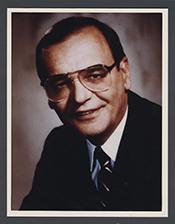 Rep. Paul E. Kanjorski (D-PA)
Description
Amendment sought to strike the provisions exempting public companies with less than $75 million in market capitalization from the requirements of the Sarbanes-Oxley Act relating to the external audit of internal controls.
Legislative Activity
Stay on top of the latest movement without scrolling through every action
House amendment not agreed to: On agreeing to the Kanjorski amendment (A011) Failed by recorded vote: 153 - 271 (Roll no. 960).(consideration: CR H14762; text: CR H14762)
December 11, 2009 • 11:14 AM
View full timeline
House amendment not agreed to: On agreeing to the Kanjorski amendment (A011) Failed by recorded vote: 153 - 271 (Roll no. 960).(consideration: CR H14762; text: CR H14762)
December 11, 2009 • 11:14 AM
Roll call votes on amendments in House
December 11, 2009 • 11:14 AM
Amendment failed in Committee of the Whole
December 11, 2009 • 11:14 AM
On agreeing to the Kanjorski amendment (A011) Failed by recorded vote: 153 - 271 (Roll no. 960). (consideration: CR H14762; text: CR H14762)
December 11, 2009 • 11:14 AM
House amendment offered
December 10, 2009
House amendment offered/reported by : Amendment (A011) offered by Mr. Kanjorski.(consideration: CR H14723-14726; text: CR H14723)
December 10, 2009 • 8:19 PM
Amendment (A011) offered by Mr. Kanjorski. (consideration: CR H14723-14726; text: CR H14723)
December 10, 2009 • 8:19 PM
Votes
1 roll call on this amendment
Text
Offered
WALL STREET REFORM AND CONSUMER PROTECTION ACT OF 2009

The SPEAKER pro tempore. Pursuant to House Resolution 964 and rule
XVIII, the Chair declares the House in the Committee of the Whole House
on the State of the Union for the further consideration of the bill,
H.R. 4173.

{time}  1625

In the Committee of the Whole

Accordingly, the House resolved itself into the Committee of the
Whole House on the State of the Union for the further consideration of
the bill (H.R. 4173) to provide for financial regulatory reform, to
protect consumers and investors, to enhance Federal understanding of
insurance issues, to regulate the over-the-counter derivatives markets,
and for other purposes, with Ms. Loretta Sanchez of California (Acting
Chair) in the chair.
The Clerk read the title of the bill.
The Acting CHAIR. When the Committee of the Whole rose on Wednesday,
December 9, 2009, all time for general debate had expired pursuant to
House Resolution 956.
Pursuant to the House Resolution 964, no further general debate shall
be in order. The bill, as amended, shall be considered for amendment
under the 5-minute rule and shall be considered as read.
The text of the bill, as amended, is as follows:

H.R. 4173

Be it enacted by the Senate and House of Representatives of
the United States of America in Congress assembled,

SECTION 1. SHORT TITLE.

This Act may be cited as the ``The Wall Street Reform and
Consumer Protection Act of 2009''.

SEC. 2. TABLE OF CONTENTS.

The table of contents for this Act is as follows:

Sec. 1. Short title.
Sec. 2. Table of contents.

TITLE I--FINANCIAL STABILITY IMPROVEMENT ACT

Sec. 1000. Short title; definitions.
Sec. 1000A. Restrictions on the Federal Reserve System pending audit
report.

Subtitle A--The Financial Services Oversight Council

Sec. 1001. Financial Services Oversight Council established.
Sec. 1002. Resolution of disputes among Federal financial regulatory
agencies.
Sec. 1003. Technical and professional advisory committees.
Sec. 1004. Financial Services Oversight Council meetings and council
governance.
Sec. 1005. Council staff and funding.
Sec. 1006. Reports to the Congress.
Sec. 1007. Applicability of certain Federal laws.
Sec. 1008. Oversight by GAO.

Subtitle B--Prudential Regulation of Companies and Activities for
Financial Stability Purposes

Sec. 1101. Council and Board authority to obtain information.
Sec. 1102. Council prudential regulation recommendations to Federal
financial regulatory agencies.
Sec. 1103. Subjecting financial companies to stricter prudential
standards for financial stability purposes.
Sec. 1104. Stricter prudential standards for certain financial holding
companies for financial stability purposes.
Sec. 1105. Mitigation of systemic risk.
Sec. 1106. Subjecting activities or practices to stricter prudential
standards for financial stability purposes.
Sec. 1107. Stricter regulation of activities and practices for
financial stability purposes.
Sec. 1108. Effect of rescission of identification.
Sec. 1109. Emergency financial stabilization.
Sec. 1110. Corporation must receive warrants when paying or risking
taxpayer funds.
Sec. 1111. Examinations and enforcement actions for insurance and
resolutions purposes.
Sec. 1112. Study of the effects of size and complexity of financial
institutions on capital market efficiency and economic
growth.
Sec. 1113. Exercise of Federal Reserve authority.
Sec. 1114. Stress tests.
Sec. 1115. Contingent Capital.
Sec. 1116. Restriction on proprietary trading by designated financial
holding companies.
Sec. 1117. Rule of construction.

Subtitle C--Improvements to Supervision and Regulation of Federal
Depository Institutions

Sec. 1201. Definitions.
Sec. 1202. Amendments to the Home Owners' Loan Act relating to transfer
of functions.
Sec. 1203. Amendments to the revised statutes.
Sec. 1204. Power and duties transferred.
Sec. 1205. Transfer date.
Sec. 1206. Expiration of term of comptroller.
Sec. 1207. Office of Thrift Supervision abolished.
Sec. 1208. Savings provisions.
Sec. 1209. Regulations and orders.
Sec. 1210. Coordination of transition activities.
Sec. 1211. Interim responsibilities of office of the comptroller of the
currency and office of thrift supervision.
Sec. 1212. Employees transferred.
Sec. 1213. Property transferred.
Sec. 1214. Funds transferred.
Sec. 1215. Disposition of affairs.
Sec. 1216. Continuation of services.
Sec. 1217. Contracting and leasing authority.
Sec. 1218. Treatment of savings and loan holding companies.
Sec. 1219. Practices of certain mutual thrift holding companies
preserved.
Sec. 1220. Implementation plan and reports.
Sec. 1221. Composition of board of directors of the Federal Deposit
Insurance Corporation.
Sec. 1222. Amendments to section 3.
Sec. 1223. Amendments to section 7.
Sec. 1224. Amendments to section 8.
Sec. 1225. Amendments to section 11.
Sec. 1226. Amendments to section 13.
Sec. 1227. Amendments to section 18.
Sec. 1228. Amendments to section 28.
Sec. 1229. Amendments to the Alternative Mortgage Transaction Parity
Act of 1982.
Sec. 1230. Amendments to the Bank Holding Company Act of 1956.
Sec. 1231. Amendments to the Bank Protection Act of 1968.
Sec. 1232. Amendments to the Bank Service Company Act.
Sec. 1233. Amendments to the Community Reinvestment Act of 1977.
Sec. 1234. Amendments to the Depository Institution Management
Interlocks Act.
Sec. 1235. Amendments to the Emergency Homeowners' Relief Act.
Sec. 1236. Amendments to the Equal Credit Opportunity Act.
Sec. 1237. Amendments to the Federal Credit Union Act.
Sec. 1238. Amendments to the Federal Financial Institutions Examination
Council Act of 1978.
Sec. 1239. Amendments to the Federal Home Loan Bank Act.

[[Page H14497]]

Sec. 1240. Amendments to the Federal Reserve Act.
Sec. 1241. Amendments to the Financial Institutions Reform, Recovery,
and Enforcement Act of 1989.
Sec. 1242. Amendments to the Housing Act of 1948.
Sec. 1243. Amendments to the Housing and Community Development Act of
1992 and the Federal Housing Enterprises Financial Safety
and Soundness Act of 1992.
Sec. 1244. Amendment to the Housing and Urban-Rural Recovery Act of
1983.
Sec. 1245. Amendments to the National Housing Act.
Sec. 1246. Amendments to the Right to Financial Privacy Act of 1978.
Sec. 1247. Amendments to the Balanced Budget and Emergency Deficit
Control Act of 1985.
Sec. 1248. Amendments to the Crime Control Act of 1990.
Sec. 1249. Amendment to the Flood Disaster Protection Act of 1973.
Sec. 1250. Amendment to the Investment Company Act of 1940.
Sec. 1251. Amendment to the Neighborhood Reinvestment Corporation Act.
Sec. 1252. Amendments to the Securities Exchange Act of 1934.
Sec. 1253. Amendments to title 18, United States Code.
Sec. 1254. Amendments to title 31, United States Code.
Sec. 1255. Requirement for Countercyclical Capital Requirements.
Sec. 1256. Transfer of authority to the Board with respect to savings
and loan holding companies.

Subtitle D--Further Improvements to the Regulation of Bank Holding
Companies and Depository Institutions

Sec. 1301. Treatment of industrial loan companies, savings
associations, and certain other companies under the bank
holding company act.
Sec. 1302. Registration of certain companies as bank holding companies.
Sec. 1303. Reports and examinations of bank holding companies;
regulation of functionally regulated subsidiaries.
Sec. 1304. Requirements for financial holding companies to remain well
capitalized and well managed.
Sec. 1305. Standards for interstate acquisitions.
Sec. 1306. Enhancing existing restrictions on bank transactions with
affiliates.
Sec. 1307. Eliminating exceptions for transactions with financial
subsidiaries.
Sec. 1308. Lending limits applicable to credit exposure on derivative
transactions, repurchase agreements, reverse repurchase
agreements, and securities lending and borrowing
transactions.
Sec. 1309. Restriction on conversions of troubled banks and thrifts.
Sec. 1310. Lending limits to insiders.
Sec. 1311. Limitations on purchases of assets from insiders.
Sec. 1312. Rules regarding capital levels of bank holding companies.
Sec. 1313. Enhancements to factors to be considered in certain
acquisitions.
Sec. 1314. Elimination of elective investment bank holding company
framework.
Sec. 1315. Examination fees for large bank holding companies.

Subtitle E--Improvements to the Federal Deposit Insurance Fund

Sec. 1401. Accounting for actual risk to the Deposit Insurance Fund.
Sec. 1402. Creating a risk-focused assessment base.
Sec. 1403. Elimination of procyclical assessments.
Sec. 1404. Enhanced access to information for deposit insurance
purposes.
Sec. 1405. Transition reserve ratio requirements to reflect new
assessment base.

Subtitle F--Improvements to the Asset-backed Securitization Process

Sec. 1501. Short title.
Sec. 1502. Credit risk retention.
Sec. 1503. Periodic and other reporting under the Securities Exchange
Act of 1934 for asset-backed securities.
Sec. 1504. Representations and warranties in asset-backed offerings.
Sec. 1505. Exempted transactions under the Securities Act of 1933.
Sec. 1506. Study on the macroeconomic effects of risk retention
requirements.

Subtitle G--Enhanced Dissolution Authority

Sec. 1601. Short title.
Sec. 1602. Definitions.
Sec. 1603. Systemic risk determination.
Sec. 1604. Resolution; stabilization.
Sec. 1605. Judicial review.
Sec. 1606. Directors not liable for acquiescing in appointment of
receiver.
Sec. 1607. Termination and exclusion of other actions.
Sec. 1608. Rulemaking.
Sec. 1609. Powers and duties of corporation.
Sec. 1610. Clarification of prohibition regarding concealment of assets
from receiver or liquidating agent.
Sec. 1611. Office of Resolution.
Sec. 1612. Miscellaneous provisions.
Sec. 1613. Amendment to Federal Deposit Insurance Act.
Sec. 1614. Application of executive compensation limitations.

Subtitle H--Additional Improvements for Financial Crisis Management

Sec. 1701. Additional improvements for financial crisis management.
Sec. 1702. Certain restrictions related to foreign currency swap
authority.
Sec. 1703. Additional oversight of financial regulatory system.

Subtitle I--Miscellaneous

Sec. 1801. Inclusion of minorities and women; Diversity in agency
workforce.

Subtitle J--International Policy Coordination

Sec. 1901. International policy coordination.

Subtitle K--International Financial Provisions

Sec. 1951. Access to United States financial market by foreign
institutions.

TITLE II--CORPORATE AND FINANCIAL INSTITUTION COMPENSATION FAIRNESS ACT

Sec. 2001. Short title.
Sec. 2002. Shareholder vote on executive compensation disclosures.
Sec. 2003. Compensation committee independence.
Sec. 2004. Enhanced compensation structure reporting to reduce perverse
incentives.

TITLE III--OVER-THE-COUNTER DERIVATIVES MARKETS ACT

Sec. 3001. Short title.

Subtitle A--Regulation of Swap Markets

Sec. 3101. Definitions.
Sec. 3102. Jurisdiction.
Sec. 3103. Clearing.
Sec. 3104. Public reporting of aggregate swap data.
Sec. 3105. Swap repositories.
Sec. 3106. Reporting and recordkeeping.
Sec. 3107. Registration and regulation of swap dealers and major swap
participants.
Sec. 3108. Segregation of assets held as collateral in swap
transactions.
Sec. 3109. Conflicts of interest.
Sec. 3110. Swap execution facilities.
Sec. 3111. Derivatives transaction execution facilities and exempt
boards of trade.
Sec. 3112. Designated contract markets.
Sec. 3113. Position limits.
Sec. 3114. Enhanced authority over registered entities.
Sec. 3115. Foreign boards of trade.
Sec. 3116. Legal certainty for swaps.
Sec. 3117. Multilateral clearing organizations.
Sec. 3118. Primary enforcement authority.
Sec. 3119. Enforcement.
Sec. 3120. Retail commodity transactions.
Sec. 3121. Large swap trader reporting.
Sec. 3122. Authority to ban abusive swaps.
Sec. 3123. International harmonization.
Sec. 3124. Authority to ban access to the United States Financial
System.
Sec. 3125. Other authority.
Sec. 3126. Antitrust.
Sec. 3127. Effective date.

Subtitle B--Regulation of Security-Based Swap Markets

Sec. 3201. Definitions under the Securities Exchange Act of 1934.
Sec. 3202. Repeal of prohibition on regulation of security-based swaps.
Sec. 3203. Amendments to the Securities Exchange Act of 1934.
Sec. 3204. Registration and regulation of swap dealers and major swap
participants.
Sec. 3205. National security exchange registration requirements.
Sec. 3206. Reporting and recordkeeping.
Sec. 3207. State gaming and bucket shop laws.
Sec. 3208. Amendments to the Securities Act of 1933; treatment of
security-based swaps.
Sec. 3209. Other authority.
Sec. 3210. Jurisdiction.
Sec. 3211. Effective date.

Subtitle C--Miscellaneous

Sec. 3301. Study on feasibility of requiring use of standardized
algorithmic descriptions for financial derivatives.
Sec. 3302. Study of desirability and feasibility of establishing single
regulator for all transactions involving financial
derivatives.
Sec. 3303. Recommendations for changes to insolvency laws.
Sec. 3304. Prohibition against government assistance.

TITLE IV--CONSUMER FINANCIAL PROTECTION AGENCY ACT

Sec. 4001. Short title.
Sec. 4002. Definitions.

Subtitle A--Establishment of the Agency

Sec. 4101. Establishment of the Consumer Financial Protection Agency.
Sec. 4102. Director.
Sec. 4103. Consumer Financial Protection Oversight Board.
Sec. 4104. Executive and administrative powers.

[[Page H14498]]

Sec. 4105. Administration.
Sec. 4106. Consumer Advisory Board.
Sec. 4107. Coordination.
Sec. 4108. Reports to the Congress.
Sec. 4109. Funding; fees and assessments; penalties and fines.
Sec. 4110. Amendments relating to other administrative provisions.
Sec. 4111. Effective date.

Subtitle B--General Powers of the Director and Agency

Sec. 4201. Mandate and objectives.
Sec. 4202. Authorities.
Sec. 4203. Examination and enforcement for small banks, thrifts, and
credit unions.
Sec. 4204. Simultaneous and coordinated supervisory action.
Sec. 4205. Limitations on authority of agency and director.
Sec. 4206. Collection of information; confidentiality regulations.
Sec. 4207. Monitoring; assessments of significant regulations; reports.
Sec. 4208. Authority to restrict mandatory predispute arbitration.
Sec. 4209. Registration and supervision of nondepository covered
persons.
Sec. 4210. Effective date.

Subtitle C--Specific Authorities

Sec. 4301. Prohibiting unfair, deceptive, or abusive acts or practices.
Sec. 4302. Disclosures.
Sec. 4303. Sales practices.
Sec. 4304. Pilot disclosures.
Sec. 4305. Adopting operational standards to deter unfair, deceptive,
or abusive practices.
Sec. 4306. Duties.
Sec. 4307. Consumer rights to access information.
Sec. 4308. Prohibited acts.
Sec. 4309. Treatment of remittance transfers.
Sec. 4310. Effective date.
Sec. 4311. No authority to require the offering of financial products
or services.
Sec. 4312. Appraisal independence requirements.

Subtitle D--Preservation of State Law

Sec. 4401. Relation to State law.
Sec. 4402. Preservation of enforcement powers of States.
Sec. 4403. Preservation of existing contracts.
Sec. 4404. State law preemption standards for national banks and
subsidiaries clarified.
Sec. 4405. Visitorial standards.
Sec. 4406. Clarification of law applicable to nondepository institution
subsidiaries.
Sec. 4407. State law preemption standards for Federal savings
associations and subsidiaries clarified.
Sec. 4408. Visitorial standards.
Sec. 4409. Clarification of law applicable to nondepository institution
subsidiaries.
Sec. 4410. Effective date.

Subtitle E--Enforcement Powers

Sec. 4501. Definitions.
Sec. 4502. Investigations and administrative discovery.
Sec. 4503. Hearings and adjudication proceedings.
Sec. 4504. Litigation authority.
Sec. 4505. Relief available.
Sec. 4506. Referrals for criminal proceedings.
Sec. 4507. Employee protection.
Sec. 4508. Effective date.

Subtitle F--Transfer of Functions and Personnel; Transitional
Provisions

Sec. 4601. Transfer of certain functions.
Sec. 4602. Designated transfer date.
Sec. 4603. Savings provisions.
Sec. 4604. Transfer of certain personnel.
Sec. 4605. Incidental transfers.
Sec. 4606. Interim authority of the Secretary.

Subtitle G--Regulatory Improvements

Sec. 4701. Collection of deposit account data.
Sec. 4702. Small business data collection.
Sec. 4703. Annual financial autopsy.

Subtitle H--Conforming Amendments

Sec. 4801. Amendments to the Inspector General Act of 1978.
Sec. 4802. Amendments to the Privacy Act of 1974.
Sec. 4803. Amendments to the Alternative Mortgage Transaction Parity
Act of 1982.
Sec. 4804. Amendments to the Consumer Credit Protection Act.
Sec. 4805. Amendments to the Expedited Funds Availability Act.
Sec. 4806. Amendments to the Federal Deposit Insurance Act.
Sec. 4807. Amendments to the Gramm-Leach-Bliley Act.
Sec. 4808. Amendments to the Home Mortgage Disclosure Act of 1975.
Sec. 4809. Amendments to division D of the Omnibus Appropriations Act,
2009.
Sec. 4810. Amendments to the Homeowners Protection Act of 1998.
Sec. 4811. Amendments to the Real Estate Settlement Procedures Act of
1974.
Sec. 4812. Amendments to the Right to Financial Privacy Act of 1978.
Sec. 4813. Amendments to the Secure and Fair Enforcement for Mortgage
Licensing Act of 2008.
Sec. 4814. Amendments to the Truth in Savings Act.
Sec. 4815. Amendments to the Telemarketing and Consumer Fraud and Abuse
Prevention Act.
Sec. 4816. Membership in Financial Literacy and Education Commission.
Sec. 4817. Effective date.

Subtitle I--Improvements to the Federal Trade Commission Act

Sec. 4901. Amendments to the Federal Trade Commission Act.

TITLE V--CAPITAL MARKETS

Subtitle A--Private Fund Investment Advisers Registration Act

Sec. 5001. Short title.
Sec. 5002. Definitions.
Sec. 5003. Elimination of private adviser exemption; Limited exemption
for foreign private fund advisers; Limited intrastate
exemption.
Sec. 5004. Collection of systemic risk data.
Sec. 5005. Elimination of disclosure provision.
Sec. 5006. Exemption of and reporting by venture capital fund advisers.
Sec. 5007. Exemption of and reporting by certain private fund advisers.
Sec. 5008. Clarification of rulemaking authority.
Sec. 5009. GAO study.
Sec. 5010. Effective date; Transition period.
Sec. 5011. Qualified client standard.

Subtitle B--Accountability and Transparency in Rating Agencies Act

Sec. 6001. Short title.
Sec. 6002. Enhanced regulation of nationally recognized statistical
rating organizations.
Sec. 6003. Standards for private actions.
Sec. 6004. Issuer disclosure of preliminary ratings.
Sec. 6005. Change to designation.
Sec. 6006. Timeline for regulations.
Sec. 6007. Elimination of exemption from fair disclosure rule.
Sec. 6008. Advisory Board.
Sec. 6009. Removal of statutory references to credit ratings.
Sec. 6010. Review of reliance on ratings.
Sec. 6011. Publication of rating histories on the EDGAR system.
Sec. 6012. Effect of Rule 436(g).
Sec. 6013. Studies.

Subtitle C--Investor Protection Act

Sec. 7001. Short title.

Part 1--Disclosure

Sec. 7101. Investor Advisory Committee established.
Sec. 7102. Clarification of the Commission's authority to engage in
consumer testing.
Sec. 7103. Establishment of a fiduciary duty for brokers, dealers, and
investment advisers, and harmonization of regulation.
Sec. 7104. Commission study on disclosure to retail customers before
purchase of products or services.
Sec. 7105. Beneficial ownership and short-swing profit reporting.
Sec. 7106. Revision to recordkeeping rules.
Sec. 7107. Study on enhancing investment advisor examinations.
Sec. 7108. GAO study of financial planning.

Part 2--Enforcement and Remedies

Sec. 7201. Authority to restrict mandatory pre-dispute arbitration.
Sec. 7202. Comptroller General study to review securities arbitration
system.
Sec. 7203. Whistleblower protection.
Sec. 7204. Conforming amendments for whistleblower protection.
Sec. 7205. Implementation and transition provisions for whistleblower
protections.
Sec. 7206. Collateral bars.
Sec. 7207. Aiding and abetting authority under the Securities Act and
the Investment Company Act.
Sec. 7208. Authority to impose penalties for aiding and abetting
violations of the Investment Advisers Act.
Sec. 7209. Deadline for completing examinations, inspections and
enforcement actions.
Sec. 7210. Nationwide service of subpoenas.
Sec. 7211. Authority to impose civil penalties in cease and desist
proceedings.
Sec. 7212. Formerly associated persons.
Sec. 7213. Sharing privileged information with other authorities.
Sec. 7214. Expanded access to grand jury material.
Sec. 7215. Aiding and abetting standard of knowledge satisfied by
recklessness.
Sec. 7216. Extraterritorial jurisdiction of the antifraud provisions of
the Federal securities laws.
Sec. 7217. Fidelity bonding.
Sec. 7218. Enhanced SEC authority to conduct surveillance and risk
assessment.
Sec. 7219. Investment company examinations.
Sec. 7220. Control person liability under the Securities Exchange Act.
Sec. 7221. Enhanced application of anti-fraud provisions.
Sec. 7222. SEC authority to issue rules on proxy access.

Part 3--Commission Funding and Organization

Sec. 7301. Authorization of appropriations.
Sec. 7302. Investment adviser regulation funding.
Sec. 7303. Amendments to section 31 of the Securities Exchange Act of
1934.

[[Page H14499]]

Sec. 7304. Commission organizational study and reform.
Sec. 7305. Capital Markets Safety Board.
Sec. 7306. Report on implementation of ``post-Madoff reforms''.
Sec. 7307. Joint Advisory Committee.

Part 4--Additional Commission Reforms

Sec. 7401. Regulation of securities lending.
Sec. 7402. Lost and stolen securities.
Sec. 7403. Fingerprinting.
Sec. 7404. Equal treatment of self-regulatory organization rules.
Sec. 7405. Clarification that section 205 of the Investment Advisers
Act of 1940 does not apply to State-registered advisers.
Sec. 7406. Conforming amendments for the repeal of the Public Utility
Holding Company Act of 1935.
Sec. 7407. Promoting transparency in financial reporting.
Sec. 7408. Unlawful margin lending.
Sec. 7409. Protecting confidentiality of materials submitted to the
Commission.
Sec. 7410. Technical corrections.
Sec. 7411. Municipal securities.
Sec. 7412. Interested person definition.
Sec. 7413. Rulemaking authority to protect redeeming investors.
Sec. 7414. Study on SEC revolving door.
Sec. 7415. Study on internal control evaluation and reporting cost
burdens on smaller issuers.
Sec. 7416. Analysis of rule regarding smaller reporting companies.
Sec. 7417. Financial Reporting Forum.
Sec. 7418. Investment advisers subject to State authorities.
Sec. 7419. Custodial requirements.
Sec. 7420. Ombudsman.

Part 5--Securities Investor Protection Act Amendments

Sec. 7501. Increasing the minimum assessment paid by SIPC members.
Sec. 7502. Increasing the borrowing limit on treasury loans.
Sec. 7503. Increasing the cash limit of protection.
Sec. 7504. SIPC as trustee in SIPA liquidation proceedings.
Sec. 7505. Insiders ineligible for SIPC advances.
Sec. 7506. Eligibility for direct payment procedure.
Sec. 7507. Increasing the fine for prohibited acts under SIPA.
Sec. 7508. Penalty for misrepresentation of SIPC membership or
protection.
Sec. 7509. Futures held in a portfolio margin securities account
protection.
Sec. 7510. Study and report on the feasibility of risk-based
assessments for SIPC members.
Sec. 7511. Budgetary treatment of Commission loans to SIPC.

Part 6--Sarbanes-Oxley Act Amendments

Sec. 7601. Public Company Accounting Oversight Board oversight of
auditors of brokers and dealers.
Sec. 7602. Foreign regulatory information sharing.
Sec. 7603. Expansion of audit information to be produced and exchanged
with foreign counterparts.
Sec. 7604. Conforming amendment related to registration.
Sec. 7605. Fair fund amendments.
Sec. 7606. Exemption for nonaccelerated filers.
Sec. 7607. Whistleblower protection against retaliation by a subsidiary
of an issuer.
Sec. 7608. Congressional access to information.
Sec. 7609. Creation of ombudsman for the PCAOB.
Sec. 7610. Auditing Oversight Board.

Part 7--Senior Investment Protection

Sec. 7701. Findings.
Sec. 7702. Definitions.
Sec. 7703. Grants to States for enhanced protection of seniors from
being mislead by false designations.
Sec. 7704. Applications.
Sec. 7705. Length of participation.
Sec. 7706. Authorization of appropriations.

Part 8--Registration of Municipal Financial Advisors

Sec. 7801. Municipal financial adviser registration requirement.
Sec. 7802. Conforming amendments.
Sec. 7803. Effective dates.

TITLE VI--FEDERAL INSURANCE OFFICE

Sec. 8001. Short title.
Sec. 8002. Federal Insurance Office established.
Sec. 8003. Report on global reinsurance market.
Sec. 8004. Study on modernization and improvement of insurance
regulation in the United States.

TITLE VII--MORTGAGE REFORM AND ANTI-PREDATORY LENDING ACT

Sec. 9000. Short title; designation as enumerated consumer law.

Subtitle A--Residential Mortgage Loan Origination Standards

Sec. 9001. Definitions.
Sec. 9002. Residential mortgage loan origination.
Sec. 9003. Prohibition on steering incentives.
Sec. 9004. Liability.
Sec. 9005. Regulations.
Sec. 9006. Study of shared appreciation mortgages.

Subtitle B--Minimum Standards For Mortgages

Sec. 9101. Ability to repay.
Sec. 9102. Net tangible benefit for refinancing of residential mortgage
loans.
Sec. 9103. Safe harbor and rebuttable presumption.
Sec. 9104. Liability.
Sec. 9105. Defense to foreclosure.
Sec. 9106. Additional standards and requirements.
Sec. 9107. Rule of construction.
Sec. 9108. Effect on State laws.
Sec. 9109. Regulations.
Sec. 9110. Amendments to civil liability provisions.
Sec. 9111. Lender rights in the context of borrower deception.
Sec. 9112. Six-month notice required before reset of hybrid adjustable
rate mortgages.
Sec. 9113. Required disclosures.
Sec. 9114. Disclosures required in monthly statements for residential
mortgage loans.
Sec. 9115. Legal assistance for foreclosure-related issues.
Sec. 9116. Effective date.
Sec. 9117. Report by the GAO.
Sec. 9118. State Attorney General enforcement authority.

Subtitle C--High-Cost Mortgages

Sec. 9201. Definitions relating to high-cost mortgages.
Sec. 9202. Amendments to existing requirements for certain mortgages.
Sec. 9203. Additional requirements for certain mortgages.
Sec. 9204. Regulations.
Sec. 9205. Effective date.

Subtitle D--Office of Housing Counseling

Sec. 9301. Short title.
Sec. 9302. Establishment of Office of Housing Counseling.
Sec. 9303. Counseling procedures.
Sec. 9304. Grants for housing counseling assistance.
Sec. 9305. Requirements to use HUD-certified counselors under HUD
programs
Sec. 9306. Study of defaults and foreclosures.
Sec. 9307. Default and foreclosure database.
Sec. 9308. Definitions for counseling-related programs.
Sec. 9309. Accountability and transparency for grant recipients.
Sec. 9310. Updating and simplification of mortgage information booklet.
Sec. 9311. Home inspection counseling.
Sec. 9312. Warnings to homeowners of foreclosure rescue scams.

Subtitle E--Mortgage Servicing

Sec. 9401. Escrow and impound accounts relating to certain consumer
credit transactions.
Sec. 9402. Disclosure notice required for consumers who waive escrow
services.
Sec. 9403. Real Estate Settlement Procedures Act of 1974 amendments.
Sec. 9404. Truth in Lending Act amendments.
Sec. 9405. Escrows included in repayment analysis.

Subtitle F--Appraisal Activities

Sec. 9501. Property appraisal requirements.
Sec. 9502. Unfair and deceptive practices and acts relating to certain
consumer credit transactions.
Sec. 9503. Amendments relating to Appraisal Subcommittee of FIEC,
Appraiser Independence Monitoring, Approved Appraiser
Education, Appraisal Management Companies, Appraiser
Complaint Hotline, Automated Valuation Models, and Broker
Price Opinions.
Sec. 9504. Study required on improvements in appraisal process and
compliance programs.
Sec. 9505. Equal Opportunity Act amendment.
Sec. 9506. Real Estate Settlement Procedures Act of 1974 amendment
relating to certain appraisal fees.

Subtitle G--Sense of Congress Regarding the Importance of Government
Sponsored Enterprises Reform

Sec. 9601. Sense of Congress regarding the importance of Government-
sponsored enterprises reform to enhance the protection,
limitation, and regulation of the terms of residential
mortgage credit.

Subtitle H--Reports

Sec. 9701. GAO study report on government efforts to combat mortgage
foreclosure rescue scams and loan modification fraud.

Subtitle I--Multifamily Mortgage Resolution

Sec. 9801. Multifamily mortgage resolution program.

Subtitle J--Study of Effect of Drywall Presence on Foreclosures

Sec. 9901. Study of effect of drywall presence on foreclosures.

TITLE I--FINANCIAL STABILITY IMPROVEMENT ACT

SEC. 1000. SHORT TITLE; DEFINITIONS.

(a) Short Title.--This title may be cited as the
``Financial Stability Improvement Act of 2009''.

[[Page H14500]]

(b) Definitions.--For purposes of this title, the following
definitions shall apply:
(1) The term ``Board'' means the Board of Governors of the
Federal Reserve System.
(2) The term ``Council'' means the Financial Services
Oversight Council established under section 1001.
(3) The term ``Federal financial regulatory agency'' means
any agency that has a voting member of the Council as set
forth in section 1001(b)(1).
(4) The term ``financial company'' means a company or other
entity--
(A) that is--
(i) incorporated or organized under the laws of the United
States or any State, territory, or possession of the United
States, the District of Columbia, Commonwealth of Puerto
Rico, Commonwealth of Northern Mariana Islands, Guam,
American Samoa, or the United States Virgin Islands; or
(ii) a company incorporated in or organized in a country
other than the United States that has significant operations
in the United States through--

(I) a Federal or State branch or agency of a foreign bank
as such terms are defined in the International Banking Act of
1978 (12 U.S.C. 3101 et seq.); or
(II) a United States affiliate or other United States
operating entity of a company that is incorporated or
organized in a country other than the United States;

(B) that is, in whole or in part, directly or indirectly,
engaged in financial activities; and
(C) that is not a Farm Credit System institution chartered
under and subject to the provisions of the Farm Credit Act of
1971, as amended (12 U.S.C. 2001 et seq.).
(5) Financial holding company subject to stricter
standards.--The term ``financial holding company subject to
stricter standards'' means--
(A) a financial company that has been subjected to stricter
prudential standards under subtitle B; or
(B) in the case of a financial company described in
subparagraph (A) that is required to establish an
intermediate holding company under section 6 of the Bank
Holding Company Act, the section 6 holding company through
which the financial company is required to conduct its
financial activities.
(6) The term ``primary financial regulatory agency'' means
the following:
(A) The Comptroller of the Currency, with respect to any
national bank, any Federal branch or Federal agency of a
foreign bank, and, after the date on which the functions of
the Office of Thrift Supervision and the Director of the
Office of Thrift Supervision are transferred under subtitle
C, a Federal savings association.
(B) The Board, with respect to--
(i) any State member bank;
(ii) any bank holding company and any subsidiary of such
company (as such terms are defined in the Bank Holding
Company Act), other than a subsidiary that is described in
any other subparagraph of this paragraph to the extent that
the subsidiary is engaged in an activity described in such
subparagraph;
(iii) any financial holding company subject to stricter
standards and any subsidiary (as such term is defined in the
Bank Holding Company Act) of such company, other than a
subsidiary that is described in any other subparagraph of
this paragraph to the extent that the subsidiary is engaged
in an activity described in such subparagraph;
(iv) any organization organized and operated under section
25 or 25A of the Federal Reserve Act (12 U.S.C. 601 et seq.
or 611 et seq.); and
(v) any foreign bank or company that is treated as a bank
holding company under subsection (a) of section 8 of the
International Banking Act of 1978 and any subsidiary (other
than a bank or other subsidiary that is described in any
other subparagraph of this paragraph) of any such foreign
bank or company.
(C) The Federal Deposit Insurance Corporation, with respect
to a State nonmember bank, any insured State branch of a
foreign bank (as such terms are defined in section 3 of the
Federal Deposit Insurance Act), and, after the date on which
the functions of the Office of Thrift Supervision are
transferred under subtitle C, any State savings association.
(D) The National Credit Union Administration, with respect
to any insured credit union under the Federal Credit Union
Act (12 U.S.C. 1751 et seq.).
(E) The Securities and Exchange Commission, with respect
to--
(i) any broker or dealer registered with the Securities and
Exchange Commission under the Securities Exchange Act of 1934
(15 U.S.C. 78a et seq.);
(ii) any investment company registered with the Securities
and Exchange Commission under the Investment Company Act of
1940 (15 U.S.C. 80a-1 et seq.);
(iii) any investment adviser registered with the Securities
and Exchange Commission under the Investment Advisers Act of
1940 (15 U.S.C. 80b-1 et seq.) with respect to the investment
advisory activities of such company and activities incidental
to such advisory activities;
(iv) any clearing agency (as defined in section 3(a)(23) of
the Securities Exchange Act of 1934;
(v) any exchange registered as a national securities
exchange with the Securities and Exchange Commission under
the Securities Exchange Act of 1934 (15 U.S.C. 78a et seq.);
(vi) any credit rating agency registered with the
Securities and Exchange Commission under the Securities
Exchange Act of 1934 (15 U.S.C. 78a et seq.);
(vii) any securities information processor registered with
the Securities and Exchange Commission under the Securities
Exchange Act of 1934 (15 U.S.C. 78a et seq.); and
(viii) any transfer agent registered with the Securities
and Exchange Commission under the Securities Exchange Act of
1934 (15 U.S.C. 78a et seq.).
(F) The Commodity Futures Trading Commission, with respect
to--
(i) any futures commission merchant, any commodity trading
adviser, any retail foreign exchange dealer and any commodity
pool operator registered with the Commodity Futures Trading
Commission under the Commodity Exchange Act (7 U.S.C. 1 et
seq.) with respect to the commodities activities of such
entity and activities incidental to such commodities
activities; and
(ii) any derivatives clearing organization, designated
contract market, or swap execution facility (as defined in
the Commodity Exchange Act).
(G) The Federal Housing Finance Agency with respect to the
Federal National Mortgage Association, the Federal Home Loan
Mortgage Corporation, and the Federal home loan banks.
(H) The State insurance authority of the State in which an
insurance company is domiciled, with respect to the insurance
activities and activities incidental to such insurance
activities of an insurance company that is subject to
supervision by the State insurance authority under State
insurance law.
(I) The Office of Thrift Supervision, with respect to any
Federal savings association, State savings association, or
savings and loan holding company, until the date on which the
functions of the Office of Thrift Supervision are transferred
under subtitle C.
(7) Terms defined in other laws.--
(A) Affiliate.--The term ``affiliate'' has the meaning
given such term in section 2(k) of the Bank Holding Company
Act of 1956.
(B) State member bank, state nonmember bank.--The terms
``State member bank'' and ``State nonmember bank'' have the
same meanings as in subsections (d)(2) and (e)(2),
respectively, of section 3 of the Federal Deposit Insurance
Act.

SEC. 1000A. RESTRICTIONS ON THE FEDERAL RESERVE SYSTEM
PENDING AUDIT REPORT.

(a) In General.--Notwithstanding any other provision of
law, the Comptroller General of the United States shall
perform an audit of all actions taken by the Board of
Governors of the Federal Reserve System and the Federal
reserve banks during the current economic crisis pursuant to
the authority granted under section 13(c) of the Federal
Reserve Act. Such audit shall be completed as expeditiously
as possible after the date of the enactment of the Financial
Stability Improvement Act of 2009.
(b) Report.--
(1) Required.--Not later than the end of the 90-day period
beginning on the date the audit referred to in subsection (a)
is completed, the Comptroller General of the United States
shall submit a report to the Congress, and make such report
available to the public.
(2) Contents.--The report under paragraph (1) shall include
a detailed description of the findings and conclusion of the
Comptroller General with respect to the audit that is the
subject of the report, together with such recommendations for
legislative or administrative action as the Comptroller
General may determine to be appropriate.

Subtitle A--The Financial Services Oversight Council

SEC. 1001. FINANCIAL SERVICES OVERSIGHT COUNCIL ESTABLISHED.

(a) Establishment.--Immediately upon enactment of this
title, there is established a Financial Services Oversight
Council.
(b) Membership.--The Council shall consist of the
following:
(1) Voting members.--Voting members, who shall each have
one vote on the Council, as follows:
(A) The Secretary of the Treasury, who shall serve as the
Chairman of the Council.
(B) The Chairman of the Board of Governors of the Federal
Reserve System.
(C) The Comptroller of the Currency.
(D) The Director of the Office of Thrift Supervision, until
the functions of the Director of the Office of Thrift
Supervision are transferred to pursuant to subtitle C.
(E) The Chairman of the Securities and Exchange Commission.
(F) The Chairman of the Commodity Futures Trading
Commission.
(G) The Chairperson of the Federal Deposit Insurance
Corporation.
(H) The Director of the Federal Housing Finance Agency.
(I) The Chairman of the National Credit Union
Administration.
(2) Nonvoting members.--Nonvoting members, who shall serve
in an advisory capacity:
(A) A State insurance commissioner, to be designated by a
selection process determined by the State insurance
commissioners, provided that the term for which a State
insurance commissioner may serve shall last no more than the
2-year period beginning on the date that the commissioner is
selected.
(B) A State banking supervisor, to be designated by a
selection process determined by the State bank supervisors,
provided that the term for which a State banking supervisor
may serve shall last no more than the

[[Page H14501]]

2-year period beginning on the date that the supervisor is
selected.
(c) Duties.--The Council shall have the following duties:
(1) To advise the Congress on financial domestic and
international regulatory developments, including insurance
and accounting developments, and make recommendations that
will enhance the integrity, efficiency, orderliness,
competitiveness, and stability of the United States financial
markets.
(2) To monitor the financial services marketplace to
identify potential threats to the stability of the United
States financial system.
(3) To identify potential threats to the stability of the
United States financial system that do not arise out of the
financial services marketplace.
(4) To develop plans (and conduct exercises in furtherance
of those plans) to prepare for potential threats identified
under paragraphs (2) and (3).
(5) To subject financial companies and financial activities
to stricter prudential standards in order to promote
financial stability and mitigate systemic risk in accordance
with subtitle B.
(6) To issue formal recommendations that a Council member
agency adopt stricter prudential standards for firms it
regulates to mitigate systemic risk in accordance with
subtitle B of this title.
(7) To monitor international regulatory developments,
including both insurance and accounting developments, and to
identify those developments that may conflict with the
policies of the United States or place United States
financial services firms or United States financial markets
at a competitive disadvantage.
(8) To facilitate information sharing and coordination
among the members of the Council regarding financial services
policy development, rulemakings, examinations, reporting
requirements, and enforcement actions.
(9) To provide a forum for discussion and analysis of
emerging market developments and financial regulatory issues
among its members.
(10) At the request of an agency that is a Council member,
to resolve a jurisdictional dispute between that agency and
another agency that is a Council member in accordance with
section 1002.
(11) To review and submit comments to the Securities and
Exchange Commission and any standards setting body with
respect to an existing or proposed accounting principle,
standard, or procedure.

SEC. 1002. RESOLUTION OF DISPUTES AMONG FEDERAL FINANCIAL
REGULATORY AGENCIES.

(a) Request for Dispute Resolution.--The Council shall
resolve a dispute among 2 or more Federal financial
regulatory agencies if--
(1) a Federal financial regulatory agency has a dispute
with another Federal financial regulatory agency about the
agencies' respective jurisdiction over a particular financial
company or financial activity or product (excluding matters
for which another dispute mechanism specifically has been
provided under Federal law);
(2) the disputing agencies cannot, after a demonstrated
good faith effort, resolve the dispute among themselves; and
(3) any of the Federal financial regulatory agencies
involved in the dispute--
(A) provides all other disputants prior notice of its
intent to request dispute resolution by the Council; and
(B) requests in writing, no earlier than 14 days after
providing the notice described in paragraph (A), that the
Council resolve the dispute.
(b) Council Decision.--The Council shall decide the
dispute--
(1) within a reasonable time after receiving the dispute
resolution request;
(2) after consideration of relevant information provided by
each party to the dispute; and
(3) by agreeing with 1 of the disputants regarding the
entirety of the matter or by determining a compromise
position.
(c) Form and Binding Effect.--A Council decision under this
section shall be in writing and include an explanation and
shall be binding on all Federal financial regulatory agencies
that are parties to the dispute.

SEC. 1003. TECHNICAL AND PROFESSIONAL ADVISORY COMMITTEES.

The Council is authorized to appoint--
(1) subsidiary working groups composed of Council members
and their staff, Council staff, or a combination; and
(2) such temporary special advisory, technical, or
professional committees as may be useful in carrying out its
functions, which may be composed of Council members and their
staff, other persons, or a combination.

SEC. 1004. FINANCIAL SERVICES OVERSIGHT COUNCIL MEETINGS AND
COUNCIL GOVERNANCE.

(a) Meetings.--The Council shall meet as frequently as the
Chairman deems necessary, but not less than quarterly.
(b) Voting.--Unless otherwise provided, the Council shall
make all decisions the Council is required or authorized to
make by a majority of the total voting membership of the
Council under section 1001(b)(1).

SEC. 1005. COUNCIL STAFF AND FUNDING.

(a) Department of the Treasury.--The Secretary of the
Treasury shall--
(1) detail permanent staff from the Department of the
Treasury to provide the Council (and any temporary special
advisory, technical, or professional committees appointed by
the Council) with professional and expert support; and
(2) provide such other services and facilities necessary
for the performance of the Council's functions and
fulfillment of the duties and mission of the Council.
(b) Other Departments and Agencies.--In addition to the
assistance prescribed in subsection (a), departments and
agencies of the United States may, with the approval of the
Secretary of the Treasury--
(1) detail department or agency staff on a temporary basis
to provide additional support to the Council (and any special
advisory, technical, or professional committees appointed by
the Council); and
(2) provide such services, and facilities as the other
departments or agencies may determine advisable.
(c) Staff Status; Council Funding.--
(1) Status.--Staff detailed to the Council by the Secretary
of the Treasury and other United States departments or
agencies shall--
(A) report to and be subject to oversight by the Council
during their assignment to the Council; and
(B) be compensated by the department of agency from which
the staff was detailed.
(2) Funding.--The administrative expense of the Council
shall be paid by the departments and agencies represented by
voting members of the Council on an equal basis.

SEC. 1006. REPORTS TO THE CONGRESS.

(a) In General.--Semiannually the Council shall submit a
report to the Committee on Ways and Means, the Committee on
Agriculture, and the Committee on Financial Services of the
House of Representativesand the Committee on Finance, the
Committee on Agriculture, and the Committee on Banking,
Housing, and Urban Affairs of the Senate, and the Comptroller
General of the United States that--
(1) describes significant financial and regulatory
developments, including insurance and accounting regulations
and standards, and assesses the impact of those developments
on the stability of the financial system;
(2) recommends actions that will improve financial
stability;
(3) details the size, scale, scope, concentration,
activities, and interconnectedness of the 50 largest
financial institutions, by total assets, in the United
States;
(4) describes plans developed by the Council to respond to
potential threats to the stability of the United States
financial system and the outcome of exercises conducted in
furtherance of those plans;
(5) describes the nature and scope of any company or
activities identified under subtitle B and steps taken to
address them; and
(6) describes any dispute resolutions undertaken under
section 1002 and the result of such resolutions.
(b) Evaluation of Annual Report by GAO.--Not later than 120
days after receiving the report required by subsection (a),
the Comptroller General of the United States shall submit an
evaluation of such report to the Committee on Ways and Means,
the Committee on Agriculture, and the Committee on Financial
Services of the House of Representatives and the Committee on
Finance, the Committee on Agriculture, and the Committee on
Banking, Housing, and Urban Affairs of the Senate.
(c) Statements by Voting Members of the Council.--At the
time each report is submitted under subsection (a), each
voting member of the Council shall--
(1) if such member believes that the Council, the
Government, and the private sector are taking all reasonable
steps to ensure financial stability and to prevent systemic
risk that would negatively affect the economy, submit a
signed statement to the Committee on Ways and Means, the
Committee on Agriculture, and the Committee on Financial
Services of the House of Representatives and the Committee on
Finance, the Committee on Agriculture, and the Committee on
Banking, Housing, and Urban Affairs of the Senate stating
such belief; or
(2) if such member does not believe that all reasonable
steps described under paragraph (1) are being taken, submit a
signed statement to the Committee on Ways and Means, the
Committee on Agriculture, and the Committee on Financial
Services of the House of Representatives and the Committee on
Finance, the Committee on Agriculture, and the Committee on
Banking, Housing, and Urban Affairs of the Senate stating
what actions such member believes need to be taken in order
to ensure that all reasonable steps described under paragraph
(1) are taken.
(d) Testimony by the Chairman.--The Chairman of the Council
shall appear before the Committee on Financial Services of
the House of Representatives and the Committee on Banking,
Housing, and Urban Affairs of the Senate at a semi-annual
hearing, after the report is submitted under subsection (a)--
(1) to discuss the efforts, activities, objectives, and
plans of the Council; and
(2) to discuss and answer questions concerning such report.

SEC. 1007. APPLICABILITY OF CERTAIN FEDERAL LAWS.

(a) The Federal Advisory Committee Act shall not apply to
the Financial Services Oversight Council, or any special
advisory, technical, or professional committees appointed by
the Council (except that, if an advisory, technical, or
professional committee has one or more members who are not
employees of or affiliated with the United States government,
the Council shall publish

[[Page H14502]]

a list of the names of the members of such committee).
(b) The Council shall not be deemed an ``agency'' for
purposes of any State or Federal law.

SEC. 1008. OVERSIGHT BY GAO.

(a) Authority to Audit.--The Comptroller General of the
United States may audit the activities and financial
transactions of--
(1) the Council; and
(2) any person or entity acting on behalf of or under the
authority of the Council, to the extent such activities and
financial transactions relate to such person's or entity's
work for the Council.
(b) Access to Information.--
(1) In general.--Notwithstanding any other provision of
law, the Comptroller General of the United States shall have
access, upon request and at such reasonable time and in such
reasonable form as the Comptroller General may request, to--
(A) any records or other information under the control of
the Council; and
(B) any records or other information under the control of a
person or entity acting on behalf of or under the authority
of the Council, to the extent such records or other
information is relevant to an audit under subsection (a).
(2) Certain information specified.--Access under paragraph
(1) includes access to--
(A) information provided to the Council by its voting and
nonvoting members under section 1101; and
(B) the identity of each financial holding company subject
to stricter standards.
(c) Periodic Evaluations.--The Comptroller General of the
United States shall periodically evaluate the processes and
activities of the Council and the extent to which the Council
is fulfilling its duties under this title. The Comptroller
General shall submit to the Committee on Financial Services
of the House of Representatives and the Committee on Banking,
Housing, and Urban Affairs of the Senate a report on the
results of each such evaluation.
(d) Confidentiality.--Any committees or Members of Congress
receiving reports or other information from the Comptroller
General of the United States shall maintain the
confidentiality of any such information relating to--
(1) dispute resolutions undertaken under section 1002,
including the result of such dispute resolutions; and
(2) financial holding companies subject to stricter
standards.

Subtitle B--Prudential Regulation of Companies and Activities for
Financial Stability Purposes

SEC. 1101. COUNCIL AND BOARD AUTHORITY TO OBTAIN INFORMATION.

(a) In General.--The Council and the Board are authorized
to receive, and may request the production of, any data or
information from members of the Council, as necessary--
(1) to monitor the financial services marketplace to
identify potential threats to the stability of the United
States financial system;
(2) to identify global trends and developments that could
pose systemic risks to the stability of the economy of the
United States or other economies; or
(3) to otherwise carry out any of the provisions of this
title, including to ascertain a primary financial regulatory
agency's implementation of recommended prudential standards
under this subtitle.
(b) Submission by Council Members.--Notwithstanding any
provision of law, any voting or nonvoting member of the
Council is authorized to provide information to the Council,
and the members of the Council shall maintain the
confidentiality of such information.
(c) Financial Company Data Collection.--
(1) In general.--The Council or the Board may require the
submission of periodic and other reports from any financial
company solely for the purpose of assessing the extent to
which a financial activity or financial market in which the
financial company participates, or the company itself, poses
a threat to financial stability.
(2) Mitigation of report burden.--Before requiring the
submission of reports from financial companies that are
regulated by the primary financial regulatory agencies, the
Council or the Board shall coordinate with such agencies and
shall, whenever possible, rely on information already being
collected by such agencies.
(d) Consultation With Agencies and Entities.--The Council
or the Board, as appropriate, may consult with Federal and
State agencies and other entities to carry out any of the
provisions of this subtitle.
(e) Additional Provisions.--
(1) Data and information sharing.--The Chairman of the
Council, in consultation with the other members of the
Council may--
(A) establish procedures to share data and information
collected by the Council under this section with the members
of the Council;
(B) develop an electronic process for sharing all
information collected by the Council with the Chairman of the
Board on a real-time basis; and
(C) issue any regulations necessary to carry out this
subsection; and
(D) designate the format in which requested data and
information must be submitted to the Council, including any
electronic, digital, or other format that facilitates the use
of such data by the Council in its analysis.
(2) Applicable privileges not waived.--A Federal financial
regulator, State financial regulator, United States financial
company, foreign financial company operating in the United
States, financial market utility, or other person shall not
be deemed to have waived any privilege otherwise applicable
to any data or information by transferring the data or
information to, or permitting that data or information to be
used by--
(A) the Council;
(B) any Federal financial regulator or State financial
regulator, in any capacity; or
(C) any other agency of the Federal Government (as defined
in section 6 of title 18, United States Code).
(3) Disclosure exemption.--Any information obtained by the
Council under this section shall be exempt from the
disclosure requirements under section 552 of title 5, United
States Code.
(4) Consultation with foreign governments.--Under the
supervision of the President, and in a manner consistent with
section 207 of the Foreign Service Act of 1980 (22 U.S.C.
3927), the Chairman of the Council, in consultation with the
other members of the Council, shall regularly consult with
the financial regulatory entities and other appropriate
organizations of foreign governments or international
organizations on matters relating to systemic risk to the
international financial system.
(5) Report.--Not later than 6 months after the date of the
enactment of this title, the Chairman of the Council shall
report to the Financial Services Committee of the House of
Representatives and the Banking, Housing, and Urban Affairs
Committee of the Senate the opinion of the Council as to
whether setting up an electronic database as described in
paragraph (1)(B) would aid the Council in carrying out this
section.

SEC. 1102. COUNCIL PRUDENTIAL REGULATION RECOMMENDATIONS TO
FEDERAL FINANCIAL REGULATORY AGENCIES.

(a) In General.--The Council is authorized to issue formal
recommendations, publicly or privately, that a Federal
financial regulatory agency adopt stricter prudential
standards for firms it regulates to mitigate systemic risk.
(b) Agency Authority to Implement Standards.--A Federal
financial regulatory agency specifically is authorized to
impose, require reports regarding, examine for compliance
with, and enforce stricter prudential standards and
safeguards for the firms it regulates to mitigate systemic
risk. This authority is in addition to and does not limit any
other authority of the Federal financial regulatory agencies.
Compliance by an entity with actions taken by a Federal
financial regulatory agency under this section shall be
enforceable in accordance with the statutes governing the
respective Federal financial regulatory agency's jurisdiction
over the entity as if the agency action were taken under
those statutes.
(c) Agency Notice to Council.--A Federal financial
regulatory agency shall, within 60 days of receiving a
Council recommendation under this section, notify the Council
in writing regarding--
(1) the actions the Federal financial regulatory agency has
taken in response to the Council's recommendation, additional
actions contemplated, and timetables therefore; or
(2) the reason the Federal financial regulatory agency has
failed to respond to the Council's request.

SEC. 1103. SUBJECTING FINANCIAL COMPANIES TO STRICTER
PRUDENTIAL STANDARDS FOR FINANCIAL STABILITY
PURPOSES.

(a) In General.--The Council shall, in consultation with
the Board and any other primary financial regulatory agency
that regulates the financial company or a subsidiary of such
company, subject a financial company to stricter prudential
standards under this subtitle if the Council determines
that--
(1) material financial distress at the company could pose a
threat to financial stability or the economy; or
(2) the nature, scope, size, scale, concentration, and
interconnectedness, or mix of the company's activities could
pose a threat to financial stability or the economy.
(b) Criteria.--In making a determination under subsection
(a), the Council shall consider the following criteria:
(1) The amount and nature of the company's financial
assets.
(2) The amount and nature of the company's liabilities,
including the degree of reliance on short-term funding.
(3) The extent of the company's leverage.
(4) The extent and nature of the company's off-balance
sheet exposures.
(5) The extent and nature of the company's transactions and
relationships with other financial companies.
(6) The company's importance as a source of credit for
households, businesses, and State and local governments and
as a source of liquidity for the financial system.
(7) The nature, scope, and mix of the company's activities.
(8) The degree to which the company is already regulated by
one or more Federal financial regulatory agencies.
(9) Any other factors that the Council deems appropriate.
(c) Notification of Decision.--The Board, in an executive
capacity on behalf of the Council, shall immediately upon the
Council's decision notify the financial company

[[Page H14503]]

by order, which shall be public, that the financial company
is subject to stricter prudential standards, as prescribed by
the Board in accordance with section 1104.
(d) Periodic Review and Rescission of Findings.--
(1) Submission of assessment.--The Board shall periodically
submit a report to the Council containing an assessment of
whether each company subjected to stricter prudential
standards should continue to be subject to such standards.
(2) Review and rescission.--The Council shall--
(A) review the assessment submitted pursuant to paragraph
(1) and any information or recommendation submitted by
members of the Council regarding whether a financial holding
company subject to stricter standards continues to merit
stricter prudential standards; and
(B) rescind the action subjecting a company to stricter
prudential standards if the Council determines that the
company no longer meets the conditions for being subjected to
stricter prudential standards in subsections (a) and (b).
(e) Emergency Exception to Majority Vote of Council
Requirement.--If each of the Secretary of the Treasury, the
Board, and the Federal Deposit Insurance Corporation
determines that a financial company must be subjected to
stricter prudential standards in accordance with this section
immediately to prevent destabilization of the financial
system or economy, the Secretary, the Board, and the
Corporation may, upon approval by the President, subject such
company to stricter prudential standards under this section.
(f) Appeal.--
(1) Administrative.--The Council and the Board, in an
executive capacity on behalf of the Council, shall establish
a procedure through which a financial company that has been
subjected to stricter prudential standards in accordance with
this section may appeal being subjected to stricter
prudential standards.
(2) Judicial review.--Any financial company which has been
subjected to stricter prudential standards may seek judicial
review by filing a petition for such review in the United
States Court of Appeals for the District of Columbia.
(g) Effect of Council Decision.--
(1) Application of the bank holding company act.--A
financial company that is not a bank holding company as
defined in the Bank Holding Company Act at the time the
financial company is subjected to stricter prudential
standards in accordance with this section, shall--
(A) if such company conducts at the time such company is
subjected to stricter prudential standards in accordance with
this section only activities that are determined to be
financial in nature or incidental thereto under section 4(k)
of the Bank Holding Company Act of 1956, be treated as a bank
holding company that has elected to be a financial holding
company for purposes of the Bank Holding Company Act of 1956,
the Federal Deposit Insurance Act, and all other Federal laws
and regulations governing bank holding companies and
financial holding companies and be the financial holding
company subject to stricter standards for purposes of this
subtitle; or
(B) if such company conducts at the time that such company
is subjected to stricter prudential standards in accordance
with this section activities other than those that are
determined to be financial in nature or incidental thereto
under section 4(k) of the Bank Holding Company Act, be
required to establish and conduct all its activities that are
determined to be financial in nature or incidental thereto
under section 4(k) of the Bank Holding Company Act of 1956 in
an intermediate holding company established under section 6
of the Bank Holding Company Act of 1956, which intermediate
holding company shall be treated as a bank holding company
that has elected to be a financial holding company for
purposes of the Bank Holding Company Act of 1956, the Federal
Deposit Insurance Act, and all other Federal laws and
regulations governing bank holding companies and financial
holding companies, and such section 6 holding company shall
be a financial holding company subject to stricter standards
for purposes of this title.
(2) Exemptive authority.--Notwithstanding any provision of
the Bank Holding Company Act of 1956, the Board may, if it
determines such action is necessary to ensure appropriate
stricter prudential supervision, issue such exemptions from
that Act as may be necessary with regard to financial holding
companies subject to stricter standards that do not control
an insured depository institution.
(3) Leverage limitation.--The Board shall require each
financial holding company subject to stricter standards to
maintain a debt to equity ratio of no more than 15 to 1, and
the Board shall issue regulations containing procedures and
timelines for how a financial holding company subject to
stricter standards with a debt to equity ratio of more than
15 to 1 at the time such company becomes a financial holding
company subject to stricter standards shall reduce such
ratio.

SEC. 1104. STRICTER PRUDENTIAL STANDARDS FOR CERTAIN
FINANCIAL HOLDING COMPANIES FOR FINANCIAL
STABILITY PURPOSES.

(a) Stricter Prudential Standards.--
(1) In general.--To mitigate risks to financial stability
and the economy posed by a financial holding company that has
been subjected to stricter prudential standards in accordance
with section 1103, the Board shall impose stricter prudential
standards on such company. Such standards shall be designed
to maximize financial stability taking costs to long-term
financial and economic growth into account, be heightened
when compared to the standards that otherwise would apply to
financial holding companies that are not subjected to
stricter prudential standards pursuant to this subtitle
(including by addressing additional or different types of
risks than otherwise applicable standards), and reflect the
potential risk posed to financial stability by the financial
holding company subject to stricter standards.
(2) Standards.--
(A) Required standards.--The heightened standards imposed
by the Board under this section shall include--
(i) risk-based capital requirements;
(ii) leverage limits;
(iii) liquidity requirements;
(iv) concentration requirements (as specified in subsection
(c));
(v) prompt corrective action requirements (as specified in
subsection (e));
(vi) resolution plan requirements (as specified in
subsection (f));
(vii) overall risk management requirements; and
(viii) and may establish short-term debt limits in
accordance with subsection (d).
(B) Additional standards.--The heightened standards imposed
by the Board under this section also may include any other
prudential standards that the Board deems advisable,
including taking actions to mitigate systemic risk.
(C) Consultation with federal financial regulatory
agencies.--The Board, in developing stricter prudential
standards under this subsection, shall consult with other
Federal financial regulatory agencies with respect to any
standard that is likely to have a significant impact on a
functionally regulated subsidiary, or a subsidiary depository
institution, of a financial holding company that is subject
to stricter prudential standards under this title.
(3) Application of required standards.--In imposing
prudential standards under this subsection, the Board may
differentiate among financial holding companies subject to
stricter standards on an individual basis or by category,
taking into consideration their capital structure, risk,
complexity, financial activities, the financial activities of
their subsidiaries, and any other factors that the Board
deems appropriate.
(4) Well capitalized and well managed.--A financial holding
company subject to stricter standards shall at all times
after it is subject to such standards be well capitalized and
well managed as defined by the Board.
(5) Application to foreign financial companies.--The Board
shall prescribe regulations regarding the application of
stricter prudential standards to financial companies that are
organized or incorporated in a country other than the United
States, and that own or control a Federal or State branch,
subsidiary, or operating entity that is a financial holding
company subject to stricter standards, giving due regard to
the principle of national treatment and equality of
competitive opportunity and taking into account the extent to
which such companies are subject to home country standards
comparable to those applied to financial holding companies in
the United States.
(6) Inclusion of off balance sheet activities in computing
capital requirements.--
(A) In general.--In the case of any financial holding
company subject to stricter standards, the computation of
capital requirements shall take into account off balance
sheet activities for such a company.
(B) Exemption.--If the Board determines that an exemption
from the requirements under subparagraph (A) is appropriate,
the Board may exempt a financial holding company subject to
stricter standards from the requirements under subparagraph
(A) or any transaction or transactions engaged in by such a
company.
(C) Off balance sheet activities defined.--For purposes of
this paragraph, the term ``off balance sheet activities''
means a liability that is not currently a balance sheet
liability but may become one upon the happening of some
future event, including the following transactions, to the
extent they may create a liability:
(i) Direct credit substitutes in which a bank substitutes
its own credit for a third party, including standby letters
of credit.
(ii) Irrevocable letters of credit that guarantee repayment
of commercial paper or tax-exempt securities.
(iii) Risk participation in bankers' acceptances.
(iv) Sale and repurchase agreements.
(v) Asset sales with recourse against the seller.
(vi) Interest rate swaps.
(vii) Credit swaps.
(viii) Commodity contracts.
(ix) Forward contracts.
(x) Securities contracts.
(xi) Such other activities or transactions as the Board
may, by rule, define.
(b) Prudential Standards at Functionally Regulated
Subsidiaries and Subsidiary Depository Institutions.--
(1) Board authority to recommend standards.--With respect
to a functionally regulated subsidiary (as such term is
defined in section 5 of the Bank Holding Company Act) or a
subsidiary depository institution of a financial holding
company subject to stricter

[[Page H14504]]

standards, the Board may recommend that the relevant Federal
financial regulatory agency for such functionally regulated
subsidiary or subsidiary depository institution prescribe
stricter prudential standards on such functionally regulated
subsidiary or subsidiary depository institution. Any
standards recommended by the Board under this section shall
be of the same type as those described in subsection (a)(2)
that the Board is required or authorized to impose directly
on the financial holding company subject to stricter
standards.
(2) Agency authority to implement heightened standards and
safeguards.--Each Federal financial regulatory agency that
receives a Board recommendation under paragraph (1) is
authorized to impose, require reports regarding, examine for
compliance with, and enforce standards under this subsection
with respect to the entities such agency regulates, as such
entities are described in section 1006(b)(6). This authority
is in addition to and does not limit any other authority of
the Federal financial regulatory agencies. Compliance by an
entity with actions taken by a Federal financial regulatory
agency under this section shall be enforceable in accordance
with the statutes governing the respective agency's
jurisdiction over the entity as if the agency action were
taken under those statutes.
(3) Imposition of standards.--Standards imposed by a
Federal financial regulatory agency under this subsection
shall be the standards recommended by the Board in accordance
with paragraph (1) or any other similar standards that the
Board deems acceptable after consultation between the Board
and the primary financial regulatory agency.
(4) Federal financial regulatory agency response; notice to
council and board.--A Federal financial regulatory agency
shall notify the Council and the Board in writing on whether
and to what extent the agency has imposed the stricter
prudential standards described in paragraph (3) within 60
days of the Board's recommendation under paragraph (1). A
Federal financial regulatory agency that fails to impose such
standards shall provide specific justification for such
failure to act in the written notice from the agency to the
Council and Board.
(c) Concentration Limits for Financial Holding Companies
Subject to Stricter Standards.--
(1) Standards.--In order to limit the risks that the
failure of any company could pose to a financial holding
company subject to stricter standards and to the stability of
the United States financial system, the Board, by regulation,
shall prescribe standards that limit the risks posed by the
exposure of a financial holding company subject to stricter
standards to any other company.
(2) Limitation on credit exposure.--The regulations
prescribed by the Board shall prohibit each financial holding
company subject to stricter standards from having credit
exposure to any unaffiliated company that exceeds 25 percent
of capital stock and surplus of the financial holding company
subject to stricter standards, or such lower amount as the
Board may determine by regulation to be necessary to mitigate
risks to financial stability.
(3) Credit exposure.--For purposes of this subsection and
with respect to a financial holding company subject to
stricter standards, the term ``credit exposure'' to a company
means--
(A) all extensions of credit to the company, including
loans, deposits, and lines of credit;
(B) all repurchase agreements and reverse repurchase
agreement with the company;
(C) all securities borrowing and lending transactions with
the company to the extent that such transactions create
credit exposure of the financial holding company subject to
stricter standards to the company;
(D) all guarantees, acceptances, or letters of credit
(including endorsement or standby letters of credit) issued
on behalf of the company;
(E) all purchases of or investment in securities issued by
the company;
(F) counterparty credit exposure to the company in
connection with a derivative transaction between the
financial holding company subject to stricter standards and
the company; and
(G) any other similar transactions that the Board by
regulation determines to be a credit exposure for purposes of
this section.
(4) Attribution rule.--For purposes of this subsection, any
transaction by a financial holding company subject to
stricter standards with any person is deemed a transaction
with a company to the extent that the proceeds of the
transaction are used for the benefit of, or transferred to,
that company.
(5) Rulemaking.--The Board may issue such regulations and
orders, including definitions consistent with this
subsection, as may be necessary to administer and carry out
the purpose of this subsection.
(6) Exemptions.--
(A) In general.--
(i) Federal home loan banks.--This subsection shall not
apply to any Federal home loan bank, but Federal home loan
banks are not exempt from any other provision of this title.
(ii) Applicability to other entities.--The Federal National
Mortgage Association and the Federal Home Loan Mortgage
Corporation are not exempt from any provision of this title.
(B) Regulations.--The Board may, by regulation or order,
exempt transactions, in whole or in part, from the definition
of credit exposure if it finds that the exemption is in the
public interest and consistent with the purpose of this
subsection.
(7) Transition period.--This subsection and any regulations
and orders of the Board under the authority of this
subsection shall not take effect until the date that is 3
years from the date of the enactment of this subsection. The
Board may extend the effective date for up to 2 additional
years to promote financial stability.
(d) Short-term Debt Limits for Certain Financial Holding
Companies.--
(1) In general.--In order to limit the risks that an
overaccumulation of short-term debt could pose to financial
holding companies and to the stability of the United States
financial system, the Board shall by regulation prescribe a
limit on the amount of short-term debt, including off-balance
sheet exposures, that may be accumulated by any financial
holding company subject to stricter standards for purposes of
this title.
(2) Basis of limit.--The limit prescribed under paragraph
(1) shall be based on a financial holding company's short-
term debt as a percentage of its capital stock and surplus or
on such other measure as the Board considers appropriate.
(3) Short-term debt defined.--For purposes of this
subsection, the term ``short-term debt'' means such
liabilities with short-dated maturity that the Board
identifies by regulation, except that such term does not
include insured deposits.
(4) Rulemaking authority.--In addition to prescribing
regulations under paragraphs (1) and (3), the Board may
prescribe such regulations, including definitions consistent
with this subsection, and issue such orders as may be
necessary to carry out this subsection.
(5) Authority to issue exemptions and adjustments.--
Notwithstanding the Bank Holding Company Act of 1956 (12
U.S.C. 1841 et seq.), the Board may, if it determines such
action is necessary to ensure appropriate heightened
prudential supervision, with respect to a financial holding
company that does not control an insured depository
institution, issue to such company an exemption from or
adjustment to the limit prescribed under paragraph (1).
(6) Transition period.--This subsection and any regulation
or order of the Board under this subsection shall take effect
3 years after the date of the enactment of this title. The
Board may postpone the date when this subsection takes effect
by not more than 2 years in order to promote financial
stability.
(e) Prompt Corrective Action for Financial Holding
Companies Subject to Stricter Standards.--
(1) Prompt corrective action required.--The Board shall
take prompt corrective action to resolve the problems of
financial holding companies subject to stricter standards.
Except as specifically provided otherwise, this subsection
shall apply only to financial holding companies that are
incorporated or organized under United States laws.
(2) Definitions.--For purposes of this section--
(A) Capital categories.--
(i) Well capitalized.--A financial holding company subject
to stricter standards is ``well capitalized'' if it exceeds
the required minimum level for each relevant capital measure.
(ii) Undercapitalized.--A financial holding company subject
to stricter standards is ``undercapitalized'' if it fails to
meet the required minimum level for any relevant capital
measure.
(iii) Significantly undercapitalized.--A financial holding
company subject to stricter standards is ``significantly
undercapitalized'' if it is significantly below the required
minimum level for any relevant capital measure.
(iv) Critically undercapitalized.--A financial holding
company subject to stricter standards is ``critically
undercapitalized'' if it fails to meet any level specified in
paragraph (4)(C)(i).
(3) Other definitions.--
(A) Average.--The ``average'' of an accounting item (such
as total assets or tangible equity) during a given period
means the sum of that item at the close of business on each
business day during that period divided by the total number
of business days in that period.
(B) Capital distribution.--The term ``capital
distribution'' means--
(i) a distribution of cash or other property by a financial
holding company subject to stricter standards to its owners
made on account of that ownership, but not including any
dividend consisting only of shares of the financial holding
company subject to stricter standards or rights to purchase
such shares;
(ii) a payment by a financial holding company subject to
stricter standards to repurchase, redeem, retire, or
otherwise acquire any of its shares or other ownership
interests, including any extension of credit to finance any
person's acquisition of those shares or interests; and
(iii) a transaction that the Board determines, by order or
regulation, to be in substance a distribution of capital to
the owners of the financial holding company subject to
stricter standards.
(C) Capital restoration plan.--The term ``capital
restoration plan'' means a plan submitted under paragraph
(6)(B).

[[Page H14505]]

(D) Compensation.--The term ``compensation'' includes any
payment of money or provision of any other thing of value in
consideration of employment.
(E) Relevant capital measure.--The term ``relevant capital
measure'' means the measures described in paragraph (4).
(F) Required minimum level.--The term ``required minimum
level'' means, with respect to each relevant capital measure,
the minimum acceptable capital level specified by the Board
by regulation.
(G) Senior executive officer.--The term ``senior executive
officer'' has the same meaning as the term ``executive
officer'' in section 22(h) of the Federal Reserve Act (12
U.S.C. 375b).
(4) Capital standards.--
(A) Relevant capital measures.--
(i) In general.--Except as provided in clause (ii)(II), the
capital standards prescribed by the Board under section
1104(a)(2) shall include--

(I) a leverage limit; and
(II) a risk-based capital requirement.

(ii) Other capital measures.--The Board may by regulation--

(I) establish any additional relevant capital measures to
carry out this section; or
(II) rescind any relevant capital measure required under
clause (i) upon determining that the measure is no longer an
appropriate means for carrying out this section.

(B) Capital categories generally.--The Board shall, by
regulation, specify for each relevant capital measure the
levels at which a financial holding company subject to
stricter standards is well capitalized, undercapitalized, and
significantly undercapitalized.
(C) Critical capital.--
(i) Board to specify level.--

(I) Leverage limit.--The Board shall, by regulation,
specify the ratio of tangible equity to total assets at which
a financial holding company subject to stricter standards is
critically undercapitalized.
(II) Other relevant capital measures.--The Board may, by
regulation, specify for 1 or more other relevant capital
measures, the level at which a financial holding company
subject to stricter standards is critically undercapitalized.

(ii) Leverage limit range.--The level specified under
clause (i)(I) shall require tangible equity in an amount--

(I) not less than 2 percent of total assets; and
(II) except as provided in subclause (I), not more than 65
percent of the required minimum level of capital under the
leverage limit.

(5) Capital distributions restricted.--
(A) In general.--A financial holding company subject to
stricter standards shall make no capital distribution if,
after making the distribution, the financial holding company
subject to stricter standards would be undercapitalized.
(B) Exception.--Notwithstanding subparagraph (A), the Board
may permit a financial holding company subject to stricter
standards to repurchase, redeem, retire, or otherwise acquire
shares or ownership interests if the repurchase, redemption,
retirement, or other acquisition--
(i) is made in connection with the issuance of additional
shares or obligations of the financial holding company
subject to stricter standards in at least an equivalent
amount; and
(ii) will reduce the financial obligations of the financial
holding company subject to stricter standards or otherwise
improve the financial condition of the financial holding
company subject to stricter standards.
(6) Provisions applicable to undercapitalized financial
holding company subject to stricter standards.--
(A) Monitoring required.--The Board shall--
(i) closely monitor the condition of any undercapitalized
financial holding company subject to stricter standards;
(ii) closely monitor compliance by any undercapitalized
financial holding company subject to stricter standards with
capital restoration plans, restrictions, and requirements
imposed under this section; and
(iii) periodically review the plan, restrictions, and
requirements applicable to any undercapitalized financial
holding company subject to stricter standards to determine
whether the plan, restrictions, and requirements are
effective.
(B) Capital restoration plan required.--
(i) In general.--Any undercapitalized financial holding
company subject to stricter standards shall submit an
acceptable capital restoration plan to the Board within the
time allowed by the Board under clause (iv).
(ii) Contents of plan.--The capital restoration plan
shall--

(I) specify--

(aa) the steps the financial holding company subject to
stricter standards will take to become well capitalized;
(bb) the levels of capital to be attained by the financial
holding company subject to stricter standards during each
year in which the plan will be in effect;
(cc) how the financial holding company subject to stricter
standards will comply with the restrictions or requirements
then in effect under this section; and
(dd) the types and levels of activities in which the
financial holding company subject to stricter standards will
engage; and

(II) contain such other information that the Board may
require.

(iii) Criteria for accepting plan.--The Board shall not
accept a capital restoration plan unless it determines that
the plan--

(I) complies with clause (ii);
(II) is based on realistic assumptions, and is likely to
succeed in restoring the capital of the financial holding
company subject to stricter standards; and
(III) would not appreciably increase the risk (including
credit risk, interest-rate risk, and other types of risk) to
which the financial holding company subject to stricter
standards is exposed.

(iv) Deadlines for submission and review of plans.--The
Board shall, by regulation, establish deadlines that--

(I) provide financial holding companies subject to stricter
standards with reasonable time to submit capital restoration
plans, and generally require a financial holding company
subject to stricter standards to submit a plan not later than
45 days after it becomes undercapitalized; and
(II) require the Board to act on capital restoration plans
expeditiously, and generally not later than 60 days after the
plan is submitted.

(C) Asset growth restricted.--An undercapitalized financial
holding company subject to stricter standards shall not
permit its average total assets during any calendar quarter
to exceed its average total assets during the preceding
calendar quarter unless--
(i) the Board has accepted the capital restoration plan of
the financial holding company subject to stricter standards;
(ii) any increase in total assets is consistent with the
plan; and
(iii) the ratio of tangible equity to total assets of the
financial holding company subject to stricter standards
increases during the calendar quarter at a rate sufficient to
enable it to become well capitalized within a reasonable
time.
(D) Prior approval required for acquisitions and new lines
of business.--An undercapitalized financial holding company
subject to stricter standards shall not, directly or
indirectly, acquire any interest in any company or insured
depository institution, or engage in any new line of
business, unless--
(i) the Board has accepted the capital restoration plan of
the financial holding company subject to stricter standards,
the financial holding company subject to stricter standards
is implementing the plan, and the Board determines that the
proposed action is consistent with and will further the
achievement of the plan;
(ii) the Board determines that the specific proposed action
is appropriate; or
(iii) the Board has exempted the financial holding company
subject to stricter standards from the requirements of this
paragraph with respect to the class of acquisitions that
includes the proposed action.
(E) Discretionary safeguards.--The Board may, with respect
to any undercapitalized financial holding company subject to
stricter standards, take actions described in any clause of
paragraph (7)(B) if the Board determines that those actions
are necessary.
(7) Provisions applicable to significantly undercapitalized
financial holding companies subject to stricter standards and
undercapitalized financial holding companies subject to
stricter standards that fail to submit and implement capital
restoration plans.--
(A) In general.--This paragraph shall apply with respect to
any financial holding company subject to stricter standards
that--
(i) is significantly undercapitalized; or
(ii) is undercapitalized and--

(I) fails to submit an acceptable capital restoration plan
within the time allowed by the Board under paragraph
(6)(B)(iv); or
(II) fails in any material respect to implement a capital
restoration plan accepted by the Board.

(B) Specific actions authorized.--The Board shall carry out
this paragraph by taking 1 or more of the following actions--
(i) Requiring recapitalization.--Doing one or more of the
following:

(I) Requiring the financial holding company subject to
stricter standards to sell enough shares or obligations of
the financial holding company subject to stricter standards
so that the financial holding company subject to stricter
standards will be well capitalized after the sale.
(II) Further requiring that instruments sold under
subclause (I) be voting shares.
(III) Requiring the financial holding company subject to
stricter standards to be acquired by or combine with another
company.

(ii) Restricting transactions with affiliates.--

(I) Requiring the financial holding company subject to
stricter standards to comply with section 23A of the Federal
Reserve Act (12 U.S.C. 371c), as if it were a member bank.
(II) Further restricting the transactions of the financial
holding company subject to stricter standards with affiliates
and insiders.

(iii) Restricting asset growth.--Restricting the asset
growth of the financial holding company subject to stricter
standards more stringently than paragraph (6)(C), or
requiring the financial holding company subject to stricter
standards to reduce its total assets.
(iv) Restricting activities.--Requiring the financial
holding company subject to stricter standards or any of its
subsidiaries to alter, reduce, or terminate any activity that
the Board determines poses excessive

[[Page H14506]]

risk to the financial holding company subject to stricter
standards.
(v) Improving management.--Doing one or more of the
following:

(I) New election of directors.--Ordering a new election for
the board of directors of the financial holding company
subject to stricter standards.
(II) Dismissing directors or senior executive officers.--
Requiring the financial holding company subject to stricter
standards to dismiss from office any director or senior
executive officer who had held office for more than 180 days
immediately before the financial holding company subject to
stricter standards became undercapitalized. Dismissal under
this clause shall not be construed to be a removal under
section 8 of the Federal Deposit Insurance Act (12 U.S.C.
1818).
(III) Employing qualified senior executive officers.--
Requiring the financial holding company subject to stricter
standards to employ qualified senior executive officers (who,
if the Board so specifies, shall be subject to approval by
the Board).

(vi) Requiring divestiture.--Requiring the financial
holding company subject to stricter standards to divest
itself of or liquidate any subsidiary if the Board determines
that the subsidiary is in danger of becoming insolvent, poses
a significant risk to the financial holding company subject
to stricter standards, or is likely to cause a significant
dissipation of the assets or earnings of the financial
holding company subject to stricter standards.
(vii) Requiring other action.--Requiring the financial
holding company subject to stricter standards to take any
other action that the Board determines will better carry out
the purpose of this section than any of the actions described
in this subparagraph.
(C) Presumption in favor of certain actions.--In complying
with subparagraph (B), the Board shall take the following
actions, unless the Board determines that the actions would
not be appropriate--
(i) The action described in subclause (I) or (III) of
subparagraph (B)(i) (relating to requiring the sale of shares
or obligations, or requiring the financial holding company
subject to stricter standards to be acquired by or combine
with another company).
(ii) The action described in subparagraph (B)(ii) (relating
to restricting transactions with affiliates).
(D) Senior executive officers' compensation restricted.--
(i) In general.--The financial holding company subject to
stricter standards shall not do any of the following without
the prior written approval of the Board:

(I) Pay any bonus to any senior executive officer.
(II) Provide compensation to any senior executive officer
at a rate exceeding that officer's average rate of
compensation (excluding bonuses, stock options, and profit-
sharing) during the 12 calendar months preceding the calendar
month in which the financial holding company subject to
stricter standards became undercapitalized.

(ii) Failing to submit plan.--The Board shall not grant any
approval under clause (i) with respect to a financial holding
company subject to stricter standards that has failed to
submit an acceptable capital restoration plan.
(E) Consultation with other regulators.--Before the Board
makes a determination under subparagraph (B)(vi) with respect
to a subsidiary that is a broker, dealer, government
securities broker, government securities dealer, investment
company, or investment adviser, the Board shall consult with
the Securities and Exchange Commission and, in the case of
any other subsidiary which is subject to any financial
responsibility or capital requirement, any other appropriate
regulator of such subsidiary with respect to the proposed
determination of the Board and actions pursuant to such
determination.
(8) More stringent treatment based on other supervisory
criteria.--
(A) In general.--If the Board determines (after notice and
an opportunity for hearing) that a financial holding company
subject to stricter standards is in an unsafe or unsound
condition or, pursuant to section 8(b)(8) of the Federal
Deposit Insurance Act (12 U.S.C. 1818(b)(8)), deems the
financial holding company subject to stricter standards to be
engaging in an unsafe or unsound practice, the Board may--
(i) if the financial holding company subject to stricter
standards is well capitalized, require the financial holding
company subject to stricter standards to comply with one or
more provisions of paragraphs (6) and (7), as if the
institution were undercapitalized; or
(ii) if the financial holding company subject to stricter
standards is undercapitalized, take any one or more actions
authorized under paragraph (7)(B) as if the financial holding
company subject to stricter standards were significantly
undercapitalized.
(B) Contents of plan.--A plan that may be required pursuant
to subparagraph (A)(i) shall specify the steps that the
financial holding company subject to stricter standards will
take to correct the unsafe or unsound condition or practice.
(9) Implementation.--The Board shall prescribe such
regulations, issue such orders, and take such other actions
the Board determines to be necessary to carry out this
subsection.
(10) Other authority not affected.--This section does not
limit any authority of the Board, any other Federal
regulatory agency, or a State to take action in addition to
(but not in derogation of) that required under this section.
(11) Consultation.--The Board and the Secretary of the
Treasury shall consult with their foreign counterparts and
through appropriate multilateral organizations to reach
agreement to extend comprehensive and robust prudential
supervision and regulation to all highly leveraged and
substantially interconnected financial companies.
(12) Administrative review of dismissal orders.--
(A) Timely petition required.--A director or senior
executive officer dismissed pursuant to an order under
paragraph (7)(B)(v)(II) may obtain review of that order by
filing a written petition for reinstatement with the Board
not later than 10 days after receiving notice of the
dismissal.
(B) Procedure.--
(i) Hearing required.--The Board shall give the petitioner
an opportunity to--

(I) submit written materials in support of the petition;
and
(II) appear, personally or through counsel, before 1 or
more members of the Board or designated employees of the
Board.

(ii) Deadline for hearing.--The Board shall--

(I) schedule the hearing referred to in clause (i)(II)
promptly after the petition is filed; and
(II) hold the hearing not later than 30 days after the
petition is filed, unless the petitioner requests that the
hearing be held at a later time.

(iii) Deadline for decision.--Not later than 60 days after
the date of the hearing, the Board shall--

(I) by order, grant or deny the petition;
(II) if the order is adverse to the petitioner, set forth
the basis for the order; and
(III) notify the petitioner of the order.

(C) Standard for review of dismissal orders.--The
petitioner shall bear the burden of proving that the
petitioner's continued employment would materially strengthen
the ability of the financial holding company subject to
stricter standards--
(i) to become well capitalized, to the extent that the
order is based on the capital level of the financial holding
company subject to stricter standards or such company's
failure to submit or implement a capital restoration plan;
and
(ii) to correct the unsafe or unsound condition or unsafe
or unsound practice, to the extent that the order is based on
paragraph (8)(A).
(13) Enforcement authority for foreign financial holding
company subject to stricter standards.--
(A) Termination authority.--If the Board believes that a
condition, practice, or activity of a foreign financial
holding company subject to stricter standards does not comply
with this title or the rules or orders prescribed by the
Board under this title or otherwise poses a threat to
financial stability, the Board may, after notice and
opportunity for a hearing, take such actions as necessary to
mitigate such risk, including ordering a foreign financial
holding company subject to stricter standards in the United
States to terminate the activities of such branch, agency, or
subsidiary.
(B) Discretion to deny hearing.--The Board may issue an
order under paragraph (1) without providing for an
opportunity for a hearing if the Board determines that
expeditious action is necessary in order to protect the
public interest.
(f) Reports Regarding Rapid and Orderly Resolution and
Credit Exposure.--
(1) In general.--The Board shall require each financial
holding company subject to stricter standards incorporated or
organized in the United States to report periodically to the
Board on--
(A) its plan for rapid and orderly resolution in the event
of severe financial distress;
(B) the nature and extent to which the financial holding
company subject to stricter standards has credit exposure to
other significant financial companies; and
(C) the nature and extent to which other significant
financial companies have credit exposure to the financial
holding company subject to stricter standards.
(2) No limiting effect.--A rapid resolution plan submitted
in accordance with this subsection shall not be binding on a
receiver appointed under subtitle G, a bankruptcy court, or
any other authority that is authorized or required to resolve
the financial holding company subject to stricter standards
or any of its subsidiaries or affiliates.
(3) Reporting triggered by stress test results.--
(A) Financial holding companies subject to stricter
standards.--Each time the results of a quarterly stress test
under baseline or adverse conditions conducted by a financial
holding company subject to stricter standards under section
1114(a) or the results of a stress test of that financial
holding company subject to stricter standards conducted by
the Board under subsection (g) indicate that the financial
holding company subject to stricter standards is, in the
determination of the Board, significantly or critically
undercapitalized, that financial holding company subject to
stricter standards shall submit a rapid resolution plan in
accordance with this subsection that has been revised to
address the causes of those results.
(B) Financial companies that are not financial holding
companies subject to stricter standards.--Each time the
results of a semiannual stress test under baseline or adverse
conditions conducted by a financial

[[Page H14507]]

company under section 1114(b) indicate that the financial
company is, in the determination of the Board, significantly
or critically undercapitalized, that financial company shall
be required to report under this subsection. The Board shall
prescribe regulations establishing expedited procedures for
such reporting.
(C) Transparency.--Any rapid resolution plan submitted
pursuant to this paragraph shall be subject to any
restrictions regarding the disclosure of any other rapid
resolution plan submitted pursuant to this subsection.
(g) Stress Tests.--
(1) The Board, in coordination with the appropriate primary
financial regulatory agency, shall conduct annual stress
tests of each financial holding company subject to stricter
standards. The Board may, as the Board determines
appropriate, conduct stress tests of financial companies that
are not financial holding companies subject to stricter
standards. The Board shall publish a summary of the results
of such stress tests.
(2) The Board shall issue regulations to define the term
``stress test'' for purposes of this subsection. Such a
definition shall provide for not less than 3 different sets
of conditions under which a stress test should be conducted:
baseline, adverse, and severely adverse scenarios.
(h) Avoiding Duplication.--The Board shall take any action
the Board deems appropriate to avoid imposing duplicative
requirements under this subtitle for financial holding
companies subject to stricter standards that are also bank
holding companies.
(i) Resolution Plans Required.--
(1) In general.--The Corporation and the Board, after
consultation with the Council, shall jointly issue
regulations requiring financial holding companies subject to
stricter standards to develop plans designed to assist in the
rapid and orderly resolution of the company.
(2) Standards for resolution plans.--The regulations
required by paragraph (1) shall--
(A) define the scope of financial holding companies subject
to stricter standards covered by these requirements and may
exempt financial holding companies subject to stricter
standards from the requirements of this subsection if the
Corporation and the Board jointly determine that exemption is
consistent with the purposes of this title;
(B) require each plan to demonstrate that any insured
depository institution affiliated with a financial holding
company subject to stricter standards is adequately insulated
from the activities of any non-bank subsidiary of the
institution or financial holding companies subject to
stricter standards;
(C) require that each plan include information detailing--
(i) the nature and extent to which the financial holding
company subject to stricter standards has credit exposure to
other significant financial companies;
(ii) the nature and extent to which other significant
financial companies have credit exposure to the financial
holding company subject to stricter standards;
(iii) full descriptions of the financial holding company
subject to stricter standards' ownership structure, assets,
liabilities, and contractual obligations; and
(iv) the cross-guarantees tied to different securities, a
list of major counterparties, and a process for determining
where the financial holding company subject to stricter
standards' collateral is pledged; and
(D) establish such other standards as the Corporation and
the Board may jointly deem necessary to carry out this
subsection.
(3) Review of plans.--
(A) Submission of plans.--Each financial holding company
subject to stricter standards that is subject to the
requirement under paragraph (1) shall submit its plan to the
Corporation and the Board.
(B) Review.--Upon the submission of a plan pursuant to
subparagraph (A), and not less often than annually
thereafter, the Corporation and the Board, after consultation
with any Federal financial regulatory agencies with
jurisdiction over the financial holding company subject to
stricter standards, shall jointly review such plan and may
require a financial holding company subject to stricter
standards to revise its plan consistent with the standards
established pursuant to paragraph (2).
(4) Enforcement.--
(A) In general.--The Corporation, after consultation with
the Board, shall have the authority to take any enforcement
action in section 8 of the Federal Deposit Insurance Act (12
U.S.C. 1818) against any financial holding company subject to
stricter standards that fails to comply with the requirements
of this section or any regulations issued pursuant to this
section.
(B) No limitation on board authority.--Nothing under this
subsection shall be construed as limiting any enforcement
authority available to the Board under any other provision of
law.
(5) No limiting effect on receiver.--A rapid resolution
plan submitted under this section shall not be binding on a
receiver appointed under subtitle G, a bankruptcy court, or
any other authority that is authorized or required to resolve
the financial holding company subject to stricter standards
or any of its subsidiaries or affiliates.
(6) No private right of action.--No private right of action
may be based on any resolution plan submitted under this
section.

SEC. 1105. MITIGATION OF SYSTEMIC RISK.

(a) Council Authority to Restrict Operations and
Activities.--If the Council determines, after notice and an
opportunity for hearing, that despite the higher prudential
standards imposed pursuant to section 1104(a)(2), the size of
a financial holding company subject to stricter standards or
the scope, nature, scale, concentration, interconnectedness,
or mix of activities directly or indirectly conducted by a
financial holding company subject to stricter standards poses
a grave threat to the financial stability or economy of the
United States, the Council shall require the company to
undertake 1 or more mitigatory actions described in
subsection (d).
(b) Consultation With Federal Financial Regulatory
Agencies.--The Council, in determining whether to impose any
requirement under this section that is likely to have a
significant impact on a functionally regulated subsidiary, or
a subsidiary depository institution, of a financial company
subjected to stricter prudential standards under this title,
shall consult with the Federal financial regulatory agency
for any such subsidiary.
(c) Factors for Consideration.--In reaching a determination
described in subsection (a), the Council shall take into
consideration the following factors, as appropriate--
(1) the amount and nature of the company's financial
assets;
(2) the amount and nature of the company's liabilities,
including the degree of reliance on short-term funding;
(3) the extent and nature of the company's off-balance
sheet exposures;
(4) the company's reliance on leverage;
(5) the extent and nature of the company's transactions,
relationships, and interconnectedness with other financial
and non-financial companies;
(6) the company's importance as a source of credit for
households, businesses, and State and local governments and
as a source of liquidity for the financial system;
(7) the scope, nature, size, scale, concentration,
interconnectedness and mix of the company's activities;
(8) the extent to which prudential regulations mitigate the
risk posed; and
(9) any other factors identified that the Council
determines appropriate.
(d) Mitigatory Actions.--
(1) In general.--Mitigatory action may include--
(A) modifying the prudential standards imposed pursuant to
section 1104(a);
(B) terminating 1 or more activities;
(C) imposing conditions on the manner in which a financial
holding company subject to stricter standards conducts 1 or
more activities;
(D) limiting the ability to merge with, acquire,
consolidate with, or otherwise become affiliated with another
company;
(E) restricting the ability to offer a financial product or
products; and
(F) in the event the Council deems subparagraphs (A)
through (E) inadequate as a means to address the identified
risks, selling, divesting, or otherwise transferring business
units, branches, assets, or off-balance sheet items to
unaffiliated companies.
(2) International competitiveness considerations.--In
making any decision pursuant to paragraph (1), the Council
shall consider--
(A) the need to maintain the international competitiveness
of the United States financial services industry; and
(B) the extent to which other countries with a significant
financial services industry have established corresponding
regimes to mitigate threats to financial stability or the
economy posed by financial companies.
(e) Due Process.--
(1) Notice and hearing.--The Council shall give notice to a
financial company subject to stricter prudential standards,
and opportunity for hearing if requested, that the financial
company is being considered for mitigatory action pursuant to
subsection (a). The hearing shall occur no later than 30 days
after the financial company receives notice of the proposed
action from the Council.
(2) Notice.--The Council shall notify the financial company
subject to stricter prudential standards of the Council's
determination, and, if the Council determines that mitigatory
action is appropriate, require the company to submit a plan
to the Council to implement the required mitigatory action.
(3) Submission of plan.--The financial holding company
subject to stricter standards shall submit its proposed plan
to implement the required mitigatory action or actions to the
Council within 60 days from the date it receives notice under
paragraph (2) or such shorter timeframe as the Council may
require, if the Council determines an emergency situation
merits expeditious implementation.
(4) Approval or amendment of the plan.--The Council shall
review the plan submitted pursuant to paragraph (3) and
determine whether the plan achieves the goal of mitigating a
grave threat to the financial stability or the economy of the
United States. The Council may approve or disapprove the plan
with or without amendment.
(5) Effect of plan approval.--The Council shall--
(A) notify a financial holding company subject to stricter
standards by order, which shall be public, that the Council
has approved the plan with or without amendment; and
(B) direct the Board to require a financial holding company
subject to stricter standards to comply with the plan to
implement

[[Page H14508]]

mitigatory action or actions within a reasonable timeframe
after the Council's approval and in accordance with such
deadlines established in the plan.
(f) Treasury Secretary Concurrence.--Mitigatory action
imposed by the Council involving the sale, divestiture, or
transfer of more than $10,000,000,000 in total assets by a
financial holding company subject to stricter standards shall
require the Secretary of the Treasury's concurrence before
the issuance of the notice in subsection (e)(5)(A). If the
sale, divestiture, or transfer of total assets by a financial
holding company subject to stricter standards exceeds
$100,000,000,000, the Secretary of the Treasury shall consult
with the President before concurrence.
(g) Failure To Implement the Plan.--If a financial holding
company subject to stricter standards fails to implement a
plan for mitigatory action imposed pursuant to subsection
(e)(5) within a reasonable timeframe, the Council shall
direct the Board to take such actions as necessary to ensure
compliance with the plan.
(h) Judicial Review.--For any plan required under this
section, a financial holding company subject to stricter
standards may, not later than 30 days after receipt of the
Council's notice under subsection (e)(5), bring an action in
the United States district court for the judicial district in
which the home office of such company is located, or in the
United States District Court for the District of Columbia,
for an order requiring that the requirement for a mitigatory
action be rescinded. Judicial review under this section shall
be limited to the imposition of a mitigatory action. In
reviewing the Council's imposition of a mitigatory action,
the court shall rescind or dismiss only those mitigatory
actions it finds to be imposed in an arbitrary and capricious
manner.

SEC. 1106. SUBJECTING ACTIVITIES OR PRACTICES TO STRICTER
PRUDENTIAL STANDARDS FOR FINANCIAL STABILITY
PURPOSES.

(a) In General.--The Council may subject a financial
activity or practice to stricter prudential standards under
this subtitle if the Council determines that the conduct,
scope, nature, size, scale, concentration, or
interconnectedness of such activity or practice could create
or increase the risk of significant liquidity, credit, or
other problems spreading among financial institutions or
markets and local, minority, or underserved communities, and
thereby threaten the stability of the financial system or
economy.
(b) Periodic Review of Activity Identifications.--
(1) Submission of assessment.--The Board shall periodically
submit a report to the Council containing an assessment of
whether each activity or practice subjected to stricter
prudential standards should continue to be subject to such
standards.
(2) Review and recision.--The Council shall--
(A) review the assessment submitted pursuant to paragraph
(1) and any information or recommendation submitted by
members of the Council regarding whether a financial activity
subjected to stricter prudential standards continues to merit
stricter prudential standards; and
(B) rescind the action subjecting an activity to heightened
prudential supervision if the Council determines that the
activity no longer meets the criteria in subsection (a).
(c) Procedure For Subjecting or Ceasing To Subject an
Activity or Practice to Stricter Prudential Standards.--
(1) Council and board coordination.--The Council shall
inform the Board if the Council is considering whether to
subject or cease to subject an activity to stricter
prudential standards in accordance with this section.
(2) Notice and opportunity for consideration of written
materials.--
(A) In general.--The Board shall, in an executive capacity
on behalf of the Council, provide notice to financial
companies that the Council is considering whether to subject
an activity or practice to heightened prudential regulation,
and shall provide a financial company engaged in such
activity or practice 30 days to submit written materials to
inform the Council's decision. The Council shall decide, and
the Board shall provide notice of the Council's decision,
within 60 days of the due date for such written materials.
(B) Emergency exception.--The Council may waive or modify
the requirements of subparagraph (A) if the Council
determines that such waiver or modification is necessary or
appropriate to prevent or mitigate threats posed by an
activity to financial stability. The Board shall, in an
executive capacity on behalf of the Council, provide notice
of such waiver or modification to financial companies as soon
as practicable, which shall be no later than 24 hours after
the waiver or modification.
(3) Form of decision.--The Board shall provide all notices
required under this subsection by posting a notice on the
Board's web site and publishing a notice in the Federal
Register.

SEC. 1107. STRICTER REGULATION OF ACTIVITIES AND PRACTICES
FOR FINANCIAL STABILITY PURPOSES.

(a) Prudential Standards.--
(1) Board authority to recommend.--
(A) In general.--To mitigate the risks to United States
financial stability and the United States economy posed by
financial activities and practices that the Council
identifies for stricter prudential standards under section
1106 the Board shall recommend prudential standards to the
appropriate primary financial regulatory agencies to apply to
such identified activities and practices.
(B) Consultation with primary financial regulatory
agencies.--The Board, in developing recommendations under
this subsection, shall consult with the relevant primary
financial regulatory agencies with respect to any standard
that is likely to have a significant effect on entities
described in section 1000(b)(6).
(2) Criteria.--The actions recommended under paragraph
(1)--
(A) shall be designed to maximize financial stability,
taking costs to long-term financial and economic growth into
account; and
(B) may include prescribing the conduct of the activity or
practice in specific ways (such as by limiting its scope,
nature, size, scale, concentration, or interconnectedness, or
applying particular capital or risk-management requirements
to the conduct of the activity) or prohibiting the activity
or practice altogether.
(b) Implementation of Recommended Standards.--
(1) Role of primary financial regulatory agency.--Each
primary financial regulatory agency is authorized to impose,
require reports regarding, examine for compliance with, and
enforce standards in accordance with this section with
respect to those entities described in section 1000(b)(6) for
which it is the primary financial regulatory agency. This
authority is in addition to and does not limit any other
authority of the primary financial regulatory agencies.
Compliance by an entity with actions taken by a primary
financial regulatory agency under this section shall be
enforceable in accordance with the statutes governing the
respective primary financial regulatory agency's jurisdiction
over the entity as if the agency action were taken under
those statutes.
(2) Imposition of standards.--Standards imposed under this
subsection shall be the standards recommended by the Board in
accordance with subsection (a) or any other similar standards
that the Board deems acceptable after consultation between
the Board and the primary financial regulatory agency.
(3) Primary financial regulatory agency response.--A
primary financial regulatory agency shall notify the Council
and the Board in writing on whether and to what extent the
agency has imposed the stricter prudential standards
described in paragraph (2) within 60 days of the Board's
recommendation. A primary financial regulatory agency that
fails to impose such standards shall provide specific
justification for such failure to act in the written notice
from the agency to the Council and Board.

SEC. 1108. EFFECT OF RESCISSION OF IDENTIFICATION.

(a) Notice.--When the Council determines that a company or
activity or practice no longer is subject to heightened
prudential scrutiny, the Board shall inform the relevant
primary financial regulatory agency or agencies (if different
from the Board) of that finding.
(b) Determination of Primary Financial Regulatory Agency To
Continue.--A primary financial regulatory agency that has
imposed stricter prudential standards for financial stability
purposes under this subtitle shall determine whether
standards that it has imposed under this subtitle should
remain in effect.

SEC. 1109. EMERGENCY FINANCIAL STABILIZATION.

(a) In General.--Upon the written determination of the
Council that a liquidity event exists that could destabilize
the financial system (which determination shall be made upon
a vote of not less than two-thirds of the members of the
Council then serving) and with the written consent of the
Secretary of the Treasury (after certification by the
President that an emergency exists), the Corporation may
create a widely-available program designed to avoid or
mitigate adverse effects on systemic economic conditions or
financial stability by guaranteeing obligations of solvent
insured depository institutions or other solvent companies
that are predominantly engaged in activities that are
financial in nature or are incidental thereto pursuant to
section 4(k) of the Bank Holding Company Act, if necessary to
prevent systemic financial instability during times of severe
economic distress, except that a guarantee of obligations
under this section may not include provision of equity in any
form.
(b) Policies and Procedures.--Prior to exercising any
authority under this section, the Corporation shall establish
policies and procedures governing the issuance of guarantees.
The terms and conditions of any guarantees issued shall be
established by the Corporation with the approval of the
Secretary of the Treasury and the Financial Stability
Oversight Council.
(c) Funding.--
(1) Administrative expenses and cost of guarantees.--A
program established pursuant to this section shall require
funding only for the purposes of paying administrative
expenses and for paying a guarantee in the event that a
guaranteed loan defaults.
(2) Fees and other charges.--The Corporation shall charge
fees or other charges to all participants in such program
established pursuant to this section. To the extent that a
program established pursuant to this section has expenses or
losses, the program will be funded entirely through fees or
other charges assessed on participants in such program.

[[Page H14509]]

(3) Excess funds.--If at the conclusion of such program
there are any excess funds collected from the fees associated
with such program, the funds will be deposited into the
Systemic Resolution Fund established pursuant to section
1609(n).
(4) Authority of corporation.--For purposes of conducting a
program established pursuant to this section, the
Corporation--
(A) may borrow funds from the Secretary of the Treasury,
which shall be repaid in full with interest through fees and
charges paid by participants in accordance with paragraph
(2), and, to the extent such additional amounts are
necessary, assessments on large financial companies under
paragraph (5), and there shall be available to the
Corporation amounts in the Treasury not otherwise
appropriated, including for the payment of reasonable
administrative expenses;
(B) may not borrow funds from the Deposit Insurance Fund
established pursuant to section 11(a)(4) of the Federal
Deposit Insurance Act; and
(C) may not borrow funds from the Systemic Resolution Fund
established pursuant to section 1609(n).
(5) Back-up special assessment.--To the extent that the
funds collected pursuant to paragraph (2) are insufficient to
cover any losses or expenses (including monies borrowed
pursuant to paragraph (4)) arising from a program established
pursuant to this section, the Corporation shall impose a
special assessment on--
(A) large financial companies subject to assessments under
section 1609(n) (whether or not such company participated in
such program) in the manner provided in such section 1609(n);
and
(B) participants in the program that are not large
financial companies paying assessments pursuant to section
1609(n).
(d) Plan for Maintenance or Increase of Lending.--In
connection with any application or request to participate in
such program authorized pursuant to this section, a solvent
company seeking to participate in such program shall be
required to submit to the Corporation a plan detailing how
the use of such guaranteed funds will facilitate the increase
or maintenance of such solvent company's level of lending to
consumers or small businesses.
(e) Definitions.--For purposes of this section, the
following definitions apply:
(1) Activities that are financial in nature.--The term
``activities that are financial in nature'' means activities
that are determined to be financial in nature, or incidental
to such activities, under section 4(k) of the Bank Holding
Company Act of 1956 (12 U.S.C. 1843(k)) and activities that
are identified for stricter prudential standards under
section 1106.
(2) Company.--The term ``company'' means any entity other
than a natural person that is incorporated or organized under
Federal law or the laws of any State.
(3) Corporation.--The term ``Corporation'' means the
Federal Deposit Insurance Corporation.
(4) Insured depository institution.--The term ``insured
depository institution'' shall have the same meaning as in
section 3 of the Federal Deposit Insurance Act (12 U.S.C.
1813).
(5) Solvent.--The term ``solvent'' means assets are more
than the obligations to creditors.
(f) Sunset of Corporation's Authority.--The Corporation's
authority under subsections (a) and (c) and the authority to
borrow or obligate funds under section 1609(n) shall expire
on December 31, 2013.

SEC. 1110. CORPORATION MUST RECEIVE WARRANTS WHEN PAYING OR
RISKING TAXPAYER FUNDS.

(a) In General.--The Federal Deposit Insurance Corporation
(hereinafter in this section referred to as the
``Corporation'') may not provide any payment, credit
extension, or guarantee, or make any such commitment under
the authority of section 1109 or 1604, unless the Corporation
receives from the financial company for which the credit
extension or guarantee is intended, as fair market value
consideration for such payment, credit extension or
guarantee--
(1) in the case of a financial company, the securities of
which are traded on a national securities exchange, a warrant
giving the right to the Corporation to receive nonvoting
common stock or preferred stock in such financial
institution, or voting stock with respect to which, the
Corporation agrees not to exercise voting power, as the
Corporation determines appropriate; or
(2) in the case of any financial company other than one
described in paragraph (1), a warrant for common or preferred
stock, or a senior debt instrument from such financial
institution, as described in subsection (b)(3).
(b) Terms and Conditions.--The terms and conditions of any
warrant or senior debt instrument required under subsection
(a) shall meet the following requirements:
(1) Purposes.--Such terms and conditions shall, at a
minimum, be designed--
(A) to provide for reasonable participation by the
Corporation, for the benefit of taxpayers, in equity
appreciation in the case of a warrant or other equity
security, or a reasonable interest rate premium, in the case
of a debt instrument; and
(B) to provide additional protection for the taxpayer
against losses from such payment, extension of credit, or
guarantee by the Corporation under this title.
(2) Authority to sell, exercise, or surrender.--The
Corporation may sell, exercise, or surrender a warrant or any
senior debt instrument received under this subsection, based
on the conditions established under paragraph (1).
(3) Conversion.--The warrant shall provide that if, after
the warrant is received by the Corporation under this
subsection, the financial company that issued the warrant is
no longer listed or traded on a national securities exchange
or securities association, as described in subsection (a)(1),
such warrants shall convert to senior debt, or contain
appropriate protections for the Corporation to ensure that
the Corporation is appropriately compensated for the value of
the warrant, in an amount determined by the Corporation.
(4) Protections.--Any warrant representing securities to be
received by the Corporation under this subsection shall
contain anti-dilution provisions of the type employed in
capital market transactions, as determined by the
Corporation. Such provisions shall protect the value of the
securities from market transactions such as stock splits,
stock distributions, dividends, and other distributions,
mergers, and other forms of reorganization or
recapitalization.
(5) Exercise price.--The exercise price for any warrant
issued pursuant to this subsection shall be set by the
Corporation, in the interest of the taxpayers.
(6) Sufficiency.--The financial company shall guarantee to
the Corporation that it has authorized shares of nonvoting
stock available to fulfill its obligations under this
subsection. Should the financial company not have sufficient
authorized shares, including preferred shares that may carry
dividend rights equal to a multiple number of common shares,
the Corporation may, to the extent necessary, accept a senior
debt note in an amount, and on such terms as will compensate
the Corporation with equivalent value, in the event that a
sufficient shareholder vote to authorize the necessary
additional shares cannot be obtained.
(c) Exceptions.--
(1) The Corporation shall establish an exception to the
requirements of this section and appropriate alternative
requirements for any participating financial company that is
legally prohibited from issuing securities and debt
instruments, so as not to allow circumvention of the
requirements of this section.
(2) If the Corporation is providing a payment, extension of
credit, or guarantee with regard to its authority under
section 1604 and the Corporate determines that it is certain
that at the conclusion of the Resolution Process the
shareholders of all classes shall lose their entire
investment and receive nothing therefor, then the
requirements of this section shall not apply.

SEC. 1111. EXAMINATIONS AND ENFORCEMENT ACTIONS FOR INSURANCE
AND RESOLUTIONS PURPOSES.

(a) Examinations for Insurance and Resolutions Purposes.--
Section 10(b)(3) of the Federal Deposit Insurance Act (12
U.S.C. 1820(b)(3)) is amended by striking ``whenever the
Board of Directors determines'' and all that follows through
the period and inserting ``or financial holding company
subject to stricter standards (as defined in section
1000(b)(5) of the Financial Stability Improvement Act of
2009) whenever the Board of Directors determines a special
examination of any such depository institution is necessary
to determine the condition of such depository institution for
insurance or such financial holding company subject to
stricter standards for resolution purposes.''.
(b) Enforcement Authority.--Section 8(t) of the Federal
Deposit Insurance Act (12 U.S.C. 1818(t)) is amended--
(1) in paragraph (2)--
(A) at the end of subparagraph (B), by striking ``or'';
(B) at the end of subparagraph (C), by striking the period
and inserting ``; or''; and
(C) by inserting at the end the following new subparagraph:
``(D) the conduct or threatened conduct (including any acts
or omissions) of the depository institution holding company
poses a risk to the Deposit Insurance Fund.''; and
(2) by adding at the end the following new paragraph:
``(6) For purposes of this subsection:
``(A) The Corporation shall have the same powers with
respect to a depository institution holding company and its
affiliates as the appropriate Federal banking agency has with
respect to the holding company and its affiliates; and
``(B) the holding company and its affiliates shall have the
same duties and obligations with respect to the Corporation
as the holding company and its affiliates have with respect
to the appropriate Federal banking agency.''.

SEC. 1112. STUDY OF THE EFFECTS OF SIZE AND COMPLEXITY OF
FINANCIAL INSTITUTIONS ON CAPITAL MARKET
EFFICIENCY AND ECONOMIC GROWTH.

(a) Study Required.--The Chairman of the Council shall
carry out a study of the economic impact of possible
financial services regulatory limitations intended to reduce
systemic risk. Such study shall estimate the effect on the
efficiency of capital markets, costs imposed on the financial
sector, and on national economic growth, of--
(1) explicit or implicit limits on the maximum size of
banks, bank holding companies, and other large financial
institutions;
(2) limits on the organizational complexity and
diversification of large financial institutions;

[[Page H14510]]

(3) requirements for operational separation between
business units of large financial institutions in order to
expedite resolution in case of failure;
(4) limits on risk transfer between business units of large
financial institutions;
(5) requirements to carry contingent capital or similar
mechanisms;
(6) limits on commingling of commercial and financial
activities by large financial institutions;
(7) segregation requirements between traditional financial
activities and trading or other high-risk operations in large
financial institutions; and
(8) other limitations on the activities or structure of
large financial institutions that may be useful to limit
systemic risk.

The study shall include recommendations for the optimal
structure of any limits considered in paragraphs (1) through
(5) in order to maximize their effectiveness and minimize
their economic impact.
(b) Report.--Not later than the end of the 180-day period
beginning on the date of the enactment of this title, the
Chairman shall issue a report to the Congress containing any
findings and determinations made in carrying out the study
required under subsection (a).

SEC. 1113. EXERCISE OF FEDERAL RESERVE AUTHORITY.

(a) No Decisions by Federal Reserve Bank Presidents.--No
provision of this title relating to the authority of the
Board shall be construed as conferring any decision-making
authority on presidents of Federal reserve banks.
(b) Voting Decisions by Board.--The Board of Governors of
the Federal Reserve System shall not delegate the authority
to make any voting decision that the Board is authorized or
required to make under this title in contravention of section
11(k) of the Federal Reserve Act.

SEC. 1114. STRESS TESTS.

(a) A financial holding company subject to stricter
standards shall--
(1) conduct quarterly stress tests; and
(2) submit a report on its quarterly stress test to the
head of the primary financial regulatory agency and to the
Board at such time, in such form, and containing such
information as the head of the primary financial regulatory
agency may require.
(b) A financial company that has more than $10,000,000,000
in total assets and is not a financial holding company
subject to stricter standards shall--
(1) conduct semiannual stress tests; and
(2) submit a report on its semiannual stress test to the
head of the primary financial regulatory agency and to the
Board at such time, in such form, and containing such
information as the head of the primary financial regulatory
agency may require.
(c) A stress test under this section shall provide for
testing under each of the following sets of conditions:
(1) Baseline.
(2) Adverse.
(3) Severely adverse.
(d) The head of each primary financial regulatory agency,
in coordination with the Board, shall issue regulations to
define the term ``stress test'' for purposes of this section.

SEC. 1115. CONTINGENT CAPITAL.

(a) In General.--The Board, in coordination with the
appropriate primary financial regulatory agency, may
promulgate regulations that require a financial holding
company subject to stricter standards to maintain a minimum
amount of long-term hybrid debt that is convertible to equity
when--
(1) a specified financial company fails to meet prudential
standards established by the agency; and
(2) the agency has determined that threats to United States
financial system stability make such a conversion necessary.
(b) Factors To Consider.--In establishing regulations under
this section, the Board shall consider--
(1) an appropriate transition period for implementation of
a conversion under this section;
(2) capital requirements applicable to the specified
financial company and its subsidiaries; and
(3) any other factor that the Board deems appropriate.
(c) Study Required.--The Chairman of the Council shall
carry out a study to determine an optimal implementation of
contingent capital requirements to maximize financial
stability, minimize the probability of drawing on the
Systemic Resolution Fund established under section 1609(n) in
a financial crisis, and minimize costs for financial holding
companies subject to stricter standards. To the extent
practicable, the study shall take place with input from
industry participants and international financial regulators.
Such study shall include--
(1) an evaluation of the characteristics and amounts of
convertible debt that should be required, including possible
tranche structure;
(2) an analysis of possible trigger mechanisms for debt
conversion, including violation of regulatory capital
requirements, failure of stress tests, declaration of
systemic emergency by regulators, market-based triggers and
other trigger mechanisms;
(3) an estimate of the costs of carrying contingent
capital;
(4) an estimate of the effectiveness of contingent capital
requirements in reducing losses to the systemic resolution
fund in cases of single-firm or systemic failure; and
(5) recommendations for implementing legislation.
(d) Report.--Not later than the end of the 180-day period
beginning on the date of the enactment of this title, the
Chairman of Council shall issue a report to the Congress
containing any findings and determinations made in carrying
out the study required under subsection (c).

SEC. 1116. RESTRICTION ON PROPRIETARY TRADING BY DESIGNATED
FINANCIAL HOLDING COMPANIES.

(a) In General.--If the Board determines that propriety
trading by a financial holding company subject to stricter
standards poses an existing or foreseeable threat to the
safety and soundness of such company or to the financial
stability of the United States, the Board may prohibit such
company from engaging in propriety trading.
(b) Exceptions Permitted.--The Board may exempt from the
prohibition of subsection (a) proprietary trading that the
Board determines to be ancillary to other operations of such
company and not to pose a threat to the safety and soundness
of such company or to the financial stability of the United
States, including--
(1) making a market in securities issued by such company;
(2) hedging or managing risk;
(3) determining the market value of assets of such company;
and
(4) propriety trading for such other purposes allowed by
the Board by rule.
(c) Rulemaking Authority.--The primary financial regulatory
agencies of banks and bank holding companies shall jointly
issue regulations to carry out this section.
(d) Effective Date.--The provisions of this section shall
take effect after the end of the 180-day period beginning on
the date of the enactment of this title.
(e) Proprietary Trading Defined.--For purposes of this
section and with respect to a company, the term ``proprietary
trading'' means the trading of stocks, bonds, options,
commodities, derivatives, or other financial instruments with
the company's own money and for the company's own account.

SEC. 1117. RULE OF CONSTRUCTION.

The authorities granted to agencies under this subtitle are
in addition to any rulemaking, report-related, examination,
enforcement, or other authority that such agencies may have
under other law and in no way shall be construed to limit
such other authority, except that any standards imposed for
financial stability purposes under this subtitle shall
supersede any conflicting less stringent requirements of the
primary financial regulatory agency but only the extent of
the conflict.

SEC. 1118. ANTITRUST SAVINGS CLAUSE.

Nothing in this subtitle shall be construed to modify,
impair, or supercede the operation of any of the antitrust
laws. For purposes of the preceding sentence, the term
``antitrust laws'' has the meaning given such term in
subsection (a) of the first section of the Clayton Act,
except that such term includes section 5 of the Federal Trade
Commission Act to the extent that such section related to
unfair methods of competition.

Subtitle C--Improvements to Supervision and Regulation of Federal
Depository Institutions

SEC. 1201. DEFINITIONS.

For purposes of this subtitle, the following definitions
shall apply:
(1) Board of governors.--The term ``Board of Governors''
means the Board of Governors of the Federal Reserve System.
(2) Corporation.--The term ``Corporation'' means the
Federal Deposit Insurance Corporation.
(3) Office of the comptroller of the currency.--The term
``Office of the Comptroller of the Currency'' means the
office established by section 324 of the Revised Statutes (12
U.S.C. 1).
(4) Office of thrift supervision.--The term ``Office of
Thrift Supervision'' means the office established by section
3 of the Home Owners' Loan Act (12 U.S.C. 1462a).
(5) Secretary.--The term ``Secretary'' means the Secretary
of the Treasury.
(6) Transfer date.--The term ``transfer date'' has the
meaning provided in section 1205.
(7) Certain other terms.--The terms ``affiliate'', ``bank
holding company'', ``control'' (when used with respect to a
depository institution), ``depository institution'',
``Federal banking agency'', ``Federal savings association'',
``including'', ``insured branch'', ``insured depository
institution'', ``savings association'', ``State savings
association'', and ``subsidiary'' have the same meanings as
in section 3 of the Federal Deposit Insurance Act.

SEC. 1202. AMENDMENTS TO THE HOME OWNERS' LOAN ACT RELATING
TO TRANSFER OF FUNCTIONS.

(a) Amendments to Section 2.--Section 2 of the Home Owners'
Loan Act (12 U.S.C. 1462) is amended--
(1) by striking paragraph (1) and inserting the following
new paragraph:
``(1) Board of governors.--The term `Board of Governors'
means the Board of Governors of the Federal Reserve
System.''; and
(2) by striking paragraph (3) and inserting the following
new paragraph:
``(3) [repealed]''.
(b) Amendments to Section 3.--Section 3 of the Home Owners'
Loan Act (12 U.S.C. 1462a) is amended--
(1) by striking subsection (a) and inserting the following
new subsection:
``(a) Establishment of Division of Thrift Supervision.--To
carry out the purposes of

[[Page H14511]]

this Act, there is hereby established the Division of Thrift
Supervision, which shall be a division within the Office of
the Comptroller of the Currency.'';
(2) in subsection (b)--
(A) by striking paragraph (1) and inserting the following
new paragraph:
``(1) In general.--The Division of Thrift Supervision shall
be headed by a Senior Deputy Comptroller of the Currency who
shall be subject to the general oversight of the Comptroller
of the Currency.'';
(B) in paragraph (2), by striking ``Director'' and
inserting ``Comptroller of the Currency''; and
(C) by striking paragraphs (3) and (4);
(3) by striking subsections (c), (d), and (e) and inserting
the following new subsection:
``(c) Powers of the Comptroller of the Currency.--The
Comptroller of the Currency shall have all the powers,
duties, and functions transferred by the Financial Stability
Improvement Act of 2009 to the Comptroller of the Currency to
carry out this Act.'';
(4) by redesignating subsections (f) and (i) as subsections
(d) and (e), respectively;
(5) in subsection (d) (as so redesignated), by striking
``Director'' each place such term appears and inserting
``Comptroller of the Currency'';
(6) by striking subsections (g), (h), and (j); and
(7) in subsection (e) (as so redesignated), by striking
``compensation of the Director and other employees of the
Office and all other expenses thereof'' and inserting
``expenses incurred by the Comptroller of the Currency in
carrying out this Act''.
(c) Amendments to Section 4.--Section 4 of the Home Owners'
Loan Act (12 U.S.C. 1463) is amended by striking ``Director''
each time it appears and inserting ``Comptroller of the
Currency''.
(d) Amendments to Section 5.--
(1) Universal.--Section 5 of the Home Owners' Loan Act (12
U.S.C. 1464) is amended--
(A) by striking ``Director'' and ``Director of the Office
of Thrift Supervision'' each place such terms appear and
inserting ``Comptroller of the Currency''; and
(B) by striking ``Director's'' each place such term appears
and inserting ``Comptroller of the Currency's''.
(2) Specific provisions.--
(A) Section 5(d)(2)(E) of the Home Owners' Loan Act is
amended by striking ``or the Resolution Trust Corporation, as
appropriate,'' each place such term appears.
(B) Section 5(d)(3)(B) of the Home Owners' Loan Act is
amended by striking ``or the Resolution Trust Corporation''.
(e) Amendments to Sections 8 and 9.--Sections 8 and 9 of
the Home Owners' Loan Act (12 U.S.C. 1466a and 1467) are each
amended by striking ``Director'' each place such term appears
and inserting ``Comptroller of the Currency''.
(f) Technical and Conforming Amendments.--
(1) Section 3.--The heading for section 3 of the Home
Owners' Loan Act is amended by striking ``DIRECTOR OF THE
OFFICE OF THRIFT SUPERVISION'' and inserting ``DIVISION OF
THRIFT SUPERVISION''.
(2) Section 5.--The heading for paragraph (2)(E)(ii) of
section 5(d) of the Home Owners' Loan Act and the heading for
paragraph (3)(B) of such section are each amended by striking
``OR RTC''.
(g) Clerical Amendment.--The table of contents section for
the Home Owners' Loan Act is amended by striking the item
relating to section 3 and inserting the following new item:

``Sec. 3. Division of Thrift Supervision.''.

SEC. 1203. AMENDMENTS TO THE REVISED STATUTES.

(a) Amendment to Section 324.--Section 324 of the Revised
Statutes of the United States (12 U.S.C. 1) is amended to
read as follows:

``SEC. 324. COMPTROLLER OF THE CURRENCY.

``There shall be in the Department of the Treasury a
bureau, the chief officer of which bureau shall be called the
Comptroller of the Currency, and shall perform the duties of
the Comptroller of the Currency under the general direction
of the Secretary of the Treasury. The Comptroller of the
Currency shall have the same authority over matters as were
vested in the Director of the Office of Thrift Supervision or
the Office of Thrift Supervision on the day before the date
of enactment of the Financial Stability Improvement Act of
2009 other than those authorities with respect to savings and
loan holding companies and any affiliate of any such company
(other than a savings association) as were vested in the
Director of the Office of Thrift Supervision on such date.
The Secretary of the Treasury may not delay or prevent the
issuance of any rule or the promulgation of any regulation by
the Comptroller of the Currency and may not intervene in any
matter or proceeding before the Comptroller of the Currency
(including agency enforcement actions) unless otherwise
specifically provided by law.''.
(b) Amendments to Section 327.--Section 327 of the Revised
Statutes of the United States (12 U.S.C. 4) is amended to
read as follows:

``SEC. 327 DEPUTY COMPTROLLERS.

``(a) Appointment.--The Secretary of the Treasury shall
appoint no more than 5 Deputy Comptrollers of the Currency--
``(1) 1 of whom shall be designated the Senior Deputy
Comptroller for National Banks, who shall oversee the
regulation and supervision of national banks; and
``(2) 1 of whom shall be designated the Senior Deputy
Comptroller for Thrift Supervision, who shall oversee the
regulation and supervision of Federal savings associations.
``(b) Pay.--The Secretary of the Treasury shall fix the
compensation of the Deputy Comptrollers of the Currency and
provide such other benefits as the Secretary may determine to
be appropriate.
``(c) Oath of Office; Duties.--Each Deputy Comptroller
shall take the oath of office and shall perform such duties
as the Comptroller of the Currency shall direct.
``(d) Service as Acting Comptroller.--During a vacancy in
the office or during the absence or disability of the
Comptroller, each Deputy Comptroller shall possess the power
and perform the duties attached by law to the Office of the
Comptroller under such order of succession as the Comptroller
shall direct.''.
(c) Amendment to Section 329.--Section 329 of the Revised
Statutes of the United States (12 U.S.C. 11) is amended by
inserting ``or any Federal savings association'' before the
period at the end.
(d) Amendment to Section 5240.--The fourth sentence of the
second undesignated paragraph of Section 5240 of the Revised
Statutes of the United States (12 U.S.C. 481) is amended by
striking ``Secretary of the Treasury;'' and all that follows
through the end of the sentence, and inserting ``Secretary of
the Treasury; the employment and compensation of examiners,
chief examiners, reviewing examiners, assistant examiners,
and of the other employees of the office of the Comptroller
of the Currency whose compensation is and shall be paid from
assessments on banks or affiliates thereof or from other fees
or charges imposed pursuant to this subchapter shall be set
and adjusted pursuant to chapter 71 of title 5, United States
Code and without regard to the provisions of other laws
applicable to officers or employees of the United States.''
(e) Amendment to Section 5240.--The first sentence in the
first undesignated paragraph of Section 5240 of the Revised
Statutes of the United States (12 U.S.C. 482) is amended by
inserting ``pursuant to chapter 71 of title 5, United States
Code,'' after ``shall,''.

SEC. 1204. POWER AND DUTIES TRANSFERRED.

(a) Director of the Office of Thrift Supervision.--
(1) Transfer of functions.--Except as otherwise provided in
this subtitle, all functions of the Director of the Office of
Thrift Supervision are transferred to the Office of the
Comptroller of the Currency.
(2) Comptroller's authority.--Except as otherwise provided
in this subtitle, the Comptroller of the Currency shall
succeed to all powers, authorities, rights, and duties that
were vested in the Director of the Office of Thrift
Supervision under Federal law, including the Home Owners'
Loan Act, on the day before the transfer date other than
those powers, authorities, rights, and duties with respect to
savings and loan holding companies and any affiliate of any
such company (other than a savings association) as were
vested in the Director of the Office of Thrift Supervision on
such date.
(3) Functions relating to supervision of state savings
associations.--
(A) Transfer of functions.--All functions of the Director
of the Office of Thrift Supervision relating to the
supervision and regulation of State savings associations are
transferred to the Corporation.
(B) Corporation's authority.--The Corporation shall succeed
to all powers, authorities, rights, and duties that were
vested in the Director of the Office of Thrift Supervision
under Federal law, including the Home Owners' Loan Act, on
the day before the transfer date, relating to the supervision
and regulation of State savings associations.
(b) Appropriate Federal Banking Agency.--Section 3 of the
Federal Deposit Insurance Act (12 U.S.C. 1813) is amended in
subsection (q)--
(1) by amending paragraph (1) to read as follows:
``(1) the Comptroller of the Currency in the case of any
national bank, Federal savings association or any Federal
branch or agency of a foreign bank;'';
(2) in paragraph (2)(F), by adding ``and'' at the end after
the semicolon;
(3) by amending paragraph (3) to read as follows:
``(3) the Federal Deposit Insurance Corporation in the case
of a State nonmember insured bank, a State savings
association or a foreign bank having an insured branch.'';
and
(4) by striking paragraph (4).
(c) Transfer of Consumer Financial Protection Functions.--
Nothing in subsection (a) or (b) shall affect any transfer of
consumer financial protection functions of the Comptroller of
the Currency and the Director of the Office of Thrift
Supervision to the Consumer Financial Protection Agency as
provided in the Consumer Financial Protection Agency Act of
2009.
(d) Effective Date.--Subsections (a) and (b) shall become
effective on the transfer date.

SEC. 1205. TRANSFER DATE.

(a) In General.--Except as provided in subsection (b), the
date for the transfer of functions to the Office of the
Comptroller of the Currency and the Corporation under section
1204 shall be 1 year after the date of enactment of this
title.
(b) Extension Permitted.--

[[Page H14512]]

(1) Notice required.--The Secretary, in consultation with
the Comptroller of the Currency and the Director of the
Office of Thrift Supervision, may designate a calendar date
for the transfer of functions of the Office of Thrift
Supervision to the Office of the Comptroller of the Currency,
and the Corporation under section 1204 that is later than 1
year after the date of enactment of this title if the
Secretary--
(A) transmits to the Committee on Banking, Housing, and
Urban Affairs of the Senate and the Committee on Financial
Services of the House of Representatives--
(i) a written determination that orderly implementation of
this subtitle is not feasible on the date that is 1 year
after the date of enactment of this subtitle;
(ii) an explanation of why an extension is necessary for
the orderly implementation of this subtitle; and
(iii) a description of the steps that will be taken to
effect an orderly and timely implementation of this subtitle
within the extended time period; and
(B) publishes notice of that designated later date in the
Federal Register.
(2) Extension limited.--In no case shall any date
designated under paragraph (1) be later than 18 months after
the date of enactment of this subtitle.
(3) Effect on references to ``transfer date''.--If the
Secretary takes the actions provided in paragraph (1) for
designating a date for the transfer of functions to the
Office of the Comptroller of the Currency, and the
Corporation under section 1204, references in this title to
``transfer date'' shall mean the date designated by the
Secretary.

SEC. 1206. EXPIRATION OF TERM OF COMPTROLLER.

(a) In General.--Notwithstanding section 325 of the Revised
Statutes of the United States, the term of the person serving
as Comptroller on the date of the enactment of this title
shall terminate as of such date.
(b) Acting Comptroller.--Subject to sections 3345, 3346,
and 3347 of title 5, United States Code, the President may
designate a person to serve as acting Comptroller and perform
the functions and duties of the Comptroller until a
Comptroller has been appointed and qualified in the manner
established in section 325 of the Revised Statutes of the
United States.

SEC. 1207. OFFICE OF THRIFT SUPERVISION ABOLISHED.

Effective 90 days after the transfer date, the position of
Director of the Office of Thrift Supervision and the Office
of Thrift Supervision are abolished.

SEC. 1208. SAVINGS PROVISIONS.

(a) Office of Thrift Supervision.--
(1) Existing rights, duties, and obligations not
affected.--Sections 1204(a) and 1207 shall not affect the
validity of any right, duty, or obligation of the United
States, the Director of the Office of Thrift Supervision, the
Office of Thrift Supervision, or any other person, that
existed on the day before the transfer date.
(2) Continuation of suits.--This subtitle shall not abate
any action or proceeding commenced by or against the Director
of the Office of Thrift Supervision or the Office of Thrift
Supervision before the transfer date, except that--
(A) for any action or proceeding arising out of a function
of the Director of the Office of Thrift Supervision
transferred to the Comptroller of the Currency by this title,
the Comptroller of the Currency or the Office of the
Comptroller of the Currency shall be substituted for the
Director of the Office of Thrift Supervision or the Office of
Thrift Supervision, as the case may be, as a party to the
action or proceeding as of the transfer date; and
(B) for any action or proceeding arising out of a function
of the Director of the Office of Thrift Supervision
transferred to the Corporation by this title, the Chairman of
the Corporation shall be substituted for the Director of the
Office of Thrift Supervision as a party to the action or
proceeding as of the transfer date.
(b) Continuation of Existing OTS Orders, Resolutions,
Determinations, Agreements, Regulations, etc.--All orders,
resolutions, determinations, agreements, and regulations,
interpretative rules, other interpretations, guidelines,
procedures, and other advisory materials, that have been
issued, made, prescribed, or allowed to become effective by
the Office of Thrift Supervision, or by a court of competent
jurisdiction, in the performance of functions that are
transferred by this title and that are in effect on the day
before the transfer date, shall continue in effect according
to the terms of those orders, resolutions, determinations,
agreements, and regulations, interpretative rules, other
interpretations, guidelines, procedures, and other advisory
materials, and shall be enforceable by or against--
(1) the Office of the Comptroller of the Currency, in the
case of a function of the Director of the Office of Thrift
Supervision transferred to the Comptroller of the Currency,
until modified, terminated, set aside, or superseded in
accordance with applicable law by the Office of the
Comptroller of the Currency, by any court of competent
jurisdiction, or by operation of law; and
(2) the Corporation, in the case of a function of the
Director of the Office of Thrift Supervision transferred to
the Corporation, until modified, terminated, set aside, or
superseded in accordance with applicable law by the
Corporation, by any court of competent jurisdiction, or by
operation of law.
(c) Continuation of Existing OTS Enforcement Actions.--Any
formal or informal enforcement action taken by the Director
of the Office of Thrift Supervision with respect to a savings
and loan holding company, a subsidiary of a savings and loan
holding company (other than a savings association) or an
institution-affiliated party of a savings and loan holding
company or such a subsidiary, that is in effect on the day
before the date of the enactment of this title shall continue
to be effective and enforceable against such company,
subsidiary, or institution-affiliated party after such date
as if--
(1) such savings and loan holding company, or the savings
and loan holding company related to such subsidiary or
institution-affiliated party, had been a bank holding company
on the effective date of the final enforcement action; and
(2) the action had been taken by the Board, unless
otherwise terminated or modified by the Board.
(d) Identification of Regulations Continued.--
(1) By office of the comptroller of the currency.--Not
later than the transfer date, the Comptroller of the Currency
shall--
(A) after consultation with the Chairperson of the
Corporation, identify the regulations continued under
subsection (b) that will be enforced by the Office of the
Comptroller of the Currency; and
(B) publish a list of such regulations in the Federal
Register.
(2) By the corporation.--Not later than the transfer date,
the Corporation shall--
(A) after consultation with the Office of the Comptroller
of the Currency, identify the regulations continued under
subsection (b) that will be enforced by the Corporation; and
(B) publish a list of such regulations in the Federal
Register.
(e) Status of Regulations Proposed or Not Yet Effective.--
(1) Proposed regulations.--Any proposed regulation of the
Office of Thrift Supervision, which that agency, in
performing functions transferred by this title, has proposed
before the transfer date but has not published as a final
regulation before that date, shall be deemed to be a proposed
regulation of the Office of the Comptroller of the Currency,
or the Corporation, as appropriate, according to its terms.
(2) Regulations not yet effective.--Any interim or final
regulation of the Office of Thrift Supervision, which that
agency, in performing functions transferred by this title,
has published before the transfer date but which has not
become effective before that date, shall become effective as
a regulation of the Office of the Comptroller of the
Currency, or the Corporation, as appropriate, according to
its terms.

SEC. 1209. REGULATIONS AND ORDERS.

In addition to any powers transferred to the Comptroller of
the Currency by this title, the Comptroller of the Currency
may prescribe such regulations and issue such orders as the
Comptroller of the Currency determines to be appropriate to
carry out this title and the powers and duties transferred to
the Comptroller of the Currency by this title.

SEC. 1210. COORDINATION OF TRANSITION ACTIVITIES.

Before the transfer date, the Comptroller of the Currency
shall--
(1) consult and cooperate with the Office of Thrift
Supervision to facilitate the orderly transfer of functions
to the Comptroller of the Currency;
(2) determine and redetermine, from time to time--
(A) the amount of funds necessary to pay any expenses
associated with the transfer of functions (including expenses
for personnel, property, and administrative services) during
the period beginning on the date of enactment of this title
and ending on the transfer date;
(B) what personnel are appropriate to facilitate the
orderly transfer of functions by this title; and
(C) what property and administrative services are necessary
to support the Office of the Comptroller of the Currency
during the period beginning on the date of enactment of this
title and ending on the transfer date; and
(3) take such actions as may be necessary to provide for
the orderly implementation of this title.

SEC. 1211. INTERIM RESPONSIBILITIES OF OFFICE OF THE
COMPTROLLER OF THE CURRENCY AND OFFICE OF
THRIFT SUPERVISION.

(a) In General.--When requested by the Comptroller of the
Currency to do so before the transfer date, the Office of
Thrift Supervision shall--
(1) pay to the Comptroller of the Currency, from funds
obtained by the Office of Thrift Supervision through
assessments, fees, or other charges that the Office of Thrift
Supervision is authorized by law to impose, such amounts that
the Comptroller of the Currency determines to be necessary
under section 1210(2)(A);
(2) detail to the Office of the Comptroller of the Currency
such personnel as the Comptroller of the Currency determines
to be appropriate under section 1210(2)(B); and
(3) make available to the Office of the Comptroller of the
Currency such property and provide the Office of the
Comptroller of the Currency such administrative services as
the Comptroller of the Currency determines to be necessary
under section 1210(2)(C).
(b) Notice Required.--The Comptroller of the Currency shall
give the Office of Thrift

[[Page H14513]]

Supervision reasonable prior notice of any request that the
Office of the Comptroller of the Currency intends to make
under subsection (a).

SEC. 1212. EMPLOYEES TRANSFERRED.

(a) In General.--
(1) OTS employees.--
(A) In general.--All employees of the Office of Thrift
Supervision shall be transferred to either the Comptroller of
the Currency or the Corporation for employment.
(B) Allocating employees for transfer to receiving
agencies.--The Director of the Office of Thrift Supervision,
the Comptroller of the Currency, and the Chairperson of the
Corporation shall--
(i) jointly determine the number of employees of the Office
of Thrift Supervision necessary to perform or support--

(I) the functions of the Office of Thrift Supervision that
are transferred to the Office of the Comptroller of the
Currency by this title; and
(II) the functions of the Office of Thrift Supervision that
are transferred to the Corporation by this title;

(ii) consistent with the numbers determined under clause
(ii), jointly identify employees of the Office of Thrift
Supervision for transfer to the Office of the Comptroller of
the Currency or the Corporation in a manner that the Director
of the Office of Thrift Supervision, the Comptroller of the
Currency, and the Chairperson of the Corporation, in their
discretion, deem equitable.
(2) Transfer of employees performing consumer financial
protection functions.--Nothing in paragraph (1) shall affect
the transfer of employees performing or supporting consumer
financial protection functions of the Comptroller of the
Currency and the Director of the Office of Thrift Supervision
to the Consumer Financial Protection Agency as provided in
the Consumer Financial Protection Agency Act of 2009.
(3) Appointment authority for excepted service
transferred.--
(A) In general.--In the case of employees occupying
positions in the excepted service, any appointment authority
established pursuant to law or regulations of the Office of
Personnel Management for filling such positions shall be
transferred, subject to subparagraph (B).
(B) Declining transfers allowed.--The Office of the
Comptroller of the Currency and the Corporation may decline
to accept a transfer of authority under subparagraph (A) (and
the employees appointed pursuant thereto) to the extent that
such authority relates to positions excepted from the
competitive service because of their confidential, policy-
making, policy-determining, or policy-advocating character.
(b) Timing of Transfers and Position Assignments.--Each
employee to be transferred under this section shall--
(1) be transferred not later than 90 days after the
transfer date; and
(2) receive notice of his or her position assignment not
later than 120 days after the effective date of his or her
transfer.
(c) Transfer of Function.--
(1) In general.--Notwithstanding any other provision of
law, the transfer of employees shall be deemed a transfer of
functions for the purpose of section 3503 of title 5, United
States Code.
(2) Priority of this subtitle.--If any provision of this
subtitle conflicts with any protection provided to
transferred employees under section 3503 of title 5, United
States Code, the provisions of this subtitle shall control.
(d) Employees' Status and Eligibility.--The transfer of
functions and employees under this title, and the abolition
of the Office of Thrift Supervision, shall not affect the
status of the transferred employees as employees of an agency
of the United States under any provision of law.
(e) Equal Status and Tenure Positions.--Each employee
transferred from the Office of Thrift Supervision shall be
placed in a position at either the Office of the Comptroller
of the Currency or the Corporation with the same status and
tenure as he or she held on the day before the transfer date.
(f) No Additional Certification Requirements.--Examiners
transferred to the Office of the Comptroller of the Currency
or the Corporation shall not be subject to any additional
certification requirements before being placed in a
comparable examiner's position at the Office of the
Comptroller of the Currency or the Corporation examining the
same types of institutions as they examined before they were
transferred.
(g) Personnel Actions Limited.--
(1) 3-year protection.--
(A) In general.--Except as provided in paragraph (2), each
affected employee shall not, during the 3-year period
beginning on the transfer date, be involuntarily separated,
or involuntarily reassigned outside his or her locality pay
area as defined by the Office of Personnel Management.
(B) Affected employees.--For purposes of this paragraph,
the term ``affected employee'' means--
(i) an employee transferred from the Office of Thrift
Supervision holding a permanent position on the day before
the transfer date;
(ii) an employee of the Office of the Comptroller of the
Currency holding a permanent position on the day before the
transfer date; and
(iii) an employee of the Corporation holding a permanent
position on the day before the transfer date.
(2) Exceptions.--Paragraph (1) does not limit the right of
the Office of the Comptroller of the Currency or the
Corporation to--
(A) separate an employee for cause or for unacceptable
performance; or
(B) terminate an appointment to a position excepted from
the competitive service because of its confidential policy-
making, policy-determining, or policy-advocating character.
(h) Pay.--
(1) 1-year protection.--Except as provided in paragraph
(2), each employee transferred from the Office of Thrift
Supervision shall, during the 1-year period beginning on the
transfer date, receive pay at a rate not less than the basic
rate of pay (including any geographic differential) that the
employee received during the 1-year period immediately before
the transfer.
(2) Exceptions.--Paragraph (1) does not limit the right of
the Office of the Comptroller of the Currency or the
Corporation to reduce a transferred employee's rate of basic
pay--
(A) for cause;
(B) for unacceptable performance; or
(C) with the employee's consent.
(3) Protection only while employed.--Paragraph (1) applies
to a transferred employee only while that employee remains
employed by the Office of the Comptroller of the Currency or
the Corporation.
(4) Pay increases permitted.--Paragraph (1) does not limit
the authority of the Office of the Comptroller of the
Currency or the Corporation to increase a transferred
employee's pay.
(i) Benefits.--
(1) Retirement benefits for transferred employees.--
(A) In general.--
(i) Continuation of existing retirement plan.--Each
employee transferred from the Office of Thrift Supervision
may remain enrolled in his or her existing retirement plan or
plans as long as he or she remains employed by the Office of
the Comptroller of the Currency or the Corporation.
(ii) Employer's contribution.--The Office of the
Comptroller of the Currency or the Corporation shall pay any
employer contributions to the existing retirement plan of
each employee transferred from the Office of Thrift
Supervision as required under that plan.
(B) Definition.--For purposes of this paragraph, the term
``existing retirement plan'' means, with respect to any
employee transferred under this section, the particular
retirement plan (including the Financial Institutions
Retirement Fund) and any associated thrift savings plan of
the agency from which the employee was transferred, which the
employee was enrolled in on the day before the transfer date.
(2) Benefits other than retirement benefits.--
(A) During 1st year.--
(i) Existing plans continue.--Each transferred employee
may, for 1 year after the transfer date, retain membership in
any other employee benefit program of the Office of Thrift
Supervision, including a dental, vision, long term care, or
life insurance program, to which the employee belonged on the
day before the transfer date.
(ii) Employer's contribution.--The Office of the
Comptroller of the Currency or the Corporation shall pay any
employer cost in continuing to extend coverage in the benefit
program to the employee as required under that program or
negotiated agreements.
(B) Dental, vision, or life insurance after 1st year.--If,
after the 1-year period beginning on the transfer date, the
Office of the Comptroller of the Currency or the Corporation
decides not to continue participation in any dental, vision,
or life insurance program of the Office of Thrift
Supervision, an employee transferred from the Office of
Thrift Supervision pursuant to this title who is a member of
such a program may, before the decision of the Office of the
Comptroller of the Currency or the Corporation takes effect,
elect to enroll, without regard to any regularly scheduled
open season, in--
(i) the enhanced dental benefits program established by
chapter 89A of title 5, United States Code;
(ii) the enhanced vision benefits established by chapter
89B of title 5, United States Code; and
(iii) the Federal Employees Group Life Insurance Program
established by chapter 87 of title 5, United States Code,
without regard to any requirement of insurability.
(C) Long term care insurance after 1st year.--If, after the
1-year period beginning on the transfer date, the Office of
the Comptroller of the Currency or the Corporation decides
not to continue participation in any long term care insurance
program of the Office of Thrift Supervision, an employee
transferred from the Office of Thrift Supervision pursuant to
this title who is a member of such a program may, before the
decision of the Office of the Comptroller of the Currency or
the Corporation takes effect, elect to apply for coverage
under the Federal Long Term Care Insurance Program
established by chapter 90 of title 5, United States Code,
under the underwriting requirements applicable to a new
active workforce member (as defined in Part 875, title 5,
Code of Federal Regulations).
(D) Employee's contribution.--
(i) In general.--Subject to clause (ii), an individual
enrolled in the Federal Employees Health Benefits program
under this subparagraph shall pay any employee contribution
required by the plan.

[[Page H14514]]

(ii) Cost differential.--The difference in costs between
the benefits that the Office of Thrift Supervision is
providing on the date of enactment of this title and the
benefits provided by this section shall be paid by the
Comptroller of the Currency or the Corporation.
(iii) Funds transfer.--The Office of the Comptroller of the
Currency or the Corporation shall transfer to the Federal
Employees Health Benefits Fund established under section 8909
of title 5, United States Code, an amount determined by the
Director of the Office of Personnel Management, after
consultation with the Office of the Comptroller of the
Currency or the Corporation and the Office of Management and
Budget, to be necessary to reimburse the Fund for the cost to
the Fund of providing benefits under this subparagraph not
otherwise paid for by the employee under clause (i).
(E) Special provisions to ensure continuation of life
insurance benefits.--
(i) In general.--An annuitant (as defined in section
8901(3) of title 5, United States Code) who is enrolled in a
life insurance plan administered by the Office of Thrift
Supervision on the day before the transfer date shall be
eligible for coverage by a life insurance plan under sections
8706(b), 8714a, 8714b, and 8714c of title 5, United States
Code, or in a life insurance plan established by the Office
of the Comptroller of the Currency or the Corporation,
without regard to any regularly scheduled open season and
requirement of insurability.
(ii) Employee's contribution.--

(I) In general.--Subject to subclause (II), an individual
enrolled in a life insurance plan under this clause shall pay
any employee contribution required by the plan.
(II) Cost differential.--The difference in costs between
the benefits that the Office of Thrift Supervision is
providing on the date of enactment of this title and the
benefits provided by this section shall be paid by the
Comptroller of the Currency or the Corporation.
(III) Funds transfer.--The Office of the Comptroller of the
Currency or the Corporation shall transfer to the Employees'
Life Insurance Fund established under section 8714 of title
5, United States Code, an amount determined by the Director
of the Office of Personnel Management, after consultation
with the Office of the Comptroller of the Currency or the
Corporation and the Office of Management and Budget, to be
necessary to reimburse the Fund for the cost to the Fund of
providing benefits under this subparagraph not otherwise paid
for by the employee under subclause (I).
(IV) Credit for time enrolled in other plans.--For
employees transferred under this section, enrollment in a
life insurance plan administered by the Office of the
Comptroller of the Currency, the Office of Thrift
Supervision, or the Corporation immediately before enrollment
in a life insurance plan under chapter 87 of title 5, United
States Code, shall be considered as enrollment in a life
insurance plan under that chapter for purposes of section
8706(b)(1)(A) of title 5, United States Code.

(j) Equitable Treatment.--In administering the provisions
of this section, the Office of the Comptroller of the
Currency and the Corporation--
(1) shall take no action that would unfairly disadvantage
transferred employees relative to other employees of the
Office of the Comptroller of the Currency or the Corporation
based on their prior employment by the Office of Thrift
Supervision;
(2) may take such action as is appropriate in individual
cases so that employees transferred under this section
receive equitable treatment, with respect to those employees'
status, tenure, pay, benefits (other than benefits under
programs administered by the Office of Personnel Management),
and accrued leave or vacation time, for prior periods of
service with any Federal agency;
(3) shall, jointly with the Director of the Office of
Thrift Supervision, develop and adopt procedures and
safeguards designed to ensure that the requirements of this
subsection are met; and
(4) shall conduct a study detailing the position
assignments of all employees transferred pursuant to
subsection (a), describing the procedures and safeguards
adopted pursuant to paragraph (3), and demonstrating that the
requirements of this subsection have been met; and shall, not
later than 365 days after the transfer date, submit a copy of
such study to Congress.

SEC. 1213. PROPERTY TRANSFERRED.

(a) In General.--Not later than 90 days after the transfer
date, all property of the Office of Thrift Supervision shall
be transferred to the Office of the Comptroller of the
Currency or the Corporation, allocated in a manner consistent
with section 1212(a).
(b) Contracts Related to Property Transferred.--All
contracts, agreements, leases, licenses, permits, and similar
arrangements relating to property transferred to the Office
of the Comptroller of the Currency or the Corporation by this
section shall be transferred to the Office of the Comptroller
of the Currency or the Corporation together with that
property.
(c) Preservation of Property.--Property identified for
transfer under this section shall not be altered, destroyed,
or deleted before transfer under this section.
(d) Property Defined.--For purposes of this section, the
term ``property'' includes all real property (including
leaseholds) and all personal property (including computers,
furniture, fixtures, equipment, books, accounts, records,
reports, files, memoranda, paper, reports of examination,
work papers and correspondence related to such reports, and
any other information or materials).

SEC. 1214. FUNDS TRANSFERRED.

Except to the extent needed to dispose of affairs under
section 1215, all funds that, on the day before the transfer
date, are available to the Director of the Office of Thrift
Supervision to pay the expenses of the Office of Thrift
Supervision shall be transferred to the Office of the
Comptroller of the Currency or the Corporation, allocated in
a manner consistent with section 1212(a), on the transfer
date.

SEC. 1215. DISPOSITION OF AFFAIRS.

(a) In General.--During the 90-day period beginning on the
transfer date, the Director of the Office of Thrift
Supervision--
(1) shall, solely for the purpose of winding up the affairs
of the agency related to any function transferred to the
Office of the Comptroller of the Currency or the Corporation
by this subtitle--
(A) manage any employees of the Office of Thrift
Supervision and provide for the payment of the compensation
and benefits of any such employees that accrue before the
transfer date; and
(B) manage any property of the Office of Thrift Supervision
until the property is transferred under section 1213; and
(2) may take any other action necessary to wind up the
affairs of the Office of Thrift Supervision relating to the
transferred functions.
(b) Authority and Status of Director.--
(1) In general.--Notwithstanding the transfers of functions
under this subtitle, the Director of the Office of Thrift
Supervision shall, during the 90-day period beginning on the
transfer date, retain and may exercise any authority vested
in the Director on the day before the transfer date that is
necessary to carry out the requirements of this subtitle
during that period.
(2) Other provisions.--For purposes of paragraph (1), the
Director of the Office of Thrift Supervision shall, during
the 90-day period beginning on the transfer date, continue to
be--
(A) treated as an officer of the United States; and
(B) entitled to receive compensation at the same annual
rate of basic pay that he or she was receiving on the day
before the transfer date.

SEC. 1216. CONTINUATION OF SERVICES.

Any agency, department, or other instrumentality of the
United States, and any successor to any such agency,
department, or instrumentality, that was, before the transfer
date, providing support services to the Office of Thrift
Supervision in connection with functions to be transferred to
the Office of the Comptroller of the Currency or the
Corporation, shall--
(1) continue to provide those services, subject to
reimbursement, until the transfer of those functions is
complete; and
(2) consult with any such agency to coordinate and
facilitate a prompt and orderly transition.

SEC. 1217. CONTRACTING AND LEASING AUTHORITY.

In addition to any powers transferred to the Comptroller of
the Currency by this subtitle, the Comptroller of the
Currency may--
(1) enter into and perform contracts, execute instruments,
and acquire in any lawful manner such goods and services, or
real or personal property, or interest in property, as the
Comptroller of the Currency determines to be necessary or
convenient to carry out the duties and responsibilities of
the Comptroller of the Currency; and
(2) hold, maintain, sell, lease, or otherwise dispose of
any real or personal property or interest in property without
regard to title 40, United States Code, title III of the
Federal Properties and Administrative Services Act of 1949
(41 U.S.C. 251 et seq.), and other Federal laws of a similar
type governing the procurement of goods and services or the
acquisition or disposition of any property or interest in
property by Federal agencies.

SEC. 1218. TREATMENT OF SAVINGS AND LOAN HOLDING COMPANIES.

Section 10 of the Home Owners' Loan Act (12 U.S.C. 1467a)
is amended as follows:
(1) In subsection (m)--
(A) in paragraph (2), by striking ``Director'' and
inserting ``Comptroller'';
(B) in paragraph (2), by striking ``Director may grant''
and inserting ``Comptroller of the Currency may grant'';
(C) in paragraph (2), by striking ``the Director deems''
and inserting ``the Comptroller deems'';
(D) in paragraph (2)(A), by striking ``Director'' and
inserting ``Comptroller'';
(E) in paragraph (2)(B), by striking ``Director'' and
inserting ``Comptroller'';
(F) in paragraph (2)(B)(iii), by striking ``Director'' and
inserting ``Comptroller'';
(G) by striking subparagraph (A) of paragraph (3) and
inserting the following new subparagraph:
``(A) In general.--A savings association that fails to
become or remain a qualified thrift lender shall--
``(i) immediately be subject to the restrictions in
subparagraph (B); and
``(ii) become one or more banks (other than a savings bank)
within one year after the date on which the savings
association should have become or ceases to be a qualified
thrift lender, except as provided in subparagraph (C)(i).'';

[[Page H14515]]

(H) by striking subclause (III) of paragraph (3)(B)(i) and
inserting the following new subclause:

``(III) Dividends.--The savings association shall be
prohibited from paying dividends except for such dividends--

``(aa) as would be permissible for a national bank;
``(bb) that are necessary to meet obligations of a company
that controls such savings association; and
``(cc) that are specifically approved by the Comptroller
and the Board of Governors after prior written request of at
least 30 days to the Comptroller and the Board of
Governors.'';
(I) by striking clause (ii) of paragraph (3)(B);
(J) by striking subparagraphs (C) and (D) of paragraph (3)
and inserting the following new subparagraphs:
``(C) Regulatory authority.--A savings association that
fails to become or remain a qualified thrift lender shall be
deemed to have violated section 5 of the Home Owners' Loan
Act and subject to actions authorized by section 5(d) of the
Home Owners' Loan Act.
``(D) Requalifications.--
``(i) A savings association that should have become or
ceases to be a qualified thrift lender shall not be subject
to subparagraph (A)(ii) if the savings association becomes a
qualified thrift lender by meeting the qualified thrift
lender requirement in paragraph (1) on a monthly average
basis in 9 out of the preceding 12 months and remains a
qualified thrift lender.
``(ii) If the savings association referred to in clause (i)
(or any savings association that acquired all or
substantially all of its assets from that savings
association) at any time thereafter ceases to be a qualified
thrift lender it shall immediately be subject to subparagraph
(A)(ii) as if the one-year time period provided for in
subparagraph (A)(ii) already has expired, and as if the
exception in clause (i) was not applicable or available to
such savings association.'';
(K) in paragraph (4)(D) by striking ``Director'' and
inserting ``Comptroller'';
(L) in paragraph (4)(E) by striking ``Director'' and
inserting ``Comptroller''; and
(M) in paragraph (7)(B) by striking ``Director'' and
inserting ``Comptroller''.
(2) In subsection (o)--
(A) in paragraph (3) in the heading by striking
``Director'' and inserting ``Board'';
(B) in paragraph (3)(A) by striking ``Director'' and
inserting ``Board'';
(C) in paragraph (3)(B) by striking ``Director'' and
inserting ``Board'';
(D) in paragraph (3)(C) by striking ``Director'' and
inserting ``Board'';
(E) in paragraph (3)(D) by striking ``Director'' and
inserting ``Comptroller'';
(F) in paragraph (5)(E), by striking ``activities described
in subsection (c)(2) or (c)(9)(A)(ii)'' and inserting
``activities otherwise permissible for the company pursuant
to, and in accordance with, section 4 of the Bank Holding
Company Act of 1956'';
(G) in paragraph (7) by striking ``chartered by the
Director'' and inserting ``chartered by the Comptroller'';
and
(H) in paragraph (7) by striking ``regulations as the
Director may'' and inserting ``regulations as the Board
may''.

SEC. 1219. PRACTICES OF CERTAIN MUTUAL THRIFT HOLDING
COMPANIES PRESERVED.

(a) Treatment of Dividends by Certain Mutual Holding
Companies.--Section 3(g) of the Bank Holding Company Act of
1956 (12 U.S. C. 1842(g)) is amended by adding at the end the
following new paragraphs:
``(3) Declaration of dividends.--Every subsidiary savings
association of a mutual holding company shall give the Board
not less than 30 days advance notice of the proposed
declaration by its directors of any dividend on its guaranty,
permanent, or other nonwithdrawable stock. Such notice period
shall commence to run from the date of receipt of such notice
by the Board. Any such dividend declared within such period,
or without the giving of such notice to the Board, shall be
invalid and shall confer no rights or benefits upon the
holder of any such stock.
``(4) Waiver of dividends.--Any mutual thrift holding
company organized under section 10(b) of the Home Owners'
Loan Act shall be permitted to waive such company's right to
receive any dividend declared by a subsidiary, if--
``(A) no insider of the mutual holding company, associate
of an insider, or tax-qualified or non-tax-qualified employee
stock benefit plan of the mutual holding company holds any
share of the stock in the class of stock to which the waiver
would apply; or
``(B) the mutual holding company provides the Board with
written notice of its intent to waive its right to receive
dividends 30 days prior to the proposed date of payment of
the dividend and the Board does not object.
``(5) Standards for waiver of dividend.--The Board shall
not object to a notice of intent to waive dividends under
paragraph (4) if--
``(A) the waiver would not be detrimental to the safe and
sound operation of the savings association; and
``(B) the board of directors of the mutual holding company
expressly determines that a waiver of the dividend by the
mutual holding company is consistent with the directors'
fiduciary duties to the mutual members of such company.
``(6) Resolution included in waiver notice.--A dividend
waiver notice shall include a copy of the resolution of the
board of directors of the mutual holding company, in form and
substance satisfactory to the Board, together with any
supporting materials relied upon by the board of directors,
concluding that the proposed dividend waiver is consistent
with the board of director's fiduciary duties to the mutual
members of the mutual holding company.
``(7) Valuation.--The Board will not consider waived
dividends in determining an appropriate exchange ratio in the
event of a full conversion to stock form.''.

SEC. 1220. IMPLEMENTATION PLAN AND REPORTS.

(a) Plan Submission.--Within 90 days of the enactment of
the Financial Stability Improvement Act of 2009, the
Secretary and the Corporation, in consultation with the
Office of the Comptroller of the Currency and the Office of
Thrift Supervision, shall jointly submit a plan to the
Congress and the Inspectors General of the Department of the
Treasury and of the Corporation detailing the steps the
Secretary, the Corporation, the Office of the Comptroller of
the Currency, and the Office of Thrift Supervision will take
to implement the provisions of sections 1201 through 1216,
and the provisions of the amendments made by such sections.
(b) Inspectors General Review of the Plan.--Within 60 days
of the date on which the Congress receives the plan required
under subsection (a), the Inspectors General of the
Department of the Treasury and of the Corporation shall
jointly provide a written report to the Secretary and the
Corporation and shall submit a copy to the Congress detailing
whether the plan conforms with the intent of the provisions
of sections 1201 through 1216, and the provisions of the
amendments made by such sections, including--
(1) whether the plan sufficiently takes into consideration
the orderly transfer of personnel;
(2) whether the plan describes procedures and safeguards to
ensure that the Office of Thrift Supervision employees are
not unfairly disadvantaged relative to employees of the
Office of the Comptroller of the Currency and the
Corporation;
(3) whether the plan sufficiently takes into consideration
the orderly transfer of authority and responsibilities;
(4) whether the plan sufficiently takes into consideration
the effective transfer of funds;
(5) whether the plan sufficiently takes in consideration
the orderly transfer of property; and
(6) any additional recommendations for an orderly and
effective process.
(c) Implementation Reports.--Not later than 6 months after
the date on which the Congress receives the report required
under subsection (b), and every 6 months thereafter until all
aspects of the plan have been implemented, the Inspectors
General of the Department of the Treasury and the Corporation
shall jointly provide a written report on the status of the
implementation of the plan to the Secretary and the
Corporation and shall submit a copy to the Congress.

SEC. 1221. COMPOSITION OF BOARD OF DIRECTORS OF THE FEDERAL
DEPOSIT INSURANCE CORPORATION.

Section 2 of the Federal Deposit Insurance Act (12 U.S.C.
1812) is amended--
(1) in subsection (a)(1)--
(A) in subparagraph (B), by striking ``Director of the
Office of Thrift Supervision'' and inserting ``Chairman of
the Board of Governors of the Federal Reserve System, or such
other member of the Board of Governors as the Chairman of the
Board of Governors shall designate'';
(2) by amending subsection (d)(2) to read as follows:
``(2) Acting officials may serve.--In the event of a
vacancy in the office of the Comptroller of the Currency and
pending the appointment of a successor, or during the absence
or disability of the Comptroller of the Currency, the acting
Comptroller of the Currency shall be a member of the Board of
Directors in the place of the Comptroller of the Currency.'';
and
(3) in subsection (f)(2), by striking ``or of the Office of
Thrift Supervision''.

SEC. 1222. AMENDMENTS TO SECTION 3.

Section 3 of the Federal Deposit Insurance Act (12 U.S.C.
1813) is amended--
(1) in subsection (b)(1)(C) (relating to the definition of
the term ``savings association''), by striking ``Director of
the Office of Thrift Supervision'' and inserting
``Comptroller of the Currency'';
(2) in subsection (l)(5) (relating to the definition of the
term ``deposit''), in the introductory text, by striking
``Director of the Office of Thrift Supervision,''; and
(3) in subsection (z) (relating to the definition of the
term ``Federal banking agency''), by striking ``the Director
of the Office of Thrift Supervision,''.

SEC. 1223. AMENDMENTS TO SECTION 7.

Section 7(a) of the Federal Deposit Insurance Act (12
U.S.C. 1817) is amended--
(1) in paragraph (2)(A)--
(A) in the first sentence, by striking ``the Director of
the Office of Thrift Supervision'';
(B) in the second sentence, by striking ``the Director of
the Office of Thrift Supervision,'';
(2) in paragraph (3), in the first sentence, by striking
``, the Comptroller of the Currency, the Chairman of the
Board of Governors of the Federal Reserve System, and the
Director of the Office of Thrift Supervision'' and inserting
``Comptroller of the

[[Page H14516]]

Currency and the Chairman of the Board of Governors of the
Federal Reserve System''; and
(3) in paragraph (7), by striking ``, the Director of the
Office of Thrift Supervision,''.

SEC. 1224. AMENDMENTS TO SECTION 8.

Section 8 of the Federal Deposit Insurance Act (12 U.S.C.
1818) is amended--
(1) in subsection (a)(8)(B)(ii), in the last sentence--
(A) by striking ``Director of the Office of Thrift
Supervision'' each place it appears and inserting
``Comptroller of the Currency''; and
(B) by inserting ``the Office of Thrift Supervision, as a
successor to'' after ``as a successor to'';
(2) in subsection (o), by striking ``Director of the Office
of Thrift Supervision'' and inserting ``Comptroller of the
Currency''; and
(3) in subsection (w)(3)(A), by striking ``Office of Thrift
Supervision'' and inserting ``Office of the Comptroller of
the Currency''.

SEC. 1225. AMENDMENTS TO SECTION 11.

Section 11 of the Federal Deposit Insurance Act (12 U.S.C.
1821) is amended--
(1) in subsection (c)(6)--
(A) in the heading, by striking ``director of the office of
thrift supervision'' and inserting ``Comptroller of the
currency'';
(B) in subparagraph (A), by striking ``Director of the
Office of Thrift Supervision'' and inserting ``Comptroller of
the Currency'';
(C) in subparagraph (B), by striking ``Director of the
Office of Thrift Supervision'' and inserting ``Comptroller of
the Currency'';
(2) in subsection (d)--
(A) in paragraph (17)(A)--
(i) by striking ``, or the Director of the Office of Thrift
Supervision''; and
(ii) by striking ``appropriate''; and
(B) in paragraph (18)(B), by striking ``or the Director of
the Office of Thrift Supervision''; and
(3) in subsection (n)--
(A) in paragraph (1)(A), by striking ``the Director of the
Office of Thrift Supervision, with respect to 1 or more
insured''
(B) in paragraph (2)(A), by striking ``the Director of the
Office of Thrift Supervision'';
(C) in paragraph (4)(D), by striking ``and the Director of
the Office of Thrift Supervision, as appropriate,'';
(D) in paragraph (4)(G), by striking ``and the Director of
the Office of Thrift Supervision, as appropriate,''; and
(E) in paragraph (12)(B), by striking ``or the Director of
the Office of Thrift Supervision, as appropriate,''.

SEC. 1226. AMENDMENTS TO SECTION 13.

Section 13(k)(1)(A)(iv) of the Federal Deposit Insurance
Act (12 U.S.C. 1823(k)(1)(A)(iv)) is amended by striking
``Director of the Office of Thrift Supervision'' and
inserting ``Comptroller of the Currency''.

SEC. 1227. AMENDMENTS TO SECTION 18.

Section 18 of the Federal Deposit Insurance Act (12 U.S.C.
1828) is amended--
(1) in subsection (c)(2)--
(A) in subparagraph (A), by striking ``bank;'' and
inserting ``bank or a savings association; and'';
(B) in subparagraph (B), by inserting ``and'' at the end
after the semicolon;
(C) in subparagraph (C), by striking ``bank (except a
savings bank supervised by the Director of the Office of
Thrift Supervision); and'' and inserting ``bank or State
savings association.''; and
(D) by striking subparagraph (D); and
(2) in subsection (g)(1), by striking ``Director of the
Office of Thrift Supervision'' and inserting ``Comptroller of
the Currency'';
(3) in subsection (i)(2)--
(A) by striking subparagraph (B) and inserting the
following new subparagraph:
``(B) the Corporation, if the resulting institution is to
be a State nonmember insured bank or insured State savings
association.''; and
(B) by striking subparagraph (C);
(4) in subsection (m)--
(A) in paragraph (1)--
(i) in subparagraph (A), by striking ``Director of the
Office of Thrift Supervision'' and inserting ``Comptroller of
the Currency''; and
(ii) in subparagraph (B), by striking ``Director of the
Office of Thrift Supervision'' and inserting ``Comptroller of
the Currency'';
(B) in paragraph (2)--
(i) in subparagraph (A), by striking ``Director of the
Office of Thrift Supervision'' and inserting ``Comptroller of
the Currency''; and
(ii) in subparagraph (B)--

(I) by striking ``Director of the Office of Thrift
Supervision'' each place it appears and inserting
``Comptroller of the Currency''; and
(II) by striking ``Director may deem appropriate'' and
inserting ``Comptroller may deem appropriate''; and

(C) in paragraph (3)--
(i) in subparagraph (A), by striking ``Director of the
Office of Thrift Supervision'' and inserting ``Comptroller of
the Currency''; and
(ii) in subparagraph (B), by striking ``Office of Thrift
Supervision'' and inserting ``Comptroller of the Currency''.

SEC. 1228. AMENDMENTS TO SECTION 28.

Section 28 of the Federal Deposit Insurance Act (12 U.S.C.
1831e) is amended--
(1) in subsection (e)--
(A) in paragraph (2)--
(i) in subparagraph (A)(ii), by striking ``Director of the
Office of Thrift Supervision'' and inserting ``Comptroller of
the Currency'';
(ii) in subparagraph (C), by striking ``Director of the
Office of Thrift Supervision'' and inserting ``Comptroller of
the Currency''; and
(iii) in subparagraph (F), by striking ``Director of the
Office of Thrift Supervision'' and inserting ``Comptroller of
the Currency''; and
(B) in paragraph (3)--
(i) in subparagraph (A), by striking ``Director of the
Office of Thrift Supervision'' and inserting ``Comptroller of
the Currency''; and
(ii) in subparagraph (B), by striking ``Director of the
Office of Thrift Supervision'' and inserting ``Comptroller of
the Currency''; and
(2) in subsection (h)(2), by striking ``Director of the
Office of Thrift Supervision'' and inserting ``Comptroller of
the Currency''.

SEC. 1229. AMENDMENTS TO THE ALTERNATIVE MORTGAGE TRANSACTION
PARITY ACT OF 1982.

(a) Amendments to Section 802.--Section 802(a)(3) of the
Alternative Mortgage Transaction Parity Act of 1982 (12
U.S.C. 3801(a)(3)) is amended--
(1) by striking ``Comptroller of the Currency,'' and
inserting ``Comptroller of the Currency and''; and
(2) by striking ``, and the Director of the Office of
Thrift Supervision''.
(b) Amendments to Section 804.--Section 804(a) of the
Alternative Mortgage Transaction Parity Act of 1982 (12
U.S.C. 3803(a)) is amended--
(1) by amending paragraph (1) to read as follows:
``(1) with respect to banks, savings associations, mutual
savings banks, and savings banks, only to transactions made
in accordance with regulations governing alternative mortgage
transactions as prescribed by the Comptroller of the Currency
to the extent that such regulations are authorized by
rulemaking authority granted to the Comptroller of the
Currency under laws other than this section; and'';
(2) in paragraph (2), by striking ``; and'' and inserting a
period; and
(3) by striking paragraph (3).

SEC. 1230. AMENDMENTS TO THE BANK HOLDING COMPANY ACT OF
1956.

Section 4(f)(12)(A) of the Bank Holding Company Act of 1956
(12 U.S.C. 1843(f)(12)(A)) is amended striking ``the
Resolution Trust Corporation, the Federal Deposit Insurance
Corporation, or'' and inserting ``the Federal Deposit
Insurance Corporation or''.

SEC. 1231. AMENDMENTS TO THE BANK PROTECTION ACT OF 1968.

Section 2 of the Bank Protection Act of 1968 (12 U.S.C.
1881) is amended--
(1) in paragraph (1), by striking ``national banks,'' and
inserting ``national banks and federal savings
associations,'';
(2) in paragraph (2), by inserting ``and'' at the end;
(3) in paragraph (3), by striking ``, and'' and inserting a
period; and
(4) by striking paragraph (4).

SEC. 1232. AMENDMENTS TO THE BANK SERVICE COMPANY ACT.

Section 1(b) of the Bank Service Company Act (12 U.S.C.
1861(b)) is amended--
(1) in paragraph (4), by striking ``insured bank,'' and
inserting ``insured bank or'';
(2) by striking ``Director of the Office of Thrift
Supervision'' and inserting ``Comptroller of the Currency'';
and
(3) by striking ``, the Federal Savings and Loan Insurance
Corporation,''.

SEC. 1233. AMENDMENTS TO THE COMMUNITY REINVESTMENT ACT OF
1977.

Section 803 of the Community Reinvestment Act of 1977 (12
U.S.C. 2902) is amended--
(1) in paragraph (1)--
(A) in subparagraph (A), by striking ``national banks'' and
inserting ``national banks or savings associations (the
deposits of which are insured by the Federal Deposit
Insurance Corporation)''; and
(B) in subparagraph (B), by striking ``and bank holding
companies;'' and inserting ``, bank holding companies and
savings and loan holding companies;''; and
(2) by striking the first paragraph (2) (relating to
section 8 of the Federal Deposit Insurance Act).

SEC. 1234. AMENDMENTS TO THE DEPOSITORY INSTITUTION
MANAGEMENT INTERLOCKS ACT.

(a) Amendment to Section 207.--Section 207 of the
Depository Institution Management Interlocks Act (12 U.S.C.
3206) is amended--
(1) in paragraph (1), by striking ``national banks,'' and
inserting ``national banks and Federal savings associations
(the deposits of which are insured by the Federal Deposit
Insurance Corporation),'';
(2) in paragraph (2), by striking ``and bank holding
companies,'' and inserting ``, bank holding companies, and
savings and loan holding companies,''
(3) by striking paragraph (4); and
(4) by redesignating paragraphs (5) and (6) as paragraphs
(4) and (5), respectively.
(b) Amendment to Section 209.--Section 209 of the
Depository Institution Management Interlocks Act (12 U.S.C.
3207) is amended--
(1) in paragraph (1), by striking ``national banks,'' and
inserting ``national banks and Federal savings associations
(the deposits of which are insured by the Federal Deposit
Insurance Corporation),'';

[[Page H14517]]

(2) in paragraph (2), by striking ``and bank holding
companies,'' and inserting ``, bank holding companies, and
savings and loan holding companies,'';
(3) at the end of paragraph (3), by inserting ``and'' after
the comma;
(4) by striking paragraph (4); and
(5) by redesignating paragraph (5) as paragraph (4).
(c) Amendment to Section 210.--Subsection 210(a) of the
Depository Institution Management Interlocks Act (12 U.S.C.
3208(a)) is amended--
(1) by striking ``his'' and inserting ``the''; and
(2) by inserting ``of the Attorney General'' after
``enforcement functions''.

SEC. 1235. AMENDMENTS TO THE EMERGENCY HOMEOWNERS' RELIEF
ACT.

Section 110 of the Emergency Homeowners' Relief Act (12
U.S.C. 2709) is amended--
(1) by striking the ``Federal Home Loan Bank Board'' and
inserting ``Federal Housing Finance Agency''; and
(2) by striking ``the Federal Savings and Loan Insurance
Corporation,''.

SEC. 1236. AMENDMENTS TO THE EQUAL CREDIT OPPORTUNITY ACT.

Section 704(a) of the Equal Credit Opportunity Act (15
U.S.C. 1691c(a)) is amended--
(1) in paragraph (1)(A), by striking ``and Federal branches
and Federal agencies of foreign banks,'' and inserting
``Federal branches and Federal agencies of foreign banks, or
a savings association the deposits of which are insured by
the Federal Deposit Insurance Corporation,'';
(2) by striking paragraph (2); and
(3) by redesignating paragraphs (3) through (9) as
paragraphs (2) through (8).

SEC. 1237. AMENDMENTS TO THE FEDERAL CREDIT UNION ACT.

(a) Amendments to Section 206.--Section 206(g)(7) of the
Federal Credit Union Act (12 U.S.C. 1786(g)(7)) is amended--
(1) in subparagraph (A)--
(A) in clause (v), by inserting ``and'' after the
semicolon;
(B) in clause (vi)--
(i) by striking ``Federal Housing Finance Board'' and
inserting ``Federal Housing Finance Agency''; and
(ii) by striking ``; and'' and inserting a period; and
(C) by striking clause (vii); and
(2) in subparagraph (D)--
(A) in clause (iii), by inserting ``and'' after the
semicolon;
(B) in clause (iv), by striking ``; and'' and inserting a
period; and
(C) by striking clause (v).

SEC. 1238. AMENDMENTS TO THE FEDERAL FINANCIAL INSTITUTIONS
EXAMINATION COUNCIL ACT OF 1978.

(a) Amendment to Section 1002.--Section 1002 of the Federal
Financial Institutions Examination Council Act of 1978 (12
U.S.C. 3301) is amended by striking ``Federal Home Loan Bank
Board'' and inserting ``Federal Housing Finance Agency''.
(b) Amendment to Section 1003.--Section 1003(1) of the
Federal Financial Institutions Examination Council Act of
1978 (12 U.S.C. 3302(1)) is amended by striking ``the Office
of Thrift Supervision,''.
(c) Amendments to Section 1004.--Section 1004(a) of the
Federal Financial Institutions Examination Council Act of
1978 (12 U.S.C. 3303(a)) is amended--
(1) by striking paragraph (4); and
(2) by redesignating paragraphs (5) and (6) as paragraphs
(4) and (5), respectively.

SEC. 1239. AMENDMENTS TO THE FEDERAL HOME LOAN BANK ACT.

(a) Amendments to Section 18.--Section 18(c) of the Federal
Home Loan Bank Act (12 U.S.C. 1438(c)) is amended--
(1) by striking ``Director of the Office of Thrift
Supervision'' each place it appears and inserting
``Comptroller of the Currency'';
(2) in paragraph (1)(B), by striking ``and the agencies
under its administration or supervision''; and
(3) in paragraph (5), by striking ``and such agencies''.
(b) Repeal of Section 21A.--Section 21A of the Federal Home
Loan Bank Act (12 U.S.C. 1441a) is hereby repealed.

SEC. 1240. AMENDMENTS TO THE FEDERAL RESERVE ACT.

Section 19(b) of the Federal Reserve Act (12 U.S.C. 461) is
amended--
(1) in paragraph (1)(F), by striking ``the Director of the
Office of Thrift Supervision'' and inserting ``the
Comptroller of the Currency''; and
(2) in paragraph (4)(B), by striking ``the Director of the
Office of Thrift Supervision'' and inserting ``the
Comptroller of the Currency''.

SEC. 1241. AMENDMENTS TO THE FINANCIAL INSTITUTIONS REFORM,
RECOVERY, AND ENFORCEMENT ACT OF 1989.

(a) Amendments to Section 302.--Section 302(1) of the
Financial Institutions Reform, Recovery, and Enforcement Act
of 1989 is amended by striking ``Director of the Office of
Thrift Supervision'' and inserting ``Comptroller of the
Currency''.
(b) Amendment to Section 305.--Section 305(b)(1) of the
Financial Institutions Reform, Recovery, and Enforcement Act
of 1989 is amended by striking ``Director of the Office of
Thrift Supervision'' and inserting ``Comptroller of the
Currency''.
(c) Amendment to Section 308.--Section 308(a) of the
Financial Institutions Reform, Recovery, and Enforcement Act
of 1989 (12 U.S.C. 1463 note) is amended by striking
``Director of the Office of Supervision'' and inserting
``Comptroller of the Currency''.
(d) Amendments to Section 402.--Section 402 of the
Financial Institutions Reform, Recovery, and Enforcement Act
of 1989 (12 U.S.C. 1437 note) is amended--
(1) in subsection (a), by striking ``Director of the Office
of Thrift Supervision'' and inserting ``Comptroller of the
Currency'';
(2) in subsection (b), by striking ``Director of the Office
of Thrift Supervision'' and inserting ``Comptroller of the
Currency''; and
(3) in subsection (e)--
(A) in paragraph (1), by striking ``Office of Thrift
Supervision'' and inserting ``Office of the Comptroller of
the Currency'';
(B) in paragraph (2), by striking ``Director of the Office
of Thrift Supervision'' each place it appears and inserting
``Comptroller of the Currency'';
(C) in paragraph (3), by striking ``Director of the Office
of Thrift Supervision'' and inserting ``Comptroller of the
Currency''; and
(D) in paragraph (4), by striking ``Director of the Office
of Thrift Supervision'' and inserting ``Comptroller of the
Currency''.
(e) Amendment to Section 1103.--Section 1103(a)(2) of the
Financial Institutions Reform, Recovery, and Enforcement Act
of 1989 (12 U.S.C. 3332(a)(2)) is amended by striking ``and
the Resolution Trust Corporation''.
(f) Amendments to Section 1205.--Subsection 1205(b) of the
Financial Institutions Reform, Recovery, and Enforcement Act
of 1989 (12 U.S.C. 1818 note) is amended--
(1) in paragraph (1)--
(A) in subparagraph (B), by striking ``Director of the
Office of Thrift Supervision, or the Director's designee''
and inserting ``Comptroller of the Currency, or the
Comptroller's designee'';
(B) by striking subparagraph (D); and
(C) by redesignating subparagraphs (E) and (F) as
subparagraphs (D) and (E), respectively;
(2) in paragraph (2), by striking ``paragraph (1)(F)'' and
inserting ``paragraph (1)(E)'';
(3) in paragraph (3), by striking ``paragraph (1)(F)'' and
inserting ``paragraph (1)(E)''; and
(4) in paragraph (5), by striking ``through (E)'' and
inserting ``through (D)''.
(g) Amendments to Section 1206.--Section 1206(a) of the
Financial Institutions Reform, Recovery, and Enforcement Act
of 1989 (12 U.S.C. 1833b(a)) is amended--
(1) by striking ``the Oversight Board of the Resolution
Trust Corporation'' and inserting ``and''; and
(2) by striking ``, and the Office of Thrift
Supervision,''.
(h) Amendments to Section 1216.--Section 1216 of the
Financial Institutions Reform, Recovery, and Enforcement Act
of 1989 (12 U.S.C. 1833e) is amended--
(1) in subsection (a)--
(A) by striking paragraphs (2), (5), and (6);
(B) by redesignating paragraphs (3) and (4) as paragraphs
(2) and (3), respectively; and
(C) in paragraph (2) (as redesignated), by adding ``and''
at the end;
(2) in subsection (c)--
(A) by striking ``the Director of the Office of Thrift
Supervision,'' and inserting ``and''; and
(B) by striking ``, the Oversight Board of the Resolution
Trust Corporation, and the Resolution Trust Corporation'';
and
(3) in subsection (d)--
(A) by striking paragraphs (3), (5) and (6); and
(B) by redesignating paragraphs (4), (7), and (8) as
paragraphs (3), (4), and (5), respectively.

SEC. 1242. AMENDMENTS TO THE HOUSING ACT OF 1948.

Section 502(c) of the Housing Act of 1948 (12 U.S.C.
1701c(c)) is amended in the introductory text by striking
``Director of the Office of Thrift Supervision'' and
inserting ``Comptroller of the Currency''.

SEC. 1243. AMENDMENTS TO THE HOUSING AND COMMUNITY
DEVELOPMENT ACT OF 1992 AND THE FEDERAL HOUSING
ENTERPRISES FINANCIAL SAFETY AND SOUNDNESS ACT
OF 1992.

(a) Amendments to Section 543 of the Housing and Community
Development Act of 1992.--Section 543 of the Housing and
Community Development Act of 1992 (12 U.S.C. 1707 note) is
amended--
(1) in subsection (c)(1)--
(A) by striking subparagraphs (D) through (F); and
(B) by redesignating subparagraphs (G) and (H) as
subparagraphs (D) and (E), respectively; and
(2) in subsection (f)--
(A) in paragraph (2)--
(i) by striking ``the Office of Thrift Supervision,''; and
(ii) in subparagraph (D), by striking ``the Office of
Thrift Supervision,''; and
(B) in paragraph (3)--
(i) by striking ``the Office of Thrift Supervision,''; and
(ii) in subparagraph (D), by striking ``Office of Thrift
Supervision,'' and inserting ``Comptroller of the
Currency,''.
(b) Amendment to Section 1315 of the Federal Housing
Enterprises Financial Safety and Soundness Act of 1992.--
Section 1315(b) of the Federal Housing Enterprises Financial
Safety and Soundness Act of 1992 (12 U.S.C. 4515(b)) is
amended by striking ``the Federal Deposit Insurance
Corporation, and the Office of Thrift Supervision.'' and
inserting ``and the Federal Deposit Insurance Corporation.''.
(c) Amendment to Section 1317 of the Federal Housing
Enterprises Financial Safety and Soundness Act of 1992.--
Section 1317(c) of the of the Federal Housing Enterprises
Financial Safety and Soundness

[[Page H14518]]

Act of 1992 (12 U.S.C. 4517(c)) is amended by striking ``the
Federal Deposit Insurance Corporation, or the Director of the
Office of Thrift Supervision'' and inserting ``or the Federal
Deposit Insurance Corporation''.

SEC. 1244. AMENDMENT TO THE HOUSING AND URBAN-RURAL RECOVERY
ACT OF 1983.

Section 469 of the Housing and Urban-Rural Recovery Act of
1983 (12 U.S.C. 1701p-1) is amended in the first sentence by
striking ``Federal Home Loan Bank Board'' and inserting
``Federal Housing Finance Agency''.

SEC. 1245. AMENDMENTS TO THE NATIONAL HOUSING ACT.

Section 202(f) of the National Housing Act is amended--
(1) by amending paragraph (5) to read as follows:
``(5) if the mortgagee is a national bank, a subsidiary or
affiliate of such a bank, a Federal savings association or a
subsidiary or affiliate of a savings association, the
Comptroller of the Currency;'';
(2) in paragraph (6), by adding ``and'' at the end;
(3) in paragraph (7)--
(A) by inserting ``or State savings association'' after
``State bank''; and
(B) by striking ``; and'' and inserting a period; and
(4) by striking paragraph (8).

SEC. 1246. AMENDMENTS TO THE RIGHT TO FINANCIAL PRIVACY ACT
OF 1978.

Section 1101(7) of the Right to Financial Privacy Act of
1978 (12 U.S.C. 3401(7)) is amended by striking subparagraph
(B).

SEC. 1247. AMENDMENTS TO THE BALANCED BUDGET AND EMERGENCY
DEFICIT CONTROL ACT OF 1985.

(a) Amendments to Section 255.--Section 255(g)(1)(A) of the
Balanced Budget and Emergency Deficit Control Act of 1985 (2
U.S.C. 905(g)(1)(A)) is amended by striking ``Office of
Thrift Supervision (20-4108-0-3-373);''.
(b) Amendments to Section 256.--Section 256(h)(4) of the
Balanced Budget and Emergency Deficit Control Act of 1985 (2
U.S.C. 906(h)(4)) is amended--
(1) by striking subparagraphs (C) and (G); and
(2) by redesignating subparagraphs (D), (E), (F), and (H)
as subparagraphs (C) through (G), respectively.

SEC. 1248. AMENDMENTS TO THE CRIME CONTROL ACT OF 1990.

(a) Amendments to Section 2539.--Section 2539(c)(2) of the
Crime Control Act of 1990 (Public Law 101-647) is amended by
striking subparagraph (F) and redesignating subparagraphs (G)
and (H) as subparagraphs (F) through (G), respectively.
(b) Amendment to Section 2554.--Section 2554(b)(2) of the
Crime Control Act of 1990 (Public Law 101-647) is amended by
striking ``Director of the Office of Thrift Supervision'' and
inserting ``Comptroller of the Currency''.

SEC. 1249. AMENDMENT TO THE FLOOD DISASTER PROTECTION ACT OF
1973.

Section 3(a)(5) of the Flood Disaster Protection Act of
1973 (42 U.S.C. 4003(a)(5)) is amended by striking ``the
Office of Thrift Supervision,''.

SEC. 1250. AMENDMENT TO THE INVESTMENT COMPANY ACT OF 1940.

Section 6(a)(3) of the Investment Company Act of 1940 (15
U.S.C. 80a-6(a)(3)) is amended by striking ``Federal Savings
and Loan Insurance Corporation'' and inserting ``Comptroller
of the Currency''.

SEC. 1251. AMENDMENT TO THE NEIGHBORHOOD REINVESTMENT
CORPORATION ACT.

Section 606(c)(3) of the Neighborhood Reinvestment
Corporation Act is amended by striking ``Federal Home Loan
Bank Board'' and inserting ``Federal Housing Finance
Agency''.

SEC. 1252. AMENDMENTS TO THE SECURITIES EXCHANGE ACT OF 1934.

(a) Amendments to Section 3.--Section 3(a)(34) of the
Securities Exchange Act of 1934 (15 U.S.C. 78c(a)(34)) is
amended--
(1) in subparagraph (A)--
(A) in clause (i), by striking ``bank;'' and inserting
``bank, or a savings association (as defined in section 3(b)
of the Federal Deposit Insurance Act (12 U.S.C. 1813(b))),
the deposits of which are insured by the Federal Deposit
Insurance Corporation, a subsidiary or a department or
division of any such savings association, or a savings and
loan holding;'';
(B) in clause (iii), by adding ``and'' at the end;
(C) by striking clause (iv); and
(D) by redesignating clause (v) as clause (iv);
(2) in subparagraph (B)--
(A) in clause (i), by striking ``bank;'' and inserting
``bank, or a savings association (as defined in section 3(b)
of the Federal Deposit Insurance Act (12 U.S.C. 1813 (b))),
the deposits of which are insured by the Federal Deposit
Insurance Corporation, a subsidiary or a department or
division of any such savings association, or a savings and
loan holding;'';
(B) in clause (iii), by adding ``and'' and the end;
(C) by striking clause (iv); and
(D) by redesignating clause (v) as clause (iv);
(3) in subparagraph (C)--
(A) in clause (i), by striking ``bank;'' and inserting
``bank, or a savings association (as defined in section 3(b)
of the Federal Deposit Insurance Act (12 U.S.C. 1813 (b))),
the deposits of which are insured by the Federal Deposit
Insurance Corporation, a subsidiary or a department or
division of any such savings association, or a savings and
loan holding;'';
(B) in clause (iii), by adding ``and'' at the end;
(C) by striking clause (iv); and
(D) by redesignating clause (v) as clause (iv); and
(4) in subparagraph (F)--
(A) in clause (i), by striking ``bank;'' and inserting ``or
a savings association (as defined in section 3(b) of the
Federal Deposit Insurance Act (12 U.S.C. 1813 (b))), the
deposits of which are insured by the Federal Deposit
Insurance Corporation;'';
(B) by striking clause (ii); and
(C) redesignating clauses (iii), (iv), and (v) as clauses
(ii), (iii) and (iv), respectively.
(b) Amendments to Section 15c.--Section 15C of the
Securities Exchange Act of 1934 (15 U.S.C. 78o-5) is amended
in subsection (g)(1) by striking ``the Director of the Office
of Thrift Supervision, the Federal Savings and Loan Insurance
Corporation,''.

SEC. 1253. AMENDMENTS TO TITLE 18, UNITED STATES CODE.

(a) Amendment to Section 212.--Section 212(c)(2) of title
18, United States Code, is amended--
(1) by striking subparagraph (C); and
(2) by redesignating subparagraphs (D) through (H) as
subparagraphs (C) through (G), respectively.
(b) Amendment to Section 657.--Section 657 of title 18,
United States Code, is amended by striking ``Office of Thrift
Supervision, the Resolution Trust Corporation,''.
(c) Amendment to Section 981.--Section 981(a)(1)(D) of
title 18, United States Code, is amended--
(1) by striking ``the Resolution Trust Corporation,''; and
(2) by striking ``or the Office of Thrift Supervision''.
(d) Amendment to Section 982.--Section 982(a)(3) of title
18, United States Code, is amended--
(1) by striking ``the Resolution Trust Corporation,'';and
(2) by striking ``or the Office of Thrift Supervision''.
(e) Amendment to Section 1006.--Section 1006 of title 18,
United States Code, is amended--
(1) by striking ``Office of Thrift Supervision,''; and
(2) by striking ``the Resolution Trust Corporation,''.
(f) Amendment to Section 1014.--Section 1014 of title 18,
United States Code, is amended--
(1) by striking ``the Office of Thrift Supervision,''; and
(2) by striking ``the Resolution Trust Corporation,''.
(g) Amendment to Section 1032.--Section 1032(1) of title
18, United States Code, is amended--
(1) by striking ``the Resolution Trust Corporation,''; and
(2) by striking ``or the Director of the Office of Thrift
Supervision''.

SEC. 1254. AMENDMENTS TO TITLE 31, UNITED STATES CODE.

(a) Amendment to Section 309.--Section 309 of title 31,
United States Code, is amended to read as follows:

``Sec. 309. Division of Thrift Supervision

``The Division of Thrift Supervision established under
section 3(a) of the Home Owners' Loan Act shall be a division
in the Office of the Comptroller of the Currency.''.
(b) Amendments to Section 321.--Section 321 of title 31,
United States Code, is amended--
(1) in subsection (c)--
(A) in paragraph (1), by adding ``and'' at the end;
(B) in paragraph (2), by striking ``; and'' and inserting a
period; and
(C) by striking paragraph (3); and
(2) by striking subsection (e).
(c) Amendments to Section 714.--Section 714 of title 31,
United States Code, is amended--
(1) in subsection (a), by striking ``the Office of the
Comptroller of the Currency, and the Office of Thrift
Supervision.'' and inserting ``and the Office of the
Comptroller of the Currency.'';
(2) in subsection (b), by striking all after ``has
consented in writing.'' and inserting the following: ``Audits
of the Federal Reserve Board and Federal reserve banks shall
not include unreleased transcripts or minutes of meetings of
the Board of Governors or of the Federal Open Market
Committee. To the extent that an audit deals with individual
market actions, records related to such actions shall only be
released by the Comptroller General after 180 days have
elapsed following the effective date of such actions.'';
(3) in subsection (c)(1), in the first sentence, by
striking ``subsection,'' and inserting ``subsection or in the
audits or audit reports referring or relating to the Federal
Reserve Board or Reserve Banks,''; and
(4) by adding at the end the following:
``(f) Audit and Report of the Federal Reserve System.--
``(1) In general.--An audit of the Board of Governors of
the Federal Reserve System and the Federal reserve banks
under subsection (b) shall be completed within 12 months of
the enactment of the Financial Stability Improvement Act of
2009.
``(2) Report.--
``(A) Required.--A report on the audit referred to in
paragraph (1) shall be submitted by the Comptroller General
to the Congress before the end of the 90-day period beginning
on the date on which such audit is completed and made
available to--

[[Page H14519]]

``(i) the Speaker of the House of Representatives;
``(ii) the majority and minority leaders of the House of
Representatives;
``(iii) the majority and minority leaders of the Senate;
``(iv) the Chairman and Ranking Member of the committee and
each subcommittee of jurisdiction in the House of
Representatives and the Senate; and
``(v) any other Member of Congress who requests it.
``(B) Contents.--The report under subparagraph (A) shall
include a detailed description of the findings and conclusion
of the Comptroller General with respect to the audit that is
the subject of the report.
``(3) Construction.--Nothing in this subsection shall be
construed--
``(A) as interference in or dictation of monetary policy to
the Federal Reserve System by the Congress or the Government
Accountability Office; or
``(B) to limit the ability of the Government Accountability
Office to perform additional audits of the Board of Governors
of the Federal Reserve System or of the Federal reserve
banks.''.

SEC. 1255. REQUIREMENT FOR COUNTERCYCLICAL CAPITAL
REQUIREMENTS.

Section 908(a) of the International Lending Supervision Act
of 1983 (12 U.S.C. 3907(a)) is amended by adding at the end
the following new paragraph:
``(3) Each appropriate Federal banking agency shall, in
establishing capital requirements under this Act or other
provisions of Federal law for banking institutions, seek to
make such requirements countercyclical so that the amount of
capital required to be maintained by a banking institution
increases in times of economic expansion and may decrease in
times of economic contraction, consistent with the safety and
soundness of the institution.''.

SEC. 1256. TRANSFER OF AUTHORITY TO THE BOARD WITH RESPECT TO
SAVINGS AND LOAN HOLDING COMPANIES.

(a) Transfer of Functions.--Notwithstanding any other
provision of this subtitle, all functions of the Director of
the Office of Thrift Supervision with respect to savings and
loan holding companies that are, on a consolidated basis,
predominantly engaged in the business of insurance are
transferred to the Board.
(b) Board's Authority.--Notwithstanding any other provision
of this subtitle, the Board shall succeed to all powers,
authorities, rights, and duties with respect to savings and
loan holding companies that are, on a consolidated basis,
predominantly engaged in the business of insurance that were
vested in the Director of the Office of Thrift Supervision
under Federal law, including the Home Owners' Loan Act, on
the day before the transfer date.
(c) Savings and Loan Holding Company Defined.--The term
``savings and loan holding company'' shall have the meaning
given such term under section 10 of the Home Owners' Loan
Act.

Subtitle D--Further Improvements to the Regulation of Bank Holding
Companies and Depository Institutions

SEC. 1301. TREATMENT OF INDUSTRIAL LOAN COMPANIES, SAVINGS
ASSOCIATIONS, AND CERTAIN OTHER COMPANIES UNDER
THE BANK HOLDING COMPANY ACT.

(a) Definitions.--Section 2 of the Bank Holding Company Act
of 1956 (12 U.S.C. 1841) is amended--
(1) by striking subsection (a)(1) and inserting the
following:
``(a) Bank Holding Company.--
``(1) In general.--Except as provided in paragraph (5), the
term `bank holding company' means--
``(A) any company, other than a company described in
section 4(p), which has control over any bank or over any
company that is or becomes a bank holding company by virtue
of this Act; and
``(B) any section 6 holding company established by a
company described in section 6(a)(1)(C).''.
(2) in subsection (a)(5), by adding at the end the
following new subparagraph:
``(G) No company is a bank holding company by virtue of its
ownership or control of a section 6 holding company or any
subsidiary of a section 6 holding company, so long as the
requirements of sections 4(p) and 6 of this Act are met, as
applicable, by the section 6 holding company;'';
(3) in subsection (c)(1)(A), by striking ``insured bank''
and inserting ``insured depository institution'', and by
striking ``section 3(h) of the Federal Deposit Insurance
Act'' and inserting ``section 3(c)(2) of the Federal Deposit
Insurance Act'';
(4) in subsection (c)(2)--
(A) in subparagraph (B), by inserting before the period the
following: ``that is controlled by a company that is, on a
consolidated basis, predominantly engaged in the business of
insurance''; and
(B) by striking subparagraph (H); and
(5) by adding at the end the following new subsection:
``(r) Section 6 Holding Companies.--The term `section 6
holding company' means a company that is required to be
established as an intermediate holding company under section
6 of this Act.''.
(b) Nonbanking Activities Exceptions.--Section 4 of the
Bank Holding Company Act of 1956 (12 U.S.C. 1843) is
amended--
(1) in subsection (f)(1)(B) by striking ``for purposes of
this Act'' and inserting ``for purposes of section 4(a)'';
and
(2) in subsection (f)(2)--
(A) in subparagraph (B)(ii), by striking ``; or'' and
inserting a semicolon;
(B) in subparagraph (C), by striking the period and
inserting ``; or''; and
(C) by adding at the end the following new subparagraph:
``(D) such company fails to--
``(i) establish and register a section 6 holding company
pursuant to section 6 of this Act within 180 days after the
adoption of rules required by this section; and
``(ii) conduct such activities which are permissible for a
financial holding company, as determined under section 4(k),
through such section 6 holding company, other than internal
financial activities conducted for such company or any
affiliate, including, but not limited to internal treasury,
investment, and employee benefit functions, provided that
with respect to any internal financial activity engaged in
for the company or an affiliate and a nonaffiliate during the
year prior to date of enactment, the company (or an affiliate
not a subsidiary of the section 6 company) may continue to
engage in that activity so long as at least two-thirds of the
assets or two-thirds of the revenues generated from the
activity are from or attributable to the company or an
affiliate, subject to review by the Board to determine
whether engaging in such activity presents undue risk to the
section 6 company or undue systemic risk.''; and
(3) by inserting at the end the following new subsections:
``(p) Certain Companies Not Subject to This Act.--
``(1) In general.--Except as provided in paragraphs (6) and
(7), any company which--
``(A) was--
``(i) a unitary savings and loan holding company on May 4,
1999, or became a unitary savings and loan holding company
pursuant to an application pending before the Director of the
Office of Thrift Supervision on of before that date, and
that--

``(I) on June 30, 2009, continued to control not fewer than
1 savings association that it controlled on May 4, 1999, or
that such company acquired pursuant to an application pending
before the Director of the Office of Thrift Supervision on or
before such date, which became a bank for purposes of the
Bank Holding Company Act as a result of the enactment of
section 1301(a)(4)(A); and
``(II) on June 30, 2009, and the date of enactment of the
Financial Stability Improvement Act of 2009, such savings
association subsidiary was and remains a qualified thrift
lender (as determined by section 10 of the Home Owners' Loan
Act); or

``(ii) on November 23, 2009--

``(I) controlled an institution which became a bank as a
result of the enactment of section 1301(a)(3)(B) of the
Financial Stability Improvement Act of 2009;
``(II) had an application pending, or approved but not
executed, before the Federal Deposit Insurance Corporation,
that, if approved, would permit the applicant to control an
industrial loan company, industrial bank, or other similar
institution--

``(aa) that is a federally insured, State-chartered
depository institution;
``(bb) that is organized under the laws of a State that on
March 5, 1987, had in effect, or had under consideration in
the legislature of such State, a statute that required such
institution to obtain insurance under the Federal Deposit
Insurance Act; and
``(cc) that--
``(AA) does not accept demand deposits that the depositor
may withdraw by check or similar means for payment to third
parties; or
``(BB) maintains total assets of less than $100,000,000; or

``(III) controlled an institution it has continuously
controlled since March 5, 1987, which became a bank as a
result of the enactment of the Competitive Equality Banking
Act of 1987, pursuant to subsection (f);

``(B) was not on June 30, 2009--
``(i) a bank holding company; or
``(ii) subject to the Bank Holding Company Act of 1956 by
reason of section 8(a) of the International Banking Act of
1978 (12 U.S.C. 3106(a)); and
``(C) on June 30, 2009, directly or indirectly controlled
shares or engaged in activities that did not, on the day
before the date of enactment of the Financial Stability Act
of 2009, comply with the activity or investment restrictions
on financial holding companies in section 4 in accordance
with regulations prescribed by the Board,

shall not be treated as a bank holding company for purposes
of this Act solely by virtue of such company's control of
such institution and control of a section 6 holding company
established pursuant to section 6.
``(2) Loss of exemption.--A company described in paragraph
(1) shall no longer qualify for the exemption provided under
that paragraph if--
``(A) such company fails to--
``(i) establish and register a section 6 holding company
pursuant to section 6 of this Act within 180 days after
adoption of rules required by this section, unless the Board
grants an extension of such period for compliance which shall
not exceed 180 additional days; and
``(ii) maintain a section 6 holding company in compliance
with all the requirements for a section 6 holding company
under section 6 of this Act.
``(B) such company directly or indirectly (including
through the section 6 holding company it must form pursuant
to this subsection and section 6 of this Act) acquires

[[Page H14520]]

control of an additional bank or insured depository
institution after June 30, 2009, provided that such company
directly or indirectly (including through the section 6
holding company) may acquire--
``(i) shares held as a bona fide fiduciary (whether with or
without the sole discretion to vote such shares);
``(ii) shares held by any person as a bona fide fiduciary
solely for the benefit of employees of either the company
described in paragraph (1) or any subsidiary of that company
and the beneficiaries of those employees;
``(iii) shares held temporarily pursuant to an underwriting
commitment in the normal course of an underwriting business;
``(iv) shares held in an account solely for trading
purposes;
``(v) shares over which no control is held other than
control of voting rights acquired in the normal course of a
proxy solicitation;
``(vi) loans or other accounts receivable acquired from an
insured depository institution in the normal course of
business;
``(vii) shares or assets acquired in securing or collecting
a debt previously contracted in good faith, during the 2-year
period beginning on the date of such acquisition or for such
additional time (not exceeding 3 years) as the Board may
permit if the Board determines that such an extension will
not be detrimental to the public interest;
``(viii) shares or assets acquired directly or indirectly
by a depository institution controlled by such company in a
transaction involving an insured depository institution for
which the Federal Deposit Insurance Corporation has been
appointed as receiver or which has been found to be in danger
of default (as defined in section 3 of the Federal Deposit
Insurance Act) by the appropriate Federal or State authority;
``(ix) shares or assets of another industrial loan company
meeting the requirements of this Act if such company
continuously controlled an industrial loan company since the
date of enactment of the Financial Stability Improvement Act
of 2009; and
``(x) shares or assets of a savings association acquired
directly or indirectly by the savings association controlled
by such company if such company continuously controlled a
savings association since the date of enactment of the
Financial Stability Improvement Act of 2009;
``(C)(i) the section 6 holding company required to be
established by such company, or any subsidiary bank of such
company undergoes a change in control after the date of
enactment of the Financial Stability Improvement Act of 2009,
other than--
``(I) the merger or whole acquisition of such parent
company in a bona fide merger or acquisition (as shall be
determined by the Board, which is authorized to find that a
transaction is not a bona fide merger or acquisition and thus
results in the loss of exemption), with a company that is
predominantly engaged in activities not permissible for a
financial holding company pursuant to section 4(k), or
``(II) the acquisition of additional shares by a company
that owned or controlled 7.5 percent or more of any class of
such parent company's outstanding voting stock on or before
June 30, 2009, and continuously owned or controlled at least
such 7.5 percent since June 30, 2009.
``(ii) Nothing in this subparagraph shall be construed as
preventing the Board from requiring compliance with this
subsection, section 6 or the requirements of the Change in
Bank Control Act, as applicable to a company that is
permitted to acquire control without loss of the exemption in
this subsection 4(p)(2); or
``(D) any subsidiary bank of such company engages in any
activity after the date of enactment of the Financial
Stability Improvement Act of 2009 which would have caused
such institution to be a bank (as defined in section 2(c) of
this Act, as in effect before such date) if such activities
had been engaged in before such date.
``(3) Divestiture in case of loss of exemption.--If any
company described in paragraph (1) fails to qualify for the
exemption provided under paragraph (1) by operation of
paragraph (2), such exemption shall cease to apply to such
company and such company shall divest control of each bank it
controls before the end of the 180-day period beginning on
the date on which the company receives notice from the Board
that the company has failed to continue to qualify for such
exemption, unless, before the end of such 180-day period, the
company has--
``(A) either--
``(i) corrected the condition or ceased the activity that
caused the company to fail to continue to qualify for the
exemption; or
``(ii) submitted a plan to the Board for approval to cease
the activity or correct the condition in a timely manner
(which shall not exceed 1 year); and
``(B) implemented procedures that are reasonably adapted to
avoid the reoccurrence of such condition or activity.
``(4) Subsection ceases to apply under certain
circumstances.--This subsection shall cease to apply to any
company described in paragraph (1) if such company--
``(A) registers as a bank holding company under section
2(a) of this Act;
``(B) immediately upon such registration, complies with all
of the requirements of this chapter, and regulations
prescribed by the Board pursuant to this chapter, including
the nonbanking restrictions of this section; and
``(C) does not, at the time of such registration, control
banks in more than one State, the acquisition of which would
be prohibited by section 3(d) of this Act if an application
for such acquisition by such company were filed under section
3(a) of this Act.
``(5) Information requirement.--Each company described in
paragraph (1) shall, within 60 days after the date of
enactment of the Financial Stability Improvement Act of 2009,
provide the Board with the name and address of such company,
the name and address of each bank such company controls, and
a description of each such bank's activities.
``(6) Examinations and reports.--The Board may, from time
to time, examine a company described in paragraph (1) or a
bank controlled by such a company, and may require reports
under oath from a company described in paragraph (1), and
appropriate officers or directors of such company, in each
case solely for purposes of assuring compliance with the
provisions of this subsection and enforcing such compliance.
``(7) Limited enforcement.--
``(A) In general.--In addition to any other power of the
Board, the Board may enforce compliance with the provisions
of this subsection which are applicable to any company
described in paragraph (1), and any bank controlled by such
company, under section 8 of the Federal Deposit Insurance
Act, and such company or bank shall be subject to such
section (for such purposes) in the same manner and to the
same extent as if such company were a bank holding company.
``(B) Application of other act.--Any violation of this
subsection by any company described in paragraph (1) or any
bank controlled by such a company, may also be treated as a
violation of the Federal Deposit Insurance Act for purposes
of subparagraph (A).
``(C) No effect on other authority.--No provision of this
paragraph shall be construed as limiting any authority of the
Board or any other Federal agency under any other provision
of law.
``(q) Preservation of Certain Savings and Loan Holding
Company Authorities.--Notwithstanding subsection (a), a
company that was a savings and loan holding company on June
30, 2009, that became a bank holding company by operation of
section 1301 of the Financial Stability Improvement Act of
2009 may continue to engage in the following activities in
which such company was continuously engaged on June 30, 2009
through the day of enactment of the Financial Stability
Improvement Act of 2009:
``(1) Furnishing or performing management services for a
savings association subsidiary of such company.
``(2) Conducting an insurance agency or escrow business.
``(3) Holding, managing, or liquidating assets owned or
acquired from a savings association subsidiary of such
company.
``(4) Holding or managing properties used or occupied by a
savings association subsidiary of such company.
``(5) Acting as trustee under deed of trust.
``(6) Any other activity in which multiple savings and loan
holding companies were authorized (by regulation) to directly
engage on March 5, 1987.''.
(c) Section 6 Holding Companies.--The Bank Holding Company
Act of 1956 (12 U.S.C. 1841 et seq.) is amended by inserting
after section 5 the following new section:

``SEC. 6. SPECIAL-PURPOSE HOLDING COMPANIES.

``(a) Establishment, Purpose and Requirements of Special
Purpose Holding Companies.--
``(1) Requirement.--A special purpose holding company
(hereafter in this section referred to as a `section 6
holding company') shall be established and maintained by a
company--
``(A) described in section 4(f)(1) as required by section
4(f)(2)(D) of this Act;
``(B) described in section 4(p)(1) as required by section
4(p)(2)(A) of this Act; or
``(C) that--
``(i) is subject to stricter prudential standards under
subtitle B of the Financial Stability Improvement Act of
2009;
``(ii) is not--

``(I) a bank holding company, or
``(II) subject to the Bank Holding Company Act by reason of
section 8(a) of the International Banking Act of 1978 (12
U.S.C. 3106(a)); and

``(iii) directly or indirectly controlled shares or engaged
in activities that did not, on the date the company is first
subject to stricter prudential standards pursuant to subtitle
B of the Financial Stability Improvement Act of 2009, comply
with the activity or investment restrictions on financial
holding companies in section 4 in accordance with regulations
prescribed by the Board.
``(2) Purpose.--
``(A) The purpose of this section is to provide for
consolidated supervision of certain financial companies by
the Board.
``(B) A company that is required to form a section 6
holding company shall conduct such activities which are
permissible for a financial holding company, as determined
under section 4(k), through such section 6 holding company,
other than internal financial activities conducted for such
company or any affiliate, including, but not limited to
internal treasury, investment, and employee benefit
functions, provided that with respect to any internal
financial activity engaged in for the company or an affiliate
and a nonaffiliate during the year prior to date of
enactment, the company (or an affiliate not a

[[Page H14521]]

subsidiary of the section 6 company) may continue to engage
in that activity so long as at least two-thirds of the assets
or two-thirds of the revenues of generated from the activity
are from or attributable to the company or an affiliate,
subject to review by the Board to determine whether engaging
in such activity presents undue risk to the section 6 company
or undue systemic risk.
``(C) A section 6 holding company shall be prohibited from
conducting any nonbanking activities or investing in any
nonbank companies other than those permissible for a
financial holding company under sections 3 and 4, unless the
Board specifically determines otherwise in accordance with
paragraph (6), and provided that, for purposes of this
paragraph, a company designated as a section 6 holding
company and described under paragraph (4) (or any permitted
successor) is not prohibited from continuing to engage in any
impermissible activity in which it was engaged continuously
during the 6 months prior to the date of enactment, from
owning any shares or types of assets related to such
activity, or continuing to own such other shares or assets
that it owned on the date of enactment.
``(3) Registration.--
``(A) A section 6 holding company required to be
established by a company described in paragraph (1)(A) shall
be established, and such company shall register with the
Board as a bank holding company, pursuant to the requirements
in section 4(f).
``(B) A section 6 holding company required to be
established by a company described in paragraph (1)(B) shall
be established, and such company shall register with the
Board as a bank holding company, pursuant to the requirements
in section 4(p).
``(C) A section 6 holding company required to be
established by a company described in paragraph (1)(C) shall
be--
``(i) established, and such company shall register with the
Board, as a bank holding company within 90 days after such
company or such company's parent holding company has been
notified by the Board that such company is subject to
stricter prudential standards under subtitle B of the
Financial Stability Improvement Act of 2009, unless the Board
grants an extension of such period for compliance which shall
not exceed 180 additional days;
``(ii) treated as a financial holding company under this
Act; and
``(iii) subject to the authority of the Board to enforce
compliance with the provisions of this section under section
8 of the Federal Deposit Insurance Act in the same manner and
to the same extent as if such company were a bank holding
company.
``(4) Rule of construction.--For purposes of this section,
designation of an already established intermediate holding
company that will serve as the section 6 holding company
shall satisfy the requirement to establish a section 6
holding company, provided that such existing intermediate
holding company complies with all other provisions applicable
to a section 6 holding company.
``(5) Limitations on authority of commercial parent.--A
company that is not a bank holding company or treated as a
bank holding company pursuant to section 8(a) of the
International Bank Act of 1978 that has been notified that it
is a financial holding company subject to stricter standards,
pursuant to subtitle A of the Financial Stability Improvement
Act of 2009, shall--
``(A) not be deemed to be, or treated as, a bank holding
company, solely because of its ownership or control of a
section 6 holding company; and
``(B) not be subject to this Act, except for such
provisions as are explicitly made applicable in this section.
``(6) Board authority.--
``(A) Rules and exemptions.--In addition to any other
authority of the Board, the Board shall prescribe rules and
regulations or issue orders providing for the establishment
and registration of section 6 holding companies and shall
provide exemptions from the requirements of this Act
(including an order in response to a request from an affected
company), including, but not limited to, exemptions--
``(i) with respect to the requirement to conduct such
activities which are financial in nature, as determined under
section 4(k), other than financial activities conducted for
such company or any affiliate, including any financial
activity engaged in for both the company or an affiliate and
a nonaffiliate as permitted under section 4(f)(2)(D) or
section 6(a)(2)(B), through such section 6 holding company,
if the Board makes a finding that such exemption--

``(I)(aa) would facilitate the extension of credit to
individuals, households, and businesses; or
``(bb) would allow for greater efficiency, improved
customer service, or other public benefits in the conduct of
financial activities by affected companies;
``(II) would not threaten the safety and soundness of the
section 6 holding company, or of any insured depository
institution or other subsidiary of the section 6 holding
company;
``(III) would not increase systemic risk or threaten the
stability of the overall financial system;
``(IV) would not, as applied to the activities that are the
subject of the rule, order or request, result in
substantially lessening competition, or to tend to create a
monopoly, or which in any other manner would be in restraint
of trade, unless the Board finds that the anticompetitive
effects are outweighed in the public interest by the probable
effect of the exemption in meeting the convenience and needs
of the community to be served; and
``(V) would meet the financial and managerial standards for
financial holding companies described in subparagraphs (A)
and (B) of section 4(j)(4); and

``(ii) from the affiliate transaction requirements of
subsection (b), including but not limited to exemptions that
would facilitate extensions of credit to unaffiliated persons
for the personal, household, or business purposes of such
unaffiliated persons, unless the Board makes a finding that
such exemption--

``(I) is not consistent with the purposes of section 23A
and section 23B of the Federal Reserve Act;
``(II) would threaten the safety and soundness of the
section 6 holding company, or any insured depository
institution or other subsidiary of the section 6 holding
company;
``(III) would increase systemic risk or threaten the
stability of the overall financial system;
``(IV) would not, as applied to the activities that are the
subject of the rule, order or request result in substantially
lessening competition, or to tend to create a monopoly, or
which in any other manner would be in restraint of trade,
unless the Board finds that the anticompetitive effects are
outweighed in the public interest by the probable effect of
the exemption in meeting the convenience and needs of the
community to be served; or
``(V) would permit an unfair, deceptive, abusive, or
unsafe-and-unsound act or practice.

``(B) Parent company reports.--The Board may, from time to
time, require reports under oath from a company that controls
a section 6 holding company, and appropriate officers or
directors of such company, solely for purposes of ensuring
compliance with the provisions of this section (including
assessing the company's ability to serve as a source of
financial strength pursuant to subsection (g)) and enforcing
such compliance.
``(C) Limited parent company enforcement.--
``(i) In general.--In addition to any other power of the
Board, the Board may enforce compliance with the provisions
of this subsection which are applicable to any company
described in paragraph (1), and any bank controlled by such
company, under section 8 of the Federal Deposit Insurance Act
and such company or bank shall be subject to such section
(for such purposes) in the same manner and to the same extent
as if such company were a bank holding company.
``(ii) Application of other act.--Any violation of this
subsection by any company that controls a section 6 holding
company or any bank controlled by such a company, may also be
treated as a violation of the Federal Deposit Insurance Act
for purposes of clause (i).
``(iii) No effect on other authority.--No provision of this
subparagraph shall be construed as limiting any authority of
the Board or any other Federal agency under any other
provision of law.
``(b) Restrictions on Affiliate Transactions.--
``(1) Section 23a and 23b applicability.--
``(A) In general.--Transactions between a section 6 holding
company (or any nonbank subsidiary thereof) and any affiliate
not controlled by the section 6 holding company shall be
subject to the restrictions and limitations contained in
section 23A and section 23B of the Federal Reserve Act as if
the section 6 holding company were a member bank, provided,
that a transaction that otherwise would be a covered
transaction shall not be a covered transaction if the
transaction is in connection with the bona fide acquisition
or lease by an unaffiliated person of assets, goods or
services but shall be subject to review under section
23A(f)(1) of such Act.
``(B) Covered transactions.--A depository institution
controlled by a section 6 holding company may not engage in a
covered transaction (as defined in section 23A(b)(7) of the
Federal Reserve Act) with any affiliate that is not the
section 6 holding company or a subsidiary of the section 6
holding company; provided that, for purposes of the
prohibition, a transaction that otherwise would be a covered
transaction shall not be a covered transaction if the
transaction is in connection with the bona fide acquisition
or lease by an unaffiliated person of assets, goods or
services, but shall be subject to review under section
23A(f)(1) of the Federal Reserve Act.
``(2) Rule of construction.--No provision of this
subsection shall be construed as exempting any subsidiary
insured depository institution of a section 6 holding company
from compliance with section 23A or 23B of the Federal
Reserve Act with respect to each affiliate of such
institution (as defined in section 23A or 23B of the Federal
Reserve Act), including any affiliate that is the section 6
holding company or subsidiary of the section 6 holding
company.
``(c) Tying Provisions.--A company that directly or
indirectly controls a section 6 holding company shall be--
``(1) treated as a bank holding company for purposes of
section 106 of the Bank Holding Company Act Amendments of
1970 and section 22(h) of the Federal Reserve Act and any
regulation prescribed under any such section; and
``(2) subject to the restrictions of section 106 of the
Bank Holding Company Act Amendments of 1970, in connection
with any

[[Page H14522]]

transaction involving the products or services of such
company or affiliate and those of a bank affiliate, as if
such company or affiliate were a bank and such bank were a
subsidiary of a bank holding company.
``(d) Financial Holding Company Requirements.--A section 6
holding company shall be subject to--
``(1) the conditions for engaging in expanded financial
activities in section 4(l); and
``(2) the provisions applicable to financial holding
companies that fail to meet certain requirements in section
4(m).
``(e) Independence of Section 6 Holding Company.--
``(1) No less than 25 percent of the members of the board
of directors of a section 6 holding company, and each
subsidiary of a section 6 holding company, shall be
independent of the parent company of the section 6 holding
company and any subsidiary of such parent company. For
purposes of this subsection, a director shall be independent
of the parent company if such person is not currently
serving, and has not within the previous two-year period
served, as a director, officer, or employee of any affiliate
of the section 6 holding company that is not a subsidiary of
the section 6 holding company.
``(2) No executive officer of a section 6 holding company
or any subsidiary of a section 6 holding company may serve as
a director, officer, or employee of an affiliate of the
section 6 holding company that is not a subsidiary of the
section 6 holding company.
``(3) The Board shall issue regulations that require
effective legal and operational separation of the functions
of a section 6 holding company from its affiliates that are
not subsidiaries of such section 6 holding company, provided,
however that such rules shall not require operational
separation of internal functions including, but not limited
to, human resources management, employee benefit plans, and
information technology.
``(f) Source of Strength.--A company that directly or
indirectly controls a section 6 holding company shall serve
as a source of financial strength to its subsidiary section 6
holding company.''.
(d) Conforming Changes.--Section 4(h) of the Bank Holding
Company Act of 1956 (12 U.S.C. 1843(h)), is amended--
(1) in paragraph (1), by striking ``subparagraph (D), (F),
(G), or (H)'' and inserting ``subparagraph (C) or (D)''; and
(2) in paragraph (2), by striking ``subparagraph (D), (F),
(G), or (H)'' and inserting ``subparagraph (C) or (D)''.

SEC. 1302. REGISTRATION OF CERTAIN COMPANIES AS BANK HOLDING
COMPANIES.

Section 5 of the Bank Holding Company Act of 1956 (12
U.S.C. 1844) is amended by inserting at the end the following
new subsection:
``(h) Conversion to Bank Holding Company by Operation of
Law.--
``(1) Conversion by operation of law.--A company that, on
the day before the date of enactment of the Financial
Stability Improvement Act of 2009, was not a bank holding
company but which, by reason of sections 4(p) and 6 becomes a
bank holding company by operation of law, shall register as a
bank holding company with the Board in accordance with
section 5(a) within 90 days of the date of enactment of that
Act.
``(2) Compliance with bank holding company act.--With
respect to any company described in paragraph (1), the Board
may grant temporary exemptions or provide other appropriate
temporary relief to permit such company to implement measures
necessary to comply with the requirements under the Bank
Holding Company Act.''.

SEC. 1303. REPORTS AND EXAMINATIONS OF BANK HOLDING
COMPANIES; REGULATION OF FUNCTIONALLY REGULATED
SUBSIDIARIES.

(a) Reports of Bank Holding Companies.--Sections 5(c)(1)(A)
and (B) of the Bank Holding Company Act of 1956 (12 U.S.C.
1844(c)(1)(A) and (B)) are amended to read as follows:
``(A) In general.--The Board, from time to time, may
require a bank holding company and any subsidiary of such
company to submit reports under oath that the Board
determines are necessary or appropriate for the Board to
carry out the purposes of this chapter, prevent evasions
thereof, and monitor compliance by the company or subsidiary
with the applicable provisions of law.
``(B) Use of existing reports.--
``(i) In general.--The Board shall, to the fullest extent
possible, use:

``(I) reports that a bank holding company or any subsidiary
of such company has been required to provide to other Federal
or State regulatory agencies;
``(II) information that is otherwise required to be
reported publicly; and
``(III) externally audited financial statements.

``(ii) Availability.--A bank holding company or a
subsidiary of such company shall promptly provide to the
Board, at the request of the Board, a report referred to in
clause (i)(I).''.
(b) Functionally Regulated Subsidiary.--Section 5(c)(1) of
the Bank Holding Company Act of 1956 (12 U.S.C. 1844(c)(1))
is amended by inserting at the end the following new
subparagraph:
``(C) Definition.--For purposes of this subsection and
section 6, the term `functionally regulated subsidiary' means
any subsidiary (other than a depository institution) of a
bank holding company that is--
``(i) a broker or dealer registered with the Securities and
Exchange Commission under the Securities Exchange Act of
1934, for which the Securities and Exchange Commission is the
Federal regulatory agency;
``(ii) an investment company registered with the Securities
and Exchange Commission under the Investment Company Act of
1940, for which the Securities and Exchange Commission is the
Federal regulatory agency;
``(iii) an investment adviser registered with the
Securities and Exchange Commission under the Investment
Advisers Act of 1940, for which the Securities and Exchange
Commission is the Federal regulatory agency, with respect to
the investment advisory activities of such investment adviser
and activities incidental to such investment advisory
activities; and
``(iv) a futures commission merchant, commodity trading
advisor, and commodity pool operator registered with the
Commodity Futures Trading Commission under the Commodity
Exchange Act, for which the Commodity Futures Trading
Commission is the Federal regulatory agency, with respect to
the commodities activities of such entity and activities
incidental to such commodities activities.''.
(c) Examinations of Bank Holding Companies.--Sections
5(c)(2)(A) and (B) of the Bank Holding Company Act of 1956
(12 U.S.C. 1844(c)(2)(A) and (B)) are amended to read as
follows:
``(A) In general.--The Board may make examinations of a
bank holding company and any subsidiary of such a company to
carry out the purposes of this chapter, prevent evasions
thereof, and monitor compliance by the company or subsidiary
with applicable provisions of law.
``(B) Functionally regulated and depository institution
subsidiaries.--The Board shall, to the fullest extent
possible, use reports of examination of functionally
regulated subsidiaries and subsidiary depository institutions
made by other Federal or State regulatory authorities.''.
(d) Regulation of Financial Holding Companies.--Section
5(c)(2) of the Bank Holding Company Act of 1956 (12 U.S.C.
1844(c)) is amended by striking subparagraphs (C), (D), and
(E).
(e) Authority to Regulate Functionally Regulated
Subsidiaries of Bank Holding Companies.--The Bank Holding
Company Act of 1956 (12 U.S.C. 1841, et seq.) is amended by
striking section 10A (12 U.S.C. 1848a).

SEC. 1304. REQUIREMENTS FOR FINANCIAL HOLDING COMPANIES TO
REMAIN WELL CAPITALIZED AND WELL MANAGED.

Section 4(l)(1) of the Bank Holding Company Act of 1956 (12
U.S.C. 1843(l)(1)) is amended--
(1) in subparagraph (B), by striking ``and'';
(2) by redesignating subparagraph (C) as subparagraph (D);
(3) by inserting after subparagraph (B) the following new
subparagraph:
``(C) the bank holding company is well capitalized and well
managed; and''; and
(4) in subparagraph (D) (as so redesignated) by amending
clause (ii) to read as follows:
``(ii) a certification that the company meets the
requirements of subparagraphs (A) through (C).''.

SEC. 1305. STANDARDS FOR INTERSTATE ACQUISITIONS.

(a) Bank Holding Company Act of 1956 Amendment.--Section
3(d)(1)(A) of the Bank Holding Company Act of 1956 (12 U.S.C.
1842(d)(1)(A)) is amended--
(1) by striking ``adequately capitalized'' and inserting
``well capitalized''; and
(2) by striking ``adequately managed'' and inserting ``well
managed''.
(b) Federal Deposit Insurance Act Amendment.--Section
44(b)(4)(B) of the Federal Deposit Insurance Act (12 U.S.C.
1831u(b)(4)(B)) is amended to read as follows:
``(B) the responsible agency determines that the resulting
bank will be well capitalized and well managed upon the
consummation of the transaction.''.

SEC. 1306. ENHANCING EXISTING RESTRICTIONS ON BANK
TRANSACTIONS WITH AFFILIATES.

(a) Section 23A of the Federal Reserve Act (12 U.S.C. 371c)
is amended--
(1) in subsection (b)(1), by striking subparagraph (D) and
inserting the following new subparagraph:
``(D) any investment fund with respect to which a member
bank or affiliate thereof is an investment adviser; and''
(2) in subsection (b)(7)(A), by inserting ``(including a
purchase of assets subject to an agreement to repurchase)''
after ``affiliate'';
(3) in subsection (b)(7)(C), by striking ``, including
assets subject to an agreement to repurchase,'';
(4) in subsection (b)(7)(D)--
(A) by inserting ``or other debt obligations'' after
``acceptance of securities'', and
(B) by striking ``or'' after the semicolon;
(5) in subsection (b)(7), by inserting at the end the
following new subparagraphs:
``(F) any securities borrowing and lending transactions
with an affiliate to the extent that the transactions create
credit exposure of the member bank to the affiliate; or
``(G) current and potential future credit exposure to the
affiliate on derivative transactions with the affiliate;'';
(6) in subsection (c)(1), by striking ``at the time of the
transaction,'' and inserting ``at all times'';
(7) in subsection (c)--
(A) by striking paragraph (2);

[[Page H14523]]

(B) by redesignating paragraphs (3), (4), and (5) as
paragraphs (2), (3), and (4), respectively;
(8) in subsection (c)(3) (as so redesignated by paragraph
(7)), by inserting ``or other debt obligations'' after
``securities'';
(9) in subsection (f)(2), by inserting at the end the
following: ``The Board may not, by regulation or order, grant
an exemption under this section unless the Board obtains the
concurrence of the Chairman of the Federal Deposit Insurance
Corporation.''; and
(10) in subsection (f)--
(A) by redesignating paragraph (3) as paragraph (4);
(B) and inserting after paragraph (2) the following new
paragraph:
``(3) Concurrence of the comptroller of the currency.--With
respect to a transaction or relationship involving a national
bank or Federal savings association, the Board may not grant
an exemption under this section unless the Board obtains the
concurrence of the Comptroller of the Currency (in addition
to obtaining the concurrence of the Chairman of the Federal
Deposit Insurance Corporation under paragraph (2)).''.
(b) Technical and Conforming Amendment.--Section 23B(e) of
the Federal Reserve Act (12 U.S.C. 371-1(e)), is amended by
inserting at the end the following new paragraph:
``(3) The Board may not grant an exemption or exclusion
under this section unless the Board obtains the concurrence
of the Chairman of the Federal Deposit Insurance
Corporation.''.

SEC. 1307. ELIMINATING EXCEPTIONS FOR TRANSACTIONS WITH
FINANCIAL SUBSIDIARIES.

Section 23A(e) of the Federal Reserve Act (12 U.S.C.
371c(e)) is amended--
(1) by striking paragraph (3); and
(2) by redesignating paragraph (4) as paragraph (3).

SEC. 1308. LENDING LIMITS APPLICABLE TO CREDIT EXPOSURE ON
DERIVATIVE TRANSACTIONS, REPURCHASE AGREEMENTS,
REVERSE REPURCHASE AGREEMENTS, AND SECURITIES
LENDING AND BORROWING TRANSACTIONS.

Section 5200 of the Revised Statutes of the United States
(12 U.S.C. 84) is amended--
(1) in subsection (b)(1), by striking ``shall include all
direct or indirect'' and all that follows through
``commitment;'' and inserting: ``shall include--
``(A) all direct or indirect advances of funds to a person
made on the basis of any obligation of that person to repay
the funds or repayable from specific property pledged by or
on behalf of the person;
``(B) to the extent specified by the Comptroller of the
Currency, such term shall also include any liability of a
national banking association to advance funds to or on behalf
of a person pursuant to a contractual commitment; and
``(C) credit exposure to a person arising from a derivative
transaction, repurchase agreement, reverse repurchase
agreement, securities lending transaction, or securities
borrowing transaction between the national banking
association and the person;'';
(2) in subsection (b)(2) by striking the period at the end
and inserting ``; and'';
(3) in subsection (b), by inserting after paragraph (2) the
following new paragraph:
``(3) the term `derivative transaction' means any
transaction that is a contract, agreement, swap, warrant,
note, or option that is based, in whole or in part, on the
value of, any interest in, or any quantitative measure or the
occurrence of any event relating to, one or more commodities,
securities, currencies, interest or other rates, indices, or
other assets.''; and
(4) in subsection (d), by inserting after paragraph (2) the
following new paragraph:
``(3) The Comptroller of the Currency shall prescribe rules
to administer and carry out the purposes of this section with
respect to credit exposures arising from any derivative
transaction, repurchase agreement, reverse repurchase
agreement, securities lending transaction, or securities
borrowing transaction. Rules required to be prescribed under
this paragraph (3) shall take effect, in final form, not
later than 180 days after the date of enactment of the
Financial Stability Improvement Act of 2009.''.

SEC. 1309. RESTRICTION ON CONVERSIONS OF TROUBLED BANKS AND
THRIFTS.

(a) Conversion of a National Banking Association to a State
Bank.--The National Bank Consolidation and Merger Act (12
U.S.C. 215 et seq.) is amended by redesignating section 7 as
section 8 and by inserting after section 6 the following:

``SEC. 7. PROHIBITION ON CERTAIN CONVERSIONS.

``A national bank may not convert to a State bank during
any period of time in which it is subject to a cease and
desist order, memorandum of understanding, or other
enforcement action entered into with or issued by the
Comptroller of the Currency.''
(b) Conversion of a State Bank to a National Bank.--Section
5154 of the Revised Statutes (12 U.S.C. 35) is amended by
adding at the end the following new sentence: ``The
Comptroller of the Currency shall not approve the conversion
of a State bank to a national bank during any period of time
in which the State bank is subject to a cease and desist
order, memorandum of understanding, or other enforcement
action entered into or issued by a State bank supervisor, the
Federal Deposit Insurance Corporation, the Board of Governors
of the Federal Reserve System or a Federal Reserve Bank.''.
(c) Conversion Between a Federal Savings Association and a
State Savings Association.--Section 5(i) of the Home Owners'
Loan Act (12 U.S.C. 1464(i)) is amended by adding at the end
the following new paragraph:
``(6) Prohibition on certain conversions.--A Federal
savings association may not convert to a State savings
association, and a State savings association may not convert
to a Federal savings association, during any period of time
in which such savings association is subject to a cease and
desist order, memorandum of understanding, or other
enforcement action entered into with or issued by the
Director of the Office of Thrift Supervision or a State
savings association supervisor.''.

SEC. 1310. LENDING LIMITS TO INSIDERS.

Section 22(h)(9)(D)(ii) of the Federal Reserve Act (12
U.S.C. 375b(h)(9)(D)(ii)) is amended by inserting ``, except
that a member bank shall be deemed to have extended credit to
a person if the member bank has credit exposure to the person
arising from a derivative transaction, repurchase agreement,
reverse repurchase agreement, securities lending transaction,
or securities borrowing transaction between the member bank
and the person'' before the period at the end.

SEC. 1311. LIMITATIONS ON PURCHASES OF ASSETS FROM INSIDERS.

(a) Section 18 of the Federal Deposit Insurance Act (12
U.S.C. 1828) is amended by inserting after subsection (y) (as
added by section 1408) the following new subsection:
``(z) General Prohibition.--An insured depository
institution shall not purchase an asset from, or sell an
asset to, one of its executive officers, directors, or
principal shareholders or any related interest of such person
(as such terms are defined in section 22(h) of Federal
Reserve Act) unless the transaction is on market terms and,
if the transaction represents more than 10 percent of the
institution's capital stock and surplus, the transaction has
been approved in advance by a majority of the institution's
board of directors (with interested directors of the insured
depository institution not participating in the approval of
the transaction).''.
(b) FDIC Rulemaking Authority.--The Federal Deposit
Insurance Corporation may prescribe rules to implement the
requirements of subsection (a) and the amendments made by
subsection (a).
(c) Amendments to the Federal Reserve Act.--Section 22 of
the Federal Reserve Act (12 U.S.C. 375) is amended by
striking subsection (d).

SEC. 1312. RULES REGARDING CAPITAL LEVELS OF BANK HOLDING
COMPANIES.

Section 5(b) of the Bank Holding Company Act of 1956 (12
U.S.C. 1844(b)) is amended by inserting ``, including
regulations relating to the capital levels of bank holding
companies'' before the period at the end.

SEC. 1313. ENHANCEMENTS TO FACTORS TO BE CONSIDERED IN
CERTAIN ACQUISITIONS.

(a) Bank Acquisitions.--Section 3(c) of the Bank Holding
Company Act of 1956 (12 U.S.C. 1842(c)) is amended by
inserting at the end the following new paragraph:
``(7) Financial stability.--
``(A) In general.--In every case, the Board shall take into
consideration the extent to which the proposed acquisition,
merger, or consolidation may pose risk to the stability of
the United States financial system or the economy of the
United States , including the resulting scope, nature, size,
scale, concentration, or interconnectedness of activities
that are financial in nature.
``(B) Standards for approval.--The Board may in its sole
discretion disapprove any acquisition, merger, or
consolidation of, or by, a financial company subject to
stricter prudential standards if the Board determines that
the resulting concentration of liabilities on a consolidated
basis is likely to pose a greater threat to financial
stability during times of severe economic distress.''.
(b) Nonbank Acquisitions.--
(1) Section 4(j)(2)(A) of the Bank Holding Company is
amended by--
(A) striking ``or'' before ``unsound banking practices'';
and
(B) inserting before the period at the end the following:
``, or risk to the stability of the United States financial
system or the economy of the United States''.
(2) Section 4(k)(6) of the Bank Holding Company Act of 1956
is amended by striking subparagraph (B) and inserting the
following new subparagraph:
``(B) A financial holding company may commence any activity
or acquire any company, pursuant to paragraph (4) or any
regulation prescribed or order issued under paragraph (5),
without prior approval of the Board, except--
``(i) for a transaction in which the total assets to be
acquired by the financial holding company exceed $25 billion;
and
``(ii) as provided in subsection (j) with regard to the
acquisition of a savings association.''.
(c) Bank Merger Act Transactions.--Section 8(c) of the
Federal Deposit Insurance Act (12 U.S.C. 1828(c)) is amended
by--
(1) in paragraph (5), by striking ``and'' before ``the
convenience and needs of the community to be served'';
(2) in paragraph (5), by inserting before the period at the
end the following: ``, and the risk to the stability of the
United States financial system and the economy of the

[[Page H14524]]

United States based on, among other things, the scope,
nature, size, scale, concentration, or interconnectedness of
activities that are financial in nature''; and
(3) in paragraph (7)(B), by inserting ``subparagraphs (A)
and (B) of'' before ``paragraph''.

SEC. 1314. ELIMINATION OF ELECTIVE INVESTMENT BANK HOLDING
COMPANY FRAMEWORK.

Section 17 of the Securities Exchange Act of 1934 (15
U.S.C. 78q) is amended--
(1) by striking subsection (i); and
(2) by redesignating subsections (j) and (k) as subsections
(i) and (j), respectively.

SEC. 1315. EXAMINATION FEES FOR LARGE BANK HOLDING COMPANIES.

The Bank Holding Company Act of 1956 is amended by
inserting after section 5 the following new section:

``SEC. 5A. EXAMINATION FEES.

``The Board of Governors of the Federal Reserve System or
the Federal Reserve Banks shall assess fees on bank holding
companies with total consolidated assets of $10 billion or
more. Such fees shall be sufficient to defray the cost of the
examination of such bank holding companies.''.

Subtitle E--Improvements to the Federal Deposit Insurance Fund

SEC. 1401. ACCOUNTING FOR ACTUAL RISK TO THE DEPOSIT
INSURANCE FUND.

(a) Section 7(b)(1)(C) of the Federal Deposit Insurance Act
is amended to read as follows:
``(C) `Risk-based assessment system' defined.--For purposes
of this paragraph, the term `risk-based assessment system'
means a system for calculating a depository institution's
assessment based on--
``(i) the probability that the Deposit Insurance Fund will
incur a loss with respect to the institution;
``(ii) the likely amount of any such loss;
``(iii) the risks to the Deposit Insurance Fund
attributable to such depository institution, including risks
posed by its affiliates to the extent the Corporation
determines appropriate, taking into account--

``(I) the amount, different categories, and concentrations
of assets of the insured depository institution and its
affiliates, including both on-balance sheet and off-balance
sheet assets;
``(II) the amount, different categories, and concentrations
of liabilities, both insured and uninsured, contingent and
noncontingent, including both on-balance sheet and off-
balance sheet liabilities, of the insured depository
institution and its affiliates; and
``(III) any other factors the Corporation determines are
relevant to assessing the risks; and

``(iv) the revenue needs of the Deposit Insurance Fund.''.
(b) Section 7(b)(2) of the Federal Deposit Insurance Act is
amended by striking subparagraph (D) and by redesignating
subparagraph (E) as subparagraph (D).

SEC. 1402. CREATING A RISK-FOCUSED ASSESSMENT BASE.

Section 7(b)(2) of such Act, as amended, is further amended
by amending subparagraph (C) to read as follows:
``(C) Assessment.--The assessment of any insured depository
institution imposed under this subsection shall be an amount
equal to the product of--
``(i) an assessment rate established by the Corporation;
and
``(ii) the amount of the insured depository institution's
average total assets during the assessment period minus the
amount of the insured depository institution's average
tangible equity during the assessment period.''.

SEC. 1403. ELIMINATION OF PROCYCLICAL ASSESSMENTS.

Section 7(e) of the Federal Deposit Insurance Act is
amended--
(1) in paragraph (2)--
(A) by amending subparagraph (B) to read as follows:
``(B) Limitation.--The Board of Directors may, in its sole
discretion, suspend or limit the declaration of payment of
dividends under subparagraph (A).'';
(B) by amending subparagraph (C) to read as follows:
``(C) Notice and opportunity for comment.--The Corporation
shall prescribe, by regulation, after notice and opportunity
for comment, the method for the declaration, calculation,
distribution, and payment of dividends under this
paragraph''; and
(C) by striking subparagraphs (D) through (G); and
(2) in paragraph (4)(A) by striking ``paragraphs (2)(D)
and'' and inserting ``paragraphs (2) and''.

SEC. 1404. ENHANCED ACCESS TO INFORMATION FOR DEPOSIT
INSURANCE PURPOSES.

(a) Section 7(a)(2)(B) of the Federal Deposit Insurance Act
is amended by striking ``, after agreement with the
Comptroller of the Currency, the Board of Governors of the
Federal Reserve System, and the Director of the Office of
Thrift Supervision, as appropriate,''.
(b) Section 7(b)(1)(E) of the Federal Deposit Insurance Act
is amended--
(1) in clause (i), by striking ``such as'' and inserting
``including''; and
(2) by striking clause (iii).

SEC. 1405. TRANSITION RESERVE RATIO REQUIREMENTS TO REFLECT
NEW ASSESSMENT BASE.

(a) Section 7(b)(3)(B) of the Federal Deposit Insurance Act
is amended to read as follows:
``(B) Minimum reserve ratio.--The reserve ratio designated
by the Board of Directors for any year may not be less than
1.15 percent of estimated insured deposits, or the comparable
percentage of the assessment base set forth in paragraph
(2)(C).''.
(b) Section 3(y)(3) of the Federal Deposit Insurance Act is
amended by inserting ``, or such comparable percentage of the
assessment base set forth in section 7(b)(2)(C)'' before the
period.
(c) For a period of not less than 5 years after the date of
the enactment of this title, the Federal Deposit Insurance
Corporation shall make available to the public the reserve
ratio and the designated reserve ratio using both estimated
insured deposits and the assessment base under section
7(b)(2)(C) of the Federal Deposit Insurance Act.

Subtitle F--Improvements to the Asset-backed Securitization Process

SEC. 1501. SHORT TITLE.

This subtitle may be cited as the ``Credit Risk Retention
Act of 2009''.

SEC. 1502. CREDIT RISK RETENTION.

(a) Amendment.--The Securities Act of 1933 (15 U.S.C. 77a
et seq.) is amended by inserting after section 28 the
following new section:

``SEC. 29. CREDIT RISK RETENTION.

``(a) In General.--
``(1) Interest in loans made by creditors.--Within 180 days
of the date of the enactment of this section, the appropriate
agencies shall prescribe regulations to require any creditor
that makes a loan to retain an economic interest in a
material portion of the credit risk of any such loan that the
creditor transfers, sells, or conveys to a third party,
including for the purpose of including such loan in a pool of
loans backing an issuance of asset-backed securities.
``(2) Interest in assets backing asset-backed securities.--
The appropriate agencies shall prescribe regulations to
require any securitizer of asset-backed securities that are
backed by assets not described in paragraph (1) to retain an
economic interest in a material portion of any such asset
used to back an issuance of securities.
``(b) Alternative Risk Retention for Credit Securitizers.--
The appropriate agencies may apply the risk retention
requirements of this section to securitizers of loans or
particular types of loans in addition to or in substitution
for any or all of the requirements that apply to creditors
that make such loans or types of loans, if the agencies
determine that applying the requirements to such securitizers
would--
``(1) be consistent with helping to ensure high quality
underwriting standards for creditors, taking into account
other applicable laws, regulations, and standards; and
``(2) facilitate appropriate risk management practices by
such creditors, improve access of consumers to credit on
reasonable terms, or otherwise serve the public interest.
``(c) Standards for Regulation.--Regulations prescribed
under subsections (a) and (b) shall--
``(1) prohibit a creditor or securitizer from directly or
indirectly hedging or otherwise transferring the credit risk
such creditor or securitizer is required to retain under the
regulations;
``(2) require a creditor or securitizer to retain 5 percent
of the credit risk on any loan that is transferred, sold, or
conveyed by such creditor or securitized by such securitizer
except--
``(A) an appropriate agency may specify that the percentage
of risk may be less than 5 percent of the credit risk, or
exempt such creditor or securitizer from the risk retention
requirement, if--
``(i) the credit underwriting by the creditor or the due
diligence by the securitizer meets such standards as an
appropriate agency prescribes; and
``(ii) the loan that is transferred, sold, or conveyed by
such creditor or securitized by such securitizer meets terms,
conditions, and characteristics that are determined by an
appropriate agency to reflect loans with reduced credit risk,
such as loans that meet certain interest rate thresholds,
loans that are fully amortizing, and loans that are included
in a securitization in which a third-party purchaser
specifically negotiates for the purchase of the first-loss
position and provides due diligence on all individual loans
in the pool prior to the issuance of the asset-backed
securities, and retains a first-loss position; and
``(B) an appropriate agency may specify that the percentage
of risk may be more than 5 percent of the credit risk if the
underwriting by the creditor or due diligence by the
securitizer is insufficient;
``(3) specify that the credit risk retained must be no less
at risk for loss than the average of the credit risk not so
retained; and
``(4) set the minimum duration of the required risk
retention.
``(d) Exemptions and Adjustments.--
``(1) In general.--The appropriate agencies shall have
authority to provide exemptions or adjustments to the
requirements of this section, including exemptions or
adjustments relating to the percentage of risk retention
required to be held and the hedging prohibition.
``(2) Applicable standards.--Any exemptions or adjustments
provided under paragraph (1) shall--
``(A) be consistent with the purpose of ensuring high
quality underwriting standards for creditors, taking into
account other applicable laws, regulations, or standards; and
``(B) facilitate appropriate risk management practices by
such creditors, improve access for consumers to credit on
reasonable terms, or otherwise serve the public interest.

[[Page H14525]]

``(e) Appropriate Agency Defined.--For purposes of this
section, the term `appropriate agency' means any of the
following agencies with regard to the respective loans and
asset-backed securities:
``(1) Banking agencies.--The Federal banking agencies, the
National Credit Union Administration Board, and the
Commission, with respect to any loan or asset-backed security
for which there is no appropriate agency under paragraph (2).
``(2) Other agencies.--
``(A) With regard to any mortgage insured under title II of
the National Housing Act, the Secretary of Housing and Urban
Development.
``(B) With regard to any loan meeting the conforming loan
standards of the Federal National Mortgage Corporation or the
Federal Home Loan Mortgage Corporation or any asset-backed
security issued by either such corporation, the Federal
Housing Finance Agency.
``(C) With regard to any loan insured by the Rural Housing
Service, the Rural Housing Service.
``(f) Joint Appropriate Agency Regulations.--All
regulations prescribed by the agencies identified in
subsection (e)(1) shall be prescribed jointly by such
agencies.
``(g) Enforcement.--
``(1) Compliance with the requirements imposed under this
section shall be enforced under--
``(A) section 8 of the Federal Deposit Insurance Act (12
U.S.C. 1818), in the case of--
``(i) national banks, and Federal branches and Federal
agencies of foreign banks, by the Office of the Comptroller
of the Currency;
``(ii) member banks of the Federal Reserve System (other
than national banks), branches and agencies of foreign banks
(other than Federal branches, Federal agencies, and insured
State branches of foreign banks), commercial lending
companies owned or controlled by foreign banks, and
organizations operating under section 25 or 25A of the
Federal Reserve Act, bank holding companies, and subsidiaries
of bank holding companies (other than insured depository
institutions), by the Board; and
``(iii) banks insured by the Federal Deposit Insurance
Corporation (other than members of the Federal Reserve
System) and insured State branches of foreign banks, by the
Board of Directors of the Federal Deposit Insurance
Corporation;
``(B) section 8 of the Federal Deposit Insurance Act (12
U.S.C. 1818), by the Director of the Office of Thrift
Supervision, in the case of a savings association the
deposits of which are insured by the Federal Deposit
Insurance Corporation and a savings and loan holding company
and to any subsidiary (other than a bank or subsidiary of
that bank); and
``(C) the Federal Credit Union Act (12 U.S.C. 1751 et
seq.), by the National Credit Union Administration Board with
respect to any Federal credit union.
``(2) Except to the extent that enforcement of the
requirements imposed under this section is specifically
committed to some other Federal agency under paragraph (1),
the Commission shall enforce such requirements.
``(3) The authority of the Commission under this section
shall be in addition to its existing authority to enforce the
securities laws.
``(h) Exclusions.--Notwithstanding any other provision of
this section, the requirements of this section shall not
apply to any loan--
``(1) insured, guaranteed, or administered by the Secretary
of Education, the Secretary of Agriculture, the Secretary of
Veterans Affairs, or the Small Business Administration; or
``(2) made, insured, guaranteed, or purchased by any person
that is subject to the supervision of the Farm Credit
Administration, including the Federal Agricultural Mortgage
Corporation.
``(i) Definitions.--For purposes of this section:
``(1) The term `asset-backed security' has the meaning
given such term in section 229.1101(c) of title 17, Code of
Federal Regulations, or any successor thereto.
``(2) The term `Federal banking agencies' means the Board
of Governors of the Federal Reserve System, the Office of the
Comptroller of the Currency, the Office of Thrift
Supervision, and the Federal Deposit Insurance Corporation.
``(3) The term `insured depository institution' has the
meaning given such term in section 3(c) of the Federal
Deposit Insurance Act (12 U.S.C. 1813(c)).
``(4) The term `securitization vehicle' means a trust,
corporation, partnership, limited liability entity, special
purpose entity, or other structure that--
``(A) is the issuer, or is created by the issuer, of pass-
through certificates, participation certificates, asset-
backed securities, or other similar securities backed by a
pool of assets that includes loans; and
``(B) holds such loans.
``(5) The term `securitizer' means the person that
transfers, conveys, or assigns, or causes the transfer,
conveyance, or assignment of, loans, including through a
special purpose vehicle, to any securitization vehicle,
excluding any trustee that holds such loans for the benefit
of the securitization vehicle.''.
(b) Study on Risk Retention.--
(1) Study.--The Board, in coordination and consultation
with the Comptroller of the Currency, the Office of Thrift
Supervision, the Federal Deposit Insurance Corporation, and
the Securities and Exchange Commission, shall conduct a study
of the combined impact by each individual class of asset-
backed security of--
(A) the new credit risk retention requirements contained in
the amendment made by subsection (a); and
(B) the Financial Accounting Statements 166 and 167 issued
by the Financial Accounting Standards Board.
(2) Report.--Not later than 90 days after the date of
enactment of this title, the Board shall submit to Congress a
report on the study conducted under paragraph (1). Such
report shall include statutory and regulatory recommendations
for eliminating any negative impacts on the continued
viability of the asset-backed securitization markets and on
the availability of credit for new lending identified by the
study conducted under paragraph (1).

SEC. 1503. PERIODIC AND OTHER REPORTING UNDER THE SECURITIES
EXCHANGE ACT OF 1934 FOR ASSET-BACKED
SECURITIES.

Section 15(d) of Securities Exchange Act of 1934 (15 U.S.C.
78o(d)) is amended--
(1) by inserting ``, other than securities of any class of
asset-backed security (as defined in section 229.1101(c) of
title 17, Code of Federal Regulations, or any successor
thereto),'' after ``securities of each class'';
(2) by inserting at the end the following: ``The Commission
may by rules and regulations provide for the suspension or
termination of the duty to file under this subsection for any
class of issuer of asset-backed security upon such terms and
conditions and for such period or periods as it deems
necessary or appropriate in the public interest or for the
protection of investors. The Commission may, for the purposes
of this subsection, classify issuers and prescribe
requirements appropriate for each class of issuer of asset-
backed security.''; and
(3) by inserting after the fifth sentence the following:
``The Commission shall adopt regulations under this
subsection requiring each issuer of an asset-backed security
to disclose, for each tranche or class of security,
information regarding the assets backing that security. In
adopting regulations under this subsection, the Commission
shall set standards for the format of the data provided by
issuers of an asset-backed security, which shall, to the
extent feasible, facilitate comparison of such data across
securities in similar types of asset classes. The Commission
shall require issuers of asset-backed securities at a minimum
to disclose asset-level or loan-level data necessary for
investors to independently perform due diligence. Asset-level
or loan-level data shall include data with unique identifiers
relating to loan brokers or originators, the nature and
extent of the compensation of the broker or originator of the
assets backing the security, and the amount of risk retention
of the originator or the securitizer of such assets.''.

SEC. 1504. REPRESENTATIONS AND WARRANTIES IN ASSET-BACKED
OFFERINGS.

The Commission shall prescribe regulations on the use of
representations and warranties in the asset-backed securities
market that--
(1) require credit rating agencies to include in reports
accompanying credit ratings a description of the
representations, warranties, and enforcement mechanisms
available to investors and how they differ from
representations, warranties, and enforcement mechanisms in
similar issuances; and
(2) require disclosure on fulfilled repurchase requests
across all trusts aggregated by originator, so that investors
may identify asset originators with clear underwriting
deficiencies.

SEC. 1505. EXEMPTED TRANSACTIONS UNDER THE SECURITIES ACT OF
1933.

(a) In General.--Section 4 of the Securities Act of 1933
(15 U.S.C. 77d) is amended--
(1) by striking paragraph (5); and
(2) by redesignating paragraph (6) as paragraph (5).
(b) Conforming Amendment.--Section 3(a)(4)(B)(vii)(I) of
the Securities Exchange Act of 1934 (15 U.S.C.
78c(a)(4)(B)(vii)(I)) is amended by striking ``4(6)'' and
inserting ``4(5)''.

SEC. 1506. STUDY ON THE MACROECONOMIC EFFECTS OF RISK
RETENTION REQUIREMENTS.

(a) Study Required.--The Chairman of the Financial Services
Oversight Council shall carry out a study on the
macroeconomic effects of the risk retention requirements
under this subtitle, and the amendments made by this
subtitle, with emphasis placed on potential beneficial
effects with respect to stabilizing the real estate market.
Such study shall include--
(1) an analysis of the effects of risk retention on real
estate asset price bubbles, including a retrospective
estimate of what fraction of real estate losses may have been
averted had such requirements been in force in recent years;
(2) an analysis of the feasibility of minimizing real
estate price bubbles by proactively adjusting the percentage
of risk retention that must be borne by creditors and
securitizers of real estate debt, as a function of regional
or national market conditions;
(3) a comparable analysis for proactively adjusting
mortgage origination requirements;
(4) an assessment of whether such proactive adjustments
should be made by an independent regulator, or in a formulaic
and transparent manner;

[[Page H14526]]

(5) an assessment of whether such adjustments should take
place independently or in concert with monetary policy; and
(6) recommendations for implementation and enabling
legislation.
(b) Report.--Not later than the end of the 180-day period
beginning on the date of the enactment of this title, the
Chairman of the Financial Services Oversight Council shall
issue a report to the Congress containing any findings and
determinations made in carrying out the study required under
subsection (a).

Subtitle G--Enhanced Dissolution Authority

SEC. 1601. SHORT TITLE; PURPOSE.

(a) Short Title.--This subtitle may be cited as the
``Dissolution Authority for Large, Interconnected Financial
Companies Act of 2009''.
(b) Purpose.--The purpose of this subtitle is to protect
the financial system of the United States in times of severe
crisis by providing for the orderly resolution of large,
interconnected financial companies whose failure could
create, or increase, the risk of significant liquidity,
credit, or other financial problems spreading among financial
institutions or markets and thereby threaten the stability of
the overall financial system of the United States. There
shall be a strong presumption that resolution under the
bankruptcy laws will remain the primary method of resolving
financial companies, and the authorities contained in this
subtitle will only be used in the most exigent circumstances.

SEC. 1602. DEFINITIONS.

For purposes of this subtitle, the following definitions
shall apply:
(1) Appropriate regulatory agency.--
(A) Corporation and commission.--The term ``appropriate
regulatory agency'' means--
(i) the Corporation;
(ii) the Commission, if the financial company, or an
affiliate thereof, is a broker or dealer registered with the
Commission under section 15(b) of the Securities Exchange Act
of 1934 (15 U.S.C. 78o(b) (other than an insured depository
institution)); and
(iii) if the financial company or an affiliate of the
financial company is an insurance company (other than an
insured depository institution), the applicable State
insurance authority of the State in which the insurance
company is domiciled.
(B) Rules of construction.--More than 1 agency may be an
appropriate regulatory agency with respect to any given
financial company. In such instances, the Commission shall be
the appropriate regulatory agency for purposes of section
1603 if the largest subsidiary of the financial company is a
broker or dealer as measured by total assets as of the end of
the previous calendar quarter, the applicable State insurance
authority of the State in which the insurance company is
domiciled shall be the appropriate regulatory agency for
purposes of section 1603 if the largest subsidiary of the
financial company is an insurance company as measured by
total assets as of the end of the previous calendar quarter,
and otherwise the Corporation shall be the appropriate
regulatory agency for purposes of section 1603.
(2) Bridge financial company.--The term ``bridge financial
company'' means a new financial company organized in
accordance with section 1609(h) by the Corporation.
(3) Commission.--The term ``Commission'' means the
Securities and Exchange Commission.
(4) Corporation.--The term ``Corporation'' means the
Federal Deposit Insurance Corporation.
(5) Covered financial company.--The term ``covered
financial company'' means a financial company for which a
determination has been made pursuant to and in accordance
with section 1603(b).
(6) Covered subsidiary.--The term ``covered subsidiary''
means a subsidiary covered in paragraph (9)(B)(v).
(7) Customer property.--The term ``customer property'' has
the meaning ascribed to it in the Securities Investor
Protection Act of 1970.
(8) Federal reserve board.--The term ``Federal Reserve
Board'' means the Board of Governors of the Federal Reserve
System.
(9) Financial company.--The term ``financial company''
means any company that--
(A) is incorporated or organized under Federal law or the
laws of any State;
(B) is--
(i) any bank holding company as defined in section 2(a) of
the Bank Holding Company Act of 1956 (12 U.S.C. 1841(a));
(ii) any company that has been subjected to stricter
prudential regulation under section 1103;
(iii) any insurance company;
(iv) any company predominantly engaged in activities that
are financial in nature or incidental thereto for purposes of
section 4(k) of the Bank Holding Company Act of 1956 (12
U.S.C. 1843(k)) or that have been identified for stricter
prudential standards under section 1103 of this title; or
(v) any subsidiary of companies described in clauses (i)
through (iv) (other than an insured depository institution or
any broker or dealer registered with the Commission under
section 15(b) of the Securities Exchange Act of 1934 (15
U.S.C. 78o(b)) that is a member of the Securities Investor
Protection Corporation); and
(C) that is not a Farm Credit System institution chartered
under and subject to the provisions of the Farm Credit Act of
1971, as amended (12 U.S.C. 2001 et seq.).
(10) Fund.--The term ``Fund'' means the Systemic
Dissolution Fund established in accordance with section
1609(n).
(11) Insurance company.--The term ``insurance company''
includes any person engaged in the business of insurance to
the extent of such activities.
(12) Secretary.--The term ``Secretary'' shall mean the
Secretary of the Treasury.
(13) State.--The term ``State'' means any State,
commonwealth, territory, or possession of the United States,
the District of Columbia, the Commonwealth of Puerto Rico,
the Commonwealth of the Northern Mariana Islands, American
Samoa, Guam, and the United States Virgin Islands.
(14) Certain other terms.--The terms ``affiliate,''
``company,'' ``control,'' ``deposit,'' ``depository
institution,'' ``foreign bank,'' ``insured depository
institution,'' and ``subsidiary'' have the same meanings as
in section 3 of the Federal Deposit Insurance Act (12 U.S.C.
1813).

SEC. 1603. SYSTEMIC RISK DETERMINATION.

(a) Written Recommendation of the Federal Reserve Board and
the Appropriate Regulatory Agency.--
(1) Vote required.--At the request of the Secretary or the
Chairman of the Federal Reserve Board or, in cases where an
financial company has a broker or dealer as its largest
subsidiary as measured by total assets as of the end of the
previous calendar quarter, the Commission, the Federal
Reserve Board and the appropriate regulatory agency shall; or
on their own initiative, the Federal Reserve Board and the
appropriate regulatory agency may; consider whether to make
the written recommendation provided for in paragraph (2) with
respect to a financial company, which recommendation shall be
made upon a vote of not less than two-thirds of the members
of the Federal Reserve Board then serving and two-thirds of
the members of the board or of the commission then serving of
the appropriate regulatory agency, as applicable.
(2) Recommendation required.--Any written recommendations
made by the Federal Reserve Board and the appropriate
regulatory agency under paragraph (1) shall contain the
following:
(A) A description of the effect that the default of the
financial company would have on economic conditions or
financial stability in the United States.
(B) A description of the effect that the default of the
financial company would have on economic conditions or
financial stability for low-income, minority, or underserved
communities.
(C) A recommendation regarding the nature and the extent of
actions that the Board and the appropriate regulatory agency
recommend be taken under section 1604 regarding the financial
holding company subject to stricter standards.
(b) Determination by the Secretary.--Notwithstanding any
other provision of Federal law or the law of any State, if,
upon the written recommendation of the Federal Reserve Board
and the board of directors or commission of the appropriate
regulatory agency as provided for in subsection (a)(1), the
Secretary (in consultation with the President) determines
that--
(1) the financial company is in default or is in danger of
default;
(2) the failure of the financial company and its resolution
under otherwise applicable Federal or State law would have
serious adverse effects on financial stability or economic
conditions in the United States; and
(3) any action under section 1604 would avoid or mitigate
such adverse effects, taking into consideration the
effectiveness of the action in mitigating potential adverse
effects on the financial system or economic conditions, the
cost to the general fund of the Treasury, and the potential
to increase moral hazard on the part of creditors,
counterparties, and shareholders in the financial company,
then the Secretary must take action under section 1604(a),
the Corporation must act in accordance with section 1604(b),
and the Corporation may take 1 or more actions specified in
section 1604(c) in accordance with the requirements of that
subsection, except that, prior to the Secretary or
Corporation taking any action under section 1604, the Federal
Reserve Board or the appropriate Federal regulatory agency
shall take action to avoid or mitigate potential adverse
effects on low-income, minority, or underserved communities
affected by the failure of such financial company.
(c) Documentation and Review.--
(1) In general.--The Secretary shall--
(A) document any determination under subsection (b); and,
(B) retain the documentation for review under paragraph
(2).
(2) GAO review.--The Comptroller General of the United
States shall review and report to the Congress on any
determination under subsection (b), including--
(A) the basis for the determination;
(B) the purpose for which any action was taken pursuant
thereto; and
(C) the likely effect of the determination and such action
on the incentives and conduct of financial holding companies
subject to stricter standards and their creditors,
counterparties, and shareholders.
(3) Report to congress.--Within 48 hours after a
determination is made under subsection (b), the Secretary
shall provide written notice of the determination to the
Committee on Banking, Housing, and Urban Affairs and the
Committee on the Judiciary of the Senate and the Committee on
Financial

[[Page H14527]]

Services and the Committee on the Judiciary of the House of
Representatives. The notice shall include a description of
the basis for the determination.
(d) Default or in Danger of Default.--For purposes of
subsection (b), a financial holding company subject to
stricter standards shall be considered to be in default or in
danger of default if any of the following conditions exist,
as determined in accordance with that subsection:
(1) A case has been, or likely will promptly be, commenced
with respect to the financial holding company subject to
stricter standards under title 11, United States Code.
(2) The financial holding company subject to stricter
standards is critically undercapitalized, as such term has
been or may be defined by the Federal Reserve Board.
(3) The financial holding company subject to stricter
standards has incurred, or is likely to incur, losses that
will deplete all or substantially all of its capital, and
there is no reasonable prospect for the company to avoid such
depletion without assistance under section 1604.
(4) The assets of the financial holding company subject to
stricter standards are, or are likely to be, less than its
obligations to creditors and others.
(5) The financial holding company subject to stricter
standards is, or is likely to be, unable to pay its
obligations (other than those subject to a bona fide dispute)
in the normal course of business.

SEC. 1604. RESOLUTION; STABILIZATION.

(a) Appointment of Receiver.--
(1) In general.--Upon the Secretary making a determination
in accordance with section 1603(b), the Secretary shall
appoint the Corporation as receiver for the covered financial
company.
(2) Time limit on receivership authority.--Any appointment
of the Corporation as receiver under paragraph (1) shall
terminate on the date that is the end of the 1-year period
beginning on the date such appointment is made.
(b) Resolution Limitations.--
(1) In general.--An insolvent financial company may be
resolved under this subtitle only if the failure and
resolution of such company under title 11, United States
Code, would be systemically destabilizing, as determined by
the appropriate Federal regulatory agencies and the Secretary
of the Treasury (in consultation with the President) in
accordance with section 1603(b).
(2) Liquidation.--A financial company that comes within
coverage of this subtitle for resolution shall be placed in
liquidation, and the associated liquidation costs shall be
paid from the company's assets and borne by the shareholders
and unsecured creditors of such company.
(3) Assessment for excess liquidation costs.--Any
liquidation costs that exceed the amount of liquidated assets
of the company shall be paid through assessments on large
financial companies.
(c) Consultation.--The Corporation, as receiver--
(1) shall consult with the regulators of the covered
financial company and its covered subsidiaries for purposes
of ensuring an orderly resolution of the covered financial
company;
(2) may consult with, or under section 1609(a)(1)(B)(v) or
section 1609(a)(1)(K) acquire services of, any outside
experts as appropriate to inform and aid the Corporation in
the resolution process; and
(3) shall consult with the primary regulators of any
subsidiaries of the covered financial company that are not
covered subsidiaries as described in section 1602(9)(B)(iv)
and coordinate with such regulators regarding the treatment
of such solvent subsidiaries and the separate resolution of
any such insolvent subsidiaries under other governmental
authority, as appropriate.
(d) Emergency Stabilization After Appointment of
Receiver.--Upon the Secretary appointing the Corporation as
receiver under subsection (a), the Corporation may, in its
corporate capacity and as an agency of the United States,
with the approval of the Secretary and subject to the
conditions in subsections (f) through (g), take the following
actions under such terms and conditions that the Corporation
and the Secretary jointly deem appropriate:
(1) Making loans to, or purchasing any debt obligation of,
the covered financial company or any covered subsidiary.
(2) Purchasing assets of the covered financial company or
any covered subsidiary directly or through an entity
established by the Corporation for such purpose.
(3) Assuming or guaranteeing the obligations of the covered
financial company or any covered subsidiary to one or more
third parties.
(4) Taking a lien on any or all assets of the covered
financial company or any covered subsidiary, including a
first priority lien on all unencumbered assets of the company
or any covered subsidiary to secure repayment of any
transactions conducted under this subsection.
(5) Selling or transferring all, or any part thereof, of
such acquired assets, liabilities, or obligations of the
covered financial company or any covered subsidiary.
(e) Treatment of Certain Insurance Subsidiaries.--
(1) In general.--Notwithstanding subsection (a), if a
covered financial company is an insurance company covered by
a State law designed specifically to deal with the insolvency
of an insurance company, resolution of such company, and any
subsidiary of such company, will be conducted as provided
under such State law.
(2) Exception for covered subsidiaries.--The requirement of
paragraph (1) shall not apply with respect to any covered
subsidiary of such an insurance company.
(3) Backup authority.--Notwithstanding paragraph (1), with
respect to a covered financial company described under
paragraph (1), if, after the end of the 60-day period
beginning on the date a determination is made under section
1603(b) with respect to such company, the appropriate
regulatory agency has not filed the appropriate judicial
action in the appropriate State court to place such company
into resolution under the State's laws and requirements, the
Corporation shall have the authority to stand in the place of
the appropriate regulatory agency and file the appropriate
judicial action in the appropriate State court to place such
company into resolution under the State's laws and
requirements.
(f) Mandatory Terms and Conditions for All Stabilization
Actions.--The Corporation as receiver is authorized to take
the stabilization actions listed in subsection (d) only if--
(1) the Secretary and the Corporation determine that such
action is necessary for the purpose of financial stability
and not for the purpose of preserving the covered financial
company;
(2) the Corporation ensures that the shareholders of a
covered financial company do not receive payment until after
all other claims are fully paid;
(3) the Corporation ensures that any funds from taxpayers
shall be repaid as part of the resolution process before
payments are made to creditors;
(4) the Corporation ensures that unsecured creditors bear
losses;
(5) the Corporation ensures that management responsible for
the failed condition of the covered financial company is
removed (if such management has not already been removed at
the time the Corporation is appointed as receiver); and
(6) the Corporation ensures that the members of the board
of directors (or body performing similar functions)
responsible for the failed condition of the covered financial
company are removed (if such members have not already been
removed at the time the Corporation is appointed as
receiver).
(g) Recoupment of Funds Expended for Systemic Stabilization
Purposes.--Amounts expended from the Fund by the Corporation
under this section shall be repaid in full to the Fund from
the following sources:
(1) Resolution process.--Amounts attributable to the
proceeds of the sale of, or income from, the assets of the
covered financial company.
(2) Industry assessments.--If the sources described in
paragraph (1) are insufficient to repay the amount of the
stabilization action in full, the difference shall be
recouped through assessments on financial companies in
accordance with section 1609(o).

SEC. 1605. JUDICIAL REVIEW.

If a receiver is appointed, the covered financial company
may, not later than 30 days thereafter, bring an action in
the United States district court for the judicial district in
which the home office of such covered financial company is
located, or in the United States District Court for the
District of Columbia, for an order requiring that the
receiver be removed, and the court shall, upon the merits,
dismiss such action or direct the receiver to be removed.
Review of such an action shall be limited to the appointment
of a receiver under section 1604.

SEC. 1606. DIRECTORS NOT LIABLE FOR ACQUIESCING IN
APPOINTMENT OF RECEIVER.

The members of the board of directors (or body performing
similar functions) of a covered financial company shall not
be liable to the covered financial company's shareholders or
creditors for acquiescing in or consenting in good faith to--
(1) the Secretary's appointment of the Corporation as
receiver for the covered financial company under section
1604; or
(2) an acquisition, combination, or transfer of assets or
liabilities under section 1609.

SEC. 1607. TERMINATION AND EXCLUSION OF OTHER ACTIONS.

(a) Termination and Exclusion of Bankruptcy.--The
Corporation's acting as receiver for a covered financial
company under this subtitle shall immediately, and by
operation of law, terminate any case commenced with respect
to the covered financial company under title 11, United
States Code, or any proceeding under any State insolvency law
with respect to the covered financial company, and no such
case or proceeding may be commenced with respect to the
covered financial company at any time while the Corporation
acts as receiver for the covered financial company.
(b) Conversion to Bankruptcy.--
(1) Conversion.--The Corporation may at any time, with the
approval of the Secretary and after consulting with the
Council, convert the receivership of a covered financial
company to a proceeding under chapter 7 or 11 of title 11,
United States Code, by filing a petition against the covered
financial company under section 303(m) of such title. The
Corporation may serve as the trustee for the covered
financial company in bankruptcy.
(2) Bridge financial company.--The Corporation's exercise
of authority under paragraph (1) shall not affect any powers
or duties of the Corporation with regard to any

[[Page H14528]]

bridge financial company established under section 1609(h).
(c) Reporting to the Congress.--
(1) In general.--
(A) Initial report.--Upon the appointment of the
Corporation as receiver under section 1604(a), the
Corporation shall issue a report on the issue described under
paragraph (3)(A).
(B) Continuing reports.--At the end of each 180-day period
after the appointment of the Corporation as receiver under
section 1604(a), and continuing while the Corporation is
acting as receiver, the Corporation shall issue a report on
the issues described under subparagraph (A) through (C) of
paragraph (3).
(2) Committees to receive reports.--Reports issued under
this subsection shall be issued to the Committee on Banking,
Housing, and Urban Affairs and the Committee on the Judiciary
of the Senate and the Committee on Financial Services and the
Committee on the Judiciary of the House of Representatives.
(3) Reporting issues.--
(A) Why the receivership should continue instead of
converting the receivership into a proceeding under chapter 7
or 11 of title 11, United States Code.
(B) The extent to which unsecured creditors are likely to
receive at least as much as they would receive if the
receivership of the covered financial company was converted
to a case under chapter 7 of title 11, United States Code.
(C) An explanation of each instance where the Corporation
as receiver of a covered financial company waived the
requirement of 12 CFR Part 366 with respect to conflicts of
interest by any person in the private sector who was retained
to provide services to the Corporation in connection with
such receivership.

SEC. 1608. RULEMAKING.

The Corporation may, after following the notice and comment
rulemaking requirements under the Administrative Procedures
Act, prescribe such regulations as the Corporation considers
necessary or appropriate to implement the provisions of this
title.

SEC. 1609. POWERS AND DUTIES OF CORPORATION.

(a) Powers and Authorities.--
(1) General powers.--
(A) Successor to covered financial company.--The
Corporation shall, upon appointment as receiver for a covered
financial company under section 1604, and by operation of
law, succeed to--
(i) all rights, titles, powers, and privileges of the
covered financial company, and of any stockholder, member,
officer, or director of such institution with respect to the
covered financial company and the assets of the covered
financial company; and
(ii) title to the books, records, and assets of any
previous receiver or other legal custodian of such covered
financial company.
(B) Operate the covered financial company.--The Corporation
as receiver for a covered financial company may--
(i) take over the assets of and operate the covered
financial company with all the powers of the members or
shareholders, the directors, and the officers of the covered
financial company and conduct all business of the covered
financial company;
(ii) collect all obligations and money due the covered
financial company;
(iii) perform all functions of the covered financial
company in the name of the covered financial company;
(iv) preserve and conserve the assets and property of the
covered financial company; and
(v) provide by contract for assistance in fulfilling any
function, activity, action, or duty of the Corporation as
receiver.
(C) Functions of covered financial company's officers,
directors, and shareholders.--
(i) In general.--The Corporation may provide for the
exercise of any function by any member or stockholder,
director, or officer of any covered financial company for
which the Corporation has been appointed as receiver under
this section.
(ii) Presumption.--There shall be a strong presumption that
the Corporation, as receiver, will remove management
responsible for the failed condition of the covered financial
company (if such management has not already been removed at
the time the Corporation is appointed as receiver).
(D) Additional powers as receiver.--The Corporation may, as
receiver, and subject to all legally enforceable and
perfected security interests, place the covered financial
company in liquidation and proceed to realize upon the assets
of the covered financial company in such manner as the
Corporation deems appropriate, including through the sale of
assets, the transfer of assets to a bridge financial company
established under subsection (h), or the exercise of any
other rights or privileges granted to the receiver under this
section.
(E) Organization of new companies.--The Corporation as
receiver may organize a bridge financial company under
subsection (h).
(F) Merger; transfer of assets and liabilities.--
(i) In general.--Subject to clause (ii), the Corporation as
receiver may--

(I) merge the covered financial company with another
company; or
(II) transfer any asset or liability of the covered
financial company (including assets and liabilities
associated with any trust or custody business) without
obtaining any approval, assignment, or consent with respect
to such transfer.

(ii) Federal agency approval; antitrust review.--

(I) In general.--If a transaction described in clause (i)
requires approval by a Federal agency, the transaction may
not be consummated before the 5th calendar day after the date
of approval by the Federal agency responsible for such
approval with respect thereto. If, in connection with any
such approval, a report on competitive factors is required,
the Federal agency responsible for such approval shall
promptly notify the Attorney General of the proposed
transaction and the Attorney General shall provide the
required report within 10 days of the request. If
notification under section 7A of the Clayton Act is required
with respect to such transaction, then the required waiting
period shall end on the 15th day after the date on which the
Attorney General and the Federal Trade Commission receive
such notification, unless the waiting period is terminated
earlier under subsection (b)(2) of such section, or is
extended pursuant to subsection (e)(2) of such section.
(II) Emergency.--If the Secretary in consultation with the
Chairman of the Federal Reserve Board has found that the
Corporation must act immediately to prevent the probable
failure of the covered financial company involved, the
approval and prior notification referred to in subclause (I)
shall not be required and the transaction may be consummated
immediately by the Corporation. The preceding sentence shall
not otherwise modify, impair, or supercede the operation of
any of the antitrust laws (as defined in subsection (a) of
the first section of the Clayton Act, except that such term
includes section 5 of the Federal Trade Commission Act to the
extent that such section 5 relates to unfair methods of
competition).

(G) Payment of valid obligations.--The Corporation, as
receiver, shall, to the extent funds are available, pay all
valid obligations of the covered financial company that are
due and payable at the time of the appointment of the
Corporation as receiver in accordance with the prescriptions
and limitations of this title.
(H) Subpoena authority.--
(i) In general.--The Corporation may, for purposes of
carrying out any power, authority, or duty with respect to a
covered financial company (including determining any claim
against the covered financial company and determining and
realizing upon any asset of any person in the course of
collecting money due the covered financial company), exercise
any power established under section 8(n) of the Federal
Deposit Insurance Act as if the covered financial company
were an insured depository institution.
(ii) Rule of construction.--This section shall not be
construed as limiting any rights that the Corporation, in any
capacity, might otherwise have to exercise any powers
described in clause (i) under any other provision of law.
(I) Incidental powers.--The Corporation, as receiver, may--
(i) exercise all powers and authorities specifically
granted to receivers under this section and such incidental
powers as shall be necessary to carry out such powers; and
(ii) take any action authorized by this section, which the
Corporation determines is in the best interests of the
covered financial company, its customers, its creditors, its
counterparties, or the stability of the financial system.
(J) Utilization of private sector.--In carrying out its
responsibilities in the management and disposition of assets
from a covered financial company, the Corporation, as
receiver, may utilize the services of private persons,
including real estate and loan portfolio asset management,
property management, auction marketing, legal, and brokerage
services, if such services are available in the private
sector and the Corporation determines utilization of such
services is practicable, efficient, and cost effective.
(K) Shareholders and creditors of covered financial
company.--Notwithstanding any other provision of law, the
Corporation as receiver for a covered financial company
pursuant to this section and its succession, by operation of
law, to the rights, titles, powers, and privileges described
in subparagraph (A) shall terminate all rights and claims
that the stockholders and creditors of the covered financial
company may have against the assets of the covered financial
company or the Corporation arising out of their status as
stockholders or creditors, except for their right to payment,
resolution, or other satisfaction of their claims, as
permitted under this section. The Corporation shall ensure
that shareholders and unsecured creditors bear losses,
consistent with the priority of claims provisions in section
1609(b).
(L) Coordination with foreign financial authorities.--The
Corporation as receiver for a covered financial company shall
coordinate with the appropriate foreign financial authorities
regarding the resolution of subsidiaries of the covered
financial company that are established in a country other
than the United States.
(M) Appointment of consumer privacy advisor.--
(i) Appointment.--Upon the appointment of the Corporation
as receiver under section 1604(a), the Corporation shall
appoint a Consumer Privacy Advisor.
(ii) Duties.--The Consumer Privacy Advisor appointed under
clause (i) shall advise the Corporation with respect to--

[[Page H14529]]

(I) the covered financial company's consumer privacy
policies;
(II) the potential losses or gains of privacy to consumers
upon any sale, lease, or other transfer of material assets of
the covered financial company;
(III) the potential costs or benefits to consumers upon any
sale, lease, or other transfer of material assets of the
covered financial company; and
(IV) the potential alternatives that would mitigate
potential privacy losses or potential costs to consumers.
(2) Authority of corporation to determine claims.--
(A) In general.--The Corporation may, as receiver,
determine claims in accordance with the requirements of this
subsection and regulations prescribed under paragraph (3).
(B) Notice requirements.--The receiver, in any case
involving the liquidation or winding up of the affairs of a
covered financial company, shall--
(i) promptly publish a notice to the covered financial
company's creditors to present their claims, together with
proof, to the receiver by a date specified in the notice
which shall be not less than 90 days after the publication of
such notice; and
(ii) republish such notice approximately 1 month and 2
months, respectively, after the publication under clause (i).
(C) Mailing required.--The receiver shall mail a notice
similar to the notice published under subparagraph (B)(i) at
the time of such publication to any creditor shown on the
covered financial company's books--
(i) at the creditor's last address appearing in such books;
or
(ii) upon discovery of the name and address of a claimant
not appearing on the covered financial company's books,
within 30 days after the discovery of such name and address.
(3) Rulemaking authority relating to determination of
claims.--
(A) In general.--Subject to subsection (b), the Corporation
shall, after following the notice and comment rulemaking
requirements under the Administrative Procedures Act,
prescribe rules and regulations regarding the allowance or
disallowance of claims by the Corporation and providing for
administrative determination of claims and review of such
determination.
(B) Existing rules.--The Corporation may elect to use the
regulations adopted pursuant to the provisions of section 11
of the Federal Deposit Insurance Act with respect to the
determination of claims for a covered financial company as if
the covered financial company were an insured depository
institution.
(4) Procedures for determination of claims.--
(A) Determination period.--
(i) In general.--Before the end of the 180-day period
beginning on the date any claim against a covered financial
company is filed with the Corporation as receiver, the
Corporation shall determine whether to allow or disallow the
claim and shall notify the claimant of any determination with
respect to such claim.
(ii) Extension of time.--The period described in clause (i)
may be extended by a written agreement between the claimant
and the Corporation.
(iii) Mailing of notice sufficient.--The requirements of
clause (i) shall be deemed to be satisfied if the notice of
any determination with respect to any claim is mailed to the
last address of the claimant which appears--

(I) on the covered financial company's books;
(II) in the claim filed by the claimant; or
(III) in documents submitted in proof of the claim.

(iv) Contents of notice of disallowance.--If any claim
filed under clause (i) is disallowed, the notice to the
claimant shall contain--

(I) a statement of each reason for the disallowance; and
(II) the procedures available for obtaining agency review
of the determination to disallow the claim or judicial
determination of the claim.

(B) Allowance of proven claim.--The Corporation shall allow
any claim received on or before the date specified in the
notice published under paragraph (2)(B)(i) by the Corporation
from any claimant which is proved to the satisfaction of the
Corporation.
(C) Disallowance of claims filed after end of filing
period.--
(i) In general.--Except as provided in clause (ii), claims
filed after the date specified in the notice published under
paragraph (2)(B)(i) shall be disallowed and such disallowance
shall be final.
(ii) Certain exceptions.--Clause (i) shall not apply with
respect to any claim filed by any claimant after the date
specified in the notice published under paragraph (2)(B)(i)
and such claim may be considered by the receiver if--

(I) the claimant did not receive notice of the appointment
of the receiver in time to file such claim before such date;
and
(II) such claim is filed in time to permit payment of such
claim.

(D) Authority to disallow claims.--
(i) In general.--The Corporation may disallow any portion
of any claim by a creditor or claim of security, preference,
or priority which is not proved to the satisfaction of the
Corporation.
(ii) Payments to less than fully secured creditors.--In the
case of a claim of a creditor against a covered financial
company which is secured by any property or other asset of
such covered financial company, the receiver--

(I) may treat the portion of such claim which exceeds an
amount equal to the fair market value of such property or
other asset as an unsecured claim against the covered
financial company; and
(II) may not make any payment with respect to such
unsecured portion of the claim other than in connection with
the disposition of all claims of unsecured creditors of the
covered financial company.

(iii) Exceptions.--No provision of this paragraph shall
apply with respect to--

(I) any extension of credit from any Federal Reserve bank,
or the Corporation, to any covered financial company; or
(II) subject to clause (ii), any legally enforceable or
perfected security interest in the assets of the covered
financial company securing any such extension of credit.

(iv) Payments to fully secured creditors.--Notwithstanding
any other provision of law, in any receivership of a covered
financial company in which amounts realized from the
resolution are insufficient to satisfy completely any amounts
owed to the United States or to the Fund, as determined in
the receiver's sole discretion, an allowed claim under a
legally enforceable or perfected security interest (that
became a legally enforceable or perfected security interest
after the date of the enactment of this clause), other than a
legally enforceable or perfected security interest of the
Federal Government, in any of the assets of the covered
financial company in receivership may be treated as an
unsecured claim in the amount of up to 20 percent as
necessary to satisfy any amounts owed to the United States or
to the Fund. Any balance of such claim that is treated as an
unsecured claim under this subparagraph shall be paid as a
general liability of the covered financial company.
(E) No judicial review of determination pursuant to
subparagraph (d).--No court may review the Corporation
determination pursuant to subparagraph (D) to disallow a
claim.
(F) Legal effect of filing.--
(i) Statute of limitation tolled.--For purposes of any
applicable statute of limitations, the filing of a claim with
the Corporation shall constitute a commencement of an action.
(ii) No prejudice to other actions.--Subject to paragraph
(9), the filing of a claim with the Corporation shall not
prejudice any right of the claimant to continue any action
which was filed before the appointment of the Corporation as
receiver for the covered financial company.
(5) Provision for judicial determination of claims.--
(A) In general.--Before the end of the 60-day period
beginning on the earlier of--
(i) the end of the period described in paragraph (4)(A)(i)
(or, if extended by agreement of the Corporation and the
claimant, the period described in paragraph (4)(A)(ii)) with
respect to any claim against a covered financial company for
which the Corporation is receiver; or
(ii) the date of any notice of disallowance of such claim
pursuant to paragraph (4)(A)(i),

the claimant may file suit on a claim (or continue an action
commenced before the appointment of the receiver) in the
district or territorial court of the United States for the
district within which the covered financial company's
principal place of business is located or the United States
District Court for the District of Columbia (and such court
shall have jurisdiction to hear such claim).
(B) Statute of limitations.--If any claimant fails to file
suit on such claim (or continue an action commenced before
the appointment of the receiver) before the end of the 60-day
period described in subparagraph (A), the claim shall be
deemed to be disallowed (other than any portion of such claim
which was allowed by the receiver) as of the end of such
period, such disallowance shall be final, and the claimant
shall have no further rights or remedies with respect to such
claim.
(6) Expedited determination of claims.--
(A) Establishment required.--The Corporation shall
establish a procedure for expedited relief outside of the
routine claims process established under paragraph (4) for
claimants who--
(i) allege the existence of legally valid and enforceable
or perfected security interests in assets of any covered
financial company for which the Corporation has been
appointed as receiver; and
(ii) allege that irreparable injury will occur if the
routine claims procedure is followed.
(B) Determination period.--Before the end of the 90-day
period beginning on the date any claim is filed in accordance
with the procedures established pursuant to subparagraph (A),
the Corporation shall--
(i) determine--

(I) whether to allow or disallow such claim; or
(II) whether such claim should be determined pursuant to
the procedures established pursuant to paragraph (4); and

(ii) notify the claimant of the determination, and if the
claim is disallowed, provide a statement of each reason for
the disallowance and the procedure for obtaining judicial
determination.

[[Page H14530]]

(C) Period for filing or renewing suit.--Any claimant who
files a request for expedited relief shall be permitted to
file a suit, or to continue such a suit filed before the
appointment of the Corporation as receiver, seeking a
determination of the claimant's rights with respect to such
security interest after the earlier of--
(i) the end of the 90-day period beginning on the date of
the filing of a request for expedited relief; or
(ii) the date the Corporation denies the claim.
(D) Statute of limitations.--If an action described in
subparagraph (C) is not filed, or the motion to renew a
previously filed suit is not made, before the end of the 30-
day period beginning on the date on which such action or
motion may be filed in accordance with subparagraph (B), the
claim shall be deemed to be disallowed as of the end of such
period (other than any portion of such claim which was
allowed by the receiver), such disallowance shall be final,
and the claimant shall have no further rights or remedies
with respect to such claim.
(E) Legal effect of filing.--
(i) Statute of limitation tolled.--For purposes of any
applicable statute of limitations, the filing of a claim with
the receiver shall constitute a commencement of an action.
(ii) No prejudice to other actions.--Subject to paragraph
(9), the filing of a claim with the receiver shall not
prejudice any right of the claimant to continue any action
which was filed before the appointment of the Corporation as
receiver for the covered financial company.
(7) Agreements against interest of the receiver.--No
agreement that tends to diminish or defeat the interest of
the Corporation as receiver in any asset acquired by the
receiver under this section shall be valid against the
receiver unless such agreement is in writing and executed by
an authorized officer or representative of the covered
financial company.
(8) Payment of claims.--
(A) In general.--The Corporation as receiver may, in its
discretion and to the extent funds are available, pay
creditor claims, in such manner and amounts as are authorized
under this section, which are--
(i) allowed by the receiver;
(ii) approved by the Corporation pursuant to a final
determination pursuant to paragraph (6); or
(ii) determined by the final judgment of any court of
competent jurisdiction.
(B) Payment of dividends on claims.--The receiver may, in
the receiver's sole discretion and to the extent otherwise
permitted by this section, pay dividends on proven claims at
any time, and no liability shall attach to the Corporation
(in the Corporation's capacity as receiver), by reason of any
such payment, for failure to pay dividends to a claimant
whose claim is not proved at the time of any such payment.
(C) Rulemaking authority of corporation.--The Corporation
may prescribe such rules, including definitions of terms, as
it deems appropriate to establish a single uniform interest
rate for, or to make payments of post insolvency interest to
creditors holding proven claims against the receivership
estates of a covered financial company following satisfaction
by the receiver of the principal amount of all creditor
claims.
(9) Suspension of legal actions.--
(A) In general.--After the appointment of the Corporation
as receiver for a covered financial company, the Corporation
may request a stay for a period not to exceed 90 days in any
noncriminal judicial action or proceeding to which such
covered financial company is or becomes a party.
(B) Grant of stay by all courts required.--Upon receipt of
a request by the Corporation pursuant to subparagraph (A) for
a stay of any non-criminal judicial action or proceeding in
any court with jurisdiction of such action or proceeding, the
court shall grant such stay as to all parties.
(10) Additional rights and duties.--
(A) Prior final adjudication.--The Corporation shall abide
by any final unappealable judgment of any court of competent
jurisdiction which was rendered before the appointment of the
Corporation as receiver.
(B) Rights and remedies of receiver.--In the event of any
appealable judgment, the Corporation as receiver shall--
(i) have all the rights and remedies available to the
covered financial company (before the appointment of the
receiver under section 1604) and the Corporation, including
but not limited to removal to Federal court and all appellate
rights; and
(ii) not be required to post any bond in order to pursue
such remedies.
(C) No attachment or execution.--No attachment or execution
may issue by any court upon assets in the possession of the
receiver.
(D) Limitation on judicial review.--Except as otherwise
provided in this subsection, no court shall have jurisdiction
over--
(i) any claim or action for payment from, or any action
seeking a determination of rights with respect to, the assets
of any covered financial company for which the Corporation
has been appointed receiver, including any assets which the
Corporation may acquire from itself as such receiver; or
(ii) any claim relating to any act or omission of such
covered financial company or the Corporation as receiver.
(E) Disposition of assets.--In exercising any right, power,
privilege, or authority as receiver in connection with any
covered financial company for which the Corporation is acting
as receiver under this section, the Corporation shall, to the
greatest extent practicable, conduct its operations in a
manner which--
(i) maximizes the net present value return from the sale or
disposition of such assets;
(ii) minimizes the amount of any loss realized in the
resolution of cases;
(iii) minimizes the cost to the general fund of the
Treasury;
(iv) mitigates the potential for serious adverse effects to
the financial system and the U.S. economy;
(v) ensures timely and adequate competition and fair and
consistent treatment of offerors; and
(vi) prohibits discrimination on the basis of race, sex, or
ethnic groups in the solicitation and consideration of
offers.
(11) Statute of limitations for actions brought by
receiver.--
(A) In general.--Notwithstanding any provision of any
contract, the applicable statute of limitations with regard
to any action brought by the Corporation as receiver shall
be--
(i) in the case of any contract claim, the longer of--

(I) the 6-year period beginning on the date the claim
accrues; or
(II) the period applicable under State law; and

(ii) in the case of any tort claim, the longer of--

(I) the 3-year period beginning on the date the claim
accrues; or
(II) the period applicable under State law.

(B) Determination of the date on which a claim accrues.--
For purposes of subparagraph (A), the date on which the
statute of limitations begins to run on any claim described
in such subparagraph shall be the later of--
(i) the date of the appointment of the Corporation as
receiver under this title; or
(ii) the date on which the cause of action accrues.
(C) Revival of expired state causes of action.--
(i) In general.--In the case of any tort claim described in
clause (ii) for which the statute of limitation applicable
under State law with respect to such claim has expired not
more than 5 years before the appointment of the Corporation
as receiver, the Corporation may bring an action as receiver
on such claim without regard to the expiration of the statute
of limitation applicable under State law.
(ii) Claims described.--A tort claim referred to in clause
(i) is a claim arising from fraud, intentional misconduct
resulting in unjust enrichment, or intentional misconduct
resulting in substantial loss to the covered financial
company.
(12) Fraudulent transfers.--
(A) In general.--The Corporation, as receiver for any
covered financial company, may avoid a transfer of any
interest of an institution affiliated party, or any person
who the Corporation determines is a debtor of the covered
financial company, in property, or any obligation incurred by
such party or person, that was made within 5 years of the
date on which the Corporation was appointed receiver if such
party or person voluntarily or involuntarily made such
transfer or incurred such liability with the intent to
hinder, delay, or defraud the covered financial company or
the Corporation.
(B) Right of recovery.--To the extent a transfer is avoided
under subparagraph (A), the Corporation may recover, for the
benefit of the covered financial company, the property
transferred or, if a court so orders, the value of such
property (at the time of such transfer) from--
(i) the initial transferee of such transfer or the
institution-affiliated party or person for whose benefit such
transfer was made; or
(ii) any immediate or mediate transferee of any such
initial transferee.
(C) Rights of transferee or obligee.--The Corporation may
not recover under subparagraph (B)--
(i) any transfer that takes for value, including
satisfaction or securing of a present or antecedent debt, in
good faith, or
(ii) any immediate or mediate good faith transferee of such
transferee.
(D) Rights under this subsection.--The rights of the
Corporation as receiver of a covered financial company under
this subsection shall be superior to any rights of a trustee
or any other party (other than any party which is a Federal
agency) under title 11, United States Code.
(E) Definition.--For purposes of this subsection, the term
``institution affiliated party'' means--
(i) any director, officer, employee, or controlling
stockholder of, or agent for, a covered financial company;
(ii) any shareholder, consultant, joint venture partner,
and any other person as determined by the Corporation (by
regulation or otherwise) who participates in the conduct of
the affairs of a covered financial company; and
(iii) any independent contractor (including any attorney,
appraiser, or accountant) who knowingly or recklessly
participates in--

(I) any violation of any law or regulation;
(II) any breach of fiduciary duty; or
(III) any unsafe or unsound practice,

which caused or is likely to cause more than a minimal
financial loss to, or a significant adverse effect on, the
covered financial company.

[[Page H14531]]

(13) Attachment of assets and other injunctive relief.--
Subject to paragraph (14), any court of competent
jurisdiction may, at the request of the Corporation, issue an
order in accordance with Rule 65 of the Federal Rules of
Civil Procedure, including an order placing the assets of any
person designated by the Corporation under the control of the
court and appointing a trustee to hold such assets.
(14) Standards.--
(A) Showing.--Rule 65 of the Federal Rules of Civil
Procedure shall apply with respect to any proceeding under
paragraph (13) without regard to the requirement of such rule
that the applicant show that the injury, loss, or damage is
irreparable and immediate.
(B) State proceeding.--If, in the case of any proceeding in
a State court, the court determines that rules of civil
procedure available under the laws of such State provide
substantially similar protections to such party's right to
due process as Rule 65 (as modified with respect to such
proceeding by subparagraph (A)), the relief sought by the
Corporation pursuant to paragraph (14) may be requested under
the laws of such State.
(15) Treatment of claims arising from breach of contracts
executed by the corporation as receiver.--Notwithstanding any
other provision of this subsection, any final and
unappealable judgment for monetary damages entered against
the Corporation as receiver for a covered financial company
for the breach of an agreement executed or approved by the
Corporation after the date of its appointment shall be paid
as an administrative expense of the receiver. Nothing in this
paragraph shall be construed to limit the power of a receiver
to exercise any rights under contract or law, including to
terminate, breach, cancel, or otherwise discontinue such
agreement.
(16) Accounting and recordkeeping requirements.--
(A) In general.--The Corporation as receiver shall,
consistent with the accounting and reporting practices and
procedures established by the Corporation, maintain a full
accounting of each receivership or other disposition of any
covered financial company.
(B) Annual accounting or report.--With respect to each
receivership to which the Corporation was appointed, the
Corporation shall make an annual accounting or report, as
appropriate, available to the Secretary and the Comptroller
General of the United States.
(C) Availability of reports.--Any report prepared pursuant
to subparagraph (B) shall be made available by the
Corporation upon request to any member of the public.
(D) Recordkeeping requirement.--
(i) In general.--Except as provided in clause (ii), after
the end of the 6-year period beginning on the date the
Corporation is appointed as receiver of a covered financial
company the Corporation may destroy any records of such
covered financial company which the Corporation, in the
Corporation's discretion, determines to be unnecessary unless
directed not to do so by a court of competent jurisdiction or
governmental agency, or prohibited by law.
(ii) Old records.--Notwithstanding clause (i), the
Corporation may destroy records of a covered financial
company which are at least 10 years old as of the date on
which the Corporation is appointed as the receiver of such
company in accordance with clause (i) at any time after such
appointment is final, without regard to the 6-year period of
limitation contained in clause (i).
(b) Priority of Expenses and Unsecured Claims.--
(1) In general.--Unsecured claims against a covered
financial company, or the receiver for such covered financial
company under this section, that are proven to the
satisfaction of the receiver shall have priority in the
following order:
(A) Administrative expenses of the receiver.
(B) Any amounts owed to the United States, unless the
United States agrees or consents otherwise.
(C) Wages, salaries, or commissions, including vacation,
severance, and sick leave pay earned by an individual (other
than management responsible for the failed condition of the
covered financial company who have been removed), subject to
the limitations for such payments contained in title 11,
United States Code, including the amount (11 U.S.C.
507(a)(4)) and restrictions on severance payments to insiders
(11 U.S.C. 503(c)).
(D) Contributions to employee benefit plans, subject to the
limitations in title 11, United States Code (11 U.S.C.
507(a)(5)).
(E) Any other general or senior liability of the covered
financial company (which is not a liability described under
subparagraph (F) or (E)).
(F) Any obligation subordinated to general creditors (which
is not an obligation described under subparagraph (G)).
(G) Any obligation to shareholders, members, general
partners, limited partners or other persons with interests in
the equity of the covered financial company arising as a
result of their status as shareholders, members, general
partners, limited partners or other persons with interests in
the equity of the covered financial company.
(2) Post-receivership financing priority.--In the event
that the Corporation as receiver is unable to obtain
unsecured credit for the covered financial company from
commercial sources, the Corporation as receiver may obtain
credit or incur debt on the part of the covered financial
company which shall have priority over any or all
administrative expenses of the receiver under paragraph
(1)(A).
(3) Claims of the united states.--Unsecured claims of the
United States shall, at a minimum, have a higher priority
than liabilities of the covered financial company that count
as regulatory capital.
(4) Creditors similarly situated.--Subject to the
priorities established under paragraphs (2) and (3), all
claimants of a covered financial company that are similarly
situated under paragraph (1) shall be treated in a similar
manner, except that the receiver may take any action
(including making payments) that does not comply with this
subsection, if--
(A) the Corporation determines that such action is
necessary to maximize the value of the assets of the covered
financial company, to maximize the present value return from
the sale or other disposition of the assets of the covered
financial company, to minimize the amount of any loss
realized upon the sale or other disposition of the assets of
the covered financial company, or to contain or address
serious adverse effects on financial stability or the U.S.
economy; and
(B) all claimants that are similarly situated under
paragraph (1) receive not less than the amount provided in
subsection (d)(2).
(3) Secured claims unaffected.--This subsection shall not
affect secured claims, except to the extent that the security
is insufficient to satisfy the claim and then only with
regard to the difference between the claim and the amount
realized from the security.
(4) Definitions.--As used in this subsection, the term
``administrative expenses of the receiver'' includes--
(A) the actual, necessary costs and expenses incurred by
the receiver in preserving the assets of a covered financial
company or liquidating or otherwise resolving the affairs of
a covered financial company for which the Corporation has
been appointed as receiver; and
(B) any obligations that the receiver determines are
necessary and appropriate to facilitate the smooth and
orderly liquidation or other resolution of the covered
financial company.
(5) Rulemaking.--The Corporation shall, after following the
notice and comment rulemaking requirements under the
Administrative Procedures Act, prescribe rules to carry out
this section.
(c) Provisions Relating to Contracts Entered Into Before
Appointment of Receiver.--
(1) Authority to repudiate contracts.--In addition to any
other rights a receiver may have, the Corporation as receiver
for any covered financial company may disaffirm or repudiate
any contract or lease--
(A) to which the covered financial company is a party;
(B) the performance of which the receiver, in the
receiver's discretion, determines to be burdensome; and
(C) the disaffirmance or repudiation of which the receiver
determines, in the receiver's discretion, will promote the
orderly administration of the covered financial company's
affairs.
(2) Timing of repudiation.--The receiver appointed for any
covered financial company under section 1604 shall determine
whether or not to exercise the rights of repudiation under
this subsection within a reasonable period following such
appointment.
(3) Claims for damages for repudiation.--
(A) In general.--Except as otherwise provided in
subparagraph (C) and paragraphs (4), (5), and (6), the
liability of the receiver for the disaffirmance or
repudiation of any contract pursuant to paragraph (1) shall
be--
(i) limited to actual direct compensatory damages; and
(ii) determined as of--

(I) the date of the appointment of the receiver; or
(II) in the case of any contract or agreement referred to
in paragraph (8), the date of the disaffirmance or
repudiation of such contract or agreement.

(B) No liability for other damages.--For purposes of
subparagraph (A), the term ``actual direct compensatory
damages'' does not include--
(i) punitive or exemplary damages;
(ii) damages for lost profits or opportunity; or
(iii) damages for pain and suffering.
(C) Measure of damages for repudiation of qualified
financial contracts.--In the case of any qualified financial
contract or agreement to which paragraph (8) applies,
compensatory damages shall be--
(i) deemed to include normal and reasonable costs of cover
or other reasonable measures of damages utilized in the
industries for such contract and agreement claims; and
(ii) paid in accordance with this subsection and subsection
(d) except as otherwise specifically provided in this
subsection.
(4) Leases under which the covered financial company is the
lessee.--
(A) In general.--If the receiver disaffirms or repudiates a
lease under which the covered financial company was the
lessee, the receiver shall not be liable for any damages
(other than damages determined pursuant to subparagraph (B))
for the disaffirmance or repudiation of such lease.
(B) Payments of rent.--Notwithstanding subparagraph (A),
the lessor under a lease to which such subparagraph applies
shall--

[[Page H14532]]

(i) be entitled to the contractual rent accruing before the
later of the date--

(I) the notice of disaffirmance or repudiation is mailed;
or
(II) the disaffirmance or repudiation becomes effective,
unless the lessor is in default or breach of the terms of the
lease;

(ii) have no claim for damages under any acceleration
clause or other penalty provision in the lease; and
(iii) have a claim for any unpaid rent, subject to all
appropriate offsets and defenses, due as of the date of the
appointment which shall be paid in accordance with this
subsection and subsection (d).
(5) Leases under which the covered financial company is the
lessor.--
(A) In general.--If the receiver repudiates an unexpired
written lease of real property of the covered financial
company under which the covered financial company is the
lessor and the lessee is not, as of the date of such
repudiation, in default, the lessee under such lease may
either--
(i) treat the lease as terminated by such repudiation; or
(ii) remain in possession of the leasehold interest for the
balance of the term of the lease unless the lessee defaults
under the terms of the lease after the date of such
repudiation.
(B) Provisions applicable to lessee remaining in
possession.--If any lessee under a lease described in
subparagraph (A) remains in possession of a leasehold
interest pursuant to clause (ii) of such subparagraph--
(i) the lessee--

(I) shall continue to pay the contractual rent pursuant to
the terms of the lease after the date of the repudiation of
such lease;
(II) may offset against any rent payment which accrues
after the date of the repudiation of the lease, any damages
which accrue after such date due to the nonperformance of any
obligation of the covered financial company under the lease
after such date; and

(ii) the receiver shall not be liable to the lessee for any
damages arising after such date as a result of the
repudiation other than the amount of any offset allowed under
clause (i)(II).
(6) Contracts for the sale of real property.--
(A) In general.--If the receiver repudiates any contract
(which meets the requirements of subsection (a)(7)) for the
sale of real property and the purchaser of such real property
under such contract is in possession and is not, as of the
date of such repudiation, in default, such purchaser may
either--
(i) treat the contract as terminated by such repudiation;
or
(ii) remain in possession of such real property.
(B) Provisions applicable to purchaser remaining in
possession.--If any purchaser of real property under any
contract described in subparagraph (A) remains in possession
of such property pursuant to clause (ii) of such
subparagraph--
(i) the purchaser--

(I) shall continue to make all payments due under the
contract after the date of the repudiation of the contract;
and
(II) may offset against any such payments any damages which
accrue after such date due to the nonperformance (after such
date) of any obligation of the covered financial company
under the contract; and

(ii) the receiver shall--

(I) not be liable to the purchaser for any damages arising
after such date as a result of the repudiation other than the
amount of any offset allowed under clause (i)(II);
(II) deliver title to the purchaser in accordance with the
provisions of the contract; and
(III) have no obligation under the contract other than the
performance required under subclause (II).

(C) Assignment and sale allowed.--
(i) In general.--No provision of this paragraph shall be
construed as limiting the right of the receiver to assign the
contract described in subparagraph (A) and sell the property
subject to the contract and the provisions of this paragraph.
(ii) No liability after assignment and sale.--If an
assignment and sale described in clause (i) is consummated,
the receiver shall have no further liability under the
contract described in subparagraph (A) or with respect to the
real property which was the subject of such contract.
(7) Provisions applicable to service contracts.--
(A) Services performed before appointment.--In the case of
any contract for services between any person and any covered
financial company for which the Corporation has been
appointed receiver, any claim of such person for services
performed before the appointment of the receiver shall be--
(i) a claim to be paid in accordance with subsections (a),
(b) and (d); and
(ii) deemed to have arisen as of the date the receiver was
appointed.
(B) Services performed after appointment and prior to
repudiation.--If, in the case of any contract for services
described in subparagraph (A), the receiver accepts
performance by the other person before the receiver makes any
determination to exercise the right of repudiation of such
contract under this section--
(i) the other party shall be paid under the terms of the
contract for the services performed; and
(ii) the amount of such payment shall be treated as an
administrative expense of the receivership.
(C) Acceptance of performance no bar to subsequent
repudiation.--The acceptance by any receiver of services
referred to in subparagraph (B) in connection with a contract
described in such subparagraph shall not affect the right of
the receiver to repudiate such contract under this section at
any time after such performance.
(8) Certain qualified financial contracts.--
(A) Rights of parties to contracts.--Subject to paragraphs
(9) and (10) of this subsection and notwithstanding any other
provision of this section (other than subsection (a)(7)), any
other Federal law, or the law of any State, no person shall
be stayed or prohibited from exercising--
(i) any right such person has to cause the termination,
liquidation, or acceleration of any qualified financial
contract with a covered financial company which arises upon
the appointment of the Corporation as receiver for such
covered financial company at any time after such appointment;
(ii) any right under any security agreement or arrangement
or other credit enhancement related to one or more qualified
financial contracts described in clause (i).
(iii) any right to offset or net out any termination value,
payment amount, or other transfer obligation arising under or
in connection with 1 or more contracts and agreements
described in clause (i), including any master agreement for
such contracts or agreements.
(B) Applicability of other provisions.--Subsection (a)(9)
shall apply in the case of any judicial action or proceeding
brought against any receiver referred to in subparagraph (A),
or the covered financial company for which such receiver was
appointed, by any party to a contract or agreement described
in subparagraph (A)(i) with such company.
(C) Certain transfers not avoidable.--
(i) In general.--Notwithstanding paragraph (11), section
5242 of the Revised Statutes of the United States or any
other provision of Federal or State law relating to the
avoidance of preferential or fraudulent transfers, the
Corporation, whether acting as such or as receiver of a
covered financial company, may not avoid any transfer of
money or other property in connection with any qualified
financial contract with a covered financial company.
(ii) Exception for certain transfers.--Clause (i) shall not
apply to any transfer of money or other property in
connection with any qualified financial contract with a
covered financial company if the Corporation determines that
the transferee had actual intent to hinder, delay, or defraud
such company, the creditors of such company, or any receiver
appointed for such company.
(D) Certain contacts and agreements defined.--For purposes
of this subsection, the following definitions shall apply:
(i) Qualified financial contract.--The term ``qualified
financial contract'' means any securities contract, commodity
contract, forward contract, repurchase agreement, swap
agreement, and any similar agreement that the Corporation
determines by regulation, resolution, or order to be a
qualified financial contract for purposes of this paragraph.
(ii) Securities contract.--The term ``securities
contract''--

(I) means a contract for the purchase, sale, or loan of a
security, a certificate of deposit, a mortgage loan, any
interest in a mortgage loan, a group or index of securities,
certificates of deposit, or mortgage loans or interests
therein (including any interest therein or based on the value
thereof) or any option on any of the foregoing, including any
option to purchase or sell any such security, certificate of
deposit, mortgage loan, interest, group or index, or option,
and including any repurchase or reverse repurchase
transaction on any such security, certificate of deposit,
mortgage loan, interest, group or index, or option (whether
or not such repurchase or reverse repurchase transaction is a
``repurchase agreement,'' as defined in clause (v));
(II) does not include any purchase, sale, or repurchase
obligation under a participation in a commercial mortgage
loan unless the Corporation determines by regulation,
resolution, or order to include any such agreement within the
meaning of such term;
(III) means any option entered into on a national
securities exchange relating to foreign currencies;
(IV) means the guarantee (including by novation) by or to
any securities clearing agency of any settlement of cash,
securities, certificates of deposit, mortgage loans or
interests therein, group or index of securities, certificates
of deposit or mortgage loans or interests therein (including
any interest therein or based on the value thereof) or option
on any of the foregoing, including any option to purchase or
sell any such security, certificate of deposit, mortgage
loan, interest, group or index, or option (whether or not
such settlement is in connection with any agreement or
transaction referred to in subclauses (I) through (XII)
(other than subclause (II));
(V) means any margin loan;
(VI) means any extension of credit for the clearance or
settlement of securities transactions;
(VII) means any loan transaction coupled with a securities
collar transaction, any prepaid securities forward
transaction, or any total return swap transaction coupled
with a securities sale transaction;

[[Page H14533]]

(VIII) means any other agreement or transaction that is
similar to any agreement or transaction referred to in this
clause;
(IX) means any combination of the agreements or
transactions referred to in this clause;
(X) means any option to enter into any agreement or
transaction referred to in this clause;
(XI) means a master agreement that provides for an
agreement or transaction referred to in subclause (I), (III),
(IV), (V), (VI), (VII), (VIII), (IX), or (X), together with
all supplements to any such master agreement, without regard
to whether the master agreement provides for an agreement or
transaction that is not a securities contract under this
clause, except that the master agreement shall be considered
to be a securities contract under this clause only with
respect to each agreement or transaction under the master
agreement that is referred to in subclause (I), (III), (IV),
(V), (VI), (VII), (VIII), (IX), or (X); and
(XII) means any security agreement or arrangement or other
credit enhancement related to any agreement or transaction
referred to in this clause, including any guarantee or
reimbursement obligation in connection with any agreement or
transaction referred to in this clause.

(iii) Commodity contract.--The term ``commodity contract''
means--

(I) with respect to a futures commission merchant, a
contract for the purchase or sale of a commodity for future
delivery on, or subject to the rules of, a contract market or
board of trade;
(II) with respect to a foreign futures commission merchant,
a foreign future;
(III) with respect to a leverage transaction merchant, a
leverage transaction;
(IV) with respect to a clearing organization, a contract
for the purchase or sale of a commodity for future delivery
on, or subject to the rules of, a contract market or board of
trade that is cleared by such clearing organization, or
commodity option traded on, or subject to the rules of, a
contract market or board of trade that is cleared by such
clearing organization;
(V) with respect to a commodity options dealer, a commodity
option;
(VI) any other agreement or transaction that is similar to
any agreement or transaction referred to in this clause;
(VII) any combination of the agreements or transactions
referred to in this clause;
(VIII) any option to enter into any agreement or
transaction referred to in this clause;
(IX) a master agreement that provides for an agreement or
transaction referred to in subclause (I), (II), (III), (IV),
(V), (VI), (VII), or (VIII), together with all supplements to
any such master agreement, without regard to whether the
master agreement provides for an agreement or transaction
that is not a commodity contract under this clause, except
that the master agreement shall be considered to be a
commodity contract under this clause only with respect to
each agreement or transaction under the master agreement that
is referred to in subclause (I), (II), (III), (IV), (V),
(VI), (VII), or (VIII); or
(X) any security agreement or arrangement or other credit
enhancement related to any agreement or transaction referred
to in this clause, including any guarantee or reimbursement
obligation in connection with any agreement or transaction
referred to in this clause.

(iv) Forward contract.--The term ``forward contract''
means--

(I) a contract (other than a commodity contract) for the
purchase, sale, or transfer of a commodity or any similar
good, article, service, right, or interest which is presently
or in the future becomes the subject of dealing in the
forward contract trade, or product or byproduct thereof, with
a maturity date more than 2 days after the date the contract
is entered into, including a repurchase or reverse repurchase
transaction (whether or not such repurchase or reverse
repurchase transaction is a ``repurchase agreement'', as
defined in clause (v)), consignment, lease, swap, hedge
transaction, deposit, loan, option, allocated transaction,
unallocated transaction, or any other similar agreement;
(II) any combination of agreements or transactions referred
to in subclauses (I) and (III);
(III) any option to enter into any agreement or transaction
referred to in subclause (I) or (II);
(IV) a master agreement that provides for an agreement or
transaction referred to in subclauses (I), (II), or (III),
together with all supplements to any such master agreement,
without regard to whether the master agreement provides for
an agreement or transaction that is not a forward contract
under this clause, except that the master agreement shall be
considered to be a forward contract under this clause only
with respect to each agreement or transaction under the
master agreement that is referred to in subclause (I), (II),
or (III); or
(V) any security agreement or arrangement or other credit
enhancement related to any agreement or transaction referred
to in subclause (I), (II), (III), or (IV), including any
guarantee or reimbursement obligation in connection with any
agreement or transaction referred to in any such subclause.

(v) Repurchase agreement.--The term ``repurchase
agreement'' (which definition also applies to a reverse
repurchase agreement)--

(I) means an agreement, including related terms, which
provides for the transfer of one or more certificates of
deposit, mortgage-related securities (as such term is defined
in the Securities Exchange Act of 1934), mortgage loans,
interests in mortgage-related securities or mortgage loans,
eligible bankers' acceptances, qualified foreign government
securities (which for purposes of this clause shall mean a
security that is a direct obligation of, or that is fully
guaranteed by, the central government of a member of the
Organization for Economic Cooperation and Development as
determined by regulation or order adopted by the Federal
Reserve Board) or securities that are direct obligations of,
or that are fully guaranteed by, the United States or any
agency of the United States against the transfer of funds by
the transferee of such certificates of deposit, eligible
bankers' acceptances, securities, mortgage loans, or
interests with a simultaneous agreement by such transferee to
transfer to the transferor thereof certificates of deposit,
eligible bankers' acceptances, securities, mortgage loans, or
interests as described above, at a date certain not later
than 1 year after such transfers or on demand, against the
transfer of funds, or any other similar agreement;
(II) does not include any repurchase obligation under a
participation in a commercial mortgage loan unless the
Corporation determines by regulation, resolution, or order to
include any such participation within the meaning of such
term;
(III) means any combination of agreements or transactions
referred to in subclauses (I) and (IV);
(IV) means any option to enter into any agreement or
transaction referred to in subclause (I) or (III);
(V) means a master agreement that provides for an agreement
or transaction referred to in subclause (I), (III), or (IV),
together with all supplements to any such master agreement,
without regard to whether the master agreement provides for
an agreement or transaction that is not a repurchase
agreement under this clause, except that the master agreement
shall be considered to be a repurchase agreement under this
subclause only with respect to each agreement or transaction
under the master agreement that is referred to in subclause
(I), (III), or (IV); and
(VI) means any security agreement or arrangement or other
credit enhancement related to any agreement or transaction
referred to in subclause (I), (III), (IV), or (V), including
any guarantee or reimbursement obligation in connection with
any agreement or transaction referred to in any such
subclause.

(vi) Swap agreement.--The term ``swap agreement'' means--

(I) any agreement, including the terms and conditions
incorporated by reference in any such agreement, which is an
interest rate swap, option, future, or forward agreement,
including a rate floor, rate cap, rate collar, cross-currency
rate swap, and basis swap; a spot, same day-tomorrow,
tomorrow-next, forward, or other foreign exchange, precious
metals, or other commodity agreement; a currency swap,
option, future, or forward agreement; an equity index or
equity swap, option, future, or forward agreement; a debt
index or debt swap, option, future, or forward agreement; a
total return, credit spread or credit swap, option, future,
or forward agreement; a commodity index or commodity swap,
option, future, or forward agreement; weather swap, option,
future, or forward agreement; an emissions swap, option,
future, or forward agreement; or an inflation swap, option,
future, or forward agreement;
(II) any agreement or transaction that is similar to any
other agreement or transaction referred to in this clause and
that is of a type that has been, is presently, or in the
future becomes, the subject of recurrent dealings in the swap
or other derivatives markets (including terms and conditions
incorporated by reference in such agreement) and that is a
forward, swap, future, option or spot transaction on one or
more rates, currencies, commodities, equity securities or
other equity instruments, debt securities or other debt
instruments, quantitative measures associated with an
occurrence, extent of an occurrence, or contingency
associated with a financial, commercial, or economic
consequence, or economic or financial indices or measures of
economic or financial risk or value;
(III) any combination of agreements or transactions
referred to in this clause;
(IV) any option to enter into any agreement or transaction
referred to in this clause;
(V) a master agreement that provides for an agreement or
transaction referred to in subclause (I), (II), (III), or
(IV), together with all supplements to any such master
agreement, without regard to whether the master agreement
contains an agreement or transaction that is not a swap
agreement under this clause, except that the master agreement
shall be considered to be a swap agreement under this clause
only with respect to each agreement or transaction under the
master agreement that is referred to in subclause (I), (II),
(III), or (IV); and
(VI) any security agreement or arrangement or other credit
enhancement related to any agreements or transactions
referred to in subclause (I), (II), (III), (IV), or (V),
including any guarantee or reimbursement obligation in
connection with any agreement or transaction referred to in
any such subclause.

[[Page H14534]]

(vii) Definitions relating to default.--When used in this
paragraph and paragraph (10)--

(I) The term ``default'' shall mean, with respect to a
covered financial company, any adjudication or other official
determination by any court of competent jurisdiction, or
other public authority pursuant to which a conservator,
receiver, or other legal custodian is appointed; and
(II) The term ``in danger of default'' shall mean a covered
financial company with respect to which the Corporation or
appropriate State authority has determined that--

(aa) in the opinion of the Corporation or such authority--
(AA) the covered financial company is not likely to be able
to pay its obligations in the normal course of business; and
(BB) there is no reasonable prospect that the covered
financial company will be able to pay such obligations
without Federal assistance; or
(CC) in the opinion of the Corporation or such authority--
(bb) the covered financial company has incurred or is
likely to incur losses that will deplete all or substantially
all of its capital; and
(cc) there is no reasonable prospect that the capital will
be replenished without Federal assistance.
(viii) Treatment of master agreement as one agreement.--Any
master agreement for any contract or agreement described in
any preceding clause of this subparagraph (or any master
agreement for such master agreement or agreements), together
with all supplements to such master agreement, shall be
treated as a single agreement and a single qualified
financial contact. If a master agreement contains provisions
relating to agreements or transactions that are not
themselves qualified financial contracts, the master
agreement shall be deemed to be a qualified financial
contract only with respect to those transactions that are
themselves qualified financial contracts.
(ix) Transfer.--The term ``transfer'' means every mode,
direct or indirect, absolute or conditional, voluntary or
involuntary, of disposing of or parting with property or with
an interest in property, including retention of title as a
security interest and foreclosure of the covered financial
company's equity of redemption.
(x) Person.--The term ``person'' includes any governmental
entity in addition to any entity included in the definition
of such term in section 1, title 1, United States Code.
(E) Clarification.--No provision of law shall be construed
as limiting the right or power of the Corporation, or
authorizing any court or agency to limit or delay, in any
manner, the right or power of the Corporation to transfer any
qualified financial contract in accordance with paragraphs
(9) and (10) of this subsection or to disaffirm or repudiate
any such contract in accordance with subsection (c)(1) of
this section.
(F) Walkaway clauses not effective.--
(i) In general.--Notwithstanding the provisions of
subparagraph (A) and sections 403 and 404 of the Federal
Deposit Insurance Corporation Improvement Act of 1991, no
walkaway clause shall be enforceable in a qualified financial
contract of a covered financial company in default.
(ii) Limited suspension of certain obligations.--In the
case of a qualified financial contract referred to in clause
(i), any payment or delivery obligations otherwise due from a
party pursuant to the qualified financial contract shall be
suspended from the time the receiver is appointed until the
earlier of--

(I) the time such party receives notice that such contract
has been transferred pursuant to paragraph (10)(A); or
(II) 5:00 p.m. (eastern time) on the business day following
the date of the appointment of the receiver.

(iii) Walkaway clause defined.--For purposes of this
subparagraph, the term ``walkaway clause'' means any
provision in a qualified financial contract that suspends,
conditions, or extinguishes a payment obligation of a party,
in whole or in part, or does not create a payment obligation
of a party that would otherwise exist, solely because of such
party's status as a nondefaulting party in connection with
the insolvency of a covered financial company that is a party
to the contract or the appointment of or the exercise of
rights or powers by a receiver of such covered financial
company, and not as a result of a party's exercise of any
right to offset, setoff, or net obligations that exist under
the contract, any other contract between those parties, or
applicable law.
(G) Recordkeeping.--The Corporation, in consultation with
the Federal Reserve Board, may prescribe regulations
requiring that the covered financial company maintain such
records with respect to qualified financial contracts
(including market valuations) as the Corporation determines
to be necessary or appropriate in order to assist the
receiver of the covered financial company in being able to
exercise its rights and fulfill its obligations under this
paragraph or paragraph (9) or (10).
(9) Transfer of qualified financial contracts.--
(A) In general.--In making any transfer of assets or
liabilities of a covered financial company in default which
includes any qualified financial contract, the receiver for
such covered financial company shall either--
(i) transfer to one financial institution, other than a
financial institution for which a conservator, receiver,
trustee in bankruptcy, or other legal custodian has been
appointed or which is otherwise the subject of a bankruptcy
or insolvency proceeding--

(I) all qualified financial contracts between any person or
any affiliate of such person and the covered financial
company in default;
(II) all claims of such person or any affiliate of such
person against such covered financial company under any such
contract (other than any claim which, under the terms of any
such contract, is subordinated to the claims of general
unsecured creditors of such company);
(III) all claims of such covered financial company against
such person or any affiliate of such person under any such
contract; and
(IV) all property securing or any other credit enhancement
for any contract described in subclause (I) or any claim
described in subclause (II) or (III) under any such contract;
or

(ii) transfer none of the qualified financial contracts,
claims, property or other credit enhancement referred to in
clause (i) (with respect to such person and any affiliate of
such person).
(B) Transfer to foreign bank, financial institution, or
branch or agency thereof.--In transferring any qualified
financial contracts and related claims and property under
subparagraph (A)(i), the receiver for the covered financial
company shall not make such transfer to a foreign bank,
financial institution organized under the laws of a foreign
country, or a branch or agency of a foreign bank or financial
institution unless, under the law applicable to such bank,
financial institution, branch or agency, to the qualified
financial contracts, and to any netting contract, any
security agreement or arrangement or other credit enhancement
related to one or more qualified financial contracts, the
contractual rights of the parties to such qualified financial
contracts, netting contracts, security agreements or
arrangements, or other credit enhancements are enforceable
substantially to the same extent as permitted under this
section.
(C) Transfer of contracts subject to the rules of a
clearing organization.--In the event that a receiver
transfers any qualified financial contract and related
claims, property, and credit enhancements pursuant to
subparagraph (A)(i) and such contract is cleared by or
subject to the rules of a clearing organization, the clearing
organization shall not be required to accept the transferee
as a member by virtue of the transfer.
(D) Definitions.--For purposes of this paragraph, the term
``financial institution'' means a broker or dealer, a
depository institution, a futures commission merchant, a
bridge financial company, or any other institution determined
by the Corporation by regulation to be a financial
institution, and the term ``clearing organization'' has the
same meaning as in section 402 of the Federal Deposit
Insurance Corporation Improvement Act of 1991.
(10) Notification of transfer.--
(A) In general.--If--
(i) the receiver for a covered financial company in default
or in danger of default transfers any assets and liabilities
of the covered financial company; and
(ii) the transfer includes any qualified financial
contract,

the receiver shall notify any person who is a party to any
such contract of such transfer by 5:00 p.m. (eastern time) on
the business day following the date of the appointment of the
receiver.
(B) Certain rights not enforceable.--
(i) Receivership.--A person who is a party to a qualified
financial contract with a covered financial company may not
exercise any right that such person has to terminate,
liquidate, or net such contract under paragraph (8)(A) of
this subsection solely by reason of or incidental to the
appointment under this section of a receiver for the covered
financial company (or the insolvency or financial condition
of the covered financial company for which the receiver has
been appointed)--

(I) until 5:00 p.m. (eastern time) on the business day
following the date of the appointment of the receiver; or
(II) after the person has received notice that the contract
has been transferred pursuant to paragraph (9)(A).

(ii) Notice.--For purposes of this paragraph, the receiver
for a covered financial company shall be deemed to have
notified a person who is a party to a qualified financial
contract with such covered financial company if the receiver
has taken steps reasonably calculated to provide notice to
such person by the time specified in subparagraph (A).
(C) Treatment of bridge financial company.--For purposes of
paragraph (9), a bridge financial company shall not be
considered to be a financial institution for which a
conservator, receiver, trustee in bankruptcy, or other legal
custodian has been appointed or which is otherwise the
subject of a bankruptcy or insolvency proceeding.
(D) Business day defined.--For purposes of this paragraph,
the term ``business day'' means any day other than any
Saturday, Sunday, or any day on which either the New York
Stock Exchange or the Federal Reserve Bank of New York is
closed.

[[Page H14535]]

(11) Disaffirmance or repudiation of qualified financial
contracts.--In exercising the rights of disaffirmance or
repudiation of a receiver with respect to any qualified
financial contract to which a covered financial company is a
party, the receiver for such covered financial shall either--
(A) disaffirm or repudiate all qualified financial
contracts between--
(i) any person or any affiliate of such person; and
(ii) the covered financial company in default; or
(B) disaffirm or repudiate none of the qualified financial
contracts referred to in subparagraph (A) (with respect to
such person or any affiliate of such person).
(12) Certain security and customer interests not
avoidable.--No provision of this subsection shall be
construed as permitting the avoidance of any--
(A) legally enforceable or perfected security interest in
any of the assets of any covered financial company except
where such an interest is taken in contemplation of the
company's insolvency or with the intent to hinder, delay, or
defraud the company or the creditors of such company; or
(B) legally enforceable interest in customer property.
(13) Authority to enforce contracts.--
(A) In general.--The receiver may enforce any contract,
other than a director's or officer's liability insurance
contract or a financial institution bond, entered into by the
covered financial company notwithstanding any provision of
the contract providing for termination, default,
acceleration, or exercise of rights upon, or solely by reason
of, insolvency or the appointment of or the exercise of
rights or powers by a receiver.
(B) Certain rights not affected.--No provision of this
paragraph may be construed as impairing or affecting any
right of the receiver to enforce or recover under a
director's or officer's liability insurance contract or
financial institution bond under other applicable law.
(C) Consent requirement.--
(i) In general.--Except as otherwise provided by this
section, no person may exercise any right or power to
terminate, accelerate, or declare a default under any
contract to which the covered financial company is a party,
or to obtain possession of or exercise control over any
property of the covered financial company or affect any
contractual rights of the covered financial company, without
the consent of the receiver, as appropriate, of the covered
financial company during the 90-day period beginning on the
date of the appointment of the receiver, as applicable.
(ii) Certain exceptions.--No provision of this subparagraph
shall apply to a director or officer liability insurance
contract or a financial institution bond, to the rights of
parties to certain qualified financial contracts pursuant to
paragraph (8), or to the rights of parties to netting
contracts pursuant to subtitle A of title IV of the Federal
Deposit Insurance Corporation Improvement Act of 1991 (12
U.S.C. 4401 et seq.), or shall be construed as permitting the
receiver to fail to comply with otherwise enforceable
provisions of such contract.
(14) Exception for federal reserve banks and corporation
security interest.--No provision of this subsection shall
apply with respect to--
(A) any extension of credit from any Federal Reserve bank
or the Corporation to any covered financial company; or
(B) any security interest in the assets of the covered
financial company securing any such extension of credit.
(15) Savings clause.--The meanings of terms used in this
subsection are applicable for purposes of this subsection
only, and shall not be construed or applied so as to
challenge or affect the characterization, definition, or
treatment of any similar terms under any other statute,
regulation, or rule, including, but not limited, to the
Gramm-Leach-Bliley Act, the Legal Certainty for Bank Products
Act of 2000, the securities laws (as that term is defined in
section 3(a)(47) of the Securities Exchange Act of 1934), and
the Commodity Exchange Act.
(16) Authority regarding collective bargaining
agreements.--The Corporation as receiver for any covered
financial company shall not disaffirm or repudiate any
collective bargaining agreement to which the covered
financial company is a party unless the Corporation
determines that repudiation is necessary for the orderly
resolution of the covered financial company after taking into
consideration the cost to taxpayers and the financial
stability of the United States.
(d) Valuation of Claims in Default.--
(1) In general.--Notwithstanding any other provision of
Federal law or the law of any State, and regardless of the
method which the Corporation determines to utilize with
respect to a covered financial company, including
transactions authorized under subsection (h), this subsection
shall govern the rights of the creditors of such covered
financial company.
(2) Maximum liability.--The maximum liability of the
Corporation, acting as receiver or in any other capacity, to
any person having a claim against the receiver or the covered
financial company for which such receiver is appointed shall
equal the amount such claimant would have received if--
(A) a determination had not been made under section 1603(b)
with respect to the covered financial company; and
(B) the covered financial company had been liquidated under
title 11, United States Code, or any case related to title
11, United States Code (including a case initiated by the
Securities Investor Protection Corporation with respect to a
financial company subject to the Securities Investor
Protection Act of 1970), or any State insolvency law.
(3) Additional payments authorized.--
(A) In general.--The Corporation may, as receiver and with
the approval of the Secretary, make additional payments or
credit additional amounts to or with respect to or for the
account of any claimant or category of claimants of a covered
financial company if the Corporation determines that such
payments or credits are necessary or appropriate to--
(i) minimize losses to the receiver from the resolution of
the covered financial company under this section; or
(ii) prevent or mitigate serious adverse effects to
financial stability or the United States economy.
(B) Manner of payment.--The Corporation may make payments
or credit amounts under subparagraph (A) directly to the
claimants or may make such payments or credit such amounts to
a company other than a covered financial company or a bridge
financial company established with respect thereto in order
to induce such other company to accept liability for such
claims.
(e) Limitation on Court Action.--Except as provided in this
section or at the request of the receiver appointed for a
covered financial company, no court may take any action to
restrain or affect the exercise of powers or functions of the
receiver hereunder.
(f) Liability of Directors and Officers.--
(1) In general.--A director or officer of a covered
financial company may be held personally liable for monetary
damages in any civil action described in paragraph (2) by, on
behalf of, or at the request or direction of the Corporation,
which action is prosecuted wholly or partially for the
benefit of the Corporation--
(A) acting as receiver of such covered financial company;
(B) acting based upon a suit, claim, or cause of action
purchased from, assigned by, or otherwise conveyed by such
receiver; or
(C) acting based upon a suit, claim, or cause of action
purchased from, assigned by, or otherwise conveyed in whole
or in part by a covered financial company or its affiliate in
connection with assistance provided under section 1604.
(2) Actions covered.--Paragraph (1) shall apply with
respect to actions for gross negligence, including any
similar conduct or conduct that demonstrates a greater
disregard of a duty of care (than gross negligence) including
intentional tortious conduct, as such terms are defined and
determined under applicable State law.
(3) Savings clause.--Nothing in this subsection shall
impair or affect any right of the Corporation under other
applicable law.
(g) Damages.--In any proceeding related to any claim
against a covered financial company's director, officer,
employee, agent, attorney, accountant, appraiser, or any
other party employed by or providing services to a covered
financial company, recoverable damages determined to result
from the improvident or otherwise improper use or investment
of any covered financial company's assets shall include
principal losses and appropriate interest.
(h) Bridge Financial Companies.--
(1) Organization.--
(A) Purpose.--The Corporation, as receiver of one or more
covered financial companies may organize one or more bridge
financial companies in accordance with this subsection.
(B) Authorities.--Upon the creation of a bridge financial
company under subparagraph (A) with respect to a covered
financial company, such bridge financial company may--
(i) assume such liabilities (including liabilities
associated with any trust or custody business but excluding
any liabilities that count as regulatory capital) of such
covered financial company as the Corporation may, in its
discretion, determine to be appropriate;
(ii) purchase such assets (including assets associated with
any trust or custody business) of such covered financial
company as the Corporation may, in its discretion, determine
to be appropriate; and
(iii) perform any other temporary function which the
Corporation may, in its discretion, prescribe in accordance
with this section.
(2) Charter and establishment.--
(A) Establishment.--If the Corporation is appointed as
receiver for a covered financial company, the Corporation may
grant a Federal charter to and approve articles of
association for one or more bridge financial company or
companies with respect to such covered financial company
which shall, by operation of law and immediately upon
issuance of its charter and approval of its articles of
association, be established and operate in accordance with,
and subject to, such charter, articles, and this section.
(B) Management.--Upon its establishment, a bridge financial
company shall be under the management of a board of directors
appointed by the Corporation.
(C) Articles of association.--The articles of association
and organization certificate of a bridge financial shall have
such terms as the Corporation may provide, and shall be
executed by such representatives as the Corporation may
designate.
(D) Terms of charter; rights and privileges.--Subject to
and in accordance with

[[Page H14536]]

the provisions of this subsection, the Corporation shall--
(i) establish the terms of the charter of a bridge
financial company and the rights, powers, authorities and
privileges of a bridge financial company granted by the
charter or as an incident thereto; and
(ii) provide for, and establish the terms and conditions
governing, the management (including, but not limited to, the
bylaws and the number of directors of the board of directors)
and operations of the bridge financial company.
(E) Transfer of rights and privileges of covered financial
company.--
(i) In general.--Notwithstanding any other provision of
Federal law or the law of any State, the Corporation may
provide for a bridge financial company to succeed to and
assume any rights, powers, authorities or privileges of the
covered financial company with respect to which the bridge
financial company was established and, upon such
determination by the Corporation, the bridge financial
company shall immediately and by operation of law succeed to
and assume such rights, powers, authorities and privileges.
(ii) Effective without approval.--Any succession to or
assumption by a bridge financial company of rights, powers,
authorities or privileges of a covered financial company
under clause (i) or otherwise shall be effective without any
further approval under Federal or State law, assignment, or
consent with respect thereto.
(F) Corporate governance and election and designation of
body of law.--To the extent permitted by the Corporation and
consistent with this section and any rules, regulations or
directives issued by the Corporation under this section, a
bridge financial company may elect to follow the corporate
governance practices and procedures as are applicable to a
corporation incorporated under the general corporation law of
the State of Delaware, or the State of incorporation or
organization of the covered financial company with respect to
which the bridge financial company was established, as such
law may be amended from time to time.
(G) Capital.--
(i) Capital not required.--Notwithstanding any other
provision of Federal or State law, a bridge financial company
may, if permitted by the Corporation, operate without any
capital or surplus, or with such capital or surplus as the
Corporation may in its discretion determine to be
appropriate.
(ii) No contribution by the corporation required.--The
Corporation is not required to pay capital into a bridge
financial company or to issue any capital stock on behalf of
a bridge financial company established under this subsection.
(iii) Authority.--If the Corporation determines that such
action is advisable, the Corporation may cause capital stock
or other securities of a bridge financial company established
with respect to a covered financial company to be issued and
offered for sale in such amounts and on such terms and
conditions as the Corporation may, in its discretion,
determine.
(3) Interests in and assets and obligations of covered
financial company.--Notwithstanding paragraphs (1) or (2) or
any other provision of law--
(A) a bridge financial company shall assume, acquire, or
succeed to the assets or liabilities of a covered financial
company (including the assets or liabilities associated with
any trust or custody business) only to the extent that such
assets or liabilities are transferred by the Corporation to
the bridge financial company in accordance with, and subject
to the restrictions set forth in, paragraph (1)(B); and
(B) a bridge financial company shall not assume, acquire,
or succeed to any obligation that a covered financial company
for which a receiver has been appointed may have to any
shareholder, member, general partner, limited partner, or
other person with an interest in the equity of the covered
financial company that arises as a result of the status of
that person having an equity claim in the covered financial
company.
(4) Bridge financial company treated as being in default
for certain purposes.--A bridge financial company shall be
treated as a covered financial company in default at such
times and for such purposes as the Corporation may, in its
discretion, determine.
(5) Transfer of assets and liabilities.--
(A) Transfer of assets and liabilities.--The Corporation,
as receiver, may transfer any assets and liabilities of a
covered financial company (including any assets or
liabilities associated with any trust or custody business) to
one or more bridge financial companies in accordance with and
subject to the restrictions of paragraph (1)(B).
(B) Subsequent transfers.--At any time after the
establishment of a bridge financial company with respect to a
covered financial company, the Corporation, as receiver, may
transfer any assets and liabilities of such covered financial
company as the Corporation may, in its discretion, determine
to be appropriate in accordance with and subject to the
restrictions of paragraph (1)(B).
(C) Treatment of trust or custody business.--For purposes
of this paragraph, the trust or custody business, including
fiduciary appointments, held by any covered financial company
is included among its assets and liabilities.
(D) Effective without approval.--The transfer of any assets
or liabilities, including those associated with any trust or
custody business of a covered financial company to a bridge
financial company shall be effective without any further
approval under Federal or State law, assignment, or consent
with respect thereto.
(E) Equitable treatment of similarly situated creditors.--
The Corporation shall treat all creditors of a covered
financial company that are similarly situated under
subsection (b)(1) in a similar manner in exercising the
authority of the Corporation under this subsection to
transfer any assets or liabilities of the covered financial
company to one or more bridge financial companies established
with respect to such covered financial company, except that
the Corporation may take actions (including making payments)
that do not comply with this subparagraph, if--
(i) the Corporation determines that such actions are
necessary to maximize the value of the assets of the covered
financial company, to maximize the present value return from
the sale or other disposition of the assets of the covered
financial company, to minimize the amount of any loss
realized upon the sale or other disposition of the assets of
the covered financial company, or to contain or address
serious adverse effects to financial stability or the U.S.
economy; and
(ii) all creditors that are similarly situated under
subsection (b)(1) receive not less than the amount provided
in subsection (d)(2).
(F) Limitation on transfer of liabilities.--Notwithstanding
any other provision of law, the aggregate amount of
liabilities of a covered financial company that are
transferred to, or assumed by, a bridge financial company
from a covered financial company may not exceed the aggregate
amount of the assets of the covered financial company that
are transferred to, or purchased by, the bridge financial
company from the covered financial company.
(6) Stay of judicial action.--Any judicial action to which
a bridge financial company becomes a party by virtue of its
acquisition of any assets or assumption of any liabilities of
a covered financial company shall be stayed from further
proceedings for a period of up to 45 days (or such longer
period as may be agreed to upon the consent of all parties)
at the request of the bridge financial company.
(7) Agreements against interest of the bridge financial
company.--No agreement that tends to diminish or defeat the
interest of the bridge financial company in any asset of a
covered financial company acquired by the bridge financial
company shall be valid against the bridge financial company
unless such agreement is in writing and executed by an
authorized officer or representative of the covered financial
company.
(8) No federal status.--
(A) Agency status.--A bridge financial company is not an
agency, establishment, or instrumentality of the United
States.
(B) Employee status.--Representatives for purposes of
paragraph (1)(B), directors, officers, employees, or agents
of a bridge financial company are not, solely by virtue of
service in any such capacity, officers or employees of the
United States. Any employee of the Corporation or of any
Federal instrumentality who serves at the request of the
Corporation as a representative for purposes of paragraph
(1)(B), director, officer, employee, or agent of a bridge
financial company shall not--
(i) solely by virtue of service in any such capacity lose
any existing status as an officer or employee of the United
States for purposes of title 5, United States Code, or any
other provision of law; or
(ii) receive any salary or benefits for service in any such
capacity with respect to a bridge financial company in
addition to such salary or benefits as are obtained through
employment with the Corporation or such Federal
instrumentality.
(9) Exempt tax status.--
(A) Exemption from federal income tax.--Subsection (l) of
section 501 of the Internal Revenue Code of 1986 is amended
by adding at the end the following new paragraph: ``(4) Any
bridge financial company organized under section 1609(h) of
the Financial Stability Improvement Act of 2009.''.
(B) Exemption from certain other taxes.--Notwithstanding
any other provision of Federal or State law, a bridge
financial company, its franchise, property, and income shall
be exempt from all taxation now or hereafter imposed by any
territory, dependency, or possession of the United States, or
by any State, county, municipality, or local taxing
authority.
(10) Federal agency approval; antitrust review.--
(A) In general.--If a transaction involving the merger or
sale of a bridge financial company requires approval by a
Federal agency, the transaction may not be consummated before
the 5th calendar day after the date of approval by the
Federal agency responsible for such approval with respect
thereto. If, in connection with any such approval a report on
competitive factors from the Attorney General is required,
the Federal agency responsible for such approval shall
promptly notify the Attorney General of the proposed
transaction and the Attorney General shall provide the
required report within 10 days of the request. If
notification under section 7A of the Clayton Act is required
with respect to such transaction, then the required waiting
period shall end on the 15th day after the date on which the
Attorney General and the Federal Trade Commission receive
such notification, unless the waiting period is terminated
earlier under subsection (b)(2) of such

[[Page H14537]]

section, or is extended pursuant to subsection (e)(2) of such
section.
(B) Emergency.--If the Secretary, in consultation with the
Chairman of the Federal Reserve Board, has found that the
Corporation must act immediately to prevent the probable
failure of the covered financial company involved, the
approval and prior notification referred to in subparagraph
(A) shall not be required and the transaction may be
consummated immediately by the Corporation. The preceding
sentence shall not otherwise modify, impair, or supercede the
operation of any of the antitrust laws (as defined in
subsection (a) of the first section of the Clayton Act,
except that such term includes section 5 of the Federal Trade
Commission Act to the extent that such section 5 relates to
unfair methods of competition).
(11) Duration of bridge financial company.--Subject to
paragraphs (12), (13) and (14), the status of a bridge
financial company as such shall terminate at the end of the
2-year period following the date it was granted a charter.
The Corporation may, in its discretion, extend the status of
the bridge financial company as such for 3 additional 1-year
periods.
(12) Termination of bridge financial company status.--The
status of any bridge financial company as such shall
terminate upon the earliest of--
(A) the merger or consolidation of the bridge financial
company with a company that is not a bridge financial
company;
(B) at the election of the Corporation, the sale of a
majority of the capital stock of the bridge financial company
to a company other than the Corporation and other than
another bridge financial company;
(C) the sale of 80 percent, or more, of the capital stock
of the bridge financial company to a person other than the
Corporation and other than another bridge financial company;
(D) at the election of the Corporation, either the
assumption of all or substantially all of the liabilities of
the bridge financial company by a company that is not a
bridge financial company, or the acquisition of all or
substantially all of the assets of the bridge financial
company by a company that is not a bridge financial company,
or other entity as permitted under applicable law; and
(E) the expiration of the period provided in paragraph
(11), or the earlier dissolution of the bridge financial
company as provided in paragraph (14).
(13) Effect of termination events.--
(A) Merger or consolidation.--A merger or consolidation as
provided in paragraph (12)(A) shall be conducted in
accordance with, and shall have the effect provided in, the
provisions of applicable law. For the purpose of effecting
such a merger or consolidation, the bridge financial company
shall be treated as a corporation organized under the laws of
the State of Delaware (unless the law of another State has
been selected by the bridge financial company in accordance
with paragraph (2)(F)), and the Corporation shall be treated
as the sole shareholder thereof, notwithstanding any other
provision of State or Federal law.
(B) Charter conversion.--Following the sale of a majority
of the capital stock of the bridge financial company as
provided in paragraph (12)(B), the Corporation may amend the
charter of the bridge financial company to reflect the
termination of the status of the bridge financial company as
such, whereupon the company shall have all of the rights,
powers, and privileges under its constituent documents and
applicable State or Federal law. In connection therewith, the
Corporation may take such steps as may be necessary or
convenient to reincorporate the bridge financial company
under the laws of a State and, notwithstanding any provisions
of State or Federal law, such State-chartered corporation
shall be deemed to succeed by operation of law to such
rights, titles, powers and interests of the bridge financial
company as the Corporation may provide, with the same effect
as if the bridge financial company had merged with the State-
chartered corporation under provisions of the corporate laws
of such State.
(C) Sale of stock.--Following the sale of 80 percent or
more of the capital stock of a bridge financial company as
provided in paragraph (12)(C), the company shall have all of
the rights, powers, and privileges under its constituent
documents and applicable State or Federal law. In connection
therewith, the Corporation may take such steps as may be
necessary or convenient to reincorporate the bridge financial
company under the laws of a State and, notwithstanding any
provisions of State or Federal law, the State-chartered
corporation shall be deemed to succeed by operation of law to
such rights, titles, powers and interests of the bridge
financial company as the Corporation may provide, with the
same effect as if the bridge financial company had merged
with the State-chartered corporation under provisions of the
corporate laws of such State.
(D) Assumption of liabilities and sale of assets.--
Following the assumption of all or substantially all of the
liabilities of the bridge financial company, or the sale of
all or substantially all of the assets of the bridge
financial company, as provided in paragraph (12)(D), at the
election of the Corporation the bridge financial company may
retain its status as such for the period provided in
paragraph (11) or may be dissolved at the election of the
Corporation.
(E) Amendments to charter.--Following the consummation of a
transaction described in subparagraph (A), (B), (C), or (D)
of paragraph (12), the charter of the resulting company shall
be amended to reflect the termination of bridge financial
company status, if appropriate.
(14) Dissolution of bridge financial company.--
(A) In general.--Notwithstanding any other provision of
State or Federal law, if a bridge financial company's status
as such has not previously been terminated by the occurrence
of an event specified in subparagraph (A), (B), (C), or (D)
of paragraph (12)--
(i) the Corporation may, in its discretion, dissolve the
bridge financial company in accordance with this paragraph at
any time; and
(ii) the Corporation shall promptly commence dissolution
proceedings in accordance with this paragraph upon the
expiration of the 2-year period following the date the bridge
financial company was chartered, or any extension thereof, as
provided in paragraph (11).
(B) Procedures.--The Corporation shall remain the receiver
of a bridge financial company for the purpose of dissolving
the bridge financial company. The Corporation as such
receiver shall wind up the affairs of the bridge financial
company in conformity with the provisions of law relating to
the liquidation of covered financial companies. With respect
to any such bridge financial company, the Corporation as
receiver shall have all the rights, powers, and privileges
and shall perform the duties related to the exercise of such
rights, powers, or privileges granted by law to a receiver of
a covered financial company and, notwithstanding any other
provision of law, in the exercise of such rights, powers, and
privileges the Corporation shall not be subject to the
direction or supervision of any State agency or other Federal
agency.
(15) Authority to obtain credit.--
(A) In general.--A bridge financial company may obtain
unsecured credit and issue unsecured debt.
(B) Inability to obtain credit.--If a bridge financial
company is unable to obtain unsecured credit or issue
unsecured debt, the Corporation may authorize the obtaining
of credit or the issuance of debt by the bridge financial
company--
(i) with priority over any or all of the obligations of the
bridge financial company;
(ii) secured by a lien on property of the bridge financial
company that is not otherwise subject to a lien; or
(iii) secured by a junior lien on property of the bridge
financial company that is subject to a lien.
(C) Limitations.--
(i) In general.--The Corporation, after notice and a
hearing, may authorize the obtaining of credit or the
issuance of debt by a bridge financial company that is
secured by a senior or equal lien on property of the bridge
financial company that is subject to a lien only if--

(I) the bridge financial company is unable to otherwise
obtain such credit or issue such debt; and
(II) there is adequate protection of the interest of the
holder of the lien on the property with respect to which such
senior or equal lien is proposed to be granted.

(D) Burden of proof.--In any hearing under this subsection,
the Corporation has the burden of proof on the issue of
adequate protection.
(16) Effect on debts and liens.--The reversal or
modification on appeal of an authorization under this
subsection to obtain credit or issue debt, or of a grant
under this section of a priority or a lien, does not affect
the validity of any debt so issued, or any priority or lien
so granted, to an entity that extended such credit in good
faith, whether or not such entity knew of the pendency of the
appeal, unless such authorization and the issuance of such
debt, or the granting of such priority or lien, were stayed
pending appeal.
(i) Sharing Records.--Whenever the Corporation has been
appointed as receiver for a covered financial company, the
Federal Reserve Board and the company's primary appropriate
regulatory agency, if any, shall each make all records
relating to the company available to the receiver which may
be used by the receiver in any manner the receiver determines
to be appropriate.
(j) Expedited Procedures for Certain Claims.--
(1) Time for filing notice of appeal.--The notice of appeal
of any order, whether interlocutory or final, entered in any
case brought by the Corporation against a covered financial
company's director, officer, employee, agent, attorney,
accountant, or appraiser or any other person employed by or
providing services to a covered financial company shall be
filed not later than 30 days after the date of entry of the
order. The hearing of the appeal shall be held not later than
120 days after the date of the notice of appeal. The appeal
shall be decided not later than 180 days after the date of
the notice of appeal.
(2) Scheduling.--A court of the United States shall
expedite the consideration of any case brought by the
Corporation against a covered financial company's director,
officer, employee, agent, attorney, accountant, or appraiser
or any other person employed by or providing services to a
covered financial company. As far as practicable, the court
shall give such case priority on its docket.
(3) Judicial discretion.--The court may modify the schedule
and limitations stated in paragraphs (1) and (2) in a
particular case,

[[Page H14538]]

based on a specific finding that the ends of justice that
would be served by making such a modification would outweigh
the best interest of the public in having the case resolved
expeditiously.
(k) Foreign Investigations.--The Corporation, as receiver
of any covered financial company and for purposes of carrying
out any power, authority, or duty with respect to a covered
financial company--
(1) may request the assistance of any foreign financial
authority and provide assistance to any foreign financial
authority in accordance with section 8(v) of the Federal
Deposit Insurance Act as if the covered financial company
were an insured depository institution, the Corporation were
the appropriate Federal banking agency for the company and
any foreign financial authority were the foreign banking
authority; and
(2) may maintain an office to coordinate foreign
investigations or investigations on behalf of foreign
financial authorities.
(l) Prohibition on Entering Secrecy Agreements and
Protective Orders.--The Corporation may not enter into any
agreement or approve any protective order which prohibits the
Corporation from disclosing the terms of any settlement of an
administrative or other action for damages or restitution
brought by the Corporation in its capacity as receiver for a
covered financial company.
(m) Liquidation of Certain Covered Financial Companies or
Bridge Financial Companies.--Notwithstanding any other
provision of law (other than a conflicting provision of this
section), the Corporation, in connection with the liquidation
of any covered financial company or bridge financial company
with respect to which the Corporation has been appointed as
receiver, shall--
(1) in the case of any covered financial company or bridge
financial company that is or has a subsidiary that is a
stockbroker (as that term is defined in section 101 of title
11 of the United States Code) but is not a member of the
Securities Investor Protection Corporation, apply the
provisions of subchapter III of chapter 7 of title 11 of the
United States Code in respect of the distribution to any
``customer'' of all ``customer name securities'' and
``customer property'' (as such terms are defined in section
741 of such title 11) as if such covered financial company or
bridge financial company were a debtor for purposes of such
subchapter; or
(2) in the case of any covered financial company or bridge
financial company that is a commodity broker (as that term is
defined in section 101 of title 11 of the United States
Code), apply the provisions of subchapter IV of chapter 7 of
title 11 of the United States Code in respect of the
distribution to any ``customer'' of all ``customer property''
(as such terms are defined in section 761 of such title 11)
as if such covered financial company or bridge financial
company were a debtor for purposes of such subchapter.
(n) Systemic Dissolution Fund.--
(1) Establishment and purpose.--
(A) In general.--There is established in the Treasury a
separate fund to be known as the ``Systemic Dissolution
Fund''--
(i) to facilitate and provide for the orderly and complete
dissolution of any failed financial company or companies that
pose a systemic threat to the financial markets or economy,
as determined under 1603(b); and
(ii) to ensure that any taxpayer funds utilized to
facilitate such liquidations are fully repaid from
assessments levied on financial companies that have assets of
$50,000,000,000, adjusted for inflation, or more.
(B) Adjustment of threshold.--The threshold referred to in
subparagraph (A)(ii) shall be adjusted on an annual basis,
based on the growth of assets owned or managed by financial
companies (as defined in section 1602(9)).
(2) Authority.--The Systemic Dissolution Fund shall be
administered by the Corporation, which shall have exclusive
authority to--
(A) impose assessments on covered financial companies in
accordance with paragraphs (6) through (8);
(B) maintain and administer the Fund in a manner so as to
make clear to the general public that such Fund is unrelated
to any other Fund maintained and administered by the
Corporation, including the Deposit Insurance Fund;
(C) utilize the Fund to facilitate the dissolution of a
covered financial company (as defined by section 1602(5)) as
provided in paragraph (3), or take such other actions as are
authorized by this subtitle;
(D) invest the Fund in accordance with section 13(a) of the
Federal Deposit Insurance Act; and
(E) exercise borrowing authority as prescribed in
subsection (o).
(3) Uses.--
(A) The Fund shall be available to the Corporation for use
with respect to the dissolution of a covered financial
company to--
(i) cover the costs incurred by the Corporation, including
as receiver, in exercising its rights, authorities, and
powers and fulfilling its obligations and responsibilities
under this section;
(ii) repay such funds in accordance with subsection (o)(6);
and
(iii) cover the costs of systemic stabilization actions,
pursuant to subsections (d) and (f) of section 1604.
(B) The Fund shall not be used in any manner to benefit any
officer or director of such company removed pursuant to
section 1604(f)(6).
(4) Deposits to fund.--All amounts assessed against a
financial company under this section shall be deposited into
the Fund.
(5) Size of fund.--The Corporation shall, by rule,
establish the minimum size of the Fund consistent with
subparagraphs (C) and (D) of paragraph (6).
(6) Assessments.--
(A) Assessments to maintain fund.--The Corporation shall
impose risk-based assessments on financial companies in such
amount and manner and subject to such terms and conditions
that the Corporation determines, by regulation and in
consultation with the Council, are necessary for the amount
in the Fund to at least equal the minimum size established
pursuant to paragraph (5).
(B) Assessments to replenish the fund.--If the Fund falls
below the minimum size established pursuant to paragraph (5),
the Corporation shall impose assessments on financial
companies in such amounts and manner and subject to such
terms and conditions as the Corporation determines, by
regulation and in consultation with the Council, are
necessary to replenish the fund subject to the limitations in
subparagraph (D).
(C) Minimum assessment threshold.--
(i) In general.--The Corporation shall not assess financial
companies with less than $50,000,000,000, adjusted for
inflation, of assets on a consolidated basis, subject to any
differentiation as permitted in paragraph (8) and shall
assess financial companies with $10,000,000,000, adjusted for
inflation or more in assets in accordance with paragraphs (7)
and (8).
(ii) Hedge funds.--The Corporation shall not assess
financial companies that manage hedge funds (as defined by
the Corporation for the purpose of this section, in
consultation with the Securities and Exchange Commission)
with less than $10,000,000,000, adjusted for inflation, of
assets, under management on a consolidated basis, subject to
any differentiation as permitted in paragraph (8) and shall
assess any financial companies that manage hedge funds with
$10,000,000,000 or more of assets under management in
accordance with paragraphs (7) and (8).
(D) Maximum size of fund via assessments.--
(i) In general.--The Corporation shall suspend assessments
on financial companies on the day after the date on which the
total of the assessments, excluding interest or other
earnings from investments made pursuant to paragraph (2)(D),
equals $150,000,000,000.
(ii) Exceptions.--Any suspension of assessments under
clause (i)--

(I) may be set aside if the Fund falls below
$150,000,000,000; and
(II) shall be set aside if the Fund falls below the minimum
level established in subparagraph (C).

(7) Factors.--The Corporation, in consultation with the
Council shall establish a risk matrix to be used in
establishing assessments that takes into account--
(A) the actual or expected risk of losses to the Fund;
(B) economic conditions generally affecting financial
companies so as to allow assessments and the Fund to increase
during more favorable economic conditions and to decrease
during less favorable economic conditions;
(C) any assessments imposed on a financial company or an
affiliate of a financial company that--
(i) is an insured depository institution, assessed pursuant
to section 7 or 13(c)(4)(G) of the Federal Deposit Insurance
Act;
(ii) is a member of the Securities Investor Protection
Corporation, assessed pursuant to section 4 of the Securities
Investor Protection Act of 1970 (15 U.S.C. 78ddd);
(iii) is an insured credit union, assessed pursuant to
section 202(c)(1)(A)(i) of the Federal Credit Union Act (12
U.S.C. 1782(c)(1)(A)(i)); or
(iv) is an insurance company, assessed pursuant to
applicable State law to cover (or reimburse payments made to
cover) the costs of the rehabilitation, liquidation or other
State insolvency proceeding with respect to 1 or more
insurance companies;
(D) the risks presented by the financial company to the
financial system and the extent to which the financial
company has benefitted, or likely would benefit, from the
dissolution of a financial company under this title,
including--
(i) the amount, different categories, and concentrations of
assets of the financial company and its affiliates, including
both on-balance sheet and off-balance sheet assets;
(ii) the activities of the financial company and its
affiliates;
(iii) the relevant market share of the financial company
and its affiliates;
(iv) the extent to which the financial company is
leveraged;
(v) the potential exposure to sudden calls on liquidity
precipitated by economic distress;
(vi) the amount, maturity, volatility, and stability of the
company's financial obligations to, and relationship with,
other financial companies;
(vii) the amount, maturity, volatility, and stability of
the company's liabilities, including the degree of reliance
on short-term funding, taking into consideration existing
systems for measuring a company's risk-based capital;
(viii) the stability and variety of the company's sources
of funding;
(ix) the company's importance as a source of credit for
households, businesses, and

[[Page H14539]]

State and local governments and as a source of liquidity for
the financial system;
(x) the extent to which assets are simply managed and not
owned by the financial company and the extent to which
ownership of assets under management is diffuse; and
(xi) the amount, different categories, and concentrations
of liabilities, both insured and uninsured, contingent and
noncontingent, including both on-balance sheet and off-
balance sheet liabilities, of the financial company and its
affiliates; and
(E) such other factors as the Corporation, in consultation
with the Council, may determine to be appropriate.
(8) Requirement for equitable treatment in assessments.--In
establishing the assessment system for the Fund, the
Corporation, by regulation and in consultation with the
Council, shall differentiate among financial companies based
on complexity of operations or organization,
interconnectedness, size, direct or indirect activities, and
any other factors the Corporation or the Council may deem
appropriate to ensure that the assessments charged equitably
reflect the risk posed to the Fund by particular classes of
financial companies.
(9) Minimum comment period.--In order to ensure sufficient
opportunity for public and congressional review and
evaluation of any assessment system, any proposed regulations
regarding the implementation of the assessment system under
this subtitle shall provide an opportunity for public comment
during a period of not less than 60 days.
(o) Borrowing Authority.--
(1) Borrowing from treasury.--
(A) In general.--Subject to paragraphs (3), (4), and (5),
the Corporation may borrow from the Treasury, and the
Secretary of the Treasury is authorized to lend to the
Corporation on such terms as may be fixed by the Corporation
and the Secretary, such funds as in the judgment of the Board
of Directors of the Corporation are required, in addition to
the funds available in the Systemic Dissolution Fund, to
permit the orderly dissolution of 1 or more covered
systemically significant financial companies, covered
affiliates, or covered subsidiaries under this title.
(B) Rate of interest.--The rate of interest to be charged
in connection with any loan made pursuant to this subsection
shall not be less than an amount determined by the Secretary
of the Treasury, taking into consideration current market
yields on outstanding marketable obligations of the United
States of comparable maturities.
(2) Public debt issuances.--For the purposes described in
subsection (1), the Secretary of the Treasury may use as a
public-debt transaction the proceeds of the sale of any
securities hereafter issued under chapter 31 of title 31, and
the purposes for which securities may be issued under chapter
31 of title 31 are extended to include such loans. All loans
and repayments under this subsection shall be treated as
public-debt transactions of the United States.
(3) Borrowing authority when fund assets are less than
$150,000,000,000.--
(A) Subject to paragraph (B), the borrowing authority
granted in paragraph (1) shall be available to the
Corporation where--
(i) the value of the Fund is less than $150,000,000,000;
(ii) the Corporation determines that the immediate
dissolution of a financial company or financial companies
requires more funds than are available in the Fund; and
(iii) the Corporation has provided a specific plan for
repayment under paragraph (7)(A).
(B) The Corporation may borrow, and the Secretary may lend,
any amount of funds that, when added to the amount available
in the Fund on the date the Corporation makes a request to
borrow funds, would not exceed $150,000,000,000.
(C) For purposes of paragraph (1), the Corporation's total
debt may not exceed $150,000,000,000 (not including any funds
borrowed pursuant to subsection (s)).
(4) Additional borrowing authority.--
(A) If at any time the Corporation anticipates that the
dissolution of any financial company or financial companies
will require funds in excess of $150,000,000,000--
(i) the Corporation shall submit to the Secretary and the
President a written request for additional borrowing
authority subject to the limitation in subparagraph (5),
which shall be accompanied by a certification indicating the
anticipated amount needed, the basis on which such amount was
determined, and any such information as the Secretary may
deem necessary; and
(ii) the President shall transmit a request to the House of
Representatives and the Senate requesting the additional
borrowing authority, which shall include the certification
referred to in clause (i) and which includes a repayment
schedule as outlined in paragraph (7).
(B) Any request for borrowing authority under paragraph (A)
shall be effective only if approved by affirmative vote of
the House of Representatives and the Senate in accordance
with subsection (s).
(5) Limitations on additional borrowing authority.--
(A) No request for borrowing authority is permitted under
paragraph (4) unless the President, in consultation with the
Council, certifies to the House of Representatives and the
Senate that the borrowing authority is necessary to avoid or
mitigate an imminent financial emergency.
(B) The amount of borrowing authority requested under
subparagraph (A)(i) may not exceed $50,000,000,000.
(6) Proceeds from liquidation, repayment of funds.--
(A) In general.--The Corporation shall take such measures
as may be appropriate to maximize the amount of funds from
any dissolution that may be available for repayment under
subparagraph (B) consistent with systemic concerns.
(B) Repayment priority.--Amounts realized from the
dissolution of any financial company under this subtitle that
are not otherwise utilized by the Corporation to dissolve a
financial company under subsection (n)(3)(A) shall be paid--
(i) first, to repay any costs incurred in exercising the
borrowing authority granted in paragraph (1); and
(ii) second, to recapitalize the Fund to such level as the
Corporation deems necessary, but not to exceed
$150,000,000,000.
(7) Repayment plan and schedules required for any
borrowing.--
(A) In general.--No amount may be provided by the Secretary
of the Treasury to the Corporation under paragraph (1) unless
an agreement is in effect between the Secretary and the
Corporation which--
(i) provides a specific plan and schedule for assessments
under (n)(6) to achieve the repayment of the outstanding
amount of any borrowing under such subsection; and
(ii) demonstrates that income to the Corporation from
assessments under this section will be sufficient to amortize
the outstanding balance within the period established in the
repayment schedule and pay the interest accruing on such
balance.
(B) Consultation with and report to congress.--The
Secretary of the Treasury and the Corporation shall--
(i) consult with the Committee on Financial Services of the
House of Representatives and the Committee on Banking,
Housing, and Urban Affairs of the Senate on the terms of any
repayment schedule agreement; and
(ii) submit a copy of each repayment schedule agreement to
the Committee on Financial Services of the House of
Representatives and the Committee on Banking, Housing, and
Urban Affairs of the Senate before the end of the 30-day
period beginning on the date any amount is provided by the
Secretary of the Treasury to the Corporation under paragraph
(1).
(p) Information Gathering and Verification; Payments .--
(1) In general.--The Corporation may require each financial
company to make available such information as the Corporation
may require--
(A) for purposes of--
(i) determining the financial company's assessment under
this section;
(ii) verifying the accuracy of information; and
(iii) preparing for resolution, including a resolution plan
as required by this section; and
(B) for such other purposes as may be appropriate and
necessary to promote the orderly dissolution of the financial
company.
(2) Use of existing reports.--The Corporation shall, to the
fullest extent possible, accept--
(A) reports that a financial company has provided or been
required to provide to other Federal or State supervisors or
to appropriate self-regulatory organizations;
(B) information that is otherwise required to be reported
publicly; and
(C) externally audited financial statements.
(3) Authority for on-site inspection.--The Corporation may
make on-site inspections of a financial company's books and
records as necessary to carry out the purposes of this
subsection.
(4) Rulemaking.--The Corporation may promulgate such rules
or regulations as are necessary or appropriate to implement
this subsection.
(5) Payments of assessments required .--
(A) In general.--Any financial company subject to an
assessment under this section shall pay to the Corporation
such assessment.
(B) Form of payment.--The payments required under this
section shall be made in such manner and at such time or
times as the Corporation, in consultation with the Council,
shall prescribe by regulation.
(6) Penalty for failure to timely pay assessments.--Any
financial company that fails or refuses to pay any assessment
under this section shall be subject to a penalty under
section 18(h) of the Federal Deposit Insurance Act, as if
that financial company were an insured depository
institution.
(q) Assessment Actions.--
(1) In general.--The Corporation, in any court of competent
jurisdiction, shall be entitled to recover from any financial
company the amount of any unpaid assessment lawfully payable
by such company.
(2) Statute of limitations.--Notwithstanding any other
provision in Federal law, or the law of any State--
(A) any action by a financial company to recover from the
Corporation the overpaid amount of any assessment shall be
brought within 3 years after the date the assessment payment
was due, subject to subparagraph (C);
(B) any action by the Corporation to recover from a
financial company the underpaid amount of any assessment
shall be brought within 3 years after the date the assessment
payment was due, subject to subparagraph (C); and
(C) if a financial company has made a false or fraudulent
statement with intent to evade

[[Page H14540]]

any or all of its assessment, the Corporation shall have
until 3 years after the date of discovery of the false or
fraudulent statement in which to bring an action to recover
the underpaid amount.
(r) Requirement to Maintain Systemic Dissolution Fund as
Separate Fund.--The Systemic Dissolution Fund shall at all
times be administered in a manner that is separate and
distinct from the Deposit Insurance Fund, and the Corporation
shall take such actions as may be necessary to ensure that
such distinction is made with respect to internal processes
and procedures as well as with regard to any public
information, discussion or other communications involving
either Fund.
(s) Congressional Approval of Additional Borrowing
Authority.--
(1) Introduction.--On the day on which the request of the
President is received by the House of Representatives and the
Senate under subsection (o)(4)(A)(ii), a joint resolution
specified in paragraph (5) shall be introduced in the House
by the majority leader of the House and in the Senate by the
majority leader of the Senate. If either House is not in
session on the day on which such a request is received, the
joint resolution with respect to such request shall be
introduced in that House, as provided in the preceding
sentence, on the first day thereafter on which that House is
in session.
(2) Consideration in the house of representatives.--
(A) Reporting and discharge.--Any committee of the House of
Representatives to which a joint resolution introduced under
paragraph (1) is referred shall report such joint resolution
to the House not later than 5 calendar days after the
applicable date of introduction of the joint resolution. If a
committee fails to report such joint resolution within that
period, the committee shall be discharged from further
consideration of the joint resolution and the joint
resolution shall be referred to the appropriate calendar.
(B) Proceeding to consideration.--After all committees
authorized to consider a joint resolution have reported such
joint resolution to the House or have been discharged from
its consideration, it shall be in order, not later than the
sixth day after the applicable date of introduction of the
joint resolution for the majority leader, to move to proceed
to consider the joint resolution in the House. Such a motion
shall not be in order after the House has disposed of a
motion to proceed on the joint resolution and shall not be in
order if the House has received a message from the Senate
under paragraph (4)(C). The previous question shall be
considered as ordered on the motion to its adoption without
intervening motion. A motion to reconsider the vote by which
the motion is disposed of shall not be in order.
(C) Consideration.--The joint resolution shall be
considered in the House and shall be considered as read. All
points of order against a joint resolution and against its
consideration are waived. The previous question shall be
considered as ordered on the joint resolution to its passage
without intervening motion except two hours of debate equally
divided and controlled by the proponent and an opponent. A
motion to reconsider the vote on passage of a joint
resolution shall not be in order.
(3) Consideration in the senate.--
(A) Placement on calendar.--Upon introduction in the
Senate, the joint resolution shall be placed immediately on
the calendar.
(B) Floor consideration.--
(i) In general.--Notwithstanding rule XXII of the Standing
Rules of the Senate, it is in order at any time during the
period beginning on the 4th day after the applicable date of
introduction in the Senate and ending on the 6th day after
the applicable date of introduction in the Senate (even
though a previous motion to the same effect has been
disagreed to) to move to proceed to the consideration of the
joint resolution, and all points of order against the joint
resolution (and against consideration of the joint
resolution) are waived. The motion to proceed is not
debatable. The motion is not subject to a motion to postpone.
A motion to reconsider the vote by which the motion is agreed
to or disagreed to shall not be in order. If a motion to
proceed to the consideration of the resolution is agreed to,
the joint resolution shall remain the unfinished business
until disposed of.
(ii) Debate.--Debate on the joint resolution, and on all
debatable motions and appeals in connection therewith, shall
be limited to not more than 10 hours, which shall be divided
equally between the majority and minority leaders or their
designees. A motion further to limit debate is in order and
not debatable. An amendment to, or a motion to postpone, or a
motion to proceed to the consideration of other business, or
a motion to recommit the joint resolution is not in order.
(iii) Vote on passage.--The vote on passage shall occur
immediately following the conclusion of the debate on a joint
resolution, and a single quorum call at the conclusion of the
debate if requested in accordance with the rules of the
Senate.
(iv) Rulings of the chair on procedure.--Appeals from the
decisions of the Chair relating to the application of the
rules of the Senate, as the case may be, to the procedure
relating to a joint resolution shall be decided without
debate.
(4) Rules relating to senate and house of
representatives.--
(A) Coordination with action by other house.--If, before
the passage by one House of a joint resolution of that House,
that House receives from the other House a joint resolution,
then the following procedures shall apply:
(i) The joint resolution of the other House shall not be
referred to a committee.
(ii) With respect to the joint resolution of the House
receiving the resolution, the procedure in that House shall
be the same as if no such joint resolution had been received
from the other House; but the vote on passage shall be on the
joint resolution of the other House.
(B) Treatment of companion measures.--If, following passage
of a joint resolution in the Senate, the Senate then receives
the companion measure from the House of Representatives, the
companion measure shall not be debatable.
(C) Failure of joint resolution in the senate.--
(i) If, in the Senate, the motion to proceed to the
consideration of the joint resolution fails on adoption, the
Secretary of the Senate shall transmit a message to that
effect to the House of Representatives.
(ii) If, in the Senate, the joint resolution fails on
passage, the Secretary of the Senate shall transmit a message
to that effect to the House of Representatives.
(D) Rules of house of representatives and senate.--This
paragraph and the preceding paragraphs are enacted by
Congress--
(i) as an exercise of the rulemaking power of the Senate
and House of Representatives, respectively, and as such it is
deemed a part of the rules of each House, respectively, but
applicable only with respect to the procedure to be followed
in that House in the case of a joint resolution, and it
supersedes other rules only to the extent that it is
inconsistent with such rules; and
(ii) with full recognition of the constitutional right of
either House to change the rules (so far as relating to the
procedure of that House) at any time, in the same manner, and
to the same extent as in the case of any other rule of that
House.
(5) Definition.--In this section, the term ``joint
resolution'' means only a joint resolution--
(A) which does not have a preamble;
(B) the title of which is as follows: ``Joint resolution
relating to the approval of request for borrowing authority
under the Financial Stability Improvement Act of 2009.''; and
(C) the sole matter after the resolving clause of which is
as follows: ``That the Congress approves the request for
additional borrowing authority transmitted to the Congress on
___ by the President under section 1609(o)(4)(A)(ii) of the
Financial Stability Improvement Act of 2009.'', the blank
space being filled with the appropriate date.
(t) No Federal Status.--
(1) Agency status.--A covered financial company (or any
covered subsidiary thereof) that is placed into receivership
is not a department, agency, or instrumentality of the United
States for purposes of statutes that confer powers on or
impose obligations on government entities.
(2) Employee status.--Interim directors, directors,
officers, employees, or agents of a covered financial company
that is placed into receivership are not, solely by virtue of
service in any such capacity, officers or employees of the
United States. Any employee of the Corporation, acting as
receiver or of any Federal agency who serves at the request
of the receiver as an interim director, director, officer,
employee, or agent of a covered financial company that is
placed into receivership shall not--
(A) solely by virtue of service in any such capacity lose
any existing status as an officer or employee of the United
States for purposes of title 5, United States Code, or any
other provision of law, or;
(B) receive any salary or benefits for service in any such
capacity with respect to a covered financial company that is
placed into receivership in addition to such salary or
benefits as are obtained through employment with the
Corporation or other Federal agency.
(u) Study of Payment of Consumer Claims.--Not later than 6
months following the dissolution of a covered financial
company under section 1603(b), the Comptroller General of the
United States shall carry out a study, and report on such
study to the Committee on Banking, Housing, and Urban Affairs
and the Committee on the Judiciary of the Senate and the
Committee on Financial Services and the Committee on the
Judiciary of the House of Representatives, regarding the
satisfaction of claims arising from violations of the
provisions of the Truth in Lending Act, if any, in instances
where any assets were transferred from such covered financial
company.

SEC. 1610. CLARIFICATION OF PROHIBITION REGARDING CONCEALMENT
OF ASSETS FROM RECEIVER OR LIQUIDATING AGENT.

(a) In General.--Section 1032 of title 18, United States
Code, is amended in paragraph (1) by deleting ``or'' before
``the National Credit Union Administration Board,'' and by
inserting immediately thereafter ``or the Corporation, as
defined in section 1602 of the Resolution Authority for
Large, Interconnected Financial Companies Act of 2009,''.
(b) Conforming Change.--The heading of section 1032 of
title 18, United States Code, is amended by striking ``of
financial institution''.

SEC. 1611. OFFICE OF RESOLUTION.

(a) Trigger of and Plan for Establishment.--

[[Page H14541]]

(1) Trigger.--If the Secretary appoints the Corporation as
receiver for a financial company under section 1604, the
Inspector General of the Corporation shall, as soon as
possible after such appointment, establish in accordance with
this section the Office of Resolution as an office within the
Office of the Inspector General of the Corporation.
(2) Plan.--The Inspector General of the Corporation shall,
in consultation with the Council of Inspectors General on
Financial Oversight established under section 1702, formulate
and maintain a plan to allow for the timely establishment of
an Office of Resolution in accordance with paragraph (1). The
Inspector General of the Corporation shall make such plan
available to the Financial Services Oversight Council
established under section 1001.
(b) Special Deputy Inspector General.--The head of the
Office of Resolution is the Special Deputy Inspector General
for Resolution (in this section referred to as the ``Special
Deputy Inspector General''), who shall be appointed by and
report to the Inspector General of the Corporation.
(c) Duties.--
(1) Audits and investigations.--It shall be the duty of the
Special Deputy Inspector General, in consultation with and
subject to the approval of the Inspector General of the
Corporation, to conduct, supervise, and coordinate audits and
investigations of the activities of the Corporation in its
capacity as receiver for a financial company under section
1604, including by collecting the following information:
(A) A description of each financial company for which the
Corporation has been appointed as receiver under section
1604.
(B) A description of the activities and future plans of the
Corporation with respect to each financial company for which
it has been appointed as receiver, and an analysis of whether
such activities and plans conform to the requirements of this
subtitle and other applicable law and are in the best
interest of the overall stability of the financial system.
(C) Such other information as the Special Deputy Inspector
General considers appropriate, in consultation with and
subject to the approval of the Inspector General of the
Corporation.
(2) Additional duties.--
(A) Systems, procedures, and controls.--The Special Deputy
Inspector General shall establish, maintain, and oversee such
systems, procedures, and controls as the Special Deputy
Inspector General considers appropriate, in consultation with
and subject to the approval of the Inspector General of the
Corporation, to discharge the duties under paragraph (1).
(B) Reporting of criminal violations to attorney general.--
If the Special Deputy Inspector General, in carrying out this
section, discovers facts that give the Special Deputy
Inspector General reasonable grounds to believe there has
been a violation of Federal criminal law, the Special Deputy
Inspector General shall expeditiously report such facts to
the Attorney General.
(C) Minimizing duplication of effort.--The Inspector
General of the Corporation and the Special Deputy Inspector
General shall coordinate to minimize duplication of effort in
the oversight of the Corporation's activities as receiver for
financial companies under section 1604.
(3) Duties under the inspector general act of 1978.--In
addition to the duties specified in paragraphs (1) and (2),
the Special Deputy Inspector General shall assist the
Inspector General of the Corporation in carrying out such
duties and responsibilities of inspectors general under the
Inspector General Act of 1978 as the Inspector General of the
Corporation considers appropriate.
(d) Authorities Under the Inspector General Act of 1978.--
The Inspector General of the Corporation may confer on the
Special Deputy Inspector General such authorities provided to
the Inspector General of the Corporation in section 6 of the
Inspector General Act of 1978 as the Inspector General of the
Corporation considers necessary to enable the Special Deputy
Inspector General to carry out the duties specified in
subsection (c).
(e) Personnel, Facilities, and Other Resources.--
(1) In general.--The Special Deputy Inspector General may,
in consultation with and subject to the approval of the
Inspector General of the Corporation, expend such amounts
from the fund established under section 1609(n) as are
necessary to carry out the duties described in subsection (c)
and to submit the reports required by subsection (h).
(2) Additional funds.--If the fund established under
section 1609(n) is insufficient to enable the Special Deputy
Inspector General to begin carrying out the duties of the
Special Deputy Inspector General in a timely fashion or later
becomes insufficient to enable the Special Deputy Inspector
General to carry out such duties, the Inspector General of
the Corporation shall detail the necessary personnel,
facilities, or other resources to the Special Deputy
Inspector General.
(f) Corrective Responses to Audit Problems.--The Chairman
of the Corporation shall--
(1) take action to address deficiencies identified by a
report or investigation of the Special Deputy Inspector
General; or
(2) certify to the appropriate committees of Congress that
no action is necessary or appropriate.
(g) Cooperation and Coordination With Other Entities.--In
carrying out the duties, responsibilities, and authorities of
the Special Deputy Inspector General under this section, the
Special Deputy Inspector General shall work with each of the
inspectors general who is a member of the Council of
Inspectors General on Financial Oversight established under
section 1703(a)(1), in order to avoid duplication of effort
and ensure comprehensive oversight of the Corporation's
activities as a receiver appointed under section 1604.
(h) Reports.--
(1) In general.--In lieu of the semiannual reports required
by section 5(a) of the Inspector General Act of 1978, the
Special Deputy Inspector General shall submit to the
appropriate committees of Congress at the following times a
report prepared in consultation with and approved by the
Inspector General of the Corporation:
(A) Not later than 30 days after the appointment of the
Special Deputy Inspector General.
(B) During the first 3 years after such appointment, not
later than 30 days after the end of each fiscal quarter
during which the Corporation acts as receiver for a financial
company under section 1604.
(C) During the 4th year after such appointment and each
year thereafter, not later than 30 days after the end of the
2nd and the 4th fiscal quarters, if the Corporation acts as
receiver for a financial company under section 1604 during
such semiannual period.
(2) Content of reports.--Each report required by paragraph
(1) shall include a summary, for the period since the last
required report (or, in the case of the first report, for the
period since the Corporation was first appointed as a
receiver under section 1604) of--
(A) the activities of the Special Deputy Inspector General;
and
(B) the activities and future plans of the Corporation with
respect to each financial company for which it served as
receiver.
(i) Termination.--The Office of Resolution shall terminate
6 months after the Corporation ceases to serve as a receiver
for any financial company under section 1604, subject to
reestablishment pursuant to subsection (a)(1).

SEC. 1612. MISCELLANEOUS PROVISIONS.

(a) Bankruptcy Code Amendments.--(1) Section 109(b)(2) of
title 11 of the United States Code is amended by inserting
``covered financial company (as that term is defined in
section 1602(5) of the Dissolution Authority for Large,
Interconnected Financial Companies Act of 2009),'' after ``a
domestic insurance company,''.
(2) Section 303 of title 11, United States Code, is
amended--
(A) in subsection (h)--
(i) by striking `` or'' at the end of paragraph (1);
(ii) by striking the period at the end of paragraph (2) and
inserting ``; or''; and
(iii) by adding at the end the following new paragraph:
``(3) an involuntary case is filed against a covered
financial company, as defined in section 1602(5) of the
Dissolution Authority for Large, Interconnected Financial
Companies Act of 2009, by the Federal Deposit Insurance
Corporation under section 1607 of that Act.''; and
(B) by adding at the end the following new subsection:
``(m) Notwithstanding subsections (a) and (b) of this
section and section 109(b)(2), an involuntary case may be
commenced by the Federal Deposit Insurance Corporation
against a covered financial company (as defined in section
1602(5) of the Dissolution Authority for Large,
Interconnected Financial Companies Act of 2009). Such
involuntary case may be commenced by the Federal Deposit
Insurance Corporation in accordance with section 1607 of that
Act.''.
(3) Title 11, United Stades Code, is amended by inserting
after section 303 the following new section:

``SEC. 304. CASES INVOLVING FDIC DISSOLUTION AUTHORITY.

``(a) Appointment.--In any case commenced by the Federal
Deposit Insurance Corporation under section 303(m), on the
request of the Federal Deposit Insurance Corporation, such
Corporation shall be appointed to serve as trustee in such
case, notwithstanding any other provision of this title.
``(b) Qualification.--Sections 321, 322, 324, and 326 shall
not apply with respect to the appointment or service of such
Corporation as trustee in any case so commenced.''.
(b) Federal Deposit Insurance Act and Federal Deposit
Insurance Corporation Improvement Act of 1991.--
(1) Section 18(c)(4)(G)(i) of the Federal Deposit Insurance
Act (12 U.S.C. 1823(c)(4)(G)(i)) is amended by inserting at
the end the following new sentence: ``The determination with
regard to the Corporation's exercise of authority under this
subparagraph shall apply to only an insured depository
institution except when severe financial conditions exist
which threaten the stability of a significant number of
insured depository institutions.''.
(2) Section 403(a) of the Federal Deposit Insurance
Corporation Improvement Act of 1991 (12 U.S.C. 4403(a)) is
amended by inserting ``section 1609(c) of the Resolution
Authority for Large, Interconnected Financial Companies Act
of 2009, section 1367 of the Federal Housing Enterprises
Financial Safety and Soundness Act of 1992 (12 U.S.C.
4617(d)),'' after ``section 11(e) of the Federal Deposit
Insurance Act,''.

[[Page H14542]]

SEC. 1613. AMENDMENT TO FEDERAL DEPOSIT INSURANCE ACT.

The Federal Deposit Insurance Act (12 U.S.C. 1811 et seq.)
is amended by inserting after section 11A the following new
section:

``SEC. 11B. SYSTEMIC DISSOLUTION AUTHORITY AND FUND.

``(a) Systemic Dissolution Authority.--The Corporation
shall establish a Systemic Dissolution Authority, which shall
function as a subsidiary of the Corporation.
``(b) Systemic Dissolution Fund.--Any fund established for
the purpose of facilitating the dissolution of a financial
company under subtitle G of the Financial Stability
Improvement Act shall be called the Systemic Dissolution
Fund, which shall be managed by the Corporation, through the
Systemic Dissolution Authority.
``(c) Management of Fund.--
``(1) Separate maintenance.--The Systemic Dissolution Fund
shall be separately maintained and not commingled with any
other fund of the Corporation.
``(2) Treatment of and accounting for assets.--The assets
and liabilities of the Systemic Dissolution Fund--
``(A) shall be the assets and liabilities of the Fund and
not of the Corporation; and
``(B) shall not be consolidated with the assets and
liabilities of the Deposit Insurance Fund or the Corporation
for accounting, reporting, or any other purpose.
``(d) Rights, Powers, and Duties.--
``(1) In general.--The Corporation, in addition to any
rights, powers, and duties under this Act or any other law,
shall, through the Systemic Dissolution Authority, have all
rights, powers, and duties necessary to implement and
maintain the Systemic Dissolution Fund in accordance with
subtitle G of the Financial Stability Improvement Act of
2009.
``(2) Powers as receiver for covered financial company.--
When acting as receiver with respect to any covered financial
company, as defined in subtitle G of the Financial Stability
Improvement Act of 2009, the Corporation, through the
Systemic Dissolution Authority, shall have all rights,
powers, and duties that the Corporation has as receiver under
such subtitle.
``(3) Specific and incidental powers.--The Corporation,
through the Systemic Dissolution Authority, or any duly
authorized officer or agent of the Authority, may exercise
all powers specifically granted by the provisions of this Act
and subtitle G of the Financial Stability Improvement Act and
such incidental powers as shall be necessary to carry out the
powers so granted and accomplish the purposes of subtitle G
of the Financial Stability Improvement Act.
``(e) Staff and Resources.--
``(1) In general.--The Corporation shall assign such staff,
and provide such administrative and other support services to
the Systemic Dissolution Authority as is necessary to fulfill
the statutory responsibilities of the Authority.
``(2) Administrative expenses.-- The cost of all personnel,
services, and resources provided on behalf of the Systemic
Dissolution Authority shall be paid from the Systemic
Dissolution Fund.''.

SEC. 1614. APPLICATION OF EXECUTIVE COMPENSATION LIMITATIONS.

The provisions of section 111 of the Emergency Economic
Stabilization Act of 2008 shall apply to a covered financial
institution for which a receiver has been appointed pursuant
to section 1604. Such covered financial institution shall be
considered a TARP recipient for purposes of such section 111
for so long as such institution is in receivership.

SEC. 1615. STUDY ON THE EFFECT OF SAFE HARBOR PROVISIONS IN
INSOLVENCY CASES.

(a) Study.--The Comptroller General of the United States
shall conduct a study of the safe harbor provisions under
Federal law for derivatives, swaps, and securities
transactions addressing--
(1) how the safe harbor provisions have been applied in
insolvency cases;
(2) how such provisions impact the rights of parties in
interest in insolvency cases;
(3) whether these provisions impede or interfere with
allowing a debtor a reasonable period of time to pursue
rehabilitation and reorganization; and
(4) whether these provisions had an adverse impact on the
financial marketplace.
(b) Report to the Congress.--Not later than 180 days after
the date of the enactment of this title, the Comptroller
General shall submit to the President pro tempore of the
Senate and the Speaker of the House of Representatives a
report on the results of the study conducted under subsection
(a), together with any recommendations for legislation to
address any adverse impacts presented by the Federal safe
harbor provisions.

Subtitle H--Additional Improvements for Financial Crisis Management

SEC. 1701. ADDITIONAL IMPROVEMENTS FOR FINANCIAL CRISIS
MANAGEMENT.

Section 13 of the Federal Reserve Act (12 U.S.C. 343) is
amended by striking the 3rd undesignated paragraph and
inserting the following new subsection:
``(c) Financial Crisis Management.--
``(1) In general.--In unusual and exigent circumstances,
the Board of Governors of the Federal Reserve System, upon
the written determination, pursuant to section 1109 of the
Financial Stability Improvement Act of 2009, of the Financial
Stability Oversight Council, that a liquidity event exists
that could destabilize the financial system (which
determination shall be made upon a vote of not less than two-
thirds of the members of such Council then serving), and with
the written consent of the Secretary of the Treasury (after
certification by the President that an emergency exists), may
authorize any Federal reserve bank, during such periods as
the Board may determine and at rates established in
accordance with the provision designated as (d) of section
14, to discount for an individual, partnership, or
corporation, notes, drafts, and bills of exchange when such
notes, drafts, and bills of exchange are indorsed or
otherwise secured to the satisfaction of the Federal reserve
bank and in conformance with regulations or guidelines issued
by the Board of Governors regarding the quality of notes,
drafts, and bills of exchange available for discount and of
the security for those notes, drafts and bills of exchange,
unless a joint resolution (as defined in paragraph (5)) is
adopted. Upon making any determination under this paragraph,
with the consent of the Secretary of the Treasury, the
Financial Stability Oversight Council shall promptly submit a
notice of such determination to the House of Representatives
and the Senate. The amounts made available under this
subsection shall not exceed $4,000,000,000,000.
``(2) Clarification of `secured to the satisfaction of the
federal reserve bank'.--No member of the Board of Governors
of the Federal Reserve System shall vote to authorize any
action permitted under paragraph (1) and the Secretary of the
Treasury shall not provide the written consent required by
paragraph (1) unless that member believes and the Secretary
of the Treasury believes:
``(A) that there is at least a 99 percent likelihood that
all funds disbursed or put at risk by such action will be
repaid to the Federal Reserve System; and
``(B) that there is at least a 99 percent likelihood that
all interest due on any funds disbursed will also be paid to
the Federal Reserve System.
``(3) Low quality assets excluded.--The notes, drafts, and
bills of exchange available for discount for purposes of
paragraph (1), and the security for those notes, drafts and
bills of exchange may only include any of the following
assets if such asset is used to further enhance the security
for those notes, drafts and bills of exchange which shall be
fully secured with assets that are not any of the following
assets:
``(A) An asset (including a security) that would be
classified as ``substandard,'' ``doubtful,'' or ``loss,'' or
treated as ``special mention'' or ``other transfer risk
problems,'' in a report of examination or inspection of bank
or an affiliate of a bank prepared by either a Federal or
State supervisory agency or in any internal classification
system used by such individual, partnership or corporation.
``(B) An asset in a nonaccrual status.
``(C) An asset on which principal or interest payments are
more than 30 days past due.
``(D) An asset whose terms have been renegotiated or
compromised due to the deteriorating financial condition of
the obligor unless such asset has been performing for at
least 6 months since the renegotiation.
``(4) No single or specific beneficiaries.--The Board of
Governors of the Federal Reserve System may authorize a
Federal reserve bank to discount notes, drafts, or bills of
exchange under this section only as part of a broadly
available credit or other facility and may not authorize a
Federal Reserve bank to discount notes, drafts, or bills of
exchange for only a single and specific individual,
partnership, or corporation.
``(5) Evidence of unavailability of credit.--Before
discounting any note, draft, or bill of exchange under this
subsection for an individual, a partnership or corporation as
part of a broadly available credit or other facility the
Federal reserve bank shall obtain evidence that such
individual, partnership, or corporation is unable to secure
adequate credit accommodations from other banking
institutions. All discounts under this subsection for
individuals, partnerships, or corporations shall be subject
to such limitations, restrictions, and regulations as the
Board of Governors of the Federal Reserve System may
prescribe.
``(6) Congressional disapproval of additional borrowing
authority.--
``(A) Introduction.--Within 90 days of the day on which
notice from the Financial Stability Oversight Council is
received by the House of Representatives and the Senate under
paragraph (1), a joint resolution specified in subparagraph
(E) may be introduced in the House by the majority leader and
in the Senate by the majority leader.
``(B) Consideration in the house of representatives.--
``(i) Reporting and discharge.--Any committee of the House
of Representatives to which a joint resolution introduced
under subparagraph (A) is referred shall report such joint
resolution to the House not later than 5 calendar days after
the applicable date of introduction of the joint resolution.
If a committee fails to report such joint resolution within
that period, the committee shall be discharged from further
consideration of the joint resolution and the joint
resolution shall be referred to the appropriate calendar.
``(ii) Proceeding to consideration.--After all committees
authorized to consider a joint resolution have reported such
joint resolution to the House or have been discharged

[[Page H14543]]

from its consideration, it shall be in order, not later than
the sixth day after the applicable date of introduction of
the joint resolution, for the majority leader to move to
proceed to consider the joint resolution in the House. Such a
motion shall not be in order after the House has disposed of
a motion to proceed on the joint resolution and shall not be
in order if the House has received a message from the Senate
under subparagraph (D)(iii)(I). The previous question shall
be considered as ordered on the motion to its adoption
without intervening motion. A motion to reconsider the vote
by which the motion is disposed of shall not be in order.
``(iii) Consideration.--The joint resolution shall be
considered in the House and shall be considered as read. All
points of order against a joint resolution and against its
consideration are waived. The previous question shall be
considered as ordered on the joint resolution to its passage
without intervening motion except two hours of debate equally
divided and controlled by the proponent and an opponent. A
motion to reconsider the vote on passage of a joint
resolution shall not be in order.
``(C) Consideration in the senate.--
``(i) Placement on calendar.--Upon introduction in the
Senate, the joint resolution shall be placed immediately on
the calendar.
``(ii) Floor consideration.--

``(I) In general.--Notwithstanding rule XXII of the
Standing Rules of the Senate, it is in order at any time
during the period beginning on the 4th day after the
applicable date of introduction of the joint resolution in
the Senate and ending on the 6th day after the applicable
date of introduction in the Senate (even though a previous
motion to the same effect has been disagreed to) to move to
proceed to the consideration of the joint resolution, and all
points of order against the joint resolution (and against
consideration of the joint resolution) are waived. The motion
to proceed is not debatable. The motion is not subject to a
motion to postpone. A motion to reconsider the vote by which
the motion is agreed to or disagreed to shall not be in
order. If a motion to proceed to the consideration of the
resolution is agreed to, the joint resolution shall remain
the unfinished business until disposed of.
``(II) Debate.--Debate on the joint resolution, and on all
debatable motions and appeals in connection therewith, shall
be limited to not more than 10 hours, which shall be divided
equally between the majority and minority leaders or their
designees. A motion further to limit debate is in order and
not debatable. An amendment to, or a motion to postpone, or a
motion to proceed to the consideration of other business, or
a motion to recommit the joint resolution is not in order.
``(III) Vote on passage.--The vote on passage shall occur
immediately following the conclusion of the debate on a joint
resolution, and a single quorum call at the conclusion of the
debate if requested in accordance with the rules of the
Senate.
``(IV) Rulings of the chair on procedure.--Appeals from the
decisions of the Chair relating to the application of the
rules of the Senate, as the case may be, to the procedure
relating to a joint resolution shall be decided without
debate.

``(D) Rules relating to senate and house of
representatives.--
``(i) Coordination with action by other house.--If, before
the passage by one House of a joint resolution of that House,
that House receives from the other House a joint resolution,
then the following procedures shall apply:

``(I) The joint resolution of the other House shall not be
referred to a committee.
``(II) With respect to the joint resolution of the House
receiving the resolution, the procedure in that House shall
be the same as if no such joint resolution had been received
from the other House; but the vote on passage shall be on the
joint resolution of the other House.

``(ii) Treatment of companion measures.--If, following
passage of a joint resolution in the Senate, the Senate then
receives the companion measure from the House of
Representatives, the companion measure shall not be
debatable.
``(iii) Failure of joint resolution in the senate.--

``(I) If, in the Senate, the motion to proceed to the
consideration of the joint resolution fails on adoption, the
Secretary of the Senate shall transmit a message to that
effect to the House of Representatives.
``(II) If, in the Senate, the joint resolution fails on
passage, the Secretary of the Senate shall transmit a message
to that effect to the House of Representatives.

``(iv) Rules of house of representatives and senate.--This
paragraph and the preceding paragraphs are enacted by
Congress--

``(I) as an exercise of the rulemaking power of the Senate
and House of Representatives, respectively, and as such it is
deemed a part of the rules of each House, respectively, but
applicable only with respect to the procedure to be followed
in that House in the case of a joint resolution, and it
supersedes other rules only to the extent that it is
inconsistent with such rules; and
``(II) with full recognition of the constitutional right of
either House to change the rules (so far as relating to the
procedure of that House) at any time, in the same manner, and
to the same extent as in the case of any other rule of that
House.

``(E) Definition.--In this paragraph, the term `joint
resolution' means only a joint resolution--
``(i) which does not have a preamble;
``(ii) the title of which is as follows: `Joint resolution
relating to the use of authority relevant to section 13(c) of
the Federal Reserve Act under the Financial Stability
Improvement Act of 2009.'; and
``(iii) the sole matter after the resolving clause of which
is as follows: `That the Congress disapproves the use of
authority pursuant to section 13(c) of the Federal Reserve
Act transmitted to the Congress on ___ by the Board of
Governors of the Federal Reserve System', the blank space
being filled with the appropriate date.
``(F) Nonscoring of joint resolutions of disapproval.--A
joint resolution of disapproval shall be treated as having no
budgetary effect by the Congressional Budget Office and the
Office of Management and Budget for any purpose under the
Rules of the House of Representatives, the Standing Rules of
the Senate, the Congressional Budget Act of 1974, or any
statutory pay-as-you-go requirement.''.

SEC. 1702. CERTAIN RESTRICTIONS RELATED TO FOREIGN CURRENCY
SWAP AUTHORITY.

Section 14 of the Federal Reserve Act is amended by adding
at the end the following new subsection:
``(h) Certain Restrictions Related to Foreign Currency Swap
Authority.--A Federal reserve bank may not take any action
pursuant to the authority provided under this section with
respect to foreign currency swaps unless--
``(1) such action is approved in advance by the affirmative
vote of not less than five members of the Board of Governors
of the Federal Reserve System; and
``(2) such action is taken with the written concurrence of
the Secretary of the Treasury.''.

SEC. 1703. ADDITIONAL OVERSIGHT OF FINANCIAL REGULATORY
SYSTEM.

(a) Council of Inspectors General on Financial Oversight.--
(1) Establishment and membership.--There is established a
Council of Inspectors General on Financial Oversight (in this
section referred to as the ``Council of Inspectors General'')
chaired by the Inspector General of the Department of the
Treasury and composed of the inspectors general of the
following:
(A) The Board of Governors of the Federal Reserve System.
(B) The Commodity Futures Trading Commission.
(C) The Department of Housing and Urban Development.
(D) The Department of the Treasury.
(E) The Federal Deposit Insurance Corporation.
(F) The Federal Housing Finance Agency.
(G) The National Credit Union Administration.
(H) The Securities and Exchange Commission.
(I) The Troubled Asset Relief Program (until the
termination of the authority of the Special Inspector General
for such program under section 121(h) of the Emergency
Economic Stabilization Act of 2008 (12 U.S.C. 5231(h))).
(2) Duties.--
(A) Meetings.--The Council of Inspectors General shall meet
not less than once each quarter, or more frequently if the
chair considers it appropriate, to facilitate the sharing of
information among inspectors general and to discuss the
ongoing work of each inspector general who is a member of the
Council of Inspectors General, with a focus on concerns that
may apply to the broader financial sector and ways to improve
financial oversight.
(B) Annual report.--The Council of Inspectors General
shall, each year within a timeframe that permits
consideration by the Financial Services Oversight Council (in
this section referred to as the ``Oversight Council'') prior
to the submission of its report for such year under section
1006, submit to the Oversight Council and to Congress a
report including--
(i) for each inspector general who is a member of the
Council of Inspectors General, a section within the exclusive
editorial control of such inspector general that highlights
the concerns and recommendations of such inspector general in
such inspector general's ongoing and completed work, with a
focus on issues that may apply to the broader financial
sector; and
(ii) a summary of the general observations of the Council
of Inspectors General based on the views expressed by each
inspector general as required by clause (i), with a focus on
measures that should be taken to improve financial oversight.
(3) Council of inspectors general working groups.--
(A) Working groups to evaluate oversight council.--
(i) Convening a working group.--The Council of Inspectors
General may, by majority vote, convene a Council of
Inspectors General Working Group to evaluate the
effectiveness and internal operations of the Oversight
Council.
(ii) Personnel and resources.--The inspectors general who
are members of the Council of Inspectors General may detail
staff and resources to a Council of Inspectors General
Working Group established under this subparagraph to enable
it to carry out its duties.
(iii) Reports.--A Council of Inspectors General Working
Group established under

[[Page H14544]]

this subparagraph shall submit regular reports to the
Oversight Council and to Congress on its evaluations pursuant
to this subparagraph.
(B) Working groups for financial companies undergoing
resolution.--
(i) Convening a working group.--The Council of Inspectors
General shall convene a Council of Inspectors General Working
Group for each financial company for which the Secretary of
the Treasury appoints the Federal Deposit Insurance
Corporation as receiver under section 1604.
(ii) Personnel and resources.--The inspectors general who
are members of the Council of Inspectors General may detail
staff and resources to a Council of Inspectors General
Working Group established under this subparagraph to enable
it to carry out its duties.
(iii) Reports.--Not later than 270 days after the
appointment of the Federal Deposit Insurance Corporation as
receiver for the financial company for which a Council of
Inspectors General Working Group is convened under clause
(i), such Working Group shall submit to the primary financial
regulatory agency and to Congress a report that includes--

(I) the reasons for such financial company's failure;
(II) the reasons for the Secretary of the Treasury's
appointment of the Federal Deposit Insurance Corporation as
receiver for such financial company; and
(III) recommendations for preventing future failures of
financial companies.

(b) Response to Report by Oversight Council.--The Oversight
Council shall include in its annual report under section 1006
responses to the concerns raised in the report of the Council
of Inspectors General under subsection (a)(2)(B) for such
year.

Subtitle I--Miscellaneous

SEC. 1801. INCLUSION OF MINORITIES AND WOMEN; DIVERSITY IN
AGENCY WORKFORCE.

(a) Office of Minority and Women Inclusion.--
(1) Establishment.--Not later than 180 days following the
enactment of this title, each agency shall establish an
Office of Minority and Women Inclusion (hereinafter in this
section referred to as the ``Office'') that shall advise the
agency administrator of the impact of policies and
regulations of the agency on minority-owned and women-owned
businesses, and shall be responsible for all matters of the
agency relating to diversity in management, employment, and
business activities, including the coordination of technical
assistance, in accordance with such standards and
requirements as the Director of the Office shall establish.
(2) Consolidation.--Each agency that has assigned these or
comparable responsibilities to existing offices shall ensure
that such responsibilities are consolidated within the
Office.
(b) Director.--
(1) In general.--For each Office, the President shall
appoint, by and with the advice and consent of the Senate, a
Director of Minority and Women Inclusion (hereinafter in this
section referred to as the ``Director''), who shall also hold
a title within such agency comparable to that of other senior
level staff who are, as applicable, either appointed by the
President, by and with the advice and consent of the Senate,
or act in a managerial capacity that requires reporting
directly to the agency administrator.
(2) Duties.--Each Director shall--
(A) ensure equal employment opportunity and the racial,
ethnic and gender diversity of the agency's workforce and
senior management;
(B) increase the participation of minority-owned and women-
owned businesses in the programs and contracts of the agency;
(C) provide guidance to the agency administrator to ensure
that the policies and regulations of the agency strengthen
minority-owned and women-owned businesses; and
(D) conduct an assessment, as part of the examination
process for the entities regulated or monitored by the agency
of the diversity and inclusion efforts by such entities.
(c) Inclusion in All Levels of Business Activities.--
(1) In general.--Each Director shall develop and implement
standards and procedures to ensure, to the maximum extent
possible, the inclusion and utilization of minorities (as
such term is defined in section 1204(c) of the Financial
Institutions Reform, Recovery, and Enforcement Act of 1989
(12 U.S.C. 1811 note)), women, and minority-owned and women-
owned businesses (as such terms are defined in section
21A(r)(4) of the Federal Home Loan Bank Act (12 U.S.C.
1441a(r)(4)) (including financial institutions, investment
banking firms, mortgage banking firms, asset management
firms, broker-dealers, financial services firms,
underwriters, accountants, brokers, investment consultants,
and providers of legal services) in all business and
activities of the agency at all levels, including in
procurement, insurance, and all types of contracts
(including, as applicable, contracts for the issuance or
guarantee of any debt, equity, or security, the sale of
assets, the management of its assets, the making of its
equity investments, and the implementation of programs to
address economic recovery).
(2) Contracts.--The processes established by each agency
for review and evaluation for contract proposals and to hire
service providers shall include a component that gives
consideration to the diversity of the applicant.
(3) Written assurance.--All such contract proposals,
provided such proposals are of an amount greater than $50,000
and the contractor employs more than 50 employees, shall
include a written assurance, in a form and substance that the
Director shall prescribe, that the contractor shall ensure,
to the maximum extent possible, the inclusion of minorities
and women in its workforce and, as applicable, by its
subcontractors.
(4) Termination.--A Director may terminate any contract
upon a finding that the contractor has failed to make a good
faith effort to comply with paragraph (3), except that a
contractor may appeal such finding and termination to the
agency administrator within a reasonable amount of time as
determined by the Director.
(d) Applicability.--This section shall apply to all
contracts of an agency for services of any kind, including
services that require the services of investment banking,
asset management entities, broker-dealers, financial services
entities, underwriters, accountants, investment consultants,
and providers of legal services.
(e) Reports.--Not later than 90 days before the end of each
Federal fiscal year, each Director shall report to the
Congress detailed information describing the actions taken by
the agency and the Director pursuant to this section, which
shall--
(1) to the extent contracts exceed the contract amount and
employment levels established in subsection (c)(3), include a
statement of the total amounts paid by the agency to third
party contractors since the last such report;
(2) the percentage of such amounts paid to businesses
described in subsection (c)(1);
(3) the successes achieved and challenges faced by the
agency in operating minority and women outreach programs;
(4) the challenges the agency may face in hiring qualified
minority and women employees and contracting with qualified
minority-owned and women-owned businesses; and
(5) such other information, findings, conclusions, and
recommendations for legislative or agency action, as the
Director may determine to be appropriate to include in such
report.
(f) Diversity in Agency Workforce.--Each agency shall take
affirmative steps to seek diversity in its workforce at all
levels of the agency consistent with the demographic
diversity of the United States and the Federal government,
which shall include--
(1) heavily recruiting at historically black colleges and
universities, Hispanic-serving institutions, women's
colleges, and colleges that typically serve majority minority
populations;
(2) sponsoring and recruiting at job fairs in urban
communities, and placing employment advertisements in
newspapers and magazines oriented toward women and people of
color;
(3) partnering with organizations that are focused on
developing opportunities for minorities and women to place
talented young minorities and women in industry internships,
summer employment, and full-time positions;
(4) where feasible, partnering with inner-city high
schools, girls' high schools, and high schools with majority
minority populations to establish or enhance financial
literacy programs and provide mentoring; and
(5) such other mass media communications that the Director
determines are necessary.
(g) Definitions.--For purposes of this section:
(1) Agency.--The term ``agency'' means--
(A) the Department of the Treasury,
(B) the Federal Deposit Insurance Corporation,
(C) the Federal Housing Finance Agency,
(D) each of the Federal reserve banks,
(E) the Board,
(F) the National Credit Union Administration,
(G) the Office of the Comptroller of the Currency,
(H) the Office of Thrift Supervision,
(I) the Securities and Exchange Commission,
(J) the Federal department or agency that the President has
identified as the main department or agency responsible for
consumer financial protection,
(K) the Federal department or agency that the President has
identified as the main department or agency responsible for
insurance information,

and any successors to such entities.
(2) Agency administrator.--The term ``agency
administrator'' means the head of an agency.

Subtitle J--International Policy Coordination

SEC. 1901. INTERNATIONAL POLICY COORDINATION.

The President of the United States, or a designee of the
President, shall coordinate through all available
international policy channels similar policies as found in
United States law related to limiting the scope, nature,
size, scale, concentration, and interconnectedness of
financial companies in order to protect financial stability
and the global economy.

Subtitle K--International Financial Provisions

SEC. 1951. ACCESS TO UNITED STATES FINANCIAL MARKET BY
FOREIGN INSTITUTIONS.

(a) Establishment of Foreign Bank Offices in the United
States.--Subsection

[[Page H14545]]

7(d)(3) of the International Banking Act of 1978 ( U.S.C.
3105(d)(3)) is amended--
(1) by striking ``and'' at the end of subparagraph (C);
(2) by striking the period at the end of subparagraph (D)
and inserting ``; and''; and
(3) by adding at the end the following new subparagraph:
``(E) for a foreign bank that presents a systemic risk to
the United States (as determined in accordance with section
1603 of the Financial Stability Improvement Act of 2009),
whether the home country of the foreign bank has adopted, or
is making demonstrable progress toward adopting, an
appropriate system of financial regulation for the financial
system of such home country to mitigate such systemic
risk.''.
(b) Termination of Foreign Bank Offices in the United
States.--Subsection 7(e)(1) of the International Banking Act
of 1978 ( U.S.C. 3105(e)(1)) is amended--
(1) by striking ``or'' at the end of subparagraph (A);
(2) by striking the period at the end of subparagraph (B)
and inserting ``; or''; and
(3) by inserting after subparagraph (B), the following new
subparagraph:
``(C) for a foreign bank that presents a systemic risk to
the United States (as determined in accordance with section
1603 of the Financial Stability Improvement Act of 2009), the
home country of the foreign bank has not adopted or made
demonstrable progress toward adopting an appropriate system
of financial regulation to mitigate such systemic risk.''.
(c) Registration or Succession to United States Brokerage
or Dealer and Termination of Such Registration.--Section 15
of the Securities Exchange Act of 1934 (15 U.S.C. 78o) is
amended by adding at the end the following new subsections:
``(k) Registration or Succession to a United States Broker
or Dealer.--In determining whether to permit a foreign person
or an affiliate of a foreign person to register as a United
States broker or dealer, or succeed to the registration of a
United States broker or dealer, the Securities and Exchange
Commission may consider whether, for a foreign person, or an
affiliate of a foreign person that presents a systemic risk
to the United States (as determined in accordance with
section 1603 of the Financial Stability Improvement Act of
2009), the home country of the foreign person has adopted or
made demonstrable progress toward adopting an appropriate
system of financial regulation to mitigate such systemic
risk.
``(l) Termination of a United States Broker or Dealer.--For
a foreign person or an affiliate of a foreign person that
presents such a systemic risk to the United States, the
Securities and Exchange Commission may determine to terminate
the registration of such foreign person or an affiliate of
such foreign person as a broker or dealer in the United
States if the Commission determines that the home country of
the foreign person has not adopted, or made demonstrable
progress toward adopting, an appropriate system of financial
regulation to mitigate such systemic risk.''.

SEC.__. REDUCING TARP FUNDS TO OFFSET COSTS.

Section 115(a)(3) of the Emergency Economic Stabilization
Act of 2008 (12 U.S.C. 5525(a)(3)) is amended by striking
``$700,000,000,000, as such amount is reduced by
$1,259,000,000,, as such amount is reduced by $1,244,000,000,
outstanding at any one time'' and inserting
``$700,000,000,000, as such amount is reduced by
$22,059,000,000, outstanding at any one time''.

TITLE II--CORPORATE AND FINANCIAL INSTITUTION COMPENSATION FAIRNESS ACT

SEC. 2001. SHORT TITLE.

This title may be cited as the ``Corporate and Financial
Institution Compensation Fairness Act of 2009''.

SEC. 2002. SHAREHOLDER VOTE ON EXECUTIVE COMPENSATION
DISCLOSURES.

Section 14 of the Securities Exchange Act of 1934 (15
U.S.C. 78n) is amended by adding at the end the following new
subsection:
``(i) Annual Shareholder Approval of Executive
Compensation.--
``(1) Annual vote.--Any proxy or consent or authorization
(the solicitation of which is subject to the rules of the
Commission pursuant to subsection (a)) for an annual meeting
of the shareholders to elect directors (or a special meeting
in lieu of such meeting) where proxies are solicited in
respect of any security registered under section 12 occurring
on or after the date that is 6 months after the date on which
final rules are issued under paragraph (4), shall provide for
a separate shareholder vote to approve the compensation of
executives as disclosed pursuant to the Commission's
compensation disclosure rules for named executive officers
(which disclosure shall include the compensation committee
report, the compensation discussion and analysis, the
compensation tables, and any related materials, to the extent
required by such rules). The shareholder vote shall not be
binding on the issuer or the board of directors and shall not
be construed as overruling a decision by such board, nor to
create or imply any additional fiduciary duty by such board,
nor shall such vote be construed to restrict or limit the
ability of shareholders to make proposals for inclusion in
such proxy materials related to executive compensation.
``(2) Shareholder approval of golden parachute
compensation.--
``(A) Disclosure.--In any proxy or consent solicitation
material (the solicitation of which is subject to the rules
of the Commission pursuant to subsection (a)) for a meeting
of the shareholders occurring on or after the date that is 6
months after the date on which final rules are issued under
paragraph (4), at which shareholders are asked to approve an
acquisition, merger, consolidation, or proposed sale or other
disposition of all or substantially all the assets of an
issuer, the person making such solicitation shall disclose in
the proxy or consent solicitation material, in a clear and
simple form in accordance with regulations to be promulgated
by the Commission, any agreements or understandings that such
person has with any named executive officers of such issuer
(or of the acquiring issuer, if such issuer is not the
acquiring issuer) concerning any type of compensation
(whether present, deferred, or contingent) that is based on
or otherwise relates to the acquisition, merger,
consolidation, sale, or other disposition of all or
substantially all of the assets of the issuer and the
aggregate total of all such compensation that may (and the
conditions upon which it may) be paid or become payable to or
on behalf of such executive officer.
``(B) Shareholder approval.--Any proxy or consent or
authorization relating to the proxy or consent solicitation
material containing the disclosure required by subparagraph
(A) shall provide for a separate shareholder vote to approve
such agreements or understandings and compensation as
disclosed, unless such agreements or understandings have been
subject to a shareholder vote under paragraph (1). A vote by
the shareholders shall not be binding on the issuer or the
board of directors of the issuer or the person making the
solicitation and shall not be construed as overruling a
decision by any such person or issuer, nor to create or imply
any additional fiduciary duty by any such person or issuer.
``(3) Disclosure of votes.--Every institutional investment
manager subject to section 13(f) shall report at least
annually how it voted on any shareholder vote pursuant to
paragraphs (1) or (2) of this section, unless such vote is
otherwise required to be reported publicly by rule or
regulation of the Commission.
``(4) Rulemaking.--Not later than 6 months after the date
of the enactment of the Corporate and Financial Institution
Compensation Fairness Act of 2009, the Commission shall issue
final rules to implement this subsection.
``(5) Exemption authority.--The Commission may exempt
certain categories of issuers from the requirements of this
subsection, where appropriate in view of the purpose of this
subsection. In determining appropriate exemptions, the
Commission shall take into account, among other
considerations, the potential impact on smaller reporting
issuers.''.

SEC. 2003. COMPENSATION COMMITTEE INDEPENDENCE.

(a) Standards Relating to Compensation Committees.--The
Securities Exchange Act of 1934 (15 U.S.C. 78a et seq.) is
amended by inserting after section 10A the following new
section:

``SEC. 10B. STANDARDS RELATING TO COMPENSATION COMMITTEES.

``(a) Commission Rules.--
``(1) In general.--Effective not later than 9 months after
the date of enactment of the Corporate and Financial
Institution Compensation Fairness Act of 2009, the Commission
shall, by rule, direct the national securities exchanges and
national securities associations to prohibit the listing of
any class of equity security of an issuer that is not in
compliance with the requirements of any portion of
subsections (b) through (f).
``(2) Opportunity to cure defects.--The rules of the
Commission under paragraph (1) shall provide for appropriate
procedures for an issuer to have an opportunity to cure any
defects that would be the basis for a prohibition under
paragraph (1) before the imposition of such prohibition.
``(3) Exemption authority.--The Commission may exempt
certain categories of issuers from the requirements of
subsections (b) through (f), where appropriate in view of the
purpose of this section. In determining appropriate
exemptions, the Commission shall take into account, among
other considerations, the potential impact on smaller
reporting issuers.
``(b) Independence of Compensation Committees.--
``(1) In general.--Each member of the compensation
committee of the board of directors of the issuer shall be
independent.
``(2) Criteria.--In order to be considered to be
independent for purposes of this subsection, a member of a
compensation committee of an issuer may not, other than in
his or her capacity as a member of the compensation
committee, the board of directors, or any other board
committee accept any consulting, advisory, or other
compensatory fee from the issuer.
``(3) Exemption authority.--The Commission may exempt from
the requirements of paragraph (2) a particular relationship
with respect to compensation committee members, where
appropriate in view of the purpose of this section.
``(4) Definition.--As used in this section, the term
`compensation committee' means--

[[Page H14546]]

``(A) a committee (or equivalent body) established by and
amongst the board of directors of an issuer for the purpose
of determining and approving the compensation arrangements
for the executive officers of the issuer; and
``(B) if no such committee exists with respect to an
issuer, the independent members of the entire board of
directors.
``(c) Independence Standards for Compensation Consultants
and Other Committee Advisors.--Any compensation consultant or
other similar adviser to the compensation committee of any
issuer shall meet standards for independence established by
the Commission by regulation.
``(d) Compensation Committee Authority Relating to
Compensation Consultants.--
``(1) In general.--The compensation committee of each
issuer, in its capacity as a committee of the board of
directors, shall have the authority, in its sole discretion,
to retain and obtain the advice of a compensation consultant
meeting the standards for independence promulgated pursuant
to subsection (c), and the compensation committee shall be
directly responsible for the appointment, compensation, and
oversight of the work of such independent compensation
consultant. This provision shall not be construed to require
the compensation committee to implement or act consistently
with the advice or recommendations of the compensation
consultant, and shall not otherwise affect the compensation
committee's ability or obligation to exercise its own
judgment in fulfillment of its duties.
``(2) Disclosure.--In any proxy or consent solicitation
material for an annual meeting of the shareholders (or a
special meeting in lieu of the annual meeting) occurring on
or after the date that is 1 year after the date of enactment
of the Corporate and Financial Institution Compensation
Fairness Act of 2009, each issuer shall disclose in the proxy
or consent material, in accordance with regulations to be
promulgated by the Commission whether the compensation
committee of the issuer retained and obtained the advice of a
compensation consultant meeting the standards for
independence promulgated pursuant to subsection (c).
``(3) Regulations.--In promulgating regulations under this
subsection or any other provision of law with respect to
compensation consultants, the Commission shall ensure that
such regulations are competitively neutral among categories
of consultants and preserve the ability of compensation
committees to retain the services of members of any such
category.
``(e) Authority To Engage Independent Counsel and Other
Advisors.--The compensation committee of each issuer, in its
capacity as a committee of the board of directors, shall have
the authority, in its sole discretion, to retain and obtain
the advice of independent counsel and other advisers meeting
the standards for independence promulgated pursuant to
subsection (c), and the compensation committee shall be
directly responsible for the appointment, compensation, and
oversight of the work of such independent counsel and other
advisers. This provision shall not be construed to require
the compensation committee to implement or act consistently
with the advice or recommendations of such independent
counsel and other advisers, and shall not otherwise affect
the compensation committee's ability or obligation to
exercise its own judgment in fulfillment of its duties.
``(f) Funding.--Each issuer shall provide for appropriate
funding, as determined by the compensation committee, in its
capacity as a committee of the board of directors, for
payment of compensation--
``(1) to any compensation consultant to the compensation
committee that meets the standards for independence
promulgated pursuant to subsection (c), and
``(2) to any independent counsel or other adviser to the
compensation committee.''.
(b) Study and Review Required.--
(1) In general.--The Securities and Exchange Commission
shall conduct a study and review of the use of compensation
consultants meeting the standards for independence
promulgated pursuant to section 10B(c) of the Securities
Exchange Act of 1934 (as added by subsection (a)), and the
effects of such use.
(2) Report to congress.--Not later than 2 years after the
rules required by the amendment made by this section take
effect, the Commission shall submit a report to the Congress
on the results of the study and review required by this
paragraph.

SEC. 2004. ENHANCED COMPENSATION STRUCTURE REPORTING TO
REDUCE PERVERSE INCENTIVES.

(a) Enhanced Disclosure and Reporting of Compensation
Arrangements.--
(1) In general.--Not later than 9 months after the date of
enactment of this title, the appropriate Federal regulators
jointly shall prescribe regulations to require each covered
financial institution to disclose to the appropriate Federal
regulator the structures of all incentive-based compensation
arrangements offered by such covered financial institutions
sufficient to determine whether the compensation structure--
(A) is aligned with sound risk management;
(B) is structured to account for the time horizon of risks;
and
(C) meets such other criteria as the appropriate Federal
regulators jointly may determine to be appropriate to reduce
unreasonable incentives offered by such institutions for
employees to take undue risks that--
(i) could threaten the safety and soundness of covered
financial institutions; or
(ii) could have serious adverse effects on economic
conditions or financial stability.
(2) Rules of construction.--Nothing in this subsection
shall be construed as requiring the reporting of the actual
compensation of particular individuals. Nothing in this
subsection shall be construed to require a covered financial
institution that does not have an incentive-based payment
arrangement to make the disclosures required under this
subsection.
(b) Prohibition on Certain Compensation Arrangements.--Not
later than 9 months after the date of enactment of this
title, and taking into account the factors described in
subparagraphs (A), (B), and (C) of subsection (a)(1), the
appropriate Federal regulators shall jointly prescribe
regulations that prohibit any incentive-based payment
arrangement, or any feature of any such arrangement, that the
regulators determine encourages inappropriate risks by
covered financial institutions that--
(1) could threaten the safety and soundness of covered
financial institutions; or
(2) could have serious adverse effects on economic
conditions or financial stability.
(c) Enforcement.--The provisions of this section shall be
enforced under section 505 of the Gramm-Leach-Bliley Act and,
for purposes of such section, a violation of this section
shall be treated as a violation of subtitle A of title V of
such Act.
(d) Definitions.--As used in this section--
(1) the term ``appropriate Federal regulator'' means--
(A) the Board of Governors of the Federal Reserve System;
(B) the Office of the Comptroller of the Currency;
(C) the Board of Directors of the Federal Deposit Insurance
Corporation;
(D) the Director of the Office of Thrift Supervision;
(E) the National Credit Union Administration Board;
(F) the Securities and Exchange Commission; and
(G) the Federal Housing Finance Agency; and
(2) the term ``covered financial institution'' means--
(A) a depository institution or depository institution
holding company, as such terms are defined in section 3 of
the Federal Deposit Insurance Act (12 U.S.C. 1813);
(B) a broker-dealer registered under section 15 of the
Securities Exchange Act of 1934 (15 U.S.C. 78o);
(C) a credit union, as described in section 19(b)(1)(A)(iv)
of the Federal Reserve Act;
(D) an investment advisor, as such term is defined in
section 202(a)(11) of the Investment Advisers Act of 1940 (15
U.S.C. 80b-2(a)(11));
(E) the Federal National Mortgage Association;
(F) the Federal Home Loan Mortgage Corporation; and
(G) any other financial institution that the appropriate
Federal regulators, jointly, by rule, determine should be
treated as a covered financial institution for purposes of
this section.
(e) Exemption for Certain Financial Institutions.--The
requirements of this section shall not apply to covered
financial institutions with assets of less than
$1,000,000,000.
(f) Limitation.--No regulation promulgated pursuant to this
section shall be allowed to require the recovery of
incentive-based compensation under compensation arrangements
in effect on the date of enactment of this title, provided
such compensation agreements are for a period of no more than
24 months. Nothing in this title shall prevent or limit the
recovery of incentive-based compensation under any other
applicable law.
(g) GAO Study.--
(1) Study required.--
(A) In general.--The Comptroller General of the United
States shall carry out a study to determine whether there is
a correlation between compensation structures and excessive
risk taking.
(B) Factors to consider.--In carrying out the study
required under subparagraph (A), the Comptroller General
shall--
(i) consider compensation structures used by companies from
2000 to 2008; and
(ii) compare companies that failed, or nearly failed but
for government assistance, to companies that remained viable
throughout the housing and credit market crisis of 2007 and
2008, including the compensation practices of all such
companies.
(C) Determining companies that failed or nearly failed.--In
determining whether a company failed, or nearly failed but
for government assistance, for purposes of subparagraph
(B)(ii), the Comptroller General shall focus on--
(i) companies that received exceptional assistance under
the Troubled Asset Relief Program under title I of the
Emergency Economic Stabilization Act of 2009 (12 U.S.C. 5211
et seq.) or other forms of significant government assistance,
including under the Automotive Industry Financing Program,
the Targeted Investment Program, the Asset Guarantee Program,
and the Systemically Significant Failing Institutions
Program;
(ii) the Federal National Mortgage Association;
(iii) the Federal Home Loan Mortgage Corporation; and
(iv) companies that participated in the Security and
Exchange Commission's Consolidated Supervised Entities
Program as of January 2008.

[[Page H14547]]

(2) Report.--Not later than the end of the 1-year period
beginning on the date of the enactment of this title, the
Comptroller General shall issue a report to the Congress
containing the results of the study required under paragraph
(1).

TITLE III--OVER-THE-COUNTER DERIVATIVES MARKETS ACT

SEC. 3001. SHORT TITLE.

This title may be cited as the ``Over-the-Counter
Derivatives Markets Act of 2009''.

Subtitle A--Regulation of Swap Markets

SEC. 3101. DEFINITIONS.

(a) Amendments to Definitions in the Commodity Exchange
Act.--Section 1a of the Commodity Exchange Act (7 U.S.C. 1a)
is amended--
(1) by redesignating paragraphs (9) through (34) as
paragraphs (10) through (35), respectively;
(2) by adding after paragraph (8) the following:
``(9) Derivative.--The term `derivative' means--
``(A) a contract of sale of a commodity for future
delivery; or
``(B) a swap.'';
(3) by redesignating paragraph (35) (as redesignated by
paragraph (1)) as paragraph (36);
(4) by adding after paragraph (34) (as redesignated by
paragraph (1)) the following:
``(35) Swap.--
``(A) In general.--Except as provided in subparagraph (B),
the term `swap' means any agreement, contract, or transaction
that--
``(i) is a put, call, cap, floor, collar, or similar option
of any kind for the purchase or sale of, or based on the
value of, one or more interest or other rates, currencies,
commodities, securities, instruments of indebtedness,
indices, quantitative measures, or other financial or
economic interests or property of any kind;
``(ii) provides for any purchase, sale, payment, or
delivery (other than a dividend on an equity security) that
is dependent on the occurrence, non-occurrence, or the extent
of the occurrence of an event or contingency associated with
a potential financial, economic, or commercial consequence;
``(iii) provides on an executory basis for the exchange, on
a fixed or contingent basis, of one or more payments based on
the value or level of one or more interest or other rates,
currencies, commodities, securities, instruments of
indebtedness, indices, quantitative measures, or other
financial or economic interests or property of any kind, or
any interest therein or based on the value thereof, and that
transfers, as between the parties to the transaction, in
whole or in part, the financial risk associated with a future
change in any such value or level without also conveying a
current or future direct or indirect ownership interest in an
asset (including any enterprise or investment pool) or
liability that incorporates the financial risk so
transferred, including any agreement, contract, or
transaction commonly known as an interest rate swap, a rate
floor, rate cap, rate collar, cross-currency rate swap, basis
swap, currency swap, total return swap, equity index swap,
equity swap, debt index swap, debt swap, credit spread,
credit default swap, credit swap, weather swap, energy swap,
metal swap, agricultural swap, emissions swap, or commodity
swap;
``(iv) is an agreement, contract, or transaction that is,
or in the future becomes, commonly known to the trade as a
swap; or
``(v) is any combination or permutation of, or option on,
any agreement, contract, or transaction described in any of
clauses (i) through (iv).
``(B) Exclusions.--The term `swap' does not include:
``(i) any contract of sale of a commodity for future
delivery or security futures product traded on or subject to
the rules of any board of trade designated as a contract
market under section 5 or 5f;
``(ii) any sale of a nonfinancial commodity for deferred
shipment or delivery, so long as such transaction is
physically settled;
``(iii) any put, call, straddle, option, or privilege on
any security, certificate of deposit, or group or index of
securities, including any interest therein or based on the
value thereof, that is subject to the Securities Act of 1933
(15 U.S.C. 77a et seq.) and the Securities Exchange Act of
1934 (15 U.S.C. 78a et seq.);
``(iv) any put, call, straddle, option, or privilege
relating to foreign currency entered into on a national
securities exchange registered pursuant to section 6(a) of
the Securities Exchange Act of 1934 (15 U.S.C. 78f(a));
``(v) any agreement, contract, or transaction providing for
the purchase or sale of one or more securities on a fixed
basis that is subject to the Securities Act of 1933 (15
U.S.C. 77a et seq.) and the Securities Exchange Act of 1934
(15 U.S.C. 78a et seq.);
``(vi) any agreement, contract, or transaction providing
for the purchase or sale of one or more securities on a
contingent basis that is subject to the Securities Act of
1933 (15 U.S.C. 77a et seq.) and the Securities Exchange Act
of 1934 (15 U.S.C. 78a et seq.), unless such agreement,
contract, or transaction predicates such purchase or sale on
the occurrence of a bona fide contingency that might
reasonably be expected to affect or be affected by the
creditworthiness of a party other than a party to the
agreement, contract, or transaction;
``(vii) any note, bond, or evidence of indebtedness that is
a security as defined in section 2(a)(1) of the Securities
Act of 1933 (15 U.S.C. 77b(a)(1));
``(viii) any agreement, contract, or transaction that is--

``(I) based on a security; and
``(II) entered into directly or through an underwriter (as
defined in section 2(a)(11) of the Securities Act of 1933)
(15 U.S.C. 77b(a)(11)) by the issuer of such security for the
purposes of raising capital, unless such agreement, contract,
or transaction is entered into to manage a risk associated
with capital raising;

``(ix) any foreign exchange swap;
``(x) any foreign exchange forward;
``(xi) any agreement, contract, or transaction a
counterparty of which is a Federal Reserve bank or the United
States Government, or an agency of the United States
Government that is expressly backed by the full faith and
credit of the United States; and
``(xii) any security-based swap, other than a security-
based swap as described in paragraph (38)(C).
``(C) Rule of construction regarding master agreements.--
The term `swap' shall be construed to include a master
agreement that provides for an agreement, contract, or
transaction that is a swap pursuant to subparagraph (A),
together with all supplements to any such master agreement,
without regard to whether the master agreement contains an
agreement, contract, or transaction that is not a swap
pursuant to subparagraph (A), except that the master
agreement shall be considered to be a swap only with respect
to each agreement, contract, or transaction under the master
agreement that is a swap pursuant to subparagraph (A).'';
(5) in paragraph (13) (as redesignated by paragraph (1))--
(A) in subparagraph (A)--
(i) in clause (vii), by striking ``$25,000,000'' and
inserting ``$50,000,000''; and
(ii) in clause (xi), by striking ``total assets in an
amount'' and inserting ``amounts invested on a discretionary
basis''; and
(B) in subparagraph (C), by striking ``determines'' and
inserting ``and the Securities and Exchange Commission may
jointly determine'';
(6) in paragraph (30) (as redesignated by paragraph (1)),
by--
(A) redesignating subparagraph (E) as subparagraph (G);
(B) in subparagraph (D), by striking ``and''; and
(C) inserting after subparagraph (D) the following:
``(E) a swap execution facility registered under section
5h;
``(F) a swap repository; and'';
(7) by adding after paragraph (36) (as redesignated by
paragraph (3)) the following:
``(37) Board.--The term `Board' means the Board of
Governors of the Federal Reserve System.'';
(8) by adding after paragraph (37) the following:
``(38) Security-based swap.--
``(A) In general.--Except as provided in subparagraph (B),
the term `security-based swap' means any agreement, contract,
or transaction that would be a swap under paragraph (35)
(without regard to paragraph (35)(B)(xii)), and that--
``(i) is based on an index that is a narrow-based security
index, including any interest therein or based on the value
thereof;
``(ii) is based on a single security or loan, including any
interest therein or based on the value thereof; or
``(iii) is based on the occurrence, non-occurrence, or
extent of the occurrence of an event relating to a single
issuer of a security or the issuers of securities in a
narrow-based security index, provided that such event must
directly affect the financial statements, financial
condition, or financial obligations of the issuer.
``(B) Exclusion.--The term `security-based swap' does not
include any agreement, contract, or transaction that meets
the definition of security-based swap only because it
references or is based upon a government security.
``(C) Mixed swap.--The term `security-based swap' includes
any agreement, contract, or transaction that is as described
in subparagraph (A) and also is based on the value of one or
more interest or other rates, currencies, commodities,
instruments of indebtedness, indices, quantitative measures,
other financial or economic interest or property of any kind
(other than a single security or a narrow-based security
index), or the occurrence, non-occurrence, or the extent of
the occurrence of an event or contingency associated with a
potential financial, economic, or commercial consequence
(other than an event described in subparagraph (A)(iii)).
``(D) Rule of construction regarding master agreements.--
The term `security-based swap' shall be construed to include
a master agreement that provides for an agreement, contract,
or transaction that is a security-based swap pursuant to
subparagraph (A), together with all supplements to any such
master agreement, without regard to whether the master
agreement contains an agreement, contract, or transaction
that is not a security-based swap pursuant to subparagraph
(A), except that the master agreement shall be considered to
be a security-based swap only with respect to each agreement,
contract, or transaction under the master agreement that is a
security-based swap pursuant to subparagraph (A).'';
(9) by adding after paragraph (38) the following:
``(39) Swap dealer.--

[[Page H14548]]

``(A) In general.--The term `swap dealer' means any person
engaged in the business of buying and selling swaps for such
person's own account, through a broker or otherwise.
``(B) Exception.--The term `swap dealer' does not include a
person that buys or sells swaps for such person's own
account, either individually or in a fiduciary capacity, but
not as a part of a regular business.'';
(10) by adding after paragraph (39) the following:
``(40) Major swap participant.--
``(A) In general.--The term `major swap participant' means
any person who is not a swap dealer and--
``(i) who maintains a substantial net position in
outstanding swaps, excluding positions held primarily for
hedging, reducing, or otherwise mitigating commercial risk;
or
``(ii) whose outstanding swaps create substantial net
counterparty exposure (current and potential future) that
would expose counterparties to significant credit losses that
could have a material adverse effect on capital of the
counterparties.
``(B) Definitions.--The Commission and the Securities and
Exchange Commission shall jointly define by rule or
regulation the term `substantial net position' and
`substantial net counterparty exposure' at a threshold that
the Commissions determine prudent for the effective
monitoring of, management and oversight of the financial
system. In the event the Commissions are unable to agree upon
a level within 60 days of the commencement of such
consultations, the Secretary of the Treasury shall make such
determination, which shall be binding on and adopted by such
Commissions.
``(41) Major security-based swap participant.--
``(A) In general.--The term `major security-based swap
participant' means any person who is not a swap dealer and--
``(i) who maintains a substantial net position in
outstanding security-based swaps, excluding positions held
primarily for hedging, reducing, or otherwise mitigating
commercial risk; or
``(ii) whose outstanding security-based swaps create
substantial net counterparty exposure (current and potential
future) that would expose counterparties to significant
credit losses that could have a material adverse effect on
capital of the counterparties.
``(B) Definitions.--The Commission and the Securities and
Exchange Commission shall jointly define by rule or
regulation the term `substantial net position' and
`substantial net counterparty exposure' at a threshold that
the Commissions determine prudent for the effective
monitoring of, management and oversight of the financial
system. In the event the Commissions are unable to agree upon
a level within 60 days of the commencement of such
consultations, the Secretary of the Treasury shall make such
determination, which shall be binding on and adopted by such
Commissions.'';
(11) by adding after paragraph (41) the following:
``(42) Appropriate federal banking agency.--The term
`appropriate Federal banking agency' has the same meaning as
in section 3(q) of the Federal Deposit Insurance Act (12
U.S.C. 1813(q)).'';
(12) by adding after paragraph (42) the following:
``(43) Prudential regulator.--The term `Prudential
Regulator' means--
``(A) the Board in the case of a swap dealer, major swap
participant, security-based swap dealer or major security-
based swap participant that is--
``(i) a State-chartered bank that is a member of the
Federal Reserve System; or
``(ii) a State-chartered branch or agency of a foreign
bank;
``(B) the Office of the Comptroller of the Currency in the
case of a swap dealer, major swap participant, security-based
swap dealer or major security-based swap participant that
is--
``(i) a national bank; or
``(ii) a federally chartered branch or agency of a foreign
bank; and
``(C) the Federal Deposit Insurance Corporation in the case
of a swap dealer, major swap participant, security-based swap
dealer or major security-based swap participant that is a
State-chartered bank that is not a member of the Federal
Reserve System.'';
(13) by adding after paragraph (43) the following:
``(44) Security-based swap dealer.--
``(A) In general.--The term `security-based swap dealer'
means any person engaged in the business of buying and
selling security-based swaps for such person's own account,
through a broker or otherwise.
``(B) Exception.--The term `security-based swap dealer'
does not include a person that buys or sells security-based
swaps for such person's own account, either individually or
in a fiduciary capacity, but not as a part of a regular
business.'';
(14) by adding after paragraph (44) the following:
``(45) Government security.--The term `government security'
has the same meaning as in section 3(a)(42) of the Securities
Exchange Act of 1934 (15 U.S.C. 78c(a)(42)).'';
(15) by adding after paragraph (45) the following:
``(46) Foreign exchange forward.--The term `foreign
exchange forward' means a transaction that solely involves
the exchange of 2 different currencies on a specific future
date at a fixed rate agreed at the inception of the
contract.'';
(16) by adding after paragraph (46) the following:
``(47) Foreign exchange swap.--The term `foreign exchange
swap' means a transaction that solely involves the exchange
of 2 different currencies on a specific date at a fixed rate
agreed at the inception of the contract, and a reverse
exchange of the same 2 currencies at a date further in the
future and at a fixed rate agreed at the inception of the
contract.'';
(17) by adding after paragraph (47) the following:
``(48) Person associated with a security-based swap dealer
or major security-based swap participant.--The term `person
associated with a security-based swap dealer or major
security-based swap participant' or `associated person of a
security-based swap dealer or major security-based swap
participant' means any partner, officer, director, or branch
manager of such security-based swap dealer or major security-
based swap participant (or any person occupying a similar
status or performing similar functions), any person directly
or indirectly controlling, controlled by, or under common
control with such security-based swap dealer or major
security-based swap participant, or any employee of such
security-based swap dealer or major security-based swap
participant, except that any person associated with a
security-based swap dealer or major security-based swap
participant whose functions are solely clerical or
ministerial shall not be included in the meaning of such term
other than for purposes of section 15F(e)(2) of the
Securities Exchange Act of 1934 (15 U.S.C. 78o-10).'';
(18) by adding after paragraph (48) the following:
``(49) Person associated with a swap dealer or major swap
participant.--The term `person associated with a swap dealer
or major swap participant' or `associated person of a swap
dealer or major swap participant' means any partner, officer,
director, or branch manager of such swap dealer or major swap
participant (or any person occupying a similar status or
performing similar functions), any person directly or
indirectly controlling, controlled by, or under common
control with such swap dealer or major swap participant, or
any employee of such swap dealer or major swap participant,
except that any person associated with a swap dealer or major
swap participant whose functions are solely clerical or
ministerial shall not be included in the meaning of such term
other than for purposes of section 4s(b)(6).''; and
(19) by adding after paragraph (49) the following:
``(50) Swap repository.--The term `swap repository' means
an entity that collects and maintains the records of the
terms and conditions of swaps or security-based swaps entered
into by third parties.
``(51) Restricted owner.--The term `restricted owner' means
any swap dealer, security-based swap dealer, major swap
participant, major security-based swap participant, person
associated with a swap dealer or major swap participant, or
person associated with a security-based swap dealer or major
security-based swap participant.''.
(b) Joint Rulemaking on Further Definition of Terms.--
(1) In general.--The Commodity Futures Trading Commission
and the Securities and Exchange Commission shall jointly
adopt a rule further defining the terms ``swap'', ``security-
based swap'', ``swap dealer'', ``security-based swap
dealer'', ``major swap participant'',``major security-based
swap participant'', and ``eligible contract participant'' no
later than 180 days after the effective date of this title.
(2) Prevention of evasions.--The Commodity Futures Trading
Commission and the Securities and Exchange Commission may
prescribe rules defining the term ``swap'' or ``security-
based swap'' to include transactions that have been
structured to evade this title.
(c) Joint Rulemaking Under This Title.--
(1) Uniform rules.--Rules and regulations prescribed
jointly under this title by the Commodity Futures Trading
Commission and the Securities and Exchange Commission shall
be uniform.
(2) Treasury department.--In the event that the Commodity
Futures Trading Commission and the Securities and Exchange
Commission fail to jointly prescribe uniform rules and
regulations under any provision of this title in a timely
manner, the Secretary of the Treasury, in consultation with
the Commodity Futures Trading Commission and the Securities
and Exchange Commission, shall prescribe rules and
regulations under such provision. A rule prescribed by the
Secretary of the Treasury shall be enforced as if prescribed
jointly by the Commodity Futures Trading Commission and the
Securities and Exchange Commission and shall remain in effect
until the Secretary rescinds the rule or until the effective
date of a corresponding rule prescribed jointly by the
Commodity Futures Trading Commission and the Securities and
Exchange Commission in accordance with this section,
whichever is later.
(3) Deadline.--The Secretary of the Treasury shall adopt
rules and regulations under paragraph (2) within 180 days of
the time that the Commodity Futures Trading Commission and
the Securities and Exchange Commission failed to adopt
uniform rules and regulations.
(4) Treatment of similar products.--In adopting joint rules
and regulations under this title, the Commodity Futures
Trading

[[Page H14549]]

Commission and the Securities and Exchange Commission shall
prescribe requirements to treat functionally or economically
similar products similarly.
(5) Treatment of dissimilar products.--Nothing in this
title shall be construed to require the Commodity Futures
Trading Commission and the Securities and Exchange Commission
to adopt joint rules that treat functionally or economically
different products identically.
(6) Joint interpretation.--Any interpretation of, or
guidance regarding, a provision of this title, shall be
effective only if issued jointly by the Commodity Futures
Trading Commission and the Securities and Exchange Commission
if this title requires the Commodity Futures Trading
Commission and the Securities and Exchange Commission to
issue joint regulations to implement the provision.

SEC. 3102. JURISDICTION.

(a) Exclusive Jurisdiction.--The first sentence of section
2(a)(1)(A) of the Commodity Exchange Act (7 U.S.C.
2(a)(1)(A)) is amended--
(1) by striking ``(C) and (D)'' and inserting ``(C), (D),
and (G)'';
(2) by striking ``subsections (c) through (i)'' and
inserting ``subsections (c) and (f)''; and
(3) by striking ``involving contracts of sale'' and
inserting ``involving swaps or contracts of sale''.
(b) No Limitation.--Section 2(a)(1) of the Commodity
Exchange Act (7 U.S.C. 2(a)(1)) is amended by inserting after
subparagraph (F) the following:
``(G) Nothing contained in this paragraph shall supersede
or limit the jurisdiction conferred on the Securities and
Exchange Commission or other regulatory authority by, or
otherwise restrict the authority of the Securities and
Exchange Commission or other regulatory authority under, the
Over-the-Counter Derivatives Markets Act of 2009, including
with respect to a security-based swap as described in section
1a(38)(C) of this Act.''.
(c) Additions.--Section 2(c)(2)(A) of the Commodity
Exchange Act (7 U.S.C. 2(c)(2)(A)) is amended--
(1) in clause (i), by striking ``or'' at the end;
(2) by redesignating clause (ii) as clause (iii); and
(3) by inserting after clause (i) the following:
``(ii) a swap; or''.

SEC. 3103. CLEARING.

(a) Clearing Requirement.--
(1) Sections 2(d), 2(e), 2(g), and 2(h) of the Commodity
Exchange Act (7 U.S.C. 2(d), 2(e), 2(g), and 2(h)) are
repealed.
(2) Section 2 of the Commodity Exchange Act (7 U.S.C. 2) is
further amended by inserting after subsection (c) the
following:
``(d) Swaps.--Nothing in this Act (other than subsections
(a)(1)(A), (a)(1)(B), (f), and (j), sections 4a, 4b, 4b-1,
4c(a), 4c(b), 4o, 4r, 4s, 4t, 4u, 5b, 5c, 5h, 6(c), 6(d), 6c,
6d, 8, 8a, 9, 12(e)(2), 12(f), 13(a), 13(b), 21, and 22(a)(4)
and such other provisions of this Act as are applicable by
their terms to registered entities and Commission
registrants) governs or applies to a swap.
``(e) Limitation on Participation.--It shall be unlawful
for any person, other than an eligible contract participant,
to enter into a swap unless the swap is entered into on or
subject to the rules of a board of trade designated as a
contract market under section 5.''.
(3) Section 2 of the Commodity Exchange Act (7 U.S.C. 2) is
further amended by inserting after subsection (i) the
following:
``(j) Clearing of Swaps.--
``(1) In general.--
``(A) Presumption of clearing.--A swap shall be submitted
for clearing if a derivatives clearing organization that is
registered under this Act will accept the swap for clearing.
``(B) Open access.--The rules of a derivatives clearing
organization described in subparagraph (A) shall--
``(i) prescribe that all swaps submitted to the derivatives
clearing organization with the same terms and conditions are
economically equivalent and may be offset with each other
within the derivatives clearing organization; and
``(ii) provide for non-discriminatory clearing of a swap
executed on or through the rules of an unaffiliated
designated contract market or swap execution facility.
``(2) Commission approval.--
``(A) In general.--A derivatives clearing organization
shall submit to the Commission for prior approval each swap,
or any group, category, type, or class of swaps, that it
seeks to accept for clearing, which submission the Commission
shall make available to the public.
``(B) Deadline.--The Commission shall take final action on
a request submitted pursuant to subparagraph (A) not later
than 90 days after submission of the request, unless the
derivatives clearing organization submitting the request
agrees to an extension of the time limitation established
under this subparagraph. A request on which the Commission
fails to take final action within the time limitation
established under this subparagraph is deemed approved.
``(C) Approval.--The Commission shall approve,
unconditionally or subject to such terms and conditions as
the Commission determines to be appropriate, any request
submitted pursuant to subparagraph (A) if the Commission
finds that the request is consistent with section 5b(c)(2).
``(D) Rules.--Not later than 180 days after the date of the
enactment of the Over-the-Counter Derivatives Markets Act of
2009, the Commission shall adopt rules for a derivatives
clearing organization's submission for approval, pursuant to
this paragraph, of a swap, or a group, category, type or
class of swaps, that it seeks to accept for clearing.
``(3) Stay of clearing requirement.--At any time after
issuance of an approval pursuant to paragraph (2):
``(A) Review process.--The Commission, on application of a
counterparty to a swap or on its own initiative, may stay the
clearing requirement of paragraph (1) until the Commission
completes a review of the terms of the swap (or the group,
category, type, or class of swaps) and the clearing
arrangement.
``(B) Deadline.--The Commission shall complete a review
undertaken pursuant to subparagraph (A) not later than 90
days after issuance of the stay, unless the derivatives
clearing organization that clears the swap, or group,
category, type or class of swaps, agrees to an extension of
the time limitation established under this subparagraph.
``(C) Determination.--Upon completion of the review
undertaken pursuant to subparagraph (A), the Commission may--
``(i) determine, unconditionally or subject to such terms
and conditions as the Commission determines to be
appropriate, that the swap, or group, category, type, or
class of swaps, must be cleared pursuant to this subsection
if it finds that such clearing is consistent with section
5b(c)(2); or
``(ii) determine that the clearing requirement of paragraph
(1) shall not apply to the swap, or group, category, type, or
class of swaps.
``(D) Rules.--Not later than 180 days after the date of the
enactment of the Over-the-Counter Derivatives Markets Act of
2009, the Commission shall adopt rules for reviewing,
pursuant to this paragraph, a derivatives clearing
organization's clearing of a swap, or a group, category,
type, or class of swaps, that it has accepted for clearing.
``(4) Prevention of evasion.--The Commission and the
Securities and Exchange Commission shall have authority to
prescribe rules under this subsection, or issue
interpretations of such rules, as necessary to prevent
evasions of this Act provided that any such rules or
interpretations must be issued jointly to be effective.
``(5) Required reporting.--
``(A) In general.--All swap transactions that are not
accepted for clearing by any derivatives clearing
organization shall be reported to either a swap repository
described in section 21 or, if there is no repository that
would accept the swap, to the Commission pursuant to section
4r within such time period as the Commission may by rule or
regulation prescribe.
``(B) Authority of swap dealer to report.--Counterparties
may agree which counterparty will report the swap
transaction. In transactions where only 1 counterparty is a
swap dealer, the swap dealer will report the transaction.
``(6) Transition rules.--Rules adopted by the Commission
under this section shall provide for the reporting of data,
as follows:
``(A) Swaps that were entered into before the date of
enactment of the Over-the-Counter Derivatives Markets Act of
2009 shall be reported to a registered swap repository or the
Commission no later than 180 days after the effective date of
the Over-the-Counter Derivatives Markets Act of 2009.
``(B) Swaps that were entered into on or after the date of
enactment of the Over-the-Counter Derivatives Markets Act of
2009 shall be reported to a registered swap repository or the
Commission no later than the later of--
``(i) 90 days after the effective date of the Over-the-
Counter Derivatives Markets Act of 2009; or
``(ii) such other time after entering into the swap as the
Commission may prescribe by rule or regulation.
``(7) Trade execution.--
``(A) In general.--With respect to transactions involving
swaps subject to the clearing requirement of paragraph (1)
and where both counterparties are either swap dealers or
major swap participants, such counterparties shall--
``(i) execute the transaction on a board of trade
designated as a contract market under section 5; or
``(ii) execute the transaction on a swap execution facility
registered with the Commission.
``(B) Exception.--The requirements of clauses (i) and (ii)
of subparagraph (A) shall not apply if no board of trade or
swap execution facility makes the swap available to trade.
``(C) Required reporting.--If the exception of subparagraph
(B) applies and there is no facility that makes the swap
available to trade, the counterparties shall comply with any
recordkeeping and transaction reporting requirements as may
be prescribed by the Commission with respect to swaps subject
to the requirements of paragraph (1).
``(8) Exchange trading.--In adopting rules and regulations,
the Commission shall endeavor to eliminate unnecessary
impediments to the trading on boards of trade designated as
contract markets under section 5 of contracts, agreements or
transactions that would be security-based swaps but for the
trading of such contracts, agreements or transactions on such
a designated contract market.

[[Page H14550]]

``(9) Exceptions.--The requirements of paragraph (1) shall
not apply to a swap if--
``(A) no derivatives clearing organization registered under
this Act will accept the swap for clearing; or
``(B) one of the counterparties to the swap is not a swap
dealer or major swap participant.
``(10) Exclusion.--Paragraph (1) shall not apply to a swap
1 party to which is not a swap dealer or major swap
participant, and which is entered into before the end of the
90-day period that begins with the effective date of this
paragraph.''.
(b) Derivatives Clearing Organizations.--
(1) Subsections (a) and (b) of section 5b of the Commodity
Exchange Act (7 U.S.C. 7a-1) are amended to read as follows:
``(a) Registration Requirement.--It shall be unlawful for a
derivatives clearing organization, unless registered with the
Commission, directly or indirectly to make use of the mails
or any means or instrumentality of interstate commerce to
perform the functions of a derivatives clearing organization
described in section 1a(10) of this Act with respect to--
``(1) a contract of sale of a commodity for future delivery
(or option on such a contract) or option on a commodity, in
each case unless the contract or option is--
``(A) excluded from this Act by section 2(a)(1)(C)(i),
2(c), or 2(f); or
``(B) a security futures product cleared by a clearing
agency registered with the Securities and Exchange Commission
under the Securities Exchange Act of 1934 (15 U.S.C. 78a et
seq.); or
``(2) a swap.
``(b) Voluntary Registration.--
``(1) Derivatives clearing organizations.--A person that
clears agreements, contracts, or transactions that are not
required to be cleared under this Act may register with the
Commission as a derivatives clearing organization.
``(2) Clearing agencies.--A derivatives clearing
organization may clear security-based swaps that are required
to be cleared by a person who is registered as a clearing
agency under the Securities Exchange Act of 1934 (15 U.S.C.
78a et seq.).''.
(2) Section 5b of the Commodity Exchange Act (7 U.S.C. 7a-
1) is amended by adding at the end the following:
``(g) Required Registration for Banks and Clearing
Agencies.--A person that is required to be registered as a
derivatives clearing organization under this section shall
register with the Commission regardless of whether the person
is also a bank or a clearing agency registered with the
Securities and Exchange Commission under the Securities
Exchange Act of 1934 (15 U.S.C. 78a et seq.).
``(h) Harmonization of Rules.--Not later than 180 days
after the effective date of the Over-the-Counter Derivatives
Markets Act of 2009, the Commission and the Securities and
Exchange Commission shall jointly adopt uniform rules
governing persons that are registered as derivatives clearing
organizations for swaps under this subsection and persons
that are registered as clearing agencies for security-based
swaps under the Securities Exchange Act of 1934 (15 U.S.C.
78a et seq.).
``(i) Consultation.--The Commission and the Securities and
Exchange Commission shall consult with the appropriate
Federal banking agencies prior to adopting rules under this
section with respect to swaps.
``(j) Exemptions.--The Commission may exempt, conditionally
or unconditionally, a derivatives clearing organization from
registration under this section for the clearing of swaps if
the Commission finds that such derivatives clearing
organization is subject to comparable, comprehensive
supervision and regulation on a consolidated basis by the
Securities and Exchange Commission, a Prudential Regulator or
the appropriate governmental authorities in the
organization's home country.
``(k) Designation of Compliance Officer.--
``(1) In general.--Each derivatives clearing organization
shall designate an individual to serve as a compliance
officer.
``(2) Duties.--The compliance officer--
``(A) shall report directly to the board or to the senior
officer of the derivatives clearing organization;
``(B) shall--
``(i) review compliance with the core principles in section
5b(c)(2);
``(ii) in consultation with the board of the derivatives
clearing organization, a body performing a function similar
to that of a board, or the senior officer of the derivatives
clearing organization, resolve any conflicts of interest that
may arise;
``(iii) be responsible for administering the policies and
procedures required to be established pursuant to this
section; and
``(iv) ensure compliance with commodity laws and the rules
and regulations issued thereunder, including rules prescribed
by the Commission pursuant to this section; and
``(C) shall establish procedures for remediation of
noncompliance issues found during compliance office reviews,
lookbacks, internal or external audit findings, self-reported
errors, or through validated complaints. Procedures will
establish the handling, management response, remediation,
retesting, and closing of noncompliant issues.
``(3) Annual reports required.--The compliance officer
shall annually prepare and sign a report on the compliance of
the derivatives clearing organization with the commodity laws
and its policies and procedures, including its code of ethics
and conflict of interest policies, in accordance with rules
prescribed by the Commission. Such compliance report shall
accompany the financial reports of the derivatives clearing
organization that are required to be furnished to the
Commission pursuant to this section and shall include a
certification that, under penalty of law, the report is
accurate and complete.''.
(3) Section 5b(c)(2) of the Commodity Exchange Act (7
U.S.C. 7a-1(c)(2)) is amended to read as follows:
``(2) Core principles for derivatives clearing
organizations.--To be registered and to maintain registration
as a derivatives clearing organization, a derivatives
clearing organization shall comply with the core principles
specified in subparagraphs (B) through (N) this paragraph.
The Commission may conform the core principles to reflect
evolving United States and international standards.''.
(4) Section 5b of the Commodity Exchange Act (7 U.S.C. 7a-
1) is further amended by adding after subsection (k), as
added by paragraph (2), the following:
``(l) Reporting.--
``(1) In general.--A derivatives clearing organization that
clears swaps shall provide to the Commission and any
designated swap repository all information determined by the
Commission to be necessary to perform its responsibilities
under this Act. The Commission shall adopt data collection
and maintenance requirements for swaps cleared by derivatives
clearing organizations that are comparable to the
corresponding requirements for swaps accepted by swap
repositories and swaps traded on swap execution facilities. A
derivatives clearing organization that clears security-based
swap agreements (as defined in section 3(a)(76) of the
Securities Exchange Act of 1934) shall, upon request, make
available to the Securities and Exchange Commission all
information (including information on a real-time basis)
relating to such security-based swap agreements. Subject to
section 8, the Commission shall share such information, upon
request, with the Board, the Securities and Exchange
Commission (with respect to swaps other than security-based
swap agreements), the appropriate Federal banking agencies,
the Financial Services Oversight Council, and the Department
of Justice or to other persons the Commission deems
appropriate, including foreign financial supervisors
(including foreign futures authorities), foreign central
banks, and foreign ministries.
``(2) Public information.--A derivatives clearing
organization that clears swaps shall provide to the
Commission, or its designee, such information as is required
by, and in a form and at a frequency to be determined by, the
Commission, in order to comply with the public reporting
requirements contained in section 8(j).''.
(5) Section 8(e) of the Commodity Exchange Act (7 U.S.C.
12(e)) is amended in the last sentence by adding ``central
bank and ministries'' after ``department'' each place it
appears.
(c) Legal Certainty for Identified Banking Products.--
(1) Repeal.--Sections 402(d), 404, 407, 408(b), and
408(c)(2) of the Legal Certainty for Bank Products Act of
2000 (7 U.S.C. 27(d), 27b, 27e, 27f(b), and 27f(c)(2)) are
repealed.
(2) Legal certainty.--Section 403 of the Legal Certainty
for Bank Products Act of 2000 (7 U.S.C. 27a) is amended to
read as follows:

``SEC. 403. EXCLUSION OF IDENTIFIED BANKING PRODUCT.

``(a) Exclusion.--Except as provided in subsection (b) or
(c), no provisions of the Commodity Exchange Act (7 U.S.C. 1
et seq.) shall apply to, and the Commodity Futures Trading
Commission and the Securities and Exchange Commission shall
not exercise regulatory authority under the Commodity
Exchange Act with respect to, an identified banking product.
``(b) Exception.--An appropriate Federal banking agency may
except an identified banking product or a bank under its
regulatory jurisdiction from the exclusion in subsection (a)
if the agency determines, in consultation with the Commodity
Futures Trading Commission and the Securities and Exchange
Commission, that the product--
``(1) would meet the definition of swap in section 1a(35)
of the Commodity Exchange Act (7 U.S.C. 1a(35)) or security-
based swap in section 1a(38) of the Commodity Exchange Act (7
U.S.C. 1a(38)); and
``(2) has become known to the trade as a swap or security-
based swap, or otherwise has been structured as an identified
banking product for the purpose of evading the provisions of
the Commodity Exchange Act (7 U.S.C. 1 et seq.), the
Securities Act of 1933 (15 U.S.C. 77a et seq.), or the
Securities Exchange Act of 1934 (15 U.S.C. 78a et seq.).
``(c) Additional Exception.--The exclusion in subsection
(a) shall not apply to an identified banking product that--
``(1) is a product of a bank that is not under the
regulatory jurisdiction of an appropriate Federal banking
agency;
``(2) meets the definition of swap in section 1a(35) of the
Commodity Exchange Act or security-based swap in section
3(a)(68) of the Securities and Exchange Act of 1934; and
``(3) has become known to the trade as a swap or security-
based swap, or has been structured as an identified banking
product for the purpose of evading the provisions of the
Commodity Exchange Act (7 U.S.C. 1 et seq.), the Securities
Act of 1933 (15 U.S.C. 77a

[[Page H14551]]

et seq.), or the Securities Exchange Act of 1934 (15 U.S.C.
78a et seq.).''.

SEC. 3104. PUBLIC REPORTING OF AGGREGATE SWAP DATA.

Section 8 of the Commodity Exchange Act (7 U.S.C. 12) is
amended by adding after subsection (i) the following:
``(j) Public Reporting of Aggregate Swap Data.--
``(1) In general.--The Commission, or a person designated
by the Commission pursuant to paragraph (2), shall make
available to the public, in a manner that does not disclose
the business transactions and market positions of any person,
aggregate data on swap trading volumes and positions from the
sources set forth in paragraph (3).
``(2) Designee of the commission.--The Commission may
designate a derivatives clearing organization or a swap
repository to carry out the public reporting described in
paragraph (1).
``(3) Sources of information.--The sources of the
information to be publicly reported as described in paragraph
(1) are--
``(A) derivatives clearing organizations pursuant to
section 5b(k)(2);
``(B) swap repositories pursuant to section 21(c)(3); and
``(C) reports received by the Commission pursuant to
section 4r.''.

SEC. 3105. SWAP REPOSITORIES.

The Commodity Exchange Act (7 U.S.C. 1 et seq.) is amended
by inserting after section 20 the following:

``SEC. 21. SWAP REPOSITORIES.

``(a) Registration Requirement.--
``(1) In general.--It shall be unlawful for any person,
unless registered with the Commission, directly or indirectly
to make use of the mails or any means or instrumentality of
interstate commerce to perform the functions of a swap
repository.
``(2) Inspection and examination.--Registered swap
repositories shall be subject to inspection and examination
by any representative of the Commission.
``(b) Standard Setting.--
``(1) Data identification.--The Commission shall prescribe
standards that specify the data elements for each swap that
shall be collected and maintained by each registered swap
repository.
``(2) Data collection and maintenance.--The Commission
shall prescribe data collection and data maintenance
standards for swap repositories.
``(3) Comparability.--The standards prescribed by the
Commission under this subsection shall be comparable to the
data standards imposed by the Commission on derivatives
clearing organizations that clear swaps.
``(c) Duties.--A swap repository shall--
``(1) accept data prescribed by the Commission for each
swap under subsection (b);
``(2) maintain such data in such form and manner and for
such period as may be required by the Commission;
``(3) provide to the Commission, or its designee, such
information as is required by, and in a form and at a
frequency to be determined by, the Commission, in order to
comply with the public reporting requirements contained in
section 8(j); and
``(4) make available, on a confidential basis pursuant to
section 8, all data obtained by the swap repository,
including individual counterparty trade and position data, to
the Commission, the appropriate Federal banking agencies, the
Financial Services Oversight Council, the Securities and
Exchange Commission, and the Department of Justice or to
other persons the Commission deems appropriate, including
foreign financial supervisors (including foreign futures
authorities), foreign central banks, and foreign ministries.
``(d) Required Registration for Security-based Swap
Repositories.--Any person that is required to be registered
as a swap repository under this section shall register with
the Commission regardless of whether that person also is
registered with the Securities and Exchange Commission as a
security-based swap repository.
``(e) Harmonization of Rules.--Not later than 180 days
after the effective date of the Over-the-Counter Derivatives
Markets Act of 2009, the Commission and the Securities and
Exchange Commission shall jointly adopt uniform rules
governing persons that are registered under this section and
persons that are registered as security-based swap
repositories under the Securities Exchange Act of 1934 (15
U.S.C. 78a et seq.), including uniform rules that specify the
data elements that shall be collected and maintained by each
repository.
``(f) Exemptions.--The Commission may exempt, conditionally
or unconditionally, a swap repository from the requirements
of this section if the Commission finds that such swap
repository is subject to comparable, comprehensive
supervision and regulation on a consolidated basis by the
Securities and Exchange Commission, a Prudential Regulator or
the appropriate governmental authorities in the
organization's home country.''.

SEC. 3106. REPORTING AND RECORDKEEPING.

The Commodity Exchange Act (7 U.S.C. 1 et seq.) is amended
by inserting after section 4q the following:

``SEC. 4R. REPORTING AND RECORDKEEPING FOR CERTAIN SWAPS.

``(a) In General.--Any person who enters into a swap and--
``(1) did not clear the swap in accordance with section
2(j)(1); and
``(2) did not have data regarding the swap accepted by a
swap repository in accordance with rules (including time
frames) adopted by the Commission under section 21,

shall meet the requirements in subsection (b).
``(b) Reports.--Any person described in subsection (a)
shall--
``(1) make such reports in such form and manner and for
such period as the Commission shall prescribe by rule or
regulation regarding the swaps held by the person; and
``(2) keep books and records pertaining to the swaps held
by the person in such form and manner and for such period as
may be required by the Commission, which books and records
shall be open to inspection by any representative of the
Commission, an appropriate Federal banking agency, the
Securities and Exchange Commission, the Financial Services
Oversight Council, and the Department of Justice.
``(c) Identical Data.--In adopting rules under this
section, the Commission shall require persons described in
subsection (a) to report the same or a more comprehensive set
of data than the Commission requires swap repositories to
collect under section 21.''.

SEC. 3107. REGISTRATION AND REGULATION OF SWAP DEALERS AND
MAJOR SWAP PARTICIPANTS.

The Commodity Exchange Act (7 U.S.C. 1 et seq.) is amended
by inserting after section 4r (as added by section 3106) the
following:

``SEC. 4S. REGISTRATION AND REGULATION OF SWAP DEALERS AND
MAJOR SWAP PARTICIPANTS.

``(a) Registration.--
``(1) It shall be unlawful for any person to act as a swap
dealer unless such person is registered as a swap dealer with
the Commission.
``(2) It shall be unlawful for any person to act as a major
swap participant unless such person shall have registered as
a major swap participant with the Commission.
``(b) Requirements.--
``(1) In general.--A person shall register as a swap dealer
or major swap participant by filing a registration
application with the Commission.
``(2) Contents.--The application shall be made in such form
and manner as prescribed by the Commission, giving any
information and facts as the Commission may deem necessary
concerning the business in which the applicant is or will be
engaged. Such person, when registered as a swap dealer or
major swap participant, shall continue to report and furnish
to the Commission such information pertaining to such
person's business as the Commission may require.
``(3) Expiration.--Each registration shall expire at such
time as the Commission may by rule or regulation prescribe.
``(4) Rules.--Except as provided in subsections (c), (d)
and (e), the Commission may prescribe rules applicable to
swap dealers and major swap participants, including rules
that limit the activities of swap dealers and major swap
participants.
``(5) Transition.--Rules adopted under this section shall
provide for the registration of swap dealers and major swap
participants no later than one year after the effective date
of the Over-the-Counter Derivatives Markets Act of 2009.
``(6) Statutory disqualification.--Except to the extent
otherwise specifically provided by rule, regulation, or
order, it shall be unlawful for a swap dealer or a major swap
participant to permit any person associated with a swap
dealer or a major swap participant who is subject to a
statutory disqualification to effect or be involved in
effecting swaps on behalf of such swap dealer or major swap
participant, if such swap dealer or major swap participant
knew, or in the exercise of reasonable care should have
known, of such statutory disqualification.
``(c) Dual Registration.--
``(1) Swap dealer.--Any person that is required to be
registered as a swap dealer under this section shall register
with the Commission regardless of whether that person also is
a bank or is registered with the Securities and Exchange
Commission as a security-based swap dealer.
``(2) Major swap participant.--Any person that is required
to be registered as a major swap participant under this
section shall register with the Commission regardless of
whether that person also is a bank or is registered with the
Securities and Exchange Commission as a major security-based
swap participant.
``(d) Joint Rules.--
``(1) In general.--Not later than 180 days after the
effective date of the Over-the-Counter Derivatives Markets
Act of 2009, the Commission and the Securities and Exchange
Commission shall jointly adopt uniform rules for persons that
are registered as swap dealers or major swap participants
under this section and persons that are registered as
security-based swap dealers or major security-based swap
participants under the Securities Exchange Act of 1934 (15
U.S.C. 78a et seq.).
``(2) Exception for prudential requirements.--The
Commission and the Securities and Exchange Commission shall
not prescribe rules imposing prudential requirements
(including activity restrictions) on swap dealers, major swap
participants, security-based swap dealers, or major security-
based swap participants for which there is a Prudential
Regulator. This provision shall not be construed as limiting
the authority of the Commission and the Securities and
Exchange Commission to prescribe appropriate business
conduct, reporting, and recordkeeping requirements to protect
investors.
``(e) Capital and Margin Requirements.--

[[Page H14552]]

``(1) In general.--
``(A) Bank swap dealers and major swap participants.--Each
registered swap dealer and major swap participant for which
there is a Prudential Regulator shall meet such minimum
capital requirements and minimum margin requirements as the
Prudential Regulators shall by rule or regulation jointly
prescribe to help ensure the safety and soundness of the swap
dealer or major swap participant.
``(B) Nonbank swap dealers and major swap participants.--
Each registered swap dealer and major swap participant for
which there is not a Prudential Regulator shall meet such
minimum capital requirements and minimum margin requirements
as the Commission and the Securities and Exchange Commission
shall by rule or regulation jointly prescribe to help ensure
the safety and soundness of the swap dealer or major swap
participant.
``(2) Joint rules.--
``(A) Bank swap dealers and major swap participants.--
Within 180 days of the enactment of the Over-the-Counter
Derivatives Markets Act of 2009, the Prudential Regulators,
in consultation with the Commission and the Securities and
Exchange Commission, shall jointly adopt rules imposing
capital and margin requirements under this subsection for
swap dealers and major swap participants.
``(B) Nonbank swap dealers and major swap participants.--
Within 180 days of the enactment of the Over-the-Counter
Derivatives Markets Act of 2009, the Commission and the
Securities and Exchange Commission, in consultation with the
Prudential Regulators, shall jointly adopt rules imposing
capital and margin requirements under this subsection for
swap dealers and major swap participants for which there is
no Prudential Regulator.
``(3) Capital.--
``(A) Bank swap dealers and major swap participants.--In
setting capital requirements under this subsection, the
Prudential Regulators shall impose:
``(i) a capital requirement that is greater than zero for
swaps that are cleared by a derivatives clearing
organization; and
``(ii) to offset the greater risk to the swap dealer or
major swap participant and to the financial system arising
from the use of swaps that are not centrally cleared, higher
capital requirements for swaps that are not cleared by a
registered derivatives clearing organization than for swaps
that are centrally cleared.
``(B) Exclusion.--Subparagraph (A) shall not apply to a
swap 1 party to which is not a swap dealer or major swap
participant, and which is entered into before the end of the
90-day period that begins with the effective date of this
subparagraph.
``(C) Nonbank swap dealers and major swap participants.--
Capital requirements set by the Commission and the Securities
and Exchange Commission under this subsection shall be as
strict as or stricter than the capital requirements set by
the Prudential Regulators under this subsection.
``(D) Bank holding companies.--Capital requirements set by
the Board for swaps of bank holding companies on a
consolidated basis shall be as strict as or stricter than the
capital requirements set by the Prudential Regulators under
this subsection.
``(E) A futures commission merchant, introducing broker,
broker or dealer shall maintain sufficient capital to comply
with the stricter of any applicable capital requirements to
which it is subject.
``(4) Margin.--
``(A) Bank swap dealers and major swap participants.--The
Prudential Regulators shall impose margin requirements under
this subsection on all swaps that are not cleared by a
registered derivatives clearing organization.
``(B) Non-swap dealers or major swap participants.--The
Prudential Regulators may, but are not required to, impose
margin requirements with respect to swaps in which one of the
counterparties is neither a swap dealer, major swap
participant, security-based swap dealer nor a major security-
based swap participant. Any such margin requirements for
swaps shall provide for the use of non-cash collateral.
``(C) Exclusion.--Subparagraph (B) shall not apply to a
swap 1 party to which is not a swap dealer or major swap
participant, and which is entered into before the end of the
90-day period that begins with the effective date of this
subparagraph.
``(D) Nonbank swap dealers and major swap participants.--
Margin requirements for swaps set by the Commission and the
Securities and Exchange Commission under this subsection
shall be as strict as or stricter than margin requirements
for swaps set by the Prudential Regulators.
``(f) Reporting and Recordkeeping.--
``(1) In general.--Each registered swap dealer and major
swap participant--
``(A) shall make such reports as are prescribed by the
Commission by rule or regulation regarding the transactions
and positions and financial condition of such person;
``(B) for which--
``(i) there is a Prudential Regulator shall keep books and
records of all activities related to its business as a swap
dealer or major swap participant in such form and manner and
for such period as may be prescribed by the Commission by
rule or regulation;
``(ii) there is no Prudential Regulator shall keep books
and records in such form and manner and for such period as
may be prescribed by the Commission by rule or regulation;
``(C) shall keep such books and records open to inspection
and examination by any representative of the Commission; and
``(D) shall keep any such books and records relating to
transactions in swaps based on one or more securities open to
inspection and examination by the Securities and Exchange
Commission.
``(2) Rules.--Within 365 days of the enactment of the Over-
the-Counter Derivatives Markets Act of 2009, the Commission
and the Securities and Exchange Commission, in consultation
with the appropriate Federal banking agencies, shall jointly
adopt rules governing reporting and recordkeeping for swap
dealers, major swap participants, security-based swap
dealers, and major security-based swap participants.
``(g) Daily Trading Records.--
``(1) In general.--Each registered swap dealer and major
swap participant shall maintain daily trading records of its
swaps and all related records (including related cash or
forward transactions) and recorded communications including
but not limited to electronic mail, instant messages, and
recordings of telephone calls, for such period as may be
prescribed by the Commission by rule or regulation.
``(2) Information requirements.--The daily trading records
shall include such information as the Commission shall
prescribe by rule or regulation.
``(3) Customer records.--Each registered swap dealer and
major swap participant shall maintain daily trading records
for each customer or counterparty in such manner and form as
to be identifiable with each swap transaction.
``(4) Audit trail.--Each registered swap dealer and major
swap participant shall maintain a complete audit trail for
conducting comprehensive and accurate trade reconstructions.
``(5) Rules.--Within 365 days of the enactment of the Over-
the-Counter Derivatives Markets Act of 2009, the Commission
and the Securities and Exchange Commission, in consultation
with the appropriate Federal banking agencies, shall jointly
adopt rules governing daily trading records for swap dealers,
major swap participants, security-based swap dealers, and
major security-based swap participants.
``(h) Business Conduct Standards.--
``(1) In general.--Each registered swap dealer and major
swap participant shall conform with business conduct
standards as may be prescribed by the Commission by rule or
regulation addressing--
``(A) fraud, manipulation, and other abusive practices
involving swaps (including swaps that are offered but not
entered into);
``(B) diligent supervision of its business as a swap
dealer;
``(C) adherence to all applicable position limits;
``(D) the prevention of self-dealing, by limiting the
extent to which such a swap dealer or major swap participant
may conduct business with a derivatives clearing
organization, a board of trade, or an alternative swap
execution facility that clears or trades swaps and in which
such a swap dealer or major swap participant has a material
debt or equity investment; and
``(D) such other matters as the Commission shall determine
to be necessary or appropriate.
``(2) Business conduct requirements.--Business conduct
requirements adopted by the Commission shall--
``(A) establish the standard of care for a swap dealer or
major swap participant to verify that any counterparty meets
the eligibility standards for an eligible contract
participant;
``(B) require disclosure by the swap dealer or major swap
participant to any counterparty to the transaction (other
than a swap dealer, major swap participant, security-based
swap dealer or major security-based swap participant) of--
``(i) information about the material risks and
characteristics of the swap;
``(ii) for cleared swaps, upon the request of the
counterparty, the daily mark from the appropriate
clearinghouse and for non-cleared swaps, upon the request of
the counterparty, the daily mark of the swap dealer or major
swap participant; and
``(iii) any other material incentives or conflicts of
interest that the swap dealer or major swap participant may
have in connection with the swap; and
``(C) establish such other standards and requirements as
the Commission may determine are necessary or appropriate in
the public interest, for the protection of investors, or
otherwise in furtherance of the purposes of this Act.
``(3) Rules.--The Commission and the Securities and
Exchange Commission, in consultation with the appropriate
Federal banking agencies, shall jointly prescribe rules under
this subsection governing business conduct standards for swap
dealers, major swap participants, security-based swap
dealers, and major security-based swap participants within
365 days of the enactment of the Over-the-Counter Derivatives
Markets Act of 2009.
``(i) Documentation and Back Office Standards.--
``(1) In general.--Each registered swap dealer and major
swap participant shall conform with standards, as may be
prescribed by the Commission by rule or regulation,
addressing timely and accurate confirmation,

[[Page H14553]]

processing, netting, documentation, and valuation of all
swaps.
``(2) Rules.--Within 365 days of the enactment of the Over-
the-Counter Derivatives Markets Act of 2009, the Commission
and the Securities and Exchange Commission, in consultation
with the appropriate Federal banking agencies, shall adopt
rules governing documentation and back office standards for
swap dealers, major swap participants, security-based swap
dealers, and major security-based swap participants.
``(j) Dealer Responsibilities.--Each registered swap dealer
and major swap participant at all times shall comply with the
following requirements:
``(1) Monitoring of trading.--The swap dealer or major swap
participant shall monitor its trading in swaps to prevent
violations of applicable position limits.
``(2) Disclosure of general information.--The swap dealer
or major swap participant shall disclose to the Commission
and to the Prudential Regulator for such swap dealer or major
swap participant, as applicable, information concerning--
``(A) terms and conditions of its swaps;
``(B) swap trading operations, mechanisms, and practices;
``(C) financial integrity protections relating to swaps;
and
``(D) other information relevant to its trading in swaps.
``(3) Ability to obtain information.--The swap dealer or
major swap participant shall--
``(A) establish and enforce internal systems and procedures
to obtain any necessary information to perform any of the
functions described in this section; and
``(B) provide the information to the Commission and to the
Prudential Regulator for such swap dealer or major swap
participant, as applicable, upon request.
``(4) Conflicts of interest.--The swap dealer and major
swap participant shall implement conflict-of-interest systems
and procedures that--
``(A) establish structural and institutional safeguards to
assure that the activities of any person within the firm
relating to research or analysis of the price or market for
any commodity are separated by appropriate informational
partitions within the firm from the review, pressure, or
oversight of those whose involvement in trading or clearing
activities might potentially bias their judgment or
supervision; and
``(B) address such other issues as the Commission
determines appropriate.
``(5) Antitrust considerations.--Unless necessary or
appropriate to achieve the purposes of this Act, the swap
dealer or major swap participant shall avoid--
``(A) adopting any processes or taking any actions that
result in any unreasonable restraints of trade; or
``(B) imposing any material anticompetitive burden on
trading.
``(k) Rules.--The Commission, the Securities and Exchange
Commission, and the Prudential Regulators shall consult with
each other prior to adopting any rules under the Over-the-
Counter Derivatives Markets Act of 2009.
``(l) Exemptions.--The Commission may exempt, conditionally
or unconditionally, a swap dealer or major swap participant
from the prudential requirements of the Over-the-Counter
Derivatives Markets Act of 2009 if the Commission finds that
such swap dealer or major swap participant is subject to
comparable, comprehensive supervision and regulation on a
consolidated basis by the Securities and Exchange Commission,
a Prudential Regulator or the appropriate governmental
authorities in the organization's home country.
``(m) Exemptive Authority.--
``(1) In general.--The Commission, by rule or regulation,
may conditionally or unconditionally exempt any person,
derivative, or transaction, or any class or classes of
persons, derivatives, or transactions, from any provision of
this Act that was added by an amendment in the Over-the-
Counter Derivatives Markets Act of 2009, to the extent that
such exemption is necessary or appropriate in the public
interest, and is consistent with the purposes of such Act.
``(2) Procedures.--The Commission shall, by rule or
regulation, determine the procedures under which an exemptive
order under this subsection shall be granted and may, in its
sole discretion, decline to entertain any application for an
order of exemption under this subsection.''.

SEC. 3108. SEGREGATION OF ASSETS HELD AS COLLATERAL IN SWAP
TRANSACTIONS.

The Commodity Exchange Act (7 U.S.C. 1 et seq.) is further
amended by inserting after section 4s the following:

``SEC. 4T. SEGREGATION OF ASSETS HELD AS COLLATERAL IN OVER-
THE-COUNTER SWAP TRANSACTIONS.

``(a) Segregation.--At the request of a swap counterparty
who provides funds or other property to a swap dealer as
variation or initial margin or collateral to secure the
obligations of the counterparty under a swap between the
counterparty and the swap dealer that is not submitted for
clearing to a derivatives clearing organization, the swap
dealer shall segregate the funds or other property for the
benefit of the counterparty, and maintain the variation or
initial margin or collateral in an account which is carried
by an independent third-party custodian and designated as a
segregated account for the counterparty, in accordance with
such rules and regulations as the Commission or Prudential
Regulator may prescribe. If a swap counterparty is a swap
dealer or major swap participant who owns more than 20
percent of, or has more than 50 percent representation on the
board of directors of, a custodian, the custodian shall not
be considered independent from the swap counterparties for
purposes of the preceding sentence. This subsection shall not
be interpreted to preclude commercial arrangements regarding
the investment of the segregated funds or other property and
the related allocation of gains and losses resulting from any
such investment.
``(b) Back Office Audit Reporting.--If a swap dealer does
not segregate funds at the request of a swap counterparty in
accordance with subsection (a), the swap dealer shall report
to its counterparty on a quarterly basis that its back office
procedures relating to margin and collateral requirements are
in compliance with the agreement of the counterparties.''.

SEC. 3109. CONFLICTS OF INTEREST.

Section 4d of the Commodity Exchange Act (7 U.S.C. 6d) is
amended by--
(1) redesignating subsection (c) as subsection (d); and
(2) inserting after subsection (b) the following:
``(c) Conflicts of Interest.--The Commission shall require
that futures commission merchants and introducing brokers
implement conflict-of-interest systems and procedures that--
``(1) establish structural and institutional safeguards to
assure that the activities of any person within the firm
relating to research or analysis of the price or market for
any commodity are separated by appropriate informational
partitions within the firm from the review, pressure, or
oversight of those whose involvement in trading or clearing
activities might potentially bias their judgment or
supervision; and
``(2) address such other issues as the Commission
determines appropriate.''.

SEC. 3110. SWAP EXECUTION FACILITIES.

The Commodity Exchange Act (7 U.S.C. 1 et seq.) is amended
by inserting after section 5g the following:

``SEC. 5H. SWAP EXECUTION FACILITIES.

``(a) Registration.--
``(1) In general.--
``(A) No person may operate a swap execution facility
unless the facility is registered under this section.
``(B) The term `swap execution facility' means an entity
that facilitates the execution of swaps between two persons
through any means of interstate commerce but which is not a
designated contract market.
``(2) Dual registration.--Any person that is required to be
registered as a swap execution facility under this section
shall register with the Commission regardless of whether that
person also is registered with the Securities and Exchange
Commission as a swap execution facility.
``(b) Requirements for Trading.--A swap execution facility
that is registered under subsection (a) may trade any swap.
``(c) Trading by Contract Markets.--A board of trade that
operates a contract market shall, to the extent that the
board of trade also operates a swap execution facility and
uses the same electronic trade execution system for trading
on the contract market and the swap execution facility,
identify whether the electronic trading is taking place on
the contract market or the swap execution facility.
``(d) Criteria for Registration.--
``(1) In general.--To be registered as a swap execution
facility, the facility shall be required to demonstrate to
the Commission that it meets the criteria specified herein.
``(2) Deterrence of abuses.--The swap execution facility
shall establish and enforce trading and participation rules
that will deter abuses and have the capacity to detect,
investigate, and enforce those rules, including means to--
``(A) obtain information necessary to perform the functions
required under this section; or
``(B) use means to--
``(i) provide market participants with impartial access to
the market; and
``(ii) capture information that may be used in establishing
whether rule violations have occurred.
``(3) Trading procedures.--The swap execution facility
shall establish and enforce rules or terms and conditions
defining, or specifications detailing, trading procedures to
be used in entering and executing orders traded on or through
its facilities.
``(4) Financial integrity of transactions.--The swap
execution facility shall establish and enforce rules and
procedures for ensuring the financial integrity of swaps
entered on or through its facilities, including the clearance
and settlement of the swaps pursuant to section 2(j)(1).
``(e) Core Principles for Swap Execution Facilities.--
``(1) In general.--To maintain its registration as a swap
execution facility, the facility shall comply with the core
principles specified in this subsection and any requirement
that the Commission may impose by rule or regulation pursuant
to section 8a(5). Except where the Commission determines
otherwise by rule or regulation, the facility shall have
reasonable discretion in establishing the manner in which it
complies with these core principles.
``(2) Compliance with rules.--The swap execution facility
shall monitor and enforce

[[Page H14554]]

compliance with any of the rules of the facility, including
the terms and conditions of the swaps traded on or through
the facility and any limitations on access to the facility.
``(3) Swaps not readily susceptible to manipulation.--The
swap execution facility shall permit trading only in swaps
that are not readily susceptible to manipulation.
``(4) Monitoring of trading.--The swap execution facility
shall monitor trading in swaps to prevent manipulation, price
distortion, and disruptions of the delivery or cash
settlement process through surveillance, compliance, and
disciplinary practices and procedures, including methods for
conducting real-time monitoring of trading and comprehensive
and accurate trade reconstructions.
``(5) Ability to obtain information.--The swap execution
facility shall--
``(A) establish and enforce rules that will allow the
facility to obtain any necessary information to perform any
of the functions described in this subsection;
``(B) provide the information to the Commission upon
request; and
``(C) have the capacity to carry out such international
information-sharing agreements as the Commission may require.
``(6) Emergency authority.--The swap execution facility
shall adopt rules to provide for the exercise of emergency
authority, in consultation or cooperation with the
Commission, where necessary and appropriate, including the
authority to liquidate or transfer open positions in any swap
or to suspend or curtail trading in a swap.
``(7) Timely publication of trading information.--The swap
execution facility shall make public timely information on
price, trading volume, and other trading data on swaps to the
extent prescribed by the Commission.
``(8) Recordkeeping and reporting.--The swap execution
facility shall maintain records of all activities related to
the business of the facility, including a complete audit
trail, in a form and manner acceptable to the Commission for
a period of 5 years, and report to the Commission all
information determined by the Commission to be necessary or
appropriate for the Commission to perform its
responsibilities under this Act in a form and manner
acceptable to the Commission. The swap execution facility
shall, upon request, make available to the Securities and
Exchange Commission all information (including information on
a real-time basis) relating to transactions in security-based
swap agreements (as defined in section 3(a)(76) of the
Securities Exchange Act of 1934). The Commission shall adopt
data collection and reporting requirements for swap execution
facilities that are comparable to corresponding requirements
for derivatives clearing organizations and swap repositories.
``(9) Antitrust considerations.--Unless necessary or
appropriate to achieve the purposes of this Act, the swap
execution facility shall avoid--
``(A) adopting any rules or taking any actions that result
in any unreasonable restraints of trade; or
``(B) imposing any material anticompetitive burden on
trading on the swap execution facility.
``(10) Conflicts of interest.--
``(A) The swap execution facility shall establish and
enforce rules to minimize conflicts of interest in its
decision-making process, and establish a process for
resolving any such conflicts of interest.
``(B) The rules of the swap execution facility shall
provide that a restricted owner shall not be permitted
directly or indirectly to acquire beneficial ownership of
interests in the facility or in persons with a controlling
interest in the facility, to the extent that such an
acquisition would result in restricted owners controlling
more than 20 percent of the votes entitled to be cast on any
matter by the holders of the ownership interests.
``(C) The rules of the swap execution facility shall
provide that a majority of the directors of the facility
shall not be associated with a restricted owner.
``(11) Designation of compliance officer.--
``(A) In general.--Each swap execution facility shall
designate an individual to serve as a compliance officer.
``(B) Duties.--The compliance officer shall--
``(i) report directly to the board or to the senior officer
of the facility;
``(ii) shall--

``(I) review compliance with the core principles in this
subsection;
``(II) in consultation with the board of the facility, a
body performing a function similar to that of a board, or the
senior officer of the facility, resolve any conflicts of
interest that may arise;
``(III) be responsible for administering the policies and
procedures required to be established pursuant to this
section; and
``(IV) ensure compliance with commodity laws and the rules
and regulations issued thereunder, including rules prescribed
by the Commission pursuant to this section; and

``(iii) establish procedures for remediation of non-
compliance issues found during compliance office reviews,
lookbacks, internal or external audit findings, self-reported
errors, or through validated complaints. Procedures will
establish the handling, management response, remediation, re-
testing, and closing of non-compliant issues.
``(C) Annual reports required.--The compliance officer
shall annually prepare and sign a report on the compliance of
the facility with the commodity laws and its policies and
procedures, including its code of ethics and conflict of
interest policies, in accordance with rules prescribed by the
Commission. Such compliance report shall accompany the
financial reports of the facility that are required to be
furnished to the Commission pursuant to this section and
shall include a certification that, under penalty of law, the
report is accurate and complete.
``(f) Exemptions.--The Commission may exempt, conditionally
or unconditionally, a swap execution facility from
registration under this section if the Commission finds that
such facility is subject to comparable, comprehensive
supervision and regulation on a consolidated basis by the
Securities and Exchange Commission, a Prudential Regulator or
the appropriate governmental authorities in the
organization's home country.
``(g) Harmonization of Rules.--Within 180 days of the
enactment of the Over-the-Counter Derivatives Markets Act of
2009, the Commission and the Securities and Exchange
Commission shall jointly prescribe rules governing the
regulation of swap execution facilities under this section
and section 3B of the Securities Exchange Act of 1934 (15
U.S.C. 78c-2).''.

SEC. 3111. DERIVATIVES TRANSACTION EXECUTION FACILITIES AND
EXEMPT BOARDS OF TRADE.

Sections 5a and 5d of the Commodity Exchange Act (7 U.S.C.
7 and 7a-3) are repealed.

SEC. 3112. DESIGNATED CONTRACT MARKETS.

(a) Section 5(d) of the Commodity Exchange Act (7 U.S.C.
7(d)) is amended by striking paragraph (9) and inserting the
following:
``(9) Execution of transactions.--
``(A) The board of trade shall provide a competitive, open,
and efficient market and mechanism for executing transactions
that protects the price discovery process of trading in the
board of trade's centralized market.
``(B) The rules may authorize, for bona fide business
purposes--
``(i) transfer trades or office trades;
``(ii) an exchange of--

``(I) futures in connection with a cash commodity
transaction;
``(II) futures for cash commodities; or
``(III) futures for swaps; or

``(iii) a futures commission merchant, acting as principal
or agent, to enter into or confirm the execution of a
contract for the purchase or sale of a commodity for future
delivery if the contract is reported, recorded, or cleared in
accordance with the rules of the contract market or a
derivatives clearing organization.''.
(b) Section 5(d) of the Commodity Exchange Act (7 U.S.C.
7(d)) is amended by striking paragraph (15) and inserting the
following:
``(15) Conflicts of interest.--
``(A) The board of trade shall establish and enforce rules
to minimize conflicts of interest in the decisionmaking
process of the contract market, and establish a process for
resolving any such conflicts of interest.
``(B) The rules of a board of trade that trades swaps shall
provide that a restricted owner shall not be permitted
directly or indirectly to acquire beneficial ownership of
interests in the board of trade or in persons with a
controlling interest in the board of trade, to the extent
that such an acquisition would result in restricted owners
controlling more than 20 percent of the votes entitled to be
cast on any matter by the holders of the ownership interests.
``(C) The rules of a board of trade that trades swaps shall
provide that a majority of the directors of the board of
trade shall not be associated with a restricted owner.''.
(c) Section 5(d) of the Commodity Exchange Act (7 U.S.C.
7(d)) is amended by adding after paragraph (18) the
following:
``(19) Financial resources.--The board of trade shall
demonstrate that it has adequate financial, operational, and
managerial resources to discharge the responsibilities of a
contract market. For the board of trade's financial resources
to be considered adequate, their value shall exceed the total
amount that would enable the contract market to cover its
operating costs for a period of one year, calculated on a
rolling basis.
``(20) System safeguards.--The board of trade shall--
``(A) establish and maintain a program of risk analysis and
oversight to identify and minimize sources of operational
risk through the development of appropriate controls and
procedures, and the development of automated systems, that
are reliable, secure, and give adequate scalable capacity;
``(B) establish and maintain emergency procedures, backup
facilities, and a plan for disaster recovery that allow for
the timely recovery and resumption of operations and the
fulfillment of the board of trade's responsibilities and
obligations; and
``(C) periodically conduct tests to verify that back-up
resources are sufficient to ensure continued order processing
and trade matching, price reporting, market surveillance, and
maintenance of a comprehensive and accurate audit trail.''.

SEC. 3113. POSITION LIMITS.

(a) Section 4a(a) of the Commodity Exchange Act (7 U.S.C.
6a(a)) is amended by--
(1) inserting ``(1)'' after ``(a)'';
(2) striking ``on electronic trading facilities with
respect to a significant price discovery contract'' in the
first sentence and inserting ``swaps that perform or affect a
significant price discovery function with respect to
regulated markets'';

[[Page H14555]]

(3) inserting ``, including any group or class of
traders,'' in the second sentence after ``held by any
person'';
(4) striking ``on an electronic trading facility with
respect to a significant price discovery contract,'' in the
second sentence and inserting ``swaps that perform or affect
a significant price discovery function with respect to
regulated markets,''; and
(5) inserting at the end the following:
``(2) Aggregate position limits.--The Commission may, by
rule or regulation, establish limits (including related hedge
exemption provisions) on the aggregate number or amount of
positions in contracts based upon the same underlying
commodity (as defined by the Commission) that may be held by
any person, including any group or class of traders, for each
month across--
``(A) contracts listed by designated contract markets;
``(B) contracts traded on a foreign board of trade that
provides members or other participants located in the United
States with direct access to its electronic trading and order
matching system; and
``(C) swap contracts that perform or affect a significant
price discovery function with respect to regulated markets.
``(3) Significant price discovery function.--In making a
determination whether a swap performs or affects a
significant price discovery function with respect to
regulated markets, the Commission shall consider, as
appropriate:
``(A) Price linkage.--The extent to which the swap uses or
otherwise relies on a daily or final settlement price, or
other major price parameter, of another contract traded on a
regulated market based upon the same underlying commodity, to
value a position, transfer or convert a position, financially
settle a position, or close out a position.
``(B) Arbitrage.--The extent to which the price for the
swap is sufficiently related to the price of another contract
traded on a regulated market based upon the same underlying
commodity so as to permit market participants to effectively
arbitrage between the markets by simultaneously maintaining
positions or executing trades in the swaps on a frequent and
recurring basis.
``(C) Material price reference.--The extent to which, on a
frequent and recurring basis, bids, offers, or transactions
in a contract traded on a regulated market are directly based
on, or are determined by referencing, the price generated by
the swap.
``(D) Material liquidity.--The extent to which the volume
of swaps being traded in the commodity is sufficient to have
a material effect on another contract traded on a regulated
market.
``(E) Other material factors.--Such other material factors
as the Commission specifies by rule or regulation as relevant
to determine whether a swap serves a significant price
discovery function with respect to a regulated market.
``(4) Exemptions.--The Commission, by rule, regulation, or
order, may exempt, conditionally or unconditionally, any
person or class of persons, any swap or class of swaps, or
any transaction or class of transactions from any requirement
it may establish under this section with respect to position
limits.''.
(b) Section 4a(b) of the Commodity Exchange Act (7 U.S.C.
6a(b)) is amended--
(1) in paragraph (1), by striking ``or derivatives
transaction execution facility or facilities or electronic
trading facility'' and inserting ``or swap execution facility
or facilities''; and
(2) in paragraph (2), by striking ``or derivatives
transaction execution facility or electronic trading
facility'' and inserting ``or swap execution facility''.

SEC. 3114. ENHANCED AUTHORITY OVER REGISTERED ENTITIES.

(a) Section 5(d)(1) of the Commodity Exchange Act (7 U.S.C.
7(d)(1)) is amended by striking ``The board of trade shall
have'' and inserting ``Except where the Commission otherwise
determines by rule or regulation pursuant to section 8a(5),
the board of trade shall have''.
(b) Section 5c(c) of the Commodity Exchange Act (7 U.S.C.
7a-2(c)) is amended to read as follows:
``(c) New Contracts, New Rules, and Rule Amendments.--
``(1) In general.--Subject to paragraph (2), a registered
entity may elect to list for trading or accept for clearing
any new contract or other instrument, or may elect to approve
and implement any new rule or rule amendment, by providing to
the Commission (and the Secretary of the Treasury, in the
case of a contract of sale of a government security for
future delivery (or option on such a contract) or a rule or
rule amendment specifically related to such a contract) a
written certification that the new contract or instrument or
clearing of the new contract or instrument, new rule, or rule
amendment complies with this Act (including regulations under
this Act).
``(2) Prior approval.--
``(A) In general.--A registered entity may request that the
Commission grant prior approval to any new contract or other
instrument, new rule, or rule amendment.
``(B) Prior approval required.--Notwithstanding any other
provision of this section, a designated contract market shall
submit to the Commission for prior approval under
subparagraph (A) each rule amendment that materially changes
the terms and conditions, as determined by the Commission, in
any contract of sale for future delivery of a commodity (or
any option thereon) traded through its facilities if the rule
amendment applies to contracts and delivery months which have
already been listed for trading and for which there is open
interest.
``(C) Deadline.--If prior approval is requested under
subparagraph (A), the Commission shall take final action on
the request not later than 90 days after submission of the
request, unless the person submitting the request agrees to
an extension of the time limitation established under this
subparagraph.
``(3) Approval.--The Commission shall approve any such new
contract or instrument, new rule, or rule amendment unless
the Commission finds that the new contract or instrument, new
rule, or rule amendment would violate this Act.''.

SEC. 3115. FOREIGN BOARDS OF TRADE.

(a) Section 4(b) of the Commodity Exchange Act (7 U.S.C.
6(b)) is amended by striking ``No rule or regulation'' and
inserting ``Except as provided in paragraphs (1) and (2), no
rule or regulation''.
(b) Section 4(b) of the Commodity Exchange Act (7 U.S.C.
6(b)) is further amended by inserting before ``The
Commission'' the following: ``(1) The Commission may adopt
rules and regulations requiring registration with the
Commission for a foreign board of trade that provides the
members of the foreign board of trade or other participants
located in the United States direct access to the electronic
trading and order matching system of the foreign board of
trade, including rules and regulations prescribing procedures
and requirements applicable to the registration of such
foreign boards of trade. For purposes of this paragraph,
`direct access' refers to an explicit grant of authority by a
foreign board of trade to an identified member or other
participant located in the United States to enter trades
directly into the trade matching system of the foreign board
of trade.
``(2) It shall be unlawful for a foreign board of trade to
provide to the members of the foreign board of trade or other
participants located in the United States direct access to
the electronic trading and order-matching system of the
foreign board of trade with respect to an agreement,
contract, or transaction that settles against any price
(including the daily or final settlement price) of 1 or more
contracts listed for trading on a registered entity, unless
the Commission determines that--
``(A) the foreign board of trade makes public daily trading
information regarding the agreement, contract, or transaction
that is comparable to the daily trading information published
by the registered entity for the 1 or more contracts against
which the agreement, contract, or transaction traded on the
foreign board of trade settles; and
``(B) the foreign board of trade (or the foreign futures
authority that oversees the foreign board of trade)--
``(i) adopts position limits (including related hedge
exemption provisions) for the agreement, contract, or
transaction that are comparable to the position limits
(including related hedge exemption provisions) adopted by the
registered entity for the 1 or more contracts against which
the agreement, contract, or transaction traded on the foreign
board of trade settles;
``(ii) has the authority to require or direct market
participants to limit, reduce, or liquidate any position the
foreign board of trade (or the foreign futures authority that
oversees the foreign board of trade) determines to be
necessary to prevent or reduce the threat of price
manipulation, excessive speculation as described in section
4a, price distortion, or disruption of delivery or the cash
settlement process;
``(iii) agrees to promptly notify the Commission, with
regard to the agreement, contract, or transaction that
settles against any price (including the daily or final
settlement price) of 1 or more contracts listed for trading
on a registered entity, of any change regarding--
``(I) the information that the foreign board of trade will
make publicly available;
``(II) the position limits that the foreign board of trade
or foreign futures authority will adopt and enforce;
``(III) the position reductions required to prevent
manipulation, excessive speculation as described in section
4a, price distortion, or disruption of delivery or the cash
settlement process; and
``(IV) any other area of interest expressed by the
Commission to the foreign board of trade or foreign futures
authority;
``(iv) provides information to the Commission regarding
large trader positions in the agreement, contract, or
transaction that is comparable to the large trader position
information collected by the Commission for the 1 or more
contracts against which the agreement, contract, or
transaction traded on the foreign board of trade settles; and
``(v) provides the Commission with information necessary to
publish reports on aggregate trader positions for the
agreement, contract, or transaction traded on the foreign
board of trade that are comparable to such reports on
aggregate trader positions for the 1 or more contracts
against which the agreement, contract, or transaction traded
on the foreign board of trade settles.
``(3) Paragraphs (1) and (2) shall not be effective with
respect to any foreign board of trade to which the Commission
has granted direct access permission before the date of the
enactment of this subsection until the date that is 180 days
after such date of enactment.
``(4)''.

[[Page H14556]]

(c) Liability of Registered Persons Trading on a Foreign
Board of Trade.--
(1) Section 4(a) of the Commodity Exchange Act (7. U.S.C.
6(a)) is amended by inserting ``or by subsection (f)'' after
``Unless exempted by the Commission pursuant to subsection
(c)''; and
(2) Section 4 of the Commodity Exchange Act (7 U.S.C. 6) is
further amended by adding at the end the following:
``(f) A person registered with the Commission, or exempt
from registration by the Commission, under this Act may not
be found to have violated subsection (a) with respect to a
transaction in, or in connection with, a contract of sale of
a commodity for future delivery if the person has reason to
believe that the transaction and the contract is made on or
subject to the rules of a foreign board of trade that has
complied with subsections (b)(1) and (b)(2).''.
(d) Contract Enforcement for Foreign Futures Contracts.--
Section 22(a) of the Commodity Exchange Act (7 U.S.C. 25(a))
is amended by adding at the end the following:
``(5) Contract enforcement for foreign futures contracts.--
A contract of sale of a commodity for future delivery traded
or executed on or through the facilities of a board of trade,
exchange, or market located outside the United States for
purposes of section 4(a) shall not be void, voidable, or
unenforceable, and a party to such a contract shall not be
entitled to rescind or recover any payment made with respect
to the contract, based on the failure of the foreign board of
trade to comply with any provision of this Act.''.

SEC. 3116. LEGAL CERTAINTY FOR SWAPS.

Section 22(a)(4) of the Commodity Exchange Act (7 U.S.C.
25(a)(4)) is amended to read as follows:
``(4) Contract enforcement between eligible
counterparties.--
``(A) No hybrid instrument sold to any investor shall be
void, voidable, or unenforceable, and no party to such hybrid
instrument shall be entitled to rescind, or recover any
payment made with respect to, such a hybrid instrument under
this section or any other provision of Federal or State law,
based solely on the failure of the hybrid instrument to
comply with the terms or conditions of section 2(f) or
regulations of the Commission.
``(B) No agreement, contract, or transaction between
eligible contract participants or persons reasonably believed
to be eligible contract participants shall be void, voidable,
or unenforceable, and no party thereto shall be entitled to
rescind, or recover any payment made with respect to, such
agreement, contract, or transaction under this section or any
other provision of Federal or State law, based solely on the
failure of the agreement, contract, or transaction to meet
the definition of a swap set forth in section 1a or to be
cleared pursuant to section 2(j)(1).''.

SEC. 3117. MULTILATERAL CLEARING ORGANIZATIONS.

(a) Section 408(2)(C) of the Federal Deposit Insurance
Corporation Improvement Act of 1991 (12 U.S.C. 4421(2)(C)) is
amended by striking ``section 2(c), 2(d), 2(f), or 2(g) of
such Act, or exempted under section 2(h) or 4(c) of such
Act'' and inserting ``section 2(c) or 2(f) of such Act''.
(b) Section 408 of the Federal Deposit Insurance
Corporation Improvement Act of 1991 (12 U.S.C. 4421) is
further amended by inserting at the end the following:
``(4) The term `over-the-counter derivative instrument'
does not include a swap or a security-based swap as defined
in sections 1a(35) and 1a(38) of the Commodity Exchange Act
(7 U.S.C. 1a(35) and 1a(38)).''.

SEC. 3118. PRIMARY ENFORCEMENT AUTHORITY.

The Commodity Exchange Act (7 U.S.C. 1 et seq.) is amended
by adding the following new section after section 4b:

``SEC. 4B-1. PRIMARY ENFORCEMENT AUTHORITY.

``(a) CFTC.--Except as provided in subsections (b), (c),
and (d), the Commission shall have primary authority to
enforce the provisions of Subtitle A of the Over-the-Counter
Derivatives Markets Act of 2009 with respect to any person.
``(b) Prudential Regulators.--The Prudential Regulators
shall have exclusive authority to enforce the provisions of
section 4s(e) and other prudential requirements of this Act
with respect to banks, and branches or agencies of foreign
banks that are swap dealers or major swap participants.
``(c) Referral.--If the Prudential Regulator for a swap
dealer or major swap participant has cause to believe that
such swap dealer or major swap participant may have engaged
in conduct that constitutes a violation of the nonprudential
requirements of section 4s or rules adopted by the Commission
thereunder, that Prudential Regulator may recommend in
writing to the Commission that the Commission initiate an
enforcement proceeding as authorized under this Act. The
recommendation shall be accompanied by a written explanation
of the concerns giving rise to the recommendation.
``(d) Backstop Enforcement Authority.--If the Commission
does not initiate an enforcement proceeding before the end of
the 90-day period beginning on the date on which the
Commission receives a recommendation under subsection (c),
the Prudential Regulator may initiate an enforcement
proceeding as permitted under Federal law.''.

SEC. 3119. ENFORCEMENT.

(a) Section 4b(a)(2) of the Commodity Exchange Act (7
U.S.C. 6b(a)(2)) is amended by striking ``or other agreement,
contract, or transaction subject to paragraphs (1) and (2) of
section 5a(g),'' and inserting ``or swap,''.
(b) Section 4b(b) of the Commodity Exchange Act (7 U.S.C.
6b(b)) is amended by striking ``or other agreement, contract
or transaction subject to paragraphs (1) and (2) of section
5a(g),'' and inserting ``or swap,''.
(c) Section 4c(a) of the Commodity Exchange Act (7 U.S.C.
6c(a)) is amended by inserting ``or swap'' before ``if the
transaction is used or may be used''.
(d) Section 9(a)(2) of the Commodity Exchange Act (7 U.S.C.
13(a)(2)) is amended by inserting ``or of any swap,'' before
``or to corner''.
(e) Section 9(a)(4) of the Commodity Exchange Act (7 U.S.C.
13(a)(4)) is amended by inserting ``swap repository,'' before
``or futures association''.
(f) Section 9(e)(1) of the Commodity Exchange Act (7 U.S.C.
13(e)(1)) is amended by inserting ``swap repository,'' before
``or registered futures association'' and by inserting ``, or
swaps,'' before ``on the basis''.
(g) Section 8(b) of the Federal Deposit Insurance Act (12
U.S.C. 1818(b)) is amended by redesignating paragraphs (6)
through (10) as paragraphs (7) through (11), respectively,
and by inserting after paragraph (5) the following:
``(6) This section shall apply to any swap dealer, major
swap participant, security-based swap dealer, major security-
based swap participant, derivatives clearing organization,
swap repository or swap execution facility, whether or not it
is an insured depository institution, for which the Board,
the Corporation, or the Office of the Comptroller of the
Currency is the appropriate Federal banking agency or
Prudential Regulator for purposes of the Over-the-Counter
Derivatives Markets Act of 2009.''.

SEC. 3120. RETAIL COMMODITY TRANSACTIONS.

Section 2(c) of the Commodity Exchange Act (7 U.S.C. 2(c))
is amended--
(1) in paragraph (1), by striking ``(to the extent provided
in section 5a(g)), 5b, 5d, or 12(e)(2)(B))'' and inserting
``, 5b, or 12(e)(2)(B))'';
(2) in paragraph (2), by inserting after subparagraph (C)
the following:
``(D) Retail commodity transactions.--
``(i) This subparagraph shall apply to any agreement,
contract, or transaction in any commodity that is--

``(I) entered into with, or offered to (even if not entered
into with), a person that is not an eligible contract
participant or eligible commercial entity; and
``(II) entered into, or offered (even if not entered into),
on a leveraged or margined basis, or financed by the offeror,
the counterparty, or a person acting in concert with the
offeror or counterparty on a similar basis.

``(ii) Clause (i) shall not apply to--

``(I) an agreement, contract, or transaction described in
paragraph (1) or subparagraphs (A), (B), or (C), including
any agreement, contract, or transaction specifically excluded
from subparagraph (A), (B), or (C);
``(II) any security;
``(III) a contract of sale that--

``(aa) results in actual delivery within 28 days or such
other period as the Commission may determine by rule or
regulation based upon the typical commercial practice in cash
or spot markets for the commodity involved; or
``(bb) creates an enforceable obligation to deliver between
a seller and a buyer that have the ability to deliver and
accept delivery, respectively, in connection with their line
of business;

``(IV) an agreement, contract, or transaction that is
listed on a national securities exchange registered under
section 6(a) of the Securities Exchange Act of 1934 (15
U.S.C. 78f(a)); or
``(V) an identified banking product, as defined in section
402(b) of the Legal Certainty for Bank Products Act of 2000
(7 U.S.C. 27(b)).

``(iii) Sections 4(a), 4(b) and 4b shall apply to any
agreement, contract or transaction described in clause (i),
that is not excluded from clause (i) by clause (ii), as if
the agreement, contract, or transaction were a contract of
sale of a commodity for future delivery.
``(iv) This subparagraph shall not be construed to limit
any jurisdiction that the Commission may otherwise have under
any other provision of this Act over an agreement, contract,
or transaction that is a contract of sale of a commodity for
future delivery.
``(v) This subparagraph shall not be construed to limit any
jurisdiction that the Commission or the Securities and
Exchange Commission may otherwise have under any other
provisions of this Act with respect to security futures
products and persons effecting transactions in security
futures products.
``(vi) For the purposes of this subparagraph, an
agricultural producer, packer, or handler shall be considered
an eligible commercial entity for any agreement, contract, or
transaction for a commodity in connection with its line of
business.''.

SEC. 3121. LARGE SWAP TRADER REPORTING.

The Commodity Exchange Act (7 U.S.C. 1 et seq.) is amended
by adding after section 4t (as added by section 3108) the
following:

``SEC. 4U. LARGE SWAP TRADER REPORTING.

``(a) It shall be unlawful for any person to enter into any
swap that performs or affects a significant price discovery
function with respect to regulated markets if--
``(1) such person shall directly or indirectly enter into
such swaps during any one day in an amount equal to or in
excess of such

[[Page H14557]]

amount as shall be fixed from time to time by the Commission;
and
``(2) such person shall directly or indirectly have or
obtain a position in such swaps equal to or in excess of such
amount as shall be fixed from time to time by the Commission,

unless such person files or causes to be filed with the
properly designated officer of the Commission such reports
regarding any transactions or positions described in
paragraphs (1) and (2) as the Commission may by rule or
regulation require and unless, in accordance with the rules
and regulations of the Commission, such person shall keep
books and records of all such swaps and any transactions and
positions in any related commodity traded on or subject to
the rules of any board of trade, and of cash or spot
transactions in, inventories of, and purchase and sale
commitments of, such a commodity.
``(b) Such books and records shall show complete details
concerning all transactions and positions as the Commission
may by rule or regulation prescribe.
``(c) Such books and records shall be open at all times to
inspection and examination by any representative of the
Commission.
``(d) Any such books and records relating to transactions
in security-based swap agreements (as defined in section
3(a)(76) of the Securities Exchange Act of 1934) shall be
open at all times to inspection and examination by the
Securities and Exchange Commission.
``(e) For the purpose of this section, the swaps, futures
and cash or spot transactions and positions of any person
shall include such transactions and positions of any persons
directly or indirectly controlled by such person.
``(f) In making a determination whether a swap performs or
affects a significant price discovery function with respect
to regulated markets, the Commission shall consider the
factors set forth in section 4a(a)(3).''.

SEC. 3122. AUTHORITY TO BAN ABUSIVE SWAPS.

The Commodity Futures Trading Commission and the Securities
and Exchange Commission may, by rule or order, jointly
collect information as may be necessary concerning the
markets for any types of swap (as defined in section 1a(35)
of the Commodity Exchange Act) or security-based swap (as
defined in section 1a(38) of the such Act) and jointly issue
a report with respect to any types of swaps or security-based
swaps which the Commodity Futures Trading Commission and the
Securities and Exchange Commission find are detrimental to
the stability of a financial market or of participants in a
financial market.

SEC. 3123. INTERNATIONAL HARMONIZATION.

In order to promote effective and consistent global
regulation of swaps, the Securities and Exchange Commission,
the Commodity Futures Trading Commission, the Prudential
Regulators (as defined in section 1a(43) of the Commodity
Exchange Act), and the financial stability regulator, shall
consult and coordinate with foreign regulatory authorities on
the establishment of consistent international standards with
respect to the regulation of swaps, and may agree to such
information-sharing arrangements as may be deemed to be
necessary or appropriate in the public interest or for the
protection of investors and swap counterparties.

SEC. 3124. AUTHORITY TO BAN ACCESS TO THE UNITED STATES
FINANCIAL SYSTEM.

If the Commodity Futures Trading Commission or the
Securities and Exchange Commission determines that the
regulation of swaps or security-based swaps markets in a
foreign country undermines the stability of the U.S.
financial system, either Commission, in consultation with the
Secretary of the Treasury, may prohibit an entity domiciled
in that country from participating in the United States in
any swap or security-based swap activities.

SEC. 3125. OTHER AUTHORITY.

Unless otherwise provided by its terms, this title does not
divest any appropriate Federal banking agency, the
Commission, the Securities and Exchange Commission, or other
Federal or State agency, of any authority derived from any
other applicable law.

SEC. 3126. ANTITRUST.

Nothing in the amendments made by this title shall be
construed to modify, impair, or supersede the operation of
any of the antitrust laws. For purposes of this subtitle, the
term ``antitrust laws'' has the same meaning given such term
in subsection (a) of the first section of the Clayton Act,
except that such term includes section 5 of the Federal Trade
Commission Act to the extent that such section 5 applies to
unfair methods of competition.

SEC. 3127. EFFECTIVE DATE.

This subtitle is effective 270 days after the date of
enactment.

Subtitle B--Regulation of Security-Based Swap Markets

SEC. 3201. DEFINITIONS UNDER THE SECURITIES EXCHANGE ACT OF
1934.

Section 3(a) of the Securities Exchange Act of 1934 (15
U.S.C. 78c(a)) is amended--
(1) in paragraph (5)(A) and (B), by inserting ``(but not
security-based swaps, other than security-based swaps with or
for persons that are not eligible contract participants)''
after ``securities'' in each place it appears;
(2) in paragraph (10) by inserting ``security-based swaps''
after ``security future,''
(3) in paragraph (13), by adding at the end the following:
``For security-based swaps, such terms include the execution,
termination (prior to its scheduled maturity date),
assignment, exchange, or similar transfer or conveyance of,
or extinguishing of rights or obligations under, a security-
based swap, as the context may require.'';
(4) in paragraph (14), by adding at the end the following:
``For security-based swaps, such terms include the execution,
termination (prior to its scheduled maturity date),
assignment, exchange, or similar transfer or conveyance of,
or extinguishing of rights or obligations under, a security-
based swap, as the context may require.'';
(5) in paragraph (39)--
(A) by striking ``or government securities dealer'' and
inserting ``government securities dealer, security-based swap
dealer or major security-based swap participant'' in
subparagraph (B)(i)(I);
(B) by inserting ``security-based swap dealer, major
security-based swap participant,'' after ``government
securities dealer,'' in subparagraph (B)(i)(II);
(C) by striking ``or government securities dealer'' and
inserting ``government securities dealer, security-based swap
dealer or major security-based swap participant'' in
subparagraph (C); and
(D) by inserting ``security-based swap dealer, major
security-based swap participant,'' after ``government
securities dealer,'' in subparagraph (D); and
(6) by adding at the end the following:
``(65) Eligible contract participant.--The term `eligible
contract participant' has the same meaning as in section
1a(13) of the Commodity Exchange Act (7 U.S.C. 1a(13)).
``(66) Major swap participant.--The term `major swap
participant' has the same meaning as in section 1a(40) of the
Commodity Exchange Act (7 U.S.C. 1a(40)).
``(67) Major security-based swap participant.--The term
`major security-based swap participant' has the same meaning
as in section 1a(41) of the Commodity Exchange Act (7 U.S.C.
1a(41)).
``(68) Security-based swap.--The term `security-based swap'
has the same meaning as in section 1a(38) of the Commodity
Exchange Act (7 U.S.C. 1a(38)).
``(69) Swap.--The term `swap' has the same meaning as in
section 1a(35) of the Commodity Exchange Act (7 U.S.C.
1a(35)).
``(70) Person associated with a security-based swap dealer
or major security-based swap participant.--The term `person
associated with a security-based swap dealer or major
security-based swap participant' or `associated person of a
security-based swap dealer or major security-based swap
participant' has the same meaning as in section 1a(48) of the
Commodity Exchange Act (7 U.S.C. 1a(48)).
``(71) Security-based swap dealer.--The term `security-
based swap dealer' has the same meaning as in section 1a(44)
of the Commodity Exchange Act (7 U.S.C. 1a(44)).
``(72) Appropriate federal banking agency.--The term
`appropriate Federal banking agency' has the same meaning as
in section 3(q) of the Federal Deposit Insurance Act (12
U.S.C. 1813(q)).
``(73) Board.--The term `Board' means the Board of
Governors of the Federal Reserve System.
``(74) Prudential regulator.--The term `Prudential
Regulator' has the same meaning as in section 1a(43) of the
Commodity Exchange Act (7 U.S.C. 1a(43)).
``(75) Swap dealer.--The term `swap dealer' has the same
meaning as in section 1a(39) of the Commodity Exchange Act (7
U.S.C. 1a(39)).
``(76) Security-based swap agreement.--
``(A) In general.--For purposes of sections 10, 16, 20, and
21A of this Act, and section 17 of the Securities Act of 1933
(15 U.S.C. 77q), the term `security-based swap agreement'
means a swap agreement as defined in section 206A of the
Gramm-Leach-Bliley Act (15 U.S.C. 78c note) of which a
material term is based on the price, yield, value, or
volatility of any security or any group or index of
securities, or any interest therein.
``(B) Exclusions.--The term `security-based swap agreement'
does not include any security-based swap.
``(77) Restricted owner.--The term `restricted owner' has
the same meaning as in section 1a(51) of the Commodity
Exchange Act.''.

SEC. 3202. REPEAL OF PROHIBITION ON REGULATION OF SECURITY-
BASED SWAPS.

(a) Repeal of Law.--Section 206B of the Gramm-Leach-Bliley
Act (15 U.S.C. 78c note) is repealed.
(b) Conforming Amendments to the Securities Act of 1933.--
(1) Section 2A(b) of the Securities Act of 1933 (15 U.S.C.
77b-1) is amended by striking ``(as defined in section 206B
of the Gramm-Leach-Bliley Act)'' each place that such term
appears.
(2) Section 17 of the Securities Act of 1933 (15 U.S.C.
77q) is amended--
(A) in subsection (a)--
(i) by inserting ``(including security-based swaps)'' after
``securities''; and
(ii) by striking ``206B of the Gramm-Leach-Bliley Act'' and
inserting ``3(a)(76) of the Securities Exchange Act of
1934''; and
(B) in subsection (d), by striking ``206B of the Gramm-
Leach-Bliley Act'' and inserting ``3(a)(76) of the Securities
Exchange Act of 1934''.
(c) Conforming Amendments to the Securities Exchange Act of
1934.--The Securities Exchange Act of 1934 (15 U.S.C. 78a, et
seq.) is amended as follows:
(1) Section 3A (15 U.S.C. 78c-1) is amended by striking
``(as defined in section 206B of

[[Page H14558]]

the Gramm-Leach-Bliley Act)'' each place that the term
appears.
(2) Section 9(a) (15 U.S.C. 78i(a)) is amended by striking
paragraphs (2) through (5) and inserting:
``(2) To effect, alone or with one or more other persons, a
series of transactions in any security registered on a
national securities exchange or in connection with any
security-based swap or security-based swap agreement with
respect to such security creating actual or apparent active
trading in such security, or raising or depressing the price
of such security, for the purpose of inducing the purchase or
sale of such security by others.
``(3) If a dealer, broker, security-based swap dealer,
major security-based swap participant or other person selling
or offering for sale or purchasing or offering to purchase
the security, or a security-based swap or security-based swap
agreement with respect to such security, to induce the
purchase or sale of any security registered on a national
securities exchange or any security-based swap or security-
based swap agreement with respect to such security by the
circulation or dissemination in the ordinary course of
business of information to the effect that the price of any
such security will or is likely to rise or fall because of
market operations of any one or more persons conducted for
the purpose of raising or depressing the price of such
security.
``(4) If a dealer, broker, security-based swap dealer,
major security-based swap participant or other person selling
or offering for sale or purchasing or offering to purchase
the security, or a security-based swap or security-based swap
agreement with respect to such security, to make, regarding
any security registered on a national securities exchange or
any security-based swap or security-based swap agreement with
respect to such security, for the purpose of inducing the
purchase or sale of such security or such security-based swap
or security-based swap agreement, any statement which was at
the time and in the light of the circumstances under which it
was made, false or misleading with respect to any material
fact, and which he knew or had reasonable ground to believe
was so false or misleading.
``(5) For a consideration, received directly or indirectly
from a dealer, broker, security-based swap dealer, major
security-based swap participant or other person selling or
offering for sale or purchasing or offering to purchase the
security, or a security-based swap or security-based swap
agreement with respect to such security, to induce the
purchase of any security registered on a national securities
exchange or any security-based swap or security-based swap
agreement with respect to such security by the circulation or
dissemination of information to the effect that the price of
any such security will or is likely to rise or fall because
of the market operations of any one or more persons conducted
for the purpose of raising or depressing the price of such
security.''.
(3) Section 9(i) (15 U.S.C. 78i(i)) is amended by striking
``(as defined in section 206B of the Gramm-Leach-Bliley
Act)'';
(4) Section 10 (15 U.S.C. 78j) is amended by striking ``(as
defined in section 206B of the Gramm-Leach-Bliley Act)'' each
place that the term appears.
(5) Section 15(c)(1) is amended--
(A) in subparagraph (A), by striking ``, or any security-
based swap agreement (as defined in section 206B of the
Gramm-Leach-Bliley Act),''; and
(B) in subparagraphs (B) and (C), by striking ``agreement
(as defined in section 206B of the Gramm-Leach-Bliley Act)''
in each place that the term appears.
(6) Section 15(i) (15 U.S.C. 78o(i), as added by section
303(f) of the Commodity Futures Modernization Act of 2000
(Public Law 106-554; 114 Stat. 2763A-455) is amended by
striking ``(as defined in section 206B of the Gramm-Leach-
Bliley Act)''.
(7) Section 16 (15 U.S.C. 78p) is amended--
(A) in subsection (a)(2)(C), by striking ``(as defined in
section 206(b) of the Gramm-Leach-Bliley Act (15 U.S.C. 78c
note))'';
(B) in subsection (b), by striking ``(as defined in section
206B of the Gramm-Leach-Bliley Act)'' in each place that the
term appears; and
(C) in subsection (g), by striking ``(as defined in section
206B of the Gramm-Leach-Bliley Act)'';
(8) Section 20 (15 U.S.C. 78t) is amended--
(A) in subsection (d), by striking ``(as defined in section
206B of the Gramm-Leach-Bliley Act)''; and
(B) in subsection (f), by striking ``(as defined in section
206B of the Gramm-Leach-Bliley Act)''; and
(9) Section 21A (15 U.S.C. 78u-1) is amended--
(A) in subsection (a)(1), by striking ``(as defined in
section 206B of the Gramm-Leach-Bliley Act)''; and
(B) in subsection (g), by striking ``(as defined in section
206B of the Gramm-Leach-Bliley Act)''.

SEC. 3203. AMENDMENTS TO THE SECURITIES EXCHANGE ACT OF 1934.

(a) Clearing for Security-based Swaps.--The Securities
Exchange Act of 1934 (15 U.S.C. 78a, et seq.) is amended by
adding the following section after section 3A:

``SEC. 3B. CLEARING OF SECURITY-BASED SWAPS.

``(a) Clearing Requirement.--
``(1) In general.--
``(A) Presumption of clearing.--A security-based swap shall
be submitted for clearing if a clearing agency that is
registered under this Act will accept the security-based swap
for clearing;
``(B) Open access.--The rules of a clearing agency
described in subparagraph (A) shall--
``(i) prescribe that all security-based swaps submitted to
the clearing agency with the same terms and conditions are
fungible and may be offset with each other; and
``(ii) provide for non-discriminatory clearing of a
security-based swap executed on or through the rules of an
unaffiliated exchange or alternative swap execution facility.
``(2) Commission approval.--
``(A) In general.--A clearing agency shall submit to the
Commission for prior approval each security-based swap, or
any group, category, type or class of security-based swaps,
that it seeks to accept for clearing, which submission the
Commission shall make available to the public.
``(B) Deadline.--The Commission shall take final action on
a request submitted pursuant to subparagraph (A) not later
than 90 days after submission of the request, unless the
clearing agency submitting the request agrees to an extension
of the time limitation established under this subparagraph. A
request on which the Commission fails to take final action
within the time limitation established under this
subparagraph shall be deemed approved.
``(C) Approval.--The Commission shall approve,
unconditionally or subject to such terms and conditions as
the Commission determines to be appropriate, any request
submitted pursuant to subparagraph (A) if it finds that the
request is consistent with the core principles specified
under subsection (l).
``(D) Rules.--Not later than 180 days after the date of
enactment of the Over-the-Counter Derivatives Markets Act of
2009, the Commission shall adopt rules for a clearing
agency's submission for approval, pursuant to this paragraph,
of a security-based swap, or a group, category, type or class
of security-based swaps, that it seeks to accept for
clearing.
``(3) Stay of clearing requirement.--At any time after
issuance of an approval pursuant to paragraph (2)--
``(A) Review process.--The Commission, on application of a
counterparty to a security-based swap or on its own
initiative, may stay the clearing requirement of paragraph
(1) until the Commission completes a review of the terms of
the security-based swap (or the group, category, type or
class of security-based swaps) and the clearing arrangement.
``(B) Deadline.--The Commission shall complete a review
undertaken pursuant to subparagraph (A) not later than 90
days after issuance of the stay, unless the clearing agency
that clears the security-based swap, or group, category, type
or class of security-based swaps, agrees to an extension of
the time limitation established under this subparagraph.
``(C) Determination.--Upon completion of the review
undertaken pursuant to subparagraph (A), the Commission may--
``(i) determine, unconditionally or subject to such terms
and conditions as the Commission determines to be
appropriate, that the security-based swap, or group,
category, type or class of security-based swaps, must be
cleared pursuant to this subsection if it finds that such
clearing is consistent with the securities laws; or
``(ii) determine that the clearing requirement of paragraph
(1) shall not apply to the security-based swap, or group,
category, type or class of security-based swaps.
``(D) Rules.--Not later than 180 days after the date of
enactment of the Over-the-Counter Derivatives Markets Act of
2009, the Commission shall adopt rules for reviewing,
pursuant to this paragraph, a clearing agency's clearing of a
security-based swap, or a group, category, type or class of
security-based swaps, that it has accepted for clearing.
``(4) Prevention of evasion.--The Commission and the
Commodities Futures Trading Commission shall have authority
to prescribe rules under this section, or issue
interpretations of such rules, as necessary to prevent
evasions of this Act. Any such rules or interpretations of
rules shall be prescribed and issued jointly by both
Commissions.
``(5) Required reporting.--
``(A) In general.--Any security-based swap that is not
accepted for clearing by any clearing agency shall be
reported to either a security-based swap repository described
in section 13(n) or, if there is no repository that would
accept the security-based swap, to the Commission pursuant to
section 13A within such time period as the Commission may by
rule prescribe.
``(B) Reporting by security-based swap dealers and major
security-based swap participants.--In transactions where only
1 counterparty is a security-based swap dealer or major
security-based swap participant, the security-based swap
dealer or major security-based swap participant shall report
the transaction. In transactions where neither counterparty
is a security-based swap dealer or major security-based swap
participant, only 1 counterparty shall be required to report
the transaction and the counterparties shall determine the
reporting party by contract or otherwise.
``(6) Transition rules.--Rules adopted by the Commission
under this section shall provide for the reporting of data,
as follows:
``(A) Security-based swaps that were entered into before
the date of enactment of the Over-the-Counter Derivatives
Markets Act of 2009 shall be reported to a registered

[[Page H14559]]

security-based swap repository or the Commission no later
than 180 days after the effective date of such Act.
``(B) Security-based swaps that were entered into on or
after the date of enactment of the Over-the-Counter
Derivatives Markets Act of 2009 shall be reported to a
registered security-based swap repository or the Commission
no later than the later of--
``(i) 90 days after the effective date of such Act; or
``(ii) such other time after entering into the swap as the
Commission may prescribe by rule or regulation.
``(7) Exception.--The requirements of paragraph (1) shall
not apply to a security-based swap if--
``(A) no clearing agency registered under this Act will
accept the security-based swap for clearing; or
``(B) one of the counterparties to the security-based swap
is not a security-based swap dealer or major security-based
swap participant.
``(8) Exclusion.--Paragraph (1) shall not apply to a
security-based swap one party to which is not a security-
based swap dealer or major security-based swap participant,
and which is entered into before the end of the 180-day
period that begins with the effective date of this paragraph.
``(b) Consultation.--The Commission and the Commodity
Futures Trading Commission shall consult with the appropriate
Federal banking agencies and each other prior to adopting
rules under this section.''.
(b) Clearing Agency Requirements.--Section 17A of the
Securities Exchange Act of 1934 (15 U.S.C. 78q) is amended by
adding at the end the following new subsections:
``(g) Registration Requirement.--It shall be unlawful for a
clearing agency, unless registered with the Commission,
directly or indirectly to make use of the mails or any means
or instrumentality of interstate commerce to perform the
functions of a clearing agency with respect to a swap.
``(h) Voluntary Registration.--
``(1) Clearing agencies.--A person that clears agreements,
contracts, or transactions that are not required to be
cleared under this Act may register with the Commission as a
clearing agency.
``(2) Derivatives clearing organizations.--A clearing
agency may clear swaps that are required to be cleared by a
person who is registered as a derivatives clearing
organization under the Commodity Exchange Act (7 U.S.C. 1, et
seq.).
``(i) Required Registration for Banks and Clearing
Agencies.--A person that is required to be registered as a
clearing agency under this section shall register with the
Commission regardless of whether the person is also a bank or
a derivatives clearing organization registered with the
Commodity Futures Trading Commission under the Commodity
Exchange Act (7 U.S.C. 1, et seq.).
``(j) Reporting.--
``(1) In general.--A clearing agency that clears security-
based swaps shall provide to the Commission and any
designated swap repository all information determined by the
Commission to be necessary to perform its responsibilities
under this Act. The Commission shall adopt data collection
and maintenance requirements for security-based swaps cleared
by clearing agencies that are comparable to the corresponding
requirements for security-based swaps accepted by security-
based swap repositories and security-based swaps traded on
swap execution facilities. The Commission shall share such
information, upon request, with the Board, the Commodity
Futures Trading Commission, the appropriate Federal banking
agencies, the Financial Services Oversight Council, and the
Department of Justice or to other persons the Commission
deems appropriate, including foreign financial supervisors
(including foreign futures authorities), foreign central
banks, and foreign ministries.
``(2) Public information.--A clearing agency that clears
security-based swaps shall provide to the Commission, or its
designee, such information as is required by, and in a form
and at a frequency to be determined by, the Commission, in
order to comply with the public reporting requirements
contained in section 13.
``(k) Designation of Compliance Officer.--
``(1) In general.--Each clearing agency that clears
security-based swaps shall designate an individual to serve
as a compliance officer.
``(2) Duties.--The compliance officer shall--
``(A) report directly to the board or to the senior officer
of the clearing agency;
``(B) in consultation with the board of the clearing
agency, a body performing a function similar to that of a
board, or the senior officer of the clearing agency, resolve
any conflicts of interest that may arise;
``(C) be responsible for administering the policies and
procedures required to be established pursuant to this
section;
``(D) ensure compliance with securities laws and the rules
and regulations issued thereunder, including rules prescribed
by the Commission pursuant to this section; and
``(E) establish procedures for remediation of noncompliance
issues found during compliance office reviews, lookbacks,
internal or external audit findings, self-reported errors, or
through validated complaints which will establish the
handling, management response, remediation, retesting, and
closing of noncompliance issues.
``(3) Annual reports required.--The compliance officer
shall annually prepare and sign a report on the compliance of
the clearing agency with the securities laws and its policies
and procedures, including its code of ethics and conflict of
interest policies, in accordance with rules prescribed by the
Commission. Such compliance report shall accompany the
financial reports of the clearing agency that are required to
be furnished to the Commission pursuant to this section and
shall include a certification that, under penalty of law, the
report is accurate and complete.
``(l) Standards for Clearing Agencies Clearing Swap
Transactions.--To be registered and to maintain registration
as a clearing agency that clears swap transactions, a
clearing agency shall comply with such standards as the
Commission may establish by rule. In establishing any such
standards, and in the exercise of its oversight of such a
clearing agency pursuant to this title, the Commission may
conform such standards or oversight to reflect evolving
United States and international standards. Except where the
Commission determines otherwise by rule or regulation, a
clearing agency shall have reasonable discretion in
establishing the manner in which it complies with any such
standards.
``(m) Consultation.--The Commission and the Commodity
Futures Trading Commission shall consult with the appropriate
Federal banking agencies and each other prior to adopting
rules under this section.
``(n) Harmonization of Rules.--Not later than 180 days
after the effective date of the Over-the-Counter Derivatives
Markets Act of 2009, the Commission and the Commodity Futures
Trading Commission shall jointly adopt uniform rules
governing persons that are registered as derivatives clearing
organizations for swaps under the Commodity Exchange Act (7
U.S.C. 1, et seq.) and persons that are registered as
clearing agencies for security-based swaps under the
Securities Exchange Act of 1934 (15 U.S.C. 78a, et seq.).''.
(c) Execution of Security-based Swaps.--The Securities
Exchange Act of 1934 (15 U.S.C. 78a, et seq.) is amended by
inserting after section 5 the following:

``SEC. 5A. EXECUTION OF SECURITY-BASED SWAPS.

``(a) Trade Execution.--
``(1) In general.--With respect to transactions involving
security-based swaps subject to the clearing requirement of
section 3B and where both counterparties are either security-
based swap dealers or major security-based swap participants,
such counterparties shall--
``(A) execute the transaction on a national securities
exchange registered pursuant to section 6(a) (in which event
such transaction shall be subject to regulation under this
title as a transaction in a security); or
``(B) execute the transaction on a swap execution facility
registered with the Commission.
``(2) Exception.--The requirements of subparagraphs (A) or
(B) of paragraph (1) shall not apply if no board of trade or
swap execution facility makes the swap available to trade.
``(3) Required reporting.--If the exception of paragraph
(2) applies and there is no facility that makes the swap
available to trade, the counterparties shall comply with any
recordkeeping and transaction reporting requirements as may
be prescribed by the Commission with respect to security-
based swaps subject to the requirements of section 3B and
where both counterparties are either security-based swap
dealers or major security-based swap participants.
``(b) Exchange Trading.--In adopting rules and regulations,
the Commission shall endeavor to eliminate unnecessary
impediments to the trading on national securities exchanges
or swap execution facilities, agreements or transactions that
would be commodity swaps but for the trading of such
contracts, agreements or transactions on such a designated
contract market.''.
(d) Swap Execution Facilities.--The Securities Exchange Act
of 1934 (15 U.S.C. 78a, et seq.) is further amended by adding
after section 3B (as added by subsection (a)) the following:

``SEC. 3C. SWAP EXECUTION FACILITIES.

``(a) Registration.--
``(1) In general.--
``(A) No person may operate a swap execution facility
unless such facility is registered under this section.
``(B) For purposes of this section, the term `swap
execution facility' means an entity that facilitates the
execution of swaps between 2 persons through any means of
interstate commerce but which is not a designated contract
market.
``(2) Dual registration.--Any person that is required to be
registered as a swap execution facility under this section
shall register with the Commission regardless of whether that
person also is registered with the Commodity Futures Trading
Commission as a swap execution facility.
``(b) Requirements for Trading.--A swap execution facility
that is registered under subsection (a) may trade any
security-based swap.
``(c) Trading by Exchanges.--An exchange shall, to the
extent that the exchange also operates a swap execution
facility and uses the same electronic trade execution system
for trading on the exchange and the swap execution facility,
identify whether the electronic trading is taking place on
the exchange or the swap execution facility.
``(d) Criteria for Registration.--

[[Page H14560]]

``(1) In general.--To be registered as a swap execution
facility, the facility shall be required to demonstrate to
the Commission that it meets the criteria specified herein.
``(2) Deterrence of abuses.--The swap execution facility
shall establish and enforce trading and participation rules
that will deter abuses and have the capacity to detect,
investigate, and enforce those rules, including means to--
``(A) obtain information necessary to perform the functions
required under this section; or
``(B) use means to--
``(i) provide market participants with impartial access to
the market; and
``(ii) capture information that may be used in establishing
whether rule violations have occurred.
``(3) Trading procedures.--The swap execution facility
shall establish and enforce rules or terms and conditions
defining, or specifications detailing, trading procedures to
be used in entering and executing orders traded on or through
its facilities.
``(4) Financial integrity of transactions.--The swap
execution facility shall establish and enforce rules and
procedures for ensuring the financial integrity of security-
based swaps entered on or through its facilities, including
the clearance and settlement of the security-based swaps.
``(e) Core Principles for Swap Execution Facilities.--
``(1) In general.--To maintain its registration as a swap
execution facility, the facility shall comply with the core
principles specified in this subsection and any requirement
that the Commission may impose by rule or regulation. Except
where the Commission determines otherwise by rule or
regulation, the facility shall have reasonable discretion in
establishing the manner in which it complies with these core
principles.
``(2) Compliance with rules.--The swap execution facility
shall monitor and enforce compliance with any of the rules of
the facility, including the terms and conditions of the
security-based swaps traded on or through the facility and
any limitations on access to the facility.
``(3) Security-based swaps not readily susceptible to
manipulation.--The swap execution facility shall permit
trading only in security-based swaps that are not readily
susceptible to manipulation.
``(4) Monitoring of trading.--The swap execution facility
shall monitor trading in security-based swaps to prevent
manipulation and price distortion through surveillance,
compliance, and disciplinary practices and procedures,
including methods for conducting real-time monitoring of
trading and comprehensive and accurate trade reconstructions.
``(5) Ability to obtain information.--The swap execution
facility shall--
``(A) establish and enforce rules that will allow the
facility to obtain any necessary information to perform any
of the functions described in this subsection;
``(B) provide the information to the Commission upon
request; and
``(C) have the capacity to carry out such international
information-sharing agreements as the Commission may require.
``(6) Emergency authority.--The swap execution facility
shall adopt rules to provide for the exercise of emergency
authority, in consultation or cooperation with the
Commission, where necessary and appropriate, including the
authority to suspend or curtail trading in a security-based
swap.
``(7) Timely publication of trading information.--The swap
execution facility shall make public timely information on
price, trading volume, and other trading data to the extent
prescribed by the Commission.
``(8) Recordkeeping and reporting.--The swap execution
facility shall maintain records of all activities related to
the business of the facility, including a complete audit
trail, in a form and manner acceptable to the Commission for
a period of 5 years, and report to the Commission all
information determined by the Commission to be necessary or
appropriate for the Commission to perform its
responsibilities under this Act in a form and manner
acceptable to the Commission. The Commission shall adopt data
collection and reporting requirements for swap execution
facilities that are comparable to corresponding requirements
for clearing agencies and security-based swap repositories.
``(9) Antitrust considerations.--Unless necessary or
appropriate to achieve the purposes of this Act, the swap
execution facility shall avoid--
``(A) adopting any rules or taking any actions that result
in any unreasonable restraints of trade; or
``(B) imposing any material anticompetitive burden on
trading on the swap execution facility.
``(10) Conflicts of interest.--
``(A) In general.--The swap execution facility shall
establish and enforce rules to minimize conflicts of interest
in its decision-making process and establish a process for
resolving such conflicts of interest.
``(B) Beneficial ownership by a restricted owner.--The
rules of the swap execution facility shall provide that a
restricted owner shall not be permitted directly or
indirectly to acquire beneficial ownership of interests in
the facility or in persons with a controlling interest in the
facility, to the extent that such an acquisition would result
in restricted owners controlling more than 20 percent of the
votes entitled to be cast on any matter by the holders of the
ownership interests.
``(C) Association with a restricted owner.--The rules of
the swap execution facility shall provide that a majority of
the directors of the facility shall not be associated with a
restricted owner.
``(11) Designation of compliance officer.--
``(A) In general.--Each swap execution facility shall
designate an individual to serve as a compliance officer.
``(B) Duties.--The compliance officer--
``(i) shall report directly to the board or to the senior
officer of the facility;
``(ii) shall--

``(I) review compliance with the core principles in section
3B(e);
``(II) in consultation with the board of the facility, a
body performing a function similar to that of a board, or the
senior officer of the facility, resolve any conflicts of
interest that may arise;
``(III) be responsible for administering the policies and
procedures required to be established pursuant to this
section; and
``(IV) ensure compliance with securities laws and the rules
and regulations issued thereunder, including rules prescribed
by the Commission pursuant to this section; and

``(iii) shall establish procedures for remediation of non-
compliance issues found during compliance office reviews,
lookbacks, internal or external audit findings, self-reported
errors, or through validated complaints. Procedures will
establish the handling, management response, remediation,
retesting, and closing of noncompliant issues.
``(C) Annual reports required.--The compliance officer
shall annually prepare and sign a report on the compliance of
the facility with the securities laws and its policies and
procedures, including its code of ethics and conflict of
interest policies, in accordance with rules prescribed by the
Commission. Such compliance report shall accompany the
financial reports of the facility that are required to be
furnished to the Commission pursuant to this section and
shall include a certification that, under penalty of law, the
report is accurate and complete.
``(f) Exemptions.--The Commission may exempt, conditionally
or unconditionally, a swap execution facility from
registration under this section if the Commission finds that
such organization is subject to comparable, comprehensive
supervision and regulation on a consolidated basis by the
Commodity Futures Trading Commission, a Prudential Regulator
or the appropriate governmental authorities in the
organization's home country.
``(g) Harmonization of Rules.--Not later than 180 days
after the date of enactment of the Over-the-Counter
Derivatives Markets Act of 2009, the Commission and the
Commodity Futures Trading Commission shall jointly prescribe
rules governing the regulation of swap execution facilities
under this section and section 5h of the Commodity Exchange
Act (7 U.S.C. 7b-3).''.
(e) Segregation of Assets Held as Collateral in Swap
Transactions.--The Securities Exchange Act of 1934 (15 U.S.C.
78a, et seq.) is further amended by adding after section 3C
(as added by subsection (b)) the following:

``SEC. 3D. SEGREGATION OF ASSETS HELD AS COLLATERAL IN OVER-
THE-COUNTER SWAP TRANSACTIONS.

``(a) Segregation.--At the request of a counterparty to a
security-based swap who provides funds or other property to a
swap dealer as variation or initial margin or collateral to
secure the obligations of the counterparty under a security-
based swap between the counterparty and the swap dealer that
is not submitted for clearing to a derivatives clearing
agency, the swap dealer shall segregate the variation or
initial margin or collateral for the benefit of the
counterparty, and maintain the variation or initial margin or
collateral in an account which is carried by an independent
third-party custodian and designated as a segregated account
for the counterparty, in accordance with such rules and
regulations as the Commission or Prudential Regulator may
prescribe. If a securities-based swap counterparty is a swap
dealer or major securities-based swap participant who owns
more than 20 percent of, or has more than 50 percent
representation on the board of directors of, a custodian, the
custodian shall not be considered independent from the
securities-based swap counterparties for purposes of the
preceding sentence. This subsection shall not be interpreted
to preclude commercial arrangements regarding the investment
of the segregated funds or other property and the related
allocation of gains and losses resulting from any such
investment.
``(b) Back Office Audit Reporting.--If a security-based
swap dealer does not segregate funds at the request of a
security-based swap counterparty in accordance with
subsection (a), the security-based swap dealer shall report
to its counterparty on a quarterly basis that its back office
procedures relating to margin and collateral requirements are
in compliance with the agreement of the counterparties.''.
(f) Trading in Security-based Swap Agreements.--Section 6
of the Securities Exchange Act of 1934 (15 U.S.C. 78f) is
amended by adding at the end the following:
``(l) It shall be unlawful for any person to effect a
transaction in a security-based swap with or for a person
that is not an eligible contract participant unless such
transaction is effected on a national securities exchange
registered pursuant to subsection (b).''.
(g) Additions of Security-based Swaps to Certain
Enforcement Provisions.--Paragraphs (1) through (3) of
section 9(b) of the

[[Page H14561]]

Securities Exchange Act of 1934 (15 U.S.C. 78i(b)(1)-(3)) are
amended to read as follows:
``(1) any transaction in connection with any security
whereby any party to such transaction acquires (A) any put,
call, straddle, or other option or privilege of buying the
security from or selling the security to another without
being bound to do so; (B) any security futures product on the
security; or (C) any security-based swap involving the
security or the issuer of the security;
``(2) any transaction in connection with any security with
relation to which he has, directly or indirectly, any
interest in any (A) such put, call, straddle, option, or
privilege; (B) such security futures product; or (C) such
security-based swap; or
``(3) any transaction in any security for the account of
any person who he has reason to believe has, and who actually
has, directly or indirectly, any interest in (A) any such
put, call, straddle, option, or privilege; (B) such security
futures product with relation to such security; or (C) any
security-based swap involving such security or the issuer of
such security.''.
(h) Rulemaking Authority To Prevent Fraud, Manipulation,
and Deceptive Conduct in Security-based Swaps and Security-
based Swap Agreements.--Section 9 of the Securities Exchange
Act of 1934 (15 U.S.C. 78i) is amended by adding at the end
the following:
``(j) It shall be unlawful for any person, directly or
indirectly, by the use of any means or instrumentality of
interstate commerce or of the mails, or of any facility of
any national securities exchange, to effect any transaction
in, or to induce or attempt to induce the purchase or sale
of, any security-based swap or any security-based swap
agreement, in connection with which such person engages in
any fraudulent, deceptive, or manipulative act or practice,
makes any fictitious quotation, or engages in any
transaction, practice, or course of business which operates
as a fraud or deceit upon any person. The Commission shall,
for the purposes of this subsection, by rules and regulations
define, and prescribe means reasonably designed to prevent,
such transactions, acts, practices, and courses of business
as are fraudulent, deceptive, or manipulative, and such
quotations as are fictitious.''.
(i) Position Limits and Position Accountability for
Security-based Swaps.--The Securities Exchange Act of 1934 is
further amended by inserting after section 10B (15 U.S.C.
78j-1) (as added by section 2003(a)) the following new
section:

``SEC. 10C. POSITION LIMITS AND POSITION ACCOUNTABILITY FOR
SECURITY-BASED SWAPS AND LARGE TRADER
REPORTING.

``(a) Position Limits.--As a means reasonably designed to
prevent fraud and manipulation, the Commission may, by rule
or regulation, as necessary or appropriate in the public
interest or for the protection of investors, establish limits
(including related hedge exemption provisions) on the size of
positions in any security-based swap or security-based swap
agreement that may be held by any person. In establishing
such limits, the Commission may require any person to
aggregate positions in--
``(1) any security-based swap and any security or loan or
group or index of securities or loans on which such security-
based swap is based, which such security-based swap
references, or to which such security-based swap is related
as described in section 3(a)(68), and any security-based swap
agreement and any other instrument relating to such security
or loan or group or index of securities or loans; or
``(2) any security-based swap and (A) any security or group
or index of securities, the price, yield, value, or
volatility of which, or of which any interest therein, is the
basis for a material term of such security-based swap as
described in section 3(a)(76) and (B) any security-based swap
and any other instrument relating to the same security or
group or index of securities.
``(b) Exemptions.--The Commission, by rule, regulation, or
order, may conditionally or unconditionally exempt any person
or class of persons, any security-based swap or class of
security-based swaps, or any transaction or class of
transactions from any requirement it may establish under this
section with respect to position limits.
``(c) SRO Rules.--
``(1) In general.--As a means reasonably designed to
prevent fraud or manipulation, the Commission, by rule,
regulation, or order, as necessary or appropriate in the
public interest, for the protection of investors, or
otherwise in furtherance of the purposes of this title, may
direct a self-regulatory organization--
``(A) to adopt rules regarding the size of positions in any
security-based swap that may be held by--
``(i) any member of such self-regulatory organization; or
``(ii) any person for whom a member of such self-regulatory
organization effects transactions in such security-based swap
or other security-based swap agreement; and
``(B) to adopt rules reasonably designed to ensure
compliance with requirements prescribed by the Commission
under subparagraph (A).
``(2) Requirement to aggregate positions.--In establishing
such limits, the self-regulatory organization may require
such member or person to aggregate positions in--
``(A) any security-based swap and any security or loan or
group or index of securities or loans on which such security-
based swap is based, which such security-based swap
references, or to which such security-based swap is related
as described in section 3(a)(68), and any security-based swap
agreement and any other instrument relating to such security
or loan or group or index of securities or loans; or
``(B)(i) any security-based swap;
``(ii) any security or group or index of securities, the
price, yield, value, or volatility of which, or of which any
interest therein, is the basis for a material term of such
security-based swap as described in section 3(a)(76); and
``(iii) any security-based swap and any other instrument
relating to the same security or group or index of
securities.
``(d) Large Trader Reporting.--The Commission, by rule or
regulation, may require any person that effects transactions
for such person's own account or the account of others in any
securities-based swap or security-based swap agreement and
any security or loan or group or index of securities or loans
as set forth in paragraphs (1) and (2) of subsection (a) to
report such information as the Commission may prescribe
regarding any position or positions in any security-based
swap or security-based swap agreement and any security or
loan or group or index of securities or loans and any other
instrument relating to such security or loan or group or
index of securities or loans as set forth in paragraphs (1)
and (2) of subsection (a).''.
(j) Public Reporting and Repositories for Security-based
Swap Agreements.--Section 13 of the Securities Exchange Act
of 1934 (15 U.S.C. 78m) is amended by adding at the end the
following:
``(m) Public Reporting of Aggregate Security-based Swap
Data.--
``(1) In general.--The Commission, or a person designated
by the Commission pursuant to paragraph (2), shall make
available to the public, in a manner that does not disclose
the business transactions and market positions of any person,
aggregate data on security-based swap trading volumes and
positions from the sources set forth in paragraph (3).
``(2) Designee of the commission.--The Commission may
designate a clearing agency or a security-based swap
repository to carry out the public reporting described in
paragraph (1).
``(3) Sources of information.--The sources of the
information to be publicly reported as described in paragraph
(1) are--
``(A) clearing agencies pursuant to section 3A;
``(B) security-based swap repositories pursuant to
subsection (n); and
``(C) reports received by the Commission pursuant to
section 13A.
``(n) Security-based Swap Repositories.--
``(1) Registration requirement.--
``(A) In general.--It shall be unlawful for a security-
based swap repository, unless registered with the Commission,
directly or indirectly to make use of the mails or any means
or instrumentality of interstate commerce to perform the
functions of a security-based swap repository.
``(B) Inspection and examination.--Registered security-
based swap repositories shall be subject to inspection and
examination by any representatives of the Commission.
``(2) Standard setting.--
``(A) Data identification.--The Commission shall prescribe
standards that specify the data elements for each security-
based swap that shall be collected and maintained by each
security-based swap repository.
``(B) Data collection and maintenance.--The Commission
shall prescribe data collection and data maintenance
standards for security-based swap repositories.
``(C) Comparability.--The standards prescribed by the
Commission under this subsection shall be comparable to the
data standards imposed by the Commission on clearing agencies
that clear security-based swaps.
``(3) Duties.--A security-based swap repository shall--
``(A) accept data prescribed by the Commission for each
security-based swap under this paragraph (2);
``(B) maintain such data in such form and manner and for
such period as may be required by the Commission;
``(C) provide to the Commission, or its designee, such
information as is required by, and in a form and at a
frequency to be determined by, the Commission, in order to
comply with the public reporting requirements contained in
subsection (m); and
``(D) make available, on a confidential basis, all data
obtained by the security-based swap repository, including
individual counterparty trade and position data, to the
Commission, the appropriate Federal banking agencies, the
Commodity Futures Trading Commission, the Financial Services
Oversight Council, and the Department of Justice or to other
persons the Commission deems appropriate, including foreign
financial supervisors (including foreign futures
authorities), foreign central banks, and foreign ministries.
``(4) Required registration for security-based swap
repositories.--Any person that is required to be registered
as a securities-based swap repository under this subsection
shall register with the Commission, regardless of whether
that person also is registered with the Commodity Futures
Trading Commission as a swap repository.
``(5) Harmonization of rules.--Not later than 180 days
after the date of enactment of the Over-the-Counter
Derivatives Markets

[[Page H14562]]

Act of 2009, the Commission and the Commodity Futures Trading
Commission shall jointly adopt uniform rules governing
persons that are registered under this section and persons
that are registered as swap repositories under the Commodity
Exchange Act (7 U.S.C. 1, et seq.), including uniform rules
that specify the data elements that shall be collected and
maintained by each repository.
``(6) Exemptions.--The Commission may exempt, conditionally
or unconditionally, a security-based swap repository from the
requirements of this section if the Commission finds that
such security-based swap repository is subject to comparable,
comprehensive supervision or regulation on a consolidated
basis by the Commodity Futures Trading Commission, a
Prudential Regulator or the appropriate governmental
authorities in the organization's home country.''.

SEC. 3204. REGISTRATION AND REGULATION OF SWAP DEALERS AND
MAJOR SWAP PARTICIPANTS.

The Securities Exchange Act of 1934 (15 U.S.C. 78a, et
seq.) is amended by inserting after section 15E (15 U.S.C.
78o-7) the following:

``SEC. 15F. REGISTRATION AND REGULATION OF SECURITY-BASED
SWAP DEALERS AND MAJOR SECURITY-BASED SWAP
PARTICIPANTS.

``(a) Registration.--
``(1) It shall be unlawful for any person to act as a
security-based swap dealer unless such person is registered
as a security-based swap dealer with the Commission.
``(2) It shall be unlawful for any person to act as a major
security-based swap participant unless such person is
registered as a major security-based swap participant with
the Commission.
``(b) Requirements.--
``(1) In general.--A person shall register as a security-
based swap dealer or major security-based swap participant by
filing a registration application with the Commission.
``(2) Contents.--The application shall be made in such form
and manner as prescribed by the Commission, giving any
information and facts as the Commission may deem necessary
concerning the business in which the applicant is or will be
engaged. Such person, when registered as a security-based
swap dealer or major security-based swap participant, shall
continue to report and furnish to the Commission such
information pertaining to such person's business as the
Commission may require.
``(3) Expiration.--Each registration shall expire at such
time as the Commission may by rule or regulation prescribe.
``(4) Rules.--Except as provided in subsections (c), (d)
and (e), the Commission may prescribe rules applicable to
security-based swap dealers and major security-based swap
participants, including rules that limit the activities of
security-based swap dealers and major security-based swap
participants. Except as provided in subsections (c) and (e),
the Commission may provide conditional or unconditional
exemptions from rules prescribed under this section for
security-based swap dealers and major security-based swap
participants that are subject to substantially similar
requirements as brokers or dealers.
``(5) Transition.--Rules adopted under this section shall
provide for the registration of security-based swap dealers
and major security-based swap participants no later than 1
year after the effective date of the Over-the-Counter
Derivatives Markets Act of 2009.
``(c) Dual Registration.--
``(1) Security-based swap dealers.--Any person that is
required to be registered as a security-based swap dealer
under this section shall register with the Commission
regardless of whether that person also is a bank or is
registered with the Commodity Futures Trading Commission as a
swap dealer.
``(2) Major security-based swap participants.--Any person
that is required to be registered as a major security-based
swap participant under this section shall register with the
Commission regardless of whether that person also is a bank
or is registered with the Commodity Futures Trading
Commission as a major swap participant.
``(d) Joint Rules.--
``(1) In general.--Not later than 180 days after the
effective date of the Over-the-Counter Derivatives Markets
Act of 2009, the Commission and the Commodity Futures Trading
Commission shall jointly adopt uniform rules for persons that
are registered as security-based swap dealers or major
security-based swap participants under this Act and persons
that are registered as swap dealers or major swap
participants under the Commodity Exchange Act (7 U.S.C. 1, et
seq.).
``(2) Exception for prudential requirements.--The
Commission and the Commodity Futures Trading Commission shall
not prescribe rules imposing prudential requirements
(including activity restrictions) on security-based swap
dealers or major security-based swap participants for which
there is a Prudential Regulator. This provision shall not be
construed as limiting the authority of the Commission and the
Commodity Futures Trading Commission to prescribe appropriate
business conduct, reporting, and recordkeeping requirements
to protect investors.
``(e) Capital and Margin Requirements.--
``(1) In general.--
``(A) Bank security-based swap dealers and major security-
based swap participants.--Each registered security-based swap
dealer and major security-based swap participant for which
there is a Prudential Regulator shall meet such minimum
capital requirements and minimum margin requirements as the
Prudential Regulators shall by rule or regulation jointly
prescribe to help ensure the safety and soundness of the
security-based swap dealer or major security-based swap
participant.
``(B) Nonbank security-based swap dealers and major
security-based swap participants.--Each registered security-
based swap dealer and major security-based swap participant
for which there is not a Prudential Regulator shall meet such
minimum capital requirements and minimum margin requirements
as the Commission and the Commodity Futures Trading
Commission shall by rule or regulation jointly prescribe to
help ensure the safety and soundness of the security-based
swap dealer or major security-based swap participant.
``(2) Joint rules.--
``(A) Bank security-based swap dealers and major security-
based swap participants.--Within 180 days of the enactment of
the Over-the-Counter Derivatives Markets Act of 2009, the
Prudential Regulators, in consultation with the Commission
and the Commodity Futures Trading Commission, shall jointly
adopt rules imposing capital and margin requirements under
this subsection for security-based swap dealers and major
security-based swap participants.
``(B) Nonbank security-based swap dealers and major
security-based swap participants.--Within 180 days of the
enactment of the Over-the-Counter Derivatives Markets Act of
2009, the Commission and the Commodity Futures Trading
Commission, in consultation with the Prudential Regulators,
shall jointly adopt rules imposing capital and margin
requirements under this subsection for security-based swap
dealers and major security-based swap participants for which
there is no Prudential Regulator.
``(3) Capital.--
``(A) Bank security-based swap dealers and major security-
based swap participants.--In setting capital requirements
under this subsection, the Prudential Regulators shall
impose--
``(i) a capital requirement that is greater than zero for
security-based swaps that are cleared by a clearing agency;
and
``(ii) to offset the greater risk to the security-based
swap dealer or major security-based swap participant and to
the financial system arising from the use of security-based
swaps that are not centrally cleared, higher capital
requirements for security-based swaps that are not cleared by
a clearing agency than for security-based swaps that are
centrally cleared.
``(B) Exclusion.--Subparagraph (A) shall not apply to a
security-based swap one party to which is not a security-
based swap dealer or major security-based swap participant,
and which is entered into before the end of the 90-day period
that begins with the effective date of this subparagraph.
``(C) Nonbank security-based swap dealers and major
security-based swap participants.--Capital requirements set
by the Commission and the Commodity Futures Trading
Commission under this subsection shall be as strict as or
stricter than the capital requirements set by the Prudential
Regulators under this subsection.
``(D) Bank holding companies.--Capital requirements set by
the Board for security-based swaps of bank holding companies
on a consolidated basis shall be as strict as or stricter
than the capital requirements set by the Prudential
Regulators under this subsection.
``(4) Margin.--
``(A) Bank security-based swap dealers and major security-
based swap participants.--The Prudential Regulators shall
impose margin requirements under this subsection on all
security-based swaps that are not cleared by a registered
clearing agency.
``(B) Non-swap dealers and major market participants.--The
Prudential Regulators may, but are not required to, impose
margin requirements with respect to security-based swaps in
which one of the counterparties is not a swap dealer, major
swap participant, security-based swap dealer or major
security-based swap participant. Margin requirements for
swaps set by the Commission and the Commodity Futures Trading
Commission shall provide for the use of non-cash assets as
collateral.
``(C) Exclusion.--Subparagraph (B) shall not apply to a
security-based swap one party to which is not a security-
based swap dealer or major security-based swap participant,
and which is entered into before the end of the 90-day period
that begins with the effective date of this subparagraph.
``(D) Nonbank security-based swap dealers and major
security-based swap participants.--Margin requirements for
security-based swaps set by the Commission and the Commodity
Futures Trading Commission under this subsection shall be as
strict as or stricter than margin requirements for security-
based swaps set by the Prudential Regulators.
``(f) Reporting and Recordkeeping.--
``(1) In general.--Each registered security-based swap
dealer and major security-based swap participant--
``(A) shall make such reports as are prescribed by the
Commission by rule or regulation regarding the transactions
and positions and financial condition of such person;
``(B) for which--

[[Page H14563]]

``(i) there is a Prudential Regulator, shall keep books and
records of all activities related to its business as a
security-based swap dealer or major security-based swap
participant in such form and manner and for such period as
may be prescribed by the Commission by rule or regulation; or
``(ii) there is no Prudential Regulator, shall keep books
and records in such form and manner and for such period as
may be prescribed by the Commission by rule or regulation;
``(C) shall keep such books and records open to inspection
and examination by any representative of the Commission; and
``(D) shall keep any such books and records relating to
transactions in swaps based on 1 or more securities open to
inspection and examination by the Commission.
``(2) Rules.--Not later than 1 year after the date of
enactment of the Over-the-Counter Derivatives Markets Act of
2009, the Commission and the Commodity Futures Trading
Commission, in consultation with the appropriate Federal
banking agencies, shall jointly adopt rules governing
reporting and recordkeeping for swap dealers, major swap
participants, security-based swap dealers and major security-
based swap participants.
``(g) Daily Trading Records.--
``(1) In general.--Each registered security-based swap
dealer and major security-based swap participant shall
maintain daily trading records of its security-based swaps
and all related records (including related transactions) and
recorded communications including but not limited to
electronic mail, instant messages, and recordings of
telephone calls, for such period as may be prescribed by the
Commission by rule or regulation.
``(2) Information requirements.--The daily trading records
shall include such information as the Commission shall
prescribe by rule or regulation.
``(3) Customer records.--Each registered security-based
swap dealer or major security-based swap participant shall
maintain daily trading records for each customer or
counterparty in such manner and form as to be identifiable
with each security-based swap transaction.
``(4) Audit trail.--Each registered security-based swap
dealer or major security-based swap participant shall
maintain a complete audit trail for conducting comprehensive
and accurate trade reconstructions.
``(5) Rules.--Not later than 1 year after the date of
enactment of the Over-the-Counter Derivatives Markets Act of
2009, the Commission and the Commodity Futures Trading
Commission, in consultation with the appropriate Federal
banking agencies, shall jointly adopt rules governing daily
trading records for swap dealers, major swap participants,
security-based swap dealers, and major security-based swap
participants.
``(h) Business Conduct Standards.--
``(1) In general.--Each registered security-based swap
dealer and major security-based swap participant shall
conform with business conduct standards as may be prescribed
by the Commission by rule or regulation addressing--
``(A) fraud, manipulation, and other abusive practices
involving security-based swaps (including security-based
swaps that are offered but not entered into);
``(B) diligent supervision of its business as a security-
based swap dealer;
``(C) adherence to all applicable position limits;
``(D) the prevention of self-dealing by limiting the extent
to which a security-based swap dealer or major security-based
swap participant may conduct business with a clearing agency,
an exchange, or an alternative swap execution facility that
clears or trades security-based swaps and in which such a
dealer or participant has a material debt or equity
investment; and
``(E) such other matters as the Commission shall determine
to be necessary or appropriate.
``(2) Business conduct requirements.--Business conduct
requirements adopted by the Commission shall--
``(A) establish the standard of care for a security-based
swap dealer or major security-based swap participant to
verify that any security-based swap counterparty meets the
eligibility standards for an eligible contract participant;
``(B) require disclosure by the security-based swap dealer
or major security-based swap participant to any counterparty
to the security-based swap (other than a swap dealer, major
swap participant, security-based swap dealer or major
security-based swap participant) of--
``(i) information about the material risks and
characteristics of the security-based swap;
``(ii) for cleared swaps, upon the request of the
counterparty, the daily mark from the appropriate
clearinghouse and for non-cleared swaps, upon the request of
the counterparty, the daily mark of the security-based swap
dealer or major security-based swap participant; and
``(iii) any other material incentives or conflicts of
interest that the security-based swap dealer or major
security-based swap participant may have in connection with
the security-based swap; and
``(C) establish such other standards and requirements as
the Commission may determine are necessary or appropriate in
the public interest, for the protection of investors, or
otherwise in furtherance of the purposes of this title.
``(3) Rules.--Not later than 1 year after the date of
enactment of the Over-the-Counter Derivatives Markets Act of
2009, the Commission and the Commodity Futures Trading
Commission, in consultation with the appropriate Federal
banking agencies, shall jointly prescribe rules under this
subsection governing business conduct standards for swap
dealers, major swap participants, security-based swap
dealers, and major security-based swap participants.
``(i) Documentation and Back Office Standards.--
``(1) In general.--Each registered security-based swap
dealer and major security-based swap participant shall
conform with standards, as may be prescribed by the
Commission by rule or regulation, addressing timely and
accurate confirmation, processing, netting, documentation,
and valuation of all security-based swaps.
``(2) Rules.--Not later than 1 year after the date of
enactment of the Over-the-Counter Derivatives Markets Act of
2009, the Commission and the Commodity Futures Trading
Commission, in consultation with the appropriate Federal
banking agencies, shall jointly adopt rules governing
documentation and back office standards for swap dealers,
major swap participants, security-based swap dealers, and
major security-based swap participants.
``(j) Dealer Responsibilities.--Each registered security-
based swap dealer and major security-based swap participant
at all times shall comply with the following requirements:
``(1) Monitoring of trading.--The security-based swap
dealer or major security-based swap participant shall monitor
its trading in security-based swaps to prevent violations of
applicable position limits.
``(2) Disclosure of general information.--The security-
based swap dealer or major security-based swap participant
shall disclose to the Commission and to the Prudential
Regulator for such security-based swap dealer or major
security-based swap participant, as applicable, information
concerning--
``(A) terms and conditions of its security-based swaps;
``(B) security-based swap trading operations, mechanisms,
and practices;
``(C) financial integrity protections relating to security-
based swaps; and
``(D) other information relevant to its trading in
security-based swaps.
``(3) Ability to obtain information.--The security-based
swap dealer or major swap security-based participant shall--
``(A) establish and enforce internal systems and procedures
to obtain any necessary information to perform any of the
functions described in this section; and
``(B) provide the information to the Commission and to the
Prudential Regulator for such security-based swap dealer or
major security-based swap participant, as applicable, upon
request.
``(4) Conflicts of interest.--The security-based swap
dealer and major security-based swap participant shall
implement conflict-of-interest systems and procedures that--
``(A) establish structural and institutional safeguards to
assure that the activities of any person within the firm
relating to research or analysis of the price or market for
any security are separated by appropriate informational
partitions within the firm from the review, pressure, or
oversight of those whose involvement in trading or clearing
activities might potentially bias their judgment or
supervision; and
``(B) address such other issues as the Commission
determines appropriate.
``(k) Rules.--The Commission, the Commodity Futures Trading
Commission, and the Prudential Regulators shall consult with
each other prior to adopting any rules under the Over-the-
Counter Derivatives Markets Act of 2009.
``(l) Statutory Disqualification.--Except to the extent
otherwise specifically provided by rule, regulation, or order
of the Commission, it shall be unlawful for a security-based
swap dealer or a major security-based swap participant to
permit any person associated with a security-based swap
dealer or a major security-based swap participant who is
subject to a statutory disqualification to effect or be
involved in effecting security-based swaps on behalf of such
security-based swap dealer or major security-based swap
participant, if such security-based swap dealer or major
security-based swap participant knew, or in the exercise of
reasonable care should have known, of such statutory
disqualification.
``(m) Enforcement and Administrative Proceeding
Authority.--
``(1) Primary enforcement authority.--
``(A) SEC.--Except as provided in subsection (b), the
Commission shall have primary authority to enforce the
provisions of the amendments made by subtitle B of the Over-
the-Counter Derivatives Markets Act of 2009 with respect to
any person.
``(B) Prudential regulators.--The Prudential Regulators
shall have exclusive authority to enforce the provisions of
subsection (e) and other prudential requirements of this Act
with respect to banks, and branches or agencies of foreign
banks that are security-based swap dealers or major security-
based swap participants.
``(C) Referral.--If the Prudential Regulator for a
security-based swap dealer or major security-based swap
participant has cause to believe that such security-based

[[Page H14564]]

swap dealer or major security-based swap participant may have
engaged in conduct that constitutes a violation of the
nonprudential requirements of section 15F or rules adopted by
the Commission thereunder, that Prudential Regulator may
recommend in writing to the Commission that the Commission
initiate an enforcement proceeding as authorized under this
Act. The recommendation shall be accompanied by a written
explanation of the concerns giving rise to the
recommendation.
``(D) Backstop enforcement authority.--If the Commission
does not initiate an enforcement proceeding before the end of
the 90 day period beginning on the date on which the
Commission receives a recommendation under subparagraph (C),
the Prudential Regulator may initiate an enforcement
proceeding as permitted under Federal law.
``(2) Censure, denial, suspension; notice and hearing.--The
Commission, by order, shall censure, place limitations on the
activities, functions, or operations of, or revoke the
registration of any security-based swap dealer or major
security-based swap participant that has registered with the
Commission pursuant to subsection (b) if it finds, on the
record after notice and opportunity for hearing, that such
censure, placing of limitations, or revocation is in the
public interest and that such security-based swap dealer or
major security-based swap participant, or any person
associated with such security-based swap dealer or major
security-based swap participant effecting or involved in
effecting transactions in security-based swaps on behalf of
such security-based swap dealer or major security-based swap
participant, whether prior or subsequent to becoming so
associated--
``(A) has committed or omitted any act, or is subject to an
order or finding, enumerated in subparagraph (A), (D), or (E)
of paragraph (4) of section 15(b);
``(B) has been convicted of any offense specified in
subparagraph (B) of such paragraph (4) within 10 years of the
commencement of the proceedings under this subsection;
``(C) is enjoined from any action, conduct, or practice
specified in subparagraph (C) of such paragraph (4);
``(D) is subject to an order or a final order specified in
subparagraph (F) or (H), respectively, of such paragraph (4);
or
``(E) has been found by a foreign financial regulatory
authority to have committed or omitted any act, or violated
any foreign statute or regulation, enumerated in subparagraph
(G) of such paragraph (4).
``(3) With respect to any person who is associated, who is
seeking to become associated, or, at the time of the alleged
misconduct, who was associated or was seeking to become
associated with a security-based swap dealer or major
security-based swap participant for the purpose of effecting
or being involved in effecting security-based swaps on behalf
of such security-based swap dealer or major security-based
swap participant, the Commission, by order, shall censure,
place limitations on the activities or functions of such
person, or suspend for a period not exceeding 12 months, or
bar such person from being associated with a security-based
swap dealer or major security-based swap participant, if the
Commission finds, on the record after notice and opportunity
for a hearing, that such censure, placing of limitations,
suspension, or bar is in the public interest and that such
person--
``(A) has committed or omitted any act, or is subject to an
order or finding, enumerated in subparagraph (A), (D), or (E)
of paragraph (4) of section 15(b);
``(B) has been convicted of any offense specified in
subparagraph (B) of such paragraph (4) within 10 years of the
commencement of the proceedings under this subsection;
``(C) is enjoined from any action, conduct, or practice
specified in subparagraph (C) of such paragraph (4);
``(D) is subject to an order or a final order specified in
subparagraph (F) or (H), respectively, of such paragraph (4);
or
``(E) has been found by a foreign financial regulatory
authority to have committed or omitted any act, or violated
any foreign statute or regulation, enumerated in subparagraph
(G) of such paragraph (4).
``(4) It shall be unlawful--
``(A) for any person as to whom an order under paragraph
(3) is in effect, without the consent of the Commission,
willfully to become, or to be, associated with a security-
based swap dealer or major security-based swap participant in
contravention of such order; or
``(B) for any security-based swap dealer or major security-
based swap participant to permit such a person, without the
consent of the Commission, to become or remain a person
associated with the security-based swap dealer or major
security-based swap participant in contravention of such
order, if such security-based swap dealer or major security-
based swap participant knew, or in the exercise of reasonable
care should have known, of such order.
``(5) Exemptions.--The Commission may exempt, conditionally
or unconditionally, a security-based swap dealer or major
security-based swap participant from the prudential
requirements of the Over-the-Counter Derivatives Markets Act
of 2009 if the Commission finds that such security-based swap
dealer or major security-based swap participant is subject to
comparable, comprehensive supervision and regulation on a
consolidated basis by the Commodity Futures Trading
Commission, a Prudential Regulator or the appropriate
governmental authorities in the organization's home country.
``(n) Exemptive Authority.--
``(1) In general.--The Commission, by rule or regulation,
may conditionally or unconditionally exempt any person,
derivative, or transaction, or any class or classes of
persons, derivatives, or transactions, from any provision of
this Act that was added by an amendment in the Over-the-
Counter Derivatives Markets Act of 2009, to the extent that
such exemption is necessary or appropriate in the public
interest, and is consistent with the purposes of such Act.
``(2) Procedures.--The Commission shall, by rule or
regulation, determine the procedures under which an exemptive
order under this subsection shall be granted and may, in its
sole discretion, decline to entertain any application for an
order of exemption under this subsection.''.

SEC. 3205. NATIONAL SECURITY EXCHANGE REGISTRATION
REQUIREMENTS.

Section 6(b) of the Securities Exchange Act of 1934 (15
U.S.C. 78f(b)) is amended by adding at the end the following
new paragraphs:
``(10) The rules of the exchange minimize conflicts of
interest in its decision-making process and establish a
process for resolving such conflicts of interest.
``(11) The rules of an exchange that trades security-based
swaps provide that a majority of the directors of the
exchange shall not be associated with a restricted owner.
``(12) The rules of an exchange that trades security-based
swaps provide that a restricted owner shall not be permitted
directly or indirectly to acquire beneficial ownership of
interests in the exchange or in persons with a controlling
interest in the exchange, to the extent that such an
acquisition would result in restricted owners controlling
more than 20 percent of the votes entitled to be cast on any
matter by the holders of the ownership interests.''.

SEC. 3206. REPORTING AND RECORDKEEPING.

(a) In General.--The Securities Exchange Act of 1934 (15
U.S.C. 78a, et seq.) is amended by inserting after section 13
the following section:

``SEC. 13A. REPORTING AND RECORDKEEPING FOR CERTAIN SECURITY-
BASED SWAPS.

``(a) In General.--Any person who enters into a security-
based swap and--
``(1) did not clear the security-based swap in accordance
with section 3A; and
``(2) did not have data regarding the security-based swap
accepted by a security-based swap repository in accordance
with rules adopted by the Commission under section 13(n),

shall meet the requirements in subsection (b).
``(b) Reports.--Any person described in subsection (a)
shall--
``(1) make such reports in such form and manner and for
such period as the Commission shall prescribe by rule or
regulation regarding the security-based swaps held by the
person; and
``(2) keep books and records pertaining to the security-
based swaps held by the person in such form and manner and
for such period as may be required by the Commission, which
books and records shall be open to inspection by any
representative of the Commission, an appropriate Federal
banking agency, the Commodity Futures Trading Commission, the
Financial Services Oversight Council, and the Department of
Justice.
``(c) Identical Data.--In adopting rules under this
section, the Commission shall require persons described in
subsection (a) to report the same or more comprehensive data
than the Commission requires security-based swap repositories
to collect under subsection (n).''.
(b) Beneficial Ownership Reporting.--
(1) Section 13(d)(1) of the Securities Exchange Act of 1934
(15 U.S.C. 78m(d)(1)) is amended by inserting ``or otherwise
becomes or is deemed to become a beneficial owner of any of
the foregoing upon the purchase or sale of a security-based
swap or other derivative instrument as the Commission may
define by rule, and'' after ``Alaska Native Claims Settlement
Act,''.
(2) Section 13(g)(1) of the Securities Exchange Act of 1934
(15 U.S.C. 78m(g)(1)) is amended by inserting ``or otherwise
becomes or is deemed to become a beneficial owner of any
security of a class described in subsection (d)(1) upon the
purchase or sale of a security-based swap or other derivative
instrument, as the Commission may define by rule'' after
``subsection (d)(1) of this section''.
(c) Reports by Institutional Investment Managers.--Section
13(f)(1) of the Securities Exchange Act of 1934 (15 U.S.C.
78m(f)(1)) is amended by striking ``section 13(d)(1) of this
title'' and inserting ``subsection (d)(1), or otherwise
becomes or is deemed to become a beneficial owner of any
security of a class described in subsection (d)(1) upon the
purchase or sale of a security-based swap or other derivative
instrument, as the Commission may define by rule,''.
(d) Administrative Proceeding Authority.--Section 15(b)(4)
of the Securities Exchange Act of 1934 (15 U.S.C. 78o(b)(4))
is amended--
(1) in subparagraph (C), by inserting ``security-based swap
dealer, major security-based swap participant,'' after
``government securities dealer,''; and
(2) in subparagraph (F), by inserting ``, or security-based
swap dealer, or a major security-based swap participant''
after ``or dealer''.

[[Page H14565]]

(e) Derivatives Beneficial Ownership.--Section 13 of the
Securities Exchange Act of 1934 (15 U.S.C. 78m) is amended by
adding at the end the following:
``(o) Beneficial Ownership.--For purposes of this section
and section 16, a person shall be deemed to acquire
beneficial ownership of an equity security based on the
purchase or sale of a security-based swap or other derivative
instrument only to the extent that the Commission, by rule,
determines after consultation with the Prudential Regulators
and the Secretary of the Treasury, that the purchase or sale
of the security-based swap or other derivative instrument, or
class of security-based swaps or other derivative
instruments, provides incidents of ownership comparable to
direct ownership of the equity security, and that it is
necessary to achieve the purposes of this section that the
purchase or sale of the security-based swaps or instrument,
or class of security-based swap or instruments, be deemed the
acquisition of beneficial ownership of the equity
security.''.

SEC. 3207. STATE GAMING AND BUCKET SHOP LAWS.

Section 28(a) of the Securities Exchange Act of 1934 (15
U.S.C. 78bb(a)) is amended to read as follows:
``(a) Except as provided in subsection (f), the rights and
remedies provided by this title shall be in addition to any
and all other rights and remedies that may exist at law or in
equity; but no person permitted to maintain a suit for
damages under the provisions of this title shall recover,
through satisfaction of judgment in one or more actions, a
total amount in excess of his actual damages on account of
the act complained of. Except as otherwise specifically
provided in this title, nothing in this title shall affect
the jurisdiction of the securities commission (or any agency
or officer performing like functions) of any State over any
security or any person insofar as it does not conflict with
the provisions of this title or the rules and regulations
thereunder. No State law which prohibits or regulates the
making or promoting of wagering or gaming contracts, or the
operation of `bucket shops' or other similar or related
activities, shall invalidate (1) any put, call, straddle,
option, privilege, or other security subject to this title
(except a security-based swap agreement and any security that
has a pari-mutuel payout or otherwise is determined by the
Commission, acting by rule, regulation, or order, to be
appropriately subject to such laws), or apply to any activity
which is incidental or related to the offer, purchase, sale,
exercise, settlement, or closeout of any such security, (2)
any security-based swap between eligible contract
participants, or (3) any security-based swap effected on a
national securities exchange registered pursuant to section
6(b). No provision of State law regarding the offer, sale, or
distribution of securities shall apply to any transaction in
a security-based swap or a security futures product, except
that this sentence shall not be construed as limiting any
State antifraud law of general applicability.''.

SEC. 3208. AMENDMENTS TO THE SECURITIES ACT OF 1933;
TREATMENT OF SECURITY-BASED SWAPS.

(a) Definitions.--Section 2(a) of the Securities Act of
1933 (15 U.S.C. 77b(a)) is amended--
(1) in paragraph (1), by inserting ``security-based swap,''
after ``security future,'';
(2) in paragraph (3) by adding at the end the following:
``Any offer or sale of a security-based swap by or on behalf
of the issuer of the securities upon which such security-
based swap is based or is referenced, an affiliate of the
issuer, or an underwriter, shall constitute a contract for
sale of, sale of, offer for sale, or offer to sell such
securities.''; and
(3) by adding at the end the following:
``(17) The terms `swap' and `security-based swap' have the
same meanings as provided in sections 1a(35) and (38) of the
Commodity Exchange Act (7 U.S.C. 1a(35) and (38)).
``(18) The terms `purchase' or `sale' of a security-based
swap shall be deemed to mean the execution, termination
(prior to its scheduled maturity date), assignment, exchange,
or similar transfer or conveyance of, or extinguishing of
rights or obligations under, a security-based swap, as the
context may require.''.
(b) Exemption From Registration.--Section 3(a) of the
Securities Act of 1933 is amended by adding at the end the
following:
``(15) Any security-based swap, as defined in section
2(a)(17) that is not otherwise a security as defined in
section 2(a)(1) and that satisfies such conditions as
established by rule or regulation by the Commission
consistent with the provisions of the Over-the-Counter
Derivatives Markets Act of 2009. The Commission shall
promulgate rules implementing this exemption.''.
(c) Registration of Security-based Swaps.--Section 5 of the
Securities Act of 1933 (15 U.S.C. 77e) is amended by adding
at the end the following:
``(d) Notwithstanding the provisions of section 3 or
section 4, unless a registration statement meeting the
requirements of subsection (a) of section 10 is in effect as
to a security-based swap, it shall be unlawful for any
person, directly or indirectly, to make use of any means or
instruments of transportation or communication in interstate
commerce or of the mails to offer to sell, offer to buy or
purchase or sell a security-based swap to any person who is
not an eligible contract participant as defined in section
1a(13) of the Commodity Exchange Act (7 U.S.C. 1a(13)).''.

SEC. 3209. OTHER AUTHORITY.

Unless otherwise provided by its terms, this subtitle does
not divest any appropriate Federal banking agency, the
Commission, the Commodity Futures Trading Commission, or
other Federal or State agency, of any authority derived from
any other applicable law.

SEC. 3210. JURISDICTION.

Section 36 of the Securities Exchange Act of 1934 (15
U.S.C. 78mm) is amended by adding at the end the following
new subsection:
``(c) Exemptive Authority.--The Commission may use its
authority under subsection (a) to exempt any person,
security, or transaction, or any class of persons,
securities, or transactions from any provision or provisions
of this title or of any rule or regulation thereunder that
applies to such person, security, or transaction solely
because a security-based swap is a security, as such term is
defined in section 3(a) of this title.''.

SEC. 3211. EFFECTIVE DATE.

This subtitle is effective 270 days after the date of
enactment.

Subtitle C--Miscellaneous

SEC. 3301. STUDY ON FEASIBILITY OF REQUIRING USE OF
STANDARDIZED ALGORITHMIC DESCRIPTIONS FOR
FINANCIAL DERIVATIVES.

(a) In General.--The Securities and Exchange Commission and
the Commodity Futures Trading Commission shall conduct a
joint study of the feasibility of requiring the derivatives
industry to adopt standardized computer-readable algorithmic
descriptions which may be used to describe complex and
standardized financial derivatives.
(b) Goals.--The algorithmic descriptions defined in the
study shall be designed to facilitate computerized analysis
of individual derivative contracts and to calculate net
exposures to complex derivatives. The algorithmic
descriptions shall be optimized for simultaneous use by:
(1) commercial users and traders of derivatives;
(2) derivative clearing houses, exchanges and electronic
trading platforms;
(3) trade repositories and regulator investigations of
market activities; and
(4) systemic risk regulators.
The study will also examine the extent to which the
algorithmic description, together with standardized and
extensible legal definitions, may serve as the binding legal
definition of derivative contracts. The study will examine
the logistics of possible implementations of standardized
algorithmic descriptions for derivatives contracts. The study
shall be limited to electronic formats for exchange of
derivative contract descriptions and will not contemplate
disclosure of proprietary valuation models.
(c) International Coordination.--In conducting the study,
the Securities and Exchange Commission and the Commodity
Futures Trading Commission shall coordinate the study with
international financial institutions and regulators as
appropriate and practical.
(d) Report.--Within 8 months after the date of the
enactment of this title, the Securities and Exchange
Commission and the Commodity Futures Trading Commission shall
jointly submit to the Committees on Agriculture and on
Financial Services of the House of Representatives and the
Committees on Agriculture, Nutrition, and Forestry and on
Banking, Housing, and Urban Affairs of the Senate a written
report which contains the results of the study required by
subsections (a) through (c).

SEC. 3302. STUDY OF DESIRABILITY AND FEASIBILITY OF
ESTABLISHING SINGLE REGULATOR FOR ALL
TRANSACTIONS INVOLVING FINANCIAL DERIVATIVES.

(a) In General.--The Secretary of the Treasury, the
Commodity Futures Trading Commission, and the Securities and
Exchange Commission shall conduct a joint study of the
desirability and feasibility of establishing, by January 1,
2012, a single regulator for all transactions involving
financial derivatives.
(b) Report to the Congress.--Not later than December 1,
2010, Secretary of the Treasury, the Commodity Futures
Trading Commission, and the Securities and Exchange
Commission shall jointly submit to the Committees on
Agriculture and on Financial Services of the House of
Representatives and the Committees on Agriculture, Nutrition,
and Forestry and on Banking, Housing, and Urban Affairs of
the Senate a written report that contains the results of the
study required by subsection (a).

SEC. 3303. RECOMMENDATIONS FOR CHANGES TO INSOLVENCY LAWS.

Not later than 180 days after the date of enactment of this
title, the Securities and Exchange Commission, the Commodity
Futures Trading Commission, and the Prudential Regulators (as
defined in section 1a of the Commodity Exchange Act, as
amended by section 3101 of this title) shall transmit to
Congress recommendations for legislative changes to the
Federal insolvency laws--
(1) in order to enhance the legal certainty with respect to
swap participants clearing non-proprietary swap positions
with a swap clearinghouse, including--
(A) customer rights to recover margin deposits or custodial
property held at or through an insolvent swap clearinghouse,
or clearing participant; and
(B) the enforceability of clearing rules relating to the
portability of customer swap positions (and associated
margin) upon the insolvency of a clearing participant;
(2) to clarify and harmonize the insolvency law framework
applicable to entities that

[[Page H14566]]

are both commodity brokers (as defined in section 101(6) of
title 11, United States Code) and registered brokers or
dealers (as defined in section 3(a) of the Securities
Exchange Act of 1934 (15 U.S.C. 78c(a))); and
(3) to facilitate the portfolio margining of securities and
commodity futures and options positions held through entities
that are both futures commission merchants (as defined in
section 1a of the Commodity Exchange Act) and registered
brokers or dealers (as defined in section 3 of the Securities
Exchange Act of 1934 (15 U.S.C. 78c(a))).

SEC. 3304. PROHIBITION AGAINST GOVERNMENT ASSISTANCE.

(a) In General.--No provision of this title shall be
construed to authorize Federal assistance to support the
clearing operations or liquidation of a derivatives clearing
organization described in the Commodity Exchange Act, except
where explicitly authorized by an Act of Congress.
(b) Definition.--For the purposes of this section, the term
``Federal assistance'' shall be defined as the use of public
funds for the purposes of--
(1) making loans to, or purchasing any debt obligation of,
a derivatives clearing organization or a subsidiary;
(2) purchasing assets of a derivatives clearing
organization or a subsidiary;
(3) assuming or guaranteeing the obligations of a
derivatives clearing organization or a subsidiary; or
(4) acquiring any type of equity interest or security of a
derivatives clearing organization or a subsidiary.

TITLE IV--CONSUMER FINANCIAL PROTECTION AGENCY ACT

SEC. 4001. SHORT TITLE.

This title may be cited as the ``Consumer Financial
Protection Agency Act of 2009''.

SEC. 4002. DEFINITIONS.

For the purposes of subtitles A through F of this title,
the following definitions shall apply:
(1) Affiliate.--The term ``affiliate'' means any person
that controls, is controlled by, or is under common control
with another person.
(2) Agency.--The term ``Agency'' means--
(A) before the Agency conversion date, the Consumer
Financial Protection Agency; and
(B) on and after the Agency conversion date, the commission
established under section 4103.
(3) Bank holding company.--The term ``bank holding
company'' has the same meaning as in section 2(a) of the Bank
Holding Company Act of 1956.
(4) Board.--Except when used in connection with the term
``Board of Governors'', the term ``Board'' means the Consumer
Financial Protection Oversight Board.
(5) Board of governors.--The term ``Board of Governors''
means the Board of Governors of the Federal Reserve System.
(6) Business of insurance.--The term ``business of
insurance'' means the writing of insurance or the reinsuring
of risks by an insurer, including all acts necessary to such
writing or reinsuring and the activities relating to the
writing of insurance or the reinsuring of risks conducted by
persons who act as, or are, officers, directors, agents, or
employees of insurers or who are other persons authorized to
act on behalf of such persons.
(7) Consumer.--The term ``consumer'' means an individual or
an agent, trustee, or representative acting on behalf of an
individual.
(8) Consumer financial product or service.--The term
``consumer financial product or service'' means any financial
product, other than a Federal tax return, or service to be
used by a consumer primarily for personal, family, or
household purposes.
(9) Covered person.--
(A) In general.--The term ``covered person'' means any
person who engages directly or indirectly in a financial
activity, in connection with the provision of a consumer
financial product or service.
(B) Exclusion.--The term ``covered person'' shall not
include the Secretary, the Department of the Treasury, any
agency or bureau under the jurisdiction of the Secretary, or
any person collecting Federal taxes for the United States to
the extent such person is acting in such capacity.
(10) Credit.--The term ``credit'' means the right granted
by a person to a consumer to defer payment of a debt, incur
debt and defer its payment, or purchase property or services
and defer payment for such purchase.
(11) Credit union.--The term ``credit union'' means a
Federal credit union or a State credit union as defined in
section 101 of the Federal Credit Union Act.
(12) Deposit.--The term ``deposit''--
(A) has the same meaning as in section 3(l) of the Federal
Deposit Insurance Act; and
(B) includes a share in a member account (as defined in
section 101(5) of the Federal Credit Union Act) at a credit
union.
(13) Deposit-taking activity.--The term ``deposit-taking
activity'' means--
(A) the acceptance of deposits, the maintenance of deposit
accounts, or the provision of services related to the
acceptance of deposits;
(B) the acceptance of money, the provision of other
services related to the acceptance of money, or the
maintenance of members' share accounts by a credit union; or
(C) the receipt of money or its equivalent, as the Director
may determine by regulation or order, received or held by the
covered person (or an agent for the person) for the purpose
of facilitating a payment or transferring funds or value of
funds by a consumer to a third party.
(14) Designated transfer date.--The term ``designated
transfer date'' has the meaning provided in section 4602.
(15) Director.--The term ``Director'' means--
(A) before the Agency conversion date, the Director of the
Agency; and
(B) on and after the Agency conversion date, the commission
established under section 4103.
(16) Enumerated consumer laws.--The term ``enumerated
consumer laws'' means each of the following:
(A) The Alternative Mortgage Transaction Parity Act (12
U.S.C. 3801 et seq.).
(B) The Electronic Funds Transfer Act (15 U.S.C. 1693 et
seq.)
(C) The Equal Credit Opportunity Act (15 U.S.C. 1691 et
seq.).
(D) The Fair Credit Reporting Act (15 U.S.C. 1681 et seq.),
except with respect to sections 615(e) and 628 of such Act.
(E) The Fair Debt Collection Practices Act (15 U.S.C. 1692
et seq.).
(F) Subsections (c), (d), (e), and (f) of section 43 of the
Federal Deposit Insurance Act (12 U.S.C. 1831t).
(G) Sections 502, 503, 504, 505, 506, 507, 508, and 509 of
the Gramm-Leach-Bliley Act (15 U.S.C. 6802 et seq.).
(H) The Homeowners Protection Act of 1998.
(I) The Home Mortgage Disclosure Act (12 U.S.C. 2801 et
seq.).
(J) The Real Estate Settlement Procedures Act (12 U.S.C.
2601 et seq.).
(K) The Secure and Fair Enforcement for Mortgage Licensing
Act (12 U.S.C. 5101 et seq.).
(L) The Truth in Lending Act (15 U.S.C. 1601 et seq.).
(M) The Truth in Savings Act (12 U.S.C. 4301 et seq.).
(17) Federal banking agency.--The term ``Federal banking
agency'' means the Board of Governors, the Comptroller of the
Currency, the Director of the Office of Thrift Supervision,
the Federal Deposit Insurance Corporation, or the National
Credit Union Administration and the term ``Federal banking
agencies'' means all of such agencies.
(18) Fair lending.--The term ``fair lending'' means fair,
equitable, and nondiscriminatory access to credit for both
individuals and communities.
(19) Financial activity.--
(A) In general.--The term ``financial activity'' means any
of the following activities:
(i) Deposit-taking activities.
(ii) Extending credit and servicing loans, including--

(I) acquiring, purchasing, selling, brokering, or servicing
loans or other extensions of credit;
(II) engaging in any other activity usual in connection
with extensions of credit or servicing loans, including
performing appraisals of real estate and personal property.

(iii) Check cashing and check-guaranty services,
including--

(I) authorizing a subscribing merchant to accept personal
checks tendered by the merchant's customers in payment for
goods and services; and
(II) purchasing from a subscribing merchant validly
authorized checks that are subsequently dishonored.

(iv) Collecting, analyzing, maintaining, and providing
consumer report information or other account information by
covered persons, including information relating to the credit
history of consumers and providing the information to a
credit grantor who is considering a consumer application for
credit or who has extended credit to the borrower.
(v) Collection of debt related to any consumer financial
product or service.
(vi) Providing real estate settlement services.
(vii) Leasing personal or real property or acting as agent,
broker, or adviser in leasing such property if--

(I) the lease is on a non-operating basis;
(II) the initial term of the lease is at least 90 days; and
(III) in the case of leases involving real property, at the
inception of the initial lease, the transaction is intended
to result in ownership of the leased property to be
transferred to the lessee, subject to standards prescribed by
the Director.

(viii) Acting as an investment adviser to any person
(excluding an investment adviser that is a person regulated
by the Commodity Futures Trading Commission, the Securities
and Exchange Commission, or any securities commission (or any
agency or office performing like functions) of any State).
(ix) Acting as financial adviser to any person (excluding
an investment adviser that is a person regulated by the
Commodity Futures Trading Commission, the Securities and
Exchange Commission, or any securities commission (or any
agency or office performing like functions) of any State),
including--

(I) providing financial and other related advisory
services;
(II) providing educational courses, and instructional
materials to consumers on individual financial management
matters;
(III) providing credit counseling or tax planning services
to any person (excluding the preparation of returns, or
claims for refund, of tax imposed by the Internal Revenue
Code or advice with respect to positions taken therein, or
services regulated by the Secretary of the Treasury under
section 330 of title 31, United States Code); or

[[Page H14567]]

(IV) providing services to assist a consumer with debt
management or debt settlement, with modifying the terms of
any extension of credit, or with avoiding foreclosure.

(x) For purposes of this title, the following shall not be
considered acting as financial adviser:

(I) Publishing any bona fide newspaper, news magazine or
business or financial publication of general and regular
circulation, including publishing market data, news, or data
analytics or investment information or recommendations that
are not tailored to the individual needs of a particular
consumer.
(II) Providing advice, analyses, or reports that do not
relate to any securities other than securities which are
direct obligations of or obligations guaranteed as to
principal or interest by the United States, or securities
issued or guaranteed by corporations in which the United
States has a direct or indirect interest which shall have
been designated by the Secretary of the Treasury, pursuant to
section 3(a)(12) of the Securities Exchange Act of 1934, as
exempted securities for the purposes of that Act.

(xi) Financial data processing by any technological means,
including providing data processing, access to or use of
databases or facilities, or advice regarding processing or
archiving, if the data to be processed, furnished, stored, or
archived are financial, banking, or economic, except that it
shall not be considered a ``financial activity'' if with
respect to financial data processing the person--

(I) unknowingly or incidentally transmits, processes, or
stores financial data in a manner that such data is
undifferentiated from other types of data that the person
transmits, processes, or stores;
(II) does not provide to any consumer a consumer financial
product or service in connection with or relating to in any
manner financial data processing; and
(III) does not provide a material service to any covered
person in connection with the provision of a consumer
financial product or service.

(xii) Money transmitting.
(xiii) Sale, provision or issuance of stored value, except
that, in the case of a sale, only if the seller influences
the terms or conditions of the stored value provided to the
consumer.
(xiv) Acting as a money services business.
(xv) Acting as a custodian of money or any financial
instrument.
(xvi)(I) Any other activity that the Director defines, by
regulation, as a financial activity after finding that--
(aa) the activity is financial in nature or is otherwise a
permissible activity for a bank or bank holding company,
including a financial holding company, under any provision of
Federal law or regulation applicable to a bank or bank
holding company, including a financial holding company;
(bb) the activity is incidental or complementary to any
other financial activity regulated by the Agency; or
(cc) the activity is entered into or conducted as a
subterfuge or with a purpose to evade any requirement under
this title, the enumerated consumer laws, and the authorities
transferred under subtitles F and H.
(II) For purposes of subclause (I)(bb), the following
activities provided to a covered person shall not be
``incidental or complementary'':

(aa) Providing information products or services to a
covered person for identity authentication.
(bb) Providing information products or services for fraud
or identify theft detection, prevention, or investigation.
(cc) Providing document retrieval or delivery services.
(dd) Providing public records information retrieval.
(ee) Providing information products or services for anti-
money laundering activities.

(B) Exceptions.--The term ``financial activity'' shall not
include the business of insurance or the provision of
electronic data transmission, routing, intermediate or
transient storage, or connections to a system or network,
where the person providing such services does not select or
modify the content of the electronic data, is not the sender
or the intended recipient of the data, and such person
transmits, routes, stores, or provides connections for
electronic data, including financial data, in a manner that
such data is undifferentiated from other types of data that
such person transmits, routes, stores, or provides
connections.
(20) Financial product or service.--The term ``financial
product or service'' means any product or service that,
directly or indirectly, results from or is related to
engaging in 1 or more financial activities.
(21) Foreign exchange.--The term ``foreign exchange'' means
the exchange, for compensation, of currency of the United
States or of a foreign government for currency of another
government.
(22) Insured credit union.--The term ``insured credit
union'' has the same meaning as in section 101 of the
National Credit Union Act.
(23) Insured depository institution.--The term ``insured
depository institution'' has the same meaning as in section 3
of the Federal Deposit Insurance Act.
(24) Money services business.--The term ``money services
business'' means a person that--
(A) receives currency, monetary value, or payment
instruments for the purpose of exchanging or transmitting the
same by any means, including transmission by wire, facsimile,
electronic transfer, courier, the Internet, or through bill
payment services, or other businesses that facilitate third-
party transfers within the United States or to or from the
United States; or
(B) issues payment instruments or stored value.
(25) Money transmitting.--The term ``money transmitting''
means the receipt by a covered person of currency, monetary
value, or payment instruments for the purpose of transmitting
the same to any third-party by any means, including
transmission by wire, facsimile, electronic transfer,
courier, the Internet, or through bill payment services.
(26) Payment instrument.--The term ``payment instrument''
means a check, draft, warrant, money order, traveler's check,
electronic instrument, or other instrument, payment of money,
or monetary value (other than currency).
(27) Person.--The term ``person'' means an individual,
partnership, company, corporation, association (incorporated
or unincorporated), trust, estate, cooperative organization,
or other entity.
(28) Person regulated by a state insurance regulator.--The
term ``person regulated by a State insurance regulator''
means any person who is--
(A) engaged in the business of insurance, and
(B) subject to regulation by any State insurance regulator,

but only to the extent that such person acts in such
capacity.
(29) Person regulated by the commodity futures trading
commission.--The term ``person regulated by the Commodity
Futures Trading Commission'' means any futures commission
merchant, commodity trading adviser, commodity pool operator,
introducing broker, boards of trade, derivatives clearing
organizations, multilateral clearing organizations, retail
foreign exchange dealer, or swap execution facility, to the
extent that such person's actions are subject to the
jurisdiction of the Commodity Futures Trading Commission
under the Commodity Exchange Act and any agent, employee, or
contractor acting on behalf of, registered with, or providing
services to such person but only to the extent the person, or
the employee, agent, or contractor of such person, acts in a
registered capacity.
(30) Person regulated by the securities and exchange
commission.--The term ``person regulated by the Securities
and Exchange Commission'' means--
(A) a broker or dealer that is required to be registered
under the Securities Exchange Act of 1934;
(B) an investment adviser that is registered under the
Investment Advisers Act of 1940;
(C) an investment company that is required to be registered
under the Investment Company Act of 1940;
(D) a national securities exchange that is required to be
registered under the Securities Exchange Act of 1934;
(E) a transfer agent that is required to be registered
under the Securities Exchange Act of 1934;
(F) a clearing corporation that is required to be
registered under the Securities Exchange Act of 1934;
(G) any municipal securities dealer that is registered with
the Securities and Exchange Commission;
(H) any self-regulatory organization that is registered
with the Securities and Exchange Commission;
(I) any national securities exchange or other entity that
is required to be registered under the Securities Exchange
Act of 1934; and
(J) the Municipal Securities Rulemaking Board,

and any employee, agent, or contractor acting on behalf of,
registered with, or providing services to, any such person,
but only to the extent that the person, or the employee
agent, or contractor of such person, acts in a registered
capacity.
(31) Provision of a consumer financial product or
service.--The terms ``provision of a consumer financial
product or service'' and ``providing a consumer financial
product or service'' mean the advertisement, marketing,
solicitation, sale, disclosure, delivery, or account
maintenance or servicing of a consumer financial product or
service.
(32) Person that performs income tax preparation activities
for consumers.--The term ``person that performs income tax
preparation activities for consumers'' means--
(A) any tax return preparer (as defined in section
7701(a)(36) of the Internal Revenue Code of 1986), regardless
of whether compensated, but only to the extent that the
person acts in such capacity;
(B) any person regulated by the Secretary of the Treasury
under section 330 of title 31, United States Code, but only
to the extent that the person acts in such capacity; and
(C) any authorized IRS e-file Providers (as defined for
purposes of section 7216 of the Internal Revenue Code of
1986), but only to the extent that the person acts in such
capacity.
(33) Related person.--
(A) In general.--The term ``related person'', when used in
connection with a covered person that is not a bank holding
company, credit union, depository institution, means--

[[Page H14568]]

(i) any director, officer, employee charged with managerial
responsibility, or controlling stockholder of, or agent for,
such covered person;
(ii) any shareholder, consultant, joint venture partner,
and any other person as determined by the Director (by
regulation or on a case-by-case basis) who materially
participates in the conduct of the affairs of such covered
person; and
(iii) any independent contractor (including any attorney,
appraiser, or accountant), with respect to such covered
person, who knowingly or recklessly participates in any--

(I) violation of any law or regulation; or
(II) breach of fiduciary duty.

(B) Treatment of a related person as a covered person.--Any
person who is a related person under subparagraph (A) shall
be deemed to be a covered person for all purposes of this
title, any enumerated consumer law, and any law for which
authorities were transferred by subtitles F and H.
(34) Secretary.--The term ``Secretary'' means the Secretary
of the Treasury.
(35) Service provider.--
(A) In general.--The term ``service provider'' means any
person who provides a material service to a covered person in
the provision of a consumer financial product or service,
including a person who--
(i) facilitates the design of, or operations relating to
the provision of, the consumer financial product or service;
(ii) has direct interaction with a consumer (whether in
person or via telecommunication device or other similar
technology) regarding the consumer financial product or
service; or
(iii) processes transactions relating to the consumer
financial product or service.
(B) Exceptions.--The term ``service provider'' shall not
apply to a person solely by virtue of such person providing
or selling to a covered person--
(i) a support service of a type provided to businesses
generally or a similar ministerial service;
(ii) a service that does not materially affect the terms or
conditions of the consumer financial product or service, its
performance or operation, or the propensity of a consumer to
obtain or use such product or service; or
(iii) time or space for an advertisement for a consumer
financial product or service through print, newspaper, or
electronic media.
(36) State.--The term ``State'' means any State, territory,
or possession of the United States, the District of Columbia,
Commonwealth of Puerto Rico, Commonwealth of the Northern
Mariana Islands, Guam, American Samoa, or the United States
Virgin Islands.
(37) Stored value.--The term ``stored value''--
(A) means funds or monetary value represented in any
electronic format, whether or not specially encrypted, and
stored or capable of storage on electronic media in such a
way as to be retrievable and transferred electronically; and
(B) includes a prepaid debit card or product (other than a
card or product used solely for telephone services) or any
other similar product,

regardless of whether the amount of the funds or monetary
value may be increased or reloaded.
(38) Agency conversion date.--The term ``Agency conversion
date'' means the date that is two years after the designated
transfer date.

Subtitle A--Establishment of the Agency

SEC. 4101. ESTABLISHMENT OF THE CONSUMER FINANCIAL PROTECTION
AGENCY.

(a) Agency Established.--There is established the Consumer
Financial Protection Agency as an independent agency to
regulate the provision of consumer financial products or
services under this title, the enumerated consumer laws, and
the authorities transferred under subtitles F and H.
(b) Agency Structure.--
(1) Initial structure.--The Agency shall be led by a
Director or Acting Director, established pursuant to section
4102, until the day before the Agency conversion date.
(2) Subsequent structure.--On and after the Agency
conversion date, the Agency shall consist of the commission
established under section 4103.
(c) Principal Office.--The principal office of the Agency
shall be located in the city of Washington, District of
Columbia, at 1 or more sites.

SEC. 4102. DIRECTOR.

(a) Establishment of Position.--
(1) In general.--There is hereby established the position
of the Director of the Agency who shall be the head of the
Agency.
(2) Authority to prescribe regulations.--The Director may
prescribe such regulations and issue such orders in
accordance with this title as the Director may determine to
be necessary for carrying out this title and all other laws
within the Director's jurisdiction and shall exercise any
authorities granted under this title and all other laws
within the Director's jurisdiction.
(b) Appointment; Term.--
(1) Nomination.--Within 60 days after the date of enactment
of this title, the President shall nominate the Director,
from among individuals who--
(A) are citizens of the United States; and
(B) have strong competencies and experiences related to
consumer financial protection.
(2) Appointment subject to confirmation.--The Director
nominated under paragraph (1) shall be appointed by and with
the advice and consent of the Senate.
(3) Acting director before senate confirmation.--The
individual nominated pursuant to paragraph (1) shall serve as
Acting Director with full authorities granted to the Director
under this title until the Director is confirmed by the
Senate.
(4) Term.--The Director shall be appointed for a term that
ends on the Agency conversion date.
(5) Removal.--The Director may be removed before the end of
a term only for cause.
(6) Vacancy.--
(A)  In general.--A vacancy in the position of Director
which occurs before the expiration of the term for which a
Director was appointed shall be filled in the manner
established in paragraph (2) and the Director appointed to
fill such vacancy shall be appointed only for the remainder
of such term.
(B) Acting director.--
(i) In general.--In the event of a vacancy or during the
absence of the Director (who has been confirmed by the Senate
pursuant to paragraph (2)), an Acting Director shall be
appointed in the manner provided in section 3345, of title 5,
United States Code.
(ii) Authority of acting director.--Any individual serving
as Acting Director under this subparagraph shall be vested
with all authority, duties, and privileges of the Director.
(7) Service after end of term.--An individual may serve as
Director after the expiration of the term for which appointed
until a successor Director has been appointed and qualified.
(c) Prohibition on Financial Interests.--The Director shall
not have a direct or indirect financial interest in any
covered person.
(d) Compensation.--The Director shall receive compensation
at the rate prescribed for Level I of the Executive Schedule
under section 5313 of title 5, United States Code.

SEC. 4103. ESTABLISHMENT AND COMPOSITION OF THE COMMISSION.

(a) Establishment of the Commission.--
(1) In General.--On the Agency conversion date, there shall
be established a commission (hereinafter in this section
referred to as the ``Commission'') that shall by operation of
law succeed to all of the authorities of the Director of the
Agency granted under this title and any other law.
(2) Authority to prescribe regulations.--The Commission may
prescribe such regulations and issue such orders in
accordance with this title as the Commission may determine to
be necessary for carrying out this title and all other laws
within the Commission's jurisdiction and shall exercise any
authorities granted under this title and all other laws
within the Commission's jurisdiction.
(b) Composition of the Commission.--
(1) In general.--The Commission shall be composed of 5
members who shall be appointed by the President, by and with
the advice and consent of the Senate, from among individuals
who--
(A) are citizens of the United States; and
(B) have strong competencies and experiences related to
consumer financial protection.
(2) Initial appointments.--
(A) In general.--The initial members of the Commission,
other than the initial Chair, may be appointed by the
President, by and with the advice and consent of the Senate,
prior to the Agency conversion date, but may not serve in
their positions until such date.
(B) Staggering.--Except as provided under subsection
(d)(1), the members of the Commission shall serve staggered
terms, which initially shall be established by the President
for terms of 1, 2, 4, and 5 years, respectively.
(3) Terms.--
(A) In general.--Except as provided in subsection (d)(1),
each member of the Commission, including the Chair, shall
serve for a term of 5 years.
(B) Removal for cause.--The President may remove any member
of the Commission only for inefficiency, neglect of duty, or
malfeasance in office.
(C) Vacancies.--Any member of the Commission appointed to
fill a vacancy occurring before the expiration of the term to
which that member's predecessor was appointed (including the
Chair) shall be appointed only for the remainder of the term.
(D) Continuation of service.--Each member of the Commission
may continue to serve after the expiration of the term of
office to which that member was appointed until a successor
has been appointed by the President and confirmed by the
Senate, except that a member may not continue to serve more
than 1 year after the date on which that member's term would
otherwise expire.
(E) Other employment prohibited.--No member of the
Commission shall engage in any other business, vocation, or
employment.
(c) Affiliation.--With respect to members appointed
pursuant to subsection (b), not more than 3 shall be members
of any one political party.
(d) Chair of the Commission.--
(1) Appointment.--
(A) Initial chair.--The first Chair of the Commission shall
be the Director or Acting Director serving on the day before
the Agency conversion date, and such individual shall

[[Page H14569]]

serve in the position of Chair for a period of 3 years.
(B) Subsequent chairs.--Subsequent chairs shall be
appointed by the President from among the members of the
Commission to serve as the Chair.
(2) Authority.--The Chair shall be the principal executive
officer of the Agency, and shall exercise all of the
executive and administrative functions of the Agency,
including with respect to--
(A) the appointment and supervision of personnel employed
under the Agency (other than personnel employed regularly and
full time in the immediate offices of members of the
Commission other than the Chair);
(B) the distribution of business among personnel appointed
and supervised by the Chair and among administrative units of
the Agency; and
(C) the use and expenditure of funds.
(3) Limitation.--In carrying out any of the Chair's
functions under the provisions of this subsection the Chair
shall be governed by general policies of the Commission and
by such regulatory decisions, findings, and determinations as
the Commission may by law be authorized to make.
(4) Requests or estimates related to appropriations.--
Requests or estimates for regular, supplemental, or
deficiency appropriations on behalf of the Commission may not
be submitted by the Chair without the prior approval of the
commission.
(e) No Impairment by Reason of Vacancies.--No vacancy in
the members of the Commission shall impair the right of the
remaining members of the Commission to exercise all the
powers of the Commission. Three members of the Commission
shall constitute a quorum for the transaction of business,
except that if there are only 3 members serving on the
Commission because of vacancies in the Commission, 2 members
of the Commission shall constitute a quorum for the
transaction of business. If there are only 2 members serving
on the Commission because of vacancies in the Commission, 2
members shall constitute a quorum for the 6-month period
beginning on the date of the vacancy which caused the number
of Commission members to decline to 2.
(f) Seal.--The Commission shall have an official seal.
(g) Compensation.--
(1) Chair.--The Chair shall receive compensation at the
rate prescribed for level I of the Executive Schedule under
section 5313 of title 5, United States Code.
(E) Other members of the commission.--The 4 other members
of the Commission shall each receive compensation at the rate
prescribed for level II of the Executive Schedule under
section 5314 of title 5, United States Code.
(h) Initial Quorum Established.--During any time period
prior to the confirmation of at least two members of the
Commission under subsection (b)(2), one member of the
Commission shall constitute a quorum for the transaction of
business. Following the confirmation of at least 2 additional
commissioners, the quorum requirements of subsection (e)
shall apply.
(i) Definitions.--Notwithstanding section 4002, for
purposes of this section:
(1) Agency.--The term ``Agency'' means the Consumer
Financial Protection Agency.
(2) Director.--FThe term ``Director'' means the Director of
the Agency.

SEC. 4104. CONSUMER FINANCIAL PROTECTION OVERSIGHT BOARD.

(a) Established.--There is hereby established the Consumer
Financial Protection Oversight Board as an instrumentality of
the United States.
(b) Duties and Powers.--
(1) Duty to advise director.--The Board shall advise the
Director on--
(A) the consistency of a proposed regulation of the
Director with prudential, market, or systemic objectives
administered by the agencies that comprise the Board;
(B) the overall strategies and policies in carrying out the
duties of the Director under this title; and
(C) actions the Director can take to enhance and ensure
that all consumers are subject to robust financial
protection.
(2) Limitation on powers.--The Board may not exercise any
executive authority, and the Director may not delegate to the
Board any of the functions, powers, or duties of the
Director.
(c) Composition.--The Board shall be comprised of 7 members
as follows:
(1) The Chairman of the Board of Governors.
(2) The head of the agency responsible for chartering and
regulating national banks.
(3) The Chairperson of the Federal Deposit Insurance
Corporation.
(4) The Chairman of the National Credit Union
Administration.
(5) The Chairman of the Federal Trade Commission.
(6) The Secretary of Housing and Urban Development.
(7) The Chairman of the liaison committee of
representatives of State agencies to the Financial
Institutions Examination Council.
(d) Representative of Additional Interests.--
(1) Composition.--Notwithstanding subsection (c), the
President, by and with the advice and consent of the Senate,
shall appoint 5 additional members of the Board from among
experts in the fields of consumer protection, fair lending
and civil rights, representatives of depository institutions
that primarily serve underserved communities, or
representatives of communities that have been significantly
impacted by higher-priced mortgage loans, as such communities
are identified by the Director through an analysis of data
received by reason of the provisions of the Home Mortgage
Disclosure Act of 1975 or other data on lending patterns.
(2) Affiliation.--With respect to members appointed
pursuant to paragraph (1), not more than 3 shall be members
of any one political party.
(e) Meetings.--
(1) In general.--The Board shall meet upon notice by the
Director, but in no event shall the Board meet less
frequently than once every 3 months.
(2) Special meetings.--Any member of the Board may, upon
giving written notice to the Director, require a special
meeting of the Board.
(f) Prohibition on Additional Compensation.--Members of the
Board may not receive additional pay, allowances, or benefits
by reason of their service on the Board.
(g) Complaints Related to Required Offering of Specific
Financial Products or Services.--The Board shall establish
procedures to receive and analyze complaints from any person
claiming that the Director is not in compliance with the
requirements under section 4311.

SEC. 4105. EXECUTIVE AND ADMINISTRATIVE POWERS.

The Director may exercise all executive and administrative
functions of the Agency, including to--
(1) establish regulations for conducting the Agency's
general business in a manner not inconsistent with this
title;
(2) bind the Agency and enter into contracts;
(3) direct the establishment of and maintain divisions or
other offices within the Agency in order to fulfill the
responsibilities of this title, the enumerated consumer laws,
and the authorities transferred under subtitles F and H, and
to satisfy the requirements of other applicable law;
(4) coordinate and oversee the operation of all
administrative, enforcement, and research activities of the
Agency;
(5) adopt and use a seal;
(6) determine the character of and the necessity for the
Agency's obligations and expenditures, and the manner in
which they shall be incurred, allowed, and paid;
(7) delegate authority, at the Director's discretion, to
any officer or employee of the Agency to take action under
any provision of this title or under other applicable law;
(8) to implement this title and the Agency's authorities
under the enumerated consumer laws and under subtitles F and
H through regulations, orders, guidance, interpretations,
statements of policy, examinations, and enforcement actions;
and
(9) perform such other functions as may be authorized or
required by law.

SEC. 4106. ADMINISTRATION.

(a) Officers.--The Director shall appoint the following
officials:
(1) A secretary, who shall be charged with maintaining the
records of the Agency and performing such other activities as
the Director directs.
(2) A general counsel, who shall be charged with overseeing
the legal affairs of the Agency and performing such other
activities as the Director directs.
(3) An inspector general, who shall have the authority and
functions of an inspector general of a designated Federal
entity under the Inspector General Act of 1978 (5 U.S.C. App.
3).
(4) An Ombudsperson, who shall--
(A) develop and maintain expertise in and understanding of
the law relating to consumer financial products;
(B) at the request of a Federal agency or a State agency,
and with the prior approval of the Director, advise such
agency with respect to actions that may affect consumers;
(C) advise consumers who may have a legitimate potential or
actual claim against a Federal agency involving the provision
of consumer financial products regarding their rights under
this title;
(D) identify Federal agency actions that have potential
implications for consumers and, if appropriate, and with the
prior approval of the Director, advise the relevant Federal
agencies with respect to those implications;
(E) provide information to private citizens, civic groups,
Federal agencies, State agencies, and other interested
parties regarding the rights of those parties under this
title;
(F) develop, maintain, and provide expertise designed to
assist covered persons, especially smaller depository
institutions and other smaller entities to comply with
regulations and other requirements issued to implement the
provisions of this title, and where such assistance for
smaller depository institutions shall be provided jointly by
the Agency and the appropriate Federal banking agency;
(G) develop procedures to assist covered persons,
especially smaller depository institutions and other smaller
entities, in responding to or challenging actions taken by
the Director or the Agency to implement the provisions of
this title and to ensure that safeguards exist to preserve
the confidentiality of covered persons using those
procedures; and
(H) perform such other duties as the Director may delegate
to the Ombudsperson.
(b) Personnel.--
(1) Appointment.--
(A) In general.--The Director may fix the number of, and
appoint and direct, all employees of the Agency.

[[Page H14570]]

(B) Expedited hiring.--The Director may appoint, without
regard to the provisions of sections 3309 through 3318, of
title 5, United States Code, candidates directly to positions
for which public notice has been given.
(C) Hiring veterans.--In hiring employees of the Agency,
the Director shall establish appropriate targets, including
timetables, to hire veterans (as defined in paragraphs (1)
and (2) of section 2108 of title 5, United States Code) as
employees of the Agency. In establishing appropriate targets
under this paragraph, the Director may consider, among other
relevant factors, the proportion of veterans hired by Federal
agencies with comparable functions or types of occupations
and their experiences in hiring veterans.
(2) Compensation.--
(A) Pay.--The Director shall fix, adjust, and administer
the pay for all employees of the Agency without regard to the
provisions of chapter 51 or subchapter III of chapter 53 of
title 5, United States Code.
(B) Benefits.--The Director may provide additional benefits
to Agency employees if the same type of benefits are then
being provided by the Board of Governors or, if not then
being provided, could be provided by the Board of Governors
under applicable provisions of law or regulations.
(C) Minimum standard.--The Director shall at all times
provide compensation and benefits to classes of employees
that, at a minimum, are equivalent to the compensation and
benefits provided by the Board of Governors for the
corresponding class of employees in any fiscal year.
(c) Specific Functional Units.--
(1) Research.--The Agency shall establish a unit whose
functions shall include--
(A) conducting research on consumer financial counseling
and education, including--
(i) on the topics of debt, credit, savings, financial
product usage, and financial planning;
(ii) exploring effective methods, tools, and approaches;
and
(iii) identifying ways to incorporate new technology for
the delivery and evaluation of financial counseling and
education efforts;
(B) researching, analyzing, and reporting on--
(i) current and prospective developments in markets for
consumer financial products or services, including market
areas of alternative consumer financial products or services
with high growth rates;
(ii) consumer awareness, understanding, and use of
disclosures and communications regarding consumer financial
products or services;
(iii) consumer awareness and understanding of costs, risks,
and benefits of consumer financial products or services;
(iv) consumer behavior with respect to consumer financial
products or services, including performance on mortgage loan;
and
(v) experiences of traditionally underserved consumers,
including un-banked and under-banked consumers, regarding
consumer financial products or services;
(C) identifying priorities for consumer financial education
efforts, based on consumer complaints, research or analysis
conducted pursuant to subparagraph (A), or other information;
and
(D) testing and identifying methods of educating consumers
to determine which methods are most effective.
(2) Community affairs.--The Director shall establish a unit
whose functions shall include providing information,
guidance, and technical assistance regarding the provision of
consumer financial products or services to traditionally
underserved consumers and communities.
(3) Consumer complaints.--
(A) In general.--The Director shall establish a unit whose
functions shall include establishing a central database, or
utilizing an existing database, for collecting and tracking
information on consumer complaints about consumer financial
products or services and resolution of complaints.
(B) Coordination.--In performing the functions described in
subparagraph (A), the Director shall coordinate with the
Federal banking agencies, the Federal Trade Commission, other
Federal agencies, and other regulatory agencies or
enforcement authorities.
(C) Data sharing required.--To the extent permitted by law
and the regulations prescribed by the Director regarding the
confidential treatment of information, the Director shall
share data relating to consumer complaints with Federal
banking agencies, other Federal agencies, and State
regulators. To the extent permitted by law and the
regulations prescribed by the Federal banking agencies and
other Federal agencies regarding the confidential treatment
of information, the Federal banking agencies and other
Federal agencies, respectively, shall share data relating to
consumer complaints with the Director and the Agency.
(4) Consumer financial education.--
(A) In general.--The Agency shall establish a unit to be
named the Office of Financial Literacy, whose functions shall
include activities designed to facilitate the education of
consumers on consumer financial products and services,
including through the dissemination of materials to consumers
on such topics.
(B) Director.--The Office of Financial Literacy shall be
headed by a director.
(C) Duties.--Such unit shall--
(i) develop goals for programs to be provided by persons
that provide consumer financial education and counseling,
including programs through which such persons--

(I) provide one-on-one financial counseling;
(II) help individuals understand basic banking and savings
tools;
(III) help individuals understand their credit history and
credit score;
(IV) assist individuals in efforts to plan for major
purchases, reduce their debt, and improve their financial
stability; and
(V) work with individuals to design plans for long-term
savings;

(ii) develop recommendations regarding effective
certification of persons providing programs, or performing
the activities, described in clause (i), including
recommendations regarding--

(I) certification processes and standards for
certification;
(II) appropriate certifying bodies; and
(III) mechanisms for funding the certification processes;

(iii) develop a technology tool to collect data on
financial education and counseling outcomes; and
(iv) conduct research to identify effective methods, tools,
technoloy, and strategies to educate and counsel consumers
about personal finance management, including on the topics of
debt, credit, savings, financial product usage, and financial
planning.
(D) Coordination.--Such unit shall coordinate with other
units within the Agency in carrying out its functions,
including--
(i) working with the unit established under paragraph (2)
to--

(I) provide information and resources to community
organizations, nonprofit organizations, and other entities to
assist in helping educate consumers about consumer financial
products and services; and
(II) develop a marketing strategy to promote financial
education and one-on-one counseling; and

(ii) working with the unit established under paragraph (1)
to conduct research related to consumer financial education
and counseling.
(d) Single Toll-free Telephone Number for Consumer
Complaints and Inquiries.--
(1) Call intake system.--The Consumer Financial Protection
Agency shall establish a single, toll-free telephone number
for consumer complaints and inquiries concerning institutions
regulated by such agencies and a system for collecting and
monitoring complaints and, as soon as practicable, a system
for routing such calls to the Federal financial institution
regulatory agency that primarily supervises the financial
institution, or that is otherwise the appropriate Federal
agency to address the subject of the complaint or inquiry.
(2) Routing calls to states.--To the extent practicable,
State agencies may receive appropriate call transfers from
the system established under paragraph (1) if--
(A) the State agency's system has the functional capacity
to receive calls routed by the system; and
(B) the State agency has satisfied any conditions of
participation in the system that the Council, coordinating
with State agencies through the chairperson of the State
Liaison Committee, may establish.
(e) Report to the Congress.--Before the end of the 6-month
period beginning on the date of the enactment of this title,
the Federal financial institution regulatory agencies shall
submit a report to the Committee on Financial Services of the
House of Representatives and the Committee on Banking,
Housing, and Urban Affairs of the Senate describing the
agencies' efforts to establish--
(1) a public interagency Web site for directing and
referring Internet consumer complaints and inquiries
concerning any financial institution to the Consumer
Financial Protection Agency for purposes of collecting,
monitoring, and responding to such complaints and, where
appropriate, a system for referring complaints to the Federal
financial institution regulatory agency, other Federal
agency, or State agency that is otherwise the appropriate
agency to address the subject of the complaint or inquiry;
and
(2) a system to expedite the prompt and effective rerouting
of any misdirected consumer complaint or inquiry documents
between or among the agencies, with prompt referral of any
complaint or inquiry to the appropriate Federal financial
institution regulatory agency, and to participating State
agencies.
(f) Office of Fair Lending and Equal Opportunity.--
(1) Establishment.--Before the end of the 180-day period
beginning on the date of the enactment of this title, the
Director shall establish within the Agency the Office of Fair
Lending and Equal Opportunity.
(2) Functions.--The Office of Fair Lending and Equal
Opportunity shall have such powers and duties as the Director
may delegate the Office which shall include the following
functions:
(A) Providing oversight and enforcement of Federal laws
intended to ensure the fair, equitable, and nondiscriminatory
access to credit for both individuals and communities that
are enforced by the Agency, including the Equal Credit
Opportunity Act and the Home Mortgage Disclosure Act.
(B) Coordinating fair lending enforcement efforts of the
Agency with other Federal agencies and State regulators, as
appropriate, to promote consistent, efficient and effective
enforcement of Federal fair lending laws.

[[Page H14571]]

(C) Working with private industry, fair lending, civil
rights, consumer and community advocates on the promotion of
fair lending compliance and education.
(D) Providing annual reports to the Congress on the
Agency's efforts to fulfill its fair lending mandate.
(3) Administration of office.--There is hereby established
the position of Assistant Director of the Agency for Fair
Lending and Equal Opportunity who--
(A) shall be appointed by the Director;
(B) shall carry out such duties as the Director may
delegate to such Assistant Director; and
(C) shall serve as the Director of the Office of Fair
Lending and Equal Opportunity.
(4) Prohibitions on participation in programs with respect
to certain indicted organizations.--
(A) Prohibition.--The Director of the Office of Fair
Lending and Equal Opportunity may not allow a covered
organization to participate in any program established by
such Director.
(B) Covered organization.--In this paragraph, the term
``covered organization'' means any of the following:
(i) Any organization that has been indicted for a violation
under any Federal or State law governing the financing of a
campaign for election for public office or any law governing
the administration of an election for public office,
including a law relating to voter registration.
(ii) Any organization that had its State corporate charter
terminated due to its failure to comply with Federal or State
lobbying disclosure requirements.
(iii) Any organization that has filed a fraudulent form
with any Federal or State regulatory agency.
(iv) Any organization that--

(I) employs any applicable individual, in a permanent or
temporary capacity;
(II) has under contract or retains any applicable
individual; or
(III) has any applicable individual acting on the
organization's behalf or with the express or apparent
authority of the organization.

(C) Additional definitions.--In this paragraph:
(i) The term ``organization'' includes the Association of
Community Organizations for Reform Now (in this paragraph
referred to as ``ACORN'') and any ACORN-related affiliate.
(ii) The term ``ACORN-related affiliate'' means any of the
following:

(I) Any State chapter of ACORN registered with the
Secretary of State's office in that State.
(II) Any organization that shares directors, employees, or
independent contractors with ACORN.
(III) Any organization that has a financial stake in ACORN.
(IV) Any organization whose finances, whether federally
funded, donor-funded, or raised through organizational goods
and services, are shared or controlled by ACORN.

(iii) The term ``applicable individual'' means an
individual who has been indicted for a violation under
Federal or State law relating to an election for Federal or
State office.
(D) Revision of federal acquisition regulation.--The
Federal Acquisition Regulation shall be revised to carry out
the provisions of this paragraph relating to contracts.
(E) Severability.--If any provision of this section or any
application of such provision to any person or circumstance
is held to be unconstitutional, the remainder of this section
and the application of the provision to any other person or
circumstance shall not be affected.

SEC. 4107. CONSUMER ADVISORY BOARD.

(a) Establishment Required.--The Director shall establish a
Consumer Advisory Board to advise and consult with the
Director in the exercise of the functions of the Director and
the Agency under this title, the enumerated consumer laws,
and to provide information on emerging practices in the
consumer financial products or services industry.
(b) Membership.--
(1) In general.--In appointing the members of the Consumer
Advisory Board, the Director shall seek--
(A) to assemble experts in financial services, community
development, fair lending and civil rights, consumer
protection, and consumer financial products or services; and
(B) to represent the interests of covered persons and
consumers.
(2) Prohibition on membership with respect to certain
indicted organizations.--The director may not appoint an
employee of a covered organization (as defined in section
4105(f)(4)(B)) to the Consumer Advisory Board.
(c) Political Affiliation.--Not more than 1 more than half
of the members of the Consumer Advisory Board may be members
of the same political party.
(d) Meetings.--The Consumer Advisory Board shall meet from
time to time at the call of the Director, but, at a minimum,
shall meet at least twice in each year.
(e) Compensation and Travel Expenses.--Members of the
Consumer Advisory Board who are not full-time employees of
the United States shall--
(1) be entitled to receive compensation at a rate fixed by
the Director while attending meetings of the Consumer
Advisory Board, including travel time; and
(2) be allowed travel expenses, including transportation
and subsistence, while away from their homes or regular
places of business.

SEC. 4108. COORDINATION.

(a) Coordination With Other Federal Agencies and State
Regulators.--The Director shall coordinate with the
Securities and Exchange Commission, the Commodity Futures
Trading Commission, the Secretary of the Treasury, the
Federal Trade Commission and other Federal agencies and State
regulators, as appropriate, to promote consistent regulatory
treatment of, and enforcement related to, consumer and
investment products, services, and laws.
(b) Coordination of Consumer Education Initiatives.--
(1) In general.--The Director shall coordinate with each
agency that is a member of the Financial Literacy and
Education Commission established by the Financial Literacy
and Education Improvement Act (20 U.S.C. 9701 et seq.) to
assist each agency in enhancing its existing financial
literacy and education initiatives to better achieve the
goals in paragraph (2) and to ensure the consistency of such
initiatives across Federal agencies.
(2) Goals of coordination.--In coordinating with the
agencies described in paragraph (1), the Director shall seek
to improve efforts to educate consumers about financial
matters generally, the management of their own financial
affairs, and their judgments about the appropriateness of
certain financial products.
(c) Coordination.--The Agency may coordinate
investigations, compliance examinations, information sharing,
and related activities in support of activities undertaken
pursuant to the Fair Housing Act by other Federal agencies.

SEC. 4109. REPORTS TO THE CONGRESS.

(a) Reports Required.--The Director shall prepare and
submit to the President and the appropriate committees of the
Congress a report at the beginning of each regular session of
the Congress, beginning with the session following the
designated transfer date.
(b) Contents.--The reports required by subsection (a) shall
include--
(1) a list of the significant regulations and orders
adopted by the Director, as well as other significant
initiatives conducted by the Director, during the preceding
year and the Director's plan for regulations, orders, or
other initiatives to be undertaken during the upcoming
period;
(2) an analysis of complaints about consumer financial
products or services that the Agency has received and
collected during the preceding year;
(3) a list, with a brief statement of the issues, of the
public supervisory and enforcement actions to which the
Agency is a party (including adjudication proceedings
conducted under subtitle E) during the preceding year;
(4) the actions taken regarding regulations, orders, and
supervisory actions with respect to covered persons which are
not credit unions or depository institutions, including
descriptions of the types of such covered persons, financial
activities, and consumer financial products or services
affected by such regulations, orders, and supervisory
actions;
(5) an appraisal of significant actions, including actions
under Federal or State law, by State attorneys general or
State regulators relating to this title, the authorities
transferred under subtitles F and H, and the enumerated
consumer laws;
(6) an analysis of the Agency's efforts to fulfill the fair
lending mission of the Agency; and
(7) an appraisal of the regulatory and legal difficulties
encountered by the Agency in carrying out the mission and
duties of the Agency with respect to consumer protection,
including a description of--
(A) the difficulties and hardships encountered with respect
to coordinating with other Federal and State government
entities;
(B) the regulatory and enforcement limitations placed on
the Agency by this title;
(C) the practices of persons, covered and uncovered under
this title, that allow such persons to harm consumers and
escape regulation or enforcement, including any trends
identified; and
(D) legislative and administrative recommendations with
respect to solving or alleviating identified difficulties.
(c) Annual Appearance Before the Congress.--The Director
shall appear before the House Committee on Financial Services
and the House Committee on Energy and Commerce at an annual
hearing, after the report is submitted under subsection (a)--
(1) to discuss the efforts, activities, objectives and
plans of the Agency; and
(2) discuss and answer questions concerning such report.

SEC. 4110. GAO SMALL BUSINESS STUDIES.

(a) Studies Required.--Not later than the end of the 3-year
period beginning on the designated transfer date, and also 3
years thereafter, the Comptroller General of the United
States shall carry out a study to examine the effects that
regulations issued by the Agency have on small businesses.
(b) Report.--At the conclusion of each study required under
subsection (a), the Comptroller General of the United States
shall issue a report to the Congress containing the finding
and determinations made by the Comptroller General in
carrying out such study.

[[Page H14572]]

SEC. 4111. FUNDING; FEES AND ASSESSMENTS; PENALTIES AND
FINES.

(a) Transfer of Funds From the Board of Governors.--
(1) Transfer required.--Each year, beginning on the
designated transfer date, the Board of Governors shall
transfer funds in an amount equaling 10 percent of the
Federal Reserve System's total system expenses (as reported
in the Budget Review of the Board of Governors most recent
Annual Report to Congress) to the Director for the purposes
of carrying out the authorities granted in this title, under
the enumerated consumer laws, and transferred under subtitles
F and H.
(2) Procedures.--The Board of Governors, in consultation
with the Agency, shall make appropriate arrangements to
transfer funds to the Director in accordance with this
subsection.
(b) Fees and Assessments.--
(1) Assessment required.--
(A) In general.--Taking into account such other sums
available to the Agency and subject to the provisions of this
subsection and subsection (d), the Director shall assess fees
on covered persons to meet the Agency's expenses for carrying
out the duties and responsibilities of the Agency, including
supervising such covered persons.
(B) Basis for assessment.--The Agency shall assess fees on
covered persons pursuant to this subsection based on the size
and complexity of the covered person, and the compliance
record of the covered person under the enumerated consumer
laws, the laws and authorities transferred under subtitles F
and H, and this title.
(2) Regulations.--
(A) In general.--The Director shall prescribe regulations
to govern the imposition and collection of fees and
assessments.
(B) Factors required to be addressed.--Regulations
prescribed by the Director under this subsection shall
specify and define--
(i) the basis of fees or assessments (such as the
outstanding number of consumer credit accounts, off-balance
sheet receivables attributable to the covered person, total
consolidated assets, total assets under management, or volume
of consumer financial transactions or use of service
providers);
(ii) the amount and frequency of fees or assessments; and
(iii) such other factors that the Director determines are
appropriate, which shall include a covered person's
compliance record under the enumerated consumer laws, the
authorities transferred under subtitles F and H, and this
title.
(3) Assessments on depository institution covered
persons.--
(A) Depository institution covered person defined.--For
purposes of this section, the term ``depository institution
covered person'' means a covered person that is an insured
depository institution or credit union.
(B) Assessments.--
(i) Fees required.--The Director shall assess fees for
supervision as are appropriate on depository institution
covered persons, taking into account the size and complexity
of the covered person, and the compliance record of the
covered person under the enumerated consumer laws, the laws
and authorities transferred under subtitles F and H, and this
title.
(ii) Limitation on certain fees.--The Agency shall not
assess examination fees on an institution referred to in
section 4203(a), or an institution whose examination
responsibilities have been delegated to an appropriate
agency, pursuant to section 4202(c)(11).
(iii) Basis for fee amounts.--Fees assessed by the Director
under this subparagraph may be established at levels
necessary to meet the Agency's expenses for carrying out the
duties and responsibilities of the Director and the Agency
under this title with regard to depository institution
covered persons.
(C) Coordination during implementation period.--The
Director and the agencies responsible for chartering and or
supervising depository institution covered persons shall
coordinate on the levels of fees assessed on depository
institution covered persons under this paragraph, so that
levels of assessments under this subparagraph combined with
levels of assessments by agencies responsible for chartering
and or supervising depository institution covered persons
shall be no more than the assessments such depository
institution covered person was required to pay for the 12-
month period ending on December 31, 2009.
(D) Marginal assessment rate.--
(i) In general.--In setting assessment rates for depository
institution covered persons, the Director shall not impose
assessments that result in higher marginal assessment rates
for depository institution covered persons with assets of
less than $25,000,000,000 than the marginal rates for
depository institutions covered persons with assets that
exceed that amount.
(ii) Rule of construction.--Clause (i) shall not be
construed as limiting or impairing the authority of the
Director to set assessments that would result in higher
marginal assessment rates on the larger depository
institution covered persons.
(E) Limitations on assessments.--
(i) Assessments for administrative costs.--Notwithstanding
any provision in this title, no depository institution
covered person shall be charged an assessment to be used for
the supervision, examination, enforcement or regulation by
the Agency of nondepository covered persons.
(ii) Amounts paid for consumer compliance supervision.--
Notwithstanding any provision in this title, no depository
institution covered person shall pay more for consumer
compliance supervision than it paid before the date of
enactment of this title.
(4) Assessments on nondepository covered persons.--
(A) Nondepository covered person defined.--For purposes of
this section, the term ``nondepository covered person''--
(i) means a covered person that is not a credit union or
insured depository institution; and
(ii) includes any bank holding company.
(B) Assessments.--
(i) Fees required.--The Director shall assess fees for
registration, examination, and supervision of nondepository
covered persons.
(ii) Basis for fee amounts.--Fees assessed by the Director
under this subparagraph may be established at levels
necessary to meet the Agency's expenses for carrying out the
duties and responsibilities of the Director and the Agency,
including supervising such covered persons, taking into
account such other sums available to the Agency.
(iii) Registration fee minimums.--Registration fees imposed
on a nondepository covered person under this paragraph shall,
at a minimum, be imposed on such covered person at the time
the person registers (or periodically renews any such
registration) with the Agency, in accordance with regulations
prescribed by the Director.
(C) Nondepository covered person assessment not less than
for depository covered persons.--Assessment rates levied by
the Director under this section on a nondepository
institution covered persons shall be no less than assessments
levied by the Agency under this section on a depository
institution covered person with similar characteristics.
(D) Offsetting Collections.--Fees assessed under this
paragraph--
(i) shall not be collected for any fiscal year except to
the extent provided in advance in appropriation Acts; and
(ii) shall be deposited and credited as offsetting
collections to the account providing appropriations to the
Agency.
(c) Authorization of Appropriations.--
(1) In general.--For the purposes of carrying out the
authorities granted in this title, under the enumerated
consumer laws, and the laws and authorities transferred under
subtitles F and H, there are authorized to be appropriated to
the Director $200,000,000 for each of fiscal years 2010,
2011, 2012, 2013, and 2014.
(2) Apportionment.--Notwithstanding any other provision of
law, such amounts shall be subject to apportionment under
section 1517 of title 31, United States Code, and
restrictions that generally apply to the use of appropriated
funds in title 31, United States Code, and other laws.
(3) Other available funds taken into account.--Sums
appropriated under this subsection shall take into account
such other sums available to the Agency under this section.
(d) Consumer Financial Protection Agency Depository
Institution Fund.--
(1) Establishment.--
(A) In general.--There is established in the Treasury a
separate fund to be known as the ``Consumer Financial
Protection Agency Depository Institution Fund'' (hereafter in
this section referred to as the ``CFPA Depository Fund'').
(B) Amounts in fund not available for certain purposes.--
Other than pursuant to subsection (f), amounts on deposit in
the CFPA Depository Fund shall not be used in the supervision
and examination of nondepository institution covered persons.
(2) All transferred funds deposited.--All amounts
transferred to the Agency under subsection (a) shall be
deposited into the CFPA Depository Fund.
(3) All applicable supervisory fees and assessments
deposited.--The Director shall deposit all amounts received
from assessments under subsection (b)(3) in the CFPA
Depository Fund.
(e) Consumer Financial Protection Agency Nondepository
Institution Fund.--
(1) Establishment.--
(A) In general.--There is established in the Treasury a
separate fund called the Consumer Financial Protection Agency
Nondepository Institution Fund (hereafter in this section
referred to as the ``CFPA Nondepository Fund'').
(B) Amounts in fund not available for certain purposes.--
Other than pursuant to subsection (f), amounts on deposit in
the CFPA Nondepository Fund shall not be used for the
supervision and examination of depository institution covered
persons.
(2) All applicable supervisory fees and assessments
deposited.--The Director shall deposit all amounts received
from assessments under subsection (b)(4) in the CFPA
Nondepository Fund.
(f) General Provisions Relating to Funds.--
(1) Maintenance of funds.--
(A) Agency funds maintained by treasury.--The Consumer
Financial Protection Agency Depository Institution Fund
established under subsection (d) and the Consumer Financial
Protection Agency Nondepository Institution Fund established
under subsection (e) shall each be--
(i) maintained and administered by the Secretary; and
(ii) maintained separately and not commingled.

[[Page H14573]]

(B) Agency's authority.--Any provision of this title
forbidding the commingling or use of the CFPA Depository Fund
and the CFPA Nondepository Fund shall not be construed as
limiting or impairing the authority of the Agency to use the
same facilities and resources in the course of conducting
supervisory and regulatory functions with respect to
depository institutions and nondepository institutions, or to
integrate such functions.
(C) Accounting requirements.--
(i) Accounting for use of facilities and resources.--The
Agency shall keep a full and complete accounting of all costs
and expenses associated with the use of any facility or
resource used in the course of any function specified in
subparagraph (B) and shall allocate, in the manner provided
in subparagraph (D), any such costs and expenses incurred by
the Agency--

(I) with respect to depository institution covered persons,
to the CFPA Depository Fund; and
(II) with respect to nondepository covered persons, to the
CFPA Nondepository fund.

(D) Allocation of administrative expenses.--Any personnel,
administrative, or other overhead expense of the Agency shall
be allocated--
(i) fully to the CFPA Depository Fund if the expense was
incurred directly as a result of the Agency's
responsibilities solely with respect to depository
institution covered persons;
(ii) fully to the CFPA Nondepository Fund, if the expense
was incurred directly as a result of the Agency's
responsibilities solely with respect to nondepository covered
persons;
(iii) between the CFPA Depository Fund and the CFPA
Nondepository Fund, in amounts reflecting the relative degree
to which the expense was incurred as a result of the
activities of depository institution covered persons, and
nondepository covered persons; and
(iv) if the Director is unable to make a complete
allocation under clause (i), (ii), or (iii), between the CFPA
Depository Fund and the CFPA Nondepository Fund, in amounts
reflecting the relative proportion that, as of the end of the
preceding year--

(I) the aggregate assets of all depository institution
covered persons bears to the aggregate assets of all covered
persons; and
(II) the aggregate assets of all nondepository covered
persons bears to the aggregate assets of all covered persons.

(E) Agency fund.--The ``Agency fund'' means the Consumer
Financial Protection Agency Depository Institution Fund
established under subsection (d), and, the Consumer Financial
Protection Agency Nondepository Institution Fund established
under subsection (e), and the Consumer Financial Protection
Agency Civil Penalty Fund established under subsection (g).
(2) Investment.--
(A) Amounts in funds may be invested.--The Director may
request the Secretary to invest the portion of any Agency
fund that, in the Director's judgment, is not required to
meet the current needs of such fund.
(B) Eligible investments.--Investments pursuant to
subparagraph (A) shall be made by the Secretary in
obligations of the United States or obligations that are
guaranteed as to principal and interest by the United States,
with maturities suitable to the needs of the Agency fund
involved, as determined by the Director.
(C) Interest and proceeds credited.--The interest on, and
the proceeds from the sale or redemption of, any obligations
held in the respective Agency Fund shall be credited to and
form a part of the respective Agency Fund.
(3) Use of Funds.--
(A) Depository Institution Fund.--Funds obtained by,
transferred to, or credited to the Consumer Financial
Protection Agency Depository Institution Fund shall be
immediately available to the Agency, and remain available
until expended, to pay the expenses of the Agency in carrying
out the duties and responsibilities of the Director and the
Agency, including the payment of compensation of the Director
and officers and employees of the Agency.
(B) Nondepository institution fund.--Funds obtained by,
transferred to, or credited to the Consumer Financial
Protection Agency Nondepository Institution Fund shall be
available to the Agency to the extent provided in advance in
appropriation Acts, and may remain available until expended,
to pay the expenses of the Agency in carrying out the duties
and responsibilities of the Director and the Agency,
including the payment of compensation of the Director and
officers and employees of the Agency.
(g) Penalties and Fines.--
(1) Establishment of victims relief fund.--There is
established in the Treasury of the United States a fund to be
known as the ``Consumer Financial Protection Agency Civil
Penalty Fund'' (hereafter in this section referred to as the
``Civil Penalty Fund'').
(2) Deposits.--If the Agency obtains a civil penalty
against any person in any judicial or administrative action
under this title, any law or authority transferred under
subtitles F and H, or any enumerated consumer law, the Agency
shall deposit into the Civil Penalty Fund the amount of the
penalty collected.
(3) Payment to victims.--Amounts in the Civil Penalty Fund
shall be available to the Director, without fiscal year
limitation, for payments to the victims of activities for
which civil penalties have been imposed under this title, the
law and authorities transferred under subtitles F and H, or
any enumerated consumer law.

SEC. 4112. AMENDMENTS RELATING TO OTHER ADMINISTRATIVE
PROVISIONS.

(a) Act of October 28, 1974.--Section 111 of Public Law 93-
495 (12 U.S.C. 250) is amended by inserting ``the Consumer
Financial Protection Agency,'' after ``Federal Deposit
Insurance Corporation,''.
(b) Paperwork Reduction Act.--Section 2(5) of the Paperwork
Reduction Act (44 U.S.C. 3502(5)) by inserting ``the Consumer
Financial Protection Agency,'' after ``the Securities and
Exchange Commission,''.

SEC. 4113. EFFECTIVE DATE.

This subtitle shall take effect on the date of the
enactment of this title.

Subtitle B--General Powers of the Director and Agency

SEC. 4201. MANDATE AND OBJECTIVES.

(a) Mandate.--The Director shall seek to promote
transparency, simplicity, fairness, accountability, and equal
access in the market for consumer financial products or
services.
(b) Objectives.--The Director may exercise the authorities
granted in this title, in the enumerated consumer laws, and
transferred under subtitles F and H for the purposes of
ensuring that, with respect to consumer financial products or
services--
(1) consumers have and can use the information they need to
make responsible decisions about consumer financial products
or services;
(2) consumers are protected from abuse, unfairness,
deception, and discrimination;
(3) markets for consumer financial products or services
operate fairly and efficiently with ample room for
sustainable growth and innovation; and
(4) traditionally underserved consumers and communities
have equal access to responsible financial services.

SEC. 4202. AUTHORITIES.

(a) In General.--The Director may exercise the authorities
granted in this title, in the enumerated consumer laws, and
transferred under subtitles F and H, to administer, enforce,
and otherwise implement the provisions of this title, the
authorities transferred in subtitles F and H, and the
enumerated consumer laws.
(b) Rulemaking, Orders, and Guidance.--
(1) In general.--The Director may prescribe regulations and
issue orders and guidance as may be necessary or appropriate
to enable it to administer and carry out the purposes and
objectives of this title, the authorities transferred under
subtitles F and H, and the enumerated consumer laws, and to
prevent evasions of this title, any such authority, and any
such law.
(2) Standards for rulemaking.--In prescribing a regulation
under this title or pursuant to the authorities transferred
under subtitles F and H or the enumerated consumer laws, the
Director shall--
(A) consider the potential benefits and costs to consumers
and covered persons, including the potential reduction of
consumers' access to consumer financial products or services,
resulting from such regulation; and
(B) consult with the Federal banking agencies, State bank
supervisors, the Federal Trade Commission, or other Federal
agencies, as appropriate, regarding the consistency of a
proposed regulation with prudential, consumer protection,
civil rights, market, or systemic objectives administered by
such agencies or supervisors.
(3) Exemptions.--
(A) In general.--The Director, by regulation or order, may
conditionally or unconditionally exempt any covered person,
service provider, or any consumer financial product or
service or any class of covered persons, class of service
providers, or consumer financial products or services, from
any provision of this title, any enumerated consumer law, or
from any regulation under any such provision or law, as the
Director deems necessary or appropriate to carry out the
purposes and objectives of this title taking into
consideration the factors in subparagraph (B).
(B) Factors.--In issuing an exemption by regulation or
order as permitted in subparagraph (A), the Director shall as
appropriate take into consideration the following:
(i) The total assets of the covered person.
(ii) The volume of transactions involving consumer
financial products or services in which the covered person
engages.
(iii) The extent to which the covered person engages in 1
or more financial activities.
(iv) Existing laws or regulations which are applicable to
the consumer financial product or service and the extent to
which such laws or regulations provide consumers with
adequate protections.
(C) Rule of construction.--No provision of this section
shall be construed as altering, amending, or affecting any
authority under sections 304(a), 304(i), 305(a), and 306(b)
of the Home Mortgage Disclosure Act of 1975 and sections
703(a)(1), 703(a)(2), 703(a)(3), 705(f), and 705(g) of the
Equal Credit Opportunity Act for determining whether a
covered person should be provided an exemption.
(c) Examinations and Reports.--
(1) In general.--Except as provided under section 4203, the
Director may on a periodic basis examine a covered person or
service provider, with respect to any consumer financial
product or service, for purposes of ensuring compliance with
the requirements of this title, the enumerated consumer laws,

[[Page H14574]]

and any regulations prescribed by the Director under this
title or pursuant to the authorities transferred under
subtitles F and H, and enforcing compliance with such
requirements.
(2) Examination program.--The Director shall exercise any
authority of the Director under paragraph (1) in a manner
designed to ensure that such authorities are exercised with
respect to covered persons or service providers, without
regard to charter or corporate form, based on the Director's
assessment of the risks posed to consumers in the relevant
product markets and geographic markets, and taking into
consideration, as applicable, the following factors:
(A) The asset size of the covered persons.
(B) The volume of transactions involving consumer financial
products or services in which the covered persons engage.
(C) The risks to consumers created by the provision of such
consumer financial products or services.
(D) In the case of State-chartered institutions, the extent
to which such institutions are subject to oversight by State
authorities for consumer protection.
(3) Coordination.--The Director shall coordinate the
Agency's supervisory activities with the supervisory
activities conducted by the Federal banking agencies and the
State bank supervisors, including establishing their
respective schedules for examining covered persons and
requirements regarding reports to be submitted by covered
persons.
(4) Reports.--The Director may require reports from a
covered person for purposes of ensuring compliance with the
requirements of this title, the enumerated consumers laws,
and any regulation prescribed by the Director under this
title or pursuant to the authorities transferred under
subtitles F and H, and enforcing compliance with such
requirements.
(5) Content of reports.--The reports authorized in
paragraph (4) may include such information as necessary to
keep the Agency informed as to--
(A) the compliance systems or procedures of the covered
person or any affiliate thereof, with applicable provisions
of this title or any other law that the Agency has
jurisdiction to enforce; and
(B) matters related to the provision of consumer financial
products or services including the servicing or maintenance
of accounts or extensions of credit.
(6) Use of existing reports.--In general, the Agency shall,
to the fullest extent possible, use--
(A) reports that a covered person, or any affiliate
thereof, or any service provider to such covered person or
affiliate, has provided or been required to provide to a
Federal or State agency; and
(B) information that has been reported publicly.
(7) Access by the agency to reports of other regulators.--
(A) Examination and financial condition reports.--Upon
providing reasonable assurances of confidentiality, the
Agency shall have access to any report of examination or
financial condition, including a report containing data
regarding consumer complaints, made by a Federal banking
agency or other Federal agency having supervision of a
covered person, or a service provider, (other than returns
and return information described in section 6103 of the
Internal Revenue Code of 1986) and to all revisions made to
any such report.
(B) Provision of other reports to agency.--In addition to
the reports described in subparagraph (A), a Federal banking
agency may, in its discretion, furnish to the Agency any
other report or other confidential supervisory information
concerning any insured depository institution, any credit
union, or other entity examined by such agency under
authority of any Federal law.
(8) Access by other regulators to reports of the agency.--
(A) Examination reports.--Upon providing reasonable
assurances of confidentiality, a Federal banking agency, a
State regulator, or any other Federal agency having
supervision of a covered person shall have access to any
report of examination made by the Agency with respect to the
covered person or service provider, and to all revisions made
to any such report.
(B) Provision of other reports to other regulators.--In
addition to the reports described in paragraph (A), the
Agency may, in the discretion of the Agency, furnish to a
Federal banking agency any other report or other confidential
supervisory information concerning any insured depository
institution, any credit union, or other entity examined by
the Agency under authority of any Federal law.
(9) Preservation of authority.--No provision in paragraph
(3) shall be construed as preventing the Agency from
conducting an examination authorized by this title or under
the authorities transferred under subtitles F and H or
pursuant to any enumerated consumer law. No provision of this
title shall be construed as limiting the authority of the
Director to require reports from a covered person, as
permitted under paragraph (4), regarding information owned or
under the control of the covered person, regardless of
whether such information is maintained, stored, or processed
by another person.
(10) Reports of tax law noncompliance.--The Director shall
provide the Commissioner of Internal Revenue with any report
of examination or related information identifying possible
tax law noncompliance.
(11) Delegation.--
(A) In general.--The Director may delegate the examination
authorities of the Agency under this title to any appropriate
agency, as defined in section 4203, for any insured
depository institution or insured credit union that is not
subject to section 4203 upon a petition by an appropriate
agency.
(B) Standard for delegation.--The Director shall provide
such delegation if, in the Director's sole discretion, the
Director determines that--
(i) the delegation is consistent with the public interest;
(ii) the appropriate agency is capable of enforcing
compliance with this title, and with any regulation
prescribed under this title; and
(iii) such capability is comparable to or superior to the
capability of the Agency, in terms of expertise, demonstrated
commitment, and overall effectiveness, in enforcing such
compliance.
(C) Effect of delegation.--The insured depository
institution or insured credit union shall be subject to the
examination process described in section 4203(b).
(D) No effect on enforcement.--The Director's delegation
authority under this paragraph shall not apply to the
Director's enforcement responsibilities under subsection (e).
(d) Exclusive Rulemaking and Examination Authority.--
Notwithstanding any other provision of Federal law other than
section 4203 and subsections (f) and (h) of this section, to
the extent that a Federal law authorizes the Director and
another Federal agency to prescribe regulations, issue
guidance, conduct examinations, or require reports under that
law for purposes of assuring compliance with this title, any
enumerated consumer law, the laws for which authorities were
transferred under subtitles F and H, and any regulations
prescribed under this title or pursuant to any such
authority, the Director shall have the exclusive authority to
prescribe regulations, issue guidance, conduct examinations,
require reports, or issue exemptions with regard to any
person subject to that law and with respect to any activity
regulated under any enumerated consumer law.
(e) Primary Enforcement Authority.--(1) The Agency to have
primary enforcement authority.--To the extent that a Federal
law authorizes the Agency and another Federal agency to
enforce a provision of a law, the Agency shall have primary
enforcement authority to enforce the provision of that
Federal law with respect to any person in accordance with
this subsection.
(2) Coordination with the federal trade commission.--
(A) Notice. If the Federal Trade Commission is authorized
to enforce any Federal law described in paragraph (1), or a
regulation prescribed under any such Federal law, either the
Agency or the Federal Trade Commission shall serve written
notice to the other of any enforcement action prior to
initiating such an enforcement action, except that if the
agency or commission filing the action determines that prior
notice is not feasible, that agency or commission may provide
notice immediately upon initiating such enforcement action.
(B) Intervention by either entity.--Upon receiving any
notice under subparagraph (A) with respect to an enforcement
action, the Agency or Federal Trade Commission may intervene
in such enforcement action, and upon intervening--
(i) be heard on all matters arising in such enforcement
action; and
(ii) file petitions for appeal in such enforcement action.
(C) Pendency of action.--Whenever a civil action has been
instituted by or on behalf of the Agency or the Federal Trade
Commission for any violation of any Federal law described in
paragraph (1), or a regulation prescribed under any such
Federal law, the other entity may not, during the pendency of
that action, institute a civil action unde such law or
regulation against any defendant named in the complaint in
such pending action for any violation alleged in the
complaint.
(D) Agreements between entities.--
(i) Negotiations authorized.--The Agency and the Federal
Trade Commission may negotiate an agreement to establish
procedures to ensure that the enforcement actions of the 2
agencies are appropriately coordinated.
(ii) Score of negotiated agreement.--The terms of any
agreement negotiated pursuant to clause (i) may modify or
supersede the provisions of subparagraphs (A), (B), and (C).
(3) Coordination with other federal agency.--
(A) Referral.--Any Federal agency (other than the Federal
Trade Commission) that is authorized to enforce a Federal law
described in paragraph (1) may recommend in writing to the
Director that the Agency initiate an enforcement proceeding
to the extent the Agency is authorized by that Federal law or
by this title. The recommendation shall be accompanied by a
written explanation of the concerns giving rise to the
recommendation.
(B) Backstop enforcement authority of other federal
agency.--If the Agency does not, before the end of the 120-
day period beginning on the date on which the Director
receives a recommendation under subparagraph (A), initiate an
enforcement proceeding, the other agency referred to in
subparagraph (A) may initiate an enforcement proceeding as
permitted by that Federal law.
(4) Institutions subject to special examination and
enforcement procedures.--

[[Page H14575]]

This subsection shall not apply to institutions subject to
section 4203.
(f) Preservation of Other Authority.--
(1) Attorney general.--No provision of this title shall be
construed as affecting any authority of the Attorney General.
(2) Secretary of the treasury.--No provision of this title
shall be construed as affecting any authority of the
Secretary of the Treasury, including with respect to
prescribing regulations, initiating enforcement proceedings,
or taking other actions with respect to a person providing
tax planning or tax preparation services.
(3) Fair housing act.--No provision of this title shall be
construed as affecting any authority arising under the Fair
Housing Act.
(g) Effect on Other Authority.--No provision of this
section or section 4203 shall be construed as modifying or
limiting the authority of any appropriate Federal banking
agency or the Director or Agency to interpret, or take
enforcement action under, any law or regulation the
interpretation or enforcement of which is committed to the
banking agency or the Director or Agency, which shall
include, in the case of the Director and the Agency, this
title, the enumerated consumer laws, and the regulations
prescribed under this title or such laws.
(h) Preservation of Federal Trade Commission Authority.--No
provision of this title shall be construed as modifying,
limiting, or otherwise affecting the authority of the Federal
Trade Commission under the Federal Trade Commission Act or
other laws other than the enumerated consumer laws.
(i) Preservation of Farm Credit Administration Authority.--
No provision of this title shall be construed as modifying,
limiting, or otherwise affecting the authority of the Farm
Credit Administration.

SEC. 4203. EXAMINATION AND ENFORCEMENT FOR SMALL BANKS,
THRIFTS, AND CREDIT UNIONS.

(a) Scope of Institutions Subject to This Section.--
(1) Institutions covered.--This section shall apply to--
(A) any insured depository institution with total assets of
$10,000,000,000 or less; or
(B) any insured credit union with total assets of
$1,500,000,000 or less.
(2) Appropriate agency.--For purposes of this title, the
term ``appropriate agency'' means--
(A) in the case of an insured depository institution, the
appropriate Federal banking agency as such term is defined in
section 3 of the Federal Deposit Insurance Act; and
(B) in the case of an insured credit union, the National
Credit Union Administration.
(b) Examinations.--
(1) In general.--The appropriate agency shall on a periodic
basis examine, or require reports from, an institution
referred to in subsection (a) for purposes of ensuring
compliance with the requirements of this title, the
enumerated consumer laws, and any regulation prescribed by
the Director under this title or pursuant to the authorities
transferred under subtitles F and H, and enforcing compliance
with such requirements.
(2) Agency role in examinations.--
(A) The appropriate agency shall provide all reports,
records, and documentation related to the examination process
to the Agency on a timely and ongoing basis.
(B) The Director and Agency may, at its discretion, include
an examiner on any examination conducted under paragraph (1).
The appropriate agency shall involve such Agency examiner in
the entire examination process, including setting the scope
of an examination, participating in the examination, and
providing input on the examination report, matters requiring
attention and examination ratings.
(c) Enforcement.--
(1) In general.--Notwithstanding any other provision of
this title other than this subsection, the appropriate agency
shall have primary authority to enforce violations identified
at institutions referred to in subsection (a) of any of the
requirements of this title, the enumerated consumers laws,
and any regulation prescribed by the Director under this
title or pursuant to the authorities transferred under
subtitles F and H.
(2) Coordination with appropriate agency.--
(A) Referral.--
(i) In general.--The Agency may recommend in writing to the
appropriate agency that the appropriate agency initiate an
enforcement proceeding to the extent the appropriate agency
is authorized by that Federal law or by this title.
(ii) Explanation.--Any recommendation under clause (i)
shall be accompanied by a written explanation of the concerns
giving rise to the recommendation.
(B) Backstop enforcement authority of agency.--If the
appropriate agency does not, before the end of the 120-day
period beginning on the date on which the appropriate agency
receives a recommendation under subparagraph (A), initiate an
enforcement proceeding, the Agency may initiate an
enforcement proceeding as permitted by Federal law.
(d) Actions Arising Out of Consumer Complaint System.--
Notwithstanding any provision of this section, if through the
consumer complaint system administered by the Agency under
section 4105(c)(3), the Director has reasonable cause to
believe that an institution referred to in subsection (a)
demonstrates noncompliance with any provision of this title,
the enumerated consumer laws, or any regulation prescribed by
the Director under this title or pursuant to the authorities
transferred under subtitles F and H, the Director may
directly investigate such institution for such noncompliance
and take any action permitted under subtitle E that the
Director deems appropriate.
(e) Removal of Appropriate Agency for Particular
Institution.--
(1) Heightened supervision.--The Director--
(A) may provide notice to an appropriate agency that the
Director is considering issuing a removal order under
paragraph (2); and
(B) shall have an Agency examiner participate in the
examination process under subsection (b) for at least 1
examination cycle.
(2) Removal by order.--If, after the completion of at least
1 examination cycle following the provision of notice to an
appropriate agency under paragraph (1), the Director
determines in writing that the appropriate agency has failed
to adequately conduct consumer compliance examinations or
bring appropriate enforcement actions against an institution
referred to in subsection (a), the Director may order the
removal of the appropriate agency from its responsibilities
under this section for such institution.
(3) Agency authority upon removal.--Upon removal pursuant
to paragraph (2), the Agency shall examine and enforce
against such institution as if the institution were subject
to section 4202.
(4) Effective date.--An order under paragraph (2) shall
take effect 30 days after a determination by the Secretary of
the Treasury pursuant to paragraphs (5) and (6).
(5) Automatic appeal.--An order issued by the Director
pursuant to paragraph (2) shall be automatically appealed to
the Secretary.
(6) Decision by the secretary of the treasury.--
(A) Determination.--The order issued pursuant to paragraph
(2) shall be deemed affirmed unless the Secretary of the
Treasury denies the determination of the Director within 120
days of the issuance of the order pursuant to paragraph (2).
(B) Rule of construction.--Nothing in subparagraph (A)
shall be construed as prohibiting the Secretary of the
Treasury from making a determination to either affirm or deny
an order issued pursuant to paragraph (2) prior to the
passage of the time period in subparagraph (A).
(7) Regulations.--By the transfer date, the Secretary shall
issue regulations that establish the standards the Director
shall apply in making a determination to remove an
appropriate agency and the process, procedures, and standards
for an appeal. Such standards shall require the Director to
consider at least the following in issuing an order removing
an appropriate agency for an institution referred to in
subsection (a)(1):
(A) Reports of examination of such institution.
(B) Any enforcement actions taken by an appropriate agency
against such institution and the results of those actions.
(C) Consumer complaints issued against such institution.
(D) Actions taken by State attorneys general and private
rights of action against such institution.
(f) Policies and Procedures.--Within 180 days after the
designated transfer date, the Agency and the appropriate
agency shall develop policies and procedures for implementing
this section.
(g) Assessments.--
(1) Limitation on certain fees.--The Agency shall not
assess examination fees on an institution referred to in
subsection (a).
(2) Rule of construction.--No provision of this section
shall be construed as preventing the appropriate agency from
assessing fees on an institution referred to in paragraph (1)
to meet the appropriate agency's expenses for carrying out
such examination and supervision responsibilities pursuant to
this section.

SEC. 4204. SIMULTANEOUS AND COORDINATED SUPERVISORY ACTION.

(a) Examinations.--A Federal banking agency and the Agency
shall, with respect to each insured depository institution,
credit union, or other covered person supervised by the
Federal banking agency and the Agency, respectively--
(1) coordinate the scheduling of examinations of the
insured depository institution, and credit union, or other
covered person;
(2) conduct simultaneous examinations of each insured
depository institution, credit union or other covered person,
unless such institution requests examinations to be conducted
separately;
(3) share each draft report of examination with the other
agency and permit the receiving agency a reasonable
opportunity (which shall not be less than a period of 30 days
after the date of receipt) to comment on the draft report
before such report is made final; and
(4) prior to issuing a final report of examination or
taking supervisory action, an agency shall take into
consideration concerns, if any, raised in the comments made
by the other agency.
(b) Coordination With State Bank Supervisors.--The Agency
shall pursue arrangements and agreements with State bank
supervisors to coordinate examinations consistent with
subsection (a).
(c) Resolution of Conflict in Supervision.--
(1) Request of depository institution.--
(A) In general.--If the proposed material supervisory
determinations of the Agency

[[Page H14576]]

and a Federal banking agency are conflicting, an insured
depository institution, credit union, or other covered person
may request the agencies to coordinate and present a joint
statement of coordinated supervisory action.
(B) Limitation.--A request of an insured depository
institution, credit union, or other covered person shall not
be used to appeal a supervisory rating or determination by
the Agency or a Federal banking agency.
(2) Joint statement.--The agencies receiving a request from
an insured depository institution, credit union, or covered
person under paragraph (1) shall provide a joint statement
resolving the conflict under such subparagraph before the end
of the 30-day period beginning on the date the agencies
receive such request.
(d) Appeals to Governing Panel.--
(1) In general.--If the agencies receiving a request from
an insured depository institution, credit union, or covered
person under subsection (c)(1) do not issue a joint statement
under subsection (c)(2), or if either agency takes or
attempts to take any supervisory action relating to the
request for the joint statement without the consent of the
other agency, the insured depository institution, credit
union, or other covered person may institute an appeal to a
governing panel under this subsection.
(2) Timetable.--Any appeal under paragraph (1) with regard
to a failure of agencies to issue a joint statement shall be
filed before the end of the 30-day period beginning at the
end of the 30-day period during which such joint statement
was due under subsection (c)(2).
(e) Composition of Governing Panel.--The governing panel
for an appeal under this section shall be composed of--
(1) 2 individuals--
(A) 1 of whom is a representative from the Agency;
(B) 1 of whom is a representative of the Federal banking
agency which received the request to which the appeal
relates; and
(C) neither of whom--
(i) have participated in the material supervisory
determinations under appeal; and
(ii) report directly or indirectly to the individual who
made the supervisory determinations under appeal; and
(2) 1 individual who is a representative from--
(A) the Federal banking agency that heads the Financial
Institution Examination Council; or
(B) if the Financial Institutions Examination Council is
headed by a Federal banking agency that is a party to the
appeal, the Federal banking agency that is next scheduled to
head the Financial Institutions Examination Council.
(f) Conduct of Appeal.--
(1) Content of filing appeal.--The insured depository
institution, credit union, or other covered person which
institutes an appeal under subsection (d)(1) shall include in
the filing of such appeal all the facts and legal arguments
pertaining to the matter appealed.
(2) Appearance.--The insured depository institution, credit
union, or other covered person which institutes an appeal
under this section may appear before the governing panel in
person or by telephone, through counsel, employees, or
representatives of, or for, such institution, credit union,
or other covered person.
(3) Requests for additional information.--Any governing
panel convened under this section may request the insured
depository institution, credit union, or other covered
person, the Agency, or the Federal banking agency to produce
additional information relevant to the appeal.
(4) Final written determinations .--Any governing panel
convened under this section, by a majority vote of the
members of the panel, shall provide a final determination, in
writing, within 30 days of the filing of an informationally
complete appeal, or such longer period as the panel and the
insured depository institution, credit union, or other
covered person may jointly agree.
(5) Public information.--A redacted copy of any
determination by a governing panel convened under this
section shall be made public upon the issuance of such
determination.
(g) Prohibition Against Retaliation.--The Director and the
Federal banking agencies shall prescribe regulations to
provide safeguards from retaliation against any insured
depository institution, credit union, or other covered person
which institutes an appeal under this section, as well as
against any officer or and employee of any such institution,
credit union, or other person.
(h) Material Supervisory Determination Defined.--For
purposes of this section, the term ``material supervisory
determination''--
(1) includes any action relating to any supervision or
examinations; and
(2) does not include--
(A) a determination by any Federal banking agency to
appoint a conservator or receiver for an insured depository
institution or a liquidating agent for an insured credit
union, as the case may be, or a decision to take action
pursuant to section 38 of the Federal Deposit Insurance Act
or section 212 of the Federal Credit Union Act, as the case
may be; or
(B) any regulation or guidance, or order of general
applicability.

SEC. 4205. LIMITATIONS ON AUTHORITY OF AGENCY AND DIRECTOR.

(a)  Exclusion for Merchants, Retailers, and Sellers of
Nonfinancial Services.--
(1) In general.--Notwithstanding any provision of this
title (other than paragraph (4)) and subject to paragraph
(2), the Director and the Agency may not exercise any
rulemaking, supervisory, enforcement or other authority,
including authority to order assessments, under this title
with respect to--
(A) credit extended directly by a merchant, retailer, or
seller of nonfinancial services to a consumer, in a case in
which the good or service being provided is not itself a
consumer financial product or service, exclusively for the
purpose of enabling that consumer to purchase goods or
services directly from the merchant, retailer, or seller of
nonfinancial services; or
(B) collection of debt, directly by the merchant, retailer,
or seller of nonfinancial services, arising from such credit
extended.
(2) No exclusion for certain private education loans.--
Paragraph (1) shall not apply to any private education loan
(as defined in section 140(a) of the Truth in Lending Act)
provided by a private educational lender (as defined in such
section), including a covered educational institution (as
defined in such section).
(3) Exception for existing authority.--The Director may
exercise any rulemaking authority regarding an extension of
credit described in paragraph (1)(A) or the collection of
debt arising from such extension, as may be authorized by the
enumerated consumer laws or any law or authority transferred
under subtitle F or H.
(4) Rule of construction.--No provision of this title shall
be construed as modifying, limiting, or superseding the
authority of the Federal Trade Commission or any other agency
with respect to credit extended, or the collection of debt
arising from such extension, directly by a merchant,
retailer, or seller of nonfinancial services to a consumer
exclusively for the purpose of enabling that consumer to
purchase goods or services directly from the merchant,
retailer, or seller of nonfinancial services.
(5) Exclusion not applicable to certain credit
transactions.--Paragraph (1) shall not apply to--
(A) any credit transaction, including the collection of the
debt arising from such extension, in which the merchant,
retailer, or seller of nonfinancial services assigns, sells,
or otherwise conveys such debt owed by the consumer to
another person; or
(B) any credit transaction--
(i) in which the credit provided significantly exceeds the
market value of the product or service provided, and
(ii) with respect to which the Director finds that the sale
of the product or service is done as a subterfuge so as to
evade or circumvent the provisions of this title.
(b) Exclusion for Persons Regulated by the Securities and
Exchange Commission.--
(1) In general.--No provision of this title shall be
construed as altering, amending, or affecting the authority
of the Securities and Exchange Commission or any securities
commission (or any agency or office performing like
functions) of any State to adopt rules, initiate enforcement
proceedings, or take any other action with respect to a
person regulated by the Securities and Exchange Commission or
any securities commission (or any agency or office performing
like functions) of any State. The Director and Agency shall
have no authority to exercise any power to enforce this title
with respect to a person regulated by the Securities and
Exchange Commission or any securities commission (or any
agency or office performing like functions) of any State.
(2) Consultation and coordination.--Notwithstanding
paragraph (1), the Securities and Exchange Commission shall
consult and coordinate with the Director with respect to any
rule (including any advance notice of proposed rulemaking)
regarding an investment product or service that is the same
type of product as, or that competes directly with, a
consumer financial product or service that is subject to the
jurisdiction of the Agency under this title or under any
other law.
(c) Exclusion for Persons Regulated by the Commodity
Futures Trading Commission.--
(1) In general.--No provision of this title shall be
construed as altering, amending, or affecting the authority
of the Commodity Futures Trading Commission to adopt rules,
initiate enforcement proceedings, or take any other action
with respect to a person regulated by the Commodity Futures
Trading Commission. The Director and the Agency shall have no
authority to exercise any power to enforce this title with
respect to a person regulated by the Commodity Futures
Trading Commission.
(2) Consultation and coordination.--Notwithstanding
paragraph (1), the Commodity Futures Trading Commission shall
consult and coordinate with the Director with respect to any
rule (including any advance notice of proposed rulemaking)
regarding a product or service that is the same type of
product as, or that competes directly with, a consumer
financial product or service that is subject to the
jurisdiction of the Agency under this title or under any
other law.
(d) Exclusion for Persons Regulated by a State Insurance
Regulator.--
(1) In general.--No provision of this title shall be
construed as altering, amending, or affecting the authority
of any State insurance regulator to adopt rules, initiate
enforcement proceedings, or take any other action with
respect to a person regulated by any State insurance
regulator. Except as

[[Page H14577]]

provided in paragraphs (2) and (3), the Agency shall have no
authority to exercise any power to enforce this title with
respect to a person regulated by any State insurance
regulator.
(2) Description of activities.--Paragraph (1) shall not
apply to any person described in such paragraph to the extent
such person is engaged in any financial activity described in
any subparagraph of section 4002(19) or is otherwise subject
to any of the enumerated consumer laws or the authorities
transferred under subtitle F or H.
(3) Preservation of certain authorities.--Nothing in this
title shall be construed as limiting the authority of the
Director and the Agency from exercising powers under this
title with respect to the provision by a covered person of a
product or service, not otherwise subject to this title, for
or on behalf of a person regulated by a State insurance
regulator, in connection with a financial activity.
(e) Exclusion for Persons Regulated by the Federal Housing
Finance Agency.--No provision of this title shall be
construed as altering, amending, or affecting the authority
of the Federal Housing Finance Agency to adopt rules,
initiate enforcement proceedings, or take any other action
with respect to a person regulated by the Federal Housing
Finance Agency. The Director and Agency shall have no
authority to exercise any power to enforce this title with
respect to a person regulated by the Federal Housing Agency.
For purposes of this subsection, the term ``person regulated
by the Federal Housing Finance Agency'' means any Federal
home loan bank, and any joint office of 1 or more Federal
home loan banks.
(f) Exclusion for Persons Regulated by the Farm Credit
Administration.--No provision of this title shall be
constructed as altering, amending, or affecting the authority
of the Farm Credit Administration to adopt rules, institute
enforcement proceedings, or take any other action with
respect to a person regulated by the Farm Credit
Administration. The Director and Agency shall have no
authority to exercise any power to enforce this title, compel
registration, or to order assessments with respect to a
person regulated by the Farm Credit Administration. For
purposes of this subsection, the term ``person regulated by
the Farm Credit Administration'' means any Farm Credit System
Institution.
(g) Employee Benefit and Compensation Plans and Certain
Other Arrangements Under the Internal Revenue Code of 1986.--
(1) Authority retained by other agencies.--No provision of
this title shall be construed as altering, amending, or
affecting the authority of the Secretary of the Treasury, the
Secretary of Labor, or the Commissioner of Internal Revenue
to adopt regulations, initiate enforcement proceedings, or
take any actions with respect to any specified plan or
arrangement.
(2) Activities not constituting financial activities.--For
the purposes of this title, a person shall not be treated as
having engaged in a financial activity, as defined in section
4002(19), solely because such person is a specified plan or
arrangement or is engaged in the activity of establishing or
maintaining, for the benefit of employees of such person (or
for members of an employee organization), any specified plan
or arrangement.
(3) Regulatory coordination.--In the case of regulations
promulgated under this title that address any financial
activity specifically pertaining to the administration and
maintenance of a specified plan or arrangement, the Director
shall coordinate with the Secretary of Labor and the
Secretary of Treasury, as appropriate.
(4) Specified plan or arrangement.--For purposes of this
subsection, the term ``specified plan or arrangement'' means
any plan, account, or arrangement described in section 220,
223, 401(a), 403(a), 403(b), 408, 408A, 529, or 530 of the
Internal Revenue Code of 1986, or any employee benefit or
compensation plan or arrangement, including a plan that is
subject to title I of the Employee Retirement Income Security
Act of 1974.
(h) Exclusion for Accountants and Tax Preparers.--
(1) In general.--Except as permitted in paragraph (2), the
Director and the Agency may not exercise any rulemaking,
supervisory, enforcement or other authority, including
authority to order assessments, over--
(A) any person that is a certified public accountant,
permitted to practice as a certified public accounting firm,
or certified or licensed for such purpose by a State, or any
individual who is employed by or holds an ownership interest
with respect to a person described in this subparagraph when
such person is performing or offering to perform customary
and usual accounting activities, including the provision of
accounting, tax, advisory, other services that are subject to
the regulatory authority of a state board of accountancy or a
federal authority, or other services that are incidental to
such customary and usual accounting activities, to the extent
that such incidental services are not offered or provided by
the person separate and apart from such customary and usual
accounting activities and are not offered or provided to
consumers who are not receiving such customary and usual
accounting activities; or
(B) any person other than a person described in
subparagraph (A) that performs income tax preparation
activities for consumers.
(2) Description of activities.--Paragraph (1) shall not
apply to--
(A) any person described in paragraph (1)(A) to the extent
such person is engaged in any activity which is not a
customary and usual accounting activity described in
paragraph (1)(A) or incidental thereto but which is a
financial activity described in any subparagraph of section
4002(19);
(B) any person described in paragraph (1)(B) to the extent
such person is engaged in any activity which is a financial
activity described in any subparagraph of section 4002(19);
or
(C) any person described in paragraph (1)(A) or (1)(B) that
is otherwise subject to any of the enumerated consumer laws
or the authorities transferred under subtitle F or H.
(i) Exclusion for Real Estate Licensees.--
(1) In general.--Except as permitted in paragraph (2), the
Director and the Agency may not exercise any rulemaking,
supervisory, enforcement or other authority, including
authority to order assessments, over a person that is
licensed or registered as a real estate broker, real estate
agent, in accordance with State law, but only to the extent
that such person--
(A) acts as a real estate agent or broker for a buyer,
seller, lessor, or lessee of real property;
(B) brings together parties interested in the sale,
purchase, lease, rental, or exchange of real property;
(C) negotiates, on behalf of any party, any portion of a
contract relating to the sale, purchase, lease, rental, or
exchange of real property (other than in connection with
providing financing with respect to any such transaction);
(D) engages in any activity for which a person engaged in
the activity is required to be registered or licensed as a
real estate agent or real estate broker under any applicable
law; or
(E) offers to engage in any activity, or act in any
capacity, described in subparagraph (A), (B), (C), or (D).
(2) Description of activities.--Paragraph (1) shall not
apply to any person described in such paragraph to the extent
such person is engaged in any financial activity described in
any subparagraph of section 4002(19) or is otherwise subject
to any of the enumerated consumer laws or the authorities
transferred under subtitle F or H.
(j) Exclusion for Auto Dealers.--
(1) In general.--The Director and the Agency may not
exercise any rulemaking, supervisory, enforcement or any
other authority, including authority to order assessments,
over--
(A) a motor vehicle dealer that is primarily engaged in the
sale and servicing of motor vehicles, the leasing and
servicing of motor vehicles, or both; or
(B) a person that--
(i) is controlled by, or is under common control with, one
or more motor vehicle dealers; and
(ii) primarily engages in the extension of, or arranging
for the extension of, retail credit or retail leases
involving motor vehicles, where 90 percent of such extension,
or arranging for such extension, is made with respect to
customers of one or more motor vehicle dealers that control
such person or with which such person is under common
control.
(2) Certain functions excepted.--The provisions of
paragraph (1) shall not apply to any person to the extent
that person--
(A) provides consumers with any services related to
residential mortgages; or
(B) operates a line of business that involves the extension
of retail credit or retail leases involving motor vehicles,
and in which--
(i) the extension of retail credit or retail leases is
routinely provided directly to consumers; and
(ii) the contract governing such extension of retail credit
or retail leases is not routinely assigned to a third party
finance or leasing source.
(3) No impact on prior authority.--Nothing in this
subsection shall be construed to modify, limit, or supersede
the rulemaking or enforcement authority over motor vehicle
dealers that could be exercised by any Federal department or
agency on the day prior to the enactment of this title.
(4) No transfer of certain authority.--Notwithstanding
subtitle F or any other provision of law under this title,
the consumer financial protection functions of the Board of
Governors and the Federal Trade Commission shall not be
transferred to the Director or the Agency to the extent such
functions are with respect to a person described under
paragraph (1).
(5) Definitions.--For purposes of this subsection:
(A) Motor vehicle.--The term ``motor vehicle'' means any
self-propelled vehicle designed for transporting persons or
property on a street, highway, or other road.
(B) Motor vehicle dealer.--The term ``motor vehicle
dealer'' means any person resident in the United States or
any territory of the United States, and licensed by a State,
a territory of the United States, or the District of Columbia
to engage in the sale of motor vehicles.
(k) No Authority to Impose Usury Limit.--No provision of
this title shall be construed as conferring authority on the
Director or the Agency to establish a usury limit applicable
to an extension of credit offered or made by a covered person
to a consumer, unless explicitly authorized by law.

[[Page H14578]]

(l) Exclusion for Manufactured Home Retailers and Modular
Home Retailers.--
(1) In general.--The Director and the Agency may not
exercise any rulemaking, supervisory, enforcement or other
authority, including authority to order assessments, over a
person to the extent such person--
(A) acts as an agent or broker for a buyer or seller of a
manufactured home or a modular home;
(B) facilitates the purchase by a consumer of a
manufactured home or modular home, by negotiating the
purchase price or terms of the sales contract (other than
providing financing with respect to such transaction); or
(C) offers to engage in any activity described in
subparagraphs (A) or (B).
(2) Description of activities.--Paragraph (1) shall not
apply to any person described in such paragraph to the extent
such person is engaged in any financial activity described in
any subparagraph of section 4002(19) or is otherwise subject
to any of the enumerated consumer laws or the authorities
transferred under subtitle F or H.
(3) Definitions.--For purposes of this subsection:
(A) Manufactured home.--The term ``manufactured home'' has
the meaning given such term in section 603 of the National
Manufactured Housing Construction and Safety Standards Act of
1974 (42 U.S.C. 5402).
(B) Modular home.--The term ``modular home'' means a house
built in a factory in two or more modules that meet the State
or local building codes where the house will be located and
where such modules are transported to the building site,
installed on foundations, and completed.
(m) Exclusion for Practice of Law.--
(1) In general.--Except as provided under paragraph (2),
nothing in this title shall apply with respect to an activity
engaged in by an attorney, or engaged in under the direction
of an attorney, as part of the practice of law under the laws
of a State in which the attorney is licensed to practice law.
(2) Rule of construction.--
(A) In general.--Paragraph (1) shall not be construed to
limit the exercise by the Director and the Agency of any
rulemaking, supervisory, enforcement, or other authority,
including authority to order assessments, regarding any
activity that is a financial activity described in any
subparagraph of section 4002(19) and is not engaged in as--
(i) part of the practice of law; or
(ii) incidental to the practice of law, to the extent that
such activity is provided exclusively within the scope of the
attorney-client relationship and is not otherwise provided by
or under the direction of the attorney to any consumer who is
not receiving legal advice or services from the attorney in
connection with such activity.
(B) Construction.--Paragraph (1) shall not be construed to
limit the authority of the Director and the Agency with
respect to any activity to the extent that such activity is
otherwise subject to any of the enumerated consumer laws or
the authorities transferred under subtitles F or H.
(3) Exception.--Notwithstanding paragraph (1), an
individual who provides legal advice or services related to
preventing a foreclosure shall be subject to this title
unless such individual provides foreclosure prevention
services in connection with--
(A) the preparation and filing of a bankruptcy petition; or
(B) court proceedings to avoid a foreclosure.

SEC. 4206. COLLECTION OF INFORMATION; CONFIDENTIALITY
REGULATIONS.

(a) Collection of Information.--
(1) In general.--In conducting research on the provision of
consumer financial products or services, the Director shall
have the power to gather information from time to time
regarding the organization, business conduct, and practices
of covered persons or service providers.
(2) Specific authority.--In order to gather such
information, the Director shall have the power--
(A) to gather and compile information;
(B) to require persons to file with the Agency, in such
form and within such reasonable period of time as the
Director may prescribe, by regulation or order, annual or
special reports, or answers in writing to specific questions,
furnishing information the Director may require; and
(C) to make public such information obtained by it under
this section as is in the public interest in reports or
otherwise in the manner best suited for public information
and use.
(b) Confidentiality Regulations.--The Director shall
prescribe regulations regarding the confidential treatment of
information obtained from persons in connection with the
exercise of any authority of the Agency or Director under
this title and the enumerated consumer laws and the
authorities transferred under subtitles F and H.
(c) Privacy Considerations.--In collecting information from
any person, publicly releasing information held by the
Agency, or requiring covered persons to publicly report
information, the Director and the Agency shall take steps to
ensure that proprietary, personal or confidential consumer
information that are protected from public disclosure under
section 552(b) or 552a of title 5, United States Code, or any
other provision of law are not made public under this title.

SEC. 4207. MONITORING; ASSESSMENTS OF SIGNIFICANT
REGULATIONS; REPORTS.

(a) Monitoring.--
(1) In general.--The Agency shall monitor for risks to
consumers in the provision of consumer financial products or
services, including developments in markets for such products
or services.
(2) Means of monitoring.--Such monitoring may be conducted
by examinations of covered persons or service providers,
analysis of reports obtained from covered persons or service
providers, assessment of consumer complaints, surveys and
interviews of covered persons, service providers, and
consumers, and review of available databases.
(3) Considerations.--In allocating the resources of the
Agency to perform the monitoring required by this section,
the Director may consider, among other factors--
(A) likely risks and costs to consumers associated with
buying or using a type of consumer financial product or
service;
(B) consumers' understanding of the risks of a type of
consumer financial product or service;
(C) the state of the law that applies to the provision of a
consumer financial product or service, including the extent
to which the law is likely to adequately protect consumers;
(D) rates of growth in the provision of a consumer
financial product or service;
(E) extent, if any, to which the risks of a consumer
financial product or service may disproportionately affect
traditionally underserved consumers, if any; or
(F) types, number, and other pertinent characteristics of
covered persons that provide the product or service.
(4) Reports.--The Agency shall publish at least 1 report of
significant findings of the monitoring required by paragraph
(1) in each calendar year, beginning in the calendar year
that is 1 year after the designated transfer date.
(b) Assessment of Significant Regulations.--
(1) In general.--The Agency shall conduct an assessment of
each significant regulation prescribed or order issued by the
Director under this title, under the authorities transferred
under subtitles F and H or pursuant to any enumerated
consumer law that addresses, among other relevant factors,
the effectiveness of the regulation in meeting the purposes
and objectives of this title and the specific goals stated by
the Director.
(2) Basis for assessment.--The assessment shall reflect
available evidence and any data that the Agency reasonably
may collect.
(3) Reports.--The Agency shall publish a report of an
assessment under this subsection not later than 3 years after
the effective date of the regulation or order, unless the
Director determines that 3 years is not sufficient time to
study or review the impact of the regulation, but in no event
shall the Agency publish a report of such assessment more
than 5 years after the effective date of the regulation or
order.
(4) Public commented required.--Before publishing a report
of its assessment, the Agency shall invite, with sufficient
time allotted, public comment on, and may hold public
hearings on, recommendations for modifying, expanding, or
eliminating the newly adopted significant regulation or
order.
(c) Information Gathering.--In conducting any monitoring or
assessment required by this section, the Agency may gather
information through a variety of methods, including by
conducting surveys or interviews of consumers.

SEC. 4208. AUTHORITY TO RESTRICT MANDATORY PREDISPUTE
ARBITRATION.

(a) In General.--The Director, by regulation, may prohibit
or impose conditions or limitations on the use of any
agreement between a covered person and a consumer for a
consumer financial product or service providing for
arbitration of any future dispute between the parties if the
Director finds that such a prohibition or imposition of
conditions or limitations are in the public interest and for
the protection of consumers.
(b) Effective Date.--Notwithstanding any other provision of
law, any regulation prescribed by the Director under
subsection (a) shall apply, consistent with the terms of the
regulation, to any agreement between a consumer and a covered
person entered into after the end of the 180-day period
beginning on the effective date of the regulation, as
established by the Director.

SEC. 4209. REGISTRATION AND SUPERVISION OF NONDEPOSITORY
COVERED PERSONS.

(a) Risk-based Programs.--
(1) In general.--The Agency shall develop risk-based
programs to supervise covered persons that are not credit
unions, depository institutions, or persons excluded under
section 4205 by prescribing registration requirements,
reporting requirements, and examination standards and
procedures.
(2) Basis for programs.--The risk-based supervisory
programs established pursuant to paragraph (1) shall be based
on--
(A) relevant registration and reporting information about
such covered persons, as determined by the Agency; and
(B) the Agency's assessment of risks posed to consumers in
the relevant geographic markets and markets for consumer
financial products and services.
(b) Registration.--
(1) In general.--The Director shall prescribe regulations
regarding registration requirements for covered persons that
are not credit unions or depository institutions.
(2) Consultation with state agencies.--In developing and
implementing registration requirements under this subsection,
the

[[Page H14579]]

Agency shall consult with State agencies regarding
requirements or systems for registration (including
coordinated or combined systems), where appropriate.
(3) Exception for related persons.--The Agency shall not
impose requirements regarding the registration of a related
person.
(4) Registration information.--Subject to regulations
prescribed by the Director, the Agency shall publicly
disclose the registration information about a covered person
which is not a bank holding company, credit union, or
depository institution for the purposes of facilitating the
ability of consumers to identify the covered person as
registered with the Agency.
(c) Reporting Requirements.--
(1) In general.--The Agency may require reports from
covered persons that are not credit unions or depository
institutions, or service providers thereto, for the purposes
of facilitating supervision of such covered persons or
service providers.
(2) Consistency of reporting requirements and risk-based
standards.--The Agency shall impose reporting requirements
under this subsection that are consistent with the risk-based
standards developed and implemented under this section and
the registration information pertaining to the relevant types
or classes of covered persons.
(3) Contents of reports.--Reporting requirements imposed
under this paragraph may include information regarding--
(A) the nature of the covered person's business;
(B) the covered person's name, legal form, ownership and
management structure, and related persons;
(C) the covered person's locations of operation;
(D) the covered person's types and number of consumer
financial products and services provided by the covered
person;
(E) compliance with any requirement imposed or enforced by
the Agency, including any requirement relating to
registration, licensing, fees, or assessments; and
(F) the financial condition of such covered person,
including a related person, for the purpose of assessing the
ability of such person to perform its obligation to
consumers.
(4) Consultation with the federal trade commission.--In
developing and implementing report requirements under this
subsection, the Agency shall consult with the Federal Trade
Commission, where appropriate.
(5)  Exception for related persons.--Other than reports
permitted under paragraph (3)(F) or in connection with a
supervisory action or examination or pursuant to the powers
granted in subtitle E, the Agency shall not impose
requirements regarding reports of any related person.
(d) Examinations.--
(1) Examinations required.--The Agency shall conduct
examinations of covered persons that are not credit unions or
depository institutions as part of the programs implemented
under paragraphs (2) and (3) of section 4202(c).
(2) Examination standards and procedures.--The Director
shall establish risk-based standards and procedures for
conducting examinations of covered persons required to be
examined under paragraph (1), including the frequency and
scope of such examinations, except that the Agency shall
conduct examinations of such covered persons that are
determined to pose the highest risk to consumers based on
factors determined by the Director, such as the operations,
sales practices, or consumer financial products or services
provided by such covered persons.
(e) Authority to Collect Information Regarding Fees or
Assessments.--To the extent permitted by Federal law, the
Agency may obtain from the Secretary of the Treasury
information relating to a covered person which is not a bank
holding company, credit union, or depository institution,
including information regarding compliance with a reporting
or registration requirement under the subchapter II of
chapter 53 of title 31, United States Code, for the purposes
of, and only to the extent necessary in, investigating,
determining, or enforcing compliance with a requirement
relating to any fee or assessment imposed by the Agency under
this title.

SEC. 4210. EFFECTIVE DATE.

This subtitle shall take effect on the designated transfer
date.

Subtitle C--Specific Authorities

SEC. 4301. PROHIBITING UNFAIR, DECEPTIVE, OR ABUSIVE ACTS OR
PRACTICES.

(a) In General.--The Agency may take any action authorized
under subtitle E to prevent a person from committing or
engaging in an unfair, deceptive, or abusive act or practice
under Federal law in connection with any transaction with a
consumer for a consumer financial product or service, or the
offering of a consumer financial product or service.
(b) Regulations.--
(1) In general.--The Director may prescribe regulations
identifying as unlawful unfair, deceptive, or abusive acts or
practices in connection with any transaction with a consumer
for a consumer financial product or service or the offering
of a consumer financial product or service.
(2) Includes prevention measures.--Regulations prescribed
under this section may include requirements for the purpose
of preventing such acts or practices.
(c) Unfairness.--
(1) In general.--The Director and the Agency shall have no
authority under this section to declare an act or practice in
connection with a transaction with a consumer for a consumer
financial product or service, or the offering of a consumer
financial product or service, to be unlawful on the grounds
that such act or practice is unfair unless the Agency has a
reasonable basis to conclude that the act or practice causes
or is likely to cause substantial injury to consumers which
is not reasonably avoidable by consumers and such substantial
injury is not outweighed by countervailing benefits to
consumers or to competition.
(2) Established public policy as factor.--In determining
whether an act or practice is unfair, the Agency may consider
established public policies as evidence to be considered with
all other evidence.
(d) Consultation.--In prescribing any regulation under this
section, the Director shall consult with the Federal banking
agencies, State bank supervisors, the Federal Trade
Commission, or other Federal agencies, as appropriate,
regarding the consistency of a proposed regulation with
prudential, consumer protection, civil rights, market, or
systemic objectives administered by such agencies or
supervisors.

SEC. 4302. DISCLOSURES.

(a) In General.--The Director may prescribe regulations to
ensure the timely, appropriate and effective disclosure to
consumers of the costs, benefits, and risks associated with
any consumer financial product or service.
(b) Coordination With Other Laws.--In prescribing
regulations under subsection (a), the Director shall take
into account disclosure requirements under other laws in
order to enhance consumer compliance and reduce regulatory
burden.
(c) Compliance.--
(1) Model disclosures.--The Agency may provide model
disclosures to facilitate compliance with the requirements of
regulations prescribed under this section.
(2) Per se compliance.--Compliance by a covered person with
the model disclosures issued by the Agency under this
subsection shall per se constitute compliance with the
disclosure requirements of this section.
(3) Additional guidance.--The Agency may issue exemptions,
no action letters, and other guidance to promote compliance
with disclosures requirements of regulations prescribed under
this section.
(d) Combined Mortgage Loan Disclosure.--Within 1 year after
the designated transfer date, the Director shall propose for
public comment regulations and model disclosures that combine
the disclosures required under the Truth in Lending Act and
the Real Estate Settlement Procedures Act into a single,
integrated disclosure for mortgage loan transactions covered
by those laws, unless the Director determines that any
proposal issued by the Board of Governors and the Department
of Housing and Urban Development carries out the same
purpose.

SEC. 4303. SALES PRACTICES.

The Director may prescribe regulations and issue orders and
guidance regarding the manner, settings, and circumstances
for the provision of any consumer financial products or
services to ensure that the risks, costs, and benefits of the
products or services, both initially and over the term of the
products or services, are fully and accurately represented to
consumers.

SEC. 4304. PILOT DISCLOSURES.

(a) Pilot Disclosures.--The Agency shall establish
standards and procedures for approval of pilot disclosures to
be provided or made available by a covered person to
consumers in connection with the provision of a consumer
financial product or service, or the offering of a consumer
financial product or service.
(b) Standards.--The procedures shall provide that a pilot
disclosure must be limited in time and scope and reasonably
designed to contribute materially to the understanding of
consumer awareness and understanding of, and responses to,
disclosures or communications about the risks, costs, and
benefits of consumer financial products or services.
(c) Transparency.--The procedures shall provide for public
disclosure of pilots, but the Agency may limit disclosure to
the extent necessary to encourage covered persons to conduct
effective pilots.

SEC. 4305. ADOPTING OPERATIONAL STANDARDS TO DETER UNFAIR,
DECEPTIVE, OR ABUSIVE PRACTICES.

(a) Authority To Prescribe Standards.--The States are
encouraged to prescribe standards applicable to covered
persons who are not insured depository institutions or credit
unions, or service providers, to deter and detect unfair,
deceptive, abusive, fraudulent, or illegal transactions in
the provision of consumer financial products or services,
including standards for--
(1) background checks for principals, officers, directors,
or key personnel;
(2) registration, licensing, or certification;
(3) bond or other appropriate financial requirements to
provide reasonable assurance of ability to perform its
obligations to consumers;
(4) creating and maintaining records of transactions or
accounts; or
(5) procedures and operations relating to the provision of,
or maintenance of accounts for, consumer financial products
or services.
(b) Agency Authority to Prescribe Standards.--
(1) In general.--The Director may prescribe regulations
establishing minimum standards under this section for any
class of

[[Page H14580]]

covered persons other than covered persons which are subject
to the jurisdiction of a Federal banking agency or a State
bank supervisor , or for any service provider.
(2) Registration and licensing standards.--In addition to
prescribing standards for the purposes described in
subsection (a), the Director may prescribe registration or
licensing standards applicable to covered persons for the
purposes of imposing fees or assessments in accordance with
this title.
(3) Enforcement of standards.--The Director may enforce
under subtitle E compliance with standards adopted by the
Director or a State pursuant to this section for covered
persons or service providers operating in that State.
(c) Consultation.--In prescribing minimum standards under
this section, the Director shall consult with the Federal
banking agencies, State bank supervisors, the Federal Trade
Commission, or other Federal agencies, as appropriate,
regarding the consistency of a proposed regulation with
prudential, consumer protection, civil rights, market, or
systemic objectives administered by such agencies or
supervisors.

SEC. 4306. DUTIES.

(a) In General.--
(1) Regulations ensuring fair dealing with consumers.--The
Director shall prescribe regulations imposing duties on a
covered person, or an employee of a covered person, or an
agent or independent contractor for a covered person, who
deals or communicates directly with consumers in the
provision of a consumer financial product or service, as the
Director deems appropriate or necessary to ensure fair
dealing with consumers.
(2) Considerations for duties.--In prescribing such
regulations, the Director shall consider whether--
(A) the covered person, employee, agent, or independent
contractor represents implicitly or explicitly that the
person, employee, agent, or contractor is acting in the
interest of the consumer with respect to any aspect of the
transaction;
(B) the covered person, employee, agent, or independent
contractor provides the consumer with advice with respect to
any aspect of the transaction;
(C) the consumer's reliance on or use of any advice from
the covered person, employee, agent, or independent
contractor would be reasonable and justifiable under the
circumstances;
(D) the benefits to consumers of imposing a particular duty
would outweigh the costs; and
(E) any other factors as the Director considers
appropriate.
(3) Duties relating to compensation practices.--
(A) In general.--The Director may prescribe regulations
establishing duties regarding compensation practices
applicable to a covered person, employee, agent, or
independent contractor who deals or communicates directly
with a consumer in the provision of a consumer financial
product or service for the purpose of promoting fair dealing
with consumers.
(B) No compensation caps.--The Director may not prescribe a
limit on the total dollar amount of compensation paid to any
person.
(C) Disparity treatment prohibited.--The Director may not
prescribe regulations that directly or indirectly disparately
treat, or are interpreted to disparately treat, or
disparately impact any entity that employs covered persons.
(4) Requirement to include disclaimer on public
statements.--The Director shall ensure that the Agency's
website, and any statement made by the Director or the Agency
to the public, includes a disclaimer stating that the Agency
does not endorse any particular financial product or service
and consumers are expected to exercise due diligence in
deciding what financial products and services are appropriate
for them.
(b) Administrative Proceedings.--
(1) In general.--Any regulation prescribed by the Director
under this section shall be enforceable only by the Agency
through an adjudication proceeding under subtitle E or by a
State regulator through an appropriate administrative
proceeding as permitted under State law.
(2) Exclusivity of remedy.--No action may be commenced in
any court to enforce any requirement of a regulation
prescribed under this section, and no court may exercise
supplemental jurisdiction over a claim asserted under a
regulation prescribed under this section based on allegations
or evidence of conduct that otherwise may be subject to such
regulation.
(3) Rule of construction.--The Agency, the Attorney
General, and any State attorney general or State regulator
shall not be precluded from enforcing any other Federal or
State law against a person with respect to conduct that may
be subject to a regulation prescribed by the Director under
this section.
(c) Exclusions.--This section shall not be construed as
authorizing the Director to prescribe regulations applicable
to--
(1) an attorney licensed to practice law and in compliance
with the applicable rules and standards of professional
conduct, but only to the extent that the consumer financial
product or service provided is within the attorney-client
relationship with the consumer; or
(2) any trustee, custodian, or other person that holds a
fiduciary duty in connection with a trust, including a
fiduciary duty to a grantor or beneficiary of a trust, that
is subject to and in compliance with the applicable law
relating to such trust.

SEC. 4307. CONSUMER RIGHTS TO ACCESS INFORMATION.

(a) In General.--Subject to regulations prescribed by the
Director, a covered person shall make available to a
consumer, in an electronic form usable by the consumer,
information in the control or possession of the covered
person concerning the consumer financial product or service
that the consumer obtained from such covered person including
information relating to any transaction, series of
transactions, or to the account including costs, charges and
usage data.
(b) Exceptions.--A covered person shall not be required by
this section to make available to the consumer--
(1) any confidential commercial information, including an
algorithm used to derive credit scores or other risk scores
or predictors;
(2) any information collected by the covered person for the
purpose of preventing fraud or money laundering, or
detecting, or making any report regarding other unlawful or
potentially unlawful conduct;
(3) any information required to be kept confidential by any
other law (including section 6103 of the Internal Revenue
Code of 1986); or
(4) any information that the covered person cannot retrieve
in the ordinary course of its business with respect to that
information.
(c) No Duty To Maintain Records.--No provision of this
section shall be construed as imposing any duty on a covered
person to maintain or keep any information about a consumer.
(d) Standardized Formats for Data.--The Director, by
regulation, shall prescribe standards applicable to covered
persons to promote the development and use of standardized
formats for information, including through the use of machine
readable files, to be made available to consumers under this
section.
(e) Consultation.--The Director shall, when prescribing any
regulation under this section, consult with the Federal
banking agencies, State bank supervisors, the Federal Trade
Commission, and the Commissioner of Internal Revenue to
ensure that the regulations--
(1) impose substantively similar requirements on covered
persons;
(2) take into account conditions under which covered
persons do business both in the United States and in other
countries; and
(3) do not require or promote the use of any particular
technology in order to develop systems for compliance.

SEC. 4308. PROHIBITED ACTS.

It shall be unlawful for any person--
(1) to advertise, market, offer, sell, enforce, or attempt
to enforce, any term, agreement, change in terms, fee, or
charge in connection with a consumer financial product or
service that is not in conformity with this title or
applicable regulation prescribed or order issued by the
Director or to engage in any unfair, deceptive, or abusive
act or practice, except that no person shall be held to have
violated this subsection solely by virtue of providing or
selling time or space to a person placing an advertisement;
(2) to fail or refuse to pay any fee or assessment imposed
by the Agency under this title, to fail or refuse to permit
access to or copying of records, to fail or refuse to
establish or maintain records, or to fail or refuse to make
reports or provide information to the Agency, as required by
this title, an enumerated consumer law, or pursuant to the
authorities transferred by subtitles F and H, or any
regulation prescribed or order issued by the Director this
title or pursuant to any such authority; or
(3) to knowingly or recklessly provide substantial
assistance to another person in violation of the provisions
of section 4301, or any regulation prescribed or order issued
under such section, and any such person shall be deemed to be
in violation of that section to the same extent as the person
to whom such assistance is provided. Nothing in this section
shall be construed as limiting or superseding the protection
provided to any provider or user qualifying for protection
under section 230(c)(1) of the Communications Act of 1934 (47
U.S.C. 230(c)(1)).

SEC. 4309. TREATMENT OF REMITTANCE TRANSFERS.

(a) Disclosures Required for Remittance Transfers.--
(1) In general.--Each remittance transfer provider shall
make disclosures to consumers, as specified by this section
and by regulation prescribed by the Director.
(2) Specific disclosures.--In addition to any other
disclosures applicable under this title, a remittance
transfer provider shall--
(A) disclose clearly and conspicuously, in writing and in a
form that the consumer may keep, to each consumer who
requests information regarding the fees or exchange rate for
a remittance transfer, prior to the consumer making any
payment in connection with the transfer--
(i) the total amount in United States dollars that will be
required to be paid by the consumer in connection with the
remittance transfer;
(ii) the amount of currency that the designated recipient
of the remittance transfer will receive, using the values of
the currency into which the funds will be exchanged;
(iii) the fee charged by the remittance transfer provider
for the remittance transfer;

[[Page H14581]]

(iv) any exchange rate to be used by the remittance
transfer provider for the remittance transfer, unless the
exchange rate is not fixed on send;
(v) the amount of time for which the information specified
in this subparagraph (A) will be in effect;
(vi) the expected time interval within which the funds
being transferred will be made available to the recipient;
and
(vii) the location where the funds being transferred will
be made available to the recipient if the funds are to be
made available only at one location, or if the remittance
transfer provider permits the recipient to choose from
multiple locations where the funds being transferred will be
made available to the recipient, the remittance transfer
provider shall make available to the consumer or the
recipient a resource that lists such locations;
(B) at the time at which the consumer makes payment in
connection with the remittance transfer, a receipt in writing
disclosing clearly and conspicuously--
(i) the information described in subparagraph (A);
(ii) the expected time interval within which the funds
being transferred will be made available to the recipient,
which shall be not more than ten days after the date the
consumer makes payment in connection with the remittance
transfer unless otherwise prohibited by applicable State or
Federal law or the law of another country, or as may be
specified by the consumer so long as the consumer has the
choice to order that the funds be made available to the
recipient not more than ten days after the consumer makes
payment in connection with the remittance transfer;
(iii) the location where the funds being transferred will
be made available to the recipient if the funds are to be
made available only at one location, or if the remittance
transfer provider permits the recipient to choose from
multiple locations where the funds being transferred will be
made available to the recipient, the remittance transfer
provider shall make available to the consumer or the
recipient a resource that lists such locations;
(iv) the name and telephone number or address of the
designated recipient, if provided to the remittance transfer
provider by the consumer;
(v) information about the rights of the consumer under this
section to cancel the remittance transfer, to resolve errors
and to receive refunds;
(vi) appropriate contact information for the remittance
transfer provider;
(vii) a transaction reference number unique to that
remittance transfer; and
(viii) information as to when the exchange rate will be
calculated (for example, when the funds are received by the
recipient), if the customer has been notified that the
exchange rate is not fixed on send;
(C) at the time at which the consumer initiates the
remittance transfer, offer to provide in writing, prior to
making any payment in connection with the transfer, the
information listed in subparagraph (A); and
(D) in the case of an exchange rate not fixed on send, the
remittance provider shall also disclose, at the time at which
the consumer initiates the remittance transfer, the range,
using the high and low rates, for the prior 30 day period,
that the consumer would have received if a representative
amount had been exchanged by the remittance transfer
provider, as well as a clear and conspicuous notice that the
actual exchange rate may vary.

If the actual rate used for the transfer is known to the
remittance provider, either because such rate was set by the
remittance provider itself or because the remittance provider
receives confirmation of the actual exchange rate used, the
remittance provider shall make available to consumers written
or electronic confirmation of the actual exchange rate used
and the amount of currency that the recipient or the
remittance transfer received, using the values of the
currency into which the funds were exchanged. The Director
shall within 2 years after the date of the enactment of the
Consumer Financial Protection Agency Act of 2009 prescribe
consumer disclosures for transfers with rates not fixed on
send that are functionally equivalent to those applicable to
remittances where the exchange rate is specified by the
remittance transfer provider at the time the consumer
initiates the remittance transfer. To the greatest extent
possible, the Director shall ensure that functional
equivalence will enable remittance transfer providers to
comply with all requirements in this title and provide
consumers with information sufficient to compare services
providers, to time their use of the product, to discover
errors in transmission and to seek remedies.
(3) Exemption.--Notwithstanding requirements under
paragraph (2)(A)(ii), (2)(A)(iv), or (2)(B)(i), no such
disclosure is required--
(A) because of the requirements of another law, including
the law of another country;
(B) because the transfer is being routed through the
Director a Mexico offered by the Federal reserve banks; or
(C) because of any other circumstance deemed permissible by
regulation of the Director; If the actual rate used for the
transfer is known to the remittance provider, the remittance
provider shall make available to consumers written or
electronic confirmation of the actual exchange rate used and
the amount of currency that the recipient of the remittance
transfer received, using the values of the currency into
which the funds were exchanged.
(4) Provision of toll-free number and web access.--
(A) In addition to providing the disclosures required by
this section to a consumer at a remittance transfer provider
location, a remittance transfer provider shall provide a
toll-free telephone number or local number, and an Internet
website that a consumer can access for which access no
remittance transfer provider may assess a charge, to obtain
the information required by paragraph (2)(A) for remittance
transfers offered by that remittance transfer provider or
information about the status of a remittance transfer for
which a consumer has made payment.
(B) A remittance transfer provider that on an aggregate
basis originates 30,000 or fewer transfers on a calendar year
basis (or such other amount as may be prescribed by the
Director) is not required to offer the web access prescribed
in subparagraph (A), but is required to provide a toll-free
telephone number or local number as prescribed in
subparagraph (A).
(5) Alternative methods of disclosure.--Subject to
subsection (e)(2), a remittance transfer provider may--
(A) if the transaction is conducted entirely by telephone
(which shall include, but not be limited to, a mobile
telephone) satisfy the requirements of paragraph (2)(A)
orally or, at the option of the consumer, electronically
through a message sent to the consumer through any electronic
means (including, but not limited to, an electronic mail
address or a mobile telephone) as designated by the consumer;
(B) satisfy the requirements of paragraph (2)(A)
electronically if the transfer is initiated by the consumer
electronically through the remittance transfer provider's
website or through any other electronic means; and
(C) satisfy the requirements of paragraph (2)(B) by mailing
(or transmitting electronically if the transfer is initiated
electronically by the consumer through the remittance
transfer provider's website or the consumer otherwise
consents in accordance with the provisions of section 101 of
the Electronic Signatures in Global and National Commerce
Act) the information required under such paragraph to the
consumer not later than one business day after the date on
which the transaction is conducted, if the transaction is
conducted entirely by telephone (or electronically) and the
consumer requests a written receipt.
(b) Written Foreign Language Disclosures.--
(1) In general.--The disclosures required under subsections
(a)(2)(A) and (a)(2)(B)(i) shall be made in English and--
(A) at each remittance transfer provider location, shall be
made in the same languages principally used by the remittance
transfer provider, or any of its agents, to advertise,
solicit, or market its remittance transfers business, either
orally or in writing, at that location, if other than
English, provided that such languages are those for which the
Director has issued model disclosures as provided in
subsection (g); or
(B) on a remittance transfer provider's website, shall at a
minimum be made in any other language for which the Director
has issued model disclosures as provided in subsection (g) if
the remittance transfer provider, or any of its agents,
advertises, solicits, or markets its remittance transfers
business in such language.
(2) Disputes concerning terms.--If a disclosure is required
by this section to be in English and another language, the
English version of the disclosure shall govern any dispute
concerning the terms of the receipt. However, any
discrepancies between the English version and any other
version due to the translation of the receipt from English to
another language including errors or ambiguities shall be
construed against the remittance transfer provider or its
agent and the remittance transfer provider or its agent shall
be liable for any damages caused by these discrepancies.
(c) Remittance Transfer Cancellations, Refunds, and
Errors.--
(1) Cancellations.--
(A) After receiving the receipt required under subsection
(a)(2)(B), a consumer may cancel the currency transaction--
(i) before leaving the premises of the remittance transfer
provider where the consumer received the receipt, and
(ii) not later than 30 minutes after the time the consumer
initiated the remittance transfer with the remittance
transfer provider.
(B) If a consumer cancels the transaction, the remittance
transfer provider shall immediately refund to the consumer
the fees paid and the currency to be transferred, and issue a
receipt indicating that the transaction has been cancelled.
(C) A consumer may not cancel a remittance transfer after
the remittance transfer provider has sent the funds to the
recipient.
(D) A remittance transfer provider shall not be required to
provide a refund if providing a refund would violate State or
Federal law.
(2) Refunds.--
(A) If a remittance transfer provider receives written
notice from the consumer within ten days of the promised date
of delivery of a remittance transfer that no amount of the
funds to be remitted was made available to the designated
recipient in the foreign country, the remittance transfer
provider shall--

[[Page H14582]]

(i) refund to the consumer the total amount in U.S. dollars
that was paid by the consumer in connection with such
remittance transfer;
(ii) promptly transmit the remittance transfer in
accordance with the terms in the written receipt provided to
the consumer pursuant to subsection (a)(2)(B);
(iii) provide such other remedy, as determined appropriate
by rule of the Director for the protection of consumers; or
(iv) demonstrate to the consumer that the proceeds of the
remittance transfer were made available to the recipient of
the remittance provider.
(B) A remittance transfer provider shall not be required to
provide a refund if providing a refund would violate State or
Federal law.
(3) Error resolution.--
(A) In general.--If a remittance transfer provider receives
written notice from the consumer within 60 days of the
promised date of delivery that an error occurred with respect
to a remittance transfer, including that the full amount of
the funds to be remitted was not made available to the
designated recipient in the foreign country, the remittance
transfer provider shall resolve the error pursuant to this
paragraph.
(B) Remedies.--Not later than 120 days after the date of
receipt of a notice from the consumer pursuant to
subparagraph (A), the remittance transfer provider shall--
(i) as applicable to the error and as designated by the
consumer--

(I) refund to the consumer the total amount in U.S. dollars
that was paid by the consumer in connection with the
remittance transfer that was not properly transmitted;
(II) make available to the designated recipient, without
additional cost to the designated recipient or to the
consumer, the amount appropriate to resolve the error;
(III) provide such other remedy, as determined appropriate
by regulation of the Director for the protection of
consumers; or

(ii) demonstrate to the consumer that there was no error.
(4) Regulations.--The Director, in order to protect
consumers, shall establish, by regulation, clear and
appropriate standards for remittance transfer providers with
respect to error resolution, cancellation and refunds.
(d) Enforcement Authority.--The Director shall have the
sole authority to enforce the provisions of this section, and
any regulations established pursuant to this section.
(e) Applicability of Other Provisions of Law.--
(1) Applicability of title 18 and title 31 provisions.--A
remittance transfer provider that is a money transmitting
business as defined in section 5330 of title 31, United
States Code, may provide remittance transfers only if such
provider is in compliance with the requirements of section
5330 of title 31, United States Code, and section 1960 of
title 18, United States Code, as applicable.
(2) Rule of construction.--Nothing in this section shall be
construed--
(A) to affect the application to any transaction, to any
remittance provider, or to any other person of any of the
provisions of subchapter II of chapter 53 of title 31, United
States Code, section 21 of the Federal Deposit Insurance Act,
or chapter 2 of title I of Public Law 91-508, or any
regulations promulgated thereunder; or
(B) to cause any fund transfer that would not otherwise be
treated as such under paragraph (2) to be treated as an
electronic fund transfer, or as otherwise subject to this
title, for the purposes of any of the provisions referred to
in subparagraph (A) or any regulation prescribed under such
subparagraph.
(f) Definitions.--For purposes of this section, the
following definitions shall apply:
(1) Depository institution.--the term ``depository
institution'' has the same meaning as in section 3 of the
Federal Deposit Insurance Act and includes a credit union.
(2) Not fixed on send.--The term ``not fixed on send'' when
referring to an exchange rate used in a remittance transfer
means an exchange rate that is not set by the remittance
transfer provider at the time the consumer initiates the
remittance transfer.
(3) Remittance transfer.--The term ``remittance transfer''
means the electronic (as defined in section 106(2) of the
Electronic Signatures in Global and National Commerce Act)
transfer of funds at the request of a consumer located in any
State to a person in another country that is initiated by a
remittance transfer provider, whether or not the consumer is
an account holder of the remittance transfer provider or
whether or not the remittance transfer is also an electronic
fund transfer, as defined in section 903 of the Electronic
Fund Transfer Act.
(4) Remittance transfer provider.--The term ``remittance
transfer provider'' means any person or depository
institution, or agent thereof, that originates remittance
transfers on behalf of consumers in the normal course of its
business, whether or not the consumer is an account holder of
that person or depository institution.
(g) Model Disclosures.--
(1) Publication.--Notwithstanding any provisions of this
title, the Director shall establish and publish model
disclosure forms to facilitate compliance with the disclosure
requirements of this section and to aid the consumer in
understanding the transaction to which the subject disclosure
form relates.
(2) Languages to be used in model disclosures.--The
Director shall make these disclosures available within 1 year
of the effective date of this title--
(A) in English, and
(B) the ten most frequently spoken languages in the United
States, other than English, used by consumers initiating
remittance transfers, as may be determined by the Director.
(3) Use of automated equipment.--In establishing model
forms under this subsection, the Director shall consider the
use by lessors of data processing or similar automated
equipment.
(4) Use optional.--A remittance transfer provider may
utilize a model disclosure form established by the Director
under this subsection for purposes of compliance with this
section, at the discretion of the remittance transfer
provider.
(5) Effect of use.--Any remittance transfer provider that
properly uses the material aspects of any model disclosure
form established by the Director under this subsection shall
be deemed to be in compliance with the disclosure
requirements to which the form relates.
(h) Regulation and Exemption Authority.--Notwithstanding
any other provisions of this title, the Director, in the sole
discretion of the Director, in consultation with relevant
Federal and State government agencies may by regulation
exempt from one or more requirements of this section, any
category of remittance transfer provider if the Director
determines that under applicable Federal or State law that
such category of remittance transfer provider is subject to
requirements substantially similar to those imposed under
this section or that such law gives greater protection and
benefit to the consumer, and that there is adequate provision
for enforcement.
(i) Applicability of State Law.--
(1) This section does not annul, alter, affect, or exempt
any person subject to the provisions of this section from
complying with other applicable Federal law and the laws of
any State relating to remittance transfers and remittance
transfer providers, except to the extent that those laws are
inconsistent with the provisions of this section, and then
only to the extent of the inconsistency.
(2) Notwithstanding any other provisions of this title, the
Director may determine whether such inconsistencies exist. A
State law is not inconsistent with this section if the
protection such law affords any consumer is greater than the
protection afforded by this section. If the Director
determines that a State requirement is inconsistent,
remittance transfer providers shall incur no liability under
the law of that State for a good faith failure to comply with
that law, notwithstanding that such determination is
subsequently amended, rescinded, or determined by judicial or
other authority to be invalid for any reason. This section
does not extend the applicability of any such law to any
class of persons or transactions to which it would not
otherwise apply.
(3) This section does not annul, alter, or affect the laws
of any State relating to the licensing or registration,
supervision or examination of remittance transfer providers.
(4) Nothing in this section shall be construed as limiting
the authority of a State attorney general or State regulator
to bring an action or other regulatory proceeding arising
solely under the law of that State.
(j) Federal Credit Union Act Amendment.--Paragraph (12)(A)
of section 107 of the Federal Credit Union Act (12 U.S.C.
1757(12)(A)) is amended by inserting ``and remittance
transfers, as defined in section 4309 of the Consumer
Financial Protection Agency Act of 2009'' after ``and
domestic electronic fund transfers''.
(k) Automated Clearinghouse System.--
(1) Expansion of system.--The Board of Governors of the
Federal Reserve System shall work with the Federal reserve
banks to expand the use of the automated clearinghouse system
for remittance transfers to foreign countries, with a focus
on countries that receive significant remittance transfers
from the United States, based on--
(A) the volume and dollar amount of remittance transfers to
those countries;
(B) the significance of the volume of such transfers,
relative to the external financial flows of the receiving
country; and
(C) the feasibility of such an expansion.
(2) Report to the congress.--Before the end of the 180-day
period beginning on the date of the enactment of this title,
and on April 30 biennially thereafter, the Board of Governors
of the Federal Reserve System shall submit a report to the
Director, the Committee on Banking, Housing, and Urban
Affairs of the Senate, and the Committee on Financial
Services of the House of Representatives on the status of the
automated clearinghouse system and its progress in complying
with the requirements of this section.
(l) Regulatory Guidance on Remittance Transfers.--
(1) Provision of guidelines to institutions.--The Director
shall provide guidelines to all remittance transfer providers
regarding--
(A) the offering of low-cost remittance transfers;
(B) the availability of agency services to remittance
transfer providers;
(C) compliance with the provisions of this title; and
(D) specific options that allow remittance transfer
providers to take advantage of automated clearing systems,
including the FedACH International Services offered by the
Board of Governors of the Federal Reserve System and the
Federal reserve banks, to transmit remittances at low cost.

[[Page H14583]]

(2) Content of guidelines.--Guidelines provided to
remittance transfer providers under this section shall
include--
(A) information as to the methods of providing remittance
transfer services;
(B) the potential economic opportunities in providing low-
cost remittance transfers; and
(C) the potential value to depository institutions of
broadening their financial bases to include persons that use
remittance transfers.
(3) Assistance to financial literacy commission.--The
Secretary of the Treasury and each agency referred to in
subsection (a) shall, as part of their duties as members of
the Financial Literacy and Education Commission, assist that
Commission in improving the financial literacy and education
of consumers who send remittances.
(m) Report on Feasibility of and Impediments to Use of
Remittance History in Calculation of Credit Score.--Before
the end of the 365-day period beginning on the date of the
enactment of this title, the Director shall submit a report
to the President, the Committee on Banking, Housing, and
Urban Affairs of the Senate, and the Committee on Financial
Services of the House of Representatives regarding--
(1) the manner in which a consumer's remittance history
could be used to enhance a consumer's credit score;
(2) the current legal and business model barriers and
impediments that impede the use of a consumer's remittance
history to enhance the consumer's credit score; and
(3) recommendations on the manner in which maximum
transparency and disclosure to consumers of exchange rates
for remittance transfers subject to this title may be
accomplished, whether or not such exchange rates are known at
the time of origination or payment by the consumer for the
remittance transfer, including disclosure to the sender of
the actual exchange rate used and the amount of currency that
the recipient of the remittance transfer received, using the
values of the currency into which the funds were exchanged,
as contained in section s 919(a)(2)(D) and 919(a)(3) of the
Electronic Fund Transfer Act (as amended by subsection (a)).
(n) Effective Date.--This section shall apply with respect
to remittance transfers made after the end of the 180-day
period beginning on the date of the enactment of this title.

SEC. 4310. EFFECTIVE DATE.

This subtitle shall take effect on the designated transfer
date.

SEC. 4311. NO AUTHORITY TO REQUIRE THE OFFERING OF FINANCIAL
PRODUCTS OR SERVICES.

The Director may not prescribe any regulation, issue any
order or guidance, or take any other action, including any
enforcement action, the effect of which would be to require a
covered person to offer to any consumer a specific financial
product or service.

SEC. 4312. APPRAISAL INDEPENDENCE REQUIREMENTS.

(a) Promulgation of New Requirements.--The Director shall
lead a Negotiated Rulemaking Committee under the Federal
Advisory Committee Act and the Negotiated Rulemaking Act to
promulgate appraisal independence requirements for
residential loan purposes, and such Committee shall
promulgate such requirements not later than the end of the
60-day period beginning on the date of the enactment of this
title.
(b) Certain Regulation Requirements.--Regulations
promulgated by the Negotiated Rulemaking Committee under this
section--
(1) shall not prohibit lenders, the Federal National
Mortgage Association, or the Federal Home Loan Mortgage
Corporation from accepting any appraisal report completed by
an appraiser selected, retained, or compensated in any manner
by a mortgage loan originator--
(A) licensed or registered in accordance with section 1501
et seq. of the SAFE Mortgage Licensing Act of 2008; and
(B) subject to State or Federal laws that make it unlawful
for a mortgage loan originator to make any payment, threat,
or promise, directly or indirectly, to any appraiser of a
property, for the purposes of influencing the independent
judgment of the appraiser with respect to the value of the
property, except that nothing in this section shall prohibit
a person with an interest in a real estate transaction from
asking an appraiser to--
(i) consider additional, appropriate property information;
(ii) provide further detail, substantiation, or explanation
for the appraiser's value conclusion; or
(iii) correct errors in the appraisal report; and
(2) shall include a requirement that lenders and their
agents compensate appraisers at a rate that is customary and
reasonable for appraisal services performed in the market
area of the property being appraised.
(c) Sunset.--Effective on the date the appraisal
independence requirements are promulgated pursuant to
subsection (a), the Home Valuation Code of Conduct announced
by the Federal Housing Finance Agency on December 23, 2008,
shall have no force or effect.

Subtitle D--Preservation of State Law

SEC. 4401. RELATION TO STATE LAW.

(a) In General.--
(1) Rule of construction.--This title shall not be
construed as annulling, altering, or affecting, or exempting
any person subject to the provisions of this title from
complying with, the laws, regulations, orders, or
interpretations, in effect in any State, except to the extent
that such statute, regulation, order, or interpretation is
inconsistent with the provisions of this title and then only
to the extent of the inconsistency.
(2) Greater protection under state law.--For the purposes
of this subsection, a statute, regulation, order, or
interpretation in effect in any State is not inconsistent
with the provisions of this title if the protection such
statute, regulation, order, or interpretation affords
consumers is greater than the protection provided under this
title. A determination regarding whether a statute,
regulation, order, or interpretation in effect in any State
is inconsistent with the provisions of this title may be made
by the Agency on its own motion or in response to a
nonfrivolous petition initiated by any interested person.
(b) Relation to Other Provisions of Enumerated Consumer
Laws That Relate to State Law.--No provision of this title,
except as provided in section 4803, shall be construed as
modifying, limiting, or superseding the operation of any
provision of an enumerated consumer law that relates to the
application of a law in effect in any State with respect to
such Federal law.

SEC. 4402. PRESERVATION OF ENFORCEMENT POWERS OF STATES.

(a) In General.--
(1) Action by state.--Any State attorney general may bring
a civil action in the name of such State, as parens patriae
on behalf of natural persons residing in such State, in any
district court of the United States or State court having
jurisdiction of the defendant, to secure monetary or
equitable relief for violation of any provisions of this
title or regulations issued thereunder.
(2) Rule of construction.--No provision of this title shall
be construed as modifying, limiting, or superseding the
operation of any provision of an enumerated consumer law that
relates to the authority of a State attorney general or State
regulator to enforce such Federal law.
(b) Consultation Required.--
(1) Notice.--
(A) In general.--Before initiating any action in a court or
other administrative or regulatory proceeding against any
covered person to enforce any provision of this title,
including any regulation prescribed by the Director under
this title, a State attorney general or State regulator shall
timely provide a copy of the complete complaint to be filed
and written notice describing such action or proceeding to
the Agency, or the Agency's designee.
(B) Emergency action.--If prior notice is not practicable,
the State attorney general or State regulator shall provide a
copy of the complete complaint and the notice to the Agency
immediately upon instituting the action or proceeding.
(C) Contents of notice.--The notification required under
this section shall, at a minimum, describe--
(i) the identity of the parties;
(ii) the alleged facts underlying the proceeding; and
(iii) whether there may be a need to coordinate the
prosecution of the proceeding so as not to interfere with any
action, including any rulemaking, undertaken by the Director
or Agency or another Federal agency.
(2) Agency response.--In any action described in paragraph
(1), the Agency may--
(A) intervene in the action as a party;
(B) upon intervening--
(i) remove the action to the appropriate United States
district court, if the action was not originally brought
there; and
(ii) be heard on all matters arising in the action; and
(C) appeal any order or judgment to the same extent as any
other party in the proceeding may.
(c) Regulations.--The Director shall prescribe regulations
to implement the requirements of this section and, from time
to time, provide guidance in order to further coordinate
actions with the State attorneys general and other
regulators.
(d) Preservation of State Authority.--
(1) State claims.--No provision of this section shall be
construed as limiting the authority of a State attorney
general or State regulator to bring an action or other
regulatory proceeding arising solely under the law of that
State.
(2) State securities regulators.--No provision of this
title shall be construed as altering, limiting, or affecting
the authority of a State securities commission (or any agency
or office performing like functions) under State law to adopt
rules, initiate enforcement proceedings, or take any other
action with respect to a person regulated by such commission
or authority.
(3) State insurance regulators.--No provision of this title
shall be construed as altering, limiting, or affecting the
authority of a State insurance commission or State insurance
regulator under State law to adopt rules, initiate
enforcement proceedings, or take any other action with
respect to a person regulated by such commission or
regulator.

SEC. 4403. PRESERVATION OF EXISTING CONTRACTS.

This title, and regulations, orders, guidance, and
interpretations prescribed, issued, and established by the
Agency, shall not be construed to alter or affect the
applicability of any regulation, order, guidance, or
interpretation prescribed, issued, and established

[[Page H14584]]

by the Comptroller of the Currency or the Director of the
Office of Thrift Supervision regarding the applicability of
State law under Federal banking law to any contract entered
into on or before the date of the enactment of this title, by
national banks, Federal savings associations, or subsidiaries
thereof that are regulated and supervised by the Comptroller
of the Currency or the Director of the Office of Thrift
Supervision, respectively.

SEC. 4404. STATE LAW PREEMPTION STANDARDS FOR NATIONAL BANKS
AND SUBSIDIARIES CLARIFIED.

(a) In General.--Chapter one of title LXII of the Revised
Statutes of the United States (12 U.S.C. 21 et seq.) is
amended by inserting after section 5136B the following new
section:

``SEC. 5136C. STATE LAW PREEMPTION STANDARDS FOR NATIONAL
BANKS AND SUBSIDIARIES CLARIFIED.

``(a) Definitions.--For purposes of this section, the
following definitions shall apply:
``(1) National bank.--The term `national bank' includes--
``(A) any bank organized under the laws of the United
States; and
``(B) any Federal branch established in accordance with the
International Banking Act of 1978.
``(2) State consumer financial laws.--The term `State
consumer financial law' means a State law that does not
directly or indirectly discriminate against national banks
and that regulates the manner, content, or terms and
conditions of any financial transaction (as may be authorized
for national banks to engage in), or any account related
thereto, with respect to a consumer.
``(3) Other definitions.--The terms `affiliate',
`subsidiary', `includes', and `including' have the same
meaning as in section 3 of the Federal Deposit Insurance Act.
``(b) Preemption Standard.--
``(1) In general.--National banks shall generally comply
with State laws. State laws are preempted only if--
``(A) application of a State law would have a
discriminatory effect on national banks in comparison with
the effect of the law on a bank chartered by that State;
``(B) the Comptroller of the Currency determines by
regulation or order on a case-by-case basis that a State law
prevents or significantly interferes with the ability of an
insured depository institution chartered as national bank to
engage in the business of banking; or
``(C) the State law is preempted by Federal law other than
this Act.
``(2) Savings clause.--This Act does not preempt or alter
the applicability of any State law to any national bank
subsidiary, affiliate, or other entity that is not an insured
depository institution chartered as a national bank.
``(3) Rule of construction.--This Act does not occupy the
field in any area of State law and a court shall review any
claim that a State law is preempted by this Act as a matter
of law and without deference to any agency claim that a State
law is preempted under this Act.
``(4) Review of preemption decisions.--A court shall review
any claim that a State law is preempted by this Act as a
matter of law and without deference to any agency claim that
a state law is preempted under this Act. Nothing in this
subsection shall affect the deference that a court affords to
the Comptroller of the Currency regarding the meaning or
interpretation of the National Bank Act or other Federal
laws.
``(c) Substantial Evidence.--No regulation of the
Comptroller of the Currency prescribed under subsection
(b)(1)(B), shall be interpreted or applied so as to
invalidate, or otherwise declare inapplicable to a national
bank, the provision of the State consumer financial law
unless substantial evidence, made on the record of the
proceeding, supports the specific finding that the provision
prevents or significantly interferes with the national bank's
exercise of a power explicitly granted by the Congress.
``(d) Other Federal Laws.--Notwithstanding any other
provision of law, the Comptroller of the Currency may not
prescribe regulation pursuant to subsection (b)(1)(B) until
the Comptroller of the Currency, after consultation with the
Consumer Financial Protection Agency, makes a finding, in
writing, that a Federal law provides a substantive standard,
applicable to a national bank, which regulates the particular
conduct, activity, or authority that is subject to such
provision of the State consumer financial law.
``(e) Periodic Review of Preemption Determinations.--The
Comptroller of the Currency shall periodically conduct a
review, through notice and public comment, of each
determination that a provision of Federal law preempts a
State consumer financial law. The agency shall conduct such
review within the 5-year period after prescribing or
otherwise issuing such determination, and at least once
during each 5-year period thereafter. After conducting the
review of, and inspecting the comments made on, the
determination, the agency shall timely propose to continue,
amend or rescind it, as may be appropriate, in accordance
with the procedures set forth in subsections (a) and (b) of
section 5244 (12 U.S.C. 43(a)-(b)).
``(f) Application of State Consumer Financial Law to
Subsidiaries and Affiliates.--Notwithstanding any provision
of this title, a State consumer financial law shall apply to
a subsidiary or affiliate of a national bank to the same
extent that the State consumer financial law applies to any
person, corporation, or other entity subject to such State
law.''.
(b) Clerical Amendment.--The table of sections for chapter
one of title LXII of the Revised Statutes of the United
States is amended by inserting after the item relating to
section 5136B the following new item:

``5136C. State law preemption standards for national banks and
subsidiaries clarified.''.

SEC. 4405. VISITORIAL STANDARDS.

Section 5136C of the Revised Statutes of the United States
(as added by section 4404) is amended by adding at the end
the following new subsections:
``(g) Visitorial Powers.--
``(1) Rule of construction.--No provision of this title
which relates to visitorial powers or otherwise limits or
restricts the supervisory, examination, or regulatory
authority to which any national bank is subject shall be
construed as limiting or restricting the authority of any
attorney general (or other chief law enforcement officer) of
any State to bring any action in any court of appropriate
jurisdiction--
``(A) to require a national bank to produce records
relative to the investigation of violations of State consumer
law, or Federal consumer laws;
``(B) to enforce any applicable Federal or State law, as
authorized by such law; or
``(C) on behalf of residents of such State, to enforce any
applicable provision of any Federal or State law against a
national bank, as authorized by such law, or to seek relief
and recover damages for such residents from any violation of
any such law by any national bank.
``(2) Consultation.--The attorney general (or other chief
law enforcement officer) of any State shall consult with the
head of the agency responsible for chartering and regulating
national banks before acting under paragraph (1).
``(h) Enforcement Actions.--The ability of the head of the
agency responsible for chartering and regulating national
banks to bring an enforcement action under this title or
section 5 of the Federal Trade Commission Act shall not be
construed as precluding private parties from enforcing rights
granted under Federal or State law in the courts.''.

SEC. 4406. CLARIFICATION OF LAW APPLICABLE TO NONDEPOSITORY
INSTITUTION SUBSIDIARIES.

Section 5136C of the Revised Statutes of the United States
is amended by inserting after subsection (h) (as added by
section 4405) the following new subsection:
``(i) Clarification of Law Applicable to Nondepository
Institution Subsidiaries and Affiliates of National Banks.--
``(1) Definitions.--For purposes of this section, the
following definitions shall apply:
``(A) Depository institution, subsidiary, affiliate.--The
terms `depository institution', `subsidiary', and `affiliate'
have the same meanings as in section 3 of the Federal Deposit
Insurance Act.
``(B) Nondepository institution.--The term `nondepository
institution' means any entity that is not a depository
institution.
``(2) In general.--No provision of this title shall be
construed as annulling, altering, or affecting the
applicability of State law to any nondepository institution,
subsidiary, other affiliate, or agent of a national bank.''.

SEC. 4407. STATE LAW PREEMPTION STANDARDS FOR FEDERAL SAVINGS
ASSOCIATIONS AND SUBSIDIARIES CLARIFIED.

(a) In General.--The Home Owners' Loan Act (12 U.S.C. 1461
et seq.) is amended by inserting after section 5 the
following new section:

``SEC. 6. STATE LAW PREEMPTION STANDARDS FOR FEDERAL SAVINGS
ASSOCIATIONS CLARIFIED.

``(a) State Consumer Financial Law Defined.--For purposes
of this section, the term `State consumer financial law'
means a State law that does not directly or indirectly
discriminate against Federal savings associations and that
regulates the manner, content, or terms and conditions of any
financial transaction (as may be authorized for Federal
savings associations to engage in), or any account related
thereto, with respect to a consumer.
``(b) Preemption Standard.--
``(1) In general.--Federal savings associations shall
generally comply with State laws. State laws are preempted
only if--
``(A) application of a state law would have a
discriminatory effect on Federal savings associations in
comparison with the effect of the law on a bank chartered by
that State;
``(B) the Director of the Office of Thrift Supervision
determines by regulation or order on a case-by-case basis
that a State law prevents or significantly interferes with
the ability of an insured depository institution chartered as
a Federal savings associations to engage in the business of
banking; or
``(C) the State law is preempted by Federal law other than
this Act.
``(2) Savings clause.--This Act does not preempt or alter
the applicability of any State law to any Federal savings
associations subsidiary, affiliate, or other entity that is
not an insured depository institution chartered as a national
bank.
``(3) Rule of construction.--This Act does not occupy the
field in any area of State law and a court shall review any
claim that a State law is preempted by this Act as a matter
of law and without deference to any agency claim that a State
law is preempted under this Act.
``(4) Review of preemption decisions.--A court shall review
any claim that a State

[[Page H14585]]

law is preempted by this Act as a matter of law and without
deference to any agency claim that a state law is preempted
under this Act. Nothing in this subsection shall affect the
deference that a court affords to the Director of the Office
of Thrift Supervision regarding the meaning or interpretation
of the National Bank Act or other Federal laws.
``(c) Other Federal Law.--Notwithstanding any other
provision of law, the Director of the Office of Thrift
Supervision may not prescribe any regulation pursuant to
subsection (b)(1)(B) until such Director, after consultation
with the Consumer Financial Protection Agency, makes a
finding, in writing, that a Federal law provides a
substantive standard, applicable to a Federal savings
association, which regulates the particular conduct,
activity, or authority that is subject to such provision of
the State consumer financial law.
``(d) Substantial Evidence.--No regulation prescribed by
the Director of the Office of Thrift Supervision issued under
subsection (b)(1)(B) shall be interpreted or applied so as to
invalidate, or otherwise declare inapplicable to a Federal
savings association, the provision of the State consumer
financial law unless substantial evidence, made on the record
of the proceeding, supports the specific finding that the
provision prevents or significantly interferes with the
Federal savings association's exercise of a power explicitly
granted by the Congress.
``(e) Periodic Review of Preemption Determinations.--The
Director of the Office of Thrift Supervision shall
periodically conduct a review, through notice and public
comment, of each determination that a provision of Federal
law preempts a State consumer financial law. The agency shall
conduct such review within the 5-year period after
prescribing or otherwise issuing such determination, and at
least once during each 5-year period thereafter. After
conducting the review of, and inspecting the comments made
on, the determination, the agency shall timely propose to
continue, amend or rescind it, as may be appropriate, in
accordance with the procedures set forth in subsections (a)
and (b) of section 5244 of the Revised Statutes of the United
States (12 U.S.C. 43(a)-(b)).
``(f) Application of State Consumer Financial Law to
Subsidiaries and Affiliates.--Notwithstanding any provision
of this Act, a State consumer financial law shall apply to a
subsidiary or affiliate of a Federal savings association to
the same extent that the State consumer financial law applies
to any person, corporation, or other entity subject to such
State law and consistent with Federal law.''.
(b) Clerical Amendment.--The table of sections for the Home
Owners' Loan Act (12 U.S.C. 1461 et seq.) is amended by
striking the item relating to section 6 and inserting the
following new item:

``Sec. 6. State law preemption standards for Federal savings
associations clarified.''.

SEC. 4408. VISITORIAL STANDARDS.

Section 6 of the Home Owners' Loan Act (as added by section
4407 of this title) is amended by adding at the end the
following new subsections:
``(g) Visitorial Powers.--
``(1) In general.--No provision of this Act shall be
construed as limiting or restricting the authority of any
attorney general (or other chief law enforcement officer) of
any State to bring any action in any court of appropriate
jurisdiction--
``(A) to require a Federal savings association to produce
records relative to the investigation of violations of State
consumer law, or Federal consumer laws;
``(B) to enforce any applicable Federal or State law, as
authorized by such law; or
``(C) on behalf of residents of such State, to enforce any
applicable provision of any Federal or State law against a
Federal savings association, as authorized by such law, or to
seek relief and recover damages for such residents from any
violation of any such law by any Federal savings association.
``(2) Consultation.--The attorney general (or other chief
law enforcement officer) of any State shall consult with the
Director or any successor agency before acting under
paragraph (1).
``(h) Enforcement Actions.--The ability of the Director or
any successor officer or agency to bring an enforcement
action under this Act or section 5 of the Federal Trade
Commission Act shall not be construed as precluding private
parties from enforcing rights granted under Federal or State
law in the courts.''.

SEC. 4409. CLARIFICATION OF LAW APPLICABLE TO NONDEPOSITORY
INSTITUTION SUBSIDIARIES.

Section 6 of the Home Owners' Loan Act is amended by adding
after subsection (h) (as added by section 4408) the following
new subsection:
``(i) Clarification of Law Applicable to Nondepository
Institution Subsidiaries and Affiliates of Federal Savings
Associations.--
``(1) Definitions.--For purposes of this section, the
following definitions shall apply:
``(A) Depository institution, subsidiary, affiliate.--The
terms `depository institution', `subsidiary', and `affiliate'
have the same meanings as in section 3 of the Federal Deposit
Insurance Act.
``(B) Nondepository institution.--The term `nondepository
institution' means any entity that is not a depository
institution.
``(2) In general.--No provision of this title shall be
construed as preempting the applicability of State law to any
nondepository institution, subsidiary, other affiliate, or
agent of a Federal savings association.''.

SEC. 4410. EFFECTIVE DATE.

This subtitle shall take effect on the designated transfer
date.

Subtitle E--Enforcement Powers

SEC. 4501. DEFINITIONS.

For purposes of this subtitle, the following definitions
shall apply:
(1) Agency investigation.--The term ``Agency
investigation'' means any inquiry conducted by an Agency
investigator for the purpose of ascertaining whether any
person is or has been engaged in any conduct that violates
this title, any enumerated consumer law, or any regulation
prescribed or order issued by the Director under this title
or under the authorities transferred under subtitles F and H.
(2) Agency investigator.--The term ``Agency investigator''
means any attorney or investigator employed by the Agency who
is charged with the duty of enforcing or carrying into effect
any provisions of this title, any enumerated consumer law,
the authorities transferred under subtitles F and H, or any
regulation prescribed or order issued under this title or
pursuant to any such authority by the Director.
(3) Custodian.--The term ``custodian'' means the custodian
or any deputy custodian designated by the Agency.
(4) Documentary material.--The term ``documentary
material'' includes the original or any copy of any book,
document, record, report, memorandum, paper, communication,
tabulation, chart, log, electronic file, or other data or
data compilations stored in any medium.
(5) Violation.--The term ``violation'' means any act or
omission that, if proved, would constitute a violation of any
provision of this title, any enumerated consumer law, any law
for which authorities were transferred under subtitles F and
H, or of any regulation prescribed or order issued by the
Director under this title or pursuant to any such authority.

SEC. 4502. INVESTIGATIONS AND ADMINISTRATIVE DISCOVERY.

(a) Joint Investigations.--
(1) In general.--The Agency or, where appropriate, an
Agency representative may engage in joint investigations and
requests for information.
(2) Fair lending.--The authority under paragraph (1)
includes matters relating to fair lending, and where
appropriate, joint investigations and requests for
information with the Secretary of Housing and Urban
Development, the Attorney General, or both.''
(b) Subpoenas.--
(1) In general.--The Agency or an Agency investigator may
issue subpoenas for the attendance and testimony of witnesses
and the production of relevant papers, books, documents, or
other material in connection with hearings under this title.
(2) Failure to obey.--In case of contumacy or refusal to
obey a subpoena issued pursuant to this paragraph and served
upon any person, an appropriate United States district court
may upon application by the Agency or an Agency investigator
and after notice to such person, issue an order requiring
such person to appear and give testimony or to appear and
produce documents or other material, or both.
(c) Demands.--
(1) In general.--Whenever the Agency has reason to believe
that any person may be in possession, custody, or control of
any documentary material or tangible things, or may have any
information, relevant to a violation, the Agency may, before
the institution of any proceedings under this title or under
any enumerated consumer law or pursuant to the authorities
transferred under subtitles F and H, issue in writing, and
cause to be served upon such person, a civil investigative
demand requiring such person to--
(A) produce such documentary material for inspection and
copying or reproduction in the form or medium requested by
the Agency;
(B) submit such tangible things;
(C) file written reports or answers to questions;
(D) give oral testimony concerning documentary material or
other information; or
(E) furnish any combination of such material, answers, or
testimony.
(2) Requirements.--Each civil investigative demand shall
state the nature of the conduct constituting the alleged
violation which is under investigation and the provision of
law applicable to such violation.
(3) Production of documents.--Each civil investigative
demand for the production of documentary material shall--
(A) describe each class of documentary material to be
produced under the demand with such definiteness and
certainty as to permit such material to be fairly identified;
(B) prescribe a return date or dates which will provide a
reasonable period of time within which the material so
demanded may be assembled and made available for inspection
and copying or reproduction; and
(C) identify the custodian to whom such material shall be
made available.
(4) Production of things.--Each civil investigative demand
for the submission of tangible things shall--
(A) describe each class of tangible things to be submitted
under the demand with such definiteness and certainty as to
permit such things to be fairly identified;

[[Page H14586]]

(B) prescribe a return date or dates which will provide a
reasonable period of time within which the things so demanded
may be assembled and submitted; and
(C) identify the custodian to whom such things shall be
submitted.
(5) Demand for written reports or answers.--Each civil
investigative demand for written reports or answers to
questions shall--
(A) propound with definiteness and certainty the reports to
be produced or the questions to be answered;
(B) prescribe a date or dates at which time written reports
or answers to questions shall be submitted; and
(C) identify the custodian to whom such reports or answers
shall be submitted.
(6) Oral testimony.--Each civil investigative demand for
the giving of oral testimony shall--
(A) prescribe a date, time, and place at which oral
testimony shall be commenced; and
(B) identify a Agency investigator who shall conduct the
investigation and the custodian to whom the transcript of
such investigation shall be submitted.
(7) Service.--
(A) Any civil investigative demand may be served by any
Agency investigator at any place within the territorial
jurisdiction of any court of the United States.
(B) Any such demand or any enforcement petition filed under
this section may be served upon any person who is not found
within the territorial jurisdiction of any court of the
United States, in such manner as the Federal Rules of Civil
Procedure prescribe for service in a foreign nation.
(8) Method of service.--Service of any civil investigative
demand or any enforcement petition filed under this section
may be made upon a person, including any legal entity, by--
(A) delivering a duly executed copy of such demand or
petition to the individual or to any partner, executive
officer, managing agent, or general agent of such person, or
to any agent of such person authorized by appointment or by
law to receive service of process on behalf of such person;
(B) delivering a duly executed copy of such demand or
petition to the principal office or place of business of the
person to be served; or
(C) depositing a duly executed copy in the United States
mails, by registered or certified mail, return receipt
requested, duly addressed to such person at its principal
office or place of business.
(9) Proof of service.--
(A) A verified return by the individual serving any civil
investigative demand or any enforcement petition filed under
this section setting forth the manner of such service shall
be proof of such service.
(B) In the case of service by registered or certified mail,
such return shall be accompanied by the return post office
receipt of delivery of such demand or enforcement petition.
(10) Production of documentary material.--The production of
documentary material in response to a civil investigative
demand shall be made under a sworn certificate, in such form
as the demand designates, by the person, if a natural person,
to whom the demand is directed or, if not a natural person,
by any person having knowledge of the facts and circumstances
relating to such production, to the effect that all of the
documentary material required by the demand and in the
possession, custody, or control of the person to whom the
demand is directed has been produced and made available to
the custodian.
(11) Submission of tangible things.--The submission of
tangible things in response to a civil investigative demand
shall be made under a sworn certificate, in such form as the
demand designates, by the person to whom the demand is
directed or, if not a natural person, by any person having
knowledge of the facts and circumstances relating to such
production, to the effect that all of the tangible things
required by the demand and in the possession, custody, or
control of the person to whom the demand is directed have
been submitted to the custodian.
(12) Separate answers.--Each reporting requirement or
question in a civil investigative demand shall be answered
separately and fully in writing under oath, unless it is
objected to, in which event the reasons for the objection
shall be stated in lieu of an answer, and it shall be
submitted under a sworn certificate, in such form as the
demand designates, by the person, if a natural person, to
whom the demand is directed or, if not a natural person, by
any person responsible for answering each reporting
requirement or question, to the effect that all information
required by the demand and in the possession, custody,
control, or knowledge of the person to whom the demand is
directed has been submitted.
(13) Testimony.--
(A) Procedure.--
(i) Oath and recordation.--The examination of any person
pursuant to a demand for oral testimony served under this
subsection shall be taken before an officer authorized to
administer oaths and affirmations by the laws of the United
States or of the place where the examination is held. The
officer before whom oral testimony is to be taken shall put
the witness on oath or affirmation and shall personally, or
by any individual acting under the direction of and in the
presence of the officer, record the testimony of the witness.
(ii) Transcriptions.--The testimony shall be taken
stenographically and transcribed.
(iii) Copy to custodian.--After the testimony is fully
transcribed, the officer before whom the testimony is taken
shall promptly transmit a copy of the transcript of the
testimony to the custodian.
(B) Parties present.--Any Agency investigator before whom
oral testimony is to be taken shall exclude from the place
where the testimony is to be taken all other persons except
the person giving the testimony, the attorney for such
person, the officer before whom the testimony is to be taken,
an investigator or representative of an agency with which the
Agency is engaged in a joint investigation, and any
stenographer taking such testimony.
(C) Location.--The oral testimony of any person taken
pursuant to a civil investigative demand shall be taken in
the judicial district of the United States in which such
person resides, is found, or transacts business, or in such
other place as may be agreed upon by the Agency investigator
before whom the oral testimony of such person is to be taken
and such person.
(D) Attorney representation.--
(i) In general.--Any person compelled to appear under a
civil investigative demand for oral testimony pursuant to
this section may be accompanied, represented, and advised by
an attorney.
(ii) Confidential advice.--The attorney may advise the
person summoned, in confidence, either upon the request of
such person or upon the initiative of the attorney, with
respect to any question asked of such person.
(iii) Objections.--The person summoned or the attorney may
object on the record to any question, in whole or in part,
and shall briefly state for the record the reason for the
objection.
(iv) Refusal to answer.--An objection may properly be made,
received, and entered upon the record when it is claimed that
the person summoned is entitled to refuse to answer the
question on grounds of any constitutional or other legal
right or privilege, including the privilege against self-
incrimination, but such person shall not otherwise object to
or refuse to answer any question, and shall not otherwise
interrupt the oral examination, directly or through such
person's attorney.
(v) Petition for order.--If such person refuses to answer
any question, the Agency may petition the district court of
the United States pursuant to this section for an order
compelling such person to answer such question.
(vi) Basis for compelling testimony.--If such person
refuses to answer any question on grounds of the privilege
against self-incrimination, the testimony of such person may
be compelled in accordance with the provisions of section
6004 of title 18, United States Code.
(E) Transcripts.--
(i) Right to examine.--After the testimony of any witness
is fully transcribed, the Agency investigator shall afford
the witness (who may be accompanied by an attorney) a
reasonable opportunity to examine the transcript.
(ii) Reading the transcript.--The transcript shall be read
to or by the witness, unless such examination and reading are
waived by the witness.
(iii) Request for changes.--Any changes in form or
substance which the witness desires to make shall be entered
and identified upon the transcript by the Agency investigator
with a statement of the reasons given by the witness for
making such changes.
(iv) Signature.--The transcript shall be signed by the
witness, unless the witness in writing waives the signing, is
ill, cannot be found, or refuses to sign.
(v) Agency action in lieu of signature.--If the transcript
is not signed by the witness during the 30-day period
following the date upon which the witness is first afforded a
reasonable opportunity to examine it, the officer or the
Agency investigator shall sign the transcript and state on
the record the fact of the waiver, illness, absence of the
witness, or the refusal to sign, together with any reasons
given for the failure to sign.
(F) Certification by investigator.--The officer shall
certify on the transcript that the witness was duly sworn by
the investigator and that the transcript is a true record of
the testimony given by the witness, and the officer or the
Agency investigator shall promptly deliver the transcript or
send it by registered or certified mail to the custodian.
(G) Copy of transcript.--The Agency investigator shall
furnish a copy of the transcript (upon payment of reasonable
charges for the transcript) to the witness only, except that
the Agency may for good cause limit such witness to
inspection of the official transcript of the testimony of
such witness.
(H) Witness fees.--Any witness appearing for the taking of
oral testimony pursuant to a civil investigative demand shall
be entitled to the same fees and mileage which are paid to
witnesses in the district courts of the United States.
(d) Confidential Treatment of Demand Material.--
(1) In general.--Materials received as a result of a civil
investigative demand shall be subject to requirements and
procedures regarding confidentiality, in accordance with
regulations established by the Director.

[[Page H14587]]

(2) Disclosure to congress.--No regulation established by
the Director regarding the confidentiality of materials
submitted to, or otherwise obtained by, the Agency shall be
intended to prevent disclosure to either House of the
Congress or to an appropriate committee of the Congress,
except that the Director may prescribe regulations allowing
prior notice to any party that owns or otherwise provided the
material to the Agency and has designated such material as
confidential.
(e) Petition for Enforcement.--
(1) In general.--Whenever any person fails to comply with
any civil investigative demand duly served upon such person
under this section, or whenever satisfactory copying or
reproduction of material requested pursuant to the demand
cannot be accomplished and such person refuses to surrender
such material, the Agency, through such officers or attorneys
as the Director may designate, may file, in the district
court of the United States for any judicial district in which
such person resides, is found, or transacts business, and
serve upon such person, a petition for an order of such court
for the enforcement of this section.
(2) Service of process.--All process of any court to which
application may be made as provided in this subsection may be
served in any judicial district.
(f) Petition for Order Modifying or Setting Aside Demand.--
(1) In general.--Not later than 20 days after the service
of any civil investigative demand upon any person under
subsection (b), or at any time before the return date
specified in the demand, whichever period is shorter, or
within such period exceeding 20 days after service or in
excess of such return date as may be prescribed in writing,
subsequent to service, by any Agency investigator named in
the demand, such person may file with the Agency a petition
for an order by the Agency modifying or setting aside the
demand.
(2) Compliance during pendency.--The time permitted for
compliance with the demand in whole or in part, as deemed
proper and ordered by the Agency, shall not run during the
pendency of such petition at the Agency, except that such
person shall comply with any portions of the demand not
sought to be modified or set aside.
(3) Specific grounds.--Such petition shall specify each
ground upon which the petitioner relies in seeking such
relief, and may be based upon any failure of the demand to
comply with the provisions of this section, or upon any
constitutional or other legal right or privilege of such
person.
(g) Custodial Control.--At any time during which any
custodian is in custody or control of any documentary
material, tangible things, reports, answers to questions, or
transcripts of oral testimony given by any person in
compliance with any civil investigative demand, such person
may file, in the district court of the United States for the
judicial district within which the office of such custodian
is situated, and serve upon such custodian, a petition for an
order of such court requiring the performance by such
custodian of any duty imposed upon such custodian by this
section or regulation prescribed by the Director.
(h) Jurisdiction of Court.--
(1) In general.--Whenever any petition is filed in any
district court of the United States under this section, such
court shall have jurisdiction to hear and determine the
matter so presented, and to enter such order or orders as may
be required to carry into effect the provisions of this
section.
(2) Appeal.--Any final order so entered shall be subject to
appeal pursuant to section 1291 of title 28, United States
Code.

SEC. 4503. HEARINGS AND ADJUDICATION PROCEEDINGS.

(a) In General.--The Agency may conduct hearings and
adjudication proceedings with respect to any person in the
manner prescribed by chapter 5 of title 5, United States Code
in order to ensure or enforce compliance with--
(1) the provisions of this title, including any regulations
prescribed by the Director under this title; and
(2) any other Federal law that the Agency is authorized to
enforce, including an enumerated consumer law, and any
regulations or order prescribed thereunder, unless such
Federal law specifically limits the Agency from conducting a
hearing or adjudication proceeding and only to the extent of
such limitation.
(b) Special Rules for Cease-and-desist Proceedings.--
(1) Issuance.--
(A) Notice of charges.--If, in the opinion of the Agency,
any covered person or service provider is engaging or has
engaged in an activity that violates a law, regulation, or
any condition imposed in writing on the person by the Agency,
the Agency may issue and serve upon the person a notice of
charges with respect to such violation.
(B) Contents of notice.--The notice shall contain a
statement of the facts constituting any alleged violation and
shall fix a time and place at which a hearing will be held to
determine whether an order to cease-and-desist there from
should issue against the person.
(C) Time of hearing.--A hearing under this subsection shall
be fixed for a date not earlier than 30 days nor later than
60 days after service of such notice unless an earlier or a
later date is set by the Agency at the request of any party
so served.
(D) Nonappearance deemed to be consent to order.--Unless
the party or parties so served shall appear at the hearing
personally or by a duly authorized representative, they shall
be deemed to have consented to the issuance of the cease-and-
desist order.
(E) Issuance of order.--In the event of such consent, or if
upon the record made at any such hearing, the Agency shall
find that any violation specified in the notice of charges
has been established, the Agency may issue and serve upon the
person an order to cease-and-desist from any such violation
or practice.
(F) Includes requirement for corrective action.--Such order
may, by provisions which may be mandatory or otherwise,
require the person to cease-and-desist from the same, and,
further, to take affirmative action to correct the conditions
resulting from any such violation.
(2) Effectiveness of order.--A cease-and-desist order shall
take effect at the end of the 30-day period beginning on the
date of the service of such order upon the covered person or
service provider concerned (except in the case of a cease-
and-desist order issued upon consent, which shall take effect
at the time specified therein), and shall remain effective
and enforceable as provided therein, except to such extent as
it is stayed, modified, terminated, or set aside by action of
the Agency or a reviewing court.
(3) Decision and appeal.--
(A) Place of and procedures for hearing.--Any hearing
provided for in this subsection shall be held in the Federal
judicial district or in the territory in which the residence
or home office of the person is located unless the person
consents to another place, and shall be conducted in
accordance with the provisions of chapter 5 of title 5 of the
United States Code.
(B) Time limit for decision.--After such hearing, and
within 90 days after the Agency has notified the parties that
the case has been submitted to it for final decision, the
Agency shall--
(i) render its decision (which shall include findings of
fact upon which its decision is predicated) and shall issue;
and
(ii) serve upon each party to the proceeding an order or
orders consistent with the provisions of this section.
Judicial review of any such order shall be exclusively as
provided in this subsection.
(C) Modification of order generally.--Unless a petition for
review is timely filed in a court of appeals of the United
States, as hereinafter provided in paragraph (4), and
thereafter until the record in the proceeding has been filed
as so provided, the Agency may at any time, upon such notice
and in such manner as it shall deem proper, modify,
terminate, or set aside any such order.
(D) Modification of order after filing record on appeal.--
Upon such filing of the record, the Agency may modify,
terminate, or set aside any such order with permission of the
court.
(4) Appeal to court of appeals.--
(A) In general.--Any party to any proceeding under this
subsection may obtain a review of any order served pursuant
to this subsection (other than an order issued with the
consent of the person concerned) by the filing in the court
of appeals of the United States for the circuit in which the
principal office of the covered person is located, or in the
United States Court of Appeals for the District of Columbia
Circuit, within 30 days after the date of service of such
order, a written petition praying that the order of the
Agency be modified, terminated, or set aside.
(B) Transmittal of copy to the agency.--A copy of such
petition shall be forthwith transmitted by the clerk of the
court to the Agency, and thereupon the Agency shall file in
the court the record in the proceeding, as provided in
section 2112 of title 28 of the United States Code.
(C) Jurisdiction of court.--Upon the filing of a petition
under subparagraph (A), such court shall have jurisdiction,
which upon the filing of the record shall except as provided
in the last sentence of paragraph (3) be exclusive, to
affirm, modify, terminate, or set aside, in whole or in part,
the order of the Agency.
(D) Scope of review.--Review of such proceedings shall be
had as provided in chapter 7 of title 5 of the United States
Code.
(E) Finality.--The judgment and decree of the court shall
be final, except that the same shall be subject to review by
the Supreme Court upon certiorari, as provided in section
1254 of title 28 of the United States Code.
(5) No stay.--The commencement of proceedings for judicial
review under paragraph (4) shall not, unless specifically
ordered by the court, operate as a stay of any order issued
by the Agency.
(c) Special Rules for Temporary Cease-and-desist
Proceedings.--
(1) Issuance.--
(A) In general.--Whenever the Agency determines that the
violation specified in the notice of charges served upon a
person, including a service provider, pursuant to subsection
(b), or the continuation of such violation, is likely to
cause the person to be insolvent or otherwise prejudice the
interests of consumers before the completion of the
proceedings conducted pursuant to subsection (b), the Agency
may issue a temporary order requiring the person to cease-
and-desist from any such violation or practice and to take
affirmative action to prevent or remedy such insolvency or
other condition pending completion of such proceedings.

[[Page H14588]]

(B) Other requirements.--Any temporary order issued under
this paragraph may include any requirement authorized under
this subtitle.
(C) Effect date of order.--Any temporary order issued under
this paragraph shall take effect upon service upon the person
and, unless set aside, limited, or suspended by a court in
proceedings authorized by paragraph (2) of this subsection,
shall remain effective and enforceable pending the completion
of the administrative proceedings pursuant to such notice and
until such time as the Agency shall dismiss the charges
specified in such notice, or if a cease-and-desist order is
issued against the person, until the effective date of such
order.
(2) Appeal.--Within 10 days after the person concerned has
been served with a temporary cease-and-desist order, the
person may apply to the United States district court for the
judicial district in which the home office of the person is
located, or the United States District Court for the District
of Columbia, for an injunction setting aside, limiting, or
suspending the enforcement, operation, or effectiveness of
such order pending the completion of the administrative
proceedings pursuant to the notice of charges served upon the
person under subsection (b), and such court shall have
jurisdiction to issue such injunction.
(3) Incomplete or inaccurate records.--
(A) Temporary order.--If a notice of charges served under
subsection (b) specifies, on the basis of particular facts
and circumstances, that a person's books and records are so
incomplete or inaccurate that the Agency is unable to
determine the financial condition of that person or the
details or purpose of any transaction or transactions that
may have a material effect on the financial condition of that
person, the Agency may issue a temporary order requiring--
(i) the cessation of any activity or practice which gave
rise, whether in whole or in part, to the incomplete or
inaccurate state of the books or records; or
(ii) affirmative action to restore such books or records to
a complete and accurate state, until the completion of the
proceedings under subsection (b)(1).
(B) Effective period.--Any temporary order issued under
subparagraph (A)--
(i) shall take effect upon service; and
(ii) unless set aside, limited, or suspended by a court in
proceedings under paragraph (2), shall remain in effect and
enforceable until the earlier of--

(I) the completion of the proceeding initiated under
subsection (b) in connection with the notice of charges; or
(II) the date the Agency determines, by examination or
otherwise, that the person's books and records are accurate
and reflect the financial condition of the person.

(d) Special Rules for Enforcement of Orders.--
(1) In general.--The Agency may in its discretion apply to
the United States district court within the jurisdiction of
which the principal office of the person is located, for the
enforcement of any effective and outstanding notice or order
issued under this section, and such court shall have
jurisdiction and power to order and require compliance
herewith.
(2) Exception.--Except as otherwise provided in this
subsection, no court shall have jurisdiction to affect by
injunction or otherwise the issuance or enforcement of any
notice or order or to review, modify, suspend, terminate, or
set aside any such notice or order.
(e) Regulations.--The Director shall prescribe regulations
establishing such procedures as may be necessary to carry out
this section.

SEC. 4504. LITIGATION AUTHORITY.

(a) In General.--If any person violates a provision of this
title, any enumerated consumer law, any law for which
authorities were transferred under subtitles F and H, or any
regulation prescribed or order issued by the Director under
this title or pursuant to any such authority, the Agency may
commence a civil action against such person to impose a civil
penalty and to seek all appropriate legal and equitable
relief including a permanent or temporary injunction as
permitted by law.
(b) Representation.--The Agency may act in its own name and
through its own attorneys in enforcing any provision of this
title, regulations under this title, or any other law or
regulation, or in any action, suit, or proceeding to which
the Agency is a party.
(c) Compromise of Actions.--The Agency may compromise or
settle any action if such compromise is approved by the
court.
(d) Notice to the Attorney General.--When commencing a
civil action under this title, any enumerated consumer law,
any law for which authorities were transferred under
subtitles F and H, or any regulation thereunder, the Agency
shall notify the Attorney General.
(e) Appearance Before the Supreme Court.--The Agency may
represent itself in its own name before the Supreme Court of
the United States, if--
(1) the Agency makes a written request to the Attorney
General within the 10-day period which begins on the date of
entry of the judgment which would permit any party to file a
petition for writ of certiorari; and
(2) the Attorney General concurs with such request or fails
to take action within 60 days of the Agency's request.
(f) Forum.--Any civil action brought under this title may
be brought in a United States district court or in any court
of competent jurisdiction of a state in a district in which
the defendant is located or resides or is doing business, and
such court shall have jurisdiction to enjoin such person and
to require compliance with this title, any enumerated
consumer law, any law for which authorities were transferred
under subtitles F and H, or any regulation prescribed or
order issued by the Director under this title or pursuant to
any such authority.
(g) Time for Bringing Action.--
(1) In general.--Except as otherwise permitted by law or
equity, no action may be brought under this title more than 3
years after the date of the discovery of the violation to
which an action relates.
(2) Limitations under other federal laws.--
(A) For purposes of this section, an action arising under
this title shall not include claims arising solely under
enumerated consumer laws.
(B) In any action arising solely under an enumerated
consumer law, the Agency may commence, defend, or intervene
in the action in accordance with the requirements of that
law, as applicable.
(C) In any action arising solely under the laws for which
authorities were transferred by subtitles F and H, the Agency
may commence, defend, or intervene in the action in
accordance with the requirements of that law, as applicable.

SEC. 4505. RELIEF AVAILABLE.

(a) Administrative Proceedings or Court Actions.--
(1) Jurisdiction.--The court (or Agency, as the case may
be) in an action or adjudication proceeding brought under
this title, any enumerated consumer law, or any law for which
authorities were transferred by subtitles F and H, shall have
jurisdiction to grant any appropriate legal or equitable
relief with respect to a violation of this title, any
enumerated consumer law, and any law for which authorities
were transferred by subtitles F and H, including a violation
of a regulation prescribed or order issued under this title,
any enumerated consumer law and any law for which authorities
were transferred by subtitles F and H.
(2) Relief.--Such relief may include--
(A) rescission or reformation of contracts;
(B) refund of moneys or return of real property;
(C) restitution;
(D) disgorgement or compensation for unjust enrichment;
(E) payment of damages;
(F) public notification regarding the violation, including
the costs of notification;
(G) limits on the activities or functions of the person;
and
(H) civil money penalties under subsection (c).
(3) No exemplary or punitive damages.--Nothing in this
subsection shall be construed as authorizing the imposition
of exemplary or punitive damages.
(b) Recovery of Costs.--In any action brought by the
Agency, a State attorney general, or a State bank supervisor
to enforce any provision of this title, any enumerated
consumer law, any law for which authorities were transferred
by subtitles F and H, or any regulation prescribed or order
issued by the Director under this title or pursuant to any
such authority, the Agency, State attorney general, or State
bank supervisor may recover the costs incurred by such
Agency, attorney general, or supervisor in connection with
prosecuting such action if the Agency, State attorney
general, or State bank supervisors (as the case may be) is
the prevailing party in the action.
(c) Civil Money Penalty in Court and Administrative
Actions.--
(1) Any person that violates, through any act or omission,
any provision of this title, any enumerated consumer law, or
any regulation prescribed or order issued by the Director
under this title shall forfeit and pay a civil penalty
pursuant to this subsection determined as follows:
(A) First tier.--For any violation of any law, regulation,
final order or condition imposed in writing by the Agency, or
for any failure to pay any fee or assessment imposed by the
Agency (including any fee or assessment for which a related
person may be liable), a civil penalty shall not exceed
$5,000 for each day during which such violation continues.
(B) Second tier.--Notwithstanding paragraph (A), for any
violation of a regulation prescribed under section 4306 or
for any person that recklessly engages in a violation of this
title, any enumerated consumer law, or any regulation
prescribed or order issued by the Director under this title,
relating to the provision of an alternative consumer
financial product or service, a civil penalty shall not
exceed $25,000 for each day during which such violation
continues.
(C) Third tier.--Notwithstanding subparagraphs (A) and (B),
for any person that knowingly violates this title, any
enumerated consumer law, or any regulation prescribed or
order issued by the Director under this title, a civil
penalty shall not exceed $1,000,000 for each day during which
such violation continues.
(2) Mitigating factors.--In determining the amount of any
penalty assessed under paragraph (1), the Agency or the court
shall take into account the appropriateness of the penalty
with respect to--
(A) the size of financial resources and good faith of the
person charged;
(B) the gravity of the violation or failure to pay;

[[Page H14589]]

(C) the severity of the risks to or losses of the consumer,
which may take into account the number of products or
services sold or provided;
(D) the history of previous violations; and
(E) such other matters as justice may require.
(3) Authority to modify or remit penalty.--The Agency may
compromise, modify, or remit any penalty which may be
assessed or had already been assessed under paragraph (1).
The amount of such penalty, when finally determined, shall be
exclusive of any sums owed by the person to the United States
in connection with the costs of the proceeding, and may be
deducted from any sums owing by the United States to the
person charged.
(4) Notice and hearing.--No civil penalty may be assessed
with respect to a violation of this title, any enumerated
consumer law, or any regulation prescribed or order issued by
the Director, unless--
(A) the Agency gives notice and an opportunity for a
hearing to the person accused of the violation; or
(B) the appropriate court has ordered such assessment and
entered judgment in favor of the Agency.

SEC. 4506. REFERRALS FOR CRIMINAL PROCEEDINGS.

Whenever the Agency obtains evidence that any person,
either domestic or foreign, has engaged in conduct that may
constitute a violation of Federal criminal law, the Agency
shall transmit such evidence to the Attorney General, who may
institute criminal proceedings under appropriate law. No
provision of this section shall be construed as affecting any
other authority of the Agency to disclose information.

SEC. 4507. EMPLOYEE PROTECTION.

(a) In General.--No covered person or service provider
shall terminate or in any other way discriminate against, or
cause to be terminated or discriminated against, any covered
employee or any authorized representative of covered
employees by reason of the fact that such employee or
representative, whether at the employee's initiative or in
the ordinary course of the employee's duties (or any person
acting pursuant to a request of the employee)--
(1) has provided information to the Agency or to any other
State, local, or Federal Government authority or law
enforcement official information relating to any violation
of, or any act or omission the employee reasonably believes
to be a violation of any provision of this title or any other
law that is subject to the jurisdiction of the Agency, or any
regulation, order, standard, or prohibition prescribed by the
Director;
(2) has testified or is about to testify in any proceeding
resulting from the administration or enforcement of any
provision of this title or any other law that is subject to
the jurisdiction of the Agency, or any regulation, order,
standard, or prohibition prescribed by the Director;
(3) has filed or instituted, or has caused to be filed or
instituted, any proceeding under any enumerated consumer law
or any law for which authorities were transferred by
subtitles F and H; or
(4) has objected to, or refused to participate in, any
activity, policy, practice, or assigned task that the
employee (or other such person) reasonably believed to be in
violation of any law, regulation, order, standard, or
prohibition, subject to the jurisdiction of, or enforceable
by, the Agency.
(b) Covered Employee Defined.--For the purposes of this
section, the term ``covered employee'' means any individual
performing tasks related to the provision of a financial
product or service to a consumer.
(c) Timetables.--
(1) Filing complaint.--Any individual who believes that
such individual has been discharged or otherwise
discriminated against by any person in violation of
subsection (a) may, before the end of the 180-day period
beginning on the date on which such violation occurs, file
(or have any person file on behalf of such individual) a
complaint with the Secretary of Labor (hereafter in this
subsection referred to as the ``Secretary'', notwithstanding
section 4002(34)) alleging such discharge or discrimination
and identifying the person responsible for such act.
(2) Secretary's action on receipt of complaint.--Upon
receipt of a complaint by any individual under paragraph (1),
the Secretary shall notify, in writing, the person named in
the complaint who is alleged to have committed the violation
of--
(A) the filing of the complaint;
(B) the allegations contained in the complaint;
(C) the substance of the evidence supporting the complaint;
and
(D) the opportunities that will be afforded to such person
under paragraph (3).
(3) Investigation, hearing, and orders.--
(A) Findings.--Not later than 60 days after the date of
receipt of a complaint filed under paragraph (1) and after
affording the individual filing the complaint and the person
named in the complaint who is alleged to have committed the
violation an opportunity to submit to the Secretary a written
response to the complaint and an opportunity to meet with a
representative of the Secretary to present statements from
witnesses, the Secretary shall initiate an investigation and
determine whether there is reasonable cause to believe that
the complaint has merit and notify, in writing, the
complainant and the person alleged to have committed a
violation of subsection (a) of the Secretary's findings.
(B) Preliminary order.--If the Secretary concludes that
there is reasonable cause to believe that a violation of
subsection (a) has occurred, the Secretary shall accompany
the Secretary's findings with a preliminary order providing
the relief prescribed by paragraph (3)(B).
(C) Objections to findings or preliminary order.--Not later
than 30 days after the date of notification of findings under
subparagraph (A), the person alleged to have committed the
violation or the complainant may file objections to the
findings or preliminary order, or both, and request a hearing
on the record.
(D) Objections do not constitute a stay.--The filing of
objections under subparagraph (C) shall not operate to stay
any reinstatement remedy contained in the preliminary order.
(E) Expeditious hearing.--Any hearing requested under
subparagraph (C) shall be conducted expeditiously.
(F) Finality of order.--If a hearing is not requested under
subparagraph (C) with respect to any findings of the
Secretary under subparagraph (A) within the 30-day period
described in subparagraph (C), the preliminary order shall be
deemed a final order that is not subject to judicial review.
(4) Standards for determination.--
(A) Prima facie evidence of contribution.--The Secretary
shall dismiss a complaint filed under paragraph (1) and shall
not conduct an investigation otherwise required under
paragraph (3)(A) unless the individual filing the complaint
makes a prima facie showing that any behavior described in
paragraph (1), (2), (3), or (4) of subsection (a) was a
contributing factor in the unfavorable personnel action
alleged in the complaint.
(B) Prohibition on investigation in case of clear and
convincing evidence of independent basis.--Notwithstanding a
finding by the Secretary that the complainant has made the
showing required under subparagraph (A), no investigation
otherwise required under paragraph (3) shall be conducted if
the employer demonstrates, by clear and convincing evidence,
that the employer would have taken the same unfavorable
personnel action in the absence of that behavior.
(C) Contributing factor requirement.--The Secretary may
determine that a violation of subsection (a) has occurred
only if the complainant demonstrates that any behavior
described in paragraph (1), (2), (3), or (4) of subsection
(a) was a contributing factor in the unfavorable personnel
action alleged in the complaint.
(D) Prohibition on final order in case of clear and
convincing evidence of independent basis.--Relief may not be
ordered under paragraph (3) if the employer demonstrates by
clear and convincing evidence that the employer would have
taken the same unfavorable personnel action in the absence of
that behavior.
(5) Final order.--
(A) In general.--Not later than 120 days after the date of
conclusion of any hearing under paragraph (3), the Secretary
shall issue a final order providing the relief prescribed by
this subsection or denying the complaint.
(B) Settlement agreement.--At any time before issuance of a
final order, a proceeding under this subsection may be
terminated on the basis of a settlement agreement entered
into by the Secretary, the complainant, and the person
alleged to have committed the violation.
(C) Contents of order.--If, in response to a complaint
filed under paragraph (1), the Secretary determines that a
violation of subsection (a) has occurred, the Secretary shall
order the person who committed such violation--
(i) to take affirmative action to abate the violation;
(ii) to reinstate the complainant to such individual's
former position together with compensation (including back
pay) and restore the terms, conditions, and privileges
associated with such individual's employment; and
(iii) to provide compensatory damages to the complainant.
(D) Costs and attorneys fees.--If an order is issued under
this paragraph, the Secretary, at the request of the
complainant, shall assess against the person against whom the
order is issued a sum equal to the aggregate amount of all
costs and expenses (including attorneys' and expert witness
fees) reasonably incurred, as determined by the Secretary, by
the complainant for, or in connection with, the bringing of
the complaint upon which the order was issued.
(E) Frivolous or bad faith complaints.--If the Secretary
finds that a complaint under paragraph (1) is frivolous or
has been brought in bad faith, the Secretary may award to the
prevailing employer a reasonable attorneys' fee, not
exceeding $1,000, to be paid by the complainant.
(6) De novo action on claim.--
(A) Action at law or equity.--If the Secretary has not
issued a final decision within 210 days after the filing of
the complaint, or within 90 days after receiving a written
determination, the complainant who filed such complaint may
bring an action at law or equity for de novo review in the
appropriate district court of the United States.
(B) Jury trial.--At the request of either party to an
action brought under subparagraph (A), such action shall be
tried by the court with a jury.

[[Page H14590]]

(C) Standards for determination.--The standards for
determination established under paragraph (4) shall apply in
any action under this paragraph.
(D) Relief.--The court shall have jurisdiction to grant all
relief, including injunctive relief and compensatory damages
, that necessary to make the complainant who sought de novo
review whole, including--
(i) reinstatement with the same seniority status that the
complainant would have had, but for the discharge or
discrimination;
(ii) the amount of back pay, with interest; and
(iii) compensation for any special damages sustained as a
result of the discharge or discrimination, including
litigation costs, expert witness fees, and reasonable
attorney's fees.
(E) Not reviewable.--The decision of the court shall be
final without further review.
(7) Judicial review of final order.--
(A) In general.--Unless a complainant brings a de novo
action under paragraph (6), any person adversely affected or
aggrieved by a final order issued under paragraph (5) may
obtain review of the order in the United States Court of
Appeals for the circuit in which the violation, with respect
to which the order was issued, allegedly occurred or the
circuit in which the complainant resided on the date of such
violation.
(B) Statute of limitation .--Any petition for review of a
final order under subsection shall be filed not later than 60
days after the date of the issuance of the final order by the
Secretary.
(C) Standards for review.--The standards for review
established under chapter 7 of title 5, United States Code,
shall apply in any review of a final order under this
paragraph.
(D) Effect of proceedings as stay.--The commencement of
proceedings under this paragraph shall not operate as a stay
of the final order of the Secretary under review, unless so
ordered by the court.
(E) Limitation on effect of other proceedings.--Except as
provided in paragraph (6) and this paragraph, an order of the
Secretary with respect to which review could have been
obtained under subparagraph (A) shall not be subject to
judicial review in any criminal or other civil proceeding.
(8) Enforcement of orders by secretary.--
(A) In general.--Whenever any person has failed to comply
with an order issued under paragraph (5), the Secretary may
file a civil action in the United States district court for
the district in which the violation was found to occur, or in
the United States district court for the District of
Columbia, to enforce such order.
(B) Relief.--In actions brought under this paragraph, the
district courts shall have jurisdiction to grant all
appropriate relief including injunctive relief and
compensatory damages.
(9) Enforcement of order by aggrieved party .--
(A) In general.--A person on whose behalf an order was
issued under paragraph (5) may commence a civil action
against the person to whom such order was issued to require
compliance with such order.
(B) Relief.--The court, in issuing any final order under
this paragraph, may award costs of litigation (including
reasonable attorneys' and expert witness fees) to any party
whenever the court determines such award is appropriate.
(d) Action in Nature of Mandamus.--Any nondiscretionary
duty imposed by this section shall be enforceable in a
mandamus proceeding brought under section 1361 of title 28,
United States Code.
(e) Unenforceability of Certain Agreements.--
(1) No waiver of rights and remedies.--Notwithstanding any
law and except as provided under paragraph (3), the rights
and remedies provided for in this section may not be waived
by any agreement, policy, form, or condition of employment,
including by any predispute arbitration agreement.
(2) Predispute arbitration agreements.--Notwithstanding any
law and except as provided under paragraph (3), no predispute
arbitration agreement shall be valid or enforceable and to
the extent the agreement requires arbitration of a dispute
arising under this section.
(3) Exception.--Notwithstanding paragraphs (1) and (2), an
arbitration provision in a collective bargaining agreement
shall be enforceable as to disputes arising under subsection
(a)(2) unless the Director determines by regulation that such
provision is inconsistent with the purposes of this title.

SEC. 4508. EFFECTIVE DATE.

This subtitle shall take effect on the designated transfer
date.

Subtitle F--Transfer of Functions and Personnel; Transitional
Provisions

SEC. 4601. TRANSFER OF CERTAIN FUNCTIONS.

(a) In General.--Except as provided in subsection (b),
consumer financial protection functions are transferred as
follows:
(1) Board of governors.--
(A) Transfer of functions.--All consumer financial
protection functions of the Board of Governors are
transferred to the Director.
(B) Board of governors' authority.--The Director shall have
all powers and duties that were vested in the Board of
Governors, relating to consumer financial protection
functions, on the day before the designated transfer date.
(2) Comptroller of the currency.--
(A) Transfer of functions.--All consumer financial
protection functions of the Comptroller of the Currency are
transferred to the Director.
(B) Comptroller's authority.--The Director shall have all
powers and duties that were vested in the Comptroller of the
Currency, relating to consumer financial protection
functions, on the day before the designated transfer date.
(3) Director of the office of thrift supervision.--
(A) Transfer of functions.--All consumer financial
protection functions of the Director of the Office of Thrift
Supervision are transferred to the Director.
(B) Director's authority.--The Director shall have all
powers and duties that were vested in the Director of the
Office of Thrift Supervision, relating to consumer financial
protection functions, on the day before the designated
transfer date.
(4) Federal deposit insurance corporation.--
(A) Transfer of functions.--All consumer financial
protection functions of the Federal Deposit Insurance
Corporation are transferred to the Director.
(B) Corporation's authority.--The Director shall have all
powers and duties that were vested in the Federal Deposit
Insurance Corporation, relating to consumer financial
protection functions, on the day before the designated
transfer date.
(5) Federal trade commission.--
(A) Transfer of functions.--Except as provided in
subparagraph (C), the consumer financial protection functions
of the Federal Trade Commission that are contained within the
enumerated consumer laws are transferred to the Agency,
except as provided in section 4202(e). This transfer shall
not be subject to the provisions of Section 3503 of title 5,
United States code.
(B) Federal trade commission authority.--The Agency shall
have all powers and duties that were vested in the Fedeal
Trade Commission that were contained within the enumerated
statutes, except as provided in section 4202(e), on the day
before the designated transfer date.
(6) National credit union administration.--
(A) Transfer of functions.--All consumer financial
protection functions of the National Credit Union
Administration are transferred to the Director.
(B) National credit union administration's authority.--The
Director shall have all powers and duties that were vested in
the National Credit Union Administration, relating to
consumer financial protection functions, on the day before
the designated transfer date.
(7) Secretary of housing and urban development.--
(A) Transfer of functions.--All consumer protection
functions of the Secretary of Housing and Urban Development
relating to the Real Estate Settlement Procedures Act of 1974
and the Secure and Fair Enforcement for Mortgage Licensing
Act of 2008 are transferred to the Director.
(B) Secretary of hud's authority.--The Director shall have
all powers and duties that were vested in the Secretary of
Housing and Urban Development relating to the Real Estate
Settlement Procedures Act of 1974 and the Secure and Fair
Enforcement for Mortgage Licensing Act of 2008, on the day
before the designated transfer date
(b) Transfers of Functions Subject to Backstop Enforcement
Authority Remaining With Transferor Agencies.--The transfers
of functions in subsection (a) shall not affect the authority
of the agencies identified in subsection (a) from initiating
enforcement proceedings under the circumstances described in
section 4202(e)(3).
(c) Termination of Authority of Transferor Agencies To
Collect Fees for Consumer Financial Protection Purposes.--
Authorities of the agencies identified in subsection (a) to
assess and collect fees to cover the cost of conducting
consumer financial protection functions shall terminate on
the day before the designated transfer date.
(d) Consumer Financial Protection Functions Defined.--For
purposes of this subtitle, the term ``consumer financial
protection functions'' means research, rulemaking, issuance
of orders or guidance, supervision, examination, and
enforcement activities, powers, and duties relating to the
provision of consumer financial products or services,
including the authority to assess and collect fees for those
purposes, except that such term shall not include any such
function relating to an agency's responsibilities under the
Community Reinvestment Act of 1977.
(e) Effective Date.--Subsections (a) and (b) shall take
effect on the designated transfer date.

SEC. 4602. DESIGNATED TRANSFER DATE.

The designated transfer date shall be 180 days after the
date of enactment of this title.

SEC. 4603. SAVINGS PROVISIONS.

(a) Board of Governors.--
(1) Existing rights, duties, and obligations not
affected.--Section 4601(a)(1) shall not affect the validity
of any right, duty, or obligation of the United States, the
Board of Governors (or any Federal reserve bank), or any
other person that--
(A) arises under any provision of law relating to any
consumer financial protection function of the Board of
Governors transferred to the Director by this title; and
(B) existed on the day before the designated transfer date.

[[Page H14591]]

(2) Continuation of suits.--this title shall not abate any
proceeding commenced by or against the Board of Governors (or
any Federal reserve bank) before the designated transfer date
with respect to any consumer financial protection function of
the Board of Governors (or any Federal reserve bank)
transferred to the Director by this title, except that the
Director shall be substituted for the Board of Governors (or
Federal reserve bank) as a party to any such proceeding as of
the designated transfer date.
(b) Federal Deposit Insurance Corporation.--
(1) Existing rights, duties, and obligations not
affected.--Section 4601(a)(4) shall not affect the validity
of any right, duty, or obligation of the United States, the
Federal Deposit Insurance Corporation, the Board of Directors
of that Corporation, or any other person, that--
(A) arises under any provision of law relating to any
consumer financial protection function of the Federal Deposit
Insurance Corporation transferred to the Director by this
title; and
(B) existed on the day before the designated transfer date.
(2) Continuation of suits.--this title shall not abate any
proceeding commenced by or against the Federal Deposit
Insurance Corporation (or the Board of Directors of that
Corporation) before the designated transfer date with respect
to any consumer financial protection function of the Federal
Deposit Insurance Corporation transferred to the Director by
this title, except that the Director shall be substituted for
the Federal Deposit Insurance Corporation (or Board of
Directors) as a party to any such proceeding as of the
designated transfer date.
(c) Federal Trade Commission.--Section 4601(a)(5) shall not
affect the validity of any right, duty, or obligation of the
United States, the Federal Trade Commission, or any other
person, that--
(A) arises under any provision of law relating to any
consumer financial protection function of the Federal Deposit
Insurance Corporation transferred to the Director by this
title; and
(B) existed on the day before the designated transfer date.
(d) National Credit Union Administration.--
(1) Existing rights, duties, and obligations not
affected.--Section 4601(a)(5) shall not affect the validity
of any right, duty, or obligation of the United States, the
Federal Trade Commission, or any other person, that--
(A) arises under any provision of law relating to any
consumer financial protection function of the Federal Trade
Commission transferred to the Director by this title; and
(B) existed on the day before the designated transfer date.
(2) Continuation of suits.--this title shall not abate any
proceeding commenced by or against the Comptroller of the
Currency (or the Office of the Comptroller of the Currency)
with respect to any consumer financial protection function of
the Comptroller of the Currency transferred to the Director
by this title before the designated transfer date, except
that the Director shall be substituted for the Comptroller of
the Currency (or the Office of the Comptroller of the
Currency) as a party to any such proceeding as of the
designated transfer date.
(f) Director of the Office of Thrift Supervision.--
(1) Existing rights, duties, and obligations not
affected.--Section 4601(a)(3) shall not affect the validity
of any right, duty, or obligation of the United States, the
Director of the Office of Thrift Supervision, the Office of
Thrift Supervision, or any other person, that--
(A) arises under any provision of law relating to any
consumer financial protection function of the Director of the
Office of Thrift Supervision transferred to the Director by
this title; and
(B) that existed on the day before the designated transfer
date.
(2) Continuation of suits.--this title shall not abate any
proceeding commenced by or against the Director of the Office
of Thrift Supervision (or the Office of Thrift Supervision)
with respect to any consumer financial protection function of
the Director of the Office of Thrift Supervision transferred
to the Director by this title before the designated transfer
date, except that the Director shall be substituted for the
Director (or the Office of Thrift Supervision) as a party to
any such proceeding as of the designated transfer date.
(g) Secretary of Housing and Urban Development.--
(1) Existing rights, duties, and obligations not
affected.--Section 4601(a)(7) shall not affect the validity
of any right, duty, or obligation of the United States, the
Secretary of Housing and Urban Development, the Department of
Housing and Urban Development, or any other person, that--
(A) arises under any provision of law relating to any
function of the Secretary of Housing and Urban Development
under the Real Estate Settlement Procedures Act of 1974 and
the Secure and Fair Enforcement for Mortgage Licensing Act of
2008 transferred to the Director by this title; and
(B) that existed on the day before the designated transfer
date.
(2) Continuation of suits.--this title shall not abate any
proceeding commenced by or against the Secretary of Housing
and Urban Development (or the Department of Housing and Urban
Development) with respect to any consumer financial
protection function of the Secretary of Housing and Urban
Development transferred to the Director by this title before
the designated transfer date, except that the Director shall
be substituted for the Secretary of Housing and Urban
Development (or such Department) as a party to any such
proceeding as of the designated transfer date.
(h) Continuation of Existing Orders, Regulations,
Determinations, Agreements, and Resolutions.--All orders,
resolutions, determinations, agreements, and regulations that
have been issued, made, prescribed, or allowed to become
effective by the Board of Governors (or any Federal reserve
bank), the Federal Deposit Insurance Corporation, the Federal
Trade Commission, the National Credit Union Administration,
the Comptroller of the Currency, the Director of the Office
of Thrift Supervision, the Secretary of Housing and Urban
Development, or by a court of competent jurisdiction, in the
performance of consumer financial protection functions that
are transferred by this title and that are in effect on the
day before the designated transfer date, shall continue in
effect according to the terms of those orders, resolutions,
determinations, agreements, and regulations, and shall be
enforceable by or against the Director until modified,
terminated, set aside, or superseded in accordance with
applicable law by the Director, by any court of competent
jurisdiction, or by operation of law.
(i) Identification of Regulations Continued.--Not later
than the designated transfer date, the Director--
(1) shall, after consultation with the Chairman of the
Board of Governors, the Chairperson of the Federal Deposit
Insurance Corporation, the Chairman of the Federal Trade
Commission, the Chairman of the National Credit Union
Administration Board, the Comptroller of the Currency, the
Director of the Office of Thrift Supervision, and the
Secretary of Housing and Urban Development identify the
regulations continued under subsection (g) that will be
enforced by the Director; and
(2) shall publish a list of such regulations in the Federal
Register.
(j) Status of Regulations Proposed or Not Yet Effective.--
(1) Proposed regulations.--Any proposed regulation of the
Board of Governors, the Federal Deposit Insurance
Corporation, the Federal Trade Commission, the National
Credit Union Administration, the Comptroller of the Currency,
the Director of the Office of Thrift Supervision, or the
Secretary of Housing and Urban Development which that agency,
in performing consumer financial protection functions
transferred by this title, has proposed before the designated
transfer date but has not published as a final regulation
before that date, shall be deemed to be a proposed regulation
of the Director.
(2) Regulations not yet effective.--Any interim or final
regulation of Board of Governors, the Federal Deposit
Insurance Corporation, the Federal Trade Commission, the
National Credit Union Administration, the Comptroller of the
Currency, the Director of the Office of Thrift Supervision,
or the Secretary of Housing and Urban Development which that
agency, in performing consumer financial protection functions
transferred by this title, has published before the
designated transfer date but which has not become effective
before that date, shall take effect as a regulation of the
Director according to its terms.

SEC. 4604. TRANSFER OF CERTAIN PERSONNEL.

(a) In General.--
(1) Certain federal reserve system employees transferred.--
(A) Identifying employees for transfer.--The Director and
the Board of Governors shall--
(i) jointly determine the number of employees of the Board
necessary to perform or support the consumer financial
protection functions of the Board of Governors that are
transferred to the Director by this title; and
(ii) consistent with the number determined under clause
(i), jointly identify employees of the Board of Governors for
transfer to the Agency in a manner that the Director and the
Board of Governors, in their sole discretion, deem equitable.
(B) Identified employees transferred.--All employees of the
Board of Governors identified under subparagraph (A)(ii)
shall be transferred to the Agency for employment.
(C) Federal reserve bank employees.--Employees of any
Federal reserve bank who, on the day before the designated
transfer date, are performing consumer financial protection
functions on behalf of the Board of Governors shall be
treated as employees of the Board of Governors for purposes
of subparagraphs (A) and (B).
(2) Certain fdic employees transferred.--
(A) Identifying employees for transfer.--The Director and
the Board of Directors of the Federal Deposit Insurance
Corporation shall--
(i) jointly determine the number of employees of that
Corporation necessary to perform or support the consumer
financial protection functions of the Corporation that are
transferred to the Director by this title; and
(ii) consistent with the number determined under clause
(i), jointly identify employees of the Corporation for
transfer to the Agency in a manner that the Director and the
Board of Directors of the Corporation, in their discretion,
deem equitable.
(B) Identified employees transferred.--All employees of the
Corporation identified

[[Page H14592]]

under subparagraph (A)(ii) shall be transferred to the Agency
for employment.
(3) Certain ncua employees transferred.--
(A) Identifying employees for transfer.--The Director and
the National Credit Union Administration Board shall--
(i) jointly determine the number of employees of the
National Credit Union Administration necessary to perform or
support the consumer financial protection functions of the
National Credit Union Administration that are transferred to
the Director by this title; and
(ii) consistent with the number determined under clause
(i), jointly identify employees of the National Credit Union
Administration for transfer to the Agency in a manner that
the Director and the National Credit Union Administration
Board, in their discretion, deem equitable.
(B) Identified employees transferred.--All employees of the
National Credit Union Administration identified under
subparagraph (A)(ii) shall be transferred to the Agency for
employment.
(4) Certain hud employees transferred.--
(A) Identifying employees for transfer.--The Director and
the Secretary of Housing and Urban Development shall--
(i) jointly determine the number of employees of the
Department of Housing and Urban Development necessary to
perform or support the consumer financial protection
functions of the Secretary of Housing and Urban Development
that are transferred to the Director by this title; and
(ii) consistent with the number determined under clause
(i), jointly identify employees of the Department of Housing
and Urban Development for transfer to the Agency in a manner
that the Director and the Secretary of Housing and Urban
Development, in their discretion, deem equitable.
(B) Identified employees transferred.--All employees of the
Department of Housing and Urban Development identified under
subparagraph (A)(ii) shall be transferred to the Agency for
employment.
(5) Appointment authority for excepted service and senior
executive service transferred.--
(A) In general.--In the case of employees occupying
positions in the excepted service or the Senior Executive
Service, any appointment authority established pursuant to
law or regulations of the Director of the Office of Personnel
Management for filling such positions shall be transferred,
subject to subparagraph (B).
(B) Declining transfers allowed.--An agency or entity may
decline to make a transfer of authority under subparagraph
(A) (and the employees appointed pursuant to such
subparagraph) to the extent that such authority relates to
positions excepted from the competitive service because of
their confidential, policy-making, policy-determining, or
policy-advocating character, and non-career positions in the
Senior Executive Service (within the meaning of section
3132(a)(7) of title 5, United States Code).
(b) Timing of Transfers and Position Assignments.--Each
employee to be transferred under this section shall--
(1) be transferred not later than 90 days after the
designated transfer date; and
(2) receive notice of such employee's position assignment
not later than 120 days after the effective date of the
employee's transfer.
(c) Transfer of Function.--
(1) In general.--Notwithstanding any other provision of
law, the transfer of employees shall be deemed a transfer of
functions for the purpose of section 3503 of title 5, United
States Code.
(2) Priority of this title.--If any provisions of this
title conflict with any protection provided to transferred
employees under section 3503 of title 5, United States Code,
the provisions of this title shall control.
(d) Equal Status and Tenure Positions.--
(1) Employees transferred from fdic, ftc, hud, ncua, occ,
and ots.--Each employee transferred from the Federal Deposit
Insurance Corporation, the Federal Trade Commission, the
Department of Housing and Urban Development, the National
Credit Union Administration, the Office of the Comptroller of
the Currency, or the Office of Thrift Supervision shall be
placed in a position at the Agency with the same status and
tenure as he or she held on the day before the designated
transfer date.
(2) Employees transferred from the federal reserve
system.--
(A) Comparability.--Each employee transferred from the
Board of Governors or from a Federal reserve bank shall be
placed in a position with the same status and tenure as that
of employees transferring to the Agency from the Office of
the Comptroller of the Currency who perform similar functions
and have similar periods of service.
(B) Service periods credited.--For purposes of this
paragraph, periods of service with the Board of Governors or
a Federal reserve bank shall be credited as periods of
service with a Federal agency.
(e) Additional Certification Requirements Limited.--
Examiners transferred to the Agency shall not be subject to
any additional certification requirements before being placed
in a comparable examiner's position at the Agency examining
the same types of institutions as the transferred examiners
examined before such examiners were transferred.
(f) Personnel Actions Limited.--
(1) 5-year protection.--Except as provided in paragraph
(2), each transferred employee holding a permanent position
on the day before the designated transfer date shall not,
during the 5-year period beginning on the designated transfer
date, be involuntarily separated, or involuntarily reassigned
outside such transferred employee's local locality pay area
as defined by the Director of the Office of Personnel
Management.
(2) Exceptions.--Paragraph (1) shall not be construed as
limiting the right of the Director to--
(A) separate an employee for cause or for unacceptable
performance;
(B) terminate an appointment to a position excepted from
the competitive service because of its confidential policy-
making, policy-determining, or policy-advocating character;
or
(C) reassign a supervisory employee outside such employee's
locality pay area as defined by the Director of the Office of
Personnel Management when the Director determines that the
reassignment is necessary for the efficient operation of the
Agency.
(g) Pay.--
(1) 1-year protection.--Except as provided in paragraph
(2), each transferred employee shall, during the 1-year
period beginning on the designated transfer date, receive pay
at a rate not less than the basic rate of pay (including any
geographic differential) that the employee received during
the 1-year period immediately before the transfer.
(2) Exceptions.--Paragraph (1) shall not be construed as
limiting the right of the Agency to reduce the rate of basic
pay of a transferred employee--
(A) for cause;
(B) for unacceptable performance; or
(C) with the employee's consent.
(3) Protection only while employed.--Paragraph (1) applies
to a transferred employee only while that employee remains
employed by the Agency.
(4) Pay increases permitted.--Paragraph (1) shall not be
construed as limiting the authority of the Agency to increase
a transferred employee's pay.
(h) Reorganization.--
(1) Between 1st and 3rd year.--
(A) In general.--If the Agency determines, during the
period beginning 1 year after the designated transfer date
and ending 3 years after the designated transfer date, that a
reorganization of the staff of the Agency is required--
(i) that reorganization shall be deemed a ``major
reorganization'' for purposes of affording affected employees
retirement under section 8336(d)(2) or 8414(b)(1)(B) of title
5, United States Code;
(ii) before the reorganization occurs, all employees in the
same locality pay area as defined by the Director of the
Office of Personnel Management shall be placed in a uniform
position classification system; and
(iii) any resulting reduction in force shall be governed by
the provisions of chapter 35 of title 5, United States Code,
except that the Agency shall--

(I) establish competitive areas (as that term is defined in
regulations issued by the Director of the Office of Personnel
Management) to include at a minimum all employees in the same
locality pay area as defined by the Office of Personnel
Management;
(II) establish competitive levels (as that term is defined
in regulations issued by the Director of the Office of
Personnel Management) without regard to whether the
particular employees have been appointed to positions in the
competitive service or the excepted service; and
(III) afford employees appointed to positions in the
excepted service (other than to a position excepted from the
competitive service because of its confidential policy-
making, policy-determining, or policy-advocating character)
the same assignment rights to positions within the Agency as
employees appointed to positions in the competitive service.

(B) Service credit for reductions in force.--For purposes
of this paragraph, periods of service with a Federal home
loan bank, a joint office of the Federal home loan banks, the
Board of Governors, a Federal reserve bank, the Federal
Deposit Insurance Corporation, or the National Credit Union
Administration shall be credited as periods of service with a
Federal agency.
(2) After 3rd year.--
(A) In general.--If the Agency determines, at any time
after the 3-year period beginning on the designated transfer
date, that a reorganization of the staff of the Agency is
required, any resulting reduction in force shall be governed
by the provisions of chapter 35 of title 5, United States
Code, except that the Agency shall establish competitive
levels (as that term is defined in regulations issued by the
Office of Personnel Management) without regard to types of
appointment held by particular employees transferred under
this section.
(B) Service credit for reductions in force.--For purposes
of this paragraph, periods of service with a Federal home
loan bank, a joint office of the Federal home loan banks, the
Board of Governors, a Federal reserve bank, the Federal
Deposit Insurance Corporation, or the National Credit Union
Administration shall be credited as periods of service with a
Federal agency.
(i) Benefits.--
(1) Retirement benefits for transferred employees.--
(A) In general.--
(i) Continuation of existing retirement plan.--Except as
provided in subparagraph

[[Page H14593]]

(B), each transferred employee shall remain enrolled in such
employee's existing retirement plan as long as the employee
remains employed by the Agency.
(ii) Employer's contribution.--The Director shall pay any
employer contributions to the existing retirement plan of
each transferred employee as required under that plan.
(B) Option for employees transferred from federal reserve
system to be subject to federal employee retirement
program.--
(i) Election.--Any transferred employee who was enrolled in
a Federal Reserve System retirement plan on the day before
the date of the employee's transfer to the Agency may, during
the period beginning 6 months after the designated transfer
date and ending 1 year after the designated transfer date,
elect to be subject to the Federal employee retirement
program.
(ii) Effective date of coverage.--For any employee making
an election under clause (i), coverage by the Federal
employee retirement program shall begin 1 year after the
designated transfer date.
(C) Agency participation in federal reserve system
retirement plan.--
(i) Separate account in federal reserve system retirement
plan established.--A separate account in the Federal Reserve
System retirement plan shall be established for Agency
employees who do not make the election under subparagraph
(B).
(ii) Funds attributable to transferred employees remaining
in federal reserve system retirement plan transferred.--The
proportionate share of funds in the Federal Reserve System
retirement plan, including the proportionate share of any
funding surplus in that plan, attributable to a transferred
employee who does not make the election under subparagraph
(B), shall be transferred to the account established under
clause (i).
(iii) Employer contributions deposited.--The Director shall
deposit into the account established under clause (i) the
employer contributions that the Agency makes on behalf of
employees who do not make the election under subparagraph
(B).
(iv) Account administration.--The Director shall administer
the account established under clause (i) as a participating
employer in the Federal Reserve System retirement plan.
(D) Definitions.--For purposes of this paragraph, the
following definitions shall apply:
(i) Existing retirement plan.--The term ``existing
retirement plan'' means, with respect to any employee
transferred under this section, the particular retirement
plan (including the Financial Institutions Retirement Fund)
and any associated thrift savings plan of the agency or
Federal reserve bank from which the employee was transferred,
which the employee was enrolled in on the day before the
designated transfer date.
(ii) Federal employee retirement plan.--The term ``Federal
employee retirement program'' means the retirement program
for Federal employees established by chapters 83 and 84 of
title 5, United States Code.
(2) Benefits other than retirement benefits for transferred
employees.--
(A) During 1st year.--
(i) Existing plans continue.--Each transferred employee
may, for 1 year after the designated transfer date, retain
membership in any other employee benefit program of the
agency or bank from which the employee transferred, including
a dental, vision, long-term care, or life insurance program,
to which the employee belonged on the day before the
designated transfer date.
(ii) Employer's contribution.--The Director shall reimburse
the agency or bank from which an employee was transferred for
any cost incurred by that agency or bank in continuing to
extend coverage in the benefit program to the employee as
required under that program or negotiated agreements.
(B) Dental, vision, or life insurance after 1st year.--If,
after the 1-year period beginning on the designated transfer
date, the Director decides not to continue participation in
any dental, vision, or life insurance program of an agency or
bank from which employees transferred, a transferred employee
who is a member of such a program may, before the Director's
decision takes effect, elect to enroll, without regard to any
regularly scheduled open season, in--
(i) the enhanced dental benefits established by chapter 89A
of title 5, United States Code;
(ii) the enhanced vision benefits established by chapter
89B of title 5, United States Code; and
(iii) the Federal Employees Group Life Insurance Program
established by chapter 87 of title 5, United States Code,
without regard to any requirement of insurability.
(C) Long-term care insurance after 1st year.--If, after the
1-year period beginning on the designated transfer date, the
Director decides not to continue participation in any long-
term care insurance program of an agency or bank from which
employees transferred, a transferred employee who is a member
of such a program may, before the Director's decision takes
effect, elect to apply for coverage under the Federal Long
Term Care Insurance Program established by chapter 90 of
title 5, United States Code, under the underwriting
requirements applicable to a new active workforce member (as
defined in Part 875, title 5, Code of Federal Regulations).
(D) Employee's contribution.--An individual enrolled in the
Federal Employees Health Benefits program shall pay any
employee contribution required by the plan.
(E) Additional funding.--The Director shall transfer to the
Federal Employees Health Benefits Fund established under
section 8909 of title 5, United States Code, an amount
determined by the Director of the Office of Personnel
Management, after consultation with the Director and the
Director of the Office of Management and Budget, to be
necessary to reimburse the Fund for the cost to the Fund of
providing benefits under this subparagraph.
(F) Credit for time enrolled in other plans.--For employees
transferred under this section, enrollment in a health
benefits plan administered by the Comptroller of the
Currency, the Director of the Office of Thrift Supervision,
the Federal Deposit Insurance Corporation, the National
Credit Union Administration, the Board of Governors, the
Secretary of Housing and Urban Development, or a Federal
reserve bank, immediately before enrollment in a health
benefits plan under chapter 89 of title 5, United States
Code, shall be considered as enrollment in a health benefits
plan under that chapter for purposes of section 8905(b)(1)(A)
of title 5, United States Code.
(G) Special provisions to ensure continuation of life
insurance benefits.--
(i) In general.--An annuitant (as defined in section
8901(3) of title 5, United States Code) who is enrolled in a
life insurance plan administered by the Board of Governors of
the Federal Reserve System, the Federal Deposit Insurance
Corporation, the Federal Trade Commission, the Secretary of
Housing and Urban Development, the National Credit Union
Administration, the Comptroller of the Currency, or the
Director of the Office of Thrift Supervision on the day
before the designated transfer date shall be eligible for
coverage by a life insurance plan under sections 8706(b),
8714a, 8714b, and 8714c of title 5, United States Code, or in
a life insurance plan established by the Agency, without
regard to any regularly scheduled open season and requirement
of insurability.
(ii) Employee's contribution.--An individual enrolled in a
life insurance plan under this clause shall pay any employee
contribution required by the plan.
(iii) Additional funding.--The Director shall transfer to
the Employees' Life Insurance Fund established under section
8714 of title 5, United States Code, an amount determined by
the Director of the Office of Personnel Management, after
consultation with the Director and the Director of the Office
of Management and Budget, to be necessary to reimburse the
Fund for the cost to the Fund of providing benefits under
this subparagraph not otherwise paid for by the employee
under clause (ii).
(iv) Credit for time enrolled in other plans.--For
employees transferred under this section, enrollment in a
life insurance plan administered by the Board of Governors,
the Federal Deposit Insurance Corporation, the Federal Trade
Commission, the Secretary of Housing and Urban Development,
the National Credit Union Administration, the Comptroller of
the Currency, the Director of the Office of Thrift
Supervision, or a Federal reserve bank immediately before
enrollment in a life insurance plan under chapter 87 of title
5, United States Code, shall be considered as enrollment in a
life insurance plan under that chapter for purposes of
section 8706(b)(1)(A) of title 5, United States Code.
(j) Implementation of Uniform Pay and Classification
System.--Not later than 2 years after the designated transfer
date, the Director shall implement a uniform pay and
classification system for all transferred employees.
(k) Equitable Treatment.--In administering the provisions
of this section, the Director--
(1) shall take no action that would unfairly disadvantage
transferred employees relative to each other based on their
prior employment by the Board of Governors, the Federal
Deposit Insurance Corporation, the Federal Trade Commission,
the Secretary of Housing and Urban Development, the National
Credit Union Administration, the Office of the Comptroller of
the Currency, the Office of Thrift Supervision, a Federal
reserve bank, a Federal home loan bank, or a joint office of
the Federal home loan banks; and
(2) may take such action as is appropriate in individual
cases so that employees transferred under this section
receive equitable treatment, with respect to those employees'
status, tenure, pay, benefits (other than benefits under
programs administered by the Office of Personnel Management),
and accrued leave or vacation time, for prior periods of
service with any Federal agency, including the Board of
Governors of the Federal Reserve System, the Federal Deposit
Insurance Corporation, the Federal Trade Commission, the
Department of Housing and Urban Development, the National
Credit Union Administration, the Office of the Comptroller of
the Currency, the Office of Thrift Supervision, a Federal
reserve bank, a Federal home loan bank, or a joint office of
the Federal home loan banks.
(l) Implementation.--In implementing the provisions of this
section, the Director shall work with the Director of the
Office of Personnel Management and other entities with
expertise in matters related to employment to ensure a fair
and orderly transition for affected employees.

SEC. 4605. INCIDENTAL TRANSFERS.

(a) Incidental Transfers Authorized.--The Director of the
Office of Management

[[Page H14594]]

and Budget, in consultation with the Secretary, shall make
such additional incidental transfers and dispositions of
assets and liabilities held, used, arising from, available,
or to be made available, in connection with the functions
transferred by this title, as the Director may determine
necessary to accomplish the purposes of this title.
(b) Sunset.--The authority provided in this section shall
terminate 5 years after the date of the enactment of this
title.

SEC. 4606. INTERIM AUTHORITY OF THE SECRETARY.

(a) In General.--The Secretary is authorized to perform the
functions of the Director under this subtitle until the
appointment of the Director in accordance with section 4102.
(b) Interim Administrative Services by the Department of
the Treasury.--The Secretary of the Treasury may provide
administrative services necessary to support the Agency
before the designated transfer date.
(c) Interim Funding for the Department of the Treasury.--
For the purposes of carrying out the authorities granted in
this section, there are appropriated to the Secretary of the
Treasury such sums as are necessary. Notwithstanding any
other provision of law, such amounts shall be subject to
apportionment under section 1517 of title 31, United States
Code, and restrictions that generally apply to the use of
appropriated funds in title 31, United States Code, and other
laws.

Subtitle G--Regulatory Improvements

SEC. 4701. COLLECTION OF DEPOSIT ACCOUNT DATA.

(a) Purpose.--The purpose of this section is to promote
awareness and understanding of the access of individuals and
communities to financial services, and to identify business
and community development needs and opportunities.
(b) In General.--
(1) Records required.--For each branch, automated teller
machine at which deposits are accepted, and other deposit
taking service facility with respect to any financial
institution, the financial institution shall maintain records
of the number and dollar amounts of deposit accounts of
customers.
(2) Geo-coded addresses of depositors.--The customers'
addresses maintained pursuant to paragraph (1) shall be geo-
coded so that data shall be collected regarding the census
tracts of the residence or business location of the
customers.
(3) Identification of depositor type.--In maintaining
records on any deposit account under this section, the
financial institution shall also record whether the deposit
account is for a residential or commercial customer.
(4) Public availability.--
(A) In general.--The following information shall be
publicly available on an annual basis--
(i) the address and census tracts of each branch, automated
teller machine at which deposits are accepted, and other
deposit taking service facility with respect to any financial
institution;
(ii) the type of deposit account including whether the
account was a checking or savings account; and
(iii) data on the number and dollar amounts of the
accounts, presented by census tract location of the
residential and commercial customers.
(iv) any other data deemed appropriate by the Director.
(B) Protection of identity.--In the publicly available
data, any personally identifiable data element shall be
removed so as to protect the identities of the commercial and
residential customers.
(c) Availability of Information.--
(1) Submission to agencies.--The data required to be
compiled and maintained under this section by any financial
institution shall be submitted annually to the Agency, or to
a Federal banking agency, in accordance with regulations
prescribed by the Director.
(2) Availability of information.--Information compiled and
maintained under this section shall be retained for not less
than 3 years after the date of preparation and shall be made
available to the public, upon request, in the form required
under regulations prescribed by the Director.
(d) Agency Use.--The Director--
(1) shall assess the distribution of residential and
commercial accounts at such financial institution across
income and minority level of census tracts; and
(2) may use the data for any other purpose as permitted by
law.
(e) Regulations and Guidance.--
(1) In general.--The Director shall prescribe such
regulations and issue guidance as may be necessary to carry
out, enforce, and compile data pursuant to this section.
(2) Data compilation regulations.--The Director shall
prescribe regulations regarding the provision of data
compiled under this section to the Federal banking agencies
to carry out the purposes of this section and shall issue
guidance to financial institutions regarding measures to
facilitate compliance with the this section and the
requirements of regulations prescribed under this section.
(f) Definitions.--For purposes of this section, the
following definitions shall apply:
(1) Agency.--The term ``Agency'' means the Consumer
Financial Protection Agency.
(2) Credit union.--The term ``credit union'' means a
Federal credit union or a State-chartered credit union (as
such terms are defined in section 101 of the Federal Credit
Union Act).
(3) Deposit account.--The term ``deposit account'' includes
any checking account, savings account, credit union share
account, and other type of account as defined by the
Director.
(4) Director.--The term ``Director'' means the Director of
the Agency.
(5) Federal banking agency.--The term ``Federal banking
agency'' means the Board of Governors of the Federal Reserve
System, the head of the agency responsible for chartering and
regulating national banks, the Director of the Office of
Thrift Supervision, the Federal Deposit Insurance
Corporation, and the National Credit Union Administration;
and the term ``Federal banking agencies'' means all of those
agencies.
(6) Financial institution.--The term ``financial
institution''--
(A) has the meaning given to the term ``insured depository
institution'' in section 3(c)(2) of the Federal Deposit
Insurance Act; and
(B) includes any credit union.
(g) Effective Date.--This section shall take effect on the
designated transfer date.

SEC. 4702. SMALL BUSINESS DATA COLLECTION.

(a) In General.--The Equal Credit Opportunity Act (15
U.S.C. 1691 et seq.) is amended by inserting after section
704A the following new section:

``Sec. 704B. Small business loan data collection

``(a) Purpose.--The purpose of this section is to
facilitate enforcement of fair lending laws and enable
communities, governmental entities, and creditors to identify
business and community development needs and opportunities of
women- and minority-owned small businesses.
``(b) In General.--Subject to the requirements of this
section, in the case of any application to a financial
institution for credit for a small business, the financial
institution shall--
``(1) inquire whether the business is a women- or minority-
owned business, without regard to whether such application is
received in person, by mail, by telephone, by electronic mail
or other form of electronic transmission, or by any other
means and whether or not such application is in response to a
solicitation by the financial institution; and
``(2) maintain a record of the responses to such inquiry
separate from the application and accompanying information.
``(c) Right to Refuse.--Any applicant for credit may refuse
to provide any information requested pursuant to subsection
(b) in connection with any application for credit.
``(d) No Access by Underwriters.--
``(1) In general.--Where feasible, no loan underwriter or
other officer or employee of a financial institution, or any
affiliate of a financial institution, involved in making any
determination concerning an application for credit shall have
access to any information provided by the applicant pursuant
to a request under subsection (b) in connection with such
application.
``(2) Exception.--If a financial institution determines
that loan underwriter or other officer or employee of a
financial institution, or any affiliate of a financial
institution, involved in making any determination concerning
an application for credit should have access to any
information provided by the applicant pursuant to a request
under subsection (b), the financial institution will provide
notice to the applicant of the access of the underwriter to
this information, along with notice that the financial
institution may not discriminate on this basis of this
information.
``(e) Form and Manner of Information.--
``(1) In general.--Each financial institution shall compile
and maintain, in accordance with regulations of the Agency, a
record of the information provided by any loan applicant
pursuant to a request under subsection (b).
``(2) Itemization.--Information compiled and maintained
under paragraph (1) shall also be itemized in order to
clearly and conspicuously disclose the following:
``(A) The number of the application and the date the
application was received.
``(B) The type and purpose of the loan or other credit
being applied for.
``(C) The amount of the credit or credit limit applied for
and the amount of the credit transaction or the credit limit
approved for such applicant.
``(D) The type of action taken with respect to such
application and the date of such action.
``(E) The census tract in which is located the principal
place of business of the small business loan applicant.
``(F) The gross annual revenue of the business in the last
fiscal year of the small business loan applicant preceding
the date of the application.
``(G) The race, sex, and ethnicity of the principal owners
of the business.
``(H) Any additional data the Agency determines would aid
in fulfilling the purposes of this section.
``(3) Inclusion of personally identifiable information
prohibited.--In compiling and maintaining any record of
information under this section, a financial institution may
not include in such record the name, specific address (other
than the census tract required under paragraph (1)(E)),
telephone number, electronic mail address, and any other
personally identifiable information concerning any individual
who is, or is connected with, the small business loan
applicant.
``(4) Discretion to delete or modify publicly available
data.--The Agency may, in

[[Page H14595]]

the discretion of the Agency, delete or modify data collected
under this section which is or will be available to the
public if the Agency determines that the deletion or
modification of the data would advance a compelling privacy
interest.
``(f) Availability of Information.--
``(1) Submission to agency.--The data required to be
compiled and maintained under this section by any financial
institution shall be submitted annually to the Agency.
``(2) Availability of information.--
``(A) In general.--Information compiled and maintained
under this section shall be retained for not less than 3
years after the date of preparation and shall be made
available to the public, upon request, in the form required
under regulations prescribed by the Agency.
``(B) Annual disclosure to the public.--In addition to the
availability by request under subparagraph (A) of data
compiled and maintained under this section, the Agency shall
annually provide such data to the public.
``(C) Procedures.--The procedures for disclosing data
compiled and maintained under this section to the public
shall be determined by the Agency by regulation.
``(3) Compilation of aggregate data.--
``(A) In general.--The Agency may, in the discretion of the
Agency, compile for the Agency's own use compilations of
aggregate data.
``(B) Public availability of aggregate data.--The Agency
may, in the discretion of the Agency, make public
compilations of aggregate data in such manner as the Agency
may determine to be appropriate.
``(g) Definitions.--For purposes of this section, the
following definitions shall apply:
``(1) Financial institution.--The term `financial
institution' means any partnership, company, corporation,
association (incorporated or unincorporated), trust, estate,
cooperative organization, or other entity that engages in any
financial activity.
``(2) Minority-owned business.--The term `minority-owned
business' means a business--
``(A) more than 50 percent of the ownership or control of
which is held by 1 or more minority individuals; and
``(B) more than 50 percent of the net profit or loss of
which accrues to 1 or more minority individuals.
``(3) Women-owned business.--The term `women-owned
business' means a business--
``(A) more than 50 percent of the ownership or control of
which is held by 1 or more women; and
``(B) more than 50 percent of the net profit or loss of
which accrues to 1 or more women.
``(4) Minority.--The term `minority' has the meaning given
to such term by section 1204(c)(3) of the Financial
Institutions Reform, Recovery, and Enforcement Act of 1989.
``(5) Small business loan.--The term `small business loan'
shall be defined by the Agency, which may take into account--
``(A) the gross revenues of the borrower;
``(B) the total number of employees of the borrower;
``(C) the industry in which the borrower has its primary
operations; and
``(D) the size of the loan.
``(h) Agency Action.--
``(1) In general.--The Agency shall prescribe such
regulations and issue such guidance as may be necessary to
carry out, enforce, and compile data pursuant to this
section.
``(2) Exceptions.--The Agency, by regulation or order, may
adopt exceptions to any requirement of this section and may,
conditionally or unconditionally, exempt any financial
institution or class of institutions from the requirements of
this section as the Agency determines to be necessary or
appropriate to carry out the purposes and objectives of this
section.
``(3) Guidance.--The Agency shall issue guidance designed
to facilitate compliance with the requirements of this
section, including assisting financial institutions in
working with applicants to determine whether the applicants
are women- or minority-owned for the purposes of this
section.''.
(b) Technical and Conforming Amendment.--Section 701(b) of
the Equal Credit Opportunity Act (15 U.S.C. 1691(b)) is
amended--
(1) by striking ``or'' after the semicolon at the end of
paragraph (3);
(2) by striking the period at the end of paragraph (4) and
inserting ``; or''; and
(3) by inserting after paragraph (4), the following new
paragraph:
``(5) to make an inquiry under section 704B in accordance
with the requirements of such section.''.
(c) Clerical Amendment.--The table of sections for the
Equal Credit Opportunity Act is amended by inserting after
the item relating to section 704A the following new item:

``704B. Small business loan data collection.''.
(d) Effective Date.--This section shall take effect on the
designated transfer date.

SEC. 4703. ANNUAL FINANCIAL AUTOPSY.

(a) Study Required.--Not later than March 31 of each
calendar year, the Director shall--
(1) conduct a scientific sampling of foreclosures and
bankruptcies during the previous calendar year in each State
or territory of the United States; and
(2) identify any underlying causes of such bankruptcies or
foreclosures, including any specific financial products or
services that have been the cause of substantial numbers of
such bankruptcies or foreclosures.
(b) Report.--After the completion of each study required
under subsection (a), the Director shall submit a report to
the Congress containing--
(1) any conclusions made by the Director in carrying out
such study;
(2) any specific financial products or services that the
Director has identified to have caused a substantial number
of bankruptcies or foreclosures, as well as which companies
or individuals provided such financial products or services;
and
(3) any recommendations the Director has for legislation
that would reduce the underlying causes of bankruptcies and
foreclosures identified in such study.

Subtitle H--Conforming Amendments

SEC. 4801. AMENDMENTS TO THE INSPECTOR GENERAL ACT OF 1978.

(a) Establishment.--Section 8G(a)(2) of the Inspector
General Act of 1978 (5 U.S.C. App.) is amended by inserting
``the Consumer Financial Protection Agency,'' before ``the
Consumer Product Safety Commission,''.
(b) Effective Date.--This section shall take effect on the
date of the enactment of this title.

SEC. 4802. AMENDMENTS TO THE PRIVACY ACT OF 1974.

(a) Applicability.--Section 552a of title 5, United States
Code, is amended by adding at the end the following new
subsection:
``(w) Applicability to Consumer Financial Protection
Agency.--Except as provided in the Consumer Financial
Protection Agency Act of 2009, this section shall apply with
respect to the Consumer Financial Protection Agency.''.
(b) Effective Date.--This section shall take effect on the
date of the enactment of this title.

SEC. 4803. AMENDMENTS TO THE ALTERNATIVE MORTGAGE TRANSACTION
PARITY ACT OF 1982.

(a) Section 803(1).--Section 803(1) of the Alternative
Mortgage Transaction Parity Act of 1982 (12 U.S.C. 3802(1))
is amended by striking paragraphs (B) and (C).
(b) Section 804(a).--Section 804(a) of the Alternative
Mortgage Transaction Parity Act of l982 (12 U.S.C. 3803(a))
is amended--
(1) in paragraphs (1), (2), and (3), by inserting ``on or
before the designated transfer date, as determined in section
4602 of the Consumer Financial Protection Agency Act of
2009'' after ``transactions made'' each place such term
appears;
(2) in paragraph (2), by striking ``and'' at the end;
(3) in paragraph (3), by striking the period at the end and
inserting ``; and''; and
(4) by adding at the end the following new paragraph:
``(4) with respect to transactions made after the
designated transfer date, as determined in section 4602 of
the Consumer Financial Protection Agency Act of 2009, only in
accordance with regulations governing alternative mortgage
transactions as issued by the Consumer Financial Protection
Agency for federally chartered housing creditors, in
accordance with the rulemaking authority granted to the
Consumer Financial Protection Agency with regard to federally
chartered housing creditors under laws other than this
section.''.
(c) Section 804.--Section 804 of the Alternative Mortgage
Transaction Parity Act of l982 (12 U.S.C. 3803) is amended--
(1) by striking subsection (c) and inserting the following
new subsection:
``(c) Effect of State Law.--
``(1) In general.--An alternative mortgage transaction may
be made by a housing creditor in accordance with this
section, notwithstanding any State Constitution, law, or
regulation that prohibits an alternative mortgage
transaction.
``(2) Rule of construction.--For purposes of this
subsection, a State Constitution, law, or regulation that
prohibits an alternative mortgage transaction does not
include any State Constitution, law, or regulation that
regulates mortgage transactions generally, including any
restriction on prepayment penalties or late charges.''; and
(2) by adding at the end the following new subsection:
``(d) Duties of Consumer Financial Protection Agency.--The
Consumer Financial Protection Agency shall--
``(1) review the regulations identified by the Comptroller
of the Currency, the National Credit Union Administration,
and the Director of the Office of Thrift Supervision (as
those regulations exist on the designated transfer date, as
determined in section 4602 of the Consumer Financial
Protection Agency Act of 2009) as applicable under paragraphs
(1), (2), and (3) of subsection (a);
``(2) determine whether such regulations are fair and not
deceptive and otherwise meet the objectives of section 4201
of the Consumer Financial Protection Agency Act of 2009; and
``(3) prescribe regulations under subsection (a)(4) after
the designated transfer date, as determined under such
Act.''.
(d) Effective Date and Scope of Application.--
(1) Effective date.--This section shall take effect on the
designated transfer date.
(2) Scope of application.--The amendments made by
subsection (a) shall not affect any transaction covered by
the Alternative Mortgage Transaction Parity Act of l982 which
is entered into on or before the designated transfer date.

[[Page H14596]]

SEC. 4804. AMENDMENTS TO THE CONSUMER CREDIT PROTECTION ACT.

(a) Truth in Lending Act.--
(1) Section 103.--Section 103 of the Truth in Lending Act
(15 U.S.C. 1602) is amended by striking subsection (b) and
inserting the following new subsection:
``(b) Agency Definitions.--
``(1) Board.--The term `Board' means the `Board of
Governors of the Federal Reserve System'.
``(2) Agency.--The term `Agency' means the Consumer
Financial Protection Agency.''.
(2) Universal amendment relating to board of governors of
the federal reserve system.--
(A) In general.--Except as provided in subparagraph (B),
the Truth in Lending Act (15 U.S.C. 1601 et seq.) is amended
by striking ``Board'' each place such term appears, including
in chapters 4 and 5 relating to credit billing and consumer
leases, and inserting ``Agency''.
(B) Exceptions.--The amendment described in subparagraph
(A) shall not apply to sections 108(a) (as amended by
paragraph (4)) and 140(d).
(3) Section 105.--Section 105(b) of the Truth in Lending
Act (15 U.S.C. 1604(b)) is amended by striking the first
sentence and inserting the following: ``The Agency shall
publish a single, integrated disclosure for mortgage loan
transactions, including real estate settlement cost
statements, which include the disclosure requirements of this
title, in conjunction with the disclosure requirements of the
Real Estate Settlement Procedures Act that, taken together,
may apply to transactions subject to both or either law. The
purpose of such model disclosure shall be to facilitate
compliance with the disclosure requirements of those titles,
and to aid the borrower or lessee in understanding the
transaction by utilizing readily understandable language to
simplify the technical nature of the disclosures.''.
(4) Section 108.--Section 108 of the Truth in Lending Act
(15 U.S.C. 1607) is amended--
(A) by striking subsection (a) and inserting the following
new subsection:
``(a) Enforcing Agencies.--Subject to section 4202 of the
Consumer Financial Protection Agency Act of 2009, compliance
with the requirements imposed under this title shall be
enforced as follows:
``(1) Under section 8 of the Federal Deposit Insurance Act,
in the case of--
``(A) national banks, and Federal branches and Federal
agencies of foreign banks, by the head of the agency
responsible for chartering and regulating national banks;
``(B) member banks of the Federal Reserve System (other
than national banks), branches and agencies of foreign banks
(other than Federal branches, Federal agencies, and insured
State branches of foreign banks), commercial lending
companies owned or controlled by foreign banks, and
organizations operating under section 25 or 25(a) of the
Federal Reserve Act, by the Board;
``(C) depository institution insured by the Federal Deposit
Insurance Corporation (other than members of the Federal
Reserve System, Federal savings associations, and savings and
loan holding companies) and insured State branches of foreign
banks, by the Board of Directors of the Federal Deposit
Insurance Corporation; and
``(D) Federal savings associations and savings and loan
holding companies, by the Director of the Office of Thrift
Supervision.
``(2) Under subtitle E of the Consumer Financial Protection
Agency Act of 2009, by the Agency.
``(3) Under the Federal Credit Union Act, by the head of
the agency responsible for chartering and regulating Federal
credit unions.
``(4) Under the Federal Aviation Act of 1958, by the
Secretary of Transportation with respect to any air carrier
or foreign air carrier subject to that Act.
``(5) Under the Packers and Stockyards Act, 1921 (except as
provided in section 406 of that Act), by the Secretary of
Agriculture with respect to any activities subject to that
Act.
``(6) Under the Farm Credit Act of 1971, by the Farm Credit
Administration with respect to any Federal land bank, Federal
land bank association, Federal intermediate credit bank, or
production credit association.''; and
(B) by striking subsection (c) and inserting the following
new subsection:
``(c) Overall Enforcement Authority of the Federal Trade
Commission.--Except to the extent that enforcement of the
requirements imposed under this title is specifically
committed to some other Government agency under subsection
(a) and subject to section 4202 of the Consumer Financial
Protection Agency Act of 2009, the Federal Trade Commission
shall enforce such requirements. For the purpose of the
exercise by the Federal Trade Commission of its functions and
powers under the Federal Trade Commission Act, a violation of
any requirement imposed under this title shall be deemed a
violation of a requirement imposed under that Act. All of the
functions and powers of the Federal Trade Commission under
the Federal Trade Commission Act are available to the
Commission to enforce compliance by any person with the
requirements under this title, irrespective of whether that
person is engaged in commerce or meets any other
jurisdictional tests in the Federal Trade Commission Act.''.
(5) Universal amendment relating to the federal trade
commission.--
(A) In general.--Except as provided in subparagraph (B),
the Truth in Lending Act (15 U.S.C. 1601 et seq.) is amended
by striking ``Federal Trade Commission'' each place such term
appears and inserting ``Agency''.
(B) Exceptions.--The amendment described in subparagraph
(A) shall not apply to sections 108(c) (as amended by
paragraph (4)) and 129(m) (as amended by paragraph (7)).
(6) Section 127.--Subparagraph (C) of section 127(b)(11) of
the Truth in Lending Act (15 U.S.C. 1637(b)(11)) is amended
to read as follows:
``(C) Notwithstanding subparagraphs (A) and (B), in the
case of a creditor with respect to which compliance with this
title is enforced by the Agency, the following statement, in
a prominent location on the front of the billing statement,
disclosed clearly and conspicuously: `Minimum Payment
Warning: Making only the required minimum payment will
increase the interest you pay and the time it takes to repay
your balance. For example, making only the typical 5 percent
minimum monthly payment on a balance of $300 at an interest
rate of 17 percent would take 24 months to repay the balance
in full. For an estimate of the time it would take to repay
your balance, making only minimum monthly payments, call the
Consumer Financial Protection Agency at this toll-free
number: _________ [the blank space to be filled in by the
creditor].' A creditor who is subject to this subparagraph
shall not be subject to subparagraph (A) or (B).''.
(7) Section 129.--Section 129(m) of the Truth in Lending
Act (15 U.S.C. 1639(m)) is amended to read as follows:
``(m) Civil Penalties in Federal Trade Commission
Enforcement Actions.--For purposes of enforcement by the
Federal Trade Commission, any violation of a regulation
issued by the Agency pursuant to subsection (l)(2) of this
section shall be treated as a violation of a regulation
promulgated under section 18 of the Federal Trade Commission
Act (15 U.S.C. 57a) regarding unfair or deceptive acts or
practices.''.
(b) Fair Credit Reporting Act.--
(1) Section 603.--Section 603 of the Fair Credit Reporting
Act (15 U.S.C. 1681a) is amended--
(A) by redesignating subsections (w) and (x) as subsections
(x) and (y), respectively; and
(B) by inserting after subsection (v) the following new
subsection:
``(w) Agency.--The term `Agency' means the Consumer
Financial Protection Agency.''.
(2) Universal amendments relating to the federal trade
commission.--Other than in connection with the amendment made
by paragraph (7)(A), the Fair Credit Reporting Act (15 U.S.C.
1681a) is amended--
(A) by striking ``Federal Trade Commission'' each place
such term appears and inserting ``Agency'';
(B) by striking ``Commission'' each place such term appears
(other than in connection with the term amended in
subparagraph (A)) and inserting ``Agency''; and
(C) by striking ``Federal banking agencies, the National
Credit Union Administration, and the Commission shall
jointly'' each place such term appears in sections 605(h)(2)
and 623(a)(8)(A) and inserting ``Agency shall''.
(3) Section 603.--Section 603(k)(2) of the Fair Credit
Reporting Act (15 U.S.C. 1681a(k)(2)) is amended by striking
``Board of Governors of the Federal Reserve System'' and
inserting ``Agency''.
(4) Section 604.--Subsection 604(g) of the Fair Credit
Reporting Act (15 U.S.C. 1681b(g)) is amended--
(A) by striking subparagraph (C) of paragraph (3) and
inserting the following new subparagraph:
``(C) as otherwise determined to be necessary and
appropriate, by regulation or order and subject to paragraph
(6), by the Agency (with respect to any covered person
subject to the jurisdiction of such agency under paragraph
(2) of section 621(b)), or the applicable State insurance
authority (with respect to any person engaged in providing
insurance or annuities).''; and
(B) by striking paragraph (5) and inserting the following
new paragraph:
``(5) Regulations required.--The Agency may, after notice
and opportunity for comment, prescribe regulations that
permit transactions under paragraph (2) that are determined
to be necessary and appropriate to protect legitimate
operational, transactional, risk, consumer, and other needs
(and which shall include permitting actions necessary for
administrative verification purposes), consistent with the
intent of paragraph (2) to restrict the use of medical
information for inappropriate purposes.''.
(5) Section 611.--Section 611(e)(2) of the Fair Credit
Reporting Act (15 U.S.C.1681i(e)(2)) is amended to read as
follows:
``(2) Exclusion.--Complaints received or obtained by the
Agency pursuant to its investigative authority under the
Consumer Financial Protection Agency Act of 2009 shall not be
subject to paragraph (1).''.
(6) Section 615.--Section 615(h)(6)(A) of the Fair Credit
Reporting Act (15 U.S.C. 1681m(h)(6)(A)) is amended to read
as follows:
``(A) Rules required.--The Agency shall prescribe rules.''.
(7) Section 621.--Section 621 of the Fair Credit Reporting
Act (15 U.S.C. 1681s) is amended--
(A) by striking subsection (a) and inserting the following
new subsection:

[[Page H14597]]

``(a) Enforcement by Federal Trade Commission.--
``(1) In general.--Subject to section 4202 of the Consumer
Financial Protection Agency Act of 2009, compliance with the
requirements imposed under this title shall be enforced under
the Federal Trade Commission Act by the Federal Trade
Commission with respect to consumer reporting agencies and
all other persons subject thereto, except to the extent that
enforcement of the requirements imposed under this title is
specifically committed to some other government agency under
subsection (b) hereof. For the purpose of the exercise by the
Federal Trade Commission of its functions and powers under
the Federal Trade Commission Act, a violation of any
requirement or prohibition imposed under this title shall
constitute an unfair or deceptive act or practice in commerce
in violation of section 5(a) of the Federal Trade Commission
Act and shall be subject to enforcement by the Federal Trade
Commission under section 5(b) of such Act with respect to any
consumer reporting agency or person subject to enforcement by
the Federal Trade Commission pursuant to this subsection,
irrespective of whether that person is engaged in commerce or
meets any other jurisdictional tests in the Federal Trade
Commission Act. The Federal Trade Commission shall have such
procedural, investigative, and enforcement powers (subject to
section 4202 of the Consumer Financial Protection Agency Act
of 2009), including the power to issue procedural rules in
enforcing compliance with the requirements imposed under this
title and to require the filing of reports, the production of
documents, and the appearance of witnesses as though the
applicable terms and conditions of the Federal Trade
Commission Act were part of this title. Any person violating
any of the provisions of this title shall be subject to the
penalties and entitled to the privileges and immunities
provided in the Federal Trade Commission Act as though the
applicable terms and provisions thereof were part of this
title.
``(2) Civil money penalties.--
``(A) In general.--Subject to section 4202 of the Consumer
Financial Protection Agency Act of 2009, in the event of a
knowing violation, which constitutes a pattern or practice of
violations of this title, the Commission may commence a civil
action to recover a civil penalty in a district court of the
United States against any person that violates this title. In
such action, such person shall be liable for a civil penalty
of not more than $2,500 per violation.
``(B) Factors in determining amount.--In determining the
amount of a civil penalty under subparagraph (A), the court
shall take into account the degree of culpability, any
history of prior such conduct, ability to pay, effect on
ability to continue to do business, and such other matters as
justice may require.
``(3) Exception.--Notwithstanding paragraph (2), a court
may not impose any civil penalty on a person for a violation
of section 623(a)(1) unless the person has been enjoined from
committing the violation, or ordered not to commit the
violation, in an action or proceeding brought by or on behalf
of the Federal Trade Commission or the Agency, as the case
may be, and has violated the injunction or order, and the
court may not impose any civil penalty for any violation
occurring before the date of the violation of the injunction
or order.'';
(B) by striking subsection (b) and inserting the following
new subsection:
``(b) Enforcement by Other Agencies.--Subject to section
4202 of the Consumer Financial Protection Agency Act of 2009,
compliance with the requirements imposed under this title
with respect to consumer reporting agencies, persons who use
consumer reports from such agencies, persons who furnish
information to such agencies, and users of information that
are subject to subsection (d) of section 615 shall be
enforced as follows:
``(1) Under section 8 of the Federal Deposit Insurance Act,
in the case of--
``(A) national banks, and Federal branches and Federal
agencies of foreign banks, by the head of the agency
responsible for chartering and regulating national banks;
``(B) member banks of the Federal Reserve System (other
than national banks), branches and agencies of foreign banks
(other than Federal branches, Federal agencies, and insured
State branches of foreign banks), commercial lending
companies owned or controlled by foreign banks, and
organizations operating under section 25 or 25A of the
Federal Reserve Act, by the Board of Governors of the Federal
Reserve System;
``(C) banks insured by the Federal Deposit Insurance
Corporation (other than members of the Federal Reserve
System, Federal savings associations, and savings and loan
holding companies) and insured State branches of foreign
banks, by the Board of Directors of the Federal Deposit
Insurance Corporation; and
``(D) Federal savings associations and savings and loan
holding companies, by the Director of the Office of Thrift
Supervision.
``(2) Under subtitle E of the Consumer Financial Protection
Agency Act of 2009, by the Agency in the case of a covered
person under that Act.
``(3) Under the Federal Credit Union Act, by the National
Credit Union Administration Board with respect to any Federal
credit union.
``(4) Under subtitle IV of title 49, United States Code, by
the Secretary of Transportation, with respect to all carriers
subject to the jurisdiction of the Surface Transportation
Board.
``(5) Under the Federal Aviation Act of 1958, by the
Secretary of Transportation with respect to any air carrier
or foreign air carrier subject to that Act.
``(6) Under the Packers and Stockyards Act, 1921 (except as
provided in section 406 of that Act), by the Secretary of
Agriculture with respect to any activities subject to that
Act.
``(7) Under the Commodity Exchange Act, with respect to a
person subject to the jurisdiction of the Commodity Futures
Trading Commission.
``(8) Under the Federal securities law and any other laws
subject to the jurisdiction of the Securities and Exchange
Commission, with respect to a person subject to the
jurisdiction of the Securities and Exchange Commission.

Any term used in paragraph (1) that is not defined in this
title or otherwise defined in section 3(s) of the Federal
Deposit Insurance Act shall have the meaning given to such
term in section 1(b) of the International Banking Act of
1978.'';
(C) by striking subsection (e) and inserting the following
new subsection:
``(e) Regulatory Authority.--The Agency shall prescribe
such regulations as necessary to carry out the purposes of
this Act with respect to a covered person described in
subsection (b).''; and
(D) in the heading of subsection (g) by striking ``FTC''.
(8) Section 623.--Section 623 of the Fair Credit Reporting
Act (15 U.S.C. 1681s-2) is amended--
(A) by amending subparagraph (a)(7)(D) to read as follows:
``(D) Model disclosure.--
``(i) Duty of agency to prepare.--The Agency shall
prescribe a brief model disclosure a financial institution
may use to comply with subparagraph (A), which shall not
exceed 30 words.
``(ii) Use of model not required.--No provision of this
paragraph shall be construed as requiring a financial
institution to use any such model form prescribed by the
Agency.
``(iii) Compliance using model.--A financial institution
shall be deemed to be in compliance with subparagraph (A) if
the financial institution uses any such model form prescribed
by the Agency, or the financial institution uses any such
model form and rearranges its format.''.
(B) by amending subsection (e) to read as follows:
``(e) Accuracy Guidelines and Regulations Required.--
``(1) Guidelines.--The Agency shall, with respect to the
entities that are subject to its enforcement authority under
section 621--
``(A) establish and maintain guidelines for use by each
person that furnishes information to a consumer reporting
agency regarding the accuracy and integrity of the
information relating to consumers that such entities furnish
to consumer reporting agencies, and update such guidelines as
often as necessary; and
``(B) prescribe regulations requiring each person that
furnishes information to a consumer reporting agency to
establish reasonable policies and procedures or implementing
the guidelines established pursuant to subparagraph (A).
``(2) Criteria.--In developing the guidelines required by
paragraph (1)(A), the Agency shall--
``(A) identify patterns, practices, and specific forms of
activity that can compromise the accuracy and integrity of
information furnished to consumer reporting agencies;
``(B) review the methods (including technological means)
used to furnish information relating to consumers to consumer
reporting agencies;
``(C) determine whether persons that furnish information to
consumer reporting agencies maintain and enforce policies to
ensure the accuracy and integrity of information furnished to
consumer reporting agencies; and
``(D) examine the policies and processes that persons that
furnish information to consumer reporting agencies employ to
conduct reinvestigations and correct inaccurate information
relating to consumers that has been furnished to consumer
reporting agencies.''
(c) Equal Credit Opportunity Act.--
(1) Section 701.--Section 701 of the Equal Credit
Opportunity Act (15 U.S.C. 1691) is amended by striking
``Board'' each place such term appears and inserting
``Agency''.
(2) Section 702.--Section 702(c) of the Equal Credit
Opportunity Act (15 U.S.C. 1691a) is amended to read as
follows:
``(c) The term `Agency' means the Consumer Financial
Protection Agency.''.
(3) Section 703.--Section 703 of the Equal Credit
Opportunity Act (15 U.S.C. 1691b) is amended--
(A) by striking subsection (b);
(B) in subsection (a)--
(i) by striking ``(1)''; and
(ii) by redesignating paragraphs (2), (3), (4), and (5) as
subsections (b), (c), (d), and (e), respectively;
(C) in subsection (c) (as so redesignated)--
(i) by striking ``paragraph (2)'' and inserting
``subsection (b)''; and
(ii) by striking ``such paragraph'' and inserting ``such
subsection'';
(D) in subsection (d) (as so redesignated)--
(i) by striking ``subsection'' and inserting ``section' ''
(ii) by striking ``Act'' and inserting ``title''; and

[[Page H14598]]

(iii) by striking ``this paragraph'' and inserting ``this
subsection''; and
(E) by striking ``Board'' each place such term appears in
such section and inserting ``Agency''.
(4) Section 704.--Section 704 of the Equal Credit
Opportunity Act (15 U.S.C. 1691c) is amended--
(A) in subsection (a)--
(i) in the matter preceding paragraph (1), by striking
``Compliance'' and inserting ``Subject to section 4202 of the
Consumer Financial Protection Agency Act of 2009,
compliance'';
(ii) in paragraph (1)(A), by striking ``Office of the
Comptroller of the Currency'' and inserting ``head of the
agency responsible for chartering and regulating national
banks'';
(iii) in paragraph (1)(B), by striking ``and'' after the
semicolon;
(iv) in paragraph (1)(C), by inserting ``and'' after the
semicolon;
(v) by inserting after subparagraph (C) of paragraph (1)
the following new subparagraph:
``(D) savings associations and savings and loan holding
companies by the Director of the Office of Thrift
Supervision;''; and
(vi) by amending paragraph (2) to read as follows:
``(2) Subtitle E of the Consumer Financial Protection
Agency Act of 2009, by the Agency.'';
(B) by striking subsection (c) and inserting the following
new subsection:
``(c) Overall Enforcement Authority of Federal Trade
Commission.--Except to the extent that enforcement of the
requirements imposed under this title is specifically
committed to some other Government agency under subsection
(a) and subject to section 4202 of the Consumer Financial
Protection Agency Act of 2009, the Federal Trade Commission
shall enforce such requirements. For the purpose of the
exercise by the Federal Trade Commission of its functions and
powers under the Federal Trade Commission Act, a violation of
any requirement imposed under this title shall be deemed a
violation of a requirement imposed under that Act. All of the
functions and powers of the Federal Trade Commission under
the Federal Trade Commission Act are available to the
Commission to enforce compliance by any person with the
requirements imposed under this title, irrespective of
whether that person is engaged in commerce or meets any other
jurisdictional tests in the Federal Trade Commission Act,
including the power to enforce any regulation prescribed by
the Director under this title in the same manner as if the
violation had been a violation of a Federal Trade Commission
trade regulation rule.''; and
(C) in subsection (d), by striking ``Board'' and inserting
``Agency''.
(5) Section 704a.--Section 704A(a)(1) of the Equal Credit
Opportunity Act (15 U.S.C. 1691c-1(a)(1)) is amended in by
striking ``Board'' and inserting ``Agency''.
(6) Section 705.--Section 705 of the Equal Credit
Opportunity Act (15 U.S.C. 1691d) is amended--
(A) in subsection (f), by striking ``Board'' each place
such term appears and inserting ``Agency''; and
(B) in subsection (g), by striking ``Board'' and inserting
``Agency''.
(7) Section 706.--Section 706 of the Equal Credit
Opportunity Act (15 U.S.C. 1691e) is amended--
(A) in subsection (e)--
(i) by striking ``Board'' each place such term appears and
inserting ``Agency''; and
(ii) by striking ``Federal Reserve System'' and inserting
``Consumer Financial Protection Agency'';
(B) in subsection (f), by striking ``two years'' each place
such term appears and inserting ``5 years'';
(C) in subsection (g)--
(i) by striking ``The agencies having'', in the 1st
sentence, and inserting ``The Agency and the agencies
having''
(ii) by striking ``Each agency referred'', in the 2nd
sentence, and inserting ``The Agency and each agency
referred'';
(iii) by striking ``Each such agency'', in the 3rd
sentence, and inserting ``The Agency and each such agency'';
and
(iv) by striking ``whenever the agency'' in the 3rd
sentence, and inserting ``whenever the Agency or an agency
having responsibility for administrative enforcement under
section 704''; and
(D) in subsection (k)--
(i) by striking ``Whenever an agency'' and inserting
``Whenever the Agency or an agency''; and
(ii) by striking ``the agency shall notify'' and inserting
``the Agency, or an agency referred to in any such paragraph,
as the case may be, shall notify''.
(8) Section 707.--Section 707 of the Equal Credit
Opportunity Act (15 U.S.C. 1691f) is amended by striking
``Board'' each place such term appears and inserting
``Agency''.
(d) Fair Debt Collection Practices Act.--
(1) Section 803.--Section 803 of the Fair Debt Collection
Practices Act (15 U.S.C. 1692a) is amended--
(A) by redesignating paragraphs (1), (2), (3), (4), (5),
(6), (7), and (8) as paragraphs (2), (3), (4), (5), (6), (7),
(8), and (9), respectively; and
(B) by inserting before paragraph (2) (as so redesignated)
the following new paragraph:
``(1) The term `Agency' means the Consumer Financial
Protection Agency.''.
(2) Section 813.--Section 813(e) of the Fair Debt
Collection Practices Act (15 U.S.C. 1692k(e)) is amended by
striking ``Commission'' and inserting ``Agency''.
(3) Section 814.--Section 814 of the Fair Debt Collection
Practices Act (15 U.S.C. 1692l) is amended--
(A) by striking subsection (a) and inserting the following
new subsection:
``(a) Federal Trade Commission.--Subject to section 4202 of
the Consumer Financial Protection Agency Act of 2009,
compliance with this title shall be enforced by the
Commission, except to the extent that enforcement of the
requirements imposed under this title is specifically
committed to another agency under subsection (b). For purpose
of the exercise by the Commission of its functions and powers
under the Federal Trade Commission Act, a violation of this
title shall be deemed an unfair or deceptive act or practice
in violation of that Act. All of the functions and powers of
the Commission under the Federal Trade Commission Act are
available to the Commission to enforce compliance by any
person with this title, irrespective of whether that person
is engaged in commerce or meets any other jurisdictional
tests in the Federal Trade Commission Act, including the
power to enforce the provisions of this title in the same
manner as if the violation had been a violation of a Federal
Trade Commission trade regulation rule.'';
(B) in subsection (b)--
(i) in the matter preceding paragraph (1), by striking
``Compliance'' and inserting ``Enforcement by Other Agency.--
Subject to section 4202 of the Consumer Financial Protection
Agency Act of 2009, compliance''.
(ii) in paragraph (1)(A), by striking ``Office of the
Comptroller of the Currency;'' and inserting ``head of the
agency responsible for chartering and regulating national
banks;'';
(iii) in paragraph (1)(B), by striking ``and'' after the
semicolon;
(iv) in paragraph (1)(C), by inserting ``and'' after the
semicolon;
(v) by inserting after subparagraph (C) of paragraph (1)
the following new subparagraph:
``(D) savings associations and savings and loan holding
companies by the Director of the Office of Thrift
Supervision;''; and
(vi) by striking paragraph (2) and inserting the following
new paragraph:
``(2) subtitle E of the Consumer Financial Protection
Agency Act of 2009, by the Agency;''; and
(C) by striking subsection (d) and inserting the following
new subsection:.
``(d) Regulations.--The Agency may prescribe regulations
with respect to the collection of debts by any debt
collector.''.
(4) Section 815.--Section 815 (15 U.S.C. 1692m) is
amended--
(A) in the section heading, by striking ``Commission'' and
inserting ``Agency''; and
(B) by striking ``Commission'' each place such term appears
and inserting ``Agency''.
(5) Section 817.--Section 817 (15 U.S.C. 1692o) is amended
by striking ``Commission'' each place such term appears and
inserting ``Agency''.
(e) Electronic Fund Transfer Act.--
(1) Section 903.--Section 903 of the Electronic Fund
Transfer Act (15 U.S.C. 1693a) is amended--
(A) by striking paragraph (3) and inserting the following
new paragraph:
``(3) the term `Agency' means the Consumer Financial
Protection Agency;''; and
(B) in paragraph (6), by striking ``Board'' and inserting
``Agency''.
(2) Section 904.--Section 904 of the Electronic Fund
Transfer Act (15 U.S.C. 1693b) is amended by striking
``Board'' each place such term appears and inserting
``Agency''.
(3) Section 905.--Section 905 of the Electronic Fund
Transfer Act (15 U.S.C. 1693c) is amended by striking
``Board'' each place such term appears and inserting
``Agency''.
(4) Section 906.--Section 906(b) of the Electronic Fund
Transfer Act (15 U.S.C. 1693d(b)) is amended by striking
``Board'' and inserting ``Agency''.
(5) Section 907.--Section 907(b) of the Electronic Fund
Transfer Act (15 U.S.C. 1693e(b)) is amended by striking
``Board'' and inserting ``Agency''.
(6) Section 908.--Section 908(f)(7) of the Electronic Fund
Transfer Act (15 U.S.C. 1693f(f)(7)) is amended by striking
``Board'' and inserting ``Agency''.
(7) Section 910.--Section 910(a)(1)(E) of the Electronic
Fund Transfer Act (15 U.S.C. 1693h(a)(1)(E)) is amended by
striking ``Board'' and inserting ``Agency''.
(8) Section 911.--Section 911(b)(3) of the Electronic Fund
Transfer Act (15 U.S.C. 1693i(b)(3) is amended by striking
``Board'' and inserting ``Agency''.
(9) Section 915.--Section 915(d) of the Electronic Fund
Transfer Act (15 U.S.C. 1693m(d)) is amended--
(A) by striking ``Board'' each place such term appears and
inserting ``Agency''; and
(B) by striking ``Federal Reserve System'' and inserting
``Consumer Financial Protection Agency''.
(10) Section 917.--Section 917 of the Electronic Fund
Transfer Act (15 U.S.C. 1693o) is amended--
(A) in subsection (a)--
(i) by striking ``Compliance'' and inserting ``Subject to
section 4202 of the Consumer Financial Protection Agency Act
of 2009, compliance'';
(ii) in paragraph (1)(A), by striking ``Office of the
Comptroller of the Currency'' and inserting ``head of the
agency responsible for chartering and regulating national
banks''; and

[[Page H14599]]

(iii) by striking paragraph (2) and inserting:
``(2) subtitle E of the Consumer Financial Protection
Agency Act of 2009, by the Agency;''; and
(B) by striking subsection (c) and inserting the following
new subsection:
``(c) Overall Enforcement Authority of the Federal Trade
Commission.--Except to the extent that enforcement of the
requirements imposed under this title is specifically
committed to some other Government agency under subsection
(a) and subject to section 4202 of the Consumer Financial
Protection Agency Act of 2009, the Federal Trade Commission
shall enforce such requirements. For the purpose of the
exercise by the Federal Trade Commission of its functions and
powers under the Federal Trade Commission Act, a violation of
any requirement imposed under this title shall be deemed a
violation of a requirement imposed under that Act. All of the
functions and powers of the Federal Trade Commission under
the Federal Trade Commission Act are available to the
Commission to enforce compliance by any person subject to the
jurisdiction of the Commission with the requirements imposed
under this title, irrespective of whether that person is
engaged in commerce or meets any other jurisdictional tests
in the Federal Trade Commission Act.''.
(11) Section 918.--Section 918 of the Electronic Fund
Transfer Act (15 U.S.C. 1693p) is amended by striking
``Board'' each place such term appears and inserting
``Agency''.
(12) Section 919.--Section 919 of the Electronic Fund
Transfer Act (15 U.S.C. 1693q) is amended by striking
``Board'' each place such term appears and inserting
``Agency''.
(13) Section 920.--Section 920 of the Electronic Fund
Transfer Act (15 U.S.C. 1693r) is amended by striking
``Board'' each place such term appears and inserting
``Agency''.
(f) Amendments to HOEPA Relating to the Truth in Lending
Act.--Section 158 of the Home Ownership and Equity Protection
Act of 1994 (15 U.S.C. 1601 nt.) (relating to hearings on
home equity lending) is amended--
(1) in subsection (a), by striking ``Board of Governors of
the Federal Reserve System, in consultation with the Consumer
Advisory Council of the Board,'' and inserting ``Consumer
Financial Protection Agency, in consultation with the
Advisory Board to the Agency''; and
(2) in subsection (b), by striking ``Board of Governors of
the Federal Reserve System'' and inserting ``Consumer
Financial Protection Agency''.
(g) Amendment to the Fair and Accurate Credit Transactions
Act of 2003 Relating to the Fair Credit Reporting Act.--
Section 214(b)(1) of the Fair and Accurate Credit
Transactions Act of 2003 (15 U.S.C. 1681s-3 nt.) is amended
by striking ``The Federal banking agencies, the National
Credit Union Administration, and the Commission, with respect
to the entities that are subject to their respective
enforcement authority under section 621 of the Fair Credit
Reporting Act and'' and inserting ``The Consumer Financial
Protection Agency, with respect to a person subject to the
enforcement authority of the Agency, the Commodity Futures
Trading Commission, and''.

SEC. 4805. AMENDMENTS TO THE EXPEDITED FUNDS AVAILABILITY
ACT.

(a) Section 605.--Section 605(f)(1) of the Expedited Funds
Availability Act (12 U.S.C. 4004(f)(1)) is amended by
inserting ``, in consultation with the Director of the
Consumer Financial Protection Agency,''after ``Board''.
(b) Section 609.--Section 609(a) of the Expedited Funds
Availability Act (12 U.S.C. 4008(a)) is amended by inserting
``, in consultation with the Director of the Consumer
Financial Protection Agency,''after ``Board''.

SEC. 4806. AMENDMENTS TO THE FEDERAL DEPOSIT INSURANCE ACT.

(a) Section 8.--Section 8(t) the Federal Deposit Insurance
Act (12 U.S.C. 1818(t)), as amended by section 1111(b)(2), is
further amended by adding at the end the following new
paragraph:
``(7) Referral to consumer financial protection
commission.--Each appropriate Federal banking agency shall
make a referral to the Consumer Financial Protection Agency
when the Federal banking agency has a reasonable belief that
a violation of an enumerated consumer law, as defined in
section 4202(e)(2) of the Consumer Financial Protection
Agency Act of 2009, by any insured depository institution or
institution-affiliated party within the jurisdiction of that
appropriate Federal banking agency.''.
(b) Section 43.--Section 43 of the Federal Deposit
Insurance Act (12 U.S.C. 1831t) is amended--
(1) in subsection (c), by striking ``Federal Trade
Commission'' and inserting ``Agency'';
(2) in subsection (d), by striking ``Federal Trade
Commission'' and inserting ``Agency'';
(3) in subsection (e)--
(A) in paragraph (2)(B), by striking ``Federal Trade
Commission'' and inserting ``Agency''; and
(B) by adding at the end the following new paragraph:
``(5) Agency.--The term `Agency' means the Consumer
Financial Protection Agency.''.
(c) Section 43(f).--Section 43(f) of the Federal Deposit
Insurance Act (12 U.S.C. 1831t(f)) is amended--
(1) by striking paragraph (1) and inserting the following
new paragraph:
``(1) Limited enforcement authority.--Compliance with the
requirements of subsections (b), (c) and (e), and any
regulation prescribed or order issued under such subsection,
shall be enforced under the Consumer Financial Protection
Agency Act of 2009 by the Agency with respect to any person
(and without regard to the provision of a consumer financial
product or service).''; and
(2) in paragraph (2), by striking subparagraph (C) and
inserting the following new subparagraph:
``(C) Limitation on state action while federal action
pending.--If the Agency has instituted an enforcement action
for a violation of this section, no appropriate State
supervisory may, during the pendency of such action, bring an
action under this section against any defendant named in the
complaint of the Agency for any violation of this section
that is alleged in that complaint.''.

SEC. 4807. AMENDMENTS TO THE GRAMM-LEACH-BLILEY ACT.

(a) Section 504.--Section 504(a)(1) of the Gramm-Leach-
Bliley Act (15 U.S.C. 6804(a)(1)) is amended--
(1) by striking ``The Federal banking agencies, the
National Credit Union Administration, the Secretary of the
Treasury,'' and inserting ``The Consumer Financial Protection
Agency and''; and
(2) by striking ``, and the Federal Trade Commission''.
(b) Section 505.--
(1) Section 505(a) of the Gramm-Leach-Bliley Act (15 U.S.C.
6805(a)) is amended--
(A) in the matter preceding paragraph (1), by striking
``This subtitle and the regulations prescribed thereunder
shall be enforced by'' and inserting ``Subject to section
4202 of the Consumer Financial Protection Agency Act of 2009,
this subtitle and the regulations prescribed under this title
shall be enforced by the Consumer Financial Protection
Agency,''; and
(B) by inserting after paragraph (7) the following new
paragraph:
``(8) Under the Consumer Financial Protection Agency Act of
2009, by the Consumer Financial Protection Agency in the case
of financial institutions and other covered persons and
service providers subject to the jurisdiction of the Agency
under that Act, but not with respect to the standards under
section 501.''.
(2) Section 505(b)(1) of the Gramm-Leach-Bliley Act (15
U.S.C. 6805(b)(1)) is amended by inserting ``, other than the
Consumer Financial Protection Agency,'' after ``described in
subsection (a)''.

SEC. 4808. AMENDMENTS TO THE HOME MORTGAGE DISCLOSURE ACT OF
1975.

(a) Section 303.--Section 303 of the Home Mortgage
Disclosure Act of 1975 (12 U.S.C. 2802) is amended--
(1) by redesignating paragraphs (1), (2), (3), (4), (5),
and (6) as paragraphs (2), (3), (4), (5), (6), and (7),
respectively; and
(2) by inserting before paragraph (2) (as so redesignated)
the following new paragraph:
``(1) The term `Agency' means the Consumer Financial
Protection Agency.''.
(b) Universal Amendment Relating to Agency.--Except as
provided in subsections (c), (d), (e), and (f), the Home
Mortgage Disclosure Act of 1975 (12 U.S.C. 2801-11) is
amended by striking ``Board'' each place such term appears
and inserting ``Agency''.
(c) Section 304.--Section 304 of the Home Mortgage
Disclosure Act of 1975 (12 U.S.C. 2803(h)) is amended--
(1) in subsection (b)--
(A) by striking ``and'' after the semicolon at the end of
paragraph (3);
(B) by striking ``and gender'' in paragraph (4), and
inserting ``age, and gender'';
(C) by striking the period at the end of paragraph (4) and
inserting a semicolon; and
(D) by inserting after paragraph (4) the following new
paragraphs:
``(5) the number and dollar amount of mortgage loans
grouped according to the following measurements:
``(A) the total points and fees payable at origination in
connection with the mortgage as determined by the Agency,
taking into account section 103(aa)(4) of the Truth in
Lending Act (15 U.S.C. 1602(aa)(4));
``(B) the difference between the annual percentage rate
associated with the loan and a benchmark rate or rates for
all loans;
``(C) the term in months of any prepayment penalty or other
fee or charge payable on repayment of some portion of
principal or the entire principal in advance of scheduled
payments; and
``(D) such other information as the Agency may require; and
``(6) the number and dollar amount of mortgage loans and
completed applications grouped according to the following
measurements:
``(A) the value of the real property pledged or proposed to
be pledged as collateral;
``(B) the actual or proposed term in months of any
introductory period after which the rate of interest may
change;
``(C) the presence of contractual terms or proposed
contractual terms that would allow the mortgagor or applicant
to make payments other than fully-amortizing payments during
any portion of the loan term;
``(D) the actual or proposed term in months of the mortgage
loan;
``(E) the channel through which application was made,
including retail, broker, and other relevant categories;
``(F) as the Agency may determine to be appropriate, a
unique identifier that identifies the loan originator as set
forth in section 1503 of the Secure and Fair Enforcement for
Mortgage Licensing Act of 2008;

[[Page H14600]]

``(G) as the Agency may determine to be appropriate, a
universal loan identifier;
``(H) as the Agency may determine to be appropriate, the
parcel number that corresponds to the real property pledged
or proposed to be pledged as collateral;
``(I) the credit score of mortgage applicants and
mortgagors in such form as the Agency may prescribe, except
that the Agency shall modify or require modification of
credit score data that is or will be available to the public
to protect the compelling privacy interest of the mortgage
applicant or mortgagors; and
``(J) such other information as the Agency may require.'';
(2) by striking subsection (h) and inserting the following
new subsection:
``(h) Submission to Agencies.--
``(1) In general.--The data required to be disclosed under
subsection (b) shall be submitted to the Agency or to the
appropriate agency for any institution reporting under this
title, in accordance with regulations prescribed by the
Agency. Institutions will not be required to report new data
required under section 4808(c) before the first January 1
that occurs after the end of the 9-month period beginning on
the date that regulations prescribed by the Agency are
prescribed in final form.
``(2) Regulations.--Notwithstanding the requirement of
section 304(a)(2)(A) for disclosure by census tract, the
Agency, in cooperation with other appropriate regulators,
including--
``(A) the head of the agency responsible for chartering and
regulating national banks for national banks and Federal
branches, Federal agencies of foreign banks, and savings
associations;
``(B) the Federal Deposit Insurance Corporation for
depository institutions insured by the Federal Deposit
Insurance Corporation (other than members of the Federal
Reserve System, Federal savings associations, and savings and
loan holding companies) and insured State branches of foreign
banks;
``(C) the Director of the Office of Thrift Supervision for
Federal savings associations and savings and loan holding
companies;
``(D) the National Credit Union Administration Board for
credit unions; and
``(E) the Secretary of Housing and Urban Development for
other lending institutions not regulated by an agency
referred to in subparagraphs (A), (B), (C), or (D),
shall develop regulations prescribing the format for such
disclosures, the method for submission of the data to the
appropriate regulatory agency, and the procedures for
disclosing the information to the public.
``(3) Required disclosures.--The regulations prescribed
under paragraph (2) shall require the collection of data
required to be disclosed under subsection (b) with respect to
loans sold by each institution reporting under this title,
and, in addition, shall require disclosure of the class of
the purchaser of such loans.
``(4) Additional data or explanations.--Any reporting
institution may submit in writing to the Agency or to the
appropriate agency such additional data or explanations as it
deems relevant to the decision to originate or purchase
mortgage loans.'';
(3) in subsection (i), by striking ``subsection (b)(4)''
and inserting ``paragraphs (4), (5), and (6) of subsection
(b)'';
(4) in subsection (j)--
(A) by striking ``(as'' where such term appears in
paragraph (1) and inserting ``(containing loan-level and
application-level information relating to disclosures
required under subsections (a) and (b) and as otherwise'';
(B) by striking ``in the format in which such information
is maintained by the institution'' where such term appears in
paragraph (2)(A), and inserting ``in such formats as the
Agency may require''; and
(C) by striking paragraph (3) and inserting the following
new paragraph:
``(3) Change of form not required.--A depository
institution meets the disclosure requirement of paragraph (1)
if the institution provides the information required under
such paragraph in such formats as the Agency may require.'';
and
(5) by striking paragraph (2) of subsection (m) and
inserting the following new paragraph:
``(2) Form of information.--In complying with paragraph
(1), a depository institution shall provide the person
requesting the information with a copy of the information
requested in such formats as the Agency may require.''.
(d) Section 305.--Section 305 of the Home Mortgage
Disclosure Act of 1975 (12 U.S.C. 2804) is amended--
(1) by striking subsection (b) and inserting the following
new subsection:
``(b) Powers of Certain Other Agencies.--Compliance with
the requirements imposed under this title shall be enforced
under--
``(1) section 8 of the Federal Deposit Insurance Act, in
the case of--
``(A) national banks, and Federal branches and Federal
agencies of foreign banks, by the head of the agency
responsible for chartering and regulating national banks;
``(B) member banks of the Federal Reserve System (other
than national banks), branches and agencies of foreign banks
(other than Federal branches, Federal agencies, and insured
State branches of foreign banks), commercial lending
companies owned or controlled by foreign banks, and
organizations operating under section 25 or 25(a) of the
Federal Reserve Act, by the Board;
``(C) depository institutions insured by the Federal
Deposit Insurance Corporation (other than members of the
Federal Reserve System, Federal savings associations, and
savings and loan holding companies) and insured State
branches of foreign banks, by the Board of Directors of the
Federal Deposit Insurance Corporation; and
``(D) Federal savings associations, and savings and loan
holding companies, by the Director of the Office of Thrift
Supervision;
``(2) subtitle E of the Consumer Financial Protection
Agency Act of 2009, by the Agency;
``(3) the Federal Credit Union Act, by the Administrator of
the National Credit Union Administration with respect to any
credit union; and
``(4) other lending institutions, by the Secretary of
Housing and Urban Development. The terms used in paragraph
(1) that are not defined in this title or otherwise defined
in section 3(s) of the Federal Deposit Insurance Act (12
U.S.C. 1813(s)) shall have the meaning given to them in
section 1(b) of the International Banking Act of 1978 (12
U.S.C. 3101).
The terms used in paragraph (1) that are not defined in this
title or otherwise defined in section 3(s) of the Federal
Deposit Insurance Act (12 U.S.C. 1813(s)) shall have the
meaning given to them in section 1(b) of the International
Banking Act of 1978.''; and
(2) by inserting at the end of section 305 the following
new subsection:
``(d) Overall Enforcement Authority of the Consumer
Financial Protection Agency.--Subject to section 4202 of the
Consumer Financial Protection Agency Act of 2009, enforcement
of the requirements imposed under this title is committed to
each of the agencies under subsection (b). The Agency may
exercise its authorities under the Consumer Financial
Protection Agency Act of 2009 to exercise principal authority
to examine and enforce compliance by any person with the
requirements under this title.''.
(e) Section 306.--Subsection 306(b) of the Home Mortgage
Disclosure Act of 1975 (12 U.S.C. 2805(b)) is amended to read
as follows:
``(b) The Agency may, by regulation, exempt from the
requirements of this title any State chartered depository
institution within any State or subdivision of any state if
the Agency determines that, under the law of such State or
subdivision, that institution is subject to requirements
substantially similar to those imposed under this title, and
that such law contains adequate provisions for enforcement.
Notwithstanding any other provision of this subsection,
compliance with the requirements imposed under this
subsection shall be enforced by the head of the agency
responsible for chartering and regulating national banks
under section 8 of the Federal Deposit Insurance Act in the
case of national banks and savings association the deposits
of which are insured by the Federal Deposit Insurance
Corporation.''.
(f) Section 307.--Section 307 of the Home Mortgage
Disclosure Act of 1975 (12 U.S.C. 2806) is amended to read as
follows:

``SEC. 307. RESEARCH AND IMPROVED METHODS.

``(a) Enhanced Compliance in Economical Manner.--
``(1) In general.--The Director of the Consumer Financial
Protection Agency, with the assistance of the Secretary, the
Director of the Bureau of the Census, the Board of Governors
of the Federal Reserve System, the Federal Deposit Insurance
Corporation, and such other persons as the Consumer Financial
Protection Agency deems appropriate, shall develop or assist
in the improvement of, methods of matching addresses and
census tracts to facilitate compliance by depository
institutions in as economical a manner as possible with the
requirements of this title.
``(2) Authorization of appropriation.--There is authorized
to be appropriated such sums as may be necessary to carry out
this subsection.
``(3) Authority of agency.--The Director of the Consumer
Financial Protection Agency is authorized to utilize,
contract with, act through, or compensate any person or
agency in order to carry out this subsection.
``(b) Recommendations to the Congress.--The Director of the
Consumer Financial Protection Agency shall recommend to the
Committee on Financial Services of the House of
Representatives and the Committee on Banking, Housing, and
Urban Affairs of the Senate such additional legislation as
the Director of the Consumer Financial Protection Agency
deems appropriate to carry out the purpose of this title.''.

SEC. 4809. AMENDMENTS TO DIVISION D OF THE OMNIBUS
APPROPRIATIONS ACT, 2009.

(a) Section 626(a) of title VI of division D of the Omnibus
Appropriations Act, 2009 (15 U.S.C. 1638 nt.) (as amended by
the Credit Card Accountability Responsibility and Disclosure
Act of 2009) is amended--
(1) by striking by paragraph (1) and inserting the
following new paragraph: ``(1) The Director of the Consumer
Financial Protection Agency shall have authority to prescribe
regulations with respect to mortgage loans in accordance with
section 553 of title 5, United States Code. Such rulemaking
shall relate to unfair or deceptive acts or practices
regarding mortgage loans, which may include unfair or
deceptive acts or practices involving loan modification and
foreclosure rescue services. Any violation of a regulation
prescribed under this subsection shall be treated as a
violation of a regulation prohibiting unfair, deceptive, or
abusive acts or

[[Page H14601]]

practices under the Consumer Financial Protection Agency Act
of 2009.'';
(2) by striking paragraph (2);
(3) by striking paragraph (3); and
(4) by striking paragraph (4) and inserting the following
new paragraph:
``(2) The Director of the Consumer Financial Protection
Agency shall enforce the regulations issued under paragraph
(1) in the same manner, by the same means, and with the same
jurisdiction, powers, and duties as though all applicable
terms and provisions of the Consumer Financial Protection
Agency Act of 2009 were incorporated into and made part of
this section.''.
(b) Section 626(b) of title VI of division D of the Omnibus
Appropriations Act, 2009 (15 U.S.C. 1638 nt.) (as amended by
the Credit Card Accountability Responsibility and Disclosure
Act of 2009) is amended by striking ``primary Federal
regulator'' each place it appears and inserting ``Consumer
Financial Protection Agency''.

SEC. 4810. AMENDMENTS TO THE HOMEOWNERS PROTECTION ACT OF
1998.

Section 10 of the Homeowners Protection Act of 1998 (12
U.S.C. 4909) is amended--
(1) in the matter preceding paragraph (1) of subsection
(a), by striking ``Compliance'' and inserting ``Subject to
section 4202 of the Consumer Financial Protection Agency Act
of 2009, compliance'';
(2) in subsection (a)(2), by striking ``and'' after the
semicolon at the end;
(3) in subsection (a)(3), by striking the period at the end
and inserting ``; and'';
(4) by inserting after subsection (a)(3), the following new
paragraph:
``(4) subtitle E of the Consumer Financial Protection
Agency Act of 2009, by the Consumer Financial Protection
Agency.''; and.
(5) in subsection (b)(2), by inserting ``, subject to
section 4202 of the Consumer Financial Protection Agency Act
of 2009'' before the period at the end.

SEC. 4811. AMENDMENTS TO THE REAL ESTATE SETTLEMENT
PROCEDURES ACT OF 1974.

(a) Section 3.--Section 3 of the Real Estate Settlement
Procedures Act of 1974 (12 U.S.C. 2602) is amended--
(1) in paragraph (7), by striking ``and'' after the
semicolon at the end;
(2) in paragraph (8), by striking the period at the end and
inserting ``; and''; and
(3) by adding at the end the following new paragraph
``(9) the term `Agency' means the Consumer Financial
Protection Agency.''.
(b) Section 4.--Section 4 of the Real Estate Settlement
Procedures Act of 1974 (12 U.S.C. 2603) is amended--
(1) in subsection (a), by striking the first sentence and
inserting the following: ``The Agency shall publish a single,
integrated disclosure for mortgage loan transactions,
including real estate settlement cost statements, which
include the disclosure requirements of this title, in
conjunction with the disclosure requirements of the Truth in
Lending Act (15 U.S.C. 1601 note et seq.) that, taken
together, may apply to transactions subject to both or either
law. The purpose of such model disclosure shall be to
facilitate compliance with the disclosure requirements of
those titles, and to aid the borrower or lessee in
understanding the transaction by utilizing readily
understandable language to simplify the technical nature of
the disclosures.'';
(2) by striking ``Secretary'' each place such term appears
and inserting ``Agency''; and
(3) by striking ``form'' each place such term appears and
inserting ``forms''.
(c) Section 5.--Section 5 of the Real Estate Settlement
Procedures Act of 1974 (12 U.S.C. 2604) is amended--
(1) by striking ``Secretary'' each place such term appears,
and inserting ``Agency''; and
(2) by striking the first sentence of subsection (a), and
inserting ``The Agency shall prepare and distribute booklets
jointly complying with the requirements of the Truth in
Lending Act (15 U.S.C. 1601 note et seq.) and the provisions
of this title, in order to help persons borrowing money to
finance the purchase of residential real estate better to
understand the nature and costs of real estate settlement
services.''.
(d) Section 6.--Section 6(j)(3) of the Real Estate
Settlement Procedures Act of 1974 (12 U.S.C. 2605(j)(3)) is
amended--
(1) by striking ``Secretary'' and inserting ``Director of
the Agency''; and
(2) by striking ``by regulations that shall take effect not
later than April 20, 1991,'' and inserting ``by
regulation,''.
(e) Section 7.--Section 7 of the Real Estate Settlement
Procedures Act of 1974 (12 U.S.C. 2606) is amended by
striking ``Secretary'' and inserting ``the Director of the
Agency''.
(f) Section 8.--Section 8 of the Real Estate Settlement
Procedures Act of 1974 (12 U.S.C. 2607) is amended--
(1) in subsection (c)(5), by striking ``prescribed by the
Secretary'' and inserting ``prescribed by the Director of the
Agency''; and
(2) in subsection (d)(4)--
(A) by striking ``The Secretary,'' and inserting ``The
Agency, the Secretary,''; and
(B) by adding at the end the following new sentence:
``However, to the extent that a Federal law authorizes the
Agency and other Federal and State agencies to enforce or
administer the law, the Agency shall have primary authority
to enforce or administer that Federal law in accordance with
section 4202 of the Consumer Financial Protection Agency Act
of 2009.''.
(g) Section 10.--Section 10(d) of the Real Estate
Settlement Procedures Act of 1974 (12 U.S.C. 2609(d)) is
amended by striking ``Secretary'' and inserting ``Agency''.
(h) Section 16.--Section 16 of the Real Estate Settlement
Procedures Act of 1974 (12 U.S.C. 2614) is amended by
inserting ``the Agency,'' before ``the Secretary''.
(i) Section 18.--Section 18 of the Real Estate Settlement
Procedures Act of 1974 (12 U.S.C. 2616) is amended by
striking ``Secretary'' each place such term appears and
inserting ``Agency''.
(j) Section 19.--Section 19 of the Real Estate Settlement
Procedures Act of 1974 (12 U.S.C. 2617) is amended--
(1) in the section heading, by striking ``secretary'' and
inserting ``agency''; and
(2) by striking ``Secretary'' each place such term appears
and inserting ``Agency''.

SEC. 4812. AMENDMENTS TO THE RIGHT TO FINANCIAL PRIVACY ACT
OF 1978.

(a) Amendments to Section 1101.--Section 1101 of the Right
to Financial Privacy Act of 1978 (12 U.S.C. 3401) is
amended--
(1) by striking paragraph (1) and inserting the following
new paragraph:
``(1) `financial institution' means any bank, savings
association, card issuer as defined in section 103(n) of the
Truth in Lending Act, credit union, or consumer finance
institution located in any State or territory of the United
States, the District of Columbia, Puerto Rico, Guam, American
Samoa, or the Virgin Islands;''; and
(2) in paragraph (7), by inserting after subparagraph (A)
the following new subparagraph:
``(B) the Consumer Financial Protection Agency;''.
(b) Amendments to Section 1112.--Section 1112(e) of the
Right to Financial Privacy Act of 1978 (12 U.S.C. 3412) is
amended by striking ``and the Commodity Futures Trading
Commission is permitted'' and inserting ``the Commodity
Futures Trading Commission, and the Consumer Financial
Protection Agency is permitted''.
(c) Amendments to Section 1113.--Section 1113 of the Right
to Financial Privacy Act of 1978 (12 U.S.C. 3413) is amended
by adding at the end the following new subsection--
``(r) Disclosure to the Consumer Financial Protection
Agency.--Nothing in this chapter shall apply to the
examination by or disclosure to the Consumer Financial
Protection Agency of financial records or information in the
exercise of its authority with respect to a financial
institution.''.

SEC. 4813. AMENDMENTS TO THE SECURE AND FAIR ENFORCEMENT FOR
MORTGAGE LICENSING ACT OF 2008.

(a) Section 1503.--Section 1503 of the Secure and Fair
Enforcement for Mortgage Licensing Act of 2008 (12 U.S.C.
5102) is amended--
(1) by striking paragraph (9);
(2) by redesignating paragraph (1) as paragraph (4), and
transferring paragraph (4) (as so redesignated) and inserting
such paragraph after paragraph (3) (as added by paragraph
(5));
(3) by redesignating paragraphs (3), (4), (5), (6), (7),
(8), (10), (11), and (12) as paragraphs (5), (6), (7), (8),
(9), (10), (11), (12), and (13), respectively;
(4) by inserting before paragraph (2) the following new
paragraph:
``(1) Agency.--The term `Agency' means the Consumer
Financial Protection Agency.''; and
(5) by inserting after paragraph (2) the following new
paragraph:
``(3) Director.--The term `Director' means the Director of
the Agency.''.
(b) Universal Amendments Relating to Agency.--The Secure
and Fair Enforcement for Mortgage Licensing Act of 2008 (12
U.S.C. 5101 et seq.) is amended--
(1) by striking ``Federal banking agencies'' each place
such term appears (other than in subsection (a)(4) (as so
redesignated by subsection (a), relating to the definition of
Federal banking agencies) or in connection with a reference
that is specifically amended by another provision of this
section) and inserting ``Agency''; and
(2) by striking ``Secretary'' each place such term appears
(other than in connection with a reference that is
specifically amended by another provision of this section)
and inserting ``Director''.
(c) Section 1507.--Section 1507 of the Secure and Fair
Enforcement for Mortgage Licensing Act of 2008 (12 U.S.C.
5106) is amended--
(1) in subsection (a)--
(A) by striking paragraph (1) and inserting the following
new paragraph:
``(1) In general.--The Agency shall develop and maintain a
system for registering employees of any depository
institution, employees of a subsidiary that is owned and
controlled by a depository institution and regulated by a
Federal banking agency, or employees of an institution
regulated by the Farm Credit Administration, as registered
loan originators with the Nationwide Mortgage Licensing
System and Registry. The system shall be implemented before
July 30, 2010.''; and
(B) by striking ``appropriate Federal banking agency and
the Farm Credit Administration'' in paragraph (2) and
inserting ``Agency''; and
(2) in subsection (b), by striking ``Federal banking
agencies, through the Financial Institutions Examination
Council, and the Farm Credit Administration'' each place such
term appears and inserting ``Agency''.
(d) Section 1508.--
(1) In general.--Section 1508 of the Secure and Fair
Enforcement for Mortgage Licensing Act of 2008 (12 U.S.C.
5107) is amended by adding at the end the following new
subsection--

[[Page H14602]]

``(f) Regulations.--
``(1) In general.--The Agency may prescribe regulations
setting minimum net worth or surety bond requirements for
residential mortgage loan originators and minimum
requirements for recovery funds paid into by loan
originators.
``(2) Factors taken into account.--Such regulations shall
take into account the need to provide originators adequate
incentives to originate affordable and sustainable mortgage
loans as well as the need to ensure a competitive origination
market that maximizes consumers' access to affordable and
sustainable mortgage loans.''.
(2) Clerical amendment.--The heading for section 1508 of
the Secure and Fair Enforcement for Mortgage Licensing Act of
2008 is amended by striking ``SECRETARY OF HOUSING AND URBAN
DEVELOPMENT'' and inserting ``CONSUMER FINANCIAL PROTECTION
AGENCY''.
(e) Section 1510.--Section 1510 of the Secure and Fair
Enforcement for Mortgage Licensing Act of 2008 (12 U.S.C.
5109) is amended to read as follows:

``SEC. 1510. FEES.

``The Agency and the Nationwide Mortgage Licensing System
and Registry may charge reasonable fees to cover the costs of
maintaining and providing access to information from the
Nationwide Mortgage Licensing System and Registry, to the
extent that such fees are not charged to consumers for access
to such system and registry.''.
(f) Section 1513.--Section 1513 of the Secure and Fair
Enforcement for Mortgage Licensing Act of 2008 (12 U.S.C.
5112) is amended to read as follows:

``SEC. 1513. LIABILITY PROVISIONS.

``The Agency, any State official or agency, or any
organization serving as the administrator of the Nationwide
Mortgage Licensing System and Registry or a system
established by the Director under section 1509, or any
officer or employee of any such entity, shall not by subject
to any civil action or proceeding for monetary damages by
reason of the good faith action or omission of any officer or
employee of any such entity, while acting within the scope of
office or employment, relating to the collection, furnishing,
or dissemination of information concerning persons who are
loan originators or are applying for licensing or
registration as loan originators.''.
(g) Section 1514.--The heading for section 1514 of the
Secure and Fair Enforcement for Mortgage Licensing Act of
2008 (12 U.S.C. 5113) is amended by striking ``UNDER HUD
BACKUP LICENSING SYSTEM'' and inserting ``BY THE AGENCY''.

SEC. 4814. AMENDMENTS TO THE TRUTH IN SAVINGS ACT.

(a) Section 263.--Section 263 of the Truth in Savings Act
(12 U.S.C. 4302) is amended in subsection (b) by striking
``Board'' each place such term appears and inserting
``Agency''.
(b) Section 265.--Section 265 of the Truth in Savings Act
(12 U.S.C. 4304) is amended by striking ``Board'' each place
such term appears and inserting ``Agency''.
(c) Section 266.--Section 266(e) of the Truth in Savings
Act is amended (12 U.S.C. 4305) by striking ``Board'' and
inserting ``Agency''.
(d) Section 269.--Section 269 of the Truth in Savings Act
(12 U.S.C. 4308) is amended by striking ``Board'' each place
such term appears and inserting ``Agency''.
(e) Section 270.--Section 270 of the Truth in Savings Act
(12 U.S.C. 4309) is amended--
(1) in subsection (a)--
(A) by striking ``Compliance'' and inserting ``Subject to
section 4202 of the Consumer Financial Protection Agency Act
of 2009, compliance'';
(B) by striking subparagraph (A) of paragraph (1) and
inserting the following new subparagraph:
``(A) by the head of the agency responsible for chartering
and regulating national banks for national banks, and Federal
branches and Federal agencies of foreign banks;''; and
(C) by adding at the end, the following new paragraph:
``(3) subtitle E of the Consumer Financial Protection
Agency Act of 2009, by the Agency.''; and
(2) in subsection (c)--
(A) in the subsection heading, by striking ``Board'' and
insert ``Agency''; and
(B) by striking ``Board'' and inserting ``Agency''.
(f) Section 272.--Section 272 of the Truth in Savings Act
(12 U.S.C. 4311) is amended--
(1) in subsection (a), by striking ``Board'' and inserting
``Agency''; and
(2) in subsection (b), by striking ``regulation prescribed
by the Board'' each place such term appears and inserting
``regulation prescribed by the Agency''.
(g) Section 273.--Section 273 of the Truth in Savings Act
(12 U.S.C. 4312) is amended in the last sentence by striking
``Board'' and inserting ``Agency''.
(h) Section 274.--Section 274 of the Truth in Savings Act
(12 U.S.C. 4313) is amended--
(1) in paragraph (2) by striking ``Board'' and inserting
``Agency''; and
(2) by striking paragraph (4) and inserting the following
new paragraph:
``(4) Agency.--The term `Agency' means the Consumer
Financial Protection Agency.''.

SEC. 4815. AMENDMENTS TO THE TELEMARKETING AND CONSUMER FRAUD
AND ABUSE PREVENTION ACT.

(a) Section 3.--Section 3 of the Telemarketing and Consumer
Fraud and Abuse Prevention Act (15 U.S.C. 6102) is amended--
(1) in subsection (b), by inserting after the 2nd sentence
``In prescribing a regulation under this Act that relates to
the provision of a consumer financial product or service that
is subject to the Consumer Financial Protection Agency Act,
including any enumerated consumer law thereunder, the
Commission shall consult with the Consumer Financial
Protection Agency regarding the consistency of a proposed
regulation with standards, purposes, or objectives
administered by the Consumer Financial Protection Agency.'';
and
(2) in subsection (c), by adding at the end ``Any violation
of any regulation prescribed under subsection (a) committed
by a person subject to the Consumer Financial Protection
Agency Act shall be treated as a violation of a regulation
under section 4301 of the Consumer Financial Protection
Agency Act regarding unfair, deceptive, or abusive acts or
practices.''.
(b) Amendments to Section 4.--Section 4(d) of the
Telemarketing and Consumer Fraud and Abuse Prevention Act (15
U.S.C. 6103(d)) is amended--
(1) in the subsection heading, by inserting after
``Commission'' the following: ``or the Consumer Financial
Protection Agency''; and
(2) by inserting after ``Commission'' each place such term
appears ``or the Consumer Financial Protection Agency''.
(c) Amendments to Section 5.--Section 5(c) of the
Telemarketing and Consumer Fraud and Abuse Prevention Act (15
U.S.C. 6104(c)) is amended by inserting after ``Commission''
each place such term appears ``or the Consumer Financial
Protection Agency''.
(d) Amendment to Section 6.--Section 6 of the Telemarketing
and Consumer Fraud and Abuse Prevention Act (15 U.S.C. 6105)
is amended by adding at the end the following new subsection:
``(d) Enforcement by Consumer Financial Protection
Agency.--Except as otherwise provided in sections 3(d), 3(e),
4, and 5, this Act shall be enforced by the Consumer
Financial Protection Agency under subtitle E of the Consumer
Financial Protection Agency Act.''.

SEC. 4816. MEMBERSHIP IN FINANCIAL LITERACY AND EDUCATION
COMMISSION.

Section 513(c)(1) of the Financial Literacy and Education
Improvement Act (20 U.S.C. 9702(c)(1)) is amended--
(1) in subparagraph (B), by striking ``and'' at the end;
(2) by redesignating subparagraph (C) as subparagraph (D);
and
(3) by inserting after subparagraph (B) the following new
subparagraph:
``(C) the Director of the Consumer Financial Protection
Agency; and''.

SEC. 4817. EFFECTIVE DATE.

The amendments made by sections 4803 through 4815 shall
take effect on the designated transfer date.

Subtitle I--Improvements to the Federal Trade Commission Act

SEC. 4901. AMENDMENTS TO THE FEDERAL TRADE COMMISSION ACT.

(a) Section 5(m)(1)(A) of the Federal Trade Commission Act
(15 U.S.C. 45(m)(1)(A)) is amended--
(1) by inserting ``this Act or'' after ``violates'' the
first place such term appears; and
(2) by inserting ``a violation of this Act or is'' before
``prohibited''.
(b) Section 5 of the Federal Trade Commission Act (15
U.S.C. 45) is amended by adding at the end thereof the
following new subsection:
``(o) Unlawful Assistance.--It is unlawful for any person,
knowingly or recklessly, to provide substantial assistance to
another in violating any provision of this Act or of any
other Act enforceable by the Commission that relates to
unfair or deceptive acts or practices. Any such violation
shall constitute an unfair or deceptive act or practice
described in section 5(a)(1) of this Act. Nothing in this
section shall be construed as limiting or superseding the
protection provided to any provider or user qualifying for
protection under section 230(c)(1) of the Communications Act
of 1934 (47 U.S.C. 230(c)(1)''.
(c) Section 18 of the Federal Trade Commission Act (15
U.S.C. 57a(b)) is amended--
(1) by amending subsection (b) to read as follows:
``(b) Procedure Applicable.--When prescribing a rule under
subsection (a)(1)(B) of this section, the Commission shall
proceed in accordance with section 553 of Title 5;
(2)(A) in subsection (d), by striking all that precedes
paragraph (3);
(B) by striking subsections (c), (f), (i), and (j); and
(C) by redesignating subsections (e), (g) and (h) as
subsections (d), (e) and (f);
(3) by redesignating paragraph (3) of subsection (d) as
subsection (c);
(4) in subsection (c) (as redesignated), by inserting
``prescribed'' after ``rule''; and
(5) in subsection (d) (as redesignated)--
(A) in paragraph (1)(A) by striking ``promulgated'' and
inserting ``prescribed'';
(B) in paragraph (1)(B), by striking ``the transcript
required by subsection (c)(5),'';
(C) in paragraph (3), by striking ``error)'' all that
follows and inserting ``error).''; and
(D) in paragraph (5), by striking subparagraph (C).
(d) Section 16(a)(2) of the Federal Trade Commission Act
(15 U.S.C. 56(a)(2)) is amended--
(1) in subparagraph (D), by striking ``; or'' and inserting
a semicolon; and
(2) by inserting after subparagraph (E) the following:

[[Page H14603]]

``(F) to obtain a civil penalty authorized under any
provision of law enforced by the Commission.''.
(e) Section 5(l) of the Federal Trade Commission Act (15
U.S.C. 45(l) is amended in the first sentence by inserting
``the Commission or'' after ``brought by''.

TITLE V--CAPITAL MARKETS

Subtitle A--Private Fund Investment Advisers Registration Act

SEC. 5001. SHORT TITLE.

This subtitle may be cited as the ``Private Fund Investment
Advisers Registration Act of 2009''.

SEC. 5002. DEFINITIONS.

Section 202(a) of the Investment Advisers Act of 1940 (15
U.S.C. 80b-2(a)) is amended by adding at the end the
following new paragraphs:
``(29) Private fund.--The term `private fund' means an
issuer that would be an investment company under section 3(a)
of the Investment Company Act of 1940 (15 U.S.C. 80a-3(a))
but for the exception provided from that definition by either
section 3(c)(1) or section 3(c)(7) of such Act.
``(30) Foreign private fund adviser.--The term `foreign
private fund adviser' means an investment adviser who--
``(A) has no place of business in the United States;
``(B) during the preceding 12 months has had--
``(i) fewer than 15 clients in the United States; and
``(ii) assets under management attributable to clients in
the United States of less than $25,000,000, or such higher
amount as the Commission may, by rule, deem appropriate in
the public interest or for the protection of investors; and
``(C) neither holds itself out generally to the public in
the United States as an investment adviser, nor acts as an
investment adviser to any investment company registered under
the Investment Company Act of 1940, or a company which has
elected to be a business development company pursuant to
section 54 of the Investment Company Act of 1940 (15 U.S.C.
80a-53) and has not withdrawn such election.''.

SEC. 5003. ELIMINATION OF PRIVATE ADVISER EXEMPTION; LIMITED
EXEMPTION FOR FOREIGN PRIVATE FUND ADVISERS;
LIMITED INTRASTATE EXEMPTION.

Section 203(b) of the Investment Advisers Act of 1940 (15
U.S.C. 80b-3(b)) is amended--
(1) in paragraph (1), by inserting ``, except an investment
adviser who acts as an investment adviser to any private
fund,'' after ``any investment adviser'';
(2) by amending paragraph (3) to read as follows:
``(3) any investment adviser that is a foreign private fund
adviser;'';
(3) in paragraph (5), by striking ``or'' at the end;
(4) in paragraph (6)--
(A) in subparagraph (A), by striking ``or'';
(B) in subparagraph (B), by striking the period at the end
and adding ``; or''; and
(C) by adding at the end the following new subparagraph:
``(C) a private fund; or''; and
(5) by adding at the end the following:
``(7) any investment adviser who solely advises--
``(A) small business investment companies licensed under
the Small Business Investment Act of 1958;
``(B) entities that have received from the Small Business
Administration notice to proceed to qualify for a license,
which notice or license has not been revoked; or
``(C) applicants, related to one or more licensed small
business investment companies covered in subparagraph (A),
that have applied for another license, which application
remains pending.''.

SEC. 5004. COLLECTION OF SYSTEMIC RISK DATA.

Section 204 of the Investment Advisers Act of 1940 (15
U.S.C. 80b-4) is amended--
(1) by redesignating subsections (b) and (c) as subsections
(c) and (d), respectively; and
(2) by inserting after subsection (a) the following new
subsection:
``(b) Records and Reports of Private Funds.--
``(1) In general.--The Commission is authorized to require
any investment adviser registered under this Act to maintain
such records of and file with the Commission such reports
regarding private funds advised by the investment adviser as
are necessary or appropriate in the public interest and for
the protection of investors or for the assessment of systemic
risk as the Commission determines in consultation with the
Board of Governors of the Federal Reserve System. The
Commission is authorized to provide or make available to the
Board of Governors of the Federal Reserve System, and to any
other entity that the Commission identifies as having
systemic risk responsibility, those reports or records or the
information contained therein. The records and reports of any
private fund, to which any such investment adviser provides
investment advice, maintained or filed by an investment
adviser registered under this Act, shall be deemed to be the
records and reports of the investment adviser.
``(2) Required information.--The records and reports
required to be maintained or filed with the Commission under
this subsection shall include, for each private fund advised
by the investment adviser--
``(A) the amount of assets under management;
``(B) the use of leverage (including off-balance sheet
leverage);
``(C) counterparty credit risk exposures;
``(D) trading and investment positions;
``(E) trading practices; and
``(F) such other information as the Commission, in
consultation with the Board of Governors of the Federal
Reserve System, determines necessary or appropriate in the
public interest and for the protection of investors or for
the assessment of systemic risk.
``(3) Optional information.--The Commission may require the
reporting of such additional information from private fund
advisers as the Commission determines necessary. In making
such determination, the Commission, taking into account the
public interest and potential to contribute to systemic risk,
may set different reporting requirements for different
classes of private fund advisers, based on the particular
types or sizes of private funds advised by such advisers.
``(4) Maintenance of records.--An investment adviser
registered under this Act is required to maintain and keep
such records of private funds advised by the investment
adviser for such period or periods as the Commission, by rule
or regulation, may prescribe as necessary or appropriate in
the public interest and for the protection of investors or
for the assessment of systemic risk.
``(5) Examination of records.--
``(A) Periodic and special examinations.--All records of a
private fund maintained by an investment adviser registered
under this Act shall be subject at any time and from time to
time to such periodic, special, and other examinations by the
Commission, or any member or representative thereof, as the
Commission may prescribe.
``(B) Availability of records.--An investment adviser
registered under this Act shall make available to the
Commission or its representatives any copies or extracts from
such records as may be prepared without undue effort,
expense, or delay as the Commission or its representatives
may reasonably request.
``(6) Information sharing.--The Commission shall make
available to the Board of Governors of the Federal Reserve
System, and to any other entity that the Commission
identifies as having systemic risk responsibility, copies of
all reports, documents, records, and information filed with
or provided to the Commission by an investment adviser under
this subsection as the Board, or such other entity, may
consider necessary for the purpose of assessing the systemic
risk of a private fund. All such reports, documents, records,
and information obtained by the Board, or such other entity,
from the Commission under this subsection shall be kept
confidential in a manner consistent with confidentiality
established by the Commission pursuant to paragraph (8).
``(7) Disclosures of certain private fund information.--An
investment adviser registered under this Act shall provide
such reports, records, and other documents to investors,
prospective investors, counterparties, and creditors, of any
private fund advised by the investment adviser as the
Commission, by rule or regulation, may prescribe as necessary
or appropriate in the public interest and for the protection
of investors or for the assessment of systemic risk.
``(8) Confidentiality of reports.--Notwithstanding any
other provision of law, the Commission shall not be compelled
to disclose any report or information contained therein
required to be filed with the Commission under this
subsection. Nothing in this paragraph shall authorize the
Commission to withhold information from the Congress or
prevent the Commission from complying with a request for
information from any other Federal department or agency or
any self-regulatory organization requesting the report or
information for purposes within the scope of its
jurisdiction, or complying with an order of a court of the
United States in an action brought by the United States or
the Commission. For purposes of section 552 of title 5,
United States Code, this paragraph shall be considered a
statute described in subsection (b)(3)(B) of such section.''.

SEC. 5005. ELIMINATION OF DISCLOSURE PROVISION.

Section 210 of the Investment Advisers Act of 1940 (15
U.S.C. 80b-10) is amended by striking subsection (c).

SEC. 5006. EXEMPTION OF AND REPORTING BY VENTURE CAPITAL FUND
ADVISERS.

Section 203 of the Investment Advisers Act of 1940 (15
U.S.C. 80b-3) is amended by adding at the end the following
new subsection:
``(l) Exemption of and Reporting by Venture Capital Fund
Advisers.--The Commission shall identify and define the term
`venture capital fund' and shall provide an adviser to such a
fund an exemption from the registration requirements under
this section (excluding any such fund whose adviser is exempt
from registration pursuant to paragraph (7) of subsection
(b)). The Commission shall require such advisers to maintain
such records and provide to the Commission such annual or
other reports as the Commission determines necessary or
appropriate in the public interest or for the protection of
investors.''.

SEC. 5007. EXEMPTION OF AND REPORTING BY CERTAIN PRIVATE FUND
ADVISERS.

Section 203 of the Investment Advisers Act of 1940 (15
U.S.C. 80b-3), as amended by section 5006, is further amended
by adding at the end the following new subsections:
``(m) Exemption of and Reporting by Certain Private Fund
Advisers.--

[[Page H14604]]

``(1) In general.--The Commission shall provide an
exemption from the registration requirements under this
section to any investment adviser of private funds, if each
of such private funds has assets under management in the
United States of less than $150,000,000.
``(2) Reporting.--The Commission shall require investment
advisers exempted by reason of this subsection to maintain
such records and provide to the Commission such annual or
other reports as the Commission determines necessary or
appropriate in the public interest or for the protection of
investors.
``(n) Registration and Examination of Mid-sized Private
Fund Advisers.--In prescribing regulations to carry out the
requirements of this section with respect to investment
advisers acting as investment advisers to mid-sized private
funds, the Commission shall take into account the size,
governance, and investment strategy of such funds to
determine whether they pose systemic risk, and shall provide
for registration and examination procedures with respect to
the investment advisers of such funds which reflect the level
of systemic risk posed by such funds.''.

SEC. 5008. CLARIFICATION OF RULEMAKING AUTHORITY.

Section 211 of the Investment Advisers Act of 1940 (15
U.S.C. 80b-11) is amended--
(1) by amending subsection (a) to read as follows:
``(a) The Commission shall have authority from time to time
to make, issue, amend, and rescind such rules and regulations
and such orders as are necessary or appropriate to the
exercise of the functions and powers conferred upon the
Commission elsewhere in this title, including rules and
regulations defining technical, trade, and other terms used
in this title. For the purposes of its rules and regulations,
the Commission may--
``(1) classify persons and matters within its jurisdiction
based upon, but not limited to--
``(A) size;
``(B) scope;
``(C) business model;
``(D) compensation scheme; or
``(E) potential to create or increase systemic risk;
``(2) prescribe different requirements for different
classes of persons or matters; and
``(3) ascribe different meanings to terms (including the
term `client', except the Commission shall not ascribe a
meaning to the term `client' that would include an investor
in a private fund managed by an investment adviser, where
such private fund has entered into an advisory contract with
such adviser) used in different sections of this title as the
Commission determines necessary to effect the purposes of
this title.''; and
(2) by adding at the end the following new subsection:
``(e) The Commission and the Commodity Futures Trading
Commission shall, after consultation with the Board of
Governors of the Federal Reserve System, within 12 months
after the date of enactment of the Private Fund Investment
Advisers Registration Act of 2009, jointly promulgate rules
to establish the form and content of the reports required to
be filed with the Commission under sections 203(l) and 204(b)
and with the Commodity Futures Trading Commission by
investment advisers that are registered both under the
Investment Advisers Act of 1940 (15 U.S.C. 80b-1 et seq.) and
the Commodity Exchange Act (7 U.S.C. 1 et seq.).''.

SEC. 5009. GAO STUDY.

(a) Study Required.--The Comptroller General of the United
States shall carry out a study to assess the annual costs on
industry members and their investors due to the registration
requirements and ongoing reporting requirements under this
subtitle and the amendments made by this subtitle.
(b) Report to the Congress.--Not later than the end of the
2-year period beginning on the date of the enactment of this
title, the Comptroller General of the United States shall
submit a report to the Congress containing the findings and
determinations made by the Comptroller General in carrying
out the study required under subsection (a).

SEC. 5010. EFFECTIVE DATE; TRANSITION PERIOD.

(a) Effective Date.--This subtitle, and the amendments made
by this subtitle, shall take effect with respect to
investment advisers after the end of the 1-year period
beginning on the date of the enactment of this title.
(b) Transition Period.--The Securities and Exchange
Commission shall prescribe rules and regulations to permit an
investment adviser who will be required to register with the
Securities and Exchange Commission by reason of this subtitle
with the option of registering with the Securities and
Exchange Commission before the date described under
subsection (a).

SEC. 5011. QUALIFIED CLIENT STANDARD.

Section 205(e) of the Investment Advisers Act of 1940 (15
U.S.C. 80b-5(e)) is amended by adding at the end the
following: ``With respect to any factor used by the
Commission in making a determination under this subsection,
if the Commission uses a dollar amount test in connection
with such factor, such as a net asset threshold, the
Commission shall, not later than one year after the date of
the enactment of the Private Fund Investment Advisers
Registration Act of 2009, and every 5 years thereafter,
adjust for the effects of inflation on such test. Any such
adjustment that is not a multiple of $1,000 shall be rounded
to the nearest multiple of $1,000.''.

Subtitle B--Accountability and Transparency in Rating Agencies Act

SEC. 6001. SHORT TITLE.

This subtitle may be cited as the ``Accountability and
Transparency in Rating Agencies Act of 2009''.

SEC. 6002. ENHANCED REGULATION OF NATIONALLY RECOGNIZED
STATISTICAL RATING ORGANIZATIONS.

Section 15E of the Securities Exchange Act of 1934 (15
U.S.C. 78o-7) is amended--
(1) in subsection (a)--
(A) in paragraph (1)(A), by striking ``furnish to'' and
inserting ``file with'';
(B) in paragraph (2)(A), by striking ``furnished to'' and
inserting ``filed with''; and
(C) in paragraph (2)(B)(i)(II), by striking ``furnished
to'' and inserting ``filed with'';
(2) in subsection (b)--
(A) in paragraph (1)(A), by striking ``furnished'' and
inserting ``filed'' and by striking ``furnishing'' and
inserting ``filing'';
(B) in paragraph (1)(B), by striking ``furnishing'' and
inserting ``filing''; and
(C) in the first sentence of paragraph (2), by striking
``furnish to'' and inserting ``file with'';
(3) in subsection (c)--
(A) paragraph (2)--
(i) in the second sentence by inserting ``including the
requirements of this section,'' after ``Notwithstanding any
other provision of law,''; and
(ii) by inserting before the period at the end of the last
sentence ``, provided that this paragraph does not afford a
defense against any action or proceeding brought by the
Commission to enforce the antifraud provision of the
securities laws'';
(B) by adding at the end the following new paragraph:
``(3) Review of internal processes for determining credit
ratings.--
``(A) In general.--The Commission shall examine credit
ratings issued by, and the policies, procedures, and
methodologies employed by, each nationally recognized
statistical rating organization to review whether--
``(i) the nationally recognized statistical rating
organization has established and documented a system of
internal controls, due diligence and implementation of
methodologies for determining credit ratings, taking into
consideration such factors as the Commission may prescribe by
rule;
``(ii) the nationally recognized statistical rating
organization adheres to such system; and
``(iii) the public disclosures of the nationally recognized
statistical rating organization required under this section
about its credit ratings, methodologies, and procedures are
consistent with such system.
``(B) Manner and frequency.--The Commission shall conduct
reviews required by this paragraph no less frequently than
annually in a manner to be determined by the Commission.
``(4) Provision of information to the commission.--Each
nationally recognized statistical rating organization shall
make available and maintain such records and information, for
such a period of time, as the Commission may prescribe, by
rule, as necessary for the Commission to conduct the reviews
under paragraph (3).
``(5) Disclosures with respect to structured securities.--
``(A) Regulations required.--The rules and regulations
prescribed by the Commission pursuant to this section with
respect to nationally recognized statistical rating
organizations shall, with respect to the procedures and
methodologies by which any nationally recognized statistical
rating organization determines credit ratings for structured
securities--
``(i) specify the information required to be disclosed to
such rating organizations by the sponsor, issuers, and
underwriters of such structured securities on the collateral
underlying such structured securities; and
``(ii) establish and implement procedures to collect and
disclose information about the processes used by such
sponsor, issuers, and underwriters to assess the accuracy and
integrity of their data and fraud detection.
``(B) Definition.--For purposes of this paragraph, the
Commission shall, by rule or regulation, define the term
`structured securities' as appropriate in the public interest
and for the protection of investors.
``(6) Historical default rate disclosures.--The rules and
regulations prescribed by the Commission pursuant to this
section with respect to nationally recognized statistical
rating organizations shall require each nationally recognized
statistical rating organization to establish and maintain, on
a publicly accessible Internet site, a facility to disclose,
in a central database, the historical default rates of all
classes of financial products rated by such organization.''
(4) in subsection (d)--
(A) in the heading, by inserting ``Fine,'' after
``Censure,'';
(B) by striking ``shall censure'' and all that follows
through ``revocation'' and inserting the following: ``shall
censure, fine in accordance with section 21B(a), place
limitations on the activities, functions, or operations of,
suspend for a period not exceeding 12 months, or revoke the
registration of any nationally recognized statistical rating
organization (or with respect to any person who is
associated, who is seeking to become associated, or, at the
time of the alleged misconduct, who was associated or was
seeking to become associated with a nationally recognized
statistical rating organization, the Commission, by order,
shall censure, fine in

[[Page H14605]]

accordance with section 21B(a), place limitations on the
activities or functions of such person, suspend for a period
not exceeding 12 months, or bar such person from being
associated with a nationally recognized statistical rating
organization), if the Commission finds, on the record after
notice and opportunity for hearing, that such censure, fine,
placing of limitations, bar, suspension, or revocation'';
(C) in paragraph (2), by striking ``furnished to'' and
inserting ``filed with'';
(D) in paragraph (4)--
(i) by striking ``furnish'' and inserting ``file'';
(ii) by striking ``or'' at the end;
(E) in paragraph (5), by striking the period at the end and
inserting a semicolon; and
(F) by adding at the end the following:
``(6) has failed reasonably to supervise another person who
commits a violation of the securities laws, the rules or
regulations thereunder, or any rules of the Municipal
Securities Rulemaking Board if such other person is subject
to his or her supervision, except that no person shall be
deemed to have failed reasonably to supervise any other
person under this paragraph, if--
``(A) there have been established procedures, and a system
for applying such procedures, which would reasonably be
expected to prevent and detect, insofar as practicable, any
such violation by such other person, and
``(B) such person has reasonably discharged the duties and
obligations incumbent upon him or her by reason of such
procedures and system without reasonable cause to believe
that such procedures and system were not being complied with;
or
``(7) fails to conduct sufficient surveillance to ensure
that credit ratings remain current and reliable, as
applicable.'';
(5) in subsection (e)--
(A) by striking paragraph (1); and
(B) in paragraph (2), by striking ``(2) Commission
authority.--'' and moving the text of such paragraph to
follow the heading of subsection (e);
(6) by amending subsection (h) to read as follows:
``(h) Corporate Governance, Organization, and Management of
Conflicts of Interest.--
``(1) Board of directors.--
``(A) In general.--Each nationally recognized statistical
rating organization or its ultimate holding company shall
have a board of directors.
``(B) Independent directors.--At least \1/3\ of such board,
but no less than 2 of the members of the board of directors,
shall be independent directors. In order to be considered
independent for purposes of this subsection, a director of a
nationally recognized statistical rating organization may
not, other than in his or her capacity as a member of the
board of directors or any committee thereof--
``(i) accept any consulting, advisory, or other
compensatory fee from the nationally recognized statistical
rating organization; or
``(ii) be a person associated with the nationally
recognized statistical rating organization or with any
affiliated company thereof.
``(C) Compensation and term.--The compensation of the
independent directors shall not be linked to the business
performance of the nationally recognized statistical rating
organization and shall be arranged so as to ensure the
independence of their judgment. The term of office of the
independent directors shall be for a pre-agreed fixed period
not exceeding 5 years and shall not be renewable.
``(D) Duties.--In addition to the overall responsibility of
the board of directors, the board shall oversee--
``(i) the establishment, maintenance, and enforcement of
policies and procedures for determining credit ratings;
``(ii) the establishment, maintenance, and enforcement of
policies and procedures to address, manage, and disclose any
conflicts of interest;
``(iii) the effectiveness of the internal control system
with respect to policies and procedures for determining
credit ratings; and
``(iv) the compensation and promotion policies and
practices of the nationally recognized statistical rating
organization.
``(2) Organization policies and procedures.--Each
nationally recognized statistical rating organization shall
establish, maintain, and enforce written policies and
procedures reasonably designed, taking into consideration the
nature of the business of the nationally recognized
statistical rating organization and affiliated persons and
affiliated companies thereof, to address, manage, and
disclose any conflicts of interest that can arise from such
business.
``(3) Commission rules.--The Commission shall issue rules
to prohibit, or require the management and disclosure of, any
conflicts of interest relating to the issuance of credit
ratings by a nationally recognized statistical rating
organization, including rules regarding--
``(A) conflicts of interest relating to the manner in which
a nationally recognized statistical rating organization is
compensated by the obligor, or any affiliate of the obligor,
for issuing credit ratings or providing related services;
``(B) conflicts of interest relating to business
relationships, ownership interests, and affiliations of
nationally recognized statistical rating organization board
members with obligors, or any other financial or personal
interests between a nationally recognized statistical rating
organization, or any person associated with such nationally
recognized statistical rating organization, and the obligor,
or any affiliate of the obligor;
``(C) conflicts of interest relating to any affiliation of
a nationally recognized statistical rating organization, or
any person associated with such nationally recognized
statistical rating organization, with any person who
underwrites securities, money market instruments, or other
instruments that are the subject of a credit rating;
``(D) a requirement that each nationally recognized
statistical rating organization disclose on such
organization's website a consolidated report at the end of
each fiscal year that shows--
``(i) the percent of net revenue earned by the nationally
recognized statistical rating organization or an affiliate of
a nationally recognized statistical rating organization, or
any person associated with a nationally recognized
statistical rating organization, to the extent determined
appropriate by the Commission, for that fiscal year for
providing services and products other than credit rating
services to each person who paid for a credit rating; and
``(ii) the relative standing of each person who paid for a
credit rating that was outstanding as of the end of the
fiscal year in terms of the amount of net revenue earned by
the nationally recognized statistical rating organization
attributable to each such person and classified by the
highest 5, 10, 25, and 50 percentiles and lowest 50 and 25
percentiles;
``(E) the establishment of a system of payment for credit
ratings issued by each nationally recognized statistical
rating organization that requires that payments are
structured in a manner designed to ensure that the nationally
recognized statistical rating organization conducts accurate
and reliable surveillance of credit ratings over time, as
applicable, and that incentives for reliable credit ratings
are in place;
``(F) a requirement that a nationally recognized
statistical rating organization disclose with the publication
of a credit rating the type and number of credit ratings it
has provided to the person being rated or affiliates of such
person, the fees it has billed for the credit rating, and the
aggregate amount of net revenue earned by the nationally
recognized statistical rating organization in the preceding 2
fiscal years attributable to the person being rated and its
affiliates; and
``(G) any other potential conflict of interest, as the
Commission determines necessary or appropriate in the public
interest or for the protection of investors.
``(4) Look-back requirement.--
``(A) Review by the nationally recognized statistical
rating organization.--Each nationally recognized statistical
rating organization shall establish, maintain, and enforce
policies and procedures reasonably designed to ensure that,
in any case in which an employee of a person subject to a
credit rating of the nationally recognized statistical rating
organization or the issuer, underwriter, or sponsor of a
security or money market instrument subject to a credit
rating of the nationally recognized statistical rating
organization was employed by the nationally recognized
statistical rating organization and participated in any
capacity in determining credit ratings for the person or the
securities or money market instruments during the 1-year
period preceding the date an action was taken with respect to
the credit rating, the nationally recognized statistical
rating organization shall--
``(i) conduct a review to determine whether any conflicts
of interest of the employee influenced the credit rating; and
``(ii) take action to revise the rating if appropriate, in
accordance with such rules as the Commission shall prescribe.
``(B) Review by commission.--
``(i) In general.--The Commission shall conduct periodic
reviews of the policies described in subparagraph (A) and the
implementation of the policies at each nationally recognized
statistical rating organization to ensure they are reasonably
designed and implemented to most effectively eliminate
conflicts of interest.
``(ii) Timing of reviews.--The Commission shall review the
code of ethics and conflict of interest policy of each
nationally recognized statistical rating organization--

``(I) not less frequently than annually; and
``(II) whenever such policies are materially modified or
amended.

``(5) Report to commission on certain employment
transitions.--
``(A) Report required.--Each nationally recognized
statistical rating organization shall report to the
Commission any case such organization knows or can reasonably
be expected to know where a person associated with such
organization within the previous 5 years obtains employment
with any obligor, issuer, underwriter, or sponsor of a
security or money market instrument for which the
organization issued a credit rating during the 12-month
period prior to such employment, if such employee--
``(i) was a senior officer of such organization;
``(ii) participated in any capacity in determining credit
ratings for such obligor, issuer, underwriter, or sponsor; or
``(iii) supervised an employee described in clause (ii).
``(B) Public disclosure.--Upon receiving such a report, the
Commission shall make such information publicly available.'';
(7) by amending subsection (j) to read as follows:
``(j) Designation of Compliance Officer.--

[[Page H14606]]

``(1) In general.--Each nationally recognized statistical
rating organization shall designate an individual to serve as
a compliance officer.
``(2) Duties.--The compliance officer shall--
``(A) report directly to the board of the nationally
recognized statistical rating organization;
``(B) review compliance with policies and procedures to
manage conflicts of interest and assess the risk that the
compliance (or lack of such compliance) may compromise the
integrity of the credit rating process;
``(C) review compliance with the internal control system
with respect to the procedures and methodologies for
determining credit ratings, including qualitative
methodologies and quantitative inputs used in the rating
process, and assess the risk that such internal control
system is reasonably designed to ensure the integrity and
quality of the credit rating process;
``(D) in consultation with the board of the nationally
recognized statistical rating organization, resolve any
conflicts of interest that may arise;
``(E) be responsible for administering the policies and
procedures required to be established pursuant to this
section;
``(F) ensure compliance with securities laws and the rules
and regulations issued thereunder, including rules prescribed
by the Commission pursuant to this section; and
``(G) establish procedures--
``(i) for the receipt, retention, and treatment of
complaints regarding credit ratings, models, methodologies,
and compliance with the securities laws and the policies and
procedures required under this section;
``(ii) for the receipt, retention, and treatment of
confidential, anonymous complaints by employees, obligors,
issuers, and investors;
``(iii) for the remediation of non-compliance issues found
during compliance office reviews, the reviews required under
paragraph (7), internal or external audit findings, self-
reported errors, or through validated complaints; and
``(iv) designed so that ratings that the nationally
recognized statistical rating organization disseminates
reflect consideration of all information in a manner
generally consistent with the nationally recognized
statistical rating organization's published rating
methodology, including information which is provided,
received, or otherwise obtained from obligor, issuer and non-
issuer sources, such as investors, the media, and other
interested or informed parties.
``(3) Limitations.--The compliance officer shall not, while
serving in that capacity--
``(A) determine credit ratings;
``(B) participate in the establishment of the procedures
and methodologies or the qualitative methodologies and
quantitative inputs used to determine credit ratings;
``(C) perform marketing or sales functions; or
``(D) participate in establishing compensation levels,
other than for employees working for the compliance officer.
``(4) Annual reports required.--The compliance officer
shall annually prepare and sign a report on the compliance of
the nationally recognized statistical rating organization
with the securities laws and such organization's internal
policies and procedures, including its code of ethics and
conflict of interest policies, in accordance with rules
prescribed by the Commission. Such compliance report shall
accompany the financial reports of the nationally recognized
statistical rating organization that are required to be filed
with the Commission pursuant to this section and shall
include a certification that, under penalty of law, the
report is accurate and complete.
``(5) Compensation.--The compensation of the compliance
officer shall not be linked to the business performance of
the nationally recognized statistical rating organization and
shall be arranged so as to ensure the independence of the
officer's judgment.'';
(8) in subsection (k)--
(A) by striking ``, on a confidential basis,'';
(B) by striking ``furnish to'' and inserting ``file with'';
(C) by striking ``Each nationally'' and inserting the
following:
``(1) In general.--Each nationally''; and
(D) by adding at the end the following new paragraph:
``(2) Exception.--The Commission may treat as confidential
any information provided by a nationally recognized
statistical rating organization under this section consistent
with applicable Federal laws or Commission rules.'';
(9) in subsection (l)(2)(A)(i), by striking ``furnished''
and inserting ``filed'';
(10) by amending subsection (p) to read as follows:
``(p) Establishment of SEC Office.--
``(1) In general.--The Commission shall establish an office
that administers the rules of the Commission with respect to
the practices of nationally recognized statistical rating
organizations.
``(2) Staffing.--The office of the Commission established
under this subsection shall be staffed sufficiently to carry
out fully the requirements of this section.
``(3) Rulemaking authority.--The Commission shall--
``(A) establish, by rule, fines and other penalties for any
nationally recognized statistical rating organization that
violates the applicable requirements of this title; and
``(B) issue such rules as may be necessary to carry out
this section with respect to nationally recognized
statistical rating organizations.''; and
(11) by adding after subsection (p) the following new
subsections:
``(q) Transparency of Ratings Performance.--
``(1) Rulemaking required.--The Commission shall, by rule,
require each nationally recognized statistical rating
organization to publicly disclose information on initial
ratings and subsequent changes to such ratings for the
purpose of providing a gauge of the performance of ratings
and allowing investors to compare performance of ratings by
different nationally recognized statistical rating
organizations.
``(2) Content.--The rules of the Commission under this
subsection shall require, at a minimum, disclosures that--
``(A) are comparable among nationally recognized
statistical rating organizations, so that investors can
compare rating performance across rating organizations;
``(B) are clear and informative for a wide range of
investor sophistication;
``(C) include performance information over a range of years
and for a variety of classes of credit ratings, as determined
by the Commission;
``(D) are published and made freely available by the
nationally recognized statistical rating organization, on an
easily accessible portion of its website and in written form
when requested by investors; and
``(E) each nationally recognized statistical rating
organization include an attestation with any credit rating it
issues affirming that no part of the rating was influenced by
any other business activities, that the rating was based
solely on the merits of the instruments being rated, and that
such rating was an independent evaluation of the risks and
merits of the instrument.
``(r) Credit Ratings Methodologies.--
``(1) In general.--The Commission shall prescribe rules, in
the public interest and for the protection of investors, that
require each nationally recognized statistical rating
organization to establish, maintain, and enforce written
procedures and methodologies and an internal control system
with respect to such procedures and methodologies that are
reasonably designed to--
``(A) ensure that credit ratings are determined using
procedures and methodologies, including qualitative
methodologies and quantitative inputs that are determined in
accordance with the policies and procedures of the nationally
recognized statistical rating organization for developing and
modifying credit rating procedures and methodologies;
``(B) ensure that when major changes to credit rating
procedures and methodologies, including to qualitative
methodologies and quantitative inputs, are made, that the
changes are applied consistently to all credit ratings to
which the changed procedures and methodologies apply and, to
the extent the changes are made to credit rating surveillance
procedures and methodologies, they are applied to current
credit ratings within a time period to be determined by the
Commission by rule, and that the reason for the change is
publicly disclosed;
``(C) notify persons who have access to the credit ratings
of the nationally recognized statistical rating organization,
regardless of whether they are made readily accessible for
free or a reasonable fee, of the procedure or methodology,
including qualitative methodologies and quantitative inputs,
used with respect to a particular credit rating;
``(D) notify persons who have access to the credit ratings
of the nationally recognized statistical rating organization,
regardless of whether they are made readily accessible for
free or a reasonable fee, when a change is made to a
procedure or methodology, including to qualitative
methodologies and quantitative inputs, or an error is
identified in a procedure or methodology that may result in
credit rating actions, and the likelihood of the change
resulting in current credit ratings being subject to rating
actions; and
``(E) use credit rating symbols that distinguish credit
ratings for structured products from credit ratings for other
products that the Commission determines appropriate or
necessary in the public interest and for the protection of
investors.
``(2) Rating clarity and consistency.--
``(A) Commission obligation.--Subject to subparagraphs (B)
and (C), the Commission shall require, by rule, each
nationally recognized statistical rating organization to
establish, maintain, and enforce written policies and
procedures reasonably designed--
``(i) with respect to credit ratings of securities and
money market instruments, to assess the risk that investors
in securities and money market instruments may not receive
payment in accordance with the terms of such securities and
instruments;
``(ii) to define clearly any credit rating symbol used by
that organization; and
``(iii) to apply such credit rating symbol in a consistent
manner for all types of securities and money market
instruments.
``(B) Additional credit factors.--Nothing in subparagraph
(A)--
``(i) prohibits a nationally recognized statistical rating
organization from using additional credit factors that are
documented and disclosed by the organization and that have a
demonstrated impact on the risk an investor in a security or
money market instrument will not receive repayment in
accordance with the terms of issuance;
``(ii) prohibits a nationally recognized statistical rating
organization from considering

[[Page H14607]]

credit factors that are unique to municipal securities; or
``(iii) prohibits a nationally recognized statistical
rating organization from using an additional symbol with
respect to the ratings described in subparagraph (A)(i) for
the purpose of distinguishing the ratings of a certain type
of security or money market instrument from ratings of any
other types of securities or money market instruments.
``(C) Complementary ratings.--The Commission shall not
impose any requirement under subparagraph (A) that prevents
nationally recognized statistical rating organizations from
establishing ratings that are complementary to the ratings
described in subparagraph (A)(i) and that are created to
measure a discrete aspect of the security's or instrument's
risk.
``(s) Transparency of Credit Rating Methodologies and
Information Reviewed.--
``(1) In general.--The Commission shall require, by rule, a
nationally recognized statistical rating organization to
include with the publication of each credit rating regardless
of whether the credit rating is made readily accessible for
free or a reasonable fee a form that discloses information
about the assumptions underlying the procedures and
methodologies used, and the data relied on, to determine the
credit rating in the format prescribed in paragraph (2) and
containing the information described in paragraph (3).
``(2) Format.--The Commission shall prescribe a form for
use under paragraph (1) that--
``(A) is designed in a user-friendly and helpful manner for
investors to understand the information contained in the
report;
``(B) requires the nationally recognized statistical rating
organization to provide the content, as required by paragraph
(3), in a manner that is directly comparable across
securities; and
``(C) the nationally recognized statistical rating
organization certifies the information on the form as true
and accurate.
``(3) Content.--The Commission shall prescribe a form that
requires a nationally recognized statistical rating
organization to disclose --
``(A) the main assumptions included in constructing
procedures and methodologies, including qualitative
methodologies and quantitative inputs and assumptions about
the correlation of defaults across underlying assets used in
rating certain structured products;
``(B) the potential shortcomings of the credit ratings, and
the types of risks not measured in the credit ratings that
the nationally recognized statistical rating organization is
not commenting on, such as liquidity, market, and other
risks;
``(C) information on the certainty of the rating, including
information on the reliability, accuracy, and quality of the
data relied on in determining the ultimate credit rating and
a statement on the extent to which key data inputs for the
credit rating were reliable or limited, including any limits
on the reach of historical data, limits in accessibility to
certain documents or other forms of information that would
have better informed the credit rating, and the completeness
of certain information considered;
``(D) whether and to what extent third party due diligence
services have been utilized, and a description of the
information that such third party reviewed in conducting due
diligence services;
``(E) a description of relevant data about any obligor,
issuer, security, or money market instrument that was used
and relied on for the purpose of determining the credit
rating;
``(F) a statement containing an overall assessment of the
quality of information available and considered in producing
a credit rating for a security in relation to the quality of
information available to the nationally recognized
statistical rating organization in rating similar obligors,
securities, or money market instruments;
``(G) an explanation or measure of the potential volatility
for the credit rating, including any factors that might lead
to a change in the credit rating, and the extent of the
change that might be anticipated under different conditions;
``(H) information on the content of the credit rating,
including--
``(i) the expected default probability; and
``(ii) the loss given default;
``(I) information on the sensitivity of the rating to
assumptions made by the nationally recognized statistical
rating organization, including--
``(i) 5 assumptions made in the ratings process that,
without accounting for any other factor, would have the
greatest impact on a rating if such assumptions were proven
false or inaccurate; and
``(ii) an analysis, using concrete examples, on how each of
the 5 assumptions identified under clause (i) impacts a
rating.
``(J) where applicable, how the nationally recognized
statistical rating organization used servicer or remittance
reports, and with what frequency, to conduct surveillance of
the credit rating; and
``(K) such additional information as may be required by the
Commission.
``(4) Due diligence services.--
``(A) Certification required.--In any case in which third-
party due diligence services are employed by a nationally
recognized statistical rating organization or an issuer,
underwriter, or sponsor in connection with the issuance of a
credit rating, the firm providing the due diligence services
shall provide to the nationally recognized statistical rating
organization written certification of such due diligence,
which shall be subject to review by the Commission, and the
issuer, underwriter, or sponsor shall provide any reports
issued by the provider of such due diligence services to the
nationally recognized statistical rating organization.
``(B) Format and content.--The Commission shall establish
the appropriate format and content for written certifications
required under subparagraph (A) to ensure that providers of
due diligence services have conducted a thorough review of
data, documentation, and other relevant information necessary
for the nationally recognized statistical rating organization
to provide a reliable rating.
``(C) Disclosure of certification.--The Commission shall
adopt rules requiring a nationally recognized statistical
rating organization to disclose to persons who have access to
the credit ratings of the nationally recognized statistical
rating organization regardless of whether they are made
readily accessible for free or a reasonable fee the
certification described in subparagraph (A) with the
publication of the applicable credit rating in a manner that
may permit the persons to determine the adequacy and level of
due diligence services provided by the third party.
``(t) Prohibited Activities.--Beginning 180 days from the
date of enactment of the Accountability, Reliability, and
Transparency in Rating Agencies Act, it shall be unlawful for
a nationally recognized statistical rating organization, or
an affiliate of a nationally recognized statistical rating
organization, or any person associated with a nationally
recognized statistical rating organization, that provides a
credit rating for an issuer, underwriter, or placement agent
of a security to provide any non-rating service, including--
``(1) risk management advisory services;
``(2) advice or consultation relating to any merger, sales,
or disposition of assets of the issuer;
``(3) ancillary assistance, advice, or consulting services
unrelated to any specific credit rating issuance; and
``(4) such further activities or services as the Commission
may determine as necessary or appropriate in the public
interest or for the protection of investors.''.

SEC. 6003. STANDARDS FOR PRIVATE ACTIONS.

(a) In General.--Section 21D(b)(2) of the Securities
Exchange Act of 1934 (15 U.S.C. 78u-4(b)(2)) is amended by
inserting before the period at the end of the following: ``,
and in the case of an action brought under this title for
money damages against a nationally recognized statistical
rating organization, it shall be sufficient for purposes of
pleading any required state of mind for purposes of such
action that the complaint shall state with particularity
facts giving rise to a strong inference that the nationally
recognized statistical rating organization knowingly or
recklessly violated the securities laws''.
(b) Pleading Standard.--Section 15E(m) of the Securities
Exchange Act of 1934 (15 U.S.C. 78o-7(m)) amended to read as
follows:
``(m) Application of Enforcement Provisions; Pleading
Standard in Private Rights of Action.--Statements made by
nationally recognized statistical rating organizations shall
not be deemed forward looking statements for purposes of
section 21E. In any private right of action commenced against
a nationally recognized statistical rating organization under
this title, the same pleading standards with respect to
knowledge and recklessness shall apply to the nationally
recognized statistical rating organization as would apply to
any other person in the same or a similar private right of
action against such person.''.

SEC. 6004. ISSUER DISCLOSURE OF PRELIMINARY RATINGS.

The Securities and Exchange Commission shall adopt rules
under authority of the Securities Act of 1933 (15 U.S.C. 77a,
et seq.) to require issuers to disclose preliminary credit
ratings received from nationally recognized statistical
rating agencies on structured products and all forms of
corporate debt.

SEC. 6005. CHANGE TO DESIGNATION.

The Securities Act of 1933 and the Securities Exchange Act
of 1934 are each amended by striking ``nationally recognized
statistical rating'' each place it appears and inserting
``nationally registered statistical rating''.

SEC. 6006. TIMELINE FOR REGULATIONS.

Unless otherwise specified in this subtitle, the Securities
and Exchange Commission shall adopt rules and regulations, as
required by the amendments made by this subtitle, not later
than 365 days after the date of enactment.

SEC. 6007. ELIMINATION OF EXEMPTION FROM FAIR DISCLOSURE
RULE.

Not later than 90 days after the date of enactment of this
subtitle, the Securities Exchange Commission shall revise
Regulation FD (17 C.F.R. 243.100) to remove from such
regulation the exemption for entities whose primary business
is the issuance of credit ratings (17 C.F.R.
243.100(b)(2)(iii)).

SEC. 6008. ADVISORY BOARD.

(a) Establishment.--Not later than 90 days after the date
of the enactment of this subtitle, the Securities and
Exchange Commission shall establish an advisory board to be
known as the Credit Ratings Agency Advisory Board (in this
section referred to as ``the Board'').

[[Page H14608]]

(b) Appointment and Terms of Service.--The Board shall
consist of 7 members appointed by the Commission, no more
than 2 of whom may be former employees of a credit rating
agency. Members of the Board shall be prominent individuals
of integrity and reputation who have a demonstrated
commitment to the interests of investors and the public, and
an understanding of the role that credit ratings play to a
broad range of investors. Terms of service shall be staggered
as determined by the Commission.
(c) Duties.--The Board shall--
(1) advise the Commission concerning the rules and
regulations required by the amendments made by this subtitle;
(2) ensure that the Commission properly and fully executes
its oversight functions and responsibilities with the respect
to nationally recognized statistical rating organizations and
individual participants; and
(3) issue an annual report to Congress detailing its work
and recommending any additional Congressional actions
necessary to aid the Commission and such additional reports
from time to time as appropriate when it feels that the
Commission is not properly executing its oversight functions.

SEC. 6009. REMOVAL OF STATUTORY REFERENCES TO CREDIT RATINGS.

(a) Federal Deposit Insurance Act.--The Federal Deposit
Insurance Act (12 U.S.C. 1811 et seq.) is amended--
(1) in section 28(d)--
(A) in the subsection heading, by striking ``Not of
Investment Grade'';
(B) in paragraph (1), by striking ``not of investment
grade'' and inserting ``that does not meet standards of
credit-worthiness as established by the Corporation'';
(C) in paragraph (2), by striking ``not of investment
grade'';
(D) by striking paragraph (3) and redesignating paragraph
(4) as paragraph (3); and
(E) in paragraph (3) (as so redesignated)--
(i) by striking subparagraph (A) and redesignating
subparagraphs (B) and (C) as subparagraphs (A) and (B),
respectively; and
(ii) in subparagraph (B) (as so redesignated), by striking
``not of investment grade'' and inserting ``that does not
meet standards of credit-worthiness as established by the
Corporation'';
(2) in section 28(e)--
(A) in the subsection heading, by striking ``Not of
Investment Grade'';
(B) in paragraph (1), by striking ``not of investment
grade'' and inserting ``that does not meet standards of
credit-worthiness as established by the Corporation''; and
(C) in paragraphs (2) and (3), by striking ``not of
investment grade'' each place that it appears and inserting
``that does not meet standards of credit-worthiness
established by the Corporation''; and
(3) in section 7(b)(1)(E)(i), by striking ``credit rating
entities, and other private economic'' and insert ``private
economic, credit,''.
(b) Federal Housing Enterprises Financial Safety and
Soundness Act of 1992.--Section 1319 of the Federal Housing
Enterprises Financial Safety and Soundness Act of 1992 (12
U.S.C. 4519) is amended--
(1) in the section heading, by striking ``BY RATING
ORGANIZATION''; and
(2) by striking ``that is a nationally recognized
statistical rating organization, as such term is defined in
section 3(a) of the Securities Exchange Act of 1934,''.
(c) Investment Company Act of 1940.--Section
6(a)(5)(A)(iv)(I) Investment Company Act of 1940 (15 U.S.C.
80a-6(a)(5)(A)(iv)(I)) is amended by striking ``is rated
investment grade by not less than 1 nationally recognized
statistical rating organization'' and inserting ``meets such
standards of credit-worthiness that the Commission shall
adopt''.
(d) Revised Statutes.--Section 5136A of title LXII of the
Revised Statutes of the United States (12 U.S.C. 24a) is
amended--
(1) in subsection (a)(2)(E), by striking ``any applicable
rating'' and inserting ``standards of credit-worthiness
established by the Comptroller of the Currency'';
(2) in the heading for subsection (a)(3) by striking
``Rating or Comparable Requirement'' and inserting
``Requirement'';
(3) subsection (a)(3), by amending subparagraph (A) to read
as follows:
``(A) In general.--A national bank meets the requirements
of this paragraph if the bank is one of the 100 largest
insured banks and has not fewer than 1 issue of outstanding
debt that meets standards of credit-worthiness or other
criteria as the Secretary of the Treasury and the Board of
Governors of the Federal Reserve System may jointly
establish.''.
(4) in the heading for subsection (f), by striking
``Maintain Public Rating or'' and inserting ``Meet Standards
of Credit-worthiness''; and
(5) in subsection (f)(1), by striking ``any applicable
rating'' and inserting ``standards of credit-worthiness
established by the Comptroller of the Currency''.
(e) Securities Exchange Act of 1934.--Section 3(a)
Securities Exchange Act of 1934 (15 U.S.C. 78a(3)(a)) is
amended--
(1) in paragraph (41), by striking ``is rated in one of the
two highest rating categories by at least one nationally
recognized statistical rating organization'' and inserting
``meets standards of credit-worthiness as defined by the
Commission''; and
(2) in paragraph (53)(A), by striking ``is rated in 1 of
the 4 highest rating categories by at least 1 nationally
recognized statistical rating organization'' and inserting
``meets standards of credit-worthiness as defined by the
Commission''.
(f) World Bank Discussions.--Section 3(a)(6) of the
amendment in the nature of a substitute to the text of H.R.
4645, as ordered reported from the Committee on Banking,
Finance and Urban Affairs on September 22, 1988, as enacted
into law by section 555 of Public Law 100-461, (22 U.S.C.
286hh(a)(6)), is amended by striking ``rating'' and inserting
``worthiness''.
(g) Effective Date.--The amendments made by this section
shall take effect after the end of the 6-month period
beginning on the date of the enactment of this subtitle.

SEC. 6010. REVIEW OF RELIANCE ON RATINGS.

(a) Agency Review.--
(1) Review.--Not later than 1 year after the date of the
enactment of this subtitle, each Federal agency listed in
paragraph (4) shall, to the extent applicable, review--
(A) any regulation issued by such agency that requires the
use of an assessment of the credit-worthiness of a security
or money market instrument, and
(B) any references to or requirements in such regulations
regarding credit ratings.
(2) Modifications required.--Each such agency shall modify
any such regulations identified by the review conducted under
paragraph (1) to remove any reference to or requirement of
reliance on credit ratings and to substitute in such
regulations such standard of credit-worthiness as each
respective agency shall determine as appropriate for such
regulations. In making such determination, such agencies
shall seek to establish, to the extent feasible, uniform
standards of credit-worthiness for use by each such agency,
taking into account the entities regulated by each such
agency and the purposes for which such entities would rely on
such standards of credit-worthiness.
(3) Report.--Upon conclusion of the review required under
paragraph (1), each Federal agency listed in paragraph (4)
shall transmit a report to Congress containing a description
of any modification of any regulation such agency made
pursuant to paragraph (2).
(4) Applicable agencies.--The agencies required to conduct
the review and report required by this subsection are--
(A) the Securities and Exchange Commission;
(B) the Federal Deposit Insurance Corporation;
(C) the Office of Thrift Supervision;
(D) the Office of the Comptroller of the Currency;
(E) the Board of Governors of the Federal Reserve;
(F) the National Credit Union Administration; and
(G) the Federal Housing Finance Agency.
(b) GAO Review of Other Agencies.--
(1) Review.--The Comptroller General shall conduct a
comprehensive review of the use of credit ratings by Federal
agencies other than those listed in subsection (a)(3),
including an analysis of the provisions of law or regulation
applicable to each such agency that refer to and require the
use of credit ratings by the agency, and the policies and
practices of each agency with respect to credit ratings.
(2) Report.--Not later than 1 year after the date of the
enactment of this subtitle, the Comptroller General shall
transmit to Congress a report on the findings of the study
conducted pursuant to paragraph (1), including
recommendations for any legislation or rulemaking necessary
or appropriate in order for such agencies to reduce their
reliance on credit ratings.

SEC. 6011. PUBLICATION OF RATING HISTORIES ON THE EDGAR
SYSTEM.

Not later than 180 days after the date of the enactment of
this subtitle, the Securities and Exchange Commission shall
revise its rules in section 240.17g-2(a) and (d) of title 17,
Code of Federal Regulations, to require that the random
sample of ratings histories of credit ratings required under
such rules to be disclosed on the website of a nationally
recognized statistical rating organization also be provided
to the Commission in a format consistent with publication by
the Commission on the EDGAR system.

SEC. 6012. EFFECT OF RULE 436(G).

Rule 436(g), promulgated by the Securities and Exchange
Commission under the Securities Act of 1933, shall have no
force or effect.

SEC. 6013. STUDIES.

(a) GAO Study.--
(1) In general.--The Comptroller General shall conduct a
study of--
(A) the implementation of this subtitle and the amendments
made by this subtitle by the Securities and Exchange
Commission;
(B) the appropriateness of relying on ratings for use in
Federal, State, and local securities and banking regulations,
including for determining capital requirements; and
(C) the effect of liability in private actions arising
under the Securities Exchange Act of 1934;
(D) alternative means for compensating credit rating
agencies that would create incentives for accurate credit
ratings and what, if any, statutory changes would be required
to permit or facilitate the use of such alternative means of
compensation; and
(E) alternative methodologies to assess credit risk,
including market-based measures.
(2) Report.--Not later than 30 months after the date of
enactment of this subtitle, the Comptroller General shall
submit to Congress and the Securities Exchange Commission, a
report containing the findings under the study required by
subsection (a).

[[Page H14609]]

(b) SEC Study on Assigning Credit Rating Agencies on a
Rotating Basis.--The Securities and Exchange Commission shall
undertake a study on creating a system whereby nationally
recognized statistical rating organizations are assigned on a
rotating basis to issuers and obligors seeking a credit
rating. Not later than 1 year after the date of enactment of
this subtitle, the Securities and Exchange Commission shall
transmit to Congress a report containing the findings of the
study.
(c) SEC Study on Effect of New Requirements on NRSRO
Registration.--The Securities and Exchange Commission shall
conduct a study on the effect of the amendments made by
section 2 on credit rating agencies seeking to register as
nationally recognized statistical rating organizations,
including whether the new requirements in such amendments
deter credit rating agencies from registering as nationally
recognized statistical rating organizations. Not later than 1
year after the date of enactment of this subtitle, the
Commission shall transmit to the Committee on Financial
Services of the House of Representatives and the Committee on
Banking, Housing, and Urban Affairs of the Senate a report on
the findings of such study.
(d) Study of Credit Ratings of Different Classes of
Bonds.--
(1) Study.--The Securities and Exchange Commission shall
conduct a study of the treatment of different classes of
bonds (municipal versus corporate) by the nationally
recognized statistical rating organizations. Such study shall
examine--
(A) whether there are fundamental differences in the
treatment of different classes of bonds by such rating
organizations that cause some classes of bonds to suffer from
undue discrimination;
(B) if there are such differences, what are the causes of
such differences and how can they be alleviated;
(C) whether there are factors other than risk of loss that
are appropriate for the credit ratings agencies to consider
when rating bonds, and do those factors vary across different
sectors
(D) the types of financing arrangement used by municipal
issuers
(E) the differing legal and regulatory regimes governing
disclosures for corporate bonds and municipal bonds;
(F) the extent to which retail investors could be
disadvantaged by a single ratings scale; and
(G) practices, policies, and methodologies by the
nationally recognized statistical rating organizations with
respect to rating municipal bonds.
(2) Report.--Within 6 months after the date of enactment of
this subtitle, the Securities and Exchange Commission shall
submit a report on the results of the study required by
paragraph (1) to the Committee on Financial Services of the
House of Representatives and the Committee on Banking,
Housing, and Urban Development of the Senate. Such report
shall include as assessment of each of the issues and
subjects described in subparagraphs (A) through (G) of
paragraph (1).
(e) SEC Study on Meaningful Multi Digit Rating Symbols.--
(1) Study.--The Securities and Exchange Commission shall
conduct a study on the feasibility and desirability of
implementing a standardized rating system whereby ratings
symbols contain multiple characters, each representing a
range of default probabilities and loss expectations under
standardized and increasingly severe levels of market stress.
The study shall optimize the definitions of the symbols to
maximize their overall usefulness for users of credit
ratings.
(2) Initial example for guidance.--An example to provide
initial guidance for the study is a ratings symbol consisting
of three digits, each of which corresponds to default
probabilities under different levels of market stress as
follows:
(A) The first digit represents the default probability
under ``normal'' market stress, characterized by normal
economic fluctuations in addition to a 5 percent decline in
asset value and 2 percent increase in unemployment.
(B) The second digit represents the default probability
under more severe market stress, characterized a 20 percent
decline in asset value and 5 percent increase in
unemployment.
(C) The third digit represents the default probability
under extreme market stress, characterized by a 50 percent
decline in asset value and 10 percent increase in
unemployment.
(3) Report.--Not later than 1 year after the date of the
enactment of this subtitle, the Commission shall transmit to
Congress a report of the study conducted pursuant to
paragraph (1), including recommendations on whether the
system similar to that described in paragraph (2) should be
implemented and, if so, any necessary legislation required to
implement such a system.
(f) SEC Study on Ratings Standardization.--
(1) In general.--The Securities and Exchange Commission
shall undertake a study on the feasability and desirability
of--
(A) standardizing credit ratings terminology, so that all
credit rating agencies issue credit ratings using identical
terms;
(B) standardizing the market stress conditions under which
ratings are evaluated;
(C) requiring a quantitative correspondence between credit
ratings and a range of default probabilities and loss
expectations under standardized conditions of economic
stress; and
(D) standardizing credit rating terminology across asset
classes, so that named ratings shall correspond to a standard
range of default probabilities and expected losses
independent of asset class and issuing entity.
(2) Report.--Not later than 1 year after the date of
enactment of this subtitle, the Securities and Exchange
Commission shall transmit to Congress a report containing the
findings of the study and the recommendations of the
Commission.

Subtitle C--Investor Protection Act

SEC. 7001. SHORT TITLE.

This subtitle may be cited as the ``Investor Protection Act
of 2009''.

PART 1--DISCLOSURE

SEC. 7101. INVESTOR ADVISORY COMMITTEE ESTABLISHED.

The Securities Exchange Act of 1934 (15 U.S.C. 78a et seq.)
is amended by adding after section 4C the following new
section:

``SEC. 4D. INVESTOR ADVISORY COMMITTEE.

``(a) Establishment and Purpose.--There is established an
Investor Advisory Committee (in this section referred to as
the `Committee') to advise and consult with the Commission
on--
``(1) regulatory priorities and issues regarding new
products, trading strategies, fee structures and the
effectiveness of disclosures;
``(2) initiatives to protect investor interest; and
``(3) initiatives to promote investor confidence in the
integrity of the marketplace.
``(b) Membership.--
``(1) Appointment.--The Chairman of the Commission shall
appoint the members of the Committee, which members shall--
``(A) represent the interests of individual investors;
``(B) represent the interests of institutional investors;
and
``(C) use a wide range of investment approaches.
``(2) Members not commission employees.--Members shall not
be considered employees or agents of the Commission solely
because of membership on the Committee.
``(c) Meetings.--The Committee shall meet from time to time
at the call of the Commission, but, at a minimum, shall meet
at least twice each year.
``(d) Compensation and Travel Expenses.--Members of the
Committee who are not full-time employees of the United
States shall--
``(1) be entitled to receive compensation at a rate fixed
by the Commission while attending meetings of the Committee,
including travel time; and
``(2) be allowed travel expenses, including transportation
and subsistence, while away from their homes or regular
places of business.
``(e) Committee Findings.--Nothing in this section requires
the Commission to accept, agree, or act upon the findings or
recommendations of the Committee.
``(f) Authorization of Appropriations.--There is authorized
to be appropriated to the Commission such sums as are
necessary for the activities of the Committee.''.

SEC. 7102. CLARIFICATION OF THE COMMISSION'S AUTHORITY TO
ENGAGE IN CONSUMER TESTING.

(a) Amendment to Securities Act of 1933.--Section 19 of the
Securities Act of 1933 (15 U.S.C. 77s) is amended by adding
at the end the following new subsection:
``(e) For the purposes of evaluating its rules and programs
and for considering, proposing, adopting, or engaging in
rules or programs, the Commission is authorized to gather
information, communicate with investors or other members of
the public, and engage in such temporary or experimental
programs as the Commission in its discretion determines is in
the public interest or for the protection of investors. The
Commission may delegate to its staff some or all of the
authority conferred by this subsection.''.
(b) Amendment to Securities Exchange Act of 1934.--Section
23 of the Securities Exchange Act of 1934 (15 U.S.C. 78w) is
amended by redesignating subsections (b), (c), and (d) as
subsections (c), (d), and (e), respectively, and inserting
after subsection (a) the following:
``(b) For the purposes of evaluating its rules and programs
and for considering proposing, adopting, or engaging in rules
or programs, the Commission is authorized to gather
information, communicate with investors or other members of
the public, and engage in such temporary or experimental
programs as the Commission in its discretion determines is in
the public interest or for the protection of investors. The
Commission may delegate to its staff some or all of the
authority conferred by this subsection.''.
(c) Amendment to Investment Company Act of 1940.--Section
38 of the Investment Company Act of 1940 (15 U.S.C. 80a-38)
is amended by adding at the end the following new subsection:
``(d) Gathering Information.--For the purposes of
evaluating its rules and programs and for considering
proposing, adopting, or engaging in rules or programs, the
Commission is authorized to gather information, communicate
with investors or other members of the public, and engage in
such temporary or experimental programs as the Commission in
its discretion determines is in the public interest or for
the protection of investors. The Commission may delegate to
its staff some or all of the authority conferred by this
subsection.''.

[[Page H14610]]

(d) Amendment to the Investment Advisers Act of 1940.--
Section 211 of the Investment Advisers Act of 1940 (15 U.S.C.
80b-11) (as amended by section 5008(2)) is further amended by
adding at the end the following new subsection:
``(f) For the purposes of evaluating its rules and programs
and for considering proposing, adopting, or engaging in rules
or programs, the Commission is authorized to gather
information, communicate with investors or other members of
the public, and engage in such temporary or experimental
programs as the Commission in its discretion determines is in
the public interest or for the protection of investors. The
Commission may delegate to its staff some or all of the
authority conferred by this subsection.''.

SEC. 7103. ESTABLISHMENT OF A FIDUCIARY DUTY FOR BROKERS,
DEALERS, AND INVESTMENT ADVISERS, AND
HARMONIZATION OF REGULATION.

(a) In General.--
(1) Securities exchange act of 1934.--Section 15 of the
Securities Exchange Act of 1934 (15 U.S.C. 78o) (as amended
by section 1951(c)) is further amended by adding at the end
the following new subsections:
``(m) Standard of Conduct.--
``(1) In general.--Notwithstanding any other provision of
this Act or the Investment Advisers Act of 1940, the
Commission shall promulgate rules to provide that, with
respect to a broker or dealer, when providing personalized
investment advice about securities to a retail customer (and
such other customers as the Commission may by rule provide),
the standard of conduct for such broker or dealer with
respect to such customer shall be the same as the standard of
conduct applicable to an investment adviser under the
Investment Advisers Act of 1940. The receipt of compensation
based on commission or other standard compensation for the
sale of securities shall not, in and of itself, be considered
a violation of such standard applied to a broker or dealer.
``(2) Disclosure of range of products offered.--Where a
broker or dealer sells only proprietary or other limited
range of products, as determined by the Commission, the
Commission shall by rule require that such broker or dealer
provide notice to each retail customer and obtain the consent
or acknowledgment of the customer. The sale of only
proprietary or other limited range of products by a broker or
dealer shall not, in and of itself, be considered a violation
of the standard set forth in paragraph (1).
``(3) Retail customer defined.--For purposes of this
subsection, the term `retail customer' means a natural
person, or the legal representative of such natural person,
who--
``(A) receives personalized investment advice about
securities from a broker or dealer; and
``(B) uses such advice primarily for personal, family, or
household purposes.
``(n) Other Matters.--The Commission shall--
``(1) facilitate the provision of simple and clear
disclosures to investors regarding the terms of their
relationships with brokers, dealers, and investment advisers,
including any material conflicts of interest; and
``(2) examine and, where appropriate, promulgate rules
prohibiting or restricting certain sales practices, conflicts
of interest, and compensation schemes for brokers, dealers,
and investment advisers that the Commission deems contrary to
the public interest and the protection of investors.''.
(3) Investment advisers act of 1940.--Section 211 of the
Investment Advisers Act of 1940, as amended by section
7102(d), is further amended by adding at the end the
following new subsections:
``(g) Standard of Conduct.--
``(1) In general.--The Commission shall promulgate rules to
provide that the standard of conduct for all brokers,
dealers, and investment advisers, when providing personalized
investment advice about securities to retail customers (and
such other customers as the Commission may by rule provide),
shall be to act in the best interest of the customer without
regard to the financial or other interest of the broker,
dealer, or investment adviser providing the advice. In
accordance with such rules, any material conflicts of
interest shall be disclosed and may be consented to by the
customer. Such rules shall provide that such standard of
conduct shall be no less stringent than the standard
applicable to investment advisers under section 206(1) and
(2) of this Act when providing personalized investment advice
about securities, except the Commission shall not ascribe a
meaning to the term `customer' that would include an investor
in a private fund managed by an investment adviser, where
such private fund has entered into an advisory contract with
such adviser. The receipt of compensation based on commission
or fees shall not, in and of itself, be considered a
violation of such standard applied to a broker, dealer, or
investment adviser.
``(2) Retail customer defined.--For purposes of this
subsection, the term `retail customer' means a natural
person, or the legal representative of such natural person,
who--
``(A) receives personalized investment advice about
securities from a broker, dealer, or investment adviser; and
``(B) uses such advice primarily for personal, family, or
household purposes.
``(h) Other Matters.--The Commission shall--
``(1) facilitate the provision of simple and clear
disclosures to investors regarding the terms of their
relationships with brokers, dealers, and investment advisers,
including any material conflicts of interest; and
``(2) examine and, where appropriate, promulgate rules
prohibiting or restricting certain sales practices, conflicts
of interest, and compensation schemes for brokers, dealers,
and investment advisers that the Commission deems contrary to
the public interest and the protection of investors.''.
(b) Harmonization of Enforcement.--
(1) Securities exchange act of 1934.--Section 15 of the
Securities Exchange Act of 1934, as amended by subsection
(a)(1), is further amended by adding at the end the following
new subsection:
``(o) Harmonization of Enforcement.--The enforcement
authority of the Commission with respect to violations of the
standard of conduct applicable to a broker or dealer
providing personalized investment advice about securities to
a retail customer shall include--
``(1) the enforcement authority of the Commission with
respect to such violations provided under this Act, and
``(2) the enforcement authority of the Commission with
respect to violations of the standard of conduct applicable
to an investment advisor under the Investment Advisers Act of
1940, including the authority to impose sanctions for such
violations, and

the Commission shall seek to prosecute and sanction violators
of the standard of conduct applicable to a broker or dealer
providing personalized investment advice about securities to
a retail customer under this Act to same extent as the
Commission prosecutes and sanctions violators of the standard
of conduct applicable to an investment advisor under the
Investment Advisers Act of 1940.''.
(2) Investment advisers act of 1940.--Section 211 of the
Investment Advisers Act of 1940, as amended by subsection
(a)(2), is further amended by adding at the end the following
new subsection:
``(i) Harmonization of Enforcement.--The enforcement
authority of the Commission with respect to violations of the
standard of conduct applicable to an investment adviser shall
include--
``(1) the enforcement authority of the Commission with
respect to such violations provided under this Act, and
``(2) the enforcement authority of the Commission with
respect to violations of the standard of conduct applicable
to a broker or dealer providing personalized investment
advice about securities to a retail customer under the
Securities Exchange Act of 1934, including the authority to
impose sanctions for such violations, and

the Commission shall seek to prosecute and sanction violators
of the standard of conduct applicable to an investment
advisor under this Act to same extent as the Commission
prosecutes and sanctions violators of the standard of conduct
applicable to a broker or dealer providing personalized
investment advice about securities to a retail customer under
the Securities Exchange Act of 1934.''.

SEC. 7104. COMMISSION STUDY ON DISCLOSURE TO RETAIL CUSTOMERS
BEFORE PURCHASE OF PRODUCTS OR SERVICES.

(a) Study Required.--Prior to proposing any rules or
regulations pursuant to subsection (b)(1) regarding the
manner in which investment products or services are sold or
provided in the United States to retail customers or the
information that must be provided to retail customers prior
to the purchase of such products or services, and within 180
days after the date of the enactment of this subtitle, the
Securities and Exchange Commission shall publish a study that
examines--
(1) the nature of a ``retail customer'', taking into
consideration the definition in section 15(k) of the
Securities Exchange Act of 1934 (15 U.S.C. 78o), as amended
by section 7103 of this subtitle;
(2) the range of products and services sold or provided to
retail customers, and the sellers or providers of such
products and services, that are within the Commission's
jurisdiction;
(3) how such products and services are sold or provided to
retail customers, the fees charged for such products and
services, and the conflicts of interest that may arise during
the sales process or provision of services;
(4) information that retail customers should receive prior
to purchasing each product or service, and the appropriate
person or entity to provide such information; and
(5) ways to ensure that, where possible, reasonably similar
products and services are subject to similar regulatory
treatment, including with respect to information that must be
provided to retail customers prior to the purchase of such
products or services and how such information is provided.
(b) Rulemaking.--
(1) Notwithstanding any other provision of the Securities
Act of 1933 (15 U.S.C. 77a et seq.) or the Investment Company
Act of 1940 (15 U.S.C. 80a-1 et seq.), following completion
of the study required by subsection (a), the Commission is
authorized to promulgate rules to require that the
appropriate persons or entities provide designated documents
or information to retail customers prior to the purchase of
identified investment products or services. Any such rules
shall--
(A) take into account the findings of the study conducted
pursuant to subsection (a);
(B) take into consideration, to the extent possible, the
need for such documents and information to be consistent and
comparable across investment products or services sold or
provided to retail customers; and
(C) reduce, to the extent possible, disruptions to the
purchase process for investment

[[Page H14611]]

products and services sold or provided to retail customers,
by means such as permitting required disclosures to be made
via the Internet.
(2) Notwithstanding paragraph (1), the Commission is
authorized to promulgate rules in connection with--
(A) the implementation of section 7103; and
(B) disclosure to retail customers other than in connection
with the purchase of investment products or services.

SEC. 7105. BENEFICIAL OWNERSHIP AND SHORT-SWING PROFIT
REPORTING.

(a) Beneficial Ownership Reporting.--Section 13 of the
Securities Exchange Act of 1934 (15 U.S.C. 78m) is amended--
(1) in subsection (d)(1)--
(A) by inserting after ``within ten days after such
acquisition'' the following: ``or within such shorter time as
the Commission may establish by rule''; and
(B) by striking ``send to the issuer of the security at its
principal executive office, by registered or certified mail,
send to each exchange where the security is traded, and'';
(2) in subsection (d)(2)--
(A) by striking ``in the statements to the issuer and the
exchange, and''; and
(B) by striking ``shall be transmitted to the issuer and
the exchange and'';
(3) in subsection (g)(1), by striking ``shall send to the
issuer of the security and''; and
(4) in subsection (g)(2)--
(A) by striking ``sent to the issuer and''; and
(B) by striking ``shall be transmitted to the issuer and''.
(b) Short-swing Profit Reporting.--Section 16(a) of the
Securities Exchange Act of 1934 (15 U.S.C. 78p(a)) is
amended--
(1) in paragraph (1), by striking ``(and, if such security
is registered on a national securities exchange, also with
the exchange)''; and
(2) in paragraph (2)(B), by inserting after ``officer'' the
following: ``, or within such shorter time as the Commission
may establish by rule''.

SEC. 7106. REVISION TO RECORDKEEPING RULES.

(a) Investment Company Act of 1940 Amendments.--Section 31
of the Investment Company Act of 1940 (15 U.S.C. 80a-30) is
amended--
(1) in subsection (a)(1), by adding at the end the
following: ``Each person with custody or use of a registered
investment company's securities, deposits, or credits shall
maintain and preserve all records that relate to the person's
custody or use of the registered investment company's
securities, deposits, or credits for such period or periods
as the Commission, by rules and regulations, may prescribe as
necessary or appropriate in the public interest or for the
protection of investors.''; and
(2) in subsection (b), by adding at the end the following
new paragraph:
``(4) Records of persons with custody or use.--
``(A) In general.--Notwithstanding paragraph (1), records
of persons with custody or use of a registered investment
company's securities, deposits, or credits, that relate to
such custody or use, are subject at any time, or from time to
time, to such reasonable periodic, special, or other
examinations and other information and document requests by
representatives of the Commission as the Commission deems
necessary or appropriate in the public interest or for the
protection of investors.
``(B) Certain persons subject to other regulation.--Persons
subject to regulation and examination by a Federal financial
institution regulatory agency (as such term is defined under
section 212(c)(2) of title 18, United States Code) may
satisfy any examination request, information request, or
document request described under subparagraph (A), by
providing the Commission with a detailed listing, in writing,
of the registered investment company's securities, deposits,
or credits within such person's custody or use.''.
(b) Investment Advisers Act of 1940 Amendment.--Section 204
of the Investment Advisers Act of 1940 (15 U.S.C. 80b-4) is
amended by adding at the end the following new subsection:
``(d) Records of Persons With Custody or Use.--
``(1) In general.--Records of persons with custody or use
of a client's securities, deposits, or credits, that relate
to such custody or use, are subject at any time, or from time
to time, to such reasonable periodic, special, or other
examinations and other information and document requests by
representatives of the Commission as the Commission deems
necessary or appropriate in the public interest or for the
protection of investors.
``(2) Certain persons subject to other regulation.--Persons
subject to regulation and examination by a Federal financial
institution regulatory agency (as such term is defined under
section 212(c)(2) of title 18, United States Code) may
satisfy any examination request, information request, or
document request described under paragraph (1), by providing
the Commission with a detailed listing, in writing, of the
client's securities, deposits, or credits within such
person's custody or use.''.

SEC. 7107. STUDY ON ENHANCING INVESTMENT ADVISOR
EXAMINATIONS.

(a) Study Required.--
(1) In general.--The Commission shall review and analyze
the need for enhanced examination and enforcement resources
for investment advisers.
(2) Areas of consideration.--The study required by this
subsection shall examine--
(A) the number and frequency of examinations of investment
advisers by the Commission over the 5 years preceding the
date of the enactment of this subtitle;
(B) the extent to which having Congress authorize the
Commission to designate one or more self-regulatory
organizations to augment the Commission's efforts in
overseeing investment advisers would improve the frequency of
examinations of investment advisers; and
(C) current and potential approaches to examining the
investment advisory activities of dually registered broker-
dealers and investment advisers or affiliated broker-dealers
and investment advisers.
(b) Report Required.--The Commission shall report its
findings to the Committee on Financial Services of the House
of Representatives and the Committee on Banking, Housing, and
Urban Affairs of the Senate, not later than 180 days after
the date of enactment of this subtitle, and shall use such
findings to revise its rules and regulations, as necessary.
The report shall include a discussion of regulatory or
legislative steps that are recommended or that may be
necessary to address concerns identified in the study.

SEC. 7108. GAO STUDY OF FINANCIAL PLANNING.

(a) Study Required.--The Comptroller General of the United
States shall conduct a study on the regulation and oversight
of financial planning.   The study shall consider--
(1) the unique role of financial planners in providing
comprehensive advice in investment planning, income tax
planning, education planning, retirement planning, estate
planning, risk management, and other areas with respect to
the management of financial resources; and
(2) any gaps in the regulation of financial planners given
existing State and Federal regulation of financial planning
activities and the need to provide related consumer
protections for such financial planning activities.
(b) Report.--Not later than the end of the 180-day period
beginning on the date of the enactment of this subtitle, the
Comptroller General of the United States shall submit to the
Congress a report containing the findings and determinations
made by the Comptroller General in carrying out the study
required under subsection (a), including recommendations for
the appropriate regulation of, or standards for, financial
planners as a profession and how such regulations or
standards should be established.

PART 2--ENFORCEMENT AND REMEDIES

SEC. 7201. AUTHORITY TO RESTRICT MANDATORY PRE-DISPUTE
ARBITRATION.

(a) Amendment to Securities Exchange Act of 1934.--Section
15 of the Securities Exchange Act of 1934 (15 U.S.C. 78o), as
amended by section 7103, is further amended by adding at the
end the following new subsection:
``(p) Authority to Restrict Mandatory Pre-dispute
Arbitration.--The Commission, by rule, may prohibit, or
impose conditions or limitations on the use of, agreements
that require customers or clients of any broker, dealer, or
municipal securities dealer to arbitrate any future dispute
between them arising under the Federal securities laws, the
rules and regulations thereunder, or the rules of a self-
regulatory organization if it finds that such prohibition,
imposition of conditions, or limitations are in the public
interest and for the protection of investors.''.
(b) Amendment to Investment Advisers Act of 1940.--Section
205 of the Investment Advisers Act of 1940 (15 U.S.C. 80b-5)
is amended by adding at the end the following new subsection:
``(f) Authority to Restrict Mandatory Pre-dispute
Arbitration.--The Commission, by rule, may prohibit, or
impose conditions or limitations on the use of, agreements
that require customers or clients of any investment adviser
to arbitrate any future dispute between them arising under
the Federal securities laws, the rules and regulations
thereunder, or the rules of a self-regulatory organization if
it finds that such prohibition, imposition of conditions, or
limitations are in the public interest and for the protection
of investors.''.

SEC. 7202. COMPTROLLER GENERAL STUDY TO REVIEW SECURITIES
ARBITRATION SYSTEM.

(a) Study.--The Comptroller General of the United States
shall conduct a study to review--
(1) the costs to parties of an arbitration proceeding using
the arbitration system operated by the Financial Industry
Regulatory Authority and overseen by the Securities and
Exchange Commission as compared to litigation;
(2) the percentage of recovery of the total amount of a
claim in an arbitration proceeding using the arbitration
system operated by the Financial Industry Regulatory
Authority and overseen by the Securities and Exchange
Commission; and
(3) other additional issues as may be raised during the
course of the study conducted under this subsection.
(b) Report.--Not later than 1 year after the date of
enactment of this subtitle, the Comptroller General of the
United States shall submit to the Committee on Financial
Services of the House of Representatives and the Committee on
Banking, Housing, and Urban Affairs of the Senate a report on
the

[[Page H14612]]

results of the study required by subsection (a), including in
such report recommendations for improvements to the
arbitration system referenced in such subsection.

SEC. 7203. WHISTLEBLOWER PROTECTION.

(a) In General.--The Securities Exchange Act of 1934 (15
U.S.C. 78a et seq.) is amended by adding after section 21E
the following new section:

``SEC. 21F. SECURITIES WHISTLEBLOWER INCENTIVES AND
PROTECTION.

``(a) In General.--In any judicial or administrative action
brought by the Commission under the securities laws that
results in monetary sanctions exceeding $1,000,000, the
Commission, under regulations prescribed by the Commission
and subject to subsection (b), may pay an award or awards not
exceeding an amount equal to 30 percent, in total, of the
monetary sanctions imposed in the action or related actions
to one or more whistleblowers who voluntarily provided
original information to the Commission that led to the
successful enforcement of the action. Any amount payable
under the preceding sentence shall be paid from the fund
described in subsection (f).
``(b) Determination of Amount of Award; Denial of Award.--
``(1) Determination of amount of award.--The determination
of the amount of an award, within the limit specified in
subsection (a), shall be in the sole discretion of the
Commission. The Commission may take into account the
significance of the whistleblower's information to the
success of the judicial or administrative action described in
subsection (a), the degree of assistance provided by the
whistleblower and any legal representative of the
whistleblower in such action, the Commission's programmatic
interest in deterring violations of the securities laws by
making awards to whistleblowers who provide information that
leads to the successful enforcement of such laws, and such
additional factors as the Commission may establish by rules
or regulations.
``(2) Denial of award.--No award under subsection (a) shall
be made--
``(A) to any whistleblower who is, or was at the time he or
she acquired the original information submitted to the
Commission, a member, officer, or employee of any appropriate
regulatory agency, the Department of Justice, the Public
Company Accounting Oversight Board, or a self-regulatory
organization;
``(B) to any whistleblower who is convicted of a criminal
violation related to the judicial or administrative action
for which the whistleblower otherwise could receive an award
under this section; or
``(C) to any whistleblower who fails to submit information
to the Commission in such form as the Commission may, by
rule, require.
``(c) Representation.--
``(1) Permitted representation.--Any whistleblower who
makes a claim for an award under subsection (a) may be
represented by counsel.
``(2) Required representation.--Any whistleblower who makes
a claim for an award under subsection (a) must be represented
by counsel if the whistleblower submits the information upon
which the claim is based anonymously. Prior to the payment of
an award, the whistleblower must disclose his or her identity
and provide such other information as the Commission may
require.
``(d) No Contract Necessary.--No contract with the
Commission is necessary for any whistleblower to receive an
award under subsection (a), unless the Commission, by rule or
regulation, so requires.
``(e) Appeals.--Any determinations under this section,
including whether, to whom, or in what amounts to make
awards, shall be in the sole discretion of the Commission,
and any such determinations shall be final and not subject to
judicial review.
``(f) Investor Protection Fund.--
``(1) Fund established.--There is established in the
Treasury of the United States a fund to be known as the
`Securities and Exchange Commission Investor Protection Fund'
(referred to in this section as the `Fund').
``(2) Use of fund.--The Fund shall be available to the
Commission, without further appropriation or fiscal year
limitation, for the following purposes:
``(A) Paying awards to whistleblowers as provided in
subsection (a).
``(B) Funding investor education initiatives designed to
help investors protect themselves against securities fraud or
other violations of the securities laws, or the rules and
regulations thereunder.
``(3) Deposits and credits.--There shall be deposited into
or credited to the Fund--
``(A) any monetary sanction collected by the Commission in
any judicial or administrative action brought by the
Commission under the securities laws that is not added to a
disgorgement fund or other fund pursuant to section 308 of
the Sarbanes-Oxley Act of 2002 or otherwise distributed to
victims of a violation of the securities laws, or the rules
and regulations thereunder, underlying such action, unless
the balance of the Fund at the time the monetary sanction is
collected exceeds $100,000,000;
``(B) any monetary sanction added to a disgorgement fund or
other fund pursuant to section 308 of the Sarbanes-Oxley Act
of 2002 that is not distributed to the victims for whom the
disgorgement fund or other fund was established, unless the
balance of the Fund at the time the determination is made not
to distribute the monetary sanction to such victims exceeds
$100,000,000; and
``(C) all income from investments made under paragraph (4).
``(4) Investments.--
``(A) Amounts in fund may be invested.--The Commission may
request the Secretary of the Treasury to invest the portion
of the Fund that is not, in the Commission's judgment,
required to meet the current needs of the Fund.
``(B) Eligible investments.--Investments shall be made by
the Secretary of the Treasury in obligations of the United
States or obligations that are guaranteed as to principal and
interest by the United States, with maturities suitable to
the needs of the Fund as determined by the Commission.
``(C) Interest and proceeds credited.--The interest on, and
the proceeds from the sale or redemption of, any obligations
held in the Fund shall be credited to, and form a part of,
the Fund.
``(5) Reports to congress.--Not later than October 30 of
each year, the Commission shall transmit to the Committee on
Banking, Housing, and Urban Affairs of the Senate, and the
Committee on Financial Services of the House of
Representatives a report on--
``(A) the Commission's whistleblower award program under
this section, including a description of the number of awards
that were granted and the types of cases in which awards were
granted during the preceding fiscal year;
``(B) investor education initiatives described in paragraph
(2)(B) that were funded by the Fund during the preceding
fiscal year;
``(C) the balance of the Fund at the beginning of the
preceding fiscal year;
``(D) the amounts deposited into or credited to the Fund
during the preceding fiscal year;
``(E) the amount of earnings on investments of amounts in
the Fund during the preceding fiscal year;
``(F) the amount paid from the Fund during the preceding
fiscal year to whistleblowers pursuant to subsection (a);
``(G) the amount paid from the Fund during the preceding
fiscal year for investor education initiatives described in
paragraph (1)(B);
``(H) the balance of the Fund at the end of the preceding
fiscal year; and
``(I) a complete set of audited financial statements,
including a balance sheet, income statement, and cash flow
analysis.
``(g) Protection of Whistleblowers.--
``(1) Prohibition against retaliation.--
``(A) In general.--No employer may discharge, demote,
suspend, threaten, harass, or in any other manner
discriminate against an employee, contractor, or agent in the
terms and conditions of employment because of any lawful act
done by the employee, contractor, or agent in providing
information to the Commission in accordance with subsection
(a), or in assisting in any investigation or judicial or
administrative action of the Commission based upon or related
to such information.
``(B) Enforcement.--
``(i) Cause of action.--An individual who alleges discharge
or other discrimination in violation of subparagraph (A) may
bring an action under this subsection in the appropriate
district court of the United States for the relief provided
in subparagraph (C).
``(ii) Subpoenas.--A subpoena requiring the attendance of a
witness at a trial or hearing conducted under this section
may be served at any place in the United States.
``(iii) Statute of limitations.--An action under this
subsection may not be brought more than 6 years after the
date on which the violation of subparagraph (A) occurred, or
more than 3 years after the date when facts material to the
right of action are known or reasonably should have been
known by the employee alleging a violation of subparagraph
(A), but in no event after 10 years after the date on which
the violation occurs.
``(C) Relief.--An employee, contractor, or agent prevailing
in any action brought under subparagraph (B) shall be
entitled to all relief necessary to make that employee,
contractor, or agent whole, including reinstatement with the
same seniority status that the employee, contractor, or agent
would have had, but for the discrimination, 2 times the
amount of back pay, with interest, and compensation for any
special damages sustained as a result of the discrimination,
including litigation costs, expert witness fees, and
reasonable attorneys' fees.
``(2) Confidentiality.--
``(A) In general.--Except as provided in subparagraph (B),
all information provided to the Commission by a whistleblower
shall be confidential and privileged as an evidentiary matter
(and shall not be subject to civil discovery or other legal
process) in any proceeding in any Federal or State court or
administrative agency, and shall be exempt from disclosure,
in the hands of an agency or establishment of the Federal
Government, under the Freedom of Information Act (5 U.S.C.
552), or otherwise, unless and until required to be disclosed
to a defendant or respondent in connection with a proceeding
instituted by the Commission or any entity described in
subparagraph (B). For purposes of section 552 of title 5,
United States Code, this paragraph shall be considered a
statute described in subsection (b)(3)(B) of such section
552. Nothing herein is intended to limit the Attorney
General's ability to present such evidence to a grand jury or
to share

[[Page H14613]]

such evidence with potential witnesses or defendants in the
course of an ongoing criminal investigation.
``(B) Availability to government agencies.--Without the
loss of its status as confidential and privileged in the
hands of the Commission, all information referred to in
subparagraph (A) may, in the discretion of the Commission,
when determined by the Commission to be necessary to
accomplish the purposes of this Act and protect investors, be
made available to--
``(i) the Attorney General of the United States,
``(ii) an appropriate regulatory authority,
``(iii) a self-regulatory organization,
``(iv) the Public Company Accounting Oversight Board,
``(v) State attorneys general in connection with any
criminal investigation, and
``(vi) any appropriate State regulatory authority,

each of which shall maintain such information as confidential
and privileged, in accordance with the requirements in
subparagraph (A).
``(3) Rights retained.--Nothing in this section shall be
deemed to diminish the rights, privileges, or remedies of any
whistleblower under any Federal or State law, or under any
collective bargaining agreement.
``(h) Provision of False Information.--Any whistleblower
who knowingly and willfully makes any false, fictitious, or
fraudulent statement or representation, or makes or uses any
false writing or document knowing the same to contain any
false, fictitious, or fraudulent statement or entry, shall
not be entitled to an award under this section.
``(i) Rulemaking Authority.--The Commission shall have the
authority to issue such rules and regulations as may be
necessary or appropriate to implement the provisions of this
section.
``(j) Definitions.--For purposes of this section, the
following terms have the following meanings:
``(1) Original information.--The term `original
information' means information that--
``(A) is based on the direct and independent knowledge or
analysis of a whistleblower;
``(B) is not known to the Commission from any other source,
unless the whistleblower is the initial source of the
information; and
``(C) is not based on allegations in a judicial or
administrative hearing, in a governmental report, hearing,
audit, or investigation, or from the news media, unless the
whistleblower is the initial source of the information that
resulted in the judicial or administrative hearing,
governmental report, hearing, audit, or investigation, or the
news media's report on the allegations.
``(2) Monetary sanctions.--The term `monetary sanctions',
when used with respect to any judicial or administrative
action, means any monies, including but not limited to
penalties, disgorgement, and interest, ordered to be paid,
and any monies deposited into a disgorgement fund or other
fund pursuant to section 308(b) of the Sarbanes-Oxley Act of
2002 (15 U.S.C. 7246(b)), as a result of such action or any
settlement of such action.
``(3) Related action.--The term `related action', when used
with respect to any judicial or administrative action brought
by the Commission under the securities laws, means any
judicial or administrative action brought by an entity
described in subsection (g)(2)(B) that is based upon the same
original information provided by a whistleblower pursuant to
subsection (a) that led to the successful enforcement of the
Commission action.
``(4) Whistleblower.--The term `whistleblower' means an
individual, or two or more individuals acting jointly, who
submit information to the Commission as provided in this
section.''.
(b) Administration and Enforcement.--The Securities and
Exchange Commission shall establish a separate office within
the Commission to administer and enforce the provisions of
section 21F of the Securities Exchange Act of 1934, as added
by subsection (a). Such office shall report annually to
Congress on its activities, whistleblower complaints, and the
response of the Commission to such complaints.

SEC. 7204. CONFORMING AMENDMENTS FOR WHISTLEBLOWER
PROTECTION.

(a) In General.--Each of the following provisions is
amended by inserting ``and section 21F of the Securities
Exchange Act of 1934'' after ``the Sarbanes-Oxley Act of
2002'':
(1) Section 20(d)(3)(A) of the Securities Act of 1933 (15
U.S.C. 77t(d)(3)(A)).
(2) Section 42(e)(3)(A) of the Investment Company Act of
1940 (15 U.S.C. 80a-41(e)(3)(A)).
(3) Section 209(e)(3)(A) of the Investment Advisers Act of
1940 (15 U.S.C. 80b-9(e)(3)(A)).
(b) Securities Exchange Act.--The Securities Exchange Act
of 1934 (15 U.S.C. 78a et seq.) is amended--
(1) in section 21(d)(3)(C)(i) (15 U.S.C. 78u(d)(3)(C)(i)),
by inserting ``and section 21F of this title'' after ``the
Sarbanes-Oxley Act of 2002'';
(2) in section 21A(d)(1) (15 U.S.C. 78u-1(d)(1))--
(A) by striking ``(subject to subsection (e))''; and
(B) by inserting ``and section 21F of this title'' after
``the Sarbanes-Oxley Act of 2002''; and
(3) in section 21A, by striking subsection (e) and
redesignating subsections (f) and (g) as subsection (e) and
(f), respectively.

SEC. 7205. IMPLEMENTATION AND TRANSITION PROVISIONS FOR
WHISTLEBLOWER PROTECTIONS.

(a) Implementing Rules.--The Securities and Exchange
Commission shall issue final regulations implementing the
provisions of section 21F of the Securities Exchange Act of
1934, as added by this part, no later than 270 days after the
date of enactment of this subtitle.
(b) Original Information.--Information submitted to the
Commission by a whistleblower in accordance with regulations
implementing the provisions of section 21F of the Securities
Exchange Act of 1934, as added by this part, shall not lose
its status as original information, as defined in subsection
(i)(1) of such section, solely because the whistleblower
submitted such information prior to the effective date of
such regulations, provided such information was submitted
after the date of enactment of this subtitle, or related to
insider trading violations for which a bounty could have been
paid at the time such information was submitted.
(c) Awards.--A whistleblower may receive an award pursuant
to section 21F of the Securities Exchange Act of 1934, as
added by this part, regardless of whether any violation of a
provision of the securities laws, or a rule or regulation
thereunder, underlying the judicial or administrative action
upon which the award is based occurred prior to the date of
enactment of this subtitle.

SEC. 7206. COLLATERAL BARS.

(a) Section 15 of the Securities Exchange Act of 1934.--
Section 15(b)(6)(A) of the Securities Exchange Act of 1934
(15 U.S.C. 78o(b)(6)(A)) is amended by striking ``12 months,
or bar such person from being associated with a broker or
dealer,'' and inserting ``12 months, or bar any such person
from being associated with a broker, dealer, investment
adviser, municipal securities dealer, transfer agent, or
nationally recognized statistical rating organization,''.
(b) Section 15B of the Securities Exchange Act of 1934.--
Section 15B(c)(4) of the Securities Exchange Act of 1934 (15
U.S.C. 78o-4(c)(4)) is amended by striking ``twelve months or
bar any such person from being associated with a municipal
securities dealer,'' and inserting ``12 months or bar any
such person from being associated with a broker, dealer,
investment adviser, municipal securities dealer, transfer
agent, or nationally recognized statistical rating
organization,''.
(c) Section 17A of the Securities Exchange Act of 1934.--
Section 17A(c)(4)(C) of the Securities Exchange Act of 1934
(15 U.S.C. 78q-1(c)(4)(C)) is amended by striking ``twelve
months or bar any such person from being associated with the
transfer agent,'' and inserting ``12 months or bar any such
person from being associated with any transfer agent, broker,
dealer, investment adviser, municipal securities dealer, or
nationally recognized statistical rating organization,''.
(d) Section 203 of the Investment Advisers Act of 1940.--
Section 203(f) of the Investment Advisers Act of 1940 (15
U.S.C. 80b-3(f)) is amended by striking ``twelve months or
bar any such person from being associated with an investment
adviser,'' and inserting ``12 months or bar any such person
from being associated with an investment adviser, broker,
dealer, municipal securities dealer, transfer agent, or
nationally recognized statistical rating organization,''.

SEC. 7207. AIDING AND ABETTING AUTHORITY UNDER THE SECURITIES
ACT AND THE INVESTMENT COMPANY ACT.

(a) Under the Securities Act of 1933.--Section 15 of the
Securities Act of 1933 (15 U.S.C. 77o) is amended--
(1) by striking ``Every person who'' and inserting ``(a)
Controlling Persons.--Every person who''; and
(2) by adding at the end the following:
``(b) Prosecution of Persons Who Aid and Abet Violations.--
For purposes of any action brought by the Commission under
subparagraph (b) or (d) of section 20, any person that
knowingly or recklessly provides substantial assistance to
another person in violation of a provision of this Act, or of
any rule or regulation issued under this Act, shall be deemed
to be in violation of such provision to the same extent as
the person to whom such assistance is provided.''.
(c) Under the Investment Company Act of 1940.--Section 48
of the Investment Company Act of 1940 (15 U.S.C. 80a-48) is
amended by redesignating subsection (b) as subsection (c) and
inserting after subsection (a) the following:
``(b) For purposes of any action brought by the Commission
under subsection (d) or (e) of section 42, any person that
knowingly or recklessly provides substantial assistance to
another person in violation of a provision of this Act, or of
any rule or regulation issued under this Act, shall be deemed
to be in violation of such provision to the same extent as
the person to whom such assistance is provided.''.

SEC. 7208. AUTHORITY TO IMPOSE PENALTIES FOR AIDING AND
ABETTING VIOLATIONS OF THE INVESTMENT ADVISERS
ACT.

Section 209 of the Investment Advisers Act of 1940 (15
U.S.C. 80b-9) is amended by inserting at the end the
following new subsections:
``(f) Aiding and Abetting.--For purposes of any action
brought by the Commission under subsection (e), any person
that knowingly or recklessly has aided, abetted, counseled,
commanded, induced, or procured a violation of any provision
of this Act, or of any rule, regulation, or order hereunder,
shall be deemed to be in violation of such provision,

[[Page H14614]]

rule, regulation, or order to the same extent as the person
that committed such violation.
``(g) Enforcement by National Securities Associations.--The
Commission may permit or require a national securities
association registered under the Securities Exchange Act of
1934 to enforce compliance by its members and persons
associated with its members with the provisions of this Act,
the rules and regulations thereunder, and to adopt such rules
(subject to any rule or order of the Commission pursuant to
the Securities Exchange Act of 1934) as the association may
deem necessary and in the public interest to further the
purposes of this Act.''.

SEC. 7209. DEADLINE FOR COMPLETING EXAMINATIONS, INSPECTIONS
AND ENFORCEMENT ACTIONS.

The Securities Exchange Act of 1934 (15 U.S.C. 78a et seq.)
is amended by inserting after section 4D (as added by section
7101) the following new section:

``SEC. 4E. DEADLINE FOR COMPLETING ENFORCEMENT INVESTIGATIONS
AND COMPLIANCE EXAMINATIONS AND INSPECTIONS.

``(a) Enforcement Investigations.--
``(1) In general.--Not later than 180 days after the date
on which Commission staff provide a written Wells
notification to any person, the Commission staff shall either
file an action against such person or provide notice to the
Director of the Division of Enforcement of its intent to not
file an action.
``(2) Exceptions for certain complex actions.--
Notwithstanding paragraph (1), if the head of any division or
office within the Commission or his designee determines that
a particular enforcement investigation is sufficiently
complex such that a determination regarding the filing of an
action against a person cannot be completed within the
deadline specified in paragraph (1), the head of any division
or office within the Commission or his designee may, after
providing notice to the Chairman of the Commission, extend
such deadline as needed for one additional 180-day period. If
after the additional 180-day period the head of any division
or office within the Commission or his designee determines
that a particular enforcement investigation is sufficiently
complex such that a determination regarding the filing of an
action against a person cannot be completed within the
additional 180-day period, the head of any division or office
within the Commission or his designee may, after providing
notice to and receiving approval of the Commission, extend
such deadline as needed for one or more additional successive
180-day periods.
``(b) Compliance Examinations and Inspections.--
``(1) In general.--Not later than 180 days after the date
on which Commission staff completes the on-site portion of
its compliance examination or inspection or receives all
records requested from the entity being examined or
inspected, whichever is later, Commission staff shall provide
the entity being examined or inspected with written
notification indicating either that the examination or
inspection has concluded without findings or that the staff
requests the entity undertake corrective action.
``(2) Exception for certain complex actions.--
Notwithstanding paragraph (1), if the head of any division or
office within the Commission or his designee determines that
a particular compliance examination or inspection is
sufficiently complex such that a determination regarding
concluding the examination or inspection or regarding the
staff requests the entity undertake corrective action cannot
be completed within the deadline specified in paragraph (1),
the head of any division or office within the Commission or
his designee may, after providing notice to the Chairman of
the Commission, extend such deadline as needed for one
additional 180-day period.''.

SEC. 7210. NATIONWIDE SERVICE OF SUBPOENAS.

(a) Securities Act of 1933.--Section 22(a) of the
Securities Act of 1933 (15 U.S.C. 77v(a)) is amended by
inserting after the second sentence the following: ``In any
action or proceeding instituted by the Commission under this
title in a United States district court for any judicial
district, subpoenas issued to compel the attendance of
witnesses or the production of documents or tangible things
(or both) at a hearing or trial may be served at any place
within the United States.''.
(b) Securities Exchange Act of 1934.--Section 27 of the
Securities Exchange Act of 1934 (15 U.S.C. 78aa) is amended
by inserting after the third sentence the following: ``In any
action or proceeding instituted by the Commission under this
title in a United States district court for any judicial
district, subpoenas issued to compel the attendance of
witnesses or the production of documents or tangible things
(or both) at a hearing or trial may be served at any place
within the United States.''.
(c) Investment Company Act of 1940.--Section 44 of the
Investment Company Act of 1940 (15 U.S.C. 80a-43) is amended
by inserting after the fourth sentence the following: ``In
any action or proceeding instituted by the Commission under
this title in a United States district court for any judicial
district, subpoenas issued to compel the attendance of
witnesses or the production of documents or tangible things
(or both) at a hearing or trial may be served at any place
within the United States.''.
(d) Investment Advisers Act of 1940.--Section 214 of the
Investment Advisers Act of 1940 (15 U.S.C. 80b-14) is amended
by inserting after the third sentence the following: ``In any
action or proceeding instituted by the Commission under this
title in a United States district court for any judicial
district, subpoenas issued to compel the attendance of
witnesses or the production of documents or tangible things
(or both) at a hearing or trial may be served at any place
within the United States.''.

SEC. 7211. AUTHORITY TO IMPOSE CIVIL PENALTIES IN CEASE AND
DESIST PROCEEDINGS.

(a) Under the Securities Act of 1933.--Section 8A of the
Securities Act of 1933 (15 U.S.C. 77h-1) is amended by adding
at the end the following new subsection:
``(g) Authority to Impose Money Penalties.--
``(1) Grounds for imposing.--In any cease-and-desist
proceeding under subsection (a), the Commission may impose a
civil penalty on a person if it finds, on the record after
notice and opportunity for hearing, that--
``(A) such person--
``(i) is violating or has violated any provision of this
title, or any rule or regulation thereunder; or
``(ii) is or was a cause of the violation of any provision
of this title, or any rule or regulation thereunder; and
``(B) such penalty is in the public interest.
``(2) Maximum amount of penalty.--
``(A) First tier.--The maximum amount of penalty for each
act or omission described in paragraph (1) shall be $7,500
for a natural person or $75,000 for any other person.
``(B) Second tier.--Notwithstanding paragraph (A), the
maximum amount of penalty for each such act or omission shall
be $75,000 for a natural person or $375,000 for any other
person if the act or omission described in paragraph (1)
involved fraud, deceit, manipulation, or deliberate or
reckless disregard of a regulatory requirement.
``(C) Third tier.--Notwithstanding paragraphs (A) and (B),
the maximum amount of penalty for each such act or omission
shall be $150,000 for a natural person or $725,000 for any
other person if--
``(i) the act or omission described in paragraph (1)
involved fraud, deceit, manipulation, or deliberate or
reckless disregard of a regulatory requirement; and
``(ii) such act or omission directly or indirectly resulted
in substantial losses or created a significant risk of
substantial losses to other persons or resulted in
substantial pecuniary gain to the person who committed the
act or omission.
``(3) Evidence concerning ability to pay.--In any
proceeding in which the Commission may impose a penalty under
this section, a respondent may present evidence of the
respondent's ability to pay such penalty. The Commission may,
in its discretion, consider such evidence in determining
whether such penalty is in the public interest. Such evidence
may relate to the extent of such person's ability to continue
in business and the collectability of a penalty, taking into
account any other claims of the United States or third
parties upon such person's assets and the amount of such
person's assets.''.
(b) Under the Securities Exchange Act of 1934.--Subsection
(a) of section 21B of the Securities Exchange Act of 1934 (15
U.S.C. 78u-2(a)) is amended--
(1) by striking ``(a) Commission Authority To Assess Money
Penalties.--In any proceeding'' and inserting the following:
``(a) Commission Authority To Assess Money Penalties.--
``(1) In general.--In any proceeding'';
(2) by redesignating paragraphs (1) through (4) of such
subsection as subparagraphs (A) through (D), respectively,
and moving such redesignated subparagraphs and the matter
following such subparagraphs 2 ems to the right; and
(3) by adding at the end of such subsection the following
new paragraph:
``(2) Cease-and-desist proceedings.--In any proceeding
instituted pursuant to section 21C of this title against any
person, the Commission may impose a civil penalty if it
finds, on the record after notice and opportunity for
hearing, that such person--
``(A) is violating or has violated any provision of this
title, or any rule or regulation thereunder; or
``(B) is or was a cause of the violation of any provision
of this title, or any rule or regulation thereunder.''.
(c) Under the Investment Company Act of 1940.--Paragraph
(1) of section 9(d) of the Investment Company Act of 1940 (15
U.S.C. 80a-9(d)(1)) is amended--
(1) by striking ``(1) Authority of commission.--In any
proceeding'' and inserting the following:
``(1) Authority of commission.--
``(A) In general.--In any proceeding'';
(2) by redesignating subparagraphs (A) through (C) of such
paragraph as clauses (i) through (iii), respectively, and by
moving such redesignated clauses and the matter following
such subparagraphs 2 ems to the right; and
(3) by adding at the end of such paragraph the following
new subparagraph:
``(B) Cease-and-desist proceedings.--In any proceeding
instituted pursuant to subsection (f) against any person, the
Commission may impose a civil penalty if it finds, on the
record after notice and opportunity for hearing, that such
person--
``(i) is violating or has violated any provision of this
title, or any rule or regulation thereunder; or
``(ii) is or was a cause of the violation of any provision
of this title, or any rule or regulation thereunder.''.

[[Page H14615]]

(d) Under the Investment Advisers Act of 1940.--Paragraph
(1) of section 203(i) of the Investment Advisers Act of 1940
(15 U.S.C. 80b-3(i)(1)) is amended--
(1) by striking ``(1) Authority of commission.--In any
proceeding'' and inserting the following:
``(1) Authority of commission.--
``(A) In general.--In any proceeding'';
(2) by redesignating subparagraphs (A) through (D) of such
paragraph as clauses (i) through (iv), respectively, and
moving such redesignated clauses and the matter following
such subparagraphs 2 ems to the right; and
(3) by adding at the end of such paragraph the following
new subparagraph:
``(B) Cease-and-desist proceedings.--In any proceeding
instituted pursuant to subsection (k) against any person, the
Commission may impose a civil penalty if it finds, on the
record after notice and opportunity for hearing, that such
person--
``(i) is violating or has violated any provision of this
title, or any rule or regulation thereunder; or
``(ii) is or was a cause of the violation of any provision
of this title, or any rule or regulation thereunder.''.

SEC. 7212. FORMERLY ASSOCIATED PERSONS.

(a) Member or Employee of the Municipal Securities
Rulemaking Board.--Section 15B(c)(8) of the Securities
Exchange Act of 1934 (15 U.S.C. 78o-4(c)(8)) is amended by
striking ``any member or employee'' and inserting ``any
person who is, or at the time of the alleged misconduct was,
a member or employee''.
(b) Person Associated With a Government Securities Broker
or Dealer.--Section 15C of the Securities Exchange Act of
1934 (15 U.S.C. 78o-5) is amended--
(1) in subsection (c)(1)(C), by striking ``or seeking to
become associated,'' and inserting ``seeking to become
associated, or, at the time of the alleged misconduct,
associated or seeking to become associated'';
(2) in subsection (c)(2)(A), by inserting ``, seeking to
become associated, or, at the time of the alleged misconduct,
associated or seeking to become associated'' after ``any
person associated''; and
(3) in subsection (c)(2)(B), by inserting ``, seeking to
become associated, or, at the time of the alleged misconduct,
associated or seeking to become associated'' after ``any
person associated''.
(c) Person Associated With a Member of a National
Securities Exchange or Registered Securities Association.--
Section 21(a)(1) of the Securities Exchange Act of 1934 (15
U.S.C. 78u(a)(1)) is amended by inserting ``, or, as to any
act or practice, or omission to act, while associated with a
member, formerly associated'' after ``member or a person
associated''.
(d) Participant of a Registered Clearing Agency.--Section
21(a)(1) of the Securities Exchange Act of 1934 (15 U.S.C.
78u(a)(1)) is amended by inserting ``or, as to any act or
practice, or omission to act, while a participant, was a
participant,'' after ``in which such person is a
participant,''.
(e) Officer or Director of a Self-regulatory
Organization.--Section 19(h)(4) of the Securities Exchange
Act of 1934 (15 U.S.C. 78s(h)(4)) is amended--
(1) by striking ``any officer or director'' and inserting
``any person who is, or at the time of the alleged misconduct
was, an officer or director''; and
(2) by striking ``such officer or director'' and inserting
``such person''.
(f) Officer or Director of an Investment Company.--Section
36(a) of the Investment Company Act of 1940 (15 U.S.C. 80a-
35(a)) is amended--
(1) by striking ``a person serving or acting'' and
inserting ``a person who is, or at the time of the alleged
misconduct was, serving or acting''; and
(2) by striking ``such person so serves or acts'' and
inserting ``such person so serves or acts, or at the time of
the alleged misconduct, so served or acted''.
(g) Person Associated With a Public Accounting Firm.--
(1) Sarbanes-oxley act of 2002 amendment.--Section 2(a)(9)
of the Sarbanes-Oxley Act of 2002 (15 U.S.C. 7201(9)) is
amended by adding at the end the following new subparagraph:
``(C) Investigative and enforcement authority.--For
purposes of the provisions of sections 3(c), 101(c), 105, and
107(c) and Board or Commission rules thereunder, except to
the extent specifically excepted by such rules, the terms
defined in subparagraph (A) shall include any person
associated, seeking to become associated, or formerly
associated with a public accounting firm, except--
``(i) the authority to conduct an investigation of such
person under section 105(b) shall apply only with respect to
any act or practice, or omission to act, while such person
was associated or seeking to become associated with a
registered public accounting firm; and
``(ii) the authority to commence a proceeding under section
105(c)(1), or impose disciplinary sanctions under section
105(c)(4), against such person shall apply only on--

``(I) the basis of conduct occurring while such person was
associated or seeking to become associated with a registered
public accounting firm; or
``(II) non-cooperation as described in section 105(b)(3)
with respect to a demand in a Board investigation for
testimony, documents, or other information relating to a
period when such person was associated or seeking to become
associated with a registered public accounting firm.''.

(2) Securities exchange act of 1934 amendment.--Section
21(a)(1) of the Securities Exchange Act of 1934 (15 U.S.C.
78u(a)(1)) is amended by striking ``or a person associated
with such a firm'' and inserting ``, a person associated with
such a firm, or, as to any act, practice, or omission to act
while associated with such firm, a person formerly associated
with such a firm''.
(h) Supervisory Personnel of an Audit Firm.--Section
105(c)(6) of the Sarbanes-Oxley Act of 2002 (15 U.S.C.
7215(c)(6)) is amended--
(1) in subparagraph (A), by striking ``the supervisory
personnel'' and inserting ``any person who is, or at the time
of the alleged failure reasonably to supervise was, a
supervisory person''; and
(2) in subparagraph (B)--
(A) by striking ``No associated person'' and inserting ``No
current or former supervisory person''; and
(B) by striking ``any other person'' and inserting ``any
associated person''.
(i) Member of the Public Company Accounting Oversight
Board.--Section 107(d)(3) of the Sarbanes-Oxley Act of 2002
(15 U.S.C. 7217(d)(3)) is amended by striking ``any member''
and inserting ``any person who is, or at the time of the
alleged misconduct was, a member''.

SEC. 7213. SHARING PRIVILEGED INFORMATION WITH OTHER
AUTHORITIES.

Section 24 of the Securities Exchange Act of 1934 (15
U.S.C. 78x) is amended--
(1) by redesignating subsections (d) and (e) as subsections
(e) and (f), respectively;
(2) in subsection (e), as redesignated, by striking ``as
provided in subsection (e)'' and inserting ``as provided in
subsection (f)''; and
(3) by inserting after subsection (c) the following new
subsection:
``(d) Sharing Privileged Information With Other
Authorities.--
``(1) Privileged information provided by the commission.--
The Commission shall not be deemed to have waived any
privilege applicable to any information by transferring that
information to or permitting that information to be used by--
``(A) any agency (as defined in section 6 of title 18,
United States Code);
``(B) any foreign securities authority;
``(C) the Public Company Accounting Oversight Board;
``(D) any self-regulatory organization;
``(E) any foreign law enforcement authority; or
``(F) any State securities or law enforcement authority.
``(2) Non-disclosure of privileged information provided to
the commission.--Except as provided in subsection (f), the
Commission shall not be compelled to disclose privileged
information obtained from any foreign securities authority,
or foreign law enforcement authority, if the authority has in
good faith determined and represented to the Commission that
the information is privileged.
``(3) Non-waiver of privileged information provided to the
commission.--
``(A) In general.--Federal agencies, State securities and
law enforcement authorities, self-regulatory organizations,
and the Public Company Accounting Oversight Board shall not
be deemed to have waived any privilege applicable to any
information by transferring that information to or permitting
that information to be used by the Commission.
``(B) Exception with respect to certain actions.--The
provisions of subparagraph (A) shall not apply to a self-
regulatory organization or the Public Company Accounting
Oversight Board with respect to information used by the
Commission in an action against such organization.
``(4) Definitions.--For purposes of this subsection:
``(A) The term `privilege' includes any work-product
privilege, attorney-client privilege, governmental privilege,
or other privilege recognized under Federal, foreign, or
State law.
``(B) The term `foreign law enforcement authority' means
any foreign authority that is empowered under foreign law to
detect, investigate or prosecute potential violations of law.
``(C) The term `State securities or law enforcement
authority' means the authority of any State or territory that
is empowered under State or territory law to detect,
investigate or prosecute potential violations of law.''.

SEC. 7214. EXPANDED ACCESS TO GRAND JURY INFORMATION.

Subsection (b) of section 3322 of title 18, United States
Code, is amended--
(1) in paragraph (1), by striking ``matters occurring
before a grand jury'' and inserting ``grand jury information
obtained'';
(2) by redesignating paragraph (2) as paragraph (3);
(3) in paragraph (3) (as so redesignated), by inserting
``or (2)'' after ``(1)''; and
(4) by inserting after paragraph (1), the following new
paragraph:
``(2) Upon motion of an attorney for the government, a
court may direct disclosure of grand jury information
obtained during an investigation of a securities law
violation to identified personnel of the Securities and
Exchange Commission--
``(A) for use in relation to any matter within the
jurisdiction of the Commission; or
``(B) to assist an attorney for the government to whom
matters have been disclosed under subsection (a).''.

[[Page H14616]]

SEC. 7215. AIDING AND ABETTING STANDARD OF KNOWLEDGE
SATISFIED BY RECKLESSNESS.

Section 20(e) of the Securities Exchange Act of 1934 (15
U.S.C. 78t(e)) is amended by inserting ``or recklessly''
after ``knowingly''.

SEC. 7216. EXTRATERRITORIAL JURISDICTION OF THE ANTIFRAUD
PROVISIONS OF THE FEDERAL SECURITIES LAWS.

(a) Under the Securities Act of 1933.--Section 22 of the
Securities Act of 1933 (15 U.S.C. 77v(a)) is amended by
adding at the end the following new subsection:
``(c) Extraterritorial Jurisdiction.--The jurisdiction of
the district courts of the United States and the United
States courts of any Territory described under subsection (a)
includes violations of section 17(a), and all suits in equity
and actions at law under that section, involving--
``(1) conduct within the United States that constitutes
significant steps in furtherance of the violation, even if
the securities transaction occurs outside the United States
and involves only foreign investors; or
``(2) conduct occurring outside the United States that has
a foreseeable substantial effect within the United States.''.
(b) Under the Securities Exchange Act of 1934.--Section 27
of the Securities Exchange Act of 1934 (15 U.S.C. 78aa) is
amended--
(1) by striking ``The district'' and inserting the
following:
``(a) In General.--The district''; and
(2) by inserting at the end the following new subsection:
``(b) Extraterritorial Jurisdiction.--The jurisdiction of
the district courts of the United States and the United
States courts of any Territory or other place subject to the
jurisdiction of the United States described under subsection
(a) includes violations of the antifraud provisions of this
title, and all suits in equity and actions at law under those
provisions, involving--
``(1) conduct within the United States that constitutes
significant steps in furtherance of the violation, even if
the securities transaction occurs outside the United States
and involves only foreign investors; or
``(2) conduct occurring outside the United States that has
a foreseeable substantial effect within the United States.''.
(c) Under the Investment Advisers Act of 1940.--Section 214
of the Investment Advisers Act of 1940 (15 U.S.C. 80b-14) is
amended--
(1) by striking ``The district'' and inserting the
following:
``(a) In General.--The district''; and
(2) by inserting at the end the following new subsection:
``(b) Extraterritorial Jurisdiction.--The jurisdiction of
the district courts of the United States and the United
States courts of any Territory or other place subject to the
jurisdiction of the United States described under subsection
(a) includes violations of section 206, and all suits in
equity and actions at law under that section, involving--
``(1) conduct within the United States that constitutes
significant steps in furtherance of the violation, even if
the violation is committed by a foreign adviser and involves
only foreign investors; or
``(2) conduct occurring outside the United States that has
a foreseeable substantial effect within the United States.''.

SEC. 7217. FIDELITY BONDING.

Section 17(g) of the Investment Company Act of 1940 (15
U.S.C. 80a-17(g)) is amended to read as follows:
``(g) Fidelity Bonding.--
``(1) In general.--The Commission is authorized to require
that a registered management company provide and maintain a
fidelity bond against loss as to any officer or employee who
has access to securities or funds of the company, either
directly or through authority to draw upon such funds or to
direct generally the disposition of such securities (unless
the officer or employee has such access solely through his
position as an officer or employee of a bank), in such form
and amount as the Commission may prescribe by rule,
regulation, or order for the protection of investors.
``(2) Definitions.--For purposes of this subsection:
``(A) Management company.--The term `management company'
has the meaning given such term under section 4 of the
Investment Company Act of 1940.
``(B) Officer or employee.--The term `officer or employee'
means--
``(i) any officer or employee of the management company;
and;
``(ii) any officer or employee of any investment adviser to
the management company, or of any affiliated company of any
such investment adviser, as the Commission may prescribe by
rule, regulation, or order for the protection of investors.
``(C) Other definitions.--The terms `affiliated company'
and `investment adviser' shall have the meaning given such
terms under section 2 of the Investment Company Act of
1940.''.

SEC. 7218. ENHANCED SEC AUTHORITY TO CONDUCT SURVEILLANCE AND
RISK ASSESSMENT.

(a) Securities Exchange Act of 1934 Amendments.--Section
17(b) of the Securities Exchange Act of 1934 (15 U.S.C.
78q(b)) is amended by adding at the end the following new
paragraph:
``(5) Surveillance and risk assessment.--All persons
described in subsection (a) of this section are subject at
any time, or from time to time, to such reasonable periodic,
special, or other information and document requests by
representatives of the Commission as the Commission by rule
or order deems necessary or appropriate to conduct
surveillance or risk assessments of the securities markets,
persons registered with the Commission under this title, or
otherwise in furtherance of the purposes of this title.''.
(b) Investment Company Act of 1940 Amendments.--Section
31(b) of the Investment Company Act of 1940 (15 U.S.C. 80a-
30(b)), as amended by section 7106(a)(2), is further amended
by adding at the end the following new paragraph:
``(5) Surveillance and risk assessment.--All persons
described in paragraph (1) are subject at any time, or from
time to time, to such reasonable periodic, special, or other
information and document requests by representatives of the
Commission as the Commission by rule or order deems necessary
or appropriate to conduct surveillance or risk assessments of
the securities markets, persons registered with the
Commission under this title, or otherwise in furtherance of
the purposes of this title.''.
(c) Investment Advisers Act of 1940 Amendments.--Section
204 of the Investment Advisers Act of 1940 (15 U.S.C. 80b-4),
as amended by section 7106(b), is further amended by adding
at the end the following new subsection:
``(e) Surveillance and Risk Assessment.--All persons
described in subsection (a) are subject at any time, or from
time to time, to such reasonable periodic, special, or other
information and document requests by representatives of the
Commission as the Commission by rule or order deems necessary
or appropriate to conduct surveillance or risk assessments of
the securities markets, persons registered with the
Commission under this title, or otherwise in furtherance of
the purposes of this title.''.

SEC. 7219. INVESTMENT COMPANY EXAMINATIONS.

Section 31(b)(1) of the Investment Company Act of 1940 (15
U.S.C. 80a-30) is amended to read as follows:
``(1) In general.--All records of each registered
investment company, and each underwriter, broker, dealer, or
investment adviser that is a majority-owned subsidiary of
such a company, shall be subject at any time, or from time to
time, to such reasonable periodic, special, or other
examinations by representatives of the Commission as the
Commission deems necessary or appropriate in the public
interest or for the protection of investors.''.

SEC. 7220. CONTROL PERSON LIABILITY UNDER THE SECURITIES
EXCHANGE ACT.

Section 20(a) of the Securities Exchange Act of 1934 (15
U.S.C. 78t(a)) is amended by inserting after ``controlled
person is liable,'' the following: ``including to the
Commission in any action brought under paragraph (1) or (3)
of section 21(d),''.

SEC. 7221. ENHANCED APPLICATION OF ANTI-FRAUD PROVISIONS.

The Securities Exchange Act of 1934 (15 U.S.C. 78a et seq.)
is amended--
(1) in section 9--
(A) by striking ``registered on a national securities
exchange'' each place it appears and inserting ``other than a
government security'';
(B) in subsection (b), by striking ``by use of any facility
of a national securities exchange,''; and
(C) in subsection (c), by inserting after ``unlawful for
any'' the following: ``broker, dealer, or'';
(2) in section 10(a)(1), by striking ``registered on a
national securities exchange'' and inserting ``other than a
government security''; and
(3) in section 15(c)(1)(A), by striking ``otherwise than on
a national securities exchange of which it is a member''.

SEC. 7222. SEC AUTHORITY TO ISSUE RULES ON PROXY ACCESS.

Section 14(a) of the Securities Exchange Act of 1934 (15
U.S.C. 78n(a)) is amended--
(1) by inserting ``(1)'' after ``(a)''; and
(2) by adding at the end the following:
``(2) The authority of the Commission to prescribe rules
and regulations under paragraph (1) includes rules and
regulations that require the inclusion and set procedures
relating to the inclusion, in a solicitation of a proxy or
consent or authorization by or on behalf of an issuer, of a
nominee or nominees submitted by shareholders to serve on the
issuer's board of directors.''.

PART 3--COMMISSION FUNDING AND ORGANIZATION

SEC. 7301. AUTHORIZATION OF APPROPRIATIONS.

Section 35 of the Securities Exchange Act of 1934 (15
U.S.C. 78kk) is amended to read as follows:

``SEC. 35. AUTHORIZATION OF APPROPRIATIONS.

``In addition to any other funds authorized to be
appropriated to the Commission, there are authorized to be
appropriated to carry out the functions, powers, and duties
of the Commission--
``(1) for fiscal year 2010, $1,115,000,000;
``(2) for fiscal year 2011, $1,300,000,000;
``(3) for fiscal year 2012, $1,500,000,000;
``(4) for fiscal year 2013, $1,750,000,000;
``(5) for fiscal year 2014, $2,000,000,000; and
``(6) for fiscal year 2015, $2,250,000,000.''.

SEC. 7302. INVESTMENT ADVISER REGULATION FUNDING.

Section 203 of the Investment Advisers Act of 1940 (15
U.S.C. 80b-3) (as amended by sections 5006 and 5007) is
further amended by adding at the end the following new
subsection:

[[Page H14617]]

``(o) Annual Assessment.--
``(1) In general.--The Commission shall, in accordance with
this subsection, promulgate rules pursuant to which it may
collect from investment advisers required to register with
the Commission under this title, fees designed to help
recover the cost of inspections and examinations of
registered investment advisers conducted by the Commission
pursuant to this title.
``(2) Fee payment required.--An investment adviser shall,
at the time of registration with the Commission, and each
fiscal year thereafter during which such adviser is so
registered, pay to the Commission a fair and reasonable fee
determined by the Commission. In determining such fee, the
Commission shall consider objective factors such as--
``(A) the investment adviser's size;
``(B) the number of clients of the investment adviser;
``(C) the types of clients of the investment adviser; and
``(D) such other relevant factors as the Commission
determines to be appropriate.
``(3) Amount and use of fees.--
``(A) Minimum aggregate amount.--The aggregate amount of
fees determined by the Commission under this subsection for
any fiscal year shall be greater than the amount the
Commission spent on inspections and examinations of
registered investment advisers during the 2009 fiscal year.
``(B) Excess fees.--The Commission may retain any excess
fees collected under this subsection during a fiscal year for
application towards the costs of inspections and examinations
of investment advisers in future fiscal years.
``(4) Review and adjustment of fees.--The Commission may
review fee rates established pursuant to this section before
the end of any fiscal year and make any appropriate
adjustments prior to collecting any such fee in the following
fiscal year.
``(5) Penalty fee.--The Commission shall prescribe by rule
or regulation an additional fee to be assessed as a penalty
for late payment of fees required by this subsection.
``(6) Judicial review.--Increases or decreases in fees made
pursuant to this section shall not be subject to judicial
review.''.

SEC. 7303. AMENDMENTS TO SECTION 31 OF THE SECURITIES
EXCHANGE ACT OF 1934.

Section 31 of the Securities Exchange Act of 1934 (15
U.S.C. 78ee) is amended--
(1) in subsection (e)(2), by striking ``September 30'' and
inserting ``September 25'';
(2) in subsection (g), by striking ``April 30'' and
inserting ``August 31''; and
(3) in subsection (j)(2)--
(A) by striking ``5 months'' and inserting ``4 months'';
and
(B) by striking ``(including fees collected during such 5-
month period and assessments collected under subsection
(d))'' and inserting ``(including fees estimated to be
collected under subsections (b) and (c) prior to the
effective date of the uniform adjusted rate and assessments
estimated to be collected under subsection (d))''.

SEC. 7304. COMMISSION ORGANIZATIONAL STUDY AND REFORM.

(a) Study Required.--
(1) In general.--Not later than the end of the 90-day
period beginning on the date of the enactment of this
subtitle, the Securities and Exchange Commission (hereinafter
in this section referred to as the ``SEC'') shall hire an
independent consultant of high caliber and with expertise in
organizational restructuring and the operations of capital
markets to examine the internal operations, structure,
funding, and the need for comprehensive reform of the SEC, as
well as the SEC's relationship with the reliance on self-
regulatory organizations and other entities relevant to the
regulation of securities and the protection of securities
investors that are under the SEC's oversight.
(2) Specific areas for study.--The study required under
paragraph (1) shall, at a minimum, include the study of--
(A) the possible elimination of unnecessary or redundant
units at the SEC;
(B) improving communications between SEC offices and
divisions;
(C) the need to put in place a clear chain-of-command
structure, particularly for enforcement examinations and
compliance inspections;
(D) the effect of high-frequency trading and other
technological advances on the market and what the SEC
requires to monitor the effect of such trading and advances
on the market;
(E) the SEC's hiring authorities, workplace policies, and
personal practices, including--
(i) whether there is a need to further streamline hiring
authorities for those who are not lawyers, accountants,
compliance examiners, or economists;
(ii) whether there is a need for further pay reforms;
(iii) the diversity of skill sets of SEC employees and
whether the present skill set diversity efficiently and
effectively fosters the SEC's mission of investor protection;
and
(iv) the application of civil service laws by the SEC;
(F) whether the SEC's oversight and reliance on self-
regulatory organizations promotes efficient and effective
governance for the securities markets; and
(G) whether adjusting the SEC's reliance on self-regulatory
organizations is necessary to promote more efficient and
effective governance for the securities markets.
(b) Consultant Report.--Not later than the end of the 150-
day period after being retained, the independent consultant
hired pursuant to subsection (a)(1) shall issue a report to
the SEC and the Congress containing--
(1) a detailed description of any findings and conclusions
made while carrying out the study required under subsection
(a)(1);
(2) recommendations for legislative, regulatory, or
administrative action that the consultant determines
appropriate to enable the SEC and other entities on which it
reports to perform their statutorily or otherwise mandated
missions.
(c) SEC Report.--Not later than the end of the 6-month
period beginning on the date the consultant issues the report
under subsection (b), and every 6-months thereafter during
the 2-year period following the date on which the consultant
issues such report, the SEC shall issue a report to the
Committee on Financial Services of the House of
Representatives and the Committee on Banking, Housing, and
Urban Affairs of the Senate describing the SEC's
implementation of the regulatory and administrative
recommendations contained in the consultant's report.

SEC. 7305. CAPITAL MARKETS SAFETY BOARD.

There is established within the Securities and Exchange
Commission an office to be known as the Capital Markets
Safety Board whose purpose shall be to conduct
investigations, at the direction of the Commission, of failed
institutions registered with the Commission, to determine
what caused such institutions to fail. Upon the conclusion of
an investigation, the Board shall make available on the
Commission's website a report of its findings, including
recommendations regarding how others can avoid similar
mistakes. No information that may compromise an ongoing
Federal investigation shall be made available in any such
report.

SEC. 7306. REPORT ON IMPLEMENTATION OF ``POST-MADOFF
REFORMS''.

(a) In General.--Not later than 6 months after the date of
the enactment of this subtitle, the Securities and Exchange
Commission shall provide to the Committee on Financial
Services of the House of Representatives and the Committee on
Banking, Housing, and Urban Affairs of the Senate a report
describing the implementation of reforms outlined by the
Commission in the wake of the discovery of fraud by Bernie
Madoff.
(b) Contents of Report.--The report required by subsection
(a) shall include an analysis of--
(1) how many of the post-Madoff reforms have been
implemented and to what extent; and
(2) whether there is overlap between any of the
Commission's reform proposals and those recommended by the
Inspector General of the Commission.
(c) Publication of Report.--The Commission and the
Committees referred to in subsection (a) shall publish the
report required by such subsection on their Web sites.

SEC. 7307. JOINT ADVISORY COMMITTEE.

The Securities and Exchange Commission and the Commodities
Futures Trading Commission may jointly form and operate a
joint advisory committee composed of members of each
Commission and industry experts and participants. The
purposes of such an advisory committee include--
(1) considering and developing solutions to emerging and
ongoing issues of common interest in the futures and
securities markets;
(2) identifying emerging regulatory risks and assess and
quantify their implications for investors and other market
participants, and provide recommendations for solutions;
(3) serving as a vehicle for discussion and communication
on regulatory issues of mutual concerns affecting each
Commission, the regulated markets, and the industry
generally; and
(4) reporting regularly to each Commission and to Congress
on its activities.

PART 4--ADDITIONAL COMMISSION REFORMS

SEC. 7401. REGULATION OF SECURITIES LENDING.

Section 10 of the Securities Exchange Act of 1934 (15
U.S.C. 78j) is amended by adding at the end the following new
subsection:
``(c)(1) To effect, accept, or facilitate a transaction
involving the loan or borrowing of securities in
contravention of such rules and regulations as the Commission
may prescribe as necessary or appropriate in the public
interest or for the protection of investors.
``(2) Nothing in paragraph (1) shall be construed to limit
the authority of an appropriate Federal banking agency (as
defined in section 3 of the Federal Deposit Insurance Act (12
U.S.C. 1813(q))), the National Credit Union Administration,
or any other Federal department or agency identified under
law as having a systemic risk responsibility from prescribing
rules or regulations to impose restrictions on transactions
involving the loan or borrowing of securities in order to
protect the safety and soundness of a financial institution
or to protect the financial system from systemic risk.''.

SEC. 7402. LOST AND STOLEN SECURITIES.

Section 17(f)(1) of the Securities Exchange Act of 1934 (15
U.S.C. 78q(f)(1)) is amended--
(1) in subparagraph (A), by striking ``missing, lost,
counterfeit, or stolen securities'' and inserting
``securities that are missing, lost, counterfeit, stolen,
cancelled, or any other category of securities as the
Commission, by rule, may prescribe''; and
(2) in subparagraph (B), by striking ``or stolen'' and
inserting ``stolen, cancelled, or

[[Page H14618]]

reported in such other manner as the Commission, by rule, may
prescribe''.

SEC. 7403. FINGERPRINTING.

Section 17(f)(2) of the Securities Exchange Act of 1934 (15
U.S.C. 78q(f)(2)) is amended--
(1) by striking ``and registered clearing agency,'' and
inserting ``registered clearing agency, registered securities
information processor, national securities exchange, and
national securities association''; and
(2) by striking ``or clearing agency,'' and inserting
``clearing agency, securities information processor, national
securities exchange, or national securities association,''.

SEC. 7404. EQUAL TREATMENT OF SELF-REGULATORY ORGANIZATION
RULES.

Section 29(a) of the Securities Exchange Act of 1934 (15
U.S.C. 78cc(a)) is amended by striking ``an exchange required
thereby'' and inserting ``a self-regulatory organization,''.

SEC. 7405. CLARIFICATION THAT SECTION 205 OF THE INVESTMENT
ADVISERS ACT OF 1940 DOES NOT APPLY TO STATE-
REGISTERED ADVISERS.

Section 205(a) of the Investment Advisers Act of 1940 (15
U.S.C. 80b-5(a)) is amended--
(1) by striking ``, unless exempt from registration
pursuant to section 203(b),'' and inserting ``registered or
required to be registered with the Commission'';
(2) by striking ``make use of the mails or any means or
instrumentality of interstate commerce, directly or
indirectly, to''; and
(3) by striking ``to'' after ``in any way''.

SEC. 7406. CONFORMING AMENDMENTS FOR THE REPEAL OF THE PUBLIC
UTILITY HOLDING COMPANY ACT OF 1935.

(a) Securities Exchange Act of 1934.--The Securities
Exchange Act of 1934 (15 U.S.C. 78 et seq.) is amended--
(1) in section 3(a)(47) (15 U.S.C. 78c(a)(47)), by striking
``the Public Utility Holding Company Act of 1935 (15 U.S.C.
79a et seq.),''; and
(2) in section 12(k) (15 U.S.C. 78l(k)), by amending
paragraph (7) to read as follows:
``(7) Definition.--For purposes of this subsection, the
term `emergency' means--
``(A) a major market disturbance characterized by or
constituting--
``(i) sudden and excessive fluctuations of securities
prices generally, or a substantial threat thereof, that
threaten fair and orderly markets; or
``(ii) a substantial disruption of the safe or efficient
operation of the national system for clearance and settlement
of transactions in securities, or a substantial threat
thereof; or
``(B) a major disturbance that substantially disrupts, or
threatens to substantially disrupt--
``(i) the functioning of securities markets, investment
companies, or any other significant portion or segment of the
securities markets; or
``(ii) the transmission or processing of securities
transactions.''.
(3) in section 21(h)(2) (15 U.S.C. 78u(h)(2)), by striking
``section 18(c) of the Public Utility Holding Company Act of
1935,''.
(b) Trust Indenture Act of 1939.--The Trust Indenture Act
of 1939 (15 U.S.C. 77aaa et seq.) is amended--
(1) in section 303 (15 U.S.C. 77ccc), by amending paragraph
(17) to read as follows:
``(17) The terms `Securities Act of 1933' and `Securities
Exchange Act of 1934' shall be deemed to refer, respectively,
to such Acts, as amended, whether amended prior to or after
the enactment of this title.'';
(2) in section 308 (15 U.S.C. 77hhh), by striking
``Securities Act of 1933, the Securities Exchange Act of
1934, or the Public Utility Holding Company Act of 1935''
each place it appears and inserting ``Securities Act of 1933
or the Securities Exchange Act of 1934'';
(3) in section 310 (15 U.S.C. 77jjj), by striking
subsection (c);
(4) in section 311 (15 U.S.C. 77kkk) by striking subsection
(c);
(5) in section 323(b) (15 U.S.C. 77www(b)), by striking
``Securities Act of 1933, or the Securities Exchange Act of
1934, or the Public Utility Holding Company Act of 1935'' and
inserting ``Securities Act of 1933 or the Securities Exchange
Act of 1934''; and
(6) in section 326 (15 U.S.C. 77zzz), by striking
``Securities Act of 1933, or the Securities Exchange Act of
1934, or the Public Utility Holding Company Act of 1935,''
and inserting ``Securities Act of 1933 or the Securities
Exchange Act of 1934''.
(c) Investment Company Act of 1940.--The Investment Company
Act of 1940 (15 U.S.C. 80a-1 et seq.) is amended--
(1) in section 2(a)(44) (15 U.S.C. 80a-2(a)(44)), by
striking `` `Public Utility Holding Company Act of 1935','';
(2) in section 3(c) (15 U.S.C. 80a-3(c)), by amending
paragraph (8) to read as follows:
``(8) [Repealed]'';
(3) in section 38(b) (15 U.S.C. 80a-37(b)), by striking
``the Public Utility Holding Company Act of 1935,''; and
(4) in section 50 (15 U.S.C. 80a-49), by striking ``the
Public Utility Holding Company Act of 1935,''.
(d) Investment Advisers Act of 1940.--Section 202(a)(21) of
the Investment Advisers Act of 1940 (15 U.S.C. 80b-2(a)(21))
is amended by striking `` `Public Utility Holding Company Act
of 1935',''.

SEC. 7407. PROMOTING TRANSPARENCY IN FINANCIAL REPORTING.

(a) Findings.--Congress finds the following:
(1) Transparent and clear financial reporting is integral
to the continued growth and strength of our capital markets
and the confidence of investors.
(2) The increasing detail and volume of accounting,
auditing, and reporting guidance pose a major challenge.
(3) The complexity of accounting and auditing standards in
the United States has added to the costs and effort involved
in financial reporting.
(b) Testimony Required on Reducing Complexity in Financial
Reporting.--The Securities and Exchange Commission, the
Public Company Accounting Oversight Board, and the standard
setting body designated pursuant to section 19(b) of the
Securities Act of 1933 shall annually provide oral testimony
by their respective Chairpersons or a designee of the
Chairperson, beginning in 2010, and for 5 years thereafter,
to the Committee on Financial Services of the House of
Representatives on their efforts to reduce the complexity in
financial reporting to provide more accurate and clear
financial information to investors, including--
(1) reassessing complex and outdated accounting standards;
(2) improving the understandability, consistency, and
overall usability of the existing accounting and auditing
literature;
(3) developing principles-based accounting standards;
(4) encouraging the use and acceptance of interactive data;
and
(5) promoting disclosures in ``plain English''.

SEC. 7408. UNLAWFUL MARGIN LENDING.

Section 7(c)(1)(A) of the Securities Exchange Act of 1934
(15 U.S.C. 78g(c)(1)(A)) is amended by striking ``; and'' and
inserting ``; or''.

SEC. 7409. PROTECTING CONFIDENTIALITY OF MATERIALS SUBMITTED
TO THE COMMISSION.

(a) Securities Exchange Act of 1934.--Section 17(i) of the
Securities Exchange Act of 1934 (as amended by section
1314(2)) is amended to read as follows:
``(i) Authority To Limit Disclosure of Information.--
``(1) In general.--Notwithstanding any other provision of
law, the Commission shall not be compelled to disclose any
information, documents, records, or reports that relate to an
examination, surveillance, or risk assessment of a person
subject to or described in this section, or the financial or
operational condition of such persons, or any information
supplied to the Commission by any domestic or foreign
regulatory agency or self-regulatory organization that
relates to the financial or operational condition of such
persons, of any associated person of such persons, or any
affiliate of an investment bank holding company.
``(2) Certain exceptions.--Nothing in this subsection shall
authorize the Commission to withhold information from the
Congress, prevent the Commission from complying with a
request for information from any other Federal department or
agency, the Public Company Accounting Oversight Board, or any
self-regulatory organization requesting the information for
purposes within the scope of its jurisdiction, or prevent the
Commission from complying with an order of a court of the
United States in an action brought by the United States or
the Commission against a person subject to or described in
this section to produce information, documents, records, or
reports relating directly to the examination, surveillance,
or risk assessment of that person or the financial or
operational condition of that person or an associated or
affiliated person of that person.
``(3) Treatment under section 552 of title 5, united states
code.--For purposes of section 552 of title 5, United States
Code, this subsection shall be considered a statute described
in subsection (b)(3)(B) of that section.
``(4) Certain information to be confidential.--In
prescribing regulations to carry out the requirements of this
subsection, the Commission shall designate information
described in or obtained pursuant to subparagraphs (A), (B),
and (C) of subsection (i)(3) as confidential information for
purposes of section 24(b)(2) of this title.''.
(b) Investment Company Act of 1940.--Section 31(b) of the
Investment Company Act of 1940 (15 U.S.C. 80a-30(b)), as
amended by sections 7106(a)(2) and 7218(b)(4), is further
amended by adding at the end the following new paragraph:
``(6) Confidentiality.--
``(A) In general.--Notwithstanding any other provision of
law, the Commission shall not be compelled to disclose any
information, documents, records, or reports that relate to an
examination, surveillance, or risk assessment of a person
subject to or described in this section.
``(B) Certain exceptions.--Nothing in this subsection shall
authorize the Commission to withhold information from the
Congress, prevent the Commission from complying with a
request for information from any other Federal department or
agency, or the Public Company Accounting Oversight Board
requesting the information for purposes within the scope of
its jurisdiction, or prevent the Commission from complying
with an order of a court of the United States in an action
brought by the United States or the Commission against a
person subject to or described in this section to produce
information, documents, records, or reports relating directly
to the examination of that person or the financial or
operational condition of that person or an associated or
affiliated person of that person.
``(C) Treatment under section 552 of title 5, united states
code.--For purposes of section 552 of title 5, United States
Code, this

[[Page H14619]]

subsection shall be considered a statute described in
subsection (b)(3)(B) of that section.''.
(c) Investment Advisers Act of 1940.--Section 204 of the
Investment Advisers Act of 1940 (15 U.S.C. 80b-4), as amended
by sections 7106(b) and 7218(c), is further amended by adding
at the end the following new subsection:
``(f) Confidentiality.--
``(1) In general.--Notwithstanding any other provision of
law, the Commission shall not be compelled to disclose any
information, documents, records, or reports that relate to an
examination of a person subject to or described in this
section.
``(2) Certain exceptions.--Nothing in this subsection shall
authorize the Commission to withhold information from
Congress, prevent the Commission from complying with a
request for information from any other Federal department or
agency, the Public Company Accounting Oversight Board, or a
self-regulatory organization requesting the information for
purposes within the scope of its jurisdiction, or prevent the
Commission from complying with an order of a court of the
United States in an action brought by the United States or
the Commission against a person subject to or described in
this section to produce information, documents, records, or
reports relating directly to the examination of that person
or the financial or operational condition of that person or
an associated or affiliated person of that person.
``(3) Treatment under section 552 of title 5, united states
code.--For purposes of section 552 of title 5, United States
Code, this subsection shall be considered a statute described
in subsection (b)(3)(B) of that section.''.

SEC. 7410. TECHNICAL CORRECTIONS.

(a) Securities Act of 1933.--The Securities Act of 1933 (15
U.S.C. 77a et seq.) is amended--
(1) in section 3(a)(4) (15 U.S.C. 77c(a)(4)), by striking
``individual;'' and inserting ``individual,'';
(2) in the matter following paragraph (5) of section 11(a),
by striking ``earning statement'' and inserting ``earnings
statement''.
(3) in section 18(b)(1)(C) (15 U.S.C. 77r(b)(1)(C)), by
striking ``is a security'' and inserting ``a security'';
(4) in section 18(c)(2)(B)(i) (15 U.S.C. 77r(c)(2)(B)(i)),
by striking ``State, or'' and inserting ``State or'';
(5) in section 19(d)(6)(A) (15 U.S.C. 77s(d)(6)(A)), by
striking ``in paragraph (1) of (3)'' and inserting ``in
paragraph (1) or (3)''; and
(6) in section 27A(c)(1)(B)(ii) (15 U.S.C. 77z-
2(c)(1)(B)(ii)), by striking ``business entity;'' and
inserting ``business entity,''.
(b) Securities Exchange Act of 1934.--The Securities
Exchange Act of 1934 (15 U.S.C. 78 et seq.) is amended--
(1) in section 2(1)(a) (15 U.S.C. 78b(1)(a)), by striking
``affected'' and inserting ``effected'';
(2) in section 3(a)(55)(A) (15 U.S.C. 78c(a)(55)(A)), by
striking ``section 3(a)(12) of the Securities Exchange Act of
1934'' and inserting ``section 3(a)(12) of this Act'';
(3) in section 3(g) (15 U.S.C. 78c(g)), by striking
``company, account person, or entity'' and inserting
``company, account, person, or entity'';
(4) in section 10A(i)(1)(B)(i) (15 U.S.C. 78j-
1(i)(1)(B)(i)), by striking ``nonaudit'' and inserting ``non-
audit'';
(5) in section 13(b)(1) (15 U.S.C. 78m(b)(1)), by striking
``earning statement'' and inserting ``earnings statement'';
(6) in section 15(b)(1) (15 U.S.C. 78o(b)(1))--
(A) by striking the sentence beginning ``The order
granting'' and ending ``from such membership.'' in
subparagraph (B); and
(B) by inserting such sentence in the matter following such
subparagraph after ``are satisfied.'';
(7) in section 15C(a)(2) (15 U.S.C. 78o-5(a)(2))--
(A) by redesignating clauses (i) and (ii) as subparagraphs
(A) and (B), respectively;
(B) by striking the sentence beginning ``The order
granting'' and ending ``from such membership.'' in such
subparagraph (B), as redesignated; and
(C) by inserting such sentence in the matter following such
redesignated subparagraph after ``are satisfied.'';
(8) in section 17(b)(1)(B) (15 U.S.C. 78q(b)(1)(B)), by
striking ``15A(k) gives'' and inserting ``15A(k), give''; and
(9) in section 21C(c)(2) (15 U.S.C. 78u-3(c)(2)), by
striking ``paragraph (1) subsection'' and inserting
``Paragraph (1)''.
(c) Trust Indenture Act of 1939.--The Trust Indenture Act
of 1939 (15 U.S.C. 77aaa et seq.) is amended--
(1) in section 304(b) (15 U.S.C. 77ddd(b)), by striking
``section 2 of such Act'' and inserting ``section 2(a) of
such Act'';
(2) in section 313(a)(4) (15 U.S.C. 77mmm(a)(4)) by
striking ``subsection (b) of section 311'' and inserting
``section 311(b)''; and
(3) in section 317(a)(1) (15 U.S.C. 77qqq(a)(1)), by
striking ``(1),'' and inserting ``(1)''.
(d) Investment Company Act of 1940.--The Investment Company
Act of 1940 (15 U.S.C. 80a-1 et seq.) is amended--
(1) in section 2(a)(19)(B) (15 U.S.C. 80a-2(a)(19)(B)) by
striking ``clause (vi)'' both places it appears in the last
two sentences and inserting ``clause (vii)'';
(2) in section 9(b)(4)(B) (15 U.S.C. 80a-9(b)(4)(B)), by
inserting ``or'' after the semicolon at the end;
(3) in section 12(d)(1)(J) (15 U.S.C. 80a-12(d)(1)(J)), by
striking ``any provision of this subsection'' and inserting
``any provision of this paragraph'';
(4) in section 13(a)(3) (15 U.S.C. 80a-13(a)(3)), by
inserting ``or'' after the semicolon at the end;
(5) in section 17(f)(4) (15 U.S.C. 80a-17(f)(4)), by
striking ``No such member'' and inserting ``No member of a
national securities exchange'';
(6) in section 17(f)(6) (15 U.S.C. 80a-17(f)(6)), by
striking ``company may serve'' and inserting ``company, may
serve''; and
(7) in section 61(a)(3)(B)(iii) (15 U.S.C. 80a-
60(a)(3)(B)(iii))--
(A) by striking ``paragraph (1) of section 205'' and
inserting ``section 205(a)(1)''; and
(B) by striking ``clause (A) or (B) of that section'' and
inserting ``section 205(b)(1) or (2)''.
(e) Investment Advisers Act of 1940.--The Investment
Advisers Act of 1940 (15 U.S.C. 80b-1 et seq.) is amended--
(1) in each of the following sections, by striking
``principal business office'' or ``principal place of
business'' (whichever and wherever it appears) and inserting
``principal office and place of business'': sections
203(c)(1)(A), 203(k)(4)(B), 213(a), 222(b), and 222(c) (15
U.S.C. 80b-3(c)(1)(A), 80b-3(k)(4)(B), 80b-13(a), 80b-18a(b),
and 80b-18a(c)); and
(2) in section 206(3) (15 U.S.C. 80b-6(3)), by inserting
``or'' after the semicolon at the end.

SEC. 7411. MUNICIPAL SECURITIES.

Section 15B(b) of the Securities Exchange Act of 1934 (15
U.S.C. 78o-4(b)) is amended--
(1) by amending paragraph (1) to read as follows:
``(1) Composition of the municipal securities rulemaking
board.--Not later than October 1, 2010, the Municipal
Securities Rulemaking Board (hereinafter in this section
referred to as the `Board'), shall be composed of members
which shall perform the duties set forth in this section and
shall consist of--
``(A) a majority of independent public representatives, at
least one of whom shall be representative of investors in
municipal securities and at least one of whom shall be
representative of issuers of municipal securities (which
members are hereinafter referred to as `public
representatives');
``(B) at least one individual who is representative of
municipal securities brokers and municipal securities dealers
which are not banks or subsidiaries or departments or
divisions of banks (which members are hereinafter referred to
as `broker-dealer representatives'); and
``(C) at least one individual who is representative of
municipal securities dealers which are banks or subsidiaries
or departments or divisions of banks (which members are
hereinafter referred to as `bank representatives').''; and
(2) by amending paragraph (2)(B) to read as follows:
``(B) Establish fair procedures for the nomination and
election of members of the Board and assure fair
representation in such nominations and elections of municipal
securities brokers and municipal securities dealers. Such
rules--
``(i) shall establish requirements regarding the
independence of public representatives;
``(ii) shall provide that the number of public
representatives of the Board shall at all times exceed the
total number of broker-dealer representatives and bank
representatives;
``(iii) shall establish minimum knowledge, experience, and
other appropriate qualifications for individuals to serve as
public representatives, which may include, among other
things, prior work experience in the securities, municipal
finance, or municipal securities industries;
``(iv) shall specify the term members shall serve; and
``(v) may increase or decrease the number of members which
shall constitute the whole Board, but in no case may such
number be an even number.''.

SEC. 7412. INTERESTED PERSON DEFINITION.

Section 2(a)(19)(A) of the Investment Company Act of 1940
(15 U.S.C. 80a-2(a)(19)(A)) is amended--
(1) by striking clauses (v) and (vi);
(2) by inserting after clause (iv) the following new
clause:
``(v) any natural person who is a member of a class of
persons who the Commission, by rule or regulation, determines
are unlikely to exercise an appropriate degree of
independence as a result of--

``(I) a material business or professional relationship with
such company or any affiliated person of such company; or
``(II) a close familial relationship with any natural
person who is an affiliated person of such company;'';

(3) by redesignating clause (vii) as clause (vi); and
(4) in clause (vi), as redesignated, by striking ``two
completed fiscal years'' and inserting ``five completed
fiscal years''.

SEC. 7413. RULEMAKING AUTHORITY TO PROTECT REDEEMING
INVESTORS.

Section 22(e) of the Investment Company Act of 1940 (15
U.S.C. 80a-22(e)) is amended by adding at the end the
following: ``The Commission may, by rules and regulations,
limit the extent to which a registered open-end investment
company may own, hold, or invest in illiquid securities or
other illiquid property.''.

SEC. 7414. STUDY ON SEC REVOLVING DOOR.

(a) Government Accountability Office Study.--The
Comptroller General of the

[[Page H14620]]

United States shall conduct a study that will--
(1) review the number of employees who leave the Securities
and Exchange Commission to work for financial institutions
regulated by such Commission;
(2) determine how many employees who leave the Securities
and Exchange Commission worked on cases that involved
financial institutions regulated by such Commission;
(3) review the length of time employees work for the
Securities and Exchange Commission before leaving to be
employed by financial institutions regulated by such
Commission;
(4) review existing internal controls and make
recommendations on strengthening such controls to ensure that
employees of the Securities and Exchange Commission who are
later employed by financial institutions did not assist such
institutions in violating any rules or regulations of the
Commission during the course of their employment with such
Commission;
(5) determine if greater post-employment restrictions are
necessary to prevent employees of the Securities and Exchange
Commission from being employed by financial institutions
after employment with such Commission;
(6) determine if the volume of employees of the Securities
and Exchange Commission who are later employed by financial
institutions has led to inefficiencies in enforcement;
(7) determine if employees of the Securities and Exchange
Commission who are later employed by financial institutions
have engaged in information sharing or assisted such
institutions in circumventing Federal rules and regulations
while employed by such Commission;
(8) review any information that may address the volume of
employees of the Securities and Exchange Commission who are
later employed by financial institutions, and make
recommendations to Congress; and
(9) review other additional issues as may be raised during
the course of the study conducted under this subsection.
(b) Report.--Not later than 1 year after the date of the
enactment of this subtitle, the Comptroller General of the
United States shall submit to the Committee on Financial
Services of the House of Representatives and the Committee on
Banking, Housing, and Urban Affairs of the Senate a report on
the results of the study required by subsection (a).

SEC. 7415. STUDY ON INTERNAL CONTROL EVALUATION AND REPORTING
COST BURDENS ON SMALLER ISSUERS.

(a) Study Required.--The Government Accountability Office
and the Securities and Exchange Commission shall each conduct
a study evaluating the costs and benefits of complying with
section 404(b) of the Sarbanes-Oxley Act of 2002 (15 U.S.C.
Sec.  7262(b)) on issuers who are not accelerated or large
accelerated filers as defined by Commission Rule 12b-2. The
study shall--
(1) include recommendations, administrative reforms, and
legislative proposals on implementation steps that could be
taken to reduce compliance burdens on these issuers; and
(2) determine the efficacy of the Securities and Exchange
Commission's measures to limit the cost of compliance on
smaller issuers.
(b) Reports Required.--On or before June 1, 2010, the
Government Accountability Office and the Securities and
Exchange Commission shall submit separate reports to Congress
containing the findings and conclusions of the studies
required under subsection (a), together with such
recommendations for regulatory, legislative, or
administrative action as may be appropriate.
(c) Effective Date Contingent on Reports.--Requirements
under section 404(b) of the Sarbanes-Oxley Act of 2002 on
issuers described under subsection (a) shall not become
effective until the results of the report are delivered, but
in no case before June 1, 2011.

SECTION 7416. ANALYSIS OF RULE REGARDING SMALLER REPORTING
COMPANIES.

(a) Findings.--Congress finds the following:
(1) Many small businesses in cutting-edge technology
sectors require significant capital investment to develop new
technologies related to clean energy, drug treatments for
terminal diseases and food production in hunger-stricken
areas of the World.
(2) Many technology companies conducting research do not
meet the definition of ``smaller reporting company'' under
the Securities and Exchange Commission's Rule 12b-2 due to
unusually high public floats despite low or zero revenue.
(3) The Final Report of the Advisory Committee on Smaller
Public Companies to the Securities and Exchange Commission
recommended that a company with a market capitalization of
less than about $787,000,000 be considered a smallcap company
and that the Commission provide exemptions from section
404(b) of the Sarbanes-Oxley Act to companies with less than
$250,000,000 in annual revenues.
(b) Study of Using Revenue as Criteria to Define Smaller
Reporting Company.--The Securities and Exchange Commission
shall conduct a study of the inclusion of revenue as a
criteria used in defining smaller reporting company as
defined under the Commission's Rule 12b-2 to account for
smaller public companies with public floats less than
$700,000,000 and revenues less than $250,000,000. Not later
than 180 days after the date of enactment of this subtitle,
the Commission shall provide the Committee on Financial
Services of the House of Representatives and the Committee on
Banking, Housing and Urban Affairs of the Senate a report of
the findings of the study.

SEC. 7417. FINANCIAL REPORTING FORUM.

(a) Establishment.--There is hereby established a Financial
Reporting Forum (hereinafter referred to as the ``Forum''),
which shall consist of--
(1) the Chairman of the Securities Exchange Commission
(hereinafter referred to as the ``SEC'');
(2) the head of the Financial Accounting Standards Board;
(3) the Chairman of the Public Company Accounting Oversight
Board;
(4) the head of each appropriate Federal banking agency, as
such term is defined under section 3(q) of the Federal
Deposit Insurance Act (12 U.S.C. 1813(q));
(5) the Administrator of the National Credit Union
Administration;
(6) the Secretary of the Treasury;
(7) a representative of a non-financial institution,
appointed by the SEC;
(8) a representative of a financial institution, appointed
by the SEC;
(9) a representative of auditors, appointed by the SEC; and
(10) a representative of investors, appointed by the SEC.
(b) Meetings.--The Forum shall meet no less often than
quarterly.
(c) Duties.--The Forum shall meet to discuss immediate and
long-term issues critical to financial reporting.
(d) Reporting.--The Forum shall issue an annual report to
the Congress detailing any determinations or findings made by
the Forum during the previous year, including any legislative
recommendations the Forum may have related to financial
reporting matters.

SEC. 7418. INVESTMENT ADVISERS SUBJECT TO STATE AUTHORITIES.

Section 203A(a) of the Investment Advisers Act of 1940 (15
U.S.C. 80b-3a(a)) is amended--
(1) by redesignating paragraph (2) as paragraph (3); and
(2) by inserting after paragraph (1) the following new
paragraph:
``(2) Treatment of certain mid-sized investment advisers.--
Notwithstanding paragraph (1), an investment adviser that--
``(A) is regulated and examined, or required to be
regulated and examined, by a State; and
``(B) has assets under management between--
``(i) the amount specified under subparagraph (A) of
paragraph (1), as such amount may have been adjusted by the
Commission pursuant to that subparagraph, and
``(ii) $100,000,000, or such higher amount as the
Commission may, by rule, deem appropriate in accordance with
the purposes of this title,

shall register with, and be subject to examination by, such
State. The Commission shall publish a list of the States that
regulate and examine, or require regulation and examination
of, investment advisers to which the requirements of this
paragraph apply.''.

SEC. 7419. CUSTODIAL REQUIREMENTS.

Not later than 180 days after the date of the enactment of
this subtitle, the Securities and Exchange Commission shall
adopt a rule pursuant to its authority under section 211(a)
of the Investment Advisers Act of 1940 making it unlawful
under section 206(4) of such Act for an investment adviser
registered under the Act to have custody of funds or
securities of a client the value of which exceeds
$10,000,000, subject to such exception the Commission
determines in such rule are in the public interest and
consistent with the protection of investors, unless--
(1) the funds and securities are maintained with a
qualified custodian either in a separate account for each
client under the client's name, or in accounts that contain
only client funds and securities under the name of the
investment adviser as agent or trustee for the client; and
(2) the qualified custodian does not directly or indirectly
provide investment advice with respect to such funds or
securities.

SEC. 7420. OMBUDSMAN.

(a) Appointment.--Not later than 180 days after the date of
the enactment of this subtitle, the Chairman of the
Securities and Exchange Commission shall appoint an Ombudsman
who shall report directly to the Chairman.
(b) Duties.--The Ombudsman appointed under subsection (a)
shall--
(1) act as a liaison between the Commission and any
affected person with respect to any problem such person may
have in dealing with the Commission resulting from the
regulatory activities of the Commission;
(2) review and make recommendations regarding Commission
policies and procedures to encourage persons to present
questions to the Commission regarding compliance with Federal
securities laws; and
(3) maintain confidentiality of communications between such
persons and the Ombudsman.
(c) Limitation.--In carrying out the duties under
subsection (b), the Ombudsman shall utilize personnel of the
Commission to the extent practicable. Nothing in this section
shall be construed as replacing, altering, or diminishing the
activities of any ombudsman or similar office in any other
agency.
(d) Report.--Each year, the Ombudsman shall submit a report
to the Commission for inclusion in the annual report that
describes

[[Page H14621]]

the activities and evaluates the effectiveness of the
Ombudsman during the preceding year. In that report, the
Ombudsman shall include solicited comments and evaluations
from registrants in regards to the effectiveness of the
Ombudsman.

PART 5--SECURITIES INVESTOR PROTECTION ACT AMENDMENTS

SEC. 7501. INCREASING THE MINIMUM ASSESSMENT PAID BY SIPC
MEMBERS.

Section 4(d)(1)(C) of the Securities Investor Protection
Act of 1970 (15 U.S.C. 78ddd(d)(1)(C)) is amended by striking
``$150 per annum'' and inserting the following: ``0.02
percent of the gross revenues from the securities business of
such member of SIPC''.

SEC. 7502. INCREASING THE BORROWING LIMIT ON TREASURY LOANS.

Section 4(h) of the Securities Investor Protection Act of
1970 (15 U.S.C. 78ddd(h)) is amended by striking ``of not to
exceed $1,000,000,000'' and inserting ``the lesser of
$2,500,000,000 or the target amount of the SIPC Fund
specified in the bylaws of SIPC''.

SEC. 7503. INCREASING THE CASH LIMIT OF PROTECTION.

Section 9 of the Securities Investor Protection Act of 1970
(15 U.S.C. 78fff-3) is amended--
(1) in subsection (a)(1), by striking ``$100,000 for each
such customer'' and inserting ``the standard maximum cash
advance amount for each such customer, as determined in
accordance with subsection (d)''; and
(2) by adding the following new subsections:
``(d) Standard Maximum Cash Advance Amount Defined.--For
purposes of this section, the term `standard maximum cash
advance amount' means $250,000, as such amount may be
adjusted after March 31, 2010, as provided under subsection
(e).
``(e) Inflation Adjustment.--
``(1) In general.--No later than April 1, 2010, and every 5
years thereafter, and subject to the approval of the
Commission as provided under section 3(e)(2), the Board of
Directors of SIPC shall determine whether an inflation
adjustment to the standard maximum cash advance amount is
appropriate. If the Board of Directors of SIPC determines
such an adjustment is appropriate, then the standard maximum
cash advance amount shall be an amount equal to--
``(A) $250,000 multiplied by,
``(B) the ratio of the annual value of the Personal
Consumption Expenditures Chain-Type Price Index (or any
successor index thereto), published by the Department of
Commerce, for the calendar year preceding the year in which
such determination is made, to the published annual value of
such index for the calendar year preceding the year in which
this subsection was enacted.
The index values used in calculations under this paragraph
shall be, as of the date of the calculation, the values most
recently published by the Department of Commerce.
``(2) Rounding.--If the standard maximum cash advance
amount determined under paragraph (1) for any period is not a
multiple of $10,000, the amount so determined shall be
rounded down to the nearest $10,000.
``(3) Publication and report to the congress.--Not later
than April 5 of any calendar year in which a determination is
required to be made under paragraph (1)--
``(A) the Commission shall publish in the Federal Register
the standard maximum cash advance amount; and
``(B) the Board of Directors of SIPC shall submit a report
to the Congress containing stating the standard maximum cash
advance amount.
``(4) Implementation period.--Any adjustment to the
standard maximum cash advance amount shall take effect on
January 1 of the year immediately succeeding the calendar
year in which such adjustment is made.
``(5) Inflation adjustment considerations.--In making any
determination under paragraph (1) to increase the standard
maximum cash advance amount, the Board of Directors of SIPC
shall consider--
``(A) the overall state of the fund and the economic
conditions affecting members of SIPC;
``(B) the potential problems affecting members of SIPC; and
``(C) such other factors as the Board of Directors of SIPC
may determine appropriate.''.

SEC. 7504. SIPC AS TRUSTEE IN SIPA LIQUIDATION PROCEEDINGS.

Section 5(b)(3) of the Securities Investor Protection Act
of 1970 (15 U.S.C. 78eee(b)(3)) is amended--
(1) by striking ``SIPC has determined that the liabilities
of the debtor to unsecured general creditors and to
subordinated lenders appear to aggregate less than $750,000
and that''; and
(2) by striking ``five hundred'' and inserting ``five
thousand''.

SEC. 7505. INSIDERS INELIGIBLE FOR SIPC ADVANCES.

Section 9(a)(4) of the Securities Investor Protection Act
of 1970 (15 U.S.C. 78fff-3(a)(4)) is amended by inserting
``an insider,'' after ``or net profits of the debtor,''.

SEC. 7506. ELIGIBILITY FOR DIRECT PAYMENT PROCEDURE.

Section 10(a)(4) of the Securities Investor Protection Act
of 1970 (15 U.S.C. 78fff-4(a)(4)) is amended by striking
``$250,000'' and inserting ``$850,000''.

SEC. 7507. INCREASING THE FINE FOR PROHIBITED ACTS UNDER
SIPA.

Section 14(c) of the Securities Investor Protection Act of
1970 (15 U.S.C. 78jjj(c)) is amended--
(1) in paragraph (1), by striking ``$50,000'' and inserting
``$250,000''; and
(2) in paragraph (2), by striking ``$50,000'' and inserting
``$250,000''.

SEC. 7508. PENALTY FOR MISREPRESENTATION OF SIPC MEMBERSHIP
OR PROTECTION.

Section 14 of the Securities Investor Protection Act of
1970 (15 U.S.C. 78jjj) is amended by adding at the end the
following new subsection:
``(d) Misrepresentation of SIPC Membership or Protection.--
``(1) In general.--Any person who falsely represents by any
means (including, without limitation, through the Internet or
any other medium of mass communication), with actual
knowledge of the falsity of the representation and with an
intent to deceive or cause injury to another, that such
person, or another person, is a member of SIPC or that any
person or account is protected or is eligible for protection
under this Act or by SIPC, shall be liable for any damages
caused thereby and shall be fined not more than $250,000 or
imprisoned for not more than five years.
``(2) Internet service providers.--Any Internet service
provider that, on or through a system or network controlled
or operated by the Internet service provider, transmits,
routes, provides connections for, or stores any material
containing any misrepresentation of the kind prohibited in
paragraph (1) shall be liable for any damages caused thereby,
including damages suffered by SIPC, if the Internet service
provider--
``(A) has actual knowledge that the material contains a
misrepresentation of the kind prohibited in paragraph (1), or
``(B) in the absence of actual knowledge, is aware of facts
or circumstances from which it is apparent that the material
contains a misrepresentation of the kind prohibited in
paragraph (1), and
upon obtaining such knowledge or awareness, fails to act
expeditiously to remove, or disable access to, the material.
``(3) Injunctions.--Any court having jurisdiction of a
civil action arising under this Act may grant temporary
injunctions and final injunctions on such terms as the court
deems reasonable to prevent or restrain any violation of
paragraph (1) or (2). Any such injunction may be served
anywhere in the United States on the person enjoined, shall
be operative throughout the United States, and shall be
enforceable, by proceedings in contempt or otherwise, by any
United States court having jurisdiction over that person. The
clerk of the court granting the injunction shall, when
requested by any other court in which enforcement of the
injunction is sought, transmit promptly to the other court a
certified copy of all papers in the case on file in such
clerk's office.''.

SEC. 7509. FUTURES HELD IN A PORTFOLIO MARGIN SECURITIES
ACCOUNT PROTECTION.

(a) SIPC Advances.--Section 9(a)(1) of the Securities
Investor Protection Act of 1970 (15 U.S.C. 78fff-3(a)(1)) is
amended by inserting ``or options on futures contracts''
after ``claim for securities''.
(b) Definitions.--Section 16 of such Act (15 U.S.C. 78lll)
is amended--
(1) by amending paragraph (2) to read as follows:
``(2) Customer.--
``(A) In general.--The term `customer' of a debtor means
any person (including any person with whom the debtor deals
as principal or agent) who has a claim on account of
securities received, acquired, or held by the debtor in the
ordinary course of its business as a broker or dealer from or
for the securities accounts of such person for safekeeping,
with a view to sale, to cover consummated sales, pursuant to
purchases, as collateral, security, or for purposes of
effecting transfer. The term `customer' includes any person
who has a claim against the debtor arising out of sales or
conversions of such securities.
``(B) Included persons.--The term `customer' includes--
``(i) any person who has deposited cash with the debtor for
the purpose of purchasing securities; and
``(ii) any person who has a claim against the debtor for,
or a claim against the debtor arising out of sales or
conversions of, cash, securities, futures contracts, or
options on futures contracts received, acquired, or held in a
portfolio margining account carried as a securities account
pursuant to a portfolio margining program approved by the
Commission.
``(C) Excluded persons.--The term `customer' does not
include--
``(i) any person to the extent that the claim of such
person arises out of transactions with a foreign subsidiary
of a member of SIPC;
``(ii) any person to the extent that such person has a
claim for cash or securities which by contract, agreement, or
understanding, or by operation of law, is part of the capital
of the debtor, or is subordinated to the claims of any or all
creditors of the debtor, notwithstanding that some ground
exists for declaring such contract, agreement, or
understanding void or voidable in a suit between the claimant
and the debtor; or
``(iii) any person to the extent such person has a claim
relating to any open repurchase or open reverse repurchase
agreement.

For purposes of this paragraph, the term `repurchase
agreement' means the sale of a security at a specified price
with a simultaneous agreement or obligation to repurchase

[[Page H14622]]

the security at a specified price on a specified future
date.'';
(2) in paragraph (4), by inserting after the first sentence
the following new sentence: ``In the case of portfolio
margining accounts of customers that are carried as
securities accounts pursuant to a portfolio margining program
approved by the Commission, such term shall also include
futures contracts and options on futures contracts received,
acquired, or held by or for the account of a debtor from or
for such accounts, and the proceeds thereof.'';
(3) in paragraph (9), by inserting before ``Such term'' in
the matter following subparagraph (L) the following: ``The
term includes revenues earned by a broker or dealer in
connection with transactions in customers' portfolio
margining accounts carried as securities accounts pursuant to
a portfolio margining program approved by the Commission.'';
and
(4) in paragraph (11)--
(A) by amending subparagraph (A) to read as follows:
``(A) calculating the sum which would have been owed by the
debtor to such customer if the debtor had liquidated, by sale
or purchase on the filing date--
``(i) all securities positions of such customer (other than
customer name securities reclaimed by such customer); and
``(ii) all positions in futures contracts and options on
futures contracts held in a portfolio margining account
carried as a securities account pursuant to a portfolio
margining program approved by the Commission; minus''; and
(B) by inserting before ``In determining'' in the matter
following subparagraph (C) the following: ``A claim for a
commodity futures contract received, acquired, or held in a
portfolio margining account pursuant to a portfolio margining
program approved by the Commission, or a claim for a security
futures contract, shall be deemed to be a claim for the mark-
to-market (variation) payments due with respect to such
contract as of the filing date, and such claim shall be
treated as a claim for cash.''.

SEC. 7510. STUDY AND REPORT ON THE FEASIBILITY OF RISK-BASED
ASSESSMENTS FOR SIPC MEMBERS.

(a) Study Required.--The Comptroller General of the United
States shall conduct a study on whether the Securities
Investor Protection Corporation (hereafter in this section
referred to as ``SIPC'') should be required to impose
assessments, on its member brokers and dealers, based on risk
for the purpose of adequately maintaining the SIPC Fund.
(b) Content.--The Comptroller General in conducting this
study shall--
(1) identify and examine available approaches, including
modeling, to measure broker and dealer operational risk;
(2) analyze whether the available approaches to measure
broker and dealer operational risk can be used in managing
the aggregate risk to the SIPC Fund;
(3) explore whether objective measures like the volume of
assets of the SIPC member, previous enforcement and
compliance actions taken by regulatory bodies against the
SIPC member, or the number of years the SIPC member has been
in operation, among other factors, can be used to assess the
probability the fund will incur a loss with respect to the
SIPC member;
(4) examine the impact that risk-based assessments could
have on large and small brokers and dealers; and
(5) examine the impact that risk-based assessments could
have on institutional and retail brokers and dealers.
(c) Consultation.--The Comptroller General in planning and
conducting this study shall consult with the Securities and
Exchange Commission, the Federal Deposit Insurance
Corporation, SIPC, the Financial Industry Regulatory
Authority, and any other public or private sector
organization that the Comptroller General considers
appropriate.
(d) Report Required.--Not later than one year after the
date of enactment of this subtitle, the Comptroller general
shall submit a report of the results of the study required by
this section to the Committee on Banking, Housing, and Urban
Affairs of the Senate and the Committee on Financial Services
of the House of Representatives.

PART 6--SARBANES-OXLEY ACT AMENDMENTS

SEC. 7601. PUBLIC COMPANY ACCOUNTING OVERSIGHT BOARD
OVERSIGHT OF AUDITORS OF BROKERS AND DEALERS.

(a) Definitions.--(1) Title I of the Sarbanes-Oxley Act of
2002 is amended by adding at the end the following new
section:

``SEC. 110. DEFINITIONS.

``For the purposes of this title, and notwithstanding
section 2:
``(1) Audit.--The term `audit' means an examination of the
financial statements, reports, documents, procedures or
controls, or notices, of any issuer, broker, or dealer by an
independent public accounting firm in accordance with the
rules of the Board or the Commission (or, for the period
preceding the adoption of applicable rules of the Board under
section 103, in accordance with then-applicable generally
accepted auditing and related standards for such purposes),
for the purpose of expressing an opinion on such financial
statements, reports, documents, procedures or controls, or
notices.
``(2) Audit report.--The term `audit report' means a
document, report, notice, or other record--
``(A) prepared following an audit performed for purposes of
compliance by an issuer, broker, or dealer with the
requirements of the securities laws; and
``(B) in which a public accounting firm either--
``(i) sets forth the opinion of that firm regarding a
financial statement, report, notice, other document,
procedures, or controls; or
``(ii) asserts that no such opinion can be expressed.
``(3) Professional standards.--The term `professional
standards' means--
``(A) accounting principles that are--
``(i) established by the standard setting body described in
section 19(b) of the Securities Act of 1933, as amended by
this Act, or prescribed by the Commission under section 19(a)
of that Act (15 U.S.C. 17a(s)) or section 13(b) of the
Securities Exchange Act of 1934 (15 U.S.C. 78a(m)); and
``(ii) relevant to audit reports for particular issuers,
brokers, or dealers, or dealt with in the quality control
system of a particular registered public accounting firm; and
``(B) auditing standards, standards for attestation
engagements, quality control policies and procedures, ethical
and competency standards, and independence standards
(including rules implementing title II) that the Board or the
Commission determines--
``(i) relate to the preparation or issuance of audit
reports for issuers, brokers, or dealers; and
``(ii) are established or adopted by the Board under
section 103(a), or are promulgated as rules of the
Commission.
``(4) Broker.--The term `broker' means a broker (as such
term is defined in section 3(a)(4) of the Securities Exchange
Act of 1934 (15 U.S.C. 78c(a)(4))) that is required to file a
balance sheet, income statement, or other financial statement
under section 17(e)(1)(A) of such Act (15 U.S.C.
78q(e)(1)(A)), where such balance sheet, income statement, or
financial statement is required to be certified by a
registered public accounting firm.
``(5) Dealer.--The term `dealer' means a dealer (as such
term is defined in section 3(a)(5) of the Securities Exchange
Act of 1934 (15 U.S.C. 78c(a)(5))) that is required to file a
balance sheet, income statement, or other financial statement
under section 17(e)(1)(A) of such Act (15 U.S.C.
78q(e)(1)(A)), where such balance sheet, income statement, or
financial statement is required to be certified by a
registered public accounting firm.
``(6) Self-regulatory organization.--The term `self-
regulatory organization' has the same meaning as in section
3(a)(26) of the Securities Exchange Act of 1934 (15 U.S.C.
78c(a)(26)).''.
(2) The table of sections in section 1(b) of such Act is
amended, by inserting after the item relating to section 109
the following new item:

``Sec. 110. Definitions.''.

(b) Establishment and Administration of the Public Company
Accounting Oversight Board.--Section 101 of such Act is
amended--
(1) by striking ``issuers'' each place it appears and
inserting ``issuers, brokers, and dealers'';
(2) in subsection (a), by striking ``public companies'' and
inserting ``companies''; and
(3) in subsection (a), by striking ``for companies the
securities of which are sold to, and held by and for, public
investors''.
(c) Registration With the Board.--Section 102 of such Act
is amended--
(1) in subsection (a), by striking ``Beginning 180 days
after the date of the determination of the Commission under
section 101(d), it'' and inserting ``It'';
(2) in subsections (a) and (b)(2)(G), by striking
``issuer'' each place it appears and inserting ``issuer,
broker, or dealer''; and
(3) in subsection (b)(2)(A), by striking ``issuers'' and
inserting ``issuers, brokers, and dealers''.
(d) Auditing and Independence.--Section 103(a) of such Act
is amended--
(1) in paragraph (1), by striking ``and such ethics
standards'' and inserting ``such ethics standards, and such
independence standards'';
(2) in paragraph (2)(A)(iii), by striking ``describe in
each audit report'' and inserting ``in each audit report for
an issuer, describe''; and
(3) in paragraph (2)(B)(i), by striking ``issuers'' and
inserting ``issuers, brokers, and dealers''.
(e) Inspections of Registered Public Accounting Firms.--
Section 104 of such Act is amended--
(1) in subsection (a), by striking ``issuers'' and
inserting ``issuers, brokers, and dealers'';
(2) in subsection (b)(1)(A)--
(A) by striking ``audit reports'' and inserting ``audit
reports on annual financial statements''; and
(B) by striking ``and'';
(3) in subsection (b)(1)(B)--
(A) by striking ``audit reports'' and inserting ``audit
reports on annual financial statements''; and
(B) by striking the period at the end and inserting ``;
and''; and
(4) by adding at the end of subsection (b)(1) the following
new subparagraph:
``(C) with respect to each registered public accounting
firm that regularly provides audit reports and is not
described under subparagraph (A) or (B), on a basis to be
determined by the Board, by rule, consistent with the public
interest and protection of investors.''.

[[Page H14623]]

(f) Investigations and Disciplinary Proceedings.--Section
105(c)(7)(B) of such Act is amended--
(1) in the subparagraph heading, by inserting ``, broker,
or dealer'' after ``issuer'';
(2) by striking ``any issuer'' each place it appears and
inserting ``any issuer, broker, or dealer''; and
(3) by striking ``an issuer under this subsection'' and
inserting ``a registered public accounting firm under this
subsection''.
(g) Foreign Public Accounting Firms.--Section 106 of such
Act is amended--
(1) in subsection (a)(1), by striking ``issuer'' and
inserting ``issuer, broker, or dealer''; and
(2) in subsection (a)(2), by striking ``issuers'' and
inserting ``issuers, brokers, or dealers''.
(h) Funding.--Section 109 of such Act is amended--
(1) in subsection (c)(2), by striking ``subsection (i)''
and inserting ``subsection (j)'';
(2) in subsection (d)(2), by striking ``allowing for
differentiation among classes of issuers, as appropriate''
and inserting ``and among brokers and dealers in accordance
with subsection (h), and allowing for differentiation among
classes of issuers and brokers and dealers, as appropriate'';
(3) in subsection (d), by inserting at the end the
following new paragraph:
``(3) Brokers and dealers.--The rules of the Board under
paragraph (1) shall provide that the allocation, assessment,
and collection by the Board (or an agent appointed by the
Board) of the fee established under paragraph (1) with
respect to brokers and dealers shall not begin until the
first day of the first full fiscal year beginning after the
date of the enactment of this paragraph.'';
(4) by redesignating subsections (h), (i), and (j) as
subsections (i), (j), and (k), respectively; and
(5) by inserting after subsection (g) the following new
subsection:
``(h) Allocation of Accounting Support Fees Among Brokers
and Dealers.--
``(1) In general.--Any amount due from brokers and dealers
(or a particular class of such brokers and dealers) under
this section to fund the budget of the Board shall be
allocated among and payable by such brokers and dealers (or
such brokers and dealers in a particular class, as
applicable). A broker or dealer's allocation shall be in
proportion to the broker or dealer's net capital compared to
the total net capital of all brokers and dealer, in
accordance with the rules of the Board.
``(2) Obligation to pay.--Every broker or dealer shall pay
the share of a reasonable annual accounting support fee or
fees allocated to such broker or dealer under this
section.''.
(i) Referral of Investigations to a Self-regulatory
Organization.--Section 105(b)(4)(B) of the Sarbanes-Oxley Act
of 2002 is amended--
(1) by redesignating clauses (ii) and (iii) as clauses
(iii) and (iv), respectively; and
(2) by inserting after clause (i) the following new clause:
``(ii) to a self-regulatory organization, in the case of an
investigation that concerns an audit report for a broker or
dealer that is subject to the jurisdiction of such self-
regulatory organization;''.
(j) Use of Documents Related to an Inspection or
Investigation.--Section 105(b)(5)(B)(ii) of such Act is
amended--
(1) in subclause (III), by striking ``and'';
(2) in subclause (IV), by striking the comma and inserting
``; and''; and
(3) by inserting after subclause (IV) the following new
subclause:

``(V) a self-regulatory organization, with respect to an
audit report for a broker or dealer that is subject to the
jurisdiction of such self-regulatory organization,''.

SEC. 7602. FOREIGN REGULATORY INFORMATION SHARING.

(a) Definition.--Section 2(a) of the Sarbanes-Oxley Act of
2002 (15 U.S.C. 7201(a)) is amended by inserting after
paragraph (16) the following:
``(17) Foreign auditor oversight authority.--The term
`foreign auditor oversight authority' means any governmental
body or other entity empowered by a foreign government to
conduct inspections of public accounting firms or otherwise
to administer or enforce laws related to the regulation of
public accounting firms.''.
(b) Availability To Share Information.--Section 105(b)(5)
of the Sarbanes-Oxley Act of 2002 (15 U.S.C. 7215(b)(5)) is
amended by adding at the end the following:
``(C) Availability to foreign oversight authorities.--When
in the Board's discretion it is necessary to accomplish the
purposes of this Act or to protect investors, and without the
loss of its status as confidential and privileged in the
hands of the Board, all information referred to in
subparagraph (A) that relates to a public accounting firm
within the inspection authority, or other regulatory or law
enforcement jurisdiction, of a foreign auditor oversight
authority may be made available to the foreign auditor
oversight authority if the foreign auditor oversight
authority provides such assurances of confidentiality as the
Board determines appropriate.''.
(c) Conforming Amendment.--Section 105(b)(5)(A) of the
Sarbanes-Oxley Act of 2002 (15 U.S.C. 7215(b)(5)(A)) is
amended by striking ``subparagraph (B)'' and inserting
``subparagraphs (B) and (C)''.

SEC. 7603. EXPANSION OF AUDIT INFORMATION TO BE PRODUCED AND
EXCHANGED WITH FOREIGN COUNTERPARTS.

Section 106 of the Sarbanes-Oxley Act of 2002 (15 U.S.C.
7216) is amended--
(1) by amending subsection (b) to read as follows:
``(b) Production of Documents.--
``(1) Production by foreign firms.--If a foreign public
accounting firm issues an audit report, performs audit work,
conducts interim reviews, or performs material services upon
which a registered public accounting firm relies in the
conduct of an audit or interim review, the foreign public
accounting firm shall produce its audit work papers and all
other documents related to any such audit work or interim
review to the Commission or the Board when requested by the
Commission or the Board and the foreign public accounting
firm shall be subject to the jurisdiction of the courts of
the United States for purposes of enforcement of any request
of such documents.
``(2) Other production.--Any registered public accounting
firm that relies, in whole or in part, on the work of a
foreign public accounting firm in issuing an audit report,
performing audit work, or conducting an interim review,
shall--
``(A) produce the foreign public accounting firm's audit
work papers and all other documents related to any such work
in response to a request for production by the Commission or
the Board; and
``(B) secure the agreement of any foreign public accounting
firm to such production, as a condition of its reliance on
the work of that foreign public accounting firm.'';
(2) by redesignating subsection (d) as subsection (g); and
(3) by inserting after subsection (c) the following new
subsections:
``(d) Service of Requests or Process.--Any foreign public
accounting firm that performs work for a domestic registered
public accounting firm shall furnish to the domestic firm a
written irrevocable consent and power of attorney that
designates the domestic firm as an agent upon whom may be
served any process, pleadings, or other papers in any action
brought to enforce this section. Any foreign public
accounting firm that issues an audit report, performs audit
work, performs interim reviews, or performs other material
services upon which a registered public accounting firm
relies in the conduct of an audit or interim review, shall
designate to the Commission or the Board an agent in the
United States upon whom may be served any process, pleading,
or other papers in any action brought to enforce this section
or any request by the Commission or the Board under this
section.
``(e) Sanctions.--A willful refusal to comply, in whole in
or in part, with any request by the Commission or the Board
under this section, shall be a violation of this Act.
``(f) Other Means of Satisfying Production Obligations.--
Notwithstanding any other provision of this section, the
staff of the Commission or Board may allow foreign public
accounting firms subject to this section to meet production
obligations under this section though alternate means, such
as through foreign counterparts of the Commission or
Board.''.

SEC. 7604. CONFORMING AMENDMENT RELATED TO REGISTRATION.

Section 102(b)(3)(A) of the Sarbanes-Oxley Act of 2002 (15
U.S. Code 7212(b)(3)(A)) is amended by striking ``by the
Board'' and inserting ``by the Commission or the Board''.

SEC. 7605. FAIR FUND AMENDMENTS.

Section 308 of the Sarbanes-Oxley Act of 2002 (15 U.S.C.
7246(a)) is amended--
(1) by amending subsection (a) to read as follows:
``(a) Civil Penalties to Be Used for the Relief of
Victims.--If in any judicial or administrative action brought
by the Commission under the securities laws (as such term is
defined in section 3(a)(47) of the Securities Exchange Act of
1934 (15 U.S.C. 78c(a)(47)), the Commission obtains a civil
penalty against any person for a violation of such laws or
the rules and regulations thereunder, or such person agrees
in settlement of any such action to such civil penalty, the
amount of such civil penalty or settlement shall, on the
motion or at the direction of the Commission, be added to and
become part of a disgorgement fund or other fund established
for the benefit of the victims of such violation.'';
(2) in subsection (b), by--
(A) striking ``for a disgorgement fund described in
subsection (a)'' and inserting ``for a disgorgement fund or
other fund described in subsection (a)''; and
(B) striking ``in the disgorgement fund'' and inserting
``in such fund''; and
(3) by striking subsection (e).

SEC. 7606. EXEMPTION FOR NONACCELERATED FILERS.

(a) Exemption.--Section 404 of the Sarbanes-Oxley Act of
2002 is amended by adding at the end the following:
``(c) Exemption for Smaller Issuers.--Subsection (b) shall
not apply with respect to any audit report prepared for an
issuer that is not an accelerated filer within the meaning
Rule 12b-2 of the Commission (17 C.F.R. 240.12b-2).''.
(b) Study.--The Securities and Exchange Commission and the
Comptroller General shall jointly conduct a study to
determine how the Commission could reduce the burden of
complying with section 404(b) of the Sarbanes-Oxley Act of
2002 for companies whose market capitalization is between
$75,000,000 and $250,000,000 for the relevant reporting
period while maintaining investor protections for such
companies. The study shall also consider whether any such
methods of reducing the compliance burden or a complete
exemption for such companies from compliance

[[Page H14624]]

with such section would encourage companies to list on
exchanges in the United States in their initial public
offerings. Not later than 180 days after the date of the
enactment of this subtitle, the Commission and the
Comptroller General shall transmit a report of such study to
Congress.

SEC. 7607. WHISTLEBLOWER PROTECTION AGAINST RETALIATION BY A
SUBSIDIARY OF AN ISSUER.

Section 1514A(a) of title 18, United States Code, is
amended by inserting ``including any subsidiary or affiliate
whose financial information is included in the consolidated
financial statements of such company,'' after ``(15 U.S.C.
78o(d)),''.

SEC. 7608. CONGRESSIONAL ACCESS TO INFORMATION.

Section 101 of the Sarbanes-Oxley Act of 2002 is amended by
adding at the end the following:
``(i) Congressional Access to Information.--Nothing in this
section shall--
``(1) affect the Boards obligations, if any, to provide
access to records under the Right to Financial Privacy Act;
or
``(2) authorize the Board to withhold information from
Congress or prevent the Board from complying with an order of
a court of the United States in an action commenced by the
United States or the Board.''.

SEC. 7609. CREATION OF OMBUDSMAN FOR THE PCAOB.

(a) Ombudsman.--Title I of the Sarbanes-Oxley Act of 2002
(15 U.S.C. 7211 et seq.), as amended by section 7601(a)(1),
is further amended by adding at the end the following new
section:

``SEC. 111. OMBUDSMAN.

``(a) Establishment Required.--Not later than 180 days
after the date of enactment of the Investor Protection Act,
the Board shall appoint an ombudsman for the Board. The
Ombudsman shall report directly to the Chairman.
``(b) Duties of Ombudsman.--The ombudsman appointed in
accordance with subsection (a) for the Board shall--
``(1) act as a liaison between the Board and--
``(A) any registered public accounting firm or issuer with
respect to issues or disputes concerning the preparation or
issuance of any audit report with respect to that issuer; and
``(B) any affected registered public accounting firm or
issuer with respect to--
``(i) any problem such firm or issuer may have in dealing
with the Board resulting from the regulatory activities of
the Board, particularly with regard to the implementation of
section 404; and
``(ii) issues caused by the relationships of registered
public accounting firms and issuers generally; and
``(2) assure that safeguards exist to encourage
complainants to come forward and to preserve confidentiality;
and
``(3) carry out such activities, and any other activities
assigned by the Board, in accordance with guidelines
prescribed by the Board.''.
(b) Conforming Amendment.--The table of sections in section
1(b) of such Act is amended, by inserting after the item
relating to section 110 (as added by section 601(a)(2)) the
following new item:

``Sec. 111. Ombudsman.''.

SEC. 7610. AUDITING OVERSIGHT BOARD.

The Sarbanes-Oxley Act of 2002 is amended--
(1) in section 2(a)(5), by striking ``Public Company
Accounting Oversight Board'' and inserting ``Auditing
Oversight Board'';
(2) in section 101(a), by striking ``Public Company
Accounting Oversight Board'' and inserting ``Auditing
Oversight Board''; and
(3) in the heading of title I, by striking ``PUBLIC COMPANY
ACCOUNTING OVERSIGHT BOARD'' and inserting ``AUDITING
OVERSIGHT BOARD''.

PART 7--SENIOR INVESTMENT PROTECTION

SEC. 7701. FINDINGS.

Congress finds that--
(1) many seniors are targeted by salespersons and advisers
using misleading certifications and professional
designations;
(2) many certifications and professional designations used
by salespersons and advisers represent limited training or
expertise, and may in fact be of no value with respect to
advising seniors on financial and estate planning matters,
and far too often, such designations are obtained simply by
attending a weekend seminar and passing an open book,
multiple choice test;
(3) many seniors have lost their life savings because
salespersons and advisers holding a misleading designation
have steered them toward products that were unsuitable for
them, given their retirement needs and life expectancies;
(4) seniors have a right to clearly know whether they are
working with a qualified adviser who understands the products
and is working in their best interest or a self-interested
salesperson or adviser advocating particular products; and
(5) many existing State laws and enforcement measures
addressing the use of certifications, professional
designations, and suitability standards in selling financial
products to seniors are inadequate to protect senior
investors from salespersons and advisers using such
designations.

SEC. 7702. DEFINITIONS.

For purposes of this part:
(1) Misleading designation.--The term ``misleading
designation''--
(A) means the use of a purported certification,
professional designation, or other credential, that indicates
or implies that a salesperson or adviser has special
certification or training in advising or servicing seniors;
and
(B) does not include any legitimate certification,
professional designation, license, or other credential, if--
(i) it has been offered by an academic institution having
regional accreditation; or
(ii) it meets the standards for certifications, licenses,
and professional designations outlined by the North American
Securities Administrators Association (in this part referred
to as the ``NASAA'') Model Rule on the Use of Senior-Specific
Certifications and Professional Designations, as in effect on
the date of the enactment of this subtitle, or any successor
thereto, or it was issued by or obtained from any State.
(2) Financial product.--The term ``financial product''
means securities, insurance products (including insurance
products which pay a return, whether fixed or variable), and
bank and loan products.
(3) Misleading or fraudulent marketing.--The term
``misleading or fraudulent marketing'' means the use of a
misleading designation when selling to or advising a senior
about the sale of a financial product.
(4) Senior.--The term ``senior'' means any individual who
has attained the age of 62 years or more.
(5) State.--The term ``State'' means each of the 50 States,
the District of Columbia, and the unincorporated territories
of Puerto Rico and the U.S. Virgin Islands.

SEC. 7703. GRANTS TO STATES FOR ENHANCED PROTECTION OF
SENIORS FROM BEING MISLEAD BY FALSE
DESIGNATIONS.

(a) Grant Program.--The Securities and Exchange Commission
(in this part referred to as the ``Commission'')--
(1) shall establish a program in accordance with this part
to provide grants to States--
(A) to investigate and prosecute misleading and fraudulent
marketing practices; or
(B) to develop educational materials and training aimed at
reducing misleading and fraudulent marketing of financial
products toward seniors; and
(2) may establish such performance objectives, reporting
requirements, and application procedures for States and State
agencies receiving grants under this part as the Commission
determines are necessary to carry out and assess the
effectiveness of the program under this part.
(b) Use of Grant Amounts.--A grant under this part may be
used (including through subgrants) by the State or the
appropriate State agency designated by the State--
(1) to fund additional staff to identify, investigate, and
prosecute (through civil, administrative, or criminal
enforcement actions) cases involving misleading or fraudulent
marketing of financial products to seniors;
(2) to fund technology, equipment, and training for
regulators, prosecutors, and law enforcement in order to
identify salespersons and advisers who target seniors through
the use of misleading designations;
(3) to fund technology, equipment, and training for
prosecutors to increase the successful prosecution of those
targeting seniors with the use of misleading designations;
(4) to provide educational materials and training to
regulators on the appropriateness of the use of designations
by salespersons and advisers of financial products;
(5) to provide educational materials and training to
seniors to increase their awareness and understanding of
designations; and
(6) to develop comprehensive plans to combat misleading or
fraudulent marketing of financial products to seniors.
(c) Grant Requirements.--
(1) Maximum.--The amount of a grant under this part may not
exceed $500,000 per fiscal year per State, if all
requirements of paragraphs (2), (3), (4), and (5) are met.
Such amount shall be limited to $100,000 per fiscal year per
State in any case in which the State meets the requirements
of--
(A) paragraphs (2) and (3), but not each of paragraphs (4)
and (5); or
(B) paragraphs (4) and (5), but not each of paragraphs (2)
and (3).
(2) Standard designation rules for securities.--A State
shall have adopted rules on the appropriate use of
designations in the offer or sale of securities or investment
advice, which shall meet or exceed the minimum requirements
of the NASAA Model Rule on the Use of Senior-Specific
Certifications and Professional Designations, as in effect on
the date of the enactment of this subtitle, or any successor
thereto.
(3) Suitability rules for securities.--A State shall have
adopted standard rules on the suitability requirements in the
sale of securities, which shall, to the extent practicable,
conform to the minimum requirements on suitability imposed by
self-regulatory organization rules under the securities laws
(as defined in section 3 of the Securities Exchange Act of
1934).
(4) Standard designation rules for insurance products.--A
State shall have adopted standard rules on the appropriate
use of designations in the sale of insurance products, which
shall, to the extent practicable, conform to the minimum
requirements of the National Association of Insurance
Commissioners Model Regulation on the Use of Senior-Specific
Certifications and Professional Designations in the Sale of
Life Insurance and Annuities, as in effect on the

[[Page H14625]]

date of the enactment of this subtitle, or any successor
thereto.
(5) Suitability and supervision rules for annuity
products.--
(A) In general.--A State shall have adopted rules governing
insurer supervision of, suitability of, and insurer and
insurance producer conduct relating to, the sale of annuity
products, including fixed and index annuities.
(B) Annuity products criteria.--The rules required by
subparagraph (A) shall, to the extent practicable, provide--
(i) that insurers, and insurance producers are responsible
for, and liable for penalties for, the suitability of each
recommended annuity transaction;
(ii) that insurers and insurance producers are required to
apply a standard for determining the suitability of each
recommended annuity transaction, including fixed and index
annuities, that is at least as protective of the interests of
the consumer as rule 2821(b) of the Financial Industry
Regulatory Authority (in this paragraph referred to as
``FINRA''), as in effect on the date of the enactment of this
subtitle, or any successor to such rule;
(iii) that insurers and insurance producers are required to
maintain a process for review of the suitability, and
approval or disapproval, of each recommended annuity
transaction that is at least as protective of the interests
of the consumer as the principal review required under rule
2821(c) of FINRA, as in effect on the date of the enactment
of this subtitle, or any successor to such rule;
(iv) that insurers and insurance producers are required to
maintain processes for the supervision of direct annuity
sales and insurance producer-recommended annuity sales
(including procedures for the insurer to obtain and confirm
consumer suitability information and for the insurer to
confirm consumer understanding of the annuity transaction)
that are at least as protective of the interests of the
consumer as member broker and dealer supervision requirements
of FINRA, as in effect on the date of the enactment of this
subtitle, or any successor to such requirements;
(v) that insurers are required to verify that each
insurance producer successfully completes, and each insurance
producer is required to receive, training designed to ensure
that the insurance producer is competent to recommend each
class of annuity;
(vi) that insurers are required to verify that insurance
producers receive, and insurance producers are required to
receive, training regarding the features of each offered
annuity product, to an extent that is at least as protective
of the interests of the consumer as the FINRA firm element
training requirements, as in effect on the date of the
enactment of this subtitle, or any successor to such
requirements;
(vii) for coordination of such rules with the rules of
FINRA governing member brokers, dealers, and security
representatives, to the extent appropriate, consistent with
protecting the interests of consumers, for State insurance
regulators to rely on, or to avoid duplication of FINRA
rules; and
(viii) for exemption from such rules only if such exemption
is consistent with the protection of consumers.

SEC. 7704. APPLICATIONS.

To be eligible for a grant under this part, the State or
appropriate State agency shall submit to the Commission a
proposal to use the grant money to protect seniors from
misleading or fraudulent marketing techniques in the offer
and sale of financial products, which application shall--
(1) identify the scope of the problem;
(2) describe how the proposed program will help to protect
seniors from misleading or fraudulent marketing in the sale
of financial products, including, at a minimum--
(A) by proactively identifying senior victims of misleading
and fraudulent marketing in the offer and sale of financial
products;
(B) how the proposed program can assist in the
investigation and prosecution of those using misleading or
fraudulent marketing in the offer and sale of financial
products to seniors; and
(C) how the proposed program can help discourage and reduce
future cases of misleading or fraudulent marketing in the
offer and sale of financial products to seniors; and
(3) describe how the proposed program is to be integrated
with other existing State efforts.

SEC. 7705. LENGTH OF PARTICIPATION.

A State receiving a grant under this part shall be provided
assistance funds for a period of 3 years, after which the
State may reapply for additional funding.

SEC. 7706. AUTHORIZATION OF APPROPRIATIONS.

There are authorized to be appropriated to carry out this
part, $8,000,000 for each of the fiscal years 2011 through
2015.

PART 8--REGISTRATION OF MUNICIPAL FINANCIAL ADVISORS

SEC. 7801. MUNICIPAL FINANCIAL ADVISER REGISTRATION
REQUIREMENT.

(a) In General.--The Securities Exchange Act of 1934 (as
amended by section 3204) is amended by inserting after
section 15F (15 U.S.C. 78o-7) the following new section:

``SEC. 15G. MUNICIPAL FINANCIAL ADVISER REGISTRATION
REQUIREMENT.

``(a)(1)(A) It shall be unlawful for any person to make use
of the mails or any means or instrumentality of interstate
commerce to act as a municipal financial adviser unless such
person is registered as a municipal financial adviser in
accordance with subsection (b).
``(B) Subparagraph (A) shall not apply to a natural person
associated with a municipal financial adviser, as long as
such adviser is registered in accordance with subsection (b)
and is not a natural person.
``(2) The Commission, by rule or order, as it deems
consistent with the public interest and the protection of
investors, may conditionally or unconditionally exempt from
paragraph (1) of this section any municipal financial adviser
or class of municipal financial advisers specified in such
rule or order.
``(b)(1) A municipal financial adviser may be registered by
filing with the Commission an application for registration in
such form and containing such information and documents
concerning such municipal financial adviser and any persons
associated with such municipal financial adviser as the
Commission, by rule, may prescribe as necessary or
appropriate in the public interest or for the protection of
investors. Within 45 days of the date of the filing of such
application (or within such longer period as to which the
applicant consents), the Commission shall--
``(A) by order grant registration, or
``(B) institute proceedings to determine whether
registration should be denied. Such proceedings shall include
notice of the grounds for denial under consideration and
opportunity for hearing and shall be concluded within 120
days of the date of the filing of the application for
registration. At the conclusion of such proceedings, the
Commission, by order, shall grant or deny such registration.
The Commission may extend the time for conclusion of such
proceedings for up to 90 days if it finds good cause for such
extension and publishes its reasons for so finding or for
such longer period as to which the applicant consents.

The Commission shall grant such registration if the
Commission finds that the requirements of this section are
satisfied. The Commission shall deny such registration if it
does not make such a finding or if it finds that if the
applicant were so registered, its registration would be
subject to suspension or revocation under paragraph (4).
``(2) An application for registration of a municipal
financial adviser to be formed or organized may be made by a
municipal financial adviser to which the municipal financial
adviser to be formed or organized is to be the successor.
Such application, in such form as the Commission, by rule,
may prescribe, shall contain such information and documents
concerning the applicant, the successor, and any persons
associated with the applicant or the successor, as the
Commission, by rule, may prescribe as necessary or
appropriate in the public interest or for the protection of
investors. The grant or denial of registration to such an
applicant shall be in accordance with the procedures set
forth in paragraph (1) of this subsection. If the Commission
grants such registration, the registration shall terminate on
the 45th day after the effective date thereof, unless prior
thereto the successor shall, in accordance with such rules
and regulations as the Commission may prescribe, adopt the
application for registration as its own.
``(3) Any provision of this title (other than section 5 and
subsection (a) of this section) which prohibits any act,
practice, or course of business if the mails or any means or
instrumentality of interstate commerce is used in connection
therewith shall also prohibit any such act, practice, or
course of business by any registered municipal financial
adviser or any person acting on behalf of such a municipal
financial adviser, irrespective of any use of the mails or
any means or instrumentality of interstate commerce in
connection therewith.
``(4) The Commission, by order, shall censure, place
limitations on the activities, functions, or operations of,
suspend for a period not exceeding 12 months, or revoke the
registration of any municipal financial adviser if it finds,
on the record after notice and opportunity for hearing, that
such censure, placing of limitations, suspension, or
revocation is in the public interest and that such municipal
financial adviser, whether prior or subsequent to becoming
such, or any person associated with such municipal financial
adviser, whether prior or subsequent to becoming so
associated--
``(A) has willfully made or caused to be made in any
application for registration or report required to be filed
with the Commission or with any other appropriate regulatory
agency under this title, or in any proceeding before the
Commission with respect to registration, any statement which
was at the time and in the light of the circumstances under
which it was made false or misleading with respect to any
material fact, or has omitted to state in any such
application or report any material fact which is required to
be stated therein;
``(B) has been convicted within 10 years preceding the
filing of any application for registration or at any time
thereafter of any felony or misdemeanor or of a substantially
equivalent crime by a foreign court of competent jurisdiction
which the Commission finds--
``(i) involves the purchase or sale of any security, the
taking of a false oath, the making of a false report,
bribery, perjury, burglary, any substantially equivalent
activity however denominated by the laws of the relevant
foreign government, or conspiracy to commit any such offense;
``(ii) arises out of the conduct of the business of a
municipal financial adviser, broker,

[[Page H14626]]

dealer, municipal securities dealer, government securities
broker, government securities dealer, investment adviser,
bank, insurance company, fiduciary, transfer agent,
nationally recognized statistical rating organization,
foreign person performing a function substantially equivalent
to any of the above, or entity or person required to be
registered under the Commodity Exchange Act (7 U.S.C. 1 et
seq.) or any substantially equivalent foreign statute or
regulation;
``(iii) involves the larceny, theft, robbery, extortion,
forgery, counterfeiting, fraudulent concealment,
embezzlement, fraudulent conversion, or misappropriation of
funds, or securities, or substantially equivalent activity
however denominated by the laws of the relevant foreign
government; or
``(iv) involves the violation of section 152, 1341, 1342,
or 1343 or chapter 25 or 47 of title 18, or a violation of a
substantially equivalent foreign statute;
``(C) is permanently or temporarily enjoined by order,
judgment, or decree of any court of competent jurisdiction
from acting as a municipal financial adviser, investment
adviser, underwriter, broker, dealer, municipal securities
dealer, government securities broker, government securities
dealer, transfer agent, nationally recognized statistical
rating organization, foreign person performing a function
substantially equivalent to any of the above, or entity or
person required to be registered under the Commodity Exchange
Act or any substantially equivalent foreign statute or
regulation, or as an affiliated person or employee of any
investment company, bank, insurance company, foreign entity
substantially equivalent to any of the above, or entity or
person required to be registered under the Commodity Exchange
Act or any substantially equivalent foreign statute or
regulation or from engaging in or continuing any conduct or
practice in connection with any such activity, or in
connection with the purchase or sale of any security;
``(D) has willfully violated any provision of the
Securities Act of 1933, the Investment Advisers Act of 1940,
the Investment Company Act of 1940, the Commodity Exchange
Act, this title, the rules or regulations under any of such
statutes, or is unable to comply with any such provision;
``(E) has willfully aided, abetted, counseled, commanded,
induced, or procured the violation by any other person of any
provision of the Securities Act of 1933, the Investment
Advisers Act of 1940, the Investment Company Act of 1940, the
Commodity Exchange Act, this title, the rules or regulations
under any of such statutes, or has failed reasonably to
supervise, with a view to preventing violations of the
provisions of such statutes, rules, and regulations, another
person who commits such a violation, if such other person is
subject to his supervision. For the purposes of this
subparagraph, no person shall be deemed to have failed
reasonably to supervise any other person, if--
``(i) there have been established procedures, and a system
for applying such procedures, which would reasonably be
expected to prevent and detect, insofar as practicable, any
such violation by such other person, and
``(ii) such person has reasonably discharged the duties and
obligations incumbent upon him by reason of such procedures
and system without reasonable cause to believe that such
procedures and system were not being complied with;
``(F) is subject to any order of the Commission barring or
suspending the right of the person to be associated with a
municipal financial adviser;
``(G) has been found by a foreign financial regulatory
authority to have--
``(i) made or caused to be made in any application for
registration or report required to be filed with a foreign
financial regulatory authority, or in any proceeding before a
foreign financial regulatory authority with respect to
registration, any statement that was at the time and in the
light of the circumstances under which it was made false or
misleading with respect to any material fact, or has omitted
to state in any application or report to the foreign
financial regulatory authority any material fact that is
required to be stated therein;
``(ii) violated any foreign statute or regulation regarding
transactions in securities, or contracts of sale of a
commodity for future delivery, traded on or subject to the
rules of a contract market or any board of trade; or
``(iii) aided, abetted, counseled, commanded, induced, or
procured the violation by any person of any provision of any
statutory provisions enacted by a foreign government, or
rules or regulations thereunder, empowering a foreign
financial regulatory authority regarding transactions in
securities, or contracts of sale of a commodity for future
delivery, traded on or subject to the rules of a contract
market or any board of trade, or has been found, by a foreign
financial regulatory authority, to have failed reasonably to
supervise, with a view to preventing violations of such
statutory provisions, rules, and regulations, another person
who commits such a violation, if such other person is subject
to his supervision; or
``(H) is subject to any final order of a State securities
commission (or any agency or officer performing like
functions), State authority that supervises or examines
banks, savings associations, or credit unions, State
insurance commission (or any agency or office performing like
functions), an appropriate Federal banking agency (as defined
in section 3 of the Federal Deposit Insurance Act (12 U.S.C.
1813(q))), or the National Credit Union Administration,
that--
``(i) bars such person from association with an entity
regulated by such commission, authority, agency, or officer,
or from engaging in the business of securities, insurance,
banking, savings association activities, or credit union
activities; or
``(ii) constitutes a final order based on violations of any
laws or regulations that prohibit fraudulent, manipulative,
or deceptive conduct.
``(5) Pending final determination whether any registration
under this subsection shall be revoked, the Commission, by
order, may suspend such registration, if such suspension
appears to the Commission, after notice and opportunity for
hearing, to be necessary or appropriate in the public
interest or for the protection of investors. Any registered
municipal financial adviser may, upon such terms and
conditions as the Commission deems necessary or appropriate
in the public interest or for the protection of investors,
withdraw from registration by filing a written notice of
withdrawal with the Commission. If the Commission finds that
any registered municipal financial adviser is no longer in
existence or has ceased to do business as a municipal
financial adviser, the Commission, by order, shall cancel the
registration of such municipal financial adviser.
``(6)(A) With respect to any person who is associated, who
is seeking to become associated, or, at the time of the
alleged misconduct, who was associated or was seeking to
become associated with a municipal financial adviser, the
Commission, by order, shall censure, place limitations on the
activities or functions of such person, or suspend for a
period not exceeding 12 months, or bar such person from being
associated with a municipal financial adviser, if the
Commission finds, on the record after notice and opportunity
for a hearing, that such censure, placing of limitations,
suspension, or bar is in the public interest and that such
person--
``(i) has committed or omitted any act, or is subject to an
order or finding, enumerated in subparagraph (A), (D), or (E)
of paragraph (4) of this subsection;
``(ii) has been convicted of any offense specified in
subparagraph (B) of such paragraph (4) within 10 years of the
commencement of the proceedings under this paragraph; or
``(iii) is enjoined from any action, conduct, or practice
specified in subparagraph (C) of such paragraph (4).
``(B) It shall be unlawful--
``(i) for any person as to whom an order under subparagraph
(A) is in effect, without the consent of the Commission,
willfully to become, or to be, associated with a municipal
financial adviser in contravention of such order; or
``(ii) for any municipal financial adviser to permit such a
person, without the consent of the Commission, to become or
remain, a person associated with the municipal financial
adviser in contravention of such order, if such municipal
financial adviser knew, or in the exercise of reasonable care
should have known, of such order.
``(7) No registered municipal financial adviser shall act
as such unless it meets such standards of operational
capability and such municipal financial adviser and all
natural persons associated with such municipal financial
adviser meet such standards of training, experience,
competence, and such other qualifications as the Commission
finds necessary or appropriate in the public interest or for
the protection of investors. The Commission shall establish
such standards by rules and regulations, which may--
``(A) specify that all or any portion of such standards
shall be applicable to any class of municipal financial
advisers and persons associated with municipal financial
advisers;
``(B) require persons in any such class to pass tests
prescribed in accordance with such rules and regulations,
which tests shall, with respect to any class of partners,
officers, or supervisory employees (which latter term may be
defined by the Commission's rules and regulations) engaged in
the management of the municipal financial adviser, include
questions relating to bookkeeping, accounting, supervision of
employees, maintenance of records, and other appropriate
matters; and
``(C) provide that persons in any such class other than
municipal financial advisers and partners, officers, and
supervisory employees of municipal financial advisers, may be
qualified solely on the basis of compliance with such
standards of training and such other qualifications as the
Commission finds appropriate.

The Commission, by rule, may prescribe reasonable fees and
charges to defray its costs in carrying out this paragraph,
including, but not limited to, fees for any test administered
by it or under its direction.
``(c)(1)(A) No municipal financial adviser shall make use
of the mails or any means or instrumentality of interstate
commerce in connection with which such municipal financial
adviser engages in any fraudulent, deceptive, or manipulative
act or practice or violates such rules and regulations
regarding conflicts of interest or fair practices, including
but not limited to rules and regulations related to political
contributions, as the Commission shall prescribe in the
public interest or for the protection of investors or to
maintain fair and orderly markets.
``(B) The Commission shall, for the purposes of this
paragraph as the Commission finds necessary or appropriate in
the public

[[Page H14627]]

interest or for the protection of investors, by rules and
regulations define, and prescribe means reasonably designed
to prevent, such acts and practices as are fraudulent,
deceptive, or manipulative.
``(2) If the Commission finds, after notice and opportunity
for a hearing, that any person subject to the provisions of
this section or any rule or regulation thereunder has failed
to comply with any such provision, rule, or regulation in any
material respect, the Commission may publish its findings and
issue an order requiring such person, and any person who was
a cause of the failure to comply due to an act or omission
the person knew or should have known would contribute to the
failure to comply, to comply, or to take steps to effect
compliance, with such provision or such rule or regulation
thereunder upon such terms and conditions and within such
time as the Commission may specify in such order.
``(d) Every registered municipal financial adviser shall
establish, maintain, and enforce written policies and
procedures reasonably designed, taking into consideration the
nature of such municipal financial adviser's business, to
prevent the misuse in violation of this title, or the rules
or regulations thereunder, of material, nonpublic information
by such municipal financial adviser or any person associated
with such municipal financial adviser. The Commission, as it
deems necessary or appropriate in the public interest or for
the protection of investors, shall adopt rules or regulations
to require specific policies or procedures reasonably
designed to prevent misuse in violation of this title (or the
rules or regulations thereunder) of material, nonpublic
information.
``(e) A municipal financial adviser and any person
associated with such municipal financial adviser shall be
deemed to have a fiduciary duty to any municipal securities
issuer for whom such municipal financial adviser acts as a
municipal financial adviser. A municipal financial adviser
may not engage in any act, practice, or course of business
which is not consistent with a municipal financial adviser's
fiduciary duty. The Commission shall, for the purposes of
this paragraph, by rules and regulations define, and
prescribe means reasonably designed to prevent, such acts,
practices, and courses of business as are not consistent with
a municipal financial adviser's fiduciary duty to its
clients.''.
(b) Definition.--Section 3(a) of the Securities Exchange
Act of 1934 (15 U.S.C. 78c(a)) (as amended by section
3201(6)) is amended by adding at the end the following new
paragraphs:
``(78) Municipal financial adviser.--
``(A) The term `municipal financial adviser' means a person
who, for compensation, engages in the business of--
``(i) providing advice to a municipal securities issuer
with respect to--

``(I) the issuance or proposed issuance of securities,
including any remarketing of municipal securities directly or
indirectly by or on behalf of a municipal securities issuer;
``(II) the investment of proceeds from securities issued by
such municipal securities issuer;
``(III) the hedging of any risks associated with subclauses
(I) or (II), including advice as to swap agreements (as
defined in section 206A of the Gramm-Leach-Bliley Act
regardless of whether the counterparties constitute eligible
contract participants); or
``(IV) preparation of disclosure documents in connection
with the issuance, proposed issuance, or previous issuance of
securities issued by a municipal securities issuer,
including, without limitation, official statements and
documents prepared in connection with a written agreement or
contract for the benefit of holders of such securities
described in section 240.15c2-12 of title 17, Code of Federal
Regulations;

``(ii) assisting a municipal securities issuer in selecting
or negotiating guaranteed investment contracts or other
investment products; or
``(iii) assisting any municipal securities issuer in the
primary offering of securities not involving a public
offering.
``(B) Such term does not include--
``(i) an attorney, if the attorney is offering advice or
providing services that are of a traditional legal nature;
``(ii) a nationally recognized statistical rating
organization to the extent it is involved in the process of
developing credit ratings;
``(iii) a registered broker-dealer when acting as an
underwriter, as such term is defined in section 2(a)(11) of
the Securities Act of 1933 (15 U.S.C. section 77b(a)(11)); or
``(iv) a State or any political subdivision thereof.
``(79) Municipal securities issuer.--The term `municipal
securities issuer' means--
``(A) any entity that has the ability to issue a security
the interest on which is excludable from gross income under
section 103 of the Internal Revenue Code of 1986 and the
regulations thereunder; or
``(B) any person who receives the proceeds generated from
the issuance of municipal securities.
``(80) Person associated with a municipal financial
adviser; associated person of a municipal financial
adviser.--The term `person associated with a municipal
financial adviser' or `associated person of a municipal
financial adviser' means any partner, officer, director, or
branch manager of such municipal financial adviser (or any
person occupying a similar status or performing similar
functions), any person directly or indirectly controlling,
controlled by, or under common control with such municipal
financial adviser, or any employee of such municipal
financial adviser, except that any person associated with a
municipal financial adviser whose functions are solely
clerical or ministerial shall not be included in the meaning
of such term for purposes of section 15G(b) (other than
paragraph (6) thereof).''.

SEC. 7802. CONFORMING AMENDMENTS.

(a) Securities Exchange Act of 1934.--The Securities
Exchange Act of 1934 is amended--
(1) in section 15(b)(4)(B)(ii) (15 U.S.C.
78o(b)(4)(B)(ii)), by inserting ``municipal finance
adviser,'' after ``nationally recognized statistical rating
organization,'';
(2) in section 15(b)(4)(C) (15 U.S.C. 78o(b)(4)(C)), by
inserting ``municipal finance adviser,'' after ``nationally
recognized statistical rating organization,''; and
(3) in section 17(a)(1) (15 U.S.C. 78q(a)(1)), by inserting
``registered municipal financial adviser,'' after
``nationally recognized statistical rating organization,''.
(b) Investment Company Act of 1940.--The Investment Company
Act of 1940 is amended--
(1) in section 2(a) (15 U.S.C. 80a-2(a)), by inserting at
the end the following new paragraph:
``(54) The term `municipal finance adviser' has the same
meaning as in section 3 of the Securities Exchange Act of
1934.'';
(2) in section 9(a)(1) (15 U.S.C. 80a-9(a)(1)), by
inserting ``municipal finance adviser,'' after ``credit
rating agency,''; and
(3) in section 9(a)(2) (15 U.S.C. 80a-9(a)(2)), by
inserting ``municipal finance adviser,'' after ``credit
rating agency,''.
(c) Investment Advisers Act of 1940.--The Investment
Advisers Act of 1940 is amended--
(1) in section 202(a) (15 U.S.C. 80b-2(a)), by inserting at
the end the following new paragraph:
``(31) The term `municipal finance adviser' has the same
meaning as in section 3 of the Securities Exchange Act of
1934.'';
(2) in section 203(e)(2)(B) (15 U.S.C. 80b-3(e)(2)(B)), by
inserting ``municipal finance adviser,'' after ``credit
rating agency,''; and
(3) in section 203(e)(4) (15 U.S.C. 80b-3(e)(4)) is amended
by inserting ``municipal finance adviser,'' after ``credit
rating agency,''.

SEC. 7803. EFFECTIVE DATES.

(a) In General.--The amendments made by this part shall
take effect 30 days after the date of the enactment of this
subtitle.
(b) Effective Date and Requirements for Regulations.--
Notwithstanding subsection (a), the Securities and Exchange
Commission shall, within 120 days after the date of the
enactment of this subtitle, publish for notice and public
comment such regulations as are initially required to
implement this part, and shall take final action with respect
to such regulations not later than 270 days after the date of
enactment of this subtitle.
(c) Registration Date.--No person may continue to act as a
municipal financial adviser, as such term is defined in
section 3(a)(65) of the Securities Exchange Act of 1934 (as
added by this part), after 30 days after the date the
regulations described in subsection (b) become effective
unless such person has been registered as required by the
amendment made by section 7701 of this part.

TITLE VI--FEDERAL INSURANCE OFFICE

SEC. 8001. SHORT TITLE.

This title may be cited as the ``Federal Insurance Office
Act of 2009''.

SEC. 8002. FEDERAL INSURANCE OFFICE ESTABLISHED.

(a) Establishment of Office.--Subchapter I of chapter 3 of
title 31, United States Code, is amended--
(1) by transferring and inserting section 312 after section
313;
(2) by redesignating sections 313 and 312 (as so
transferred) as sections 312 and 315, respectively; and
(3) by inserting after section 312 (as so redesignated) the
following new sections:

``SEC. 313. FEDERAL INSURANCE OFFICE.

``(a) Establishment of Office.--There is established the
Federal Insurance Office as an office in the Department of
the Treasury.
``(b) Leadership.--The Office shall be headed by a
Director, who shall be appointed by the Secretary of the
Treasury. The position of such Director shall be a career
reserved position in the Senior Executive Service.
``(c) Functions.--
``(1) Authority pursuant to direction of secretary.--The
Office shall have the authority, pursuant to the direction of
the Secretary, as follows:
``(A) To monitor the insurance industry to gain expertise.
``(B) To identify issues or gaps in the regulation of
insurers that could contribute to a systemic crisis in the
insurance industry or the United States financial system.
``(C) To recommend to the Financial Services Oversight
Council that it designate an insurer, including its
affiliates, as an entity subject to stricter standards.
``(D) To assist the Secretary in administering the
Terrorism Insurance Program established in the Department of
the Treasury under the Terrorism Risk Insurance Act of 2002
(15 U.S.C. 6701 note).
``(E) To coordinate Federal efforts and develop Federal
policy on prudential aspects of international insurance
matters, including representing the United States as
appropriate in the International Association of Insurance
Supervisors or any successor organization and assisting the
Secretary in negotiating covered agreements.

[[Page H14628]]

``(F) To determine, in accordance with subsection (f),
whether State insurance measures are preempted by covered
agreements.
``(G) To consult with the States regarding insurance
matters of national importance and prudential insurance
matters of international importance.
``(H) To perform such other related duties and authorities
as may be assigned to it by the Secretary.
``(2) Advisory functions.--The Office shall advise the
Secretary on major domestic and prudential international
insurance policy issues.
``(d) Scope.--The authority of the Office shall extend to
all lines of insurance except health insurance, as determined
by the Secretary based on section 2791 of the Public Health
Service Act (42 U.S.C. 300gg-91).
``(e) Gathering of Information.--
``(1) General.--In carrying out its functions under
subsection (c), the Office may request, receive, and collect
data and information on and from the insurance industry and
insurers, enter into information-sharing agreements, analyze
and disseminate data and information, and issue reports
regarding all lines of insurance except health insurance.
``(2) Collection of information from insurers and
affiliates.--Except as provided in paragraph (3) and subject
to paragraph (4), the Office may require an insurer, or
affiliate of an insurer, to submit such data or information
that the Office may reasonably require in carrying out its
functions under subsection (c). Notwithstanding subsection
(p) and for the purposes of this paragraph only, the term
`insurer' means any entity that is authorized to write
insurance or reinsure risks and issue contracts or policies
in one or more States.
``(3) Exception for small insurers.--Paragraph (2) shall
not apply with respect to any insurer or affiliate thereof
that meets a minimum size threshold that may be established
by the Office by order or rule. Such threshold shall be
appropriate to the particular request and need for the data
or information.
``(4) Advance coordination.--Before collecting any data or
information under paragraph (2) from an insurer, or affiliate
of an insurer, the Office shall coordinate with each relevant
Federal agency and State insurance regulator (or other
relevant Federal or State regulatory agency, if any, in the
case of an affiliate of an insurer) and any publicly
available sources to determine if the information to be
collected is available from, or may be obtained in a timely
manner by, such Federal agency or State insurance regulator,
individually or collectively, other regulatory agency, or
publicly available sources. If the Director determines that
such data or information is available, or may be obtained in
a timely manner, from such an agency, regulator, regulatory
agency, or source, the Director shall obtain the data or
information from such agency, regulator, regulatory agency,
or source. If the Director determines that such data or
information is not so available, the Director may collect
such data or information from an insurer (or affiliate) only
if the Director complies with the requirements of subchapter
I of chapter 35 of title 44, United States Code (relating to
Federal information policy; commonly known as the Paperwork
Reduction Act) in collecting such data or information.
Notwithstanding any other provision of law, each such
relevant Federal agency and State insurance regulator or
other Federal or State regulatory agency is authorized to
provide to the Office such data or information.
``(5) Confidentiality.--
``(A) The submission of any non-publicly available data and
information to the Office under this subsection shall not
constitute a waiver of, or otherwise affect, any privilege
arising under Federal or State law (including the rules of
any Federal or State Court) to which the data or information
is otherwise subject.
``(B) Any requirement under Federal or State law to the
extent otherwise applicable, or any requirement pursuant to a
written agreement in effect between the original source of
any non-publicly available data or information and the source
of such data or information to the Office, regarding the
privacy or confidentiality of any data or information in the
possession of the source to the Office, shall continue to
apply to such data or information after the data or
information has been provided pursuant to this subsection to
the Office.
``(C) Any data or information obtained by the Office may be
made available to State insurance regulators individually or
collectively through an information sharing agreement that
shall comply with applicable Federal law and that shall not
constitute a waiver of, or otherwise affect, any privilege
under Federal or State law (including the rules of any
Federal or State Court) to which the data or information is
otherwise subject.
``(D) Section 552 of title 5, United States Code, shall
apply to any data or information submitted by an insurer or
affiliate of an insurer.
``(f) Preemption of State Insurance Measures.--
``(1) Standard.--A State insurance measure shall be
preempted pursuant to this section or section 314 if, and
only to the extent that the Director determines, in
accordance with this subsection, that the measure--
``(A) directly results in less favorable treatment of a
non-United States insurer domiciled in a foreign jurisdiction
that is subject to a covered agreement than a United States
insurer domiciled, licensed, admitted, or otherwise
authorized in that State; and
``(B) is inconsistent with a covered agreement that is
entered into on a date after the date of the enactment of
this Act.
``(2) Determination.--
``(A) Notice of potential inconsistency.--Before making any
determination of inconsistency, the Director shall--
``(i) notify and consult with the appropriate State
regarding any potential inconsistency or preemption;
``(ii) notify and consult with the United States Trade
Representative regarding any potential inconsistency or
preemption;
``(iii) cause to be published in the Federal Register
notice of the issue regarding the potential inconsistency or
preemption, including a description of each State insurance
measure at issue and any applicable covered agreement;
``(iv) provide interested parties a reasonable opportunity
to submit written comments to the Office;
``(v) consider the effect of preemption on--

``(I) the protection of policyholders and policy claimants;
``(II) the maintenance of the safety, soundness, integrity,
and financial responsibility of any entity involved in the
business of insurance or insurance operations;
``(III) ensuring the integrity and stability of the United
States financial system; and
``(IV) the creation of a gap or void in financial or market
conduct regulation of any entity involved in the business of
insurance or insurance operations in the United States; and

``(vi) consider any comments received.

The Director shall provide the notifications required under
clauses (i), (ii), and (iii) contemporaneously.
``(B) Scope of review.--For purposes of this section, the
Director's determination of State insurance measures shall be
limited to the subject matter of the prudential measures
applicable to the business of insurance contained within the
covered agreement involved.
``(C) Notice of determination of inconsistency.--Upon
making any determination of inconsistency, the Director
shall--
``(i) notify the appropriate State of the determination and
the extent of the inconsistency;
``(ii) establish a reasonable period of time, which shall
not be shorter than 90 days, before the determination shall
become effective; and
``(iii) notify the Committee on Financial Services of the
House of Representatives and the Committee on Banking,
Housing, and Urban Affairs of the Senate of the
inconsistency.
``(3) Notice of effectiveness.--Upon the conclusion of the
period referred to in paragraph (2)(C)(ii), if the basis for
the determination of inconsistency still exists, the
determination shall become effective and the Director shall--
``(A) cause to be published notice in the Federal Register
that the preemption has become effective, as well as the
effective date; and
``(B) notify the appropriate State.
``(4) Limitation.--No State may enforce a State insurance
measure to the extent that it has been preempted under this
subsection.
``(g) Applicability of Administrative Procedure Act.--
Determinations of inconsistency pursuant to subsection (f)(2)
shall be subject to the applicable provisions of subchapter
II of chapter 5 of title 5, United States Code (relating to
administrative procedure), and chapter 7 of such title
(relating to judicial review), except that in any action for
judicial review of a determination of inconsistency, the
court shall determine the matter de novo.
``(h) Regulations, Policies, and Procedures.--The Secretary
may issue orders, regulations, policies and procedures to
implement this section.
``(i) Consultation.--The Director shall consult with State
insurance regulators, individually and collectively, to the
extent the Director determines appropriate, in carrying out
the functions of the Office.
``(j) Savings Provisions.--Nothing in this section shall--
``(1) preempt any State insurance measure that governs any
insurer's rates, premiums, underwriting or sales practices,
or State coverage requirements for insurance, or to the
application of the antitrust laws of any State to the
business of insurance;
``(2) preempt any State insurance measure governing the
capital or solvency of an insurer, except to the extent that
such State insurance measure directly results in less
favorable treatment of a non-United States insurer than a
United States insurer;
``(3) be construed to alter, amend, or limit the
responsibility of the Consumer Financial Protection Agency;
``(4) preempt any State insurance measure because of
inconsistency with any agreement that is not a covered
agreement (as such term in defined in subsection (p)); or
``(5) affect the preemption of any State insurance measure
otherwise inconsistent with and preempted by Federal law.
``(k) Retention of Existing State Regulatory Authority.--
Nothing in this section or section 314 shall be construed to
establish a general supervisory or regulatory authority of
the Office or the Department of the Treasury over the
business of insurance.
``(l) Retention of Authority of Federal Financial
Regulatory Agencies.--Nothing

[[Page H14629]]

in this section or section 314 shall be construed to limit
the authority of any Federal financial regulatory agency,
including the authority to develop and coordinate policy,
negotiate, and enter into agreements with foreign
governments, authorities, regulators, and multi-national
regulatory committees and to preempt State measures to affect
uniformity with international regulatory agreements.
``(m) Retention of Authority of United States Trade
Representative.--Nothing in this section or section 314 shall
be construed to affect the authority of the Office of the
United States Trade Representative pursuant to section 141 of
the Trade Act of 1974 (19 U.S.C. 2171) or any other provision
of law, including authority over the development and
coordination of United States international trade policy and
the administration of the United States trade agreements
program.
``(n) Reports to Congress.--
``(1) Annual report.--Beginning September 30, 2011, the
Director shall submit a report on or before September 30 of
each calendar year to the President and to the Committees on
Financial Services and Ways and Means of the House of
Representatives and the Committees on Banking, Housing, and
Urban Affairs and Finance of the Senate on the insurance
industry, any actions taken by the office pursuant to
subsection (f) (regarding preemption of inconsistent State
insurance measures).
``(2) Other reports.--The Director shall submit to the
President and the Committees referred to in paragraph (1) any
other information or reports as deemed relevant by the
Director or as requested by the Chairman or Ranking Member of
any of such Committees.
``(o) Use of Existing Resources.--To carry out this
section, the Office may employ personnel, facilities, and
other Department of the Treasury resources available to the
Secretary and the Secretary shall dedicate specific personnel
to the Office.
``(p) Definitions.--For purposes of this section and
section 314, the following definitions shall apply:
``(1) Affiliate.--The term `affiliate' means, with respect
to an insurer, any person that controls, is controlled by, or
is under common control with the insurer.
``(2) Covered agreement.--The term `covered agreement'
means a written bilateral or multilateral recognition
agreement that--
``(A) is entered into between the United States and one or
more foreign governments, authorities, or regulatory
entities; and
``(B) provides for recognition of prudential measures with
respect to the business of insurance or reinsurance that
achieves a level of protection for insurance or reinsurance
consumers that is substantially equivalent to the level of
protection achieved under State insurance or reinsurance
regulation.
``(3) Determination of inconsistency.--The term
`determination of inconsistency' means a determination that a
State insurance measure is preempted under subsection (f).
``(4) Federal financial regulatory agency.--The term
`Federal financial regulatory agency' means the Department of
the Treasury, the Board of Governors of the Federal Reserve
System, the Office of the Comptroller of the Currency, the
Office of Thrift Supervision, the Securities and Exchange
Commission, the Commodity Futures Trading Commission, the
Federal Deposit Insurance Corporation, the Federal Housing
Finance Agency, or the National Credit Union Administration.
``(5) Insurer.--The term `insurer' means any person engaged
in the business of insurance, including reinsurance.
``(6) Non-united states insurer.--The term `non-United
States insurer' means an insurer that is organized under the
laws of a jurisdiction other than a State, but does not
include any United States branch of such an insurer.
``(7) Office.--The term `Office' means the Federal
Insurance Office established by this section.
``(8) Secretary.--The term `Secretary' means the Secretary
of the Treasury.
``(9) State.--The term `State' means any State,
commonwealth, territory, or possession of the United States,
the District of Columbia, the Commonwealth of Puerto Rico,
the Commonwealth of the Northern Mariana Islands, American
Samoa, Guam, or the United States Virgin Islands.
``(10) State insurance measure.--The term `State insurance
measure' means any State law, regulation, administrative
ruling, bulletin, guideline, or practice relating to or
affecting prudential measures applicable to insurance or
reinsurance.
``(11) State insurance regulator.--The term `State
insurance regulator' means any State regulatory authority
responsible for the supervision of insurers.
``(12) United states insurer.--The term `United States
insurer' means--
``(A) an insurer that is organized under the laws of a
State; or
``(B) a United States branch of a non-United States
insurer.
``(q) Authorization of Appropriations.--There are
authorized to be appropriated for the Office such sums as may
be necessary for each fiscal year.

``SEC. 314. COVERED AGREEMENTS.

``(a) Authority.--The Secretary and the United States Trade
Representative are authorized, jointly, to negotiate and
enter into covered agreements on behalf of the United States.
``(b) Requirements for Consultation With Congress.--
``(1) In general.--Before initiating negotiations to enter
into a covered agreement under subsection (a), during such
negotiations, and before entering into any such agreement,
the Secretary and the United States Trade Representative
shall jointly consult with the Committee on Financial
Services and the Committee on Ways and Means of the House of
Representatives and the Committee on Banking, Housing, and
Urban Affairs and the Committee on Finance of the Senate.
``(2) Scope.--The consultation described in paragraph (1)
shall include consultation with respect to--
``(A) the nature of the agreement;
``(B) how and to what extent the agreement will achieve the
applicable purposes, policies, priorities, and objectives of
section 313 and this section; and
``(C) the implementation of the agreement, including the
general effect of the agreement on existing State laws.
``(c) Submission and Layover Provisions.--A covered
agreement under subsection (a) may enter into force with
respect to the United States only if--
``(1) the Secretary and the United States Trade
Representative jointly submit to the congressional committees
specified in subsection (b)(1), on a day on which both Houses
of Congress are in session, a copy of the final legal text of
the agreement; and
``(2) a period of 90 calendar days beginning on the date on
which the copy of the final legal text of the agreement is
submitted to the congressional committees under paragraph (1)
has expired.''.
(b) Duties of Secretary.--Section 321(a) of title 31,
United States Code, is amended--
(1) in paragraph (7), by striking ``and'' at the end;
(2) in paragraph (8)(C), by striking the period at the end
and inserting ``; and''; and
(3) by adding at the end the following new paragraph:
``(9) advise the President on major domestic and
international prudential policy issues in connection with all
lines of insurance except health insurance.''.
(c) Clerical Amendment.--The table of sections for
subchapter I of chapter 3 of title 31, United States Code, is
amended by striking the item relating to section 312 and
inserting the following new items:

``Sec. 312. Terrorism and Financial Intelligence.
``Sec. 313. Federal Insurance Office.
``Sec. 314. Covered agreements.
``Sec. 315. Continuing in office.''.

SEC. 8003. REPORT ON GLOBAL REINSURANCE MARKET.

Not later than September 30, 2011, the Director of the
Federal Insurance Office appointed under section 313(b) of
title 31, United States Code (as amended by section
8002(a)(3) of this title) shall submit to the Committee on
Financial Services of the House of Representatives and the
Committee on Banking, Housing, and Urban Affairs of the
Senate a report describing the breadth and scope of the
global reinsurance market and the critical role such market
plays in supporting insurance in the United States.

SEC. 8004. STUDY ON MODERNIZATION AND IMPROVEMENT OF
INSURANCE REGULATION IN THE UNITED STATES.

(a) Study.--The Director of the Federal Insurance Office
appointed under section 313(b) of title 31, United States
Code (as amended by section 8002(a)(3) of this title) shall
conduct a study on how to modernize and improve the system of
insurance regulation in the United States. Such study shall
include consideration of the following:
(1) Effective systemic risk regulation with respect to
insurance.
(2) Strong capital standards and an appropriate match
between capital allocation and liabilities for all risk.
(3) Meaningful and consistent consumer protection for
insurance products and practices.
(4) Increased national uniformity through either a Federal
charter or effective action by the States.
(5) Improved and broadened regulation of insurance
companies and affiliates on a consolidated basis, including
affiliates outside of the traditional insurance business.
(6) International coordination.
(b) Report.--Not later than one year after the date of the
enactment of this Act, the Director shall submit to the
Committee on Financial Services of the House of
Representatives and the Committee on Banking, Housing, and
Urban Affairs of the Senate a report containing--
(1) the results of the study conducted under subsection
(a); and
(2) any legislative, administrative, or regulatory
recommendations that the Director considers appropriate to
modernize and improve the system of insurance regulation in
the United States.
(c) Consultation.--In carrying out subsections (a) and (b),
the Director shall consult with State insurance
commissioners, consumer organizations, representatives of the
insurance industry, policyholders, and other persons, as the
Director considers appropriate.

TITLE VII--MORTGAGE REFORM AND ANTI-PREDATORY LENDING ACT

SEC. 9000. SHORT TITLE; DESIGNATION AS ENUMERATED CONSUMER
LAW.

(a) Short Title.--This title may be cited as the ``Mortgage
Reform and Anti-Predatory Lending Act''.
(b) Designation as Enumerated Consumer Law Under the
Purview of the Consumer

[[Page H14630]]

Financial Protection Agency.--Subtitles A, B, C, and E and
sections 9501, 9502, and 9506, and the amendments made by
such subtitles and sections, shall be enumerated consumer
laws, as defined in section 4002(16), and come under the
purview of the Consumer Financial Protection Agency for
purposes of title IV, including the transfer of functions and
personnel under subtitle F of title IV and the savings
provisions of such subtitle.

Subtitle A--Residential Mortgage Loan Origination Standards

SEC. 9001. DEFINITIONS.

Section 103 of the Truth in Lending Act (15 U.S.C. 1602) is
amended by adding at the end the following new subsection:
``(cc) Definitions Relating to Mortgage Origination and
Residential Mortgage Loans.--
``(1) Commission.--Unless otherwise specified, the term
`Commission' means the Federal Trade Commission.
``(2) Federal banking agencies.--The term `Federal banking
agencies' means the Board of Governors of the Federal Reserve
System, the Comptroller of the Currency, the Director of the
Office of Thrift Supervision, the Federal Deposit Insurance
Corporation, and the National Credit Union Administration
Board. All rule writing by the `Federal banking agencies' as
designated by the Mortgage Reform and Anti-Predatory Lending
Act will be coordinated through the Financial Institutions
Examination Council in consultation with the Chairman of the
State Liaison Committee.
``(3) Mortgage originator.--The term `mortgage
originator'--
``(A) means any person who, for direct or indirect
compensation or gain, or in the expectation of direct or
indirect compensation or gain--
``(i) takes a residential mortgage loan application;
``(ii) assists a consumer in obtaining or applying to
obtain a residential mortgage loan; or
``(iii) offers or negotiates terms of a residential
mortgage loan;
``(B) includes any person who represents to the public,
through advertising or other means of communicating or
providing information (including the use of business cards,
stationery, brochures, signs, rate lists, or other
promotional items), that such person can or will provide any
of the services or perform any of the activities described in
subparagraph (A);
``(C) does not include any person who is (i) not otherwise
described in subparagraph (A) or (B) and who performs purely
administrative or clerical tasks on behalf of a person who is
described in any such subparagraph, or (ii) an employee of a
retailer of manufactured homes who is not described in clause
(i) or (iii) of subparagraph (A) and who does not advise a
consumer on loan terms (including rates, fees, and other
costs);
``(D) does not include a person or entity that only
performs real estate brokerage activities and is licensed or
registered in accordance with applicable State law, unless
such person or entity is compensated for performing such
brokerage activities by a lender, a mortgage broker, or other
mortgage originator or by any agent of such lender, mortgage
broker, or other mortgage originator;
``(E) does not include, with respect to a residential
mortgage loan, a person, estate, or trust that provides
mortgage financing for the sale of 1 property in any 36-month
period, provided that such loan--
``(i) is fully amortizing;
``(ii) is with respect to a sale for which the seller
determines in good faith and documents that the buyer has a
reasonable ability to repay the loan;
``(iii) has a fixed rate or an adjustable rate that is
adjustable after 5 or more years, subject to reasonable
annual and lifetime limitations on interest rate increases;
and
``(iv) meets any other criteria the Federal banking
agencies may prescribe; and
``(F) does not include a servicer or servicer employees,
agents and contractors, including but not limited to those
who offer or negotiate terms of a residential mortgage loan
for purposes of renegotiating, modifying, replacing and
subordinating principal of existing mortgages where borrowers
are behind in their payments, in default or have a reasonable
likelihood of being in default or falling behind.
``(4) Nationwide mortgage licensing system and registry.--
The term `Nationwide Mortgage Licensing System and Registry'
has the same meaning as in the Secure and Fair Enforcement
for Mortgage Licensing Act of 2008.
``(5) Other definitions relating to mortgage originator.--
For purposes of this subsection, a person `assists a consumer
in obtaining or applying to obtain a residential mortgage
loan' by, among other things, advising on residential
mortgage loan terms (including rates, fees, and other costs),
preparing residential mortgage loan packages, or collecting
information on behalf of the consumer with regard to a
residential mortgage loan.
``(6) Residential mortgage loan.--The term `residential
mortgage loan' means any consumer credit transaction that is
secured by a mortgage, deed of trust, or other equivalent
consensual security interest on a dwelling or on residential
real property that includes a dwelling, other than a consumer
credit transaction under an open end credit plan or, for
purposes of sections 129B and 129C and section 128(a) (16),
(17), and (18), and 128(f) and any regulations promulgated
thereunder, an extension of credit relating to a plan
described in section 101(53D) of title 11, United States
Code.
``(7) Secretary.--The term `Secretary', when used in
connection with any transaction or person involved with a
residential mortgage loan, means the Secretary of Housing and
Urban Development.
``(8) Securitization vehicle.--The term `securitization
vehicle' means a trust, corporation, partnership, limited
liability entity, special purpose entity, or other structure
that--
``(A) is the issuer, or is created by the issuer, of
mortgage pass-through certificates, participation
certificates, mortgage-backed securities, or other similar
securities backed by a pool of assets that includes
residential mortgage loans; and
``(B) holds such loans.
``(9) Securitizer.--The term `securitizer' means the person
that transfers, conveys, or assigns, or causes the transfer,
conveyance, or assignment of, residential mortgage loans,
including through a special purpose vehicle, to any
securitization vehicle, excluding any trustee that holds such
loans solely for the benefit of the securitization vehicle.
``(10) Servicer.--The term `servicer' has the same meaning
as in section 6(i)(2) of the Real Estate Settlement
Procedures Act of 1974.''.

SEC. 9002. RESIDENTIAL MORTGAGE LOAN ORIGINATION.

(a) In General.--Chapter 2 of the Truth in Lending Act (15
U.S.C. 1631 et seq.) is amended by inserting after section
129A the following new section:

``Sec. 129B. Residential mortgage loan origination

``(a) Finding and Purpose.--
``(1) Finding.--The Congress finds that economic
stabilization would be enhanced by the protection,
limitation, and regulation of the terms of residential
mortgage credit and the practices related to such credit,
while ensuring that responsible, affordable mortgage credit
remains available to consumers.
``(2) Purpose.--It is the purpose of this section and
section 129C to assure that consumers are offered and receive
residential mortgage loans on terms that reasonably reflect
their ability to repay the loans and that are understandable
and not unfair, deceptive or abusive.
``(b) Duty of Care.--
``(1) Standard.--Subject to regulations prescribed under
this subsection, each mortgage originator shall, in addition
to the duties imposed by otherwise applicable provisions of
State or Federal law--
``(A) be qualified and, when required, registered and
licensed as a mortgage originator in accordance with
applicable State or Federal law, including the Secure and
Fair Enforcement for Mortgage Licensing Act of 2008;
``(B) with respect to each consumer seeking or inquiring
about a residential mortgage loan, diligently work to present
the consumer with a range of residential mortgage loan
products for which the consumer likely qualifies and which
are appropriate to the consumer's existing circumstances,
based on information known by, or obtained in good faith by,
the originator;
``(C) make full, complete, and timely disclosure to each
such consumer in writing, the receipt and understanding of
which shall be acknowledged by the signature of the mortgage
originator and the consumer, of--
``(i) the comparative costs and benefits of each
residential mortgage loan product offered, discussed, or
referred to by the originator (and such comparative costs and
benefits for each such product shall be presented side by
side and the disclosures for each such product shall have
equal prominence);
``(ii) the nature of the originator's relationship to the
consumer (including the cost of the services to be provided
by the originator and a statement that the mortgage
originator is or is not acting as an agent for the consumer,
as the case may be); and
``(iii) any relevant conflicts of interest between the
originator and the consumer;
``(D) certify to the creditor, with respect to any
transaction involving a residential mortgage loan, that the
mortgage originator has fulfilled all requirements applicable
to the originator under this section with respect to the
transaction; and
``(E) include on all loan documents any unique identifier
of the mortgage originator provided by the Nationwide
Mortgage Licensing System and Registry.
``(2) Clarification of extent of duty to present range of
products and appropriate products.--
``(A) No duty to offer products for which originator is not
authorized to take an application.--Paragraph (1)(B) shall
not be construed as requiring--
``(i) a mortgage originator to present to any consumer any
specific residential mortgage loan product that is offered by
a creditor which does not accept consumer referrals from, or
consumer applications submitted by or through, such
originator; or
``(ii) a creditor to offer products that the creditor does
not offer to the general public.
``(B) Appropriate loan product.--For purposes of paragraph
(1)(B), a residential mortgage loan shall be presumed to be
appropriate for a consumer if--
``(i) the mortgage originator determines in good faith,
based on then existing information and without undergoing a
full underwriting process, that the consumer has a reasonable
ability to repay and, in the case of a

[[Page H14631]]

refinancing of an existing residential mortgage loan,
receives a net tangible benefit, as determined in accordance
with regulations prescribed under subsections (a) and (b) of
section 129C; and
``(ii) the loan does not have predatory characteristics or
effects (such as equity stripping and excessive fees and
abusive terms) as determined in accordance with regulations
prescribed under paragraph (4).
``(3) Rules of construction.--No provision of this
subsection shall be construed as--
``(A) creating an agency or fiduciary relationship between
a mortgage originator and a consumer if the originator does
not hold himself or herself out as such an agent or
fiduciary; or
``(B) restricting a mortgage originator from holding
himself or herself out as an agent or fiduciary of a consumer
subject to any additional duty, requirement, or limitation
applicable to agents or fiduciaries under any Federal or
State law.
``(4) Regulations.--
``(A) In general.--The Federal banking agencies, in
consultation with the Secretary, and the Commission, shall
jointly prescribe regulations to--
``(i) further define the duty established under paragraph
(1);
``(ii) implement the requirements of this subsection;
``(iii) establish the time period within which any
disclosure required under paragraph (1) shall be made to the
consumer; and
``(iv) establish such other requirements for any mortgage
originator as such regulatory agencies may determine to be
appropriate to meet the purposes of this subsection.
``(B) Complementary and nonduplicative disclosures.--The
agencies referred to in subparagraph (A) shall endeavor to
make the required disclosures to consumers under this
subsection complementary and nonduplicative with other
disclosures for mortgage consumers to the extent such
efforts--
``(i) are practicable; and
``(ii) do not reduce the value of any such disclosure to
recipients of such disclosures.
``(5) Compliance procedures required.--The Federal banking
agencies shall prescribe regulations requiring depository
institutions to establish and maintain procedures reasonably
designed to assure and monitor the compliance of such
depository institutions, the subsidiaries of such
institutions, and the employees of such institutions or
subsidiaries with the requirements of this section and the
registration procedures established under section 1507 of the
Secure and Fair Enforcement for Mortgage Licensing Act of
2008.''.
(b) Clerical Amendment.--The table of sections for chapter
2 of the Truth in Lending Act is amended by inserting after
the item relating to section 129 the following new items:

``129A. Fiduciary duty of servicers of pooled residential mortgages.
``129B. Residential mortgage loan origination.''.

SEC. 9003. PROHIBITION ON STEERING INCENTIVES.

Section 129B of the Truth in Lending Act (as added by
section 102(a)) is amended by inserting after subsection (b)
the following new subsection:
``(c) Prohibition on Steering Incentives.--
``(1) In general.--For any mortgage loan, the total amount
of direct and indirect compensation from all sources
permitted to a mortgage originator may not vary based on the
terms of the loan (other than the amount of the principal).
``(2) Restructuring of financing origination fee.--
``(A) In general.--For any mortgage loan, a mortgage
originator may not arrange for a consumer to finance through
rate any origination fee or cost except bona fide third party
settlement charges not retained by the creditor or mortgage
originator.
``(B) Exception.--Notwithstanding paragraph subparagraph
(A), a mortgage originator may arrange for a consumer to
finance through rate an origination fee or cost if--
``(i) the mortgage originator does not receive any other
compensation from the consumer except the compensation that
is financed through rate; and
``(ii) the mortgage is a qualified mortgage.
``(3) Regulations.--The Federal banking agencies, in
consultation with the Secretary and the Commission, shall
jointly prescribe regulations to prohibit--
``(A) mortgage originators from steering any consumer to a
residential mortgage loan that--
``(i) the consumer lacks a reasonable ability to repay (in
accordance with regulations prescribed under section
129C(a));
``(ii) in the case of a refinancing of a residential
mortgage loan, does not provide the consumer with a net
tangible benefit (in accordance with regulations prescribed
under section 129C(b)); or
``(iii) has predatory characteristics or effects (such as
equity stripping, excessive fees, or abusive terms);
``(B) mortgage originators from steering any consumer from
a residential mortgage loan for which the consumer is
qualified that is a qualified mortgage (as defined in section
129C(c)(3)) to a residential mortgage loan that is not a
qualified mortgage;
``(C) abusive or unfair lending practices that promote
disparities among consumers of equal credit worthiness but of
different race, ethnicity, gender, or age;
``(D) mortgage originators from assessing excessive points
and fees (as such term is described under section 103(aa)(4)
of the Truth in Lending Act (15 U.S.C. 1602(aa)(4))) to a
consumer for the origination of a residential mortgage loan
based on such consumer's decision to finance all or part of
the payment through the rate for such points and fees; and
``(E) mortgage originators from--
``(i) mischaracterizing the credit history of a consumer or
the residential mortgage loans available to a consumer;
``(ii) mischaracterizing or suborning the
mischaracterization of the appraised value of the property
securing the extension of credit; or
``(iii) if unable to suggest, offer, or recommend to a
consumer a loan that is not more expensive than a loan for
which the consumer qualifies, discouraging a consumer from
seeking a home mortgage loan secured by a consumer's
principal dwelling from another mortgage originator.
``(4) Rules of construction.--No provision of this
subsection shall be construed as--
``(A) permitting yield spread premiums or other similar
incentive compensation;
``(B) affecting the mechanism for providing the total
amount of direct and indirect compensation permitted to a
mortgage originator;
``(C) limiting or affecting the amount of compensation
received by a creditor upon the sale of a consummated loan to
a subsequent purchaser;
``(D) restricting a consumer's ability to finance,
including through principal, any origination fees or costs
permitted under this subsection, or the mortgage originator's
ability to receive such fees or costs (including
compensation) from any person, so long as such fees or costs
were fully and clearly disclosed to the consumer earlier in
the application process as required by 129B(b)(1)(C)(i) and
do not vary based on the terms of the loan (other than the
amount of the principal) or the consumer's decision about
whether to finance such fees or costs; or
``(E) prohibiting incentive payments to a mortgage
originator based on the number of residential mortgage loans
originated within a specified period of time.''.

SEC. 9004. LIABILITY.

Section 129B of the Truth in Lending Act is amended by
inserting after subsection (c) (as added by section 103) the
following new subsection:
``(d) Liability for Violations.--
``(1) In general.--For purposes of providing a cause of
action for any failure by a mortgage originator to comply
with any requirement imposed under this section and any
regulation prescribed under this section, subsections (a) and
(b) of section 130 shall be applied with respect to any such
failure by substituting `mortgage originator' for `creditor'
each place such term appears in each such subsection.
``(2) Maximum.--The maximum amount of any liability of a
mortgage originator under paragraph (1) to a consumer for any
violation of this section shall not exceed the greater of
actual damages or an amount equal to 3 times the total amount
of direct and indirect compensation or gain accruing to the
mortgage originator in connection with the residential
mortgage loan involved in the violation, plus the costs to
the consumer of the action, including a reasonable attorney's
fee.''.

SEC. 9005. REGULATIONS.

(a) Discretionary Regulatory Authority.--Section 129B of
the Truth in Lending Act is amended by inserting after
subsection (d) (as added by section 104) the following new
subsection:
``(e) Discretionary Regulatory Authority.--
``(1) In general.--The Federal banking agencies shall, by
regulations issued jointly, prohibit or condition terms, acts
or practices relating to residential mortgage loans that the
agencies find to be abusive, unfair, deceptive, predatory,
inconsistent with reasonable underwriting standards,
necessary or proper to ensure that responsible, affordable
mortgage credit remains available to consumers in a manner
consistent with the purposes of this section and section
129B, necessary or proper to effectuate the purposes of this
section and section 129C, to prevent circumvention or evasion
thereof, or to facilitate compliance with such sections, or
are not in the interest of the borrower.
``(2) Application.--The regulations prescribed under
paragraph (1) shall be applicable to all residential mortgage
loans and shall be applied in the same manner as regulations
prescribed under section 105.
``(f) Section 129B and any regulations promulgated
thereunder do not apply to an extension of credit relating to
a plan described in section 101(53D) of title 11, United
States Code.''.
(b) Effective Date.--The regulations required or authorized
to be prescribed under this subtitle or the amendments made
by this subtitle--
(1) shall be prescribed in final form before the end of the
12-month period beginning on the date of the enactment of
this Act; and
(2) shall take effect not later than 18 months after the
date of the enactment of this Act.
(c) Technical and Conforming Amendments.--Section 129(l)(2)
of the Truth in Lending Act (15 U.S.C. 1639(l)(2)) is amended
by inserting ``referred to in section 103(aa)'' after
``loans'' each place such term appears.

[[Page H14632]]

SEC. 9006. STUDY OF SHARED APPRECIATION MORTGAGES.

(a) Study.--The Secretary of Housing and Urban Development,
in consultation with the Secretary of the Treasury and other
relevant agencies, shall conduct a comprehensive study to
determine prudent statutory and regulatory requirements
sufficient to provide for the widespread use of shared
appreciation mortgages to strengthen local housing markets,
provide new opportunities for affordable homeownership, and
enable homeowners at-risk of foreclosure to refinance or
modify their mortgages.
(b) Report.--Not later than the expiration of the 6-month
period beginning on the date of the enactment of this Act,
the Secretary of Housing and Urban Development shall submit a
report to the Congress on the results of the study, which
shall include recommendations for the regulatory and
legislative requirements referred to in subsection (a).

Subtitle B--Minimum Standards For Mortgages

SEC. 9101. ABILITY TO REPAY.

(a) In General.--Chapter 2 of the Truth in Lending Act (15
U.S.C. 1631 et seq.) is amended by inserting after section
129B (as added by section 102(a)) the following new section:

``Sec. 129C. Minimum standards for residential mortgage loans

``(a) Ability To Repay.--
``(1) In general.--In accordance with regulations
prescribed jointly by the Federal banking agencies, in
consultation with the Commission, no creditor may make a
residential mortgage loan unless the creditor makes a
reasonable and good faith determination based on verified and
documented information that, at the time the loan is
consummated, the consumer has a reasonable ability to repay
the loan, according to its terms, and all applicable taxes,
insurance, and assessments.
``(2) Multiple loans.--If the creditor knows, or has reason
to know, that 1 or more residential mortgage loans secured by
the same dwelling will be made to the same consumer, the
creditor shall make a reasonable and good faith
determination, based on verified and documented information,
that the consumer has a reasonable ability to repay the
combined payments of all loans on the same dwelling according
to the terms of those loans and all applicable taxes,
insurance, and assessments.
``(3) Basis for determination.--A determination under this
subsection of a consumer's ability to repay a residential
mortgage loan shall include consideration of the consumer's
credit history, current income, expected income the consumer
is reasonably assured of receiving, current obligations,
debt-to-income ratio, employment status, and other financial
resources other than the consumer's equity in the dwelling or
real property that secures repayment of the loan.
``(4) Income verification.--In order to safeguard against
fraudulent reporting, any consideration of a consumer's
income history in making a determination under this
subsection shall include the verification of such income by
the use of--
``(A) Internal Revenue Service transcripts of tax returns
provided by a third party; or
``(B) such other similar method that quickly and
effectively verifies income documentation by a third party as
the Federal banking agencies may jointly prescribe.
``(5) Nonstandard loans.--
``(A) Variable rate loans that defer repayment of any
principal or interest.--For purposes of determining, under
this subsection, a consumer's ability to repay a variable
rate residential mortgage loan that allows or requires the
consumer to defer the repayment of any principal or interest,
the creditor shall use a fully amortizing repayment schedule.
``(B) Interest-only loans.--For purposes of determining,
under this subsection, a consumer's ability to repay a
residential mortgage loan that permits or requires the
payment of interest only, the creditor shall use the payment
amount required to amortize the loan by its final maturity.
``(C) Calculation for negative amortization.--In making any
determination under this subsection, a creditor shall also
take into consideration any balance increase that may accrue
from any negative amortization provision.
``(D) Calculation process.--For purposes of making any
determination under this subsection, a creditor shall
calculate the monthly payment amount for principal and
interest on any residential mortgage loan by assuming--
``(i) the loan proceeds are fully disbursed on the date of
the consummation of the loan;
``(ii) the loan is to be repaid in substantially equal
monthly amortizing payments for principal and interest over
the entire term of the loan with no balloon payment, unless
the loan contract requires more rapid repayment (including
balloon payment), in which case the calculation shall be made
(I) in accordance with regulations prescribed by the Federal
banking agencies, with respect to any loan which has an
annual percentage rate that does not exceed the average prime
offer rate for a comparable transaction, as of the date the
interest rate is set, by 1.5 or more percentage points for a
first lien residential mortgage loan; and by 3.5 or more
percentage points for a subordinate lien residential mortgage
loan; or (II) using the contract's repayment schedule, with
respect to a loan which has an annual percentage rate, as of
the date the interest rate is set, that is at least 1.5
percentage points above the average prime offer rate for a
first lien residential mortgage loan; and 3.5 percentage
points above the average prime offer rate for a subordinate
lien residential mortgage loan; and
``(iii) the interest rate over the entire term of the loan
is a fixed rate equal to the fully indexed rate at the time
of the loan closing, without considering the introductory
rate.
``(E) Refinance of hybrid loans with current lender.--In
considering any application for refinancing an existing
hybrid loan by the creditor into a standard loan to be made
by the same creditor in any case in which the sole net-
tangible benefit to the mortgagor would be a reduction in
monthly payment and the mortgagor has not been delinquent on
any payment on the existing hybrid loan, the creditor may--
``(i) consider the mortgagor's good standing on the
existing mortgage;
``(ii) consider if the extension of new credit would
prevent a likely default should the original mortgage reset
and give such concerns a higher priority as an acceptable
underwriting practice; and
``(iii) offer rate discounts and other favorable terms to
such mortgagor that would be available to new customers with
high credit ratings based on such underwriting practice.
``(6) Fully-indexed rate defined.--For purposes of this
subsection, the term `fully indexed rate' means the index
rate prevailing on a residential mortgage loan at the time
the loan is made plus the margin that will apply after the
expiration of any introductory interest rates.
``(7) Reverse mortgages.--This subsection shall not apply
with respect to any reverse mortgage''.
(b) Clerical Amendment.--The table of sections for chapter
2 of the Truth in Lending Act is amended by inserting after
the item relating to section 129B (as added by section
102(b)) the following new item:

``129C. Minimum standards for residential mortgage loans.''.

SEC. 9102. NET TANGIBLE BENEFIT FOR REFINANCING OF
RESIDENTIAL MORTGAGE LOANS.

Section 129C of the Truth in Lending Act (as added by
section 9101(a)) is amended by inserting after subsection (a)
the following new subsection:
``(b) Net Tangible Benefit for Refinancing of Residential
Mortgage Loans.--
``(1) In general.--In accordance with regulations
prescribed under paragraph (3), no creditor may extend credit
in connection with any residential mortgage loan that
involves a refinancing of a prior existing residential
mortgage loan unless the creditor reasonably and in good
faith determines, at the time the loan is consummated and on
the basis of information known by or obtained in good faith
by the creditor, that the refinanced loan will provide a net
tangible benefit to the consumer.
``(2) Certain loans providing no net tangible benefit.--A
residential mortgage loan that involves a refinancing of a
prior existing residential mortgage loan shall not be
considered to provide a net tangible benefit to the consumer
if the costs of the refinanced loan, including points, fees
and other charges, exceed the amount of any newly advanced
principal without any corresponding changes in the terms of
the refinanced loan that are advantageous to the consumer.
``(3) Net tangible benefit.--The Federal banking agencies
shall jointly prescribe regulations defining the term `net
tangible benefit' for purposes of this subsection.''.

SEC. 9103. SAFE HARBOR AND REBUTTABLE PRESUMPTION.

Section 129C of the Truth in Lending Act is amended by
inserting after subsection (b) (as added by section 9102) the
following new subsection:
``(c) Presumption of Ability To Repay and Net Tangible
Benefit.--
``(1) In general.--Any creditor with respect to any
residential mortgage loan, and any assignee or securitizer of
such loan, may presume that the loan has met the requirements
of subsections (a) and (b), if the loan is a qualified
mortgage.
``(2) Definitions.--For purposes of this subsection, the
following definitions shall apply:
``(A) Qualified mortgage.--The term `qualified mortgage'
means any residential mortgage loan--
``(i) that does not allow a consumer to defer repayment of
principal or interest, or is not otherwise deemed a `non-
traditional mortgage' under guidance, advisories, or
regulations prescribed by the Federal Banking Agencies;
``(ii) that does not provide for a repayment schedule that
results in negative amortization at any time;
``(iii) for which the terms are fully amortizing and which
does not result in a balloon payment, where a `balloon
payment' is a scheduled payment that is more than twice as
large as the average of earlier scheduled payments;
``(iv) which has an annual percentage rate that does not
exceed the average prime offer rate for a comparable
transaction, as of the date the interest rate is set--

``(I) by 1.5 or more percentage points, in the case of a
first lien residential mortgage loan having a original
principal obligation amount that is equal to or less than the
amount of the maximum limitation on the original principal
obligation of mortgage in effect for a residence of the
applicable size, as of the date of such interest rate set,
pursuant to the sixth sentence of section

[[Page H14633]]

305(a)(2) the Federal Home Loan Mortgage Corporation Act (12
U.S.C. 1454(a)(2));
``(II) by 2.5 or more percentage points, in the case of a
first lien residential mortgage loan having a original
principal obligation amount that is more than the amount of
the maximum limitation on the original principal obligation
of mortgage in effect for a residence of the applicable size,
as of the date of such interest rate set, pursuant to the
sixth sentence of section 305(a)(2) the Federal Home Loan
Mortgage Corporation Act (12 U.S.C. 1454(a)(2)); and
``(III) by 3.5 or more percentage points, in the case of a
subordinate lien residential mortgage loan;

``(v) for which the income and financial resources relied
upon to qualify the obligors on the loan are verified and
documented;
``(vi) in the case of a fixed rate loan, for which the
underwriting process is based on a payment schedule that
fully amortizes the loan over the loan term and takes into
account all applicable taxes, insurance, and assessments;
``(vii) in the case of an adjustable rate loan, for which
the underwriting is based on the maximum rate permitted under
the loan during the first seven years, and a payment schedule
that fully amortizes the loan over the loan term and takes
into account all applicable taxes, insurance, and
assessments;
``(viii) that does not cause the consumer's total monthly
debts, including amounts under the loan, to exceed a
percentage established by regulation of the consumer's
monthly gross income or such other maximum percentage of such
income as may be prescribed by regulation under paragraph
(4), and such rules shall also take into consideration the
consumer's income available to pay regular expenses after
payment of all installment and revolving debt;
``(ix) for which the total points and fees payable in
connection with the loan do not exceed 2 percent of the total
loan amount, where `points and fees' means points and fees as
defined by Section 103(aa)(4) of the Truth in Lending Act (15
U.S.C. 1602(aa)(4)); and
``(x) for which the term of the loan does not exceed 30
years, except as such term may be extended under paragraph
(4).
``(B) Average prime offer rate.--The term `average prime
offer rate' means an annual percentage rate that is derived
from average interest rates, points, and other loan pricing
terms currently offered to consumers by a representative
sample of creditors for mortgage transactions that have low
risk pricing characteristics.
``(C) Reverse mortgages.--For purposes of this subsection,
the term `qualified mortgage' includes any reverse mortgage
that complies with the condition established in subparagraph
(A)(iv).
``(3) Publication of average prime offer rate and apr
thresholds.--The Board--
``(A) shall publish, and update at least weekly, average
prime offer rates;
``(B) may publish multiple rates based on varying types of
mortgage transactions; and
``(C) shall adjust the thresholds of 1.50 percentage points
in paragraph (2)(A)(iv)(I), 2.50 percentage points in
paragraph (2)(A)(iv)(II), and 3.50 percentage points in
paragraph (2)(A)(v)(III), as necessary to reflect significant
changes in market conditions and to effectuate the purposes
of the Mortgage Reform and Anti-Predatory Lending Act.
``(4) Regulations.--
``(A) In general.--The Federal banking agencies shall
jointly prescribe regulations to carry out the purposes of
this subsection.
``(B) Revision of safe harbor criteria.--
``(i) In general.--The Federal banking agencies may jointly
prescribe regulations that revise, add to, or subtract from
the criteria that define a qualified mortgage upon a finding
that such regulations are necessary or proper to ensure that
responsible, affordable mortgage credit remains available to
consumers in a manner consistent with the purposes of this
section, necessary and appropriate to effectuate the purposes
of this section and section 129B, to prevent circumvention or
evasion thereof, or to facilitate compliance with such
sections.
``(ii) Loan definition.--The following agencies shall, in
consultation with the Federal banking agencies, prescribe
rules defining the types of loans they insure, guarantee or
administer, as the case may be, that are Qualified Mortgages
for purposes of subsection (c)(1)(A) upon a finding that such
rules are consistent with the purposes of this section and
section 129B, to prevent circumvention or evasion thereof, or
to facilitate compliance with such sections--

``(I) The Department of Housing and Urban Development, with
regard to mortgages insured under title II of the National
Housing Act (12 U.S.C. 1707 et seq.);
``(II) The Secretary of Veterans Affairs, with regard to a
loan made or guaranteed by the Secretary of Veterans Affairs;
``(III) The Secretary of Agriculture, with regard loans
guaranteed by the Secretary of Agriculture pursuant to 42
U.S.C. 1472(h);
``(IV) The Federal Housing Finance Agency, with regard to
loans meeting the conforming loan standards of the Federal
National Mortgage Corporation or the Federal Home Loan
Mortgage Corporation; and
``(V) The Rural Housing Service, with regard to loans
insured by the Rural Housing Service.''.

SEC. 9104. LIABILITY.

Section 129C of the Truth in Lending Act is amended by
inserting after subsection (c) (as added by section 9103) the
following new subsection:
``(d) Liability for Violations.--
``(1) In general.--
``(A) Rescission.--In addition to any other liability under
this title for a violation by a creditor of subsection (a) or
(b) (for example under section 130) and subject to the
statute of limitations in paragraph (9), a civil action may
be maintained against a creditor for a violation of
subsection (a) or (b) with respect to a residential mortgage
loan for the rescission of the loan, and such additional
costs as the obligor may have incurred as a result of the
violation and in connection with obtaining a rescission of
the loan, including a reasonable attorney's fee.
``(B) Cure.--A creditor shall not be liable for rescission
under subparagraph (A) with respect to a residential mortgage
loan if, no later than 90 days after the receipt of
notification from the consumer that the loan violates
subsection (a) or (b), the creditor, acting in good faith, a
cure.
``(2) Limited assignee and securitizer liability.--
Notwithstanding sections 125(e) and 131 and except as
provided in paragraph (3), a civil action which may be
maintained against a creditor with respect to a residential
mortgage loan for a violation of subsection (a) or (b) may be
maintained against any assignee or securitizer of such
residential mortgage loan, who has acted in good faith, for
the following liabilities only:
``(A) Rescission of the loan.
``(B) Such additional costs as the obligor may have
incurred as a result of the violation and in connection with
obtaining a rescission of the loan, including a reasonable
attorney's fee.
``(3) Assignee and securitizer exemption.--No assignee or
securitizer of a residential mortgage loan that has exercised
reasonable due diligence in complying with the requirements
of subsections (a) and (b), consistent with reasonable due
diligence practices prescribed by the Federal banking
agencies, shall be liable under paragraph (2) with respect to
such loan if, no later than 90 days after the receipt of
notification from the consumer that the loan violates
subsection (a) or (b), the assignee or securitizer provides a
cure so that the loan satisfies the requirements of
subsections (a) and (b).
``(4) Absent parties.--
``(A) Absent creditor.--Notwithstanding the exemption
provided in paragraph (3), if the creditor with respect to a
residential mortgage loan made in violation of subsection (a)
or (b) has ceased to exist as a matter of law or has filed
for bankruptcy protection under title 11, United States Code,
or has had a receiver, conservator, or liquidating agent
appointed, a consumer may maintain a civil action against an
assignee to cure the residential mortgage loan, plus the
costs and reasonable attorney's fees incurred in obtaining
such remedy.
``(B) Absent creditor and assignee.--Notwithstanding the
exemption provided in paragraph (3), if the creditor with
respect to a residential mortgage loan made in violation of
subsection (a) or (b) and each assignee of such loan have
ceased to exist as a matter of law or have filed for
bankruptcy protection under title 11, United States Code, or
have had receivers, conservators, or liquidating agents
appointed, the consumer may maintain the civil action
referred to in subparagraph (A) against the securitizer.
``(5) Cure defined.--For purposes of this subsection, the
term `cure' means, with respect to a residential mortgage
loan that violates subsection (a) or (b), the modification or
refinancing, at no cost to the consumer, of the loan to
provide terms that satisfy the requirements of subsections
(a) and (b) and the payment of such additional costs as the
obligor may have incurred in connection with obtaining a cure
of the loan, including a reasonable attorney's fee.
``(6) Disagreement over cure.--If any creditor, assignee,
or securitizer and a consumer fail to reach agreement on a
cure with respect to a residential mortgage loan that
violates subsection (a) or (b), or the consumer fails to
accept a cure proffered by a creditor, assignee, or
securitizer--
``(A) the creditor, assignee, or securitizer may provide
the cure; and
``(B) the consumer may challenge the adequacy of the cure
during the 6-month period beginning when the cure is
provided.

If the consumer's challenge, under this paragraph, of a cure
is successful, the creditor, assignee, or securitizer shall
be liable to the consumer for rescission of the loan and such
additional costs under paragraph (2).
``(7) Inability to provide or obtain rescission.--If a
creditor, assignee, or securitizer cannot provide, or a
consumer cannot obtain, rescission under paragraph (1) or
(2), the liability of such creditor, assignee, or securitizer
shall be met by providing the financial equivalent of a
rescission, together with such additional costs as the
obligor may have incurred as a result of the violation and in
connection with obtaining a rescission of the loan, including
a reasonable attorney's fee.
``(8) No class actions against assignee or securitizer
under paragraph (2).--Only individual actions may be brought
against an assignee or securitizer of a residential mortgage
loan for a violation of subsection (a) or (b).
``(9) Statute of limitations.--The liability of a creditor,
assignee, or securitizer under this subsection shall apply in
any original action against a creditor under paragraph (1) or
an assignee or securitizer under paragraph (2) which is
brought before--

[[Page H14634]]

``(A) in the case of any residential mortgage loan other
than a loan to which subparagraph (B) applies, the end of the
3-year period beginning on the date the loan is consummated;
or
``(B) in the case of a residential mortgage loan that
provides for a fixed interest rate for an introductory period
and then resets or adjusts to a variable rate or that
provides for a nonamortizing payment schedule and then
converts to an amortizing payment schedule, the earlier of--
``(i) the end of the 1-year period beginning on the date of
such reset, adjustment, or conversion; or
``(ii) the end of the 6-year period beginning on the date
the loan is consummated.
``(10) Trustees, pools, and investors in pools excluded.--
In the case of residential mortgage loans acquired or
aggregated for the purpose of including such loans in a pool
of assets held for the purpose of issuing or selling
instruments representing interests in such pools including
through a securitization vehicle, the terms `assignee' and
`securitizer', as used in this section, do not include the
securitization vehicle, any trustee that holds such loans
solely for the benefit of the securitization vehicle, the
pools of such loans or any original or subsequent purchaser
of any interest in the securitization vehicle or any
instrument representing a direct or indirect interest in such
pool.
``(e) Obligation of Securitizers, and Preservation of
Borrower Remedies.--
``(1) Obligation to retain access.--Any securitizer of a
residential mortgage loan sold or to be sold as part of a
securitization vehicle shall, in any document or contract
providing for the transfer, conveyance, or the establishment
of such securitization vehicle, reserve the right and
preserve the ability--
``(A) to identify and obtain access to any such loan;
``(B) to acquire any such loan in the event of a violation
of subsection (a) or (b) of this section; and
``(C) to provide to the consumer any and all remedies
provided for under this title for any violation of this
title.
``(2) Additional damages.--Any creditor, assignee, or
securitizer of a residential mortgage loan that is subject to
a remedy under subsection (d) and has failed to comply with
paragraph (1) shall be subject to additional exemplary or
punitive damages not to exceed the original principal balance
of such loan.
``(3) Contact information notice.--The servicer with
respect to a residential mortgage loan shall provide a
written notice to a consumer identifying the name and contact
information of the creditor or any assignee or securitizer
who should be contacted by the consumer for any reason
concerning the consumer's rights with respect to the loan.
Such notice shall be provided--
``(A) upon request of the consumer;
``(B) whenever there is a change in ownership of a
residential mortgage loan; or
``(C) on a regular basis, not less than annually.
``(f) Rules To Establish Process.--The Board shall
promulgate rules to govern the rescission process established
for violations of subsections (a) and (b) of this section.
Such rules shall provide that notice given to a servicer or
holder is sufficient notice regardless of the identity of the
party or the parties liable under this title.''.

SEC. 9105. DEFENSE TO FORECLOSURE.

Section 129C of the Truth in Lending Act is amended by
inserting after subsection (f) (as added by section 9104) the
following new subsections:
``(g) Defense to Foreclosure.--Notwithstanding any other
provision of law--
``(1) when the holder of a residential mortgage loan or
anyone acting for such holder initiates a judicial or
nonjudicial foreclosure--
``(A) a consumer who has the right to rescind under this
section with respect to such loan against the creditor or any
assignee or securitizer may assert such right as a defense to
foreclosure or counterclaim to such foreclosure against the
holder, or
``(B) if the foreclosure proceeding begins after the end of
the period during which a consumer may bring an action for
rescission under subsection (d) and the consumer would have
had a valid basis for such an action if it had been brought
before the end of such period, the consumer may seek actual
damages incurred by reason of the violation which gave rise
to the right of rescission, together with costs of the
action, including a reasonable attorney's fee against the
creditor or any assignee or securitizer; and
``(2) such holder or anyone acting for such holder or any
other applicable third party may sell, transfer, convey, or
assign a residential mortgage loan to a creditor, any
assignee, or any securitizer, or their designees, subject to
the rights of the consumer described in this subsection, to
effect a rescission or cure.''.

SEC. 9106. ADDITIONAL STANDARDS AND REQUIREMENTS.

(a) In General.--Section 129C of the Truth in Lending Act
is amended by inserting after subsection (g) (as added by
section 9105) the following new subsections:
``(h) Prohibition on Certain Prepayment Penalties.--
``(1) Prohibited on certain loans.--A residential mortgage
loan that is not a `qualified mortgage' may not contain terms
under which a consumer must pay a prepayment penalty for
paying all or part of the principal after the loan is
consummated. For purposes of this subsection, a `qualified
mortgage' may not include a residential mortgage loan that
has an adjustable rate.
``(2) Phased-out penalties on qualified mortgages.--A
qualified mortgage (as defined in subsection (c)) may not
contain terms under which a consumer must pay a prepayment
penalty for paying all or part of the principal after the
loan is consummated in excess of the following limitations:
``(A) During the 1-year period beginning on the date the
loan is consummated, the prepayment penalty shall not exceed
an amount equal to 3 percent of the outstanding balance on
the loan.
``(B) During the 1-year period beginning after the period
described in subparagraph (A), the prepayment penalty shall
not exceed an amount equal to 2 percent of the outstanding
balance on the loan.
``(C) During the 1-year period beginning after the 1-year
period described in subparagraph (B), the prepayment penalty
shall not exceed an amount equal to 1 percent of the
outstanding balance on the loan.
``(D) After the end of the 3-year period beginning on the
date the loan is consummated, no prepayment penalty may be
imposed on a qualified mortgage.
``(3) Option for no prepayment penalty required.--A
creditor may not offer a consumer a residential mortgage loan
product that has a prepayment penalty for paying all or part
of the principal after the loan is consummated as a term of
the loan without offering the consumer a residential mortgage
loan product that does not have a prepayment penalty as a
term of the loan.
``(i) Single Premium Credit Insurance Prohibited.--No
creditor may finance, directly or indirectly, in connection
with any residential mortgage loan or with any extension of
credit under an open end consumer credit plan secured by the
principal dwelling of the consumer (other than a reverse
mortgage), any credit life, credit disability, credit
unemployment or credit property insurance, or any other
accident, loss-of-income, life or health insurance, or any
payments directly or indirectly for any debt cancellation or
suspension agreement or contract, except that--
``(1) insurance premiums or debt cancellation or suspension
fees calculated and paid in full on a monthly basis shall not
be considered financed by the creditor; and
``(2) this subsection shall not apply to credit
unemployment insurance for which the unemployment insurance
premiums are reasonable, the creditor receives no direct or
indirect compensation in connection with the unemployment
insurance premiums, and the unemployment insurance premiums
are paid pursuant to another insurance contract and not paid
to an affiliate of the creditor.
``(j) Arbitration.--
``(1) In general.--No residential mortgage loan and no
extension of credit under an open end consumer credit plan
secured by the principal dwelling of the consumer, other than
a reverse mortgage, may include terms which require
arbitration or any other nonjudicial procedure as the method
for resolving any controversy or settling any claims arising
out of the transaction.
``(2) Post-controversy agreements.--Subject to paragraph
(3), paragraph (1) shall not be construed as limiting the
right of the consumer and the creditor, any assignee, or any
securitizer to agree to arbitration or any other nonjudicial
procedure as the method for resolving any controversy at any
time after a dispute or claim under the transaction arises.
``(3) No waiver of statutory cause of action.--No provision
of any residential mortgage loan or of any extension of
credit under an open end consumer credit plan secured by the
principal dwelling of the consumer (other than a reverse
mortgage), and no other agreement between the consumer and
the creditor relating to the residential mortgage loan or
extension of credit referred to in paragraph (1), shall be
applied or interpreted so as to bar a consumer from bringing
an action in an appropriate district court of the United
States, or any other court of competent jurisdiction,
pursuant to section 130 or any other provision of law, for
damages or other relief in connection with any alleged
violation of this section, any other provision of this title,
or any other Federal law.
``(k) Mortgages With Negative Amortization.--No creditor
may extend credit to a borrower in connection with a consumer
credit transaction under an open or closed end consumer
credit plan secured by a dwelling or residential real
property that includes a dwelling, other than a reverse
mortgage, that provides or permits a payment plan that may,
at any time over the term of the extension of credit, result
in negative amortization unless, before such transaction is
consummated--
``(1) the creditor provides the consumer with a statement
that--
``(A) the pending transaction will or may, as the case may
be, result in negative amortization;
``(B) describes negative amortization in such manner as the
Federal banking agencies shall prescribe;
``(C) negative amortization increases the outstanding
principal balance of the account; and
``(D) negative amortization reduces the consumer's equity
in the dwelling or real property; and
``(2) in the case of a first-time borrower with respect to
a residential mortgage loan that is not a qualified mortgage,
the first-

[[Page H14635]]

time borrower provides the creditor with sufficient
documentation to demonstrate that the consumer received
homeownership counseling from organizations or counselors
certified by the Secretary of Housing and Urban Development
as competent to provide such counseling.''.
(b) Conforming Amendment Relating to Enforcement.--Section
108(a) of the Truth in Lending Act (15 U.S.C. 1607(a)) is
amended by inserting after paragraph (6) the following new
paragraph:
``(7) sections 21B and 21C of the Securities Exchange Act
of 1934, in the case of a broker or dealer, other than a
depository institution, by the Securities and Exchange
Commission.''.
(c) Protection Against Loss of Anti-Deficiency
Protection.--Section 129C of the Truth in Lending Act is
amended by inserting after subsection (k) (as added by
subsection (a) of this section) the following new subsection
(and designated succeeding subsections accordingly):
``(l) Protection Against Loss of Anti-Deficiency
Protection.--
``(1) Definition.--For purposes of this subsection, the
term `anti-deficiency law' means the law of any State which
provides that, in the event of foreclosure on the residential
property of a consumer securing a mortgage, the consumer is
not liable, in accordance with the terms and limitations of
such State law, for any deficiency between the sale price
obtained on such property through foreclosure and the
outstanding balance of the mortgage.
``(2) Notice at time of consummation.--In the case of any
residential mortgage loan that is, or upon consummation will
be, subject to protection under an anti-deficiency law, the
creditor or mortgage originator shall provide a written
notice to the consumer describing the protection provided by
the anti-deficiency law and the significance for the consumer
of the loss of such protection before such loan is
consummated.
``(3) Notice before refinancing that would cause loss of
protection.--In the case of any residential mortgage loan
that is subject to protection under an anti-deficiency law,
if a creditor or mortgage originator provides an application
to a consumer, or receives an application from a consumer,
for any type of refinancing for such loan that would cause
the loan to lose the protection of such anti-deficiency law,
the creditor or mortgage originator shall provide a written
notice to the consumer describing the protection provided by
the anti-deficiency law and the significance for the consumer
of the loss of such protection before any agreement for any
such refinancing is consummated.''.
(d) Policy Regarding Acceptance of Partial Payment.--
Section 129C of the Truth in Lending Act is amended by
inserting after subsection (l) (as added by subsection (c))
the following new subsection:
``(m) Policy Regarding Acceptance of Partial Payment.--In
the case of any residential mortgage loan, a creditor shall
disclose prior to settlement or, in the case of a person
becoming a creditor with respect to an existing residential
mortgage loan, at the time such person becomes a creditor--
``(1) the creditor's policy regarding the acceptance of
partial payments; and
``(2) if partial payments are accepted, how such payments
will be applied to such mortgage and if such payments will be
placed in escrow.''.

SEC. 9107. RULE OF CONSTRUCTION.

Except as otherwise expressly provided in section 129B or
129C of the Truth in Lending Act (as added by this subtitle),
no provision of such section 129B or 129C shall be construed
as superseding, repealing, or affecting any duty, right,
obligation, privilege, or remedy of any person under any
other provision of the Truth in Lending Act or any other
provision of Federal or State law.

SEC. 9108. EFFECT ON STATE LAWS.

(a) In General.--Except as provided in subsection (b),
section 129C(d) of the Truth in Lending Act (as added by
section 9104) shall supersede any State law to the extent
that it provides additional remedies against any assignee,
securitizer, or securitization vehicle for a violation of
subsection (a) or (b) of section 129C of such Act or any
other State law the terms of which address the specific
subject matter of subsection (a) (determination of ability to
repay) or (b) (requirement of a net tangible benefit) of
section 129C of such Act, and the remedies described in
section 129C(d) shall constitute the sole remedies against
any assignee, securitizer, or securitization vehicle for such
violations.
(b) Rules of Construction.--No provision of this section
shall be construed as limiting--
(1) the application of any State law, or the availability
of remedies under such law, against a creditor for a
particular residential mortgage loan regardless of whether
such creditor also acts as an assignee, securitizer, or
securitization vehicle for such loan;
(2) the application of any State law, or the availability
of remedies under such law, against an assignee, securitizer,
or securitization vehicle under State law, other than a
provision of such law the terms of which address the specific
subject matter of subsection (a) (determination of ability to
repay) or (b) (requirement of a net tangible benefit) of
section 129C of such Act;
(3)(A) the application of any State law, or the
availability of remedies under such law, against an assignee,
securitizer or securitization vehicle for its participation
in or direction of the credit or underwriting decisions of a
creditor relating to the making of a residential mortgage
loan; or
(B) the ability of a consumer to assert any rights against
or obtain any remedies from an assignee, securitizer or
securitization vehicle with respect to a residential mortgage
loan as a defense to foreclosure under section 129C(g);
(4) the availability of any equitable remedies, including
injunctive relief, under State law; or
(5) notwithstanding paragraph (2), the availability of any
remedies under State law against any assignee, securitizer or
securitization vehicle that--
(A) are in addition to those remedies provided for in
section 129C; and
(B) were in effect on the date of enactment of this Act.

SEC. 9109. REGULATIONS.

Regulations required or authorized to be prescribed under
this subtitle or the amendments made by this subtitle--
(1) shall be prescribed in final form before the end of the
12-month period beginning on the date of the enactment of
this Act; and
(2) shall take effect not later than 18 months after the
date of the enactment of this Act.

SEC. 9110. AMENDMENTS TO CIVIL LIABILITY PROVISIONS.

(a) Increase in Amount of Civil Money Penalties for Certain
Violations.--Section 130(a)(2) of the Truth in Lending Act
(15 U.S.C. 1640(a)(2)) is amended--
(1) by striking ``$100'' and inserting ``$200'';
(2) by striking ``$1,000'' and inserting ``$2,000''; and
(3) by striking ``$500,000'' and inserting ``$1,000,000''.
(b) Statute of Limitations Extended for Section 129
Violations.--Section 130(e) of the Truth in Lending Act (15
U.S.C. 1640(e)) is amended--
(1) in the first sentence, by striking ``Any action'' and
inserting ``Except as provided in the subsequent sentence,
any action''; and
(2) by inserting after the first sentence the following new
sentence: ``Any action under this section with respect to any
violation of section 129 may be brought in any United States
district court, or in any other court of competent
jurisdiction, before the end of the 3-year period beginning
on the date of the occurrence of the violation.''.

SEC. 9111. LENDER RIGHTS IN THE CONTEXT OF BORROWER
DECEPTION.

Section 130 of the Truth in Lending Act is amended by
adding at the end the following new subsection:
``(k) Exemption From Liability and Rescission in Case of
Borrower Fraud or Deception.--In addition to any other remedy
available by law or contract, no creditor, assignee, or
securitizer shall be liable to an obligor under this section,
nor shall it be subject to the right of rescission of any
obligor under 129B, if such obligor, or co-obligor,
knowingly, or willfully and with actual knowledge furnished
material information known to be false for the purpose of
obtaining such residential mortgage loan.''.

SEC. 9112. SIX-MONTH NOTICE REQUIRED BEFORE RESET OF HYBRID
ADJUSTABLE RATE MORTGAGES.

(a) In General.--Chapter 2 of the Truth in Lending Act (15
U.S.C. 1631 et seq.) is amended by inserting after section
128 the following new section:

``Sec. 128A. Reset of hybrid adjustable rate mortgages

``(a) Hybrid Adjustable Rate Mortgages Defined.--For
purposes of this section, the term `hybrid adjustable rate
mortgage' means a consumer credit transaction secured by the
consumer's principal residence with a fixed interest rate for
an introductory period that adjusts or resets to a variable
interest rate after such period.
``(b) Notice of Reset and Alternatives.--During the 1-month
period that ends 6 months before the date on which the
interest rate in effect during the introductory period of a
hybrid adjustable rate mortgage adjusts or resets to a
variable interest rate or, in the case of such an adjustment
or resetting that occurs within the first 6 months after
consummation of such loan, at consummation, the creditor or
servicer of such loan shall provide a written notice,
separate and distinct from all other correspondence to the
consumer, that includes the following:
``(1) Any index or formula used in making adjustments to or
resetting the interest rate and a source of information about
the index or formula.
``(2) An explanation of how the new interest rate and
payment would be determined, including an explanation of how
the index was adjusted, such as by the addition of a margin.
``(3) A good faith estimate, based on accepted industry
standards, of the creditor or servicer of the amount of the
monthly payment that will apply after the date of the
adjustment or reset, and the assumptions on which this
estimate is based.
``(4) A list of alternatives consumers may pursue before
the date of adjustment or reset, and descriptions of the
actions consumers must take to pursue these alternatives,
including--
``(A) refinancing;
``(B) renegotiation of loan terms;
``(C) payment forbearances; and
``(D) pre-foreclosure sales.
``(5) The names, addresses, telephone numbers, and Internet
addresses of counseling agencies or programs reasonably
available to the consumer that have been certified or
approved and made publicly available by the

[[Page H14636]]

Secretary of Housing and Urban Development or a State housing
finance authority (as defined in section 1301 of the
Financial Institutions Reform, Recovery, and Enforcement Act
of 1989).
``(6) The address, telephone number, and Internet address
for the State housing finance authority (as so defined) for
the State in which the consumer resides.''.
(b) Clerical Amendment.--The table of sections for chapter
2 of the Truth in Lending Act is amended by inserting after
the item relating to section 128 the following new item:

``128A. Reset of hybrid adjustable rate mortgages.''.

SEC. 9113. REQUIRED DISCLOSURES.

Section 128(a) of Truth in Lending Act (15 U.S.C. 1638(a))
is amended by adding at the end the following new paragraphs:
``(16) In the case of a variable rate residential mortgage
loan for which an escrow or impound account will be
established for the payment of all applicable taxes,
insurance, and assessments--
``(A) the amount of initial monthly payment due under the
loan for the payment of principal and interest, and the
amount of such initial monthly payment including the monthly
payment deposited in the account for the payment of all
applicable taxes, insurance, and assessments; and
``(B) the amount of the fully indexed monthly payment due
under the loan for the payment of principal and interest, and
the amount of such fully indexed monthly payment including
the monthly payment deposited in the account for the payment
of all applicable taxes, insurance, and assessments.
``(17) In the case of a residential mortgage loan, the
aggregate amount of settlement charges for all settlement
services provided in connection with the loan, the amount of
charges that are included in the loan and the amount of such
charges the borrower must pay at closing, the approximate
amount of the wholesale rate of funds in connection with the
loan, and the aggregate amount of other fees or required
payments in connection with the loan.
``(18) In the case of a residential mortgage loan, the
aggregate amount of fees paid to the mortgage originator in
connection with the loan, the amount of such fees paid
directly by the consumer, and any additional amount received
by the originator from the creditor.
``(19) In the case of a residential mortgage loan, the
total amount of interest that the consumer will pay over the
life of the loan as a percentage of the principal of the
loan. Such amount shall be computed assuming the consumer
makes each monthly payment in full and on-time, and does not
make any over-payments.''.

SEC. 9114. DISCLOSURES REQUIRED IN MONTHLY STATEMENTS FOR
RESIDENTIAL MORTGAGE LOANS.

Section 128 of the Truth in Lending Act (15 U.S.C. 1638) is
amended by adding at the end the following new subsection:
``(f) Periodic Statements for Residential Mortgage Loans.--
``(1) In general.--The creditor, assignee, or servicer with
respect to any residential mortgage loan shall transmit to
the obligor, for each billing cycle, a statement setting
forth each of the following items, to the extent applicable,
in a conspicuous and prominent manner:
``(A) The amount of the principal obligation under the
mortgage.
``(B) The current interest rate in effect for the loan.
``(C) The date on which the interest rate may next reset or
adjust.
``(D) The amount of any prepayment fee to be charged, if
any.
``(E) A description of any late payment fees.
``(F) A telephone number and electronic mail address that
may be used by the obligor to obtain information regarding
the mortgage.
``(G) The names, addresses, telephone numbers, and Internet
addresses of counseling agencies or programs reasonably
available to the consumer that have been certified or
approved and made publicly available by the Secretary of
Housing and Urban Development or a State housing finance
authority (as defined in section 1301 of the Financial
Institutions Reform, Recovery, and Enforcement Act of 1989).
``(H) Such other information as the Board may prescribe in
regulations.
``(2) Development and use of standard form.--The Federal
banking agencies shall jointly develop and prescribe a
standard form for the disclosure required under this
subsection, taking into account that the statements required
may be transmitted in writing or electronically.''.

SEC. 9115. LEGAL ASSISTANCE FOR FORECLOSURE-RELATED ISSUES.

(a) Establishment.--The Secretary of Housing and Urban
Development (hereafter in this section referred to as the
``Secretary'' shall establish a program for making grants for
providing a full range of foreclosure legal assistance to
low- and moderate-income homeowners and tenants related to
home ownership preservation, home foreclosure prevention, and
tenancy associated with home foreclosure.
(b) Competitive Allocation.--The Secretary shall allocate
amounts made available for grants under this section to State
and local legal organizations on the basis of a competitive
process. For purposes of this subsection ``State and local
legal organizations'' are those State and local organizations
whose primary business or mission is to provide legal
assistance.
(c) Priority to Certain Areas.--In allocating amounts in
accordance with subsection (b), the Secretary shall give
priority consideration to State and local legal organizations
that are operating in the 100 metropolitan statistical areas
(as that term is defined by the Director of the Office of
Management and Budget) with the highest home foreclosure
rates.
(d) Legal Assistance.--
(1) In general.--Any State or local legal organization that
receives financial assistance pursuant to this section may
use such amounts only to assist--
(A) homeowners of owner-occupied homes with mortgages in
default, in danger of default, or subject to or at risk of
foreclosure; and
(B) tenants at risk of or subject to eviction as a result
of foreclosure of the property in which such tenant resides.
(2) Commence use within 90 days.--Any State or local legal
organization that receives financial assistance pursuant to
this section shall begin using any financial assistance
received under this section within 90 days after receipt of
the assistance.
(3) Prohibition on class actions.--No funds provided to a
State or local legal organization under this section may be
used to support any class action litigation.
(4) Limitation on legal assistance.--Legal assistance
funded with amounts provided under this section shall be
limited to mortgage-related default, eviction, or foreclosure
proceedings, without regard to whether such foreclosure is
judicial or nonjudicial.
(5) Effective date.--Notwithstanding section 9116, this
subsection shall take effect on the date of the enactment of
this Act.
(e) Limitation on Distribution of Assistance.--
(1) In general.--None of the amounts made available under
this section shall be distributed to--
(A) any organization which has been convicted for a
violation under Federal law relating to an election for
Federal office; or
(B) any organization which employs applicable individuals.
(2) Definition of applicable individuals.--In this
subsection, the term ``applicable individual'' means an
individual who--
(A) is--
(i) employed by the organization in a permanent or
temporary capacity;
(ii) contracted or retained by the organization; or
(iii) acting on behalf of, or with the express or apparent
authority of, the organization; and
(B) has been convicted for a violation under Federal law
relating to an election for Federal office.
(f) Authorization of Appropriations.--There are authorized
to be appropriated to the Secretary $35,000,000 for each of
fiscal years 2009 through 2012 for grants under this section.

SEC. 9116. EFFECTIVE DATE.

The amendments made by this subtitle shall apply to
transactions consummated on or after the effective date of
the regulations specified in section 9109.

SEC. 9117. REPORT BY THE GAO.

(a) Report Required.--The Comptroller General shall conduct
a study to determine the effects the enactment of this Act
will have on the availability and affordability of credit for
consumers, small businesses, homebuyers, and mortgage
lending, including the effect--
(1) on the mortgage market for mortgages that are not
within the safe harbor provided in the amendments made by
this subtitle;
(2) on the ability of prospective homebuyers to obtain
financing;
(3) on the ability of homeowners facing resets or
adjustments to refinance--for example, do they have fewer
refinancing options due to the unavailability of certain loan
products that were available before the enactment of this
Act;
(4) on minorities' ability to access affordable credit
compared with other prospective borrowers;
(5) on home sales and construction;
(6) of extending the rescission right, if any, on
adjustable rate loans and its impact on litigation;
(7) of State foreclosure laws and, if any, an investor's
ability to transfer a property after foreclosure;
(8) of expanding the existing provisions of the Home
Ownership and Equity Protection Act of 1994;
(9) of prohibiting prepayment penalties on high-cost
mortgages; and
(10) of establishing counseling services under the
Department of Housing and Urban Development and offered
through the Office of Housing Counseling.
(b) Report.--Before the end of the 1-year period beginning
on the date of the enactment of this Act, the Comptroller
General shall submit a report to the Congress containing the
findings and conclusions of the Comptroller General with
respect to the study conducted pursuant to subsection (a).
(c) Examination Related to Certain Credit Risk Retention
Provisions.--The report required by subsection (b) shall also
include an analysis by the Comptroller General of the effect
on the capital reserves and funding of lenders of credit risk
retention provisions for non-qualified mortgages, including
an analysis of the exceptions and adjustments authorized in
section 129C(l)(3)(A) of

[[Page H14637]]

the Truth in Lending Act and a recommendation on whether a
uniform standard is needed.
(d) Analysis of Credit Risk Retention Provisions.--The
report required by subsection (b) shall also include--
(1) an analysis by the Comptroller General of whether the
credit risk retention provisions have significantly reduced
risks to the larger credit market of the repackaging and
selling of securitized loans on a secondary market; and
(2) recommendations to the Congress on adjustments that
should be made, or additional measures that should be
undertaken.

SEC. 9118. STATE ATTORNEY GENERAL ENFORCEMENT AUTHORITY.

Section 130(e) of the Truth in Lending Act (15 U.S.C.
1640(e)) is amended by striking ``section 129 may also'' and
inserting ``section 129, 129B, or 129C of this Act may
also''.

Subtitle C--High-Cost Mortgages

SEC. 9201. DEFINITIONS RELATING TO HIGH-COST MORTGAGES.

(a) High-Cost Mortgage Defined.--Section 103(aa) of the
Truth in Lending Act (15 U.S.C. 1602(aa)) is amended by
striking all that precedes paragraph (2) and inserting the
following:
``(aa) High-Cost Mortgage.--
``(1) Definition.--
``(A) In general.--The term `high-cost mortgage', and a
mortgage referred to in this subsection, means a consumer
credit transaction that is secured by the consumer's
principal dwelling, other than a reverse mortgage
transaction, if--
``(i) in the case of a credit transaction secured--

``(I) by a first mortgage on the consumer's principal
dwelling, the annual percentage rate at consummation of the
transaction will exceed by more than 6.5 percentage points
(8.5 percentage points, if the dwelling is personal property
and the transaction is for less than $50,000) the average
prime offer rate, as defined in section 129C(c)(2)(B), for a
comparable transaction; or
``(II) by a subordinate or junior mortgage on the
consumer's principal dwelling, the annual percentage rate at
consummation of the transaction will exceed by more than 8.5
percentage points the average prime offer rate, as defined in
section 129C(c)(2)(B), for a comparable transaction;

``(ii) the total points and fees payable in connection with
the transaction exceed--

``(I) in the case of a transaction for $20,000 or more, 5
percent of the total transaction amount; or
``(II) in the case of a transaction for less than $20,000,
the lesser of 8 percent of the total transaction amount or
$1,000 (or such other dollar amount as the Board shall
prescribe by regulation); or

``(iii) the credit transaction documents permit the
creditor to charge or collect prepayment fees or penalties
more than 36 months after the transaction closing or such
fees or penalties exceed, in the aggregate, more than 2
percent of the amount prepaid.
``(B) Introductory rates taken into account.--For purposes
of subparagraph (A)(i), the annual percentage rate of
interest shall be determined based on the following interest
rate:
``(i) In the case of a fixed-rate transaction in which the
annual percentage rate will not vary during the term of the
loan, the interest rate in effect on the date of consummation
of the transaction.
``(ii) In the case of a transaction in which the rate of
interest varies solely in accordance with an index, the
interest rate determined by adding the index rate in effect
on the date of consummation of the transaction to the maximum
margin permitted at any time during the transaction
agreement.
``(iii) In the case of any other transaction in which the
rate may vary at any time during the term of the loan for any
reason, the interest charged on the transaction at the
maximum rate that may be charged during the term of the
transaction.''.
(b) Adjustment of Percentage Points.--Section 103(aa)(2) of
the Truth in Lending Act (15 U.S.C. 1602(aa)(2)) is amended
by striking subparagraph (B) and inserting the following new
subparagraph:
``(B) An increase or decrease under subparagraph (A)--
``(i) may not result in the number of percentage points
referred to in paragraph (1)(A)(i)(I) being less than 6
percentage points or greater than 10 percentage points; and
``(ii) may not result in the number of percentage points
referred to in paragraph (1)(A)(i)(II) being less than 8
percentage points or greater than 12 percentage points.''.
(c) Points and Fees Defined.--
(1) In general.--Section 103(aa)(4) of the Truth in Lending
Act (15 U.S.C. 1602(aa)(4)) is amended--
(A) by striking subparagraph (B) and inserting the
following:
``(B) all compensation paid directly or indirectly by a
consumer or creditor to a mortgage originator from any
source, including a mortgage originator that originates a
loan in the name of the creditor in a table-funded
transaction;'';
(B) in subparagraph (C)(ii), by inserting ``except where
applied to the charges set forth in section 106(e)(1) where a
creditor may receive indirect compensation solely as a result
of obtaining distributions of profits from an affiliated
entity based on its ownership interest in compliance with
section 8(c)(4) of the Real Estate Settlement Procedures Act
of 1974'' before the semicolon at the end;
(C) in subparagraph (C)(iii), by striking ``; and'' and
inserting ``, except as provided for in clause (ii);'';
(D) by redesignating subparagraph (D) as subparagraph (G);
and
(E) by inserting after subparagraph (C) the following new
subparagraphs:
``(D) premiums or other charges payable at or before
closing for any credit life, credit disability, credit
unemployment, or credit property insurance, or any other
accident, loss-of-income, life or health insurance, or any
payments directly or indirectly for any debt cancellation or
suspension agreement or contract, except that insurance
premiums or debt cancellation or suspension fees calculated
and paid in full on a monthly basis shall not be considered
financed by the creditor;
``(E) except as provided in subsection (cc), the maximum
prepayment fees and penalties which may be charged or
collected under the terms of the credit transaction;
``(F) all prepayment fees or penalties that are incurred by
the consumer if the loan refinances a previous loan made or
currently held by the same creditor or an affiliate of the
creditor; and''.
(2) Calculation of points and fees for open-end consumer
credit plans.--Section 103(aa) of the Truth in Lending Act
(15 U.S.C. 1602(aa)) is amended--
(A) by redesignating paragraph (5) as paragraph (6); and
(B) by inserting after paragraph (4) the following new
paragraph:
``(5) Calculation of points and fees for open-end consumer
credit plans.--In the case of open-end consumer credit plans,
points and fees shall be calculated, for purposes of this
section and section 129, by adding the total points and fees
known at or before closing, including the maximum prepayment
penalties which may be charged or collected under the terms
of the credit transaction, plus the minimum additional fees
the consumer would be required to pay to draw down an amount
equal to the total credit line.''.
(d) Bona Fide Discount Loan Discount Points.--Section 103
of the Truth in Lending Act (15 U.S.C. 1602) is amended by
inserting after subsection (cc) (as added by section 101) the
following new subsection:
``(dd) Bona Fide Discount Points and Prepayment
Penalties.--For the purposes of determining the amount of
points and fees for purposes of subsection (aa), either the
amounts described in paragraph (1) or (2) of the following
paragraphs, but not both, shall be excluded:
``(1) Up to and including 2 bona fide discount points
payable by the consumer in connection with the mortgage, but
only if the interest rate from which the mortgage's interest
rate will be discounted does not exceed by more than 1
percentage point--
``(A) the required net yield for a 90-day standard
mandatory delivery commitment for a reasonably comparable
loan from either the Federal National Mortgage Association or
the Federal Home Loan Mortgage Corporation, whichever is
greater; or
``(B) if secured by a personal property loan, the average
rate on a loan in connection with which insurance is provided
under title I of the National Housing Act (12 U.S.C. 1702 et
seq.).
``(2) Unless 2 bona fide discount points have been excluded
under paragraph (1), up to and including 1 bona fide discount
point payable by the consumer in connection with the
mortgage, but only if the interest rate from which the
mortgage's interest rate will be discounted does not exceed
by more than 2 percentage points--
``(A) the required net yield for a 90-day standard
mandatory delivery commitment for a reasonably comparable
loan from either the Federal National Mortgage Association or
the Federal Home Loan Mortgage Corporation, whichever is
greater; or
``(B) if secured by a personal property loan, the average
rate on a loan in connection with which insurance is provided
under title I of the National Housing Act (12 U.S.C. 1702 et
seq.).
``(3) For purposes of paragraph (1), the term `bona fide
discount points' means loan discount points which are
knowingly paid by the consumer for the purpose of reducing,
and which in fact result in a bona fide reduction of, the
interest rate or time-price differential applicable to the
mortgage.
``(4) Paragraphs (1) and (2) shall not apply to discount
points used to purchase an interest rate reduction unless the
amount of the interest rate reduction purchased is reasonably
consistent with established industry norms and practices for
secondary mortgage market transactions.''.

SEC. 9202. AMENDMENTS TO EXISTING REQUIREMENTS FOR CERTAIN
MORTGAGES.

(a) Prepayment Penalty Provisions.--Section 129(c)(2) of
the Truth in Lending Act (15 U.S.C. 1639(c)(2)) is hereby
repealed.
(b) No Balloon Payments.--Section 129(e) of the Truth in
Lending Act (15 U.S.C. 1639(e)) is amended to read as
follows:
``(e) No Balloon Payments.--No high-cost mortgage may
contain a scheduled payment that is more than twice as large
as the average of earlier scheduled payments. This subsection
shall not apply when the payment schedule is adjusted to the
seasonal or irregular income of the consumer or in the case
of a balance due under the customary terms of a reverse
mortgage.''.

[[Page H14638]]

SEC. 9203. ADDITIONAL REQUIREMENTS FOR CERTAIN MORTGAGES.

(a) Additional Requirements for Certain Mortgages.--Section
129 of the Truth in Lending Act (15 U.S.C. 1639) is amended--
(1) by redesignating subsections (j), (k) and (l) as
subsections (n), (o) and (p) respectively; and
(2) by inserting after subsection (i) the following new
subsections:
``(j) Recommended Default.--No creditor shall recommend or
encourage default on an existing loan or other debt prior to
and in connection with the closing or planned closing of a
high-cost mortgage that refinances all or any portion of such
existing loan or debt.
``(k) Late Fees.--
``(1) In general.--No creditor may impose a late payment
charge or fee in connection with a high-cost mortgage--
``(A) in an amount in excess of 4 percent of the amount of
the payment past due;
``(B) unless the loan documents specifically authorize the
charge or fee;
``(C) before the end of the 15-day period beginning on the
date the payment is due, or in the case of a loan on which
interest on each installment is paid in advance, before the
end of the 30-day period beginning on the date the payment is
due; or
``(D) more than once with respect to a single late payment.
``(2) Coordination with subsequent late fees.--If a payment
is otherwise a full payment for the applicable period and is
paid on its due date or within an applicable grace period,
and the only delinquency or insufficiency of payment is
attributable to any late fee or delinquency charge assessed
on any earlier payment, no late fee or delinquency charge may
be imposed on such payment.
``(3) Failure to make installment payment.--If, in the case
of a loan agreement the terms of which provide that any
payment shall first be applied to any past due principal
balance, the consumer fails to make an installment payment
and the consumer subsequently resumes making installment
payments but has not paid all past due installments, the
creditor may impose a separate late payment charge or fee for
any principal due (without deduction due to late fees or
related fees) until the default is cured.
``(l) Acceleration of Debt.--No high-cost mortgage may
contain a provision which permits the creditor to accelerate
the indebtedness, except when repayment of the loan has been
accelerated by default in payment, or pursuant to a due-on-
sale provision, or pursuant to a material violation of some
other provision of the loan document unrelated to payment
schedule.
``(m) Restriction on Financing Points and Fees.--No
creditor may directly or indirectly finance, in connection
with any high-cost mortgage, any of the following:
``(1) Any prepayment fee or penalty payable by the consumer
in a refinancing transaction if the creditor or an affiliate
of the creditor is the noteholder of the note being
refinanced.
``(2) Any points or fees.''.
(b) Prohibitions on Evasions.--Section 129 of the Truth in
Lending Act (15 U.S.C. 1639) is amended by inserting after
subsection (p) (as so redesignated by subsection (a)(1)) the
following new subsection:
``(q) Prohibitions on Evasions, Structuring of
Transactions, and Reciprocal Arrangements.--A creditor may
not take any action in connection with a high-cost mortgage--
``(1) to structure a loan transaction as an open-end credit
plan or another form of loan for the purpose and with the
intent of evading the provisions of this title; or
``(2) to divide any loan transaction into separate parts
for the purpose and with the intent of evading provisions of
this title.''.
(c) Modification or Deferral Fees.--Section 129 of the
Truth in Lending Act (15 U.S.C. 1639) is amended by inserting
after subsection (q) (as added by subsection (b) of this
section) the following new subsection:
``(r) Modification and Deferral Fees Prohibited.--
``(1) Creditors.--A creditor may not charge a consumer any
fee to modify, renew, extend, or amend a high-cost mortgage,
or to defer any payment due under the terms of such mortgage,
unless the modification, renewal, extension or amendment
results in a lower annual percentage rate on the mortgage for
the consumer and then only if the amount of the fee is
comparable to fees imposed for similar transactions in
connection with consumer credit transactions that are secured
by a consumer's principal dwelling and are not high-cost
mortgages.
``(2) Third parties.--A third-party may not charge a
consumer any fee to--
``(A) modify, renew, extend, or amend a high-cost mortgage,
or defer any payment due under the terms of such mortgage;
``(B) negotiate with a creditor on behalf of a consumer,
the modification, renewal, extension, or amendment of a high-
cost mortgage; or
``(C) negotiate with a creditor on behalf of a consumer,
the deferral of any payment due under the terms of such
mortgage,

unless the modification renewal, extension or amendment
results in a significantly lower annual percentage rate on
the mortgage, or a significant reduction in the amount of the
outstanding principal on the mortgage, for the consumer and
then only if the amount of the fee is comparable to fees
imposed for similar transactions in connection with consumer
credit transactions that are secured by a consumer's
principal dwelling and are not high-cost mortgages.
``(3) Enforcement.--Section 130 shall be applied for
purposes of paragraph (2) by--
``(A) substituting `third party' for `creditor'each place
such term appears; and
``(B) substituting `any fee charged by a third party' for
`finance charge' each place such term appears.''.
(d) Payoff Statement.--Section 129 of the Truth in Lending
Act (15 U.S.C. 1639) is amended by inserting after subsection
(r) (as added by subsection (c) of this section) the
following new subsection:
``(s) Payoff Statement.--
``(1) Fees.--
``(A) In general.--Except as provided in subparagraph (B),
no creditor or servicer may charge a fee for informing or
transmitting to any person the balance due to pay off the
outstanding balance on a high-cost mortgage.
``(B) Transaction fee.--When payoff information referred to
in subparagraph (A) is provided by facsimile transmission or
by a courier service, a creditor or servicer may charge a
processing fee to cover the cost of such transmission or
service in an amount not to exceed an amount that is
comparable to fees imposed for similar services provided in
connection with consumer credit transactions that are secured
by the consumer's principal dwelling and are not high-cost
mortgages.
``(C) Fee disclosure.--Prior to charging a transaction fee
as provided in subparagraph (B), a creditor or servicer shall
disclose that payoff balances are available for free pursuant
to subparagraph (A).
``(D) Multiple requests.--If a creditor or servicer has
provided payoff information referred to in subparagraph (A)
without charge, other than the transaction fee allowed by
subparagraph (B), on 4 occasions during a calendar year, the
creditor or servicer may thereafter charge a reasonable fee
for providing such information during the remainder of the
calendar year.
``(2) Prompt delivery.--Payoff balances shall be provided
within 5 business days after receiving a request by a
consumer or a person authorized by the consumer to obtain
such information.
``(3) Services considered assignee.--For the purposes of
this subsection, a servicer shall be considered an assignee
under the Truth in Lending Act.''.
(e) Pre-Loan Counseling Required.--Section 129 of the Truth
in Lending Act (15 U.S.C. 1639) is amended by inserting after
subsection (s) (as added by subsection (d) of this section)
the following new subsection:
``(t) Pre-Loan Counseling.--
``(1) In general.--A creditor may not extend credit to a
consumer under a high-cost mortgage without first receiving
certification from a counselor that is approved by the
Secretary of Housing and Urban Development, or at the
discretion of the Secretary, a State housing finance
authority, that the consumer has received counseling on the
advisability of the mortgage. Such counselor shall not be
employed by the creditor or an affiliate of the creditor or
be affiliated with the creditor.
``(2) Disclosures required prior to counseling.--No
counselor may certify that a consumer has received counseling
on the advisability of the high-cost mortgage unless the
counselor can verify that the consumer has received each
statement required (in connection with such loan) by this
section or the Real Estate Settlement Procedures Act of 1974
with respect to the transaction.
``(3) Regulations.--The Board may prescribe such
regulations as the Board determines to be appropriate to
carry out the requirements of paragraph (1).''.
(f) Flipping Prohibited.--Section 129 of the Truth in
Lending Act (15 U.S.C. 1639) is amended by inserting after
subsection (t) (as added by subsection (e)) the following new
subsection:
``(u) Flipping.--
``(1) In general.--No creditor may knowingly or
intentionally engage in the unfair act or practice of
flipping in connection with a high-cost mortgage.
``(2) Flipping defined.--For purposes of this subsection,
the term `flipping' means the making of a loan or extension
of credit in the form a high-cost mortgage to a consumer
which refinances an existing mortgage when the new loan or
extension of credit does not have reasonable, net tangible
benefit (as determined in accordance with regulations
prescribed under section 129C(b)) to the consumer considering
all of the circumstances, including the terms of both the new
and the refinanced loans or credit, the cost of the new loan
or credit, and the consumer's circumstances.
``(v) Corrections and Unintentional Violations.--A creditor
or assignee in a high cost loan who, when acting in good
faith, fails to comply with any requirement under this
section will not be deemed to have violated such requirement
if the creditor or assignee establishes that either--
``(1) within 30 days of the loan closing and prior to the
institution of any action, the consumer is notified of or
discovers the violation, appropriate restitution is made, and
whatever adjustments are necessary are made to the loan to
either, at the choice of the consumer--
``(A) make the loan satisfy the requirements of this
chapter; or
``(B) in the case of a high-cost mortgage, change the terms
of the loan in a manner

[[Page H14639]]

beneficial to the consumer so that the loan will no longer be
a high-cost mortgage; or
``(2) within 60 days of the creditor's discovery or receipt
of notification of an unintentional violation or bona fide
error as described in subsection (c) and prior to the
institution of any action, the consumer is notified of the
compliance failure, appropriate restitution is made, and
whatever adjustments are necessary are made to the loan to
either, at the choice of the consumer--
``(A) make the loan satisfy the requirements of this
chapter; or
``(B) in the case of a high-cost mortgage, change the terms
of the loan in a manner beneficial so that the loan will no
longer be a high-cost mortgage.''.

SEC. 9204. REGULATIONS.

(a) In General.--The Board of Governors of the Federal
Reserve System shall publish regulations implementing this
subtitle and the amendments made by this subtitle in final
form before the end of the 6-month period beginning on the
date of the enactment of this Act.
(b) Consumer Mortgage Education.--
(1) Regulations.--The Board of Governors of the Federal
Reserve System may prescribe regulations requiring or
encouraging creditors to provide consumer mortgage education
to prospective customers or direct such customers to
qualified consumer mortgage education or counseling programs
in the vicinity of the residence of the consumer.
(2) Coordination with state law.--No requirement
established by the Board of Governors of the Federal Reserve
System pursuant to paragraph (1) shall be construed as
affecting or superseding any requirement under the law of any
State with respect to consumer mortgage counseling or
education.

SEC. 9205. EFFECTIVE DATE.

The amendments made by this subtitle shall take effect at
the end of the 6-month period beginning on the date of the
enactment of this Act and shall apply to mortgages referred
to in section 103(aa) of the Truth in Lending Act (15 U.S.C.
1602(aa)) for which an application is received by the
creditor after the end of such period.

Subtitle D--Office of Housing Counseling

SEC. 9301. SHORT TITLE.

This subtitle may be cited as the ``Expand and Preserve
Home Ownership Through Counseling Act''.

SEC. 9302. ESTABLISHMENT OF OFFICE OF HOUSING COUNSELING.

Section 4 of the Department of Housing and Urban
Development Act (42 U.S.C. 3533) is amended by adding at the
end the following new subsection:
``(g) Office of Housing Counseling.--
``(1) Establishment.--There is established, in the
Department, the Office of Housing Counseling.
``(2) Director.--There is established the position of
Director of Housing Counseling. The Director shall be the
head of the Office of Housing Counseling and shall be
appointed by, and shall report to, the Secretary. Such
position shall be a career-reserved position in the Senior
Executive Service.
``(3) Functions.--
``(A) In general.--The Director shall have primary
responsibility within the Department for all activities and
matters relating to homeownership counseling and rental
housing counseling, including--
``(i) research, grant administration, public outreach, and
policy development relating to such counseling; and
``(ii) establishment, coordination, and administration of
all regulations, requirements, standards, and performance
measures under programs and laws administered by the
Department that relate to housing counseling, homeownership
counseling (including maintenance of homes), mortgage-related
counseling (including home equity conversion mortgages and
credit protection options to avoid foreclosure), and rental
housing counseling, including the requirements, standards,
and performance measures relating to housing counseling.
``(B) Specific functions.--The Director shall carry out the
functions assigned to the Director and the Office under this
section and any other provisions of law. Such functions shall
include establishing rules necessary for--
``(i) the counseling procedures under section 106(g)(1) of
the Housing and Urban Development Act of 1968 (12 U.S.C.
1701x(h)(1));
``(ii) carrying out all other functions of the Secretary
under section 106(g) of the Housing and Urban Development Act
of 1968, including the establishment, operation, and
publication of the availability of the toll-free telephone
number under paragraph (2) of such section;
``(iii) contributing to the preparation and distribution of
home buying information booklets pursuant to section 5 of the
Real Estate Settlement Procedures Act of 1974 (12 U.S.C.
2604);
``(iv) carrying out the certification program under section
106(e) of the Housing and Urban Development Act of 1968 (12
U.S.C. 1701x(e));
``(v) carrying out the assistance program under section
106(a)(4) of the Housing and Urban Development Act of 1968,
including criteria for selection of applications to receive
assistance;
``(vi) carrying out any functions regarding abusive,
deceptive, or unscrupulous lending practices relating to
residential mortgage loans that the Secretary considers
appropriate, which shall include conducting the study under
section 6 of the Expand and Preserve Home Ownership Through
Counseling Act;
``(vii) providing for operation of the advisory committee
established under paragraph (4) of this subsection;
``(viii) collaborating with community-based organizations
with expertise in the field of housing counseling; and
``(ix) providing for the building of capacity to provide
housing counseling services in areas that lack sufficient
services, including underdeveloped areas that lack basic
water and sewer systems, electricity services, and safe,
sanitary housing.
``(4) Advisory committee.--
``(A) In general.--The Secretary shall appoint an advisory
committee to provide advice regarding the carrying out of the
functions of the Director.
``(B) Members.--Such advisory committee shall consist of
not more than 12 individuals, and the membership of the
committee shall equally represent the mortgage and real
estate industry, including consumers and housing counseling
agencies certified by the Secretary.
``(C) Terms.--Except as provided in subparagraph (D), each
member of the advisory committee shall be appointed for a
term of 3 years. Members may be reappointed at the discretion
of the Secretary.
``(D) Terms of initial appointees.--As designated by the
Secretary at the time of appointment, of the members first
appointed to the advisory committee, 4 shall be appointed for
a term of 1 year and 4 shall be appointed for a term of 2
years.
``(E) Prohibition of pay; travel expenses.--Members of the
advisory committee shall serve without pay, but shall receive
travel expenses, including per diem in lieu of subsistence,
in accordance with applicable provisions under subchapter I
of chapter 57 of title 5, United States Code.
``(F) Advisory role only.--The advisory committee shall
have no role in reviewing or awarding housing counseling
grants.
``(5) Scope of homeownership counseling.--In carrying out
the responsibilities of the Director, the Director shall
ensure that homeownership counseling provided by, in
connection with, or pursuant to any function, activity, or
program of the Department addresses the entire process of
homeownership, including the decision to purchase a home, the
selection and purchase of a home, issues arising during or
affecting the period of ownership of a home (including
refinancing, default and foreclosure, and other financial
decisions), and the sale or other disposition of a home.''.

SEC. 9303. COUNSELING PROCEDURES.

(a) In General.--Section 106 of the Housing and Urban
Development Act of 1968 (12 U.S.C. 1701x) is amended by
adding at the end the following new subsection:
``(g) Procedures and Activities.--
``(1) Counseling procedures.--
``(A) In general.--The Secretary shall establish,
coordinate, and monitor the administration by the Department
of Housing and Urban Development of the counseling procedures
for homeownership counseling and rental housing counseling
provided in connection with any program of the Department,
including all requirements, standards, and performance
measures that relate to homeownership and rental housing
counseling.
``(B) Homeownership counseling.--For purposes of this
subsection and as used in the provisions referred to in this
subparagraph, the term `homeownership counseling' means
counseling related to homeownership and residential mortgage
loans. Such term includes counseling related to homeownership
and residential mortgage loans that is provided pursuant to--
``(i) section 105(a)(20) of the Housing and Community
Development Act of 1974 (42 U.S.C. 5305(a)(20));
``(ii) in the United States Housing Act of 1937--

``(I) section 9(e) (42 U.S.C. 1437g(e));
``(II) section 8(y)(1)(D) (42 U.S.C. 1437f(y)(1)(D));
``(III) section 18(a)(4)(D) (42 U.S.C. 1437p(a)(4)(D));
``(IV) section 23(c)(4) (42 U.S.C. 1437u(c)(4));
``(V) section 32(e)(4) (42 U.S.C. 1437z-4(e)(4));
``(VI) section 33(d)(2)(B) (42 U.S.C. 1437z-5(d)(2)(B));
``(VII) sections 302(b)(6) and 303(b)(7) (42 U.S.C.
1437aaa-1(b)(6), 1437aaa-2(b)(7)); and
``(VIII) section 304(c)(4) (42 U.S.C. 1437aaa-3(c)(4));

``(iii) section 302(a)(4) of the American Homeownership and
Economic Opportunity Act of 2000 (42 U.S.C. 1437f note);
``(iv) sections 233(b)(2) and 258(b) of the Cranston-
Gonzalez National Affordable Housing Act (42 U.S.C.
12773(b)(2), 12808(b));
``(v) this section and section 101(e) of the Housing and
Urban Development Act of 1968 (12 U.S.C. 1701x, 1701w(e));
``(vi) section 220(d)(2)(G) of the Low-Income Housing
Preservation and Resident Homeownership Act of 1990 (12
U.S.C. 4110(d)(2)(G));
``(vii) sections 422(b)(6), 423(b)(7), 424(c)(4),
442(b)(6), and 443(b)(6) of the Cranston-Gonzalez National
Affordable Housing Act (42 U.S.C. 12872(b)(6), 12873(b)(7),
12874(c)(4), 12892(b)(6), and 12893(b)(6));
``(viii) section 491(b)(1)(F)(iii) of the McKinney-Vento
Homeless Assistance Act (42 U.S.C. 11408(b)(1)(F)(iii));
``(ix) sections 202(3) and 810(b)(2)(A) of the Native
American Housing and Self-Determination Act of 1996 (25
U.S.C. 4132(3), 4229(b)(2)(A));

[[Page H14640]]

``(x) in the National Housing Act--

``(I) in section 203 (12 U.S.C. 1709), the penultimate
undesignated paragraph of paragraph (2) of subsection (b),
subsection (c)(2)(A), and subsection (r)(4);
``(II) subsections (a) and (c)(3) of section 237 (12 U.S.C.
1715z-2); and
``(III) subsections (d)(2)(B) and (m)(1) of section 255 (12
U.S.C. 1715z-20);

``(xi) section 502(h)(4)(B) of the Housing Act of 1949 (42
U.S.C. 1472(h)(4)(B));
``(xii) section 508 of the Housing and Urban Development
Act of 1970 (12 U.S.C. 1701z-7); and
``(xiii) section 106 of the Energy Policy Act of 1992 (42
U.S.C. 12712 note).
``(C) Rental housing counseling.--For purposes of this
subsection, the term `rental housing counseling' means
counseling related to rental of residential property, which
may include counseling regarding future homeownership
opportunities and providing referrals for renters and
prospective renters to entities providing counseling and
shall include counseling related to such topics that is
provided pursuant to--
``(i) section 105(a)(20) of the Housing and Community
Development Act of 1974 (42 U.S.C. 5305(a)(20));
``(ii) in the United States Housing Act of 1937--

``(I) section 9(e) (42 U.S.C. 1437g(e));
``(II) section 18(a)(4)(D) (42 U.S.C. 1437p(a)(4)(D));
``(III) section 23(c)(4) (42 U.S.C. 1437u(c)(4));
``(IV) section 32(e)(4) (42 U.S.C. 1437z-4(e)(4));
``(V) section 33(d)(2)(B) (42 U.S.C. 1437z-5(d)(2)(B)); and
``(VI) section 302(b)(6) (42 U.S.C. 1437aaa-1(b)(6));

``(iii) section 233(b)(2) of the Cranston-Gonzalez National
Affordable Housing Act (42 U.S.C. 12773(b)(2));
``(iv) section 106 of the Housing and Urban Development Act
of 1968 (12 U.S.C. 1701x);
``(v) section 422(b)(6) of the Cranston-Gonzalez National
Affordable Housing Act (42 U.S.C. 12872(b)(6));
``(vi) section 491(b)(1)(F)(iii) of the McKinney-Vento
Homeless Assistance Act (42 U.S.C. 11408(b)(1)(F)(iii));
``(vii) sections 202(3) and 810(b)(2)(A) of the Native
American Housing and Self-Determination Act of 1996 (25
U.S.C. 4132(3), 4229(b)(2)(A)); and
``(viii) the rental assistance program under section 8 of
the United States Housing Act of 1937 (42 U.S.C. 1437f).
``(2) Standards for materials.--The Secretary, in
consultation with the advisory committee established under
subsection (g)(4) of the Department of Housing and Urban
Development Act, shall establish standards for materials and
forms to be used, as appropriate, by organizations providing
homeownership counseling services, including any recipients
of assistance pursuant to subsection (a)(4).
``(3) Mortgage software systems.--
``(A) Certification.--The Secretary shall provide for the
certification of various computer software programs for
consumers to use in evaluating different residential mortgage
loan proposals. The Secretary shall require, for such
certification, that the mortgage software systems take into
account--
``(i) the consumer's financial situation and the cost of
maintaining a home, including insurance, taxes, and
utilities;
``(ii) the amount of time the consumer expects to remain in
the home or expected time to maturity of the loan; and
``(iii) such other factors as the Secretary considers
appropriate to assist the consumer in evaluating whether to
pay points, to lock in an interest rate, to select an
adjustable or fixed rate loan, to select a conventional or
government-insured or guaranteed loan and to make other
choices during the loan application process.

If the Secretary determines that available existing software
is inadequate to assist consumers during the residential
mortgage loan application process, the Secretary shall
arrange for the development by private sector software
companies of new mortgage software systems that meet the
Secretary's specifications.
``(B) Use and initial availability.--Such certified
computer software programs shall be used to supplement, not
replace, housing counseling. The Secretary shall provide that
such programs are initially used only in connection with the
assistance of housing counselors certified pursuant to
subsection (e).
``(C) Availability.--After a period of initial availability
under subparagraph (B) as the Secretary considers
appropriate, the Secretary shall take reasonable steps to
make mortgage software systems certified pursuant to this
paragraph widely available through the Internet and at public
locations, including public libraries, senior-citizen
centers, public housing sites, offices of public housing
agencies that administer rental housing assistance vouchers,
and housing counseling centers.
``(D) Budget compliance.--This paragraph shall be effective
only to the extent that amounts to carry out this paragraph
are made available in advance in appropriations Acts.
``(4) National public service multimedia campaigns to
promote housing counseling.--
``(A) In general.--The Director of Housing Counseling shall
develop, implement, and conduct national public service
multimedia campaigns designed to make persons facing mortgage
foreclosure, persons considering a subprime mortgage loan to
purchase a home, elderly persons, persons who face language
barriers, low-income persons, minorities, and other
potentially vulnerable consumers aware that it is advisable,
before seeking or maintaining a residential mortgage loan, to
obtain homeownership counseling from an unbiased and reliable
sources and that such homeownership counseling is available,
including through programs sponsored by the Secretary of
Housing and Urban Development.
``(B) Contact information.--Each segment of the multimedia
campaign under subparagraph (A) shall publicize the toll-free
telephone number and website of the Department of Housing and
Urban Development through which persons seeking housing
counseling can locate a housing counseling agency in their
State that is certified by the Secretary of Housing and Urban
Development and can provide advice on buying a home, renting,
defaults, foreclosures, credit issues, and reverse mortgages.
``(C) Authorization of appropriations.--There are
authorized to be appropriated to the Secretary, not to exceed
$3,000,000 for fiscal years 2009, 2010, and 2011, for the
development, implementation, and conduct of national public
service multimedia campaigns under this paragraph.
``(D) Foreclosure rescue education programs.--
``(i) In general.--Ten percent of any funds appropriated
pursuant to the authorization under subparagraph (C) shall be
used by the Director of Housing Counseling to conduct an
education program in areas that have a high density of
foreclosure. Such program shall involve direct mailings to
persons living in such areas describing--

``(I) tips on avoiding foreclosure rescue scams;
``(II) tips on avoiding predatory lending mortgage
agreements;
``(III) tips on avoiding for-profit foreclosure counseling
services; and
``(IV) local counseling resources that are approved by the
Department of Housing and Urban Development.

``(ii) Program emphasis.--In conducting the education
program described under clause (i), the Director of Housing
Counseling shall also place an emphasis on serving
communities that have a high percentage of retirement
communities or a high percentage of low-income minority
communities.
``(iii) Terms defined.--For purposes of this subparagraph:

``(I) High density of foreclosures.--An area has a `high
density of foreclosures' if such area is one of the
metropolitan statistical areas (as that term is defined by
the Director of the Office of Management and Budget) with the
highest home foreclosure rates.
``(II) High percentage of retirement communities.--An area
has a `high percentage of retirement communities' if such
area is one of the metropolitan statistical areas (as that
term is defined by the Director of the Office of Management
and Budget) with the highest percentage of residents aged 65
or older.
``(III) High percentage of low-income minority
communities.--An area has a `high percentage of low-income
minority communities' if such area contains a higher-than-
normal percentage of residents who are both minorities and
low-income, as defined by the Director of Housing Counseling.

``(5) Education programs.--The Secretary shall provide
advice and technical assistance to States, units of general
local government, and nonprofit organizations regarding the
establishment and operation of, including assistance with the
development of content and materials for, educational
programs to inform and educate consumers, particularly those
most vulnerable with respect to residential mortgage loans
(such as elderly persons, persons facing language barriers,
low-income persons, minorities, and other potentially
vulnerable consumers), regarding home mortgages, mortgage
refinancing, home equity loans, home repair loans, and where
appropriate by region, any requirements and costs associated
with obtaining flood or other disaster-specific insurance
coverage.''.
(b) Conforming Amendments to Grant Program for
Homeownership Counseling Organizations.--Section
106(c)(5)(A)(ii) of the Housing and Urban Development Act of
1968 (12 U.S.C. 1701x(c)(5)(A)(ii)) is amended--
(1) in subclause (III), by striking ``and'' at the end;
(2) in subclause (IV) by striking the period at the end and
inserting ``; and''; and
(3) by inserting after subclause (IV) the following new
subclause:

``(V) notify the housing or mortgage applicant of the
availability of mortgage software systems provided pursuant
to subsection (g)(3).''.

SEC. 9304. GRANTS FOR HOUSING COUNSELING ASSISTANCE.

Section 106(a) of the Housing and Urban Development Act of
1968 (12 U.S.C. 1701x(a)(3)) is amended by adding at the end
the following new paragraph:
``(4) Homeownership and Rental Counseling Assistance.--
``(A) In general.--The Secretary shall make financial
assistance available under this paragraph to HUD-approved
housing counseling agencies and State housing finance
agencies.
``(B) Qualified entities.--The Secretary shall establish
standards and guidelines for eligibility of organizations
(including governmental and nonprofit organizations) to

[[Page H14641]]

receive assistance under this paragraph, in accordance with
subparagraph (D).
``(C) Distribution.--Assistance made available under this
paragraph shall be distributed in a manner that encourages
efficient and successful counseling programs and that ensures
adequate distribution of amounts for rural areas having
traditionally low levels of access to such counseling
services, including areas with insufficient access to the
Internet. In distributing such assistance, the Secretary may
give priority consideration to entities serving areas with
the highest home foreclosure rates.
``(D) Limitation on distribution of assistance.--
``(i) In general.--None of the amounts made available under
this paragraph shall be distributed to--
``(I) any organization which has been convicted for a
violation under Federal law relating to an election for
Federal office; or
``(II) any organization which employs applicable
individuals.
``(ii) Definition of applicable individuals.--In this
subparagraph, the term `applicable individual' means an
individual who--
``(I) is--

``(aa) employed by the organization in a permanent or
temporary capacity;
``(bb) contracted or retained by the organization; or
``(cc) acting on behalf of, or with the express or apparent
authority of, the organization; and

``(II) has been convicted for a violation under Federal law
relating to an election for Federal office.
``(E) Grantmaking process.--In making assistance available
under this paragraph, the Secretary shall consider
appropriate ways of streamlining and improving the processes
for grant application, review, approval, and award.
``(F) Authorization of appropriations.--There are
authorized to be appropriated $45,000,000 for each of fiscal
years 2009 through 2012 for--
``(i) the operations of the Office of Housing Counseling of
the Department of Housing and Urban Development;
``(ii) the responsibilities of the Director of Housing
Counseling under paragraphs (2) through (5) of subsection
(g); and
``(iii) assistance pursuant to this paragraph for entities
providing homeownership and rental counseling.''.

SEC. 9305. REQUIREMENTS TO USE HUD-CERTIFIED COUNSELORS UNDER
HUD PROGRAMS.

Section 106(e) of the Housing and Urban Development Act of
1968 (12 U.S.C. 1701x(e)) is amended--
(1) by striking paragraph (1) and inserting the following
new paragraph:
``(1) Requirement for assistance.--An organization may not
receive assistance for counseling activities under subsection
(a)(1)(iii), (a)(2), (a)(4), (c), or (d) of this section, or
under section 101(e), unless the organization, or the
individuals through which the organization provides such
counseling, has been certified by the Secretary under this
subsection as competent to provide such counseling.'';
(2) in paragraph (2)--
(A) by inserting ``and for certifying organizations''
before the period at the end of the first sentence; and
(B) in the second sentence by striking ``for
certification'' and inserting ``, for certification of an
organization, that each individual through which the
organization provides counseling shall demonstrate, and, for
certification of an individual,'';
(3) in paragraph (3), by inserting ``organizations and''
before ``individuals'';
(4) by redesignating paragraph (3) as paragraph (5); and
(5) by inserting after paragraph (2) the following new
paragraphs:
``(3) Requirement under hud programs.--Any homeownership
counseling or rental housing counseling (as such terms are
defined in subsection (g)(1)) required under, or provided in
connection with, any program administered by the Department
of Housing and Urban Development shall be provided only by
organizations or counselors certified by the Secretary under
this subsection as competent to provide such counseling.
``(4) Outreach.--The Secretary shall take such actions as
the Secretary considers appropriate to ensure that
individuals and organizations providing homeownership or
rental housing counseling are aware of the certification
requirements and standards of this subsection and of the
training and certification programs under subsection (f).''.

SEC. 9306. STUDY OF DEFAULTS AND FORECLOSURES.

The Secretary of Housing and Urban Development shall
conduct an extensive study of the root causes of default and
foreclosure of home loans, using as much empirical data as
are available. The study shall also examine the role of
escrow accounts in helping prime and nonprime borrowers to
avoid defaults and foreclosures, and the role of computer
registries of mortgages, including those used for trading
mortgage loans. Not later than 12 months after the date of
the enactment of this Act, the Secretary shall submit to the
Congress a preliminary report regarding the study. Not later
than 24 months after such date of enactment, the Secretary
shall submit a final report regarding the results of the
study, which shall include any recommended legislation
relating to the study, and recommendations for best practices
and for a process to identify populations that need
counseling the most.

SEC. 9307. DEFAULT AND FORECLOSURE DATABASE.

(a) Establishment.--The Secretary of Housing and Urban
Development, in consultation with the Federal agencies
responsible for regulation of banking and financial
institutions involved in residential mortgage lending and
servicing, shall establish and maintain a database of
information on foreclosures and defaults on mortgage loans
for one- to four-unit residential properties and shall make
such information publicly available.
(b) Census Tract Data.--Information in the database shall
be collected, aggregated, and made available on a census
tract basis.
(c) Requirements.--Information collected and made available
through the database shall include--
(1) the number and percentage of such mortgage loans that
are delinquent by more than 30 days;
(2) the number and percentage of such mortgage loans that
are delinquent by more than 90 days;
(3) the number and percentage of such properties that are
real estate-owned;
(4) number and percentage of such mortgage loans that are
in the foreclosure process;
(5) the number and percentage of such mortgage loans that
have an outstanding principal obligation amount that is
greater than the value of the property for which the loan was
made; and
(6) such other information as the Secretary considers
appropriate.

SEC. 9308. DEFINITIONS FOR COUNSELING-RELATED PROGRAMS.

Section 106 of the Housing and Urban Development Act of
1968 (12 U.S.C. 1701x), as amended by the preceding
provisions of this subtitle, is further amended by adding at
the end the following new subsection:
``(h) Definitions.--For purposes of this section:
``(1) Nonprofit organization.--The term `nonprofit
organization' has the meaning given such term in section
104(5) of the Cranston-Gonzalez National Affordable Housing
Act (42 U.S.C. 12704(5)), except that subparagraph (D) of
such section shall not apply for purposes of this section.
``(2) State.--The term `State' means each of the several
States, the Commonwealth of Puerto Rico, the District of
Columbia, the Commonwealth of the Northern Mariana Islands,
Guam, the Virgin Islands, American Samoa, the Trust
Territories of the Pacific, or any other possession of the
United States.
``(3) Unit of general local government.--The term `unit of
general local government' means any city, county, parish,
town, township, borough, village, or other general purpose
political subdivision of a State.
``(4) HUD-approved counseling agency.--The term `HUD-
approved counseling agency' means a private or public
nonprofit organization that is--
``(A) exempt from taxation under section 501(c) of the
Internal Revenue Code of 1986; and
``(B) certified by the Secretary to provide housing
counseling services.
``(5) State housing finance agency.--The term `State
housing finance agency' means any public body, agency, or
instrumentality specifically created under State statute that
is authorised to finance activities designed to provide
housing and related facilities throughout an entire State
through land acquisition, construction, or rehabilitation.''.

SEC. 9309. ACCOUNTABILITY AND TRANSPARENCY FOR GRANT
RECIPIENTS.

Section 106 of the Housing and Urban Development Act of
1968 (12 U.S.C. 1701x), as amended by the preceding
provisions of this subtitle, is further amended by adding at
the end the following:
``(i) Accountability for Recipients of Covered
Assistance.--
``(1) Tracking of funds.--The Secretary shall--
``(A) develop and maintain a system to ensure that any
organization or entity that receives any covered assistance
uses all amounts of covered assistance in accordance with
this section or section 9115 of the Mortgage Reform and Anti-
Predatory Lending Act, as applicable, the regulations issued
under this section or such section 9115, as applicable, and
any requirements or conditions under which such amounts were
provided; and
``(B) require any organization or entity, as a condition of
receipt of any covered assistance, to agree to comply with
such requirements regarding covered assistance as the
Secretary shall establish, which shall include--
``(i) appropriate periodic financial and grant activity
reporting, record retention, and audit requirements for the
duration of the covered assistance to the organization or
entity to ensure compliance with the limitations and
requirements of this section or section 9115 of the Mortgage
Reform and Anti-Predatory Lending Act, as applicable, the
regulations under this section or such section 9115, as
applicable, and any requirements or conditions under which
such amounts were provided; and
``(ii) any other requirements that the Secretary determines
are necessary to ensure appropriate administration and
compliance.
``(2) Misuse of funds.--If any organization or entity that
receives any covered assistance is determined by the
Secretary to have used any covered assistance in a manner
that is materially in violation of this section

[[Page H14642]]

or section 9115 of the Mortgage Reform and Anti-Predatory
Lending Act, as applicable, the regulations issued under this
section or such section 9115, as applicable, or any
requirements or conditions under which such assistance was
provided--
``(A) the Secretary shall require that, within 12 months
after the determination of such misuse, the organization or
entity shall reimburse the Secretary for such misused amounts
and return to the Secretary any such amounts that remain
unused or uncommitted for use; and
``(B) such organization or entity shall be ineligible, at
any time after such determination, to apply for or receive
any further covered assistance.
The remedies under this paragraph are in addition to any
other remedies that may be available under law.
``(3) Covered assistance.--For purposes of this subsection,
the term `covered assistance' means any grant or other
financial assistance provided under--
``(A) this section; or
``(B) section 9115 of the Mortgage Reform and Anti-
Predatory Lending Act.''.

SEC. 9310. UPDATING AND SIMPLIFICATION OF MORTGAGE
INFORMATION BOOKLET.

Section 5 of the Real Estate Settlement Procedures Act of
1974 (12 U.S.C. 2604) is amended--
(1) in the section heading, by striking ``special'' and
inserting ``home buying'';
(2) by striking subsections (a) and (b) and inserting the
following new subsections:
``(a) Preparation and Distribution.--The Director of the
Consumer Financial Protection Agency (hereafter in this
section referred to as the `Director') shall prepare, at
least once every 5 years, a booklet to help consumers
applying for federally related mortgage loans to understand
the nature and costs of real estate settlement services. The
Director shall prepare the booklet in various languages and
cultural styles, as the Director determines to be
appropriate, so that the booklet is understandable and
accessible to homebuyers of different ethnic and cultural
backgrounds. The Director shall distribute such booklets to
all lenders that make federally related mortgage loans. The
Director shall also distribute to such lenders lists,
organized by location, of homeownership counselors certified
under section 106(e) of the Housing and Urban Development Act
of 1968 (12 U.S.C. 1701x(e)) for use in complying with the
requirement under subsection (c) of this section.
``(b) Contents.--Each booklet shall be in such form and
detail as the Director shall prescribe and, in addition to
such other information as the Director may provide, shall
include in plain and understandable language the following
information:
``(1) A description and explanation of the nature and
purpose of the costs incident to a real estate settlement or
a federally related mortgage loan. The description and
explanation shall provide general information about the
mortgage process as well as specific information concerning,
at a minimum--
``(A) balloon payments;
``(B) prepayment penalties;
``(C) the advantages of prepayment; and
``(D) the trade-off between closing costs and the interest
rate over the life of the loan.
``(2) An explanation and sample of the uniform settlement
statement required by section 4.
``(3) A list and explanation of lending practices,
including those prohibited by the Truth in Lending Act or
other applicable Federal law, and of other unfair practices
and unreasonable or unnecessary charges to be avoided by the
prospective buyer with respect to a real estate settlement.
``(4) A list and explanation of questions a consumer
obtaining a federally related mortgage loan should ask
regarding the loan, including whether the consumer will have
the ability to repay the loan, whether the consumer
sufficiently shopped for the loan, whether the loan terms
include prepayment penalties or balloon payments, and whether
the loan will benefit the borrower.
``(5) An explanation of the right of rescission as to
certain transactions provided by sections 125 and 129 of the
Truth in Lending Act.
``(6) A brief explanation of the nature of a variable rate
mortgage and a reference to the booklet entitled `Consumer
Handbook on Adjustable Rate Mortgages', published by the
Director, or to any suitable substitute of such booklet that
the Director may subsequently adopt pursuant to such section.
``(7) A brief explanation of the nature of a home equity
line of credit and a reference to the pamphlet required to be
provided under section 127A of the Truth in Lending Act.
``(8) Information about homeownership counseling services
made available pursuant to section 106(a)(4) of the Housing
and Urban Development Act of 1968 (12 U.S.C. 1701x(a)(4)), a
recommendation that the consumer use such services, and
notification that a list of certified providers of
homeownership counseling in the area, and their contact
information, is available.
``(9) An explanation of the nature and purpose of escrow
accounts when used in connection with loans secured by
residential real estate and the requirements under section 10
of this Act regarding such accounts.
``(10) An explanation of the choices available to buyers of
residential real estate in selecting persons to provide
necessary services incidental to a real estate settlement.
``(11) An explanation of a consumer's responsibilities,
liabilities, and obligations in a mortgage transaction.
``(12) An explanation of the nature and purpose of real
estate appraisals, including the difference between an
appraisal and a home inspection.
``(13) Notice that the Office of Housing of the Department
of Housing and Urban Development has made publicly available
a brochure regarding loan fraud and a World Wide Web address
and toll-free telephone number for obtaining the brochure.

The booklet prepared pursuant to this section shall take into
consideration differences in real estate settlement
procedures that may exist among the several States and
territories of the United States and among separate political
subdivisions within the same State and territory.'';
(3) in subsection (c), by inserting at the end the
following new sentence: ``Each lender shall also include with
the booklet a reasonably complete or updated list of
homeownership counselors who are certified pursuant to
section 106(e) of the Housing and Urban Development Act of
1968 (12 U.S.C. 1701x(e)) and located in the area of the
lender.''; and
(4) in subsection (d), by inserting after the period at the
end of the first sentence the following: ``The lender shall
provide the HUD-issued booklet in the version that is most
appropriate for the person receiving it.''.

SEC. 9311. HOME INSPECTION COUNSELING.

(a) Public Outreach.--
(1) In general.--The Secretary of Housing and Urban
Development (in this section referred to as the
``Secretary'') shall take such actions as may be necessary to
inform potential homebuyers of the availability and
importance of obtaining an independent home inspection. Such
actions shall include--
(A) publication of the HUD/FHA form HUD 92564-CN entitled
``For Your Protection: Get a Home Inspection'', in both
English and Spanish languages;
(B) publication of the HUD/FHA booklet entitled ``For Your
Protection: Get a Home Inspection'', in both English and
Spanish languages;
(C) development and publication of a HUD booklet entitled
``For Your Protection--Get a Home Inspection'' that does not
reference FHA-insured homes, in both English and Spanish
languages; and
(D) publication of the HUD document entitled ``Ten
Important Questions To Ask Your Home Inspector'', in both
English and Spanish languages.
(2) Availability.--The Secretary shall make the materials
specified in paragraph (1) available for electronic access
and, where appropriate, inform potential homebuyers of such
availability through home purchase counseling public service
announcements and toll-free telephone hotlines of the
Department of Housing and Urban Development. The Secretary
shall give special emphasis to reaching first-time and low-
income homebuyers with these materials and efforts.
(3) Updating.--The Secretary may periodically update and
revise such materials, as the Secretary determines to be
appropriate.
(b) Requirement for FHA-Approved Lenders.--Each mortgagee
approved for participation in the mortgage insurance programs
under title II of the National Housing Act shall provide
prospective homebuyers, at first contact, whether upon pre-
qualification, pre-approval, or initial application, the
materials specified in subparagraphs (A), (B), and (D) of
subsection (a)(1).
(c) Requirements for HUD-Approved Counseling Agencies.--
Each counseling agency certified pursuant by the Secretary to
provide housing counseling services shall provide each of
their clients, as part of the home purchase counseling
process, the materials specified in subparagraphs (C) and (D)
of subsection (a)(1).
(d) Training.--Training provided the Department of Housing
and Urban Development for housing counseling agencies,
whether such training is provided directly by the Department
or otherwise, shall include--
(1) providing information on counseling potential
homebuyers of the availability and importance of getting an
independent home inspection;
(2) providing information about the home inspection
process, including the reasons for specific inspections such
as radon and lead-based paint testing;
(3) providing information about advising potential
homebuyers on how to locate and select a qualified home
inspector; and
(4) review of home inspection public outreach materials of
the Department.

SEC. 9312. WARNINGS TO HOMEOWNERS OF FORECLOSURE RESCUE
SCAMS.

(a) Assistance to NRC.--Notwithstanding any other provision
of law, of any amounts made available for any fiscal year
pursuant to section 106(a)(4)(F) of the Housing and Urban
Development Act of 1968 (12 U.S.C. 1701x(a)(4)(F)) (as added
by section 9304 of this title), 10 percent shall be used only
for assistance to the Neighborhood Reinvestment Corporation
for activities, in consultation with servicers of residential
mortgage loans, to provide notice to borrowers under such
loans who are delinquent with respect to payments due under
such loans that makes such borrowers aware of the dangers of
fraudulent activities associated with foreclosure.
(b) Notice.--The Neighborhood Reinvestment Corporation, in
consultation with servicers of residential mortgage loans,
shall use the amounts provided pursuant to subsection (a) to
carry out activities to inform

[[Page H14643]]

borrowers under residential mortgage loans--
(1) that the foreclosure process is complex and can be
confusing;
(2) that the borrower may be approached during the
foreclosure process by persons regarding saving their home
and they should use caution in any such dealings;
(3) that there are Federal Government and nonprofit
agencies that may provide information about the foreclosure
process, including the Department of Housing and Urban
Development;
(4) that they should contact their lender immediately,
contact the Department of Housing and Urban Development to
find a housing counseling agency certified by the Department
to assist in avoiding foreclosure, or visit the Department's
website regarding tips for avoiding foreclosure; and
(5) of the telephone number of the loan servicer or
successor, the telephone number of the Department of Housing
and Urban Development housing counseling line, and the
Uniform Resource Locators (URLs) for the Department of
Housing and Urban Development websites for housing counseling
and for tips for avoiding foreclosure.

Subtitle E--Mortgage Servicing

SEC. 9401. ESCROW AND IMPOUND ACCOUNTS RELATING TO CERTAIN
CONSUMER CREDIT TRANSACTIONS.

(a) In General.--Chapter 2 of the Truth in Lending Act (15
U.S.C. 1631 et seq.) is amended by inserting after section
129C (as added by section 9101) the following new section:

``SEC. 129D. ESCROW OR IMPOUND ACCOUNTS RELATING TO CERTAIN
CONSUMER CREDIT TRANSACTIONS.

``(a) In General.--Except as provided in subsection (b),
(c), or (d) , a creditor, in connection with the formation or
consummation of a consumer credit transaction secured by a
first lien on the principal dwelling of the consumer, other
than a consumer credit transaction under an open end credit
plan or a reverse mortgage, shall establish, before the
consummation of such transaction, an escrow or impound
account for the payment of taxes and hazard insurance, and,
if applicable, flood insurance, mortgage insurance, ground
rents, and any other required periodic payments or premiums
with respect to the property or the loan terms, as provided
in, and in accordance with, this section.
``(b) When Required.--No impound, trust, or other type of
account for the payment of property taxes, insurance
premiums, or other purposes relating to the property may be
required as a condition of a real property sale contract or a
loan secured by a first deed of trust or mortgage on the
principal dwelling of the consumer, other than a consumer
credit transaction under an open end credit plan or a reverse
mortgage, except when--
``(1) any such impound, trust, or other type of escrow or
impound account for such purposes is required by Federal or
State law;
``(2) a loan is made, guaranteed, or insured by a State or
Federal governmental lending or insuring agency;
``(3) the transaction is secured by a first mortgage or
lien on the consumer's principal dwelling having an original
principal obligation amount that--
``(A) does not exceed the amount of the maximum limitation
on the original principal obligation of mortgage in effect
for a residence of the applicable size, as of the date such
interest rate set, pursuant to the sixth sentence of section
305(a)(2) the Federal Home Loan Mortgage Corporation Act (12
U.S.C. 1454(a)(2)), and the annual percentage rate will
exceed the average prime offer rate for a comparable
transaction by 1.5 or more percentage points; or
``(B) exceeds the amount of the maximum limitation on the
original principal obligation of mortgage in effect for a
residence of the applicable size, as of the date such
interest rate set, pursuant to the sixth sentence of section
305(a)(2) the Federal Home Loan Mortgage Corporation Act (12
U.S.C. 1454(a)(2)), and the annual percentage rate will
exceed the average prime offer rate for a comparable
transaction by 2.5 or more percentage points; or
``(4) so required pursuant to regulation.
``(c) Duration of Mandatory Escrow or Impound Account.--An
escrow or impound account established pursuant to subsection
(b), shall remain in existence for a minimum period of 5
years, beginning with the date of the consummation of the
loan, and until such borrower has sufficient equity in the
dwelling securing the consumer credit transaction so as to no
longer be required to maintain private mortgage insurance, or
such other period as may be provided in regulations to
address situations such as borrower delinquency, unless the
underlying mortgage establishing the account is terminated.
``(d) Limited Exemptions for Loans Secured by Shares in a
Cooperative and for Certain Condominium Units.--Escrow
accounts need not be established for loans secured by shares
in a cooperative. Insurance premiums need not be included in
escrow accounts for loans secured by condominium units, where
the condominium association has an obligation to the
condominium unit owners to maintain a master policy insuring
condominium units.
``(e) Clarification on Escrow Accounts for Loans Not
Meeting Statutory Test.--For mortgages not covered by the
requirements of subsection (b), no provision of this section
shall be construed as precluding the establishment of an
impound, trust, or other type of account for the payment of
property taxes, insurance premiums, or other purposes
relating to the property--
``(1) on terms mutually agreeable to the parties to the
loan;
``(2) at the discretion of the lender or servicer, as
provided by the contract between the lender or servicer and
the borrower; or
``(3) pursuant to the requirements for the escrowing of
flood insurance payments for regulated lending institutions
in section 102(d) of the Flood Disaster Protection Act of
1973.
``(f) Administration of Mandatory Escrow or Impound
Accounts.--
``(1) In general.--Except as may otherwise be provided for
in this title or in regulations prescribed by the Board,
escrow or impound accounts established pursuant to subsection
(b) shall be established in a federally insured depository
institution.
``(2) Administration.--Except as provided in this section
or regulations prescribed under this section, an escrow or
impound account subject to this section shall be administered
in accordance with--
``(A) the Real Estate Settlement Procedures Act of 1974 and
regulations prescribed under such Act;
``(B) the Flood Disaster Protection Act of 1973 and
regulations prescribed under such Act; and
``(C) the law of the State, if applicable, where the real
property securing the consumer credit transaction is located.
``(3) Applicability of payment of interest.--If prescribed
by applicable State or Federal law, each creditor shall pay
interest to the consumer on the amount held in any impound,
trust, or escrow account that is subject to this section in
the manner as prescribed by that applicable State or Federal
law.
``(4) Penalty coordination with respa.--Any action or
omission on the part of any person which constitutes a
violation of the Real Estate Settlement Procedures Act of
1974 or any regulation prescribed under such Act for which
the person has paid any fine, civil money penalty, or other
damages shall not give rise to any additional fine, civil
money penalty, or other damages under this section, unless
the action or omission also constitutes a direct violation of
this section.
``(g) Disclosures Relating to Mandatory Escrow or Impound
Account.--In the case of any impound, trust, or escrow
account that is subject to this section, the creditor shall
disclose by written notice to the consumer at least 3
business days before the consummation of the consumer credit
transaction giving rise to such account or in accordance with
timeframes established in prescribed regulations the
following information:
``(1) The fact that an escrow or impound account will be
established at consummation of the transaction.
``(2) The amount required at closing to initially fund the
escrow or impound account.
``(3) The amount, in the initial year after the
consummation of the transaction, of the estimated taxes and
hazard insurance, including flood insurance, if applicable,
and any other required periodic payments or premiums that
reflects, as appropriate, either the taxable assessed value
of the real property securing the transaction, including the
value of any improvements on the property or to be
constructed on the property (whether or not such construction
will be financed from the proceeds of the transaction) or the
replacement costs of the property.
``(4) The estimated monthly amount payable to be escrowed
for taxes, hazard insurance (including flood insurance, if
applicable) and any other required periodic payments or
premiums.
``(5) The fact that, if the consumer chooses to terminate
the account at the appropriate time in the future, the
consumer will become responsible for the payment of all
taxes, hazard insurance, and flood insurance, if applicable,
as well as any other required periodic payments or premiums
on the property unless a new escrow or impound account is
established.
``(6) Such other information as the Federal banking
agencies jointly determine necessary for the protection of
the consumer.
``(h) Definitions.--For purposes of this section, the
following definitions shall apply:
``(1) Flood insurance.--The term `flood insurance' means
flood insurance coverage provided under the national flood
insurance program pursuant to the National Flood Insurance
Act of 1968.
``(2) Hazard insurance.--The term `hazard insurance' shall
have the same meaning as provided for `hazard insurance',
`casualty insurance', `homeowner's insurance', or other
similar term under the law of the State where the real
property securing the consumer credit transaction is
located.''.
(b) Implementation.--
(1) Regulations.--The Board of Governors of the Federal
Reserve System, the Comptroller of the Currency, the Director
of the Office of Thrift Supervision, the Federal Deposit
Insurance Corporation, the National Credit Union
Administration Board, (hereafter in this title referred to as
the ``Federal banking agencies'') and the Federal Trade
Commission shall prescribe, in final form, such regulations
as determined to be necessary to implement the amendments
made by subsection (a) before the end of the 180-day period
beginning on the date of the enactment of this Act.
(2) Effective date.--The amendments made by subsection (a)
shall only apply to covered mortgage loans consummated after
the end of the 1-year period beginning on the

[[Page H14644]]

date of the publication of final regulations in the Federal
Register.
(c) Clerical Amendment.--The table of sections for chapter
2 of the Truth in Lending Act is amended by inserting after
the item relating to section 129C (as added by section 9101)
the following new item:

``129D. Escrow or impound accounts relating to certain consumer credit
transactions.''.

SEC. 9402. DISCLOSURE NOTICE REQUIRED FOR CONSUMERS WHO WAIVE
ESCROW SERVICES.

(a) In General.--Section 129D of the Truth in Lending Act
(as added by section 9401) is amended by adding at the end
the following new subsection:
``(i) Disclosure Notice Required for Consumers Who Waive
Escrow Services.--
``(1) In general.--If--
``(A) an impound, trust, or other type of account for the
payment of property taxes, insurance premiums, or other
purposes relating to real property securing a consumer credit
transaction is not established in connection with the
transaction; or
``(B) a consumer chooses, and provides written notice to
the creditor or servicer of such choice, at any time after
such an account is established in connection with any such
transaction and in accordance with any statute, regulation,
or contractual agreement, to close such account,

the creditor or servicer shall provide a timely and clearly
written disclosure to the consumer that advises the consumer
of the responsibilities of the consumer and implications for
the consumer in the absence of any such account.
``(2) Disclosure requirements.--Any disclosure provided to
a consumer under paragraph (1) shall include the following:
``(A) Information concerning any applicable fees or costs
associated with either the non-establishment of any such
account at the time of the transaction, or any subsequent
closure of any such account.
``(B) A clear and prominent notice that the consumer is
responsible for personally and directly paying the non-
escrowed items, in addition to paying the mortgage loan
payment, in the absence of any such account, and the fact
that the costs for taxes, insurance, and related fees can be
substantial.
``(C) A clear explanation of the consequences of any
failure to pay non-escrowed items, including the possible
requirement for the forced placement of insurance by the
creditor or servicer and the potentially higher cost
(including any potential commission payments to the servicer)
or reduced coverage for the consumer in the event of any such
creditor-placed insurance.
``(D) Such other information as the Federal banking
agencies jointly determine necessary for the protection of
the consumer.''.
(b) Implementation.--
(1) Regulations.--The Federal banking agencies and the
Federal Trade Commission shall prescribe, in final form, such
regulations as such agencies determine to be necessary to
implement the amendments made by subsection (a) before the
end of the 180-day period beginning on the date of the
enactment of this Act.
(2) Effective date.--The amendments made by subsection (a)
shall only apply in accordance with the regulations
established in paragraph (1) and beginning on the date
occurring 180-days after the date of the publication of final
regulations in the Federal Register.

SEC. 9403. REAL ESTATE SETTLEMENT PROCEDURES ACT OF 1974
AMENDMENTS.

(a) Servicer Prohibitions.--Section 6 of the Real Estate
Settlement Procedures Act of 1974 (12 U.S.C. 2605) is amended
by adding at the end the following new subsections:
``(k) Servicer Prohibitions.--
``(1) In general.--A servicer of a federally related
mortgage shall not--
``(A) obtain force-placed hazard insurance unless there is
a reasonable basis to believe the borrower has failed to
comply with the loan contract's requirements to maintain
property insurance;
``(B) charge fees for responding to valid qualified written
requests (as defined in regulations which the Secretary shall
prescribe) under this section;
``(C) fail to take timely action to respond to a borrower's
requests to correct errors relating to allocation of
payments, final balances for purposes of paying off the loan,
or avoiding foreclosure, or other standard servicer's duties;
``(D) fail to respond within 10 business days to a request
from a borrower to provide the identity, address, and other
relevant contact information about the owner assignee of the
loan; or
``(E) fail to comply with any other obligation found by the
Secretary, by regulation, to be appropriate to carry out the
consumer protection purposes of this Act.
``(2) Force-placed insurance defined.--For purposes of this
subsection and subsections (l) and (m), the term `force-
placed insurance' means hazard insurance coverage obtained by
a servicer of a federally related mortgage when the borrower
has failed to maintain or renew hazard insurance on such
property as required of the borrower under the terms of the
mortgage.
``(l) Requirements for Force-Placed Insurance.--A servicer
of a federally related mortgage shall not be construed as
having a reasonable basis for obtaining force-placed
insurance unless the requirements of this subsection have
been met.
``(1) Written notices to borrower.--A servicer may not
impose any charge on any borrower for force-placed insurance
with respect to any property securing a federally related
mortgage unless--
``(A) the servicer has sent, by first-class mail, a written
notice to the borrower containing--
``(i) a reminder of the borrower's obligation to maintain
hazard insurance on the property securing the federally
related mortgage;
``(ii) a statement that the servicer does not have evidence
of insurance coverage of such property;
``(iii) a clear and conspicuous statement of the procedures
by which the borrower may demonstrate that the borrower
already has insurance coverage; and
``(iv) a statement that the servicer may obtain such
coverage at the borrower's expense if the borrower does not
provide such demonstration of the borrower's existing
coverage in a timely manner;
``(B) the servicer has sent, by first-class mail, a second
written notice, at least 30 days after the mailing of the
notice under subparagraph (A) that contains all the
information described in each clause of such subparagraph;
and
``(C) the servicer has not received from the borrower any
demonstration of hazard insurance coverage for the property
securing the mortgage by the end of the 15-day period
beginning on the date the notice under subparagraph (B) was
sent by the servicer.
``(2) Sufficiency of demonstration.--A servicer of a
federally related mortgage shall accept any reasonable form
of written confirmation from a borrower of existing insurance
coverage, which shall include the existing insurance policy
number along with the identity of, and contact information
for, the insurance company or agent.
``(3) Termination of force-placed insurance.--Within 15
days of the receipt by a servicer of confirmation of a
borrower's existing insurance coverage, the servicer shall--
``(A) terminate the force-placed insurance; and
``(B) refund to the consumer all force-placed insurance
premiums paid by the borrower during any period during which
the borrower's insurance coverage and the force-placed
insurance coverage were each in effect, and any related fees
charged to the consumer's account with respect to the force-
placed insurance during such period.
``(4) Clarification with respect to flood disaster
protection act.--No provision of this section shall be
construed as prohibiting a servicer from providing
simultaneous or concurrent notice of a lack of flood
insurance pursuant to section 102(e) of the Flood Disaster
Protection Act of 1973.
``(m) Limitations on Force-Placed Insurance Charges.--All
charges for force-placed insurance premiums shall be bona
fide and reasonable in amount.''.
(b) Increase in Penalty Amounts.--Section 6(f) of the Real
Estate Settlement Procedures Act of 1974 (12 U.S.C. 2605(f))
is amended--
(1) in paragraphs (1)(B) and (2)(B), by striking ``$1,000''
each place such term appears and inserting ``$2,000''; and
(2) in paragraph (2)(B)(i), by striking ``$500,000'' and
inserting ``$1,000,000''.
(c) Decrease in Response Times.--Section 6(e) of the Real
Estate Settlement Procedures Act of 1974 (12 U.S.C. 2605(e))
is amended--
(1) in paragraph (1)(A), by striking ``20 days'' and
inserting ``5 days'';
(2) in paragraph (2), by striking ``60 days'' and inserting
``30 days''; and
(3) by adding at the end the following new paragraph:
``(4) Limited extension of response time.--The 30-day
period described in paragraph (2) may be extended for not
more than 15 days if, before the end of such 30-day period,
the servicer notifies the borrower of the extension and the
reasons for the delay in responding.''.
(d) Prompt Refund of Escrow Accounts Upon Payoff.--Section
6(g) of the Real Estate Settlement Procedures Act of 1974 (12
U.S.C. 2605(g)) is amended by adding at the end the following
new sentence: ``Any balance in any such account that is
within the servicer's control at the time the loan is paid
off shall be promptly returned to the borrower within 20
business days or credited to a similar account for a new
mortgage loan to the borrower with the same lender.''.

SEC. 9404. TRUTH IN LENDING ACT AMENDMENTS.

(a) Requirements for Prompt Crediting of Home Loan
Payments.--Chapter 2 of the Truth in Lending Act (15 U.S.C.
1631 et seq.) is amended by inserting after section 129E (as
added by section 9502) the following new section (and by
amending the table of contents accordingly):

``SEC. 129F. REQUIREMENTS FOR PROMPT CREDITING OF HOME LOAN
PAYMENTS.

``(a) In General.--In connection with a consumer credit
transaction secured by a consumer's principal dwelling, no
servicer shall fail to credit a payment to the consumer's
loan account as of the date of receipt, except when a delay
in crediting does not result in any charge to the consumer or
in the reporting of negative information to a consumer
reporting agency, except as required in subsection (b).
``(b) Exception.--If a servicer specifies in writing
requirements for the consumer to follow in making payments,
but accepts a payment that does not conform to the
requirements, the servicer shall credit the payment as of 5
days after receipt.''.

[[Page H14645]]

(b) Requests for Payoff Amounts.--Chapter 2 of such Act is
further amended by inserting after section 129F (as added by
subsection (a)) the following new section (and by amending
the table of contents accordingly):

``SEC. 129G. REQUESTS FOR PAYOFF AMOUNTS OF HOME LOAN.

``A creditor or servicer of a home loan shall send an
accurate payoff balance within a reasonable time, but in no
case more than 7 business days, after the receipt of a
written request for such balance from or on behalf of the
borrower.''.

SEC. 9405. ESCROWS INCLUDED IN REPAYMENT ANALYSIS.

Section 128(b) of the Truth in Lending Act (15 U.S.C.
1638(b)) is amended by adding at the end the following new
paragraph:
``(4) Repayment analysis required to include escrow
payments.--
``(A) In general.--In the case of any consumer credit
transaction secured by a first mortgage or lien on the
principal dwelling of the consumer, other than a consumer
credit transaction under an open end credit plan or a reverse
mortgage, for which an impound, trust, or other type of
account has been or will be established in connection with
the transaction for the payment of property taxes, hazard and
flood (if any) insurance premiums, or other periodic payments
or premiums with respect to the property, the information
required to be provided under subsection (a) with respect to
the number, amount, and due dates or period of payments
scheduled to repay the total of payments shall take into
account the amount of any monthly payment to such account for
each such repayment in accordance with section 10(a)(2) of
the Real Estate Settlement Procedures Act of 1974.
``(B) Assessment value.--The amount taken into account
under subparagraph (A) for the payment of property taxes,
hazard and flood (if any) insurance premiums, or other
periodic payments or premiums with respect to the property
shall reflect the taxable assessed value of the real property
securing the transaction after the consummation of the
transaction, including the value of any improvements on the
property or to be constructed on the property (whether or not
such construction will be financed from the proceeds of the
transaction), if known, and the replacement costs of the
property for hazard insurance, in the initial year after the
transaction.''.

Subtitle F--Appraisal Activities

SEC. 9501. PROPERTY APPRAISAL REQUIREMENTS.

Chapter 2 of the Truth in Lending Act (15 U.S.C. 1631 et
seq.) is amended by inserting after 129G (as added by section
9404(b)) the following new section:

``SEC. 129H PROPERTY APPRAISAL REQUIREMENTS.

``(a) In General.--A creditor may not extend credit in the
form of a subprime mortgage to any consumer without first
obtaining a written appraisal of the property to be mortgaged
prepared in accordance with the requirements of this section.
``(b) Appraisal Requirements.--
``(1) Physical property visit.--An appraisal of property to
be secured by a subprime mortgage does not meet the
requirement of this section unless it is performed by a
qualified appraiser who conducts a physical property visit of
the interior of the mortgaged property.
``(2) Second appraisal under certain circumstances.--
``(A) In general.--If the purpose of a subprime mortgage is
to finance the purchase or acquisition of the mortgaged
property from a person within 180 days of the purchase or
acquisition of such property by that person at a price that
was lower than the current sale price of the property, the
creditor shall obtain a second appraisal from a different
qualified appraiser. The second appraisal shall include an
analysis of the difference in sale prices, changes in market
conditions, and any improvements made to the property between
the date of the previous sale and the current sale.
``(B) No cost to applicant.--The cost of any second
appraisal required under subparagraph (A) may not be charged
to the applicant.
``(3) Qualified appraiser defined.--For purposes of this
section, the term `qualified appraiser' means a person who--
``(A) is, at a minimum, certified or licensed by the State
in which the property to be appraised is located; and
``(B) performs each appraisal in conformity with the
Uniform Standards of Professional Appraisal Practice and
title XI of the Financial Institutions Reform, Recovery, and
Enforcement Act of 1989, and the regulations prescribed under
such title, as in effect on the date of the appraisal.
``(c) Free Copy of Appraisal.--A creditor shall provide 1
copy of each appraisal conducted in accordance with this
section in connection with a subprime mortgage to the
applicant without charge, and at least 3 days prior to the
transaction closing date.
``(d) Consumer Notification.--At the time of the initial
mortgage application, the applicant shall be provided with a
statement by the creditor that any appraisal prepared for the
mortgage is for the sole use of the creditor, and that the
applicant may choose to have a separate appraisal conducted
at their own expense.
``(e) Violations.--In addition to any other liability to
any person under this title, a creditor found to have
willfully failed to obtain an appraisal as required in this
section shall be liable to the applicant or borrower for the
sum of $2,000.
``(f) Subprime Mortgage Defined.--For purposes of this
section, the term `subprime mortgage' means a residential
mortgage loan secured by a principal dwelling with an annual
percentage rate that exceeds the average prime offer rate for
a comparable transaction, as of the date the interest rate is
set--
``(1) by 1.5 or more percentage points, in the case of a
first lien residential mortgage loan having an original
principal obligation amount that does not exceed the amount
of the maximum limitation on the original principal
obligation of mortgage in effect for a residence of the
applicable size, as of the date of such interest rate set,
pursuant to the sixth sentence of section 305(a)(2) the
Federal Home Loan Mortgage Corporation Act (12 U.S.C.
1454(a)(2));
``(2) by 2.5 or more percentage points, in the case of a
first lien residential mortgage loan having an original
principal obligation amount that exceeds the amount of the
maximum limitation on the original principal obligation of
mortgage in effect for a residence of the applicable size, as
of the date of such interest rate set, pursuant to the sixth
sentence of section 305(a)(2) the Federal Home Loan Mortgage
Corporation Act (12 U.S.C. 1454(a)(2)); and
``(3) by 3.5 or more percentage points for a subordinate
lien residential mortgage loan.''.

SEC. 9502. UNFAIR AND DECEPTIVE PRACTICES AND ACTS RELATING
TO CERTAIN CONSUMER CREDIT TRANSACTIONS.

(a) In General.--Chapter 2 of the Truth in Lending Act (15
U.S.C. 1631 et seq.) is amended by inserting after section
129D (as added by section 9401(a)) the following new section:

``SEC. 129E. UNFAIR AND DECEPTIVE PRACTICES AND ACTS RELATING
TO CERTAIN CONSUMER CREDIT TRANSACTIONS.

``(a) In General.--It shall be unlawful, in extending
credit or in providing any services for a consumer credit
transaction secured by the principal dwelling of the
consumer, to engage in any unfair or deceptive act or
practice as described in or pursuant to regulations
prescribed under this section.
``(b) Appraisal Independence.--For purposes of subsection
(a), unfair and deceptive practices shall include--
``(1) any appraisal of a property offered as security for
repayment of the consumer credit transaction that is
conducted in connection with such transaction in which a
person with an interest in the underlying transaction
compensates, coerces, extorts, colludes, instructs, induces,
bribes, or intimidates a person conducting or involved in an
appraisal, or attempts, to compensate, coerce, extort,
collude, instruct, induce, bribe, or intimidate such a
person, for the purpose of causing the appraised value
assigned, under the appraisal, to the property to be based on
any factor other than the independent judgment of the
appraiser;
``(2) mischaracterizing, or suborning any
mischaracterization of, the appraised value of the property
securing the extension of the credit;
``(3) seeking to influence an appraiser or otherwise to
encourage a targeted value in order to facilitate the making
or pricing of the transaction; and
``(4) withholding or threatening to withhold timely payment
for an appraisal report or for appraisal services rendered.
``(c) Exceptions.--The requirements of subsection (b) shall
not be construed as prohibiting a mortgage lender, mortgage
broker, mortgage banker, real estate broker, appraisal
management company, employee of an appraisal management
company, consumer, or any other person with an interest in a
real estate transaction from asking an appraiser to provide 1
or more of the following services:
``(1) Consider additional, appropriate property
information, including the consideration of additional
comparable properties to make or support an appraisal.
``(2) Provide further detail, substantiation, or
explanation for the appraiser's value conclusion.
``(3) Correct errors in the appraisal report.
``(d) Prohibitions on Conflicts of Interest.--No certified
or licensed appraiser conducting, and no appraisal management
company procuring or facilitating, an appraisal in connection
with a consumer credit transaction secured by the principal
dwelling of a consumer may have a direct or indirect
interest, financial or otherwise, in the property or
transaction involving the appraisal.
``(e) Mandatory Reporting.--Any mortgage lender, mortgage
broker, mortgage banker, real estate broker, appraisal
management company, employee of an appraisal management
company, or any other person involved in a real estate
transaction involving an appraisal in connection with a
consumer credit transaction secured by the principal dwelling
of a consumer who has a reasonable basis to believe an
appraiser is failing to comply with the Uniform Standards of
Professional Appraisal Practice, is violating applicable
laws, or is otherwise engaging in unethical or unprofessional
conduct, shall refer the matter to the applicable State
appraiser certifying and licensing agency.
``(f) No Extension of Credit.--In connection with a
consumer credit transaction secured by a consumer's principal
dwelling, a creditor who knows, at or before loan
consummation, of a violation of the appraisal

[[Page H14646]]

independence standards established in subsections (b) or (d)
shall not extend credit based on such appraisal unless the
creditor documents that the creditor has acted with
reasonable diligence to determine that the appraisal does not
materially misstate or misrepresent the value of such
dwelling.
``(g) Rulemaking Proceedings.--The Board, the Comptroller
of the Currency, the Director of the Office of Thrift
Supervision, the Federal Deposit Insurance Corporation, the
National Credit Union Administration Board, and the Federal
Trade Commission--
``(1) shall, for purposes of this section, jointly
prescribe regulations no later than 180 days after the date
of the enactment of this section, and where such regulations
have an effective date of no later than 1 year after the date
of the enactment of this section, defining with specificity
acts or practices which are unfair or deceptive in the
provision of mortgage lending services for a consumer credit
transaction secured by the principal dwelling of the consumer
or mortgage brokerage services for such a transaction and
defining any terms in this section or such regulations; and
``(2) may jointly issue interpretive guidelines and general
statements of policy with respect to unfair or deceptive acts
or practices in the provision of mortgage lending services
for a consumer credit transaction secured by the principal
dwelling of the consumer and mortgage brokerage services for
such a transaction, within the meaning of subsections (a),
(b), (c), (d), (e), and (f).
``(h) Penalties.--
``(1) First violation.--In addition to the enforcement
provisions referred to in section 130, each person who
violates this section shall forfeit and pay a civil penalty
of not more than $10,000 for each day any such violation
continues.
``(2) Subsequent violations.--In the case of any person on
whom a civil penalty has been imposed under paragraph (1),
paragraph (1) shall be applied by substituting `$20,000' for
`$10,000' with respect to all subsequent violations.
``(3) Assessment.--The agency referred to in subsection (a)
or (c) of section 108 with respect to any person described in
paragraph (1) shall assess any penalty under this subsection
to which such person is subject.''.
(b) Clerical Amendment.--The table of sections for chapter
2 of the Truth in Lending Act is amended by inserting after
the item relating to section 129D (as added by section
9401(c)) the following new item:

``129E. Unfair and deceptive practices and acts relating to certain
consumer credit transactions.''.

SEC. 9503. AMENDMENTS RELATING TO APPRAISAL SUBCOMMITTEE OF
FIEC, APPRAISER INDEPENDENCE MONITORING,
APPROVED APPRAISER EDUCATION, APPRAISAL
MANAGEMENT COMPANIES, APPRAISER COMPLAINT
HOTLINE, AUTOMATED VALUATION MODELS, AND BROKER
PRICE OPINIONS.

(a) Consumer Protection Mission.--
(1) Purposes.--Section 1101 of the Financial Institutions
Reform, Recovery, and Enforcement Act of 1989 (12 U.S.C.
3331) is amended by inserting ``and to provide the Appraisal
Subcommittee with a consumer protection mandate'' before the
period at the end.
(2) Functions of appraisal subcommittee.--Section 1103(a)
of the Financial Institutions Reform, Recovery, and
Enforcement Act of 1989 (12 U.S.C. 3332(a)) is amended--
(A) by striking ``and'' at the end of paragraph (3); and
(B) by amending paragraph (4) to read as follows:
``(4) monitor the efforts of, and requirements established
by, States and the Federal financial institutions regulatory
agencies to protect consumers from improper appraisal
practices and the predations of unlicensed appraisers in
consumer credit transactions that are secured by a consumer's
principal dwelling; and''.
(3) Threshold levels.--Section 1112(b) of the Financial
Institutions Reform, Recovery, and Enforcement Act of 1989
(12 U.S.C. 3341(b)) is amended by inserting before the period
the following: ``, and that such threshold level provides
reasonable protection for consumers who purchase 1-4 unit
single-family residences. In determining whether a threshold
level provides reasonable protection for consumers, each
Federal financial institutions regulatory agency shall
consult with consumer groups and convene a public hearing''.
(b) Annual Report of Appraisal Subcommittee.--Section
1103(a) of the Financial Institutions Reform, Recovery, and
Enforcement Act of 1989 (12 U.S.C. 3332(a)) is amended at the
end by inserting the following new paragraph:
``(5) transmit an annual report to the Congress not later
than January 31 of each year that describes the manner in
which each function assigned to the Appraisal Subcommittee
has been carried out during the preceding year. The report
shall also detail the activities of the Appraisal
Subcommittee, including the results of all audits of State
appraiser regulatory agencies, and provide an accounting of
disapproved actions and warnings taken in the previous year,
including a description of the conditions causing the
disapproval and actions taken to achieve compliance.''.
(c) Open Meetings.--Section 1104(b) of the Financial
Institutions Reform, Recovery, and Enforcement Act of 1989
(12 U.S.C. 3333(b)) is amended by inserting ``in public
session after notice in the Federal Register'' after ``shall
meet''.
(d) Regulations.--Section 1106 of the Financial
Institutions Reform, Recovery, and Enforcement Act of 1989
(12 U.S.C. 3335) is amended--
(1) by inserting ``prescribe regulations after notice and
opportunity for comment,'' after ``hold hearings''; and
(2) at the end by inserting ``Any regulations prescribed by
the Appraisal Subcommittee shall (unless otherwise provided
in this title) be limited to the following functions:
temporary practice, national registry, information sharing,
and enforcement. For purposes of prescribing regulations, the
Appraisal Subcommittee shall establish an advisory committee
of industry participants, including appraisers, lenders,
consumer advocates, and government agencies, and hold
meetings as necessary to support the development of
regulations.''.
(e) Appraisals and Appraisal Reviews.--Section 1113 of the
Financial Institutions Reform, Recovery, and Enforcement Act
of 1989 (12 U.S.C. 3342) is amended--
(1) by striking ``In determining'' and inserting ``(a) In
General.--In determining'';
(2) in subsection (a) (as designated by paragraph (1)), by
inserting before the period the following: ``, where a
complex 1-to-4 unit single family residential appraisal means
an appraisal for which the property to be appraised, the form
of ownership, the property characteristics, or the market
conditions are atypical''; and
(3) by adding at the end the following new subsection:
``(b) Appraisals and Appraisal Reviews.--All appraisals
performed at a property within a State shall be prepared by
appraisers licensed or certified in the State where the
property is located. All appraisal reviews, including
appraisal reviews by a lender, appraisal management company,
or other third party organization, shall be performed by an
appraiser who is duly licensed or certified by a State
appraisal board.''.
(f) Appraisal Management Services.--
(1) Supervision of third party providers of appraisal
management services.--Section 1103(a) of the Financial
Institutions Reform, Recovery, and Enforcement Act of 1989
(12 U.S.C. 3332(a)) (as previously amended by this section)
is further amended--
(A) by amending paragraph (1) to read as follows:
``(1) monitor the requirements established by States--
``(A) for the certification and licensing of individuals
who are qualified to perform appraisals in connection with
federally related transactions, including a code of
professional responsibility; and
``(B) for the registration and supervision of the
operations and activities of an appraisal management
company;''; and
(B) by adding at the end the following new paragraph:
``(7) maintain a national registry of appraisal management
companies that either are registered with and subject to
supervision of a State appraiser certifying and licensing
agency or are operating subsidiaries of a Federally regulated
financial institution.''.
(2) Appraisal management company minimum qualifications.--
Title XI of the Financial Institutions Reform, Recovery, and
Enforcement Act of 1989 (12 U.S.C. 3331 et seq.) is amended
by adding at the end the following new section (and amending
the table of contents accordingly):

``SEC. 1124. APPRAISAL MANAGEMENT COMPANY MINIMUM
QUALIFICATIONS.

``(a) In General.--The Appraiser Qualifications Board of
the Appraisal Foundation shall establish minimum
qualifications to be applied by a State in the registration
of appraisal management companies. Such qualifications shall
include a requirement that such companies--
``(1) register with and be subject to supervision by a
State appraiser certifying and licensing agency in each State
in which such company operates;
``(2) verify that only licensed or certified appraisers are
used for federally related transactions;
``(3) require that appraisals coordinated by an appraisal
management company comply with the Uniform Standards of
Professional Appraisal Practice; and
``(4) require that appraisals are conducted independently
and free from inappropriate influence and coercion pursuant
to the appraisal independence standards established under
section 129E of the Truth in Lending Act.
``(b) Exception for Federally Regulated Financial
Institutions.--The requirements of subsection (a) shall not
apply to an appraisal management company that is a subsidiary
owned and controlled by a financial institution and regulated
by a federal financial institution regulatory agency. In such
case, the appropriate federal financial institutions
regulatory agency shall, at a minimum, develop regulations
affecting the operations of the appraisal management company
to--
``(1) verify that only licensed or certified appraisers are
used for federally related transactions;
``(2) require that appraisals coordinated by an institution
or subsidiary providing appraisal management services comply
with the Uniform Standards of Professional Appraisal
Practice; and
``(3) require that appraisals are conducted independently
and free from inappropriate

[[Page H14647]]

influence and coercion pursuant to the appraisal independence
standards established under section 129E of the Truth in
Lending Act.
``(c) Registration Limitations.--An appraisal management
company shall not be registered by a State if such company,
in whole or in part, directly or indirectly, is owned by any
person who has had an appraiser license or certificate
refused, denied, cancelled, surrendered in lieu of
revocation, or revoked in any State. Additionally, each
person that owns more than 10 percent of an appraisal
management company shall be of good moral character, as
determined by the State appraiser certifying and licensing
agency, and shall submit to a background investigation
carried out by the State appraiser certifying and licensing
agency.
``(d) Regulations.--The Appraisal Subcommittee shall
promulgate regulations to implement the minimum
qualifications developed by the Appraiser Qualifications
Board under this section, as such qualifications relate to
the State appraiser certifying and licensing agencies. The
Appraisal Subcommittee shall also promulgate regulations for
the reporting of the activities of appraisal management
companies in determining the payment of the annual registry
fee.
``(e) Effective Date.--
``(1) In general.--No appraisal management company may
perform services related to a federally related transaction
in a State after the date that is 36 months after the date of
the enactment of this section unless such company is
registered with such State or subject to oversight by a
federal financial institutions regulatory agency.
``(2) Extension of effective date.--Subject to the approval
of the Council, the Appraisal Subcommittee may extend by an
additional 12 months the requirements for the registration
and supervision of appraisal management companies if it makes
a written finding that a State has made substantial progress
in establishing a State appraisal management company
registration and supervision system that appears to conform
with the provisions of this title.''.
(3) State appraiser certifying and licensing agency
authority.--Section 1117 of the Financial Institutions
Reform, Recovery, and Enforcement Act of 1989 (12 U.S.C.
3346) is amended by adding at the end the following: ``The
duties of such agency may additionally include the
registration and supervision of appraisal management
companies.''.
(4) Appraisal management company definition.--Section 1121
of the Financial Institutions Reform, Recovery, and
Enforcement Act of 1989 (12 U.S.C. 3350) is amended by adding
at the end the following:
``(11) Appraisal management company.--The term `appraisal
management company' means, in connection with valuing
properties collateralizing mortgage loans or mortgages
incorporated into a securitization, any external third party
authorized either by a creditor of a consumer credit
transaction secured by a consumer's principal dwelling or by
an underwriter of or other principal in the secondary
mortgage markets, that oversees a network or panel of more
than 15 certified or licensed appraisers in a State or 25 or
more nationally within a given year--
``(A) to recruit, select, and retain appraisers;
``(B) to contract with licensed and certified appraisers to
perform appraisal assignments;
``(C) to manage the process of having an appraisal
performed, including providing administrative duties such as
receiving appraisal orders and appraisal reports, submitting
completed appraisal reports to creditors and underwriters,
collecting fees from creditors and underwriters for services
provided, and reimbursing appraisers for services performed;
or
``(D) to review and verify the work of appraisers.''.
(g) State Agency Reporting Requirement.--Section 1109(a) of
the Financial Institutions Reform, Recovery, and Enforcement
Act of 1989 (12 U.S.C. 3338(a)) is amended--
(1) by striking ``and'' after the semicolon in paragraph
(1);
(2) by redesignating paragraph (2) as paragraph (4); and
(3) by inserting after paragraph (1) the following new
paragraphs:
``(2) transmit reports on sanctions, disciplinary actions,
license and certification revocations, and license and
certification suspensions on a timely basis to the national
registry of the Appraisal Subcommittee;
``(3) transmit reports on a timely basis of supervisory
activities involving appraisal management companies or other
third-party providers of appraisals and appraisal management
services, including investigations initiated and disciplinary
actions taken; and''.
(h) Registry Fees Modified.--
(1) In general.--Section 1109(a) of the Financial
Institutions Reform, Recovery, and Enforcement Act of 1989
(12 U.S.C. 3338(a)) is amended--
(A) by amending paragraph (4) (as modified by section
9503(g)) to read as follows:
``(4) collect--
``(A) from such individuals who perform or seek to perform
appraisals in federally related transactions, an annual
registry fee of not more than $40, such fees to be
transmitted by the State agencies to the Council on an annual
basis; and
``(B) from an appraisal management company that either has
registered with a State appraiser certifying and licensing
agency in accordance with this title or operates as a
subsidiary of a federally regulated financial institution, an
annual registry fee of--
``(i) in the case of such a company that has been in
existence for more than a year, $25 multiplied by the number
of appraisers working for or contracting with such company in
such State during the previous year, but where such $25
amount may be adjusted, up to a maximum of $50, at the
discretion of the Appraisal Subcommittee, if necessary to
carry out the Subcommittee's functions under this title; and
``(ii) in the case of such a company that has not been in
existence for more than a year, $25 multiplied by an
appropriate number to be determined by the Appraisal
Subcommittee, and where such number will be used for
determining the fee of all such companies that were not in
existence for more than a year, but where such $25 amount may
be adjusted, up to a maximum of $50, at the discretion of the
Appraisal Subcommittee, if necessary to carry out the
Subcommittee's functions under this title.''; and
(B) by amending the matter following paragraph (4), as
redesignated, to read as follows:
``Subject to the approval of the Council, the Appraisal
Subcommittee may adjust the dollar amount of registry fees
under paragraph (4)(A), up to a maximum of $80 per annum, as
necessary to carry out its functions under this title. The
Appraisal Subcommittee shall consider at least once every 5
years whether to adjust the dollar amount of the registry
fees to account for inflation. In implementing any change in
registry fees, the Appraisal Subcommittee shall provide
flexibility to the States for multi-year certifications and
licenses already in place, as well as a transition period to
implement the changes in registry fees. In establishing the
amount of the annual registry fee for an appraisal management
company, the Appraisal Subcommittee shall have the discretion
to impose a minimum annual registry fee for an appraisal
management company to protect against the under reporting of
the number of appraisers working for or contracted by the
appraisal management company.''.
(2) Incremental revenues.--Incremental revenues collected
pursuant to the increases required by this subsection shall
be placed in a separate account at the United States
Treasury, entitled the ``Appraisal Subcommittee Account''.
(i) Grants and Reports.--Section 1109(b) of the Financial
Institutions Reform, Recovery, and Enforcement Act of 1989
(12 U.S.C. 3348(b)) is amended--
(1) by striking ``and'' after the semicolon in paragraph
(3);
(2) by striking the period at the end of paragraph (4) and
inserting a semicolon;
(3) by adding at the end the following new paragraphs:
``(5) to make grants to State appraiser certifying and
licensing agencies to support the efforts of such agencies to
comply with this title, including--
``(A) the complaint process, complaint investigations, and
appraiser enforcement activities of such agencies; and
``(B) the submission of data on State licensed and
certified appraisers and appraisal management companies to
the National appraisal registry, including information
affirming that the appraiser or appraisal management company
meets the required qualification criteria and formal and
informal disciplinary actions; and
``(6) to report to all State appraiser certifying and
licensing agencies when a license or certification is
surrendered, revoked, or suspended.''.

Obligations authorized under this subsection may not exceed
75 percent of the fiscal year total of incremental increase
in fees collected and deposited in the ``Appraisal
Subcommittee Account'' pursuant to subsection (h).
(j) Criteria.--Section 1116 of the Financial Institutions
Reform, Recovery, and Enforcement Act of 1989 (12 U.S.C.
3345) is amended--
(1) in subsection (c), by inserting ``whose criteria for
the licensing of a real estate appraiser currently meet or
exceed the minimum criteria issued by the Appraisal
Qualifications Board of The Appraisal Foundation for the
licensing of real estate appraisers'' before the period at
the end; and
(2) by striking subsection (e) and inserting the following
new subsection:
``(e) Minimum Qualification Requirements.--Any requirements
established for individuals in the position of `Trainee
Appraiser' and `Supervisory Appraiser' shall meet or exceed
the minimum qualification requirements of the Appraiser
Qualifications Board of The Appraisal Foundation. The
Appraisal Subcommittee shall have the authority to enforce
these requirements.''.
(k) Monitoring of State Appraiser Certifying and Licensing
Agencies.--Section 1118 of the Financial Institutions Reform,
Recovery, and Enforcement Act of 1989 (12 U.S.C. 3347) is
amended--
(1) by amending subsection (a) to read as follows:
``(a) In General.--The Appraisal Subcommittee shall monitor
each State appraiser certifying and licensing agency for the
purposes of determining whether such agency--
``(1) has policies, practices, funding, staffing, and
procedures that are consistent with this title;
``(2) processes complaints and completes investigations in
a reasonable time period;
``(3) appropriately disciplines sanctioned appraisers and
appraisal management companies;

[[Page H14648]]

``(4) maintains an effective regulatory program; and
``(5) reports complaints and disciplinary actions on a
timely basis to the national registries on appraisers and
appraisal management companies maintained by the Appraisal
Subcommittee.

The Appraisal Subcommittee shall have the authority to remove
a State licensed or certified appraiser or a registered
appraisal management company from a national registry on an
interim basis pending State agency action on licensing,
certification, registration, and disciplinary proceedings.
The Appraisal Subcommittee and all agencies,
instrumentalities, and Federally recognized entities under
this title shall not recognize appraiser certifications and
licenses from States whose appraisal policies, practices,
funding, staffing, or procedures are found to be inconsistent
with this title. The Appraisal Subcommittee shall have the
authority to impose sanctions, as described in this section,
against a State agency that fails to have an effective
appraiser regulatory program. In determining whether such a
program is effective, the Appraisal Subcommittee shall
include an analyses of the licensing and certification of
appraisers, the registration of appraisal management
companies, the issuance of temporary licenses and
certifications for appraisers, the receiving and tracking of
submitted complaints against appraisers and appraisal
management companies, the investigation of complaints, and
enforcement actions against appraisers and appraisal
management companies. The Appraisal Subcommittee shall have
the authority to impose interim actions and suspensions
against a State agency as an alternative to, or in advance
of, the derecognition of a State agency.''.
(2) in subsection (b)(2), by inserting after ``authority''
the following: ``or sufficient funding''.
(l) Reciprocity.--Subsection (b) of section 1122 of the
Financial Institutions Reform, Recovery, and Enforcement Act
of 1989 (12 U.S.C. 3351(b)) is amended to read as follows:
``(b) Reciprocity.--A State appraiser certifying or
licensing agency shall issue a reciprocal certification or
license for an individual from another State when--
``(1) the appraiser licensing and certification program of
such other State is in compliance with the provisions of this
title; and
``(2) the appraiser holds a valid certification from a
State whose requirements for certification or licensing meet
or exceed the licensure standards established by the State
where an individual seeks appraisal licensure.''.
(m) Consideration of Professional Appraisal Designations.--
Section 1122(d) of the Financial Institutions Reform,
Recovery, and Enforcement Act of 1989 (12 U.S.C. 3351(d)) is
amended by striking ``shall not exclude'' and all that
follows through the end of the subsection and inserting the
following: ``may include education achieved, experience,
sample appraisals, and references from prior clients.
Membership in a nationally recognized professional appraisal
organization may be a criteria considered, though lack of
membership therein shall not be the sole bar against
consideration for an assignment under these criteria.''.
(n) Appraiser Independence.--Section 1122 of the Financial
Institutions Reform, Recovery, and Enforcement Act of 1989
(12 U.S.C. 3351) is amended by adding at the end the
following new subsection:
``(g) Appraiser Independence Monitoring.--The Appraisal
Subcommittee shall monitor each State appraiser certifying
and licensing agency for the purpose of determining whether
such agency's policies, practices, and procedures are
consistent with the purposes of maintaining appraiser
independence and whether such State has adopted and maintains
effective laws, regulations, and policies aimed at
maintaining appraiser independence.''.
(o) Appraiser Education.--Section 1122 of the Financial
Institutions Reform, Recovery, and Enforcement Act of 1989
(12 U.S.C. 3351) is amended by inserting after subsection (g)
(as added by subsection (l) of this section) the following
new subsection:
``(h) Approved Education.--The Appraisal Subcommittee shall
encourage the States to accept courses approved by the
Appraiser Qualification Board's Course Approval Program.''.
(p) Appraisal Complaint Hotline.--Section 1122 of the
Financial Institutions Reform, Recovery, and Enforcement Act
of 1989 (12 U.S.C. 3351), as amended by this section, is
further amended by adding at the end the following new
subsection:
``(i) Appraisal Complaint National Hotline.--If, 1 year
after the date of the enactment of this subsection, the
Appraisal Subcommittee determines that no national hotline
exists to receive complaints of non-compliance with appraisal
independence standards and Uniform Standards of Professional
Appraisal Practice, including complaints from appraisers,
individuals, or other entities concerning the improper
influencing or attempted improper influencing of appraisers
or the appraisal process, the Appraisal Subcommittee shall
establish and operate such a national hotline, which shall
include a toll-free telephone number and an email address. If
the Appraisal Subcommittee operates such a national hotline,
the Appraisal Subcommittee shall refer complaints for further
action to appropriate governmental bodies, including a State
appraiser certifying and licensing agency, a financial
institution regulator, or other appropriate legal
authorities. For complaints referred to State appraiser
certifying and licensing agencies or to Federal regulators,
the Appraisal Subcommittee shall have the authority to follow
up such complaint referrals in order to determine the status
of the resolution of the complaint.''.
(q) Automated Valuation Models.--Title XI of the Financial
Institutions Reform, Recovery, and Enforcement Act of 1989
(12 U.S.C. 3331 et seq.), as amended by this section, is
further amended by adding at the end the following new
section (and amending the table of contents accordingly):

``SEC. 1125. AUTOMATED VALUATION MODELS USED TO VALUE CERTAIN
MORTGAGES.

``(a) In General.--Automated valuation models shall adhere
to quality control standards designed to--
``(1) ensure a high level of confidence in the estimates
produced by automated valuation models;
``(2) protect against the manipulation of data;
``(3) seek to avoid conflicts of interest; and
``(4) require random sample testing and reviews, where such
testing and reviews are performed by an appraiser who is
licensed or certified in the State where the testing and
reviews take place.
``(b) Adoption of Regulations.--The Appraisal Subcommittee
and its member agencies, in consultation with the Appraisal
Standards Board of the Appraisal Foundation and other
interested parties, shall promulgate regulations to implement
the quality control standards required under this section.
``(c) Enforcement.--Compliance with regulations issued
under this subsection shall be enforced by--
``(1) with respect to a financial institution, or
subsidiary owned and controlled by a financial institution
and regulated by a Federal financial institution regulatory
agency, the Federal financial institution regulatory agency
that acts as the primary Federal supervisor of such financial
institution or subsidiary; and
``(2) with respect to other persons, the Appraisal
Subcommittee.
``(d) Automated Valuation Model Defined.--For purposes of
this section, the term `automated valuation model' means any
computerized model used by mortgage originators and secondary
market issuers to determine the collateral worth of a
mortgage secured by a consumer's principal dwelling.''.
(r) Broker Price Opinions.--Title XI of the Financial
Institutions Reform, Recovery, and Enforcement Act of 1989
(12 U.S.C. 3331 et seq.), as amended by this section, is
further amended by adding at the end the following new
section (and amending the table of contents accordingly):

``SEC. 1126. BROKER PRICE OPINIONS.

``(a) General Prohibition.--In conjunction with the
purchase of a consumer's principal dwelling, broker price
opinions may not be used as the primary basis to determine
the value of a piece of property for the purpose of a loan
origination of a residential mortgage loan secured by such
piece of property.
``(b) Broker Price Opinion Defined.--For purposes of this
section, the term `broker price opinion' means an estimate
prepared by a real estate broker, agent, or sales person that
details the probable selling price of a particular piece of
real estate property and provides a varying level of detail
about the property's condition, market, and neighborhood, and
information on comparable sales, but does not include an
automated valuation model, as defined in section 1125(c).''.
(s) Amendments to Appraisal Subcommittee.--Section 1011 of
the Federal Financial Institutions Examination Council Act of
1978 (12 U.S.C. 3310) is amended--
(1) in the first sentence, by adding before the period the
following: ``and the Federal Housing Finance Agency''; and
(2) by inserting at the end the following: ``At all times
at least one member of the Appraisal Subcommittee shall have
demonstrated knowledge and competence through licensure,
certification, or professional designation within the
appraisal profession.''.
(t) Technical Corrections.--
(1) Section 1119(a)(2) of the Financial Institutions
Reform, Recovery, and Enforcement Act of 1989 (12 U.S.C.
3348(a)(2)) is amended by striking ``council,'' and inserting
``Council,''.
(2) Section 1121(6) of the Financial Institutions Reform,
Recovery, and Enforcement Act of 1989 (12 U.S.C. 3350(6)) is
amended by striking ``Corporations,'' and inserting
``Corporation,''.
(3) Section 1121(8) of the Financial Institutions Reform,
Recovery, and Enforcement Act of 1989 (12 U.S.C. 3350(8)) is
amended by striking ``council'' and inserting ``Council''.
(4) Section 1122 of the Financial Institutions Reform,
Recovery, and Enforcement Act of 1989 (12 U.S.C. 3351) is
amended--
(A) in subsection (a)(1) by moving the left margin of
subparagraphs (A), (B), and (C) 2 ems to the right; and
(B) in subsection (c)--
(i) by striking ``Federal Financial Institutions
Examination Council'' and inserting ``Financial Institutions
Examination Council''; and
(ii) by striking ``the council's functions'' and inserting
``the Council's functions''.

SEC. 9504. STUDY REQUIRED ON IMPROVEMENTS IN APPRAISAL
PROCESS AND COMPLIANCE PROGRAMS.

(a) Study.--The Comptroller General shall conduct a
comprehensive study on possible

[[Page H14649]]

improvements in the appraisal process generally, and
specifically on the consistency in and the effectiveness of,
and possible improvements in, State compliance efforts and
programs in accordance with title XI of the Financial
Institutions Reform, Recovery, and Enforcement Act of 1989.
In addition, this study shall examine the existing exemptions
to the use of certified appraisers issued by Federal
financial institutions regulatory agencies. The study shall
also review the threshold level established by Federal
regulators for compliance under title XI and whether there is
a need to revise them to reflect the addition of consumer
protection to the purposes and functions of the Appraisal
Subcommittee. The study shall additionally examine the
quality of different types of mortgage collateral valuations
produced by broker price opinions, automated valuation
models, licensed appraisals, and certified appraisals, among
others, and the quality of appraisals provided through
different distribution channels, including appraisal
management companies, independent appraisal operations within
a mortgage originator, and fee-for-service appraisals. The
study shall also include an analysis and statistical
breakdown of enforcement actions taken during the last 10
years against different types of appraisers, including
certified, licensed, supervisory, and trainee appraisers.
Furthermore, the study shall examine the benefits and costs,
as well as the advantages and disadvantages, of establishing
a national repository to collect data related to real estate
property collateral valuations performed in the United
States.
(b) Report.--Before the end of the 18-month period
beginning on the date of the enactment of this Act, the
Comptroller General shall submit a report on the study under
subsection (a) to the Committee on Financial Services of the
House of Representatives and the Committee on Banking,
Housing, and Urban Affairs of the Senate, together with such
recommendations for administrative or legislative action, at
the Federal or State level, as the Comptroller General may
determine to be appropriate.
(c) Additional Study Required.--The Comptroller General
shall conduct an additional study to determine the effects
that the changes to the seller-guide appraisal requirements
of Fannie Mae and Freddie Mac contained in the Home Valuation
Code of Conduct have on small business, like mortgage brokers
and independent appraisers, and consumers, including the
effect on the--
(1) quality and costs of appraisals;
(2) length of time for obtaining appraisals;
(3) impact on consumer protection, especially regarding
maintaining appraisal independence, abating appraisal
inflation, and mitigating acts of appraisal fraud;
(4) structure of the appraisal industry, especially
regarding appraisal management companies, fee-for-service
appraisers, and the regulation of appraisal management
companies by the states; and
(5) impact on mortgage brokers and other small business
professionals in the financial services industry.
(d) Additional Report.--Before the end of the 6-month
period beginning on the date of the enactment of this Act,
the Comptroller General shall submit an additional report to
the Committee on Financial Services of the House of
Representatives and the Committee on Banking, Housing, and
Urban Affairs of the Senate containing the findings and
conclusions of the Comptroller General with respect to the
study conducted pursuant to subsection (c). Such additional
report shall take into consideration the Small Business
Administration's views on how small businesses are affected
by the Home Valuation Code of Conduct.

SEC. 9505. EQUAL CREDIT OPPORTUNITY ACT AMENDMENT.

Subsection (e) of section 701 of the Equal Credit
Opportunity Act ( U.S.C. 1691) is amended to read as follows:
``(e) Copies Furnished to Applicants.--
``(1) In general.--Each creditor shall furnish to an
applicant a copy of any and all written appraisals and
valuations developed in connection with the applicant's
application for a loan that is secured or would have been
secured by a first lien on a dwelling promptly upon
completion, but in no case later than 3 days prior to the
closing of the loan, whether the creditor grants or denies
the applicant's request for credit or the application is
incomplete or withdrawn.
``(2) Waiver.--The applicant may waive the 3 day
requirement provided for in paragraph (1), except where
otherwise required in law.
``(3) Reimbursement.--The applicant may be required to pay
a reasonable fee to reimburse the creditor for the cost of
the appraisal, except where otherwise required in law.
``(4) Free copy.--Notwithstanding paragraph (3), the
creditor shall provide a copy of each written appraisal or
valuation at no additional cost to the applicant.
``(5) Notification to applicants.--At the time of
application, the creditor shall notify an applicant in
writing of the right to receive a copy of each written
appraisal and valuation under this subsection.
``(6) Regulations.--The Board shall prescribe regulations
to implement this subsection within 1 year of the date of the
enactment of this subsection.
``(7) Valuation defined.--For purposes of this subsection,
the term `valuation' shall include any estimate of the value
of a dwelling developed in connection with a creditor's
decision to provide credit, including those values developed
pursuant to a policy of a government sponsored enterprise or
by an automated valuation model, a broker price opinion, or
other methodology or mechanism.''.

SEC. 9506. REAL ESTATE SETTLEMENT PROCEDURES ACT OF 1974
AMENDMENT RELATING TO CERTAIN APPRAISAL FEES.

Section 4 of the Real Estate Settlement Procedures Act of
1974 is amended by adding at the end the following new
subsection:
``(c) The standard form described in subsection (a) shall
include, in the case of an appraisal coordinated by an
appraisal management company (as such term is defined in
section 1121(11) of the Financial Institutions Reform,
Recovery, and Enforcement Act of 1989 (12 U.S.C. 3350(11))),
a clear disclosure of--
``(1) the fee paid directly to the appraiser by such
company; and
``(2) the administration fee charged by such company.''.

Subtitle G--Sense of Congress Regarding the Importance of Government
Sponsored Enterprises Reform

SEC. 9601. SENSE OF CONGRESS REGARDING THE IMPORTANCE OF
GOVERNMENT-SPONSORED ENTERPRISES REFORM TO
ENHANCE THE PROTECTION, LIMITATION, AND
REGULATION OF THE TERMS OF RESIDENTIAL MORTGAGE
CREDIT.

(a) Findings.--The Congress finds as follows:
(1) The Government-sponsored enterprises, Federal National
Mortgage Association (Fannie Mae) and the Federal Home Loan
Mortgage Corporation (Freddie Mac), were chartered by
Congress to ensure a reliable and affordable supply of
mortgage funding, but enjoy a dual legal status as privately
owned corporations with Government mandated affordable
housing goals.
(2) In 1996, the Department of Housing and Urban
Development required that 42 percent of Fannie Mae's and
Freddie Mac's mortgage financing should go to borrowers with
income levels below the median for a given area.
(3) In 2004, the Department of Housing and Urban
Development revised those goals, increasing them to 56
percent of their overall mortgage purchases by 2008, and
additionally mandated that 12 percent of all mortgage
purchases by Fannie Mae and Freddie Mac be ``special
affordable'' loans made to borrowers with incomes less than
60 percent of an area's median income, a target that
ultimately increased to 28 percent for 2008.
(4) To help fulfill those mandated affordable housing
goals, in 1995 the Department of Housing and Urban
Development authorized Fannie Mae and Freddie Mac to purchase
subprime securities that included loans made to low-income
borrowers.
(5) After this authorization to purchase subprime
securities, subprime and near-prime loans increased from 9
percent of securitized mortgages in 2001 to 40 percent in
2006, while the market share of conventional mortgages
dropped from 78.8 percent in 2003 to 50.1 percent by 2007
with a corresponding increase in subprime and Alt-A loans
from 10.1 percent to 32.7 percent over the same period.
(6) In 2004 alone, Fannie Mae and Freddie Mac purchased
$175,000,000,000 in subprime mortgage securities, which
accounted for 44 percent of the market that year, and from
2005 through 2007, Fannie Mae and Freddie Mac purchased
approximately $1,000,000,000,000 in subprime and Alt-A loans,
while Fannie Mae's acquisitions of mortgages with less than
10 percent down payments almost tripled.
(7) According to data from the Federal Housing Finance
Agency (FHFA) for the fourth quarter of 2008, Fannie Mae and
Freddie Mac own or guarantee 75 percent of all newly
originated mortgages, and Fannie Mae and Freddie Mac
currently own 13.3 percent of outstanding mortgage debt in
the United States and have issued mortgage-backed securities
for 31.0 percent of the residential debt market, a combined
total of 44.3 percent of outstanding mortgage debt in the
United States.
(8) On September 7, 2008, the FHFA placed Fannie Mae and
Freddie Mac into conservatorship, with the Treasury
Department subsequently agreeing to purchase at least
$200,000,000,000 of preferred stock from each enterprise in
exchange for warrants for the purchase of 79.9 percent of
each enterprise's common stock.
(9) The conservatorship for Fannie Mae and Freddie Mac has
potentially exposed taxpayers to upwards of
$5,300,000,000,000 worth of risk.
(10) The hybrid public-private status of Fannie Mae and
Freddie Mac is untenable and must be resolved to assure that
consumers are offered and receive residential mortgage loans
on terms that reasonably reflect their ability to repay the
loans and that are understandable and not unfair, deceptive,
or abusive.
(b) Sense of the Congress.--It is the sense of the Congress
that efforts to enhance by the protection, limitation, and
regulation of the terms of residential mortgage credit and
the practices related to such credit would be incomplete
without enactment of meaningful structural reforms of Fannie
Mae and Freddie Mac.

[[Page H14650]]

Subtitle H--Reports

SEC. 9701. GAO STUDY REPORT ON GOVERNMENT EFFORTS TO COMBAT
MORTGAGE FORECLOSURE RESCUE SCAMS AND LOAN
MODIFICATION FRAUD.

(a) Study.--The Comptroller General of the United States
shall conduct a study of the current inter-agency efforts of
the Secretary of the Treasury, the Secretary of Housing and
Urban Development, the Attorney General, and the Federal
Trade Commission to crackdown on mortgage foreclosure rescue
scams and loan modification fraud in order to advise the
Congress to the risks and vulnerabilities of emerging schemes
in the loan modification arena.
(b) Report.--
(1) In general.--The Comptroller General shall submit a
report to the Congress on the study conducted under
subsection (a) containing such recommendations for
legislative and administrative actions as the Comptroller
General may determine to be appropriate in addition to the
recommendations required under paragraph (2).
(2) Specific topics.--The report made under paragraph (1)
shall include--
(A) an evaluation of the effectiveness of the inter-agency
task force current efforts to combat mortgage foreclosure
rescue scams and loan modification fraud scams;
(B) specific recommendations on agency or legislative
action that are essential to properly protect homeowners from
mortgage foreclosure rescue scams and loan modification fraud
scams; and
(C) the adequacy of financial resources that the Federal
Government is allocating to--
(i) crackdown on loan modification and foreclosure rescue
scams; and
(ii) the education of homeowners about fraudulent scams
relating to loan modification and foreclosure rescues.

Subtitle I--Multifamily Mortgage Resolution

SEC. 9801. MULTIFAMILY MORTGAGE RESOLUTION PROGRAM.

(a) Establishment.--The Secretary of Housing and Urban
Development shall develop a program under this subsection to
ensure the protection of current and future tenants and at-
risk multifamily properties, where feasible, based on
criteria that may include--
(1) creating sustainable financing of such properties, that
may take into consideration such factors as--
(A) the rental income generated by such properties; and
(B) the preservation of adequate operating reserves;
(2) maintaining the level of Federal, State, and city
subsidies in effect as of the date of the enactment of this
Act;
(3) providing funds for rehabilitation; and
(4) facilitating the transfer of such properties, when
appropriate and with the agreement of owners, to responsible
new owners and ensuring affordability of such properties.
(b) Coordination.--The Secretary of Housing and Urban
Development may, in carrying out the program developed under
this section, coordinate with the Secretary of the Treasury,
the Federal Deposit Insurance Corporation, the Board of
Governors of the Federal Reserve System, the Federal Housing
Finance Agency, and any other Federal Government agency that
the Secretary considers appropriate.
(c) Definition.--For purposes of this section, the term
``multifamily properties'' means a residential structure that
consists of 5 or more dwelling units.

Subtitle J--Study of Effect of Drywall Presence on Foreclosures

SEC. 9901. STUDY OF EFFECT OF DRYWALL PRESENCE ON
FORECLOSURES.

(a) Study.--The Secretary of Housing and Urban Development,
in consultation with the Secretary of the Treasury, shall
conduct a study of the effect on residential mortgage loan
foreclosures of--
(1) the presence in residential structures subject to such
mortgage loans of drywall that was imported from China during
the period beginning with 2004 and ending at the end of 2007;
and
(2) the availability of property insurance for residential
structures in which such drywall is present.
(b) Report.--Not later than the expiration of the 120-day
period beginning on the date of the enactment of this Act,
the Secretary of Housing and Urban Development shall submit
to the Congress a report on the study conducted under
subsection (a) containing its findings, conclusions, and
recommendations.

The Acting CHAIR. No further amendment to the bill, as amended, shall
be in order except those printed in House Report 111-370 and amendments
en bloc described in section 3 of House Resolution 964. Each amendment
printed in the report shall be considered only in the order printed in
the report, except as specified in section 4 of that resolution, may be
offered only by a Member designated in the report, shall be considered
as read, shall be debatable for the time specified in the report
equally divided and controlled by the proponent and an opponent, shall
not be subject to amendment, and shall not be subject to a demand for
division of the question.
It shall be in order at any time for the Chair of the Committee on
Financial Services or his designee to offer amendments en bloc
consisting of amendments printed in the report not earlier disposed of.
Amendments en bloc pursuant to this section shall be considered as
read, shall be debatable for 20 minutes equally divided and controlled
by the Chair and ranking minority member of the Committee on Financial
Services or their designees, shall not be subject to amendment, and
shall not be subject to demand for division of the question. The
original proponent of an amendment included in such amendments en bloc
may insert a statement in the Congressional Record immediately before
the disposition of the amendments en bloc.
The Chair of the Committee of the Whole may recognize for
consideration of any amendment printed in the report out of the order
printed, but no sooner than 30 minutes after the Chair of the Committee
on Financial Services or his designee announces from the floor a
request to that effect.

Amendment No. 1 Offered by Mr. Frank of Massachusetts

The Acting CHAIR. It is now in order to consider amendment No. 1
printed in House Report 111-370.
Mr. FRANK of Massachusetts. Madam Chair, I rise to offer amendment
No. 1.
The Acting CHAIR. The Clerk will designate the amendment.
The text of the amendment is as follows:

Amendment No. 1 offered by Mr. Frank of Massachusetts:
Page 1, line 4, strike ``The'' before ``Wall Street''.
Page 13, line 6, insert ``(hereafter in this title referred
to as a `foreign financial parent') after'' after ``United
States''.
Page 13, beginning on line 14, strike ``of a company'' and
all that follows through ``United States'' on line 16.
Page 15, after line 11, insert the following new clause
(and redesignate subsequent clauses appropriately):
(iv) after the date on which the functions of the Office of
Thrift Supervision are transferred under subtitle C, any
savings and loan holding company (as defined in section
10(a)(1)(D) of the Home Owners' Loan Act) and any subsidiary
(as such term is defined in the Bank Holding Company Act of
1956) of such company, other than a subsidiary that is
described in any other subparagraph of this paragraph, to the
extent that the subsidiary is engaged in an activity
described in such subparagraph;
Page 15, line 25, strike ``a'' and insert ``any''.
Page 17, after line 6, insert the following new clause (and
redesignate subsequent clauses appropriately):
(v) a securities-based swap execution facility that is
registered with the Securities and Exchange Commission under
the Securities Exchange Act of 1934 (15 U.S.C. 78a et
seq.);''
Page 21, line 11, strike ``to pursuant'' and insert
``pursuant''.
Page 21, after line 21, insert the following new
subparagraph:
(J) The head of the Consumer Financial Protection Agency.
Page 21, after line 23, insert the following (and
redesignate succeeding paragraphs accordingly):
(A) The Director of the Federal Insurance Office.
Page 23, line 4, strike ``plans'' and insert
``strategies''.
Page 23, line 5, strike ``plans'' and insert
``strategies''.
Page 23, line 6, insert after the period the following new
sentence: ``In doing so, the Council shall collaborate with
participants in the financial sector, financial sector
coordinating councils, and any other parties the Council
determines to be appropriate.''.
Page 24, beginning on line 23, strike ``another dispute
mechanism specifically has been provided under Federal law''
and insert ``a dispute mechanism specifically has been
provided under section 4204 or title III''.
Page 28, line 24, strike ``plans'' and insert
``strategies''.
Page 29, line 2, strike ``plans'' and insert
``strategies''.
Page 32, strike line 22 and all that follows through page
33, line 7.
Page 34, after line 22, insert the following new paragraph:
(3) Mitigation requirements in case of foreign financial
parents.--Before requiring the submission of reports from a
company that is a foreign financial parent, the Council or
the Board shall, to the extent appropriate, coordinate with
any appropriate foreign regulator of such company and any
appropriate multilateral organization and, whenever possible,
rely on information already being collected by such foreign
regulator or multilateral organizational with English
translation.
Page 35, line 1, insert after ``entities'' the following:
``(including the Federal Insurance Office)''.
Page 37, line 12, insert ``; AGENCY AUTHORITY'' before the
period.

[[Page H14651]]

Page 37, strike lines 17 and 18, and insert the following:
(b) Agency Authority to Implement Standards.--
(1) In general.--A Federal financial regulatory agency
specifically
Page 37, line 19, strike ``is authorized to'' and insert
``may, in response to a Council recommendation under this
section or otherwise,''.
Page 38, after line 4, insert the following new paragraph:
(2) Applying standards to foreign financial parents.--In
applying standards under paragraph (1) to any foreign
financial parent, or to any branch of, subsidiary of, or
other operating entity related to such foreign financial
parent that operates within the United States, the Federal
financial regulatory agency shall--
(A) give due regard to the principles of national treatment
and equality of competitive opportunity; and
(B) take into account the extent to which the foreign
financial parent is subject to comparable standards on a
consolidated basis in the home country of such foreign
financial parent that are administered by a comparable
foreign supervisory authority.
Page 38, line 22, after ``such company,'' insert the
following: ``and, in the case of a financial holding company
subject to stricter standards that is an insurance company,
the Federal Insurance Office,''.
Page 39, strike line 11 and all that follows through line
15 (and redesignate subsequent paragraphs accordingly).
Page 39, after line 25, insert the following new paragraphs
(and redesignate subsequent paragraphs accordingly):
(5) The company's importance as a source of credit for low-
income, minority, or underserved communities and the impact
the failure of such company would have on the availability of
credit in such communities.
(6) The extent to which assets are simply managed and not
owned by the financial company and the extent to which
ownership of assets under management is diffuse.
Page 40, line 5, insert before the period the following:
``or, in the case of a foreign financial parent, the extent
to which such foreign parent is subject to prudential
standards on a consolidated basis in the home country of such
financial parent that are administered and enforced by a
comparable foreign supervisory authority''.
Page 40, after line 5, insert the following new paragraphs
(and redesignate the subsequent paragraph accordingly):
(8) The amount and nature of the company's financial
assets.
(9) The amount and nature of the company's liabilities,
including the degree of reliance on short-term funding.
Page 41, strike line 10 and all that follows through line
19 (and redesignate subsequent subsections accordingly).
Page 42, strike line 9 and all that follows through page
44, line 10, and insert the following new paragraphs:
(1) Application of federal laws.--
(A) Application of bank holding company act and federal
deposit insurance act.--A financial company subject to
stricter standards that does not own a bank (as defined in
section 2 of the Bank Holding Company Act of 1956) and that
is not a foreign bank or company that is treated as a bank
holding company under section 8 of the International Banking
Act of 1978 shall be subject to section 4, subsections (b),
(c), (d), (e), (f), and (g) of section 5, and section 8 of
the Bank Holding Company Act of 1956, and section 8 of the
Federal Deposit Insurance Act in the same manner and to the
same extent as if such financial holding company subject to
stricter standards were a bank holding company that has
elected to be a financial holding company (as such terms are
defined in the Bank Holding Company Act of 1956), its
subsidiaries were subsidiaries of a bank holding company, and
the Board was its appropriate Federal banking agency (as such
term is defined under the Federal Deposit Insurance Act).
(B) Board authority.--For purposes of administering and
enforcing the provisions of this title, the Board may take
any action with respect to a financial holding company
subject to stricter standards described in subparagraph (A)
or its subsidiaries under the authorities described in
subparagraph (A) as if such financial holding company subject
to stricter standards were a bank holding company that has
elected to be a financial holding company (as such terms are
defined in the Bank Holding Company Act of 1956), its
subsidiaries were subsidiaries of a bank holding company, and
the Board was its appropriate Federal banking agency (as such
term is defined under the Federal Deposit Insurance Act).
(2) Application of activity restrictions and section 6
holding company requirements.--
(A) In general.--Except as provided in subparagraphs (B)
and (C)--
(i) a financial holding company subject to stricter
standards that conducts activities that do not comply with
section 4 of the Bank Holding Company Act shall be required
to establish or designate a section 6 holding company in
accordance with section 6 of the Bank Holding Company Act of
1956 through which it conducts activities of the company that
are determined to be financial in nature or incidental
thereto under section 4(k) of the such Act; and
(ii) such section 6 holding company shall be the financial
holding company subject to stricter standards for purposes of
this title.
(B) Exceptions from section 6 holding company
requirements.--
(i) General requirement for board to consider exceptions.--
Before such time as a financial holding company subject to
stricter standards is required to establish or designate a
section 6 holding company under section 6 of the Bank Holding
Company Act, and in consultation with the financial holding
company subject to stricter standards and any appropriate
Federal or State financial regulators (and, in the case of a
financial holding company subject to stricter standards that
is an insurance company, the Federal Insurance Office)--

(I) the Board shall consider whether to grant any of the
exemptions from the requirements applicable to section 6
holding companies under section 6(a)(6)(A) of the Bank
Holding Company Act of 1956, in accordance with that
provision; and
(II) the Board, at the request of a financial holding
company subject to stricter standards that is predominantly
engaged in activities that are determined to be financial in
nature or incidental thereto under section 4(k) of the Bank
Holding Company Act, shall consider whether to exempt the
financial holding company subject to stricter standards from
the requirement to establish a section 6 holding company,
taking into consideration paragraph (2)(D), and the extent to
which the exemption would: facilitate the extension of credit
to individuals, households and businesses; improve efficiency
or customer service or result in other public benefits;
potentially threaten the safety and soundness of the
financial holding company or any of its subsidiaries;
potentially increase systemic risk or threaten the stability
of the overall financial system; potentially result in unfair
competition; and potentially have anticompetitive effects
that would not be outweighed by public benefits.

(ii) Board determination not to exempt.--

(I) In general.--If the Board determines not to exempt the
financial holding company subject to stricter standards from
the requirement to establish a section 6 holding company, the
financial holding company subject to stricter standards shall
establish a section 6 holding company within 90 days after
the Board's determination.
(II) Extension of period.--The Board may extend the time by
which the financial holding company subject to stricter
standards is required to establish a section 6 holding
company for an additional reasonable period of time, not to
exceed 180 days.

(iii) Board determination to exempt.--

(I) In general.--If the Board grants the requested
exemption from the requirement to establish a section 6
holding company, the financial holding company subject to
stricter standards shall at all times remain predominantly
engaged in activities that are determined to be financial in
nature or incidental thereto under section 4(k) of the Bank
Holding Company Act of 1956, and shall be the financial
holding company subject to stricter standards for purposes of
this title.
(II) Subsequent loss of exemption.--Upon a determination by
the Board, in consultation with any relevant Federal or State
regulators of the financial holding company subject to
stricter standards, and, in the case of a financial holding
company subject to stricter standards that is an insurance
company, the Federal Insurance Office, that the financial
holding company subject to stricter standards fails to comply
with this subsection, the financial holding company subject
to stricter standards shall lose the exemption from the
section 6 holding company requirement and shall establish a
section 6 holding company within the time periods described
in clause (ii)(I).

(C) Activities conducted abroad.--Section 4 of the Bank
Holding Company Act of 1956 shall not apply to any activities
that a foreign financial holding company subject to stricter
standards conducts solely outside the United States if such
activities are conducted solely by a company or other entity
that is located outside the United States.
(D) Flexible application.--In applying the activity
restrictions and ownership limitations of section 4 of the
Bank Holding Company Act of 1956 to financial holding
companies subject to stricter standards described in
paragraph (1)(A), the Board shall flexibly adapt such
requirements taking into account the usual and customary
practices in the business sector of the financial company
subject to stricter standards so as to avoid unnecessary
burden and expense.
Page 45, line 5, insert ``, as agent of the Council,''
after ``Board''.
Page 45, beginning on line 18, strike ``heightened'' and
insert ``stricter''.
Page 45, strike lines 21 and 22 and insert the following
new clause (and redesignate subsequent clauses accordingly):
(i) risk-based capital requirements and leverage limits,
unless the Board determines that such requirements are not
appropriate for a financial holding company subject to
stricter standards because of such company's activities (such
as investment company activities or assets under management)
or structure, in which case the Board shall apply other
standards that result in appropriately stringent controls.
Page 46, line 4, insert ``and'' after the semicolon.
Page 46, line 6, strike ``; and'' and insert a period.
Page 46, strike line 7 and all that follows through line 9.
Page 46, line 12, insert ``short-term debt limits
prescribed in accordance with subsection (d) and'' after
``include''.

[[Page H14652]]

Page 46, line 17, after ``agencies'' insert the following:
``and the federal insurance office''.
Page 47, line 2, after the period insert the following:
``With respect to a financial holding company subject to
stricter standards that is an insurance company or any
insurance company subsidiary of such a financial holding
company subject to stricter standards, the Board shall also
consult with the Federal Insurance Office.''.
Page 47, strike line 3 and all that follows through line 5
and insert the following:
(3) Application of required standards.--In imposing
prudential standards under this section, the Board--
(A) may differentiate among financial
Page 47, line 11, strike the period and insert ``; and''.
Page 47, after line 11, insert the following new
subparagraph:
(B) shall take into consideration whether and to what
extent a financial holding company subject to stricter
standards that is not a bank holding company or treated as a
bank holding company owns or controls a depository
institution and shall adapt the prudential standards applied
to such company as appropriate in light of any predominant
line of business of such company, including assets under
management or other activities for which capital requirements
are not appropriate.
Page 47, beginning on line 20, strike ``financial
companies'' and all that follows through ``own or control''
on line 22, and insert ``a foreign financial parent and to''.
Page 47, beginning on line 23, strike ``that is a'' and all
that follows through ``principle'' on line 25 and insert
``that is owned or controlled by a foreign financial parent,
giving due regard to principles''.
Page 48, beginning on line 2, strike ``such companies are
subject'' and insert ``the foreign financial parent is
subject on a consolidated basis''.
Page 50, line 22, strike ``, as such entities are'' and
insert ``as''.
Page 51, line 13, before the period insert the following:
``and, with respect to an insurance company, the Federal
Insurance Office''.
Page 54, line 14, insert before the period the following:
``except as specifically provided in this title''.
Page 54, line 19, insert before the period the following:
``except as specifically provided in this title''.
Page 55, line 14, strike ``shall'' and insert ``may.''
Page 55, line 19, strike ``The'' and insert ``Any''.
Page 56, strike line 20 and all that follows through line
25.
Page 68, line 17, insert ``The Board, in determining
whether to impose any requirement under this subparagraph
that is likely to have a significant effect on a functionally
regulated subsidiary, subsidiary depository institution, or
insurance company subsidiary of a financial holding company
subject to stricter standards, shall consult with the primary
financial regulatory agency for such subsidiary. In the case
of an insurance company subsidiary of a financial holding
company subject to stricter standards, the Board shall
consult with the Federal Insurance Office.'' after the
period.
Page 76, line 9, insert ``, after consultation with the
primary financial regulatory agency for any functionally
regulated subsidiary, subsidiary depository institution, or
insurance company subsidiary that is likely to be
significantly affected by such actions. In the case of an
insurance company subsidiary of a financial holding company
subject to stricter standards, the Board shall consult with
the Federal Insurance Office'' before the period.
Page 86, line 1, after ``standards'' insert the following:
``(and, if the financial holding company subject to stricter
standards is an insurance company, the Federal Insurance
Office)''.
Page 87, after line 5, insert the following new
subsections:
(j) Rule of Construction Regarding Consumer Protection
Standards.--The prudential standards imposed or recommended
by the Board or the Council under this section shall not be
construed as superseding--
(1) any consumer protection standards promulgated under a
State or Federal consumer protection law, including the
Consumer Financial Protection Agency Act and the Federal
Trade Commission Act; or
(2) any investor protection standard that protects
consumers (including public reporting requirements) imposed
under State or Federal securities laws, including the
Securities Act of 1933, the Securities Exchange Act of 1934,
the Investment Company Act of 1944, and the Investment
Advisors Act of 1944.
(k) Rulemaking Authority.--The Board may prescribe such
regulations and issue such orders as the Board, in
consultation with the Council, determines to be necessary to
carry out the provisions of this subtitle.
Page 87, line 24, strike ``financial company subjected to
stricter prudential'' and insert ``financial holding company
subject to stricter''.
Page 88, line 2, insert after the period the following:
``With respect to any requirements under this section that is
likely to have a significant effect on an insurance company,
the Council shall consult with the Federal Insurance
Office.''.
Page 89, line 8, insert ``stricter'' after ``modifying
the''.
Page 90, line 14, insert ``holding'' after ``financial''.
Page 90, line 15, strike ``prudential''.
Page 90 line 16, strike ``financial company'' and insert
``financial holding company subject to stricter standards''.
Page 90, line 22, strike ``company subject to stricter
prudential'' and insert ``holding company subject to
stricter''.
Page 92, line 20, strike ``subsection (e)(5)'' and insert
``this section''.
Page 93, line 1, strike ``(e)(5)'' and insert ``(e)(2)''.
Page 96, line 18, insert ``, as agent of the Council,''
after ``Board''.
Page 97, line 4, insert after the period the following:
``With respect to any standard that is likely to have a
significant effect on insurance companies, the Board also
shall consult with the Federal Insurance Office.''.
Page 97, after line 16, insert the following new paragraph:
(3) Exception.--The standards recommended by the Board and
adopted by a primary financial regulatory agency pursuant to
this section shall not apply to activities that a foreign
financial parent conducts solely outside the United States if
such activities are conducted solely by a company or other
operating entity that is located outside the United States.
Page 119, line 7, insert ``, after notice and opportunity
for comment,'' after ``may''.
Page 119, line 13, strike ``agency'' and insert ``Board''.
Page 119, line 14, strike ``agency'' and insert ``Board''.
Page 122, line 18, strike ``The authorities'' and insert
the following:
(a) Construction.--The authorities
Page 123, after line 2, insert the following new
subsection:
(b) Agent Responsibilities.--For purposes of this subtitle,
the term ``agent'' means the Board acting under section
1103(c) and coordinating with the Council in exercising
authority under sections 1104 and 1107.
Page 129, line 17, insert ``, and who shall coordinate with
the Office of Thrift Supervision pursuant to section 1211''
before the period at the end.
Page 131, after line 5, insert the following new
subsection:
(f) Effective Date.--Subsection (b) shall take effect on
the date of the enactment of this Act .
Page 132, after line 15, insert the following new
paragraph:
(4) Functions relating to supervision of savings and loan
holding companies.--
(A) Transfer of functions.--All functions of the Director
of the Office of Thrift Supervision relating to the
supervision and regulation of Savings and Loan Holding
Companies are transferred to the Board.
(B) Board authority.--The Board shall succeed to all
powers, authorities, rights, and duties that were vested in
the Director of the Office of Thrift Supervision under
Federal law, including the Home Owners' Loan Act, on the day
before the transfer date, relating to the supervision and
regulation of Savings and Loan Holding Companies.
Page 132, after line 24, insert the following new paragraph
(and redesignate succeeding paragraphs accordingly):
(2) in paragraph (2)(E), by striking ``and'' at the end;
Page 133, after line 2, insert the following new paragraph
(and redesignate succeeding paragraphs accordingly):
(4) after paragraph (2)(F), by inserting the following new
subparagraph:
``(G) any savings and loan holding company and any
subsidiary of a savings and loan holding company (other than
a savings association); and'';
Page 147, line 21, insert ``and'' after the semicolon.
Page 147, line 25, strike ``; and'' and insert a period.
Page 148, strike line 1 and all that follows through line
3.
Page 162, after line 6, insert the following new paragraphs
(and redesignate succeeding paragraphs accordingly):
(1) In subsection (a)--
(A) in paragraph (1)(A), by striking ``Director'' and
inserting ``Board'';
(B) in paragraph (1)(D), by striking clause (i) and
inserting: ``(i) In general.--.
``(i) In general.--Except as provided in clause (ii), the
term `savings and loan holding company' means any company
that directly or indirectly controls a savings association or
that controls any company that is a savings and loan holding
company, and that is either--

``(I) a fraternal beneficiary society, as defined in
section 501(c)(8) of the Internal Revenue Code of 1986; or
``(II) a company that is, together with all of its
affiliates on a consolidated basis, predominantly engaged in
the business of insurance.'';

(C) in paragraph (1)(F), by striking ``Director'' and
inserting ``Board'';
(D) in paragraph (1), by inserting at the end the following
new subparagraph:
``(K) Board.--The term `Board' means the Board of Governors
of the Federal Reserve System.''.
(E) in paragraph (2)(D), by striking ``Director'' and
inserting ``Board'';
(F) in paragraph (3)(A), by striking ``Director'' and
inserting ``Board''; and
(G) in paragraph (4), by striking ``Director'' and
inserting ``Board''.
(2) In subsection (b), by striking ``Director'' each place
it appears and inserting ``Board''.
(3) In subsection (c)--
(A) in paragraph, (2)(F)(i)--
(i) by striking ``of Governors of the Federal Reserve
System''; and

[[Page H14653]]

(ii) by striking ``Director'' and inserting ``Board'';
(B) in paragraph (2)(G), by striking ``Director'' and
inserting ``Board'';
(C) in paragraph (4)(A), by striking ``Director'' and
inserting ``Board'';
(D) in paragraph (4)(B)--
(i) in the heading, by striking ``director'' and inserting
``Board''; and
(ii) by striking ``the Director shall'' and inserting ``the
Board shall'';
(E) in paragraph (4)(C)--
(i) in the heading, by striking ``director'' and inserting
``Board''; and
(ii) by striking ``the Director may'' and inserting ``the
Board may'';
(F) in paragraph (5), by striking ``Director'' and
inserting ``Board'';
(G) in paragraph (6)(D)--
(i) in the heading, by striking ``director'' and inserting
``Board''; and
(ii) by striking ``Director'' each place it appears and
inserting ``Board'';
(H) in paragraph (9)(A)(ii), by inserting ``, but only if
the conditions for engaging in expanded financial activities
set forth in section 4(l) of the Bank Holding Company Act of
1956 have been met'' after ``1956''; and
(I) in paragraph (9)(E), by striking ``Director'' each
place it appears and inserting ``Board''.
(4) In subsection (e)--
(A) in paragraph (1)(A)--
(i) in clause (i), by striking ``Director'' and inserting
``Board'';
(ii) in clause (ii), by striking ``Director'' and inserting
``Board'';
(iii) in clause (iii), by striking ``Director'' each place
it appears and inserting ``Board''; and
(iv) in clause (iv), by striking ``Director'' each place it
appears and inserting ``Board'';
(B) in paragraph (1)(B), by striking ``Director'' each
place it appears and inserting ``Board'';
(C) in paragraph (2), by striking ``Director'' each place
it appears and inserting ``Board'';
(D) in paragraph (3), by striking ``Director'' and
inserting ``Board'';
(E) in paragraph (4)(A), by striking ``Director'' and
inserting ``Board''; and
(F) in paragraph (5), by striking ``Director'' each place
it appears and inserting ``Board''.
(5) In subsection (f), by striking ``Director'' each place
it appears and inserting ``Board''.
(6) In subsection (g), by striking ``Director'' each place
it appears and inserting ``Board''.
(7) In subsection (h)--
(A) in paragraph (2), by striking ``Director'' and
inserting ``Board''; and
(B) in paragraph (3), by striking ``Director'' and
inserting ``Board''.
(8) In subsection (i)--
(A) in paragraph (1)(A), by striking ``Director'' and
inserting ``Board'';
(B) in paragraph (2)(B), by striking ``Director'' and
inserting ``Board'';
(C) in paragraph (2)(F), by striking ``Director'' and
inserting ``Board'';
(D) in paragraph (3)(B), by striking ``Director'' and
inserting ``Board'';
(E) in paragraph (3)(F), by striking ``Director'' and
inserting ``Board'';
(F) in paragraph (4), by striking ``Director'' and
inserting ``Board''; and
(G) in paragraph (5), by striking ``Director'' and
inserting ``Board''.
(9) In subsection (j), by striking ``Director'' each place
it appears and inserting ``Board''.
(10) In subsection (l)--
(A) in paragraph (1), by striking ``Director'' and
inserting ``Board, in consultation with the Comptroller of
the Currency,''; and
(B) in paragraph (2), by striking ``Director'' and
inserting ``Board, in consultation with the Comptroller of
the Currency,''.
Page 166, after line 18 insert the following:
(13) In subsections (p), (q), (r), and (s), by striking
``Director'' each place it appears and inserting ``Board''.
Page 169, strike lines 1 through 4 and insert the
following:
``(7) Valuation.--
``(A) In general.--The Board shall consider waived
dividends in determining an appropriate exchange ratio in the
event of a full conversion to stock form.
``(B) Exception.--In the case of a savings association
which has reorganized into a mutual thrift holding company
under section 10(b) of the Home Owners' Loan Act and has
issued minority stock either from its mid-tier stock holding
company or its subsidiary stock savings association prior to
December 1, 2009, the Board shall not consider waived
dividends in determining an appropriate exchange ratio in the
event of a full conversion to stock form.''.
Page 204, line 14, strike ``may decrease'' and insert
``decreases''.
Page 204, beginning on line 23, strike ``, on a
consolidated basis,'' and insert ``a fraternal beneficiary
society, as defined in section 501(c)(8) of the Internal
Revenue Code of 1986, or a company that is, together with all
of its affiliates on a consolidated basis,''.
Page 205, beginning on line 4, strike ``, on a consolidated
basis,'' and insert ``a fraternal beneficiary society, as
defined in section 501(c)(8) of the Internal Revenue Code of
1986, or a company that is, together with all of its
affiliates on a consolidated basis,''.
Page 205, after line 13, insert the following new section:

SEC. 1257. EFFECTIVE DATE.

Except as otherwise provided in this subtitle, the
amendments made by sections 1221 through section 1253 and
1256 and subsections (a), (b), and (c)(1) of section 1254
shall take effect on the transfer date.
Page 207, line 6, strike ``, on a consolidated basis,'' and
insert ``a fraternal beneficiary society, as defined in
section 501(c)(8) of the Internal Revenue Code of 1986, or a
company that is, together with all of its affiliates on a
consolidated basis,''.
Page 207, strike line 9, and insert the following:
(B) in subparagraph (F)(i), by inserting before the
semicolon the following: ``, including issuing credit cards
and other credit devices (including virtual or intangible
devices) that function as credit cards'';
(C) in subparagraph (F)(v), by inserting before the
semicolon the following: ``, other than loans that otherwise
meet the requirements of this subparagraph and are made to
businesses that meet the criteria for a small business
concern to be eligible for business loans under regulations
established by the Small Business Administration under part
121 of title 13, Code of Federal Regulations''; and
(D) by striking subparagraph (H) and inserting the
following:
``(H) An industrial loan company, industrial bank, or other
similar institution which--
``(i) is an institution organized under the laws of a State
which, on March 5, 1987, had in effect or had under
consideration in such State's legislature a statute which
required or would require such institution to obtain
insurance under the Federal Deposit Insurance Act;
``(ii) either--

``(I) does not accept demand deposits that the depositor
may withdraw by check or similar means for payment to third
parties;
``(II) has total assets of less than $100,000,000; or
``(III) the control of which is not acquired by any company
after August 10, 1987;

``(iii) predominantly provides financial products and
services to current and former members of the military and
their families; and
``(iv) is controlled by a savings and loan holding company,
as defined in section 10(a) of the Home Owners' Loan Act.
This subparagraph shall cease to apply to any institution
which permits any overdraft (including any intraday
overdraft), or which incurs any such overdraft in such
institution's account at a Federal Reserve bank, on behalf of
an affiliate, if such overdraft is not the result of an
inadvertent computer or accounting error that is beyond the
control of both the institution and the affiliate, or that is
otherwise permissible for a bank controlled by a company
described in section 1843(f)(1) of this title.''; and
Page 208, strike line 10 and all that follows through page
209, line 7, and insert the following:
``(ii) conduct all such activities which are permissible
for a financial holding company, as determined under section
4(k), through such section 6 holding company, other than--

``(I) internal financial activities conducted for such
company or any affiliate, including, but not limited to
internal treasury, investment, and employee benefit
functions, provided that with respect to any internal
financial activity engaged in for the company or an affiliate
and a nonaffiliate during the year prior to date of
enactment, the company (or an affiliate not a subsidiary of
the section 6 company) may continue to engage in that
activity so long as the at least two-thirds of the assets or
two-thirds of the revenues generated from the activity are
from or attributable to the company or an affiliate, subject
to review by the Board to determine whether engaging in such
activity presents undue risk to the section 6 company or
undue systemic risk; and
``(II) financial activities involving the provision of
credit for the purchase or lease of products or services from
an affiliate or for the purchase or lease of products
produced by an affiliate of such section 6 holding company
that is not a subsidiary of such section six holding company,
in accordance with regulations prescribed by or orders issued
by the Board, pursuant to section 6 of this Act.''; and

Page 209, strike line 15 and all that follows through page
210, line 14 and insert the following:
``(i) on the date of enactment of the Financial Stability
Improvement Act of 2009, a unitary savings and loan holding
company that continues to control not fewer than one savings
association that it controlled on May 4, 1999, or that it
acquired pursuant to an application pending before the Office
of Thrift Supervision on or before that date, and that became
a bank for purposes of the Bank Holding Company Act as a
result of the enactment of section 1301(a)(3) of the
Financial Stability Improvement Act 2009; or''.
Page 210, line 19, strike ``1301(a)(3)(B)'' and insert
``1301(a)(4)(B)''.
Page 220, after line 25, insert the following:
``(8) Unitary savings and loan holding company defined.--
For purposes of this subsection, the term `unitary savings
and loan holding company' means a company that was a savings
and loan holding company on May 4, 1999 (as then defined), or
that became a savings and loan holding company pursuant to an
application pending before the Office of Thrift Supervision
on or before that date, and--
``(A) that controls--
``(i) only 1 savings association; or
``(ii) more than 1 savings association, if all, or all but
1, of the savings association subsidiaries of such company
were initially acquired by the company pursuant to a
supervisory transaction under section 1823(c),

[[Page H14654]]

1823(i), or 1823(k) of this title, or section 408(m) of the
National Housing Act (12 U.S.C. 1730a(m));
``(B) all of the savings association subsidiaries of such
company are qualified thrift lenders (as determined under
section 10 of the Home Owners' Loan Act); and
``(C) that continues to control not fewer than 1 savings
association that it controlled on May 4, 1999, or that it
acquired pursuant to an application pending before the Office
of Thrift Supervision on or before that date.''.
Page 220, after line 25, insert the following:
(8) Unitary savings and loan holding company defined.--
Solely for purposes of this subsection, the term ``unitary
savings and loan holding company'' means a company that was a
savings and loan holding company on May 4, 1999 (as then
defined), or that became a savings and loan holding company
pursuant to an application pending before the Office of
Thrift Supervision on or before that date, and--
(A) that controls --
(i) only 1 savings association; or
(ii) more than 1 savings association, if all, or all but 1,
of the savings association subsidiaries of such company were
initially acquired by the company pursuant to a supervisory
transaction under section 1823(c), 1823(i), or 1823(k) of
this title, or section 408(m) of the National Housing Act (12
U.S.C. 1730a(m));
(B) all of the savings association subsidiaries of such
company are qualified thrift lenders (as determined under
section 10 of the Home Owners' Loan Act); and
(C) that continues to control not fewer than 1 savings
association that it controlled on May 4, 1999, or that it
acquired pursuant to an application pending before the Office
of Thrift Supervision on or before that date.
Page 222, line 18, strike ``subtitle B'' and insert
``section 1103''.
Page 223, strike line 15 and all that follows through page
224, line 11 and insert the following:
(B) A company that is required to form a section a section
6 holding company shall conduct all such activities which are
permissible for a financial holding company, as determined
under section 4(k), through such section 6 holding company,
other than--
(i) internal financial activities conducted for such
company or any affiliate, including, but not limited to
internal treasury, investment, and employee benefit
functions, provided that with respect to any internal
financial activity engaged in for the company or an affiliate
and a nonaffiliate during the year prior to date of
enactment, the company (or an affiliate not a subsidiary of
the section 6 company) may continue to engage in that
activity so long as the at least \2/3\ of the assets or \2/3\
of the revenues generated from the activity are from or
attributable to the company or an affiliate, subject to
review by the Board to determine whether engaging in such
activity presents undue risk to the section 6 company or
undue systemic risk; and
(ii) financial activities involving the provision of credit
for the purchase or lease of products or services from an
affiliate or for the purchase or lease of products produced
by an affiliate of such section 6 holding company that is not
a subsidiary of such section 6 holding company, in accordance
with regulations prescribed by or orders issued by the Board,
pursuant to section 6 of this Act.
Page 225, beginning on line 22, strike ``, as a bank
holding company''.
Page 226, line 2, strike ``subtitle B'' and insert
``section 1103''.
Page 226, strike lines 7 and 8 and insert the following:
``(ii) subject to the provisions of this Act and other
Federal law as provided in section 1103(g) of the Financial
Stability Improvement Act of 2009; and''.
Page 227, line 5, strike ``subtitle A'' and insert
``section 1103''.
Page 228, line 6, after ``section 6(a)(2)(B)'' insert the
following: ``and financial activities involving the provision
of credit for the purchase or lease of products or services
from an affiliate or for the purchase or lease of products
produced by an affiliate of such section 6 holding company
that is not a subsidiary of such section six holding
company''.
Page 236, strike lines 17-25.
Page 237, line 12, strike ``sections 4(p) and 6'' and
insert ``section 1301 of the Financial Stability Improvement
Act of 2009''.
Page 237, line 13, insert ``, other than a section 6
holding company,'' after ``company''.
Page 250, beginning on line 19, strike ``after subsection
(y) (as added by section 1408)'' and insert ``at the end''.
Page 250, line 21, strike ``(z)'' and insert ``(y)''.
Page 252, line 16, insert ``holding'' after ``financial''.
Page 252, beginning on line 16, strike ``prudential''.
Page 252, line 19, strike ``greater'' and insert ``great''.
Page 253, line 23, strike ``8(c)(5)'' and insert
``18(c)(5)''.
Page 255, after line 2, insert the following new section
(and conform the table of contents accordingly):

SEC. 1316. NATIONWIDE DEPOSIT CAP FOR INTERSTATE
ACQUISITIONS.

(a) Amendments to Bank Holding Company Act of 1956.--
(1) Concentration limit for bank holding companies.--
Section 3(d)(2)(A) of the Bank Holding Company Act (12 U.S.C.
1842(d)(2)(A)) is amended by striking ``paragraph (1)(A)''
and inserting ``subsection (a)''.
(2) Technical correction relating to certain savings
banks.--Section 4 of the Bank Holding Company Act is amended
by striking subsection (i) and inserting the following new
subsection:
``(i) [Repealed]''.
(b) Amendments to Federal Deposit Insurance Act.--
(1) In general.--Section 18(c) of the Federal Deposit
Insurance Act (12 U.S.C. 1828(c)) is amended--
(A) by redesignating paragraph (12) as paragraph (13); and
(B) by inserting after paragraph (11) the following new
paragraph:
``(12) Nationwide deposit cap.--The responsible agency may
not approve an application for an interstate merger
transaction if the resulting insured depository institution
(including all insured depository institutions which are
affiliates of the resulting insured depository institution),
upon consummation of the transaction, would control more than
10 percent of the total amount of deposits of insured
depository institutions in the United States.''.
(2) Parallel requirement.--Subparagraph (A) of section
44(b)(2) of the Federal Deposit Insurance Act 1831u(b)(2)(A))
is amended to read as follows:
``(A) Nationwide concentration limits.--The responsible
agency may not approve an application for an interstate
merger transaction involving 2 or more insured depository
institutions if the resulting insured depository institution
(including all insured depository institutions which are
affiliates of such institution), upon consummation of the
transaction would control more than 10 percent of the total
amount of deposits of insured depository institutions in the
United States''.
(c) Amendments to Home Owners' Loan Act.--Section 10(e)(2)
of the Home Owners' Loan Act 1467a(e)(2)) is amended--
(1) by striking ``or at the end of subparagraph (C)'';
(2) by striking the period at the end of subparagraph (D)
and inserting ``; or''; and
(3) by inserting after subparagraph (D), the following new
subparagraph:
``(E) in the case of an application involving an interstate
acquisition, if the applicant (including all insured
depository institutions which are affiliates of the
applicant) controls, or upon consummation of the acquisition
for which such application is filed would control, more than
10 percent of the total amount of deposits of insured
depository institutions in the United States.''.
Page 257, line 10, strike ``assessment period'' and insert
``assessment period, minus additional deductions or
adjustments necessary to establish assessments consistent
with the definition under section 7(b)(1)(C) of the Federal
Deposit Insurance Act for custodial banks (as defined by the
Corporation based on factors including percentage of total
revenues generated by custodial businesses and the level of
assets under custody) or a bankers' bank (as referred to in
section 5136 of the Revised Statutes of the United States)''.
Page 275, line 15, insert ``if the financial company is an
insurance company or'' after ``section 1603''.
Page 277, line 11, insert ``activities'' after ``or''.
Page 277, line 22, strike the period and insert ``; and''.
Page 277, after line 22, insert the following new
subparagraph:
(C) that is not a Federal home loan bank, the Federal
National Mortgage Association, or the Federal Home Loan
Mortgage Corporation.
Page 278, beginning on line 2, strike ``includes'' and all
that follows through line 3 and insert ``means any entity
covered by a State law designed specifically to deal with the
rehabilitation, liquidation, or insolvency of an insurance
company.''.
Page 278, strike line 22 and all that follows through page
279, line 13, and insert the following new paragraph:
(1) Vote required.--
(A) In general.--At the request of the Secretary, the
Chairman of the Federal Reserve Board, or the appropriate
regulatory agency, the Board and the appropriate regulatory
agency shall, or on their own initiative the Board and the
appropriate regulatory agency may, consider whether to make
the written recommendation provided for in paragraph (2) with
respect to a financial company.
(B) 2/3 agreement.--Any recommendation under subparagraph
(A) shall be made upon a vote of not less than two-thirds of
the members of the Federal Reserve Board then serving and not
less than two thirds of any members of the board or
commission then serving of the appropriate regulatory agency,
as applicable.
Page 280, beginning on line 7, strike ``financial holding
company subject to stricter standards'' and insert
``financial company''.
Page 280, beginning on line 12, strike ``the board of
directors or commission of''.
Page 280, line 19, strike ``resolution'' and insert
``dissolution''.
Page 282, beginning on line 8, strike ``financial holding
company subject to stricter standards'' and insert
``financial company''.
Page 282, beginning on line 20, strike ``financial holding
company subject to stricter standards'' and insert
``financial company''.
Page 283, beginning on line 2, strike ``financial holding
company subject to stricter standards'' and insert
``financial company''.
Page 283, beginning on line 5, strike ``financial holding
company subject to stricter standards'' and insert
``financial company''.
Page 283, beginning on line 9, strike ``financial holding
company subject to stricter standards'' and insert
``financial company''.

[[Page H14655]]

Page 283, beginning on line 15, strike ``financial holding
company subject to stricter standards'' and insert
``financial company''.
Page 283 beginning on line 18, strike ``financial holding
company subject to stricter standards'' and insert
``financial company''.
Page 283, line 22, strike ``RESOLUTION'' and insert
``DISSOLUTION'' (and conform the table of contents
accordingly).
Page 284, after line 7, insert the following new
paragraphs:
(3) Extension of time limit.--The time limit established in
paragraph (2) may be extended by the Secretary for up to 1
additional year if--
(A) the Corporation has not completed the dissolution of
the company within the time provided in paragraph (2); and
(B) the Secretary certifies in writing that continuation of
the receivership is necessary--
(i) to protect the best interests of the taxpayers of the
United States; and
(ii) to protect the stability of the financial system and
the economy of the United States.
(4) Further extension.--The time limit, as extended in
paragraph (3), may be extended for up to 1 additional year
if--
(A) the conditions of paragraph (3) are met; and
(B) the Corporation submits a report to the Congress, no
later than 60 days before the receivership will expire under
the extended limit under paragraph (3), that describes in
detail--
(i) the basis for the determination by the Corporation that
a second extension is necessary; and
(ii) the specific plan of the Corporation for concluding
the receivership before the end of the proposed additional
year.
Page 284, line 8, strike ``Resolution'' and insert
``Dissolution''.
Page 284, line 10, strike ``resolved'' and insert
``dissolved''.
Page 284, line 11, strike ``resolution'' and insert
``dissolution''.
Page 284, line 18, strike ``resolution'' and insert
``dissolution''.
Page 285, line 6, strike ``resolution'' and insert
``dissolution''.
Page 285, line 11, strike ``resolution'' and insert
``dissolution''.
Page 285, line 16, strike ``1602(9)(B)(iv)'' and insert
``1602(9)(B)(v)''.
Page 285, line 18, strike ``resolution'' and insert
``dissolution''.
Page 287, beginning on line 1, strike ``Certain Insurance
Subsidiaries'' and insert ``Insurance Companies and Insurance
Company Subsidiaries''.
Page 287, strike line 4 and all that follows through line
9, and insert ``(a), if an insurance company covered by a
State law designed specifically to deal with the
rehabilitation, liquidation or insolvency of an insurance
company is a covered financial company or a subsidiary of a
covered financial company, resolution of such insurance
company, and any subsidiary of such company, will be
conducted as provided under such State law.''.
Page 287, line 13, insert before the period the following:
``, that is not itself an insurance company''.
Page 287, line 22, strike ``resolution'' and insert
``dissolution''.
Page 288, line 2, strike ``resolution'' and insert
``dissolution''.
Page 289, line 11, strike ``Resolution'' and insert
``Dissolution''.
Page 289, line 21, insert ``in accordance with section
1604'' before the comma after ``is appointed''.
Page 299, line 11, strike ``resolution'' and insert
``dissolution''.
Page 305, line 19, strike ``resolution'' and insert
``dissolution''.
Page 327, line 2, strike ``resolving'' and insert
``dissolving''.
Page 327, line 8, strike ``resolution'' and insert
``dissolution''.
Page 370, line 15, strike ``resolution'' and insert
``dissolution''.
Page 401, line 10, strike ``$10,000,000,000'' and insert
``$50,000,000,000''.
Page 401, line 11, insert a comma after ``inflation''.
Page 411, line 10, insert ``,subject to the requirements of
section 1604(g),'' after ``Fund''.
Page 413, line 11, strike ``resolution'' and insert
``dissolution''.
Page 413, line 12, strike ``resolution'' and insert
``dissolution''.
Page 425, line 8, strike ``Resolution'' and insert
``Dissolution''.
Page 425, line 14, strike ``RESOLUTION'' and insert
``DISSOLUTION'' (and conform the table of contents
accordingly).
Page 425, line 21, strike ``Resolution'' and insert
``Dissolution''.
Page 426, line 2, strike ``Resolution'' and insert
``Dissolution''.
Page 426, line 7, strike ``Resolution'' and insert
``Dissolution''.
Page 426, line 8, strike ``Resolution'' and insert
``Dissolution''.
Page 432, line 1, strike ``Resolution'' and insert
``Dissolution''.
Page 433, line 4, strike ``Resolution'' and insert
``Dissolution''.
Page 455, line 5, before the comma insert ``(as such terms
are defined in subsection (c) (1))''.
Page 461, strike lines 8 through 15 and insert the
following:
(J) the Consumer Financial Protection Agency,
(K) the Federal Insurance Office,
Page 461, after line 19, insert the following new section:

SEC. 1802. FEDERAL HOUSING FINANCE AGENCY ADVISORY ROLE IN
FIEC.

After section 1007 of the Federal Financial Institutions
Examination Council Act of 1987 (12 U.S.C. 3306) insert the
following new section:

``SEC. 1007A. FEDERAL HOUSING FINANCE AGENCY ADVISORY ROLE.

``Whenever the Council takes any actions with respect to
issues that relate to the Federal National Mortgage
Association, the Federal Home Loan Mortgage Corporation, or
the Federal home loan banks, the Federal Housing Finance
Agency shall participate in the Council's proceedings in an
advisory role.''.
Page 462, beginning on line 20, strike ``(as'' and all that
follows through line 22 and insert a comma.
Page 463, beginning on line 15, strike ``(as'' and all that
follows through line 17 and insert a comma.
Page 464, strike lines 11 and 12 and insert ``States,
the''.
Page 465, after line 2, insert the following new subtitle:

Subtitle L--Securities Holding Companies

SEC. 1961. SECURITIES HOLDING COMPANIES.

(a) Supervision of a Securities Holding Company Not Having
a Bank or Savings Association Affiliate.--
(1) In general.--A securities holding company that is
required by a foreign regulator or foreign law to be subject
to comprehensive consolidated supervision and that is not--
(A) a financial holding company subject to stricter
standards,
(B) an affiliate of an insured bank (other than an
institution described in subparagraphs (D) or (G) of section
2(c)(2) of the Bank Holding Company Act of 1956) or a savings
association,
(C) a foreign bank, foreign company, or company that is
described in section 8(a) of the International Banking Act of
1978,
(D) a foreign bank that controls, directly or indirectly, a
corporation chartered under section 25A of the Federal
Reserve Act (12 U.S.C. 611 et seq.), or
(E) subject to comprehensive consolidated supervision by a
foreign regulator,

may register with the Board to become supervised, pursuant to
paragraph (2). Any securities holding company filing such a
registration shall be supervised in accordance with this
section and comply with the rules and orders prescribed by
the Board applicable to supervised securities holding
companies.
(2) Registration as a supervised securities holding
company.--A securities holding company described in paragraph
(1) shall register by filing with the Board such information
and documents concerning such securities holding company as
the Board, by regulation, may prescribe as necessary or
appropriate in furtherance of the purposes of this section.
Such supervision shall become effective 45 days after the
date of receipt of such registration by the Board or within
such shorter time period as the Board, by rule or order, may
determine.
(b) Supervision of Securities Holding Companies.--
(1) Recordkeeping and reporting.--
(A) In general.--Every supervised securities holding
company and each affiliate of such company shall make and
keep for prescribed periods such records, furnish copies of
records, and make such reports, as the Board determines to be
necessary or appropriate for the Board to carry out the
purposes of this section, prevent evasions, and monitor
compliance by the company or affiliate with applicable
provisions of law.
(B) Form and contents.--Such records and reports shall be
prepared in such form and according to such specifications
(including certification by a registered public accounting
firm), as the Board may require and shall be provided
promptly at any time upon request by the Board. Such records
and reports may include--
(i) a balance sheet and income statement;
(ii) an assessment of the consolidated capital of the
supervised securities holding company;
(iii) an independent auditor's report attesting to the
supervised securities holding company's compliance with its
internal risk management and internal control objectives; and
(iv) reports concerning the extent to which the company or
affiliate has complied with the provisions of this section
and any regulations prescribed and orders issued under this
section.
(2) Use of existing reports.--
(A) In general.--The Board shall, to the fullest extent
possible, accept reports in fulfillment of the requirements
under this paragraph that the supervised securities holding
company or its affiliates have been required to provide to
another appropriate regulatory agency or self-regulatory
organization.
(B) Availability.--A supervised securities holding company
or an affiliate of such company shall provide to the Board,
at the request of the Board, any report referred to in
subparagraph (A), as permitted by law.
(3) Examination authority.--
(A) Focus of examination authority.--The Board may make
examinations of any supervised securities holding company and
any affiliate of such company to carry out the purposes of
this subsection, prevent evasions thereof, and monitor
compliance by the company or affiliate with applicable
provisions of law.
(B) Deference to other examinations.--For purposes of this
subparagraph, the Board shall, to the fullest extent
possible, use the

[[Page H14656]]

reports of examination made by other appropriate Federal or
State regulatory authorities with respect to any functionally
regulated subsidiary, as defined under section 5(c)(1) of the
Bank Holding Company Act of 1956 (12 U.S.C. 1844(c)(1)), or
an institution described in subparagraphs (D) or (G) of
section 1841(c)(2).
(c) Capital and Risk Management.--
(1) The Board shall, by regulation or order, prescribe
capital adequacy and other risk management standards for a
supervised securities holding company appropriate to protect
the safety and soundness of the company and address the risks
posed to financial stability by a supervised securities
holding company. Standards imposed under this subparagraph
shall take account of differences among types of business
activities and--
(A) the amount and nature of the company's financial
assets;
(B) the amount and nature of the company's liabilities,
including the degree of reliance on short-term funding;
(C) the extent and nature of the company's off-balance
sheet exposures;
(D) the extent and nature of the company's transactions and
relationships with other financial companies;
(E) the company's importance as a source of credit for
households, businesses, and State and local governments and
as a source of liquidity for the financial system; and
(F) the nature, scope, and mix of the company's activities.
(2) In imposing standards under this subsection, the Board
may differentiate among supervised securities holding
companies on an individual basis or by category, taking into
consideration the criteria specified above.
(3) Any capital requirements imposed under this subsection
shall not take effect until the expiration of 180 days after
a supervised securities holding company is provided notice of
such requirement.
(d) Other Provisions.--
(1) Subsections (b), (c) through (s), and (u) of section 8
of the Federal Deposit Insurance Act shall apply to any
supervised securities holding company, and to any subsidiary
(other than a bank) of a supervised securities holding
company, in the same manner as they apply to a bank holding
company. For purposes of applying such subsections to a
supervised securities holding company or a subsidiary (other
than a bank) of a supervised securities holding company, the
Board shall be considered the appropriate Federal banking
agency for the supervised securities holding company or
subsidiary.
(2) Except as the Board may otherwise provide by regulation
or order, a supervised securities holding company shall be
subject to the provisions of the Bank Holding Company Act of
1956 (12 U.S.C. 1841 et seq.) in the same manner and to the
same extent that bank holding companies are subject to such
provisions, except that any such supervised securities
holding company shall not by reason of this subparagraph be
deemed a bank holding company for purposes of section 4 of
the Bank Holding Company Act of 1956.
(e) Definitions.--For purposes of this section, the
following definitions shall apply:
(1) Securities holding company.--The term ``securities
holding company'' means--
(A) any person other than a natural person that owns or
controls one or more brokers or dealers as defined in section
3 of the Securities Exchange Act; and
(B) the associated persons of the securities holding
company.
(2) Supervised securities holding company.--The term
``supervised securities holding company'' means any
securities holding company that is supervised by the Board
pursuant to this section.
(3) Other banking terms.--The terms ``affiliate'',
``bank'', ``bank holding company'', ``company'', ``control'',
``savings association'', and ``subsidiary'' have the same
meanings as in section 2 of the Bank Holding Company Act of
1956.
(4) Insured bank.--The term ``insured bank'' has the same
meaning as in section 13 of the Federal Deposit Insurance
Act.
(5) Foreign bank.--The term ``foreign bank'' has the same
meaning as in section 1(b)(7) of the International Banking
Act of 1978.
(6) Associated persons.--The terms ``person associated with
a securities holding company'' and ``associated person of a
securities holding company'' mean any person directly or
indirectly controlling, controlled by, or under common
control with, a securities holding company.
Page 480, line 12, strike ``2009'' and insert ``2008''.
Page 668, strike lines 4 and 5 and insert the following:
(13) Deposit-taking, money acceptance, or money movement
activity.--The term ``deposit-taking, money acceptance, or
money movement activities'' means--
Page 669, line 15, insert ``(b),'' after ``Subsections''.
Page 669, line 20, insert ``except for section 505 as it
applies to section 501(b)'' before the period.
Page 670, after line 9, insert the following:
(N) Section 626 of the Omnibus Appropriations Act, 2009
(Public Law 111-8).
(O) The Unlawful Internet Gambling Enforcement Act of 2006.
Page 670, line 23, after ``taking'' insert ``, money
acceptance, or money movement''.
Page 672, line 3, insert ``, except that furnishing a
consumer report to another person that it has reason to
believe intends to use the information for employment
purposes, including for security investigations, government
licensing and evaluating a consumer's residential or tenant
history shall not be considered a financial activity'' before
the period at the end.
Page 673, line 2, insert ``a person regulated as an
investment adviser by'' after ``or'' the 1st place such term
appears.
Page 675, strike line 10 and all that follows through page
676, line 9, and insert the following:
(ix) Financial data processing by any technological means,
including providing data processing, access to or use of
databases or facilities, or advice regarding processing or
archiving, if the data to be processed, furnished, stored, or
archived are financial, banking, or economic, except that it
shall not be considered a ``financial activity'' with respect
to financial data processing--

(I) to the extent the person is providing interactive
computer service, as defined in section 230 of the
Communications Act of 1934 (47 U.S.C. 230); or
(II) if the person--

(aa) unknowingly or incidentally transmits, processes, or
stores financial data in a manner that such data is
undifferentiated from other types of data that the person
transmits, processes, or stores;
(bb) does not provide to any consumer a consumer financial
product or service in connection with or relating to in any
manner financial data processing; and
(cc) does not provide a material service to any covered
person in connection with the provision of a consumer
financial product or service.
Page 678, line 10, as modified by the amendment MWB_05,
before ``data is undifferentiated'' insert ``financial''.
Page 679, line 2, insert ``and shall include any uninsured
branch or agency of a foreign bank or a commercial lending
company owned or controlled by a foreign bank'' before the
period at the end.
Page 679, beginning on line 17, strike ``covered''.
Page 681, strike line 18 and all that follows through line
20 and insert the following new subparagraph:
(C) an investment company that--
(i) is required to be registered under the Investment
Company Act of 1940; or
(ii) is excepted from the definition of investment company
under section 3(c) of such Act, or any successor provision.
Page 682, line 21, strike ``the person'' and insert ``any
person described in any subparagraph of this paragraph''.
Page 682, line 23, insert ``, or, with respect to a person
described in subparagraph (C)(ii), any employee, agent, or
contractor acting on behalf of, or providing services to any
such person, but only to the extent that such person, or the
employee, agent, or contractor of such person acts in such
exempt capacity'' before the period at the end.
Page 686, line 19, insert `` or any federally recognized
Indian tribe as defined by the Secretary of Interior under
section 104(a) of the Federally Recognized Indian Tribe List
Act of 1994 (25 U.S.C. 479a-1(a))'' before the period.
Page 693, line 13, before the semicolon insert the
following: ``, except that the Director shall not exercise
any authorities that are granted to State insurance
authorities under section 505(a)(6) of the Gramm-Leach-Bliley
Act''.
Page 693, line 14, insert ``, except that Director shall
not exercise any authorities that are granted to State
insurance authorities under Section 505(a)(6) of the Gramm-
Leach-Bliley Act'' before the semicolon.
Page 696, strike line 14 and all that follows through page
697, line 9, and insert the following:
(1) Appointment.--The Director may fix the number of, and
appoint and direct, all employees of the Agency.
Page 701, line 1, insert ``the Federal Trade Commission,''
after ``banking agencies,''.
Page 714, strike lines 11 through 14, and insert the
following:
(2) an analysis of the major problems consumers of
financial products and services were confronted with during
the preceding year, including a description of the nature of
such problems, and recommendations for such administrative
and legislative action as may be appropriate to resolve such
problems;
Page 715, after line 7, insert the following new paragraph
(and redesignate succeeding paragraphs accordingly):
(6) an analysis of the Agency's efforts to increase
workforce and contracting diversity consistent with subtitle
I of title I of this Act;
Page 717, beginning on line 17, strike ``and complexity of
the covered person,'' and insert ``, complexity of, risk
posed by,''.
Page 719, beginning on line 10, strike ``and complexity of
the covered person,'' and insert ``, complexity of, risk
posed by,''.
Page 720, line 16, insert ``in the each of the first 3
years following the date of enactment of this Act'' after
``persons''.
Page 720, beginning on line 18, strike ``the 12-month
period ending on December 31, 2009'' and insert ``the
calendar year immediately preceding the designated transfer
date''.
Page 720, line 24, insert ``, on a risk-adjusted basis,''
after ``that''.
Page 721, line 11, insert ``or to set assessments that
would result in higher marginal assessments on the depository
institution covered persons with assets of less than
$25,000,000,000 if based on the compliance record of or
higher risks posed by such covered persons'' before the
period.

[[Page H14657]]

Page 721, line 18, strike ``enforcement or regulation'' and
insert ``or enforcement activities''.
Page 722, line 1, insert ``so that levels of assessments
under this subparagraph combined with levels of assessments
by an agency responsible for chartering and or supervising
the depository institution covered person shall be no more''
before ``than it paid''.
Page 725, line 6, insert ``or the CFPA Nondepository Fund,
at the discretion of the Agency'' before the period at the
end.
Page 728, beginning on line 12, strike ``as a result of
the'' and insert ``that are reasonably related as a general
matter to''.
Page 743, line 3, insert ``a provision of'' after ``reports
under''.
Page 743, line 4, insert ``a provision of'' after
``title,''.
Page 743, line 5, insert ``any provision of'' after
``law,''.
Page 743, line 8, insert ``under that provision of law''
after ``exclusive authority''.
Page 748, line 6, strike ``$1,500,000,000'' and insert
``$10,000,000,000''.
Page 760, strike line 19 and all that follows through page
762, line 22, and insert the following:
(a) Exclusion for Merchants, Retailers, and Sellers of
Nonfinancial Services.--
(1) In general.--Notwithstanding any provision of this
title (other than paragraph (4)) and subject to paragraph
(2), the Director and the Agency may not exercise any
rulemaking, supervisory, enforcement or other authority,
including authority to order assessments, under this title
with respect to--
(A) credit extended directly by a merchant, retailer, or
seller of nonfinancial goods or services to a consumer, in a
case in which the good or service being provided is not
itself a consumer financial product or service, exclusively
for the purpose of enabling that consumer to purchase such
goods or services directly from the merchant, retailer, or
seller of nonfinancial services; or
(B) collection of debt, directly by the merchant, retailer,
or seller of nonfinancial services, arising from such credit
extended.

In the application of this paragraph, the extension of credit
and the collection of debt described in subparagraphs (A) and
(B), respectively, shall not be considered a consumer
financial product or service.
(2) Exception for existing authority.--The Director may
exercise any rulemaking authority regarding an extension of
credit described in paragraph (1)(A) or the collection of
debt arising from such extension, as may be authorized by the
enumerated consumer laws or any law or authority transferred
under subtitle F or H.
(3) Rule of construction.--No provision of this title shall
be construed as modifying, limiting, or superseding the
authority of the Federal Trade Commission or any agency other
than the Agency with respect to credit extended, or the
collection of debt arising from such extension, directly by a
merchant or retailer to a consumer exclusively for the
purpose of enabling that consumer to purchase goods or
services directly from the merchant or retailer.
(4) Exclusion not applicable to certain credit
transactions.--Paragraph (1) shall not apply to--
(A) any credit transaction, including the collection of the
debt arising from such extension, in which the merchant,
retailer, or seller of nonfinancial services assigns, sells,
or otherwise conveys such debt owed by the consumer to
another person; or
(B) any credit transaction--
(i) in which the credit provided significantly exceeds the
market value of the product or service provided; and
(ii) with respect to which the Director finds that the sale
of the product or service is done as a subterfuge so as to
evade or circumvent the provisions of this title.
Page 762, line 14, strike ``or''.
Page 762, line 22, strike the period and insert ``; or''.
Page 762, after line 22, insert the following new
subparagraph:
(C) any credit transaction involving a person who operates
a line of business that involves the extension of retail
credit or retail leases involving motor vehicles, if--
(i) the extension of retail credit or retail leases is
provided directly to consumers; and
(ii) the contracts governing such extension of retail
credit or retail leases are not assigned to a third party
finance or leasing source, except on a de minimis basis.
Page 764, after line 24, insert the following new
subsection and redesignate subsequent subsections
accordingly):
(d) Persons Regulated by a State Securities Commission.--
(1) In general.--No provision of this title shall be
construed as altering, amending, or affecting the authority
of any securities commission (or any agency or office
performing like functions) of any State to adopt rules,
initiate enforcement proceedings, or take any other action
with respect to a person regulated by any securities
commission (or any agency or office performing like
functions) of any State. Except as permitted in paragraph (2)
and subsection (m), the Director and the Agency shall have no
authority to exercise any power to enforce this title with
respect to a person regulated by any securities commission
(or any agency or office performing like functions) of any
State, but only to the extent that the person acts in such
regulated capacity.
(2) Description of activities..--Paragraph (1) shall not
apply to any person to the extent such person is engaged in
any financial activity described in any subparagraph of
section 101(19) or is otherwise subject to any enumerated
consumer law or any law or authority transferred under
subtitle F or H.
Page 765, strike line 20 and all that follows through page
766, line 3, and insert the following new paragraph:
(3) Preservation of certain authorities.--No provision of
this title shall be construed as limiting the authority of
the Director and the Agency from exercising powers under this
Act with respect to a person, other than a person regulated
by a State insurance regulator, who provides a product or
service for or on behalf of a person regulated by a State
insurance regulator in connection with a financial activity.
Page 766, line 13, insert ``Finance'' after ``Housing''.
Page 770, after line 4, insert the following new paragraph
(and redesignate succeeding paragraphs accordingly):
(3) Certain activities not excluded.--
(A) In general.--In no event shall paragraph (1) apply to
any activity which involves the sale of securities or
extension of credit which is provided by a person described
in paragraph (1)(A).
(B) Definition.--For purposes of subparagraph (A), the term
``extension of credit'' shall not include an ordinary account
receivable.
Page 772, beginning on line 15, strike ``order assessments,
over'' and all that follows through page 773, line 7, and
insert ``order assessments, over a motor vehicle dealer that
is primarily engaged in the sale and servicing of motor
vehicles, the leasing and servicing of motor vehicles, or
both.''.
Page 776, after line 19, insert the following new
subsections:
(l) Exclusion for Pawnbrokers.--
(1) In general.--The Director and the Agency may not
exercise any rulemaking, supervisory, enforcement, or other
authority, including authority to order assessments, under
this title with respect to any pawnbroker licensed by a State
or political subdivision thereof, a territory of the United
States, or the District of Columbia, but only to the extent
that such person acts in such capacity and provides either--
(A) non-recourse credit secured by a possessory security
interest in tangible goods physically delivered by the
consumer to the pawnbroker for which the consumer does not
provide a written or electronic promise, order or
authorization to pay, or in any other manner authorize a
debit of a deposit account, prior to or contemporaneously
with the disbursement of the original proceeds; or
(B) credit or any other financial activity issued directly
by a pawnbroker to a consumer, in a case in which the good or
service being provided is not itself a consumer financial
product or service, exclusively for the purpose of enabling
that consumer to purchase goods or services directly from the
pawnbroker.
(2) Rule of construction.--
(A) FTC authority preserved.--Except as provided in
subparagraph (B), no provision of this title shall be
construed as modifying, limiting, or superseding the
authority of the Federal Trade Commission with respect to the
activities described under paragraph (1).
(B) Exercise of rulemaking authority.--The Director may
exercise any rulemaking authority regarding the activities
described in paragraph (1) only as may be authorized by the
enumerated consumer laws or any law or authority transferred
under subtitle F or H.
(m) Exclusion for Certain Consumer Reporting Agencies.--
(1) In general.--Except as permitted in paragraph (2), the
Director and the Agency may not exercise any rulemaking,
supervisory, enforcement or other authority, including
authority to order assessments, over a person that is a
consumer reporting agency, as such term is defined in section
603(f) of the Fair Credit Reporting Act (15 U.S.C. 1681a(f)),
but only to the extent that such consumer reporting agency
furnishes a consumer report to another person that it has
reason to believe intends to use the information for
employment purposes, including for security investigations,
government licensing and evaluating a consumer's residential
or tenant history.
(2) Description of activities.--Paragraph (1) shall not
apply to any person described in such paragraph to the extent
such person is engaged in any financial activity described in
any subparagraph of section 4002(19) or is otherwise subject
to any of the enumerated consumer laws or the authorities
transferred under subtitle F or H.
(n) Limited Authority of the Agency to Obtain
Information.--Notwithstanding subsections (a), (f), (g), (h),
(i), and (k), the Director may request or require information
from any person subject to or described in any such
subsection in order to carry out the responsibilities and
functions of the Agency and in accordance with section 4206,
4501, or 4502.
Page 781, line 22, after the period insert the following:
``This authority shall not prohibit or restrict a consumer
from entering into a voluntary arbitration agreement with a
covered person after a dispute has arisen.''.
Page 787, strike line 17 and all that follows through page
788, line 10, and insert the following new subsection:
(c) Unfair, Deceptive, or Abusive Acts or Practices
Defined.--
(1) Unfair acts or practices.--Any determination by the
Director and the Agency

[[Page H14658]]

that an act or practice is unfair shall be consistent with
the standard set forth under section 5 of the Federal Trade
Commission Act and with the policy statement adopted by the
Federal Trade Commission pursuant to section 5 of the Federal
Trade Commission Act and dated December 17, 1980.
(2) Deceptive acts or practices.--Any determination by the
Director and the Agency that an act or practice is deceptive
shall be consistent with the policy statement adopted by the
Federal Trade Commission pursuant to section 5 of the Federal
Trade Commission Act and dated October 14, 1983.
(3) Abusive acts or practices.--The Director and the Agency
may determine that an act or practice is abusive only if the
Director finds that--
(A) the act or practice is reasonably likely to result in a
consumer's inability to understand the terms and conditions
of a financial product or service or to protect their own
interests in selecting or using a financial product or
service; and
(B) the widespread use of the act or practice is reasonably
likely to contribute to instability and greater risk in the
financial system.
Page 795, line 23, insert ``(other than by the Agency, or
by a State regulator, as may be necessary to enforce an
administrative order under this section)'' before the comma
at the end.
Page 799, line 24, after ``and'' insert ``, notwithstanding
any other provision of this title,''.
Page 815, line 11, insert ``to be effected or used
primarily for personal, family, or household purposes'' after
``funds''.
Page 845, after line 13, insert the following new paragraph
(and redesignate succeeding paragraphs accordingly):
(4) Covered employee.--The term ``covered employee'' means
any individual performing tasks related to the provision of a
financial product or service to a consumer.
Page 878, beginning on line 5, strike ``for any violation
of a regulation prescribed under section 4306 or''.
Page 880, strike line 16 through page 893, line 8 and
insert the following:

SEC. 4507. EMPLOYEE PROTECTION.

(a) No covered person shall terminate or in any other way
discriminate against, or cause to be terminated or
discriminated against, any covered employee or any authorized
representative of covered employees by reason of the fact
that such employee or representative whether at the
employee's initiative or in the ordinary course of the
employee's duties (or any person acting pursuant to a request
of the employee) has--
(1) provided information to the Agency or to any other
state, local, federal, or tribal government entity, filed,
instituted or caused to be filed or instituted any proceeding
under this title, any enumerated consumer law, any law for
which authorities were transferred by subtitles F and H, or
has testified or is about to testify in any proceeding
resulting from the administration or enforcement of the
provisions of this title; or
(2) objected to, or refused to participate in, any
activity, policy, practice, or assigned task that the
employee (or other such person) reasonably believed to be in
violation of any law, rule, or regulation, or to be unfair,
deceptive, or abusive and likely to cause specific and
substantial injury to one or more consumers.
(b)(1) A person who believes that he or she has been
discharged or otherwise discriminated against by any person
in violation of subsection (a) may, not later than 180 days
after the date on which such violation occurs, file (or have
any person file on his or her behalf) a complaint with the
Secretary of Labor alleging such discharge or discrimination
and identifying the person responsible for such act. Upon
receipt of such a complaint, the Secretary shall notify, in
writing, the person named in the complaint of the filing of
the complaint, of the allegations contained in the complaint,
of the substance of evidence supporting the complaint, and of
the opportunities that will be afforded to such person under
paragraph (2).
(2)(A) Not later than 60 days after the date of receipt of
a complaint filed under paragraph (1) and after affording the
complainant and the person named in the complaint an
opportunity to submit to the Secretary a written response to
the complaint and an opportunity to meet with a
representative of the Secretary to present statements from
witnesses, the Secretary shall initiate an investigation and
determine whether there is reasonable cause to believe that
the complaint has merit and notify, in writing, the
complainant and the person alleged to have committed a
violation of subsection (a) of the Secretary's findings. If
the Secretary concludes that there is reasonable cause to
believe that a violation of subsection (a) has occurred, the
Secretary shall accompany the Secretary's findings with a
preliminary order providing the relief prescribed by
paragraph (3)(B). Not later than 30 days after the date of
notification of findings under this paragraph, either the
person alleged to have committed the violation or the
complainant may file objections to the findings or
preliminary order, or both, and request a hearing on the
record. The filing of such objections shall not operate to
stay any reinstatement remedy contained in the preliminary
order. Any such hearing shall be conducted expeditiously. If
a hearing is not requested in such 30-day period, the
preliminary order shall be deemed a final order that is not
subject to judicial review.
(B)(i) The Secretary shall dismiss a complaint filed under
this subsection and shall not conduct an investigation
otherwise required under subparagraph (A) unless the
complainant makes a prima facie showing that any behavior
described in paragraphs (1) through (4) of subsection (a) was
a contributing factor in the unfavorable personnel action
alleged in the complaint.
(ii) Notwithstanding a finding by the Secretary that the
complainant has made the showing required under clause (i),
no investigation otherwise required under subparagraph (A)
shall be conducted if the employer demonstrates, by clear and
convincing evidence, that the employer would have taken the
same unfavorable personnel action in the absence of that
behavior.
(iii) The Secretary may determine that a violation of
subsection (a) has occurred only if the complainant
demonstrates that any behavior described in paragraphs (1)
through (4) of subsection (a) was a contributing factor in
the unfavorable personnel action alleged in the complaint.
(iv) Relief may not be ordered under subparagraph (A) if
the employer demonstrates by clear and convincing evidence
that the employer would have taken the same unfavorable
personnel action in the absence of that behavior.
(3)(A) Not later than 120 days after the date of conclusion
of any hearing under paragraph (2), the Secretary shall issue
a final order providing the relief prescribed by this
paragraph or denying the complaint. At any time before
issuance of a final order, a proceeding under this subsection
may be terminated on the basis of a settlement agreement
entered into by the Secretary, the complainant, and the
person alleged to have committed the violation.
(B) If, in response to a complaint filed under paragraph
(1), the Secretary determines that a violation of subsection
(a) has occurred, the Secretary shall order the person who
committed such violation--
(i) to take affirmative action to abate the violation;
(ii) to reinstate the complainant to his or her former
position together with compensation (including back pay) and
restore the terms, conditions, and privileges associated with
his or her employment; and
(iii) to provide compensatory damages to the complainant.
If such an order is issued under this paragraph, the
Secretary, at the request of the complainant, shall assess
against the person against whom the order is issued a sum
equal to the aggregate amount of all costs and expenses
(including attorneys' and expert witness fees) reasonably
incurred, as determined by the Secretary, by the complainant
for, or in connection with, the bringing of the complaint
upon which the order was issued.
(C) If the Secretary finds that a complaint under paragraph
(1) is frivolous or has been brought in bad faith, the
Secretary may award to the prevailing employer a reasonable
attorneys' fee, not exceeding $ 1,000, to be paid by the
complainant.
(4) If the Secretary has not issued a final decision within
210 days after the filing of the complaint, or within 90 days
after receiving a written determination, the complainant may
bring an action at law or equity for de novo review in the
appropriate district court of the United States with
jurisdiction, which shall have jurisdiction over such an
action without regard to the amount in controversy, and which
action shall, at the request of either party to such action,
be tried by the court with a jury. The proceedings shall be
governed by the same legal burdens of proof specified in
paragraph (2)(B). The court shall have jurisdiction to grant
all relief necessary to make the employee whole, including
injunctive relief and compensatory damages, including--
(A) reinstatement with the same seniority status that the
employee would have had, but for the discharge or
discrimination;
(B) the amount of back pay, with interest; and
(C) compensation for any special damages sustained as a
result of the discharge or discrimination, including
litigation costs, expert witness fees, and reasonable
attorney's fees.
(5)(A) Unless the complainant brings an action under
paragraph (4), any person adversely affected or aggrieved by
a final order issued under paragraph (3) may obtain review of
the order in the United States Court of Appeals for the
circuit in which the violation, with respect to which the
order was issued, allegedly occurred or the circuit in which
the complainant resided on the date of such violation. The
petition for review must be filed not later than 60 days
after the date of the issuance of the final order of the
Secretary. Review shall conform to chapter 7 of title 5,
United States Code. The commencement of proceedings under
this subparagraph shall not, unless ordered by the court,
operate as a stay of the order.
(B) An order of the Secretary with respect to which review
could have been obtained under subparagraph (A) shall not be
subject to judicial review in any criminal or other civil
proceeding.
(6) Whenever any person has failed to comply with an order
issued under paragraph (3), the Secretary may file a civil
action in the United States district court for the district
in which the violation was found to occur, or in the United
States district court for the District of Columbia, to
enforce such order. In actions brought under this paragraph,
the district courts shall have jurisdiction to grant all
appropriate relief including, but

[[Page H14659]]

not limited to, injunctive relief and compensatory damages.
(7)(A) A person on whose behalf an order was issued under
paragraph (3) may commence a civil action against the person
to whom such order was issued to require compliance with such
order. The appropriate United States district court shall
have jurisdiction, without regard to the amount in
controversy or the citizenship of the parties, to enforce
such order.
(B) The court, in issuing any final order under this
paragraph, may award costs of litigation (including
reasonable attorneys' and expert witness fees) to any party
whenever the court determines such award is appropriate.
(c) Any nondiscretionary duty imposed by this section shall
be enforceable in a mandamus proceeding brought under section
1361 of title 28, United States Code.
(d)(1) Except as provided under paragraph (3), the rights
and remedies provided for in this section may not be waived
by any agreement, policy, form, or condition of employment,
including by any predispute arbitration agreement.
(2) Except as provided under paragraph (3), no predispute
arbitration agreement shall be valid or enforceable if it
requires arbitration of a dispute arising under this section.
(e) Notwithstanding paragraphs (1) and (2), an arbitration
provision in a collective bargaining agreement shall be
enforceable as to disputes arising under paragraph (a)(2) of
this section unless the Agency determines by rule that such
provision is inconsistent with the purposes of this Act.
(f) Any employer receiving covered funds shall post notice
of the rights and remedies provided under this section.
Page 881, line 1, strike ``provided information to'' and
insert ``provided, caused to be provided, or is about to
provide or cause to be provided information to the
employer,''.
Page 893, line 6, strike ``(a)(2)'' and insert ``(a)(4)''.
Page 893, after line 8 insert the following new section
(and redesignate succeeding sections accordingly):

SEC. 4508. NO PRIVATE RIGHT OF ACTION.

Nothing in this title shall be construed to create a
private right of action, but this section shall not be
construed or interpreted to deny any private right of action
arising under the enumerated consumer laws or the authorities
transferred under subtitle F or H.
Page 897, beginning on line 21, strike ``Backstop''.
Page 898, line 2, strike ``4202(e)(3)'' and insert
``paragraph (2) or (3) of section 4202(e)''.
Page 898, line 8, insert ``transferred under subsection
(a)'' after ``functions''.
Page 922, beginning on line 1, strike ``a Federal home loan
bank, a joint office of the Federal home loan banks,''.
Page 922, line 5, strike ``or''.
Page 922, line 6, insert ``, or the Federal Home Loan Bank
Board or any successor to such Board'' before ``shall be''.
Page 922, beginning on line 23, strike ``a Federal home
loan bank, a joint office of the Federal home loan banks,''.
Page 923, line 2, strike ``or''.
Page 923, line 3, insert ``, or the Federal Home Loan Bank
Board or any successor to such Board'' before ``shall be''.
Page 933, line 4, insert ``the Federal Home Loan Bank Board
or any successor to such Board,'' after ``Federal reserve
bank''.
Page 933, line 21, insert ``the Federal Home Loan Bank
Board or any successor to such Board,'' after ``reserve
bank''.
Page 934, line 24, strike ``before the designated transfer
date'' and insert ``during the 24-month period beginning on
the date of the enactment of this title''.
Page 954, line 2, insert ``and shall not apply to the term
`Board' when used in reference to the Federal Deposit
Insurance Corporation or the National Credit Union
Administration'' before the period.
Page 955, line 16, strike ``25(a)'' and insert ``25A''.
Page 957, line 3, insert ``(other than the Consumer
Financial Protection Agency)'' after ``agency''.
Page 957, line 20, insert ``(and except for any insertion
of `Federal Trade Commission' made by this subtitle)'' after
``subparagraph (B)''.
Page 958, line 2, strike ``and 129(m) (as amended by
paragraph (7))'' and insert ``129(m) (as amended by paragraph
(7)), 140A, or 149 (as amended by paragraph (8)).''.
Page 959, after line 13, insert the following:
(8) Section 149.--Section 149(b) of the Truth in Lending
Act (15 U.S.C. 1665d(b)) is amended by inserting ``the
Federal Trade Commission,'' after ``in consultation with''.
Page 960, beginning on line 1, strike ``paragraph (7)(A)''
and insert `` paragraphs (7)(B), (8)(A), (8)(C), and (8)(D)
of this subsection (and except for any insertion of `Federal
Trade Commission' made by this subtitle)''.
Page 961, after line 21, insert the following:
(5) Section 609.--Section 609(d)(1) of the Fair Credit
Reporting Act (15 U.S.C. 1681g(d)(1)) is amended by inserting
``the Federal Trade Commission,'' after ``in consultation
with''.
Page 961, line 22, strike ``(5)'' and insert ``(6)''.
Page 961, line 22, strike ``611(e)(2)'' and insert
``611(e)''.
Page 961, line 23, strike ``15 U.S.C.1681i(e)(2)'' and
insert ``15 U.S.C. 1681i(e)''.
Page 961, line 24, strike ``amended to read as follows:''
and insert ``amended--'', and after such line insert the
following:
(A) by amending paragraph (2) to read as follows:
Page 962, line 5, strike the period following the quotation
marks and insert ``; and'' and after such line insert the
following:
(B) in the heading of paragraph (3) by inserting ``Consumer
reporting'' before ``agency''.
Page 962, strike lines 6 through 8 and insert the
following:
(8) Section 615.--Section 615 of the Fair Credit Reporting
Act (15 U.S.C. 1681m) is amended--
(A) in subsection (d)(2)(B), by inserting ``the Federal
Trade Commission,'' after ``in consultation with'';
(B) in subsection (e)(1), by striking ``and the
Commission'' and inserting ``the Federal Trade Commission,
the Securities and Exchange Commission, and the Commodities
Futures Trading Commission''; and
(C) by striking subparagraph (A) of subsection (h)(6) and
inserting the following:
Page 962, line 11, strike ``(7)'' and insert ``(8)''.
Page 963, line 2, insert ``(other than the Consumer
Financial Protection Agency)'' after ``agency''.
Page 968, after line 7, insert the following (and
redesignate succeeding subparagraphs accordingly):
(C) in paragraph (2) of subsection (c)--
(i) by inserting ``the Agency and'' before ``the Federal
Trade Commission'' in the first sentence;
(ii) by inserting ``Agency and the Federal Trade'' after
``provide the''; and
(iii) by inserting ``Agency,'' before ``Federal Trade
Commission'' in the second sentence;
(D) in paragraph (4) of subsection (c)--
(i) by inserting ``Agency'', before ``the Federal Trade
Commission''; and
(ii) inserting ``Agency, the Federal Trade'' after
``complaint of the'';
(E) in paragraph (2) of subsection (f), by inserting ``the
Federal Trade Commission'' after ``in consultation with'';
Page 968, beginning on line 12, strike ``with respect to a
covered person described in subsection (b)'' and insert ``,
except that, with respect to sections 615(e) and 628 of this
title, the agencies identified in subsections (a) and (b) of
this section shall prescribe such regulations as necessary to
carry out the purposes of such sections with respect to
entities within their enforcement authority under such
subsections''.
Page 968, line 14, strike ``(D)'' and insert ``(G)''.
Page 973, strike lines 8 and 9 and insert the following:
(iii) in paragraph (1)(B)--

(I) by inserting ``of Governors of the Federal Reserve
System'' after ``Board''; and
(II) by striking ``and'' after the semicolon;

Page 974, line 2, insert ``(other than the Consumer
Financial Protection Agency)'' after ``agency''.
Page 978, line 4, insert ``(other than the Consumer
Financial Protection Agency)'' after ``agency''.
Page 982, line 21, strike ``and'' and after such line
insert the following:
(iii) in paragraph (l)(B), by inserting ``of Governors of
the Federal Reserve System'' after ``Board'';
Page 982, line 22, strike ``(iii)'' and insert ``(iv)''.
Page 983, line 7, insert ``(other than the Consumer
Financial Protection Agency)'' after ``agency''.
Page 988, after line 7, insert the following (and
redesignate succeeding subsections accordingly):
(a) Section 501.--Section 501(b) of the Gramm-Leach-Bliley
Act (15 U.S.C. 6801(b)) is amended by inserting ``(other than
the Consumer Financial Protection Agency)'' after ``title''.
(b) Section 502.--Section 502(e)(5) of the Gramm-Leach-
Bliley Act (15 U.S.C. 6802(e)(5)) is amended by inserting
``the Consumer Financial Protection Agency,'' after
``(including''.
(c) Section 503.--Section 503(e)(1) of the Gramm-Leach-
Bliley Act (15 U.S.C. 6803(e)(1)) is amended--
(1) by inserting ``Consumer Financial Protection Agency in
consultation with the other'' before ``agencies''; and
(2) by striking ``jointly''.
Page 988, line 13, strike ``and'' at the end.
Page 988, line 15, strike the period and insert ``; and''
and after such line insert the following:
(3) by inserting ``the Federal banking agencies, the
National Credit Union Administration, the Secretary of the
Treasury, the Federal Trade Commission, and'' before
``representatives of State insurance authorities''.
Page 989, after line 15, insert the following:
(f) Section 507.--Subsection 507(b) of the Gramm-Leach-
Bliley Act (15 U.S.C. 6807(b)) is amended by striking
``Federal Trade Commission'' and inserting ``Consumer
Financial Protection Agency, or in the case of a rule under
section 501(b), the Federal Trade Commission or the
Securities and Exchange Commission''.
Page 997, line 6, strike ``25(a)'' and insert ``25A''.
Page 1016, strike line 7 through page 1018, line 5, and
insert the following:

SEC. 4815. AMENDMENTS TO THE TELEMARKETING AND CONSUMER FRAUD
ABUSE AND PREVENTION ACT.

(a) Section 4 of the Telemarketing and Consumer Fraud Abuse
and Prevention Act (15 U.S.C. 6102) is amended--
(1) in subsection (b)--
(A) by inserting ``and the Consumer Financial Protection
Agency with respect to a person subject to the authority of
that Agency

[[Page H14660]]

under the Consumer Financial Protection Agency Act'' after
``Commission'' each of the first 2 places it appears; and
(B) by inserting ``or the Consumer Financial Protection
Agency'' after ``Commission'' the last place it appears; and
(2) in subsection (d), by inserting ``or the Consumer
Financial Protection Agency'' after ``Commission'' each place
such term appears.
(b) Section 5 of the Telemarketing and Consumer Fraud Abuse
and Prevention Act (15 U.S.C. 6102) is amended--
(1) in subsection (b)--
(A) by inserting ``and the Consumer Financial Protection
Agency with respect to a person subject to the authority of
that Agency under the Consumer Financial Protection Agency
Act'' after ``Commission'' each of the first 2 places it
appears; and
(B) by inserting ``or the Consumer Financial Protection
Agency'' after ``Commission'' the last place it appears; and
(2) in subsection (c), by inserting ``or the Consumer
Financial Protection Agency'' after ``Commission'' each place
such term appears.
(c) Section 6 of the Telemarketing and Consumer Fraud Abuse
and Prevention Act (15 U.S.C. 6102) is amended by
redesignating subsection (c) as subsection (d) and inserting
after subsection (b) the following:
``(c) Enforcement by the Consumer Financial Protection
Agency.--Subject to section 4202 of the Consumer Financial
Protection Agency Act of 2009, this Act shall be enforced by
the Consumer Financial Protection Agency, under subtitle E of
that Act, with respect to a person subject to the authority
of that Agency under that Act. For the purpose of the
exercise by the Consumer Financial Protection Agency of its
powers under subtitle E, a violation of any requirement
imposed under this Act shall be deemed to be a violation of a
requirement imposed under the Consumer Financial Protection
Agency Act. In addition to its powers under subtitle E of
that Act, the Agency may exercise, for the purpose of
enforcing compliance with any requirement imposed under this
Act, any other authority conferred on it by law.''.
Page 1019, line 8, strike ``and'' and after such line
insert the following:
(2) by inserting a comma after ``under this Act'';
(3) by inserting a comma after ``subsection (a)(1))''; and
Page 1019, line 9, strike ``(2)'' and insert ``(4)''.
Page 1019, line 15, insert ``partnership, or corporation''
after ``person,''.
Page 1020, after line 20, insert the following new
subtitle:

Subtitle J--Miscellaneous

SEC. 4951. REQUIREMENTS FOR STATE-LICENSED LOAN ORIGINATORS.

Paragraph (2) of section 1505 (b) of the S.A.F.E. Mortgage
Licensing Act of 2008 (12 U.S.C. 5104(b)(2)) is amended by
inserting after and below subparagraph (B), the following:

``Notwithstanding the preceding sentence, a State loan
originator supervisory authority may provide for review of
applicants and for granting exceptions, on a case-by-case
basis, to the minimum standard under subparagraph (B), but
only to the extent that any such exception otherwise complies
with the purposes of this title.''.
Page 1021, strike lines 24 and 25 and insert the following:
``(i) in total, fewer than 15 clients and investors in the
United States in private funds advised by the investment
adviser; and''.
Page 1022, strike lines 1 and 2 and insert the following:
``(ii) aggregate assets under management attributable to
clients and investors in the United States in private funds
advised by the investment adviser of''.
Page 1022, line 20, strike ``Section'' and insert the
following:
(a) Exemption.--Section
Page 1024, after line 3, insert the following:
(b) Consideration of Risk.--Section 203(c) of the
Investment Advisers Act of 1940 (15 U.S.C. 80b--3(c)) is
amended by adding at the end the following:
``(3) The Commission shall take into account the relative
risk profile of different classes of private funds as it
establishes, by rule or regulation, the registration
requirements for private funds.''.
Page 1024, line 4, strike ``SYSTEMIC RISK''.
Page 1024, beginning on line 23, strike ``, and to any
other entity that the Commission identifies as having
systemic risk responsibility'' and insert ``and to the
Financial Services Oversight Council''.
Page 1027, beginning on line 12, strike ``, and to any
other entity that the Commission identifies as having
systemic risk responsibility'' and insert ``and to the
Financial Services Oversight Council''.
Page 1027, line 17, strike ``such other entity'' and insert
``the Financial Services Oversight Council''.
Page 1028, strike line 11 and all that follows through page
1029, line 2, and insert the following:
``(8) Non-disclosure of certain proprietary information and
confidentiality of reports.--Any proprietary information of
an investment adviser ascertained by the Commission from any
report required to be filed with the Commission pursuant to
this section 204(b) shall be subject to the same limitations
on public disclosure as any facts ascertained during an
examination as provided by section 210(b) of this title. The
Commission may not compel the private fund to disclose such
proprietary information to counterparties and creditors. For
purposes of this section, proprietary information shall
include sensitive, non-public information regarding the
investment adviser's investment or trading strategies,
analytical or research methodologies, trading data, computer
hardware or software containing intellectual property, and
any additional information that the Commission determines to
be proprietary. Notwithstanding any other provision of law,
the Commission shall not be compelled to disclose any report
or information contained therein required to be filed with
the Commission under this subsection. Nothing in this
paragraph shall authorize the Commission to withhold
information from the Congress or to prevent the Commission
from complying with a request for information from any other
Federal department or agency or any self-regulatory
organization requesting the report or information for
purposes within the scope of its jurisdiction, or complying
with an order of a court of the United States in an action
brought by the United States or the Commission. For purposes
of section 552 of title 5, United States Code, this paragraph
shall be considered a statute described in subsection
(b)(3)(B) of such section.''.
Page 1030, line 12, strike ``private funds'' the second
place it appears and insert ``investment adviser acts solely
as an adviser to private funds and''.
Page 1032, line 23, insert ``, 203(m),'' after ``203(l)''.
Page 1033, line 23, insert ``to the extent necessary''
after ``regulations''.
Page 1034, line 7, insert ``in any rule or regulation''
after ``any factor used''.
Page 1034, line 11, insert ``by order,'' after ``Commission
shall,''.
Page 1034, line 15, strike ``$1,000'' and insert
``$100,000''.
Page 1034, line 16, strike ``$1,000'' and insert
``$100,000''.
Page 1038, line 2, insert ``disclosure of'' after ``with
respect to''.
Page 1041, beginning on line 13, strike ``and reliable''.
Page 1042, beginning on line 2, strike ``or its ultimate
holding company''.
Page 1059, line 2, strike ``; and'' and insert a period.
Page 1059, strike lines 3 through 8 and insert the
following:
(2) Symbols.-- The Commission may prescribe rules that
require nationally recognized statistical rating
organizations to establish credit rating symbols that
distinguish credit ratings for structured products from
credit ratings for other products that the Commission
determines appropriate or necessary in the public interest
and for the protection of investors, provided such rules do
not prevent public pension funds or other State regulated
entities from investing in rated products.
Page 1059, line 9, strike ``(2)'' and insert ``(3)''.
Page 1066, line 7, insert ``certify that they'' after
``diligence services''.
Page 1067, line 10, strike ``service,'' and insert
``service to that issuer, underwriter, or placement agent in
determining a credit rating,''.
Page 1068, line 17, strike ``this title'' and insert ``the
securities laws''.
Page 1068, line 21, strike ``or a similar''.
Page 1090, line 14, insert ``section 211 of'' after
``under''.
Page 1090, line 18, insert after the period the following:
``Nothing in this section shall require a broker or dealer or
registered representative to have a continuing duty of care
or loyalty to the customer after providing personalized
investment advice about securities.''.
Page 1092, line 1, strike ``(3)'' and insert ``(2)''.
Page 1096, line 4, insert ``AND RULEMAKING'' after
``STUDY''.
Page 1096, beginning on line 9, strike ``manner in which''
and all that follows through ``products or services'' on line
12 and insert ``provision of documents or information to
retail customers prior to the purchase of investment products
or services''.
Page 1098, line 19, strike ``in connection with'' and
insert ``rules that require the provision of documents or
information to retail customers prior to''.
Page 1103, strike ``ADVISOR'' and insert ``ADVISER''.
Page 1109, line 11, insert ``law enforcement agency,''
after the comma.
Page 1109, line 17, strike ``or'' and after such line
insert the following:
(C) to any whistleblower who gains the information through
the performance of an audit of financial statements required
under the securities laws; or
Page 1109, line 18 strike ``(C)'' and insert ``(D)''.
Page 1116, strike lines 11 through page 1118, line 13, and
insert the following:
``(2) Confidentiality.--
``(A) In general.--Except as provided in subparagraph (B),
the Commission and any officer or employee of the Commission
shall not disclose any information, including information
provided by a whistleblower to the Commission, which could
reasonably be expected to reveal the identity of a
whistleblower, except in accordance with the provisions of
section 552a of title 5, United States Code, unless and until
required to be disclosed to a defendant or respondent in
connection with a public proceeding instituted by the
Commission or any entity described in subparagraph (B). For
purposes of section 552 of title 5, United States Code, this
paragraph shall be considered a statute described in
subsection (b)(3)(B) of such section 552.

[[Page H14661]]

``(B) Availability to government agencies.--Without the
loss of its status as confidential and privileged in the
hands of the Commission, all information referred to in
subparagraph (A) may, in the discretion of the Commission,
when determined by the Commission to be necessary to
accomplish the purposes of this Act and protect investors, be
made available to--
``(i) the Attorney General of the United States,
``(ii) an appropriate regulatory authority,
``(iii) a self-regulatory organization,
``(iv) State attorneys general in connection with any
criminal investigation, and
``(v) any appropriate State regulatory authority,
``each of which shall not disclose such information in
accordance with subparagraph (A).''.
Page 1123, line 13, insert ``municipal financial adviser,''
after ``transfer agent,''.
Page 1123, line 22, insert ``municipal financial adviser,''
after ``transfer agent,''.
Page 1124, line 6, insert ``municipal financial adviser,''
after ``municipal securities dealer,''.
Page 1124, line 15, insert ``municipal financial adviser,''
after ``transfer agent,''.
Page 1127, beginning on line 18, strike ``head of any
division or office within the Commission or his designee''
and insert ``Director of the Division of Enforcement of the
Commission or the Director's designee''.
Page 1127, beginning on line 24, strike ``head of any
division or office within the Commission or his designee''
and insert ``Director of the Division of Enforcement of the
Commission or the Director's designee''.
Page 1128, beginning on line 3, strike ``head of any
division or office within the Commission or his designee''
and insert ``Director of the Division of Enforcement of the
Commission or the Director's designee''.
Page 1128, beginning on line 9, strike ``head of any
division or office within the Commission or his designee''
and insert ``Director of the Division of Enforcement of the
Commission or the Director's designee''.
Page 1128, line 24, strike ``without findings'' and insert
``, has concluded without findings,''.
Page 1129, line 3, insert ``responsible for compliance
examinations and inspections'' after ``Commission''.
Page 1129, line 7, insert a comma after ``inspection''.
Page 1129, line 8, insert a comma after ``action''.
Page 1129, line 11, insert ``responsible for compliance
examinations and inspections'' after ``Commission''.
Page 1129, strike line 16 through page 1131, line 2, and
insert the following:
(a) Securities Act of 1933.--Section 22(a) of the
Securities Act of 1933 (15 U.S.C. 77v(a)) is amended by
inserting after the second sentence the following: ``In any
civil action instituted by the Commission under this title in
a United States district court for any judicial district,
subpoenas issued to compel the attendance of witnesses or the
production of documents or tangible things (or both) at any
hearing or trial may be served at any place within the United
States. Rule 45(c)(3)(A)(ii) of the Federal Rules of Civil
Procedure does not apply to a subpoena so issued.''.
(b) Securities Exchange Act of 1934.--Section 27 of the
Securities Exchange Act of 1934 (15 U.S.C. 78aa) is amended
by inserting after the third sentence the following: ``In any
civil action instituted by the Commission under this title in
a United States district court for any judicial district,
subpoenas issued to compel the attendance of witnesses or the
production of documents or tangible things (or both) at any
hearing or trial may be served at any place within the United
States. Rule 45(c)(3)(A)(ii) of the Federal Rules of Civil
Procedure does not apply to a subpoena so issued.''.
(c) Investment Company Act of 1940.--Section 44 of the
Investment Company Act of 1940 (15 U.S.C. 80a-43) is amended
by inserting after the fourth sentence the following: ``In
any civil action instituted by the Commission under this
title in a United States district court for any judicial
district, subpoenas issued to compel the attendance of
witnesses or the production of documents or tangible things
(or both) at any hearing or trial may be served at any place
within the United States. Rule 45(c)(3)(A)(ii) of the Federal
Rules of Civil Procedure does not apply to a subpoena so
issued.''.
(d) Investment Advisers Act of 1940.--Section 214 of the
Investment Advisers Act of 1940 (15 U.S.C. 80b-14) is amended
by inserting after the third sentence the following: ``In any
civil action instituted by the Commission under this title in
a United States district court for any judicial district,
subpoenas issued to compel the attendance of witnesses or the
production of documents or tangible things (or both) at any
hearing or trial may be served at any place within the United
States. Rule 45(c)(3)(A)(ii) of the Federal Rules of Civil
Procedure does not apply to a subpoena so issued.''.
Page 1131, line 9, strike ``Money'' and insert
``Monetary''.
Page 1133, line 21, strike ``To Assess Money'' and insert
``to Assess Monetary''.
Page 1143, beginning on line 2, strike ``Except as provided
in subsection (f), the'' and insert ``The''.
Page 1146, beginning on line 8, strike ``The jurisdiction''
and all that follows through line 11 and insert ``With
respect to any actions or proceedings brought or instituted
by the Commission or the United States, this jurisdiction
includes violations of section 17(a) of this title, and
all''.
Page 1147, beginning on line 4, strike ``The jurisdiction''
and all that follows through ``subsection (a)'' and insert
``With respect to any actions or proceedings brought or
instituted by the Commission or the United States, this
jurisdiction''.
Page 1148, beginning on line 3, strike ``The jurisdiction''
and all that follows through ``subsection (a)'' and insert
``With respect to any actions or proceedings brought or
instituted by the Commission or the United States, this
jurisdiction''.
Page 1149, line 18, strike the semicolon at the end.
Page 1158, line 7, insert ``and'' after ``with''.
Page 1190, line 13, strike ``that--'' and insert the
following: ``that is not exempt from registration under
section 203 and--''.
Page 1190, beginning on line 15, strike ``by a State'' and
insert ``in the State where it maintains its principal office
and place of business''.
Page 1191, line 8, insert after the first period the
following: ``If no State in which an investment adviser
described in subparagraph (B) is registered conducts such an
examination, the investment adviser must register with the
Commission. If, pursuant to this paragraph, an investment
adviser would be required to register with 5 or more States,
then the adviser may maintain its registration with the
Commission.''.
Page 1191, strike line 10 and all that follows through page
1192, line 3, and insert the following:
(a) In General.--Not later than 180 days after the date of
the enactment of this title, the Securities and Exchange
Commission shall adopt a rule pursuant to its authority under
section 211(a) of the Investment Advisers Act of 1940 making
it unlawful under section 206(4) of that Act for an
investment adviser registered under such Act to have custody
of funds or securities of a client the value of which exceeds
$10,000,000, unless--
(1) the funds and securities are maintained with a
qualified custodian either in a separate account for each
client under the client's name, or in accounts that contain
only client funds and securities under the name of the
investment adviser as agent or trustee for the client; and
(2) the qualified custodian does not directly or indirectly
provide investment advice with respect to such funds or
securities.
(b) Exceptions.--The rule adopted under subsection (a)
shall include such exceptions as the Commission determines in
the public interest and consistent with the protection of
investors. Any exemption granted under this subsection shall
ensure that at least once per year, a client described in
subsection (a) shall receive a report from an independent
entity with a fiduciary responsibility to the client to
verify that the assets in the client's account are in accord
with those stated on the client's account statement.
(c) No Limits on Other Actions.--Nothing in this section
shall be construed to limit other actions the Securities and
Exchange Commission may take under this Act to require the
protection of client assets.
Page 1192, line 21, strike ``maintain'' and insert ``assure
that safeguards exist to maintain''.
Page 1193, line 9, strike ``regards'' and insert
``regard''.
Page 1193, after line 10, insert the following new
sections:

SEC. 7421. NOTICE TO MISSING SECURITY HOLDERS.

Section 17A of the Securities Exchange Act of 1934 (15
U.S.C. 78q-1) is amended by adding at the end the following
new subsection:
``(g) Due Diligence for the Delivery of Dividends,
Interest, and Other Valuable Property Rights.--
``(1) Revision of rules required.--The Commission shall
revise its regulations in section 240.17Ad-17 of title 17,
Code of Federal Regulations, as in effect on December 8,
1997, to extend the application of such section to brokers
and dealers and to provide for the following:
``(A) A requirement that the paying agent provide a single
written notification to each missing security holder that the
missing security holder has been sent a check that has not
yet been negotiated. The written notification may be sent
along with a check or other mailing subsequently sent to the
missing security holder but must be provided no later than 7
months after the sending of the not yet negotiated check.
``(B) An exclusion for paying agents from the notification
requirements when the value of the not yet negotiated check
is less than $25.
``(C) A provision clarifying that the requirements
described in subparagraph (A) shall have no effect on State
escheatment laws.
``(D) For purposes of such revised regulations--
``(i) a security holder shall be considered a `missing
security holder' if a check is sent to the security holder
and the check is not negotiated before the earlier of the
paying agent sending the next regularly scheduled check or
the elapsing of 6 months after the sending of the not yet
negotiated check; and
``(ii) the term `paying agent' includes any issuer,
transfer agent, broker, dealer, investment adviser, indenture
trustee, custodian, or any other person that accepts payments
from the issuer of a security and distributes the payments to
the holders of the security.
``(2) Rulemaking.--The Commission shall adopt such rules,
regulations, and orders

[[Page H14662]]

necessary to implement this subsection no later than 1 year
after the date of enactment of this subsection. In proposing
such rules, the Commission shall seek to minimize disruptions
to current systems used by or on behalf of paying agents to
process payment to account holders and avoid requiring
multiple paying agents to send written notification to a
missing security holder regarding the same not yet negotiated
check.''.

SEC. 7422. SHORT SALE REFORMS.

(a) Short Sale Disclosure.--Section 13(f) of the Securities
Exchange Act of 1934 (15 U.S.C. 78m(f)) is amended by
redesignating paragraphs (2), (3), (4), and (5) as paragraphs
(3), (4), (5), and (6), respectively, and inserting after
paragraph (1) the following:
``(2)(A) Every institutional investment manager that
effects a short sale of an equity security shall also file a
report on a daily basis with the Commission in such form as
the Commission, by rule, may prescribe. Such report shall
include, as applicable, the name of the institution, the name
of the institutional investment manager and the title, class,
CUSIP number, number of shares or principal amount, aggregate
fair market value of each security, and any additional
information requested by the Commission. For purposes of
section 552 of title 5, United States Code, this subparagraph
shall be considered a statute described in subsection
(b)(3)(B) of such section. The information contained in
reports of an institutional investment manager filed with the
Commission pursuant to this section, shall be subject to the
same non-disclosure and confidentiality protection provided
under section 204(b)(8) of the Investment Advisers Act of
1940.
``(B) The Commission shall prescribe rules providing for
the public disclosure of the name of the issuer and the
title, class, CUSIP number, aggregate amount of the number of
short sales of each security, and any additional information
determined by the Commission following the end of the
reporting period. At a minimum, such public disclosure shall
occur every month.''.
(b) Short Selling Enforcement.--Section 9 of the Securities
Exchange Act of 1934 (15 U.S.C. 78i) is amended--
(1) by redesignating subsections (d), (e), (f), (g), (h),
and (i) as subsections (e), (f), (g), (h), (i), and (j),
respectively; and
(2) inserting after subsection (c), the following new
subsection:
``(d) Transactions Relating to Short Sales of Securities.--
It shall be unlawful for any person, directly or indirectly,
by the use of the mails or any means or instrumentality of
interstate commerce, or of any facility of any national
securities exchange, or for any member of a national
securities exchange to effect, alone or with one or more
other persons, a manipulative short sale of any security. The
Commission shall issue such other rules as are necessary or
appropriate to ensure that the appropriate enforcement
options and remedies are available for violations of this
subsection in the public interest or for the protection of
investors.''.
(c) Investor Notification.--Section 15 of the Securities
Exchange Act of 1934 (15 U.S.C. 78o) is amended--
(1) by redesignating subsections (e), (f), (g), (h), and
(i) as subsections (f), (g), (h), (i), and (j), respectively;
and
(2) inserting after subsection (d) the following new
subsection:
``(e) Notices to Customers Regarding Securities Lending.--
Every registered broker or dealer shall provide notice to its
customers that they may elect not to allow their fully paid
securities to be used in connection with short sales. If a
broker or dealer uses a customer's securities in connection
with short sales, the broker or dealer shall provide notice
to its customer that the broker or dealer may receive
compensation in connection with lending the customer's
securities. The Commission, by rule, as it deems necessary or
appropriate in the public interest and for the protection of
investors, may prescribe the form, content, time, and manner
of delivery of any notice required under this paragraph.''.

SEC. 7423. STREAMLINING OF SEC FILING PROCEDURES.

(a) Approval Process.--Section 19(b)(2) of the Securities
Exchange Act of 1934 (15 U.S.C. 78s(b)(2)) is amended to read
as follows:
``(2) Filing procedures.--
``(A) In general.--Within thirty-five days of the date of
publication of notice of the filing of a proposed rule change
in accordance with paragraph (1) of this subsection, or
within such longer period as the Commission may designate up
to ninety days of such date if it finds such longer period to
be appropriate and publishes its reasons for so finding or as
to which the self-regulatory organization consents, the
Commission shall--
``(i) by order approve such proposed rule change; or
``(ii) institute proceedings under subparagraph (B) to
determine whether the proposed rule change should be
disapproved.
``(B) Proceedings.--Proceedings to determine whether the
proposed rule change should be disapproved shall include
notice of the grounds for disapproval under consideration and
opportunity for hearing and be concluded within 200 days from
the date of receipt of a proper filing. At the conclusion of
such proceedings the Commission, by order, shall approve or
disapprove such proposed rule change. The Commission may
extend the time for conclusion of such proceedings for up to
60 days if it finds good cause for such extension and
publishes its reasons for so finding or for such longer
period as to which the self-regulatory organization consents.
The Commission shall approve a proposed rule change of a
self-regulatory organization if it finds that such proposed
rule change is consistent with the requirements of this title
and the rules and regulations thereunder applicable to such
organization. The Commission shall disapprove a proposed rule
change of a self-regulatory organization if it does not make
such finding. The Commission shall not approve any proposed
rule change prior to the thirtieth day after the date of
publication of notice of the filing thereof, unless the
Commission finds good cause for so doing and publishes its
reasons for so finding.''.
(b) Rules.--Not later than 12 months after the date of
enactment of this Act, the Commission shall issue rules
implementing a disapproval process for filings submitted on
or after the effective date of such rules.
Page 1196, line 5, strike ``containing''.
Page 1198, strike line 22 through page 1199, line 16.
Page 1199, line 17, strike ``(3)'' and insert ``(2)''.
Page 1199, line 21, strike ``or (2)''.
Page 1206, strike lines 15, through 23.
Page 1211 strike line 24 through page 1212, line 21, and
insert the following:
(e) Inspections by Registered Accounting Firms.--Subsection
(a) of Section 104 of such Act is amended--
(1) by striking ``(a) In General.--The Board shall'' and
inserting the following:
``(a) In General.--
``(1) The Board shall''; and
(2) by adding at the end of such subsection the following:
``(2) Inspections of audit report for brokers and
dealers.--
``(A) The Board may, by rule, conduct and require a program
of inspection in accordance with paragraph (a)(1), on a basis
to be determined by the Board, of registered public
accounting firms that provide one or more audit reports for a
broker or dealer. The Board, in establishing such a program,
may allow for differentiation among classes of brokers and
dealers, as appropriate.
``(B) If the Board determines to establish a program of
inspection pursuant to subparagraph (A), the Board shall
consider in establishing any inspection schedules whether
differing schedules would be appropriate with respect to
registered public accounting firms that issue audit reports
only for one or more brokers or dealers that do not receive,
handle, or hold customer securities or cash or are not a
member of the Securities Investor Protection Corporation.
``(C) Any rules of the Board pursuant to this paragraph
shall be subject to prior approval by the Commission pursuant
to section 107(b) before the rules become effective,
including an opportunity for public notice and comment.
``(D) Notwithstanding anything to the contrary in section
102 of this Act, a public accounting firm shall not be
required to register with the Board if the public accounting
firm is exempt from the inspection program which may be
established by the Board under subparagraph (a)(2)(A) of this
section.
``(3) Conforming amendment.--Section 17 (e)(1)(A) of the
Securities Exchange Act of 1934 (15 U.S.C. 78q(e) (1) (A)) is
amended by striking `registered public accounting firm' and
inserting `independent public accounting firm or by a
registered public accounting firm if registration is required
under the Sarbanes-Oxley Act of 2002 as amended.'.''.
Page 1215, line 1, strike ``dealer'' and insert
``dealers''.
Page 1219, beginning on line 10, strike ``domestic'' and
insert ``domestically''.
Page 1223, lines 5, strike ``shall--'' and all that follows
through line 13 and insert ``shall prevent the Board from
responding to requests for reports from the Committees
specified under subsection (h) about the activities or
programs of the Board, provided that any confidential
information contained therein shall be subject to the
provisions of section 105(b)(5).''.
Page 1228, line 14, strike ``MISLEAD'' and insert
``MISLED''.
Page 1231, after line 15, insert the following:
(4) Application of fiduciary duty for personalized
investment advice about securities.--Nothing in this section
shall diminish in any manner nor supersede the standard of
conduct applicable to all brokers, dealers and investment
advisers providing personalized investment advice about
securities as set forth in section 7103 of this Act.
Page 1231, line 16, strike ``(4)'' and insert ``(5)''.
Page 1231, beginning on line 19, strike ``, to the extent
practicable, conform to the'' and insert ``meet or exceed''.
Page 1232, strike lines 3 through page 1235, line 5, and
insert the following:
(6) Suitability and supervision rules for annuity
products.--A State shall have adopted rules that govern
suitability requirements in the sale of annuities which shall
meet or exceed the minimum requirements established by the
National Association of Insurance Commissioners Suitability
in Annuity Transactions Model Regulation in effect on the
date of the enactment of this Act, or any successor thereto.
Page 1235, line 18, strike ``senior'' and insert ``seniors
who are''.
Page 1238, line 13, insert a comma after ``finding''.

[[Page H14663]]

Page 1242, line 7, insert ``United States Code,'' after
``title 18,''.
Page 1243, line 9, insert ``or the rules of the Municipal
Securities Rulemaking Board,'' after ``statutes,''.
Page 1243, line 17, insert ``or the rules of the Municipal
Securities Rulemaking Board,'' after ``statutes,''.
Page 1247, line 18, insert ``broker, dealer, investment
adviser, municipal securities dealer, transfer agent,
nationally recognized statistical rating organization, or''.
Page 1248, line 1, strike ``or (E)'' and insert ``(E), (G),
or (H)''.
Page 1254, line 22, strike ``or''.
Page 1254, line 24, strike the period at the end and insert
``; or'' and after such line insert the following:
(v) the independent accountant that audits the financial
statements of the municipal securities issuer.
Page 1259, after line 24, insert the following new
subparagraph and redesignate subsequent subparagraphs
accordingly):
``(C) To monitor the extent to which traditionally
underserved communities and consumers, minorities (as such
term is defined in 24 section 1204(c) of the Financial
Institutions Reform, Recovery, and Enforcement Act of 1989
(12 U.S.C. 1811 note)), and low- and moderate-income persons
have access to affordable insurance products regarding all
lines of insurance, except health insurance.''.
Page 1261, after line 6, insert the following new
paragraph:
``(3) Advisory capacity on council.--The Director shall
serve in an advisory capacity on the Financial Services
Oversight Council established under the Financial Stability
Improvement Act of 2009.''.
Page 1261, line 9, after ``Secretary'' insert ``in
coordination with the Secretary of the Department of Health
and Human Services''.
Page 1261, line 14, after ``data'' insert ``, including
financial data,''.
Page 1262, beginning on line 2, strike ``is authorized to
write'' and insert ``writes''.
Page 1262, line 3, strike ``reinsure'' and insert
``reinsures''.
Page 1262, line 4, strike ``issue'' and insert ``issues''.
Page 1278, line 13, strike ``and broadened''.
Page 1279, line 1, insert ``Federal or State'' after
``any''.
Page 1279, line 3, insert ``with respect to such study''
before ``to modernize''.
Page 17 of title VII of the bill, as added by the amendment
TITLE7_02, strike lines 14 and 15 and insert the following:
``(A) permitting any yield spread premium or other similar
compensation that would, for any mortgage loan, permit the
total amount of direct and indirect compensation from all
sources permitted to a mortgage originator to vary based on
the terms of the loan (other than the amount of the
principal);''.
Page 17 of title VII of the bill, as added by the amendment
TITLE7_02, line 25, strike ``including through principal''
and insert ``at the option of the consumer, including through
principal or rate''.
Page 18 of title VII of the bill, as added by the amendment
TITLE7_02, line 5, after ``costs were'' insert ``limited by
agreement with the consumer and were''.
Page 33 of title VII of the bill, as added by the amendment
TITLE7_02, line 24, after ``that'' insert ``is insured by the
Federal Housing Administration or''.
Page 153 of title VII of the bill, as added by the
amendment TITLE7_02, line 11, after ``loan'' insert ``, other
than a reverse mortgage loan insured by the Federal Housing
Administration,''.
Add at the end of the bill the following:

TITLE VIII--FORECLOSURE AVOIDANCE AND AFFORDABLE HOUSING

SEC. 10001. EMERGENCY MORTGAGE RELIEF.

(a) Use of TARP Funds.--Using the authority available under
sections 101(a) and 115(a) of division A of the Emergency
Economic Stabilization Act of 2008 (12 U.S.C. 5211(a),
5225(a)), the Secretary of the Treasury shall transfer to the
Secretary of Housing and Urban Development $3,000,000,000,
and the Secretary of Housing and Urban Development shall
credit such amount to the Emergency Homeowners' Relief Fund,
which such Secretary shall establish pursuant to section 107
of the Emergency Housing Act of 1975 (12 U.S.C. 2706), as
such Act is amended by this section, for use for emergency
mortgage assistance in accordance with title I of such Act.
(b) Reauthorization of Emergency Mortgage Relief Program.--
Title I of the Emergency Housing Act of 1975 is amended--
(1) in section 103 (12 U.S.C. 2702)--
(A) in paragraph (2)--
(i) by striking ``have indicated'' and all that follows
through ``regulation of the holder'' and insert ``have
certified'';
(ii) by striking ``(such as the volume of delinquent loans
in its portfolio)''; and
(iii) by striking ``, except that such statement'' and all
that follows through ``purposes of this title''; and
(B) in paragraph (4), by inserting ``or medical
conditions'' after ``adverse economic conditions'';
(2) in section 104 (12 U.S.C. 2703)--
(A) in subsection (b), by striking ``, but such
assistance'' and all that follows through the period at the
end and inserting the following: ``. The amount of assistance
provided to a homeowner under this title shall be an amount
that the Secretary determines is reasonably necessary to
supplement such amount as the homeowner is capable of
contributing toward such mortgage payment, except that the
aggregate amount of such assistance provided for any
homeowner shall not exceed $50,000.'' ;
(B) in subsection (d), by striking ``interest on a loan or
advance''and all that follows through the end of the
subsection and inserting the following: ``(1) the rate of
interest on any loan or advance of credit insured under this
title shall be fixed for the life of the loan or advance of
credit and shall not exceed the rate of interest that is
generally charged for mortgages on single-family housing
insured by the Secretary of Housing and Urban Development
under title II of the National Housing Act at the time such
loan or advance of credit is made, and (2) no interest shall
be charged on interest which is deferred on a loan or advance
of credit made under this title. In establishing rates, terms
and conditions for loans or advances of credit made under
this title, the Secretary shall take into account a
homeowner's ability to repay such loan or advance of
credit.''; and
(C) in subsection (e), by inserting after the period at the
end of the first sentence the following: ``Any eligible
homeowner who receives a grant or an advance of credit under
this title may repay the loan in full, without penalty, by
lump sum or by installment payments at any time before the
loan becomes due and payable.'';
(3) in section 105 (12 U.S.C. 2704)--
(A) by striking subsection (b);
(B) in subsection (e)--
(i) by inserting ``and emergency mortgage relief payments
made under section 106'' after ``insured under this
section''; and
(ii) by striking ``$1,500,000,000 at any one time'' and
inserting ``$3,000,000,000'';
(C) by redesignating subsections (c), (d), and (e) as
subsections (b), (c), and (d), respectively; and
(D) by adding at the end the following new subsection:
``(e) The Secretary shall establish underwriting guidelines
or procedures to allocate amounts made available for loans
and advances insured under this section and for emergency
relief payments made under section 106 based on the
likelihood that a mortgagor will be able to resume mortgage
payments, pursuant to the requirement under section
103(5).'';
(4) in section 107--
(A) by striking ``(a)''; and
(B) by striking subsection (b);
(5) in section 108 (12 U.S.C. 2707), by adding at the end
the following new subsection:
``(d) Coverage of Existing Programs.--The Secretary shall
allow funds to be administered by a State that has an
existing program that is determined by the Secretary to
provide substantially similar assistance to homeowners. After
such determination is made such State shall not be required
to modify such program to comply with the provisions of this
title.'';
(6) in section 109 (12 U.S.C. 2708)--
(A) in the section heading, by striking ``authorization
and'';
(B) by striking subsection (a);
(C) by striking ``(b)''; and
(D) by striking ``1977'' and inserting ``2011'';
(7) by striking sections 110, 111, and 113 (12 U.S.C. 2709,
2710, 2712); and
(8) by redesignating section 112 (12 U.S.C. 2711) as
section 110.

SEC. 10002. ADDITIONAL ASSISTANCE FOR NEIGHBORHOOD
STABILIZATION PROGRAM.

Using the authority made available under sections 101(a)
and 115(a) of division A of the Emergency Economic
Stabilization Act of 2008 (12 U.S.C. 5211(a), 5225(a)), the
Secretary of the Treasury shall transfer to the Secretary of
Housing and Urban Development $1,000,000,000, and the
Secretary of Housing and Urban Development shall use such
amounts for assistance to States and units of general local
government for the redevelopment of abandoned and foreclosed
homes, in accordance with the same provisions applicable
under the second undesignated paragraph under the heading
``Community Planning and Development--Community Development
Fund'' in title XII of division A of the American Recovery
and Reinvestment Act of 2009 (Public Law 111-5; 123 Stat.
217) to amounts made available under such second undesignated
paragraph, except as follows:
(1) Notwithstanding the matter of such second undesignated
paragraph that precedes the first proviso, amounts made
available by this section shall remain available until
expended.
(2) The 3rd, 4th, 5th, 6th, 7th, and 15th provisos of such
second undesignated paragraph shall not apply to amounts made
available by this section.
(3) Amounts made available by this section shall be
allocated based on a funding formula for such amounts
established by the Secretary in accordance with section
2301(b) of the Housing and Economic Recovery Act of 2008 (42
U.S.C. 5301 note), except that--
(A) notwithstanding paragraph (2) of such section 2301(b),
the formula shall be established not later than 30 days after
the date of the enactment of this Act;
(B) the Secretary may not establish any minimum grant
amount or size for grants to States;
(C) the Secretary may establish a minimum grant amount for
direct allocations to units of general local government
located within a State, which shall not exceed $1,000,000;
and

[[Page H14664]]

(D) each State and local government receiving grant amounts
shall establish procedures to create preferences for the
development of affordable rental housing for properties
assisted with amounts made available by this section.
(4) Paragraph (1) of section 2301(c) of the Housing and
Economic Recovery Act of 2008 shall not apply to amounts made
available by this section.
(5) Section 2302 of the Housing and Economic Recovery Act
of 2008 shall not apply to amounts made available by this
section.
(6) The fourth proviso from the end of such second
undesignated paragraph shall be applied to amounts made
available by this section by substituting ``2013'' for
``2012''.
(7) Notwithstanding section 2301(a) of the Housing and
Economic Recovery Act of 2008, the term ``State'' means any
State of the United States, the District of Columbia, the
Commonwealth of Puerto Rico, the Commonwealth of the Northern
Mariana Islands, Guam, the Virgin Islands, American Samoa,
and other territory or possession of the United States for
purposes of this section and title III of division B of such
Act, as applied to amounts made available by this section.
(8)(A) None of the amounts made available by this section
shall be distributed to--
(i) any organization which has been convicted for a
violation under Federal law relating to an election for
Federal office; or
(ii) any organization which employs applicable individuals.
(B) In this paragraph, the term ``applicable individual''
means an individual who--
(i) is--
(I) employed by the organization in a permanent or
temporary capacity;
(II) contracted or retained by the organization; or
(III) acting on behalf of, or with the express or apparent
authority of, the organization; and
(ii) has been convicted for a violation under Federal law
relating to an election for Federal office.
Page 204, line 14, strike ``may decrease'' and insert
``decreases''.
Page 826, after line 20, insert the following new
subsection:
(c) Additional Consumer Protection Regulations in Response
to State Action.--
(1) Notice of proposed rule required.--The Agency shall
issue a notice of proposed rulemaking whenever a majority of
the States has enacted a resolution in support of the
establishment or modification of a consumer protection
regulation by the Agency.
(2) Agency considerations required for issuance of final
regulation.--Before prescribing a final regulation based upon
a notice issued pursuant to paragraph (1), the Agency shall
take into account whether--
(A) the proposed regulation would afford greater protection
to consumers than any existing regulation;
(B) the intended benefits of the proposed regulation for
consumers would outweigh any increased costs or
inconveniences for consumers, and would not discriminate
unfairly against any category or class of consumers; and
(C) a Federal banking agency has advised that the proposed
regulation is likely to present an unacceptable safety and
soundness risk to insured depository institutions.
(3) Explanation of considerations.--The Agency--
(A) shall include a discussion of the considerations
required in subsection (b) in the Federal Register notice of
a final regulation prescribed pursuant to this section; and
(B) whenever the Agency determines not to prescribe a final
regulation, shall publish an explanation of such
determination in the Federal Register, and provide a copy of
such explanation to each State that enacted a resolution in
support of the proposed regulation, the Committee on
Financial Services of the House of Representatives, and the
Committee on Banking, Housing, and Urban Affairs of the
Senate.
(4) Reservation of authority.--No provision of this section
shall be construed as limiting or restricting the authority
of the Agency to enhance consumer protection standards
established pursuant to this title in response to its own
motion or in response to a request by any other interested
person.
(5) Rule of construction.--No provision of this section
shall be construed as exempt the Agency from complying with
subchapter II of chapter 5 of title 5, United States Code.
(6) Definition.--For purposes of this section, the term
``consumer protection regulation'' means a regulation that
the Agency is authorized to prescribe under this title, the
enumerated consumer laws, or any law or authority transferred
under subtitle F or H.
Page 827, line 4, after ``defendant,'' strike the rest of
line 4 through line 6 and insert, ``to enforce and secure
remedies under provisions of this title or regulations issued
thereunder, or otherwise provided under other law.''.
Page 831, line 23, after ``that'' insert ``directly and
specifically''.
Page 832, beginning on line 8, strike ``National banks''
and all that follows through ``State laws.'' on line 9.
Page 832, line 9, strike ``State laws are'' and insert
``State consumer financial laws are''.
Page 832, line 11, strike ``state'' and insert ``State
consumer financial''.
Page 832, strike lines 15 through 20, and insert the
following:
``(B) the State consumer financial law prevents,
significantly interferes with, or materially impairs the
ability of an institution chartered as a national bank to
engage in the business of banking. Any preemption
determination under this subparagraph may be made by a court
or by regulation or order of the Comptroller of the Currency
in accordance with applicable law, on a case-by-case basis.
Any such determination by a court shall comply with the
standards set forth in subsection (d) of this section, with
the court making the subsection (d) finding de novo; or
Page 832, line 21, insert ``consumer financial'' after
``State''
Page 832, strike line 23 and all that follows through page
833, line 2 and insert the following:
``(2) Savings clause.--This Act does not preempt or alter
the applicability of any State law to any subsidiary or
affiliate of a national bank (other than an institution
chartered as a national bank) that is not a depository
institution.
Page 833, strike lines 3 through 17 and insert the
following:
``(3) Case-by-case determination.--
``(A) Definition.--The term `case-by-case determination
pursuant to this section' means a determination made by the
Comptroller concerning the impact of a particular State
consumer financial law on any national bank that is subject
to that law, or the law of any other State with substantively
equivalent terms.
``(B) Consultation.--When making case-by-case determination
pursuant to this section that a State consumer financial law
of another State has a substantively equivalent terms as one
that the Comptroller is preempting, the Comptroller shall
first consult with the Consumer Financial Protection Agency
and shall take such Agency's views into account when making
the determination.
``(4) Rule of construction.--This Act does not occupy the
field in any area of State law.
``(5) Standards of review.--
``(A) Preemption.--A court reviewing any determinations
made by the Comptroller regarding preemption of a State law
by this Act shall assess the validity of such determinations
depending upon the thoroughness evident in the agency's
consideration, the validity of the agency's reasoning, the
consistency with other valid determinations made by the
agency, and other factors which the court finds persuasive
and relevant to its decision.
``(B) Savings clause.--Except as provided in subparagraph
(A), nothing in this section shall affect the deference that
a court may afford to the Comptroller in making
determinations regarding the meaning or interpretation of
title LXII of the Revised Statutes of the United States or
other Federal laws.
``(6) Comptroller determination not delegable.--Any
regulation, order or determination made by the Comptroller of
the Currency under subsection (b)(1)(B) shall be made by the
Comptroller and shall not be delegable to another officer or
employee of the Comptroller of the Currency.
Page 833, line 18, after ``regulation'' insert ``or
order''.
Page 833, strike line 25 and all that follows through page
834, line 2, and insert the following: ``prevents,
significantly interferes with, or materially impairs the
ability of a national bank to engage in the business of
banking.''.
Page 834, line 5, after ``prescribe'' insert ``a'', after
``regulation'' insert ``or order''.
Page 835, after line 9, insert new subsections as follows:
``(g) Preservation of Powers Related to Charging
Interest.--No provision of this title shall be construed as
altering or otherwise affecting the authority conferred by
section 5197 of the Revised Statutes of the United States (12
U.S.C. 85) for the charging of interest by a national bank at
the rate allowed by the laws of the State, territory or
district where the bank is located, including with respect to
the meaning of `interest' under such provision.
``(h) Transparency of Occ Preemption Determinations.--The
Comptroller of the Currency shall publish and update no less
frequently than quarterly, a list of preemption
determinations by the Comptroller of the Currency then in
effect that identifies the activities and practices covered
by each determination and the requirements and constraints
determined to be preempted.
Page 835, on lines 21 and 22 strike ``supervisory,
examination, or regulatory'' and insert ``visitorial''.
Page 836, strike lines 4 through 7 and renumber subsequent
sections accordingly.
Page 836, line 12, after ``or'' delete the rest of line 12
through line 15 and insert, ``nonpreempted State law against
a national bank, as authorized by such law, or to seek relief
as authorized by such law.''.
Page 838, line 13, after ``that'' and insert ``directly and
specifically''.
Page 838, beginning line 19, strike ``Federal savings
association'' and all that follows through ``State laws.''
Page 838, beginning on line 20, strike ``State laws are''
and insert ``State consumer financial laws are''.
Page 838, line 22, strike ``state'' and insert ``State
consumer financial''.
Page 839, strike lines 1 through 7, and insert the
following:
``(B) the State consumer financial law prevents,
significantly interferes with, or materially impairs the
ability of an institution chartered as a Federal savings
association to engage in the business of banking. Any
preemption determination under this subparagraph may be made
by a court or by regulation or order of the Director of the
Office of

[[Page H14665]]

Thrift Supervision in accordance with applicable law, on a
case-by-case basis. Any such determination by a court shall
comply with the standards set forth in subsection (d) of this
section, with the court making the subsection (d) finding de
novo; or
Page 839, line 8, insert ``consumer financial'' after
``State''.
Page 839, strike lines 10 through 14 and insert the
following:
``(2) Savings clause.--This Act does not preempt or alter
the applicability of any State law to any subsidiary or
affiliate of a Federal savings association (other than an
institution chartered as a Federal savings association) that
is not a depository institution.
Page 839, strike line 15 and all that follows through page
840, line 4 and insert the following:
``(3) Case-by-case determination.--
``(A) Definition.--The term `case-by-case determination
pursuant to this section' means a determination made by the
Director concerning the impact of a particular State consumer
financial law on any Federal savings association that is
subject to that law, or the law of any other State with
substantively equivalent terms.
``(B) Consultation.--When making case-by-case determination
pursuant to this section that a State consumer financial law
of another State has a substantively equivalent terms as one
that the Director of the Office of Thrift Supervision is
preempting, the Director shall first consult with the
Consumer Financial Protection Agency and shall take such
Agency's views into account when making the determination.
``(4) Rule of construction.--This Act does not occupy the
field in any area of State law.
``(5) Standards of review.--
``(A) Preemption.--A court reviewing any determinations
made by the Director regarding preemption of a State law by
this Act shall assess the validity of such determinations
depending upon the thoroughness evident in the agency's
consideration, the validity of the agency's reasoning, the
consistency with other valid determinations made by the
agency, and other factors which the court finds persuasive
and relevant to its decision.
``(B) Savings clause.--Except as provided in subparagraph
(A), nothing in this section shall affect the deference that
a court may afford to the Director in making determinations
regarding the meaning or interpretation of the Home Owners'
Loan Act or other Federal laws.
``(6) Ots determination not delegable.--Any regulation,
order, or determination made by the Director of the Office of
Thrift Supervision under subsection (b)(1)(B) shall be made
by the Director and shall not be delegable to another officer
or employee of the Director of the Office of Thrift
Supervision.
Page 840, line 7, after ``regulation'' insert ``or order''.
Page 840, line 15, after ``regulation'' insert ``or
order''.
Page 840, strike lines 22 through 24 and insert the
following: ``finding that the provision prevents,
significantly interferes with, or materially impairs the
ability of a Federal savings association to engage in the
business of banking.''.
Page 841, after line 23, insert new subsections as follows
and renumber subsequent sections accordingly:
``(g) Preservation of Powers Related to Charging of
Interest.--No provision of this title shall be construed as
altering or otherwise affecting the authority conferred by
section 4(g) of the Home Owners' Loan Act (12 U.S.C. 1463(g))
for the charging of interest by a Federal savings association
at the rate allowed by the laws of the State, territory, or
district where the bank is located, including with respect to
the meaning of `interest' under such provision.
``(h) Transparency of Ots Preemption Determinations.--The
Director of the Office of Thrift Supervision shall publish
and update no less frequently than quarterly, a list of
preemption determinations by such Director then in effect
that identifies the activities and practices covered by each
determination and the requirements and constraints determined
to be preempted.
Page 842, strike lines 13 through 16 and renumber
subsequent sections accordingly.
Page 842, line 22, after ``law,'' delete the rest of line
22 through page 843, line 2 and insert, ``or to seek relief
as authorized by such law''.
Page 30, after line 21, insert the following new
subsection:
(e) Study of Effects Consumer Financial Protection Agency
Regulations and Standards.--
(1) Study required.--The Council shall conduct a study of
the effects that regulations and standards of the Consumer
Financial Protection Agency will have on all covered persons
(as such term is defined in section 4002(9)), including
nondepository institution covered persons. The Director of
the Consumer Financial Protection Agency shall take the
findings of the study into account when issuing regulations.
(2) Value of nonbank products.--The study shall include an
evaluation and assessment of the appropriateness of using
``APR'' as a true measure of the value of all nonbank
products.
(3) Submission.--Not later than 240 days after the date of
the enactment of this Act, the Director of the Consumer
Financial Protection Agency shall submit the study to
Congress and include any recommendations the Director may
have for changes in law and regulations to improve consumer
protections and maintain access to credit.
Page 734, strike lines 8 through 12, and insert the
following:
(A) consider the potential benefits and costs to consumers,
covered persons, and the Federal Government, including the
potential reduction of consumers' access to consumer
financial products or services, resulting from such
regulation; and
Page 734, line 20, insert before the period the following:
``and whether such regulation will have an inconsistent
effect on nondepository institution covered persons and
depository institution covered persons''.
Page 747, after line 21, add the following new subsections:
(i) No One Size Fits All Regulation of Nonbank Products.--
The Director shall be required to issue only product specific
rules and regulations for each of the non-bank products under
the jurisdiction of the Agency.
(j) Nonbank Regulatory Appeal Rights.--
(1) Administrative.--The Agency shall establish a procedure
through which a nonbank financial company that has been given
contradictory or conflicting supervisory determinations or
directives from the Agency and their prudential supervisors
will be able to appeal the decisions to a disinterested
governing panel.
(2) Judicial review.--Any nonbank financial company which
has been subjected to contradictory or conflicting
supervisory determinations or directives may seek judicial
review by filing a petition for such review in the United
States Court of Appeals for the District of Columbia.
Page 731, after line 24, insert the following new
subsection:
(h) Assessments for Certain Nondepository Institution
Covered Persons.--
(1) In general.--Notwithstanding any other provision of
this Act, a nondepository institution covered person shall
not be subject to assessments by the Agency if--
(A) the assets that are financial activities of that
nondepository covered person represent less than a
substantial portion of its total assets; and
(B) the gross revenues derived from financial activities of
that nondepository covered person are less than a substantial
portion of its gross revenues.
(2) Extensive consumer financial products or services
operations.--Paragraph (1) shall not apply to nondepository
institution covered person that the Director determines has a
level of assets or revenues derived from financial
activities, a number of transactions in consumer financial
products or services, or a number of accounts relating to
consumer financial products or services that the Director
determines represents an extensive consumer financial
products or services operation.
Page 1068, line 7, strike ``knowingly or recklessly
violated'' and insert ``was grossly negligent in violating''.
Page 1068, beginning on line 18, strike ``knowledge and
recklessness'' and insert ``gross negligence''.
Page 1019, line 22, strike ``57a(b)'' and insert ``57a''.
Page 1019, after line 22, insert the following:
(1) in subsection (a)(1), by striking ``(h)'' and inserting
``(f)'';
Page 1019, line 23, strike ``(1)'' and insert ``(2)''.
Page 1020, strike lines 6 through 13 and insert the
following:
(3) by striking subsection (c);
(4) in subsection (d), by striking ``(d)(1) The
Commission's'' and all that follows through the end of
paragraph (2) and by redesignating paragraph (3) of such
subsection as subsection (c);
(5) In such subsection (c) (as so redesignated), by
inserting ``prescribed'' after ``any rule'';
(6) by striking subsections (f), (i), and (j) and
redesignating subsections (e), (g), and (h) as subsections
(d), (e), and (f), respectively;
Page 1020, line 14, strike ``(4)'' and insert ``(7)''.
Page 1020, after line 14, insert the following:
(A) in paragraph (1)(A), by striking ``promulgated'' and
inserting ``prescribed'';
Page 1020, line 15, strike ``(A)'' and insert ``(B)''.
Page 1020, strike lines 17 through 20 and insert the
following:
(C) in paragraph (3), by striking ``The court shall hold
unlawful'' and all that follows through the end of the
paragraph; and
(D) by striking paragraphs (4) and (5) and inserting the
following:
``(4) The procedure set forth in this subsection for
judicial review of a rule prescribed under subsection
(a)(1)(B) is the exclusive means for such review, other than
in an enforcement proceeding.''; and
(7) in subsection (e)(2) (as so redesignated), by striking
``class or persons'' and inserting ``class of persons''.
Page 754, after line 1, add the following new subsection at
the end of section 4203:
(h) Assistive Division for Community Financial
Institutions.--
(1) Establishment; purpose.--There is established in the
Agency an office to be known as the ``Assistive Division for
Community Financial Institutions'' to advise the Director on
the impact of Agency policies and regulations on community
financial institutions and to help ensure that the policies
and regulations of the Agency do not unduly burden community
financial institutions.

[[Page H14666]]

(2) Additional duties.--The Assistive Division for
Community Financial Institutions shall also--
(A) provide assistance to and respond to inquiries from
community financial institutions regarding policies of the
Agency and the effects of such policies on community
financial institutions;
(B) provide educational materials, training aides, and
support to community financial institutions with respect to
any new regulatory obligations the Agency establishes during
the initial rule-making period;
(C) establish and maintain a toll-free telephone number, to
be available at least 8 hours a day and 7 days a week, at
which community financial institution may make inquiries and
receive assistance under subparagraph (A); and
(D) perform other duties and exercise such other powers set
by the Director.
Page 949, after line 2, add the following new section (and
update the table of contents appropriately):

SEC. 4704. REPORTING OF MORTGAGE DATA BY STATE.

(a) In General.--Section 104(a) of the Helping Families
Save Their Homes Act of 2009 (division A of Public Law 111-
22) is amended--
(1) in paragraph (2), by striking ``resulting'' and
inserting ``in each State that result'';
(2) in paragraph (3), by inserting ``each State for'' after
``modifications in''; and
(3) in paragraph (4), by inserting ``in each State'' after
``total number of loans''.
(b) Conforming Amendment.--Section 104(b)(1)(A) of such Act
is amended by adding at the end the following sentence: ``Not
later than 60 days after the date of the enactment of the
Wall Street Reform and Consumer Protection Act of 2009, the
Comptroller of the Currency and the Director of the Office of
Thrift Supervision shall update such requirements to reflect
amendments made to this section by such Act.''.
In subtitle H of title VII (relating to mortgage reform)
insert ``and Data Collection'' after ``Reports''
At the end of title VII (relating to mortgage reform), add
the following new section (and update the table of contents
appropriately):

SEC. 9702. REPORTING OF MORTGAGE DATA BY STATE.

(a) In General.--Section 104(a) of the Helping Families
Save Their Homes Act of 2009 (division A of Public Law 111-
22) is amended--
(1) in paragraph (2), by striking ``resulting'' and
inserting ``in each State that result'';
(2) in paragraph (3), by inserting ``each State for'' after
``modifications in''; and
(3) in paragraph (4), by inserting ``in each State'' after
``total number of loans''.
(b) Conforming Amendment.--Section 104(b)(1)(A) of such Act
is amended by adding at the end the following sentence: ``Not
later than 60 days after the date of the enactment of the
Wall Street Reform and Consumer Protection Act of 2009, the
Comptroller of the Currency and the Director of the Office of
Thrift Supervision shall update such requirements to reflect
amendments made to this section by such Act.''.
Page 119, strike lines 12 to 13 and insert the following
new paragraph:
(1) the Board determines that a specified financial company
fails to meet prudential standards established by the Board;
or
Page 1035, line 4, strike ``Section'' and insert ``(a) In
General.--Section''.
Page 1035, strike lines 7 and 8 and insert the following:
(A) by amending paragraph (1)(A) to read as follows:
``(A) In general.--Each credit rating agency shall register
as a nationally recognized statistical rating organization
for the purposes of this title (in this section referred to
as the `applicant'), and shall file with the Commission an
application for registration, in such form as the Commission
shall require, by rule or regulation issued in accordance
with subsection (n), and containing the information described
in subparagraph (B).''.
Page 1035, line 10, strike ``and''.
Page 1035, line 12, insert ``and'' after the semicolon and
after such line insert the following:
(D) by adding at the end of paragraph (1) the following:
``(F) Exemptions.--The registration requirement in
subparagraph (A) shall not apply to--
``(i) a credit rating agency if the credit rating agency--

``(I) does not engage in the provision of credit ratings to
issuers of securities for a fee; and
``(II) issues credit ratings only in any bona fide
newspaper, news magazine, or business or financial
publication of general and regular circulation; or

``(ii) such other persons as the Commission may designate
by rules and regulations or order when in the public interest
and for the protection of investors.''.
Page 1067, after line 20, insert the following:
(b) Conforming Amendment.--Section 3(a)(62) of the
Securities Exchange Act of 1934 is amended by striking
subparagraph (A) and redesignating subparagraphs (B) and (C)
as subparagraphs (A) and (B), respectively.
Page 731, after line 24, insert the following:
(4) Financial education and counseling program.--
(A) In general.--To the extent such victims cannot be
located or such payments are otherwise not practicable, 5
percent of the Victims Relief Fund shall be transferred, up
to $10,000,000 on an annual basis, to the Secretary of the
Treasury so that the Secretary may carry out the Financial
Education and Counseling Grant Program established under
section 1132 of the Housing and Economic Recovery Act of 2008
(12 U.S.C. 1701).
(B) Memorandum of understanding.--Not later than 12 months
after the date of enactment of this subtitle, the Director
shall enter into a memorandum of understanding with the
Secretary of the Treasury to coordinate the release of Civil
Penalty Fund amounts under subparagraph (A).
(C) Assistance for individuals at financial risk.--Section
1132 of the Housing and Economic Recovery Act of 2008 (12
U.S.C. 1701) is amended--
(i) in subsection (a), by striking ``prospective
homebuyers'' each place that term appears and inserting
``individuals at financial risk'';
(ii) in subsection (b)--

(I) in paragraph (1), by striking ``prospective
homebuyers'' and inserting ``individuals at financial risk'';
and
(II) by adding at the end the following:

``(3) Determination of financial risk.--For purposes of
this section, the Director of the Consumer Financial
Protection Agency shall establish the criteria used to
determine whether an individual is at financial risk, and the
Secretary shall use such criteria when selecting
organizations under paragraph (2).''; and
(iii) in subsection (c)(1)--

(I) in subparagraph (A), by striking ``or'';
(II) in subparagraph (B), by striking the period and
inserting ``; or''; and
(III) by adding at the end the following:

``(C) a nonprofit corporation that--
``(i) is exempt from taxation under section 501(c)(3) of
the Internal Revenue Code of 1986; and
``(ii) specializes or has expertise in working with
individuals at financial risk.''.
Page 1278, after line 17 insert the following:
(7) Geographic disparities in access to and cost of
insurance products.
Page 35, line 25, insert ``compelled to waive and shall not
be'' after ``be''.
Page 26, line 22, strike ``Department of the Treasury'' and
insert ``Voting Members of the Council''.
Page 26, line 23, insert ``and all other voting members of
the Council may, with the approval of the Council,'' after
``shall''.
Page 27, line 10, strike ``Secretary of the Treasury'' and
insert ``Council''.
Page 33, after line 10, insert the following new section
(and conform the table of contents accordingly):

SEC. 1100. FEDERAL RESERVE BOARD AUTHORITY THAT OF AGENT
ACTING ON BEHALF OF COUNCIL.

For purposes of this subtitle, the Board of Governors of
the Federal Reserve System shall act in the capacity of agent
for the Council, acting on behalf of the Council.
Page 1028, after line 10, insert the following new
paragraph (and redesignate the subsequent paragraph):
``(8) Applicable privileges not waived.--An investment
advisor, and investment advisor to a private fund, a private
fund, foreign private fund advisor, a foreign private fund,
an advisor to a venture capital fund, a venture capital fund,
or other person shall not be compelled to waive and shall not
be deemed to have waived any privilege otherwise applicable
to any data or information by transferring the data or
information to, or permitting that data or information to be
used by--
``(A) the Financial Services Oversight Council;
``(B) the Commission;
``(C) any Federal financial regulator or State financial
regulator, in any capacity; or
``(D) any other agency of the Federal Government (as
defined in section 6 of title 18, United States Code).''.
Page 701, after line 9, insert the following:
(D) Consumer complaint website.--The Director shall
establish an Internet website for consumer complaints and
inquiries concerning institutions regulated by the Agency.
The website shall be interoperable with the database
established under subparagraph (A).
Page 825, after line 12, insert the following:

SEC. 4313. OVERDRAFT PROTECTION NOTICE REQUIREMENTS.

Not later than 180 days after the date of the enactment of
this Act, the Director shall promulgate a new rule that
requires banks to prominently place in each consumer branch
office information regarding the fees and charges associated
with enrollment in the bank's overdraft protection program.
Page 1230, line 15, strike ``$500,000'' and insert
``1,000,000''.
Page 1230, line 18, strike ``$100,000'' and insert
``250,000''.
Page 1236, line 13, strike ``$8,000,000'' and insert
``16,000,000''.
Page 93, line 8, insert ``pursuant to subsection (e)(5)''
after ``action''.
Page 93, beginning line 12, insert the following new
subsection:
(i) Rule of Construction.--Nothing in subsection (h) shall
be construed as limiting the authority of a Federal financial
regulatory agency to take action with respect to a financial
company subject to the jurisdiction of such agency pursuant
to applicable law other than this section.
Page 22, after line 12, insert the following new
subparagraph:

[[Page H14667]]

(C) A State securities commissioner (or an officer
performing like functions), to be designated by a selection
process determined by such State securities commissioners,
provided that the term for which a State securities
commissioner may serve shall last no more than the 2-year
period beginning on the date that the commissioner is
selected.
Page 253, after line 21, insert the following new
paragraph:
(3) Section 4(j) of the Bank Holding Company Act of 1956 is
amended by inserting after paragraph (4) the following new
paragraph (and redesignating succeeding paragraphs
accordingly):
``(5) Financial stability.--
``(A) In general.--In every case, the Board shall take into
consideration the extent to which the proposed acquisition,
merger, or consolidation may pose risk to the stability of
the United States financial system or the economy of the
United States, including the resulting scope, nature, size,
scale, concentration, or interconnectedness of activities
that are financial in nature.
``(B) Standards for approval.--The Board may, in the sole
discretion of the Board, disapprove any acquisition, merger,
or consolidation of, or by, a financial holding company
subject to stricter standards if the Board determines that
the resulting concentration of liabilities on a consolidated
basis is likely to pose a great threat to financial stability
during times of severe economic distress.''.
Page 255, after line 2, insert the following new section:

SEC. 1316. MUTUAL NATIONAL BANKS AND FEDERAL MUTUAL BANK
HOLDING COMPANIES AUTHORIZED.

(a) In General.--Chapter one of title LXII of the Revised
Statutes of the United States (12 U.S.C. 21 et seq.) is
amended by inserting after section 5133 the following new
sections:

``SEC. 5133A. MUTUAL NATIONAL BANKS.

``(a) In General.--Notwithstanding the section designated
the `Third' of section 5134, in order to provide mutual
institutions for the deposit of funds, the extension of
credit, and provision of other services, the Comptroller of
the Currency may charter mutual national banks either de novo
or through a conversion of any insured depository institution
or any State mutual bank or credit union, subject to
regulations prescribed by the Comptroller of the Currency in
accordance with this section. The powers conferred by this
section are intended to provide for the creation and
maintenance of mutual national banks as bodies corporate
existing in perpetuity for the benefit of their depositors
and the communities in which they operate.
``(b) Regulations.--
``(1) Regulations of the comptroller.--The Comptroller of
the Currency is authorized to prescribe appropriate
regulations for the organization, incorporation, examination,
operation, and regulation of mutual national banks. Except to
the extent that such existing regulations conflict with
sections 5133A and 5133B, mutual national banks shall be
subject to the regulations of the Director of the Office of
Thrift Supervision governing corporate organization,
governance, and conversion of mutual institutions, as in
effect on the date of the enactment of the Wall Street Reform
and Consumer Protection Act of 2009, including parts 543,
544, 546, 563b, and 563c of chapter V of title 12, Code of
Federal Regulations (as in effect on that date), for up to 3
years beginning on the date of the enactment of the Wall
Street Reform and Consumer Protection Act of 2009.
``(2) Applicability of capital stock requirements.--The
Comptroller of the Currency shall prescribe regulations
regarding the manner in which requirements of this title with
respect to capital stock, and limitations imposed on national
banks under this title based on capital stock, shall apply to
mutual national banks.
``(c) Conversions.--
``(1) Conversion of a mutual depository to a mutual
national bank.--Subject to such regulations as the
Comptroller of the Currency may prescribe for the protection
of depositors' rights and for any other purpose the
Comptroller of the Currency may consider appropriate, any
mutual depository may convert to a mutual national bank by
filing with the Comptroller of the Currency a notice of its
election to convert on a specified date that is not earlier
than 30 days after the date on which the notice is filed, and
the mutual depository shall be converted to a mutual national
bank charter on the date specified in the notice.
``(2) Conversion to stock national bank.--Subject to such
regulations as the Comptroller of the Currency may prescribe
for the protection of depositors' rights and for any other
purpose the Comptroller of the Currency may consider
appropriate, any national bank that is organized in the
mutual form under subsection (a) may reorganize as a stock
national bank.
``(3) Conversion to state banks.--Any national mutual bank
may convert to a State bank charter in accordance with
regulations prescribed by the Comptroller of the Currency and
applicable State law.
``(d) Terminating Mutuality.--If a mutual national bank
elects to terminate mutuality, it must do so by--
``(1) liquidating; or
``(2) converting to a national banking association
operating in stock form.
``(e) Status and Rights of Members.--
``(1) In general, the status of a member is primarily that
of a depositor and secondarily that of a holder of a
contingent right to participate in the equity of a mutual
national bank upon a liquidation or conversion.
``(2) Each member of a mutual national bank shall have the
following rights:
``(A) Such rights as may be agreed upon, by contract,
between the member and the mutual national bank.
``(B) The right to vote for members of the board of
directors of the mutual national bank.
``(C) The right to attend any meeting of members properly
called by the board of directors of a mutual national bank.
``(D) In the event the board of directors, in its sole
discretion, determines a conversion of a mutual national bank
to a national banking association operating in stock form is
in the best interests of the community in which the bank
operates and the members approve the conversion through a
special proxy, then the members as of a record date set by
the board of directors shall have the first right to
subscribe for and purchase stock in the converted bank.
``(E) In the event the board of directors, in its sole
discretion, determines a liquidation of the mutual national
bank is in the best interests of the community in which the
bank operates and the members approve the liquidation, or if
for any other reason the bank is liquidated by operation of
law, then the members as of the date of liquidation shall
have the right to have credited to their accounts, on a pro
rata basis, any residual assets left after the liquidation of
the mutual national bank.
``(3) In the consideration of all questions requiring
action by the members of a national mutual bank, the bank may
provide in its charter that each member shall be permitted
(i) one vote per member, or (ii) to cast one vote for each
$100, or fraction thereof, of the withdrawal value of the
member's account, but not more than 1,000 votes per member.
``(f) Proxies.--
``(1) A member may give, in writing or electronically, a
perpetual proxy to a committee of the board of directors of a
mutual depository, provided that the member may revoke such a
proxy in writing or electronically, with such revocation to
take effect after six business days.
``(2) Such proxies may be used to vote on any issue
requiring approval of the members, including the conversion
of a mutual depository into a mutual national bank and the
reorganization of a mutual national bank into a Federal
mutual bank holding company, except that, without a prior
finding by the regulator of the mutual national bank that
such action is needed to avoid loss to the Federal Deposit
Insurance Corporation's deposit insurance fund or to protect
the stability of the United States financial system, such
proxies may not be used to vote in favor of--
``(A) terminating mutuality for a mutual national bank or a
Federal mutual bank holding company;
``(B) permitting the modification of a Federal mutual bank
holding company; or
``(C) issuing mutual capital certificates (except when used
to found a mutual national bank or a Federal mutual bank
holding company de novo).
``(3) Proxies given by a member, in writing or
electronically, to management of, or to a committee of the
board of directors of, a mutual depository shall not be
deemed to have been revoked solely because of, and shall
continue to exist following, a conversion to a mutual
national bank and any concurrent or subsequent reorganization
to a Federal mutual bank holding company.
``(g) Definitions.--For purposes of this section, the
following definitions shall apply:
``(1) Insured depository institution.--The term `insured
depository institution' has the same meaning as in section 3
of the Federal Deposit Insurance Act.
``(2) Mutual national bank.--The term `mutual national
bank' means a national banking association that operates in
mutual form and is chartered by the Comptroller of the
Currency under this section.
``(3) Mutual depository.--The term `mutual depository'
means a depository institution that is organized in non-stock
form, including a Federal non-stock depository and any form
of non-stock depository provided for under State law, the
deposits of which are insured by an instrumentality of the
Federal Government.
``(4) Mutuality.--The term `mutuality' means the quality of
being an insured depository institution organized under a
Federal or State law providing for the organization of non-
stock depository institutions, or a holding company organized
under a Federal or State law providing for the organization
of non-stock entities that control one or more depository
institutions.
``(5) Member.--The term `member' means each tax-liable
depositor in a mutual depository's savings, demand, or other
authorized depository accounts and each tax-liable depositor
in such an account in a depository subsidiary of a Federal
mutual bank holding company.
``(6) Tax liable depositor.--The term `tax liable
depositor' means the single person responsible for paying any
Federal taxes due on any interest paid on any deposits held
within any savings, demand, or other authorized depository
account or accounts with any mutual depository.
``(7) Membership rights.--The term `membership rights'
means the rights of each member under this section.

[[Page H14668]]

``(h) Conforming References.--Unless otherwise provided by
the Comptroller of the Currency--
``(1) any reference in any Federal law to a national bank
operating in stock form, including a reference to the term
`national banking association', `member bank', `national
bank', `national association', `bank', `insured bank',
`insured depository institution', or `depository
institution', shall be deemed to refer also to a mutual
national bank;
``(2) any reference in any Federal law to the term `board
of directors', `director', or `directors' of a national bank
operating in stock form shall be deemed to refer also to the
board of a mutual national bank; and
``(3) any terms in Federal law that may apply only to a
national bank operating in stock form, including the terms
`stock', `shares', `shares of stock', `capital stock',
`common stock', `stock certificate', `stock certificates',
`certificates representing shares of stock', `stock
dividend', `transferable stock', `each class of stock',
`cumulate such shares', `par value', `preferred stock' shall
not apply to a mutual national bank, unless the Comptroller
of the Currency determines that the context requires
otherwise.

``SEC. 5133B. FEDERAL MUTUAL BANK HOLDING COMPANIES.

``(a) Reorganization of Mutual National Bank as a Holding
Company.--
``(1) In general.--Subject to approval under the Bank
Holding Company Act of 1956, a mutual national bank may
reorganize so as to become a Federal mutual bank holding
company by submitting a reorganization plan to the
appropriate bank holding company regulator.
``(2) Plan approval.--Upon the approval of the
reorganization plan by the appropriate bank holding company
regulator and the issuance of the appropriate charters--
``(A) the substantial part of the mutual national bank's
assets and liabilities, including all of the bank's insured
liabilities, shall be transferred to a national banking
association, a majority of the shares of voting stock of
which is owned, directly or indirectly, by the mutual
national bank that is to become a Federal mutual bank holding
company; and
``(B) the mutual national bank shall become a Federal
mutual bank holding company.
``(b) Directors and Certain Account Holders' Approval of
Plan Required.--This subsection does not authorize a
reorganization unless--
``(1) a majority of the mutual national bank's board of
directors has approved the plan providing for such
reorganization; and
``(2) a majority of members has approved the plan at a
meeting held at the call of the directors under the
procedures prescribed by the bank's charter and bylaws.
``(c) Ownership of Depository Subsidiaries.--To avoid
terminating mutuality, a Federal mutual bank holding company
must own, directly or indirectly, a majority of the shares of
voting stock of each of its depository subsidiaries.
``(d) No Termination of Mutuality.--Neither a
reorganization of a mutual depository nor a modification of a
Federal mutual bank holding company shall cause a termination
of mutuality.
``(e) Retention of Capital.--In connection with a
transaction described in subsection (a), a mutual national
bank may, subject to the approval of the appropriate bank
holding company regulator, retain capital at the holding
company level to the extent that the capital retained at the
holding company level exceeds the amount of capital required
for the national banking association chartered as a part of a
transaction described in subsection (a) to meet all relevant
capital standards established by the Comptroller of the
Currency for national banking associations.
``(f) Terminating Mutuality.--If a Federal mutual bank
holding company elects to terminate mutuality, it must do so
by either liquidating or converting to a bank holding company
operating in stock form.
``(g) Membership Rights.--Holders of savings, demand, or
other authorized depository accounts in a depository
subsidiary of a Federal mutual bank holding company shall
have the same membership rights with respect to the Federal
mutual bank holding company as those holders would have had
if the depository subsidiary of the Federal mutual bank
holding company had been a mutual national bank.
``(h) Regulation.--A Federal mutual bank holding company
shall be--
``(1) chartered by the appropriate bank holding company
regulator and shall be subject to such regulations as the
appropriate bank holding company regulator shall prescribe;
and
``(2) regulated under the Bank Holding Company Act of 1956
on the same terms and subject to the same limitations as any
other company that controls a bank.
``(i) Capital Improvement.--
``(1) Pledge of stock of national bank subsidiary.--This
section shall not prohibit a Federal mutual bank holding
company from pledging all or a portion of the stock of the
national banking association chartered as part of a
transaction described in subsection (a) to raise capital for
such national banking association.
``(2) Issuance of nonvoting shares.--This section shall not
prohibit a national banking association chartered as part of
a transaction described in subsection (a) from issuing any
nonvoting shares or less than 50 percent of the voting shares
of such bank to any person other than the Federal mutual bank
holding company.
``(j) Insolvency and Liquidation.--
``(1) In general.--Notwithstanding any other provision of
law, the appropriate bank holding company regulator may file
a petition under chapter 7 of title 11, United States Code,
with respect to a Federal mutual bank holding company upon--
``(A) the default of any national bank--
``(i) the stock of which is owned by the Federal mutual
bank holding company; and
``(ii) that was chartered in a transaction described in
subsection (a); or
``(B) a foreclosure on a pledge by the Federal mutual bank
holding company described in subsection (i)(1).
``(2) Distribution of net proceeds.--Except as provided in
paragraph (3), the net proceeds of any liquidation of any
Federal mutual bank holding company under paragraph (1) shall
be transferred to persons who hold membership interests in
such Federal mutual bank holding company.
``(3) Recovery by fdic.--If the Federal Deposit Insurance
Corporation incurs a loss as a result of the default of any
insured bank subsidiary of a Federal mutual bank holding
company that is liquidated under paragraph (1), the Federal
Deposit Insurance Corporation shall succeed to the interests
of the depositors of the bank as members in the Federal
mutual bank holding company, to the extent of the Federal
Deposit Insurance Corporation's loss.
``(k) Definitions.--
``(1) Federal mutual bank holding company.--The term
`Federal mutual bank holding company' means a holding company
that is organized in mutual form and owns, directly or
indirectly, a majority of the shares of voting stock of one
or more depository subsidiaries of a Federal mutual bank
holding company.
``(2) Depository subsidiary of a federal mutual bank
holding company.--The term `depository subsidiary of a
Federal mutual bank holding company' means a depository
institution organized in stock form that is insured by the
Federal Deposit Insurance Corporation, the majority of the
shares of voting stock of which are owned by the Federal
mutual bank holding company or its wholly owned subsidiaries
and none of the shares of stock of which are pledged or
otherwise subjected to lien except as permitted in subsection
(i).
``(3) Reorganization of a mutual depository.--The term
`reorganization of a mutual depository' means the conversion
of a mutual depository into a depository subsidiary of a
Federal mutual bank holding company.
``(4) Modification of a federal mutual bank holding
company.--The term `modification of a Federal mutual bank
holding company' means either (A) the sale of shares of
common or preferred stock in a depository subsidiary of a
Federal mutual bank holding company to any party other than
the subsidiary's parent Federal mutual bank holding company
or a wholly owned subsidiary of that parent, or (B) the
voluntary grant of a lien on shares of common or preferred
stock in a depository subsidiary of a Federal mutual bank
holding company.
``(5) Default.--With respect to a national bank, the term
`default' means an adjudication or other official
determination by any court of competent jurisdiction, the
Comptroller of the Currency, or other public authority
pursuant to which a conservator, receiver, or other legal
custodian is appointed for the national bank.
``(l) Conforming References.--Unless otherwise provided by
the appropriate bank holding company regulator--
``(1) any reference in any Federal law to a bank holding
company operating in stock form shall be deemed to refer also
to a Federal mutual bank holding company;
``(2) any reference in any Federal law to the term `board
of directors', `director', or `directors' of a national bank
operating in stock form shall be deemed to refer also to the
board of a Federal mutual bank holding company; and
``(3) any terms in Federal law that may apply only to a
national bank operating in stock form, including the terms
`stock', `shares', `shares of stock', `capital stock',
`common stock', `stock certificate', `stock certificates',
`certificates representing shares of stock', `stock
dividend', `transferable stock', `each class of stock',
`cumulate such shares', `par value', `preferred stock' shall
not apply to a Federal mutual bank holding company, unless
the appropriate bank holding company regulator determines
that the context requires otherwise.''.
(b) Limitation on Federal Regulation of State Banks.--
Except as otherwise provided in Federal law, the Comptroller
of the Currency, the Board of Governors of the Federal
Reserve System, and the Federal Deposit Insurance Corporation
may not adopt or enforce any regulation that contravenes the
corporate governance rules prescribed by State law or
regulation for State banks unless the Director, Board, or
Corporation finds that the Federal regulation is necessary to
assure the safety and soundness of the State banks.
(c) Technical Amendment.--The table of sections for chapter
one of title LXII of the Revised Statutes of the United
States (12 U.S.C. 21 et seq) is amended by inserting after
the item relating to section 5133 the following new items:

``5133A. Mutual national banks
``5133B. Federal mutual bank holding companies''

[[Page H14669]]

(d) Appropriate Federal Banking Agency for Federal Mutual
Bank Holding Companies.--Section 3(q)(1) of the Federal
Deposit Insurance Act (12 U.S.C. 1813(q)(2)) is amended by
inserting after subparagraph (F) the following new
subparagraph:
``(G) supervisory or regulatory proceedings arising from
the authority given to the appropriate bank holding company
regulator under section 5133B of the Revised Statutes of the
United States.''.
(e) Mutual Holding Company Conversion.--
(1) In general.--Any mutual holding company, including any
form of mutual depository holding company provided for under
State law, may convert to a Federal mutual bank holding
company by filing with the appropriate bank holding company
regulator a notice of its election to convert on a specified
date that is not earlier than 30 days after the date on which
the notice is filed, and the mutual holding company shall be
converted to a Federal mutual holding company charter on the
date specified in the notice.
(2) Definitions.--For purposes of this subsection, the
following definitions shall apply:
(A) Federal mutual bank holding company.--The term
``Federal mutual bank holding company'' has the same meaning
as in section 5133B of the Revised Statutes of the United
States (as added by this section); and
(B) Mutual holding company.--The term ``mutual holding
company'' has the same meaning as in section 10(o)(10)(A) of
the Home Owners Loan Act as in effect on the day before the
date of enactment of this Act.
(f) Effective Date.--This section shall take effect on the
date of enactment of this Act.
Page 255, after line 2, insert the following new section
(and conform the table of contents accordingly):

SEC. 1316. NATIONWIDE DEPOSIT CAP FOR INTERSTATE
ACQUISITIONS.

(a) Amendments to the Bank Holding Company Act of 1956.--
(1) Concentration limit for bank holding companies.--
Section 3(d)(2)(A) of the Bank Holding Company Act (12 U.S.C.
1842(d)(2)(A)) is amended by striking ``paragraph (1)(A)''
and inserting ``subsection (a) of this section''.
(2) Removal of nonbank savings association provision in
light of being defined as a bank.--Section 4 of the Bank
Holding Company Act is amended by striking subsection (i) and
insert the following new subsection:
``(i) [Repealed.]''.
(b) Amendments to the Federal Deposit Insurance Act.--
(1) In general.--Section 18(e) of the Federal Deposit
Insurance Act (12 U.S.C. I 828(c)) is amended--
(A) by redesignating paragraph (12) as paragraph (13); and
(B) by inserting after paragraph (11), the following new
paragraph:
``(12) Nationwide deposit cap.--The responsible agency may
not approve an application for an interstate merger
transaction if the resulting insured depository institution
(including all insured depository institutions which are
affiliates of the resulting insured depository institution),
upon consummation of the transaction, would control more than
10 percent of, the total amount of deposits of insured
depository institutions in the United States.''.
(2) Parallel requirement.--Section 44(b)(2) of the Federal
Deposit Insurance Act (12 U.S.C. 1831u(b)(2)(A) is amended to
read as follows:
``(A) Nationwide concentration limits.--The responsible
agency may not approve an application for an interstate
merger transaction involving two or more insured depository
institutions if the resulting insured depository institution
(including all insured depository institutions which are
affiliates of such institution), upon consummation of the
transaction would control more than 10 percent of the total
amount of deposits of insured depository institutions in the
United States.''.
(c) Amendments to the Home Owners' Loan Act.--Section
10(e)(2) of the Home Owners' Loan Act (12 U.S.C. 467a(e)(2))
is amended--
(1) by striking ``or'' at the end of subparagraph (C); and
(2) by striking the period at the end of subparagraph (D),
the following new subparagraph:
``(E) in the case of an application involving an interstate
acquisition, if the applicant (including all insured
depository institutions which are affiliates of the
applicant) controls, or upon consummation of the acquisition
for which such application is filed would control, more than
10 percent of the total amount of deposits of insured
depository institutions in the United States.''
Page 763, beginning online 11, strike ``authority to
exercise'' and all that follows through ``this title'' and
insert ``rulemaking, supervisory, enforcement or other
authority, including the authority to order assessments,
under this title''.
Page 436, after line 11, insert the following new section:

SEC. 1615. TREASURY STUDY.

(a) Study Required.--The Secretary shall carry out a study
analyzing how the resolution authority provided under this
subtitle should be funded. Such study shall consider the
following factors:
(1) The consequences of any assessments on the overall
recovery of the economy of the United States.
(2) Any immediate or continuing consequences of assessments
on other aspects of the economy of the United States,
including job creation, public and private investments, small
business loans, and general credit availability.
(3) The consequences of any assessments on individual
sectors of the financial services industry.
(4) The consequences of any assessments on the financial
integrity on individual firms within each sector of the
financial services industry.
(5) The appropriateness and effect of assessments on firms
that are subject to separate assessments under existing State
or Federal depositor, policyholder, or investor protection
mechanisms and the consequences of any such assessments on
these mechanisms themselves.
(6) The implications of assessments on all relevant
stakeholders, including taxpayers, depositors, insurance
policyholders, investors, counterparties, and creditors.
(7) Evaluation of the appropriate assessment base,
including but not limited to factors such as assets and
liabilities, assets under management, policyholder reserves,
other reserves, statutory and regulatory capital
requirements, trusteed assets, and deposits and inflationary
factors.
(b) Report.--Not later than the end of the 6-month period
beginning on the date of the enactment of this subtitle, the
Secretary shall issue a report to the Congress containing all
determinations and conclusions made by the Secretary in
carrying out the study required under subsection (a).
Page 894, after line 4, add at the end of section
4601(a)(1) the following new subparagraph:
(C) Retention of consumer advisory council.--
(i) Retention and continuation.--Notwithstanding the
transfer of functions under subparagraph (A), the Consumer
Advisory Council established by the Board of Governors
pursuant to section 703(b) of Public Law 90-321 (15 U.S.C.
1691b(b)) shall continue as an entity within the Federal
Reserve System.
(ii) Additional functions.--In addition to the functions
performed by the Consumer Advisory Council as of the
designated transfer date, the Consumer Advisory Council
shall--

(I) submit to the Director (and make available to the
public) an annual set of recommendations for consumer
protection regulations and meet with the Director to discuss
the annual recommendations;
(II) meet with the Board of Governors of the Federal
Reserve System at least once a year and provide oral or
written representations concerning matters within the
jurisdiction of the Board; and
(III) call for information and make recommendations in
regard to consumer protection regulations.

(iii) Response to recommendations.--When the Chair of the
Federal Reserve testifies before Congress, the Chair shall
also testify about the recommendations of the Consumer
Advisory Council under clause (ii)(II) and its
recommendations for consumer protection regulations.
Page 216, line 21, strike ``or''.
Page 216, after line 21, insert the following new
subparagraphs:

``(II) a change of control of an industrial bank, its
section 6 holding company, or any entity that directly or
indirectly controls the industrial bank, in a transaction
other than a merger described in subclause (I), by an
acquiring company that is predominately engaged in activities
not permissible for a financial holding company pursuant to
subsection (k), if--

``(aa) the transaction is approved by the appropriate
Federal banking agency and the Board; and
``(bb) the industrial bank does not thereafter establish a
domestic branch as defined in section 3(o) of the Federal
Deposit Insurance Act (12 U.S.C. 1813(o)),

``(III) an inadvertent acquisition of control, as
determined by the Board, if such inadvertent acquisition of
control is reversed or rectified within 180 days of its
discovery, or''.

Page 216, line 22, strike ``(II)'' and insert ``(IV)''.
Page 669, line 15, insert ``(b),'' after ``Subsections''.
Page 669, line 20, insert ``except for section 505 as it
applies to section 501(b)'' before the period.
Page 670, after line 9, insert the following:
(N) Section 626 of the Omnibus Appropriations Act, 2009
(Public Law 111-8).
(O) The Unlawful Internet Gambling Enforcement Act of 2006.
Page 701, line 1, insert ``the Federal Trade Commission,''
after ``banking agencies,''.
Page 714, line 13, strike ``received and collected'' and
insert ``identified''.
Page 743, line 3, insert ``a provision of'' after ``reports
under''.
Page 743, line 4, insert ``a provision of'' after
``title,''.
Page 743, line 5, insert ``any provision of'' after
``law,''.
Page 743, line 8, insert ``under that provision of law''
after ``exclusive authority''.
Page 897, beginning on line 21, strike ``Backstop''.
Page 898, line 2, strike ``4202(e)(3)'' and insert
``paragraph (2) or (3) of section 4202(e)''.
Page 898, line 8, insert ``transferred under subsection
(a)'' after ``functions''.
Page 954, line 2, insert ``and shall not apply to the term
`Board' when used in reference to

[[Page H14670]]

the Federal Deposit Insurance Corporation or the National
Credit Union Administration'' before the period.
Page 957, line 3, insert ``(other than the Consumer
Financial Protection Agency)'' after ``agency''.
Page 957, line 20, insert ``(and except for any insertion
of `Federal Trade Commission' made by this subtitle)'' after
``subparagraph (B)''.
Page 958, line 2, strike ``and 129(m) (as amended by
paragraph (7))'' and insert ``129(m) (as amended by paragraph
(7)), 140A, or 149 (as amended by paragraph (8)).''.
Page 959, after line 13, insert the following:
(8) Section 149.--Section 149(b) of the Truth in Lending
Act (15 U.S.C. 1665d(b)) is amended by inserting ``the
Federal Trade Commission,'' after ``in consultation with''.
Page 960, beginning on line 1, strike ``paragraph (7)(A)''
and insert `` paragraphs (7)(B), (8)(A), (8)(C), and (8)(D)
of this subsection (and except for any insertion of `Federal
Trade Commission' made by this subtitle)''.
Page 961, after line 21, insert the following:
(5) Section 609.--Section 609(d)(1) of the Fair Credit
Reporting Act (15 U.S.C. 1681g(d)(1)) is amended by inserting
``the Federal Trade Commission,'' after ``in consultation
with''.
Page 961, line 22, strike ``(5)'' and insert ``(6)''.
Page 961, line 22, strike ``611(e)(2)'' and insert
``611(e)''.
Page 961, line 23, strike ``15 U.S.C.1681i(e)(2)'' and
insert ``15 U.S.C. 1681i(e)''.
Page 961, line 24, strike ``amended to read as follows:''
and insert ``amended--'', and after such line insert the
following:
(A) by amending paragraph (2) to read as follows:
Page 962, line 5, strike the period following the quotation
marks and insert ``; and'' and after such line insert the
following:
(B) in the heading of paragraph (3) by inserting ``Consumer
reporting'' before ``agency''.
Page 962, strike lines 6 through 8 and insert the
following:
(7) Section 615.--Section 615 of the Fair Credit Reporting
Act (15 U.S.C. 1681m) is amended--
(A) in subsection (d)(2)(B), by inserting ``the Federal
Trade Commission,'' after ``in consultation with'';
(B) in subsection (e)(1), by striking ``and the
Commission'' and inserting ``the Federal Trade Commission,
the Securities and Exchange Commission, and the Commodities
Futures Trading Commission''; and
(C) by striking subparagraph (A) of subsection (h)(6) and
inserting the following:
Page 962, line 11, strike ``(7)'' and insert ``(8)''.
Page 963, line 2, insert ``(other than the Consumer
Financial Protection Agency)'' after ``agency''.
Page 968, after line 7 insert the following:
(C) in paragraph (2) of subsection (c)--
(i) by inserting ``the Agency and'' before ``the Federal
Trade Commission'' in the first sentence;
(ii) by inserting ``Agency and the Federal Trade'' after
``provide the''; and
(iii) by inserting ``Agency,'' before ``Federal Trade
Commission'' in the second sentence;
(D) in paragraph (4) of subsection (c)--
(i) by inserting ``Agency'', before ``the Federal Trade
Commission''; and
(ii) inserting ``Agency, the Federal Trade'' after
``complaint of the'';
(E) in paragraph (2) of subsection (f), by inserting ``the
Federal Trade Commission'' after ``in consultation with'';
Page 968, line 8, strike ``(C)'' and insert ``(F)''.
Page 968, beginning on line 12, strike ``with respect to a
covered person described in subsection (b)'' and insert ``,
except that, with respect to sections 615(e) and 628 of this
title, the agencies identified in subsections (a) and (b) of
this section shall prescribe such regulations as necessary to
carry out the purposes of such sections with respect to
entities within their enforcement authority under such
subsections''.
Page 968, line 14, strike ``(D)'' and insert ``(G)''.
Page 973, strike lines 8 and 9 and insert the following:
(iii) in paragraph (1)(B)--

(I) by inserting ``of Governors of the Federal Reserve
System'' after ``Board''; and
(II) by striking ``and'' after the semicolon;

Page 974, line 2, insert ``(other than the Consumer
Financial Protection Agency)'' after ``agency''.
Page 978, line 4, insert ``(other than the Consumer
Financial Protection Agency)'' after ``agency''.
Page 982, line 21, strike ``and'' and after such line
insert the following:
(iii) in paragraph (l)(B), by inserting ``of Governors of
the Federal Reserve System'' after ``Board'';
Page 982, line 22, strike ``(iii)'' and insert ``(iv)''.
Page 983, line 7, insert ``(other than the Consumer
Financial Protection Agency)'' after ``agency''.
Page 988, after line 7, insert the following (and
redesignate succeeding subsections accordingly):
(a) Section 501.--Section 501(b) of the Gramm-Leach-Bliley
Act (15 U.S.C. 6801(b)) is amended by inserting ``(other than
the Consumer Financial Protection Agency)'' after ``title''.
(b) Section 502.--Section 502(e)(5) of the Gramm-Leach-
Bliley Act (15 U.S.C. 6802(e)(5)) is amended by inserting
``the Consumer Financial Protection Agency,'' after
``(including''.
(c) Section 503.--Section 503(e)(1) of the Gramm-Leach-
Bliley Act (15 U.S.C. 6803(e)(1)) is amended--
(1) by inserting ``Consumer Financial Protection Agency in
consultation with the other'' before ``agencies''; and
(2) by striking ``jointly''.
Page 988, line 13, strike ``and'' at the end.
Page 988, line 15, strike the period and insert ``; and''
and after such line insert the following:
(3) by inserting ``the Federal banking agencies, the
National Credit Union Administration, the Secretary of the
Treasury, the Federal Trade Commission, and'' before
``representatives of State insurance authorities''.
Page 989, after line 15, insert the following:
(f) Section 507.--Subsection 507(b) of the Gramm-Leach-
Bliley Act (15 U.S.C. 6807(b)) is amended by striking
``Federal Trade Commission'' and inserting ``Consumer
Financial Protection Agency, or in the case of a rule under
section 501(b), the Federal Trade Commission or the
Securities and Exchange Commission''.
Page 1019, line 8, strike ``and'' and after such line
insert the following:
(2) by inserting a comma after ``under this Act'';
(3) by inserting a comma after ``subsection (a)(1))''; and
Page 1019, line 9, strike ``(2)'' and insert ``(4)''.
Page 1019, line 15, insert ``partnership, or corporation''
after ``person,''.
Page 825, after line 12, insert the following:

SEC. 4313. REVIEW, REPORT, AND PROGRAM WITH RESPECT TO
EXCHANGE FACILITATORS.

(a) Review.--The Director shall review all Federal laws and
regulations relating to the protection of persons who utilize
exchange facilitators.
(b) Report.--Not later than 180 days after the effective
date of this subtitle, the Director shall submit to Congress
a report describing--
(1) recommendations for legislation to ensure the
appropriate protection of persons who utilize exchange
facilitators;
(2) recommendations for updating the regulations of Federal
departments and agencies to ensure the appropriate protection
of such persons; and
(3) recommendations for Agency regulations to ensure the
appropriate protection of such persons.
(c) Program.--Not later than 180 days after the date of the
submission of the report under subsection (b), the Director
shall establish and carry out a program, utilizing the
authorities of the Agency, to protect persons who utilize
exchange facilitators.
(d) Exchange Facilitator Defined.--In this section, the
term ``exchange facilitator'' means a person that--
(1) facilitates, for a fee, an exchange of like-kind
property by entering into an agreement with a taxpayer by
which the exchange facilitator acquires from the taxpayer the
contractual rights to sell the taxpayer's relinquished
property and transfers a replacement property to the taxpayer
as a qualified intermediary (within the meaning of Treasury
Regulations section 1.1031(k)-1(g)(4)) or enters into an
agreement with the taxpayer to take title to a property as an
exchange accommodation titleholder (within the meaning of
Revenue Procedure 2000-37) or enters into an agreement with a
taxpayer to act as a qualified trustee or qualified escrow
holder (within the meaning of Treasury Regulations section
1.1031(k)-1(g)(3));
(2) maintains an office for the purpose of soliciting
business as an exchange facilitator; or
(3) purports to be an exchange facilitator by advertising
any of the services listed in paragraph (1) or soliciting
clients in printed publications, direct mail, television or
radio advertisements, telephone calls, facsimile
transmissions, or other electronic communications directed to
the general public for purposes of providing any such
services.
Page 255, after line 2, insert the following new section:

SEC. 1316. DE NOVO BRANCHING INTO STATES.

(a) National Banks.--Section 5155(g)(1)(A) of the Revised
Statutes (12 U.S.C. 36(g)(1)(A)) is amended to read as
follows:
``(A) the law of the State where the branch is located, or
is to be located, would permit establishment of the branch if
the national bank were a state bank chartered by such
State;''.
(b) State Insured Banks.--Section 18(d)(4)(A)(i) of the
Federal Deposit Insurance Act (12 U.S.C. 1828(d)(4)(A)(i)) is
amended to read as follows:
``(i) the law of the State where the branch is located, or
is to be located, would permit establishment of the branch if
the bank were a State bank chartered by such State;''.
Page 277, line 22, strike the period and insert ``; and''.
Page 277, after line 22, insert the following:
(C) is not an insured depository institution (as defined in
section 3(c) of the Federal Deposit Insurance act), a Federal
credit union or a State-chartered credit union (as such terms
are defined in section 101 of the Federal Credit Union Act),
or a government-sponsored enterprise (as such term is defined
in section 1004(f) of the Financial Institutions Reform,
Recovery and Enforcement Act of 1989 (12 U.S.C. 1811 note)).
Page 305, beginning on line 25, strike ``(that became a
legally enforceable or perfected security interest after the
date of the

[[Page H14671]]

enactment of this clause) other than a legally enforceable or
perfected security interest of the Federal Government,'' and
insert ``in assets of the covered financial company arising
under a qualified financial contract (as defined under
subsection (c)(8)(D)(i)) with an original term of 30 days or
less (except that, for a contract for a term linked to a
calendar month, the original term must be less than one
calendar month), secured by collateral other than securities
issued by the United States Treasury, the Board of Governors
of the Federal Reserve System, any agency of the United
States, any Federal Reserve bank, or any Government Sponsored
Enterprise, that became a legally enforceable or perfected
security interest after the date of the enactment of this
clause, and that is not a security interest of the Federal
Government''.
Page 306, beginning on line 7, strike ``the amount of up to
20 percent'' and insert ``in the amount specified under
clause (v)''.
Page 306, line 13, insert after the period the following
sentence: ``This clause shall not apply with respect to debt
obligations secured by real property. This clause may only be
implemented with respect to secured creditors if, as a result
of the dissolution of the covered financial company, no funds
are available to satisfy, in whole or in part, any claims of
unsecured creditors or shareholders.''.
Page 306, after line 13, insert the following:
(v) Amount specified.--For purposes of clause (iv), the
amount specified under this clause, in the case of a secured
creditor, is the amount of up to 10 percent.
Page 318, after line 11, insert the following subparagraphs
(and redesignate subparagraphs (B) through (E) as
subparagraphs (J) through (M), respectively):
(B) Preferential transfers.--The Corporation as receiver
for any covered financial company may avoid a transfer of an
interest of the covered financial company in property that--
(i) was made to or for the benefit of a creditor;
(ii) was made for or on account of an antecedent debt that
was owed by the covered financial company before the transfer
was made;
(iii) was made while the covered financial company was
insolvent;
(iv) was made--

(I) on or within 90 days before the date on which the
Corporation was appointed receiver; or
(II) between 90 days and one year before the date that the
Corporation was appointed receiver, if such creditor at the
time of the transfer was an insider, as that term is defined
in section 101(31) of title 11, United States Code; and

(v) enables such creditor to receive more than such
creditor would receive in the liquidation of the covered
financial company if--

(I) the transfer had not been made; and
(II) such creditor received payment of such debt to the
extent provided by the provisions of this subtitle.

(C) Post-receivership transactions.--The Corporation as
receiver for any covered financial company may avoid a
transfer of property of the receivership that occurred after
the Corporation was appointed receiver that was not
authorized under this title.
(D) Right of recovery.--To the extent that a transfer is
avoided under subparagraphs (A), (B) or (C), the Corporation
may recover, for the benefit of the covered financial
company, the property transferred or, if a court so orders,
the value of such property from--
(i) the initial transferee of such transfer or the entity
for whose benefit such transfer was made; or
(ii) any immediate or mediate transferee of any such
initial transferee.
(E) Rights of transferee or obligee.--The Corporation may
not recover under subparagraph (D)(ii)--
(i) from a transferee that takes for value, including
satisfaction or securing of a present or antecedent debt, in
good faith, and without knowledge of the violability of the
transfer avoided; or
(ii) any immediate or mediate good faith transferee of such
transferee.
(F) Defenses.--A transferee or obligee from whom the
Corporation seeks to recover a transfer or avoid an
obligation under subparagraphs (A), (B) or (C) shall have the
same affirmative defenses and rights to liens on the property
transferred to the extent they would be available to a
transferee or obligee from whom a trustee under title 11
seeks to recover a transfer under sections 547, 548, and 549
of title 11, United States Code.
(G) Limitations on avoiding powers.--The rights of the
Corporation under subparagraphs (A), (B) or (C) are
restricted to the same extent as the rights of a trustee in
bankruptcy under section 546(b)(1) of the Bankruptcy Code.
(H) Presumption of insolvency.--For purposes of
subparagraph (B), the covered financial company is presumed
to have been insolvent on and during the 90 days immediately
preceding the date on which the Corporation is appointed as
receiver.
(I) Rights under this subsection.--The rights of the
Corporation as receiver for a covered financial company under
this subsection shall be superior to any rights of a trustee
or any other party (other than any party which is a Federal
agency of a Federal Home Loan Bank) under title 11, United
States Code.
Page 31, line 24, strike ``control of the Council; and''
and insert ``control of or used by the Council;''.
Page 32, line 5, strike the period and insert ``; and'' and
after such line insert the following:
(C) the officers, directors, employees, financial advisors,
staff, working groups, and agents and representatives of the
Council (as related to the agent's or representative's
activities on behalf of the Council) at such reasonable times
as the Comptroller General may request.
Page 32, after line 12, insert the following:
(3) Copies.--Comptroller General may make and retain copies
of such books, accounts, and other records access to which is
granted under this provision as the Comptroller General
considers appropriate.
Page 732, after line 10, insert the following:

SEC. 4111. OVERSIGHT BY GAO.

(a) Authority.--The Comptroller General may audit the
programs, activities, receipts, expenditures, and financial
transactions of the Agency and of any agents and
representatives of the Agency as related to the agent's or
representative's activities on behalf of or under authority
of the Agency.
(b) Access.--Notwithstanding any other provision of law,
the Comptroller General shall have access, upon request, to
any information, data, schedules, books, accounts, financial
records, reports, files, electronic communications, or other
papers, things, or property belonging to or in use by the
Agency, or any vehicles established by the Agency under this
Act, and to the directors, officers, employees, independent
public accountants, financial advisors, staff, working
groups, and agents and representatives of the Agency (as
related to the agent's or representative's activities on
behalf of the Agency) or any vehicle established by the
Agency at such reasonable time as the Comptroller General may
request. The Comptroller General may make and retain copies
of such books, accounts, and other records as the Comptroller
General deems appropriate.
Page 732, line 11, strike ``4111'' and insert ``4112''.
Page 1077, line 23, strike ``1 year'' and insert ``18
months''.
Page 1079, after line 24, insert the following:
(3) Access.--
(A) In general.--For purposes of conducting the study
described in paragraph (1), the Comptroller General shall
have access, upon request and with the consent of the
Securities and Exchange Commission, to any information, data,
schedules, books, accounts, financial records, reports,
files, electronic communications, or other papers, things, or
property belonging to or in use by each nationally recognized
statistical rating organization, and to the officers,
directors, employees, independent public accountants,
financial advisors, staff and agents and representatives of
the organization (as related to the agent's or
representative's activities on behalf of the organization) at
such reasonable times as the Comptroller General may request.
The Comptroller General may make and retain copies of books,
records, accounts, and other records as the Comptroller
General deems appropriate.
(B) Confidentiality.--The Comptroller General may not
disclose reasonably designated proprietary, trade secret or
business confidential information obtained from the
organization except that such information shall be disclosed
by the Comptroller General--
(i) to other Federal Government departments, agencies, and
officials for official use upon request;
(ii) to committees of Congress upon request; and
(iii) to a court in any judicial proceeding under court
order.

Nothing in this provision shall be construed to limit the
requirements imposed by section 1905 of title 18, United
States Code.
Page 1186, beginning on line 8, strike ``and the Securities
and Exchange Commission shall each'' and insert ``shall''.
Page 1186, line 17, strike ``and''.
Page 1186, line 20, strike the period and insert a
semicolon and after such line insert the following:
(3) determine how to reduce the burden of complying with
section 404(b) of the Sarbanes-Oxley Act of 2002 for
companies whose market capitalization is less than
$250,000,000 for the relevant reporting period while
maintaining investor protections for such companies; and
(4) determine whether various methods of reducing the
compliance burden or a complete exemption for such companies
(whose market capitalization is less than $250,000,000 for
the relevant reporting period) from such compliance would
encourage companies to list on exchanges in the United States
in their initial public offerings.
Page 1186, beginning on line 21, strike ``On or before June
1, 2010'' and insert ``Not later than 9 months after the date
of the enactment of this subtitle''.
Page 1186, beginning on line 22, strike ``and the
Securities and Exchange Commission shall submit separate
reports'' and insert ``shall submit a report''.
Page 1222, line 4, strike ``and the Comptroller General
shall jointly'' and insert ``shall''.
Page 1222, line 15, strike ``180 days'' and insert ``9
months''.
Page 1222, beginning on line 16, strike ``and the
Comptroller General''.

[[Page H14672]]

Page 706, after line 7, insert the following new paragraph:
(3) Office of financial protection for older americans.--
(A) Establishment.--Before the end of the 180-day period
beginning on the date of the enactment of this title, the
Director shall establish within the Agency the Office of
Financial Protection for Older Americans, whose functions
shall include activities designed to facilitate the financial
literacy of individuals who have attained the age of 62 years
or more (in this paragraph, referred to as ``seniors'') on
protection from unfair and deceptive practices and on current
and future financial choices, including through the
dissemination of materials to seniors on such topics.
(B) Director.--The Office of Financial Protection for Older
Americans shall be headed by a director.
(C) Duties.--Such unit shall perform the following duties:
(i) Develop goals for programs that provide seniors
financial literacy and counseling, including programs that--

(I) help seniors recognize warning signs of unfair and
deceptive practices, protect themselves from such practices;
(II) provide one-on-one financial counseling on issues
including long-term savings and later-life economic security;
and
(III) provide personal consumer credit advocacy to respond
to consumer problems caused by unfair and deceptive
practices.

(ii) Monitor certifications or designations of financial
advisors who advise seniors and alert the Securities and
Exchange Commission and State regulators of certifications or
designations that are identified as unfair or deceptive.
(iii) Not later than 18 months after the date of the
establishment of the Office of Financial Protection for Older
Americans, submit to Congress and the Securities and Exchange
Commission recommendations of the best practices for any
legislative and regulatory--

(I) disseminating information regarding the legitimacy of
certifications of financial advisers who advise seniors;
(II) methods in which a senior can identify the financial
advisor most appropriate for the senior's needs; and
(III) methods in which a senior can verify a financial
advisor's credentials.

(iv) Conduct research to identify best practices and
effective methods, tools, technology and strategies to
educate and counsel seniors about personal finance management
with a focus on--

(I) protecting themselves from unfair and deceptive
practices;
(II) long-term savings; and
(III) planning for retirement and long-term care.

(v) Coordinate consumer protection efforts of seniors with
other Federal agencies and State regulators, as appropriate,
to promote consistent, effective, and efficient enforcement.
(vi) Work with community organizations, non-profit
organizations, and other entities that are involved with
educating or assisting seniors (including the National
Education and Resource Center on Women and Retirement
Planning).
Page 760, strike line 19 and all that follows through page
762, line 22, and insert the following:
(a) Exclusion for Merchants, Retailers, and Sellers of
Nonfinancial Services.--
(1) In general.--Notwithstanding any provision of this
title (other than paragraph (4)) and subject to paragraph
(2), the Director and the Agency may not exercise any
rulemaking, supervisory, enforcement or other authority,
including authority to order assessments, under this title
with respect to--
(A) credit extended directly by a merchant, retailer, or
seller of nonfinancial goods or services to a consumer, in a
case in which the good or service being provided is not
itself a consumer financial product or service, exclusively
for the purpose of enabling that consumer to purchase such
goods or services directly from the merchant, retailer, or
seller of financial services; or
(B) collection of debt, directly by the merchant, retailer,
or seller of nonfinancial services, arising from such credit
extended. In the application of this paragraph, the extension
of credit and the collection of debt described in
subparagraphs (A) and (B), respectively, shall not be
considered a consumer financial product or service.
(2) Exceptions for existing authority.--The Director may
exercise any rulemaking authority regarding an extension of
credit described in paragraph (1)(A) or the collection of
debt arising from such extension, as may be authorized by the
enumerated consumer laws or any law or authority transferred
under subtitle F or H.
(3) Rule of construction.--No provision of this title shall
be construed as modifying, limiting, or superseding the
authority of the Federal Trade Commission or any agency other
than the Agency with respect to credit extended, or the
collection of debt arising from such extension, directly by a
merchant or retailer to a consumer exclusively for the
purpose of enabling that consumer to purchase goods or
services directly from the merchant or retailer.
(4) Exclusion not applicable to certain credit
transactions.--Paragraph (1) shall not apply to--
(A) any credit transaction, including the collection of the
debt arising from such extension, in which the merchant,
retailer, or seller of nonfinancial services assigns, sells,
or otherwise conveys such debt owed by the consumer to
another person; or
(B) any credit transaction--
(i) in which the credit provided significantly exceeds the
market value of the product or service provided, and
(ii) with respect to which the Director finds that the sale
of the product or service is done as a subterfuge so as to
evade or circumvent the provisions of this title.
Page 675, strike line 10 and all that follows through page
676, line 9, and insert the following:
(xi) Financial data processing by any technological means,
including providing data processing, access to or use of
databases or facilities, or advice regarding processing or
archiving, if the data to be processed, furnished, stored, or
archived are financial, banking, or economic, except that it
shall not be considered a financial activity with respect to
financial data processing--

(I) to the extent the person is providing interactive
computer service, as defined in section 230 of the
Communications Act of 1934 (47 U.S.C. 230); or
(II) if the person--

(aa) unknowingly or incidentally transmits, processes, or
stores financial data in a manner that such data is
undifferentiated from other types of data that the person
transmits, processes, or stores;
(bb) does not provide to any consumer a consumer financial
product or service in connection with or relating to in any
manner financial data processing; and
(cc) does not provide a material service to any covered
person in connection with the provision of a consumer
financial product or service.
Page 1205, line 2, insert before the period at the end the
following: ``and to provide additional levels of coverage on
an optional basis''.
Page 1205, line 22, strike ``and'' after the semicolon.
Page 1205, line 25, strike the period at the end and insert
``; and''.
Page 1205, after line 25, insert the following:
(6) examine the feasibility of SIPC providing additional
levels of coverage on an optional basis, what those
additional levels of coverage should be, and the appropriate
risked-based premium for providing additional coverage.
Page 1018, after line 25, insert the following:

SEC. 4818. AMENDMENTS TO TRUTH IN LENDING ACT.

(a) In General.--Section 128(e) of the Truth in Lending Act
is amended--
(1) by striking paragraph (3) and inserting the following
new paragraph (3):
``(3) Institutional certification required.--(A) Except as
provided in subparagraph (B), before a creditor may issue any
funds with respect to an extension of credit described in
paragraph (1), the creditor shall obtain from the relevant
institution of higher education such institution's
certification--
``(i) of the enrollment status of the borrower;
``(ii) of the borrower's cost of attendance at the
institution as determined by the institution under part F of
title IV of the Higher Education Act of 1965;
``(iii) of the difference between the borrower's cost of
attendance and the borrower's estimated financial assistance
received under title IV of the Higher Education Act of 1965
and other assistance known to the institution, as applicable;
and
``(iv) that the institution has--
``(I) informed the borrower--

``(aa) about the availability of, and the borrower's
potential eligibility for, Federal financial assistance under
this title, including disclosing the terms, conditions, and
interest rates of Federal student loans;
``(bb) of the borrower's ability to select a private
educational lender of the borrower's choice;
``(cc) about the impact of a proposed private education
loan on the borrowers' potential eligibility for other
financial assistance, including Federal financial assistance
under the Higher Education Act of 1965; and
``(dd) about a borrower's right to accept or reject a
private education loan within the 30-day period following a
private educational lender's approval of a borrower's
application and about a borrower's 3-day right to cancel
altogether;

``(II) determined whether the borrower has applied for and
exhausted the Federal financial assistance available to the
borrower under the Higher Education Act of 1965 and informed
the borrower accordingly; and
``(III) counseled the borrower on the borrower's financial
aid options.
``(B) A creditor may issue funds with respect to an
extension of credit described in paragraph (1) without
obtaining from the relevant institution of higher education
such institution's certification if such institution fails to
provide such certification within 21 calendar days or 15
business days, whichever comes first, of the creditor's
request for such certification.'';
(2) by redesignating paragraphs (9), (10), and (11) as
paragraphs (10), (11), and (12), respectively; and
(3) by inserting after paragraph (8) the following new
paragraph (9):
``(9) Provision of information.--On or before the date a
creditor issues any funds with respect to an extension of
credit described in paragraph (1), the creditor shall notify
the

[[Page H14673]]

relevant institution of higher education, in writing, of the
amount of the extension of credit and the student on whose
behalf credit is extended. The form of such written
notification shall be subject to the regulations of the
Agency.''.
(b) Regulations.--
(1) Deadline for regulations.--Not later than 365 days
after the date of enactment of this Act, the Agency shall
issue regulations in final form to implement paragraphs (3)
and (9) of section 128(e) of the Truth in Lending Act, as
amended by subsection (a). Such regulations shall become
effective not later than 6 months after their date of
issuance.
(2) Effective date.--The regulations in effect pursuant to
section 128(e) of the Truth in Lending Act as of the date of
the enactment of this Act shall remain in effect until the
effective date of the regulations issued under paragraph (1).
(c) Study and Report on Private Education Loans and Private
Educational Lenders.--
(1) Report.--Not later than 2 years after the date of
enactment of this Act, the Director and the Secretary of
Education, in consultation with the Commissioners of the
Federal Trade Commission, and the Attorney General, shall
submit a report to the Committee on Financial Services and
the Committee on Education and Labor of the House of
Representatives and the Committee on Banking, Housing, and
Urban Affairs and the Committee on Health Education, Labor,
and Pensions of the Senate on private education loans (as
that term is defined in section 140 of the Truth in Lending
Act (15 U.S.C. 1650)) and private educational lenders (as
that term is defined in such section).
(2) Content.--The report required by this subsection shall
examine, at a minimum, the following:
(A) the growth and changes of the private education loan
market in the United States;
(B) factors influencing such growth and changes;
(C) the extent to which students and parents of students
rely on private education loans to finance postsecondary
education and the private education loan indebtedness of
borrowers,
(D) the characteristics of private education loan
borrowers, including the types of institutions of higher
education they attend, socioeconomic characteristics
(including income and education levels, racial
characteristics, geographical background, age, and gender),
what other forms of financing borrowers use to pay for
education, whether they exhaust their federal loan options
before taking out a private loan, whether such borrowers are
dependent or independent students (as determined under part F
of title IV of the Higher Education Act of 1965) or parents
of such students, whether such borrowers are students
enrolled in a program leading to a certificate, license or
credential other than a degree, an associates degree, a
baccalaureate degree, or a graduate or professional degree
and, if practicable, employment and repayment behaviors;
(E) the characteristics of private educational lenders,
including whether such creditors are for-profit, non-profit,
or institutions of higher education;
(F) the underwriting criteria used by private educational
lenders, including the use of cohort default rate (as such
term is defined in section 435(m) of the Higher Education Act
of 1965);
(G) the terms, conditions, and pricing of private education
loans;
(H) the consumer protections available to private education
loan borrowers, including the effectiveness of existing
disclosures and requirements and borrowers' awareness and
understanding about terms and conditions of various financial
products;
(I) whether federal regulators and the public have access
to information sufficient to provide them with assurances
that private education loans are provided in accord with the
Nation's fair lending laws and that allows public officials
to determine lenders' compliance with fair lending laws; and
(J) any statutory or legislative recommendations necessary
to improve consumer protections for private education loan
borrowers and to better enable federal regulators and the
public to ascertain private educational lender compliance
with fair lending laws.
(d) Report.--Not later than 18 months after the issuance of
regulations under subsection (b)(1), the Consumer Financial
Protection Agency and the Secretary of Education shall
jointly submit to Congress a report on the compliance of
institutions and private educational lenders with the
amendments made by this section. The report shall include the
degree to which specific institutions utilize certifications
in effectively encouraging the exhaustion of Federal student
loan eligibility and lowering student debt.
Page 198, after line 15, insert the following new subtitle:

Subtitle K--Home Affordable Modification Program

SEC. 9911. HOME AFFORDABLE MODIFICATION PROGRAM GUIDELINES.

(a) Net Present Value Input Data.--The Secretary of the
Treasury (in this section referred to as the ``Secretary'')
shall revise the supplemental directives and other guidelines
for the Home Affordable Modification Program of the Making
Home Affordable initiative of the Secretary of the Treasury,
authorized under the Emergency Economic Stabilization Act of
2008 (Public Law 110-343), to require each mortgage servicer
participating in such program to provide each borrower under
a mortgage whose request for a mortgage modification under
the Program is denied with all borrower-related and mortgage-
related input data used in any net present value (NPV)
analyses performed in connection with the subject mortgage.
Such input data shall be provided to the borrower at the time
of such denial.
(b) Web-Based Site for NPV Calculator and Application.--
(1) NPV calculator.--In carrying out the Home Affordable
Modification Program, the Secretary shall establish and
maintain a site on the World Wide Web that provides a
calculator for net present value analyses of a mortgage,
based on the Secretary's methodology for calculating such
value, that mortgagors can use to enter information regarding
their own mortgages and that provides a determination after
entering such information regarding a mortgage of whether
such mortgage would be accepted or rejected for modification
under the Program, using such methodology.
(2) Disclosure.--Such Web site shall also prominently
disclose that each mortgage servicer participating in such
Program may use a method for calculating net present value of
a mortgage that is different than the method used by such
calculator.
(3) Application.--The Secretary shall make a reasonable
effort to include on such World Wide Web site a method for
homeowners to apply for a mortgage modification under the
Home Affordable Modification Program.
(c) Public Availability of NPV Methodology, Computer Model,
and Variables.--The Secretary shall make publicly available,
including by posting on a World Wide Web site of the
Secretary--
(1) the Secretary's methodology and computer model,
including all formulae used in such computer model, used for
calculating net present value of a mortgage that is used by
the calculator established pursuant to subsection (b); and
(2) all variables used in such net present value analysis.
Page 1068, after line 22, insert the following:
(c) Requirements for Liability.--Section 21D of the
Securities Exchange Act of 1934 (15 U.S.C. 78u-4) is
amended--
(1) by redesignating subsections (c) through (f) as
subsections (d) through (g), respectively; and
(2) by inserting after subsection (b) the following:
``(c) Requirements for Liability.--A purchaser of a
security given a rating by a nationally recognized
statistical rating organization shall have the right to
recover for damages if the process of determining the credit
rating was--
``(1) grossly negligent, based on the facts and
circumstances at the time the rating was issued; and
``(2) a substantial factor in the economic loss suffered by
the investor.

No action shall be maintained to enforce any liability
created under this subsection unless brought within 2 years
after the discovery of the facts constituting the violation
and within 3 years after the initial issuance of the
rating.''.
Strike section 1109 and insert the following new section:

SEC. 1109. EMERGENCY FINANCIAL STABILIZATION.

(a) In General.--Upon the written determination of the
Council that a liquidity event exists that could destabilize
the financial system (which determination shall be made upon
a vote of not less than two-thirds of the members of the
Council then serving) and with the written consent of the
Secretary of the Treasury (after certification by the
President that an emergency exists), the Corporation may
create a widely-available program designed to avoid or
mitigate adverse effects on systemic economic conditions or
financial stability by guaranteeing obligations of solvent
insured depository institutions or solvent depository
institution holding companies (including any affiliates
thereof), if necessary to prevent systemic financial
instability during times of severe economic distress, except
that a guarantee of obligations under this section may not
include provision of equity in any form.
(b) Policies and Procedures.--Prior to exercising any
authority under this section, the Corporation shall establish
policies and procedures governing the issuance of guarantees.
The terms and conditions of any guarantees issued shall be
established by the Corporation with the approval of the
Secretary of the Treasury and the Financial Stability
Oversight Council. Such terms and conditions may include the
Corporation requiring collateral as a condition of any such
guarantee.
(c) Cap for Guaranteed Amount.--
(1) In general.--In connection with any program established
pursuant to subsection (a) and subject to paragraph (2), the
Corporation may not have guaranteed debt outstanding at any
time of more than $500,000,000,000 (as indexed to reflect
growth in assets of insured depository institutions and
depository institution holding companies as determined by the
Corporation).
(2) Additional debt guarantee authority.--If the
Corporation, with the concurrence of the Council and the
Secretary (in consultation with the President), determines
that the Corporation must guarantee debt in excess of
$500,000,000,000 (as indexed pursuant to paragraph (1)) to
prevent systemic financial instability, the Corporation may
transmit to the Congress a request for authority

[[Page H14674]]

to guarantee debt in excess of $500,000,000,000 (as indexed
pursuant to paragraph (1)). Such request shall be considered
granted by Congress upon adoption of a joint resolution
approving such request. Such joint resolution shall be
considered in the Senate under expedited procedures.
(d) Funding.--
(1) Administrative expenses and cost of guarantees.--A
program established pursuant to this section shall require
funding only for the purposes of paying administrative
expenses and for paying a guarantee in the event that a
guaranteed loan defaults.
(2) Fees and other charges.--The Corporation shall charge
fees or other charges to all participants in such program
established pursuant to this section to offset projected
losses and administrative expenses. To the extent that a
program established pursuant to this section has expenses or
losses, the program will be funded entirely through fees or
other charges assessed on participants in such program.
(3) Excess funds.--If at the conclusion of such program
there are any excess funds collected from the fees associated
with such program, the funds will be deposited into the
Systemic Dissolution Fund established pursuant to section
1609(n).
(4) Authority of corporation.--For purposes of conducting a
program established pursuant to this section, the
Corporation--
(A) may borrow funds from the Secretary of the Treasury,
which shall be repaid in full with interest through fees and
charges paid by participants in accordance with paragraph
(2), and there shall be available to the Corporation amounts
in the Treasury not otherwise appropriated, including for the
payment of reasonable administrative expenses;
(B) may not borrow funds from the Deposit Insurance Fund
established pursuant to section 11(a)(4) of the Federal
Deposit Insurance Act; and
(C) may not borrow funds from the Systemic Dissolution Fund
established pursuant to section 1609(n).
(5) Back-up special assessment.--To the extent that the
funds collected pursuant to paragraph (2) are insufficient to
cover any losses or expenses (including monies borrowed
pursuant to paragraph (4)) arising from a program established
pursuant to this section, the Corporation shall impose a
special assessment solely on participants in the program.
(e) Plan for Maintenance or Increase of Lending.--In
connection with any application or request to participate in
such program authorized pursuant to this section, a solvent
entity seeking to participate in such program shall be
required to submit to the Corporation a plan detailing how
the use of such guaranteed funds will facilitate the increase
or maintenance of such solvent company's level of lending to
consumers or small businesses.
(f) Sunset of Corporation's Authority.--The Corporation's
authority under subsections (a) and (d) and the authority to
borrow funds from the Treasury under section 1609(o) shall
expire on December 31, 2013.
(g) Rule of Construction.--For purposes of this section, a
guarantee of deposits held by insured depository institutions
shall not be treated as a debt guarantee program.
(h) Definitions.--For purposes of this section, the
following definitions apply:
(1) Corporation.--The term ``Corporation'' means the
Federal Deposit Insurance Corporation.
(2) Depository institution holding company.--The term
``depository institution holding company'' has the meaning
given the term in section 3 of the Federal Deposit Insurance
Act (12 U.S.C. 1813).
(3) Insured depository institution.--The term ``insured
depository institution'' has the meaning given the term in
section 3 of the Federal Deposit Insurance Act (12 U.S.C.
1813).
(4) Solvent.--The term ``solvent'' means assets are more
than the obligations to creditors.
Page 110, after line 7, insert the following new section
(and redesignate the subsequent sections accordingly):

SEC. 1110. ADDITIONAL RELATED AMENDMENTS.

(a) Federal Deposit Insurance Act Related Amendments.--
(1) Suspension of parallel federal deposit insurance act
authority.--Effective upon the date of the enactment of this
section through December 31, 2013, the Corporation may not
exercise its authority under section 13(c)(4)(G)(i) of the
Federal Deposit Insurance Act (12 U.S.C. 1823(c)(4)(G)(i)) to
establish any widely-available debt guarantee program for
which section 1109 would provide authority.
(2) Federal deposit insurance act authority preserved.--
Effective December 31, 2013, the Corporation shall have the
same authority pursuant to section 13(c)(4)(G)(i) of the
Federal Deposit Insurance Act as the Corporation had prior to
the date of enactment of this Act.
(b) Effect of Default on an Fdic Guarantee.--If an insured
depository institution or depository institution holding
company participating in a program under section 1109 or any
participant in a debt guarantee program established pursuant
to section 13(c)(4)(G)(i) of the Federal Deposit Insurance
Act defaults on any obligation guaranteed by the Corporation
after the date of enactment of this Act, the Corporation
may--
(1) appoint itself as receiver for the insured depository
institution that defaults;
(2) with respect to any other participating company that is
not an insured depository institution that defaults--
(A) require consideration of whether a determination shall
be made as provided in section 1603 to resolve the company
under subtitle G; and
(B) if the Corporation is not appointed receiver pursuant
to subtitle G within 30 days of the date of default, require
the company to file a petition for bankruptcy under section
301 of title 11, United States Code, or file a petition for
bankruptcy against the company under section 303 of title 11,
United States Code.
(c) Authority to File Involuntary Petition for
Bankruptcy.--Section 303 of title 11, United States Code, is
amended by adding at the end the following:
``(m) Notwithstanding subsections (a) and (b), an
involuntary case may be commenced by the Federal Deposit
Insurance Corporation against a depository institution
holding company as defined in section 3 of the Federal
Deposit Insurance Act (12 U.S.C. 1813) or other company
participating in a guarantee program established by the
Corporation on the ground that the company has defaulted on a
debt or obligation guaranteed by the Corporation.''.
(d) Bankruptcy Priority for Defaults on Debt Guaranteed
Pursuant to Section 1109.--Section 507(a)(9) of title 11,
United States Code, is amended by inserting before the period
at the end the following: ``and allowed unsecured claims
based upon any debt to the Federal Deposit Insurance
Corporation that arose prior to the commencement of the case
under this title, as a result of the debtor's default on a
guarantee provided by the Corporation pursuant to section
1109 of the Financial Stability Improvement Act of 2009 or
the Federal Deposit Insurance Act, under a program
established by the Corporation after the date of enactment of
the Financial Stability Improvement Act of 2009''.
Page 110, line 8, strike ``MUST'' and insert ``MAY''.
Page 110, strike line 10 and all that follows through line
18 and insert the following:
(a) In General.--In connection with any payment, credit
extension, or guarantee or any commitment under section 1109
or 1604, the Corporation may obtain from the insured
depository institution, depository institution holding
company (including any affiliates thereof), or covered
financial company, as the case may be--
Page 110, line 19, strike ``financial company'' and insert
``insured depository institution, depository institution
holding company (including any affiliates thereof), or
covered financial company''.
Page 111, line 3, strike ``financial company'' and insert
``insured depository institution, depository institution
holding company (including any affiliates thereof), or
covered financial company''.
Strike section 1614 and insert the following new section:

SEC. 1614. APPLICATION OF EXECUTIVE COMPENSATION LIMITATIONS.

At any time that the Corporation has borrowed from the
Treasury pursuant to section 1609(o) to resolve a covered
financial company, the Corporation shall apply the executive
compensation limits under section 111 of the Emergency
Economic Stabilization Act of 2008 to such company for so
long as such company is in receivership.
Page 436, after line 11, insert the following new section:

SEC. 1615. PRIORITY OF CLAIMS IN FEDERAL DEPOSIT INSURANCE
ACT.

Section 11(d)(11)(A) of the Federal Deposit Insurance Act
(12 U.S.C. 1821(d)(11)(A)) is amended--
(1) by redesignating clauses (iii) through (v) as clauses
(iv) through (vi), respectively; and
(2) by inserting after clause (ii) the following new clause
(iii):
``(iii) Any obligation of the institution owed to the
Corporation as a result of the institution's default on a
Corporation-guaranteed debt.''.
Page 825, after line 12, insert the following new section:

SEC. 4313. REGULATION OF PERSON-TO-PERSON LENDING.

(a) Scope of Exemption From Federal Securities
Regulation.--Section 3(a) of the Securities Act of 1933 (15
U.S.C. 77c(a)) is amended by adding at the end the following
new paragraph:
``(15) Person-to-person lending.--
``(A) In general.--Any consumer loan, and any note
representing a whole or fractional interest in any such loan,
funded or sold through a person-to-person lending platform.
``(B) Definitions.-- For purposes of this paragraph:
``(i) Consumer loan.--The term `consumer loan' means a loan
made to a natural person, the proceeds of which are intended
primarily for personal, family, educational, household, or
business use.
``(ii) Person-to-person lending platform.--

``(I) In general.--The term `person-to-person lending
platform' means an Internet website, the primary purpose of
which is to provide a transaction platform for the funding or
sale of individual consumer loans, or the sale of notes
representing whole or fractional interests in individual
consumer loans, by matching natural persons who wish to
obtain such loans with persons who wish to fund them, or by
matching persons who wish to sell such loans or notes with
persons who wish to purchase them.

[[Page H14675]]

``(II) Prohibition on multiple loans in a single
transaction.--The term `person-to-person lending platform'
does not include any platform on which multiple loans may be
funded or sold in a single transaction, or on which a note
representing an interest in multiple loans or other debt
obligations may be sold.''.

(b) Regulation by the Agency.--
(1) In general.--Primary jurisdiction for the regulation of
the lending activities of person-to-person lending and
person-to-person lending platforms is hereby vested in the
Agency.
(2) Interim requirements.--Until the Director issues and
adopts disclosure requirements with respect to the sale of
consumer loans, or notes representing whole or fractional
interests therein, on person-to-person lending platforms, a
person-to-person lending platform that registers the offer
and sale of any such notes under the Securities Act of 1933
shall, with respect to such registered offer and sale,
provide the disclosure required under the Securities Act of
1933 to be contained in the registration statement and
prospectus and provide such disclosure required in any
periodic reports required to be filed by such person-to-
person lender pursuant to section 13 or section 15(d) of the
Securities Exchange Act of 1934.
(3) Definitions.--For purposes of this subsection, the
terms ``consumer loan'', ``person-to-person lending
platform'', ``prospectus'', and ``registration statement''
shall have the meaning given such term under the Securities
Act of 1933.
(c) Rulemaking.--The Director may prescribe such
regulations and issue such orders as the Director considers
necessary or appropriate to implement the provisions of this
section and to provide borrower protection, lender
protection, consumer choice, and expanded consumer access to
fair and reasonable credit choices.
(d) Effective Date.--Notwithstanding section 4310, this
section shall take effect on the date of the enactment of
this title.
Page 699, line 13, strike ``and''.
Page 699, line 17, insert ``and'' after ``services;''.
Page 699, after line 17, insert the following:
(vi) the nature, range, and size of variations between the
credit scores sold to creditors and those sold to consumers
by consumer reporting agencies that compile and maintain
files on consumers on a nationwide basis (as defined in
section 603(p) of the Fair Credit Reporting Act; 15 U.S.C.
1681a(p)), and whether such variations disadvantage
consumers;
Page 788, after line 10, insert the following:
(3) Consider as unfair certain practices with regard to the
provision of credit scores.--Subject to regulations
prescribed by the Director, it shall be considered unfair for
any consumer reporting agency that compiles and maintains
files on consumers on a nationwide basis (as defined in
section 603(p) of the Fair Credit Reporting Act; 15 U.S.C.
1681a(p)) to make available for purchase by creditors any
credit score for a consumer that is not also available for
purchase by that consumer at the same price as other credit
scores sold to consumers by such agency.
Page 699, line 17, insert ``, and the impact of Federal
policies, including resource limits in means-tested Federal
benefit programs (as defined in section 318 of the Higher
Education Act of 1965; 20 U.S.C. 1059e), on such consumers in
influencing banking behavior'' after ``financial products or
services''.
In section 4109(f) (as modified pursuant to the rule
providing for the consideration of the bill and contained in
the amendment designated MWB_05), strike paragraph (3) and
insert the following:
(3) Exception.--Notwithstanding paragraph (1), an
attorney's activities related to assisting another person in
preventing a foreclosure shall be subject to this title
except to the extent such activities constitute, or are
incidental to, the provision of legal services to a client of
the attorney.
Page 776, after line 19, insert the following new
subsection:
(l) Exclusion for Activities Relating to Charitable
Contributions.--
(1) The Director and the Agency may not exercise any
rulemaking, supervisory, enforcement, or other authority,
including authority to order assessments or penalties, over
any activities related to the solicitation or making of
voluntary contributions to or through a tax-exempt
organization as recognized by the Internal Revenue Service,
by any agent, volunteer or representative of such
organizations to the extent the organization, agent,
volunteer or representative thereof is soliciting or
providing advice, information, education or instruction to
donor(s) or potential donor(s) relating to a contribution to
or through the organization.
(2) This exclusion shall not apply to other activities not
described in the paragraph above and are financial activities
as described in any subparagraph of section 4002(19), or
otherwise subject to any of the enumerated consumer laws, or
the authorities transferred under subtitle F or H.
In the last section title I of the bill (as added pursuant
to the rule providing for the consideration of the bill and
contained in the amendment designated ``TARP--001''), strike
``$22,059,000,000,'' and insert ``23,625,000,000''.

The Acting CHAIR. Pursuant to House Resolution 964, the gentleman
from Massachusetts (Mr. Frank) and a Member opposed each will control
15 minutes.
The Chair now recognizes the gentleman from Massachusetts.
Mr. FRANK of Massachusetts. Madam Chair, I yield 30 seconds to my
colleague from Massachusetts (Ms. Tsongas).
Ms. TSONGAS. Madam Chair, I urge adoption of Mr. Frank's amendment,
which includes my amendments to guarantee that consumers have the same
access to their credit scores that lenders now have.
I have heard from a number of my constituents, like Carla Welsh from
Concord, Massachusetts, that ``it seems unthinkable to me that . . .
consumers would be placed in the dark in regard to their
creditworthiness.''
I'm proud to say that the manager's amendment levels the playing
field for consumers. I urge my colleagues to support the manager's
amendment and the underlying bill.
Mr. FRANK of Massachusetts. I will now yield 2\1/2\ minutes to the
gentlewoman from New York (Mrs. McCarthy).

{time}  1730

Mrs. McCARTHY of New York. I would like to ask the gentleman from
Massachusetts, the distinguished chairman, to engage in a short
colloquy.
I would like to clarify how the analysis of systemic risk and
assessment factors would be applied by the Financial Services Oversight
Council and for dissolution fund assessments.
Is it the chairman's intention that the factors used for identifying
companies subject to stricter standards should be applied in light of
the more detailed and balanced risk matrix set out in the dissolution
fund section of the bill?
Mr. FRANK of Massachusetts. If the gentlewoman will yield, as the
gentlewoman knows, there was a clerical glitch at the last minute so
that we missed by a very narrow margin a submission time for the Rules
Committee. And what I am glad to have the chance to do now is to agree
with the gentlewoman, who has been working diligently on this, that
this language will go if we have anything to say about it, as we will,
into the conference report.
So the answer is yes.
Mrs. McCARTHY of New York. I thank the chairman and look forward to
working with him as the process moves forward.
Mr. FRANK of Massachusetts. Madam Chair, I reserve the balance of my
time.
Mr. BACHUS. Madam Chair, I rise to claim the time in opposition to
the amendment.
The Acting CHAIR. The gentleman from Alabama is recognized for 15
minutes.
Mr. BACHUS. Madam Chair, I yield 1\1/2\ minutes to the gentleman from
Maryland (Mr. Bartlett).
Mr. BARTLETT. Madam Chair, it's not surprising that this legislation,
like much of the legislation, might have an unintended consequence. And
one of my constituents pointed out just such in this legislation.
I took the problem to the chairman, and he very graciously has fixed
it in his manager's amendment.
I yield to him so that he can explain.
Mr. FRANK of Massachusetts. I thank the gentleman for yielding.
We are trying here to prevent fraud in the various programs. In the
subprime mortgage bill, which we are reenacting here, which the House
voted on, we put in some very strict restrictions against people who
had a pattern or a history of fraud. But the gentleman from Maryland
pointed out quite correctly that it was overly rigid, that it excluded,
in the case of someone he knew, someone who many, many years ago had
been involved in an unrelated situation where culpability was
uncertain, there was a criminal conviction, and what this does is to
provide some needed flexibility for minor offenses that were long ago.
I thank the gentleman for calling it to our attention. We were
pleased to be able to make this change.
Mr. BARTLETT. I want to thank the chairman very much for helping to
solve this problem.
Mr. FRANK of Massachusetts. Madam Chair, I yield 2\1/2\ minutes to
the gentleman from North Carolina (Mr. Miller), who is an important
author of much of this bill.
Mr. MILLER of North Carolina. I will include in my revised and
extended remarks the verbatim colloquy on the point, but Mr. Frank had
asked that I

[[Page H14676]]

simply explain one committee amendment offered by Mr. Moore and by me
and explain the revisions briefly here tonight on the floor.
The committee amendment and the revised amendment in the manager's
amendment was originally a suggestion of Sheila Bair of the FDIC to get
at one of the most infuriating episodes in the entire financial crisis.
And the best example was the collapse and the rescue of AIG, which was
not really about AIG but the counterparties to AIG. We have now heard
that the counterparties, Morgan Stanley, Goldman Sachs, Societe
Generale, Deutsche Bank, refused to take anything less than 100 cents
on the dollar on what AIG owed them. According to the Special Inspector
General for the TARP program's report, they did that in part because
they had grabbed collateral for their debts in the last days of AIG's
collapse so that they knew they could get paid in full even if AIG went
into bankruptcy.
The FDIC believes it is better to take into resolution companies that
are failing sooner rather than later so they don't arrive and find that
every asset of the company has been pledged as collateral, which leads
to a more expensive resolution, a less equitable resolution, and a
resolution that inevitably is more disruptive of the economy.
It gets at two problems: One, the collateral grabs by taking a
concept from bankruptcy, avoidable preference, where the company was
insolvent and pledged collateral for existing debts in the last 90 days
before the resolution, the FDIC can disregard it altogether, disregard
the security altogether.
Then, second, the short-term collateralized lending without any
market discipline, based entirely upon collateral, without any regard
to the actual condition of the borrower of the company. The amendment
gets at that by allowing some portion of that to be set aside, 10
percent to be disregarded, and then in limited circumstances, only
short-term credit, 1 month or less, where the security is not a
Treasury or other government-secured debt. It will impose some market
discipline.
Mr. BACHUS. Madam Chairman, I yield 3 minutes to the gentlelady from
West Virginia (Mrs. Capito).
Mrs. CAPITO. Madam Chair, I would like to speak in opposition to the
bill, but I would like to talk about the manager's amendment as well.
But before I get into the manager's amendment, I would like to
reinforce my opposition to the bill in its entirety because of the
permanent bailout fund that is created, the continuation of bailouts,
the implied government guarantee in the financial marketplace, and the
way that taxpayers are placed on the hook potentially for billions, if
not trillions, of dollars to bail out failed nonbanks.
But specifically I would like to talk about the two parts of the
manager's amendment that were added without specific discussion by the
committee, to my knowledge, and it also goes to a larger point. We've
labeled this bill TARP II. This goes back to TARP I and using TARP
funds to fund things that the TARP money was not intended to go for. I
voted against the TARP funding in the first place. And now in the
manager's amendment we have another $4 billion in existing TARP funds
going to unproven foreclosure relief programs; $3 billion to reinstate
a 1975 program, the Emergency Homeowners' Relief Act, to provide
emergency mortgage relief.
We just had a hearing in our committee this week on the Making Homes
Affordable plan, the administration's plan, that in our opinion, I
think, across the board in a bipartisan way is a bust. It has not met
with much success, and it has murky, if uncertain, guidelines attached
to it. So I think in this case strapping an unemployed homeowner with
more debt is not the answer. Congress needs to support policies that
create jobs and do not perpetuate any more bailouts.
The other part of this amendment adds another $1 billion for the
Neighborhood Stabilization Program. This program is a costly bailout
for lenders and speculators. This program also could have the
unintended consequences of making foreclosure a more attractive option
for lenders, thereby compounding the problem.
We've already committed in two separate times $6 billion to the
Neighborhood Stabilization Program, and this adds another billion. I
think we also need to consider that this program of the $4 billion
allocated to it in 2008, only 25 percent of the funds are even out the
door. What is adding another billion dollars going to do and when can
those funds actually get out the door? And of the $1.9 billion
allocated in January of 2009, not one dollar has made it through HUD's
cumbersome bureaucracy.
I object to the fact that this was added onto the manager's amendment
on a very complicated, thousand-page bill, but it also adds two
additions on here that I believe were part of the reason that the bill
has been held up through this week and part of the reason it was held
up yesterday; it was to satisfy certain interests in this House, and I
think we need to have them discussed in front of the whole committee
and discussed in front of the whole House.

{time}  1740

Mr. FRANK of Massachusetts. Madam Chair, I yield 2\1/2\ minutes to
the gentleman from North Carolina (Mr. Watt), a major shaper of the
best parts of this bill.
Mr. WATT. It is an inconvenient fact that the Constitution reserves
certain rights to the States and allows the Federal Government to have
certain rights. And it sometimes gets inconvenient for those people who
profess to believe in States' rights that we have to accommodate them.
One of the most difficult parts of making the appropriate
accommodation has been finding the right preemption of State law
standards to put into this bill. I am deeply indebted to all of the
members of the committee, particularly Ms. Bean, who has been very
active on this issue.
We worked out 10 different things on Federal preemption, some
reserved to the States, some reserved to the Federal Government. And as
I said at the very outset of the discussions about this, we knew we
would find the right place to be on preemption if the consumer groups
were unhappy and if the industry was unhappy. And we have succeeded in
making both of them unhappy. And they are equally unhappy, so I think
we have found the right balance on preemption.
That is about all I can say because I don't have time to go through
the 10 things that we were able to agree on. Nobody is jumping up and
down and threatening to shoot any of us, but I can tell you that
everybody is kind of equally unhappy.
I appreciate the chairman giving me the opportunity to explain that.
And I am sure nobody understands it, but that's okay.
Mr. BACHUS. Madam Chair, I recognize the gentleman from Texas (Mr.
Neugebauer) for 3 minutes.
Mr. NEUGEBAUER. There are a number of provisions in the manager's
amendment that make this bill less bad. And really, we've come a long
way from the bill that was originally introduced to the one that's on
the floor now. We went through a very lengthy markup process. In many
cases, sometimes during those markups we were able to make the bill
better. In this manager's amendment, there are some changes that in
fact do make this bill a little less egregious to me.
But the problem is, fundamentally, the bill still does what it
originally started out to do, and that is to perpetuate bailouts in
this country. One of the things that my colleagues and I have said from
the very beginning is the American people are tired of bailouts.
Unfortunately, this bill perpetuates bailouts in this country. We
continue to reward bad behavior and punish good behavior, and this bill
perpetuates that.
One of the things that also concerns me about this bill is that even
with some improvements, it still becomes a job killer. For example, one
of the provisions in this bill would give secured creditors a haircut.
In other words, here is somebody that took collateral to make a loan,
thought they were securitized, thought they were collateralized, and
now at the end, arbitrarily they can be given a 20 percent haircut for
their collateral. That is going to cause huge implications in the
credit markets because these people, a small businessman, is going out
to borrow money for his plant or equipment or other things, lenders
making what they think are secured loans, and all of

[[Page H14677]]

a sudden the lender finds himself at some point in time where their
security is going to be shared with someone else.
The other piece of this is that this bill does something that I feel
very strongly about, and that is, it limits the choices for consumers.
I still believe that the American people are pretty smart people. I
think it's their money, it's their credit, and they ought to have a lot
more to say about the types of credit, the types of loans that they
take out. They don't need the Federal Government telling them that this
is the kind of loan we think is appropriate for you, this is the kind
of student loan you should use to send your child to college, or this
is the kind of car loan you should use. Or small businessman--this is
the loan that we give small businesses, take it or leave it.
The other part of it is that this bill does something that I think is
very egregious, and I think the American people ought to be outraged
about. Here we are, Secretary Geithner gave the Democrats an early
Christmas present. He said, you know what? That slush fund that we've
got, we're going to keep it until next October. Man, a day doesn't go
by and here we go, we're going to put our hand in the cookie jar here.
In this bill, $4 billion out of the TARP money that was not represented
to be used for these kinds of purposes, it was an emergency to
stabilize the markets, but we're going to put our hand in the cookie
jar and take $4 billion. By the way, it's $4 billion we didn't have to
begin with; we had to go borrow that $4 billion.
Instead of taking the TARP money, the Treasury Secretary recently
told us, he said, I think the financial markets are basically
stabilized.
This is a bad bill, we should defeat it.
Mr. FRANK of Massachusetts. Madam Chair, I now yield 2\1/2\ minutes
to one of the strongest advocates of fairness and equity, and critics
of lack of action to stop the foreclosure process, the gentlewoman from
California, the Chair of the Housing Subcommittee, Ms. Waters.
Ms. WATERS. Madam Chair, I rise in strong support of the manager's
amendment to H.R. 4173, the Wall Street Reform and Consumer Protection
Act of 2009, and the underlying bill.
This bill will finally reform and rein in Wall Street and our
financial system, triggered by greed and risk that caused this country
to almost collapse. This bill addresses all of the elements of that
collapse by allowing the government to wind down ``too big to fail''
institutions before their failure threatens the entire global economy,
regulating risky over-the-counter derivatives, and requiring credit
rating agencies to avoid the conflicts of interest that cause them to
inflate the value of tax and assets.
Perhaps the most important part of this bill is the creation of a new
Consumer Financial Protection Agency. This new agency's role will be to
spot the next subprime crisis before it starts and prevent the next
predatory product from stripping consumers of their homes and their
wealth.
I would especially like to thank Financial Services Committee
Chairman Barney Frank for including a provision at the request of the
members of the Congressional Black Caucus to use $3 billion in Troubled
Asset Relief, TARP, dollars to provide low-interest loans to unemployed
homeowners that are having difficulty making their mortgage payments.
We also thank Barney Frank for including another $1 billion to
strengthen the Neighborhood Stabilization Program that will rehab
foreclosed housing and also create jobs. This funding is needed because
our current foreclosure prevention programs address the initial cause
of our foreclosure crisis, subprime and predatory lending, and not the
current cause, unemployment, which is at 10 percent nationally, and in
minority communities 13 to 15 percent plus.
We know that these kinds of loans can work. Since 1983, Pennsylvania
has run a very successful loan program--just ask Mr. Chaka Fattah--that
has saved 42,700 unemployed homeowners from foreclosure.
Madam Chair, foreclosures and unemployment present a systemic risk to
our economy. Therefore, I strongly urge my colleagues to vote ``yes''
on the manager's amendment and on H.R. 4173. This is a very important
piece of legislation.
Mr. BACHUS. Madam Chair, I yield myself such time as I may consume.
I rise in strong opposition to the manager's amendment. I think the
manager's amendment illustrates the contradictions between the
statements we've heard from the other side and the actual substance of
the legislation. I just want to point out three or four conflicts
between what it says and what they say it says.
The changes in the majority's $150 billion permanent bailout fund
actually contradict the will of the majority of the Financial Services
Committee by undermining the orderly and expedient resolution of failed
firms. The body will recall, members of the Financial Services
Committee, that we adopted an amendment in the committee that
eliminated the conservatorship authority and limited the receivership
to 1 year. Chairman Frank has basically said this is going to be a
death panel; we're going to put these companies to death. And in
committee, they were going to be given 1 year, but the manager's
amendment comes back and extends the term limit for doing this to 3
years, 3 years in which these failed companies or counterparties or
creditors won't be put to death, as the chairman said, but they will be
subsidized out of this, I guess, $150 billion fund, or what could
actually turn into another $50 billion if the Treasury asks the
Congress to fund it with taxpayer money and adds an additional $50
billion.

{time}  1750

This is another example of why we need the Republican substitute.
Instead of picking which politically important firms we are going to
let survive and which less connected firms we are going to let
disappear and fail, in the Republican substitute, we utilize a fair,
transparent, rules-based bankruptcy process to resolve and to liquidate
these failed financial firms, not to keep them going at the expense of
what could be billions of dollars. We think that the Republican
alternative is the only real option for eliminating taxpayer bailouts.
The chairman of the Financial Services Committee is also fond of
saying that this legislation puts an end to the too-big-to-fail policy,
which led to the bailout of our GSEs, of AIG and of other financial
firms. Despite this claim, the reality is quite different.
If you will look at page 45 of the manager's amendment, it
specifically excludes Fannie Mae and Freddie Mac from the dissolution
provisions of the underlying bill. In other words, if they fail, they
are excluded. We don't wind them down. Why?
Well, these two companies were at the center of the subprime lending
problems that caused the financial market meltdown. Taxpayers have
already pumped more than $100 billion into these failed GSEs, and they
are likely to lose $300 billion more. It is unconscionable that we are
going to exempt these two firms--our GSEs--from this dissolution
authority.
Finally, the last aspect I will mention--and this probably is as
disturbing as anything--we are raiding this TARP program, rather than
ending it, for another $4 billion. The manager's amendment diverts $4
billion from TARP to a number of other programs that the law was never
intended to support. TARP was intended to be a temporary plan to
restore the health of the credit markets and to protect the economy
from systemic risk caused by the collapse of firms that the government,
really, allowed to become too big to fail.
We heard promises all last fall that the money would go back to the
taxpayers. Instead, now we are talking about surpluses. We are talking
about money that hasn't been used. It is almost like this is a
``walking around'' fund, and we're just going to take money out of it
and use it on this pet project or on that pet project or on this good
idea or on that good idea. Here is the first of those things, and it is
$4 billion. Again, we are not giving it back to the taxpayers, and
those promises made last September are now being broken.
The President himself has said that he is extending TARP until
October 10 of this year. What he is doing is turning it into a
permanent bailout agency, into a kind of petty cash drawer for
politically favored interests. Here we see

[[Page H14678]]

the first one of those things--$4 billion. Part of it is $4 billion to
help move this legislation across the finish line.
Let me close by saying we need to end TARP. That's the solution. We
need to end it now. We need to require all repayments to go directly
towards paying down the debt. That's the bottom line. End TARP right
now. Require that all payments be used to pay down the debt. There is
no surplus. There are only deficits and debts.
Madam Chair, I urge my colleagues to oppose this irresponsible breach
of trust and this attack on our promises that we made last year.
I reserve the balance of my time.
Mr. FRANK of Massachusetts. What is the time remaining on both sides,
please, Madam Chair?
The Acting CHAIR. The gentleman from Massachusetts has 6\1/2\ minutes
remaining. The gentleman from Alabama has 2\1/2\ minutes remaining. The
gentleman from Alabama has the right to close.
Mr. FRANK of Massachusetts. I yield 2 minutes to the gentleman from
Colorado (Mr. Perlmutter), who hasn't had enough floor time this week.
Mr. PERLMUTTER. Thank you, Mr. Chairman.
The ranking member of the committee said that the Republican approach
was to liquidate failed institutions. It is just the opposite, which is
to let them linger and reorganize. That was the proposition made to us
in Financial Services.
Madam Chair, my point here is to enter into a colloquy with the
chairman.
Mr. Chairman, I had submitted an amount to exempt certain smaller
banks and credit unions, which was not approved in the Rules Committee.
It is my understanding that the legislation would give the new CFPA the
authority to delegate the authority to conduct examinations and to
enforce consumer protection provisions to the functional regulator for
financial institutions that fall above the $10 billion asset threshold.
Would it be fair to say that the intent here is not to increase
burdens on those institutions that have been good actors?
For example, if an institution has an onsite examination or audit
team from their functional regulator, it would seem that adding a CFPA
team to work with those already there would not be as big of a burden.
However, if an institution's functional regulator has deemed that its
consumer compliance record is strong and that the institution's
regulator is doing an effective job, it would seem that subjecting them
to CFPA examinations and enforcement would increase the regulatory
burden on the institution.
Is this a situation where the chairman would envision the CFPA's
delegating that authority back to the functional regulator under the
authorities given in this legislation?
Mr. FRANK of Massachusetts. If the gentleman would yield, with regard
to the permanent audit team, they may be the largest institutions, and
that is a somewhat separate question, but for those who don't have a
permanent audit team, not only would it be better for the regulated
entity, it would be better for the CFPA. As any agency, they will have
limited resources. If you have a bank that has $13-, $14-, $17 billion
in assets and has had a good record, as most of those banks have had in
consumer affairs, it would be a great waste of regulatory resources to
be doing that when they would have the option, instead, of simply
sending a CFPA member to join the other team.
So, yes, I would hope that the CFPA would take full advantage of this
authority with those banks.
Mr. BACHUS. Madam Chair, I continue to reserve the balance of my
time.
Mr. FRANK of Massachusetts. Madam Chair, I yield myself just 10
seconds to say that one of the Members whose business experience and
general good judgment has been a very major asset for us is that of the
gentlewoman from Illinois (Ms. Bean). She has had a very significant
and positive impact on this bill.
I will now yield her 2 minutes.
Ms. BEAN. I thank Chairman Frank for yielding. I want to commend him
and the committee for their hard work on this Financial Services
regulatory reform bill we are considering today.
Madam Chair, Chairman Frank's leadership and determination is the
reason we are here on the verge of passing the most historic and
comprehensive regulatory modernization of our financial system since
the Great Depression.
Mr. Chairman, I rise in support of the manager's amendment and in
support for H.R. 4173, the Wall Street Reform and Consumer Protection
Act.
Included in the manager's amendment is compromise language I
negotiated with the majority leader and with the administration to
preserve the century-old precedent of national banks and Federal
savings associations, which are chartered nationally, to operate, in
some cases, under a uniform national set of rules.
The manager's amendment addresses key concerns many of my colleagues
and I had with the underlying text, which included changes to existing
law in preemption standard and judicial deference. The compromise
allows for the national bank regulator to make case-by-case preemption
determinations on an individual State's consumer financial laws and
then apply that determination to categories of State consumer financial
laws that have equivalent terms.
In addition, the amendment allows States to formally petition the
CFPA to improve the Federal consumer protection standards. If a
majority of States petition the CFPA by passing resolutions in their
respective legislatures, they can require the CFPA to conduct
rulemaking.

{time}  1800

In regard to the underlying bill before us, I want to express my
strong support. Reforming our financial system is vitally important to
creating a functional and sustainable system that American families and
businesses can count on.
Last September when we were at the precipice of financial collapse,
we promised the American people that we would enact just such
comprehensive reforms. This bill lives up to that promise. Passing it
will reduce the severity of future downturns or the likelihood of the
type of crisis and subsequent bailout that we experienced last year
from everything happening again.
While there is much to be proud of, I want to emphasize the
dissolution authority, which removes any implicit government guarantee
or bailout.
The Acting CHAIR. The time of the gentlewoman has expired.
Mr. FRANK of Massachusetts. I yield the gentlewoman an additional 15
seconds.
Ms. BEAN. This is the antibailout. That means when your company
fails, you are fired. There will be consequences for your executives
and your shareholders.
I urge my colleagues to support the manager's amendment and the
underlying bill.
Mr. FRANK of Massachusetts. I will yield myself my remaining time.
How much is that?
The Acting CHAIR. The gentleman from Massachusetts has 2 minutes
remaining.
Mr. FRANK of Massachusetts. I sympathize with the loss my Republican
colleagues feel that we don't give a bailout for them, but this bill
clearly repudiates it. First, they just today, as they did yesterday,
made an issue out of the fact that we do include some bankruptcy, but
their whole issue was bankruptcy. As the gentleman from Colorado said,
there is nothing in their bill that prevents this from being extended
ad infinitum under bankruptcy. Technically, we do have some time
limitations, but that's part of bankruptcy.
Here is what we do say. If, in fact, the FDIC would decide with a
failed institution to keep it going, it would do it without any funds.
On page 397, there is established a separate fund to facilitate and
provide for the orderly and complete dissolution of any failed
financial company that poses a taxpayer threat.
Page 399, the fund shall be available to cover the costs incurred by
the corporation as a receiver, repay such funds, cover the cost of
systematic stabilization actions, not for the entity.
Then in 288, the corporation, such action--they shall only get
involved if they think it's--they can only spend the money if it is
necessary for the purpose of financial stability and not for the
purpose of preserving the covered financial company. Yes, we are saying
that in some cases, in a very

[[Page H14679]]

complex institution, you may not be able to wipe it out in a year.
That's what was pointed it to us. If you wiped it out prematurely, you
may find yourself costing more money, not to the institution, in
severance pay and other things for employees. This is very clear.
By the way, as to the permanence of this, the authority to borrow
here is sunsetted in 2013. Yes, there will be a fund of assessment from
private financial institutions. I know the Republicans do not want us
to discommode the major financial institutions for this.
We levy on them for money that can be used. If a major institution
fails, then the money can be used to manage that failure in a
reasonable way. The biggest difference is that we try to stop the
failure and they do nothing to try to stop it.
Mr. BACHUS. I yield myself the balance of the time.
The Acting CHAIR (Ms. Edwards of Maryland). The gentleman has 2\1/2\
minutes remaining.
Mr. BACHUS. Let me say with AIG, the counterparties and creditors of
the largest financial institutions were paid off dollar for dollar. I
think we have all read that in the paper.
What this legislation does, it allows, in, quote, resolving this, it
allows once again the creditors and the counterparties to be paid off.
That is a bailout.
In AIG, it was a bailout of creditors and counterparties. That's what
is provided for here.
I yield the balance of my time to the gentleman from Texas (Mr.
Hensarling).

Parliamentary Inquiry

Mr. FRANK of Massachusetts. Parliamentary inquiry.
The Acting CHAIR. Would the gentleman please state his inquiry.
Mr. FRANK of Massachusetts. Well, when a Member says he is reserving
his time to close, is it permissible to split it? I just, for the
future of the bill, want to know that. I had assumed the gentleman was
closing, and I thought only one Member closes.
The Acting CHAIR. The gentleman still may yield.
Mr. FRANK of Massachusetts. Thank you, Madam Chair.
Mr. HENSARLING. Madam Chair, regardless of any particular inquiries,
the inquiry the American people want to know is: Where are the jobs?
Now, what we have seen from the Democrats, our friends on the other
side of the aisle, is an attempt to spend our way into jobs, an attempt
to borrow our way into jobs and now an attempt to bail out our way into
jobs. And what is the result? The result is the highest unemployment
rate in a generation, the first trillion dollar deficit in our Nation's
history, and a tripling of the national debt in the next 10 years.
Bailouts do not work. The Democratic bill enshrines us as a bailout
Nation. It still allows people to privatize their profits and socialize
their losses.
Section 1609(n) of the underlying bill creates a permanent bailout
fund. Now, maybe some aspect of it is sunset, but nowhere else do you
find a permanent bailout fund is going to be sunset. I assume you
create the bailout fund for bailouts. This is what will happen.
If the American people believe that we can bail out our way into more
jobs and that somehow we will have less systemic risk, they ought to
support it. If they are tired of the bailouts, they need to support the
Republican bill that ends the bailout. Ultimately, under their plan,
you will have more taxpayer bailouts.
Now, they told us, the Speaker told us, if we would pass TARP, that
she would make sure the taxpayers were repaid. What do we have? We have
another TARP grab here by the chairman of the committee for yet another
taxpayer-funded foreclosure mitigation plan, when every single other
taxpayer-funded foreclosure mitigation plan has failed. The only one
that will work is a job. That's what we need--jobs, not bailouts.
Mr. MILLER of North Carolina. Madam Chair, I offer this statement for
the Record to clarify the intent of the portion of this amendment
regarding haircuts for secured creditors to help establish a clear
legislative record for its implementation, and to clarify Mr. Moore's
and my intent regarding the extension of secured credit to systemically
important financial institutions under the dissolution section of the
legislation.
It is our intent to bring a degree of responsibility to the extension
of collateralized credit to covered entities that may fail and fall
within the resolution process this legislation creates. However we
understand the importance of secured credit to a vital financial system
and want to be clear on exactly what is and what is not covered by this
amendment.
Only secured credit with terms of 30 days or shorter will be subject
to the discretionary authority provided in the provisions of this
section. FDIC's authority to apply up to a 10 percent haircut on
secured credit positions is discretionary, but it may be applied only
in the context of qualified financial contracts and then only if and
when unsecured creditors and shareholders are wiped out. Further the
authority does not apply to security interests in securities or debt
issued, secured, or guaranteed by the Treasury, a federal agency, the
Federal Reserve, or a Government Sponsored Enterprise.
Further this amendment makes clear that insured depository
institutions, credit unions, and GSEs are not within the definition of
a ``financial company'' for purposes of Subtitle G of this legislation.
These institutions have a resolution process that is already firmly
established in law.
Mr. FRANK of Massachusetts. Madam Chair, I offer this statement to
indicate that I agree with the interpretation of the Gentleman from
North Carolina regarding his interpretation of the secured creditor
haircut portion of the Manager's Amendment. Apparently, there are some
people who feel that, even with the improvements to this provision in
the Manager's Amendment, there are some who might interpret this
incorrectly, and I would agree with the Gentleman that very explicit
language reaffirming this interpretation could usefully be added at
conference time.
Ms. FUDGE. Madam Chair, today this Congress and President Obama are
taking critical steps in bringing our economy back from the brink of
disaster. Reforming our financial system is one major part of restoring
our economy's health.
I rise in support of an amendment Chairman Barney Frank and I have
offered requiring credit rating agencies to register with the
Securities and Exchange Commission.
Credit rating agencies provide a valuable service by issuing opinions
on the creditworthiness of a company or debt. Investors and creditors
rely on these ratings to determine if their investment and contractual
decisions are sound. However, credit agencies' registration and
oversight is entirely voluntary.
Why should agencies as important as credit rating agencies be
permitted to opt out of regulatory oversight? There is no valid reason.
Large, established rating agencies should not be able to avoid
regulation designed to protect the financial system, consumers,
investors, and taxpayers. Under our provision, for the first time, the
Securities and Exchange Commission will have an office dedicated to
broad oversight of credit rating agencies.
Registering these entities will provide greater accountability and
transparency. This amendment will truly enhance oversight of credit
rating agencies and protect investors, and I urge my colleagues to vote
in favor of this amendment.
I commend Chairman Frank for his tireless efforts to protect the
American economy and taxpayers.
Mr. WAXMAN. Madam Chair, I want to commend Chairman Frank for his
diligent work on the issue of financial reform. He has listened to
members, and the manager's amendment and the bill before us today
contain several provisions that were drafted in negotiation and
cooperation with the Energy and Commerce Committee. In particular, the
Manager's amendment makes a number of technical changes that are
essential to preserving the intent of the legislation with regard to
Federal Trade Commission (FTC) enforcement of consumer laws.
While I am pleased that these technical changes were included, I want
to note my concerns with a few of its provisions.
First, the amendment creates new definitions for ``unfair,''
``deceptive,'' and ``abusive'' that I believe could restrict the
ability of the new Consumer Financial Products Agency (CFPA) to protect
consumers. This new definition of both ``unfair'' and ``deceptive''
would require CFPA to abide by 30 year-old Federal Trade Commission
policy statements that are not even legally binding on FTC. Perhaps the
intent of this new language is to have CFPA use the same definitional
terms used by FTC, but this language does not achieve that goal.
Instead, it could slow rulemaking and limit the flexibility of the new
agency.
The new definition of ``abusive'' is similarly problematic. CFPA's
authority to pursue abusive practices helps ensure that the agency can
address payday lending and other practices that can result in
pyramiding debt for low income families. Under the new definition of
``abusive,'' however, CFPA would be required to prove that a practice
has an impact on the entire country's financial system, a restriction
that could prevent the new agency from issuing important and long
overdue rules.

[[Page H14680]]

Second, I am concerned about new language that exempts some
activities of consumer reporting agencies, known as CRAs, from CFPA
oversight. I believe that these changes could split enforcement of the
Fair Credit Reporting Act in a problematic manner and may lead to holes
in regulation, oversight, and enforcement.
Third, the exclusion for auto dealers included in the bill and
modified in this amendment is inappropriate. A key mission of CFPA is
to protect consumers as they secure credit and finance purchases. For
many Americans, the car is the second largest purchase they will ever
make. In a hearing this March, the Subcommittee on Commerce, Trade, and
Consumer Protection heard about numerous abuses in the used and
subprime car market. Witnesses testified about excessive dealership
mark-ups that are hidden from consumers, financing deals that consumers
are forced to renegotiate days or even weeks after they drive off the
car lot, and hidden fees that can be added to loan amounts.
There is a clear federal government role in strengthening consumer
protection in the car financing area. The CFPA should have full
authority to prescribe rules and enforce against fraud in this area. In
addition to my general concerns about the exclusion, I am further
concerned that the exclusion is so broad that it would allow virtually
any activities by auto dealers to be excluded from oversight and
enforcement by CFPA. Under this provision, an auto dealer could open a
payday loan operation, develop financial fraud scams, or form other
businesses under the umbrella of the dealership and remain entirely
outside of CFPA's reach. If this provision becomes law, I expect that
the Energy and Commerce Committee will ask the Federal Trade Commission
to take a close look at the practices of auto dealers and to issue
rules and conduct enforcement as necessary.
Fourth, I remain concerned about the number of exclusions in the
legislation and am troubled to find more in the Manager's amendment.
For example, I believe that the exclusion for non-profit fundraising,
while well-intentioned, would be ripe for abuse. As Chairman of the
Oversight Committee, I held two hearings on abuses by fundraisers for
veterans' charities. We found questionable charities and telemarketers
who abused the public trust and took money from unsuspecting people. We
found for-profit mailers and fundraisers creating charities in order to
create work for themselves. A broad exclusion from CFPA authority could
allow these fraudulent organizations to proliferate.
Fifth, language in the Manager's amendment would add additional
burdens to CFPA's rulemaking. We want CFPA to be strong and nimble.
Yet, under this provision, CFPA would not be allowed to issue a ``one-
size-fits-all regulation of nonbank products.'' Instead, it would be
allowed only to issue ``product specific rules.'' This sounds innocuous
and these terms are not defined but I anticipate that they could tie up
any rulemaking proceedings. For example, if CFPA were to issue a rule
governing disclosures for loans, some could argue that this provision
would require the agency to issue separate, duplicative rules for each
type of entity making loans. This provision could slow CFPA from
prescribing important consumer protection rules that apply uniformly to
all nondepository institutions.
Mr. Chair, again, I want to thank Chairman Frank for working with me,
and I look forward to continuing to work on this legislation. I am
hopeful that, together, we can work through these issues as this bill
moves through the legislative process.
Ms. WATERS. Madam Chair, I rise in strong support of the Manager's
Amendment to H.R. 4173, the ``Wall Street Reform and Consumer
Protection Act of 2009'' and the underlying bill.
This bill will reform Wall Street and our financial system by
ensuring that another financial collapse never happens again. The bill
addresses all of the elements of that collapse by allowing the
government to wind down ``too big to fail'' institutions before their
failure threatens the entire global economy, regulating risky over-the-
counter derivatives, and requiring credit rating agencies to avoid the
conflicts of interest that caused them to inflate the value of toxic
assets.
Perhaps the most important part of this bill is the creation a new
Consumer Financial Protection Agency. This new agency's role will be to
spot the next subprime crisis before it starts, and prevent the next
predatory product from stripping consumers of their homes and their
wealth.
I would especially like to thank Financial Services Committee
Chairman Barney Frank for including a provision, at the request of the
Congressional Black Caucus (CBC), to use $3 billion in Troubled Asset
Relief Program (TARP) dollars to provide low-interest loans to
unemployed homeowners that are having difficulty making their mortgage
payments.
This funding is needed because our current foreclosure prevention
programs address the initial cause of our foreclosure crisis--subprime
and predatory lending--and not the current cause, unemployment, which
is at 10 percent nationally.
We know that these kinds of loans can work. Since 1983, Pennsylvania
has run a very successful loan program that has saved 42,700 unemployed
homeowners from foreclosure.
Madam Chair, foreclosures and unemployment present a systemic risk to
our economy. Therefore, I strongly urge my colleagues to vote ``yes''
on the Manager's Amendment and on H.R. 4173.
The Acting CHAIR. The question is on the amendment offered by the
gentleman from Massachusetts (Mr. Frank).
The question was taken; and the Acting Chair announced that the ayes
appeared to have it.
Mr. BACHUS. Madam Chairman, I demand a recorded vote.
The Acting CHAIR. Pursuant to clause 6 of rule XVIII, further
proceedings on the amendment offered by the gentleman from
Massachusetts will be postponed.

Amendment No. 2 Offered by Mr. Sessions

The Acting CHAIR. It is now in order to consider amendment No. 2
printed in House Report 111-370.
Mr. SESSIONS. Madam Chair, I have an amendment at the desk, amendment
No. 2.
The Acting CHAIR. The Clerk will designate the amendment.
The text of the amendment is as follows:

Amendment No. 2 offered by Mr. Sessions:
Page 1068, strike lines 8 through 22.

The Acting CHAIR. Pursuant to House Resolution 964, the gentleman
from Texas (Mr. Sessions) and a Member opposed each will control 5
minutes.
The Chair now recognizes the gentleman from Texas.
Mr. SESSIONS. Madam Chair, since 2002, Congress has significantly
built upon the budget, the payroll, and the authorities of the
Securities and Exchange Commission to provide proper investor and
consumer protections. Among the SEC's many responsibilities is handling
regulatory disputes, which they were engaged in on a day-to-day basis.
The bill we are considering today once again increases the Securities
and Exchange Commission budget by doubling their multibillion dollar
budget, by doubling their multibillion dollar budget. My Democratic
colleagues claim that the additional monies will provide additional
protection for consumers and investors. However, instead of allowing
the Securities and Exchange Commission to use these new resources
assigned in this legislation to enhance enforcement, my friends on the
other side of the aisle, in this bill, assign new private rights of
actions to allow trial lawyers to run wild with enforcement capacities.
Madam Chair, I know that my friends, the Democrats, want both bigger
government and an open house for trial lawyers. If they double the
SEC's budget to ensure the necessary protections, then why would they
also open this up to trial lawyers as well?
For these reasons, I have introduced amendment No. 2, which strikes
the provisions creating a new private right of action against credit
rating agencies. Despite the fact that the SEC is already handling
regulatory disputes with no backlog, this new provision allows trial
lawyers to take regulatory enforcement into their own hands in the form
of frivolous, unnecessary lawsuits. When it comes to a case of fraud,
investors already have the right to sue credit rating agencies.
This provision is completely unnecessary, and I encourage all of my
colleagues to support my amendment to allow the SEC to do their job.
I yield the balance of my time to the gentleman, my friend from New
Jersey (Mr. Garrett) to control.

{time}  1810

Mr. GARRETT of New Jersey. I thank the Chair. How much time do we
have?
The Acting CHAIR. The gentleman has 3 minutes remaining.
Mr. GARRETT of New Jersey. I'll yield myself 2 minutes.
The American public has stated, and I said so on the floor the other
night, that it's looking for Congress to do three things: first, make
sure that we have no more bailouts; secondly, make sure that whatever
legislation we do does not create anymore impediments

[[Page H14681]]

to job creation; and thirdly, let's make sure that we don't lead to a
bigger, more expensive, more expansive government.
Well, we have seen over the past several days now that the
legislation before us would do the wrong thing on each point. It'll
create more bailouts. It will hurt job creation. And it will create
larger government. Now, to the underlying portion of this bill here
dealing with credit rating agencies, we all know that it was bipartisan
action taken by this Congress back in 2006 when we passed the
bipartisan Credit Rating Agency Reform Act. And what did that do? That
formalized the registration process of credit rating agencies to become
nationally recognized statistical rating organizations.
What are we about to do here? Throw that out the window before it's
fully implemented, before we fully have had the opportunity to see it
roll out and be played out as Congress intended it to in a bipartisan
manner. We're about to throw that out. To what end?
Well, as the gentleman from Texas just pointed out, to the end that
you will allow for less competition in the CRAs, credit rating
agencies, with, furthermore, unintended consequences that will be
detrimental to the market and investors. What does that mean to people
back at home? That means that it will be harder for them to make the
evaluations that are necessary for the industry. That means it will be
harder for credit to be obtained in the marketplaces, and what that
means for businesses, of course, harder for them to get the credit they
need to expand and create jobs.
This amendment here is necessary to counter all the aspects of this
bill so that we can work hard to make sure that we create jobs in this
country, make sure that businesses that need credit can get the credit
they need, make sure that businesses that need to be able and want to
expand are able to expand.
This amendment is a positive amendment. I support this amendment.
I reserve my time.
Mr. SHERMAN. Madam Chair, I rise to claim the time in opposition.
The Acting CHAIR. The gentleman from California is recognized for 5
minutes.
Mr. SHERMAN. I now yield to the gentleman from Pennsylvania (Mr.
Kanjorski), the Chair of the relevant subcommittee, for 1 minute.
Mr. KANJORSKI. Madam Chairman, I rise in opposition to this
amendment.
During the argument, my good friend, the ranking member of my
subcommittee from New Jersey, made a point. Now I understand why we're
at loggerheads here. His comment was that we were enacting this piece
of legislation to prevent any further bailouts. I only want to call
your attention to the promise I made to the American people that we
have no more financial crises. The bailouts follow the crises. We won't
have to have bailouts if we don't have crises.
And if we had responsible activity by rating agencies we wouldn't
have had the tremendous failure last year of so many securitized
operations that our friends around the world and most of the American
people felt they were outright cheated by the American government,
because there were agencies out there that had gave them 3-plus ratings
to securities that didn't deserve it.
Now, what we're doing here is saying a simple thing. You want to make
those bad ratings? You don't want to follow the decorum of your own
plans? If you want to put at risk investors, you will suffer the
consequences and pay for your gross negligence. This is an integral
part of this amendment and absolutely essential.
Mr. GARRETT of New Jersey. I still reserve.
Mr. SHERMAN. Does the gentleman from New Jersey have only one more
speaker? Then at this point I'll yield 2 minutes to the gentleman from
Massachusetts (Mr. Capuano).
Mr. CAPUANO. Ladies and gentlemen, this amendment is actually quite
simple. As Mr. Kanjorski said, it's absolutely essential to this bill.
Without this particular amendment, credit rating agencies will not be
held accountable for anything they do. Simply put, the SEC has failed
to do anything, and any limited action is limited by the First
Amendment. They have got a decision in the courts of law that their
provisions, that their expenditures have been protected by the First
Amendment. You cannot sue them.
All this does--and it's a very high standard--it holds them to the
same standards--and we'll read it--the same standards with respect to
knowledge and recklessness as everybody else. If they know what they're
saying is bad, or they know it is wrong, they should be held
accountable. If they are reckless by not looking at an accounting
report, they should be held accountable. That's all this does. It's
actually a pretty high standard. I would actually like it a little
lower because I have a lot of trial attorneys that need the work.
But more importantly, what Mr. Kanjorski said is 100 percent right.
All this does is protect the American economy, a minor little thing.
And we have to go back many, many years. Tell me the last time a credit
rating agency was held accountable for giving a AAA rating to a piece
of junk. Enron, junk bonds, credit default swaps, credit default
options squared; they're never held accountable. All this says is they
have to actually look at the books, they have to use anything they
know, and they cannot be reckless about it. That's all it says.
It doesn't say they're held accountable if they're wrong, nor should
they be. A legitimate error is fine. All this says is they have to be
held accountable to the American public when they basically don't do
their job.
Mr. SHERMAN. I reserve the right to close.
Mr. GARRETT of New Jersey. I believe that it's our right to close.
It's our amendment.
The Acting CHAIR. The gentleman from California has the right to
close.
Mr. GARRETT of New Jersey. Then I will yield to the gentleman from
Texas (Mr. Sessions) my remaining time.
Mr. SESSIONS. Madam Chairman, my friends who are arguing on behalf of
trial lawyers usually argue on behalf of government, and now we're
hearing about how government's really not empowered and really not
going to do their job. But, at the same time, we look at a lower
standard in this bill where we take it from knowingly or recklessly or
grossly negligent to just gross negligence, a lower standard. This
lower standard is there to help the trial lawyers. Trial lawyers do not
build value in this country. They diminish the value.
We need to give the SEC the authority, the responsibility. We're
already giving them the money. The SEC will double in size of the
amount of money that they get as a result of this bill. We're
empowering the SEC to do their job. We should not lower the standard
and then allow the trial bar to come after what should be an
enforcement action. An enforcement action is what this statute should
be all about with the credit rating agencies.
I'll support my amendment.
Mr. SHERMAN. First, let's set the record straight. Republicans are
coming to this floor calling this a bailout bill. They're quoting my
statement that the original draft of the bill was TARP on steroids. The
fact is this bill now reins in executive branch bailout authority, and
the Republican substitute is the thing to vote for if you want to be a
bailout nation.
Second, I want to thank the Chair of the committee for including my
revisions of section 1109 in the manager's amendment. Now as to this
amendment. The bill's language is designed to hold credit rating
agencies accountable. These are the agencies that gave AAA to Alt-A;
that is to say, they gave the highest ratings to bad mortgage bonds,
and nothing did more to put us in this recession than the trillions of
dollars that investors bet on these bad mortgages, only to see the
whole thing unwind.
Now we provide that they will be held accountable. The SEC has taken
no enforcement action. All of the incentives in the present system push
in the wrong direction. The way a credit rating agency gets business is
to get a reputation for being a liberal grader, so that one issuer
after another will hire them to give the high rating to their bad
bonds. It's like the umpire being selected by the home team. Instead,
we need to put pressure on the other side and say that if you are
grossly negligent in assigning a high rating to bad bonds that hurt
investors and also hurt the entire economy, you will be held
accountable.
Now is the time to change the system, to make sure that the economic

[[Page H14682]]

pressures on credit rating agencies are not all on the side of a
liberal rating. We need to make it clear to credit rating agencies if
you give AAA to Alt-A, you'll pay.

{time}  1820

The Acting CHAIR. The question is on the amendment offered by the
gentleman from Texas (Mr. Sessions).
The question was taken; and the Acting Chair announced that the noes
appeared to have it.
Mr. SESSIONS. Madam Chairman, I demand a recorded vote.
The Acting CHAIR. Pursuant to clause 6 of rule XVIII, further
proceedings on the amendment offered by the gentleman from Texas will
be postponed.

Amendment No. 3 Offered by Mr. Peterson

The Acting CHAIR. It is now in order to consider amendment No. 3
printed in House Report 111-370.
Mr. PETERSON. Madam Chair, I have an amendment at the desk.
The Acting CHAIR. The Clerk will designate the amendment.
The text of the amendment is as follows:

Amendment No. 3 offered by Mr. Peterson:
Page 481, strike line 8 and all that follows through page
665, line 6, and insert the following:

TITLE III--DERIVATIVE MARKETS TRANSPARENCY AND ACCOUNTABILITY ACT

SEC. 3001. SHORT TITLE.

This title may be cited as the ``Derivative Markets
Transparency and Accountability Act of 2009''.

SEC. 3002. REVIEW OF REGULATORY AUTHORITY.

(a) Consultation.--
(1) CFTC.--Before commencing any rulemaking or issuing an
order regarding swaps, swap dealers, major swap participants,
swap repositories, persons associated with a swap dealer or
major swap participant, eligible contract participants, or
swap execution facilities pursuant to subtitle A, the
Commodity Futures Trading Commission shall consult with the
Securities and Exchange Commission and the Prudential
Regulators.
(2) SEC.--Before commencing any rulemaking or issuing an
order regarding security-based swaps, security-based swap
dealers, major security-based swap participants, security-
based swap repositories, persons associated with a security-
based swap dealer or major security-based swap participant,
eligible contract participants with regard to security-based
swaps, or swap execution facilities pursuant to subtitle B,
the Securities and Exchange Commission shall consult with the
Commodity Futures Trading Commission and the Prudential
Regulators.
(3) In developing and promulgating rules or orders pursuant
to this subsection, the Commodity Futures Trading Commission
and the Securities and Exchange Commission shall consider
each other's views and the views of the Prudential
Regulators.
(4) In adopting a rule or order described in paragraph (1)
or (2), the Commodity Futures Trading Commission and the
Securities and Exchange Commission shall treat functionally
or economically similar products or entities similarly.
(5) Paragraph (4) shall not be construed to require the
Commodity Futures Trading Commission or the Securities
Exchange Commission to adopt a rule or order that treats
functionally or economically similar products or entities
identically.
(b) Limitation.--
(1) CFTC.--Nothing in this title, unless specifically
provided, shall be construed to confer jurisdiction on the
Commodity Futures Trading Commission to issue a rule,
regulation, or order providing for oversight or regulation
of--
(A) security-based swaps; or
(B) with regard to their activities or functions concerning
security-based swaps--
(i) security-based swap dealers;
(ii) major security-based swap participants;
(iii) security-based swap repositories;
(iv) persons associated with a security-based swap dealer
or major security-based swap participant;
(v) eligible contract participants with respect to
security-based swaps; or
(vi) swap execution facilities.
(2) SEC.--Nothing in this title, unless specifically
provided, shall be construed to confer jurisdiction on the
Securities and Exchange Commission to issue a rule,
regulation, or order providing for oversight or regulation
of--
(A) swaps; or
(B) with regard to their activities or functions concerning
swaps--
(i) swap dealers;
(ii) major swap participants;
(iii) swap repositories;
(iv) persons associated with a swap dealer or major swap
participant;
(v) eligible contract participants with respect to swaps;
or
(vi) swap execution facilities.
(c) Objection to Commission Regulation.--
(1) Filing of petition for review.--If either Commission
referred to in this section believes that a final rule,
regulation, or order of the other such Commission conflicts
with subsection (a)(4) or (b), then the complaining
Commission may obtain review thereof in the United States
Court of Appeals for the District of Columbia Circuit by
filing in the court, not later than 60 days after the date of
publication of the final rule, regulation, or order, a
written petition requesting that the rule, regulation, or
order be set aside. Any such proceeding shall be expedited by
the Court of Appeals.
(2) Transmittal of petition and record.--A copy of a
petition described in paragraph (1) shall be transmitted not
later than 1 business day after filing by the complaining
Commission to the Secretary of the responding Commission. On
receipt of the petition, the responding Commission shall file
with the court a copy of the rule, regulation, or order under
review and any documents referred to therein, and any other
materials prescribed by the court.
(3) Standard of review.--The court, giving deference to the
views of neither Commission, shall determine to affirm or set
aside a rule, regulation, or order of the responding
Commission under this subsection, based on the determination
of the court, as to whether the rule, regulation, or order is
in conflict with subsection (a)(4) or (b), as applicable.
(4) Judicial stay.--The filing of a petition by the
complaining Commission pursuant to paragraph (1) shall
operate as a stay of the rule, regulation, or order, until
the date on which the determination of the court is final
(including any appeal of the determination).
(d) Definitions.--In this section, the terms ``Prudential
Regulators'', ``swap'', ``swap dealer'', ``major swap
participant'', ``swap repository'', ``person associated with
a swap dealer or major swap participant'', ``eligible
contract participant'', ``swap execution facility'',
``security-based swap'', ``security-based swap dealer'',
``major security-based swap participant'', ``security-based
swap repository'', and ``person associated with a security-
based swap dealer or major security-based swap participant''
shall have the meanings provided, respectively, in the
Commodity Exchange Act, including any modification of the
meanings under section 3101(b) of this Act.
(e)(1) Notwithstanding subsections (b) and (c), the
Commodity Futures Trading Commission and the Securities
Exchange Commission shall jointly adopt rules to--
(A) define the terms ``security-based swap agreement'' in
section 3(a)(76) of the Securities Exchange Act of 1934 and
``swap'' in section 1a(35)(A)(v) of the Commodity Exchange
Act;
(B) require the maintenance of records of all activities
related to transactions defined in subparagraph (A) that are
not cleared; and
(C) make available to the Securities and Exchange
Commission information relating to transactions defined in
subparagraph (A) that are uncleared.
(2) In the event that the Commodity Futures Trading
Commission and the Securities Exchange Commission fail to
jointly prescribe rules pursuant to paragraph (1) in a timely
manner, at the request of either Commission, the Financial
Services Oversight Council shall resolve the dispute--
(A) within a reasonable time after receiving the request;
(B) after consideration of relevant information provided by
each Commission; and
(C) by agreeing with one of the Commissions regarding the
entirety of the matter or by determining a compromise
position.

SEC. 3003. INTERNATIONAL HARMONIZATION.

(a) In order to promote effective and consistent global
regulation of contracts of sale of swaps and security-based
swaps, the Commodity Futures Trading Commission, the
Securities and Exchange Commission, and the Prudential
Regulators (as defined in section 1a(42) of the Commodity
Exchange Act), as appropriate, shall consult and coordinate
with foreign regulatory authorities on the establishment of
consistent international standards with respect to the
regulation of contracts of sale of swaps and security-based
swaps, and may agree to such information-sharing arrangements
as may be deemed to be necessary or appropriate in the public
interest or for the protection of investors, swap
counterparties, and security-based swap counterparties.
(b) In order to promote effective and consistent global
regulation of contracts of sale of a commodity for future
delivery, the Commodity Futures Trading Commission shall
consult and coordinate with foreign regulatory authorities on
the establishment of consistent international standards with
respect to the regulation of contracts of sale of a commodity
for future delivery, and may agree to such information-
sharing arrangements as may be deemed necessary or
appropriate in the public interest for the protection users
of contracts of sale of a commodity for future delivery.

SEC. 3004. PROHIBITION AGAINST GOVERNMENT ASSISTANCE.

(a) In General.--No provision of this title shall be
construed to authorize Federal assistance to support clearing
operations or liquidation of a derivatives clearing
organization described in the Commodity Exchange Act or a
clearing agency described in the Securities Exchange Act of
1934, except where explicitly authorized by an Act of
Congress.
(b) Definition.--For the purposes of this section, the term
``Federal assistance'' means the use of public funds for the
purposes of--
(1) making loans to, or purchasing any debt obligation of,
a derivatives clearing organization, a clearing agency, or a
subsidiary of either;

[[Page H14683]]

(2) purchasing assets of a derivatives clearing
organization, a clearing agency, or a subsidiary of either;
(3) assuming or guaranteeing the obligations of a
derivatives clearing organization, a clearing agency, or a
subsidiary of either; or
(4) acquiring any type of equity interest or security of a
derivatives clearing organization, a clearing agency, or a
subsidiary of either.

SEC. 3005. STUDIES.

(a) Study on Effects of Position Limits on Trading on
Exchanges in the United States.--
(1) Study.--The Commodity Futures Trading Commission, in
consultation with each entity that is a designated contract
market under the Commodity Exchange Act, shall conduct a
study of the effects (if any) of the position limits imposed
pursuant to the other provisions of this titleon excessive
speculation and on the movement of transactions from
exchanges in the United States to trading venues outside the
United States.
(2) Report to the congress.--Within 12 months after the
imposition of position limits pursuant to the other
provisions of this title, the Commodity Futures Trading
Commission, in consultation with each entity that is a
designated contract market under the Commodity Exchange Act,
shall submit to the Congress a report on the matters
described in paragraph (1).
(3) Within 30 legislative days after the submission to the
Congress of the report described in paragraph (2), the
Committee on Agriculture of the House of Representatives
shall hold a hearing examining the findings of the report.
(4) In addition to the study required in paragraph (1), the
Chairman of the Commodity Futures Trading Commission shall
prepare and submit to the Congress biennial reports on the
growth or decline of the derivatives markets in the United
States and abroad, which shall include assessments of the
causes of any such growth or decline, the effectiveness of
regulatory regimes in managing systemic risk, a comparison of
the costs of compliance at the time of the report for market
participants subject to regulation by the United States with
the costs of compliance in December 2008 for the market
participants, and the quality of the available data. In
preparing the report, the Chairman shall solicit the views
of, consult with, and address the concerns raised by, market
participants, regulators, legislators, and other interested
parties.
(b) Study on Feasibility of Requiring Use of Standardized
Algorithmic Descriptions for Financial Derivatives.--
(1) In general.--The Securities and Exchange Commission and
the Commodity Futures Trading Commission shall conduct a
joint study of the feasibility of requiring the derivatives
industry to adopt standardized computer-readable algorithmic
descriptions which may be used to describe complex and
standardized financial derivatives.
(2) Goals.--The algorithmic descriptions defined in the
study shall be designed to facilitate computerized analysis
of individual derivative contracts and to calculate net
exposures to complex derivatives. The algorithmic
descriptions shall be optimized for simultaneous use by:
(A) commercial users and traders of derivatives;
(B) derivative clearing houses, exchanges and electronic
trading platforms;
(C) trade repositories and regulator investigations of
market activities; and
(D) systemic risk regulators.
The study will also examine the extent to which the
algorithmic description, together with standardized and
extensible legal definitions, may serve as the binding legal
definition of derivative contracts. The study will examine
the logistics of possible implementations of standardized
algorithmic descriptions for derivatives contracts. The study
shall be limited to electronic formats for exchange of
derivative contract descriptions and will not contemplate
disclosure of proprietary valuation models.
(3) International coordination.--In conducting the study,
the Securities and Exchange Commission and the Commodity
Futures Trading Commission shall coordinate the study with
international financial institutions and regulators as
appropriate and practical.
(4) Report.--Within 8 months after the date of the
enactment of this Act, the Securities and Exchange Commission
and the Commodity Futures Trading Commission shall jointly
submit to the Committees on Agriculture and on Financial
Services of the House of Representatives and the Committees
on Agriculture, Nutrition, and Forestry and on Banking,
Housing, and Urban Affairs of the Senate a written report
which contains the results of the study required by
paragraphs (1) through (3).
(c) Study of Desirability and Feasibility of Establishing
Single Regulator for All Transactions Involving Financial
Derivatives.--
(1) In general.--The Secretary of the Treasury, the
Commodity Futures Trading Commission, and the Securities and
Exchange Commission shall conduct a joint study of the
desirability and feasibility of establishing, by January 1,
2012, a single regulator for all transactions involving
financial derivatives.
(2) Report to the congress.--Not later than December 1,
2010, Secretary of the Treasury, the Commodity Futures
Trading Commission, and the Securities and Exchange
Commission shall jointly submit to the Committees on
Agriculture and on Financial Services of the House of
Representatives and the Committees on Agriculture, Nutrition,
and Forestry and on Banking, Housing, and Urban Affairs of
the Senate a written report that contains the results of the
study required by paragraph (1).

SEC. 3006. RECOMMENDATIONS FOR CHANGES TO INSOLVENCY LAWS.

Not later than 180 days after the date of the enactment of
this Act, the Securities and Exchange Commission, the
Commodity Futures Trading Commission, and the Prudential
Regulators (as defined in section 1a of the Commodity
Exchange Act, as amended by section 3111 of this Act) shall
transmit to Congress recommendations for legislative changes
to the Federal insolvency laws--
(1) in order to enhance the legal certainty with respect to
swap participants clearing non-proprietary swap positions
with a swap clearinghouse, including--
(A) customer rights to recover margin deposits or custodial
property held at or through an insolvent swap clearinghouse,
or clearing participant; and
(B) the enforceability of clearing rules relating to the
portability of customer swap positions (and associated
margin) upon the insolvency of a clearing participant;
(2) to clarify and harmonize the insolvency law framework
applicable to entities that are both commodity brokers (as
defined in section 101(6) of title 11, United States Code)
and registered brokers or dealers (as defined in section 3(a)
of the Securities Exchange Act of 1934 (15 U.S.C. 78c(a)));
and
(3) to facilitate the portfolio margining of securities and
commodity futures and options positions held through entities
that are both futures commission merchants (as defined in
section 1a of the Commodity Exchange Act) and registered
brokers or dealers (as defined in section 3 of the Securities
Exchange Act of 1934 (15 U.S.C. 78c(a))).

SEC. 3007. ABUSIVE SWAPS.

The Commodity Futures Trading Commission and the Securities
and Exchange Commission may, by rule or order, jointly
collect information as may be necessary concerning the
markets for any types of swap (as defined in section 1a(35)
of the Commodity Exchange Act) or security-based swap (as
defined in section 1a(38) of such Act) and jointly issue a
report with respect to any types of swaps or security-based
swaps which the Commodity Futures Trading Commission and the
Securities and Exchange Commission find are detrimental to
the stability of a financial market or of participants in a
financial market.

SEC. 3008. AUTHORITY TO PROHIBIT PARTICIPATION IN SWAP
ACTIVITIES.

If the Commodity Futures Trading Commission or the
Securities and Exchange Commission determines that the
regulation of swaps or security-based swaps markets in a
foreign country undermines the stability of the United States
financial system, either Commission, in consultation with the
Secretary of the Treasury, may prohibit an entity domiciled
in that country from participating in the United States in
any swap or security-based swap activities.

SEC. 3009. MEMORANDUM.

(a)(1) The Commodity Futures Trading Commission and the
Federal Energy Regulatory Commission shall, not later than
180 days after the date of the enactment of this section,
negotiate a memorandum of understanding to establish
procedures for--
(A) applying their respective authorities in a manner so as
to ensure effective and efficient regulation in the public
interest,
(B) resolving conflicts concerning overlapping jurisdiction
between the two agencies, and
(C) avoiding, to the extent possible, conflicting or
duplicative regulation.
(2) Such memorandum and any subsequent amendments to the
memorandum shall be promptly submitted to the appropriate
committees of Congress.
(b) The Commodity Futures Trading Commission and the
Federal Energy Regulatory Commission shall, not later than
180 days after the date of the enactment of this section,
negotiate a memorandum of understanding to share information
that may be requested where either Commission is conducting
an investigation into potential manipulation, fraud, or
market power abuse in markets subject to such Commission's
regulation or oversight. Shared information shall remain
subject to the same restrictions on disclosure applicable to
the Commission initially holding the information.

Subtitle A--Regulation of Swap Markets

SEC. 3101. DEFINITIONS.

(a) Amendments to Definitions in the Commodity Exchange
Act.--Section 1a of the Commodity Exchange Act (7 U.S.C. 1a)
is amended--
(1) in paragraph (12)(A)--
(A) in clause (vii)(III), by striking ``$25,000,000'' and
inserting ``$50,000,000''; and
(B) in clause (xi), by striking ``total assets in an
amount'' and inserting ``amounts invested on a discretionary
basis'';
(2) in paragraph (29)--
(A) in subparagraph (D), by striking ``and'';
(B) by redesignating subparagraph (E) as subparagraph (G);
and
(C) by inserting after subparagraph (D) the following:
``(E) a swap execution facility registered under section
5h;
``(F) a swap repository; and''; and

[[Page H14684]]

(3) by adding at the end the following:
``(35) Swap.--
``(A) In general.--Except as provided in subparagraph (B),
the term `swap' means any agreement, contract, or transaction
that--
``(i) is a put, call, cap, floor, collar, or similar option
of any kind for the purchase or sale of, or based on the
value of, 1 or more interest or other rates, currencies,
commodities, securities, instruments of indebtedness,
indices, quantitative measures, or other financial or
economic interests or property of any kind;
``(ii) provides for any purchase, sale, payment, or
delivery (other than a dividend on an equity security) that
is dependent on the occurrence, non-occurrence, or the extent
of the occurrence of an event or contingency associated with
a potential financial, economic, or commercial consequence;
``(iii) provides on an executory basis for the exchange, on
a fixed or contingent basis, of 1 or more payments based on
the value or level of 1 or more interest or other rates,
currencies, commodities, securities, instruments of
indebtedness, indices, quantitative measures, or other
financial or economic interests or property of any kind, or
any interest therein or based on the value thereof, and that
transfers, as between the parties to the transaction, in
whole or in part, the financial risk associated with a future
change in any such value or level without also conveying a
current or future direct or indirect ownership interest in an
asset (including any enterprise or investment pool) or
liability that incorporates the financial risk so
transferred, and includes any agreement, contract, or
transaction commonly known as an interest rate swap, a rate
floor, rate cap, rate collar, cross-currency rate swap, basis
swap, currency swap, total return swap, equity index swap,
equity swap, debt index swap, debt swap, credit spread,
credit default swap, credit swap, weather swap, energy swap,
metal swap, agricultural swap, emissions swap, or commodity
swap;
``(iv) is, or in the future becomes, commonly known to the
trade as a swap;
``(v) meets the definition of `swap agreement' as defined
in section 206A of the Gramm-Leach-Bliley Act of which a
material term of which is based on the price, yield, value,
or volatility of any security or any group or index of
securities, or any interest therein; or
``(vi) is any combination or permutation of, or option on,
any agreement, contract, or transaction described in any of
clauses (i) through (v).
``(B) Exclusions.--The term `swap' does not include--
``(i) any contract of sale of a commodity for future
delivery (or any option on such a contract) or security
futures product traded on or subject to the rules of any
board of trade designated as a contract market under section
5 or 5f;
``(ii) any sale of a nonfinancial commodity or security for
deferred shipment or delivery, so long as the transaction is
intended to be physically settled;
``(iii) any put, call, straddle, option, or privilege on
any security, certificate of deposit, or group or index of
securities, including any interest therein or based on the
value thereof, that is subject to the Securities Act of 1933
(15 U.S.C. 77a et seq.) and the Securities Exchange Act of
1934 (15 U.S.C. 78a et seq.);
``(iv) any put, call, straddle, option, or privilege
relating to foreign currency entered into on a national
securities exchange registered pursuant to section 6(a) of
the Securities Exchange Act of 1934 (15 U.S.C. 78f(a));
``(v) any agreement, contract, or transaction providing for
the purchase or sale of 1 or more securities on a fixed basis
that is subject to the Securities Act of 1933 (15 U.S.C. 77a
et seq.) and the Securities Exchange Act of 1934 (15 U.S.C.
78a et seq);
``(vi) any agreement, contract, or transaction providing
for the purchase or sale of 1 or more securities on a
contingent basis that is subject to the Securities Act of
1933 (15 U.S.C. 77a et seq) and the Securities Exchange Act
of 1934 (15 U.S.C. 78a et seq.), unless the agreement,
contract, or transaction predicates the purchase or sale on
the occurrence of a bona fide contingency that might
reasonably be expected to affect or be affected by the
creditworthiness of a party other than a party to the
agreement, contract, or transaction;
``(vii) any note, bond, or evidence of indebtedness that is
a security as defined in section 2(a)(1) of the Securities
Act of 1933 (15 U.S.C. 77b(a)(1));
``(viii) any agreement, contract, or transaction that is--

``(I) based on a security; and
``(II) entered into directly or through an underwriter (as
defined in section 2(a)(11) of the Securities Act of 1933)
(15 U.S.C. 77b(a)(11)) by the issuer of the security for the
purposes of raising capital, unless the agreement, contract,
or transaction is entered into to manage a risk associated
with capital-raising;

``(ix) any foreign exchange forward;
``(x) any foreign exchange swap;
``(xi) any agreement, contract, or transaction a
counterparty of which is a Federal Reserve bank, the United
States government or an agency of the United States
government that is expressly backed by the full faith and
credit of the United States; and
``(xii) any security-based swap.
``(C) Rule of construction regarding master agreements.--
The term `swap' shall be construed to include a master
agreement that provides for an agreement, contract, or
transaction that is a swap pursuant to subparagraph (A),
together with all supplements to any such master agreement,
without regard to whether the master agreement contains an
agreement, contract, or transaction that is not a swap
pursuant to subparagraph (A), except that the master
agreement shall be considered to be a swap only with respect
to each agreement, contract, or transaction under the master
agreement that is a swap pursuant to subparagraph (A).
``(D) Foreign exchange swaps and forwards exception.--
``(i) In general.--Notwithstanding clauses (ix) and (x) of
subparagraph (B), foreign exchange swaps and foreign exchange
forwards shall be considered swaps under this paragraph if
the Commission makes a determination that either foreign
exchange swaps or foreign exchange forwards or both should be
regulated as swaps under this Act and the Secretary concurs
with such determination.
``(ii) Scope of authority.--

``(I) The Commission and the Secretary shall jointly
determine which of the authorities under this Act regarding
swaps the Commission shall exercise over foreign exchange
swaps and foreign exchange forwards. Such authorities shall
subsequently be exercised solely by the Commission. The
Commission and the Secretary may jointly amend any previously
made determination under this subclause.
``(II) Notwithstanding clause (i), the Commission and the
Secretary of the Treasury may determine that either foreign
exchange swaps or foreign exchange forwards or both should
not be regulated as swaps under this Act if such
determination is jointly made.

``(iii) Reporting.--Notwithstanding clauses (ix) and (x) of
subparagraph (B) and subparagraph (D)(ii), all foreign
exchange swaps and foreign exchange forwards shall be
reported to either a swap repository, or, if there is no swap
repository that would accept such swaps or forwards, to the
Commission pursuant to section 4r within such time period as
the Commission may by rule or regulation prescribe.
``(iv) Secretary.--For purposes of this subparagraph only,
the term `Secretary' means the Secretary of the Treasury.
``(36) Board.--The term `Board' means the Board of
Governors of the Federal Reserve System.
``(37) Security-based swap.--The term `security-based swap'
has the same meaning as in section 3(a)(68) of the Securities
and Exchange Act of 1934.
``(38) Swap dealer.--
``(A) In general.--The term `swap dealer' means any person
who--
``(i) holds itself out as a dealer in swaps;
``(ii) makes a market in swaps;
``(iii) regularly engages in the purchase of swaps and
their resale to customers in the ordinary course of a
business; or
``(iv) engages in any activity causing the person to be
commonly known in the trade as a dealer or market maker in
swaps.
``(B) A person may be designated a swap dealer for a single
type or single class or category of swap and considered not a
swap dealer for other types, classes, or categories of swaps.
``(C) De minimus exception.--The Commission shall make a
determination to exempt from designation as a swap dealer an
entity that engages in a de minimus amount of swap dealing in
connection with transactions with or on the behalf of its
customers.
``(39) Major swap participant.--
``(A) In general.--The term `major swap participant' means
any person who is not a swap dealer, and--
``(i) maintains a substantial net position in outstanding
swaps, excluding positions held primarily for hedging,
reducing or otherwise mitigating its commercial risk,
including operating and balance sheet risk; or
``(ii) whose outstanding swaps create substantial net
counterparty exposure among the aggregate of its
counterparties that could expose those counterparties to
significant credit losses.
``(B) Definition of substantial net postion.--The
Commission shall define by rule or regulation the terms
`substantial net position', `substantial net counterparty
exposure', and `significant credit losses' at thresholds that
the Commission determines prudent for the effective
monitoring, management and oversight of entities which are
systemically important or can significantly impact the
financial system through counterparty credit risk. In setting
the definitions, the Commission shall consider the person's
relative position in uncleared as opposed to cleared swaps.
``(C) A person may be designated a major swap participant
for 1 or more individual types of swaps without being
classified as a major swap participant for all classes of
swaps.
``(40) Major security-based swap participant.--The term
`major security-based swap participant' has the same meaning
as in section 3(a)(67) of the Securities Exchange Act of
1934.
``(41) Appropriate federal banking agency.--The term
`appropriate Federal banking agency' has the same meaning as
in section 3(q) of the Federal Deposit Insurance Act (12
U.S.C. 1813(q)).
``(42) Prudential regulator.--The term `Prudential
Regulator' means--
``(A) the Board in the case of a swap dealer, major swap
participant, security-based swap dealer, or major security-
based swap participant that is--

[[Page H14685]]

``(i) a State-chartered bank that is a member of the
Federal Reserve System; or
``(ii) a State-chartered branch or agency of a foreign
bank;
``(B) the Office of the Comptroller of the Currency in the
case of a swap dealer, major swap participant, security-based
swap dealer, or major security-based swap participant that
is--
``(i) a national bank; or
``(ii) a federally chartered branch or agency of a foreign
bank; and
``(C) the Federal Deposit Insurance Corporation in the case
of a swap dealer, major swap participant, security-based swap
dealer, or major security-based swap participant that is a
State-chartered bank that is not a member of the Federal
Reserve System.
``(43) Security-based swap dealer.--The term `security-
based swap dealer' has the same meaning as in section
3(a)(71) of the Securities Exchange Act of 1934.
``(44) Foreign exchange forward.--The term `foreign
exchange forward' means a transaction that solely involves
the exchange of 2 different currencies on a specific future
date at a fixed rate agreed at the inception of the contract.
``(45) Foreign exchange swap.--The term `foreign exchange
swap' means a transaction that solely involves the exchange
of 2 different currencies on a specific date at a fixed rate
agreed at the inception of the contract, and a reverse
exchange of the same 2 currencies at a date further in the
future and at a fixed rate agreed at the inception of the
contract.
``(46) Person associated with a security-based swap dealer
or major security-based swap participant.--The term `person
associated with a security-based swap dealer or major
security-based swap participant' or `associated person of a
security-based swap dealer or major security-based swap
participant' has the same meaning as in section 3(a)(70) of
the Securities Exchange Act of 1934.
``(47) Person associated with a swap dealer or major swap
participant.--The term `person associated with a swap dealer
or major swap participant' or `associated person of a swap
dealer or major swap participant' means any partner, officer,
director, or branch manager of a swap dealer or major swap
participant (or any person occupying a similar status or
performing similar functions), any person directly or
indirectly controlling, controlled by, or under common
control with a swap dealer or major swap participant, or any
employee of a swap dealer or major swap participant, except
that any person associated with a swap dealer or major swap
participant whose functions are solely clerical or
ministerial shall not be included in the meaning of the term
other than for purposes of section 4s(b)(6).
``(48) Swap repository.--The term `swap repository' means
any person that collects, calculates, prepares or maintains
information or records with respect to transactions or
positions in or the terms and conditions of swaps entered
into by third parties.
``(49) Swap execution facility.--The term `swap execution
facility' means a person or entity that facilitates the
execution or trading of swaps between two persons through any
means of interstate commerce, but which is not a designated
contract market, including any electronic trade execution or
voice brokerage facility.
``(50) Derivative.--The term `derivative' means--
``(A) a contract of sale of a commodity for future
delivery; or
``(B) a swap.''.
(b) Authority to Further Define Terms.--The Commodity
Futures Trading Commission shall adopt a rule further
defining the terms ``swap'', ``swap dealer'', ``major swap
participant'', and ``eligible contract participant'' for the
purpose of including transactions and entities that have been
structured to evade this title.
(c) Exemptions.--Section 4(c) of the Commodity Exchange Act
(7 U.S.C. 4(c)) is amended by adding at the end the
following: ``The Commission shall not have the authority to
grant exemptions from the provisions of sections 3101(a),
3101(c), 3104, 3105, 3106, 3107, 3109, 3110, 3113, 3115,
3120, and 3121 of the Derivative Markets Transparency and
Accountability Act of 2009, except as expressly authorized
under the provisions of that Act. Notwithstanding the
preceding sentence, the Commodity Futures Trading Commission
may exempt from any provision of the Commodity Exchange Act,
pursuant to this subsection, an agreement, contract, or
transaction that is entered into pursuant to a tariff
approved by the Federal Energy Regulatory Commission, if the
Commodity Futures Trading Commission determines that the
exemption would be consistent with the public interest, and
shall consider and not unreasonably deny any request made by
the Federal Energy Regulatory Commission for such an
exemption.''.

SEC. 3102. JURISDICTION.

(a) Exclusive Jurisdiction.--Section 2(a)(1) of the
Commodity Exchange Act (7 U.S.C. 2(a)(1)) is amended--
(1) in the 1st sentence of subparagraph (A)--
(A) by striking ``(c) through (i)'' and inserting ``(c) and
(f)'';
(B) by inserting ``swaps, or'' before ``contracts of
sale'';
(C) by striking ``derivatives transaction execution
facility'' and inserting ``swap execution facility''; and
(D) by striking ``5a'' and inserting ``5h''; and
(2) by adding at the end the following:
``(G)(i) Nothing in this paragraph shall limit the
jurisdiction conferred on the Securities and Exchange
Commission by the Derivative Markets Transparency and
Accountability Act of 2009 with regard to security-based swap
agreements as defined pursuant to section 3002(e) of such
Act, and security-based swaps.
``(ii) In addition to the authority of the Securities
Exchange Commission described in clause (i), nothing in this
subparagraph shall limit or affect any statutory authority of
the Commission with respect to an agreement, contract, or
transaction described in clause (i).
``(H)(i) Nothing in this Act shall limit or affect any
statutory authority of the Federal Energy Regulatory
Commission with respect to an agreement, contract, or
transaction that is--
``(I) not executed, traded, or cleared on a registered
entity or trading facility; and
``(II) entered into pursuant to a tariff or rate schedule
approved by the Federal Energy Regulatory Commission.
``(ii) In addition to the authority of the Federal Energy
Regulatory Commission described in clause (i), nothing in
this subparagraph shall limit or affect any statutory
authority of the Commission with respect to an agreement,
contract, or transaction described in clause (i).''.
(b) Additions.--Section 2(c)(2)(A) of such Act (7 U.S.C.
2(c)(2)(A)) is amended--
(1) in clause (i) by striking ``or'' at the end;
(2) by redesignating clause (ii) as clause (iii); and
(3) by inserting after clause (i) the following:
``(ii) a swap; or''.
(c) Section 12(e) of such Act (7 U.S.C. 16(e)) is amended--
(1) in paragraph (1)(B), by inserting ``or (3)'' after
``paragraph (2)'';
(2) in paragraph (2), by striking subparagraphs (A) and (B)
and inserting the following:
``(A) a swap; and
``(B) an agreement, contract, or transaction that is
excluded from this Act under section 2(c) or 2(f) of this Act
or title IV of the Commodity Futures Modernization Act of
2000 or exempted under section 4(c) of this Act (regardless
of whether any such agreement, contract, or transaction is
otherwise subject to this Act).''; and
(3) by adding at the end the following:
``(3) A swap may not be regulated as an insurance contract
under State law.
``(4) The provisions of this Act relating to swaps that
were enacted by the Derivative Markets Transparency and
Accountability Act of 2009, including any rule or regulation
thereunder, shall not apply to activities outside the United
States unless those activities--
``(A) have a direct and significant connection with
activities in or effect on United States commerce; or
``(B) contravene such rules or regulations as the
Commission may prescribe as necessary or appropriate to
prevent the evasion of any provision of this Act that was
enacted by the Derivative Markets Transparency and
Accountability Act of 2009.''.
(d) Nothing in the Derivative Markets Transparency and
Accountability Act of 2009 or the amendments to the Commodity
Exchange Act made by such Act shall limit or affect any
statutory enforcement authority of the Federal Energy
Regulatory Commission pursuant to Section 222 of the Federal
Power Act and Section 4A of the Natural Gas Act that existed
prior to the date of enactment of the Derivative Markets
Transparency and Accountability Act of 2009.

SEC. 3103. CLEARING AND EXECUTION TRANSPARENCY.

(a) Clearing and Execution Transparency Requirements.--
(1) Section 2 of the Commodity Exchange Act (7 U.S.C. 2) is
amended by striking subsections (d), (e), (g), and (h).
(2)(A) Prior to the final effective dates in this title, a
person may petition the Commodity Futures Trading Commission
to remain subject to paragraphs (3) through (7) of section
2(h) of the Commodity Exchange Act.
(B) The Commodity Futures Trading Commission shall consider
any petition submitted under subparagraph (A) in a prompt
manner and may allow a person to continue operating subject
to paragraphs (3) through (7) of section 2(h) of the
Commodity Exchange Act for up to one year after the effective
date of this subtitle.
(3) Section 2 of such Act (7 U.S.C. 2) is further amended
by inserting after subsection (c) the following:
``(d) Swaps.--Nothing in this Act (other than subsections
(a)(1)(A), (a)(1)(B), (c)(2)(A)(ii), (e), (f), (j), and (k),
sections 4a, 4b, 4b-1, 4c(a), 4c(b), 4o, 4r, 4s, 4t, 5, 5b,
5c, 5h, 6(c), 6(d), 6c, 6d, 8, 8a, 9, 12(e)(2), 12(f), 13(a),
13(b), 21, and 22(a)(4) and such other provisions of this Act
as are applicable by their terms to registered entities and
Commission registrants) governs or applies to a swap.
``(e) Limitation on Participation.--It shall be unlawful
for any person, other than an eligible contract participant,
to enter into a swap unless the swap is entered into on or
subject to the rules of a board of trade designated as a
contract market under section 5.''.
(4) Section 2 of such Act (7 U.S.C. 2) is further amended
by inserting after subsection (i) the following:
``(j) Clearing Requirement.--
``(1) In general.--

[[Page H14686]]

``(A) Standard for clearing.--A swap shall be submitted for
clearing if a derivatives clearing organization that is
registered under this Act will accept the swap for clearing,
and the Commission has determined under paragraph (2)(B)(ii)
that the swap is required to be cleared.
``(B) Open access.--The rules of a derivatives clearing
organization described in subparagraph (A) shall--
``(i) prescribe that all swaps submitted to the derivatives
clearing organization with the same terms and conditions are
economically equivalent within the derivatives clearing
organization and may be offset with each other within the
derivatives clearing organization; and
``(ii) provide for non-discriminatory clearing of a swap
executed bilaterally or on or through the rules of an
unaffiliated designated contract market or swap execution
facility.
``(2) Commission review.--
``(A) Commission-initiated review.--
``(i) The Commission shall review each swap, or any group,
category, type or class of swaps to make a determination as
to whether the swap or group, category, type, or class of
swaps should be required to be cleared.
``(ii) The Commission shall provide at least a 30-day
public comment period regarding any determination made under
clause (i).
``(B) Swap submissions.--
``(i) A derivatives clearing organization shall submit to
the Commission each swap, or any group, category, type or
class of swaps that it plans to accept for clearing, and
provide notice to its members (in a manner to be determined
by the Commission) of the submission.
``(ii) The Commission shall--

``(I) make available to the public any submission received
under clause (i);
``(II) review each submission made under clause (i), and
determine whether the swap, or group, category, type, or
class of swaps described in the submission is required to be
cleared; and
``(III) provide at least a 30-day public comment period
regarding its determination as to whether the clearing
requirement under paragraph (1)(A) shall apply to the
submission.

``(C) Deadline.--The Commission shall make its
determination under subparagraph (B)(ii) not later than 90
days after receiving a submission made under subparagraph
(B)(i), unless the submitting derivatives clearing
organization agrees to an extension for the time limitation
established under this subparagraph.
``(D) Determination.--
``(i) In reviewing a submission made under subparagraph
(B), the Commission shall review whether the submission is
consistent with section 5b(c)(2),
``(ii) In reviewing a swap, group of swaps, or class of
swaps pursuant to subparagraph (A) or a submission made under
subparagraph (B), the Commission shall take into account the
following factors:

``(I) The existence of significant outstanding notional
exposures, trading liquidity and adequate pricing data.
``(II) The availability of rule framework, capacity,
operational expertise and resources, and credit support
infrastructure to clear the contract on terms that are
consistent with the material terms and trading conventions on
which the contract is then traded.
``(III) The effect on the mitigation of systemic risk,
taking into account the size of the market for such contract
and the resources of the derivatives clearing organization
available to clear the contract.
``(IV) The effect on competition, including appropriate
fees and charges applied to clearing.
``(V) The existence of reasonable legal certainty in the
event of the insolvency of the relevant derivatives clearing
organization or 1 or more of its clearing members with regard
to the treatment of customer and swap counterparty positions,
funds, and property.

``(iii) In making a determination under subparagraph
(B)(ii) that the clearing requirement shall apply, the
Commission may require such terms and conditions to the
requirement as the Commission determines to be appropriate.
``(E) Rules.--Not later than 1 year after the date of the
enactment of the Derivative Markets Transparency and
Accountability Act of 2009, the Commission shall adopt rules
for a derivatives clearing organization's submission for
review, pursuant to this paragraph, of a swap, or a group,
category, type or class of swaps, that it seeks to accept for
clearing.
``(3) Stay of clearing requirement.--
``(A) After a determination pursuant to paragraph (2)(B),
the Commission, on application of a counterparty to a swap or
on its own initiative, may stay the clearing requirement of
paragraph (1) until the Commission completes a review of the
terms of the swap (or the group, category, type or class of
swaps) and the clearing arrangement.
``(B) Deadline.--The Commission shall complete a review
undertaken pursuant to subparagraph (A) not later than 90
days after issuance of the stay, unless the derivatives
clearing organization that clears the swap, or group,
category, type or class of swaps, agrees to an extension of
the time limitation established under this subparagraph.
``(C) Determination.--Upon completion of the review
undertaken pursuant to subparagraph (A), the Commission may--
``(i) determine, unconditionally or subject to such terms
and conditions as the Commission determines to be
appropriate, that the swap, or group, category, type or class
of swaps, must be cleared pursuant to this subsection if it
finds that such clearing is consistent with paragraph (2)(D);
or
``(ii) determine that the clearing requirement of paragraph
(1) shall not apply to the swap, or group, category, type or
class of swaps.
``(D) Rules.--Not later than 1 year after the date of the
enactment of the Derivative Markets Transparency and
Accountability Act of 2009, the Commission shall adopt rules
for reviewing, pursuant to this paragraph, a derivatives
clearing organization's clearing of a swap, or a group,
category, type or class of swaps, that it has accepted for
clearing.
``(4) Prevention of evasion.--The Commission may prescribe
rules under this subsection, or issue interpretations of the
rules, as necessary to prevent evasions of this subsection.
``(5) Required reporting.--
``(A) In general.--All swaps that are not accepted for
clearing by any derivatives clearing organization shall be
reported either to a swap repository described in section 21
or, if there is no repository that would accept the swap, to
the Commission pursuant to section 4r within such time period
as the Commission may by rule or regulation prescribe.
Counterparties to a swap may agree which counterparty will
report the swap as required by this paragraph.
``(B) Swap dealer designation.--With regard to swaps where
only 1 counterparty is a swap dealer, the swap dealer shall
report the swap as required by this paragraph.
``(6) Reporting transition rules.--Rules adopted by the
Commission under this section shall provide for the reporting
of data, as follows:
``(A) Swaps entered into before the date of the enactment
of this subsection shall be reported to a registered swap
repository or the Commission no later than 180 days after the
effective date of this subsection; and
``(B) Swaps entered into on or after such date of enactment
shall be reported to a registered swap repository or the
Commission no later than the later of--
``(i) 90 days after such effective date; or
``(ii) such other time after entering into the swap as the
Commission may prescribe by rule or regulation.
``(7) Clearing transition rules.--
``(A) Swaps entered into before the date of the enactment
of this subsection are exempt from the clearing requirements
of this subsection if reported pursuant to paragraph (6)(A).
``(B) Swaps entered into before application of the clearing
requirement pursuant to this subsection are exempt from the
clearing requirements of this subsection if reported pursuant
to paragraph (6)(B).
``(8) Exceptions.--
``(A) In general.--The requirements of paragraph (1) shall
not apply to a swap if one of the counterparties to the
swap--
``(i) is not a swap dealer or major swap participant;
``(ii) is using swaps to hedge or mitigate commercial risk,
including operating or balance sheet risk; and
``(iii) notifies the Commission, in a manner set forth by
the Commission, how it generally meets its financial
obligations associated with entering into non-cleared swaps.
``(B) Abuse of exception.--The Commission may prescribe
rules under this subsection, or issue interpretations of the
rules, as necessary to prevent abuse of the exemption in
subparagraph (A) by swap dealers and major swap participants.
``(C) Option to clear.--The application of the clearing
exception in subparagraph (A) is solely at the discretion of
the counterparty to the swap that meets the conditions of
clauses (i) through (iii) of subparagraph (A).
``(k) Execution Transparency.--
``(1) Requirement.--A swap that is subject to the clearing
requirement of subsection (j) shall not be traded except on
or through a board of trade designated as a contract market
under section 5, or on or through a swap execution facility
registered under section 5h, that makes the swap available
for trading.
``(2) Exceptions.--The requirement of paragraph (1) shall
not apply to a swap if no designated contract market or swap
execution facility makes the swap available for trading.
``(3) Agricultural swaps.--No person shall offer to enter
into, enter into or confirm the execution of, any swap in an
agricultural commodity (as defined by the Commission) that is
subject to paragraphs (1) and (2) except pursuant to a rule
or regulation of the Commission allowing the swap under such
terms and conditions as the Commission shall prescribe.
``(4) Required reporting.--If the exception of paragraph
(2) applies and there is no facility that makes the swap
available to trade, the counterparties shall comply with any
recordkeeping and transaction reporting requirements that may
be prescribed by the Commission with respect to swaps subject
to the requirements of paragraph (1).
``(5) Exchange trading.--In adopting rules and regulations,
the Commission shall endeavor to eliminate unnecessary
impediments to the trading on boards of trade designated as
contract markets under section 5 of contracts, agreements, or
transactions that would be security-based swaps but for

[[Page H14687]]

the trading of such contracts, agreements or transactions on
such a designated contract market.''.
(b) Derivatives Clearing Organizations.--
(1) Subsections (a) and (b) of section 5b of such Act (7
U.S.C. 7a-1) are amended to read as follows:
``(a) Registration Requirement.--
``(1) In general.--It shall be unlawful for any entity,
unless registered with the Commission, directly or indirectly
to make use of the mails or any means or instrumentality of
interstate commerce to perform the functions of a derivatives
clearing organization described in section 1a(10) of this Act
with respect to--
``(A) a contract of sale of a commodity for future delivery
(or option on such a contract) or option on a commodity, in
each case unless the contract or option is--
``(i) excluded from this Act by section 2(a)(1)(C)(i),
2(c), or 2(f); or
``(ii) a security futures product cleared by a clearing
agency registered with the Securities and Exchange Commission
under the Securities Exchange Act of 1934 (15 U.S.C. 78a et
seq.); or
``(B) a swap.
``(2) Existing banks and clearing agencies.--A bank or a
clearing agency registered with the Securities and Exchange
Commission under the Securities Exchange Act of 1934 required
to be registered as a derivatives clearing organization under
this section is deemed to be registered under this section to
the extent that the bank cleared swaps, as defined in this
Act, as a multilateral clearing organization or the clearing
agency cleared swaps, as defined in this Act, before the
enactment of this subsection. A bank to which this paragraph
applies may, by the vote of the shareholders owning not less
than 51 percent of the voting interests of the bank, be
converted into a State corporation, partnership, limited
liability company, or other similar legal form pursuant to a
plan of conversion, if the conversion is not in contravention
of applicable State law.
``(b) Voluntary Registration.--A person that clears
agreements, contracts, or transactions that are not required
to be cleared under this Act may register with the Commission
as a derivatives clearing organization.''.
(2) Section 5b of such Act (7 U.S.C. 7a-1) is amended by
adding at the end the following:
``(g) Rules.--Not later than 1 year after the date of the
enactment of the Derivative Markets Transparency and
Accountability Act of 2009, the Commission shall adopt rules
governing persons that are registered as derivatives clearing
organizations for swaps under this subsection.
``(h) Exemptions.--
``(1) In general.--The Commission may exempt, conditionally
or unconditionally, a derivatives clearing organization from
registration under this section for the clearing of swaps if
the Commission finds that the derivatives clearing
organization is subject to comparable, comprehensive
supervision and regulation on a consolidated basis by a
Prudential Regulator or the appropriate governmental
authorities in the organization's home country.
``(2) A person that is required to be registered as a
derivatives clearing organization under this section, whose
principal business is clearing securities and options on
securities and which is a clearing agency registered with the
Securities Exchange Commission under the Securities Exchange
Act of 1934 (15 U.S.C. 78a et seq.), shall be unconditionally
exempt from registration under this section solely for the
purpose of clearing swaps, unless the Commission finds that
the clearing agency is not subject to comparable,
comprehensive supervision and regulation by the Securities
and Exchange Commission.
``(i) Designation of Compliance Officer.--
``(1) In general.--Each derivatives clearing organization
shall designate an individual to serve as a compliance
officer.
``(2) Duties.--The compliance officer--
``(A) shall report directly to the board or to the senior
officer of the derivatives clearing organization; and
``(B) shall--
``(i) review compliance with the core principles in section
5b(c)(2).
``(ii) in consultation with the board of the derivatives
clearing organization, a body performing a function similar
to that of a board, or the senior officer of the derivatives
clearing organization, resolve any conflicts of interest that
may arise;
``(iii) be responsible for administering the policies and
procedures required to be established pursuant to this
section; and
``(iv) ensure compliance with this Act and the rules and
regulations issued under this Act; and
``(C) shall establish procedures for remediation of non-
compliance issues found during compliance office reviews,
lookbacks, internal or external audit findings, self-reported
errors, or through validated complaints. The procedures shall
establish the handling, management response, remediation, re-
testing, and closing of non-compliant issues.
``(3) Annual reports required.--The compliance officer
shall annually prepare and sign a report on the compliance of
the derivatives clearing organization with this Act and the
policies and procedures of the derivatives clearing
organization, including the code of ethics and conflict of
interest policies of the derivatives clearing organization,
in accordance with rules prescribed by the Commission. The
compliance report shall accompany the financial reports of
the derivatives clearing organization that are required to be
furnished to the Commission pursuant to this section and
shall include a certification that, under penalty of law, the
report is accurate and complete.''.
(3) Section 5b(c)(2) of such Act (7 U.S.C. 7a-1(c)(2)) is
amended to read as follows:
``(2) Core principles for derivatives clearing
organizations.--
``(A) In general.--To be registered and to maintain
registration as a derivatives clearing organization, a
derivatives clearing organization shall comply with the core
principles specified in this paragraph and any requirement
that the Commission may impose by rule or regulation pursuant
to section 8a(5). Except where the Commission determines
otherwise by rule or regulation, a derivatives clearing
organization shall have reasonable discretion in establishing
the manner in which the organization complies with the core
principles.
``(B) Financial resources.--
``(i) The derivatives clearing organization shall have
adequate financial, operational, and managerial resources to
discharge the responsibilities of the organization.
``(ii) The financial resources of the derivatives clearing
organization shall at a minimum exceed the total amount that
would--

``(I) enable the organization to meet the financial
obligations of the organization to the members of, and
participants in, the organization, notwithstanding a default
by the member or participant creating the largest financial
exposure for the organization in extreme but plausible market
conditions; and
``(II) enable the organization to cover the operating costs
of the organization for a period of 1 year, calculated on a
rolling basis.

``(C) Participant and product eligibility.--
``(i) The derivatives clearing organization shall
establish--

``(I) appropriate admission and continuing eligibility
standards (including sufficient financial resources and
operational capacity to meet obligations arising from
participation in the organization) for members of and
participants in the organization; and
``(II) appropriate standards for determining eligibility of
agreements, contracts, or transactions submitted to the
organization for clearing.

``(ii) The derivatives clearing organization shall have
procedures in place to verify that participation and
membership requirements are met on an ongoing basis.
``(iii) The participation and membership requirements of
the derivatives clearing organization shall be objective,
publicly disclosed, and permit fair and open access.
``(D) Risk management.--
``(i) The derivatives clearing organization shall have the
ability to manage the risks associated with discharging the
responsibilities of a derivatives clearing organization
through the use of appropriate tools and procedures.
``(ii) The derivatives clearing organization shall measure
the credit exposures of the organization to the members of,
and participants in, the organization at least once each
business day and shall monitor the exposures throughout the
business day.
``(iii) Through margin requirements and other risk control
mechanisms, a derivatives clearing organization shall limit
the exposures of the organization to potential losses from
defaults by the members of, and participants in, the
organization so that the operations of the organization would
not be disrupted and non-defaulting members or participants
would not be exposed to losses that they cannot anticipate or
control.
``(iv) Margin required from all members and participants
shall be sufficient to cover potential exposures in normal
market conditions.
``(v) The models and parameters used in setting margin
requirements shall be risk-based and reviewed regularly.
``(E) Settlement procedures.--The derivatives clearing
organization shall--
``(i) complete money settlements on a timely basis, and not
less than once each business day;
``(ii) employ money settlement arrangements that eliminate
or strictly limit the exposure of the organization to
settlement bank risks, such as credit and liquidity risks
from the use of banks to effect money settlements;
``(iii) ensure money settlements are final when effected;
``(iv) maintain an accurate record of the flow of funds
associated with each money settlement;
``(v) have the ability to comply with the terms and
conditions of any permitted netting or offset arrangements
with other clearing organizations; and
``(vi) for physical settlements, establish rules that
clearly state the obligations of the organization with
respect to physical deliveries, including how risks from
these obligations shall be identified and managed.
``(F) Treatment of funds.--
``(i) The derivatives clearing organization shall have
standards and procedures designed to protect and ensure the
safety of member and participant funds and assets.
``(ii) The derivatives clearing organization shall hold
member and participant funds and assets in a manner whereby
risk of loss or of delay in the access of the organization to
the assets and funds is minimized.
``(iii) Assets and funds invested by the derivatives
clearing organization shall be held

[[Page H14688]]

in instruments with minimal credit, market, and liquidity
risks.
``(G) Default rules and procedures.--
``(i) The derivatives clearing organization shall have
rules and procedures designed to allow for the efficient,
fair, and safe management of events when members or
participants become insolvent or otherwise default on their
obligations to the organization.
``(ii) The default procedures of the derivatives clearing
organization shall be clearly stated, and they shall ensure
that the organization can take timely action to contain
losses and liquidity pressures and to continue meeting the
obligations of the organization.
``(iii) The default procedures shall be publicly available.
``(H) Rule enforcement.--The derivatives clearing
organization shall--
``(i) maintain adequate arrangements and resources for the
effective monitoring and enforcement of compliance with rules
of the organization and for resolution of disputes; and
``(ii) have the authority and ability to discipline, limit,
suspend, or terminate the activities of a member or
participant for violations of rules of the organization.
``(I) System safeguards.--The derivatives clearing
organization shall--
``(i) establish and maintain a program of risk analysis and
oversight to identify and minimize sources of operational
risk through the development of appropriate controls and
procedures, and the development of automated systems, that
are reliable, secure, and have adequate scalable capacity;
``(ii) establish and maintain emergency procedures, backup
facilities, and a plan for disaster recovery that allows for
the timely recovery and resumption of operations and the
fulfillment of the responsibilities and obligations of the
organization; and
``(iii) periodically conduct tests to verify that backup
resources are sufficient to ensure continued order processing
and trade matching, price reporting, market surveillance, and
maintenance of a comprehensive and accurate audit trail.
``(J) Reporting.--The derivatives clearing organization
shall provide to the Commission all information necessary for
the Commission to conduct oversight of the organization.
``(K) Recordkeeping.--The derivatives clearing organization
shall maintain records of all activities related to the
business of the organization as a derivatives clearing
organization in a form and manner acceptable to the
Commission for a period of 5 years.
``(L) Public information.--
``(i) The derivatives clearing organization shall provide
market participants with sufficient information to identify
and evaluate accurately the risks and costs associated with
using the services of the organization.
``(ii) The derivatives clearing organization shall make
information concerning the rules and operating procedures
governing the clearing and settlement systems (including
default procedures) of the organization available to market
participants.
``(iii) The derivatives clearing organization shall
disclose publicly and to the Commission information
concerning--

``(I) the terms and conditions of contracts, agreements,
and transactions cleared and settled by the organization;
``(II) clearing and other fees that the organization
charges the members of, and participants in, the
organization;
``(III) the margin-setting methodology and the size and
composition of the financial resource package of the
organization;
``(IV) other information relevant to participation in the
settlement and clearing activities of the organization; and
``(V) daily settlement prices, volume, and open interest
for all contracts settled or cleared by the organization.

``(M) Information-sharing.--The derivatives clearing
organization shall--
``(i) enter into and abide by the terms of all appropriate
and applicable domestic and international information-sharing
agreements; and
``(ii) use relevant information obtained from the
agreements in carrying out the risk management program of the
organization.
``(N) Antitrust considerations.--The derivatives clearing
organization shall avoid--
``(i) adopting any rule or taking any action that results
in any unreasonable restraint of trade; or
``(ii) imposing any material anticompetitive burden.
``(O) Governance fitness standards.--
``(i) The derivatives clearing organization shall establish
governance arrangements that are transparent in order to
fulfill public interest requirements and to support the
objectives of the owners of, and participants in, the
organization.
``(ii) The derivatives clearing organization shall
establish and enforce appropriate fitness standards for the
directors, members of any disciplinary committee, and members
of the organization, and any other persons with direct access
to the settlement or clearing activities of the organization,
including any parties affiliated with any of the persons
described in this subparagraph.
``(P) Conflicts of interest.--The derivatives clearing
organization shall establish and enforce rules to minimize
conflicts of interest in the decision-making process of the
organization and establish a process for resolving the
conflicts of interest.
``(Q) Composition of the boards.--The derivatives clearing
organization shall ensure that the composition of the
governing board or committee includes market participants.
``(R) Legal risk.--The derivatives clearing organization
shall have a well founded, transparent, and enforceable legal
framework for each aspect of its activities.''.
(4) Section 5b of such Act (7 U.S.C. 7a-1) is further
amended by adding after subsection (i), as added by this
section, the following:
``(j) Reporting.--
``(1) In general.--A derivatives clearing organization that
clears swaps shall provide to the Commission all information
determined by the Commission to be necessary to perform the
responsibilities of the Commission under this Act. The
Commission shall adopt data collection and maintenance
requirements for swaps cleared by derivatives clearing
organizations that are comparable to the corresponding
requirements for swaps accepted by swap repositories and
swaps traded on swap execution facilities. The Commission
shall share the information, upon request, with the Board,
the Securities and Exchange Commission, the appropriate
Federal banking agencies, the Financial Services Oversight
Council, and the Department of Justice or other persons the
Commission deems appropriate, including foreign financial
supervisors (including foreign futures authorities), foreign
central banks, and foreign ministries that comply with the
provisions of section 8.
``(2) Public information.--A derivatives clearing
organization that clears swaps shall provide to the
Commission, or its designee, such information as is required
by, and in a form and at a frequency to be determined by, the
Commission, in order to comply with the public reporting
requirements contained in section 8(j).
``(3) A derivatives clearing organization shall keep any
such books and records relating to swaps defined in section
1a(35)(A)(v) open to inspection and examination by the
Securities and Exchange Commission.''.
(5) Section 8(e) of such Act (7 U.S.C. 12(e)) is amended in
the last sentence by inserting ``central bank and
ministries'' after ``department'' each place it appears.
(c) Legal Certainty for Identified Banking Products.--
(1) Repeal.--Sections 402(d), 404, 407, 408(b), and
408(c)(2) of the Legal Certainty for Bank Products Act of
2000 (7 U.S.C. 27(d), 27b, 27e, 27f(b), and 27f(c)(2)) are
repealed.
(2) Legal certainty.--Section 403 of the Legal Certainty
for Bank Products Act of 2000 (7 U.S.C. 27a) is amended to
read as follows:

``SEC. 403. EXCLUSION OF IDENTIFIED BANKING PRODUCT.

``(a) Exclusion.--Except as provided in subsection (b) or
(c)--
``(1) the Commodity Exchange Act shall not apply to, and
the Commodity Futures Trading Commission shall not exercise
regulatory authority under such Act with respect to, an
identified banking product; and
``(2) the definitions of `security-based swap' in section
3(a)(68) of the Securities Exchange Act of 1934 and
`security-based swap agreement' in section 3(a)(76) of the
Securities Exchange Act of 1934 do not include any identified
banking product.
``(b) Exception.--An appropriate Federal banking agency may
except an identified banking product of a bank under its
regulatory jurisdiction from the exclusions in subsection (a)
if the agency determines, in consultation with the Commodity
Futures Trading Commission and the Securities and Exchange
Commission, that the product--
``(1) would meet the definition of swap in section 1a(35)
of the Commodity Exchange Act (7 U.S.C. 1a(35)) or security-
based swap in section 3(a)(68) of the Securities and Exchange
Act of 1934; and
``(2) has become known to the trade as a swap or security-
based swap, or otherwise has been structured as an identified
banking product for the purpose of evading the provisions of
the Commodity Exchange Act (7 U.S.C. 1 et seq.), the
Securities Act of 1933 (15 U.S.C. 77a et seq.), or the
Securities Exchange Act of 1934 (15 U.S.C. 78a et seq.).
``(c) Exception.--The exclusions in subsection (a) shall
not apply to an identified banking product that--
``(1) is a product of a bank that is not under the
regulatory jurisdiction of an appropriate Federal banking
agency;
``(2) meets the definition of swap in section 1a(35) of the
Commodity Exchange Act or security-based swap in section
3(a)(68) of the Securities and Exchange Act of 1934; and
``(3) has become known to the trade as a swap or security-
based swap, or otherwise has been structured as an identified
banking product for the purpose of evading the provisions of
the Commodity Exchange Act (7 U.S.C. 1 et seq.), the
Securities Act of 1933 (15 U.S.C. 77a et seq.), or the
Securities Exchange Act of 1934 (15 U.S.C. 78a et seq.).''.

SEC. 3104. PUBLIC REPORTING OF AGGREGATE SWAP DATA.

Section 8 of the Commodity Exchange Act (7 U.S.C. 12) is
amended by adding at the end the following:
``(j) Public Reporting of Aggregate Swap Data.--
``(1) In general.--The Commission, or a person designated
by the Commission pursuant to paragraph (2), shall make
available to the public, in a manner that does not disclose
the business transactions and market positions of any person,
aggregate data on swap trading volumes and positions from the
sources set forth in paragraph (3).
``(2) Designee of the commission.--The Commission may
designate a derivatives

[[Page H14689]]

clearing organization or a swap repository to carry out the
public reporting described in paragraph (1).
``(3) Sources of information.--The sources of the
information to be publicly reported as described in paragraph
(1) are--
``(A) derivatives clearing organizations pursuant to
section 5b(j)(2);
``(B) swap repositories pursuant to section 21(c)(3); and
``(C) reports received by the Commission pursuant to
section 4r.''.

SEC. 3105. SWAP REPOSITORIES.

The Commodity Exchange Act (7 U.S.C. 1 et seq.) is amended
by inserting after section 20 the following:

``SEC. 21. SWAP REPOSITORIES.

``(a) Registration Requirement.--
``(1) In general.--It shall be unlawful for any person,
unless registered with the Commission, directly or indirectly
to make use of the mails or any means or instrumentality of
interstate commerce to perform the functions of a swap
repository.
``(2) Inspection and examination.--Registered swap
repositories shall be subject to inspection and examination
by any representative of the Commission.
``(b) Standard Setting.--
``(1) Data identification.--The Commission shall prescribe
standards that specify the data elements for each swap that
shall be collected and maintained by each registered swap
repository.
``(2) Data collection and maintenance.--The Commission
shall prescribe data collection and data maintenance
standards for swap repositories.
``(3) Comparability.--The standards prescribed by the
Commission under this subsection shall be comparable to the
data standards imposed by the Commission on derivatives
clearing organizations that clear swaps.
``(c) Duties.--A swap repository shall--
``(1) accept data prescribed by the Commission for each
swap under subsection (b);
``(2) maintain the data in such form and manner and for
such period as may be required by the Commission;
``(3) provide to the Commission, or its designee, such
information as is required by, and in a form and at a
frequency to be determined by, the Commission, in order to
comply with the public reporting requirements contained in
section 8(j); and
``(4) make available, on a confidential basis pursuant to
section 8, all data obtained by the swap repository,
including individual counterparty trade and position data, to
the Commission, the appropriate Federal banking agencies, the
Financial Services Oversight Council, the Securities and
Exchange Commission, and the Department of Justice or to
other persons the Commission deems appropriate, including
foreign financial supervisors (including foreign futures
authorities), foreign central banks, and foreign ministries.
``(d) Rules.--Not later than 1 year after the date of the
enactment of the Derivative Markets Transparency and
Accountability Act of 2009, the Commission shall adopt rules
governing persons that are registered under this section,
including rules that specify the data elements that shall be
collected and maintained.
``(e) Exemptions.--The Commission may exempt, conditionally
or unconditionally, a swap repository from the requirements
of this section if the Commission finds that the swap
repository is subject to comparable, comprehensive
supervision and regulation on a consolidated basis by the
Securities and Exchange Commission, a Prudential Regulator or
the appropriate governmental authorities in the
organization's home country.''.

SEC. 3106. REPORTING AND RECORDKEEPING.

The Commodity Exchange Act (7 U.S.C. 1 et seq.) is amended
by inserting after section 4q the following:

``SEC. 4R. REPORTING AND RECORDKEEPING FOR CERTAIN SWAPS.

``(a) In General.--Any person who enters into a swap and--
``(1) did not have the swap cleared in accordance with
section 2(j)(1); and
``(2) did not have data regarding the swap accepted by a
swap repository in accordance with rules (including
timeframes) adopted by the Commission under section 21,
shall meet the requirements in subsection (b).
``(b) Reports.--Any person described in subsection (a)
shall--
``(1) make such reports in such form and manner and for
such period as the Commission shall prescribe by rule or
regulation regarding the swaps held by the person; and
``(2) keep books and records pertaining to the swaps held
by the person in such form and manner and for such period as
may be required by the Commission, which books and records
shall be open to inspection by any representative of the
Commission, an appropriate Federal banking agency, the
Securities and Exchange Commission, the Financial Services
Oversight Council, and the Department of Justice.
``(c) Identical Data.--In adopting rules under this
section, the Commission shall require persons described in
subsection (a) to report the same or a more comprehensive set
of data than the Commission requires swap repositories to
collect under section 21.''.

SEC. 3107. REGISTRATION AND REGULATION OF SWAP DEALERS AND
MAJOR SWAP PARTICIPANTS.

The Commodity Exchange Act (7 U.S.C. 1 et seq.) is amended
by inserting after section 4r (as added by section 3106) the
following:

``SEC. 4S. REGISTRATION AND REGULATION OF SWAP DEALERS AND
MAJOR SWAP PARTICIPANTS.

``(a) Registration.--
``(1) It shall be unlawful for any person to act as a swap
dealer unless the person is registered as a swap dealer with
the Commission.
``(2) It shall be unlawful for any person to act as a major
swap participant unless the person is registered as a major
swap participant with the Commission.
``(b) Requirements.--
``(1) In general.--A person shall register as a swap dealer
or major swap participant by filing a registration
application with the Commission.
``(2) Contents.--The application shall be made in such form
and manner as prescribed by the Commission, giving any
information and facts as the Commission may deem necessary
concerning the business in which the applicant is or will be
engaged. The person, when registered as a swap dealer or
major swap participant, shall continue to report and furnish
to the Commission such information pertaining to the person's
business as the Commission may require.
``(3) Expiration.--Each registration shall expire at such
time as the Commission may by rule or regulation prescribe.
``(4) Rules.--Except as provided in subsections (c), (d)
and (e), the Commission may prescribe rules applicable to
swap dealers and major swap participants, including rules
that limit the activities of swap dealers and major swap
participants. Except with regard to subsection (d)(1)(A), the
Commission may provide conditional or unconditional
exemptions from some or all of the rules or requirements
prescribed under this section for swap dealers and major swap
participants.
``(5) Transition.--Rules adopted under this section shall
provide for the registration of swap dealers and major swap
participants no later than 1 year after the effective date of
the Derivative Markets Transparency and Accountability Act of
2009.
``(6) Statutory disqualification.--Except to the extent
otherwise specifically provided by rule, regulation, or
order, it shall be unlawful for a swap dealer or a major swap
participant to permit any person associated with a swap
dealer or a major swap participant who is subject to a
statutory disqualification to effect or be involved in
effecting swaps on behalf of the swap dealer or major swap
participant, if the swap dealer or major swap participant
knew, or in the exercise of reasonable care should have
known, of the statutory disqualification.
``(c) Rules.--
``(1) In general.--Not later than 1 year after the date of
the enactment of this section, the Commission shall adopt
rules for persons that are registered as swap dealers or
major swap participants under this section.
``(2) Exception for prudential requirements.--The
Commission shall not prescribe rules imposing prudential
requirements on swap dealers or major swap participants for
which there is a Prudential Regulator. This provision shall
not be construed as limiting the authority of the Commission
to prescribe appropriate business conduct, reporting, and
recordkeeping requirements to protect investors.
``(d) Capital and Margin Requirements.--
``(1) In general.--
``(A) Bank swap dealers and major swap participants.--Each
registered swap dealer and major swap participant for which
there is a Prudential Regulator shall meet such minimum
capital requirements and minimum initial and variation margin
requirements as the Prudential Regulators shall by rule or
regulation jointly prescribe that:
``(i) help ensure the safety and soundness of the swap
dealer or major swap participant; and
``(ii) are appropriate for the risk associated with the
non-cleared swaps held as a swap dealer or major swap
participant.
``(B) Non-bank swap dealers and major swap participants.--
Each registered swap dealer and major swap participant for
which there is not a Prudential Regulator shall meet such
minimum capital requirements and minimum initial and
variation margin requirements as the Commission shall by rule
or regulation prescribe that--
``(i) help ensure the safety and soundness of the swap
dealer or major swap participant; and
``(ii) are appropriate for the risk associated with the
non-cleared swaps held as a swap dealer or major swap
participant.
``(2) Rules.--
``(A) Bank swap dealers and major swap participants.--No
later than 1 year after the date of the enactment of the
Derivative Markets Transparency and Accountability Act of
2009, the Prudential Regulators, in consultation with the
Commission, shall jointly adopt rules imposing capital and
margin requirements under this subsection for swap dealers
and major swap participants, with respect to their activities
as a swap dealer or major swap participant for which there is
a Prudential Regulator
``(B) Non-bank swap dealers and major swap participants.--
No later than 1 year after the date of the enactment of the
Derivative Markets Transparency and Accountability Act of
2009, the Commission shall adopt rules imposing capital and
margin requirements under this subsection for swap dealers
and major swap participants for which there is no Prudential
Regulator.
``(3) Authority.--Nothing in this section shall limit the
authority of the Commission

[[Page H14690]]

to set capital requirements for a registered futures
commission merchant or introducing broker in accordance with
section 4f.
``(e) Reporting and Recordkeeping.--
``(1) In general.--Each registered swap dealer and major
swap participant--
``(A) shall make such reports as are prescribed by the
Commission by rule or regulation regarding the transactions
and positions and financial condition of the person;
``(B) for which--
``(i) there is a Prudential Regulator, shall keep books and
records of all activities related to its business as a swap
dealer or major swap participant in such form and manner and
for such period as may be prescribed by the Commission by
rule or regulation;
``(ii) there is no Prudential Regulator, shall keep books
and records in such form and manner and for such period as
may be prescribed by the Commission by rule or regulation;
``(C) shall keep the books and records open to inspection
and examination by any representative of the Commissionl and
``(D) shall keep any such books and records relating to
swaps defined in section 1a(35)(A)(v) open to inspection and
examination by the Securities and Exchange Commission.
``(2) Rules.--No later than 1 year after the date of the
enactment of the Derivative Markets Transparency and
Accountability Act of 2009, the Commission shall adopt rules
governing reporting and recordkeeping for swap dealers and
major swap participants.
``(f) Daily Trading Records.--
``(1) In general.--Each registered swap dealer and major
swap participant shall maintain daily trading records of its
swaps and all related records (including related cash or
forward transactions) and recorded communications including
but not limited to electronic mail, instant messages, and
recordings of telephone calls, for such period as may be
prescribed by the Commission by rule or regulation.
``(2) Information requirements.--The daily trading records
shall include such information as the Commission shall
prescribe by rule or regulation.
``(3) Customer records.--Each registered swap dealer and
major swap participant shall maintain daily trading records
for each customer or counterparty in such manner and form as
to be identifiable with each swap transaction.
``(4) Audit trail.--Each registered swap dealer and major
swap participant shall maintain a complete audit trail for
conducting comprehensive and accurate trade reconstructions.
``(5) Rules.--No later than 1 year after the date of the
enactment of the Derivative Markets Transparency and
Accountability Act of 2009, the Commission shall adopt rules
governing daily trading records for swap dealers and major
swap participants.
``(g) Business Conduct Standards.--
``(1) In general.--Each registered swap dealer and major
swap participant shall conform with business conduct
standards as may be prescribed by the Commission by rule or
regulation addressing--
``(A) fraud, manipulation, and other abusive practices
involving swaps (including swaps that are offered but not
entered into);
``(B) diligent supervision of its business as a swap
dealer;
``(C) adherence to all applicable position limits; and
``(D) such other matters as the Commission shall determine
to be necessary or appropriate.
``(2) Business conduct requirements.--Business conduct
requirements adopted by the Commission shall--
``(A) establish the standard of care for a swap dealer or
major swap participant to verify that any counterparty meets
the eligibility standards for an eligible contract
participant;
``(B) require disclosure by the swap dealer or major swap
participant to any counterparty to the transaction (other
than a swap dealer or major swap participant) of--
``(i) information about the material risks and
characteristics of the swap;
``(ii) for cleared swaps, upon the request of the
counterparty, the daily mark from the appropriate derivatives
clearing organization, and for non-cleared swaps, upon
request of the counterparty, the daily mark of the swap
dealer or major swap participant; and
``(iii) any other material incentives or conflicts of
interest that the swap dealer or major swap participant may
have in connection with the swap; and
``(C) establish such other standards and requirements as
the Commission may determine are necessary or appropriate in
the public interest, for the protection of investors, or
otherwise in furtherance of the purposes of this Act.
``(3) Rules.--The Commission shall prescribe rules under
this subsection governing business conduct standards for swap
dealers and major swap participants no later than 1 year
after the date of the enactment of the Derivative Markets
Transparency and Accountability Act of 2009.
``(h) Documentation Standards.--
``(1) In general.--Each registered swap dealer and major
swap participant shall conform with standards, as may be
prescribed by the Commission by rule or regulation,
addressing timely and accurate confirmation, processing,
netting, documentation, and valuation of all swaps.
``(2) Rules.--No later than 1 year after the date of the
enactment of the Derivative Markets Transparency and
Accountability Act of 2009, the Commission shall adopt rules
governing the standards described in paragraph (1) for swap
dealers and major swap participants.
``(i) Dealer Responsibilities.--Each registered swap dealer
and major swap participant at all times shall comply with the
following requirements:
``(1) Monitoring of trading.--The swap dealer or major swap
participant shall monitor its trading in swaps to prevent
violations of applicable position limits.
``(2) Disclosure of general information.--The swap dealer
or major swap participant shall disclose to the Commission or
to the Prudential Regulator for the swap dealer or major swap
participant, as applicable, information concerning--
``(A) terms and conditions of its swaps;
``(B) swap trading operations, mechanisms, and practices;
``(C) financial integrity protections relating to swaps;
and
``(D) other information relevant to its trading in swaps.
``(3) Ability to obtain information.--The swap dealer or
major swap participant shall--
``(A) establish and enforce internal systems and procedures
to obtain any necessary information to perform any of the
functions described in this section; and
``(B) provide the information to the Commission or to the
Prudential Regulator for the swap dealer or major swap
participant, as applicable, upon request.
``(4) Conflicts of interest.--The swap dealer and major
swap participant shall implement conflict-of-interest systems
and procedures that--
``(A) establish structural and institutional safeguards to
assure that the activities of any person within the firm
relating to research or analysis of the price or market for
any commodity are separated by appropriate informational
partitions within the firm from the review, pressure, or
oversight of those whose involvement in trading or clearing
activities might potentially bias their judgment or
supervision; and
``(B) address such other issues as the Commission
determines appropriate.
``(5) Antitrust considerations.--The swap dealer or major
swap participant shall avoid--
``(A) adopting any processes or taking any actions that
result in any unreasonable restraints of trade; or
``(B) imposing any material anticompetitive burden on
trading.''.

SEC. 3108. CONFLICTS OF INTEREST.

Section 4d of the Commodity Exchange Act (7 U.S.C. 6d) is
amended by--
(1) redesignating subsection (c) as subsection (d); and
(2) inserting after subsection (b) the following:
``(c) Conflicts of Interest.--The Commission shall require
that futures commission merchants and introducing brokers
implement conflict-of-interest systems and procedures that--
``(1) establish structural and institutional safeguards to
assure that the activities of any person within the firm
relating to research or analysis of the price or market for
any commodity are separated by appropriate informational
partitions within the firm from the review, pressure, or
oversight of those whose involvement in trading or clearing
activities might potentially bias their judgment or
supervision; and
``(2) address such other issues as the Commission
determines appropriate.''.

SEC. 3109. SWAP EXECUTION FACILITIES.

The Commodity Exchange Act (7 U.S.C. 1 et seq.) is amended
by inserting after section 5g the following:

``SEC. 5H. SWAP EXECUTION FACILITIES.

``(a) Registration.--A person may not operate a swap
execution facility unless the facility is registered under
this section or is registered with the Commission as a
designated contract market under section 5 or a swap
execution facility under section 5.
``(b) Requirements for Trading.--
``(1) A swap execution facility that is registered under
subsection (a) may make available for trading any swap.
``(2) Rules for trading through the facility.--Not later
than 1 year after the date of the enactment of the Derivative
Markets Transparency and Accountability Act of 2009, the
Commission shall adopt rules to allow a swap to be traded
through the facilities of a designated contract market or a
swap execution facility. Such rules shall permit an
intermediary, acting as principal or agent, to enter into or
execute a swap, notwithstanding section 2(k), if the swap is
executed, reported, recorded, or confirmed in accordance with
the rules of the designated contract market or swap execution
facility.
``(3) Agricultural swaps.--A swap execution facility may
not list for trading or confirm the execution of any swap in
an agricultural commodity (as defined by the Commission)
except pursuant to a rule or regulation of the Commission
allowing the swap under such terms and conditions as the
Commission shall prescribe.
``(c) Trading by Contract Markets.--A board of trade that
operates a contract market shall, to the extent that the
board of trade also operates a swap execution facility and
uses the same electronic trade execution system for trading
on the contract market and the swap execution facility,
identify whether the electronic trading is taking place on
the contract market or the swap execution facility.

[[Page H14691]]

``(d) Core Principles for Swap Execution Facilities.--
``(1) In general.--To be registered as, and to maintain its
registration as, a swap execution facility, the facility
shall comply with the core principles specified in this
subsection and any requirement that the Commission may impose
by rule or regulation pursuant to section 8a(5). Except where
the Commission determines otherwise by rule or regulation,
the facility shall have reasonable discretion in establishing
the manner in which it complies with these core principles.
``(2) Compliance with rules.--The swap execution facility
shall--
``(A) monitor and enforce compliance with any of the rules
of the facility, including the terms and conditions of the
swaps traded on or through the facility and any limitations
on access to the facility; and
``(B) establish and enforce trading and participation rules
that will deter abuses and have the capacity to detect,
investigate, and enforce those rules, including means to--
``(i) provide market participants with impartial access to
the market; and
``(ii) capture information that may be used in establishing
whether rule violations have occurred.
``(3) Swaps not readily susceptible to manipulation.--The
swap execution facility shall permit trading only in swaps
that are not readily susceptible to manipulation.
``(4) Monitoring of trading.--The swap execution facility
shall--
``(A) establish and enforce rules or terms and conditions
defining, or specifications detailing, trading procedures to
be used in entering and executing orders traded on or through
its facilities; and
``(B) monitor trading in swaps to prevent manipulation,
price distortion, and disruptions of the delivery or cash
settlement process through surveillance, compliance, and
disciplinary practices and procedures, including methods for
conducting real-time monitoring of trading and comprehensive
and accurate trade reconstructions.
``(5) Ability to obtain information.--The swap execution
facility shall--
``(A) establish and enforce rules that will allow the
facility to obtain any necessary information to perform any
of the functions described in this section;
``(B) provide the information to the Commission upon
request; and
``(C) have the capacity to carry out such international
information-sharing agreements as the Commission may require.
``(6) Position limits or accountability.--
``(A) To reduce the potential threat of market manipulation
or congestion, especially during trading in the delivery
month, a swap execution facility that is a trading facility
shall adopt for each of its contracts made available for
trading on the trading facility, where necessary and
appropriate, position limitations or position accountability
for speculators who establish positions in the contract.
``(B) For any contract of a swap execution facility that is
subject to a position limitation established by the
Commission pursuant to section 4a(a), the swap execution
facility--
``(i) may set a position limitation at a level that is
lower than the Commission limitation; and
``(ii) shall monitor positions established on or through
the swap execution facility for compliance with the limit set
by the Commission and the limit, if any, set by the swap
execution facility.
``(7) Financial integrity of transactions.--The swap
execution facility shall establish and enforce rules and
procedures for ensuring the financial integrity of swaps
entered on or through its facilities, including the clearance
and settlement of the swaps pursuant to section 2(j)(1).
``(8) Emergency authority.--The swap execution facility
shall adopt rules to provide for the exercise of emergency
authority, in consultation or cooperation with the
Commission, where necessary and appropriate, including the
authority to liquidate or transfer open positions in any swap
or to suspend or curtail trading in a swap.
``(9) Timely publication of trading information.--The swap
execution facility shall make public timely information on
price, trading volume, and other trading data on swaps to the
extent prescribed by the Commission. The Commission shall
evaluate the impact of public disclosure on market liquidity
in the relevant market, and shall seek to avoid public
disclosure of information in a manner that would
significantly reduce market liquidity. The Commission shall
not disclose information related to the internal business
decisions of particular market participants.
``(10) Recordkeeping and reporting.--The swap execution
facility shall maintain records of all activities related to
the business of the facility, including a complete audit
trail, in a form and manner acceptable to the Commission for
a period of 5 years, and report to the Commission all
information determined by the Commission to be necessary or
appropriate for the Commission to perform its
responsibilities under this Act in a form and manner
acceptable to the Commission. The swap execution facility
shall keep any such records relating to swaps defined in
section 1a(35)(A)(v) open to inspection and examination by
the Securities and Exchange Commission. The Commission shall
adopt data collection and reporting requirements for swap
execution facilities that are comparable to corresponding
requirements for derivatives clearing organizations and swap
repositories.
``(11) Antitrust considerations.--The swap execution
facility shall avoid--
``(A) adopting any rules or taking any actions that result
in any unreasonable restraints of trade; or
``(B) imposing any material anticompetitive burden on
trading on the swap execution facility.
``(12) Conflicts of interest.--The swap execution facility
shall--
``(A) establish and enforce rules to minimize conflicts of
interest in its decision-making process; and
``(B) establish a process for resolving the conflicts of
interest.
``(13) Financial resources.--
``(A) The swap execution facility shall have adequate
financial, operational, and managerial resources to discharge
its responsibilities.
``(B) The financial resources of the swap execution
facility shall be considered adequate if their value exceeds
the total amount that would enable the facility to cover its
operating costs for a period of 1 year, calculated on a
rolling basis.
``(14) System safeguards.--The swap execution facility
shall--
``(A) establish and maintain a program of risk analysis and
oversight to identify and minimize sources of operational
risk, through the development of appropriate controls and
procedures, and the development of automated systems, that
are reliable, secure, and have adequate scalable capacity;
``(B) establish and maintain emergency procedures, backup
facilities, and a plan for disaster recovery that allow for
the timely recovery and resumption of operations and the
fulfillment of the swap execution facility's responsibilities
and obligation; and
``(C) periodically conduct tests to verify that backup
resources are sufficient to ensure continued order processing
and trade matching, price reporting, market surveillance, and
maintenance of a comprehensive and accurate audit trail.
``(15) Designation of compliance officer.--
``(A) In general.--Each swap execution facility shall
designate an individual to serve as a compliance officer.
``(B) Duties.--The compliance officer--
``(i) shall report directly to the board or to the senior
officer of the facility;
``(ii) shall--

``(I) review compliance with the core principles in this
subsection;
``(II) in consultation with the board of the facility, a
body performing a function similar to that of a board, or the
senior officer of the facility, resolve any conflicts of
interest that may arise;
``(III) be responsible for administering the policies and
procedures required to be established pursuant to this
section; and
``(IV) ensure compliance with this Act and the rules and
regulations issued under this Act, including rules prescribed
by the Commission pursuant to this section; and

``(iii) shall establish procedures for remediation of non-
compliance issues found during compliance office reviews,
lookbacks, internal or external audit findings, self-reported
errors, or through validated complaints, and for the
handling, management response, remediation, re-testing, and
closing of non-compliant issues.
``(C) Annual reports required.--The compliance officer
shall annually prepare and sign a report on the compliance of
the facility with this Act and its policies and procedures,
including its code of ethics and conflict of interest
policies, in accordance with rules prescribed by the
Commission. The compliance report shall accompany the
financial reports of the facility that are required to be
furnished to the Commission pursuant to this section and
shall include a certification that, under penalty of law, the
report is accurate and complete.
``(e) Exemptions.--The Commission may exempt, conditionally
or unconditionally, a swap execution facility from
registration under this section if the Commission finds that
the facility is subject to comparable, comprehensive
supervision and regulation on a consolidated basis by the
Securities and Exchange Commission, a Prudential Regulator or
the appropriate governmental authorities in the
organization's home country.
``(f) Rules.--No later than 1 year after the date of the
enactment of the Derivative Markets Transparency and
Accountability Act of 2009, the Commission shall prescribe
rules governing the regulation of swap execution facilities
under this section.''.

SEC. 3110. DERIVATIVES TRANSACTION EXECUTION FACILITIES AND
EXEMPT BOARDS OF TRADE.

(a) Sections 5a and 5d of the Commodity Exchange Act (7
U.S.C. 1 et seq.) are repealed.
(b)(1) Prior to the final effective dates in this title, a
person may petition the Commodity Futures Trading Commission
to remain subject to the provisions of section 5d of the
Commodity Exchange Act, as such provisions existed prior to
the effective date of this subtitle.
(2) The Commodity Futures Trading Commission shall consider
any petition submitted under paragraph (1) in a prompt manner
and may allow a person to continue operating subject to the
provisions of section 5d of the Commodity Exchange Act for up
to 1 year after the effective date of this subtitle.

SEC. 3111. DESIGNATED CONTRACT MARKETS.

(a) Section 5(d) of the Commodity Exchange Act (7 U.S.C.
7(d)) is amended by

[[Page H14692]]

striking paragraphs (1) and (2) and inserting the following:
``(1) In general.--To be designated as, and to maintain the
designation of a board of trade as a contract market, the
board of trade shall comply with the core principles
specified in this subsection and any requirement that the
Commission may impose by rule or regulation pursuant to
section 8a(5). Except where the Commission determines
otherwise by rule or regulation, the board of trade shall
have reasonable discretion in establishing the manner in
which it complies with the core principles.
``(2) Compliance with rules.--
``(A) The board of trade shall monitor and enforce
compliance with the rules of the contract market, including
access requirements, the terms and conditions of any
contracts to be traded on the contract market and the
contract market's abusive trade practice prohibitions.
``(B) The board of trade shall have the capacity to detect,
investigate, and apply appropriate sanctions to, any person
or entity that violates the rules.
``(C) The rules shall provide the board of trade with the
ability and authority to obtain any necessary information to
perform any of the functions described in this subsection,
including the capacity to carry out such international
information-sharing agreements as the Commission may
require.''.
(b) Section 5(d) of such Act (7 U.S.C. 7(d)) is amended by
striking paragraphs (4) and (5) and inserting the following:
``(4) Prevention of market disruption.--The board of trade
shall have the capacity and responsibility to prevent
manipulation, price distortion, and disruptions of the
delivery or cash-settlement process through market
surveillance, compliance, and enforcement practices and
procedures, including methods for conducting real-time
monitoring of trading and comprehensive and accurate trade
reconstructions.
``(5) Position limitations or accountability.--
``(A) To reduce the potential threat of market manipulation
or congestion, especially during trading in the delivery
month, the board of trade shall adopt for each of its
contracts, where necessary and appropriate, position
limitations or position accountability for speculators.
``(B) For any contract that is subject to a position
limitation established by the Commission pursuant to section
4a(a), the board of trade shall set its position limitation
at a level no higher than the Commission-established
limitation.''.
(c) Section 5(d) of such Act (7 U.S.C. 7(d)) is amended by
striking paragraph (7) and inserting the following:
``(7) Availability of general information.--The board of
trade shall make available to market authorities, market
participants, and the public accurate information
concerning--
``(A) the terms and conditions of the contracts of the
contract market; and
``(B) the rules, regulations and mechanisms for executing
transactions on or through the facilities of the contract
market, and the rules and specifications describing the
operation of the board of trade's electronic matching
platform or other trade execution facility.''.
(d) Section 5(d) of such Act (7 U.S.C. 7(d)) is amended by
striking paragraph (9) and inserting the following:
``(9) Execution of transactions.--
``(A) The board of trade shall provide a competitive, open,
and efficient market and mechanism for executing transactions
that protects the price discovery process of trading in the
board of trade's centralized market.
``(B) The rules may authorize, for bona fide business
purposes--
``(i) transfer trades or office trades;
``(ii) an exchange of--

``(I) futures in connection with a cash commodity
transaction;
``(II) futures for cash commodities; or
``(III) futures for swaps; or

``(iii) A futures commission merchant, acting as principal
or agent, to enter into or confirm the execution of a
contract for the purchase or sale of a commodity for future
delivery if the contract is reported, recorded, or cleared in
accordance with the rules of the contract market or a
derivatives clearing organization.''.
(e) Section 5(d)(17) of such Act (7 U.S.C. 7(d)(17)) is
amended by adding at the end the following: ``The board of
trade shall keep any such records relating to swaps defined
in section 1a(35)(A)(v) open to inspection and examination by
the Securities and Exchange Commission.''.
(f) Section 5(d) of such Act (7 U.S.C. 7(d)) is amended by
adding at the end the following:
``(19) Financial resources.--The board of trade shall have
adequate financial, operational, and managerial resources to
discharge the responsibilities of a contract market. For the
financial resources of a board of trade to be considered
adequate, their value shall exceed the total amount that
would enable the contract market to cover its operating costs
for a period of 1 year, calculated on a rolling basis.
``(20) System safeguards.--The board of trade shall--
``(A) establish and maintain a program of risk analysis and
oversight to identify and minimize sources of operational
risk through the development of appropriate controls and
procedures, and the development of automated systems, that
are reliable, secure, and give adequate scalable capacity;
``(B) establish and maintain emergency procedures, backup
facilities, and a plan for disaster recovery that allow for
the timely recovery and resumption of operations and the
fulfillment of the board of trade's responsibilities and
obligations; and
``(C) periodically conduct tests to verify that back-up
resources are sufficient to ensure continued order processing
and trade matching, price reporting, market surveillance, and
maintenance of a comprehensive and accurate audit trail.
``(21) Diversity of boards of directors.--The board of
trade, if a publicly traded company, shall endeavor to
recruit individuals to serve on the board of directors and
the other decision-making bodies (as determined by the
Commission) of the board of trade from among, and to have the
composition of the bodies reflect, a broad and culturally
diverse pool of qualified candidates.
``(22) Disciplinary procedures.--The board of trade shall
establish and enforce disciplinary procedures that authorize
the board of trade to discipline, suspend, or expel members
or market participants that violate the rules of the board of
trade, or similar methods for performing the same functions,
including delegation of the functions to third parties.''.
(g) Section 5 of such Act (7 U.S.C. 7) is amended by
striking subsection (b).

SEC. 3112. MARGIN.

(a) Section 8a(7)(C) of the Commodity Exchange Act (7
U.S.C. 12a(7)(C)) is amended by striking ``, excepting the
setting of levels of margin''.
(b) Section 8a(7) of such Act (7 U.S.C. 12a(7)) is amended
by redesignating subparagraphs (D) through (F) as
subparagraphs (E) through (G), respectively, and inserting
after subparagraph (C) the following:
``(D) margin requirements, provided that such rules,
regulations, or orders shall--
``(i) be limited to protecting the financial integrity of
the derivatives clearing organization;
``(ii) be designed for risk management purposes in order to
protect the financial integrity of transactions; and
``(iii) not set specific margin amounts.''.

SEC. 3113. POSITION LIMITS.

(a) Section 4a(a) of the Commodity Exchange Act (7 U.S.C.
6a(a)) is amended by--
(1) inserting ``(1)'' after ``(a)'';
(2) striking ``on electronic trading facilities with
respect to a significant price discovery contract'' in the
first sentence and inserting ``swaps that perform or affect a
significant price discovery function with respect to
registered entities'';
(3) inserting ``, including any group or class of
traders,'' in the second sentence after ``held by any
person'';
(4) striking ``on an electronic trading facility with
respect to a significant price discovery contract,'' in the
second sentence and inserting ``swaps that perform or affect
a significant price discovery function with respect to
registered entities,''; and
(5) inserting at the end the following:
``(2)(A) In accordance with the standards set forth in
paragraph (1) of this subsection and consistent with the good
faith exception cited in subsection (b)(2), with respect to
physical commodities other than excluded commodities as
defined by the Commission, the Commission shall by rule,
regulation, or order establish limits on the amount of
positions, as appropriate, other than bona fide hedge
positions, that may be held by any person with respect to
contracts of sale for future delivery or with respect to
options on the contracts or commodities traded on or subject
to the rules of a designated contract market.
``(B)(i) For exempt commodities, the limits shall be
established within 180 days after the date of the enactment
of this paragraph.
``(ii) For agricultural commodities, the limits shall be
established within 270 days after the date of the enactment
of this paragraph.
``(C) In establishing the limits, the Commission shall
strive to ensure that trading on foreign boards of trade in
the same commodity will be subject to comparable limits and
that any limits to be imposed by the Commission will not
cause price discovery in the commodity to shift to trading on
the foreign boards of trade.
``(3) In establishing the limits required in paragraph (2),
the Commission, as appropriate, shall set limits--
``(A) on the number of positions that may be held by any
person for the spot month, each other month, and the
aggregate number of positions that may be held by any person
for all months; and
``(B) to the maximum extent practicable, in its
discretion--
``(i) to diminish, eliminate, or prevent excessive
speculation as described under this section;
``(ii) to deter and prevent market manipulation, squeezes,
and corners;
``(iii) to ensure sufficient market liquidity for bona fide
hedgers; and
``(iv) to ensure that the price discovery function of the
underlying market is not disrupted.
``(4)(A) Not later than 150 days after the establishment of
position limits pursuant to paragraph (2), and biannually
thereafter, the Commission shall hold 2 public hearings, 1
for agriculture commodities and 1 for energy commodities as
such terms are defined by the Commission, in order to receive
recommendations regarding the position limits to be
established in paragraph (2).

[[Page H14693]]

``(B) Each public hearing held pursuant to subparagraph (A)
shall, at a minimum providing there is sufficient interest,
receive recommendations from--
``(i) 7 predominantly commercial short hedgers of the
actual physical commodity for future delivery;
``(ii) 7 predominantly commercial long hedgers of the
actual physical commodity for future delivery;
``(iii) 4 non-commercial participants in markets for
commodities for future delivery; and
``(iv) each designated contract market upon which a
contract in the commodity for future delivery is traded.
``(C) Within 60 days after each public hearing held
pursuant to subparagraph (A), the Commission shall publish in
the Federal Register its response to the recommendations
regarding position limits heard at the hearing.
``(5) Significant price discovery function.--In making a
determination whether a swap performs or affects a
significant price discovery function with respect to
regulated markets, the Commission shall consider, as
appropriate:
``(A) Price linkage.--The extent to which the swap uses or
otherwise relies on a daily or final settlement price, or
other major price parameter, of another contract traded on a
regulated market based upon the same underlying commodity, to
value a position, transfer or convert a position, financially
settle a position, or close out a position;
``(B) Arbitrage.--The extent to which the price for the
swap is sufficiently related to the price of another contract
traded on a regulated market based upon the same underlying
commodity so as to permit market participants to effectively
arbitrage between the markets by simultaneously maintaining
positions or executing trades in the swaps on a frequent and
recurring basis;
``(C) Material price reference.--The extent to which, on a
frequent and recurring basis, bids, offers, or transactions
in a contract traded on a regulated market are directly based
on, or are determined by referencing, the price generated by
the swap;
``(D) Material liquidity.--The extent to which the volume
of swaps being traded in the commodity is sufficient to have
a material effect on another contract traded on a regulated
market; and
``(E) Other material factors.--Such other material factors
as the Commission specifies by rule or regulation as relevant
to determine whether a swap serves a significant price
discovery function with respect to a regulated market.
``(6) Economically equivalent contracts.--
``(A) Notwithstanding any other provision of this section,
the Commission shall establish limits on the amount of
positions, including aggregate position limits, as
appropriate, other than bona fide hedge positions, that may
be held by any person with respect to swaps that are
economically equivalent to contracts of sale for future
delivery or to options on the contracts or commodities traded
on or subject to the rules of a designated contract market
subject to paragraph (2).
``(B) In establishing limits pursuant to subparagraph (A),
the Commission shall--
``(i) develop the limits concurrently with limits
established under paragraph (2), and the limits shall have
similar requirements as under paragraph (3)(B); and
``(ii) establish the limits simultaneously with limits
established under paragraph (2).
``(7) Aggregate position limits.--The Commission shall, by
rule or regulation, establish limits (including related hedge
exemption provisions) on the aggregate number or amount of
positions in contracts based upon the same underlying
commodity (as defined by the Commission) that may be held by
any person, including any group or class of traders, for each
month across--
``(A) contracts listed by designated contract markets;
``(B) with respect to an agreement contract, or transaction
that settles against any price (including the daily or final
settlement price) of 1 or more contracts listed for trading
on a registered entity, contracts traded on a foreign board
of trade that provides members or other participants located
in the United States with direct access to its electronic
trading and order matching system; and
``(C) swap contracts that perform or affect a significant
price discovery function with respect to regulated entities.
``(8) Exemptions.--The Commission, by rule, regulation, or
order, may exempt, conditionally or unconditionally, any
person or class of persons, any swap or class of swaps, any
contract of sale of a commodity for future delivery or class
of such contracts, any option or class of options, or any
transaction or class of transactions from any requirement it
may establish under this section with respect to position
limits.''.
(b) Section 4a(b) of such Act (7 U.S.C. 6a(b)) is amended--
(1) in paragraph (1), by striking ``or derivatives
transaction execution facility or facilities or electronic
trading facility'' and inserting ``or swap execution facility
or facilities''; and
(2) in paragraph (2), by striking ``or derivatives
transaction execution facility or facilities or electronic
trading facility'' and inserting ``or swap execution
facility''.
(c) Section 4a(c) of such Act is amended--
(1) by inserting ``(1)'' after ``(c)''; and
(2) by adding after and below the end the following:
``(2) For the purposes of implementation of subsection
(a)(2) for contracts of sale for future delivery or options
on the contracts or commodities, the Commission shall define
what constitutes a bona fide hedging transaction or position
as a transaction or position that--
``(A)(i) represents a substitute for transactions made or
to be made or positions taken or to be taken at a later time
in a physical marketing channel;
``(ii) is economically appropriate to the reduction of
risks in the conduct and management of a commercial
enterprise; and
``(iii) arises from the potential change in the value of--
``(I) assets that a person owns, produces, manufactures,
processes, or merchandises or anticipates owning, producing,
manufacturing, processing, or merchandising;
``(II) liabilities that a person owns or anticipates
incurring; or
``(III) services that a person provides, purchases, or
anticipates providing or purchasing; or
``(B) reduces risks attendant to a position resulting from
a swap that--
``(i) was executed opposite a counterparty for which the
transaction would qualify as a bona fide hedging transaction
pursuant to subparagraph (A); or
``(ii) meets the requirements of subparagraph (A).''.
(d) This section shall become effective on the date of its
enactment.

SEC. 3114. ENHANCED AUTHORITY OVER REGISTERED ENTITIES.

(a) Section 5c(a) of the Commodity Exchange Act (7 U.S.C.
7a-2(a)) is amended--
(1) in paragraph (1), by striking ``5a(d) and 5b(c)(2)''
and inserting ``5b(c)(2) and 5h(e)''; and
(2) in paragraph (2), by striking ``shall not'' and
inserting ``may''.
(b) Section 5c(b) of such Act (7 U.S.C. 7a-2(b)) is amended
in each of paragraphs (1), (2), and (3) by inserting ``or
swap execution facility'' after ``contract market'' each
place it appears.
(c) Section 5c(c)(1) of such Act (7 U.S.C. 7a-2(c)(1)) is
amended--
(1) by inserting ``(A)'' after ``In general.--''; and
(2) by adding at the end the following:
``(B) The new rule or rule amendment shall become
effective, pursuant to the registered entity's certification
and notice of such certification to its members (in a manner
to be determined by the Commission), 10 business days after
the Commission's receipt of the certification (or such
shorter period determined by the Commission by rule or
regulation) unless the Commission notifies the registered
entity within such time that it is staying the certification
because there exist novel or complex issues that require
additional time to analyze, an inadequate explanation by the
submitting registered entity, or a potential inconsistency
with this Act (including regulations under this Act).
``(C)(i) A notification by the Commission pursuant to
subparagraph (B) shall stay the certification of the new
contract or instrument or clearing of the new contract or
instrument, new rule or new amendment for up to an additional
90 days from the date of the notification.
``(ii) The Commission shall provide at least a 30-day
public comment period, within the 90-day period in which the
stay is in effect described in clause (i), whenever it
reviews a rule or rule amendment pursuant to a notification
by the Commission under this paragraph.''.
(d) Section 5c(d) of such Act (7 U.S.C. 7a-2(d)) is
repealed.

SEC. 3115. FOREIGN BOARDS OF TRADE.

(a) In General.--Section 4 of the Commodity Exchange Act (7
U.S.C. 6) is amended by adding at the end the following:
``(e) Foreign Boards of Trade.--
``(1) In general.--The Commission may not permit a foreign
board of trade to provide to the members of the foreign board
of trade or other participants located in the United States
direct access to the electronic trading and order-matching
system of the foreign board of trade with respect to an
agreement, contract, or transaction that settles against any
price (including the daily or final settlement price) of 1 or
more contracts listed for trading on a registered entity,
unless the Commission determines that--
``(A) the foreign board of trade makes public daily trading
information regarding the agreement, contract, or transaction
that is comparable to the daily trading information published
by the registered entity for the 1 or more contracts against
which the agreement, contract, or transaction traded on the
foreign board of trade settles; and
``(B) the foreign board of trade (or the foreign futures
authority that oversees the foreign board of trade)--
``(i) adopts position limits (including related hedge
exemption provisions) for the agreement, contract, or
transaction that are comparable, taking into consideration
the relative sizes of the respective markets, to the position
limits (including related hedge exemption provisions) adopted
by the registered entity for the 1 or more contracts against
which the agreement, contract, or transaction traded on the
foreign board of trade settles;
``(ii) has the authority to require or direct market
participants to limit, reduce, or liquidate any position the
foreign board of trade (or the foreign futures authority that
oversees the foreign board of trade) determines to be
necessary to prevent or reduce

[[Page H14694]]

the threat of price manipulation, excessive speculation as
described in section 4a, price distortion, or disruption of
delivery or the cash settlement process;
``(iii) agrees to promptly notify the Commission, with
regard to the agreement, contract, or transaction that
settles against any price (including the daily or final
settlement price) of 1 or more contracts listed for trading
on a registered entity, of any change regarding--

``(I) the information that the foreign board of trade will
make publicly available;
``(II) the position limits that the foreign board of trade
or foreign futures authority will adopt and enforce;
``(III) the position reductions required to prevent
manipulation, excessive speculation as described in section
4a, price distortion, or disruption of delivery or the cash
settlement process; and
``(IV) any other area of interest expressed by the
Commission to the foreign board of trade or foreign futures
authority;

``(iv) provides information to the Commission regarding
large trader positions in the agreement, contract, or
transaction that is comparable to the large trader position
information collected by the Commission for the 1 or more
contracts against which the agreement, contract, or
transaction traded on the foreign board of trade settles; and
``(v) provides the Commission with information necessary to
publish reports on aggregate trader positions for the
agreement, contract, or transaction traded on the foreign
board of trade that are comparable to the reports on
aggregate trader positions for the 1 or more contracts
against which the agreement, contract, or transaction traded
on the foreign board of trade settles.
``(2) Existing foreign boards of trade.--Paragraph (1)
shall not be effective with respect to any foreign board of
trade to which the Commission has granted direct access
permission before the date of the enactment of this
subsection until the date that is 180 days after such date of
enactment.
``(3) Persons located in the united states.--''.
(b) Liability of Registered Persons Trading on a Foreign
Board of Trade.--
(1) Section 4(a) of such Act (7. U.S.C. 6(a)) is amended by
inserting ``or by subsection (f)'' after ``Unless exempted by
the Commission pursuant to subsection (c)''; and
(2) Section 4 of such Act (7 U.S.C 6) is further amended by
adding at the end the following:
``(f)(1) A person registered with the Commission, or exempt
from registration by the Commission, under this Act may not
be found to have violated subsection (a) with respect to a
transaction in, or in connection with, a contract of sale of
a commodity for future delivery if the person--
``(A) has reason to believe that the transaction and the
contract is made on or subject to the rules of a foreign
board of trade that is--
``(i) legally organized under the laws of a foreign
country;
``(ii) authorized to act as a board of trade by a foreign
futures authority; and
``(iii) subject to regulation by the foreign futures
authority; and
``(B) has not been determined by the Commission to be
operating in violation of subsection (a).
``(2) Nothing in this subsection shall be construed as
implying or creating any presumption that a board of trade,
exchange, or market is located outside the United States, or
its territories or possessions, for purposes of subsection
(a).''.
(c) Contract Enforcement for Foreign Futures Contracts.--
Section 22(a) of such Act (7 U.S.C. 25(a)) is amended by
adding at the end the following:
``(5) Contract enforcement for foreign futures contracts.--
A contract of sale of a commodity for future delivery traded
or executed on or through the facilities of a board of trade,
exchange, or market located outside the United States for
purposes of section 4(a) shall not be void, voidable, or
unenforceable, and a party to such a contract shall not be
entitled to rescind or recover any payment made with respect
to the contract, based on the failure of the foreign board of
trade to comply with any provision of this Act.''.

SEC. 3116. LEGAL CERTAINTY FOR SWAPS.

Section 22(a)(4) of the Commodity Exchange Act (7 U.S.C.
25(a)(4)) is amended to read as follows:
``(4) Contract enforcement between eligible
counterparties.--
``(A) A hybrid instrument sold to any investor shall not be
void, voidable, or unenforceable, and a party to such a
hybrid instrument shall not be entitled to rescind, or
recover any payment made with respect to, such a hybrid
instrument under this section or any other provision of
Federal or State law, based solely on the failure of the
hybrid instrument to comply with the terms or conditions of
section 2(f) or regulations of the Commission; and
``(B) An agreement, contract, or transaction between
eligible contract participants or persons reasonably believed
to be eligible contract participants shall not be void,
voidable, or unenforceable, and a party thereto shall not be
entitled to rescind, or recover any payment made with respect
to, such an agreement, contract, or transaction under this
section or any other provision of Federal or State law, based
solely on the failure of the agreement, contract, or
transaction to meet the definition of a swap set forth in
section 1a, be traded in the manner set forth in section
2(k)(1), or be cleared pursuant to 2(j)(1) or regulations of
the Commission pursuant thereto.''.

SEC. 3117. FDICIA AMENDMENTS.

Sections 408 and 409 of the Federal Deposit Insurance
Corporation Improvement Act of 1991 (12 U.S.C. 4421 and 4422)
are repealed.

SEC. 3118. ENFORCEMENT AUTHORITY.

(a) The Commodity Exchange Act (7 U.S.C. 1 et seq.) is
amended by inserting after section 4b the following:

``SEC. 4B-1. ENFORCEMENT AUTHORITY.

``(a) CFTC.--Except as provided in subsection (b), the
Commission shall have exclusive authority to enforce the
provisions of subtitle A of the Derivative Markets
Transparency and Accountability Act of 2009 with respect to
any person.
``(b) Prudential Regulators.--The Prudential Regulators
shall have exclusive authority to enforce the provisions of
section 4s(d) and other prudential requirements of this Act
with respect to banks, and branches or agencies of foreign
banks that are swap dealers or major swap participants.
``(c) Referral.--(1) If the Prudential Regulator for a swap
dealer or major swap participant has cause to believe that
the swap dealer or major swap participant may have engaged in
conduct that constitutes a violation of the nonprudential
requirements of section 4s or rules adopted by the Commission
thereunder, that Prudential Regulator may recommend in
writing to the Commission that the Commission initiate an
enforcement proceeding as authorized under this Act. The
recommendation shall be accompanied by a written explanation
of the concerns giving rise to the recommendation.
``(2) If the Commission has cause to believe that a swap
dealer or major swap participant that has a Prudential
Regulator may have engaged in conduct that constitutes a
violation of the prudential requirements of section 4s or
rules adopted thereunder, the Commission may recommend in
writing to the Prudential Regulator that the Prudential
Regulator initiate an enforcement proceeding as authorized
under this Act. The recommendation shall be accompanied by a
written explanation of the concerns given rise to the
recommendation.''.
(b)(1) Section 4c(a) of such Act (7 U.S.C. 6c(a)) is
amended by adding at the end the following:
``(3) Disruptive practices.--It shall be unlawful for any
person to engage in any trading or practice on or subject to
the rules of a registered entity that--
``(A) violates bids and offers (intentionally bidding at a
price higher than the lowest offer, or offering at a price
lower than the highest bid);
``(B) is, is of the character of, or is commonly known to
the trade as `marking the close' (bidding or offering during
or near the market's closing period with the intent to
influence the settlement price);
``(C) is, is of the character of, or is commonly known to
the trade as `spoofing' (bidding or offering with the intent
to cancel the bid or offer before execution); or
``(D) constitutes uneconomic trading (trading that has no
legitimate economic purpose but for the effect on price).
``(4) The Commission may make and promulgate such rules and
regulations as, in the judgment of the Commission, are
reasonably necessary to prohibit any other trading practice
that is disruptive of fair and equitable trading.''.
(2) The amendment made by paragraph (1) shall become
effective upon enactment.

SEC. 3119. ENFORCEMENT.

(a) Section 4b(a)(2) of the Commodity Exchange Act (7
U.S.C. 6b(a)(2)) is amended by striking ``or other agreement,
contract, or transaction subject to paragraphs (1) and (2) of
section 5a(g),'' and inserting ``or swap,''.
(b) Section 4b(b) of such Act (7 U.S.C. 6b(b)) is amended
by striking ``or other agreement, contract or transaction
subject to paragraphs (1) and (2) of section 5a(g),'' and
inserting ``or swap,''.
(c) Section 4c(a) of such Act (7 U.S.C. 6c(a)) is amended
by inserting ``or swap'' before ``if the transaction is used
or may be used''.
(d) Section 9(a)(2) of such Act (7 U.S.C. 13(a)(2)) is
amended by inserting ``or of any swap,'' before ``or to
corner''.
(e) Section 9(a)(4) of such Act (7 U.S.C. 13(a)(4)) is
amended by inserting ``swap repository,'' before ``or futures
association''.
(f) Section 9(e)(1) of such Act (7 U.S.C. 13(e)(1)) is
amended by inserting ``swap repository,'' before ``or
registered futures association'' and by inserting ``, or
swaps,'' before ``on the basis''.
(g) Section 8(b) of the Federal Deposit Insurance Act (12
U.S.C. 1818(b)) is amended by redesignating paragraphs (6)
through (10) as paragraphs (7) through (11), respectively,
and inserting after paragraph (5) the following:
``(6) This section shall apply to any swap dealer, major
swap participant, security-based swap dealer, major security-
based swap participant, derivatives clearing organization,
swap repository, security-based swap repository, or swap
execution facility, whether or not it is an insured
depository institution, for which the Board, the Corporation,
or the Office of the Comptroller of the Currency is the
appropriate Federal banking agency or Prudential Regulator
for purposes of the Derivative Markets Transparency and
Accountability Act of 2009.''.

SEC. 3120. RETAIL COMMODITY TRANSACTIONS.

(a) Section 2(c) of the Commodity Exchange Act (7 U.S.C.
2(c)) is amended--

[[Page H14695]]

(1) in paragraph (1), by striking ``(other than section 5a
(to the extent provided in section 5a(g)), 5b, 5d, or
12(e)(2)(B))'' and inserting ``(other than section 5b or
12(e)(2)(B))''; and
(2) in paragraph (2), by inserting after subparagraph (C)
the following:
``(D) Retail commodity transactions.--
``(i) This subparagraph shall apply to, and the Commission
shall have jurisdiction over, any agreement, contract, or
transaction in any commodity that is--

``(I) entered into with, or offered to (even if not entered
into with), a person that is not an eligible contract
participant or eligible commercial entity; and
``(II) entered into, or offered (even if not entered into),
on a leveraged or margined basis, or financed by the offeror,
the counterparty, or a person acting in concert with the
offeror or counterparty on a similar basis.

``(ii) Clause (i) shall not apply to--

``(I) an agreement, contract, or transaction described in
paragraph (1) or subparagraphs (A), (B), or (C), including
any agreement, contract, or transaction specifically excluded
from subparagraph (A), (B), or (C);
``(II) any security;
``(III) a contract of sale that--

``(aa) results in actual delivery within 28 days or such
other longer period as the Commission may determine by rule
or regulation based upon the typical commercial practice in
cash or spot markets for the commodity involved; or
``(bb) creates an enforceable obligation to deliver between
a seller and a buyer that have the ability to deliver and
accept delivery, respectively, in connection with their line
of business.

``(IV) an agreement, contract, or transaction that is
listed on a national securities exchange registered under
section 6(a) of the Securities Exchange Act of 1934 (15
U.S.C. 78f(a)); or
``(V) an identified banking product, as defined in section
402(b) of the Legal Certainty for Bank Products Act of 2000
(7 U.S.C. 27(b)).

``(iii) Sections 4(a), 4(b) and 4b shall apply to any
agreement, contract or transaction described in clause (i),
that is not excluded from clause (i) by clause (ii), as if
the agreement, contract, or transaction were a contract of
sale of a commodity for future delivery.
``(iv) This subparagraph shall not be construed to limit
any jurisdiction that the Commission may otherwise have under
any other provision of this Act over an agreement, contract,
or transaction that is a contract of sale of a commodity for
future delivery;
``(v) This subparagraph shall not be construed to limit any
jurisdiction that the Commission or the Securities and
Exchange Commission may otherwise have under any other
provisions of this Act with respect to security futures
products and persons effecting transactions in security
futures products;
``(vi) For the purposes of this subparagraph, an
agricultural producer, packer, or handler shall be considered
an eligible commercial entity for any agreement, contract, or
transaction for a commodity in connection with its line of
business.''.
(b) The amendments made by subsection (a) shall become
effective on the date of the enactment of this section.

SEC. 3121. LARGE SWAP TRADER REPORTING.

The Commodity Exchange Act (7 U.S.C. 1 et seq.) is amended
by inserting after section 4s (as added by section 3107 of
this Act) the following:

``SEC. 4T. LARGE SWAP TRADER REPORTING.

``(a) It shall be unlawful for any person to enter into any
swap that performs or affects a significant price discovery
function with respect to registered entities if--
``(1) the person directly or indirectly enters into such
swaps during any 1 day in an amount equal to or in excess of
such amount as shall be fixed from time to time by the
Commission; and
``(2) such person directly or indirectly has or obtains a
position in such swaps equal to or in excess of such amount
as shall be fixed from time to time by the Commission,

unless the person files or causes to be filed with the
properly designated officer of the Commission such reports
regarding any transactions or positions described in
paragraphs (1) and (2) as the Commission may by rule or
regulation require and unless, in accordance with the rules
and regulations of the Commission, the person keeps books and
records of all such swaps and any transactions and positions
in any related commodity traded on or subject to the rules of
any board of trade, and of cash or spot transactions in,
inventories of, and purchase and sale commitments of, such a
commodity.
``(b) The books and records shall show complete details
concerning all transactions and positions as the Commission
may by rule or regulation prescribe.
``(c) The books and records shall be open at all times to
inspection and examination by any representative of the
Commission.
``(d) For the purpose of this subsection, the swaps,
futures and cash or spot transactions and positions of any
person shall include the transactions and positions of any
persons directly or indirectly controlled by the person.
``(e) In making a determination whether a swap performs or
affects a significant price discovery function with respect
to regulated markets, the Commission shall consider the
factors set forth in section 4a(a)(3).''.

SEC. 3122. SEGREGATION OF ASSETS HELD AS COLLATERAL IN SWAP
TRANSACTIONS.

The Commodity Exchange Act (7 U.S.C. 1 et seq.) is further
amended by inserting after section 4t the following:

``SEC. 4U. SEGREGATION OF ASSETS HELD AS COLLATERAL IN OVER-
THE-COUNTER SWAP TRANSACTIONS.

``(a) Segregation.--At the request of a swap counterparty
who provides funds or other property to a swap dealer initial
margin or collateral to secure the obligations of the
counterparty under a swap between the counterparty and the
swap dealer that is not submitted for clearing to a
derivatives clearing organization, the swap dealer shall
segregate the funds or other property for the benefit of the
counterparty, and maintain the initial margin or collateral
in an account which is carried by an independent third-party
custodian and designated as a segregated account for the
counterparty, in accordance with such rules and regulations
as the Commission or Prudential Regulator may prescribe. If a
swap counterparty is a swap dealer or major swap participant
who owns more than 20 percent of, or has more than 50 percent
representation on the board of directors of a custodian, the
custodian shall not be considered independent from the swap
counterparties for purposes of the preceding sentence. This
subsection shall not be interpreted to preclude commercial
arrangements regarding the investment of the segregated funds
or other property and the related allocation of gains and
losses resulting from any such investment.
``(b) Further Audit Reporting.--If a swap dealer does not
segregate funds pursuant to the request of a swap
counterparty in accordance with subsection (a), the swap
dealer shall report to its counterparty on a quarterly basis
that its procedures relating to margin and collateral
requirements are in compliance with the agreement of the
counterparties.''.

SEC. 3123. OTHER AUTHORITY.

Unless otherwise provided by its terms, this subtitle does
not divest any appropriate Federal banking agency, the
Commission, the Securities and Exchange Commission, or other
Federal or State agency, of any authority derived from any
other applicable law.

SEC. 3124. ANTITRUST.

Nothing in the amendments made by this subtitle shall be
construed to modify, impair, or supersede the operation of
any of the antitrust laws. For purposes of this subtitle, the
term ``antitrust laws'' has the same meaning given the term
in subsection (a) of the first section of the Clayton Act,
except that the term includes section 5 of the Federal Trade
Commission Act to the extent that such section 5 applies to
unfair methods of competition.

SEC. 3125. REVIEW OF PRIOR ACTIONS.

Notwithstanding any other provision of the Commodity
Exchange Act, the Commodity Futures Trading Commission shall
review, as appropriate, all regulations, rules, exemptions,
exclusions, guidance, no action letters, orders, other
actions taken by or on behalf of the Commission, and any
action taken pursuant to the Commodity Exchange Act by an
exchange, self-regulatory organization, or any other
registered entity, that are currently in effect, to ensure
that such prior actions are in compliance with the provisions
of this title.

SEC. 3126. EXPEDITED PROCESS.

The Commodity Futures Trading Commission may use emergency
and expedited procedures (including any administrative or
other procedure as appropriate) to carry out this title if,
in its discretion, it deems it necessary to do so.

SEC. 3127. EFFECTIVE DATE.

(a) Unless otherwise provided, the provisions of this
subtitle shall become effective the later of 270 days after
the date of the enactment of this subtitle or, to the extent
a provision of this subtitle requires rulemaking, no less
than 60 days after publication of a final rule or regulation
implementing such provision of this subtitle.
(b) Subsection (a) shall not preclude the Commodity Futures
Trading Commission from any rulemaking required or directed
under this subtitle to implement the provisions of this
subtitle.

Subtitle B--Regulation of Security-Based Swap Markets

SEC. 3201. DEFINITIONS UNDER THE SECURITIES EXCHANGE ACT OF
1934.

(a) Definitions.--Section 3(a) of the Securities Exchange
Act of 1934 (15 U.S.C. 78c(a)) is amended--
(1) in paragraph (5)(A) and (B), by inserting ``(but not
security-based swaps, other than security-based swaps with or
for persons that are not eligible contract participants)''
after the word ``securities'' in each place it appears;
(2) in paragraph (10), by inserting ``security-based
swap,'' after ``security future,'';
(3) in paragraph (13), by adding at the end the following:
``For security-based swaps, such terms include the execution,
termination (prior to its scheduled maturity date),
assignment, exchange, or similar transfer or conveyance of,
or extinguishing of rights or obligations under, a security-
based swap, as the context may require.'';
(4) in paragraph (14), by adding at the end the following:
``For security-based swaps, such terms include the execution,
termination (prior to its scheduled maturity date),
assignment, exchange, or similar transfer or conveyance of,
or extinguishing of rights or

[[Page H14696]]

obligations under, a security-based swap, as the context may
require.'';
(5) in paragraph (39)--
(A) by striking ``or government securities dealer'' and
adding ``government securities dealer, security-based swap
dealer or major security-based swap participant'' in its
place in subparagraph (B)(i)(I);
(B) by adding ``security-based swap dealer, major security-
based swap participant,'' after ``government securities
dealer,'' in subparagraph (B)(i)(II);
(C) by striking ``or government securities dealer'' and
adding ``government securities dealer, security-based swap
dealer or major security-based swap participant'' in its
place in subparagraph (C); and
(D) by adding ``security-based swap dealer, major security-
based swap participant,'' after ``government securities
dealer,'' in subparagraph (D); and
(6) by adding at the end the following:
``(65) Eligible contract participant.--The term `eligible
contract participant' has the same meaning as in section
1a(12) of the Commodity Exchange Act (7 U.S.C. 1a(12)).
``(66) Major swap participant.--The term `major swap
participant' has the same meaning as in section 1a(39) of the
Commodity Exchange Act (7 U.S.C. 1a(39)).
``(67) Major security-based swap participant.--
``(A) In general.--The term `major security-based swap
participant' means any person who is not a security-based
swap dealer, and--
``(i) maintains a substantial net position in outstanding
security-based swaps, excluding positions held primarily for
hedging, reducing or otherwise mitigating its commercial
risk, including operating and balance sheet risk; or
``(ii) whose outstanding security-based swaps create
substantial net counterparty exposure among the aggregate of
its counterparties that could expose those counterparties to
significant credit losses.
``(B) Definition of `substantial net position'.--The
Commission shall define by rule or regulation the terms
`substantial net position', `substantial net counterparty
exposure', and `significant credit losses' at thresholds that
the Commission determines prudent for the effective
monitoring, management and oversight of entities which are
systemically important or can significantly impact the
financial system through counterparty credit risk. In setting
the definitions, the Commission shall consider the person's
relative position in uncleared as opposed to cleared swaps.
``(C) A person may be designated a major security-based
swap participant for 1 or more individual types of security-
based swaps without being classified as a major security-
based swap participant for all classes of security-based
swaps.
``(68) Security-based swap.--
``(A) In general.--Except as provided in subparagraph (B),
the term `security-based swap' means any agreement, contract,
or transaction that would be a swap under section 1a(35) of
the Commodity Exchange Act, and that--
``(i) is priumarily based on an index that is a narrow-
based security index, including any interest therein or based
on the value thereof;
``(ii) is primarily based on a single security or loan,
including any interest therein or based on the value thereof;
or
``(iii) is primarily based on the occurrence, non-
occurrence, or extent of the occurrence of an event relating
to a single issuer of a security or the issuers of securities
in a narrow-based security index, provided that such event
must directly affect the financial statements, financial
condition, or financial obligations of the issuer.
``(B) Rule of construction regarding master agreements.--
The term `security-based swap' shall be construed to include
a master agreement that provides for an agreement, contract,
or transaction that is a security-based swap pursuant to
subparagraph (A), together with all supplements to any such
master agreement, without regard to whether the master
agreement contains an agreement, contract, or transaction
that is not a security-based swap pursuant to subparagraph
(A), except that the master agreement shall be considered to
be a security-based swap only with respect to each agreement,
contract, or transaction under the master agreement that is a
security-based swap pursuant to subparagraph (A).
``(C) Exclusion.--The term `security-based swap' does not
include any agreement, contract, or transaction that meets
the definition of a security-based swap only because it
references, is based upon, or settles through the transfer,
delivery, or receipt of an exempted security under section
3(a)(12) of the Securities Exchange Act of 1934 as in effect
on the date of enactment of the Futures Trading Act of 1982
(other than any municipal security as defined in section
3(a)(29) as in effect on the date of enactment of the Futures
Trading Act of 1982), unless such agreement, contract, or
transaction is of the character of, or is commonly known in
the trade as, a put, call, or other option.
``(69) Swap.--The term `swap' has the same meaning as in
section 1a(35) of the Commodity Exchange Act (7 U.S.C.
1a(35)).
``(70) Person associated with a security-based swap dealer
or major security-based swap participant.--The term `person
associated with a security-based swap dealer or major
security-based swap participant' or `associated person of a
security-based swap dealer or major security-based swap
participant' means any partner, officer, director, or branch
manager of such security-based swap dealer or major security-
based swap participant (or any person occupying a similar
status or performing similar functions), any person directly
or indirectly controlling, controlled by, or under common
control with such security-based swap dealer or major
security-based swap participant, or any employee of such
security-based swap dealer or major security-based swap
participant, except that any person associated with a
security-based swap dealer or major security-based swap
participant whose functions are solely clerical or
ministerial shall not be included in the meaning of such term
other than for purposes of section 15F(e)(2).
``(71) Security-based swap dealer.--
``(A) In general.--The term `security-based swap dealer'
means any person that--
``(i) holds itself out as a dealer in security-based swaps;
``(ii) makes a market in security-based swaps;
``(iii) regularly engages in the purchase of security-based
swaps and their resale to customers in the ordinary course of
a business; or
``(iv) engages in any activity causing it to be commonly
known in the trade as a dealer or market maker in security-
based swaps.
``(B) Designation by type or class.--A person may be
designated a security-based swap dealer for a single type or
single class or category of security-based swap and
considered not a security-based swap dealer for other types,
classes, or categories of security-based swaps.
``(C) De minimus exception.--The Commission shall make a
determination to exempt from designation as a security-based
swap dealer an entity that engages in a de minimus amount of
security-based swap dealing in connection with transactions
with or on the behalf of its customers.
``(72) Appropriate federal banking agency.--The term
`appropriate Federal banking agency' has the same meaning as
in section 3(q) of the Federal Deposit Insurance Act (12
U.S.C. 1813(q)).
``(73) Board.--The term `Board' means the Board of
Governors of the Federal Reserve System.
``(74) Prudential regulator.--The term `Prudential
Regulator' means--
``(A) the Board in the case of a swap dealer, major swap
participant, security-based swap dealer or major security-
based swap participant that is--
``(i) a State-chartered bank that is a member of the
Federal Reserve System; or
``(ii) a State-chartered branch or agency of a foreign
bank;
``(B) the Office of the Comptroller of the Currency in the
case of a swap dealer, major swap participant, security-based
swap dealer or major security-based swap participant that
is--
``(i) a national bank; or
``(ii) a federally chartered branch or agency of a foreign
bank; and
``(C) the Federal Deposit Insurance Corporation in the case
of a swap dealer, major swap participant, security-based swap
dealer or major security-based swap participant that is a
state-chartered bank that is not a member of the Federal
Reserve System.
``(75) Swap dealer.--The term `swap dealer' has the same
meaning as in section 1a(38) of the Commodity Exchange Act (7
U.S.C. 1a(38)).
``(76) Security-based swap agreement.--
``(A) In general.--For purposes of sections 10, 16, 20, and
21A of this Act, and section 17 of the Securities Act of 1933
(15 U.S.C. 77q), the term `security-based swap agreement'
means a swap agreement as defined in section 206A of the
Gramm-Leach-Bliley Act (15 U.S.C. 78c note) of which a
material term is based on the price, yield, value, or
volatility of any security or any group or index of
securities, or any interest therein.
``(B) Exclusions.--The term `security-based swap agreement'
does not include any security-based swap.
``(76) Security-based swap repository.--The term `security-
based swap repository' means any person that collects,
calculates, prepares or maintains information or records with
respect to transactions or positions in, or the terms and
conditions of, security-based swaps entered into by third
parties.
``(77) Swap execution facility.--The term `swap execution
facility' means a person or entity that facilitates the
execution or trading of security-based swaps between two
persons through any means of interstate commerce, but which
is not a national securities exchange, including any
electronic trade execution or voice brokerage facility.''.'
'''.
(b) Authority to Further Define Terms.--The Securities and
Exchange Commission may adopt a rule further defining the
terms ``security-based swap'', ``security-based swap
dealer'', ``major security-based swap participant'', and
``eligible contract participant'' with regard to security-
based swaps (as such terms are defined in the amendments made
by subsection (a)) for the purpose of including transactions
and entities that have been structured to evade this title.

SEC. 3202. REPEAL OF PROHIBITION ON REGULATION OF SECURITY-
BASED SWAPS.

(a) Repeal of Law.--Section 206B of the Gramm-Leach-Bliley
Act (15 U.S.C. 78c note) is repealed.
(b) Conforming Amendments to the Securities Act of 1933.--
(1) Section 2A(b) of the Securities Act of 1933 (15 U.S.C.
77b-1) is amended by striking

[[Page H14697]]

``(as defined in section 206B of the Gramm-Leach-Bliley
Act)'' each place that such term appears.
(2) Section 17 of the Securities Act of 1933 (15 U.S.C.
77q) is amended--
(A) in subsection (a)--
(i) by inserting ``(including security-based swaps)'' after
``securities''; and
(ii) by striking ``206B of the Gramm-Leach-Bliley Act'' and
inserting ``3(a)(76) of the Securities Exchange Act of
1934''; and
(B) in subsection (d), by striking ``206B of the Gramm-
Leach-Bliley Act'' and inserting ``3(a)(76) of the Securities
Exchange Act of 1934''.
(c) Conforming Amendments to the Securities Exchange Act of
1934.--The Securities Exchange Act of 1934 (15 U.S.C. 78a, et
seq.) is amended as follows:
(1) Section 3A (15 U.S.C. 78c-1) is amended by striking
``(as defined in section 206B of the Gramm-Leach-Bliley
Act)'' each place that the term appears.
(2) Section 9(a) (15 U.S.C. 78i(a)) is amended by striking
paragraphs (2) through (5) and inserting:
``(2) To effect, alone or with one or more other persons, a
series of transactions in any security registered on a
national securities exchange or in connection with any
security-based swap or security-based swap agreement with
respect to such security creating actual or apparent active
trading in such security, or raising or depressing the price
of such security, for the purpose of inducing the purchase or
sale of such security by others.
``(3) If a dealer, broker, security-based swap dealer,
major security-based swap participant or other person selling
or offering for sale or purchasing or offering to purchase
the security, or a security-based swap or security-based swap
agreement with respect to such security, to induce the
purchase or sale of any security registered on a national
securities exchange or any security-based swap or security-
based swap agreement with respect to such security by the
circulation or dissemination in the ordinary course of
business of information to the effect that the price of any
such security will or is likely to rise or fall because of
market operations of any one or more persons conducted for
the purpose of raising or depressing the price of such
security.
``(4) If a dealer, broker, security-based swap dealer,
major security-based swap participant or other person selling
or offering for sale or purchasing or offering to purchase
the security, or a security-based swap or security-based swap
agreement with respect to such security, to make, regarding
any security registered on a national securities exchange or
any security-based swap or security-based swap agreement with
respect to such security, for the purpose of inducing the
purchase or sale of such security or such security-based swap
or security-based swap agreement, any statement which was at
the time and in the light of the circumstances under which it
was made, false or misleading with respect to any material
fact, and which he knew or had reasonable ground to believe
was so false or misleading.
``(5) For a consideration, received directly or indirectly
from a dealer, broker, security-based swap dealer, major
security-based swap participant or other person selling or
offering for sale or purchasing or offering to purchase the
security, or a security-based swap or security-based swap
agreement with respect to such security, to induce the
purchase of any security registered on a national securities
exchange or any security-based swap or security-based swap
agreement with respect to such security by the circulation or
dissemination of information to the effect that the price of
any such security will or is likely to rise or fall because
of the market operations of any one or more persons conducted
for the purpose of raising or depressing the price of such
security.''.
(3) Section 9(i) (15 U.S.C. 78i(i)) is amended by striking
``(as defined in section 206B of the Gramm-Leach-Bliley
Act)'';
(4) Section 10 (15 U.S.C. 78j) is amended by striking ``(as
defined in section 206B of the Gramm-Leach-Bliley Act)'' each
place that the term appears.
(5) Section 15(c)(1) is amended--
(A) in subparagraph (A), by striking ``, or any security-
based swap agreement (as defined in section 206B of the
Gramm-Leach-Bliley Act),''; and
(B) in subparagraphs (B) and (C), by striking ``agreement
(as defined in section 206B of the Gramm-Leach-Bliley Act)''
in each place that the term appears.
(6) Section 15(i) (15 U.S.C. 78o(i), as added by section
303(f) of the Commodity Futures Modernization Act of 2000
(Public Law 106-554; 114 Stat. 2763A-455) is amended by
striking ``(as defined in section 206B of the Gramm-Leach-
Bliley Act)''.
(7) Section 16 (15 U.S.C. 78p) is amended--
(A) in subsection (a)(2)(C), by striking ``(as defined in
section 206(b) of the Gramm-Leach-Bliley Act (15 U.S.C. 78c
note))'';
(B) in subsection (b), by striking ``(as defined in section
206B of the Gramm-Leach-Bliley Act)'' in each place that the
term appears; and
(C) in subsection (g), by striking ``(as defined in section
206B of the Gramm-Leach-Bliley Act)'';
(8) Section 20 (15 U.S.C. 78t) is amended--
(A) in subsection (d), by striking ``(as defined in section
206B of the Gramm-Leach-Bliley Act)''; and
(B) in subsection (f), by striking ``(as defined in section
206B of the Gramm-Leach-Bliley Act)''; and
(9) Section 21A (15 U.S.C. 78u-1) is amended--
(A) in subsection (a)(1), by striking ``(as defined in
section 206B of the Gramm-Leach-Bliley Act)''; and
(B) in subsection (g), by striking ``(as defined in section
206B of the Gramm-Leach-Bliley Act)''.

SEC. 3203. AMENDMENTS TO THE SECURITIES EXCHANGE ACT OF 1934.

(a) Clearing for Security-based Swaps.--The Securities
Exchange Act of 1934 (15 U.S.C. 78a, et seq.) is amended by
adding the following section after section 3A:

``SEC. 3B. CLEARING FOR SECURITY-BASED SWAPS.

``(a) In General.--
``(1) Standard for clearing.--A security-based swap shall
be submitted for clearing if a clearing agency that is
registered under this Act will accept the security-based swap
for clearing, and the Commission has determined under
paragraph (2)(B)(ii) of subsection (b) that the security-
based swap is required to be cleared.
``(2) Open access.--The rules of a clearing agency
described in paragraph (1) shall--
``(A) prescribe that all security-based swaps submitted to
the clearing agency with the same terms and conditions are
economically equivalent within the clearing agency and may be
offset with each other within the clearing agency; and
``(B) provide for non-discriminatory clearing of a
security-based swap executed bilaterally or on or through the
rules of an unaffiliated national securities exchange or swap
execution facility.
``(b) Commission Review.--
``(1) Commission-initiated review.--
``(A) The Commission shall review each security-based swap,
or any group, category, type or class of security-based swaps
to make a determination that such security-based swap, or
group, category, type or class of security-based swaps should
be required to be cleared.
``(B) The Commission shall provide at least a 30-day public
comment period regarding any determination under subparagraph
(A).
``(2) Swap submissions.--
``(A) A clearing agency shall submit to the Commission each
security-based swap, or any group, category, type or class of
security-based swaps that it plans to accept for clearing and
provide notice to its members (in a manner to be determined
by the Commission) of such submission.
``(B) The Commission shall--
``(i) make available to the public any submission received
under subparagraph (A);
``(ii) review each submission made under subparagraph (A),
and determine whether the security-based swap, or group,
category, type, or class of security-based swaps, described
in the submission is required to be cleared; and
``(iii) provide at least a 30-day public comment period
regarding its determination whether the clearing requirement
under subsection (a)(1) shall apply to the submission.
``(3) Deadline.--The Commission shall make its
determination under paragraph (2)(B) not later than 90 days
after receiving a submission made under paragraph (2)(A),
unless the submitting clearing agency agrees to an extension
for the time limitation established under this paragraph.
``(4) Determination.--
``(A) In reviewing a submission made under paragraph (2),
the Commission shall review whether the submission is
consistent with section 5b(c)(2).
``(B) In reviewing a security-based swap, group of
security-based swaps or class of security-based swaps
pursuant to paragraph (1) or a submission made under
paragraph (2), the Commission shall take into account the
following factors:
``(i) The existence of significant outstanding notional
exposures, trading liquidity and adequate pricing data.
``(ii) The availability of rule framework, capacity,
operational expertise and resources, and credit support
infrastructure to clear the contract on terms that are
consistent with the material terms and trading conventions on
which the contract is then traded.
``(iii) The effect on the mitigation of systemic risk,
taking into account the size of the market for such contract
and the resources of the clearing agency available to clear
the contract.
``(iv) The effect on competition, including appropriate
fees and charges applied to clearing.
``(v) The existence of reasonable legal certainty in the
event of the insolvency of the relevant clearing agency or 1
or more of its clearing members with regard to the treatment
of customer and security-based swap counterparty positions,
funds, and property.
``(C) In making a determination under paragraph (2)(B) that
the clearing requirement shall apply, the Commission may
require such terms and conditions to the requirement as the
Commission determines to be appropriate.
``(5) Rules.--Not later than 1 year after the date of the
enactment of the Derivative Markets Transparency and
Accountability Act of 2009, the Commission shall adopt rules
for a clearing agency's submission for review, pursuant to
this subsection, of a security-based swap, or a group,
category, type or class of security-based swaps, that it
seeks to accept for clearing.
``(c) Stay of Clearing Requirement.--

[[Page H14698]]

``(1) After an determination pursuant to subsection (b)(2),
the Commission, on application of a counterparty to a
security-based swap or on its own initiative, may stay the
clearing requirement of subsection (a)(1) until the
Commission completes a review of the terms of the security-
based swap (or the group, category, type or class of
security-based swaps) and the clearing arrangement.
``(2) Deadline.--The Commission shall complete a review
undertaken pursuant to paragraph (1) not later than 90 days
after issuance of the stay, unless the clearing agency that
clears the security-based swap, or group, category, type or
class of security-based swaps, agrees to an extension of the
time limitation established under this paragraph.
``(3) Determination.--Upon completion of the review
undertaken pursuant to paragraph (1), the Commission may--
``(A) determine, unconditionally or subject to such terms
and conditions as the Commission determines to be
appropriate, that the security-based swap, or group,
category, type or class of security-based swaps, must be
cleared pursuant to this subsection if it finds that such
clearing is consistent with subsection (b)(4); or
``(B) determine that the clearing requirement of subsection
(a)(1) shall not apply to the security-based swap, or group,
category, type or class of security-based swaps.
``(4) Rules.--Not later than 1 year after the date of the
enactment of the Derivative Markets Transparency and
Accountability Act of 2009, the Commission shall adopt rules
for reviewing, pursuant to this subsection, a clearing
agency's clearing of a security-based swap, or a group,
category, type or class of security-based swaps, that it has
accepted for clearing.
``(d) Prevention of Evasion.--The Commission may prescribe
rules under this subsection, or issue interpretations of the
rules, as necessary to prevent evasions of this section.
``(e) Required Reporting.--
``(1) In general.--All security-based swaps that are not
accepted for clearing by any clearing agency shall be
reported either to a security-based swap repository described
in subsection 13(n) or, if there is no security-based swap
repository that would accept the security-based swap, to the
Commission pursuant to section 13A within such time period as
the Commission may by rule or regulation prescribe.
Counterparties to a security-based swap may agree which
counterparty will report the security-based swap as required
by this paragraph.
``(2) Swap dealer designation.--With regard to security-
based swaps where only 1 counterparty is a security-based
swap dealer, the security-based swap dealer shall report the
security-based swap as required by this subsection.
``(f) Reporting Transition Rules.--Rules adopted by the
Commission under this section shall provide for the reporting
of data, as follows:
``(1) Security-based swaps entered into before the date of
the enactment of this section shall be reported to a
registered security-based swap repository or the Commission
no later than 180 days after the effective date of this
section; and
``(2) Security-based swaps entered into on or after such
date of enactment shall be reported to a registered security-
based swap repository or the Commission no later than the
later of--
``(A) 90 days after such effective date; or
``(B) such other time after entering into the security-
based swap as the Commission may prescribe by rule or
regulation.
``(g) Clearing Transition Rules.--
``(1) Security-based swaps entered into before the date of
the enactment of this section are exempt from the clearing
requirements of this subsection if reported pursuant to
subsection (f)(1).
``(2) Security-based swaps entered into before application
of the clearing requirement pursuant to this section are
exempt from the clearing requirements of this section if
reported pursuant to subsection (f)(2).
``(h) Exceptions.--
``(1) In general.--The requirements of subsection (a)(1)
shall not apply to a security-based swap if one of the
counterparties to the security-based swap--
``(A) is not a security-based swap dealer or major
security-based swap participant; and
``(B) is using security-based swaps to hedge or mitigate
commercial risk, including operating or balance sheet risk;
and
``(C) notifies the Commission, in a manner set forth by the
Commission, how it generally meets its financial obligations
associated with entering into non-cleared security-based
swaps.
``(2) Abuse of exception.--The Commission may prescribe
rules under this subsection, or issue interpretations of the
rules, as necessary to prevent abuse of the exemption in
paragraph (1) by security-based swap dealers and major
security-based swap participants.
``(3) Option to clear.--The application of the clearing
exception in paragraph (1) is solely at the discretion the
counterparty to the swap that meets the conditions of
subparagraphs (A) through (C) of paragraph (1).''.
(b) Clearing Agency Requirements.--Section 17A of the
Securities Exchange Act of 1934 (15 U.S.C. 78q) is amended by
adding at the end the following new subsections:
``(g) Registration Requirement.--It shall be unlawful for a
clearing agency, unless registered with the Commission,
directly or indirectly to make use of the mails or any means
or instrumentality of interstate commerce to perform the
functions of a clearing agency with respect to a swap.
``(h) Voluntary Registration.--A person that clears
agreements, contracts, or transactions that are not required
to be cleared under this Act may register with the Commission
as a clearing agency.
``(i) Existing Banks and Derivatives Clearing
Organizations.--A bank or a derivatives clearing organization
registered with the Commodity Futures Trading Commission
under the Commodity Exchange Act required to be a registered
as a clearing agency under this title, solely because it
clears security-based swaps, is deemed to be a registered
clearing agency under this title solely for the purpose of
clearing security-based swaps to the extent that the bank
cleared security-based swaps, as defined in this Act, as a
multilateral clearing organization or the derivatives
clearing organization cleared security-based swaps, as
defined in this title pursuant to an exemption from
registration as a clearing agency, before the enactment of
this section. A bank or derivative clearing organization to
which this subsection applies shall continue to comply with
the requirements in section 17A(b)(3) of this title. A bank
to which this subsection applies may, by the vote of the
shareholders owning not less than 51 percent of the voting
interests of such bank, be converted into a State
corporation, partnership, limited liability company, or other
similar legal form pursuant to a plan of conversion, if the
conversion is not in contravention of applicable State law.
``(j) Reporting.--
``(1) In general.--A clearing agency that clears security-
based swaps shall provide to the Commission all information
determined by the Commission to be necessary to perform its
responsibilities under this Act. The Commission shall adopt
data collection and maintenance requirements for security-
based swaps cleared by clearing agencies that are comparable
to the corresponding requirements for security-based swaps
accepted by security-based swap repositories and security-
based swaps traded on swap execution facilities. Subject to
section 24, the Commission shall share such information, upon
request, with the Board, the Commodity Futures Trading
Commission, the appropriate Federal banking agencies, the
Financial Services Oversight Council, and the Department of
Justice or to other persons the Commission deems appropriate,
including foreign financial supervisors (including foreign
futures authorities), foreign central banks, and foreign
ministries.
``(2) Public information.--A clearing agency that clears
security-based swaps shall provide to the Commission, or its
designee, such information as is required by, and in a form
and at a frequency to be determined by, the Commission, in
order to comply with the public reporting requirements
contained in section 13.
``(k) Designation of Compliance Officer.--
``(1) In general.--Each clearing agency that clears
security-based swaps shall designate an individual to serve
as a compliance officer.
``(2) Duties.--The compliance officer shall--
``(A) report directly to the board or to the senior officer
of the clearing agency;
``(B) in consultation with the board of the clearing
agency, a body performing a function similar to that of a
board, or the senior officer of the clearing agency, resolve
any conflicts of interest that may arise;
``(C) be responsible for administering the policies and
procedures required to be established pursuant to this
section;
``(D) ensure compliance with securities laws and the rules
and regulations issued thereunder, including rules prescribed
by the Commission pursuant to this section; and
``(E) establish procedures for remediation of non-
compliance issues found during compliance office reviews,
lookbacks, internal or external audit findings, self-reported
errors, or through validated complaints. Procedures will
establish the handling, management response, remediation, re-
testing, and closing of non-compliant issues.
``(3) Annual reports required.--The compliance officer
shall annually prepare and sign a report on the compliance of
the clearing agency with the securities laws and its policies
and procedures, including its code of ethics and conflict of
interest policies, in accordance with rules prescribed by the
Commission. Such compliance report shall accompany the
financial reports of the clearing agency that are required to
be furnished to the Commission pursuant to this section and
shall include a certification that, under penalty of law, the
report is accurate and complete.
``(l) Standards for Clearing Agencies Clearing Swap
Transactions.--To be registered and to maintain registration
as a clearing agency that clears swap transactions, a
clearing agency shall comply with such standards as the
Commission may establish by rule. In establishing any such
standards, and in the exercise of its oversight of such a
clearing agency pursuant to this title, the Commission may
conform such standards or oversight to reflect evolving
United States and international standards. Except where the
Commission determines otherwise by rule or regulation, a
clearing agency shall have reasonable discretion in

[[Page H14699]]

establishing the manner in which it complies with any such
standards.
``(m) Rules.--Not later than 1 year after the date of the
enactment of the Derivative Markets Transparency and
Accountability Act of 2009, the Commission shall adopt rules
governing persons that are registered as clearing agencies
for security-based swaps under this Act.
``(n) Exemptions.--
``(1) In general.--The Commission may exempt, conditionally
or unconditionally, a clearing agency from registration under
this section for the clearing of security-based swaps if the
Commission finds that such clearing agency is subject to
comparable, comprehensive supervision and regulation on a
consolidated basis by the Commodity Futures Trading
Commission, a Prudential Regulator, or the appropriate
governmental authorities in the organization's home country
or if necessary or appropriate in the public interest and
consistent with the purpose of this Act.
``(2) A person that is required to be registered as
clearing agency under this section, whose principal business
is clearing commodity futures and options on commodity
futures transactions and which is a derivatives clearing
organization registered with the Commodity Futures Trading
Commission under the Commodity Exchange Act (7 U.S.C. 1, et
seq.), shall be unconditionally exempt from registration
under this section solely for the purpose of clearing
security-based swaps, unless the Commission finds that such
derivatives clearing organization is not subject to
comparable, comprehensive supervision and regulation by the
Commodity Futures Trading Commission.''.
(c) Execution of Security-based Swaps.--The Securities
Exchange Act of 1934 (15 U.S.C. 78a, et seq.) is amended by
inserting after section 5 the following:

``SEC. 5A. EXECUTION OF SECURITY-BASED SWAPS.

``(a) Execution Transparency.--
``(1) Requirement.--A security-based swap that is subject
to the clearing requirement of section 3B shall not be traded
except on or through a national securities exchange or on or
through an swap execution facility registered under section
5h, that makes the security-based swap available for trading.
``(2) Exceptions.--The requirement of paragraph (1) shall
not apply to a security-based swap if no national securities
exchange or swap execution facility makes the security-based
swap available for trading.
``(3) Required reporting.--If the exception of paragraph
(2) applies and there is no national securities exchange or
swap execution facility that makes the security-based swap
available to trade, the counterparties shall comply with any
recordkeeping and transaction reporting requirements as may
be prescribed by the Commission with respect to security-
based swaps subject to the requirements of paragraph (1).
``(b) Exchange Trading.--In adopting rules and regulations,
the Commission shall endeavor to eliminate unnecessary
impediments to the trading on national securities exchanges
of contracts, agreements, or transactions that would be swaps
but for the trading of such contracts, agreements or
transactions on such a national securities exchange.''.
(d) Swap Execution Facilities.--The Securities Exchange Act
of 1934 (15 U.S.C. 78a, et seq.) is amended by adding after
section 3B (as added by subsection (a)) the following:

``SEC. 3C. SWAP EXECUTION FACILITIES.

``(a) Registration.--No person may operate a facility for
the trading of security-based swaps unless the facility is
registered as a swap execution facility under this section.
``(b) Requirements for Trading.--
``(1) In general.--A swap execution facility that is
registered under subsection (a) may list for trading any
security-based swap.
``(2) Rules for trading through the facility.--Not later
than 1 year after the date of the enactment of the Derivative
Markets Transparency and Accountability Act of 2009, the
Commission shall adopt rules to allow a security-based swap
to be traded through the facilities of an exchange or a swap
execution facility. Such rules shall permit an intermediary,
acting as principal or agent, to enter into or execute a
security-based swap, notwithstanding section 3B(b), if the
security-based swap is reported, recorded, or confirmed in
accordance with the rules of the exchange or swap execution
facility.
``(c) Trading by Exchanges.--An exchange shall, to the
extent that the exchange also operates a swap execution
facility and uses the same electronic trade execution system
for trading on the exchange and the swap execution facility,
identify whether the electronic trading is taking place on
the exchange or the swap execution facility.
``(d) Core Principles for Swap Execution Facilities.--
``(1) In general.--To be registered as, and to maintain its
registration as, a swap execution facility, the facility
shall comply with the core principles specified in this
subsection and any requirement that the Commission may impose
by rule or regulation pursuant to section 8a(5). Except where
the Commission determines otherwise by rule or regulation,
the facility shall have reasonable discretion in establishing
the manner in which it complies with these core principles.
``(2) Compliance with rules.--The swap execution facility
shall--
``(A) monitor and enforce compliance with any of the rules
of the facility, including the terms and conditions of the
swaps traded on or through the facility and any limitations
on access to the facility; and
``(B) establish and enforce trading and participation rules
that will deter abuses and have the capacity to detect,
investigate, and enforce those rules, including means to--
``(i) provide market participants with impartial access to
the market; and
``(ii) capture information that may be used in establishing
whether rule violations have occurred.
``(3) Security-based swaps not readily susceptible to
manipulation.--The swap execution facility shall permit
trading only in security-based swaps that are not readily
susceptible to manipulation.
``(4) Monitoring of trading.--The swap execution facility
shall--
``(A) establish and enforce rules or terms and conditions
defining, or specifications detailing, trading procedures to
be used in entering and executing orders traded on or through
its facilities; and
``(B) monitor trading in swaps to prevent manipulation,
price distortion, and disruptions of the delivery or cash
settlement process through surveillance, compliance, and
disciplinary practices and procedures, including methods for
conducting real-time monitoring of trading and comprehensive
and accurate trade reconstructions.
``(5) Ability to obtain information.--The swap execution
facility shall--
``(A) establish and enforce rules that will allow the
facility to obtain any necessary information to perform any
of the functions described in this section;
``(B) provide the information to the Commission upon
request; and
``(C) have the capacity to carry out such international
information-sharing agreements as the Commission may require.
``(6) Financial integrity of transactions.--The swap
execution facility shall establish and enforce rules and
procedures for ensuring the financial integrity of security-
based swaps entered on or through its facilities, including
the clearance and settlement of the security-based swaps
pursuant to section 3B.
``(7) Emergency authority.--The swap execution facility
shall adopt rules to provide for the exercise of emergency
authority, in consultation or cooperation with the
Commission, where necessary and appropriate, including the
authority to suspend or curtail trading in a security-based
swap.
``(8) Timely publication of trading information.--The swap
execution facility shall make public timely information on
price, trading volume, and other trading data to the extent
prescribed by the Commission. The Commission shall evaluate
the impact of public disclosure on market liquidity in the
relevant market, and shall seek to avoid public disclosure of
information in a manner that would significantly reduce
market liquidity. The Commission shall not disclose
information related to the internal business decisions of
particular market participants.
``(9) Recordkeeping and reporting.--The swap execution
facility shall maintain records of all activities related to
the business of the facility, including a complete audit
trail, in a form and manner acceptable to the Commission for
a period of 5 years, and report to the Commission all
information determined by the Commission to be necessary or
appropriate for the Commission to perform its
responsibilities under this Act in a form and manner
acceptable to the Commission. The Commission shall adopt data
collection and reporting requirements for swap execution
facilities that are comparable to corresponding requirements
for clearing agencies and security-based swap repositories.
``(10) Conflicts of interest.--The swap execution facility
shall--
``(A) establish and enforce rules to minimize conflicts of
interest in its decision-making process; and
``(B) establish a process for resolving the conflicts of
interest.
``(11) Financial resources.--The swap execution facility
shall have adequate financial, operational, and managerial
resources to discharge its responsibilities. Such financial
resources shall be considered adequate if their value exceeds
the total amount that would enable the facility to cover its
operating costs for a period of one year, calculated on a
rolling basis.
``(12) System safeguards.--The swap execution facility
shall--
``(A) establish and maintain a program of risk analysis and
oversight to identify and minimize sources of operational
risk, through the development of appropriate controls and
procedures, and the development of automated systems, that
are reliable, secure, and have adequate scalable capacity;
``(B) establish and maintain emergency procedures, backup
facilities, and a plan for disaster recovery that allow for
the timely recovery and resumption of operations and the
fulfillment of the swap execution facility's responsibilities
and obligation; and
``(C) periodically conduct tests to verify that backup
resources are sufficient to ensure continued order processing
and trade matching, price reporting, market surveillance, and
maintenance of a comprehensive and accurate audit trail.
``(13) Designation of compliance officer.--
``(A) In general.--Each swap execution facility shall
designate an individual to serve as a compliance officer.
``(B) Duties.--The compliance officer--

[[Page H14700]]

``(i) shall report directly to the board or to the senior
officer of the facility; and
``(ii) shall--

``(I) review compliance with the core principles in section
3B(e).
``(II) in consultation with the board of the facility, a
body performing a function similar to that of a board, or the
senior officer of the facility, resolve any conflicts of
interest that may arise;
``(III) be responsible for administering the policies and
procedures required to be established pursuant to this
section; and
``(IV) ensure compliance with securities laws and the rules
and regulations issued thereunder, including rules prescribed
by the Commission pursuant to this section; and

``(iii) shall establish procedures for remediation of non-
compliance issues found during compliance office reviews,
lookbacks, internal or external audit findings, self-reported
errors, or through validated complaints and to establish the
handling, management response, remediation, re-testing, and
closing of non-compliant issues.
``(C) Annual reports required.--The compliance officer
shall annually prepare and sign a report on the compliance of
the facility with the securities laws and its policies and
procedures, including its code of ethics and conflict of
interest policies, in accordance with rules prescribed by the
Commission. Such compliance report shall accompany the
financial reports of the facility that are required to be
furnished to the Commission pursuant to this section and
shall include a certification that, under penalty of law, the
report is accurate and complete.
``(e) Exemptions.--The Commission may exempt, conditionally
or unconditionally, a swap execution facility from
registration under this section if the Commission finds that
such organization is subject to comparable, comprehensive
supervision and regulation on a consolidated basis by the
Commodity Futures Trading Commission, a Prudential Regulator
or the appropriate governmental authorities in the
organization's home country or if necessary or appropriate in
the public interest and consistent with the purpose of this
Act.
``(f) Rules.--Not later than 1 year after the date of the
enactment of the Derivative Markets Transparency and
Accountability Act of 2009, the Commission shall prescribe
rules governing the regulation of swap execution facilities
under this section.''.
(e) Segregation of Assets Held as Collateral in Swap
Transactions.--The Securities Exchange Act of 1934 (15 U.S.C.
78a, et seq.) is further amended by adding after section 3C
(as added by subsection (b) the following:

``SEC. 3D. SEGREGATION OF ASSETS HELD AS COLLATERAL IN
SECURITY-BASED SWAP TRANSACTIONS.

``(a) Over-the-counter Swaps.--At the request of a
counterparty to a security-based swap who provides funds or
other property to a security-based swap dealer as initial
margin or collateral to secure the obligations of the
counterparty under a security-based swap between the
counterparty and the security-based swap dealer that is not
submitted for clearing to a derivatives clearing agency, the
security-based swap dealer shall segregate the funds or other
property for the benefit of the counterparty, and maintain
the funds or other property in an account which is carried by
a third-party custodian and designated as a segregated
account for the counterparty, in accordance with such rules
and regulations as the Commission or Prudential Regulator may
prescribe. If a security-based swap counterparty is a
security-based swap dealer or major security-based swap
participant who owns more than 20 percent of, or has more
than 50 percent representation on the board of directors of a
custodian, the custodian shall not be considered independent
from the security-based swap counterparties for purposes of
the preceding sentence. This subsection shall not be
interpreted to preclude commercial arrangements regarding the
investment of the segregated funds or other property and the
related allocation of gains and losses resulting from any
such investment.
``(b) Further Audit Reporting.--If a security-based swap
dealer does not segregate funds pursuant to the request of a
security-based swap counterparty in accordance with
subsection (a), the security-based swap dealer shall report
to its counterparty on a quarterly basis that its procedures
relating to margin and collateral requirements are in
compliance with the agreement of the counterparties.''.
(f) Trading in Security-based Swaps.--Section 6 of the
Securities Exchange Act of 1934 (15 U.S.C. 78f) is amended by
adding at the end the following:
``(l) It shall be unlawful for any person to effect a
transaction in a security-based swap with or for a person
that is not an eligible contract participant unless such
transaction is effected on a national securities exchange
registered pursuant to subsection (b).''.
(g) Additions of Security-based Swaps to Certain
Enforcement Provisions.--Paragraphs (1) through (3) of
section 9(b) of the Securities Exchange Act of 1934 (15
U.S.C. 78i(b)(1)-(3)) are amended to read as follows:
``(1) any transaction in connection with any security
whereby any party to such transaction acquires (A) any put,
call, straddle, or other option or privilege of buying the
security from or selling the security to another without
being bound to do so; (B) any security futures product on the
security; or (C) any security-based swap involving the
security or the issuer of the security; or
``(2) any transaction in connection with any security with
relation to which he has, directly or indirectly, any
interest in any (A) such put, call, straddle, option, or
privilege; (B) such security futures product; or (C) such
security-based swap; or
``(3) any transaction in any security for the account of
any person who he has reason to believe has, and who actually
has, directly or indirectly, any interest in any (A) such
put, call, straddle, option, or privilege; (B) such security
futures product with relation to such security; or (C) any
security-based swap involving such security or the issuer of
such security.''.
(h) Rulemaking Authority To Prevent Fraud, Manipulation and
Deceptive Conduct in Security-based Swaps.--Section 9 of the
Securities Exchange Act of 1934 (15 U.S.C. 78i) is amended by
adding at the end the following:
``(i) It shall be unlawful for any person, directly or
indirectly, by the use of any means or instrumentality of
interstate commerce or of the mails, or of any facility of
any national securities exchange, to effect any transaction
in, or to induce or attempt to induce the purchase or sale
of, any security-based swap, in connection with which such
person engages in any fraudulent, deceptive, or manipulative
act or practice, makes any fictitious quotation, or engages
in any transaction, practice, or course of business which
operates as a fraud or deceit upon any person. The Commission
shall, for the purposes of this paragraph, by rules and
regulations define, and prescribe means reasonably designed
to prevent, such transactions, acts, practices, and courses
of business as are fraudulent, deceptive, or manipulative,
and such quotations as are fictitious.''.
(i) Position Limits and Position Accountability for
Security-based Swaps.--The Securities Exchange Act of 1934 is
amended by inserting after section 10A (15 U.S.C. 78j-1) the
following new section:

``SEC. 10B. POSITION LIMITS AND POSITION ACCOUNTABILITY FOR
SECURITY-BASED SWAPS AND LARGE TRADER
REPORTING.

``(a) Position Limits.--As a means reasonably designed to
prevent fraud and manipulation, the Commission may, by rule
or regulation, as necessary or appropriate in the public
interest or for the protection of investors, establish limits
(including related hedge exemption provisions) on the size of
positions in any security-based swap that may be held by any
person. In establishing such limits, the Commission may
require any person to aggregate positions in--
``(1) any security-based swap and any security or loan or
group or index of securities or loans on which such security-
based swap is based, which such security-based swap
references, or to which such security-based swap is related
as described in section 3(a)(68), and any other instrument
relating to such security or loan or group or index of
securities or loans; or
``(2) any security-based swap and (A) any security or group
or index of securities, the price, yield, value, or
volatility of which, or of which any interest therein, is the
basis for a material term of such security-based swap as
described in section 3(a)(76) and (B) any security-based swap
and any other instrument relating to the same security or
group or index of securities.
``(b) Exemptions.--The Commission, by rule, regulation, or
order, may conditionally or unconditionally exempt any person
or class of persons, any security-based swap or class of
security-based swaps, or any transaction or class of
transactions from any requirement it may establish under this
section with respect to position limits.
``(c) SRO Rules.--
``(1) In general.--As a means reasonably designed to
prevent fraud or manipulation, the Commission, by rule,
regulation, or order, as necessary or appropriate in the
public interest, for the protection of investors, or
otherwise in furtherance of the purposes of this title, may
direct a self-regulatory organization--
``(A) to adopt rules regarding the size of positions in any
security-based swap that may be held by--
``(i) any member of such self-regulatory organization; or
``(ii) any person for whom a member of such self-regulatory
organization effects transactions in such security-based
swap; and
``(B) to adopt rules reasonably designed to ensure
compliance with requirements prescribed by the Commission
under subsection (c)(1)(A).
``(2) Requirement to aggregate positions.--In establishing
such limits, the self-regulatory organization may require
such member or person to aggregate positions in--
``(A) any security-based swap and any security or loan or
group or index of securities or loans on which such security-
based swap is based, which such security-based swap
references, or to which such security-based swap is related
as described in section 3(a)(68), and any other instrument
relating to such security or loan or group or index of
securities or loans; or
``(B)(i) any security-based swap; and
``(ii) any security-based swap and any other instrument
relating to the same security or group or index of
securities.
``(d) Large Trader Reporting.--The Commission, by rule or
regulation, may require any person that effects transactions
for such person's own account or the account of others in any
securities-based swap or uncleared security-based swap
agreement and any security or loan or group or index of
securities or

[[Page H14701]]

loans as set forth in paragraphs (1) and (2) of subsection
(a) under this section to report such information as the
Commission may prescribe regarding any position or positions
in any security-based swap or uncleared security-based swap
agreement and any security or loan or group or index of
securities or loans and any other instrument relating to such
security or loan or group or index of securities or loans as
set forth in paragraphs (1) and (2) of subsection (a) under
this section.''.
(j) Public Reporting and Repositories for Security-based
Swaps.--Section 13 of the Securities Exchange Act of 1934 (15
U.S.C. 78m) is amended by adding at the end the following:
``(m) Public Reporting of Aggregate Security-based Swap
Data.--
``(1) In general.--The Commission, or a person designated
by the Commission pursuant to paragraph (2), shall make
available to the public, in a manner that does not disclose
the business transactions and market positions of any person,
aggregate data on security-based swap trading volumes and
positions from the sources set forth in paragraph (3).
``(2) Designee of the commission.--The Commission may
designate a clearing agency or a security-based swap
repository to carry out the public reporting described in
paragraph (1).
``(3) Sources of information.--The sources of the
information to be publicly reported as described in paragraph
(1) are--
``(A) clearing agencies pursuant to section 3A;
``(B) security-based swap repositories pursuant to
subsection (n); and
``(C) reports received by the Commission pursuant to
section 13A.
``(n) Security-based Swap Repositories.--
``(1) Registration requirement.--
``(A) In general.--It shall be unlawful for a security-
based swap repository, unless registered with the Commission,
directly or indirectly to make use of the mails or any means
or instrumentality of interstate commerce to perform the
functions of a security-based swap repository.
``(B) Inspection and examination.--Registered security-
based swap repositories shall be subject to inspection and
examination by any representatives of the Commission.
``(2) Standard setting.--
``(A) Data identification.--The Commission shall prescribe
standards that specify the data elements for each security-
based swap that shall be collected and maintained by each
security-based swap repository.
``(B) Data collection and maintenance.--The Commission
shall prescribe data collection and data maintenance
standards for security-based swap repositories.
``(C) Comparability.--The standards prescribed by the
Commission under this subsection shall be comparable to the
data standards imposed by the Commission on clearing agencies
that clear security-based swaps.
``(3) Duties.--A security-based swap repository shall--
``(A) accept data prescribed by the Commission for each
security-based swap under this paragraph (2);
``(B) maintain such data in such form and manner and for
such period as may be required by the Commission;
``(C) provide to the Commission, or its designee, such
information as is required by, and in a form and at a
frequency to be determined by, the Commission, in order to
comply with the public reporting requirements contained in
subsection (m); and
``(D) make available, on a confidential basis, all data
obtained by the security-based swap repository, including
individual counterparty trade and position data, to the
Commission, the appropriate Federal banking agencies, the
Commodity Futures Trading Commission, the Financial Services
Oversight Council, and the Department of Justice or to other
persons the Commission deems appropriate, including foreign
financial supervisors (including foreign futures
authorities), foreign central banks, and foreign ministries.
``(4) Rules.--Not later than 1 year after the date of the
enactment of the Derivative Markets Transparency and
Accountability Act of 2009, the Commission shall adopt rules
governing persons that are registered under this section,
including rules that specify the data elements that shall be
collected and maintained.
``(5) Exemptions.--The Commission may exempt, conditionally
or unconditionally, a security-based swap repository from the
requirements of this section if the Commission finds that
such security-based swap repository is subject to comparable,
comprehensive supervision or regulation on a consolidated
basis by the Commodity Futures Trading Commission, a
Prudential Regulator or the appropriate governmental
authorities in the organization's home country or if
necessary or appropriate in the public interest and
consistent with the purpose of this Act.''.

SEC. 3204. REGISTRATION AND REGULATION OF SWAP DEALERS AND
MAJOR SWAP PARTICIPANTS.

The Securities Exchange Act of 1934 (15 U.S.C. 78a, et
seq.) is amended by inserting after section 15E (15 U.S.C.
78o-7) the following:

``SEC. 15F. REGISTRATION AND REGULATION OF SECURITY-BASED
SWAP DEALERS AND MAJOR SECURITY-BASED SWAP
PARTICIPANTS.

``(a) Registration.--
``(1) It shall be unlawful for any person to act as a
security-based swap dealer unless such person is registered
as a security-based swap dealer with the Commission.
``(2) It shall be unlawful for any person to act as a major
security-based swap participant unless such person is
registered as a major security-based swap participant with
the Commission.
``(b) Requirements.--
``(1) In general.--A person shall register as a security-
based swap dealer or major security-based swap participant by
filing a registration application with the Commission.
``(2) Contents.--The application shall be made in such form
and manner as prescribed by the Commission, giving any
information and facts as the Commission may deem necessary
concerning the business in which the applicant is or will be
engaged. Such person, when registered as a security-based
swap dealer or major security-based swap participant, shall
continue to report and furnish to the Commission such
information pertaining to such person's business as the
Commission may require.
``(3) Expiration.--Each registration shall expire at such
time as the Commission may by rule or regulation prescribe.
``(4) Rules.--Except as provided in subsections (c) and
(d), the Commission may prescribe rules applicable to
security-based swap dealers and major security-based swap
participants, including rules that limit the activities of
security-based swap dealers and major security-based swap
participants. Except as provided in subsection (d)(1)(A), the
Commission may provide conditional or unconditional
exemptions from some or all of the rules or requirements
prescribed under this section for security-based swap dealers
and major security-based swap participants.
``(5) Transition.--Rules adopted under this section shall
provide for the registration of security-based swap dealers
and major security-based swap participants no later than 1
year after the effective date of the Derivative Markets
Transparency and Accountability Act of 2009.
``(c) Rules.--
``(1) In general.--Not later than 1 year after the date of
the enactment of the Derivative Markets Transparency and
Accountability Act of 2009, the Commission shall adopt rules
for persons that are registered as security-based swap
dealers or major security-based swap participants under this
Act.
``(2) Exception for prudential requirements.--The
Commission shall not prescribe rules imposing prudential
requirements on security-based swap dealers or major
security-based swap participants for which there is a
Prudential Regulator. This provision shall not be construed
as limiting the authority of the Commission to prescribe
appropriate business conduct, reporting, and recordkeeping
requirements to protect investors.
``(d) Capital and Margin Requirements.--
``(1) In general.--
``(A) Bank security-based swap dealers and major security-
based swap participants.--Each registered security-based swap
dealer and major security-based swap participant for which
there is a Prudential Regulator shall meet such minimum
capital requirements and minimum initial and variation margin
requirements as the Prudential Regulators shall by rule or
regulation jointly prescribe that--
``(i) help ensure the safety and soundness of the security-
based swap dealer or major security-based swap participant;
and
``(ii) are appropriate for the risk associated with the
non-cleared swaps held as a swap dealer or major swap
participant.
``(B) Non-bank security-based swap dealers and major
security-based swap participants.--Each registered security-
based swap dealer and major security-based swap participant
for which there is not a Prudential Regulator shall meet such
minimum capital requirements and minimum initial and
variation margin requirements as the Commission shall by rule
or regulation prescribe that--
``(i) help ensure the safety and soundness of the security-
based swap dealer or major security-based swap participant;
and
``(ii) are appropriate for the risk associated with the
non-cleared swaps held as the swap dealer or major swap
participant.
``(2) Rules.--
``(A) Bank security-based swap dealers and major security-
based swap participants.--Not later than 1 year after the
date of the enactment of the Derivative Markets Transparency
and Accountability Act of 2009, the Prudential Regulators, in
consultation with the Commission, shall jointly adopt rules
imposing capital and margin requirements under this
subsection for security-based swap dealers and major
security-based swap participants, with respect to their
activities as a security-based swap dealer or major security-
based swap participant for which there is a Prudential
Regulator.
``(B) Non-bank security-based swap dealers and major
security-based swap participants.--Not later than 1 year
after the date of the enactment of the Derivative Markets
Transparency and Accountability Act of 2009, the Commission
shall adopt rules imposing capital and margin requirements
under this subsection for security-based swap dealers and
major security-based swap participants for which there is no
Prudential Regulator.

[[Page H14702]]

``(3) Authority.--Nothing in this section shall limit the
authority of the Commission to set capital requirements for a
broker or dealer registered in accordance with section 15 of
this Act.
``(e) Reporting and Recordkeeping.--
``(1) In general.--Each registered security-based swap
dealer and major security-based swap participant--
``(A) shall make such reports as are prescribed by the
Commission by rule or regulation regarding the transactions
and positions and financial condition of such person;
``(B) for which--
``(i) there is a Prudential Regulator shall keep books and
records of all activities related to its business as a
security-based swap dealer or major security-based swap
participant in such form and manner and for such period as
may be prescribed by the Commission by rule or regulation;
``(ii) there is no Prudential Regulator shall keep books
and records in such form and manner and for such period as
may be prescribed by the Commission by rule or regulation;
and
``(C) shall keep such books and records open to inspection
and examination by any representative of the Commission.
``(2) Rules.--Not later than 1 year after the date of
enactment of the Derivative Markets Transparency and
Accountability Act of 2009, the Commission shall adopt rules
governing reporting and recordkeeping for security-based swap
dealers and major security-based swap participants.
``(f) Daily Trading Records.--
``(1) In general.--Each registered security-based swap
dealer and major security-based swap participant shall
maintain daily trading records of its security-based swaps
and all related records (including related transactions) and
recorded communications including but not limited to
electronic mail, instant messages, and recordings of
telephone calls, for such period as may be prescribed by the
Commission by rule or regulation.
``(2) Information requirements.--The daily trading records
shall include such information as the Commission shall
prescribe by rule or regulation.
``(3) Customer records.--Each registered security-based
swap dealer or major security-based swap participant shall
maintain daily trading records for each customer or
counterparty in such manner and form as to be identifiable
with each security-based swap transaction.
``(4) Audit trail.--Each registered security-based swap
dealer or major security-based swap participant shall
maintain a complete audit trail for conducting comprehensive
and accurate trade reconstructions.
``(5) Rules.--Not later than 1 year after the date of the
enactment of the Derivative Markets Transparency and
Accountability Act of 2009, the Commission shall adopt rules
governing daily trading records for security-based swap
dealers and major security-based swap participants.
``(g) Business Conduct Standards.--
``(1) In general.--Each registered security-based swap
dealer and major security-based swap participant shall
conform with business conduct standards as may be prescribed
by the Commission by rule or regulation addressing--
``(A) fraud, manipulation, and other abusive practices
involving security-based swaps (including security-based
swaps that are offered but not entered into);
``(B) diligent supervision of its business as a security-
based swap dealer;
``(C) adherence to all applicable position limits; and
``(D) such other matters as the Commission shall determine
to be necessary or appropriate.
``(2) Business conduct requirements.--Business conduct
requirements adopted by the Commission shall--
``(A) establish the standard of care for a security-based
swap dealer or major security-based swap participant to
verify that any security-based swap counterparty meets the
eligibility standards for an eligible contract participant;
``(B) require disclosure by the security-based swap dealer
or major security-based swap participant to any counterparty
to the security-based swap (other than a security-based swap
dealer or major security-based swap participant) of:
``(i) information about the material risks and
characteristics of the security-based swap;
``(ii) for cleared security-based swaps, upon the request
of the counterparty, the daily mark from the appropriate
clearing agency, and for non-cleared security-based swaps,
upon request of the counterparty, the daily mark of the
security-based swap dealer or major security-based swap
participant; and
``(iii) any other material incentives or conflicts of
interest that the security-based swap dealer or major
security-based swap participant may have in connection with
the security-based swap; and
``(C) establish such other standards and requirements as
the Commission may determine are necessary or appropriate in
the public interest, for the protection of investors, or
otherwise in furtherance of the purposes of this title.
``(3) Rules.--The Commission shall prescribe rules under
this subsection governing business conduct standards for
security-based swap dealers and major security-based swap
participants not later than 1 year after the date of
enactment of the Derivative Markets Transparency and
Accountability Act of 2009.
``(h) Documentation Standards.--
``(1) In general.--Each registered security-based swap
dealer and major security-based swap participant shall
conform with standards, as may be prescribed by the
Commission by rule or regulation, addressing timely and
accurate confirmation, processing, netting, documentation,
and valuation of all security-based swaps.
``(2) Rules.--Not later than 1 year after the date of
enactment of the Derivative Markets Transparency and
Accountability Act of 2009, the Commission and the
appropriate Federal banking agencies, shall adopt rules
governing the standards described in paragraph (1) for
security-based swap dealers and major security-based swap
participants.
``(i) Dealer Responsibilities.--Each registered security-
based swap dealer and major security-based swap participant
at all times shall comply with the following requirements:
``(1) Monitoring of trading.--The security-based swap
dealer or major security-based swap participant shall monitor
its trading in security-based swaps to prevent violations of
applicable position limits.
``(2) Disclosure of general information.--The security-
based swap dealer or major security-based swap participant
shall disclose to the Commission or to the Prudential
Regulator for such security-based swap dealer or major
security-based swap participant, as applicable, information
concerning--
``(A) terms and conditions of its security-based swaps;
``(B) security-based swap trading operations, mechanisms,
and practices;
``(C) financial integrity protections relating to security-
based swaps; and
``(D) other information relevant to its trading in
security-based swaps.
``(3) Ability to obtain information.--The security-based
swap dealer or major swap security-based participant shall--
``(A) establish and enforce internal systems and procedures
to obtain any necessary information to perform any of the
functions described in this section; and
``(B) provide the information to the Commission or to the
Prudential Regulator for such security-based swap dealer or
major security-based swap participant, as applicable, upon
request.
``(4) Conflicts of interest.--The security-based swap
dealer and major security-based swap participant shall
implement conflict-of-interest systems and procedures that--
``(A) establish structural and institutional safeguards to
assure that the activities of any person within the firm
relating to research or analysis of the price or market for
any security are separated by appropriate informational
partitions within the firm from the review, pressure, or
oversight of those whose involvement in trading or clearing
activities might potentially bias their judgment or
supervision; and
``(B) address such other issues as the Commission
determines appropriate.
``(j) Statutory Disqualification.--Except to the extent
otherwise specifically provided by rule, regulation, or order
of the Commission, it shall be unlawful for a security-based
swap dealer or a major security-based swap participant to
permit any person associated with a security-based swap
dealer or a major security-based swap participant who is
subject to a statutory disqualification to effect or be
involved in effecting security-based swaps on behalf of such
security-based swap dealer or major security-based swap
participant, if such security-based swap dealer or major
security-based swap participant knew, or in the exercise of
reasonable care should have known, of such statutory
disqualification.
``(k) Enforcement and Administrative Proceeding
Authority.--
``(1) Primary enforcement authority.--
``(A) SEC.--Except as provided in subparagraph (B), the
Commission shall have exclusive authority to enforce the
amendments made by subtitle B of the Derivative Markets
Transparency and Accountability Act of 2009 with respect to
any person.
``(B) Prudential regulators.--The Prudential Regulators
shall have exclusive authority to enforce the provisions of
section 15F(d) and other prudential requirements of this Act
with respect to banks, and branches or agencies of foreign
banks that are security-based swap dealers or major security-
based swap participants.
``(C) Referral.--
``(i) Violations of nonprudential requirements.--If the
Prudential Regulator for a security-based swap dealer or
major security-based swap participant has cause to believe
that such security-based swap dealer or major security-based
swap participant may have engaged in conduct that constitutes
a violation of the nonprudential requirements of section 15F
or rules adopted by the Commission thereunder, that
Prudential Regulator may recommend in writing to the
Commission that the Commission initiate an enforcement
proceeding as authorized under this Act. The recommendation
shall be accompanied by a written explanation of the concerns
giving rise to the recommendation.
``(ii) Violations of prudential requirements.--If the
Commission has cause to believe that a securities-based swap
dealer or major securities-based swap participant that has a
Prudential Regulator may have engaged in conduct that
constitute a violation of the prudential requirements of
section

[[Page H14703]]

15F(e) or rules adopted thereunder, the Commission may
recommend in writing to the Prudential Regulator that the
Prudential Regulator initiate an enforcement proceeding as
authorized under this Act. The recommendation shall be
accompanied by a written explanation of the concerns giving
rise to the recommendation.
``(2) Censure, denial, suspension; notice and hearing.--The
Commission, by order, shall censure, place limitations on the
activities, functions, or operations of, or revoke the
registration of any security-based swap dealer or major
security-based swap participant that has registered with the
Commission pursuant to subsection (b) if it finds, on the
record after notice and opportunity for hearing, that such
censure, placing of limitations, or revocation is in the
public interest and that such security-based swap dealer or
major security-based swap participant, or any person
associated with such security-based swap dealer or major
security-based swap participant effecting or involved in
effecting transactions in security-based swaps on behalf of
such security-based swap dealer or major security-based swap
participant, whether prior or subsequent to becoming so
associated--
``(A) has committed or omitted any act, or is subject to an
order or finding, enumerated in subparagraph (A), (D), or (E)
of paragraph (4) of section 15(b);
``(B) has been convicted of any offense specified in
subparagraph (B) of such paragraph (4) within 10 years of the
commencement of the proceedings under this subsection;
``(C) is enjoined from any action, conduct, or practice
specified in subparagraph (C) of such paragraph (4);
``(D) is subject to an order or a final order specified in
subparagraph (F) or (H), respectively, of such paragraph (4);
or
``(E) has been found by a foreign financial regulatory
authority to have committed or omitted any act, or violated
any foreign statute or regulation, enumerated in subparagraph
(G) of such paragraph (4).
``(3) Associated persons.--With respect to any person who
is associated, who is seeking to become associated, or, at
the time of the alleged misconduct, who was associated or was
seeking to become associated with a security-based swap
dealer or major security-based swap participant for the
purpose of effecting or being involved in effecting security-
based swaps on behalf of such security-based swap dealer or
major security-based swap participant, the Commission, by
order, shall censure, place limitations on the activities or
functions of such person, or suspend for a period not
exceeding 12 months, or bar such person from being associated
with a security-based swap dealer or major security-based
swap participant, if the Commission finds, on the record
after notice and opportunity for a hearing, that such
censure, placing of limitations, suspension, or bar is in the
public interest and that such person--
``(A) has committed or omitted any act, or is subject to an
order or finding, enumerated in subparagraph (A), (D), or (E)
of paragraph (4) of section 15(b);
``(B) has been convicted of any offense specified in
subparagraph (B) of such paragraph (4) within 10 years of the
commencement of the proceedings under this subsection;
``(C) is enjoined from any action, conduct, or practice
specified in subparagraph (C) of such paragraph (4);
``(D) is subject to an order or a final order specified in
subparagraph (F) or (H), respectively, of such paragraph (4);
or
``(E) has been found by a foreign financial regulatory
authority to have committed or omitted any act, or violated
any foreign statute or regulation, enumerated in subparagraph
(G) of such paragraph (4).
``(4) Unlawful conduct.--It shall be unlawful--
``(A) for any person as to whom an order under paragraph
(3) is in effect, without the consent of the Commission,
willfully to become, or to be, associated with a security-
based swap dealer or major security-based swap participant in
contravention of such order; or
``(B) for any security-based swap dealer or major security-
based swap participant to permit such a person, without the
consent of the Commission, to become or remain a person
associated with the security-based swap dealer or major
security-based swap participant in contravention of such
order, if such security-based swap dealer or major security-
based swap participant knew, or in the exercise of reasonable
care should have known, of such order.''.

SEC. 3205. REPORTING AND RECORDKEEPING.

(a) The Securities Exchange Act of 1934 (15 U.S.C. 78a, et
seq.) is amended by inserting after section 13 the following
section:

``SEC. 13A. REPORTING AND RECORDKEEPING FOR CERTAIN SECURITY-
BASED SWAPS.

``(a) In General.--Any person who enters into a security-
based swap and--
``(1) did not clear the security-based swap in accordance
with section 3A; and
``(2) did not have data regarding the security-based swap
accepted by a security-based swap repository in accordance
with rules adopted by the Commission under section 13(n),
shall meet the requirements in subsection (b).
``(b) Reports.--Any person described in subsection (a)
shall--
``(1) make such reports in such form and manner and for
such period as the Commission shall prescribe by rule or
regulation regarding the security-based swaps held by the
person; and
``(2) keep books and records pertaining to the security-
based swaps held by the person in such form and manner and
for such period as may be required by the Commission, which
books and records shall be open to inspection by any
representative of the Commission, an appropriate Federal
banking agency, the Commodity Futures Trading Commission, the
Financial Services Oversight Council, and the Department of
Justice.
``(c) Identical Data.--In adopting rules under this
section, the Commission shall require persons described in
subsection (a) to report the same or more comprehensive data
than the Commission requires security-based swap repositories
to collect under subsection (n).''.
(b) Beneficial Ownership Reporting.--
(1) Section 13(d)(1) of the Securities Exchange Act of 1934
(15 U.S.C. 78m(d)(1)) is amended by inserting ``or otherwise
becomes or is deemed to become a beneficial owner of any of
the foregoing upon the purchase or sale of a security-based
swap or other derivative instrument that the Commission may
define by rule, and'' after ``Alaska Native Claims Settlement
Act,''; and
(2) Section 13(g)(1) of the Securities Exchange Act of 1934
(15 U.S.C. 78m(g)(1)) is amended by inserting ``or otherwise
becomes or is deemed to become a beneficial owner of any
security of a class described in subsection (d)(1) upon the
purchase or sale of a security-based swap or other derivative
instrument that the Commission may define by rule'' after
``subsection (d)(1) of this section''.
(c) Reports by Institutional Investment Managers.--Section
13(f)(1) of the Securities Exchange Act of 1934 (15 U.S.C.
78m(f)(1)) is amended by inserting ``or otherwise becomes or
is deemed to become a beneficial owner of any security of a
class described in subsection (d)(1) upon the purchase or
sale of a security-based swap or other derivative instrument
that the Commission may define by rule,'' after ``subsection
(d)(1) of this section''.
(d) Administrative Proceeding Authority.--Section 15(b)(4)
of the Securities Exchange Act of 1934 (15 U.S.C. 78o(b)(4))
is amended--
(1) in subparagraph (C), by adding ``security-based swap
dealer, major security-based swap participant,'' after
``government securities dealer,''; and
(2) in subparagraph (F), by adding ``, or security-based
swap dealer, or a major security-based swap participant''
after ``or dealer''.
(e) Derivatives Beneficial Ownership.--Section 13 of the
Securities Exchange Act of 1934 (15 U.S.C. 78m) is amended by
adding at the end the following:
``(o) Beneficial Ownership.--For purposes of this section
and section 16, a person shall be deemed to acquire
beneficial ownership of an equity security based on the
purchase or sale of a security-based swap or other derivative
instrument only to the extent that the Commission, by rule,
determines after consultation with the Prudential Regulators
and the Secretary of the Treasury, that the purchase or sale
of the security-based swap or other derivative instrument, or
class of security-based swaps or other derivative
instruments, provides incidents of ownership comparable to
direct ownership of the equity security, and that it is
necessary to achieve the purposes of this section that the
purchase or sale of the security-based swaps or instrument,
or class of security-based swap or instruments, be deemed the
acquisition of beneficial ownership of the equity
security.''.

SEC. 3206. STATE GAMING AND BUCKET SHOP LAWS.

Section 28(a) of the Securities Exchange Act of 1934 (15
U.S.C. 78bb(a)) is amended to read as follows:
``(a) Except as provided in subsection (f), the rights and
remedies provided by this title shall be in addition to any
and all other rights and remedies that may exist at law or in
equity; but no person permitted to maintain a suit for
damages under the provisions of this title shall recover,
through satisfaction of judgment in one or more actions, a
total amount in excess of his actual damages on account of
the act complained of. Except as otherwise specifically
provided in this title, nothing in this title shall affect
the jurisdiction of the securities commission (or any agency
or officer performing like functions) of any State over any
security or any person insofar as it does not conflict with
the provisions of this title or the rules and regulations
thereunder. No State law which prohibits or regulates the
making or promoting of wagering or gaming contracts, or the
operation of `bucket shops' or other similar or related
activities, shall invalidate (1) any put, call, straddle,
option, privilege, or other security subject to this title
(except any security that has a pari-mutuel payout or
otherwise is determined by the Commission, acting by rule,
regulation, or order, to be appropriately subject to such
laws), or apply to any activity which is incidental or
related to the offer, purchase, sale, exercise, settlement,
or closeout of any such security, (2) any security-based swap
between eligible contract participants, or (3) any security-
based swap effected on a national securities exchange
registered pursuant to section 6(b). No provision of State
law regarding the offer, sale, or distribution of securities
shall apply to any transaction in a security-based

[[Page H14704]]

swap or a security futures product, except that this sentence
shall not be construed as limiting any State antifraud law of
general applicability. A security-based swap may not be
regulated as an insurance contract under State law.''.

SEC. 3207. AMENDMENTS TO THE SECURITIES ACT OF 1933;
TREATMENT OF SECURITY-BASED SWAPS.

(a) Definitions.--Section 2(a) of the Securities Act of
1933 (15 U.S.C. 77b(a)) is amended--
(1) in paragraph (1), by inserting ``security-based swap,''
after ``security future,'';
(2) in paragraph (3) by adding at the end the following:
``Any offer or sale of a security-based swap by or on behalf
of the issuer of the securities upon which such security-
based swap is based or is referenced, an affiliate of the
issuer, or an underwriter, shall constitute a contract for
sale of, sale of, offer for sale, or offer to sell such
securities.''; and
(3) by adding at the end the following:
``(17) The terms `swap' and `security-based swap' have the
same meanings as provided in sections 1a(35) of the Commodity
Exchange Act (7 U.S.C. 1a(35)) and section 3(a)(68) of the
Securities Exchange Act of 1934.
``(18) The terms `purchase' or `sale' of a security-based
swap shall be deemed to mean the execution, termination
(prior to its scheduled maturity date), assignment, exchange,
or similar transfer or conveyance of, or extinguishing of
rights or obligations under, a security-based swap, as the
context may require.''.
(b) Exemption From Registration.--Section 3(a) of the
Securities Act of 1933 is amended by adding at the end the
following:
``(15) Any security-based swap, as defined in section
2(a)(17) that is not otherwise a security as defined in
section 2(a)(1) and that satisfies such conditions as
established by rule or regulation by the Commission
consistent with the provisions of the Derivative Markets
Transparency and Accountability Act of 2009. The Commission
shall promulgate rules implementing this exemption.''.
(c) Registration of Security-based Swaps.--Section 5 of the
Securities Act of 1933 (15 U.S.C. 77e) is amended by adding
at the end the following:
``(d) Notwithstanding the provisions of section 3 or
section 4, unless a registration statement meeting the
requirements of subsection (a) of section 10 is in effect as
to a security-based swap, it shall be unlawful for any
person, directly or indirectly, to make use of any means or
instruments of transportation or communication in interstate
commerce or of the mails to offer to sell, offer to buy or
purchase or sell a security-based swap to any person who is
not an eligible contract participant as defined in section
1a(12) of the Commodity Exchange Act (7 U.S.C. 1a(12)).''.

SEC. 3208. OTHER AUTHORITY.

Unless otherwise provided by its terms, this subtitle does
not divest any appropriate Federal banking agency, the
Commission, the Commodity Futures Trading Commission, or
other Federal or State agency, of any authority derived from
any other applicable law.

SEC. 3209. JURISDICTION.

(a) Section 36 of the Securities Exchange Act of 1934 (15
U.S.C. 78mm) is amended by adding at the end the following
new subsection:
``(c) Derivatives.--The Commission shall not grant
exemptions from the security-based swap provisions of the
Derivative Markets Transparency and Accountability Act of
2009, except as expressly authorized under the provisions of
that Act.''.
(b) Section 30 of the Securities Exchange Act of 1934 is
amended by adding at the end the following:
``(c) No provision of this Act that was added by the
Derivative Markets Transparency and Accountability Act of
2009 or any rule or regulation thereunder shall apply to any
person insofar as such person transacts a business in
security-based swaps without the jurisdiction of the United
States unless he transacts such business in contravention of
such rules and regulations as the Commission may prescribe as
necessary or appropriate to prevent the evasion of any
provision of this Act that was added by the Derivative
Markets Transparency and Accountability Act of 2009. This
subsection shall not be construed to limit the jurisdiction
of the Commission under any provision of this Act as in
effect prior to enactment of the Derivative Markets
Transparency and Accountability Act of 2009.''.

SEC. 3210. EFFECTIVE DATE.

(a) Unless otherwise provided, the provisions of this
subtitle shall become effective the later of 270 days after
the date of the enactment of this subtitle or, to the extent
a provision of this subtitle requires rulemaking, no less
than 60 days after publication of a final rule or regulation
implementing such provision of this subtitle.
(b) Subsection (a) shall not preclude the Securities
Exchange Commission from any rulemaking required to implement
the provisions of this subtitle.

Subtitle C--Improved Financial and Commodity Markets Oversight and
Accountability

SEC. 3301. ELEVATION OF CERTAIN INSPECTORS GENERAL TO
APPOINTMENT PURSUANT TO SECTION 3 OF THE
INSPECTOR GENERAL ACT OF 1978.

(a) Inclusion in Certain Definitions.--Section 12 of the
Inspector General Act of 1978 (5 U.S.C. App.) is amended--
(1) in paragraph (1), by striking ``or the Federal
Cochairpersons of the Commissions established under section
15301 of title 40, United States Code;'' and inserting ``the
Federal Cochairpersons of the Commissions established under
section 15301 of title 40, United States Code; the Chairman
of the Board of Governors of the Federal Reserve System; the
Chairman of the Commodity Futures Trading Commission; the
Chairman of the National Credit Union Administration; the
Director of the Pension Benefit Guaranty Corporation; the
Chairman of the Securities and Exchange Commission; or the
Director of the Consumer Financial Protection Agency;''; and
(2) in paragraph (2), by striking ``or the Commissions
established under section 15301 of title 40, United States
Code,'' and inserting ``the Commissions established under
section 15301 of title 40, United States Code, the Board of
Governors of the Federal Reserve System, the Commodity
Futures Trading Commission, the National Credit Union
Administration, the Pension Benefit Guaranty Corporation, the
Securities and Exchange Commission, or the Director of the
Consumer Financial Protection Agency,''.
(b) Exclusion From Definition of Designated Federal
Entity.--Section 8G(a)(2) of the Inspector General Act of
1978 (5 U.S.C. App.) is amended--
(1) by striking ``the Board of Governors of the Federal
Reserve System,'';
(2) by striking ``the Commodity Futures Trading
Commission,'';
(3) by striking ``the National Credit Union
Administration,''; and
(4) by striking ``the Pension Benefit Guaranty Corporation,
the Securities and Exchange Commission,''.

SEC. 3302. CONTINUATION OF PROVISIONS RELATING TO PERSONNEL.

(a) In General.--The Inspector General Act of 1978 (5
U.S.C. App.) is amended by inserting after section 8L the
following:

``SEC. 8M. SPECIAL PROVISIONS CONCERNING CERTAIN
ESTABLISHMENTS.

``(a) Definition.--For purposes of this section, the term
`covered establishment' means the Board of Governors of the
Federal Reserve System, the Commodity Futures Trading
Commission, the National Credit Union Administration, the
Pension Benefit Guaranty Corporation, and the Securities and
Exchange Commission.
``(b) Provisions Relating to All Covered Establishments.--
``(1) Provisions relating to inspectors general.--In the
case of the Inspector General of a covered establishment,
subsections (b) and (c) of section 4 of the Inspector General
Reform Act of 2008 (Public Law 110-409) shall apply in the
same manner as if such covered establishment were a
designated Federal entity under section 8G. An Inspector
General who is subject to the preceding sentence shall not be
subject to section 3(e).
``(2) Provisions relating to other personnel.--
Notwithstanding paragraphs (7) and (8) of section 6(a), the
Inspector General of a covered establishment may select,
appoint, and employ such officers and employees as may be
necessary for carrying out the functions, powers, and duties
of the Office of Inspector General of such establishment and
to obtain the temporary or intermittent services of experts
or consultants or an organization of experts or consultants,
subject to the applicable laws and regulations that govern
such selections, appointments, and employment, and the
obtaining of such services, within such establishment.
``(c) Provision Relating to the Board of Governors of the
Federal Reserve System.--The provisions of subsection (a) of
section 8D (other than the provisions of subparagraphs (A),
(B), (C), and (E) of paragraph (1) of such subsection (a))
shall apply to the Inspector General of the Board of
Governors of the Federal Reserve System and the Chairman of
the Board of Governors of the Federal Reserve System in the
same manner as such provisions apply to the Inspector General
of the Department of the Treasury and the Secretary of the
Treasury, respectively.''.
(b) Conforming Amendment.--Paragraph (3) of section 8G(g)
of the Inspector General Act of 1978 (5 U.S.C. App.) is
repealed.

SEC. 3303. CORRECTIVE RESPONSES BY HEADS OF CERTAIN
ESTABLISHMENTS TO DEFICIENCIES IDENTIFIED BY
INSPECTORS GENERAL.

The Chairman of the Board of Governors of the Federal
Reserve System, the Chairman of the Commodity Futures Trading
Commission, the Chairman of the National Credit Union
Administration, the Director of the Pension Benefit Guaranty
Corporation, and the Chairman of the Securities and Exchange
Commission shall each--
(1) take action to address deficiencies identified by a
report or investigation of the Inspector General of the
establishment concerned; or
(2) certify to both Houses of Congress that no action is
necessary or appropriate in connection with a deficiency
described in paragraph (1).

SEC. 3304. EFFECTIVE DATE; TRANSITION RULE.

(a) Effective Date.--This subtitle and the amendments made
by this subtitle shall take effect 30 days after the date of
the enactment of this subtitle.
(b) Transition Rule.--An individual serving as Inspector
General of the Board of Governors of the Federal Reserve
System, the Commodity Futures Trading Commission, the
National Credit Union Administration, the Pension Benefit
Guaranty Corporation, or the Securities and Exchange
Commission on the effective date of this subtitle pursuant to
an appointment made under section

[[Page H14705]]

8G of the Inspector General Act of 1978 (5 U.S.C. App.)--
(1) may continue so serving until the President makes an
appointment under section 3(a) of such Act with respect to
the Board of Governors of the Federal Reserve System, the
Commodity Futures Trading Commission, the National Credit
Union Administration, the Pension Benefit Guaranty
Corporation, or the Securities and Exchange Commission, as
the case may be, consistent with the amendments made by
section 301; and
(2) shall, while serving under paragraph (1), remain
subject to the provisions of section 8G of such Act which,
immediately before the effective date of this subtitle,
applied with respect to the Inspector General of the Board of
Governors of the Federal Reserve System, the Commodity
Futures Trading Commission, the National Credit Union
Administration, the Pension Benefit Guaranty Corporation, or
the Securities and Exchange Commission, as the case may be,
and suffer no reduction in pay.
Page 694, beginning on line 19, strike ``a designated
Federal entity'' and insert ``an establishment''.
In the table of contents, strike the items relating to
title III, subtitles A, B, and C of title III, and sections
3001 through 3304 and insert the following:

TITLE III--DERIVATIVE MARKETS TRANSPARENCY AND ACCOUNTABILITY ACT

Sec. 3001. Short title.
Sec. 3002. Review of regulatory authority.
Sec. 3003. International harmonization.
Sec. 3004. Prohibition against government assistance.
Sec. 3005. Studies.
Sec. 3006. Recommendations for changes to insolvency laws.
Sec. 3007. Abusive swaps.
Sec. 3008. Authority to prohibit participation in swap activities.
Sec. 3009. Memorandum.

Subtitle A--Regulation of Swap Markets

Sec. 3101. Definitions.
Sec. 3102. Jurisdiction.
Sec. 3103. Clearing and execution transparency.
Sec. 3104. Public reporting of aggregate swap data.
Sec. 3105. Swap repositories.
Sec. 3106. Reporting and recordkeeping.
Sec. 3107. Registration and regulation of swap dealers and major swap
participants.
Sec. 3108. Conflicts of interest.
Sec. 3109. Swap execution facilities.
Sec. 3110. Derivatives transaction execution facilities and exempt
boards of trade.
Sec. 3111. Designated contract markets.
Sec. 3112. Margin.
Sec. 3113. Position limits.
Sec. 3114. Enhanced authority over registered entities.
Sec. 3115. Foreign boards of trade.
Sec. 3116. Legal certainty for swaps.
Sec. 3117. FDICIA amendments.
Sec. 3118. Enforcement authority.
Sec. 3119. Enforcement.
Sec. 3120. Retail commodity transactions.
Sec. 3121. Large swap trader reporting.
Sec. 3122. Segregation of assets held as collateral in swap
transactions.
Sec. 3123. Other authority.
Sec. 3124. Antitrust.
Sec. 3125. Review of prior actions.
Sec. 3126. Expedited process.
Sec. 3127. Effective date.

Subtitle B--Regulation of Security-Based Swap Markets

Sec. 3201. Definitions under the Securities Exchange Act of 1934.
Sec. 3202. Repeal of prohibition on regulation of security-based swaps.
Sec. 3203. Amendments to the Securities Exchange Act of 1934.
Sec. 3204. Registration and regulation of swap dealers and major swap
participants.
Sec. 3205. Reporting and recordkeeping.
Sec. 3206. State gaming and bucket shop laws.
Sec. 3207. Amendments to the Securities Act of 1933; treatment of
security-based swaps.
Sec. 3208. Other authority.
Sec. 3209. Jurisdiction.
Sec. 3210. Effective date.

Subtitle C--Improved Financial and Commodity Markets Oversight and
Accountability

Sec. 3301. Elevation of certain Inspectors General to appointment
pursuant to section 3 of the Inspector General Act of
1978.
Sec. 3302. Continuation of provisions relating to personnel.
Sec. 3303. Corrective responses by heads of certain establishments to
deficiencies identified by Inspectors General.
Sec. 3304. Effective date; transition rule.

The Acting CHAIR. Pursuant to House Resolution 964 the gentleman from
Minnesota (Mr. Peterson) and a Member opposed each will control 15
minutes.
The Chair recognizes the gentleman from Minnesota.
Mr. PETERSON. Madam Chair, I yield myself such time as I may consume.
I rise today in support of the Peterson-Frank amendment to H.R. 4173,
The Wall Street Reform and Consumer Protection Act of 2009.
Madam Chair, while much of the attention of this financial reform
package is focused on the mortgage and credit crisis of last year, this
amendment is the product of years of public debate about the regulation
of derivatives markets in the United States.
It began with the price volatility we saw in energy futures markets,
first with natural gas, then for crude oil. We examined in our
committee the influx of new kinds of traders in these markets, like
hedge funds and index funds. We looked at the relationship between what
was occurring on the regulated markets and the even larger unregulated,
over-the-counter market. More aptly, this probably should have been
called the under-the-counter market because trillions of dollars in
transactions affecting commodity prices were being conducted out of
sight and out of reach of market regulators.
Last year, the House of Representatives responded, approving
bipartisan legislation to give the Commodity Futures Trading Commission
greater authority over these ``dark markets'' in an attempt to restore
the price discovery and hedging utility of unregulated markets.
Unfortunately, it was only after the House passed this bill that we
learned the real consequences of what can happen in unregulated markets
with the near collapse of our financial system.
As Warren Buffett correctly pointed out in his 2003 annual letter to
shareholders, the large amount of credit risk concentrated in the hands
of the relatively few meant that ``the troubles of one could quickly
infect the others.'' Last year's collapse proved him right.
Madam Chair, the House Agriculture Committee acted very early on this
year to get a handle on these swaps and minimize the very real systemic
risk to the economy that they posed. A key part of that legislation was
a requirement that swap contracts be cleared.
The clearing requirement has served the futures market well for
decades. It increases transparency and effectively manages risk, not
just for the public, but for all participants in the market.
Equally important, Madam Chair, our committee said that exemptions to
the clearing requirement should be available because not every swap is
appropriate for clearing and not every market participant should have
to bear the burdens of clearing.
These two key principles of required clearing and exemptions are
carried over from that previous work from our committee and are
expanded upon in the Peterson-Frank amendment.
Madam Chair, our target for greater regulation and oversight is not
the end user but their swap dealer or major swap participant
counterparty. End users did not get a bailout of billions of dollars.
End users are not responsible for what happened in the markets last
year.
Under this amendment, swaps will be centrally cleared if a
clearinghouse will accept the transaction and when regulators determine
clearing is necessary. Cleared, listed swaps must be traded on an
exchange or registered swap execution facility. And all swap trades
must be reported, with counterparties adhering to recordkeeping and
reporting requirements.
This amendment will hold swap dealers like large financial
institutions accountable to new standards for capital, margin, business
conduct and other requirements to reduce their ability to again place
our financial system in such dire straits.
In addition, Madam Chair, this amendment contains many strong
provisions regarding market transparency and makes progress solving
some of the jurisdictional issues that have plagued financial
regulation in the past. The amendment strengthens confidence in trader
position limits on physically deliverable commodities as a way to
prevent excessive speculation trading. And it will call for
international harmonization by requiring foreign boards of trade to
share trading data and adopt speculative position limits on contracts
that trade U.S. commodities similar to U.S.-regulated exchanges.
Madam Chair, we have come a long way to get here. The situation I
described earlier with AIG might make you wonder if we could have ever
allowed such a reckless trading environment to have existed and that
those involved would have learned their lesson. But believe it or not,
the big banks on

[[Page H14706]]

Wall Street don't think that they did anything wrong. In fact, they'd
like to keep doing what they've been doing. They already got their
bailout, and they wouldn't mind topping it off by avoiding any new
regulation or oversight. To me, that is an unacceptable outcome.
I urge my colleagues to approve the Peterson-Frank amendment to
finally bring real accountability and oversight to the over-the-counter
derivatives market.
Could I ask how much time I have remaining?
The Acting CHAIR. The gentleman has 11\1/2\ minutes remaining.
Mr. PETERSON. I reserve the balance of my time.
Mr. GARRETT of New Jersey. I claim the time in opposition.
The Acting CHAIR. The gentleman is recognized for 15 minutes.
Mr. GARRETT of New Jersey. I yield myself 2 minutes.
Madam Chair, if there is anything that the last few months have
taught us, it is the American people telling us that we don't need more
government to overreach in big government solutions when targeted
reforms are more appropriate and effective.
When thinking about how to draft a legislative response to the recent
financial crisis in regards to this issue of derivatives, we must ask
ourselves one seminal question: What are we actually trying to resolve
here. The vast majority of the OTC derivative marketplace had
absolutely nothing to do with the crisis. It provides critically
important risk management tools for virtually all large companies and
many small- and medium-sized companies as well.
When you think about the AIG situation, even the problem there with
the derivatives had much more to do with the extremely bad bets on the
housing market along with failed prudential regulators who were
supposed to be overseeing them than they had anything specifically to
do with the derivatives themselves.
So quite honestly, Madam Chair, we don't think it's appropriate to
set up a truly cumbersome and Byzantine dual regulatory regime that
would require the CFTC and the SEC, two entities that have not shown
the ability to cooperate in the past, that they have two very different
missions and reasons for being to approach very different marketplaces
and derivatives and to do so now in the same manner.
The Democrats' underlying bill sets these two entities up to perform
as prudential regulators, setting capital requirements, margins, and
other prudential requirements when they were never envisioned to play
this role. When you think about this, also, the SEC has failed
miserably as a prudential regulator when it tried to do the
consolidated regulator for investment banks.
The proposal contains in the underlying bill an overly broad
definition, new capital and margin requirements and broad authority for
regulators to determine which transactions are standardized and subject
to mandatory clearing and exchange trading.
These are unnecessary government burdens that could impair the
usefulness of derivatives as an innovative risk management tool,
thereby increasing the exposure to the marketplace and the participants
in them, which all gets to the last point.
The Acting CHAIR. The time of the gentleman has expired.
Mr. GARRETT of New Jersey. I will yield myself 15 more seconds to
make the final point.
All of these points in the underlying bill will lead to one thing: a
loss of credit and therefore a loss of jobs in America today and in the
future as well. The American people have spoken loud and strong: Do not
pass any legislation that is going to create hardships for the creation
of jobs in this country, and this underlying legislation with its
language on derivatives would do just that.
With that, I yield such time as he may consume to the gentleman from
Oklahoma (Mr. Lucas).

{time}  1830

Mr. LUCAS. I thank the gentleman.
Madam Chairwoman, I rise in support of the Peterson-Frank amendment.
It represents a year-long attempt to balance the needs for stronger
regulation and a need to manage legitimate financial risk.
Under this amendment, end users will not be regulated as though they
were a major financial house residing on Wall Street. They are not
systematically risky, they did not cause the financial collapse, and
they should not be regulated as if they did.
Not all concerns, however, have been resolved. And I would have
preferred language that would have made clear only those that can cause
a significant, adverse impact on the U.S. financial system to be
regulated as major swap participants.
For that purpose, I am supporting Congressman Murphy's amendment that
we will see shortly to cure that deficiency.
Similarly, I don't understand why market makers that only deal in
cleared products need to have additional capital and margin
requirements imposed on them by the Federal Government.
Instead, this amendment allows the appropriate financial regulator to
more closely monitor the markets and those that may accumulate or
generate too much risk for a healthy and robust financial system. It
then gives the regulators the appropriate tools to reduce the risk
before it can negatively affect our economy.
I have other concerns about this amendment. I am sure we would all do
things differently if we could. This amendment isn't perfect, but it is
a marked improvement over other legislative efforts either proposed or
considered. This amendment is worthy of our support.
Now I will also admit, unfortunately, all of the hard work that went
into the creation of this amendment may very well be overwhelmed by the
massive overreach of the rest of the bill, but we should vote for and
support this amendment.
The Acting CHAIR. As a reminder from the Chair, the gentleman from
Minnesota has 10\1/2\ minutes remaining.
Mr. PETERSON. Madam Chair, I'm now pleased to recognize the gentleman
from Iowa, the chairman of the General Farm Commodities and Risk
Management Subcommittee that deals with this issue and is a leader on
this issue for us on the Agriculture Committee, Mr. Boswell, for 3
minutes.
(Mr. BOSWELL asked and was given permission to revise and extend his
remarks.)
Mr. BOSWELL. I first have to say on opening to Mr. Garrett, my friend
across the aisle, you often say that we don't need more government.
Well, maybe so, if under the previous administration and our friends,
that you would have done the job that we have to try to do cleanup on
now.
I would like to personally thank Chairman Peterson for his leadership
in bringing oversight to the over-the-counter derivatives markets.
For too long, regulators did not have the tools necessary to police
these markets. As a consequence, large financial institutions like Bear
Stearns, Lehman Brothers, and AIG got into trouble before anyone knew
it. Had these provisions been in place, the government would not have
had to spend billions to rescue AIG to prevent its collapse from
sending shock waves throughout the financial system.
The compromise which the Agriculture and Financial Services
Committees reached will bring greater transparency and oversight to the
over-the-counter derivatives markets. We must provide necessary
oversight of these markets without hindering legitimate consumers from
operating within them.
This compromise strikes a careful balance that protects the use of
derivatives by so-called ``end users'' who utilize these markets to
hedge the cost of their operations. Whether dealing with grain, energy,
steel, or financing, American companies use derivatives to lock in
prices to effectively plan for the future.
When the Agriculture Committee first considered the regulation of
over-the-counter derivatives markets, I offered an amendment to require
mandatory clearing. And I'm pleased to see that this compromise, which
the chairman will be offering today, maintains this concept.
Clearing exposes and mutualizes the counterparty credit risk which,
up until now, has been hidden behind closed doors. While every
derivative does not need to be cleared, the compromise will ensure that
regulators

[[Page H14707]]

look at all derivatives to identify what classes should require
clearance.
The notional value of the over-the-counter derivatives markets ranges
from $400 to $600 trillion. To allow something this massive that
impacts every American to continue to operate unregulated is simply not
acceptable. This legislation will strike a good balance of consumer
protection without obstructing individuals and companies from
conducting their business and managing their risk.
I urge support for this amendment.
Mr. GARRETT of New Jersey. I yield myself 3 minutes.
I appreciate the underlying amendment that we're discussing here
right now. Let me just point out that the Republicans have submitted a
substitute to address this overall issue. Republicans, however, have
done so in a targeted approach addressing actual problems, and it's
really the more sensible approach to the whole derivative reform issue.
The centerpiece of the Republican alternative is something also found
in the chairman's bill, which is a trade repository where all OTC
trades would be required to be reported to. The repository then will
provide valuable transparency, something we are all trying to achieve,
to the entire OTC marketplace and will give the regulators the ability
to analyze the appropriate data for their purposes as well as provide
aggregated data to the broader marketplace.
We don't set up a Byzantine regulatory regime over the many market
participants. While we don't do that because we don't preassume,
without any relevant supporting data, that these entities needed to be
micromanaged in this manner, we do require that the regulators review
the data and regularly report back to Congress if an entity who is not
already regulated by a prudential regulator, whether they should be
more heavily regulated due to its size or its scope or its activities
in the OTC marketplace.
So the Republican substitute does not have broad requirements for
mandatory clearing, but it does codify the commitments that the private
sector has already made. And they have done so working responsibly and
cooperatively with the appropriate regulators, and they do so to engage
in an ever more and greater amounts of central clearing now and into
the future as well.
But when you think about it, these changes all take time. And they
need to be done in a responsible manner. If you were going to force
central clearing through some sort of central counterparties and have
adequate counterparties for risk they are unfamiliar with, it could
exacerbate the systemic risk.
So central clearing should be opened up over time to as many
participants as possible, again, in a responsible manner so as not to
do more harm than good, which is what we are all trying to achieve at
the end of the day with the amendments and otherwise.
We also require margin requirements between dealers and major market
participants, and that would address a major issue with the AIG-related
problems that I discussed earlier.
In regards to the capital requirements, prudential regulators--look
at them for a moment. Prudential regulators are really required by our
substitute to take the swap activities of supervised entities into
account when setting capital requirements for those entities. Let me
step back for a minute and say that again.
What you're basically saying here in the AIG situation is what we
should have had occur there is prudential regulators should have been
looking at those swap requirements when they set the capital
requirements over at AIG or other like situations. But again, it is not
appropriate to set these bank-like cap requirements on nonfinancial
entities, so our Republican substitute would not do so.
Finally, we generally agree with the overall chairman's regard to
segregating----
The Acting CHAIR. The time of the gentleman has expired.
Mr. GARRETT of New Jersey. I yield myself 30 additional seconds.
Finally, we agree with the chairman in regards to segregating margin
for OTC swaps, although we exempt various margining for segregation
requirements based on input from both the buy and the sell side.
Margins should be treated as such, especially if a dealer's
counterparty wishes it to be so, and should not be commingled with the
dealer's funds. Many of the problems associated with the Lehman
bankruptcy, I am told and I understand, are related to this very issue.
And so requiring margin segregation, we believe, would be an
appropriate response to that issue and that problem and would solve it
for the future.
I reserve the balance of my time.
Mr. PETERSON. Madam Chair, I'm pleased to yield 2 minutes to the
gentlewoman from Illinois (Ms. Bean).
Ms. BEAN. I want to thank Chairmen Frank and Peterson of both
committees and the committees for their diligent efforts on derivatives
reform and appreciate the conciliatory and open nature in which we have
worked on this piece of legislation.
I have the honor to serve as the vice Chair of the New Dem Coalition
and co-Chair of the New Dem Financial Services Task Force, and
derivatives reform is an area where New Dems have worked diligently
with both committees of jurisdiction.
I want to specifically recognize the hard work of Mike McMahon, who
drafted the New Dem derivatives bill in July, and recognize Jim Himes
and Scott Murphy, whose private sector experience and perspective was
so constructive. The New Dems, our caucus and our country, have
benefited greatly from their thoughtful and knowledgeable insights.
Lacking and lagging regulation of OTC derivatives was a major
contributing factor to last year's crisis, including the highly
leveraged credit default swaps at AIG that prompted government
intervention. For the first time, we are going to regulate the over-
the-counter derivatives market, which is a multitrillion dollar
unregulated market.
This amendment brings necessary transparency by requiring that all
derivatives will be exchanged, traded, cleared, or reported, and it
gives regulators the tools they need to effectively oversee this
industry.

{time}  1840

This amendment and underlying bill attempts to strike the right
balance that will bring transparency and accountability to the
derivatives market while preserving the ability of end user businesses
to legitimately hedge their risk in order to protect their businesses.
We are taking an important step today in moving forward with strong
regulatory reform legislation that will better protect our financial
system, our economy, and the American taxpayers.
To my colleague across the aisle who suggested that the underlying
bill would create a loss of credit or jobs, I would question whether
he's been paying attention to the loss of jobs and credit following the
financial crisis last year.
I urge my colleagues on both sides of the aisle to support this
amendment and the underlying bill.
Mr. PETERSON. Madam Chair, I yield 3 minutes to the gentleman from
Connecticut (Mr. Himes).
Mr. HIMES. I thank Chairman Peterson for his leadership on the bill
and Chairman Frank for his good work on this terribly important work
that we now do to try to restore a sense of faith and trust in the
financial system, which American companies and families rely on for the
credit that allows them to create jobs and offer employment.
One of the least understood portions of this bill, Madam Chair, but
one of the most important is the work that has been done on
derivatives, instruments that allow our farmers to get rid of the risk
of future soybean prices if they don't want to bear those risks, that
allow our exporters to get rid of currency risk that they don't want to
bear, but instruments that, despite the comments of my good friend from
New Jersey, were very, very much at the core of the financial meltdown
that we have seen and are now living through.
My friend seems to forget three letters: AIG. He forgets that that
great enemy of American capitalism, that wild-eyed critic of markets,
Warren Buffett, called credit default swaps ``weapons of financial mass
destruction.'' And in reviewing some of these, he said these must have
been contracts that were devised by madmen. This is Warren Buffett.

[[Page H14708]]

The Democratic amendment would do several market-friendly things.
One, it would say that these contracts will trade in the light of day,
that they will clear in clearinghouses. This is an idea that is
thousands of years old, Economics 101. Markets are healthier if we know
who is selling what to whom and for what price, if we can see who is
taking on what risk, something that if the market had known in the AIG
experience, we might have been saved the awful spectacle of taxpayer
dollars being injected into private companies. The Democratic amendment
says it will trade in the light of day. That is not a radical, heavy-
handed, Byzantine, or cumbersome idea; it's plain good market
economics.
The Democratic amendment would say that if you take big bets, we're
going to make sure you've got the capital to make good on those bets.
Again not a terribly radical idea. But if you are going to insure
somebody, we will make sure you've got the capital to make good on the
insurance that you have sold.
Lastly and importantly, a derivative contract always involves
somebody getting rid of risk, that farmer, that company. We protect
those end users and say you will not be subject to regulation. But the
people who buy that risk, the financial entities that brought us to
this place, will be subject to oversight.
So, my colleagues, this is a good, smart, market-friendly amendment,
and I urge its passage and support.
Mr. PETERSON. Madam Chair, our committee has spent a lot of time on
this, and I want to thank all the Members for the many, many hours that
they put in working on this, also the members of the banking committee.
I also want to especially thank my ranking member, Mr. Lucas, and his
staff, Kevin Kramp, Bill O'Conner, and Josh Mathis, for engaging with
us in a cooperative process to bring this together.
I want to thank Chairman Frank and his staff, Peter Roberson and
Luranne Stewart, for working with us in a spirit of compromise that
allowed us to reach an agreement in a relatively short amount of time.
And I want to thank Ranking Member Bachus and his staff, Kevin Edgar
and Jason Spence, who, despite their concerns with the legislation,
were willing to thoughtfully contribute to our discussions. So we
appreciate that.
Finally, I want to thank my own staff, Andy Baker, Rebekah Solem,
Matt Forbes, and Clark Ogilvie, for their hard work and long hours to
bring this amendment to fruition.
This is a good amendment and I encourage Members to adopt it.
Madam Chair, I yield back the balance of my time.
Mr. GARRETT of New Jersey. Madam Chair, I yield myself 30 seconds.
I rise once again to point out that the underlying legislation was
misdirected by setting up a Byzantine process and addressed a problem
that really was not the underlying cause of the financial situation we
have today.
I will also point out before I yield to the ranking member that the
amendment that's before us today, it does one thing that's better than
the underlying bill, which is to say that there should not be a margin
requirement on end users, which is better in the sense that they will
not have to post those, which will maybe address the issue of overall
job creation in the future.
But I will close on this point: The underlying bill is still
problematical to the larger issue of saying that if you create a system
like this and address a problem of the OTC market in such a Byzantine
manner and create additional burdens on it than are unnecessary, we
will create fewer jobs in the future.
Madam Chair, I yield the balance of my time to the gentleman from
Alabama (Mr. Bachus), the ranking member.
Mr. BACHUS. Madam Chair, although I'm not opposed to the amendment as
such, I am opposed to what the underlying bill does.
Chairman Peterson and I think most on our side have a disagreement
with that underlying regulation. Unfortunately, the amendment is a step
in the right direction, but we feel like even with the amendment
substituting the original language that we still have our objections,
and it's those objections I wish to speak on. Although we don't, or at
least I don't personally, plan to oppose the amendment itself, as the
gentleman from Oklahoma said, we do believe that it is some
improvement.
But the regulation of the derivatives market created in the
underlying legislation we think creates unnecessarily burdensome
requirements on thousands of American companies that have used
derivatives to manage price fluctuations and hedge against business
risk, and they've done that successfully and safely.
The underlying legislation, even with this amendment in it, is going
to empower our government regulators to institute what appears to be a
fairly complex and sweeping new regulatory regime to govern, as I said,
a sector of the marketplace that has functioned well and I think helped
most American companies and has not contributed to the financial crisis
but actually helped moderate it. And I think the derivatives market has
allowed companies in many cases to insulate themselves from uncertain
market conditions.
Several in the majority have alluded to the failure of Lehman
Brothers as a reason for the needed reform of the over-the-counter
derivatives market. And we do propose some reform, and I'm going to
discuss those in a minute. The gentleman from New Jersey also discussed
them. So there are some points on which we do agree with Chairman
Peterson and even Chairman Frank.

{time}  1850

But Lehman, I don't believe, can be used as an excuse to inject the
government into a derivatives market that is used primarily by
thousands of small and medium size and even large companies to hedge
against business risk, and as I've said, have done that safely.
The reality is that Lehman's portfolio, including its derivatives
positions, without any government assistance was unwound with relative
ease. It was unwound. The real problem with Lehman's derivative
business was the lack of segregation of collateral, a problem that is
addressed by our Republican substitute.
The comprehensive Republican substitute we plan to offer provides a
commonsense approach to oversight of the over-the-counter derivatives
marketplace without what we consider an excessive overreach by the
Federal Government and its regulators into the capital market, a theme
that, unfortunately, we think is being repeated many times in this
legislation.
The substitute promotes strong transparency of over-the-counter
derivatives activities conducted by all market participants. It also
addresses the two derivative problems identified by the majority and
the administration, and that was AIG and Lehman. The isolated behavior
of these two large corporations and a few others like them was, as I
said, an isolated behavior, and that type of behavior would be detected
under the Republican substitute, the trading activity and positions
they took.
The Republican substitute also holds dealers accountable to improve
operational inefficiencies with the over-the-counter derivatives
marketplace, provides vital transactional information to regulators on
a real-time basis, and ensures the Treasury Department cannot become a
de facto regulator. Additionally, our substitute does not punish those
Main Street end users of derivatives.
Finally, in conclusion, our substitute addresses another need in the
derivative marketplace, which is to provide timely and accurate
information to market participants and regulators in order to ensure
market transparency.
Madam Chair, we have to curb abuses of the past and promote
responsible approaches to oversee the use of over-the-counter
derivatives. We all agree on that. However, we believe the underlying
bill, even with this amendment, is fundamentally the wrong approach and
is a very expensive way to address the problem.
So I urge my colleagues, even though we don't oppose this amendment,
to oppose the underlying legislation. And this is just one more reason,
and that is that we increase the cost of any end user of derivatives.
As we said last night, John Deere said it would cost them about $1
billion. Cargill said that they probably wouldn't complete a new
facility in Kansas City if we impose these costs.

[[Page H14709]]

The Acting CHAIR. The gentleman's time has expired.
The question is on the amendment offered by the gentleman from
Minnesota (Mr. Peterson).
The amendment was agreed to.

Amendment No. 4 Offered by Mr. Peterson

The Acting CHAIR. It is now in order to consider amendment No. 4
printed in House Report 111-370.
Mr. PETERSON. Madam Chair, I have an amendment at the desk.
The Acting CHAIR. The Clerk will designate the amendment.
The text of the amendment is as follows:

Amendment No. 4 offered by Mr. Peterson:
At the end of title III, insert the following new section:

SEC. ____. AUTHORITY OF THE COMMODITY FUTURES TRADING
COMMISSION TO DEFINE ``COMMERCIAL RISK'',
``OPERATING RISK'', AND ``BALANCE SHEET RISK''.

(a) In General.--Section 1a of the Commodity Exchange Act
(7 U.S.C. 1a), as amended by the preceding provisions of this
Act, is amended by adding at the end the following:
``(51) Commercial risk; operating risk; balance sheet
risk.--The terms `commercial risk', `operating risk', and
`balance sheet risk' shall have such meanings as the
Commission may prescribe.''.
(b) Effective Date.--The amendment made by subsection (a)
shall take effect as if included in subtitle A.

The Acting CHAIR. Pursuant to House Resolution 964, the gentleman
from Minnesota (Mr. Peterson) and a Member opposed each will control 5
minutes.
The Chair recognizes the gentleman from Minnesota.
Mr. PETERSON. Madam Chair, I yield myself such time as I may consume.
This amendment puts forth a process where we can obtain some clarity
regarding limited exception to clearing requirements. Specifically, it
requires the CFTC to define the terms ``commercial risk,'' ``operating
risk,'' and ``balance sheet risk,'' which are used in the statute to
define what types of risk a company may hedge and remain eligible for
limited exception to clearing.
I understand how some could be concerned that balance sheet risk
could be interpreted more broadly to encompass financial risk, but not
commercial risk. That is why I introduced this amendment directing the
regulator to define these terms.
By providing for the agency to define these terms, the burden will be
placed upon them to ensure the companies seeking the limited exception
to the clearing requirement do not abuse that exception. And if we
think the CFTC gets it wrong, between the Agriculture Committee and the
Agriculture appropriations subcommittee, we have lots of opportunities
to haul them up here and show them the error of their ways.
This amendment is supported by the Commodity Markets Oversight
Coalition and many other groups. I urge my colleagues to adopt the
amendment.
Madam Chair, I reserve the balance of my time.
Mr. GARRETT of New Jersey. Madam Chair, I rise to claim time in
opposition, although I am not opposed to the amendment.
The Acting CHAIR. Without objection, the gentleman is recognized for
5 minutes.
There was no objection.
Mr. GARRETT of New Jersey. I yield myself such time as I may consume.
I appreciate the work of the chairman with regard to clarifying some
of the definitions here. I think this goes to the overall issue of the
complexity of the issues that are before the House tonight on this
matter and on the broader matter of the derivative regulations that we
are discussing with the previous amendment and this amendment as well.
It goes to the point that I raised just a moment ago in my previous
remarks, that if we are going to try to answer to the American public
to the three most important questions that they are asking of
Congress--no more bailouts, no more legislation that destroys jobs, and
no more expansive, larger and spending government--we have to look to
what we're doing in the derivative area as well.
In the derivative area that we see in the underlying legislation,
what we have done is create a Byzantine piece of regulation combining
the two, working with two entities that have never worked together in
the past before, setting in the underlying legislation margin
requirements that potentially end users--although I recognize the
previous amendment just addressed that point--margin requirements on
them which basically, at the end of the day, if we think about it in
basically simple terms, means it will be more costly in this country to
do business. It will be more difficult for entities to hedge their
risk. And if businesses can't hedge their risk, the other fundamental
purpose of this legislation that we hear from the other side to end the
idea of systemic risk will be thwarted as well.
So think about that. We will be thwarting one of the basic functions
that they say is the underlying legislation to end systemic risk
because we cause hardship on companies to hedge their risk on the one
end, and not addressing one of the major problems this country is faced
with today, high unemployment. We must do a better job than that.
As I stated before, Republicans have offered a better solution to all
of those issues. We have offered a solution with regard to the
bailouts, to end taxpayer-funded bailouts. We have offered a solution
to end the prospects of less jobs in this country. And we offered a
solution respectively to the whole derivative market, as I set forth
before. The centerpiece of that solution is something that was actually
found in the chairman's bill, and that was the repository idea. We can
get all the transparency that we need right now through a trade
repository where the OTC trades are reported. We can get the
accountability and the transparency that the American public looks for
as well through the initiatives that are in the Republican substitute.
But we can do so in a manner, therefore, that will not impose
additional risk or cumbersomeness or a Byzantine structure, and
therefore not affect the hedging abilities or the cost of doing
business of companies in this country. We can do so in a manner that
will not hurt the creation of jobs.
When you think about it, we will have probably discussed three
different areas, three different titles of this bill that actually will
be hurting jobs. What are they? We haven't talked about the first one
too much, CFPA, the Consumer Financial Products Agency. It has already
been documented that that will cost literally a million jobs. The wind-
down authority, we have already talked about that previously, that will
also cost jobs. And here, if you do not handle the derivative situation
correctly, that potentially can cause job loss in this country as well.
We suggest that the Republican substitute should be considered in this
area as in other areas as well.
With that, I reserve the balance of my time and commend the gentleman
for his work on the underlying amendment that we have here before us
today.

{time}  1900

Mr. PETERSON. Madam Chair, I yield 1 minute to the distinguished
chairman of the Financial Services Committee, the gentleman from
Massachusetts (Mr. Frank).
Mr. FRANK of Massachusetts. Madam Chair, working with the chairman of
the Agriculture Committee has been very constructive, and we have
enjoyed that working relationship, and I am very proud that our
committees have avoided the kind of jurisdictional disputes that too
often plague this place.
We have a couple of issues here: One, should there be an end user
exemption, et cetera? Two, whether you agree or not, it certainly
shouldn't be one that could be manipulated. So this is to make sure
that this is there.
Finally, I do want to respond to the gentleman from New Jersey.
Apparently, they discovered that jobs are being lost. In fact, the
reason that jobs are being lost now and were being lost at an even
greater rate last year is the economic disaster that came from a lack
of regulation. So the argument that by putting in place regulations
that will prevent the enormous economic disaster, which officially
began with the recession in 2007, will somehow cause job loss is
bizarre-o-world. Job loss was brought about by the lack of regulation,
which we are trying to correct.
It is true that the Republican position is: Leave business alone. Let
them continue to do whatever they think is right. Don't have any
regulation.
That's how we got into this mess.

[[Page H14710]]

Mr. PETERSON. Madam Chair, I have no further speakers, so I yield
back the balance of my time.
Mr. GARRETT of New Jersey. Madam Chair, I yield myself 1\1/2\
minutes, the balance of my time.
The American public, quite honestly, if they watch what goes on
tonight and have watched in the days before and after, really are not
looking for anyone to be pointing fingers of blame at this
administration or at the last administration. This should not be a
partisan issue. The other side always wants to point back several years
to the Bush administration.
We could point back that it was the Democrat majority for 2007, 2008
and now 2009 that has been running this House and that, during that
time, we have seen the catastrophe in the financial markets, and that
it was during their tenure that we saw the catastrophe of unemployment
soaring through the roof. Yet pointing fingers at the Democrats and at
the fact that they have done the job that they have done and that we
have seen the results of their legislation over the last 3 years will
not solve the problem.
What we need to do, however, is pass legislation that will end the
pattern of elimination of jobs, that will end the pattern of the
bailout mentality, that will end the pattern of expansive government.
That's why we come here tonight to offer Republican solutions to a lot
of these things, and it's why we ask the majority party to consider
some of those proposals as we go forward.
I yield back the balance of my time.
The Acting CHAIR. The question is on the amendment offered by the
gentleman from Minnesota (Mr. Peterson).
The amendment was agreed to.

Amendment No. 5 Offered by Mr. Lynch

The Acting CHAIR. It is now in order to consider amendment No. 5
printed in House Report 111-370.
Mr. LYNCH. Good evening, Madam Chair. I believe I have an amendment
at the desk.
The Acting CHAIR. The Clerk will designate the amendment.
The text of the amendment is as follows:

Amendment No. 5 offered by Mr. Lynch:
At the end of title III, insert the following new section:

SEC. ___. CONFLICTS OF INTEREST IN CLEARING ORGANIZATIONS.

(a) Commodity Exchange Act.--
(1) Definition of restricted owner.--Section 1a of the
Commodity Exchange Act (7 U.S.C. 1a) (as amended by the
preceding provisions of this Act) is further amended by
adding at the end the following:
``(51) Restricted owner.--The term `restricted owner' means
any swap dealer, security-based swap dealer, major swap
participant, or major security-based swap participant, that
is an identified financial holding company as defined in
Section 1000(b)(5) of the Financial Stability Improvement Act
of 2009, or a person associated with a swap dealer or a major
swap participant that is an identified financial holding
company, or a person associated with a security-based swap
dealer or major security-based swap participant that is an
identified financial holding company.''.
(2) Conflicts of interest.--
(A) Subparagraph (P) of section 5b(c)(2) of the Commodity
Exchange Act (as added by the preceding provisions of this
Act) is amended by adding at the end of such subparagraph the
following: ``The rules of the derivatives clearing
organization that clears swaps shall provide that a
restricted owner shall not be permitted directly or
indirectly to acquire beneficial ownership of interests in
the organization or in persons with a controlling interest in
the organization, to the extent that such an acquisition
would result in restricted owners being entitled to vote,
cause the voting of, or cause the withholding of votes of,
more than 20 percent of the votes entitled to be cast on any
matter by the holders of the ownership interests. The rules
of the derivatives clearing organization shall provide that a
majority of the directors of the organization shall not be
associated with a restricted owner. This subparagraph shall
not be construed to require divestiture of any interest of a
restricted owner in an established and operational
derivatives clearing organization acquired prior to January
1, 2010, provided that acquisitions by such restricted owner
after such date shall be subject to this subparagraph. The
Commission may determine whether any acquisition by a
restricted owner during any interim period prior to the date
of the enactment of this Act has been made for the purpose of
avoiding the effect of this subparagraph.''.
(B) Section 4s(g)(1) of the Commodity Exchange Act (as
added by the preceding provisions of this Act) is amended--
(i) by striking ``and'' at the end of subparagraph (C); and
(ii) by redesignating subparagraph (D) as subparagraph (E)
and insert after subparagraph (C) the following:
``(D) the prevention of self-dealing, by limiting the
extent to which such a swap dealer or major swap participant
may conduct business with a derivatives clearing
organization, a board of trade, or an alternative swap
execution facility that clears or trades swaps and in which
such a swap dealer or major swap participant has a material
debt or equity investment; and''.
(C) Paragraph (12) of section 5h(d) of the Commodity
Exchange Act (as added by the preceding provisions of this
Act) is amended by adding at the end the following new
subparagraph:
``(C) The rules of the swap execution facility shall
provide that a restricted owner shall not be permitted
directly or indirectly to acquire beneficial ownership of
interests in the facility or in persons with a controlling
interest in the facility, to the extent that such an
acquisition would result in restricted owners being entitled
to vote, cause the voting of, or cause the withholding of
votes of, more than 20 percent of the votes entitled to be
cast on any matter by the holders of the ownership interests.
This subparagraph shall not be construed to require
divestiture of any interest of a restricted owner in an
established and operational swap execution facility acquired
prior to January 1, 2010, provided that acquisitions by such
restricted owner after such date shall be subject to this
subparagraph. The Commission may determine whether any
acquisition by a restricted owner during any interim period
prior to the date of the enactment of this Act has been made
for the purpose of avoiding the effect of this subparagraph.
``(D) The rules of the swap execution facility shall
provide that a majority of the directors of the facility
shall not be associated with a restricted owner.''.
(D) Section 5(d) of the Commodity Exchange Act (as amended
by the preceding provisions of this Act) is further amended
by striking paragraph (15) and inserting the following:
``(15) Conflicts of interest.--
``(A) The board of trade shall establish and enforce rules
to minimize conflicts of interest in the decisionmaking
process of the contract market, and establish a process for
resolving any such conflicts of interest.
``(B) The rules of a board of trade that trades swaps shall
provide that a restricted owner shall not be permitted
directly or indirectly to acquire beneficial ownership of
interests in the board of trade or in persons with a
controlling interest in the board of trade, to the extent
that such an acquisition would result in restricted owners
being entitled to vote, cause the voting of, or cause the
withholding of votes of, more than 20 percent of the votes
entitled to be cast on any matter by the holders of the
ownership interests. This paragraph shall not be construed to
require divestiture of any interest of a restricted owner in
an established and operational board of trade acquired prior
to January 1, 2010, provided that acquisitions by such
restricted owner after such date shall be subject to this
paragraph. The Commission may determine whether any
acquisition by a restricted owner during any interim period
prior to the date of the enactment of this Act has been made
for the purpose of avoiding the effect of this paragraph.
``(C) The rules of a board of trade that trades swaps shall
provide that a majority of the directors of the board of
trade shall not be associated with a restricted owner.''.
(b) Securities Exchange Act of 1934.--
(1) Definition of restricted owner.--Section 3(a) of the
Securities Exchange Act of 1934 (15 U.S.C. 78c(a)) (as
amended by the preceding provisions of this Act) is further
amended by adding at the end the following:
``(78) Restricted owner.--The term `restricted owner' has
the same meaning as in section 1a(51) of the Commodity
Exchange Act.''.
(2) Conflicts of interest.--
(A) Paragraph (10) of section 3C(d) of the Securities
Exchange Act of 1934 (as added by the preceding provisions of
this Act) is amended by adding after subparagraph (B) the
following:

``The rules of the swap execution facility shall provide that
a restricted owner shall not be permitted directly or
indirectly to acquire beneficial ownership of interests in
the facility or in persons with a controlling interest in the
facility, to the extent that such an acquisition would result
in restricted owners being entitled to vote, cause the voting
of, or cause the withholding of votes of, more than 20
percent of the votes entitled to be cast on any matter by the
holders of the ownership interests. The rules of the swap
execution facility shall provide that a majority of the
directors of the facility shall not be associated with a
restricted owner. This paragraph shall not be construed to
require divestiture of any interest of a restricted owner in
an established and operational swap execution facility
acquired prior to January 1, 2010, provided that acquisitions
by such restricted owner after such date shall be subject to
this paragraph. The Commission may determine whether any
acquisition by a restricted owner during any interim period
prior to the date of the enactment of this Act has been made
for the purpose of avoiding the effect of this paragraph.''.
(B) Section 15F(g)(1) of the Securities Exchange Act of
1934 (as added by the preceding provisions of this Act) is
amended--
(i) in subparagraph (C), strike ``and''; and
(ii) insert after subparagraph (C) the following (and
redesignate the succeeding subparagraph accordingly):

[[Page H14711]]

``(D) the prevention of self-dealing by limiting the extent
to which a security-based swap dealer or major security-based
swap participant may conduct business with a clearing agency,
an exchange, or an alternative swap execution facility that
clears or trades security-based swaps and in which such a
dealer or participant has a material debt or equity
investment; and''.
(C) Section 6(b) of the Securities Exchange Act of 1934 (15
U.S.C. 78f(b)) is amended by adding at the end the following
new paragraphs:
``(10) The rules of the exchange minimize conflicts of
interest in its decision-making process and establish a
process for resolving such conflicts of interest.
``(11) The rules of an exchange that trades security-based
swaps provide that a majority of the directors of the
exchange shall not be associated with a restricted owner.
``(12) The rules of an exchange that trades security-based
swaps provide that a restricted owner shall not be permitted
directly or indirectly to acquire beneficial ownership of
interests in the exchange or in persons with a controlling
interest in the exchange, to the extent that such an
acquisition would result in restricted owners being entitled
to vote, cause the voting of, or cause the withholding of
votes of, more than 20 percent of the votes entitled to be
cast on any matter by the holders of the ownership interests.
This paragraph shall not be construed to require divestiture
of any interest of a restricted owner in an established and
operational exchange acquired prior to January 1, 2010,
provided that acquisitions by such restricted owner after
such date shall be subject to this paragraph. The Commission
may determine whether any acquisition by a restricted owner
during any interim period prior to the date of the enactment
of this Act has been made for the purpose of avoiding the
effect of this paragraph.''.
(D) Section 17A(b)(3) of the Securities Exchange Act of
1934 (15 U.S.C. 78f(b)) is amended by adding at the end the
following new subparagraphs:
``(J) The rules of a clearing agency that clears security-
based swaps shall provide that a restricted owner shall not
be permitted directly or indirectly to acquire beneficial
ownership of interests in the agency or in persons with a
controlling interest in the agency, to the extent that such
an acquisition would result in restricted owners being
entitled to vote, cause the voting of, or cause the
withholding of votes of, more than 20 percent of the votes
entitled to be cast on any matter by the holders of the
ownership interests. This subparagraph shall not be construed
to require divestiture of any interest of a restricted owner
in an established and operational clearing agency acquired
prior to January 1, 2010, provided that acquisitions by such
restricted owner after such date shall be subject to this
subparagraph. The Commission may determine whether any
acquisition by a restricted owner during any interim period
prior to the date of the enactment of this Act has been made
for the purpose of avoiding the effect of this subparagraph.
``(K) The rules of the clearing agency shall provide that a
majority of the directors of the agency shall not be
associated with a restricted owner.''.

The Acting CHAIR. Pursuant to House Resolution 964, the gentleman
from Massachusetts (Mr. Lynch) and a Member opposed each will control 5
minutes.
The Chair now recognizes the gentleman from Massachusetts.
Mr. LYNCH. I yield myself such time as I may consume.
Madam Chair, firstly, I would like to thank Chairman Frank, Chairman
Peterson and also Chairman Waxman for their great work on this bill,
and I want to thank those three chairmen for supporting this amendment.
My amendment addresses a fundamental problem in the derivatives
industry, and it seeks to close a gap in the underlying legislation.
Madam Chair, what many Members of Congress and the public don't
realize is that the U.S. derivatives market is about $605 trillion,
which is more than five times the value of the stocks traded on the New
York Stock Exchange.
More important than simply the scale of the derivatives industry is
the fact that, according to the Comptroller of the Currency, a total of
97 percent of the derivatives trading in this country is controlled by
just five banks. So it's a near monopoly. Four of those five banks were
top recipients. During their recent financial meltdown, these same
banks engaged in very risky behavior involving complex derivatives,
which endangered the entire financial system. They had to be bailed out
by the taxpayers. As a result of all of these banks--Citigroup, Bank of
America, Goldman Sachs, JPMorgan, and Morgan Stanley--as well as major
swap participants, such as AIG, they received $200 billion in taxpayer
money.
The Wall Street Reform and Consumer Protection Act attempts to
prevent that from happening again. The bill would require over-the-
counter trading to be conducted through clearinghouses, which are set
up to police derivatives trading and to make sure there is sufficient
protection from the reckless behavior that these ``too big to fail''
banks have engaged in. Clearinghouses are a good idea. Think of them as
financial police stations. That's the function they are intended to
serve. Some describe them as a blast wall that will prevent the failure
of a derivatives deal from impacting the real economy.
However, the problem is--and in my view, this is a huge problem with
the bill--the bill would allow these same big banks to purchase the
clearinghouses that are being created to police the big banks in their
derivatives trading. The big banks would be allowed to own and control
the clearinghouses and to set the rules for how their own derivatives
deals are handled.
My amendment would prevent those big banks and major swap
participants, like AIG, from taking over the police station--these new
clearinghouses. It would do so by limiting to a 20 percent voting stake
the ownership interest in those banks and the governance of the
clearing and trading facilities. Essentially, by providing entry to the
market, it would introduce competing commercial interests to bring
competition and transparency to the derivatives industry and to keep
those banks honest.
At this time, I reserve the balance of my time.
Mr. GARRETT of New Jersey. I rise and seek to claim the time in
opposition.
The Acting CHAIR. The gentleman is recognized for 5 minutes.
Mr. GARRETT of New Jersey. Madam Chair, I yield 2 minutes to the
gentleman from New York (Mr. McMahon).
Mr. McMAHON. I thank the gentleman from New Jersey.
Madam Chair, I rise in opposition to this amendment and in support of
the underlying legislation. I commend the work of Chairman Frank, of
Chairman Peterson, and of all involved, and I commend also the work of
the gentleman from Massachusetts, who is a great friend and colleague,
although I disagree with him on this amendment.
This legislation is trying to minimize systemic risk, but the
amendment will increase it, so I speak in opposition to it.
By limiting to 20 percent the total combined, collective ownership of
clearinghouses, exchanges and execution facilities, it will limit what
facilities can ultimately clear trades. Less choice. Not more choice.
The way to deal with concerns about conflicts of interest are through
changes in governance, not through restricting ownership and
investments. By concentrating the derivative trading market share in
the hands of a very few inevitably large institutions, we are more
likely to be creating systemic risk than we are to be mitigating it.
Virtually all clearinghouses and exchanges are jointly owned, in which
their vast majority of investors are swap participants.
The underlying bill grants regulators the strongest authority to
police the markets and to enforce capital standards. Support the strong
standards in this bill. Support the regulations and transparency in
this bill. Oppose this business grab through legislative fiat.
The amendment is strongly opposed by the New York Stock Exchange, by
the Depository Trust and Clearing Corporation, by LCH Clearnet, and by
almost every single exchange and clearinghouse. It will cost jobs in
New York in my district.
This bill should be about improving transparency and enforcement, and
about bringing fair and prudent regulation to the derivatives market
while minimizing systemic risk. Instead, the proponents of this
amendment are using the legislative process to promote one marketplace
over the others, and it will cost jobs and capital formation from other
exchanges.
We are here today to reform American financial services and our
regulatory structure, not to drive companies out of business, costing
American exchanges jobs and money. The amendment will give an unfair
advantage to one exchange, and it just isn't practical.
I urge my colleagues to vote ``no'' on this amendment.
Mr. LYNCH. Madam Chair, I yield 1 minute to the chairman of the
Financial Services Committee, my friend,

[[Page H14712]]

the gentleman from Massachusetts (Mr. Frank).
Mr. FRANK of Massachusetts. Madam Chair, I disagree with the premise
that the large financial investment houses and large financial
institutions have earned the degree of trust that our voting against
this amendment would require.
We were fairly careful, and there were many who were critical because
we were too willing to separate out end users, legitimate end users,
and not sweep them all in; but for that to be justified, there has to
be integrity in the administration of the process. That is what the
last amendment by the gentleman of Minnesota did, and that is what this
amendment does.
If you let people who have a financial interest in there not being
clearing be in charge of clearing, it would take an extraordinarily
selfless group of people not to give in to temptation.

{time}  1910

While people on Wall Street have been giving varying descriptions,
some good and some bad, no one has yet compared any of them to Mother
Teresa. The fact is that if you reject this amendment, you are giving
people who have an incentive to make these things not work well control
over them.
Mr. GARRETT of New Jersey. At this time I would like to yield 1\1/2\
minutes to the gentleman from Georgia (Mr. Price).
Mr. PRICE of Georgia. I thank my friend from New Jersey for his
leadership on this issue and trying to bring focus to really the
underlying nature of this bill, which is the underlying nature of this
amendment as well, and that is that government knows best how to define
what the market ought to look like and not the market. Madam Chair, as
you well know, that's one of the things that got us into these
significant problems in the first place.
I know that there is one group that supports this. There are all
sorts of folks who don't support this, the people who know about the
issue of trading in this area. The ABA Securities Association, one of
the largest securities associations, opposes this amendment because
they believe that it would significantly limit competition and
undermine the ultimate goal that all of us ought to have, and that is
to make certain that the market is, in fact, able to work for more
individuals across this land. More choices, not fewer choices.
New York Stock Exchange, Euronext, Securities Industry and Financial
Markets Association, on and on and on, folks who, in fact, oppose this
amendment because they believe strongly that it will decrease the
choices available to the American people.
Over-the-counter trades, hundreds of trillions of dollars literally
in trades, will be markedly limited again, decreasing the ability of
the American people to have the choices available to them.
What this amendment does, Madam Chair, is what really what the
underlying bill does. It says government knows best, that we ought to
limit the ability of creative thinking and jobs to be formed out there
across this land, because government knows best. We are going to limit
the choices available to the American people.
Vote ``no'' on the Lynch amendment.
Mr. LYNCH. The gentleman should perhaps read the amendment. This does
not interpose government into the clearinghouses.
Ironically, this is very light regulation. The people who are against
this amendment are the five banks, the five big banks. They are the
ones that are against this.
What this does, instead of inserting the government in here, what we
are doing is allowing competitive commercial interests to balance out,
rather than allow these five banks. These five banks control 97 percent
of the market here; 97 percent. And the gentleman is complaining that
it might reduce competition? It's a monopoly now. We are trying to
break it open and allow more companies in and lower the costs of
operating.
Look, this is a pretty simple issue. The ``too big to fail'' banks
caused huge damage to the taxpayer, the way they operated this
derivatives market.
We are creating a clearinghouse. They are trying to buy the
clearinghouse.
The Acting CHAIR. The time of the gentleman has expired.
The Chair recognizes the gentleman from New Jersey.
Mr. GARRETT of New Jersey. I presume I am to close?
The Acting CHAIR. The gentleman has the right to close. The gentleman
has 1\1/2\ minutes remaining.
Mr. GARRETT of New Jersey. I thank the Chair.
The gentleman from Massachusetts says the government is not
interposing or getting involved here. Of course they are, and that's
what the whole fundamental purpose of the underlying bill is, is to set
up this whole Byzantine arrangement of new regulations specifically in
this area. Yes, I have read the amendment; and, yes, I recall it coming
through committee and the problems that were raised there. When you
centralize risk and clearing entities, as made mandatory by the
underlying bill, it's important that we ensure that there is some
independence in the clearinghouses from the dealers who play such a
large role, like he says. But that's why in committee I offered an
amendment that would have required that the majority of the directors
of the derivatives of the clearing organization must not be associated
with swap dealers. This goes much further than what's already on the
books right now.
The SEC has a current policy of limiting a position of 20 percent
ownership of a single broker dealer in an existing exchange. This
amendment goes way farther than that, saying that that 20 percent
applies in the aggregate. Yes, I read the amendment.
You have to remember that dealers are among the most likely sources
of investment capital to establish these new clearinghouses. If you are
going to come up tonight now with a really overly restrictive limit on
ownership, as we have in this amendment, you are going to have
potentially some negative consequences. Some of those will be in
competition.
At the end of the day, what will you have? The amendment could very
well exacerbate risk by forcing more derivative transactions that are
out there, and who knows how many will be out there after this
legislation passes, to fewer and to fewer and to fewer clearinghouses,
basically concentrating risk and doing the opposite of what the
American public wants, to avoid risk burdens and additional bailouts.
Ms. WATERS. Madam Chair, I rise in strong support of the amendment
offered by the gentleman from Massachusetts. H.R. 4173 is designed to
address the lack of regulation in the over-the-counter derivatives
market that allowed AIG to write billions of dollars in risky credit
default swaps. H.R. 4173 fixes this by subjecting over-the-counter
derivatives to a comprehensive regulatory structure and requiring
derivatives to be traded through clearinghouses.
However, the derivatives market is currently dominated by a handful
of large institutions. And these institutions will simply buy the
clearinghouses to make sure that they once again control this market.
If this happens, these institutions will be in the conflicted position
of ``clearing'' their own derivative deals. The result will be more
AIGs. Mr. Lynch's amendment would prevent this by preventing any
institution from controlling more than 20 percent of a clearinghouse.
If we don't close this loophole, the over-the-counter derivatives
market will continue to be unregulated. Therefore, I strongly urge a
``yes'' vote on this amendment.
The Acting CHAIR. All time has expired.
The question is on the amendment offered by the gentleman from
Massachusetts (Mr. Lynch).
The question was taken; and the Acting Chair announced that the ayes
appeared to have it.
Mr. McMAHON. Madam Chair, I demand a recorded vote.
The Acting CHAIR. Pursuant to clause 6 of rule XVIII, further
proceedings on the amendment offered by the gentleman from
Massachusetts will be postponed.

Amendment No. 6 Offered by Mr. Murphy of New York

The Acting CHAIR. It is now in order to consider amendment No. 6
printed in House Report 111-370.
Mr. MURPHY of New York. Madam Chairman, I have an amendment at the
desk.
The Acting CHAIR. The Clerk will designate the amendment.
The text of the amendment is as follows:

Amendment No. 6 offered by Mr. Murphy of New York:

[[Page H14713]]

At the end of title III, insert the following new section:

SEC. ____. DEFINITIONS OF MAJOR SWAP PARTICIPANT AND MAJOR
SECURITY-BASED SWAP PARTICIPANT.

(a) Major Swap Participant.--Section 1a(39) of the
Commodity Exchange Act (7 U.S.C. 1a), as added by the
preceding provisions of this Act, is amended to read as
follows:
``(39) Major swap participant.--
``(A) In general.--The term `major swap participant' means
any person who is not a swap dealer, and--
``(i) maintains a substantial net position in outstanding
swaps, excluding positions held primarily for hedging,
reducing or otherwise mitigating its commercial risk; or
``(ii) whose outstanding swaps create substantial net
counterparty exposure that could have serious adverse effects
on the financial stability of the United States banking
system or financial markets.
``(B) Definition of substantial net position.--The
Commission shall define by rule or regulation the term
`substantial net position' at a threshold that the Commission
determines prudent for the effective monitoring, management,
and oversight of entities which are systemically important or
can significantly impact the financial system. In setting the
definitions, the Commission shall consider the person's
relative position in uncleared as opposed to cleared swaps.
``(C) A person may be designated a major swap participant
for 1 or more individual types of swaps without being
classified as a major swap participant for all classes of
swaps.''.
(b) Major Security-based Swap Participant.--Section
3(a)(67) of the Securities Exchange Act of 1934 (15 U.S.C.
78c(a)), as added by the preceding provisions of this Act, is
amended to read as follows:
``(67) Major security-based swap participant.--
``(A) In general.--The term `major security-based swap
participant' means any person who is not a security-based
swap dealer, and--
``(i) maintains a substantial net position in outstanding
security-based swaps, excluding positions held primarily for
hedging, reducing or otherwise mitigating its commercial
risk; or
``(ii) whose outstanding security-based swaps create
substantial net counterparty exposure that could have serious
adverse effects on the financial stability of the United
States banking system or financial markets.
``(B) Definition of substantial net position.--The
Commission shall define by rule or regulation the term
`substantial net position' at a threshold that the Commission
determines prudent for the effective monitoring, management,
and oversight of entities which are systemically important or
can significantly impact the financial system. In setting the
definitions, the Commission shall consider the person's
relative position in uncleared as opposed to cleared
security-based swaps.
``(C) A person may be designated a major security-based
swap participant for 1 or more individual types of security-
based swaps without being classified as a major security-
based swap participant for all classes of security-based
swaps.''.
(c) Effective Dates.--
(1) Major swap participant.--The amendment made by
subsection (a)(1) shall take effect as if included in
subtitle A.
(2) Major security-based swap participant.--The amendment
made by subsection (a)(2) shall take effect as if included in
subtitle B.

The Acting CHAIR. Pursuant to House Resolution 964, the gentleman
from New York (Mr. Murphy) and a Member opposed each will control 5
minutes.
The Chair recognizes the gentleman from New York.
Mr. MURPHY of New York. I yield myself 1 minute.
This amendment would substitute the definition of a major swap
participant that is in the current draft back to the language that was
in the draft that came out of the Agriculture Committee.
Chairman Peterson and Ranking Member Lucas worked with the whole
committee to develop the definition that was used in the Ag Committee,
and it's different from the version that is on the floor now in two
ways: It's more restrictive in terms of allowing financial companies to
be exempt from being classified as a major swap participant. So more
companies would be held to a higher regulatory standard. And it is a
little bit less restrictive with respect to manufacturing companies
being classified as a major swap participant. I think that's very
important because we want people who are systemically risky to be held
to a higher standard of accountability, but we don't want to capture
our manufacturing companies, the kind that are represented by the
National Association of Manufacturers, the kind that are supporting
this amendment, to be captured in that regulation.
We want them to be able to do their business and use derivatives to
hedge their actual risk. That's why there was such broad bipartisan
support for this when it was in the Agriculture Committee, and that's
why we want to support it now.
Mr. FRANK of Massachusetts. Madam Chair, I rise to take the time in
opposition to the amendment.
The Acting CHAIR. The gentleman is recognized for 5 minutes.
Mr. FRANK of Massachusetts. The gentleman from New Jersey has fairly
laid this out. Here is the difference: We have agreed that end users
should have an exemption from these requirements, but there is an
exemption to the exemption.
If an end user is engaged in an activity that can cause financial
problems, then we want them not to be exempt from regulation, but here
is the difference. The bill that is in there now, and it differs from
the Agriculture bill, says if the end user is causing financial losses
and problems at a particular counterparty, then you should not have the
exemption.
The alternative is to say no, let's not step in if this or that or
many counterparties are in problems until it could become a systemic
risk. We don't want to wait for systemic risk. I don't want to wait
until people are at the edge of the cliff to start to pull them back.
It is clear to many of us that a lack of regulation of derivatives
was the problem. I support an end user exemption. But when an end user
is employing that exemption in a way that puts counterparties at risk,
I don't want to have to wait until a cataclysm impends. I would like
there to be the ability to step in and stop it at that point.
For the end user, it is very simple. They can avoid this regulation
by being careful about what they do with the counterparties. This does
not take it away; it simply says to the end user, please be careful and
use some prudence before you engage in a transaction with a
counterparty who will be at risk and could begin the kind of chain that
we hope would not happen.
I reserve the balance of my time.

{time}  1920

Mr. MURPHY of New York. Madam Chairman, I'd like to yield 1 minute to
the gentleman from New York (Mr. McMahon).
Mr. McMAHON. Madam Chairwoman, I urge all of you to support the
Murphy-McMahon-Kratovil amendment, which would protect end users and to
be sure we better regulate the big investors as major swap
participants.
Although the regulation of derivatives is complex, the issue is
extremely important to the proper functioning of our capital markets
and to almost every business in America, and we need to get this right.
Because derivatives are financial instruments that help all of us,
they help keep our energy costs low and stable, if they're
overregulated, it will cost my constituents back home more money for
their electricity. They help insurance companies keep premiums low.
They help companies complete construction projects on time and under
budget. And despite the negative press and lack of understanding of the
derivatives market, for the most part, the market works well. We cannot
throw the baby out with the bathwater.
We must work to protect the end users, good American businesses that
are just trying to manage their cash flows and hedge against uncertain
risks beyond their control in a cost-effective manner. To do otherwise
would cripple American industries and jobs in this country.
Mr. FRANK of Massachusetts. Madam Chairman, I have only one more
speaker, and I have the right to close, so I reserve.
Mr. MURPHY of New York. I yield 1 minute to the gentleman from
Maryland (Mr. Kratovil).
Mr. KRATOVIL. Madam Chairman, I rise in support of the Murphy-
McMahon-Kratovil amendment to H.R. 4173.
As we improve stability and transparency in the derivatives market
and attempt to address the true underlying issues causing the financial
crisis, we must also ensure that we are not limiting the ability of
responsible companies to access the over-the-counter derivatives they
need to keep their businesses up and running.
These derivatives are not just used by the larger broker and dealer
banks who do, in fact, present a systemic

[[Page H14714]]

threat to the market, but also by smaller companies who use them to
manage the risk associated with running an effective business. The fact
of the matter is the legislation needs to distinguish between the two.
Without this amendment, H.R. 4173 could subject some end users to
burdensome costs and penalties that were primarily aimed at companies
whose activities do, in fact, present a real risk to the stability of
the financial system. Our amendment clarifies that end users do not
pose a systemic risk and should not be designated as ``major swap
participants'' and incur the unintended costs.
Mr. FRANK of Massachusetts. Madam Chairman, I apologize to the body.
I do have an additional speaker, so I now yield 2 minutes to the
gentleman from Minnesota (Mr. Peterson).
Mr. PETERSON. Madam Chairman, I rise in opposition to this amendment,
and I do so reluctantly because what the gentleman from New York is
trying to accomplish is simply restore one piece of the bill to the way
that it came out of the House Agriculture Committee.
Defining the term ``major swap participant'' has been one of the most
significant challenges since Treasury first coined the term in its own
derivatives reform proposal last August. We were trying to define it in
ways that would generally exempt end users while ensuring we are
capturing the financial players to whom we believe the new rules and
regulations should apply.
We often heard from some in the end user community who wanted an
absolute, guaranteed exemption that they never would be considered a
major swap participant. We wouldn't do that because we don't know what
the future will bring and because one of these end users could, one
day, get so large with regard to their swap activity so as to have an
impact on the financial system.
So, through painstaking work, we crafted the definition that is now
in the Peterson-Frank amendment. Now, most end users feel that
definition is adequate because they are supporting that amendment, but
they would be more comfortable with the definition we had in the Ag
Committee reported bill. I believe the new definition we crafted
accomplishes our goal of protecting end users.
And so while I thank the gentleman for his appreciation for our work
product in the Agriculture Committee, I most reluctantly oppose this
amendment.
Mr. MURPHY of New York. Madam Chairman, I'd like to yield 1 minute to
the gentleman from Oklahoma (Mr. Lucas).
Mr. LUCAS. Madam Chairman, I rise in support of the Murphy amendment
which would, indeed, insert into the bill the House Agriculture
Committee passed definition of ``major swap participant'' and ``major
security-based swap participant.''
Like the definition of the same term in the Frank-Peterson amendment,
the definition in this amendment excludes those positions held
primarily for hedging, reducing, or otherwise mitigating commercial
risk. Unlike the Peterson-Frank amendment, this definition in this
amendment focuses the regulation on swap positions that could have a
serious adverse effect on the financial stability of the United States
banking system or financial markets.
In other words, Mr. Murphy's definition focuses on the big boys, the
big guys, those market participants that the regulatory enhancements in
this bill are aimed at. It excludes the commercial users that are using
over-the-counter markets to risk management, not to try and create
wealth.
Once again, though, I have to note, the good effect of this amendment
may well be lost in the massive overreach of the entire bill.
Mr. FRANK of Massachusetts. Now I am going to close. I reserve.
Mr. MURPHY of New York. In closing, I just want to say that I think
that what we have here is an amendment that will take us back to the
commonsense solution that we found on a bipartisan basis in the Ag
Committee. It's a solution that does get at the root of the problem.
We've got large financial institutions who need to have additional
accountability and regulation. That's what we're trying to do with our
major swap participants. But it carves out our manufacturers and our
energy companies that use derivatives to hedge their risk. That's why
we've got support for this amendment from the American Wind Energy
Association, the National Association of Manufacturers, the National
Rural Electric Cooperatives.
Our businesses that are using derivatives to hedge risks need not be
subjected to the same rules and requirements as the large guys and the
dealers. We need to make sure our end users are protected so they can
use derivatives successfully to hedge their risk and stabilize their
business. That's what's going to protect jobs. That's what we need to
get our economy moving. That's why people need to support this
amendment.
I yield back my time.
Mr. FRANK of Massachusetts. Madam Chairman, how much time have I
remaining?
The SPEAKER pro tempore. The gentleman has 2 minutes remaining.
Mr. FRANK of Massachusetts. I'm afraid my friend from New York has
greatly overstated the case. There is no debate here--there is
elsewhere--about whether or not there should be an end user exemption.
As he knows, our bill gives an end user exemption. The gentleman from
Minnesota and I worked hard to do that, and we are not trying to take
it away. In fact, both versions of this say that an end user exemption
can be forfeited for certain economic circumstances.
So the question is not whether there should be an end user exemption.
Yes, there should be. It is what should trigger that not to be there.
The amendment says a systemic risk. We say, given the volatility of
this instrument, derivatives, given the uncertainty, that waits too
long to say no. That allows caution to be absent for too long a time.
We should not wait until the car's about to go over the cliff to test
the brakes. We say let's stop a good ways back. And it's entirely
within the control of the end user.
What this says is, if you are an end user, do not impose on your
counterparty the likelihood of significant loss, because a loss here
and a loss there and a loss in another place cumulates to a problem.
And if they say, well, it's too hard to tell, that's exactly our point.
Don't make it hard to tell. Know who you're dealing with. Don't engage
in transactions with counterparties when you aren't in a position to
gauge their financial responsibility. Don't use the exemption you have
from our regulation that applies to the financial speculators to engage
in imprudent transactions, not just imprudent for you, but imprudent
for the other guy, because what we've learned is it is important these
are mutual events, and that's precisely the issue. Yes, there should be
an end user exemption, but end users who disregard prudence and engage
in transactions with people who don't have the money to back that up
are potentially inflicting a harm on the system.
Now, the proponents of the amendment agree that we should take away
that exemption if the system is harmed, but they wait too late to avert
disaster.

{time}  1930

The Acting CHAIR. The gentleman's time has expired.
The question is on the amendment offered by the gentleman from New
York (Mr. Murphy).
The question was taken; and the Acting Chair announced that the noes
appeared to have it.
Mr. MURPHY of New York. Madam Chairman, I demand a recorded vote.
The Acting CHAIR. Pursuant to clause 6 of rule XVIII, further
proceedings on the amendment offered by the gentleman from New York
will be postponed.

Amendment No. 7 Offered by Mr. Frank of Massachusetts

The Acting CHAIR. It is now in order to consider amendment No. 7
printed in House Report 111-370.
Mr. FRANK of Massachusetts. I offer amendment No. 7.
The Acting CHAIR. The Clerk will designate the amendment.
The text of the amendment is as follows:

Amendment No. 7 offered by Mr. Frank of Massachusetts:
At the end of title III, add the following new section:

[[Page H14715]]

SEC. ____. AUTHORITY TO SET MARGIN OR COLLATERAL REQUIREMENT
FOR SWAPS AND SECURITY-BASED SWAPS INVOLVING
END USERS.

(a) In General.--Subject to subsection (b):
(1) Prudential regulators.--A Prudential Regulator may
impose a margin or collateral requirement with respect to a
swap or security-based swap a counterparty to which is an end
user which is a bank or bank holding company subject to
regulation by the Prudential Regulator.
(2) Commodity futures trading commission.--The Commodity
Futures Trading Commission may impose a margin or collateral
requirement with respect to a swap a counterparty to which is
an end user (other than an end user described in paragraph
(1)), and the other counterparty to which is a swap dealer or
major swap participant for which there is no Prudential
Regulator.
(3) Securities and exchange commission.--The Securities and
Exchange Commission may impose a margin or collateral
requirement with respect to a security-based swap a
counterparty to which is an end user (other than an end user
described in paragraph (1)), and the other counterparty to
which is a security-based swap dealer or major security-based
swap participant for which there is no Prudential Regulator.
(b) Requirements.--Any margin or collateral requirement
imposed under subsection (a) with respect to a transaction
shall be commensurate with the risk involved in the
transaction, and allow for the use of non-cash collateral.
(c) Limitation on Applicability.--This section shall not
apply to a swap or security-based swap entered into before
the end of the 90-day period that begins with the effective
date of this section.
(d) Definitions.--In this section:
(1) End user.--The term ``end user'' means a person who is
not a swap dealer, security-based swap dealer, major swap
participant, or major security-based swap participant.
(2) Other terms.--The other terms shall have the meanings
given the terms in section 1a of the Commodity Exchange Act.
(e) Effective Date.--
(1) Prudential regulators.--Subsection (a)(1) shall take
effect--
(A) with respect to swaps, as if included in subtitle A;
and
(B) with respect to security-based swaps, as if included in
subtitle B.
(2) Commodity futures trading commission.--Subsection
(a)(2) shall take effect as if included in subtitle A.
(3) Securities and exchange commission.--Subsection (a)(3)
shall take effect as if included in subtitle B.

The Acting CLERK. Pursuant to House Resolution 964, the gentleman
from Massachusetts (Mr. Frank) and a Member opposed each will control 5
minutes.
The Chair recognizes the gentleman from Massachusetts.
Mr. FRANK of Massachusetts. Madam Chair, this amendment was something
that was requested very much by the regulators who administer this
approach, and it would allow them, but not mandate, that margin or
collateral requirements be set.
Once again, we have accepted here an exemption for end users over the
objection of many who think we have gone too far. But we are dealing
here with an inexact science, and we would have the regulators be
able--under this amendment, not required, but able--to set margin
requirements. It would allow them to be set, margin or collateral
requirements, in noncash. That's very important. It would not require
people who are using this to hedge commercial risks to sell things to
come up with the cash. And if, in fact, they were doing this in a
prudent way and they posted noncash collateral, there would be no great
problem because this noncash collateral could be still used for its
other purposes.
So the question is should we say that the regulators, the CFTC and
the SEC, should be denied what they have asked for, which is the right
to impose the margin or collateral requirements in those cases of
lighter regulation where they think this is important to avoid the kind
of imbalances we had before.
The purpose is, of course, to prevent again the situation where one
party or the other makes commitments it is unable to live up to. And
this is a requirement--this is an empowerment of the regulators to act
where they think there's a problem to prevent this from happening.
I reserve the balance of my time.
Mr. GARRETT of New Jersey. Madam Chair, I claim time in opposition.
The Acting CHAIR. The gentleman is recognized for 5 minute.
Mr. GARRETT of New Jersey. I yield myself 1 minute.
This probably is the most critical amendment that we will consider
today that addresses the derivative portion of the legislation to the
chairman's question of whether we should say ``yes'' or ``no'' to the
claim for more power to these entities.
I would say we should tell them ``no,'' and the reason is because
neither the administration nor the majority nor the chairman has
provided any substantial evidence whatsoever of any specific OTC
derivatives, how they cause a financial crisis.
Derivatives are something that the companies use to try to hedge the
risk. Clearly, we must make sure there's transparency and
accountability--and I have already spoken about that--and we can do so
in a way, however, that will not hamper their ability to control costs,
not to manage risks, compete in the global marketplace. This would all
hurt that.
And when you talk about the end users in this and what they're doing,
remember it was the end users, large and small, the public and private
American businesses, they, they were the victims, not the cause, of the
financial crisis.
Derivative dealers and their customers, the end users, they're in the
best position to determine what are the appropriate margin
requirements, not giving more authority to the SEC or the CFTC or any
other financial regulators.
I reserve my time.
Mr. FRANK of Massachusetts. I will yield myself 1 minute to say I'll
accept the way the gentleman from New Jersey put it. Should we give the
regulators more power? That is the constant theme dividing us.
We look, many of us, at what happened over the past 15 years and say
there was too little regulatory action, partly because some regulators
who had the power wouldn't use it, like Mr. Greenspan at the Federal
Reserve and some in the SEC, but partly because there was not
sufficient regulatory powers. This is discretionary with the CFTC and
SEC.
Every trade has to be margined. It does say that to assume that no
trade has to be margined is a mistake, and it is, therefore, a
discretionary grant of authority to the regulators.
And yes, if you think that what we should do is to continue a
relatively wholly unregulated regime, and if you distrust the notion of
regulation to the point where you would not give them discretionary
authority--again, they have no authority under this to take away the
end user exemption. We have decided that regulators, CFTC, the current
incumbent, didn't like that. We have accepted the legitimacy of the end
user exemption. But to say that never should there be a margin
requirement we think is a grave error, and that's why I support this
amendment.
I reserve the balance of my time.
Mr. GARRETT of New Jersey. I now yield 2 minutes to the gentleman who
also distrusts regulations as we have seen and the SEC and their
handling of the SEC situation and the OTS and the regulation of the AIG
situation, the gentleman from Alabama (Mr. Bachus).
Mr. BACHUS. Madam Chairman, the end users of derivatives are the ones
that utilize these derivatives. And these weren't large, national
companies. They were small businesses. They set the collateral
requirements. They set the margin requirements, and they did so safely.
They didn't cause the financial meltdown. They were the victims of that
meltdown. And they established those collateral requirements and the
margins. They did so in an appropriate way. In fact, you know, what the
chairman said, the SEC and the CFTC ought to do this. You know,
actually, they didn't act in a very responsible manner leading up to
this meltdown last September.
Let me simply say this: Requiring greater margin and capital
requirements on companies that never got in trouble leads to fewer
jobs. It's going to lead to greater volatility in food and energy
prices, and a loss of capital investments.
I'm just going to give you two pieces of testimony before our
committee.
Steve Holmes of Deere and Company said, ``We have a number of
contracts that extend well into the future. If these existing contracts
are not permitted an exemption from clearing and collateral
requirements, we would have to terminate the transactions at a
significant cost.'' That would cost John Deere workers their jobs.
John Hixson of Cargill, Inc., said, ``For us, we've estimated it
(collateral

[[Page H14716]]

requirements) would cost approximately $1 billion depending on market
conditions--an additional amount of money we'd have to borrow. We've
built a brand new oil seed facility. Our largest in the U.S. is in
Kansas City. So we have to choose: whether you put the money in margin,
or do you continue and build that plant? That's the type of thing we'd
have to decide,'' marginal requirements or jobs.
Mr. FRANK of Massachusetts. Again, the question is whether we should
decide now that there will never be such a requirement. As to it
costing a lot of money, the amendment specifically says that they
should be allowed to use noncash collateral. That means they could
pledge certain of their own assets, which could mean no cost.
It also says that the regulators shall impose the requirements
commensurate with the risk involved in the transaction. Once again, we
give incentives here for people to minimize risk, and I think that's
the appropriate market approach.
We are, as I said, mandating these to be imposed. We are allowing
them to be a noncash collateral, and we said they should be
commensurate with risk.
The opposition argument is never. There will never be such a thing.
There are no imprudent end users. There is no need ever to have them.
The failure of trades in an individual case can be a problem for an
individual company. They can cumulate. And that is the question: Do we
say that we are willing to go forward with this issue with no power in
any regulator to say that particular trades are being conducted in an
imprudent fashion?

{time}  1940

Because if they are conducted in an imprudent fashion, there is no
power here because any margin requirement must be commensurate with
risk. We have stricken the notion. The gentleman from Minnesota raised
that point. There was at some point some language that we had that said
it had to be greater than zero. We said, no, it does not have to be
greater than zero, it is commensurate with risk.
And that is the issue. We are being asked to say we have complete
confidence that there will never be the kind of imprudent trades that
could begin to cause trouble in the system, and therefore, we will deny
the regulators the power even to consider this.
I yield back the balance of my time.
Mr. GARRETT of New Jersey. I yield the balance of my time to the
gentleman from Minnesota (Mr. Peterson).
The Acting CHAIR. The gentleman from Minnesota is recognized for 2
minutes.
Mr. PETERSON. I thank the gentleman.
I rise in opposition to this amendment. This issue of authority for
regulators to set margin requirements for end users was one issue that
we could not agree upon during our negotiations, so I think it's
appropriate that we resolve it here.
First, I want to remind Members that in the underlying Peterson-Frank
amendment that we've adopted with regard to swap dealers and major swap
participants and their security-based swap counterparties, regulators
will have full authority to set margin requirements appropriate for the
uncleared swaps that they hold. So that authority will be in place with
regard to the banks.
Because swap dealers and major swap participants are so heavily
involved in the swap market and are interconnected with potentially
hundreds of different counterparties, we believe it's important that we
regulate their margins for the protection of their end-user customers
and the financial system as a whole.
However, I don't think that we need the regulators putting margin
requirements on end users in order to protect the swap dealers and
major swap participants. I think they can look out for themselves.
The so-called end user community of energy companies, manufacturers
and on and on, did not, as has been said, cause the problem. They are
concerned about potential impact of this amendment, and so I urge my
colleagues to oppose the amendment.
The Acting CHAIR. The question is on the amendment offered by the
gentleman from Massachusetts (Mr. Frank).
The question was taken; and the Acting Chair announced that the ayes
appeared to have it.
Mr. GARRETT of New Jersey. Madam Chair, I demand a recorded vote.
The Acting CHAIR. Pursuant to clause 6 of rule XVIII, further
proceedings on the amendment offered by the gentleman from
Massachusetts will be postponed.

Amendment No. 8 Offered by Mr. Stupak

The Acting CHAIR. It is now in order to consider amendment No. 8
printed in House Report 111-370.
Mr. STUPAK. Madam Chair, I have an amendment at the desk.
The Acting CHAIR. The Clerk will designate the amendment.
The text of the amendment is as follows:

Amendment No. 8 offered by Mr. Stupak:
At the end of title III, insert the following new section:

SEC. ____. ADDITIONAL RULES REGARDING EXECUTION AND CLEARING
OF SWAPS AND SECURITY-BASED SWAPS.

(a) Swaps.--Section 2(j)(7) of the Commodity Exchange Act
(7 U.S.C. 2), as added by the preceding provisions of this
Act, is amended--
(1) in subparagraph (A), by striking ``and where both
counterparties are either swap dealers or major swap
participants, such counterparties'' and inserting ``, the
parties''; and
(2) by redesignating subparagraph (C) as subparagraph (D)
and inserting after subparagraph (B) the following:
``(C) Certain swaps not required to be cleared.--
``(i) In general.--A swap that qualifies for the exception
of paragraph (8)(A)(i) shall not be executed, except on or
through a swap execution facility registered with the
Commission.
``(ii) Additional exceptions.--Clause (i) shall not apply
to a swap if no swap execution facility makes the swap
available to trade or execute.
``(iii) Rule of interpretation.--This subparagraph shall
not be interpreted to require any swap to be cleared.''.
(b) Security-based Swaps.--Section 5A(a) of the Securities
Exchange Act of 1934, as added by the preceding provisions of
this Act, is amended--
(1) in paragraph (1), by striking ``section 3B and where
both counterparties are either swap dealers or major swap
participants, such counterparties'' and inserting ``section
3B(a)(1), the parties''; and
(2) by redesignating paragraph (3) as paragraph (4) and
inserting after paragraph (2) the following:
``(3) Certain security-based swaps not required to be
cleared.--
``(A) In general.--A security-based swap that qualifies for
the exception of section 3B(h)(1)(A) shall not be executed
except on a swap execution facility registered with the
Commission.
``(B) Additional exceptions.--Subparagraph (A) shall not
apply to a security-based swap if no swap execution facility
makes the security-based swap available to trade or execute.
``(C) Rule of interpretation.--This paragraph shall not be
interpreted to require any security-based swap to be
cleared.''.
(c) Effective Date.--
(1) Swaps.--The amendments made by subsection (a) shall
take effect as if included in subtitle A.
(2) Security-based swaps.--The amendments made by
subsection (b) shall take effect as if included in subtitle
B.

The Acting CHAIR. Pursuant to House Resolution 964, the gentleman
from Michigan (Mr. Stupak) and a Member opposed each will control 5
minutes.
The Chair recognizes the gentleman from Michigan.
Mr. STUPAK. Madam Chair, Chairman Frank and Chairman Peterson have
provided the framework for regulation of the swaps markets in H.R.
4173, but I believe Congress can improve this bill by requiring
additional transparency. We could pass the most comprehensive and
thorough regulation of the financial sector imaginable, but it would be
meaningless if we continue to leave loopholes in place to evade
regulation. As we saw in the oil markets of 2008, leaving loopholes in
place for speculators costs consumers more of their hard-earned money.
Swaps are financial contracts that allow a company to lock in prices
on everything from currency to oil to pork bellies. In 2008, roughly
$80 trillion was traded on regulated exchanges worldwide. And as
astonishing as that figure is, it pales in comparison to the more than
$600 trillion traded over-the-counter, or in unregulated dark markets.
This is seven-and-a-half times what was traded on regulated markets. To
put that into perspective, the total gross domestic product of the
United States is $14.4 trillion or 41 times smaller than the
unregulated swaps

[[Page H14717]]

market. These unregulated markets create a systemic risk across the
financial system and helped bring Lehman Brothers, Bear Stearns and AIG
into bankruptcy and our economy to the verge of disaster.
The best way to address this problem is to require Wall Street
financial houses to post collateral and clear their swaps contracts on
regulated exchanges. If we can't guarantee that Wall Street will post
collateral, have some skin in the game, we should at least require that
these trades be made in the open, transparent markets.
My amendment establishes a simple requirement: Swaps by end dealers
that could clear will remain exempt from clearing because one of the
parties in that contract is a bona fide hedger. However, the swaps
still should be reported on an exchange. Much of the concern over the
dark swaps markets is the lack of information that ensure a
competitive, transparent market. By adopting this amendment, the
marketplace will become more open, and end users and other important
swap users can accurately determine fair prices.
Nothing, and let me repeat, nothing in this amendment requires a new
clearing requirement. It's all about transparency and nothing more. Our
amendment specifically includes a provision stating that the amendment
``shall not be interpreted as requiring any swap to be cleared.''
CFPC Chairman Gary Gensler originally proposed the concept for
required reporting on specific swaps, and supports our amendment that
requires transparency in swaps markets. I would like to submit his
letter of support in the Record.
As Chairman Gensler told the House Energy and Commerce Committee last
week, ``Economists have for decades recognized transparency benefits
the marketplace'' and that ``lack of regulation in these markets has
created significant information deficits.''
There are a number of groups who support this legislation and this
amendment, including Americans for Financial Reform, which includes
United Food and Commercial Workers, AFL-CIO, a number of groups.
Without our amendment, a significant portion of the swaps market will
remain in the dark, and unscrupulous traders will remain out of reach
of regulators.
I urge Members to adopt this amendment and bring these swap contracts
out of the dark markets.

U.S. Commodity Futures

Trading Commission,

Washington, DC, December 10, 2009.
Hon. Bart Stupak,
House of Representatives,
Washington, DC.
Hon. Chris Van Hollen,
House of Representatives,
Washington, DC.
Dear Congressmen Stupak and Van Hollen: I am writing in
support of your amendment to H.R. 4173, the Wall Street
Reform and Consumer Protection Act of 2009, which would
require transparency in swaps contracts by requiring all
standardized non-cleared swaps be executed on a registered
swap execution facility. This requirement would apply only to
those contracts listed for trading while still fully allowing
hedgers to enter into customized transactions off-exchange.
In addition, the amendment explicitly states that it ``shall
not be interpreted to require any swap to be cleared.'' Your
amendment would be an important addition to a very strong
bill.
In the past few months, Congress has taken historic steps
to bring comprehensive regulation to the over-the-counter
derivatives markets. H.R. 4173 fully regulates swap dealers
and requires that all standardized trades between these Wall
Street swap dealers be brought into clearinghouses and
transparent trading facilities. Your amendment strengthens
the bill by broadening the transparency requirement to
include all standardized derivatives transactions. Under H.R.
4173, while big Wall Street banks would be subject to the
requirement when trading with each other, those same Wall
Street banks would be exempt when trading with many of their
customers. Your amendment would close this exemption and
increase the amount of information available to the public
and market participants.
Economists have for decades recognized that market
transparency benefits the public by lowering costs. If
derivatives users knew what others were paying to enter into
similar contracts, they would receive better pricing on their
transactions. A municipality could better decide whether or
not to hedge an interest rate risk based upon the reported
pricing from the broader market. As a nation, we do not stand
for this lack of transparency in other markets. For example,
one would not purchase 100 shares of his or her favorite
stock without knowing the last price at which those shares
sold. Similarly, one would not buy an apple at the
supermarket if the price was kept private. Transparency in
the over-the-counter derivatives marketplace would shift the
information advantage from Wall Street to the businesses,
municipalities and nonprofit organizations that you represent
in Congress. This would lower the cost of hedging and thus
the costs to customers and promote economic growth in every
sector of the economy.
Your amendment accomplishes the critical goal of promoting
transparency without imposing any additional costs on
business as it does not require these end-user trades to be
cleared by central counterparties. Your amendment separates
mandatory trading on transparent trading venues from a
central clearing requirement that would require businesses to
post margin. The two should not be confused. Transparency can
be required while leaving the clearing decision up to the
parties involved in particular transactions.
I commend you for your efforts to bring greater
transparency to the currently opaque over-the-counter
derivatives marketplace.
Sincerely,
Gary Gensler,
Chairman.

I reserve the balance of my time.
Mr. LUCAS. Madam Chairman, I rise to claim the time in opposition.
The Acting CHAIR. The gentleman from Oklahoma is recognized for 5
minutes.
Mr. LUCAS. Madam Chairman, I yield myself 2 minutes.
This amendment is just another solution in search of a problem. What
risk is this amendment looking to eliminate? Both the House Agriculture
Committee passed language and the Peterson-Frank amendment, which this
seeks to amend, recognize that there are swaps that need not go through
the cost and formality of the executed on an exchange or swap execution
facility.
As long as the regulator can see the swap and has the appropriate
tools to mitigate risk to the U.S. financial system, what more does the
exchange execution require add?
This amendment requires unique agreements of no consequence to anyone
but the parties involved to be regulated as if it were a credit default
swap transacted between systemically risky counterparties. These swaps
serve no price discovery function, they aren't conducted between
systemically risky parties, and most are unique for an exchange or SEF
to appropriately rate the risk.
Forcing these swaps to be executed on an exchange or SEF will only
artificially increase the cost of managing risk or discourage
legitimate risk management activity altogether. Neither should be the
purpose of this legislation.
I urge the defeat of the amendment and reserve the balance of my
time, Madam Chairman.
Mr. STUPAK. Madam Chair, I yield 2 minutes to the co-author of this
amendment, Mr. Van Hollen from Maryland, who is a champion on this
issue.
Mr. VAN HOLLEN. Madam Chair, I'm very pleased to join with my
colleague, Mr. Stupak, in offering this amendment. I want to commend
Chairman Frank and Chairman Peterson for bringing a strong bill to the
floor.
It's time to finally hold Wall Street and the big banks accountable
and never allow them again to hold the American economy hostage and
leave the American taxpayer holding the bag. We cannot ask the
taxpayers to pay for bad bets made by Wall Street bankers.
This amendment strengthens what is already a good bill. And as my
colleague, Mr. Stupak, has said, what it calls for is simply greater
transparency in transactions. Transparency in the over-the-counter
derivatives market will shift the information advantage to a small
group of Wall Street bankers to businesses, municipalities, nonprofit
organizations and to the taxpayer. Why are we afraid of a little
sunshine? That is what this amendment is about.
I want to read to the Members a letter that we received, Mr. Stupak
and I, from Gary Gensler, the chairman of the CFTC, and it was
addressed to us. It says, ``Your amendment accomplishes the critical
goal of promoting transparency without imposing any additional costs on
business as it does not require these end-user trades to be cleared by
central counterparties.''
I want to emphasize that point because there are certain trades
obviously in this legislation that do need to be cleared through
central counterparties and clearinghouses. But this is for

[[Page H14718]]

the remainder. We are saying what is left over should at least be
transparent. We should know about it. The taxpayer should know about
it. People who want to look at the market and make decisions should
know about it.
He goes on to say, ``Your amendment separates mandatory trading on
transparent trading venues from a central clearing requirement that
would require businesses to post margin. The two should not be
confused.''

{time}  1950

This does not require anyone to put up a margin. We're saying these
transactions have to be transparent.
Finally, he makes the point that ``transparency can be required while
leaving the clearing decision up to the parties involved in particular
transactions.''
Let's vote for transparency. Let's vote for sunshine. Let's vote for
this amendment.
Mr. LUCAS. Madam Chair, I yield 2 minutes the gentleman from
Minnesota (Mr. Peterson), the chairman of the Agriculture Committee.
Mr. PETERSON. I thank the gentleman for yielding.
Madam Chair, I rise in opposition to this amendment, and I do so
reluctantly because I know the concept of what the gentleman is trying
to accomplish has been endorsed by CFTC Chairman Gensler.
First, let me explain what's already in the Peterson-Frank amendment.
If clearing mandate applies to a swap or class of swaps, then the swap
dealers and major swap participants not only have to clear such trades
but also have to execute them on or through a futures or securities
exchange or a swap execution facility. Now, banks hate this because it
will expose their trades among themselves to the light of day. It will
provide greater price transparency and will narrow their spreads and
cost them money, all to the benefit of the end user. For the end users,
we provide an exemption from the clearing mandate and, consequently,
from the execution mandate.
Mr. Stupak's amendment would preserve the clearing exemption but
impose an execution mandate on end users, the idea being that the more
swaps that can go through a swap execution facility, the greater price
transparency you receive, the better deal an end user can make.
In theory, this all makes sense; however, the end user community
doesn't buy it. They question whether the price information that will
come out of the swap execution facility will actually be beneficial to
them, and they also know that there will be costs to bear because the
facilities won't perform this service for nothing. End users don't know
whether the benefits will outweigh the costs. I have a real problem
telling people that are in the business what's good for them when they
don't believe it.
So I have here a letter from various groups who like the Peterson-
Frank approach. Among them are the American Gas Association, the Public
Gas Association, Public Power Association, Wind Energy, Edison
Electric, Electric Power Supply Association, Independent Petroleum
Association, Natural Gas Supply Association, NRECA, the Chamber of
Commerce, 3M, Cargill, John Deere, Caterpillar, Medtronic, Zimmer,
Ecolab, and others.
So I ask my colleagues to oppose the amendment.
The Acting CHAIR. The question is on the amendment offered by the
gentleman from Michigan (Mr. Stupak).
The question was taken; and the Acting Chair announced that the ayes
appeared to have it.
Mr. LUCAS. Madam Chairman, I demand a recorded vote.
The Acting CHAIR. Pursuant to clause 6 of rule XVIII, further
proceedings on the amendment offered by the gentleman from Michigan
will be postponed.

Amendment No. 9 Offered by Mr. Stupak

The Acting CHAIR. It is now in order to consider amendment No. 9
printed in House Report 111-370.
Mr. STUPAK. Madam Chair, I have an amendment at the desk.
The Acting CHAIR. The Clerk will designate the amendment.
The text of the amendment is as follows:

Amendment No. 9 offered by Mr. Stupak:
At the end of title III, insert the following new sections:

SEC. ____. AUTHORITY TO BAN ABUSIVE SWAPS.

The Commodity Futures Trading Commission and the
Securities and Exchange Commission may jointly, by rule or
order, prohibit transactions in any swap (as defined in
section 1a(35) of the Commodity Exchange Act) or security-
based swap (as defined in section 1a(38) of such Act) which
the Commodity Futures Trading Commission and the Securities
Exchange Commission find would be detrimental to the
stability of a financial market or of participants in a
financial market.

SEC. ____. ELIMINATION OF CONSIDERATION OF BALANCE SHEET RISK
IN DETERMINING THE COMMERICAL RISK OF BONA FIDE
HEDGING END USERS.

(a) Section 1a(39)(A)(i) of the Commodity Exchange Act (7
U.S.C. 1a), as added by the preceding provisions of this Act,
is amended by striking ``and balance sheet''.
(b) Section 2(j)(8)(A)(ii) of the Commodity Exchange Act (7
U.S.C. 2), as added by the preceding provisions of this Act,
is amended by striking ``or balance sheet''.
(c) Section 3(a)(67)(A)(i) of the Securities Exchange Act
of 1934 (15 U.S.C. 78c(a)), as added by the preceding
provisions of this Act, is amended by striking ``and balance
sheet''.
(d) Section 3B(h)(1)(B) of the Securities Exchange Act of
1934, as added by the preceding provisions of this Act, is
amended by striking ``and balance sheet''.
(e)(1) The amendments made by subsections (a) and (b) shall
take effect as if included in subtitle A.
(2) The amendments made by subsections (c) and (d) shall
take effect as if included in subtitle B.

SEC. ____. LEGAL CERTAINTY OF CERTAIN SWAP CONTRACTS.

(a) In General.--Section 22(a) of the Commodity Exchange
Act (7 U.S.C. 25(a)), as amended by the preceding provisions
of this Act, is amended--
(1) in paragraph (4)(A), by inserting ``, and entered into
before the effective date of this paragraph,'' after
``investor'';
(2) in paragraph (4)(B), by inserting ``, and entered into
before the effective date of this paragraph,'' after
``between eligible contract participants''; and
(3) in paragraph (5), by inserting ``, and entered into
before the effective date of this paragraph,'' after ``United
States''.
(b) Effective Date.--The amendments made by this section
shall take effect as if included in subtitle A.

The Acting CHAIR. Pursuant to House Resolution 964, the gentleman
from Michigan (Mr. Stupak) and a Member opposed each will control 5
minutes.
The Chair recognizes the gentleman from Michigan.
Mr. STUPAK. Madam Chair, this amendment was crafted with the help of
Representatives DeLauro, Larson, and Van Hollen. We worked and reached
an agreement with Chairman Frank and Chairman Peterson to enhance
regulation of the over-the-counter derivatives market. I want to thank
my colleagues and both chairmen for their work.
Our amendment provides additional assurances that the swaps market
will be policed and prevents speculative financial companies from
evading regulations or otherwise ignoring the law. Under this
amendment, the CFTC and the SEC will be granted authority to prohibit
swap transactions that pose a risk to the financial marketplace.
Certain swaps, such as naked credit default swaps, are pure speculative
bets that a company will fail and should be banned. As we learned in
2008, credit default swaps and other swap transactions pose a systemic
risk to our economy and accelerated the economic collapse.
This amendment also narrows the definition of determining which
companies are and are not bona fide hedging end users. Commercial
companies that use commodities and securities to lock in prices and
hedge the risk of their products, such as airlines, trucking companies,
and electric utilities, did not create the current financial crisis.
H.R. 4173 reflects this reality, but its exception for clearing swaps
on an exchange is written so broadly that financial speculators and
private pools of capital can be treated as bona fide hedgers.
To maintain strong standards for financial companies, we must ensure
illegal swap transactions do not remain a valid contract in a court of
law. Our amendment prevents a company that enters into a swap contract
to remain liable for payment under the swap contract if the
counterparty has acted illegally in creating, executing, or reporting
the swap.
This amendment is the result of hard work between Chairman Frank,
Chairman Peterson, and my colleagues and me to reach an agreement. This
amendment will preserve the ability of bona

[[Page H14719]]

fide end users to hedge commercial risk with strong standards for Wall
Street financial companies.
I urge adoption of this amendment.

December 8, 2009.
Re support H.R. 4173, ``Wall Street Reform and Consumer
Protection Act of 2009''.

House of Representatives,
Washington, DC.
Dear Representative: The undersigned organizations strongly
urge you to support H.R. 4173, the ``Wall Street Reform and
Consumer Protection Act of 2009,'' when it comes to the House
floor this week. We write individually and also on behalf of
Americans for Financial Reform, a coalition of more than 200
national, state and local consumer, labor, retiree, investor,
community, business and civil rights organizations who are
campaigning for real reform in our nation's financial system.
The need for this legislation could not be more obvious.
Years of deregulation have produced a financial system that
is a threat to our economy. Rampant abuses in consumer
lending practices, combined with a casino mentality on Wall
Street and the willful blindness of federal regulators, have
plunged our economy into its worst economic crisis since the
Great Depression--and it is clear that Wall Street has not
learned its lessons. While H.R. 4173 needs to be
strengthened, it contains vital reforms for our country and
must be passed.
A number of amendments will be offered which will
fundamentally affect the shape of this legislation. In order
to ensure meaningful financial reform, we strongly urge you
to:
Oppose the Minnick amendment to eliminate a new Consumer
Financial Protection Agency (CFPA) from the bill. It would
leave enforcement of consumer protection and civil rights
laws in the hands of the same existing regulatory bodies that
resoundingly failed to use them.
Support the Stupak/DeLauro/Larson/Van Hollen amendment on
derivatives. Regulators must have the authority to ban
abusive derivatives instruments rather than simply reporting
them to Congress, transactions which violate the law should
be considered invalid, and loopholes which leave too many
trades to continue in the shadows must be closed.
At the same time, we believe that as the legislative
process moves forward, H.R. 4173 must be improved in
important respects including:
The bill provides systemic regulatory authority to the
Board of Governors of the Federal Reserve without reforming
the Federal Reserve System to remove the banks themselves
from a role in overseeing the Federal Reserve's regulatory
staff. We need a fully public systemic risk regulator, either
in the form of a separate agency as detailed in Chairman
Dodd's proposal, or a reformed Federal Reserve.
The proposed CFPA needs to have jurisdiction over the
Community Reinvestment Act (CRA), as it does in Chairman
Dodd's proposal. The CRA is vital to fighting discriminatory,
deceptive, and unsustainable lending practices in minority
communities. But as is the case with other consumer
protection and civil rights laws, CRA enforcement in recent
years has been extremely weak, allowing a wide range of
under-regulated, non-bank-- and often predatory--lenders to
fill the void.
The legislation should also be changed to give the SEC
authority to make the exemption from registration under the
1940 Act for private investment funds contingent upon such
funds fulfilling requirements established by the SEC.
Despite the need for these improvements, passage of H.R.
4173 would represent dramatic progress towards a financial
system that works for all Americans. By voting for it, you
will send an important message to the American public that
you intend to change the way that Wall Street works for the
better.
Thank you for your consideration of our views. If you have
any questions, please contact Rob Randhava, Leadership
Conference on Civil Rights, and Lisa Donner, Americans for
Financial Reform.
Sincerely,
Americans for Financial Reform.
Following are the partners of Americans for Financial
Reform. All the organizations support the overall principles
of AFR and are working for an accountable, fair and secure
financial system. Not all of these organizations work on all
of the issues covered by the coalition or have signed on to
every statement.
A New Way Forward; AARP; ACORN; Adler and Colvin; AFL-CIO;
AFSCME; Alliance For Justice; Americans for Democratic
Action, Inc; American Income Life Insurance; Americans for
Fairness in Lending; Americans United for Change; Calvert
Asset Management Company, Inc.; Campaign for America's
Future; Campaign Money; Center for Digital Democracy; Center
for Economic and Policy Research; Center for Economic
Progress; Center for Responsible Lending; Center for Justice
and Democracy; Center of Concern; Change to Win; Clean Yield
Asset Management; Coastal Enterprises Inc.; Color of Change;
and Common Cause.
Communications Workers of America; Community Development
Transportation Lending Services; Consumer Action; Consumer
Association Council; Consumers for Auto Safety and
Reliability; Consumer Federation of America; Consumer
Watchdog; Consumers Union; Corporation for Enterprise
Development; CREDO Mobile; CTW Investment Group; Demos;
Economic Policy Institute; Essential Action; Greenlining
Institute; Good Business International; HNMA Funding Company;
Home Actions; Housing Counseling Services; Information Press;
Institute for Global Communications; Institute for Policy
Studies: Global Economy Project; International Brotherhood of
Teamsters; Institute of Women's Policy Research; and Krull &
Company.
Laborers' International Union of North America; Lake
Research Partners; Lawyers' Committee for Civil Rights Under
Law; Leadership Conference on Civil Rights; Move On; NASCAT;
National Association of Consumer Advocates; National
Association of Neighborhoods; National Coalition for Asian
Pacific American Community Development; National Community
Reinvestment Coalition; National Consumer Law Center (on
behalf of its low-income clients); National Consumers League;
National Council of La Raza; National Fair Housing Alliance;
National Federation of Community Development Credit Unions;
National Housing Institute; National Housing Trust; National
Housing Trust Community Development Fund; National
NeighborWorks Association; National Training and Information
Center/National People's Action; National Council of Women's
Organizations; Next Step; OMB Watch; Opportunity Finance
Network; and Partners for the Common Good.
PICO; Progress Now Action; Progressive States Network;
Poverty and Race Research Action Council; Public Citizen;
Sargent Shriver Center on Poverty Law; SEIU; State Voices;
Taxpayer's for Common Sense; The Association for Housing and
Neighborhood Development; the Fuel Savers Club; The Seminal;
U.S. Public Interest Research Group; Union Plus; United Food
and Commercial Workers; United States Student Association;
USAction; Veris Wealth Partners; Veterans Chamber of
Commerce; Western States Center; We the People Now; Woodstock
Institute; World Privacy Forum; UNET; Union Plus; and
Unitarian Universalist for a Just Economic Community.

Partial list of State and Local Signers

Alaska PIRG; Arizona PIRG; Arizona Advocacy Network;
Arizonans For Responsible Lending; Association for
Neighborhood and Housing Development NY; Audubon Partnership
for Economic Development LDC, New York NY; BAC Funding
Consortium Inc., Miami FL; Beech Capital Venture Corporation,
Philadelphia PA; California PIRG; California Reinvestment
Coalition; Century Housing Corporation, Culver City CA;
Center of Concern; Center for Media and Democracy; CHANGER
NY; Chautauqua Home Rehabilitation and Improvement
Corporation (NY); Chicago Community Loan Fund, Chicago IL;
Chicago Community Ventures, Chicago IL; Chicago Consumer
Coalition; Citizen Potawatomi CDC, Shawnee OK; Colorado PIRG;
Coalition on Homeless Housing in Ohio; Community Capital
Fund, Bridgeport CT; Community Capital of Maryland, Baltimore
MD; Community Development Financial Institution of the Tohono
O'odham Nation, Sells AZ; and Community Redevelopment Loan
and Investment Fund, Atlanta GA.
Community Reinvestment Association of North Carolina;
Community Resource Group, Fayetteville A; Connecticut PIRG;
Connecticut Association for Human Services; Consumer
Assistance Council; Cooper Square Committee (NYC);
Cooperative Fund of New England, Wilmington NC; Corporacion
de Desarrollo Economico de Ceiba, Ceiba PR; Delta Foundation,
Inc., Greenville MS; Economic Opportunity Fund (EOF),
Philadelphia PA; Empire Justice Center NY; Enterprises, Inc.,
Berea KY; Fair Housing Contact Service OH; Federation of
Appalachian Housing; Fitness and Praise Youth Development,
Inc., Baton Rouge LA; Forward Community Investment (Madison,
WI); Florida Consumer Action Network; Florida PIRG; Funding
Partners for Housing Solutions, Ft. Collins CO; Georgia PIRG;
Green America; Grow Iowa Foundation, Greenfield IA; Homewise,
Inc., Santa Fe NM; Idaho Nevada CDFI, Pocatello ID; and Idaho
Chapter, National Association of Social Workers.
Idaho Community Action Network; Illinois PIRG; Impact
Capital, Seattle WA; Information Press CA; Indiana PIRG; Iowa
PIRG; Iowa Citizens for Community Improvement; JobStart
Chautauqua, Inc., Mayville NY; Keystone Research Center; La
Casa Federal Credit Union, Newark NJ; Low Income Investment
Fund, San Francisco CA; Long Island Housing Services NY;
MaineStream Finance, Bangor ME; Maryland PIRG; Massachusetts
Consumers' Coalition; MASSPIRG; Massachusetts Fair Housing
Center; Michigan PIRG; Midland Community Development
Corporation, Midland TX; Midwest Minnesota Community
Development Corporation, Detroit Lakes MN; Mile High
Community Loan Fund, Denver CO; Missouri PIRG; Mortgage
Recovery Service Center of L.A.; Montana Community
Development Corporation, Missoula MT; and Montana PIRG.
National Housing Institute; Neighborhood Economic
Development Advocacy Project; New Hampshire PIRG; New Jersey
Community Capital, Trenton NJ; New Jersey Citizen Action; New
Jersey PIRG; New Mexico PIRG; New York PIRG; New York City
Aids Housing Network; Next Step MN; NOAH Community
Development Fund, Inc., Boston MA; Nonprofit Finance Fund,
New York NY; Nonprofits Assistance Fund, Minneapolis MN;
Northern Community Investment Corporation (St. Johnsbury,
VT); North Carolina Association of Community Development
Corporations; North Carolina PIRG;

[[Page H14720]]

Northside Community Development Fund, Pittsburgh PA; Ohio
Capital Corporation for Housing, Columbus OH; Ohio PIRG;
Oregon State PIRG; Our Oregon; PennPIRG; Piedmont Housing
Alliance, Charlottesville VA; Rocky Mountain Peace and
Justice Center, CO; Rhode Island PIRG; Rural Community
Assistance Corporation, West Sacramento CA; and Rural
Organizing Project OR.
San Francisco Municipal Transportation Authority; Seattle
Economic Development Fund; Siouxland Economic Development
Corporation (Sioux City, IA); Southern Bancorp (Arkadelphia
AR); Community Capital Development; TexPIRG; The Association
for Housing and Neighborhood Development; The Fair Housing
Council of Central New York; The Help Network; The Loan Fund,
Albuquerque NM; Third Reconstruction Institute NC; Vermont
PIRG; Village Capital Corporation, Cleveland OH; Virginia
Citizens Consumer Council; Virginia Poverty Law Center; War
on Poverty--Florida; WashPIRG; Westchester Residential
Opportunities Inc.; Wigamig Owners Loan Fund, Inc., Lac du
Flambeau WI; and WISPIRG.
____

December 10, 2009.
House of Representatives,
U.S. Capitol Building,
Washington, DC.
Dear Representative: The undersigned members of the
Commodity Markets Oversight Coalition would like to extend
its gratitude to Representative Collin Peterson of Minnesota,
Chairman of the House Agriculture Committee, and members of
his committee, for the hard work and efforts necessary to
bring the over-the-counter (OTC) derivatives legislation,
which is a part of H.R. 4173, the Wall Street Reform and
Consumer Protection Act of 2009, to the House floor this
week.
Both Chairman Peterson and House Financial Services
Chairman Barney Frank and the members of their committees are
to be commended on their efforts towards meaningful reform of
the commodities futures/swaps markets. As members of Congress
are well aware, our coalition has since early 2007 advocated
for legislation to bring about greater transparency,
oversight and accountability in these markets and to empower
federal regulators with the authority and resources to
protect against fraud, manipulation and excessive
speculation.
In light of this, we urge your support for the following
floor amendments to H.R. 4173 that will help to strengthen
this legislation:
No. 47 (Rep. Stupak)--Would require transparency in swaps
contracts by requiring all non-cleared swaps be executed on a
registered swap execution facility.
No. 48 (Reps. Stupak, DeLauro, Larson, Van Hollen)--Would
give the Commodity Futures Trading Commission and the
Securities and Exchange Commission the authority to ban
abusive swaps, amends any proposed commercial risk definition
to disregard balance sheet risk, and maintains any illegal
swap entered into after enactment of this Act will not be
valid.
No. 114 (Rep. Peterson)--Would provide for the CFTC to
define the terms ``commercial risk,'' ``operating risk,'' and
``balance sheet risk'' for purposes of the Commodity Exchange
Act.
No. 115 (Reps. Peterson and Frank)--Would provide for
position limits for physical commodities, clearing of over-
the counter transactions, increased transparency, reporting,
and recordkeeping, and transparency of offshore trading. It
also addresses jurisdictional issues in the context of swaps
by providing for CFTC jurisdiction over swaps and SEC
jurisdiction over swaps that are primarily based on
securities (or narrow-based security indexes). These two
agencies are required to consult with each other and with
banking regulators before regulating.
No. 135 (Rep. Lynch)--Prohibits swaps dealers from
controlling more than 20% of an exchange. Provides rules
toward the equitable governance of clearing houses and swap
exchange facilities.
We are hopeful you will send the Senate strong, pragmatic
legislation that will bring light to opaque, unregulated or
under-regulated markets and market activity, close the door
on potential fraud and manipulation, and give federal
regulators the tools they need to prevent financial
speculation from driving food and energy prices.
Such action is essential to rebuilding confidence in these
markets as price discovery and risk management tools for
bona-fide physical hedgers, to reducing systemic risk and
market volatility, and helping to prevent further
destabilization of our nation's economic recovery.
Sincerely,
Agricultural Retailers Association; Air Transport
Association; American Feed Industry Association;
American Cotton Shippers Association; Arkansas Oil
Marketers Association; Colorado/Wyoming Petroleum
Marketers Association; Columban Center for Advocacy and
Outreach; California Independent Oil Marketers
Association; Florida Petroleum Marketers Association;
Food & Water Watch; Friends of the Earth; Fuel
Merchants Association of New Jersey; Gasoline and
Automotive Service Dealers of America; Independent
Connecticut Petroleum Association; Institute for
Agriculture and Trade Policy; Illinois Petroleum
Marketers Association; Illinois Association of
Convenience Stores; Louisiana Oil Marketers &
Convenience Store Association; Maine Energy Marketers
Association; Maryknoll Office for Global Concerns;
Massachusetts Oilheat Council; Mid-Atlantic Petroleum
Distributors' Association; Missionary Oblates--Justice,
Peace & Integrity of Creation; Montana Petroleum
Marketers & Convenience Store Association; National
Association of Oilheating Service Managers; National
Association of Truck Stop Operators; and National
Family Farm Coalition.
National Farmers Union; National Grange; Nebraska
Petroleum Marketers & Convenience Store Association;
New England Fuel Institute; New Jersey Citizen Action
Oil Group; New Mexico Petroleum Marketers Association;
New York Oil Heating Association; North Dakota
Petroleum Marketers Association; Ohio Petroleum
Marketers & Convenience Store Association; Oil Heat
Council of New Hampshire; Oil Heat Institute of Long
Island; Oil Heat Institute of Rhode Island;
Organization for Competitive Markets; Petroleum
Marketers Association of America; Petroleum Marketers &
Convenience Stores of Iowa; Petroleum Marketers &
Convenience Store Association of Kansas; Propane Gas
Association of New England; Public Citizen; R-CALF USA;
South Dakota Petroleum & Propane Marketers Association;
Tennessee Oil Marketers Association; United Egg
Producers; Utah Petroleum Marketers & Retailers
Association; Vermont Fuel Dealers Association; Western
Peanut Growers; and West Virginia Oil Marketers &
Grocers Association.

Madam Chair, I reserve the balance of my time.
Mr. LUCAS. Madam Chair, I rise in opposition to the amendment.
The Acting CHAIR. The gentleman from Oklahoma is recognized for 5
minutes.
Mr. LUCAS. Madam Chair, I yield myself 2\1/2\ minutes.
This amendment strikes the term ``balance sheet'' risk from the
definition of major swap participant, the result of which prevents
corporations from hedging pension of funds costs.
Pension funds are a liability on a corporation's balance sheet. That
liability carries risk and that risk needs to be managed. If
corporations can't manage pension fund risk, their employees will
realize smaller benefits or fewer employees will enjoy pension benefits
altogether. Some companies may be forced to join the ranks of employers
who have terminated company-based retirement plans.
Another part of the amendment allows a party to a swap to walk away
from a swap for failure to comply with the clearing requirement or the
execution transparency requirement created in this title. It sounds
like a good idea, but let's take a closer look.
The only time a party to a swap will want to walk away from a
transaction is when they're losing money. This provision will encourage
a swap participant to call his or her attorney when the deal goes sour
to find a way to walk away from the liability created by the
transaction. This contractual uncertainty will push companies away from
risk mitigation, leading to higher operating costs and higher prices to
consumers. In addition, this amendment is not needed to punish a
counterparty for lack of compliance. If there's noncompliance with the
clearing or execution transparency requirements, the CFTC can stop and
catch the malefactors.
I urge my colleagues to oppose this amendment.
Madam Chair, I reserve the balance of my time.
Mr. STUPAK. Madam Chair, I yield 2 minutes to the to the gentlewoman
from Connecticut (Ms. DeLauro), the co-author of this amendment.
Ms. DeLAURO. I am pleased to join Mr. Stupak, Mr. Van Hollen, and Mr.
Larson in support of this amendment.
The amendment does three things: It grants the CFTC and the SEC the
authority to prohibit specific swaps, including the abuse of naked
credit default swaps that distorted the derivatives market. It narrows
the bona fide end user exemption in the bill to prevent loopholes that
might allow major financial players to evade the requirements of this
bill while ensuring that legitimate end users still have access to this
financial tool. It ensures that no illegal swap transaction will remain
a valid contract in a court of law. We should not countenance predatory
behavior in any way, and we should make sure market players are not
financially benefiting from the abusive and corrupt practices that
helped to initiate this debilitating recession.
With credit default swaps, companies took bets that others would fail
without facing any risk themselves in the

[[Page H14721]]

case of default. Other institutions took those bets even though they
could not pay out if the unthinkable happened. It was a casino culture
where traders played with taxpayers' dollars and made sure they won
either way, always at the expense of regular people.

{time}  2000

And when the defaults started to mount up, the whole house of cards
came tumbling down.
Why did the credit default swaps, once just a financial tool to hedge
risk, become the province of rampant and reckless speculation? Because
they remained unregulated. The bill before us is a good step toward
repairing this oversight and regulating markets, but we need to do
more. Taken together, the changes in this amendment will strengthen
regulation over these once useful financial tools and will help ensure
that the entire Nation does not get taken for another ride on account
of bad behavior in the derivatives market.
I urge my colleagues to support this amendment.
Mr. LUCAS. Madam Speaker, I would note to my colleagues that I have
one remaining speaker, and I would turn to him to close when the time
is appropriate.
Mr. STUPAK. I yield the balance of my time to the co-author of this
amendment, Mr. Van Hollen.
Mr. VAN HOLLEN. I want to thank my colleague, Mr. Stupak. I am
pleased to join with him and Ms. DeLauro and Mr. Larson in offering
this amendment.
I think we should make one thing clear: We all know that, when used
properly within an appropriate regulatory framework, derivatives can be
valuable tools for hedging commercial risk and provide important
consumer benefits. That being said, we have learned all too painfully
over the last year that derivatives used improperly and outside of an
appropriate regulatory framework can become what Warren Buffett has
described as ``financial weapons of mass destruction.'' When that
speculation is permitted to spin out of control on unregulated dark
markets, it can create a magnitude of systemic risk sufficient to
threaten the entire economy. That's what we saw with AIG and others.
This amendment that we are offering today will provide important
additional oversight to that market by giving regulators the explicit
authority to ban abusive swaps, prevent abuse of the end user
exemption, and ensure that victims of illegal transactions cannot be
held liable for payment to their predatory counterparties in a court of
law.
I urge adoption of the amendment and thank Chairmen Frank and
Peterson for their support of this amendment.
Mr. LUCAS. Madam Chair, I yield my remaining time to close to my
colleague and friend, the chairman of the Agriculture Committee, Mr.
Peterson of Minnesota.
Mr. PETERSON. I thank the gentleman.
I rise in opposition to the amendment, and I do so reluctantly
because I know the sponsors of this amendment are sincere in their
attempt to address potential problems that they fear could arise with
the underlying bill. But I have to say that we have looked at these
issues in great depth in the committee, and it is not that we haven't
considered them.
In the first issue, banning of financial products, our concern there
is that we believe that if we ban these products, they will simply move
overseas and outside of our ability to regulate them. And if they are
dangerous products and if they are something that shouldn't be done, I
don't know if it makes any sense if we are just going to transfer that
over to a foreign country. Our committee went to Europe. We recognize
that most of the companies that do business in the United States also
do business in Europe, and that is how we came down on that issue.
Another provision strikes the term ``balance sheet risk.'' We had
considerable discussion about this. We think we have got the right
terminology to get at the issue that some of the end users had. They
felt that without that term, they might limit some of their
transactions. And for those of us in agriculture, these things are very
important to us because we are actually hedging physical risk. That is
why I introduced an amendment directing the regulators to define the
terms in explicit terms so that we would be clear about this. But as I
said during that debate, the Agriculture Committee will definitely haul
them up and straighten them out if they don't get the right answer to
that.
Finally, the amendment limits the applicability of legal certainty of
swaps. This amendment asks the question why illegal swaps should be
enforceable. The answer is that otherwise you will encourage illegal
behavior. If a swap dealer or an end user finds itself in a money-
losing swap, it would be easy to engage in some illegal behavior to
negate the swap and escape its financial liability.
The standard of illegality is not very high. You wouldn't have to
commit fraud to invalidate a swap; you just don't have to follow the
regulations. So do we really want businesses making the calculation
between the costs associated with paying a fine to regulators for
failing to dot the i's or cross the t's versus the costs associated
with honoring their swap obligation? If the end user is harmed by the
fraudulent action of its swap counterparty, the CFTC has the tools to
seek restitution for the end user from the counterparty. Ending legal
certainty causes more problems than it solves, in our opinion.
I know the sponsors of this amendment have good intentions, but I
think that the amendment goes a little too far to address problems that
it seeks to correct, and I would urge my colleagues to oppose the
amendment.
The Acting CHAIR. The question is on the amendment offered by the
gentleman from Michigan (Mr. Stupak).
The question was taken; and the Acting Chair announced that the ayes
appeared to have it.
Mr. FRANK of Massachusetts. Madam Chair, I demand a recorded vote.
The Acting CHAIR. Pursuant to clause 6 of rule XVIII, further
proceedings on the amendment offered by the gentleman from Michigan
will be postponed.

Amendment No. 10 Offered by Ms. Matsui

The Acting CHAIR. It is now in order to consider amendment No. 10
printed in House Report 111-370.
Ms. MATSUI. Madam Chair, I have an amendment at the desk.
The Acting CHAIR. The Clerk will designate the amendment.
The text of the amendment is as follows:

Amendment No. 10 offered by Ms. Matsui:
Page 465, after line 2, insert the following new subtitle:

Subtitle L--Making Home Affordable Program

SEC. 9911. PUBLIC AVAILABILITY OF INFORMATION.

(a) Revisions to Program Guidelines.--The Secretary of the
Treasury (in this section referred to as the ``Secretary'')
shall revise the guidelines for the Home Affordable
Modification Program of the Making Home Affordable initiative
of the Secretary of the Treasury, authorized under the
Emergency Economic Stabilization Act of 2008 (Public Law 110-
343), to provide that the data being collected by the
Secretary from each mortgage servicer and lender
participating in the Program is made public in accordance
with subsection (b).
(b) Public Availability.--Data shall be made available
according to the following guidelines:
(1) Not more than 14 days after each monthly deadline for
submission of data by mortgage servicers and lenders
participating in the Program, reports shall be made publicly
available by means of a World Wide Web site of the Secretary,
and by submitting a report to the Congress, that shall
includes the following information:
(A) The number of requests for mortgage modifications under
the Program that the servicer or lender has received.
(B) The number of requests for mortgage modifications under
the Program that the servicer or lender has processed.
(C) The number of requests for mortgage modifications under
the Program that the servicer or lender has approved.
(D) The number of requests for mortgage modifications under
the Program that the servicer or lender has denied.
(2) Not more than 60 days after each monthly deadline for
submission of data by mortgage servicers and lenders
participating in the Program, the Secretary shall make data
tables available to the public at the individual record
level. The Secretary shall issue regulations prescribing--
(A) the procedures for disclosing such data to the public;
and
(B) such deletions as the Secretary may determine to be
appropriate to protect any privacy interest of any mortgage
modification applicant, including the deletion or alteration
of the applicant's name and identification number.

[[Page H14722]]

The Acting CHAIR. Pursuant to House Resolution 964, the gentlewoman
from California (Ms. Matsui) and a Member opposed each will control 5
minutes.
The Chair recognizes the gentlewoman from California.
Ms. MATSUI. Madam Chair, I yield myself such time as I may consume.
Madam Chair, I rise today to offer an amendment, along with
Representatives Kathy Castor and Betty Sutton, that calls on the
mortgage industry to help place more responsible homeowners into more
affordable terms under the Making Home Affordable program.
Sadly, after more than 2 years since the beginning of the foreclosure
crisis, much needs to be done to help Americans facing the threat of
foreclosure. Leading economists expect another uptick in foreclosures,
estimating nearly 5 million homeowners could face foreclosure over the
next 2 years.
Madam Chair, my home district of Sacramento has been devastated by
this crisis. I have been to foreclosure workshops over and over again.
I have seen the hardships and the looks of desperation. The Making Home
Affordable Housing program offers a host of financial incentives to the
mortgage industry to help homeowners modify their loans to more
affordable terms. It is expected to help nearly 4 million homeowners.
Unfortunately, to date, the mortgage industry has yet to demonstrate
its commitment to help homeowners. In fact, since the inception of the
program nearly 1 year ago, the mortgage industry has placed only 31,000
homeowners into a permanent, affordable loan modification.
Madam Chair, no one here is looking for a bailout, but families need
honest assistance. The amendment my colleagues and I are offering today
requires mortgage industry participants in the Making Home Affordable
program to report basic information on a monthly basis.
Under the amendment, mortgage industry participants would have to
report the number of loan modification requests received, the number
being processed, the number that have been approved, and the number
that have been denied. It would also make that information available to
the public through the Treasury Department's Web site.
Madam Chair, it is clear that greater transparency is needed to
ensure that all parties are working toward the common goal of helping
homeowners. I strongly urge my colleagues to join me in supporting this
amendment.
I reserve the balance of my time.
Mr. FRANK of Massachusetts. Madam Chair, pursuant to section 4 of
House Resolution 964, I request that amendment No. 11 be considered out
of order. If I may elaborate, it is for the purpose of en blocing some
amendments.

=========================== NOTE ===========================

December 10, on Page H14722 the following appeared: Mr. FRANK of
Massachusetts. Madam Chair, pursuant to section 4 of House
Resolution 964, I ask unanimous consent that amendment No. 11 be
considered out of order. If I may elaborate, it is for the purpose
of en blocing some amendments. The Acting CHAIR. Is there
objection to the request of the gentleman from Massachusetts?
There was no objection. Mrs. CAPITO. Madam Chair, I rise to

The online version should be corrected to read: Mr. FRANK of
Massachusetts. Madam Chair, pursuant to section 4 of House
Resolution 964, I request that amendment No. 11 be considered out
of order. If I may elaborate, it is for the purpose of en blocing
some amendments. Mrs. CAPITO. Madam Chair, I rise to

========================= END NOTE =========================

Mrs. CAPITO. Madam Chair, I rise to claim time in opposition,
although I am not entirely opposed to the gentlelady's amendment.
The Acting CHAIR. Without objection, the gentlewoman from West
Virginia is recognized for 5 minutes.
There was no objection.
Mrs. CAPITO. Madam Chair, the gentlelady's amendment deals with the
Making Home Affordable program, which has been in effect for most of
2009. I think it is important to note that the Department of the
Treasury is already collecting some of this data. But I would like to
take this opportunity to express my continued concern, as the
gentlelady expressed hers, with the loan modification programs in
general.
Earlier this week, the House Financial Services Committee held a
hearing in which there was bipartisan frustration with these programs.
Rolled out under heralded proclamations that they would help 7 million
to 9 million struggling homeowners, to date the loan modifications have
helped only a fraction of that.

{time}  2010

I have serious concerns that the administration has overpromised on
these programs and has unfairly raised borrowers' expectations.
Furthermore, we have learned that many of the trial modifications are
not being processed with complete documentation. Lack of documentation
was one of the main contributors to the foreclosure problem in the
first place.
JPMorgan Chase recently disclosed that in November close to 25
percent of their trial modifications failed to make the first payment,
and that nearly 50 percent of the borrowers failed to make all three of
the first three payments. Furthermore, the Federal Reserve Bank of
Boston cites that 30 to 45 percent of borrowers who receive
modifications end up in default within 6 months.
Clearly, we need more transparency in this program. We also need to
find a way to make the goals of the program work to help those who are
having difficulty--who are suffering from unemployment or from the real
estate collapse in their areas or who are unable to meet their
obligations. All of us hear from constituents every single day who are
struggling, but this program, Making Home Affordable, obviously has
great lapses and great challenges.
With that, I reserve the balance of my time.
Ms. MATSUI. Madam Chair, I yield 1 minute to my colleague on the
Energy and Commerce Committee, the gentlewoman from Florida (Ms.
Castor).
Ms. CASTOR of Florida. I thank my colleague from California (Ms.
Matsui).
I rise in support of the Matsui amendment.
Madam Chair, all across America, families are doing everything right.
They are paying their mortgages. They want to stay in their homes, but
loan servicers and the banks have been slow to respond to reasonable
requests for modifications.
Like many Democratic Members, I've held a number of foreclosure
prevention workshops. What I hear from families is that these banks and
the lenders and the servicers will not answer the phones to complete a
modification and that, once they get the paperwork, they are not
completing these modifications as they should.
Now, while President Obama's Making Home Affordable program has been
positive in Florida and while we have over 83,000 modifications
underway, we do not have the information necessary to tell where it is
working, who it is working for, and which banks and servicers are not
helping. So this amendment gets tough on those lenders and servicers.
It says that they have to demonstrate that they are following through
with their responsibilities to modify mortgages for qualified families.
It will keep the lenders honest by requiring up-to-date information
about modifications, and that information will be made public. No more
excuses for these lenders and servicers that have not been holding up
their end of the bargain for America's families.
Mrs. CAPITO. Madam Chair, I continue to reserve the balance of my
time.
Ms. MATSUI. Madam Chair, I yield 1 minute to my other colleague on
the Energy and Commerce Committee, the gentlewoman from Ohio (Ms.
Sutton).
Ms. SUTTON. Madam Chair, I rise today, along with my colleagues
Representative Matsui and Representative Castor, in support of the
Matsui amendment.
Before Wall Street collapsed, before anyone ever heard of ``credit
default swaps'' and before AIG became a four letter word, homeowners
across this country--and especially in Ohio--were already hurting.
Responsible Americans were sold mortgages with indecipherable terms,
with smoke-and-mirror provisions and with ``gotcha'' fees. Some lost
their jobs and were unable to make payments, and some homeowners are
still suffering. Last month, one in every 417 homes in this country
received a foreclosure filing. The Making Home Affordable program has
helped some homeowners but not enough, and it is time we saw some
numbers.
This amendment requires Treasury to post on their Web site important
data on mortgage servicer and lender participation in the program so we
can hold mortgage servicers and lenders accountable, and so we can ask
them ``why.'' Why are you not helping homeowners out of this mess that
you created?
This is an important step toward helping Americans stay in their
homes. I urge a ``yes'' vote.

[[Page H14723]]

Mrs. CAPITO. Madam Chair, I yield 2 minutes to my colleague on the
Financial Services Committee, the gentleman from Texas (Mr.
Hensarling).
Mr. HENSARLING. I thank the gentlewoman for yielding.
Madam Chair, I could not agree more with the speakers whom I heard or
with the intention of the gentlewoman who offered the amendment that we
certainly need greater transparency in these taxpayer-funded housing
programs.
I would also like to see that we include, maybe, HOPE for Homeowners,
for which $300 billion has been authorized, but on the last date that
it's available, which is dating back to July, only 1,000 applications
and 50 loans closed. Yet $300 billion was authorized.
In the HAMP program, there was $75 billion of taxpayer money for
650,000, apparently, temporary loan modifications on a program that was
supposed to help 4 million homeowners.
HARP, the Home Affordable Refinance Program, was supposedly going to
help 4 to 5 million, and instead, there were only 116,000 loans.
Now let's look at what those who actually own the loans have done.
There have been 4.7 million workouts that have happened in the
competitive marketplace without any interference by government with no
taxpayer money expended.
I mean, Madam Chair, this is the kind of transparency that we need.
All of these taxpayer-funded foreclosure mitigation programs of this
administration and of this Congress have been absolute abject failures.
The only loan modification program, foreclosure mitigation program,
that is going to work is a job, and we know what the record of this
administration and of this Congress is: the highest unemployment rate
in a generation and a double-digit unemployment rate.
Until you get rid of the looming storm clouds of Obamanomics, the
debt, the spending, and the bailouts, you won't get the jobs. If you
don't get the jobs, people can't keep their homes. So I am happy that
we will shine a little bit more transparency into this.
Ms. MATSUI. Madam Chair, how much time do I have remaining?
The Acting CHAIR. Both sides have 1 minute remaining.
Ms. MATSUI. Madam Chair, I yield the balance of my time to the
chairman of the Financial Services Committee, the gentleman from
Massachusetts (Mr. Frank).
Mr. FRANK of Massachusetts. I support the amendment, but I do have to
comment on this job issue.
Once again, it is clear that January 21, 2009, saw a mass disease
outbreak--prolonged, profound Republican amnesia. The gentleman from
Texas says, under this administration, we've lost jobs. Yes. The Obama
recovery from the Bush recession has been slower than we had hoped, but
it has begun.
According to the official National Bureau of Economic Research, the
Bush recession began in 2007. Large job losses happened under the Bush
administration and as a continuation of the Bush policies. We have
finally begun to slow down the job loss.
The notion that it is because our economic recovery plan was passed
that job loss has continued is, of course, economic illiteracy of the
highest sort. The problem is that you do not immediately turn things
around. Most economic analysts agree that the economic recovery program
has slowed down the rate of job loss, and we have begun to turn it
around.
When the gentleman from Texas and other Republicans blame Obama for
the Bush mistakes, it's not going to be allowed to go unrebutted.
Mrs. CAPITO. Madam Chair, I would like to say facts are facts. We
are, unfortunately, suffering some of the highest unemployment in a
generation. These are real people who are losing real jobs, and we want
to help them in their housing issues. I support the gentlewoman's
amendment.
I would like to say that, in our hearing, we learned that the
servicers and the banks were having some lapses, but we found also that
the borrowers were having some lapses as well in terms of providing
full documentation, in terms of responding to the lenders and to the
servicers.
So I would encourage the gentlewoman, as we move through this
process, to maybe expand the transparency of the information so that we
can see the full program not just from the servicer's side or from the
bank's side but also from the borrower's side, too, and see where their
lapses may be as well.
With that, I yield back the balance of my time.
The Acting CHAIR. The question is on the amendment offered by the
gentlewoman from California (Ms. Matsui).
The amendment was agreed to.

{time}  2020

Amendment No. 12 Offered by Mr. Kanjorski

The Acting CHAIR. It is now in order to consider amendment No. 12
printed in House Report 111-370.
Mr. KANJORSKI. Madam Chairman, I have an amendment at the desk.
The Acting CHAIR. The Clerk will designate the amendment.
The text of the amendment is as follows:

Amendment No. 12 offered by Mr. Kanjorski:
Page 11, in the item relating to section 7606, strike
``Exemption for Nonaccelerated Filers'' and insert ``Study on
methods to reduce the burden of compliance on small
companies''.
Page 1221, line 19, strike ``EXEMPTION FOR NONACCELERATED
FILERS'' and insert ``STUDY ON METHODS TO REDUCE THE BURDEN
OF COMPLIANCE ON SMALL COMPANIES''.
Page 1221, strike lines 20 through 25.
Page 1222, strike lines 1 through 2.
Page 1222, on line 3, strike ``(b) Study.--'' and adjust
the indentation appropriately.
The Acting CHAIR. Pursuant to House Resolution 964, the gentleman
from Pennsylvania (Mr. Kanjorski) and a Member opposed each will
control 5 minutes.
The Chair recognizes the gentleman from Pennsylvania.
Mr. KANJORSKI. Madam Chairman, I yield 1 minute to the son of one of
the original authors of the Sarbanes-Oxley bill, Representative
Sarbanes of Maryland.
Mr. SARBANES. I thank the gentleman for yielding. I strongly support
the Kanjorski-Frank-Sarbanes-Cohen amendment to the bill. This would
restore critical investor protections for those who invest in publicly
traded companies. And what are those? Number one, that the management
establish internal controls with respect to the financial operations of
the company; and, number two, that they get an outside audit to
validate the soundness of those controls.
Now, those who oppose this say that the smaller publicly traded
companies can't handle the burden of compliance. The costs have come
way down, particularly because the SEC has been careful to work with
these smaller companies to make sure that that burden is not too heavy.
The fact of the matter is that if you are an investor, it doesn't
matter to you whether you are investing in a smaller company or a
larger company. What you want to know is that that company is not
cooking the books.
If we don't pass this amendment, then almost half of the publicly
traded companies in this country will be exempt from these basic
transparency requirements. That's why I urge support of it.
Mr. GARRETT of New Jersey. Madam Chair, I rise to claim the time in
opposition.
The Acting CHAIR. The gentleman is recognized for 5 minutes.
Mr. GARRETT of New Jersey. Madam Chair, I yield myself 2 minutes.
I would like to begin by commending my colleague from South Jersey,
Congressman John Adler, for his hard work on this very important issue.
As all of our colleagues know in New Jersey and around the country, our
Nation is in tough economic times right now and these tough times are
compounded if you are a small business. And the last thing we need to
do is put more burdens on them by imposing costly regulations.
I think we all agree that our Nation's small businesses are not the
cause of our current financial situation, but they are the ones who are
going to get us out of it. The language in the bill that would
permanently exempt small businesses with a market capitalization of $75
million or less from section 404(b) of Sarbanes-Oxley was added during
committee consideration by myself and Mr. Adler and was adopted by a
broad bipartisan vote, with the backing of the White House as well.
Unlike some would like to have you believe, this exemption does not
exempt institutions from all auditing requirements. As the Independent
Community Bankers Association notes in a

[[Page H14724]]

letter on this matter, they say, ``The regulatory burden will be in
addition to their other annual auditing fees, their regular safety and
soundness and compliance examinations conducted by the banking
agencies, and complying with other numerous Federal and State banking
laws and regulations. It will also be in addition to complying with
Sarbanes-Oxley section 404(a) which requires management to render an
opinion concerning an issuer's internal controls.''
Basically all that means is there is a plethora of other regulations
providing for transparency for these companies.
Let me give you a quick example about one company in my district, and
that is Dewey Electronics. They are located in Oakland, New Jersey, a
small company, 35 employees, capitalized $3.6 million, hardly a company
that's going to cause panic in this country if they fail. The CEO, the
CFO and other management, they are all located in the same hallway, in
the same building. There is constant communication between all the
board of directors. They are a perfect example of a small business in
which the government should not force new and now highly expensive
regulatory requirements in order to have them check off some boxes on
some form.
Think about it. The hundreds of thousands of dollars that it will
cost them to comply with section 404(b) would be much better spent in
developing new and more efficient generators, which is what the company
does to support our troops overseas to be used on the battlefield or to
be used to hire new employees, which is what we talked about a number
of times before on this floor, to make sure that we can provide more
jobs as we see the joblessness rate rise.
I reserve the balance of my time.
Mr. KANJORSKI. Madam Chair, I yield 1 minute for the gentleman from
Tennessee (Mr. Cohen).
Mr. COHEN. Madam Chair, I want to thank the people I have worked with
on this amendment, Mr. Kanjorski, Mr. Frank, Mr. Sarbanes.
The fact is that Sarbanes-Oxley section 404 is one of the more
important pieces that we have in our portfolio to protect consumers
against corporate fraud and corporate corruption. When it was passed it
was passed by an overwhelming majority, almost unanimous, in this
House.
Over the years it hasn't been implemented completely, but now it
needs to be implemented, for small companies, $75 million or less, as
well as the large companies where it has already been implemented. As
Mr. Sarbanes said, the loss to investors from small companies is just
as important and potent to them as the loss from large companies. We
have so many investors that will be at risk if there are not proper
accounting procedures and safeguards for the American public.
As Arthur Levitt, the former chairman of the SEC said, Overturning
the most pro-investor legislation in the past 25 years is deeply
disturbing. Those who vote against investor protections in Sarbanes-
Oxley will bear the investors' mark of Cain. Take it if you choose it.
I submit you shouldn't support the amendment.
Mr. GARRETT of New Jersey. Madam Chair, I now yield 1\1/2\ minutes to
my friend and colleague from South Jersey, Congressman Adler.
Mr. ADLER of New Jersey. I thank the gentleman from New Jersey.
Much of the legislation we are discussing the last couple of days and
tomorrow when we vote is about the failure of this Congress to regulate
sufficiently. I mean, it's one instance we have facts, we have data, we
have clear evidence of our overregulation. Sarbanes-Oxley has done some
very good things, and unfortunately the section 404(b) has chased
companies out of the United States of America. We know companies that
are doing IPOs, not in New York, but in London. They have said so. We
know other companies that have been unable to aggregate capital to go
from small to big, to create jobs, the sorts of jobs the President
talked about at the Brookings Institution just a couple of days ago.
Small companies sometimes become great companies and employ thousands
and thousands of people.
Most of this bill we are talking about today and tomorrow will do
some very good things to add enough regulation. This one instance, we
have to do what Mr. Garrett and I tried to do, what a bipartisan group
in the Financial Services Committee did, which is restore the right
balance so small companies aren't crushed from their aspiration of
going public, of selling stock to the public, of growing and creating
the next Microsoft, IBM, General Electric, the next great companies. We
are missing a chance here if we pass this amendment.
The committee did the right thing on a bipartisan basis to grow our
economy. Let's not turn our backs on the many Americans who want to
have good, decent jobs in this country now.
Mr. KANJORSKI. Madam Chairman, I yield 1 minute to the chairman of
the full committee, Mr. Frank.
Mr. FRANK of Massachusetts. Madam Chair, the SEC has recognized the
potential problems for people under $75 million. They are not now
subjected to this. The question is not whether they should be
immediately put under this, but whether they should be given a
permanent exemption without giving us a chance to have the SEC continue
its development of more appropriate rules. The notion that no such
requirement should apply, there is an absolutism here that seems to me
in error.
Yes, the SEC should treat companies at $75 million and below
differently than people that are at a billion dollars and above, et
cetera. But they are in the process of doing this. This is an exemption
that is unnecessary at this time. If and when the SEC decides that it
is ready to cover them and Members here think that they haven't done an
adequate job of providing for it, a motion like this might be in order.
I understand the desire of people to help smaller businesses. But at
this point it is a license for people who might want to be abusive by
guaranteeing them that they will never be audited despite any effort to
make an appropriate audit.
Mr. GARRETT of New Jersey. We should be closing. Are there speakers
on the other side?
I will reserve the balance of my time.
Mr. KANJORSKI. As I understand, we are down to our last speaker on
the other side; is that correct?
Mr. GARRETT of New Jersey. I am going to close, yes.
Mr. KANJORSKI. I will take the remaining time on our side.
The Acting CHAIR. The gentleman from Pennsylvania is recognized for 2
minutes.

{time}  2030

Mr. KANJORSKI. Madam Chairman, this was a very close vote in the
committee and a highly contested issue, and I understand that there are
hard and good feelings on both sides.
I think the proponents of the amendment that carried in the
committee, which now this amendment is trying to reverse here on the
floor, were trying to say that government is hurting, in some way,
small companies, about 5,000 of them, if we continue to impose 404(b).
That's not correct.
First and foremost, 404(b), to the companies that are less than $75
million in capitalization are not presently compelled to follow any of
the existing Sarbanes-Oxley proposals. As a matter of fact, in the
underlying bill, it won't be until 2011 that there will be an
imposition of that, and only after a study that has already been
ordered is made, which, as the chairman of the full committee
recognized in his presentation, is that we will have plenty of time,
that if that study comes back and says we should make adjustments to
404(b), we'll be able to do that.
The problem of our friends like Mr. Levitt, Mr. Volcker, and many
other leading economists in the country and people of high position in
economics, they know that for 20 years there has been a fight in this
country to try and protect investors from unscrupulous activity. We
saw, 7 years ago, Enron and WorldCom, and that's the genesis of where
this rule came from. To now summarily reverse this rule because it's
not very nice to have companies spend money to protect their
shareholders is very appealing. I haven't any doubt that it will
appeal.
But we're not talking about--when our adversaries on this particular
proposition talk about small business, this isn't small business. These
are companies that are registered public companies on the stock
exchange and have up to $75 million in capitalization. That's

[[Page H14725]]

a pretty large company in most places. It certainly doesn't classify
itself, under governmentspeak, to be a small business.
Mr. GARRETT of New Jersey. And now, I shall yield my remaining 1\1/2\
minutes to my friend and colleague from the State of Texas.
Mr. HENSARLING. As I listen carefully to this debate, I'm struck by
the fact that this United States Congress doesn't seem to get it. The
number one job of this Congress ought to be jobs. Again, I know some on
the other side of the aisle take umbrage at the facts, and the facts
are, we have double-digit unemployment, the highest unemployment in a
generation. 3.6 million have lost their jobs since President Obama
became President.
Now, I was informed by the distinguished chairman of the Financial
Services Committee that perhaps some, like myself, on this side of the
aisle have amnesia because the problem really started in 2007, which
conveniently coincides with the year that the Democrats took control of
Congress. So apparently, amnesia does not know partisan bounds, Madam
Chairman.
So what we have here in front of us is an amendment to put even
greater burdens on small business, the job engine of America. How many
more regulations, how much more cost do you have to put on small
businesses as they're struggling to meet their payrolls, as they're
struggling to try to keep their businesses afloat? How many more jobs
have to be lost, Madam Chairman? I hope no more. And we should reject
this amendment.
Mr. GARRETT of New Jersey. Madam Chair, I would enter into the Record
at this time just the letters of support of the Adler-Garrett amendment
from the New York Stock Exchange Euronext, Property Casualty Insurers,
ICBA, Biotechnology, and the Center for Investors and Entrepreneurs.

NYSE Euronext,

December 8, 2009.
Hon. John Adler,
House of Representatives,
Washington, DC.
Hon. Scott Garrett,
House of Representatives,
Washington, DC.
Dear Representatives Adler and Garrett: NYSE Euronext
supports your provision in the Investor Protection Act that
would permanently exempt smaller public companies, with a
market capitalization of less than $75 million, from Section
404(b) of the Sarbanes Oxley Act of 2002.
We urge Congress to retain this provision in H.R. 4173, The
Wall Street Reform and Consumer Protection Act of 2009.
This provision will help promote the ability of smaller
companies to compete and create jobs without sacrificing the
important benefits of strong auditor oversight and robust
financial reporting requirements. The SEC's current exemption
for companies with less than $75 million in market value
represents a measured approach to balancing investor
protection and SME competitiveness, as these companies
continue to be audited and subject to SEC rules regarding
financial reporting and disclosure requirements.
NYSE Euronext looks forward to continuing to work with the
Congress to strengthen the growth, competitiveness and job-
creation of U.S. public companies.
Sincerely,

Clarke D. Camper,

Senior Vice President, Head of
Government Affairs and Public Advocacy.
____

Property Casualty Insurers

Association of America,

Washington, DC, December 10, 2009.
Hon. John H. Adler,
House of Representatives,
Washington, DC.
Hon. Scott Garrett,
House of Representatives,
Washington, DC.
Dear Congressman Adler and Congressman Garrett: The
Property Casualty Insurers Association of America (PCI)
supports your provision in the Investor Protection Act that
would permanently exempt smaller public companies, with a
market capitalization of less than $75 million, from Section
404(b) of the Sarbanes Oxley Act of 2002. We strongly urge
the Congress to include this language in the final version of
H.R. 4173, The Wall Street Reform and Consumer Protection Act
of 2009.
PCI supports strong corporate governance for all
corporations. However, since the Sarbanes-Oxley Act became
law, it has become clear that the implementation of Section
404(b) was too broad. It has been a competitive disadvantage
for many U.S. corporations. We believe that the costs of
compliance with Section 404(b) must continue to be reduced
for all publicly-traded insurance companies, in particular
for the small-to-medium sized insurers to which your
provision applies.
PCI applauds you for your continued leadership on this
important issue, and we look forward to working with you to
lessen the burden of Section 404(b) compliance for smaller
public businesses.
PCI represents the broadest cross-section of insurers of
any national property/casualty trade association, with over
1000 members writing over $180 billion in direct written
premium annually, over 37 percent of the nation's property/
casualty insurance.
Sincerely,

Benjamin J. McKay, III,

Senior Vice President,
Federal Government Relations.
____

Independent Community

Bankers of America,

Washington, DC, December 8, 2009.
Hon. Louise McIntosh Slaughter,
Chairwoman, Rules Committee, House of Representatives,
Washington, DC. 20515
Hon. David Dreier,
Ranking Member, Rules Committee, House of Representatives,
Washington, DC.
Dear Chairwoman Slaughter and Ranking Member Dreier: The
Independent Community Bankers of America (ICBA) wishes to
commend members of the House Financial Services Committee for
including an amendment to the Investor Protection Act of 2009
sponsored by Representatives Scott Garrett and John Adler
(which is Section 606 of that Act) that would exclude small
publicly held companies including many community banks from
the costly regulatory burden of complying with Section 404(b)
of the Sarbanes-Oxley Act of 2002 (SOX). As the Rules
Committee considers amendments to the overall financial
reform package, H.R. 4173, the Wall Street Reform and
Consumer Protection Act of 2009, ICBA would like to voice our
opposition to an amendment being offered by Representative
Paul Kanjorski that would strip this provision from the
Investor Protection Act.
Without the Garrett/Adler exclusion included in the
Investor Protection Act, beginning next year, many small,
publicly held companies including several hundred community
banks would be required to retain outside auditors to render
costly attestations of their internal controls. In the case
of community banks, this regulatory burden will be in
addition to their other annual auditing fees, their regular
safety and soundness and compliance examinations conducted by
the banking agencies, and complying with numerous other
federal and state banking laws and regulations. It also will
be in addition to complying with SOX Section 404(a) which
requires management to render an opinion concerning an
issuer's internal controls.
For the hundreds of community banks that would be impacted
by SOX Section 404(b), this exclusion will allow them to
significantly reduce their regulatory expenses, conserve
their capital, allowing them to make needed loans in their
communities. This exclusion is particularly critical for
those publicly held community banks located in areas of the
country that have been hard hit by the economic downturn.
These banks will be able to use this additional revenue to
lend money to small businesses and consumers, encouraging job
creation and aiding in the economic recovery. Importantly,
this exclusion will also protect the FDIC's Deposit Insurance
Fund by helping these community banks weather the economic
crisis.
As you consider amendments to the regulatory reform package
this week, ICBA urges you to retain the Garrett/Adler
language that would exclude many community banks from the
costly requirements of SOX Section 404(b) and oppose the
Kanjorski amendment that would strip the bill of these needed
provisions.
Sincerely,

Stephen Verdier,

Executive Vice President,
Director of Congressional Relations.
____

Biotechnology

Industry Organization,

Washington, DC. December 10, 2009.
Hon. Nancy Pelosi,
Speaker of the House,
House of Representatives.
Hon. Steny Hoyer,
Majority Leader,
House of Representatives.
Hon. James Clyburn,
Majority Whip,
House of Representatives.
Hon. John Boehner,
Republican Leader,
House of Representatives.
Hon. Eric Cantor,
Republican Whip,
House of Representatives.
Dear Speaker Pelosi, Leaders Hoyer and Boehner, Whips
Clyburn and Cantor: On behalf of the Biotechnology Industry
Organization (BIO) and our more than 1,200 member companies
and research organizations, I am writing to express support
for a provision included in H.R. 4173, the Wall Street Reform
and Consumer Protection Act of 2009, that will provide a
permanent exemption from Section 404(b) of the Sarbanes-Oxley
Act for smaller reporting companies (those with less than $75
million in market capitalization), and to ask that you oppose
an amendment by Rep. Kanjorski to remove this provision from
the bill. The provision in the bill would provide much-needed
relief to smaller public biotechnology companies on the
cutting edge of research and development. Additionally, the
language in H.R. 4173 would require the SEC and GAO to
conduct a study within 180 days of enactment to determine how
the SEC could reduce the burdens of compliance with

[[Page H14726]]

Section 404(b) for those companies whose market
capitalization is between $75 million and $250 million.
Over the past thirty years, the U.S. biotech industry has
helped America build an innovation-based economy and created
high-value, high-wage U.S. jobs. These jobs pay, on average,
68 percent more than private sector jobs in general. However,
small biotechnology companies face great difficulties raising
capital to finance the research and development of new and
promising therapies, especially in the wake of the financial
crisis. For example, in 2008 capital raised from initial
public offerings fell 97 percent compared to 2007, and
secondary offerings fell 56 percent. Total capital raised by
the biotechnology industry in 2008 fell by 55 percent
compared to 2007. There have only been 3 successful IPOs in
2009. I am concerned that adoption of Kanjorski Amendment #51
would contribute to the continuation of this troubling trend.
Without a permanent exemption from Section 404(b), the
smallest biotech companies will be forced to absorb outsized
audit and compliance costs--diverting revenue that could
otherwise be reinvested in employees developing life-saving
therapies. Currently, 41% of active publicly traded biotech
companies fall under $75 million in market capitalization.
This provision would both provide relief to small biotech
companies as well as ensure that these companies can continue
to focus their cash resources on developing the next
generation of therapies to treat diseases affecting tens of
millions of Americans.
Please support reasonable regulatory relief for small
businesses and oppose Kanjorski amendment #51. I appreciate
your leadership and look forward to working with you on this
important issue.
Sincerely,

James C. Greenwood,

President and CEO,
Biotechnology Industry Organization.
____

The Center for Investors

and Entrepreneurs,

December 10, 2009.

Support Small Entrepreneurs and Investors--Keep Obama-backed Adler-
Garrett Sarbox Relief Provision in Financial Reform Bill

Oppose Kanjorski-Sarbanes amendment to remove Adler-Garrett provision
from bill

Dear Defender of American Entrepreneurs and Investors:, As
early as today, the U.S. House of Representatives will debate
amendments to the Wall Street Reform and Consumer Protection
Act of 2009. As an advocate of small entrepreneurs and
informed retail investors, we urge you to oppose any
amendments to section 7606 of the bill that would remove a
measure vital for growing small businesses to raise capital.
The Center for Investors and Entrepreneurs strongly
supports the bipartisan provision--added to the bill by John
Adler (D-N.J.) and Scott Garrett (R-N.J.) and backed by
President Barack Obama--to extend the exemption for small
public companies from the most onerous requirements of
Sarbanes-Oxley. This will free the resources of these
innovative firms for the creation of new products, new
technologies, and new jobs--rather than accounting minutiae.
Expressing support for the Adler-Garrett provision, the
Obama administration has said, ``Our focus must be on
addressing the threats posed to investors and consumers by
large, interconnected companies, rather than placing an undue
burden on small businesses.'' (Wall Street Journal, <a href='http://
blogs.wsj.com/washwire/2009/11/03/sarbanes-oxley-critics-
declare-a-victory-at-least-for-now/'>http://
blogs.wsj.com/washwire/2009/11/03/sarbanes-oxley-critics-
declare-a-victory-at-least-for-now/</a>)
For several years, in fact, Democrats and Republicans have
noted that Sarbanes-Oxley's unexpectedly high costs to
entrepreneurs, and hence to shareholder return, exceed
whatever benefits it may have provided to investors. House
Speaker Nancy Pelosi told CNBC in 2006 that the law had
``unintended consequences,.'' and while, ``You need the
transparency. . . . I don't think you need the whole
package.'' And Sen. John Kerry (D-Mass.) has called for a
``task force'' to ``make it easier for small businesses to
comply with the Sarbanes-Oxley by reducing their regulatory
burden in the future.'' (Kerry press release, <a href='http://
kerry.senate.gov/v3/cfm/record.cfm?id=264068&'>http://
kerry.senate.gov/v3/cfm/record.cfm?id=264068&</a>)
University of Minnesota economics professor Ivy Zhang has
calculated that Sarbanes-Oxley has cost the U.S. economy a
whopping $1.4 trillion and provided few if any quantifiable
benefits to investors (Zhang paper, <a href='http://w4.stern.nyu.edu/
accounting/docs/speaker_papers/spring2005/Zhang_Ivy'>http://w4.stern.nyu.edu/
accounting/docs/speaker_papers/spring2005/Zhang_Ivy</a>
Economic--Consequences--of--S--O.pdf). Direct costs for the
average public company to comply with just one section of
Sarbanes-Oxley--the onerous section 404 that Adler-Garret
targets--exceed $2.3 million per year, more than 25 times the
original SEC estimate of $91,000 in annual costs. As a
result, there is a dearth of small and midsize companies
attracting capital by going public, leading the Wall Street
Journal to report that ``even though financial markets have
rebounded this year, initial public offerings in the United
States are on track to fall below even the levels of the dot-
com bust of 2001-2003.'' (Wall Street Journal, <a href='http://
online.wsj.com/'>http://
online.wsj.com/</a>(article/SB1000
1424052748703558004574584241362784198.html) When companies
can't raise capital by issuing equity in shares to the
public, they are more dependent on debt markets. And when
both debt and equity markets are effectively closed off,
growth opportunities are limited, as are prospects for the
growth of new jobs.
The Adler-Garrett provision does not exempt smaller
companies from numerous anti-fraud statutes or indeed from
most of Sarbanes-Oxley. It simply says that they need not
comply with the requirement of Section 404 (b) that
``internal controls'' over financial statements be subject to
full-blown audits. In practice, accountants have interpreted
``internal controls'' under the law to mean everything from
the possession of office keys to the number of letters in an
employee password, auditing items that have little relevance
to accurate statements for shareholders. And these internal
control rules were did no good against the mortgage
shenanigans of companies like Countrywide Financial, which
actually won an award from its internal control compliance in
2007 from the Institute of Internal Auditors.
Ironically, The accounting firms intended to be reined in
by Sarbanes-Oxley have made a bundle due to the ballooning
audit costs that have resulted, leading some to call the law
``The Accountants Full Employment Act.'' Thus, it should not
be surprising that some of the letters you may receive in
support of an amendment removing that small company exemption
come from accountant associations arguing the self-interests
of their members.
One other important consideration is that major portions of
Sarbanes-Oxley may be declared unconstitutional in the next
few months by the Supreme Court. Reporting on a
constitutional challenge to the law that the Court heard this
Monday, the Bloomberg states that ``U.S. Supreme Court
justices questioned the constitutionality'' of much of the
law. (Bloomberg,
http://www.bloomberg.com/apps/news?pid
=
20601103&sid=acK3iq 5xklI4#) Yet, with the current exemption
for smaller public companies set to expire this spring, these
firms now face no choice but to set aside numerous resources
now to plan for expensive audits--resources that could be
used to make more products and hire more people--even if the
law is eventually declared unconstitutional. At the very
least, smaller firms should not be subject to the most
onerous rules from Sarbanes-Oxley while its constitutionality
is in doubt.
But the floor amendment introduced by Reps. Frank,
Kanjorski, Cohen, and Sarbanes would remove the bill's
protection for smaller firms from onerous and possibly
unconstitutional Sarbanes-Oxley rules. We urge you to stand
with the Obama administration and the Democrats and
Republicans supporting the Adler-Garret provision by OPPOSING
this amendment and any other measure to remove this provision
that is so valuable for investors and entrepreneurs from the
bill.
Please do not hesitate to contact me with any questions.
Sincerely,

John Berlau, Director,

Center for Investors and Entrepreneurs,
Competitive Enterprise Institute.

The Acting CHAIR. The question is on the amendment offered by the
gentleman from Pennsylvania (Mr. Kanjorski).
The question was taken; and the Acting Chair announced that the ayes
appeared to have it.
Mr. GARRETT of New Jersey. Madam Chairman, I demand a recorded vote.
The Acting CHAIR. Pursuant to clause 6 of rule XVIII, further
proceedings on the amendment offered by the gentleman from Pennsylvania
will be postponed.
It is now in order to consider amendment No. 13 printed in House
Report 111-370.

Parliamentary Inquiries

Mr. FRANK of Massachusetts. Parliamentary inquiry, Madam Chairman.
Is it not in order for the gentleman from California to offer his
amendment now?
The Acting CHAIR. It is now in order to consider amendment No. 14
printed in House Report 111-370.
Mr. PRICE of Georgia. Madam Chairman, parliamentary inquiry.
The Acting CHAIR. The gentleman will state his inquiry.
Mr. PRICE of Georgia. I believe the Chair stated that amendment No.
13 was in order. Is the majority party skipping number 13?
The Acting CHAIR. Amendment No. 13 was not offered.
Mr. FRANK of Massachusetts. If the gentleman would yield, that was
also in the manager's amendment, so it will not be offered. It's in the
manager's amendment.
Mr. PRICE of Georgia. I thank the Chair.

Amendment No. 14 Offered by Mr. McCarthy of California

The Acting CHAIR. It is now in order to consider amendment No. 14
printed in House Report 111-370.
Mr. McCARTHY of California. Madam Chairman, I have an amendment at
the desk.
The Acting CHAIR. The Clerk will designate the amendment.

[[Page H14727]]

The text of the amendment is as follows:

Amendment No. 14 offered by Mr. McCarthy of California:
Strike section 6012 (relating to ``Effect of Rule
436(G)'').

The CHAIR. Pursuant to House Resolution 964, the gentleman from
California (Mr. McCarthy) and a Member opposed each will control 5
minutes.
The Chair recognizes the gentleman from California.
Mr. McCARTHY of California. Madam Chairman, I yield myself as much
time as I may consume.
Madam Chairman, this amendment would strike section 6012 from the
bill, which changes the liability standards for credit rating agencies
that are Nationally Recognized Statistical Rating Organizations, or
NRSROs, when they include their ratings on the new securities
offerings.
First, I'm not here to defend credit rating agencies. I am supportive
of other credit rating agency reforms that the committee passed,
including removing references to credit rating from Federal statutes. I
think the government and the private sector should use credit ratings
for what they are--predictive opinions about inherently uncertain
futures.
To cut through the technical discussion about section 7 and section
11 liability related to this issue, let me just make three points.
Structure dictates behavior. Increased liability may lead to agencies
being hesitant to even allow their ratings on security offerings,
thereby providing potential investors with less information.
This also reminds me of the health care debate and our discussion of
defensive medicine. Costs go up when doctors must practice defensive
medicine to protect themselves from reckless lawsuits. In the same way,
if rating agencies must practice defensive ratings for fear of being
sued, this would ultimately increase costs and restrict credit. Opening
NRSROs to unlimited civil liability will not guarantee more accurate
credit ratings. Litigating an industry to death does not solve any
problems.
Additionally, the SEC is currently seeking feedback on whether to
rescind Rule 436(g), with comments due December 15. I am a critic of
the SEC, and I do not always agree with their actions. However, I do
think making this change, which will significantly affect security
offerings, should be done thoughtfully and with an eye to the impact
seemingly small changes will have on information investors receive as
part of new securities offerings.
The SEC has asked for comments on a variety of issues, including
whether rescinding 436(g) will disrupt access to capital, make it more
difficult for smaller companies to obtain a credit rating, or would
have negative consequences for smaller NRSROs. These are good issues to
examine at any time. They are vital issues to examine in our current
economy. We should be very careful about seemingly small changes that
have huge consequences.
Madam Chairman, I reserve the balance of my time.
Mr. FRANK of Massachusetts. Madam Chairman, I claim the time in
opposition.
The Acting CHAIR. The gentleman is recognized for 5 minutes.
Mr. FRANK of Massachusetts. I yield 2 minutes to the gentlewoman from
Ohio (Ms. Kilroy), a very diligent member of the committee.
Ms. KILROY. Madam Chairman, NRSROs, the credit rating agencies, have
played a huge role in the collapse of our markets a year ago. In fact,
they bragged that they could rate anything, even a cow. And they
continue to play a critical role in millions of financial transactions
as pension funds, mutual fund managers, and others rely on the ratings
from Moody's, Standard & Poor's, and Fitch as they make their
investment decisions. The Wall Street Reform and Consumer Protection
Act, H.R. 4173, will provide for greater scrutiny and more
responsibility from the credit rating agencies protecting these
investors.

{time}  2040

But the amendment from the gentleman from California would weaken
credit rating agency reforms. It would continue an exemption under SEC
rule 436(g) that the agency should not retain.
At the core of the Securities Act of 1933 is the idea that a company
should provide investors with basic information about the securities it
is issuing. It requires the issues to publicly disclose significant
information about themselves and terms of the securities. Those who
make material misstatements of fact or omissions in a registration
statement can be held accountable under section 11 of the Act.
This provision now covers many experts in the financial world, such
as accountants, lawyers, investment bankers, directors, officers, and
executives of the issuers. Rating agencies that are not NRSROs fall
under it, and there are about a hundred of those. And formerly the
NRSROs were held liable under previous rulings of the SEC.
Amazingly enough, though, today, Moody's, Standard and Poor's, and
other NRSROs are exempt from section 11 liability by SEC rule. It is a
very uneven playing field. H.R. 4173 in its current form would correct
that.
This reform should remain in the bill, and the amendment should be
rejected. The highest standard of accountability is the central
recommendation of the July 2009 report.
The Acting CHAIR. The time of the gentlewoman has expired.
Mr. FRANK of Massachusetts. I yield the gentlewoman an addition 30
seconds.
Ms. KILROY. This is a central recommendation of the July 2009 report
of the Investors Working Group, an independent task force chaired by
former SEC Chair Arthur Levitt, who was appointed by President Clinton,
and co-chaired by President Bush's appointee, William Donaldson. As
they stated, this change would make rating agencies more diligent about
the ratings process and ultimately more accountable for its sloppy
performance.
Unfortunately, Mr. McCarthy's amendment would remove this much-needed
accountability for credit rating agencies, and I strongly urge its
defeat.
Mr. McCARTHY of California. Madam Chair, may I inquire of the time
remaining?
The Acting CHAIRMAN. Both sides have 2\1/2\ minutes remaining.
Mr. McCARTHY of California. At this time, I'd like to yield 1 minute
to my friend, the gentleman from New Jersey (Mr. Garrett).
Mr. GARRETT of New Jersey. I thank the gentleman.
What the gentleman from California is trying to do is trying to help
investors and help the markets by providing this amendment. The SEC is
currently examining this whole issue in studying this, and we should
basically allow the SEC to continue with its evaluation and then come
back to address the issue. Because what we're dealing with here is the
fact that there's an exemption, and eliminating that exemption would be
punishing not the CRAs, but punishing investors.
What it will do is create an environment that will lead to more
volatile and less accurate ratings. Something that none of us should be
supporting.
Right now there is an exemption for the NRSROs if they have the
ratings included in the registration statements filed under the Act.
This removes that. What would be the end consequence of that if this
were to go through and this amendment were not to pass?
Well, you would increase dramatically the time and cost involved with
raising capital and thus make it more difficult for its issuers to do
so. Moreover, some SROs may refuse to consent entirely, and what would
that do? That would mean we would have even less information available
to investors as they try to evaluate securities in the registration
statement.
At the end of the day without this amendment, this underlying bill
will see to it that we have a higher cost of credit, a higher cost to
do business and less jobs in the country.
Mr. FRANK of Massachusetts. I yield 1 minute to the gentleman from
Pennsylvania (Mr. Kanjorski).
Mr. KANJORSKI. Madam Chairman, I think I heard the gentleman from New
Jersey on the other side indicate that we should leave this up to the
Securities and Exchange Commission and let them proceed under normal
order. That's a unique statement tonight. I don't think I heard that
argument all night. Suddenly, the Securities and Exchange Commission
can be relied upon to act promptly. I'm happy to hear the other side is
willing to assume that.
What we're trying to do with this amendment is to get uniformity. We

[[Page H14728]]

should not have one standard of lawsuit and another standard not
allowed. Everyone recognizes, including the Securities and Exchange
Commission, that this needs reform. They have a role pending. There is
no question about that. But we can fix this problem, and the great lady
from Ohio took it upon herself to do so at the committee. And I urge my
colleagues to support her thoughtful amendment--or the opposition to
this amendment by supporting the underlying bill and making uniformity
a call of the day.
Mr. McCARTHY of California. At this time, I will yield the remaining
time to my good friend from Texas, Mr. Jeb Hensarling.
Mr. HENSARLING. I thank the gentleman for yielding the time.
This, in some respects, may be one of the few areas of agreement on
both sides of the aisle that the rating agencies played a critical role
in the economic turmoil that has been foisted upon our economy. We may
differ on the remedy, though.
What is needed here is more competition, not more lawsuits. And what
happens is when you lower the bar for a lawsuit, you raise the bar,
barriers to entry, and make it more difficult. We know that for all
intents and purposes that the government created a rating agency
oligopoly that prevented the market from enjoying more competition, and
we had all of this AAA-rated paper, and we know what has happened.
In many respects, Madam Chair, what we have seen now is the Democrats
have tried to spin their way into more jobs than we have--our Nation's
first trillion-dollar deficit; they have tried to borrow their way into
more jobs--we're now borrowing 43 cents on the dollar and sending the
IOUs to our children and grandchildren.
The bill that is brought to the floor today creates a permanent
bailout authority for Wall Street. They have tried to bail out their
way to more jobs, and this particular amendment says maybe we can sue
our way into more jobs. That is not the way it is done, Madam Chair. We
need more competition, not more lawsuits.
I urge the adoption of the amendment from the gentleman from
California.
Mr. FRANK of Massachusetts. Madam Chair, I know the gentleman from
Texas likes to blame everything bad that happened starting on January
21; there was no Bush recession; there was no deterioration in the war
in Afghanistan; there was no TARP under Bush, but he's particularly
trying to do it now because here's what he's doing: He's trying to
defend an amendment that would give legal immunity to the rating
agencies. I cannot think of a more counterintuitive and
counterproductive thing to do.
The gentleman from California--I thought I heard him say--we don't
want them practicing defensive ratings. Yeah, we do, because they have
been practicing very offensive ratings. Here are the rating agencies
that everybody agrees have been a major cause of the problems, and what
do the Republicans want to do? Protect the poor dears from people suing
them by a standard of gross negligence so that an investor who relies
on their judgment has no remedy whatsoever.
Yes, we want the rating agencies to be a lot more careful. We want
the rating agencies to fear that if they overestimate--here's the
problem: We have a business model where the rating agencies are paid by
the people they rate. I wish we could encourage people on the buy side
to do that. We've certainly encouraged them in any way we can.
But as long as you have rating agencies paid by the people they
rate--and the only people who would sue them now are the people who
they rate. So they can only be sued if people thought they were too
low. There's nobody who has the right to sue them if they thought they
were too high--and of course we have done that in this bill.
But here's what it comes down to. If you want to protect the rating
agencies from being legally liable for their gross negligence to hurt
investors, vote for this amendment.
The Acting CHAIR. The question is on the amendment offered by the
gentleman from California (Mr. McCarthy).
The question was taken; and the Acting Chair announced that the noes
appeared to have it.
Mr. McCARTHY of California. Madam Chairman, I demand a recorded vote.
The Acting CHAIR. Pursuant to clause 6 of rule XVIII, further
proceedings on the amendment offered by the gentleman from California
will be postponed.

{time}  2050

Mr. FRANK of Massachusetts. Madam Chairman, I move that the Committee
do now rise.
The motion was agreed to.
Accordingly, the Committee rose; and the Speaker pro tempore (Mr.
Serrano) having assumed the chair, Ms. Edwards of Maryland, Acting
Chair of the Committee of the Whole House on the state of the Union,
reported that that Committee, having had under consideration the bill
(H.R. 4173) to provide for financial regulatory reform, to protect
consumers and investors, to enhance Federal understanding of insurance
issues, to regulate the over-the-counter derivatives markets, and for
other purposes, had come to no resolution thereon.

____________________