An amendment numbered 19 printed in House Report 111-370 to allow bankruptcy courts to extend repayment periods, reduce excessive interest rates and fees, and adjust the principal balance of the mortgage to a home's fair market value as necessary to prevent foreclosure and revised to allow the VA, FHA, and RHS to take steps to facilitate mortgage modifications. The amendment is substantively identical to title I, subtitle A and sections 121-123 of subtitle B of H.R. 1106 (Helping Families Save Their Homes Act of 2009), which passed the House on March 5, 2009.
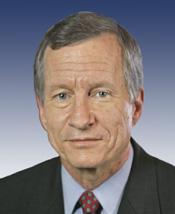 Rep. Jim Marshall (D-GA)
Description
Amendment sought to allow bankruptcy courts to extend repayment periods; reduce excessive interest rates and fees; and to adjust the principal balance of the mortgage to a home's fair market value as necessary, in order to prevent foreclosure and to allow the VA, FHA, and RHS to take steps to facilitate mortgage modifications. The amendment is substantively identical to title I, subtitle A and sections 121-123 of subtitle B of H.R. 1106 (Helping Families Save Their Homes Act of 2009), which passed the House on March 5, 2009.
Legislative Activity
Stay on top of the latest movement without scrolling through every action
House amendment offered
December 11, 2009
View full timeline
House amendment offered
December 11, 2009
House amendment not agreed to: On agreeing to the Marshall amendment (A018) Failed by recorded vote: 188 - 241 (Roll no. 963).
December 11, 2009 • 1:17 PM
Amendment failed in Committee of the Whole
December 11, 2009 • 1:17 PM
Roll call votes on amendments in House
December 11, 2009 • 1:17 PM
House amendment offered/reported by : Amendment (A018) offered by Mr. Marshall.(consideration: CR H14752-14757, H14797-14798; text: CR H14752-14755)
December 11, 2009 • 10:00 AM
Amendment (A018) offered by Mr. Marshall. (consideration: CR H14752-14757, H14797-14798; text: CR H14752-14755)
December 11, 2009 • 10:00 AM
On agreeing to the Marshall amendment (A018) Failed by recorded vote: 188 - 241 (Roll no. 963).
December 11, 2009 • 1:17 PM
Votes
1 roll call on this amendment
Text
Offered
WALL STREET REFORM AND CONSUMER PROTECTION ACT OF 2009

The SPEAKER pro tempore (Mr. Himes). Pursuant to House Resolution 964
and rule XVIII, the Chair declares the House in the Committee of the
Whole House on the State of the Union for the further consideration of
the bill, H.R. 4173.

{time}  0916

In the Committee of the Whole

Accordingly, the House resolved itself into the Committee of the
Whole House on the State of the Union for the further consideration of
the bill (H.R. 4173) to provide for financial regulatory reform, to
protect consumers and investors, to enhance Federal understanding of
insurance issues, to regulate the over-the-counter derivatives markets,
and for other purposes, with Ms. Edwards of Maryland in the chair.
The Clerk read the title of the bill.
The Acting CHAIR. When the Committee of the Whole rose on Thursday,
December 10, 2009, amendments en bloc offered by the gentleman from
Massachusetts (Mr. Frank) had been disposed of.

Amendment No. 15 Offered by Mr. Cohen

The Acting CHAIR. It is now in order to consider amendment No. 15
printed in House Report 111-370.
Mr. COHEN. Madam Chair, I rise to offer the amendment to the body
that is at the desk.
The Acting CHAIR. The Clerk will designate the amendment.
The text of the amendment is as follows:

Amendment No. 15 offered by Mr. Cohen:
Page 1126, line 6, strike ``subsections'' and insert
``subsection''.
Page 1126, strike lines 15 through 25.

The Acting CHAIR. Pursuant to House Resolution 964, the gentleman
from Tennessee (Mr. Cohen) and a Member opposed each will control 5
minutes.
The Chair recognizes the gentleman from Tennessee.
Mr. COHEN. I yield myself as much time as I may consume.
I want to thank Chairman Frank for working with me to include this
language in the Wall Street Reform and Consumer Protection Act of 2009.
This amendment would strip a provision permitting the Securities and
Exchange Commission to delegate regulation of investment advisers to
the Financial Industry Regulatory Authority.
In its present form, the bill would give FINRA sweeping rule-making
authority over investment advisers which has been under the sole domain
of the governmental regulatory agencies. This far-reaching provision
would extend FINRA's jurisdiction to Federally registered investment
advisory firms that manage almost 80 percent of all advisory firms'
assets under management.
FINRA does not have the necessary expertise or experience with
investment advisers or the Investment Advisers Act to do the job, and
the SEC is

[[Page H14748]]

best positioned to oversee the investment advisers under the Investment
Advisers Act.
There is inherent conflict of interest in having a self-regulatory
group that funds this agency and has always been on the side of broker
dealers. We cannot afford to outsource key regulating functions to
self-regulating organizations that act solely in the best interest of
their clients.
In a speech earlier this year, SEC Commissioner Luis Aguilar noted
his opposition to establishing a self-regulatory organization for
investment advisers because the ``SEC should not outsource its
mission'' and because the SEC ``is the only securities regulator with
the necessary experience in dealing with a principles-based regime.''
I'm concerned that the high level of investor protection provided
under the Advisers Act fiduciary duty would be diminished if FINRA were
to obtain the additional authority. We should not expend the authority
of FINRA to the investment advisory profession.
Again, I urge the passage of this amendment which would keep the SEC
as the proper, independent regulator of investment advisers.
I reserve the balance of my time.
Mr. BACHUS. I rise to claim the time in opposition.
Let me say to the gentleman from Tennessee, let me explain the
purpose behind the provision which your amendment seeks to strike. And
I say that I would be glad to work with the chairman and with the
Member at this time, striking the provision that I inserted in the
committee that you objected to, and won't ask for a recorded vote.
So let me explain the background behind this amendment, and I think
if we can all work together, I think we can make investors safer and
make a better system.
If the body will recall, and the chairman, on December 12 of last
year, about a year ago, Bernie Madoff was arrested for committing the
largest financial fraud in the history of the country. It was a
tremendous scam--a $65 million Ponzi scheme which defrauded nonprofits,
universities, and pension funds, and wiped out the savings of literally
tens of thousands of families and citizens.
Now, to do this, Bernie Madoff operated two separate entities: one
was a broker dealer and one was an investment adviser. The fraud
occurred with the investor adviser. That is where the fraud occurred.
The investment adviser was registered with the SEC. The investment
adviser, Madoff's investor adviser, was subject to examination by the
SEC, but I would point out to the chairman of the full committee and
the gentleman from Tennessee they never examined the investor adviser.
They never examined it.
Madoff operated a broker-dealer in the same premises and under the
same name. And it was examined, was subject to examination by the SEC
and by FINRA. I was saying let FINRA go ahead and examine the
investment advisers, these dual operations where you have both. FINRA
inspected the broker-dealer at least every other year, but the fraud
didn't occur there; it occurred in the investment adviser.
FINRA lacked the authority to go in and examine the investor adviser.
They couldn't examine it. And my provision I put in the committee said
let them be able to, as they examine the broker-dealer, let them go in
and look at the books of the investment adviser if you're operating a
dual operation. Had they had the right, they would have gone in and
they would have discovered this fraud. The SEC, which had the right,
never did it.
Now, as I said earlier, maybe there's another solution. The SEC has
said we don't want FINRA taking over our jurisdiction. What I'd like to
say is, let's make sure the SEC starts doing their job. Let's make sure
that they start examining these investment advisers. Someone needs to.
The average investment adviser is only examined once every 10 years.
Bernie Madoff's investment adviser was never examined. It's the kind of
gap in regulation that causes disasters. It causes scams, it causes
Bernie Madoffs of the world to get along for decades.
That is why I introduced this amendment, the provision, which we're
now striking.
Now, going forward, we at least need to look at this. We need to know
that there are 500 or 600 of these investment advisers and broker-
dealers, dual operations. And we need to make clear that the SEC,
somewhere, that they have the authority to examine both investment
advisers and broker-dealers. If they want to perform that mission--and
I know one thing the chairman has done; he has added more money for the
SEC. I think that is part of the answer, but I think this committee,
the Congress, as we go forward, needs to make sure they do their job.
And there was a monumental failure of the SEC, and if they don't do
their job or we find they don't and they have the resources, let's give
it to someone else.
I yield back the remainder of my time.
Mr. COHEN. I want to thank the gentleman for working with us on the
amendment, and I'd like to yield as much time as he needs to the
chairman of the full committee, the gentleman from Massachusetts (Mr.
Frank).
Mr. FRANK of Massachusetts. I thank both of my colleagues. And the
ranking member is exactly right in the concerns he has expressed, and
that is why at the committee, the chairman of the subcommittee--Mr.
Kanjorski and I tentatively agreed to this--we later heard some
questions raised, in particular, someone I think for whom we all had an
amount of respect, Denise Floyd Crawford, who's the longtime Texas
securities administrator who really goes back four or five Texas
administrations in a bipartisan way. And on behalf of the North
American Securities Administration Association, she raised some
concerns. And they were worried that this might, at some point, be too
much of a delegation and therefore--and I appreciate the gentleman's
comments--we agree with him that we do want to--our goal is to buff up
investor protection.
Clearly, there's a role for FINRA. I think we may have gone a little
too far in what we accepted in committee. But we're not talking about
getting rid of it altogether. So I appreciate the reasonableness of
what the gentleman from Alabama has said. It will be our role next
year, if this bill passes, to monitor the SEC. I look forward to
oversight hearings to make sure they're using their authority. And
particularly, how best to allow the SEC to draw on the resources of
FINRA will be high on our agenda.
Mr. BACHUS. Will the gentleman yield?
Mr. FRANK. Yes.
Mr. BACHUS. I appreciate that, and I think that is a logical solution
to that. And at this time I will support the gentleman's amendment to
strike the provision. And as I said when I brought this provision up, I
wanted to highlight the fact that this is how Bernie Madoff, you know,
he got away with operating these two operations on the same premises,
and we need to do the--the regulators need to do a better job, someone,
of being able to look across those operations.
Mr. COHEN. I would just like to thank again the gentleman from
Alabama. I know it's difficult for him to work with us on this because
he is the champion of the SEC, the Crimson Tide of Alabama.
With that, I would like to urge passage of the amendment.
I yield back the remainder of the time.
The Acting CHAIR. The question is on the amendment offered by the
gentleman from Tennessee (Mr. Cohen).
The amendment was agreed to.

Amendment No. 16 Offered by Mr. Peters

The Acting CHAIR. It is now in order to consider amendment No. 16
printed in House Report 111-370.
Mr. PETERS. I have an amendment at the desk.
The Acting CHAIR. The Clerk will designate the amendment.
The text of the amendment is as follows:

Amendment No. 16 offered by Mr. Peters:
Page 402, after line 18, insert the following subparagraph:
(E) Additional authorized assessments.--The Corporation is
authorized to conduct risk-based assessments on financial
companies in such amount and manner and subject to terms and
conditions that the Corporation determines, with the
concurrence of the Secretary of the Treasury and the Federal
Reserve Board, are necessary to pay any shortfall in the
Troubled Asset Relief Program established by the Emergency
Economic Stabilization Act of 2008 that would add to the
deficit or national debt, as identified by the Director of
the Office of Management and Budget, in consultation with the

[[Page H14749]]

Director of the Congressional Budget Office pursuant to
section 134 of such Act (12 U.S.C. Sec. 5239).

The Acting CHAIRMAN. Pursuant to House Resolution 964, the gentleman
from Michigan (Mr. Peters) and a Member opposed each will control 5
minutes.
The Chair recognizes the gentleman from Michigan.
Mr. PETERS. I yield myself such time as I may consume.
Today we are debating legislation that will end the ``too big to
fail'' doctrine and provide a mechanism for ensuring that in the
future, taxpayers will not be asked to foot the bill to clean up Wall
Street's mistakes. My amendment improves this legislation by ensuring
that taxpayers are not asked to foot the bill for Wall Street's past
mistakes as well.
My amendment will firmly establish that the financial industry--not
taxpayers--will be responsible for making up any TARP shortfalls, and
the TARP program will not add to our deficits or our national debt.

{time}  0930

Section 134 of the Emergency Economic Stabilization Act of 2008
requires the President to identify a mechanism for recovering any
shortfalls in TARP funds after 5 years so as not to increase the budget
deficit or national debt. However, the mechanism for recouping any
shortfall is not identified.
H.R. 4173 already empowers the FDIC to make risk-based assessments on
the Nation's largest and most systemically risky financial institutions
that will be used to create a Systemic Dissolution Fund used to seize
and unwind any failed nonbank financial institution in the future,
ensuring that there will be no more ad hoc bailouts of too-big-to-fail
institutions.
My amendment would give the FDIC authority to make additional
assessments to these same large firms, whose excessive risk-taking
caused the current financial crisis, and use those assessments to pay
off any TARP shortfalls and ensure that the taxpayers are made whole.
My amendment gives the American taxpayer certainty that all TARP
funds will be recouped from the large financial companies that caused
this financial crisis. It will allow Congress to show that we have a
plan in place for the recoupment of any shortfall, consistent with the
promises made during the debate over the Emergency Economic
Stabilization Act. It will also ensure that the American public
understands that we are not turning the page on TARP, but instead we
have a clear and decisive plan for making sure that taxpayers are made
whole.
Madam Chair, I reserve the balance of my time.
Mr. HENSARLING. I rise to claim time in opposition.
The Acting CHAIR. The gentleman from Texas is recognized for 5
minutes.
Mr. HENSARLING. I yield myself as much time as I may consume. I rise
in opposition to the gentleman's amendment.
If this body really cares about protecting the taxpayer against
losses in TARP, they will have an opportunity to show it later today,
and that is, vote to end the TARP program. Now we could have a debate
about what TARP was, but the more relevant debate is what TARP is. And
today, TARP is nothing more than $700 billion of walking-around money
for the administration. It's a $700 billion revolving bailout fund to
advance the administration's political, social and economic agenda.
And if you're concerned about protecting the taxpayer, why would you
have a provision that further raids TARP for yet more taxpayer-funded
foreclosure mitigation programs which have proven to be abject
failures? You spend more taxpayer money on these programs, and
foreclosure rates continue to climb and climb and climb. So if you're
really serious about protecting taxpayers, put your vote where your
sentiment is and vote later today to simply end the TARP program and
end the bailouts. But given that the whole reason for being for this
bill is a perpetual Wall Street bailout, I suspect, unfortunately, that
will not occur.
The second point I would make, Madam Chair, is some of the companies
that received funds under the capital purchase program have now repaid
them back with interest. So now we are in the position to tax companies
that have proven successful and paid back their funds, tax them for
failing companies that didn't pay back theirs. Chrysler and GM received
funds under TARP and Ford didn't. So under this, I suppose that we
could assess Ford a tax to pay for losses the taxpayers will incur on
GM and Chrysler. And we know that GM and Chrysler were defined as
``financial institutions'' under the TARP statute; therefore, Ford
could be taxed under the gentleman's amendment. Is that smart? Is that
fair? The answer is no.
This is yet another tax to go on capital. You can't have capitalism
without capital. And so we have a $150 billion tax for the revolving
bailout fund; we have an unlimited tax by the new czar to ban and
ration consumer credit products that could touch small businesses
throughout our Nation. Every time you increase the cost of taxes on
capital, you get less lending, you get less credit, more expensive
credit. And less credit is fewer jobs.
I would think at a time when our Nation has the highest unemployment
rate in a generation that this is an institution that would be trying
to create more jobs, trying to create more capital, trying to have
small businesses access pools of capital, and all we do is see more
legislation and more amendments to make capital less available and more
expensive to our small businesses.
This amendment must be rejected.
I reserve the balance of my time.
Mr. PETERS. Madam Chair, I would like to yield 1\1/2\ minutes to the
gentleman from Michigan (Mr. Schauer).
Mr. SCHAUER. Madam Chair, I rise in strong support of the Peters of
Michigan amendment and the underlying legislation to reform our
financial regulatory system.
For many years, we were told that what is good for Wall Street is
good for Main Street, that the benefits are somehow supposed to trickle
down. But the only thing the people of Michigan have seen is their
hopes and dreams trickle out of reach. Wall Street's collapse has left
my State with a 15 percent unemployment rate.
Last fall, Wall Street said they needed to borrow $700 billion from
taxpayers to paper over their losses. Michiganders were forced to open
up their wallets to support big Wall Street banks. Unfortunately, these
big banks have decided to stop lending to Michigan homeowners and
Michigan businesses. Employers can't get loans they need to bring
people back to work.
This week, the Treasury said that TARP has performed better than
expected, but they still expect to lose taxpayer dollars. We still do
not have a guarantee that the bailed-out financial industry will
actually repay taxpayers for their loans.
Mr. Peters has offered an excellent amendment to ensure American
taxpayers will get their money back and that those that created this
mess will pick up the tab. This amendment enables the FDIC to make
additional assessments on the Nation's largest, most systemically risky
financial institutions to pay back this TARP money. This amendment
finally puts in place a plan for Wall Street to pay back its loan. This
is common sense. Those institutions responsible for the collapse should
at least be forced to repay their loans.
Mr. HENSARLING. I continue to reserve my time.
Mr. PETERS. Madam Chair, I would like to yield 1\1/2\ minutes to the
gentleman from Virginia (Mr. Connolly).
Mr. CONNOLLY of Virginia. Madam Chair, with today's action, the House
will enact the most significant reform of our Nation's financial system
since the Great Depression. These are not decisions we take lightly,
but the prolonged recession and the near collapse of the financial
market in the fall of 2008 have compelled us to respond.
It will also end the era of taxpayer-funded bailouts. Madam
Chairwoman, this amendment offered by my friend and colleague, Mr.
Peters of Michigan, seeks to build on this legislation and will
authorize the FDIC to make further assessments on the financial
industry to ensure every penny of the TARP loans made to the banks is
repaid and help reduce our Nation's debt and burden on the taxpayers.
I urge adoption of the amendment, Madam Chairwoman.

[[Page H14750]]

Mr. HENSARLING. I continue to reserve.
The Acting CHAIR. The gentleman from Michigan has 30 seconds
remaining.
Mr. PETERS. Madam Chair, the amendment before us is a commonsense
attempt to make sure that we recoup to the taxpayers the money that has
been loaned to the financial industry. The gentleman from Texas
mentions we should just end TARP, but that doesn't relieve us of the
fact that we've got $140 billion that needs to be paid back so that
it's not a liability on the taxpayers.
This is a way in which we can recoup the money from the financial
institutions, the very institutions that were responsible for bringing
this financial meltdown to our country and the problems that have
impacted my State and States all across this country. This is a
commonsense approach, and I urge adoption.
The Acting CHAIR. The time of the gentleman has expired.
Mr. HENSARLING. Madam Chair, what is common sense is to terminate
TARP--stop it before it can spend again. And I hear all this wonderful
rhetoric about, well, somehow we are going to tax Wall Street for all
of this. But look at the TARP program. Look at the taxpayer-funded
foreclosure mitigation plans, all of which have been abject failures,
where the taxpayer receives zero--zero--of his money back.
And so this, again, is just one more way to assess a greater tax, a
greater cost on capital when small businesses have seen their credit
lines shrunk, withdrawn. Jobs are being lost all over the Nation. And
so here is one more idea to, frankly, keep TARP going. And, again, if
people want to put their vote where their sentiment is, they will have
an opportunity to do it later today. It's a fundamental difference
between the two approaches; and that is, our friends on the other side
of the aisle still want a perpetual bailout.
As I have said earlier, if there was truth in advertising, the bill
before us would be named the ``Permanent Wall Street Bailout and
Increase Job Losses Through Credit Rationing Act of 2009.''
The best way to protect the taxpayer is to end TARP and stop the grab
for other programs, not to increase taxes, yet again, on capital that
is vitally needed for our small businesses in order to create more
jobs.
The Acting CHAIR. All time has expired.
The question is on the amendment offered by the gentleman from
Michigan (Mr. Peters).
The question was taken; and the Acting Chair announced that the ayes
appeared to have it.
Mr. HENSARLING. Madam Chair, I demand a recorded vote.
The Acting CHAIR. Pursuant to clause 6 of rule XVIII, further
proceedings on the amendment offered by the gentleman from Michigan
will be postponed.

Amendment No. 17 Offered by Mr. Watt

The Acting CHAIR. It is now in order to consider amendment No. 17
printed in House Report 111-370.
Mr. WATT. I rise to offer the amendment.
The Acting CHAIR. The Clerk will designate the amendment.
The text of the amendment is as follows:

Amendment No. 17 offered by Mr. Watt:
Page 772, strike line 12 and all that follows through page
773, line 22, and insert the following:
(1) In general.--The Director and the Agency may not
exercise any rulemaking, supervisory, enforcement, or any
other authority, including authority to order assessments,
over a motor vehicle dealer that is primarily engaged in the
sale and servicing of motor vehicles, the leasing and
servicing of motor vehicles, or both.
(2) Certain activities excepted.--Paragraph (1) shall not
apply to--
(A) any motor vehicle dealer to the extent that such motor
vehicle dealer engages in any financial activity other than
extending credit or leasing exclusively for the purpose of
enabling a consumer to purchase, lease, rent, repair,
refurbish, maintain, or service a motor vehicle from that
motor vehicle dealer; or
(B) any credit transaction involving a person who operates
a line of business that involves the extension of retail
credit or retail leases involving motor vehicles, and in
which--
(i) the extension of retail credit or retail leases is
provided directly to consumers; and
(ii) the contracts governing such extensions of retail
credit or retail leases are not assigned to a third party
finance or leasing source, except on a de minimis basis.

The Acting CHAIR. Pursuant to House Resolution 964, the gentleman
from North Carolina (Mr. Watt) and a Member opposed each will control 5
minutes.
The Chair recognizes the gentleman from North Carolina.
Mr. WATT. Madam Chair, I yield myself 3\1/2\ minutes.
Madam Chair, let me say at the outset it is my intention at the end
of a short discussion to ask unanimous consent to withdraw the
amendment, but I thought it would be enlightening to colleagues and to
whoever else might be listening at this time in the morning to talk
about some of the practical problems that you have even when there's
broad agreement on an issue.
And I will describe the process. Both Mr. Campbell, who is a member
of the committee, and I agree that automobile dealers ought to be
exempt in their primary duties from the CFPA, the Consumer Financial
Protection Agency supervision and what have you. There was broad
bipartisan and philosophical agreement on that general proposition in
the committee when Mr. Campbell offered his amendment, and there was
broad agreement that there were some practical problems with the way
the amendment was written; and the chairman delegated to me and to Mr.
Campbell the responsibility to try to find the right language. We set
about trying to do that, and we have been diligently trying to do that.
Then the practical problems intervened. Other people get their
fingers in the pot and suggest different issues that need to be
resolved. Mr. Campbell and I, on a Friday night, with him in California
and me in North Carolina on our cell phones, have a conversation, and
we are right at the verge of reaching an agreement, we think, and we
are quibbling about words. Then he gets called away to the USC football
game the next day, and I get called away the following day to the
Carolina Panthers football game. And then we are right up against the
deadline.
Then we find out that the chairman has offered a manager's amendment
that deals with part of the problem, but not all of it. We both
submitted amendments to the Rules Committee. Mr. Campbell withdraws his
amendment, mine is still standing, and we are still talking about the
amendment.
And then the automobile dealers, because they don't like my
amendment, decide that they need to lobby against it and make it sound
as if I'm opposed to what I was in favor of all along.

{time}  0945

So we've been at this for a long time.
And finally, yesterday, Mr. Campbell and I sat down and talked again
and decided that we should not allow the perfect to be the enemy of the
good. What we have in the bill with the manager's amendment
substantially advances the process. We are not the end of the process
anyway. The Senate is going to have to deal with this. And both of us
are still intent on the philosophy that automobile dealers ought to be
exempt from CFPA. We agree on that. And so here we are, and we thought
it would be helpful to have this dialogue.
With that, I reserve the balance of my time.
Mr. CAMPBELL. Madam Chair, I rise to claim the time in opposition.
The Acting CHAIR. The gentleman from California is recognized for 5
minutes.
Mr. CAMPBELL. I yield myself such time as I may consume.
You know, maybe I shouldn't have gone to that USC football game
because they lost, and so that was rather depressing. I don't know how
the Carolina Panthers did, but----
Mr. WATT. They lost, too.
Mr. CAMPBELL. They lost, too. All right. Well, then, both of us
didn't have a particularly good weekend.
But as the gentleman from North Carolina (Mr. Watt) described, we've
had discussions on this thing, and he has been very helpful and worked
very constructively on this. In fact, the language that is in the bill
now reflects a number of suggestions that the gentleman from North
Carolina made which clarified some things that were, frankly, confusing
and conflicting in the bill. So I appreciate Mr. Watt's constructive
work on this and all that he has done with this.
And yes, he's right, sometimes these things get very complicated and
you

[[Page H14751]]

sit down and you try and figure out, well, what exactly does this say
and are we saying the right thing? But I think we now have reached
agreement that what is in the bill is the right thing.
There is broad agreement, as the gentleman from North Carolina
suggested, with myself, with him, and broad agreement in this House
that automobile dealers, in the normal course of their business, do not
lend money and are not financial institutions and should not be subject
to the additional regulation of the CFPA. If, however, they do lend
money and act like financial institutions, then they will be subject.
That is what this bill says. It is the right thing to say, and I think
we have reached a good conclusion on this.
I thank the gentleman from North Carolina very much for his very good
and constructive work on this.
Madam Chair, I reserve the balance of my time.
Mr. WATT. Madam Chair, I yield 1 minute to the Chair of the
committee.
Mr. FRANK of Massachusetts. Madam Chair, I am very appreciative that
two of the most constructive members of the committee, the gentleman
from North Carolina and the gentleman from California, have been
working together on this.
We have a mix here of policy difference, but then also some technical
questions. Clearly, there was a difference on whether or not auto
dealers should get some kind of exemption. The majority of the
committee felt that the auto dealer situation was such--I would think
particularly because of the stresses they have unfairly been recently
subjected to by the chaos of the auto industry--that they did deserve
some.
Once that question was resolved--I was in the minority on that, but
it was resolved that they did--there were then technical issues about
how to work it out. I am very pleased that two of our most thoughtful
members are continuing a collaboration on this.
The manager's amendment had some improvement in this situation that
was mutually agreed to, and there is room, I believe, for further
conversation and refinement. And so I just want to express, first, my
appreciation, and secondly, my willingness, to the extent my role as
Chair of the committee would be relevant, to try to effectuate what
they work out.
Mr. CAMPBELL. Madam Chair, I continue to reserve.
Mr. WATT. Madam Chair, I will just say in closing that one of the
other wonderful things that has come out of this is that prior to this,
Mr. Campbell and I had never really had an opportunity to roll up our
sleeves and work on issues together. It has been a joy to work with
him, and he has been very constructive.
I want to just reserve myself enough time to ask unanimous consent to
withdraw the amendment, but I don't want to do that before he has the
last word.
Mr. CAMPBELL. And I have enjoyed working with you as well. I am glad
that we are able to be where we are on this and look forward to working
in the future as the bill moves forward.
Madam Chair, I yield back the balance of my time.
Mr. WATT. Madam Chair, I ask unanimous consent to withdraw the
amendment.
The Acting CHAIR. Without objection, the amendment is withdrawn.
There was no objection.

Amendment No. 18 Offered by Mr. Kanjorski

The Acting CHAIR. It is now in order to consider amendment No. 18
printed in House Report 111-370.
Mr. KANJORSKI. I have an amendment at the desk as the designee of the
gentleman from Massachusetts.
The Acting CHAIR. The Clerk will designate the amendment.
The text of the amendment is as follows:

Amendment No. 18 offered by Mr. Kanjorski:
Strike section 6005 and redesignate the subsequent sections
in subtitle B of title V and conform the table of contents in
section 2 accordingly.

The Acting CHAIR. Pursuant to House Resolution 964, the gentleman
from Pennsylvania (Mr. Kanjorski) and a Member opposed each will
control 5 minutes.
The Chair recognizes the gentleman from Pennsylvania.
Mr. KANJORSKI. Madam Chair, I rise in support of this amendment.
Nationally Recognized Statistical Rating Organizations are those
credit rating agencies that are registered with the Securities and
Exchange Commission and, therefore, regulated. Most often, the phrase
is shortened to its initials, NRSRO; however, in formal contracts and
statutes, the words are spelled out and each word matters.
Unfortunately, an amendment to change one of these words was
inadvertently accepted during the markup. We switched out the word
``recognized'' for the word ``registered.'' If enacted into law, such a
change would put thousands of contracts in default and upset numerous
Federal and State laws, rules, and regulations.
Although well intended, such a seemingly minuscule change could have
disastrous unintended consequences. We must not put contracts in
default or undermine other laws and regulations. Therefore, I urge my
colleagues to support this amendment and reinstate the correct word in
this important legislation.
I reserve the balance of my time.
Mr. GARRETT of New Jersey. Madam Chair, I rise to claim time in
opposition.
The Acting CHAIR. The gentleman is recognized for 5 minutes.
Mr. GARRETT of New Jersey. I yield myself 4 minutes.
I thank the gentleman from Pennsylvania for his amendment, but more
than that, I should say I thank the gentleman for addressing this
larger issue of CRAs for a number of months. I have claimed time in
opposition just on the amendment because I think we can probably work
this out in a different way.
The gentleman and I worked for a long time trying to address the
issue of the credit rating agencies because both of us realize that
when you lay out the reasons why we are in this financial mess that
we're in right now, we may disagree on this point or that point as to
exactly how we got here, but both of us, I believe, came to the
conclusion that CRAs played a huge, huge part to bring us to where we
are today with this financial mess. And the reason it did was because
so many people failed to exercise what we would call proper market
discipline when they made their investments, whether that was a small
investor, a middle-size investor, or even the so-called
``knowledgeable'' investors on Wall Street failed to use what, in
normal times, they would inherently have inside of them to say, What is
the proper decisionmaking that I should make before I make this
investment or that investment? What risks should I take here or there?
And why was that, though, is the question.
Well, we looked at a whole bunch of things and we tried to come up
with changes to the regulations of CRAs, the credit rating agencies,
and we made a lot of changes that were improvements. But I think we
came down to one point, that there was too much reliance upon credit
rating agencies. Just because a CRA came out and said that on this
particular security or this particular financial product that was rated
AAA, regardless of what was actually in the package, regardless of the
fact that maybe it was just a compilation of subprime mortgages with no
likelihood whatsoever that they would ever be paid off, they got the
AAA's seal of approval, and people invested in it. And, of course, the
rest is history.
We look at it, one of the reasons why we think they got the seal of
approval and then why investors looked at that and said that was okay
was because they had the seal of approval from the Federal Government.
The CRAs were listed as NRSROs, Nationally Recognized Statistical
Rating Organizations. So the investor, large or small, sophisticated or
not, said, Well, if the Federal Government is going to put its
imprimatur on these organizations, on these CRAs by saying they are
nationally recognized, if the Federal Government is going to put its
stamp of approval, let's say their Good Housekeeping Seal of Approval
on these entities, then they must be okay and the decisions they are
making must be okay. So that is what led to their decisions.
That is why, in committee, Ranking Member Bachus proposed a change to
this. He changed it from ``nationally recognized'' to ``nationally
registered,'' merely that these entities were registered. No seal of
approval, no stamp of the Good Housekeeping Seal of Approval, just that
they had gone through

[[Page H14752]]

the motions and had simply registered with the government as being a
nationally registered statistical rating organization. That is why I
think it made good sense to take away that seal of approval, and that
is why I also believe that this legislation, this amendment in
committee passed in a bipartisan manner out of committee.
Now, I recognize that I am actually on the floor now, oddly enough,
defending the actions of the committee here to a change. And I
understand the potential problems, but I would suggest that perhaps
other things could be done other than just stripping this out and going
back to the way it was before. I would suggest that we leave it as
``nationally registered statistical rating organizations,'' and as we
go forward through the process, if we find--maybe it's minutia, maybe
it's not, as far as some States' regulations or other Federal
regulations that refer to this. I bet you there is a better, simpler
way to just correspond this back for existing contracts and what have
you, and I would look forward to working with the chairman and the
other committee's chairman to solve those problems in the future.
Mr. KANJORSKI. Madam Chair, I yield such time as he may require to
the chairman.
Mr. FRANK of Massachusetts. First, I would say to my friend from New
Jersey, I very much agree with what he said about credit rating
agencies. For the record, I would like to make an assertion I know he
agrees with, that when he talks about our agreement on the CRAs and the
role of the CRAs, we are talking about the credit rating agencies, not
the Community Reinvestment Act, the other CRA with which we deal.
Sometimes people don't pay full attention, so I don't want to get
anybody too agitated.
Yes, he is exactly right. He and I, in fact, collaborated on the
legislation to remove the statutory assertion. And I think he is also
correct, we fully agree--I think there is virtually unanimity on it--
with the purpose he articulated, tell the average investor to pay
attention on your own, don't rely on the rating agencies, don't
subcontract your judgment to them.
Frankly, I am frustrated. I would hope that people out in the economy
would take advantage of the full legal rights they have to create some
buy side rating agencies. I think that would be very helpful. We
checked. There are no obstacles to doing it. I had some frustration
that we weren't able to do more. I think we have done as much as
anybody could think of. I've seen some newspaper articles that said,
Why didn't you do more? But they were, not surprisingly, absent of any
suggestion. So, yes, I think it would be better if we had buy side
rating agencies. In the interim, we have at least told people, use your
own judgment.
But as the gentleman acknowledged--and I think we can work this out--
going forward, the problem we got was from a number of States and
private institutions that have imbedded in their statutes the old
language. And I am pleased the gentleman said let's work together. I
think it would mean meeting with various State agencies and the pension
funds to see if there is some legislative fix we could adopt short of
going back to the old name, because I agree with him as to the purpose
of changing the name so that we can alleviate this problem there.
So with that, I would be willing to say there is no need for the
amendment, given that we have an agreement. We will ask our hardworking
and very creative staffs that can often work very well together to meet
with those who have raised this issue to see if there is something else
we could do that would meet their concern so they wouldn't have to all
amend their statutes, et cetera. And with that, I think we have come to
a conceptual agreement. And as is often the case, we, the Members, will
come to a conceptual agreement and the staff will do all the hard work
of making it a reality.
Mr. KANJORSKI. Madam Chair, I reserve the balance of my time.
The Acting CHAIR. The gentleman from New Jersey has 1 minute
remaining.
Mr. GARRETT of New Jersey. I appreciate the chairman's comments and
look forward to seeing how this can be dealt with if this bill
eventually does pass and goes over to the Senate and into the
conference.
Mr. FRANK of Massachusetts. Would the gentleman yield?
Mr. GARRETT of New Jersey. Yes.
Mr. FRANK of Massachusetts. I would just say no one can dictate to
anyone, but if there were to be a ``no'' on the voice vote, I think
that would be a reasonable end to this particular discussion and we
could then continue on the level we talked about.

{time}  1000

Mr. GARRETT of New Jersey. There is that comment, and also there is
the understanding that we are not talking about the other CRA.
Although, if we could make a UC, and if we could put that as being a
cause--no, I guess we can't do that. That's a bridge too far.
I yield back the balance of my time.
The Acting CHAIR. The question is on the amendment offered by the
gentleman from Pennsylvania (Mr. Kanjorski).
The amendment was rejected.

Amendment No. 19 Offered by Mr. Marshall

The Acting CHAIR. It is now in order to consider amendment No. 19
printed in House Report 111-370.
Mr. MARSHALL. I rise as the designee of the gentleman from Michigan
(Mr. Conyers).
The Acting CHAIR. The Clerk will designate the amendment.
The text of the amendment is as follows:

Amendment No. 19 offered by Mr. Marshall:
At the end of the bill, insert the following (and make such
technical and conforming changes as may be appropriate):

TITLE VII--PREVENTION OF MORTGAGE FORECLOSURES

Subtitle A--Modification of Residential Mortgages

SEC. 9001. DEFINITION.

Section 101 of title 11, United States Code, is amended by
inserting after paragraph (43) the following (and make such
technical and conforming changes as may be appropriate):
``(43A) The term `qualified loan modification' means a loan
modification agreement made in accordance with the guidelines
of the Obama Administration's Homeowner Affordability and
Stability Plan as implemented March 4, 2009, that--
``(A) reduces the debtor's payment (including principal and
interest, and payments for real estate taxes, hazard
insurance, mortgage insurance premium, homeowners'
association dues, ground rent, and special assessments) on a
loan secured by a senior security interest in the principal
residence of the debtor, to a percentage of the debtor's
income in accordance with such guidelines, without any period
of negative amortization or under which the aggregate amount
of the regular periodic payments would not fully amortize the
outstanding principal amount of such loan;
``(B) requires no fees or charges to be paid by the debtor
in order to obtain such modification; and
``(C) permits the debtor to continue to make payments under
the modification agreement notwithstanding the filing of a
case under this title, as if such case had not been filed.''.

SEC. 9002. ELIGIBILITY FOR RELIEF.

Section 109 of title 11, United States Code, is amended--
(1) by adding at the end of subsection (e) the following:
``For purposes of this subsection, the computation of debts
shall not include the secured or unsecured portions of--
``(1) debts secured by the debtor's principal residence if
the value of such residence as of the date of the order for
relief under chapter 13 is less than the applicable maximum
amount of noncontingent, liquidated, secured debts specified
in this subsection; or
``(2) debts secured or formerly secured by what was the
debtor's principal residence that was sold in foreclosure or
that the debtor surrendered to the creditor if the value of
such real property as of the date of the order for relief
under chapter 13 was less than the applicable maximum amount
of noncontingent, liquidated, secured debts specified in this
subsection.'', and
(2) by adding at the end of subsection (h) the following:
``(5) Notwithstanding the 180-day period specified in
paragraph (1), with respect to a debtor in a case under
chapter 13 who submits to the court a certification that the
debtor has received notice that the holder of a claim secured
by the debtor's principal residence may commence a
foreclosure on the debtor's principal residence, the
requirements of paragraph (1) shall be considered to be
satisfied if the debtor satisfies such requirements not later
than the expiration of the 30-day period beginning on the
date of the filing of the petition.''.

SEC. 9003. PROHIBITING CLAIMS ARISING FROM VIOLATIONS OF THE
TRUTH IN LENDING ACT.

Section 502(b) of title 11, United States Code, is
amended--
(1) in paragraph (8) by striking ``or'' at the end,
(2) in paragraph (9) by striking the period at the end and
inserting ``; or'', and
(3) by adding at the end the following:
``(10) the claim for a loan secured by a security interest
in the debtor's principal residence is subject to a remedy
for rescission

[[Page H14753]]

under the Truth in Lending Act notwithstanding the prior
entry of a foreclosure judgment, except that nothing in this
paragraph shall be construed to modify, impair, or supersede
any other right of the debtor.''.

SEC. 9004. AUTHORITY TO MODIFY CERTAIN MORTGAGES.

Section 1322 of title 11, United States Code, is amended--
(1) in subsection (b)--
(A) by redesignating paragraph (11) as paragraph (12),
(B) in paragraph (10) by striking ``and'' at the end, and
(C) by inserting after paragraph (10) the following:
``(11) notwithstanding paragraph (2), with respect to a
claim for a loan originated before the effective date of this
paragraph and secured by a security interest in the debtor's
principal residence that is the subject of a notice that a
foreclosure may be commenced with respect to such loan,
modify the rights of the holder of such claim (and the rights
of the holder of any claim secured by a subordinate security
interest in such residence)--
``(A) by providing for payment of the amount of the allowed
secured claim as determined under section 506(a)(1);
``(B) if any applicable rate of interest is adjustable
under the terms of such loan by prohibiting, reducing, or
delaying adjustments to such rate of interest applicable on
and after the date of filing of the plan;
``(C) by modifying the terms and conditions of such loan--
``(i) to extend the repayment period for a period that is
no longer than the longer of 40 years (reduced by the period
for which such loan has been outstanding) or the remaining
term of such loan, beginning on the date of the order for
relief under this chapter; and
``(ii) to provide for the payment of interest accruing
after the date of the order for relief under this chapter at
a fixed annual rate equal to the currently applicable average
prime offer rate as of the date of the order for relief under
this chapter, corresponding to the repayment term determined
under the preceding paragraph, as published by the Federal
Financial Institutions Examination Council in its table
entitled `Average Prime Offer Rates--Fixed', plus a
reasonable premium for risk; and
``(D) by providing for payments of such modified loan
directly to the holder of the claim or, at the discretion of
the court, through the trustee during the term of the plan;
and'', and
(2) by adding at the end the following:
``(g) A claim may be reduced under subsection (b)(11)(A)
only on the condition that if the debtor sells the principal
residence securing such claim, before completing all payments
under the plan (or, if applicable, before receiving a
discharge under section 1328(b)) and receives net proceeds
from the sale of such residence, then the debtor agrees to
pay to such holder not later than 15 days after receiving
such proceeds--
``(1) if such residence is sold in the 1st year occurring
after the effective date of the plan, 90 percent of the
amount of the difference between the sales price and the
amount of such claim as originally determined under
subsection (b)(11) (plus costs of sale and improvements), but
not to exceed the unpaid amount of the allowed secured claim
determined as if such claim had not been reduced under such
subsection;
``(2) if such residence is sold in the 2d year occurring
after the effective date of the plan, 70 percent of the
amount of the difference between the sales price and the
amount of such claim as originally determined under
subsection (b)(11) (plus costs of sale and improvements), but
not to exceed the unpaid amount of the allowed secured claim
determined as if such claim had not been reduced under such
subsection;
``(3) if such residence is sold in the 3d year occurring
after the effective date of the plan, 50 percent of the
amount of the difference between the sales price and the
amount of such claim as originally determined under
subsection (b)(11) (plus costs of sale and improvements), but
not to exceed the unpaid amount of the allowed secured claim
determined as if such claim had not been reduced under such
subsection;
``(4) if such residence is sold in the 4th year occurring
after the effective date of the plan, 30 percent of the
amount of the difference between the sales price and the
amount of such claim as originally determined under
subsection (b)(11) (plus costs of sale and improvements), but
not to exceed the unpaid amount of the allowed secured claim
determined as if such claim had not been reduced under such
subsection; and
``(5) if such residence is sold in the 5th year occurring
after the effective date of the plan, 10 percent of the
amount of the difference between the sales price and the
amount of such claim as originally determined under
subsection (b)(11) (plus costs of sale and improvements), but
not to exceed the unpaid amount of the allowed secured claim
determined as if such claim had not been reduced under such
subsection.
``(h) With respect to a claim of the kind described in
subsection (b)(11), the plan may not contain a modification
under the authority of subsection (b)(11)--
``(1) in a case commenced under this chapter after the
expiration of the 30-day period beginning on the effective
date of this subsection, unless--
``(A) the debtor certifies that the debtor--
``(i) not less than 30 days before the commencement of the
case, contacted the holder of such claim (or the entity
collecting payments on behalf of such holder) regarding
modification of the loan that is the subject of such claim;
``(ii) provided the holder of the claim (or the entity
collecting payments on behalf of such holder) a written
statement of the debtor's current income, expenses, and debt
substantially conforming with the schedules required under
section 521(a) or such other form as is promulgated by the
Judicial Conference of the United States for such purpose;
and
``(iii) considered any qualified loan modification offered
to the debtor by the holder of the claim (or the entity
collecting payments on behalf of such holder); or
``(B) a foreclosure sale is scheduled to occur on a date in
the 30-day period beginning on the date the case is
commenced;
``(2) in any other case pending under this chapter, unless
the debtor certifies that the debtor attempted to contact the
holder of such claim (or the entity collecting payments on
behalf of such holder) regarding modification of the loan
that is the subject of such claim, before--
``(A) filing a plan under section 1321 that contains a
modification under the authority of subsection (b)(11); or
``(B) modifying a plan under section 1323 or 1329 to
contain a modification under the authority of subsection
(b)(11).
``(i) In determining the holder's allowed secured claim
under section 506(a)(1) for purposes of subsection
(b)(11)(A), the value of the debtor's principal residence
shall be the fair market value of such residence on the date
such value is determined and, if the issue of value is
contested, the court shall determine such value in accordance
with the appraisal rules used by the Federal Housing
Administration.''.

SEC. 9005. COMBATING EXCESSIVE FEES.

Section 1322(c) of title 11, United States Code, is
amended--
(1) in paragraph (1) by striking ``and'' at the end,
(2) in paragraph (2) by striking the period at the end and
inserting a semicolon, and
(3) by adding at the end the following:
``(3) the debtor, the debtor's property, and property of
the estate are not liable for a fee, cost, or charge that is
incurred while the case is pending and arises from a debt
that is secured by the debtor's principal residence except to
the extent that--
``(A) the holder of the claim for such debt files with the
court and serves on the trustee, the debtor, and the debtor's
attorney (annually or, in order to permit filing consistent
with clause (ii), at such more frequent periodicity as the
court determines necessary) notice of such fee, cost, or
charge before the earlier of--
``(i) 1 year after such fee, cost, or charge is incurred;
or
``(ii) 60 days before the closing of the case; and
``(B) such fee, cost, or charge--
``(i) is lawful under applicable nonbankruptcy law,
reasonable, and provided for in the applicable security
agreement; and
``(ii) is secured by property the value of which is greater
than the amount of such claim, including such fee, cost, or
charge;
``(4) the failure of a party to give notice described in
paragraph (3) shall be deemed a waiver of any claim for fees,
costs, or charges described in paragraph (3) for all
purposes, and any attempt to collect such fees, costs, or
charges shall constitute a violation of section 524(a)(2) or,
if the violation occurs before the date of discharge, of
section 362(a); and
``(5) a plan may provide for the waiver of any prepayment
penalty on a claim secured by the debtor's principal
residence.''.

SEC. 9006. CONFIRMATION OF PLAN.

(a) Section 1325(a) of title 11, United States Code, is
amended--
(1) in the matter preceding paragraph (1) strike
``subsection (b)'' and insert ``subsections (b) and (d)''.
(2) in paragraph (5)--
(A) by inserting ``except as otherwise provided in section
1322(b)(11),'' after ``(5)'', and
(B) in subparagraph (B)(iii)(I) by inserting ``(including
payments of a claim modified under section 1322(b)(11))''
after ``payments'' the 1st place it appears,
(3) in paragraph (8) by striking ``and'' at the end,
(4) in paragraph (9) by striking the period at the end and
inserting a semicolon, and
(5) by inserting after paragraph (9) the following:
``(10) notwithstanding subclause (I) of paragraph
(5)(B)(i), whenever the plan modifies a claim in accordance
with section 1322(b)(11), the holder of a claim whose rights
are modified pursuant to section 1322(b)(11) shall retain the
lien until the later of--
``(A) the payment of such holder's allowed secured claim;
or
``(B) completion of all payments under the plan (or, if
applicable, receipt of a discharge under section 1328(b));
and
``(11) whenever the plan modifies a claim in accordance
with section 1322(b)(11), the court finds that such
modification is in good faith (Lack of good faith exists if
the debtor has no need for relief under this paragraph
because the debtor can pay all of his or her debts and any
future payment increases on such debts without difficulty for
the foreseeable future, including the positive amortization
of mortgage debt. In determining whether a reduction of the
principal amount of the loan resulting from a modification

[[Page H14754]]

made under the authority of section 1322(b)(11) is made in
good faith, the court shall consider whether the holder of
such claim (or the entity collecting payments on behalf of
such holder) has offered to the debtor a qualified loan
modification that would enable the debtor to pay such debts
and such loan without reducing such principal amount.) and
does not find that the debtor has been convicted of obtaining
by actual fraud the extension, renewal, or refinancing of
credit that gives rise to a modified claim.''.
(b) Section 1325 of title 11, United States Code, is
amended by adding at the end the following (and make such
technical and conforming changes as may be appropriate):
``(d) Notwithstanding section 1322(b)(11)(C)(ii), the
court, on request of the debtor or the holder of a claim
secured by a senior security interest in the debtor's
principal residence, may confirm a plan proposing a reduction
in the interest rate on the loan secured by such security
interest and that does not reduce the principal, provided the
total monthly mortgage payment is reduced to a percentage of
the debtor's income in accordance with the guidelines of the
Obama Administration's Homeowner Affordability and Stability
Plan as implemented March 4, 2009, if, taking into account
the debtor's financial situation, after allowance of expenses
that would be permitted for a debtor under this chapter
subject to paragraph (3) of subsection (b), regardless of
whether the debtor is otherwise subject to such paragraph,
and taking into account additional debts and fees that are to
be paid in this chapter and thereafter, the debtor would be
able to prevent foreclosure and pay a fully amortizing 30-
year loan at such reduced interest rate without such
reduction in principal.''.

SEC. 9007. DISCHARGE.

Section 1328(a) of title 11, United States Code, is
amended--
(1) by inserting ``(other than payments to holders of
claims whose rights are modified under section 1322(b)(11))''
after ``paid'', and
(2) in paragraph (1) by inserting ``or, to the extent of
the unpaid portion of an allowed secured claim, provided for
in section 1322(b)(11)'' after ``1322(b)(5)''.

SEC. 9008. STANDING TRUSTEE FEES.

(a) Amendment to Title 28.--Section 586(e)(1)(B)(i) of
title 28, United States Code, is amended--
(1) by inserting ``(I) except as provided in subparagraph
(II)'' after ``(i)'',
(2) by striking ``or'' at the end and inserting ``and'',
and
(3) by adding at the end the following:
``(II) 4 percent with respect to payments received under
section 1322(b)(11) of title 11 by the individual as a result
of the operation of section 1322(b)(11)(D) of title 11,
unless the bankruptcy court waives all fees with respect to
such payments based on a determination that such individual
has income less than 150 percent of the official poverty line
(as defined by the Office of Management and Budget, and
revised annually in accordance with section 673(2) of the
Omnibus Budget Reconciliation Act of 1981) applicable to a
family of the size involved and payment of such fees would
render the debtor's plan infeasible.''.
(b) Conforming Provision.--The amendments made by this
section shall apply to any trustee to whom the provisions of
section 302(d)(3) of the Bankruptcy Judges, United States
Trustees, and Family Farmer Bankruptcy Act of 1986 (Public
Law 99-554; 100 Stat. 3121) apply.

SEC. 9009. EFFECTIVE DATE; APPLICATION OF AMENDMENTS.

(a) Effective Date.--Except as provided in subsection (b),
this subtitle and the amendments made by this subtitle shall
take effect on the date of the enactment of this Act.
(b) Application of Amendments.--
(1) In general.--Except as provided in paragraph (2), the
amendments made by this subtitle shall apply with respect to
cases commenced under title 11 of the United States Code
before, on, or after the date of the enactment of this Act.
(2) Limitation.--Paragraph (1) shall not apply with respect
to cases closed under title 11 of the United States Code as
of the date of the enactment of this Act that are neither
pending on appeal in, nor appealable to, any court of the
United States.

SEC. 9010. GAO STUDY.

The Comptroller General shall carry out a study, and submit
to the Committee on the Judiciary of the House of
Representatives and the Committee on the Judiciary of the
Senate, not later than 2 years after the date of the
enactment of this Act a report containing--
(1) the results of such study of--
(A) the number of debtors who filed, during the 1-year
period beginning on the date of the enactment of this Act,
cases under chapter 13 of title 11 of the United States Code
for the purpose of restructuring their principal residence
mortgages,
(B) the number of mortgages restructured under the
amendments made by this subtitle that subsequently resulted
in default and foreclosure,
(C) a comparison between the effectiveness of mortgages
restructured under non-judicial voluntary mortgage
modification programs and mortgages restructured under the
amendments made by this subtitle,
(D) the number of cases presented to the bankruptcy courts
where mortgages were restructured under the amendments made
by this subtitle that were appealed,
(E) the number of cases presented to the bankruptcy courts
where mortgages were restructured under the amendments made
by this subtitle that were overturned on appeal, and
(F) the number of bankruptcy judges disciplined as a result
of actions taken to restructure mortgages under the
amendments made by this subtitle, and
(2) a recommendation as to whether such amendments should
be amended to include a sunset clause.

SEC. 9011. REPORT TO CONGRESS.

Not later than 18 months after the date of the enactment of
this Act, the Comptroller General, in consultation with the
Federal Housing Administration, shall submit to the Congress,
a report containing--
(1) a comprehensive review of the effects of the amendments
made by this subtitle on bankruptcy courts,
(2) a survey of whether the program should limit the types
of homeowners eligible for the program, and
(3) a recommendation on whether such amendments should
remain in effect.

Subtitle B--Related Mortgage Modification Provisions

SEC. 9021. ADJUSTMENTS AS A RESULT OF MODIFICATION IN
BANKRUPTCY OF HOUSING LOANS GUARANTEED BY THE
DEPARTMENT OF VETERANS AFFAIRS.

(a) In General.--Section 3732 of title 38, United States
Code, is amended--
(1) in subsection (a)--
(A) by redesignating paragraph (2) as subparagraph (A) of
paragraph (2), and
(2) by inserting after subparagraph (A) the following new
subparagraph:
``(B) In the event that a housing loan guaranteed under
this chapter is modified under the authority provided under
section 1322(b) of title 11, United States Code, the
Secretary may pay the holder of the obligation the unpaid
balance of the obligation due as of the date of the filing of
the petition under title 11, United States Code, plus accrued
interest, but only upon the assignment, transfer, and
delivery to the Secretary (in a form and manner satisfactory
to the Secretary) of all rights, interest, claims, evidence,
and records with respect to the housing loan.''.
(b) Maturity of Housing Loans.--Paragraph (1) of section
(d) of section 3703 of title 38, United States Code, is
amended by inserting ``at the time of origination'' after
``loan''.
(c) Implementation.--The Secretary of Veterans Affairs may
implement the amendments made by this section through notice,
procedure notice, or administrative notice.

SEC. 9022. PAYMENT OF FHA MORTGAGE INSURANCE BENEFITS.

(a) In General.--Subsection (a) of section 204 of the
National Housing Act (12 U.S.C. 1710(a)) is amended--
(1) in paragraph (1), by adding at the end the following
new subparagraph:
``(E) Modification of mortgage in bankruptcy.--
``(i) Authority.--If an order is entered under the
authority provided under section 1322(b) of title 11, United
States Code, that (a) determines the amount of an allowed
secured claim under a mortgage in accordance with section
506(a)(1) of title 11, United States Code, and the amount of
such allowed secured claim is less than the amount due under
the mortgage as of the date of the filing of the petition
under title 11, United States Code, or (b) reduces the
interest to be paid under a mortgage in accordance with
section 1325 of such title, the Secretary may pay insurance
benefits for the mortgage as follows:

``(I) Full payment and assignment.--The Secretary may pay
the insurance benefits for the mortgage, but only upon the
assignment, transfer, and delivery to the Secretary of all
rights, interest, claims, evidence, and records with respect
to the mortgage specified in clauses (i) through (iv) of
paragraph (1)(A). The insurance benefits shall be paid in the
amount equal to the original principal obligation of the
mortgage (with such additions and deductions as the Secretary
determines are appropriate) which was unpaid upon the date of
the filing of by the mortgagor of the petition under title 11
of the United States Code. Nothing in this Act may be
construed to prevent the Secretary from providing insurance
under this title for a mortgage that has previously been
assigned to the Secretary under this subclause. The decision
of whether to utilize the authority under this subclause for
payment and assignment shall be at the election of the
mortgagee, subject to such terms and conditions as the
Secretary may establish.
``(II) Assignment of unsecured claim.--The Secretary may
make a partial payment of the insurance benefits for any
unsecured claim under the mortgage, but only upon the
assignment to the Secretary of any unsecured claim of the
mortgagee against the mortgagor or others arising out of such
order. Such assignment shall be deemed valid irrespective of
whether such claim has been or will be discharged under title
11 of the United States Code. The insurance benefits shall be
paid in the amount specified in subclause (I) of this clause,
as such amount is reduced by the amount of the allowed
secured claim. Such allowed secured claim shall continue to
be insured under section 203.
``(III) Interest payments.--The Secretary may make periodic
payments, or a one-time payment, of insurance benefits for
interest payments that are reduced pursuant to such order, as
determined by the Secretary, but

[[Page H14755]]

only upon assignment to the Secretary of all rights and
interest related to such payments.

``(ii) Delivery of evidence of entry of order.--
Notwithstanding any other provision of this paragraph, no
insurance benefits may be paid pursuant to this subparagraph
for a mortgage before delivery to the Secretary of evidence
of the entry of the order issued pursuant to title 11, United
States Code, in a form satisfactory to the Secretary.'';
(2) in paragraph (5), in the matter preceding subparagraph
(A), by inserting after ``section 520, and'' the following:
``, except as provided in paragraph (1)(E),''; and
(3) by adding at the end the following new paragraph:
``(10) Loan modification program.--
``(A) Authority.--The Secretary may carry out a program
solely to encourage loan modifications for eligible
delinquent mortgages through the payment of insurance
benefits and assignment of the mortgage to the Secretary and
the subsequent modification of the terms of the mortgage
according to a loan modification approved by the mortgagee.
``(B) Payment of benefits and assignment.--Under the
program under this paragraph, the Secretary may pay insurance
benefits for a mortgage, in the amount determined in
accordance with paragraph (5)(A), without reduction for any
amounts modified, but only upon the assignment, transfer, and
delivery to the Secretary of all rights, interest, claims,
evidence, and records with respect to the mortgage specified
in clauses (i) through (iv) of paragraph (1)(A).
``(C) Disposition.--After modification of a mortgage
pursuant to this paragraph, the Secretary may provide
insurance under this title for the mortgage. The Secretary
may subsequently--
``(i) re-assign the mortgage to the mortgagee under terms
and conditions as are agreed to by the mortgagee and the
Secretary;
``(ii) act as a Government National Mortgage Association
issuer, or contract with an entity for such purpose, in order
to pool the mortgage into a Government National Mortgage
Association security; or
``(iii) re-sell the mortgage in accordance with any program
that has been established for purchase by the Federal
Government of mortgages insured under this title, and the
Secretary may coordinate standards for interest rate
reductions available for loan modification with interest
rates established for such purchase.
``(D) Loan servicing.--In carrying out the program under
this section, the Secretary may require the existing servicer
of a mortgage assigned to the Secretary under the program to
continue servicing the mortgage as an agent of the Secretary
during the period that the Secretary acquires and holds the
mortgage for the purpose of modifying the terms of the
mortgage. If the mortgage is resold pursuant to subparagraph
(C)(iii), the Secretary may provide for the existing servicer
to continue to service the mortgage or may engage another
entity to service the mortgage.''.
(b) Amendment to Partial Claim Authority.--Paragraph (1) of
section 230(b) of the National Housing Act (12 U.S.C.
1715u(b)(1)) is amended by striking ``12 of the monthly
mortgage payments'' and inserting ``30 percent of the unpaid
principal balance of the mortgage''.
(c) Implementation.--The Secretary of Housing and Urban
Development may implement the amendments made by this section
through notice or mortgagee letter.

SEC. 9023. ADJUSTMENTS AS RESULT OF MODIFICATION OF RURAL
SINGLE FAMILY HOUSING LOANS IN BANKRUPTCY.

(a) Guaranteed Rural Housing Loans.--Subsection (h) of
section 502 of the Housing Act of 1949 (42 U.S.C. 1472(h)) is
amended--
(1) in paragraph (7)--
(A) in subparagraph (A), by inserting before the period at
the end the following: ``, unless the maturity date of the
loan is modified in a bankruptcy proceeding or at the
discretion of the Secretary''; and
(B) in subparagraph (B), by inserting before the semicolon
the following: ``, unless such rate is modified in a
bankruptcy proceeding'';
(2) by redesignating paragraphs (13) and (14) as paragraphs
(14) and (15), respectively; and
(3) by inserting after paragraph (12) the following new
paragraph:
``(13) Payment of guarantee.--In addition to all other
authorities to pay a guarantee claim, the Secretary may also
pay the guaranteed portion of any losses incurred by the
holder of a note or the servicer resulting from a
modification of a note by a bankruptcy proceeding.''.
(b) Insured Rural Housing Loans.--Subsection (j) of section
517 of the Housing Act of 1949 (42 U.S.C. 1487(j)) is
amended--
(1) by redesignating paragraphs (2) through (7) as
paragraphs (3) through (8), respectively; and
(2) by inserting after paragraph (1) the following new
paragraph:
``(2) to pay for losses incurred by holders or servicers in
the event of a modification pursuant to a bankruptcy
proceeding;''.
(c) Implementation.--The Secretary of Agriculture may
implement the amendments made by this section through notice,
procedure notice, or administrative notice.

The Acting CHAIR. Pursuant to House Resolution 964, the gentleman
from Georgia (Mr. Marshall) and a Member opposed each will control 5
minutes.
The Chair recognizes the gentleman from Georgia.
Mr. MARSHALL. Madam Chair, this is an amendment which is identical to
a bill passed by the House earlier this year, in March. The bill
permits what is referred to as ``cramdown'' in chapter 13 with regard
to private home mortgages. It is intended to address this foreclosure
crisis without taxpayers having to put money into the deal. It
essentially forces the parties to deal with their problems without
having vacancies and foreclosures in our neighborhoods.
In that sense, it helps all lenders with real estate portfolios. It
helps the individuals whose homes might be foreclosed upon. It actually
helps the creditors, who are forced into the chapter 13 process
because, in almost every instance, their portfolios are improved by not
having as many houses in foreclosure, and in almost every instance,
they get better deals in the chapter 13 process than they would in the
normal foreclosure process.
We should have done this long ago. It would have helped the housing
crisis and, consequently, the economy of the country.
I compliment Mr. Miller from North Carolina. This was originally his
bill. He has been pushing this for several years. I also compliment Ms.
Zoe Lofgren from California, who couldn't be here today because of
family matters, because she has been a real stalwart in moving this
forward.
I reserve the balance of my time.
Mr. GOODLATTE. I rise to claim time in opposition.
The Acting CHAIR. The gentleman from Virginia is recognized for 5
minutes.
Mr. GOODLATTE. Madam Chair, I yield 1 minute to the gentleman from
Texas (Mr. Smith), the ranking member of the Judiciary Committee.
Mr. SMITH of Texas. I thank the gentleman from Virginia (Mr.
Goodlatte), the deputy ranking member of the Judiciary Committee, for
yielding me time.
Madam Chairwoman, those who confront mortgage foreclosures are
understandably in difficult situations, but this bankruptcy amendment
will only lead to a worse situation for everyone.
The number one cause of foreclosures today is job loss. The number
two cause is homes which are mortgaged for more than they are worth.
Sending homeowners with these problems into chapter 13 bankruptcy is no
solution at all. The jobless do not have the steady incomes that are
required to file for a chapter 13 bankruptcy, and those who bet wrong
on a rising housing market should honor the mortgages for which they
have freely contracted.
Allowing bankruptcy courts to cram down mortgage principal will only
lead to higher interest rates and tougher mortgage terms for all future
homeowners.
Why should those who have done nothing wrong have to pay that price?
Mr. MARSHALL. I yield myself such time as I may consume.
Madam Chair, let me just make a couple of observations. If, in fact,
you are jobless and don't have income, you are not eligible for chapter
13. Consequently, you won't be able to cram down. It is those who do
have jobs and who do have income who could survive if they had the
opportunity to restructure their debt. They would be eligible. It's
only those folks.
As far as increasing the cost of credit is concerned, this bill
provides that it is retroactive. It doesn't apply to future credit.
Many, many experts have looked at this and have concluded that it will
not increase the cost of future credit.
I reserve the balance of my time.
Mr. GOODLATTE. Madam Chair, I recognize myself for 2 minutes.
First, I will say that the gentleman from Georgia may assert that
this will benefit creditors, but I know a few creditors who extend home
mortgage loans who favor this legislation.
Our country has fallen into a serious economic recession, a recession
that has been worsened by the foreclosure crisis. Until we address the
rising number of foreclosures, it will be difficult for the economy to
recover. Unfortunately, this bankruptcy amendment, which I don't think
belongs in this legislation to begin with, not only fails to

[[Page H14756]]

solve the foreclosure crisis, but it also will make the crisis deeper,
longer, and wider.
Allowing bankruptcy courts to modify home mortgages will have adverse
consequences for all while providing little real relief to distressed
borrowers. Bankruptcy cramdowns will invariably lead to higher interest
rates and to less generous borrowing terms for future borrowers. The
gentleman may claim that it won't affect future borrowers, but the fact
of the matter is, if this can be done now for this purpose, the
advocates of this legislation will likely, in the future, see this made
a permanent provision in our bankruptcy laws. It will have the effect
of causing interest rates to go up and of causing credit to be less
available.
Unemployment has been a driving factor behind most foreclosures, but
because individuals without regular incomes may not file for bankruptcy
under chapter 13, cramdown will do nothing for those most in need of
relief--the unemployed. Additionally, many borrowers walk away from
their homes, not because they can't afford their monthly payments, but
because their homes are mortgaged for more than they are worth. These
borrowers should live with the responsibility of their decisions and
not receive bailouts from bankruptcy courts.
Furthermore, we must not forget that cramdown will not only impact
lenders but investors as well. These investors often include pension
funds, which represent the retirement savings of millions. We should
not pass the cost of irresponsible borrowing and lending off on current
and future retirees.
The Acting CHAIR. The time of the gentleman has expired.
Mr. GOODLATTE. I yield myself an additional 30 seconds.
Madam Chair, there is no reason to allow mortgage cramdown, with its
attendant high cost, considering it will produce only modest results at
best.
If we pass this amendment, what message does it send to the 90
percent of homeowners who are making their payments on time? How can we
ask them to foot the bill for their neighbors' mortgages? What do
homeowners think when they pay back the full amount of the principal
they owe while others receive a government reduction in principal?
We do need to do everything we can to help solve the foreclosure
crisis, but we must avoid measures like cramdown, which punishes the
successful, taxes the responsible, and holds no one accountable.
I reserve the balance of my time.
Mr. MARSHALL. I yield myself such time as I may consume.
Madam Chair, to other homeowners, we should say that your home values
won't decline as rapidly, because there won't be as many vacancies. We
are not asking you to put a dime into the deal. No taxpayer dollars go
into the deal at all. To those who cannot afford chapter 13, obviously,
some other remedy is called for than this; but for those who can afford
a chapter 13, you are helping everybody by filing a chapter 13.
Having spent years in this business, creditors will not be harmed,
and the cost of credit will not go up. That is particularly true
because, in this bill, it only applies to existing mortgages. It
doesn't apply to future mortgages, so it is widely conceded that the
cost of credit will not go up. This is truly a win-win.
I was originally opposed. I've been in this business for a long time.
I had a change of heart. The change of heart focuses on the crisis that
we are in right now. You can go to my Web site. On the front page of
the Web site, those who are interested will find a detailed explanation
of why this is absolutely the right thing to do.
With that, it seems to me I've responded to everything that the
gentleman from Virginia has said.
I reserve the balance of my time.
The Acting CHAIR. The gentleman from Virginia has 1\1/2\ minutes
remaining.
Mr. GOODLATTE. Madam Chair, I yield 1\1/2\ minutes to the gentleman
from California (Mr. Daniel E. Lungren), a member of the committee.
Mr. DANIEL E. LUNGREN of California. Madam Chair, this is a prime
example of good intentions resulting in bad policy.
My area is one of the areas hit as badly as any with respect to
foreclosures. We have not cleared the market yet. We are in deep, deep
shape. The last thing we need is to increase the level of uncertainty
within the mortgage market, and that's what it does. It may be limited
by its terms, but if we do it now, we can do it again.
Some people ask, Why would we not allow cramdown for residential
housing?
Looking at this with a case in previous years, Supreme Court Justice
Stevens said, The favorable treatment of residential mortgages was
intended to encourage the flow of capital into the home lending market.
That is why this exists in the bankruptcy code today, precisely
because it allows more people access to purchasing homes, and premiums
are not as high as they otherwise would be precisely because you cannot
allow cramdown in bankruptcy proceedings now. That's the sole substance
of the reason we have this.
We are going to reverse this as a matter of public policy. It is
going to create greater uncertainty and thereby increase the premiums
in the future for everybody else, and it will deny access to the
housing market for those we seek to help.
Mr. MARSHALL. I yield myself such time as I may consume.
Madam Chair, I will simply repeat:
Since this is only applicable to existing mortgages, it will have no
effect on the cost of future mortgages. The beauty of it is we will
have fewer foreclosures.
So, to the gentleman from California and to those in California who
are in neighborhoods which are really struggling with this phenomenon
of housing prices collapsing because of all of the vacancies, all of
those folks will be helped by this without putting a single dime of
taxpayer dollars in the deal. It seems to me that is a complete
justification for doing this. We should have done it long ago.
I reserve the balance of my time.
The Acting CHAIR. The gentleman from Virginia has no time remaining,
and the gentleman from Georgia has 1\1/2\ minutes remaining.
Mr. MARSHALL. Madam Chair, there is a thing called the ``tragedy of
the commons.'' It is a theoretical concept that applies in this
particular case. It refers to the opening of common areas for grazing.
Then those who have sheep come in and overgraze that area, and the
effect is not that everybody gets wealthier; it's that everybody gets
poorer.
As an individual creditor, I am not interested in having somebody
fool around with me in bankruptcy court or something like that. Yet,
combined, creditors are advantaged by having fewer foreclosures on the
market in a situation like this. Having represented an awful lot of
banks, having spent an awful lot of my life as a bankruptcy lawyer, law
professor, and commercial litigator, I am absolutely convinced that I
was wrong to initially reject this concept. We should have done it a
couple of years ago.
If we apply it now, we will catch what appears to be an ongoing wave
of foreclosures. It will help the individuals who can rescue their
homes. It will lessen the number of foreclosures, consequently helping
all other homeowners. No taxpayer dollars are involved, and creditors
are assisted by this with no threat whatsoever to an increase in
mortgage prices.
We passed this before. We should pass it again. It is appropriate to
this particular piece of legislation because the work we are doing
right now is prompted as a result of the credit crisis that was caused
initially by housing issues. So housing should be addressed as part of
fixing the overall financial situation.
Mr. LUCAS. Madam Chair, this amendment will most certainly not help
those who it is designed to help. It will drive up the cost of loans,
limit the number of loans that can be made, raise interest rates, and
increase opportunities for abuse in the bankruptcy system.
I want to focus the House on another important problem that has not
been discussed: how the bankruptcy laws and the accounting rules and
treatments combine to do potentially substantial and lasting damage to
the financial system.
Under existing accounting rules, any bankruptcy loss may be
considered an indication of impairment. The term that is used by
accountants is ``other than temporarily impaired,'' or ``OTTI.'' I want
to make sure that the House understands the consequences of this
problem in the real world. Even if a company took a

[[Page H14757]]

small bankruptcy loss on one of the residential mortgage-backed
securities, RMBS, that it owns, the amount of loss that would be
recognized in that company's income statement is a full writedown to
deeply depressed market values, not just the amount deemed to be a
bankruptcy. Any loss of principal, current or future, requires this
treatment no matter what term is used to describe the loss. If a judge
can adjust principal, then a significant detrimental impact to the
company will automatically follow.
The House must clearly understand that the losses which would be
recognized by financial institutions in this situation are far greater
than the amount of the bankruptcy losses. Any RMBS holder will have to
record these losses in the same manner, and so the threat of bankruptcy
``cramdowns'' casts a huge shadow across the entire financial services
industry. For example, if a company owns $5 million in RMBS with a
current market value of $2,500,000, and there is a bankruptcy loss per
the judge of $50,000 economic loss to the preferred RMBS traunch, the
required financial statement loss under existing accounting rules would
be $2,500,000. In this example, accounting rules require booking the
financial statement loss at 50 times the actual economic loss.
This is a stark, but true, statement of the horrific impact that
existing accounting rules are likely to have on the financial services
industry in the event this legislation becomes law. It would only take
a few of these kinds of losses to destroy the current year operating
positions of any company and greatly impact its overall capital
position.
This means that the cramdown amendment the House considers today
carries with it a virus that threatens to consume significant parts of
the financial services industry, particularly any company that is a
significant holder of RMBS. The majority either does not understand, or
has chosen not to deal with, this significant and looming problem.
Likewise, there is a lack of understanding about the major role that
accounting rules and treatments play in it, I earnestly hope that our
colleagues in the other body will address this issue squarely, and
understand that cramdown without accounting reform and strict
limitations on the discretion of bankruptcy judges has the potential to
create significant and unanticipated collateral damage to our financial
system, as well as loss of credibility with financial services industry
customers and widespread negative ratings from all rating agencies.
Ms. FUDGE. Madam Chair, one in seven mortgages in the United States
is now either delinquent or in foreclosure. This is an all time high.
By the close of this year, there will be nearly 3 million homes lost to
foreclosure.
This amendment gives homeowners a chance to save their homes. It
would allow bankruptcy courts to extend repayment timelines, lower
excessive interest rates, and modify mortgages.
It will protect hard-working and honest Americans struggling to keep
their homes. As I've witnessed firsthand in my own district, the
relentless tide of foreclosures has a crippling and destabilizing
effect on the community.
I urge my colleagues to support this amendment.
Mr. ROYCE. Madam Chair, I rise in opposition to this amendment.
Let me briefly read a quote on this issue from Supreme Court Justice
John Paul Stevens--who tends to be a left-leaning member of the Court.
In 1993, Justice Stevens said:

At first blush it seems somewhat strange that the
Bankruptcy Code should provide less protection to an
individual's interest in retaining possession of his or her
home than of other assets . . . [but] favorable treatment of
residential mortgages was intended to encourage the flow of
capital into the home lending market.

As Justice Stevens indicates--there is a reason why the bankruptcy
code does not treat residential mortgages like it treats credit cards
or auto loans. We want to ensure investment certainty and encourage the
flow of capital into this market.
The government makes up the secondary mortgage market right now--
there is no private market.
As our housing market continues to struggle through one of the worst
shocks in our nation's history, certainty and investment security is
essential to a recovery. This amendment prevents that.
I encourage my colleagues to oppose the amendment.
Mr. CONYERS. Madam Chair, I rise in support of this commonsense
amendment to give struggling homeowners a fair chance to keep their
homes when it makes economic sense.
I am joined today by a diverse bipartisan group of cosponsors,
including Mike Turner, Zoe Lofgren, Jim Marshall, Maxine Waters, Steve
Cohen, Brad Miller, Bill Delahunt, Jerry Nadler, and Marcia Fudge.
This is the same provision the House approved in March as a key
component of H.R. 1106, the ``Helping Families Save Their Homes Act.''
As the House considers financial regulatory reform legislation today,
we should not forget the problem that started it all--the cataclysm of
home mortgage foreclosures.
These foreclosures have pulled the rug out from under our economy,
devastating families, neighborhoods, and local governments. And
unfortunately, the end to this toxic cycle is nowhere in sight.
In Wayne County, Michigan, which includes Detroit, there are almost
200 foreclosure-related actions every day, even worse than the 138
foreclosures a day back in July.
According to recent data, 14 percent of American homeowners were in
foreclosure or had fallen behind in their mortgage payments--up from 10
percent in 2008.
This Wednesday, the Congressional Oversight Panel for TARP released a
report in which it projected that there could be up to 13 million
foreclosures over the next 5 years.
We have not seen foreclosure numbers like these since the Great
Depression.
This amendment will help provide meaningful relief to struggling
homeowners, by giving bankruptcy courts the authority to make fair
modifications to mortgages, giving families a decent chance to come to
terms with their lender on workable payment terms.
The amendment would allow the courts to extend repayment periods,
reduce excessive interest rates and fees, and adjust the principal
balance of the mortgage to a home's present-day market value.
The amendment also grants authority to the Department of Veterans
Affairs, the Federal Housing Administration, and the Rural Housing
Service to support fair modification of mortgages, by continuing to
honor Federal guarantees for them after they are modified.
This is imminently fair to mortgage lenders. They will still get
everything they could reasonably hope to obtain if the home is
foreclosed on and sold--more, in fact--and without forcing the family
out of house and home.
True, the lenders will not get every dime they might theoretically
get on the mortgage paper they now hold. But that is a dangerous pipe
dream. And the prospect of rational modification in the courts should
serve as a reality check, and help create a healthy incentive for more
meaningful voluntary modifications to be done outside of court.
As it is now, lenders and servicers simply do not have enough of an
incentive to modify mortgages in a meaningful and realistic way. It is
too easy for them to hide their heads in the sand until the damage is
done. Voluntary mortgage modification programs, by themselves, simply
haven't worked.
There is also a matter of basic equity here. Mortgages on second and
third homes and investment properties can all be modified in the
courts, as can virtually any other secured claim, including claims
secured by yachts, private jets, and commercial real estate worth many
millions of dollars.
It is unfathomable to me that a working family does not have the same
opportunity to save its home.
I thank the chairman of the Financial Services Committee, Barney
Frank, for his support on this important issue.
I also want to thank all of my cosponsors on this amendment--Mike
Turner, Zoe Lofgren, Jim Marshall, Maxine Waters, Steve Cohen, Brad
Miller, Bill Delahunt, Jerry Nadler, and Marcia Fudge.
In the midst of our response to the widespread damage large Wall
Street financial institutions caused by their recklessness--including
the drain of hundreds of billions of taxpayer dollars to bail them
out--we also have a moral obligation to help average working families
who are struggling to save their homes.
The Acting CHAIR. The gentleman's time has expired.
The question is on the amendment offered by the gentleman from
Georgia (Mr. Marshall).
The question was taken; and the Acting Chair announced that the ayes
appeared to have it.
Mr. GOODLATTE. Madam Chairman, I demand a recorded vote.
The Acting CHAIR. Pursuant to clause 6 of rule XVIII, further
proceedings on the amendment offered by the gentleman from Georgia will
be postponed.

{time}  1015

Amendment No. 26 Offered by Mr. Garrett of New Jersey

The Acting CHAIR. It is now in order to consider amendment No. 26
printed in House Report 111-370.
Mr. GARRETT of New Jersey. Madam Chair, I have an amendment at the
desk.
The Acting CHAIR. The Clerk will designate the amendment.
The text of the amendment is as follows:

Amendment No. 26 offered by Mr. Garrett of New Jersey:
Page 1041, beginning on line 15, strike paragraph (5) and
insert the following:

[[Page H14758]]

(5) in subsection (e), by striking paragraph (1) and
inserting the following new paragraph (1):
``(1) Voluntary withdrawal.--A nationally recognized
statistical rating organization may, upon such terms and
conditions as the Commission may establish as necessary in
the public interest or for the protection of investors,
withdraw from registration by furnishing a written notice of
withdrawal to the Commission, provided that such nationally
recognized statistical rating organization certifies that it
received less than $250,000,000 during its last full fiscal
year in net revenue for providing credit ratings on
securities and money market instruments issued in the United
States.'';

The Acting CHAIR. Pursuant to House Resolution 964, the gentleman
from New Jersey (Mr. Garrett) and a Member opposed each will control 5
minutes.
The Chair recognizes the gentleman from New Jersey.
Mr. GARRETT of New Jersey. Madam Chair, I was just at the microphone
a moment ago and speaking about the recognition that I think we have
from both sides of the aisle that the CRAs, credit rating agencies,
were part and parcel to the causes of the financial situation that we
find ourselves in right now.
During the time, I raised two out of probably three significant
points on this and what we try to need to do when it comes to reform. I
mentioned the fact that we need to reduce investors' reliance upon
rating agencies. I mentioned, also, that we need to encourage investor
due diligence, which sort of goes with it, if you are going to reduce
reliance and they have to be more due diligent.
The third point I didn't raise was that we need to have increased
competition between the credit rating agencies. Unfortunately, if you
look at the bill before us, actually, title V of the bill includes a
number of provisions that will basically exacerbate the current
problems within the industry and, as I said on the floor yesterday,
that actually make it harder, make it more difficult for investors to
actually get the information that they need in order to make those
decisions that they have to before they invest.
If you go back a couple of years, actually, if you go back 3 years,
we passed the credit rating agency reform legislation--and it was about
3 years ago. The main focus of that reform back then was to do what? It
was to try to increase competition between the various rating agencies.
There are only about three major ones, but we were going to try to make
smaller ones to get into the market with more competition. Maybe we
could eliminate some of the problems I have already stated.
That was just 3 years ago, and the reason then that I voted just a
short time ago this year against the legislation that came out of
committee, that was going to try to reform the CRAs, was because it did
the exact opposite. It would basically decrease the competition in the
industry. I think we need more competition.
The reason that the legislation that came out of the committee, I
thought, would decrease competition is because, well, it would have
imposed a whole bunch of new liability on the CRAs, and it would just
basically discourage them to get into the industry at all. That's maybe
one of the reasons why in the committee's language there was a
provision in it that says we are not going to let you out. Once you are
an NRSRO, once you are registered, or recognized I should say, we are
not going to let you out of it. They realize with all of this
additional registration, with all this additional liability, no one
would want to be a CRA anymore.
The amendment that we have before us recognizes that problem, that we
want to have competition, but if you have all of these additional
rules, regulations, and liabilities on them, they are all going to
flee. We believe that we can come to a proverbial middle ground on
this. That is to say, allow those CRAs, credit rating agencies that are
of the smaller size, that is net revenues of $250 million or less in a
year, to be able to retain the ability to deregister. That's what the
legislation does before us.
With that, I will reserve the balance of my time.
Mr. KANJORSKI. I claim the time in opposition.
The Acting CHAIR. The gentleman from Pennsylvania is recognized for 5
minutes.
Mr. KANJORSKI. Madam Chairman, under current law, credit rating
agencies operate under a voluntary system of registration with the
United States Securities and Exchange Commission. We changed that with
a provision in the manager's amendment that would require all rating
agencies with appropriate exemptions to register with the Commission.
The gentleman from New Jersey's amendment inserts a voluntary
withdrawal from registration with the Commission for those rating
agencies who earn less than $250 million of net revenue. This amendment
would have the effect of allowing the smallest of rating agencies, now
registered as Nationally Recognized Statistical Rating Organizations,
to opt out of the system at some time in the future.
The proposal would also maintain the close supervision of the largest
rating agencies, the ones most likely to issue the ratings used by
investors.
Based on that, Madam Chairman, I have no opposition to this
amendment.
I yield back the balance of my time.
Mr. GARRETT of New Jersey. I will just close by saying that I thank
the gentleman for his support of the legislation, or no opposition to
the amendment. I appreciate the very many, many months of working
together on this issue and other issues as well.
I yield back the balance of my time.
The Acting CHAIR. The question is on the amendment offered by the
gentleman from New Jersey (Mr. Garrett).
The amendment was agreed to.
The Acting CHAIR. The Chair understands that amendments 29, 30, and
31 will not be offered.

Amendment No. 32 Offered by Ms. Schakowsky

The Acting CHAIR. It is now in order to consider amendment No. 32
printed in House Report 111-370.
Ms. SCHAKOWSKY. Madam Chairman, I have an amendment at the desk.
The Acting CHAIR. The Clerk will designate the amendment.
The text of the amendment is as follows:

Amendment No. 32 offered by Ms. Schakowsky:
Page 825, after line 12, insert the following new section:

SEC. 4413. TREATMENT OF REVERSE MORTGAGES.

(a) In General.--The Director shall examine the practices
of covered persons in connection with any reverse mortgage
transaction (as defined in section 103(bb) of the Truth in
Lending Act (15 U.S.C. 1602)) and shall prescribe regulations
identifying any acts or practices as unlawful, unfair,
deceptive, or abusive in connection with a reverse mortgage
transaction or the offering of a reverse mortgage.
(b) Regulations.--In prescribing regulations under
subsection (a), the Director shall ensure that such
regulations shall--
(1) include requirements for--
(A) the purpose of preventing unlawful, unfair, deceptive
or abusive acts and practices in connection with a reverse
mortgage transaction; and
(B) the purpose of providing timely, appropriate, and
effective disclosure to consumers in connection with a
reverse mortgage transaction that are consistent with
requirements prescribed by the Director in connection with
other consumer mortgage products or services under this
title;
(2) with respect to the requirements under paragraph (1),
be consistent with requirements prescribed by the Director in
connection with other consumer mortgage products or services
under this title; and
(3) provide for an integrated disclosure standard and model
disclosures for reverse mortgage transactions, consistent
with section 4302(d), that combines the relevant disclosures
required under the Truth in Lending Act (15 U.S.C. 1601 et
seq.) and the Real Estate Settlement Procedures Act, with the
disclosures required to be provided to consumers for Home
Equity Conversion Mortgages under section 255 of the National
Housing Act.
(c) Consultation.--In connection with the issuance of any
regulations under this section, the Director shall consult
with the Federal banking agencies, State bank supervisors,
the Federal Trade Commission, and the Department of Housing
and Urban Development, as appropriate, to ensure that any
proposed regulation--
(1) imposes substantially similar requirements on all
covered persons; and
(2) is consistent with prudential, consumer protection,
civil rights, market or systemic objectives administered by
such agencies or supervisors.
(d) Deadline for Rulemaking.--The Director shall commence
the rulemaking required under subsection (a) not later than
12 months after the date of the enactment of this Act.

The Acting CHAIR. Pursuant to House Resolution 964, the gentlewoman
from Illinois (Ms. Schakowsky) and a Member opposed each will control 5
minutes.

[[Page H14759]]

The Chair recognizes the gentlewoman from Illinois.
Ms. SCHAKOWSKY. Madam Chairman, I yield myself as much time as I may
consume.
I want to thank Representative Titus for joining me in offering this
important amendment to make sure that the new Consumer Financial
Protection Agency has authority to regulate reverse mortgages. It is a
proposal that is supported by the AARP.
Reverse mortgages are unique mortgage products that allow homeowners
over age 62 to borrow against their homes to receive either cash or a
line of credit. The loan is paid back when the homeowner dies or sells
the home. In the past 3 years, more than 335,000 federally insured
reverse mortgages have been issued to seniors.
Unfortunately, all is not well in the reverse mortgage market. An
October report by the National Consumer Law Center found many of the
abusive practices that were common in the subprime lending market
before its collapse are also common in reverse mortgage transactions.
Those practices include high fees, incentives for brokers that are
harmful to borrowers, and lenders steering consumers to products that
are more costly than necessary. Also, securitization, as in the
subprime market, is becoming more common for reverse mortgages.
Unfortunately, the complexity of the loans and the age of the typical
borrower have made the reverse mortgage market ripe for scam artists.
We have to make sure that seniors who use reverse mortgages are
protected against unlawful and unfair practices.
The amendment I am offering seeks to correct an oversight in the CFPA
provisions of the bill. The bill, as written, gives the CFPA authority
over a number of consumer statutes, but a majority of reverse mortgages
today are FHA insured home equity conversion mortgages, which are
primarily regulated by HUD under the National Housing Act statute.
Therefore, as currently written, reverse mortgages may not clearly fall
within the CFPA's authority.
My amendment would clarify that the CFPA director has oversight and
regulatory authority over lenders and brokers that issue reverse
mortgages and directs the agency to consult with HUD as it develops
regulations.
My amendment would also require CFPA to begin a rulemaking within 1
year of the bill's enactment in order to develop regulations that will
make sure that reverse mortgage transactions are not unfair, deceptive,
or abusive.
I urge my colleagues to support this amendment.
I reserve the balance of my time.
Mr. GARRETT of New Jersey. I claim time in opposition.
The Acting CHAIR. The gentleman is recognized for 5 minutes.
Mr. GARRETT of New Jersey. I yield myself 3 minutes.
Madam Chair, I guess here is an example of the old saying, ``Here we
go again.'' The CFPA, an entity that we have already discussed both
today and yesterday, is an idea of contracting consumer choice, putting
limitations on the consumers' ability to buy products that they need
and want, and all the time, but at the same time, causing a cost to the
overall system of credit and jobs in this country.
The additional cost to the CFPA has already been examined by outside
organizations and has been seen to have a negative impact for this
country to grow ourselves out of the economic morass that we find
ourselves in today.
Experts have said, and we have yet to hear anyone from the other side
of the aisle refute these studies, nor, for that matter, when we asked
the other side of the aisle earlier, from the gentleman from North
Carolina, I believe, do they have any studies to refute these or to
present the case that actually would go in the opposite direction, they
said no or had no answer.
Experts have shown that the CFPA alone would add a cost of credit to
the system between 1.25 or 1.4 to 1.6, as I always say, about 1.5
percentage points to the cost of credit in this country. What does that
mean? Even in the case of reverse mortgages, I guess it would apply
that you would say that the cost of your credit, if you have a 6
percent loan now would go up to around 7, 7.5 percent. Just the act of
borrowing will be made harder by the cost of the underlying bill.
Now we see here with this amendment, if the CFPA was not omnipotent
enough with their power to reach in basically every single corner of
the economy of this country, now we are going to let them go even a
little built further.
Now I say all that with the understanding that reverse mortgages
sometimes in the past have a history in certain cases--not all,
certainly--of causing problems for our seniors, and that is certainly
something that regulators need to and have the ability to take a look
at. But this certainly is not the answer. This is crafted in such a way
that would broaden the CFPA powers and hurt credit.
One other point on this as well. When you are hurting the credit
markets of this country, you are also hurting the opportunity to grow
this economy with regard to jobs. I think that same study, as well,
gave us a number around 4.3 percent reduction in the increase of jobs.
What does that mean to you and me? Well, with unemployment around 10
percent, that means that we could be looking at an additional million
people in this country who will not be able to get jobs.
How does that help seniors? Seniors who may be working or not
working, seniors who have people or other people in their families that
are working, how does it help any senior or help anyone in this country
if we are going to put more impediments and roadblocks in the way to
this country growing again, to getting credit down again and getting
unemployment back down from the 10 percent that we find ourselves in
today?
I stand opposed to this amendment and opposed to putting additional
powers in the Federal Government and the CFPA and within the
authorities that they have already.
I reserve the balance of my time.
Ms. SCHAKOWSKY. May I inquire how many minutes I have left?
The Acting CHAIR. The gentlewoman from Illinois has 2\1/2\ minutes
remaining.
Ms. SCHAKOWSKY. At this time I would like to yield 1 minute to the
chairman of the committee, Barney Frank.
Mr. FRANK of Massachusetts. Madam Chair, we keep hearing about these
studies. They were commissioned by organizations ideologically opposed
to this. Surprise, surprise, they got back the answers they wanted. I
haven't seen them. No one has produced them. They are not worth
anything. They are simply quantifications of ideology which are
entitled to no weight.
I understand that there are people who do not like consumer
regulation. What we learn is that in its absence, abuses can
proliferate that become systemic problems, but it's especially relevant
when we are dealing with the elderly.
We know there are people who preyed on older people. There are people
eligible for this program in their eighties who had lives of hard work
that did not include sophisticated involvement with financial
instruments. There have been problems of abuse.
We, in fact, adopted, I think, without any opposition, a piece of
legislation that said you cannot be the one that sells somebody a
reverse mortgage and then becomes his or her investment adviser,
because of abuses. Protecting the elderly against abuse shouldn't be
controversial.
Mr. GARRETT of New Jersey. Does the gentlewoman have other speakers?
Ms. SCHAKOWSKY. I do.
Mr. GARRETT of New Jersey. I reserve the balance of my time.
Ms. SCHAKOWSKY. Madam Chairman, I yield now to the gentlewoman from
Nevada (Ms. Titus) for the balance of my time.
Ms. TITUS. Madam Chairman, every day seniors are targeted by lending
agencies through mailings, phone calls, and TV ads offering reverse
mortgages with promises of free money to finance trips, new cars, and
gifts in their golden years. While a reverse mortgage may be an
appropriate product for some seniors, it's a complex financial
instrument which is being aggressively marketed to our most vulnerable
in society.
Accordingly, many seniors today find themselves in financial hardship
due to unfair and unclear agreements, along with excessive fees that
come as a result of reverse mortgages. They have

[[Page H14760]]

learned the hard way that the reality of a reverse mortgage is not
always as advertised, and now they face severe financial consequences
in what is supposed to be their golden years.
The amendment that we are offering today provides needed safeguards
for our Nation's seniors by requiring that the new Consumer Financial
Protection Agency oversee the reverse mortgage industry to ensure
seniors are not exposed to unfair and deceptive practices.
Protecting our seniors from unfair and unclear financial products is
long overdue. Reverse mortgages need to be clearly and closely
monitored and regulated in an effort to ensure seniors don't lose their
home and equity that they have built up through a lifetime of hard
work.
I am confident that the amendment, which has the endorsement of AARP,
will offer appropriate flexibility and protections for our seniors.
I want to thank my colleague, Representative Schakowsky, and also the
chairman of the committee, for working with me on this important issue.
I urge my colleagues to support the amendment.

{time}  1030

Mr. GARRETT of New Jersey. Madam Chair, I yield myself just 20
seconds.
To the chairman's comment with regard to our study, which, as he
said, is simply a quantification of ideology, whenever he has an issue
like that, I just think that that is an abandonment of originality
because any time that we have a study or what have you, he just refers
back to ideology.
We would always ask the other side of the aisle, ideological or
otherwise, we would be happy to see any study to support anything that
is in this bill that will actually not harm our economy nor create
hardships for the creation of jobs nor create hardships for creating
increases to credit. We would like it, ideological or otherwise.
Madam Speaker, I yield the balance of my time to the gentleman from
Texas (Mr. Hensarling), a man not of ideology alone but a man of facts
and figures, a man on the right side of the issue.
Mr. HENSARLING. I thank the gentleman for yielding.
Simply because you are a senior, you shouldn't have to give up your
freedom. You shouldn't have to give up your economic liberty.
There are so many reasons to oppose the underlying legislation. It
creates a permanent Wall Street bailout authority. At a time where the
economic policies of this Congress, of this administration have
produced the highest unemployment rate in a generation, they propose
legislation that will make credit more expensive, less available, and
crush jobs. But now we have an amendment that goes to increase the
power of the unelected czar to ban, to ban and ration credit.
You know, ultimately, the American people in the land of the free
ought to be able to be free to choose the financial products that they
think are best for them. The way to best protect American citizens is
with competitive markets that are vigorously enforced for force and
fraud but not to take away their essential freedom.
Quit protecting Americans from themselves. Quit assaulting the
economic liberties of Americans, especially seniors, in tough economic
times who need the money to survive.
We should reject this amendment, reject the job loss, reject the
bailout, reject the assault on liberty.
The Acting CHAIR. The question is on the amendment offered by the
gentlewoman from Illinois (Ms. Schakowsky).
The question was taken; and the Acting Chair announced that the ayes
appeared to have it.
Mr. HENSARLING. Madam Chairman, I demand a recorded vote.
The Acting CHAIR. Pursuant to clause 6 of rule XVIII, further
proceedings on the amendment offered by the gentlewoman from Illinois
will be postponed.

Amendment No. 33 Offered by Ms. Kilroy

The Acting CHAIR. It is now in order to consider amendment No. 33
printed in House Report 111-370.
Ms. KILROY. Madam Chair, I have an amendment at the desk.
The Acting CHAIR. The Clerk will designate the amendment.
The text of the amendment is as follows:

Amendment No. 33 offered by Ms. Kilroy:
Page 289, line 10, insert ``only'' after ``Fund''.

The Acting CHAIR. Pursuant to House Resolution 964, the gentlewoman
from Ohio (Ms. Kilroy) and a Member opposed each will control 5
minutes.
The Chair recognizes the gentlewoman from Ohio.
Ms. KILROY. Madam Chair, I yield myself such time as I may consume.
It's been a little over a year since the weight of predatory lending,
credit default swaps, murky accounting, and risky bets finally gave way
and the American taxpayer was forced to bail out Wall Street and the
same financial institutions that set our Nation's economy into the
worst crisis since the Depression.
The greed and recklessness of Wall Street has cost Main Street
dearly. Millions of jobs, hard-earned life savings were lost, and today
American families are still recovering.
We know that we need to take action so that American taxpayers are
not put in that position again. And over the past year, Chairman Frank
has held countless hearings, markups, and meetings to help bring to the
floor today the most sweeping reform of our Nation's financial
regulatory system since the New Deal, and he has done so in a
transparent and equitable manner.
H.R. 4173, the Wall Street Reform and Consumer Protection Act of
2009, will restore and strengthen our Nation's financial system and
provide Americans the confidence that there are rules in place that
work for them and protect them, not protect the big banks and hedge
funds and mortgage industry, that there will be the oversight, the
regulation that should keep this kind of crisis from happening again,
that should see an end to the risky practices that led to the taxpayer
bailout of Wall Street.
But it will also end the ``too big to fail'' problem by implementing
a mechanism for the orderly and controlled liquidation of a failed
financial institution. And it's very clear that this is going to be
funded by the financial institutions themselves. Not by another
bailout, not by the taxpayers, no more TARP.
But sometimes increased clarity and added emphasis is called for. By
adding one word only to the language regarding the use of assessments,
we promise and we reassure our taxpayers that they will not be bailing
out Wall Street again. The dissolution fund will only be funded by
those financial institutions and their assessments, not our hardworking
taxpayers from our cities and towns and farms.
I urge passage of this amendment.
Madam Chair, I reserve the balance of my time.
Mr. HENSARLING. Madam Chair, I rise to claim the time in opposition
to the amendment.
The Acting CHAIR. The gentleman from Texas is recognized for 5
minutes.
Mr. HENSARLING. Madam Chair, I yield myself such time as I may
consume.
I was very heartened to hear the gentlewoman from Ohio say, quote,
``no more TARP.'' She'll have an opportunity to vote that way later
this afternoon. I hope that many of her colleagues on that side of the
aisle will follow her example and put their votes where their sentiment
is because, indeed, the motion to recommit today will be to end the
TARP program. So I look forward to having great support on the other
side of the aisle for that motion to recommit.
The particular amendment before us, though, is one that continues to
try to perpetuate the myth that somehow taxpayers will not be called
upon for a bailout.
Why do you have a bailout fund? You have a bailout fund to bail
somebody out. And if for some reason you actually thought that
taxpayers were not going to be on the hook, well, $150 billion imposed
upon those who form capital, capital intermediaries, are going to make
capital more expensive, less available, choke off more credit to small
businesses, and increase the double-digit unemployment rate that the
Nation now has under this administration in this Congress's economic
policies.
How many more jobs have to be lost? We need to open up credit, not
close credit.

[[Page H14761]]

Second of all, the people who are telling us, oh, don't worry Mr.
Taxpayer, Mrs. Taxpayer, you're never going to be called upon to come
and bail out these institutions yet again; we've solved that problem.
Madam Chair, these are the very same people who told us that the
taxpayer would never be called upon to bail out the government-
sponsored enterprises. Yet a trillion dollars of taxpayer exposure
liability later, they were wrong. They've told us that about Social
Security--going bankrupt; Medicare--going bankrupt; National Flood
Insurance Program, never going to need taxpayer money--insolvent. And
the list goes on and on and on.
Now, Madam Chair, I know they mean well. I know they believe it when
they say it. But with history as my guide, it is not a credible
statement for those on the other side of the aisle to make.
So what are we left with? We are left with a perpetual Wall Street
bailout bill. We are left with a bill that will crush job creation at a
time when our Nation needs to be creating jobs. We have a bill that
assaults the fundamental economic liberties of every American citizen,
who now has to receive the permission of their government before they
can put a credit card in their wallet or get a mortgage for their home.
The best way to end TARP is to end TARP. And every Member of this
body will have the opportunity to do it later this afternoon.
Madam Chair, I reserve the balance of my time.
Ms. KILROY. Madam Chair, I yield 2 minutes to the gentleman from
Massachusetts (Mr. Frank), chairman of our committee.
Mr. FRANK of Massachusetts. The gentleman from Texas really doesn't
have anything to say against this amendment, but his instinct overcomes
that, so he has to say negative things. Among them, though, the most
outlandish is his continued effort to blame unemployment on President
Obama.
President Obama inherited from President Bush a very serious
recession. It turns out now the worst since the Great Depression. And
it was begun officially by those who certified, the nonpartisan
entities that do that, in December of 2007, after many years of
Republican rule both in the House and the Senate and in the White
House. Unemployment is decreasing now, and you don't go from very bad
to perfect. But this effort to evade responsibility for the Republican
policies that caused this recession is, as I said, one of the great
examples of blame shifting.
I have to say again we suffered a great disease outbreak on January
21, 2009. Mass amnesia hit the Republican Party. The huge deficit, the
lack of regulation that had brought about our financial collapse, the
millions of jobs lost. The administration with the worst job record
recently is the Bush administration. And the Obama recovery is slower
than I wish it would be, but it is clearly on the upswing.
Secondly, the gentleman, to win his partisan points, will lash out at
anything. Social Security, he announces now, is going bankrupt. Social
Security, credited with all the money paid in, is sound for another 25
years or more. Frightening older people by the false claim that Social
Security is going bankrupt is an example of partisanship run riot.
What we also have is this reluctance to accept the fact that we have
language that says nothing here can go to perpetuate these
institutions. He's right. Fannie Mae and Freddie Mac, which the
Republican Party----
The SPEAKER pro tempore. The time of the gentleman has expired.
Ms. KILROY. I yield 30 seconds to the gentleman from Massachusetts.
Mr. FRANK of Massachusetts. In the 12 years of congressional
Republican rule, they didn't do a thing about Fannie and Freddie. We
did pass the bill the Bush administration asked us for in 2007. It was
too late. But learning from that, we have language here that did not
previously exist that bans the use of taxpayer funds, that bans the use
of any funds to keep an institution going.
So, yes, unlike the Republicans, who did nothing about Fannie and
Freddie in that 12 years, never passed a piece of legislation, we
passed a piece of legislation and it was too late, but we've learned
from it. And there is binding language here that directly contradicts
everything the gentleman from Texas says, but he is not easily fazed by
that language.
Mr. HENSARLING. Madam Chair, well, if mass amnesia has affected this
side of the aisle, apparently it infected that side of the aisle, too.
I might kindly remind the distinguished chairman of the Financial
Services Committee, since he points out 2007 is the year that the
financial crisis started, it happens to coincide with the year that the
Democrats took control of the United States Congress as well.
Mr. FRANK of Massachusetts. Will the gentleman yield?
Mr. HENSARLING. I would be happy to yield to the distinguished
chairman.
Mr. FRANK of Massachusetts. Is the gentleman seriously advancing the
argument that it was because the Democrats took over in 2007 that that
was why we had a recession?
Mr. HENSARLING. Reclaiming my time, I'm simply pointing out if the
gentleman is trying to make associations, there may be an association
to be made there as well.
What I am asserting is that the economic policies either enacted or
threatened by this Congress and this administration are keeping a
recovery from happening. This is an economy that, through any historic
standard whatsoever, should have already recovered.
But first we have the stimulus program, which we were told would keep
us at 8 percent unemployment. Now we know we have double-digit
unemployment, 3.6 million jobs lost since the stimulus program was
passed.

{time}  1045

We have the $600 billion energy tax passed in the House hanging over
the economy. We have the over $1 trillion nationalization of our health
care system hanging over the economy. And now this is the fourth leg of
the stool, and that is a perpetual Wall Street bailout and a further
job loss through credit contraction act of 2009. It is the fourth leg
of the economic policies that are preventing jobs from being created.
What do we have to show for the economic policies of this
administration? That is the first trillion-dollar deficit in our
Nation's history. We have an economic plan that will triple the
national debt. Nothing would do more to create jobs than to defeat this
bill, let TARP expire, and show the Nation that we will pay off this
unconscionable debt.
The Acting CHAIR. All time has expired.
The question is on the amendment offered by the gentlewoman from Ohio
(Ms. Kilroy).
The amendment was agreed to.
The Acting CHAIR. The Committee will rise informally.
The Speaker pro tempore (Mr. Driehaus) assumed the chair.

____________________