An amendment numbered 35 printed in House Report 111-370 to create a Consumer Financial Protection Council (CFPC) of regulators with rule-writing authority in safety and soundness of institutions and consumer protections regarding all financial products. The CFPC is comprised of 12 members including the Secretary of Treasury, Secretary of Housing and Urban Development, the Chairman of the Federal Reserve, the chairman of the CFTC and SEC, among other federal and state regulators.
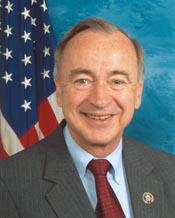 Rep. Walter Minnick (D-ID)
Description
Amendment sought to create a Consumer Financial Protection Council (CFPC) of regulators with rule-writing authority in safety and soundness of institutions and consumer protections regarding all financial products. The CFPC is comprised of 12 members including the Secretary of Treasury, Secretary of Housing and Urban Development, the Chairman of the Federal Reserve, the chairman of the CFTC and SEC, among other federal and state regulators.
Legislative Activity
Stay on top of the latest movement without scrolling through every action
House amendment offered
December 11, 2009
View full timeline
House amendment offered
December 11, 2009
Amendment failed in Committee of the Whole
December 11, 2009 • 1:43 PM
House amendment not agreed to: On agreeing to the Minnick amendment (A022) Failed by recorded vote: 208 - 223 (Roll no. 965).
December 11, 2009 • 1:43 PM
Roll call votes on amendments in House
December 11, 2009 • 1:43 PM
House amendment offered/reported by : Amendment (A022) offered by Mr. Minnick.(consideration: CR H14764-14776, H14799; text: CR H14764-14771)
December 11, 2009 • 11:31 AM
Amendment (A022) offered by Mr. Minnick. (consideration: CR H14764-14776, H14799; text: CR H14764-14771)
December 11, 2009 • 11:31 AM
On agreeing to the Minnick amendment (A022) Failed by recorded vote: 208 - 223 (Roll no. 965).
December 11, 2009 • 1:43 PM
Votes
1 roll call on this amendment
Text
Offered
PERSONAL EXPLANATION

Mr. FILNER. Madam Speaker, on rollcall 960, I was away from the
Capitol. Had I been present, I would have voted ``aye.''

Amendment No. 14 Offered by Mr. McCarthy of California

The Acting CHAIR. The unfinished business is the demand for a
recorded vote on the amendment offered by the gentleman from California
(Mr. McCarthy) on which further proceedings were postponed and on which
the noes prevailed by voice vote.
The Clerk will redesignate the amendment.
The text of the amendment is as follows:

Amendment No. 14 offered by Mr. McCarthy:
The text of the amendment is as follows:
Amendment No. 14 offered by Mr. McCarthy of California.
Strike section 6012 (relating to ``Effect of Rule
436(G)'').

Recorded Vote

The Acting CHAIR. A recorded vote has been demanded.
A recorded vote was ordered.
The Acting CHAIR. This will be a 5-minute vote.
The vote was taken by electronic device, and there were--ayes 166,
noes 259, not voting 15, as follows:

Roll No. 961

AYES--166

Aderholt
Akin
Alexander
Austria
Bachmann
Bachus
Bartlett
Barton (TX)
Biggert
Bilbray
Bilirakis
Bishop (UT)
Blackburn
Blunt
Boehner
Bonner
Bono Mack
Boozman
Boustany
Brady (TX)
Broun (GA)
Brown (SC)
Buchanan
Burgess
Burton (IN)
Buyer
Calvert
Camp
Campbell
Cantor
Cao
Capito
Carter
Cassidy
Castle
Chaffetz
Coble
Coffman (CO)
Cohen
Cole
Conaway
Crenshaw
Culberson
Davis (KY)
Deal (GA)

[[Page H14763]]

Dent
Dreier
Duncan
Ehlers
Emerson
Fallin
Flake
Fleming
Forbes
Foxx
Franks (AZ)
Frelinghuysen
Gallegly
Garrett (NJ)
Gerlach
Gingrey (GA)
Goodlatte
Granger
Graves
Guthrie
Hall (TX)
Harper
Hastings (WA)
Heller
Hensarling
Herger
Hoekstra
Hunter
Inglis
Issa
Jenkins
Johnson, Sam
Jordan (OH)
King (IA)
King (NY)
Kingston
Kline (MN)
Lamborn
Lance
Latham
LaTourette
Latta
Lee (NY)
Lewis (CA)
Linder
LoBiondo
Lucas
Luetkemeyer
Lummis
Lungren, Daniel E.
Mack
Manzullo
Marchant
McCarthy (CA)
McCaul
McClintock
McCotter
McHenry
McKeon
McMahon
McMorris Rodgers
Mica
Miller (FL)
Miller (MI)
Miller, Gary
Moran (KS)
Murphy, Tim
Myrick
Neugebauer
Nunes
Olson
Paul
Paulsen
Pence
Petri
Pitts
Platts
Poe (TX)
Posey
Price (GA)
Putnam
Rehberg
Reichert
Roe (TN)
Rogers (AL)
Rogers (KY)
Rogers (MI)
Rohrabacher
Rooney
Ros-Lehtinen
Roskam
Royce
Ryan (WI)
Scalise
Schmidt
Schock
Sensenbrenner
Shadegg
Shimkus
Shuler
Shuster
Simpson
Smith (NE)
Smith (NJ)
Smith (TX)
Speier
Sullivan
Terry
Thompson (PA)
Thornberry
Tiahrt
Tiberi
Turner
Upton
Walden
Wamp
Westmoreland
Whitfield
Wilson (SC)
Wittman
Wolf

NOES--259

Abercrombie
Ackerman
Adler (NJ)
Altmire
Andrews
Arcuri
Baca
Baird
Barrow
Bean
Becerra
Berkley
Berman
Berry
Bishop (GA)
Bishop (NY)
Blumenauer
Boccieri
Boren
Boswell
Boucher
Boyd
Brady (PA)
Braley (IA)
Bright
Brown, Corrine
Brown-Waite, Ginny
Butterfield
Capps
Capuano
Cardoza
Carnahan
Carney
Carson (IN)
Castor (FL)
Chandler
Childers
Christensen
Chu
Clarke
Clay
Cleaver
Clyburn
Connolly (VA)
Conyers
Cooper
Costa
Costello
Courtney
Crowley
Cuellar
Cummings
Dahlkemper
Davis (AL)
Davis (CA)
Davis (IL)
Davis (TN)
DeFazio
DeGette
Delahunt
DeLauro
Diaz-Balart, L.
Diaz-Balart, M.
Dicks
Dingell
Doggett
Donnelly (IN)
Doyle
Driehaus
Edwards (MD)
Edwards (TX)
Ellison
Ellsworth
Engel
Eshoo
Etheridge
Farr
Fattah
Filner
Fortenberry
Foster
Frank (MA)
Fudge
Garamendi
Giffords
Gohmert
Gonzalez
Gordon (TN)
Grayson
Green, Al
Green, Gene
Griffith
Grijalva
Gutierrez
Hall (NY)
Halvorson
Hare
Harman
Hastings (FL)
Heinrich
Herseth Sandlin
Hill
Himes
Hinchey
Hinojosa
Hirono
Hodes
Holden
Holt
Honda
Hoyer
Inslee
Israel
Jackson (IL)
Jackson-Lee (TX)
Johnson (GA)
Johnson (IL)
Johnson, E. B.
Jones
Kagen
Kanjorski
Kaptur
Kennedy
Kildee
Kilpatrick (MI)
Kilroy
Kind
Kirkpatrick (AZ)
Kissell
Klein (FL)
Kosmas
Kratovil
Kucinich
Langevin
Larsen (WA)
Larson (CT)
Lee (CA)
Levin
Lewis (GA)
Lipinski
Loebsack
Lowey
Lujan
Lynch
Maffei
Maloney
Markey (CO)
Markey (MA)
Marshall
Massa
Matheson
Matsui
McCarthy (NY)
McCollum
McDermott
McGovern
McIntyre
McNerney
Meek (FL)
Meeks (NY)
Melancon
Michaud
Miller (NC)
Miller, George
Minnick
Mitchell
Mollohan
Moore (KS)
Moore (WI)
Murphy (CT)
Murphy (NY)
Murphy, Patrick
Nadler (NY)
Napolitano
Neal (MA)
Norton
Nye
Oberstar
Obey
Olver
Ortiz
Owens
Pallone
Pascrell
Pastor (AZ)
Payne
Perlmutter
Perriello
Peters
Peterson
Pingree (ME)
Polis (CO)
Pomeroy
Price (NC)
Quigley
Rahall
Rangel
Reyes
Richardson
Rodriguez
Ross
Rothman (NJ)
Roybal-Allard
Ruppersberger
Rush
Ryan (OH)
Sablan
Salazar
Sanchez, Linda T.
Sanchez, Loretta
Sarbanes
Schakowsky
Schauer
Schiff
Schrader
Schwartz
Scott (GA)
Scott (VA)
Serrano
Sestak
Shea-Porter
Sherman
Sires
Skelton
Smith (WA)
Snyder
Souder
Space
Spratt
Stark
Stearns
Stupak
Sutton
Tanner
Taylor
Teague
Thompson (CA)
Thompson (MS)
Tierney
Titus
Tonko
Towns
Tsongas
Van Hollen
Velazquez
Visclosky
Walz
Wasserman Schultz
Waters
Watson
Watt
Waxman
Weiner
Welch
Wilson (OH)
Woolsey
Wu
Yarmuth
Young (FL)

NOT VOTING--15

Baldwin
Barrett (SC)
Bordallo
Faleomavaega
Higgins
Kirk
Lofgren, Zoe
Moran (VA)
Murtha
Pierluisi
Radanovich
Sessions
Slaughter
Wexler
Young (AK)

Announcement by the Acting Chair

The Acting CHAIR (during the vote). There are 2 minutes remaining on
this vote.

{time}  1121

Mr. LARSON of Connecticut changed his vote from ``aye'' to ``no.''
So the amendment was rejected.
The result of the vote was announced as above recorded.
Stated against:
Mr. KIRK. Madam Chair, on rollcall No. 961 I was unavoidably
detained. Had I been present, I would have voted ``no.''
Ms. SPEIER. Madam Chair, during rollcall vote No. 961 on H.R. 4173, I
mistakenly recorded my vote as ``aye'' when I should have voted ``no.''

Amendment No. 16 Offered by Mr. Peters

The Acting CHAIR. The unfinished business is the demand for a
recorded vote on the amendment offered by the gentleman from Michigan
(Mr. Peters) on which further proceedings were postponed and on which
the ayes prevailed by voice vote.
The Clerk will redesignate the amendment.
The Clerk redesignated the amendment.

Recorded Vote

The Acting CHAIR. A recorded vote has been demanded.
A recorded vote was ordered.
The Acting CHAIR. This will be a 5-minute vote.
The vote was taken by electronic device, and there were--ayes 228,
noes 198, not voting 14, as follows:

[Roll No. 962]

AYES--228

Abercrombie
Ackerman
Adler (NJ)
Altmire
Andrews
Baca
Baird
Bean
Becerra
Berkley
Berman
Bishop (GA)
Bishop (NY)
Blumenauer
Boccieri
Boswell
Boucher
Boyd
Brady (PA)
Braley (IA)
Bright
Brown, Corrine
Butterfield
Capps
Capuano
Carnahan
Carney
Carson (IN)
Castor (FL)
Chandler
Childers
Christensen
Chu
Clarke
Clay
Cleaver
Clyburn
Cohen
Connolly (VA)
Conyers
Costello
Courtney
Crowley
Cuellar
Cummings
Dahlkemper
Davis (AL)
Davis (CA)
Davis (IL)
DeFazio
DeGette
Delahunt
DeLauro
Dicks
Dingell
Doggett
Donnelly (IN)
Doyle
Driehaus
Edwards (MD)
Edwards (TX)
Ellison
Ellsworth
Engel
Eshoo
Farr
Fattah
Filner
Foster
Frank (MA)
Fudge
Garamendi
Giffords
Gonzalez
Grayson
Green, Gene
Grijalva
Gutierrez
Hall (NY)
Halvorson
Hare
Harman
Hastings (FL)
Heinrich
Herseth Sandlin
Higgins
Hill
Himes
Hinchey
Hinojosa
Hirono
Hodes
Holden
Holt
Honda
Hoyer
Inslee
Israel
Jackson (IL)
Jackson-Lee (TX)
Johnson (GA)
Johnson, E.B.
Kagen
Kanjorski
Kaptur
Kennedy
Kildee
Kilpatrick (MI)
Kilroy
Kirkpatrick (AZ)
Kissell
Klein (FL)
Kosmas
Kucinich
Langevin
Larsen (WA)
Larson (CT)
Lee (CA)
Levin
Lewis (GA)
Lipinski
Loebsack
Lowey
Lujan
Lynch
Maloney
Markey (CO)
Markey (MA)
Marshall
Massa
Matheson
Matsui
McCarthy (NY)
McCollum
McDermott
McGovern
McIntyre
McNerney
Meek (FL)
Meeks (NY)
Melancon
Michaud
Miller (NC)
Miller, George
Minnick
Mitchell
Mollohan
Moore (KS)
Murphy (CT)
Murphy, Patrick
Nadler (NY)
Napolitano
Neal (MA)
Norton
Oberstar
Obey
Olver
Ortiz
Owens
Pallone
Pascrell
Pastor (AZ)
Payne
Perlmutter
Perriello
Peters
Pingree (ME)
Pomeroy
Price (NC)
Quigley
Rahall
Rangel
Reyes
Richardson
Rodriguez
Rothman (NJ)
Roybal-Allard
Ruppersberger
Rush
Ryan (OH)
Sablan
Salazar
Sanchez, Linda T.
Sanchez, Loretta
Sarbanes
Schakowsky
Schauer
Schiff
Schrader
Schwartz
Scott (GA)
Scott (VA)
Serrano
Sestak
Shea-Porter
Sherman
Shuler
Sires
Skelton
Snyder
Space
Speier
Stark
Stupak
Sutton
Tanner
Teague
Thompson (CA)
Thompson (MS)
Tierney
Titus
Tonko
Towns
Tsongas
Van Hollen
Velazquez
Walz
Wasserman Schultz
Waters
Watson
Watt
Waxman
Weiner
Welch
Wilson (OH)
Woolsey
Wu
Yarmuth

NOES--198

Aderholt
Akin
Alexander
Arcuri
Austria
Bachmann
Bachus
Barrow
Bartlett
Barton (TX)
Berry
Biggert
Bilbray
Bilirakis
Bishop (UT)
Blackburn
Blunt
Boehner
Bonner
Bono Mack
Boozman
Boren
Boustany
Brady (TX)
Broun (GA)
Brown (SC)
Brown-Waite, Ginny
Buchanan
Burgess
Burton (IN)
Buyer
Calvert
Camp
Campbell
Cantor
Cao
Capito
Cardoza
Carter
Cassidy
Castle
Chaffetz
Coble
Coffman (CO)
Cole
Conaway
Cooper
Costa
Crenshaw
Culberson
Davis (KY)
Davis (TN)
Deal (GA)
Dent
Diaz-Balart, L.
Diaz-Balart, M.
Dreier
Duncan
Ehlers
Emerson
Etheridge
Fallin
Flake
Fleming
Forbes
Fortenberry
Foxx
Franks (AZ)
Frelinghuysen
Gallegly
Garrett (NJ)

[[Page H14764]]

Gerlach
Gingrey (GA)
Gohmert
Goodlatte
Gordon (TN)
Granger
Graves
Griffith
Guthrie
Hall (TX)
Harper
Hastings (WA)
Heller
Hensarling
Herger
Hoekstra
Hunter
Inglis
Issa
Jenkins
Johnson (IL)
Johnson, Sam
Jones
Jordan (OH)
Kind
King (IA)
King (NY)
Kingston
Kirk
Kline (MN)
Kratovil
Lamborn
Lance
Latham
LaTourette
Latta
Lee (NY)
Lewis (CA)
Linder
LoBiondo
Lucas
Luetkemeyer
Lummis
Lungren, Daniel E.
Mack
Maffei
Manzullo
Marchant
McCarthy (CA)
McCaul
McClintock
McCotter
McHenry
McKeon
McMahon
McMorris Rodgers
Mica
Miller (FL)
Miller (MI)
Miller, Gary
Moore (WI)
Moran (KS)
Murphy (NY)
Murphy, Tim
Myrick
Neugebauer
Nunes
Nye
Olson
Paul
Paulsen
Pence
Peterson
Petri
Pitts
Platts
Poe (TX)
Polis (CO)
Posey
Price (GA)
Putnam
Rehberg
Reichert
Roe (TN)
Rogers (AL)
Rogers (KY)
Rogers (MI)
Rohrabacher
Rooney
Ros-Lehtinen
Roskam
Ross
Royce
Ryan (WI)
Scalise
Schmidt
Schock
Sensenbrenner
Shadegg
Shimkus
Shuster
Simpson
Smith (NE)
Smith (NJ)
Smith (TX)
Smith (WA)
Souder
Spratt
Stearns
Sullivan
Taylor
Terry
Thompson (PA)
Thornberry
Tiahrt
Tiberi
Turner
Upton
Visclosky
Walden
Wamp
Westmoreland
Whitfield
Wilson (SC)
Wittman
Wolf
Young (FL)

NOT VOTING--14

Baldwin
Barrett (SC)
Bordallo
Faleomavaega
Green, Al
Lofgren, Zoe
Moran (VA)
Murtha
Pierluisi
Radanovich
Sessions
Slaughter
Wexler
Young (AK)
The Acting CHAIRMAN. There are 2 minutes remaining on this vote.

{time}  1129

So the amendment was agreed to.
The result of the vote was announced as above recorded.

{time}  1130

Amendment No. 35 Offered by Mr. Minnick

The Acting CHAIR. It is now in order to consider amendment No. 35
printed in House Report 111-370.
Mr. MINNICK. I have an amendment at the desk.
The Acting CHAIR. The Clerk will designate the amendment.
The text of the amendment is as follows:

Amendment No. 35 offered by Mr. Minnick:
Strike title IV and insert the following:

TITLE IV--CONSUMER FINANCIAL PROTECTION ACT

SECTION 4001. SHORT TITLE.

This title may be cited as the ``Consumer Financial
Protection Act of 2009''.

SEC. 4002. CONSUMER FINANCIAL PROTECTION COUNCIL.

(a) Establishment.--There is hereby established the
Consumer Financial Protection Council (hereinafter in this
title referred to as the ``Council'') as an independent
establishment of the executive branch, which shall consist
of--
(1) the Chairman of the Board of Governors of the Federal
Reserve System;
(2) the Comptroller of the Currency;
(3) the Chairperson of the Board of Directors of the
Federal Deposit Insurance Corporation;
(4) the Director of the Office of Thrift Supervision;
(5) the Administrator of the National Credit Union
Administration;
(6) the Secretary of the Department of Housing and Urban
Development;
(7) the Secretary of the Treasury;
(8) the Chairman of the Securities and Exchange Commission;
(9) the Chairman of the Commodities Futures Trading
Commission;
(10) the Chairman of the Federal Trade Commission; and
(11) one individual selected by the State Advisory
Committee established under section 4005.
(b) Staffing.--The Secretary of the Treasury shall provide
appropriate staffing for the Council.

SEC. 4003. CONSUMER FINANCIAL PROTECTION SUBCOMMITTEE.

(a) Establishment.--There is hereby established within the
Council the Consumer Financial Protection Subcommittee
(hereinafter in this title referred to as the ``CFPS''),
which shall consist of the members of the Council.
(b) Purpose.--The purpose of the CFPS is to ensure that all
providers of a financial product or service to consumers are
subject to meaningful and uniform consumer protection
requirements, and that functionally equivalent products are
subject to equivalent consumer protection standards.
(c) Chairmanship.--
(1) Initial chairman.--The Chairman of the Federal Trade
Commission shall serve as the Chairman of the CFPS for the 2-
year period beginning on the date of the enactment of this
title.
(2) Subsequent selection.--After the 2-year period
described under paragraph (1), the President shall appoint
the Chairman of the CFPS from among the members of the CFPS.
The term of the Chairmanship shall be 2 years.
(d) Voting.--Decisions of the CFPS shall be made by a
majority vote of the members of the CFPS.
(e) Duties.--The CFPS shall review existing consumer
protection regulations and issue new or revised regulations
where needed to prevent unfair or deceptive practices.
(f) Procedures for Proposing and Issuing Regulations.--
(1) Proposal.--Any member of the CFPS may propose that the
CFPS consider the need for the modification of an existing
regulation or for the issuing of a new regulation with
respect to a particular consumer financial product or
service. After such proposal is made, the CFPS shall develop
an analysis of the proposal and prepare a report that
either--
(A) recommends that no action be taken; or
(B) recommends the modification of existing regulations or
the issuing of new regulations.
(2) Publication.--With respect to a report prepared under
paragraph (1)--
(A) if the CFPS recommends that no action be taken, the
CFPS shall make a copy of the report publicly available; and
(B) if the CFPS recommends the modification of existing
regulations or the issuing of new regulations, the CFPS shall
publish such report in the Federal Register and solicit
public comments on such recommendation, pursuant to the
Administrative Procedure Act.
(3) Modification or acceptance.--With respect to each
recommendation described under paragraph (2)(B) for the
modification of existing regulations or the issuing of new
regulations, after the CFPS has considered the public
comments on such recommendation, the CFPS shall vote on
whether such recommendations should be withdrawn, modified,
or published as a final regulation.
(4) Regulations issued by cfps control.--Notwithstanding
any other provision of law, to the extent that any other
regulation conflicts with a regulation issued by the CFPS
under this subsection, such other regulation shall have no
force or effect to the extent of such conflict.
(5) Proposals by state advisory committee.--
(A) In general.--Any proposal made under paragraph (1) by
the member of the CFPS selected by the State Advisory
Committee shall be accompanied by a certification from such
member stating that more than half of the States support such
proposal.
(B) Method of determination.--For purposes of this
paragraph, the State Advisory Committee shall determine the
method for determining if a State supports a proposal.
(6) Report on approval or opposition.--Each member of the
CFPS shall issue an annual report to the Congress containing
a detailed explanation, for each proposal made under
paragraph (1), why such member supported or opposed such
proposal.
(7) Procedures to be applied to all rulemakings.--The
procedures under this subsection shall be used by the CFPS
when issuing any regulation under the authority of this
title.
(g) Consumer Financial Products or Services Expressly
Permitted by State or Federal Law.--
(1) Voting requirements.--Any votes taken by the CFPS to
prevent the offering of any consumer financial product or
service that is expressly permitted by State or Federal law
shall only be agreed to by a two-thirds vote.
(2) Recommendations to the congress.--If the CFPS
determines a need to prevent the offering of any consumer
financial product or service expressly permitted by State or
Federal law, the CFPS shall issue a report to the Congress
containing such determination and including--
(A) a description of the specific financial product or
service that the CFPS is recommending the Congress should
prevent from being offered;
(B) an estimate of the amount of credit provided by and the
number of consumers using any such financial product or
service;
(C) a list of any States which have expressly permitted any
such financial product or service;
(D) the identities of persons known by the CFPS to be
offering any such financial product or service;
(E) an analysis of whether there are ample other
alternative reasonably priced financial products or services
available to meet consumers' credit needs, and a description
of such alternative financial products or services; and
(F) the basis and reasoning on which the CFPS has based its
recommendation.
(3) Definition.--For purposes of this subsection, the term
``prevent the offering of any consumer financial product or
service'' shall mean taking any action that could reasonably
result in the direct or indirect prohibition of, or
materially interfere with the ability of any person to offer,
any consumer financial product or service.

SEC. 4004. FINANCIAL INSTITUTIONS EXAMINATION COUNCIL.

Section 1004(a) of the Federal Financial Institutions
Examination Council Act of 1978 (12 U.S.C. 3303(a)) is
amended by inserting after ``established'' the following:
``as a subcommittee within the Consumer Financial Protection
Council''.

SEC. 4005. STATE ADVISORY COMMITTEE.

There is hereby established within the Council the State
Advisory Committee,

[[Page H14765]]

which shall consist of one representative from each of the
following:
(1) The Conference of State Bank Supervisors.
(2) The American Council of State Savings Supervisors.
(3) The National Association of State Credit Union
Supervisors.

SEC. 4006. EQUALITY OF CONSUMER PROTECTION ENFORCEMENT
RESPONSIBILITIES.

With respect to each consumer protection agency, the
enforcement of the provisions of the consumer protection laws
under such agency's jurisdiction shall be of equal importance
to such agency as the enforcement of the provisions of other
laws under such agency's jurisdiction.

SEC. 4007. DIRECTOR OF THE CONSUMER FINANCIAL PROTECTION
DIVISION.

(a) Establishment.--There is hereby established within each
consumer protection agency a position of Director of the
Consumer Financial Protection Division.
(b) Compensation.--With respect to a consumer protection
agency, the Director of the Consumer Financial Protection
Division shall be compensated in an amount no less than the
amount of compensation provided to the head of other
subdivisions of such agency of a comparable size.
(c) Direct Reporting.--Each Director of the Consumer
Financial Protection Division established under subsection
(a) shall report directly to the head of the agency within
which such Director is located.
(d) Annual Report to the Congress.--Each consumer
protection agency shall issue an annual report to the
Congress detailing the activities of the Director of the
Consumer Financial Protection Division and how such
activities advanced the agency's consumer protection
functions.

SEC. 4008. PROHIBITING UNFAIR OR DECEPTIVE ACTS OR PRACTICES.

(a) In General.--Each consumer protection agency may
prevent a person from committing or engaging in an unfair or
deceptive act or practice in connection with any transaction
with a consumer for a consumer financial product or service
under such agency's jurisdiction.
(b) Rulemaking.--Each consumer protection agency may
prescribe regulations identifying as unlawful, unfair, or
deceptive acts or practices in connection with any
transaction with a consumer for a consumer financial product
or service under such agency's jurisdiction.
(c) Referral to CFPS.--With respect to each regulation
issued pursuant to subsection (b), the consumer protection
agency issuing such regulation shall propose such regulation
to the CFPS under section 4003(f), unless the CFPS already
has a substantially similar proposal under consideration.
(d) Unfairness.--
(1) In general.--A consumer protection agency shall have no
authority under this section to declare an act or practice in
connection with a transaction with a consumer for a consumer
financial product or service to be unlawful on the grounds
that such act or practice is unfair unless such agency has a
reasonable basis to conclude that the act or practice causes
or is likely to cause substantial injury to consumers which
is not reasonably avoidable by consumers and such substantial
injury is not outweighed by countervailing benefits to
consumers or to competition.
(2) Existing published guidelines as factor.--In
determining whether an act or practice is unfair, a consumer
protection agency shall consider established public policies
and regulations, interpretations, guidance, and staff
commentaries issued by the consumer protection agencies under
the consumer protection laws they enforce.
(e) Definitions.--For purposes of this section, the terms
``unfair'' and ``deceptive'' shall have the meanings given
such terms under the Federal Trade Commission Act (15 U.S.C.
41 et seq.).

SEC. 4009. ADOPTING OPERATIONAL STANDARDS TO DETER UNFAIR OR
DECEPTIVE PRACTICES.

(a) Authority To Prescribe Standards.--The consumer
protection agencies shall prescribe standards applicable to
covered persons to deter and detect unfair or deceptive acts
or practices in the provision of consumer financial products
or services under such agency's jurisdiction, including
standards for--
(1) background checks for principals, officers, directors,
or key personnel of the covered person;
(2) registration, licensing, or certification;
(3) bond or other appropriate financial requirements to
provide reasonable assurance of the ability of the covered
person to perform its obligations to consumers;
(4) creating and maintaining records of transactions or
accounts; and
(5) procedures and operations of the covered person
relating to the provision of, or maintenance of accounts for,
consumer financial products or services.
(b) CFPS Authority to Issue Regulations.--The CFPS may
issue regulations establishing minimum standards under this
section for any class of covered persons.
(c) Exception for Enforcement of Gramm-Leach-Bliley Privacy
Laws Against Insurers.--Neither the consumer protection
agencies nor the CFPS shall have authority to issue or
enforce regulations with respect to authorities that are
granted to State insurance regulators under section 505(a)(6)
of the Gramm-Leach-Bliley Act.

SEC. 4010. PRESUMPTION OF ABILITY TO REPAY.

(a) Prohibition on Residential Mortgage Loans That Won't
Reasonably Be Repaid.--
(1) In general.--No creditor shall make a residential
mortgage loan unless it has a reasonable basis for
determining that the consumer can repay the loan.
(2) Basis for determination.--A determination under this
subsection of a consumer's ability to repay a residential
mortgage loan shall include consideration of the consumer's
credit history, current income, expected income the consumer
is reasonably assured of receiving, current obligations,
debt-to-income ratio, employment status, and other financial
resources other than the consumer's equity in the dwelling or
real property that secures repayment of the loan.
(b) Exemption for Certain Model Terms and Conditions.--
Subsection (a) shall not apply to residential mortgage loans
containing the model terms and conditions contained in
regulations issued by the Council under subsection (c).
(c) Procedure for Adopting Model Terms and Conditions.--
(1) In general.--Not later than 1 years after the date of
the enactment of this title, the Council shall issue
regulations containing model terms and conditions for
residential mortgage loans, for purposes of subsection (b).
(2) Voting.--The Council may only issue a regulation under
paragraph (1)--
(A) by a majority vote of the Council's members; and
(B) in a vote where each member of the Council casts a
vote.
(3) Revision of model terms and conditions.--The Council
shall update regulations issued under this subsection from
time to time as appropriate.
(4) Rulemaking procedures.--In issuing any regulation under
this subsection, the Council shall, to the extent
practicable, follow the procedures set forth under section
4003(f) for the consideration of proposals by the CFPS.
(d) Enforcement.--The prohibition under subsection (a)
shall be enforced by each member of the Council with
jurisdiction over the provision of residential mortgage
loans.

SEC. 4011. EXAMINATIONS BY CONSUMER PROTECTION AGENCIES.

(a) In General.--Each consumer protection agency shall
carry out regular examinations of covered persons regulated
by such agency.
(b) Scope of Examinations.--Examinations carried out
pursuant to subsection (a) shall be comparable to those
examinations carried out by the Federal banking agencies of
insured depository institutions.

SEC. 4012. CONSUMER RIGHTS TO ACCESS INFORMATION.

(a) In General.--Subject to regulations prescribed by the
consumer protection agencies, a covered person shall make
available to a consumer, in an electronic form usable by the
consumer, information in the control or possession of the
covered person concerning the consumer financial product or
service that the consumer obtained from such covered person
including information relating to any transaction, series of
transactions, or to the account, including charges and usage
data.
(b) Exceptions.--A covered person shall not be required by
this section to make available to the consumer--
(1) any confidential commercial information, including an
algorithm used to derive credit scores or other risk scores
or predictors;
(2) any information collected by the covered person for the
purpose of preventing fraud or money laundering, or
detecting, or making any report regarding other unlawful or
potentially unlawful conduct;
(3) any information required to be kept confidential by any
other law; or
(4) any information that the covered person cannot retrieve
in the ordinary course of its business with respect to that
information.
(c) No Duty To Maintain Records.--No provision of this
section shall be construed as imposing any duty on a covered
person to maintain or keep any information about a consumer.
(d) Standardized Formats for Data.--The consumer protection
agencies, by regulation, shall prescribe standards applicable
to covered persons to promote the development and use of
standardized formats for information, including through the
use of machine readable files, to be made available to
consumers under this section.

SEC. 4013. PROHIBITED ACTS.

It shall be unlawful for any person to--
(1) advertise, market, offer, sell, enforce, or attempt to
enforce, any term, agreement, change in terms, fee or charge
in connection with a consumer financial product or service
that is not in conformity with this title and applicable
regulation prescribed or order issued by the consumer
protection agencies, the CFPS, or the Council;
(2) fail or refuse to permit access to or copying of
records, or fail or refuse to establish or maintain records,
or fail or refuse to make reports or provide information to a
consumer protection agency, the CFPS, or the Council, as
required by this title, a consumer protection law or any
regulation prescribed or order issued by a consumer
protection agency, the CFPS, or the Council under this title
or pursuant to any such authority; or

[[Page H14766]]

(3) knowingly or recklessly provide substantial assistance
to another person in violation of the provisions of section
4008, or any regulation prescribed or order issued under such
section, and any such person shall be deemed to be in
violation of that section to the same extent as the person to
whom such assistance is provided.

SEC. 4014. STATE ATTORNEYS GENERAL RIGHT TO SUE.

No provision of this title shall be construed to limit the
applicability or the effect of the decision of the Supreme
Court in Cuomo v. Clearing House Assn., L.L.C., 557 U.S. ___
(2009).

SEC. 4015. ENFORCEMENT.

(a) Definitions.--For purposes of this section, the
following definitions shall apply:
(1) Civil investigative demand and demand.--The terms
``civil investigative demand'' and ``demand'' mean any demand
issued by a consumer protection agency.
(2) Consumer protection agency.--The term ``consumer
protection agency'' means--
(A) the appropriate Federal banking agency (as such term is
defined in section 3(q) of the Federal Deposit Insurance
Act), with respect to entities regulated by the appropriate
Federal banking agencies;
(B) the National Credit Union Administration, with respect
to a credit union;
(C) the Securities and Exchange Commission, with respect to
an entity regulated by such Commission;
(D) the Commodity Futures Trading Commission, with respect
to an entity regulated by such Commission; and
(E) the Federal Trade Commission, with respect to any
entity not regulated by the appropriate Federal banking
agencies, the National Credit Union Administration, the
Securities and Exchange Commission, or the Commodity Futures
Trading Commission.
(3) Consumer protection agency investigation.--The term
``consumer protection agency investigation'' means any
inquiry conducted by a consumer protection agency
investigator for the purpose of ascertaining whether any
person is or has been engaged in any conduct that violates
this title, any consumer protection law, or any regulation
prescribed or order issued by the consumer protection
agencies, the CFPS, or the Council under this title.
(4) Consumer protection agency investigator.--The term
``consumer protection agency investigator'' means any
attorney or investigator employed by a consumer protection
agency who is charged with the duty of enforcing or carrying
into effect any provisions of this title, any consumer
protection law, or any regulation prescribed or order issued
under this title or pursuant to any such authority by the
consumer protection agency, the CFPS, or the Council.
(5) Custodian.--The term ``custodian'' means the custodian
or any deputy custodian designated by a consumer protection
agency.
(6) Documentary material.--The term ``documentary
material'' includes the original or any copy of any book,
record, report, memorandum, paper, communication, tabulation,
chart, or other document.
(7) Violation.--The term ``violation'' means any act or
omission that, if proved, would constitute a violation of any
provision of this title, any consumer protection law, or of
any regulation prescribed or order issued by a consumer
protection agency, the CFPS, of the Council under this title
or pursuant to any such authority.
(b) Investigations and Administrative Discovery.--
(1) Subpoenas.--
(A) In general.--A consumer protection agency or a consumer
protection agency investigator may issue subpoenas for the
attendance and testimony of witnesses and the production of
relevant papers, books, documents, or other material in
connection with hearings under this title.
(B) Failure to obey.--In case of contumacy or refusal to
obey a subpoena issued pursuant to this paragraph and served
upon any person, the district court of the United States for
any district in which such person is found, resides, or
transacts business, upon application by a consumer protection
agency or a consumer protection agency investigator and after
notice to such person, shall have jurisdiction to issue an
order requiring such person to appear and give testimony or
to appear and produce documents or other material, or both.
(C) Contempt.--Any failure to obey an order of the court
under this subsection may be punished by the court as a
contempt thereof.
(2) Demands.--
(A) In general.--Whenever a consumer protection agency has
reason to believe that any person may be in possession,
custody, or control of any documentary material or tangible
things, or may have any information, relevant to a violation,
a consumer protection agency may, before the institution of
any proceedings under this title or under any consumer
protection law, issue in writing, and cause to be served upon
such person, a civil investigative demand requiring such
person to--
(i) produce such documentary material for inspection and
copying or reproduction;
(ii) submit such tangible things;
(iii) file written reports or answers to questions;
(iv) give oral testimony concerning documentary material or
other information; or
(v) furnish any combination of such material, answers, or
testimony.
(B) Requirements.--Each civil investigative demand shall
state the nature of the conduct constituting the alleged
violation which is under investigation and the provision of
law applicable to such violation.
(C) Production of documents.--Each civil investigative
demand for the production of documentary material shall--
(i) describe each class of documentary material to be
produced under the demand with such definiteness and
certainty as to permit such material to be fairly identified;
(ii) prescribe a return date or dates which will provide a
reasonable period of time within which the material so
demanded may be assembled and made available for inspection
and copying or reproduction; and
(iii) identify the custodian to whom such material shall be
made available.
(D) Production of things.--Each civil investigative demand
for the submission of tangible things shall--
(i) describe each class of tangible things to be submitted
under the demand with such definiteness and certainty as to
permit such things to be fairly identified;
(ii) prescribe a return date or dates which will provide a
reasonable period of time within which the things so demanded
may be assembled and submitted; and
(iii) identify the custodian to whom such things shall be
submitted.
(E) Demand for written reports or answers.--Each civil
investigative demand for written reports or answers to
questions shall--
(i) propound with definiteness and certainty the reports to
be produced or the questions to be answered;
(ii) prescribe a date or dates at which time written
reports or answers to questions shall be submitted; and
(iii) identify the custodian to whom such reports or
answers shall be submitted.
(F) Oral testimony.--Each civil investigative demand for
the giving of oral testimony shall--
(i) prescribe a date, time, and place at which oral
testimony shall be commenced; and
(ii) identify a consumer protection agency investigator who
shall conduct the investigation and the custodian to whom the
transcript of such investigation shall be submitted.
(G) Service.--
(i) Any civil investigative demand may be served by any
consumer protection agency investigator at any place within
the territorial jurisdiction of any court of the United
States.
(ii) Any such demand or any enforcement petition filed
under this section may be served upon any person who is not
found within the territorial jurisdiction of any court of the
United States, in such manner as the Federal Rules of Civil
Procedure prescribe for service in a foreign nation.
(iii) To the extent that the courts of the United States
have authority to assert jurisdiction over such person
consistent with due process, the United States District Court
for the District of Columbia shall have the same jurisdiction
to take any action respecting compliance with this section by
such person that such district court would have if such
person were personally within the jurisdiction of such
district court.
(H) Method of service.--Service of any civil investigative
demand or any enforcement petition filed under this section
may be made upon a person, including any legal entity, by--
(i) delivering a duly executed copy of such demand or
petition to the individual or to any partner, executive
officer, managing agent, or general agent of such person, or
to any agent of such person authorized by appointment or by
law to receive service of process on behalf of such person;
(ii) delivering a duly executed copy of such demand or
petition to the principal office or place of business of the
person to be served; or
(iii) depositing a duly executed copy in the United States
mails, by registered or certified mail, return receipt
requested, duly addressed to such person at its principal
office or place of business.
(I) Proof of service.--
(i) A verified return by the individual serving any civil
investigative demand or any enforcement petition filed under
this section setting forth the manner of such service shall
be proof of such service.
(ii) In the case of service by registered or certified
mail, such return shall be accompanied by the return post
office receipt of delivery of such demand or enforcement
petition.
(J) Production of documentary material.--The production of
documentary material in response to a civil investigative
demand shall be made under a sworn certificate, in such form
as the demand designates, by the person, if a natural person,
to whom the demand is directed or, if not a natural person,
by any person having knowledge of the facts and circumstances
relating to such production, to the effect that all of the
documentary material required by the demand and in the
possession, custody, or control of the person to whom the
demand is directed has been produced and made available to
the custodian.
(K) Submission of tangible things.--The submission of
tangible things in response to a civil investigative demand
shall be made under a sworn certificate, in such form as the
demand designates, by the person to whom the demand is
directed or, if not a natural person, by any person having
knowledge

[[Page H14767]]

of the facts and circumstances relating to such production,
to the effect that all of the tangible things required by the
demand and in the possession, custody, or control of the
person to whom the demand is directed have been submitted to
the custodian.
(L) Separate answers.--Each reporting requirement or
question in a civil investigative demand shall be answered
separately and fully in writing under oath, unless it is
objected to, in which event the reasons for the objection
shall be stated in lieu of an answer, and it shall be
submitted under a sworn certificate, in such form as the
demand designates, by the person, if a natural person, to
whom the demand is directed or, if not a natural person, by
any person responsible for answering each reporting
requirement or question, to the effect that all information
required by the demand and in the possession, custody,
control, or knowledge of the person to whom the demand is
directed has been submitted.
(M) Testimony.--
(i) Procedure.--

(I) Oath and recordation.--Any consumer protection agency
investigator before whom oral testimony is to be taken shall
put the witness on oath or affirmation and shall personally,
or by any individual acting under his direction and in his
presence, record the testimony of the witness.
(II) Transcriptions.--The testimony shall be taken
stenographically and transcribed.
(III) Copy to custodian.--After the testimony is fully
transcribed, the consumer protection agency investigator
before whom the testimony is taken shall promptly transmit a
copy of the transcript of the testimony to the custodian.

(ii) Parties present.--Any consumer protection agency
investigator before whom oral testimony is to be taken shall
exclude from the place where the testimony is to be taken all
other persons except the person giving the testimony, his or
her attorney, the officer before whom the testimony is to be
taken, and any stenographer taking such testimony.
(iii) Location.--The oral testimony of any person taken
pursuant to a civil investigative demand shall be taken in
the judicial district of the United States in which such
person resides, is found, or transacts business, or in such
other place as may be agreed upon by the consumer protection
agency investigator before whom the oral testimony of such
person is to be taken and such person.
(iv) Attorney representation.--

(I) In general.--Any person compelled to appear under a
civil investigative demand for oral testimony pursuant to
this section may be accompanied, represented, and advised by
an attorney.
(II) Confidential advice.--The attorney may advise the
person summoned, in confidence, either upon the request of
such person or upon the initiative of the attorney, with
respect to any question asked of such person.
(III) Objections.--The person summoned or the attorney may
object on the record to any question, in whole or in part,
and shall briefly state for the record the reason for the
objection.
(IV) Refusal to answer.--An objection may properly be made,
received, and entered upon the record when it is claimed that
the person summoned is entitled to refuse to answer the
question on grounds of any constitutional or other legal
right or privilege, including the privilege against self-
incrimination, but such person shall not otherwise object to
or refuse to answer any question, and shall not otherwise
interrupt the oral examination, directly or through such
person's attorney.
(V) Petition for order.--If such person refuses to answer
any question, a consumer protection agency may petition the
district court of the United States pursuant to this section
for an order compelling such person to answer such question.
(VI) Basis for compelling testimony.--If such person
refuses to answer any question on grounds of the privilege
against self-incrimination, the testimony of such person may
be compelled in accordance with the provisions of section
6004 of title 18, United States Code.

(v) Transcripts.--

(I) Right to examine.--After the testimony of any witness
is fully transcribed, the consumer protection agency
investigator shall afford the witness (who may be accompanied
by an attorney) a reasonable opportunity to examine the
transcript.
(II) Reading the transcript.--The transcript shall be read
to or by the witness, unless such examination and reading are
waived by the witness.
(III) Request for changes.--Any changes in form or
substance which the witness desires to make shall be entered
and identified upon the transcript by the consumer protection
agency investigator with a statement of the reasons given by
the witness for making such changes.
(IV) Signature.--The transcript shall be signed by the
witness, unless the witness in writing waives the signing, is
ill, cannot be found, or refuses to sign.
(V) Consumer protection agency action in lieu of
signature.--If the transcript is not signed by the witness
during the 30-day period following the date upon which the
witness is first afforded a reasonable opportunity to examine
it, the consumer protection agency investigator shall sign
the transcript and state on the record the fact of the
waiver, illness, absence of the witness, or the refusal to
sign, together with any reasons given for the failure to
sign.

(vi) Certification by investigator.--The consumer
protection agency investigator shall certify on the
transcript that the witness was duly sworn by the
investigator and that the transcript is a true record of the
testimony given by the witness, and the consumer protection
agency investigator shall promptly deliver the transcript or
send it by registered or certified mail to the custodian.
(vii) Copy of transcript.--The consumer protection agency
investigator shall furnish a copy of the transcript (upon
payment of reasonable charges for the transcript) to the
witness only, except that the consumer protection agency may
for good cause limit such witness to inspection of the
official transcript of his testimony.
(viii) Witness fees.--Any witness appearing for the taking
of oral testimony pursuant to a civil investigative demand
shall be entitled to the same fees and mileage which are paid
to witnesses in the district courts of the United States.
(3) Confidential treatment of demand material.--
(A) In general.--Materials received as a result of a civil
investigative demand shall be subject to requirements and
procedures regarding confidentiality, in accordance with
regulations established by the consumer protection agency.
(B) Disclosure to congress.--No regulation established by a
consumer protection agency regarding the confidentiality of
materials submitted to, or otherwise obtained by, the
consumer protection agency shall be intended to prevent
disclosure to either House of Congress or to an appropriate
committee of the Congress, except that the consumer
protection agency may prescribe regulations allowing prior
notice to any party that owns or otherwise provided the
material to the consumer protection agency and has designated
such material as confidential.
(4) Petition for enforcement.--
(A) In general.--Whenever any person fails to comply with
any civil investigative demand duly served upon such person
under this section, or whenever satisfactory copying or
reproduction of material requested pursuant to the demand
cannot be accomplished and such person refuses to surrender
such material, the consumer protection agency, through such
officers or attorneys as it may designate, may file, in the
district court of the United States for any judicial district
in which such person resides, is found, or transacts
business, and serve upon such person, a petition for an order
of such court for the enforcement of this section.
(B) Service of process.--All process of any court to which
application may be made as provided in this subsection may be
served in any judicial district.
(5) Petition for order modifying or setting aside demand.--
(A) In general.--Not later than 20 days after the service
of any civil investigative demand upon any person under
subsection (b), or at any time before the return date
specified in the demand, whichever period is shorter, or
within such period exceeding 20 days after service or in
excess of such return date as may be prescribed in writing,
subsequent to service, by any consumer protection agency
investigator named in the demand, such person may file with
the consumer protection agency a petition for an order by the
consumer protection agency modifying or setting aside the
demand.
(B) Compliance during pendency.--The time permitted for
compliance with the demand in whole or in part, as deemed
proper and ordered by the consumer protection agency, shall
not run during the pendency of such petition at the consumer
protection agency, except that such person shall comply with
any portions of the demand not sought to be modified or set
aside.
(C) Specific grounds.--Such petition shall specify each
ground upon which the petitioner relies in seeking such
relief, and may be based upon any failure of the demand to
comply with the provisions of this section, or upon any
constitutional or other legal right or privilege of such
person.
(6) Custodial control.--At any time during which any
custodian is in custody or control of any documentary
material, tangible things, reports, answers to questions, or
transcripts of oral testimony given by any person in
compliance with any civil investigative demand, such person
may file, in the district court of the United States for the
judicial district within which the office of such custodian
is situated, and serve upon such custodian, a petition for an
order of such court requiring the performance by such
custodian of any duty imposed upon such custodian by this
section or regulation prescribed by the consumer protection
agency.
(7) Jurisdiction of court.--
(A) In general.--Whenever any petition is filed in any
district court of the United States under this section, such
court shall have jurisdiction to hear and determine the
matter so presented, and to enter such order or orders as may
be required to carry into effect the provisions of this
section.
(B) Appeal.--Any final order so entered shall be subject to
appeal pursuant to section 1291 of title 28, United States
Code.
(c) Hearings and Adjudication Proceedings.--
(1) In general.--A consumer protection agency may conduct
hearings and adjudication proceedings with respect to any
person in the manner prescribed by chapter 5 of title 5,
United States Code in order to ensure or enforce compliance
with--

[[Page H14768]]

(A) the provisions of this title, including any regulations
prescribed by the consumer protection agency under this
title; and
(B) any other Federal law that the consumer protection
agency is authorized to enforce, including a consumer
protection law, and any regulations or order prescribed
thereunder, unless such Federal law specifically limits the
consumer protection agency from conducting a hearing or
adjudication proceeding and only to the extent of such
limitation.
(2) Special rules for cease-and-desist proceedings.--
(A) Issuance.--
(i) Notice of charges.--If, in the opinion of a consumer
protection agency, any covered person is engaging or has
engaged in an activity that violates a law, regulation, or
any condition imposed in writing on the person by the
consumer protection agency, the consumer protection agency
may issue and serve upon the person a notice of charges with
respect to such violation.
(ii) Contents of notice.--The notice shall contain a
statement of the facts constituting any alleged violation and
shall fix a time and place at which a hearing will be held to
determine whether an order to cease-and-desist there from
should issue against the person.
(iii) Time of hearing.--A hearing under this subsection
shall be fixed for a date not earlier than 30 days nor later
than 60 days after service of such notice unless an earlier
or a later date is set by the consumer protection agency at
the request of any party so served.
(iv) Nonappearance deemed to be consent to order.--Unless
the party or parties so served shall appear at the hearing
personally or by a duly authorized representative, they shall
be deemed to have consented to the issuance of the cease-and-
desist order.
(v) Issuance of order.--In the event of such consent, or if
upon the record made at any such hearing, the consumer
protection agency shall find that any violation specified in
the notice of charges has been established, the consumer
protection agency may issue and serve upon the person an
order to cease-and-desist from any such violation or
practice.
(vi) Includes requirement for corrective action.--Such
order may, by provisions which may be mandatory or otherwise,
require the person to cease-and-desist from the same, and,
further, to take affirmative action to correct the conditions
resulting from any such violation.
(B) Effectiveness of order.--A cease-and-desist order shall
take effect at the end of the 30-day period beginning on the
date of the service of such order upon the covered person
concerned (except in the case of a cease-and-desist order
issued upon consent, which shall take effect at the time
specified therein), and shall remain effective and
enforceable as provided therein, except to such extent as it
is stayed, modified, terminated, or set aside by action of
the consumer protection agency or a reviewing court.
(C) Decision and appeal.--
(i) Place of and procedures for hearing.--Any hearing
provided for in this subsection shall be held in the Federal
judicial district or in the territory in which the residence
or home office of the person is located unless the person
consents to another place, and shall be conducted in
accordance with the provisions of chapter 5 of title 5 of the
United States Code.
(ii) Time limit for decision.--After such hearing, and
within 90 days after the consumer protection agency has
notified the parties that the case has been submitted to it
for final decision, the consumer protection agency shall--

(I) render its decision (which shall include findings of
fact upon which its decision is predicated) and shall issue;
and
(II) serve upon each party to the proceeding an order or
orders consistent with the provisions of this section.
Judicial review of any such order shall be exclusively as
provided in this subsection.

(iii) Modification of order generally.--Unless a petition
for review is timely filed in a court of appeals of the
United States, as hereinafter provided in subparagraph (D),
and thereafter until the record in the proceeding has been
filed as so provided, the consumer protection agency may at
any time, upon such notice and in such manner as it shall
deem proper, modify, terminate, or set aside any such order.
(iv) Modification of order after filing record on appeal.--
Upon such filing of the record, the consumer protection
agency may modify, terminate, or set aside any such order
with permission of the court.
(D) Appeal to court of appeals.--
(i) In general.--Any party to any proceeding under this
subsection may obtain a review of any order served pursuant
to this subsection (other than an order issued with the
consent of the person concerned) by the filing in the court
of appeals of the United States for the circuit in which the
principal office of the covered person is located, or in the
United States Court of Appeals for the District of Columbia
Circuit, within 30 days after the date of service of such
order, a written petition praying that the order of the
consumer protection agency be modified, terminated, or set
aside.
(ii) Transmittal of copy to the consumer protection
agency.--A copy of such petition shall be forthwith
transmitted by the clerk of the court to the consumer
protection agency, and thereupon the consumer protection
agency shall file in the court the record in the proceeding,
as provided in section 2112 of title 28, United States Code.
(iii) Jurisdiction of court.--Upon the filing of such
petition, such court shall have jurisdiction, which upon the
filing of the record shall except as otherwise provided be
exclusive, to affirm, modify, terminate, or set aside, in
whole or in part, the order of the consumer protection
agency.
(iv) Scope of review.--Review of such proceedings shall be
had as provided in chapter 7 of title 5, United States Code.
(v) Finality.--The judgment and decree of the court shall
be final, except that the same shall be subject to review by
the Supreme Court upon certiorari, as provided in section
1254 of title 28, United States Code.
(E) No stay.--The commencement of proceedings for judicial
review under subparagraph (D) shall not, unless specifically
ordered by the court, operate as a stay of any order issued
by the agency.
(3) Special rules for temporary cease-and-desist
proceedings.--
(A) Issuance.--
(i) In general.--Whenever the consumer protection agency
determines that the violation specified in the notice of
charges served upon a person pursuant to paragraph (2), or
the continuation thereof, is likely to cause the person to be
insolvent or otherwise prejudice the interests of consumers
before the completion of the proceedings conducted pursuant
to paragraph (2), the consumer protection agency may issue a
temporary order requiring the covered person to cease-and-
desist from any such violation or practice and to take
affirmative action to prevent or remedy such insolvency or
other condition pending completion of such proceedings.
(ii) Other requirements.--Any temporary order issued under
this paragraph may include any requirement authorized under
this section.
(iii) Effect date of order.--Any temporary order issued
under this paragraph shall take effect upon service upon the
person and, unless set aside, limited, or suspended by a
court in proceedings authorized by subparagraph (B), shall
remain effective and enforceable pending the completion of
the administrative proceedings pursuant to such notice and
until such time as the consumer protection agency shall
dismiss the charges specified in such notice, or if a cease-
and-desist order is issued against the person, until the
effective date of such order.
(B) Appeal.--Within 10 days after the person concerned has
been served with a temporary cease-and-desist order, the
person may apply to the United States district court for the
judicial district in which the home office of the covered
person is located, or the United States District Court for
the District of Columbia, for an injunction setting aside,
limiting, or suspending the enforcement, operation, or
effectiveness of such order pending the completion of the
administrative proceedings pursuant to the notice of charges
served upon the person under paragraph (2), and such court
shall have jurisdiction to issue such injunction.
(C) Incomplete or inaccurate records.--
(i) Temporary order.--If a notice of charges served under
paragraph (2) specifies, on the basis of particular facts and
circumstances, that a person's books and records are so
incomplete or inaccurate that the consumer protection agency
is unable to determine the financial condition of that person
or the details or purpose of any transaction or transactions
that may have a material effect on the financial condition of
that person, the consumer protection agency may issue a
temporary order requiring--

(I) the cessation of any activity or practice which gave
rise, whether in whole or in part, to the incomplete or
inaccurate state of the books or records; or
(II) affirmative action to restore such books or records to
a complete and accurate state, until the completion of the
proceedings under paragraph(2)(A).

(ii) Effective period.--Any temporary order issued under
clause (i)--

(I) shall take effect upon service; and
(II) unless set aside, limited, or suspended by a court in
proceedings under subparagraph (B), shall remain in effect
and enforceable until the earlier of--

(aa) the completion of the proceeding initiated under
paragraph (2) in connection with the notice of charges; or
(bb) the date the consumer protection agency determines, by
examination or otherwise, that the person's books and records
are accurate and reflect the financial condition of the
person.
(4) Special rules for enforcement of orders.--
(A) In general.--The consumer protection agency may in its
discretion apply to the United States district court within
the jurisdiction of which the principal office of the covered
person is located, for the enforcement of any effective and
outstanding notice or order issued under this section, and
such court shall have jurisdiction and power to order and
require compliance herewith.
(B) Exception.--Except as otherwise provided in this
subsection, no court shall have jurisdiction to affect by
injunction or otherwise the issuance or enforcement of any
notice or order or to review, modify, suspend, terminate, or
set aside any such notice or order.
(5) Regulations.--The consumer protection agencies shall
prescribe regulations establishing such procedures as may be
necessary to carry out this section.
(d) Litigation Authority.--

[[Page H14769]]

(1) In general.--If any person violates a provision of this
title, any consumer protection law or any regulation
prescribed or order issued by a consumer protection agency,
the CFPS, or the Council under this title or pursuant to any
such authority, a consumer protection agency may commence a
civil action against such person to impose a civil penalty or
to seek all appropriate legal or equitable relief including a
permanent or temporary injunction as permitted by law.
(2) Representation.--A consumer protection agency may act
in its own name and through its own attorneys in enforcing
any provision of this title, regulations under this title, or
any other law or regulation, or in any action, suit, or
proceeding to which the consumer protection agency is a
party.
(3) Compromise of actions.--A consumer protection agency
may compromise or settle any action if such compromise is
approved by the court.
(4) Notice to the attorney general.--When commencing a
civil action under this title, any consumer protection law or
any regulation thereunder, a consumer protection agency shall
notify the Attorney General.
(5) Forum.--Any civil action brought under this title may
be brought in a United States district court or in any court
of competent jurisdiction of a State in a district in which
the defendant is located or resides or is doing business, and
such court shall have jurisdiction to enjoin such person and
to require compliance with this title, any consumer
protection law or any regulation prescribed or order issued
by a consumer protection agency, the CFPS, or the Council
under this title or pursuant to any such authority.
(6) Time for bringing action.--
(A) In general.--Except as otherwise permitted by law, no
action may be brought under this title more than 3 years
after the violation to which an action relates.
(B) Limitations under other federal laws.--
(i) For purposes of this subsection, an action arising
under this title shall not include claims arising solely
under consumer protection laws.
(ii) In any action arising solely under a consumer
protection law, a consumer protection agency may commence,
defend, or intervene in the action in accordance with the
requirements of that law, as applicable.
(e) Relief Available.--
(1) Administrative proceedings or court actions.--
(A) Jurisdiction.--The court (or consumer protection
agency, as the case may be) in an action or adjudication
proceeding brought under this title or any consumer
protection law shall have jurisdiction to grant any
appropriate legal or equitable relief with respect to a
violation of this title or any consumer protection law,
including a violation of a regulation prescribed or order
issued under this title or any consumer protection law.
(B) Relief.--Such relief may include--
(i) rescission or reformation of contracts;
(ii) refund of moneys or return of real property;
(iii) restitution;
(iv) compensation for unjust enrichment;
(v) payment of damages;
(vi) public notification regarding the violation, including
the costs of notification;
(vii) limits on the activities or functions of the person;
and
(viii) civil money penalties, as set forth more fully in
paragraph (4).
(C) No exemplary or punitive damages.--Nothing in this
paragraph shall be construed as authorizing the imposition of
exemplary or punitive damages.
(2) Recovery of costs.--In any action brought by a consumer
protection agency to enforce any provision of this title, any
consumer protection law, or any regulation prescribed or
order issued by a consumer protection agency, the CFPS, or
the Council under this title or pursuant to any such
authority, a consumer protection agency may recover its costs
in connection with prosecuting such action if the consumer
protection agency is the prevailing party in the action.
(3) Civil money penalty in court and administrative
actions.--
(A) Any person that violates any provision of this title,
any consumer protection law, or any regulation prescribed or
order issued by a consumer protection agency, the CFPS, or
the Council under this title shall forfeit and pay a civil
penalty pursuant to this paragraph determined as follows:
(i) First tier.--For any violation of a final order or
condition imposed in writing by a consumer protection agency,
a civil penalty shall not exceed $5,000 for each day during
which such violation continues.
(ii) Second tier.--Notwithstanding clause (i), for any
person that knowingly violates this title, any consumer
protection law, or any regulation prescribed or order issued
by a consumer protection agency, the CFPS, or the Council
under this title, a civil penalty shall not exceed $1,000,000
for each day during which such violation continues.
(B) Mitigating factors.--In determining the amount of any
penalty assessed under subparagraph (A), the consumer
protection agency or the court shall take into account the
appropriateness of the penalty with respect to--
(i) the size of financial resources and good faith of the
person charged;
(ii) the gravity of the violation;
(iii) the severity of the risks to or losses of the
consumer, which may take into account the number of products
or services sold or provided;
(iv) the history of previous violations; and
(v) such other matters as justice may require.
(C) Authority to modify or remit penalty.--The consumer
protection agency may compromise, modify, or remit any
penalty which may be assessed or had already been assessed
under subparagraph (A). The amount of such penalty, when
finally determined, shall be exclusive of any sums owed by
the person to the United States in connection with the costs
of the proceeding, and may be deducted from any sums owing by
the United States to the person charged.
(D) Notice and hearing.--No civil penalty may be assessed
with respect to a violation of this title, any consumer
protection law, or any regulation prescribed or order issued
by a consumer protection agency, the CFPS, or the Council,
unless--
(i) the consumer protection agency gives notice and an
opportunity for a hearing to the person accused of the
violation; or
(ii) the appropriate court has ordered such assessment and
entered judgment in favor of the consumer protection agency.
(f) Referrals for Criminal Proceedings.--Whenever a
consumer protection agency obtains evidence that any person,
either domestic or foreign, has engaged in conduct that may
constitute a violation of Federal criminal law, the consumer
protection agency shall have the power to transmit such
evidence to the Attorney General, who may institute criminal
proceedings under appropriate law. Nothing in this section
affects any other authority of the consumer protection agency
to disclose information.
(g) Employee Protection.--
(1) In general.--No person shall terminate or in any other
way discriminate against, or cause to be terminated or
discriminated against, any employee or any authorized
representative of employees by reason of the fact that such
employee or representative has provided information to a
consumer protection agency, the CFPS, or the Council, filed,
instituted or caused to be filed or instituted any proceeding
under this title, any consumer protection law, or has
testified or is about to testify in any proceeding resulting
from the administration or enforcement of the provisions of
this title.
(2) Consumer protection agency review of termination.--
(A) Application for review.--Any employee or representative
of employees who believes that he has been terminated or
otherwise discriminated against by any person in violation of
paragraph (1) may, within 45 days after such alleged violated
occurs, apply to a consumer protection agency for review of
such termination or alleged discrimination.
(B) Copy to respondent.--A copy of the application shall be
sent to the person who is alleged to have terminated or
otherwise discriminated against an employee, and such person
shall be the respondent.
(C) Investigation.--Upon receipt of such application, the
consumer protection agency shall cause such investigation to
be made as the consumer protection agency deems appropriate.
(D) Hearing.--Any investigation under this paragraph shall
provide an opportunity for a public hearing at the request of
any party to such review to enable the parties to present
information relating to such alleged violation.
(E) Notice of time and place for hearing.--The parties
shall be given written notice of the time and place of the
hearing at least 5 days prior to the hearing.
(F) Procedure.--Any hearing under this paragraph shall be
of record and shall be subject to section 554 of title 5,
United States Code.
(G) Determination.--
(i) In general.--Upon receiving the report of such
investigation, the consumer protection agency shall make
findings of fact.
(ii) Issuance of decision.--If the consumer protection
agency finds that there is sufficient evidence in the record
to conclude that such a violation did occur, the consumer
protection agency shall issue a decision, incorporating an
order therein and the consumer protection agency's findings,
requiring the party committing such violation to take such
affirmative action to abate the violation as the consumer
protection agency deems appropriate, including reinstating or
rehiring the employee or representative of employees to the
former position with compensation.
(iii) Denial of application.--If the consumer protection
agency finds insufficient evidence to support the allegations
made in the application, the consumer protection agency shall
deny the application.
(H) Judicial review.--An order issued by the consumer
protection agency under this paragraph (2) shall be subject
to judicial review in the same manner as orders and decisions
are subject to judicial review under this title or any
consumer protection law.
(3) Costs and expenses.--Whenever an order is issued under
this subsection to abate such violation, at the request of
the applicant a sum equal to the aggregate amount of all
costs and expenses (including attorney's fees) determined by
the consumer protection agency to have been reasonably
incurred by the applicant for, or in connection with, the
application and prosecution of such proceedings shall be
assessed against the person committing such violation.
(4) Exception.--This subsection shall not apply to any
employee who acting without

[[Page H14770]]

discretion from the employer of such employee (or the
employer's agent) deliberately violates any requirement of
this title or any consumer protection law.
(h) Exclusion for Persons Regulated by a State Insurance
Regulator.--
(1) In general.--No provision of this title shall be
construed as altering, amending, or affecting the authority
of any State insurance regulator to adopt rules, initiate
enforcement proceedings, or take any other action with
respect to a person regulated by any State insurance
regulator. Except as provided in paragraphs (2) and (3), the
Council and the CFPS shall have no authority to exercise any
power to enforce this title with respect to a person
regulated by any State insurance regulator.
(2) Description of activities.--Paragraph (1) shall not
apply to any person described in such paragraph to the extent
such person is engaged in any financial activity described in
any subparagraph of section 4018(15) or is otherwise subject
to any of the enumerated consumer laws or the authorities
transferred under section 4018(6).
(3) Preservation of certain authorities.--Nothing in this
title shall be construed as limiting the authority of the
Council or the CFPS from exercising powers under this Act
with respect to a person, other than a person regulated by a
State insurance regulator, who provides a product or service
for or on behalf of a person regulated by a State insurance
regulator in connection with a financial activity.

SEC. 4016. COLLECTION OF DEPOSIT ACCOUNT DATA.

(a) Purpose.--The purpose of this section is to promote
awareness and understanding of the access of individuals and
communities to financial services, and to identify business
and community development needs and opportunities.
(b) In General.--
(1) Records required.--For each branch, automated teller
machine at which deposits are accepted, and other deposit
taking service facility with respect to any financial
institution, the financial institution shall maintain records
of the number and dollar amounts of deposit accounts of
customers.
(2) Geo-coded addresses of depositors.--The customers'
addresses maintained pursuant to paragraph (1) shall be geo-
coded so that data shall be collected regarding the census
tracts of the residence or business location of the
customers.
(3) Identification of depositor type.--In maintaining
records on any deposit account under this section, the
financial institution shall also record whether the deposit
account is for a residential or commercial customer.
(4) Public availability.--
(A) In general.--The following information shall be
publicly available on an annual basis--
(i) the address and census tracts of each branch, automated
teller machine at which deposits are accepted, and other
deposit taking service facility with respect to any financial
institution;
(ii) the type of deposit account including whether the
account was a checking or savings account; and
(iii) data on the number and dollar amounts of the
accounts, presented by census tract location of the
residential and commercial customers.
(B) Protection of identity.--In the publicly available
data, any personally identifiable data element shall be
removed so as to protect the identities of the commercial and
residential customers.
(c) Availability of Information.--
(1) Submission to agencies.--The data required to be
compiled and maintained under this section by any financial
institution shall be submitted annually to the a Federal
banking agency, in accordance with rules prescribed by the
Federal banking agencies.
(2) Availability of information.--Information compiled and
maintained under this section shall be retained for not less
than 3 years after the date of preparation and shall be made
available to the public, upon request, in the form required
under rules prescribed by the Federal banking agencies.
(d) Federal Banking Agency Use.--The Federal banking
agencies--
(1) shall assess the distribution of residential and
commercial accounts at such financial institution across
income and minority level of census tracts; and
(2) may use the data for any other purpose as permitted by
law.
(e) Regulations and Guidance.--
(1) In general.--The Federal banking agencies shall
prescribe such regulations and issue guidance as may be
necessary to carry out, enforce, and compile data pursuant to
this section.
(2) Data compilation regulations.--The Federal banking
agencies shall prescribe regulations regarding the provision
of data compiled under this section to such agencies to carry
out the purposes of this section and shall issue guidance to
financial institutions regarding measures to facilitate
compliance with the this section and the requirements of
regulations prescribed under this section.
(f) Definitions.--For purposes of this section, and
notwithstanding section 4018, the following definitions shall
apply:
(1) Credit union.--The term ``credit union'' means a
Federal credit union or a State-chartered credit union (as
such terms are defined in section 101 of the Federal Credit
Union Act).
(2) Deposit account.--The term ``deposit account'' includes
any checking account, savings account, credit union share
account, and other type of account as defined by the consumer
protection agencies.
(3) Federal banking agency.--The term ``Federal banking
agency'' means the Board of Governors of the Federal Reserve
System, the head of the agency responsible for chartering and
regulating national banks, the Director of the Office of
Thrift Supervision, the Federal Deposit Insurance
Corporation, and the National Credit Union Administration;
and the term ``Federal banking agencies'' means all of those
agencies.
(4) Financial institution.--The term ``financial
institution''--
(A) has the meaning given to the term ``insured depository
institution'' in section 3(c)(2) of the Federal Deposit
Insurance Act; and
(B) includes any credit union.

SEC. 4017. CONFIDENTIALITY.

The Council, the Financial Institutions Examination
Council, the CFPS, and the consumer protection agencies shall
each issue regulations regarding the confidential treatment
of information obtained from persons in connection with the
exercise of such entity's authorities under this title. Such
regulations shall, to the extent practicable, mirror the
provisions provided for the confidential treatment of
financial records under the Right to Financial Privacy Act of
1978 (12 U.S.C. 3401).

SEC. 4018. DEFINITIONS.

For purposes of this title:
(1) Affiliate.--The term ``affiliate'' means any person
that controls, is controlled by, or is under common control
with another person.
(2) Board of governors.--The term ``Board of Governors''
means the Board of Governors of the Federal Reserve System.
(3) CFPS.--The term ``CFPS'' means the Consumer Financial
Protection Subcommittee established under section 4003.
(4) Consumer.--The term ``consumer'' means an individual or
an agent, trustee, or representative acting on behalf of an
individual.
(5) Consumer financial product or service.--The term
``consumer financial product or service'' means any financial
product or service to be used by a consumer primarily for
personal, family, or household purposes.
(6) Consumer protection laws.--The term ``consumer
protection laws'' means each of the following:
(A) The Alternative Mortgage Transaction Parity Act (12
U.S.C. 3801 et seq.).
(B) The Electronic Funds Transfer Act (15 U.S.C. 1693 et
seq.)
(C) The Equal Credit Opportunity Act (15 U.S.C. 1691 et
seq.).
(D) The Fair Credit Reporting Act (15 U.S.C. 1681 et seq.),
except with respect to sections 615(e), 624, and 628.
(E) The Fair Debt Collection Practices Act (15 U.S.C. 1692
et seq.).
(F) Subsections (c), (d), (e), and (f) of section 43 of the
Federal Deposit Insurance Act (12 U.S.C. 1831t).
(G) Sections 502, 503, 504, 505, 506, 507, 508, and 509 of
the Gramm-Leach-Bliley Act (15 U.S.C. 6802 et seq.).
(H) The Home Mortgage Disclosure Act (12 U.S.C. 2801 et
seq.).
(I) The Real Estate Settlement Procedures Act (12 U.S.C.
2601 et seq.).
(J) The Secure and Fair Enforcement for Mortgage Licensing
Act (12 U.S.C. 5101 et seq.).
(K) The Truth in Lending Act (15 U.S.C. 1601 et seq.).
(L) The Truth in Savings Act (12 U.S.C. 4301 et seq.).
(7) Consumer protection agency.--Except as provided in
section 4015, the term ``consumer protection agency'' means--
(A) the Federal Reserve System;
(B) the Office of the Comptroller of the Currency;
(C) the Office of Thrift Supervision;
(D) the Federal Deposit Insurance Corporation;
(E) the Federal Trade Commission;
(F) the National Credit Union Administration;
(G) the Department of the Treasury;
(H) the Department of Housing and Urban Development;
(I) the Securities and Exchange Commission; and
(J) the Commodity Futures Trading Commission.
(8) Council.--The term ``council'' means the Consumer
Financial Protection Council established under section 2.
(9) Covered person.--
(A) In general.--The term ``covered person'' means--
(i) any person who engages directly or indirectly in a
financial activity, in connection with the provision of a
consumer financial product or service; or
(ii) any person who, in connection with the provision of a
consumer financial product or service, provides a material
service to, or processes a transaction on behalf of, a person
described in subparagraph (A).
(B) Exception.--The term ``covered person'' does not
include a person regulated by a State insurance regulator.
(10) Credit.--The term ``credit'' means the right granted
by a person to a consumer to defer payment of a debt, incur
debt and defer its payment, or purchase property or services
and defer payment for such purchase.
(11) Credit union.--The term ``credit union'' means a
Federal credit union, State credit union, or State-chartered
credit union

[[Page H14771]]

as defined in section 101 of the Federal Credit Union Act (12
U.S.C. 1752).
(12) Deposit.--The term ``deposit''--
(A) has the same meaning as in section 3(l) of the Federal
Deposit Insurance Act; and
(B) includes a share in a member account (as defined in
section 101(5) of the Federal Credit Union Act) at a credit
union.
(13) Deposit-taking activity.--The term ``deposit-taking
activity'' means--
(A) the acceptance of deposits, the provision of other
services related to the acceptance of deposits, or the
maintenance of deposit accounts;
(B) the acceptance of money, the provision of other
services related to the acceptance of money, or the
maintenance of members' share accounts by a credit union; or
(C) the receipt of money or its equivalent, as a consumer
protection agency may determine by regulation or order,
received or held by the covered person (or an agent for the
person) for the purpose of facilitating a payment or
transferring funds or value of funds by a consumer to a third
party.

For the purposes of this title, the consumer protection
agencies may determine that the term ``deposit-taking
activity'' includes the receipt of money or its equivalent in
connection with the sale or issuance of any payment
instrument or stored value product or service.
(14) Federal banking agency.--The term ``Federal banking
agency'' means the Board of Governors, the Comptroller of the
Currency, the Director of the Office of Thrift Supervision,
the Federal Deposit Insurance Corporation, or the National
Credit Union Administration and the term ``Federal banking
agencies'' means all of those agencies.
(15) Financial activity.--The term ``financial activity''
means any of the following activities:
(A) Deposit-taking activities.
(B) Extending credit and servicing loans, including--
(i) acquiring, brokering, or servicing loans or other
extensions of credit;
(ii) engaging in any other activity usual in connection
with extending credit or servicing loans, including
performing appraisals of real estate and personal property
and selling or servicing credit insurance or mortgage
insurance.
(C) Check-guaranty services, including--
(i) authorizing a subscribing merchant to accept personal
checks tendered by the merchant's customers in payment for
goods and services; and
(ii) purchasing from a subscribing merchant validly
authorized checks that are subsequently dishonored.
(D) Collecting, analyzing, maintaining, and providing
consumer report information or other account information by
covered persons, including information relating to the credit
history of consumers and providing the information to a
credit grantor who is considering a consumer application for
credit or who has extended credit to the borrower.
(E) Collection of debt related to any consumer financial
product or service.
(F) Providing real estate settlement services, including
providing title insurance.
(G) Leasing personal or real property or acting as agent,
broker, or adviser in leasing such property if--
(i) the lease is on a non-operating basis;
(ii) the initial term of the lease is at least 90 days; and
(iii) in the case of leases involving real property, at the
inception of the initial lease, the transaction is intended
to result in ownership of the leased property to be
transferred to the lessee, subject to standards prescribed by
the consumer protection agencies.
(H) Acting as an investment adviser to any person (not
subject to regulation by or required to register with the
Commodity Futures Trading Commission or the Securities and
Exchange Commission).
(I) Acting as financial adviser to any person, including--
(i) providing financial and other related advisory
services;
(ii) providing educational courses, and instructional
materials to consumers on individual financial management
matters; or
(iii) providing credit counseling, tax-planning or tax-
preparation services to any person.
(J) Financial data processing, including providing data
processing and data transmission services, facilities
(including data processing and data transmission hardware,
software, documentation, or operating personnel), databases,
advice, and access to such services, facilities, or databases
by any technological means, if--
(i) the data to be processed or furnished are financial,
banking, or economic; and
(ii) the hardware provided in connection therewith is
offered only in conjunction with software designed and
marketed for the processing and transmission of financial,
banking, or economic data, and where the general purpose
hardware does not constitute more than 30 percent of the cost
of any packaged offering.
(K) Money transmitting.
(L) Sale or issuance of stored value.
(M) Acting as a money services business.
(N) Acting as a custodian of money or any financial
instrument.
(O) Any other activity that the consumer protection
agencies define, by regulation, as a financial activity for
the purposes of this title.
(P) Except that the term ``financial activity'' shall not
include the business of insurance.
(16) Financial product or service.--The term ``financial
product or service'' means any product or service that,
directly or indirectly, results from or is related to
engaging in 1 or more financial activities.
(17) Foreign exchange.--The term ``foreign exchange'' means
the exchange, for compensation, of currency of the United
States or of a foreign government for currency of another
government.
(18) Insured depository institution.--The term ``insured
depository institution'' has the same meaning as in section 3
of the Federal Deposit Insurance Act.
(19) Money services business.--The term ``money services
business'' means a covered person that--
(A) receives currency, monetary value, or payment
instruments for the purpose of exchanging or transmitting the
same by any means, including transmission by wire, facsimile,
electronic transfer, courier, the Internet, or through bill
payment services, or other businesses that facilitate third-
party transfers within the United States or to or from the
United States; or
(B) issues payment instruments or stored value.
(20) Money transmitting.--The term ``money transmitting''
means the receipt by a covered person of currency, monetary
value, or payment instruments for the purpose of transmitting
the same to any third-party by any means, including
transmission by wire, facsimile, electronic transfer,
courier, the Internet, or through bill payment services.
(21) Payment instrument.--The term ``payment instrument''
means a check, draft, warrant, money order, traveler's check,
electronic instrument, or other instrument, payment of money,
or monetary value (other than currency).
(22) Person.--The term ``person'' means an individual,
partnership, company, corporation, association (incorporated
or unincorporated), trust, estate, cooperative organization,
or other entity.
(23) Person regulated by a state insurance regulator.--The
term ``person regulated by a State insurance regulator''
means any person who is--
(A) engaged in the business of insurance; and
(B) subject to regulation by any State insurance regulator,
but only to the extent that such person acts in such
capacity.
(24) Person regulated by the commodity futures trading
commission.--The term ``person regulated by the Commodity
Futures Trading Commission'' means any futures commission
merchant, commodity trading adviser, commodity pool operator,
or introducing broker that is subject to the jurisdiction of
the Commodity Futures Trading Commission under the Commodity
Exchange Act, but only to the extent that the person acts in
such capacity.
(25) Person regulated by the securities and exchange
commission.--The term ``person regulated by the Securities
and Exchange Commission'' means--
(A) a broker or dealer that is required to be registered
under the Securities Exchange Act of 1934;
(B) an investment adviser that is required to be registered
under the Investment Advisers Act of 1940; or
(C) an investment company that is required to be registered
under the Investment Company Act of 1940--

but only to the extent that the person acts in a registered
capacity.
(26) Provision of a consumer financial product or
service.--The term ``provision of (or providing) a consumer
financial product or service'' means the advertisement,
marketing, solicitation, sale, disclosure, delivery, or
account maintenance or servicing of a consumer financial
product or service.
(27) Residential mortgage loan.--The term ``residential
mortgage loan'' shall have the meaning given such term in
section 1503(8) of the Secure and Fair Enforcement for
Mortgage Licensing Act of 2008.
(28) Secretary.--The term ``Secretary'' means the Secretary
of the Treasury.
(29) State.--The term ``State'' means any State, territory,
or possession of the United States, the District of Columbia,
Commonwealth of Puerto Rico, Commonwealth of the Northern
Mariana Islands, Guam, American Samoa, or the United States
Virgin Islands.
(30) Stored value.--The term ``stored value'' means funds
or monetary value represented in any electronic format,
whether or not specially encrypted, and stored or capable of
storage on electronic media in such a way as to be
retrievable and transferred electronically, and includes a
prepaid debit card or product, or any other similar product,
regardless of whether the amount of the funds or monetary
value may be increased or reloaded.

SEC. 4019. AUTHORIZATION OF APPROPRIATIONS.

There is hereby authorized to be appropriated such sums as
may be necessary to carry out this title.

The Acting CHAIR. Pursuant to House Resolution 964, the gentleman
from Idaho (Mr. Minnick) and a Member opposed each will control 20
minutes.
The Chair recognizes the gentleman from Idaho.
Mr. MINNICK. Madam Chair, we all support the goal of stronger, more
uniform consumer protection regulation, but you don't achieve that by
splitting

[[Page H14772]]

the responsibility between two regulators, in many cases thousands of
miles apart, each with half the responsibility. And you compound that
mistake by creating exemptions to the new regulation which create gaps
and inconsistency.
Every regulation has some impact on both the solvency of a financial
institution and on its customers. To split the responsibility between
two inherently feuding regulators will lead to conflict, inaction,
failure, and frustration.
My amendment is much superior. It creates a strong mandate for
consumer protection in all of the existing regulators. Every regulator
must have a division in charge of consumer protection reporting to a
person with coequal responsibility for safety and soundness. The
regulations themselves will be set by all of the major regulators, a
council including regulators from the Secretary of the Treasury to the
Federal Reserve to State Attorneys General. The staff for this council
will be in the Treasury, and it will have rulemaking authority, but the
existing regulators will have the responsibility for administration and
enforcement.
Before I yield, I would like to thank the gentleman from Illinois,
Congressman Schock, and his legislative director, Mark Roman, for their
leadership in forging a bipartisan coalition that yields this
commonsense solution to this increasingly important problem.
Madam Chair, I yield 2 minutes to the gentleman from Oklahoma (Mr.
Boren).
Mr. BOREN. I thank the gentleman from Idaho for yielding.
I rise today in support of the Minnick-Schock-Boren-Bright-Childers-
Shuler amendment.
Madam Chair, most everyone in this body agrees that following a
period in American history where the Dow Jones Industrial Average lost
almost 60 percent of its value, three of America's five major
investment banks went broke, and the U.S. saw the largest number of
commercial bank failures in four generations that the need to reform
the way America's banking and financial regulatory system works is
important. The question, though, is: Just how many new government
agencies are necessary to accomplish this task? If we create a new
Federal agency to regulate consumer credit, will it improve the current
regulatory framework or will it end up costing American jobs? I think
we need to be cautious in our approach, so today I rise in an effort to
streamline this piece of legislation.
The amendment currently before this House will do a few simple
things:
First, it will change the framework of the legislation by locating a
newly created Consumer Financial Protection Council within the
Department of the Treasury rather than creating an entirely new Federal
agency to oversee the financial system.
Second, it will amend the legislation to take the power of regulating
trillions of dollars of financial transactions out of the hands of one
politically appointed administrator and instead create a Consumer
Financial Protection Council charged with promoting consumer protection
for users of financial products and services. By consolidating the
expansion of government created by this regulatory bill, we can
properly get the financial and banking system back on its feet without
creating another new Federal agency designed to solve America's
problems.
In the interest of good government, this legislation must be focused
and directed at what caused the problem and not about settling old
scores over business practices.
I urge my colleagues to support this bipartisan amendment.
Mr. FRANK of Massachusetts. Madam Chair, I rise to claim the time in
opposition.
The Acting CHAIR. The gentleman from Massachusetts is recognized for
10 minutes.
Mr. FRANK of Massachusetts. I now yield 2 minutes to one of the most
thoughtful members of the Financial Services Committee, whom we will
greatly miss when he retires, the gentleman from Kansas (Mr. Moore).
Mr. MOORE of Kansas. Madam Chair, I rise today to oppose the
amendment offered by my colleague, Mr. Minnick. I know my friend and
colleague offers this alternative to the Consumer Financial Protection
Agency in the spirit of wanting to do all we can to better protect
consumers. I certainly share that view, but I don't support this
proposed Consumer Financial Protection Council as the best way to
accomplish that objective.
This amendment effectively eliminates 4 days of thoughtful markup for
CFPA and nearly 50 amendments offered by Republicans and Democrats to
improve the bill. I am concerned the amendment before us may be
unconstitutional, empowering a three-member State panel to decide how
States will take a position that affects their consumer protections.
This amendment creates a bureaucratic nightmare. In committee, we
worked to focus CFPA on the bad actors that created the financial
crisis, not the responsible community banks and credit unions that were
lending responsibly and doing what they were asked.
The exceptions for merchants and nonfinancial institutions makes
sense as well. CFPA, as currently drafted, will help level the playing
field for all community banks and credit unions. The new Consumer
Protection Agency will instead be focused on the big banks and
nonbanks, like mortgage brokers, that evaded strong supervision and
gave us the subprime mortgage crisis that led to the broader financial
crisis.
It's time to put an end to those greedy enough to lie, cheat, and
steal to the detriment of their competitors, their customers, and our
economy. Like our parents and grandparents who gave us Federal Deposit
Insurance following the Great Depression, now is the time to give our
children and grandchildren strong consumer protections and create the
CFPA.
I urge my colleagues to vote ``no'' on the Minnick amendment and vote
``yes'' on the underlying bill.
Mr. MINNICK. May I inquire as to how much time I have remaining?
The Acting CHAIR. The gentleman from Idaho has 6 minutes remaining.
Mr. MINNICK. I yield 2 minutes to the gentleman from Illinois (Mr.
Schock).
Mr. SCHOCK. Madam Chair, first, I wish to thank the thoughtful
gentleman from Idaho for his work on this important amendment. Clearly,
the fact that we are debating this amendment towards the end of this
piece of legislation speaks to the support for it, and I truly hope
that a majority of our colleagues join together in supporting this
amendment.
A couple of thoughts. Last week, the President hosted a job summit
here. We go back home every weekend and the prevailing concern on the
minds of our voters and our constituents is jobs. They're concerned
about double-digit employment, they're upset with the greed and the
lack of oversight that has been provided. And so, rightfully so, this
body has tried to rein in some of that lack of regulation and tried to
put forward a thoughtful program.
I know that the chairman of this committee is doing what he believes
is best. But the fact of the matter is we need to look to those who are
hurting. We need to look to those who are the job creators in this
economy and ask: How will this affect them in their effort to employ
people? Well, the fact of the matter is this is going to hurt our
economy. This is going to lead to fewer jobs.
The goal of this CFPA is to lead to improvement in the marketplace
for the American people. However, consolidating the power into one
bureaucratic appointee, creating a $1 billion dollar agency, adding to
our national debt, increasing taxes, restricting lending, and costing
small businesses to shed millions of jobs hardly justifies itself.
This agency would make it more difficult for lenders to offer
services and products that are important to small businesses. At a time
when the economy is still struggling to recover, the last thing
Congress ought to consider is an additional layer of regulation that
will discourage new job creation.
The University of Chicago just this week released a study that they
suggest the CFPA, as it stands, would increase consumer interest rates
by more than 1.6 percentage points, consumer borrowing would be reduced
by at least 2.1 percent, and net new job creation would fall 4 percent.
Mr. FRANK of Massachusetts. Madam Chair, I now recognize a strong
advocate of a responsible policy towards the business community, the

[[Page H14773]]

gentlewoman from Illinois (Ms. Bean) for 2 minutes.
Ms. BEAN. Madam Chair, I rise in opposition to the amendment and in
support of the underlying bill.
While I am opposed to the gentleman from Idaho's amendment, I want to
commend him on his leadership on comprehensive financial regulatory
reform. We have worked closely on many issues in committee, and I
appreciate the expertise he brings to these complicated issues before
us.
Reforming our financial system is vitally important to creating a
functional, sustainable financial system that American families and
businesses can count on. We must not fail to enact adequate safeguards
so that the mistakes of the past do not reoccur. Topping our to-do list
should be the enactment of strong consumer financial protections that
will keep our constituents safe as they rehabilitate their trust in our
ability to effectively monitor America's financial health.
In order to accomplish this goal, we need an independent agency whose
sole purpose is to protect and empower consumers to make informed
financial decisions. The new CFPA, or Consumer Financial Protection
Agency, would go a long way towards that end, restoring vital
protections that were absent and duly needed during the buildup to
America's recent financial fallout.
Since CFPA was introduced in July, the committee has made significant
improvements to this bill. One of the initial concerns we heard was
that companies who do not engage in consumer financial business would
be regulated by the CFPA. We fixed that. Merchants, retailers, doctors,
Realtors, and others--some suggested the butcher, the baker, the
candlestick maker--let's be clear, they're exempt from CFPA as was
intended and as they should be.
We address concerns we heard from banks and credit unions. Small and
mid-size banks and credit unions under $10 billion in assets will not
be subject to direct CFPA examination. Instead, there is a requirement
now for coordination with the CFPA and the prudential regulator for
those who are subject to direct CFPA examination.
After the manager's agreement reached this week, the ability of
national banks and Federal savings associations to operate under a
uniform national standard of rules, where appropriate, is preserved.
But functional regulators failed to prioritize consumer protections and
protect our constituents.
The Acting CHAIR. The gentlewoman's time has expired.
Mr. FRANK of Massachusetts. I yield the gentlewoman an additional 30
seconds.
Ms. BEAN. The CFPA will create a centralized and independent
framework, reducing inefficiencies and bureaucracy across multiple
agencies. They will have the expertise, resources, and mission to
update consumer financial protection laws and protect our constituents
from abusive and unfair financial products and services. Mr. Minnick's
amendment takes a different approach. What our consumers need is best-
in-class protections for investors, and Americans deserve no less.
I urge my colleagues to oppose this amendment and support this
historic underlying legislation and the CFPA it creates.

{time}  1145

Mr. MINNICK. I yield 1\1/2\ minutes to the gentleman from Delaware
(Mr. Castle).
Mr. CASTLE. I thank the gentleman from Idaho for yielding.
Madam Chair, I rise in very strong support of this bipartisan
amendment to create a Consumer Financial Protection Council which, of
course, I am pleased to cosponsor. This amendment strikes the right
balance in promoting strong consumer protections while ensuring the
safety and soundness of our Nation's financial system.
I am convinced that the current language in the bill threatens to
expand the reach of the Federal Government, to limit innovation, to
restrict choices of financial products, and to interfere with day-to-
day activities of small business. Utilizing a council of existing
regulators is a cost-effective and responsible approach to achieving
the same goals as intended by the Consumer Financial Protection Agency.
Our amendment establishes a council of existing regulators, which we
know as the Treasury, Fed, OCC, FDIC, et cetera, instead of an entirely
new agency and bureaucracy with all of the costs and attendant
bureaucracy that would be involved with that. Utilizing a council
balances power instead of using a single politically appointed
administrator.
I would hope that everybody in the Chamber would support this change
by the gentleman from Idaho. I think the underlying legislation has
some problems. There are some cost issues, and there are probably some
job issues and other things we have to worry about, but I think this
particular change which is in this amendment is key to progressing in a
way that would protect consumers but that would make sure that we are
not distracting from the world of business in terms of commerce and
banking in the United States of America.
Mr. FRANK of Massachusetts. I yield myself 4\1/2\ minutes.
Madam Chair, the author of the amendment, I thought, began--or it was
one of the speakers. Maybe it was the gentleman from Oklahoma who said
we don't need a new agency. Well, he apparently didn't get too far into
the bill.
On lines 7 through 10 of page 1, There is hereby established the
Consumer Financial Protection Council as an independent establishment
of the executive branch.
So it creates a new agency--a monstrous one. It is a 12-headed
council which will have its own staff assigned under this amendment by
Treasury. Then within each of the 12 agencies, a new position is
created--a director of consumer affairs. So you will have 12 new
positions staffed by the Treasury, with no limitations on how that's
done, and this new council. It is also unwieldy.
One of the responsibilities of the consumer agency will be to issue
rules to prevent the kind of abuse of mortgages that had such a
contributing role to our crisis. This bill says, yes, there will be
such rules. They will be adopted by the 12-member council. They will
vote on those. The chairman of the Commodities Future Trading
Commission will have a vote on setting mortgage rates. The chairman of
the Securities and Exchange Commission will help set mortgage rates.
Other agencies without any particular involvement there will help set
mortgage rates.
Now, the 12 agencies that make up this bureaucratic version of the
Christmas song will include the agency that has more responsibility for
consumer regulation today than any other--the Federal Reserve system.
Those who have said, We don't like what the Federal Reserve does,
should understand that the largest single loser of authority, by far,
in the bill that the committee has brought forward is the Federal
Reserve. The Federal Reserve has been the primary consumer regulator
under this bill. It still will be under this amendment. The Federal
Reserve will retain all of its powers because you have the council, but
you also will have much of this done by the independent regulator.
So, if you think the Federal Reserve has done a good job as a
consumer regulator and if you don't want to diminish its powers, then
you ought to vote for this bill.
Our bill also doesn't just deal with the Federal powers. Frankly, we
were respectful of the role of the community banks, which you have not
heard from in large opposition over this. In fact, the independent
community banks, until we get to bankruptcy, are going to be supportive
of this bill. I understand they have a problem with that.
Much of the problem we have today is with the nonbanks--with the
mortgages issued outside of banks, with the payday lenders, with the
check cashers, with the people who do remittances. Many of them are
honorable, but it's a largely unregulated operation. We give specific
authority to regulate. What this says is the status quo is fine with
regard to that. Arguably, the FTC has some jurisdiction over it. It
hasn't been exercised very well.
So, if you want to do something about payday lenders and check
cashers and remittances, then you'll want to vote for the committee
version and not for this 12-member amendment. Maybe some of the new
consumer directors in each of the 12 agencies will work this out, but
you'll have

[[Page H14774]]

to wait for this 12-member body to vote on these things.
I do want to address one particular issue, which is: Well, what about
safety and soundness? The notion that adequate consumer protection
somehow detracts from safety and soundness is at the heart of some of
our disagreement. In effect, what they are saying is, you know, we're
going to have to water down consumer protection. If you get somebody
who takes it seriously, it might impinge on safety and soundness. In
fact, it has been the absence of consumer protection that has caused
safety and soundness problems.
It was the refusal of the Federal Reserve, whose authority is
preserved in the amendment of the gentleman from Idaho--they were given
authority by this Congress in 1994 to regulate mortgages with the
Homeowners Equity Protection Act. They flatly refused to use it.
Because they would not do consumer protection, safety and soundness
suffered. It didn't thrive.
There are other examples. The failure to adequately protect people in
the credit card area contributes to problems. It does not diminish
them. So the argument is very, very clear.
Now, it is true, by the way, that the Federal Reserve began to do
some consumer protection recently, which was only after we started
talking about this bill. This is explicitly what is in the bill.
Implicitly what they are saying is: Keep consumer protection
subordinated to bank regulation, and you will perpetuate the current
problem.
Mr. MINNICK. Madam Chair, how much time do I have remaining?
The Acting CHAIR. The gentleman has 2\1/2\ minutes remaining.
Mr. MINNICK. I yield 30 seconds to the gentleman from California (Mr.
Campbell).
Mr. CAMPBELL. Madam Chair, we need to change some things so we don't
face financial collapse. We can change those things without creating an
entirely new agency--spending billions of new dollars, hiring thousands
of new bureaucrats, housing them in a new building, and creating a
conflict between the safety and soundness of banks and consumer
protection.
The underlying bill creates all of those problems. This amendment
accomplishes consumer protection without all of that. Support this
amendment.
Mr. FRANK of Massachusetts. I have one remaining speaker, and since I
have the right to close, I will reserve the balance of my time.
Mr. MINNICK. I yield 30 seconds to the gentleman from New Jersey (Mr.
Lance).
Mr. LANCE. Madam Chair, the current regulatory structure is not
lacking authority. The Federal Reserve and the other banking agencies
had all of the powers needed to address problems in consumer
protection. What was lacking was coordination, improved disclosure, and
an ability to fill the gaps in the system.
This amendment solves those deficiencies without installing a new
bureaucracy that would make rules with little or no input from the cops
on the beat--the banking agencies. That is why I am strongly supportive
of Mr. Minnick's amendment.
Mr. FRANK of Massachusetts. Since I am the one and final speaker, I
continue to reserve the balance of my time.
Mr. MINNICK. I yield 30 seconds to the gentlewoman from Illinois
(Mrs. Biggert).
Mrs. BIGGERT. I thank the gentleman for yielding.
Madam Chair, I rise in strong support of this amendment offered by my
colleague from Idaho, which is similar to one that I offered during the
Financial Services Committee markup. This amendment is a bipartisan,
commonsense alternative to provisions in the underlying bill that would
do a disservice to consumers.
One of the lessons that we have learned throughout this process is
that bigger, uncoordinated government does not work when it comes to
protecting consumers and regulating financial institutions.
Madam Chair, I rise in support of the amendment offered by my
colleague from Idaho. Similar to one I offered during a Financial
Services Committee markup, this amendment is a bipartisan, commonsense
alternative to provisions in the underlying bill that would do a
disservice to consumers.
What's the answer to the financial meltdown? How do we prevent it
from happening again? What's not the answer is to create another
federal agency. We already have the OCC, the OTS, the NCUA, the FDIC,
the FTC, the SEC, the Fed, and the list goes on. The underlying bill
would layer on a new federal bureaucracy that would allow five D.C.
bureaucrats to dictate what financial products and services can be
offered to consumers by anyone--from the church offering a funeral
payment plan to a plumber charging to fix the kitchen sink.
The personalized services offered by your local 100-year-old
community banks, churches, or plumber didn't create the financial
crisis. Did our local 100-year-old community banks, churches, or your
plumber create the mess? No. But all could fall under the burden of new
regulations and taxes imposed by a new agency.
One of the lessons we've learned throughout this process is that
bigger, uncoordinated government does not work when it comes to
protecting consumers and regulating financial institutions. Instead, it
only creates more cracks, confusion, and costs for consumers.
Americans are calling for stronger, smarter consumer protections. But
that doesn't mean they want government to run their lives or the
businesses in their communities. Nor do they want bigger government,
more spending, and limited choice.
Some Members of this body think the government knows best. Others of
us believe that with the right information, proper transparency, and
full disclosure, families can and do make their own financial
decisions. They don't need Big Brother to do it for them.
My colleague from Idaho offers a proposal today that answers the
question: what about the consumer? His amendment codifies, expands, and
energizes an existing body, a council of regulators, and charges it
with a clear mission to better protect consumers. It establishes a
mechanism for creating uniform consumer protection rules, maintains
enforcement by prudential regulators, utilizes existing regulatory
framework with no new bureaucracy or cost to taxpayers or small
businesses, and it maintains national standards.
I urge my colleagues to support this amendment.
Mr. MINNICK. I yield 30 seconds to the gentleman from Washington (Mr.
Reichert).
Mr. REICHERT. I thank the gentleman.
Madam Chair, the choice is simple here. We can create a new, massive
government bureaucracy, empower yet another czar to oversee our entire
financial system, which will cost taxpayers millions more of their
hard-earned money, or we can pass this amendment so that experienced
regulators can better enforce the laws to protect our consumers from
abuse while using existing resources. The choice is clear. Support this
bipartisan, commonsense amendment that modernizes our regulatory system
and helps Americans thrive in the 21st century.
Mr. MINNICK. Madam Chair, how much time is remaining?
The Acting CHAIR. The gentleman has 30 seconds remaining.
Mr. MINNICK. Madam Chair, the CBO has scored the total cost of my
council and the components in the various agencies as less than $50
million. That compares to a massive new Federal bureaucracy they have
scored at $4.6 billion.
How many times, Madam Chair, are we going to create a massive, new
Federal bureaucracy to deal with an important priority? First, it was
the expansion of the EPA and cap-and-trade to deal with climate change.
The Acting CHAIR. The time of the gentleman has expired.
Mr. FRANK of Massachusetts. I yield 1\1/2\ minutes to the gentleman
from Maryland (Mr. Hoyer).
Mr. HOYER. Ladies and gentlemen of the House, I want to, first of
all, thank Mr. Minnick. Mr. Minnick is an extraordinarily able Member
of this body, and he represents his district and our country well as a
Member of the Congress of the United States.
This amendment, I think, has brought up an important discussion on
the perspectives that we all have. I am one of those who believes that
previous administrations had two very deep failures:
One was fiscal irresponsibility. We did not pay for what we bought,
even at times when we said the economy was in good shape. We continued
to borrow at record rates, taking a $5.6 trillion surplus and turning
it into a $10 trillion deficit.
The other major failure, I think, of the previous administration was
regulatory neglect. It had the power, as

[[Page H14775]]

Chairman Frank has just pointed out, in a 1994 bill, to intervene, to
try to put a check on two things--number one, on subprime lending. It
did not. Mr. Greenspan testified just a couple of years ago that he
thought that it was a mistake. He thought people would not take risks
beyond that which were appropriate, and therefore, did not step in to
regulate the subprime market. As a result, we confronted crisis.
The second big bipartisan mistake was with the Clinton administration
and the Republican Congress. The Clinton administration was, obviously,
led by President Clinton and Phil Gramm in the Senate. They said, We
don't need to look at the derivatives market. The derivatives market
will take care of itself. The head of the CFTC advised heavily and
tried on her own authority, because she had the authority, to regulate
the derivatives market.
The Congress stepped in, and I think I probably voted for the bill.
It was an extraordinary mistake on my part. Phil Gramm led the effort
which said, No, we don't need to impede this robust market that was
apparently making all of us so much money.
Now, Mr. Frank advises me--and I, frankly, am not an expert on it--
that most of the employees of which we are talking are going to be
transferred employees, not new employees.
On regulatory neglect, I think the administration did this: They
said, essentially, The free market left to its own devices will grow
the economy and will create jobs, and we ought not to impede that
growth and that expansion. As a result of taking the referee off the
field, all the little guys got trampled on. That's not unusual. I
guarantee you, if you take the referee off the football field, the
split end is going to leave a second before the ball is hiked, not
because the split end is a bad person but because the split end is in a
competitive field and wants to take an advantage. We don't have to cast
aspersions here, but people want to take advantage.
The philosophy of the Bush administration was: Don't get in the way.
Regulation is bad. It undermines business. It undermines growth. Your
no-cost-jobs program at its heart says, Get out of the way. Reduce
regulation. We have a real difference on this issue.
Franklin Roosevelt came in and said, The reason we had a stock market
crash is because there were no referees. Under his leadership, we
created a lot of referees. Very frankly, for 60 or 70 years, they kept
this country pretty much on track, but we got way off track. My
friends, when you wring your hands about the cost of this referee,
which is called the Consumer Financial Protection Agency--and I don't
accept the costs that you use, but let's say there is a significant
cost. Let's say it's a couple of billion dollars. You say it's $4
billion. Let's just say, for the sake of argument, that it's a couple
of billion dollars.

{time}  1200

It pales into insignificance in the $1.5 trillion that we have
borrowed to get this country out of the deep, deep, deep hole caused by
the failure to regulate properly. And it wasn't the rich guys on Wall
Street that paid that price; it was every one of our taxpayers that
paid that price.
So when you talk about cost, the cost of doing nothing, the cost of
not having a referee on the field, skews the game so badly that the
little guys, the guys who sent us here, the guys who asked us to
protect them from those over which they have no power to protect, they
said, Protect us.
That is what this debate is about. The administration has sent down
and said, Look, the SEC has its responsibility, the FDIC has its
responsibility, CFTC has its responsibility, all have responsibility to
make sure that our economy can grow, that trading markets can be open,
honest, transparent and fair.
They look to the people who are in those markets. Most of the people
are not in those markets. They are our people, the little people, the
average guy who goes to work, works hard, who tries to pay his
mortgage, keep his family fed and clothed and his kids educated.
He doesn't know about what all these guys are doing in the
derivatives market. Nobody knew what was going on. The people who were
investing in the derivatives market didn't know what was going on.
There was no oversight.
Madam Chair, the distinguished lady from Prince George's County,
Maryland; Montgomery County, Donna Edwards, as we know, one of the
central causes of our economic crisis, as I have said, was abusive
consumer lending, signing Americans up for loans that they had no way
of paying back. Nobody said, Time out; you're offsides; penalty. Nobody
said that.
Why? Because if we did that, that would impede business. That would
undermine the growth of this free market economy. That's why we have
antitrust laws, so that we don't have some big guy ultimately take it
all, because they can underprice and shove out. We saw that with,
frankly, our friends in Microsoft who did an extraordinary job in
building our economy, but at some point in time said, Time out, you've
got to have competitors in this business.
For years, that practice went ignored by Washington regulators. And
for a financial sector that placed massive bets on subprime mortgages,
the results were eventually and tragically, for our people,
catastrophic. The same abusive practices are at work in payday lending,
in money transfers, and in many credit card policies, as Chairman Frank
has so ably pointed out.
In each case, Americans can wind up trapped in debt. While we do
expect responsibility from anyone taking out a loan, we also must
ensure that those loans are fair, transparent and written in plain
language.
I'm a Georgetown lawyer. I think I'm reasonably bright. I've gone to
real estate settlements and we have all gotten these forms and
disclosures. I bet there is nobody here who has gone to a settlement
who has read all those papers. Period. I think they are way too much
paper, because I don't think, even if they read it they would
understand it. Very frankly, if they read it, understood it and didn't
like paragraph 5, called up their lender and said, I don't like
paragraph 5, the lender would say, That's fine, you don't get the
money. You sign it or else.
They're counting on us. This is a time when they are counting on us.
This is a time when we can respond. That is exactly what the Consumer
Financial Protection Agency would do. That is its purpose, to protect
them.
I understand there are concerns about it, and I congratulate Mr.
Minnick for raising this issue and I appreciate his perspective. I
simply disagree. It would take up the oversight responsibility that I
think has been abandoned. It would safeguard consumers from
exploitation and it would protect our economy from another collapse.
On the face of it, abandoning the CFPA and replacing it with a
Consumer Financial Protection Council sounds like a superficial change,
but in my opinion it is a very clear substantive change and not one
that I would support. The council would be made up of 12 existing
regulators who have already demonstrated, not the individuals, but the
institutions, that they did not step up to the plate and say, you're
offside; there's a penalty.
Rather than concentrating a wide range of oversight functions in a
single body as a CFPA would do, the council would be an unwieldy and
slow-moving bureaucracy. We talk about bureaucracy, we want somebody to
focus and have a singular responsibility of making sure people don't
get offsides so the little guys get hurt. It would not enhance, in my
opinion, national consumer protection laws. It would undo this bill's
expanded protections over the abusive practices that endanger the
economic security of millions. Those abusive practices did lasting
damage to Americans' lives, and we cannot let them down by watering
down this bill.
I want to congratulate Chairman Frank. I want to congratulate the
members of the committee on both sides of the aisle. This, I think, is
a critical decision that we will make. Americans sent us here to, in
effect, be their referee, to call time out, to say we want to make sure
the game is fair. We want to make sure that the little guy doesn't get
hurt, with all due respect to my friend, who I think does an
extraordinary job. On this we disagree.
I ask the Members of this House to reject the Minnick amendment.
The Acting CHAIR. All time for debate has expired.
The question is on the amendment offered by the gentleman from Idaho
(Mr. Minnick).

[[Page H14776]]

The question was taken; and the Acting Chair announced that the ayes
appeared to have it.
Mr. FRANK of Massachusetts. Madam Chair, I demand a recorded vote.
The Acting CHAIR. Pursuant to clause 6 of rule XVIII, further
proceedings on the amendment offered by the gentleman from Idaho will
be postponed.

Amendment No. 36, as Modified, Offered by Mr. Bachus

The Acting CHAIR. It is now in order to consider amendment No. 36
printed in House Report 111-370, as modified by the order of the House
of December 10, 2009.
Mr. BACHUS. Madam Chair, I have an amendment at the desk made in
order under the rule.
The Acting CHAIR. The Clerk will designate the amendment.
The text of the amendment is as follows:

Amendment in the nature of a substitute offered by Mr.
Bachus, as modified:
Strike all after the enacting clause and insert the
following:

SEC. 1. SHORT TITLE.

This Act may be cited as the ``Consumer and Taxpayer
Protection Act of 2009''.

SEC. 2. TABLE OF CONTENTS.

The table of contents for this Act is as follows:

Sec. 1. Short title.
Sec. 2. Table of contents.

TITLE I--NO MORE BAILOUTS ACT

Sec. 1001. Short title.
Sec. 1002. Amendments to title 28 of the United States Code.
Sec. 1003. Amendments to title 11 of the United States Code.
Sec. 1004. Effective date; application of amendments.
Sec. 1005. Reforms of section 13 emergency powers.
Sec. 1006. Establishment of Market Stability and Capital Adequacy
Board.
Sec. 1007. Functions of Board.
Sec. 1008. Powers of Board.
Sec. 1009. Responsibilities of Federal functional regulators.
Sec. 1010. Staff of Board.
Sec. 1011. Compensation and travel expenses.

TITLE II--FINANCIAL INSTITUTIONS CONSUMER PROTECTION AND EXAMINATION
COUNCIL

Sec. 2001. Short title.
Sec. 2002. Definitions.
Sec. 2003. Financial Institutions Consumer Protection and Examination
Council.
Sec. 2004. Office of consumer protection.
Sec. 2005. State enforcement authority.
Sec. 2006. Unfair or deceptive acts or practices authority transferred.
Sec. 2007. Equality of consumer protection functions; Consumer
protection divisions.
Sec. 2008. Prohibition on charter conversions while under regulatory
sanction.

TITLE III--ANTI-FRAUD PROVISIONS

Sec. 3001. Authority to impose civil penalties in cease and desist
proceedings.
Sec. 3002. Formerly associated persons.
Sec. 3003. Collateral bars.
Sec. 3004. Unlawful margin lending.
Sec. 3005. Nationwide service of process.
Sec. 3006. Reauthorization of the Financial Crimes Enforcement Network.
Sec. 3007. Fair fund improvements.

TITLE IV--OVER-THE-COUNTER DERIVATIVES MARKETS

Sec. 4001. Short title.

Subtitle A--Amendments to the Commodity Exchange Act

Sec. 4100. Definitions.
Sec. 4101. Swap repositories.
Sec. 4102. Margin for swaps between swaps dealers and major swap
participants.
Sec. 4103. Segregation of assets held as collateral in swap
transactions.

Subtitle B--Amendments to the Securities Exchange Act of 1934

Sec. 4201. Definitions.
Sec. 4202. Swap repositories.
Sec. 4203. Margin requirements.
Sec. 4204. Segregation of assets held as collateral in swap
transactions.

Subtitle C--Common Provisions

Sec. 4301. Report to the congress.
Sec. 4302. Capital requirements.
Sec. 4303. Centralized clearing.
Sec. 4304. Definitions.

TITLE V--CORPORATE AND FINANCIAL INSTITUTION COMPENSATION FAIRNESS

Sec. 5001. Short title.
Sec. 5002. Shareholder vote on executive compensation.
Sec. 5003. Compensation committee independence.

TITLE VI--CREDIT RATING AGENCIES

Sec. 6001. Changes to designation.
Sec. 6002. Removal of statutory references to credit ratings.
Sec. 6003. Review of reliance on ratings.

TITLE VII--GOVERNMENT-SPONSORED ENTERPRISES REFORM

Sec. 7001. Short title.
Sec. 7002. Definitions.
Sec. 7003. Termination of current conservatorship.
Sec. 7004. Limitation of enterprise authority upon emergence from
conservatorship.
Sec. 7005. Requirement to periodically renew charter until wind down
and dissolution.
Sec. 7006. Required wind down of operations and dissolution of
enterprise.

TITLE VIII--FEDERAL INSURANCE OFFICE

Sec. 8001. Short title.
Sec. 8002. Federal Insurance Office established.
Sec. 8003. Report on global reinsurance market.
Sec. 8004. Study on modernization and improvement of insurance
regulation in the United States.

TITLE I--NO MORE BAILOUTS ACT

SEC. 1001. SHORT TITLE.

This title may be cited as the ``No More Bailouts Act of
2009''.

SEC. 1002. AMENDMENTS TO TITLE 28 OF THE UNITED STATES CODE.

Title 28 of the United States Code is amended--
(1) in section 1408 by striking ``section 1410'' and
inserting ``sections 1409A and 1410'',
(2) by inserting after section 1409 the following:

``Sec. 1409A. Venue of cases involving non-bank financial
institutions

``A case under chapter 14 may be commenced in the district
court of the United States for the district--
``(1) in which the debtor has its principal place of
business in the United States, principal assets in the United
States, or in which there is pending a case under title 11
concerning the debtor's affiliate or subsidiary, if a Federal
Reserve Bank is located in that district;
``(2) if venue does not exist under paragraph (1), in which
there is a Federal Reserve Bank and in a Federal Reserve
district in which the debtor has its principal place of
business in the United States, principal assets in the United
States, or in which there is pending a case under title 11
concerning the debtor's affiliate or subsidiary; or
``(3) if venue does not exist under paragraph (1) or (2),
in which there is a Federal Reserve Bank and in a Federal
circuit adjacent to the Federal circuit in which the debtor
has its principal place of business or principal assets in
the United States.'', and
(3) by amending the table of sections of chapter 87 of such
title to insert after the item relating to section 1408 the
following:

``1409A. Venue of cases involving non-bank financial institutions.''.

SEC. 1003. AMENDMENTS TO TITLE 11 OF THE UNITED STATES CODE.

(a) Definitions.--Section 101 of title 11, United States
Code, is amended--
(1) by inserting after paragraph (26) the following:
``(26A) The term `functional regulator' means the Federal
regulatory agency with the primary Federal regulatory
authority over the debtor, such as an agency listed in
section 509 of the Gramm-Leach-Bliley Act.'',
(2) by redesignating paragraphs (38A) and (38B) as
paragraphs (38B) and (38C), respectively,
(3) by inserting after paragraph (38) the following:
``(38A) the term `Market Stability and Capital Adequacy
Board' means the entity established in section 1006 of the No
More Bailouts Act of 2009.'', and
(4) by inserting after paragraph (40) the following:
``(40A) The term `non-bank financial institution' means an
institution the business of which is engaging in financial
activities that is not an insured depository institution.''.
(b) Applicability of Chapters.--Section 103 of title 11,
United States Code, is amended--
(1) in subsection (a) by striking ``13'' and inserting
``13, and 14'',
(2) by redesignating subsection (k) as subsection (l), and
(3) by inserting after subsection (j) the following:
``(k) Chapter 14 applies only in a case under such
chapter.''.
(c) Who May Be a Debtor.--Section 109 of title 11, United
States Code, is amended--
(1) in subsection (b)--
(A) in paragraph (2) by striking ``or'' at the end,
(B) in paragraph (3) by striking the period at the end and
insert and inserting ``; or'', and
(C) by adding at the end the following:
``(4) a non-bank financial institution that has not been a
debtor under chapter 14 of this title.'',
(2) in subsection (d) by striking ``or commodity broker''
and inserting ``, commodity broker, or a non-bank financial
institution'', and
(3) by adding at the end the following:
``(i) Only a non-bank financial institution may be a debtor
under chapter 14 of this title.''.
(d) Involuntary Cases.--Section 303 of title 11, the United
States Code, is amended--
(1) in subsection (a) by striking ``or 11'' and inserting
``, 11, or 14'', and
(2) in subsection (b) by striking ``or 11'' and inserting
``, 11, or 14''.

[[Page H14777]]

(e) Obtaining Credit.--Section 364 of title 11, United
States Code, is amended by adding at the end the following:
``(g) Notwithstanding any other provision of this section,
the trustee may not, and the court may not authorize the
trustee to, obtain credit, if the source of that credit
either directly or indirectly is the United States.''.
(f) Chapter 14.--Title 11, United States Code, is amended--
(1) by inserting the following after chapter 13:

``CHAPTER 14--ADJUSTMENT TO THE DEBTS OF A NON-BANK FINANCIAL
INSTITUTION

``1401. Inapplicability of other sections.
``1402. Applicability of chapter 11 to cases under this chapter.
``1403. Prepetition consultation.
``1404. Appointment of trustee.
``1405. Right to be heard.
``1406. Right to communicate.
``1407. Exemption with respect to certain contracts or agreements.
``1408. Conversion or dismissal.

``Sec. 1401. Inapplicability of other sections

``Except as provided in section 1407, sections 362(b)(6),
362(b)(7), 362(b)(17), 546(e), 546(f), 546(g), 555, 556, 559,
560, and 561 do not apply in a case under this chapter.

``Sec. 1402. Applicability of chapter 11 to cases under this
chapter

``With the exception of sections 1104(d), 1109, 1112(a),
1115, and 1116, subchapters I, II, and III of chapter 11
apply in a case under this chapter.

``Sec. 1403. Prepetition consultation

``(a) Subject to subsection (b)--
``(1) a non-bank financial institution may not be a debtor
under this chapter unless that institution has, at least 10
days prior to the date of the filing of the petition by such
institution, taken part in the consultation described in
subsection (c); and
``(2) a creditor may not commence an involuntary case under
this chapter unless, at least 10 days prior to the date of
the filing of the petition by such creditor, the creditor
notifies the non-bank financial institution, the functional
regulator, and the Market Stability and Capital Adequacy
Board of its intent to file a petition and requests a
consultation as described in subsection (c).
``(b) If the non-bank financial institution, the functional
regulator, and the Market Stability and Capital Adequacy
Board, in consultation with any agency charged with
administering a nonbankruptcy insolvency regime for any
component of the debtor, certify that the immediate filing of
a petition under section 301 or 303 is necessary, or that an
immediate filing would be in the interests of justice, a
petition may be filed notwithstanding subsection (a).
``(c) The non-bank financial institution, the functional
regulator, the Market Stability and Capital Adequacy Board,
and any agency charged with administering a nonbankruptcy
insolvency regime for any component of the debtor shall
engage in prepetition consultation in order to attempt to
avoid the need for the non-bank financial institution's
liquidation or reorganization in bankruptcy, to make any
liquidation or reorganization of the non-bank financial
institution under this title more orderly, or to aid in the
nonbankruptcy resolution of any of the non-bank financial
institution's components under its nonbankruptcy insolvency
regime. Such consultation shall specifically include the
attempt to negotiate forbearance of claims between the non-
bank financial institution and its creditors if such
forbearance would likely help to avoid the commencement of a
case under this title, would make any liquidation or
reorganization under this title more orderly, or would aid in
the nonbankruptcy resolution of any of the non-bank financial
institution's components under its nonbankruptcy insolvency
regime. Additionally, the consultation shall consider
whether, if a petition is filed under section 301 or 303, the
debtor should file a motion for an exemption authorized by
section 1407.
``(d) The court may allow the consultation process to
continue for 30 days after the petition, upon motion by the
debtor or a creditor. Any post-petition consultation
proceedings authorized should be facilitated by the court's
mediation services, under seal, and exclude ex parte
communications.
``(e) The Market Stability and Capital Adequacy Board and
the functional regulator shall publish and transmit to
Congress a report documenting the course of any consultation.
Such report shall be published and transmitted to Congress
within 30 days of the conclusion of the consultation.
``(f) Nothing in this section shall be interpreted to set
aside any of the limitations on the use of Federal funds set
forth in the No More Bailouts Act of 2009 or the amendments
made by such Act.

``Sec. 1404. Appointment of trustee

``In applying section 1104 to a case under this chapter, if
the court orders the appointment of a trustee or an examiner,
if the trustee or an examiner dies or resigns during the case
or is removed under section 324, or if a trustee fails to
qualify under section 322, the functional regulator, in
consultation with the Market Stability and Capital Adequacy
Board, shall submit a list of five disinterested persons that
are qualified and willing to serve as trustees in the case
and the United States trustee shall appoint, subject to the
court's approval, one of such persons to serve as trustee in
the case.

``Sec. 1405. Right to be heard

``(a) The functional regulator, the Market Stability and
Capital Adequacy Board, the Federal Reserve, the Department
of the Treasury, the Securities and Exchange Commission, and
any domestic or foreign agency charged with administering a
nonbankruptcy insolvency regime for any component of the
debtor may raise and may appear and be heard on any issue in
a case under this chapter, but may not appeal from any
judgment, order, or decree entered in the case.
``(b) A party in interest, including the debtor, the
trustee, a creditors' committee, an equity security holders'
committee, a creditor, an equity security holder, or any
indenture trustee may raise, and may appear and be heard on,
any issue in a case under this chapter.

``Sec. 1406. Right to communicate

``The court is entitled to communicate directly with, or to
request information or assistance directly from, the
functional regulator, the Market Stability and Capital
Adequacy Board, the Board of Governors of the Federal Reserve
System, the Department of the Treasury, or any agency charged
with administering a nonbankruptcy insolvency regime for any
component of the debtor, subject to the rights of a party in
interest to notice and participation.

``Sec. 1407. Exemption with respect to certain contracts or
agreements

``(a) Subject to subsection (b)--
``(1) upon motion of the debtor, consented to by the Market
Stability and Capital Adequacy Board--
``(A) the debtor and the estate shall be exempt from the
operation of sections 362(b)(6), 362(b)(7), 362(b)(17),
546(e), 546(f), 546(g), 555, 556, 559, 560, and 561;
``(B) if the Market Stability and Capital Adequacy Board
consents to the filing of such motion by the debtor, the
Board shall inform the court of its reasons for consenting;
and
``(C) the debtor may limit its motion, or the board may
limit its consent, to exempt the debtor and the estate from
the operation of section 362(b)(6), 362(b)(7), 362(b)(17),
546(e), 546(f), 546(g), 555, 556, 559, 560, or 561, or any
combination thereof; and
``(2) if the Market Stability and Capital Adequacy Board
does not consent to the filing of a motion by the debtor
under paragraph (1), the debtor may file a motion to exempt
the debtor and the estate from the operation of sections
362(b)(6), 362(b)(7), 362(b)(17), 546(e), 546(f), 546(g),
555, 556, 559, 560, and 561, or any combination thereof.
``(b) The court shall commence a hearing on a motion under
subsection (a) not later than 5 days after the filing of the
motion to determine whether to maintain, terminate, annul,
modify, or condition the exemption under subsection (a)(1)
or, in the case of a motion under subsection (a)(2), grant
the exemption. The court shall request the filing or briefs
by the functional regulator and the Market Stability and
Capital Adequacy Board. The court shall decide the motion not
later than 5 days after commencing such hearing unless--
``(1) the parties in interest consent to a extension for a
specific period of time; or
``(2) except with respect to an exemption from the
operation of section 559, the court sua sponte extends for 5
additional days the period for decision if such extension
would be in the interests of justice or is required by
compelling circumstances.
``(c) The court shall maintain, terminate, annul, modify,
or condition the exemption under subsection (a)(1), or, in
the case of a motion under subsection (a)(2), grant the
exemption only upon showing of good cause. In determining
whether good cause has been shown, the court shall balance
the interests of both debtor and creditors while attempting
to preserve the debtor's assets for repayment and
reorganization of the debtors obligations, or to provide for
a more orderly liquidation.
``(d) For purposes of timing under section 562 of this
title, if a motion is filed under subsection (a)(1) or if a
motion is granted under subsection (a)(2), the date or dates
of liquidation, termination, or acceleration shall be
measured from the earlier of--
``(1) the actual date or dates of liquidation, termination,
or acceleration; or
``(2) the date on which a forward contract merchant,
stockbroker, financial institution, securities clearing
agency, repo participant, financial participant, master
netting agreement participant, or swap participant files a
notice with the court that it would have liquidated,
terminated, or accelerated a contract or agreement covered by
section 562 of this title had a stay under this section not
been in place.

``Sec. 1408. Conversion or dismissal

``In applying section 1112 to a case under this chapter,
the debtor may convert a case under this chapter to a case
under chapter 7 of this title if the debtor may be a debtor
under such chapter unless the debtor is not a debtor in
possession.'', and
(2) by amending the table of chapters of such title by
adding at the end the following:

``14. Adjustment to the Debts of a Non-Bank Financial Instit1401''.....

SEC. 1004. EFFECTIVE DATE; APPLICATION OF AMENDMENTS.

(a) Effective Date.--Except as provided in subsection (b),
this title and the amendments made by this title shall take
effect on the date of the enactment of this title.
(b) Application of Amendments.--The amendments made by this
title shall apply only with respect to cases commenced under

[[Page H14778]]

title 11 of the United States Code on or after the date of
the enactment of this title.

SEC. 1005. REFORMS OF SECTION 13 EMERGENCY POWERS.

(a) Restrictions on Emergency Powers.--The third
undesignated paragraph of section 13 of the Federal Reserve
Act is amended--
(1) by striking ``In unusual and exigent'' and inserting
the following:
``(3) Emergency authority.--
``(A) In general.--In unusual and exigent''; and
(2) by adding at the end the following new subparagraph:
``(B) Requirement for broad availability of discounts.--
Subject to the limitations provided under subparagraph (A),
any authorization made pursuant to the authority provided
under subparagraph (A) shall require discounts to be made
broadly available to individuals, partnerships, and
corporations within the market sector for which such
authorization is being made.
``(C) Transparency and oversight.--
``(i) Secretary of the treasury approval required; notice
to the congress.--No authorization may be made pursuant to
the authority provided under subparagraph (A) unless--

``(I) such authorization is first approved by the Secretary
of the Treasury; and
``(II) the Secretary of the Treasury issues a notice to the
Congress detailing what authorization the Secretary has
approved.

``(ii) Programs moved on-budget after 90 days.--On and
after the date that is 90 days after the date on which any
authorization is made pursuant to the authority provided
under subparagraph (A), all receipts and disbursements
resulting from such authorization shall be counted as new
budget authority, outlays, receipts, or deficit or surplus
for purposes of--

``(I) the budget of the United States Government as
submitted by the President;
``(II) the congressional budget; and
``(III) the Balanced Budget and Emergency Deficit Control
Act of 1985.

``(D) Joint resolution of disapproval.--
``(i) In general.--With respect to an authorization made
pursuant to the authority provided under subparagraph (A),
if, during the 90-day period beginning on the date the
Congress receives a notice described under subparagraph
(C)(i)(II) with respect to such authorization, there is
enacted into law a joint resolution disapproving such
authorization, any action taken under such authorization must
be discontinued and unwound not later than the end of the
180-day period beginning on the date that such authorization
was made.
``(ii) Contents of joint resolution.--For the purpose of
this paragraph, the term `joint resolution' means only a
joint resolution--

``(I) that is introduced not later than 3 calendar days
after the date on which the notice referred to in clause (i)
is received by the Congress;
``(II) which does not have a preamble;
``(III) the title of which is as follows: `Joint resolution
relating to the disapproval of authorization under the
emergency powers of the Federal Reserve Act'; and
``(IV) the matter after the resolving clause of which is as
follows: `That Congress disapproves the authorization
contained in the notice submitted to the Congress by the
Secretary of the Treasury on the date of _______ relating to
_______.' (The blank spaces being appropriately filled in.).

``(E) Fast track consideration in house of
representatives.--
``(i) Reconvening.--Upon receipt of a notice referred to in
subparagraph (D)(i), the Speaker, if the House would
otherwise be adjourned, shall notify the Members of the House
that, pursuant to this section, the House shall convene not
later than the second calendar day after receipt of such
report.
``(ii) Reporting and discharge.--Any committee of the House
of Representatives to which a joint resolution is referred
shall report it to the House not later than 5 calendar days
after the date of receipt of the notice referred to in
subparagraph (D)(i). If a committee fails to report the joint
resolution within that period, the committee shall be
discharged from further consideration of the joint resolution
and the joint resolution shall be referred to the appropriate
calendar.
``(iii) Proceeding to consideration.--After each committee
authorized to consider a joint resolution reports it to the
House or has been discharged from its consideration, it shall
be in order, not later than the sixth day after Congress
receives the notice referred to in subparagraph (D)(i), to
move to proceed to consider the joint resolution in the
House. All points of order against the motion are waived.
Such a motion shall not be in order after the House has
disposed of a motion to proceed on the joint resolution. The
previous question shall be considered as ordered on the
motion to its adoption without intervening motion. The motion
shall not be debatable. A motion to reconsider the vote by
which the motion is disposed of shall not be in order.
``(iv) Consideration.--The joint resolution shall be
considered as read. All points of order against the joint
resolution and against its consideration are waived. The
previous question shall be considered as ordered on the joint
resolution to its passage without intervening motion except
two hours of debate equally divided and controlled by the
proponent and an opponent. A motion to reconsider the vote on
passage of the joint resolution shall not be in order.
``(F) Fast track consideration in senate.--
``(i) Reconvening.--Upon receipt of a notice referred to in
subparagraph (D)(i), if the Senate has adjourned or recessed
for more than 2 days, the majority leader of the Senate,
after consultation with the minority leader of the Senate,
shall notify the Members of the Senate that, pursuant to this
section, the Senate shall convene not later than the second
calendar day after receipt of such message.
``(ii) Placement on calendar.--Upon introduction in the
Senate, the joint resolution shall be placed immediately on
the calendar.
``(iii) Floor consideration.--

``(I) In general.--Notwithstanding Rule XXII of the
Standing Rules of the Senate, it is in order at any time
during the period beginning on the 4th day after the date on
which Congress receives a notice referred to in subparagraph
(D)(i) and ending on the 6th day after the date on which
Congress receives a notice referred to in subparagraph (D)(i)
(even though a previous motion to the same effect has been
disagreed to) to move to proceed to the consideration of the
joint resolution, and all points of order against the joint
resolution (and against consideration of the joint
resolution) are waived. The motion to proceed is not
debatable. The motion is not subject to a motion to postpone.
A motion to reconsider the vote by which the motion is agreed
to or disagreed to shall not be in order. If a motion to
proceed to the consideration of the resolution is agreed to,
the joint resolution shall remain the unfinished business
until disposed of.
``(II) Debate.--Debate on the joint resolution, and on all
debatable motions and appeals in connection therewith, shall
be limited to not more than 10 hours, which shall be divided
equally between the majority and minority leaders or their
designees. A motion further to limit debate is in order and
not debatable. An amendment to, or a motion to postpone, or a
motion to proceed to the consideration of other business, or
a motion to recommit the joint resolution is not in order.
``(III) Vote on passage.--The vote on passage shall occur
immediately following the conclusion of the debate on a joint
resolution, and a single quorum call at the conclusion of the
debate if requested in accordance with the rules of the
Senate.
``(IV) Rulings of the chair on procedure.--Appeals from the
decisions of the Chair relating to the application of the
rules of the Senate, as the case may be, to the procedure
relating to a joint resolution shall be decided without
debate.

``(G) Rules relating to senate and house of
representatives.--
``(i) Coordination with action by other house.--If, before
the passage by one House of a joint resolution of that House,
that House receives from the other House a joint resolution,
then the following procedures shall apply:

``(I) The joint resolution of the other House shall not be
referred to a committee.
``(II) With respect to a joint resolution of the House
receiving the resolution--

``(aa) the procedure in that House shall be the same as if
no joint resolution had been received from the other House;
but
``(bb) the vote on passage shall be on the joint resolution
of the other House.
``(ii) Treatment of joint resolution of other house.--If
one House fails to introduce or consider a joint resolution
under this section, the joint resolution of the other House
shall be entitled to expedited floor procedures under this
section.
``(iii) Treatment of companion measures.--If, following
passage of the joint resolution in the Senate, the Senate
then receives the companion measure from the House of
Representatives, the companion measure shall not be
debatable.
``(iv) Vetoes.--If the President vetoes the joint
resolution, debate on a veto message in the Senate under this
section shall be 1 hour equally divided between the majority
and minority leaders or their designees.
``(v) Rules of house of representatives and senate.--This
subparagraph and subparagraphs (D), (E), and (F) are enacted
by Congress--

``(I) as an exercise of the rulemaking power of the Senate
and House of Representatives, respectively, and as such it is
deemed a part of the rules of each House, respectively, but
applicable only with respect to the procedure to be followed
in that House in the case of a joint resolution, and it
supersedes other rules only to the extent that it is
inconsistent with such rules; and
``(II) with full recognition of the constitutional right of
either House to change the rules (so far as relating to the
procedure of that House) at any time, in the same manner, and
to the same extent as in the case of any other rule of that
House.''.

(b) Current Programs Moved On-Budget.--Not later than 90
days after the date of the enactment of this title, all
receipts and disbursements resulting from any authorization
made before the date of the enactment of this title pursuant
to the authority granted by the third undesignated paragraph
of section 13 of the Federal Reserve Act shall be counted as
new budget authority, outlays, receipts, or deficit or
surplus for purposes of--
(1) the budget of the United States Government as submitted
by the President;
(2) the congressional budget; and
(3) the Balanced Budget and Emergency Deficit Control Act
of 1985.

[[Page H14779]]

SEC. 1006. ESTABLISHMENT OF MARKET STABILITY AND CAPITAL
ADEQUACY BOARD.

(a) In General.--There is hereby established the Market
Stability and Capital Adequacy Board (hereafter in this title
referred to as the ``Board'') as an independent establishment
in the Executive Branch.
(b) Constitution of Board.--Subject to paragraph (4), the
Board shall have 12 members as follows:
(1) Public members.--The following shall be members of the
Board--
(A) The Secretary of the Treasury.
(B) The Chairman of the Board of Governors of the Federal
Reserve System.
(C) The Chairman of the Securities and Exchange Commission.
(D) The Chairperson of the Federal Deposit Insurance
Corporation.
(E) The Chairman of the Commodity Futures Trading
Commission.
(F) The Comptroller of the Currency.
(G) The Director of the Office of Thrift Supervision.
(2) Private members.--The Board shall also have 5 members
appointed by the President, by and with the advice and
consent of the Senate, who shall be appointed from among
individuals who--
(A) are specially qualified to serve on the Board by virtue
of their education, training, and experience; and
(B) are not officers or employees of the Federal
Government, including the Board of Governors of the Federal
Reserve System.
(3) Chairperson.--The Secretary of the Treasury shall serve
as the Chairperson of the Board.
(4) Director of fhfa as interim member.--Until such time as
the charters of the Federal National Mortgage Association and
the Federal Home Loan Mortgage Corporation are both repealed
pursuant to section 7006(d), the Board shall consist of 13
members with the Director of the Federal Housing Finance
Agency serving as a public member under paragraph (1).
(c) Appointments.--
(1) Term.--
(A) In general.--Each appointed member shall be appointed
for a term of 5 years.
(B) Staggered terms.--Of the members of the Board first
appointed under subsection (b)(2), as designated by the
President at the time of appointment--
(i) 1 shall be appointed for a term of 5 years;
(ii) 1 shall be appointed for a term of 4 years;
(iii) 1 shall be appointed for a term of 3 years;
(iv) 1 shall be appointed for a term of 2 years; and
(v) 1 shall be appointed for a term of 1 year.
(2) Interim appointments.--Any member appointed to fill a
vacancy occurring before the expiration of the term for which
such member's predecessor was appointed shall be appointed
only for the remainder of such term.
(3) Continuation of service.--Each appointed member may
continue to serve after the expiration of the term of office
to which such member was appointed until a successor has been
appointed and qualified.
(4) Reappointment to a 2nd term.--Each member appointed to
a term on the Board under subsection (b)(2), including an
interim appointment under paragraph (2), may be reappointed
by the President to serve 1 additional term.
(d) Vacancy.--
(1) In general.--Any vacancy on the Board shall be filled
in the manner in which the original appointment was made.
(2) Acting officials may serve.--In the event of a vacancy
in any position listed in subsection (b)(1) and pending the
appointment of a successor, or during the absence or
disability of the individual serving in such position, any
acting official in such position shall be a member of the
Board while such vacancy, absence or disability continues and
the acting official continues acting in such position.
(e) Ineligibility for Other Offices.--
(1) Postservice restriction.--No member of the Board may
hold any office, position, or employment in any financial
institution or affiliate of a financial institution during--
(A) the time such member is in office; and
(B) the 2-year period beginning on the date such member
ceases to serve on the Board.
(2) Certification.--Upon taking office, each member of the
Board shall certify under oath that such member has complied
with this subsection and such certification shall be filed
with the secretary of the Board.
(f) Qualifications; Initial Meeting.--
(1) Political party affiliation.--Not more than 3 members
of the Board appointed under subsection (b)(2) shall be from
the same political party.
(2) Qualifications generally.--It is the sense of the
Congress that individuals appointed to the Commission should
be prominent United States citizens, with national
recognition and significant depth of experience commensurate
with the duties of the Board.
(3) Specific appointment qualifications for certain
appointed members.--
(A) State bank.--Of the members appointed to the Board
under subsection (b)(2), at least 1 shall be appointed from
among individuals who have had experience as a State bank
supervisor or senior management executive with a State
depository institution.
(B) Insurance commissioner.--Of the members appointed to
the Board under subsection (b)(2), at least 1 shall be
appointed from among individuals who have served as a State
insurance commissioner or supervisor.
(4) Initial meeting.--The Board shall meet and begin the
operations of the Board as soon as practicable but not later
than the end of the 180-day period beginning the date of the
enactment of this title.
(g) Quorum.--Four of the members of the Board designated
under subsection (b)(1) and 3 members of the Board appointed
under (b)(2) shall constitute a quorum.
(h) Quarterly Meetings.--The Board shall meet upon the call
of the chairperson or a majority of the members at least once
in each calendar quarter

SEC. 1007. FUNCTIONS OF BOARD.

(a) Principal Functions.--The principal functions of the
Board shall be to--
(1) monitor the interactions of various sectors of the
financial system; and
(2) identify risks that could endanger the stability and
soundness of the system.
(b) Specific Review Functions Included.--In carrying out
the functions described in subsection (a), the Board shall--
(1) review financial industry data collected from the
appropriate functional regulators;
(2) review insurance industry data, in coordination with
State insurance supervisors, for all lines of insurance other
than health insurance;
(3) monitor government policies and initiatives;
(4) review risk management practices within financial
regulatory agencies;
(5) review capital standards set by the appropriate
functional regulators and make recommendations to ensure
capital and leverage ratios match risks regulated entities
are taking on;
(6) review transparency and regulatory understanding of
risk exposures in the over-the-counter derivatives markets
and make recommendations regarding the appropriate clearing
of trades in those markets through central counterparties;
(7) make recommendations regarding any government or
industry policies and practices that are exacerbating
systemic risk; and
(8) take such other actions and make such other
recommendations as the Board, in the discretion of the Board,
determines to be appropriate.
(c) Reports to Federal Functional Regulators and the
Congress.--The Board shall periodically make a report to the
Congress and the functional regulators on the findings,
conclusions, and recommendations of the Board in a manner and
within a time frame that allows the Congress and such
regulators to act to contain risks posed by specific firms,
industry practices, activities and interactions of entities
under different regulatory regimes, or government policies.
(d) Testimony to Congress.--Not later than February 20 and
July 20 of each year, the Chairperson of the Board shall
testify to the Congress at semiannual hearings before the
Committee on Banking, Housing, and Urban Affairs of the
Senate and the Committee on Financial Services of the House
of Representatives, about the state of systemic risk in the
financial services industry and proposals or recommendations
by the Board to address any undue risk.
(e) Rule of Construction.--No provision of this title shall
be construed as giving the Board any enforcement authority
over any financial institution.

SEC. 1008. POWERS OF BOARD.

(a) Contracting.--The Board may, to such extent and in such
amounts as are provided in appropriation Acts, enter into
contracts to enable the Board to discharge its duties under
this title.
(b)  Information From Federal Agencies.--
(1) In general.--The Board may secure directly from any
executive department, agency, or independent establishment,
or any other instrumentality of the United States information
and recommendations for the purposes of this title.
(2) Delivery of requested information.--Each executive
department, agency, or independent establishment, or any
other instrumentality of the United States shall, to the
extent authorized by law, furnish any information and
recommendations requested under paragraph (1) directly to the
Board, upon request made by the chairperson or any member
designated by a majority of the Commission.
(3) Receipt, handling, storage, and dissemination.--
Information shall only be received, handled, stored, and
disseminated by members of the Board and its staff consistent
with all applicable statutes, regulations, and Executive
orders.
(c) Assistance From Federal Agencies.--
(1) General services administration.--The Administrator of
General Services shall provide to the Board on a reimbursable
basis administrative support and other services for the
performance of the Commission's functions.
(2) Other departments and agencies.--In addition to the
assistance prescribed in paragraph (1), departments and
agencies of the United States may provide to the Commission
such services, funds, facilities, staff, and other support
services as they may determine advisable and as may be
authorized by law, including agencies represented on the
Board under section 1006(b)(1).

SEC. 1009. RESPONSIBILITIES OF FEDERAL FUNCTIONAL REGULATORS.

(a) Federal Functional Regulator Defined.--For purposes of
this title, the term

[[Page H14780]]

``Federal functional regulator'' has the same meaning as in
section 509(2) of the Gramm-Leach-Bliley Act, except that
such term includes the Commodity Futures Trading Commission.
(b) Assessments and Reviews.--In order to address current
regulatory gaps, each Federal functional regulator shall,
before each quarterly meeting of the Board--
(1) assess the effects on macroeconomic stability of the
activities of financial institutions that are subject to the
jurisdiction of such agency;
(2) review how such financial institutions interact with
entities outside the jurisdiction of such agency; and
(3) report the results of such assessment and review to the
Board, together with such recommendations for administrative
action as the agency determines to be appropriate.

SEC. 1010. STAFF OF BOARD.

(a) Appointment and Compensation.--The chairperson, in
accordance with rules agreed upon by the Board and title 5,
United States Code, may appoint and fix the compensation of a
staff director and such other personnel as may be necessary
to enable the Board to carry out its functions.
(b) Detailees.--Any Federal Government employee may be
detailed to the Board and such detailee shall retain the
rights, status, and privileges of his or her regular
employment without interruption.
(c) Consultant Services.--The Board may procure the
services of experts and consultants in accordance with
section 3109 of title 5, United States Code, but at rates not
to exceed the daily rate paid a person occupying a position
at level IV of the Executive Schedule under section 5315 of
title 5, United States Code.

SEC. 1011. COMPENSATION AND TRAVEL EXPENSES.

(a) Compensation.--Each member of the Board appointed under
section 1006(b)(2) may be compensated at not to exceed the
daily equivalent of the annual rate of basic pay in effect
for a position at level IV of the Executive Schedule under
section 5315 of title 5, United States Code, for each day
during which that member is engaged in the actual performance
of the duties of the Board.
(b) Travel Expenses.--While away from their homes or
regular places of business in the performance of services for
the Board, members of the Board shall be allowed travel
expenses, including per diem in lieu of subsistence, in the
same manner as persons employed intermittently in the
Government service are allowed expenses under section 5703(b)
of title 5, United States Code.

TITLE II--FINANCIAL INSTITUTIONS CONSUMER PROTECTION AND EXAMINATION
COUNCIL

SEC. 2001. SHORT TITLE.

This title may be cited as the ``Financial Institutions
Consumer Protection and Examination Council Act of 2009''.

SEC. 2002. DEFINITIONS.

(a) Renaming Council.--The Federal Financial Institutions
Examination Council Act of 1978 (12 U.S.C. 3301 et seq.) is
amended by striking ``Financial Institutions Examination
Council'' each place it appears, except for in section 1001
of such Act, and inserting ``Financial Institutions Consumer
Protection and Examination Council''.
(b) Definitions Relating to Consumer Protection.--Section
1003 of such Act (12 U.S.C. 3302) is amended--
(1) in paragraph (2), by striking ``and''; and
(2) by adding at the end the following new paragraphs:
``(4) the term `enumerated consumer laws' means--
``(A) the Alternative Mortgage Transaction Parity Act (12
U.S.C. 3801 et seq.);
``(B) the Community Reinvestment Act;
``(C) the Consumer Leasing Act;
``(D) the Electronic Funds Transfer Act (15 U.S.C. 1693 et
seq.);
``(E) the Equal Credit Opportunity Act (15 U.S.C. 1691 et
seq.);
``(F) the Fair Credit Billing Act;
``(G) the Fair Credit Reporting Act (15 U.S.C. 1681 et
seq.);
``(H) the Fair Debt Collection Practices Act (15 U.S.C.
1692 et seq.);
``(I) subsections (c), (d), (e), and (f) of section 43 of
the Federal Deposit Insurance Act (12 U.S.C. 1831t);
``(J) sections 502, 503, 504, 505, 506, 507, 508, and 509
of the Gramm-Leach-Bliley Act (15 U.S.C. 6802 et seq.);
``(K) the Home Mortgage Disclosure Act (12 U.S.C. 2801 et
seq.);
``(L) the Real Estate Settlement Procedures Act (12 U.S.C.
2601 et seq.);
``(M) the Secure and Fair Enforcement for Mortgage
Licensing Act (12 U.S.C. 5101 et seq.);
``(N) the Truth in Lending Act (15 U.S.C. 1601 et seq.);
``(O) the Truth in Savings Act (12 U.S.C. 4301 et seq.);
and
``(5) the term `expanded Board' means----
``(A) the members of the Council described under section
1004(a);
``(B) the Secretary of Housing and Urban Development;
``(C) the Chairman of the Securities and Exchange
Commission;
``(D) the Chairman of the Commodities Futures Trading
Commission;
``(E) the Chairman of the Federal Trade Commission;
``(F) the Director of the Federal Housing Finance Agency;
``(G) the Director of the Pension Benefit Guarantee
Corporation;
``(H) the Secretary of the Treasury;
``(I) the Secretary of Defense; and
``(J) the Secretary of Veterans' Affairs.''.
(c) Definitions Related to the State Liaison Committee.--
Section 1007 of such Act (12 U.S.C. 3306) is amended by
inserting after ``financial institutions'' the following:
``and one representative of the National Association of
Insurance Commissioners''.

SEC. 2003. FINANCIAL INSTITUTIONS CONSUMER PROTECTION AND
EXAMINATION COUNCIL.

(a) Consumer Protection Duties.--Section 1006 of the
Federal Financial Institutions Examination Council Act of
1978 (12 U.S.C. 3305) is amended by adding at the end the
following new subsection:
``(h) Consumer Protection Regulations.--
``(1) In general.--The Council shall study the need for
revised or new regulations for the protection of consumers
under the enumerated consumer laws and shall vote on
suggested model regulations that the Council determines
necessary for the protection of consumers under the
enumerated consumer laws.
``(2) Regulations issued by council members.--Not later
than the end of the 1-month period beginning on the date a
suggested model regulation is agreed to by the Council by a
majority vote of the members of the Council, the members of
the Council, other than the Chairman of the State Liaison
Committee, shall jointly issue regulations based on such
suggested model regulation, where applicable.
``(3) Expanded board required.--For purposes of any action
taken pursuant to this subsection and any reference to the
members of the Council under this subsection, the Council
shall consist of the expanded Board.
``(4) No council enforcement power.--No provision of this
subsection shall be construed as conferring any enforcement
authority to the Council.
``(5) Requirements for regulations proposed by the chairman
of the state liaison committee.--
``(A) In general.--The Chairman of the State Liaison
Committee may not propose any suggested model regulation for
the Council to vote on under this subsection unless such
proposed suggested model regulation is accompanied by a
certification from the Chairman of the State Liaison
Committee stating that more than half of the States support
such proposal.
``(B) Method of determination.--For purposes of this
paragraph, the Chairman of the State Liaison Committee shall
determine the method for determining if a State supports a
proposal.''.
(b) Additional Staff.--Section 1008 of such Act (12 U.S.C.
3307) is amended by adding at the end the following new
subsection:
``(d) Consumer Protection Staff.--
``(1) In general.--At the request of the Council, any
member of the expanded Board, other than the Chairman of the
State Liaison Committee, may detail, on a reimbursable basis,
any of the personnel of that member's department or agency to
the Council to assist it in carrying out the Council's duties
under subsection (h).
``(2) Expanded board required.--When making any request
under this subsection, the Council shall consist of the
expanded Board.''.

SEC. 2004. OFFICE OF CONSUMER PROTECTION.

The Federal Financial Institutions Examination Council Act
of 1978 (12 U.S.C. 3301 et seq.) is amended by adding at the
end the following new section:

``SEC. 1012. OFFICE OF CONSUMER PROTECTION.

``(a) Office of Consumer Protection.--There is hereby
established within the Council an Office of Consumer
Protection (hereinafter in this section referred to as the
`Office').
``(b) Consumer Complaint Hotline and Website.--The Office
shall establish a toll-free hotline and a website for
consumers to contact regarding inquiries or complaints
related to consumer protection. Such hotline and website
shall then refer such inquiries or complaints to the
appropriate Council member, which will then respond to the
inquiry or complaint.
``(c) Disclosure Review.--Not less often than once every 7
years, the Office shall undertake a comprehensive review of
the rules and regulations regarding disclosures made by
entities under the jurisdiction of the members of the Council
to consumers. In making such review the Office shall perform
a cost and benefit analysis of each such disclosure and
determine if the policy of the members of the Council towards
such disclosure should remain the same or be revised.
``(d) Consumer Testing Requirement.--Before prescribing any
regulation pursuant to section 1006(h), the Council shall
have the Office carry out consumer testing with respect to
such proposed model regulation.
``(e) Periodic Review of Regulations.--
``(1) Review.--Not less than once every 7 years, the Office
shall undertake a comprehensive review of all regulations
issued by the members of the Council pursuant to section
1006(h)(2). In making such review, the Office shall perform a
cost and benefit analysis of each regulation and determine if
such regulation should remain the same or if such regulation
should be revised.
``(2) Report.--After performing a review required by
paragraph (1), the Office shall issue a report to the
Congress describing the review process, any determinations
made by the Office, and any revisions to regulations that the
Office determined were needed.''.

SEC. 2005. STATE ENFORCEMENT AUTHORITY.

(a) Enforcement of Council Regulations.--The Federal
Financial Institutions

[[Page H14781]]

Examination Council Act of 1978 (12 U.S.C. 3301 et seq.), as
amended by section 2004, is further amended by adding at the
end the following new section:

``SEC. 1013. STATE ENFORCEMENT AUTHORITY.

``The chief law enforcement officer of a State, or an
official or agency designated by a State, shall have the
authority to enforce any regulations issued by the members of
the Council pursuant to section 1006(h)(2) against entities
regulated by such State.''.
(b) Enforcement of State Consumer Protection Laws Against
National Banks and Thrifts.--Notwithstanding any other
provision of law, other than section 5240 of the Revised
Statutes and the comparable limitation on visitorial
authority applicable to federal savings associations, the
chief law enforcement officer of a State, or an official or
agency designated by a State, shall have the right to enforce
such State's non-preempted consumer protection laws against
national banks.

SEC. 2006. UNFAIR OR DECEPTIVE ACTS OR PRACTICES AUTHORITY
TRANSFERRED.

Section 18(f)(1) of the Federal Trade Commission Act (15
U.S.C. 57a(f)(1)) is amended--
(1) by striking ``(with respect to banks) and the Federal
Home Loan Bank Board (with respect to savings and loan
institutions described in paragraph (3))'' and inserting the
following: ``(with respect to entities described in paragraph
(2)(B)), the Comptroller of the Currency (with respect to
entities described in paragraph (2)(A)), the Board of
Directors of the Federal Deposit Insurance Corporation (with
respect to entities described under paragraph (2)(C)), the
Director of the Office of Thrift Supervision (with respect to
savings associations or any savings and loan institutions
described in paragraph (3)),'';
(2) by striking ``each such Board'' and inserting ``each
such entity''; and
(3) by striking ``any such Board'' and inserting ``any such
entity''.

SEC. 2007. EQUALITY OF CONSUMER PROTECTION FUNCTIONS;
CONSUMER PROTECTION DIVISIONS.

(a) Equality of Consumer Protection Functions.--With
respect to each regulatory agency, the functions of such
agency related to consumer protection shall be of equal
importance to such agency as the other functions of such
agency.
(b) Consumer Protection Divisions.--
(1) In general.--There is hereby established within each
regulatory agency a consumer protection division.
(2) Report.--The head of each consumer protection division
established under paragraph (1) shall submit an annual report
to the Congress detailing the performance of the regulatory
agency in which such division is located in enforcing the
consumer protection laws.
(c) Regulatory Agency Defined.--For purposes of this
section, the term ``regulatory agency'' means the Office of
the Comptroller of the Currency, the Board of Governors of
the Federal Reserve System, the Federal Deposit Insurance
Corporation, the Office of Thrift Supervision, the National
Credit Union Administration, the Federal Trade Commission,
and the Department of Housing and Urban Development.

SEC. 2008. PROHIBITION ON CHARTER CONVERSIONS WHILE UNDER
REGULATORY SANCTION.

With respect to an entity for which there is an appropriate
Federal banking agency, as such term is defined under section
3(q) of the Federal Deposit Insurance Act (12 U.S.C.
1813(q)), such agency shall issue regulations prohibiting
such an entity from converting the type of such entity's
charter during any time in which such entity is under a
regulatory sanction by such agency.

TITLE III--ANTI-FRAUD PROVISIONS

SEC. 3001. AUTHORITY TO IMPOSE CIVIL PENALTIES IN CEASE AND
DESIST PROCEEDINGS.

(a) Under the Securities Act of 1933.--Section 8A of the
Securities Act of 1933 (15 U.S.C. 77h-1) is amended by adding
at the end the following new subsection:
``(g) Authority To Impose Money Penalties.--
``(1) Grounds for imposing.--In any cease-and-desist
proceeding under subsection (a), the Commission may impose a
civil penalty on a person if it finds, on the record after
notice and opportunity for hearing, that--
``(A) such person--
``(i) is violating or has violated any provision of this
title, or any rule or regulation thereunder; or
``(ii) is or was a cause of the violation of any provision
of this title, or any rule or regulation thereunder; and
``(B) such penalty is in the public interest.
``(2) Maximum amount of penalty.--
``(A) First tier.--The maximum amount of penalty for each
act or omission described in paragraph (1) shall be $6,500
for a natural person or $65,000 for any other person.
``(B) Second tier.--Notwithstanding paragraph (A), the
maximum amount of penalty for each such act or omission shall
be $65,000 for a natural person or $325,000 for any other
person if the act or omission described in paragraph (1)
involved fraud, deceit, manipulation, or deliberate or
reckless disregard of a regulatory requirement.
``(C) Third tier.--Notwithstanding paragraphs (A) and (B),
the maximum amount of penalty for each such act or omission
shall be $130,000 for a natural person or $650,000 for any
other person if--
``(i) the act or omission described in paragraph (1)
involved fraud, deceit, manipulation, or deliberate or
reckless disregard of a regulatory requirement; and
``(ii) such act or omission directly or indirectly resulted
in substantial losses or created a significant risk of
substantial losses to other persons or resulted in
substantial pecuniary gain to the person who committed the
act or omission.
``(3) Evidence concerning ability to pay.--In any
proceeding in which the Commission may impose a penalty under
this section, a respondent may present evidence of the
respondent's ability to pay such penalty. The Commission may,
in its discretion, consider such evidence in determining
whether such penalty is in the public interest. Such evidence
may relate to the extent of such person's ability to continue
in business and the collectability of a penalty, taking into
account any other claims of the United States or third
parties upon such person's assets and the amount of such
person's assets.''.
(b) Under the Securities Exchange Act of 1934.--Subsection
(a) of section 21B of the Securities Exchange Act of 1934 (15
U.S.C. 78u-2(a)) is amended--
(1) by striking ``(a) Commission Authority To Assess Money
Penalties.--In any proceeding'' and inserting the following:
``(a) Commission Authority To Assess Money Penalties.--
``(1) In general.--In any proceeding'';
(2) by redesignating paragraphs (1) through (4) of such
subsection as subparagraphs (A) through (D), respectively and
moving such redesignated subparagraphs and the matter
following such subparagraphs 2 ems to the right; and
(3) by adding at the end of such subsection the following
new paragraph:
``(2) Cease-and-desist proceedings.--In any proceeding
instituted pursuant to section 21C of this title against any
person, the Commission may impose a civil penalty if it
finds, on the record after notice and opportunity for
hearing, that such person--
``(A) is violating or has violated any provision of this
title, or any rule or regulation thereunder; or
``(B) is or was a cause of the violation of any provision
of this title, or any rule or regulation thereunder.''.
(c) Under the Investment Company Act of 1940.--Paragraph
(1) of section 9(d) of the Investment Company Act of 1940 (15
U.S.C. 80a-9(d)(1)) is amended--
(1) by striking ``(1) Authority of commission.--In any
proceeding'' and inserting the following:
``(1) Authority of commission.--
``(A) In general.--In any proceeding'';
(2) by redesignating subparagraphs (A) through (C) of such
paragraph as clauses (i) through (iii), respectively and by
moving such redesignated clauses and the matter following
such subparagraphs 2 ems to the right; and
(3) by adding at the end of such paragraph the following
new subparagraph:
``(B) Cease-and-desist proceedings.--In any proceeding
instituted pursuant to subsection (f) against any person, the
Commission may impose a civil penalty if it finds, on the
record after notice and opportunity for hearing, that such
person--
``(i) is violating or has violated any provision of this
title, or any rule or regulation thereunder; or
``(ii) is or was a cause of the violation of any provision
of this title, or any rule or regulation thereunder.''.
(d) Under the Investment Advisers Act of 1940.--Paragraph
(1) of section 203(i) of the Investment Advisers Act of 1940
(15 U.S.C. 80b-3(i)(1)) is amended--
(1) by striking ``(1) Authority of commission.--In any
proceeding'' and inserting the following:
``(1) Authority of commission.--
``(A) In general.--In any proceeding'';
(2) by redesignating subparagraphs (A) through (D) of such
paragraph as clauses (i) through (iv), respectively and
moving such redesignated clauses and the matter following
such subparagraphs 2 ems to the right; and
(3) by adding at the end of such paragraph the following
new subparagraph:
``(B) Cease-and-desist proceedings.--In any proceeding
instituted pursuant to subsection (k) against any person, the
Commission may impose a civil penalty if it finds, on the
record after notice and opportunity for hearing, that such
person--
``(i) is violating or has violated any provision of this
title, or any rule or regulation thereunder; or
``(ii) is or was a cause of the violation of any provision
of this title, or any rule or regulation thereunder.''.

SEC. 3002. FORMERLY ASSOCIATED PERSONS.

(a) Member or Employee of the Municipal Securities
Rulemaking Board.--Section 15B(c)(8) of the Securities
Exchange Act of 1934 (15 U.S.C. 78o-4(c)(8)) is amended by
striking ``any member or employee'' and inserting ``any
person who is, or at the time of the alleged misconduct was,
a member or employee''.
(b) Person Associated With a Government Securities Broker
or Dealer.--Section 15C of the Securities Exchange Act of
1934 (15 U.S.C. 78o-5) is amended--
(1) in subsection (c)(1)(C), by striking ``or seeking to
become associated,'' and inserting ``seeking to become
associated, or, at the time of the alleged misconduct,
associated or seeking to become associated'';
(2) in subsection (c)(2)(A), by inserting ``, seeking to
become associated, or, at the time of the alleged misconduct,
associated or

[[Page H14782]]

seeking to become associated'' after ``any person
associated''; and
(3) in subsection (c)(2)(B), by inserting ``, seeking to
become associated, or, at the time of the alleged misconduct,
associated or seeking to become associated'' after ``any
person associated''.
(c) Person Associated With a Member of a National
Securities Exchange or Registered Securities Association.--
Section 21(a)(1) of the Securities Exchange Act of 1934 (15
U.S.C. 78u(a)(1)) is amended by inserting ``, or, as to any
act or practice, or omission to act, while associated with a
member, formerly associated'' after ``member or a person
associated''.
(d) Participant of a Registered Clearing Agency.--Section
21(a)(1) of the Securities Exchange Act of 1934 (15 U.S.C.
78u(a)(1)) is amended by inserting ``or, as to any act or
practice, or omission to act, while a participant, was a
participant,'' after ``in which such person is a
participant,''.
(e) Officer or Director of a Self-regulatory
Organization.--Section 19(h)(4) of the Securities Exchange
Act of 1934 (15 U.S.C. 78s(h)(4)) is amended--
(1) by striking ``any officer or director'' and inserting
``any person who is, or at the time of the alleged misconduct
was, an officer or director''; and
(2) by striking ``such officer or director'' and inserting
``such person''.
(f) Officer or Director of an Investment Company.--Section
36(a) of the Investment Company Act of 1940 (15 U.S.C. 80a-
35(a)) is amended--
(1) by striking ``a person serving or acting'' and
inserting ``a person who is, or at the time of the alleged
misconduct was, serving or acting''; and
(2) by striking ``such person so serves or acts'' and
inserting ``such person so serves or acts, or at the time of
the alleged misconduct, so served or acted''.
(g) Person Associated With a Public Accounting Firm.--
(1) Sarbanes-oxley act of 2002 amendment.--Section 2(a)(9)
of the Sarbanes-Oxley Act of 2002 (15 U.S.C. 7201(9)) is
amended by adding at the end the following new subparagraph:
``(C) Investigative and enforcement authority.--For
purposes of the provisions of sections 3(c), 101(c), 105, and
107(c) and Board or Commission rules thereunder, except to
the extent specifically excepted by such rules, the terms
defined in subparagraph (A) shall include any person
associated, seeking to become associated, or formerly
associated with a public accounting firm, except--
``(i) the authority to conduct an investigation of such
person under section 105(b) shall apply only with respect to
any act or practice, or omission to act, while such person
was associated or seeking to become associated with a
registered public accounting firm; and
``(ii) the authority to commence a proceeding under section
105(c)(1), or impose disciplinary sanctions under section
105(c)(4), against such person shall apply only on--

``(I) the basis of conduct occurring while such person was
associated or seeking to become associated with a registered
public accounting firm; or
``(II) non-cooperation as described in section 105(b)(3)
with respect to a demand in a Board investigation for
testimony, documents, or other information relating to a
period when such person was associated or seeking to become
associated with a registered public accounting firm.''.

(2) Securities exchange act of 1934 amendment.--Section
21(a)(1) of the Securities Exchange Act of 1934 (15 U.S.C.
78u(a)(1)) is amended by striking ``or a person associated
with such a firm'' and inserting ``, a person associated with
such a firm, or, as to any act, practice, or omission to act
while associated with such firm, a person formerly associated
with such a firm''.
(h) Supervisory Personnel of an Audit Firm.--Section
105(c)(6) of the Sarbanes-Oxley Act of 2002 (15 U.S.C.
7215(c)(6)) is amended--
(1) in subparagraph (A), by striking ``the supervisory
personnel'' and inserting ``any person who is, or at the time
of the alleged failure reasonably to supervise was, a
supervisory person''; and
(2) in subparagraph (B)--
(A) by striking ``No associated person'' and inserting ``No
current or former supervisory person''; and
(B) by striking ``any other person'' and inserting ``any
associated person''.
(i) Member of the Public Company Accounting Oversight
Board.--Section 107(d)(3) of the Sarbanes-Oxley Act of 2002
(15 U.S.C. 7217(d)(3)) is amended by striking ``any member''
and inserting ``any person who is, or at the time of the
alleged misconduct was, a member''.

SEC. 3003. COLLATERAL BARS.

(a) Section 15(b)(6)(A) of the Securities Exchange Act of
1934.--Section 15(b)(6)(A) of the Securities Exchange Act of
1934 (15 U.S.C. 78o(b)(6)(A)) is amended by striking ``12
months, or bar such person from being associated with a
broker or dealer,'' and inserting ``12 months, or bar any
such person from being associated with a broker, dealer,
investment adviser, municipal securities dealer, or transfer
agent,''.
(b) Section 15B(c)(4) of the Securities Exchange Act of
1934.--Section 15B(c)(4) of the Securities Exchange Act of
1934 (15 U.S.C. 78o-4(c)(4)) is amended by striking ``twelve
months or bar any such person from being associated with a
municipal securities dealer,'' and inserting ``twelve months
or bar any such person from being associated with a broker,
dealer, investment adviser, municipal securities dealer, or
transfer agent,''.
(c) Section 17A(c)(4)(C) of the Securities Exchange Act of
1934.--Section 17A(c)(4)(C) of the Securities Exchange Act of
1934 (15 U.S.C. 78q-1(c)(4)(C)) is amended by striking
``twelve months or bar any such person from being associated
with the transfer agent,'' and inserting ``twelve months or
bar any such person from being associated with any transfer
agent, broker, dealer, investment adviser, or municipal
securities dealer,''.
(d) Section 203(f) of the Investment Advisers Act of
1940.--Section 203(f) of the Investment Advisers Act of 1940
(15 U.S.C. 80b-3(f)) is amended by striking ``twelve months
or bar any such person from being associated with an
investment adviser,'' and inserting ``twelve months or bar
any such person from being associated with an investment
adviser, broker, dealer, municipal securities dealer, or
transfer agent,''.

SEC. 3004. UNLAWFUL MARGIN LENDING.

Section 7(c)(1)(A) of the Securities Exchange Act of 1934
(15 U.S.C. 78g(c)(1)(A)) is amended by striking ``; and'' and
inserting ``; or''.

SEC. 3005. NATIONWIDE SERVICE OF PROCESS.

(a) Securities Act of 1933.--Section 22(a) of the
Securities Act of 1933 (15 U.S.C. 77v(a)) is amended by
inserting after the second sentence the following: ``In any
civil action instituted by the Commission under this title in
a United States district court for any judicial district,
subpoenas issued to compel the attendance of witnesses or the
production of documents or tangible things (or both) at any
hearing or trial may be served at any place within the United
States. Rule 45(c)(3)(A)(ii) of the Federal Rules of Civil
Procedure does not apply to a subpoena so issued.''.
(b) Securities Exchange Act of 1934.--Section 27 of the
Securities Exchange Act of 1934 (15 U.S.C. 78aa) is amended
by inserting after the third sentence the following: ``In any
civil action instituted by the Commission under this title in
a United States district court for any judicial district,
subpoenas issued to compel the attendance of witnesses or the
production of documents or tangible things (or both) at any
hearing or trial may be served at any place within the United
States. Rule 45(c)(3)(A)(ii) of the Federal Rules of Civil
Procedure does not apply to a subpoena so issued.''.
(c) Investment Company Act of 1940.--Section 44 of the
Investment Company Act of 1940 (15 U.S.C. 80a-43) is amended
by inserting after the fourth sentence the following: ``In
any civil action instituted by the Commission under this
title in a United States district court for any judicial
district, subpoenas issued to compel the attendance of
witnesses or the production of documents or tangible things
(or both) at any hearing or trial may be served at any place
within the United States. Rule 45(c)(3)(A)(ii) of the Federal
Rules of Civil Procedure does not apply to a subpoena so
issued.''.
(d) Investment Advisers Act of 1940.--Section 214 of the
Investment Advisers Act of 1940 (15 U.S.C. 80b-14) is amended
by inserting after the third sentence the following: ``In any
civil action instituted by the Commission under this title in
a United States district court for any judicial district,
subpoenas issued to compel the attendance of witnesses or the
production of documents or tangible things (or both) at any
hearing or trial may be served at any place within the United
States. Rule 45(c)(3)(A)(ii) of the Federal Rules of Civil
Procedure does not apply to a subpoena so issued.''.

SEC. 3006. REAUTHORIZATION OF THE FINANCIAL CRIMES
ENFORCEMENT NETWORK.

(a) Findings.--
(1) The Congress finds as follows:
(A) The work of the Financial Crimes Enforcement Network
(hereinafter in this section referred to as ``FinCEN'') is
essential to safeguard the United States financial system and
its international affiliates from the abuses of financial
crime, including terrorist financing, weapons of mass
destruction proliferation, and money laundering.
(B) All avenues of financial intermediation are vulnerable
to abuse by illicit actors, and FinCEN exercises the
authorities of the Bank Secrecy Act over a broad range of
financial institutions.
(2) The Congress further finds and recognizes the recent
establishment by FinCEN of an International Programs Division
to expand and enhance global financial intelligence sharing
initiatives aimed at combating transnational crime threats
facing United States financial markets, and takes note of
FinCEN's efforts to collaborate with foreign financial
intelligence unit partners on analytical projects to identify
and address emerging threats and vulnerabilities.
(3) The Congress further finds and recognizes the role of
FinCEN in discovering and investigating widespread fraud in
the mortgage market and elsewhere in the financial services
industry. Alongside an effective licensing and registration
system for all mortgage originators, a vigilant FinCEN is
critical to the recovery of our housing markets and consumer
confidence in both the home buying process and the financial
services industry as a whole.
(b) Reauthorization.--Section 310(d)(1) of title 31, United
States Code, is amended by striking ``such sums as may be
necessary for fiscal years 2002, 2003, 2004, and 2005'' and
inserting ``not more than $105,500,000 for fiscal year 2010,
and such sums as may be necessary for fiscal years 2011,
2012, 2013, and 2014''.

[[Page H14783]]

(c) Additional Financial Fraud Authorization of
Appropriations.--In addition to such other amounts otherwise
made available or appropriated to FinCEN, there are
authorized to be appropriated to FinCEN $15,000,000 to be
used specifically for efforts to detect financial fraud. Such
sums are authorized to remain available until expended.

SEC. 3007. FAIR FUND IMPROVEMENTS.

(a) Amendment.--Subsection (a) of section 308 of the
Sarbanes-Oxley Act of 2002 (15 U.S.C. 7246(a)) is amended to
read as follows:
``(a) Civil Penalties To Be Used for the Relief of
Victims.--If in any judicial or administrative action brought
by the Commission under the securities laws (as such term is
defined in section 3(a)(47) of the Securities Exchange Act of
1934 (15 U.S.C. 78c(a)(47)), the Commission obtains a civil
penalty against any person for a violation of such laws, the
amount of such civil penalty shall, on the motion or at the
direction of the Commission, be added to and become part of a
disgorgement fund or other fund established for the benefit
of the victims of such violation.''.
(b) Conforming Amendments.--Section 308 of such Act is
amended--
(1) in subsection (b)--
(A) by striking ``for a disgorgement fund described in
subsection (a)'' and inserting ``for a disgorgement fund or
other fund described in subsection (a)''; and
(B) by striking ``in the disgorgement fund'' and inserting
``in such fund''; and
(2) by striking subsection (e).

TITLE IV--OVER-THE-COUNTER DERIVATIVES MARKETS

SECTION 4001. SHORT TITLE.

This title may be cited as the ``Over-the-Counter
Derivatives Markets Act of 2009''.

Subtitle A--Amendments to the Commodity Exchange Act

SEC. 4100. DEFINITIONS.

Section 1a of the Commodity Exchange Act (7 U.S.C. 1a) is
amended by adding at the end the following:
``(35) Swap.--
``(A) In general.--Except as provided in subparagraph (B),
the term `swap' means any agreement, contract, or transaction
that--
``(i) is a put, call, cap, floor, collar, or similar option
of any kind for the purchase or sale of, or based on the
value of, one or more interest or other rates, currencies,
commodities, securities, instruments of indebtedness,
indices, quantitative measures, or other financial or
economic interests or property of any kind;
``(ii) provides for any purchase, sale, payment, or
delivery (other than a dividend on an equity security) that
is dependent on the occurrence, non-occurrence, or the extent
of the occurrence of an event or contingency associated with
a potential financial, economic, or commercial consequence;
``(iii) provides on an executory basis for the exchange, on
a fixed or contingent basis, of one or more payments based on
the value or level of one or more interest or other rates,
currencies, commodities, securities, instruments of
indebtedness, indices, quantitative measures, or other
financial or economic interests or property of any kind, or
any interest therein or based on the value thereof, and that
transfers, as between the parties to the transaction, in
whole or in part, the financial risk associated with a future
change in any such value or level without also conveying a
current or future direct or indirect ownership interest in an
asset (including any enterprise or investment pool) or
liability that incorporates the financial risk so
transferred, including any agreement, contract, or
transaction commonly known as an interest rate swap, a rate
floor, rate cap, rate collar, cross-currency rate swap, basis
swap, currency swap, total return swap, equity index swap,
equity swap, debt index swap, debt swap, credit spread,
credit default swap, credit swap, weather swap, energy swap,
metal swap, agricultural swap, emissions swap, or commodity
swap;
``(iv) is an agreement, contract, or transaction that is,
or in the future becomes, commonly known to the trade as a
swap; or
``(v) is any combination or permutation of, or option on,
any agreement, contract, or transaction described in any of
clauses (i) through (iv).
``(B) Exclusions.--The term `swap' does not include:
``(i) any contract of sale of a commodity for future
delivery or security futures product traded on or subject to
the rules of any board of trade designated as a contract
market under section 5 or 5f;
``(ii) any sale of a nonfinancial commodity for deferred
shipment or delivery, so long as such transaction is
physically settled;
``(iii) any put, call, straddle, option, or privilege on
any security, certificate of deposit, or group or index of
securities, including any interest therein or based on the
value thereof, that is subject to the Securities Act of 1933
(15 U.S.C. 77a et seq.) and the Securities Exchange Act of
1934 (15 U.S.C. 78a et seq.);
``(iv) any put, call, straddle, option, or privilege
relating to foreign currency entered into on a national
securities exchange registered pursuant to section 6(a) of
the Securities Exchange Act of 1934 (15 U.S.C. 78f(a));
``(v) any agreement, contract, or transaction providing for
the purchase or sale of one or more securities on a fixed
basis that is subject to the Securities Act of 1933 (15
U.S.C. 77a et seq.) and the Securities Exchange Act of 1934
(15 U.S.C. 78a et seq.);
``(vi) any agreement, contract, or transaction providing
for the purchase or sale of one or more securities on a
contingent basis that is subject to the Securities Act of
1933 (15 U.S.C. 77a et seq.) and the Securities Exchange Act
of 1934 (15 U.S.C. 78a et seq.), unless such agreement,
contract, or transaction predicates such purchase or sale on
the occurrence of a bona fide contingency that might
reasonably be expected to affect or be affected by the
creditworthiness of a party other than a party to the
agreement, contract, or transaction;
``(vii) any note, bond, or evidence of indebtedness that is
a security as defined in section 2(a)(1) of the Securities
Act of 1933 (15 U.S.C. 77b(a)(1));
``(viii) any agreement, contract, or transaction that is--

``(I) based on a security; and
``(II) entered into directly or through an underwriter (as
defined in section 2(a)(11) of the Securities Act of 1933)
(15 U.S.C. 77b(a)(11)) by the issuer of such security for the
purposes of raising capital, unless such agreement, contract,
or transaction is entered into to manage a risk associated
with capital raising;

``(ix) any foreign exchange swap;
``(x) any foreign exchange forward;
``(xi) any agreement, contract, or transaction a
counterparty of which is a Federal Reserve bank or the United
States Government, or an agency of the United States
Government that is expressly backed by the full faith and
credit of the United States; and
``(xii) any security-based swap, other than a security-
based swap as described in paragraph (36](C).
``(C) Rule of construction regarding master agreements.--
The term `swap' shall be construed to include a master
agreement that provides for an agreement, contract, or
transaction that is a swap pursuant to subparagraph (A),
together with all supplements to any such master agreement,
without regard to whether the master agreement contains an
agreement, contract, or transaction that is not a swap
pursuant to subparagraph (A), except that the master
agreement shall be considered to be a swap only with respect
to each agreement, contract, or transaction under the master
agreement that is a swap pursuant to subparagraph (A).
``(36) Security-based swap.--
``(A) In general.--Except as provided in subparagraph (B),
the term `security-based swap' means any agreement, contract,
or transaction that would be a swap under paragraph (35)
(without regard to paragraph (35)(B)(xii)), and that--
``(i) is based on an index that is a narrow-based security
index, including any interest therein or based on the value
thereof;
``(ii) is based on a single security or loan, including any
interest therein or based on the value thereof; or
``(iii) is based on the occurrence, non-occurrence, or
extent of the occurrence of an event relating to a single
issuer of a security or the issuers of securities in a
narrow-based security index, provided that such event must
directly affect the financial statements, financial
condition, or financial obligations of the issuer.
``(B) Exclusion.--The term `security-based swap' does not
include any agreement, contract, or transaction that meets
the definition of security-based swap only because it
references or is based upon a government security.
``(C) Mixed swap.--The term `security-based swap' includes
any agreement, contract, or transaction that is as described
in subparagraph (A) and also is based on the value of one or
more interest or other rates, currencies, commodities,
instruments of indebtedness, indices, quantitative measures,
other financial or economic interest or property of any kind
(other than a single security or a narrow-based security
index), or the occurrence, non-occurrence, or the extent of
the occurrence of an event or contingency associated with a
potential financial, economic, or commercial consequence
(other than an event described in subparagraph (A)(iii)).
``(D) Rule of construction regarding master agreements.--
The term `security-based swap' shall be construed to include
a master agreement that provides for an agreement, contract,
or transaction that is a security-based swap pursuant to
subparagraph (A), together with all supplements to any such
master agreement, without regard to whether the master
agreement contains an agreement, contract, or transaction
that is not a security-based swap pursuant to subparagraph
(A), except that the master agreement shall be considered to
be a security-based swap only with respect to each agreement,
contract, or transaction under the master agreement that is a
security-based swap pursuant to subparagraph (A).
``(37) Swap dealer.--
``(A) In general.--The term `swap dealer' means any person
engaged in the business of buying and selling swaps for such
person's own account, through a broker or otherwise, that is
regulated by a Prudential Regulator.
``(B) Exception.--The term `swap dealer' does not include a
person that buys or sells swaps for such person's own
account, either individually or in a fiduciary capacity, but
not as a part of a regular business.
``(38) Security-based swap dealer.--
``(A) In general.--The term `security-based swap dealer'
means any person engaged in the business of buying and
selling security-based swaps for such person's own account,
through a broker or otherwise, that is regulated by a
Prudential Regulator.

[[Page H14784]]

``(B) Exception.--The term `security-based swap dealer'
does not include a person that buys or sells security-based
swaps for such person's own account, either individually or
in a fiduciary capacity, but not as a part of a regular
business.
``(39) Major swap participant.--
``(A) In general.--The term `major swap participant' means
any person who is not a swap dealer, who maintains a
substantial net position in outstanding swaps, excluding
positions held primarily for hedging (including balance sheet
hedging) or risk management purposes, and who is regulated by
a Prudential Regulator. A person may be designated as a major
swap participant for 1 or more individual types of swaps.
``(B) Definition of `substantial net position'.-- The
Commission and the Securities and Exchange Commission shall
jointly define by rule or regulation the term `substantial
net position' at a threshold that the regulators determine
prudent for the effective monitoring, management and
oversight of the financial system.
``(40) Major security-based swap participant.--
``(A) In general.--The term `major security-based swap
participant' means any person who is not a security-based
swap dealer, who maintains a substantial net position in
outstanding security-based swaps, excluding positions held
primarily for commercial hedging (including balance sheet
hedging) or financial risk management purposes, and who is
regulated by a Prudential Regulator. A person may be
designated as a major security-based swap participant for 1
or more individual types of security-based swaps.
``(B) Definition of `substantial net position'.--The
Commission and the Securities and Exchange Commission shall
jointly define by rule or regulation the term `substantial
net position' at a threshold that the regulators determine
prudent for the effective monitoring, management and
oversight of the financial system.
``(41) Appropriate federal banking agency.--The term
`appropriate Federal banking agency' has the same meaning as
in section 3(q) of the Federal Deposit Insurance Act (12
U.S.C. 1813(q)).
``(42) Board.--The term `Board' means the Board of
Governors of the Federal Reserve System.
``(43) Prudential regulator.--The term `Prudential
Regulator' means--
``(A) the Board, in the case of a swap dealer, major swap
participant, security-based swap dealer or major security-
based swap participant that is--
``(i) a State-chartered bank that is a member of the
Federal Reserve System;
``(ii) a State-chartered branch or agency of a foreign
bank; or
``(iii) a bank holding company (as defined in section 2 of
the Bank Holding Company Act of 1956);
``(B) the Office of the Comptroller of the Currency, in the
case of a swap dealer, major swap participant, security-based
swap dealer or major security-based swap participant that
is--
``(i) a national bank; or
``(ii) a federally chartered branch or agency of a foreign
bank;
``(C) the Federal Deposit Insurance Corporation, in the
case of a swap dealer, major swap participant, security-based
swap dealer or major security-based swap participant that is
a State-chartered bank that is not a member of the Federal
Reserve System; or
``(D) the Office of Thrift Supervision, in the case of a
savings association (as defined in section 2 of the Home
Owners' Loan Act) or a savings and loan holding company (as
defined in section 10 of such Act).
``(44) Swap repository.--The term `swap repository' means
an entity that collects and maintains the records of the
terms and conditions of swaps or security-based swaps entered
into by third parties.''.

SEC. 4101. SWAP REPOSITORIES.

(a) Swap Repositories.--The Commodity Exchange Act (7
U.S.C. 1 et seq.) is amended by inserting after section 20
the following:

``SEC. 21. SWAP REPOSITORIES.

``(a) Required Reporting.--
``(1) In general.--
``(A) In general.--Any swap that is not accepted for
clearing by a derivatives clearing organization shall be
reported to either a swap repository registered pursuant to
subsection (b) or, if there is no repository that would
accept the swap, to the Commission in accordance with section
4r within such time period as the Commission may by rule
prescribe.
``(B) Authority of swap dealer to report.--Counterparties
to a swap may agree as to which counterparty will report such
swap as required by subparagraph (A). In any swap where only
one counterparty is a swap dealer, the swap dealer shall
report the swap.
``(2) Transition rules.--Rules adopted by the Commission
under this section shall provide for the reporting of data,
as follows:
``(A) Swaps that were entered into before the date of
enactment of the Over-the-Counter Derivatives Markets Act of
2009 shall be reported to a registered swap repository or the
Commission no later than 270 days after the effective date of
such Act.
``(B) Swaps that were entered into on or after the date of
enactment of the Over-the-Counter Derivatives Markets Act of
2009 shall be reported to a registered swap repository or the
Commission no later than the later of--
``(i) 180 days after the effective date of such Act; or
``(ii) such other time after entering into the swap as the
Commission may prescribe by rule or regulation.
``(b) Swap Repositories.--
``(1) Registration requirement.--
``(A) In general.--It shall be unlawful for a swap
repository, unless registered with the Commission, directly
or indirectly to make use of the mails or any means or
instrumentality of interstate commerce to perform the
functions of a swap repository.
``(B) Inspection and examination.--Registered swap
repositories shall be subject to inspection and examination
by any representatives of the Commission.
``(2) Standard setting.--
``(A) Data identification.--The Commission shall prescribe
standards that specify the data elements for each swap that
shall be collected and maintained by each swap repository.
``(B) Data collection and maintenance.--The Commission
shall prescribe data collection and data maintenance
standards for swap repositories.
``(C) Comparability.--The standards prescribed by the
Commission under this subsection shall be comparable to the
data standards imposed by the Commission on derivatives
clearing organizations that clear swaps.
``(3) Duties.--A swap repository shall--
``(A) accept data prescribed by the Commission for each
swap under paragraph (2);
``(B) maintain such data in such form and manner and for
such period as may be required by the Commission;
``(C) provide to the Commission, or its designee, such
information as is required by, and in a form and at a
frequency to be determined by, the Commission, in order to
comply with the public reporting requirements contained in
section 8(j); and
``(D) make available, on a confidential basis, all data
obtained by the swap repository, including individual
counterparty trade and position data, to the Commission, the
appropriate Federal banking agencies, the Commodity Futures
Trading Commission, the Financial Services Oversight Council,
and the Department of Justice or to other persons the
Commission deems appropriate, including foreign financial
supervisors (including foreign futures authorities), foreign
central banks, and foreign ministries.
``(4) Required registration for swap repositories.--Any
person that is required to be registered as a swap repository
under this subsection shall register with the Commission,
regardless of whether that person also is registered with the
Securities and Exchange Commission as a security-based swap
repository.
``(5) Harmonization of rules.--Not later than 270 days
after the date of enactment of the Over-the-Counter
Derivatives Markets Act of 2009, the Commission and the
Securities and Exchange Commission shall jointly adopt
uniform rules governing persons that are registered under
this section and persons that are registered as security-
based swap repositories under the Securities Exchange Act of
1934 (15 U.S.C. 78a et seq.), including uniform rules that
specify the data elements that shall be collected and
maintained by each repository.
``(6) Exemptions.--The Commission may exempt, conditionally
or unconditionally, a swap repository from the requirements
of this section if the Commission finds that such swap
repository is subject to comparable, comprehensive
supervision or regulation on a consolidated basis by the
Securities and Exchange Commission, a Prudential Regulator or
the appropriate governmental authorities in the
organization's home country, or as necessary or appropriate
in the public interest and consistent with the purposes of
this Act.''.
(b) Reporting and Recordkeeping.--The Commodity Exchange
Act (7 U.S.C. 1 et seq.) is amended by inserting after
section 4q the following:

``SEC. 4R. REPORTING AND RECORDKEEPING FOR CERTAIN SWAPS.

``(a) In General.--Any person who enters into a swap that
is not accepted for clearing by a derivatives clearing
organization and is not reported to a swap repository
registered pursuant to section 21 shall meet the requirements
in subsection (b).
``(b) Reports.--Any person described in subsection (a)
shall--
``(1) make such reports in such form and manner and for
such period as the Commission shall prescribe by rule or
regulation regarding the swaps held by the person; and
``(2) keep books and records pertaining to the security-
based swaps held by the person in such form and manner and
for such period as may be required by the Commission, which
books and records shall be open to inspection by any
representative of the Commission, an appropriate Federal
banking agency, the Securities and Exchange Commission, the
Financial Services Oversight Council, and the Department of
Justice.
``(c) Identical Data.--In adopting rules under this
section, the Commission shall require persons described in
subsection (a) to report the same or more comprehensive data
than the Commission requires repositories to collect.''.
(c) Public Reporting of Aggregate Swap Data.--Section 8 of
such Act (7 U.S.C. 12) is amended by adding at the end the
following:
``(j) Public Reporting of Aggregate Swap Data.--
``(1) In general.--The Commission, or a person designated
by the Commission pursuant to paragraph (2), shall make
available to

[[Page H14785]]

the public, in a manner that does not disclose the business
transactions and market positions of any person, aggregate
data on swap trading volumes and positions from the sources
set forth in paragraph (3).
``(2) Designee of the commission.--The Commission may
designate a derivatives clearing organization or a swap
repository to carry out the public reporting described in
paragraph (1).
``(3) Sources of information.--The sources of the
information to be publicly reported as described in paragraph
(1) are--
``(A) derivatives clearing organizations;
``(B) swap repositories pursuant to section 21(c)(3); and
``(C) reports received by the Commission pursuant to
section 4r.''.

SEC. 4102. MARGIN FOR SWAPS BETWEEN SWAPS DEALERS AND MAJOR
SWAP PARTICIPANTS.

The Commodity Exchange Act (7 U.S.C. 1 et seq.) is amended
by inserting after section 4r (as added by section 4101(b) of
this title) the following:

``SEC. 4S. MARGIN FOR SWAPS BETWEEN CERTAIN SWAPS DEALERS AND
CERTAIN MAJOR SWAP PARTICIPANTS.

``Each Prudential Regulator shall impose both initial and
variation margin requirements on all swaps between swap
dealers and major swap participants subject to regulation by
the Regulator, that are not cleared by a derivatives clearing
organization.''.

SEC. 4103. SEGREGATION OF ASSETS HELD AS COLLATERAL IN SWAP
TRANSACTIONS.

The Commodity Exchange Act (7 U.S.C. 1 et seq.) is amended
by inserting after section 4s (as added by section 4102 of
this title) the following:

``SEC. 4T. SEGREGATION OF ASSETS HELD AS COLLATERAL IN SWAP
TRANSACTIONS.

``(a) Cleared Swaps.--A swap dealer, futures commission
merchant, or derivatives clearing organization by or through
which funds or other property are held as margin or
collateral to secure the obligations of a counterparty under
a swap to be cleared by or through a derivatives clearing
organization shall segregate, maintain, and use the funds or
other property for the benefit of the counterparty, in
accordance with such rules and relations as the Commission or
Prudential Regulator shall prescribe. Any such funds or other
property shall be treated as customer property under this
Act.
``(b) Over-the-counter Swaps.--At the request of a swap
counterparty who provides funds or other property to a swap
dealer as margin or collateral to secure the obligations of
the counterparty under a swap entered into using the mails or
any other means or instrumentalities of interstate commerce
between the counterparty and the swap dealer that is not
submitted for clearing to a derivatives clearing
organization, the swap dealer shall segregate the funds or
other property for the benefit of the counterparty, and
maintain the funds or other property in an account which is
carried by a third-party custodian and designated as a
segregated account for the counterparty, in accordance with
such rules and regulations as the Commission or Prudential
Regulator may prescribe. Any such funds and property may,
with the agreement of the customer, be commingled with the
funds and property of other swap counterparties and customers
and shall be eligible for treatment as customer property
under this Act. This subsection shall not be interpreted to
preclude commercial arrangements regarding the investment of
the segregated funds or other property and the related
allocation of gains and losses resulting from any such
investment or regarding the allocation of the costs of
segregation.
``(c) Mark-to-market Margin.--Nothing in this section shall
be construed to obligate any person to segregate variation or
mark-to-market margin.''.

Subtitle B--Amendments to the Securities Exchange Act of 1934

SEC. 4201. DEFINITIONS.

Section 3(a) of the Securities Exchange Act of 1934 (15
U.S.C. 78c(a)) is amended by adding at the end the following:
``(65) Appropriate federal banking agency.--The term
`appropriate Federal banking agency' has the same meaning as
in section 3(q) of the Federal Deposit Insurance Act (12
U.S.C. 1813(q)).
``(66) Major swap participant.--The term `major swap
participant' has the same meaning as in section 1a(40) of the
Commodity Exchange Act (7 U.S.C. 1a(40)).
``(67) Major security-based swap participant.--The term
`major security-based swap participant' has the same meaning
as in section 1a(41) of the Commodity Exchange Act (7 U.S.C.
1a(41)).
``(68) Prudential regulator.--The term `Prudential
Regulator' has the same meaning as in section 1a(43) of the
Commodity Exchange Act (7 U.S.C. 1a(43)).
``(69) Swap.--The term `swap' has the same meaning as in
section 1a(35) of the Commodity Exchange Act (7 U.S.C.
1a(35)).
``(70) Swap dealer.--The term `swap dealer' has the same
meaning as in section 1a(39) of the Commodity Exchange Act (7
U.S.C. 1a(39)).
``(71) Security-based swap.--The term `security-based swap'
has the same meaning as in section 1a(38) of the Commodity
Exchange Act (7 U.S.C. 1a(38)).
``(72) Security-based swap dealer.--The term `security-
based swap dealer' has the same meaning as in section 1a(44)
of the Commodity Exchange Act (7 U.S.C. 1a(44)).''.

SEC. 4202. SWAP REPOSITORIES.

(a) In General.--The Securities Exchange Act of 1934 (15
U.S.C. 78a, et seq.) is amended by adding the following
section after section 3A:

``SEC. 3B. SWAP REPOSITORIES.

``(a) Required Reporting.--
``(1) In general.--
``(A) In general.--Any security-based swap that is not
accepted for clearing by any clearing agency shall be
reported to either a security-based swap repository
registered pursuant to subsection (b) or, if there is no
repository that would accept the security-based swap, to the
Commission in accordance with section 13A within such time
period as the Commission may by rule prescribe.
``(B) Authority of swap dealer to report.--Counterparties
to a security-based swap may agree as to which counterparty
will report such swap as required by subparagraph (A). In any
security-based swap where only one counterparty is a swap
dealer, the swap dealer shall report the swap.
``(2) Transition rules.--Rules adopted by the Commission
under this section shall provide for the reporting of data,
as follows:
``(A) Security-based swaps that were entered into before
the date of enactment of the Over-the-Counter Derivatives
Markets Act of 2009 shall be reported to a registered
security-based swap repository or the Commission no later
than 270 days after the effective date of such Act.
``(B) Security-based swaps that were entered into on or
after the date of enactment of the Over-the-Counter
Derivatives Markets Act of 2009 shall be reported to a
registered security-based swap repository or the Commission
no later than the later of--
``(i) 180 days after the effective date of such Act; or
``(ii) such other time after entering into the swap as the
Commission may prescribe by rule or regulation.
``(b) Security-based Swap Repositories.--
``(1) Registration requirement.--
``(A) In general.--It shall be unlawful for a security-
based swap repository, unless registered with the Commission,
directly or indirectly to make use of the mails or any means
or instrumentality of interstate commerce to perform the
functions of a security-based swap repository.
``(B) Inspection and examination.--Registered security-
based swap repositories shall be subject to inspection and
examination by any representatives of the Commission.
``(2) Standard setting.--
``(A) Data identification.--The Commission shall prescribe
standards that specify the data elements for each security-
based swap that shall be collected and maintained by each
security-based swap repository.
``(B) Data collection and maintenance.--The Commission
shall prescribe data collection and data maintenance
standards for security-based swap repositories.
``(C) Comparability.--The standards prescribed by the
Commission under this subsection shall be comparable to the
data standards imposed by the Commission on clearing agencies
that clear security-based swaps.
``(3) Duties.--A security-based swap repository shall--
``(A) accept data prescribed by the Commission for each
security-based swap under this paragraph (2);
``(B) maintain such data in such form and manner and for
such period as may be required by the Commission;
``(C) provide to the Commission, or its designee, such
information as is required by, and in a form and at a
frequency to be determined by, the Commission, in order to
comply with the public reporting requirements contained in
section 13(m); and
``(D) make available, on a confidential basis, all data
obtained by the security-based swap repository, including
individual counterparty trade and position data, to the
Commission, the appropriate Federal banking agencies, the
Commodity Futures Trading Commission, the Financial Services
Oversight Council, and the Department of Justice or to other
persons the Commission deems appropriate, including foreign
financial supervisors (including foreign futures
authorities), foreign central banks, and foreign ministries.
``(4) Required registration for security-based swap
repositories.--Any person that is required to be registered
as a securities-based swap repository under this subsection
shall register with the Commission, regardless of whether
that person also is registered with the Commodity Futures
Trading Commission as a swap repository.
``(5) Harmonization of rules.--Not later than 270 days
after the date of enactment of the Over-the-Counter
Derivatives Markets Act of 2009, the Commission and the
Commodity Futures Trading Commission shall jointly adopt
uniform rules governing persons that are registered under
this section and persons that are registered as swap
repositories under the Commodity Exchange Act (7 U.S.C. 1, et
seq.), including uniform rules that specify the data elements
that shall be collected and maintained by each repository.
``(6) Exemptions.--The Commission may exempt, conditionally
or unconditionally, a security-based swap repository from the
requirements of this section if the Commission

[[Page H14786]]

finds that such security-based swap repository is subject to
comparable, comprehensive supervision or regulation on a
consolidated basis by the Commodity Futures Trading
Commission, a Prudential Regulator or the appropriate
governmental authorities in the organization's home country,
or as necessary or appropriate in the public interest and
consistent with the purposes of this Act.''.
(b) Reporting and Recordkeeping.--The Securities Exchange
Act of 1934 (15 U.S.C. 78a, et seq.) is amended by inserting
after section 13 the following section:

``SEC. 13A. REPORTING AND RECORDKEEPING FOR CERTAIN SECURITY-
BASED SWAPS.

``(a) In General.--Any person who enters into a security-
based swap that is not accepted for clearing by any clearing
agency and is not reported to a security-based swap
repository registered pursuant to section 3B(b) shall meet
the requirements in subsection (b).
``(b) Reports.--Any person described in subsection (a)
shall--
``(1) make such reports in such form and manner and for
such period as the Commission shall prescribe by rule or
regulation regarding the security-based swaps held by the
person; and
``(2) keep books and records pertaining to the security-
based swaps held by the person in such form and manner and
for such period as may be required by the Commission, which
books and records shall be open to inspection by any
representative of the Commission, an appropriate Federal
banking agency, the Commodity Futures Trading Commission, the
Financial Services Oversight Council, and the Department of
Justice.
``(c) Identical Data.--In adopting rules under this
section, the Commission shall require persons described in
subsection (a) to report the same or more comprehensive data
than the Commission requires security-based swap repositories
to collect.''.
(c) Public Reporting and Repositories for Security-based
Swap Agreements.--Section 13 of the Securities Exchange Act
of 1934 (15 U.S.C. 78m) is amended by adding at the end the
following:
``(m) Public Reporting of Aggregate Security-based Swap
Data.--
``(1) In general.--The Commission, or a person designated
by the Commission pursuant to paragraph (2), shall make
available to the public, in a manner that does not disclose
the business transactions and market positions of any person,
aggregate data on security-based swap trading volumes and
positions from the sources set forth in paragraph (3).
``(2) Designee of the commission.--The Commission may
designate a clearing agency or a security-based swap
repository to carry out the public reporting described in
paragraph (1).
``(3) Sources of information.--The sources of the
information to be publicly reported as described in paragraph
(1) are--
``(A) clearing agencies;
``(B) security-based swap repositories registered pursuant
to section 3B(b); and
``(C) reports received by the Commission pursuant to
section 13A.''.

SEC. 4203. MARGIN REQUIREMENTS.

The Securities Exchange Act of 1934 (15 U.S.C. 78a, et
seq.) is amended by adding the following section after
section 3B:

``SEC. 3C. MARGIN REQUIREMENTS FOR SECURITY-BASED SWAP
DEALERS AND MAJOR SECURITY-BASED SWAP
PARTICIPANTS.

``Each Prudential Regulator shall impose both initial and
variation margin requirements on all security-based swaps
between security-based swap dealers and major security-based
swap participants subject to regulation by the Regulator,
that are not cleared by a clearing agency.''.

SEC. 4204. SEGREGATION OF ASSETS HELD AS COLLATERAL IN SWAP
TRANSACTIONS.

The Securities Exchange Act of 1934 (15 U.S.C. 78a, et
seq.) is further amended by adding after section 3C (as added
by section 4203) the following:

``SEC. 3D. SEGREGATION OF ASSETS HELD AS COLLATERAL IN SWAP
TRANSACTIONS.

``(a) Cleared Swaps.--A security-based swap dealer or
clearing agency by or through which funds or other property
are held as margin or collateral to secure the obligations of
a counterparty under a security-based swap to be cleared by
or through a derivatives clearing agency shall segregate,
maintain, and use the funds or other property for the benefit
of the counterparty, in accordance with such rules and
regulations as the Commission or Prudential Regulator shall
prescribe. Any such funds or other property shall be treated
as customer property under this Act.
``(b) Over-the-counter Swaps.--At the request of a
counterparty to a security-based swap who provides funds or
other property to a swap dealer as margin or collateral to
secure the obligations of the counterparty under a security-
based swap entered into using the mails or any other means or
instrumentalities of interstate commerce between the
counterparty and the swap dealer that is not submitted for
clearing to a derivatives clearing agency, the swap dealer
shall segregate the funds or other property for the benefit
of the counterparty, and maintain the funds or other property
in an account which is carried by a third-party custodian and
designated as a segregated account for the counterparty, in
accordance with such rules and regulations as the Commission
or Prudential Regulator may prescribe. This subsection shall
not be interpreted to preclude commercial arrangements
regarding the investment of the segregated funds or other
property and the related allocation of gains and losses
resulting from any such investment or regarding the
allocation of the costs of segregation.
``(c) Mark-to-market Margin.--Nothing in this section shall
be construed to obligate any person to segregate variation or
mark-to-market margin.''.

Subtitle C--Common Provisions

SEC. 4301. REPORT TO THE CONGRESS.

Within 1 year after the date of the enactment of this
title, and not less frequently than annually thereafter, the
Commodity Futures Trading Commission, the Securities and
Exchange Commission, and the Prudential Regulators shall
review data from swap repositories, security-based swap
repositories, derivative clearing organizations, and clearing
agencies, and if the Commodity Futures Trading Commission,
the Securities and Exchange Commission, and the Prudential
Regulators jointly find that the activities of swaps dealers,
securities-based swaps dealers, major swap participants, or
major security-based swap participants not subject to
regulation by the Commodity Futures Trading Commission, the
Securities and Exchange Commission, or a Prudential
Regulator, in relation to swaps or security-based swaps that
are not submitted to a derivatives clearing organization or
clearing agency for clearing, have become so substantial or
imprudent as to potentially threaten the stability of
financial markets or the economy, the Commodity Futures
Trading Commission, the Securities and Exchange Commission,
and the Prudential Regulators shall jointly submit to the
Congress a report on the situation, including recommendations
as to whether the activities should be subject to further
regulation.

SEC. 4302. CAPITAL REQUIREMENTS.

Each Prudential Regulator shall take into account the swaps
and security-based swaps activities of the entities subject
to regulation by the Regulator in establishing capital
requirements for the entities.

SEC. 4303. CENTRALIZED CLEARING.

(a) In General.--The Board, in consultation and
coordination with the Securities and Exchange Commission and
the Commodity Futures Trading Commission, shall implement
policies and procedures designed to increase the use of
central counterparties for clearing of over-the-counter swaps
transactions by swap dealers, security-based swap dealers,
major swap participants, and major security-based swap
participants, with the goal of significantly reducing the
risk profile of the market in which the transactions occur.
(b) Firm Targets.--
(1) In general.--Pursuant to subsection (a), the Board
shall establish the following firm goals for swap dealers,
security-based swap dealers, major swap participants, and
major security-based swap participants, with respect to the
clearing of certain swaps:
(A) Interest rate swaps.--In the case of interest rate
swaps, each swap dealer, security-based swap dealer, major
swap participant, and major security-based swap participant
shall commit to a goal, beginning December 2009, of
submitting for clearing to a derivatives clearing
organization or clearing agency--
(i) 90 percent of new eligible trades (calculated on a
notional basis);
(ii) 70 percent of new eligible trades (calculated on a
weighted average notional basis); and
(iii) 60 percent of historical eligible trades (calculated
on a weighted average notional basis).
(B) Credit default swaps.--In the case of credit default
swaps, each swap dealer, security-based swap dealer, major
swap participant, and major security-based swap participant
shall commit to a goal, beginning December 2009, of
submitting for clearing to a derivatives clearing
organization or clearing agency--
(i) 95 percent of new eligible trades (calculated on a
notional basis); and
(ii) 80 percent of all eligible trades (calculated on a
weighted average notional basis).
(2) Definitions.--In paragraph (1):
(A) Eligible trade.--The term ``eligible trade'' means a
trade on an eligible product between counterparties each of
whom--
(i) is a swap dealer, security-based swap dealer, major
swap participant, or major security-based swap participant;
and
(ii) has a clearing relationship in place with 1 or more
common derivative clearing organizations or clearing
agencies) for the eligible product.
(B) Eligible product.--The term ``eligible product'' means
a product eligible for clearing by a derivative clearing
organization or clearing agency.
(c) Other Contracts and Counterparties.--The Board, in
consultation with the Securities and Exchange Commission and
the Commodity Futures Trading Commission, shall actively
engage central counterparties and regulators globally to--
(1) broaden the set of derivative products eligible for
clearing by swap dealers, security-based swap dealers, major
swap participants, and major security-based swap
participants, taking into account risk, liquidity, default
management and other processes; and

[[Page H14787]]

(2) expand the set of counterparties eligible to clear at
each eligible central counterparty taking into account
appropriate counterparty risk management considerations,
including the development of buy-side clearing.

SEC. 4304. DEFINITIONS.

The terms used in this subtitle shall have the meanings
given the terms in section 1a of the Commodity Exchange Act.

TITLE V--CORPORATE AND FINANCIAL INSTITUTION COMPENSATION FAIRNESS

SEC. 5001. SHORT TITLE.

This title may be cited as the ``Corporate and Financial
Institution Compensation Fairness Act of 2009''.

SEC. 5002. SHAREHOLDER VOTE ON EXECUTIVE COMPENSATION.

(a) Amendment to the Securities Exchange Act of 1934.--
Section 14 of the Securities Exchange Act of 1934 (15 U.S.C.
78n) is amended by adding at the end the following new
subsection:
``(i) Triennial Advisory Shareholder Vote on Executive
Compensation.--
``(1) In general.--A proxy or consent or authorization for
an annual meeting of the shareholders (or a special meeting
in lieu of the annual meeting) occurring on or after the date
that is 6 months after the date on which final rules are
issued under paragraph (4), shall provide for a separate
shareholder advisory vote, at least once every three years,
to approve the registrant's executive compensation policies
and practices as set forth pursuant to the Commission's
disclosure rules. The shareholder vote shall be advisory in
nature and shall not be binding on the issuer or its board of
directors and shall not be construed as overruling a decision
by such board, nor to create or imply any additional
fiduciary duty by such board, nor shall such vote be
construed to restrict or limit the ability of shareholders to
make proposals for inclusion in proxy materials related to
executive compensation for meetings of shareholders at which
such an advisory vote on executive compensation is not to be
conducted.
``(2) Opt out.--If not less than \2/3\ of votes cast at a
meeting of shareholders on a proposal to opt out of the
triennial shareholder advisory vote on executive compensation
required under paragraph (1) are cast in favor of such a
proposal, then such shareholder advisory vote required under
such paragraph shall not be required to take place for a
period of 5 years following the vote approving such proposal.
``(3) Shareholder approval of golden parachute
compensation.--
``(A) Disclosure.--In any proxy or consent solicitation
material for an annual meeting of the shareholders (or a
special meeting in lieu of the annual meeting) occurring on
or after the date that is 6 months after the date on which
final rules are issued under paragraph (4), that concerns an
acquisition, merger, consolidations, or proposed sale or
other disposition of all or substantially all the assets of
an issuer, the person making such solicitation shall disclose
in the proxy or consent solicitation material, in a clear and
simple tabular form in accordance with regulations to be
promulgated by the Commission, any agreements or
understandings that such person has with the named executive
officers (as such term is defined in the rules promulgated by
the Commission) of such issuer (or of the acquiring issuer,
if such issuer is not the acquiring issuer) concerning any
type of compensation (whether present, deferred, or
contingent) that is based on or otherwise relates to the
acquisition, merger, consolidation, sale, or other
dispositions of all or substantially all of the assets of the
issuer, and the aggregate total of all such compensation that
may (and the conditions upon which it may) be paid or become
payable to or on behalf of such named executive officer.
``(B) Shareholder approval.--Any proxy or consent or
authorization relating to the proxy or consent solicitation
material containing the disclosure required by subparagraph
(A) shall provide for a separate shareholder vote to approve
such agreements or understandings and compensation as
disclosed. A vote by the shareholders shall not be binding on
the corporation or the board of directors of the issuer or
the person making the solicitation and shall not be construed
as overruling a decision by such board, nor to create or
imply any additional fiduciary duty by such board.''
``(4) Rulemaking.--Not later than 1 year after the date of
the enactment of the Corporate and Financial Institution
Compensation Fairness Act of 2009, the Commission shall issue
rules and regulations to implement this subsection.''.
(b) Study and Report.--The Securities and Exchange
Commission shall conduct a study and review of the results of
shareholder advisory votes on executive compensation held
pursuant to this section and the effects of such votes. Not
later than 5 years after the date of enactment of this title,
the Securities and Exchange Commission shall submit a report
to the Congress on the results of the study and review
required by this subsection.

SEC. 5003. COMPENSATION COMMITTEE INDEPENDENCE.

(a) Standards Relating to Compensation Committees.--The
Securities Exchange Act of 1934 (15 U.S.C. 78f) is amended by
inserting after section 10A the following new section:

``SEC. 10B. STANDARDS RELATING TO COMPENSATION COMMITTEES.

``(a) Commission Rules.--
``(1) In general.--Effective not later than 270 days after
the date of enactment of the Corporate and Financial
Institution Compensation Fairness Act of 2009, the Commission
shall, by rule, direct the national securities exchanges and
national securities associations to prohibit the listing of
any security of an issuer that is not in compliance with the
requirements of any portion of subsections (b) through (f).
``(2) Opportunity to cure defects.--The rules of the
Commission under paragraph (1) shall provide for appropriate
procedures for an issuer to have an opportunity to cure any
defects that would be the basis for a prohibition under
paragraph (1) before the imposition of such prohibition.
``(3) Exemption authority.--The Commission may exempt
certain categories of issuers from the requirements of
subsections (b) through (f), where appropriate in view of the
purpose of this section. In determining appropriate
exemptions, the Commission shall take into account, among
other considerations, the potential impact on smaller
reporting issuers.
``(4) No federal preemption.--If the law of the State under
which an issuer is incorporated provides for a procedure for
the board of directors to establish an independent
compensation committee, then such State law shall be
controlling and nothing in this section shall preempt such
State law.
``(b) Independence of Compensation Committees.--
``(1) In general.--Each member of the compensation
committee of the board of directors of the issuer shall be a
member of the board of directors of the issuer, and shall
otherwise be independent.
``(2) Criteria.--The Commission shall, by rule, establish
the criteria for determining whether a director is
independent for purposes of this subsection. Such rules shall
require that a member of a compensation committee of an
issuer may not, other than in his or her capacity as a member
of the compensation committee, the board of directors, or any
other board committee--
``(A) accept any consulting, advisory, or other
compensatory fee from the issuer; or
``(B) be an affiliated person of the issuer or any
subsidiary thereof.
``(3) Exemptive authority.--The Commission may exempt from
the requirements of paragraph (2) a particular relationship
with respect to compensation committee members, where
appropriate in view of the purpose of this section.
``(4) Definition.--As used in this section, the term
`compensation committee' means--
``(A) a committee (or equivalent body) established by and
amongst the board of directors of an issuer for the purpose
of determining and approving the compensation arrangements
for the executive officers of the issuer; and
``(B) if no such committee exists with respect to an
issuer, the independent members of the entire board of
directors.
``(c) Independence Standards for Compensation Consultants
and Other Committee Advisors.--The charter of the
compensation committee of the board of directors of an issuer
shall set forth that any outside compensation consultant
formally engaged or retained by the compensation committee
shall meet standards for independence to be promulgated by
the Commission.
``(d) Compensation Committee Authority Relating to
Compensation Consultants.--
``(1) In general.--The compensation committee of each
issuer, in its capacity as a committee of the board of
directors, shall have the authority, in its sole discretion,
to retain and obtain the advice of a compensation consultant
meeting the standards for independence promulgated pursuant
to subsection (c), and the compensation committee shall be
directly responsible for the appointment, compensation, and
oversight of the work of such independent compensation
consultant. This provision shall not be construed to require
the compensation committee to implement or act consistently
with the advice or recommendations of the compensation
consultant, and shall not otherwise affect the compensation
committee's ability or obligation to exercise its own
judgment in fulfillment of its duties.
``(2) Disclosure.--In any proxy or consent solicitation
material for an annual meeting of the shareholders (or a
special meeting in lieu of the annual meeting) occurring on
or after the date that is 1 year after the date of enactment
of the Corporate and Financial Institution Compensation
Fairness Act of 2009, each issuer shall disclose in the proxy
or consent material, in accordance with regulations to be
promulgated by the Commission whether the compensation
committee of the issuer retained and obtained the advice of a
compensation consultant meeting the standards for
independence promulgated pursuant to subsection (c).
``(e) Authority To Engage Independent Counsel and Other
Advisors.--The compensation committee of each issuer, in its
capacity as a committee of the board of directors, shall have
the authority, in its sole discretion, to retain and obtain
the advice of independent counsel and other advisers meeting
the standards for independence promulgated pursuant to
subsection (c), and the compensation committee shall be
directly responsible for the appointment, compensation, and
oversight of the work of such independent counsel and other
advisers. This provision shall not be construed to require
the compensation committee to implement or

[[Page H14788]]

act consistently with the advice or recommendations of such
independent counsel and other advisers, and shall not
otherwise affect the compensation committee's ability or
obligation to exercise its own judgment in fulfillment of its
duties.
``(f) Funding.--Each issuer shall provide for appropriate
funding, as determined by the compensation committee, in its
capacity as a committee of the board of directors, for
payment of compensation--
``(1) to any compensation consultant to the compensation
committee that meets the standards for independence
promulgated pursuant to subsection (c); and
``(2) to any independent counsel or other adviser to the
compensation committee.''.
(b) Study and Review Required.--
(1) In general.--The Securities Exchange Commission shall
conduct a study and review of the use of compensation
consultants meeting the standards for independence
promulgated pursuant to section 10B(c) of the Security
Exchange Act of 1934 (as added by subsection (a)), and the
effects of such use.
(2) Report to congress.--Not later than 3 years after the
date of enactment of this title, the Commission shall submit
a report to the Congress on the results of the study and
review required by this paragraph.

TITLE VI--CREDIT RATING AGENCIES

SEC. 6001. CHANGES TO DESIGNATION.

The Securities Act of 1933 and the Securities Exchange Act
of 1934 are each amended by striking ``nationally recognized
statistical rating'' each place it appears and inserting
``nationally registered statistical rating''.

SEC. 6002. REMOVAL OF STATUTORY REFERENCES TO CREDIT RATINGS.

(a) Federal Deposit Insurance Act.--The Federal Deposit
Insurance Act (12 U.S.C. 1811 et seq.) is amended--
(1) in section 28(d)--
(A) in the subsection heading, by striking ``not of
investment grade'';
(B) in paragraph (1), by striking ``not of investment
grade'' and inserting ``that does not meet standards of
credit-worthiness as established by the Corporation'';
(C) in paragraph (2), by striking ``not of investment
grade'';
(D) by striking paragraph (3) and redesignating paragraph
(4) as paragraph (3); and
(E) in paragraph (3) (as so redesignated)--
(i) by striking subparagraph (A) and redesignating
subparagraphs (B) and (C) as subparagraphs (A) and (B),
respectively; and
(ii) in subparagraph (B) (as so redesignated), by striking
``not of investment grade'' and inserting ``that does not
meet standards of credit-worthiness as established by the
Corporation'';
(2) in section 28(e)--
(A) in the subsection heading, by striking ``not of
investment grade'';
(B) in paragraph (1), by striking ``not of investment
grade'' and inserting ``that does not meet standards of
credit-worthiness as established by the Corporation''; and
(C) in paragraphs (2) and (3), by striking ``not of
investment grade'' each place that it appears and inserting
``that does not meet standards of credit-worthiness
established by the Corporation''; and
(3) in section 7(b)(1)(E)(i), by striking ``credit rating
entities, and other private economic'' and inserting
``private economic, credit,''.
(b) Federal Housing Enterprises Financial Safety and
Soundness Act of 1992.--Section 1319 of the Federal Housing
Enterprises Financial Safety and Soundness Act of 1992 (12
U.S.C. 4519) is amended--
(1) in the section heading, by striking ``by rating
organization''; and
(2) by striking ``that is a nationally recognized
statistical rating organization, as such term is defined in
section 3(a) of the Securities Exchange Act of 1934,''.
(c) Investment Company Act of 1940.--Section
6(a)(5)(A)(iv)(I) of the Investment Company Act of 1940 (15
U.S.C. 80a-6(a)(5)(A)(iv)(I)) is amended by striking ``is
rated investment grade by not less than 1 nationally
recognized statistical rating organization'' and inserting
``meets such standards of credit-worthiness that the
Commission shall adopt''.
(d) Revised Statutes.--Section 5136A of title LXII of the
Revised Statutes of the United States (12 U.S.C. 24a) is
amended--
(1) in subsection (a)(2)(E), by striking ``any applicable
rating'' and inserting ``standards of credit worthiness
established by the Comptroller of the Currency'';
(2) in the heading for subsection (a)(3) by striking
``rating or comparable requirement'' and inserting
``requirement'';
(3) in subsection (a)(3), by amending subparagraph (A) to
read as follows:
``(A) In general.--A national bank meets the requirements
of this paragraph if the bank is one of the 100 largest
insured banks and has not fewer than 1 issue of outstanding
debt that meets standards of credit-worthiness or other
criteria as the Secretary of the Treasury and the Board of
Governors of the Federal Reserve System may jointly
establish.'';
(4) in the heading for subsection (f), by striking
``maintain public rating or'' and inserting ``meet standards
of credit-worthiness''; and
(5) in subsection (f)(1), by striking ``any applicable
rating'' and inserting ``standards of credit-worthiness
established by the Comptroller of the Currency''.
(e) Securities Exchange Act of 1934.--Section 3(a)
Securities Exchange Act of 1934 (15 U.S.C. 78a(3)(a)) is
amended--
(1) in paragraph (41), by striking ``is rated in one of the
two highest rating categories by at least one nationally
recognized statistical rating organization'' and inserting
``meets standards of credit-worthiness as defined by the
Commission''; and
(2) in paragraph (53)(A), by striking ``is rated in 1 of
the 4 highest rating categories by at least 1 nationally
recognized statistical rating organization'' and inserting
``meets standards of credit-worthiness as defined by the
Commission''.
(f) World Bank Discussions.--Section 3(a)(6) of the
amendment in the nature of a substitute to the text of H.R.
4645, as ordered reported from the Committee on Banking,
Finance and Urban Affairs on September 22, 1988, as enacted
into law by section 555 of Public Law 100-461, (22 U.S.C.
286hh(a)(6)), is amended by striking ``rating'' and inserting
``worthiness''.
(g) Effective Date.--The amendments made by this section
shall take effect after the end of the 6-month period
beginning on the date of the enactment of this title.

SEC. 6003. REVIEW OF RELIANCE ON RATINGS.

(a) Agency Review.--
(1) Review.--Not later than 1 year after the date of the
enactment of this title, each Federal agency listed in
paragraph (4) shall, to the extent applicable, review--
(A) any regulation issued by such agency that requires the
use of an assessment of the credit-worthiness of a security
or money market instrument; and
(B) any references to or requirements in such regulations
regarding credit ratings.
(2) Modifications required.--Each such agency shall modify
any such regulations identified by the review conducted under
paragraph (1) to remove any reference to or requirement of
reliance on credit ratings and to substitute in such
regulations such standard of credit-worthiness as each
respective agency shall determine as appropriate for such
regulations. In making such determination, such agencies
shall seek to establish, to the extent feasible, uniform
standards of credit-worthiness for use by each such agency,
taking into account the entities regulated by each such
agency and the purposes for which such entities would rely on
such standards of credit-worthiness.
(3) Report.--Upon conclusion of the review required under
paragraph (1), each Federal agency listed in paragraph (4)
shall transmit a report to the Congress containing a
description of any modification of any regulation such agency
made pursuant to paragraph (2).
(4) Applicable agencies.--The agencies required to conduct
the review and report required by this subsection are--
(A) the Securities and Exchange Commission;
(B) the Federal Deposit Insurance Corporation;
(C) the Office of Thrift Supervision;
(D) the Office of the Comptroller of the Currency;
(E) the Board of Governors of the Federal Reserve;
(F) the National Credit Union Administration; and
(G) the Federal Housing Finance Agency.
(b) GAO Review of Other Agencies.--
(1) Review.--The Comptroller General of the United States
shall conduct a comprehensive review of the use of credit
ratings by Federal agencies other than those listed in
subsection (a)(4), including an analysis of the provisions of
law or regulation applicable to each such agency that refer
to and require the use of credit ratings by the agency, and
the policies and practices of each agency with respect to
credit ratings.
(2) Report.--Not later than 1 year after the date of the
enactment of this title, the Comptroller General shall
transmit to the Congress a report on the findings of the
study conducted pursuant to paragraph (1), including
recommendations for any legislation or rulemaking necessary
or appropriate in order for such agencies to reduce their
reliance on credit ratings.

TITLE VII--GOVERNMENT-SPONSORED ENTERPRISES REFORM

SEC. 7001. SHORT TITLE.

This title may be cited as the ``Government-Sponsored
Enterprises Free Market Reform Act of 2009''.

SEC. 7002. DEFINITIONS.

For purposes of this title, the following definitions shall
apply:
(1) Charter.--The term ``charter'' means--
(A) with respect to the Federal National Mortgage
Association, the Federal National Mortgage Association
Charter Act (12 U.S.C. 1716 et seq.); and
(B) with respect to the Federal Home Loan Mortgage
Corporation, the Federal Home Loan Mortgage Corporation Act
(12 U.S.C. 1451 et seq.).
(2) Director.--The term ``Director'' means the Director of
the Federal Housing Finance Agency.
(3) Enterprise.--The term ``enterprise'' means--
(A) the Federal National Mortgage Association; and
(B) the Federal Home Loan Mortgage Corporation.
(4) Guarantee.--The term ``guarantee'' means, with respect
to an enterprise, the credit support of the enterprise that
is provided by the Federal Government through its charter as
a Government-sponsored enterprise.

SEC. 7003. TERMINATION OF CURRENT CONSERVATORSHIP.

(a) In General.--Upon the expiration of the period referred
to in subsection (b), the

[[Page H14789]]

Director of the Federal Housing Finance Agency shall
determine, with respect to each enterprise, if the enterprise
is financially viable at that time and--
(1) if the Director determines that the enterprise is
financially viable, immediately take all actions necessary to
terminate the conservatorship for each of the enterprises; or
(2) if the Director determines that the enterprise is not
financially viable, immediately appoint the Federal Housing
Finance Agency as receiver under section 1367 of the Federal
Housing Enterprises Financial Safety and Soundness Act of
1992 and carry out such receivership under the authority of
such section.
(b) Timing.--The period referred to in this subsection is,
with respect to an enterprise--
(1) except as provided in paragraph (2), the 24-month
period beginning upon the date of the enactment of this
title; or
(2) if the Director determines before the expiration of the
period referred to in paragraph (1) that the financial
markets would be adversely affected without the extension of
such period under this paragraph with respect to that
enterprise, the 30-month period beginning upon the date of
the enactment of this title.
(c) Financial Viability.--The Director may not determine
that an enterprise is financially viable for purposes of
subsection (a) if the Director determines that any of the
conditions for receivership set forth in paragraph (3) or (4)
of section 1367(a) of the Federal Housing Enterprises
Financial Safety and Soundness Act of 1992 (12 U.S.C.
4617(a)) exists at the time with respect to the enterprise.

SEC. 7004. LIMITATION OF ENTERPRISE AUTHORITY UPON EMERGENCE
FROM CONSERVATORSHIP.

(a) Revised Authority.--Upon the expiration of the period
referred to in section 7003(b), if the Director makes the
determination under section 7003(a)(1), the following
provisions shall take effect:
(1) Portfolio limitations.--Subtitle B of title XIII of the
Housing and Community Development Act of 1992 (12 U.S.C. 4611
et seq.) is amended by adding at the end the following new
section:

``SEC. 1369E. RESTRICTION ON MORTGAGE ASSETS OF ENTERPRISES.

``(a) Restriction.--No enterprise shall own, as of any
applicable date in this subsection or thereafter, mortgage
assets in excess of--
``(1) upon the expiration of the period referred to in
section 7003(b) of the Government-Sponsored Enterprises Free
Market Reform Act of 2009, $850,000,000,000; or
``(2) on December 31 of each year thereafter, 80.0 percent
of the aggregate amount of mortgage assets of the enterprise
as of December 31 of the immediately preceding calendar year;

except that in no event shall an enterprise be required under
this section to own less than $250,000,000,000 in mortgage
assets.
``(b) Definition of Mortgage Assets.--For purposes of this
section, the term `mortgage assets' means, with respect to an
enterprise, assets of such enterprise consisting of
mortgages, mortgage loans, mortgage-related securities,
participation certificates, mortgage-backed commercial paper,
obligations of real estate mortgage investment conduits and
similar assets, in each case to the extent such assets would
appear on the balance sheet of such enterprise in accordance
with generally accepted accounting principles in effect in
the United States as of September 7, 2008 (as set forth in
the opinions and pronouncements of the Accounting Principles
Board and the American Institute of Certified Public
Accountants and statements and pronouncements of the
Financial Accounting Standards Board from time to time; and
without giving any effect to any change that may be made
after September 7, 2008, in respect of Statement of Financial
Accounting Standards No. 140 or any similar accounting
standard).''.
(2) Increase in minimum capital requirement.--Section 1362
of the Federal Housing Enterprises Financial Safety and
Soundness Act of 1992 (12 U.S.C. 4612), as amended by section
1111 of the Housing and Economic Recovery Act of 2008 (Public
Law 110-289), is amended--
(A) in subsection (a), by striking ``For purposes of this
subtitle, the minimum capital level for each enterprise shall
be'' and inserting ``The minimum capital level established
under subsection (g) for each enterprise may not be lower
than'';
(B) in subsection (c)--
(i) by striking ``subsections (a) and'' and inserting
``subsection'';
(ii) by striking ``regulated entities'' the first place
such term appears and inserting ``Federal Home Loan Banks'';
(iii) by striking ``for the enterprises,'';
(iv) by striking ``, or for both the enterprises and the
banks,'';
(v) by striking ``the level specified in subsection (a) for
the enterprises or''; and
(vi) by striking ``the regulated entities operate'' and
inserting ``such banks operate'';
(C) in subsection (d)(1)--
(i) by striking ``subsections (a) and'' and inserting
``subsection''; and
(ii) by striking ``regulated entity'' each place such term
appears and inserting ``Federal home loan bank'';
(D) in subsection (e), by striking ``regulated entity''
each place such term appears and inserting ``Federal home
loan bank'';
(E) in subsection (f)--
(i) by striking ``the amount of core capital maintained by
the enterprises,''; and
(ii) by striking ``regulated entities'' and inserting
``banks''; and
(F) by adding at the end the following new subsection:
``(g) Establishment of Revised Minimum Capital Levels.--
``(1) In general.--The Director shall cause the enterprises
to achieve and maintain adequate capital by establishing
minimum levels of capital for the enterprises and by using
such other methods as the Director deems appropriate.
``(2) Authority.--The Director shall have the authority to
establish such minimum level of capital for an enterprise in
excess of the level specified under subsection (a) as the
Director, in the Director's discretion, deems to be necessary
or appropriate in light of the particular circumstances of
the enterprise.
``(h) Failure To Maintain Revised Minimum Capital Levels.--
``(1) Unsafe and unsound practice or condition.--Failure of
an enterprise to maintain capital at or above its minimum
level as established pursuant to subsection (c) of this
section may be deemed by the Director, in his discretion, to
constitute an unsafe and unsound practice or condition within
the meaning of this title.
``(2) Directive to achieve capital level.--
``(A) Authority.--In addition to, or in lieu of, any other
action authorized by law, including paragraph (1), the
Director may issue a directive to an enterprise that fails to
maintain capital at or above its required level as
established pursuant to subsection (c) of this section.
``(B) Plan.--Such directive may require the enterprise to
submit and adhere to a plan acceptable to the Director
describing the means and timing by which the enterprise shall
achieve its required capital level.
``(C) Enforcement.--Any such directive issued pursuant to
this paragraph, including plans submitted pursuant thereto,
shall be enforceable under the provisions of subtitle C of
this title to the same extent as an effective and outstanding
order issued pursuant to subtitle C of this title which has
become final.
``(3) Adherence to plan.--
``(A) Consideration.--The Director may consider such
enterprise's progress in adhering to any plan required under
this subsection whenever such enterprise seeks the requisite
approval of the Director for any proposal which would divert
earnings, diminish capital, or otherwise impede such
enterprise's progress in achieving its minimum capital level.
``(B) Denial.--The Director may deny such approval where it
determines that such proposal would adversely affect the
ability of the enterprise to comply with such plan.''.
(3) Repeal of increases to conforming loan limits.--
(A) Repeal of temporary increases.--
(i) Economic stimulus act of 2008.--Section 201 of the
Economic Stimulus Act of 2008 (Public Law 110-185) is hereby
repealed.
(ii) American recovery and reinvestment act of 2009.--
Section 1203 of division A of the American Recovery and
Reinvestment Act of 2009 (Public Law 111-5; 123 Stat. 225) is
hereby repealed.
(B) Repeal of general limit and permanent high-cost area
increase.--Paragraph (2) of section 302(b) of the Federal
National Mortgage Association Charter Act (12 U.S.C.
1717(b)(2)) and paragraph (2) of section 305(a) of the
Federal Home Loan Mortgage Corporation Act (12 U.S.C.
1454(a)(2)) are each amended to read as such sections were in
effect immediately before the enactment of the Housing and
Economic Recovery Act of 2008 (Public Law 110-289).
(C) Repeal of new housing price index.--Section 1322 of the
Federal Housing Enterprises Financial Safety and Soundness
Act of 1992, as added by section 1124(d) of the Housing and
Economic Recovery Act of 2008 (Public Law 110-289), is hereby
repealed.
(D) Repeal.--Section 1124 of the Housing and Economic
Recovery Act of 2008 (Public Law 110-289) is hereby repealed.
(E) Establishment of conforming loan limit.--For the year
in which the expiration of the period referred to in section
7003(b) of this section occurs, the limitations governing the
maximum original principal obligation of conventional
mortgages that may be purchased by the Federal National
Mortgage Association and the Federal Home Loan Mortgage
Corporation, referred to in section 302(b)(2) of the Federal
National Mortgage Association Charter Act (12 U.S.C.
1717(b)(2)) and section 305(a)(2) of the Federal Home Loan
Mortgage Corporation Act (12 U.S.C. 1454(a)(2)),
respectively, shall be considered to be--
(i) $417,000 for a mortgage secured by a single-family
residence,
(ii) $533,850 for a mortgage secured by a 2-family
residence,
(iii) $645,300 for a mortgage secured by a 3-family
residence, and
(iv) $801,950 for a mortgage secured by a 4-family
residence,

and such limits shall be adjusted effective each January 1
thereafter in accordance with such sections 302(b)(2) and
305(a)(2).
(F) Prohibition of purchase of mortgages exceeding median
area home price.--
(i) Fannie mae.--Section 302(b)(2) of the Federal National
Mortgage Association Charter Act (12 U.S.C. 1717(b)(2)) is
amended by adding at the end the following new sentence:
``Notwithstanding any other provision

[[Page H14790]]

of this title, the corporation may not purchase any mortgage
for a property having a principal obligation that exceeds the
median home price, for properties of the same size, for the
area in which such property subject to the mortgage is
located.''.
(ii) Freddie mac.--Section 305(a)(2) of the Federal Home
Loan Mortgage Corporation Act (12 U.S.C. 1454(a)(2)) is
amended by adding at the end the following new sentence:
``Notwithstanding any other provision of this title, the
Corporation may not purchase any mortgage for a property
having a principal obligation that exceeds the median home
price, for properties of the same size, for the area in which
such property subject to the mortgage is located.''.
(4) Requirement to pay state and local taxes.--
(A) Fannie mae.--Paragraph (2) of section 309(c) of the
Federal National Mortgage Association Charter Act (12 U.S.C.
1723a(c)(2)) is amended--
(i) by striking ``shall be exempt from'' and inserting
``shall be subject to''; and
(ii) by striking ``except that any'' and inserting ``and
any''.
(B) Freddie mac.--Section 303(e) of the Federal Home Loan
Mortgage Corporation Act (12 U.S.C. 1452(e)) is amended--
(i) by striking ``shall be exempt from'' and inserting
``shall be subject to''; and
(ii) by striking ``except that any'' and inserting ``and
any''.
(5) Repeals relating to registration of securities.--
(A) Fannie mae.--
(i) Mortgage-backed securities.--Section 304(d) of the
Federal National Mortgage Association Charter Act (12 U.S.C.
1719(d)) is amended by striking the fourth sentence.
(ii) Subordinate obligations.--Section 304(e) of the
Federal National Mortgage Association Charter Act (12 U.S.C.
1719(e)) is amended by striking the fourth sentence.
(B) Freddie mac.--Section 306 of the Federal Home Loan
Mortgage Corporation Act (12 U.S.C. 1455) is amended by
striking subsection (g).
(6) Recoupment of costs for federal guarantee.--
(A) Assessments.--The Director of the Federal Housing
Finance Agency shall establish and collect from each
enterprise assessments in the amount determined under
subparagraph (B). In determining the method and timing for
making such assessments, the Director shall take into
consideration the determinations and conclusions of the study
under subsection (b) of this section.
(B) Determination of costs of guarantee.--Assessments under
subparagraph (A) with respect to an enterprise shall be in
such amount as the Director determines necessary to recoup to
the Federal Government the full value of the benefit the
enterprise receives from the guarantee provided by the
Federal Government for the obligations and financial
viability of the enterprise, based upon the dollar value of
such benefit in the market to such enterprise when not
operating under conservatorship or receivership. To determine
such amount, the Director shall establish a risk-based
pricing mechanism as the Director considers appropriate,
taking into consideration the determinations and conclusions
of the study under subsection (b) of this section.
(C) Treatment of recouped amounts.--The Director shall
cover into the general fund of the Treasury any amounts
received from assessments made under this paragraph.
(b) GAO Study Regarding Recoupment of Costs for Federal
Government Guarantee.--The Comptroller General of the United
States shall conduct a study to determine a risk-based
pricing mechanism to accurately determine the value of the
benefit the enterprises receive from the guarantee provided
by the Federal Government for the obligations and financial
viability of the enterprises. Such study shall establish a
dollar value of such benefit in the market to each enterprise
when not operating under conservatorship or receivership,
shall analyze various methods of the Federal Government
assessing a charge for such value received (including methods
involving an annual fee or a fee for each mortgage purchased
or securitized), and shall make a recommendation of the best
such method for assessing such charge. Not later than 12
months after the date of the enactment of this title, the
Comptroller General shall submit to the Congress a report
setting forth the determinations and conclusions of such
study.

SEC. 7005. REQUIREMENT TO PERIODICALLY RENEW CHARTER UNTIL
WIND DOWN AND DISSOLUTION.

(a) Required Renewal; Wind Down and Dissolution Upon Non-
Renewal.--Upon the expiration of the 3-year period that
begins upon the expiration of the period referred to in
section 7003(b), unless the charter of an enterprise is
renewed pursuant to subsection (b) of this section, section
7006 (relating to wind down of operations and dissolution of
enterprise) shall apply to the enterprise.
(b) Renewal Procedure.--
(1) Application; timing.--The Director shall provide for
each enterprise to apply to the Director, before the
expiration of the 3-year period under subsection (a), for
renewal of the charter of the enterprise.
(2) Standard.--The Director shall approve the application
of an enterprise for the renewal of the charter of the
enterprise if--
(A) the application includes a certification by the
enterprise that the enterprise is financially sound and is
complying with all provisions of, and amendments made by,
section 7004 of this title applicable to such enterprise; and
(B) the Director verifies that the certification made
pursuant to subparagraph (A) is accurate.
(c) Option To Reapply.--Nothing in this section may be
construed to require an enterprise to apply under this
section for renewal of the charter of the enterprise.

SEC. 7006. REQUIRED WIND DOWN OF OPERATIONS AND DISSOLUTION
OF ENTERPRISE.

(a) Applicability.--This section shall apply to an
enterprise--
(1) upon the expiration of the 3-year period referred to in
such section 7005(a), to the extent provided in such section;
and
(2) if this section has not previously applied to the
enterprise, upon the expiration of the 6-year period that
begins upon the expiration of the period referred to in
section 7003(b).
(b) Wind Down.--Upon the applicability of this section to
an enterprise, the Director and the Secretary of the Treasury
shall jointly take such action, and may prescribe such
regulations and procedures, as may be necessary to wind down
the operations of an enterprise as an entity chartered by the
United States Government over the duration of the 10-year
period beginning upon the applicability of this section to
the enterprise (pursuant to subsection (a)) in an orderly
manner consistent with this title and the ongoing obligations
of the enterprise.
(c) Division of Assets and Liabilities; Authority To
Establish Holding Corporation and Dissolution Trust Fund.--
The action and procedures required under subsection (b)--
(1) shall include the establishment and execution of plans
to provide for an equitable division and distribution of
assets and liabilities of the enterprise, including any
liability of the enterprise to the United States Government
or a Federal reserve bank that may continue after the end of
the period described in subsection (b); and
(2) may provide for establishment of--
(A) a holding corporation organized under the laws of any
State of the United States or the District of Columbia for
the purposes of the reorganization and restructuring of the
enterprise; and
(B) one or more trusts to which to transfer--
(i) remaining debt obligations of the enterprise, for the
benefit of holders of such remaining obligations; or
(ii) remaining mortgages held for the purpose of backing
mortgage-backed securities, for the benefit of holders of
such remaining securities.
(d) Repeal of Charter.--Effective upon the expiration of
the 10-year period referred to in subsection (b) for an
enterprise, the charter for the enterprise is repealed,
except that the provisions of such charter in effect
immediately before such repeal shall continue to apply with
respect to the rights and obligations of any holders of
outstanding debt obligations and mortgage-backed securities
of the enterprise.

TITLE VIII--FEDERAL INSURANCE OFFICE

SEC. 8001. SHORT TITLE.

This title may be cited as the ``Federal Insurance Office
Act of 2009''.

SEC. 8002. FEDERAL INSURANCE OFFICE ESTABLISHED.

(a) Establishment of Office.--Subchapter I of chapter 3 of
title 31, United States Code, is amended--
(1) by transferring and inserting section 312 after section
313;
(2) by redesignating sections 313 and 312 (as so
transferred) as sections 312 and 315, respectively; and
(3) by inserting after section 312 (as so redesignated) the
following new sections:

``SEC. 313. FEDERAL INSURANCE OFFICE.

``(a) Establishment of Office.--There is established the
Federal Insurance Office as an office in the Department of
the Treasury.
``(b) Leadership.--The Office shall be headed by a
Director, who shall be appointed by the Secretary of the
Treasury. The position of such Director shall be a career
reserved position in the Senior Executive Service.
``(c) Functions.--
``(1) Authority pursuant to direction of secretary.--The
Office shall have the authority, pursuant to the direction of
the Secretary, as follows:
``(A) To monitor the insurance industry to gain expertise.
``(B) To identify issues or gaps in the regulation of
insurers that could contribute to a systemic crisis in the
insurance industry or the United States financial system.
``(C) To recommend for review by the Market Stability and
Capital Adequacy Board any activities or practices by
insurers or their affiliates that may be exacerbating
systemic risk.
``(D) To assist the Secretary in administering the
Terrorism Insurance Program established in the Department of
the Treasury under the Terrorism Risk Insurance Act of 2002
(15 U.S.C. 6701 note).
``(E) To coordinate Federal efforts and develop Federal
policy on prudential aspects of international insurance
matters, including representing the United States as
appropriate in the International Association of Insurance
Supervisors or any successor organization and assisting the
Secretary in negotiating covered agreements.
``(F) To determine, in accordance with subsection (f),
whether State insurance measures are preempted by covered
agreements.

[[Page H14791]]

``(G) To consult with the States regarding insurance
matters of national importance and prudential insurance
matters of international importance.
``(H) To perform such other related duties and authorities
as may be assigned to it by the Secretary.
``(2) Advisory functions.--The Office shall advise the
Secretary on major domestic and prudential international
insurance policy issues.
``(d) Scope.--The authority of the Office shall extend to
all lines of insurance except health insurance, as determined
by the Secretary based on section 2791 of the Public Health
Service Act (42 U.S.C. 300gg-91).
``(e) Gathering of Information.--
``(1) General.--In carrying out its functions under
subsection (c), the Office may request, receive, and collect
data and information on and from the insurance industry and
insurers, enter into information-sharing agreements, analyze
and disseminate data and information, and issue reports
regarding all lines of insurance except health insurance.
``(2) Collection of information from insurers and
affiliates.--Except as provided in paragraph (3) and subject
to paragraph (4), the Office may require an insurer, or
affiliate of an insurer, to submit such data or information
that the Office may reasonably require in carrying out its
functions under subsection (c). Notwithstanding subsection
(p) and for the purposes of this paragraph only, the term
`insurer' means any entity that is authorized to write
insurance or reinsure risks and issue contracts or policies
in one or more States.
``(3) Exception for small insurers.--Paragraph (2) shall
not apply with respect to any insurer or affiliate thereof
that meets a minimum size threshold that may be established
by the Office by order or rule. Such threshold shall be
appropriate to the particular request and need for the data
or information.
``(4) Advance coordination.--Before collecting any data or
information under paragraph (2) from an insurer, or affiliate
of an insurer, the Office shall coordinate with each relevant
Federal agency and State insurance regulator (or other
relevant Federal or State regulatory agency, if any, in the
case of an affiliate of an insurer) and any publicly
available sources to determine if the information to be
collected is available from, or may be obtained in a timely
manner by, such Federal agency or State insurance regulator,
individually or collectively, other regulatory agency, or
publicly available sources. If the Director determines that
such data or information is available, or may be obtained in
a timely manner, from such an agency, regulator, regulatory
agency, or source, the Director shall obtain the data or
information from such agency, regulator, regulatory agency,
or source. If the Director determines that such data or
information is not so available, the Director may collect
such data or information from an insurer (or affiliate) only
if the Director complies with the requirements of subchapter
I of chapter 35 of title 44, United States Code (relating to
Federal information policy; commonly known as the Paperwork
Reduction Act) in collecting such data or information.
Notwithstanding any other provision of law, each such
relevant Federal agency and State insurance regulator or
other Federal or State regulatory agency is authorized to
provide to the Office such data or information.
``(5) Confidentiality.--
``(A) The submission of any non-publicly available data and
information to the Office under this subsection shall not
constitute a waiver of, or otherwise affect, any privilege
arising under Federal or State law (including the rules of
any Federal or State Court) to which the data or information
is otherwise subject.
``(B) Any requirement under Federal or State law to the
extent otherwise applicable, or any requirement pursuant to a
written agreement in effect between the original source of
any non-publicly available data or information and the source
of such data or information to the Office, regarding the
privacy or confidentiality of any data or information in the
possession of the source to the Office, shall continue to
apply to such data or information after the data or
information has been provided pursuant to this subsection to
the Office.
``(C) Any data or information obtained by the Office may be
made available to State insurance regulators individually or
collectively through an information sharing agreement that
shall comply with applicable Federal law and that shall not
constitute a waiver of, or otherwise affect, any privilege
under Federal or State law (including the rules of any
Federal or State Court) to which the data or information is
otherwise subject.
``(D) Section 552 of title 5, United States Code, shall
apply to any data or information submitted by an insurer or
affiliate of an insurer.
``(f) Preemption of State Insurance Measures.--
``(1) Standard.--A State insurance measure shall be
preempted pursuant to this section or section 314 if, and
only to the extent that the Director determines, in
accordance with this subsection, that the measure--
``(A) directly results in less favorable treatment of a
non-United States insurer domiciled in a foreign jurisdiction
that is subject to a covered agreement than a United States
insurer domiciled, licensed, admitted, or otherwise
authorized in that State; and
``(B) is inconsistent with a covered agreement that is
entered into on a date after the date of the enactment of
this Act.
``(2) Determination.--
``(A) Notice of potential inconsistency.--Before making any
determination of inconsistency, the Director shall--
``(i) notify and consult with the appropriate State
regarding any potential inconsistency or preemption;
``(ii) notify and consult with the United States Trade
Representative regarding any potential inconsistency or
preemption;
``(iii) cause to be published in the Federal Register
notice of the issue regarding the potential inconsistency or
preemption, including a description of each State insurance
measure at issue and any applicable covered agreement;
``(iv) provide interested parties a reasonable opportunity
to submit written comments to the Office;
``(v) consider the effect of preemption on--

``(I) the protection of policyholders and policy claimants;
``(II) the maintenance of the safety, soundness, integrity,
and financial responsibility of any entity involved in the
business of insurance or insurance operations;
``(III) ensuring the integrity and stability of the United
States financial system; and
``(IV) the creation of a gap or void in financial or market
conduct regulation of any entity involved in the business of
insurance or insurance operations in the United States; and

``(vi) consider any comments received.
The Director shall provide the notifications required under
clauses (i), (ii), and (iii) contemporaneously.
``(B) Scope of review.--For purposes of this section, the
Director's determination of State insurance measures shall be
limited to the subject matter of the prudential measures
applicable to the business of insurance contained within the
covered agreement involved.
``(C) Notice of determination of inconsistency.--Upon
making any determination of inconsistency, the Director
shall--
``(i) notify the appropriate State of the determination and
the extent of the inconsistency;
``(ii) establish a reasonable period of time, which shall
not be shorter than 90 days, before the determination shall
become effective; and
``(iii) notify the Committee on Financial Services of the
House of Representatives and the Committee on Banking,
Housing, and Urban Affairs of the Senate of the
inconsistency.
``(3) Notice of effectiveness.--Upon the conclusion of the
period referred to in paragraph (2)(C)(ii), if the basis for
the determination of inconsistency still exists, the
determination shall become effective and the Director shall--
``(A) cause to be published notice in the Federal Register
that the preemption has become effective, as well as the
effective date; and
``(B) notify the appropriate State.
``(4) Limitation.--No State may enforce a State insurance
measure to the extent that it has been preempted under this
subsection.
``(g) Applicability of Administrative Procedure Act.--
Determinations of inconsistency pursuant to subsection (f)(2)
shall be subject to the applicable provisions of subchapter
II of chapter 5 of title 5, United States Code (relating to
administrative procedure), and chapter 7 of such title
(relating to judicial review), except that in any action for
judicial review of a determination of inconsistency, the
court shall determine the matter de novo.
``(h) Regulations, Policies, and Procedures.--The Secretary
may issue orders, regulations, policies and procedures to
implement this section.
``(i) Consultation.--The Director shall consult with State
insurance regulators, individually and collectively, to the
extent the Director determines appropriate, in carrying out
the functions of the Office.
``(j) Savings Provisions.--Nothing in this section shall--
``(1) preempt any State insurance measure that governs any
insurer's rates, premiums, underwriting or sales practices,
or State coverage requirements for insurance, or to the
application of the antitrust laws of any State to the
business of insurance;
``(2) preempt any State insurance measure governing the
capital or solvency of an insurer, except to the extent that
such State insurance measure directly results in less
favorable treatment of a non-United States insurer than a
United States insurer;
``(3) be construed to alter, amend, or limit the
responsibility of any department or agency of the Federal
Government to issue regulations under the Truth in Lending
Act (15 U.S.C. 1601 et seq.) or any other Federal law
regulating the provision of consumer financial products or
services;
``(4) preempt any State insurance measure because of
inconsistency with any agreement that is not a covered
agreement (as such term in defined in subsection (p)); or
``(5) affect the preemption of any State insurance measure
otherwise inconsistent with and preempted by Federal law.
``(k) Retention of Existing State Regulatory Authority.--
Nothing in this section or section 314 shall be construed to
establish a general supervisory or regulatory authority of
the Office or the Department of the Treasury over the
business of insurance.
``(l) Retention of Authority of Federal Financial
Regulatory Agencies.--Nothing

[[Page H14792]]

in this section or section 314 shall be construed to limit
the authority of any Federal financial regulatory agency,
including the authority to develop and coordinate policy,
negotiate, and enter into agreements with foreign
governments, authorities, regulators, and multi-national
regulatory committees and to preempt State measures to affect
uniformity with international regulatory agreements.
``(m) Retention of Authority of United States Trade
Representative.--Nothing in this section or section 314 shall
be construed to affect the authority of the Office of the
United States Trade Representative pursuant to section 141 of
the Trade Act of 1974 (19 U.S.C. 2171) or any other provision
of law, including authority over the development and
coordination of United States international trade policy and
the administration of the United States trade agreements
program.
``(n) Reports to Congress.--
``(1) Annual report.--Beginning September 30, 2011, the
Director shall submit a report on or before September 30 of
each calendar year to the President and to the Committees on
Financial Services and Ways and Means of the House of
Representatives and the Committees on Banking, Housing, and
Urban Affairs and Finance of the Senate on the insurance
industry, any actions taken by the office pursuant to
subsection (f) (regarding preemption of inconsistent State
insurance measures).
``(2) Other reports.--The Director shall submit to the
President and the Committees referred to in paragraph (1) any
other information or reports as deemed relevant by the
Director or as requested by the Chairman or Ranking Member of
any of such Committees.
``(o) Use of Existing Resources.--To carry out this
section, the Office may employ personnel, facilities, and
other Department of the Treasury resources available to the
Secretary and the Secretary shall dedicate specific personnel
to the Office.
``(p) Definitions.--For purposes of this section and
section 314, the following definitions shall apply:
``(1) Affiliate.--The term `affiliate' means, with respect
to an insurer, any person that controls, is controlled by, or
is under common control with the insurer.
``(2) Covered agreement.--The term `covered agreement'
means a written bilateral or multilateral recognition
agreement that--
``(A) is entered into between the United States and one or
more foreign governments, authorities, or regulatory
entities; and
``(B) provides for recognition of prudential measures with
respect to the business of insurance or reinsurance that
achieves a level of protection for insurance or reinsurance
consumers that is substantially equivalent to the level of
protection achieved under State insurance or reinsurance
regulation.
``(3) Determination of inconsistency.--The term
`determination of inconsistency' means a determination that a
State insurance measure is preempted under subsection (f).
``(4) Federal financial regulatory agency.--The term
`Federal financial regulatory agency' means the Department of
the Treasury, the Board of Governors of the Federal Reserve
System, the Office of the Comptroller of the Currency, the
Office of Thrift Supervision, the Securities and Exchange
Commission, the Commodity Futures Trading Commission, the
Federal Deposit Insurance Corporation, the Federal Housing
Finance Agency, or the National Credit Union Administration.
``(5) Insurer.--The term `insurer' means any person engaged
in the business of insurance, including reinsurance.
``(6) Non-united states insurer.--The term `non-United
States insurer' means an insurer that is organized under the
laws of a jurisdiction other than a State, but does not
include any United States branch of such an insurer.
``(7) Office.--The term `Office' means the Federal
Insurance Office established by this section.
``(8) Secretary.--The term `Secretary' means the Secretary
of the Treasury.
``(9) State.--The term `State' means any State,
commonwealth, territory, or possession of the United States,
the District of Columbia, the Commonwealth of Puerto Rico,
the Commonwealth of the Northern Mariana Islands, American
Samoa, Guam, or the United States Virgin Islands.
``(10) State insurance measure.--The term `State insurance
measure' means any State law, regulation, administrative
ruling, bulletin, guideline, or practice relating to or
affecting prudential measures applicable to insurance or
reinsurance.
``(11) State insurance regulator.--The term `State
insurance regulator' means any State regulatory authority
responsible for the supervision of insurers.
``(12) United states insurer.--The term `United States
insurer' means--
``(A) an insurer that is organized under the laws of a
State; or
``(B) a United States branch of a non-United States
insurer.
``(q) Authorization of Appropriations.--There are
authorized to be appropriated for the Office such sums as may
be necessary for each fiscal year.

``SEC. 314. COVERED AGREEMENTS.

``(a) Authority.--The Secretary and the United States Trade
Representative are authorized, jointly, to negotiate and
enter into covered agreements on behalf of the United States.
``(b) Requirements for Consultation With Congress.--
``(1) In general.--Before initiating negotiations to enter
into a covered agreement under subsection (a), during such
negotiations, and before entering into any such agreement,
the Secretary and the United States Trade Representative
shall jointly consult with the Committee on Financial
Services and the Committee on Ways and Means of the House of
Representatives and the Committee on Banking, Housing, and
Urban Affairs and the Committee on Finance of the Senate.
``(2) Scope.--The consultation described in paragraph (1)
shall include consultation with respect to--
``(A) the nature of the agreement;
``(B) how and to what extent the agreement will achieve the
applicable purposes, policies, priorities, and objectives of
section 313 and this section; and
``(C) the implementation of the agreement, including the
general effect of the agreement on existing State laws.
``(c) Submission and Layover Provisions.--A covered
agreement under subsection (a) may enter into force with
respect to the United States only if--
``(1) the Secretary and the United States Trade
Representative jointly submit to the congressional committees
specified in subsection (b)(1), on a day on which both Houses
of Congress are in session, a copy of the final legal text of
the agreement; and
``(2) a period of 90 calendar days beginning on the date on
which the copy of the final legal text of the agreement is
submitted to the congressional committees under paragraph (1)
has expired.''.
(b) Duties of Secretary.--Section 321(a) of title 31,
United States Code, is amended--
(1) in paragraph (7), by striking ``and'' at the end;
(2) in paragraph (8)(C), by striking the period at the end
and inserting ``; and''; and
(3) by adding at the end the following new paragraph:
``(9) advise the President on major domestic and
international prudential policy issues in connection with all
lines of insurance except health insurance.''.
(c) Clerical Amendment.--The table of sections for
subchapter I of chapter 3 of title 31, United States Code, is
amended by striking the item relating to section 312 and
inserting the following new items:

``Sec. 312. Terrorism and Financial Intelligence.
``Sec. 313. Federal Insurance Office.
``Sec. 314. Covered agreements.
``Sec. 315. Continuing in office.''.

SEC. 8003. REPORT ON GLOBAL REINSURANCE MARKET.

Not later than September 30, 2011, the Director of the
Federal Insurance Office appointed under section 313(b) of
title 31, United States Code (as amended by section
8002(a)(3) of this title) shall submit to the Committee on
Financial Services of the House of Representatives and the
Committee on Banking, Housing, and Urban Affairs of the
Senate a report describing the breadth and scope of the
global reinsurance market and the critical role such market
plays in supporting insurance in the United States.

SEC. 8004. STUDY ON MODERNIZATION AND IMPROVEMENT OF
INSURANCE REGULATION IN THE UNITED STATES.

(a) Study.--The Director of the Federal Insurance Office
appointed under section 313(b) of title 31, United States
Code (as amended by section 8002(a)(3) of this title) shall
conduct a study on how to modernize and improve the system of
insurance regulation in the United States. Such study shall
include consideration of the following:
(1) Effective systemic risk regulation with respect to
insurance.
(2) Strong capital standards and an appropriate match
between capital allocation and liabilities for all risk.
(3) Meaningful and consistent consumer protection for
insurance products and practices.
(4) Increased national uniformity through either a Federal
charter or effective action by the States.
(5) Improved and broadened regulation of insurance
companies and affiliates on a consolidated basis, including
affiliates outside of the traditional insurance business.
(6) International coordination.
(b) Report.--Not later than one year after the date of the
enactment of this Act, the Director shall submit to the
Committee on Financial Services of the House of
Representatives and the Committee on Banking, Housing, and
Urban Affairs of the Senate a report containing--
(1) the results of the study conducted under subsection
(a); and
(2) any legislative, administrative, or regulatory
recommendations that the Director considers appropriate to
modernize and improve the system of insurance regulation in
the United States.
(c) Consultation.--In carrying out subsections (a) and (b),
the Director shall consult with State insurance
commissioners, consumer organizations, representatives of the
insurance industry, policyholders, and other persons, as the
Director considers appropriate.

The Acting CHAIR. Pursuant to House Resolution 964, the gentleman
from Alabama (Mr. Bachus) and a Member opposed each will control 15
minutes.
The Chair recognizes the gentleman from Alabama.
Mr. BACHUS. Madam Chairman, I yield myself 3 minutes.

[[Page H14793]]

Madam Chair, the gentleman from Maryland (Mr. Hoyer) just talked
about we're not going to call time out. But, ladies and gentlemen, the
American people are calling time out. They are ready to put this
Congress and this administration and the Federal Reserve into timeout.
The time has expired on bailouts. That's the message we are hearing all
over America. Americans are saying no more bailouts, and they are
saying no more bailout funds.
That's the primary difference between the Democratic plan and the
Republican plan. Once and for all, we say no more bailouts.
The American people, quite frankly, don't care about the mechanics.
They don't care about the details. What they do care is that they be
treated fairly, and they not be obligated for a risk that they didn't
take. That's our plan. It's that simple. If bankruptcy is good enough
for American citizens, if it's good enough for small businesses, if
it's good enough for 999 of America's corporations, it ought to be good
enough for the largest ``too big to fail'' institutions, and that's the
last thing we put to death with our plan. There won't be any more ``too
big to fail.'' You take risk or you loan or allow people to take risk
with your money, you lose; not the American people.
No more bailouts. No more bailouts. Vote for the Republican
substitute.
I reserve the balance of my time.
Mr. FRANK of Massachusetts. I claim the time in opposition.
The Acting CHAIR. The gentleman is recognized for 15 minutes.
Mr. FRANK of Massachusetts. I first yield myself 1 minute to say, we
agree, no more bailouts. The Republicans cannot accept the fact that we
have a bill that bans them. It specifically does not allow what
happened.
Last year, Bush administration officials decided to use section 13(3)
of the Federal Reserve to provide funds for the creditors of Bear
Stearns and for AIG itself. That would not be legally possible under
the bill we put forward.
Similarly, we have funds that come not from the taxpayers, but from
an assessment on large financial institutions which can be used
explicitly, not for any failed institution, but can be used when that
institution is being put out of business in case it is necessary to
prevent that failure from having negative destabilizing effects. The
Republicans don't want to do that.
He said that the major difference is--another difference--we have a
number of provisions in here to make it less likely that that will
happen. Yes, if a big institution gets overly indebted and fails, it
ought to be allowed to fail and we will have to deal with the
consequences. But it would also be better not cavalierly to say, Let
'em fail. Let's try to stop it.
I now yield 2 minutes to the gentleman from Illinois (Mr. Gutierrez).
Mr. GUTIERREZ. Madam Chair, I would like to take that time to enter
into a colloquy with the chairman.
Chairman Frank, while I continue to strongly support the amendment
that I offered during the Financial Services Committee markup changing
the assessment base for FDIC deposit insurance funds payments from
domestic deposits to total assets less tangible equity, it has come to
my attention that the change adopted by the committee may result in
disproportionate impacts on certain types of specialized banks,
including custodians and bankers' banks.
A provision you included in the manager's amendment would address
this issue and require the FDIC to make appropriate adjustments to the
assessment base for custodians and bankers' banks. The FDIC has advised
my staff that the revised version of this provision will give the
agency sufficient flexibility.
I appreciate your willingness to accept this change to address the
legitimate issues raised by the specialized business models of
custodians and bankers' banks.
Mr. FRANK of Massachusetts. If the gentleman would yield, I would
say, yes, this is another example of the superiority over this bill to
the Republican substitute, because the gentleman from Illinois took the
lead in addressing the unfairness of having smaller banks have to
contribute, we believe, disproportionately, to the insurance fund,
because of the risky problems of big banks. He has got in here language
that addresses that. It's one reason why the independent community
bankers like our bill.
Yes, I will continue to work with him. I did want to do that now to
stress that in this bill, as opposed to the Republican substitute,
there is some redress. Big banks will have to pay more and smaller
banks less because of the riskiness of what they do.
I thank the gentleman.
Mr. GUTIERREZ. Thank you.
I was hoping to bring up with you a very important subject that is
vital to the health of our community banks. With the changes that this
legislation makes to the DIF assessments, any funds from the Federal
Home Loan Banks that banks have on their books would be doubly assessed
by the FDIC. I understand the FDIC's reasoning behind the premiums on
FHLB funds, but since these funds are now taken into account in the new
assessment base, I believe these premiums to be duplicative. I am
hoping that you will work with me and the FDIC to address my concerns
about these premiums.
Mr. FRANK of Massachusetts. Yes. Again, if the gentleman would yield,
this illustrates one other area where the legislation we have is far
better and more responsive to the needs of small banks than the
Republican bill. This improves on it, and I agree with him.
Mr. BACHUS. Madam Chair, I yield 2 minutes to the gentleman from
California (Mr. Royce).
Mr. ROYCE. Madam Chair, the Democratic bill is silent on the root
cause of the financial collapse. It was the government-sponsored
enterprises, Fannie and Freddie, that were at the heart of the housing
market and largely responsible for the proliferation of subprime and
Alt-A mortgages throughout the financial system. Over the years, they
loaded up on over $1 trillion worth of these junk loans.
Frankly, Fannie and Freddie also infected capital markets and spread
through every sector of our banking system. Before the bursting of the
housing bubble, GSE securities constituted more than 150 percent of
core capital for insured banks. More than 40 percent of money market
mutual fund holdings were in the form of GSE securities. That is why
Senator Chuck Hagel offered legislation for stronger regulation which
passed the Senate Banking Committee on a party-line vote but was
blocked by the Senate Democrats from coming to the floor. My amendment
was also defeated.
The affordable housing goals were put in by the Democratic-controlled
Congress. They mandated it in 1992. These affordable housing goals led
the GSEs into the subprime and Alt-A market, and ultimately led to
their collapse.

{time}  1215

Former President Bill Clinton understands this epic blunder. He said,
``I think the responsibility that the Democrats have may rest more in
resisting any efforts by Republicans in the Congress, or by me when I
was President, to put some standards and tighten up a little on Fannie
Mae and Freddie Mac.''
Let it be clear: This is the main reason why our economy is where it
is today, and this is why we must reform the GSEs. Instead, the
Democrats keep them in conservatorship, bail them out forever in their
legislation. The Republicans, on the other hand, end bailouts, and the
Republicans also reform the GSEs.
Mr. FRANK of Massachusetts. Madam Chair, I yield myself 1 minute.
From 1995 through 2006, when the Republicans controlled this House
and the Senate, they did no legislation on Fannie Mae and Freddie Mac.
It was the Republicans who didn't do it. The Republican House in 2005
passed a bill which the Republican Senate and the Republican President
opposed. The chairman of the committee, Mr. Oxley, blamed them for
doing it. In 2007, we did pass such a bill. And in 2004, it was
President Bush unilaterally that pushed up substantially the affordable
housing goals, including significantly for people under median income,
which I opposed at the time.
Madam Chair, I yield 2 minutes to the gentleman from New York (Mr.
Meeks).
Mr. MEEKS of New York. Madam Chair, I rise in strong opposition to
the Republican substitute. In fact, when you look at it, it's nowhere
near H.R. 4173.

[[Page H14794]]

Let me tell you what H.R. 4173 does. It strengthens protections for
consumers and updates the regulatory structure, brings transparency to
the previously unregulated derivatives market, and ensures that no one
would be permitted to survive simply because they're ``too big to
fail.'' That's what 4173 does.
Now, we all agree that the financial industry is, in fact, the
lifeblood of America's economy and is a global leader in size,
innovation, and employment. And I believe it is essential to sustain
this industry while making it accountable for its actions, and that is
exactly what H.R. 4173 accomplishes. For the sake of restoring
America's economy, we must restore a strong and accountable financial
sector.
Therefore, I am against the Republican substitute and for H.R. 4173
because it will ensure that the financial industry will get back on
solid footing and back to the business of lending to American families
and industries, while guaranteeing that financial firms will bear the
risks that they take without recourse to the taxpayer.
I support H.R. 4173 because of the impact the financial crisis has
had on middle America. Our small businesses cannot access credit.
Retirees are forced to go back to work because their pensions are
depleted and they have upside-down mortgages. And in my community, we
have an astronomical unemployment rate.
Finally, let me emphasize that these reforms that are in H.R. 4173
strengthen our system of capitalism and free enterprise.
To those who criticize this legislation as antimarkets, I would
counter that this legislation is good for consumers and good for
businesses because investors are staying out of the market right now
and companies across the Nation are struggling to stay in business, let
alone creating desperately needed jobs.
By strengthening protections for consumers and investors and bringing
transparency and accountability to the marketplace, we are restoring
the cornerstone of a healthy and sustainable economy of the free world.
Mr. BACHUS. Madam Chair, would you give the time remaining on each
side.
The SPEAKER pro tempore. The gentleman from Alabama (Mr. Bachus) has
11 minutes remaining, and the gentleman from Massachusetts (Mr. Frank)
has 9\1/2\ minutes remaining.
Mr. BACHUS. Madam Chair, I yield 30 seconds to the gentleman from
California (Mr. Royce).
Mr. ROYCE. Madam Chair, again, in 1992, it was the Democrats that put
in place the legislation that led Fannie Mae and Freddie Mac into the
subprime and Alt-A loans. And every time there was an amendment up, and
I remember specifically my amendment up on this House floor that tried
to do what was requested by the Federal Reserve to stop the systemic
risk, there was opposition to it.
Now, the legislation before us today, to compound this problem,
exempts Fannie Mae and Freddie Mac again from this reform. And every
time there was legislation that was actually backed by the Federal
Reserve, the chairman opposed that legislation.
Mr. FRANK of Massachusetts. I yield myself 30 seconds.
I want to point out that the gentleman conveniently forgets to say
that the opposition came from his own Republican leadership. Yes, he
offered an amendment in 2005, the only time that the Republicans let a
bill come up, and he was defeated with the overwhelming vote of the
Republicans as well as the Democrats. I wanted some reform that
preserved rental housing.
Finally, in 2007, we in the majority passed a bill that was
recommended. And in 2004, President Bush--and, yes, the affordable
goals came in 1992--President Bush raised them from 42 to 54 percent
over my objection. I thought it was imprudent and said so at the time.
Madam Chair, I yield 3 minutes to the gentleman from Pennsylvania
(Mr. Kanjorski).
Mr. KANJORSKI. Madam Chair, before I address the merits of the
Republican substitute, I want to note that I had hoped we could have
achieved bipartisanship during this debate on regulatory reform. As
such, I hosted about a dozen gatherings, inviting Members from both
sides of the aisle to hear diverse viewpoints from some of the
brightest economic minds and business leaders in the country. I was
also pleased that three of the four capital markets legislative
proposals in this bill, the Democratic bill, gained bipartisan support
during markup.
The Republicans also incorporated one of those bills, to create the
Federal Insurance Office, into their substitute. Ultimately, however,
the Republicans opted against supporting strong reform of financial
regulation. Their substitute is inadequate and seems designed to
protect Wall Street rather than to reform it.
Regulation of hedge funds and private pools of capital is a very
important piece of the Democratic bill. In committee, this provision
passed 67-1, and yet the Republican substitute ignores this issue.
As the rating agencies were reformed, which many Republicans voted
for in the committee markup, the GOP substitute does absolutely nothing
to address the issue of liability. And without liability, the
Republican plan provides no accountability for the rating agencies.
Because the status quo is not an option, rating agency reform is an
essential part of the Democratic plan.
The Republican plan also does little to improve investor protections.
Just this week, the Capital Markets Subcommittee held a hearing on the
largest Ponzi scheme in U.S. history. The colossal failure of the
Securities and Exchange Commission to detect and investigate this
massive fraud after numerous leads demonstrates that we need reform.
And yet under the Republican alternative it appears that nothing ever
happened.
We double the funding of the commission and push for comprehensive
organizational reform. They give the agency very little and do little
to change the agency.
The GOP plan additionally chooses bankruptcy for systemically
significant firms. Well, Lehman Brothers went through bankruptcy and is
still in bankruptcy, which resulted in credit markets freezing up
around the world. This is not a real solution.
In sum, H.R. 4173 reforms Wall Street for the protection of the
consumer and the investor on Main Street. The Republican alternative,
in contrast, represents business as usual for Wall Street.
We don't need more of the same contained in their plan. We need
substantial reform found in H.R. 4173. Vote ``no'' on the Republican
substitute.
Mr. BACHUS. Madam Chair, I yield 2 minutes to the gentlewoman from
Illinois (Mrs. Biggert).
Mrs. BIGGERT. I thank the gentleman for yielding.
Madam Chair, I rise in support of the Republican alternative.
It seems like every time we come down to debate this issue, we begin
to focus on past history. History is good because we can learn from
that, but I think we need to hear more about what the substantive
issues are in this bill, what is happening, rather than to look at the
past. We need to get it right, and I think the Republican alternative
does that.
There's no question that we have a need to reform the financial
industry, but for consumers, for the health of our financial services
and the economy, we must get it right. But this bill isn't the answer.
There are a few good bipartisan provisions in the underlying bill, but
the good doesn't outweigh the bad.
America needs a financial recovery and reform bill, not a permanent
Big Brother government bailout program. We need reforms that will
facilitate competition in the marketplace and generate more choices for
consumers. We need reform that will equip consumers with the
information that they need to shop around and make the financial
decisions that are best for their families.
We need a stronger regulatory regime to quickly expose, stop, and put
behind bars any Wall Street crooks that break the law. And financial
firms that fail should do just that: fail through a new, orderly
bankruptcy process.
We also need greater transparency and improved regulation for over-
the-counter derivatives. We must close the gaps in communication among
regulators and give them the tools to be efficient and effective.
We need to get credit flowing again so that small businesses like
those in my congressional district can get the financing to expand and
create the jobs

[[Page H14795]]

that American families need so desperately.
That's responsible financial reform, and our Republican alternative
aims to get us there.
Mr. FRANK of Massachusetts. Madam Chair, I reserve the balance of my
time.
Mr. BACHUS. Madam Chair, I yield 2 minutes to the gentlewoman from
West Virginia (Mrs. Capito).
Mrs. CAPITO. I want to thank the ranking member, my good friend from
Alabama, for yielding me the time. I would also like to thank him for
his leadership on our committee over the past year.
I rise today in support of the Republican substitute.
My colleagues have a choice today: Do they want to perpetuate
bailouts and continue to put taxpayers at risk or will they support the
Republican substitute that ends bailouts?
There are two features of this bill I'm going to address.
The substitute creates a new chapter of the bankruptcy code. This new
section, chapter 14, will allow for an expedient resolution of failing
firms as there will be trained personnel who have the necessary skills
to ensure an efficient resolution. This is not chapter 7 or chapter 11,
as in the discussion we had in the committee, as my friends on the
other side of the aisle have asserted; although, the bill does not
prohibit a nonbank financial firm from pursuing these chapters if they
so wish.
There is no taxpayer-funded bailout fund in our amendment. It is
straightforward for all market participants. If you take on too much
risk and fail, then you go through an expedited bankruptcy. The
taxpayers will not pick up the tab. This is fair to all market
participants and it's fair to the taxpayers, and I urge my colleagues
to join us in ending the bailouts.
Another important section of the Republican substitute is that we
address reforms to the GSEs, Fannie and Freddie. While there may not be
consensus on the reforms proposed, this body must have an honest
discussion about the future of these two entities and what role, if
any, government should play. After all, a major component of the
financial crisis was the failure of these two entities. To ignore their
reform in a financial reform package is irresponsible.
I would urge support for the Republican substitute. This is the
financial reform package that we need.
Mr. KANJORSKI. Madam Chair, I continue to reserve the balance of my
time.
Mr. BACHUS. Madam Chair, I yield 2 minutes to the gentleman from
Texas (Mr. Hensarling).
Mr. HENSARLING. Madam Chair, the American people want more jobs and
fewer bailouts. The Democratic majority will bring them fewer jobs and
more bailouts. Their bill creates a permanent Wall Street bailout fund.
The only reason to have a bailout fund is to bail people out.
The Republican bill says we're tired of the bailouts. No more
bailouts. You cannot have a system where you privatize your profits and
socialize your losses. That's what ``bailout nation'' is all about. The
big get bigger, the small get smaller, the taxpayer gets poorer, and
the economy becomes more political.
Jobs. The Democratic bill still believes that if we have an unelected
czar who can ban credit products, who can ration credit products, that
somehow we will have bliss in our economy. If you raise the price of
capital, you get less capital. You cannot have capitalism without
capital. Our small businesses are starving. We need more capital. This
will simply cost the economy more jobs.

{time}  1230

The Democratic bill fundamentally assaults the economic liberty of
the American citizen. It says now you have to go on bended knee to
Washington before you can put a credit card in your wallet or get a
mortgage for your home. The Republican bill respects the liberties of
the American citizen. It says we want to make sure that you have open
and transparent information, but we respect your freedom, we respect
your choices. We respect the freedom that this Nation represents.
Let's have more jobs, fewer bailouts. Let's respect the freedom of
every American citizen. Reject the Democrats' bailout bill and support
the Republican bill.
Mr. BACHUS. Madam Chairman, as I understand it, the chairman has one
more speaker on his side so at this time I yield 2 minutes to the
gentleman from New Jersey (Mr. Garrett).
Mr. GARRETT of New Jersey. Madam Chair, the American people have
spoken loud and clear. They have spoken that they are opposed to more
taxpayer-funded bailouts. The American people have said they are
opposed to job-destroying legislation. The American people have said
they are opposed to growing and expanding and increasing the size and
spending of the Federal Government.
The majority bill that we had before us earlier is a bill that fails
on all counts to listen to the American public. There is no one on the
other side of the aisle who can deny that their bill will continue
taxpayer-funded bailouts. There is no one on the other side of the
aisle who can deny that their bill will continue the destruction of
jobs in this country.
And, finally, there is no one on the other side of the aisle who can
honestly deny that their bill will not create a more expensive,
expanding government. Their bill will create bailouts, destroy jobs,
and create a bigger government.
Earlier the majority leader was on the floor and he was speaking in
an amusing if not illuminating manner when he used a football analogy
when he talked about the refs on the field. Under their bill, we will
end up with a stadium with only refs on the field, maybe highly paid
and highly charged with authority, bureaucrats and refs, but no
players. There will be no players in the game any more. And, quite
frankly, the American public will not be able to pay the ticket to
admission to the stadium under their legislation.
I also found it somewhat amusing that the only example of
deregulation that the majority leader could think to was a piece of
legislation that he actually voted for. And in fact that of course was
not deregulation at all.
So we have presented now a Republican substitute, a Republican
substitute that listens to the American people, that provides the
appropriate level of regulation. The Republican substitute will
actually end taxpayer-funded bailouts. The Republican substitute will
actually do so by making sure the responsible parties pay. The
Republican substitute will end job-destroying legislation and practices
and instead create a facility that will expand liquidity and credit in
the marketplace so that we can create new and expansive number of jobs
in this country. The Republican substitute will end the practice of
growing and expanding the government as we have seen time and time
again. Instead, the Republican substitute will make sure that we have a
government that lives within its means. I stand here in support of the
Republican substitute.
Mr. BACHUS. Madam Chair, at this time I yield 2 minutes to the
gentleman from Texas (Mr. Neugebauer).
Mr. NEUGEBAUER. Madam Chairman, the Republican alternative actually
brings real reform to the regulatory process and not big government.
The first thing that the Republican alternative does is it ends
bailouts. The American people are tired of bailouts; and particularly
they are tired of bailouts when they come at their expense. The other
thing that the Republican substitute does is it gets the government out
of picking winners and losers. If companies make bad decisions, they
fail. If they make good decisions, they succeed.
The other part of the Republican plan is we say, you know what, if
you are taking risky behavior, you are involved in businesses that
cause more risk to the system, you have to have more capital. The other
thing that the Republican plan does is it actually protects consumers
and doesn't limit their choices. I think that is the big difference in
this piece of legislation; this piece of legislation that the Democrats
want to do, they want somebody else to make the choices for you. They
have a credit czar, and that credit czar is going to tell you what kind
of car loan, what kinds of student loan, and what kind of house loan
you can get. I have said all along that I think the American people
have enough sense to make their own decisions.
In fact, I just recently came back from Afghanistan where we have
young

[[Page H14796]]

men and women who are deployed, and they are over there trying to
protect the American people's ability to make their own choices. I hope
they are not going to be disappointed when they find out that back here
in the good old U.S. of A., where they have been defending our freedom
and liberty, we are over here trying to pass legislation that will
limit their choices, limit their choices to be able to have the kind of
house loan or car loan or student loan. Or maybe they want to come back
from serving this great country and this great Nation after their
distinguished service, they want a small business loan, only to find
out that the United States Congress is limiting the ability of banks
and credit unions to provide new business loans for these men and
women. I don't think that is what they are fighting for.
I urge Members to vote for the Republican substitute and vote against
the underlying bill.
Mr. BACHUS. Madam Chair, I would like unanimous consent at this time
to recognize our troops who are in the gallery today.
The Acting CHAIR. Under clause 7 of rule XVII, the chair cannot
entertain that request.
Mr. BACHUS. Madam Chair, at this time I yield the balance of my time
to the gentleman from Ohio (Mr. Boehner).
Mr. BOEHNER. Madam Chair, my colleagues, it has been quite a year.
This House has been on a spending spree and a regulatory spree and a
bailout spree that I could never have imagined in any of my prior 18
years here in Congress.
You know, it was a trillion-dollar spending plan, stimulus plan, that
was supposed to be about creating jobs, and it turned into nothing more
than a lot of big government spending; a budget that had trillion-
dollar deficits on average for as far as the eye can see; and a
trillion-dollar national energy tax that was going to create this giant
bureaucracy and tax Americans over their gasoline, their electricity,
and everything else that moves in America. Then we have the nearly
trillion-dollar government takeover of our health care system. And
people wonder why employers are frozen, why they are not hiring more
employees when all of this is coming down the pike.
And if all of that wasn't bad enough, we have no idea what is going
to happen to tax rates. There have been suggestions to increase taxes
in many of the bills that have passed this House this year. And now we
come to the granddaddy of all of them: the financial regulatory bill
that is in front of us today.
All of us recognize there are shortcomings in our financial
regulatory system; but I do believe that the overreach by my Democrat
colleagues on this bill is really beyond imagination. It is going to
have more bailouts for banks in this bill; nothing that will reform
Fannie Mae and Freddie Mac, the real culprits at the beginning of this
whole financial meltdown, but there is no reform in this bill when it
comes to those two entities.
And if all of that isn't bad enough, to put more money in here to
bail out bad actors is exactly what the American people don't want.
And so I rise in support of a commonsense regulatory approach offered
by my Republican colleagues. I am going to congratulate Spencer Bachus
and all of the members of his committee for the work they have done to
put this commonsense alternative together that will fix the regulatory
gaps that we have without bailouts, without tens of thousands of new
Federal employees that we see in the underlying bill. I would hope that
my colleagues would support it.
But if my colleagues don't support the alternative that is on the
floor at this moment, when that vote comes, Republicans will offer a
motion to recommit, a motion to recommit that will scrap the entire
underlying bill. It will also say TARP ends on December 31 this year,
and all of the funds that come back from TARP should be used to repay
the Federal deficit. And, thirdly, we will bring down the debt limit
commensurate with those repayments.
TARP was there for an emergency. Everyone involved in TARP over a
year ago understood that when that money came back, it was to go back
to the Treasury to reduce the Federal budget deficit. It wasn't to
become a political slush fund that we have heard bandied about here
over the last couple of weeks, all kinds of ideas about how to take
TARP and use it for more bailouts and more spending from here in
Washington.
And so I am going to ask my colleagues, if you've had enough of the
bailouts, enough of TARP, let's do the right thing for the American
people. They are already saying enough is enough. Let's end TARP, let's
pay down the deficit, and if this substitute doesn't pass, you will
have a chance to put an end to this entire process.
Mr. FRANK of Massachusetts. Madam Chair, I yield myself the balance
of my time.
An example of the wildly excessive hyperbole that just came from the
gentleman from New Jersey: increased regulation of derivatives; require
overextended financial companies to have more capital; don't let people
sell mortgages that will get people in trouble; and there will be no
players on the field, there will be only refs. The cynical feeling that
Republicans have toward regulation leads them to talk crazy.
My friend, the gentleman from Texas (Mr. Neugebauer) said you will
need permission to get a car loan. No sane person, including Mr.
Neugebauer, thinks that is true. As a matter of fact, over the
objection of many of us, car loans are exempted from the bill he is
widely exaggerating. So it is an inaccuracy built on an exaggeration.
What we have also is their great fear of not having in this bill the
bailout that they want to attack. But before I get to that, let me take
directly one of their arguments. The American people have said no more
expansion of government. Not in the area certainly of financial
regulation. Their view that the American people want no more restraints
on Wall Street is wrong. Their view that the American people want
nothing to be done about the form of executive compensation that is not
only obscenely excessive, but destabilizing because of the way in which
it is structured--so that is true, they do nothing effectively about
executive compensation.
They say that the American people like derivatives to be spread out
with no capital to back them up so when there are failures, you have
trouble. And they carry through; they are right. I disagree vehemently
that the American people think that the status quo with the financial
industry was a good one.
One gentleman said, Well, you will increase the cost of capital. Yes,
in some cases. I want to increase the cost of speculation. The problem
with the way capital has been employed is it has been employed for
useful purposes to gather up funds that could be used to produce goods
and services; but for some, the means became the end. And yes, if we
were to increase the cost of capital for some of the speculative
trading that goes on, that would be a good thing. Less of that would be
a good thing.
So let's put to the American people: Do you prefer the Republican
position of doing literally nothing to rein in these abuses, or should
we try to rein them in? And that leads to a difference in the bill. We
are not simply in our bill saying let's deal with what happens when
there is a failure. They say here in their bill, if there is a failure,
let them go bankrupt and that's it.
We also say if there is an institution that is overextended, we let
it fail and we have specific language that says no money can go to that
institution or its shareholder or its board of directors. But unlike
them, we don't think that you should wait until then. We don't think
that it is responsible for society to say, Go ahead and fail; we don't
care. We do care. We are not going to go to their aid the way it was
done last year under section 13(3), which we have amended so it can't
happen again, and you cannot have what the Bush administration did with
13(3) and the AIG. I don't think that they were wrong necessarily, but
that is what they did. We stop that. But we think that you should step
in and don't let them get to that point.
It is not healthy for society where you don't do anything about
compensation, you don't do anything about derivatives, you don't
regulate them at all, and you let them crash; but when they do crash,
here is the argument: You have a permanent bailout fund.

[[Page H14797]]

{time}  1245

Madam Chair, in their heads is the only place that permanent bailout
fund exists. Well, maybe in their hearts, because it pains them to
recognize that we have curtailed it.
Here's what the legislation actually says in a binding way and why
their analogies to last year are so directly wrong.
Here is on page 397--I know it's a big bill, and maybe they couldn't
get all the way through it. I apologize. We would have given them a
reading guide if they had asked for it:
``There is established in the Treasury a separate fund to be known as
the Systemic Dissolution Fund''--that's what they call the bailout
fund--``to facilitate and provide for the orderly and complete
dissolution of any failed financial company or companies that pose a
systemic threat to the financial markets.'' And it pays the expenses of
putting them out of business not from the taxpayers, but from an
assessment on large financial companies; and that pains them.
They really do sympathize with Goldman Sachs, with JPMorgan Chase,
with Morgan Stanley, with Bank of America, CitiCorp, yes, and hedge
funds above $10 billion. We subject them to an assessment, and they
say, Oh, we're so unfair. These wonderful, healthy companies, why
should they have to pay for the bailouts? Because they have all been
part of the system and they benefit from that safety net.
We go on to say, ``The Fund shall be available for use with respect
to the dissolution of a covered financial company to cover the costs
incurred by the receiver and to cover the costs of systematic
stabilization actions. The Fund shall not be used in any manner to
benefit any officer or director of such company.''
And it says earlier on when we talk about the establishment of that
fund, on page 288, it can only be used, the money that comes from
Morgan Stanley and Goldman Sachs and JPMorgan Chase, the objects of
Republican sympathy. The poor dears; they won't have enough money to
speculate and we won't have anybody to come and play football because
they have been told not to speculate.
It says that they can only do this if such action is necessary for
the purpose of financial stability and not for the purpose of
preserving the covered financial company. And if there is a loan from
taxpayers, it makes it very clear: Any funds from taxpayers shall be
repaid--that's a loan--shall be repaid by a fixed assessment from these
big companies; that the shareholders do not receive payment until other
claims have been fully paid; and no payments are made to creditors
until the taxpayers get their money back.
We ask that the substitute be rejected.
Mr. SMITH of Texas. Madam Chair, the Administration's and this
Democratic majority's legislation is a massive, politically driven,
government intervention in America's economic life.
Americans see this in the health care legislation that threatens
government control over their lives. They see it in the cap-and-tax
legislation that sacrifices the economy to the uncertain science of
climate change. They see it in the Stimulus Bill and the federal budget
that increases deficits and burdens our economy for generations.
And they see it in the legislation before us today.
This bill's giving so-called ``resolution authority'' to the federal
government is a perfect example.
``Resolution authority'' is intended to address how to handle
collapsing institutions that allegedly are ``too big to fail.''
Economists and legal experts point to the ``too big to fail'' mentality
as the culprit that laid the groundwork for the September 2008
financial panic.
A key feature of the ``too big to fail'' approach is the provision of
bailouts for failing firms. But bailouts only encourage risky behavior.
If Congress authorizes the bail out of Wall Street every time a gamble
doesn't pay off, what will deter bad business decisions in the future?
Rather than end billion dollar bailouts, today's legislation turns
the ``too big to fail'' mentality into a cornerstone of Democrats'
proposed reforms.
The bill gives special treatment to big firms; encourages risk; and
gives government agencies the power to determine which firms live or
die. In other words, the bill institutionalizes the mistakes that led
to the 2008 financial collapse.
And consistent with the Democratic agenda, it empowers the federal
government to intervene in the lives of our largest financial
institutions.
The Republican substitute amendment rejects this big government
ticket back to financial ruin. It slams the door shut on the bailout
era and ``too big to fail.'' It renounces the power grab that lets
federal agencies and government employees determine who lives and dies
in our economy. It embraces the way the experts point to as the better
path towards a healthier financial future.
With respect to failing financial institutions, the better way is
bankruptcy reform.
The Republican substitute establishes a new chapter of the Bankruptcy
Code to resolve failed non-bank financial institutions. It puts
responsibility into the hands of non-partisan, transparent bankruptcy
courts. It adds new provisions to help courts better handle these
bankruptcies so that future crises may be better avoided.
The amendment creates one set of fair, predictable rules for all non-
bank institutions. It rests on a long-standing body of precedent well
understood by firms, investors, government and the public.
And the Republican substitute guarantees that not a single taxpayer
dime will ever again be paid for a Wall Street bailout.
America's economy--and taxpayers' wallets--will not be safe until
billion dollar bailouts and the notion that Wall Street firms are ``too
big to fail'' rest in the dustbin of history.
The Acting CHAIR. The question is on the amendment offered by the
gentleman from Alabama (Mr. Bachus), as modified by the order of the
House of December 10, 2009.
The question was taken; and the Acting Chair announced that the noes
appeared to have it.
Mr. BACHUS. Madam Chair, I demand a recorded vote.
The Acting CHAIR. Pursuant to clause 6 of rule XVIII, further
proceedings on the amendment offered by the gentleman from Alabama will
be postponed.

Announcement by the Acting Chair

The Acting CHAIR. Pursuant to clause 6 of rule XVIII, proceedings
will now resume on those amendments printed in House Report 111-370 on
which further proceedings were postponed, in the following order:
Amendment No. 19 by Mr. Marshall of Georgia.
Amendment No. 32 by Ms. Schakowsky of Illinois.
Amendment No. 35 by Mr. Minnick of Idaho.
Amendment No. 36 by Mr. Bachus of Alabama.
The Chair will reduce to 5 minutes the time for the second and fourth
vote in this series.

Amendment No. 19 Offered by Mr. Marshall

The Acting CHAIR. The unfinished business is the demand for a
recorded vote on the amendment offered by the gentleman from Georgia
(Mr. Marshall) on which further proceedings were postponed and on which
the ayes prevailed by voice vote.
The Clerk will redesignate the amendment.
The Clerk redesignated the amendment.

Recorded Vote

The Acting CHAIR. A recorded vote has been requested.
A recorded vote was ordered.
The vote was taken by electronic device, and there were--ayes 188,
noes 241, not voting 11, as follows:

[Roll No. 963]

AYES--188

Abercrombie
Ackerman
Adler (NJ)
Andrews
Baca
Baird
Barrow
Bean
Becerra
Berkley
Berman
Bishop (NY)
Blumenauer
Brady (PA)
Braley (IA)
Brown, Corrine
Butterfield
Capps
Capuano
Cardoza
Carnahan
Carson (IN)
Castor (FL)
Christensen
Chu
Clarke
Clay
Cleaver
Clyburn
Cohen
Conyers
Cooper
Courtney
Crowley
Cummings
Davis (AL)
Davis (CA)
Davis (IL)
DeFazio
DeGette
Delahunt
DeLauro
Dicks
Dingell
Doggett
Doyle
Edwards (MD)
Ellison
Engel
Eshoo
Etheridge
Faleomavaega
Farr
Fattah
Filner
Foster
Frank (MA)
Fudge
Garamendi
Giffords
Gonzalez
Grayson
Green, Al
Green, Gene
Grijalva
Gutierrez
Hall (NY)
Hare
Hastings (FL)
Heinrich
Higgins
Himes
Hinchey
Hinojosa
Hirono
Hodes
Holt
Honda
Hoyer
Inslee
Israel
Jackson (IL)
Jackson-Lee (TX)
Johnson (GA)
Johnson, E. B.
Jones
Kagen
Kanjorski
Kaptur
Kennedy
Kildee
Kilpatrick (MI)
Kilroy
Kirkpatrick (AZ)
Klein (FL)
Kucinich
Langevin
Larson (CT)
Lee (CA)
Levin
Lewis (GA)
Loebsack
Lowey
Lujan

[[Page H14798]]

Lynch
Maffei
Maloney
Markey (MA)
Marshall
Matsui
McCarthy (NY)
McCollum
McDermott
McGovern
McNerney
Meek (FL)
Meeks (NY)
Michaud
Miller (NC)
Miller, George
Moore (KS)
Moore (WI)
Murphy (CT)
Murphy, Patrick
Nadler (NY)
Napolitano
Neal (MA)
Oberstar
Obey
Olver
Pallone
Pascrell
Pastor (AZ)
Paul
Payne
Perlmutter
Peters
Pingree (ME)
Price (NC)
Rangel
Richardson
Ros-Lehtinen
Rothman (NJ)
Roybal-Allard
Ruppersberger
Ryan (OH)
Sablan
Salazar
Sanchez, Linda T.
Sanchez, Loretta
Sarbanes
Schakowsky
Schauer
Schiff
Schwartz
Scott (VA)
Serrano
Sestak
Shea-Porter
Sherman
Sires
Snyder
Speier
Stark
Sutton
Taylor
Thompson (CA)
Thompson (MS)
Tierney
Titus
Tonko
Towns
Tsongas
Turner
Van Hollen
Velazquez
Visclosky
Wasserman Schultz
Waters
Watson
Watt
Waxman
Weiner
Welch
Wexler
Woolsey
Wu
Yarmuth

NOES--241

Aderholt
Akin
Alexander
Altmire
Arcuri
Austria
Bachmann
Bachus
Barrett (SC)
Bartlett
Barton (TX)
Berry
Biggert
Bilbray
Bilirakis
Bishop (GA)
Bishop (UT)
Blackburn
Blunt
Boccieri
Boehner
Bonner
Bono Mack
Boozman
Boren
Boswell
Boucher
Boustany
Boyd
Brady (TX)
Bright
Broun (GA)
Brown (SC)
Brown-Waite, Ginny
Buchanan
Burgess
Burton (IN)
Buyer
Calvert
Camp
Campbell
Cantor
Cao
Capito
Carney
Carter
Cassidy
Castle
Chaffetz
Chandler
Childers
Coble
Coffman (CO)
Cole
Conaway
Connolly (VA)
Costa
Costello
Crenshaw
Cuellar
Culberson
Dahlkemper
Davis (KY)
Davis (TN)
Deal (GA)
Dent
Diaz-Balart, M.
Donnelly (IN)
Dreier
Driehaus
Duncan
Edwards (TX)
Ehlers
Ellsworth
Emerson
Fallin
Flake
Fleming
Forbes
Fortenberry
Foxx
Franks (AZ)
Frelinghuysen
Gallegly
Garrett (NJ)
Gerlach
Gingrey (GA)
Gohmert
Goodlatte
Gordon (TN)
Granger
Graves
Griffith
Guthrie
Hall (TX)
Halvorson
Harman
Harper
Hastings (WA)
Heller
Hensarling
Herger
Herseth Sandlin
Hill
Hoekstra
Holden
Hunter
Inglis
Issa
Jenkins
Johnson (IL)
Johnson, Sam
Jordan (OH)
Kind
King (IA)
King (NY)
Kingston
Kirk
Kissell
Kline (MN)
Kosmas
Kratovil
Lamborn
Lance
Larsen (WA)
Latham
LaTourette
Latta
Lee (NY)
Lewis (CA)
Linder
Lipinski
LoBiondo
Lucas
Luetkemeyer
Lummis
Lungren, Daniel E.
Mack
Manzullo
Marchant
Markey (CO)
Massa
Matheson
McCarthy (CA)
McCaul
McClintock
McCotter
McHenry
McIntyre
McKeon
McMahon
McMorris Rodgers
Melancon
Mica
Miller (FL)
Miller (MI)
Miller, Gary
Minnick
Mitchell
Mollohan
Moran (KS)
Murphy (NY)
Murphy, Tim
Myrick
Neugebauer
Nunes
Nye
Olson
Ortiz
Owens
Paulsen
Pence
Perriello
Peterson
Petri
Pitts
Platts
Poe (TX)
Polis (CO)
Pomeroy
Posey
Price (GA)
Putnam
Quigley
Radanovich
Rahall
Rehberg
Reichert
Reyes
Rodriguez
Roe (TN)
Rogers (AL)
Rogers (KY)
Rogers (MI)
Rohrabacher
Rooney
Roskam
Ross
Royce
Rush
Ryan (WI)
Scalise
Schmidt
Schock
Schrader
Scott (GA)
Sensenbrenner
Shadegg
Shimkus
Shuler
Shuster
Simpson
Skelton
Smith (NE)
Smith (NJ)
Smith (TX)
Smith (WA)
Souder
Space
Spratt
Stearns
Stupak
Sullivan
Tanner
Teague
Terry
Thompson (PA)
Thornberry
Tiahrt
Tiberi
Upton
Walden
Walz
Wamp
Westmoreland
Whitfield
Wilson (OH)
Wilson (SC)
Wittman
Wolf
Young (FL)

NOT VOTING--11

Baldwin
Bordallo
Diaz-Balart, L.
Lofgren, Zoe
Moran (VA)
Murtha
Norton
Pierluisi
Sessions
Slaughter
Young (AK)

{time}  1317

Messrs. COBLE, SULLIVAN, ROGERS of Alabama, LUETKEMEYER, KINGSTON,
ALTMIRE, BURGESS, COSTELLO, COSTA and RUSH changed their vote from
``aye'' to ``no.''
Messrs. PAUL, BAIRD, GUTIERREZ, JOHNSON of Georgia, LYNCH, ACKERMAN,
Ms. DeGETTE and Mrs. NAPOLITANO changed their vote from ``no'' to
``aye.''
So the amendment was rejected.
The result of the vote was announced as above recorded.
(By unanimous consent, Mr. Hoyer was allowed to speak out of order.)

Welcoming Our Armed Forces

Mr. HOYER. Ladies and gentlemen of the House, we here like to refer
to ourselves as the House of the people, the ``People's House'' as Bill
Natcher used to refer to it. We exercise what our Founding Fathers set
up as a free democracy, where the people can speak through freely
elected Representatives. And very frankly, we are that because we have
brave men and women who are willing to serve us in the Armed Forces of
the United States.
From time to time, they have an opportunity to visit with us. It is
not, under the rules, appropriate to directly address people who are in
our gallery, but it is always in order to pay honor to those who serve
us and serve us so well.

Announcement by the Speaker Pro Tempore

The SPEAKER pro tempore. Without objection, 5-minute voting will
continue.
There was no objection.

Amendment No. 32 Offered by Ms. Schakowsky

The Acting CHAIR. The unfinished business is the demand for a
recorded vote on the amendment offered by the gentlewoman from Illinois
(Ms. Schakowsky) on which further proceedings were postponed and on
which the ayes prevailed by voice vote.
The Clerk will redesignate the amendment.
The Clerk redesignated the amendment.

Recorded Vote

The Acting CHAIR. A recorded vote has been demanded.
A recorded vote was ordered.
The Acting CHAIR. This is a 5-minute vote.
The vote was taken by electronic device, and there were--ayes 277,
noes 149, not voting 14, as follows:

[Roll No. 964]

AYES--277

Abercrombie
Ackerman
Adler (NJ)
Akin
Altmire
Andrews
Arcuri
Baca
Baird
Barrow
Bean
Becerra
Berkley
Berman
Berry
Biggert
Bilbray
Bishop (GA)
Bishop (NY)
Blumenauer
Boccieri
Boren
Boswell
Boucher
Boyd
Brady (PA)
Braley (IA)
Bright
Brown, Corrine
Brown-Waite, Ginny
Butterfield
Cao
Capito
Capps
Capuano
Cardoza
Carnahan
Carney
Carson (IN)
Castle
Castor (FL)
Chandler
Childers
Christensen
Chu
Clarke
Clay
Cleaver
Cohen
Connolly (VA)
Conyers
Cooper
Costa
Costello
Courtney
Crowley
Cuellar
Cummings
Dahlkemper
Davis (AL)
Davis (CA)
Davis (IL)
Davis (TN)
DeFazio
DeGette
Delahunt
DeLauro
Dent
Diaz-Balart, L.
Diaz-Balart, M.
Dicks
Dingell
Doggett
Donnelly (IN)
Doyle
Driehaus
Edwards (MD)
Edwards (TX)
Ellison
Ellsworth
Emerson
Engel
Eshoo
Etheridge
Faleomavaega
Farr
Fattah
Filner
Fortenberry
Foster
Frank (MA)
Fudge
Garamendi
Gerlach
Giffords
Gonzalez
Gordon (TN)
Grayson
Green, Al
Green, Gene
Griffith
Grijalva
Gutierrez
Hall (NY)
Halvorson
Hare
Harman
Hastings (FL)
Heinrich
Herseth Sandlin
Higgins
Hill
Himes
Hinchey
Hinojosa
Hirono
Hodes
Holden
Holt
Honda
Hoyer
Inslee
Israel
Jackson (IL)
Jackson-Lee (TX)
Johnson (GA)
Johnson, E. B.
Kagen
Kanjorski
Kaptur
Kennedy
Kildee
Kilroy
Kind
Kirk
Kirkpatrick (AZ)
Kissell
Klein (FL)
Kosmas
Kratovil
Kucinich
Lance
Langevin
Larsen (WA)
Larson (CT)
Latham
Lee (CA)
Levin
Lewis (GA)
Lipinski
LoBiondo
Loebsack
Lowey
Lujan
Lynch
Maffei
Maloney
Markey (CO)
Markey (MA)
Marshall
Massa
Matheson
Matsui
McCarthy (NY)
McCollum
McDermott
McGovern
McIntyre
McMahon
McNerney
Meek (FL)
Meeks (NY)
Melancon
Michaud
Miller (NC)
Miller, George
Minnick
Mitchell
Mollohan
Moore (KS)
Moore (WI)
Murphy (CT)
Murphy (NY)
Murphy, Patrick
Murphy, Tim
Nadler (NY)
Napolitano
Neal (MA)
Nye
Oberstar
Obey
Olver
Ortiz
Owens
Pallone
Pascrell
Pastor (AZ)
Paulsen
Payne
Perlmutter
Perriello
Peters
Peterson
Petri
Pingree (ME)
Platts
Polis (CO)
Pomeroy
Price (NC)
Quigley
Rahall
Reyes
Richardson
Rodriguez
Rogers (MI)
Ros-Lehtinen
Ross
Rothman (NJ)
Roybal-Allard
Ruppersberger
Rush
Ryan (OH)
Sablan
Salazar
Sanchez, Linda T.
Sanchez, Loretta
Sarbanes
Schakowsky
Schauer
Schiff
Schrader
Schwartz
Scott (GA)
Scott (VA)
Serrano
Sestak
Shea-Porter
Sherman
Shuler
Sires
Skelton
Smith (NJ)
Smith (WA)
Snyder
Space
Speier
Spratt
Stark
Stupak
Sutton
Tanner
Taylor
Teague
Thompson (CA)
Thompson (MS)
Tierney
Titus
Tonko
Towns
Tsongas
Upton
Van Hollen
Velazquez
Visclosky
Walz
Wamp
Wasserman Schultz
Watson
Watt
Waxman
Weiner
Welch
Wexler
Wilson (OH)
Woolsey
Wu
Yarmuth

[[Page H14799]]

NOES--149

Aderholt
Alexander
Austria
Bachmann
Bachus
Barrett (SC)
Bartlett
Barton (TX)
Bilirakis
Bishop (UT)
Blackburn
Blunt
Boehner
Bonner
Bono Mack
Boozman
Boustany
Brady (TX)
Broun (GA)
Brown (SC)
Buchanan
Burgess
Burton (IN)
Buyer
Calvert
Camp
Campbell
Cantor
Carter
Cassidy
Chaffetz
Coble
Coffman (CO)
Cole
Conaway
Crenshaw
Culberson
Davis (KY)
Deal (GA)
Dreier
Duncan
Ehlers
Fallin
Flake
Fleming
Forbes
Foxx
Franks (AZ)
Frelinghuysen
Gallegly
Garrett (NJ)
Gingrey (GA)
Gohmert
Goodlatte
Granger
Graves
Guthrie
Hall (TX)
Harper
Hastings (WA)
Heller
Hensarling
Herger
Hoekstra
Hunter
Inglis
Issa
Jenkins
Johnson (IL)
Johnson, Sam
Jones
Jordan (OH)
King (IA)
King (NY)
Kingston
Kline (MN)
Lamborn
LaTourette
Latta
Lee (NY)
Lewis (CA)
Linder
Lucas
Luetkemeyer
Lummis
Lungren, Daniel E.
Mack
Manzullo
Marchant
McCarthy (CA)
McCaul
McClintock
McCotter
McHenry
McKeon
McMorris Rodgers
Mica
Miller (FL)
Miller (MI)
Miller, Gary
Moran (KS)
Myrick
Neugebauer
Nunes
Olson
Paul
Pence
Pitts
Poe (TX)
Posey
Price (GA)
Putnam
Radanovich
Rehberg
Reichert
Roe (TN)
Rogers (AL)
Rogers (KY)
Rohrabacher
Rooney
Roskam
Royce
Ryan (WI)
Scalise
Schmidt
Schock
Sensenbrenner
Shadegg
Shimkus
Shuster
Simpson
Smith (NE)
Smith (TX)
Souder
Stearns
Sullivan
Terry
Thompson (PA)
Thornberry
Tiahrt
Tiberi
Turner
Walden
Westmoreland
Whitfield
Wilson (SC)
Wittman
Wolf
Young (FL)

NOT VOTING--14

Baldwin
Bordallo
Clyburn
Kilpatrick (MI)
Lofgren, Zoe
Moran (VA)
Murtha
Norton
Pierluisi
Rangel
Sessions
Slaughter
Waters
Young (AK)

Announcement by the Acting Chair

The Acting CHAIR (during the vote). There are 2 minutes remaining on
this vote.

{time}  1327

So the amendment was agreed to.
The result of the vote was announced as above recorded.

Amendment No. 35 Offered by Mr. Minnick

The Acting CHAIR. The unfinished business is the demand for a
recorded vote on the amendment offered by the gentleman from Idaho (Mr.
Minnick) on which further proceedings were postponed and on which the
ayes prevailed by voice vote.
The Clerk will redesignate the amendment.
The Clerk redesignated the amendment.

Recorded Vote

The Acting CHAIR. A recorded vote has been demanded.
A recorded vote was ordered.
The vote was taken by electronic device, and there were--ayes 208,
noes 223, not voting 10, as follows:

[Roll No. 965]

AYES--208

Aderholt
Akin
Alexander
Austria
Bachmann
Bachus
Barrett (SC)
Barrow
Bartlett
Barton (TX)
Berry
Biggert
Bilbray
Bilirakis
Bishop (GA)
Bishop (UT)
Blackburn
Blunt
Boehner
Bonner
Bono Mack
Boozman
Boren
Boucher
Boustany
Boyd
Brady (TX)
Bright
Broun (GA)
Brown (SC)
Brown-Waite, Ginny
Buchanan
Burgess
Burton (IN)
Buyer
Calvert
Camp
Campbell
Cantor
Cao
Capito
Carter
Cassidy
Castle
Chaffetz
Chandler
Childers
Coble
Coffman (CO)
Cole
Conaway
Costa
Crenshaw
Cuellar
Culberson
Davis (KY)
Davis (TN)
Deal (GA)
Dent
Diaz-Balart, L.
Diaz-Balart, M.
Dreier
Duncan
Ehlers
Emerson
Fallin
Flake
Fleming
Forbes
Fortenberry
Foxx
Franks (AZ)
Frelinghuysen
Gallegly
Garrett (NJ)
Gerlach
Gingrey (GA)
Gohmert
Goodlatte
Granger
Graves
Griffith
Guthrie
Hall (TX)
Harper
Hastings (WA)
Heller
Hensarling
Herger
Herseth Sandlin
Hill
Hoekstra
Hunter
Inglis
Issa
Jenkins
Johnson (IL)
Johnson, Sam
Jones
Jordan (OH)
King (IA)
King (NY)
Kingston
Kirk
Kirkpatrick (AZ)
Kline (MN)
Kratovil
Lamborn
Lance
Latham
LaTourette
Latta
Lee (NY)
Lewis (CA)
Linder
LoBiondo
Lucas
Luetkemeyer
Lummis
Lungren, Daniel E.
Mack
Manzullo
Marchant
Markey (CO)
Marshall
Massa
Matheson
McCarthy (CA)
McCaul
McClintock
McCotter
McHenry
McIntyre
McKeon
McMorris Rodgers
Melancon
Mica
Miller (FL)
Miller (MI)
Miller, Gary
Minnick
Mitchell
Moran (KS)
Murphy, Tim
Myrick
Neugebauer
Nunes
Olson
Ortiz
Paul
Paulsen
Pence
Petri
Pitts
Platts
Poe (TX)
Posey
Price (GA)
Putnam
Radanovich
Rehberg
Reichert
Rodriguez
Roe (TN)
Rogers (AL)
Rogers (KY)
Rogers (MI)
Rohrabacher
Rooney
Ros-Lehtinen
Roskam
Ross
Royce
Ryan (WI)
Scalise
Schmidt
Schock
Sensenbrenner
Shadegg
Shimkus
Shuler
Shuster
Simpson
Skelton
Smith (NE)
Smith (NJ)
Smith (TX)
Souder
Space
Stearns
Sullivan
Taylor
Teague
Terry
Thompson (PA)
Thornberry
Tiahrt
Tiberi
Turner
Upton
Walden
Wamp
Westmoreland
Whitfield
Wilson (SC)
Wittman
Wolf
Young (FL)

NOES--223

Abercrombie
Ackerman
Adler (NJ)
Altmire
Andrews
Arcuri
Baca
Baird
Bean
Becerra
Berkley
Berman
Bishop (NY)
Blumenauer
Boccieri
Boswell
Brady (PA)
Braley (IA)
Brown, Corrine
Butterfield
Capps
Capuano
Cardoza
Carnahan
Carney
Carson (IN)
Castor (FL)
Christensen
Chu
Clarke
Clay
Cleaver
Clyburn
Cohen
Connolly (VA)
Conyers
Cooper
Costello
Courtney
Crowley
Cummings
Dahlkemper
Davis (AL)
Davis (CA)
Davis (IL)
DeFazio
DeGette
Delahunt
DeLauro
Dicks
Dingell
Doggett
Donnelly (IN)
Doyle
Driehaus
Edwards (MD)
Edwards (TX)
Ellison
Ellsworth
Engel
Eshoo
Etheridge
Faleomavaega
Farr
Fattah
Filner
Foster
Frank (MA)
Fudge
Garamendi
Giffords
Gonzalez
Gordon (TN)
Grayson
Green, Al
Green, Gene
Grijalva
Gutierrez
Hall (NY)
Halvorson
Hare
Harman
Hastings (FL)
Heinrich
Higgins
Himes
Hinchey
Hinojosa
Hirono
Hodes
Holden
Holt
Honda
Hoyer
Inslee
Israel
Jackson (IL)
Jackson-Lee (TX)
Johnson (GA)
Johnson, E. B.
Kagen
Kanjorski
Kaptur
Kennedy
Kildee
Kilpatrick (MI)
Kilroy
Kind
Kissell
Klein (FL)
Kosmas
Kucinich
Langevin
Larsen (WA)
Larson (CT)
Lee (CA)
Levin
Lewis (GA)
Lipinski
Loebsack
Lowey
Lujan
Lynch
Maffei
Maloney
Markey (MA)
Matsui
McCarthy (NY)
McCollum
McDermott
McGovern
McMahon
McNerney
Meek (FL)
Meeks (NY)
Michaud
Miller (NC)
Miller, George
Mollohan
Moore (KS)
Moore (WI)
Murphy (CT)
Murphy (NY)
Murphy, Patrick
Nadler (NY)
Napolitano
Neal (MA)
Nye
Oberstar
Obey
Olver
Owens
Pallone
Pascrell
Pastor (AZ)
Payne
Pelosi
Perlmutter
Perriello
Peters
Peterson
Pingree (ME)
Polis (CO)
Pomeroy
Price (NC)
Quigley
Rahall
Rangel
Reyes
Richardson
Rothman (NJ)
Roybal-Allard
Ruppersberger
Rush
Ryan (OH)
Sablan
Salazar
Sanchez, Linda T.
Sanchez, Loretta
Sarbanes
Schakowsky
Schauer
Schiff
Schrader
Schwartz
Scott (GA)
Scott (VA)
Serrano
Sestak
Shea-Porter
Sherman
Sires
Smith (WA)
Snyder
Speier
Spratt
Stark
Stupak
Sutton
Tanner
Thompson (CA)
Thompson (MS)
Tierney
Titus
Tonko
Towns
Tsongas
Van Hollen
Velazquez
Visclosky
Walz
Wasserman Schultz
Waters
Watson
Watt
Waxman
Weiner
Welch
Wexler
Wilson (OH)
Woolsey
Wu
Yarmuth

NOT VOTING--10

Baldwin
Bordallo
Lofgren, Zoe
Moran (VA)
Murtha
Norton
Pierluisi
Sessions
Slaughter
Young (AK)

Announcement by the Acting Chair

The Acting CHAIR (during the vote). There are 2 minutes remaining.

{time}  1343

Mr. LINDER and Ms. MARKEY of Colorado changed their vote from ``no''
to ``aye.''
So the amendment was rejected.
The result of the vote was announced as above recorded.

Amendment No. 36, as Modified, Offered by Mr. Bachus

The Acting CHAIR. The unfinished business is the demand for a
recorded vote on the amendment offered by the gentleman from Alabama
(Mr. Bachus) on which further proceedings were postponed and on which
the noes prevailed by voice vote.
The Clerk will redesignate the amendment.
The Clerk redesignated the amendment.

Recorded Vote

The Acting CHAIR. A recorded vote has been demanded.
A recorded vote was ordered.
The Acting CHAIR. This is a 5-minute vote.

[[Page H14800]]

The vote was taken by electronic device, and there were--ayes 175,
noes 251, not voting 14, as follows:

[Roll No. 966]

AYES--175

Ackerman
Aderholt
Akin
Alexander
Austria
Bachmann
Bachus
Barrett (SC)
Bartlett
Barton (TX)
Biggert
Bilbray
Bilirakis
Bishop (UT)
Blackburn
Blunt
Boehner
Bonner
Bono Mack
Boozman
Boustany
Brady (TX)
Bright
Broun (GA)
Brown (SC)
Brown-Waite, Ginny
Buchanan
Burgess
Burton (IN)
Buyer
Camp
Campbell
Cantor
Cao
Capito
Carter
Cassidy
Castle
Chaffetz
Coble
Coffman (CO)
Cole
Conaway
Crenshaw
Culberson
Davis (KY)
Deal (GA)
Dent
Diaz-Balart, L.
Diaz-Balart, M.
Dreier
Duncan
Ehlers
Emerson
Fallin
Flake
Fleming
Forbes
Fortenberry
Foxx
Franks (AZ)
Frelinghuysen
Garrett (NJ)
Gerlach
Gingrey (GA)
Gohmert
Goodlatte
Granger
Graves
Griffith
Guthrie
Hall (TX)
Harper
Hastings (WA)
Heller
Hensarling
Herger
Hoekstra
Hunter
Inglis
Issa
Jenkins
Johnson (IL)
Johnson, Sam
Jones
Jordan (OH)
King (IA)
King (NY)
Kingston
Kirk
Kline (MN)
Lamborn
Lance
Latham
LaTourette
Latta
Lee (NY)
Lewis (CA)
Linder
LoBiondo
Lucas
Luetkemeyer
Lummis
Lungren, Daniel E.
Mack
Manzullo
Marchant
McCarthy (CA)
McCaul
McClintock
McCotter
McHenry
McKeon
McMorris Rodgers
Mica
Miller (FL)
Miller (MI)
Moran (KS)
Murphy, Tim
Myrick
Neugebauer
Nunes
Olson
Paul
Paulsen
Pence
Petri
Pitts
Platts
Poe (TX)
Posey
Price (GA)
Putnam
Radanovich
Rehberg
Reichert
Roe (TN)
Rogers (AL)
Rogers (KY)
Rogers (MI)
Rohrabacher
Rooney
Ros-Lehtinen
Roskam
Royce
Ryan (WI)
Scalise
Schmidt
Schock
Sensenbrenner
Shadegg
Shimkus
Shuster
Simpson
Smith (NE)
Smith (NJ)
Smith (TX)
Souder
Stearns
Sullivan
Terry
Thompson (PA)
Thornberry
Tiahrt
Tiberi
Turner
Upton
Walden
Wamp
Westmoreland
Whitfield
Wilson (SC)
Wittman
Wolf
Young (FL)

NOES--251

Abercrombie
Adler (NJ)
Altmire
Andrews
Arcuri
Baca
Baird
Barrow
Bean
Becerra
Berkley
Berman
Berry
Bishop (GA)
Bishop (NY)
Blumenauer
Boccieri
Boren
Boswell
Boucher
Boyd
Brady (PA)
Braley (IA)
Brown, Corrine
Butterfield
Calvert
Capps
Capuano
Cardoza
Carnahan
Carney
Carson (IN)
Castor (FL)
Chandler
Childers
Christensen
Chu
Clarke
Clay
Cleaver
Clyburn
Cohen
Connolly (VA)
Conyers
Cooper
Costa
Costello
Courtney
Crowley
Cuellar
Cummings
Dahlkemper
Davis (AL)
Davis (CA)
Davis (IL)
Davis (TN)
DeFazio
DeGette
Delahunt
DeLauro
Dicks
Dingell
Doggett
Donnelly (IN)
Doyle
Driehaus
Edwards (MD)
Edwards (TX)
Ellison
Ellsworth
Engel
Eshoo
Etheridge
Faleomavaega
Farr
Fattah
Filner
Foster
Frank (MA)
Fudge
Gallegly
Garamendi
Giffords
Gonzalez
Gordon (TN)
Grayson
Green, Al
Green, Gene
Grijalva
Gutierrez
Hall (NY)
Halvorson
Hare
Harman
Hastings (FL)
Heinrich
Herseth Sandlin
Higgins
Hill
Himes
Hinchey
Hinojosa
Hirono
Hodes
Holden
Holt
Honda
Hoyer
Inslee
Israel
Jackson (IL)
Jackson-Lee (TX)
Johnson (GA)
Johnson, E. B.
Kagen
Kanjorski
Kaptur
Kennedy
Kildee
Kilpatrick (MI)
Kilroy
Kind
Kirkpatrick (AZ)
Kissell
Klein (FL)
Kosmas
Kratovil
Kucinich
Langevin
Larsen (WA)
Larson (CT)
Lee (CA)
Levin
Lewis (GA)
Lipinski
Loebsack
Lowey
Lujan
Lynch
Maffei
Maloney
Markey (CO)
Markey (MA)
Marshall
Massa
Matheson
McCarthy (NY)
McCollum
McDermott
McGovern
McMahon
McNerney
Meek (FL)
Meeks (NY)
Melancon
Michaud
Miller (NC)
Miller, Gary
Miller, George
Minnick
Mitchell
Mollohan
Moore (KS)
Moore (WI)
Murphy (NY)
Murphy, Patrick
Nadler (NY)
Napolitano
Neal (MA)
Nye
Obey
Olver
Ortiz
Owens
Pallone
Pascrell
Pastor (AZ)
Payne
Perlmutter
Perriello
Peters
Peterson
Pingree (ME)
Polis (CO)
Pomeroy
Price (NC)
Quigley
Rahall
Rangel
Reyes
Richardson
Rodriguez
Ross
Rothman (NJ)
Roybal-Allard
Ruppersberger
Rush
Ryan (OH)
Sablan
Salazar
Sanchez, Linda T.
Sanchez, Loretta
Sarbanes
Schakowsky
Schauer
Schiff
Schrader
Schwartz
Scott (GA)
Scott (VA)
Serrano
Sestak
Shea-Porter
Sherman
Shuler
Sires
Skelton
Smith (WA)
Snyder
Space
Speier
Spratt
Stark
Stupak
Sutton
Tanner
Taylor
Teague
Thompson (CA)
Thompson (MS)
Tierney
Titus
Tonko
Towns
Tsongas
Van Hollen
Velazquez
Visclosky
Walz
Wasserman Schultz
Waters
Watson
Watt
Waxman
Weiner
Welch
Wexler
Wilson (OH)
Woolsey
Wu
Yarmuth

NOT VOTING--14

Baldwin
Bordallo
Lofgren, Zoe
Matsui
McIntyre
Moran (VA)
Murphy (CT)
Murtha
Norton
Oberstar
Pierluisi
Sessions
Slaughter
Young (AK)

Announcement by the Acting Chair

The Acting CHAIR (during the vote). There are 2 minutes remaining in
this vote.

{time}  1350

So the amendment was rejected.
The result of the vote was announced as above recorded.
Stated against:
Mr. McINTYRE. Madam Chair, during rollcall vote No. 966, I was
unavoidably detained. Had I been present, I would have voted ``no.''

____________________