An amendment numbered 2 printed in part B of House Report 111-413 to the Abercrombie amendment in the nature of a substitute to state that nothing in the Act shall relieve a Native Hawaiian governing authority from complying with the equal protection clause of the 14th amendment to the United States Constitution.
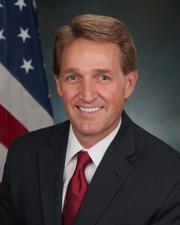 Rep. Jeff Flake (R-AZ)
Description
At the end of the bill, add the following: SEC.__.APPLICATION OF 14TH AMENDMENT. Nothing in the Act shall relieve a Native Hawaiian governing authority from complying with the equal protection clause of the 14th amendment to the United States Constitution.
Legislative Activity
Stay on top of the latest movement without scrolling through every action
House amendment offered
February 23, 2010
View full timeline
House amendment offered
February 23, 2010
Roll call votes on amendments in House
February 23, 2010 • 8:27 PM
House amendment not agreed to: On agreeing to the Flake amendment (A003) Failed by the Yeas and Nays: 177 - 233 (Roll no. 57).
February 23, 2010 • 8:27 PM
Amendment failed by House: On agreeing to the Flake amendment (A003) Failed by the Yeas and Nays: 177 - 233 (Roll no. 57).
February 23, 2010 • 8:27 PM
House amendment offered/reported by : Amendment (A003) offered by Mr. Flake to the Abercrombie amendment (A001).(consideration: CR H726-728, H729-730; text: CR H727)
February 23, 2010 • 7:40 PM
Amendment (A003) offered by Mr. Flake to the Abercrombie amendment (A001). (consideration: CR H726-728, H729-730; text: CR H727)
February 23, 2010 • 7:40 PM
On agreeing to the Flake amendment (A003) Failed by the Yeas and Nays: 177 - 233 (Roll no. 57).
February 23, 2010 • 8:27 PM
Votes
1 roll call on this amendment
Text
Offered
NATIVE HAWAIIAN GOVERNMENT REORGANIZATION ACT OF 2009--CONTINUED
Part A Amendment in the Nature of a Substitute Offered by Mr.
Abercrombie
Mr. ABERCROMBIE. Mr. Speaker, I have an amendment in the nature of a
substitute made in order under the rule.
The SPEAKER pro tempore. The Clerk will designate the amendment.
The text of the amendment is as follows:
Amendment in the nature of a substitute printed in part A
of House Report 111-413 offered by Mr. Abercrombie:
Strike all after the enacting clause and insert the
following:
SECTION 1. SHORT TITLE.
This Act may be cited as the ``Native Hawaiian Government
Reorganization Act of 2010''.
SEC. 2. FINDINGS.
Congress finds that--
(1) the Constitution vests Congress with the authority to
address the conditions of the indigenous, native people of
the United States and the Supreme Court has held that under
the Indian Commerce, Treaty, Supremacy, and Property Clauses,
and the War Powers, Congress may exercise that power to
rationally promote the welfare of the native peoples of the
United States so long as the native people are a ``distinctly
native community'';
(2) Native Hawaiians, the native people of the Hawaiian
archipelago that is now part of the United States, are 1 of
the indigenous, native peoples of the United States, and the
Native Hawaiian people are a distinctly native community;
(3) the United States has a special political and legal
relationship with, and has long enacted legislation to
promote the welfare of, the native peoples of the United
States, including the Native Hawaiian people;
(4) under the authority of the Constitution, the United
States concluded a number of treaties with the Kingdom of
Hawaii, and from 1826 until 1893, the United States--
(A) recognized the sovereignty of the Kingdom of Hawaii as
a nation;
(B) accorded full diplomatic recognition to the Kingdom of
Hawaii; and
(C) entered into treaties and conventions of peace,
friendship and commerce with the Kingdom of Hawaii to govern
trade, commerce, and navigation in 1826, 1842, 1849, 1875,
and 1887;
(5) pursuant to the Hawaiian Homes Commission Act, 1920 (42
Stat. 108, chapter 42), the United States set aside
approximately 203,500 acres of land in trust to better
address the conditions of Native Hawaiians in the
[[Page H715]]
Federal territory that later became the State of Hawaii and
in enacting the Hawaiian Homes Commission Act, 1920, Congress
acknowledged the Native Hawaiian people as a native people of
the United States, as evidenced by the Committee Report,
which notes that Congress relied on the Indian affairs power
and the War Powers, including the power to make peace;
(6) by setting aside 203,500 acres of land in trust for
Native Hawaiian homesteads and farms, the Hawaiian Homes
Commission Act, 1920, assists the members of the Native
Hawaiian community in maintaining distinctly native
communities throughout the State of Hawaii;
(7) approximately 9,800 Native Hawaiian families reside on
the Hawaiian Home Lands, and approximately 25,000 Native
Hawaiians who are eligible to reside on the Hawaiian Home
Lands are on a waiting list to receive assignments of
Hawaiian Home Lands;
(8)(A) in 1959, as part of the compact with the United
States admitting Hawaii into the Union, Congress delegated
the authority and responsibility to administer the Hawaiian
Homes Commission Act, 1920, lands in trust for Native
Hawaiians and established a new public trust (commonly known
as the ``ceded lands trust''), for 5 purposes, 1 of which is
the betterment of the conditions of Native Hawaiians, and
Congress thereby reaffirmed its recognition of the Native
Hawaiians as a distinctly native community with a direct
lineal and historical succession to the aboriginal,
indigenous people of Hawaii;
(B) the public trust consists of lands, including submerged
lands, natural resources, and the revenues derived from the
lands; and
(C) the assets of this public trust have never been
completely inventoried or segregated;
(9) Native Hawaiians have continuously sought access to the
ceded lands in order to establish and maintain native
settlements and distinct native communities throughout the
State;
(10) the Hawaiian Home Lands and other ceded lands provide
important native land reserves and resources for the Native
Hawaiian community to maintain the practice of Native
Hawaiian culture, language, and traditions, and for the
continuity, survival, and economic self-sufficiency of the
Native Hawaiian people as a distinctly native political
community;
(11) Native Hawaiians continue to maintain other distinctly
native areas in Hawaii, including native lands that date back
to the ali`i and kuleana lands reserved under the Kingdom of
Hawaii;
(12) through the Sovereign Council of Hawaiian Homelands
Assembly and Native Hawaiian homestead associations, Native
Hawaiian civic associations, charitable trusts established by
the Native Hawaiian ali`i, nonprofit native service providers
and other community associations, the Native Hawaiian people
have actively maintained native traditions and customary
usages throughout the Native Hawaiian community and the
Federal and State courts have continuously recognized the
right of the Native Hawaiian people to engage in certain
customary practices and usages on public lands;
(13) on November 23, 1993, public law 103-150 (107 Stat.
1510) (commonly known as the ``Apology Resolution'') was
enacted into law, extending an apology to Native Hawaiians on
behalf of the people of the United States for the United
States' role in the overthrow of the Kingdom of Hawaii;
(14) the Apology Resolution acknowledges that the overthrow
of the Kingdom of Hawaii occurred with the active
participation of agents and citizens of the United States,
and further acknowledges that the Native Hawaiian people
never directly relinquished to the United States their claims
to their inherent sovereignty as a people over their national
lands, either through the Kingdom of Hawaii or through a
plebiscite or referendum;
(15)(A) the Apology Resolution expresses the commitment of
Congress and the President--
(i) to acknowledge the ramifications of the overthrow of
the Kingdom of Hawaii; and
(ii) to support reconciliation efforts between the United
States and Native Hawaiians;
(B) Congress established the Office of Hawaiian Relations
within the Department of the Interior with 1 of its purposes
being to consult with Native Hawaiians on the reconciliation
process; and
(C) the United States has the duty to reconcile and
reaffirm its friendship with the Native Hawaiian people
because, among other things, the United States Minister and
United States naval forces participated in the overthrow of
the Kingdom of Hawaii;
(16)(A) despite the overthrow of the Government of the
Kingdom of Hawaii, Native Hawaiians have continued to
maintain their separate identity as a single distinctly
native political community through cultural, social, and
political institutions, and to give expression to their
rights as native people to self-determination, self-
governance, and economic self-sufficiency; and
(B) there is clear continuity between the aboriginal,
indigenous, native people of the Kingdom of Hawaii and their
successors, the Native Hawaiian people today;
(17) Native Hawaiians have also given expression to their
rights as native people to self-determination, self-
governance, and economic self-sufficiency--
(A) through the provision of governmental services to
Native Hawaiians, including the provision of--
(i) health care services;
(ii) educational programs;
(iii) employment and training programs;
(iv) economic development assistance programs;
(v) children's services;
(vi) conservation programs;
(vii) fish and wildlife protection;
(viii) agricultural programs;
(ix) native language immersion programs;
(x) native language immersion schools from kindergarten
through high school;
(xi) college and master's degree programs in native
language immersion instruction; and
(xii) traditional justice programs; and
(B) by continuing their efforts to enhance Native Hawaiian
self-determination and local control;
(18) Native Hawaiian people are actively engaged in Native
Hawaiian cultural practices, traditional agricultural
methods, fishing and subsistence practices, maintenance of
cultural use areas and sacred sites, protection of burial
sites, and the exercise of their traditional rights to gather
medicinal plants and herbs, and food sources;
(19) the Native Hawaiian people wish to preserve, develop,
and transmit to future generations of Native Hawaiians their
lands and Native Hawaiian political and cultural identity in
accordance with their traditions, beliefs, customs and
practices, language, and social and political institutions,
to control and manage their own lands, including ceded lands,
and to achieve greater self-determination over their own
affairs;
(20) this Act provides a process within the framework of
Federal law for the Native Hawaiian people to exercise their
inherent rights as a distinct, indigenous, native community
to reorganize a single unified Native Hawaiian governing
entity for the purpose of giving expression to their rights
as a native people to self-determination and self-governance;
(21) Congress--
(A) has declared that the United States has a special
political and legal relationship for the welfare of the
native peoples of the United States, including Native
Hawaiians;
(B) has identified Native Hawaiians as an indigenous,
distinctly native people of the United States within the
scope of its authority under the Constitution, and has
enacted scores of statutes on their behalf; and
(C) has delegated broad authority to the State of Hawaii to
administer some of the United States' responsibilities as
they relate to the Native Hawaiian people and their lands;
(22) the United States has recognized and reaffirmed the
special political and legal relationship with the Native
Hawaiian people through the enactment of the Act entitled,
``An Act to provide for the admission of the State of Hawaii
into the Union'', approved March 18, 1959 (Public Law 86-3;
73 Stat. 4), by--
(A) ceding to the State of Hawaii title to the public lands
formerly held by the United States, and mandating that those
lands be held as a public trust for 5 purposes, 1 of which is
for the betterment of the conditions of Native Hawaiians; and
(B) transferring the United States responsibility for the
administration of the Hawaiian Home Lands to the State of
Hawaii, but retaining the exclusive right of the United
States to consent to any actions affecting the lands included
in the trust and any amendments to the Hawaiian Homes
Commission Act, 1920 (42 Stat. 108, chapter 42), that are
enacted by the legislature of the State of Hawaii affecting
the beneficiaries under the Act;
(23) the United States has continually recognized and
reaffirmed that--
(A) Native Hawaiians have a direct genealogical, cultural,
historic, and land-based connection to their forebears, the
aboriginal, indigenous, native people who exercised original
sovereignty over the Hawaiian Islands;
(B) Native Hawaiians have never relinquished their claims
to sovereignty or their sovereign lands;
(C) the United States extends services to Native Hawaiians
because of their unique status as the native people of a
prior-sovereign nation with whom the United States has a
special political and legal relationship; and
(D) the special relationship of American Indians, Alaska
Natives, and Native Hawaiians to the United States arises out
of their status as aboriginal, indigenous, native people of
the United States; and
(24) the State of Hawaii supports the reaffirmation of the
special political and legal relationship between the Native
Hawaiian governing entity and the United States, as evidenced
by 2 unanimous resolutions enacted by the Hawaii State
Legislature in the 2000 and 2001 sessions of the Legislature
and by the testimony of the Governor of the State of Hawaii
before the Committee on Indian Affairs of the Senate on
February 25, 2003, and March 1, 2005.
SEC. 3. DEFINITIONS.
In this Act:
(1) Aboriginal, indigenous, native people.--The term
``aboriginal, indigenous, native people'' means a people whom
Congress has recognized as the original inhabitants of the
lands that later became part of the United States and who
exercised sovereignty in the areas that later became part of
the United States.
(2) Apology resolution.--The term ``Apology Resolution''
means Public Law 103-150
[[Page H716]]
(107 Stat. 1510), a Joint Resolution extending an apology to
Native Hawaiians on behalf of the United States for the
participation of agents of the United States in the January
17, 1893, overthrow of the Kingdom of Hawaii.
(3) Commission.--The term ``Commission'' means the
Commission established under section 8(b).
(4) Council.--The term ``Council'' means the Native
Hawaiian Interim Governing Council established under section
8(c)(2).
(5) Indian program or service.--
(A) In general.--The term ``Indian program or service''
means any federally funded or authorized program or service
provided to an Indian tribe (or member of an Indian tribe)
because of the status of the members of the Indian tribe as
Indians.
(B) Inclusions.--The term ``Indian program or service''
includes a program or service provided by the Bureau of
Indian Affairs, the Indian Health Service, or any other
Federal agency.
(6) Indian tribe.--The term ``Indian tribe'' has the
meaning given the term in section 4 of the Indian Self-
Determination and Education Assistance Act (25 U.S.C. 450b).
(7) Indigenous, native people.--The term ``indigenous,
native people'' means the lineal descendants of the
aboriginal, indigenous, native people of the United States.
(8) Interagency coordinating group.--The term ``Interagency
Coordinating Group'' means the Native Hawaiian Interagency
Coordinating Group established under section 6.
(9) Native hawaiian governing entity.--The term ``Native
Hawaiian governing entity'' means the governing entity
organized pursuant to this Act by the qualified Native
Hawaiian constituents.
(10) Native hawaiian membership organization.--The term
``Native Hawaiian membership organization'' means an
organization that--
(A) serves and represents the interests of Native
Hawaiians, has as a primary and stated purpose the provision
of services to Native Hawaiians, and has expertise in Native
Hawaiian affairs;
(B) has leaders who are elected democratically, or selected
through traditional Native leadership practices, by members
of the Native Hawaiian community;
(C) advances the cause of Native Hawaiians culturally,
socially, economically, or politically;
(D) is a membership organization or association; and
(E) has an accurate and reliable list of Native Hawaiian
members.
(11) Office.--The term ``Office'' means the United States
Office of Hawaiian Relations established by section 5(a).
(12) Qualified native hawaiian constituent.--For the
purposes of establishing the roll authorized under section 8,
and prior to the recognition by the United States of the
Native Hawaiian governing entity, the term ``qualified Native
Hawaiian constituent'' means an individual who the Commission
determines has satisfied the following criteria and who makes
a written statement certifying that he or she
(A) is--
(i) an individual who is 1 of the indigenous, native people
of Hawaii and who is a direct lineal descendant of the
aboriginal, indigenous, native people who--
(I) resided in the islands that now comprise the State of
Hawaii on or before January 1, 1893; and
(II) occupied and exercised sovereignty in the Hawaiian
archipelago, including the area that now constitutes the
State of Hawaii; or
(ii) an individual who is 1 of the indigenous, native
people of Hawaii and who was eligible in 1921 for the
programs authorized by the Hawaiian Homes Commission Act,
1920 (42 Stat. 108, chapter 42), or a direct lineal
descendant of that individual;
(B) wishes to participate in the reorganization of the
Native Hawaiian governing entity;
(C) is 18 years of age or older;
(D) is a citizen of the United States; and
(E) maintains a significant cultural, social, or civic
connection to the Native Hawaiian community, as evidenced by
satisfying 2 or more of the following 10 criteria:
(i) Resides in the State of Hawaii.
(ii) Resides outside the State of Hawaii and--
(I)(aa) currently serves or served as (or has a parent or
spouse who currently serves or served as) a member of the
Armed Forces or as an employee of the Federal Government; and
(bb) resided in the State of Hawaii prior to the time he or
she (or such parent or spouse) left the State of Hawaii to
serve as a member of the Armed Forces or as an employee of
the Federal Government; or
(II)(aa) currently is or was enrolled (or has a parent or
spouse who currently is or was enrolled) in an accredited
institution of higher education outside the State of Hawaii;
and
(bb) resided in the State of Hawaii prior to the time he or
she (or such parent or spouse) left the State of Hawaii to
attend such institution.
(iii)(I) Is or was eligible to be a beneficiary of the
programs authorized by the Hawaiian Homes Commission Act,
1920 (42 Stat. 108, chapter 42), and resides or resided on
land set aside as ``Hawaiian home lands'', as defined in such
Act; or
(II) Is a child or grandchild of an individual who is or
was eligible to be a beneficiary of the programs authorized
by such Act and who resides or resided on land set aside as
``Hawaiian home lands'', as defined in such Act.
(iv) Is or was eligible to be a beneficiary of the programs
authorized by the Hawaiian Homes Commission Act, 1920 (42
Stat. 108, chapter 42).
(v) Is a child or grandchild of an individual who is or was
eligible to be a beneficiary of the programs authorized by
the Hawaiian Homes Commission Act, 1920 (42 Stat. 108,
chapter 42).
(vi) Resides on or has an ownership interest in, or has a
parent or grandparent who resides on or has an ownership
interest in, ``kuleana land'' that is owned in whole or in
part by a person who, according to a genealogy verification
by the Office of Hawaiian Affairs or by court order, is a
lineal descendant of the person or persons who received the
original title to such ``kuleana land'', defined as lands
granted to native tenants pursuant to Haw. L. 1850, p. 202,
entitled ``An Act Confirming Certain Resolutions of the King
and Privy Council Passed on the 21st day of December, A.D.
1849, Granting to the Common People Allodial Titles for Their
Own Lands and House Lots, and Certain Other Privileges'', as
amended by Haw. L. 1851, p. 98, entitled ``An Act to Amend An
Act Granting to the Common People Allodial Titles for Their
Own Lands and House Lots, and Certain Other Privileges'' and
as further amended by any subsequent legislation.
(vii) Is, or is the child or grandchild of, an individual
who has been or was a student for at least 1 school year at a
school or program taught through the medium of the hawaiian
language under section 302H-6, Hawaii Revised Statutes, or at
a school founded and operated primarily or exclusively for
the benefit of Native Hawaiians.
(viii) Has been a member since September 30, 2009, of at
least 1 Native Hawaiian membership organization.
(ix) Has been a member since September 30, 2009, of at
least 2 Native Hawaiian membership organizations.
(x) Is regarded as Native Hawaiian and whose mother or
father is (or if deceased, was) regarded as Native Hawaiian
by the Native Hawaiian community, as evidenced by sworn
affidavits from two or more qualified Native Hawaiian
constituents certified by the Commission as possessing
expertise in the social, cultural, and civic affairs of the
Native Hawaiian community.
(13) Secretary.--The term ``Secretary'' means the Secretary
of the Interior.
(14) Special political and legal relationship.--The term
``special political and legal relationship'' shall refer,
except where differences are specifically indicated elsewhere
in the Act, to the type of and nature of relationship the
United States has with the several federally recognized
Indian tribes.
SEC. 4. UNITED STATES POLICY AND PURPOSE.
(a) Policy.--The United States reaffirms that--
(1) Native Hawaiians are a unique and distinct, indigenous,
native people with whom the United States has a special
political and legal relationship;
(2) the United States has a special political and legal
relationship with the Native Hawaiian people, which includes
promoting the welfare of Native Hawaiians;
(3)(A) Congress possesses and hereby exercises the
authority under the Constitution, including but not limited
to Article I, Section 8, Clause 3, to enact legislation to
better the conditions of Native Hawaiians and has exercised
this authority through the enactment of--
(i) the Hawaiian Homes Commission Act, 1920 (42 Stat. 108,
chapter 42);
(ii) the Act entitled ``an Act to provide for the admission
of the State of Hawaii into the Union'', approved March 18,
1959 (Public Law 86-3; 73 Stat. 4); and
(iii) more than 150 other Federal laws addressing the
conditions of Native Hawaiians;
(B) other sources of authority under the Constitution for
legislation on behalf of the indigenous, native peoples of
the United States, including Native Hawaiians, include but
are not limited to the Property, Treaty, and Supremacy
Clauses, War Powers, and the Fourteenth Amendment, and
Congress hereby relies on those powers in enacting this
legislation; and
(C) the Constitution's original Apportionment Clause and
the 14th Amendment Citizenship and amended Apportionment
Clauses also acknowledge the propriety of legislation on
behalf of the native peoples of the United States, including
Native Hawaiians;
(4) Native Hawaiians have--
(A) an inherent right to autonomy in their internal
affairs;
(B) an inherent right of self-determination and self-
governance;
(C) the right to reorganize a Native Hawaiian governing
entity; and
(D) the right to become economically self-sufficient; and
(5) the United States shall continue to engage in a process
of reconciliation and political relations with the Native
Hawaiian people.
(b) Purpose.--The purpose of this Act is to provide a
process for the reorganization of the single Native Hawaiian
governing entity and the reaffirmation of the special
political and legal relationship between the United States
and that Native Hawaiian governing entity for purposes of
continuing a government-to-government relationship.
[[Page H717]]
SEC. 5. UNITED STATES OFFICE OF HAWAIIAN RELATIONS.
(a) Establishment.--There is established within the Office
of the Secretary the United States Office of Hawaiian
Relations.
(b) Duties.--The Office shall--
(1) continue the process of reconciliation with the Native
Hawaiian people in furtherance of the Apology Resolution;
(2) upon the reaffirmation of the government-to-government
relationship between the single Native Hawaiian governing
entity and the United States, effectuate and coordinate the
special political and legal relationship between the Native
Hawaiian governing entity and the United States through the
Secretary, and with all other Federal agencies;
(3) provide timely notice to, and consult with, the Native
Hawaiian governing entity before taking any actions that may
have the potential to significantly affect Native Hawaiian
resources, rights, or lands;
(4) work with the Interagency Coordinating Group, other
Federal agencies, and the State of Hawaii on policies,
practices, and proposed actions affecting Native Hawaiian
resources, rights, or lands; and
(5) prepare and submit to the Committee on Indian Affairs
and the Committee on Energy and Natural Resources of the
Senate and the Committee on Natural Resources of the House of
Representatives an annual report detailing the activities of
the Interagency Coordinating Group that are undertaken with
respect to the continuing process of reconciliation and to
effect meaningful consultation with the Native Hawaiian
governing entity and may provide recommendations for any
necessary changes to Federal law or regulations promulgated
under the authority of Federal law.
(c) Applicability to Department of Defense.--This section
shall have no applicability to the Department of Defense or
to any agency or component of the Department of Defense, but
the Secretary of Defense may designate 1 or more officials as
liaison to the Office.
SEC. 6. NATIVE HAWAIIAN INTERAGENCY COORDINATING GROUP.
(a) Establishment.--In recognition that Federal programs
authorized to address the conditions of Native Hawaiians are
largely administered by Federal agencies other than the
Department of the Interior, there is established an
interagency coordinating group, to be known as the ``Native
Hawaiian Interagency Coordinating Group''.
(b) Composition.--The Interagency Coordinating Group shall
be composed of officials, to be designated by the President,
from--
(1) each Federal agency whose actions may significantly or
uniquely impact Native Hawaiian programs, resources, rights,
or lands; and
(2) the Office.
(c) Lead Agency.--
(1) In general.--The Department of the Interior and the
White House Office of Intergovernmental Affairs shall serve
as the leaders of the Interagency Coordinating Group.
(2) Meetings.--The Secretary shall convene meetings of the
Interagency Coordinating Group.
(d) Duties.--The Interagency Coordinating Group shall--
(1) coordinate Federal programs and policies that affect
Native Hawaiians or actions by any agency or agencies of the
Federal Government that may significantly or uniquely affect
Native Hawaiian resources, rights, or lands;
(2) consult with the Native Hawaiian governing entity,
through the coordination referred to in paragraph (1), but
the consultation obligation established in this provision
shall apply only after the satisfaction of all of the
conditions referred to in section 8(c)(8); and
(3) ensure the participation of each Federal agency in the
development of the report to Congress authorized in section
5(b)(5).
(e) Applicability to Department of Defense.--This section
shall have no applicability to the Department of Defense or
to any agency or component of the Department of Defense, but
the Secretary of Defense may designate 1 or more officials as
liaison to the Interagency Coordinating Group.
SEC. 7. DESIGNATION OF DEPARTMENT OF JUSTICE REPRESENTATIVE.
The Attorney General shall designate an appropriate
official within the Department of Justice to assist the
Office in the implementation and protection of the rights of
Native Hawaiians and their political and legal relationship
with the United States, and upon the recognition of the
Native Hawaiian governing entity as provided for in section
8, in the implementation and protection of the rights of the
Native Hawaiian governing entity and its political and legal
relationship with the United States.
SEC. 8. PROCESS FOR REORGANIZATION OF NATIVE HAWAIIAN
GOVERNING ENTITY AND REAFFIRMATION OF SPECIAL
POLITICAL AND LEGAL RELATIONSHIP BETWEEN UNITED
STATES AND NATIVE HAWAIIAN GOVERNING ENTITY.
(a) Recognition of Native Hawaiian Governing Entity.--The
right of the qualified Native Hawaiian constituents to
reorganize the single Native Hawaiian governing entity to
provide for their common welfare and to adopt appropriate
organic governing documents is recognized by the United
States.
(b) Commission.--
(1) In general.--There is authorized to be established a
Commission to be composed of 9 members for the purposes of--
(A) preparing and maintaining a roll of qualified Native
Hawaiian constituents; and
(B) certifying that the individuals on the roll of
qualified Native Hawaiian constituents meet the definition of
qualified Native Hawaiian constituent set forth in section 3.
(2) Membership.--
(A) Appointment.--
(i) In general.--Not later than 180 days after the date of
enactment of this Act, the Secretary shall appoint the
members of the Commission in accordance with subparagraph
(B).
(ii) Consideration.--In making an appointment under clause
(i), the Secretary may take into consideration a
recommendation made by any Native Hawaiian membership
organization or other entity with expertise and experience in
the determination of Native Hawaiian ancestry and lineal
descendancy.
(B) Requirements.--Each member of the Commission shall
demonstrate, as determined by the Secretary--
(i) not less than 10 years of experience in the study and
determination of Native Hawaiian genealogy (traditional
cultural experience shall be given due consideration); and
(ii) an ability to read and translate into English
documents written in the Hawaiian language.
(C) Vacancies.--A vacancy on the Commission--
(i) shall not affect the powers of the Commission; and
(ii) shall be filled in the same manner as the original
appointment.
(3) Expenses.--Each member of the Commission shall be
allowed travel expenses, including per diem in lieu of
subsistence, at rates authorized for employees of agencies
under subchapter I of chapter 57 of title 5, United States
Code, while away from their homes or regular places of
business in the performance of services for the Commission.
(4) Duties.--The Commission shall--
(A) prepare and maintain a roll of qualified Native
Hawaiian constituents as set forth in subsection (c); and
(B) certify that the individuals on the roll of qualified
Native Hawaiian constituents meet the definition of that term
as set forth in section 3.
(5) Staff.--
(A) In general.--The Commission may, without regard to the
civil service laws (including regulations), appoint and
terminate an executive director and such other additional
personnel as are necessary to enable the Commission to
perform the duties of the Commission.
(B) Compensation.--
(i) In general.--Except as provided in clause (ii), the
Commission may fix the compensation of the executive director
and other personnel without regard to the provisions of
chapter 51 and subchapter III of chapter 53 of title 5,
United States Code, relating to classification of positions
and General Schedule pay rates.
(ii) Maximum rate of pay.--The rate of pay for the
executive director and other personnel shall not exceed the
rate payable for level V of the Executive Schedule under
section 5316 of title 5, United States Code.
(6) Detail of federal government employees.--
(A) In general.--An employee of the Federal Government may
be detailed to the Commission without reimbursement.
(B) Civil service status.--The detail of the employee shall
be without interruption or loss of civil service status or
privilege.
(7) Procurement of temporary and intermittent services.--
The Commission may procure temporary and intermittent
services in accordance with section 3109(b) of title 5,
United States Code, at rates for individuals that do not
exceed the daily equivalent of the annual rate of basic pay
prescribed for level V of the Executive Schedule under
section 5316 of that title.
(8) Expiration.--The Secretary shall dissolve the
Commission upon the reaffirmation of the special political
and legal relationship between the Native Hawaiian governing
entity and the United States.
(c) Process for Reorganization of Native Hawaiian Governing
Entity.--
(1) Roll.--
(A) Contents.--The roll shall include the names of the
qualified Native Hawaiian constituents who are certified by
the Commission to be qualified Native Hawaiian constituents,
as defined in section 3.
(B) Formation of roll.--Each individual claiming to be a
qualified Native Hawaiian constituent shall submit to the
Commission documentation in the form established by the
Commission that is sufficient to enable the Commission to
determine whether the individual meets the definition set
forth in section 3; provided that an individual presenting
evidence that he or she satisfies the definition in Section 2
of Public Law 103-150 shall be presumed to meet the
requirement of section 3(12)(A)(i).
(C) Documentation.--The Commission shall--
(i)(I) identify the types of documentation that may be
submitted to the Commission that would enable the Commission
to determine whether an individual meets the definition of
qualified Native Hawaiian constituent set forth in section 3.
(II) recognize an individual's identification of lineal
ancestors on the 1890 Census by the Kingdom of Hawaii as a
reliable indicia of lineal descent from the aboriginal,
indigenous, native people who resided in the islands that now
comprise the State of Hawaii on or before January 1, 1893;
and
[[Page H718]]
(III) permit elderly Native Hawaiians and other qualified
Native Hawaiian constituents lacking birth certificates or
other documentation due to birth on Hawaiian Home Lands or
other similar circumstances to establish lineal descent by
sworn affidavits from 2 or more qualified Native Hawaiian
constituents;
(ii) establish a standard format for the submission of
documentation and a process to ensure veracity; and
(iii) publish information related to clauses (i) and (ii)
in the Federal Register.
(D) Consultation.--In making determinations that each
individual proposed for inclusion on the roll of qualified
Native Hawaiian constituents meets the definition of
qualified Native Hawaiian constituent in section 3, the
Commission may consult with bona fide Native Hawaiian
membership organizations, agencies of the State of Hawaii,
including but not limited to, the Department of Hawaiian Home
Lands, the Office of Hawaiian Affairs, and the State
Department of Health, and other entities with expertise and
experience in the determination of Native Hawaiian ancestry
and lineal descendancy.
(E) Notification.--The Commission shall--
(i) inform an individual whether they have been deemed by
the Commission a qualified Native Hawaiian constituent; and
(ii) inform an individual of a right to appeal the decision
if deemed not to be a qualified Native Hawaiian constituent.
(F) Certification and submittal of roll to secretary.--The
Commission shall--
(i) submit the roll containing the names of those
individuals who meet the definition of qualified Native
Hawaiian constituent in section 3 to the Secretary within 2
years from the date on which the Commission is fully
composed; and
(ii) certify to the Secretary that each of the qualified
Native Hawaiian constituents proposed for inclusion on the
roll meets the definition set forth in section 3.
(G) Publication.--Upon certification by the Commission to
the Secretary that those listed on the roll meet the
definition of qualified Native Hawaiian constituent set forth
in section 3, the Commission shall publish the notice of the
certification of the roll in the Federal Register,
notwithstanding pending appeals pursuant to subparagraph (H).
(H) Appeal.--The Secretary, in consultation with the
Commission, shall establish a mechanism for an administrative
appeal for any person whose name is excluded from the roll
who claims to meet the definition of qualified Native
Hawaiian constituent in section 3.
(I) Publication; update.--The Commission shall--
(i) publish the notice of the certification of the roll
regardless of whether appeals are pending;
(ii) update the roll and provide notice of the updated roll
on the final disposition of any appeal;
(iii) update the roll to include any person who has been
certified by the Commission as meeting the definition of
qualified Native Hawaiian constituent in section 3 after the
initial publication of the roll or after any subsequent
publications of the roll; and
(iv) provide a copy of the roll and any updated rolls to
the Council.
(J) Effect of publication.--The publication of the initial
and updated roll shall serve as the basis for the eligibility
of qualified Native Hawaiian constituents whose names are
listed on those rolls to participate in the reorganization of
the Native Hawaiian governing entity.
(2) Organization of council.--
(A) Organization.--The Commission, in consultation with the
Secretary, shall hold a minimum of 3 meetings, and each
meeting shall be at least 2 working days, of the qualified
Native Hawaiian constituents listed on the roll established
under this section--
(i) to develop criteria for candidates to be elected to
serve on the Council;
(ii) to determine the structure of the Council, including
the number of Council members; and
(iii) to elect members from individuals listed on the roll
established under this subsection to the Council.
(B) Powers.--
(i) In general.--The Council--
(I) shall represent those listed on the roll established
under this section in the implementation of this Act; and
(II) shall have no powers other than powers given to the
Council under this Act.
(ii) Funding.--The Council may enter into a contract with,
or obtain a grant from, any Federal or State agency to carry
out clause (iii).
(iii) Activities.--
(I) In general.--The Council shall conduct, among the
qualified Native Hawaiian constituents listed on the roll
established under this subsection, a referendum for the
purpose of determining the proposed elements of the organic
governing documents of the Native Hawaiian governing entity,
including but not limited to
(aa) the proposed criteria for future membership in the
Native Hawaiian governing entity, provided that membership is
voluntary and can be relinquished;
(bb) the proposed powers and authorities to be exercised by
the Native Hawaiian governing entity, as well as the proposed
privileges and immunities of the Native Hawaiian governing
entity;
(cc) the proposed civil rights and protection of the rights
of the citizens of the Native Hawaiian governing entity and
all persons affected by the exercise of governmental powers
and authorities of the Native Hawaiian governing entity,
including the rights protected under section 202 of the
Indian Civil Rights Act of 1968 (25 U.S.C. 1302);
(dd) the protection and preservation of the rights vested
on the date of enactment of this Act of those Native
Hawaiians who are eligible to reside on the Hawaiian
homelands under the authority of the Hawaiian Homes
Commission Act, 1920 (42 Stat. 108, chapter 42); and
(ee) other issues determined appropriate by the Council.
(II) Development of organic governing documents.--Based on
the referendum, the Council shall develop proposed organic
governing documents for the Native Hawaiian governing entity
and may seek technical assistance from the Secretary on the
draft organic governing documents to ensure that the draft
organic governing documents comply with this Act and other
Federal law.
(III) Distribution.--The Council shall publish to all
qualified Native Hawaiian constituents of the Native Hawaiian
governing entity listed on the roll published under this
subsection notice of the availability of--
(aa) a copy of the proposed organic governing documents, as
drafted by the Council; and
(bb) a brief impartial description of the proposed organic
governing documents;
(IV) Elections.--
(aa) In general.--Not sooner than 180 days after the
proposed organic governing documents are drafted and
distributed, the Council, with the assistance of the
Secretary, shall hold elections for the purpose of ratifying
the proposed organic governing documents.
(bb) Purpose.--The Council, with the assistance of the
Secretary, shall hold the election for the purpose of
ratifying the proposed organic governing documents 60 days
after publishing notice of an election.
(cc) Officers.--On certification of the organic governing
documents by the Secretary in accordance with paragraph (4),
the Council, with the assistance of the Secretary, shall hold
elections of the officers of the Native Hawaiian governing
entity pursuant to paragraph (5).
(3) Submittal of organic governing documents.--Following
the reorganization of the Native Hawaiian governing entity
and the adoption of organic governing documents, the Council
shall submit the organic governing documents of the Native
Hawaiian governing entity to the Secretary.
(4) Certifications.--
(A) In general.--Within the context of the future
negotiations to be conducted under the authority of section
9(c)(1), and the subsequent actions by the Congress and the
State of Hawaii to enact legislation to implement the
agreements of the 3 governments, not later than 180 days,
which may be extended an additional 90 days if the Secretary
deems necessary, after the date on which the Council submits
the organic governing documents to the Secretary, the
Secretary shall certify or decline to certify that the
organic governing documents--
(i) establish the criteria for membership in the Native
Hawaiian governing entity and provide that membership is
voluntary and can be relinquished;
(ii) were adopted by a majority vote of those qualified
Native Hawaiian constituents whose names are listed on the
roll published by the Secretary and who voted in the
election;
(iii) provide authority for the Native Hawaiian governing
entity to negotiate with Federal, State, and local
governments, and other entities;
(iv) provide for the exercise of inherent and other
appropriate governmental authorities by the Native Hawaiian
governing entity;
(v) prevent the sale, disposition, lease, or encumbrance of
lands, interests in lands, or other assets of the Native
Hawaiian governing entity without the consent of the Native
Hawaiian governing entity;
(vi) provide for the protection of the civil rights of the
citizens of the Native Hawaiian governing entity and all
persons affected by the exercise of governmental powers and
authorities by the Native Hawaiian governing entity,
including the rights protected under section 202 of the
Indian Civil Rights Act of 1968 (25 U.S.C. 1302);
(vii) provide for the protection and preservation of the
rights vested on the date of enactment of this Act of those
Native Hawaiians who are eligible to reside on the Hawaiian
homelands under the authority of the Hawaiian Homes
Commission Act, 1920 (42 Stat. 108, chapter 42); and
(viii) are consistent with applicable Federal law.
(B) Resubmission in case of noncompliance.--
(i) Resubmission by the secretary.--If the Secretary
determines that the organic governing documents, or any part
of the documents, do not meet all of the requirements set
forth in subparagraph (A), the Secretary shall resubmit the
organic governing documents to the Council, along with a
justification for each of the Secretary's findings as to why
the provisions are not in full compliance.
(ii) Amendment and resubmission of organic governing
documents.--If the organic governing documents are
resubmitted to the Council by the Secretary under clause (i),
the Council shall--
(I) amend the organic governing documents to ensure that
the documents meet all the
[[Page H719]]
requirements set forth in subparagraph (A); and
(II) resubmit the amended organic governing documents to
the Secretary for certification in accordance with this
paragraph.
(C) Certifications deemed made.--The certifications under
this paragraph shall be deemed to have been made if the
Secretary has not acted within 180 days after the date on
which the Council has submitted the organic governing
documents of the Native Hawaiian governing entity to the
Secretary.
(5) Elections.--On completion of the certifications by the
Secretary under paragraph (4), the Council, with the
assistance of the Secretary, shall hold elections of the
officers of the Native Hawaiian governing entity.
(6) Provision of roll.--The Council shall provide a copy of
the roll of qualified Native Hawaiian constituents to the
governing body of the Native Hawaiian governing entity.
(7) Termination.--The Council shall cease to exist and
shall have no power or authority under this Act after the
officers of the governing body who are elected as provided in
paragraph (5) are installed.
(8) Reaffirmation.--Notwithstanding any other provision of
law, the special political and legal relationship between the
United States and the Native Hawaiian people is hereby
reaffirmed and the United States extends Federal recognition
to the Native Hawaiian governing entity as the representative
sovereign governing body of the Native Hawaiian people
after--
(A) the approval of the organic governing documents by the
Secretary under subparagraph (A) or (C) of paragraph (4); and
(B) the officers of the Native Hawaiian governing entity
elected under paragraph (5) have been installed.
SEC. 9. REAFFIRMATION OF DELEGATION OF FEDERAL AUTHORITY TO
STATE OF HAWAII; GOVERNMENTAL AUTHORITY AND
POWER; NEGOTIATIONS; CLAIMS.
(a) Reaffirmation.--The delegation by the United States of
authority to the State of Hawaii to address the conditions of
the indigenous, native people of Hawaii contained in the Act
entitled ``An Act to provide for the admission of the State
of Hawaii into the Union'', approved March 18, 1959 (Public
Law 86-3; 73 Stat. 4), is reaffirmed.
(b) Governmental Authority and Power.--
(1) In general.--Consistent with the policies of the United
States set forth in section 4(a)(4), the Native Hawaiian
governing entity shall be vested with the inherent powers and
privileges of self-government of a native government under
existing law, except as set forth in this Act. Said powers
and privileges may be modified by agreement between the
Native Hawaiian governing entity, the United States, and the
State of Hawaii pursuant to the negotiations authorized in
subsection (c)(1), and subject to the enactment of
implementing legislation and to the limit described by
section 10(a).
(2) Membership.--Once the United States extends Federal
recognition to the Native Hawaiian governing entity, the
United States will recognize and affirm the Native Hawaiian
governing entity's inherent power and authority to determine
its own membership criteria, to determine its own membership,
and to grant, deny, revoke, or qualify membership without
regard to whether any person was or was not deemed to be a
qualified Native Hawaiian constituent under this Act. The
Native Hawaiian governing entity must provide that membership
in the Native Hawaiian governing entity is voluntary and can
be relinquished.
(c) Negotiations.--
(1) In general.--Upon the reaffirmation of the special
political and legal relationship between the United States
and the Native Hawaiian governing entity, the United States
and the State of Hawaii may enter into negotiations with the
Native Hawaiian governing entity designed to lead to an
agreement or agreements addressing such matters as--
(A) the transfer of State of Hawaii lands and surplus
Federal lands, natural resources, and other assets, and the
protection of existing rights related to such lands or
resources;
(B) the exercise of governmental authority over any
transferred lands, natural resources, and other assets,
including land use;
(C) the exercise of civil and criminal jurisdiction;
(D) the exercise of the authority to tax and other powers
and authorities that are recognized by the United States as
powers and authorities typically exercised by governments
representing indigenous, native people of the United States;
(E) any residual responsibilities of the United States and
the State of Hawaii; and
(F) grievances regarding assertions of historical wrongs
committed against Native Hawaiians by the United States or by
the State of Hawaii.
(2) Amendments to existing laws.--Upon agreement on any
matter or matters negotiated with the United States or the
State of Hawaii, and the Native Hawaiian governing entity,
the parties may submit--
(A) to the Committee on Indian Affairs of the Senate, the
Committee on Energy and Natural Resources of the Senate, and
the Committee on Natural Resources of the House of
Representatives recommendations for proposed amendments to
Federal law that will enable the implementation of agreements
reached between the governments; and
(B) to the Governor and the legislature of the State of
Hawaii, recommendations for proposed amendments to State law
that will enable the implementation of agreements reached
between the governments.
(3) During the period between the reaffirmation of the
special political and legal relationship between the United
States and the Native Hawaiian governing entity, and the
subsequent enactment of legislation to implement the
agreement or agreements negotiated under paragraph (1):
(A) There shall be no Indian country within the State of
Hawaii.
(B) The United States shall not take land in trust for the
benefit of the Native Hawaiian governing entity or for the
benefit of members of the Native Hawaiian governing entity.
(C) The United States shall not restrict the alienability
of land owned by the Native Hawaiian governing entity.
(D) Members of the Native Hawaiian governing entity shall
continue to be subject to the civil and criminal jurisdiction
of Federal and State courts.
(E) Nothing in this Act alters or preempts the existing
legislative, regulatory, or taxation authority of the State
of Hawaii over individuals who are members of the Native
Hawaiian governing entity or over property owned by those
individuals.
(F) The Native Hawaiian governing entity shall not exercise
criminal, civil, adjudicative, legislative, regulatory, or
taxation authority or jurisdiction over individuals who are
not members of the Native Hawaiian governing entity without
their express consent.
(G) The Native Hawaiian governing entity shall not exercise
criminal, civil, adjudicative, legislative, regulatory, or
taxation authority or jurisdiction over corporations or other
associations or entities that are owned wholly or in majority
part by persons who are not members of the Native Hawaiian
governing entity without their express consent.
(H) The Native Hawaiian governing entity shall be immune
from any lawsuit in any Federal or State court, with the
exception described in section 10(c)(3) and the exceptions
set forth in clauses (i) through (iii) of this subparagraph.
(i) The Native Hawaiian governing entity may waive its
sovereign immunity, provided that it does so clearly and
unequivocally.
(ii) The Native Hawaiian governing entity shall not be
immune from any lawsuit brought by the United States in any
Federal court.
(iii) Real property owned in fee simple by the Native
Hawaiian governing entity shall not be immune from any in rem
action filed by the State of Hawaii.
(I) Governmental, nonbusiness, noncommercial activities
undertaken by the Native Hawaiian governing entity, or by a
corporation or other association or entity wholly owned by
the Native Hawaiian governing entity, shall not be subject to
the regulatory or taxation authority of the State of Hawaii,
provided that nothing in this subparagraph shall exempt any
natural person (except an officer or employee of the Native
Hawaiian governing entity, acting within the scope of his or
her authority), from the regulatory, taxation, or other
authority of the State of Hawaii. In determining whether an
activity is covered by this subparagraph, due consideration
shall be given to the constraints described in subparagraphs
(A), (F), and (G).
(J) Commercial or business activities undertaken by the
Native Hawaiian governing entity, or by a corporation or
other association or entity owned, operated, or sponsored by
the Native Hawaiian governing entity, shall be subject to the
regulatory and taxation authority of the State of Hawaii to
the same extent as commercial or business activities
undertaken by others.
(K) Subject to subparagraph (I), activities conducted on
real property owned by, leased by, or subject to the control
of the Native Hawaiian governing entity shall be subject to
the regulatory and taxation authority of the State of Hawaii
to the same extent as activities conducted on real property
owned by, leased by, or subject to the control of others.
(L) Subject to subparagraph (O), real property owned by,
leased by, or subject to the control of the Native Hawaiian
governing entity, and development of such property, shall be
subject to the regulatory and taxation authority of the State
of Hawaii to the same extent as real property owned by,
leased by, or subject to the control of others.
(M) Any commercial or business corporation or other
commercial or business association or entity owned, operated,
or sponsored by the Native Hawaiian governing entity shall be
subject to the regulatory and taxation authority of the State
of Hawaii to the same extent as commercial and business
corporations and other commercial and business associations
and entities owned, operated, or sponsored by others.
(N) Any specific power, authority, or restriction set forth
in this paragraph shall expire upon enactment of legislation
that implements an agreement or agreements negotiated under
paragraph (1) and that expressly replaces or alters such
power, authority, or restriction.
(O) Nothing in this paragraph diminishes any right or
immunity (including any immunity from State or local
taxation) granted to Native Hawaiians or their property by
the Hawaiian Homes Commission Act, 1920 (42 Stat. 108,
chapter 42), the Act entitled ``An Act to provide for the
admission of the State of Hawaii into the Union'', approved
March 18, 1959 (Public Law 86-3; 73 Stat. 4), or sections
10001 through 10004 of the Department of Defense
Appropriations Act, 1994 (sections
[[Page H720]]
10001 through 1004 of Public Law 103-139; 107 Stat. 1418,
1480 (1993)).
(4) Nothing in paragraph (3) should be interpreted as
establishing any presumption about the powers or authorities
that could properly be exercised by the United States, the
State of Hawaii, or the Native Hawaiian governing entity
after further legislation, including legislation enacted to
implement any agreement negotiated under this subsection.
(d) Claims.--Nothing in this Act--
(1) alters existing law, including case law, regarding
obligations of the United States or the State of Hawaii
relating to events or actions that occurred prior to
recognition of the Native Hawaiian governing entity;
(2) creates, enlarges, revives, modifies, diminishes,
extinguishes, waives, or otherwise alters any Federal or
State claim or cause of action against the United States or
its officers or the State of Hawaii or its officers or any
other person or entity, or any defense (including the defense
of statute of limitations) to any such claim or cause of
action, except in the case of claims or causes of action
challenging the constitutionality or legality of programs
benefitting Native Hawaiians to the extent that this Act
creates or enlarges any defense to any such claim or cause of
action;
(3) amends section 2409a of title 28, United States Code
(commonly known as the ``Quiet Title Act''), chapter 171 of
title 28, United States Code (commonly known as the ``Federal
Tort Claims Act''), section 1491 of title 28, United States
Code (commonly known as the ``Tucker Act''), section 1505 of
title 28, United States Code (commonly known as the ``Indian
Tucker Act''), the Hawaii Organic Act (31 Stat. 141), or any
other Federal statute, except as expressly amended by this
Act; or
(4) alters the sovereign immunity of the United States or
of the State of Hawaii.
SEC. 10. APPLICABILITY OF CERTAIN FEDERAL LAWS.
(a) Indian Gaming Regulatory Act.--
(1) In general.--The Native Hawaiian governing entity and
Native Hawaiians may not conduct gaming activities as a
matter of claimed inherent authority or under the authority
of any Federal law, including the Indian Gaming Regulatory
Act (25 U.S.C. 2701 et seq.) or under any regulations
thereunder promulgated by the Secretary or the National
Indian Gaming Commission.
(2) Applicability.--The prohibition contained in paragraph
(1) regarding the use of Indian Gaming Regulatory Act (25
U.S.C. 2701 et seq.) and inherent authority to game applies
regardless of whether gaming by Native Hawaiians or the
Native Hawaiian governing entity would be located on land
within the State of Hawaii or within any other State or
territory of the United States.
(b) Single Governing Entity.--This Act will result in the
recognition of the single Native Hawaiian governing entity.
Additional Native Hawaiian groups shall not be eligible for
acknowledgment pursuant to the Federal Acknowledgment Process
set forth in part 83 of title 25, Code of Federal
Regulations, or any other administrative acknowledgment or
recognition process.
(c) Indian Programs, Services, and Laws.--
(1) In general.--Notwithstanding any other provision of
this Act, nothing in this Act extends eligibility for any
Indian program or service to the Native Hawaiian governing
entity or its members unless a statute governing such a
program or service expressly provides that Native Hawaiians
or the Native Hawaiian governing entity is eligible for such
program or service. Nothing in this Act affects the
eligibility of any person for any program or service under
any statute or law in effect before the date of enactment of
this Act.
(2) Applicability of other terms.--Subject to paragraph
(3), in Federal statutes or regulations in force prior to the
United States recognition of the Native Hawaiian governing
entity, the terms ``Indian'' and ``Native American'', and
references to Indian tribes, bands, nations, pueblos,
villages, or other organized groups or communities, shall not
apply to the Native Hawaiian governing entity or its members,
unless the Federal statute or regulation expressly applies to
Native Hawaiians or the Native Hawaiian governing entity.
(3) Indian civil rights act of 1968.--The Council and the
Native Hawaiian governing entity shall be subject to sections
201 through 203 of the Indian Civil Rights Act of 1968 (25
U.S.C. 1301-1303). Nothing in such Act, and nothing in this
paragraph, shall be interpreted to expand the powers and
authorities of the Council or the Native Hawaiian governing
entity that are described elsewhere in this Act.
(d) Real Property Transfers.--Section 2116 of the Revised
Statutes (commonly known as the ``Indian Trade and
Intercourse Act'') (25 U.S.C. 177) does not apply to any
purchase, grant, lease, or other conveyance of lands, or of
any title or claim thereto, from Native Hawaiians, Native
Hawaiian entities, or the Kingdom of Hawaii that occurred
prior to the date of the United States' recognition of the
Native Hawaiian governing entity.
SEC. 11. SEVERABILITY.
If any section or provision of this Act is held invalid, it
is the intent of Congress that the remaining sections or
provisions shall continue in full force and effect.
SEC. 12. AUTHORIZATION OF APPROPRIATIONS.
There are authorized to be appropriated such sums as are
necessary to carry out this Act.
The SPEAKER pro tempore. Pursuant to House Resolution 1083, the
gentleman from Hawaii (Mr. Abercrombie) and a Member opposed each will
control 15 minutes.
The Chair recognizes the gentleman from Hawaii.
Mr. ABERCROMBIE. Mr. Speaker, in support of our substitute amendment,
the amendment ensures that the Native Hawaiian governing entity will
have the same governmental authorities and sovereign immunity of other
native governments.
The Abercrombie amendment, the substitute amendment, follows
centuries of well-established Federal law. The amendment is supported
by the National Congress of American Indians, the Alaska Federation of
Natives and other tribal organizations. President Obama supports the
substitute amendment, and I quote, ``as it adds important
clarifications to craft a durable pathway forward.''
Mr. Speaker, the amendment in the nature of a substitute further
clarifies that pending negotiations and subsequent implementation
legislation with that, the following will occur: There will be no
Indian Country within Hawaii. The United States will not take land into
trust nor restrict alien ability of land owned by the Native Hawaiian
governing entity. The governing entity may not exercise certain powers
and authorities such as jurisdiction over non-Native Hawaiian
individuals without their consent. And the State of Hawaii will retain
regulatory and taxation authority over Native Hawaiians and the Native
Hawaiian governing entity.
Mr. Speaker, the Native Hawaiian government reorganization does as
follows: Establishes a process for the recognition of a single Native
Hawaiian governing entity; establishes a U.S. office for Native
Hawaiian relations in the Department of the Interior to consult with
other Federal agencies and the State of Hawaii; establishes a Native
Hawaiian interagency coordinating group; authorizes United States-State
of Hawaii Native Hawaiian governing entity negotiations based on the
following: the transfer of lands, natural resources and other assets;
the exercise of governmental authority over any lands or resources; the
exercise of civil and criminal jurisdiction; and grievances regarding
assertions of historical wrongs committed against the Native Hawaiians
by the United States or the State of Hawaii. It prohibits gaming by
Native Hawaiian governing entities and Native Hawaiians. It prohibits
the Native Hawaiian governing entity from being eligible for any new
Indian programs to which they are not already included.
Let me say then, in conclusion, what the Native Hawaiian Government
Reorganization Act does not do. It does not recognize the Native
Hawaiian government upon passage of this bill. It does not exempt the
Native Hawaiian government from any provision of the U.S. Constitution.
It does not exempt the Native Hawaiian government from any provision of
Federal law. It does not exempt the Native Hawaiian governing entity
from taxation. It does not authorize a Native Hawaiian government
entity to secede. It does not alter the civil or criminal jurisdiction
of the United States or the State of Hawaii. And finally, it does not
allow for the transfer of land or any authority of land to a Native
Hawaiian governing entity.
Mr. Speaker, I reserve the balance of my time.
Mr. HASTINGS of Washington. I rise in opposition to the amendment.
The SPEAKER pro tempore. The gentleman is recognized for 15 minutes.
Mr. HASTINGS of Washington. I yield myself as much time as I may
consume.
(Mr. HASTINGS of Washington asked and was given permission to revise
and extend his remarks.)
Mr. HASTINGS of Washington. Mr. Speaker, I rise in opposition to this
amendment. As I said in my opening statement, this amendment was
crafted in a manner that has become the hallmark of this Democrat-led
House, this behind closed doors, with very little time for the American
people or the people of Hawaii to review it. It has been available for
public review, Mr. Speaker, for less than 48 hours.
[[Page H721]]
Just last night, Hawaii's Governor, Linda Lingle, a strong supporter
of Native Hawaiian recognition, announced her opposition to this
substitute.
As introduced, the basic bill, H.R. 2314, provides that matters such
as transferring lands and preempting Federal and State civil, criminal,
and tax jurisdiction must be subject to negotiation with and the
consent of the State of Hawaii and the U.S. Congress.
But this substitute short circuits that public process. It
immediately preempts the State of Hawaii's jurisdiction over civil,
tax, and possibly criminal matters. All the Native Hawaiian entity
would have to do is undertake any activity in the name of an official
government action and immunity from the State authority applies.
The substitute makes a number of major revisions, all written in
secret, away from public view. And let me, Mr. Speaker, just highlight
a few:
It creates a new membership criteria that is six pages in length.
They do not require one to reside in Hawaii to be a member of this
newly created entity.
Second, these six pages of membership criteria are ultimately
meaningless. Once the governing entity is formally recognized, it may
discard these criteria and grant, deny, or revoke membership for any
reason.
In the substitute, section 6C-1 establishes the White House as the
lead agency to implement this act.
{time} 1900
Mr. Speaker, this unreasonably injects the political operatives of
the White House into the formation of the governing entity.
A new section 7 also requires the Attorney General to assign a
Department of Justice attorney to assist and protect the government
entity. This will wrongfully color the objectivity of the Justice
Department when a challenge of the constitutionality of this act is
inevitably made. And, Mr. Speaker, I am convinced there will be one
made.
Mr. Speaker, there are fundamental changes from the original bill
that deserve more scrutiny than we can provide on the House floor today
because we've only had, as I mentioned, 48 hours to look at it.
But let me repeat that perhaps the most objectionable provisions are
the ones in which the race-based entity is immunized from lawsuits in
any Federal or State court, and shielded from State civil, tax, and
possibly criminal jurisdiction.
Now, I realize this debate has been going on. I realize the gentleman
from Hawaii (Mr. Abercrombie) has attempted to accommodate the
objections of Governor Lingle and the Attorney General of Hawaii, and
he should really be commended for that effort. But the accommodations,
at least thus far, do not resolve their fundamental problems with this
bill, which is the preemption of State civil, taxation, and possibly
criminal jurisdiction without the consent of the State.
Governor Lingle, as I mentioned, last night formally announced her
opposition to this substitute. In referring to the changes made by the
substitute, the Governor said, ``I do not believe such a structure, of
two completely different sets of rules--one for `governmental'
activities of the Native Hawaiian governing entity and its officers and
employees, and one for everyone else--makes sense for Hawaii.''
Mr. Speaker, perhaps this impasse could have been avoided if the
Governor and the Attorney General had been privy to those negotiations,
at least to the details where they could or could not agree. But,
again, those decisions were kept from these people apparently because
they did not agree with this substitute.
Mr. Speaker, then what will be the practical result of this
substitute if it becomes law? Does it mean the native entity can
construct a government building for its officers and employees in
violation of State zoning laws? Does it permit the entity to discharge
waste material in violation of State law? Will it prevent anyone from
enforcing contracts made with the entity?
Mr. Speaker, if this bill becomes law, those questions are left
unanswered. And so perhaps we will learn the answers to these questions
after it's too late. The State will be unable to enforce its laws and
regulations over the entity because of the new provisions in this
substitute.
Mr. Speaker, I just want to emphasize this point. It is not
reasonable to roll over the sovereign rights of a State. And it is
especially not reasonable when the Governor of that State, in this case
Governor Lingle--who has long been a proponent of the principles
embodied in this issue--disagrees and cannot support the amendment in
the nature of a substitute that we are discussing here tonight.
For these reasons, Mr. Speaker, I urge and ask my colleagues to vote
``no'' on this substitute.
Statement by Governor Linda Lingle on the Native Hawaiian Government
Reorganization Act
``For more than seven years, my administration and I have
strongly supported recognition for Native Hawaiians and
supported the Akaka Bill.
``We have supported a bill that would set up a process of
recognition first, followed by negotiations between the
Native Hawaiian governing entity, the State of Hawai`i, and
the United States. Once that was completed, it would be
followed by the Native Hawaiian governing entity's exercise
of governmental powers and authorities.
``Amendments made to the bill in December 2009 turned that
process around. The current bill establishes that the Native
Hawaiian governing entity would start with broad governmental
powers and authorities, with negotiations to follow.
``Although I believe the original plan to negotiate first
makes more sense, my administration has tried to work with
the Hawai`i Congressional delegation on the new structure to
establish governing powers first, with negotiations to
follow.
``Ultimately, although we had good and productive
discussions, the current draft of the bill is not one I can
support.
``The basic problem as I see it, is that in the current
version of the bill, the `governmental' (non-commercial)
activities of the Native Hawaiian governing entity, its
employees, and its officers, will be almost completely free
from State and County regulation, including free from those
laws and rules that protect the health and safety of
Hawai`i's people, and protect the environment. `Governmental'
activity is a broad undefined term that can encompass almost
any non-commercial activity.
``This structure will, in my opinion, promote divisiveness
and litigation, rather than negotiation and resolution.
``I do not believe such a structure, of two completely
different sets of rules--one for `governmental' activities of
the Native Hawaiian governing entity and its officers and
employees, and one for everyone else--makes sense for
Hawai`i.
``In addition, under the current bill, the Native Hawaiian
governing entity has almost complete sovereign immunity from
lawsuits, including from ordinary tort and contract lawsuits,
and I do not believe this makes sense for the people of
Hawai`i.
``My decision to not support the current version of the
Akaka Bill is done with a heavy heart, because I so strongly
believe in recognition for Native Hawaiians.
``If the bill in its current form passes the House of
Representatives, I would hope it can be amended in the United
States Senate.''
I reserve the balance of my time.
Mr. ABERCROMBIE. Mr. Speaker, I yield 3 minutes to the gentleman from
American Samoa (Mr. Faleomavaega).
Mr. FALEOMAVAEGA. Mr. Speaker, I want to say that I fully support the
gentleman's substitute amendment, and I want to ask if we could do a
little colloquy in the process.
I note with interest there has been several references made by our
friends on the opposite side concerning the Hawaii Admissions Act
suggesting there was nothing whatsoever that Congress at will, as part
of the provisions of the Hawaii Admissions Act, taking care of Native
Hawaiians. And I believe this is something that I think our colleagues
need to understand a little better, that after the Hawaii Admissions
Act, it didn't mean that we just completely forget anything and
everything to do with the needs of Native Hawaiians.
Am I correct on that?
Mr. ABERCROMBIE. That is correct.
Mr. FALEOMAVAEGA. I also want to ask my good friend, as you had
indicated and our friends have indicated Governor Lingle's opposition
to the proposed substitute, am I to perceive that certainly Governor
Lingle, with all due respect, is entitled to her opinion and some of
the issues affecting the proposed legislation which she has supported
for the past 7 years.
Do you see anything that cannot be done in a way that by accepting
this proposed substitute we can still take corrective action, whatever
it might be, the concerns that she might have later on?
Mr. ABERCROMBIE. Yes. Not everyone may have been on the floor or
listening at the time that I indicated that I had a conversation with
the Governor this afternoon, and I indicated to her that I would say
specifically on the
[[Page H722]]
floor that we have agreed to disagree, that she supports the object of
the bill--as has been indicated by Representative Hastings quite
accurately--but that in this disagreement over how to proceed
legislatively, I commented both to her and I've commented on the floor
and in conversations private and elsewhere that legislation is a
process and that this is not theology. And as a result of it being a
legislative process, it may not be perfect in every regard, but I am
content and comfortable with the idea that whoever is Governor,
including the present Governor for the remainder of her term, that she
will not be disadvantaged nor will any other Governor be disadvantaged
in any negotiations that take place with the native governing agency.
Mr. FALEOMAVAEGA. There's also been a reference made, I ask my
colleague, that the idea of comparing Native Hawaiians to American
Indians is somewhat absurd.
I would like to ask the gentleman if such a description, as our
friends on the other side have suggested, is totally irrelevant. The
fact of the matter is, there are only three truly indigenous aboriginal
groupings under the sovereignty of the United States. The American
Indians in the 48 continental States that we lived in with some 565
tribes fully recognized; there were some 100 other tribes not
recognized, by the way.
The SPEAKER pro tempore. The time of the gentleman has expired.
Mr. ABERCROMBIE. I yield the gentleman 30 additional seconds.
Mr. FALEOMAVAEGA. I thank the gentleman for yielding.
I just want to say 565 tribes are recognized by the Federal
Government. Does it stand a chance to suggest that Native Hawaiians
cannot be recognized in the same way giving some sense of self-esteem
and dignity to the people who are Native Hawaiians to the State of
Hawaii?
Mr. ABERCROMBIE. I think the answer from the most practical point of
view is the passage of the Hawaiian Homes Act of 1921. The Congress
obviously recognized that there was a distinctive entity in the
category of Native Hawaiians as a logical extension of the previous
constitutional history regarding native people.
The SPEAKER pro tempore. The time of the gentleman has again expired.
Mr. HASTINGS of Washington. Mr. Speaker, can I inquire how much time
on both sides remains.
The SPEAKER pro tempore. The gentleman from Washington has 8\1/2\
minutes, and the gentleman from Hawaii has 8\1/2\ minutes.
Mr. HASTINGS of Washington. Mr. Speaker, I will yield myself 3
minutes.
Mr. Speaker, in the exchange between my friend from American Samoa
and my friend from Hawaii, the issue was brought up that Governor
Lingle was contacted today and that there would be a way to try to
satisfy her concerns, and I don't doubt at all that that effort will be
tried. Hopefully it will be successful. But let me just review where we
were.
When we started the process, when we started this Congress, the
original text of H.R. 2314 was something that Governor Lingle endorsed.
The Senate bill, which I think was identical or very close, she also
endorsed that. But now with the action of the other body, with the
Senate in passing what is commonly referred to as the Akaka amendment,
which is similar to what we are debating here today, the Governor does
not support that.
Now we have the base bill here which the Governor does support, and
we're debating now a substitute--which I hope doesn't pass but I am a
realist. And it may pass. And now we will have a bill in both Houses or
two bills, one in each House, in which the Governor disagrees with.
Now, if you're negotiating in good faith, it would seem to me that
you should at least start with the position where the Governor of the
affected State is in agreement with what you're trying to do and that's
not the case today if the substitute were to pass.
Now, again, I am going to say that I take my good friend from Hawaii
at his word that he is going to negotiate. Maybe if he was the only
negotiator it could be worked out. I don't know because I don't know
what is going on behind those doors. Nobody knows, unfortunately.
Mr. ABERCROMBIE. Will the gentleman yield?
Mr. HASTINGS of Washington. I would be happy to yield to my friend.
Mr. ABERCROMBIE. Perhaps you want to put that in as an amendment,
that I should be the negotiator.
Mr. HASTINGS of Washington. Well, reclaiming my time, maybe we could
work together on that right now if that would be the case.
Mr. Speaker, I am simply pointing this out because this is evolving
into a process, and who is being left out of this process happens to be
the elected Governor of the State of Hawaii. And to me that is
regretful.
With that, I will reserve my time.
Mr. ABERCROMBIE. Mr. Speaker, I would like to yield 3 minutes to my
colleague and good friend from Hawaii, Mazie Hirono.
Ms. HIRONO. Mr. Speaker, I rise today in strong support of the
Abercrombie substitute amendment.
This amendment reflects a compromise between the Hawaii delegation--
who I might add are also duly elected by the people of Hawaii--the
State of Hawaii, the Obama administration, Indian Country, and the
Native Hawaiian community.
Much has been made of remarks and statements by Hawaii's Governor and
Attorney General on the substitute amendment. Let me say that the
Hawaii delegation took their concerns, which were first raised in
December, very seriously and many of their recommendations are
reflected in the Abercrombie substitute before you today.
Under this bill, the Native Hawaiian governing entity will have the
same inherent powers--no more, no less--as other native governments
possess, namely, American Indians and Alaska Natives. Hawaiians
historically have been the object of unjust and unfair treatment at the
hands of our government. Why should we perpetuate such treatment?
In seeking to have Native Hawaiians' inherent powers be treated
differently from how American Indians and Native Alaskans were treated,
the Governor and Attorney General's position opens the door to
challenging such powers as exercised by the American Indians and Alaska
natives. This is problematic for all native peoples.
While the substitute amendment makes changes to this version of the
bill, it has in no way changed the intent of the legislation. This bill
remains a path for Native Hawaiians to achieve self-determination as it
has been provided to American Indians and Alaska Natives. This has
remained a consistent and constant goal of the Hawaiian delegation.
After all of the years of work and compromise on this bill, this should
be the year that Congress finally seizes the opportunity to provide
long-awaited justice to Native Hawaiians.
We all know the previous administration did not support the Akaka
bill, and a Presidential veto was likely. But now we have the support
of a President who understands and supports the indigenous people of
our State.
It is disappointing that when we are on the cusp of reaching a
historic milestone in the history of our State and our country, our
Governor and Attorney General have withdrawn their support of this
bill. But Congress can and should do the right thing by passing this
bill. In spite of all of the race-based, technical, and other rhetoric
you will hear against this measure, it is high time that Native
Hawaiians through this bill can once again embark on a journey of
historic proportions.
I urge support of the Abercrombie substitute amendment.
{time} 1915
Mr. HASTINGS of Washington. Mr. Speaker, I yield myself 2 minutes.
Reference was made to how this would affect the laws of Hawaii.
Let me read from the Abercrombie substitute, page 51, line 1H: The
Native American governing entity shall be immune from any lawsuit in
any Federal or State court, with some exceptions as I had noted
earlier.
On the same page, page 51 of the Abercrombie substitute, line 18:
Governmental nonbusiness, noncommercial activities undertaken by the
Native Hawaiian government entity shall not be subject to the
regulatory or taxation authority of the State of Hawaii.
[[Page H723]]
Now, Mr. Speaker, I am just pointing out this is what the substitute
says, and these are the concerns that the Attorney General of the State
of Hawaii and the Governor of Hawaii have, because we all know when we
are writing laws here that the word ``shall'' as opposed to ``may'' has
very, very strong meaning, and in both cases it says ``shall.''
With that, Mr. Speaker, I reserve the balance of my time.
Mr. ABERCROMBIE. Mr. Speaker, can you tell us the time remaining on
both sides?
The SPEAKER pro tempore. The gentleman from Hawaii has 6 minutes
remaining. The gentleman from Washington has 4\1/2\ minutes remaining.
Mr. ABERCROMBIE. And the gentleman from Washington has the privilege
of closing, does he not?
The SPEAKER pro tempore. That is correct.
Mr. ABERCROMBIE. Mr. Speaker, I yield 1 minute to the Speaker of the
House, the Honorable Nancy Pelosi.
Ms. PELOSI. Mr. Speaker, I thank the gentleman for yielding.
I am pleased to have this opportunity to come to the floor today to
support Mr. Abercrombie's initiative on behalf of Native Hawaiians. It
is a pursuit that he has followed in all of his years in the Congress
of the United States.
Aside from the considerable merit of his important legislation, which
I fully support his amendment and his substitute and salute the work of
Congresswoman Hirono, too, on behalf of Native Hawaiians and our
colleagues gathered here, it is with mixed emotions that I come. I know
you will be successful, as you always have been, in looking out for
Native Hawaiians.
For over 200 years, my colleagues, Congress, the executive branch,
and the Supreme Court have recognized certain legal rights and
protections for America's indigenous people. Congress' constitutional
authority over indigenous affairs is premised upon their status as the
original inhabitants of this Nation. It is the most moral and legal
responsibility of Congress to reaffirm a political relationship with
the native people of Hawaii. H.R. 2314 will achieve this purpose. The
Native American interim governing congress will be established to
develop elements of the organic documents and other criteria for the
Native Hawaiian governing entity.
You all know, the debate has been going on, what this legislation is
about in its specifics, but what it is about in its vision and its
values for our country is something that I wanted to join in
recognizing.
I also come here to salute Mr. Abercrombie. This is probably--but you
never know, Mr. Abercrombie--the last bill he will be part of managing
on the floor of the House.
Thank you, Chairman Rahall, for bringing this important legislation
to the floor before Mr. Abercrombie left us. As if we had a choice.
His persistence, his determination, his courage on behalf of the
people of Hawaii is well known to us, but the recognition that I want
to give him goes beyond the State of Hawaii, the State he proudly
represents, because his service to our country is about our entire
country.
Whether it is the national security of our country, which he serves
to strengthen on the Armed Services Committee, whether it is the
beautiful natural patrimony, the beautiful gift that God has given our
country in our natural resources that he serves on the Natural
Resources Committee, or the rights of indigenous people that he serves
on the Natural Resources Committee, Neil Abercrombie is a true patriot
looking out for the people, the values, the beautiful land, and the
security of America.
His service in Congress has been marked with great passion for ideas,
but also with great intellect, always passionate about his beliefs,
always dispassionate about the solutions that make sense for the
American people. And what we are talking about here tonight is common
sense for the Native Hawaiian people.
So, Mr. Abercrombie, it is bittersweet, quite frankly, to come to the
floor to commend you on your leadership on this, probably your last
week in the Congress. I wish you well in your pursuits in Hawaii.
Perhaps next time we will be calling you Governor Abercrombie, we hope,
but also the gratitude of all who served here proud to call you
colleague, privileged to call you friend, grateful for your leadership
to our country. And I know you are very proud of your service to the
great State of Hawaii.
Mr. HASTINGS of Washington. Mr. Speaker, I wonder if I could inquire
of my friend from Hawaii if there are any more speakers on their side
of the aisle.
Mr. ABERCROMBIE. No. I want to speak one more time, and I will be the
final speaker.
Mr. HASTINGS of Washington. I reserve the balance of my time.
Mr. ABERCROMBIE. Mr. Speaker, I would like to enter into the Record a
letter favoring the legislation, the substitute, from the National
Congress of American Indians; the Alaska Federation of Natives; the
Council for Native Hawaiian Advancement; the Sovereign Councils of the
Hawaiian Homelands Assembly; the President of the Hawaii State Senate,
the Honorable Colleen Hanabusa; and the Osage Nation from the Office of
the Principal Chief.
National Congress of
American Indians,
February 23, 2010.
Hon. Neil Abercrombie,
House of Representatives, Longworth House Office Building,
Washington, DC.
Hon. Senator Daniel Akaka,
U.S. Senate, Hart Senate Office Building, Washington, DC.
Hon. Mazie Hirono,
House of Representatives, Longworth House Office Building,
Washington, DC.
Hon. Daniel Inouye,
U.S. Senate, Hart Senate Office Building, Washington, DC.
Dear Honorable Members: The National Congress of American
Indians fully supports the Native Hawaiian people in their
quest for self-determination and self-governance, and has for
many years. (See NCAI Resolution PHX-03-004.) This week, the
Native Hawaiian Reorganization Act of 2009 (H.R. 2314) is
expected to be amended on the floor of the House of
Representatives and subsequently passed through Congress.
NCAI supports the amendment as a way to ensure that
Congress has a strong basis for treating Native Hawaiians as
a distinct native community, and that the Act is
constitutionally sound. Through the deliberative process with
the Department of Justice, the Senate Committee on Indian
Affairs and with legal scholars with expertise in federal
Indian policy, Representative Abercrombie's amendment has
addressed these concerns.
NCAI has demonstrated repeated commitment to Native
Hawaiian self-governance and sovereignty. Over the past ten
years, we have passed resolutions and steadfastly supported
legislation encouraging the formation of a Native Hawaiian
governing entity. NCAI supports Representative Abercrombie's
proposed amendment to grant Native Hawaiians the self-
determination and self-government they justly deserve.
Sincerely,
Jacqueline Johnson Pata,
Executive Director.
____
Alaska Federation of Natives,
Anchorage, AK, February 18, 2010.
Re Letter of support on the substitute amendment to H.R.
2314.
Hon. Neil Abercrombie,
House of Representatives, Longworth House Office Building,
Washington, DC.
Hon. Mazie K. Hirono,
House of Representatives, Longworth House Office Building,
Washington, DC.
Dear Representative Abercrombie and Representative Hirono:
On behalf of the membership of the Alaska Federation of
Natives (AFN), the oldest and largest statewide Native
organization in Alaska, I am writing to express AFN's support
for the passage of H.R. 2314, the Native Hawaiian Government
Reorganization Act by the United States House of
Representatives as soon as possible. It is our understanding
that Representative Abercrombie will offer an amendment to
H.R. 2314 in the form of a substitute when the U.S. House
considers this bill on the floor. The substitute amendment is
a product of collaboration between the Obama Administration
and Hawaii's Congressional Delegation and will lead to the
equitable treatment of Native Hawaiians on an equal footing
with Alaska Natives and American Indians. Native Hawaiians
are just as indigenous and just as aboriginal as any other
Native American group.
We hope that the U.S. House of Representatives will give
favorable consideration to H.R. 2314 as it represents more
than 20 years of efforts by Native Hawaiians to achieve the
status under Federal law that now applies only to the other
two groups of indigenous people in our country.
[[Page H724]]
Thank you for your consideration. If you have questions
regarding this letter, please call me.
Sincerely,
Julie Kitka,
President.
____
Council for Native
Hawaiian Advancement,
Honolulu, Hawaii, February 22, 2010.
Hon. Senator Daniel Inouye,
U.S. Senate, Hart Senate Office Bldg., Washington, DC.
Hon. Senator Daniel Akaka,
U.S. Senate, Hart Senate Office Bldg., Washington, DC.
Hon. Neil Abercrombie,
House of Representatives, Longworth House Office Bldg.,
Washington, DC.
Hon. Mazie Hirono,
House of Representatives, Longworth House Office Bldg.,
Washington, DC.
Aloha Honorable Members: The Council for Native Hawaiian
Advancement (CNHA) unites 106 Native Hawaiian organizations
to enhance the cultural, economic and community development
of Native Hawaiians. We are an important and engaged policy
voice focused entirely on our Native Hawaiian community. The
Native Hawaiian Government Reorganization Act has remained
one of our top policy issues over the last ten years, since
2000, when we participated in the original working group
created by the Hawaii Congressional delegation and chaired by
Senator Akaka.
We have conducted over 150 community sessions and
convenings on the measure just in the last five years, and we
have reviewed and submitted our input on this legislation
each and every year over the past ten years. In December of
2009, CNHA strongly supported the substitute amendment passed
by the Senate Committee on Indian Affairs. In January 2010
the Office of Hawaiian Affairs and the Attorney General's
office requested further review of the substitute amendment
and jointly submitted thirty changes for consideration by the
Hawaii delegation. While the legislation is intended to
express the policy of the federal government as it exists for
Native peoples,, to Native Hawaiians, we appreciate your
deference and work to review and address the input by the
state of Hawaii agencies.
We support the substitute amendment to be brought before
the full House of Representatives and the Senate. This
legislation is ten years in the making, and is presented to
our Congress with tremendous inclusion of a diverse
constituency in Hawaii and nationally. Thank you for your
hard work to accomplish that which is not new in federal-
Native relations, the reaffirmation of Native Hawaiians as
Native people to Hawaii, and the inclusion of Native
Hawaiians in the federal policy of self-governance granted to
American Indians and Alaska Natives.
Sincerely,
Robin Puanani Danner,
President and CEO.
____
Sovereign Councils of the
Hawaiian Homelands Assembly,
Honolulu, HI, February 22, 2010.
Hon. Senator Daniel Inouye,
U.S. Senate, Hart Senate Office Bldg., Washington, DC.
Hon. Senator Daniel Akaka,
U.S. Senate, Hart Senate Office Bldg., Washington, DC.
Hon. Neil Abercrombie,
House of Representatives, Longworth House Office Bldg.,
Washington, DC.
Hon. Mazie Hirono,
House of Representatives, Longworth House Office Bldg.,
Washington, DC.
Honorable Members: The Sovereign Councils of the Hawaiian
Homeland Assembly (SCHHA), submits its strong support for the
amendment to the Native Hawaiian Government Reorganization
Act, as drafted by our Hawaii Congressional delegation. The
content of the legislation is the result of input from broad
constituencies, including state government officials, Tribal
leaders, Native Hawaiian leaders and legal experts in the
specialized area of federal Native law.
This measure is the work of ten years, done with
extraordinary transparency, bipartisanship and a diligence
that is reflected in the amendment drafted. It is time to
give this measure an up or down vote in the House of
Representatives and the Senate of the United States. Mahalo
for your work to express a fair and just measure that extends
the policy of self-determination and self-governance to the
Native Hawaiian people.
Malama pono,
Kamaki Kanahele,
SCHHA Chairman.
____
State of Hawaii,
State Capitol,
Honolulu, Hawaii, February 22, 2010.
Hon. Senator Daniel Inouye,
Hart Senate Office Building, Washington, DC.
Hon. Senator Daniel Akaka,
Hart Senate Office Building, Washington, DC.
Hon. Congressman Neil Abercrombie,
Longworth House Office Building, Washington, DC.
Hon. Congresswoman Mazie Hirono,
Longworth House Office Building, Washington, DC.
Aloha Members of the Hawai`i Delegation: For twelve years,
I have served as a State Senator in Hawai`i's 21st district
and for the last three, as Senate President. I am writing to
express my full support for Congressman Abercrombie's
proposed amendment to the Native Hawaiian Government
Reorganization Act of 2009.
Native Hawaiians are our host culture; they are the
indigenous people of Hawai`i and are what defines our state
and makes Hawai`i what it is today. Native Hawaiian self-
governance and self-determination is critical to the vitality
of the Native community and to the character and fabric of
the State of Hawai`i.
While I fully support the bill as passed by the Senate
Committee on Indian Affairs in December 2009, I understand
that the delegation has been working to address changes
requested by the Hawai`i State Attorney General and the state
Office of Hawaiian Affairs. I have reviewed Congressman
Abercrombie's proposed amendment and am satisfied that it
addresses any legitimate changes that maintain the purpose,
integrity and spirit of the reorganization process.
I have followed the issue of federal recognition for Native
Hawaiians for ten years, and I believe the proposed
substitute amendment expected to be heard before the full
House of Representatives is a strong and balanced measure
that creates a fair and meaningful process for Native
Hawaiians and for the State of Hawai`i.
It is time to pass this measure for our state, that we
might reach for a future that does not repeat a difficult
past. I'd like to express my sincere thanks to each member of
the Hawai`i Congressional Delegation for working tirelessly
to advance federal recognition for Native Hawaiians. The
balanced measure that is currently before the House and the
Senate speaks volumes about your dedication to the State of
Hawai`i and Native Hawaiians, as well as your commitment to
the notion of justice.
Sincerely,
Colleen Hanabusa,
President,
Hawai`i State Senate.
____
Osage Nation,
Pawhuska, OK, February 22, 2010.
Hon. John Sullivan,
House of Representatives, Cannon House Office Building,
Washington, DC.
Dear Congressman Sullivan: The Osage Nation stands firmly
with the Native Hawaiian people in their quest for self-
determination and we support the Native Hawaiian Government
Reorganization Act of 2009 (H.R. 2314). It is a just and
balanced bill that brings parity to Native Hawaiians,
granting them rights that have been extended to native
governments across the country.
As Oklahoma and other states have shown, when Native
peoples are provided with the means to exercise self-
determination, not only do they rightfully advance the
welfare of their own peoples, but they also function as an
important economic and job-creating engine for the entire
state. We believe that H.R. 2314 provides an empowering and
stable structure on which Native Hawaiians can build a
prosperous future for their people and for the state of
Hawaii.
The Native Hawaiian people have sought passage of this bill
for 10 years. It has bipartisan support, including Republican
co-sponsors Congressman Tom Cole of Oklahoma and Congressman
Don Young of Alaska, who recognize it is time to deliver a
fair process for Native Hawaiians to resolve longstanding
concerns in their community as we have done in ours. As the
Osage Nation can attest, federal recognition is a vital
component in advancing the social and economic rights of
native peoples.
We ask that you provide Native Hawaiians with an
opportunity to exercise the principles of liberty and justice
our nation was founded upon--principles which our tribe has
been afforded--and support the passage of H.R. 2314.
Sincerely,
Jim Gray,
Principal Chief.
Mr. ABERCROMBIE. Mr. Speaker, I yield myself such time as I may
consume.
Mr. Speaker, the Hawaii State Attorney General argues that granting
the Native Hawaiian governing entity inherent powers could have an
adverse impact on Hawaii, and I think that is the thrust, essentially,
of the critique that has been made about the legislation this afternoon
and this early evening.
In response, Mr. Speaker, I would like to say to the Members, and to
yourself, of course, that the current bill language gives the Native
Hawaiian governing entity no powers that are currently exercised by
other government entities until negotiated. This would prevent the
entity from providing general assistance to its members or caring for a
needy child, absent the amendment as a substitute.
The substitute amendment resolves this by acknowledging certain
inherent powers of the governing entity upon recognition, the same
inherent powers that other native governments possess today; no more,
no less. This is not, therefore, a radical notion. By definition, this
is what Federal recognition does: It acknowledges that an entity is a
quasi-sovereign tribal government. The acknowledged inherent powers of
the entity are limited by language in the amendment, in the substitute
amendment that states, and I quote:
[[Page H725]]
``Nothing in this act shall preempt Federal or State authority over
Native Hawaiians or their property under existing law.''
Upon recognition, the entity will have no land akin to Indian country
over which it could exercise jurisdiction. Since some inherent powers
are tied to having such land, like certain regulatory authorities, the
entity will not be able to exercise those powers.
Finally, the negotiations process will further modify the powers and
authority of the governing entity by virtue of the negotiation
themselves.
Therefore, Mr. Speaker, I request that those Members who have some
trepidation about voting for the amendment in the nature of a
substitute reflect that we believe, those of us who support it--and it
was certainly my intention in offering the amendment to address those
concerns in a positive way and in a legislatively viable way.
I would ask at this time in closing, Mr. Speaker, that those Members
who come to the floor to vote tonight consider voting for it, and I
earnestly solicit the favorable attention of all members in voting for
the amendment in the nature of a substitute.
I yield back the balance of my time.
Mr. HASTINGS of Washington. Mr. Speaker, I yield myself the balance
of my time.
Mr. Speaker, once again, I want to congratulate and commend my good
friend from Hawaii, because I know he has been working on this all the
time that he has been here and probably before. But I just
fundamentally disagree with the approaches taken with his substitute
simply because, at least in the broadest sense, this is the only State
that is affected by this legislation, the State of Hawaii.
Why should we push forward when the Governor of this State does not
agree with the substitute and when the chief legal officer has some
question, apparently--in fact, it is not apparent, it is pretty
obvious--with some of the remarks I think that my friend just made as
it relates to laws and regulations to the State of Hawaii?
Since this legislation only affects one State, wouldn't it be prudent
for this body and representatives of the other 49 States to suggest to
the State of Hawaii and all their elected officials, Why don't you come
up with something that you can fundamentally agree on? But that has not
been the case. It has not been the case in the other body, and, if this
substitute passes, it will not be the case in this body. And that
disturbs me. That disturbs me that we completely apparently don't want
to take into consideration their concerns on issues that affect the
citizens of the State of Hawaii.
So it is for those reasons, Mr. Speaker, that I urge my colleagues to
vote against the Abercrombie substitute; because if the Abercrombie
substitute is defeated, we will now have a bill that the Governor of
Hawaii can support. That is a good starting point in future
negotiations if the House or the Senate, the other body, were to pass
this legislation.
With that, Mr. Speaker, I urge my colleagues to vote ``no'' on the
Abercrombie amendment.
I yield back the balance of my time.
The SPEAKER pro tempore. It is now in order to consider the
amendments printed in part B of House Report 111-413.
Part B Amendment No. 1 Offered by Mr. Hastings of Washington
Mr. HASTINGS of Washington. Mr. Speaker, I have an amendment made in
order under the rule.
The SPEAKER pro tempore. The Clerk will designate the amendment.
The text of the amendment is as follows:
Part B amendment No. 1 offered by Mr. Hastings of
Washington:
Strike subparagraphs (A) and (B) of section 8(c)(8), and
insert the following:
(A) the approval of the organic governing documents by a
statewide popular vote in which all registered voters in the
State of Hawaii are eligible to participate;
(B) the approval of the organic governing documents by the
Secretary under subparagraph (A) or (C) of paragraph (4); and
(C) the officers of the Native Hawaiian governing entity
elected under paragraph (5) have been installed.
The SPEAKER pro tempore. Pursuant to House Resolution 1083, the
gentleman from Washington (Mr. Hastings) and a Member opposed each will
control 5 minutes.
The Chair recognizes the gentleman from Washington.
Mr. HASTINGS of Washington. Mr. Speaker, I yield myself 4 minutes.
Mr. Speaker, my amendment simply requires a statewide vote of
approval in Hawaii before the Federal recognition is extended to the
Native Hawaiian entity.
The use of a statewide vote in Hawaii is not uncommon. For example,
it has been used to establish staggered terms for the State Senate, to
modify the term length for the State Tax Commission, to issue bonds for
private schools, and to establish residency requirements for candidates
seeking higher office.
My amendment merely proposes that before Congress changes the civil
rights of all Hawaiians and establishes a two-tiered government in
Hawaii, one of which is based on an individual's ancestry and race, a
vote of all Hawaiians should be held to approve these changes.
The most important statewide vote held in Hawaii occurred in 1959,
when 94.3 percent of Hawaiians voted in favor of the Hawaiian
Admissions Act in joining the Union as one unified State. When the
outcome of the statewide vote was published, there was no footnote
indicating that Native Hawaiians would be separated from their
neighbors as a distinct political unit.
{time} 1930
In fact, there is ample testimony and statements from public
officials describing the racial harmony in the melting pot that was and
still is Hawaiian culture. This is not to say Native Hawaiians should
not have a distinct culture and history though, Mr. Speaker. We all
honor and respect their culture and its contributions to all Americans,
but this does not mean that there must be a separate legal and
political status for them just as there must not be a separate legal
and political status for anyone else based on their race and ancestry.
It would be a grave mistake for Congress to impose this new separate
government affecting the citizens of Hawaii without their consent, as
H.R. 2314 proposes to do.
I must point out that even if my amendment is adopted, Mr. Speaker,
it will not relieve the serious concerns that many of my colleagues and
constitutional experts outside of Congress have with the underlying
subject of this legislation, but what this amendment does do is that it
puts the question to the people this legislation affects most, the
citizens of Hawaii. In 1959, as I said, 94-plus percent of Hawaiians
voted for statehood. Today, Hawaiians should be afforded a statewide
vote on the question of creating a separate government based on race.
With that, I reserve the balance of my time.
Mr. RAHALL. Mr. Speaker, I rise in opposition to the amendment.
The SPEAKER pro tempore. The gentleman from West Virginia is
recognized for 5 minutes.
Mr. RAHALL. Mr. Speaker, the Hastings amendment would require a
referendum by all the registered voters of Hawaii for approval of the
Native Hawaiian governing entity's organic governing documents.
The Hastings amendment is inconsistent with State law as the State of
Hawaii has no mechanism for a statewide referendum, thereby forcing the
State of Hawaii to change its laws to comply with the Hastings
amendment. This raises the question of it being an unfunded mandate on
the State.
The Abercrombie substitute proposes to treat the Native Hawaiian
governing entity the same as other native governments. Neither the
States nor non-native citizens have the authority to approve the
organic governing documents of other Native governments. So I oppose
the amendment.
Mr. Speaker, I yield 1\1/2\ minutes to the gentlelady from Hawaii
(Ms. Hirono).
Ms. HIRONO. Mr. Speaker, I rise in strong opposition to the Hastings
amendment, which is unnecessary and, frankly, insulting to Native
Hawaiians.
We can no longer treat Native Hawaiians as any less deserving of
Federal recognition than other indigenous people. Citizens of one State
don't get to approve or disapprove the laws of another State or
proposed amendments to another State's constitution. This is also true
of native governments in the United States. Citizens of States that
include Indian nations or tribes are not
[[Page H726]]
able to approve or disapprove governing documents of these native
governments unless they are also citizens of the native government in
question.
This bill provides a process of self-determination for Native
Hawaiians by Native Hawaiians. The idea that everyone else in Hawaii
should vote on whether they should be allowed to do so is completely
contrary to the intent of this bill.
The Hastings amendment undercuts a basic principle in our
constitutional principle of government, that citizens have a right to
determine their own laws and be governed by those laws. It would set a
precedent that could have negative consequences on other native and
even State governments.
Put more bluntly, unless you believe that citizens of other States
should be able to vote to approve or amend the organic governing
documents of your own State, you should oppose the Hastings amendment.
I urge my colleagues to do so.
Mr. HASTINGS of Washington. Mr. Speaker, I yield myself 1\1/2\
minutes.
Mr. Speaker, just in response, the State of Hawaii can and does hold
statewide votes during general elections. Article 17 of the Hawaii
Constitution describes the process for holding such votes, and it takes
the action of the legislature. This is consistent with Hawaii's
political culture.
Since 1994, for example, the State of Hawaii has considered 25
different statewide votes. They include a number of things, and I
talked about that in my opening remarks. But Mr. Speaker, I am
convinced that if we were to pass this bill, article 17 would come into
play, because I believe in all likelihood, because of recent polling,
the legislature of Hawaii would say, you know, we have the ability to
put this to a vote; maybe we ought to do this since we are creating
another governmental entity that has different rules and regulations
than the State of Hawaii. That seems self-evident to me. My amendment
simply facilitates that by saying that that should happen and it can
happen under article 17 of the Hawaiian Constitution.
With that, I reserve the balance of my time.
Mr. RAHALL. Mr. Speaker, may I inquire as to the time remaining?
The SPEAKER pro tempore. The gentleman from West Virginia has 3
minutes remaining. The gentleman from Washington has 1 minute
remaining.
Mr. RAHALL. I yield 1 minute to the gentleman from American Samoa
(Mr. Faleomavaega).
Mr. FALEOMAVAEGA. I thank the gentleman for yielding.
I have the utmost respect for my good friend, Mr. Hastings, for
proposing his amendment, but I do have some very serious concerns about
the amendment. In the first place, when we talk about the event that
took place in 1959, it was a referendum of whether or not the voters or
the people of Hawaii would accept statehood. What we are establishing
here is a very dangerous precedent, in my humble opinion, so that for
everything now we are going to be referring to referendums to State
governments to tell us the will of the people of the State, when in
fact this should be done that the Congress expresses that will for
collectively all, on behalf of our Federal Government.
So I do oppose the gentleman's amendment.
Mr. HASTINGS of Washington. Mr. Speaker, I yield myself the balance
of the time.
The SPEAKER pro tempore. The gentleman is recognized for 1\1/2\
minutes.
Mr. HASTINGS of Washington. Let me just make reference to the 1959
vote. The vote was not whether you accept statehood--because if they
had voted no, they could not have been a State--the question is whether
they wanted statehood. Over 94 percent said yes, they want statehood.
So that is a little bit of semantics there, but it is very important.
This issue to me is equally as important because the vote there said
we want to become part of the United States as a unified State. This
action that we are debating here today could divide the State of
Hawaii. They ought to have the opportunity to vote. So I urge my
colleagues to vote for the Hastings amendment.
With that, I yield back the balance of my time.
Mr. RAHALL. Mr. Speaker, I yield the balance of my time to the
gentleman from Hawaii (Mr. Abercrombie).
Mr. ABERCROMBIE. Mr. Speaker, with all due respect to my good
colleague and friend, Mr. Hastings from Washington State, I have to
oppose this amendment because it has no precedent--or indeed any place
I believe in Federal law that has been in place for well over 150 years
as that law relates to Native governments.
Under our Constitution, the citizens of the United States are the
only citizens who are authorized and recognized as having a right to
have a say in the laws which govern our Nation, be they Federal
statutes or amendments to our Constitution. In a similar manner, the
citizens of one State in our Union do not get to weigh in on the laws
of another State or any proposed amendments to another State's
constitution. Put simply, they cannot vote for changes in the law of a
State for which they are not citizens. It goes without saying that
foreign governments have no role to play in the formulation of the laws
of the United States or the U.S. Constitution.
All of these fundamental principles have in their foundation the fact
that each government is a separate sovereign, and only the citizens of
that sovereign government may determine what governmental powers and
authorities that sovereign government may exercise. It is no different
for native governments in the United States.
The largest native government in the United States is the Navajo
Nation. It is situated in four States. Because they are not citizens of
the Navajo Nation, the non-Navajo citizens of the States of Arizona,
New Mexico, Utah and Colorado do not, under our constitutional
principles, formulate, amend, or approve the governing documents either
of the constitution or the laws of the Navajo Nation.
In like manner, under our Federal statuary and constitutional
framework, the non-Indian citizens of Washington State do not have the
right to approve the constitution or the laws of the 28 Indian tribal
governments in the State of Washington, nor do the citizens of any
other State have the right, under our Federal Constitution or Federal
laws, to approve the governing documents, the constitutions, of the
native governments in their States if they are not citizens of the
native government.
I would suggest to my colleagues that they vote down the Hastings
amendment on the basis that it is an inherent conflict of interest.
If the gentleman's premise is that without regard to citizenship in a
sovereign government, any citizen of the United States should have a
right to vote to approve the organic governing documents of another
sovereign government, then every American would have a right to
determine the laws of every State in the Union. The citizens of Vermont
could vote to amend the constitution of the State of California. The
citizens of Utah could vote to legalize gaming in another State, even
though the laws of Utah criminally prohibit all forms of gaming.
This is counter to our constitutional family of governments in which
each sovereign government and its citizens has the right to determine
its own laws and be governed by those laws.
I would suggest to my colleagues that to even take a step in this
direction would create constitutional chaos in our Federal system as
well as in the laws which govern each State and each Native government.
This is not one of the fundamental principles on which this country was
founded, nor does it have a place in our constitutional system of
governments.
The SPEAKER pro tempore. All time for debate on the amendment has
expired.
The question is on the amendment by the gentleman from Washington
(Mr. Hastings) to the amendment in the nature of a substitute offered
by the gentleman from Hawaii (Mr. Abercrombie).
The question was taken; and the Speaker pro tempore announced that
the noes appeared to have it.
Mr. HASTINGS of Washington. Mr. Speaker, on that I demand the yeas
and nays.
The yeas and nays were ordered.
The SPEAKER pro tempore. Pursuant to section 2 of House Resolution
1083, further proceedings on the amendment offered by the gentleman
from Washington will be postponed.
Part B Amendment No. 2 Offered by Mr. Flake
Mr. FLAKE. Mr. Speaker, I have an amendment at the desk that has been
made in order.
[[Page H727]]
The SPEAKER pro tempore. The Clerk will designate the amendment.
The text of the amendment is as follows:
Part B Amendment No. 2 offered by Mr. Flake:
At the end of the bill, add the following:
SEC. __. APPLICATION OF 14TH AMENDMENT.
Nothing in the Act shall relieve a Native Hawaiian
governing authority from complying with the equal protection
clause of the 14th amendment to the United States
Constitution.
The SPEAKER pro tempore. Pursuant to House Resolution 1083, the
gentleman from Arizona (Mr. Flake) and a Member opposed each will
control 5 minutes.
The Chair recognizes the gentleman from Arizona.
Mr. FLAKE. This amendment, I would hope, would not be controversial.
It has nothing to do with earmarks either, I'll let everybody know. But
it would simply ensure that the equal protection clause, the 14th
Amendment of the Constitution, applies to the Native Hawaiian governing
authority established by this legislation.
I just want to say how much I admire the gentleman from Hawaii (Mr.
Abercrombie). I have worked with him for a number of years on a number
of issues and I know that he brings to this debate a lot of hard work
and a lot of care. I just want to commend him for that and for all that
he does.
I think that this amendment simply clarifies, I would hope, that this
does not violate any portion of the Constitution. Now, it has been said
here many times by the proponents of the legislation that it does not,
but there are still a lot of questions out there. As has been noted,
the Governor of Hawaii and the Attorney General do not support this
substitute amendment to the bill, and they have repeatedly expressed
concerns fearing that it would apply different rules to those under
their jurisdiction. I think that if there is any question, that we
ought to ensure, at least at a minimum, that we are complying with the
14th Amendment.
The 14th Amendment states, ``All persons born or naturalized in the
United States, and subject to the jurisdiction thereof, are citizens of
the United States and of the State wherein they reside. No State shall
make or enforce any law which shall abridge the privileges or
immunities of citizens of the United States; nor shall any State
deprive any person of life, liberty or property without due process of
law; nor deny to any person within its jurisdiction the equal
protection of the laws.''
I should note that on August 28, 2009, the United States Commission
on Civil Rights voiced its opposition in a letter to Members of the
Congress stating, The Commission recommends against passage of the
Native Hawaiian Government Reorganization Act, or any other legislation
that would discriminate on the basis of race or national origin and
further subdivide the American people into discrete subgroups according
to varying degrees of privilege.
And you can have arguments on either side. Proponents will say that
this complies with the Constitution. Some question that it may not. And
no less authority than the U.S. Commission on Civil Rights has those
worries.
So what we are saying here is, why not adopt language that says that
it simply complies, or no language in this legislation shall be
contrary to the 14th Amendment?
With that, I reserve the balance of my time.
Mr. RAHALL. Mr. Speaker, I rise to claim the time in opposition.
The SPEAKER pro tempore. The gentleman from West Virginia is
recognized for 5 minutes.
Mr. RAHALL. Mr. Speaker, this amendment proposes to require the
Native Hawaiian governing authority to comply with the equal protection
clause of the 14th Amendment. The Abercrombie substitute will correctly
treat the Native Hawaiian governing entity the same as any other Native
American government is treated.
Specifically, the Abercrombie substitute mandates that the Native
Hawaiian government's organic governing documents must provide for the
protection of the civil rights of Native Hawaiian citizens. It requires
that the Native Hawaiian government's organic governing documents must
provide for the protection of the civil rights of all persons affected
by an exercise of Native Hawaiian governmental powers and authorities.
And the Abercrombie substitute subjects the Native Hawaiian governing
entity to the Indian Civil Rights Act of 1968, which prohibits, among
other things, a denial of the equal protection of any person.
There is no reason for this amendment, and I would urge its defeat.
I reserve the balance of my time.
{time} 1945
Mr. FLAKE. I thank the gentleman. I guess the gentleman is arguing
that it is simply redundant.
I would suggest that, if the Governor of the State of Hawaii and the
Attorney General of the State of Hawaii both have concerns about it and
if the U.S. Commission on Civil Rights recommends against its passage
for these very concerns, there is at least some question about whether
or not it complies with the 14th Amendment.
So why not adopt this amendment? If we are saying straight out that
this complies with the 14th Amendment, why not simply adopt this
amendment? There is definitely a question out there. If it were
unanimous and if everyone were saying, Let's pass this legislation as
it is, as there is no constitutional question, that would be one thing,
but we certainly don't have that today.
Let me just say that something was sent around to Members that was
urging opposition to the Flake amendment, saying, ``H.R. 2314 already
applies ICRA,'' or the Indian Civil Rights Act, ``to the entity, and
requires the Secretary of the Interior to certify that the Native
Hawaiian governing entity is in compliance with Federal law and that
its governing documents provide for the protection of the civil rights
of the citizens of the Native Hawaiian governing authority or entity.''
I would argue that we are talking apples and oranges here. What ICRA
stipulates is that civil rights are applied equally to those within the
governing authority, and so it simply stipulates that those within the
Native Hawaiian governing act will comply with Federal law. In other
words, there will be no discrimination among them. It doesn't address
the core question here that we are seeking to address. It doesn't
address whether or not there is a constitutional question about whether
or not individuals outside of the governing entity here might be
discriminated against.
The SPEAKER pro tempore. The time of the gentleman has expired.
Mr. FLAKE. I urge adoption of the amendment.
Mr. RAHALL. Mr. Speaker, I yield the balance of my time to the
gentleman from Hawaii (Mr. Abercrombie).
Mr. ABERCROMBIE. I will take the first few seconds of it, Mr.
Speaker, because I believe this will be the last discussion of both the
amendments and of the bill prior to voting, to thank Mr. Flake for his
friendship over these years and to say to him that I admire his
independent spirit; I admire his devotion to this House; I admire his
steadfast sense of responsibility in the various amendments that he
offers. I wish I could support it on the basis of that friendship and
in my admiration for him.
Yet I would like to say in that context--and I hope I am stating the
purpose of the amendment correctly--that Mr. Flake wants to require any
native governing entity to comply with the Equal Protection Clause of
the 14th Amendment of the United States Constitution. If I had to
summarize it in a sentence, that's the way I would put it.
In the course of his remarks, he asked, Why not make sure? I think
that's a perfectly reasonable request, but my contention would be, in
asking that the amendment not be voted favorably upon, that precisely
what he seeks to succeed in with his amendment is exactly what is in
the bill, itself, which is in the amendment as a substitute. Mr.
Flake's amendment then is duplicative of current Federal law.
Only after a thoughtful and deliberate process did Congress impose
most of the provisions on the Bill of Rights on tribes through the
Indian Civil Rights Act of 1968. The Equal Protection and Due Process
provisions of the Bill of Rights were included verbatim in the Indian
Civil Rights Act.
[[Page H728]]
The Indian Civil Rights Act specifically states, ``No Indian tribe in
exercising the powers of self-government shall deny any person within
its jurisdiction the equal protection of its laws or deprive any person
of liberty or property without due process of law.''
In section 1302, Constitutional Rights, again quoting, ``No Indian
tribe in exercising powers of self-government shall:
``No. 8: deny to any person within its jurisdiction the equal
protection of its laws or deprive any person of liberty or property
without due process of law.''
The Flake amendment essentially then ignores the provision of H.R.
2314, as amended, should we pass the substitute.
The bill applies the Indian Civil Rights Act to the entity, the
Native Hawaiian entity, and it requires the Secretary of the Interior
to certify that the Native Hawaiian governing entity is in compliance
with Federal law and that its governing documents provide for the
protection of the civil rights of the citizens of the Native Hawaiian
governing entity as well.
Thus, the Flake amendment, as I indicated, I believe, is a
duplication, and would actually create a double standard for the Native
Hawaiian governing entity, not treating them as other federally
recognized tribal governments are today.
Finally, I believe the amendment could be subject to broad
interpretation, the scope of which is unclear. As a result, litigation
would likely flourish in the Federal courts, which might take years to
resolve as the courts would have to examine the U.S. Constitution,
Federal law and numerous Federal court decisions upholding the current
law, which already imposes the same equal protection guarantees on
tribes that Mr. Flake's amendment seeks to impose.
Therefore, I ask, in the context of my admiration and respect for Mr.
Flake, that his amendment, however, be defeated.
With that, Mr. Speaker, if I have time remaining, I would like to
take the occasion then to thank Mr. Hastings, Mr. Flake and all of
those on the Resources Committee--Republican and Democratic alike--who
have been my colleagues and friends all these years. I think the
Resources Committee is one of the most unappreciated committees,
unappreciated in the sense of comprehension by, perhaps, even Members
of Congress and by the public at large. No committee deals with as
detailed and as difficult a set of circumstances as the Resources
Committee does. My respect and admiration for all its members abides
with me as I take leave of the House.
Mr. Speaker, ``aloha'' to you. ``Aloha'' to the House of
Representatives. ``Aloha'' to all Members here tonight.
Ms. HIRONO. Mr. Speaker, I rise in strong opposition to the amendment
introduced by Congressman Flake.
Congressman Flake has personal ties to the State of Hawaii and I
appreciate his interest in the underlying bill. However, his amendment
duplicates existing legal guarantees in the Indian Civil Rights Act of
1968.
Contrary to what opponents of the bill have stated, everyone in
Hawaii, Native Hawaiians and non-Native Hawaiians, will continue to be
citizens of the United States upon passage of the bill, and therefore,
afforded all the protections of the U.S. Constitution.
The Abercrombie Substitute Amendment further clarifies that upon
recognition by the United States, the Native Hawaiian governing entity
would have no authority over nonmembers, unless those nonmembers
expressly consented to the jurisdiction of the governing entity.
Section 10 of the Substitute would make the governing entity adhere
to the Indian Civil Rights Act, which guarantees protections for both
members of the governing entity and nonmembers alike.
This bill provides for a careful balance of the interests of the
federal government, the State of Hawaii, and the Native Hawaiian
governing entity. I urge my colleagues to oppose the Flake Amendment.
The SPEAKER pro tempore. The question is on the amendment offered by
the gentleman from Arizona (Mr. Flake) to the amendment in the nature
of a substitute offered by the gentleman from Hawaii (Mr. Abercrombie).
The question was taken; and the Speaker pro tempore announced that
the noes appeared to have it.
Mr. FLAKE. Mr. Speaker, on that I demand the yeas and nays.
The yeas and nays were ordered.
The SPEAKER pro tempore. Pursuant to section 2 of House Resolution
1083, further proceedings on the amendment offered by the gentleman
from Arizona will be postponed.
Announcement by the Speaker Pro Tempore
The SPEAKER pro tempore. Pursuant to section 2 of House Resolution
1083, proceedings will now resume on the amendments printed in House
Report 111-413 on which further proceedings were postponed, in the
following order:
Amendment printed in part B by Mr. Hastings of Washington;
Amendment printed in part B by Mr. Flake of Arizona;
Amendment printed in part A by Mr. Abercrombie of Hawaii.
Pursuant to clause 8 of rule XX, the Chair will reduce to 5 minutes
the time for any electronic vote after the first vote in this series.
Part B Amendment No. 1 Offered by Mr. Hastings of Washington
The SPEAKER pro tempore. The unfinished business is the question on
adoption of the amendment printed in part B of House Report 111-413 by
the gentleman from Washington (Mr. Hastings) on which the yeas and nays
were ordered.
The Clerk will redesignate the amendment.
The Clerk redesignated the amendment.
The SPEAKER pro tempore. The question is on the amendment.
The vote was taken by electronic device, and there were--yeas 163,
nays 241, not voting 28, as follows:
[Roll No. 56]
YEAS--163
Aderholt
Akin
Alexander
Austria
Bachmann
Bachus
Bartlett
Barton (TX)
Biggert
Bilbray
Bilirakis
Bishop (UT)
Blackburn
Boehner
Bonner
Boozman
Boustany
Brady (TX)
Bright
Broun (GA)
Brown (SC)
Brown-Waite, Ginny
Buchanan
Burgess
Burton (IN)
Buyer
Calvert
Camp
Campbell
Cantor
Capito
Carter
Cassidy
Chaffetz
Coble
Coffman (CO)
Conaway
Crenshaw
Davis (KY)
Deal (GA)
Dent
Diaz-Balart, L.
Diaz-Balart, M.
Dreier
Duncan
Ehlers
Emerson
Fallin
Flake
Fleming
Forbes
Fortenberry
Foxx
Franks (AZ)
Frelinghuysen
Gallegly
Garrett (NJ)
Gerlach
Gingrey (GA)
Gohmert
Goodlatte
Granger
Graves
Griffith
Guthrie
Hall (TX)
Harper
Hastings (WA)
Heller
Hensarling
Herger
Hunter
Inglis
Issa
Jenkins
Johnson (IL)
Johnson, Sam
Jordan (OH)
King (IA)
King (NY)
Kingston
Kirk
Kline (MN)
Lamborn
Lance
Latham
LaTourette
Latta
Lee (NY)
Lewis (CA)
Linder
LoBiondo
Lucas
Luetkemeyer
Lummis
Lungren, Daniel E.
Manzullo
Marchant
McCarthy (CA)
McCaul
McClintock
McCotter
McHenry
McKeon
McMorris Rodgers
Mica
Miller (FL)
Miller (MI)
Miller, Gary
Moran (KS)
Murphy, Tim
Myrick
Neugebauer
Nunes
Olson
Paul
Paulsen
Pence
Petri
Pitts
Platts
Poe (TX)
Posey
Price (GA)
Putnam
Rehberg
Roe (TN)
Rogers (AL)
Rogers (KY)
Rogers (MI)
Rohrabacher
Rooney
Roskam
Royce
Ryan (WI)
Scalise
Schmidt
Schock
Sensenbrenner
Sessions
Shadegg
Shimkus
Shuster
Simpson
Smith (NE)
Smith (NJ)
Smith (TX)
Souder
Stearns
Sullivan
Terry
Thompson (PA)
Thornberry
Tiahrt
Tiberi
Upton
Walden
Westmoreland
Whitfield
Wilson (SC)
Wittman
Wolf
Young (FL)
NAYS--241
Abercrombie
Ackerman
Adler (NJ)
Altmire
Arcuri
Baca
Baird
Baldwin
Barrow
Bean
Becerra
Berkley
Berry
Bishop (GA)
Bishop (NY)
Blumenauer
Boccieri
Boren
Boswell
Boucher
Boyd
Brady (PA)
Braley (IA)
Brown, Corrine
Butterfield
Cao
Capps
Capuano
Cardoza
Carnahan
Carney
Carson (IN)
Castle
Castor (FL)
Chandler
Childers
Chu
Clarke
Clay
Cleaver
Clyburn
Cohen
Cole
Connolly (VA)
Conyers
Cooper
Costa
Courtney
Crowley
Cuellar
Cummings
Dahlkemper
Davis (AL)
Davis (CA)
Davis (IL)
Davis (TN)
DeFazio
DeGette
DeLauro
Dicks
Doggett
Donnelly (IN)
Doyle
Driehaus
Edwards (MD)
Edwards (TX)
Ellison
Ellsworth
Engel
Eshoo
Etheridge
Farr
Fattah
Filner
Foster
Frank (MA)
Fudge
Garamendi
Giffords
Gonzalez
Grayson
Green, Al
Green, Gene
Grijalva
Gutierrez
Hall (NY)
Halvorson
Hare
Harman
Hastings (FL)
Heinrich
Herseth Sandlin
Higgins
Hill
Himes
Hinchey
Hirono
Hodes
Holden
Holt
Honda
Hoyer
[[Page H729]]
Inslee
Israel
Jackson (IL)
Jackson Lee (TX)
Johnson, E. B.
Jones
Kagen
Kanjorski
Kaptur
Kennedy
Kildee
Kilpatrick (MI)
Kilroy
Kind
Kirkpatrick (AZ)
Kissell
Klein (FL)
Kosmas
Kratovil
Kucinich
Langevin
Larsen (WA)
Larson (CT)
Lee (CA)
Levin
Lewis (GA)
Lipinski
Loebsack
Lofgren, Zoe
Lujan
Lynch
Maffei
Maloney
Markey (MA)
Marshall
Massa
Matheson
Matsui
McCarthy (NY)
McCollum
McDermott
McGovern
McIntyre
McNerney
Meek (FL)
Meeks (NY)
Melancon
Michaud
Miller (NC)
Miller, George
Minnick
Mitchell
Mollohan
Moore (KS)
Moran (VA)
Murphy (CT)
Murphy (NY)
Murphy, Patrick
Nadler (NY)
Napolitano
Neal (MA)
Nye
Oberstar
Obey
Olver
Ortiz
Owens
Pallone
Pascrell
Pastor (AZ)
Perriello
Peters
Peterson
Pingree (ME)
Polis (CO)
Pomeroy
Price (NC)
Quigley
Rahall
Rangel
Reyes
Rodriguez
Ross
Rothman (NJ)
Roybal-Allard
Ruppersberger
Rush
Ryan (OH)
Salazar
Sanchez, Linda T.
Sanchez, Loretta
Sarbanes
Schakowsky
Schauer
Schiff
Schrader
Schwartz
Scott (GA)
Scott (VA)
Serrano
Sestak
Shea-Porter
Sherman
Shuler
Skelton
Slaughter
Smith (WA)
Snyder
Space
Speier
Spratt
Stupak
Sutton
Tanner
Taylor
Teague
Thompson (CA)
Thompson (MS)
Tierney
Titus
Tonko
Towns
Tsongas
Van Hollen
Velazquez
Visclosky
Walz
Wasserman Schultz
Waters
Watson
Watt
Waxman
Weiner
Welch
Wilson (OH)
Woolsey
Wu
Yarmuth
Young (AK)
NOT VOTING--28
Andrews
Barrett (SC)
Berman
Blunt
Bono Mack
Costello
Culberson
Delahunt
Dingell
Gordon (TN)
Hinojosa
Hoekstra
Johnson (GA)
Lowey
Mack
Markey (CO)
McMahon
Moore (WI)
Payne
Perlmutter
Radanovich
Reichert
Richardson
Ros-Lehtinen
Sires
Stark
Turner
Wamp
{time} 2017
Messrs. BOSWELL, BUTTERFIELD, DICKS, RANGEL, SCOTT of Georgia,
KRATOVIL, WALZ, HEINRICH, CARSON of Indiana, WATT, Ms. SLAUGHTER, Mr.
ARCURI, Ms. EDWARDS of Maryland, Ms. PINGREE of Maine, Messrs. HONDA,
DOGGETT, McINTYRE, CLEAVER, PASTOR of Arizona, and Ms. VELAZQUEZ
changed their vote from ``yea'' to ``nay.''
Messrs. ADERHOLT, SHUSTER, SOUDER, and KING of Iowa changed their
vote from ``nay'' to ``yea.''
So the amendment was rejected.
The result of the vote was announced as above recorded.
A motion to reconsider was laid on the table.
(By unanimous consent, Mr. Dreier was allowed to speak out of order.)
Moment of Silence in Memory of Ethie Radanovich
Mr. DREIER. Mr. Speaker, I think all of our colleagues are aware of
the fact that a week-and-a-half ago, after a more than 3\1/2\-year
battle against ovarian cancer, Ethie Radanovich, the wife of our
California colleague, George, tragically passed away. She was a
wonderful, wonderful human being.
I would like to ask our colleagues to join in a moment of silence in
memory of Ethie Radanovich, and to extend, Mr. Speaker, our thoughts
and prayers to George and their 11-year-old son, King.
Announcement by the Speaker Pro Tempore
The SPEAKER pro tempore. Without objection, 5-minute voting will
continue.
There was no objection.
Part B Amendment No. 2 Offered by Mr. Flake
The SPEAKER pro tempore. The unfinished business is the question on
adoption of the amendment printed in part B of House Report 111-413 by
the gentleman from Arizona (Mr. Flake) on which the yeas and nays were
ordered.
The Clerk will redesignate the amendment.
The Clerk redesignated the amendment.
The SPEAKER pro tempore. The question is on the amendment.
This is a 5-minute vote.
The vote was taken by electronic device, and there were--yeas 177,
nays 233, not voting 22, as follows:
[Roll No. 57]
YEAS--177
Aderholt
Adler (NJ)
Akin
Alexander
Arcuri
Austria
Bachmann
Bachus
Bartlett
Barton (TX)
Bean
Biggert
Bilbray
Bilirakis
Bishop (UT)
Blackburn
Boehner
Bonner
Boozman
Boustany
Brady (TX)
Bright
Broun (GA)
Brown (SC)
Brown-Waite, Ginny
Buchanan
Burgess
Burton (IN)
Buyer
Calvert
Camp
Campbell
Cantor
Capito
Carter
Cassidy
Chaffetz
Coble
Coffman (CO)
Conaway
Crenshaw
Davis (KY)
Deal (GA)
Dent
Diaz-Balart, L.
Diaz-Balart, M.
Dreier
Duncan
Ehlers
Emerson
Fallin
Flake
Fleming
Forbes
Fortenberry
Foster
Foxx
Franks (AZ)
Frelinghuysen
Gallegly
Garrett (NJ)
Gerlach
Giffords
Gingrey (GA)
Gohmert
Goodlatte
Granger
Graves
Griffith
Guthrie
Hall (TX)
Halvorson
Harper
Hastings (WA)
Heller
Hensarling
Herger
Himes
Hunter
Inglis
Issa
Jenkins
Johnson (IL)
Johnson, Sam
Jordan (OH)
King (IA)
King (NY)
Kingston
Kirk
Kosmas
Kratovil
Lamborn
Lance
Latham
LaTourette
Latta
Lee (NY)
Lewis (CA)
Linder
LoBiondo
Lucas
Luetkemeyer
Lummis
Lungren, Daniel E.
Manzullo
Marchant
Marshall
McCarthy (CA)
McCaul
McClintock
McCotter
McHenry
McKeon
McMahon
McMorris Rodgers
Mica
Miller (FL)
Miller (MI)
Miller, Gary
Minnick
Moran (KS)
Myrick
Neugebauer
Nunes
Olson
Paulsen
Pence
Perlmutter
Petri
Pitts
Platts
Poe (TX)
Polis (CO)
Posey
Price (GA)
Putnam
Rehberg
Roe (TN)
Rogers (AL)
Rogers (KY)
Rogers (MI)
Rohrabacher
Rooney
Roskam
Royce
Ryan (WI)
Scalise
Schmidt
Schock
Sensenbrenner
Sessions
Shadegg
Shimkus
Shuster
Simpson
Smith (NE)
Smith (NJ)
Smith (TX)
Smith (WA)
Souder
Stearns
Sullivan
Taylor
Terry
Thompson (PA)
Thornberry
Tiahrt
Tiberi
Upton
Walden
Westmoreland
Whitfield
Wilson (SC)
Wittman
Wolf
Wu
Young (FL)
NAYS--233
Abercrombie
Ackerman
Altmire
Baca
Baird
Baldwin
Barrow
Becerra
Berkley
Berry
Bishop (GA)
Bishop (NY)
Blumenauer
Boccieri
Boren
Boswell
Boucher
Boyd
Brady (PA)
Braley (IA)
Brown, Corrine
Butterfield
Cao
Capps
Capuano
Cardoza
Carnahan
Carney
Carson (IN)
Castle
Castor (FL)
Chandler
Childers
Chu
Clarke
Clay
Cleaver
Clyburn
Cohen
Cole
Connolly (VA)
Conyers
Cooper
Costa
Courtney
Crowley
Cuellar
Cummings
Dahlkemper
Davis (AL)
Davis (CA)
Davis (IL)
Davis (TN)
DeFazio
DeGette
DeLauro
Dicks
Doggett
Donnelly (IN)
Doyle
Driehaus
Edwards (MD)
Edwards (TX)
Ellison
Ellsworth
Engel
Eshoo
Etheridge
Farr
Fattah
Filner
Frank (MA)
Fudge
Garamendi
Gonzalez
Grayson
Green, Al
Green, Gene
Grijalva
Gutierrez
Hall (NY)
Hare
Harman
Hastings (FL)
Heinrich
Herseth Sandlin
Higgins
Hill
Hinchey
Hirono
Hodes
Holden
Holt
Honda
Hoyer
Inslee
Israel
Jackson (IL)
Jackson Lee (TX)
Johnson (GA)
Johnson, E. B.
Jones
Kagen
Kanjorski
Kaptur
Kennedy
Kildee
Kilpatrick (MI)
Kilroy
Kind
Kirkpatrick (AZ)
Kissell
Klein (FL)
Kline (MN)
Kucinich
Langevin
Larsen (WA)
Larson (CT)
Lee (CA)
Levin
Lewis (GA)
Lipinski
Loebsack
Lofgren, Zoe
Lowey
Lujan
Lynch
Maffei
Maloney
Markey (CO)
Markey (MA)
Massa
Matheson
Matsui
McCarthy (NY)
McCollum
McDermott
McGovern
McIntyre
McNerney
Meek (FL)
Meeks (NY)
Melancon
Michaud
Miller (NC)
Miller, George
Mitchell
Mollohan
Moore (KS)
Moore (WI)
Moran (VA)
Murphy (CT)
Murphy (NY)
Murphy, Patrick
Murphy, Tim
Nadler (NY)
Napolitano
Neal (MA)
Nye
Oberstar
Obey
Olver
Ortiz
Owens
Pallone
Pascrell
Pastor (AZ)
Paul
Perriello
Peters
Peterson
Pingree (ME)
Pomeroy
Price (NC)
Quigley
Rahall
Rangel
Reyes
Richardson
Rodriguez
Ross
Rothman (NJ)
Roybal-Allard
Ruppersberger
Rush
Ryan (OH)
Salazar
Sanchez, Linda T.
Sanchez, Loretta
Sarbanes
Schakowsky
Schauer
Schiff
Schrader
Schwartz
Scott (GA)
Scott (VA)
Serrano
Sestak
Sherman
Shuler
Skelton
Slaughter
Snyder
Space
Speier
Spratt
Stupak
Sutton
Tanner
Teague
Thompson (CA)
Thompson (MS)
Tierney
Titus
Tonko
Towns
Tsongas
Van Hollen
Velazquez
Visclosky
Walz
Wasserman Schultz
Waters
Watson
Watt
Waxman
Weiner
Welch
Wilson (OH)
Woolsey
Yarmuth
Young (AK)
NOT VOTING--22
Andrews
Barrett (SC)
Berman
Blunt
Bono Mack
Costello
Culberson
Delahunt
Dingell
Gordon (TN)
Hinojosa
Hoekstra
Mack
Payne
Radanovich
Reichert
Ros-Lehtinen
Shea-Porter
Sires
Stark
Turner
Wamp
Announcement by the Speaker Pro Tempore
The SPEAKER pro tempore (during the vote). Members have 2 minutes
remaining to cast their votes.
[[Page H730]]
{time} 2027
So the amendment was rejected.
The result of the vote was announced as above recorded.
A motion to reconsider was laid on the table.
Part A Amendment in the Nature of a Substitute Offered by Mr.
Abercrombie
The SPEAKER pro tempore. The question is on the amendment in the
nature of a substitute by the gentleman from Hawaii (Mr. Abercrombie).
The question was taken; and the Speaker pro tempore announced that
the ayes appeared to have it.
Mr. HASTINGS of Washington. Mr. Speaker, on that I demand the yeas
and nays.
The yeas and nays were ordered.
The SPEAKER pro tempore. This is a 5-minute vote.
The vote was taken by electronic device, and there were--yeas 245,
nays 164, not voting 23, as follows:
[Roll No. 58]
YEAS--245
Abercrombie
Ackerman
Adler (NJ)
Altmire
Arcuri
Baca
Baird
Baldwin
Barrow
Bean
Becerra
Berkley
Berry
Bishop (GA)
Bishop (NY)
Blumenauer
Boccieri
Boren
Boswell
Boucher
Boyd
Brady (PA)
Braley (IA)
Brown, Corrine
Butterfield
Cao
Capps
Capuano
Cardoza
Carnahan
Carney
Carson (IN)
Castor (FL)
Chandler
Childers
Chu
Clarke
Clay
Cleaver
Clyburn
Cohen
Cole
Connolly (VA)
Conyers
Cooper
Costa
Courtney
Crowley
Cuellar
Cummings
Dahlkemper
Davis (AL)
Davis (CA)
Davis (IL)
Davis (TN)
DeFazio
DeGette
DeLauro
Dicks
Doggett
Donnelly (IN)
Doyle
Driehaus
Edwards (MD)
Edwards (TX)
Ehlers
Ellison
Ellsworth
Engel
Eshoo
Etheridge
Farr
Fattah
Filner
Foster
Frank (MA)
Fudge
Garamendi
Giffords
Gonzalez
Grayson
Green, Al
Green, Gene
Grijalva
Gutierrez
Hall (NY)
Halvorson
Hare
Harman
Hastings (FL)
Heinrich
Herseth Sandlin
Higgins
Hill
Hinchey
Hirono
Hodes
Holden
Holt
Honda
Hoyer
Inslee
Israel
Jackson (IL)
Jackson Lee (TX)
Johnson (GA)
Johnson, E. B.
Kagen
Kanjorski
Kaptur
Kennedy
Kildee
Kilpatrick (MI)
Kilroy
Kind
Kirkpatrick (AZ)
Kissell
Klein (FL)
Kosmas
Kratovil
Kucinich
Langevin
Larsen (WA)
Larson (CT)
Lee (CA)
Levin
Lewis (GA)
Lipinski
Loebsack
Lofgren, Zoe
Lowey
Lujan
Lynch
Maffei
Maloney
Markey (CO)
Markey (MA)
Massa
Matheson
Matsui
McCarthy (NY)
McCollum
McDermott
McGovern
McIntyre
McNerney
Meek (FL)
Meeks (NY)
Melancon
Michaud
Miller (NC)
Miller, George
Minnick
Mitchell
Mollohan
Moore (KS)
Moore (WI)
Moran (VA)
Murphy (CT)
Murphy (NY)
Murphy, Patrick
Murphy, Tim
Nadler (NY)
Napolitano
Neal (MA)
Nye
Oberstar
Obey
Olver
Ortiz
Owens
Pallone
Pascrell
Pastor (AZ)
Perlmutter
Perriello
Peters
Peterson
Pingree (ME)
Polis (CO)
Pomeroy
Price (NC)
Quigley
Rahall
Rangel
Reyes
Richardson
Rodriguez
Ross
Rothman (NJ)
Roybal-Allard
Ruppersberger
Rush
Ryan (OH)
Salazar
Sanchez, Linda T.
Sanchez, Loretta
Sarbanes
Schakowsky
Schauer
Schiff
Schrader
Schwartz
Scott (GA)
Scott (VA)
Serrano
Sestak
Shea-Porter
Sherman
Shuler
Skelton
Slaughter
Smith (WA)
Snyder
Space
Speier
Spratt
Stupak
Sutton
Tanner
Taylor
Teague
Thompson (CA)
Thompson (MS)
Tierney
Titus
Tonko
Towns
Tsongas
Van Hollen
Velazquez
Visclosky
Walz
Waters
Watson
Watt
Waxman
Weiner
Welch
Whitfield
Wilson (OH)
Woolsey
Wu
Yarmuth
Young (AK)
NAYS--164
Aderholt
Akin
Alexander
Austria
Bachmann
Bachus
Bartlett
Barton (TX)
Biggert
Bilbray
Bilirakis
Bishop (UT)
Blackburn
Boehner
Bonner
Boozman
Boustany
Brady (TX)
Bright
Broun (GA)
Brown (SC)
Brown-Waite, Ginny
Buchanan
Burgess
Burton (IN)
Buyer
Calvert
Camp
Campbell
Cantor
Capito
Carter
Cassidy
Castle
Chaffetz
Coble
Coffman (CO)
Conaway
Crenshaw
Davis (KY)
Deal (GA)
Dent
Diaz-Balart, L.
Diaz-Balart, M.
Dreier
Duncan
Emerson
Fallin
Flake
Fleming
Forbes
Fortenberry
Foxx
Franks (AZ)
Frelinghuysen
Gallegly
Garrett (NJ)
Gerlach
Gingrey (GA)
Gohmert
Goodlatte
Granger
Graves
Griffith
Guthrie
Hall (TX)
Harper
Hastings (WA)
Heller
Hensarling
Herger
Himes
Hunter
Inglis
Issa
Jenkins
Johnson (IL)
Johnson, Sam
Jones
Jordan (OH)
King (IA)
King (NY)
Kingston
Kirk
Kline (MN)
Lamborn
Lance
Latham
LaTourette
Latta
Lee (NY)
Lewis (CA)
Linder
LoBiondo
Lucas
Luetkemeyer
Lummis
Lungren, Daniel E.
Manzullo
Marchant
Marshall
McCarthy (CA)
McCaul
McClintock
McCotter
McHenry
McKeon
McMahon
McMorris Rodgers
Mica
Miller (FL)
Miller (MI)
Miller, Gary
Myrick
Neugebauer
Nunes
Olson
Paul
Paulsen
Pence
Petri
Pitts
Platts
Poe (TX)
Posey
Price (GA)
Putnam
Rehberg
Roe (TN)
Rogers (AL)
Rogers (KY)
Rogers (MI)
Rohrabacher
Rooney
Roskam
Royce
Ryan (WI)
Scalise
Schmidt
Schock
Sensenbrenner
Sessions
Shadegg
Shimkus
Shuster
Simpson
Smith (NE)
Smith (NJ)
Smith (TX)
Souder
Stearns
Sullivan
Terry
Thompson (PA)
Thornberry
Tiahrt
Tiberi
Upton
Walden
Westmoreland
Wilson (SC)
Wittman
Wolf
Young (FL)
NOT VOTING--23
Andrews
Barrett (SC)
Berman
Blunt
Bono Mack
Costello
Culberson
Delahunt
Dingell
Gordon (TN)
Hinojosa
Hoekstra
Mack
Moran (KS)
Payne
Radanovich
Reichert
Ros-Lehtinen
Sires
Stark
Turner
Wamp
Wasserman Schultz
Announcement by the Speaker Pro Tempore
The SPEAKER pro tempore (during the vote). Members have 2 minutes
remaining.
{time} 2034
So the amendment was agreed to.
The result of the vote was announced as above recorded.
A motion to reconsider was laid on the table.
The SPEAKER pro tempore. Pursuant to House Resolution 1083, the
previous question is ordered.
The question is on the engrossment and third reading of the bill.
The bill was ordered to be engrossed and read a third time, and was
read the third time.
The SPEAKER pro tempore. The question is on the passage of the bill.
The question was taken; and the Speaker pro tempore announced that
the ayes appeared to have it.
Mr. HASTINGS of Washington. Mr. Speaker, on that I demand the yeas
and nays.
The yeas and nays were ordered.
The SPEAKER pro tempore. This will be a 5-minute vote.
The vote was taken by electronic device, and there were--yeas 245,
nays 164, not voting 23, as follows:
[Roll No. 59]
YEAS--245
Abercrombie
Ackerman
Adler (NJ)
Altmire
Arcuri
Baca
Baird
Baldwin
Barrow
Bean
Becerra
Berkley
Berry
Bishop (GA)
Bishop (NY)
Blumenauer
Boccieri
Boren
Boswell
Boucher
Boyd
Brady (PA)
Braley (IA)
Brown, Corrine
Butterfield
Cao
Capps
Capuano
Cardoza
Carnahan
Carney
Carson (IN)
Castor (FL)
Chandler
Childers
Chu
Clarke
Clay
Cleaver
Clyburn
Cohen
Cole
Connolly (VA)
Conyers
Cooper
Costa
Courtney
Crowley
Cuellar
Cummings
Dahlkemper
Davis (AL)
Davis (CA)
Davis (IL)
Davis (TN)
DeFazio
DeGette
DeLauro
Dicks
Doggett
Donnelly (IN)
Doyle
Driehaus
Edwards (MD)
Edwards (TX)
Ehlers
Ellison
Ellsworth
Engel
Eshoo
Etheridge
Farr
Fattah
Filner
Foster
Frank (MA)
Fudge
Garamendi
Gonzalez
Grayson
Green, Al
Green, Gene
Grijalva
Gutierrez
Hall (NY)
Halvorson
Hare
Harman
Hastings (FL)
Heinrich
Herseth Sandlin
Higgins
Hill
Hinchey
Hirono
Hodes
Holden
Holt
Honda
Hoyer
Inslee
Israel
Jackson (IL)
Jackson Lee (TX)
Johnson (GA)
Johnson, E. B.
Jones
Kagen
Kanjorski
Kaptur
Kennedy
Kildee
Kilpatrick (MI)
Kilroy
Kind
Kirkpatrick (AZ)
Kissell
Klein (FL)
Kosmas
Kratovil
Kucinich
Langevin
Larsen (WA)
Larson (CT)
Lee (CA)
Levin
Lewis (GA)
Lipinski
Loebsack
Lofgren, Zoe
Lowey
Lujan
Lynch
Maffei
Maloney
Markey (CO)
Markey (MA)
Marshall
Massa
Matheson
Matsui
McCarthy (NY)
McCollum
McDermott
McGovern
McIntyre
McNerney
Meek (FL)
Meeks (NY)
Melancon
Michaud
Miller, George
Minnick
Mitchell
Mollohan
Moore (KS)
Moore (WI)
Moran (VA)
Murphy (CT)
Murphy (NY)
Murphy, Patrick
Murphy, Tim
Nadler (NY)
Napolitano
Neal (MA)
Nye
Oberstar
Obey
Olver
Ortiz
Owens
Pallone
Pascrell
Pastor (AZ)
Perlmutter
Perriello
Peters
Peterson
Pingree (ME)
Polis (CO)
Pomeroy
Price (NC)
Quigley
Rahall
Rangel
Reyes
Richardson
Rodriguez
Ross
Rothman (NJ)
Roybal-Allard
Ruppersberger
Rush
Ryan (OH)
[[Page H731]]
Salazar
Sanchez, Linda T.
Sanchez, Loretta
Sarbanes
Schakowsky
Schauer
Schiff
Schrader
Schwartz
Scott (GA)
Scott (VA)
Serrano
Sestak
Shea-Porter
Sherman
Shuler
Skelton
Slaughter
Smith (WA)
Snyder
Space
Speier
Spratt
Stupak
Sutton
Tanner
Taylor
Teague
Thompson (CA)
Thompson (MS)
Tierney
Titus
Tonko
Towns
Tsongas
Van Hollen
Velazquez
Visclosky
Walz
Wasserman Schultz
Waters
Watson
Watt
Waxman
Weiner
Welch
Wilson (OH)
Woolsey
Wu
Yarmuth
Young (AK)
NAYS--164
Aderholt
Akin
Alexander
Austria
Bachmann
Bachus
Bartlett
Barton (TX)
Biggert
Bilbray
Bilirakis
Blackburn
Boehner
Bonner
Boozman
Boustany
Brady (TX)
Bright
Broun (GA)
Brown (SC)
Brown-Waite, Ginny
Buchanan
Burgess
Burton (IN)
Buyer
Calvert
Camp
Campbell
Cantor
Capito
Carter
Cassidy
Castle
Chaffetz
Coble
Coffman (CO)
Conaway
Crenshaw
Davis (KY)
Deal (GA)
Dent
Diaz-Balart, L.
Diaz-Balart, M.
Dreier
Duncan
Emerson
Fallin
Flake
Fleming
Forbes
Fortenberry
Foxx
Franks (AZ)
Frelinghuysen
Gallegly
Garrett (NJ)
Gerlach
Giffords
Gingrey (GA)
Gohmert
Goodlatte
Granger
Graves
Griffith
Guthrie
Hall (TX)
Harper
Hastings (WA)
Heller
Hensarling
Herger
Himes
Hunter
Inglis
Issa
Jenkins
Johnson (IL)
Johnson, Sam
Jordan (OH)
King (IA)
King (NY)
Kingston
Kirk
Kline (MN)
Lamborn
Lance
Latham
LaTourette
Latta
Lee (NY)
Lewis (CA)
Linder
LoBiondo
Lucas
Luetkemeyer
Lummis
Lungren, Daniel E.
Manzullo
Marchant
McCarthy (CA)
McCaul
McClintock
McCotter
McHenry
McKeon
McMahon
McMorris Rodgers
Mica
Miller (FL)
Miller (MI)
Miller, Gary
Moran (KS)
Myrick
Neugebauer
Nunes
Olson
Paul
Paulsen
Pence
Petri
Pitts
Platts
Poe (TX)
Posey
Price (GA)
Putnam
Rehberg
Roe (TN)
Rogers (AL)
Rogers (KY)
Rogers (MI)
Rohrabacher
Rooney
Roskam
Royce
Ryan (WI)
Scalise
Schmidt
Schock
Sensenbrenner
Sessions
Shadegg
Shimkus
Shuster
Simpson
Smith (NE)
Smith (NJ)
Smith (TX)
Souder
Stearns
Sullivan
Terry
Thompson (PA)
Thornberry
Tiahrt
Tiberi
Upton
Walden
Westmoreland
Whitfield
Wilson (SC)
Wittman
Wolf
Young (FL)
NOT VOTING--23
Andrews
Barrett (SC)
Berman
Bishop (UT)
Blunt
Bono Mack
Costello
Culberson
Delahunt
Dingell
Gordon (TN)
Hinojosa
Hoekstra
Mack
Miller (NC)
Payne
Radanovich
Reichert
Ros-Lehtinen
Sires
Stark
Turner
Wamp
{time} 2051
So the bill was passed.
The result of the vote was announced as above recorded.
A motion to reconsider was laid on the table.
____________________