An amendment printed in Part B of House Report 111-425 to presume that grants awarded under this Act will be awarded using competitive, merit-based procedures, and would require that if a non-competitive basis is used, the Secretary of Education must report to Congress the reason why competition was not used. It also requires that no funds appropriated under this Act may be used for a congressional earmark, as defined in clause 9e of rule XXI of the Rules of the House of Representatives.
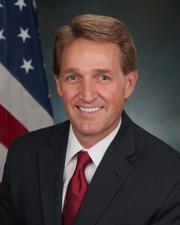 Rep. Jeff Flake (R-AZ)
Description
Amendment adds 2 new sections to the measure relating to the presumption of Congress that grants awarded under the bill will be awarded using competitive procedures and relating to a prohibition on earmarks.
Legislative Activity
Stay on top of the latest movement without scrolling through every action
Roll call votes on amendments in House
March 3, 2010 • 4:14 PM
View full timeline
Roll call votes on amendments in House
March 3, 2010 • 4:14 PM
House amendment agreed to: On agreeing to the Flake amendment (A002) Agreed to by the Yeas and Nays: 391 - 24 (Roll no. 81).
March 3, 2010 • 4:14 PM
Amendment agreed to by House: On agreeing to the Flake amendment (A002) Agreed to by the Yeas and Nays: 391 - 24 (Roll no. 81).
March 3, 2010 • 4:14 PM
House amendment offered
March 3, 2010
House amendment offered/reported by : Amendment (A002) offered by Mr. Flake.(consideration: CR H1062-1063; text: CR H1062)
March 3, 2010 • 3:41 PM
Amendment (A002) offered by Mr. Flake. (consideration: CR H1062-1063; text: CR H1062)
March 3, 2010 • 3:41 PM
On agreeing to the Flake amendment (A002) Agreed to by the Yeas and Nays: 391 - 24 (Roll no. 81).
March 3, 2010 • 4:14 PM
Votes
1 roll call on this amendment
Text
Offered
PREVENTING HARMFUL RESTRAINT AND SECLUSION IN SCHOOLS ACT
Mr. GEORGE MILLER of California. Mr. Speaker, pursuant to House
Resolution 1126, I call up the bill (H.R. 4247) to prevent and reduce
the use of physical restraint and seclusion in schools, and for other
purposes, and ask for its immediate consideration in the House.
The Clerk read the title of the bill.
The SPEAKER pro tempore. Pursuant to House Resolution 1126, the bill
is considered read. The amendment in the nature of a substitute printed
in the bill is adopted.
The text of the bill, as amended, is as follows:
H.R. 4247
Be it enacted by the Senate and House of Representatives of
the United States of America in Congress assembled,
SECTION 1. SHORT TITLE.
This Act may be cited as the ``Preventing Harmful Restraint
and Seclusion in Schools Act''.
SEC. 2. FINDINGS.
Congress finds the following:
(1) Physical restraint and seclusion have resulted in
physical injury, psychological trauma, and death to children
in public and private schools. National research shows
students have been subjected to physical restraint and
seclusion in schools as a means of discipline, to force
compliance, or as a substitute for appropriate educational
support.
(2) Behavioral interventions for children must promote the
right of all children to be treated with dignity. All
children have the right to be free from physical or mental
abuse, aversive behavioral interventions that compromise
health and safety, and any physical restraint or seclusion
imposed solely for purposes of discipline or convenience.
(3) Safe, effective, evidence-based strategies are
available to support children who display challenging
behaviors in school settings. Staff training focused on the
dangers of physical restraint and seclusion as well as
training in evidence-based positive behavior supports, de-
escalation techniques, and physical restraint and seclusion
prevention, can reduce the incidence of injury, trauma, and
death.
(4) School personnel have the right to work in a safe
environment and should be provided training and support to
prevent injury and trauma to themselves and others.
(5) Despite the widely recognized risks of physical
restraint and seclusion, a substantial disparity exists among
many States and localities with regard to the protection and
oversight of the rights of children and school personnel to a
safe learning environment.
(6) Children are subjected to physical restraint and
seclusion at higher rates than adults. Physical restraint
which restricts breathing or causes other body trauma, as
well as seclusion in the absence of continuous face-to-face
monitoring, have resulted in the deaths of children in
schools.
(7) Children are protected from inappropriate physical
restraint and seclusion in other settings, such as hospitals,
health facilities, and non-medical community-based
facilities. Similar protections are needed in schools, yet
such protections must acknowledge the differences of the
school environment.
(8) Research confirms that physical restraint and seclusion
are not therapeutic, nor are these practices effective means
to calm or teach children, and may have an opposite effect
while simultaneously decreasing a child's ability to learn.
(9) The effective implementation of school-wide positive
behavior supports is linked to greater academic achievement,
significantly fewer disciplinary problems, increased
instruction time, and staff perception of a safer teaching
environment.
SEC. 3. PURPOSES.
The purposes of this Act are to--
(1) prevent and reduce the use of physical restraint and
seclusion in schools;
(2) ensure the safety of all students and school personnel
in schools and promote a positive school culture and climate;
(3) protect students from--
(A) physical or mental abuse;
(B) aversive behavioral interventions that compromise
health and safety; and
(C) any physical restraint or seclusion imposed solely for
purposes of discipline or convenience;
(4) ensure that physical restraint and seclusion are
imposed in school only when a student's behavior poses an
imminent danger of physical injury to the student, school
personnel, or others; and
(5) assist States, local educational agencies, and schools
in--
(A) establishing policies and procedures to keep all
students, including students with the most complex and
intensive behavioral needs, and school personnel safe;
(B) providing school personnel with the necessary tools,
training, and support to ensure the safety of all students
and school personnel;
(C) collecting and analyzing data on physical restraint and
seclusion in schools; and
(D) identifying and implementing effective evidence-based
models to prevent and reduce physical restraint and seclusion
in schools.
SEC. 4. DEFINITIONS.
In this Act:
(1) Chemical restraint.--The term ``chemical restraint''
means a drug or medication used on a student to control
behavior or restrict freedom of movement that is not--
(A) prescribed by a licensed physician for the standard
treatment of a student's medical or psychiatric condition;
and
(B) administered as prescribed by the licensed physician.
(2) Educational service agency.--The term ``educational
service agency'' has the meaning given such term in section
9101(17) of the Elementary and Secondary Education Act of
1965 (20 U.S.C. 7801(17)).
(3) Elementary school.--The term ``elementary school'' has
the meaning given the term in section 9101(18) of the
Elementary and Secondary Education Act of 1965 (20 U.S.C.
7801(18)).
(4) Local educational agency.--The term ``local educational
agency'' has the meaning given the term in section 9101(26)
of the Elementary and Secondary Education Act of 1965 (20
U.S.C. 7801(26)).
(5) Mechanical restraint.--The term ``mechanical
restraint'' has the meaning given the term in section
595(d)(1) of the Public Health Service Act (42 U.S.C.
290jj(d)(1)), except that the meaning shall be applied by
substituting ``student's'' for ``resident's''.
(6) Parent.--The term ``parent'' has the meaning given the
term in section 9101(31) of the Elementary and Secondary
Education Act of 1965 (20 U.S.C. 7801(31)).
(7) Physical escort.--The term ``physical escort'' has the
meaning given the term in section 595(d)(2) of the Public
Health Service Act (42 U.S.C. 290jj(d)(2)), except that the
meaning shall be applied by substituting ``student'' for
``resident''.
(8) Physical restraint.--The term ``physical restraint''
has the meaning given the term in section 595(d)(3) of the
Public Health Service Act (42 U.S.C. 290jj(d)(3)).
(9) Positive behavior supports.--The term ``positive
behavior supports'' means a systematic approach to embed
evidence-based practices and data-driven decisionmaking to
improve school climate and culture, including a range of
systemic and individualized strategies to reinforce desired
behaviors and diminish reoccurrence of problem behaviors, in
order to achieve improved academic and social outcomes and
increase learning for all students, including those with the
most complex and intensive behavioral needs.
(10) Protection and advocacy system.--The term ``protection
and advocacy system'' means a protection and advocacy system
established under section 143 of the Developmental
Disabilities Assistance and Bill of Rights Act of 2000 (42
U.S.C. 15043).
(11) School.--The term ``school'' means an entity--
(A) that--
(i) is a public or private--
(I) day or residential elementary school or secondary
school; or
(II) early childhood, elementary school, or secondary
school program that is under the jurisdiction of a school,
educational service agency, or other educational institution
or program; and
(ii) receives, or serves students who receive, support in
any form from any program supported, in whole or in part,
with funds appropriated to the Department of Education; or
(B) that is a school funded or operated by the Department
of the Interior.
(12) School personnel.--The term ``school personnel'' has
the meaning--
(A) given the term in section 4151(10) of the Elementary
and Secondary Education Act of 1965 (20 U.S.C. 7161(10)); and
(B) given the term ``school resource officer'' in section
4151(11) of the Elementary and Secondary Education Act of
1965 (20 U.S.C. 7161(11)).
(13) Secondary school.--The term ``secondary school'' has
the meaning given the term in section 9101(38) of the
Elementary and Secondary Education Act of 1965 (20 U.S.C.
7801(38)).
(14) Seclusion.--The term ``seclusion'' has the meaning
given the term in section 595(d)(4) of the Public Health
Service Act (42 U.S.C. 290jj(d)(4)).
(15) Secretary.--The term ``Secretary'' means the Secretary
of Education.
(16) State-approved crisis intervention training program.--
The term ``State-approved crisis intervention training
program'' means a training program approved by a State and
the Secretary that, at a minimum, provides--
(A) evidence-based techniques shown to be effective in the
prevention of physical restraint and seclusion;
(B) evidence-based techniques shown to be effective in
keeping both school personnel and students safe when imposing
physical restraint or seclusion;
(C) evidence-based skills training related to positive
behavior supports, safe physical escort, conflict prevention,
understanding antecedents, de-escalation, and conflict
management;
[[Page H1049]]
(D) first aid and cardiopulmonary resuscitation;
(E) information describing State policies and procedures
that meet the minimum standards established by regulations
promulgated pursuant to section 5(a); and
(F) certification for school personnel in the techniques
and skills described in subparagraphs (A) through (D), which
shall be required to be renewed on a periodic basis.
(17) State.--The term ``State'' has the meaning given the
term in section 9101 of the Elementary and Secondary
Education Act of 1965 (20 U.S.C. 7801).
(18) State educational agency.--The term ``State
educational agency'' has the meaning given the term in
section 9101(41) of the Elementary and Secondary Education
Act of 1965 (20 U.S.C. 7801(41)).
(19) Student.--The term ``student'' means a student
enrolled in a school defined in section 11, except that in
the case of a private school or private program, such term
means a student enrolled in such school or program who
receives support in any form from any program supported, in
whole or in part, with funds appropriated to the Department
of Education.
(20) Time out.--The term ``time out'' has the meaning given
the term in section 595(d)(5) of the Public Health Service
Act (42 U.S.C. 290jj(d)(5)), except that the meaning shall be
applied by substituting ``student'' for ``resident''.
SEC. 5. MINIMUM STANDARDS; RULE OF CONSTRUCTION.
(a) Minimum Standards.--Not later than 180 days after the
date of the enactment of this Act, in order to protect each
student from physical or mental abuse, aversive behavioral
interventions that compromise student health and safety, or
any physical restraint or seclusion imposed solely for
purposes of discipline or convenience or in a manner
otherwise inconsistent with this Act, the Secretary shall
promulgate regulations establishing the following minimum
standards:
(1) School personnel shall be prohibited from imposing on
any student the following:
(A) Mechanical restraints.
(B) Chemical restraints.
(C) Physical restraint or physical escort that restricts
breathing.
(D) Aversive behavioral interventions that compromise
health and safety.
(2) School personnel shall be prohibited from imposing
physical restraint or seclusion on a student unless--
(A) the student's behavior poses an imminent danger of
physical injury to the student, school personnel, or others;
(B) less restrictive interventions would be ineffective in
stopping such imminent danger of physical injury;
(C) such physical restraint or seclusion is imposed by
school personnel who--
(i) continuously monitor the student face-to-face; or
(ii) if school personnel safety is significantly
compromised by such face-to-face monitoring, are in
continuous direct visual contact with the student;
(D) such physical restraint or seclusion is imposed by--
(i) school personnel trained and certified by a State-
approved crisis intervention training program (as defined in
section 4(16)); or
(ii) other school personnel in the case of a rare and
clearly unavoidable emergency circumstance when school
personnel trained and certified as described in clause (i)
are not immediately available due to the unforeseeable nature
of the emergency circumstance; and
(E) such physical restraint or seclusion end immediately
upon the cessation of the conditions described in
subparagraphs (A) and (B).
(3) States and local educational agencies shall ensure that
a sufficient number of personnel are trained and certified by
a State-approved crisis intervention training program (as
defined in section 4(16)) to meet the needs of the specific
student population in each school.
(4) The use of physical restraint or seclusion as a planned
intervention shall not be written into a student's education
plan, individual safety plan, behavioral plan, or
individualized education program (as defined in section 602
of the Individuals with Disabilities Education Act (20 U.S.C.
1401)). Local educational agencies or schools may establish
policies and procedures for use of physical restraint or
seclusion in school safety or crisis plans, provided that
such school plans are not specific to any individual student.
(5) Schools shall establish procedures to be followed after
each incident involving the imposition of physical restraint
or seclusion upon a student, including--
(A) procedures to provide to the parent of the student,
with respect to each such incident--
(i) an immediate verbal or electronic communication on the
same day as each such incident; and
(ii) within 24 hours of each such incident, written
notification; and
(B) any other procedures the Secretary determines
appropriate.
(b) Secretary of the Interior.--The Secretary of the
Interior shall ensure that schools operated or funded by the
Department of the Interior comply with the regulations
promulgated by the Secretary under subsection (a).
(c) Rule of Construction.--Nothing in this section shall be
construed to authorize the Secretary to promulgate
regulations prohibiting the use of--
(1) time out (as defined in section 4(20)); or
(2) devices implemented by trained school personnel, or
utilized by a student, for the specific and approved
therapeutic or safety purposes for which such devices were
designed and, if applicable, prescribed, including--
(A) restraints for medical immobilization;
(B) adaptive devices or mechanical supports used to achieve
proper body position, balance, or alignment to allow greater
freedom of mobility than would be possible without the use of
such devices or mechanical supports; or
(C) vehicle safety restraints when used as intended during
the transport of a student in a moving vehicle; or
(3) handcuffs by school resource officers (as such term is
defined in section 4151(11) of the Elementary and Secondary
Education Act of 1965 (20 U.S.C. 7161(11)))--
(A) in the--
(i) case when a student's behavior poses an imminent danger
of physical injury to the student, school personnel, or
others; or
(ii) lawful exercise of law enforcement duties; and
(B) less restrictive interventions would be ineffective.
SEC. 6. STATE PLAN AND REPORT REQUIREMENTS AND ENFORCEMENT.
(a) State Plan.--Not later than 2 years after the Secretary
promulgates regulations pursuant to section 5(a), and each
year thereafter, each State educational agency shall submit
to the Secretary a State plan that provides--
(1) assurances to the Secretary that the State has in
effect--
(A) State policies and procedures that meet the minimum
standards, including the standards with respect to State-
approved crisis intervention training programs, established
by regulations promulgated pursuant to section 5(a); and
(B) a State mechanism to effectively monitor and enforce
the minimum standards;
(2) a description of the State policies and procedures,
including a description of the State-approved crisis
intervention training programs in such State; and
(3) a description of the State plans to ensure school
personnel and parents, including private school personnel and
parents, are aware of the State policies and procedures.
(b) Reporting.--
(1) Reporting requirements.--Not later than 2 years after
the date the Secretary promulgates regulations pursuant to
section 5(a), and each year thereafter, each State
educational agency shall (in compliance with the requirements
of section 444 of the General Education Provisions Act
(commonly known as the ``Family Educational Rights and
Privacy Act of 1974'') (20 U.S.C. 1232g)) prepare and submit
to the Secretary, and make available to the public, a report
with respect to each local educational agency, and each
school not under the jurisdiction of a local educational
agency, located in the same State as such State educational
agency that includes the information described in paragraph
(2).
(2) Information requirements.--
(A) General information requirements.--The report described
in paragraph (1) shall include information on--
(i) the total number of incidents in the preceding full-
academic year in which physical restraint was imposed upon a
student; and
(ii) the total number of incidents in the preceding full-
academic year in which seclusion was imposed upon a student.
(B) Disaggregation.--
(i) General disaggregation requirements.--The information
described in subparagraph (A) shall be disaggregated by--
(I) the total number of incidents in which physical
restraint or seclusion was imposed upon a student--
(aa) that resulted in injury;
(bb) that resulted in death; and
(cc) in which the school personnel imposing physical
restraint or seclusion were not trained and certified as
described in section 5(a)(2)(D)(i); and
(II) the demographic characteristics of all students upon
whom physical restraint or seclusion was imposed, including--
(aa) the categories identified in section 1111(h)(1)(C)(i)
of the Elementary and Secondary Education Act of 1965 (20
U.S.C. 6311(h)(1)(C)(i));
(bb) age; and
(cc) disability status (which has the meaning given the
term ``individual with a disability'' in section 7(20) of the
Rehabilitation Act of 1973 (29 U.S.C. 705(20))).
(ii) Unduplicated count; exception.--The disaggregation
required under clause (i) shall--
(I) be carried out in a manner to ensure an unduplicated
count of the--
(aa) total number of incidents in the preceding full-
academic year in which physical restraint was imposed upon a
student; and
(bb) total number of incidents in the preceding full-
academic year in which seclusion was imposed upon a student;
and
(II) not be required in a case in which the number of
students in a category would reveal personally identifiable
information about an individual student.
(c) Enforcement.--
(1) In general.--
(A) Use of remedies.--If a State educational agency fails
to comply with subsection (a) or (b), the Secretary shall--
(i) withhold, in whole or in part, further payments under
an applicable program (as such term is defined in section
400(c) of the General Education Provisions Act (20 U.S.C.
1221)) in accordance with section 455 of such Act (20 U.S.C.
1234d);
(ii) require a State educational agency to submit, and
implement, within 1 year of such failure to comply, a
corrective plan of action, which may include redirection of
funds received under an applicable program; or
(iii) issue a complaint to compel compliance of the State
educational agency through a cease and desist order, in the
same manner the Secretary is authorized to take such action
under section 456 of the General Education Provisions Act (20
U.S.C. 1234e).
(B) Cessation of withholding of funds.--Whenever the
Secretary determines (whether by certification or other
appropriate evidence) that
[[Page H1050]]
a State educational agency who is subject to the withholding
of payments under subparagraph (A)(i) has cured the failure
providing the basis for the withholding of payments, the
Secretary shall cease the withholding of payments with
respect to the State educational agency under such
subparagraph.
(2) Rule of construction.--Nothing in this subsection shall
be construed to limit the Secretary's authority under the
General Education Provisions Act (20 U.S.C. 1221 et seq.).
SEC. 7. GRANT AUTHORITY.
(a) In General.--From the amount appropriated under section
12, the Secretary may award grants to State educational
agencies to assist the agencies in--
(1) establishing, implementing, and enforcing the policies
and procedures to meet the minimum standards established by
regulations promulgated by the Secretary pursuant to section
5(a);
(2) improving State and local capacity to collect and
analyze data related to physical restraint and seclusion; and
(3) improving school climate and culture by implementing
school-wide positive behavior support approaches.
(b) Duration of Grant.--A grant under this section shall be
awarded to a State educational agency for a 3-year period.
(c) Application.--Each State educational agency desiring a
grant under this section shall submit an application to the
Secretary at such time, in such manner, and accompanied by
such information as the Secretary may require, including
information on how the State educational agency will target
resources to schools and local educational agencies in need
of assistance related to preventing and reducing physical
restraint and seclusion.
(d) Authority to Make Subgrants.--
(1) In general.--A State educational agency receiving a
grant under this section may use such grant funds to award
subgrants, on a competitive basis, to local educational
agencies.
(2) Application.--A local educational agency desiring to
receive a subgrant under this section shall submit an
application to the applicable State educational agency at
such time, in such manner, and containing such information as
the State educational agency may require.
(e) Private School Participation.--
(1) In general.--A local educational agency receiving
subgrant funds under this section shall, after timely and
meaningful consultation with appropriate private school
officials, ensure that private school personnel can
participate, on an equitable basis, in activities supported
by grant or subgrant funds.
(2) Public control of funds.--The control of funds provided
under this section, and title to materials, equipment, and
property purchased with such funds, shall be in a public
agency, and a public agency shall administer such funds,
materials, equipment, and property.
(f) Required Activities.--A State educational agency
receiving a grant, or a local educational agency receiving a
subgrant, under this section shall use such grant or subgrant
funds to carry out the following:
(1) Researching, developing, implementing, and evaluating
strategies, policies, and procedures to prevent and reduce
physical restraint and seclusion in schools, consistent with
the minimum standards established by regulations promulgated
by the Secretary pursuant to section 5(a).
(2) Providing professional development, training, and
certification for school personnel to meet such standards.
(3) Carrying out the reporting requirements under section
6(b) and analyzing the information included in a report
prepared under such section to identify student, school
personnel, and school needs related to use of physical
restraint and seclusion.
(g) Additional Authorized Activities.--In addition to the
required activities described in subsection (f), a State
educational agency receiving a grant, or a local educational
agency receiving a subgrant, under this section may use such
grant or subgrant funds for one or more of the following:
(1) Developing and implementing high-quality professional
development and training programs to implement evidence-based
systematic approaches to school-wide positive behavior
supports, including improving coaching, facilitation, and
training capacity for administrators, teachers, specialized
instructional support personnel, and other staff.
(2) Providing technical assistance to develop and implement
evidence-based systematic approaches to school-wide positive
behavior supports, including technical assistance for data-
driven decision-making related to behavioral supports and
interventions in the classroom.
(3) Researching, evaluating, and disseminating high-quality
evidence-based programs and activities that implement school-
wide positive behavior supports with fidelity.
(4) Supporting other local positive behavior support
implementation activities consistent with this subsection.
(h) Evaluation and Report.--Each State educational agency
receiving a grant under this section shall, at the end of the
3-year grant period for such grant--
(1) evaluate the State's progress toward the prevention and
reduction of physical restraint and seclusion in the schools
located in the State, consistent with the minimum standards
established by regulations promulgated by the Secretary
pursuant to section 5(a); and
(2) submit to the Secretary a report on such progress.
(i) Department of the Interior.--From the amount
appropriated under section 12, the Secretary may allocate
funds to the Secretary of the Interior for activities under
this section with respect to schools operated or funded by
the Department of the Interior, under such terms as the
Secretary of Education may prescribe.
SEC. 8. NATIONAL ASSESSMENT.
(a) National Assessment.--The Secretary shall carry out a
national assessment to determine the effectiveness of this
Act, which shall include--
(1) analyzing data related to physical restraint and
seclusion incidents;
(2) analyzing the effectiveness of Federal, State, and
local efforts to prevent and reduce the number of physical
restraint and seclusion incidents in schools;
(3) identifying the types of programs and services that
have demonstrated the greatest effectiveness in preventing
and reducing the number of physical restraint and seclusion
incidents in schools; and
(4) identifying evidence-based personnel training models
with demonstrated success in preventing and reducing the
number of physical restraint and seclusion incidents in
schools, including models that emphasize positive behavior
supports and de-escalation techniques over physical
intervention.
(b) Report.--The Secretary shall submit to the Committee on
Education and Labor of the House of Representatives and the
Committee on Health, Education, Labor, and Pensions of the
Senate--
(1) an interim report that summarizes the preliminary
findings of the assessment described in subsection (a) not
later than 3 years after the date of enactment of this Act;
and
(2) a final report of the findings of the assessment not
later than 5 years after the date of the enactment of this
Act.
SEC. 9. PROTECTION AND ADVOCACY SYSTEMS.
Protection and Advocacy Systems shall have the authority
provided under section 143 of the Developmental Disabilities
Assistance and Bill of Rights Act of 2000 (42 U.S.C. 15043)
to investigate, monitor, and enforce protections provided for
students under this Act.
SEC. 10. HEAD START PROGRAMS.
(a) Regulations.--The Secretary of Health and Human
Services, in consultation with the Secretary, shall
promulgate regulations with respect to Head Start agencies
administering Head Start programs under the Head Start Act
(42 U.S.C. 9801 et seq.) that establish requirements
consistent with--
(1) the requirements established by regulations promulgated
pursuant to section 5(a); and
(2) the reporting and enforcement requirements described in
subsections (b) and (c) of section 6.
(b) Grant Authority.--From the amount appropriated under
section 12, the Secretary may allocate funds to the Secretary
of Health and Human Services to assist the Head Start
agencies in establishing, implementing, and enforcing
policies and procedures to meet the requirements established
by regulations promulgated pursuant to subsection (a).
SEC. 11. LIMITATION OF AUTHORITY.
(a) In General.--Nothing in this Act shall be construed to
restrict or limit, or allow the Secretary to restrict or
limit, any other rights or remedies otherwise available to
students or parents under Federal or State law or regulation.
(b) Applicability.--
(1) Private schools.--Nothing in this Act shall be
construed to affect any private school that does not receive,
or does not serve students who receive, support in any form
from any program supported, in whole or in part, with funds
appropriated to the Department of Education.
(2) Home schools.--Nothing in this Act shall be construed
to--
(A) affect a home school, whether or not a home school is
treated as a private school or home school under State law;
or
(B) consider parents who are schooling a child at home as
school personnel.
SEC. 12. AUTHORIZATION OF APPROPRIATIONS.
There are authorized to be appropriated such sums as may be
necessary to carry out this Act for fiscal year 2011 and each
of the 4 succeeding fiscal years.
The SPEAKER pro tempore. After 1 hour of debate on the bill, as
amended, it shall be in order to consider the amendment printed in part
A of House Report 111-425, if offered by the gentleman from California
(Mr. George Miller) or his designee, which shall be considered read,
and shall be debatable for 10 minutes equally divided and controlled by
the proponent and an opponent.
The amendment printed in part B of House Report 111-425, if offered
by the gentleman from Arizona (Mr. Flake) or his designee, shall be
considered read, and shall be debatable for 10 minutes equally divided
and controlled by the proponent and an opponent.
The gentleman from California (Mr. George Miller) and the gentleman
from Minnesota (Mr. Kline) each will control 30 minutes.
The Chair recognizes the gentleman from California.
General Leave
Mr. GEORGE MILLER of California. Mr. Speaker, I ask unanimous consent
that all Members may have 5 legislative days in which to revise and
extend their remarks on H.R. 4247.
The SPEAKER pro tempore. Is there objection to the request of the
gentleman from California?
There was no objection.
Mr. GEORGE MILLER of California. Mr. Speaker, I yield myself such
time as I may consume.
[[Page H1051]]
Mr. Speaker and Members of the House, I rise today in strong support
of this bipartisan legislation that will make our classrooms safer for
our children and our teachers. But first I would like to tell the story
of Cedric. This is a picture of Cedric, who was a young man from
Killeen, Texas, who died in his classroom when he was just 14 years of
age.
Cedric was living with a foster family after an early childhood
filled with abuse. Among other things, his biological family had
neglected him by denying him food. Despite knowing this, on the morning
he died, Cedric's teacher punished him for refusing to do his work by
delaying his lunch for hours. When Cedric tried to leave his classroom
to find food, his teacher put him face down in restraint and sat on him
in front of his classmates. He repeatedly cried out that he could not
breathe. He died minutes later on the classroom floor.
Now I would like to tell you the story of Paige. Paige was a bright,
energetic, and happy young girl who started a new school in Cupertino,
California. But Paige, who has Asperger's Syndrome, came home from her
school the first week with bruises complaining that her teacher hurt
her.
Paige's parents confronted the teacher, who denied causing the
bruising. She did admit to restraining Paige for simply wiggling a
loose tooth. Her parents were shocked to learn later that the teacher
had lied and that she had actually held Paige face down and sat on her.
Sitting on a 7-year-old for wiggling a loose tooth. Paige barely
weighed 40 pounds.
Over the course of many months, Paige was repeatedly abused and
injured during restraint incidents until her parents finally pulled her
out of the school. She survived, but she still bears the emotional
scars of this abuse.
Cedric's and Paige's stories are not isolated incidents in America's
schools today. Last May, the Government Accountability Office told our
committee about the shocking wave of abuse of children in our public
and private schools. This abuse was happening at the hands of untrained
school staff who were misusing restraint and seclusion.
Hundreds of students across the U.S. have been victims of this abuse.
These victims include students with disabilities and students without
disabilities. Many of these victims were children as young as 3 and 4
years of age. In some cases, children died.
Restraint and seclusion are complicated practices. They are emergency
interventions that should be used only as a last resort and only by
trained professionals. But GAO found that too often these techniques
are being used in schools under the guise of discipline or convenience.
Last year, in my home State of California, there were more than
14,300 cases of seclusion, restraint, and other ``emergency
interventions.'' We don't know how many of these cases were actual
emergencies.
We have Federal laws in place to prevent these types of abuses from
happening in hospitals and other community-based facilities that
receive Federal funding, but currently there are no Federal laws on the
books to protect children from these abuses in the schools, where they
spend most of their time.
Without a Federal standard, State policies and oversight, they vary
widely, leaving children vulnerable. Of the 31 States that have
established some law or regulation, many are not comprehensive in
approach and several only address restraint or address seclusion, not
necessarily both.
{time} 1445
For example, in one State there are rules only for children enrolled
in pre-K. In another, only children with autism are protected. In yet
another example, only residential schools are covered. Many States
allow restraints or seclusion in nonemergency situations, simply to
protect property or to maintain order. No child should be subject to
these extreme interventions for simple noncompliance, like the 7-year-
old who died after being restrained for blowing bubbles in her milk.
Mr. Speaker, when these abuses occur, it isn't just the individual
victim who suffers. It hurts their classmates who witness these
traumatizing events. It undermines the vast majority of teachers and
staff who are trying to give students a quality education. It's a
nightmare for everyone involved. We are here today to try and end this
nightmare. We are here today to make sure that no other children suffer
the same fate as Cedric and Paige. The Keeping All Students Safe Act
will ensure that all children are safe and protected in schools.
This bill takes a balanced approach to addressing a very serious
problem. For the first time, it will establish minimum safety standards
for schools, similar to Federal protections in place for children in
other facilities. Under this legislation, physical restraint and
seclusion can only be used to stop imminent danger of injury. The bill
prohibits mechanical restraints, such as strapping children to their
chairs or duct-taping parts of their bodies, and any restraint that
restricts their breathing. It also prohibits chemical restraints, using
medication to control behavior without a doctor's prescription. The
bill also will require students to notify parents after a restraint or
seclusion incident so that parents don't learn about these abuses from
whistle-blowing teachers or from their own children's bruises.
Mr. Speaker, we all agree that teachers play the single most
important role in helping students grow, thrive, and succeed. Teachers
support this bill because it focuses on keeping both students and staff
safe, giving teachers the support they need do their jobs. It asks
States to ensure that enough personnel are properly trained to keep
both students and staff safe and encourages the schools to implement
positive approaches to managing these behavioral issues.
Mr. Speaker, I'm very proud that we worked on this legislation in a
bipartisan way. I want to thank Congresswoman Cathy McMorris Rodgers
for her leadership, her diligence, her persuasion, and her hard work in
fashioning this legislation. I would also like to thank the National
Disability Rights Network for bringing this abuse to our attention; the
National School Boards Association; and more than a hundred other
organizations for their support.
Everyone in this Chamber can agree that nothing is more important
than keeping our children safe. It's time to try to end this abuse. I
believe that this legislation will go a long way in setting the
standard and showing States the way, and hopefully in the next 2 years
the States will develop their own standards that at least meet these
minimum standards of not depriving these children of the cushion of
safety that they are entitled to and that their parents and family
expect when they go to school on a daily basis.
So I would like to once again remind us of what happened to Cedric
and to Paige at their age; their vulnerabilities, their history, and
what happened to them one day when they went to school.
I reserve the balance of my time.
Mr. KLINE of Minnesota. I rise today in opposition to H.R. 4247, and
I yield myself such time as I may consume.
Let me begin by stating unequivocally that the incidents uncovered by
the GAO are unacceptable. No child should be put in physical danger by
the use of seclusion or restraints in school. The tragic stories just
related by the chairman of Cedric and Paige are unacceptable
everywhere.
In each of the cases reviewed by the GAO, there was a criminal
conviction, a finding of civil or administrative liability, or a large
financial settlement. In other words, everyone agrees that what
happened is simply wrong. We do not need a change in Federal law for
such behavior to be condemned. Sometimes the most powerful tool we have
as elected officials is the bully pulpit, and Chairman Miller and Mrs.
McMorris Rodgers have certainly availed themselves of it. They have
worked hard to call national attention to the misuse of seclusion and
restraints in our schools.
States clearly recognize the need to proactively limit the use of
these disciplinary tools. Today, 31 States have policies and procedures
in place to govern when and how seclusion or restraint techniques may
or may not be used. Another 15 States will have such protections in
place in the near future. Many, many independent school districts and
school boards have such procedures in place.
The question today is: Who is best equipped to create and enforce
those
[[Page H1052]]
policies? To answer that question, I would point to a letter from the
Council of the Great City Schools, which States, ``Every injury to a
student in school is a matter of serious concern, but all such
incidents are not necessarily matters of Federal law.'' In fact, until
recently, the U.S. Department of Education was not even collecting data
on the use of seclusion and restraint tactics in schools. The
Department has no experience or expertise regulating in this area. Yet,
H.R. 4247 would establish a new, one-size-fits-all Federal framework
that overrules the work of these States.
I will include the letter from the Council of the Great City Schools
in the Record, along with letters from the U.S. Conference of Catholic
Bishops, the American Association of School Administrators, the Council
for American Private Education, the American Association of Christian
Schools, the Association of Christian Schools International, and the
National Conference of State Legislatures.
American Association of School
Administrators,
Arlington, VA, March 2, 2010.
House of Representatives,
Washington, DC.
Dear Representative: The American Association of School
Administrators, representing more than 13,000 school
administrators and local educational leaders, would like to
express serious concerns with HR 4247, the Preventing Harmful
Restraint and Seclusion in Schools Act, which is expected to
be considered in the next few days. We ask that the voices of
rank-and-file teachers, principals, superintendents and
school board members be heard and that HR 4247, as reported
from Committee, be defeated.
The need to establish these particular federal regulations
for seclusion and restraint has not been established by
objective, carefully gathered and analyzed data. For example,
the report by the National Disability Rights Network upon
which HR 4247 partially relies mixes data from regular public
schools with data from schools for children with serious
behavioral disorders and institutions for students who are
regularly violent. Further, the incidents took place over an
unknown period of time--perhaps a decade or more. It seems to
us that most of those cases took place in settings serving
either the small percentage of students with serious behavior
disorders or the even smaller percentage of students who are
a violent danger to themselves or others. Finally, the NDN
report counts incidents of seclusion and restraint without
noting whether those events took place over a decade or some
other time period.
The Office of Civil Rights within the U.S. Department of
Education is preparing to gather more objective information
this coming school year. We urge the House to await
objective, uniformly reported and analyzed data from OCR
before acting. Based on experience, we are sure that a
student in a regular public school is extremely unlikely to
be physically harmed, secluded in a windowless room, taped to
a chair or handcuffed to a fence by a teacher or
administrator. Just how unlikely such events are is unknown
because objective, uniformly gathered and analyzed data
simply are not available.
In addition, the report recently released by the U.S.
Department of Education states that 31 states currently have
policies in place to oversee the use of seclusion and
restraint and 15 states are in the process of adopting
policies and protections. Given this massive state action,
AASA questions the need for federal involvement on this
issue.
Reviews of HR 4247 by state-based teacher, administrator
and school board associations have identified a number of
serious flaws, which they have raised to their congressional
delegations, but so far their voices have not been included
in the discussions.
HR 4247 includes a prohibition against including seclusion
and restraint in the Individualized Education Plan (IEP) or
behavioral plan. The IEP and behavioral plans are the
communication platform for parents and school staff to
discuss the students' needs and corresponding school
interventions. Prohibiting the inclusion of seclusion and
restraint in the IEP or behavioral plans where past behavior
clearly indicates a need will only lead to further conflicts
and misunderstandings between parents and school staff.
The Protection and Advocacy agencies are given broad
undefined authority to enforce the new law. P&A agencies have
long monitored and investigated on behalf of disabled
students, but enforcement is new. Enforcement of federal law
has been the sole responsibility of state or federal
agencies. A bigger problem for school systems is that the
meaning of enforcement is undefined. For example, does the
enforcement authority permit P&A staff to enter schools
without checking in with appropriate school personnel? Arrest
authority? Authority to change school policy on the spot?
HR 4247's prohibition against mechanical restraints is too
broad and could prevent appropriate use of restraints in
emergency situations where students must be restrained to
protect themselves and others.
This legislation applies to both the special education and
regular education populations, and thus raises mandate
training and reporting costs for school districts. These
increased fiscal and operational burdens are accompanied by
minuscule authorization and few prospects for an
appropriation. A huge, new, unfunded mandate is difficult to
justify at a time when schools are cutting teaching staff and
stretching resources to balance budgets.
HR 4247 also prescribes a debriefing session for school
personnel and parents within 72 hours of the use of seclusion
or restraint, to address documentation of the antecedents to
the restraint or seclusion and prevention planning (although
it cannot involve the IEP). School staff are already over-
committed in their daily schedules. Imposing short, mandatory
timelines for extensive meetings will likely result in the
cancellation of other instructional commitments or missed
timelines and new litigation.
Finally, the tone of HR 4247 is relentlessly negative
toward teachers and administrators. This tone indicting all
teachers and administrators is unwarranted by plain
observation, is unsupported by any credible data and should
be eliminated. AASA is certain that every member of the House
knows at least one teacher or administrator who has dedicated
his or her professional life to the education and development
of children and who has never restrained or secluded a single
student, even if his or her career spanned over 40 years.
Thank you for your consideration. If there are any
questions, please do not hesitate to contact me for further
discussion of this important issue.
Yours truly,
Dan Domenech,
Executive Director.
____
Council of the Great City
Schools,
Washington, DC, March 1, 2010.
House of Representatives,
Washington DC.
Subject: HR 4247--Restraint and Seclusion bill.
Dear Representative: It is unusual that the Council of the
Great City Schools, the coalition of the nation's largest
central city school districts, cannot support an education-
related bill pending before the House of Representatives, but
H.R. 4247, the restraint and seclusion bill, is not
supportable in its current form. The bill is overly broad and
will override numerous state and local policies that already
address this issue and will do so in ways that will be hard
to predict.
Every injury to a student in school is a matter of serious
concern, but all such incidents are not necessarily matters
of federal law. Testimony before the Education and Labor
Committee clearly points out that the extent of the use of
inappropriate restraints and seclusion in schools could not
be specifically determined. The Government Accountability
Office (GAO) report provided only ten case studies--three of
which involved incidents occurring between ten and fifteen
years ago; two involved residential facilities that were not
regular public schools; and one involved a school volunteer.
The National Disability Rights Network study in January 2009
provided information on multiple incidents, but failed to
cite either the year or the decade of the occurrence. In
recognition of the limited data on the scope of inappropriate
restraints and seclusion, the U.S. Department of Education
has undertaken a formal data-collection initiative that may
provide more up-to-date information on this issue. The
Council suggests that it is premature for Congress to act
until the Department's data collection effort is complete. At
that time, depending on the results, the Council may revise
its position.
Moreover, the requirements in the pending bill present
serious concerns for the thousands of school districts and
school officials, including school board members, charged
with the responsibility of and subject to the potential
liability of implementing the federally-crafted definitions
and assurances. Section 9 of the bill will subject the
nation's schools to an extraordinary outsourcing of
investigations, monitoring, and enforcement actions to
protection and advocacy attorneys under the Developmental
Disabilities Act, in addition to oversight and enforcement by
each state educational agency and the U.S. Department of
Education--a new authority likely to result in additional
disputes and litigation that may involve any student or
employee, as well as contractors, service providers, other
agencies, and potentially on-site community services and
volunteers.
The Council also questions the assignment of policies,
procedures, and requirements currently applicable to
psychiatric hospitals, mental health programs, and medical
facilities onto the nation's elementary, secondary and pre-
schools, which are not designed, equipped, or staffed to
implement these requirements, and are often excluded from the
federal mental health funding or Medicaid reimbursements for
related services that could assist in implementation. All
current state and local restraint and seclusion laws,
policies, guidelines, and procedures will have to be reviewed
and aligned with this federal legislation.
In addition, H.R. 4247 mandates, without funding, a major
training and certification program in order to comply with
the proposed legislation. Again, the nation's schools
[[Page H1053]]
will have to train and state-certify an unspecified number of
personnel and then periodically re-certify each one.
Moreover, this bill requires that each of these individuals
from every school receive first aid and CPR training--an
entirely new federal requirement for schools and one not
directly related to restraints and seclusion. School
responsibilities for training and certification extend to
school contractors as well.
The Council is unable to adequately project how many school
employees and service providers would have to be trained and
certified in restraint and seclusion techniques, conflict
resolution, first aid, and CPR in schools serving thousands
of students. This broad unfunded mandate would be
questionable under the best of circumstances, but in the
current economic environment, where schools are laying off
thousands of teachers and other support staff and seeing
class sizes rise, such new federal requirements are also
untimely.
Congress could achieve the same basic objective by
requiring local school districts and/or state educational
agencies to adopt, implement and monitor policies for
appropriate and restricted use of restraints and seclusion in
disruptive, violent, and emergency circumstances--much like
the federal gun-free schools policy or school prayer policy.
Appropriate restraint and seclusion policies, restrictions,
and procedures are already in widespread use among the Great
City Schools and a large number of states, though few if any
as wide-ranging as H.R. 4247. The Council suggests that a
bill requiring the limited number of states and/or other
school districts without such policies to adopt and implement
restraint and seclusion policies would likely garner broader
support from school officials. We have offered to assist in
developing such legislation that would be more workable.
However, we cannot support H.R. 4247 as currently crafted.
Sincerely,
Jeffrey A. Simering,
Director of Legislative Services.
____
National Conference of State
Legislatures,
March 3, 2010.
Hon. Nancy Pelosi,
Speaker of the House,
Washington, DC.
Hon. John Boehner,
House Minority Leader,
Washington, DC.
The National Conference of States Legislatures (NCSL),
representing state legislators in the nation's 50 states,
commonwealths and territories, is deeply troubled by the
federal preemption of state policy in the Preventing Harmful
Restraint and Seclusion in Schools Act (HR 4247).
HR 4247 is a well intended effort by the U.S. House of
Representatives that ignores the leadership and progress made
by states to protect students from harm during seclusion and
restraint. Furthermore, the need to establish the federal
regulations identified in the legislation is not supported by
objective or carefully analyzed research. The U.S. Department
of Education is in the process of gathering such information
in the coming school year, and we strongly urge the House to
allow this process to be completed and to make an informed
decision based on sound research to determine whether federal
legislation is needed to address this issue.
According to the U.S. Department of Education, 31 states
currently have policies in place to oversee the use of
seclusion and restraint with another 15 in the process of
adopting similar policies and protections. HR 4247 would
preempt these efforts in favor of federal guidelines that
have little basis in research and would require states to
adopt them within two years irrespective of the varying
conditions in the states and without any consideration given
to the costs associated with compliance.
State legislators, who have the constitutional
responsibility to establish and fund the nation's system of
public education, are concerned about another unfunded
mandate and continued federal overreach into the daily
operations of schools. HR 4247 is the latest example of this
approach. The National Conference of State Legislators urges
members of the U.S. House of Representatives to vote against
HR 4247.
Sincerely,
Representative Larry M. Bell,
Chair, Education Committee, North Carolina General
Assembly; Chair, NCSL Standing Committee on Education.
____
Council for American
Private Education,
February 17, 2010.
Re H.R. 4247, Preventing Harmful Restraint and Seclusion in
Schools Act.
Members of the House of Representatives: The Council for
American Private Education (CAPE), a coalition of 18 major
national organizations (listed left) and 32 state affiliates
that serve religious and independent PK-12 schools, writes to
express strong concerns regarding H.R. 4247. At the start, we
must be clear that as a matter of ethical principle, moral
law, and basic human decency, the private school community is
unreservedly committed to the safety and well-being of
students. Parents willingly entrust the education and care of
a child to a religious or independent school because they
know the school will act to ensure the child's best
interests. Thus, with respect to the bill's intent to protect
children from harm, we stand in solidarity with the sponsors.
Our disagreement is with specific provisions of the bill, not
its overall purpose.
CAPE is deeply concerned about the possible adverse effects
the bill could have on the welfare of students. The
neighborhood and community schools we represent are likely to
experience the reach of this legislation in ordinary and
typical encounters: a teacher breaking up a schoolyard
dustup, a coach holding back two hot-tempered players, an
aide grabbing a child about to dart into the carpool lane at
dismissal. Under such circumstances, competent professionals
instinctively apply physical restraint in order to protect a
child from imminent danger--restraint that meets the
definition referenced in the bill (i.e., ``a personal
restriction that immobilizes or reduces the ability of an
individual to move his or her arms, legs, or head freely'').
Yet the burden of this legislation, with its array of
conditions and clauses (see section 5(a)) specifying when and
under what circumstances and by whom such ordinary,
protective action may lawfully be carried out could
effectively serve to inhibit such instinctively shielding
behavior by causing the adult to hesitate or second-guess
herself out of fear she might be violating federal law.
Hesitation in such circumstances could be dangerous.
Our read of this bill is that it was intended to address a
narrow set of special-purpose schools and circumstances in
which students are restrained or secluded for an extensive
period of time in connection with an institution's
inappropriate disciplinary practice or policy. But the
schools we represent do not fall in that category and would
be inadvertently affected by the bill's far-reaching
provisions.
Another serious concern we have is that this legislation
would impose an unprecedented degree of federal mandates on
religious and independent schools.
The class of schools that would be affected by this bill is
broad. Based on the definition of ``school'' found in section
4(11), a religious school with even a single student
receiving math or reading instruction under Title I of the
Elementary and Secondary Education Act (ESEA) would be
subject to all the provisions of this bill, as would a school
receiving a single piece of instructional material or
professional development for a single teacher under any other
ESEA title. The U.S. Department of Education reported in 2007
that a full 80 percent of Catholic schools across the country
participate in one or more programs under ESEA.
What requirements would apply to affected schools? First,
they would have to have one or more teachers trained and
certified under a state-approved training program, as defined
in section 4(16). The required number of trained teachers for
each school would be determined by the state (see section
5(a)(3)). In the history of education legislation, the
federal government has never imposed training or
certification requirements on neighborhood religious and
independent schools for any reason.
Second, they would have to comply with the annual reporting
requirements involving disaggregated demographic data on the
number of incidents in which physical restraint was imposed
upon a student. (And keep in mind that the bill's cross-
referenced definition of ``physical restraint'' encompasses
the ordinary occurrences described above.) Although states
are required to file the reports described in section 6(b),
schools themselves would have to provide the data, since
states are obligated to report on the number of instances
``for each local educational agency and each school not under
the jurisdiction of a local educational agency.''
Third, and most important, they would have to comply with
the school-related provisions of the law that, in our
judgment, could have the unintended adverse effects on the
health and safety of students described above.
We urge you to oppose this legislation unless it is amended
to address these important concerns.
Sincerely,
Joe McTighe,
Executive Director.
____
American Association of
Christian Schools,
March 2, 2010.
House of Representatives,
Washington, DC.
Dear Representative: The American Association of Christian
Schools writes to express concern over H.R. 4247,
``Preventing Harmful Restraint and Seclusion in Schools
Act.'' The goal of the bill--to protect children from
suffering abuse at the hands of the educators--is a point of
strong agreement that we share with the sponsors. Our schools
are committed to providing safe environments for their
students, and as a national organization, AACS is supportive
of efforts to ensure that children are protected and free
from harm.
As the bill has moved through the Education and Labor
Committee and to the House Floor, we have appreciated the
opportunity for many discussions on how best to protect all
students and still maintain protections for private schools
against unwarranted federal intrusion. We appreciate the
efforts to mitigate the effect of this bill on private
education, and we are grateful for the inclusion of language
that does specify protection for those private schools which
do not receive federal funds.
[[Page H1054]]
However, we are concerned that there still may be
unintended negative consequences for those private schools
whose teachers or students may be benefiting from a federal
education program. It seems that the language of the bill
opens the door for these schools to become subject to
training and reporting requirements of the government: For
example, a school which receives instructional materials or
professional development services under any ESEA title could
be subject to the regulations set forth in this bill.
Further, any school who serves a Title I student could also
be required to adhere to the reporting and training
requirements. While private school regulation may not be the
intention of the bill, this could set a dangerous precedent
for future federal regulation of private education.
Private schools, including our Christian schools, have
enjoyed marked success in providing excellent education for
students of all ages and abilities. Their freedom and ability
to maintain their autonomy contributes greatly to this
success, and the opportunities that thereby are provided for
the students. The language of H.R. 4247 seems to set
unwarranted intrusion of the federal government into this
autonomy.
We believe the intent of the sponsors of this bill was not
to establish federal intrusion on private schools; however,
we are concerned that this will be an unintended consequence.
For this reason, we cannot support the bill. We appreciate
your consideration of our concerns.
Sincerely,
Keith Wiebe,
President, American Association
of Christian Schools.
____
Committee on Catholic Education,
February 25, 2010.
Re H.R. 4247, Preventing Harmful Restraint and Seclusion in
Schools Act.
Dear Members of the House of Representatives: As Chairman
of the Committee on Catholic Education of the United States
Conference of Catholic Bishops I wish to acknowledge the
efforts of the Members of the House Education and Labor
Committee to reduce the use of harmful and dangerous
restraint and seclusion in schools. We agree completely with
your desire to protect and enhance the safety and well-being
of all students enrolled in both public and private schools.
However, we must urge you to vote against H. 4247 in its
present form.
We believe it would be unprecedented and intrusive for the
Federal government to involve itself in some of the
activities that would be required by H.R.4247, such as:
Sec. 3(5)(C)--collecting and analyzing data from private
schools;
Sec. 4(11)(A)(II)(ii)--extending the requirements of this
legislation to every private school which has even one
student or one teacher participating in a program
administered by the U.S. Department of Education; and
Sec. 5(a)--requiring school personnel to be certified in
crisis intervention, although federal education law has never
before imposed certification requirements on private school
educators.
It is clear from the language of ESEA and IDEA that it was
Congress' intent, and properly so, to avoid federal
involvement in the internal administration of private
(nonpublic) schools. By ignoring that principle, H.R. 4247 in
its present form crosses a dangerous line, without any
demonstrated need to do so. The only private schools cited in
the report of the U.S. Government Accountability Office (GAO-
09-719T) that apparently led to the drafting of H.R. 4247
were either residential facilities or schools which served
emotionally disturbed teens.
I urge you to alter the scope of this unnecessarily
intrusive legislation so that it focuses directly on the
dangerous types of situations referenced in the GAO report,
rather than imposing intrusive and onerous data collection,
coverage, and certification requirements on private schools.
Sincerely,
Most Reverend Thomas J. Curry,
Auxiliary Bishop of Los Angeles; Chairman, USCCB Committee
on Catholic Education.
____
Association of Christian Schools
International.
Re H.R. 4247, Preventing Harmful Restraint and Seclusion in
Schools Act.
Hon. Members of the House of Representatives: The
Association of Christian Schools International, an active
member of the Council for American Private Education (CAPE),
writes to express strong concerns regarding H.R. 4247. ACSI
must be clear that as a matter of ethical principle, biblical
mandates, and basic human decency, the Christian school
community is unreservedly committed to the safety and well-
being of our students. Parents willingly entrust the
education and care of a child to our religious schools
because they know the school will act to ensure the child's
best interests. Thus, with respect to the bill's intent to
protect children from harm, we stand in solidarity with the
sponsors. Our disagreement is with specific provisions of the
bill, not its overall purpose(s).
ACSI is deeply concerned about the possible adverse effects
the bill could have on the welfare of students. The
neighborhood and community schools we represent are likely to
experience the reach of this legislation in ordinary and
typical encounters: a teacher breaking up a schoolyard
dustup, a coach holding back two hot-tempered players, an
aide grabbing a child about to dart into the carpool lane at
dismissal. Under such circumstances, competent professionals
instinctively apply physical restraint in order to protect a
child from imminent danger--restraint that meets the
definition referenced in the bill (i.e., ``a personal
restriction that immobilizes or reduces the ability of an
individual to move his or her arms, legs, or head freely'').
Yet the burden of this legislation, with its array of
conditions and clauses (see section 5(a)) could lead an adult
to hesitate or hold back out of fear of violating this
federal law. Such hesitation could be dangerous.
We agree with CAPE's read of this bill, that it was
intended to address a narrow set of special-purpose schools
and circumstances in which students are restrained or
secluded for an extensive period of time in connection with
an institution's inappropriate disciplinary practice or
policy. But the schools we represent do not fall in that
category and would be inadvertently affected by the bill's
far-reaching provisions. Another serious concern we have is
that this legislation would impose an unprecedented degree of
federal mandates on religious schools. The class of schools
that would be affected by this bill is broad. Based on the
definition of ``school'' found in section 4(11), a religious
school with even a single student receiving math or reading
instruction under Title I of the Elementary and Secondary
Education Act (ESEA) would be subject to all the provisions
of this bill, as would a school receiving a single piece of
instructional material or professional development for a
single teacher under any other ESEA title. The U.S.
Department of Education reported in 2007 that a full 80
percent of Catholic schools across the country participate in
one or more programs under ESEA, (aka: ``No Child Left
Behind'').
What requirements would apply to affected schools? First,
they would have to have one or more teachers trained and
certified under a state-approved training program, as defined
in section 4(16). The required number of trained teachers for
each school would be determined by the state(see section
5(a)(3)). In the history of education legislation, the
federal government has never imposed training or
certification requirements on neighborhood religious or
independent schools for any reason. Second, they would have
to comply with the annual reporting requirements involving
disaggregated demographic data on the number of incidents in
which physical restraint or seclusion was imposed upon a
student. (And keep in mind that the bill's cross-referenced
definition of ``physical restraint'' encompasses the ordinary
occurrences described above.) Although states are required to
file the reports described in section 6(b), schools
themselves would have to provide the data, since states are
obligated to report on the number of instances ``for each
local educational agency and each school not under the
jurisdiction of a local educational agency.'' Third, and most
important, they would have to comply with the school-related
provisions of the law that, in our judgment, could have the
unintended adverse effects on the health and safety of
students described above. We urge you to oppose this
legislation unless it is amended to address these important
and draconian concerns.
Sincerely,
Rev. John C. Holmes,
ACSI Director of Government Affairs.
Taken together, the concerns raised by these groups paint a picture
of premature legislating and Federal overreach, in essence, attempting
to solve a problem we do not fully understand in a way that could
actually make it more difficult for teachers to keep their classrooms
safe.
I'm especially concerned that H.R. 4247 would extend its new system
of mandates into private schools. Historically, independent schools
have been free from the Federal mandates attached to Federal education
dollars. Private school teachers are entitled to services, but no
direct funding, under the Individuals with Disabilities Education Act
and other laws. Yet, under H.R. 4247, schools whose students receive
services would be subject to the same prescriptive rules on the use of
seclusion and restraints, despite the fact that these private schools
receive no Federal funding. This is a major departure from longstanding
Federal education policy.
The Council for American Private Education explains it this way: ``A
religious school with even a single student receiving math or reading
instruction under title 1 of the Elementary and Secondary Education Act
would be subject to all the provisions of this bill, as would a school
receiving a single piece of instructional material or professional
development for a single teacher under any other ESEA title.''
[[Page H1055]]
Another likely consequence of H.R. 4247 is increased litigation. The
bill's vague and overly broad language is an invitation to trial
lawyers who will eagerly take every opportunity to sue school districts
who grapple with confusing and stringent new requirements. H.R. 4247
creates a climate of legal dispute by expanding the role of the
protection and advocacy system of State-based trial lawyers, a clear
recognition that seclusion and restraint are to become litigation
magnets. In fact, there's a very real danger that schools will stop
addressing safety issues entirely out of fear they could be sued.
Instead, schools may resort to law enforcement to manage physically
disruptive or threatening students. This will mean fewer students in
the classroom and more students in police handcuffs.
Mr. Speaker, it is clear that teachers and school leaders need
training and guidance on how to keep classrooms safe. Seclusion and
restraint are never the first choice for promoting positive behavior,
but if they must be used, they must be used safely. It is just as clear
that States, and not the Federal Government, should take the lead on
developing and implementing these policies.
H.R. 4247 is a bill with good intentions, but at the end of the day
it is simply not the most direct and effective way to keep our
classrooms safe.
I reserve the balance of my time.
Mr. GEORGE MILLER of California. I yield 2 minutes to a member of the
committee, the gentleman from Connecticut (Mr. Courtney).
Mr. COURTNEY. First of all, I want to thank the chairman of the
Education and Labor Committee, Mr. Miller, for his leadership on this
legislation.
The hearing which was held at the Education and Labor Committee was
one of the most stunning, amazing, eye-opening events, I think, of this
Congress. The bipartisanship which came together after that hearing to
craft this legislation, again, I think is a testament to your
leadership and the bipartisanship that you have created on that
committee.
Mr. Speaker, back in 1998, The Hartford Courant won a Pulitzer Prize
for a four-part investigation of seclusion and restraint all across the
country. The name of the series was ``A Nationwide Pattern of Death,''
which I'd like to offer a copy of for the Record, and which, again, in
chapter and verse, laid out the shocking, uneven application of this
type of force against America's schoolchildren. In Connecticut, it
actually resulted in action in terms of legislation which was put into
place. Many of the minimum standards which are included in the
legislation we're voting on today were incorporated into that measure.
But, clearly, as a Nation, we have much more work to be done.
[From the Hartford Courant, Oct. 11, 1998]
A Nationwide Pattern of Death
(By Eric Weiss)
Roshelle Clayborne pleaded for her life.
Slammed face-down on the floor, Clayborne's arms were
yanked across her chest, her wrists gripped from behind by a
mental health aide.
I can't breathe, the 16-year-old gasped.
Her last words were ignored.
A syringe delivered 50 milligrams of Thorazine into her
body and, with eight staffers watching, Clayborne became,
suddenly, still. Blood trickled from the corner of her mouth
as she lost control of her bodily functions. Her limp body
was rolled into a blanket and dumped in an 8-by-10-foot room
used to seclude dangerous patients at the Laurel Ridge
Residential Treatment Center in San Antonio, Texas.
The door clicked behind her.
No one watched her die.
But Roshelle Clayborne is not alone. Across the country,
hundreds of patients have died after being restrained in
psychiatric and mental retardation facilities, many of them
in strikingly similar circumstances, a Courant investigation
has found.
Those who died were disproportionately young. They entered
our health care system as troubled children. They left in
coffins.
All of them died at the hands of those who are supposed to
protect, in places intended to give sanctuary.
If Roshelle Clayborne's death last summer was not an
isolated incident, neither were the recent deaths of
Connecticut's Andrew McClain or Robert Rollins.
A 50-state survey by The Courant, the first of its kind
ever conducted, has confirmed 142 deaths during or shortly
after restraint or seclusion in the past decade. The survey
focused on mental health and mental retardation facilities
and group homes nationwide.
But because many of these cases go unreported, the actual
number of deaths during or after restraint is many times
higher.
Between 50 and 150 such deaths occur every year across the
country, according to a statistical estimate commissioned by
The Courant and conducted by a research specialist at the
Harvard Center for Risk Analysis.
That's one to three deaths every week, 500 to 1,500 in the
past decade, the study shows.
``It's going on all around the country,'' said Dr. Jack
Zusman, a psychiatrist and author of a book on restraint
policy.
The nationwide trail of death leads from a 6-year-old boy
in California to a 45-year-old mother of four in Utah, from a
private treatment center in the deserts of Arizona to a
public psychiatric hospital in the pastures of Wisconsin.
In some cases, patients died in ways and for reasons that
defy common sense: a towel wrapped around the mouth of a 16-
year-old boy; a 15-year-old girl wrestled to the ground after
she wouldn't give up a family photograph.
Many of the actions would land a parent in jail, yet
staffers and facilities were rarely punished.
``I raised my child for 17 years and I never had to
restrain her, so I don't know what gave them the right to do
it,'' said Barbara Young, whose daughter Kelly died in the
Brisbane Child Treatment Center in New Jersey.
The pattern revealed by The Courant has gone either
unobserved or willfully ignored by regulators, by health
officials, by the legal system.
The federal government--which closely monitors the size of
eggs--does not collect data on how many patients are killed
by a procedure that is used every day in psychiatric and
mental retardation facilities across the country.
Neither do state regulators, academics or accreditation
agencies.
``Right now we don't have those numbers,'' said Ken August
of the California Department of Health Services, ``and we
don't have a way to get at them.''
The regulators don't ask, and the hospitals don't tell.
As more patients with mental disabilities are moved from
public institutions into smaller, mostly private facilities,
the need for stronger oversight and uniform standards is
greater than ever.
``Patients increasingly are not in hospitals but in
contract facilities where no one has the vaguest idea of what
is going on,'' said Dr. E. Fuller Torrey, a nationally
prominent psychiatrist, author and critic of the mental
health care system.
Because nobody is tracking these tragedies, many restraint-
related deaths go unreported not only to the government, but
sometimes to the families themselves.
``There is always some reticence on reporting problems
because of the litigious nature of society,'' acknowledged
Dr. Donald M. Nielsen, a senior vice president of the
American Hospital Association. ``I think the question is not
one of reporting, but making sure there are systems in place
to prevent these deaths.''
Typically, though, hospitals dismiss restraint-related
deaths as unfortunate flukes, not as a systemic issue. After
all, they say, these patients are troubled, ill and sometimes
violent.
The facility where Roshelle Clayborne died insists her
death had nothing to do with the restraint. Officials there
say it was a heart condition that killed the 16-year-old on
Aug. 18, 1997.
Bexar County Medical Examiner Vincent DiMaio ruled that
Clayborne died of natural causes, saying that restraint use
was a separate ``clinical issue.''
But that, too, is typical in restraint cases. Medical
examiners rarely connect the circumstances of the restraint
to the physical cause of death, making these cases impossible
to track through death certificates.
The explanations don't wash with Clayborne's grandmother.
``I'll picture her lying on that floor until the day I
die,'' Charlene Miles said. ``Roshelle had her share of
problems, but good God, no one deserves to die like that.''
With nobody tracking, nobody telling, nobody watching, the
same deadly errors are allowed to occur again and again.
Of the 142 restraint-related deaths confirmed by The
Courant's investigation:
Twenty-three people died after being restrained in face-
down floor holds.
Another 20 died after they were tied up in leather wrist
and ankle cuffs or vests, and ignored for hours.
Causes of death could be confirmed in 125 cases. Of those
patients, 33 percent died of asphyxia, another 26 percent
died of cardiac-related causes.
Ages could be confirmed in 114 cases. More than 26 percent
of those were children--nearly twice the proportion they
constitute in mental health institutions.
Many of the victims were so mentally or physically impaired
they could not fend for themselves. Others had to be
restrained after they erupted violently, without warning and
for little reason.
Caring for these patients is a difficult and dangerous job,
even for the best-trained workers. Staffers can suddenly find
themselves the target of a thrown chair, a punch, a bite from
an HIV-positive patient.
Yet the great tragedy is that many of the deaths could have
been prevented by setting
[[Page H1056]]
standards that are neither costly nor difficult: better
training in restraint use; constant or frequent monitoring of
patients in restraints; the banning of dangerous techniques
such as face-down floor holds; CPR training for all direct-
care workers.
``When you look at the statistics and realize there's a
pattern, you need to start finding out why,'' said Dr. Rod
Munoz, president of the American Psychiatric Association,
when told of The Courant's findings. ``We have to take
action.''
Mental health providers, who treat more than 9 million
patients a year at an annual cost of more than $30 billion,
judge themselves by the humanity of their care. So the misuse
of restraints--and the contributing factors, such as poor
training and staffing--offers a disturbing window into the
overall quality of the nation's mental health system.
For their part, health care officials say restraints are
used less frequently and more compassionately than ever
before.
``When it comes to restraints, the public has a picture of
medieval things, chains and dungeons,'' said Dr. Kenneth
Marcus, psychiatrist in chief at Connecticut Valley Hospital
in Middletown. ``But it really isn't. Restraints are used to
physically stabilize patients, to prevent them from being
assaultive or hurting themselves.''
But in case after case reviewed by The Courant, court and
medical documents show that restraints are still used far too
often and for all the wrong reasons: for discipline, for
punishment, for the convenience of staff.
``As a nation we get all up in arms reading about human
rights issues on the other side of the world, but there are
some basic human rights issues that need attention right here
at our back door,'' said Jean Allen, the adoptive mother of
Tristan Sovern, a North Carolina teen who died after aides
wrapped a towel and bed sheet around his head.
Others have a simple explanation for the lack of attention
paid to deaths in mental health facilities.
``These are the most devalued, disenfranchised people that
you can imagine,'' said Ron Honberg, director of legal
affairs for the National Alliance of the Mentally Ill. ``They
are so out of sight, so out of mind, so devoid of rights,
really. Who cares about them anyway?''
Few seemed to care much about Roshelle Clayborne at Laurel
Ridge, where she was known as a ``hell raiser.''
But Clayborne had made one close friendship--with her
roommate, Lisa Allen. Allen remembers showing Clayborne how
to throw a football during afternoon recess on that summer
afternoon in 1997.
``She just couldn't seem to get it right and she was
getting more and more frustrated. But I told her it was OK,
we'd try again tomorrow,'' said Allen, who has since rejoined
her family in Indiana.
Within three hours, Clayborne was dead.
She had attacked staff members with pencils. And staffers
had a routine for hell raisers.
``This is the way we do it with Roshelle,'' a worker later
told state regulators. ``Boom, boom, boom: [medications] and
restraints and seclusion.''
After she was restrained, Roshelle Clayborne lay in her own
waste and vomit for five minutes before anyone noticed she
hadn't moved. Three staffers tried in vain to find a pulse.
Two went looking for a ventilation mask and oxygen bag,
emergency equipment they never found.
During all this time, no one started CPR.
``It wouldn't have worked anyway,'' Vanessa Lewis, the
licensed vocational nurse on duty, later declared to state
regulators.
By the time a registered nurse arrived and began CPR, it
was too late. Clayborne never revived.
In their final report on Clayborne's death, Texas state
regulators cited Laurel Ridge for five serious violations and
found staff failed to protect her health and safety during
the restraint. They recommended Laurel Ridge be closed.
Instead, the state placed Laurel Ridge on a one-year
probation in February and the center remains open for
business. In a prepared statement, Laurel Ridge said it has
complied with the state's concerns--and it pointed out the
difficulty in treating someone with Clayborne's background.
``Roshelle Clayborne, a ward of the state, had a very
troubled and extensive psychiatric history, which is why
Laurel Ridge was chosen to treat her,'' the statement said.
``Roshelle's death was a tragic event and we empathize with
the family.''
With no criminal prosecution and little regulatory action,
the Clayborne family is now suing in civil court. The Austin
chapter of the NAACP and the private watchdog group Citizens
Human Rights Commission of Texas are asking for a federal
civil rights investigation into the death of Clayborne.
Medications and restraint and seclusion.
Clayborne's friend, Lisa Allen, knew the routine well, too.
For six years, Allen, now 18, lived in mental health
facilities in Indiana and Texas, where her explosive
personality would often boil over and land her in trouble.
By her own estimate, Allen was restrained ``thousands'' of
times and she bears the scars to prove it: a mark on her knee
from a rug burn when she was restrained on a carpet; the loss
of part of a birthmark on her forehead when she was slammed
against a concrete wall.
Exactly two weeks after Roshelle Clayborne's death, Lisa
Allen found herself in the same position as her friend.
The same aide had pinned her arms across her chest.
Thorazine was pumped into her system. She was deposited in
the seclusion room.
``It felt like my lungs were being squished together,''
Allen said.
But Lisa Allen was one of the lucky ones.
She survived.
The fact of the matter is that today, 19 States have no laws or
regulations related to the use of seclusion or restraints in school.
Seven States place some restrictions on restraint, but do not regulate
seclusions. That's within the 31 that was referred to by Mr. Kline.
Seventeen States require that selected staff receive training before
being permitted to restrain children. The rest do not. Thirteen States
require schools to obtain consent prior to foreseeable or nonemergency
physical restraints, while 19 require parents to be notified
afterwards. Only two States require annual reporting on the use of
restraints. Eight States specifically prohibit the use of prone
restraints or restraints that impede a child's ability to breathe.
I would argue, Mr. Speaker, that as a government, as a Nation that
provides massive amounts of education dollars across the country, we
would never countenance racial discrimination or gender discrimination
by any institutions that receive those funds.
The SPEAKER pro tempore. The time of the gentleman has expired.
Mr. GEORGE MILLER of California. I yield the gentleman 1 additional
minute.
Mr. COURTNEY. I don't think it's too much to say that we should not
allow these types of practices which, in some instances, result in, as
the chairman said, actual deaths and traumatic lifelong injuries, to be
countenanced by the American taxpayer. This measure establishes minimum
standards. It establishes transparency. It gives us as a country the
opportunity to allow States to take leadership in terms of implementing
their own rules and regulations. But it says as a Nation we are not
going to tolerate this type of behavior, of which schools themselves
are mandated reporters. If it was happening in a child's home, and as a
teacher became aware of it, they would be required by law to report it
to child protection agencies as a result of Federal law. We can do at
least as much for the school environment which children go to every day
in this country.
I urge a strong, powerful bipartisan vote in support of this
legislation so that we can raise our children to a new level as they go
to school every day.
{time} 1500
Mr. KLINE of Minnesota. Mr. Speaker, I would like to yield 3 minutes
to the gentlewoman from Washington (Mrs. McMorris Rodgers).
Mrs. McMORRIS RODGERS. Mr. Speaker, I rise today in strong support of
H.R. 4247, the Keeping All Children Safe Act, and I urge my colleagues
to support it as well.
When is it appropriate to lock up or tie up a child, or handcuff a
child to a desk? Common sense tells us these extreme measures should
not ever be used against children with autism or Down syndrome or other
learning disabilities. Yet the truth is there are thousands of
incidents reported involving the inappropriate use of seclusion and
restraint. Reports by the National Disability Rights Network, GAO, and
others reveal that our children are at risk for serious injury and even
death in the school setting.
The bill we are considering today outlines minimum standards that
must be included in guidelines issued by the Department of Education.
States then have the flexibility to determine how best to proceed. For
the 10 States that already have comprehensive policies, all they need
to do is show what they have already done. For the other States, the
law will put in motion a review of current practices and a chance to
put in place adequate guidelines. I would like to emphasize that these
are guidelines. These are standards, like parents should be notified,
that seclusion and restraints should only be used as a last resort,
that training needs to be given to staff. I believe more often than not
staff don't even know how to respond. And I would also like to
emphasize that there is no private cause of action. This bill is not
opening up all these lawsuits.
When we send our son Cole to school, my husband Brian and I send him
with the expectation that he is safe from
[[Page H1057]]
danger. We entrust him to teachers, and principals, and aides. And I
know that those school personnel have done an outstanding job to keep
him safe. But this has not been the case for other children.
Students have been traumatized, injured, and even died in the
classroom. Ignorance is not bliss for the children who have been
harmed. And many times parents are not even aware of these practices.
More than anything, I want teachers and school administrators to have
the support for children who become anxious and unruly. If they better
understand the situation, they will know that there are more positive
choices to teach children rather than using harmful techniques such as
restraint and seclusion.
Under the Children's Health Act, current law includes these kind of
protections for children in public and private hospitals, medical and
residential facilities. And this bill would add those same protections
for our children in schools.
There are some that believe this is an unprecedented expansion of
Federal authority, but I disagree. The Federal Government is involved
in the schools. The Federal Government is the one that mandated that
every child should have access to an education, including those with
special needs. When we enacted the Individuals with Disabilities
Education Act, we committed to ensuring that children with special
needs have access to a free, appropriate public education. This bill
ensures those children, as well as all students, are safe.
I urge my colleagues to protect our children by supporting the
Keeping All Students Safe Act.
Mr. GEORGE MILLER of California. Mr. Speaker, I yield myself 10
seconds.
I thank the gentlewoman from Washington. I don't believe she was in
the Chamber at that time, but I want to again thank her, while she is
here, for all of her work and all of her effort to bring this bill to
the floor. I enjoyed working with her.
At this time I would like to yield 2 minutes to the gentleman from
New Jersey (Mr. Sires).
Mr. SIRES. Mr. Speaker, I rise today in strong support of H.R. 4247,
the Keeping All Students Safe Act. I would like to thank Chairman
Miller as well as the members and staff of the Education and Labor
Committee for their leadership on this crucial piece of legislation.
Last year, Chairman Miller requested that the GAO investigate
allegations of abuse in schools. The GAO report revealed many cases of
abuse and harmful restraint, and most of those cases involved children
with disabilities. Additionally, the GAO report found that no Federal
agency or other entity collects comprehensive information on these
practices that occur in our schools. Without consistent data
collection, it is impossible to calculate an accurate number of
children, families, and schools that have been affected by these
harmful practices.
Just one instance of harmful restraint of our children is one too
many. Unfortunately, there have been hundreds of allegations, and some
children have even died. Unlike federally funded institutions such as
hospitals, schools have no Federal laws that address minimum safety
standards in schools. Instead, State laws and regulations vary
tremendously, which leave our children vulnerable. Indeed, New Jersey
is one of the 19 States with no laws or regulations related to
seclusion or restraint in schools. It is imperative that we protect our
children and provide them with a safe place to grow and develop.
As a former teacher, I know that teachers and other school employees
have the best interests of the children at heart. This legislation can
address the problems of harmful restraints and ensure the safety of
both children and school professionals. This bill will provide grants
for professional development training and also give States and local
districts the flexibility to determine training needs. Our children
deserve to learn in a secure, protected environment, and a Federal
solution to this problem is long overdue.
I urge my colleagues to support this legislation.
Mr. KLINE of Minnesota. Mr. Speaker, at this time I am pleased to
yield 3 minutes to the gentlewoman from North Carolina (Ms. Foxx).
Ms. FOXX. Mr. Speaker, I thank my colleague for yielding time.
No one wants children to be in danger in this country, especially
children who are in public institutions designed to serve them.
Teachers, principals, and other school personnel have a responsibility
to ensure the environment is maintained at all times. In many cases, it
is vitally important, though, that teachers and classroom aides use
interventions and supports that are both physically and emotionally
safe for the child.
What the bill before us fails to recognize is that 31 States
currently have laws and regulations in place that govern the use of
seclusion and restraints in schools. An additional 11 have policies and
guidelines in place, and in some cases school districts may also have
their own guidelines governing the use of such practices in the
classroom.
In addition, the Federal Government has no reliable data on the
prevalent use of harmful seclusion and restraint techniques in public
and private schools and whether they result in child abuse. It is my
belief that State and local governments can identify student needs and
determine the most appropriate regulations better and more efficiently
than the Federal Government.
Our Founding Fathers knew what they were doing when they assembled
the U.S. Constitution and the protections it guarantees, specifically
the 10th amendment. The authors of this amendment, ratified in 1971,
remembered what it was like to be under the thumb of a distant, all-
powerful government and understood that a one-size-fits-all approach
just doesn't work.
Since the U.S. Constitution was first ratified, the Federal
Government has slowly, steadily, and insidiously eroded the notion of
States' rights and our individual liberties. What we need to focus on,
as the distinguished ranking member talked about earlier, is the strong
punishment of those who do wrong, but not to create costs to the local
units of government who must comply with Federal rules and regulations,
and in addition giving the Federal Government authority it should not
have.
This bill is not needed. The States and the localities can handle
these situations. They will look after the children. They are the
people closest to the children that they are serving. They will do it.
If they don't do it, the community will be up in arms and will require
them to do that.
I urge my colleagues to vote ``no'' on this legislation.
Mr. GEORGE MILLER of California. I yield 3 minutes to the gentleman
from Illinois (Mr. Hare), a member of the committee.
Mr. HARE. I thank the chair.
Mr. Speaker, I rise today in strong support of H.R. 4247, the Keeping
All Students Safe Act, and I am proud to be a cosponsor of this very
important piece of legislation.
Mr. Speaker, I want to begin by acknowledging the sponsor of this
bill, Chairman Miller. Because of his commitment to protecting students
from abuse, our schools are safe havens once again.
Mr. Speaker, restraint and seclusion in schools is often unregulated
and is too frequently used for behaviors that do not pose danger to the
children or others. These emergency interventions are also
disproportionately used on some of our most vulnerable students,
children with disabilities.
Today Fragile X advocates, including my constituent, Holly Roos, are
here to lobby Congress to pass H.R. 4247. Holly's son Parker was
diagnosed with Fragile X Syndrome, the most common known cause of
inherited mental impairment in the world. I met with Holly today, and
she is concerned that Parker, her son, was inappropriately restrained
at school because he seemed to be exhibiting aggressive behavior after
a possible seizure.
Mr. Speaker, Parker is a real life example that speaks to the
importance of adopting minimum safety standards for the use of
restraint and seclusion in our schools.
Mr. Speaker, I am pleased that this bill also makes an investment in
positive behavior supports, an evidence-based approach designed to
create a positive school climate that reinforces good behaviors and
supports academic achievement. My State of Illinois has effectively
reduced the majority of behaviors which resulted in the use of
seclusion and restraint by implementing
[[Page H1058]]
this preventative approach throughout the school system.
This bill ensures our schools are safer and more effective learning
environments. I urge all my colleagues to vote for H.R. 4247.
Mr. KLINE of Minnesota. Mr. Speaker, I am pleased to yield now 3
minutes to the gentleman from Iowa (Mr. King).
Mr. KING of Iowa. I thank the gentleman from Minnesota for yielding,
and I appreciate the stance that he is taking on this bill, H.R. 4247.
First, Mr. Speaker, I would say a couple of words about the 10th
amendment and those rights that are reserved for the States or to the
people respectively. What are the States doing wrong? How is it that
the States, that now 31 of them have some type of controlling
legislation, another 15 States are taking a look at this, that adds up
to 46 States that could potentially have this resolved each in their
own fashion, what is the crisis that requires Uncle Sam to step in and
ignore the direct guidance in the 10th amendment of the Constitution
itself?
So I am going to stand on the States' rights side. And if I were in
one of these States, and if this legislation were to pass, my response
would be to the Federal Government, Keep your money. We don't need
these strings attached, because it is one thing after another after
another after another. And pretty soon it is a national curriculum with
Federal mandates and imposing cultural impositions at the school level
in every accredited district in the country.
And one of the cases in point will be, if this is about keeping our
students safe, if this is about the Keeping All Students Safe Act,
which is the title of it, then we ought to take a look at the
President's czar. The President has appointed a Safe and Drug-Free
Schools czar. His name is Kevin Jennings. I don't know what Kevin
Jennings says about this particular bill, but if he is appointed to
this task, I would think he would have been the person that testified
before the hearings. But I suspect that the President of the United
States isn't interested in having Kevin Jennings come before the
cameras here in the United States Congress because he has made a
totality of his life about promoting homosexuality within the schools,
and much of it at the elementary school level.
He has written a foreword in a book called Queering Elementary
Education in a favorable fashion, which aims to indoctrinate elementary
students with homosexuality. Additionally, Kevin Jennings has written
several other books. One of them is Mama's Boy, Preacher's Son, where
he describes his own use of illegal and illicit drugs, and written
about it in a cavalier fashion. He has not retracted those statements.
If he is going to be about safe and drug-free schools, there should
be something he had to offer about safety for kids and drug-free for
kids. That could possibly be something that we could take up in here.
But the czar of Safe and Drug-Free Schools has another agenda. It is
the promotion of homosexuality within our schools.
Kevin Jennings has spoken in a favorable way about Harry Hay, who was
on the cover of NAMBLA magazine, the North American Man/Boy Love
Association magazine. Kevin Jennings said of Harry Hay that he is
always inspired by Harry Hay. Additionally, some of these things, Mr.
Speaker, I am just not going to say into the record. If I did so, I
imagine somebody, at least on my side of the aisle, would move to take
my words down. Some of it is that revolting. And this is the Safe and
Drug-Free Schools czar, who has crossed the line over and over again,
made a complete career about advocating for homosexuality in our
schools, much of it in our elementary schools. This is the man that the
President of the United States has appointed as the Safe and Drug-Free
Schools czar.
Mr. GEORGE MILLER of California. I yield 2 minutes to the gentleman
from Connecticut (Mr. Himes).
Mr. HIMES. Mr. Speaker, I rise in support of H.R. 4247, the Keeping
All Students Safe Act. Children with autism, many of whom are nonverbal
or have other communications challenges, are especially vulnerable to
dangerous interventions at school by staff who can at times be ill-
prepared to deal with unique behavioral issues.
I sat recently with a constituent from Greenwich, whose autistic
daughter suffered terrible isolation and trauma in her school years,
and who herself founded a group of volunteer advocates whose sole
mission is to prevent other autistic children from suffering these same
abuses.
The GAO study cited by my colleagues included stories which shock the
conscience: a 7-year-old who died after being held face down for hours
by school staff, and 5-year-olds allegedly being tied to chairs with
bungee cords and duct tape by their teacher and suffering broken arms
and bloody noses. These could have been your children or mine.
This legislation is an important step toward ending inhumane
treatment of children with autism and other disabilities who, like all
students, should be able to trust their educators and feel completely
safe in their school environments.
There are, of course, rare and extreme emergencies where it may be
necessary to physically intervene. But we affirm today, Mr. Speaker,
that any behavioral intervention must be consistent with a child's
right to be treated with dignity and to be free from abuse.
{time} 1515
With the help of this bill, teachers and school personnel will be
trained regularly, and parents will be kept informed on the policies
which keep our schools orderly and safe and on the alternatives
available to traditional forms of restraint and seclusion.
I'm grateful to my friends in the autism advocacy community,
including Autism Speaks and the Greenwich-based Friends of Autistic
People, for their tireless work on this issue. Children with autism
deserve the same rights available to all children, a free and
appropriate education, safety and dignity. This bill is a step in the
right direction, and I urge my colleagues to support it.
Mr. KLINE of Minnesota. Mr. Speaker, before I yield to the gentleman
from Texas, I would like to yield myself a minute.
My friend from Illinois was just here. I'm sorry that he left. He
underscored for me one of the many problems with this legislation. It
turns out that Illinois is one of those States that actually has a very
strong seclusion and restraint law. They passed it in 2001. It went
into effect in 2002; and in 2006, there was an incident, one of those
reported by the GAO, where a teacher restricted a child
inappropriately. The teacher was prosecuted, found guilty, and yet I
find it interesting that even today, or the last look that we had at
this, she still has a teacher's certificate to be a substitute teacher
in Illinois, something which this bill doesn't address either. We need
to get these teachers out of the teaching business.
It just makes a point that when you pass a law, it doesn't
automatically keep kids safe. You have got to enforce that law. You've
got to educate folks, and you've got to have people locally take an
active interest.
At this time, I yield 3 minutes to the gentleman from Texas (Mr.
Gohmert).
Mr. GOHMERT. I thank the gentleman from Minnesota.
Truly, the examples that were given here today of children who have
lost their lives, children who have suffered is untenable. There is
nobody in this body that I can imagine who would think this is
appropriate. Of course it is not. Our hearts go out to the families,
all of us who have raised children, had children go through school. I
have a great fear of something like that.
But there was also a fear that our Founders had. There was a fear of
even coming together for the Constitutional Convention because they
were afraid that it would allow for a Constitution that would set in
motion a Federal Government that would continue to take away the powers
of the people in the local government and the State government. So the
only way they were able to come together on this Constitution was to
assure the people there that if they would pass the Constitution, they
would put together 10 amendments to make sure that the Federal
Government would never do the very things we're doing here.
There is no State that would put up with this knowingly. Every State
would say, This is ridiculous; of course we don't want children killed
in school. But what gets me is during my first 2
[[Page H1059]]
years here when we were in the majority in this body, I was one of the
few Republicans that said No Child Left Behind is not appropriate. And
I was joined by many across the aisle who said the Federal Government
shouldn't have a program like No Child Left Behind. You don't know more
here in Washington than people know back in the school districts. And I
appreciated the support of my colleagues across the aisle. I told that
to the White House. That's an area we are going to disagree on because
you should not be mandating back to the States and the local
governments and the local school boards, because they are competent.
I know that it's not the intent of this bill, but the underlying
message is, You people back in your States and local school boards and
local governments are a bunch of morons. You can't figure out that
sitting on a precious little child and killing them is inappropriate.
So the big, smart Federal Government has to come in and let you know
that that's not appropriate. We don't need that. We didn't need No
Child Left Behind as a mandate rammed down the throats of the State and
local government. We don't need this. We need logic and reason, and we
need proper schooling; but it doesn't come at the tip of a fisted
mandate from Washington.
We need to encourage the States to do the right thing. But under the
10th Amendment, the power is not delegated to the United States by the
Constitution nor prohibited by it to the States or reserved to the
States. We doggone sure ought to respect that.
Mr. GEORGE MILLER of California. I yield 2 minutes to the gentleman
from New York (Mr. Tonko).
Mr. TONKO. I thank the gentleman from California for his leadership
on this measure.
Mr. Speaker, I rise today in support of H.R. 4247, the Keeping All
Students Safe Act. This bill is aimed at restricting some of the most
abusive practices still employed in certain schools around the country:
negligent restraint and abusive seclusion.
Last spring, the Education and Labor Committee heard testimony from
the Government Accountability Office, which investigated the use of
these practices in schools. What the GAO found was stunning. There were
many instances of serious injury and abuse and even some accounts of
death. Even more troubling to me, as a strong supporter of disability
rights in special education, was that many of the victims were students
with intellectual disabilities.
This bill is meant to protect our most vulnerable students against
the worst kinds of abuse. The committee heard about a 4-year-old girl
with cerebral palsy and autism who was restrained in the chair with
leather straps for being uncooperative at school. The girl suffered
bruises and was later diagnosed with post-traumatic stress disorder.
In another instance, five children, ages 5, 6 and 7, were gagged and
duct taped for misbehaving in another school. At a school in my State
of New York, a 9-year-old child with a learning disability was put in a
time-out room for hours on end for whistling, slouching and hand
waving. The child's hands became blistered when he tried repeatedly to
escape the room described as smelling of urine. Finally, the committee
heard the case of a 14-year-old boy who, because he did not stay seated
in class, was restrained by his teacher. The 230-pound teacher put the
boy face-down on the floor and lay on top, restricting his breathing
and ultimately suffocating him. At the time the committee heard this
testimony, the teacher was still teaching in the suburbs of Washington,
D.C.
This is the kind of restraint and seclusion we're saying cannot be
used. We cannot allow this neglect and abuse of our Nation's children
to continue one more day. Please support this bill to keep our students
and our schools safe.
Mr. KLINE of Minnesota. Mr. Speaker, can I inquire as to the amount
of time remaining on each side?
The SPEAKER pro tempore. The gentleman from Minnesota has 13 minutes
left, and the gentleman from California has 12 minutes left.
Mr. GEORGE MILLER of California. If I might just yield to myself to
respond to the inquiry. We have Mr. Langevin who is waiting to speak,
and I think Mrs. McCarthy is on her way.
Mr. KLINE of Minnesota. I will be yielding to Mr. Souder momentarily,
and then I will close.
Mr. Speaker, at this time I am very pleased to yield 5 minutes to the
gentleman from Indiana (Mr. Souder).
Mr. SOUDER. I thank our distinguished ranking member, Mr. Kline, and
our chairman, Mr. Miller.
This is one of these bills you kind of go, Well, how could you
possibly favor tying kids up and putting tape across them or letting
people abuse them? That isn't what this is really about. I am going to
make four basic points, which I know we have been making all afternoon,
but there is no harm with repetition because they are important.
One, there is no reliable data on how much use there is of these
techniques. We've heard all sorts of individual horror stories that my
sociology prof used to call ``my Aunt Annie stories.'' We have some
real cases of abuse that need to be addressed. We have others of a wide
variety. I, for example, would abhor most of them. I don't find being
made to stand in a corner quite the same as some others might, but I
think there is a wide range. We need to know how many of these are
serious, how many of these justify intervention, and how many of them
are things where there is a difference of opinion. It also fails to
acknowledge in this bill that 31 States have had this, and this is a
one-size-fits-all, and that many other States who don't have it are
doing it. This is the ultimate arrogance.
We are saying that basically State legislators believe that their
kids should be tied up, mouths taped, they should be abused, and
they're too ignorant to fix this. Since when do we get to always
determine the speed and kind of satisfactory level of intervention that
a State does, particularly since we don't have the data to prove our
case?
Thirdly, it doesn't exempt private schools. Even though there is no
direct funding from the Federal Government, we have to have some kind
of a clause or a hook that the Federal Government is going in and
taking over this since they would be covered by State law on human
rights or student rights cases. Private schools generally don't even
get direct funding or indirect funding, although some do. And about
half of the private, independent schools would fall under that hook,
and the danger, of course, is that it could be broader.
Lastly, the bill fails to clarify or delete language that may open
States and school districts up to additional litigation. In other
words, adverse behavioral interventions that compromise health and
safety is undefined and would have to be litigated.
But I want to come back to a basic thing. Number one is, What is the
constitutional justification? We have this debate in education a lot
that things are reserved to the States that aren't given to the Federal
Government. Now we're going to a second degree in the education. Now
maybe this comes under the clause that says, If States don't move as
fast as we would like them to, then we can intervene and take over
their jurisdiction. Maybe it comes under the clause that as we get
emotionally upset about something, and we're emotionally moved about a
case we saw on TV, therefore the Federal Government and Congress have a
right to take it over.
It is truly tragic in thinking that we're the only ones to address
this. We had a clause, after the Republicans had first taken over
Congress, that we were trying to put in and had in, briefly, that says,
Put the constitutional justification of why this is uniquely the
problem of the Federal Government and how the Constitution, in effect,
justifies that intervention. And generally speaking, what we saw was,
Promote the general welfare. Promote the general welfare. Promote the
general welfare. Promote the general welfare.
Now, Thomas Jefferson said that this clause, in a letter which I
believe was to Madison, was the most pernicious, I believe was the word
he used, clause in the Constitution and it would be abused by future
generations to justify Federal intervention wherever they felt they
wanted to intervene and that ultimately, unless that ``promote the
general welfare'' was restrained by Congress itself and by the courts,
that Congress would intervene on a regular basis, and ultimately
everything that is reserved for the States would be at the Federal
level.
I believe there are times, such as in civil rights cases, where there
were
[[Page H1060]]
clear, systemic, systematic, multigenerational interventions that we
needed to get in; that many times those who were more States' rights-
oriented defended their positions based on States' rights.
But what we're looking at today is insufficient data. We're looking
at the States actually addressing it. Thirty-one States have addressed
it. A number of others--the bulk of the rest of them actually have laws
up at this time. And I see no reason, no compelling evidence of why we
need to do this as opposed to the State legislators. I see no
compelling constitutional justification for it. And I believe that
Thomas Jefferson, were he here, would call this a pernicious use of
promoting the general welfare even though the end-all in the hearts of
the people who are doing this are motivated for the right reasons. They
care about the safety of the kids. They're worried about whether kids
are going to be harmed in the schools, and we all are, and so, quite
frankly, are State representatives and State senators.
Mr. GEORGE MILLER of California. I yield 3 minutes to the gentleman
from Rhode Island (Mr. Langevin).
(Mr. LANGEVIN asked and was given permission to revise and extend his
remarks.)
Mr. LANGEVIN. I thank the gentleman for yielding.
Mr. Speaker, I rise in support of H.R. 4247, the Keeping All Students
Safe Act. As a cosponsor, I am certainly pleased that for the first
time this bipartisan legislation will protect all children in schools
from harmful uses of restraint and seclusion.
The need for this legislation was highlighted by a recent GAO report
that found hundreds of cases of schoolchildren being abused as a result
of inappropriate uses of restraint and seclusion, often involving
untrained staff. One of these cases included a locked isolation room in
a school basement at a school in Rhode Island, my home State. This room
was used to restrict a student who was deemed overly aggressive and
another who showed undesirable behavior.
Well, this bill will provide the proper guidance to ensure that our
schools and educators are treating children appropriately. I have been
a strong advocate in Congress to educate colleagues on the value that
individuals with developmental disabilities can bring to society with
the right system of support. The bill that's before us today represents
an important step in ensuring that these children are treated fairly
and given the opportunities they deserve to succeed in school. I look
forward to continuing working together on our work to make sure that
our children with developmental disabilities receive the care that they
need to reach their full potential.
{time} 1530
Mr. KLINE of Minnesota. Mr. Speaker, I yield myself the balance of my
time to close.
I wanted to touch on a couple of things that we have talked about in
the course of this debate that I find to be interesting. We have heard
an appeal from one of the Members here on the floor, I think it was the
gentleman from Illinois, who said he was applauding this evidence-based
approach. And yet we have heard other Members say we have insufficient
data. I must admit that I fall in the latter category. We really don't
know the extent of the situation.
We have heard the numbers quoted. California, for example, is quoted
as having 14,000 incidents. We really don't know what is in those
14,000. These include emergency interventions. So we don't know if
that's the case of a teacher breaking up a fight or stopping an
argument. It is certainly not 14,000 cases of taping children to their
chairs, and I don't think anybody in this body believes that is the
case.
But the point is we don't know. We don't know, and yet we are using
numbers as though they were gospel.
Look, on this issue let's start with what we agree on. We agree
students and teachers should be safe at school. We agree children with
disabilities are especially vulnerable because they may struggle with
behavioral and communication problems that are difficult for teachers
to control. As a result, children with disabilities have been more
likely to be restrained or placed in seclusion when, in many cases,
positive behavioral interventions could be much more successful and
pose a lower risk to students.
We also agree that teachers must be able to protect students with
serious behavioral problems from injuring themselves or their
classmates or their teachers.
The only real disagreement, outside some dispute over the data and
the evidence and the GAO report, and I find the GAO report particularly
interesting because it cited 10 incidents of really egregious behavior
in seclusion and restraint. Of course, one of those incidents was 18
years ago, two were 12 years ago, and the most recent was 4 years ago.
It just seems to me, when we are going to enact this kind of
legislation, this sort of Federal overreach, in my judgment, we ought
to have better data.
So our only real disagreement is who should address the use of
seclusion and restraint in schools. I believe States and local school
districts have an obligation to keep their classrooms safe. I have seen
real progress from the 46 States that have or will soon have their own
policies to train teachers on how to handle difficult behavior and to
ensure seclusion or restraints are only used to protect children from
harming themselves or others.
I believe the Federal Government has historically limited its reach
into private schools, and it would be a mistake to start applying new
Federal mandates to independent schools that do not receive taxpayer
funding. I also believe that we do not protect schools by empowering
trial lawyers.
For all of these reasons, I continue to oppose H.R. 4247. Through
hearings and public outreach, Members of Congress have successfully
spurred a national dialogue about the dangers of these strategies for
controlling student behavior. That dialogue is a positive step, as is
the action it has prompted at the State and local level. Let's not
discard the work of these States and districts.
Mr. Speaker, I yield back the balance of my time.
Mr. GEORGE MILLER of California. Mr. Speaker, I yield myself the
balance of my time.
Mr. Speaker, the argument against this legislation is that somehow 31
States have taken care of this problem and that we all share the
concern. The facts are that 31 States have not taken care of this
problem. As we pointed out, in a number of States, it only goes to one
particular population in that school, in that setting, or to an age
bracket, or to just reporting, what have you. These are not laws that
are designed to protect these children in this situation.
Illinois has been cited. Illinois is very close to what you would
like to see have happen, and they have spent a lot of effort trying to
do that.
But in my own State, we talk about the 14,000. When you ask the
person responsible for this, they say, We don't use the data. So is
that sufficient for Members of Congress? California has ``addressed the
problem''? Yes, they collect data that they refuse to characterize or
do anything else with.
Paige could have been in that data. She could have been one of those
14,000.
So I think we have to understand. I appreciate there is a difference
here about the approach. But as Mr. Courtney pointed out, in 1998 we
had a national discussion, an expose of many of the same behaviors that
are going on today, it is 12 years later, and children are still being
abused, dramatically abused. Restraint and seclusion is being
dramatically misused. It is being used by people who don't know what to
do in that situation. They have not been trained.
I find it interesting that the school boards who have to live with
this problem on an everyday basis support this legislation. The
classroom teachers who have to live with this on an everyday basis
support this legislation. People who are on the front lines want this
legislation passed because it will bring them greater understanding,
greater knowledge, greater skill, and greater training to deal in these
situations. An understanding, yes, there are situations where, in an
emergency case, where there is a danger to the individual student or to
others, that this may be proper. But it also takes training to
understand that and how you use it.
I refuse to believe that was the 14,000 incidents in California, that
each one of those was an emergency, dangerous
[[Page H1061]]
situation. They may say it is an emergency, but in California they
don't describe what an emergency is. So compliance with current law all
across this country is not a big deal. It is not doing much for the
families of these children. It is not doing much to protect these
children.
That is why we move. We move with some minimum standards about taping
children, mechanical restraints of children, about secluding very young
children in darkness for hours at a time, maybe repeatedly for days on
end. You should not be able to do that.
We have other investigations in the committee where the simple
withdrawal of water has killed children because of dehydration. So we
ought not to withdraw water here. We ought to not withdraw food as a
means of punishment. We ought not deny them the use of the bathroom
facilities. We ought not have them in a situation where they are
soiling themselves in front of their classmates, where they are
humiliated, where circles are drawn around their chair and they sit in
the classroom tied down by duct tape, while they are humiliated and
pointed at by the teacher. These are 4- and 5- and 6-year-old kids.
None of us would stand for this with our children or our grandchildren,
not for a minute. But many of these parents are never notified that
this is happening to their children. Many of the grandparents are never
notified that this is happening to a child that they were caring for.
Many of the foster parents are never notified that their children are
in danger, in peril. Think about it. Just put the vision of your child,
your grandchild, your next-door neighbor child in this picture.
And you want to say, We have addressed it; the States have addressed
it; there is no role for the Federal Government. Well, who the hell is
going to step in and protect these children? They can't do it
themselves.
This may not be perfect, but we ought to take this step to put us on
record that we are prepared to do something to end this practice, this
abuse, this torture, of very young children, in many instances children
with disabilities, children who are unable to communicate in an
effective fashion. Just think about that. Think about your family. You
don't have to take this to the abstract. These children cannot defend
themselves against this practice, and their parents can't speak for
them if they don't know. These children can't control themselves if
they are denied the use of a bathroom facility.
That is what this legislation is about. It is about whether or not we
are going to take this step, whether or not this step is important, and
I do not believe that you can nullify this by suggesting that somehow
because 31 States have done something, that this problem need not be
addressed, need not have our attention. We cannot do this to these
children and these families.
I urge my colleagues to vote for this legislation.
Mrs. McCARTHY of New York. Mr. Speaker, first, I want to applaud
Chairman Miller on this important, bipartisan bill.
As we know, the use of seclusion and restraint has resulted in harm
to schoolchildren, and also death in some cases.
This is wrong, and I am glad we are taking this important step to
change it.
I am proud to have been one of the first cosponsors of the bill.
I also want to thank the Committee for working with me to include a
technical change important to New York.
The definition of Chemical Restraint would have required that only a
``licensed physician'' be allowed to administer any medication
prescribed by the physician for the standard treatment of a student's
medical condition.
However, in New York and other states, we allow health professionals
other than physicians, such as nurse practitioners, to prescribe drugs.
I am glad we have been able to correct the bill to allow states this
flexibility.
While I am happy the House is moving ahead on this important bill, I
want to say a word about the issue of corporal punishment--that is
hitting of children in schools. Each year in the United States,
hundreds of thousands of schoolchildren in twenty states are hit in
public schools according to the Department of Education.
However, thirty, including my state of New York, states have
appropriately banned this practice.
Often this is called ``paddling'' and the student is struck with a
wooden paddle, which can result in bruises, other medical complications
that may require hospitalization.
Just as with seclusion and restraint, paddling can cause immediate
pain, lasting physical injury, and on-going mental distress.
Gross racial disparity exists in the hitting of public school
children.
Further, public school children with disabilities are hit at
approximately twice the rate of the general student population in some
States.
Corporal punishment is associated with increased aggression in the
punished child, physical and emotional harms, and higher rates of drop
out, suspension, and vandalism of school property.
The federal government has outlawed physical punishment in prisons,
jails and medical facilities.
Yet our children sitting in a classroom are targets for hitting.
We know safe, effective, evidence-based strategies are available to
support children who display challenging behaviors in school settings.
Hitting children humiliates them.
Hitting children makes them feel helpless.
Hitting children makes them feel depressed.
Hitting children makes children angry.
Hitting children teaches them that it is a legitimate way to handle
conflict.
We are adults.
We shouldn't be hitting kids in schools.
One of my other concerns is that by placing restrictions only on
seclusion and restraint and allowing hitting to continue, we may be
encouraging hitting.
Instead, we, as a nation, should move toward these alternative
strategies when it comes to our schoolchildren.
I plan to introduce legislation in the next few weeks to ban the use
of corporal punishment in schools and look forward to hearings in the
Committee on this topic.
In the meantime, I urge all my colleagues to support this bill.
Mr. DAVIS of Illinois. Mr. Speaker, I rise in strong support of H.R.
4247, the Keeping All Students Safe Act. At the outset, let me thank
Chairman Miller, Congresswoman McCarthy, Congresswoman McMorris
Rodgers, and Congressman Platts for their leadership on this bill.
Last year, the Committee on Education and Labor held a hearing that
examined the disturbing and shocking use of restraint and seclusion in
schools. The hearing made clear that federal and state officials have
little information about the frequency, nature, or effectiveness of
these potentially-deadly practices in educational settings. Witnesses
expressed concerns that certain groups of children and youth--
especially those in special education--may be at heightened risk to
experience these interventions. The hearing further presented numerous
studies, including one by the Government Accountability Office,
documenting the need to restrict these practice to emergencies, provide
staff training, and report data about which students experience these
practices.
Given that minority students are disproportionately referred to
special education and given that minority students are
disproportionately suspended and expelled, a number of my colleagues
within the Congressional Black Caucus and I have serious concerns that
minority children disproportionately experience these harmful and
sometimes deadly restraint and seclusion practices. Given our concerns,
we asked Chairman Miller to lead a federal effort to document these
practices and limit abuses. This bill provides such leadership. Passage
of this important legislation will help regulate the use of seclusion
and restraint, further document its use, and eventually eliminate the
use of abusive restraint and seclusion through appropriate training.
H.R. 4247 provides basic protections for students within schools
while still giving states and local districts the flexibility to tailor
policies and procedures to meet their needs. This bill provides a
balanced approach. It recognizes that there are times when danger is
imminent and when restraint may be necessary. It also recognizes that
seclusion and restraint are not educational services or therapeutic
treatments and, consequently, should be administered by trained
personnel and should be monitored.
The Keeping All Students Safe Act is bipartisan legislation that
provides overdue federal leadership to document and regulate these
techniques and to eliminate abusive tactics.
Mr. TERRY. Mr. Speaker, I rise today to oppose H.R. 4247, the
``Keeping All Students Safe Act.''
I have spoken with officials from the Nebraska Department of
Education and superintendents in my District and the overwhelming
conclusion that I reached was that my local school districts are doing
a good job of dealing with student discipline. The guidelines and
procedures that are now in place are intended to keep every student
safe in the school environment.
Like many states, Nebraska makes any form of corporal punishment
illegal and teachers or staff can be disciplined for unprofessional
behavior or even be terminated for
[[Page H1062]]
any verbal or physical abuse of a student. Based on the information
provided by my school officials, there has not been any significant
problems with the treatment of students in my district. Therefore, I
really do not see the need for this legislation. It will become just
one more federal intrusion into our local education systems.
Mr. CONYERS. Mr. Speaker, today I rise to commend Chairman Miller and
Congresswoman McMorris Rodgers for their work and dedication on this
issue. We all want our children to have the highest quality education
and educational experience available. That cannot happen in an
environment where students, paraprofessionals, teachers and
administrators are not safe.
This bill establishes standards that will ensure that those in
classroom settings are safe and will prevent and reduce inappropriate
restraint and seclusion by establishing minimum safety standards in
schools, similar to protections already in place in hospitals and non-
medical community-based facilities. By establishing minimum standards
for situations that require the seclusion of students, this bill offers
support to the nineteen states that have no standards set for such
situations.
Special education students are at a higher risk of being harmfully
restrained. Because minority children are disproportionately placed in
special education, this bill will offer them protection against harmful
actions such as being denied food in order to punish or preempt
behaviors. By setting minimum standards that apply to the whole student
body, H.R. 4247 protects students without singling out anyone or
placing a stigma on a child or a group of children.
I am sensitive to the concerns of those who worry that they may lose
the ability to implement certain behavioral interventions. I wish to
continue this discussion with an eye toward further improvements in
safety. This bill's parent notification provision is a positive step
towards a continual dialogue between educational stakeholders that we
in Congress can participate in. To those who have expressed concern
over this bill, I want you to know that this bill is part of the on
going conversation about students' safety in school and does not signal
the end of our efforts to protect students.
The SPEAKER pro tempore. All time for debate on the bill, as amended,
has expired.
Amendment Offered by Mr. George Miller of California
Mr. GEORGE MILLER of California. Mr. Speaker, I have an amendment at
the desk.
The SPEAKER pro tempore. The Clerk will designate the amendment.
The text of the amendment is as follows:
Amendment printed in part A of House Report 111-425 offered
by Mr. George Miller of California:
Page 3, beginning on line 4, strike ``Preventing Harmful
Restraint and Seclusion in Schools Act'' and insert ``Keeping
All Students Safe Act''.
Page 7, line 3, insert ``, or other qualified health
professional acting under the scope of the professional's
authority under State law,'' after ``physician''.
Page 7, line 7, insert ``or other qualified health
professional acting under the scope of the professional's
authority under State law'' after ``physician''.
Page 9, line 13, insert ``local educational agency,''
before ``educational service agency''.
Page 10, line 22, insert ``training in'' before ``evidence-
based''.
Page 11, line 1, insert ``training in'' before ``evidence-
based''.
Page 11, line 9, insert ``training in'' before ``first
aid''.
Page 14, line 15, strike ``and local educational agencies''
and insert ``, in consultation with local educational
agencies and private school officials,''.
The SPEAKER pro tempore. Pursuant to House Resolution 1126, the
gentleman from California (Mr. George Miller) and a Member opposed each
will control 5 minutes.
The Chair recognizes the gentleman from California.
Mr. GEORGE MILLER of California. Mr. Speaker, I yield myself 2
minutes.
The manager's amendment makes minor technical corrections and
clarifications. It renames the bill Keeping All Students Safe Act. The
amendment adds clarifying language to the definition of ``chemical
restraint'' to exclude medications prescribed and administered by
qualified health professionals acting under State law. It fixes the
definition of ``school'' to include all schools and programs under the
jurisdiction of the local educational agency. It clarifies language
describing ``State-approved crisis intervention training program,'' and
the amendment requires States to consult with private school officials
on determining that a sufficient number of personnel are trained to
meet the needs of the student population.
I reserve the balance of my time.
Mr. KLINE of Minnesota. Mr. Speaker, I rise to claim the time in
opposition, although I will not oppose the amendment.
The SPEAKER pro tempore. Without objection, the gentleman from
Minnesota is recognized for 5 minutes.
There was no objection.
Mr. KLINE of Minnesota. I yield myself such time as I may consume.
I agree with the chairman. This is a technical amendment. It changes
the short title of the bill and some other technical and clarifying
changes to the bill. While I still cannot support the underlying bill,
we have no objection to this. I will vote for it and encourage my
colleagues to vote for it.
I yield back the balance of my time.
Mr. GEORGE MILLER of California. I yield back the balance of my time.
The SPEAKER pro tempore. The question is on the amendment offered by
the gentleman from California (Mr. George Miller).
The amendment was agreed to.
Amendment Offered by Mr. Flake
Mr. FLAKE. Mr. Speaker, I have an amendment at the desk.
The SPEAKER pro tempore. The Clerk will designate the amendment.
The text of the amendment is as follows:
Amendment printed in part B of House Report 111-425 offered
by Mr. Flake:
Add at the end the following:
``SEC. 13. PRESUMPTION OF CONGRESS RELATING TO COMPETITIVE
PROCEDURES.
``(a) Presumption.--It is the presumption of Congress that
grants awarded under this Act will be awarded using
competitive procedures based on merit.
``(b) Report to Congress.--If grants are awarded under this
Act using procedures other than competitive procedures, the
Secretary shall submit to Congress a report explaining why
competitive procedures were not used.
``SEC. 14. PROHIBITION ON EARMARKS.
``None of the funds appropriated to carry out this Act may
be used for a congressional earmark as defined in clause 9e,
of Rule XXI of the rules of the House of Representatives of
the 111th Congress.''.
The SPEAKER pro tempore. Pursuant to House Resolution 1126, the
gentleman from Arizona (Mr. Flake) and a Member opposed each will
control 5 minutes.
The Chair recognizes the gentleman from Arizona.
Mr. FLAKE. Mr. Speaker, I yield myself such time as I may consume.
This amendment is noncontroversial in nature. Section 7 of the bill
would create a new discretionary grant program to assist State
education agencies in meeting the regulations established in the bill,
collecting and analyzing data, and implementing the schoolwide positive
behavior support approach. This grant program is to be funded out of
the authorization provided in the bill for such sums as necessary.
While State agencies will have to apply for these grants, it is
unclear if the grants will be awarded on a competitive basis or a
merit-based approach.
We have seen in the past, unfortunately, when these grant programs
have been established, even if it is stipulated that they should be
competitive or merit based, oftentimes later Members of Congress will
come in and earmark funds directly, and some of these accounts we have
for competitive grant programs, merit-based grant programs are
completely earmarked just a few years later, so organizations and
individuals, nonprofit agencies or State agencies can't even compete
for them because all of that money has been earmarked.
We need to look no further than FEMA's National Pre-Disaster
Mitigation Program. It was a competitive grant program designed to
``save lives and reduce property damage by providing for hazard
mitigation planning, acquisition, and relocation of structures out of
the floodplain.'' Again, this was going to be a competitive grant
program. The fiscal 2010 Homeland Security appropriation bill
appropriated $100 million for this program. Almost $25 million of that
was earmarked for projects in Members' home districts, leaving fewer
funds available for localities that wished to legitimately apply for
the funding.
A grant program to establish the Emergency Operation Center
established by Congress in the fiscal 2008 Homeland appropriation
spending bill,
[[Page H1063]]
60 percent of the funds in that grant program were earmarked.
Again, these are grant programs that are typically set up to be
competitively bid on for the agencies to assess on a merit-based basis,
and yet they are earmarked.
So this amendment would simply say none of the funds available or
authorized by this legislation would be available to be earmarked.
I reserve the balance of my time.
Mr. GEORGE MILLER of California. Mr. Speaker, I rise to claim the
time in opposition to the gentleman's amendment, although I do not
oppose the amendment.
The SPEAKER pro tempore. Without objection, the gentleman from
California is recognized for 5 minutes.
There was no objection.
Mr. GEORGE MILLER of California. Mr. Speaker, I support this
amendment. Obviously, I am a very strong believer in this legislation
and the terrible situation that we are trying to rectify, and I would
hope and I think with the gentleman's language we can hopefully be
assured that these grants would be based upon a healthy competition and
would be based upon the request of the States for technical assistance
and for other assistance in dealing with this legislation. So I support
the amendment by the gentleman from Arizona.
I yield back the balance of my time.
{time} 1545
Mr. FLAKE. I thank the gentleman for supporting the amendment. I
think it is important that we do this on this legislation and all
programs like this that are authorized by the Congress.
Mr. Speaker, I yield back the balance of my time.
The SPEAKER pro tempore. The question is on the amendment offered by
the gentleman from Arizona (Mr. Flake).
The question was taken; and the Speaker pro tempore announced that
the ayes appeared to have it.
Mr. GEORGE MILLER of California. Mr. Speaker, on that I demand the
yeas and nays.
The yeas and nays were ordered.
The vote was taken by electronic device, and there were--yeas 391,
nays 24, not voting 16, as follows:
[Roll No. 81]
YEAS--391
Ackerman
Aderholt
Adler (NJ)
Akin
Alexander
Altmire
Andrews
Arcuri
Austria
Baca
Bachmann
Bachus
Baird
Baldwin
Barrow
Bartlett
Barton (TX)
Bean
Becerra
Berkley
Berman
Berry
Biggert
Bilbray
Bilirakis
Bishop (GA)
Bishop (NY)
Bishop (UT)
Blackburn
Blumenauer
Blunt
Boccieri
Boehner
Bonner
Bono Mack
Boozman
Boren
Boswell
Boucher
Boustany
Boyd
Brady (PA)
Brady (TX)
Braley (IA)
Bright
Broun (GA)
Brown (SC)
Brown-Waite, Ginny
Buchanan
Burgess
Burton (IN)
Butterfield
Buyer
Calvert
Camp
Cantor
Cao
Capito
Capps
Capuano
Cardoza
Carnahan
Carney
Carson (IN)
Carter
Cassidy
Castle
Castor (FL)
Chaffetz
Chandler
Childers
Chu
Clay
Coble
Coffman (CO)
Cole
Conaway
Connolly (VA)
Cooper
Costa
Costello
Courtney
Crenshaw
Crowley
Cuellar
Culberson
Cummings
Davis (CA)
Davis (KY)
Davis (TN)
DeFazio
DeGette
Delahunt
DeLauro
Dent
Diaz-Balart, L.
Diaz-Balart, M.
Dicks
Dingell
Doggett
Donnelly (IN)
Doyle
Dreier
Driehaus
Duncan
Edwards (TX)
Ehlers
Ellison
Ellsworth
Emerson
Engel
Eshoo
Etheridge
Farr
Fattah
Filner
Flake
Fleming
Forbes
Fortenberry
Foster
Foxx
Frank (MA)
Franks (AZ)
Frelinghuysen
Gallegly
Garrett (NJ)
Gerlach
Giffords
Gingrey (GA)
Gohmert
Gonzalez
Goodlatte
Gordon (TN)
Granger
Graves
Grayson
Green, Al
Green, Gene
Griffith
Guthrie
Gutierrez
Hall (NY)
Hall (TX)
Halvorson
Hare
Harman
Harper
Hastings (WA)
Heinrich
Heller
Hensarling
Herger
Herseth Sandlin
Higgins
Hill
Himes
Hinchey
Hirono
Hodes
Holden
Holt
Honda
Hoyer
Hunter
Inglis
Inslee
Israel
Issa
Jackson (IL)
Jenkins
Johnson (GA)
Johnson (IL)
Johnson, Sam
Jones
Jordan (OH)
Kagen
Kanjorski
Kaptur
Kennedy
Kildee
Kilroy
Kind
King (IA)
King (NY)
Kingston
Kirk
Kirkpatrick (AZ)
Kissell
Klein (FL)
Kline (MN)
Kosmas
Kratovil
Lamborn
Lance
Langevin
Larsen (WA)
Larson (CT)
Latham
LaTourette
Latta
Lee (NY)
Levin
Lewis (CA)
Linder
Lipinski
LoBiondo
Loebsack
Lofgren, Zoe
Lowey
Lucas
Luetkemeyer
Lujan
Lummis
Lungren, Daniel E.
Lynch
Mack
Maffei
Maloney
Manzullo
Marchant
Markey (CO)
Markey (MA)
Marshall
Matheson
Matsui
McCarthy (CA)
McCarthy (NY)
McCaul
McClintock
McCollum
McCotter
McDermott
McGovern
McHenry
McIntyre
McKeon
McMahon
McMorris Rodgers
McNerney
Meek (FL)
Meeks (NY)
Melancon
Mica
Michaud
Miller (FL)
Miller (MI)
Miller (NC)
Miller, Gary
Miller, George
Minnick
Mitchell
Mollohan
Moore (KS)
Moran (KS)
Moran (VA)
Murphy (CT)
Murphy (NY)
Murphy, Patrick
Murphy, Tim
Myrick
Nadler (NY)
Napolitano
Neal (MA)
Neugebauer
Nunes
Nye
Obey
Olson
Olver
Ortiz
Owens
Pallone
Pascrell
Pastor (AZ)
Paulsen
Payne
Pence
Perlmutter
Perriello
Peters
Peterson
Petri
Pingree (ME)
Pitts
Platts
Poe (TX)
Polis (CO)
Pomeroy
Posey
Price (GA)
Price (NC)
Putnam
Quigley
Rahall
Rangel
Rehberg
Reichert
Reyes
Richardson
Rodriguez
Roe (TN)
Rogers (AL)
Rogers (KY)
Rogers (MI)
Rohrabacher
Rooney
Ros-Lehtinen
Roskam
Ross
Rothman (NJ)
Roybal-Allard
Royce
Ruppersberger
Ryan (OH)
Ryan (WI)
Salazar
Sanchez, Linda T.
Sanchez, Loretta
Sarbanes
Scalise
Schakowsky
Schauer
Schiff
Schmidt
Schock
Schrader
Schwartz
Scott (VA)
Sensenbrenner
Serrano
Sessions
Sestak
Shadegg
Shea-Porter
Sherman
Shimkus
Shuler
Shuster
Simpson
Sires
Skelton
Slaughter
Smith (NE)
Smith (NJ)
Smith (TX)
Smith (WA)
Snyder
Souder
Space
Speier
Spratt
Stark
Stearns
Stupak
Sutton
Tanner
Taylor
Teague
Terry
Thompson (CA)
Thompson (MS)
Thompson (PA)
Thornberry
Tiahrt
Tiberi
Tierney
Titus
Tonko
Towns
Tsongas
Upton
Van Hollen
Velazquez
Visclosky
Walden
Walz
Watson
Waxman
Weiner
Welch
Westmoreland
Whitfield
Wilson (OH)
Wilson (SC)
Wittman
Wolf
Wu
Yarmuth
Young (AK)
Young (FL)
NAYS--24
Brown, Corrine
Clarke
Cleaver
Clyburn
Cohen
Conyers
Davis (IL)
Edwards (MD)
Fudge
Grijalva
Hastings (FL)
Johnson, E. B.
Kilpatrick (MI)
Kucinich
Lee (CA)
Lewis (GA)
Moore (WI)
Oberstar
Paul
Rush
Scott (GA)
Waters
Watt
Woolsey
NOT VOTING--16
Barrett (SC)
Campbell
Dahlkemper
Davis (AL)
Deal (GA)
Fallin
Garamendi
Hinojosa
Hoekstra
Jackson Lee (TX)
Massa
Radanovich
Sullivan
Turner
Wamp
Wasserman Schultz
{time} 1615
Messrs. KUCINICH and DAVIS of Illinois, Ms. EDDIE BERNICE JOHNSON of
Texas, Messrs. WATT and SCOTT of Georgia, Ms. FUDGE, Ms. CLARKE, Ms.
KILPATRICK of Michigan, Ms. EDWARDS of Maryland, Ms. LEE of California,
Ms. CORRINE BROWN of Florida, Ms. WOOLSEY, and Messrs. COHEN, LEWIS of
Georgia, and HASTINGS of Florida changed their vote from ``yea'' to
``nay.''
Mr. SHERMAN changed his vote from ``nay'' to ``yea.''
So the amendment was agreed to.
The result of the vote was announced as above recorded.
The SPEAKER pro tempore. Pursuant to House Resolution 1126, the
previous question is ordered on the bill, as amended.
The question is on the engrossment and third reading of the bill.
The bill was ordered to be engrossed and read a third time, and was
read the third time.
The SPEAKER pro tempore. The question is on the passage of the bill.
The question was taken; and the Speaker pro tempore announced that
the ayes appeared to have it.
Mr. GEORGE MILLER of California. Mr. Speaker, on that I demand the
yeas and nays.
The yeas and nays were ordered.
The SPEAKER pro tempore. Pursuant to clause 8 of rule XX, this 15-
minute vote on passage of H.R. 4247 will be followed by a 5-minute vote
on the motion to suspend the rules and agree to House Resolution 1127.
The vote was taken by electronic device, and there were--yeas 262,
nays 153, not voting 16, as follows:
[Roll No. 82]
YEAS--262
Ackerman
Adler (NJ)
Altmire
Andrews
Arcuri
Baca
Baird
Baldwin
Barrow
Bean
Becerra
Berkley
Berman
Berry
Biggert
Bishop (GA)
Bishop (NY)
Blumenauer
[[Page H1064]]
Boccieri
Boren
Boswell
Boucher
Boyd
Brady (PA)
Braley (IA)
Bright
Brown, Corrine
Butterfield
Cao
Capps
Capuano
Cardoza
Carnahan
Carney
Carson (IN)
Castle
Castor (FL)
Chandler
Childers
Chu
Clarke
Clay
Cleaver
Clyburn
Cohen
Connolly (VA)
Conyers
Cooper
Costa
Costello
Courtney
Crowley
Cuellar
Cummings
Davis (CA)
Davis (IL)
Davis (TN)
DeFazio
DeGette
Delahunt
DeLauro
Dent
Diaz-Balart, L.
Diaz-Balart, M.
Dicks
Dingell
Doggett
Donnelly (IN)
Doyle
Edwards (MD)
Edwards (TX)
Ehlers
Ellison
Ellsworth
Engel
Eshoo
Etheridge
Farr
Fattah
Filner
Foster
Frank (MA)
Frelinghuysen
Fudge
Gerlach
Giffords
Gonzalez
Gordon (TN)
Grayson
Green, Al
Green, Gene
Grijalva
Gutierrez
Hall (NY)
Halvorson
Hare
Harman
Harper
Hastings (FL)
Heinrich
Herseth Sandlin
Higgins
Hill
Himes
Hinchey
Hirono
Hodes
Holden
Holt
Honda
Hoyer
Inslee
Israel
Jackson (IL)
Johnson (GA)
Johnson (IL)
Johnson, E. B.
Kagen
Kanjorski
Kaptur
Kennedy
Kildee
Kilpatrick (MI)
Kilroy
Kind
King (NY)
Kirk
Kissell
Klein (FL)
Kosmas
Kratovil
Kucinich
Lance
Langevin
Larsen (WA)
Larson (CT)
Lee (CA)
Lee (NY)
Levin
Lewis (GA)
Lipinski
LoBiondo
Loebsack
Lofgren, Zoe
Lowey
Lujan
Lynch
Maffei
Maloney
Markey (MA)
Matheson
Matsui
McCarthy (NY)
McCollum
McDermott
McGovern
McIntyre
McMahon
McMorris Rodgers
McNerney
Meek (FL)
Meeks (NY)
Melancon
Michaud
Miller (NC)
Miller, George
Minnick
Mollohan
Moore (KS)
Moore (WI)
Moran (VA)
Murphy (CT)
Murphy (NY)
Murphy, Patrick
Murphy, Tim
Nadler (NY)
Napolitano
Neal (MA)
Nye
Oberstar
Obey
Olver
Ortiz
Owens
Pallone
Pascrell
Pastor (AZ)
Payne
Perriello
Peters
Peterson
Pingree (ME)
Platts
Polis (CO)
Pomeroy
Price (NC)
Quigley
Rahall
Rangel
Reichert
Reyes
Richardson
Rodriguez
Ros-Lehtinen
Ross
Rothman (NJ)
Roybal-Allard
Ruppersberger
Rush
Ryan (OH)
Salazar
Sanchez, Linda T.
Sanchez, Loretta
Sarbanes
Schakowsky
Schauer
Schiff
Schock
Schwartz
Scott (GA)
Scott (VA)
Serrano
Sestak
Shea-Porter
Sherman
Shuler
Sires
Skelton
Slaughter
Smith (NJ)
Smith (WA)
Snyder
Space
Speier
Spratt
Stark
Stupak
Sutton
Tanner
Teague
Thompson (CA)
Thompson (MS)
Tierney
Titus
Tonko
Towns
Tsongas
Van Hollen
Velazquez
Visclosky
Walz
Waters
Watson
Watt
Waxman
Weiner
Welch
Wilson (OH)
Wilson (SC)
Woolsey
Wu
Yarmuth
NAYS--153
Aderholt
Akin
Alexander
Austria
Bachmann
Bachus
Bartlett
Barton (TX)
Bilbray
Bilirakis
Bishop (UT)
Blackburn
Blunt
Boehner
Bonner
Bono Mack
Boozman
Boustany
Brady (TX)
Broun (GA)
Brown (SC)
Brown-Waite, Ginny
Buchanan
Burgess
Burton (IN)
Buyer
Calvert
Camp
Cantor
Capito
Carter
Cassidy
Chaffetz
Coble
Coffman (CO)
Cole
Conaway
Crenshaw
Culberson
Davis (KY)
Dreier
Driehaus
Duncan
Emerson
Flake
Fleming
Forbes
Fortenberry
Foxx
Franks (AZ)
Gallegly
Garrett (NJ)
Gingrey (GA)
Gohmert
Goodlatte
Granger
Graves
Griffith
Guthrie
Hall (TX)
Hastings (WA)
Heller
Hensarling
Herger
Hunter
Inglis
Issa
Jenkins
Johnson, Sam
Jones
Jordan (OH)
King (IA)
Kingston
Kirkpatrick (AZ)
Kline (MN)
Lamborn
Latham
LaTourette
Latta
Lewis (CA)
Linder
Lucas
Luetkemeyer
Lummis
Lungren, Daniel E.
Mack
Manzullo
Marchant
Markey (CO)
Marshall
McCarthy (CA)
McCaul
McClintock
McCotter
McHenry
McKeon
Mica
Miller (FL)
Miller (MI)
Miller, Gary
Mitchell
Moran (KS)
Myrick
Neugebauer
Nunes
Olson
Paul
Paulsen
Pence
Perlmutter
Petri
Pitts
Poe (TX)
Posey
Price (GA)
Putnam
Rehberg
Roe (TN)
Rogers (AL)
Rogers (KY)
Rogers (MI)
Rohrabacher
Rooney
Roskam
Royce
Ryan (WI)
Scalise
Schmidt
Schrader
Sensenbrenner
Sessions
Shadegg
Shimkus
Shuster
Simpson
Smith (NE)
Smith (TX)
Souder
Stearns
Taylor
Terry
Thompson (PA)
Thornberry
Tiahrt
Tiberi
Upton
Walden
Westmoreland
Whitfield
Wittman
Wolf
Young (AK)
Young (FL)
NOT VOTING--16
Barrett (SC)
Campbell
Dahlkemper
Davis (AL)
Deal (GA)
Fallin
Garamendi
Hinojosa
Hoekstra
Jackson Lee (TX)
Massa
Radanovich
Sullivan
Turner
Wamp
Wasserman Schultz
Announcement by the Speaker Pro Tempore
The SPEAKER pro tempore (Mrs. Halvorson) (during the vote). There is
1 minute remaining in this vote.
{time} 1632
Mr. PAUL changed his vote from ``yea'' to nay.''
So the bill was passed.
The result of the vote was announced as above recorded.
A motion to reconsider was laid on the table.
____________________