An amendment to the Capps amendment in the nature of a substitute printed in Part B of House Report 111-445 to prohibit earmarking in the funds authorized for appropriations in the legislation.
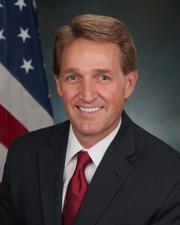 Rep. Jeff Flake (R-AZ)
Description
At the beginning of section 7, insert "(a) AUTHORIZATION OF APPROPRIATIONS.--" before "There are authorized". At the end of section 7, insert the following: (b) PROHIBITION ON EARMARKS.--None of the funds appropriated pursuant to subsection (a) may be used for a congressional earmark as defined in clause 9(e) of rule XXI of the Rules of the House of Representatives.
Legislative Activity
Stay on top of the latest movement without scrolling through every action
Amendment agreed to by House: On agreeing to the Flake amendment to the Capps Agreed to by the Yeas and Nays: 376 - 37, 1 Present (Roll no. 139).
March 19, 2010 • 1:01 PM
View full timeline
Amendment agreed to by House: On agreeing to the Flake amendment to the Capps Agreed to by the Yeas and Nays: 376 - 37, 1 Present (Roll no. 139).
March 19, 2010 • 1:01 PM
House amendment offered
March 19, 2010
Roll call votes on amendments in House
March 19, 2010 • 1:01 PM
House amendment agreed to: On agreeing to the Flake amendment to the Capps Agreed to by the Yeas and Nays: 376 - 37, 1 Present (Roll no. 139).
March 19, 2010 • 1:01 PM
House amendment offered/reported by : Amendment (A002) offered by Mr. Flake to the Capps amendment (A001).(consideration: CR H1681-1684; text: CR H1681)
March 19, 2010 • 12:20 PM
Amendment (A002) offered by Mr. Flake to the Capps amendment (A001). (consideration: CR H1681-1684; text: CR H1681)
March 19, 2010 • 12:20 PM
On agreeing to the Flake amendment to the Capps Agreed to by the Yeas and Nays: 376 - 37, 1 Present (Roll no. 139).
March 19, 2010 • 1:01 PM
Votes
1 roll call on this amendment
Text
Offered
{time} 1100
OCEAN, COASTAL, AND WATERSHED EDUCATION ACT
Mrs. CAPPS. Madam Speaker, pursuant to H. Res. 1192, I call up the
bill (H.R. 3644) to direct the National Oceanic and Atmospheric
Administration to establish education and watershed programs which
advance environmental literacy, including preparedness and adaptability
for the likely impacts of climate change in coastal watershed regions,
as amended, and ask for its immediate consideration in the House.
The Clerk read the title of the bill.
The SPEAKER pro tempore (Ms. Edwards of Maryland). Pursuant to House
Resolution 1192, the bill is considered read.
The amendment in the nature of a substitute printed in the bill is
adopted.
The text of the bill, as amended, is as follows:
H.R. 3644
Be it enacted by the Senate and House of Representatives of
the United States of America in Congress assembled,
SECTION 1. SHORT TITLE.
This Act may be cited as the ``Ocean, Coastal, and
Watershed Education Act''.
SEC. 2. FINDINGS AND PURPOSE.
(a) Findings.--The Congress finds the following:
(1) The United States faces major challenges, such as
mitigating and adapting to the impacts of climate change,
stewarding critical coastal and marine resources including
fish and wildlife habitat while sustaining the commercial and
recreational activities that depend on these resources, and
improving resilience to natural disasters, that collectively
threaten human health, economic development, environmental
quality, and national security.
(2) Communities in coastal watersheds are particularly
vulnerable to these increasingly urgent, interconnected, and
complex challenges and need support for teacher professional
development and experiential learning among students of all
ages.
(3) These challenges can be met with the help of
comprehensive programs specifically targeted to engage
coastal watershed communities, schoolchildren, and the
general public to develop engaged and environmentally
literate citizens who are better able to understand complex
environmental issues, assess risk, evaluate proposed plans,
and understand how individual decisions affect the
environment at local, regional, national, and global scales.
(4) The intrinsic social and conservation values of
wildlife-dependent and other outdoor recreation can play an
important role in outdoor educational programs that address
the myriad of coastal and ocean concerns, as well as instill
a sustainable conservation ethic that will enable them to
face those challenges to the betterment of both the
environment and coastal communities.
(b) Purpose.--The purpose of this Act is to advance
environmental literacy, develop public awareness and
appreciation of the economic, social, recreational, and
environmental benefits of coastal watersheds, and emphasize
stewardship of critical coastal and marine resources,
including an understanding of how climate change is impacting
those resources, through the establishment of--
(1) an Environmental Literacy Grant Program; and
(2) regional programs under the B-WET Program.
SEC. 3. DEFINITIONS.
In this Act:
(1) Administrator.--The term ``Administrator'' means the
Administrator of the National Oceanic and Atmospheric
Administration.
(2) Bay-watershed education.--The term ``bay-watershed
education'' means environmental education focused on
watersheds, with an emphasis on stewardship of critical
coastal and marine resources, including an understanding of
how climate change is impacting those resources.
(3) B-WET program.--The term ``B-WET Program'' means the
Bay-Watershed Education and Training Program of the National
Oceanic and Atmospheric Administration, as in effect
immediately before the enactment of this Act and modified
under this Act or any subsequently enacted Act.
(4) Eligible entity.--The term ``eligible entity'' means a
State agency, local agency, school district, institution of
higher education, or for-profit or non-profit nongovernmental
organization, consortium, or other entity that the
Administrator finds has demonstrated expertise and experience
in the development of the institutional, intellectual, or
policy resources to help
[[Page H1670]]
environmental education become more effective and widely
practiced.
(5) Environmental education.--The term ``environmental
education'' means interdisciplinary formal and informal
learning about the relevant interrelationships between
dynamic environmental and human systems, and which results in
increasing the learner's capacity for decisionmaking and
stewardship regarding natural and community resources.
(6) Environmental literacy.--The term ``environmental
literacy'' means the capacity to perceive and interpret the
relative health of environmental systems and the
interrelationships between natural and social systems and
technology, and to assess options and take appropriate action
to maintain, restore, or improve the health of those systems.
(7) High-leverage projects.--The term ``high-leverage
projects'' means projects supported by grants authorized
under this Act that use Federal, State and nongovernmental
financial, technical, and other resources in such a manner
that the potential beneficial outcomes are highly magnified
or enhanced.
(8) State.--The term ``State'' means each of the several
States of the United States, the District of Columbia, the
Commonwealth of Puerto Rico, the Virgin Islands, Guam,
American Samoa, the Commonwealth of the Northern Mariana
Islands, any other territory or possession of the United
States, and any Indian tribe.
SEC. 4. ENVIRONMENTAL LITERACY GRANT PROGRAM.
(a) In General.--The Administrator shall establish a
national competitive grant program, to be known as the
``Environmental Literacy Grant Program'', under which the
Administrator shall provide, subject to the availability of
appropriations, financial assistance to--
(1) expand the adoption of coastal, ocean, Great Lakes, and
climate on all time scales education;
(2) build administrative and technical capacity with
coastal, ocean, and watershed communities and stakeholder
groups to enhance their effectiveness;
(3) encourage water-dependent, wildlife-dependent, and
other outdoor recreation, experiential learning, and hands-on
involvement with coastal and watershed resources as a method
of promoting stewardship of those resources; and
(4) develop and implement new approaches to advance
coastal, ocean, Great Lakes, and climate on all time scales
education and environmental literacy at national, regional,
and local levels.
(b) Priorities.--In awarding grants under this section, the
Administrator shall give priority consideration to
innovative, strategic, high-leverage projects that
demonstrate strong potential for being sustained in the
future by a grant recipient beyond the time period in which
activities are carried out with the grant.
(c) Guidelines.--No later than 180 days after the date of
enactment of this Act and after consultation with appropriate
stakeholders, the Administrator shall publish in the Federal
Register guidelines regarding the implementation of this
grant program, including publication of criteria for eligible
entities, identification of national priorities,
establishment of performance measures to evaluate program
effectiveness, information regarding sources of non-Federal
matching funds or in-kind contributions, and reporting
requirements for grant award recipients.
(d) Limitation on Use of Funds by Administrator.--Of the
amounts made available to implement this section--
(1) no less than 80 percent shall be used for competitive
grants or cooperative agreements;
(2) no more than 10 percent may be used by the
Administrator to implement the grant program; and
(3) no less than 10 percent of the annual funds
appropriated for the program authorized under this section
shall be used to fund contracts or cooperative agreements to
conduct strategic planning, promote communications among
grant recipients and within communities, coordinate grant
activities to foster an integrated program, and oversee
national evaluation efforts.
SEC. 5. B-WET PROGRAM.
(a) Existing Program.--The Administrator shall conduct the
B-WET Program, including each of the regional programs
conducted or under active consideration for creation under
such program immediately before the enactment of this Act.
(b) New Regional Programs.--
(1) In general.--The Administrator may create new regional
programs under the B-WET Program in accordance with a
strategy issued under this subsection.
(2) Strategy.--
(A) In general.--The Administrator shall issue a strategy
for establishing such new regional programs.
(B) Contents.--The strategy shall include the following:
(i) Evaluation of the need for new regional program in
areas that are not served under the B-WET Program on the date
of enactment of this Act.
(ii) Identification of potential new regional programs,
including a listing of potential principal non-Federal
partners.
(iii) A comprehensive budget for future expansion of the B-
WET Program over the period for which appropriations are
authorized under this Act.
(iv) Such other information as the Administrator considers
necessary.
(C) Consultation and public comment.--The Administrator
shall consult with relevant stakeholders and provide
opportunity for public comment in the development of the
strategy.
(D) Submission to congress.--The Administrator shall submit
the strategy to the Committee on Natural Resources of the
House of Representatives and the Committee on Commerce,
Science, and Transportation of the Senate by not later than
270 days after the date of enactment of this Act.
(3) Priority consideration.--In creating new regional
programs under this subsection, the Administrator shall give
priority consideration to the needs of--
(A) United States territories, including Guam, the
Commonwealth of Puerto Rico, the Virgin Islands, the
Commonwealth of the Northern Mariana Islands, and American
Samoa;
(B) the Great Lakes States;
(C) Alaska; and
(D) the mid-Atlantic region.
(c) Modification of B-WET Program.--
(1) In general.--The Administrator may modify or realign
regional programs under the B-WET Program, based on--
(A) changes in regional needs;
(B) mutual interest between the Administrator and relevant
stakeholders within a region or regions;
(C) changes in resources available to the Administrator to
implement the B-WET Program; and
(D) other circumstances as determined necessary by the
Administrator.
(2) Consultation and public comment.--The Administrator
shall--
(A) consult with the persons conducting a regional program
and provide opportunity for public comment prior to making a
final decision to modify or realign such regional program;
and
(B) publish public notice of such a decision no less than
30-days before the effective date of such a modification or
realignment.
(d) Regional Program Managers.--
(1) Appointment of regional program manager.--The
Administrator shall be responsible for the selection,
appointment, and when necessary replacement of a regional
program manager for each regional program under the B-WET
Program.
(2) Qualifications.--To qualify for appointment as a
regional program manager, an individual must--
(A) reside in the region for which appointed; and
(B) demonstrate competence and expertise in bay-watershed
education and training.
(3) Functions.--Each regional program manager shall--
(A) be responsible for managing and administering the B-WET
Program in the region for which appointed, in accordance with
this Act;
(B) determine the most appropriate communities within the
region to be served by the B-WET Program;
(C) encourage water-dependent, wildlife-dependent, and
other outdoor recreation, experiential learning experiences
for students, and hands-on involvement with coastal and
watershed resources as a method of promoting stewardship of
those resources and complementing core classroom curriculum;
(D) support communication and collaboration among
educators, natural resource planners and managers, and
governmental and nongovernmental stakeholders;
(E) share and distribute information regarding educational
plans, strategies, learning activities, and curricula to all
stakeholders within its region;
(F) provide financial and technical assistance pursuant to
the guidelines developed by the Administrator under this
section; and
(G) perform any additional duties as necessary to carry out
the functions of the program.
(e) Program Guidelines.--No later than 180 days after the
date of enactment of this Act and after consultation with
appropriate stakeholders, the Administrator shall publish in
the Federal Register guidelines regarding the implementation
of the B-WET Program, as follows:
(1) Contracts.--The Administrator shall create guidelines
through which each regional program manager may enter into
contracts (subject to the availability of appropriations) to
support projects to design, demonstrate, evaluate, or
disseminate practices, methods, or techniques related to Bay-
watershed education and training.
(2) Grant making and cooperative agreements.--
(A) In general.--The Administrator shall create guidelines
through which each regional program manager may provide
financial assistance in the form of a grant (subject to the
availability of appropriations) or cooperative agreement to
support projects that advance the purpose of this Act. The
guidelines shall include criteria for eligible entities,
identification of national priorities, establishment of
performance measures to evaluate program effectiveness, and
reporting requirements for grant award recipients.
(B) Priority.--In making grants under this paragraph, each
regional program manager shall give priority to those
projects that will--
(i) promote bay-watershed education throughout the region
concerned;
(ii) advance strategic initiatives to incorporate bay-
watershed education into formal and informal education
systems;
(iii) build capacity within bay-watershed education
communities and stakeholder groups for expanding and
strengthening their work;
(iv) build bay-watershed education into professional
development or training activities for educators; and
(v) broadly replicate existing, proven bay-watershed
education programs.
(f) Non-Federal Share.--
(1) In general.--In awarding grants under this section, the
regional program managers shall give priority consideration
to a project for which the Federal share does not exceed 75
percent of the aggregate cost of such project.
(2) In-kind contribution.--The non-Federal share of the
costs of any project supported by an award of grant funding
under this section may be cash or the fair market value of
services,
[[Page H1671]]
equipment, donations, or any other form of in-kind
contribution.
(3) Other priority.--The regional program managers shall
give priority consideration to a project that will be
conducted by or benefit any under-served community, any
community that has an inability to draw on other sources of
funding because of the small population or low income of the
community, or any other person for any other reason the
Administrator considers appropriate and consistent with the
purpose of this Act.
(g) Regional Program Coordination.--Within the National
Oceanic and Atmospheric Administration, the Office of
Education shall work with regional program managers on the
following regional B-WET Program functions:
(1) Strategic planning efforts.
(2) Integration and coordination of programs.
(3) Coordination of national evaluation efforts.
(4) Promotion of network wide communications.
(5) Selection of new Regional Program Managers.
(6) Management, tracking, and oversight of the B-WET
Program.
(h) Limitation on Use of Funds by Administrator.--Of the
amounts made available to implement this section--
(1) no less than 80 percent shall be used for
implementation of regional program activities, including the
award of grants; and
(2) no more than 20 percent may be used by the
Administrator to implement the regional programs and regional
program coordination.
SEC. 6. BIENNIAL REPORT.
Not later than December 31, 2011, and biennially
thereafter, the Administrator shall submit to Congress a
report on the grant programs authorized under this Act. Each
such report shall include a description of the eligible
activities carried out with grants awarded under the Act
during the previous two fiscal years, an assessment of the
success and impact of such activities, and a description of
the type of programs carried out with such grant,
disaggregated by State.
SEC. 7. AUTHORIZATION OF APPROPRIATIONS.
There are authorized to be appropriated to the
Administrator to carry out this Act such sums as may be
necessary for each of fiscal years 2011 through 2015.
The SPEAKER pro tempore. After 1 hour of debate on the bill, as
amended, it shall be in order to consider the further amendment in the
nature of a substitute printed in part A of House Report 111-445 if
offered by the gentlewoman from California (Mrs. Capps) or her
designee, which shall be considered read, and shall be debatable for 20
minutes equally divided and controlled by the proponent and an
opponent.
The amendment to the further amendment in the nature of a substitute
printed in part B of House Report 111-445, if offered by the gentleman
from Arizona (Mr. Flake) or his designee, shall be considered read, and
shall be debatable for 10 minutes equally divided and controlled by the
proponent and an opponent.
The gentlewoman from California (Mrs. Capps) and the gentleman from
Utah (Mr. Chaffetz) each will control 30 minutes.
The Chair recognizes the gentlewoman from California.
General Leave
Mrs. CAPPS. Madam Speaker, I ask unanimous consent that all Members
that may have 5 legislative days in which to revise and extend their
remarks and insert extraneous material on H.R. 3644.
The SPEAKER pro tempore. Is there objection to the request of the
gentlewoman from California?
There was no objection.
Mrs. CAPPS. Madam Speaker, I rise today in strong support of my
legislation, H.R. 3644, which I introduced on September 24, 2009.
Madam Speaker, in California, we are often inundated with reports of
the impacts of climate change, overfishing, wildfires and droughts.
Such reports may frighten or dampen a child's innate curiosity and
wonder of the natural environment. Fortunately, we have found that
connecting children to their environment through hands-on experiences
offers an effective way to overcome these challenges.
Over the past 7 years, two NOAA education programs, the Bay-Watershed
Education and Training regional program, or as it's known, B-WET, and
the Environmental Literacy Grants, or ELG, programs, have been critical
tools in advancing a nationwide strategy of experiential education in
building ocean, atmospheric and environmental awareness in the United
States.
In my district, the MERITO program, which has been funded through the
California B-WET program for the past 4 years, has allowed hundreds of
children to enjoy the benefits of hands-on, bilingual ocean
conservation experiences with trained scientists and professionals in
Santa Barbara and Ventura Counties.
Many of these children have taken their first trips to the beach
under this MERITO program, even though they may live only a few miles
away. According to the testimonials of their parents and their
teachers, it has given many of them a new awareness of their local
environment and their community and opened the world of new
opportunities that they now know they can pursue.
Madam Speaker, my bill, H.R. 3644, seeks to formally authorize these
two innovative and important NOAA education programs that were
established through the annual appropriations process so we can ensure
that they are here for our children now and in the future. It also
ensures that certain standards and criteria for positive implementation
are met by the agency when they spend these funds. To me, this
represents a responsible oversight effort on the part of our committee
to exercise our proper duties.
Madam Speaker, these programs have been well received by the ocean
and environmental literacy communities, and in fact, since the ELG
program was initiated in 2005, the demand for ELG grants has been 10
times greater than the available funding.
Each program has gathered significant momentum and prominence since
the Congress passed the America COMPETES Act in 2007, which elevated
and enhanced NOAA's educational mission. A recent report released by
the National Academy of Sciences also commends both programs for their
positive contributions to increase student interest in science and to
improve awareness of the ocean and coastal environment.
H.R. 3644 is fully supported by the administration. The legislation
is also strongly supported by the Campaign for Environmental Literacy.
This is a coalition of nearly 60 national, regional and local private
and non-profit organizations; and they represent science, education,
conservation, outdoor recreation and zoological parks, including the
National Wildlife Federation, American Fisheries Society, the American
Fly Fishing Trade Association, and the Association of Zoos and
Aquariums, to name just a few.
At the appropriate time, I will offer an amendment in the nature of a
substitute which reflects a bipartisan compromise to address the
concerns raised by my colleague and my friend, Congressman Cassidy of
Louisiana, during the markup of this bill by the Committee on Natural
Resources.
Madam Speaker, in closing, the B-WET and ELG programs are both
effective, wildly popular, and in great demand by educators around the
country. These programs represent two critical investments in our
efforts to connect children to their natural world and, hopefully as a
result, inspire their interest in the sciences and in ensuring the
future of their coastal communities. We should recognize their
importance today by passing this legislation and codify them as formal
programs within NOAA.
Madam Speaker, I reserve the balance of my time.
Mr. CHAFFETZ. Madam Speaker, I yield myself such time as I may
consume.
(Mr. CHAFFETZ asked and was given permission to revise and extend his
remarks.)
Mr. CHAFFETZ. Madam Speaker, H.R. 3644, the Ocean, Coastal and
Watershed Act establishes and authorizes funding for two programs, one
of which has been a total creature of appropriations earmarks.
There are two simple and compelling arguments for why I am opposed to
this legislation: first, it spends too much money that our government
just doesn't have, and it singles out two of the more than one dozen
NOAA education programs for special treatment when the entire effort is
subject to a top-to-bottom review.
The Capps substitute amendment provides authorized spending levels
that provide a 10 percent increase each year for 5 years. The Federal
Government and American taxpayers simply cannot afford to increase
spending by 10 percent year after year. What American gets a 10 percent
pay raise every year? What small business is guaranteed 10 percent more
in sales or 10 percent growth? None. And this government program should
not be promised such lavish increases.
[[Page H1672]]
Now, we are told that they have compromised on these spending levels,
that the new amounts are lower than in the bill that was first
introduced last year. And it can be acknowledged that they have floated
this bloated spending balloon a little lower, but it is still sailing
high up in the clouds of out-of-control spending. It needs to come all
the way down out of the sky and face the harsh realities of the ground
down here. Our Nation is running record Federal budget deficits and the
national debt is at historic levels, some $12-plus trillion.
We are paying over $600 million a day just in interest on our debt.
We need to put a stop to bills like this that just make the problem
worse.
It is especially troubling that the Democratic-controlled Rules
Committee didn't allow the ranking member of the Natural Resources
Committee, Mr. Hastings of Washington, to offer an amendment that would
have frozen spending at the amount being spent this year. Apparently,
giving a government program the same amount next year as they got this
year is a concept the Democrats believe is so radical and dangerous
that they don't even want Members of the House to vote on it, which
isn't surprising these days. And this despite what the President has
said, that he wants a spending freeze.
Now, it's not just Republicans that are objecting to these high
levels of spending on these two programs. In President Obama's own
budget proposal that he sent up to Congress in February, he proposed
giving zero funding to one of these two programs included in this bill
and giving less than half as much to the other one. President Obama has
proven time and time again he doesn't have a problem with massive
spending increases; and, yet, even he believes Congress is spending too
much on these programs.
The second fundamental objection that I expressed with this bill is
it is trying to write into law special funding and treatment for just
two out of many of NOAA's education programs, when the entire effort is
subject to top-to-bottom review.
NOAA itself is looking into how to best conduct its education
program. The agency contracted with the National Academy of Sciences to
review and critique NOAA's entire education effort. That study was just
completed 2 weeks ago after more than 2 years of work. Just 2 weeks
ago, this report came out. The American taxpayer spent over $1 million
producing this report, and despite this nearly 200-page document just
being delivered into our hands, this House is apparently ready to
ignore the work and recommendations by the National Academy of Sciences
by moving this bill and voting on it today.
If Congress is going to ignore the National Academy of Sciences
report and was going to tell NOAA which education programs it was going
to pick and choose to authorize, we could have saved the National
Academy a lot of time, and we could have saved the taxpayers over $1
million.
This bill needs to be sent back to the drawing board so that spending
levels can be cut back and so the National Academy of Sciences report
can be taken into consideration. Until the changes are made, I urge my
colleagues to oppose this bill and the substitute amendment.
I would also like to note, Madam Speaker, that to suggest that the
administration fully supports this bill, I think, is a
mischaracterization of the facts. In fact, testimony was given that
``we also note that NOAA supports education and outreach programs in
the Office of Education and throughout NOAA's line offices. The
authorization levels of H.R. 3644 could divert funding from these other
programs.'' That should be noted as Members consider this bill.
Madam Speaker, I reserve the balance of my time.
Mrs. CAPPS. I'm pleased to yield such time as he may consume to the
gentleman from Virginia (Mr. Connolly).
Mr. CONNOLLY of Virginia. Madam Speaker, I thank my good friend from
California, and I rise in full support of H.R. 3644, the Ocean, Coastal
and Watershed Training Act. I was proud to be an original cosponsor of
this bill which creates the Bay Watershed Education and Training
program.
Dozens of my constituents have written in support of the Bay
Watershed Education and Training program which will strengthen local
environmental education in Northern Virginia and in other parts of the
Chesapeake Bay watershed.
When John Smith arrived in 1607, the bay estuary, the largest in the
country, had an unbelievable profusion of fish, oysters and mussels.
Smith's men fished from their boats just by dipping a frying pan in the
water, and Smith wrote that the oysters ``lay thick as stones'' on the
bay floor. Not true today.
A central part of restoring America's largest estuary is teaching the
next generation about how to be good bay stewards. Northern Virginia
educators do an outstanding job teaching students about the
environment, including issues ranging from global warming to acid rain,
to the health of the bay itself.
Every year, thousands of students will visit Occoquan Bay Wildlife
Refuge, Mason Neck State Park and Pohick Bay Regional Park to learn
about the Potomac River tidal ecosystems.
Unfortunately, constraints on local resources have prevented most
northern Virginia students from participating lately in these programs.
The National Oceanic and Atmospheric Administration will work with
local school systems and nonprofits in the Bay Watershed Education and
Training program and will provide competitive grants to help more
students participate.
In our area, the National Capital Region, this means more students
will be able to participate in bird-banding programs, surveys of
benthic macroinvertebrates and exploration of coastal wetlands.
I want to thank Congresswoman Capps for her leadership in introducing
this legislation, and I urge my colleagues to vote in support of this
bill.
Mr. CHAFFETZ. Madam Speaker, I would like to yield 5 minutes to the
gentleman from California (Mr. Lungren).
Mr. DANIEL E. LUNGREN of California. Madam Speaker, I thank the
gentleman for yielding.
Madam Speaker, once again, we have a bill which has a wonderful name
with a wonderful purpose; but it appears that we are forgetting the
fact that we're broke. As I understand this bill, this will be a 10
percent increase per year for 5 years for this education program.
I don't know any school district in my district that is going to be
able to increase their funding by 10 percent per year for the next 5
years. My State of California, we are broke. I don't know where we're
going to get funding. At some point in time, the American people are
going to ask us, do you ever connect your responsibilities with fiscal
responsibility? And because this is a good idea that we want people to
be educated on environmental matters, particularly dealing with the
ocean, with the coastline and with watershed, do we just throw out the
idea, throw off the table the idea that maybe we ought to be fiscally
responsible, or do we ignore it? Similarly, we are probably going to
deal with a bill this weekend that throws out the idea that we need to
do something to fix some of the problems in our health care system, but
apparently we just say, forget the costs.
We also appear to be saying, forget the rules. And we are also
apparently saying with respect to that, forget the Constitution. Oh, by
the way, the bill that I understand we are going to be presented with
later this weekend is entitled this: An act to amend the Internal
Revenue Code of 1986 to modify the first-time home buyers credit in the
case of Members of the Armed Forces and certain other Federal
employees, and for other purposes.
{time} 1115
Now, that doesn't sound like the health care bill, does it? And there
is a reason for it. Once again, we have forgotten about transparency
and, I would say, responsibility, because the Constitution of the
United States says that all revenue-raising measures must start with
the House of Representatives.
Now, why would the Founding Fathers say that? It is because they
realized the tremendous power of reaching into the pocket of an
individual citizen
[[Page H1673]]
and taking their money by way of taxes for, presumably, good programs.
But because that power is so immense, the Founding Fathers believed
that that power should reside initially in the House of Representatives
because we are to be more responsive to our constituency, by way of
going before them once every 2 years for election or reelection, as
opposed to the Senate, which only does one-third of their membership
and Members have 6 years before they have to go back to their
constituency.
So what does that have to do with the bill that I just mentioned?
Well, there was this bill dealing with the first-time homebuyers
credit, in the case of the Armed Forces, that started in the Ways and
Means Committee, passed out of the House, went over to the Senate. And
what they did was they took the title of the bill, and--at least I can
find nothing left of the bill that came from here over there--they
gutted the bill and replaced it with this 2,000-plus-page health care
bill.
Technically, they are complying with the Constitution, but they are
violating the spirit of the Constitution, which said that revenue-
raising bills--and this is a super-revenue-raising bill--should start
here.
Now, to compound that, we used to talk about something in the
criminal law called compounding a felony. I will call it compounding a
political felony. We now are told that that bill that didn't originate
in the House as the constitutional Founders thought it should will now
come to the House. But we won't really vote on it. We will vote on some
other animal called a rule and thereby deem it to be passed.
So think what we are doing to the spirit of the Constitution. We are
not starting this humongous bill in the House of Representatives. We
have allowed it to be captured in a shell bill that went over to the
Senate, and then, the additional indignity to our constituents is they
will not have the opportunity for those of us duly elected to vote on
the precise question that the Senate voted on.
Now, I heard a lot of talk about transparency. I heard a lot of talk
about regaining the trust of the American people and regaining the
confidence of the American people in their institutions, a lot of talk
about us reestablishing the confidence of the American people in their
institutions of government.
The SPEAKER pro tempore. The time of the gentleman has expired.
Mr. CHAFFETZ. I yield the gentleman from California 2 additional
minutes.
Mr. DANIEL E. LUNGREN of California. I would have to ask, if you were
to make this a question for a fifth grade government class or a fifth
grade U.S. history class as to whether or not that is the way in which
you restore the confidence of the American people in their institutions
of government. I suspect I know what the answer would be.
But of course we are not fifth graders. We are presumably adults
around here. We have sworn an oath to uphold the Constitution. And
while we might technically get around that requirement by following the
letter of the Constitution, wouldn't it be better if we followed the
spirit of the Constitution?
And so once again, Madam Speaker, we are presented in this case with
a bill that sounds very good for a worthy cause but gives no
consideration whatsoever to the ultimate cost to the American taxpayer
because, in many cases, they are 2,000 and 3,000 miles away; they are
not here. So out of sight, out of mind.
Oh, yes. And let's forget August. It didn't exist. And the people who
were here have been described by some on this floor as un-American and
not representative of the American people. I would suggest they are
representative of the American people, and I would say that we, at some
point in time, have to get away from our business as usual and get back
to the people's business.
This would be a good place to start. I hope we will have a strong
finish on that this weekend when we come to our senses and recognize
that the bill to amend the Internal Revenue Code of 1986 to modify the
first-time homebuyers credit in the case of members of the Armed Forces
and certain other Federal employees, otherwise known as the takeover of
medical care in this country, that we should come to our senses and say
enough is enough.
Mrs. CAPPS. Madam Speaker, I am pleased to yield 2 minutes to the
gentleman from Washington (Mr. Inslee).
Mr. INSLEE. This is a great bill because it will help American kids
to understand what is going on in the oceans, which is they are
becoming too acidic to support life as we know it. They are 30 percent
more acidic because of carbon pollution. We have got to do something
about that. It is nice to let our kids know what is going on.
But I want to respond to this criticism of the health care reform
bill, because this Sunday people are going to stand up on this floor
and be counted, and they are either going to be with the insurance
industry in their ability to stop Americans from getting health
insurance because they have diabetes or they will be with us who are
going to stop insurance companies from denying coverage to Americans
with diabetes and Parkinson's and heart problems.
Now, this criticism of the procedure that is going to be used reminds
me of an old show I saw, ``To Tell the Truth.'' And they showed a guy
one time, he was a park ranger in Yosemite National Park. He got hit by
lightning not once, not twice, but five times, and they asked him what
advice he would give to people in a lightning storm. He thought about
it for a minute and he said, My advice would be don't stand next to me.
Well, during this debate, don't stand next to the Republicans who are
giving you this balderdash poppycock that there is something wrong with
this procedure we are going to use, and I will tell you why.
The procedure we are going to use, we are going to vote. Everybody's
votes are going to be right up there. It comports with the U.S.
Constitution. I will tell you how I know. It is the same procedure the
Republicans have used scores of times for the last two decades. Of the
times this procedure has been used in the last two decades, 72 percent
of the time it was initiated by the Republican Party.
Now, if you tell me there is something wrong with that, there might
be a little hypocrisy involved. And when there is hypocrisy involved,
maybe you could get struck by lightning.
So let me suggest that during this debate, for the Republicans who
are going to say there is something wrong with the constitutional
process we have of voting, don't stand next to a Republican. They might
get struck by lightning.
Mr. CHAFFETZ. Madam Speaker, I am a freshman here. I didn't create
this mess, but I am here to help clean it up. And to suggest this is
the direction we should go, I thought the campaign they said was about
change. I thought we were going to try to raise the bar in this
institution, but evidently not.
At this time, I yield 5 minutes to the gentleman from Louisiana (Mr.
Scalise).
Mr. SCALISE. Madam Speaker, I thank the gentleman from Utah for
yielding.
And it is very interesting that those of us who came here to clean up
this process are watching as the liberals that are running this
Congress try to ram through a 2,407-page government takeover of health
care without even allowing a vote here on the House floor. And maybe
they really think that the American people will be fooled, but the
American people will not be fooled.
And isn't it interesting that we are here right now debating this
bill, H.R. 3644. It is a 15-page bill. We have a debate here on the
House floor, and in a little while we are going to have a vote here on
the House floor on this 15-page bill; yet Speaker Pelosi and her
liberal attendants want to hide a vote on this 2,407-page bill.
They are running around this building; they are running all around
town saying how great this bill is. They are talking about all the
wonderful things in this bill. Well, if it is so wonderful, why are
they actually trying to hide a vote on the bill?
What they are trying to hide, maybe, is all the sweetheart deals that
are in this bill and the other subsequent language that they just filed
a little while ago that people are still combing through and finding
more sweetheart deals.
[[Page H1674]]
Maybe another thing they are trying to hide in this bill are all the
budget gimmicks, the fact that there is 10 years of taxes in this bill
with only 6 years of spending, and yet they want to say that it is
going to reduce the deficits.
Anybody who thinks that this bill, this $1 trillion fiasco is going
to reduce the deficit, obviously they didn't follow the Cash for
Clunkers program that was supposed to last 6 months and ran out of
money after about 2 weeks.
So here we are debating this 15-page bill and we are going to have a
vote on this 15-page bill, and American people across the country are
wondering right now what they are hiding in this 2,407-page bill that
they are trying to avoid a vote on.
Again, maybe it is the $500 billion in new taxes in this bill that
they are trying to hide, most of which would fall of the backs of
middle class families and the job creators in this country.
I will tell you one bill that the American people would like us to be
debating; not this 2,407-page bill, not this 15-page bill. The American
people would like us to be debating a bill to create jobs in this
country to actually get our economy back on track. And those of us on
the Republican side have put many ideas on the table that would
actually create jobs in this country, and they have all been pushed to
the side because they want to try to sneak this bill through without a
vote on the House floor.
So what other things are in here that they are trying to hide? What
about the $500 billion in cuts to Medicare, including the virtual
elimination of the Medicare Advantage program?
And I guess that leads us to something else they are trying to hide
is all the broken promises that are in this bill, because the President
said on multiple occasions, If you like what you have, you can keep it.
The problem is, as the American people are finding out, there are
multiple places in this bill that they take away the health care you
like, including Medicare Advantage, which hundreds of thousands of
seniors in Louisiana and all across the Nation like that plan, and yet
it is taken away from them. And many small businesses will tell you the
good health care that they provide to their employees, that their
employees like, will be taken away.
And, even more importantly, doctors--and ask your family doctor. Many
doctors across this country have said they are shutting down their
practice if this 2,407-page monstrosity becomes law because they are
not going to let a government bureaucrat interfere between the
relationship of a doctor and patient.
So what else are they trying to hide? Let's talk about the broken
promises again. You know, the President said multiple times all of this
is going to be on C-SPAN. Now, if you are watching C-SPAN today, you
are watching the debate on this 15-page bill. It is a good debate we
are having on the 15-page bill, but you are not allowed a debate on the
2,407-page bill because it is not on C-SPAN.
In fact, right now while we are here on this House floor, Speaker
Pelosi and her liberal attendants have been dispatched all throughout
town to continue cutting sweetheart deals. Yes, they are actually still
meeting right now cutting sweetheart deals. And what about that C-SPAN
promise? Not one of those meetings is on C-SPAN, and yet it is going on
right now and we don't see any of that.
And so the American people are watching this, and the American people
are sick of this process; yet all I hear on the other side is, Oh,
George Bush and those Republicans.
They are running everything now. President Obama is in the White
House. They have got a 59-vote majority in the Senate. They have got
over 250 votes here on this House floor and they only need 216, and yet
they still think that they can get away with saying, Oh, it is those
Republicans that are doing all of this. And yet they are trying to
sneak through this 2,407-page bill while saying, Okay, it is okay to
have a vote on 15 pages and it is okay to have a debate on 15 pages,
but they want to hide a debate and hide a vote on 2,407 pages.
The American people are not going to stand for this process, and they
are watching.
Mrs. CAPPS. Madam Speaker, may I inquire how much time remains?
The SPEAKER pro tempore. The gentlewoman from California has 22
minutes remaining and the gentleman from Utah has 13\1/2\ minutes
remaining.
Mrs. CAPPS. Madam Speaker, I am pleased to yield such time as he may
consume to the gentleman from Maryland (Mr. Sarbanes).
Mr. SARBANES. I want to thank my colleague for yielding and for
introducing the Ocean, Coastal, and Watershed Education Act, H.R. 3644,
and for working to maintain the Bay-Watershed Education and Training
programs, watershed approach for environmental education.
In my own State of Maryland, the Chesapeake Bay B-WET was the first
B-WET that was established for the country, and it serves as a national
model of watershed-based environmental education.
Earlier this fall, I was pleased to join with Congressmen Kratovil
and Wittman to introduce and then see passage in the full House of
Representatives legislation that reauthorizes the Chesapeake Bay B-WET
program.
The bill before us will codify other existing B-WET programs around
the country and provide NOAA the authority to create new B-WETs in
various watersheds throughout the country and the territories. So I
want to again thank Congresswoman Capps for her leadership.
{time} 1130
One of the things that this does, this education and training for the
next generation, is that it encourages our kids to become comfortable
with science; to look at the world through an empirical lens; to make
decisions based on data and facts, not just opinion. And that's a skill
that we really need to encourage in the next generation.
It occurs to me as we talk about this health care bill, I wish more
people would be bringing a lens of empiricism and fact-based review to
the health care bill, because if you look at the health care bill
through that lens, if you look at the facts of this health care bill,
then it is clear why it responds to all of the grievances that so many
Americans have had with the current health care system for decades.
Fact: Not only does it pay for itself, it reduces the deficit. So
this suggestion that somehow it's not being paid for is misplaced. Not
only does it pay for itself, but over the next 10 years, the
independent Congressional Budget Office, the CBO, has projected that
there will be savings and a reduction to the deficit of about $132
billion. And then in the next 10 years they've projected that it will
reduce the deficit by $1.2 trillion. So all those people out there that
want to reduce the deficit, this is your bill. The health care bill is
a major vehicle for accomplishing that. That's fact number one.
Fact number two: It's going to make Medicare stronger--not weaker--
because it's going to crack down on fraud and abuse. It's going to take
those savings and--this is another piece of misinformation that's going
on, that somehow the savings we're taking from Medicare are going to go
off into the ether. We're taking the savings from Medicare, and we're
actually putting them right back into the Medicare program by closing
the doughnut hole, by making available to our seniors primary care
opportunities and preventive care measures that currently they have to
pay out of pocket for. But now, because it makes a lot of sense, those
things will be covered. So we're taking the savings, we're putting it
right back into the Medicare program.
Fact number three: Thirty-two million people who today do not have
health insurance coverage, when this bill is passed, will be on their
way to getting that coverage. Ninety-five percent of Americans will be
covered ultimately when the provisions of this bill take full force. In
fact, the last fact I'd just like to point out, which is this, is
finally, after decades in which the health insurance industry has
pretty much run the show--it's been a health insurance industry
takeover of the health care system in America. That's who's taking over
the health care system, the private health insurance industry. This
bill finally fights back against the health insurance industry and says
no longer will you discriminate against people based on preexisting
conditions, no longer will you terminate their coverage right at the
moment when they need it most.
[[Page H1675]]
Finally, instead of us living in your world, by your rules, you're
going to start living in our world by our rules. That's what this
health care bill accomplishes. And that's why we're ready to support
it.
Again, I want to thank my colleague for her work on the B-WET, and I
strongly support that bill as well.
Mr. CHAFFETZ. I guess that's the fundamental challenge. I don't want
to live in his world. And I don't want the people of the United States
to have to live in his world. That's the fundamental difference in the
approach that's dealing with this health care bill. We have an
opportunity in this country to do the right thing. I think the more the
people of the United States of America have gotten to know this health
care bill, the less they like it. The more sunshine that's shown on
this, the less they like it. Only in the United States of America can
you spend a trillion dollars and it's not going to add to the deficit
when we're already $12 trillion into debt. This bill that we're
considering here today will add to that debt. Even the President didn't
even ask money for this program.
We can't even take care of our seniors in this country or our
veterans. We have a Veterans Administration, and I have soldiers in the
State of Utah that are trying get care and services, yet we got a
notice recently from the Veterans Administration saying, Don't even
bother applying because we have such a backlog of people. The American
people understand this. They understand how deep our deficit and our
debt is. They understand how irresponsible the health care bill is and
what a detriment it's going to be to this Nation and this country. And
I would challenge Members to try to articulate what this bill is even
going to do. There's some 158 programs, and administrations, and
departments, and boards. Somebody stand up and try to articulate what's
going to happen--not what it's going to do, but how is it going to
work? Because I don't think there's anybody in this body that can
actually answer, How is it going to work?
Now going back specifically to this bill that we're considering here
today. Again, I want to reiterate the point, Madam Speaker, that we
spent a million dollars coming up with a study from the National
Academy of Sciences and just totally ignored it. Two hundred pages, 2
years of work, and yet because we've got to fill some time here so we
can get to health care--they don't even want Members to go home for the
weekend--we're going to throw up this bill prematurely. Why are we
ignoring this report?
I want to highlight a couple of things that are said in here. This is
from that National Academy of Sciences report recommendation 1:2: ``In
order to adequately address the mismatch between its available
resources and its ambitious education agenda, NOAA should better align
and deploy its resources. This may require the termination of certain
activities and programs that, based on appropriate evaluation, do not
directly and effectively contribute to its education and stewardship
goals.
``NOAA's role in education is shaped by the distributed nature of its
education efforts across five line offices and the Office of Education.
Because of their diverse missions, the line offices . . . and the
Office of Education can act independently and sometimes even in
competition with each other.''
Further, ``The differences in management structures, missions, and
education mandates are obstacles to creating a cohesive and coordinated
education portfolio.''
At a time when we are paying over $600 million a day just in
interest, we have a debt that exceeds $12 trillion, close to a $1
trillion new health care proposal that's moving forward, some how, some
way, the Democrats want to offer a bill that gives an automatic
increase year after year. Ten percent. Just keep adding 10 percent to
it over the next 5 years. I think that is fundamentally wrong.
Now the ranking member of Natural Resources, Doc Hastings, offered an
amendment that said, Let's just keep the funding level flat. That is a
simple, reasonable proposal. But somehow the Rules Committee couldn't
find it in their heart to allow Members to vote on it.
Please, don't come here and lecture to somebody and say, Oh, we're
about openness and transparency. We're about change in America. I don't
buy it. You're not living up to it. You have the opportunity to do the
right thing--and you consistently don't. You consistently offend the
American people and offend me. I'm a freshman here. I didn't create
this mess. I don't want to hear about how the Republicans messed up,
because you know what? They had the House and the Senate and the
Presidency and they did blow it. I'll be the first one to stand here
and point criticism to them. But if we're going to rise to the level
that this body demands, then we need to raise the bar and start acting
like adults. Vote on what we're supposed to vote for. Be open and
transparent. Allow a rule that will come to this floor and make America
proud. Let people without the disguise and the nuances. That is within
your power, and yet it's not being done. And it's not being done
consistently. There are a lot of people here that are fed up with it.
I'm one of them. It's disgusting what you're doing. It is disgusting.
And I think you know it.
Announcement by the Speaker Pro Tempore
The SPEAKER pro tempore. All Members are reminded to address their
remarks to the Chair.
Mr. CHAFFETZ. I'll reserve the balance of my time.
Mrs. CAPPS. At this point I'm pleased to yield 3 minutes to the
gentleman from New Jersey (Mr. Holt).
Mr. HOLT. Madam Speaker, I rise today as cosponsor of H.R. 3644, the
Bay-Watershed Education and Training Regional Programs and National
Environmental Literacy Grant Program, and with great appreciation for
my colleague from California, who combines her interest--our interest--
in environmental protection with our interest in the education of
youth. And I would like to talk about the bill at hand. She combines
here book learning with field environmental education. Environmentalist
David Polis once said, ``Must we always teach our children with books?
Let them look at the mountains and the stars up above. Let them look at
the beauty of the waters and the trees and flowers on earth. They will
then begin to think, and to think is the beginning of a real
education.''
If we want to teach our children to be responsible stewards of our
environment, we must foster understanding and awareness of the
environment as an integral part of our educational curricula. The B-WET
and National Environmental Literacy Grant Program operated by the
National Oceanic and Atmospheric Administration is an excellent example
of a successful environmental program.
Now the opponents of this legislation seem to think that because the
National Research Council says there are other good educational
programs in NOAA in addition to this, that we somehow should not do
this. Through these grant programs, elementary students and high school
students across the Nation have learned to appreciate the importance of
healthy coastal and ocean resources to the quality of our life and to
coastal-based economies.
The legislation before us today would fully authorize and expand
access to the B-WET and the Environmental Literacy Program. I'd like to
thank my colleague from California for including a provision in this
legislation that would allow the Mid-Atlantic region to be a priority
area for future B-WET programs. This will allow successful New Jersey
educational programs like Rutgers University and the Jacques Cousteau
National Estuarine Research Reserve to compete for funds that can
enrich environmental education throughout the State and the region. New
Jersey is already taking the lead on coastal and marine resources
through the K-12 education program developed by the National Estuarine
Research Reserve System. It's known as KEEP, the K-12 Estuarine
Education Program. The availability of B-WET funds to the Mid-Atlantic
region could help to advance KEEP, a field-based estuarine science
education initiative that features real-time data and innovative
technology. Research has shown that environmental education,
particularly field-based education like this, fosters students'
readiness to learn. It improves scores on standardized tests. Yes, it
helps book learning, too. And it stimulates student interest in math
and science.
[[Page H1676]]
I urge my colleagues to support this authorization, and I thank the
gentlelady from California for her leadership on this.
Mr. CHAFFETZ. Madam Speaker, we have no additional speakers, but I
will continue to reserve the balance of my time, unless you're prepared
to close.
Mrs. CAPPS. I'd like now to yield 4 minutes to the gentleman from
Pennsylvania (Mr. Fattah).
Mr. FATTAH. Let me thank the gentlelady from California. I want to
congratulate my colleague for her extraordinary leadership on this
issue of such importance. We know of the real environmental challenges
facing the oceans throughout the world. Oceans represent the vast
majority--more than two-thirds of the surface of our planet--and this
effort to educate our future generations about our responsibilities to
be good stewards is so very, very important.
Back home, we have the Lenfest Foundation, in which Gerry and
Marguerite Lenfest have put forth tens of millions of dollars into
these types of efforts. And here in Washington, my friend, Tom
Lindenfeld, with the Blue Guardians. There's so many people, Americans,
who have focused the Nation's attention on this challenge.
I want to rise as an appropriator that's on the subcommittee that
handles the NOAA appropriations. First of all, these authorizations are
important, but they will be held to the PAYGO rules. It's still vitally
important that the Congress speak and indicate its preference. I'm a
supporter of this bill. I want to thank my colleague for her
introduction and hope that all of my colleagues will favorably support
it.
{time} 1145
Now, I want to say a little bit about the other subject matter that's
been raised on the floor, about the health care debate that we're going
to have on Sunday. Now, all we have to do as Americans when we really
hear these very different points of view is look at the scorecard. When
the Republicans had the Presidency, the Congress and the Senate for 6
years, tens of millions of Americans were uninsured, and they did zero.
On the question of children's health care, there was just zero and
vetoes of the children's health care program. In terms of reining in
the insurance companies and their unfair practices, they did zero.
Now, the Democrats in less than 16 months have made sure that the
children's health care program could insure over 10 million children.
On Sunday--and what an appropriate day for it--we're going to take 32
million of our fellow citizens and make sure that they have health care
coverage. Aren't we our brother's keeper? We have a responsibility to
be stewards of the Earth, but we also have a responsibility to love our
neighbor. And in this Easter season, we know that on Fridays a lot of
things can happen. We can hear a lot of things and witness a lot of
things, but if we just hold on and wait until Sunday, good things
happen on Sunday.
I believe that this Democratic majority, when we look at the
scorecard, when we get held to account for how we were stewards--my
colleague from California is showing good stewardship in terms of the
oceans and educating future generations, and this Democratic majority
is going to show that, indeed, we are our brother's keeper on Sunday.
So notwithstanding the zero over their 6 years, we've taken less than
16 months to take the priorities of this country, right them again, and
move us in the correct direction.
Now, we've heard this talk about deficits. The last time that we were
paying down the deficits and balancing the budget, we had a Democrat in
the White House. We're headed in that direction again. That's what
PAYGO is about. That's what responsible leadership is about. And that's
why the President's set up this fiscal commission. I have introduced a
bill to get us to deal with the debts in our country. We hear a lot of
nonsense from some of our Republican colleagues. We can stop talking
about it and vote on it.
Mr. CHAFFETZ. Sunday, Bloody Sunday. Can't wait.
Madam Speaker, I reserve the balance of my time.
Mrs. CAPPS. Madam Speaker, could I again inquire of the time
remaining.
The SPEAKER pro tempore. The gentlewoman from California has 10
minutes remaining, and the gentleman from Utah has 8 minutes remaining.
Mrs. CAPPS. Madam Speaker, I am pleased now to yield 2 minutes to the
gentlewoman from Maine (Ms. Pingree).
Ms. PINGREE of Maine. I thank my colleague, the gentlewoman from
California, for yielding her time to me and thank you for this great
bill. We are veering from the conversation a little bit. But first I
want to talk about the Capps bill and just say how important it is to a
State like mine, with a tremendous amount of ocean coastline, with an
enormous number of young people who grow up on the waterfront, who are
fishermen, who work in waterfront communities. This is a great program.
I wholeheartedly endorse this particular piece of legislation. I know
it's going to be great for our coastal communities, and I commend you
for doing it. So thank you very much for what you're doing on the floor
today.
I just wanted to take a little bit of time to answer my freshman
colleague from Utah, who is also my office neighbor, and just talk
about how seriously we disagree on this topic of health care. I, for
one, am thrilled that we are here this weekend to finally take up an
issue that is of such great importance to my constituents. I mean,
frankly, when I go back to my district, I find that the more people
hear about this health care bill, the happier they are. They are
thrilled to know that as a small business they're going to start
receiving subsidies to help support the cost of health insurance. My
seniors are saying, Thank goodness we no longer will have to pay for
preventive care under Medicare. Thank goodness we're going to get rid
of the doughnut hole that was created by the other side, predominantly
when they passed the Medicare prescription D plan.
We hear a lot about process, but I just want to talk a little bit
about the process of insurance companies because that's what makes my
constituents mad. When they hear about the fact that people are
constantly denied coverage because of a preexisting condition--in many
States, being a woman, a woman of child-bearing age is a preexisting
condition. That will be gone with this bill. Immediately we'll say
children are not a preexisting condition. None of them can be denied
coverage. And by 2014, no one can be denied under this piece of
legislation. We're going to get rid of lifetime caps, people who have a
long-term illness who find that their insurance runs out in spite of
the fact that they've been paying these high premiums.
Mr. CHAFFETZ. Madam Speaker, I will continue to reserve the balance
of my time as we have no further requests for time.
Mrs. CAPPS. Madam Speaker, at this time I am pleased to yield 2
minutes to the gentleman from Massachusetts (Mr. McGovern).
Mr. McGOVERN. I want to thank my colleague from California,
Congresswoman Capps, for yielding the time and for the excellent
legislation which will help educate our children about the importance
of our environment, our oceans and our watersheds. She has been a
leader on environmental legislation, and I am proud to serve with her.
But, Madam Speaker, I want to just take a moment to comment on some
of the other debate that's been going on here. I regret very much the
tone that my Republican colleagues have taken in this debate. Never,
never in all my time being here have I heard such rhetoric, personal
attacks, harsh attacks. I regret it because the issue of health
insurance reform is an important issue, and we should talk about it
with respect for one another and with respect for each other's
approaches to health insurance reform.
This is important. This debate we're going to have on Sunday, this
vote we're going to have on Sunday is important. My colleagues express
outrage over the process. Where's the outrage over the fact that tens
of millions of our fellow citizens do not have health care? Where's the
outrage over the fact that some of the biggest insurance companies in
the United States of America regularly discriminate against individuals
who have preexisting conditions, preexisting conditions like acne,
believe it or not? And in some States in this country, domestic
violence is used as a preexisting condition to deny women health
insurance. So a woman who gets beaten by
[[Page H1677]]
her husband or her boyfriend has a preexisting condition. Give me
break. Give me a break.
I have heard that we're not going to vote on health care. This is
some kind of crazy process. A process, by the way, which has been
invoked by them many times when they were in charge. But to the
question that always gets raised, is the House approving the Senate
bill without actually voting on it? No.
The SPEAKER pro tempore. The time of the gentleman from Massachusetts
has expired.
Mrs. CAPPS. I yield the gentleman an additional 30 seconds.
Mr. McGOVERN. The House is voting to approve the Senate bill when it
votes on the rule. When Members take up the rule, they are considering
whether to pass the Senate bill at the same time that they pass
reconciliation, which will improve the Senate bill.
You want to be outraged, be outraged over the fact that we're the
greatest country on this planet, the richest country on this planet,
and tens of millions of our citizens do not have health care. We can do
better, and we will do better on Sunday.
Mr. CHAFFETZ. Madam Speaker, I continue to reserve the balance of my
time.
Mrs. CAPPS. Madam Speaker, I am pleased now to yield 1\1/2\ minutes
to the gentleman from Minnesota (Mr. Ellison).
Mr. ELLISON. Let me thank the gentlewoman for her excellent work in
the area of the environment, our oceans and our watersheds. But it
seems like every conversation here is going to be about health care, so
let's take that on.
The fact is, Madam Speaker, this bill that we'll vote on on Sunday
cuts the deficit by $138 billion in the first 10 years. That level of
deficit reduction is something the Democrats are known for and
Republicans, unfortunately, have not been known for. We know that when
the Democrats left office in 2000, we had a surplus, and then we
quickly--based on tax cuts for the wealthy and unpaid-for wars and
other things--we ran into a massive deficit. Quite frankly, if I was a
Republican, I would be embarrassed to talk about deficits. But it seems
like they're not.
So the fact is, we have to talk about the facts and straighten out
the situation so that the American people will know that the fact is
that that bill, this health care bill, cuts the deficit by $138 billion
in the first 10 years, and cuts it by $1 trillion in the second 10
years. The fact is this bill is good for America. It is fiscally sound.
It is paid for. It makes sense. And for any Republican to stand up here
and talk about deficits and lecture on deficits, they really do need to
review their history because they are the party of deficits. Democrats
are the party of deficit reduction. Americans all over this country,
some of whom have said that they're scared about the change that is
about to come, their fear should be overcome by the good things that
are in this bill.
Mr. CHAFFETZ. Mr. Speaker, I do think we should go back and review
history. The reality of this bill is the fact that it spends nearly $1
trillion, and the reason you can try to say that it's deficit-neutral
or reduces the deficit is because it raises taxes. Only in America do
you try to get away with saying, Hey, we're going to spend nearly $1
trillion, and by the way, it's not going to hurt the deficit. And let's
also go back and review history and understand that during that time
you like to tout when President Clinton was in office, the reality is
that the debt continued to increase. There was a reduction in the
annual deficit, and a Republican Congress was in charge. It is the
Congress of the United States of America that originates spending. So
let's also make sure that we're fair on that point as well.
I yield back the balance of my time.
Mrs. CAPPS. Mr. Speaker, in closing the debate on this topic, I want
to spend a couple of minutes responding to some claims from the other
side. First with respect to the authorization levels, Congress is
already investing in both of these programs under discussion today
through the appropriations process. The authorized funding levels
contained in my bipartisan compromise amendment were based upon
existing appropriations and allow for the continuation and measured
growth of both programs, which are in high demand by educators
nationwide. They were negotiated with my colleague Mr. Cassidy, and I
do appreciate his efforts.
My bill would authorize the programs that Congress is already
spending money on and makes sure that certain standards and criteria
for implementation are met by the agency when they do spend these
funds. To me, this represents a responsible effort on the part of our
committee and our Congress to exercise our oversight function.
Second, with respect to the argument that we should not consider this
legislation because we need time to study the recommendations from the
NAS evaluation of NOAA's education program, it is true that the
National Academy of Science report on NOAA's education program was
released last week. Nothing in the report, however, was specifically
critical of either the B-WET or ELG programs. And because of this, this
report should have no bearing on my legislation to codify both
programs.
Indeed, the NAS' National Research Council panel found that over the
relatively short lives of both programs, they have made positive
contributions to fulfill NOAA's educational mission and that they
reflect well the agency's diverse capabilities in science, resource
stewardship, and education.
In short, these are both very good programs with broad support from
more than 60 science education, outdoor recreation, and conservation
organizations. By authorizing them, we ensure money already being spent
is spent well and responsibly. I urge all Members to support the bill.
I yield back the balance of my time.
The SPEAKER pro tempore (Mr. McGovern). All time for debate on the
bill, as amended, has expired.
Amendment in the Nature of a Substitute Offered by Mrs. Capps
Mrs. CAPPS. Mr. Speaker, I have an amendment at the desk made in
order under the rule.
The SPEAKER pro tempore. The Clerk will designate the amendment.
The text of the amendment is as follows:
Amendment in the nature of a substitute printed in part A
of House Report 111-445 offered by Mrs. Capps:
Strike all after the enacting clause and insert the
following:
SECTION 1. SHORT TITLE.
This Act may be cited as the ``Ocean, Coastal, and
Watershed Education Act''.
SEC. 2. FINDINGS AND PURPOSE.
(a) Findings.--The Congress finds the following:
(1) The United States faces major challenges, such as
mitigating and adapting to the impacts of climate change,
stewarding critical coastal and marine resources including
fish and wildlife habitat while sustaining the commercial and
recreational activities that depend on these resources, and
improving resilience to natural disasters, that collectively
threaten human health, sustainable economic development,
environmental quality, and national security.
(2) Communities in coastal watersheds are particularly
vulnerable to these increasingly urgent, interconnected, and
complex challenges and need support for teacher professional
development and experiential learning among students of all
ages.
(3) These challenges can be met with the help of
comprehensive programs specifically targeted to engage
coastal watershed communities, schoolchildren, and the
general public to develop engaged and environmentally
literate citizens who are better able to understand complex
environmental issues, assess risk, evaluate proposed plans,
and understand how individual decisions affect the
environment at local, regional, national, and global scales.
(4) The intrinsic social and conservation values of
wildlife-dependent and other outdoor recreation can play an
important role in outdoor educational programs that address
the myriad of coastal and ocean concerns, as well as instill
a sustainable conservation ethic that will enable them to
face those challenges to the betterment of both the
environment and coastal communities.
(5) The economic importance of coastal areas and resources
to the overall economy of the United States is significant.
According to the U.S. Commission on Ocean Policy, coastal and
ocean-related activities support millions of American jobs
and generate more than $1 trillion, or one tenth of the
Nation's annual gross domestic product. Sustainable use of
the Nation's natural resources can provide additional
economic opportunities to the United States economy.
(b) Purpose.--The purpose of this Act is to advance
environmental literacy, develop public awareness and
appreciation of the economic, social, recreational, and
environmental benefits of coastal watersheds, and emphasize
stewardship and sustainable economic development of critical
coastal and marine resources, including an understanding of
how climate change is impacting
[[Page H1678]]
those resources, through the establishment of--
(1) an Environmental Literacy Grant Program; and
(2) regional programs under the B-WET Program.
SEC. 3. DEFINITIONS.
In this Act:
(1) Administrator.--The term ``Administrator'' means the
Administrator of the National Oceanic and Atmospheric
Administration.
(2) Bay-watershed education.--The term ``bay-watershed
education'' means environmental education focused on
watersheds, with an emphasis on stewardship and sustainable
economic development of critical coastal and marine
resources, including an understanding of how climate change
is impacting those resources.
(3) B-WET program.--The term ``B-WET Program'' means the
Bay-Watershed Education and Training Program of the National
Oceanic and Atmospheric Administration, as in effect
immediately before the enactment of this Act and modified
under this Act or any subsequently enacted Act.
(4) Eligible entity.--The term ``eligible entity'' means a
State agency, local agency, school district, institution of
higher education, or for-profit or non-profit nongovernmental
organization, consortium, or other entity that the
Administrator finds has demonstrated expertise and experience
in the development of the institutional, intellectual, or
policy resources to help environmental education become more
effective and widely practiced.
(5) Environmental education.--The term ``environmental
education'' means interdisciplinary formal and informal
learning about the relevant interrelationships between
dynamic environmental and human systems, including economic
systems that depend on coastal, watershed and marine
resources for job creation and economic growth, that results
in increasing the learner's capacity for decisionmaking,
stewardship, and sustainable economic development of natural
and community resources.
(6) Environmental literacy.--The term ``environmental
literacy'' means the capacity to perceive and interpret the
relative health of environmental systems and the
interrelationships between natural, economic, and social
systems and technology, and to assess options and take
appropriate action to maintain, restore, or improve the
health of those systems and promote sustainable economic
development.
(7) High-leverage projects.--The term ``high-leverage
projects'' means projects supported by grants authorized
under this Act that use Federal, State and nongovernmental
financial, technical, and other resources in such a manner
that the potential beneficial outcomes are highly magnified
or enhanced.
(8) State.--The term ``State'' means each of the several
States of the United States, the District of Columbia, the
Commonwealth of Puerto Rico, the Virgin Islands, Guam,
American Samoa, the Commonwealth of the Northern Mariana
Islands, any other territory or possession of the United
States, and any Indian tribe.
SEC. 4. ENVIRONMENTAL LITERACY GRANT PROGRAM.
(a) In General.--The Administrator shall establish a
national competitive grant program, to be known as the
``Environmental Literacy Grant Program'', under which the
Administrator shall provide, subject to the availability of
appropriations, financial assistance to--
(1) expand the adoption of coastal, ocean, Great Lakes, and
climate on all time scales education;
(2) build administrative and technical capacity with
coastal, ocean, and watershed communities and stakeholder
groups to enhance their effectiveness;
(3) encourage water-dependent, wildlife-dependent, and
other outdoor recreation, experiential learning, and hands-on
involvement with coastal and watershed resources as a method
of promoting stewardship and sustainable economic development
of those resources;
(4) develop and implement new approaches to advance
coastal, ocean, Great Lakes, and climate on all time scales
education and environmental literacy at national, regional,
and local levels; and
(5) encourage formal and informal environmental education
about the systemic interrelationships between healthy
coastal, watershed, and marine resources and sustainable
economic systems that depend on such resources for job
creation and economic development.
(b) Priorities.--In awarding grants under this section, the
Administrator shall give priority consideration to
innovative, strategic, high-leverage projects that
demonstrate strong potential for being sustained in the
future by a grant recipient beyond the time period in which
activities are carried out with the grant.
(c) Guidelines.--No later than 180 days after the date of
enactment of this Act and after consultation with appropriate
stakeholders, the Administrator shall publish in the Federal
Register guidelines regarding the implementation of this
grant program, including publication of criteria for eligible
entities, identification of national priorities,
establishment of performance measures to evaluate program
effectiveness, information regarding sources of non-Federal
matching funds or in-kind contributions, and reporting
requirements for grant award recipients.
(d) Limitation on Use of Funds by Administrator.--Of the
amounts made available to implement this section--
(1) no less than 80 percent shall be used for competitive
grants or cooperative agreements;
(2) no more than 10 percent may be used by the
Administrator to implement the grant program; and
(3) no less than 10 percent of the annual funds
appropriated for the program authorized under this section
shall be used to fund contracts or cooperative agreements to
conduct strategic planning, promote communications among
grant recipients and within communities, coordinate grant
activities to foster an integrated program, and oversee
national evaluation efforts.
SEC. 5. B-WET PROGRAM.
(a) Existing Program.--The Administrator shall conduct the
B-WET Program, including each of the regional programs
conducted or under active consideration for creation under
such program immediately before the enactment of this Act.
(b) New Regional Programs.--
(1) In general.--The Administrator may create new regional
programs under the B-WET Program in accordance with a
strategy issued under this subsection.
(2) Strategy.--
(A) In general.--The Administrator shall issue a strategy
for establishing such new regional programs
(B) Contents.--The strategy shall include the following:
(i) Evaluation of the need for new regional program in
areas that are not served under the B-WET Program on the date
of enactment of this Act.
(ii) Identification of potential new regional programs,
including a listing of potential principal non-Federal
partners.
(iii) A comprehensive budget for future expansion of the B-
WET Program over the period for which appropriations are
authorized under this Act.
(iv) Such other information as the Administrator considers
necessary.
(C) Consultation and public comment.--The Administrator
shall consult with relevant stakeholders and provide
opportunity for public comment in the development of the
strategy.
(D) Submission to congress.--The Administrator shall submit
the strategy to the Committee on Natural Resources of the
House of Representatives and the Committee on Commerce,
Science, and Transportation of the Senate by not later than
270 days after the date of enactment of this Act.
(3) Priority consideration.--In creating new regional
programs under this subsection, the Administrator shall give
priority consideration to the needs of--
(A) United States territories, including Guam, the
Commonwealth of Puerto Rico, the Virgin Islands, the
Commonwealth of the Northern Mariana Islands, and American
Samoa;
(B) the Great Lakes States;
(C) Alaska; and
(D) the mid-Atlantic region.
(c) Modification of B-WET Program.--
(1) In general.--The Administrator may modify or realign
regional programs under the B-WET Program, based on--
(A) changes in regional needs;
(B) mutual interest between the Administrator and relevant
stakeholders within a region or regions;
(C) changes in resources available to the Administrator to
implement the B-WET Program; and
(D) other circumstances as determined necessary by the
Administrator.
(2) Consultation and public comment.--The Administrator
shall--
(A) consult with the persons conducting a regional program
and provide opportunity for public comment prior to making a
final decision to modify or realign such regional program;
and
(B) publish public notice of such a decision no less than
30-days before the effective date of such a modification or
realignment.
(d) Regional Program Managers.--
(1) Appointment of regional program manager.--The
Administrator shall be responsible for the selection,
appointment, and when necessary replacement of a regional
program manager for each regional program under the B-WET
Program.
(2) Qualifications.--To qualify for appointment as a
regional program manager, an individual must--
(A) reside in the region for which appointed; and
(B) demonstrate competence and expertise in bay-watershed
education and training.
(3) Functions.--Each regional program manager shall--
(A) be responsible for managing and administering the B-WET
Program in the region for which appointed, in accordance with
this Act;
(B) determine the most appropriate communities within the
region to be served by the B-WET Program;
(C) encourage water-dependent, wildlife-dependent, and
other outdoor recreation, experiential learning experiences
for students, and hands-on involvement with coastal and
watershed resources as a method of promoting stewardship and
sustainable economic development of those resources and
complementing core classroom curriculum;
(D) support communication and collaboration among
educators, natural resource planners and managers, and
governmental and nongovernmental stakeholders;
[[Page H1679]]
(E) share and distribute information regarding educational
plans, strategies, learning activities, and curricula to all
stakeholders within its region;
(F) provide financial and technical assistance pursuant to
the guidelines developed by the Administrator under this
section; and
(G) perform any additional duties as necessary to carry out
the functions of the program.
(e) Program Guidelines.--No later than 180 days after the
date of enactment of this Act and after consultation with
appropriate stakeholders, the Administrator shall publish in
the Federal Register guidelines regarding the implementation
of the B-WET Program, as follows:
(1) Contracts.--The Administrator shall create guidelines
through which each regional program manager may enter into
contracts (subject to the availability of appropriations) to
support projects to design, demonstrate, evaluate, or
disseminate practices, methods, or techniques related to Bay-
watershed education and training.
(2) Grant making and cooperative agreements.--
(A) In general.--The Administrator shall create guidelines
through which each regional program manager may provide
financial assistance in the form of a grant (subject to the
availability of appropriations) or cooperative agreement to
support projects that advance the purpose of this Act. The
guidelines shall include criteria for eligible entities,
identification of national priorities, establishment of
performance measures to evaluate program effectiveness, and
reporting requirements for grant award recipients.
(B) Priority.--In making grants under this paragraph, each
regional program manager shall give priority to those
projects that will--
(i) promote bay-watershed education throughout the region
concerned;
(ii) advance strategic initiatives to incorporate bay-
watershed education into formal and informal education
systems;
(iii) build capacity within bay-watershed education
communities and stakeholder groups for expanding and
strengthening their work;
(iv) build bay-watershed education into professional
development or training activities for educators; and
(v) broadly replicate existing, proven bay-watershed
education programs.
(f) Non-Federal Share.--
(1) In general.--In awarding grants under this section, the
regional program managers shall give priority consideration
to a project for which the Federal share does not exceed 75
percent of the aggregate cost of such project.
(2) In-kind contribution.--The non-Federal share of the
costs of any project supported by an award of grant funding
under this section may be cash or the fair market value of
services, equipment, donations, or any other form of in-kind
contribution.
(3) Other priority.--The regional program managers shall
give priority consideration to a project that will be
conducted by or benefit any under-served community, any
community that has an inability to draw on other sources of
funding because of the small population or low income of the
community, or any other person for any other reason the
Administrator considers appropriate and consistent with the
purpose of this Act.
(g) Regional Program Coordination.--Within the National
Oceanic and Atmospheric Administration, the Office of
Education shall work with regional program managers on the
following regional B-WET Program functions:
(1) Strategic planning efforts.
(2) Integration and coordination of programs.
(3) Coordination of national evaluation efforts.
(4) Promotion of network wide communications.
(5) Selection of new Regional Program Managers.
(6) Management, tracking, and oversight of the B-WET
Program.
(h) Limitation on Use of Funds by Administrator.--Of the
amounts made available to implement this section--
(1) no less than 80 percent shall be used for
implementation of regional program activities, including the
award of grants; and
(2) no more than 20 percent may be used by the
Administrator to implement the regional programs and regional
program coordination.
SEC. 6. BIENNIAL REPORT.
Not later than December 31, 2011, and biennially
thereafter, the Administrator shall submit to Congress a
report on the grant programs authorized under this Act. Each
such report shall include a description of the eligible
activities carried out with grants awarded under the Act
during the previous two fiscal years, an assessment of the
success and impact of such activities, and a description of
the type of programs carried out with such grant,
disaggregated by State.
SEC. 7. AUTHORIZATION OF APPROPRIATIONS.
There are authorized to be appropriated to the
Administrator--
(1) to carry out the Environmental Literacy Grant Program
authorized by section 4 (including administrative expenses
for preparing the report under section 6)--
(A) for fiscal year 2011, $13,200,000;
(B) for fiscal year 2012, $14,500,000;
(C) for fiscal year 2013, $16,000,000;
(D) for fiscal year 2014, $17,600,000; and
(E) for fiscal year 2015, $19,300,000; and
(2) to carry out the B-WET Program authorized by section 5
(including administrative expenses for preparing the report
under section 6)--
(A) for fiscal year 2011, $10,700,000;
(B) for fiscal year 2012, $11,700,000;
(C) for fiscal year 2013, $12,900,000;
(D) for fiscal year 2014, $14,200,000; and
(E) for fiscal year 2015, $15,600,000.
The SPEAKER pro tempore. Pursuant to House Resolution 1192, the
gentlewoman from California (Mrs. Capps) and a Member opposed each will
control 10 minutes.
The Chair recognizes the gentlewoman from California.
Mrs. CAPPS. Mr. Speaker, my amendment in the nature of a substitute
reflects changes to the bill, as ordered reported by the Committee on
Natural Resources, that, as I mentioned, were negotiated between myself
and Congressman Cassidy of Louisiana. I wish to thank Mr. Cassidy and
his staff for their cooperation and thoughtful suggestions to improve
this bill, and I think that the final bipartisan compromise does just
that.
In particular, the amendment makes several changes to reflect the
significant economic importance of coastal areas and resources to the
overall economy of the United States.
As a Representative of a coastal district, I could not agree more
that the economic health and viability of our coastal communities is
intrinsically connected to the health of the natural resources of the
watersheds in which we live. You cannot have one without the other. In
addition, my amendment will authorize a gradual increase in authorized
appropriations for fiscal years 2011 through 2015. This modest annual
increase of 10 percent will allow for the responsible expansion of both
programs to incorporate new regions that are not currently served,
particularly by the regional B-WET programs.
I applaud the gentleman from Louisiana for his leadership on this
front. Both of our districts enjoy the benefits of the regional B-WET
programs, and we would like to see those benefits extended to other
watersheds around the country where, I can assure you, there is an
overwhelming demand. Mr. Speaker, the changes reflected in this
amendment serve to strengthen the overall purposes of this bill. I
would like once more to thank Congressman Cassidy and his staff for
their work on these revisions, and I do encourage support of my
colleague's amendment.
I reserve the balance of my time.
{time} 1200
Mr. CHAFFETZ. Mr. Speaker, I rise to claim the time in opposition to
the amendment.
The SPEAKER pro tempore. The gentleman from Utah is recognized for 10
minutes.
Mr. CHAFFETZ. Mr. Speaker, I yield myself such time as I may consume.
Mr. Speaker, there are several concerns with this. In fact, in the
bill there are several good programs and things of quality that I would
applaud, but there are some basic fundamental flaws that put me in a
position, and others in a position, where we are unable to support this
amendment and the overall bill.
First of all, it addresses simply two programs within a list of 16
that are found within NOAA's education programs and supporting offices.
Further, you see, and actually Jared Polis, a colleague of ours, had a
Dear Colleague letter talking about Environmental Protection Agency
educational programs. I don't think it has been addressed how cohesive
or incohesive it might be between the overlap and what might be
happening or not happening. I don't think that has been properly
ferreted out.
Now through some foresight in previous Congresses here, the National
Academy of Sciences was tasked with a 2-year study to go out and look
at what is going on over at NOAA and what their recommendations are. We
have spent, as American taxpayers, over a million dollars to get this
report, and yet it seems to be totally ignored. Why does this Congress
continue to spend money on worthless reports if the Members are going
to simply ignore them and say, Oh, well, these are my two pet projects;
and, by the way, let's go ahead and give them 10 percent increases year
after year after year?
Is there no recognition that this country is over $12 trillion in
debt?
We are paying over $600 million a day in interest on the debt, and
yet we continue to fund these programs at record
[[Page H1680]]
levels, and giving them amazingly high increases without recognition of
the fact that this body has got to make difficult decisions.
We can't be all things to all people. We are going to have to make
some difficult decisions in this body. And to what is this body
actually going to say ``no''? Where do we actually turn around and say,
No. You know what; we are this far in debt and, I'm sorry, we just
can't increase the funding for another educational program?
Mr. Speaker, I reserve the balance of my time.
Mrs. CAPPS. Mr. Speaker, I am very pleased to yield 2 minutes to my
colleague, the gentleman from California (Mr. Farr) who is the pioneer
in the area of coastal education.
Mr. FARR. Mr. Speaker, I rise on B-WET. I want to talk about B-WET
rather than all wet.
I rise in support of this legislation, and I think it is interesting
that people are talking about health care because, if you don't have a
healthy planet and healthy ocean, all of this discussion about how you
care for human beings on the planet is for naught. So let's, for a
moment, just focus on a healthy Earth that we may understand, and this
bill does that by this program called B-WET.
I am a strong advocate for California's B-WET program, and I come to
the floor today to share a few of the stories that I have heard over
the years from students and teachers who have benefited from the
support.
I would like to tell you about a student who went through California
State University of Monterey Bay's Recruitment in Science Education
program, a program called RISE, which we all support, to try to get
young people interested in the sciences. This young fellow started the
RISE program when he was in the sixth grade. He was never very engaged
in activities. He was very shy, and he got average grades. He probably
would have quit if it hadn't been for his mom and the RISE staff
pushing him to stay active. His experiences during a water testing
program on the Salinas River while he was a sophomore in high school
motivated him to get better grades and to get into college. RISE, the
program that he went through grammar school and high school with, is
happy to announce that he is now studying microbiology at the
University of California, Davis. This program motivated him to go into
higher education.
The other story I would like to share with you is about a teacher
from Moss Landing Marine Laboratory. That teacher participated in the
marine lab program for 3 years. Unfortunately, this year that teacher
was given a pink slip and does not have a job, but he told me that his
participation in the Moss Landing Marine Lab program was the only thing
that kept him going.
The SPEAKER pro tempore. The time of the gentleman has expired.
Mrs. CAPPS. I yield the gentleman an additional 30 seconds.
Mr. FARR. I thank the gentlewoman.
This interaction and relationship that he built with the teachers in
the program have kept him motivated and excited about bringing
meaningful watershed educational experiences to the classroom with
something that he knew was making a big difference to his students.
These are stories about students and teachers that wouldn't exist
without this program.
Mr. Speaker, we in Congress are constantly trying to think of new
ways to get students engaged in science. I can attest that this program
works and is money well spent. I urge its adoption.
Mr. CHAFFETZ. Mr. Speaker, I yield 4 minutes to the gentleman from
Arizona (Mr. Flake).
Mr. FLAKE. Mr. Speaker, I thank the gentleman for yielding.
I would like to echo some of the comments that have already been made
here. There seems to be no recognition at all that we have a $12
trillion debt. We are paying $600 million a day to service the debt
that we have, and yet we are going to be adding, this bill authorizes
$23.9 million just in FY 2011. That is more than the President has
recommended for all of the education programs at NOAA. He has
recommended that we zero some out, but we have doubled down and said
let's increase, by a factor of 100 percent, everything we are doing
over there in terms of education.
The gentleman from Utah pointed out that we commission these reports,
and then they come back to us and we simply don't follow their
recommendations. It has been pointed out that they weren't criticizing
the programs that we are actually plussing up funding for; but mark my
words, when the President's recommendations come to Congress to zero
out some of these programs, we will ignore them and say we can't zero
out those programs just because a report says they are not working.
I remember one that we dealt with a while ago. I think it was the
DARE program. We commissioned a report, and it came back and said this
program is not working at all. It is not delivering the benefits that
you say should be delivered. What did we do? I think we doubled funding
for it that year instead of saying, all right, recognizing maybe we are
not spending money wisely, let's not spend it. Let's pay down the
deficit a little or pay down the debt. Let's not increase the deficit.
And yet we get these reports, we throw them on a shelf, and we never
see them again. That is not the proper oversight we should be doing.
Congress, as we have been going through this earmark debate, we hear
Congress say that we are jealously guarding our congressional
prerogative. We have the power of the purse; we have the power to
earmark. We do have the power of the purse. We have the power to
appropriate; and what bothers me more than anything is we spend so much
time on the 1 percent we earmark and ignore the other 99 percent that
is spent by the Federal agencies. Instead of offering true oversight,
and when we get reports saying programs don't work, then following
those reports and say, We are not going to fund these programs any
more, instead, we plus up year after year after year until our deficits
are exploding and our debt is exploding. We cannot continue to do this.
We cannot continue to go on this path.
I will be offering an amendment in a couple of minutes that will
simply say that none of the programs that are authorized in this bill
should be earmarked. That is a start, because often we will establish
these competitive grant programs and, within a couple of years, they
are all filled up with congressional earmarks and no one can even
compete. I assume that amendment will be adopted. That is a good first
start.
Still, we have to look at the overall impact of what we are doing
here. We are spending $23.9 million, and the total over 10 years is
$150 billion or so that we are authorizing in new spending, every dime
of which we spend we are borrowing. We have a deficit of over a
trillion dollars. We have deficits as far as the eye can see. We are
scheduled to triple the debt just in a few years, and yet we are
authorizing new programs, more spending, to add to this deficit that we
already have. Mr. Speaker, we cannot continue to do this.
Mrs. CAPPS. Mr. Speaker, I am pleased now to yield 4 minutes to the
gentlewoman from Maryland (Ms. Edwards).
Ms. EDWARDS of Maryland. Mr. Speaker, I would like to thank the
gentlelady from California for yielding me the time and for the
underlying bill.
I come from the State of Maryland, and we have the largest estuary,
the Chesapeake Bay, in and around the State of Maryland, and this
notion of educating young people, investing them in science and also
educating them about the deep impacts that we have through all of our
communities onto this estuary is so important.
But I would like to take a moment and talk about an issue which has
consumed us and over which we will hear a lot of discussion and
misinformation over the ensuing days and hours. Let's talk about health
care, Mr. Speaker.
I am so pleased that on Sunday we will have an opportunity in this
country, finally, to bring health care to the American people. All of
us as Members of Congress will have an opportunity to say that we
either stand on the side of the American people or we stand on the side
of insurance companies; insurance companies that continue to raise
their rates for premiums; insurance companies that deny care and
coverage; insurance companies that determine that it is maybe better to
pay a CEO $23 million a year than it is to deliver quality, affordable,
and accessible health care to the American people.
[[Page H1681]]
So at long last, the Democrats in Congress and our Democratic
President are going to bring health care to the American people. We are
going to ensure that at a cost of $940 billion over a decade, saving
and cutting the deficit by $138 billion in just the first 10 years and
by $1.2 trillion in the second 10 years. This is deficit reduction like
we haven't seen since the last time we had a Democrat in the White
House. And yet, that is exactly what this health care reform package
will do.
And what do we get for $940 billion? Well, I am going to tell you
what the American people get. Our small businesses will receive tax
credits so they can provide the kind of health care coverage that they
want to their employees. Our seniors will see their Medicare coverage
strengthened and those programs strengthened. Thirty-two million people
across this country who don't have health care coverage now will
finally be able to relieve themselves and their families of the worry
of disease or illness that they can't take care of.
And, of course, all of us who have health care will see the stopping
of the escalation of our premium costs because we will be taking a look
at what insurance companies do. This and more is what we will get for
$940 billion, saving $138 billion in the first 10 years, $1.2 trillion
over the next 10 years.
This is a real bargain for the American people. It is an opportunity
for the American people. We have long waited for that.
It will eliminate exclusions for preexisting conditions. Can you
believe, Mr. Speaker, that, over on the other side of the aisle, we
would let the practice continue where a preexisting condition is
identified as domestic violence? Those of us in this Chamber and across
the country know that domestic violence is a crime; it is not a
preexisting condition for excluding medical conditions.
We know that there are exclusions for preexisting conditions like
acne or even for childbirth. This is unconscionable in this country
that we have allowed insurance companies to determine health care, and
we are going to put a stop to that. We are going to say, You know what;
we need everybody out there covered. We want to make sure that people
are covered and they get quality care and they get accessible care. And
we are going to do it at a cost to the American people that is not
going to continue to break the bank in the way it has over the decades.
I want to say, Mr. Speaker, we are going to end rescissions. We are
going to stop insurance companies from telling you, You know, you've
reached your cap. You can't get covered any more, even though you have
paid into this system. We have to end discrimination against our
children because they have a preexisting condition. These practices are
unacceptable.
Every American, whether you have insurance or you don't have
insurance, you know that it is unacceptable and unsustainable. And we
are going to make sure that it is affordable for the American people.
That is what they deserve. This is what will happen. You can listen to
all of the mythology, Mr. Speaker. You can listen to the mythology and
points that are put out there that don't describe this bill at all. But
I want to say to you, Mr. Speaker, as one Member of Congress who, in
fact, has read the House and Senate bill and stayed up late into the
night looking at the reconciliation, I am confident about what we are
going to do for the American people to bring quality, affordable, and
accessible health care.
{time} 1215
Mr. CHAFFETZ. Mr. Speaker, I yield myself such time as I may consume.
America gets it, what is happening with this health care bill.
America gets it. They understand. The Peoria-based Caterpillar just
announcing that in the first year alone they believe their costs will
increase $100 million in their first year. I would like to read a quote
from Caterpillar, Mr. Gregory Folley, the vice president and chief
human resources officer at Caterpillar. Quote, ``We can ill afford cost
increases that place us at a disadvantage versus our global
competitors. We are disappointed that efforts at reform have not
addressed the cost concerns that we have raised throughout the year.''
Wasn't it the President of the United States that traveled to Peoria
to go visit Caterpillar to tout all these great programs he was going
to do? And yet Caterpillar, one of our most important manufacturers in
this country, is saying they alone will have $100 million in additional
costs to their company. I fear for the small businessman and the small
businesswoman, while it is touted on the other side, we're going to put
root beer in every drinking fountain and it's just going to be
glorious, and somehow this $900-plus billion isn't going to add to the
deficit. Come on. Come on. Who believes that?
This government can't get anything right when it comes to cost. That
is why we are $12 trillion in debt. That is why we are paying over $660
million a day just in interest. At some point we have to become
responsible. We can no longer take money out of the American people's
pockets only to redistribute it to where the Congress thinks it should
go. That is wrong. It is wrong. It is not the proper role of government
to mandate this.
These solutions to health care will best come at the States. They
will not come from this body, they will not come from Washington, D.C.
And we have to have across this country for people to let their Members
of Congress know they are not going to stand up for it anymore.
Caterpillar is standing up and saying $100 million. Who do you think
that is going to affect? It is going to affect the rank and file, the
members there in Illinois who may not have a job anymore.
The number one thing we can do to actually help people with their
health care is get this economy, get jobs going again, because I
guarantee if you have a job, you have much more of a propensity to be
able to go out and get the health care that you want and you deserve.
Yet today we are looking at a bill and the other side is saying, we
need to spend money on this education program and we're going to
increase its spending, its costs, 10 percent year after year after
year.
I reserve the balance of my time.
Mrs. CAPPS. Madam Speaker, as I close my discussion of this
amendment, let me remark that over the past 7 years these two programs,
the environmental and coastal programs have cumulatively introduced
millions of students to unique hands-on learning experiences. The
National Academy of Sciences report that was requested by NOAA, not by
Congress, reaffirms that each program has increased student interest in
science, increased teacher capabilities to instruct science, and
increased awareness and appreciation of the environment.
So I urge Members to support the amendment and the bill.
I yield back the balance of my time.
Mr. CHAFFETZ. Madam Speaker, one of the things we are going to have
to be careful with this health care debate is trading votes for jobs.
Let's keep an eye on Mr. Gordon, where it was reported that he was
promised the job of NASA administrator in exchange for his vote. Maybe
we ought to pay attention to Mr. Tanner, who it was reported that he
wants an appointment as U.S. Ambassador to NATO in exchange for his
vote.
I hope we pay very close attention to these types of backroom deals
that unfortunately might be happening in this very body.
With that, Madam Speaker, I yield back the balance of my time.
Amendment Offered by Mr. Flake to the Amendment in the Nature of a
Substitute Offered by Mrs. Capps
Mr. FLAKE. Madam Speaker, I have an amendment at the desk.
The SPEAKER pro tempore (Ms. Edwards of Maryland). The Clerk will
designate the amendment.
The text of the amendment is as follows:
Amendment printed in part B of House Report 111-445 offered
by Mr. Flake:
At the beginning of section 7, insert ``(a) Authorization
of Appropriations.--'' before ``There are authorized''.
At the end of section 7, insert the following:
(b) Prohibition on Earmarks.--None of the funds
appropriated pursuant to subsection (a) may be used for a
congressional earmark as defined in clause 9(e) of rule XXI
of the Rules of the House of Representatives.
The SPEAKER pro tempore. Pursuant to House Resolution 1192, the
gentleman from Arizona (Mr. Flake) and a Member opposed each will
control 5 minutes.
The Chair recognizes the gentleman from Arizona.
[[Page H1682]]
Mr. FLAKE. I thank the Chair. I just have to say something about the
discussion that just went on. I guess only in this body can it be said
that we are going to spend nearly a trillion dollars and pay down the
deficit somehow, or pay down the debt over 10 years. When the CBO was
figuring the savings or costs of this document, the health care bill,
they have to assume what Congress says it will do, Congress will
actually do. In this bill I think we are saying that we are going to be
cutting $500 billion out of Medicare. Now, who among us really believes
that will happen? I can tell you nobody out there does. Nobody really
believes that will happen. It wouldn't happen if we managed the bill on
our side and said we were going to do it or on the other side of the
aisle. But CBO has to score it as if we are going to follow through on
our promises.
That is the problem you get into in believing some kind of CBO score
that says we are going to pay down the debt over 10 years by spending a
trillion dollars more. Now, you can say we are going to increase taxes,
but you don't really want to say that. But there is a lot of that in
here as well. So I would just encourage anybody who is watching this
debate to actually look at the argument here. It is being said that we
are going to pay down the debt by nearly a trillion dollars over the
next 10 years, or over a trillion dollars, by spending another trillion
dollars. That may make sense to us here, but it shouldn't make sense to
anybody else.
On the substance of this amendment, this amendment should be
noncontroversial. This similar amendment has been adopted on a
bipartisan basis on other programs that we have authorized. This bill
before us, H.R. 3644, is to establish education and watershed programs
that advance environmental literacy. This bill creates a competitive
grant program titled the National Environmental Literacy Grant Program.
This amendment would simply ensure that the new grant program is not
earmarked by Members of Congress in the future.
Unfortunately, we talk a lot about getting control over earmarks.
There are proposals before the Congress this year, gratefully, on the
Republican side to have an overall moratorium, and on the Democratic
side to at least restrict earmarks somewhat. I hope we follow through
on these. But it is good to adopt these kind of amendments to these
kind of bills to ensure that grant programs that are established, if we
are going to fund them, they should go for their intended purpose.
The problem is too often in the past when grant programs like this
have been established, then they are simply earmarked by Members of
Congress, and those hoping to apply for those grants in the future
simply have no money in the account to draw on.
Let me give a couple examples. FEMA's National Pre-Disaster
Mitigation Program is a competitive grant program that was designed to,
quote, ``save lives and reduce property damage by providing funds for
hazard mitigation planning, acquisition, and relocation of structures
out of the floodplain.'' The fiscal year 2010 Homeland Security
appropriations bill appropriated $100 million for the program. Almost
$25 million of that was earmarked for projects in Members' districts.
That meant that only three-quarters of the money was available. Believe
me, go a couple years in the future and all of that money will likely
be gone because Members of Congress have earmarked it.
In some cases, these projects are earmarked when the applicant has
applied for the grant and didn't get it. The grant wasn't deemed
worthy, and so the Member of Congress steps in and simply earmarks it.
There may have been a good reason why it wasn't deemed worthy.
But the thing is if we are going to establish these programs as
competitive grant programs, then we better either trust the agencies
that they are going to do it right or we provide the proper oversight
to ensure that they do, instead of running a parallel track program
where we Members of Congress say, they don't do it right over there in
the agency so we're going to do that ourselves. That is not proper
oversight. That is just handing out Federal largesse. And we shouldn't
be doing that.
I reserve the balance of my time.
Mrs. CAPPS. Madam Speaker, I ask unanimous consent to claim the time
in opposition to the amendment, although I am not opposed to it.
The SPEAKER pro tempore. Without objection, the gentlewoman from
California is recognized for 5 minutes.
There was no objection.
Mrs. CAPPS. I yield myself such time as I may consume.
I thank the gentleman from Arizona for offering his amendment to
ensure that funds appropriated to support the implementation of the B-
WET and the ELG programs are not earmarked. One of the primary purposes
of this legislation is to finally codify these programs as permanent
educational programs within NOAA's larger educational initiative so
that they can be incorporated into NOAA's base budget. In addition,
this legislation will establish the purposes and policies of both
programs, which should improve the ability of Congress to conduct its
oversight to ensure that they remain effective and accountable.
As it now stands, funds appropriated for these programs are not
earmarked to benefit any one institution, but rather funds are
distributed through regional programs or NOAA's education office
through merit-based competitive processes. While this amendment will
prohibit the earmarking of funds appropriated to implement both
programs, it should have little direct effect on how B-WET or ELG
grants are awarded in the future because, as the history of the
programs demonstrates, funds have always been awarded competitively.
Consequently, we can accept this amendment even though it is
unnecessary, and thank the gentleman from Arizona for his interest in
maintaining merit-based and competitive grant making for both programs.
I reserve the balance of my time.
Mr. FLAKE. Can I inquire as to the time remaining?
The SPEAKER pro tempore. The gentleman has 30 seconds remaining.
Mr. FLAKE. I thank the Chair, and I thank the gentlelady for agreeing
to support the amendment. It is important that we ensure if we are
going to establish these programs--I don't think we ought to establish
them, frankly. I think we are overspent, we are overtaxed. We shouldn't
put this additional burden. But if we are going to do it, certainly we
ought to ensure that it goes to its intended purpose. That is what this
amendment is for. I thank all for supporting the amendment.
I yield back the balance of my time.
Mrs. CAPPS. Madam Speaker, could I inquire what time there is
remaining on this side?
The SPEAKER pro tempore. The gentlewoman has 3\1/2\ minutes
remaining.
Mrs. CAPPS. At this point I am very pleased to yield 1\1/2\ minutes
to my colleague from Texas (Ms. Jackson Lee).
Ms. JACKSON LEE of Texas. Let me thank the gentlelady from
California. And I want to thank her for her thoughtfulness in being a
leader on H.R. 3644, which focuses on the opportunity to promote ocean,
atmospheric and environmental education awareness opportunities for
young people. And to acknowledge that these are competitive grants
again emphasizes that this caucus, that Democrats are concerned about
the budget, but also concerned about important issues dealing with
coastal growth and coastal learning.
I am from the coastal area, and it brings me to some of the comments
that have been made on this health care bill. It is interesting that
when we look at our friends on the other side of the aisle, who spent
billions of wasteful dollars on giving tax cuts to the richest of
Americans, that they can give a short shrift, if you will, to the fact
that this health care bill will not only insure millions of Americans,
almost 95 percent of Americans, including those who are employer-based
insured, which we say to them, as in my own congressional district,
where 41 percent are employer-based, yes, you can keep your insurance.
But at the same time, we are prepared to reduce the deficit $130
billion over the next 10 years and $1.2 trillion more over the
following decade, reining in waste, fraud, and abuse, but at the same
time providing millions of uninsured Americans, women, children,
families with the opportunity for insurance.
The SPEAKER pro tempore. The time of the gentlewoman has expired.
[[Page H1683]]
Mrs. CAPPS. Madam Speaker, I am pleased to yield the balance of my
time to the gentleman from Tennessee, the chairman of the Science
Committee, Mr. Gordon.
The SPEAKER pro tempore. The gentleman is recognized for 2 minutes.
Mr. GORDON of Tennessee. I thank my friend from California.
I recognize that the health care discussion is personal and felt by a
lot of folks that we're getting into an emotional point here and that
there is a lot of passion. But we also need to stick with the facts.
I was a little shocked earlier to hear that there was an insinuation
by a colleague of mine from Utah that I have worked together with on
legislation to keep radioactive waste from other countries out of Utah.
I just want to set the record straight. There was an insinuation that I
had, he used the word, traded my vote for the directorship of NASA.
{time} 1230
Let me make it very clear. We have an outstanding director of NASA
right now in Charlie Bolden. If he were to leave, though, if it was
offered to me, I would not accept. So please understand that. My wife
has said 26 years of public service is enough.
I yield to my friend from Utah.
Mr. CHAFFETZ. I have nothing to say.
Mr. GORDON of Tennessee. Then I would ask my friend from Utah, where
would he get that type of misinformation?
I would yield back to my friend from Utah to explain why he said what
he did and where he got that misinformation.
Mr. CHAFFETZ. I think it's important that we pay attention to those
types of things. This is no doubt an emotional, deep debate.
Mr. GORDON of Tennessee. Once again, I yield to my friend to explain
where he got that misinformation.
Mr. CHAFFETZ. As I said, it's something that we should be aware of.
It's something that we should pay attention to. I think that's fair.
We'll pay attention to it.
I appreciate your comments and the direction that you're going.
You've had a great and distinguished career. We applaud you for that. I
appreciate your service in this Congress, the work that we've done
together. But I think it's fair that we pay attention to what might or
might not be happening.
Mr. GORDON of Tennessee. Let me say this to my friend from Utah. If I
say to you person to person right here on this floor that that offer
was never made and that I would not accept it, would you accept that as
true?
The SPEAKER pro tempore. The time of the gentleman has expired.
Mr. GORDON of Tennessee. I ask unanimous consent to allow the
gentleman from Utah to have whatever time as he might to respond to
that very fair question.
Mr. CHAFFETZ. I have no reason to doubt your word.
Mr. GORDON of Tennessee. Thank you.
The SPEAKER pro tempore. Members will please suspend.
All time has expired.
The question is on the amendment by the gentleman from Arizona (Mr.
Flake) to the amendment in the nature of a substitute offered by the
gentlewoman from California (Mrs. Capps).
The question was taken; and the Speaker pro tempore announced that
the ayes appeared to have it.
Mrs. CAPPS. Madam Speaker, on that I demand the yeas and nays.
The yeas and nays were ordered.
The SPEAKER pro tempore. Pursuant to clause 9 of rule XX, the Chair
will reduce to 5 minutes the time for any electronic vote after the
first vote in this series.
The vote was taken by electronic device, and there were--yeas 376,
nays 37, answered ``present'' 1, not voting 16, as follows:
[Roll No. 139]
YEAS--376
Aderholt
Adler (NJ)
Akin
Alexander
Altmire
Andrews
Arcuri
Austria
Baca
Bachmann
Bachus
Baird
Baldwin
Barrett (SC)
Barrow
Bartlett
Barton (TX)
Bean
Becerra
Berkley
Berman
Biggert
Bilbray
Bilirakis
Bishop (NY)
Bishop (UT)
Blackburn
Blumenauer
Boccieri
Boehner
Bonner
Bono Mack
Boozman
Boren
Boswell
Boucher
Boustany
Boyd
Brady (PA)
Brady (TX)
Braley (IA)
Bright
Broun (GA)
Brown (SC)
Brown-Waite, Ginny
Buchanan
Burgess
Burton (IN)
Calvert
Camp
Campbell
Cantor
Cao
Capito
Capps
Capuano
Cardoza
Carnahan
Carney
Carson (IN)
Carter
Cassidy
Castle
Castor (FL)
Chaffetz
Chandler
Childers
Chu
Clay
Cleaver
Coble
Coffman (CO)
Cohen
Cole
Conaway
Cooper
Costello
Courtney
Crenshaw
Cuellar
Culberson
Dahlkemper
Davis (AL)
Davis (CA)
Davis (KY)
DeFazio
DeGette
Delahunt
DeLauro
Dent
Diaz-Balart, L.
Diaz-Balart, M.
Dicks
Dingell
Doggett
Donnelly (IN)
Doyle
Dreier
Driehaus
Duncan
Edwards (TX)
Ehlers
Ellison
Ellsworth
Emerson
Engel
Eshoo
Etheridge
Fallin
Fattah
Flake
Fleming
Forbes
Foster
Foxx
Frank (MA)
Franks (AZ)
Frelinghuysen
Gallegly
Garamendi
Garrett (NJ)
Gerlach
Giffords
Gingrey (GA)
Gohmert
Gonzalez
Goodlatte
Gordon (TN)
Granger
Graves
Grayson
Green, Al
Green, Gene
Griffith
Guthrie
Hall (NY)
Hall (TX)
Halvorson
Hare
Harman
Harper
Hastings (FL)
Hastings (WA)
Heinrich
Heller
Hensarling
Herger
Herseth Sandlin
Higgins
Hill
Himes
Hinojosa
Hirono
Hodes
Holden
Holt
Hoyer
Hunter
Inglis
Inslee
Israel
Issa
Jackson Lee (TX)
Jenkins
Johnson (GA)
Johnson (IL)
Johnson, Sam
Jones
Jordan (OH)
Kagen
Kanjorski
Kaptur
Kilroy
Kind
King (IA)
King (NY)
Kingston
Kirk
Kirkpatrick (AZ)
Kissell
Klein (FL)
Kline (MN)
Kosmas
Kratovil
Lamborn
Lance
Langevin
Larsen (WA)
Larson (CT)
Latham
LaTourette
Latta
Lee (NY)
Levin
Lewis (CA)
Lewis (GA)
Linder
Lipinski
LoBiondo
Loebsack
Lowey
Lucas
Luetkemeyer
Lujan
Lummis
Lungren, Daniel E.
Lynch
Mack
Maffei
Maloney
Manzullo
Marchant
Markey (CO)
Markey (MA)
Marshall
Matheson
Matsui
McCarthy (CA)
McCarthy (NY)
McCaul
McClintock
McCollum
McCotter
McGovern
McHenry
McIntyre
McKeon
McMahon
McMorris Rodgers
McNerney
Meek (FL)
Meeks (NY)
Melancon
Mica
Michaud
Miller (FL)
Miller (MI)
Miller (NC)
Miller, Gary
Miller, George
Minnick
Mitchell
Mollohan
Moore (KS)
Moran (KS)
Moran (VA)
Murphy (CT)
Murphy (NY)
Murphy, Patrick
Murphy, Tim
Myrick
Napolitano
Neal (MA)
Neugebauer
Nye
Oberstar
Obey
Olson
Olver
Ortiz
Owens
Pallone
Pastor (AZ)
Paulsen
Pence
Perlmutter
Perriello
Peters
Peterson
Petri
Pingree (ME)
Pitts
Platts
Poe (TX)
Polis (CO)
Pomeroy
Posey
Price (GA)
Price (NC)
Putnam
Quigley
Radanovich
Rangel
Rehberg
Reichert
Reyes
Richardson
Rodriguez
Roe (TN)
Rogers (AL)
Rogers (KY)
Rogers (MI)
Rohrabacher
Rooney
Roskam
Ross
Rothman (NJ)
Royce
Ruppersberger
Rush
Ryan (OH)
Ryan (WI)
Salazar
Sanchez, Linda T.
Sanchez, Loretta
Sarbanes
Scalise
Schakowsky
Schauer
Schiff
Schmidt
Schock
Schrader
Schwartz
Scott (GA)
Scott (VA)
Sensenbrenner
Serrano
Sessions
Sestak
Shadegg
Shea-Porter
Shimkus
Shuler
Shuster
Simpson
Sires
Skelton
Slaughter
Smith (NE)
Smith (NJ)
Smith (TX)
Smith (WA)
Snyder
Souder
Space
Speier
Spratt
Stearns
Stupak
Sullivan
Sutton
Tanner
Taylor
Teague
Terry
Thompson (CA)
Thornberry
Tiahrt
Tiberi
Tierney
Titus
Tonko
Tsongas
Turner
Upton
Van Hollen
Velazquez
Visclosky
Walden
Walz
Wamp
Wasserman Schultz
Waxman
Weiner
Welch
Westmoreland
Whitfield
Wilson (OH)
Wilson (SC)
Wittman
Wolf
Wu
Yarmuth
Young (AK)
Young (FL)
NAYS--37
Berry
Bishop (GA)
Brown, Corrine
Butterfield
Clarke
Clyburn
Conyers
Cummings
Davis (IL)
Edwards (MD)
Farr
Filner
Fudge
Grijalva
Hinchey
Jackson (IL)
Johnson, E. B.
Kennedy
Kildee
Kilpatrick (MI)
Kucinich
Lee (CA)
McDermott
Moore (WI)
Nadler (NY)
Pascrell
Paul
Payne
Rahall
Roybal-Allard
Sherman
Thompson (MS)
Towns
Waters
Watson
Watt
Woolsey
ANSWERED ``PRESENT''--1
Thompson (PA)
NOT VOTING--16
Ackerman
Blunt
Buyer
Connolly (VA)
Costa
Crowley
Davis (TN)
Deal (GA)
Fortenberry
Gutierrez
Hoekstra
Honda
Lofgren, Zoe
Nunes
Ros-Lehtinen
Stark
{time} 1302
Ms. EDDIE BERNICE JOHNSON of Texas, Ms. WOOLSEY, Messrs. FARR
[[Page H1684]]
of California, JACKSON of Illinois, CLYBURN, THOMPSON of Mississippi,
PASCRELL, Ms. ROYBAL-ALLARD, Mr. NADLER of New York, Ms. MOORE of
Wisconsin, Ms. EDWARDS of Maryland, Messrs. WATT, PAYNE, BUTTERFIELD,
Ms. WATSON, and Mr. BISHOP of Georgia changed their vote from ``yea''
to ``nay.''
Mr. CRENSHAW changed his vote from ``nay'' to ``yea.''
So the amendment to the amendment in the nature of a substitute was
agreed to.
The result of the vote was announced as above recorded.
The SPEAKER pro tempore. The question is on the amendment in the
nature of a substitute by the gentlewoman from California (Mrs. Capps),
as amended.
The question was taken; and the Speaker pro tempore announced that
the ayes appeared to have it.
Recorded Vote
Mrs. CAPPS. Madam Speaker, I demand a recorded vote.
A recorded vote was ordered.
The SPEAKER pro tempore. This will be a 5-minute vote.
The vote was taken by electronic device, and there were--ayes 233,
noes 178, not voting 19, as follows:
[Roll No. 140]
AYES--233
Adler (NJ)
Andrews
Baca
Baird
Baldwin
Barrow
Bean
Becerra
Berkley
Berman
Berry
Bishop (GA)
Bishop (NY)
Blumenauer
Boccieri
Boren
Boswell
Boucher
Boyd
Brady (PA)
Braley (IA)
Brown, Corrine
Butterfield
Cao
Capps
Capuano
Cardoza
Carnahan
Carson (IN)
Cassidy
Castor (FL)
Chandler
Childers
Chu
Clarke
Clay
Cleaver
Clyburn
Cohen
Conyers
Cooper
Costa
Costello
Courtney
Cuellar
Cummings
Dahlkemper
Davis (AL)
Davis (CA)
Davis (IL)
DeFazio
DeGette
Delahunt
DeLauro
Dicks
Dingell
Doggett
Donnelly (IN)
Doyle
Driehaus
Edwards (MD)
Edwards (TX)
Ehlers
Eshoo
Etheridge
Farr
Fattah
Filner
Frank (MA)
Fudge
Garamendi
Gonzalez
Gordon (TN)
Grayson
Green, Al
Green, Gene
Grijalva
Hall (NY)
Halvorson
Hare
Harman
Hastings (FL)
Heinrich
Herseth Sandlin
Higgins
Hill
Himes
Hinchey
Hinojosa
Hirono
Hodes
Holden
Holt
Hoyer
Inslee
Israel
Jackson (IL)
Jackson Lee (TX)
Johnson (GA)
Johnson, E. B.
Kagen
Kanjorski
Kaptur
Kennedy
Kildee
Kilpatrick (MI)
Kilroy
Kind
Kirk
Kirkpatrick (AZ)
Kissell
Klein (FL)
Kosmas
Kratovil
Kucinich
Langevin
Larsen (WA)
Larson (CT)
Lee (CA)
Levin
Lewis (GA)
Lipinski
Loebsack
Lowey
Lujan
Lynch
Maffei
Maloney
Markey (CO)
Markey (MA)
Matheson
Matsui
McCarthy (NY)
McCollum
McDermott
McGovern
McIntyre
McMahon
McNerney
Meek (FL)
Meeks (NY)
Melancon
Michaud
Miller (NC)
Miller, George
Minnick
Mollohan
Moore (KS)
Moore (WI)
Moran (VA)
Murphy (CT)
Murphy, Patrick
Nadler (NY)
Napolitano
Neal (MA)
Nye
Oberstar
Olver
Ortiz
Pallone
Pascrell
Pastor (AZ)
Payne
Perlmutter
Perriello
Peters
Peterson
Pingree (ME)
Polis (CO)
Pomeroy
Price (NC)
Quigley
Rahall
Rangel
Reyes
Richardson
Rodriguez
Ross
Rothman (NJ)
Roybal-Allard
Ruppersberger
Rush
Ryan (OH)
Salazar
Sanchez, Linda T.
Sanchez, Loretta
Sarbanes
Schakowsky
Schauer
Schiff
Schrader
Schwartz
Scott (GA)
Scott (VA)
Serrano
Sestak
Shea-Porter
Sherman
Shuler
Sires
Skelton
Slaughter
Smith (WA)
Snyder
Space
Speier
Spratt
Stupak
Sutton
Tanner
Taylor
Thompson (CA)
Thompson (MS)
Tierney
Titus
Tonko
Towns
Tsongas
Van Hollen
Velazquez
Visclosky
Walz
Wasserman Schultz
Waters
Watson
Watt
Waxman
Weiner
Welch
Wilson (OH)
Woolsey
Wu
Yarmuth
NOES--178
Aderholt
Akin
Alexander
Altmire
Arcuri
Austria
Bachmann
Bachus
Barrett (SC)
Bartlett
Barton (TX)
Biggert
Bilbray
Bilirakis
Bishop (UT)
Blackburn
Boehner
Bonner
Bono Mack
Boozman
Boustany
Brady (TX)
Bright
Broun (GA)
Brown (SC)
Brown-Waite, Ginny
Buchanan
Burgess
Burton (IN)
Calvert
Camp
Campbell
Cantor
Capito
Carney
Carter
Castle
Chaffetz
Coble
Coffman (CO)
Cole
Conaway
Crenshaw
Culberson
Davis (KY)
Dent
Diaz-Balart, L.
Diaz-Balart, M.
Dreier
Duncan
Ellsworth
Emerson
Fallin
Flake
Fleming
Forbes
Foster
Foxx
Franks (AZ)
Frelinghuysen
Gallegly
Garrett (NJ)
Gerlach
Giffords
Gingrey (GA)
Gohmert
Goodlatte
Granger
Graves
Griffith
Guthrie
Hall (TX)
Harper
Hastings (WA)
Heller
Hensarling
Herger
Hunter
Inglis
Issa
Jenkins
Johnson (IL)
Johnson, Sam
Jones
Jordan (OH)
King (IA)
King (NY)
Kingston
Kline (MN)
Lamborn
Lance
Latham
LaTourette
Latta
Lee (NY)
Lewis (CA)
Linder
LoBiondo
Lucas
Luetkemeyer
Lummis
Lungren, Daniel E.
Mack
Manzullo
Marchant
McCarthy (CA)
McCaul
McClintock
McCotter
McHenry
McKeon
McMorris Rodgers
Mica
Miller (FL)
Miller (MI)
Miller, Gary
Mitchell
Moran (KS)
Murphy (NY)
Murphy, Tim
Myrick
Neugebauer
Nunes
Olson
Owens
Paul
Paulsen
Pence
Petri
Pitts
Platts
Poe (TX)
Posey
Price (GA)
Putnam
Radanovich
Rehberg
Reichert
Roe (TN)
Rogers (AL)
Rogers (KY)
Rogers (MI)
Rohrabacher
Rooney
Roskam
Royce
Ryan (WI)
Scalise
Schmidt
Schock
Sensenbrenner
Sessions
Shadegg
Shimkus
Shuster
Simpson
Smith (NE)
Smith (NJ)
Smith (TX)
Souder
Stearns
Sullivan
Teague
Terry
Thompson (PA)
Thornberry
Tiahrt
Tiberi
Turner
Upton
Walden
Westmoreland
Whitfield
Wilson (SC)
Wittman
Wolf
Young (AK)
Young (FL)
NOT VOTING--19
Ackerman
Blunt
Buyer
Connolly (VA)
Crowley
Davis (TN)
Deal (GA)
Ellison
Engel
Fortenberry
Gutierrez
Hoekstra
Honda
Lofgren, Zoe
Marshall
Obey
Ros-Lehtinen
Stark
Wamp
Announcement by the Speaker Pro Tempore
The SPEAKER pro tempore (Mr. Serrano) (during the vote). One minute
is remaining on this vote.
{time} 1310
So the amendment in the nature of a substitute, as amended, was
agreed to.
The result of the vote was announced as above recorded.
A motion to reconsider was laid on the table.
Stated for:
Mr. REICHERT. Mr. Speaker, on rollcall No. 140, I inadvertently voted
``no.'' I wanted to be a ``yea.''
The SPEAKER pro tempore. Pursuant to House Resolution 1192, the
previous question is ordered on the bill, as amended.
The question is on the engrossment and third reading of the bill.
The bill was ordered to be engrossed and read a third time, and was
read the third time.
Motion to Recommit
Mr. CHAFFETZ. Mr. Speaker, I have a motion to recommit at the desk.
The SPEAKER pro tempore. Is the gentleman opposed to the bill?
Mr. CHAFFETZ. Yes, in its current form.
The SPEAKER pro tempore. The Clerk will report the motion to
recommit.
The Clerk read as follows:
Mr. Chaffetz moves to recommit the bill H.R. 3644 to the
Committee on Natural Resources with instructions to report
the same back to the House forthwith with the following
amendments:
In section 4(a)(4), strike ``and'' after the semicolon.
In section 4(a)(5), strike the period at the end and insert
``; and''.
At the end of section 4(a), add the following new
paragraph:
(6) examine the impacts of natural gas and oil seeps on
oceans, beaches, air quality, and the coastal environment and
the possibility of mitigation of those impacts through
resource and energy development.
In section 7, in paragraph (1), strike ``under section 6)--
'' and all that follows through the end of the paragraph and
insert ``under section 6) $12,000,000 for each of fiscal
years 2011 through 2015; and''.
In section 7, in paragraph (2), strike ``under section 6)--
'' and all that follows through the end of the paragraph and
insert ``under section 6) $9,700,000 for each of fiscal years
2011 through 2015.''.
Add at the end the following new section:
SEC. 8. LIMITATION ON USE OF FUNDS.
An eligible entity that is a party to a pending lawsuit
against the Administrator shall not be eligible to receive
funds authorized or otherwise made available under this Act.
Mr. CHAFFETZ (during the reading). Mr. Speaker, I ask unanimous
consent that the motion be considered as read.
Mrs. CAPPS. I object.
The SPEAKER pro tempore. Objection is heard.
The Clerk will read.
The Clerk continued to read.
{time} 1315
The SPEAKER pro tempore. Pursuant to the rule, the gentleman from
Utah (Mr. Chaffetz) is recognized for 5 minutes in support of his
motion.
[[Page H1685]]
Mr. CHAFFETZ. Thank you, Mr. Speaker. Mr. Speaker, this Congress has
to get control of spending. We're $12 trillion in debt. We're spending
more than $600 million a day just in interest on our debt. At some
point, some way, we're going to have to curb spending in this body.
This bill authorizes a 10 percent increase every year for the 5 years
covered in this bill. This is just too much. This motion to recommit
does three very simple things.
First, it freezes funding in the bill to fiscal year 2010
appropriated amounts for the next 5 years--a very reasonable approach.
This means that what these programs are getting this year is what they
will get next year. No 10 percent increases. Just flat funding. In
fact, I would remind this body that it was President Obama that asked
for a spending freeze. I concur with the President on this issue in
this matter. This Federal Government has to learn to live within its
means.
Second, this motion to recommit would prohibit any entity from
receiving a grant under this bill if it is currently suing the Federal
Government. This bill allows both nonprofit and for-profit
organizations to qualify for grants. The amendment simply disqualifies
any of those that have a lawsuit against NOAA. Groups can't expect the
American taxpayer to allow them to accept free money with one hand
while taking the government to court on the other hand. The grant
program in this bill shouldn't be allowed to become an avenue for
subsidizing or enabling lawsuits that tie up the courts and waste the
taxpayers' money.
Third, it expands the list of areas for which environmental literacy
grants may be given. This legislation authorizes two educational
programs aimed at teaching young people about the coastal and marine
environment, and the amendment in the nature of a substitute adds
language that will include lessons about jobs that are created by using
the natural resources and the benefits of our coastal economies.
However, the legislation does not include one more issue that affects
some areas of our coastal environment--natural seepage.
In many areas of our Nation's coastline, natural seeps of oil and
natural gas occur. This is common in the Gulf of Mexico, but probably
nowhere more prevalent than in the areas off the coast of Santa
Barbara, California. The educational programs authorized in this
legislation are perfect vehicles to teach our young people about these
naturally-occurring petroleum seeps--that they do exist, and they can
have an effect on our beaches and our coastal air quality. The program
proposed here will offer an opportunity to educate our communities and
children about the cause of these seeps and the ability of resources
and energy development to lessen the volume and impact of these natural
seeps into our environment.
Again, this motion to recommit simply will freeze funding at the
current year appropriated levels; block groups that have a lawsuit
against NOAA from receiving grant money; and expand the range of grants
to include the impacts of oil seeps on our beaches and marine
environment. I would urge all my colleagues to vote in favor of this
motion to recommit.
I yield back the balance of my time.
Mrs. CAPPS. Mr. Speaker, I rise to claim time in opposition to this
motion to recommit.
The SPEAKER pro tempore. The gentlewoman from California is
recognized for 5 minutes.
Mrs. CAPPS. Mr. Speaker and my colleagues, may I go back to the
underlying legislation, which is H.R. 3644, the Ocean, Coastal, and
Watershed Educational Act. This is an educational program for children.
They are not qualified to do natural resource surveys or to assess the
impacts of oil seep. NOAA, the National Oceanic and Atmospheric
Administration, does not have jurisdiction over air quality and the
mitigation of impacts. That would fall under jurisdiction of the
Environmental Protection Agency.
The proposal to level fund the program was rejected in the Natural
Resources Committee and by the Rules Committee. The modest increases in
this bill were negotiated with my colleague, Mr. Cassidy, in the
Natural Resources Committee, in a very bipartisan discussion with
negotiations that we made between the two sides, and I urge Members to
oppose this motion and support the underlying bill.
I remind my colleagues that these programs have a track record of
being grant-making programs under NOAA for several years, and in all
the places where they are currently being enacted, they are very
popular. At a time when our public schools are being inundated with
funding decreases and cuts and at a time when we're so concerned about
the availability of our young people to learn the basics in science and
math, this is a hands-on experience that they can have. It is an
educational program that helps them appreciate their environment and
take good care of it. We have 10 more applicants for every grant that's
been available. So we made this modest agreement in a bipartisan way to
increase over time by a very small amount the amount of money that can
be available under this program through NOAA. I would hope that we
would all get back to the basics of the legislation, oppose the motion
to recommit, and support this underlying bill.
I yield back the balance of my time.
The SPEAKER pro tempore. Without objection, the previous question is
ordered on the motion to recommit.
There was no objection.
The SPEAKER pro tempore. The question is on the motion to recommit.
The question was taken; and the Speaker pro tempore announced that
the noes appeared to have it.
Recorded Vote
Mr. CHAFFETZ. Mr. Speaker, I demand a recorded vote.
A recorded vote was ordered.
The SPEAKER pro tempore. Pursuant to clause 8 and clause 9 of rule
XX, this 15-minute vote on the motion to recommit will be followed by
5-minute votes on passage of H.R. 3644, if ordered; and the motion to
suspend the rules and pass H.R. 4003.
The vote was taken by electronic device, and there were--ayes 200,
noes 215, not voting 15, as follows:
[Roll No. 141]
AYES--200
Aderholt
Adler (NJ)
Akin
Alexander
Altmire
Arcuri
Austria
Bachmann
Bachus
Barrett (SC)
Barrow
Bartlett
Barton (TX)
Biggert
Bilbray
Bilirakis
Bishop (UT)
Blackburn
Boccieri
Boehner
Bonner
Bono Mack
Boozman
Boustany
Brady (TX)
Bright
Broun (GA)
Brown (SC)
Brown-Waite, Ginny
Buchanan
Burgess
Burton (IN)
Calvert
Camp
Campbell
Cantor
Cao
Capito
Cardoza
Carney
Carter
Cassidy
Castle
Chaffetz
Childers
Coble
Coffman (CO)
Cole
Conaway
Crenshaw
Culberson
Dahlkemper
Davis (KY)
Dent
Diaz-Balart, L.
Diaz-Balart, M.
Donnelly (IN)
Dreier
Duncan
Ehlers
Ellsworth
Emerson
Fallin
Flake
Fleming
Forbes
Foster
Foxx
Franks (AZ)
Frelinghuysen
Gallegly
Garrett (NJ)
Gerlach
Giffords
Gingrey (GA)
Gohmert
Goodlatte
Granger
Graves
Griffith
Guthrie
Hall (TX)
Harper
Hastings (WA)
Heller
Hensarling
Herger
Hill
Himes
Hodes
Hunter
Inglis
Issa
Jenkins
Johnson (IL)
Johnson, Sam
Jones
Jordan (OH)
King (IA)
King (NY)
Kingston
Kirk
Kirkpatrick (AZ)
Kline (MN)
Lamborn
Lance
Latham
LaTourette
Latta
Lee (NY)
Lewis (CA)
Linder
LoBiondo
Lucas
Luetkemeyer
Lummis
Lungren, Daniel E.
Mack
Manzullo
Marchant
Markey (CO)
McCarthy (CA)
McCaul
McClintock
McCotter
McHenry
McKeon
McMahon
McMorris Rodgers
Melancon
Mica
Miller (FL)
Miller (MI)
Miller, Gary
Minnick
Mitchell
Moran (KS)
Murphy, Tim
Myrick
Neugebauer
Nye
Olson
Paul
Paulsen
Perriello
Peters
Petri
Pitts
Platts
Poe (TX)
Posey
Price (GA)
Putnam
Radanovich
Rehberg
Reichert
Roe (TN)
Rogers (AL)
Rogers (KY)
Rogers (MI)
Rohrabacher
Rooney
Roskam
Royce
Ryan (WI)
Scalise
Schauer
Schmidt
Schock
Sensenbrenner
Sessions
Shadegg
Shimkus
Shuler
Shuster
Simpson
Smith (NE)
Smith (NJ)
Smith (TX)
Souder
Space
Stearns
Sullivan
Taylor
Teague
Terry
Thompson (PA)
Thornberry
Tiahrt
Tiberi
Turner
Upton
Walden
Westmoreland
Whitfield
Wilson (SC)
Wittman
Wolf
Young (AK)
Young (FL)
NOES--215
Andrews
Baca
Baird
Baldwin
Bean
Becerra
Berkley
Berman
Berry
Bishop (GA)
Bishop (NY)
Blumenauer
Boren
Boswell
Boucher
Boyd
Brady (PA)
Braley (IA)
Brown, Corrine
Butterfield
Capps
Capuano
Carnahan
Carson (IN)
[[Page H1686]]
Castor (FL)
Chandler
Chu
Clarke
Clay
Cleaver
Clyburn
Cohen
Conyers
Cooper
Costa
Costello
Courtney
Crowley
Cuellar
Cummings
Davis (AL)
Davis (CA)
Davis (IL)
DeFazio
DeGette
Delahunt
DeLauro
Dicks
Dingell
Doggett
Doyle
Driehaus
Edwards (MD)
Edwards (TX)
Ellison
Engel
Eshoo
Etheridge
Farr
Fattah
Filner
Frank (MA)
Fudge
Garamendi
Gonzalez
Gordon (TN)
Grayson
Green, Al
Green, Gene
Grijalva
Hall (NY)
Halvorson
Hare
Harman
Hastings (FL)
Heinrich
Herseth Sandlin
Higgins
Hinchey
Hinojosa
Hirono
Holden
Holt
Honda
Hoyer
Inslee
Israel
Jackson (IL)
Jackson Lee (TX)
Johnson (GA)
Johnson, E. B.
Kagen
Kanjorski
Kaptur
Kennedy
Kildee
Kilpatrick (MI)
Kilroy
Kind
Kissell
Klein (FL)
Kosmas
Kratovil
Kucinich
Langevin
Larsen (WA)
Larson (CT)
Lee (CA)
Levin
Lewis (GA)
Lipinski
Loebsack
Lowey
Lujan
Lynch
Maffei
Maloney
Markey (MA)
Marshall
Matheson
Matsui
McCarthy (NY)
McCollum
McDermott
McGovern
McIntyre
McNerney
Meek (FL)
Meeks (NY)
Michaud
Miller (NC)
Miller, George
Mollohan
Moore (KS)
Moore (WI)
Moran (VA)
Murphy (CT)
Murphy (NY)
Murphy, Patrick
Nadler (NY)
Napolitano
Neal (MA)
Oberstar
Obey
Olver
Ortiz
Owens
Pallone
Pascrell
Pastor (AZ)
Payne
Perlmutter
Peterson
Pingree (ME)
Polis (CO)
Pomeroy
Price (NC)
Quigley
Rahall
Rangel
Reyes
Richardson
Rodriguez
Ross
Rothman (NJ)
Roybal-Allard
Ruppersberger
Rush
Ryan (OH)
Salazar
Sanchez, Linda T.
Sanchez, Loretta
Sarbanes
Schakowsky
Schiff
Schrader
Schwartz
Scott (GA)
Scott (VA)
Serrano
Sestak
Shea-Porter
Sherman
Sires
Skelton
Slaughter
Smith (WA)
Snyder
Speier
Spratt
Stupak
Sutton
Tanner
Thompson (CA)
Thompson (MS)
Tierney
Titus
Tonko
Towns
Tsongas
Van Hollen
Velazquez
Visclosky
Walz
Wasserman Schultz
Waters
Watson
Watt
Waxman
Weiner
Welch
Wilson (OH)
Woolsey
Wu
Yarmuth
NOT VOTING--15
Ackerman
Blunt
Buyer
Connolly (VA)
Davis (TN)
Deal (GA)
Fortenberry
Gutierrez
Hoekstra
Lofgren, Zoe
Nunes
Pence
Ros-Lehtinen
Stark
Wamp
Announcement by the Speaker Pro Tempore
The SPEAKER pro tempore (during the vote). There are 2 minutes
remaining on this vote.
{time} 1339
Messrs. PAYNE and WEINER changed their vote from ``aye'' to ``no.''
Messrs. CARDOZA and SCHAUER changed their vote from ``no'' to
``aye.''
So the motion to recommit was rejected.
The result of the vote was announced as above recorded.
The SPEAKER pro tempore. The question is on the passage of the bill.
The question was taken; and the Speaker pro tempore announced that
the ayes appeared to have it.
Recorded Vote
Mrs. CAPPS. Mr. Speaker, I demand a recorded vote.
A recorded vote was ordered.
The SPEAKER pro tempore. This will be a 5-minute vote.
The vote was taken by electronic device, and there were--ayes 244,
noes 170, not voting 16, as follows:
[Roll No. 142]
AYES--244
Adler (NJ)
Altmire
Andrews
Arcuri
Baca
Baird
Baldwin
Barrow
Becerra
Berkley
Berman
Berry
Biggert
Bishop (GA)
Bishop (NY)
Blumenauer
Boccieri
Boren
Boswell
Boucher
Boyd
Brady (PA)
Braley (IA)
Brown, Corrine
Butterfield
Cao
Capps
Capuano
Cardoza
Carnahan
Carney
Carson (IN)
Cassidy
Castle
Castor (FL)
Chandler
Childers
Chu
Clarke
Clay
Cleaver
Clyburn
Cohen
Conyers
Cooper
Costa
Costello
Courtney
Crowley
Cuellar
Cummings
Dahlkemper
Davis (AL)
Davis (CA)
Davis (IL)
DeFazio
DeGette
Delahunt
DeLauro
Dicks
Dingell
Doggett
Donnelly (IN)
Doyle
Driehaus
Edwards (MD)
Edwards (TX)
Ehlers
Ellison
Ellsworth
Engel
Eshoo
Etheridge
Farr
Fattah
Filner
Foster
Frank (MA)
Fudge
Garamendi
Gonzalez
Gordon (TN)
Grayson
Green, Al
Green, Gene
Grijalva
Hall (NY)
Halvorson
Hare
Harman
Hastings (FL)
Heinrich
Herseth Sandlin
Higgins
Hill
Himes
Hinchey
Hinojosa
Hirono
Hodes
Holden
Holt
Honda
Hoyer
Inslee
Israel
Jackson (IL)
Jackson Lee (TX)
Johnson (GA)
Johnson, E. B.
Kagen
Kanjorski
Kaptur
Kennedy
Kildee
Kilpatrick (MI)
Kilroy
Kind
Kirk
Kissell
Klein (FL)
Kosmas
Kratovil
Kucinich
Langevin
Larsen (WA)
Larson (CT)
LaTourette
Lee (CA)
Levin
Lewis (GA)
Lipinski
Loebsack
Lowey
Lujan
Lynch
Maffei
Maloney
Markey (CO)
Markey (MA)
Marshall
Matheson
Matsui
McCarthy (NY)
McCollum
McDermott
McGovern
McIntyre
McMahon
McNerney
Meek (FL)
Meeks (NY)
Melancon
Michaud
Miller (NC)
Miller, George
Minnick
Mollohan
Moore (KS)
Moore (WI)
Moran (VA)
Murphy (CT)
Nadler (NY)
Napolitano
Neal (MA)
Nye
Oberstar
Obey
Olver
Ortiz
Pallone
Pascrell
Pastor (AZ)
Payne
Perriello
Peters
Peterson
Pingree (ME)
Polis (CO)
Pomeroy
Price (NC)
Quigley
Rahall
Rangel
Reichert
Reyes
Richardson
Rodriguez
Ross
Rothman (NJ)
Roybal-Allard
Ruppersberger
Rush
Ryan (OH)
Salazar
Sanchez, Linda T.
Sanchez, Loretta
Sarbanes
Schakowsky
Schauer
Schiff
Schwartz
Scott (GA)
Scott (VA)
Serrano
Sestak
Shea-Porter
Sherman
Shuler
Sires
Skelton
Slaughter
Smith (WA)
Snyder
Space
Speier
Spratt
Stupak
Sutton
Tanner
Taylor
Teague
Thompson (CA)
Thompson (MS)
Tierney
Titus
Tonko
Towns
Tsongas
Van Hollen
Velazquez
Visclosky
Walz
Wasserman Schultz
Waters
Watson
Watt
Waxman
Weiner
Welch
Wilson (OH)
Woolsey
Wu
Yarmuth
NOES--170
Aderholt
Akin
Alexander
Austria
Bachmann
Bachus
Barrett (SC)
Bartlett
Barton (TX)
Bean
Bilbray
Bilirakis
Bishop (UT)
Blackburn
Boehner
Bonner
Bono Mack
Boozman
Boustany
Brady (TX)
Bright
Broun (GA)
Brown (SC)
Brown-Waite, Ginny
Burgess
Burton (IN)
Calvert
Camp
Campbell
Cantor
Capito
Carter
Chaffetz
Coble
Coffman (CO)
Cole
Conaway
Crenshaw
Culberson
Davis (KY)
Dent
Diaz-Balart, L.
Diaz-Balart, M.
Dreier
Duncan
Emerson
Fallin
Flake
Fleming
Forbes
Foxx
Franks (AZ)
Frelinghuysen
Gallegly
Garrett (NJ)
Gerlach
Giffords
Gingrey (GA)
Gohmert
Goodlatte
Granger
Graves
Griffith
Guthrie
Hall (TX)
Harper
Hastings (WA)
Heller
Hensarling
Herger
Hunter
Inglis
Issa
Jenkins
Johnson (IL)
Johnson, Sam
Jones
Jordan (OH)
King (IA)
King (NY)
Kingston
Kirkpatrick (AZ)
Kline (MN)
Lamborn
Lance
Latham
Latta
Lee (NY)
Lewis (CA)
Linder
LoBiondo
Lucas
Luetkemeyer
Lummis
Lungren, Daniel E.
Mack
Manzullo
Marchant
McCarthy (CA)
McCaul
McClintock
McCotter
McHenry
McKeon
McMorris Rodgers
Mica
Miller (FL)
Miller (MI)
Miller, Gary
Mitchell
Moran (KS)
Murphy (NY)
Murphy, Patrick
Murphy, Tim
Myrick
Neugebauer
Olson
Owens
Paul
Paulsen
Pence
Perlmutter
Petri
Pitts
Platts
Poe (TX)
Posey
Price (GA)
Putnam
Radanovich
Rehberg
Roe (TN)
Rogers (AL)
Rogers (KY)
Rogers (MI)
Rohrabacher
Rooney
Roskam
Royce
Ryan (WI)
Scalise
Schmidt
Schock
Sensenbrenner
Sessions
Shadegg
Shimkus
Shuster
Simpson
Smith (NE)
Smith (NJ)
Smith (TX)
Souder
Stearns
Sullivan
Terry
Thompson (PA)
Thornberry
Tiahrt
Tiberi
Turner
Upton
Walden
Westmoreland
Whitfield
Wilson (SC)
Wittman
Wolf
Young (AK)
Young (FL)
NOT VOTING--16
Ackerman
Blunt
Buchanan
Buyer
Connolly (VA)
Davis (TN)
Deal (GA)
Fortenberry
Gutierrez
Hoekstra
Lofgren, Zoe
Nunes
Ros-Lehtinen
Schrader
Stark
Wamp
{time} 1348
So the bill was passed.
The result of the vote was announced as above recorded.
A motion to reconsider was laid on the table.
____________________