An amendment numbered 4 printed in House Report 111-71 to allow institutions that enter into a payment schedule with Treasury on terms set by Treasury to no longer be subject to the bonus and compensation restrictions created by the Act. If an institution defaults on its payment schedule, any bonuses and compensation that exceeds the regulations promulgated in accordance to the Act would be subject to clawback.
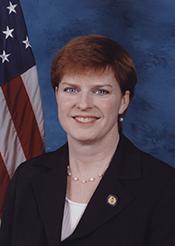 Rep. Melissa L. Bean (D-IL)
Description
Amendment allows institutions that enter into a payment schedule with Treasury on terms set by Treasury to no longer be subject to the bonus and compensation restrictions created by the Act.
Legislative Activity
Stay on top of the latest movement without scrolling through every action
House amendment offered
April 1, 2009
View full timeline
House amendment offered
April 1, 2009
House amendment agreed to: On agreeing to the Bean amendment (A004) Agreed to by recorded vote: 228 - 198, 1 Present (Roll no. 180).
April 1, 2009 • 5:58 PM
Roll call votes on amendments in House
April 1, 2009 • 5:58 PM
Amendment agreed to Committee of the Whole
April 1, 2009 • 5:58 PM
House amendment offered/reported by : Amendment (A004) offered by Ms. Bean.(consideration: CR H4302-4304, H4308-4309; text: CR H4302)
April 1, 2009 • 4:41 PM
Amendment (A004) offered by Ms. Bean. (consideration: CR H4302-4304, H4308-4309; text: CR H4302)
April 1, 2009 • 4:41 PM
On agreeing to the Bean amendment (A004) Agreed to by recorded vote: 228 - 198, 1 Present (Roll no. 180).
April 1, 2009 • 5:58 PM
Votes
1 roll call on this amendment
Text
Offered
PAY FOR PERFORMANCE ACT
The SPEAKER pro tempore. Pursuant to House Resolution 306 and rule
XVIII, the Chair declares the House in the Committee of the Whole House
on the state of the Union for the consideration of the bill, H.R. 1664.
{time} 1438
In the Committee of the Whole
Accordingly, the House resolved itself into the Committee of the
Whole House on the state of the Union for the consideration of the bill
(H.R. 1664) to amend the executive compensation provisions of the
Emergency Economic Stabilization Act of 2008 to prohibit unreasonable
and excessive compensation and compensation not based on performance
standards, with Mr. Jackson of Illinois in the chair.
The Clerk read the title of the bill.
The CHAIR. Pursuant to the rule, the bill is considered read the
first time. The gentleman from Massachusetts (Mr. Frank) and the
gentleman from Georgia (Mr. Price) each will control 30 minutes.
The Chair recognizes the gentleman from Massachusetts.
Mr. FRANK of Massachusetts. Mr. Chairman, I want to begin by
recognizing the two Members who are the main authors of this bill, and
I will begin with 2 minutes for the gentleman from Florida (Mr.
Grayson).
Mr. GRAYSON. Mr. Chairman, we offer H.R. 1664, the Pay for
Performance Act. The Pay for Performance Act is based on two simple
concepts: 1, no one has the right to get rich off taxpayer money, and
2, no one should get rich off abject failure.
The U.S. Government spent $170 billion to stabilize AIG, and it now
owns 80 percent of that company. Yet recently AIG paid more than $165
million in bonuses to 73 employees with this taxpayer money. We should
not be paying an arsonist to put out his own fire, and we should not be
paying an executive to ruin his own bank.
Mr. Chairman, an economy in which a bank executive can line his own
pockets by destroying his company with risky bets is an economy that
will spiral downward to failure. And a government that hands out money
to such executives is a government that fails to protect its own
taxpayers.
H.R. 1664 is designed to allow responsible compensation to those who
work for companies running on taxpayer money. The bill freezes current
bonus payments for executives and employees of companies that have
accepted capital investments from the TARP program until that
investment capital is paid back to the government. It allows for new
compensation and bonus arrangements to be made, as long as they are
based on performance standards and are not excessive or unreasonable.
These standards must be crafted by the Treasury Secretary within 30
days and approved by the Federal Financial Institutions Examination
Council.
Our job is to act on behalf of taxpayers to fix our economy, and we
do so today with this bill. The restrictions in this bill apply only to
financial institutions that have taken capital investments from the
taxpayer, and they are commonsense restrictions. Pay cannot be
excessive or unreasonable, and bonuses must be based on performance
standards. If the banks want to avoid, for some reason, these
commonsense restrictions, there's a very simple way for them to do so.
Just pay the bailout money back to the government, and that's what the
banks say they want to do. I know that taxpayers in my district will
happily take it back.
The CHAIR. The time of the gentleman has expired.
Mr. FRANK of Massachusetts. I yield the gentleman an additional 30
seconds.
Mr. GRAYSON. I asked the CEO of AIG when he came to testify before
the Financial Services Committee, is it more important to protect bank
executives who have lost billions of dollars and still get millions of
dollars worth of pay, or to protect us? The answer to that question is
now before this body, and I know which side I'm on.
Mr. PRICE of Georgia. Mr. Chairman, I am pleased to yield 1 minute to
my friend from Texas (Mr. Culberson).
Mr. CULBERSON. Mr. Chairman, the bill before the House is simply
political cover for liberals who rushed their $800 billion stimulus
bill through the House, ensuring these AIG bonuses would be paid. You
know, Mr. Chairman, if the Members had more than 12 hours to read this
1,100 page, $800 billion stimulus bill, we might have been able to spot
problems like this before Members were forced to vote. And in fact, Mr.
Chairman, one of the Members who voted for this stimulus bill is the
sponsor of the legislation before us, Mr. Grayson. I'd like to ask the
gentleman from Florida if he would yield for a question. I will yield
my time, Mr. Grayson. I'd like to yield to you, please, sir, for a
question please, sir. Mr. Grayson, thank you very much. Because I would
like to ask the gentleman from Florida--I thank you, Mr. Grayson. If I
could, before I yield, very quickly, if I could, sir, would you please
answer yes or no if you read the 1,100-page stimulus bill before the
vote.
The CHAIR. The time of the gentleman has expired.
Mr. PRICE of Georgia. I yield the gentleman an additional minute.
Mr. CULBERSON. Did you read the bill before the vote?
{time} 1445
Mr. CULBERSON. There is your answer, Mr. Chairman.
It is, I think, a terrible injustice to the taxpayers of America that
the liberal leadership of this House is jamming through $800 billion
spending bills with very few committee hearings, with less than 12-
hours' notice, without the opportunity for Members to read the bill,
with a majority that promised to be the most transparent, accountable
and honest majority in Congress in history, underneath a President who
promised that he would not sign a bill
[[Page H4288]]
that was not laid out for at least 5 legislative days. The Member from
Florida walks away from the microphone, the author of the amendment
before us, who cannot even tell us if he read the bill.
American taxpayers deserve better in a time of economic crisis. When
we are guardians of the Treasury, our responsibility is as trustees--to
protect our children and grandchildren from financial ruin. In 60 days,
Mr. Chairman, this liberal majority has spent over $1.3 trillion, money
our kids cannot afford.
The CHAIR. The time of the gentleman has expired.
Mr. FRANK of Massachusetts. Regular order.
The CHAIR. Members should address the Chair even when engaged in a
colloquy.
Mr. FRANK of Massachusetts. Mr. Chairman, I will yield myself as much
time as I may consume.
This is really extraordinary. What you have just heard is a
denunciation of something that was done by the Congress a few weeks ago
and a refusal to undo it. I have never seen people, Mr. Chairman, so
attached to something they hate. This is presumably a psychological
disorder which I am not equipped to diagnose.
The objection of the gentleman from Texas was that, when the recovery
bill was passed, it was passed too quickly. We signed it that night. It
included a provision that should not have been in there. This bill
takes it out. It takes it out in a way that makes sure it will have had
no effect, because it dealt with something in the past, and it is
undone by this.
Speaking about being undone, my Republican colleagues were being
undone by the loss of their whipping boy.
Mr. CULBERSON. Mr. Chairman, will you yield?
Mr. FRANK of Massachusetts. I will yield.
Mr. CULBERSON. Mr. Chairman, truly, all we ask is for transparency.
All we ask is for time for the taxpayers and for the people of America
to read the bill.
Mr. FRANK of Massachusetts. I will take back my time.
The bill under consideration is 5\1/2\ pages. I believe even the
gentleman from Texas could have read it by now, and if the gentleman
from Texas has not been able to read this 5\1/2\-page bill, I will talk
long. Even if you read slow, you'll get it done.
The point is that this bill undoes what he is complaining about. Note
the refusal to address the subject. The complaint was that the
amendment in the recovery package said that bonuses in the past given
by AIG or by anybody else would not be covered by the restrictions in
that bill. This undoes it. This takes it away. My colleagues on the
other side are kind of like kids who have had a toy bear or a blanket,
and this security blanket means a lot to them. Their security blanket
is being able to complain about something that happened before the
break. This bill undoes what happened before the break and makes it a
nullity. They at some point, Mr. Chairman, have to outgrow the security
blanket.
Now, of course, here is the real problem. They do not want to vote
for a bill that restricts excessive pay and unreasonable bonuses. The
gentleman from Texas has now had a chance to read the bill and has a
question for me about this bill.
Mr. CULBERSON. Will the gentleman yield?
Mr. FRANK of Massachusetts. Yes.
Mr. CULBERSON. Mr. Chairman, truly, in all sincerity, I would ask
only if you as chairman would promise us that you would lay these bills
out for 72 hours before the vote so that the American people could read
the bill. My objection is to the 1,100-page $800 billion stimulus which
was laid out for 12 hours.
Mr. FRANK of Massachusetts. I will take back my time to say that this
is the bill that came out of the Financial Services Committee, and this
was not out for 72 hours. It was out for much more than 72 hours. We,
in fact, marked up the bill, with amendments, in an open markup last
Wednesday. We voted on it on Thursday.
Mr. CULBERSON. Thank you.
Mr. FRANK of Massachusetts. No. I'm sorry. The gentleman wants to
debate a bill that was passed in February. He can have all of the
Special Orders he wants in order to beat that dead horse, because it is
a dead horse, Mr. Chairman. This bill that he does not want to debate
the merits of, that he is probably prepared to vote against and is
looking for some reason to, undoes what was done back then for the
recipients of TARP funds. So that is the issue. This bill was marked up
in committee. It was fully debated in committee.
Mr. CULBERSON. This bill----
Mr. FRANK of Massachusetts. I'm sorry. The gentleman has twice asked
me to yield for questions.
The CHAIR. The gentleman from Massachusetts controls the time.
Mr. FRANK of Massachusetts. I have twice yielded to the gentleman for
questions, which I must say, in all parliamentary decorum, to me, did
not seem to substantially add to the quality of the debate, because we
are on this bill that he does not want to talk about. This bill was
out. It was debated. It has been laid forth. We have amendments that
will be considered to be adopted that were also made public for some
time. Here is the point:
This bill addresses what Members on the other side complained about.
Apparently, they regret that fact. They would rather complain than have
us undo the source of their complaints, so that is why they are dealing
so unhappily with this legislation.
Now let me get back to the merits of this bill. It says, if you have
received capital contributions under the TARP, like AIG--AIG, by the
way, was originally, of course, given money under the Bush
administration, by the Bush-appointed head of the Federal Reserve and
with the approval of the Bush-appointed Secretary of the Treasury. It
later got TARP funds.
From the Senate, from the Senator of Connecticut, we then saw
restrictions. He deserves credit for adding restrictions when no one
else had pushed for them. He did not get all of the restrictions that
he should have gotten, which was because of other people objecting.
There was a requirement that the restrictions not be retroactive.
Members complained about that. This bill fixes it. Let me emphasize
again: This bill undoes the exemption of retroactive bonuses from the
darned language. I don't understand why people are opposed.
Mr. CULBERSON. Would the gentleman yield?
Mr. FRANK of Massachusetts. No. Let me explain this to the gentleman
from Texas. I yielded to him twice. I am not going to continue to let
the gentleman from Texas evade the issue by not debating this bill. He
has his own time. I am not going to waste the limited time we have to
explain this bill with this kind of continued lament for the passage of
a complaint.
What the bill says--and what I want to stress--is that it is only for
people who get capital funds under the TARP. This does not interfere
with small business lending. It does not interfere with people
participating in the impaired asset program, and I can guarantee that
it will not be so extended.
It says, if you get a capital contribution under the TARP bill, as
long as you have that contribution, you cannot make payments that are
excessive and unreasonable. You can give bonuses if they are
performance-based, and it repeals what the Republicans have been
complaining about.
Mr. Chairman, in closing, let me say I condole them on their loss.
Their attachment to what they hated is truly impressive, but they are
going to have to live with the fact that we are going to undo that and
that they are now going to have to talk about what this bill does.
I reserve the balance of my time.
Mr. PRICE of Georgia. Mr. Chairman, I yield 1 minute to the
gentlewoman from North Carolina (Ms. Foxx).
Ms. FOXX. Mr. Chairman, I do want to talk about this bill, but it is
very difficult to talk about this bill without also talking about the
bill that it is going to undo. What I would like to point out--and I am
sorry I did not think of this sooner--is that this bill really is
redundant, and if it is not political theater, then I don't understand
why we have to have the words ``executive or employee'' in this bill. I
assume that every executive is also an employee. If this bill is not
written as political theater, then we would simply say ``any employee''
because an executive is an employee.
So I would like to ask the gentleman from Massachusetts if he would
ask the
[[Page H4289]]
Rules Committee to take a friendly amendment to take out the word
``executive'' because it is redundant.
I would also like to point out that, this morning, when I spoke about
the sponsor of the bill and about his ambition to get this bill passed,
I neglected to say that I have heard that he has told people he wants
to be the first freshman to pass a bill. That is very ambitious, but I
think he has found a good piece of political theater.
The CHAIR. The time of the gentlewoman has expired.
Mr. FRANK of Massachusetts. Regular order.
The CHAIR. The gentleman from Massachusetts controls the time.
Mr. FRANK of Massachusetts. I thank you, Mr. Chairman.
I now recognize for 2 minutes----
Ms. FOXX. Mr. Chairman, would the gentleman yield?
The CHAIR. The gentleman from Massachusetts controls the time.
Ms. FOXX. I was hoping he would ask----
Mr. FRANK of Massachusetts. Regular order, Mr. Chairman.
The CHAIR. The gentleman from Massachusetts controls the time.
Mr. FRANK of Massachusetts. Mr. Chairman, I am going to yield myself
30 seconds to say:
Apparently, there are two alternative strategies that the minority
has in discussing this bill: one, discuss a bill that was passed 6
weeks ago; two, ignore the rules of the House and just talk whenever
they feel like it. Neither one seems, to me, to advance debate.
I now yield 2 minutes for serious conversation to the gentleman from
Connecticut (Mr. Himes).
Mr. HIMES. Mr. Chairman, I rise today in support of H.R. 1664. This
is a commonsense measure to protect American taxpayers by making sure
that their hard-earned dollars are used carefully and wisely in our
efforts to stabilize our financial institutions. Let us be very clear
about one thing: No one is happy that the TARP was necessary. We have
far better uses for our money than stabilizing the very institutions
that helped drive this economy into a ditch, but into a ditch it went,
and we need to pull it out.
President Bush, Secretary Paulson and this very House decided in
October of last year that we would pump billions of dollars into these
firms. Now, like it or not, the dollars are there. So the only question
that matters is: Should we look after those dollars? Should we, as the
Representatives of the American people, look after their dollars to
make sure that they are used wisely? The answer to that question must
be ``yes.''
H.R. 1664 says one thing to TARP recipients: Pay your people, but do
so reasonably and according to their performance. Pay reasonably and
according to performance. The bill asks the Secretary of the Treasury
to develop guidelines for those things. It does not ask the 435 Members
of Congress but, rather, Treasury.
I expect that compensation committees and boards of directors around
this country will be very interested in those guidelines because they
know that it is their job to craft reasonable, performance-based
compensation for their companies and for their shareholders. They have
a fiduciary obligation to their shareholders. Like it or not, the
American people are now shareholders, and we, as their Representatives
have a clear fiduciary obligation to the American taxpayer. We have a
clear interest in aligning the interests of the employees in the banks
we now own with the interests of the American taxpayers. You do that
through performance-based compensation. You do that by supporting this
bill that aligns pay with performance.
Mr. PRICE of Georgia. Mr. Chairman, I yield 1 minute to the
gentlewoman from North Carolina (Ms. Foxx).
Ms. FOXX. Mr. Chairman, Mr. Himes is leaving, and I wanted to ask him
a question, but I noticed that the majority party is getting their
Members off the floor as quickly as they possibly can today so that we
do not have a chance to ask them any questions.
I believe that Mr. Himes voted for the stimulus bill, and what I
wanted to ask him was whether or not he had read the bill before he had
voted for it, but as I said, I think they are doing a very good job of
getting their Members off the floor so they can't be put on the record
in any way.
Mr. FRANK of Massachusetts. Mr. Chairman, I yield 2 minutes to the
gentlewoman from Nevada (Ms. Berkley).
Ms. BERKLEY. Mr. Chairman, I rise to engage Chairman Frank in a
colloquy.
First, I want to state on the record that I have, in fact, read this
bill, and this colloquy is regarding this bill.
During the past few months, legitimate business travel for meetings,
events and incentive programs has dramatically decreased across the
country, especially in my district of Las Vegas. The decline is due, in
part, to the state of our economy but also to the perception that
Washington is seeking to limit these legitimate business practices.
This negative perception has created an environment where every
business in the United States is beginning to question whether or not
they should hold a meeting, an event or incentive travel programs.
As you know, Mr. Chairman, every canceled meeting or event means less
business for the hotels, conference centers, restaurants, and small
companies across the country that cater to business travelers.
Hardworking, middle-class Americans like those in my district--and I
have 10\1/2\ percent unemployment, not the CEOs--are the people who
ultimately pay the price if companies continue to cancel business
meetings and incentive travel.
I would like to clarify with the chairman that nothing in this bill
or in the amendments to be offered today would discourage or limit the
use of meetings, events and incentive travel organized by a company to
serve legitimate business purposes. Is that the chairman's
understanding?
I yield to the chairman.
Mr. FRANK of Massachusetts. Yes.
This bill deals only with compensation, not with travel. The
gentlewoman referred to incentive travel. Any incentives that were
performance-based would be fully allowed. If by selling a certain
number of things you earned a trip, that would be allowed. So it
specifically does not deal with travel for the business. It would allow
performance-based incentives for this or for any other purpose.
{time} 1500
Ms. BERKLEY. I thank the gentleman for clarifying the legislation and
the language.
Mr. PRICE of Georgia. Mr. Chairman, I am pleased to yield 5 minutes
to the deputy ranking member of the Financial Services Committee, the
gentleman from Texas (Mr. Neugebauer).
Mr. NEUGEBAUER. Mr. Chairman, I guess we could call this a Big
Government week because we're going to roll out a big budget, it has
big deficits, increases our national deficit to a larger number, going
to bring out big tax increases.
But you know, a lot of discussion has been had about all of the
things that the Federal Government's involving themselves in. And the
word ``outrage'' keeps coming up. And many of us were outraged about
the level of the bonuses that we found out were being paid at AIG. I
think what--more than an outrage about bonuses I think the American
people are outraged at the level of money that's being invested of
their hard-earned taxpayer money into these entities. We find out that
now the American people are investors in banks, insurance companies,
probably soon to be in the automobile business; and in fact, you're
going to get an extended warranty from the United States Government.
And what people are wondering and are outraged about is, when does this
Big Government, Big Brother, when is the end of this train?
One of the concerns that I have is that we now have--people were
outraged about GSEs, and now we have TSEs, and that's taxpayer-
supported entities. And people that used to get outraged in this body
because we were trying to listen in on foreign enemies, worried about
their individual rights--and now we have no problem, though, for the
United States Government to start determining what is reasonable
compensation in this country.
Am I outraged about the bonuses? I am more outraged that we would
relegate to government and to government employees for them to sit down
and determine whether that is a reasonable compensation. People say.
Well, this is only foreign entities that we've invested capital into.
But, you know, that's always the way policy gets started in this
country. It starts
[[Page H4290]]
off with a little bit of a foot in the door and pretty soon, the
gorilla is completely in the room.
So down the road, if I am a small businessman and I have an SBA loan,
for example, I am wondering if at some point in time the SBA calls up
and says, You know what? You're taking too big a salary out of your
company so we're going to set a reasonable set salary for you. What
does that do to entrepreneurialism in this country? What about people
that are participating in other government programs? Is the government
then going to start saying, Well, we've looked and we know that you
have got a contract. So you're one of the small business contractors
that has a government contract. And, you know, we've looked at your IRS
records and you're making a lot of money off of that contract. We think
maybe we ought to renegotiate that contract because you're making too
much money.
Now, that sounds farfetched, but I would guarantee you if we were to
roll back this conversation a year ago and you would tell the American
people that they are going to own banks, they are going to own
insurance companies, that they are going to own automobile companies,
that they are going to have over $5 or $6 trillion of their money
committed to these entities, people would have laughed about it. But
this is really no laughing matter, Mr. Chairman. This is serious.
This government, this country was founded on the principles of
individualism, empowerment and not for government to be big. In fact,
there are tea parties occurring all across this country because people
are outraged about this. The same outrage that over 230, 240 years ago
people were outraged at how the King was treating the colonists in this
land called America. And they were tired of the King telling them what
they could do, how much money they could make, and who was privileged
and who was not privileged. And yet we're now starting down that same
trail with this bill today.
What should have happened here is that we should have taken a
reasonable amount of time to determine how this money was going to be
distributed, term sheets should have been put together if we're going
to invest American taxpayers' money, we ought to know exactly what that
money is going to be used for, how it's going to be used. If we want to
limit salaries, you do that before you pass out the money.
But that is all really a smokescreen. What the conversation and
debate in all of this time that we ought to be using today is we ought
to be talking about how are we going to get the American taxpayers'
money back. People want to focus on the bonuses, and they messed up,
they cut a deal with the White House in the middle of the night, had
people put things in the bill to cover them so that they didn't have to
lose face. You know, the $170 million in bonuses is a big deal, but let
me tell you what a big deal is $170 billion in money that we invested
in AIG.
Mr. Chairman, let's return America back to the American people. Let's
not infringe upon their rights, let's not start down the road where
government starts telling us how much money we can make, what we will
do with our money. And I urge the people to vote against this bill.
Mr. FRANK of Massachusetts. Mr. Chairman, I yield myself such time as
I may consume.
This is really an interesting debate we're having within the
Republican Party.
The first speakers were critical of the bill which passed in the
recovery bill because it limited Senator Dodd's restrictions on
compensation and said they wouldn't apply retroactively. As I said, it
was Senator Dodd who initiated the notion of further restrictions. And
many of the Republicans were upset that it didn't go far enough.
But now we have the deputy leader of the Republican side objecting
that we're going too far, directly contrary to the complaints that we
didn't apply these retroactively, he's upset that we applied them at
all. And he says it's an interference with free enterprise.
Let's stress again. And I do know, he did say this is a revolt
against King George in effect. And it is. King George Bush. Because we
are dealing here with a program initiated under the Bush
administration. We are dealing here when we talk about AIG with a grant
of funds that came without any congressional input with the approval of
the Bush administration.
We did, some of us, raise the compensation issue last fall. Yes, we
did. We said that if you're going to take government money, you accept
some compensation restrictions. The gentleman from Texas--and I do note
that he's left the floor. I think the gentleman from Texas is entitled
to leave the floor. I don't think having made a speech you have to sit
here and listen to some of the other speeches. I have to because I am
the manager of the bill. I wish I didn't have to listen to some of
these speeches, particularly the repetitive ones about the bill 6 weeks
ago. But since commenting on people leaving the floor is in vogue, I
thought I would become fashionable at least in this regard.
But here's the point. We say if you receive TARP funds capital
infusion, you accept some restrictions. That is no more an interference
with free enterprise than any other contracting rule the Federal
Government has. And as to the gentleman from Texas's suggestion, he
said, Oh, but this isn't the problem. The problem is where it will go.
Now, Mr. Chairman, I have observed that when people are opposed to
something but don't have confidence in the persuasive quality of the
arguments on the particular issue, they migrate to what would happen if
it was applied in a wholly different context. It will not be applied in
a wholly different context.
I speak for myself and the majority leader, Mr. Hoyer. This bill is
confined to people who take a capital infusion under the TARP. It will
not be extended to any other participant in the impaired asset program,
in the small business lending program, in the higher education lending
program. I would not, as chairman, convene a meeting for such a bill.
The majority leader would not bring one to the floor. Again, there is
zero chance of that happening.
But when Members complain about something that might happen that
won't happen, it is because they are against what is happening but
don't have the confidence that if they said it, people would believe
it.
Let's go back to what this bill does. It undoes the restriction on
retroactivity that had been a cause of such outrage among the
Republicans, and I repeat again. They appear to have become so attached
to their outrage that they are even more outraged that they won't be
able to be outraged any more.
Secondly, we say that if you receive a capital infusion under the
TARP program and only a capital infusion, you may not make salary
payments that are excessive or unreasonable and you can give bonuses as
long as they are performance-based, such as in restricted stock or in
other ways.
I await Members on the other side--because a number of them have
spoken, but not one of them has objected to the bill on its merits. The
gentleman from Texas said, Well, if you took this principle and went
further, it would be a problem. The other Members said, Isn't it too
bad we did something 6 weeks ago that we're now undoing? I have yet to
hear an argument against this bill.
I reserve the balance of my time.
Mr. PRICE of Georgia. Mr. Chairman, I am pleased to yield to the
gentleman from Alabama (Mr. Bachus) such time as he may consume.
Mr. BACHUS. Mr. Chairman, every day brings news of a new government
program, a new government intervention, a new government mandate, or a
new government tax. Most of them share the same thing: they are large.
This bill claims to be about executive compensation. But what it
really is is just another step expanding the size, the involvement--and
more importantly--the control of the Federal Government into not only
the private sector but into all aspects of our lives.
That's our concern. Yes, it's about this bill. But, yes, Mr.
Chairman, it is about much more than this bill. You're right about
that.
Sometimes the expansion is subtle, as in the case of this bill.
Sometimes it's more direct, more obvious, like the budget that we will
vote on as soon as tomorrow. We are witnessing in light speed in just
the past few months--and then the budget will pass in the next few
years as it goes into effect--a relentless and massive expansion of the
[[Page H4291]]
Federal Government. And I, for one, Mr. Chairman, am concerned.
Outraged? I would say ``fear'' and ``concern'' are better. But I do
believe that as the years go by and we look back on what we've done and
what we will do in this next year, I believe the American people will
be outraged.
As a Member, I took an oath to uphold the principles of the
Constitution which intentionally and specifically limited the power of
the central government. Would our forefathers have ever considered
giving the government a say on how much a private citizen earned, the
so-called say-on-pay? In reading both the Constitution and the
Federalist Papers, it clearly appears they would not.
I think most Americans believe our Founding Fathers had it right. I
applaud the chairman's honesty. For years, he has advocated a
government role in limiting the amount of salaries.
Later tonight, we will consider a budget. As we have said
repeatedly--and we are going to say again today--it spends too much, it
taxes too much, and it borrows too much. It expands the government
control on a scale that we've not seen before, not even in the New
Deal. It spends more money in this administration than was spent from
the time of George Washington to George Bush. The majority criticized
Bush for the deficits, and now they will double and triple them in the
next 10 years under their proposal.
The scope and reach of this legislation is breathtaking. If you had
told me a month ago--and I will recognize the chairman. I will yield to
him in a minute when I get to the particulars on this bill.
If you had told me a month ago that Congress wanted to increase the
tax burden on charitable contributions, I would have said it's an April
Fool's joke. But the fact is that if donations to charities go down,
the government will say it has to step in. But there will be a big
difference. The government will be choosing what it wants to support
and how. It can support groups like ACORN instead of my local church or
local charity. Instead of allowing people to support their own causes
and make their own choices about their charitable contributions, the
government will expand into what will obviously and clearly be a
restriction on private charities as their funds are restricted.
{time} 1515
Unfortunately, it wasn't an April Fool's Day joke, and that's what is
being proposed this very week, restricting private contribution, and
there's a pattern developing here.
Just this week, we saw a government mandate to change the management
of General Motors. Regardless of what you think about the performance
of the CEO--and I don't think it was good. I, for one, do not defend
his stewardship. But do we want the Federal Government making such far-
ranging decisions on hiring and firing and setting salaries and job
descriptions for everyone from the manager to the receptionist?
This is all about government control, government command and control,
running an economy, not according to free enterprise principles, which
many of my Democratic colleagues admittedly and honestly don't agree
with. It is about making business decisions based not on
competitiveness but based on social goals.
Does anyone really believe that a government that is about to add $10
trillion to our debt, to our children and our grandchildren, has any
expertise at all in telling the private sector how to turn a profit?
During the campaign, President Obama said, ``So if somebody wants to
build a coal-powered plant, they can. It's just that it will bankrupt
them because they're going to be charged such a huge sum for all the
greenhouse gas that's being emitted.''
Later today, we will take a step down that road with cap-and-trade.
We're going to raise every American's utility bill if that utility is
fired by coal.
We hear the government will require the automobile makers to produce
green cars. No one argues with the idea of cleaner-burning cars, but
maybe someone should ask consumers whether they can afford to spend
several thousand dollars more to buy them or whether such a policy will
end the need for taxpayer support. I think not. I think it will make
General Motors less profitable, and the taxpayer investment will
certainly be at risk.
This is the problem with government getting involved in the
management of business. Decisions will be based on the government's
political agenda and not sound economics. There will be no limits to
how far this can go and will go.
Will the government start telling companies we'd like to review your
advertising to see if you're sending the right message or spending too
much? Will the government tell drug companies, who market similar
products, we think there's too much competition, maybe you should
combine products or merge to make prices cheaper? Now, you don't have
to do that, but if you do business with the government, you do. Some
believe less competition leads to lower prices. I don't think this is
the case at all.
Now, the legislation before us today, it gives the Treasury Secretary
and a board, all unelected, headed by a Harvard professor, wide
discretion to formulate performance-based compensation standards for
hundreds of banks across America. Who does the legislation apply to?
Let me read the legislation: Compensation payment to any executive or
employee under any existing compensation arrangement.
Any executive or employee? Line 23 on page 2, Mr. Chairman. Every
employee. There is nothing in this legislation to prevent the Secretary
from deciding that one measure of performance is where the loan
officers are approving loans to favored constituencies that the
administration may believe are entitled to a loan or to credit. That
was precisely the type of government allocation of capital and
decisions that helped lead us into the housing bubble and the collapse
of Freddie and Fannie, at a cost of hundreds of billions of taxpayer
money.
In 1999, I introduced into the Record on this House floor the article
from the New York Times, not a friend of the minority, which said,
first, the government directed that you would make home loans to people
with poor credit, and then it went further and said not only with poor
credit but without a down payment. Part of the reason we're here today
is because the government did that. There's no question that we need
more performance-based pay decisions, but the government deciding and
judging the performance of employees and private companies? The
Secretary of the Treasury deciding whether an employee is performing? I
think not.
The answer is not a dramatic expansion of government control. That
hasn't worked in any country. It didn't work in Russia. It didn't work
in China. It's not working in North Korea, and it's not working in
Cuba.
The American economy has always attracted entrepreneurs and business
investment because it has been free of the political risk present in
developing and socialist countries. We have attracted investment and
have maintained a strong currency because of the belief in foreign
investors, whom we depend on and must have to support not only this
economy but the spending that is proposed. In fact, more than half the
borrowing going forward for this new budget will have to be borrowed
from citizens in just three foreign countries. Without those
assumptions, the budget doesn't work. Without the assumptions, there's
more deficits. Without those assumptions, without that foreign
investment, we default on our obligation.
As I say, we have attracted investment and a belief that we in
America are productive, specifically because of the belief that our
government does not take arbitrary and punitive actions to negatively
affect business operations. It doesn't break contracts, it doesn't
confiscate property, and it doesn't set salaries.
Let me close by saying I honestly fear, Mr. Chairman, that this bill
and the overall thrust of what we are hearing from this administration
is tilting that delicate balance. The implications for our
competitiveness as a country, our economy, and the prosperity of our
citizens and their freedoms are disturbing.
In the end, America has succeeded by putting its faith not in
government but in the people. That's what the Constitution is all
about, and I, for one, will always trust the people and always distrust
the government. I make no
[[Page H4292]]
apology for that. The solution is not this bill. What we need is a
strategy to get the government out of the bailout business, out of the
taxpayer bailout business, with no further intrusions into what should
have been and needs to be and will need to be in the future, private
decisions.
Mr. Chairman, you and I can come to an agreement, and that agreement
can be no further government bailout. That is the only way to avoid
more government interference, more government control, and ultimately,
the loss of not only our freedom but our prosperity. I appreciate the
honest differences here, but I accept fully your statement that we on
this side are outraged. We're fearful, we're concerned, and we become
more so every day.
Mr. FRANK of Massachusetts. How much time remains on each side?
The CHAIR. The gentleman from Massachusetts has 14 minutes remaining.
The gentleman from Georgia has 6\1/2\ minutes remaining.
Mr. FRANK of Massachusetts. I yield myself such time as I may
consume.
I heard the gentleman from Alabama say that we should not get into
this business of fixing compensation. Someone claiming to be the
gentleman from Alabama last year voted for legislation which included
the following. It was the rescue plan. The gentleman voted for it when
it passed.
On page 12 of that bill, there's a heading, section 111, ``Executive
Compensation and Corporate Governance.'' The gentleman from Alabama
voted for this. So did the rest of the Republican leadership. They did
it at the request of President Bush and of Secretary Paulson and of
Chairman Bernanke, not heretofore known for their socialism. But the
gentleman from Alabama voted for exactly what he now decries.
It is a grant of authority to the Secretary of the Treasury to
require--I'm now quoting. He shall require that the financial
institution meet appropriate standards for executive compensation and
corporate governance. It goes beyond much of this bill, corporate
governance. The standard shall be effective for the duration of the
period that the Secretary holds an equity or debt position in the
financial institution. So the gentleman voted for this when the
Republicans were in power. Circumstances apparently change opinions.
In fact, there's also this great inconsistency. For a month now, the
Republicans have been complaining that in the recovery bill we adopted
a provision as the Congress which limited the reach of the government's
intervention into compensation. That was the part about retroactivity.
This undoes that limitation. So, in the name of limiting government,
the gentleman denounces the bill that would undue the limitation that
his party has been denouncing. There is a fundamental gap that can only
be explained, it seems to me, by something other than the merits.
Given what the gentleman from Alabama said--we've got to get the
government out of this--why was he then opposed, if he was, to the
language that limited its retroactive application? In fact, if you
believe that one of the big arguments is that we changed the rules
after the fact, he should have been for that limitation.
The arguments about free enterprise and not understanding the
principles are just nonsense, Mr. Chairman. We're not debating free
enterprise. We're debating how best to make it work.
I think Franklin Roosevelt helped save free enterprise. I think rules
help save free enterprise. I think when Secretary Paulson in the Bush
administration called for more regulation of credit default swaps and
collateralized debt obligations, we'll probably be getting an
announcement that they will be opposed to that, because that's what we
are going to be going forward trying to do.
Yes, the government does have a role in this, but to return to this
bill, which the gentleman only briefly discussed, it does do what the
gentleman voted for last fall, and by the way, the argument that the
government was responsible--the gentleman said in 1999 this started. I
was not going to refer to the history, but from 1995 through 2006,
Members of the Republican Party controlled this Chamber, and they
controlled it tightly. If, in 1999, the gentleman from Alabama, as a
member of the Republican majority on the Financial Services Committee
thought there was a problem, they should have done something about it.
The gentleman from Alabama was, for a time later on, the chairman of
the Financial Institutions Subcommittee, which had jurisdiction over
lending standards. Some of us wanted to pass a bill to limit abuse of
subprime lending. Yes, that happened, Mr. Chairman, in the House. It
happened in 2007, after we became the majority, and let me say now I
think we still have the potential for the bad loans to be made.
When this House returns after the April break, we will have in
committee arguments on the floor legislation that will stop precisely
the kind of loans that the gentleman from Alabama decried, and I await
with interest what the votes will be.
I reserve the balance of my time.
Mr. PRICE of Georgia. Mr. Chairman, we have no more speakers on this
side, so until the chairman is ready to close, I will reserve.
Mr. FRANK of Massachusetts. I yield 4 minutes to the gentleman from
California (Mr. Sherman).
Mr. SHERMAN. This bill does three things. First, it requires the
issuance of regulations defining excessive and unreasonable
compensation and applies them only to those who are holding our
capital. As the Chairman pointed out, similar legislation is already
law and was voted in favor of by the Republican leadership.
{time} 1530
The bill we passed in October of last year specifically required the
Treasury to issue appropriate standards for executive compensation--not
for every company in America, but for those that are holding our money.
Clearly, this new language will provide additional impetus for Treasury
to issue appropriate regulations.
There are other things the bill does. First, it deals with excessive
bonuses and the provision that Senator Dodd is now famous for having
added to the recovery legislation.
As I think every Member of this House knows, Senator Dodd had a
provision that he added--and he was prevailed upon to cause his
provision not to apply to preexisting contracts.
Since then, those on the other side of the aisle have done two things
that strike me as inconsistent. They have denounced Senator Dodd's
amendment and the philosophy behind it, and they have denounced the
fact that it doesn't apply retroactively to preexisting contracts. This
is like announcing that you detest the taste of broccoli and
complaining that you didn't get a double helping. It makes no sense
except for those who simply want to find something to denounce.
This bill eliminates the exception that Senator Dodd has been so
viciously criticized for by the other party. If you vote against this
bill, then you are embracing the very exception that many of you have
been vilifying.
Third, this bill has a disclosure provision that I authored. It says
that companies that are holding our TARP money must disclose how many
of their employees are getting a total compensation package of over $5
million; how many have a total compensation package of over $3 million;
how many over $1 million. Why? Because if the American people are
putting up the money, they have a right to know.
Now the self-styled ``defenders of capitalism'' say that we've got to
protect these companies from the influence of the taxpayer. How is
capitalism actually supposed to work? Those who provide the capital and
take the risk are supposed to have some control. That's real
capitalism. The taxpayers are taking the risk with these companies. We
hope to get our money back. As soon as we do, the companies can operate
as they will.
Instead, we're told that we need a kind of cancerous capitalism--a
system that works like this: Socialism for the risks, capitalism for
the rewards.
I don't think Adam Smith would have voted for the TARP bill. The
gentleman from Alabama did. I voted against it. But I do think that
economist Adam Smith--not our colleague from Washington--would vote
``yes'' on this bill because those who provide the capital should
control--or have at least some control--of the enterprise. And that
includes some control over compensation.
To say instead that firms should take our money but not listen to our
ideas on how it should be used, that isn't
[[Page H4293]]
capitalism. That is socialism for the rich.
Mr. FRANK of Massachusetts. How much time do I have remaining, Mr.
Chairman?
The CHAIR. The gentleman from Massachusetts has 6\1/2\ minutes
remaining. The gentleman from Georgia has 6\1/2\ minutes remaining.
Mr. FRANK of Massachusetts. I will be the closing speaker so the
gentleman may proceed.
The CHAIR. The Chair recognizes the gentleman from Georgia.
Mr. PRICE of Georgia. Thank you, Mr. Chairman.
It's been an interesting discussion, there's no doubt about it. We've
talked about executive compensation, we've talked about a problem that
arose--a specific problem that arose when Senator Dodd put that
language in the bill in the middle of the night--in the spending bill.
The interesting thing about it, Mr. Chairman, is that the bill to
remove that language is 11 lines long. It's just 11 lines long. It's
not 6 pages long.
So if we were to do what some in this body on the other side say--the
only thing we're here to do, which is to remove that language--it would
be H.R. 1673 from Mr. Lungren. That's the bill that would remove the 11
lines that make it so that that backroom deal for AIG executives would
be stricken.
So I think it's important that we appreciate what's going on. I
appreciate the comments from the gentleman from California, who did
indeed, I think appropriately, describe what was in the bill. It's
important that our colleagues look at this bill. It's not too long. Six
pages. We can indeed read it. I hope some of my colleagues will read
it.
The title of the bill: To amend executive compensation and to
prohibit unreasonable and excessive compensation and compensation not
based on performance standards.
When you read the bill and get to who's going to define all that,
which is really the question, Mr. Chairman--who's going to define that.
Usually, we think that in a market economy, in the United States
economy, in the economy that has allowed more success and more
opportunity for more individuals than any nation in the history of
mankind, that the way that we define compensation and performance in
the market is in the private market, not in the government.
So on page 3 it says that no payment would be able to provide for
compensation that is unreasonable or excessive as defined in standards
established by the Secretary. The Secretary of the Treasury is going to
tell us what is unreasonable and what is quality performance.
Well, the Secretary of the Treasury, let's look at his biography, Mr.
Chairman. Oh, my goodness. He's the ninth president and chief executive
officer of the Federal Reserve Bank of New York, which began when he
began his service there in 2003. It's a wonderful job. But what
experience does he have in setting compensation? In fact, what
experience does the government have in setting compensation?
He first joined the Department of the Treasury in 1988. Let me think
a moment, Mr. Chairman. That means 21 years of service for the
Department of the Treasury or in the Federal Government. Well, that's
wonderful, and he's to be commended for it, but what experience does he
have and why would the Nation want him to be deciding what compensation
and performance standards are for this Nation?
Maybe it was in his education. He went to Dartmouth College,
bachelor's degree in government and Asian studies in 1983. Wonderful
institution. Great study. Master's in international economics and East
Asian studies in 1985.
Mr. Chairman, not to slight the Secretary of the Treasury, but the
American people do not believe that the Secretary of the Treasury ought
to be setting compensation limits for anybody.
Why? Why does all this feel so strange? It's because we're in a
political economy. We're no longer in the market economy that the
American people know and love and embrace.
What does a political economy look like? Well, the gentleman from
California described it. He said, Because of the disclosure provisions,
the American people, who are putting up the money, have a right to
know. Well, sure they have a right to know. But that's not what a
market economy is.
He says that the people have a right to know and set the limits
because this is capitalism. No. Capitalism was bastardized a year or
more ago when we started down this road that, Mr. Chairman, I opposed
every step of the way. Because we pointed out then this is where we'd
get. We would get to be debating on the floor of this House what kind
of compensation members in the private sector ought to have.
Well, Mr. Chairman, that's a dangerous place to be. It's a dangerous
place to be because it leads Presidents to thinking that they can
remove CEOs from private companies. That's where it leads to. It leads
Members of Congress to believe that they can call on the Treasury
Department to get money out of previous bills that have been passed in
Congress even though the institution in their district doesn't qualify
under the rules that have been provided.
Mr. Chairman, it's a dangerous place to be. And it violates the
Constitution. I know it's a quaint document, Mr. Chairman. We don't
think about it much anymore. But article I, section 9 says, ``No bill
of attainder or ex post facto law shall be passed.'' Mr. Chairman, this
bill is each. It is each.
Mr. Chairman, this is a bad step. It's a bad and a dangerous step for
this Congress. It adds to the dangerous and reckless--and reckless--
policies of this administration that the American people recognize as
not being consistent with American fundamental principles--the market
principles that have made this Nation the greatest Nation in the
history of mankind.
Mr. Chairman, I urge my colleagues to recognize this bill for what it
is, and that is a bill that this Congress ought not adopt.
I yield back the balance of my time.
Mr. FRANK of Massachusetts. I yield myself the remaining time, first
to say that this dangerous step was of course taken--if you think it's
a dangerous step--last fall, when, with the support of the Republican
leader and the Republican whip and the ranking Republican on the
committee, Congress passed a bill which had a section on executive
compensation and corporate governance.
This one called on the Secretary to set appropriate standards.
Frankly, excessive and unreasonable is a tighter limitation. Unlike
this one, it isn't just the Secretary of the Treasury--it is the
Secretary of the Treasury, in accordance with, and has to get the
approval of the head of the FDIC, Ms. Bair, the Comptroller of the
Currency. Yes, there's a consultation with the head of the oversight
board. She has no vote on it. The votes are from the regulators.
Let's stress again--this only applies, this bill, to people who
voluntarily keep capital infusions from the Federal Government. If they
don't like it, they can return the money. That's what an assault on
free enterprise is.
The ranking Republican said before that anybody who does business
with the Federal Government might be subjected to that. No, that's not
remotely true. It certainly isn't true in the bill.
The bill explicitly says that if you do business with one of the
covered entities, you're not covered by this. It explicitly says that.
Not being able to argue against this bill on the merits, they then
say, Well, what happened if it was applied 16 different other ways? I
don't think it should be. I didn't know it won't be.
Again, when people argue against what is not in the bill, but what
might come, it's because they have no confidence in their arguments
against the bill.
We did adopt, with a majority of Senate Republicans, the leadership--
not quite a majority--but the leadership of House Republicans on these
issues, President George Bush--we've already adopted rules that say,
quite sensibly, if you take the Federal money, there are some
restrictions. And if you don't like it, give the money back.
Now the gentleman from Georgia said, Oh, but the bill goes too far
because it doesn't just repeal what we did. And he talked about the
Lungren bill. I hadn't heard about the Lungren bill. The reason is that
the Lungren Republican bill was introduced after we had made clear what
we were going to do on Monday, 2 days before we marked up the bill. It
was not called to my attention. No member of the Republicans
[[Page H4294]]
on the Financial Services Committee said, Let's just do it this way.
We had an open markup. The Lungren bill could have been offered as an
amendment by any Republican member of the committee. They did not do
it. If they forgot, Mr. Lungren himself could have come to the Rules
Committee and asked that it be made in order as amendment. They did not
do it.
They quietly introduced a bill, made sure that no one noticed it;
called it to no one's attention; deliberately refrained from offering
it as an amendment at an open markup, when they could have;
deliberately refrained from going to Rules Committee and asking that it
be made in order; and now they're complaining that it wasn't adopted.
The fact is this: The Republicans regret losing the provision that
was added mistakenly, in my judgment, in the hurried deliberations,
hurried conclusion on the recovery bill.
The gentleman from California mentioned this. The Senator from
Connecticut offered restrictions. The Members on the other side baffle
me sometimes--sometimes more than others. They are critical of
restrictions. The gentleman from Connecticut offered restrictions on
compensation. Presumably, they would denounce him for that. But as the
gentleman from California pointed out, they are objecting to offering
restrictions, and then they're objecting because somebody persuaded him
the restriction shouldn't be so restrictive.
Now we also have in here a provision that this will lead people to
give back TARP money. At an earlier stage, before I think they
reconsidered the total inconsistency of it, some of the Republicans
said, Oh, this is a problem because it will give back TARP money. Of
course, these are the same people who said they wished there was no
TARP.
So, first they don't want restrictions, then they complain because
the restrictions are not made retroactive, then they complain when we
take away the provision that restrictions wouldn't be retroactive.
First they say they don't want any TARP at all, then they worry there
will be a smaller TARP because people will give the money back.
Here is the essential element of this bill. Apparently, my Republican
colleagues do not want to say to the largest financial institutions
that--and we're going to adopt an amendment, I hope, that limits this
to the larger institutions because the community banks have been
unfairly tarred by this. They didn't make the mistakes that led us
here. They weren't part of the Republican majority from 1995 to 2006
that passed no legislation on Fannie Mae and Freddie Mac, that passed
no regulation on subprime lending, that did nothing about any of the
abuses in other areas, all of which we tried to correct when we came to
power in 2007.
{time} 1545
But what we have is a bill that says if you get capital infusions of
$250 million or more from the Federal Government and you decide to keep
that money, then you should not make payments that are excessive or
unreasonable.
People said, what is that? Well, you know when you are running a
company, you try to hold your expenses down to the least possible. You
pay your employees, frankly, as little as you can get and still have
them work. But there has been an exception to that at the top levels.
We do say retention bonuses are a mistake, where people say, I have the
secret to the formula and if you don't bribe me, I'm going to quit. We
are saying, No, don't give into that. Give them performance bonuses, as
you can do.
So these are the issues, two pieces of this bill: Do we undo the
restriction on retroactivity that was in the recovery bill that has
been so denounced, and then do they lose their major source of ability
to denounce? And, do you say to a bank that has taken more than $250
million in Federal funds: For as long as you voluntarily decide to keep
that money, do not make bonus payments that are not performance-based
and do not make excessive and unreasonable payments?
Members have invoked the American people. I do not think the American
people stand wholly behind the proposition that people should be able
to keep the Federal money, not voluntarily return it, and then
disregard any rules about who gets what.
I do believe it is possible for institutions to use performance
bonuses and to make payments that are not excessive or unreasonable,
that will go, as the gentleman from California has pointed out on many
cases, into the millions of dollars a year to some of the top people.
These will be people who will be very well paid, people who will be
much better paid, I guarantee you, than the auto workers who have borne
the brunt of the Republican decision that it is okay to restrict.
By the way, where were my colleagues who want free enterprise and no
interference with wages when the Senator from Tennessee, Mr. Corker,
was trying to drive down the wages of auto workers, American auto
workers, and saying that the American auto workers shouldn't get the
wages that are paid by the American companies?
There is every argument being given here. But what I do not
understand, as I listen to these inconsistent arguments that have no
weight, what is it about saying that if you take Federal money
voluntarily, you can't make excessive payments that troubles them?
Mr. VAN HOLLEN. Mr. Chair, I rise in support of H.R. 1664, the Pay
for Performance Act.
I'm honored today to join my colleagues in supporting the Pay for
Performance Act, a measure designed to ensure that taxpayers' dollars
are used wisely to protect our financial institutions, and I want to
applaud the work done on this issue by Representatives Grayson and
Himes. The recently disclosed AIG bonuses highlight the potential for
abuses of the public trust by companies rewarding employees with
excessive compensation--all on the taxpayer dime. This legislation will
ensure that companies receiving TARP funds tie pay to performance. I am
particularly pleased that this bill includes a provision I authored
requiring full disclosure of compensation and perks for the family
members of employees working for these companies.
Mr. CANTOR. Mr. Chair, my wife currently receives compensation from a
financial institution that would be covered by the provisions of H.R.
1664. I have determined that this constitutes a direct personal and
pecuniary interest under clause 1 of Rule III of the Rules of the House
and thus I will be answering ``present'' on any question related to
H.R. 1664 put to the House or to the Committee of the Whole House.
The CHAIR. All time for general debate has expired.
Pursuant to the rule, the amendment in the nature of a substitute
printed in the bill shall be considered as an original bill for the
purpose of amendment under the 5-minute rule and shall be considered
read.
The amendment in the nature of a substitute is as follows:
H.R. 1664
Be it enacted by the Senate and House of Representatives of
the United States of America in Congress assembled,
SECTION 1. PROHIBITION ON CERTAIN COMPENSATION.
(a) Prohibition on Certain Compensation Not Based on
Performance Standards.--Section 111 of the Emergency Economic
Stabilization Act of 2008 (12 U.S.C. 5221) is amended by
redesignating subsections (e) through (h) as subsections (f)
through (i), and inserting after subsection (d) the
following:
``(e) Prohibition on Certain Compensation Not Based on
Performance Standards.--
``(1) Prohibition.--No financial institution that has
received or receives a direct capital investment under the
Troubled Assets Relief Program under this title, or with
respect to the Federal National Mortgage Association, the
Federal Home Loan Mortgage Corporation, or a Federal home
loan bank, under the amendments made by section 1117 of the
Housing and Economic Recovery Act of 2008, may, while that
capital investment remains outstanding, make a compensation
payment, other than a longevity bonus or a payment in the
form of restricted stock, to any executive or employee under
any existing compensation arrangement, or enter into a new
compensation payment arrangement, if such compensation
payment or compensation payment arrangement--
``(A) provides for compensation that is unreasonable or
excessive, as defined in standards established by the
Secretary, in consultation with the Chairperson of the
Congressional Oversight Panel established under section 125,
in accordance with paragraph (2); or
``(B) includes any bonus or other supplemental payment that
is not directly based on performance-based measures set forth
in standards established by the Secretary in accordance with
paragraph (2).
Provided that, nothing in this paragraph applies to an
institution that did business with a recipient of a direct
capital investment under the TARP.
``(2) Standards.--Not later than 30 days after the date of
enactment of this subsection, the Secretary, with the
approval of the agencies
[[Page H4295]]
that are members of the Federal Financial Institutions
Examination Council, and in consultation with the Chairperson
of the Congressional Oversight Panel established under
section 125, shall establish the following:
``(A) Unreasonable and excessive compensation standards.--
Standards that define `unreasonable or excessive' for
purposes of subparagraph (1)(A).
``(B) Performance-based standards.--Standards for
performance-based measures that a financial institution must
apply when determining whether it may provide a bonus or
retention payment under paragraph (1)(B). Such performance
measures shall include--
``(i) the stability of the financial institution and its
ability to repay or begin repaying the United States for any
capital investment received under this title;
``(ii) the performance of the individual executive or
employee to whom the payment relates;
``(iii) adherence by executives and employees to
appropriate risk management requirements; and
``(iv) other standards which provide greater accountability
to shareholders and taxpayers.
``(3) Reporting requirement.--
``(A) In general.--Any financial institution that is
subject to the requirements of paragraph (1) shall, not later
than 90 days after the date of enactment of this subsection
and annually on March 31 each year thereafter, transmit to
the Secretary, who shall make a report which states how many
persons (officers, directors, and employees) received or will
receive total compensation in that fiscal year in each of the
following amounts:
``(i) over $500,000;
``(ii) over $1,000,000;
``(iii) over $2,000,000;
``(iv) over $3,000,000; and
``(v) over $5,000,000.
The report shall distinguish amounts the institution
considers to be a bonus and the reason for such distinction.
The name or identity of persons receiving compensation in
such amounts shall not be required in such reports. The
Secretary shall make such reports available on the Internet.
Any financial institution subject to this paragraph shall
issue a retrospective annual report for 2008 and both a
prospective and retrospective annual report for each
subsequent calendar year until such institution ceases to be
subject to this paragraph.
``(B) Total compensation defined.--For purposes of this
paragraph, the term `total compensation' includes all cash
payments (including without limitation salary, bonus,
retention payments), all transfers of property, stock
options, sales of stock, and all contributions by the company
(or its affiliates) for that person's benefit.''.
(b) Revision to Rule of Construction.--Section
111(b)(3)(D)(iii) of the Emergency Economic Stabilization Act
of 2008 (12 U.S.C. 5221(b)(3)(D)(iii)) is amended by
inserting before the period the following: ``, except that an
entity subject to subsection (e) may not, while a capital
investment described in that subsection remains outstanding,
pay a bonus or other supplemental payment that is otherwise
prohibited by clause (i) without regard to when the
arrangement to pay such a bonus was entered into''.
The CHAIR. No amendment to the committee amendment is in order except
those printed in House Report 111-71. Each amendment may be offered
only in the order printed in the report, by a Member designated in the
report, shall be considered read, shall be debatable for the time
specified in the report, equally divided and controlled by the
proponent and an opponent of the amendment, shall not be subject to
amendment, and shall not be subject to a demand for division of the
question.
Amendment No. 1 Offered by Mr. Frank of Massachusetts
The CHAIR. It is now in order to consider amendment No. 1 printed in
House Report 111-71.
Mr. FRANK of Massachusetts. I rise to offer that amendment.
The CHAIR. The Clerk will designate the amendment.
The text of the amendment is as follows:
Amendment No. 1 offered by Mr. Frank of Massachusetts:
In subsection (e)(1) of the matter proposed to be inserted
by section 1(a) of the bill, in the matter following
subparagraph (B), strike ``nothing in this paragraph'' and
all that follows through ``under the TARP'' and insert ``an
institution shall not become subject to the requirements of
this paragraph as a result of doing business with a recipient
of a direct capital investment under the TARP or under the
amendments made by the Housing and Economic Recovery Act of
2008''.
In subsection (e) of the matter proposed to be inserted by
section 1(a) of the bill, redesignate paragraph (3) as
paragraph (4) and insert after paragraph (2) the following:
``(3) Clarification relating to severance pay.--For
purposes of this subsection, a compensation payment or
compensation payment arrangement shall not include a
severance payment paid by an employer in the ordinary course
of business to an employee who has been employed by the
employer for a minimum of 5 years upon dismissal of that
employee, unless such severance payment is in an amount
greater than the annual salary of such employee or
$250,000.''.
In the matter proposed to be inserted by section 1(a) of
the bill, in subsection (e)(4)(B) (as redesignated by the
previous amendment), insert before the period the following:
``or for the benefit of that person's immediate family
members''.
At the end of the bill, insert the following new section:
SEC. 2. EXECUTIVE COMPENSATION COMMISSION.
Section 111 of the Emergency Economic Stabilization Act of
2008 (12 U.S.C. 5221), as amended by section 1, is further
amended by adding at the end the following new subsection:
``(j) Executive Compensation Commission.--
``(1) Establishment.--There is hereby established a
commission to be known as the `Commission on Executive
Compensation' (hereinafter in this subsection referred to as
the `Commission').
``(2) Duties.--
``(A) Study required.--The Commission shall conduct a study
of the executive compensation system for recipients of a
direct capital investment under the TARP. In conducting such
study, the Commission shall examine--
``(i) how closely executive pay is currently linked to
company performance;
``(ii) how closely executive pay has been linked to company
performance in the past;
``(iii) how executive pay can be more closely linked to
company performance in the future;
``(iv) the factors influencing executive pay; and--
``(v) how current executive pay incentives affect executive
behavior.
``(B) Consideration of proposals.--The Commission shall
consider, in addition to any recommendations made by members
of the Commission or outside advisers, the effects of
implementing increased shareholder voice in executive
compensation.
``(3) Report.--
``(A) In general.--Not later than 90 days after the date on
which all members of the Commission have been appointed, the
Commission shall deliver a report to the President and to the
Congress containing--
``(i) recommendations for legislative action;
``(ii) recommendations for executive action, including
actions taken by the Department of the Treasury or any other
agency for which the Commission has recommendations; and
``(iii) recommendations for voluntary actions to be taken
by recipients of a direct capital investment under the TARP.
``(B) Minority views.--The report required under
subparagraph (A) shall be accompanied by any separate
recommendations that members of the Commission wish to make,
but that were not agreed upon by the Commission for purposes
of the report required under subparagraph (A). Such separate
recommendations must take the form of a proposal for aligning
executive pay with the long-term health of the company.
``(4) Composition.--
``(A) The Commission shall be composed of 9 members,
appointed as follows:
``(i) 1 member appointed by the Council of Economic
Advisers.
``(ii) 1 member appointed by the Speaker of the House of
Representatives.
``(iii) 1 member appointed by the Senate Majority Leader.
``(iv) 1 member appointed by the House Minority Leader.
``(v) 1 member appointed by the Senate Minority Leader.
``(vi) 1 member appointed by the Chairman of the Financial
Services Committee of the House of Representatives.
``(vii) 1 member appointed by the Ranking Member of the
Financial Services Committee of the House of Representatives.
``(viii) 1 member appointed by the Chairman of the Banking,
Housing, and Urban Affairs Committee of the Senate.
``(ix) 1 member appointed by the Ranking Member of the
Banking, Housing, and Urban Affairs Committee of the Senate.
``(B) Each appointing entity shall name its member within
21 days of the date of the enactment of this subsection.
``(C) Any vacancy in the Commission shall be filled in the
same manner as the original appointment.
``(5) Activities.--
``(A) The Chairman of the Financial Services Committee of
the House of Representatives shall select one member to serve
as the Chairman of the Commission, and such Chairman will
call to order the first meeting of the Commission within 10
business days after the date on which all members of the
Commission have been appointed.
``(B) The Commission shall meet at least once every 30 days
and may meet more frequently at the discretion of the
Chairman.
``(C) The Commission shall solicit and consider policy
proposals from Members of Congress, the financial sector,
academia and other fields as the Commission deems necessary.
``(D) The Commission shall hold at least two public
hearings, and may hold more at the discretion of the
Chairman.
``(6) Actions by the commission.--A decision of a majority
of commissioners present at a meeting of the Commission shall
constitute the decision of the Commission where the
Commission is given discretion to act, including but not
limited to, recommendations to be made in the report
described in paragraph 3.
``(7) Staff.--The Chair may hire at his or her discretion
up to seven professional staff members.
[[Page H4296]]
``(8) Termination.--The Commission shall terminate 30 days
after the date on which the Commission submits its report to
the President and the Congress under paragraph 3.
``(9) Authorization of appropriations.--There are
authorized to be appropriated such sums as may be necessary
to carry out this subsection.
The CHAIR. Pursuant to House Resolution 306, the gentleman from
Massachusetts (Mr. Frank) and a Member opposed each will control 10
minutes.
The Chair recognizes the gentleman from Massachusetts.
Mr. FRANK of Massachusetts. Mr. Chairman, this is an amendment that
reflects the debate that we had to some extent in the committee. Some
Members on both sides raised questions about ambiguity. That is why you
have markups.
For example, we want to make it very clear that this applies only to
institutions that have received and voluntarily retained capital
infusions.
So, as a later amendment offered by one of our Republican colleagues
does, that I hope is adopted, it reinforces that you don't become
subject to these limitations on compensation just because you do
business with an institution that gets the investment. One Republican
Member said, well, what about people who buy or sell mortgages from
Fannie Mae and Freddie Mac? We make it very clear that they would not
be covered.
We did make it clear that where people have earned severance pay and
their salary was $250,000 or less, that the severance pay is not
greater than $250,000, or the annual salary, that earned severance pay
could be paid under previous contracts. We always intended that. We
wanted to make sure. And it does create a commission on executive
compensation to study a system, because some people thought, well, we
haven't done it well enough.
Now, I have one other point, Mr. Chairman. Would it be in order for
me to make a unanimous consent request for a modification of the
amendment?
The CHAIR. It is in order.
Mr. FRANK of Massachusetts. The gentlewoman from North Carolina said
that she thought it was a mistake to refer to both executive or
employee, because executives are employees. And in the interest of that
grammatical position, I ask unanimous consent to amend the manager's
amendment to incorporate the point made by the gentlewoman from North
Carolina, and strike the words ``executive or.''
The CHAIR. The Clerk will report the modification.
The Clerk read as follows:
Modification to amendment No. 1. offered by Mr. Frank of
Massachusetts:
Add at the end of the amendment:
On page 2, line 23--delete ``executive or''.
On page 4, line 14--delete ``executive or''.
The CHAIR. Is there objection to the request of the gentleman from
Massachusetts?
Mr. PRICE of Georgia. Mr. Chairman, reserving the right to object, I
just received this.
My understanding is that this is removing the words ``executive or''
among those individuals who would come under the jurisdiction of
determining what compensation ought to be or performance ought to be,
so that it would read that ``any employee.'' Is my understanding
correct?
Mr. FRANK of Massachusetts. If the gentleman would yield, yes, that
was the point raised by the gentlewoman from North Carolina. I think
that effectuates her point.
Mr. PRICE of Georgia. And I appreciate that. Continuing to reserve
the right to object, my sense is that what this is, is actually a
clarifying amendment to a greater intent by the Members on the majority
side who----
Mr. FRANK of Massachusetts. Mr. Chairman, I withdraw my unanimous
consent request.
The CHAIR. The request is withdrawn.
Mr. FRANK of Massachusetts. Mr. Chairman, I guess we get a sense of
what is happening here. The gentlewoman from North Carolina raised the
point that, frankly, didn't seem to me one of the most important ever
to be raised. It said we had some redundancy in the bill. Lawyers, of
course, hate redundancy, as we all know. They are belt and suspenders
opposed to it.
I tried to accommodate the gentlewoman from North Carolina. It
touched off an entirely unnecessary debate eating up the time. If the
Members are prepared to accept this at some point, in the spirit of
conciliation I will offer it again, but not to be the subject for extra
debate time which intrudes on the Members' time.
The manager's amendment, as I said, clarifies points that were
raised, as I just tried to do with the gentlewoman from North Carolina,
tried to give some assurance. Sometimes the atmosphere gets so partisan
that that effort of conciliation becomes too difficult, so I will leave
it where it is.
I reserve the balance of my time.
Mr. PRICE of Georgia. Mr. Chairman, I am pleased to yield 2 minutes
to the gentleman from Nebraska (Mr. Terry).
The CHAIR. Does the gentleman rise in opposition to the amendment?
Mr. PRICE of Georgia. I claim the time in opposition to the
amendment.
The CHAIR. The gentleman from Georgia is recognized for 10 minutes.
Mr. PRICE of Georgia. And I yield 2 minutes to the gentleman from
Nebraska (Mr. Terry).
Mr. TERRY. Let's go over the chronology of events here.
We had a stimulus bill that was 1,100 pages, and there was a
provision within the stimulus bill that was the opposite of the
intentions of the House and the Senate, where language from the
original versions and intentions of the House were stripped out in the
middle of the night with only a few people in the room, which we have
now subsequently learned that at least two of the people in the room
were Secretary Geithner of the White House's Cabinet, and Senator Dodd.
Now, I heard an earlier speaker, the gentleman from California,
saying something about how we are deriding this one statement. They are
right, because this one statement protected the bonuses, specifically
protected the bonuses that became the outrage of America.
This stimulus bill, with this language protecting it that was
inserted by the White House and Senator Dodd, who has received about
$200,000 in campaign contributions from AIG, by the way, that doesn't
get mentioned on the floor too much. This was then brought to the
floor, 1,100 pages, put before this body without an opportunity to
read, a promise to us and American people that we would have 48 hours
to read a complex bill when we had very few hours to read this bill.
And now we are in what we call the coverup or cover your rear stage,
because the people who voted for that stimulus are now running for
cover.
The CHAIR. The time of the gentleman has expired.
Mr. PRICE of Georgia. I yield the gentleman an additional 1 minute.
Mr. TERRY. We went through this exercise a week or so ago when we
wanted to tax the bonuses at 90 percent. And so I ask the original so-
called author, ostensible author of this bill, Mr. Grayson, if he even
read the bill. And I would yield to Mr. Grayson for an answer.
Okay. I guess we won't get an answer of whether or not he read the
bill.
What we found out is that now the public is still outraged because
they are mad at the coverup between the Cabinet and Senator Dodd and
this body's participation in it. So we are going to take now an extra
measure in our CYA efforts and develop a bill that now will make the
Federal Government intrude to the very core of any business that
accepted a dollar of TARP dollars, where now the Treasury comes in
without any expertise and sets the salaries for the secretaries on up.
Mr. FRANK of Massachusetts. I yield myself 2\1/2\ minutes to comment
on the most extraordinary display of illogic ever inflicted on this
Chamber.
The gentleman complains that the restriction was adopted, but now
complains that we are going to undo it.
And the gentleman is leaving the Chamber. Let me say to him, I
understand differences of opinion, but I do resent the suggestion that
I am trying to cover anything up. As chairman of the committee, I----
Mr. TERRY. Will the gentleman yield?
Mr. FRANK of Massachusetts. No. I brought a bill to the committee for
a markup. We had an open markup. People could have offered any
amendment they wanted. We then brought the bill to the floor. We went
to the Rules Committee. I urged some----
Mr. TERRY. Would the gentleman yield for a clarification?
Mr. FRANK of Massachusetts. I will yield.
[[Page H4297]]
Mr. TERRY. For a clarification, when you said brought to markup, are
you referring to the so-called Grayson bill that you brought to the
markup, or the original stimulus?
Mr. FRANK of Massachusetts. I reclaim my time. The answer is obvious.
No, the stimulus bill did not come to a committee which had no
jurisdiction over it, as the Member well knew. I am talking about the
accusation that a bill to correct a mistake is a coverup.
The illogic of that is overwhelming. The lack, I think, of commitment
here to public policy is striking. The gentleman is complaining about a
mistake, and he calls an attempt to correct a mistake a coverup. What
is the coverup? This is a bill that was debated openly in a markup, it
was debated openly in the Rules Committee. It is being debated openly
on the floor.
This accusation of coverup is not, it seems to me, a serious
contribution to a debate on the merits. But there is also the
fundamental inconsistency on the Republican side. They were opposed,
and the gentleman said this bill is going to get us deeper into the
affairs of corporations. How? By repealing something the gentleman was
opposed to.
If in fact the provision he didn't like hadn't been put in there in
the first place, we wouldn't have been so deeply into it. This is
simply, let's find something to complain about. Let's ignore logic.
The gentleman says he doesn't want us more deeply into corporations.
Well, then he should have been for that restriction. Indeed, his
quarrel with Senator Dodd is not that he only got part of what he
wanted, but that he moved it at all. Because, remember, it was Senator
Dodd who initiated the further restriction.
I reserve the balance of my time.
Mr. PRICE of Georgia. Mr. Chairman, I am pleased to yield to the
gentleman from New Jersey (Mr. Garrett) for 5 minutes.
Mr. GARRETT of New Jersey. I thank the gentleman from Georgia. And I
also thank the gentleman from Massachusetts, for I agree with him, as
most Americans do, with regard to the underlying bill here as far as
the apparent excesses, as far as the salaries that some people made
when they were underperforming companies. And I share the concern that
taxpayers have, and I share the chairman's concern with regard to his
overall amendment that he makes to the bill. But the underlying bill
here, however, has three or four fundamental problems.
One, it is unconstitutional, as some have said; secondly, it has an
uncalled for retroactive effect; thirdly, there is this unfairness as
we treat disparate individuals within the same company; and, fourthly,
there is certainly a harmful impact upon the very programs that our now
Secretary of the Treasury wishes to implement.
{time} 1600
On the unconstitutionality portion, I am unclear, as are outside
experts who have looked over this legislation, to see exactly how it is
within the powers of the U.S. Congress, as much as we may like to do so
sometimes, to simply go in and abrogate contracts that were voluntarily
made by willing parties on either side. Regardless of whether the fact
is that those companies or those individuals may be receiving Federal
dollars or not, whether there is a constitutional ability to do so is a
question I think that this body should be addressing and how that can
be answered.
The second aspect is the retroactivity effect. Some of the provisions
in this bill I could probably come to agreement with. But to step in
here, after the fact, and say that we are now going to go back,
backwards in time and look at those very same corporations who had
entered into contracts, had activity prior to their receiving TARP
funds or other Federal dollars or investments, capital investments, and
now saying, we are going backwards and we will basically open up
agreements and open up terms of deals over there and look back on them,
seems to be an activity that Congress should not engage in.
Prospective is another matter. For companies or banks or other
financial institutions that want to engage and receive Federal dollars,
absolutely. They should be knowing what the terms of the deal are on
the table. And if they accept them today, then those are the deals
going forward. But to go backwards in time really raises, as I said
before, an unconstitutional aspect.
Finally, the unfairness as far as the disparate treatment that you
may receive within the same company. I think the basic outrage that
most Americans have on this situation is when we read in the paper the
multimillion dollar deals or bonuses that people received, especially
in those failing companies, and say, How do they receive millions and
millions of dollars? Well, this bill addresses that. Fine. But it also
addresses that secretary who may be just working there on weekends or
part-time or even full-time making slightly over $10 an hour or more.
That secretary comes within the confines of this bill too. The
custodian or other worker in the business would also fall within the
purviews of this legislation.
Now the answer might be, well, we are still going to look to see
whether their payment is reasonable or excessive. But why we would pick
on those individuals who did absolutely no wrong and to say that now
Congress is going to be scrutinizing your salaries and see whether or
not you were paid far too much for the activities that you did in the
company is beyond me.
Finally, the fourth portion, harmful. Secretary Geithner comes out,
finally, after several failed attempts with his plan on how we are
going to get out of this global morass that we are in right now, and
how does he want to do it? He and the White House have opened their
doors to the free enterprise system, the capitalist markets, and the
banking and the financial institutions, as they did this past week and
said, Come on board. Work with us as teammates in this. We want to make
you partners. Partners? What partner wants to hook up with somebody
that if you are successful, there may be other legislation like this
that will go in and claw back the money that you made? If you're
successful it may be clawed back. And I have heard some people say, If
you're unsuccessful, maybe you will be penalized.
And I appreciate the fact that the chairman in Rules Committee
yesterday said, to paraphrase, he said, Fear not. If it goes through my
committee, I would not permit such language to go forward. And I
appreciate that. But as the chairman knows, the bill we did, I think it
was last Thursday, the 90 percent tax, to the best of my knowledge, did
not go through your committee. You and I may have liked it to. But it
did not.
So we have seen the way this House operates. When the mood drives the
Speaker or the majority leader, they can pass a bill through. A 90
percent tax that basically makes the Tax Code the penal code and
punishes people for activity that they never realized was unlawful or
inappropriate before, did not go through his committee. So to all of
the best wishes of the chairman, he unfortunately, may not have that
ability to block that provision going forward as much as he and I might
wish that he did. So the legislation that is before us still puts that
harmful impact upon him.
And finally, if I still have some time, we have to ask the larger
question, what actually does this do at the end of the day? Is it
window dressing? Maybe.
The CHAIR. The time of the gentleman has expired.
Mr. PRICE of Georgia. I yield the gentleman 1 additional minute.
Mr. GARRETT of New Jersey. What did we actually do? Well, it puts
language in here which says that there cannot be excessive or
unreasonable compensation. Yesterday, again, at Rules Committee,
somebody from our side of the aisle and someone from the other side of
the aisle asked, What is excessive or unreasonable compensation? And
quite candidly, they said they couldn't answer the question. They will
leave it to someone else.
I'm not sure if that is the right answer to that question. If you're
going to have legislation like this, and I don't support the
legislation, but if you're going to have legislation like this, you
should be doing it the way we dealt with Fannie and Freddie when we had
that situation and say, We don't want anybody making more than X, and
take the responsibility as Congress and say, We are going to put the
dollar amounts in it. This doesn't. This abrogates that to a Secretary
of the Treasury who can come up with who knows what? It could be $1
million. It could be
[[Page H4298]]
$10 million. It could be $100,000. It could be $50,000.
We should not be putting this ambiguity in here. It doesn't answer
the question. It is just one more way to say that this is a potentially
harmful, unconstitutional, retroactive legislation to the overall
global climate that we are in today.
Mr. FRANK of Massachusetts. Mr. Chairman, I have only one speaker
remaining.
Mr. PRICE of Georgia. I have no speakers remaining, and I will
consume the rest of our time when the gentleman is ready to close.
Mr. Chairman, may I ask how much time remains?
The CHAIR. The gentleman from Georgia has 1 minute remaining. The
gentleman from Massachusetts has 5 minutes remaining.
Mr. PRICE of Georgia. Mr. Chairman, I think it is important to
appreciate that this bill is very far-reaching. It is not just a simple
little exclusion of an amendment that was inserted in the middle of the
night on the previous $1 trillion spending bill that the majority
passed.
It includes compensation arrangements and includes compensation
limitation potential by the Secretary of the Treasury. It also includes
performance-based standards that are also defined by the Secretary of
the Treasury. Now what does that mean? The performance in the bill or
the performance of an individual executive or employee to whom the
payment relates? The adherence by executives or employees to
appropriate risk management requirements? And ``other standards which
provide greater accountability to shareholders and taxpayers.''
What is all that?
Well, Mr. Chairman, I would suggest that we don't know what all that
is. And that is why the American people are so concerned about these
issues. Because they know that the faith that they have in the American
system of government and the American marketplace does not rest in the
Secretary of the Treasury. It does not rest in the government. It rests
in the ingenuity and the vitality of the American people. And that is
where they want it to remain.
The CHAIR. The time of the gentleman from Georgia has expired.
Mr. FRANK of Massachusetts. Mr. Chairman, first, I appreciate the
generosity of the gentleman from New Jersey when he accepts the fact
that I intend to do this through the committee that I chair. He then
suggested, however, that we might lose control of this. I'm talking now
about the ability to restrict the recipients of the capital infusion.
And he talked about a tax bill that didn't come out of the Committee on
Financial Services and a bill just voted on today, defeated, out of
Judiciary.
But I will assure him, given the support of the leadership on the
Democratic side, of the importance of restricting this to recipients of
capital infusions. Both of those bills included that same restriction.
The Committee on Financial Services had no great input into the tax
bill. But the writers of that bill accepted our language that applied
only to recipients of a capital infusion. Similarly, the Judiciary bill
applies only to recipients of the capital infusion. And I have now put
every other chairman on notice about assurances that will be there.
The other thing the gentleman from New Jersey said indicates the
split on the Republican side. He denounced retroactivity. There is a
good argument against retroactivity, and the courts may have to decide
it. But remember that unlike the gentleman from New Jersey with his
consistency to principle, a large number of Republicans, including the
gentleman from Nebraska, have been denouncing the administration and
the Senate precisely for accepting the principle that you don't go
retroactive. The gentleman from New Jersey said, ``Don't be
retroactive.'' But most of the other Republicans have been saying,
``How dare you not go retroactive?''
The provision that kindled all the anger that was put into the
recovery bill was a provision that says, ``Don't apply these rules
retroactively.'' The gentleman from New Jersey says, ``Don't apply the
rules retroactively''?
I guess he is lucky that his colleagues have decided not to denounce
him. He is a very nice guy. That is probably what has charmed them. But
he has just articulated precisely the principle that has led to that
firestorm of attack.
Now again, this bill undoes that. Members said, Oh, but it does more
than that. And there is an implicit suggestion that if only, if we had
only done that, it would have been okay. But I repeat, the bill that
only does that was introduced 2 days before the markup. I don't read
every bill that is introduced. No Member of the Republican's minority
on the committee offered an amendment to reduce this only to that
repeal. No Republican in the House came to the Rules Committee and
said, You know, that provision, that is a terrible provision. Let's get
rid of it.
They don't want to get rid of it, Mr. Chairman, because they want to
be able to attack it. Some of them want to attack retroactivity, and
some of them want to attack a bar on retroactivity.
As to the standards, in the first place, members of the minority have
consistently--I guess it scares people more--misstated the authority
here. It is to the Secretary of the Treasury and the Federal Financial
Institutions Examination Council, a five-member body, three of whom are
George Bush appointees; the Comptroller of the Currency, Mr. Duggan;
the head of the FDIC, Ms. Bair, and the chairman of the Federal
Reserve, Mr. Bernanke. They are three of the five members of this
committee, and they are not advisory. The oversight panel is an
advisory role.
The five members of the Federal Financial Institutions Examination
Council, people with long experience in regulating financial
institutions, are the ones that have to sign off on any regulations. So
why is it simply the Secretary of the Treasury? The gentleman from
Georgia read off the biography of the Secretary of the Treasury. He
went to Dartmouth. Apparently that is a prerequisite today for
Secretaries of the Treasury, as Mr. Paulson did. But what about Ms.
Bair's experience? What about Mr. Duggan's experience? What about
others who are in that position who have had long experience both in
the private sector, as they have, and as bank regulators?
This is an effort to caricature the bill. By the way, last year, the
Republican majority of the Senate, President Bush, the Republican
leadership of the Financial Services Committee and the Republican
leadership of the House voted for a bill that gave more discretion to
the Secretary of the Treasury alone. I understand that times change.
But a change in political control should not lead to such a rapid
change in political opinion. And if retroactivity is a terrible thing,
then retroactivity shouldn't have been the cause of all that argument.
I repeat again. This says if you take Federal money under the capital
infusion program, you cannot issue excessive or unreasonable payments,
which is what AIG did. And they didn't just do the top executives. Why
do we cover everybody? Because AIG and others could cover everybody.
And it says, ``Let's undo the mistake that was made during the
recovery.''
Obviously, the manager's amendment is not controversial. It has just
been the forum for more extended debate. I hope the manager's amendment
is adopted.
The CHAIR. The question is on the amendment offered by the gentleman
from Massachusetts (Mr. Frank).
The amendment was agreed to.
Amendment No. 2 Offered by Mr. Cardoza
The CHAIR. It is now in order to consider amendment No. 2 printed in
House Report 111-71.
Mr. CARDOZA. Mr. Chairman, I have an amendment at the desk.
The CHAIR. The Clerk will designate the amendment.
The text of the amendment is as follows:
Amendment No. 2 offered by Mr. Cardoza:
In subsection (e) of the matter proposed to be inserted by
section 1(a), add at the end the following:
``(4) Community financial institution exemption.--
``(A) In general.--The Secretary may exempt community
financial institutions from any of the requirements of this
subsection, when the Secretary finds that such an exemption
is consistent with the purposes of this subsection.
``(B) Community financial institution defined.--For the
purposes of this paragraph,
[[Page H4299]]
the term `community financial institution' means a financial
institution that receives or received a direct capital
investment under the Troubled Asset Relief Program under this
title of not more than $250,000,000.''.
The CHAIR. Pursuant to House Resolution 306, the gentleman from
California (Mr. Cardoza) and a Member opposed each will control 5
minutes.
The Chair recognizes the gentleman from California.
Mr. CARDOZA. Mr. Chairman, I yield myself such time as I may consume.
I rise today in support of my amendment. My amendment allows the
Secretary of the Treasury to exempt community bank TARP participants
from compensation standards established by the Secretary as long as
they have not received more than $250 million in TARP funds and as long
as doing so is consistent with the intent of this bill.
The community banks were not the bad actors that led to the collapse
of our credit markets, and we need them to be a part of the solution to
our economic recovery. They are known for their prudent lending
practices and their commonsense compensation policies, which is why the
vast majority of them remain well capitalized and ready to lend.
By painting community banks with the same brush as the financial
institutions that abused the trust of the taxpayers and their
shareholders, we are unfairly adding to the regulatory burden of these
community banks, and we run the risk that they will drop out of the
Capital Purchase Program.
I do not support outrageous bonuses that were paid out of TARP funds
to irresponsible executives. But I also do not support burdening
community banks with overbearing regulations that are in response to
actions made by the larger institutions.
My amendment will make sure this doesn't happen by allowing the
Treasury Secretary to concentrate his efforts on where the problem
existed in the first place and not in our community banks. It will also
encourage the participation of more community banks in the Capital
Purchase Program and will enhance their role as leaders in the economic
recovery.
I want to thank Chairman Frank for working with me to craft this
amendment and to support my efforts to protect community banks from
unfairly burdensome regulations.
Mr. FRANK of Massachusetts. Will the gentleman yield?
Mr. CARDOZA. I yield to the gentleman from Massachusetts.
Mr. FRANK of Massachusetts. I thank the gentleman because this is
important not just for what it does but for what it says. Community
banks have not been the source of this problem. They didn't make bad
subprime loans. They didn't get into CDOs. They have been unfairly
blamed and to some extent burdened. And it should be our commitment,
and we are, we are trying to do this in other ways, with the FDIC
assessment. The gentleman from California has been a leader in this.
This is a chance for us, in effect, to apologize to community banks for
criticism that was undeserved and to assure them that we will try to
insulate them from actions that should not occur that would penalize
them for things that they didn't do wrong.
I thank the gentleman for his leadership.
{time} 1615
Mr. CARDOZA. I thank the chairman for his leadership on this and for
his help crafting this amendment. I thank his staff for the same.
Mr. FRANK of Massachusetts. If the gentleman would yield further, I
would note that I'm going to introduce a letter from Camden Fine, the
president and CEO of the Independent Community Bank Association.
March 31, 2009.
Re Support Cardoza Amendment to H.R. 1664.
Dear Representative: On behalf of the Independent Community
Bankers of America, and its 5,000 members, I strongly urge
you to support the Cardoza Amendment to H.R. 1664, the
executive compensation legislation applicable to TARP
recipients. The Cardoza Amendment recognizes that community
banks do not engage in the unreasonable and excessive
compensation practices that are at the heart of the TARP
bonus scandals.
As a result of prudent lending practices and common-sense
compensation policies, the majority of community banks remain
strongly capitalized and ready to do their part to aid
economic recovery through lending to households and small
businesses. Recognizing the important role community banks
play in our recovery, both the Obama and Bush Administrations
have encouraged community banks to participate in the TARP
Capital Purchase Program. The Program provides additional
resources to participating community banks to enhance their
role as catalysts for economic recovery in their local
communities.
Unfortunately, efforts to rein in excessive and
unreasonable compensation practices of MG and others have
also reached the community banks. The broad-brush approach to
addressing compensation abuses needlessly and unfairly adds
to the regulatory burden of community banks participating in
the Capital Purchase Program. It would be a shame if well-
intended, but misdirected, regulation of bank employee
compensation forces community banks to withdraw from the
program or not sign up in the first place.
The Cardoza Amendment takes a targeted approach to the
regulation of executive and employee compensation by allowing
the Secretary of the Treasury to concentrate his efforts
where the problems existed in the first place--the largest
financial institutions. The amendment allows the Secretary to
exempt community financial institutions from the compensation
standards established under H.R. 1664, if the Secretary finds
that an exemption is consistent with the purposes of the new
legislation. For purposes of the exemption, a community
financial institution is an institution that receives or has
received not more than $250 million under the Capital
Purchase Program.
The Cardoza amendment will encourage the participation of
community banks in the Capital Purchase Program and enhance
the community bank industry's role as leaders in our economic
recovery. Thank you for considering our views.
Sincerely,
Camden R. Fine,
President and CEO.
Mr. PRICE of Georgia. Mr. Chairman, I claim the time in opposition,
though I am not opposed.
The CHAIR. Without objection, the gentleman from Georgia is
recognized for 5 minutes.
There was no objection.
Mr. PRICE of Georgia. Mr. Chairman, I want to commend my friend from
California for introducing this amendment. I think that it's a good
idea, but in my view, doesn't go far enough. I would also point out
that it is purely arbitrary, and that gets to the heart of the
challenge that we have here, the arbitrary nature of what we're
deciding.
Small financial institutions should be automatically exempt from this
legislation. The best approach to protecting the taxpayers' investment
in private business is through stronger oversight and accountability,
not by further entrenching government in the operations and management
of hundreds of businesses across America, many of which are community
and regional banks that did nothing, as my friends have commented, to
create the current financial challenge.
Indeed, given the government's track record in piling up huge
deficits and mismanaging a wide range of Federal programs, there is
little reason to believe that it will have any more success in running
private enterprises.
The amendment leaves the discretion to the Secretary of the Treasury
to exempt community financial institutions from the legislation's
compensation prohibitions.
I would suggest, Mr. Chairman, that rather than leaving this
responsibility to the Treasury Secretary who, I might add, failed to
block the AIG bonuses and who, by his own admission, has a very full
plate these days. Why not simply exempt smaller TARP recipients
entirely from the government micromanagement of compensation levels for
all employees that this bill imposes?
I would reserve the balance of my time.
Mr. CARDOZA. I have no further speakers, Mr. Chair. I reserve to
close.
Mr. PRICE of Georgia. Mr. Chairman, how much time remains?
The CHAIR. The gentleman has 3\1/2\ minutes remaining. The gentleman
from California has 2 minutes remaining.
Mr. PRICE of Georgia. Mr. Chairman, I yield the balance of our time
to Mr. Bachus from Alabama.
Mr. BACHUS. Mr. Chairman, I just want to ask the sponsor a question.
You have included in the original, in the legislation before us, it
includes all financial institutions who accepted TARP money; is that
correct?
I ask the chairman of the full committee.
[[Page H4300]]
Mr. FRANK of Massachusetts. Capital infusions from TARP. There are
other forms of TARP money, but accept capital infusions of TARP money.
Mr. BACHUS. This only involves capital infusions.
Mr. FRANK of Massachusetts. Only the capital infusions, the gentleman
from Alabama's idea, as I give him credit for.
Mr. BACHUS. What about AIG? Would they be included?
Mr. FRANK of Massachusetts. Yes, because AIG did get a TARP capital
infusion.
Mr. BACHUS. So it's all TARP.
Mr. FRANK of Massachusetts. They didn't originally, as the gentleman
knows, but there was subsequently a TARP addition to.
Mr. BACHUS. And I'm sincerely trying to--and I think amendment is an
improvement. And I think the basis for it, as you both said, we don't
want to limit the salaries of people who were not at fault.
I think what this bill, Mr. Frank, what, Chairman Frank, you're
attacking is what you've called a, and I know the sponsor of the bill
said last night that the people who have been ripping off the American
taxpayer by stealing money and sucking it into their own pockets.
Mr. FRANK of Massachusetts. If the gentleman would yield, I never
used that language. That's not my language
Mr. BACHUS. That was his. But I guess what I'm saying, I think the
philosophy behind this bill is we, the taxpayers, are going to come
into people who caused this problem and limit their salaries; at least
that's what he has said on two or three occasions.
But I guess my question to you, what about the institutions that have
not caused any of the problem and were urged to take the money by the
Secretary of the Treasury, and even those last week, you know, again,
the President, last week, urged these companies to keep the money and
not to return it. And I guess----
Mr. FRANK of Massachusetts. Will the gentleman yield?
Mr. BACHUS. Yes.
Mr. FRANK of Massachusetts. Well, the President and I agree a lot,
but not all the time. I'd like people to return the money. It's good
for the taxpayers. It's a sign that they are stable, and we
specifically amended the law to allow them to return it, and I
encourage them to return it.
Mr. BACHUS. But now do you realize, and I believe the chairman is
sincere, do you realize that while you're urging them to return it, the
President and the Secretary of the Treasury are saying, please don't
return it because when you do, it will restrict or reduce lending?
Mr. FRANK of Massachusetts. Will the gentleman yield?
Mr. BACHUS. Yes.
Mr. FRANK of Massachusetts. If it's going to reduce their lending,
then they probably shouldn't return it. But there are other things that
people do with it. And I understand. But if the gentleman is asking me
do I understand that I'm disagreeing to some extent with the President
and the Secretary of the Treasury, yes, sometimes that happens.
If the gentleman would yield, the Secretary of the Treasury
apparently sponsored the restriction against retroactivity. He is on
the side of the gentleman from New Jersey (Mr. Garrett) against
retroactivity. I am here with a bill that undoes something the
Secretary of the Treasury did.
Mr. BACHUS. But my question to you, Chairman Frank, is, this bill
applies to all employees of all these institutions, does it not?
Mr. FRANK of Massachusetts. If the gentleman will yield. Yes, because
in AIG we had hundreds of people--yes, it does.
Mr. BACHUS. Yes, it does. It covers every employee and every
financial institution, the several hundred who were actually urged last
week by this President to keep the money and which we're getting a 5
percent dividend.
The CHAIR. The time of the gentleman has expired.
Mr. CARDOZA. Mr. Speaker, just today, the New York Times reported
that four small banks were returning our TARP funds because of the
onerous regulations they find themselves having to comply with. If we
apply the same regulations to small banks that we do to the big ones,
more community banks will opt out of the TARP program, and I think to
some disadvantage to districts like mine that are suffering so badly.
My amendment will make sure that they can take TARP funds and still
not have to deal with some of these regulations. I think that's a
positive movement in the right direction.
I actually thank Mr. Bachus for saying that this was a step in the
right direction, and I enjoy working with him and my colleague from
Georgia.
I urge the adoption of this amendment.
I yield back the balance of my time.
The CHAIR. The question is on the amendment offered by the gentleman
from California (Mr. Cardoza).
The amendment was agreed to.
Amendment No. 3 Offered by Mr. Meeks of New York
The CHAIR. It is now in order to consider amendment No. 3 printed in
House Report 111-71.
Mr. MEEKS of New York. I have an amendment at the desk.
The CHAIR. The Clerk will designate the amendment.
The text of the amendment is as follows:
Amendment No. 3 offered by Mr. Meeks of New York:
In subsection (e)(1) of the matter proposed to be inserted
by section 1(a)--
(1) strike ``has received or receives a direct capital
investment under the Troubled Assets Relief Program under
this title'' and insert ``receives a direct capital
investment under the Troubled Assets Relief Program under
this title after the date of enactment of this subsection'';
and
(2) strike ``any existing compensation arrangement'' and
insert ``any compensation arrangement other than a
compensation arrangement entered into prior to the date of
enactment of this subsection''.
The CHAIR. Pursuant to House Resolution 306, the gentleman from New
York (Mr. Meeks) and a Member opposed each will control 5 minutes.
The Chair recognizes the gentleman from New York.
Mr. MEEKS of New York. Mr. Chairman, I, like most Americans, was
deeply upset and emotionally charged when I learned of the bonuses that
AIG gave to its employees.
I, like most Americans, believe strongly that if you receive taxpayer
dollars, you should have standards to limit abuses. I believe that this
bill does begin to set those standards, but with just one flaw.
To correct this flaw, I had to contemplate, because some have said
this amendment may not be the safest thing for me to do. Some say, for
the sake of expedience, this may not be the political thing for me to
do. And others say for the sake of vanity, it definitely may not be the
popular thing to do.
But I'm reminded of Dr. King, who said, there comes a time when one
must take a position that is neither safe, nor political, nor popular,
but one must take that position because it's the right thing to do.
The rule of law and economic growth have been critically linked in
the development of our Nation. The strength of our laws allows
investors to trust that they can do business here. A legal system like
ours provides protection and has allowed investors to innovate and take
risks unsurpassed anywhere else in the world.
Right now we are undergoing a necessary and painful examination of
our system of regulation and of our financial markets and the risks
that were taken. However, we have to be careful that, in this process
of correction and damage control, we do not do more harm than good. I
fear that if we legislate changes to the rules in the middle of the
game, we begin to undermine the trust that has made us so strong.
Do we really want to be dismantling confidence in our laws now?
This body should be the safety measure against arbitrary governance,
not the entity that ushers it in. Just because we can do it doesn't
mean we should. Yes, we can take retroactive action. We have that
sovereign right. And Congress has acted accordingly in the past. But we
should do so carefully and in a limited and not a broad way.
The Supreme Court has made it clear that Congress has the right to
act retroactively, but its right is not unfettered. And our Founding
Fathers were strong in their concern about breaching contracts. James
Madison summed it up this way: Bills of attainder, ex post facto laws
and laws impairing the obligation of contracts, are contrary to the
first principles of the
[[Page H4301]]
social compact and to every principle of sound legislation.
I am concerned about unintended consequences that will impact the
jobs linked to the financial services industry in the United States and
the potential impact on our economic recovery efforts. The fact is, in
New York, there aren't just fat cats on Wall Street. There are everyday
people that commute to their jobs from my district. Those jobs are
directly and indirectly linked to the financial services sector, and as
the sector goes, so goes their jobs.
I just heard from one company that is losing approximately 1,000
people a week, many going to foreign competitors, and they aren't able
to hire enough employees to replace them.
I've also heard from companies that are nervous about participating
in public/private partnerships because of the uncertainty that
Congressional action could cause. Our actions are having a chilling
effect on government efforts to partner with the private sector in
meaningful ways.
In closing, Mr. Chairman, and to sum up, let's do something. Yes, we
must do something. But let's do something that won't have unintended
consequences. Let's not do something that will make an already
difficult economic situation far worse and perhaps irreversibly so.
Let's not cut off our nose to spite our face.
I find myself, for the reasons outlined, concerned about H.R. 1664,
even as I support most of its provisions and its intent.
And I urge my colleagues to support this amendment.
I retain the balance of my time.
Mr. PRICE of Georgia. Mr. Chairman, I claim the time in opposition,
though I am not opposed to the amendment.
Parliamentary Inquiries
Mr. FRANK of Massachusetts. Parliamentary inquiry, Mr. Chairman.
The CHAIR. The gentleman is recognized for his parliamentary inquiry.
Mr. FRANK of Massachusetts. I am in opposition to the amendment. Does
that give me priority in claiming the time?
The CHAIR. The time in opposition is reserved for an opponent of the
amendment.
Mr. FRANK of Massachusetts. I am an opponent of the amendment.
Mr. PRICE of Georgia. Mr. Chairman, parliamentary inquiry.
The CHAIR. The gentleman from Georgia is recognized.
Mr. PRICE of Georgia. If I claim the time in opposition, does the
minority have the right to claim that time?
The CHAIR. It is the discretion of the Chair to recognize for the
time in opposition someone truly opposed to the amendment. However, in
exercising that discretion, the chair might consider balance in the
control of time for debate.
Mr. FRANK of Massachusetts. Mr. Chairman, I would respond this way. I
think fairness on an important issue requires that there be a balanced
debate. The gentleman previously said he was not in opposition. Neither
was I. I did not try to claim the time. But I believe the spirit of
parliamentary debate is vitiated if there are two proponents and no
opponent. The rule calls for an opponent and a proponent. I claimed the
time. The gentleman has said he was not in opposition to it, and I am.
I do believe in fairness, and I believe fairness requires that it be a
balanced debate.
Mr. PRICE of Georgia. Parliamentary inquiry.
The CHAIR. The gentleman from Georgia will state it.
Mr. PRICE of Georgia. Does the chairman of the committee not have
time available to him on general leave?
The CHAIR. Not time for debate.
Mr. BACHUS. Mr. Chairman, would the gentleman who is controlling the
time yield to the ranking member?
The CHAIR. The gentleman from Georgia does not control the time. The
gentleman has not been recognized for control of the time nor has the
gentleman from Massachusetts. The chair is responding to a
parliamentary inquiry.
The gentleman from Georgia is recognized for the purpose of his
parliamentary inquiry.
{time} 1630
Mr. PRICE of Georgia. Mr. Chairman, I claim the time in opposition.
Parliamentary Inquiry
Mr. FRANK of Massachusetts. Mr. Chairman, parliamentary inquiry.
The CHAIR. The gentleman will state his inquiry.
Mr. FRANK of Massachusetts. The gentleman has said he is not in
opposition, so how could he get the time in opposition preferred over
someone who is in opposition?
The CHAIR. The gentleman from Georgia has stated that he is opposed.
Mr. FRANK of Massachusetts. Point of order, Mr. Chairman. The
gentleman from Georgia, 2 minutes ago, said he was not opposed. I don't
think the conversion was that rapid. He said he was rising in
opposition even though he was not in opposition. He clearly stated
that.
The CHAIR. The Chair will take the gentleman from Georgia at his
word.
The gentleman from Georgia is recognized for 5 minutes in opposition
to the amendment.
Mr. PRICE of Georgia. Mr. Chairman, I would point out that the
amendment is a curious one. It points out the challenge that we have
when we march down this path of a political economy--where Members of
Congress are deciding specific items for private enterprises and where
the Secretary of the Treasury is about to be given remarkable
authority, whether it is retroactive or prospective. That is why many
of us on our side of the aisle oppose this kind of launch into a
political economy where the government controls winners and losers from
the very beginning.
If, in fact, the challenge were to protect taxpayers, as our friends
on the other side of the aisle say, if Democrats were so eager to
protect taxpayers, then why would they not commit to ending taxpayer-
subsidized bailouts? That is the simple solution to all of this, Mr.
Chairman.
The reason we are here in this circuitous logic of Washington is that
the taxpayers are benefiting private industry. The solution to this,
Mr. Chairman, is to make it so we are not putting taxpayer liability,
hard-earned taxpayer money, on the table for private industry.
Why don't they guarantee that they will not provide the Treasury with
any more TARP funds for the future?
Point of Order
Mr. NADLER of New York. Point of order, Mr. Chairman.
Mr. PRICE of Georgia. Why don't they encourage the Treasury to
produce----
The CHAIR. The gentleman will suspend.
The gentleman from New York will state his point of order.
Mr. NADLER of New York. The gentleman from Georgia obtained the floor
in opposition after stating that he was not opposed and then stating
that he was opposed. We have not heard a word of opposition to the
amendment. We have heard some skepticism about the bill, but we have
not heard a word about opposition to the amendment. I think, as a
matter of order, that we are entitled to hear opposition to the
amendment so I can make up my mind on this amendment.
Mr. PRICE of Georgia. Point of order, Mr. Chairman.
The CHAIR. The gentleman is recognized for his point of order.
Mr. PRICE of Georgia. As a matter of fact, had the gentleman been
listening to my debate, I pointed out, whether it was prospective or
retrospective, that it was a bad idea for this Congress to adopt
because it further launches us down the road of a political economy.
Mr. NADLER of New York. That is not in opposition to the amendment.
That is in opposition to the bill.
The CHAIR. The chair discerns no cognizable point of order. The
gentleman from Georgia has been recognized for the purposes of
opposition to the amendment.
The gentleman from Georgia may continue.
Mr. PRICE of Georgia. May I inquire as to the time remaining?
The CHAIR. The gentleman from Georgia has 3\1/2\ minutes remaining.
The gentleman from New York has 1 minute remaining.
Mr. PRICE of Georgia. Mr. Chairman, as I was saying, if our friends
on the other side of the aisle were so enamored with wanting to protect
the taxpayer, why wouldn't they encourage the Secretary of the Treasury
and the Treasury Department to produce an exit strategy to this launch
into a political economy that stifles creativity,
[[Page H4302]]
that stifles entrepreneurship, that stifles vision, that stifles the
very vitality of the American system, a system that has created more
opportunity and more success for more individuals than any Nation in
the history of mankind?
Mr. Chairman, I would suggest that this amendment and others to this
bill, to the underlying bill, are a launch in the wrong direction
whether we are talking about prospective or retrospective activity on
this amendment.
I am pleased to yield to my friend from Alabama for the remainder of
our time.
Mr. BACHUS. Mr. Chairman, the gentleman who offered this amendment
expressed some reservations about the underlying bill in that it would
affect employees and executives who were not at fault and who, in some
cases, did not ask for the money.
In the interest of fairness, I would like to hear from the chairman
of the full committee as to whether or not he shares the gentleman's
reservations and my reservations also. I would yield to the chairman.
Chairman Frank, a member of the majority on your committee expressed
strong reservations about this bill and about it affecting all
employees.
At this time, I would like to yield the remaining amount of time to
the gentleman from Massachusetts.
Mr. FRANK of Massachusetts. How much time is remaining that has been
yielded to me?
The CHAIR. The gentleman from Georgia has 2 minutes remaining and I
understand that the gentleman from Alabama has yielded that 2 minutes
to you, Mr. Chairman.
The gentleman from New York has 1 minute remaining, and reserves the
right to close.
Mr. FRANK of Massachusetts. I thank the gentleman from Alabama for a
sense of fairness that I wish had been more present in the House.
We are here, talking about retroactivity. Again, this raises the
central issue. People on the Republican side have been objecting to a
provision added in the recovery bill that says ``no retroactivity.''
This does that again, so I don't understand. If people are genuinely
opposed to the amendment added to the recovery bill, they cannot
consistently be supportive of this amendment. The principle is the
same.
Is the principle of no retroactivity a terrible abuse of the taxpayer
or is it a matter of fairness? It cannot be both.
So Members who vote for this amendment are voting to ratify what was
done in the recovery bill. If it passes, then people will not be able
to argue that the recovery bill, without giving Members a chance to
vote, took away an important part of the restriction, because that is
the question. It is more than retroactivity in that sense. Although,
the gentleman did want to modify the amendment, and I didn't think, at
this late date, that that was appropriate. It even would allow some
restriction on what you could do going forward depending on when people
took the TARP money.
It says this would only apply as written--and I know the gentleman
wanted to modify it. If you now have TARP money and do not refuse it,
you are not covered by this. The amendment says, if you now have TARP
money and decide to keep it, you are not covered by this. It is far too
broad. It is broader even than the retroactivity. It says only those
companies that now decide to take an infusion under TARP will be
restricted. I know the gentleman wanted to change it at the last
minute. I didn't think that was appropriate at the last minute.
The other part of it is this: The gentleman says he wants to protect
anything already done. He wants to ban retroactivity. That is precisely
what has gotten everybody excited about what the Senate put into the
recovery bill.
Mr. SHERMAN. Mr. Chairman, I ask unanimous consent that the time on
the amendment be extended on both sides by 30 seconds.
The CHAIR. Is there objection to the request of the gentleman from
California?
There was no objection.
The CHAIR. The Chair recognizes the gentleman from New York.
Mr. MEEKS of New York. I recognize the gentleman from California for
30 seconds.
Mr. SHERMAN. I thank the gentleman.
Mr. Chairman, I would point out that the amendment, as written, means
that the bill does not apply to any company that has already received a
TARP infusion of capital. It applies only to those who receive
infusions of capital in the future. The Treasury Secretary has
announced that he is not going to make any infusions of capital in the
future. He is going to use the TARP money for a completely different
program. So the effect of the amendment is to gut the bill.
Mr. MEEKS of New York. The bill does not mandate it, and the sole
purpose of this bill is as I indicated.
At one point, the President said we should be thoughtful and careful
as we move forward, and I don't believe, in order of fairness, that in
the middle of a game we can change the rules. Therefore, once the game
is completed, then we should change the rules. I just think that there
are ordinary people, not executives, who are affected by the bill.
I have talked to people in my district who are depending on certain
funds and on certain contracts that were written before we got into the
TARP money, and they need that to pay their mortgages. When you look at
the effects on the City of New York, the mayor of the city has said, in
the past 2 years, the firms on Wall Street have reported losses of more
than $54 billion and may eventually lay off one quarter of their
workforce. While the financial services sector directly employs only
about 9 percent of our city's private sector, it accounts for more than
one-third of its payroll, and those individuals in ancillary businesses
therein are affected. Therefore, I am just trying to take care of those
average, everyday Americans.
The CHAIR. The time of the gentleman has expired.
Mr. PRICE of Georgia. Mr. Chairman, I understand I have 30 seconds.
The CHAIR. The gentleman is correct.
Mr. PRICE of Georgia. I am pleased to yield my 30 seconds to the
chairman of the committee.
Mr. FRANK of Massachusetts. I appreciate that, and I would emphasize
the point made by the gentleman from California, which is, as drafted,
the amendment would say that people who have had billions of dollars in
TARP money are not covered by this amendment. Billions of dollars.
The question of the average worker is a bit of a straw employee. No
one is talking about getting to that level, and that has not been the
problem, but if you talk only about the top executives, AIG gave
bonuses to hundreds of people. I don't believe anyone thinks
secretaries are getting excessive and unreasonable amounts of money or
huge bonuses.
Again, if you vote for this amendment, you are removing the debate
about the part of the recovery bill that says no retroactivity.
The CHAIR. The question is on the amendment offered by the gentleman
from New York (Mr. Meeks).
The amendment was rejected.
Amendment No. 4 Offered by Ms. Bean
The CHAIR. It is now in order to consider amendment No. 4 printed in
House Report 111-71.
Ms. BEAN. Mr. Chairman, I rise in support of the amendment that I
have authored with my colleague from New York, Congressman McMahon.
The CHAIR. The Clerk will designate the amendment.
The text of the amendment is as follows:
Amendment No. 4 offered by Ms. Bean:
In subsection (e) of the matter proposed to be inserted by
section 1(a) of the bill, redesignate paragraph (3) as
paragraph (4) and insert after paragraph (2) the following:
``(3) Conditional exemption.--
``(A) Repayment agreement.--Paragraph (1) shall not apply
to a financial institution that has entered into a
comprehensive agreement with the Secretary to repay the
United States, in accordance with a schedule and terms
established by the Secretary, all outstanding amounts of any
direct capital investment or investments received by such
institution under this title.
``(B) Default.--If the Secretary determines that an
institution that has entered into an agreement as provided
for in subparagraph (A) has defaulted on such agreement, the
Secretary shall require that any compensation payments made
by such institution that would have been subject to paragraph
(1) if the institution had not entered into such an agreement
be surrendered to the Treasury.''.
[[Page H4303]]
The CHAIR. Pursuant to House Resolution 306, the gentlewoman from
Illinois (Ms. Bean) and a Member opposed each will control 5 minutes.
The Chair recognizes the gentlewoman from Illinois.
Ms. BEAN. Mr. Chairman, like many of our colleagues and constituents,
we were outraged by bonuses paid to those who brought down AIG and the
economy along with it.
Today's bill allows the Secretary of the Treasury to disallow
unreasonable bonuses to employees of TARP recipients. Our amendment
recognizes, as did Ranking Member Bachus's just a few minutes ago, that
some financial institutions who did participate in the TARP program did
so because they were asked to by the Treasury or wanted to provide
additional loans, not because they needed it or had failed in their
businesses. While they expected compensation limits for top executives,
they did not expect to be disallowed from providing bonuses company-
wide.
The underlying bill allows for an institution to be free from the
bonuses and compensation restrictions once it returns the entire direct
Federal investment back to the government. This carries the risk of
unintended consequences that could harm the very taxpayers we seek to
protect.
First, if major financial institutions seek to exempt themselves from
these restrictions by returning all of the Federal Government's TARP
investment at once, they may need to raise capital through a major
sell-off of equities or other assets. This kind of pressure on the
market was a big contributor to the market crash last fall, and we
should seek to avoid turning back the clock.
Second, if they were to pay back too quickly, their financial well-
being could be jeopardized and could add instability to our credit
markets.
This amendment is a commonsense approach, excepting companies who
adhere to a repayment program as defined by the Treasury.
Over 500 financial institutions have received a direct capital
investment up to this point. Four major institutions have begun to pay
back their TARP investments, and many hope to do so making taxpayers
whole again. Forcing institutions to return the money at once could
decrease lending significantly and could further destabilize our
economy. At the same time, those companies that do not agree to a
repayment plan would be subject to bonus limits on unreasonable bonus
payments.
I now would like to yield 2 minutes to Congressman McMahon from New
York.
Mr. McMAHON. Mr. Chair, I rise in support of this amendment which I
offer along with my esteemed colleague from Illinois, Congresswoman
Bean.
Like all Americans, I was appalled at the bonuses from AIG. These
bonuses were wrong in so many ways, and anyone with any sense of the
frustrations and of the challenges that average Americans are facing
knows these bonuses could not pass the smell test, but we must be
thoughtful and measured.
Mr. Chair, we know the government has to play a role to keep our
financial institutions solvent.
{time} 1645
A bank failure of the size of some of our largest institutions would
reverberate throughout the economy with the cascading effect not only
on depositors but would greatly affect the ability of individuals to
access credit. In my city of New York, these institutions also mean
jobs, hundreds of thousands of them from the trading floors to the
restaurants and the car services. We are intrinsically linked to the
success of this industry, and I want to see it recover.
Our amendment is simple. When an institution which took TARP funds
starts to pay back the TARP funds, we will lift these restrictions on
pay. Merit bonuses are an important part of employee compensation in
the financial services industry. And I know it is also important to my
city because we are dependent on the income from the bonuses to pay for
critical municipal services. They directly help to put teachers in
schools, cops on the street, firefighters in the firehouses.
This amendment is an incentive for these companies to get back their
financial health. Once companies that receive TARP funds start repaying
the TARP funding, we will lift these restrictions. If you continue to
repay, you will have the ability to reward longevity and performance
with bonuses. If for some reason you stop repaying, then you fall under
these restrictions of this bill.
All of us want to see the U.S. taxpayers made whole. This gives an
incentive to the employees who are working at these companies trying to
right the ship to know that when they turn their company around and pay
back the taxpayer, they will be justly and fairly rewarded as well.
For these reasons, I urge my colleagues to support the Bean-McMahon
amendment.
Mr. FRANK of Massachusetts. Mr. Chairman, I rise to claim the time in
opposition.
The CHAIR. The gentleman from Massachusetts (Mr. Frank) is recognized
for 5 minutes.
Mr. FRANK of Massachusetts. Mr. Chairman, I would say by explanation
I have consulted and I appreciate the cooperation of the members of the
minority. The minority is not opposed to this bill. I am not opposed to
the next amendment that's going to be offered. So we've agreed to take
5 minutes each, and I think we then have worked everything out so that
on the next one, we will get an equality of time and there will be real
opposition. And I appreciate the accommodation that the members showed
in reaching this.
I understand the principle because it's one we have in the bill, but
the question is on which end do you wait? The gentlewoman has suggested
that people would want to pay it and they can't get it all paid at
once, and that's true, and therefore, they should immediately be
removed from the restrictions. But the alternative is this: They
announced they are going to pay it, they plan to make the compensation
adjustments, and they pay them--they simply defer them for a couple of
months. In other words, it seems to me there are two possible
arguments.
One is that the repayment period would be a very long period, in
which case I wouldn't want there to be a tolling of the provision. The
other is that the repayment period will be a fairly short period, in
which case it's only a short period to have to wait until they pay the
bonuses.
So I think that is a better way to deal with it. It is not an
unreasonable position. The question is where do you do the risk.
This way they say we're going to repay, they do a repayment schedule,
and as soon as they repay, they can make those payments. In other
words, the entity that determines how long it will be is the repaying
entity.
I think the good legal principle is it's the entity that controls the
timing that bears the burden of a delay. If they delay too much, then
they have a problem. If they do it promptly, then they don't have a
problem because they can make the payments. And I do think with all the
other burdens that you put on the secretary--and then I guess the other
question is well what if people say they are going to repay, and for
some reason they aren't able to make the scheduled payments. Do they
have to rescind the bonuses? Do we get into that again?
So I would prefer to leave it as we have now. People can announce
they're going to repay and the more quickly they repay, the more
quickly they can make those payments, and there is nothing that stops
them from telling people, By the way, we plan to repay, and as soon as
we do, you'll get this raise, you'll get this bonus. I think that is a
better way to go.
I reserve the balance of my time.
Ms. BEAN. Mr. Chairman, can I ask how much time I have left?
The CHAIR. The gentlewoman has 1 minute remaining.
Ms. BEAN. I will reserve.
The CHAIR. The gentleman from Massachusetts has 2\1/2\ minutes
remaining.
Mr. FRANK of Massachusetts. Who has the right to close?
The CHAIR. The gentleman from Massachusetts has the right to close.
Mr. FRANK of Massachusetts. I have one remaining speaker, so I will
reserve my right to close.
Ms. BEAN. Mr. Chairman, in response I would say that it's the
Treasury that gets to decide what type of repayment plan, whether
that's a long repayment or a short repayment. We had considered putting
a monthly or
[[Page H4304]]
quarterly limit on it, maybe six quarters on it, but I would trust the
Treasury's judgement to make sure that it would be done in a way that
doesn't destabilize our markets.
And with that, I will yield back.
Mr. FRANK of Massachusetts. Mr. Chairman, I yield my remaining time
to the gentleman from California, Mr. Sherman.
Mr. SHERMAN. I thank the Chairman.
I think a lot of us would like companies to repay the TARP money as
quickly as possible. I think that's true of those who voted against the
bill, and I think it's true of many of those who voted in favor of it.
And I might support this amendment if it was one that required
companies to repay in a 6-month schedule, or a 1-year schedule.
But this amendment allows companies to escape all the provisions of
the bill just by entering into a schedule of repayment that could be a
10-year schedule or a 15-year schedule. And I don't think that a
company should be able to escape the bill just by repaying us the money
over the next 10 or 15 years. After all, all of the companies who got
the TARP money are supposed to be repaying it; many of them in a
shorter period than over the next 10 or 15 years.
Fairness would say that we should not treat a company that's repaying
us over a 15-year schedule differently than a company that has not
entered into a particular repayment schedule.
So I would hope that we would defeat this amendment because the
amendment, as written, would allow a large number of companies to
escape the effect of the bill without doing much more than making a few
monthly payments, potentially of a very small amount.
As to the issue of retroactivity, there is much discussion over what
happened in the Senate, but here in the House, we didn't vote for this
version of the Dodd amendment or that version of the Dodd amendment. We
just had the conference report before us.
Those of us who voted ``yes'' on the conference report at least voted
for a provision that would prevent crazy bonuses in the future. And
there are many Members--in fact, the entire Republican side of the
House who voted against the stimulus bill. That means they voted
against a provision that would prevent huge $6 million AIG bonuses in
the future. And their only excuse is, well, they would have hoped for
an amendment that would have prevented the bonuses in the past.
When a bill comes before us that would prevent $6 million bonuses
from being paid to AIG executives in the future, and you vote against
the bill, it is a very small fig leaf to say that you are nonetheless
opposed to excessive bonuses.
The CHAIR. The question is on the amendment offered by the
gentlewoman from Illinois (Ms. Bean).
The question was taken; and the Chair announced that the noes
appeared to have it.
Ms. BEAN. Mr. Chairman, I demand a recorded vote.
The CHAIR. Pursuant to clause 6 of rule XVIII, further proceedings on
the amendment offered by the gentlewoman from Illinois will be
postponed.
Amendment No. 5 Offered by Mr. Bilirakis
The CHAIR. It is now in order to consider amendment No. 5 printed in
House Report 111-71.
Mr. BILIRAKIS. Mr. Chairman, I have an amendment at the desk.
The CHAIR. The Clerk will report the amendment.
The text of the amendment is as follows:
Amendment No. 5 offered by Mr. Bilirakis:
In subsection (e)(1) of the matter proposed to be inserted
by section 1(a) of the bill, in the matter following
subparagraph (B), strike ``Provided that'' and all that
follows through ``under the TARP'' and insert ``An
institution shall not become subject to the requirements of
this paragraph as a result of doing business with a recipient
of a direct capital investment under the TARP or under the
amendments made by the Housing and Economic Recovery Act of
2008''.
The CHAIR. Pursuant to House Resolution 306, the gentleman from
Florida (Mr. Bilirakis) and a Member opposed each will control 5
minutes.
The Chair recognizes the gentleman from Florida.
Mr. BILIRAKIS. Mr. Chairman, I yield myself as much time as I may
consume.
Mr. Chairman, this Congress has an obligation to protect taxpayers.
The $590 billion that was handed to Wall Street firms does not belong
to Wall Street. That money is the property of the American people. The
fact that I voted against the TARP legislation is no excuse for me to
wash my hands of the matter. I have a duty to my constituents and to
the American taxpayers to do everything in my power to protect their
investment.
H.R. 1664 will impose restrictions on TARP recipients who refuse
voluntarily to change their excessive compensation practices. However,
those firms that are not receiving taxpayer dollars who directly engage
in business with a TARP recipient must be assured they will not find
themselves falling within the compensation restrictions of this bill.
The bill, as written, recognizes this and states that a company that
did business with a recipient of TARP funds will not be subject to the
requirements of the bill. This language gives assurance to the non-TARP
recipients that it is safe to do business with those firms on taxpayer
life support, which is vitally important to protect taxpayer
investments.
However, this same language in the bill has the potential to
inadvertently let most, if not all, TARP recipients off the hook.
For example, Goldman Sachs is a TARP recipient and has engaged in
business with AIG, another TARP recipient. Since Goldman Sachs does
business with a recipient of TARP moneys, then by the terms of the
language of the bill, Goldman Sachs will no longer be subject to the
requirements of the bill. And for that matter, AIG will not be subject
to the requirements of the bill because AIG does business with Goldman
Sachs which is a TARP recipient.
As you can guess, virtually all of the largest TARP recipients have
done business with each other and therefore will escape the
compensation restrictions of H.R. 1664 if this language is not
corrected.
My amendment solves this problem by clarifying the language in the
bill to eliminate the possibility of this unintended result.
Mr. FRANK of Massachusetts. Will the gentleman yield?
Mr. BILIRAKIS. Yes, I will yield.
Mr. FRANK of Massachusetts. I understand the gentleman from Georgia
is going to take the time in non-opposition. I want to thank the
gentleman from Florida for bringing this forward. It is important that
we have this totally nailed down. Ambiguity is to be avoided at all
costs, and he's performed a useful service with this amendment.
Mr. BILIRAKIS. Mr. Chairman, I reserve the balance of my time.
Mr. PRICE of Georgia. Mr. Chairman, through a previous understanding,
I claim the time in opposition, though I am not opposed.
The CHAIR. Without objection, the gentleman from Georgia is
recognized for 5 minutes.
There was no objection.
Mr. PRICE of Georgia. Mr. Chairman, I want to commend my friend from
Florida for his appropriate reading of the bill and appropriate
correction through this amendment in clarifying that TARP recipients
will not be subject to the requirements as a result of doing business
with a TARP recipient.
I would suggest, however, Mr. Chairman, that the reason that it feels
so peculiar, this whole debate feels so peculiar is because the
American people know that the reason we're standing here today is
because we went beyond the bounds of what government ought to be doing.
And so my friend from Florida recognizes an appropriate flaw in the
underlying bill and has appropriately corrected it by his amendment.
But, Mr. Chairman, the real flaw is the action that this Congress has
taken and this administration, and Mr. Chairman, the previous
administration in moving our Nation into an economy that is no longer
market-based but is politically based. That is a very dangerous place
to be.
So I want to commend my friend from Florida for what he has done for
his amendment.
I urge my colleagues to support this amendment.
I yield back the balance of my time.
Mr. BILIRAKIS. Mr. Chairman, I strongly recommend that the Members
vote favorably on this very important amendment.
I yield back the balance of my time.
[[Page H4305]]
The CHAIR. The question is on the amendment offered by the gentleman
from Florida (Mr. Bilirakis).
The amendment was agreed to.
{time} 1700
Amendment No. 6 Offered by Mr. De Fazio
The CHAIR. It is now in order to consider amendment No. 6 printed in
House Report 111-71.
Mr. DeFAZIO. I have an amendment at the desk.
The CHAIR. The Clerk will designate the amendment.
The text of the amendment is as follows:
Amendment No. 6 offered by Mr. DeFazio:
At the end of the bill insert the following:
(c) Shareholder Approval of Executive Compensation.--
Subsection (f)(2) of section 111 of the Emergency Economic
Stabilization Act of 2008 (12 U.S.C. 5221) is amended--
(1) by striking ``shall not be binding'' and inserting
``shall be binding''; and
(2) by striking ``and may not be construed'' and all that
follows and inserting ``and any compensation payment
arrangement not approved by such a vote may not be entered
into by the TARP recipient.''.
The CHAIR. Pursuant to House Resolution 306, the gentleman from
Oregon (Mr. DeFazio) and a Member opposed each will control 5 minutes.
The Chair recognizes the gentleman from Oregon.
Mr. DeFAZIO. I rise in support of the bill, and I'm very favorable to
the say-on-pay provision. I'm going to propose that we actually add to
that provision, but first, I've been a bit bemused by the debate today
and listening from my office to hear from the Republican side that
they're saying, well, it's the Democrats' fault that there aren't more
meaningful restrictions, but we're against these meaningful
restrictions. So I'm going to give them a chance here to maybe be a
little more consistent because I'm going to offer a free-market
approach to enhancing protections for stockholders and taxpayers
against excessive corporate executive remuneration. It's a free-market
approach, and it's also a democratic approach because it would allow
the owners of the company, the stockholders, to cast not just an
advisory vote but a binding vote on corporate compensation.
Now, I know we're going to hear concerns about this, and perhaps
again they will be extraordinarily inconsistent on their side of the
aisle, bemoaning the fact that we didn't do this earlier but not
wanting to do it now in a more meaningful way.
But the issue here is very real. The growth in corporate compensation
has been extraordinary. We've gone from a 40:1 ratio to the average
worker 25 years ago to nearly 400:1 in many cases now, and Americans
are justifiably outraged, and they're particularly outraged when it's
sometimes now their taxpayer money which is going to support these
lavish lifestyles.
We have examples of some corporations that have recently gone to
binding votes. NBIA after a rather disastrous year has gone there. You
can expect that their stockholders are going to be a little cranky
about the corporate compensation. Carl Icahn supports this provision.
And the Netherlands has adopted this. In the Netherlands, the way it
works is it's prospective. The next year's salary package has to be
approved by the stockholders in a vote.
Now, the bill does refer, the provision regarding say-on-pay, to the
SEC, and I would leave that intact so it would be up to the SEC to
figure out how this might work. Perhaps there's already an egregious
pay package in effect and voting against a prospective package wouldn't
even get at the underlying--I can understand that some people would say
that this needs a little work, but I trust the SEC to get there.
With that, I yield to the chairman.
Mr. FRANK of Massachusetts. I thank the gentleman for yielding.
He's raised a very important issue. My attitude on this amendment is
almost certainly yes but not yet. He's raised some of the questions.
There's a little bit too much to give to the SEC. They will ultimately
have to administer it. I would give him my word--he remembers he voted
for it in 2007, the say-on-pay bill, when we first brought it in the
House. It was then advisory. I believe it is time to consider going
further and as part of the whole corporate governance, because an
alternative is to simply empower the shareholders more to have real
control of the board.
So I intend to vote ``no'' now with the commitment to the gentleman
from Oregon that this will be seriously studied in our committee later
this year.
Mr. DeFAZIO. With that, I reserve the balance of my time.
Mr. PRICE of Georgia. Mr. Chairman, I claim the time in opposition.
The CHAIR. The gentleman from Georgia is recognized for 5 minutes.
Mr. PRICE of Georgia. Mr. Chairman, as one amendment after another
continues to show, this is a very dangerous road we're on, and I would
underscore that for this amendment.
This amendment fundamentally undermines the purpose of a board of
directors. This says that the shareholders, the owners of the company,
will set the compensation for individuals not at the board of directors
level but on down in the company.
Now, why should we stop there, Mr. Chairman? Why should the
shareholders not decide where the corporate headquarters is? Why should
the shareholders not decide, in a binding way, what type of business
endeavor the company goes into, whether it expands into this area or
that area? Why should the shareholders not decide on any employment
decision?
Well, Mr. Chairman, the answer is very clear, and that is because
that's not the way to retain whatever remnant we have left of a vital
American economic system.
My friend cites the nation of the Netherlands, the European
companies. Mr. Chairman, there's a reason that the American economy has
been the greatest economy in the world, and that's because of the
structure that we have that allows shareholders to participate in
appropriate, nonbinding decisions.
What are their options as shareholders if they don't like the way a
company is running? Well, they have two, and you know what they are,
Mr. Chairman. They could vote ``no'' or vote for a different board of
directors, which is their direct input into the running of the company,
which gives it that vitality and that vibrancy. Mr. Chairman, they can
sell their shares. That's the beauty of the system.
My friend from Oregon wants to have the shareholders be not just the
owners but the managers of the company. You talk about dampening the
vitality and the spirit of the American entrepreneur. You talk about
inserting into the board of directors' room a situation where you can't
begin to expand in a way that you ought to expand. You can't begin to
grow your business in the way that you want because the next step from
here, Mr. Chairman, is to move it on to further discussions and debates
and decisions within the board of directors.
Mr. Chairman, this is truly a very poor idea. It's an idea that this
Congress should not embrace. It's an idea that, again, further gets us
down to the Congress deciding in a very political way who ought to be
winners and losers. You can just imagine the logical extension of the
waywardness of this kind of amendment.
So I urge my colleagues to vote ``no'' on the amendment.
I reserve the balance of my time.
Mr. DeFAZIO. I believe I have the right to close. Does he have
further speakers?
The CHAIR. The gentleman from Georgia has the right to close.
Mr. DeFAZIO. Okay. Well, then I yield myself the balance of my time.
The gentleman refers to the board of directors. He's apparently not
particularly conversant with how those elections are set up so that it
is extraordinarily difficult to nominate and/or replace anyone on
boards of directors the way most corporate governance is set up.
You know, it's amazing to me that somehow those who have a direct
interest, Americans who own the stock, they should just sell their
stock. Well, maybe their stock's worth half what it was last year
because of crumby management, and he says, well, just sell your stock
because they lost half your money and let the CEO still get an
exorbitant salary. Come on, is that a good decision? No.
The other alternative would be to actually allow the owners, in what
I think is a fairly well-accepted form of government in the United
States of America, those people to actually vote in a meaningful and
binding way, as opposed to an advisory way, to a board
[[Page H4306]]
of directors who are all first cousins, who all serve on each other's
boards, and all feather each other's nests and all compensate
themselves very well. Come on, we all know how this works.
If you want to just stick up for the current system, then stop this
sort of bifurcated argument, oh, the Democrats are really bad because
they didn't do this earlier, and it was in another bill that could have
been or should have been but we don't want to do it now, and we don't
want to do it in a meaningful way. That's where the Republicans are
coming down here, and I find it to be a most disingenuous argument.
With that, I yield back the balance of my time.
Mr. PRICE of Georgia. Mr. Chairman, what time remains?
The CHAIR. The gentleman from Georgia has 2 minutes remaining.
Mr. PRICE of Georgia. The gentleman, the author of the amendment says
that it's difficult to vote on board of director elections. Well, it
may be a little challenge to fill out a form that comes in the mail. It
may be a bit of a challenge to get to headquarters to vote, but in
fact, that's the way that shareholders have their input, and it's an
appropriate way.
And the real response to his dilemma, his concern, is that if 50
percent, plus one, of the shareholders vote a member of the board of
directors out, that member of the board of directors is gone, and
therefore, there's the accountability. And that's imperative that we
retain that.
What does this amendment mean? This amendment means, again, that the
shareholders become not just the owners of the company but the managers
of the company. And that's, again, Mr. Chairman, not the way that you
allow and create a vibrant and incisive and wonderful entrepreneurial
spirit across this land that has resulted in the remarkable success of
the American economy.
What this amendment means is that pension plans and retirement plans
are put at risk because if we allow shareholders to become not just
owners of companies but managers of companies, then the result will be
that companies will not be able to institute the kind of wonderful
opportunities for their businesses and, hence, their shareholders.
So I urge my colleagues not to march further down this road. This is
a road upon which we should not be; but, Mr. Chairman, we find
ourselves moving headlong in the direction of greater governmental
intervention into the private industry in a very dangerous way.
I urge my colleagues to oppose this amendment.
I yield back the balance of my time.
The CHAIR. The question is on the amendment offered by the gentleman
from Oregon (Mr. DeFazio).
The amendment was rejected.
Amendment No. 7 Offered by Mrs. Dahlkemper
The CHAIR. It is now in order to consider amendment No. 7 printed in
House Report 111-71.
Mrs. DAHLKEMPER. I have an amendment at the desk.
The CHAIR. The Clerk will designate the amendment.
The text of the amendment is as follows:
Amendment No. 7 offered by Mrs. Dahlkemper:
In subsection (e)(1)(B), of the matter proposed to be
inserted by section 1(a), insert after ``payment'' the
following: ``, whether payable before employment, during
employment, or after termination of employment,''.
In subsection (e), of the matter proposed to be inserted by
section 1(a), add at the end the following new paragraph:
``(4) Compensation considerations under the standards.--In
establishing standards under this subsection, the Secretary
shall consider as compensation any transfer of property,
payment of money, or provision of services by the financial
institution that causes any increase in wealth on the part of
an executive or employee.''.
The CHAIR. Pursuant to House Resolution 306, the gentlewoman from
Pennsylvania (Mrs. Dahlkemper) and a Member opposed each will control 5
minutes.
The Chair recognizes the gentlewoman from Pennsylvania.
Mrs. DAHLKEMPER. Mr. Chairman, I yield myself such time as I shall
consume.
Mr. Chairman, I rise today to offer an amendment to H.R. 1664 to
clarify and strengthen key provisions within this important legislation
that provides crucial protection for taxpayer dollars.
I strongly support H.R. 1664, legislation that prohibits ANY
institution that has received a direct capital investment under TARP
from paying any employee compensation that is ``unreasonable or
excessive.'' It also prohibits any bonus or payment that is not
directly based on performance-based standards set by the Treasury
Secretary. My constituents are demanding accountability from financial
institutions that are receiving taxpayer assistance.
The amendment that I offer to you today speaks on behalf of those
demands by closing loopholes that may exist in order to protect
taxpayers as TARP-funded companies allocate bonuses to their employees.
It specifies that H.R. 1664 includes payments made before, during, or
after employment of the executive by the financial institution
receiving a direct capital investment under the TARP section 1117 of
the Housing Economic Recovery Act of 2008.
Furthermore, my amendment helps to clarify that prohibited executive
compensation for purposes of this bill may take the form of money paid,
property transferred, or services rendered.
There are many possible forms of compensation, and indeed, there's a
virtual industry which specializes in nurturing this diversity. This
amendment affirms the intent of H.R. 1664 by taking a very
comprehensive view of the concept of executive compensation and, in
turn, possible prohibited executive compensation.
Mr. Chairman, like most of my colleagues on both sides of the aisle,
my district has been hit especially hard by this economic downturn.
Traveling across my district, I have heard the same story from far too
many middle-class families about how they're bearing the brunt of a
faltering economy. In fact, many of my constituents who have worked
hard and played by the rules have had to take a pay cut simply to keep
their job.
Various small businesses across my district have had to make some
hard choices. Many have had to reduce their workforce. Executives and
workers alike have had to take sometimes up to 20 percent reductions in
their income, while others have had to reduce their work week to 4
days.
As a small business owner myself, I understand firsthand that the
small business community is struggling just to keep employees on the
payroll and the lights on at the end of the day.
Mr. Chairman, my constituents work hard and meet their
responsibilities every day. And their hard-earned tax dollars are being
used to bail out companies, some of which were responsible for the
economic downturn we have today. What they ask for in return is
accountability, transparency, and to play by the same rules as
everybody else.
The purpose of this legislation before us is to set up an operating
framework to give taxpayers the confidence that the irresponsible
actions of some of the bad actors will not be repeated again. The
purpose of my amendment is to offer additional clarity to that end. All
excessive bonuses at taxpayer expense are prohibited regardless of when
the executive worked at the company. All excessive bonuses at taxpayer
expense are prohibited regardless of what form they take.
Mr. Chairman, I came to Congress to represent the interests of my
constituents on Main Street. That means putting in place important
protections to safeguard taxpayer dollars. That's why I'm offering my
amendment today.
I thank the chairman for working with me on developing this amendment
and for his leadership, and that's why I urge a ``yes'' vote on my
amendment.
I reserve the balance of my time.
Mr. BACHUS. Mr. Chairman, I rise to claim the time in opposition.
The CHAIR. The gentleman from Alabama is recognized for 5 minutes.
Mr. BACHUS. I yield myself 4 minutes and also ask the sponsor of the
amendment if she would remain on the floor because I have a question
for her, and also the gentleman from New Jersey has a question.
{time} 1715
Mr. BACHUS. Mr. Chairman, the underlying bill applies to any
executive
[[Page H4307]]
or employee of these companies. The amendment by Mrs. Dahlkemper
defines payment as payment before employment, during employment, or
after termination of employment, which almost appears to be almost a
cradle-to-grave period of time.
Having said that, I have got specific concerns. I'd like to engage in
a colloquy with the gentlelady from Pennsylvania about her amendment.
Would your amendment enable the Treasury Secretary to establish
compensation standards for employees after they retire?
Mrs. DAHLKEMPER. If this is excessive, any time before or after.
Mr. BACHUS. So he could determine that any payment after they retire
was excessive or unreasonable?
Mrs. DAHLKEMPER. Yes, it does.
Mr. BACHUS. Would those standards include retirement plans, pension
plans, and retiree medical benefits provided by the company?
Mrs. DAHLKEMPER. Only while the investment is outstanding, if it's in
violation of the rules.
Mr. BACHUS. You mean the Treasury Secretary could limit retirement
benefits, pension benefits, and their medical benefits?
Mrs. DAHLKEMPER. If it's in violation of the rules.
Mr. BACHUS. If he thinks it's a violation. All right. Your amendment
requires the Treasury Secretary to consider any increase in wealth on
the part of the executive or employee as compensation. Would the
gentlelady please provide what her definition of wealth is? Would
wealth include retirement plans, pension plans, medical benefits?
Mrs. DAHLKEMPER. Yes, it does.
Mr. BACHUS. It does. In other words, the Secretary of the Treasury
would have what I would consider sweeping rights to limit retirement
benefits, medical benefits, and pension plans for any and all employees
if he deemed that they were unreasonable or excessive or more than he
deemed proper. Is that correct?
Mrs. DAHLKEMPER. If they're unreasonable and excessive.
Mr. BACHUS. The gentlelady understands that you're giving sole
discretion to a few people to determine whether someone--in other
words, all employees' pension, health, or retirement benefits are
excessive. Is that what the gentlelady intended to do? That's what her
amendment does.
Mr. FRANK of Massachusetts. Will the gentleman yield?
Mr. BACHUS. I yield.
Mr. FRANK of Massachusetts. In fairness to the gentlewoman, she's
amending into the base of the bill. There had been a notion that you
just did the top executives. AIG made it clear there could be hundreds
of people covered.
Yes, I trust no Secretary of the Treasury that I've ever seen would
say that a cost of living or even salary increase--but it does cover
all employees because, as I said, the AIG and other experiences show
hundreds of employees could be involved.
Mr. BACHUS. I understand what the chairman is saying. But this bill
applies to all these financial institutions. I believe this is a
sweeping definition of compensation.
The CHAIR. The time of the gentleman has expired. The gentleman has
used 4 minutes of his 5 minutes.
The gentlewoman from Pennsylvania has 1\1/2\ minutes remaining.
Mrs. DAHLKEMPER. Mr. Chair, I think this is just a straightforward
amendment that is basically closing loopholes. I urge a ``yes'' vote on
this.
Mr. FRANK of Massachusetts. Will the gentlewoman yield to me?
Mrs. DAHLKEMPER. I yield.
Mr. FRANK of Massachusetts. Let me respond to the gentleman from
Alabama. It does close loopholes. Golden parachutes are a form of
retirement. We have cases where executives after retirement get the use
of airplanes, get the use of other things. And it is true that it has
only been executives. We have no contemplation that anybody would use
this for lower level, average employees. But if you limit it to 5
executives, 10 executives in some of these large companies, yes, you do
invite problems. And it would be a very easy thing to do to say, Okay,
we're only going to give you this now, but once you retire, we'll give
you all the extra money we couldn't give you in the first place. It is
certainly the case that outsized retirement packages to a handful of
favored employees has been a part of the problem.
Mr. BACHUS. Will the gentlewoman yield?
Mrs. DAHLKEMPER. I yield.
Mr. BACHUS. I would say, What if an employee upon his retirement is
given stock in the company and 10 years after his retirement----
Mr. FRANK of Massachusetts. I ask the gentlewoman to yield me back
the time.
Mrs. DAHLKEMPER. I yield.
Mr. FRANK of Massachusetts. Stock of that sort would not count. If it
is stock that goes up in time, that is not a problem. Stock that is
going to simply be regular stock, and it goes up, that's not covered.
The CHAIR. The gentlewoman from Pennsylvania controls the time.
Mrs. DAHLKEMPER. I reserve the balance of my time.
Mr. FRANK of Massachusetts. Would the gentlewoman yield further?
Mrs. DAHLKEMPER. I yield.
Mr. FRANK of Massachusetts. The other problem is this. The gentleman
from Alabama, my good friend, is apparently assuming that the TARP will
live forever, because by the time a lot of these people have been
retired, we hope they have paid back the TARP funds.
The CHAIR. The time of the gentlewoman has expired.
Mr. BACHUS. I ask unanimous consent that each side be given an
additional 1 minute.
The CHAIR. Is there objection to the request of the gentleman from
Alabama?
Mr. FRANK of Massachusetts. Reserving the right to object, how many
minutes?
Mr. BACHUS. Extend the time by 1 minute on each side.
Mr. FRANK of Massachusetts. One is the outer limit of everybody's
patience, but I won't object.
The CHAIR. Is there objection to the request of the gentleman from
Alabama?
There was no objection.
Mr. BACHUS. I yield myself 1 minute.
We don't know how long all this is going to last. But what I will say
is you are giving--for every employee of these companies, you're giving
the Secretary of the Treasury the right to control their pension
benefits, their retirement benefits, their health benefits, whether
intended or not.
I don't think that you can assure me that the power will not be
abused in the future because, as the gentlelady said, her amendment
includes any compensation for the rest of their life. It also includes
any compensation before they arrived at the company.
That, to me, is a very broad brush. I would definitely oppose this
amendment.
Mr. FRANK of Massachusetts. Will the gentlelady yield?
Mrs. DAHLKEMPER. I yield to the gentleman from Massachusetts.
Mr. FRANK of Massachusetts. I thank the gentlewoman.
I will take the 1 minute that was yielded to say, once again, this
only applies while they have got TARP money. The notion that TARP is
going to live forever is a fantasy--or, that people won't pay it back.
This only applies during the duration of TARP.
Secondly, there is a scare tactic here that I think is belied by the
facts. I do not think any Secretary of the Treasury I have seen, served
with, or read about, would decide that the health benefits of a
thousand workers could be excessive or unreasonable.
I will tell the gentleman this. I wish we lived in a society in which
we had to worry about excessive and unreasonable pension benefit for
retirees who are simply rank and file workers. That's not a problem
that has ever arisen.
So I think this is, frankly, an objection in search of a reason. Yes,
you want to avoid what we know has been used--putting it into the back
end or the front end or trying to do it in tricky ways. And that's what
the gentlewoman correctly wants to stop.
The CHAIR. The time of the gentlewoman has expired. The gentleman
from Alabama has 1 minute remaining.
Mr. BACHUS. I yield that minute to the gentleman from New Jersey (Mr.
Garrett).
Mr. GARRETT of New Jersey. I'm reminded of the statement that the
nearest thing to immortality on this Earth
[[Page H4308]]
is a Federal agency or Federal program. So some things do apparently
live forever--and that's Federal Government programs.
And on to this point, if the gentlelady is still on the floor, the
history of the underlying problem here is AIG. And it did in fact start
not as a TARP program, but as the Fed Reserve, and that was 9/16, when
the Fed gave an $85 billion loan to AIG. That did change, as the
gentlelady knows, on November 10, and it basically became a Federal
TARP program when the loan was restructured and reduced. And it
eventually changed again on March 2. I assume the gentlelady who's the
sponsor of the bill is familiar with that history.
I will yield to the gentlelady to make sure that she is understanding
of the history of how we got here.
Mr. FRANK of Massachusetts. Would the gentlewoman yield?
Mrs. DAHLKEMPER. I will yield.
Mr. FRANK of Massachusetts. The gentlewoman was not a Member of the
Congress when those events transpired.
Mr. GARRETT of New Jersey. Just to the gentlelady. I appreciate that.
To the gentlelady--I just ran through the history of saying that it
initially began as a Fed program and then became a TARP program,
without any restrictions on it.
The CHAIR. The question is on the amendment offered by the
gentlewoman from Pennsylvania (Mrs. Dahlkemper).
The question was taken; and the Chair announced that the noes
appeared to have it.
Mr. FRANK of Massachusetts. Mr. Chairman, I demand a recorded vote.
The CHAIR. Pursuant to clause 6 of rule XVIII, further proceedings on
the amendment offered by the gentlewoman from Pennsylvania will be
postponed.
Announcement by the Chair
The CHAIR. Pursuant to clause 6 of rule XVIII, proceedings will now
resume on those amendments printed in House Report 111-71 on which
further proceedings were postponed, in the following order:
Amendment No. 4 by Ms. Bean of Illinois.
Amendment No. 7 by Mrs. Dahlkemper of Pennsylvania.
The Chair will reduce to 5 minutes the time for any electronic vote
after the first vote in this series.
Amendment No. 4 Offered by Ms. Bean
The CHAIR. The unfinished business is the demand for a recorded vote
on the amendment offered by the gentlewoman from Illinois (Ms. Bean) on
which further proceedings were postponed and on which the noes
prevailed by voice vote.
The Clerk will redesignate the amendment.
The Clerk redesignated the amendment.
Recorded Vote
The CHAIR. A recorded vote has been demanded.
A recorded vote was ordered.
The vote was taken by electronic device, and there were--ayes 228,
noes 198, answered ``present'' 1, not voting 10, as follows:
[Roll No. 180]
AYES--228
Ackerman
Aderholt
Adler (NJ)
Akin
Alexander
Altmire
Austria
Bachmann
Bachus
Barrett (SC)
Bartlett
Bean
Biggert
Bilbray
Bilirakis
Bishop (NY)
Bishop (UT)
Blackburn
Blunt
Boccieri
Boehner
Bonner
Bono Mack
Boozman
Boucher
Boustany
Brady (TX)
Broun (GA)
Brown (SC)
Brown-Waite, Ginny
Burgess
Burton (IN)
Buyer
Calvert
Camp
Campbell
Cao
Capito
Cassidy
Castle
Chaffetz
Childers
Clarke
Coble
Cohen
Cole
Conaway
Cooper
Crenshaw
Crowley
Cuellar
Culberson
Davis (KY)
Davis (TN)
Deal (GA)
Dent
Diaz-Balart, L.
Diaz-Balart, M.
Dreier
Duncan
Ehlers
Emerson
Engel
Etheridge
Fallin
Flake
Fleming
Forbes
Fortenberry
Foster
Foxx
Franks (AZ)
Frelinghuysen
Gallegly
Garrett (NJ)
Gerlach
Giffords
Gingrey (GA)
Gohmert
Goodlatte
Granger
Graves
Griffith
Guthrie
Hall (TX)
Harman
Harper
Hastings (WA)
Heller
Hensarling
Herger
Himes
Hoekstra
Hunter
Inglis
Israel
Issa
Jenkins
Johnson (IL)
Johnson, Sam
Jones
Jordan (OH)
Kanjorski
Kind
King (IA)
King (NY)
Kingston
Kirk
Kirkpatrick (AZ)
Kline (MN)
Kratovil
Lamborn
Lance
Larsen (WA)
Latham
LaTourette
Latta
Lee (NY)
Lewis (CA)
LoBiondo
Lowey
Lucas
Luetkemeyer
Lummis
Lungren, Daniel E.
Mack
Maffei
Maloney
Manzullo
Marchant
Markey (CO)
Markey (MA)
Marshall
Massa
Matheson
McCarthy (CA)
McCaul
McClintock
McCollum
McCotter
McHenry
McHugh
McIntyre
McKeon
McMahon
McMorris Rodgers
Meeks (NY)
Mica
Miller (FL)
Miller (MI)
Minnick
Moran (KS)
Murphy, Patrick
Murphy, Tim
Myrick
Nadler (NY)
Neal (MA)
Neugebauer
Nunes
Nye
Oberstar
Olson
Paul
Paulsen
Pence
Perlmutter
Peterson
Petri
Pitts
Platts
Poe (TX)
Polis (CO)
Pomeroy
Posey
Price (GA)
Putnam
Radanovich
Rangel
Rehberg
Reichert
Roe (TN)
Rogers (AL)
Rogers (KY)
Rogers (MI)
Rooney
Roskam
Ross
Royce
Ruppersberger
Rush
Ryan (WI)
Salazar
Scalise
Schock
Schwartz
Sensenbrenner
Sessions
Sestak
Shadegg
Shimkus
Shuler
Simpson
Smith (NE)
Smith (NJ)
Smith (TX)
Smith (WA)
Snyder
Souder
Stearns
Tanner
Terry
Thompson (PA)
Thornberry
Tiahrt
Tiberi
Turner
Upton
Walden
Wamp
Weiner
Whitfield
Wilson (SC)
Wittman
Wolf
Wu
Yarmuth
Young (AK)
Young (FL)
NOES--198
Abercrombie
Andrews
Arcuri
Baca
Baird
Baldwin
Barrow
Becerra
Berkley
Berman
Berry
Bishop (GA)
Blumenauer
Bordallo
Boren
Boswell
Boyd
Brady (PA)
Braley (IA)
Bright
Brown, Corrine
Buchanan
Butterfield
Capps
Capuano
Cardoza
Carnahan
Carney
Carson (IN)
Carter
Castor (FL)
Chandler
Christensen
Clay
Cleaver
Clyburn
Coffman (CO)
Connolly (VA)
Conyers
Costa
Costello
Courtney
Cummings
Dahlkemper
Davis (AL)
Davis (CA)
Davis (IL)
DeFazio
DeGette
Delahunt
DeLauro
Dicks
Dingell
Doggett
Donnelly (IN)
Doyle
Driehaus
Edwards (MD)
Edwards (TX)
Ellison
Ellsworth
Eshoo
Faleomavaega
Farr
Fattah
Filner
Frank (MA)
Fudge
Gonzalez
Gordon (TN)
Grayson
Green, Al
Green, Gene
Grijalva
Gutierrez
Hall (NY)
Halvorson
Hare
Hastings (FL)
Heinrich
Herseth Sandlin
Higgins
Hill
Hinchey
Hinojosa
Hirono
Hodes
Holden
Holt
Honda
Hoyer
Inslee
Jackson (IL)
Jackson-Lee (TX)
Johnson (GA)
Johnson, E. B.
Kagen
Kaptur
Kildee
Kilpatrick (MI)
Kilroy
Kissell
Klein (FL)
Kosmas
Kucinich
Langevin
Larson (CT)
Lee (CA)
Lewis (GA)
Linder
Lipinski
Loebsack
Lofgren, Zoe
Lujan
Lynch
Matsui
McCarthy (NY)
McDermott
McGovern
McNerney
Meek (FL)
Melancon
Michaud
Miller (NC)
Miller, George
Mitchell
Mollohan
Moore (KS)
Moore (WI)
Moran (VA)
Murphy (CT)
Murtha
Napolitano
Norton
Obey
Olver
Ortiz
Pastor (AZ)
Payne
Perriello
Peters
Pierluisi
Pingree (ME)
Price (NC)
Rahall
Reyes
Richardson
Rodriguez
Rohrabacher
Ros-Lehtinen
Rothman (NJ)
Roybal-Allard
Ryan (OH)
Sablan
Sanchez, Linda T.
Sarbanes
Schakowsky
Schauer
Schiff
Schrader
Scott (GA)
Scott (VA)
Serrano
Shea-Porter
Sherman
Shuster
Sires
Skelton
Slaughter
Space
Speier
Spratt
Stark
Stupak
Sullivan
Sutton
Tauscher
Taylor
Teague
Thompson (CA)
Tierney
Titus
Tonko
Towns
Tsongas
Van Hollen
Velazquez
Visclosky
Walz
Wasserman Schultz
Waters
Watson
Watt
Waxman
Welch
Wexler
Wilson (OH)
Woolsey
ANSWERED ``PRESENT''--1
Cantor
NOT VOTING--10
Barton (TX)
Kennedy
Levin
Miller, Gary
Pallone
Pascrell
Sanchez, Loretta
Schmidt
Thompson (MS)
Westmoreland
{time} 1758
Messrs. VAN HOLLEN, VISCLOSKY, KILDEE, Ms. KILPATRICK of Michigan,
Messrs. WATT, HONDA, TIERNEY, BUTTERFIELD, BECERRA, BERMAN, GEORGE
MILLER of California, BERRY, ORTIZ, DOYLE, LUJAN, ARCURI, LYNCH, BISHOP
of Georgia, RYAN of Ohio, KLEIN of Florida, CLEAVER, GORDON of
Tennessee, Ms. ESHOO, Ms. KAPTUR, Ms. ROS-LEHTINEN, Ms. LINDA T.
SANCHEZ of California, Mrs. HALVORSON, Ms. KOSMAS, Ms. WASSERMAN
SCHULTZ, Ms. PINGREE of Maine and Ms. SLAUGHTER changed their vote from
``aye'' to ``no.''
Messrs. FRANKS of Arizona, RYAN of Wisconsin, NEAL of Massachusetts,
GALLEGLY, McHENRY, FLAKE, HENSARLING, TIM MURPHY of Pennsylvania, MASSA
and Ms. CLARKE changed their vote from ``no'' to ``aye.''
So the amendment was agreed to.
The result of the vote was announced as above recorded.
[[Page H4309]]
Stated for:
Mr. MARKEY of Massachusetts. Madam Speaker, on rollcall No. 180, I
inadvertently voted ``aye'', but intended to vote ``no.''
Amendment No. 7 Offered by Mrs. Dahlkemper
The CHAIR. The unfinished business is the demand for a recorded vote
on the amendment offered by the gentlewoman from Pennsylvania (Mrs.
Dahlkemper) on which further proceedings were postponed and on which
the noes prevailed by voice vote.
The Clerk will redesignate the amendment.
The Clerk redesignated the amendment.
Recorded Vote
The CHAIR. A recorded vote has been demanded.
A recorded vote was ordered.
The CHAIR. This will be a 5-minute vote.
The vote was taken by electronic device, and there were--ayes 246,
noes 180, answered ``present'' 1, not voting 10, as follows:
[Roll No. 181]
AYES--246
Abercrombie
Ackerman
Adler (NJ)
Altmire
Andrews
Arcuri
Baca
Baird
Baldwin
Barrow
Bean
Becerra
Berkley
Berman
Berry
Bishop (GA)
Bishop (NY)
Blumenauer
Boccieri
Bordallo
Boren
Boswell
Boyd
Brady (PA)
Braley (IA)
Bright
Brown, Corrine
Brown-Waite, Ginny
Butterfield
Capps
Capuano
Cardoza
Carnahan
Carney
Carson (IN)
Castor (FL)
Chandler
Christensen
Clarke
Clay
Cleaver
Clyburn
Cohen
Connolly (VA)
Conyers
Cooper
Costa
Courtney
Crowley
Cuellar
Cummings
Dahlkemper
Davis (AL)
Davis (CA)
Davis (IL)
Davis (TN)
DeFazio
DeGette
Delahunt
DeLauro
Diaz-Balart, L.
Diaz-Balart, M.
Dicks
Dingell
Doggett
Donnelly (IN)
Doyle
Driehaus
Edwards (MD)
Edwards (TX)
Ellison
Ellsworth
Engel
Eshoo
Etheridge
Faleomavaega
Farr
Fattah
Filner
Foster
Frank (MA)
Fudge
Giffords
Gonzalez
Gordon (TN)
Grayson
Green, Al
Green, Gene
Griffith
Grijalva
Gutierrez
Hall (NY)
Halvorson
Hare
Harman
Hastings (FL)
Heinrich
Herseth Sandlin
Higgins
Hill
Himes
Hinchey
Hinojosa
Hirono
Hodes
Holden
Holt
Honda
Hoyer
Inslee
Israel
Jackson (IL)
Jackson-Lee (TX)
Johnson (GA)
Johnson, E. B.
Kagen
Kanjorski
Kaptur
Kildee
Kilpatrick (MI)
Kilroy
Kind
Kissell
Klein (FL)
Kosmas
Kratovil
Kucinich
Langevin
Larsen (WA)
Larson (CT)
Lee (CA)
Lewis (GA)
Loebsack
Lofgren, Zoe
Lowey
Lujan
Lynch
Maffei
Maloney
Markey (CO)
Markey (MA)
Massa
Matheson
Matsui
McCarthy (NY)
McCollum
McDermott
McGovern
McIntyre
McNerney
Meek (FL)
Meeks (NY)
Michaud
Miller (NC)
Miller, George
Minnick
Mitchell
Mollohan
Moore (KS)
Moore (WI)
Murphy (CT)
Murphy, Patrick
Murtha
Nadler (NY)
Napolitano
Norton
Nye
Oberstar
Obey
Olver
Ortiz
Pastor (AZ)
Payne
Perlmutter
Perriello
Peters
Peterson
Pierluisi
Pingree (ME)
Polis (CO)
Pomeroy
Posey
Price (NC)
Rahall
Rangel
Reyes
Richardson
Rodriguez
Rooney
Ros-Lehtinen
Ross
Rothman (NJ)
Roybal-Allard
Ruppersberger
Rush
Ryan (OH)
Sablan
Salazar
Sanchez, Linda T.
Sarbanes
Schakowsky
Schauer
Schiff
Schrader
Schwartz
Scott (GA)
Scott (VA)
Serrano
Shea-Porter
Sherman
Shuler
Sires
Skelton
Slaughter
Smith (WA)
Space
Speier
Spratt
Stark
Stupak
Sutton
Tauscher
Taylor
Teague
Thompson (CA)
Tierney
Titus
Tonko
Towns
Tsongas
Van Hollen
Velazquez
Visclosky
Walz
Wasserman Schultz
Waters
Watson
Watt
Waxman
Weiner
Welch
Wexler
Wilson (OH)
Woolsey
Wu
Yarmuth
NOES--180
Aderholt
Akin
Alexander
Austria
Bachmann
Bachus
Barrett (SC)
Bartlett
Biggert
Bilbray
Bilirakis
Bishop (UT)
Blackburn
Blunt
Boehner
Bonner
Bono Mack
Boozman
Boucher
Boustany
Brady (TX)
Broun (GA)
Brown (SC)
Buchanan
Burgess
Burton (IN)
Buyer
Calvert
Camp
Campbell
Cao
Capito
Carter
Cassidy
Castle
Chaffetz
Childers
Coble
Coffman (CO)
Cole
Conaway
Costello
Crenshaw
Culberson
Davis (KY)
Deal (GA)
Dent
Dreier
Duncan
Ehlers
Emerson
Fallin
Flake
Fleming
Forbes
Fortenberry
Foxx
Franks (AZ)
Frelinghuysen
Gallegly
Garrett (NJ)
Gerlach
Gingrey (GA)
Gohmert
Goodlatte
Granger
Graves
Guthrie
Hall (TX)
Harper
Hastings (WA)
Heller
Hensarling
Herger
Hoekstra
Hunter
Inglis
Issa
Jenkins
Johnson (IL)
Johnson, Sam
Jones
Jordan (OH)
King (IA)
King (NY)
Kingston
Kirk
Kirkpatrick (AZ)
Kline (MN)
Lamborn
Lance
Latham
LaTourette
Latta
Lee (NY)
Lewis (CA)
Linder
Lipinski
LoBiondo
Lucas
Luetkemeyer
Lummis
Lungren, Daniel E.
Mack
Manzullo
Marchant
Marshall
McCarthy (CA)
McCaul
McClintock
McCotter
McHenry
McHugh
McKeon
McMahon
McMorris Rodgers
Melancon
Mica
Miller (FL)
Miller (MI)
Moran (KS)
Moran (VA)
Murphy, Tim
Myrick
Neal (MA)
Neugebauer
Nunes
Olson
Paul
Paulsen
Pence
Petri
Pitts
Platts
Poe (TX)
Price (GA)
Putnam
Radanovich
Rehberg
Reichert
Roe (TN)
Rogers (AL)
Rogers (KY)
Rogers (MI)
Rohrabacher
Roskam
Royce
Ryan (WI)
Scalise
Schock
Sensenbrenner
Sessions
Sestak
Shadegg
Shimkus
Shuster
Simpson
Smith (NE)
Smith (NJ)
Smith (TX)
Snyder
Souder
Stearns
Sullivan
Tanner
Terry
Thompson (PA)
Thornberry
Tiahrt
Tiberi
Turner
Upton
Walden
Wamp
Whitfield
Wilson (SC)
Wittman
Wolf
Young (AK)
Young (FL)
ANSWERED ``PRESENT''--1
Cantor
NOT VOTING--10
Barton (TX)
Kennedy
Levin
Miller, Gary
Pallone
Pascrell
Sanchez, Loretta
Schmidt
Thompson (MS)
Westmoreland
Announcement by the Chair
The CHAIR (during the vote). Two minutes remain in this vote.
{time} 1805
So the amendment was agreed to.
The result of the vote was announced as above recorded.
The CHAIR. The question is on the committee amendment in the nature
of a substitute, as amended.
The committee amendment in the nature of a substitute, as amended,
was agreed to.
The CHAIR. Under the rule, the Committee rises.
Accordingly, the Committee rose; and the Speaker pro tempore (Mr.
Weiner) having assumed the chair, Mr. Jackson of Illinois, Chair of the
Committee of the Whole House on the state of the Union, reported that
that Committee, having had under consideration the bill (H.R. 1664) to
amend the executive compensation provisions of the Emergency Economic
Stabilization Act of 2008 to prohibit unreasonable and excessive
compensation and compensation not based on performance standards,
pursuant to House Resolution 306, he reported the bill back to the
House with an amendment adopted by the Committee of the Whole.
The SPEAKER pro tempore. Under the rule, the previous question is
ordered.
Is a separate vote demanded on any amendment to the amendment
reported from the Committee of the Whole? If not, the question is on
the amendment.
The amendment was agreed to.
The SPEAKER pro tempore. The question is on the engrossment and third
reading of the bill.
The bill was ordered to be engrossed and read a third time, and was
read the third time.
The SPEAKER pro tempore. The question is on the passage of the bill.
The question was taken; and the Speaker pro tempore announced that
the ayes appeared to have it.
Recorded Vote
Mr. FRANK of Massachusetts. Mr. Speaker, I demand a recorded vote.
A recorded vote was ordered.
The vote was taken by electronic device, and there were--ayes 247,
noes 171, answered ``present'' 1, not voting 12, as follows:
[Roll No. 182]
AYES--247
Abercrombie
Ackerman
Adler (NJ)
Altmire
Andrews
Arcuri
Baca
Baird
Baldwin
Barrow
Bean
Becerra
Berkley
Berman
Berry
Bilirakis
Bishop (GA)
Bishop (NY)
Blumenauer
Boccieri
Boren
Boswell
Boucher
Boyd
Brady (PA)
Bright
Brown, Corrine
Brown-Waite, Ginny
Butterfield
Cao
Capps
Capuano
Cardoza
Carnahan
Carney
Carson (IN)
Castor (FL)
Chandler
Childers
Clarke
Clay
Cleaver
Clyburn
Cohen
Connolly (VA)
Conyers
Cooper
Costa
Costello
Courtney
Crowley
Cuellar
Cummings
Dahlkemper
Davis (AL)
Davis (CA)
Davis (IL)
Davis (TN)
DeFazio
DeGette
Delahunt
DeLauro
Diaz-Balart, L.
Diaz-Balart, M.
Dicks
[[Page H4310]]
Dingell
Doggett
Donnelly (IN)
Doyle
Driehaus
Duncan
Edwards (MD)
Edwards (TX)
Ellison
Ellsworth
Engel
Eshoo
Etheridge
Farr
Fattah
Filner
Foster
Frank (MA)
Fudge
Giffords
Gonzalez
Gordon (TN)
Grayson
Green, Al
Green, Gene
Griffith
Grijalva
Gutierrez
Hall (NY)
Halvorson
Hare
Harman
Hastings (FL)
Heinrich
Herseth Sandlin
Higgins
Hill
Himes
Hinchey
Hinojosa
Hirono
Hodes
Holden
Holt
Honda
Hoyer
Inslee
Israel
Jackson (IL)
Jackson-Lee (TX)
Johnson (GA)
Johnson, E. B.
Jones
Kagen
Kanjorski
Kaptur
Kildee
Kilpatrick (MI)
Kilroy
Kind
Kissell
Klein (FL)
Kosmas
Kratovil
Kucinich
Langevin
Larsen (WA)
Larson (CT)
Lee (CA)
Lewis (GA)
Lipinski
Lofgren, Zoe
Lowey
Lujan
Lynch
Maffei
Maloney
Markey (CO)
Markey (MA)
Marshall
Massa
Matsui
McCarthy (NY)
McCollum
McDermott
McGovern
McHugh
McIntyre
McMahon
McNerney
Meek (FL)
Meeks (NY)
Melancon
Michaud
Miller (NC)
Miller, George
Mollohan
Moore (KS)
Moore (WI)
Murphy (CT)
Murphy, Patrick
Murtha
Nadler (NY)
Napolitano
Neal (MA)
Nye
Oberstar
Obey
Olver
Ortiz
Pastor (AZ)
Payne
Perlmutter
Perriello
Peters
Peterson
Pingree (ME)
Polis (CO)
Pomeroy
Price (NC)
Rahall
Rangel
Reyes
Richardson
Rodriguez
Rohrabacher
Ros-Lehtinen
Ross
Rothman (NJ)
Roybal-Allard
Ruppersberger
Rush
Ryan (OH)
Salazar
Sanchez, Linda T.
Sarbanes
Schakowsky
Schauer
Schiff
Schrader
Schwartz
Scott (GA)
Scott (VA)
Serrano
Shea-Porter
Sherman
Shuler
Sires
Skelton
Slaughter
Smith (WA)
Space
Speier
Spratt
Stark
Stupak
Sutton
Tanner
Tauscher
Taylor
Teague
Thompson (CA)
Tierney
Titus
Tonko
Towns
Tsongas
Van Hollen
Velazquez
Visclosky
Walz
Wasserman Schultz
Waters
Watson
Waxman
Weiner
Welch
Wexler
Wilson (OH)
Woolsey
Wu
Yarmuth
NOES--171
Aderholt
Akin
Alexander
Austria
Bachmann
Bachus
Barrett (SC)
Bartlett
Biggert
Bilbray
Bishop (UT)
Blackburn
Blunt
Boehner
Bonner
Bono Mack
Boozman
Boustany
Brady (TX)
Braley (IA)
Broun (GA)
Brown (SC)
Buchanan
Burgess
Burton (IN)
Buyer
Calvert
Camp
Campbell
Capito
Carter
Cassidy
Castle
Chaffetz
Coble
Coffman (CO)
Cole
Conaway
Crenshaw
Culberson
Davis (KY)
Deal (GA)
Dent
Dreier
Ehlers
Emerson
Fallin
Flake
Fleming
Forbes
Fortenberry
Foxx
Franks (AZ)
Frelinghuysen
Gallegly
Garrett (NJ)
Gerlach
Gingrey (GA)
Gohmert
Goodlatte
Granger
Graves
Guthrie
Hall (TX)
Harper
Hastings (WA)
Heller
Hensarling
Herger
Hoekstra
Hunter
Inglis
Issa
Jenkins
Johnson (IL)
Johnson, Sam
Jordan (OH)
King (IA)
King (NY)
Kingston
Kirk
Kirkpatrick (AZ)
Kline (MN)
Lamborn
Lance
Latham
LaTourette
Latta
Lee (NY)
Lewis (CA)
Linder
LoBiondo
Lucas
Luetkemeyer
Lummis
Lungren, Daniel E.
Mack
Manzullo
Marchant
Matheson
McCarthy (CA)
McCaul
McClintock
McCotter
McHenry
McKeon
McMorris Rodgers
Mica
Miller (FL)
Miller (MI)
Minnick
Mitchell
Moran (KS)
Moran (VA)
Murphy, Tim
Myrick
Neugebauer
Nunes
Olson
Paul
Paulsen
Pence
Petri
Pitts
Platts
Poe (TX)
Posey
Price (GA)
Putnam
Radanovich
Rehberg
Reichert
Roe (TN)
Rogers (AL)
Rogers (KY)
Rogers (MI)
Rooney
Roskam
Royce
Ryan (WI)
Scalise
Schock
Sensenbrenner
Sessions
Sestak
Shadegg
Shimkus
Shuster
Simpson
Smith (NE)
Smith (NJ)
Smith (TX)
Snyder
Souder
Stearns
Sullivan
Terry
Thompson (PA)
Thornberry
Tiahrt
Tiberi
Turner
Upton
Walden
Wamp
Whitfield
Wilson (SC)
Wittman
Wolf
Young (AK)
Young (FL)
ANSWERED ``PRESENT''--1
Cantor
NOT VOTING--12
Barton (TX)
Kennedy
Levin
Loebsack
Miller, Gary
Pallone
Pascrell
Sanchez, Loretta
Schmidt
Thompson (MS)
Watt
Westmoreland
{time} 1823
So the bill was passed.
The result of the vote was announced as above recorded.
A motion to reconsider was laid on the table.
____________________