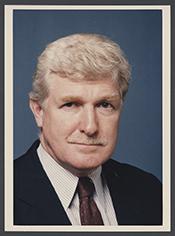
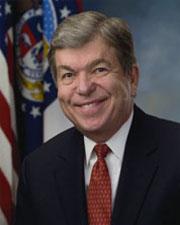
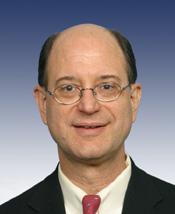
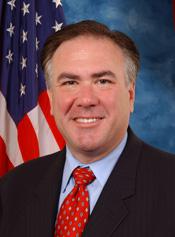
Mr. Chairman, I want to begin by recognizing the two Members who are the main authors of this bill, and I will begin with 2 minutes for the gentleman from Florida (Mr. Grayson). I yield the gentleman…
Mr. Chairman, I want to begin by recognizing the two Members who are the main authors of this bill, and I will begin with 2 minutes for the gentleman from Florida (Mr. Grayson).
I yield the gentleman an additional 30 seconds.
Regular order.
Mr. Chairman, I will yield myself as much time as I may consume.
This is really extraordinary. What you have just heard is a denunciation of something that was done by the Congress a few weeks ago and a refusal to undo it. I have never seen people, Mr. Chairman, so attached to something they hate. This is presumably a psychological disorder which I am not equipped to diagnose.
The objection of the gentleman from Texas was that, when the recovery bill was passed, it was passed too quickly. We signed it that night. It included a provision that should not have been in there. This bill takes it out. It takes it out in a way that makes sure it will have had no effect, because it dealt with something in the past, and it is undone by this.
Speaking about being undone, my Republican colleagues were being undone by the loss of their whipping boy.
I will yield.
I will take back my time.
The bill under consideration is 5\1/2\ pages. I believe even the gentleman from Texas could have read it by now, and if the gentleman from Texas has not been able to read this 5\1/2\-page bill, I will talk long. Even if you read slow, you'll get it done.
The point is that this bill undoes what he is complaining about. Note the refusal to address the subject. The complaint was that the amendment in the recovery package said that bonuses in the past given by AIG or by anybody else would not be covered by the restrictions in that bill. This undoes it. This takes it away. My colleagues on the other side are kind of like kids who have had a toy bear or a blanket, and this security blanket means a lot to them. Their security blanket is being able to complain about something that happened before the break. This bill undoes what happened before the break and makes it a nullity. They at some point, Mr. Chairman, have to outgrow the security blanket.
Now, of course, here is the real problem. They do not want to vote for a bill that restricts excessive pay and unreasonable bonuses. The gentleman from Texas has now had a chance to read the bill and has a question for me about this bill.
Yes.
I will take back my time to say that this is the bill that came out of the Financial Services Committee, and this was not out for 72 hours. It was out for much more than 72 hours. We, in fact, marked up the bill, with amendments, in an open markup last Wednesday. We voted on it on Thursday.
No. I'm sorry. The gentleman wants to debate a bill that was passed in February. He can have all of the Special Orders he wants in order to beat that dead horse, because it is a dead horse, Mr. Chairman. This bill that he does not want to debate the merits of, that he is probably prepared to vote against and is looking for some reason to, undoes what was done back then for the recipients of TARP funds. So that is the issue. This bill was marked up in committee. It was fully debated in committee.
I'm sorry. The gentleman has twice asked me to yield for questions.
I have twice yielded to the gentleman for questions, which I must say, in all parliamentary decorum, to me, did not seem to substantially add to the quality of the debate, because we are on this bill that he does not want to talk about. This bill was out. It was debated. It has been laid forth. We have amendments that will be considered to be adopted that were also made public for some time. Here is the point:
This bill addresses what Members on the other side complained about. Apparently, they regret that fact. They would rather complain than have us undo the source of their complaints, so that is why they are dealing so unhappily with this legislation.
Now let me get back to the merits of this bill. It says, if you have received capital contributions under the TARP, like AIG--AIG, by the way, was originally, of course, given money under the Bush administration, by the Bush-appointed head of the Federal Reserve and with the approval of the Bush-appointed Secretary of the Treasury. It later got TARP funds.
From the Senate, from the Senator of Connecticut, we then saw restrictions. He deserves credit for adding restrictions when no one else had pushed for them. He did not get all of the restrictions that he should have gotten, which was because of other people objecting. There was a requirement that the restrictions not be retroactive. Members complained about that. This bill fixes it. Let me emphasize again: This bill undoes the exemption of retroactive bonuses from the darned language. I don't understand why people are opposed.
No. Let me explain this to the gentleman from Texas. I yielded to him twice. I am not going to continue to let the gentleman from Texas evade the issue by not debating this bill. He has his own time. I am not going to waste the limited time we have to explain this bill with this kind of continued lament for the passage of a complaint.
What the bill says--and what I want to stress--is that it is only for people who get capital funds under the TARP. This does not interfere with small business lending. It does not interfere with people participating in the impaired asset program, and I can guarantee that it will not be so extended.
It says, if you get a capital contribution under the TARP bill, as long as you have that contribution, you cannot make payments that are excessive and unreasonable. You can give bonuses if they are performance-based, and it repeals what the Republicans have been complaining about.
Mr. Chairman, in closing, let me say I condole them on their loss. Their attachment to what they hated is truly impressive, but they are going to have to live with the fact that we are going to undo that and that they are now going to have to talk about what this bill does.
I reserve the balance of my time.
I thank you, Mr. Chairman.
I now recognize for 2 minutes----
Regular order, Mr. Chairman.
Mr. Chairman, I am going to yield myself 30 seconds to say:
Apparently, there are two alternative strategies that the minority has in discussing this bill: one, discuss a bill that was passed 6 weeks ago; two, ignore the rules of the House and just talk whenever they feel like it. Neither one seems, to me, to advance debate.
I now yield 2 minutes for serious conversation to the gentleman from Connecticut (Mr. Himes).
Mr. Chairman, I yield 2 minutes to the gentlewoman from Nevada (Ms. Berkley).
Yes.
This bill deals only with compensation, not with travel. The gentlewoman referred to incentive travel. Any incentives that were performance-based would be fully allowed. If by selling a certain number of things you earned a trip, that would be allowed. So it specifically does not deal with travel for the business. It would allow performance-based incentives for this or for any other purpose.
Mr. Chairman, I yield myself such time as I may consume.
This is really an interesting debate we're having within the Republican Party.
The first speakers were critical of the bill which passed in the recovery bill because it limited Senator Dodd's restrictions on compensation and said they wouldn't apply retroactively. As I said, it was Senator Dodd who initiated the notion of further restrictions. And many of the Republicans were upset that it didn't go far enough.
But now we have the deputy leader of the Republican side objecting that we're going too far, directly contrary to the complaints that we didn't apply these retroactively, he's upset that we applied them at all. And he says it's an interference with free enterprise.
Let's stress again. And I do know, he did say this is a revolt against King George in effect. And it is. King George Bush. Because we are dealing here with a program initiated under the Bush administration. We are dealing here when we talk about AIG with a grant of funds that came without any congressional input with the approval of the Bush administration.
We did, some of us, raise the compensation issue last fall. Yes, we did. We said that if you're going to take government money, you accept some compensation restrictions. The gentleman from Texas--and I do note that he's left the floor. I think the gentleman from Texas is entitled to leave the floor. I don't think having made a speech you have to sit here and listen to some of the other speeches. I have to because I am the manager of the bill. I wish I didn't have to listen to some of these speeches, particularly the repetitive ones about the bill 6 weeks ago. But since commenting on people leaving the floor is in vogue, I thought I would become fashionable at least in this regard.
But here's the point. We say if you receive TARP funds capital infusion, you accept some restrictions. That is no more an interference with free enterprise than any other contracting rule the Federal Government has. And as to the gentleman from Texas's suggestion, he said, Oh, but this isn't the problem. The problem is where it will go.
Now, Mr. Chairman, I have observed that when people are opposed to something but don't have confidence in the persuasive quality of the arguments on the particular issue, they migrate to what would happen if it was applied in a wholly different context. It will not be applied in a wholly different context.
I speak for myself and the majority leader, Mr. Hoyer. This bill is confined to people who take a capital infusion under the TARP. It will not be extended to any other participant in the impaired asset program, in the small business lending program, in the higher education lending program. I would not, as chairman, convene a meeting for such a bill. The majority leader would not bring one to the floor. Again, there is zero chance of that happening.
But when Members complain about something that might happen that won't happen, it is because they are against what is happening but don't have the confidence that if they said it, people would believe it.
Let's go back to what this bill does. It undoes the restriction on retroactivity that had been a cause of such outrage among the Republicans, and I repeat again. They appear to have become so attached to their outrage that they are even more outraged that they won't be able to be outraged any more.
Secondly, we say that if you receive a capital infusion under the TARP program and only a capital infusion, you may not make salary payments that are excessive or unreasonable and you can give bonuses as long as they are performance-based, such as in restricted stock or in other ways.
I await Members on the other side--because a number of them have spoken, but not one of them has objected to the bill on its merits. The gentleman from Texas said, Well, if you took this principle and went further, it would be a problem. The other Members said, Isn't it too bad we did something 6 weeks ago that we're now undoing? I have yet to hear an argument against this bill.
I reserve the balance of my time.
How much time remains on each side?
I yield myself such time as I may consume.
I heard the gentleman from Alabama say that we should not get into this business of fixing compensation. Someone claiming to be the gentleman from Alabama last year voted for legislation which included the following. It was the rescue plan. The gentleman voted for it when it passed.
On page 12 of that bill, there's a heading, section 111, ``Executive Compensation and Corporate Governance.'' The gentleman from Alabama voted for this. So did the rest of the Republican leadership. They did it at the request of President Bush and of Secretary Paulson and of Chairman Bernanke, not heretofore known for their socialism. But the gentleman from Alabama voted for exactly what he now decries.
It is a grant of authority to the Secretary of the Treasury to require--I'm now quoting. He shall require that the financial institution meet appropriate standards for executive compensation and corporate governance. It goes beyond much of this bill, corporate governance. The standard shall be effective for the duration of the period that the Secretary holds an equity or debt position in the financial institution. So the gentleman voted for this when the Republicans were in power. Circumstances apparently change opinions.
In fact, there's also this great inconsistency. For a month now, the Republicans have been complaining that in the recovery bill we adopted a provision as the Congress which limited the reach of the government's intervention into compensation. That was the part about retroactivity. This undoes that limitation. So, in the name of limiting government, the gentleman denounces the bill that would undue the limitation that his party has been denouncing. There is a fundamental gap that can only be explained, it seems to me, by something other than the merits.
Given what the gentleman from Alabama said--we've got to get the government out of this--why was he then opposed, if he was, to the language that limited its retroactive application? In fact, if you believe that one of the big arguments is that we changed the rules after the fact, he should have been for that limitation.
The arguments about free enterprise and not understanding the principles are just nonsense, Mr. Chairman. We're not debating free enterprise. We're debating how best to make it work.
I think Franklin Roosevelt helped save free enterprise. I think rules help save free enterprise. I think when Secretary Paulson in the Bush administration called for more regulation of credit default swaps and collateralized debt obligations, we'll probably be getting an announcement that they will be opposed to that, because that's what we are going to be going forward trying to do.
Yes, the government does have a role in this, but to return to this bill, which the gentleman only briefly discussed, it does do what the gentleman voted for last fall, and by the way, the argument that the government was responsible--the gentleman said in 1999 this started. I was not going to refer to the history, but from 1995 through 2006, Members of the Republican Party controlled this Chamber, and they controlled it tightly. If, in 1999, the gentleman from Alabama, as a member of the Republican majority on the Financial Services Committee thought there was a problem, they should have done something about it.
The gentleman from Alabama was, for a time later on, the chairman of the Financial Institutions Subcommittee, which had jurisdiction over lending standards. Some of us wanted to pass a bill to limit abuse of subprime lending. Yes, that happened, Mr. Chairman, in the House. It happened in 2007, after we became the majority, and let me say now I think we still have the potential for the bad loans to be made.
When this House returns after the April break, we will have in committee arguments on the floor legislation that will stop precisely the kind of loans that the gentleman from Alabama decried, and I await with interest what the votes will be.
I reserve the balance of my time.
I yield 4 minutes to the gentleman from California (Mr. Sherman).
How much time do I have remaining, Mr. Chairman?
I will be the closing speaker so the gentleman may proceed.
I yield myself the remaining time, first to say that this dangerous step was of course taken--if you think it's a dangerous step--last fall, when, with the support of the Republican leader and the Republican whip and the ranking Republican on the committee, Congress passed a bill which had a section on executive compensation and corporate governance.
This one called on the Secretary to set appropriate standards. Frankly, excessive and unreasonable is a tighter limitation. Unlike this one, it isn't just the Secretary of the Treasury--it is the Secretary of the Treasury, in accordance with, and has to get the approval of the head of the FDIC, Ms. Bair, the Comptroller of the Currency. Yes, there's a consultation with the head of the oversight board. She has no vote on it. The votes are from the regulators.
Let's stress again--this only applies, this bill, to people who voluntarily keep capital infusions from the Federal Government. If they don't like it, they can return the money. That's what an assault on free enterprise is.
The ranking Republican said before that anybody who does business with the Federal Government might be subjected to that. No, that's not remotely true. It certainly isn't true in the bill.
The bill explicitly says that if you do business with one of the covered entities, you're not covered by this. It explicitly says that.
Not being able to argue against this bill on the merits, they then say, Well, what happened if it was applied 16 different other ways? I don't think it should be. I didn't know it won't be.
Again, when people argue against what is not in the bill, but what might come, it's because they have no confidence in their arguments against the bill.
We did adopt, with a majority of Senate Republicans, the leadership-- not quite a majority--but the leadership of House Republicans on these issues, President George Bush--we've already adopted rules that say, quite sensibly, if you take the Federal money, there are some restrictions. And if you don't like it, give the money back.
Now the gentleman from Georgia said, Oh, but the bill goes too far because it doesn't just repeal what we did. And he talked about the Lungren bill. I hadn't heard about the Lungren bill. The reason is that the Lungren Republican bill was introduced after we had made clear what we were going to do on Monday, 2 days before we marked up the bill. It was not called to my attention. No member of the Republicans
on the Financial Services Committee said, Let's just do it this way.
We had an open markup. The Lungren bill could have been offered as an amendment by any Republican member of the committee. They did not do it. If they forgot, Mr. Lungren himself could have come to the Rules Committee and asked that it be made in order as amendment. They did not do it.
They quietly introduced a bill, made sure that no one noticed it; called it to no one's attention; deliberately refrained from offering it as an amendment at an open markup, when they could have; deliberately refrained from going to Rules Committee and asking that it be made in order; and now they're complaining that it wasn't adopted.
The fact is this: The Republicans regret losing the provision that was added mistakenly, in my judgment, in the hurried deliberations, hurried conclusion on the recovery bill.
The gentleman from California mentioned this. The Senator from Connecticut offered restrictions. The Members on the other side baffle me sometimes--sometimes more than others. They are critical of restrictions. The gentleman from Connecticut offered restrictions on compensation. Presumably, they would denounce him for that. But as the gentleman from California pointed out, they are objecting to offering restrictions, and then they're objecting because somebody persuaded him the restriction shouldn't be so restrictive.
Now we also have in here a provision that this will lead people to give back TARP money. At an earlier stage, before I think they reconsidered the total inconsistency of it, some of the Republicans said, Oh, this is a problem because it will give back TARP money. Of course, these are the same people who said they wished there was no
I rise to offer that amendment.
Mr. Chairman, this is an amendment that reflects the debate that we had to some extent in the committee. Some Members on both sides raised questions about ambiguity. That is why you have markups.
For example, we want to make it very clear that this applies only to institutions that have received and voluntarily retained capital infusions.
So, as a later amendment offered by one of our Republican colleagues does, that I hope is adopted, it reinforces that you don't become subject to these limitations on compensation just because you do business with an institution that gets the investment. One Republican Member said, well, what about people who buy or sell mortgages from Fannie Mae and Freddie Mac? We make it very clear that they would not be covered.
We did make it clear that where people have earned severance pay and their salary was $250,000 or less, that the severance pay is not greater than $250,000, or the annual salary, that earned severance pay could be paid under previous contracts. We always intended that. We wanted to make sure. And it does create a commission on executive compensation to study a system, because some people thought, well, we haven't done it well enough.
Now, I have one other point, Mr. Chairman. Would it be in order for me to make a unanimous consent request for a modification of the amendment?
The gentlewoman from North Carolina said that she thought it was a mistake to refer to both executive or employee, because executives are employees. And in the interest of that grammatical position, I ask unanimous consent to amend the manager's amendment to incorporate the point made by the gentlewoman from North Carolina, and strike the words ``executive or.''
If the gentleman would yield, yes, that was the point raised by the gentlewoman from North Carolina. I think that effectuates her point.
Mr. Chairman, I withdraw my unanimous consent request.
Mr. Chairman, I guess we get a sense of what is happening here. The gentlewoman from North Carolina raised the point that, frankly, didn't seem to me one of the most important ever to be raised. It said we had some redundancy in the bill. Lawyers, of course, hate redundancy, as we all know. They are belt and suspenders opposed to it.
I tried to accommodate the gentlewoman from North Carolina. It touched off an entirely unnecessary debate eating up the time. If the Members are prepared to accept this at some point, in the spirit of conciliation I will offer it again, but not to be the subject for extra debate time which intrudes on the Members' time.
The manager's amendment, as I said, clarifies points that were raised, as I just tried to do with the gentlewoman from North Carolina, tried to give some assurance. Sometimes the atmosphere gets so partisan that that effort of conciliation becomes too difficult, so I will leave it where it is.
I reserve the balance of my time.
I yield myself 2\1/2\ minutes to comment on the most extraordinary display of illogic ever inflicted on this Chamber.
The gentleman complains that the restriction was adopted, but now complains that we are going to undo it.
And the gentleman is leaving the Chamber. Let me say to him, I understand differences of opinion, but I do resent the suggestion that I am trying to cover anything up. As chairman of the committee, I----
No. I brought a bill to the committee for a markup. We had an open markup. People could have offered any amendment they wanted. We then brought the bill to the floor. We went to the Rules Committee. I urged some----
I reclaim my time. The answer is obvious. No, the stimulus bill did not come to a committee which had no jurisdiction over it, as the Member well knew. I am talking about the accusation that a bill to correct a mistake is a coverup.
The illogic of that is overwhelming. The lack, I think, of commitment here to public policy is striking. The gentleman is complaining about a mistake, and he calls an attempt to correct a mistake a coverup. What is the coverup? This is a bill that was debated openly in a markup, it was debated openly in the Rules Committee. It is being debated openly on the floor.
This accusation of coverup is not, it seems to me, a serious contribution to a debate on the merits. But there is also the fundamental inconsistency on the Republican side. They were opposed, and the gentleman said this bill is going to get us deeper into the affairs of corporations. How? By repealing something the gentleman was opposed to.
If in fact the provision he didn't like hadn't been put in there in the first place, we wouldn't have been so deeply into it. This is simply, let's find something to complain about. Let's ignore logic.
The gentleman says he doesn't want us more deeply into corporations. Well, then he should have been for that restriction. Indeed, his quarrel with Senator Dodd is not that he only got part of what he wanted, but that he moved it at all. Because, remember, it was Senator Dodd who initiated the further restriction.
I reserve the balance of my time.
Mr. Chairman, I have only one speaker remaining.
Mr. Chairman, first, I appreciate the generosity of the gentleman from New Jersey when he accepts the fact that I intend to do this through the committee that I chair. He then suggested, however, that we might lose control of this. I'm talking now about the ability to restrict the recipients of the capital infusion. And he talked about a tax bill that didn't come out of the Committee on Financial Services and a bill just voted on today, defeated, out of Judiciary.
But I will assure him, given the support of the leadership on the Democratic side, of the importance of restricting this to recipients of capital infusions. Both of those bills included that same restriction. The Committee on Financial Services had no great input into the tax bill. But the writers of that bill accepted our language that applied only to recipients of a capital infusion. Similarly, the Judiciary bill applies only to recipients of the capital infusion. And I have now put every other chairman on notice about assurances that will be there.
The other thing the gentleman from New Jersey said indicates the split on the Republican side. He denounced retroactivity. There is a good argument against retroactivity, and the courts may have to decide it. But remember that unlike the gentleman from New Jersey with his consistency to principle, a large number of Republicans, including the gentleman from Nebraska, have been denouncing the administration and the Senate precisely for accepting the principle that you don't go retroactive. The gentleman from New Jersey said, ``Don't be retroactive.'' But most of the other Republicans have been saying, ``How dare you not go retroactive?''
The provision that kindled all the anger that was put into the recovery bill was a provision that says, ``Don't apply these rules retroactively.'' The gentleman from New Jersey says, ``Don't apply the rules retroactively''?
I guess he is lucky that his colleagues have decided not to denounce him. He is a very nice guy. That is probably what has charmed them. But he has just articulated precisely the principle that has led to that firestorm of attack.
Now again, this bill undoes that. Members said, Oh, but it does more than that. And there is an implicit suggestion that if only, if we had only done that, it would have been okay. But I repeat, the bill that only does that was introduced 2 days before the markup. I don't read every bill that is introduced. No Member of the Republican's minority on the committee offered an amendment to reduce this only to that repeal. No Republican in the House came to the Rules Committee and said, You know, that provision, that is a terrible provision. Let's get rid of it.
They don't want to get rid of it, Mr. Chairman, because they want to be able to attack it. Some of them want to attack retroactivity, and some of them want to attack a bar on retroactivity.
As to the standards, in the first place, members of the minority have consistently--I guess it scares people more--misstated the authority here. It is to the Secretary of the Treasury and the Federal Financial Institutions Examination Council, a five-member body, three of whom are George Bush appointees; the Comptroller of the Currency, Mr. Duggan; the head of the FDIC, Ms. Bair, and the chairman of the Federal Reserve, Mr. Bernanke. They are three of the five members of this committee, and they are not advisory. The oversight panel is an advisory role.
The five members of the Federal Financial Institutions Examination Council, people with long experience in regulating financial institutions, are the ones that have to sign off on any regulations. So why is it simply the Secretary of the Treasury? The gentleman from Georgia read off the biography of the Secretary of the Treasury. He went to Dartmouth. Apparently that is a prerequisite today for Secretaries of the Treasury, as Mr. Paulson did. But what about Ms. Bair's experience? What about Mr. Duggan's experience? What about others who are in that position who have had long experience both in the private sector, as they have, and as bank regulators?
This is an effort to caricature the bill. By the way, last year, the Republican majority of the Senate, President Bush, the Republican leadership of the Financial Services Committee and the Republican leadership of the House voted for a bill that gave more discretion to the Secretary of the Treasury alone. I understand that times change. But a change in political control should not lead to such a rapid change in political opinion. And if retroactivity is a terrible thing, then retroactivity shouldn't have been the cause of all that argument.
I repeat again. This says if you take Federal money under the capital infusion program, you cannot issue excessive or unreasonable payments, which is what AIG did. And they didn't just do the top executives. Why do we cover everybody? Because AIG and others could cover everybody. And it says, ``Let's undo the mistake that was made during the recovery.''
Obviously, the manager's amendment is not controversial. It has just been the forum for more extended debate. I hope the manager's amendment is adopted.
Will the gentleman yield?
I thank the gentleman because this is important not just for what it does but for what it says. Community banks have not been the source of this problem. They didn't make bad subprime loans. They didn't get into CDOs. They have been unfairly blamed and to some extent burdened. And it should be our commitment, and we are, we are trying to do this in other ways, with the FDIC assessment. The gentleman from California has been a leader in this. This is a chance for us, in effect, to apologize to community banks for criticism that was undeserved and to assure them that we will try to insulate them from actions that should not occur that would penalize them for things that they didn't do wrong.
I thank the gentleman for his leadership.
If the gentleman would yield further, I would note that I'm going to introduce a letter from Camden Fine, the president and CEO of the Independent Community Bank Association.
March 31, 2009.
Re Support Cardoza Amendment to H.R. 1664.
Dear Representative: On behalf of the Independent Community
Bankers of America, and its 5,000 members, I strongly urge
you to support the Cardoza Amendment to H.R. 1664, the
executive compensation legislation applicable to TARP
recipients. The Cardoza Amendment recognizes that community
banks do not engage in the unreasonable and excessive
compensation practices that are at the heart of the TARP
bonus scandals.
As a result of prudent lending practices and common-sense
compensation policies, the majority of community banks remain
strongly capitalized and ready to do their part to aid
economic recovery through lending to households and small
businesses. Recognizing the important role community banks
play in our recovery, both the Obama and Bush Administrations
have encouraged community banks to participate in the TARP
Capital Purchase Program. The Program provides additional
resources to participating community banks to enhance their
role as catalysts for economic recovery in their local
communities.
Unfortunately, efforts to rein in excessive and
unreasonable compensation practices of MG and others have
also reached the community banks. The broad-brush approach to
addressing compensation abuses needlessly and unfairly adds
to the regulatory burden of community banks participating in
the Capital Purchase Program. It would be a shame if well-
intended, but misdirected, regulation of bank employee
compensation forces community banks to withdraw from the
program or not sign up in the first place.
The Cardoza Amendment takes a targeted approach to the
regulation of executive and employee compensation by allowing
the Secretary of the Treasury to concentrate his efforts
where the problems existed in the first place--the largest
financial institutions. The amendment allows the Secretary to
exempt community financial institutions from the compensation
standards established under H.R. 1664, if the Secretary finds
that an exemption is consistent with the purposes of the new
legislation. For purposes of the exemption, a community
financial institution is an institution that receives or has
received not more than $250 million under the Capital
Purchase Program.
The Cardoza amendment will encourage the participation of
community banks in the Capital Purchase Program and enhance
the community bank industry's role as leaders in our economic
recovery. Thank you for considering our views.
Sincerely,
Camden R. Fine,
President and CEO.
Capital infusions from TARP. There are other forms of TARP money, but accept capital infusions of TARP money.
Only the capital infusions, the gentleman from Alabama's idea, as I give him credit for.
Yes, because AIG did get a TARP capital infusion.
They didn't originally, as the gentleman knows, but there was subsequently a TARP addition to.
If the gentleman would yield, I never used that language. That's not my language
Well, the President and I agree a lot, but not all the time. I'd like people to return the money. It's good for the taxpayers. It's a sign that they are stable, and we specifically amended the law to allow them to return it, and I encourage them to return it.
If it's going to reduce their lending, then they probably shouldn't return it. But there are other things that people do with it. And I understand. But if the gentleman is asking me do I understand that I'm disagreeing to some extent with the President and the Secretary of the Treasury, yes, sometimes that happens.
If the gentleman would yield, the Secretary of the Treasury apparently sponsored the restriction against retroactivity. He is on the side of the gentleman from New Jersey (Mr. Garrett) against retroactivity. I am here with a bill that undoes something the Secretary of the Treasury did.
If the gentleman will yield. Yes, because in AIG we had hundreds of people--yes, it does.