To require the Secretary of the Treasury to use any amounts repaid by a financial institution that is a recipient of assistance under the Troubled Assets Relief Program to reduce the authorization level under the TARP.
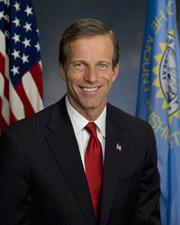 Sen. John Thune (R-SD)
Legislative Activity
Stay on top of the latest movement without scrolling through every action
Senate amendment proposed (on the floor): Amendment SA 1030 proposed by Senator Thune to Amendment SA 1018.(consideration: CR S5094-5097; text: CR S5094)
May 5, 2009
View full timeline
Senate amendment proposed (on the floor): Amendment SA 1030 proposed by Senator Thune to Amendment SA 1018.(consideration: CR S5094-5097; text: CR S5094)
May 5, 2009
Senate amendment not agreed to: Amendment SA 1030 not agreed to in Senate by Yea-Nay Vote. 47 - 48. Record Vote Number: 179.
May 5, 2009
Roll call votes on amendments in Senate: Amendment SA 1030 not agreed to in Senate by Yea-Nay Vote. 47 - 48. Record Vote Number: 179.
May 5, 2009
Amendment SA 1030 proposed by Senator Thune to Amendment SA 1018. (consideration: CR S5094-5097; text: CR S5094) To require the Secretary of the Treasury to use any amounts repaid by a financial institution that is a recipient of assistance under the Troubled Assets Relief Program to reduce the authorization level under the TARP.
May 5, 2009
Amendment SA 1030 not agreed to in Senate by Yea-Nay Vote. 47 - 48. Record Vote Number: 179.
May 5, 2009
Senate amendment submitted
May 1, 2009
Votes
1 roll call on this amendment
Text
Proposed
HELPING FAMILIES SAVE THEIR HOMES ACT OF 2009

The ACTING PRESIDENT pro tempore. Under the previous order, the
Senate will resume consideration of S. 896, which the clerk will
report.
The assistant legislative clerk read as follows:

A bill (S. 896) to prevent mortgage foreclosures and
enhance mortgage credit availability.

Pending:

Dodd/Shelby amendment No. 1018, in the nature of a
substitute.
Corker amendment No. 1019 (to amendment No. 1018), to
address safe harbor for certain servicers.
Dodd (for Grassley) amendment No. 1020 (to amendment No.
1018), to enhance the oversight authority of the Comptroller
General of the United States with respect to expenditures
under the Troubled Asset Relief Program.
Dodd (for Grassley) amendment No. 1021 (to amendment No.
1018), to amend Chapter 7 of title 31, United States Code, to
provide the Comptroller General additional audit authorities
relating to the Board of Governors of the Federal Reserve
System.

Mr. DODD. Mr. President, my understanding is my friend and colleague
from Tennessee has an amendment which is in order. I am prepared to
defer to him. Then when he completes his remarks, I will respond.
I believe Senator Martinez of Florida may be coming over as well. I
understand we have an agreement to have a vote at 10:50. Is that
correct?
The ACTING PRESIDENT pro tempore. The Senator is correct.
Mr. DODD. I yield the floor.

Amendment No. 1019

The ACTING PRESIDENT pro tempore. The Senator from Tennessee is
recognized.
Mr. CORKER. Mr. President, I rise to speak on amendment No. 1019. Let
me start by saying I appreciate the work Senators Dodd and Shelby have
done to bring the bill to the floor. I know they are trying to solve a
number of problems that exist right now as relates to homeowners in our
country trying to reposition where they are with their homes.
I know there are a number of issues with HOPE for Homeowners that was
passed last summer that they are trying to solve. I say to the Senator
from Connecticut, I appreciate his efforts. I appreciate the efforts of
Senator Shelby.
The amendment I am offering and on which we will be voting tries to
make the safe harbor arrangement that exists in this bill something
that is fair to all folks involved in these loans. Most people are
aware of pooling arrangements where, in essence, there are servicers
who take care of the indebtedness against a homeowner. They pool these
together through the securitization that has taken place in the past in
order to deal with homeowners. There has been great difficulty in the
past in trying to move programs along so we can modify these mortgages.
The problem with this bill, though, is that under the safe harbor
arrangement that has been put in place, it does not necessarily do what
is best for the homeowner and doesn't necessarily do what is best for
the investors, as many Americans have these in their 401(k)s. What it
does do is an excellent job of taking care of the large four banks that
do the bulk of the servicing: J.P. Morgan, Wells Fargo, Citigroup, and
Bank of America. This bill actually incents them. We are paying them
money to do what is in their best interest.
Most of these large banks actually hold the second mortgages, not the
first mortgages. The first mortgages are the ones I think most of us
realize have priority. Those are the loans that allowed you to go into
and actually purchase the home in the first place. Then these banks
came along, in some cases unwittingly, and participated in predatory-
type lending. So these banks, in essence, own most of the second
mortgages, the home equity loans. They also own a huge portion of the
credit card debt that many of these consumers have. We are paying them
in this bill to actually deal with these mortgages in a way that is in
their best interest. They have the lesser amount of security, but they
also have built-in conflicts of interest where, in essence, if they can
do things to cause these consumers to have the secondary debt taken
care of, it is in their best interest to do that.
I think this is a huge problem. I find it incredible that we, in
essence, in this body would pass a bill where we, in essence, are
paying the fox to guard a chicken house that is in their best interest.
That is what this bill does.
What our amendment would do is say to these servicers, these people
who are taking care of these mortgages, which is servicing the first
and second mortgage--again, them owning mostly the second mortgages--
what it would do is say they have to look at all options, not just the
ones cited in the bill.
For instance, if a homeowner would be better served by having
forbearance, meaning for reduction of principal or something such as
that, or maybe a short sale, something else that might be in much
better stead for the homeowner and for the investor, the servicer
doesn't have to do that. All the servicer has to do in this bill is
look at one of two programs--the Obama administration's modification
program or the HOPE for Homeowners modification program, just one, not
both--and compare it to foreclosure. If it is better off going with one
of these two programs, they move it into those programs, even though it
may not be in the homeowner's best interest and even though it may not
be in those many Americans across our country who have these first
mortgages in their 401(k)s, not in their best interest. Typically,
though, it is going to be in the servicers' best interest, these four
large banks that are being paid money by this bill to actually pursue
this servicing in a manner that is in their best interest.
I hope everyone will join me in asking these servicers to not just
look at what is in their best interest but to actually first look and
see what is in the best interest of those people who own the first
mortgages and for those people who actually are in these homes who are
trying to stay in these homes. There are provisions here that actually

[[Page S5089]]

make it worse for the homeowner, in that, basically, much of the debt
gets pushed off into 5 years and actually defers their paying, actually
makes their situation even worse than it is today. But in the short
term, it might make it better, again, for these four large banks.
I am somewhat surprised the sponsors of this bill, whom I have a lot
of respect for and work with on a number of issues, are not accepting
this commonsense amendment, which says to these servicers, who have a
contract, by the way, for those people whom they are servicing these
mortgages for, to say that they have to look at everybody's best
interest, not their own self-interest, prior to making changes in these
mortgages. It is pretty astounding to me. I am still not sure I
understand.
Let me make one other point. Last week we, as a body, both sides of
the aisle in a bipartisan way, turned away something called cram-down,
which gave judges around the country the ability to change the terms of
a first mortgage. This body, in a bipartisan way, said we should not be
letting the courts change contracts. That is something that is foreign
to an American way of thinking. By the way, courts, at least judges,
are appointed or elected. They are in positions of public service. What
this bill does instead is, it pays servicers, many of which have
contributed to this problem in a huge way, to do things that in many
cases are in their own self-interest, breaking contract law, and in
many cases hurting the homeowner and hurting the investors.
I hope everybody will see the commonsense nature of this amendment. I
hope we can pass this amendment and cause the work that Senators Dodd
and Shelby have done to improve the situation that exists, to make it
even fairer to all involved.
The ACTING PRESIDENT pro tempore. The Senator from Connecticut.
Mr. DODD. Mr. President, I see our colleague from Florida has
arrived. I will take a few minutes and then ask unanimous consent that
he be recognized as the original author of the safe harbor provision so
he has a chance to explain his point of view.
Let me begin. Again, it is not necessarily the most compelling of
arguments, but I think it is worthy of note that those organizations
who are opposed to the amendment of the Senator from Tennessee include
the Consumer Federation of America, the National Community Law Center,
the National Association of Consumer Advocates, the Housing Policy
Council, the Financial Roundtable, the Center for Responsible Lending,
the Mortgage Insurance Corporation, mortgage bankers, and the ABA. This
is a pretty rare collection, when we get the major consumer groups that
watch all this stuff very carefully, as well as some of the major
lending institutions. They never come together on anything. It is a
unique moment on this proposal.
Let me say to my friend from Tennessee, I don't like the situation we
are in either. This is not the ideal world because his point about
contracts is a valid one. There is no question. I pointed out there are
contracts with second homes and vacation homes and the like as well. We
had no problem with the cram-down with mortgages involved there. We
have a prohibition on primary residences, but we make the exception
with other properties. Frankly, had we taken the Durbin amendment, that
might have minimized the importance of what we have here.
Here is the problem: 10,000 people a day are losing their homes;
20,000 a day are losing their jobs. The question is, How can we
possibly get the kind of incentives so the bankers, the servicers, the
lenders, and the borrowers can modify these mortgages? We now have 11
million homes in this country where the mortgage exceeds the value of
the property. If we don't step up soon, those numbers will explode. We
have a moratorium on foreclosures in certain areas, and that is just
building up a backlog that if we don't end up with some means by which
that borrower and lender can work out an arrangement that they can
modify the mortgage, we will face a cascading effect which most people
agree is the root cause of our financial difficulties, beginning with
predatory lending and subprime lending that helped create this problem
with no-documentation loans, the liar loans and the like.

What we have crafted is a rather narrow answer. They have a safe
harbor provision which is very broad and, frankly, it can be narrowed.
That is what Senator Martinez has done with his proposal. What we are
talking about are loans in the private label securities. That
represents about 16 percent of what we are talking about. Yet within
that 16 percent, in excess of 62 percent of those loans, are seriously
delinquent loans. So while it is a relatively small number compared to
the total mortgages being written, in terms of delinquent mortgages, it
represents a fairly significant majority. We are narrowly dealing with
those.
Then we are talking about two circumstances in which they voluntarily
can move. That is with the Obama plan or the HOPE for Homeowners. We
are not limiting it. If people don't want to do it, there is no
requirement that they do it. We are trying to remove one of the great
barriers, and that is the fear of litigation. The servicers are saying:
We would like to do this. We understand the value of it. We want to get
paid. Banks want to get paid. Borrowers want to stay in their homes.
Everybody seems to agree on that. Here is the problem: If we end up
modifying this, the investor, not an illegitimate point, says: Wait a
minute, we had a contract with you, Mr. Servicer. You are going to now
modify this, violating our interests as an investor. Therefore, we are
going to sue you.
That is the fear. So the servicer says: I am not going near this. I
respect the fact the borrower would like to get out of this situation
in an affordable mortgage. I would like to get paid something in the
process. But I will not go through the kind of litigation that will
occur if there is not a safe harbor. Hence, the Martinez amendment.
In these narrow circumstances involving 16 percent of this market,
and of which 62 percent are the delinquent mortgages, under two fact
situations, the HOPE for Homeowners and the Obama mortgage modification
plan, we provide for that safe harbor, saying to that servicer, if, in
fact, you move forward, we will provide you with that harbor and avoid
the potential of litigation, in some cases even frivolous litigation.
Again, in a perfect world, would I like to avoid that and do what my
friend from Tennessee wants? Absolutely. But there are no perfect
choices, and yet there are some potential dangers. I don't like setting
a precedent. We narrowly define this in time and circumstance, only
involving those that already occurred, and the problem dies or is
sunsetted in December of 2012. So this is not a perpetual program. It
is limited to the fact situation, limited to opportunities in order to
try and provide some relief primarily to the consumer, to the person
holding that mortgage or the person having that mortgage who runs the
risk of losing their home.
We have tried, for a year and a half, all sorts of different ways. My
friend from Tennessee and the former Secretary of Housing and Urban
Development, Senator Martinez, who knows something about these issues,
will recall we tried, in the spring of 2007, to get these people
together to try and work out things. They promised they would try. They
never did. Then we drafted legislation, far from perfect because we are
back today talking about it, called HOPE for Homeowners. We tried all
sorts of means by which we could slow down the foreclosure problem.
Regretfully, we have not been as successful as we would like. There
is no guarantee this will work as well as we would like either. I say
that as a coauthor of this bill overall, and I appreciate my
colleague's fine comments about the effort. But it is an attempt to try
and provide some space, in these very delinquent mortgages, to provide
an opportunity for a modification so people can stay in their homes,
borrowers can keep their homes, lenders get something back, rather than
going to foreclosure in which the implications for everyone are
devastating.
Again, the investor does not have an illegitimate complaint, but in
the context of balancing these interests, where, again, no one is going
to come out of this perfect, in a way I think it is in our interest to
try and do what we can to keep people in their homes and have the
lenders be able to get something back. Hence, that is why you see this
very unique coming together of

[[Page S5090]]

various interest groups, from the consumer advocates to the major
lending associations, saying on this point, they think this is the
right--at least worthy of our attempt to get this right.
Again, I respectfully say to my colleague from Tennessee, I
appreciate his points. He and I talked about this. But I honestly
believe in this case this would be a mistake to accept this amendment
and to run the risk of losing the opportunity to get that safe harbor
opportunity.
With that, I yield to my colleague from Florida.
The ACTING PRESIDENT pro tempore. The Senator from Tennessee.
Mr. CORKER. Mr. President, if the Senator from Florida would allow me
to speak for 1 minute.
Mr. DODD. Yes.
Mr. CORKER. Mr. President, I wish to make it clear because I think
the Senator from Connecticut, in doing a good job in talking about his
position, made it seem as if we are against loan modifications. Look,
there were 134,000 loan modifications last month. I am all for loan
modifications.
But what this bill does now is it gives those four largest banks, and
many others, the ability--we are paying them, we are giving them the
ability to do things that are in their self-interest and not in the
homeowners' self-interest--let me say that one more time: not in the
homeowners' self-interest--and be totally obligation free, with no
legal recourse whatsoever against them.
What this amendment does is say we are giving them safe harbor, but
they have to look at a variety of ways to make sure the homeowner and
the investor both are being treated fairly. This bill is very narrow.
It allows them to wash their hands and do things that are in their best
interest alone, and we are paying them to do that with no legal
recourse. To me, that is far, far, far more than we should be doing in
legislation such as this.
I thank the Senator.
The ACTING PRESIDENT pro tempore. The Senator from Connecticut.
Mr. DODD. Mr. President, a quick response.
The homeowner gets to keep their home, hopefully, at a rate they can
afford to pay. That is not insignificant, I say with all due respect.
The idea there is nothing in here that benefits homeowners--and I am
not interested in helping out the four big banks at all. I am
interested in making it possible for this to avoid litigation. That is
what the concern is; that if we are going to do this, we run the risk
because it violates a contract potentially, and if you do that, you are
subject to a lawsuit; hence, nothing happens.
That is the fear: nothing happens. If the servicers do not act, then
you end up with the borrower losing their home, the lender ends up
getting nothing out of it at all; and, hence, the reason why this safe
harbor is designed to get us to the point where both the borrower and
the lender--again, we are not interested in anyone coming out of this
situation with some enrichment, but the idea of slowing down this
cascading problem of foreclosures, I think is in everyone's interest,
as my colleague has pointed out.
Several Senators addressed the Chair.
The ACTING PRESIDENT pro tempore. The Senator from Tennessee.
Mr. CORKER. Thank you, Mr. President.
Let me make one more point. I will be brief.
Mr. MARTINEZ. Point of order, Mr. President.
The ACTING PRESIDENT pro tempore. Who yields time?
Mr. MARTINEZ. Mr. President, if I could inquire of the Chair----
The ACTING PRESIDENT pro tempore. Who yields time?
The Senator from Tennessee has the floor.
Does the Senator from Tennessee yield to the Senator from Florida?
Mr. CORKER. Certainly. Yes.
The ACTING PRESIDENT pro tempore. The Senator from Florida.
Mr. MARTINEZ. Mr. President, I would like to be heard and have an
opportunity to join in the discussion regarding this very important
issue. I appreciate the fact that the Senator from Tennessee has
spoken, rebutted, and wants to speak again. I appreciate that. But I
would like to have an opportunity to express my point of view at some
point. If the Chair could keep that in mind, I would like to do that at
some appropriate point.
The ACTING PRESIDENT pro tempore. The Senator from Tennessee.
Mr. CORKER. Mr. President, unless I am rebutted, this will be my
final point.
I would like to make a point that from the standpoint of the
homeowner, in many cases, they would be much better off if they were
given the opportunity to refinance, given the opportunity to refinance
at a lower rate and a longer amortization with organizations that
provide that opportunity today.
The servicer has no obligation to even look at a refinancing such as
that, for which in many cases the homeowner and the investor would be
better off. That is not a part of this bill. I find that to be a major
flaw.
I yield my time, Mr. President.
I thank the Senator from Florida for being so patient.
The ACTING PRESIDENT pro tempore. The Senator from Florida is
recognized.
Mr. MARTINEZ. Mr. President, I did not want the opportunity to pass
to be heard on this issue, and I would be pleased to have the Senator
from Tennessee make a rebuttal after I make my comments. But at some
point I did wish to have an opportunity to express my point of view on
this issue.
Here is the situation we are in. As the chairman of the Banking
Committee has said, this is not a perfect world. We are in a heck of a
mess. The people in Florida, by the thousands, are having their homes
foreclosed. Unemployment is almost 10 percent because about 25 percent
of Florida's economy is dependent on building homes and on the
construction industry, which is completely stopped, for the most part.
We are in a situation now where if I hold a forum in a city such as
Fort Myers, 450 people show up desperate for a solution to their
problem to stay in their home. We have some banks there, and we have
some people from HUD, from HOPE for Homeowners--all these people coming
together--to try to work things out, and many times it happens. It is
not nearly keeping up with the rate of foreclosures going on across the
country, but some are getting worked out.
How many more would be worked out if we had a safe harbor provision--
balanced--that keeps the investor community from being able to bring
legal action against the servicers? I think we would have thousands
more. Would the country be better off? Absolutely. Would the homeowner
be better off? Absolutely. Would everyone involved in the business of
housing and housing finance be better off? I submit to you it would be
so.
One of the reasons many of these loan modification programs we have
had--and they began in the Bush administration; they have continued now
in the Obama administration but they have not worked because of the
safe harbor need, because of the legal ramifications once a servicer
perceives the threat of litigation. The safe harbor provisions of this
legislation remove that perceived risk.
This bill, which includes a safe harbor that is lots narrower than
the one in the House version of this bill, makes it clear that so long
as a mortgage servicer concludes that, from the perspective of the
investors, an approved loan modification is better than foreclosure;
that is, modification will yield greater value than foreclosure--in
other words, the investor is protected to a degree--then the servicer
cannot be held liable for choosing to modify the loan and not
foreclose.
This legislation strengthens the current Federal loan modification
guidelines to assure that only deserving homeowners benefit from a
modification. Individuals with a net worth of more than $1 million
cannot qualify for a modification. Individuals who have been convicted
of fraud would also be barred. Any participant must certify that he or
she has not intentionally defaulted on any other debt before a
modification is going to be permitted.
Unlike the safe harbor provision in the House bill, this bill's safe
harbor would still permit investors to hold a servicer liable if the
servicer acts unreasonably or improperly fails to maximize investor
value through instigating a foreclosure. In other words,

[[Page S5091]]

there will still be a foreclosure if, in fact, it is in the best
interest of the investor.

The safe harbor provisions in this bill would help to strike the
proper balance between the future health of residential mortgage credit
in this country and the rights of investors.
I think what we need to understand a little better is that the intent
of the Corker amendment--while it is good; and I hate to disagree with
the Senator from Tennessee, whom I so often find myself in full
agreement with, but in this instance, I must because he requires that
all potential alternatives to foreclosure be evaluated and to select
the one that is best for the investor, regardless of whether that is in
the best interest of the homeowner, before the safe harbor litigation
protections are triggered. So before the safe harbor litigation
protections are triggered, all other options would have to be reviewed
and considered. Basically, there is no safe harbor at all. I do not
think, if the Corker amendment was adopted, we would see a lesser
number of foreclosures.
There are two problems with this amendment.
The language of the amendment appears to fail to achieve its stated
intent. The current language appears to require that a servicer
evaluate all possible alternatives to foreclosure but only provides a
safe harbor if the servicer chooses a government-sponsored loan
modification.
The second problem is it fails to strike the proper balance among the
interests of the servicers, the investors, and the homeowners. We tried
to strike a balance among all these competing interests in what we
acknowledge is an imperfect world.
The current language of the bill is better because it forces
servicers to make a reasonable determination about whether an investor
would be better off with a loan modification or foreclosure. It allows
the current loan modification efforts--that allow homeowners to remain
in their homes--an opportunity to actually work.
This allows investors to benefit from a modification, where it is
appropriate, while decreasing the number of foreclosures and increasing
the number of families who can remain in their homes.
Some have alleged constitutional concerns about this legislation, and
I have to tell you, in these kinds of moments, I think we do not want
to violate our Constitution, but it is necessary sometimes we step
outside a comfort zone, and it is undisputed Congress has the power to
regulate the residential mortgage industry. We believe we are on safe
legal grounds in that and that this does not constitute a taking or
even come close to that.
I believe the well-intended Corker amendment would not improve the
current situation as it relates to the number of workouts that are
taking place, and foreclosure would still be the rule of the day. I
believe the language in the bill is superior. It strikes a better
balance. It is not as broad as the House language, it is not as
restrictive as the Corker language, but it hits it just about right.
Mr. President, I yield the floor.
The ACTING PRESIDENT pro tempore. Who yields time?
The Senator from Tennessee.
Mr. CORKER. Mr. President, I thank my colleague from Florida, who has
served our country well both as a Senator but also as Secretary of HUD
and has tremendous amounts of experience in this area. We disagree on
this issue.
My amendment does not just seek to do what is best for the investor.
It seeks to do what is best for the homeowner and asks the servicer to
not just compare one alternative to foreclosure but an array of
alternatives to foreclosure.
I have to tell you, I know of people in financial distress, as most
of us do. I think I would like for these major banks that basically are
servicing credit card debt and home equity loans, I would like for them
to have to look after the interests of the homeowner and the investor
in every way they can prior to moving to foreclosure. That is what this
amendment does.
It is a commonsense amendment. I think we have moved ourselves into a
situation now that is potentially worse, as I said before, than what we
did the other day, which was that the other day we rejected giving
judges the ability to unilaterally change contracts. Now we are going
to be paying, in large portions, the four largest banks in the country,
we are going to be paying them our money, taxpayer money to do things
that in many cases are in their best interest and not in the
homeowner's best interest and the investor's best interest. I find that
problematic.
In years to come, if this legislation passes without this amendment,
we are going to look back and realize we did some things that may have
sounded great in the middle of a crisis but we did some things that 4
or 5 years from now we are going to wake up and realize have done great
harm to the very homeowners this bill seeks to help.
Mr. President, I thank you for the time.
I thank the Senator from Florida and the Senator from Connecticut for
the thoughtful conversations they have put forth. I think this
legislation is flawed. I know there are some other components of this
bill that are very good. As a matter of fact, I have authored, with the
major proponent, the Senator from Connecticut, large portions of this
bill. But this safe harbor agreement has many problems. I think it is a
shame, if this amendment is not adopted, we are going to end up with a
piece of legislation that does a lot of good but also does a lot of
harm and sets precedents in this country we are going to live to
regret.
Mr. President, I yield my time.
The ACTING PRESIDENT pro tempore. The Senator from Connecticut is
recognized.
Mr. DODD. Mr. President, I will take a minute. Let me just say again
that I have great respect for my colleague from Tennessee. He and I
work closely together on a lot of issues. He is invaluable as a
colleague, as is Senator Martinez, former Secretary of Housing, who
understands a lot of these issues well, not just from a senatorial
perspective but from his previous job as Secretary of Housing and Urban
Development in Washington.
Again, this is a program that is limited in time, limited in scope.
As both the Senator from Florida and I have said, this is far from a
perfect world in terms of how we have to balance the various interests
in all of this. I am not unmindful of the fact that we are in uncharted
waters. We all recognize as well that we are in uncharted waters in a
larger sense. We are in a time that none of us in this Chamber--with
the exception of my colleague from West Virginia and a couple others--
can recall. Our parents and grandparents talked to us about times like
these almost a century ago.
While we are taking action here--and I hear my colleague from
Tennessee, who made a legitimate point that we establish precedent
here, and I understand that. People will look back, as we have looked
back, to previous decades to seek ideas that might help us get back on
track again and restore that optimism and confidence in our country. So
we are moving into an area that is new, but as the Senator from Florida
pointed out, we are in a time that is new as well.
We have tried, as we know, in numerous ways over the last many months
to figure out ways to get at the root of this foreclosure problem.
Every idea you can come up with has its shortcomings. We have yet to
find the perfect one that everybody agrees on. If somebody has it,
please let us know because we are looking for it to get us to the point
where we can put the brakes on foreclosures, not because you impose a
moratorium but because people can afford their mortgages, lenders are
being paid, the economy is moving, credit is flowing, businesses are
growing, and joblessness is no longer increasing but declining--all of
the things we want to see.
This proposal we have advocated here, the safe harbor, in a narrowly
crafted way, limited in time, scope, and circumstance, we believe will
help in that regard. Is it perfect? Far from it. Is it necessary?
Absolutely. That is why I think you see the collection of
organizations. I don't want to overemphasize this point, but they have
come together to say this is an idea worth trying. Rarely do you get
that kind of cooperation.
At least there is some indication that the other body might be
willing to accept our language and take this bill, and the other
provisions of the bill--

[[Page S5092]]

my colleague is correct--really are important and are needed
immediately. We don't need to delay this further. That is not a reason
to be for or against the amendment, but I just point out that the other
side would agree to the Martinez idea.
I ask our colleagues to, at the appropriate time, oppose this
amendment--and I say that respectfully--so that we can move on to the
other amendment and see if we can reach a final vote this evening or
sometime in the morning.
I yield the floor.
The ACTING PRESIDENT pro tempore. The Senator from Florida is
recognized.
Mr. MARTINEZ. Mr. President, how much time remains?
The ACTING PRESIDENT pro tempore. Two minutes 16 seconds.
Mr. MARTINEZ. Mr. President, I wish to conclude and follow up on
something the chairman said.
The situation we are in is critical. Striking some balance that
reduces foreclosures is worth the risk. The corrosive effect of
foreclosures--and all of the things we have tried have nipped at the
issue but have not fixed it. The corrosive effect of foreclosures
continues this downward spiral of home prices, which escalates the
problem the banks have. Assets were becoming toxic yesterday, and are
today and tomorrow, because of the decline in home values. There is a
dramatic decline in my State, and the biggest reason for that is
foreclosures.
The foreclosures set a new floor on what the prices in the
neighborhoods are, and that floor then begins to be what other
purchasers are willing to pay. That, in effect, then reduces home
equities, reduces the opportunities for folks to stay in their homes,
and it is a downward spiral we have to stop. This is an effort to try
to stop it.
I am delighted to hear the Senator say that the House may take our
language. I think their language is very broad, frankly. What Senator
Corker has raised in his concerns would be heightened by the House
language. I think our language, in its imperfection, strikes a decent
balance among the interests of all parties and perhaps will increase
the number of workouts and reduce the number of foreclosures.
I also speak in opposition to the Corker amendment, and I would be
excited to see our bill move forward with this provision and the many
others that are helpful.
I yield the floor.
The ACTING PRESIDENT pro tempore. All time has expired.
Mr. DODD. Mr. President, so the pending matter is the Corker
amendment?
The ACTING PRESIDENT pro tempore. The Senator is correct.
Mr. DODD. Mr. President, I ask for the yeas and nays on the
amendment.
The ACTING PRESIDENT pro tempore. Is there a sufficient second?
There is a sufficient second.
The question is on agreeing to the amendment.
The clerk will call the roll.
The assistant legislative clerk proceeded to call the roll.
Mr. DURBIN. I announce that the Senator from South Dakota (Mr.
Johnson), the Senator from Massachusetts (Mr. Kennedy), the Senator
from West Virginia (Mr. Rockefeller), and the Senator from New
Hampshire (Mrs. Shaheen) are necessarily absent.
Mr. KYL. The following Senator is necessarily absent: the Senator
from Arizona (Mr. McCain).
The PRESIDING OFFICER (Mrs. Gillibrand). Are there any other Senators
in the Chamber desiring to vote?
The result was announced--yeas 31, nays 63, as follows:

[Rollcall Vote No. 178 Leg.]

YEAS--31

Alexander
Barrasso
Bennett
Bond
Brownback
Bunning
Burr
Coburn
Cochran
Corker
Cornyn
Crapo
DeMint
Enzi
Graham
Grassley
Gregg
Hatch
Inhofe
Johanns
Kyl
Lugar
McConnell
Murkowski
Risch
Roberts
Sessions
Shelby
Thune
Vitter
Wicker

NAYS--63

Akaka
Baucus
Bayh
Begich
Bennet
Bingaman
Boxer
Brown
Burris
Byrd
Cantwell
Cardin
Carper
Casey
Chambliss
Collins
Conrad
Dodd
Dorgan
Durbin
Ensign
Feingold
Feinstein
Gillibrand
Hagan
Harkin
Hutchison
Inouye
Isakson
Kaufman
Kerry
Klobuchar
Kohl
Landrieu
Lautenberg
Leahy
Levin
Lieberman
Lincoln
Martinez
McCaskill
Menendez
Merkley
Mikulski
Murray
Nelson (NE)
Nelson (FL)
Pryor
Reed
Reid
Sanders
Schumer
Snowe
Specter
Stabenow
Tester
Udall (CO)
Udall (NM)
Voinovich
Warner
Webb
Whitehouse
Wyden

NOT VOTING--5

Johnson
Kennedy
McCain
Rockefeller
Shaheen
The amendment (No. 1019) was rejected.
Mr. DODD. I move to reconsider the vote and to lay that motion on the
table.
The motion to lay on the table was agreed to.
The PRESIDING OFFICER. The Senator from Connecticut.

Amendment No. 1036 to Amendment No. 1018

Mr. DODD. Madam President, I ask unanimous consent that the pending
amendments be set aside so I may call up, on behalf of Senator Kerry,
amendment No. 1036.
The PRESIDING OFFICER. Is there objection?
The Chair hears none, and it is so ordered.
The clerk will report.
The legislative clerk read as follows:

The Senator from Connecticut [Mr. Dodd], for Mr. Kerry, for
himself, Mrs. Gillibrand, and Mr. Reid, proposes an amendment
numbered 1036 to amendment No. 1018.

The amendment is as follows:

(Purpose: To protect the interests of bona fide tenants in the case of
any foreclosure on any dwelling or residential real property, and for
other purposes)

At the end of the amendment, add the following:

TITLE V--PROTECTING TENANTS AT FORECLOSURE ACT

SEC. 501. SHORT TITLE.

This title may be cited as the ``Protecting Tenants at
Foreclosure Act of 2009''.

SEC. 502. EFFECT OF FORECLOSURE ON PREEXISTING TENANCY.

(a) In General.--In the case of any foreclosure on a
federally-related mortgage loan or on any dwelling or
residential real property after the date of enactment of this
title, any immediate successor in interest in such property
pursuant to the foreclosure pursuant to the foreclosure shall
assume such interest subject to--
(1) the provision, by such successor in interest of a
notice to vacate to any bona fide tenant at least 90 days
before the effective date of such notice; and
(2) the rights of any bona fide tenant, as of the date of
such notice of foreclosure--
(A) under any bona fide lease entered into before the
notice of foreclosure to occupy the premises until the end of
the remaining term of the lease, except that a successor in
interest may terminate a lease effective on the date of sale
of the unit to a purchaser who will occupy the unit as a
primary residence, subject to the receipt by the tenant of
the 90 day notice under paragraph (1); or
(B) without a lease or with a lease terminable at will
under State law, subject to the receipt by the tenant of the
90 day notice under subsection (1),
except that nothing under this section shall affect the
requirements for termination of any Federal- or State-
subsidized tenancy or of any State or local law that provides
longer time periods or other additional protections for
tenants.
(b) Bona Fide Lease or Tenancy.--For purposes of this
section, a lease or tenancy shall be considered bona fide
only if--
(1) the mortgagor under the contract is not the tenant;
(2) the lease or tenancy was the result of an arms-length
transaction; or
(3) the lease or tenancy requires the receipt of rent that
is not substantially less than fair market rent for the
property.
(c) Definition.--For purposes of this section, the term
``federally-related mortgage loan'' has the same meaning as
in section 3 of the Real Estate Settlement Procedures Act of
1974 (12 U.S.C. 2602).

SEC. 503. EFFECT OF FORECLOSURE ON SECTION 8 TENANCIES.

Section 8(o)(7) of the United States Housing Act of 1937
(42 U.S.C. 1437f(o)(7)) is amended--
(1) by inserting before the semi-colon in subparagraph (C)
the following: ``and in the case of an owner who is an
immediate successor in interest pursuant to foreclosure--
``(i) during the initial term of the lease vacating the
property prior to sale shall not constitute other good cause;
and
``(ii) in subsequent lease terms, vacating the property
prior to sale may constitute good cause if the property is
unmarketable while occupied, or if such owner will occupy the
unit as a primary residence''; and
(2) by inserting at the end of subparagraph (F) the
following: ``In the case of any foreclosure on any federally-
related mortgage loan (as that term is defined in section 3
of the Real Estate Settlement Procedures Act of 1974 (12
U.S.C. 2602)) or on any residential

[[Page S5093]]

real property in which a recipient of assistance under this
subsection resides, the immediate successor in interest in
such property pursuant to the foreclosure shall assume such
interest subject to the lease between the prior owner and the
tenant and to the housing assistance payments contract
between the prior owner and the public housing agency for the
occupied unit, except that this provision and the provisions
related to foreclosure in subparagraph (C) shall not shall
not affect any State or local law that provides longer time
periods or other additional protections for tenants.''.

SEC. 504. SUNSET.

This title, and any amendments made by this title are
repealed, and the requirements under this title shall
terminate, on December 31, 2012.

Mr. DODD. I thank the Chair, and let me just say to my colleagues--
and I see my friend, Senator Shelby, on the floor of the Senate as
well--that we are open for business, as the expression goes. We have a
number of amendments--a significant number--on which I think we might
be able to reach agreement. We are not quite there on those, but we can
do that. There are several that require votes, and the leadership would
obviously like to complete this bill this evening, if it is possible.
My good friend from Alabama has been a good partner in all of this,
in working on this, and so we invite all those with amendments to come
over. We can offer them, debate them, and possibly reach agreement on
them as well and adopt them as part of the bill. So I would just make
that point.
I see one of my colleagues on the Senate floor but who is maybe not
ready yet, so I will suggest the absence of a quorum until we get
someone to show up.
The PRESIDING OFFICER. The clerk will call the roll.
The legislative clerk proceeded to call the roll.
Mr. CRAPO. Madam President, I ask unanimous consent the order for the
quorum call be rescinded.
The PRESIDING OFFICER. Without objection, it is so ordered. The
Senator from Idaho is recognized.
Mr. CRAPO. Madam President, I am coming to the floor to thank
Chairman Dodd for working with us on some important pieces of this
legislation. Included in this legislation is the increased borrowing
authority for both the FDIC and the NCUA, so they can immediately
access the necessary resources to resolve failing banks and credit
unions and provide timely protection for insured depositors. Earlier
this year, Senator Dodd and I joined in introducing legislation that
would increase the borrowing authority of the FDIC, and since that time
we have expanded that legislation to provide parallel authority for the
NCUA, for credit unions, and to include an assumption in the budget
resolution about the need to pass legislation to ensure adequate
resources are available to the FDIC and the NCUA.
This legislation is similar to what is included in the Dodd-Shelby
substitute that was passed by the Banking Committee on a voice vote in
an amendment to the credit card legislation we will be looking at later
on.
I come to the floor simply to make note of how important it is that
we continue to pursue this legislation and to thank Senator Dodd for
working so closely with me to make sure it happens. When you look at
today's economic climate and the threats facing us in the financial
industry, we have to provide the necessary tools to our financial
institution regulators so they can protect us as best they can. One
important piece--and I am glad to say one of those pieces about which
there is very little controversy--is the need to make sure we
strengthen the FDIC and NCUA to make sure they can undertake their
statutory responsibilities in the context of failing institutions.
I would be remiss if I didn't say I wish to be sure that both the
FDIC and NCUA are very careful in the exercise of these authorities, to
make sure they do not do more harm than good and harm institutions that
could otherwise have survived, by stepping in. But when the true need
comes, they need to have the authority.
This language deals with significant reforms that need to be
undertaken, and undertaken as soon as possible, so our regional banks
do not face very significantly increased levies and requirements for
funding the FDIC and NCUA operations.
It would permanently increase the Federal Deposit Insurance
Corporation's borrowing authority from their current level of $30
billion to $100 billion, with additional authority, that is temporary,
to allow them to get up to $500 billion in the case of emergency
circumstances.
It would permanently increase the borrowing authority of the NCUA
from the current $100 million, with authority for a temporary increase
up to $30 billion. The temporary authority for both the FDIC and the
NCUA could only be used if determined necessary in the FDIC Board of
Directors' written recommendation and support of two-thirds vote; the
Board of Governors for the Federal Reserve system, with written
recommendations and support of two-thirds vote; and the Secretary of
the Treasury, in consultation with the President.
The FDIC and NCUA need to have access to sufficient resources to deal
with the potential costs for seizing failing institutions we are facing
in our country right now. Assets in the banking industry have increased
since 1991 from $4.5 trillion to $13.6 trillion at the same time that
no increases in this borrowing authority have been authorized. The
assets in the credit union industry have also significantly increased
since their borrowing authority levels were established.
It is important to note that this borrowing authority is not coming
from taxpayer dollars. The levies and the assessments that are made on
the participants in the financial industry themselves, the depository
institutions, are the source of the dollars that would cover this loan
authority. I think most people understand, but what happens in the case
of a failing institution is the FDIC steps in immediately and protects
all depositors so the depositors can have that assurance of the Federal
guarantee of their deposits in these depository-protected institutions.
Then the FDIC basically works out the resolution of the remaining
assets of the failed institution and the banking institution itself.
Other depositors, through their assessments, pay for the cost of the
operation of this program. We are simply increasing the borrowing
authority to make sure the FDIC and the NCUA have the resources
necessary to deal with these very difficult and challenging times.
In addition, the borrowing authority would allow the FDIC and the
NCUA to lower their recent special assessments that went out to the
banking and credit industry. In other words, this would allow us to
kind of smooth out that process by which the depository institutions
themselves fund this process and not create huge liquidity and
financial pressures on the banks that are not facing the potential of
any kind of FDIC intervention but which are being looked to to bear the
cost of these problems as we move forward.
The language ensures that the FDIC and the NCUA have the resources
necessary to address future contingencies and to fulfill the
Government's commitment to protect America's depositories.
As I said at the outset, I wish to be sure the NCUA and the FDIC are
very careful in the utilization of the authorities we have given them.
There are some concerns already being raised about the fact that
perhaps the stress test and some of the other analysis that is being
put into place and the evaluation of the solvency of our banks need to
be fine-tuned so we do not unnecessarily utilize these authorities
where a better resolution, better activities can be pursued. But when
it does become necessary, we need to be sure our depositors are
protected. Once again, I thank Senator Dodd for his strong support and
work on this issue.
There is another issue I have been working on with Senator Dodd. I
wish to make it clear that the frustration I am going to share right
now is not directed at him because he has been working very hard to
address this same issue and trying to resolve it. But I do believe it
needs to be said that there is another piece of the issue we must
resolve.
Earlier, on previous legislation, language was included dealing with
depository institutions that gave the FTC much broader jurisdiction
than it should have had with regard to depository institutions. The
language was intended to give broader jurisdiction and clarification of
jurisdiction to the FTC's regulation of other, nondepository
institutions, but the way the

[[Page S5094]]

wording in the bill was written it included depository institutions--
wrongly.
We identified that issue at the time. We stood on this floor, a
number of us Senators stood on this floor and pointed out that was not
intended by the bill and that we would correct it. In fact, we said we
would correct it at the first available opportunity. Now we are seeing
opportunities arrive, and we cannot reach a conclusion with regard to
the necessary correction of the legislation that gives unnecessary and
confusing dual jurisdiction to the FTC now over depository
institutions, which was not intended by this Congress and which will
not be helpful, in terms of creating a duplicate regulatory system with
which our regulatory institutions must deal.
Again, I stand and call for us to do what we agreed to do, which is
to fix the FTC issue and make sure we carefully clarify the
jurisdiction of the appropriate committees and the jurisdiction of the
appropriate regulators over depository institutions.
I yield the floor.
The PRESIDING OFFICER. The Senator from Connecticut is recognized.
Mr. DODD. Madam President, before my colleague leaves the floor, I
thank him as well. He has been a senior Member of the Banking Committee
and has been an invaluable asset and partner on these issues. He
understands regulatory reform as well as anyone and has dedicated a
good part of his service on the committee to that issue. It was a
pleasure to work with him on the issues he has mentioned in this bill,
dealing with the FDIC and the National Credit Union Association. We are
providing these resources. We think we have built in some pretty good
safeguards so these guidelines will not be exceeded, but the best
safeguards are for the institutions themselves to be cautious and
prudent in utilization of these resources as well.
I underscore and endorse his comments on that point and I thank him
immensely for his work on the bill, making it possible for us to arrive
where we are this morning.
Lastly, I join him as well in his concerns about the Federal Trade
Commission issue that I thought we successfully resolved in the
colloquies we had here. Unfortunately, that was not, apparently, the
case. We are still working at this. I want you to know Senator Crapo's
office is directly involved with ours and others we are negotiating
with and will obviously pursue this matter. I am hopeful we can resolve
it amicably but, if not, there will be a moment in the not-too-distant
future we will have to vote. I would like to work things out to
everyone's satisfaction without that, but if that is the case, we will
have to do that. I join with him. I think the jurisdiction is clear on
that matter, and I think most agree with us, but, obviously, from time
to time, you need to bring these matters to a head and actually have a
decision by the body. Again, I hope we can avoid that, but if not, I
join him in that effort to provide that legislative effort. I thank him
very much, and hopefully we will, this evening, complete work on this
bill and send it off.
I am hopeful about the other body which, I am told, has looked on our
efforts here with approving eyes, so we may be able to get it signed
into law pretty quickly.
Mr. CRAPO. I thank the Chairman. I look forward to working with him.
Mr. DODD. I suggest the absence of a quorum.
The PRESIDING OFFICER. The clerk will call the roll.
The legislative clerk proceeded to call the roll.
Mr. THUNE. Madam President, I ask unanimous consent that the order
for the quorum call be rescinded.
The PRESIDING OFFICER. Without objection, it is so ordered.

Amendment No. 1030 to Amendment No. 1018

Mr. THUNE. Madam President, I ask unanimous consent to call up and
make pending amendment No. 1030.
The PRESIDING OFFICER. Without objection, the pending amendment is
set aside. The clerk will report.
The legislative clerk read as follows:

The Senator from South Dakota [Mr. Thune] proposes an
amendment numbered 1030 to amendment No. 1018.

Mr. THUNE. I ask unanimous consent that the reading of the amendment
be dispensed with.
The PRESIDING OFFICER. Without objection, it is so ordered.
The amendment is as follows:

(Purpose: To require the Secretary of the Treasury to use any amounts
repaid by a financial institution that is a recipient of assistance
under the Troubled Asset Relief Program to reduce the reauthorization
level under the TARP)

At the end of the amendment, add the following:

TITLE V--TARP REDUCTION PRIORITY ACT

SEC. 501. SHORT TITLE.

This title may be cited as the ``TARP Reduction Priority
Act''.

SEC. 502. FINDINGS.

Congress finds the following:
(1) On October 7, 2008, Congress established the Troubled
Asset Relief Program (TARP) as part of the Emergency Economic
Stabilization Act (Public 110-343; 122 Stat. 3765) and
allocated $700,000,000,000 for the purchase of toxic assets
from banks with the goal of restoring liquidity to the
financial sector and restarting the flow of credit in our
markets.
(2) The Department of Treasury, without consultation with
Congress, changed the purpose of TARP and began injecting
capital into financial institutions through a program called
the Capital Purchase Program (CPP) rather than purchasing
toxic assets.
(3) Lending by financial institutions was not noticeably
increased with the implementation of the CPP and the
expenditure of $218,000,000,000 of TARP funds, despite the
goal of the program.
(4) The recipients of amounts under the CPP are now faced
with additional restrictions related to accepting those
funds.
(5) A number of community banks and large financial
institutions have expressed their desire to return their CPP
funds to the Department of Treasury and the Department has
begun the process of accepting receipt of such funds.
(6) The Department of the Treasury should not reuse
returned funds for additional lending for financial
assistance.
(7) The United States Constitution provided Congress with
the power of the purse hence any future spending of TARP
funds, or other financial assistance, should be determined by
Congress.

SEC. 503. TARP AUTHORIZATION REDUCTION.

Section 115(a)(3) the Emergency Economic Stabilization Act
of 2008 (12 U.S.C. 5211 et seq.) is amended by inserting
``minus any amounts received by the Secretary for repayment
of the principal of financial assistance by an entity that
has received financial assistance under the TARP or any
program enacted by the Secretary under the authorities
granted to the Secretary under this Act,'' before
``outstanding at any one time.''

Mr. THUNE. Madam President, the amendment I offer today essentially
follows along with the bill I introduced earlier called the TARP
Reduction Priority Act. Essentially, this amendment reduces TARP
authority by any amount of principal returned by a financial
institution to the Treasury.
Again, by way of background, I spoke to this amendment a little bit
last week. On October 7, 2008, as we all know, Congress passed the
Troubled Asset Relief Program, or TARP, as part of the Emergency
Economic Stabilization Act, authorizing $700 billion for the purchase
of toxic assets from banks with the goal of restoring liquidity to the
financial sector and restarting the flow of credit in our markets.
The Department of the Treasury, without consultation with Congress,
changed the purpose of TARP and began injecting capital into financial
institutions through a program called the Capital Purchase Program
rather than purchasing toxic assets.
Financial lending was not increased with implementation of the CPP,
and $218 billion, I believe, has been allocated thus far, despite the
goal of the program. These institutions receiving funding through the
CPP are now faced with additional restrictions related to accepting
those funds.
A number of community banks and financial institutions have expressed
their desire to return the CPP funds to the Department of the Treasury,
and Treasury has begun the process of accepting receipt of these funds.
However, because of the financial stress test that Treasury is
currently conducting, it is possible Treasury will restrict banks from
returning funds they received from the Capital Purchase Program.
In his testimony before the TARP Congressional Oversight Panel on
April 21, 2009, Secretary Geithner stated that Treasury estimates
$134.6 billion of TARP funds are still available. In that figure, he
includes $25 billion which Treasury expects to receive back from banks
under the CPP.
Geithner also stated that he believed the $25 billion is a
conservative number and that private analysts predict more

[[Page S5095]]

will eventually be returned. Section 120 of the Emergency Economic
Stabilization Act terminates the authority for TARP funds on December
31, 2009, and the Secretary can request an extension to the deadline
not later than 2 years after enactment, which was October of last year,
2008. So keep in mind this restriction applies only to Treasury's
issuance of new loans and does not cover the reuse of previously issued
assistance that was returned to the Treasury.
So, essentially, my argument for why this piece of legislation, this
amendment, is important is, until the December 31, 2009, expiration
date or possibly longer, as I said earlier, if the Secretary is granted
an extension, without this legislation Treasury can continue to use
TARP funds, including those repaid, in any manner they see fit.
This is certainly not what Members of Congress envisioned when this
legislation passed last year. These are taxpayer dollars. They should
not become a discretionary slush fund for Treasury. Under the
Constitution, Congress controls the power of the purse, and there are
major concerns regarding the Treasury's handling of TARP funding. If
the Treasury Department believes it needs additional funding to address
problems in the financial sector, they should come to Congress to get
that authority.
The inspector general, Neil Barofsky, stated in his quarterly report
to Congress that 12 separate programs are being funded under TARP
involving up to $3 trillion of Government and public funds. Amazingly,
this is the equivalent to the size of the entire Federal budget,
certainly not what Congress was told the funding would be used for.
Mr. Barofsky also mentioned on April 4, 2009, the CBO report which
estimated that TARP will cost the Government $356 billion, meaning the
Treasury will only be able to recover about $344 billion, or
approximately 49 percent of the $700 billion that was originally
authorized. When this program, as I said earlier, was initially pitched
to Congress, Secretary Paulson argued that the Government could end up
making money once the toxic assets were sold, after the economy
recovered.
Clearly, based on what the inspector general is saying, that does not
appear to be the case.
Because if the numbers CBO is using are correct, they are estimating
that TARP will cost the Government $356 billion, and therefore only
about $344 billion or 49 percent of it will actually be recoverable of
the original $700 billion.
Barofsky's report spans 247 pages. It says that:

The very character of the program makes it inherently
vulnerable to fraud, waste, and abuse, including significant
issues related to conflicts of interest facing fund managers,
collusion between participants, and vulnerabilities to money
laundering.

It would seem irresponsible to continue recycling money in the TARP
if the very nature of the program makes it susceptible to fraud. In
fact, the special investigator's office already has 20 criminal
investigations underway.
What amendment No. 1030 does is amend the underlying bill to say that
TARP funds that are repaid by financial institutions, if they choose to
do it--and that is going to be in consultation with Treasury--if the
funds come back in--and according to Secretary Geithner, about $25
billion of the amount they say is available under TARP, still available
to lend, consists of moneys being paid back by financial institutions--
that when those moneys come back in, they should reduce the amount, the
principal amount of TARP available to be used.
Again, I offered a similar amendment to the fraud recovery bill a
couple weeks ago. In that case, I offered it with the intention of
having any funds paid back under TARP by financial institutions to be
dedicated to paying down the public debt--in other words, to debt
reduction. Under that arrangement, it was considered not to be germane.
So when cloture was filed, it fell postcloture. It was not, therefore,
able to be voted on. We worked with folks who are involved in trying to
make sure this is germane, that it fits within the parameters of the
bill under consideration. It addresses it in a slightly different way;
that is to say, whatever TARP funds are repaid, it reduces the amount
of TARP authority available to be used.
I hope my colleagues will support this amendment. It is a responsible
thing to do. These are taxpayer dollars. Many of us, when we supported
this last fall, had an understanding about how the funds would be used.
They were used differently. It would appear at this point that much of
the moneys put out under the program, which at the time we were told
would be paid back, that will not be the case. As much as half or more
of this is probably going to be lost.
It seems to me the dollars that are paid back should not be recycled
or reused. They ought to reduce the amount of TARP lending authority
that is available.
It is a fairly straightforward amendment. I urge colleagues to
support it. At the appropriate time, I will ask for the yeas and nays.
I yield the floor.
The PRESIDING OFFICER. The Senator from Connecticut.
Mr. DODD. Madam President, I thank my colleague from South Dakota. I
appreciate his cooperation in getting the amendment up and having a
chance to debate it. It is my understanding, even though the debate may
not last long on this, there will be a vote probably sometime around
2:15. That is the plan right now. So while we may not exhaust a lot of
time when we come back at 2:15, I ask unanimous consent that there be 2
minutes equally divided between the Senator from South Dakota and
myself for the benefit of our colleagues before a vote, to explain the
amendment once again before we actually have a vote. I ask unanimous
consent for that.
Madam President, I withhold that request.
Let me address the substance of the amendment. What all of us want,
without exception, is to have this TARP money come back. This is
taxpayer money that went out last fall to shore up the financial
system, to make it possible for the financial system to get stabilized
and provide resources to either purchase toxic assets or legacy assets,
as well as to make capital investments in order to provide stability to
institutions that were at risk of becoming completely insolvent or
going out of business entirely. History will ultimately judge whether
that decision was the right one or the wrong one. I happen to believe
it was right. Most people concluded that it was, that had we not taken
that step, as difficult as it was, with the warnings of the Federal
Reserve Board and others that the financial system, in fact, globally,
could melt down if we did not act quickly--it was awfully difficult in
that environment to know exactly what was best. But given the time
constraints and the importance of the issue, this body acted. I think
we did so appropriately and properly.
The good news is that it is showing some glimmer of hope. I don't
want to overstate the case, but there are some indications that this is
beginning to work. Not that it will resolve itself overnight, but
certainly it is beginning to show the possibility of getting credit
once again moving.
The Senator from South Dakota offers an amendment that has a certain
attractiveness, the idea that TARP money now coming back, as much as
maybe $25 billion, maybe more--certainly, we hope a lot more ultimately
will come back into the coffers of the Government--what do we do with
that TARP money at this juncture? If we adopt the amendment of the
Senator from South Dakota, it would take those resources off the table.
We couldn't use them. What does that mean? It would mean that just at a
time when the so-called stress tests are being conducted--and none of
us knows and won't know until this Thursday how many of these 19
institutions will actually need additional capital. We hope none do,
but I suspect some will. If that is the case, where does it come from?
I know this much about our colleagues: Whether you serve on one side
or the other, none of us would rather go back and have to vote again on
yet another tranche of TARP money. Wouldn't it be wiser, since the
previously passed legislation allows for any money that comes back into
the Government from these institutions repaying the TARP money, to
recycle that money rather than coming back again and asking for
additional money, which we may very well be asked to do very quickly?

[[Page S5096]]

My concern with the amendment is, just at the very hour that we may
need some additional resources to either further capitalize or purchase
toxic assets, in either case to allow our economic recovery to move
forward, we would be removing those resources altogether, once again
forcing this institution to allocate additional resources. The more
prudent step to take would be to utilize these resources coming back at
this critical moment in order to get this program working.
Why is that important? It isn't just about the financial
institutions. In fact, if it were only about that, I suspect I know
where 99 or 100 of us would be on that issue. The question isn't so
much what happens to these major institutions in and of themselves; it
is what happens to the people who depend upon them, those small
businesses, midsize businesses that need credit lines in order to buy
inventory, to pay employees. What happens to people who are seeking a
mortgage, buying an automobile, dealing with student loans, dealing
with credit card debt? All of these issues are affected by what happens
in the financial system as a whole. These are not separate entities
disconnected to the overall well-being of the economy. If you could
divorce them from the well-being of the economy, most would say amen
and do so. But to suggest so is to not understand how the financial
system has to operate.
At the very moment that we as a nation need to keep this ball moving
in a direction that allows for the financial system to shed the toxic,
clogging assets that are freezing up the circulatory system
financially, we would be stepping back and forcing an institution to
vote for additional resources. My political barometer tells me there
are not the votes. I think most of my colleagues know that. At this
juncture, we need to see a lot more about how this program is working
before this institution is likely to vote again for an additional
allocation of taxpayer money for the program. It may come to a point
where the President will ask us for that. But I don't think we want to
jump to that option, particularly if we have resources coming off the
TARP program that could be recycled for the next 11 months or so and
that we can properly use at a moment that it is needed.

That is the reason I will ask my colleagues to respectfully reject
this amendment. At this very hour, the last thing we need to be doing
is deny the Treasury Department and others the resource capacity to
respond to a situation.
It is in one sense, on one level, about the financial institutions.
But in a far more profound and important way, it is about the people
who depend upon these institutions for their economic livelihood, their
economic well-being, their economic survival. That is not an
exaggeration. Most businesses need credit in order to operate. If you
strangle credit and it does not move, then the people whom we care most
about--the small businesses on Main Street, that home purchaser, that
other person out there struggling at this hour, when you are losing
20,000 jobs a day, 10,000 homes every day through foreclosure, not to
mention retirement accounts and other problems--at the very hour that
things seem to be just limping ever so slightly in the right direction,
to deny these moneys to reinvest in the program and make it work and
depend upon the outcome of a vote here to provide additional resources
would be the wrong step in the wrong direction. The very people we want
to see get back on their feet again would be the victims.
We have a tendency to focus on whether these institutions are
deserving of help. My colleagues may be divided on that point. I don't
think we are divided on whether we want to see the people who need the
institutions get help. There, I think we all agree. So at the very hour
we agree about helping them, we deny them the ability to get the help
they need by depriving these resources to be reinvested in the
acquisition of the very assets that are making it difficult for credit
to move. That is the reason I am asking my colleagues to reject the
amendment when the vote occurs at 2:15.
Again, we will know on Thursday how many of these lending
institutions are so-called ``passing the stress test.'' My hope is that
a majority of them are and that there would be very few, if any, that
need more capital. I suspect there will be some that do. Which is the
better choice at that moment--to take some of this TARP money that has
come back and put that to use or take that off the table and have to
come back up here and seek a majority vote or a 60-vote margin? What is
the likelihood of that occurring? If it is not likely to occur and we
stall out in this recovery, all of us would regret that.
So I appreciate very much the spirit with which Senator Thune offers
the amendment. We all agree we would like this money back. We would
like it back with interest. We would like to strengthen our economy,
restore that confidence and optimism that is critical for the success
of the Nation. But we also recognize, as do most Americans, that we
have a time to go before this is going to result in the recovery we
would all like to see. This decision, at this juncture, could stall or
set that effort back, not just days and weeks but months. None of us
wants to be a party to that.
With those thoughts, at the appropriate time I will ask my colleagues
to vote against the Thune amendment and move on to the remaining
amendments which we hope we can clean up this afternoon and finish
voting on this very important bill. This is a bill that is very
important to our community bankers, to our folks out there trying to
resolve how they can stay in their homes. It is very important to the
Federal Deposit Insurance Corporation, the insurance fund, as well as
to the national credit unions across the country. There are a lot of
entities that do need this kind of help. It is a major step in getting
our economy moving in the right direction. This amendment would set
that effort back and jeopardize this legislation from being adopted
quickly at a time when we need it. With respect to the author of the
amendment, knowing his intentions and his motivations are certainly
understandable, I think it is the wrong choice at this hour.
I yield the floor and suggest the absence of a quorum.
The PRESIDING OFFICER. The clerk will call the roll.
The bill clerk proceeded to call the roll.
Mrs. GILLIBRAND. Mr. President, I ask unanimous consent that the
order for the quorum call be rescinded.
The PRESIDING OFFICER (Mr. Dodd). Without objection, it is so
ordered.
Mrs. GILLIBRAND. Mr. President, I commend the debate and the
Presiding Officer's amendment and Senator Kerry for his amendment on
addressing these issues of foreclosure. They are so significant in New
York, and we need action from Congress and the leadership of President
Obama on this issue.
This year, Congress and the administration have taken a number of
actions to help our homeowners weather this housing crisis. We have
worked to expand foreclosure counseling services, provide homeowners
with incentives to write down their debts, and to give local
governments and States the tools they need to tackle this housing
crisis.
These efforts will help thousands of homeowners in my home State of
New York avoid losing their home. Homeowners are also not the only
folks affected by this housing crisis. Across the country, thousands of
tenants who rent their homes have also been affected.
I remember talking to one friend up in Warren County, and he said to
me: Can you please look out for the renters? We suffer in these times
as well. And that is exactly right.
More than 30,000 renters across New York who are dutifully paying
their rent on time every month may face eviction because they live in a
building that is about to be foreclosed. It is estimated that as much
as 50 percent of foreclosures have renters involved in those
properties.
These tenants have almost no rights when a bank seizes their home.
Families without the means to find temporary housing or to move into
another unit can literally get kicked out on the street because the
landlord has failed to meet his payments or his or her obligations.
For any family this is a horrible tragedy and something that is very
difficult to manage. For a low-income family with limited resources and
without another place to stay, it is catastrophic. Families without the
means

[[Page S5097]]

to find a temporary housing arrangement or to move into another unit
can be kicked onto the streets just because their landlord failed to
pay on time.
This is wrong, and I am proud to partner with the Presiding Officer
and Senator Kerry to pass new protections for those families. This
amendment would allow any tenants in a foreclosed building the right to
live out their lease, providing them with the same protections any
other renter would have. For a family without a lease, the amendment
would guarantee a minimum of 90 days' notice so that renters have the
time and the resources to find a new home.
As the housing crisis becomes more and more widespread, we need to
make sure we are not just helping homeowners stay in their homes but
also helping the thousands of tenants who are hit just as hard or even
worse as a result of this crisis.
Mr. President, I suggest the absence of a quorum.
The PRESIDING OFFICER. The clerk will call the roll.
The bill clerk proceeded to call the roll.
Mr. DODD. Madam President, I ask unanimous consent that the order for
the quorum call be rescinded.
The PRESIDING OFFICER (Mrs. Gillibrand). Without objection, it is so
ordered.
Mr. DODD. Madam President, I ask unanimous consent that at 2:15 p.m.
there be 2 minutes of debate equally divided between Senators Thune and
Dodd or their designees; that upon the use or yielding back of time,
the Senate proceed to a vote in relation to Thune amendment No. 1030
and that there be no amendments in order to the Thune amendment prior
to the vote.
The PRESIDING OFFICER. Without objection, it is so ordered.
Mr. DODD. With that, Madam President, I suggest the absence of a
quorum.
The PRESIDING OFFICER. The clerk will call the roll.
The bill clerk proceeded to call the roll.
Mr. REID. Madam President, I ask unanimous consent that the order for
the quorum call be rescinded.
The PRESIDING OFFICER. Without objection, it is so ordered.

____________________