To make available from funds appropriated by title XI an additional $42,500,000 for assistance for Georgia.
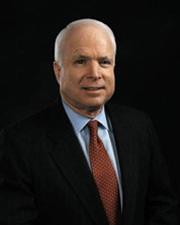 Sen. John McCain (R-AZ)
Text
Modified
This amendment's own text couldn't be picked out of its Congressional Record passage, so the passage is shown in full.
SUPPLEMENTAL APPROPRIATIONS ACT, 2009
The ACTING PRESIDENT pro tempore. Under the previous order, the
Senate will resume consideration of H.R. 2346, which the clerk will
report.
The assistant legislative clerk read as follows:
A bill (H.R. 2346) making supplemental appropriations for
the fiscal year ending September 30, 2009, and for other
purposes.
Pending:
Cornyn amendment No. 1139, to express the sense of the
Senate that the interrogators, attorneys, and lawmakers who
tried in good faith to protect the United States and abide by
the law should not be prosecuted or otherwise sanctioned.
Chambliss amendment No. 1144, to protect the national
security of the United States by limiting the immigration
rights of individuals detained by the Department of Defense
at Guantanamo Bay Naval Base.
Isakson amendment No. 1164, to amend the Internal Revenue
Code of 1986 to expand the application of the homebuyer
credit.
Corker amendment No. 1173, to provide for the development
of objectives for the United States with respect to
Afghanistan and Pakistan.
Lieberman amendment No. 1156, to increase the authorized
end strength for active-duty personnel of the Army.
Graham (for Lieberman) amendment No. 1157, to provide that
certain photographic records relating to the treatment of any
individual engaged, captured, or detained after
[[Page S5771]]
September 11, 2001, by the Armed Forces of the United States
in operations outside the United States shall not be subject
to disclosure under section 552 of title 5, United States
Code (commonly referred to as the Freedom of Information
Act).
Kyl/Lieberman amendment No. 1147, to prohibit funds made
available for the Strategic Petroleum Reserve to be made
available to any person that has engaged in certain
activities with respect to the Islamic Republic of Iran.
Brown amendment No. 1161, to require the United States
Executive Director of the International Monetary Fund to
oppose loans and other programs of the Fund that do not
exempt certain spending by the governments of heavily
indebted poor countries from certain budget caps and
restraints.
McCain amendment No. 1188, to make available from funds
appropriated by title XI an additional $42,500,000 for
assistance for Georgia.
Lincoln amendment No. 1181, to amend the Federal Deposit
Insurance Act with respect to the extension of certain
limitations.
Risch amendment No. 1143, to appropriate, with an offset,
an additional $2,000,000,000 for National Guard and Reserve
Equipment.
Kaufman modified amendment No. 1179, to ensure that
civilian personnel assigned to serve in Afghanistan receive
civilian-military coordination training that focuses on
counterinsurgency and stability operations.
Leahy/Kerry amendment No. 1191, to provide for consultation
and reports to Congress regarding the International Monetary
Fund.
Hutchison amendment No. 1189, to protect auto dealers.
Merkley/Whitehouse amendment No. 1185, to express the sense
of the Senate on the use by the Department of Defense of
funds in the Act for operations in Iraq in a manner
consistent with the United States-Iraq Status of Forces
Agreement.
Merkley (for DeMint) amendment No. 1138, to strike the
provisions relating to increased funding for the
International Monetary Fund.
Bennet/Casey amendment No. 1167, to require the exclusion
of combat pay from income for purposes of determining
eligibility for child nutrition programs and the special
supplemental nutrition program for women, infants, and
children.
Reid amendment No. 1201 (to amendment No. 1167), to change
the enactment date.
The ACTING PRESIDENT pro tempore. All time for debate has expired.
The Senator from Hawaii.
Mr. INOUYE. Madam President, I ask unanimous consent that the pending
amendment be set aside, and to call up amendment No. 1162.
The ACTING PRESIDENT pro tempore. Is there objection to setting aside
the pending amendment?
Mr. INOUYE. Madam President, I suggest the absence of a quorum.
The ACTING PRESIDENT pro tempore. The clerk will call the roll.
The assistant legislative clerk proceeded to call the roll.
The ACTING PRESIDENT pro tempore. The Senator from Hawaii.
Mr. INOUYE. I ask unanimous consent that the order for the quorum
call be rescinded.
The ACTING PRESIDENT pro tempore. Without objection, it is so
ordered.
Mr. INOUYE. Madam President, I withdraw my earlier request.
The ACTING PRESIDENT pro tempore. The request is withdrawn.
Cloture Motion
The ACTING PRESIDENT pro tempore. Under the previous order and
pursuant to rule XXII, the Chair lays before the Senate the pending
cloture motion, which the clerk will report.
The assistant legislative clerk read as follows:
Cloture Motion
We, the undersigned Senators, in accordance with the
provisions of rule XXII of the Standing Rules of the Senate,
hereby move to bring to a close debate on H.R. 2346, the
Supplemental Appropriations Act of 2009.
Harry Reid, Christopher J. Dodd, Charles E. Schumer, Mark
Begich, Mark L. Pryor, Richard Durbin, Patty Murray,
Tom Harkin, Edward E. Kaufman, Claire McCaskill,
Michael F. Bennet, Mark Udall, Jeanne Shaheen, Carl
Levin, Jack Reed, Sheldon Whitehouse, Daniel K. Inouye.
The ACTING PRESIDENT pro tempore. By unanimous consent, the mandatory
quorum call has been waived.
The question is, Is it the sense of the Senate that debate on H.R.
2346, the Supplemental Appropriations Act of 2009, shall be brought to
a close?
The yeas and nays are mandatory under the rule.
The clerk will call the roll.
The legislative clerk called the roll.
Mr. DURBIN. I announce that the Senator from West Virginia (Mr.
Byrd), the Senator from Massachusetts (Mr. Kennedy), and the Senator
from West Virginia (Mr. Rockefeller) are necessarily absent.
Mr. KYL. The following Senator is necessarily absent: the Senator
from Utah (Mr. Hatch).
Further, if present and voting, the Senator from Utah (Mr. Hatch)
would have voted ``yea.''
The ACTING PRESIDENT pro tempore. Are there any other Senators in the
Chamber desiring to vote?:
The yeas and nays resulted--yeas 94, nays 1, as follows:
[Rollcall Vote No. 200 Leg.]
YEAS--94
Akaka
Alexander
Barrasso
Baucus
Bayh
Begich
Bennet
Bennett
Bingaman
Bond
Boxer
Brown
Brownback
Bunning
Burr
Burris
Cantwell
Cardin
Carper
Casey
Chambliss
Coburn
Cochran
Collins
Conrad
Corker
Cornyn
Crapo
DeMint
Dodd
Dorgan
Durbin
Ensign
Enzi
Feinstein
Gillibrand
Graham
Grassley
Gregg
Hagan
Harkin
Hutchison
Inhofe
Inouye
Isakson
Johanns
Johnson
Kaufman
Kerry
Klobuchar
Kohl
Kyl
Landrieu
Lautenberg
Leahy
Levin
Lieberman
Lincoln
Lugar
Martinez
McCain
McCaskill
McConnell
Menendez
Merkley
Mikulski
Murkowski
Murray
Nelson (NE)
Nelson (FL)
Pryor
Reed
Reid
Risch
Roberts
Sanders
Schumer
Sessions
Shaheen
Shelby
Snowe
Specter
Stabenow
Tester
Thune
Udall (CO)
Udall (NM)
Vitter
Voinovich
Warner
Webb
Whitehouse
Wicker
Wyden
NAYS--1
Feingold
NOT VOTING--4
Byrd
Hatch
Kennedy
Rockefeller
The ACTING PRESIDENT pro tempore. On this vote, the yeas are 94, the
nays are 1. Three-fifths of the Senators duly chosen and sworn having
voted in the affirmative, the motion is agreed to.
Mr. INOUYE. Madam President, I suggest the absence of a quorum.
The ACTING PRESIDENT pro tempore. The clerk will call the roll.
The legislative clerk proceeded to call the roll.
Mrs. HUTCHISON. Madam President, I ask unanimous consent that the
order for the quorum call be rescinded.
The ACTING PRESIDENT pro tempore. Without objection, it is so
ordered.
Mrs. HUTCHISON. Madam President, I ask unanimous consent that
Senators Bennett, Bingaman, and Kerry be added as cosponsors of
amendment No. 1189.
The ACTING PRESIDENT pro tempore. Without objection, it is so
ordered.
Mrs. HUTCHISON. I suggest the absence of a quorum.
The ACTING PRESIDENT pro tempore. The clerk will call the roll.
The legislative clerk proceeded to call the roll.
Mrs. HUTCHISON. Madam President, I ask unanimous consent that the
order for the quorum call be rescinded.
The ACTING PRESIDENT pro tempore. Without objection, it is so
ordered.
Mrs. HUTCHISON. Madam President, I ask unanimous consent to add
Senator Klobuchar as a cosponsor of amendment No. 1189.
The ACTING PRESIDENT pro tempore. Without objection, it is so
ordered.
Mrs. HUTCHISON. I suggest the absence of a quorum.
The PRESIDING OFFICER (Mr. Kaufman). The clerk will call the roll.
The legislative clerk proceeded to call the roll.
Mrs. BOXER. Mr. President, I ask unanimous consent that the order for
the quorum call be rescinded.
The PRESIDING OFFICER. Without objection, it is so ordered.
Mrs. BOXER. Mr. President, I rise today to express my support for the
2009 Supplemental Appropriations Act. My vote today does not indicate a
blank check for the administration. But it is indicative of a strong
desire on my part to begin to change to a new approach in Iraq and
Afghanistan.
We all know about the challenges President Obama inherited from 8
long years of the Bush administration. He was left with an economy and
recession, wars in Iraq and Afghanistan, diminished U.S. standing
around the globe, a country more dependent on foreign oil, and a
resurgent al-Qaida.
[[Page S5772]]
Today, we have a new administration with clear priorities and
realistic foreign policy objectives. We must give President Obama and
his administration the resources and flexibility they need to move U.S.
foreign policy in a new direction. If we were to walk away from this
change in policy that is reflected in this supplemental, I think the
message we are sending is for the status quo. The status quo does not
deserve a vote.
Again, I repeat, my vote is not a blank check. I am voting for this
bill not because I want the United States to remain bogged down in two
wars, but because I want to give this administration--the Obama
administration--the resources it needs to successfully end these wars,
starting with the war in Iraq. Furthermore, I don't support an open-
ended commitment of American troops to Afghanistan; and if we do not
see measurable progress, we must reconsider our engagement and strategy
there.
In particular, we must do more to sharply reduce the numbers of
heartbreaking civilian casualties. As ADM Mike Mullen, Chairman of the
Joint Chiefs of Staff, recently said:
We cannot succeed in Afghanistan, or anywhere else . . . by
killing Afghan civilians. . . .
In a reference to a U.S. airstrike in the Farah Province, Admiral
Mullen said:
We can't keep going through incidents like this and expect
the strategy to work.
I could not agree more. President Obama promised the American people
a new way forward in Iraq and a new way forward in Afghanistan. The
passage of this bill will allow him to put the pieces in place to keep
his promises by finishing the mission in Afghanistan, which was
shortchanged because of the Iraq war. I want to talk about that for a
minute.
I voted, after 9/11, to go after al-Qaida, to go after the Taliban,
to go after Osama bin Laden. The administration, instead of doing that,
turned around and went into Iraq under the false premise that Iraq had
something to do with 9/11. We still have former Vice President Cheney
out there trying to convince the people that was the right thing to do.
That was the wrong thing to do. There have been so many needless deaths
in Iraq. We left Afghanistan, and the Taliban returned in force; and
the people there are under the yoke of the Taliban in many parts of
that country. What a tragedy, because of a mistaken policy. What a
terrible legacy, because of a mistaken policy. Yet the debate rages on.
So I am going to engage in that debate.
I believe we need to tackle this mission in Afghanistan, which was
shortchanged. I believe we must increase the role of the State
Department and our civilian agencies in working toward peace. I know my
colleague in the chair, Senator Kaufman, has been very eloquent on this
point--a new way to allow the Afghan people to, in essence, take back
their country. We need to train Afghan security forces so we can
ultimately change the nature of our mission there and bring our troops
home. That is the goal.
I have heard my Republican friends say they don't know what the goal
is in Afghanistan. That is OK. I don't think there is any problem
explaining what it is. We want to go after al-Qaida. We want to
decrease the influence of the Taliban and defeat them, if we have to.
Hopefully, we can, in fact, work with some of them. I am not convinced
of that, but it may be possible. We need to give the Afghan security
forces the ability to defend their own people.
There is a lot more we have to do over there to protect the most
vulnerable Afghans, and that means the women and the children of
Afghanistan. I will talk more about that because this supplemental
takes a huge step forward in protecting the women and children there.
It seems to me we have to give President Obama an opportunity to
bring about the change he promised. If I see that change is not coming,
I am not going to be there. But today, I believe we should give him
that chance.
To think that we actually had Osama bin Laden cornered at one time,
but the obsession with Saddam Hussein drove us away in those Bush years
from that mission and brought us into a situation where we have lost so
many of our young men and women, many of them--30,000--were injured,
some with horrific injuries, and many more are suffering from post-
traumatic stress and brain injury.
President Bush took his eye off Afghanistan, and so did Vice
President Cheney. Frankly, sadly, we come to this day. I understand why
some colleagues might just say: I don't want to hear about it. I don't
want to spend any more money on it. Just forget it.
I don't think that is the way to go. I think President Obama said
very clearly that he is going to bring change. I think this is the day.
We either stand for change or for the status quo. That is my belief.
In the Bush years we never really had enough resources to fight al-
Qaida in Afghanistan because we were waging an open-ended war in Iraq.
Remember, there were no benchmarks for progress. It was day after day,
death after death after death. Frankly, because the Iraq war fueled
recruitment by al-Qaida, our Nation's security has been compromised.
Our standing in the world has suffered. Again, most heartbreaking,
American servicemembers and their families have paid the price.
In my view, there are four provisions in the supplemental that will
help to correct our course.
First, the bill provides funding to get our troops home from Iraq.
These provisions are essential for President Obama to meet his date of
August 31, 2010, to remove combat brigades from Iraq and remove all of
our troops by the end of 2011.
For those of us who want to bring the troops home, the funding to do
that is in this supplemental. So, clearly, when we vote for this, we
vote to begin that process. The responsibility for security must be
turned over to the Iraqis--and quickly. U.S. forces cannot continue to
shoulder the burden there anymore. The people there have to decide if
they want to live together or die together. They have to look at these
ethnic divisions and make their own decisions. We will help. We will
always help. But it is their decision.
So the first part of the bill is funding to begin bringing the troops
home from Iraq.
Second, this bill seeks to turn things around in Afghanistan by
providing a significant investment in diplomacy and development,
including, very importantly to me and to a lot of my colleagues, for
the Afghan women. A military solution alone will not solve the problems
in Afghanistan. We need a strategy that helps the Government provide
for its people and invest in the civil society and those programs that
are crucial to the long-term security and prosperity of that country.
Development is very important to the people of Afghanistan. I am very
proud that this bill takes critical steps to support Afghan women and
girls. Today, more than 7 years after the international community
helped free Afghan women from the prison of life under the Taliban, the
situation for women in Afghanistan remains dire.
I want to say to Senator Leahy and his staff: Thank you. Thank you
for listening. Thank you for working with us. Thank you for working
with the women-led nongovernmental organizations.
Without Senator Leahy and his staff, we would not have this language
in the bill. I wanted to make that point.
More than 80 percent of the women in Afghanistan are illiterate. More
than one in six die in childbirth. These are the voices that have been
forgotten. We cannot return to the days when Afghan women had to be
draped in burqas against their will. If you have never tried on a
burqa--and I am sure most people haven't--let me tell you what it feels
like, because I did. You disappear. You become nothing. Remember when
women were murdered in cold blood by the Taliban in soccer stadiums?
Those days must be over.
It seems to me that walking away from this supplemental at this time
says we are walking away from those women. We need to help them. We
need to do everything we can to give them a chance because to not do so
would be tragic.
This bill specifically appropriates $100 million for programs that
directly address the needs of Afghan women and girls. In addition to
Senator Leahy and his staff, I thank Congresswoman Nita Lowey and her
staff. In the House bill, they also put in quite a few resources for
the women-led NGOs. In our bill, we do even more to directly address
the
[[Page S5773]]
needs of women and girls, including funding for the Afghan Human Rights
Commission and Afghan Ministry of Women's Affairs.
I wrote a bill called the Afghan Women Empowerment Act. Specifically,
the supplemental appropriates $30 million for Afghan women-led
nongovernmental organizations, which is a key component of that bill.
The international community cannot stay in Afghanistan indefinitely. We
know that. So this funding will help empower those organizations that
will provide for the needs of the Afghan community long after the
international community has left.
The supplemental includes $10 million to train and support Afghan
women investigators, police officers, prosecutors, and judges with
responsibility for investigating, prosecuting, and punishing crimes of
violence against women and girls.
This is particularly important in a country where women have been so
marginalized. No female victim of violence will ever come forward if
she believes there is no system in place or resources to help her. What
happens if she comes forward is that she becomes a target. I don't know
how you feel about it--I think I can guess--when any of us sees little
girls being attacked with acid when they are going to school. There is
something deeply wrong if America turns away from that. We cannot, it
seems to me, in good conscience not give this one more chance, which is
what this supplemental is doing because it is taking a major step to
give the Afghan people the chance to stand up for their women,
children, and families.
Third, this bill recognizes the importance of Pakistan, a
dysfunctional, nuclear-armed nation that has some of the most notorious
al-Qaida terrorists within its borders. Pakistan is one of the greatest
threats to international security that we face today. This danger is
such a concern that Bruce Riedel, a Brookings Institution scholar who
served as the coauthor of the President's review of our Afghanistan-
Pakistan strategy, said that the country--this is Pakistan--``has more
terrorists per square mile than any other place on Earth, and it has a
nuclear weapons program that has grown faster than anyplace else on
Earth.'' It seems to me to walk away from that threat is the wrong
course. This bill provides funds for nonmilitary aid and
counterinsurgency training to enable the Pakistani Government to defeat
the growing extremist threat within its borders.
Fourth, this bill provides funding to help our servicemembers and
their families deal with the wounds of war and to improve their quality
of life. It provides funding to increase the number of soldiers and
marines to help ease some of the burdens on servicemembers and families
who have served three, four, and five deployments to combat zones. How
can we walk away from giving those soldiers relief at this point when
they have served three, four, and five times? We see some of the
fallout on the mental health of our soldiers. We have seen some tragic
things happen, including a soldier who actually turned on his own
colleagues and killed them. We cannot have servicemembers under this
amount of stress from three, four, five, or six deployments. Some of
them can handle it. Not all of them can handle it. This bill will
increase the number of soldiers and marines, so we can help ease the
burden of those who have given and given.
This bill includes funding to keep our servicemembers safer,
including funding for mine-resistant vehicles in Afghanistan to combat
the dangers of roadside bombs. It helps ease the childcare needs of our
military families by funding the construction of 25 child development
centers to serve 5,000 children. It provides $230 million to complete
construction of the Walter Reed National Military Medical Center, and
it provides funds for the construction of nine warrior support
facilities across the United States. Our soldiers need help. They
cannot be expected to travel across the country to get medical care,
either for physical wounds or mental wounds. We need to make sure we do
this.
Finally, this bill provides funding for domestic programs that will
safeguard our security. It includes $1.5 billion to prepare and respond
to a global disease pandemic, such as the H1N1 influenza virus we are
combating today. A lot of people say: Maybe you are overreacting. We
just don't know because in other flu epidemics, we think we have
conquered it, and then it comes back in a more virulent form. We need
to vaccinate our citizenry. This is expensive and a must-do. I am very
pleased it is in this bill. Just this week, two lives were lost in New
York City to the virus. One victim was only an infant, and the other
was an assistant principal of a school. Yes, we lose people to the flu
every year. We know that. But we want to make sure we are not facing
something for which we are unprepared. Better to be prepared, and this
bill gives us the funds to prepare.
There is significant investment in shoring up our southwest border
and also combating drug traffickers who operate there. We keep seeing
horrific violence along the border. It is deplorable. The drug cartels
must be stopped and the perpetrators brought to justice. That is also
in this bill. This is an emergency spending bill.
It also includes $250 million for emergency firefighting activities.
California has suffered devastating wildfires over the last few fire
seasons. I know all of you have watched in horror at the recent
wildfire in Santa Barbara. We know we are facing terrible challenges.
We are facing warmer temperatures. We are facing more drought
conditions. The funding will help ensure resources are on hand when
they are needed.
I have to say that this bill should be a must-pass. I have to also
reiterate that my vote indicates my support for a change in our foreign
policy, a change in Iraq to bring this war to an end, a change to
finally do what we have to do in Afghanistan so we do not walk out and
walk away as we did before. The Taliban allowed al-Qaida to thrive, and
we have to work in Afghanistan so that the people turn away from the
Taliban toward something else that is positive. And we can provide
that.
Strong diplomacy is in this bill. A change in policy is in this bill.
It is our best opportunity to achieve these objectives. If it does not
work, I will be the first one to stand up here and say so because,
frankly, I believe too many of our brave soldiers have been put in
harm's way.
I think this is the last use of a supplemental appropriation,
according to the administration, to fund military operations in Iraq
and Afghanistan. I welcome that. It says that our President is going to
hold true to his commitment to an open and transparent government that
is held accountable to the people. We are going to have these policies
funded through the regular budget process. I understand why we need
this now. To bring about the change in Iraq and Afghanistan, we cannot
do it on the cheap. We have to do it right. I think President Obama's
quote--and I am not quoting him exactly--was that we have to get out of
there very carefully even though we did not get in there very
carefully. That is what we are doing. We are getting out of Iraq
carefully. We are doing it right. We are funding the way to do it
right. We are helping our soldiers. And we are changing course in
Afghanistan, first of all, by paying attention to it, going after al-
Qaida, trying to make sure the Taliban is not an option people choose
there, and being very strong in our help toward the women of
Afghanistan.
I will be voting yes for all those reasons and watching closely.
Mr. President, I ask unanimous consent that for the next hour, this
bill be open to debate only.
The PRESIDING OFFICER. Without objection, it is so ordered.
Mrs. BOXER. Mr. President, I yield the floor, and I suggest the
absence of a quorum.
The PRESIDING OFFICER. The clerk will call the roll.
The bill clerk proceeded to call the roll.
Mr. LEAHY. Madam President, I ask unanimous consent that the order
for the quorum call be rescinded.
The PRESIDING OFFICER (Mrs. Hagan.) Without objection, it is so
ordered.
Mr. LEAHY. Madam President, I ask unanimous consent that upon the
completion of my statement, Senator Isakson be recognized for 5
minutes, and then that Senator Brown be recognized for 10 minutes. That
will allow all of our statements to be completed prior to a unanimous
consent agreement which will shortly be entered into.
[[Page S5774]]
The PRESIDING OFFICER. Without objection, it is so ordered.
Mr. LEAHY. I ask unanimous consent that no Budget Act points of order
be in order to H.R. 2346, as amended; that at 1 p.m., Senator Cornyn be
recognized for debate only for up to 40 minutes; that at the conclusion
of Senator Cornyn's remarks, the time until 2 p.m. be equally divided
and controlled between the leaders or their designees; that at 2 p.m.
today, there be 40 minutes of debate with respect to the DeMint
amendment No. 1138, with the time controlled as follows: 20 minutes
under the control of Senator DeMint, 10 minutes under the control of
Senators Gregg and Inouye or their designees; that upon the use or
yielding back of the time, the Senate proceed to vote in relation to
the amendment; that no intervening amendment be in order to the
language proposed to be stricken by the DeMint amendment.
The PRESIDING OFFICER. Without objection, it is so ordered.
Mr. LEAHY. Madam President, President Obama said in his campaign and
has repeated it since the first days of his Presidency that we must
keep our Nation safe and secure, but we have to do it in ways
consistent with our values. That is a sentiment I share, and one that I
have voiced in hearings and statements for years as well.
To President Obama's credit, to the benefit of the Nation, he has
worked since his first day in office to turn these words into action to
make our national security policy and our detainee policy consistent
with American laws and American values. That, in turn, makes us more
secure. I have supported President Obama in these steps, and I will
continue to do so. That is why I have voted against amendments to
withhold funding to close the Guantanamo detention facility, and to
prohibit any Guantanamo detainees from being brought to the United
States. These amendments undermine the good work the President is
doing, and they make us less safe, not safer.
I believe strongly, as all Americans do, we have to take every step
we can to prevent terrorism. Then we have to ensure severe punishment
for those who do us harm. As a former prosecutor, I have never shied
away from harsh sentences for those who commit atrocious acts. I point
to the times I have requested and gotten for people I have prosecuted
life sentences, life sentences that they served without the possibility
of parole.
I also believe strongly we can ensure our safety and security and
bring terrorists to justice in ways that are consistent with our laws
and values. When we have strayed from that approach--when we have
tortured people in our custody, or sent people to other countries to be
tortured, or held people for years without even giving them a chance to
go to court, to argue we were holding the wrong person, they are being
held in error--we have hurt our national security immeasurably.
Our allies have been less willing to help our counterterrorism
efforts, and that has made our military men and women more vulnerable
and our country less safe. Terrorists have used our actions as a tool
to recruit new members, which means then we have to fend off more
enemies.
Worse still, we have lost our ability to respond with moral authority
if other countries should mistreat American solders or civilians.
Guantanamo has become the symbol of the severe missteps our country
took in recent years. Changing our interrogation policies to ban
torture was an essential first step. But only by shutting the
Guantanamo facility and restoring tough but fair procedures can we
repair our image in the world. We have to do that if we hope to have a
truly strong national security policy.
To close Guantanamo, we need our national security and our legal
experts working hard to come up with a comprehensive plan for its
closure. We should be funding those efforts. By cutting off that
funding, we have hamstrung the President's initiative, and no matter
what we intended to do, I believe we have made our Nation less safe.
Much debate has focused on keeping Guantanamo detainees out of the
United States. In this debate, political rhetoric has entirely drowned
out reason and reality. Our criminal justice system handles extremely
dangerous criminals, and it has handled more than a few terrorists, and
has done so safely and effectively. We try very dangerous people in our
courts and we hold very dangerous people in our jails in Vermont and
throughout the country. We have the best justice system in the world.
We have spent billions of dollars on our detention facilities, on our
law enforcement, and our justice system. Are we going to say to the
world, oh, my goodness gracious, we are not good enough to be able to
handle criminal cases of this nature? I do not believe so.
We try those dangerous people and we hold those dangerous people in
jails in Vermont and throughout our country. We are showing the world
that we can do it. I know; I have put some of them there. We do it
every day in ways that keep the American people safe and secure. I have
absolute confidence we can continue to do it.
The Judiciary Committee has held several hearings on the issue of how
to best handle detainees. Experts and judges from across the political
spectrum have agreed that our courts and our justice system can handle
this challenge. Indeed, it has handled it many times already.
What I am saying is, after all of those billions of dollars, after
all of the superb men and women we have working in our justice system,
after all that we spend on maximum security facilities, are we going to
say to the world, America is not strong enough to try even the worst of
criminals?
When we were hit with one of the worst terrorist attacks ever in this
country, Oklahoma City, did we say we cannot try the people we have now
captured? We cannot have them in a courtroom where it is secure, we
will not be able to punish them? Of course not. We went ahead, and we
also established for the rest of the world that we follow a system of
justice in America. And having been horribly damaged in Oklahoma City,
we followed our system of justice. The rest of the world looked at it,
and they learned from us.
Let's not step back from that. Republican luminaries such as GEN
Colin Powell have agreed with this idea. One Republican member of the
Judiciary Committee, Senator Graham, said, ``The idea that we cannot
find a place to securely house 250-plus detainees within the United
States is not rational.''
So let's let reality come in and overwhelm rhetoric. It is time to
act on our principles and our constitutional system. Those whom we
believe to be guilty of heinous crimes should be tried. They should be
penalized severely, and our courts and our prisons are more than up to
the task. Our courts and our prisons are more up to this task than
those in any other country in the world. But we also could have people
who are innocent or where we captured the wrong person. If so, they
should be released.
There are going to be tough cases. Instead of cutting out the money
the administration needs to dispose of those cases responsibly, knowing
how tough they will be, we ought to be doing just the opposite and give
them the resources they need.
Let's put aside heated, distorted rhetoric. Support the President in
his efforts to truly make our country a safe and strong Republic worthy
of the history and values that have always made America great.
I believed that when I was a young lawyer in private practice. I
believed that when I was a prosecutor. I believe that even more today
as a Senator.
I yield the floor.
The PRESIDING OFFICER. The Senator from Georgia.
Tribute to Bill Shipp
Mr. ISAKSON. Madam President, I know most Members on the floor
remember a song of about 25 years ago called: ``The Night the Lights
Went Out in Georgia.''
Well, on Tuesday of this week, a beacon of light in journalism did go
out in Georgia, when Bill Shipp, a gifted political writer, announced
his retirement after 50 years of reporting in the South.
Bill Shipp is a remarkable character. It is said that all of us are
replaceable. I am not sure Bill Shipp is replaceable. He began his
writing in Georgia as a political columnist for the Atlanta
Constitution.
Starting in the late 50s, he covered the late Ivan Allen and the late
Dr. Martin Luther King and the Governors
[[Page S5775]]
and the politicians of that era from George Wallace to Lester Maddox,
to Jimmy Carter, to Carl Sanders.
He wrote about the transition of the old South to the new South. And
in Washington, he covered the Civil Rights Act in the middle and late
seventies. He was a writer whose perception was keen, whose wit was
sharp, and whose pen was even sharper.
For 32 of his 50 years I was in elected office in Georgia. I can make
a true confession: When he wrote a column, you went to the paper and
you read Bill Shipp first. There was a reason for that. If you were
going to be the victim of the day, you might as well go out and find
out what he was going to say about you. But if you were not the victim
of the day, you could relish in seeing some other politician being
skewered by that pen.
Bill Shipp had a profound effect on journalism in our State. For
years he reported for the Atlanta Journal and Constitution, but after a
number of years he started his only publication whose title was: ``Bill
Shipp's Georgia.'' Never has there been a more appropriate name for a
newsletter, because, in many ways, Georgia's politics was Bill Shipp's
possession.
Bill Shipp wrote about politics in such a way that he changed
politics in the South. While I would never accuse Bill of having
editorialized in a news article, the tone and tenor of the direction of
Bill Shipp's perception of what was right and wrong could help to lead
debates to a positive conclusion in an otherwise period of discourse
and trouble.
I love Bill Shipp for many reasons--one, because he and I have had
the pleasure of living in the same county for the last 40 years. The
other is, I have learned a lot from him. I always appreciated him. In
politics, Bill Shipp is the equivalent of Helen Thomas at a
Presidential press conference. When a Georgia politician has a press
conference, Bill Shipp is there. When it is time for questions, he
always has one. And when it comes time to roll the grenade in the
middle of the room, Bill Shipp will do it. He did it to me and to
others.
Bill Shipp is a gifted friend, a man for whom I wish the best in his
retirement. I think, finally, of those days on Ivy Grove and Cherokee
Road in Marietta where he and Tom Watson Brown and George Berry would
sit at 5 in the afternoon, have a libation, and discuss the next day's
column that Bill would write. Bill Shipp is a treasured asset of our
State, a man who has contributed greatly to the growth of the new South
and the new Georgia, a man whose contributions to journalism are
preeminent in our State, and a friend to whom I wish the very best in
his retirement.
I yield the floor.
The PRESIDING OFFICER. The Senator from Ohio.
(The remarks of Mr. Brown pertaining to the submission of S. Res. 156
are located in today's Record under ``Submitted Resolutions.'')
The Senator from Mississippi.
Mr. WICKER. I ask unanimous consent to speak as in morning business
for up to 4 minutes.
The PRESIDING OFFICER. Without objection, it is so ordered.
Samuel L. Gravely, Jr., First African-American U.S. Navy Flag Officer
Mr. WICKER. Madam President, this past weekend, at the Northrop-
Grumman shipbuilding facility in Pascagoula, MS, the USS Gravely, the
57th Arleigh Burke class Aegis Guided Missile Destroyer, was christened
in honor of the late VADM Samuel L. Gravely, Jr.
Vice Admiral Gravely was born in 1922, in Richmond, VA. In 1942,
Gravely interrupted his education at Virginia Union University and
enlisted in the U.S. Naval Reserve. He attended officer training camp
at the University of California in Los Angeles after boot camp at the
Great Lakes Naval Training Station in Illinois, and then midshipman
school at Columbia University. When he boarded his first ship in May of
1945, he became its first African-American officer.
Gravely was the first African-American to command a fighting ship,
the USS Falgout, and to command a major warship, the USS Jouett. As a
full commander, he made naval history in 1966 as the first African-
American commander to lead a ship, the USS Taussig, into direct
offensive action. He was the first African-American to achieve flag
rank and eventually vice admiral. In 1976, Gravely became the commander
of the entire Third Fleet, commanding over 100 ships, 60,000 sailors,
and overseeing more than 50 million square miles of ocean.
Gravely's tenure in the naval service was challenged with the
difficulties of racial discrimination. As a new recruit, he was trained
in a segregated unit; as an officer, he was barred from living in the
bachelor's officers' quarters. In 1945, when his first ship reached its
berth in Key West, FL, he was specifically forbidden entry into the
officers club on the base. Gravely survived the indignities of racial
prejudice and displayed unquestionable competence as a naval officer.
Gravely exemplified the highest standards and demanded very high
standards from his crew. Throughout his career, he stressed the
rudiments of professionalism--intelligence, appearance, seamanship and,
most importantly, pride.
Vice Admiral Gravely was a trailblazer for African-Americans in the
military arena. He fought for equal rights quietly but effectively,
letting his actions and his military record speak for him. Gravely died
on October 22, 2004, at the naval hospital in Bethesda, MD. In a
fitting tribute, the obituary on the U.S. Department of Defense Web
site quoted Gravely's formula for success: ``My formula is simply
education plus motivation plus perseverance.''
Samuel L. Gravely, Jr.'s performance and leadership as an African-
American naval officer demonstrated to America the value and strength
of diversity. He was a true professional with superb skills as a seaman
and admirable leadership attributes.
The USS Gravely, christened in Pascagoula, will reflect his
character, his forthrightness, and his steadfastness and will stand for
and deliver his legacy wherever it serves. His spirit aboard the USS
Gravely will be an inspiration to its crew, the U.S. Navy, and
Americans for generations to come.
I suggest the absence of a quorum.
The PRESIDING OFFICER. The clerk will call the roll.
The legislative clerk proceeded to call the roll.
Mr. CORNYN. Mr. President, I ask unanimous consent that the order for
the quorum call be rescinded.
The PRESIDING OFFICER (Mr. Warner). Without objection, it is so
ordered.
Mr. CORNYN. Mr. President, I understand there is a previous--let me
ask unanimous consent that I be allowed to speak for up to 40 minutes.
The PRESIDING OFFICER. That is the standing order.
Mr. CORNYN. I appreciate it. Thank you very much, Mr. President.
Amendment No. 1139
Mr. President, I want to address the Senate on two subjects this
afternoon--first of all, on the subject of various memos and
interrogation techniques, notably enhanced interrogation techniques,
that were carried out in response to Office of Legal Counsel memos that
were written by lawyers there, designed to provide guidance to our CIA
interrogators after 9/11 to help them protect the country against
future terrorist attacks.
I have an amendment that, because of technical reasons, we will not
be able to vote on this week. But I want to assure my colleagues this
issue is not going away, and we will be back to talk about it more
later. But I think it is of sufficient gravity and importance that I
want to highlight it here for the next few minutes.
First of all, this amendment I am referring to is a sense-of-the-
Senate amendment. Let me summarize what it does because I think it is
important to put it in context.
The sense-of-the-Senate amendment reads as follows. It says:
In the aftermath of the September 11, 2001 attacks, there
was bipartisan consensus that preventing further terrorist
attacks [against] the United States was the most urgent
responsibility of the United States Government.
A bipartisan joint investigation by the Select Committee on
Intelligence of the Senate and the Permanent Select Committee
on Intelligence of the House of Representatives concluded
that the September 11, 2001 attacks demonstrated that the
intelligence community had not shown ``sufficient initiative
in coming to grips with the new transnational threats''.
[[Page S5776]]
By mid-2002, the Central Intelligence Agency had several
top al Qaeda leaders in custody.
The Central Intelligence Agency believed that some of these
al Qaeda leaders knew the details of imminent plans for
follow-on attacks against the United States.
The Central Intelligence Agency believed that certain
enhanced interrogation techniques might produce the
intelligence necessary to prevent another terrorist attack
against the United States.
The Central Intelligence Agency sought legal guidance from
the Office of Legal Counsel of the Department of Justice as
to whether such enhanced interrogation techniques, including
one that the United States military uses to train its own
members in survival, evasion, resistance, and escape
training, would comply with United States and international
law if used against al Qaeda leaders reasonably believed to
be planning imminent attacks against the United States.
This amendment further notes that:
The Office of Legal Counsel is the proper authority within
the executive branch [of the Federal Government] for
addressing difficult and novel legal questions, and providing
legal advice to the executive branch in carrying out [its]
official duties.
It further notes that:
Before mid-2002, no court in the United States had [ever]
interpreted the phrases ``severe physical or mental pain or
suffering'' and ``prolonged mental harm'' as used in sections
2340 and 2340A of title 18, the United States Code.
The legal questions posed by the Central Intelligence
Agency and other executive branch officials were--
This amendment notes--
a matter of first impression, and in the words of the Office
of Legal Counsel, ``substantial and difficult''.
The Office of Legal Counsel approved the use by the Central
Intelligence Agency of certain enhanced interrogation
techniques, with specific limitations, in seeking actionable
intelligence from al Qaeda leaders.
The amendment further notes that:
The legal advice of the Office of Legal Counsel regarding
interrogation policy was reviewed by a host of executive
branch officials, including the Attorney General, the Counsel
to the President, the Deputy Counsel to the President, the
General Counsel of the Central Intelligence Agency, the
General Counsel of the National Security Council, the legal
advisor of the Attorney General, the head of the Criminal
Division of the Department of Justice, and the Counsel to the
Vice President [of the United States].
Further, the amendment notes that:
The majority and minority leaders in both Houses of
Congress,--
Both in the Senate and in the House, as well as--
the Speaker of the House of Representatives, and the chairmen
and [ranking members] of [both] the Select Committee on
Intelligence of the Senate and the Permanent Select Committee
on Intelligence of the House of Representatives received
classified briefings on [both the proposed techniques and the
Office of Legal Counsel advice] as early as September 4,
2002.
The amendment further notes that:
Porter Goss, then-chairman of the Permanent Select
Committee on Intelligence of the House of Representatives,
recalls that he and then-ranking member Nancy Pelosi
``understood what the CIA was doing'' [and] ``gave the CIA
our bipartisan support'' [and] ``gave the CIA funding to
carry out its activities'', and ``On a bipartisan basis . . .
asked if the CIA needed more support from Congress to carry
out its mission against al Qaeda''.
The amendment further notes that:
No member of Congress briefed on the legal analysis of the
Office of Legal Counsel and the proposed interrogation
program of the Central Intelligence Agency in 2002 objected
to the legality of the enhanced interrogation techniques,
including ``waterboarding'', approved in legal opinions of
the Office of Legal Counsel.
The amendment further notes that:
Using all lawful means to secure actionable intelligence
based on the legal guidance of the Office of Legal Counsel
[of the Department of Justice] provides national leaders a
means to detect, deter, and defeat further terrorist
[attacks] against the United States [of America].
The amendment further notes that:
The enhanced interrogation techniques approved by the
Office of Legal Counsel have, in fact, accomplished the goal
of providing intelligence necessary to defeating additional
terrorist attacks against the United States.
It further notes that:
Congress has previously established a defense for persons
who engaged in operational practices in the war on terror in
good faith reliance on advice of counsel that [such]
practices were lawful.
This amendment further notes that:
The Senate stands ready to work [on a bipartisan basis]
with the Obama Administration to ensure that leaders of the
Armed Forces of the United States and the intelligence
community continue to have the resources and tools required
to prevent additional terrorist attacks on the United States.
This amendment concludes with this finding or sense of the Senate:
It is the sense of the Senate that no person who provided
input into the legal opinions by the Office of Legal Counsel
of the Department of Justice analyzing the legality of the
enhanced interrogation program, nor any person who relied in
good faith on [that legal advice], nor any member of Congress
who was briefed on the enhanced interrogation program and did
not object to the program going forward should be prosecuted
or otherwise sanctioned.
This is the amendment I sought to offer that for technical reasons is
not going to be voted on now. But, I assure my colleagues, we will
revisit this at a later date.
I want to take issue with some of the comments by my distinguished
colleague from Illinois, the majority whip, who I believe--it was
yesterday, or maybe the day before--said there was no basis for my
assertion that there was actionable intelligence gained from the so-
called enhanced interrogation techniques, and questioned what my source
was.
I would remind the distinguished Senator from Illinois that the
source is President Obama's Director of National Intelligence, Dennis
Blair, who wrote, on April 16, 2009, that ``high-value information came
from interrogations in which these methods were used, and provided a
deeper understanding of the al Qaeda organization that was attacking
this country.''
Mr. President, I ask unanimous consent that the letter in which the
Director of National Intelligence made those statements be printed in
the Record following my comments.
The PRESIDING OFFICER. Without objection, it is so ordered.
(See exhibit 1.)
Mr. CORNYN. Nor was this special information available to only a few.
The New York Times reported it on April 21, under the headline ``Banned
Techniques Yielded `High-Value information', Memo Says.'' That is a
story in the New York Times which basically recounts what the Director
of National Intelligence said.
I would remind my distinguished colleague from Illinois that it is,
in fact, the Director of National Intelligence for President Obama who
has affirmed not just the need but the usefulness of the information
and intelligence derived from these enhanced interrogation techniques
that were approved by the legal authority for the executive branch of
the Federal Government, the Office of Legal Counsel.
My colleague from Illinois, Senator Durbin, argues that we need to
allow prosecutors to follow the facts and the law wherever they may
lead--certainly, a relatively harmless assertion; one I would generally
agree with. But here, we know enough about the facts and the law to
know there is no evidence that anyone acted with the intent required to
prosecute under the law. I won't bore the Senate with an analysis of
what the criminal law requires in this context, but I would say that
the facts, as we know them, are to give our public servants the benefit
of the doubt. As detailed in the Office of Legal Counsel memoranda,
significant efforts were made to minimize significant harm that could
arise from these techniques. Who could question the desire of both the
intelligence community as well as the Department of Justice and the
leaders responsible for protecting our national security--who could
question the good-faith need to get information that would actually
help prevent follow-on terrorist attacks?
We know al-Qaida, on September 11, 2001, used crude weapons to attack
our country. Yet they were able to kill 3,000 Americans, roughly. Our
intelligence community and our national leadership knew al-Qaida was
not satisfied with such primitive weapons but, indeed, was seeking
biological, chemical or nuclear weapons. We know how important it was
for our intelligence officials to get the information they needed. We
know the lawyers at the Office of Legal Counsel who rendered this legal
advice were doing what they thought was their responsibility in good
faith. Indeed, the Members of Congress who had the responsibility to
perform congressional oversight on these activities, I believe,
demonstrated their good-faith desire to do what was necessary to
protect our country. I believe we know enough to
[[Page S5777]]
say these people--all of them--acted in good faith.
It has been suggested the standard we apply is whether the advice
fell within the range of legitimate analysis and within the range of
reasonable disagreement common to legal analysis of important statutory
and constitutional questions. I believe that has been demonstrated, and
but for this technical objection to the amendment, I am confident we
would receive an overwhelming bipartisan vote of support for this
sense-of-the-Senate resolution.
The distinguished Senator from Illinois, Senator Durbin, says we
should allow prosecutors and the Department of Justice to decide
whether to bring a case against these officials: The intelligence
community, the lawyers who drafted the legal advice, and perhaps even
the Members of Congress who acquiesced and facilitated these enhanced
interrogation techniques following a classified briefing. But I would
suggest there is no case to be brought against these individuals. Any
prosecution that arises out of this interrogation program would clearly
be based upon politics and not on the law.
I would submit the amendment I have offered--and that I described and
which I will reoffer again at an appropriate time--is a call for
reasonableness and national unity. The calls for prosecution of good-
faith patriots has simply gone too far. When bloggers and others--not
to single out bloggers but even Members of this body--have suggested
that we somehow need a truth commission and have suggested that
prosecutions might be the appropriate outcome, when they are suggesting
that prosecutions under these circumstances occur, then I think our
political environment has changed in a dangerous way and one which will
certainly chill our intelligence officials in gathering actual
intelligence necessary to keep us safe and certainly discourage
patriots who want to serve and who are willing to serve in Government.
When policy differences become criminalized in ways that some have
suggested, it is not helpful to our country. Indeed, I think it is
dangerous to our national security.
We know there is an unfortunate history of hysterias, panics, and mob
rule from time to time that occurs, whether it is from Salem through
the McCarthy era. When justice is steered by passion and politics
rather than by reason and the rule of law, it is not worthy of the name
``justice.'' Once you stir up an angry mob, we know it is unpredictable
where that mob might lead or who might get caught up in the mob's
action. But we know already too many patriotic Americans have been
targeted by the present hysteria. This amendment calls for an end to
the hysteria and a return to reason, civility, national unity, and the
rule of law.
Exhibit 1
Director of
National Intelligence,
Washington, DC, April 16, 2009.
Dear Colleagues: Today is a difficult one for those of us
who serve the country in its intelligence services. An
article on the front page of The New York Times claims that
the National Security Agency has been collecting information
that violates the privacy and civil liberties of American
citizens. The release of documents from the Department of
Justice's Office of Legal Counsel (OLC) spells out in detail
harsh interrogation techniques used by CIA officers on
suspected al Qa'ida terrorists.
As the leader of the Intelligence Community, I am trying to
put these issues into perspective. We cannot undo the events
of the past; we must understand them and turn this
understanding to advantage as we move into the future.
It is important to remember the context of these past
events. All of us remember the horror of 9/11. For months
afterwards we did not have a clear understanding of the enemy
we were dealing with, and our every effort was focused on
preventing further attacks that would kill more Americans. It
was during these months that the CIA was struggling to obtain
critical information from captured al Qa'ida leaders, and
requested permission to use harsher interrogation methods.
The OLC memos make clear that senior legal officials judged
the harsher methods to be legal, and that senior policymakers
authorized their use. High value information came from
interrogations in which those methods were used and provided
a deeper understanding of the al Qa'ida organization that was
attacking this country. As the OLC memos demonstrate, from
2002 through 2006 when the use of these techniques ended, the
leadership of the CIA repeatedly reported their activities
both to Executive Branch policymakers and to members of
Congress, and received permission to continue to use the
techniques.
Those methods, read on a bright, sunny, safe day in April
2009, appear graphic and disturbing. As the President has
made clear, and as both CIA Director Panetta and I have
stated, we will not use those techniques in the future. I
like to think I would not have approved those methods in the
past, but I do not fault those who made the decisions at that
time, and I will absolutely defend those who carried out the
interrogations within the orders they were given.
Even in 2009 there are organizations plotting to kill
Americans using terror tactics, and although the memories of
9/11 are becoming more distant, we in the intelligence
services must stop them. One of our most effective tools in
discovering groups planning to attack us are their
communications, and it is the job of the NSA to intercept
them. The NSA does this vital work under legislation that was
passed by the Congress. The NSA actions are subject to
oversight by my office and by the Justice Department under
court-approved safeguards; when the intercepts are conducted
against Americans, it is with individual court orders. Under
these authorities the officers of the National Security
Agency collect large amounts of international
telecommunications, and under strict rules review and analyze
some of them. These intercepts have played a vital role in
many successes we have had in thwarting terrorist attacks
since 9/11.
On occasion. NSA has made mistakes and intercepted the
wrong communications. The numbers of these mistakes are very
small in terms of our overall collection efforts, but each
one is investigated, Congress and the courts are notified,
corrective measures are taken, and improvements are put in
place to prevent reoccurrences.
As a young Navy officer during the Vietnam years, I
experienced public scorn for those of us who served in the
Armed Forces during an unpopular war. Challenging and
debating the wisdom and policies linked to wars and
warfighting is important and legitimate; however, disrespect
for those who serve honorably within legal guidelines is not.
I remember well the pain of those of us who served our
country even when the policies we were carrying out were
unpopular or could be second-guessed.
We in the Intelligence Community should not be subjected to
similar pain. Let the debate focus on the law and our
national security. Let us be thankful that we have public
servants who seek to do the difficult work of protecting our
country under the explicit assurance that their actions are
both necessary and legal.
There will almost certainly be more media articles about
the actions of intelligence agencies in the past, and as we
do our vital work of protecting the country we will make
mistakes that will also be reported. What we must do is make
it absolutely clear to the American people that our ethos is
to act legally, in as transparent a manner as we can, and in
a way that they would be proud of if we could tell them the
full story,
It is my job, and the job of our national leaders, to
ensure that the work done by the Intelligence Community is
appreciated and supported. You can be assured the President
knows this and is supporting us. It is your responsibility to
continue the difficult, often dangerous and vital work you
are doing every day.
Sincerely,
Dennis C. Blair.
Mr. CORNYN. Mr. President, I am going to turn to another subject, but
may I inquire how much time is remaining under the unanimous consent
agreement?
The PRESIDING OFFICER. The Senator has 27 minutes remaining.
Mr. CORNYN. I assure the Chair I will not use all that time.
Health Care Reform
Mr. President, I wish to discuss another very serious challenge in
our country and that is how to reform our broken health care system to
serve the needs of the American people and to help bring down the costs
of health care, which now prices many people out of the market and
contributes to the too large number of Americans who don't have health
insurance.
I am a relatively new member of the Senate Finance Committee, and
under the leadership of Senator Baucus and Senator Grassley, we have
been discussing our various policy options for some time. There has
been some discussion on the floor about the subject. Indeed, my
colleagues from Oklahoma and North Carolina, Senator Burr and Dr.
Coburn, have introduced a bill which they believe addresses the need
for health care reform in a significant way.
On Monday, I am going to return to my State of Texas and travel
around the State to basically talk about commonsense solutions to this
health care crisis. Last Monday, I spent some time in Houston, TX, with
the Houston Wellness Association and others concerned about how we can
spend more of
[[Page S5778]]
our energy and effort on keeping people healthy and preventing disease
which will, of course, avoid unnecessary human suffering but also help
us contain the too high price of health care.
We know what is at stake in the health care reform debate. I believe
my constituents in Texas--and I believe the American people,
generally--don't want to be served up a fait accompli in Washington.
They don't want to wake in July or August and find that Congress has
taken a blank sheet of paper and basically deprived them of the
opportunity to keep the health care they presently have and instead
present them with something else which they don't want and which does
not promise to make health care more accessible but, rather, will make
it more expensive and less accessible. I know my constituents in Texas
don't want elites in Washington to make decisions for them. They want
to be informed about the debate, and they want to then discuss with me
and their other elected representatives what they want--not what is
dictated to them from Washington inside the beltway.
Whether you are putting together a family budget or a business plan,
we all see the same problem, and that is the rising cost of health
care. We know health care costs have risen faster than inflation in
both good times and bad times. Health care costs, we know, force many
self-employed workers and small businesses into the ranks of the
uninsured. We also know that health care costs in America are twice as
much per capita than they are in most of the developed world. In fact,
we spend roughly 17 percent of our gross domestic product on health
care. I believe the next highest country to us is Japan, an
industrialized country, which spends roughly 9 percent of GDP.
But we also know there are a lot of hidden costs--there are not just
the obvious costs--on families and businesses. These hidden costs show
up in smaller paychecks for working men and women all across this
country. All things being equal, one would think that rising
productivity of the American worker would lead to higher wages, but
instead, for many workers, more compensation takes the form of higher
health care premiums, when they could be receiving greater compensation
in terms of wages that they could then spend on other purposes. But
because of rising deductibles, copays, and the rising costs, we see
rising health care costs actually squeeze worker pay in America such
that, in many instances, that pay is stagnant, if not declining.
Hidden costs also show up in the $36 trillion of unfunded liabilities
in the Medicare Program, as well as other entitlements. Our people are
concerned about the hidden costs of all the borrowing we are doing in
Washington and the unprecedented spending. Nearly 50 cents on every
dollar spent in Washington is borrowed, leaving the fiscal
responsibility for our children and grandchildren and not taking it
upon ourselves.
In fact, as we know, the Federal deficit in 2009 will be nearly as
large as the entire Federal budget was in 2001. Let me say that again.
This is staggering. The Federal deficit in 2009 will be nearly as large
as the entire Federal budget in 2001. As the distinguished occupant of
the chair, who is the former chief executive of his State, the
Commonwealth of Virginia, knows, that kind of growth cannot be
sustained indefinitely. Indeed, we are cruising for a disaster when it
comes to unrestrained health care costs, both for individuals and for
small businesses but also for the Government when it comes to
entitlement spending.
I agree with what President Obama said last week. He said our current
deficit spending is unsustainable. I agree with that. He said we are
mortgaging our children's future with more and more debt. I think all
Americans agree with what President Obama said, but we have yet to see
the hard decisions that would lead us back to a path of fiscal
discipline. It is the contrary: more spending, more borrowing, with no
fiscal discipline. As we look at health care reform, our people want
solutions that will lower the costs of health care, without increasing
the debt, without raising taxes, and without reducing quality or access
to care.
I have heard a lot of discussions in the context of the Finance
Committee, talking about what options are available to the Congress in
dealing with this health care crisis and, honestly, most of them deal
with how we can empower the Government to make more and more decisions
on behalf of patients. I think that is the opposite direction from
which we ought to go to approach this problem. We ought to look at what
puts patients back in charge; what gives individuals the power to
consult with their own private physician and make a decision; what is
in the best interests of themselves and their family when it comes to
health care. Let's not put barriers in the way of that sacred
relationship between a patient and a doctor, and for sure let's not use
rationing--denying and delaying access to care--as government-run
programs abroad use in order to control costs.
Let's put patients back in charge. That ought to be our battle cry as
we approach this current crisis.
Patients should have more control, not less control, over their own
health care. One way we can do that is giving them more and better
information on cost and quality of their care. How in the world can we
have an effective market for health care, which will provide lower
costs, if, in fact, patients are denied access to information about
cost and outcomes? They not only want to know how much it is going to
cost them; they want to make sure it is a good, quality service, and we
ought to be in the business of providing them that information. We
ought to be insisting, as their elected representatives, that we have
access to that information in deciding how to spend their money in
entitlement programs such as Medicare and Medicaid. Patients should
also, I believe, have a choice of providers who compete for their
business. We know that competition produces higher quality, better
service, and a lower price. We can see that across the board. When the
market helps discipline spending, it improves quality and lowers price.
We can do that in health care by empowering individuals and giving them
more access to information, greater transparency, quality, and price,
making them better informed consumers.
We also know our tax and our legal system need reform so all
Americans are treated fairly. We have to end the cost shifting that now
goes with too low reimbursement rates for Medicare and Medicaid, which
means it is harder and harder for an individual to find a doctor who
will actually accept those submarket rates to care for them.
I was in Dallas a couple years ago. I was in an emergency room at a
hospital, while touring the hospital, and there was this wonderful
woman who came into the emergency room and someone asked her what she
wanted. She said: I need my prescriptions refilled--in the emergency
room at a hospital in Dallas. She couldn't find a doctor who would
accept her as a new Medicare patient, so the only place she knew where
to go was to the emergency room to get a prescription, to refill her
medications. That is incredibly inefficient and an incredibly costly
way to deliver health care. We have to find a way to do it better.
Right now we know that for private health insurance, the costs are
shifted in order for health care providers to provide care to
everybody. That cost shifting results in higher premiums, smaller
paychecks, tax increases, and more public debt, and we ought to attack
it head-on.
We also know from experience that putting patients in charge can
lower health care costs. At the Federal level, believe it or not, we
actually have a Federal program that, contrary to intuition and some
people's skepticism, actually demonstrates this.
This is a success of Medicare Part D, the prescription drug program.
Medicare Part D gives seniors choices among entirely private plans,
with no government-run plan at all, no ``public option'' at all. As a
result of the successes of Medicare Part D, seniors have seen program
costs that are 37 percent less than anticipated, and more than 80
percent of seniors are satisfied with the program.
I think this example proves the point I was making earlier--that
greater access to information about quality and cost gives people more
choices, creates competition in a market that disciplines cost, and
ultimately brings down those costs and increases satisfaction.
[[Page S5779]]
At the State level, good ideas for Medicaid reform have come from
Florida, South Carolina, Indiana, and other States. These programs have
given some of the lowest income Americans more choices and more control
over the dollars spent on their behalf. Again, costs are lower and
participants are generally satisfied with these programs.
The private sector has some very good ideas as well. Steve Burd, of
Safeway, has talked to many of us on both sides of the aisle about
their successful experimenting with health care costs at their company
by providing financial incentives to quit smoking, lose weight,
exercise, control blood pressure and cholesterol, and get the
appropriate diagnostic tests at a reasonable price.
There is also another successful program, and I am going to meet with
executives and employees at Whole Foods, which is located in Austin,
TX, where I live. Whole Foods has conducted a successful experiment
with high-deductible insurance plans with personal wellness accounts
that each employee controls. Whole Foods has seen fewer medical claims,
lower prescription drug claims, and fewer hospital admissions through
this program.
So why in the world would we want to dictate a single-payer system
out of Washington for 300 million people when we have seen successful
experiments and innovation across the country that we can learn from
and adopt to empower patients and consumers, not Washington
bureaucrats? Some, though, in Washington have simply given up on the
private sector when it comes to delivering health care needs. They want
to shift more power and control to the Federal Government. I think that
is a terrible mistake.
We have heard ideas about how to increase spending to pay for more
Government control, at a time when we already spend 17 percent of the
GDP on health care--again, nearly twice as much as our next closest
competitor in an industrialized nation, Japan--17 percent in the United
States compared to 9 percent in Japan, and other countries are far
lower.
Raising taxes is simply a terrible idea, especially during a
recession. Raising taxes would also break the President's pledge he
made in the campaign last year when he assured Americans that no family
making less than $250,000 a year will see any form of tax increase--not
your income tax, not your payroll tax, not your capital gains taxes,
not any of your taxes. But we can help the President keep his pledge--
not help him break it--by empowering patients and consumers, ordinary
Americans, to make their decisions and not empower bigger and bigger
government to take those decisions away from them and dictate them.
In the Finance Committee, we have heard a number of proposals that
may improve care but are not going to contain costs--at least according
to the CBO. These proposals include what I would consider to be
commonsense approaches that I think are good, such as more health care
technology and prevention initiatives. We have even seen a number of
interest groups, provider groups, appear with the President last week,
pledging they would cut the growth of health care costs, over the next
10 years, $2 trillion. That all sounds good until you start looking at
it and realize there is actually no enforcement mechanism at all. It is
a meaningless pledge, and there is going to continue to be upward
pressure on health care costs across the board unless we do something
about it.
Only in Washington, DC, would people embrace the notion that to save
money, you have to spend more money. It is not just counterintuitive,
it is unproven. I don't think there is any justification for that
suspicion. If there is, I would just love to see it. I don't think we
ought to take as a matter of blind faith that by spending over a
trillion dollars more of tax money on top of the 17 percent of GDP we
are already spending now, that somehow miraculously, with the wave of a
wand, by suspending our powers of disbelief, we are going to bend the
curve on the growth of health care costs, which are bankrupting the
country when it comes to Medicare and putting health insurance and
health care out of the reach of many hard-working Americans.
We have heard about some interesting ideas, such as comparative
effectiveness research, which sounds good at first blush. In the
stimulus plan, the Federal Government spent, or pledged, more than a
million dollars on that. It sounds pretty good. Let's finds out what
works. Well, I am concerned that the Government will use this research
to delay treatment and deny care. The way the Government contains
health care costs is by rationing, pure and simple. That is what
happens in Medicare. I mentioned the woman in Dallas who couldn't find
a doctor to accept her as a new Medicare patient. It is because the
Government reimburses at such a low rate. So we have a promise of
coverage, which everybody applauds, but it denies people access because
the Government denies and delays care by using rationing as a way to
control costs. We don't need that. Certainly, we don't need that, based
on the ``cookbook'' medicine prescribed by Government bureaucrats, who
will say: We will pay for this procedure but not that other procedure
because it is not in our ``cookbook.'' Last week, Medicare refused to
pay for less-invasive colonoscopy procedures. I don't think the
American people are crying out for more Government control of their
health care decisions based on cost-based decisions. That is what they
would get if the proponents of the so-called public plan get their way.
Again, I don't know who it is in Washington, DC--there must be a
little group, a cabal of individuals sitting behind closed doors, that
tries to think up innocuous names, such as ``public plan,'' for some
really scary stuff. A ``public plan'' is simply a Washington takeover
of health care; it is plain and simple. It is not an option. In the
end, it will be the only place you can go under a single-payer system.
We should take this pledge, too, Mr. President. We should guarantee
that Americans who currently have health insurance that they like ought
to be able to keep it--that is about 85 percent--as we look for ways to
increase access for people who don't have health insurance. One think
tank that looked at this so-called public plan--or Washington takeover
of health care, which would drive all private competitors out of the
market by undercutting them--estimated that 119 million Americans will
lose their private health insurance if this Washington takeover, under
the title of ``public plan,'' is embraced.
We know the Federal Government is not a fair competitor. While it
serves also as a regulator and a funder, the Federal Government says:
Take it or leave it. It is price fixing. Nobody else can compete with
the Federal Government. The public plan, so-called, would simply shift
cost to taxpayers and subsidize inefficiency, as Medicare and Medicaid
do today. They are broken systems that we don't need to emulate by
making Medicare for all. Why would we emulate Medicare when it is
broken and on an unsustainable financial path? We need new ideas and
innovations that put the people in charge and will help bring down
costs. Greater transparency, more choices, and market forces will
increase satisfaction while bringing down costs.
There is another scary concept out there that is called a ``pay or
play'' mandate for employers. When I talk to small businesses in Texas,
they tell me one of their most difficult decisions is how do they
provide health care for their employees in small businesses? It is hard
to get affordable health insurance. Some in Washington are proposing
taking this to what I would call a ``mandate on steroids.'' Basically,
it would say that if a small business doesn't provide health insurance
coverage for its employees, it is going to have to pay a punitive tax.
That is why they call it ``pay or play.'' New mandates on job creators
would do nothing but head us in the wrong direction during a recession,
where we are fighting the best we can in the private sector to create
new jobs and retain the ones we have. We know the costs of this ``pay
or play'' mandate are going to ultimately be passed down to the workers
in the form of lower wages, just as they are today under a broken
system.
I have heard good ideas about health care reform. I hope we will have
a robust debate about the options available to the American people to
fix this broken system. I have to tell you that many proposals out
there that seem to be gathering momentum are deeply troubling. As I
have said, I believe the
[[Page S5780]]
best way to approach health care reform--indeed, governance generally--
is from the bottom up, not the top down.
We need to take our time and get this right and not, in our haste,
produce a bad bill that will even deny people the choices and coverage
they have now. We need to listen to the people who are running small
businesses and raising families across this country. That is what I
plan to do in Texas next week. I hope my colleagues will take advantage
of the next week's recess to do likewise.
This is too important to get done wrong. Let's take our time and
listen to the stakeholders and people who will suffer the negative
consequences if we get it wrong, and let's work together with President
Obama and the administration to try to get it right.
I thank the Chair. I suggest the absence of a quorum and ask
unanimous consent that the time be charged equally to both sides.
The PRESIDING OFFICER. Without objection, it is so ordered.
The clerk will call the roll.
The assistant legislative clerk proceeded to call the roll.
Mrs. HUTCHISON. Mr. President, I ask unanimous consent that the order
for the quorum call be rescinded.
The PRESIDING OFFICER. Without objection, it is so ordered.
Amendment No. 1189
Mrs. HUTCHISON. Mr. President, I now have 20 cosponsors of amendment
No. 1189. I ask unanimous consent to add Senator Klobuchar, Senator
Cardin, Senator Ben Nelson, Senator Brownback, Senator Roberts, Senator
Grassley, Senator Burr, Senator Johanns, and Senator Schumer as
cosponsors of amendment No. 1189.
The PRESIDING OFFICER. Without objection, it is so ordered.
Mrs. HUTCHISON. Mr. President, I add these cosponsors because more
and more of our Senators are learning what has happened to these
dealerships that have been notified by Chrysler that they have 3 weeks
to completely dissolve a business that has been part of a community for
20 years, 30 years, up to 90 years. The oldest car dealership in Texas
is 90 years old--a grandfather, father, and now a son running that car
dealership. They were noticed 3 weeks from May 14 that dealership will
be closed.
Just to give a view of what the dealers received on May 14 and why
these 789 who received this notice are so concerned is because the
letter they were sent says:
As a result of its recent bankruptcy filing, Chrysler is
unable to repurchase your new vehicle inventory. As a result
of the recent bankruptcy filing, Chrysler is unable to
purchase your Mopar parts inventory. And furthermore, as a
result of the bankruptcy filing, Chrysler is unable to
purchase your essential special tools.
After 90 years of operating a Chrysler dealership, a company is now
told they will have no ability after 3 weeks to sell a Chrysler
automobile, nor will there be a guarantee for repurchase.
What my amendment does, which now has 20 very bipartisan cosponsors,
is to say: Give these dealers 3 more weeks. Give them 3 more weeks to
have an orderly transition out of a company. There are estimated to be
40,000 employees of these Chrysler dealerships who received 3 weeks'
notice--40,000. We are dealing with so many issues in these auto
manufacturer closings, the bankruptcies. We all want the auto
manufacturers to stay in business. We do. The Government is making a
huge investment in that hope. But the group that is getting nothing
right now is the dealers.
The dealers also are the group that has done nothing that caused this
problem in the first place. They did not design the cars, they did not
manufacture the cars, but they did buy them. There is no cost to the
company that manufactures because these dealerships have purchased
these cars. They have purchased the parts. They have purchased the
special tools to do the repairs. Yet now they are being told they
cannot sell, they cannot repair and, oh, by the way: We are not going
to guarantee you will have your parts and inventory bought. This is
just not right. That is why there are 20 cosponsors to this amendment,
and it is growing by the hour.
I submit for the Record a letter that Senator Rockefeller wrote to
the chief executive officer, Robert Nardelli, in which he, too, is
protesting the egregious timeframe and terms of these franchise
terminations which he said ``seem unprecedented to me.''
As you know, most auto dealers have a few months of inventory of new
vehicles on their lots, though some may have up to 6-months' worth.
This means if the dealers stopped adding cars to their inventories last
week when GM and Chrysler announced their decisions, they would still
be able to sell cars for 6 months before they run out.
But Chrysler is saying they will not buy back this inventory or even
parts and instead has arranged for the remaining dealers to buy the
unsold cars from dealers set to lose their franchises. But there is no
guarantee of that. Right now it is just a hope.
There being no objection, the material was ordered to be printed in
the Record, as follows:
U.S. Senate, Committee on Commerce, Science, and
Transportation,
Washington, DC, May 20, 2009.
Robert Nardelli,
Chief Executive Officer, Chrysler LLC, Auburn Hills, MI.
Fritz Henderson,
Chief Executive Officer, General Motors Corporation, Detroit,
MI.
Dear Mr. Nardelli and Mr. Henderson: I am writing to
express my deep concern with Chrysler's and General Motors'
(GM) recent announcements to terminate franchise agreements
with 789 and roughly 1,100, respectively, automobile
dealerships across this country and to urge both of you to
reconsider these decisions. It is my belief that we must work
to keep as many of these businesses open as possible, and at
the very least assist these dealerships, the employees, and
their loyal customers transition as we move forward in this
process.
Between Chrysler and GM, it appears that approximately
100,000 jobs nationally are at risk as a result of the
dealership closings. In West Virginia, 17 of 24 Chrysler
dealerships have been told their franchises will end on June
9, 2009, while a publicly undisclosed number of GM franchises
were notified that their agreements will stop in October
2010. This puts hundreds, if not thousands, of employees'
jobs at risk and will have a crippling impact on local
communities across the State as less tax revenue will likely
translate into cuts in important and much needed government
services, especially during these challenging economic times.
The egregious timeframe and terms of these franchise
terminations seem unprecedented to me. As you both know, most
auto dealers have a few months of inventory of new vehicles
on their lots, though some may have up to six-months worth.
This means if the dealers stopped adding cars to their
inventories last week when GM and Chrysler announced their
decisions, they would still be able to sell cars for six
months before they run out. From what I have been told,
Chrysler will not buy back this inventory of vehicles or even
parts and instead has arranged for the remaining dealers to
buy the unsold cars from dealers set to lose their
franchises. So come June 10th, terminated dealers will only
be able to sell that inventory to remaining dealers, likely
at substantial losses since they may well have backlogs of
inventory themselves. While GM has at this point agreed to
allow its terminated dealers to continue to sell vehicles
until October 2010, I am concerned that this deadline will be
moved up if GM enters bankruptcy as many expect.
Such franchises face a similar situation when it comes to
large inventories of parts and manufacturer-related tools.
From discussions with these dealership owners, it appears
that some of this inventory may have been accepted as a
result of manufacturer pressure to purchase additional,
unneeded stock, possibly in order to help the companies avoid
bankruptcy. Now these dealerships will likely have no other
alternative but to sell their stock of parts and tools to
surviving dealers for pennies on what they paid.
I am also worried about the negative impacts of your
companies' decisions on consumers who have warranties and
service contracts, especially in rural areas like West
Virginia. Many families have consistently bought cars from
the same dealership in their local community and have built
long-term relationships with the dealership's owner. Now
these West Virginians will be forced to travel unreasonable
distances due to the local dealership having their franchise
agreement terminated. In some cases, customers will be in the
untenable position of having to drive over an hour to simply
have their cars serviced and their warranties honored.
While I understand that as part of GM's and Chrysler's
restructurings you may need to examine your dealership
contracts, I urge you to reconsider your decisions to
terminate these franchise agreements. As two companies that
have received billions of dollars in Troubled Assets Relief
Program (TARP) funding, I would hope at the very least that
Chrysler will establish a more reasonable transition period
that will allow its terminated franchises to stay open beyond
June 9th. I would also hope that regardless of whether it
enters bankruptcy, GM will honor its commitment to allow
terminated dealers to remain open until October 2010.
[[Page S5781]]
Both of these actions would permit dealerships to sell most
of the inventory of their vehicles, parts, and tools;
maintain their used vehicle businesses and service and repair
centers; allow consumers to continue to have access to
quality service and the honoring of warranties and service
contracts; and keep job losses to an absolute minimum.
Thank you for your urgent attention to these important
matters. I look forward to receiving prompt responses from
you both.
Sincerely,
John D. Rockefeller IV.
Mrs. HUTCHISON. Senator Rockefeller is concerned, as many of us are,
that the dealers are the roadkill in this, and they are also the people
who have run successful businesses. They have sold the cars. They have
employees. They have investments in the community. In many instances,
these are the largest employers in the community. They support the high
school football program. They support the community charitable events.
We are not only knocking out 40,000 employees, we are not only knocking
out the people who have given their faith and loyalty to this brand,
but we are knocking out a huge chunk of community activism and
volunteer service to the many communities affected by these closings.
I talked with the president of Chrysler this morning, and I believe
he sincerely is trying to save the company, and we want him to do that.
But it has been half a day, and I have not seen a progress report that
we will be able to come back to the floor and say these dealers are
going to get some help from Chrysler.
The President says he wants to help. But I think it is time now that
we get some sense of what help is. If it is purchasing the inventory,
getting the financing for the new and ongoing dealerships that will
stay in business, we need to know that. These dealers need to know it
so they can plan. My goodness, it is now probably 2 weeks or so, until
June 9, and these people are having to plan for the orderly transition
of their companies, hopefully not into bankruptcy, but many of them are
going into bankruptcy.
I have been told some of these are Chrysler dealers, but they have
other dealerships as well. The Chrysler dealership could bring down the
ongoing one. I think it is time for the Government that is trying to
help the manufacturers to say we need to help the dealers too. We do
not need to have a bailout for the dealers, but we do need to give them
time to have their orderly transition or give them credit possibilities
with the dealerships that are going to stay in business and have them
take the inventory. That would be the logical thing to do. But we need
a commitment.
The 20 cosponsors of this amendment, when they hear from their
dealers and they hear what is happening, want answers and they want
answers before this bill leaves the floor. I hope I can give a better
result than I have gotten so far today from the White House and from
Chrysler that something is coming together. I think everyone has the
right goal. We need to work together to achieve that goal.
I yield the floor.
The PRESIDING OFFICER. The Senator from Arkansas.
Mrs. LINCOLN. Mr. President, I ask unanimous consent to speak as in
morning business.
The PRESIDING OFFICER. Without objection, it is so ordered.
Honoring Our Military
Mrs. LINCOLN. Mr. President, I think a lot of folks are looking
toward the weekend. It is a holiday weekend. I know I am reflecting on
that holiday weekend. I hope others are as well because on this
Memorial Day, families in communities throughout Arkansas, our great
State, and across our great Nation will gather to recognize the service
of our men and women in uniform and to honor those who have paid the
ultimate sacrifice in the name of freedom.
My father and both of my grandfathers were infantrymen who proudly
and honorably served our Nation. They taught me from a very early age
about the sacrifices of our troops, their experiences, the sacrifices
of our troops and their families and what they have done to keep our
Nation free.
Throughout my Senate career, I have consistently fought for
initiatives that provide our military servicemembers, our veterans, and
their families the benefits they have earned and deserve. That is why
in advance of Memorial Day, which is right before us, I have authored a
series of bills to honor our troops and their families.
My first legislative proposal calls for educational benefits that
better reflect the service and commitment of our guardsmen and
reservists. This legislation is endorsed by the Military Coalition, a
group of about 34 military veterans and uniformed service
organizations, with over 5.5 million members. I am pleased that my
friend and colleague, Senator Crapo of Idaho, with whom I routinely
join in a bipartisan way on a whole host of issues--we came to the
House together, and we came to the Senate together. He is a good friend
and good working partner on behalf of substantive issues. He has joined
me in cosponsoring this bill.
Unfortunately, educational benefits for the members of our Selected
Reserve have simply not kept pace with their increased service or the
rising cost of higher education. These men and women serve a critical
role on our behalf, and we must make an appropriate investment in them.
In Arkansas and across the country, Americans are well aware of the
reality that our military simply could not function without the
thousands of men and women at armories and bases in our communities who
continually train and prepare for future mobilizations and who work to
ensure other members of their units are qualified and ready to deploy
when called upon.
My legislation would tie educational benefit rates for guardsmen and
reservists to the national average cost of tuition standard that is
already applied to Active-Duty educational benefit rates. This builds
upon my total force GI bill, first introduced in 2006, which was
designed to better reflect a comprehensive total force concept that
ensures members of the Selected Reserve receive the educational
benefits that are more commensurate with their increased service.
The final provisions of this legislation became law last year with
the signing of the 21st-century GI bill. In addition, the National
Guard and Reserve have been and will continue to be an operational
force serving overseas, and as such they require greater access to
health care so that members can achieve a readiness standard demanded
by current deployment cycles.
Far too many men and women are declared nondeployable because they
have not received the medical and dental care they need to maintain
their readiness before they are called up. This can cause disruption in
their unit by requiring last-minute replacements from other units or
requiring treatment during periods that are set aside for much needed
training and experience they need to gain before they are deployed.
Compounding the challenge is the fact that short-notice deployments
occur regularly within the National Guard. The Department of Defense
can and should do more to bring our Selected Reserve members into a
constant state of medical readiness for the benefit of the entire
force.
My bill, the Selected Reserve Continuum of Care Act, would better
ensure that health assessments for guardsmen and reservists are
followed by Government treatment to correct any medical or dental
readiness deficiencies discovered at their health screenings.
This legislation is endorsed by the National Guard Association of the
United States, the Association of the United States Army, the
Association of the United States Navy, the Enlisted Association of the
National Guard of the United States, the Reserve Officers Association,
the Retired Enlisted Association, the U.S. Army Warrant Officers
Association, and the Veterans of Foreign Wars of the United States.
I also thank Senators Landrieu and Burris for their support in
cosponsoring this bill as well.
Lastly, a bill I have introduced today, the Veterans Survivors
Fairness Act, would enhance dependency and indemnity compensation
benefits of survivors of severely disabled veterans and increase access
to benefits for more families. In doing so, it would address inequities
in the VA's DIC program by doing three things. First, it would increase
the basic DIC rate so it is equivalent to the rate paid to survivors of
Federal civilian employees. It also would provide a graduated scale of
benefits so many survivors are no longer
[[Page S5782]]
denied benefits because of an arbitrary eligibility restriction.
Lastly, it would allow surviving spouses who remarry after the age of
55 to retain their DIC benefits.
This legislation, cosponsored by my good friend, Senator Herb Kohl of
Wisconsin, is endorsed by the Disabled American Veterans, the
Association of the United States Navy, the Military Officers
Association of America, the National Guard Association of the United
States, the National Military Family Association, and the Reserve
Officers Association. It is not coincidental that these two measures
are supported so heavily by our military associations. It is because
they are much needed and it is because they are so deserved. Beyond
these three bills, veterans health care continues to be on the top of
my priority list. I have worked with my colleagues to make substantial
investments to increase patient travel reimbursement, improve services
for mental health care, and reduce the backlog of benefit claims.
Access to the Veterans' Administration health system is absolutely
critical, but too often it is quite challenging, particularly for our
veterans who live in the rural areas of our Nation. For these veterans,
among the other initiatives I have championed, I have championed
legislation with my friend and colleague, Senator Jon Tester of
Montana, that will increase the mileage reimbursement rate for veterans
when they go to see a doctor at a VA medical facility and will
authorize transportation grants for Veterans Service Organizations to
provide better transportation service in rural areas.
I have been to areas in southern Arkansas, very far from Little
Rock--3, 3\1/2\ hours' travel--visiting with veterans down there who
are in dire need of access to that VA medical care. Yet their ability
to get there was hampered by the fact that they were only reimbursed
one way; not to mention the fact that their reimbursement was so low--
so far below what a Federal employee gets reimbursed--it was
uneconomical and almost prohibitive in getting them there.
As Memorial Day approaches, I hope all my colleagues will remember,
and I would like to encourage them and all Arkansans, to take the time
to honor our servicemembers, veterans, and their families. Never miss
an opportunity to thank someone in uniform. Our troops are worthy of
our appreciation, and we should come together as a nation to show them
with our words and our deeds that we stand with them as they serve our
interests at home and abroad. As we all gather in preparation of a
recess break, I hope we will all remember the reason we have this
break, the reason we celebrate this holiday.
Those of us who have military in our family, those of us who do not,
it doesn't matter, we all enjoy the freedoms of this great country, and
it is critically important that we show that not only on Memorial Day
but each day of the year. The opportunity we have as legislators to
honor our men and women in uniform, to support them with legislation
that is meaningful to their lives, to their service, and to their
families is absolutely essential. I encourage all my colleagues to look
at the legislation I have offered, along with several of our
colleagues, and encourage them to join me as we begin this Memorial Day
break coming up next week and to remember why we celebrate, why we
celebrate this Nation and these freedoms. It is because of the men and
women in uniform who have served so bravely, and for those who have
made the ultimate sacrifice, that we enjoy this great land and these
freedoms and rights that we do enjoy in this great country.
Before concluding, I would like to add a couple other notes. I
couldn't help but hear the comments of my colleague from Texas, and I
wish to join her in her frustration for so many of our small and
family-owned businesses across our State--our automobile dealers--that,
for generations and generations, have passed down in their families a
small business that they have worked very hard to keep afloat, to keep
busy, to keep healthy, and to keep alive for future generations. My
hope is that we will have the assistance and the working relationship
with both the Treasury and the Chrysler Corporation and GM and others
to better understand how we make that transition as reliable and
certainly as palatable to those individuals and their families and
small businesses as we possibly can. I look forward to working with the
Senator from Texas and with other Senators as well as we move forward
in that effort.
Last, but not least, I would like to also mention and extend my
congratulations to our newest ``American Idol,'' Arkansas' own Kris
Allen, who represented our State so well over the past few months in
the ``American Idol'' television show, which has been so popular among
so many people in this country.
Kris is a talented young man with a bright future ahead of him, and I
look forward to watching him build a very successful career. I join all
Arkansans when I say how proud we are of Kris, not only as a talented
performer but as a humble young man who embodies our Arkansas values of
hard work, integrity, and conviction. We wish him all the best as we
begins this new phase of his life and career.
I yield the floor, and I suggest the absence of a quorum.
The PRESIDING OFFICER. The clerk will call the roll.
The bill clerk proceeded to call the roll.
Mr. DeMINT. Mr. President, I ask unanimous consent that the order for
the quorum call be rescinded.
The PRESIDING OFFICER. Without objection, it is so ordered.
Amendment No. 1138
Mr. DeMINT. Mr. President, do we need to set aside a pending
amendment?
The PRESIDING OFFICER. Under the previous order, the Senator is
recognized.
Mr. DeMINT. It is my understanding, Mr. President, that I have 20
minutes to speak.
The PRESIDING OFFICER. That is correct.
Mr. DeMINT. I would like to say a few words now and then reserve the
remaining time.
Mr. President, I am going to speak on my amendment to S. 1054, and it
addresses a large amount of money that has been added to the war
supplemental bill. In these times, it is, first of all, somewhat
surprising that we would take $108 billion and add it, unrelated to war
supplemental, to this spending bill. My amendment would strike $108
billion from the current spending bill, and I would like to take a few
minutes to explain exactly what my amendment does and what we are
striking.
The Chair and all my colleagues know these are very challenging
times. We often refer to it as one of the worst economic crises we have
had. I think we and many Americans are concerned about how much we are
spending, how much we are borrowing, and what that might mean in the
not-too-distant future as it relates to inflation and interest rates
and higher taxes. I am hearing very often when I go back home: Enough
is enough.
We have to remember, as we look at this amount of money that has been
requested, what happened to what we called the TARP funds. The last
administration asked us to come up with $700 billion to be used for a
financial bailout because we were in a crisis, and the money was going
to be used--and this was very clear--to buy toxic assets, nonperforming
loans, here and around the world. It had to be done immediately or the
world financial system would collapse. Under that duress, Congress
approved $700 billion--really, a trillion with interest, over time--but
none of the money was ever used as it was supposed to be used. We never
bought any toxic assets. In fact, the money was used in different ways:
to inject money into banks--even some banks that didn't want it; it has
been used to make loans to General Motors and to Chrysler; and now we
are talking about converting those loans to common shares so that the
Government is owner of General Motors and Chrysler, as well as the AIG
insurance company and possibly part owners of many banks.
But the interesting part of this that relates to my amendment is that
this week I asked Secretary Geithner: What is going to happen when this
money is repaid? Well, if it is repaid, he said, it will go into the
general fund, but the Treasury will maintain an authorization to take
up to $700 billion from the
[[Page S5783]]
general fund anytime from now on. It becomes a permanent slush fund for
Treasury. So what we have done is made the Treasury Department
appropriators. Anytime they want, they can appropriate up to $700
billion.
That is, in effect, what we are doing with the International Monetary
Fund. Let me explain to my colleagues a lot of things I didn't know
until I looked into this. The International Monetary Fund was set up to
make loans to nations; to help nations that might need money to get
through a financial crisis. Many nations are involved, but we give them
$10 billion as a kind of deposit to the fund. Currently, the IMF has
the authority to use that money continuously. But we also give them the
right to draw another $55 billion from our Treasury at any time. In
effect, the International Monetary Fund can appropriate $55 billion
from the U.S. Treasury anytime it wants. They now have over $60 billion
of our money that they can use all over the world.
We can debate whether that is a good thing, but what the President
has asked for, and this bill provides, is an additional $100 billion
credit line, in effect, to the International Monetary Fund, and it ups
our deposit another $8 billion. We are going to take another $8 billion
and put it in the International Monetary Fund to be used. But then we
make appropriators out of the International Monetary Fund. We give them
a permanent credit line of an additional $100 billion that they can
appropriate anytime they want around the world.
There are a lot of good things we would like to do as a country, as a
Congress. We would love to improve our education system. There are a
lot of challenges in health care. We have talked about our roads and
bridges decaying. There are so many good things we would like to do
that we don't have the money for. How can we possibly tell an
International Monetary Fund that they can take $100 billion anytime
they want from the U.S. Treasury if there is an emergency somewhere in
the world?
There will be emergencies in these times. The interesting issue we
are not thinking about is we are going to have more and more crises
here at home. We know California is heavily in debt--over $20 billion.
They are talking about a financial collapse, as is New York and other
States. But the size of California's debt is only one-fifth of what we
are giving the International Monetary Fund.
I don't think we have added up all of this. I am very concerned we
are not considering how much money we are talking about. Let's put $108
billion in context. I know some will come and say we are not spending
that amount of money, we are just authorizing it, which means it can be
appropriated anytime, but we are not spending it. In fact, they took
the effort to get CBO to change the way it normally scores so this is
not spending. They are saying the risk is only like $5 billion. But the
International Monetary Fund can take $100 billion out of our Treasury
anytime it wants.
With the world situation the way it is, I think we are being very
naive to think it will not come out. We were told most of the TARP
funds would not be used. We used most of the TARP funds.
But let's think about this $100 billion. That is more than we spend
as a Federal government on transportation all year. The 2010 budget for
transportation is $5 billion. It is more than we spend on education for
a whole year--$94 billion in our country. It is more than we spend on
veterans' benefits. It is a lot of money. But very often we are talking
about our own services to our own people in this country for which we
do not have enough money. We need to remember the International
Monetary Fund, while it may serve in theory a good purpose, people on
the board who decide how this money is used include countries that we
say are terrorists, such as Iran. Do we think Iran is going to help the
United States when we are in trouble?
Let's look at our current situation. Our current national debt as a
country is $11.2 trillion--more than any other country in the world. We
are the most indebted country in the whole world. Our per capita debt
is $37,000. Every man, woman and child in this country owes $37,000,
based on what we have already borrowed. But if you include Social
Security and Medicare liabilities, our current expenditures will exceed
tax revenues by $40 trillion over the next 75 years. Our debt is now 80
percent of our gross domestic product--80 percent of our total economy,
which is the highest level since 1951.
The President's budget estimates that total debt relative to our
total economy will rise 97 percent by 2010 and 100 percent thereafter.
We are going to have debt that is larger than our total economy in the
next year or two.
We currently owe $740 billion to the People's Republic of China and
we owe $635 billion to Japan and $186 billion to the oil exporters.
Keep in mind, if the IMF does access this $108 billion, we will have to
borrow it in order for them to get it, and we will have to pay interest
on that money. We will be told we will earn interest on any money that
is borrowed, but we will likely pay even a higher interest rate in
order to make that money available. When we do, we increase our debt
even further.
Mr. KERRY. Will the Senator yield for a question?
Mr. DeMINT. Yes.
Mr. KERRY. I appreciate that. Let me ask the Senator, I think the
Senator said this is a permanent fund, that we would be permanently
reduced from this amount of money. Is the Senator aware this expires
and is renewable every 5 years? That there is no permanency at all?
Mr. DeMINT. Does the Senator have that? I have the bill with me. It
would be a great help to point this out. Of course, 5 years, the
drawing of $100 billion anytime in the next 5 years is something we
should not even consider.
Mr. KERRY. Will the Senator yield further?
Mr. DeMINT. Yes.
Mr. KERRY. Is the Senator also aware it is not $100 billion, that CBO
scored it at $5 billion and, in fact, the experience of our country is
we earn interest, we make money, and this is a winning proposition for
the country?
Mr. DeMINT. That is a little smoke and mirrors. If the Senator will
allow me to read from page 104 of the bill, on line 4 it says:
Any payments made to the United States by the International
Monetary Fund as a repayment on account of the principal of a
loan made under this section shall continue to be available
for loans to the International Monetary Fund.
You may have a date somewhere on this, but that is pretty clear, that
it will continue to be a draw.
Mr. KERRY. Mr. President, if I could proceed further? In point of
fact, it is limited, and it has to be repaid at the end of 5 years if
it is not renewed.
Mr. DeMINT. Do you have the cite?
Mr. KERRY. I will further get that for the Senator.
Mr. DeMINT. I will answer the Senator on how much this costs. I think
the Senator is aware, as I said, our normal way of measuring costs was
changed for this bill. We are saying that, OK, if the International
Monetary Fund accesses this money, it is just a loan so it is not a
cost. But we have no guarantees it will get back. We say the
International Monetary Fund has never lost money, but we have never
been in these economic times before. We have never been in as much debt
as a country. Can we afford, even if it is for the next 5 years, to
have an international group that can draw $100 billion from our
Treasury at any point they want? Do we want to be in that position? We
have already given the Treasury Department a lot of credit to the
general fund for $700 billion--which the Secretary has basically said
is going to continue--and now we are going to give another line of
credit to an international group in case there is a crisis around the
world when we are facing crises here at home?
Mr. KERRY. Will the Senator further yield? I appreciate it.
Mr. DeMINT. Mr. President, we need to equally apply the time now
against both sides.
The PRESIDING OFFICER (Mr. Udall of New Mexico). The Senator from
South Carolina has the floor.
Mr. DeMINT. I will yield the time in a minute and reserve the
remainder of my time. I appreciate the comment of the Senator. I think
we should have open debate about this. I would like to talk a little
bit more about this idea that a line of credit is not spending. We use
that a lot around here. We say we have authorized it but have not
appropriated it yet. But what the language
[[Page S5784]]
of this bill does is it not only authorizes $108 billion of new money
for the International Monetary Fund, it gives them the power to
appropriate it at any time. We may not call that spending around here,
but that is just political talk. If that money is taken from our
Treasury, we have to borrow money to give it to them, and they may or
may not pay it back. We may say the International Monetary Fund has
been stable for years, but part of the bill that is going through here
today--the other side will say we have collateral, they have gold--but
part of the bill here, and what my amendment strikes is, giving the
International Monetary Fund the ability to sell over $12 billion worth
of their gold, which is collateral supposedly for our money, in order
to create more cash for them to lend around the world.
I am not saying the International Monetary Fund does not have a
function. But we have already put at risk over $60 billion at a time
when our country is struggling, at a time when it looks like we are
going to triple the national debt over the next years, at a time when
many of our States are near bankruptcy, and at a time when we do not
have the money to fund the priorities such as health care and
transportation, energy research, health research that we are always
talking about. We need more money to do those things that are essential
here in America. How can we possibly, on a war supplemental bill, add
$108 billion that is unrelated, basically extort the votes out of the
Members by forcing us to either vote against our troops or vote against
this reckless risk we are talking about taking?
It makes absolutely no sense in this crisis that we have talked about
in this country to put ourselves at risk for another $108 billion, when
we don't even know how we are going to pay the interest on the money we
have already borrowed.
Mr. KERRY. Will the Senator yield for a question on equal time?
Mr. DeMINT. Mr. President, I yield and reserve the remainder of my
time.
Mr. KERRY. Mr. President, I will speak off the leader's time.
The PRESIDING OFFICER. The Senator from Massachusetts is recognized.
Mr. KERRY. Mr. President, I heard the Senator suggest that this is a
reckless effort to put American money at risk somewhere else. I would
like to share with colleagues a letter written to the Speaker of the
House and to the majority leader, saying:
We are writing to express support for the Administration's
request for prompt enactment of additional funding for the
International Monetary Fund.
This very fund. Let me tell you who the signatories are: former
Secretary of State, Republican, Jim Baker; former Secretary of the
Treasury, Republican, Nicholas Brady; former Secretary of Defense Frank
Carlucci; former Republican Secretary of the Treasury Henry Paulson;
former Secretary of State Colin Powell; former chair of the Foreign
Relations Committee in the House and now at the Woodrow Wilson
Institute, Lee Hamilton; former Secretary of State, Republican, Henry
Kissinger; former National Security Adviser Robert McFarlane; former
Treasury Secretary, Republican, Paul O'Neill; General Brent Scowcroft,
security adviser to two Presidents. I mean, are these people reckless?
Are they suggesting we do that because this is a reckless expenditure?
Let's not be ridiculous.
The fact is, the Chamber of Commerce--I have a letter here and will I
ask unanimous consent the letter be printed in the Record.
To the Members of the United States Senate.
The U.S. Chamber of Commerce, the world's largest business
federation representing more than 3 million businesses and
organizations of every size, sector and region, supports
legislation to strengthen the International Monetary Fund
included in . . . the supplemental appropriations bill
currently being considered by the full Senate. . . .
The worldwide economy is experiencing its worst downturn in
more than half a century. While American workers and
companies have been hit hard, the U.S. economic recovery may
be undermined by even more severe difficulties in some
emerging markets. It is squarely in the U.S. national
interest to support efforts to help these countries as they
confront the financial crisis.
They go on to say:
These U.S. commitments could leverage as much as $400
billion from other countries and thus ensure the IMF has
adequate resources to mitigate ongoing financial crisis.
Mr. President, I ask unanimous consent this letter be printed in the
Record.
There being no objection, the material was ordered to be printed in
the Record, as follows:
Chamber of Commerce
of the United States of America,
Washington, DC, May 20, 2009.
To the Members of the United States Senate: The U.S.
Chamber of Commerce, the world's largest business federation
representing more than three million businesses and
organizations of every size, sector, and region, supports
legislation to strengthen the International Monetary Fund
(IMF) included in H.R. 2346, the FY 2009 supplemental
appropriations bill currently being considered by the full
Senate, and urges Congress to reject amendments that would
strike the provisions from the bill.
The worldwide economy is experiencing its worst downturn in
more than half a century. While American workers and
companies have been hit hard, the U.S. economic recovery may
be undermined by even more severe difficulties in some
emerging markets. It is squarely in the U.S. national
interest to support efforts to help these countries as they
confront the financial crisis.
With leadership from the United States, the G20 committed
to increase the IMF New Arrangements to Borrow (NAB) by up to
$500 billion. The Administration is seeking Congressional
approval to (1) increase U.S. participation in the NAB by up
to $100 billion and (2) raise the U.S. quota in the IMF by $8
billion.
These U.S. commitments could leverage as much as $400
billion from other countries and thus ensure the IMF has
adequate resources to mitigate ongoing international
financial crises. Pre-crisis IMF lending resources ($250
billion, more than half of which has been committed) are
clearly insufficient. Without adequate IMF support, currency
crises in especially troubled economies could trigger broader
economic and financial problems. Not only is the IMF the
appropriate multilateral institution to take preventive
action against such crises, its labors help the U.S. and
other national governments avoid costlier, ad hoc responses
after crises have escalated.
In addition, these measures will signal to the world that
the United States is prepared to lead efforts to help
emerging market economies overcome the financial crisis.
Without adequate IMF support, financial crises in foreign
markets may negatively impact U.S. jobs and exports and
undermine the U.S. economic recovery. The Chamber encourages
you to support the provisions relating to the IMF included in
H.R. 2346, the FY 2009 supplemental appropriations bill.
Sincerely,
R. Bruce Josten,
Executive Vice President,
Government Affairs.
Mr. KERRY. Mr. President, the fact is, this is a loan over which the
United States keeps control. We are part of the decision-making of any
lending that might take place under this. It is renewable under the New
Arrangements for Borrowing Agreement, renewable every 5 years. If we do
not renew it, it comes back. Moreover, it is only used in emergency if
the other funds of the IMF run down.
This is for American workers. We have a lot of people in America
whose jobs depend on their ability to export goods. The fact is, if
those emerging markets start to fade, not only do we lose the economic
upside of those markets but we also run the risk that governments fail.
We have already had four governments that failed because of the
economic crisis. The fact is, if they continue to in other places that
are more fragile, then you wind up picking up the costs in the long run
in potential military conflict, failed states, increased capacity for
people to appeal to terrorism and the volatility of the politics of
those regions. This is not something we are doing without American
interests being squarely on the table--economic interests and national
security interests.
I repeat, it has broad-based bipartisan support. I hope colleagues
will take due note of that.
With respect to the economics of this, let me share one other quote,
which is a pretty important one. Dennis Blair, Admiral Blair, the
Director of National Intelligence, was recently quoted as saying, about
the first crisis the United States faces today, the most significant
crisis we face today, ``the primary, near-term security concern of the
United States is the global economic crisis and its geopolitical
implications.''
This is not just an economic vote, this is a national security vote.
When you have a group from Jim Baker to General Scowcroft, to Henry
Kissinger, and others all suggesting this is in our
[[Page S5785]]
long-term and important interest, I think we ought to listen pretty
carefully.
I reserve the remainder of my time.
Mr. LEAHY. Mr. President, I have listened to some of the comments by
the junior Senator from South Carolina about the President's request to
participate in the expansion of the new arrangements to borrow and
increase the U.S. quota at the International Monetary Fund.
This authority, incidentally, is requested in order to implement
decisions that were made by President Bush.
It is easy to confuse people about this issue, as the Wall Street
Journal editorial page confused itself and probably most of its readers
earlier this week.
If you are opposed to giving the Treasury Department this authority,
the best way to scare people into voting against it is to say that it
is a giveaway of $100 billion in U.S. taxpayer funds to foreign
countries. That would scare anyone. If it were true I would vote
against it myself.
But it is not true. Our contribution is backed up by huge IMF gold
reserves, so the cost to the taxpayers is $5 billion over 5 years, not
$100 billion. OMB and CBO agree on that, and so does the Senate Budget
Committee. And besides being false, it detracts from the legitimate
question of why should we do this?
The simple answer is because our economy, and millions of American
jobs, depends on it.
Between 2003 and 2008, U.S. exports grew by 8 percent per year in
real terms. A key reason for that was the rapid growth of foreign
markets. Our exports show a 95-percent correlation to foreign country
growth rates since 2000.
During that period, the role of exports in driving growth in the U.S.
economy steadily increased. The share of all U.S. growth attributable
to exports rose from 25 percent in 2003 to almost 70 percent in 2008.
Because of the global financial crisis our exports peaked in July of
last year and have been falling since then. In the first quarter of
2009, our real exports were 23 percent lower than in the first quarter
of 2008.
Our export decline is now contributing to recession in the United
States.
With an export share in GDP of 12 percent, a 23-percent decline, if
sustained over the course of a year, would make a negative contribution
to GDP of almost 3 percent.
The stimulus plan we passed is boosting domestic demand. But the
benefits of the stimulus are at risk of being wiped out by the decline
in exports.
We need to help foreign countries lift themselves out of recession.
It will benefit them, but it will also restore our exports as their
economies recover and they begin to buy more of our goods and services.
Some foreign countries can take care of themselves with stimulus of
their own, and by cleaning up their own banking sectors.
But many others, especially emerging market economies, have been hard
hit. Some countries have been cut off abruptly from capital markets and
shut out of credit markets by the banking problems originating in the
United States and Europe.
Those countries need to fix their own problems and get temporary
finance to avoid a prolonged period of economic decline.
Providing temporary finance and policy fixes is the job of the IMF.
But as the world economy grew in the last decade, the financial
resources available to the IMF did not keep up. It has been caught
short by the suddenness, severity, and scope of this global crisis.
The request for a quota increase, and the authority to participate in
the new arrangements to borrow, will replenish the IMF's resources so
it can fight this crisis.
With this money, the IMF will be able to help many foreign economies
revive. With this money, the IMF will be ready in case the crisis
deepens and takes more victims.
As foreign economies recover, so will ours. We will be spared an even
worse decline in our exports, with greater job loss. As our exports
resume, people in export industries in every State will be able to go
back to work.
This may seem like an arcane issue, but it is of vital importance to
the jobs of millions of Americans across this country. I, Senator
Kerry, Senator Dodd, Senator Shelby, Senator Lugar, and others have
agreed on substitute language which provides for prior consultation and
reports to Congress, as well as greater transparency and accountability
at the IMF. It also provides guidelines for the use of the proceeds of
sales of IMF gold.
The real choice here is not whether or not we should provide Treasury
with the authority that both former President Bush and President Obama
have called for.
Rather, it is how we should do it. After we vote on the DeMint
amendment, and assuming it is defeated, I will seek consent for the
adoption of substitute language that is supported by the chairman and
ranking member of the Foreign Relations Committee and the chairman and
ranking member of the Banking Committee.
It also has the support of the chairman and ranking member of the
State and Foreign Operations Subcommittee of the Appropriations
Committee.
The true cost of the authority requested by the President is not the
$100 billion the Senator from South Carolina wants you to believe. That
is a scare tactic. It is $5 billion over 5 years, and that is a drop in
the ocean compared to cost to our economy, and to American jobs, by not
acting.
Mr. KERRY. Mr. President, I suggest the absence of a quorum, and I
ask unanimous consent that the time be charged to both sides.
The PRESIDING OFFICER. Is there objection?
Mr. KERRY. How much time remains?
The PRESIDING OFFICER. The Senator from South Carolina has 4 minutes,
the Senator from Massachusetts has 4 minutes, the Senator from New
Hampshire has 10 minutes.
Mr. KERRY. I reserve the remainder of my time.
The PRESIDING OFFICER. The Senator from New Hampshire.
Mr. GREGG. Mr. President, this is one of those issues which looks
easy on its face because it is politically simple to synthesize and
state, but it is not easy; it is a complex issue.
Obviously, anything that has an initial around here in a foreign
organization can be easily attacked. The idea of American dollars going
to support organizations which have initials, and they are foreign
organizations, often gets attacked. But in this instance our national
interest is of our concern, our primary concern, and is benefitted by
the decision made to carry out our responsibilities relative to the
IMF.
How does this work? The International Monetary Fund is essentially an
organization set up by the United States during the Bretton Woods
Conference in the post-World War II period, the purpose of which was,
and is, to have a backstop for countries that get into very deep fiscal
problems and to have a place where the rest of the world can go
together in the industrialized world and basically meet and support
individual countries which have problems. It is actually an opportunity
for us as a nation to share the burden which, in the post-World War II
period, has fallen primarily to us, to try to stabilize the world
economy.
That obviously benefits us a lot. We are the biggest trader in the
world. We export massive amounts of goods. Dramatic proportions of
American jobs are tied to our capacity to export, and having a stable
world economy is critical to our capacity to keep our economy going.
That is why we set this up. It was pure, simple self-interest, to set
up an international organization to help us stabilize other Nations
that run into trouble.
We are now in the midst of, obviously, a worldwide recession that is
deep, it is severe, and we felt the brunt of it in the United States,
and other nations across the world are feeling it also. Some are in
much more dire shape than we are.
The issue is, how can we try to avoid an international meltdown,
countries failing and bringing down other countries with them, and how
can we benefit ourselves by maintaining stable economies around the
world?
Well, one way to do that is to have an international organization
such as the IMF which steps up and essentially tries to catch the
dominoes before they fall.
There are countries in this world that are going through deep
economic
[[Page S5786]]
problems, even more severe than ours, which is hard to believe because
ours is so severe. If those countries fail to be able to maintain their
debt, their sovereign debt, and the leveraged debt of their banking
systems, and if they fail as nations, then other nations that have lent
to those nations will follow them into failure.
A lot of these nations are in Eastern Europe, a few of them are in
the Western Hemisphere. We have already seen two instances of this in
Iceland and Ireland, and we know the situation is tentative.
In fact, just today it was reported that even the British debt, the
United Kingdom debt, may be downgraded. So the IMF is sort of our
primary backstop in the international community to try to avoid that
type of event occurring, where one Nation fails on its sovereign debt,
or its major banking debt, and it brings down a series of other nations
that have lent to it.
The IMF has said, and it was agreed to by all of the countries
participating in the IMF, that it needed more resources to be able to
be sure--although nobody can ever be sure in this economy--in order to
be reasonably sure that if a fairly significant nation has very serious
problems, it can step in and try to help stabilize that country's
situation, so that country does not take a lot of other countries with
it as it defaults on its debt. This agreement was reached in concert,
not by us alone but by a whole group of nations. So rather than the
United States, for example, having to step in and unilaterally take
action in, say, one of our neighboring countries, as we did in the late
1990s, this allows us as a nation to join with other nations and pool,
basically pool a large amount of resources, to have them available
here, for the opportunity to avoid such a meltdown.
We put in about 20 percent, other nations--Japan, Germany, England,
other industrialized countries--put in the balance. The IMF is calling
for $500 billion essentially. Actually, it works out to $750 billion
when you put in the special drawing rights, $750 billion of capacity to
be able to have that type of resources available to stabilize various
nations around this world should they get into serious, severe trouble.
You can follow the proposal of this amendment as essentially saying,
the United States does not want to be part of this effort. We are going
to back out of this responsibility or this--you do not even have to
claim it as a responsibility, this action, because we basically are
going to retrench from here within the United States and not
participate in this sort of international effort to try to stabilize
other economies because we need our money. We need it here, now, and we
cannot afford to do that.
That, in my opinion, is extraordinarily shortsighted. That is like
cutting off your nose to spite your face because let's face it, if an
East European economy goes down and it takes with it two or three other
East European countries, and that leads to even some major Western
European economies going down, who is the loser? Well, those economies
obviously. But I can tell you a lot of American jobs are going to be
the losers.
That type of economic disruption, that type of economic Armageddon as
it was described by one of my colleagues who actually supports the
DeMint amendment, would come back to affect us dramatically.
So what is the price of avoiding that, or hopefully avoiding it? What
is the price of at least having in place an insurance policy to try to
avoid that? Well, the price is, for us to put up no money, we are not
putting up any money. We are putting up what amounts to a letter of
credit to the IMF that says: All right, you now have a letter of credit
from the United States for $100 billion. You have a letter of credit
from a variety of other nations around the world for another $400
billion. You have $500 billion of letters of credit, so if you have to
go into a nation, because their banking system is on the verge of
failure, and because they do not have the ability to monetize their
debt the way we do--in other words, they do not have a central bank
that can print money because they do not have a world currency--you are
going to have this type of support to try to stabilize that country so
it does not become a domino affect on all of those other nations that
may have lent to it, including us.
That is an insurance policy. Does it mean even if the IMF had to take
that step and go into that country and invest that we would lose those
dollars? No, we would not. In fact, we will not lose those dollars. We
have never lost a dollar through the IMF. We have always been repaid
everything.
Not only will we not lose them because the country they are lending
to is a nation, and probably a fairly sophisticated nation because they
do not do too many nations that are not sophisticated, we will not lose
it because the IMF has a massive gold reserve that essentially backs up
all of the dollars, all of the money that is there. So it is not a
risky exercise.
That is why this effort does not score as $108 billion. There is no
game being played about the $108 billion number. The simple fact is,
the $108 billion number does not score because there has never been an
outlay to the IMF.
You can make an argument that even the $5 billion--that is what CBO
came up with as a number, and I think that was based on the assumption
that there might be some interest costs, but even the $5 billion is
wrong. Zero is the right number. Certainly a representation that $108
billion is what it is going to cost the American taxpayers is totally
inaccurate. It is playing with facts fast and loose because we never
had lost any money.
All the lending of IMF is basically securitized, either by the debt
of the nation they are lending it to or by their own gold, the gold of
which they have a huge accumulation.
So this is not a cost of any significance to the American taxpayer.
What it is, however, is an extraordinarily cheap way for us as a nation
to lay off the burden to other nations, other industrialized nations;
lay off the burden of making sure that countries which would represent
a very serious problem to us and to the world community should they
fail financially, a very cheap way of trying to have in place a system
to avoid that.
The PRESIDING OFFICER. The Senator's time has expired.
Mr. GREGG. So, from my opinion, this is an amendment which is not
constructive either for our economy or for the international situation.
I would hope it would be defeated.
The PRESIDING OFFICER. Who yields time? If no one yields time, the
time will be equally charged to both sides.
The Senator from South Carolina is recognized.
Mr. DeMINT. Mr. President, I objected to that. I was allowed 4
minutes. The other side is not showing up. I do not think that is right
to take my 4 minutes. If the other side would like to yield back, I
will be glad to close with my 4 minutes.
I suggest the absence of a quorum, and I reserve my 4 minutes.
The PRESIDING OFFICER. If the Senator puts us in a quorum call, the
time will be charged to him, absent consent.
Mr. DeMINT. Let me simplify this. I will go ahead and speak.
The PRESIDING OFFICER. The Senator from South Carolina is recognized.
Mr. DeMINT. Mr. President, I appreciate the comments that we have
heard today. I want to make it clear we are not trying to minimize or
change our commitment to the IMF at all. We are already committed for
about $65 billion. We are the largest contributor to the IMF, and that
will continue.
What I am opposing is a massive increase in our commitment of $108
billion at a time this country cannot afford it. We have also heard
this is not really any spending, that no money will really come out of
our Treasury. If that were true, we would not need to ask for it; it
would not need to be in the bill. If that were true, it could be $200
or $300 billion, and it still would not cost us anything.
This is just political speak here in Washington. We are giving a
credit line to an international agency where we do not control the
vote, where they can take $108 billion more than they already have, 108
in addition to the $65 billion we have committed to this agency, to use
in a way that they would like. I object to this because I have
businesses in South Carolina that can't get a loan, a small loan from a
bank that has taken Federal money. They can't continue their business
because the bank says these are difficult
[[Page S5787]]
economic times and that is a high risk. So we are going to take $100
billion and give it to countries that are high risk because supposedly
that helps our economy. Enough is enough. We have spent more than we
can pay back already. It is wrong to attach this type of spending to a
bill that supports our troops. This should be taken out of the bill
right now. That is what my amendment does. It strikes a section that
would give an additional $108 billion of appropriation authority to the
IMF.
It also strikes a section that allows them to begin to sell off the
gold reserves that we just heard are a so-called security for this
loan. This makes no sense.
I urge colleagues to say enough is enough. There are many good things
we can do, but we, frankly, don't have the money anymore. This is more
than we spend on education every year, more than we spend on veterans
benefits, more than we spend on transportation. It is real money,
because it will be drawn upon, because there are countries all over the
world in difficulty. We will set a precedent. Notice that in the
criticism of the bill, they are not using this to criticize it, because
not only does this create a permanent amount of authority to withdraw
money, it gives the Secretary of the Treasury the ability to make
amendments to the law. We are giving the authority of this Congress
over to the Secretary of the Treasury and the International Monetary
Fund. None of this makes any sense. Enough is enough. No more spending.
No more borrowing. It is time to let it go.
I reserve the remainder of my time.
The PRESIDING OFFICER. The Senator from Massachusetts.
Mr. KERRY. Mr. President, this makes all the sense in the world. In
fact, Senator Gregg, former chairman, now ranking member of the Budget
Committee, gave an excellent summary of exactly what this is. It is not
an expenditure. It is a letter of credit. It stabilizes countries. It
is an insurance policy. It has always been repaid. As Senator Gregg
said, even the $5 billion which the CBO scores this at is not accurate
because the money is never laid out. This is not a risky exercise
because we make money through the interest. This is an asset that we
create that is traded against the letter of credit.
Let me answer my colleague. He asked the question about the 5 years.
Paragraph 17 of the IMF Articles of the New Arrangements to Borrow has
a provision for withdrawal from membership. A participating member can
withdraw. At that time, the money comes back to you. You cease to have
your commitment on the line. Paragraph 19 of the IMF Articles of the
New Arrangements to Borrow states:
This decision shall continue in existence for five years
from its effective date. When considering a renewal of this
decision for the period following the five-year period
referred to in this paragraph 19 . . . the Fund and the
participants shall review the functioning of this decision.
Mr. DeMINT. Will the Senator yield?
Mr. KERRY. I will yield on his time.
Mr. DeMINT. Are you reading from----
The PRESIDING OFFICER. The Senator from Massachusetts has the floor.
Mr. KERRY. I am reading from the current Articles of the IMF's New
Arrangements to Borrow. This is the operative agreement for the NAB, on
which this lending takes place. Let me make it clear, why this is
furthering our interests. The fact is, in South Carolina, they have a
lot of businesses that export. From the beginning of this year exports
in the U.S. were down 23 percent. They were down 23 percent because
countries' economies around the world are hurting. As Secretary
Kissinger, General Scowcroft, and the Chamber of Commerce all agree,
this is important for American business. The fact is, between 2003 and
2008, exports grew by 8 percent per year in real terms. We have a
correlation in our exports to the growth of other countries. There has
been a 95-percent correlation in that growth.
The fact is, the share of all U.S. growth attributable to export
growth went from 25 percent in 2003, to 50 percent in 2007, to 70
percent in 2008. We benefit. That rise of exports from 25 percent to 70
percent is to the benefit of American business. Unfortunately, those
exports peaked in July of last year. Most of our partners are now in
recession. Real exports are now 23 percent lower. You are looking at a
reduction in American GDP, if you don't provide this line of credit.
President Obama went to London. He led the world in getting a $500
billion agreement to help support these countries to revive their
economies. When you consider the money we have spent in the Cold War to
break the Eastern Bloc away from the Soviet Union and, ultimately, they
have adopted our economic system, they are working as partners now,
many of them members of NATO. Their economies are hurting. We benefit
if those States don't go into an economic implosion.
This is a national security issue for the United States. It is a
plain and simple, self-interest economic issue for the United States.
Most importantly, we don't spend money. This is a deposit fund in an
account which is interest bearing to the United States. It is a good
investment. Historically, we have not lost money. I know Senator Lugar
will vote against this amendment. Senator Gregg and others. I hope
colleagues will resoundingly reject this ill-advised amendment.
Mr. DeMINT. How much time do I have remaining?
The PRESIDING OFFICER. The Senator has 39 seconds.
Mr. DeMINT. I wish to make sure the Senator understands that the bill
we vote on today amends what he just read about our ability to get out
of this in 5 years. Sometimes it is hard to get the straight scoop
here.
It is real money or we wouldn't be asking for it. This is not a time
in our country's history that we can afford to put another $108 billion
on the line, when we can't get our own businesses enough money. We have
to stop this reckless spending. I encourage colleagues to support my
amendment.
The PRESIDING OFFICER. All time has expired.
The question is on agreeing to amendment No. 1138.
Mr. DeMINT. I ask for the yeas and nays.
The PRESIDING OFFICER. Is there a sufficient second?
There appears to be.
The clerk will call the roll.
The legislative clerk called the roll.
Mr. DURBIN. I announce that the Senator from West Virginia (Mr.
Byrd), the Senator from Massachusetts (Mr. Kennedy), the Senator from
Washington (Mrs. Murray), and the Senator from West Virginia (Mr.
Rockefeller) are necessarily absent.
Mr. KYL. The following Senator is necessarily absent: the Senator
from Utah (Mr. Hatch).
Further, if present and voting, the Senator from Utah (Mr. Hatch)
would have voted ``yea.''
The PRESIDING OFFICER (Mr. Udall of Colorado). Are there any other
Senators in the Chamber desiring to vote?
The result was announced--yeas 30, nays 64, as follows:
[Rollcall Vote No. 201 Leg.]
YEAS--30
Barrasso
Bayh
Bennett
Brownback
Bunning
Burr
Chambliss
Coburn
Cornyn
Crapo
DeMint
Ensign
Enzi
Feingold
Graham
Grassley
Hutchison
Inhofe
Isakson
Johanns
Kyl
McCain
McConnell
Risch
Roberts
Sanders
Sessions
Shelby
Thune
Vitter
NAYS--64
Akaka
Alexander
Baucus
Begich
Bennet
Bingaman
Bond
Boxer
Brown
Burris
Cantwell
Cardin
Carper
Casey
Cochran
Collins
Conrad
Corker
Dodd
Dorgan
Durbin
Feinstein
Gillibrand
Gregg
Hagan
Harkin
Inouye
Johnson
Kaufman
Kerry
Klobuchar
Kohl
Landrieu
Lautenberg
Leahy
Levin
Lieberman
Lincoln
Lugar
Martinez
McCaskill
Menendez
Merkley
Mikulski
Murkowski
Nelson (NE)
Nelson (FL)
Pryor
Reed
Reid
Schumer
Shaheen
Snowe
Specter
Stabenow
Tester
Udall (CO)
Udall (NM)
Voinovich
Warner
Webb
Whitehouse
Wicker
Wyden
NOT VOTING--5
Byrd
Hatch
Kennedy
Murray
Rockefeller
The amendment (No. 1138) was rejected.
Mr. KERRY. I move to reconsider the vote.
Mr. COCHRAN. I move to lay that motion on the table.
The motion to lay on the table was agreed to.
[[Page S5788]]
Mr. AKAKA. Mr. President, I suggest the absence of a quorum.
The PRESIDING OFFICER. The clerk will call the roll.
The assistant legislative clerk proceeded to call the roll.
Mrs. HUTCHISON. Mr. President, I ask unanimous consent that the order
for the quorum call be rescinded.
The PRESIDING OFFICER. Without objection, it is so ordered.
Mrs. HUTCHISON. Mr. President, I ask unanimous consent to add the
following cosponsors to amendment No. 1189: Senator Landrieu, Senator
Shaheen, Senator Crapo, Senator Risch, Senator Bill Nelson, and Senator
Snowe.
The PRESIDING OFFICER. Without objection, it is so ordered.
Mrs. HUTCHISON. Mr. President, I would point out that there are now
26 cosponsors of the amendment that would have tried to give the
Chrysler car dealers extra time to get their affairs in order rather
than a June 9 deadline. It would just give them 3 more weeks. I am
still hoping the White House and the Chrysler company will come forward
with something that will give some help to these dealers. I think the
Senate is beginning to speak by the number of cosponsorships for this
amendment.
I suggest the absence of a quorum.
The PRESIDING OFFICER. The clerk will call the roll.
The assistant legislative clerk proceeded to call the roll.
Mr. BAYH. Mr. President, I ask unanimous consent that the order for
the quorum call be rescinded.
The PRESIDING OFFICER. Without objection, it is so ordered.
Mr. BAYH. Mr. President, I ask unanimous consent that the next hour
be for debate only.
The PRESIDING OFFICER. Is there objection?
Without objection, it is so ordered.
Mr. BAYH. Mr. President, I suggest the absence of a quorum.
The PRESIDING OFFICER. The clerk will call the roll.
The assistant legislative clerk proceeded to call the roll.
Mrs. HUTCHISON. Mr. President, I ask unanimous consent that the order
for the quorum call be rescinded.
The PRESIDING OFFICER. Without objection, it is so ordered.
Mrs. HUTCHISON. Mr. President, I ask unanimous consent to add Senator
Inouye as a cosponsor of amendment No. 1189.
The PRESIDING OFFICER. Without objection, it is so ordered.
Mrs. HUTCHISON. Mr. President, we are still working on language that
I very much hope we can get agreement on before the end of the day. I
think everyone is working in good faith. That is my hope, and I will
remain optimistic that we can have something definitive for the dealers
in this country who are facing bankruptcy or dissolution in 2 weeks.
As of now, 28 Senators have signed on to agree that we need to be
helpful to them. I think we have a way forward, but we have to get
everyone signed off on it. I hope all of the parties will do that, so
there can be a definitive announcement, because these dealers need to
be able to plan going forward. They need to know what the rules of the
game are. I think it is the least we can do for them.
Mr. President, I yield the floor and suggest the absence of a quorum.
The PRESIDING OFFICER. The clerk will call the roll.
The assistant legislative clerk proceeded to call the roll.
Mrs. HUTCHISON. Mr. President, I ask unanimous consent that the order
for the quorum call be rescinded.
The PRESIDING OFFICER. Without objection, it is so ordered.
Amendment No. 1189
Mrs. HUTCHISON. Mr. President, I ask unanimous consent to add
Senators Feingold and Harkin to amendment No. 1189.
The PRESIDING OFFICER. Without objection, it is so ordered.
Mrs. HUTCHISON. That takes us up to 29 cosponsors of this amendment.
We are almost up to a third of the Senate saying we need to help these
Chrysler dealers. I just hope we can produce something for these
dealers by the end of business today that will help them begin to get
their affairs in order after the blow they received on May 14.
I yield the floor and suggest the absence of a quorum.
The PRESIDING OFFICER. The clerk will call the roll.
The assistant legislative clerk proceeded to call the roll.
Mr. COBURN. Mr. President, I ask unanimous consent that the order for
the quorum call be rescinded.
The PRESIDING OFFICER. Without objection, it is so ordered.
Mr. COBURN. Mr. President, I asked the managers of the bill if I
could have some time to discuss this bill for a moment. I offer a lot
of amendments around here and, quite frankly, there are several
amendments I should have offered, or should call up, but I am not going
to call up because, quite frankly, I am not prepared to do it.
I wanted to talk about this bill because it has been described in a
lot of ways as funding for our troops, as things that we have to do. I
want to put a few holes in that for a minute.
There is funding for our troops in this bill, there is no question.
We need to do that. One of the promises of the President--and I hope it
comes about this next year--is we will never see another one of these
to fight the wars. It will be incorporated, as it should have been in
the past.
I am on record of voting against three of these requests from the
Bush administration for the fact that it should be incorporated into
the regular budget. We know we have these expenses. When we do a
supplemental or an emergency--that is what we are calling this--there
is something that happens most people do not realize. Mr. President,
100 percent of this bill will be borrowed by the Treasury when we start
spending the money. This is not money we have. It is money we are going
to borrow from the next two generations because the Congress refuses to
make priorities of what we need to do, and we continue to spend money
on things that we should not be or do not have to do, which are not a
priority, and the money we are going to spend is borrowed money.
We have not heard much of that in the entire debate on this bill.
Every dollar will be stolen from the future of the next two generations
to come, and most of the people who are hearing my voice today will not
pay the cost of this significantly large bill.
It was not all that long ago that the entire Federal budget wasn't
the size of this, less than 45 years ago. Yet we are going to pass, in
very short order, with very few amendments, a bill that does a lot of
things besides fund our troops.
Of course, there is another thing most Americans don't know. It is
that all the things that are in this bill that go to other executive
branch agencies will be utilized to raise the baseline next year for
the starting point of the budget process. In other words, we are
raising the baseline. So when we look at it, when it comes through the
budget next year, and the appropriations cycle, it will not be what we
actually appropriated under the budget. It will be under the budget
plus what we spent on the supplemental. We do not go back to where we
should be. We go back to an elevated area because we had an emergency
spending bill.
There is money in here for the United Nations Development Program,
Peacekeeping Operations, $721 million. Here is a fact that most
Americans don't know. Forty percent of every dollar spent by the United
Nations on peacekeeping operations is absolutely defrauded or wasted.
So in this case, $300 million of the $720 million that we are going to
appropriate, some shyster connected with the United Nations, either in
New York or in some foreign country, is going to steal that money. It
is not going to go to help anybody keep the peace. It is not going to
go to clothe and feed someone. It is not going to go to protect the
rights of those who are discriminated against, those who are living not
under the rule of law; that, in fact, $300 million out of the $720
million isn't going to do anything except line the pockets of crooks.
Yet we have that report, which we had to get from the U.N. because we
don't have transparency on where our money is going. That is the U.N.'s
own report. Yet there is nothing in this bill that requires them to
give us an audit of how they are spending it. There is no metrics on
how it is going to be spent, and there is nothing in this bill that
says they are going to have to tell us and show us that they didn't let
it get defrauded or get stolen. We are not paying attention. We are
running like there isn't an economic crisis.
[[Page S5789]]
There is another area in this bill that is extremely disturbing to
me, which is that we are going to give a $1.3 billion pay raise to all
the Foreign Service officers in this country.
They hire 500 to 600 new ones each year. They have 25,000
applications for these jobs without this pay raise. This is called a
locality pay differential, and it started because it is so expensive to
live in Washington that we give a 21-percent increase to all Foreign
Service officers who get stationed in the United States, but we are now
going to give it to them no matter where they live.
So what we are talking about is a $15,000-a-year pay raise on the
basis of nothing, to people who, on average, make more than $75,000 a
year. Ask yourself a question: When we send a colonel to South Korea,
do we give him a locality pay increase? No. When we send a sergeant to
take care of the troops who are stationed around the world, do we give
him a pay increase or her a pay increase? No. And they just happen to
make a third of what our Foreign Service officers make. Yet with one
broad stroke we are going to add $1.5 billion over the next 4 years,
and then at least $400 million a year to everyone who works for the
State Department.
Why are we doing that? Why are we saying Foreign Service officers are
more important than our men and women in uniform? Why are we creating a
differential when, in fact, there is no hardship, and we are having no
trouble getting employees. By the first data I put out there, we are
not. There are no statistics to suggest they have a greater loss than
they are capable to reproduce. Yet in this bill, $400 million a year,
just as a gift--just as a gift.
Think how demoralizing that is to the men and women who wear the
uniform of the United States. We have decided that technocrats are more
important than the people on the front lines. We have decided that, not
based on merit, not based on performance, we are just going to give
them a raise.
I don't have any objections due to the cost of living in DC that we
might have a differential pay for that. But why would we say no matter
where you live--if you live in Muskogee, OK, where I am from--and you
happen to work for the State Department; that because you work for the
State Department and not because you produce more or do a better job,
you are going to get a 21-percent pay increase that is never going to
get rescinded.
What are we doing? And why are we doing it?
Also in here is $.5 billion for the start of--and they have a
legitimate claim, the State of Mississippi--a hurricane prevention
program. We asked the Corps to do a study. We are putting money in. It
is unauthorized money. It has never been through the committee, and I
am not saying that we may or may not want to do this. But the Corps
hasn't even finalized their evaluation of the study on whether it is
viable. Yet this is the first $.5 billion in a $2 billion to $7 billion
project that I am not sure right now, without authorization of the
appropriate committee, we are going to jump in line ahead of every
other priority program that the Corps of Engineers has just because we
can do it. And the Corps hasn't even accepted the premise of the study
on which the money is going to be spent.
America, wake up to what we are doing. This ship has a lot of holes
in it, and we are taking on water faster than those with common sense
can bail it out. These are just three prime examples of things in this
bill that ought not be handled the way they are handled in the bill.
The No. 1 thing we are not doing is we are not being honest with
ourselves about where this money is coming from and how much more it is
going to cost the people in this country who are struggling every day
just to pay their mortgage, just to put groceries on the table, and to
pay their utility bills.
We are going to give $108 billion to the IMF. We had an amendment
that got defeated. The fact is--and pay attention to this--it may not
help. The assumption is we will get paid back because they have never
not paid us back in the past. Well, this is a different day, and there
is a high likelihood that, even though we only charge $5 billion for
the cost of this $108 billion loan, we will never see a penny of it
come back--a very high likelihood--especially if you look at the total
debt and money assets of all the European countries compared to their
GDP ratio.
We wring our hands and say: Well, we have to do this. We have to do
this. What we have to do is preserve America first. What we have to do
is defend America first. What we have to do is restore confidence in
America. The way we are doing it with this bill does just the opposite.
I am sorry I haven't had time to go after the issues in this bill.
There are tons of things we ought to be doing differently, and if we
are not going to do them differently, we ought to hold the Members
accountable on a vote to say why we are not doing them differently.
Borrowing this money against our children's future and not making hard
choices on some of the $350 billion worth of fraud and waste that we
know the Federal Government has, not even looking at it, not making an
attempt to pay for any of it, to me, is a tragedy.
It is not just a tragedy of the moment because what it clearly spells
out is that there has been no change. There is no change in behavior.
There is no recognition of the difficulty we are in. There is no set of
priorities that says we do what is most important for the country
first, and if it is not really that important, we don't do it at all
now so that we can protect the way of life we have come to know. I am
disappointed in us because we have failed to grasp the seriousness of
where we are today in this country. And where we are is not far from
losing the essence of what America stands for.
Madam President, I yield the floor, and I suggest the absence of a
quorum.
The PRESIDING OFFICER (Mrs. Shaheen). Will the Senator withhold his
request?
Mr. COBURN. I will. I withdraw my request.
The PRESIDING OFFICER. The Senator from New Jersey.
Mr. MENENDEZ. Madam President, I rise to speak about the supplemental
that is before the Senate in terms of the appropriations. Much of this
bill is about supporting the men and women wearing the uniform of the
United States who are serving this country around the world and acting
as sentinels for America's freedom around the world.
The question is, Will we appropriate the resources necessary to match
the challenge we have given them and the call to service we have asked
of them? That is what this appropriations supplemental bill is largely
all about.
In that context, there is one particular area of funding that doesn't
go to where we have troops but where we, in fact, care about what is
happening in part of the world, and that is Pakistan. We care about it
because it is along the Afghanistan-Pakistan border; the area where, in
fact, Osama bin Laden likely exists; the area al-Qaida is operating in,
crossing back and forth along that border in order to attack our troops
in Afghanistan; and also because of the Taliban. So we have clear
national security interests as it relates to that part of the world.
We all agree the situation in Pakistan is probably at the top of the
list of our most serious national security challenges because this is
where al-Qaida has reconstituted itself, and this was the entity, along
with bin Laden, that struck us on that fateful day of September 11.
Late last month, the Secretary of State warned us that Pakistan's
government is facing an ``existential threat'' from Islamist militants
who have established operations dangerously close to the capital city
of Islamabad. These are militants who wish to do us harm, plot new
terrorist attacks or, God forbid, seize control of that country's
nuclear arsenal. There are plenty of reasons for the United States to
be engaged. Since 2001, Pakistan has received more than $12 billion in
assistance from the U.S. Government. The idea behind the assistance has
been to support democratic institutions, human rights, economic
development, along with counterterrorism operations to fight the
Taliban and al-Qaida and create the conditions for stability in the
country.
Unfortunately, under the lax oversight of the Bush administration,
that assistance had very few strings attached to it, and under that
administration it is hard to see what kind of results we actually
achieved for the money we spent. Democracy and institutions of civil
society are as fragile as
[[Page S5790]]
ever, the Taliban is expanding its reach, and we have heard reports
about the Pakistani Government expanding its nuclear arsenal. So $12
billion later, the way we sent assistance may or may not have worked
for Pakistan, but it certainly didn't work for us.
So, Madam President, we have to constantly ask ourselves: How are we
using our money in pursuit of our national interests and our national
security interest, and what type of benchmarks and progress are we
making so that we can, in fact, respond both as fiduciaries to the
taxpayers of the country and, at the same time, in measuring benchmarks
toward our national security goals?
It is our responsibility to see that there is transparency and
accountability in whatever assistance we are providing, and as the
administration makes the case to reverse what it acknowledges are
``rapidly deteriorating security and economic conditions'' there, we
have to make sure the funding we are sending over is actually doing its
part to make the situation better.
We have to ask those questions about the Pakistan funding in this
current supplemental bill as well. For starters, in this supplemental,
I think when we look at it, it is pretty significant. There is over
$1.6 billion in the supplemental for Pakistan, including $400 million
for the Pakistan Counterinsurgency Capability Fund, $439 million in
economic support funds, and $700 million in coalition support funds.
I am concerned about the funding, but I want to specifically talk
about the $700 million in coalition support funds. Those funds are used
to reimburse the Pakistani Government for the logistical and military
expenses of fighting Islamist militants.
As the Pakistani military increases these activities--and we have
seen those military activities finally take place in a way that we
think is moving in the right direction--those coalition support funds
are expected to increase substantially as well. So if we are going to
have a shot at the militants, we are going to need to provide support.
And we are agreed on that, I think. But that does not mean we should be
sending out blank checks.
Along with my distinguished colleague from Iowa, Senator Harkin, and
several colleagues in the House, we suggested the Government
Accountability Office look into the assistance we provided to Pakistan,
including the $6.9 billion in coalition support funds it received. In a
June 2008 report, the GAO found that the Pentagon did not consistently
verify Pakistani claims for reimbursement, and additional oversight
controls were needed.
Here is an example from that report. The United States was
reimbursing the Pakistani Government $19,000 per month for each of
about 20 passenger vehicles, about $9 million in total, even though we
later found out that we were paying for the same 20 vehicles over and
over.
A February 2009 report that we also asked for echoed and confirmed
those findings and said that the Pentagon needed to improve oversight
of coalition support funds reimbursements.
Earlier today at a Foreign Relations hearing I asked Admiral Mullen,
and he acknowledged we have not had good controls in the past on
coalition support funds, but he assured the committee the controls have
improved and additional steps are being taken to make sure the funds
are being used wisely.
The Deputy Secretary of Defense outlined these steps in a letter to
Chairman Kerry last month, including new guidelines, additional face-
to-face meetings with Pakistani counterparts, and additional visits by
the Department of Defense to Pakistan to refine the coalition support
fund claim processing and validate procedures.
Personally, I have met with Ambassador Holbrooke, our special envoy
to this region, as well as questioned Secretary Clinton yesterday
before the Foreign Relations Committee, and they both assured me this
administration is developing metrics to measure success and change the
way we engage in Pakistan so we can defeat the militants and bring
stability to the country and the region. I am pleased to see these
steps being taken and I look forward to closely monitoring them as we
move forward.
Let me conclude by saying we all realize that conditions on the
ground make detailed reporting and accountability a major challenge. We
cannot expect to be getting daily comprehensive spreadsheets e-mailed
from every remote mountain region. But as best as we can, it is the
responsibility of this Congress to ensure that all of our funds are
being used in a manner that is advancing our national interests and our
national security interests.
With these changes that have taken place, I think--partly because we
have asked for these reports, partly because of the questioning at
these hearings, partly because of the new leadership of the
administration--I plan to vote for the supplemental. In doing so,
however, I want to send a very clear message that it is not and should
not be construed as a blank check. I have concerns with the coalition
support fund program and concern about Pakistan's nuclear program.
Money is fungible, and I am concerned as we send money to Pakistan for
one purpose that frees up their money to be buying nuclear weapons,
something that is not in our interest or in the interest of that part
of the world. I am glad the Obama administration is taking steps to
ensure accountability and in the future we need to do even more. We
need to be sure we do not wind up right back here a year from now,
having to say the same things. We cannot afford to yet again take one
step forward and two steps back, and above all we cannot afford to be
sending such resources without achieving the national goals of security
and the interests we have. That is the best way to make sure we do not
lose sight of our goal here and that is also the best way we keep
America safe.
I yield the floor and suggest the absence of a quorum.
The PRESIDING OFFICER. The clerk will call the roll.
The bill clerk proceeded to call the roll.
Mr. BURRIS. Madam President, I ask unanimous consent that the order
for the quorum call be rescinded.
The PRESIDING OFFICER. Without objection, it is so ordered.
Christening of the USS ``Gravely''
Mr. BURRIS. Madam President, as we prepare to return home to our
constituents and to celebrate the Memorial Day weekend, remembering all
those who have served and sacrificed in the name of the United States,
I would like to single out one veteran in particular.
It is with deep and abiding pride that I rise to salute the late VADM
Samuel Gravely, and to mark the christening of a new and remarkable
U.S. Navy destroyer, the USS Gravely.
At a ceremony last weekend, the Gravely became the first Navy ship in
U.S. history to bear the name of an African American officer.
When she receives her commission, the vessel will be the most
technologically advanced warship on the planet.
It is a fitting honor for the destroyer's namesake, the late VADM
Samuel L. Gravely, Jr., who was the first African American to become a
Navy officer.
Beginning his career as a seaman apprentice in 1942, amid the chaos
of the Second World War, Admiral Gravely first knew a segregated U.S.
Navy in which people of color served mainly as cooks and waiters.
Only one ship had a black crew.
That vessel was the USS Mason, whose 160 men served under the command
of white officers, In 1944, the brave crew of the Mason escorted
support ships to England during a vicious storm.
They completed this daring mission with valor, even when cracks in
the hull threatened to tear their ship apart.
Because of the racial politics of the age, and despite the
recommendation of their commander, it took more than 50 years for these
brave sailors to receive official commendation.
It was in this climate that Samuel Gravely began his naval career. He
retired from a very different U.S. military 38 years later.
Admiral Gravely's years of service included many notable firsts.
He was the first African American to command a combatant ship, the
first to command a major warship, the first to achieve flag rank, and
the first to command a numbered fleet.
These are remarkable accomplishments by any account, but they are
[[Page S5791]]
made all the more impressive when they are considered in the context of
the U.S. Navy at the time.
This exemplary sailor achieved greatness in a time when the policies
of our Armed Forces too often limited the opportunities available to
people of color.
He understood the obstacles he was facing, but he was determined not
to bow to the limits imposed by others. He did not let those
difficulties stand in his way.
Instead, he turned each challenge into an opportunity to excel.
We should all learn from the example set by this great American hero,
who started as an enlisted sailor and overcame extraordinary odds to
finish his career as a three-star admiral.
His accomplishments should resonate with all Americans.
Admiral Gravely proved that respect will come to those who work hard
to earn it.
His legacy serves as an example for countless young men and women
serving bravely in the Armed Forces. Soon, the destroyer USS Gravely
will stand guard on the high seas, a striking symbol to the world of
the remarkable and enduring truth of the American dream.
Generations of sailors will serve on her decks, and as they stand
aboard the Gravely, they also stand on the shoulders of the man for
whom it was named.
Thankfully, the divided society of years past has given way to a new
America built on equality, a Nation more free, more fair and more
equal, a Nation that cherishes the contributions of all men and women
regardless of race, creed or color.
A Nation built through the hard work and bravery of real life
trailblazers like Admiral Gravely.
I am extremely proud of Admiral Gravely's achievements, and I am
deeply moved by the Navy's tribute to his service.
Like many, I share in the joy that Mrs. Gravely must have felt as
this state-of-the-art destroyer was christened with her husband's name.
When this warship is commissioned, it will be more than a fighting
tribute to its accomplished namesake.
It will ensure that the outstanding legacy of Samuel L. Gravely, Jr.,
lives on in the service of the U.S. Navy for years to come.
I can think of no better way to memorialize a true American hero.
Madam President, I yield the floor, and I suggest the absence of a
quorum.
The PRESIDING OFFICER. The clerk will call the roll.
The assistant bill clerk proceeded to call the roll.
Mr. SESSIONS. Madam President, I ask unanimous consent that the order
for the quorum call be rescinded.
The PRESIDING OFFICER. Without objection, it is so ordered.
Mr. SESSIONS. Madam President, I wish to speak for a few moments
regarding the President's remarks on national security today and about
some national security issues in general.
At the outset, let me note that there are some points in the
President's message I do not agree with and some points of plain fact
he made that should help us clarify some of the issues that have been
raised in recent debates over national security. President Obama
endorsed the continued use of military commissions with some minor
changes. These commissions are historic and certainly appropriate and
have been used by nations all over the world. I will reserve judgment
on those changes until I see the details, but the President is right
when he states that military commissions are ``an appropriate venue for
trying detainees for violations of the laws of war,'' though some have
not agreed with that.
The President correctly noted: ``Military commissions have a history
in the United States dating back to George Washington and the
Revolutionary War.''
As the President also noted, military commissions ``allow for the
protection of sensitive sources and methods of intelligence
gathering.'' That is absolutely true, and it is an important principle
in defending America. He also noted that the commissions allow ``the
presentation of evidence gathered from the battlefield that cannot be
effectively presented in a Federal court.''
In other words, we have strict rules of evidence in Federal courts.
Our soldiers are in a life-and-death struggle on the battlefield. They
are not police investigators. They are not homicide investigators. They
can not be expected to be able to comply with every rule regarding the
collection of evidence. Military commissions account for that
difference.
It is also reassuring to see that President Obama has stated he will
exercise his power as Commander in Chief to detain as war prisoners
those al-Qaida members who continue to pose a danger to the United
States, but who cannot be tried by a military commission. Some
detainees may not be able to be tried by military commissions for legal
reasons. For years, we have heard criticism from some of the fringe
groups on the left--criticisms that have been echoed occasionally in
this Chamber--that we must either try every enemy war prisoner or
release them. That has never been the practice in the history of war,
and that is not what our law says. This is a notion that cannot be
sustained and one that would pose a threat to us if it were ever
adopted as policy.
I am glad to see President Obama rejected that notion. As he noted in
his remarks today:
There may be a number of people who cannot be prosecuted
for past crimes, but who nonetheless pose a danger to the
security of the United States. Examples of that threat
include people who have received extensive explosives
training at al-Qaida training camps, commanded Taliban troops
in battle, expressed their allegiance to Osama bin Laden, or
otherwise made it clear they want to kill Americans. These
are people who, in effect, remain at war with the United
States.
As I said, I am not going to release individuals who
endanger the American people. Al-Qaida terrorists and their
affiliates are at war with the United States and those we
capture--like other prisoners of war--must be prevented from
attacking us again.
That is fundamentally true, but some people have a confused notion
about that.
Under the Geneva Conventions, even lawful combatants can be detained
throughout the duration of a war. When illegal combatants conduct a war
outside the laws of the Geneva Conventions and other treaties and laws
that deal with the conduct of civilized warfare by deliberately and
intentionally bombing innocent men, women and children who are
noncombatants, those people are not entitled to be released.
President Obama also stated this morning that:
We are not going to release anyone if it would endanger our
national security, nor will we release detainees within the
United States who endanger the American people.
Well, that is hard to know for certain. Attorney General Holder has
talked about releasing the Uighurs, a terrorist group focused primarily
on China. I don't believe the administration has the legal authority to
release these detainees. Recently, according to the Los Angeles Times,
some of the Uighurs were watching a soccer game--they allow them to
watch television at the Guantanamo Bay facility--and a lady came on
with short sleeves. This offended one of the Islamic Uighurs and they
jumped up and grabbed the television and threw it on the floor. I point
that out simply to say it is difficult to know for certain who is a
threat. Many may well harbor a secret determination to attack America
as soon as they are released.
I think the President has made clear that he does not have the full
and free discretion to simply release al-Qaida members and their fellow
travelers into the United States. Federal law expressly bars admission
to the United States of anyone who is a member of a foreign terrorist
organization. A Federal law we passed some years ago bars admission of
any person who is a member of a foreign terrorist organization--pretty
common sense, right? If you are going to have lawful immigration
policy, you don't want terrorists to be able to immigrating into the
country. The law bars admission of anyone who has provided material
support to a foreign terrorist organization, and it also bars from this
country anyone who has received military-style training at a camp
operated by one of these terrorist organizations. The United States
Congress decided that these individuals, ones who have ties to or have
assisted or who have been trained by groups such as al-Qaida pose a
danger to the American people and should not be admitted into this
country. That congressional enactment is now the law. It is binding
upon the President and the Attorney General, who is charged by the
Constitution with enforcing the law.
[[Page S5792]]
So when the President states he will not release detainees within the
United States, I can only state that I would expect no less. The law
requires the President to bar admission to al-Qaida members or material
supporters or those who trained in a terrorist camp, and I think he
will follow that.
I note his speech also is rather selective, however, in how it cites
to: ``The court order to release 17 Uighur detainees that took place
last fall.''
The President referred to a court order to release these Uighurs, but
he inexplicably failed to acknowledge what happened to that case on
appeal. A lower district court judge ordered that they must be
released, but the Federal appellate court reversed that order which
would have allowed these terrorist to be released into the United
States. This February, a couple of months ago in Kiyemba v. Obama, the
United States Court of Appeals for the District of Columbia held that
the district court did not have legal authority to order the release of
the Uighur detainees into this country. These are individuals who have
trained in a terrorist camp, a terrorist group that is connected to al-
Qaida. A month ago, the U.S. Department of Treasury reaffirmed the
determination that they are a terrorist organization. The appeals court
could not have been more clear when it wrote:
Never in the history of habeas corpus has any court thought
it had the power to order an alien held overseas brought into
the sovereign territory of a Nation and then released into
the general population. As we have also said, in the United
States, who can come in and on what terms is the exclusive
province of the executive branches.
There are other things the President said today that I disagree with.
First, President Obama committed himself to banning the enhanced
interrogation of al-Qaida detainees. I certainly oppose torture of any
detainees. But he went on to state: ``Some have argued'' that these
techniques ``were necessary to keep us safe,'' and he said he ``could
not disagree more.''
Well, that is not exactly accurate, I have to tell my colleagues.
On September 6, 2006, when President Bush announced the transfer of
14 high-value al-Qaida detainees to Guantanamo, he also described
information that the United States had obtained from these detainees as
a result of these enhanced interrogation programs. Most people agree
many of these enhanced techniques clearly are not torture. Some argue
that a few of the techniques may amount to torture; but many say they
are not torture. We have a statute that prohibits torture and it
defines it pretty clearly.
President Bush noted then that Abu Zubaydah was captured by U.S.
forces several months after the September 11 attack. Several months
later he was captured. Under interrogation he revealed that Khalid
Shaikh Mohammed was a principal organizer of the September 11 attacks.
Zubaydah also described a terrorist attack that al-Qaida operatives
were planning to launch inside this country--an attack of which the
United States had no previous knowledge. Zubaydah described the
operatives involved in this attack and where they were located. This
information allowed the United States to capture these terrorists, one
while he was traveling in the United States. Under enhanced
interrogation, Zubaydah also revealed the identity of another September
11 plotter, Ramzi bin al Shibh, and provided information that led to
his capture. U.S. forces then interrogated him. Information that both
he and Zubaydah provided helped lead to the capture of Khalid Shaikh
Mohammed, the person who orchestrated the 9/11 attacks.
Khalid Shaikh Mohammed also provided information to help stop another
planned attack on the United States when he was interrogated. KMS
provided information that led to the capture of a terrorist named
Zubair, and KMS's interrogation also led to the identification and
capture of an entire 17-member Jemaah Islamiya terrorist cell in
Southeast Asia.
According to President Bush, information obtained as a result of
enhanced interrogation techniques also helped stop a planned truck bomb
attack on U.S. troops in Djibouti. Interrogation also helped stop a
planned car bomb attack on the U.S. Embassy in Pakistan, and it helped
stop a plot to hijack passenger planes and crash them into Heathrow
Airport in London. On September 6, President Bush said:
Information from terrorists in CIA custody has played a
role in the capture or questioning of nearly every single al-
Qaida member or associate detained by the United States and
its allies.
He concluded by noting that al-Qaida members subjected to
interrogation by U.S. forces have painted a picture of al-Qaida's
structure and financing, communications and logistics. They identified
al-Qaida's travel routes and safe havens and explained how al-Qaida's
senior leadership communicates with its operatives in places such as
Iraq. They provided information that has allowed us to make sense of
documents and computer records that have been seized in terrorist
raids. They have identified voices in recordings of intercepted calls
and helped us understand the meaning of potentially critical terrorist
communications. Were it not for the information obtained, our
intelligence community believes that al-Qaida and its allies would have
succeeded in launching another attack against the American homeland. By
giving us information about terrorist plans we would not get anywhere
else, this program has saved innocent lives.
Well, this was information obtained in the last administration as a
result of the enhanced interrogation techniques of al-Qaida detainees.
It allowed us to stop terrorist attacks. It allowed us to learn about
al-Qaida communications, how it responded and operated. It even allowed
us to capture Khalid Shaikh Mohammed, the organizer of 9/11. I don't
think anybody here can reliably contend that this information was not
valuable. It was valuable.
We have to be careful how we conduct interrogations. I believe the
debate over this has helped us clarify the responsibility we have to
not participate in torture. But it does not mean that we cannot used
enhanced techniques to move a person to the point they are providing
information that can help protect this country. We have to be careful
that we don't go too far. We have a history of going too far in
reaction to matters like this.
One of the things we did is we put a wall between the CIA and the
FBI. We said the CIA should not deal with dangerous thugs around the
world to get information. After 9/11 it was clearly determined that
both of those were bad ideas, and we reversed them immediately.
Nobody in this Congress should suggest that we are incapable of
making a mistake. But we have gone 8 years without an attack. That is
something of significance. We should be proud of that. We have men and
women in the CIA, in the FBI, and in the U.S. military, who are putting
their lives on the line right now. I remember being, several years ago,
in a foreign country with a history of some violence and terrorism. A
man from the CIA met with us. He worked 7 days a week. He had dinner
with us at 8 o'clock. He said that was the earliest he had been off
duty since he had been there.
They are putting their lives at risk for us, and we need to back them
up when we can. If they make a mistake, they need to be held to account
for it.
Madam President, I see my colleague from Texas. I assume she would
like to make some remarks. I am not sure what the expectation is, but I
will just wrap up and say a few more things. This is an important
issue. I just don't believe this issue has only one side. I have to
tell you, I believed that the President's remarks today reflected a
view that only he had the correct view of how these matters should be
conducted, and that everybody else who disagreed had less decency than
he. I don't think there is any doubt that the work this Nation did
after 9/11 stopped further attacks and saved the lives of Americans. It
can and should be done, consistent with the laws of this country. But
that doesn't mean that unlawful terrorists--not legitimate prisoners of
war--cannot be subjected to interrogation. They can be and they have
been. I trust that they will be in the future.
The President argued today that releasing the Office of Legal Counsel
memos from the Department of Justice and exposing the details of the
interrogation and actually tricks that CIA has used will not harm
national security because this President has decided not to use those
techniques. I simply point out that the war with al-Qaida will not
[[Page S5793]]
end with this administration, and future administrations--and even this
administration--may need to have access to reasonable interrogation
techniques, and providing this information is not the right thing.
It is odd that of all the material released, we have not had further
information released from the intelligence agencies that would provide
evidence of interrogations that have enabled us to stop other attacks
on our country. I don't know why they would not want to release that;
they want to release the techniques and a lot of other things.
When the President released the legal counsel's interrogation memos,
he excised certain information from the memos and left out other memos
entirely. These other memos describe in detail the information that was
obtained as a result of the enhanced interrogation of al-Qaida
detainees.
If the President really believes these interrogations don't work, I
urge him to release these other memos, the ones Vice President Cheney
called on to be released. If he believes in full transparency, why
don't we see that? We know some of it because it was in President
Bush's September 2006 remarks.
Madam President, to sum up, we are in a great national effort. We are
now sending 17,000 more troops to Afghanistan. I think President Obama
studied that carefully. I know he, like myself and most of us, doesn't
look forward to having to send more troops there. He decided it was
important for America and our allies and stability in the region and
the world that they be sent there. This Congress supported that. So we
continue the struggle. It is going to be a long time.
Intelligence is a critical component of our success against the war
against the terrorists. That is what the 9/11 Commission told us. That
is what the American people understood with clarity. Good intelligence
prevents attacks and saves lives. Good intelligence is so valuable, it
is almost invaluable. We have to be careful when we set about passing
more and more rules that chill the willingness of our investigators and
military people to do their job. As we have found from previous spasms,
harm to our intelligence community can be the result of irrational,
reactionary decisions. We didn't wisely consider this when we put a
wall between the FBI and we limited the CIA in these dangerous areas of
the world in getting information. I share a deep concern about that.
There is one more thing I will conclude with. The President talked
repeatedly in his speech, in a most disparaging manner, about
Guantanamo. I think inadvertently, and I am sure unintentionally, I
believe he has cast a shadow over the fabulous men and women who serve
us there, who participate in running a very fine facility. I would have
appreciated it if he had taken the opportunity to clear the air about
Guantanamo, our military prison.
Do you know that not one single person was subjected to waterboarding
at Guantanamo? Actually, there were only three instances of it, all
done by our intelligence agency in a different place. None of that
occurred there. I wish he had said that. I wish he had quoted from one
of the investigative reports of what happened at Guantanamo.
This is what the finder found: They found one incident in which a
series of techniques were used during interrogation, not one of which
would have amounted to torturing that person, but all together they
concluded it put too much stress on that individual and that it
violated the law against torture. Well, that should not have been done.
But to hear the talk about Guantanamo, you would think we are
waterboarding people and torturing people constantly. That is just not
what happened there. I have been there twice. These are great men and
women down there trying to serve our country. They are absolutely
committed to trying to extract as much good information as they could
to protect America. They are not abusing detainees nor are they
violating the law. If they cross that line, they should be disciplined
for it. But it is not the kind of thing that is or was systematically
occurring.
I wish the President had taken the opportunity--as Commander in Chief
of our men and women who sends them into harm's way--to defend and
explain that a lot of the allegations about Guantanamo were exaggerated
and false.
I yield the floor.
The PRESIDING OFFICER. The Senator from Texas is recognized.
Mrs. HUTCHISON. Madam President, I ask unanimous consent to add more
cosponsors to amendment No. 1189. They are Senators Collins, Specter,
Kohl, Dorgan, Webb, Wicker, and Cornyn.
The PRESIDING OFFICER. Without objection, it is so ordered.
Mrs. HUTCHISON. Madam President, we are up to 35 Members, over one-
third of the Senate, who are saying we need to help the Chrysler
dealers who got the blow on May 14 saying they had 3 weeks to basically
shut down an entire dealership.
I have been talking to so many of my colleagues on the floor since I
offered this amendment who have had stories of friends and people they
know, people who sometimes own the largest employer in a city or a
county, and the hardship these people are facing. They are facing the
likelihood--unless we can get some closure--that they are going to
lose, perhaps, their dealerships, and many are going into bankruptcy.
They all have big real estate investments, we know that. A car
dealership has large amounts of real estate. Usually, it is very
expensive real estate. They still owe money, and they are in dire
straits right now.
What the negotiation is right now is this: I talked to the president
of Chrysler this morning at 8:30. I have talked to the people at the
White House who are the task force, the people overseeing the Chrysler
and General Motors project, and to Senator Stabenow from Michigan, who
has been so helpful in trying to put this together and work with me in
a bipartisan way because while she has a Chrysler manufacturing plant,
she also has dealers in Michigan, as does Senator Levin. So the 35
cosponsors of the amendment are completely bipartisan because we all
have these stories, and we know these dealers are not getting a fair
chance.
I talked to the President of Chrysler, and he said there would be a
letter forthcoming where he would lay out how Chrysler is going to help
take the inventory off the books of these dealers that are being shut
down--789 across the country. We are talking about 40,000 people
working in these dealerships.
We are talking about a lot of lives that are being affected. He said
they would put out a letter today--he didn't say close of business, but
we agree we both want something out today--that would give these
dealers a definitive plan so they would know what they could count on.
Not having to worry about inventory was No. 1 on the list. These
dealers buy these cars and trucks. They buy them. It is their expense.
They buy the parts. They buy the equipment that is unique for the
repair of these cars. So they have the risk. Yet they could be stuck
with 30 cars or 100 cars. This is sinking them.
I said: I hope you are going to give us something definitive. He said
and I believe he is trying to do just that without in any way delaying
or disrupting the exit out of bankruptcy, which is in everyone's
interest because the taxpayers are paying for the exit out of
bankruptcy, and the quicker the better, that is for sure. But these
dealers are about to go bankrupt too. We are talking about 40,000
employees of these dealers. I think it is important that we look at
them as effective people.
It is now a quarter of six. I just talked again with the president of
Chrysler. He says we will have a letter within minutes. Actually, it
was 15 minutes ago that I talked with him. He said it would be just a
few minutes and they would get something to me.
I am going to tell you right now, Madam President, and I am going to
tell all of my colleagues, we are not passing this bill. We are not
going to shorten the time. We are not going to have a unanimous consent
agreement until I have a letter that will assure these dealers of what
they can expect from Chrysler that will, hopefully, give them the
clarity they need to be able to say: OK, I don't have to worry about
cars and trucks and parts and specialized equipment. I can now worry
about making the payments on my real estate. I can worry about my
employees
[[Page S5794]]
whom we are having to let go and worry about the effect on the
community. I can worry about all those things, but the big things that
can be handled by Chrysler and the task force will be handled. That is
what I am looking for.
I am putting everyone on notice that this bill is not going to have
any shortened time period under a UC until I can see that letter.
Senator Stabenow stands with me to try to make sure we are doing
something that will be adequate.
I will say, Senator Rockefeller, too, is very concerned. He and
Senator Byrd sent a letter to the CEO of Chrysler and General Motors to
object strongly to the handling, the treatment of the dealers. Senator
Rockefeller as the chairman and I as the ranking member of the Commerce
Committee are now talking about having a hearing with those CEOs and
representatives of the dealership group as soon as we get back. That
will be the week after next.
I am waiting, hoping, with all of the good-faith efforts that have
been made today by the White House, by the president of Chrysler and
his team, and all of the Senators who have signed on as cosponsors of
this amendment.
I ask unanimous consent that Senator Lincoln be added as a cosponsor
of this amendment.
The PRESIDING OFFICER. Without objection, it is so ordered.
Mrs. HUTCHISON. Madam President, I think the Senator from Arkansas,
who is working very hard on trying to get an amendment into this bill
as well. She is in the Chamber. I appreciate her also coming in and
saying: We are a bipartisan team, and we want results for these dealers
who have been so badly treated up to this point. I am hoping that will
change in the next few minutes and we will see a light at the end of
the tunnel for these dealers.
Madam President, I yield the floor and suggest the absence of a
quorum.
The PRESIDING OFFICER. The clerk will call the roll.
The assistant legislative clerk proceeded to call the roll.
Mrs. HUTCHISON. Madam President, I ask unanimous consent that the
order for the quorum call be rescinded.
The PRESIDING OFFICER. Without objection, it is so ordered.
Mrs. HUTCHISON. Madam President, I state for the record that the
Commerce Committee hearing on the auto dealerships has been set for
June 2 at 2:30 p.m. This is a very important hearing where we are going
to have representation from the automobile manufacturers, as well as
the automobile dealers. I hope that will shed some light on what we can
do to help these dealers.
Madam President, I yield the floor and suggest the absence of a
quorum.
The PRESIDING OFFICER. The clerk will call the roll.
The assistant legislative clerk proceeded to call the roll.
Mr. NELSON of Florida. Mr. President, I ask unanimous consent the
order for the quorum call be rescinded.
The PRESIDING OFFICER (Mr. Udall of New Mexico). Without objection,
it is so ordered.
Mr. NELSON of Florida. Mr. President, we have an emergency situation
all over, in about 20 or 25 States, that I explained to the Senate
yesterday, involving imported Chinese drywall which, when exposed to
heat and humidity, is emitting gases that are making people sick in
their homes, that is in fact corroding all of the metal, that is going
after the copper tubing in the plumbing and the air conditioners--so
much so that they are having to replace the air conditioners--in some
homes, over the course of the last 3 or 4 years, having to replace the
air conditioner three times.
We had, in front of Senator Inouye's former committee, the Commerce
Committee, of which he obviously is still a member but he is now the
chairman of the Appropriations Committee--we had in front of the
committee a panel of the people from the various agencies, and the
representatives from the Consumer Product Safety Commission as well as
the EPA wanted to do the next test. They did the first test and they
compared Chinese drywall to American drywall and they found out that
what was different is that the Chinese drywall had sulfur, it had
strontium, and it had elements found in acrylic paint. But they drew no
conclusions, so they want to do the next test.
The next test would be under controlled conditions, to put it in a
situation where they simulate heat of the United States summer, and
humidity, and then see the gases that are emitted from it and determine
to what degree, then, are they harmful to people who are having all
these effects of respiratory problems, they can't breathe--it is
exacerbating their allergies, it is exacerbating things such as
asthma--and in some cases their pediatricians have said to the mom and
the daddy: Get these children out of the house. Yet they still have a
mortgage payment and where are they going to go? If they don't have
other family to move in with, they have to rent, yet still pay on the
mortgage. And oh, by the way, the bank is not working with them to give
them some relief on their mortgage. So we have homeowners who, as we
say in the South, are in a fix; they do not know what to do.
We need to go to the second test. That second test is estimated to be
$1.5 million.
Senator Landrieu, Senator Vitter, and a whole bunch of us had offered
an amendment that was going to say it had to come out of the CPSC's
funds, no new appropriation, but we can't get this passed here since we
are in gridlock over this supplemental appropriations bill and we are
down to the wire.
What I would like to do--and only by the gracious generosity of the
chairman of the Appropriations Committee--he has offered to indicate
his interest and willingness to make sure that the EPA and the CPSC are
being directed by the Congress to do this test so we can get it to the
next step without wasting any more time.
The CPSC told us today, in the Commerce Committee, they have plenty
of money to do it. The EPA said they have funds to do it. And they are
both willing to do it. The problem is we don't know, since they are
midlevel managers, if the head of the CPSC is going to be willing to do
this, since the head is a short termer and she has not been that
cooperative in the past.
So I invite the very distinguished Senator from Hawaii, the chairman
of the Appropriations Committee, to state if he, as he indicated so
graciously, would be willing to pour the full weight of the
Appropriations Committee behind this effort not to waste any time and
to have the EPA and CPSC do this test for the sake of the health of our
people.
The PRESIDING OFFICER. The Senator from Hawaii is recognized.
Mr. INOUYE. I shall be honored and privileged to join the Senator in
his mission. It is a valid one and I hope one this full Senate can
approve at some later date. I will be most pleased to join him in any
sort of letter he will be writing to the authorities. I can assure my
colleague that the full impact of my office will be at his disposal.
Mr. NELSON of Florida. The Senator is so gracious, and he always has
been, I say to my colleague, Senator Inouye.
Mr. DURBIN. Will the Senator from Florida yield?
Mr. NELSON of Florida. Yes, absolutely, to the distinguished Senator
from Illinois.
Mr. DURBIN. I happen to chair the subcommittee responsible for the
Consumer Product Safety Commission and I have listened to the Senator's
presentation. The Senator told me last night that some of this suspect
Chinese drywall may be in my home State so I want to get ahead of the
curve and join him in this effort. Let's get this analyzed as quickly
as possible, and if it poses any danger we ought to know it. I put the
Consumer Product Safety Commission on notice, with Senator Inouye and
yourself and many others, that we expect them to take this very
seriously on a timely basis.
Mr. NELSON of Florida. With those very generous assurances by these
esteemed Senators, I am grateful, Mr. President, and I yield the floor.
Mr. INOUYE. Mr. President, I suggest the absence of a quorum.
The PRESIDING OFFICER. The clerk will call the roll.
The legislative clerk proceeded to call the roll.
Mr. DURBIN. Mr. President, I ask unanimous consent that the order for
the quorum call be rescinded.
The PRESIDING OFFICER. Without objection, it is so ordered.
Mr. DURBIN. Mr. President, I ask unanimous consent to speak as in
morning business.
[[Page S5795]]
The PRESIDING OFFICER. Without objection, it is so ordered.
Human Rights
Mr. DURBIN. Mr. President, for the past year, I have been working to
bring attention to the human rights abuses occurring around the world,
including little-known political prisoners who are languishing in
prisons in farflung reaches.
Too many jails still overflow with prisoners of conscience whose only
crime is to expect basic freedom, human rights, and due process. I
undertook this effort with the understanding that it would not be easy.
I have dealt with these governments in the past, and many times they
are unresponsive. Few repressive regimes want to address human rights
records, and in some of the smaller countries where these human right
abuses are taking place, it takes quite an effort to get their
attention.
Through our annual human rights reporting at the State Department,
our diplomacy and steady public pressure on basic human rights, the
United States has traditionally been a champion and source of hope
around the world for those suffering human rights violations.
I might add, parenthetically, that I wish to thank Senator Patrick
Leahy for, again, this morning reauthorizing my Subcommittee on Human
Rights and the Law, a subcommittee which I chaired over the last 2
years.
I worried that in recent years America has not raised its voice
enough in these kinds of cases, and we should not forget that for some
people whose lives seem so desperate, a little effort on our part can
make a dramatic difference.
Take, for example, the appeal made by Burmese Nobel Prize winner Aung
San Suu Kyi, who has remained under house arrest in Burma for most of
the last 19 years. She is in deteriorating health and was apparently
moved to a notorious prison this week.
I think this is clearly a situation where we know she needs our
attention and help. Most people have read the account in the newspapers
about her problems and understand she was victimized by an American who
somehow managed to get into her home, and in entering her home and
staying overnight, violated the law, or apparently violated the law.
I certainly hope, at the end of the day, that her house arrest will
come to an end and this poor woman will be given a chance to have
freedom which she richly deserves. I am not going to read this entire
statement, as it contains many names of foreign origin that may be
difficult for me to pronounce and for our reporter to keep up with.
Today, I am pleased to report the release of one of the first of the
political prisoners my efforts have focused on, specifically a case in
Turkmenistan.
Earlier this year I raised my concerns with the Government of
Turkmenistan about four Turkmen political prisoners. These prisoners
have languished in jail for years after being convicted of spurious
charges at trials that failed to meet minimum international standards.
Some have families with children; some are of advanced years and
reportedly in poor health.
I had hoped that the new government in Turkmenistan would take
important and forward-thinking steps toward releasing political
prisoners from an earlier era.
Earlier this month, one such political prisoner in fact, the longest
serving political prisoner in Turkmenistan Mukhametkuli Aymuradov, was
unconditionally released after 14 long years of confinement.
I want commend this decision and strongly encourage the Government of
Turkmenistan to take similar actions for all other remaining political
prisoners, including: Gulgeldy Annaniyazov, a long-time political
dissident who was arrested, apparently on charges that he did not
possess valid travel documents, and sentenced to 11 years imprisonment;
and Annakurban Amanklychev and Sapardurdy Khadzhiev, members of the
human-rights organization Turkmenistan Helsinki Foundation, who were
sentenced to 6-to-7 years in jail for reportedly ``gathering slanderous
information to spread public discontent.''
The freeing of Mr. Aymuradov is an important first step, but more are
needed.
I want to conclude by returning to the still unresolved case with
which I started this effort, that of journalist Chief Ebrima Manneh
from the small west African Nation of The Gambia.
Mr. Manneh was a reporter for the Gambian newspaper, the Daily
Observer. He was allegedly detained in July 2006 by plainclothes
National Intelligence Agency officials after he tried to republish a
BBC report mildly critical of President Yahya Jammeh.
He has been held incommunicado, without charge or trial, for 3 years.
Amnesty International considers him a prisoner of conscience and has
called for his immediate release.
Three years without the government even acknowledging it took one of
its own citizens, without telling his family where he is being held,
this is reprehensible. It is outrageous.
The Media Foundation for West Africa, a regional independent
nongovernmental organization based in Ghana, filed suit on Mr. Manneh's
behalf in the Community Court of Justice of the Economic Community of
West Africa States in Nigeria. This court has jurisdiction to determine
cases of human rights violations that occur in any member state,
including The Gambia.
In June 2008 the Court declared the arrest and detention of Mr.
Manneh illegal and ordered his immediate release. A petition has also
been filed on his behalf with the United Nations Human Rights Council's
Working Group on Arbitrary Detention, and a decision from this body is
expected soon.
Yet despite the judgment of the court, as well as repeated requests
by Mr. Manneh's father, fellow journalists, and me, the Gambian
Government continues to deny any involvement in his arrest or knowledge
of his whereabouts.
Mr. President, America has been wrongly defined by our critics since
9/11. We need to define our values as a caring Nation, dedicated to
helping improve the lives of others overseas, including those living
under repressive governments. Doing so is an important statement of who
we are as a Nation.
Five other Senators, including Senators Feingold, Casey, Murray,
Lieberman, and Kennedy, joined me in a letter last month to Gambian
President Jammeh about the detention of a Mr. Manneh. Our request was
simple, and I hope the Gambian leadership will respond to it.
We are in contact with them in an effort to try to come to some
reasonable conclusion to this situation. Doing so is so important for
the people whose lives are at risk and for our reputation in the world.
I yield the floor and I suggest the absence of a quorum.
The PRESIDING OFFICER. The clerk will call the roll.
The legislative clerk proceeded to call the roll.
Mr. BROWN. Mr. President, I ask unanimous consent that the order for
the quorum call be rescinded.
The PRESIDING OFFICER. Without objection, it is so ordered.
Mr. BROWN. Mr. President, I ask unanimous consent to speak as in
morning business for up to 15 minutes.
The PRESIDING OFFICER. Without objection, it is so ordered.
Trade Policies
Mr. BROWN. Mr. President, our economy, as we know so well, struggles
with massive job losses, a shrinking middle class, and an economic
crisis that undermines the pursuit for far too many Americans and the
American dream.
In 2006, voters in my State of Ohio, from Marietta to Cleveland, from
Van Wert to Youngstown, spoke out with one voice demanding a change in
our Nation's trade policy. In 2008, they reaffirmed that call with good
reason, as Senator Obama, again, pointed out the problems with Bush
trade policy that our trade deficit was literally $2 billion a day
during the last 2 years in the Bush administration.
Ohio has suffered more than 200,000 manufacturing job losses since
2001. The first President Bush pointed out that a billion dollars in
trade deficit translates into 13,000 lost jobs. Do the math. For too
long we have been without a coherent trade strategy with no real
manufacturing policy.
Most of our trade deficit is due to a manufacturing deficit. Current
policies have failed to deliver on good jobs and on stability.
Today, in committee, the Senate Finance Committee held a hearing on
the
[[Page S5796]]
Panama Free Trade Agreement. I do not think the American people are
demanding a trade agreement with Panama. What I hear people in Ohio
demanding is a new direction. I hear people demanding change on trade,
change on our economic policy, change on our Nation's economic
strategy. I hear people asking lots of questions about the economic
course we are on.
I hear people worried about our manufacturing base. I hear Ohioans
say that for every day not spent enforcing trade law and not reforming
our trade policy, there are manufacturers eliminating jobs.
Since 2000, the United States has lost 4 million manufacturing jobs,
not all because of trade but for a lot of reasons--but much because of
trade. In the last decade, some 40,000 factories have closed
nationwide, 40,000 factories have shut down.
A continuing loss of U.S. manufacturing means more unsafe imports, a
greater dependence on foreign factories to produce both our everyday
consumer goods and for our national security and military hardware.
A 2008 EPI study found the United States has lost more than 2.3
million jobs since 2001 just as a result of our trade deficit with
China. Again, our trade deficit with China is over $200 billion. The
first President Bush said that a billion-dollar trade deficit was
13,000 lost jobs.
China uses illegal trade practices, such as dumping, such as
subsidies, such as currency manipulation, to undercut U.S.
manufacturers.
When Congress approved China's PNTR, Permanent Normal Trade
Relations--when Congress approved the legislation to start the ball
rolling on China's inclusion into the World Trade Organization, then it
made commitments, China made commitments to gain greater access to U.S.
markets. They got the access to the U.S. markets, but, unfortunately,
China has not been held to those commitments.
Think about toxic toys, think about the toys with lead-based paint on
them that came into the United States, think about the ingredients made
in China put in Heparin, the blood thinner that killed several people
in Toledo, OH, and others around the Nation.
These are the trade issues people want action on, on jobs, on safety,
on consumer protection. These are the trade issues I hope the Obama
administration is focused on, not the trade agreement with Panama.
Let's talk for a moment about the Panama agreement. It is, of course,
an agreement negotiated under the Bush administration's fast-track
negotiating. This is not an Obama trade agreement, this is a Bush trade
agreement. As we remember, Senator Obama in his campaign was very
critical of the Bush administration's trade policy.
The Presiding Officer was in the House of Representatives in those
days, as I was, in 2002, when fast track--the negotiating authority
extended to President Bush to give him more power to negotiate trade
agreements--passed the House by three votes in the middle of the night,
and the rollcall was kept open for over 2 hours in the last week before
the August recess.
The Panama agreement was one of the last deals negotiated and signed
by President Bush. Under the fast-track authority given to him that
night in 2007, there were important improvements to the labor and the
environment chapters of the Panama agreement. This reflected the work
of many in Congress, including the Finance Committee in the Senate, the
Ways and Means Committee in the House.
Yet there remains serious concerns about this agreement. Many in
Congress have expressed concerns about the safe haven Panama affords to
companies looking to skip out on their taxes. What does that mean? It
means there is a way to evade taxes by moving business activity
offshore.
Yesterday, Congressman Sander Levin and Congressman Lloyd Doggett
wrote the Panama's serious tax evasion issues require a serious remedy
before Congress can even consider the Panama trade agreement.
The issues about tax evasion are even more serious when the Panama
Free Trade Agreement includes rules on corporate investor protections.
These are rules that shift more power to corporations and away from the
democratic process. In other words, these trade agreements have loaded
up in them all kinds of protection for the drug companies, the
insurance companies, the energy companies, not so many protections for
workers, for the environment, for consumer protection, for food safety.
It is part of the old model that gives protections to the large
companies, protections to large corporations, protections to Wall
Street, while not ensuring protections for workers and food and product
safety.
Panama and the free-trade agreement, as it is written, means more of
the same failed trade policies rejected by working families across the
Nation. For too long we have seen the pattern: the North American Free
Trade Agreement, NAFTA; the Central American Free Trade Agreement,
CAFTA; China PNTR, the Panama Free Trade Agreement.
We need to stop the pattern where the only protectionism in free-
trade agreements are protecting the drug companies, protecting the oil
industry, protecting the financial services companies, many that have
created the economic turmoil we now face.
Let me explain it another way. This is not actually the Panama Free
Trade Agreement, but it is about this length. It looks about that much.
If we were concerned with tariffs, which is what they always say when
they talk about the Panama trade agreement, this trade agreement, to
eliminate tariffs on American products in Panama, this trade agreement
would only need to be about three or four pages.
But it is much longer. You know why? You have to have this section
for protection for oil companies. You have to have this section for the
protections for the insurance companies. You have to have this section
for the protection for the banks. You have to have this section for the
protection for the drug companies.
But there is nothing left protecting consumers, protecting food
safety, protecting workers, protecting the environment. These are
protectionist trade agreements, all right, but they are protecting
again the drug companies, the insurance companies and other financial
institutions and others.
If this trade agreement were solely about trade and tariffs,
literally, it would be only this long. It would simply be a schedule of
how you eliminate these tariffs, just repeal the tariffs that apply to
American goods that are sold in Panama.
When people say Panama has access to the U.S. market, all we are
asking is to eliminate the tariffs so we have access to the Panama
market. People who tell you that are the same lobbyists around here who
represent the drug companies and the insurance companies and the banks
and the oil companies. Remember that.
For too long we have seen the status quo in trade policy that gives
protections to big oil and big business. That is not acceptable.
A status quo trade policy that suppresses the standards of living for
American workers, and I would also say suppresses the standard of
living of what we should do in the developing nations for workers, that
is not acceptable. A status quo trade policy that fails to effect real
change on how we do business in China is not acceptable.
For 8 years, the Bush trade policies were, in fact, protectionist--
protecting the oil industry, protecting the insurance companies and the
banks and the drug companies. They were protectionist and they were
wrong-headed.
We should not continue these Bush trade policies. That is what is
disturbing about this body. Even considering the Panama Free Trade
Agreement, we know the Bush economic policies did not work and look at
the damage to our economy. Look at our trade deficit. Look at our
budget deficit. Why would we adopt a Bush trade agreement when we know
its trade policies failed us abysmally?
In November 2008, voters from Toledo to Athens, from Lorain all the
way down south to Ironton demanded real change, not symbolic change. We
need agreements to be reshaped by the Obama administration, not just
tinkered with around the edges and then stamped ``approved.'' Make no
mistake, as Senator Dorgan from North Dakota says, we want trade, and
we want plenty of it. But we don't want trade under rules that protect
insurance companies, drug companies, financial institutions, and the
oil industry. We want agreements that work for workers and
[[Page S5797]]
consumers, for children, with safer toys. It is not a question of if we
trade but how we trade and who benefits from trade. We must create a
trade policy that helps workers and businesses thrive, especially small
businesses and manufacturing, that will raise standards abroad,
increase exports, and rebuild middle-class families in Ohio
communities.
Our new trade policy must provide critical solutions to the Nation's
economic recovery strategy. Reforming trade policy starts with a
comprehensive review of the overall trade framework. We need a review
of trade negotiating objectives. That is what I am bringing to the
floor in legislation. We need a review of the programs responsible for
enforcing trade rules and promoting exports. I am asking the GAO to
look at many of these questions as we prepare for the trade act and
other legislation we will consider. It is only one step.
We have a responsibility to deliver on the demand to change trade
strategy. Recycling of Bush-negotiated trade agreements such as that
with Panama is not a first step. It is the wrong step. The Obama
administration, I hope, will join with Congress in review and reform of
our trade strategy. The days of turning away from our responsibility
are over.
I yield the floor and suggest the absence of a quorum.
The PRESIDING OFFICER. The clerk will call the roll.
The legislative clerk proceeded to call the roll.
Mrs. HUTCHISON. Mr. President, I ask unanimous consent that the order
for the quorum call be rescinded.
The PRESIDING OFFICER. Without objection, it is so ordered.
Amendment No. 1189
Mrs. HUTCHISON. Mr. President, the Senator from Michigan, Ms.
Stabenow, and I have been working all day with the Chrysler president
and his team and with the White House and their team and the task force
and their team to try to give the assurances to the 789 dealers who are
going to be put out of business across our country by Chrysler--with
the 3-week notification--that they will be able to recoup the cost of
the inventory that has been left on their property and in their
dealerships.
I said I was going to hold up any shortening of time period for this
bill to be considered until I got a letter of assurance. The original
amendment, for which we have 37 cosponsors, was to extend the time by 3
weeks to allow the dealers to be able to sell more inventory, have a
more orderly transition.
In fact, what we have done, in consultation with the dealers, I think
is going to be much better. It is not everything they had hoped for,
but if there is good faith in this effort, it is going to be good for
the dealers. But it will take good faith.
Here is the letter the president of Chrysler, James Press, has sent
to me. And Senator Stabenow as well has been one of the people who has
been talking about this and negotiating.
The letter says:
Dear Senator Hutchison:
I assure you that our process for redistributing the
product from OldCo dealers--
Who are the old company dealers who are going to be put out of
business--
to NewCo dealers--
Who are the dealers who will survive--
is designed to assure that products flow quickly and
efficiently from every OldCo dealer. As part of this process,
we will ensure that the OldCo dealers receive a fair and
equitable value for virtually all of their outstanding
vehicle and parts inventory. We have more than 200
representatives in the field that are working to ensure that
we make good on this commitment as quickly as is practical.
We have a very robust system in place to manage the sales to
NewCo dealers as well as the inspection and shipment to the
new dealer.
Thanks to your input today we have added a new set of
assurances and information for the OldCo dealers, with the
intention of removing some of the uncertainty that naturally
surrounds this process. Each OldCo dealer will receive a
daily report which specifically outlines each unit of
inventory and its place in the transition process.
We share the objective of selling these vehicles as quickly
as possible to protect residual values. We are committed to
sell every unit possible by June 9, prior to resumption of
production [of the company].
Thank you for your time and interest today. Our goal is to
ensure that every dealer realizes a soft landing and is able
to transition smoothly.
Senator Stabenow and I called Mr. Press for a clarification of some
of the parts of this letter. The biggest concern, of course, that the
dealers have is getting the inventory they have paid for off their
books. That is their biggest concern.
We were assured that the 200 representatives who are going out to
help this orderly and quick transition will make every effort to
expedite the transition to the surviving dealerships as quickly as
possible. This will include specialized tools, as well as parts,
inventory, and outstanding vehicles.
I said: What happens after June 9? Because the June 9 deadline is
good when you are trying to expedite, but then you are not saying that
you will not keep helping after June 9. They said: Absolutely not. Mr.
Press said they will certainly continue to help until every part of
this transition of this inventory is disposed of. And the help will be
there after June 9. That was the assurance that was given.
The major thing that has happened that has been helpful is that GMAC
has received--as we all know because it is public--in the range of $7.5
billion for financing, which will be available to the new surviving
dealerships--Chrysler, and I am sure General Motors as well--and so the
new dealers will have the ability to finance the taking of the
inventory off of the dealers who are going to be put out of business.
So that is probably one of the most important components here because
there had to be a lending source for the new dealers to absorb the new
inventory.
I think the biggest concern left for the dealers is the floor plan
loans they have for the inventory that is there and how that would
change after June 9. I asked that question. And basically the answer
is: We are going to try to do everything possible to get these
transitions out before June 9 so you will not have, hopefully, the
problem of loans being modified.
So that is the essence of the conversation and questions I asked for
clarification. I ended by saying that I think we are much further ahead
now than we were when the letter arrived on May 14 to the dealers
saying: We are not going to buy inventory, we are not going to buy
parts, and we are not going to buy the specialized tools, and you have
3 weeks to deal with this. We have come a long way from there.
I said to Mr. Press, and to his team, that I did appreciate this
effort and the better clarification, but we will know in 2 weeks if the
good faith that is represented in this letter is, in fact, implemented.
And they agreed with that.
I think we have made a step in the right direction--when my dealers
call and say: Under the circumstances, it is not what we had wanted,
but we have been treated as fairly as possible and have certainly
gotten the relief from the burden of inventory so we can deal with the
employees who will not be with us anymore, and the land and the real
estate and the other costs of closing an ongoing business.
So I will say to my colleague from Michigan, I do not think any of
this would have happened without her stepping in. And hands-on efforts
were made to bring the White House in, Chrysler in, my staff, her
staff. So it was certainly a team effort.
I want to thank the 37 cosponsors of my amendment because I think
that was a clear indication that over one-third of this Senate was not
going to let this go the way it had been left at the time. So if there
is good will in this whole effort for the next 2 weeks, then I am
optimistic it will have a good result.
Mr. President, I ask unanimous consent that the letter written to me
by James Press today be printed in the Record.
There being no objection, the material was ordered to be printed in
the Record, as follows:
Chrysler,
May 21, 2009.
Hon. Kay Bailey Hutchison,
U.S. Senate,
Washington, DC.
Dear Senator Hutchison: I assure you that our process for
redistributing the product from OldCo dealers to NewCo
dealers is designed to assure that products flow quickly and
efficiently from every OldCo dealer. As part of this process,
we will ensure that the OldCo dealers receive a fair and
equitable value for virtually all of their outstanding
vehicle and parts inventory. We have more than 200
representatives in the
[[Page S5798]]
field that are working to ensure that we make good on this
commitment as quickly as is practical. We have a very robust
system in place to manage the sales to NewCo dealers as well
as the inspection and shipment to the new dealer.
Thanks to your input today we have added a new set of
assurances and information for the OldCo dealers, with the
intention of removing some of the uncertainty that naturally
surrounds this process. Each OldCo dealer will receive a
daily report which specifically outlines each unit of
inventory and its place in the transition process.
We share the objective of selling these vehicles as quickly
as possible to protect residual values. We are committed to
sell every unit possible by June 9, prior to resumption of
production.
Thank you for your time and interest today. Our goal is to
ensure that every dealer realizes a soft landing and is able
to transition smoothly.
Please feel free to contact me anytime.
Sincerely,
James E. Press,
Vice Chairman & President.
Mrs. HUTCHISON. I yield for Senator Stabenow.
The PRESIDING OFFICER. The Senator from Michigan is recognized.
Ms. STABENOW. Thank you, Mr. President.
Of course I want to thank Senator Hutchison. Without her leadership,
without her effort and her amendment, we would not have what I believe
and am very hopeful will be an important, positive solution to help our
dealers rather than leaving them on their own in the middle of what has
been a very horrible time as it relates to Chrysler and General Motors
and actually the auto industry around the world in terms of what has
been happening.
I thank Senator Hutchison because she has been very tenacious and
very effective, and it has been my pleasure to partner with my friend
from Texas to achieve something that I believe is positive.
Before we started this process, the dealers were on their own. That
was wrong. As a result of working together, and I should say working
with Chrysler--and I appreciate all of their efforts in, obviously, an
extremely difficult time for them. I appreciate their working with us.
I appreciate President Obama and the auto task force for being the
linchpin in terms of giving us a solution in terms of what they were
able to do around financing. And I thank all of our colleagues who have
been involved.
But we basically have two things. We have the dealers being able to
get floor plan financing, which we have been working on for a long
time--to be able to get that so, as Senator Hutchison said, the 75
percent of the dealers who will remain in business will have the
opportunity to finance the purchase of the acquisition of inventory
from the dealers who are going to be going out of business.
The second thing is there is now a plan and a commitment to work
through this process in terms of inventory and being able to support
the dealers in a very difficult time.
I feel very close to this issue, not just because I represent
Michigan, an automobile State, but my father and grandfather were car
dealers in a small town in northern Michigan. I grew up on a car lot.
My first job was washing the automobiles on the dealership lot. I know
what this is about: small businesses all across Michigan, all across
this country, folks who do sponsor the Little League teams. Senator
Hutchison and I were talking about the ads in the paper, and the
supporting the community, and all that goes on. I lived it. I saw
it. It is absolutely critical we do everything we can in this
incredibly difficult time to support them.
So I am very pleased we have been able to come together with this. I
do wish to put in one little plug for when we come back from this next
week. Senator Brownback and I are offering a bipartisan effort in the
form of an amendment to incentivize purchasing vehicles which, I
believe, is really the second stage to helping these dealers. It has
been dubbed the ``cash for clunkers'' or fleet modernization. The
bottom line is we want to be able to incentivize getting people back
into those dealerships to be able to buy automobiles. I am going to put
a big sign out saying ``Buy American'' because that is what we want
everybody to do.
So I am hopeful phase 2 will come after the break. This is very
important. I would again say it would not have happened without Senator
Hutchison and all of her leadership. It has been my great pleasure to
work with her in crafting this solution.
Mrs. HUTCHISON. Mr. President, I wish to thank again the Senator from
Michigan. It was certainly a difficult position for her to, of course,
have the manufacturers--GM and Chrysler--but also to have the dealers
that are all over Michigan. I think the tireless efforts we had all day
today will hopefully end in the next 2 weeks with the implementation of
as fair as possible dealings with the dealers that we could possibly
have.
Mr. President, I wish to add Senator Thune as a cosponsor of
amendment No. 1189.
The PRESIDING OFFICER. Without objection, it is so ordered.
Mrs. HUTCHISON. Mr. President, I appreciate my colleague, and I so
appreciate the 39 cosponsors of this amendment who stepped up to the
plate and said this has to be fixed. In the end, that made a big
difference. I wish to thank my colleagues who have been very
bipartisan.
Mr. President, I yield the floor and suggest the absence of a quorum.
The PRESIDING OFFICER. The clerk will call the roll.
The assistant legislative clerk proceeded to call the roll.
Mr. REID. Mr. President, I ask unanimous consent the order for the
quorum call be rescinded.
The PRESIDING OFFICER (Mr. Bennet). Without objection, it is so
ordered.
The majority leader is recognized.
Mr. REID. Mr. President, I ask it be in order to make a point of
order en bloc against the pending amendments.
The PRESIDING OFFICER. Is there objection? Without objection, it is
so ordered.
Mr. REID. Therefore, Mr. President, I make a point of order en bloc
that all pending amendments are not in order postcloture except the
following: Leahy, No. 1191; Brown, No. 1161; Corker, No. 1173; Kaufman,
No. 1179, as modified; McCain, No. 1188; and Lieberman-Graham, No.
1157; further, that amendments No. 1161, No. 1173, No. 1188, and No.
1157 be modified with changes at the desk, and once those are modified,
the above six amendments, as modified if modified, be agreed to en
bloc; that the motions to reconsider be laid on the table en bloc; and
the following amendments be considered and agreed to in the order
listed: Lincoln, No. 1181 and Hutchison amendment No. 1176, as
modified; and that the motion to reconsider be laid on the table;
further, that the bill, as amended, be read a third time and the Senate
proceed to vote on passage of the bill; that upon passage, the Senate
insist on its amendment, request a conference with the House, and that
the Chair be authorized to appoint conferees, with the Senate
Appropriations Committee appointed as conferees.
The PRESIDING OFFICER. Is there objection?
Mr. McCONNELL. Mr. President, regretfully I have to reserve the right
to object. I have to check on one thing. Shall we enter a quorum call?
Mr. REID. Mr. President, I suggest the absence of a quorum.
The PRESIDING OFFICER. The clerk will call the roll.
The bill clerk proceeded to call the roll.
Mr. REID. Mr. President, I ask unanimous consent that the order for
the quorum call be rescinded.
The PRESIDING OFFICER (Mr. Bennet). Without objection, it is so
ordered.
Mr. REID. I renew my unanimous consent request.
The PRESIDING OFFICER. Without objection, it is so ordered.
Amendments Nos. 1167, 1189, 1143, 1147, 1156, 1164, 1144, and 1139
are non-germane, and they fall for that reason.
Amendment No. 1185 is ``sense of the Senate'' language and is
therefore dilatory under cloture. It falls for that reason.
Amendments Nos. 1191; 1161, as Modified; 1173, as Modified; 1179, as
Modified; 1188, as Modified; and 1157, as Modified, En Bloc
The PRESIDING OFFICER. Under the previous order, amendments Nos.
1191; 1161, as modified; 1173, as modified; 1179, as modified; 1188, as
modified; and 1157, as modified, are agreed to en bloc, and the motions
to reconsider are considered made and laid upon the table.
The amendments Nos. (1191 and 1179, as modified) were agreed to.
=========================== NOTE ===========================
On page S5798, May 21, 2009, the Record reads: The amendment
(No. 1191) was agreed to.
The online Record has been corrected to read: The amendments
(Nos. 1191 and 1179, as modified) were agreed to.
========================= END NOTE =========================
[[Page S5799]]
The amendments as modified, were agreed to as follows:
amendment no. 1161, as modified
On page 107, line 16, insert the following:
(d) The Secretary of the Treasury shall instruct the United
States Executive Director of the International Monetary Fund
to use the voice and vote of the United States to oppose any
loan, project, agreement, memorandum, instrument, plan, or
other program of the Fund to a Heavily Indebted Poor Country
that imposes budget caps or restraints that do not allow the
maintenance of or an increase in government spending on
health care or education; and to promote government spending
on health care, education, food aid, or other critical safety
net programs in all of the Fund's activities with respect to
Heavily Indebted Poor Countries.
amendment no. 1173, as modified
On page 97, between lines 11 and 12, insert the following:
afghanistan and pakistan policy
Sec. 1121. (a) Objectives for Afghanistan and Pakistan.--
Not later than 60 days after the date of the enactment of
this Act, the President shall develop and submit to the
appropriate committees of Congress the following:
(1) A clear statement of the objectives of United States
policy with respect to Afghanistan and Pakistan.
(2) Metrics to be utilized to assess progress toward
achieving the objectives developed under paragraph (1).
(b) Reports.--
(1) In general.--Not later than March 30, 2010 and every
120 days thereafter until September 30, 2011, the President,
in consultation with Coalition partners as appropriate, shall
submit to the appropriate committees of Congress a report
setting forth the following:
(A) A description and assessment of the progress of United
States Government efforts, including those of the Department
of Defense, the Department of State, the United States Agency
for International Development, and the Department of Justice,
in achieving the objectives for Afghanistan and Pakistan
developed under subsection (a)(1).
(B) Any modification of the metrics developed under
subsection (a)(2) in light of circumstances in Afghanistan or
Pakistan, together with a justification for such
modification.
(C) Recommendations for the additional resources or
authorities, if any, required to achieve such objectives for
Afghanistan and Pakistan.
(2) Form.--Each report under this subsection may be
submitted in classified or unclassified form. Any report
submitted in classified form shall include an unclassified
annex or summary of the matters contained in the report.
(3) Appropriate committees of congress defined.--In this
subsection, the term ``appropriate committees of Congress''
means--
(A) the Committees on Armed Services, Appropriations,
Foreign Relations, Homeland Security and Governmental
Affairs, and the Judiciary and the Select Committee on
Intelligence of the Senate; and
(B) the Committees on Armed Services, Appropriations,
Foreign Affairs, Homeland Security, and the Judiciary and the
Permanent Select Committee on Intelligence of the House of
Representatives.
amendment no 1188, as modified
At the end of title XI, add the following:
Sec. 1121. (a) Additional Amount for Assistance for
Georgia.--The amount appropriated by this title under the
heading ``Assistance for Europe, Eurasia and Central Asia''
may be increased by up to $42,500,000, with the amount of the
increase to be available for assistance for Georgia.
amendment no. 1157, as modified
At the appropriate place, insert the following:
SEC. ___. DETAINEE PHOTOGRAPHIC RECORDS PROTECTION.
(a) Short Title.--This section may be cited as the
``Detainee Photographic Records Protection Act of 2009''.
(b) Definitions.--In this section:
(1) Covered record.--The term ``covered record'' means any
record--
(A) that is a photograph that was taken between September
11, 2001 and January 22, 2009 relating to the treatment of
individuals engaged, captured, or detained after September
11, 2001, by the Armed Forces of the United States in
operations outside of the United States; and
(B) for which a certification by the Secretary of Defense
under subsection (c) is in effect.
(2) Photograph.--The term ``photograph'' encompasses all
photographic images, whether originals or copies, including
still photographs, negatives, digital images, films, video
tapes, and motion pictures.
(c) Certification.--
(1) In general.--For any photograph described under
subsection (b)(1)(A), the Secretary of Defense shall certify,
if the Secretary of Defense, in consultation with the
Chairman of the Joint Chiefs of Staff, determines that the
disclosure of that photograph would endanger--
(A) citizens of the United States; or
(B) members of the Armed Forces or employees of the United
States Government deployed outside the United States.
(2) Certification expiration.--A certification submitted
under paragraph (1) and a renewal of a certification
submitted under paragraph (3) shall expire 3 years after the
date on which the certification or renewal, as the case may
be, is submitted to the President.
(3) Certification renewal.--The Secretary of Defense may
submit to the President--
(A) a renewal of a certification in accordance with
paragraph (1) at any time; and
(B) more than 1 renewal of a certification.
(4) A timely notice of the Secretary's certification shall
be provided to Congress.
(d) Nondisclosure of Detainee Records.--A covered record
shall not be subject to--
(1) disclosure under section 552 of title 5, United States
Code (commonly referred to as the Freedom of Information
Act); or
(2) disclosure under any proceeding under that section.
(e) Nothing on this section shall be construed to preclude
the voluntary disclosure of a covered record.
(f) Effective Date.--This section shall take effect on the
date of enactment of this Act and apply to any photograph
created before, on, or after that date that is a covered
record.
SEC. ___. SHORT TITLE.
This section may be cited as the ``OPEN FOIA Act of 2009''.
SEC. ___. SPECIFIC CITATIONS IN STATUTORY EXEMPTIONS.
Section 552(b) of title 5, United States Code, is amended
by striking paragraph (3) and inserting the following:
``(3) specifically exempted from disclosure by statue
(other than section 552b of this title), if that statute--
``(A)(i) requires that the matters be withheld from the
public in such a manner as to leave no discretion on the
issue; or
``(ii) establishes particular criteria for withholding or
refers to particular types of matters to be withheld; and
``(B) if enacted after the date of enactment of the OPEN
FOIA Act of 2009, specifically cites to this paragraph.''.
Amendments Nos. 1181 and 1176, as Modified, En Bloc
The PRESIDING OFFICER. Under the previous order, amendments Nos. 1181
and 1176, as modified, are agreed to, and the motions to reconsider are
considered made and laid upon the table.
The amendment (No. 1181) was agreed to.
The amendment (No. 1176), as modified, was agreed to, as follows:
Amendment No. 1176, as modified
At the appropriate place in the bill, insert the following:
Sec._. For purposes of qualification for loans made under
the Disaster Assistance Direct Loan Program as allowed under
Public Law 111-5 relating to disaster declaration DR-1791
(issued September 13, 2008) the base period for tax
determining loss of revenue may be fiscal year 2009 or 2010.
Amendment No. 1139
Mr. LEAHY. Mr. President, this week, Senator Cornyn insisted on
offering an amendment to the emergency supplemental appropriations bill
that is most unfortunate. It is an amendment that is so broad in scope
and, I believe, wrongheaded, that I felt I should note my disagreement.
As a former prosecutor, I am troubled that the Senate is being called
upon to prejudge matters that have yet to be fully investigated. This
amendment is a classic example of putting the cart before the horse.
I have proposed a Commission of Inquiry in order to move these
debates outside of partisan politics. An independent and nonpartisan
panel taking a comprehensive approach is better positioned to determine
what happened. Before the Senate starts pontificating about who should
and should not be investigated, sanctioned, ethically disciplined or
prosecuted, would it not be a good idea to know what took place?
I was encouraged to hear Senator Cornyn call for ``an end to the
poisonous environment that has overtaken the debate about detention and
interrogation policy in the aftermath of September 11th, 2001.'' I
agree and that is why I proposed taking the matter out of partisanship
and away from political institutions. That is not what the amendment
does, however. First, Senator Cornyn styled this as a sense of the
Senate making overly broad findings, now he has stripped those findings
from this amendment, and is doing something even more nonsensical,
trying to prohibit the use of funds for something that funds are not
even provided for in the emergency supplemental.
An amendment politicizing decisions about investigations and
prosecutions is not the right approach. We should have closed the book
on efforts to have partisan interests infect Federal law enforcement
decisions when we lifted
[[Page S5800]]
the veil on the Bush White House's manipulation of U.S. attorney
firings. Some of us have worked very hard to restore the U.S.
Department of Justice to be an institution worthy of its name and to
again command the respect of the American people.
Senator Cornyn spoke on the floor this week about learning together
from our past mistakes. I, again, invite all Senators from all parts of
the political spectrum to join my call for a nonpartisan investigation
to do just that.
The Justice Department has yet to finish a 5-year inquiry regarding
whether some of the lawyers responsible for the Office of Legal Counsel
opinions that justified brutality acted in ways that failed to meet
professional and ethical standards. It was a Republican ranking member
on the Judiciary Committee who earlier this year said that if the news
reports of how those memoranda came to be generated are true, there may
have been criminal conduct involved. President Obama and the Attorney
General have been very forthright in saying that those who relied on
and followed the legal advice in interrogating prisoners would not be
prosecuted.
What needs to be determined, and has not, is how we came to a place
where the United States of America tortured people in its custody in
violation of our laws. Those legal opinions have been withdrawn. One of
the earliest was withdrawn by the Bush administration in advance of the
confirmation hearing on Alberto Gonzales to be Attorney General, and
others were limited in the final days of the Bush administration. What
we do not know and what this amendment is geared toward covering for,
is the role of the former Vice President and his staff, the role of the
Bush White House in generating those opinions legalizing brutal
interrogations.
Last week, the Judiciary Committee held our most recent hearing into
these matters. I thank Senator Whitehouse for chairing the hearing
before the Subcommittee on Administrative Oversight and the Courts.
Philip Zelikow testified about how dissent over the legal
justifications and implementation of these practices was stifled and
overridden. Ali Soufan, the FBI interrogator of Abu Zubaydah, testified
about his success using traditional interrogation techniques, and about
how ineffective and counterproductive the use of extreme practices was
in that case. And Professor David Luban critiqued the released
memoranda as legally and ethically dishonest.
Last week also evidenced, yet again, why the approach of an
independent, nonpartisan review is the right one. Partisans defending
the Bush-Cheney administration's actions chose not to look for the
truth, but to mount partisan attacks. They have succeeded in fulfilling
the prophecy they created--that any effort to consider these matters
would break down into partisan recriminations--by themselves doing just
that. They elevated the minor role of a former minority member of the
House Committee on Intelligence into their principle concern, thereby
ignoring the driving force of the former Vice President, other
officials in the Bush-Cheney administration, and the complicity of the
Republican congressional officials who were in control of both the
House and the Senate. They raised straw men, went on witch hunts, and
sought to distract from the fundamental underlying facts. All they
really succeeded in demonstrating is that they will continue to view
these matters through a partisan lens, and that they have yet to show
any willingness to join in a fair, nonpartisan inquiry. Their recent
actions reinforce why we need the independent, nonpartisan inquiry for
which I have been calling over the last several months.
For those who have reflexively opposed my proposal for a
comprehensive, nonpartisan, independent inquiry, I ask these questions:
If we never find the truth and understand the mistakes we have made,
what incentive is there to avoid them in the future? What guarantee is
there that the Government will not repeat the same mistakes? What
incentive will future administrations have to respect the very rule of
law that distinguishes us as a nation? The risk that the past will
again be prologue is too great to take simply because it is not easy to
face the truth.
I continue to believe that we must know what happened, and why, to
ensure that America does not go down this dark road, again. Before we
turn the page, we need to read the page. We should proceed without
partisanship, not as Republican or Democratic politicians, but as
Americans who recognize, as Philip Zelikow testified last week, that
torture was ``a collective failure and it was a mistake.''
During the last several weeks, we have seen the release of the Senate
Armed Services report documenting the complicity of top Bush-Cheney
administration officials. News reports have indicated that in April
2003, after the invasion of Iraq, the U.S. arrested a top officer in
Saddam Hussein's security force, and that some acting on behalf of then
Vice President Cheney urged the use of waterboarding in an effort to
coerce a ``confession'' supporting the link between al-Qaida and Iraq.
That link, of course, has proven to be an illusory justification for
the war, as were the nonexistent stockpiles of nuclear weapons and
others weapons of mass destruction. Likewise, COL Larry Wilkerson,
former chief of staff to President Bush's first Secretary of State, has
written that these brutal interrogations, conducted in the spring of
2002 before the legal authorizations of the OLC memoranda were crafted,
were aimed at the ``discovery of a smoking gun linking Iraq and al
Qaida.'' Perhaps these reports help explain why former Vice President
Cheney continues to adamantly support these discredited practices.
Perhaps they explain why the proposed amendment's language is so vague
with regard to those who, in its words, ``provided input into the legal
opinions.''
There are strong passions on all sides. It is not only former Vice
President Cheney and his apologists who feel strongly. There are those
who will not be satisfied by anything less than prosecutions for war
crimes. I have always believed that there is a fundamental middle
ground, one that focuses on the most important issue at stake--finding
out what happened and why.
I appreciate the support of so many who have rallied to this idea of
a nonpartisan commission and a comprehensive review of what took place.
Ambassador Thomas Pickering and Philip Zelikow, the executive director
of the 9/11 Commission and a former State Department counselor, have
both testified in favor of this idea. Former Bush administration
official Alberto Mora, and the former FBI Director under President
Reagan, Judge William Sessions, have both recognized the need for
accountability. Distinguished former military officers, who are
familiar with commissions of inquiry, have been supportive. These
officers include ADM Lee Gun and MG Antonio Taguba, as well as the
National Institute of Military Justice. Senators Feingold and
Whitehouse, both members of the Senate Judiciary and Intelligence
Committees, have strongly endorsed the idea, as has Senator Robert
Byrd. The Speaker of the House has spoken favorably about getting to
the bottom of these matters, and she has shown her willingness to
cooperate with such an inquiry.
Human rights leaders and organizations have endorsed the approach,
including Amnesty International, the Constitution Project, the
International Center for Transitional Justice, Human Rights Watch,
Physicians for Human Rights, the Open Society Institute, the Brennan
Center, Human Rights First, and others. Prominent religious leaders
such as those represented by the National Religious Campaign Against
Torture, which is composed of a broad spectrum of religious
denominations, support this idea.
Thoughtful commentators like Jon Meachem, Nicolas Kristof, Tom Ricks,
Frank Rich, and Maureen Dowd have come to endorse a nonpartisan
commission. Editorials in support of a nonpartisan commission have
appeared over the last several weeks in The New York Times, The
Washington Post, the Los Angeles Times, Newsweek, and in Vermont's
Rutland Herald.
Last week, the Attorney General of the United States testified that
the Justice Department would, of course, cooperate with such a
commission were Congress to establish one. The President of the United
States has said that he, too, feels that such a pursuit would be better
conducted ``outside of the typical hearing process'' by a bipartisan
body of ``independent participants who are above reproach and have
credibility.''
[[Page S5801]]
I urge those Republicans who truly believe, as Senator Cornyn said,
that in looking at these matters we must ``maintain our sense of
perspective and objectivity and fairness'' to join in a bipartisan
effort to provide for a nonpartisan review by way of a commission of
inquiry. Such a commission would allow us to put aside partisan
bickering, learn from our mistakes and move forward.
Just as partisan Republicans were wrong to try to hold up the
confirmation of Attorney General Holder to extort a pledge from him
that he would not exercise independent prosecutorial judgment, it is
wrong to shoe horn this amendment onto this emergency spending bill. I
opposed the effort by some Republican Senators who wanted the Nation's
chief prosecutor to agree in advance that he would turn a blind eye to
possible lawbreaking before investigating whether it occurred.
Republican Senators asked for such a pledge, a commitment that no
prosecutor should give. To his credit, Eric Holder did not.
Similarly, passing a broad and unrelated amendment on an emergency
appropriations bill that seeks to instruct the Attorney General how to
fulfill his constitutional responsibilities is not the path forward.
Before we even know how these legal opinions were generated and who was
responsible for what, this amendment calls for the Senate to usurp the
Justice Department's role in determining whether and, if so, who to
investigate or prosecute. Any former prosecutor, any lawyer and any
citizen should know that it is not the decision of or an appropriate
role for the U.S. Senate.
Amendment No. 1156
Mr. McCAIN. Mr. President, I support Senator Lieberman's amendment
relating to Army end strength. By clarifying existing law contained in
the National Defense Authorization Act for fiscal year 2008 and
providing $400 million for personnel and O&M costs, it ensures soldiers
already on Active Duty or who are about to be enlisted are able to
serve. It does not create new authority for more Active-Duty soldiers,
rather it corrects an erroneous legal interpretation about which end
strength number should be used to calculate percentages for additional
troops. I applaud Senator Lieberman's commitment to this goal.
Status of Forces Agreements
Mr. MERKLEY. Mr. President, I commend the chairman of the
Appropriations Committee for all of the great work he has done to put
this supplemental together.
It is my understanding that the House version of the bill includes a
study aimed at examining how the terms of the Status of Forces
Agreement will be met, specifically as the agreement relates to
withdrawal timelines.
As the conferees work to resolve the differences of the two bills, I
look forward to working with the gentleman to ensure this report
remains in the final bill language.
Mr. INOUYE. I thank the gentleman from Oregon for his request. I
appreciate his concerns and look forward to working with him on this
matter.
MRAP-All Trerrain Vehicle
Mr. LEAHY. Mr. Chairman, I was very pleased to see that the committee
provided more than $3 billion for smaller, more agile, but still highly
protective vehicles know as the MRAP-all-terrain-vehicle. That is $1.55
billion above what the administration requested in the fiscal year 2009
supplemental. We received a lot of testimony on this armored vehicle
program from witnesses before our subcommittee, including the Chief of
Staff of the Army, and I had a personal conversation with Secretary of
Defense Gates. Everyone said that the MRAP-ATV, as it is known in
short, is absolutely critical to achieving our goals in Afghanistan.
Mr. INOUYE. I appreciate that comment from my good friend and
colleague, the senior Senator from Vermont. The MRAP-all-terrain-
vehicle is very important to protecting our forces in Afghanistan.
Since 2005, the Defense Appropriations Subcommittee has allocated well
over $25 billion to purchase MRAP vehicles, which have a V-shaped
bottom and several unique features that deflect energy from roadside
bomb blasts, prevent fragments from penetrating, and, in turn, save
people from attack.
The original versions of the MRAP have saved thousands of lives in
Iraq; however, they are very large, and this array of vehicles does not
fully suit the more rugged environment our deployed forces faces in
Afghanistan. There, we see very few paved roads. Many are simple dirt
roads, slit through the sides of mountains at higher altitudes. Our
forces need a vehicle that possesses a lower center of gravity and that
can go off-road, but possesses the same level of protection as the
original version of the MRAP.
Mr. LEAHY. The Senator is so right, and I appreciated the way the
subcommittee thoroughly looked at the administration's budget request,
scrubbed the numbers, and listened to what our senior defense leaders
had to say. The 86th Infantry Brigade Combat Team of the Vermont
National Guard--the only Army brigade in the Army with a ``Mountain''
fighting designation, comprised of upwards of 1,800 proud citizen-
soldiers from Vermont--will begin a yearlong deployment to Afghanistan
next year. They will help train the Afghan National Army, which is
critical to our success there. We want all our deployed forces--from
Vermont, Hawaii, and every State, and every armed service--to have the
best protection from roadside bomb attacks. That need is reflected in
the urgent request from Central Command, in the so-called Joint Urgent
Operational Needs Statement.
Mr. INOUYE. We have seen a rise in roadside bomb attacks in
Afghanistan this year, and it was very clear that, as we went through
the request, we had to accelerate this critical force protection
program. The administration's request in the fiscal year 2009
supplemental includes $1.5 billion for approximately 1000 vehicles. The
fiscal year 2010 overseas contingency operations budget request
included roughly $1.5 billion for about the same number of vehicles.
The Defense Subcommittee added $1.55 billion for the MRAP ATV to
accelerate the procurement of these critical vehicles.
Mr. LEAHY. I think it is tremendous that the subcommittee has shown
such leadership on working to secure funds that we all know is
essential to protecting our brave men and women deployed abroad. I look
forward to continuing to work with my good friend and colleague from
Hawaii to hold this funding in our conference negotiations with the
House of Representatives.
I thank the esteemed chairman.
Mr. FEINGOLD. Mr. President, I intend to vote against the current
emergency supplemental spending bill--the second one of this fiscal
year--and I would like to briefly list my concerns before explaining
them in more detail. For years I have been fighting to bring an end to
our involvement in the misguided war in Iraq. While I am pleased that
President Obama has provided a timeline for redeployment of our troops,
I am concerned that he intends to leave up to 50,000 of the United
States troops in Iraq. I am also concerned that this supplemental may
pad the defense budget with items not needed for the war. We should be
paying for such items through the regular budget, not running up the
deficit to purchase them. Finally, while the President clearly
understands that the greatest international security threat to our
Nation resides in Pakistan, I remain concerned that his strategy
regarding Afghanistan and Pakistan does not adequately address, and may
even exacerbate the problems we face in Pakistan, problems made even
more clear by the current rising tide of displaced civilians.
I do want to make clear, however, that there are a number of
provisions in the bill I support, including funding for humanitarian
and peacekeeping missions. In addition, I am pleased that the bill
addresses the increased demand for direct farm loans through the USDA's
Farm Service Agency, FSA. As of May 7, the FSA reports backlogs of
nearly 3,000 loans, including $250 million in ownership loans and over
$100 million for operating loans. With many States having already
completely utilized their initial fiscal year 2009 allocations of
direct loan funds, the emergency addition of $360 million for direct
farm ownership loans and $225 million for direct operating loans in the
supplemental will help ensure that credit is available to farmers and
ranchers. I was also encouraged that an additional $49.4 million was
included for the costs associated with modifying existing
[[Page S5802]]
FSA farm loans, which will help ensure that FSA is able to work with
farmers who are viable to avoid foreclosure.
Let me start by focusing on Iraq. President Obama has taken a
necessary and overdue step by outlining a schedule to safely redeploy
our troops from Iraq. This will help us focus on al-Qaida and its
affiliates elsewhere, which continue to be the main threat to U.S.
national security. I was disappointed, however, that the President
decided to draw out the redeployment over 3 years. Furthermore, recent
press reports indicate that in order to meet the June 30 deadline for
U.S. combat troops to be out of Iraqi cities, certain military
officials may redraw city borders instead of relocating nearly 3,000
Americans, as required under the Status of Forces Agreement. This kind
of fluidity is troubling as it would further delay an already too long
schedule for redeployment. While we have an obligation to help
stabilize the region over the long term, we must not lose sight of the
fact that our very presence has a destabilizing impact and the vast
majority of Iraqis support a prompt withdrawal of U.S. troops. I am
concerned that if the United States does not appear to be moving to
redeploy consistent with the bilateral agreement negotiated with Iraq,
there could be a surge in violence against the troops of the United
States.
Finally, I note that the Bush administration chose to negotiate that
deal as an executive agreement when its scope clearly exceeds that of
any previous Executive agreement and extends far beyond the kinds of
issues addressed in a mere status-of-forces agreement. It should have
been submitted to the Congress as a treaty and been subjected to the
requirement of approval by two-thirds of the Senate. The Congress
always retains the ultimate authority to determine whether to continue
to fund military operations abroad so it is in the interest of the
President to seek Senate approval. Our national security is best served
when the two branches work together to determine our policy on matters
of such profound importance to the United States. The Congress should
make clear that, in the future, any such agreements must be submitted
for ratification.
President Obama's strategy review for Afghanistan and Pakistan
finally focuses the Government's attention and resources where they are
most needed. After years of our country being bogged down in Iraq,
President Obama has brought to the White House an understanding that
the key to our national security is defeating al-Qaida, and that to do
so we must refocus on this critical region.
But while the President clearly understands that the greatest threat
to our Nation resides in Pakistan, I am concerned that his announced
strategy has the potential to escalate rather than diminish this threat
without making things better in Afghanistan. According to credible
polls, the majority of Afghans do not support a surge in U.S. forces
and a majority in the south even oppose the presence of U.S. troops.
For years, the Bush administration shortchanged the mission in
Afghanistan, with disastrous results. But we cannot simply turn back
the clock. Sending significantly more troops to Afghanistan now could
end up doing more harm than good--further inflaming civilian resentment
without significantly contributing to stability in that country.
Furthermore, sending 21,000 additional troops to Afghanistan before
fully confronting the terrorist safe havens and instability in Pakistan
could very well make those problems even worse. And don't just take my
word for it. When I raised this point with Ambassador Holbrooke during
a recent hearing, he replied:
[Y]ou're absolutely correct that . . . an additional
[number] of American troops, and particularly if they're
successful in Helmand and Kandahar could end up creating a
pressure in Pakistan which would add to the instability.
By providing additional funds for our troops in Afghanistan, this
supplemental may actually undermine our national security as increasing
numbers of the Taliban could seek refuge in Pakistan's border region.
Already, the Taliban's leadership has safe haven in Quetta, while the
Pakistani military fights militants in the north. Without a concurrent
plan for Pakistan, the movement of Taliban across the border could
further weaken local governance and stability, while a flood of
refugees from Afghanistan would compound Pakistan's already dire IDP
problem. And let's not forget, we are talking about instability in a
country with a nuclear arsenal that according to the Chairman of the
Joint Chiefs of Staff is being expanded.
The emergence of a new civilian-led government offers the United
States an opportunity to develop a balanced and sustained relationship
with Pakistan that includes a long-term counterterrorism partnership. I
am pleased that this administration, unlike the last, has extended its
engagement to a broad range of political parties and encouraged the
development of democracy. I am also pleased that there are efforts to
significantly increase nonmilitary aid and to impose greater
accountability on security assistance. After years of a policy that
neglected Pakistan's civilian institutions and focused on short-sighted
tactics that were dangerous and self-defeating, this is a refreshing
step in the right direction. Make no mistake about it, the threat of
militant extremism has been and continues to be very real in Pakistan,
but by embracing and relying on a single, unpopular, antidemocratic
leader we failed to develop a comprehensive counterterrorism sustained
strategy that transcended individuals. As a result, we must now recover
from a policy that led Pakistanis to be skeptical about American
intentions and principles.
While I support efforts to build a sustained relationship with
Pakistan, I remain concerned that, even as we continue to provide
support to the Pakistani military, elements of the Pakistani security
forces remain unhelpful in our efforts to cut off support for the
Taliban. During a recent hearing before the Senate Armed Services
Committee, Senator McCain asked Admiral Mullen if he still worries
about the ISI cooperating with the Taliban. Admiral Mullen responded
that that he did. This bill contains over $1 billion for the Pakistani
military, and while we must not over generalize or take an all or
nothing approach, it would be unwise and very dangerous to convey to
the Pakistani military that it has our unconditional support.
That would be especially dangerous now as recent fighting between
militants and Pakistani forces has reportedly displaced nearly 1\1/12\
million people--the greatest displacement there since 1947. This is
very troubling, and has potentially grave strategic implications for
U.S. national security. As General Petraeus has said, ``We cannot kill
our way to victory.'' As we continue to provide assistance to
Pakistan's military, we must ensure they--and we--have the support of
the Pakistani people. No amount of civilian aid after the fact can make
up for military operations that are not tailored to protect the
civilian population in the first place.
We must also recognize that, while the Pakistani security forces are
undertaking operations in the Swat Valley, there are individuals in
Baluchistan who also present a significant threat to our troops in
Afghanistan. When I asked Ambassador Holbrooke if he knew whether the
Pakistani Government was doing everything it could to capture Taliban
leaders in Baluchistan, he replied that he did not know and that while
they have ``captured . . . killed and eliminated over the years a good
number of the leaders of the Taliban and al-Qaida [while] others have
been under less pressure.'' I encourage the Obama administration to
engage in tough negotiations with the Pakistani Government on this
issue and to prepare contingency plans in the event that we continue to
see members of the security services supporting militants.
We must continue to ensure al-Qaida and the Taliban are the key
targets in Pakistan, but strategic success will also depend in part on
the ability of the Pakistani military to demonstrate they are pursuing
a targeted approach that seeks to protect the civilian population. For
example, we should work to ensure that the Pakistani Government has
taken steps to detain known militant leaders and is providing
assistance to those who have been displaced by the ongoing violence. On
the civilian side, working to help reform and strengthen vital
institutions, including
[[Page S5803]]
the judiciary and education and health care systems, is essential. We
must also work to reform the police, whose permanent presence in the
community is less likely to engender hostility than the military's. In
short, we must focus on helping to build the civilian institutions that
are part of a responsive, accountable government needed to ensure al-
Qaida and militant extremists do not find support among the Pakistani
people.
Lastly, I would like to address an issue that has received much
attention. A number of my colleagues have spoken on the floor in
opposition to the President's commitment to close the detention
facility in Guantanamo bay. I believe it is time for Guantanamo to be
closed. Senator McCain, Senator Graham, Colin Powell and James Baker
share this view. The facility has become a rallying cry and recruiting
tool for al-Qaida. It contributes to extremism, anti-American sentiment
and undermines our ability to build the international support we need
to defeat al-Qaida.
Secretary Gates has testified that ``the announcement of the decision
to close Guantanamo has been an important strategic communications
victory for the United States.'' The Director of National Intelligence,
Admiral Blair, has stated that:
The detention center at Guantanamo has become a damaging
symbol to the world and that it must be closed. It is a
rallying cry for terrorist recruitment and harmful to our
national security, so closing it is important for our
national security.
And, former Navy General Counsel Alberto Mora testified to the Senate
Armed Services Committee in June 2008 that
There are serving U.S. flag-rank officers who maintain that
the first and second identifiable causes of U.S. combat
deaths in Iraq--as judged by their effectiveness in
recruiting insurgent fighters into combat--are, respectively
the symbols of Abu Ghraib and Guantanamo.
There are many unresolved questions about the process we will use to
prosecute these detainees. We need to resolve those tough questions,
but we should not use them as an excuse to avoid taking a step that is
so important to our national security.
Mr. SCHUMER. Mr. President, I wanted to make a brief statement today
on the Homeland Security and Governmental Affairs Committee's
consideration of S. 692, a bill to ensure that a valuable collection of
historical papers pertaining to President Franklin Roosevelt, known as
the Grace Tully Archive, can be transferred to the Roosevelt
Presidential Library in Hyde Park. NY.
The Grace Tully Archive is considered the most important collection
of documents and memorabilia related to President Franklin Delano
Roosevelt currently in private hands. The collection was directly given
to and/or gathered by FDR's personal secretary for decades, covering
both his private and public career as Governor of New York and
President. The donation of the collection to the Roosevelt Presidential
Library has been supported by the National Archives--NARA--and
described as a matter of ``overwhelming public interest.''
The acting Archivist of the United States, Adrienne Thomas, wrote to
Chairman Lieberman and Ranking Member Collins about this bill earlier
this month, and I will ask that a copy of that letter be printed into
the Record at the conclusion of my remarks.
After Grace Tully died in 1981, her collection was sold into private
hands, and it has since changed hands several times. The current
private owner obtained the collection in 2001 from a well-known New
York rare book dealer in a widely publicized sale.
Although no previous claims had been made after other sales, the
Archives stepped forward in 2004 to make a claim of ownership to
certain specific documents contained in the larger Tully collection.
They claimed that certain documents were ``Presidential papers'' and
should have originally been given to the Archives, not Grace Tully yet
the laws governing such documents and the establishment of Presidential
libraries was not passed until after the death of President Roosevelt.
So there are some legal ambiguities. But for several years, this
dispute over the ownership of a small portion of the collection has
prevented the donation of the entire collection.
Both sides wish to avoid litigation, since the collection is being
donated to the FDR Library anyway indeed, the collection is already at
the Roosevelt Library in sealed boxes waiting for the matter to be
resolved. Both sides prefer that the matter be solved via Federal
legislation that will clarify the ownership issue and ensure that the
Archives and the American people receive this important historical
collection.
Since the papers are already at the FDR library, my bill seeks only
to clarify the ownership issue in order to facilitate the completion of
the donation of a collection of immense value to historians. The
current owner of the collection will have to abide by current tax rules
governing such donations, including obtaining appropriate appraisals.
All my bill seeks to accomplish is to allow the donation to move
forward without the time and expense of litigation.
Last year, the Homeland Security and Governmental Affairs Committee
also reported out this bill, but it was stalled by year-end disputes
over unrelated unanimous consent requests. Since there is no objection
to this bill, I am hopeful that the Senate can take it up and pass it
unanimously very soon, so the gift of the papers can be completed this
year.
Mr. President, I ask unanimous cnsent to have the letter to which I
referred printed in the Record.
There being no objection, the material was ordered to be printed in
the Record, as follows:
National Archives and
Records Administration,
College Park, Maryland, May 18, 2009.
Hon. Joseph I. Lieberman,
Chairman,
Hon. Susan M. Collins,
Ranking Member, United States Senate, Committee on Homeland
Security and Government Affairs, Washington, DC.
Dear Chairman Lieberman and Ranking Member Collins:
Last September, former Archivist of the United States Allen
Weinstein wrote to Senator Schumer to express NARA's strong
support for his effort to facilitate the donation of the
``Tully Archive'' to the Franklin D. Roosevelt Presidential
Library (located in Hyde Park, NY), a part of the National
Archives and Records Administration, through legislation that
was pending in the last Congress. I write now to express
NARA's continuing support of this effort in the current
Congress, as encompassed in S. 692 (introduced by Senator
Schumer).
As we have explained, the Tully Archive is a significant
collection of original FDR-related papers and memorabilia
that had been in the possession of President Roosevelt's last
personal secretary, Miss Grace Tully. Due to the efforts of
your committee to move the issue along, we are now very close
to resolving this matter after several years of uncertainty.
Successful resolution of this case through a donation to
the National Archives, as facilitated by this legislation,
would culminate several years of serious discussion between
the Government and the private parties involved. It will also
result in substantial savings to the government, by obviating
the need for a lawsuit to claim and assert government
ownership over a small portion of the collection--an action
that would take years, require substantial resources, and
result in our obtaining only a limited portion of the Tully
Archive. I recognize that there are complex issues involved
in this case and consider the Committee's approach to be the
best available under the circumstances.
The entire Tully Archive includes some 5,000 documents,
including over 100 FDR letters with handwritten notations;
dozens of speech drafts and carbons; hundreds of notes (or
``chits'') in FDR's handwriting; letters from cabinet
officials and dignitaries, including a letter from Benito
Mussolini congratulating FDR on his 1933 inaugural; Eleanor
Roosevelt family letters; and photographs, books, framed
items, etchings, and other memorabilia.
Although Miss Tully died in 1984, the extent of the
collection only came to the attention of the National
Archives in 2004 when a team from the Roosevelt Library and
NARA's Office of General Counsel had the opportunity to
examine the materials. Although there has been a minor
dispute over ownership of a small portion of the collection,
this is very close to being resolved. The entire collection
is currently in sealed boxes at the Roosevelt Library waiting
for the gift to be completed. I believe that the National
Archives and the American people are best served by receipt
of the entire collection.
It is very important to NARA, and for future historians
that might want to study these papers, for the Tully Archive
to be kept intact and made fully accessible to the American
people in a public government archives. This result will
increase the ability of scholars to learn about our 32nd
president and his extraordinary life and times.
There is an overwhelming public interest in making this
collection available to the
[[Page S5804]]
public. I personally thank you for your efforts to ensure
that the issue is finally resolved in the 111th Congress.
Sincerely yours,
Adrienne Thomas,
Acting Archivist of the United States.
The PRESIDING OFFICER. The question is on the engrossment of the
amendments and third reading of the bill.
The amendments were ordered to be engrossed and the bill to be read a
third time.
The bill was read the third time.
The PRESIDING OFFICER. The bill having been read the third time, the
question is, Shall the bill, as amended, pass?
Mr. REID. I ask for the yeas and nays.
The PRESIDING OFFICER. Is there a sufficient second? There is a
sufficient second.
The clerk will call the roll.
The legislative clerk called the roll.
Mr. DURBIN. I announce that the Senator from Alaska (Mr. Begich), the
Senator from West Virginia (Mr. Byrd), the Senator from Delaware (Mr.
Carper), the Senator from North Carolina (Mrs. Hagan), the Senator from
Massachusetts (Mr. Kennedy), the Senator from Washington (Mrs. Murray),
the Senator from West Virginia (Mr. Rockefeller), the Senator from New
Hampshire (Mrs. Shaheen), and the Senator from Colorado (Mr. Udall) are
necessarily absent.
I further announce that, if present and voting, the Senator from West
Virginia (Mr. Rockefeller) would vote ``aye.''
Mr. KYL. The following Senator is necessarily absent: the Senator
from Utah (Mr. Hatch).
Further, if present and voting, the Senator from Utah (Mr. Hatch)
would have voted ``aye.''
The PRESIDING OFFICER. Are there any other Senators in the Chamber
desiring to vote?
The result was announced--yeas 86, nays 3, as follows:
[Rollcall Vote No. 202 Leg.]
YEAS--86
Akaka
Alexander
Barrasso
Baucus
Bayh
Bennet
Bennett
Bingaman
Bond
Boxer
Brown
Brownback
Bunning
Burr
Burris
Cantwell
Cardin
Casey
Chambliss
Cochran
Collins
Conrad
Corker
Cornyn
Crapo
DeMint
Dodd
Dorgan
Durbin
Ensign
Enzi
Feinstein
Gillibrand
Graham
Grassley
Gregg
Harkin
Hutchison
Inhofe
Inouye
Isakson
Johanns
Johnson
Kaufman
Kerry
Klobuchar
Kohl
Kyl
Landrieu
Lautenberg
Leahy
Levin
Lieberman
Lincoln
Lugar
Martinez
McCain
McCaskill
McConnell
Menendez
Merkley
Mikulski
Murkowski
Nelson (NE)
Nelson (FL)
Pryor
Reed
Reid
Risch
Roberts
Schumer
Sessions
Shelby
Snowe
Specter
Stabenow
Tester
Thune
Udall (NM)
Vitter
Voinovich
Warner
Webb
Whitehouse
Wicker
Wyden
NAYS--3
Coburn
Feingold
Sanders
NOT VOTING--10
Begich
Byrd
Carper
Hagan
Hatch
Kennedy
Murray
Rockefeller
Shaheen
Udall (CO)
The bill (H.R. 2346), as amended, was passed, as follows:
(The bill will be printed in a future edition of the Record.)
The PRESIDING OFFICER. Under the previous order, the Senate insists
on its amendment, requests a conference with the House, and the Chair
appoints Mr. Inouye, Mr. Byrd, Mr. Leahy, Mr. Harkin, Ms. Mikulski, Mr.
Kohl, Mrs. Murray, Mr. Dorgan, Mrs. Feinstein, Mr. Durbin, Mr. Johnson,
Ms. Landrieu, Mr. Reed, Mr. Lautenberg, Mr. Nelson of Nebraska, Mr.
Pryor, Mr. Tester, Mr. Specter, Mr. Cochran, Mr. Bond, Mr. McConnell,
Mr. Shelby, Mr. Gregg, Mr. Bennett, Mrs. Hutchison, Mr. Brownback, Mr.
Alexander, Ms. Collins, Mr. Voinovich, and Ms. Murkowski conferees on
the part of the Senate.
Mr. RISCH. Mr. President, I come to the Senate floor today to speak
about the National Guard and the need for this Federal Government to
better equip our Guard and Reserve units. Senate amendment No. 1143,
which I offered to the supplemental appropriations bill, would have
done just that. Although the Senate did not adopt this sensible
measure, I will continue to seek creative ways to support the National
Guard and pursue this responsible and reasonable expenditure.
Simply put, my amendment would have appropriated $2 billion to the
National Guard and Reserve equipment account. This money would have
come from unobligated funds made available by the American Recovery and
Reinvestment Act of 2009. The rescissions would not have applied to
amounts relating to the Department of Defense, the Department of
Homeland Security, Military Construction, or the Veterans
Administration.
In recent years, our National Guard and Reserve forces have faced
substantial shortfalls in equipment, and the military budget requests
have been insufficient to remedy the problem. Even prior to 9/11, our
National Guard and Reserve forces had equipment deficiencies. Since 9/
11, due to an especially high operational tempo in the Iraqi and Afghan
Theaters of Operations, our National Guard and Reserve equipment is
being worn out and exhausted more quickly than anticipated. Combat
losses are also contributing to shortfalls. Compounding the problem, in
order to provide deployable units, the Army National Guard and the Army
Reserve have had to transfer large quantities of their equipment to
deploying units, exacerbating shortages in nondeploying units. Also,
some National Guard and Reserve units, at the end of their deployments,
have had to leave significant quantities of equipment overseas. If
these equipment shortfalls are not remedied, our National Guard and
Reserve forces run the risk of further deterioration of readiness
levels and capability.
In my estimation, it seemed reasonable to move $2 billion in
unobligated stimulus spending to fund necessary procurement of new
National Guard and Reserve equipment, which was tragically overlooked
during the stimulus debate. The National Guard and Reserve equipment
account is a critical resource for funding procurement of new equipment
for our National Guard and Reserve forces. This $2 billion increase in
equipment funding would have provided much-needed modern equipment for
our National Guard and Reserve forces, better enabling them to meet
mission and readiness requirements. In addition, this funding, which
would have to have been spent by the end of fiscal year 2010, would
have provided a stimulative effect to the U.S. economy.
New equipment would also directly benefit our Nation's homeland
security missions and disaster response efforts, both of which are
frequently assigned to National Guard forces. The Guard's ability to
carry out these responsibilities depends on the availability of
necessary equipment. Much of the equipment that would otherwise be used
in these missions remains deployed overseas and is therefore
unavailable.
In closing I want to reiterate my commitment to the National Guard
and Reserve. Going forward, I will continue to fight to ensure that our
Guard and Reserve units have the resources and equipment necessary to
complete their missions. They make every American proud, and I am
committed to maintaining a healthy and well-equipped National Guard and
Reserve for years to come.
Mr. WHITEHOUSE. Mr. President, I suggest the absence of a quorum.
The PRESIDING OFFICER. The clerk will call the roll.
The assistant legislative clerk proceeded to call the roll.
Mr. REID. Mr. President, I ask unanimous consent that the order for
the quorum call be rescinded.
The PRESIDING OFFICER Without objection, it is so ordered.
____________________Legislative Activity
Stay on top of the latest movement without scrolling through every action
Senate amendment agreed to: Amendment SA 1188 as modified agreed to in Senate by Unanimous Consent.(text as modified: CR S5799)
May 21, 2009
View full timeline
Senate amendment agreed to: Amendment SA 1188 as modified agreed to in Senate by Unanimous Consent.(text as modified: CR S5799)
May 21, 2009
Considered by Senate. (consideration: CR S5771, S5798-5799)
May 21, 2009
Amendment SA 1188 as modified agreed to in Senate by Unanimous Consent. (text as modified: CR S5799)
May 21, 2009
Senate amendment submitted
May 20, 2009
Senate amendment proposed (on the floor): Amendment SA 1188 proposed by Senator McCain.(consideration: CR S5675-5676; text CR S5675)
May 20, 2009
Amendment SA 1188 proposed by Senator McCain. (consideration: CR S5675-5676; text CR S5675) To make available from funds appropriated by title XI an additional $42,500,000 for assistance for Georgia.
May 20, 2009
Amendments
2 amendmentsOffered to this amendment
Amendments
2 amendmentsOffered to this amendment