To make a technical correction to the Federal Deposit Insurance Act.
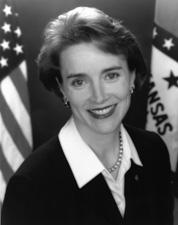 Sen. Blanche L. Lincoln (D-AR)
Legislative Activity
Stay on top of the latest movement without scrolling through every action
Senate amendment submitted
July 9, 2009
View full timeline
Senate amendment submitted
July 9, 2009
Senate amendment proposed (on the floor): Amendment SA 1463 proposed by Senator Murray for Senator Lincoln to Amendment SA 1373.(consideration: CR S7303-7305)
July 9, 2009
Senate amendment agreed to: Amendment SA 1463 as modified agreed to in Senate by Unanimous Consent.(text as modified: CR S7303)
July 9, 2009
Amendment SA 1463 proposed by Senator Murray for Senator Lincoln to Amendment SA 1373. (consideration: CR S7303-7305) To make a technical correction to the Federal Deposit Insurance Act.
July 9, 2009
Amendment SA 1463 as modified agreed to in Senate by Unanimous Consent. (text as modified: CR S7303)
July 9, 2009
Text
Modified
DEPARTMENT OF HOMELAND SECURITY APPROPRIATIONS ACT, 2010

The ACTING PRESIDENT pro tempore. Under the previous order, the
Senate will resume consideration of H.R. 2892, which the clerk will
report.
The assistant legislative clerk read as follows:

A bill (H.R. 2892) making appropriations for the Department
of Homeland Security for the fiscal year ending September 30,
2010 and for other purposes.

Pending:

Reid (for Byrd/Inouye) amendment No. 1373, in the nature of
a substitute.
Vitter modified amendment No. 1375 (to amendment No. 1373)
to prohibit amounts made available under this Act from being
used to amend the final rule to hold employers accountable if
they hire illegal aliens.
Grassley amendment No. 1415 (to amendment No. 1373), to
authorize employers to voluntarily verify the immigration
status of existing employees.
Kyl/McCain amendment No. 1432 (to amendment No. 1373), to
strike the earmark for the City of Whitefish Emergency
Operations Center.
Hatch amendment No. 1428 (to amendment No. 1373), to amend
the Immigration and Nationality Act to extend the religious
workers and Conrad-30 visa programs, to protect orphans and
widows with pending or approved visa petitions.

The ACTING PRESIDENT pro tempore. The Senator from Washington is
recognized.
Mrs. MURRAY. I ask unanimous consent the vote in relation to the Kyl
amendment No. 1432 occur at 11:30 a.m., with the provisions of the
previous order governing consideration of this amendment remaining in
effect.
The ACTING PRESIDENT pro tempore. Without objection, it is so
ordered.

Amendment No. 1375, as Modified

Mrs. MURRAY. Madam President, I ask unanimous consent the Vitter
amendment No. 1375 now be the pending business.
The ACTING PRESIDENT pro tempore. Without objection, it is so
ordered.
Mr. DURBIN. Madam President, I rise to voice my reservations with
Vitter amendment No. 1375.
The Vitter amendment would prohibit any funds in the Homeland
Security Appropriations bill from being used to change the Bush
administration's ``no-match'' letter regulation. This controversial
regulation deals with the obligations of employers who receive what are
known as no-match letters from the Social Security Administration.
The Social Security Administration sends no-match letters to
employers when a Social Security number or other information provided
by an employee does not match the agency's records. This is part of the
Social Security Administration's efforts to improve the accuracy of
their records, but the Bush administration wanted to use no-match
letters to get the Social Security Administration involved with
enforcing our immigration laws. The theory was that an employee whose
information doesn't match the Social Security Administration's database
is probably an illegal immigrant. However, the reality is that the vast
majority of people whose data does not match the Social Security
Administration's information are U.S. citizens who changed their name
when they married or whose information is wrong due to typographical or
other clerical errors.
The Bush administration's no-match rule would make employers liable
if they fail to take action on a no-match notice, even though no-
matches are often caused by database errors. A small business owner
that receives a no-match letter would be faced with the choice of
firing the employee or following costly and burdensome requirements for
resolving the no-match. The U.S. Chamber of Commerce estimates that the
cost of the no-match rule would be at least $1 billion annually. This
is not a price we can afford, especially given the current condition of
the American economy.
The no-match rule would also have a dramatic and harmful impact on
millions of hard-working U.S. citizens who have done nothing wrong.
Experts estimate that as many as 3.9 million authorized workers will be
the subject of a no-match letter. And the U.S. Chamber of Commerce
estimates that as many as 165,000 legal workers will be wrongfully
fired if the no-match rule goes forward.
In addition to all these problems, the no-match rule would not
actually improve the enforcement of our immigration laws. The Social
Security Administration has repeatedly said that a no-match letter
makes no statement about a worker's immigration status. And the Social
Security Administration's databases do not have complete or accurate
information about workers' immigration status. In fact, according to
the Social Security Administration's inspector general, at least 3.3
million records in the administration's database have incorrect
citizenship information.
The no-match regulation is opposed by a broad coalition of business,
labor, civil rights, and religious groups, from the Chamber of Commerce
to the AFL-CIO.
The no-match rule would turn the Social Security Administration into
an immigration enforcement agency. This would detract from its primary
mission of administering retirement benefits for tens of millions of
Americans.
The no-match rule was blocked by a court order shortly after it was
issued and two years later the rule still hasn't taken effect. The
court found that the rule would ``result in irreparable harm to
innocent workers and employers.''
Yesterday, DHS Secretary Janet Napolitano announced that she plans to
rescind the no-match rule. She believes that using the Social Security
Administration to enforce our immigration laws is ineffective and will
harm millions of innocent small business owners and employees.
Instead, Secretary Napolitano plans to use electronic verification so
that employers can determine whether their employees are legally
authorized to work. There is work to be done to improve the current
electronic verification system but this is a much more efficient
approach than dragging the Social Security Administration into
immigration enforcement.
At the same time, Secretary Napolitano is taking a different approach
from the previous administration when it comes to worksite enforcement.
Secretary Napolitano has launched a new effort to crack down on
employers who knowingly hire illegal immigrants.
This is the right approach and I commend Secretary Napolitano for
seeking to rescind the no-match rule and refocus DHS on unscrupulous
employers who knowingly hire illegal immigrants.
The Vitter amendment would prevent DHS from going forward with its
plan to rescind the no-match rule. Congress should not micromanage
DHS's efforts to enforce our immigration laws.
For these reasons, I have serious reservations about the Vitter
amendment and I will urge the conferees not to include it in the
conference report.
Mrs. MURRAY. Madam President, I understand this amendment is
acceptable to both sides.
The ACTING PRESIDENT pro tempore. If there is no further debate, the
question is on agreeing to the amendment.
The amendment (No. 1375), as modified, was agreed to.
Mrs. MURRAY. I move to reconsider the vote and move to lay that
motion on the table.

[[Page S7289]]

The motion to lay on the table was agreed to.

Amendment No. 1378 to Amendment No. 1373

Mr. McCAIN. I call up amendment No. 1378 and ask for its immediate
consideration.
The ACTING PRESIDENT pro tempore. Without objection, the clerk will
report.
The legislative clerk read as follows:

The Senator from Arizona [Mr. McCain] proposes an amendment
numbered 1378 to amendment No. 1373 .

Mr. McCAIN. I ask unanimous consent that further reading of the
amendment be dispensed with.
The ACTING PRESIDENT pro tempore. Without objection, it is so
ordered.
The amendment is as follows:

(Purpose: To strike the appropriation for the Advanced Training Center)

On page 9, lines 15 and 16, strike ``, of which $39,700,000
shall be for the Advanced Training Center''.

Mr. McCAIN. I yield the floor.
The ACTING PRESIDENT pro tempore. The Senator from Arizona is
recognized.

AMENDMENT NO. 1432

Mr. KYL. Madam President, I believe there is now 5 minutes per side
to debate the amendment I have offered, which is cosponsored by Senator
McCain. I would appreciate it if the Chair will advise me when I have
consumed 2 minutes. Senator McCain will talk for about 2 minutes, and I
wish to reserve the last minute following Senator Tester.
The amendment is very simple. It strikes $900,000 for an earmark for
the city of Whitefish Emergency Operations Center in Montana. The
administration terminated funding for these types of projects in its
2010 budget submission. This operations center has not been subject to
a congressional hearing nor has it been authorized by Congress. It is a
pure earmark. Not only did the administration not request funding for
the project, it specifically zeroed out funding.
Senator Feingold had an amendment that would have subsumed this
project along with several others. That amendment failed. But he noted
in regard to his amendment that while we may not all agree on the
appropriateness of earmarks in general, I certainly hope we can agree
certain things ought not be earmarked, including FEMA grant programs
such as those protecting Americans from terrorist attacks. I quote
Senator Feingold, because this is precisely the view of the 9/11
Commission. From page 396 of that report it included this
recommendation:

Homeland security assistance should be based strictly on an
assessment of risks and vulnerabilities . . . Congress should
not use this money as a pork barrel.

The report goes on to state:

In a free-for-all over money, it is understandable that
representatives will work to protect the interests of their
home states or districts, but this issue is too important for
politics as usual to prevail. Resources must be allocated
according to vulnerabilities.

That is why in its budget submission the administration said this:

The administration is proposing to eliminate the Emergency
Operations Center Grant Program in the 2010 budget because
the program's award allocations are not based on a risk
assessment. Also, other Department of Homeland Security grant
programs can provide funding for the same purposes more
effectively.

So you have the 9/11 Commission saying these programs should be
eliminated; you have the administration saying, in its budget
submission, they should be eliminated from the budget submission, that
they should not be subject to earmarks. That is why our amendment is
being offered.
The ACTING PRESIDENT pro tempore. The Senator has consumed his 2
minutes.
The Senator from Arizona is recognized.
Mr. McCAIN. Madam President, I thank my friend and colleague from
Arizona for this amendment.
Look, it is all about the fact that there has been no analysis, no
assessment, no debate on the merits of using Federal funds for a
municipal improvement project. I am sure Whitefish needs municipal
improvement. So do cities and towns all over America. Why was Whitefish
picked?
By the way, it might be of interest to taxpayers, Whitefish,
according to my information, has a population of 5,849 people. This
earmark equals $153.87 per inhabitant.
Cities all across America are operating out of inadequate facilities,
including those in my own State. All we have asked for is to have these
prioritized according to competition, assessment, and recommendations
by agencies of government rather than inserted in the bill as an
earmark and without any of that.
From the previous votes, we will probably lose on this one, but I
want to tell my friend from Montana, sooner or later the American
people are going to reject this kind of pork-barrel earmarking, $153.87
for every resident in Whitefish, which may be warranted--it may be
warranted--but there is no assessment, there is no study, there is no
rationale besides the fact that this was inserted in this bill without
any scrutiny or authorization.
We should reject this kind of practice. This is an egregious example
of it.
I yield the floor.
Mr. TESTER. Madam President, I ask you inform me when I have 3
minutes left.
The ACTING PRESIDENT pro tempore. The Senator from Montana is
recognized.
Mr. TESTER. Madam President, I thank the two Senators from Arizona
for the debate we have been having on this expenditure. This is not an
egregious expenditure. The senior Senator from Arizona talked about
5,849 people living in Whitefish. In the 2000 census figures it is up
to 8,500 now, but that is not the issue. The issue is Whitefish is
here. This is it up here. We have a Canadian border 60 miles north. We
have a park to the east of it. We have millions--millions of acres of
Forest Service land all around it, north, south and to the west.
When we have emergencies, it is not necessarily just terrorism. They
will tell you on the northern border, terrorism is the biggest threat.
On the southern border, next to Arizona, it is illegal immigration. Not
only do we have for this emergency operations center the potential--and
let's hope it never happens--of terrorist threats coming down, whether
it is in the park or north, along in Forest Service lands, we also have
a very real threat again of forest fires occurring. They have happened
with regularity.
The current building is one-third of the size needed. It is 100 years
old. It is in a seismic zone. The truth of the matter is, we have
Border Patrol, Forest Service, DEA--all rely on local law enforcement
to assist them. We have radio interoperability between Federal, State,
and county government that this will address. The truth is, this is for
the region.
This money also leverages almost 9 to 1 in local grants--$8 million,
this $900,000 leverages. So the local community is stepping up and they
are picking up their fair share.
We don't want unfunded mandates put on local governments because we
have potential national terrorist problems throughout this region.
The ACTING PRESIDENT pro tempore. There is 3 minutes remaining.
Mr. TESTER. The truth is that you can come up and look at a title and
you can talk about it being egregious, but the truth is, millions of
acres of forests, a national park, a border 60 miles away--we are
talking about emergency services. The local community is supposed to
pick up the entire tab for that? I don't think so and I don't think
that is fair. That is why we have a $900,000 expenditure in this bill
to help local governments meet the needs of this country.
I reserve the remainder of my time.
The ACTING PRESIDENT pro tempore. Who yields time? If neither side
yields time, time will be charged equally on both sides.
The Senator from Arizona is recognized.
Mr. KYL. Madam President, it is appropriate for the sponsor of the
amendment to have the final word. I wish to reserve my final minute to
have the last response.
Mr. TESTER. Can I ask what the sponsor of the amendment has left for
time?
The ACTING PRESIDENT pro tempore. The sponsor has 53 seconds and the
Senator has 2 minutes 29 seconds.
Mr. TESTER. We have two Senators for every State in this country. Our
forefathers drafted that out. The reason was we don't dictate on
population, we don't dictate on landmass, we dictate on need.

[[Page S7290]]

The fact is, there are millions of acres of Forest Service grounds; a
national park--one of the jewels of this country--to the east; a border
to the north where there are real threats that we need to make secure
and work with our neighborhoods to the north to make sure we do not
have terrorist activity come across the border.
The truth is, the sponsor of this amendment talked about the
President zeroing out this program. Why doesn't the amendment zero out
the program? It doesn't. The sponsor cherry-picked one expenditure in
the bill and said this isn't the way we should be spending money. I
appreciate that. We are having a debate here on that. But this is much
needed for the security of this country and for the security of the
region.
Mrs. MURRAY. Will the Senator from Montana yield?
Mr. TESTER. Yes, I would.
Mrs. MURRAY. My understanding is over the last decade there have been
28 Presidential disasters which occurred in that region.
Mr. TESTER. I believe that is correct.
Mrs. MURRAY. So 28 times in the last 10 years there has been a major
disaster that has been responded to, whether it is a fire in the park,
on the Federal land, or a border issue or whatever, so this is not just
about Whitefish, am I correct?
Mr. TESTER. It is not about Whitefish at all.
Mrs. MURRAY. It is about the entire region and the ability for all
the different agencies to respond, is that correct?
Mr. TESTER. That is correct.
Mr. MURRAY. That clarifies the importance for this emergency center.
I thank the Senator.
Mr. TESTER. The Senator is spot on right. That is exactly right. It
is not about Whitefish at all, it is about the region, it is about the
location, and it is critically important we get this money for this
project. I appreciate the sponsor bringing the amendment up but,
truthfully, this is not pork. This is something that will help the
country being secure.
I yield the floor.
The ACTING PRESIDENT pro tempore. The Senator from Arizona is
recognized.
Mr. KYL. Madam President, I certainly accept the argument of my
friend from Montana that this could be put to good purpose in
Whitefish, MT. It could be put to good use in Yuma or Nogales or
anywhere else in the country. That is why the 9/11 Commission said, and
I quote again:

Homeland Security assistance should be based strictly on an
assessment of risks and vulnerabilities . . . The Congress
should not use this money as a pork barrel.

All we ask is, as the administration did, that the money be allocated
based on the risk assessment from the Department of Homeland Security,
not on the ability of a particular Congressman or Senator to get the
money earmarked in a bill.
I ask unanimous consent that page 396 of the 9/11 Commission report
be printed in the Record at the conclusion of my remarks, and again
urge my colleagues to support this amendment, as at least one small
step we can take to demonstrate that we agree with the 9/11 Commission
and we agree with the administration that these grants should be based
on risk, rather than earmarks.
There being no objection, the material was ordered to be printed in
the Record, as follows:

The 9/11 Commission Report, p. 396

Recommendation: Now, in 2004, Washington, D.C., and New
York City are certainly at the top of any such list. We
understand the contention that every state and city needs to
have some minimum infrastructure for emergency response. But
federal homeland security assistance should not remain a
program for general revenue sharing. It should supplement
state and local resources based on the risks or
vulnerabilities that merit additional support.
The second question is, Can useful criteria to measure risk
and vulnerability be developed that assess all the many
variables? That assessment should consider such factors as
population, population density, vulnerability, and the
presence of critical infrastructure within each state. In
addition, the federal government should require each state
receiving federal emergency preparedness funds to provide an
analysis based on the same criteria to justify the
distribution of funds in that state.
We recommend that a panel of security experts be convened
to develop written benchmarks for evaluating community needs.
We further recommend that federal homeland security funds be
allocated in accordance with those benchmarks, and that
states be required to abide by those benchmarks in disbursing
the federal funds. The benchmarks will be imperfect and
subjective; they will continually evolve. But hard choices
must be made. Those who would allocate money on a different
basis should then defend their view of the national interest.

Command, Control, and Communications

The attacks on 9/11 demonstrated that even the most robust
emergency response capabilities can be overwhelmed if an
attack is large enough. Teamwork, collaboration, and
cooperation at an incident site are critical to a successful
response. Key decisionmakers who are represented at the
incident command level help to ensure an effective response,
the efficient use of resources, and responder safety. Regular
joint training at all levels is, moreover, essential to
ensuring close coordination during an actual incident.

Mr. KYL. I believe we need to ask for the yeas and nays, and I do at
this time.
The ACTING PRESIDENT pro tempore. Is there a sufficient second?
There is a sufficient second.
Mrs. MURRAY. Has all the time been used on this amendment?
The ACTING PRESIDENT pro tempore. Yes, it has.
The question is on agreeing to the amendment.
The clerk will call the roll.
The assistant legislative clerk called the roll.
Mr. DURBIN. I announce that the Senator from West Virginia (Mr.
Byrd), the Senator from Washington (Ms. Cantwell), the Senator from
Connecticut (Mr. Dodd), the Senator from Massachusetts (Mr. Kennedy),
and the Senator from West Virginia (Mr. Rockefeller) are necessarily
absent.
The ACTING PRESIDENT pro tempore. Are there any other Senators in the
Chamber desiring to vote?
The result was announced--yeas 36, nays 59, as follows:

[Rollcall Vote No. 223 Leg.]

YEAS--36

Barrasso
Bennett
Brownback
Bunning
Burr
Chambliss
Coburn
Collins
Corker
Cornyn
Crapo
DeMint
Ensign
Enzi
Feingold
Graham
Grassley
Gregg
Hatch
Hutchison
Inhofe
Isakson
Johanns
Kyl
Lugar
Martinez
McCain
McCaskill
McConnell
Murkowski
Risch
Roberts
Sessions
Thune
Vitter
Wicker

NAYS--59

Akaka
Alexander
Baucus
Bayh
Begich
Bennet
Bingaman
Bond
Boxer
Brown
Burris
Cardin
Carper
Casey
Cochran
Conrad
Dorgan
Durbin
Feinstein
Franken
Gillibrand
Hagan
Harkin
Inouye
Johnson
Kaufman
Kerry
Klobuchar
Kohl
Landrieu
Lautenberg
Leahy
Levin
Lieberman
Lincoln
Menendez
Merkley
Mikulski
Murray
Nelson (NE)
Nelson (FL)
Pryor
Reed
Reid
Sanders
Schumer
Shaheen
Shelby
Snowe
Specter
Stabenow
Tester
Udall (CO)
Udall (NM)
Voinovich
Warner
Webb
Whitehouse
Wyden

NOT VOTING--5

Byrd
Cantwell
Dodd
Kennedy
Rockefeller
The amendment (No. 1432) was rejected.
Mr. DURBIN. I move to reconsider the vote.
Mrs. MURRAY. I move to lay that motion on the table.
The motion to lay on the table was agreed to.
The ACTING PRESIDENT pro tempore. The Senator from Washington.
Mrs. MURRAY. Madam President, Senator McCain has an amendment that he
will speak to in a moment. I wish to let all Senators know I appreciate
their cooperation. We are working through a number of amendments on
both sides that I am hoping we can get through this afternoon. Senator
McCain will speak to his amendment now, and we are hoping to have a
vote around 2 to settle that and several others. If Members have an
amendment they are working on and have some last-minute language to
work on, please get it done because we would like to finish this bill
today.
I yield the floor.
The ACTING PRESIDENT pro tempore. The Senator from Arizona.

Amendment No. 1378

Mr. McCAIN. Madam President, I ask for the immediate consideration of
amendment No. 1378.
The PRESIDING OFFICER. The amendment is pending.

[[Page S7291]]

Mr. McCAIN. I thank the Chair.
Madam President, this amendment strikes an earmark of $39.7 million
for an advanced training center in West Virginia, a training facility
for U.S. Customs and border protection agents. The center features a
range of training environments, facilities, et cetera. The
administration requested and the committee approved $30.3 million to
operate and equip the facility. While I have a problem with that, I do
not intend for the amendment to affect the $30 million the
administration requested to operate and equip the facility. This
amendment is not about that.
The committee earmarked an additional $39.7 million to equip,
furnish, and expand the Leadership Academy at the Center.
Let me be clear what the amendment does and does not do. It does not
strike the requested funding for the training facility. It does strike
an unrequested, unauthorized, unnecessary earmark of nearly $40 million
that was added to this bill at the direction of a senior Member of this
body. I wish to make that perfectly clear. I am sure there will be
opponents of this amendment but have no doubt: It does not affect the
$30 million the administration requested. This is an additional $39.7
million to equip, furnish, and expand the Leadership Academy.
It might be of interest to our colleagues that today, at 9:23 a.m.,
the CBO is reporting that the year-to-date budget deficit tops a
trillion dollars. We are considering a provision that adds an
additional $39.7 million in light of the Congressional Budget Office
monthly budget review. Its key points are, the Federal budget deficit
is $1.1 trillion for the first 9 months of fiscal year 2009. Here we
are with a bill loaded down with earmarks worth tens of millions of
dollars on the very day that the deficit tops $1 trillion; in fact, it
is $1.1 trillion. That is more than $800 billion greater than the
deficit recorded through June 2008. Outlays are 21 percent or $457
billion higher than they were in the 9 months of 2008. Revenues have
fallen by 18 percent, by some $346 billion. Outlays for unemployment
benefits so far this year are more than 2.5 times what they were at
this point last year. About half this increase is driven by a higher
unemployment rate and half is driven by legislation expanding
unemployment.
The estimated deficit reflects outlays of $147 billion for the
Troubled Asset Relief Program, known as TARP, recorded on a net present
value basis, and spending of $83 billion in support of Fannie Mae and
Freddie Mac. Interest payments have declined 25.5 percent as a result
of lower short-term interest rates.
So here we are looking at business as usual on the earmarks and
appropriations bills. Meanwhile, the year-to-date budget deficit tops
$1 trillion. Maybe it is approaching $2 trillion by the end of the
year--an incredible burden to lay on future generations of Americans.
I am sure--I am sure--this amendment will probably lose. I am sure
proponents of the Advanced Training Center's Leadership Academy in West
Virginia will stoutly defend it, and its essential functions will be
graphically described by the opponents of this amendment.
It is time we stopped. Isn't a $1.1 trillion deficit for the first 9
months of this year enough of a signal that maybe we ought to tighten
our belts, that maybe we ought to stop adding $39.7 million to an
already requested $30 million to operate and equip an advanced training
center--a training facility that is located in the State of West
Virginia? I understand that. Our thoughts and prayers go out for the
senior Senator from West Virginia. We hope he regains his health soon.
We hope he continues in his very effective membership and service in
this body.
But the fact is, the committee--the committee--earmarked an
additional $39.7 million to equip, furnish, and expand the Leadership
Academy at the Center. Can't we delay expanding, equipping, and
furnishing a leadership academy? Can't we do that? Probably not.
Probably not. Probably not.
But as long as Americans are bearing this incredible burden--a
burgeoning deficit we are laying on our children and our
grandchildren--I and some others will be coming to this floor to try to
point out it is time we got rid of things that are maybe even necessary
but not vital to our Nation's future.
Madam President, I ask for the yeas and nays on the amendment.
The ACTING PRESIDENT pro tempore. Is there a sufficient second?
There appears to be a sufficient second.
The yeas and nays were ordered.
Mr. McCAIN. Madam President, I yield the floor.
The ACTING PRESIDENT pro tempore. The Senator from Ohio.
Mr. VOINOVICH. Madam President, I do not think there is a Senator in
this body who has talked more about deficits or our national debt than
the senior Senator from Ohio.
Senator Lieberman and I have a bill in to create a commission to deal
with tax reform and entitlements. I have had a bill in called the SAFE
Commission for the last 4 years: Saving America's Future Economy. There
is no one more aware of where we are. We will have a deficit this year,
I believe, of over $2 trillion when you take into consideration the
amount of money we are borrowing from our governmental trust funds.
That being said, I respectfully oppose the amendment offered by my
good friend, the Senator from Arizona. This amendment seeks to strike
the requirement in the bill for $39.7 million for the Advanced Training
Center.
This Advanced Training Center is designed to serve the specialized
needs of U.S. Customs and Border Protection. It officially opened in
August of 2005. There may be some people who object to the fact that it
is in West Virginia, but the fact is it is in West Virginia.
This year alone, the Center will provide advanced training to over
3,200 U.S. Customs and Border Protection employees.
We have already mentioned we have increased the number of these
employees substantially to do what most people want us to do; that is,
to protect the border and to go after those individuals who are illegal
immigrants. There is no question about that. But I also know from my
work on the Governmental Affairs Committee and my Subcommittee on
Oversight of Government Management, in the Federal workforce, the
people we hire have to be trained. You just cannot bring them on. You
have to train them.
So this is a critical training facility for frontline employees. In
fact, the Department of Homeland Security and the Office of Management
and Budget have endorsed the expansion of this facility as well when
they approved and sent forward to Congress their 5-year master facility
plan.
This is not a boondoggle. This is not a waste of money. This is
something to support a facility that is there and needs to be expanded
because we have decided we want to hire a lot more employees. When you
hire employees, you have to provide them the training. And that is
exactly what this is doing.
Again, I wish to emphasize, if we are going to secure the border, it
is going to cost a lot of money, including training the people we are
going to hire.
So we should oppose this amendment.
The PRESIDING OFFICER (Mrs. Hagan). The Senator from Washington.
Mrs. MURRAY. Madam President, I thank my colleague from Ohio for his
statement in opposition to the McCain amendment.
I rise as well to speak on behalf of Senator Byrd who, as we all
know, is home recovering from a serious illness. The committee bill
does include $39.7 million for the continued expansion of the U.S.
Customs and Border Protection, CBP, Advanced Training Center. The ATC,
which opened back in 2005, provides advanced firearms and tactical
training to CBP law enforcement personnel and personnel of other
Federal agencies.
The center is expanding in phases. It is consistent with this master
plan I hold in my hand. This plan actually was transmitted to Congress
back in 2007 and was approved then by the Office of Management and
Budget and the Department of Homeland Security.
This master plan accommodates advanced training consistent with the
mission of securing our borders. CBP employees are stationed throughout
the Nation at land and border crossings, at airports, at seaports, and
other urban environments with a need for practical, unique,
progressive, and flexible training.
There is no other training of this kind, I want my colleagues to
know, and there has never been a time that it has been needed more.

[[Page S7292]]

Senator Byrd strongly--he wants us to know--supports the Advanced
Training Center and its mission and is going to continue to fight hard
for the security of this great country. Customs and Border Protection
needs and deserves the advanced training facility to assure that the
more than 50,000 Customs and Border Protection agents, officers, and
other personnel have the training they require when they are sent in
harm's way.
This facility is expected to train over 3,200 law enforcement and
other employees in fiscal year 2009, and that is expected to grow to
more than 5,000 each year.
I urge our colleagues to vote against that plan.
I, again, would like everyone to know we are hoping Senator
Rockefeller will be back shortly. He will speak on this amendment. We
are hoping to set up this amendment for a vote around 2 o'clock.
Madam President, with that, I rise to offer the Dodd-Lieberman
amendment No. 1458, which I understand is at the desk.
Mr. VITTER. Madam President, I reserve the right to object.
The PRESIDING OFFICER. Does the Senator object?
Mr. VITTER. Yes, I object.
The PRESIDING OFFICER. Objection is heard.
The Senator from Utah.

Amendment No. 1428, as Modified

Mr. HATCH. Madam President, I ask for the regular order.
The PRESIDING OFFICER. The Senator is asking for the regular order
with respect to the Senator's pending amendment?
Mr. HATCH. With respect to a modification to amendment No. 1428. I
send the modification to the desk and ask for its immediate
consideration.
The PRESIDING OFFICER. The Senator has the right to modify his
amendment. The amendment is so modified.
The amendment (No. 1428), as modified, is as follows:

On page 77, between lines 16 and 17, insert the following:

SEC. 556. IMMIGRATION PROVISIONS.

(a) Special Immigrant Nonminister Religious Worker
Program.--
(1) Extension.--Section 101(a)(27)(C)(ii) of the
Immigration and Nationality Act (8 U.S.C. 1101
(a)(27)(C)(ii)), as amended by section 2(a) of the Special
Immigrant Nonminister Religious Worker Program Act (Public
Law 110-391), is amended by striking ``September 30, 2009''
each place such term appears and inserting ``September 30,
2012''.
(2) Study and plan.--Not later than the earlier of 90 days
after the date of the enactment of this Act or March 30,
2010, the Director of United States Citizenship and
Immigration Services shall submit a report to the Committee
on the Judiciary of the Senate and the Committee on the
Judiciary of the House of Representatives that includes--
(A) the results of a study conducted under the supervision
of the Director to evaluate the Special Immigrant Nonminister
Religious Worker Program to identify the risks of fraud and
noncompliance by program participants; and
(B) a detailed plan that describes the actions to be taken
by the Department of Homeland Security against noncompliant
program participants and future noncompliant program
participants.
(3) Progress report.--Not later than the earlier of 90 days
after the submission of the report under subsection (b) or
June 30, 2010, the Director of United States Citizenship and
Immigration Services shall submit a report to the Committee
on the Judiciary of the Senate and the Committee on the
Judiciary of the House of Representatives that describes the
progress made in reducing the number of noncompliant
participants of the Special Immigrant Nonminister Religious
Worker Program.
(b) Conrad State 30 J-1 Visa Waiver Program.--Section
220(c) of the Immigration and Nationality Technical
Corrections Act of 1994 (8 U.S.C. 1182 note) is amended by
striking ``September 30, 2009'' and inserting ``September 30,
2012''.
(c) Relief for Surviving Spouses.--
(1) In general.--The second sentence of section
201(b)(2)(A)(i) of the Immigration and Nationality Act (8
U.S.C. 1151(b)(2)(A)(i)) is amended by striking ``for at
least 2 years at the time of the citizen's death''.
(2) Applicability.--
(A) In general.--The amendment made by paragraph (1) shall
apply to all applications and petitions relating to immediate
relative status under section 201(b)(2)(A)(i) of the
Immigration and Nationality Act (8 U.S.C. 1151(b)(2)(A)(i))
pending on or after the date of the enactment of this Act.
(B) Transition cases.--
(i) In general.--Notwithstanding any other provision of
law, an alien described in clause (ii) who seeks immediate
relative status pursuant to the amendment made by paragraph
(1) shall file a petition under section 204(a)(1)(A)(ii) of
the Immigration and Nationality Act (8 U.S.C.
1154(a)(1)(A)(ii)) not later than the date that is 2 years
after the date of the enactment of this Act.
(ii) Aliens described.--An alien is described in this
clause if--

(I) the alien's United States citizen spouse died before
the date of the enactment of this Act;
(II) the alien and the citizen spouse were married for less
than 2 years at the time of the citizen spouse's death; and
(III) the alien has not remarried.

(d) Humanitarian Consideration for Pending Petitions and
Applications.--
(1) Amendment.--Section 204 of the Immigration and
Nationality Act (8 U.S.C. 1154) is amended by adding at the
end the following:
``(l) Humanitarian Consideration for Pending Petitions and
Applications.--
``(1) In general.--An alien described in paragraph (2) who
was the beneficiary or derivative beneficiary of a petition
(as defined in section 204, 207, or 208) filed on behalf of
the alien or principal beneficiary before the death of the
qualifying relative and who continues to reside in the United
States shall have such petition and any related or subsequent
applications for adjustment of status to that of a person
admitted for lawful permanent residence adjudicated as if the
death had not occurred, unless the Secretary of Homeland
Security determines, in the unreviewable discretion of the
Secretary, that approval would not be in the public interest.
``(2) Alien described.--An alien described in this
paragraph is an alien who, immediately prior to the death of
his or her qualifying relative, was--
``(A) an immediate relative (as described in section
201(b)(2)(A)(i));
``(B) a family-sponsored immigrant (as described in
subsection (a) or (d) of section 203);
``(C) a derivative beneficiary of an employment-based
immigrant under section 203(b) (as described in section
203(d));
``(D) a spouse or child of a refugee (as described in
section 207(c)(2)); or
``(E) an asylee (as described in section 208(b)(3)).''.
(2) Construction.--Nothing in the amendment made by
paragraph (1) may be construed to limit or waive any ground
of removal, basis for denial of petition or application, or
other criteria for adjudicating petitions or applications as
otherwise provided under the immigration laws of the United
States other than ineligibility based solely on the lack of a
qualifying family relationship as specifically provided by
such amendment.

Mr. HATCH. Madam President, I thank the Chair.
Mrs. MURRAY. Madam President, I suggest the absence of a quorum.
The PRESIDING OFFICER. The clerk will call the roll.
The bill clerk proceeded to call the roll.
Mr. JOHANNS. Madam President, I ask unanimous consent that the order
for the quorum call be rescinded.
The PRESIDING OFFICER. Is there objection?
Without objection, it is so ordered.
The Senator from Nebraska is recognized.
Mr. JOHANNS. Madam President, I ask unanimous consent to speak as in
morning business for up to 7 minutes.
The PRESIDING OFFICER. Is there objection?
Without objection, it is so ordered.

The Economy

Mr. JOHANNS. Madam President, I rise, I think, at a very appropriate
time, while we are talking about the budget and deficits and numbers,
to say that rarely has a crystal ball proved so regrettably accurate.
Many warned, as did I, that the stimulus would amount to a mountain
of wasted money. It produced record deficits, and thus far it has
produced little beyond that.
But I am not here to ask the Senate to take my word for this. You can
read it in black and white in two reports that were released yesterday:
a CBO report and a GAO report.
According to the nonpartisan Congressional Budget Office, the Federal
budget deficit for the first 9 months, as Senator McCain mentioned, was
a whopping $1.1 trillion. This is the first time in our Nation's
history that the annual deficit has been this high.
If that ``Guinness Book'' record-sized debt was not astonishing
enough, we would all be floored that this debt is from only the first
three-quarters of the year. It is mystifying to me, horrifying to the
American taxpayers and their children who eventually will have to pay
the bill. It represents a dangerous reality for our future. Only 4
percent of the first stimulus funding has been spent, yet we are
shattering national deficit records already.

This was easily predicted. Look back a few short months to February
when we were debating the stimulus, a bill we were told we had to do
right away.

[[Page S7293]]

On February 4, 2009, I delivered my first speech as a Senator. I made
some simple predictions based upon my experience as a city council
member, a mayor, and as a Governor. Serving in those rolls, I learned a
few things about how money is spent at the local level, especially the
hidden costs of money from the Federal Government that seemingly comes
with no strings attached. In that speech I warned what would happen
with the so-called stimulus legislation. I predicted that State
governments would use the funds to replace State dollars and shore up
their budget problems. Well, sure enough, the Government Accountability
Office, known as the GAO, reported this:

States reported using Recovery Act funds to stabilize State
budgets and to cope with fiscal distress.

The report states that 90 percent of the money distributed has come
in the form of increased Federal education and health care grants to
State governments. This money has helped many State governments to
partially offset what they are facing, which is budget shortfalls.
I also warned that the result of replacing State funds with Federal
funds would lead to an enormous funding cliff for State budgets when
that temporary stimulus money ran out. The GAO report sends up a
warning flare, because States have not addressed the situation they
will be in when the stimulus funding runs out or how they will come up
with the funding to cushion the fall.
I wish I had been wrong in February--in fact, I think I said that at
the time. I wish I had been wrong when I said that the transportation
sector jobs estimated to be created by the major infrastructure
projects wouldn't materialize because the funding would instead go to
repaving. I urged my colleagues to reconsider because repaving projects
would not lead to long-term economic growth or good jobs. So what is
the consensus since the stimulus bill went into law? The GAO report
states that nearly 50 percent of all transportation projects are for
resurfacing and another 18 percent of the funds are being used to widen
already existing roads. That adds up to nearly 70 percent on temporary
road improvement projects.
Even though President Obama said there is nothing he would have done
differently, I find that hard to believe considering his earlier
remarks that predicted a much different result. In a speech on February
10, soon after becoming President, he said:

We can use a crisis and turn it into an opportunity.
Because if we use this moment to address some things that we
probably should have been doing over the last 10, 15, 20
years, then when we emerge from the crisis, the economy is
going to be that much stronger.

I doubt he had repaving projects in mind.
As evidenced by the GAO report, the stimulus bill is not laying down
the essential groundwork for sustained economic growth, long-term
initiatives, or jobs. In fact, unemployment reached 9.5 percent, the
highest rate in 26 years. This means that since the stimulus was signed
into law, 2,964 jobs have been lost every hour of every workday.
Clearly, the stimulus bill was sold to the American people as a quick
fix to solve our economic woes, but it is failing.
The Obama administration and his supporters in Congress want to
quickly tack on to the $1 trillion stimulus a litany of big spending
initiatives: health care reform, cap and tax, an overhaul of the
financial system. The recklessness of proposed spending, new government
programs, and increased deficits is sobering. What does all this
proposed spending add up to? A huge train wreck with stacks of IOUs all
the way to China as far as the eye can see. Yet some have the audacity
to raise the possibility of a second stimulus. It defies logic.
I will conclude by saying that the last thing the Federal Government
should do, directly or indirectly, is stifle American businesses and
hard-working families just as they are trying their best to crawl out
from the economic yoke of debt, taxes, and a stagnant economy. Before
we drive the Federal budget off another cliff--and take State budgets
down with us--we need to put our foot on the brakes, slow down, and
correct our course.
With that, I yield the floor and note the absence of a quorum.
The PRESIDING OFFICER. The clerk will call the roll.
The bill clerk called the roll.
Mr. WHITEHOUSE. Madam President, I ask unanimous consent that the
order for the quorum call be rescinded.
The PRESIDING OFFICER. Without objection, it is so ordered.
Mr. WHITEHOUSE. Madam President, I ask unanimous consent to speak as
in morning business for up to 15 minutes.
The PRESIDING OFFICER. Without objection, it is so ordered.

Sotomayor Nomination

Mr. WHITEHOUSE. Madam President, I am here to talk about Judge
Sotomayor. I am looking forward to her confirmation hearing, which
begins next Monday. I continue to review her record, and I will not
make my ultimate judgment until after the hearing. But I must say I am
very impressed with Judge Sotomayor's qualifications, including her
restrained and fact-based approach to deciding cases. I'm also
impressed, as a former prosecutor myself, by her experience as a
practicing attorney and as a line prosecutor. I think we are all
impressed by her educational achievements.
Like millions of Americans, I have been inspired by her personal
story. Frankly, it gives me goosebumps to think of that little girl
growing up in the projects in the Bronx and growing into the woman we
see before us now at the top of the legal profession, with a career of
exemplary conduct, exemplary academic achievement, exemplary judicial
experience behind her. It is really a great story of American
discipline and achievement.
Unfortunately, critics of Judge Sotomayor's confirmation have
unleashed an avalanche of innuendo meant to weaken the case for her
confirmation. These criticisms began among the right-wing talking
heads, but unfortunately, some of them are now voiced by my Republican
colleagues here on the floor. Indeed, rather than waiting for the
hearing to ask her about her record and her judicial philosophy, a
number of my colleagues have come to the floor to attack her and her
nomination.
Today, I would like to briefly address two particular and--frankly,
very surprising--attacks on Judge Sotomayor: first, the suggestion that
her judicial philosophy is somehow outside of the mainstream; and,
second, the suggestion that her life experience is somehow unhelpful to
the judgment she would bring to the Supreme Court.
First, Judge Sotomayor's judicial philosophy. My Republican
colleagues like to suggest that judges appointed by Republican
Presidents are neutral ``umpires'' and that judges appointed by
Democratic Presidents are judicial ``activists.'' But Chief Justice
Roberts himself, who, indeed, raised the ``umpire'' metaphor at his own
confirmation hearing, reveals the falsity of that comparison. Jeffrey
Toobin, a well-respected legal commentator, recently described a
pronounced ideological predisposition in Chief Justice Roberts.

In every major case since he became the Nation's
seventeenth Chief Justice, Roberts has sided with the
prosecution over the defendant, the state over the condemned,
the executive branch over the legislative, and the corporate
defendant over the individual plaintiff.

Let me say that again:

In every major case since he became the Nation's
seventeenth Chief Justice, Roberts has sided with the
prosecution over the defendant, the state over the condemned,
the executive branch over the legislative, and the corporate
defendant over the individual plaintiff.

Maybe this is a pure coincidence, and maybe it is a further
coincidence, to again quote Toobin, that this record ``has served the
interests, and reflected the values, of the contemporary Republican
Party.'' Maybe it is also a coincidence that in the Heller decision,
the DC gun law case, the Roberts-led conservative block of the Court
discovered a new constitutional right that had previously gone
unnoticed through 220 years of the United States Supreme Court's
history, and which just happens to appeal to the NRA and the Republican
base. Perhaps that is all a coincidence. But I will confess to you, I
doubt it. I think this record goes a long way towards disproving the
metaphor of the Republican judge as neutral umpire.
So let's put aside the notion that conservative men from the
Federalist Society have no predispositions in legal matters but that
anyone who differs from their views is the activist.

[[Page S7294]]

That is just rhetoric, and what it's seeking to do is to normalize the
right-wing activism that the Republican Party has calculatedly and over
many years moved onto our Court.
If you want to decide whether Judge Sotomayor has an appropriate
judicial philosophy, look at her full record. Throughout her long
career as a Federal judge, longer than any Supreme Court nominee since
the 19th century, Judge Sotomayor, has on every major issue, shown that
the facts and the law drive her determination of cases. On the Second
Circuit, Judge Sotomayor agreed with her more conservative colleagues
far more frequently than she disagreed with them. In 434 published
panel decisions where the panel included at least one judge appointed
by a Republican President, she agreed with the result favored by the
Republican appointee in 413 cases--413 out of 434. That is 95 percent
of the time, and it is no record of extremism. Indeed, it would seem to
put her on the conservative side of the mainstream. And consider what
she told Chairman Leahy:

Ultimately and completely, as a judge, you follow the law.
There is not one law for one race or another. There is not
one law for one color or another. There is not one law for
rich and a different one for poor. There is only one law.

Furthermore, the idea that because the Supreme Court disagreed with
Judge Sotomayor's Second Circuit panel decision in Ricci v. DeStefano,
she is somehow outside the mainstream is patently absurd. First, four
Justices of the Supreme Court agreed with the Second Circuit's
interpretation of the law. Are Justices Stevens, Souter, Ginsburg, and
Breyer outside of the mainstream? Hardly.
Second, Judge Sotomayor and her panel were faithfully applying the
settled precedent of the Second Circuit when they rendered their
decision--just what a circuit court judge of the United States is
supposed to do. The five Justices on the Supreme Court in the Ricci
majority, in deciding the case, invented an entirely new test for
resolving Title VII claims that, according to legal experts reported in
the New York Times, ``will change the landscape of civil rights law.''
It is hardly fair to criticize Judge Sotomayor for not applying a test
that did not even exist when she decided the case. Nor for failing to
venture into landscape changes of civil rights law.
In the Ricci decision and others, Judge Sotomayor's record
demonstrates a long career of faithfully applying the law to the facts
of the case before her--and the careful exercise of judicial
discretion.
That brings me to my second point. Wise exercise of judicial
discretion is the longstanding tradition underlying the American system
of law. It is harsh, narrow-minded, and ahistoric to contend that a
rich life experience and natural empathy are at odds with that judicial
tradition.
Any lawyer knows the importance of judicial discretion, both in our
common law system and to the interpretation of the Constitution. As
Justice John Paul Stevens has explained:

the work of federal judges from the days of John Marshall
to the present . . . requires the exercise of judgment--a
faculty that inevitably calls into play notions of justice,
fairness, and concern about the future impact of a decision.
. . .

That faculty has served the Nation well for over two centuries.
Indeed, discretion is at the heart of the judicial role. Our legal
system bears the imprint of the experience and wisdom of generations of
judges. As Justice Holmes famously explained, ``[t]he life of the law
has not been logic: it has been experience.'' Indeed, as Holmes
continued,

[t]he law embodies the story of a nation's development
through many centuries, and it cannot be dealt with as if it
contained only the axioms and corollaries of a book of
mathematics.

This discretion, of course, does not mean that judges are without
bounds. But there exists a broad and lively discretion that falls far
short of ``judicial activism.'' Justice Benjamin Cardozo put it this
way:

The judge . . . is not to innovate at pleasure. He is not a
knight-errant, roaming at will in pursuit of his own ideal of
beauty or of goodness. He is to draw his inspiration from
consecrated principles. . . .He is to exercise a
discretion informed by tradition, methodized by analogy,
disciplined by system, and subordinated to ``the
primordial necessity of order in the social life.'' Wide
enough in all conscience is the field of discretion that
remains.

Madam President, within this wide field of discretion, judges do not,
cannot, and should not close their minds to their experience of the
world, nor to what their experience teaches them about the effects of
their decisions on the world.
There has been plenty of empathy at the Supreme Court recently for
the rich and powerful, resulting in decisions that frustrate
congressional intent and deprive Americans of crucial statutory and
constitutional protections. There has been plenty of empathy for right-
wing ideology and plenty of empathy for big corporations. Should we not
also admit to the Court a nominee who has common sense, who can
appreciate how American laws affect different citizens, and who can
also empathize with the poor and the weak, as well as the more
fortunate?
If reaching correct outcomes were as simple as plugging a few factors
and elements into a computer, we would not need nine Supreme Court
Justices. Quite simply, a broadened range of perspectives and
experiences will make for better judgment by our Court.
One final thing is worth noting about the judicial branch of
government. It is designed to be a check and balance to the elected
branches. The Founders were keenly aware of the corruption and passing
passions to which those elected branches are vulnerable, and they
established the judiciary as a place where all were equal before the
law, and where power, money, and influence were intended to hold no
sway. The courtroom can be the only sanctuary for the little guy when
the forces of society are arrayed against him, when proper opinion and
elected officialdom will lend him no ear. This is a correct, a fitting,
and an intended function of our judiciary, and the empathy President
Obama saw in Judge Sotomayor has a constitutionally proper place in
that structure.
If everyone on the Court always voted for the prosecution against the
defendant, for the corporation against the plaintiff, and for the
government against the condemned, a vital spark of American democracy
would be extinguished. A courtroom is supposed to be a place where the
status quo can be disrupted, where the comfortable can be afflicted,
and the afflicted find some comfort when no one else will listen. A
judge of the United States is not an orderly, neutered little
functionary of the power structure. Judge Sotomayor's broad background
and empathy prepare her better for that proper judicial role than would
grooming in corporate boardrooms, scrubbing by the Federalist Society,
and fealty to party ideology.
I am looking forward to Judge Sotomayor's hearing as an opportunity
for her to finally reply to her right-wing detractors, to demonstrate
her intellect and qualifications, and to explain her judicial
philosophy. My preliminary review of her record suggests that she
understands the importance of judicial restraint and modesty, of
adherence to precedent, of respect for the legislative branch, and of
the timeless values enshrined in the Constitution. And she has
articulated a desire to be scrupulously fair by keeping sight of--not
denying--the lessons she has learned during her extraordinary life.
Judge Sotomayor appears, more than anything else, to be a careful and
conscientious judge. So let us not throw care and conscience to the
wind by hurling unjustified, unhelpful, and tired labels at her; let us
be proud to have a Justice of the Supreme Court with the type of broad
life experience that will inform her good and proper judgment.
Thank you, Mr. President, I yield the floor.
The PRESIDING OFFICER (Mr. Udall of New Mexico). The clerk will call
the roll.
The legislative clerk proceeded to call the roll.
Mr. NELSON of Florida. Mr. President, I ask unanimous consent that
the order for the quorum call be rescinded.
The PRESIDING OFFICER. Without objection, it is so ordered.
Mr. NELSON of Florida. Mr. President, I ask unanimous consent to
speak as in morning business.
The PRESIDING OFFICER. Without objection, it is so ordered.

NASA Nominations

Mr. NELSON of Florida. Mr. President, yesterday the Commerce
Committee had its hearing for the NASA

[[Page S7295]]

Administrator and Deputy Administrator nominees. Charlie Bolden and
Lori Garver respectively are the nominees for these two positions.
I have had the privilege of knowing Charlie Bolden for the better
part of a quarter of a century. In addition to all of the numerous
accolades that were heaped upon him yesterday by Members of the House
and Senate, it came to the Commerce Committee to say a word on his
behalf. Many talked about his distinguished career as a graduate of
Annapolis, a marine test pilot, an astronaut, then back into the
marines--after four times flying in space on the space shuttle, twice
as pilot and twice as commander--and then in his various positions in
the active-duty marines, retiring at the rank of major general. Those
accolades were extensive and they were accurate.
I would merely add to those attributes describing him--all of which
were very laudatory--the attribute, the characteristic, that Americans
have come to honor, and that is that Charlie Bolden is an overcomer.
One of the first instances of this characteristic occurred in
Charlie's native Columbia, SC, in 1964. He could not get an appointment
to Annapolis from his congressional delegation because they were still
embroiled with the fact that he was an African American. The
administration, at that time--the Johnson administration--had appointed
a retired judge with the specific purpose of going around the country
and finding qualified minorities so they could go into the academies.
This gentleman found Charlie and arranged for a Congressman from
Chicago to appoint him to Annapolis. When Charlie arrived, he was
promptly elected president of the freshman class.
Today, ADM Dennis Blair--now the Director of National Intelligence,
and interestingly in the same class--alternated all 4 years at
Annapolis being president of the class with Charlie Bolden. Therein is
a story in and of itself where Charlie was an overcomer. But let tell
you of another part of Charlie's life where he represented an
overcomer.
Charlie went back into the Marine Corps after four space shuttle
flights, and he came back in as a full bird colonel. The Marine Corps
wasn't keen on promoting marine astronauts to general officer, and so
the first time that Charlie was in the zone of consideration, they
passed him over. Charlie said, instead of retiring, I want to go back
to Annapolis and I want to give back to the institution that gave me so
much, including an education. He did so as the deputy superintendent,
which is a marine slot. His superiors were so impressed by his attitude
and his service that the next time he was up for consideration as
general officer, they promoted him. A second instance in Charlie's
life.
I will mention one other instance of Charlie's being an overcomer. He
was so well prepared and so expert at his task, that of a naval aviator
and of a pilot astronaut, that 23\1/2\ years ago, after having the most
delayed space flight in our country's history--that 24th flight of the
space shuttle having been scrubbed four times in the course of a
month--on the fifth try, the space shuttle lifted off. Charlie was the
pilot sitting in the right seat. The commander sits in the left seat.
The pilot, in NASA jargon, has all of the systems to monitor. As the
shuttle had just cleared the launch tower on liftoff, on the intercom I
could hear Charlie's voice: We have a problem. We have a helium leak.
Had that not been a faulty sensor--which ultimately we discovered,
but at the time none of us knew that was a faulty sensor--a real helium
leak would have caused a serious problem to the mission. But Charlie
was all over those switches and those systems. He got it under control
and we went on to have an almost flawless 6-day mission in space, only
to return to Earth and, 10 days later, Challenger launches and blows
up.
That was another instance of Charlie being an overcomer, being
presented with an almost insurmountable problem which he overcame.
So with this little aspect of the life of GEN Charlie Bolden, is it
any wonder there were so many people who came in front of the Senate
Commerce Committee yesterday to say a word on his behalf? And now, as
we will consider his nomination first in the Commerce Committee--which
ought to happen very shortly--and then in front of the Senate, I don't
think there is any expectation of any opposition. I believe that
Charlie, as the newly installed NASA Administrator, is going to take on
this task where he is going to have to be an overcomer again, because
NASA is at a crossroads. America's space program is at a crossroads,
and it needs a vigorous leader. But NASA not only needs an
administrator who will lead it, it needs to be led by the President of
the United States, who is the only one who can be the leader of
America's ventures into space. I am hoping the combination of the two
of them will put us on a path of reliving a lot of the excitement and
the magic this country lived several decades ago when we were achieving
extraordinary achievements. It gave a whole new perspective to the
human race when astronauts outside the bounds of Earth could look back
at this extraordinary planet suspended in the middle of a void and
recognize that is our home--planet Earth.

When astronaut John Glenn lifted off on the first American successful
orbital flight: ``Godspeed, John Glenn,'' said Scott Carpenter on that
immortal day.
I think we in the Senate will unite in saying: Godspeed, Charlie
Bolden, in your new assignment.
I yield the floor and suggest the absence of a quorum.
The PRESIDING OFFICER. The clerk will call the roll.
The assistant legislative clerk proceeded to call the roll.
Mrs. MURRAY. I ask unanimous consent that the order for the quorum
call be rescinded.
The PRESIDING OFFICER. Without objection, it is so ordered.
Mrs. MURRAY. Mr. President, for the information of all Senators, we
are hoping to get a vote in the next 15 minutes, about 2 o'clock, so we
can continue to move this bill forward.
I note that there is a Senator here who wishes to speak in morning
business. I am happy to accommodate him, but hopefully we will have
this agreement and be able to move forward on that very shortly.
I wanted to advise all Senators.
The PRESIDING OFFICER. The Senator from Maryland.
Mr. CARDIN. I ask unanimous consent to speak as in morning business.
The PRESIDING OFFICER. Without objection, it is so ordered.

NEW STEM CELL RESEARCH POLICY

Mr. CARDIN. Mr. President, I rise today to applaud the administration
for promptly issuing guidelines implementing President Obama's March
2009 Executive Order on stem cell research. This week, the
administration removed the barriers to responsible scientific research
involving embryonic stem cells that had been imposed by the previous
administration in 2001. The new guidelines establish sound policy and
procedures under which the Federal Government will fund such research
and help ensure that the research is ethically responsible,
scientifically worthy, and conducted in accordance with applicable
laws.
President Obama's action will have a profound impact on the long-term
health and well-being of millions of Americans. More than 100 million
Americans have chronic, debilitating diseases such as Parkinson's,
Alzheimer's, diabetes, and ALS. In addition, many Americans have
serious spinal cord injuries. Embryonic stem cell research offers hope
for advancements in treatment that will improve the quality of life for
countless numbers of Americans.
For the past 8 years, American scientists have received limited
Federal funding for stem cell research. In 2001, soon after taking
office, President Bush issued his stem cell policy. It permitted the
use of Federal funds to support research only on the stem cell lines
that were in existence as of the date of his Executive order, August 9,
2001.
The Bush compromise seemed reasonable to many in the scientific
community at the time, as researchers at NIH believed between 60 and 78
stem cell lines would be available for use. In fact, only 22 lines were
available and some of these were found to have been contaminated. In
addition, the 22 available lines were developed using science that has
since seen significant improvements. Scientists have testified that
these lines lack the genetic diversity necessary to perform research
for

[[Page S7296]]

several diseases that disproportionately affect minority populations.
In short, there were real deficiencies in the former administration's
policy. It reduced the opportunities available to our scientists,
undermined progress, and it discouraged scientific exploration.
Perhaps the best case for stem cell research comes from the patients
in the communities we represent here in Congress. I have learned first
hand of the importance of moving forward on groundbreaking scientific
research through my friendships with three individuals.
A few years ago, my closest friend in law school, Larry Katz, was
diagnosed with ALS. Once an active attorney in Baltimore, Larry's body
experienced a rapid decline from the symptoms of this debilitating
disease, and he died soon after his diagnosis.
Later, I was privileged to meet a young man named Josh Basile, who
served as an intern in my House office. Three years before he came to
Capitol Hill, he was a healthy young man, leading an active life. But
while wading in the Atlantic Ocean, a wave caught him, and he became a
quadriplegic overnight. Josh is determined to walk again, and he is
making substantial progress. He is also dedicated to helping others
make similar strides, and he has established a foundation called
``Determined-2-Heal.'' Through hard work and rehabilitation, Josh has
regained movement that many doctors thought was impossible. Josh is
also asking the Federal Government to do its part, by funding research
and allowing scientists access to the tools they need to make medical
advances possible.
Later, in 2006, I came to know Michael J. Fox, a brilliant and
talented actor with a remarkable spirit. In 1991, Michael was diagnosed
with Parkinson's disease. He has used his prominence as a tireless
advocate for stem cell research.
The time I have spent with these three people has taught me much
about the burden of debilitating diseases. Those of us who have loved
ones experiencing these and similar circumstances share a
responsibility to do everything we can to promote medical research. Our
scientists need the tools to discover cures and treatments, and stem
cell research holds hope for dramatic progress.
There is an added benefit for our Nation beyond improving the health
and lives of patients. We are also talking about maintaining the
international preeminence of the United States in the field of medical
research. My State of Maryland is home to some of the world's leading
research institutions, including Johns Hopkins University and the
University of Maryland Medical Centers. These institutions have
cutting-edge research technology and freeing up these important stem
cell lines would jumpstart the numerous promising research tracks in
this area.
I meet regularly with scientists like Dr. John Gearhart and Dr.
Douglas Kerr to try to get a better understanding about this issue. I
am not a scientist nor do I know all the technicalities, but I have had
a chance to meet with these scientists to see what they are doing. They
have been able to implant embryonic stem cell growth in mice and see
movement where there had been paralysis. This research is extremely
promising and is happening right now in my State.
The new National Institutes of Health funding guidelines for human
embryonic stem cell research are the next important step to expand this
research even further. It will result in the availability of
approximately 700 lines for research, a dramatic increase over the
number of currently available lines.
The new guidelines are based on solid principles. First, that Federal
funding for responsible research with human embryonic stem cells has
the potential to improve our understanding of human health and illness
and discover new ways to prevent and treat illness. Second, individuals
donating embryos for research purposes must do so freely, with
voluntary and informed consent. They must be derived from embryos that
were created for in vitro fertilization and not for research purposes,
and they must be excess embryos. To be eligible for NIH funding the
embryonic stem cells cannot be obtained through monetary payments or
other inducements.
Additionally, human embryonic stem cells eligible for testing must
have originated from facilities with proper documentation that the
embryos were obtained in a voluntary and legitimate manner. Finally,
the guidelines prohibit Federal funding of research that would
introduce human embryonic stem cells into breeding animals or into
nonhuman primate blastocysts. These guidelines are responsible, have
stringent safeguards, and they are ethically sound.
As the new NIH guidelines are implemented, America's knowledge of the
potential of stem cell research will continue to broaden. President
Obama's courageous actions will accelerate this process. The guidelines
send a clear message to scientists across the United States that their
important work is now backed by the confidence and resources of the
Federal Government.
I commend the administration for this decisive action which will
strengthen America's position as the global leader in medical research
and for the tremendous hope and promise that its new policy is bringing
to millions of Americans.
I yield the floor.

Admendment No. 1378

The PRESIDING OFFICER. The Senator from Washington.
Mrs. MURRAY. I ask unanimous consent that at 2 p.m., the Senate
proceed to vote in relation to the McCain amendment No. 1378, with the
time between now and then equally divided and controlled in the usual
form, with no amendment in order to the amendment prior to a vote in
relation thereto.
The PRESIDING OFFICER. Without objection, it is so ordered.
The Senator from West Virginia.
Mr. ROCKEFELLER. Mr. President, I rise in clear, strong opposition to
this amendment. Let me just say that the fact that this is located in
West Virginia is not part of my consideration. I am thinking about
national security, Border Patrol. I served as chairman of the
Intelligence Committee. I know something about these things. What the
Senator from Arizona wants to do doesn't make any sense at all.
What we are talking about is a one-of-a-kind. It is the only one in
the country that trains senior officers as well as others in border
protection, customs, and other things regarding homeland security.
There is no other place in the country that does this. There are 3,300
students there now. They are planning on 5,000 next year. There is no
other place where this can be done. If we cut this, there is no
substitute. We talk about border control. We talk about all those
things. Particularly senior officers side, this is where people are
trained. There is a huge master plan which I will not hold up. It has
been approved by the Office of Management and Budget, by the homeland
security folks, and was submitted to Congress in 2007. The facility is
used to train officers on waterborne tactics and operating ports of
entry, things which are obscure but essential to national security. It
includes a firing range which is not only used by CPB officers but
local law enforcement, DEA, Fish and Wildlife personnel, as well as the
Capitol Police. It is the only facility of its kind in the Nation.
These are crucial jobs. There is no place to take its place. If we cut
it, there is no way to make it up and carry out our responsibilities
for homeland security.
It is a very grievously formulated amendment. I strongly urge my
colleagues to vote against it.
The PRESIDING OFFICER. The Senator from Arizona.
Mr. McCAIN. I thank the Senator from West Virginia for his remarks. I
would remind him that this amendment strikes $39.7 million which has
been added to the $30 million that is already there for the center. The
$39.7 million is described to equip, furnish, and expand a leadership
academy at the center. So all the missions the Senator just described
don't have anything to do with the additional $39.7 million. It does
strike an unrequested, unauthorized, unnecessary earmark. The
administration didn't ask for the additional $39.7 million, nearly $40
million. No Member of Congress, regardless of position or seniority,
should be able to spend $40 million on a pet project with no scrutiny,
no hearing, and no competitive bidding process.

[[Page S7297]]

I will take the word of the Senator from West Virginia. This is
important. If it is important, why didn't we have a hearing on it
before the Homeland Security Committee? Why didn't we have some
competition from other parts of America? Why didn't we have a request
for it from the administration?
This is just another one of these egregious earmarks that may or may
not have merit. We may actually need a leadership academy that needs to
be equipped, furnished, and expanded in some place in West Virginia,
but no one will ever know that because we have never undergone the
scrutiny that should be required before we spend $40 million of the
taxpayers' money.
I probably talked enough about this, and I would imagine that we will
lose this amendment again. This is in the backdrop of a Federal budget
which for the first 9 months of the fiscal year 2009--3 more months to
go--is $1.1 trillion. It is estimated to be as high as $1.8 trillion.
The last budget deficit that was anywhere near this in recent history
was about $450 billion. We are looking at a deficit of massive
proportions, and yet we have to pile on additional millions, tens of
millions and even billions of dollars in projects that are of
questionable value. They may even be valuable, but there has been no
authorization, no request, no scrutiny, no competition. It is simply
put into a bill in a process we call earmarking. That is not fair to
the American taxpayers.
I ask for the yeas and nays.
The PRESIDING OFFICER. Is there a sufficient second?
There appears to be a sufficient second.
The time of the Senator has expired.
Mrs. MURRAY. I yield back the time on this side.
The PRESIDING OFFICER. All time is yielded back.
The question is on agreeing to the amendment No. 1378.
The clerk will call the roll.
The bill clerk called the roll.
Mr. DURBIN. I announce that the Senator from West Virginia (Mr.
Byrd), the Senator from Connecticut (Mr. Dodd), and the Senator from
Massachusetts (Mr. Kennedy) are necessarily absent.
Mr. KYL. The following Senator is necessarily absent: the Senator
from Missouri (Mr. Bond).
The PRESIDING OFFICER. Are there any other Senators in the Chamber
desiring to vote?
The result was announced--yeas 35, nays 61, as follows:

[Rollcall Vote No. 224 Leg.]

YEAS--35

Barrasso
Bayh
Bennett
Brownback
Bunning
Burr
Chambliss
Coburn
Corker
Cornyn
Crapo
DeMint
Ensign
Enzi
Feingold
Graham
Grassley
Hatch
Hutchison
Inhofe
Isakson
Johanns
Kyl
Lugar
Martinez
McCain
McCaskill
McConnell
Risch
Roberts
Sessions
Snowe
Thune
Vitter
Wicker

NAYS--61

Akaka
Alexander
Baucus
Begich
Bennet
Bingaman
Boxer
Brown
Burris
Cantwell
Cardin
Carper
Casey
Cochran
Collins
Conrad
Dorgan
Durbin
Feinstein
Franken
Gillibrand
Gregg
Hagan
Harkin
Inouye
Johnson
Kaufman
Kerry
Klobuchar
Kohl
Landrieu
Lautenberg
Leahy
Levin
Lieberman
Lincoln
Menendez
Merkley
Mikulski
Murkowski
Murray
Nelson (NE)
Nelson (FL)
Pryor
Reed
Reid
Rockefeller
Sanders
Schumer
Shaheen
Shelby
Specter
Stabenow
Tester
Udall (CO)
Udall (NM)
Voinovich
Warner
Webb
Whitehouse
Wyden

NOT VOTING--4

Bond
Byrd
Dodd
Kennedy
The amendment (No. 1378) was rejected.
Mrs. MURRAY. Mr. President, I move to reconsider the vote, and I move
to lay that motion on the table.
The motion to lay on the table was agreed to.
Mrs. MURRAY. Mr. President, we are working with the Republicans at
this time to come up with a list of remaining amendments this afternoon
so we can make progress. We hope to be able to move forward shortly on
a number of amendments that will be pending that we have agreed on.
While we are doing that, the Senator from Illinois would like to
speak as in morning business. How much time does the Senator need?
Mr. BURRIS. I need 3 or 4 minutes.
Mrs. MURRAY. Mr. President, I yield 4 minutes to the Senator from
Illinois for morning business.
The PRESIDING OFFICER. The Senator from Illinois is recognized.
Mr. BURRIS. Mr. President, I ask unanimous consent to speak as in
morning business.
The PRESIDING OFFICER. Without objection, it is so ordered.

general james e. cartwright

Mr. BURRIS. Mr. President, as a member of the Senate Armed Services
Committee, I often have the opportunity to meet with the fine men and
women who serve this country in uniform. Every day we demand the very
best from each of them--and in return, we owe them the best we have to
offer. That means keeping our commitment to this Nation's veterans. But
it also means supporting our troops in the field--with resources,
equipment, and--perhaps most importantly--sound leadership at the very
highest levels.
No one understands this better than GEN James Cartwright, the current
Vice Chairman of the Joint Chiefs of Staff.
Our committee met with General Cartwright just this morning. The
Senate has been asked to confirm his nomination for a second term as
Vice Chairman. And I rise today to offer him my strongest support.
After speaking with General Cartwright, I am convinced that his long
record of loyal service, impeccable judgment, and bold leadership make
him the very best choice to continue in this important post. Up to this
point, his tenure as a member of the Joint Chiefs has been marked by
innovative thinking.
Along with Admiral Mullen, General Cartwright has helped to shape the
modern American military as we confront a range of new threats from
across the globe.
A native of my home State, General Cartwright was born in Rockford,
IL, and began his service as a marine fighter pilot more than 30 years
ago. He is a distinguished graduate of the Air Command and Staff
College at Maxwell Air Force Base, and has served all over the world.
As an aviator, he put his extensive training to good use on the front
lines of our global defense network.
As a U.S. marine, he has never wavered in his commitment to the
country we all love. And as a former head of the U.S. Strategic
Command, General Cartwright has demonstrated his leadership skills and
his deep understanding of the threats we face.
He has led the fight for cyber security technology at the Department
of Defense, helping to protect America from the evolving threats of the
21st century.
He is a credit to the fighting men and women of our Armed Forces, and
an asset to the elected leaders who depend on him every day. Time and
again, he has answered the call.
When Secretary Gates first recommended him for nomination 2 years
ago, he understood that James Cartwright was someone we can rely upon.
Today, as we consider whether he should remain Vice Chairman of the
Joint Chiefs, I believe his record speaks for itself.
I urge my colleagues to join me in supporting a speedy confirmation
of General Cartwright.
Mr. President, I yield the floor and suggest the absence of a quorum.
The PRESIDING OFFICER. The clerk will call the roll.
The assistant bill clerk proceeded to call the roll.
Mr. WICKER. Mr. President, I ask unanimous consent that the order for
the quorum call be rescinded.
The PRESIDING OFFICER (Mr. Udall of Colorado). Without objection, it
is so ordered.

Health Care Reform

Mr. WICKER. Mr. President, we need serious, substantive health care
reform. The reasons for reform are well known, and they have led to
overwhelming consensus in Congress that something needs to be done to
make health care more affordable and more accessible.
The desire for action extends beyond the walls of this great
building. The American people also want us to act. But this desire for
action should not

[[Page S7298]]

give way to legislative haste. Americans do not want us to rush at the
expense of getting it right. They have questions, and they deserve
answers.
There are two very basic and important questions with regard to
health care reform. No. 1, how much is it going to cost? And No. 2, how
will we pay for it? First let's look at the question of cost.
The American public is alarmed about the massive debt we are
accumulating. They realize that in the past year, on top of the almost
$1 trillion stimulus bill, the Federal Government has also purchased
banks, an insurance company, and an auto company, all using borrowed
money that we, as taxpayers, will need to pay back. All this massive
borrowing and spending was done quickly and with little debate. This
was done, the public was told, in order to save the economy. How has
that turned out?
At the beginning of the year, the Obama administration told the
American people massive stimulus spending, if done quickly, would
create 3 to 4 million jobs and would keep the country's unemployment
rate at 8 percent. Today, sadly, unemployment is at 9.5 percent, the
highest level since 1983. The jobs that were promised have not
materialized. In fact, 467,000 additional jobs were lost last month
alone.
The administration now says they misread the economy. Our government
rushed to borrow and spend $1 trillion, but now we are basically being
told they were wrong. Vice President Biden said as much only a few days
ago.
Unfortunately, the American taxpayers are not going to get a do-over
on this spending. They are still on the hook for the almost $1 trillion
we borrowed, plus interest. Now there is talk of yet another expensive
stimulus package to make up for the one that did not work.
So considering this, it is no surprise the American public is
skeptical about the rush to spend yet another $1 trillion or more to
create a Washington-run health care scheme.
We have a number of proposals in Congress that attempt to fix health
care. There are workable reform proposals that go at the problem in a
way that does not incur such prohibitive costs for taxpayers.
Unfortunately, however, our Democratic colleagues have plans
accompanied by astronomical costs to taxpayers. The Finance Committee
is struggling to keep its bill at $1 trillion over 10 years. We are
told that just a portion of the Health, Education, Labor, and Pensions
Committee bill will cost over $1 trillion. That is just a portion of
their bill. Some have estimated the total cost for that bill will be
over $3 trillion. These are not scare tactics. These are Congressional
Budget Office estimates.
On the other side of the Capitol, the House Democrats' bill is
expected to cost closer to $2 trillion. Over and above these Federal
costs, there are frightening costs to the States. If the HELP Committee
proposal to expand Medicaid is enacted, we can expect a wholesale
collapse of State budgets and, of course, we are already seeing the
collapse of some State budgets. They are already struggling under the
unsustainable costs of the current program.
These spending figures are startling by themselves and even more
troubling taken on top of the massive amount of debt we have already
acquired.
Even more troubling is the expectation that costs of the Democratic
proposals will continue to rise year after year, well beyond the 10-
year budget window used to figure the pricetag of these proposals.
The Congressional Budget Office estimated the annual cost of the
insurance subsidy program contained in an earlier version of the HELP
bill would rise 6.7 percent per year until it is fully phased in. This
potential spending explosion should not come as a surprise. Medicare
and Medicaid, two programs we need to strengthen, help, and sustain,
are both already on unsustainable paths with enormous unfunded
liabilities.
This daunting amount of spending has taxpayers worried, and they are
beginning to speak up. One of my Democratic colleagues acknowledged
this recently saying: ``The big challenge--and I actually heard this at
home during the recess--is the sticker shock.''
Other supporters of the President are also warning him and his
Democratic colleagues in Congress to slow down and be more careful with
taxpayer dollars.
On Sunday, former Secretary of State Colin Powell, an Obama supporter
last year, warned the President about the ongoing spending spree,
saying:

You can't have so many things on the table that you can't
absorb it all.

To quote Secretary Powell:

And we can't pay for it all.

In addition to the massive costs associated with these proposals, no
one can yet tell us where the money will come from to pay for it. All
the proposals we have seen are creative in the way they spend tax
dollars but very short on specifics on how to fund them.
Our colleagues on the other side of the aisle have vaguely outlined
some ways they may pay for their plan, including a series of cuts to
Medicare and Medicaid--I repeat, cuts to Medicare and Medicaid--along
with new taxes. But they have not been as forthcoming and specific as
they need to be with the American taxpayers.
There is a reason why more details have yet to be released. Since we
do not have the money to pay for a government takeover of health care,
there will need to be massive tax increases or more borrowing or a
combination of the two. In fact, one leading Senate Democrat was quoted
in Wednesday's Wall Street Journal as saying they were ``broadening the
search for revenue''--broadening the search for revenue--to pay for
this massive plan. What that means, of course, is they are intensifying
their search for ways to raise taxes on the American people, whether it
be taxes on small business, which we have been hearing about lately, or
on health insurance plans or surtaxes on soft drinks or anything else
they can think of--massive tax increases for the American people for
plans which admittedly will only cover one-third of the uninsured
persons in the United States of America. All the while, this is being
done quickly and without time needed to provide the scrutiny the
American public expects and deserves.
All Americans--Republicans, Democrats, and Independents--want health
care reform, but they do not want a government-run health care plan.
They do not want to pay for it with Medicare and Medicaid cuts. They do
not want to drive up the debt. Getting it right is more important than
getting it done quickly.
Let's learn from the mistakes that were made in hastily passing the
stimulus bill. Massive new amounts of borrowing, spending, and taxes
are not the way to successful health care reform.
Mr. President, I suggest the absence of a quorum.
The PRESIDING OFFICER. The clerk will call the roll.
The assistant bill clerk proceeded to call the roll.
Mr. INHOFE. Madam President, I ask unanimous consent that the order
for the quorum call be rescinded.
The PRESIDING OFFICER (Mrs. Shaheen). Without objection, it is so
ordered.
Mr. INHOFE. Madam President, I wish to speak as in morning business.
However, if anybody comes to the Chamber with an amendment or anything,
I will immediately stop. I want to make that clear.
The PRESIDING OFFICER. Without objection, it is so ordered.

Cap And Trade Legislation

Mr. INHOFE. Madam President, I only rise on the floor for one reason;
and that is, it is my intention next week--probably Tuesday or
Wednesday, whenever I get the floor time--to give a rather long history
of the whole issue of the cap and trade. What I intend to do is start
from the very beginning.
While the Presiding Officer was not presiding over the Senate back
during the Kyoto Treaty some 11 years ago, I was. At that time, the
Republicans were the majority, and I happened to be the chairman of the
committee that had jurisdiction.
I have to tell you, at that time, I was a believer that manmade gas,
anthropogenic gases, CO<inf>2</inf>, methane were the cause of global
warming. The reason is because everybody said that. Nobody had a
dissenting view. It was not until the Wharton School came out with the
Wharton Econometrics Survey and said if we were to ratify the Kyoto
Treaty and live by its emissions requirements,

[[Page S7299]]

it would cost somewhere between $300 billion and $330 billion a year
that I started thinking about that. I remember a tax increase that was
enacted in 1993. That was the Clinton-Gore tax increase that at that
time was the largest one in a long period of time. This would have been
10 times greater than that.
So I thought: Let's be sure the science is there. That is when I
discovered there were many scientists who had been intimidated through
the use of manipulation in the awarding of grants from the Federal
Government or from the Heinz Foundation or from many of these
organizations. They had been suppressed very much like the man in the
EPA was suppressed last week. In looking at that, we started examining
it and finding out that many scientists around said: No, that is not
the case.
I will be specific because this was back when President Clinton was
in office and Al Gore was the Vice President. At that time, he wanted
to determine how much we could accomplish if the developed nations
ratified and lived by the Kyoto Treaty.
He went to Thomas Wigley, who was one of the top scientists at that
time. He was chosen by the then-Vice President of the United States, Al
Gore, who said: We want a study. Over a 50-year period, if all
developed nations would ratify and live by the emissions standards of
this treaty, how much would it reduce the temperature over a 50-year
period?
When the results came out, it was seven one-hundredths of 1 degree
Celsius; in other words, not even measurable. That is what began to
catch on, and people realized it was a lot of pain, a lot of
punishment, a lot of heavy taxes--like the current cap-and-trade
proposal is, or like the one that passed the House--yet there is not
any gain. Even if you were to believe--as I do not--that a major cause
of global warming is CO<inf>2</inf>, then what good would it do for us
unilaterally to do it if the developing nations are not doing it?
We discovered something yesterday in a hearing. I have a great deal
of respect for Lisa Jackson, who is the new Administrator of the EPA.
Her honesty was incredible yesterday. Showing her a chart, I asked her
a question, stating: This is what we used during the consideration, 13
months ago, of the Warner-Lieberman bill. The chart shows the numbers
as to living within or without the limits of the CO<inf>2</inf>
emissions. If we only did it in the United States, would it make any
difference at all in the world amount of CO<inf>2</inf>? She said: No,
it would not.
I think that is the most significant thing. Because individuals, and
well-meaning individuals who believe manmade gases are causing global
warming, should realize that does not do it, even if you believed it.
In fact, the reverse would be true. There is no doubt--and we have all
kinds of studies to show it--if we had passed any of the last three
cap-and-trade bills we considered on the floor of this Senate, that
would have had the effect of pushing the manufacturing jobs out of
America into countries where they have no emissions requirements, such
as China, and that would have caused a net increase--a net increase--of
CO<inf>2</inf>.
So I think that was a major thing yesterday that took place. It is my
intention next week to go back through the history of this issue, to
bring us up to the present time, and then to look into the future as to
what we might be doing with this legislation.
I was very happy to hear, a few minutes ago, that Chairman Barbara
Boxer has decided not to come out of the committee with a bill until
after the August recess. Quite frankly, I think it works in my favor.
The longer we have to inform people as to some of the misinformation,
the better I think it is going to be in terms of a vote that would take
place. I cannot imagine that if there are only some 35, 36 votes that
would have been there to pass the Warner-Lieberman bill 13 months ago,
that there would be any way today to get up to 60 votes.
So, quite frankly, I do not think it is going to pass anyway. But I
do think during the recess we are going to have an opportunity to talk
about this issue.
Today, I visited with a national farm group, and we were talking
about how it would disproportionately hurt the farmers. The fact is, 70
percent of their wheat cost is in fertilizer and energy. Fertilizer and
energy are where the costs would be increased dramatically if we were
to pass some kind of a cap-and-trade bill.
Then, of course, there is the regressive feature. The fact is, poor
people in America have to have gasoline in their cars. They have to
heat their homes. They spend a lot larger percentage of their
disposable income on heating and in using energy than wealthy people
do.
So I think, with all these things working right now, we are in a
position to stand back and say, cap and trade is not going to work. It
is going to be history. And we can start approaching this in ways,
perhaps somewhat like President Bush tried to do with the Clear Skies
Act, where he talked about real pollutants, such as SO<inf>X</inf>,
NO<inf>X</inf>, and mercury, and have meaningful reductions in those to
protect our environment.
That is what our plans are for next week, and I look forward to
sharing these thoughts with anyone who is willing to listen.
Madam President, I yield the floor and suggest the absence of a
quorum.
The PRESIDING OFFICER. The clerk will call the roll.
The bill clerk proceeded to call the roll.
Mr. VITTER. Madam President, I ask unanimous consent that the order
for the quorum call be rescinded, just that I may speak for up to 5
minutes.
The PRESIDING OFFICER. Is there objection? Without objection, it is
so ordered.
Mr. VITTER. Madam President, as the manager of this bill, who has
been very cooperative, and others on the floor know, I have been
working hard to get a vote on my reimportation amendment. It is a very
simple, straightforward amendment. It is a limitation amendment--at
least it will be once it is perfected and modified. In fact, it is an
amendment that has passed the Senate before, in 2006. So it is not new.
It has actually passed the Senate before.
Unfortunately, because of the nature of the issue and, in fact,
because of the powerful nature of the pharmaceutical interests who
oppose this amendment, this is being blocked using every procedural
tool in the book. That is unfortunate, but it seems as if that is going
to be the case.
If I cannot get a fair hearing and a fair vote on this amendment, I
am going to use the procedural tools available to me to block votes on
other nongermane amendments, on other amendments that are subject to
points of order--which I think are most, if not all, of the other
pending amendments.
At this point, given the fairly certain nature of certain Members'
fierce opposition to this reimportation provision, I simply suggest we
move forward and not waste folks' time. I am certainly amenable to
moving to dispense with any pending amendment which is germane, which
does not have a point of order against it, move through those and then
move to final passage of the bill as quickly as possible. I am
certainly open to that and would encourage that and would like to move
forward in that vein.
Mrs. MURRAY. I suggest the absence of a quorum.
The PRESIDING OFFICER. The clerk will call the roll.
The legislative clerk proceeded to call the roll.
Mr. FEINGOLD. Madam President, I ask unanimous consent that the order
for the quorum call be rescinded.
The PRESIDING OFFICER. Without objection, it is so ordered.

long term care reform

Mr. FEINGOLD. Madam President, I recently spoke to my colleagues
about the urgent need to pass health care reform, and in particular
about the importance of ensuring that reform includes a strong public
option. Today, I want to discuss another one of my priorities for
health care reform, and that is long-term care.
I have been working to reform long-term care since I began my career
in public service. In 1982, during my first term as a Wisconsin State
Senator, I became Chair of the State Senate Aging Committee. I was not
yet 30 years old, so you can imagine that I was not the obvious
candidate to chair a committee on aging. It was through my work on this
committee that I was first exposed to the fractured system of supports
and services available to those needing long-term care, and learned
about the efforts to reform

[[Page S7300]]

that system which were just beginning in Wisconsin. Over the next 10
years, made long-term care reform a priority, authoring the State's
Alzheimer's program and drawing attention and resources to the
management of this devastating disease. I helped expand Wisconsin's
Community Options Program, known as COP, which provided flexible,
consumer-oriented and consumer-directed long-term care services in
community-based settings, enabling thousands of people needing long-
term care to remain in their own homes rather than going to a nursing
home.
I have continued to fight for long-term care reform in the U.S.
Senate. I served as Chair of the Long-Term Care Working Group at the
request of then-Majority Leader George Mitchell during the 1994 attempt
at health reform. The recommendations of our working group proved to be
one of the least controversial aspects of health reform legislation.
Our recommendations drew from the lessons and experiences of states on
the cutting edge of long-term care, such as Wisconsin. But when overall
reform efforts failed, our recommendations went nowhere.
Now, 15 years later, Congress is debating health reform legislation
once again. And reform is even more necessary than it was in 1994. More
and more families are struggling to provide care for loved ones who are
disabled, ill, and aged. More and more families face the difficult
decision of moving a loved one into a nursing facility because no other
options exist. These families are stuck in an impossible situation--
limited by financial resources and community programs, but dedicated to
securing the best care for their family member. We can and must do
better.
Long-term care reform is not a luxury, or a minor part of health care
reform--it is needed in order to help achieve the goals of health care
reform. Federal, State, local, and individual expenditures on health
care, including long-term care, are unsustainable. In 2007, the Federal
and State governments spent $311 billion on long-term care, or just
under 3 percent of the United States' gross domestic product.
Approximately three-quarters of this amount represents government
spending on Medicaid and Medicare. Long-term care reform could be one
of the most effective tools to ensure solvency for our entitlement
programs, reducing the Medicaid burden on State budgets, and getting
health care spending under control.
I have worked on these issues for the better part of three decades.
And after devoting so much time to long-term care, a number of things
are clear. First, we must have a cohesive strategy to care for those
needing long- term supports and services. Modern medicine has turned
fatal diseases into chronic diseases, and enabled individuals to live
much longer. These are tremendous accomplishments. But the reality is
that these individuals need even more assistance because of medical
advancements from their families, communities, and government.
Long-term care assistance is not something that most people can plan
for or save for. This is a very important point. Of the 10 million
Americans needing long-term care, 40 percent were working-age adults or
children who have become disabled, or too ill, to live independently.
This is something that the Trifunovich family in Cudahy, WI, knows all
too well. At 33, Aleksandar Trifunovich suddenly suffered a deadly
brain stem stroke, cruelly leaving him ``locked in.'' His brain
function, eyesight, and hearing remained normal, but his entire body
was paralyzed. Against all odds, Aleksandar survived surgery and has
made miraculous development through rehabilitation. Today, Aleksandar
is no longer ``locked in,'' but fights every day to preserve the
progress he has made and regain even more of his mobility. Along the
way, his sisters Vera and Andjelija have stepped in, as so many family
members do, to support and care for their brother. The family is
acutely aware of the current fractured long-term care system. Calling
it ``unnavigable,'' they say that it is a daily battle to ensure
Aleksandar has access to the care, supports, and services he needs to
continue regaining his mobility and independence.
As for the 60 percent of older Americans and senior citizens needing
long-term care, who theoretically might have had time to save for these
medical needs, financing long-term care on their own is simply too
expensive. Not only is the cost of long-term care growing at twice the
rate of inflation, seniors are using long-term care supports and
services earlier and more often. And families are feeling the strain.
Studies estimate that over 85 percent of long-term care is provided by
family and friends, but the cost of providing care and forgoing
earnings elsewhere is not included in projections on long-term care
spending. Long-term care reform is not an issue of making people be
more responsible, save earlier, or save more. It is needed because the
system, on a fundamental level, is strained to the breaking point.

Second, we do not necessarily need to spend more, but we must spend
more wisely. This means establishing consumer-oriented and consumer-
directed flexible benefits as well as making fundamental reforms to the
linkages between the long-term care and acute care systems. For too
long, long-term care has been synonymous with institutional care.
Congress has a rare opportunity to redefine long-term care, and put
real weight and spending power behind home- and community-based long-
term care options.
Central to this effort is creating a system of home- and community-
based flexible services that respond to individual consumer choice and
preference from the initial assessment right on through to ongoing
services, with case managers and others regularly consulting with the
consumer and family members to be sure their needs are met in a
satisfying manner. I have been working with my colleagues on the Senate
Finance Committee and Senate Health, Education, Labor and Pensions
Committee for months now, to draw attention to the excellent programs
we have in my home State of Wisconsin as we begin to fill the gaps in
long-term care supports and services. Wisconsin's progress in long-term
care should be used as a template for national reform, and I was
pleased that Chairman Baucus included new incentives for home and
community-based care programs like those Wisconsin uses today in the
policy proposals he put forward earlier this year.
Wisconsin's progressive tradition is the driving force behind Family
Care, our State entitlement program for low-income and disabled adults
to receive necessary care, supports, and services in their homes and
communities. Family Care currently operates in almost every county in
the State, and provides a flexible benefit for beneficiaries to receive
long-term care supports and services in the comfort of their own homes.
Family Care has demonstrated two important things: First, it showed
that you can establish a long-term care program that is flexible and
able to respond to the needs of individual consumers; second, it showed
that kind of flexible program could be a cost-effective alternative to
nursing homes.

Family Care coordinates consumers with social workers, registered
nurses, and local Aging and Disability Resource Centers to identify
what each consumer needs to remain a productive and independent
citizen. Entitlement benefits can be used for such purposes as hiring
help with basic daily tasks like bathing, dressing, or shopping, or
with challenges like shoveling snow, which in Wisconsin is not a
trivial task.
Because of this benefit, long-term care consumers in the State are
choosing to stay in their own homes and saving the State money in the
process. One independent assessment of Family Care estimates that the
program saves the State $1.2 million each month by allowing long-term
care consumers to arrange for the care they need to remain independent,
and out of the nursing home. If overwhelming popularity and savings
were not enough, counties with Family Care have seen decreases in
nursing home admissions, emergency room use, and hospital readmittance.
Instead, long-term care consumers are seeing their primary care
physicians more to maintain and manage their health.
How we care for those who need it most--seniors, people with
disabilities and other who need long term care--is a key part of any
effort to change our health care system. I have thought often of my
work as Chair of the long-term care working group over the last

[[Page S7301]]

15 years. If just those recommendations we put together back then had
been enacted, we might not be spending the trillions on health care
that we are today. We can not continue to make the mistake of
overlooking long-term care in the broader debate. Congress must place
this critical issue front and center in the health care debate. It is
time to put long-term care in the spotlight and use Family Care,
Wisconsin's outstanding example of flexible and cost-effective care, as
a model for broader reform.
Madam President, I yield the floor, and I suggest the absence of a
quorum.
The PRESIDING OFFICER. The clerk will call the roll.
The assistant legislative clerk proceeded to call the roll.
Mr. SANDERS. Madam President, I ask unanimous consent that the order
for the quorum call be rescinded.
The PRESIDING OFFICER. Without objection, it is so ordered.
Mr. SANDERS. Madam President, as soon as this amendment logjam is
broken, it is my intention to offer an amendment which is cosponsored
by Senators Carper, Casey, and Kerry. This amendment deals with an
issue of significance to all 50 States in our country and maybe
especially rural America.
In the midst of the financial crisis we are facing, our capabilities
to support fire departments--both professional and volunteer--and the
EMS services they provide is under great stress.
What my amendment would do is add $100 million for the Assistance to
Firefighters Grant Program as well as for another important program for
fire departments, the Staffing for Adequate Fire and Emergency
Response, or SAFER, Grant Program--$50 million for each program. In the
$50 million for the SAFER Grant Program would be included $30 million
that would go for addressing the real crisis rural volunteer fire
departments are facing.
I say to the Presiding Officer, I do not know what the situation is
in New Hampshire, but in Vermont--and I think in many parts of the
country--we are seeing a real problem with recruitment and retention.
Many people in urban areas may not understand that. But in rural
America, most folks get their fire service and most folks get their
EMS, their first responder service, from volunteers. If there are not
volunteers available for one or another reason--and we have seen both
recruitment and retention problems in volunteer fire departments--if
those volunteers are not there, what is going to happen is, when fires
happen, those fires are not going to be able to be contained. When
somebody has a heart attack and dials 911, they are not going to get
the kind of speedy ambulance service they need.
In the midst of this recession, what we are seeing is not only a
reduction and a real stress on volunteer firefighting departments all
over this country, and their EMS services, we are also seeing, in terms
of professional firefighters, reductions in one part of the country
after another part of the country, after another part of the country.
Cities and towns under stress are cutting back, and they are doing it
in ways which are certainly endangering the well-being and the health
of the people in their communities.
Surveys by the International Association of Fire Fighters say that up
to 5,000 firefighting jobs are in jeopardy. In Prince George's County,
MD--not far from here--there is a new phenomenon called ``brownouts.''
This is where fire stations are closed, five at a time, to save money.
In Atlanta, GA, the economic crisis has resulted in the shutting of
five firehouses. In Flint, MI, 22 firefighters were laid off. Proposals
in Columbus, OH, include laying off 238 firefighters. In Warren, OH, 17
firefighters received layoff notices. Orlando, FL, plans on laying off
46 firefighters. In Spokane, WA, up to 15 firefighting positions could
be eliminated. There is also a serious problem about funding the
equipment our firefighters need.
So we have a real problem. It seems to me at this moment this is a
priority for this Nation, and it is something we should be addressing.
This amendment is supported by the volunteer firefighters of America.
Madam President, I ask unanimous consent to have printed in the
Record a letter from the National Volunteer Fire Council. The National
Volunteer Fire Council is strongly supporting this amendment, and they
represent thousands of volunteer firefighters throughout this country.
There being no objection, the material was ordered to be printed in
the Record, as follows:

National Volunteer Fire Council,

Greenbelt, MD, July 9, 2009.
Hon. Bernie Sanders,
U.S. Senate,
Washington, DC.
Hon. Robert Casey,
U.S. Senate,
Washington, DC.
Dear Senator Sanders: I am writing to express the full
support of the National Volunteer Fire Council (NVFC) for
your amendment to increase funding for the Assistance to
Firefighters Grant (AFG) program and the Staffing for
Adequate Fire and Emergency Response (SAFER) grant program by
$50 million each in the FY 2010 Department of Homeland
Security Appropriations Act. The NVFC represents the
interests of the more than one million volunteer firefighters
and EMS personnel in the United States.
AFG helps fire departments and EMS agencies purchase
desperately needed equipment, apparatus and training. Nearly
20,000 fire departments applied for more than $3.1 billion in
funding through AFG in FY 2009--more than five times the $565
million appropriated for this year. The $380 million
allocation in the Committee-passed version of the FY 2010 DHS
Appropriations Act represents a reduction of 33 percent from
last year and is $10 million below the House-passed companion
bill.
AFG is a highly successful program that relies on input
from the fire service and a direct grant process to ensure
that funding quickly reaches the agencies that need it most.
An FY 2007 review of AFG by DHS found the program to be 95
percent effective, the second highest rating of any program
at DHS.
A needs assessment survey conducted by the Fireman's Fund
Insurance Company recently found that 60 percent of
respondents report that their fire department has delayed
equipment replacement purchases due to the economic downturn.
Fifty percent of respondents reported that if economic
conditions do not improve within the next 12 months that it
could affect their ability to provide service to their
communities. Local fire and EMS agencies need AFG funding now
more than ever.
SAFER funds assist fire departments to build staffing
capacity through hiring of career firefighters and
recruitment and retention of volunteers. There is no single
more significant challenge facing the volunteer fire service
than recruitment and retention. Since 1987, the percentage of
volunteer firefighters under the age of 40 has shrunk from 65
percent to approximately 50 percent today. As this trend
suggests, fire departments are increasingly having difficulty
recruiting and retaining the next generation of volunteer
firefighters. Volunteer fire departments can use recruitment
and retention funds for a variety of activities from
marketing campaigns to establishing modest incentive
programs.
Your amendment would provide critical additional funding to
assist first responders and signal to local fire and EMS
agencies that they remain an important national priority even
in these difficult budgetary times. Thank you again for
offering this amendment.
Sincerely,
Heather Schafer,
Executive Director.

Mr. SANDERS. Madam President, I will be speaking about this amendment
at a later time, but I wanted to let my colleagues know this issue is
of great concern all over this country. It is a concern to the
firefighting community, it is a concern to the EMS community, and it is
certainly a concern to rural America.
I look forward to my colleagues supporting this amendment.
Madam President, I yield the floor.
I suggest the absence of a quorum.
The PRESIDING OFFICER. The clerk will call the roll.
The bill clerk proceeded to call the roll.
Mrs. MURRAY. Madam President, I ask unanimous consent that the order
for the quorum call be rescinded.
The PRESIDING OFFICER. Without objection, it is so ordered.

Amendments Nos. 1459 and 1455, as Modified, to Amendment No. 1373

Mrs. MURRAY. Madam President, I ask unanimous consent that the
pending amendments be set aside and that it be in order for me to call
up the following two amendments en bloc: amendment No. 1459 and
amendment No. 1455, as modified.
The PRESIDING OFFICER. Is there objection?
Without objection, it is so ordered.
The clerk will report.
The assistant legislative clerk read as follows:

The Senator from Washington [Mrs. Murray], for Mr. Tester,
proposes an amendment numbered 1459 to amendment No. 1373.

[[Page S7302]]

The Senator from Washington [Mrs. Murray], for Mr. KYL, for
himself, and Mr. McCAIN, proposes an amendment numbered 1455,
as modified, to amendment No. 1373.

The amendments are as follows:

amendment no. 1459

(Purpose: To condition funding for the National Bio and Agro-defense
Facility)

On page 77, between lines 16 and 17, insert the following:
Sec. 5__.  None of the funds made available under this Act
may be obligated for the construction of the National Bio and
Agro-defense Facility on the United States mainland until 90
days after the later of--
(1) the date on which the Secretary of Homeland Security
completes a site-specific bio-safety and bio-security
mitigation assessment to determine the requirements necessary
to ensure safe operation of the National Bio and Agro-defense
Facility at the preferred site identified in the January 16,
2009, record of decision published in Federal Register Vol.
74, Number 111;
(2) the date on which the Secretary of Homeland Security,
in coordination with the Secretary of Agriculture, submits to
the Committee on Appropriations of the Senate and the
Committee on Appropriations of the House of Representatives a
report that--
(A) describes the procedure that will be used to issue the
permit to conduct foot-and-mouth disease live virus research
under section 7524 of the Food, Conservation, and Energy Act
of 2008 (21 U.S.C. 113a note; Public Law 110-246); and
(B) includes plans to establish an emergency response plan
with city, regional, and State officials in the event of an
accidental release of foot-and-mouth disease or another
hazardous pathogen.

amendment no. 1455, as modified

(Purpose: To require the Secretary of Homeland Security to submit a
detailed report to Congress regarding the utilization and potential
expansion of Operation Streamline programs)

At the appropriate place, insert the following:
Sec. __. (a) Not later than 60 days after the date of the
enactment of this Act, the Secretary of Homeland Security, in
consultation with the Attorney General and the Administrative
Office of the United States Courts, shall submit a report to
the congressional committees set forth in subsection (b) that
provides details about--
(1) additional Border Patrol sectors that should be
utilizing Operation Streamline programs; and
(2) resources needed from the Department of Homeland
Security, the Department of Justice, and the Judiciary, to
increase the effectiveness of Operation Streamline programs
at some Border Patrol sectors and to utilize such programs at
additional sectors.
(b) The congressional committees set forth in this
subsection are--
(1) the Committee on Appropriations of the Senate;
(2) the Committee on the Judiciary of the Senate;
(3) the Committee on Appropriations of the House of
Representatives;
(4) the Committee on the Judiciary of the House of
Representatives, and
(5) the Committee on Homeland Security and Governmental
Affairs of the Senate.

Mrs. MURRAY. Madam President, I ask unanimous consent that the
amendments be agreed to en bloc and the motions to reconsider be laid
upon the table en bloc.
The PRESIDING OFFICER. Without objection, it is so ordered.
The amendments (No. 1459) and (No. 1455), as modified, were agreed to
en bloc.
Mrs. MURRAY. Mr. President, I suggest the absence of a quorum.
The PRESIDING OFFICER (Mr. Begich). The clerk will call the roll.
The bill clerk proceeded to call the roll.
Mrs. MURRAY. Mr. President, I ask unanimous consent that the order
for the quorum call be rescinded.
The PRESIDING OFFICER. Without objection, it is so ordered.

Amendment No. 1458 to Amendment No. 1373

Mrs. MURRAY. Mr. President, I ask unanimous consent that the pending
amendments be set aside and that amendment No. 1458 be the pending
amendment.
The PRESIDING OFFICER. Is there objection?
Without objection, it is so ordered.
The clerk will report the amendment.
The legislative clerk read as follows:

The Senator from Washington [Mrs. Murray], for Mr. Dodd,
for himself, Mr. Lieberman and Mr. Carper, proposes an
amendment numbered 1458 to amendment No. 1373.

The amendment is as follows:

(Purpose: To provide additional funds for FIRE grants under section 33
of the Federal Fire Prevention and Control Act of 1974)

On page 77, between lines 16 and 17, insert the following:
Sec. _ (a) The amount appropriated under the heading
``firefighter assistance grants'' under the heading ``Federal
Emergency Management Agency'' under by title III for
necessary expenses for programs authorized by the Federal
Fire Prevention and Control Act of 1974 is increased by
$10,000,000 for necessary expenses to carry out the programs
authorized under section 33 of that Act (15 U.S.C. 2229).
(b) The total amount of appropriations under the heading
``Aviation Security'' under the heading ``Transportation
Security Administration'' under title II, the amount for
screening operations and the amount for explosives detection
systems under the first proviso under that heading, and the
amount for the purchase and installation of explosives
detection systems under the second proviso under that heading
are reduced by $4,500,000.
(c) From the unobligated balances of amounts appropriated
before the date of enactment of this Act for the
appropriations account under the heading ``state and local
programs'' under the heading ``Federal Emergency Management
Agency'' for ``Trucking Industry Security Grants'',
$5,500,000 are rescinded.

Mrs. MURRAY. Mr. President, the amendment that is now pending is an
amendment that increases fire grant programs by $10 million. It is
fully offset. The fire grant programs provide funds to equip, train,
and hire our firefighters. The committee provided an increase in the
bill because in 2007 there were over 20,731 applications, totaling $3.1
billion, and FEMA could only approve 5,132 of those applications due to
limited funds.
I hope we can move quickly to a vote on this amendment. We wish to
move forward. I know several Senators have amendments they wish to
offer, and if we can move to a vote on this fairly quickly, I think
everybody would be amenable to that.
The PRESIDING OFFICER. The Senator from Louisiana.

Amendment No. 1467 to Amendment No. 1458

Mr. VITTER. Mr. President, I certainly share the desire to move
forward and resolve these issues and go through these votes. In that
vein, I send to the desk a second-degree amendment to the Dodd
amendment.
This is a straight limitation amendment. It is a germane amendment
with no points of order against it, which would simply enact
legislation that the Senate enacted in 2006 with regard to
reimportation.
I would be happy to explain the amendment more fully if it is
appropriate to have a debate either now or in the near future on it.
But again, it enacts language that was previously enacted by the Senate
in 2006. It is a straight limitation amendment, which is germane, and
does not have points of order against it.
The PRESIDING OFFICER. The clerk will report the amendment.
The legislative clerk read as follows:

The Senator from Louisiana [Mr. Vitter] proposes an
amendment numbered 1467 to amendment No. 1458.

Mr. VITTER. Mr. President, I ask unanimous consent that the reading
of the amendment be dispensed with.
The PRESIDING OFFICER. Without objection, it is so ordered.
The amendment is as follows:

(Purpose: To prevent funds from being used to prevent individuals from
importing prescription drugs under certain circumstances)

At the end add the following:
Sec. None of the funds made available in this Act for U.S.
Customs and Border Protection may be used to prevent an
individual not in the business of importing a prescription
drug (within the meaning of section 801(g) of the Federal
Food, Drug, and Cosmetic Act) from importing a prescription
drug from Canada that complies with the Federal Food, Drug,
and Cosmetic Act: Provided, That the prescription drug may
not be--

Mr. VITTER. Mr. President, I suggest the absence of a quorum.
The PRESIDING OFFICER. The clerk will call the roll.
The legislative clerk proceeded to call the roll.
Mrs. MURRAY. Mr. President, I ask unanimous consent that the order
for the quorum call be rescinded.
The PRESIDING OFFICER. Without objection, it is so ordered.
Mrs. MURRAY. Mr. President, I ask unanimous consent that it be in
order to consider a managers' package.
The PRESIDING OFFICER. Is there objection?
Without objection, it is so ordered.
Mrs. MURRAY. Mr. President, in a moment I will send a managers'
package to the desk. We are waiting for one quick decision. Hopefully,
in a moment, I will be sending a managers' package to the desk with a
number of

[[Page S7303]]

amendments that have been worked out on both sides. We hope to adopt
that package.
I know Members have been waiting to get to votes. We have several
Senators who require votes on their amendments. We hope to start that
fairly shortly, as soon as this package is adopted.

Amendments Nos. 1401; 1447; 1457; 1463, as Modified; 1456; 1454, as
Modified; 1466, as Modified; 1465; and 1464, as Modified, to Amendment
No. 1373

So, Mr. President, I send to the desk a managers' package, and I ask
unanimous consent that the amendments be considered, and modified, as
indicated, where indicated, and agreed to en bloc; and the motions to
reconsider be laid upon the table en bloc; that the consideration of
these amendments appear separately in the Record, and any statements
relating to their consideration be printed in the Record.
The PRESIDING OFFICER. Is there objection?
Without objection, it is so ordered.
The amendments were agreed to, as follows:

amendment no. 1401

(Purpose: To amend title 46, United States Code, to ensure that the
prohibition on disclosure of maritime transportation security
information is not used inappropriately to shield certain other
information from public disclosure, and for other purposes)

SECTION ------. MARITIME TRANSPORTATION SECURITY INFORMATION.

(a) Short Title.--This section may be cited as the
``American Communities' Right to Public Information Act''.
(b) In General.--Section 70103(d) of title 46, United
States Code, is amended to read as follows:
``(d) Nondisclosure of Information.--
``(1) In general.--Information developed under this chapter
is not required to be disclosed to the public, including--
``(A) facility security plans, vessel security plans, and
port vulnerability assessments; and
``(B) other information related to security plans,
procedures, or programs for vessels or facilities authorized
under this chapter.
``(2) Limitations.--Nothing in paragraph (1) shall be
construed to authorize the designation of information as
sensitive security information (as defined in section 1520.5
of title 49, Code of Federal Regulations)--
``(A) to conceal a violation of law, inefficiency, or
administrative error;
``(B) to prevent embarrassment to a person, organization,
or agency;
``(C) to restrain competition; or
``(D) to prevent or delay the release of information that
does not require protection in the interest of transportation
security, including basic scientific research information not
clearly related to transportation security.''.
(c) Conforming Amendments.--
(1) Section 114(r) of title 49, United States Code, is
amended by adding at the end thereof the following:
``(4) Limitations.--Nothing in this subsection, or any
other provision of law, shall be construed to authorize the
designation of information as sensitive security information
(as defined in section 1520.5 of title 49, Code of Federal
Regulations)--
``(A) to conceal a violation of law, inefficiency, or
administrative error;
``(B) to prevent embarrassment to a person, organization,
or agency;
``(C) to restrain competition; or
``(D) to prevent or delay the release of information that
does not require protection in the interest of transportation
security, including basic scientific research information not
clearly related to transportation security.''.
(2) Section 40119(b) of title 49, United States Code, is
amended by adding at the end thereof the following:
``(3) Nothing in paragraph (1) shall be construed to
authorize the designation of information as sensitive
security information (as defined in section 15.5 of title 49,
Code of Federal Regulations)--
``(A) to conceal a violation of law, inefficiency, or
administrative error;
``(B) to prevent embarrassment to a person, organization,
or agency;
``(C) to restrain competition; or
``(D) to prevent or delay the release of information that
does not require protection in the interest of transportation
security, including basic scientific research information not
clearly related to transportation security.''.

amendment no. 1447

(Purpose: To clarify the definition of switchblade knives)

On page 77, between lines 16 and 17, add the following:

SEC. 556. DEFINITION OF SWITCHBLADE KNIVES.

Section 4 of the Act entitled ``An Act to prohibit the
introduction, or manufacture for introduction, into
interstate commerce of switchblade knives, and for other
purposes'' (commonly known as the Federal Switchblade Act)
(15 U.S.C. 1244) is amended--
(1) by striking ``or'' at the end of paragraph (3);
(2) by striking the period at the end of paragraph (4) and
inserting ``; or'' and
(3) by adding at the end the following:
``(5) a knife that contains a spring, detent, or other
mechanism designed to create a bias toward closure of the
blade and that requires exertion applied to the blade by
hand, wrist, or arm to overcome the bias toward closure to
assist in opening the knife.''.

amendment no. 1457

(Purpose: To protect taxpayers by improving financial accountability at
the Department of Homeland Security)

On page 3, line 13, insert ``: Provided, That of the total
amount made available under this heading, $5,000,000 shall
not be obligated until the Chief Financial Officer or an
individual acting in such capacity submits a financial
management improvement plan that addresses the
recommendations outlined in the Department of Homeland
Security Office of Inspector General report # OIG-09-72,
including yearly measurable milestones, to the Committees on
Appropriations of the Senate and the House of
Representatives: Provided further, That the plan described in
the preceding proviso shall be submitted not later than
January 4, 2010'' before the period.

amendment no. 1463, as modified

(Purpose: To make a technical correction to the Federal Deposit
Insurance Act)

On page 77, between lines 16 and 17 insert the following:

SEC. 556. FEDERAL DEPOSIT INSURANCE ACT TECHNICAL CORRECTION.

(a) Applicable Annual Percentage Rate of Interest.--Section
44(f)(1) of the Federal Deposit Insurance Act (12 U.S.C.
1831u(f)(1)) is amended--
(1) in the matter preceding subparagraph (A), by inserting
``(or in the case of a governmental entity located in such
State, paid)'' after ``received, or reserved''; and
(2) in subparagraph (B)--
(A) in the matter preceding clause (i), by striking
``nondepository institution operating in such State'' and
inserting ``governmental entity located in such State or any
person that is not a depository institution described in
subparagraph (A) doing business in such State'';
(B) by redesignating clause (ii) as clause (iii);
(C) in clause (i)--
(i) in subclause (III)--

(I) in item (aa), by adding ``and'' at the end;
(II) in item (bb), by striking ``, to facilitate'' and all
that follows through ``2009''; and
(III) by striking item (cc); and

(ii) by adding after subclause (III) the following:

``(IV) the uniform accessibility of bonds and obligations
issued under the American Recovery and Reinvestment Act of
2009;''; and

(D) by inserting after clause (i) the following:
``(ii) to facilitate interstate commerce through the
issuance of bonds and obligations under any provision of
State law, including bonds and obligations for the purpose of
economic development, education, and improvements to
infrastructure; and''.
(b) Effective Period.--The amendments made by this section
shall apply with respect to contracts consummated during the
period beginning on the date of enactment of this Act and
ending on December 31, 2010.

amendment no. 1456

(Purpose: To provide that certain photographic records relating to the
treatment of any individual engaged, captured, or detained after
September 11, 2001, by the Armed Forces of the United States in
operations outside the United States shall not be subject to disclosure
under section 552 of title 5, United States Code (commonly referred to
as the Freedom of Information Act), to amend section 552(b)(3) of title
5, United States Code (commonly referred to as the Freedom of
Information Act) to provide that statutory exemptions to the disclosure
requirements of that Act shall specifically cite to the provision of
that Act authorizing such exemptions, to ensure an open and
deliberative process in Congress by providing for related legislative
proposals to explicitly state such required citations, and for other
purposes)

At the appropriate place, insert the following:

SEC. ___. DETAINEE PHOTOGRAPHIC RECORDS PROTECTION AND OPEN
FREEDOM OF INFORMATION ACT.

(a) Detainee Photographic Records Protection.--
(1) Short title.--This subsection may be cited as the
``Detainee Photographic Records Protection Act of 2009''.
(2) Definitions.--In this subsection:
(A) Covered record.--The term ``covered record'' means any
record--
(i) that is a photograph that--

(I) was taken during the period beginning on September 11,
2001, through January 22, 2009; and
(II) relates to the treatment of individuals engaged,
captured, or detained after September 11, 2001, by the Armed
Forces of the United States in operations outside of the
United States; and

(ii) for which a certification by the Secretary of Defense
under paragraph (3) is in effect.
(B) Photograph.--The term ``photograph'' encompasses all
photographic images, whether originals or copies, including
still photographs, negatives, digital images, films, video
tapes, and motion pictures.

[[Page S7304]]

(3) Certification.--
(A) In general.--For any photograph described under
paragraph (2)(A)(i), the Secretary of Defense shall issue a
certification, if the Secretary of Defense, in consultation
with the Chairman of the Joint Chiefs of Staff, determines
that the disclosure of that photograph would endanger --
(i) citizens of the United States; or
(ii) members of the Armed Forces or employees of the United
States Government deployed outside the United States.
(B) Certification expiration.--A certification under
subparagraph (A) and a renewal of a certification under
subparagraph (C) shall expire 3 years after the date on which
the certification or renewal, as the case may be, is made.
(C) Certification renewal.--The Secretary of Defense may
issue--
(i) a renewal of a certification in accordance with
subparagraph (A) at any time; and
(ii) more than 1 renewal of a certification.
(D) Notice to congress.--A timely notice of the Secretary's
certification shall be submitted to Congress.
(4) Nondisclosure of detainee records.--A covered record
shall not be subject to--
(A) disclosure under section 552 of title 5, United States
Code (commonly referred to as the Freedom of Information
Act); or
(B) disclosure under any proceeding under that section.
(5) Rule of construction.--Nothing in this subsection shall
be construed to preclude the voluntary disclosure of a
covered record.
(6) Effective date.--This subsection shall take effect on
the date of enactment of this Act and apply to any photograph
created before, on, or after that date that is a covered
record.
(b) Open Freedom of Information Act.--
(1) Short title.--This subsection may be cited as the
``OPEN FOIA Act of 2009''.
(2) Specific citations in statutory exemptions.--Section
552(b) of title 5, United States Code, is amended by striking
paragraph (3) and inserting the following:
``(3) specifically exempted from disclosure by statute
(other than section 552b of this title), if that statute--
``(A)(i) requires that the matters be withheld from the
public in such a manner as to leave no discretion on the
issue; or
``(ii) establishes particular criteria for withholding or
refers to particular types of matters to be withheld; and
``(B) if enacted after the date of enactment of the OPEN
FOIA Act of 2009, specifically cites to this paragraph.''.

Amendment no. 1454, as modified

Purpose: To require the Secretary of Homeland Security to submit to
Congress a report on reducing the time to travel between locations in
the United States and locations in Ontario and Quebec by intercity
passenger rail)

At the appropriate place, insert the following:
Sec. __. (a) In General.--Not later than 1 year after the
date of the enactment of this Act, the Secretary of Homeland
Security shall, in consultation with the entities specified
in subsection (c), submit to Congress a report on improving
cross-border inspection processes in an effort to reduce the
time to travel between locations in the United States and
locations in Ontario and Quebec by intercity passenger rail.
(b) Contents.--The report required by subsection (a) shall
include--
(1) an evaluation of potential cross-border inspection
processes and methods including rolling inspections that
comply with Department of Homeland Security requirements that
would--
(A) reduce the time to perform inspections on routes
between locations in the United States and locations in
Ontario and Quebec by intercity passenger rail;
(2) an assessment of the extent to which improving or
expanding infrastructure and increasing staffing could
increase the efficiency with which intercity rail passengers
are inspected at border crossings without decreasing
security;
(3) an updated evaluation of the potential for pre-
clearance by the Department of Homeland Security of intercity
rail passengers at locations along routes between locations
in the United States and locations in Ontario and Quebec,
including through the joint use of inspection facilities with
the Canada Border Services Agency, based on the report
required by section 1523 of the Implementing Recommendations
of the 9/11 Commission Act of 2007 (Public Law 110-53; 121
Stat. 450);
(4) an estimate of the timeline for implementing the
methods for reducing the time to perform inspections between
locations in the United States and locations in Ontario and
Quebec by intercity passenger rail based on the evaluations
and assessments described in paragraphs (1), (2), and (3);
and
(5) a description of how such evaluations and assessments
would apply with respect to--
(A) all existing intercity passenger rail routes between
locations in the United States and locations in Ontario and
Quebec, including designated high-speed rail corridors;
(B) any intercity passenger rail routes between such
locations that have been used over the past 20 years and on
which cross-border passenger rail service does not exist as
of the date of the enactment of this Act; and
(C) any potential future rail routes between such
locations.
(c) Entities Specified.--The entities to be consulted in
the development of the report required by subsection (a)
are--
(1) the Government of Canada, including the Canada Border
Services Agency and Transport Canada and other agencies of
the Government of Canada with responsibility for providing
border services;
(2) the Provinces of Ontario and Quebec;
(3) the States of Maine, Massachusetts, New Hampshire, New
York, and Vermont;
(4) the National Railroad Passenger Corporation; and
(5) the Federal Railroad Administration.

amendment no. 1466, as modified

(Purpose: To require a report)

On page 39, line 9, after ``spending:'' insert the
following: ``Provided Further, That not later than 60 days
after the date of enactment of this Act, the Administrator of
the Federal Emergency Management Agency shall submit a report
to the Committee on Appropriations of the Senate, the
Committee on Appropriations of the House of Representatives
and the Committee on Homeland Security and Governmental
Affairs of the Senaten that includes (1) a plan for the
acquisition of alternative temporary housing units, and (2)
procedures for expanding repair of existing multi-family
rental housing units authorized under section 689i(a) of the
Post-Katrina Emergency Management Reform Act of 2006 (6
U.S.C. 776(a)), semi-permanent, or permanent housing
options:''.

amendment no. 1465

(Purpose: To authorize the temporary reemployment of administrative law
judge annuitants for disputes relating to certain public assistance
applications under the Robert T. Stafford Disaster Relief and Emergency
Assistance Act)

On page 77, between lines 16 and 17, insert the following:

SEC. 556. ADMINISTRATIVE LAW JUDGES.

The administrative law judge annuitants participating in
the Senior Administrative Law Judge Program managed by the
Director of the Office of Personnel Management under section
3323 of title 5, United States Code, shall be available on a
temporary reemployment basis to conduct arbitrations of
disputes as part of the arbitration panel established by the
President under section 601 of division A of the American
Recovery and Reinvestment Act of 2009 (Public Law 111-5; 123
Stat. 164).

amendment no. 1464, as modified

(Purpose: To protect the privacy of personal information provided by
United States travelers who participated in the Registered Traveler
program)

At the appropriate place, insert the following:

SEC. __. PROPER DISPOSAL OF PERSONAL INFORMATION COLLECTED
THROUGH THE REGISTERED TRAVELER PROGRAM.

(a) In General.--Any company that collects or retains
personal information directly from individuals who
participated in the Registered Traveler program shall
safeguard and dispose of such information in accordance with
the requirements in--
(1) the National Institute for Standards and Technology
Special Publication 800-30, entitled ``Risk Management Guide
for Information Technology Systems''; and
(2) the National Institute for Standards and Technology
Special Publication 800-53, Revision 3, entitled
``Recommended Security Controls for Federal Information
Systems and Organizations,'';
(3) any supplemental standards established by the Assistant
Secretary, Transportation Security Administration (referred
to in this section as the ``Assistant Secretary'').
(b) Certification.--The Assistant Secretary shall--
require any company through the sponsoring entity described
in subsection (a) to provide, not later than 30 days after
the date of the enactment of this Act, written certification
to the sponsoring entity that such procedures are consistent
with the minimum standards established under paragraph (a)(1-
3) with a description of the procedures used to comply with
such standards.
(c) Report.--Not later than 90 days after the date of the
enactment of this Act, the Assistant Secretary shall submit a
report to Congress that--
(1) describes the procedures that have been used to
safeguard and dispose of personal information collected
through the Registered Traveler program; and
(2) provides the status of the certification by any company
described in subsection (a) that such procedures are
consistent with the minimum standards established by
paragraph (a)(1-3).

Amendment No. 1447

Mr. HATCH. Mr. President, I am proud to join with Senators Cornyn and
Pryor to offer this amendment to the Department of Homeland Security
appropriations bill. This bipartisan amendment will bring clarity to
the definition of what should be classified as a switchblade knife.
This amendment is in response to a proposal by the U.S. Customs and
Border Protection, CBP, to revoke four ruling letters that would change
the definition of a switchblade knife.
The definition of what is a switchblade has been clear and settled
since the Federal Switchblade Act was

[[Page S7305]]

passed in 1958, and it has been reaffirmed by many years of legal
decisions. The act is very clear that a switchblade must have an
automatic mechanism that is activated by a button usually located on
the handle. Without a button, it is not a switchblade, and this has
been upheld by numerous cases on many levels over the years.
This amendment will clearly define that any knife that can be opened
with one hand is not and should not be classified as a switchblade.
This amendment conforms to the original intent of Congress when it
passed the Federal Switchblade Act in 1958.
According to knife industry sources, 80 percent of pocketknives sold
today are one-hand or assisted openers. On a daily basis, good working
folks use these knives in their daily tasks as electricians,
carpenters, and construction workers. As such, Leatherman-type
multitools with one-hand opening features, as well as folding utility
knives that have a stud on the blunt portion of the blade to assist
one-hand opening, would have been defined as a switchblade. The
amendment offered today will provide a permanent statutory remedy to
this issue. This amendment will continue to prohibit switchblades, but
not at the expense of knives that were never meant to be categorized as
a switchblade. Because of that, I saw the need to offer this amendment.
I urge my colleagues to support this important amendment.
Mrs. MURRAY. I suggest the absence of a quorum.
The PRESIDING OFFICER. The clerk will call the roll.
The assistant legislative clerk proceeded to call the roll.
Mrs. MURRAY. Mr. President, I ask unanimous consent that the order
for the quorum call be rescinded.
The PRESIDING OFFICER. Without objection, it is so ordered.

Amendment No. 1428, as Modified

Mrs. MURRAY. Mr. President, I ask unanimous consent that the Hatch
amendment, No. 1428, as modified, be agreed to.
The PRESIDING OFFICER. Is there objection?
Without objection, it is so ordered.
The amendment (No. 1428), as modified, was agreed to.
Mr. NELSON of Florida. Mr. President, I come to the floor today to
speak about an issue that I have been working on for several years and
which has been addressed once and for all by the amendment that Senator
Hatch has proposed--No. 1428--and that I have cosponsored, along with
Senators Cornyn, Bennett of Utah, Schumer, Menendez, Reid, Kennedy, and
Gillibrand. The amendment contains several important provisions,
including my bill to put an end to what has become known as the ``widow
penalty.'' This bipartisan support for this amendment has brought out
the best in the Senate, and the Senate's action today represents a
great achievement.
Under our immigration laws, a foreigner who marries a U.S. citizen is
entitled to become a permanent U.S. resident. Yet our own immigration
service has been trying to deport several hundred widows and a few
widowers--foreigners who had been married to American citizens when the
Americans died.
To illustrate, here is a little story from a June 14 CBS ``60
Minutes'' rebroadcast:
Raquel Williams, a young nursing student from Brazil, was visiting
Florida when one night she and three girl friends drove into a gas
station. They caught the eye of a car full of guys who were also
getting gas.
``I guess they noticed that we were, you know, not from here,''
Raquel remembers, recalling when she first met her future husband. That
chance meeting with Derek Williams led to love, marriage, and
eventually parenthood. Two years after they met, their son Ian was
born.
But then the unthinkable happened.
Raquel told ``60 Minutes'' she woke up about 4:30 a.m. one morning to
find her husband lying on the couch. She could see something was wrong.
He wasn't breathing. Raquel called 911. ``Please, please,'' she
pleaded, ``come fast. Fast.''
But he was already gone. Derek had insomnia, so he would watch TV on
their couch during the night. But he also had breathing problems and an
irregular heartbeat, which proved fatal.
After he died, Raquel and Ian moved in with Derek's parents. And 3
months after Derek died, Raquel finally had the immigration interview
that she had been seeking for a year to gain status as a permanent U.S.
resident.
She went to the interview with Ian, and brought all the documentation
needed to prove she had been married to Derek; she also brought the
death certificate.
Her case was denied. ``They said, `You're gonna have to go back to
Brazil.' And I said, `I have my son. You know? This is my son. He's
[an] American citizen.' And they said that, `You can go. He can stay.'
''
Ian was 5 months old at the time.
Raquel found herself caught in what is now referred to by many as the
widow penalty--when a surviving spouse faces deportation because they
had yet to be married 2 full years when their American husband or wife
died.
Tragically, there are hundreds of cases in which men and women are
crying out for common sense and reason to prevail. Earlier this year, I
filed standalone legislation--the Fairness to Surviving Spouses Act of
2009--to put an end to the unfair and arbitrary widow penalty.
Then, 2 weeks ago, joined by Representative Jim McGovern, the sponsor
of the House counterpart to my bill, I held a meeting here in
Washington with a number of surviving spouses from around the country.
All of them today find themselves in Raquel's situation.
They included Diana Engstrom, whose husband was killed working with
the Army in Iraq, and Natalia Goukassian, a Florida woman who, like
Raquel, lost her American husband and then found the Federal Government
moving to deport her.
Natalia is but one of a few hundred spouses of deceased Americans
whose legal status hangs in the balance, but her story is illustrative.
She came into the country legally from Russia and met her future
husband. They married on June 30, 2006, and soon after they filed for
Natalia's permanent resident status in the Orlando office of
Citizenship and Immigration Services. Tigran died on December 1, 2006,
of an aggressive form of cancer related to his service in the U.S.
military. Natalia was denied in March 2009. For now she is here
legally, but that status soon will end unless this amendment becomes
law.
Widows and widowers facing deportation were given a potential
lifeline on June 9, when the Obama administration put plans to send
them to their home country on hold. But the administration says they
will need a permanent fix, legislation from Congress, to be able to
keep them in the country.
Today, with the adoption of our amendment, we finally have given them
one. Our amendment puts an end to the widow penalty once and for all.
Surviving spouses would still need to prove their marriage was a bona
fide marriage before receiving a green card. And they would be still be
counted against the overall cap of persons allowed to immigrate to this
country each year. U.S. Citizenship and Immigration Services would
retain the discretion to deny petitions, but they would no longer deny
them automatically in response to the death of the citizen spouse.
The significance of the Senate's action today to the surviving
spouses who will benefit from its provisions cannot be overstated. Our
government no longer will be ``piling on'' by responding to the tragic
death of spouse with an order of deportation instead of an offer of
condolences. On behalf of Diana Engstrom, Natalia Goukassian, Raquel
Williams, and all the surviving spouses who will have the chance to
continue their lives in this country, I thank my colleagues and look
forward to seeing this provision, which reflects our values as
Americans, embraced by the House so that it may finally become the law
of the land.
Mrs. MURRAY. I suggest the absence of a quorum.
The PRESIDING OFFICER. The clerk will call the roll.
The assistant legislative clerk proceeded to call the roll.
Mr. VITTER. Mr. President, I ask unanimous consent that the order for
the quorum call be rescinded.
The PRESIDING OFFICER. Without objection, it is so ordered.
Mr. VITTER. Mr. President, I wish to present my second-degree
amendment.

[[Page S7306]]

In a few minutes we will be voting on the Vitter second-degree
amendment to the Dodd amendment. This is very straightforward and is
something this body has considered very directly before. This amendment
simply prohibits funds in the bill from being used by Customs and
Border security to prevent the reimportation of prescription drugs from
Canada only and for personal use only. So it is a reimportation
amendment but only from Canada and only for personal use. It is very
limited in that regard.
Also, it only limits funds with regard to enforcement by Customs and
Border security. There are numerous other agencies in the Federal
Government, such as the Justice Department and many law enforcement
agencies, which regularly are in the business of going after
counterfeits and other problems in the drug trade. This amendment
doesn't limit that activity in any way because it only impacts Customs
and Border security.
Finally, this exact amendment was considered and passed by the Senate
in July of 2006. It was not only passed by the Senate, but that Vitter
amendment, essentially identical, was adopted 68 to 32. A few months
later, modified language passed the entire Congress. It was somewhat
modified, but it passed the entire Congress and is law now.
So based on all that history, I urge a strong bipartisan vote in
favor of this amendment as we had in 2006. I reserve the remainder of
my time.
The PRESIDING OFFICER. The Senator from Utah.
Mr. HATCH. Mr. President, I rise in opposition to my friend's
amendment.
For the past several years, there has been a provision in this
appropriations bill that says that Customs and Border Protection cannot
stop an individual from bringing in on their person 90 days' worth of a
prescription drug from Canada. While I am not crazy about that
language, it has been law for some time and codifies what had been an
existing practice at the border. However, my colleague from Louisiana
is proposing to radically alter what happens at the border.
This amendment is bad policy, and I hope our colleagues will vote
against it. It is not adequate to protect the public health, and it
will not keep Americans safe.
This amendment would strike three important elements of existing law.
Instead of just individuals, anyone could bring in drugs. There would
be no license required for businesses to get into this line of work.
There would be no inspections of their facilities, no minimum
qualifications, no background checks, no limits on resale, no oversight
whatsoever. This would be an open door for criminals to get into
Americans' medicine cabinets.
The amendment removes the limit on the method of importation. Instead
of bringing in the drugs on your person, you could do it by mail order
or more likely via the Internet. This creates a problem with drugs
coming not from Canada but through Canada. Many of the drugs ordered
online today are purported to be from Canada, but when GAO and others
investigate, they are found to be from other countries.
Finally, there would be no limits on the quantities permitted to be
imported. Canada has only one-tenth the population of the United
States. They cannot serve as our pharmacy. The drugs will be sourced
from somewhere else. It is inevitable. While many people may be
comfortable with drugs from Canada, I doubt they will have the same
level of comfort with drugs from Pakistan, China, or Malta. There is
nothing in this amendment to ensure that the drugs come from Canada,
but there is every incentive for them not to come from Canada.
Most Americans who turn to imported drugs do so because of cost, but
a counterfeit, tainted, or substandard drug is unsafe at any price. As
we consider the issue of drug importation, the safety of our citizens
must be our primary concern.
I support finding ways to reduce the cost of drugs but never at the
expense of safety. So I urge my colleagues to oppose this amendment.
It is a well-intentioned amendment, I am sure. I care a great deal
for my colleague, but I think we should oppose it and vote it down.
I yield the floor.
Mr. VITTER. Mr. President, I wish to briefly address some of the
issues brought up by my distinguished colleague from Utah.
First, this amendment is only about individuals, and you can look at
the clear language of the amendment. It is about individuals, not
corporations, not mega businesses, not anything else but individuals.
Secondly, it is only about personal use. It is only about businesses
not in the business of importing prescription drugs. So these
individuals cannot be in that business, cannot be in that activity as a
business. We specifically refer to the relevant portion of the Federal
Food Drug and Cosmetic Act, section 801(g).
Third, it is for personal use because of that limitation.
Fourth, we are only limiting funds that go through border security
for this purpose, not any other law enforcement agency; and there are
many that are involved in the fight against counterfeits and other
things, including the Department of Justice.
Fifth, and finally, this language was passed by this body in 2006 by
a strong bipartisan vote of 68 to 32 and, as Senator Hatch said, a
modified version was actually passed into law and has operated in law
for 3 years, with no apparent safety problems that we are aware of.
I yield back my time and look forward to the vote.
Mr. HATCH. Mr. President, I yield back my time, also.
Mrs. MURRAY. Mr. President, I suggest the absence of a quorum.
The PRESIDING OFFICER (Mr. Bennet). The clerk will call the roll.
The assistant legislative clerk proceeded to call the roll.
Mr. SESSIONS. Mr. President, I ask unanimous consent that the order
for the quorum call be rescinded.
The PRESIDING OFFICER. Without objection, it is so ordered.
Mr. SESSIONS. Mr. President, we just approved a 3-year extension of
the Religious Workers Act, which has a good goal and a worthy motive.
We need to do better with this program.
We did have, in this legislation that passed, a study of the program
to see how well it is working. But in July of 2006, the Homeland
Security Department conducted an evaluation of the program, and it was
not a good report. Essentially, the situation is that a religious group
would be entitled to ask for and petition for someone to be brought
into the country to work in their religious entity. It is called a
``religious worker program.'' It is usually not a minister, but some
sort of lay worker.
The assessment was done by the Homeland Security group. It was an
assessment of 200-plus cases, without any indication that any of those
were fraudulent. They just took them at random and checked the 220
cases. Field inquiries were conducted where necessary, and fraud was
determined to be the willful misrepresentation or falsification of a
material fact--that means something that would probably have meant they
were not entitled to the benefit of the program.
Under this evaluation, it was found that out of 220 cases evaluated,
72 were fraudulent; that is, 33 percent--or 1 out of 3--of the
religious workers entering the country under this program entered
fraudulently. That is not a good record. In fact, it appears to be the
highest fraudulent record of any immigrant program we have in the
country.
They cited some of the examples of abuses. For example, a beneficiary
was invited into the country by a petitioner to work at a religious
institution, and when they checked, the institution didn't exist. And
the petitioner had filed a number of other petitions bringing in other
people.
Another one dealt with a paper church--a church that didn't exist--
and the addresses and all that were given were not legitimate.
Another one: Age 33, the beneficiary. The person who filed the
petition to bring this foreign worker in couldn't be located, and there
could be no connection between the person who petitioned and the group
for which they claimed to be petitioning. So it appears that this
individual petitioned for another individual to come and work at a
school or a church, and the school or church they said they were going
to work at didn't even know this was happening. Of course, when the
person came in, they were therefore just able

[[Page S7307]]

to enter the country illegally and never worked at a church.
There are several more like that. Here is another one. The signer of
the petition was no longer at the school, and the school board members
interviewed said they didn't know who was invited to come through the
petition and were not even aware a petition had been filed.
In another case, the petitioner had filed at least 82 petitions, with
many fraudulent indicators, including the misrepresentation of the
qualifications and duties of the beneficiary.
Another one dealt with a situation where the beneficiary couldn't be
located, and the petitioner whose name was on the petition when found
and interviewed said he didn't know anything about the filing. He
didn't file it. So somebody just filed it and used his name and brought
in somebody, supposedly to work at a religious institution, and it was
all bogus.
So this is a program which has some real difficulties. I hope the
study will help us figure out how to make it a more honest system that
can meet the goals of our program without allowing for so much fraud
and abuse.
Mr. President, I yield floor.
Mrs. MURRAY. Mr. President, I suggest the absence of a quorum.
The assistant legislative clerk proceeded to call the roll.
Mrs. MURRAY. Mr. President, I ask unanimous consent that the order
for the quorum call be rescinded.
The PRESIDING OFFICER. Without objection, it is so ordered.
Mrs. MURRAY. Mr. President, I ask unanimous consent that the
following amendments be the only amendments remaining in order to the
Byrd substitute amendment No. 1373 and H.R. 2892, and that at 8:25 p.m.
the Senate proceed to vote in relation to the amendments in the order
listed; that prior to each vote, there be 2 minutes of debate equally
divided and controlled in the usual form; that no other amendments be
in order; further, that upon disposition of the Vitter amendment No.
1467, the Dodd amendment No. 1458, as amended, if amended, be agreed to
and the motion to reconsider be laid upon the table; that after the
first vote in the sequence, the vote time be limited to 10 minutes
each. The amendments in order are Vitter amendment No. 1467, Dodd
amendment No. 1458, Coburn amendment No. 1433, Murray amendment No.
1468, Coburn amendment No. 1434, Grassley amendment No. 1415, and
Sanders amendment No. 1430; that upon disposition of the listed
amendments, the substitute amendment, as amended, be agreed to, the
bill, as amended, be read a third time, and the Senate proceed to vote
on passage of the bill; that upon passage, the Senate insist on its
amendment, request a conference with the House on the disagreeing votes
of the two Houses, and that the Chair be authorized to appoint
conferees on the part of the Senate and that members of the
subcommittee be appointed as conferees; further, that if a budget point
of order or any other point of order is raised and sustained, then it
be in order for the majority manager to offer another substitute
amendment minus any offending provision, but including any amendments
which had been agreed to, and that no further amendments be in order;
that the substitute amendment, as amended, if amended, be agreed to,
and the remaining provisions beyond adoption of the substitute
remaining in effect; and further, that the cloture motions be
withdrawn.
The PRESIDING OFFICER. Is there objection?
Without objection, it is so ordered.

Vitter Amendment No. 1467

Mrs. MURRAY. Mr. President, with that, we are ready to vote on the
Vitter amendment.
Mr. VITTER. Mr. President, I ask for the yeas and nays.
The PRESIDING OFFICER. Is there a sufficient second? There appears to
be a sufficient second.
There is 2 minutes of debate equally divided prior to the vote.
Mr. VITTER. Mr. President, Senator Hatch and I have both spoken, and
I am prepared to yield back the time.
Mrs. MURRAY. And I will yield back time.
The PRESIDING OFFICER. If all time is yielded back, the question is
on agreeing to amendment No. 1467.
The clerk will call the roll.
The assistant legislative clerk called the roll.
Mr. DURBIN. I announce that the Senator from Illinois (Mr. Burris),
the Senator from West Virginia (Mr. Byrd), the Senator from Connecticut
(Mr. Dodd), the Senator from Massachusetts (Mr. Kennedy), the Senator
from Rhode Island (Mr. Reed), and the Senator from West Virginia (Mr.
Rockefeller) are necessarily absent.
Mr. KYL. The following Senators are necessarily absent: the Senator
from Missouri (Mr. Bond), the Senator from Florida (Mr. Martinez), and
the Senator from Oklahoma (Mr. Inhofe).
The PRESIDING OFFICER. Are there any other Senators in the Chamber
desiring to vote?
The result was announced--yeas 55, nays 36, as follows:

[Rollcall Vote No. 225 Leg.]

YEAS--55

Akaka
Baucus
Begich
Bennet
Bingaman
Boxer
Brown
Cantwell
Cardin
Casey
Collins
Conrad
Corker
DeMint
Dorgan
Durbin
Feingold
Feinstein
Franken
Gillibrand
Grassley
Harkin
Inouye
Johnson
Kaufman
Klobuchar
Kohl
Landrieu
Leahy
Levin
Lieberman
Lincoln
McCain
McCaskill
Merkley
Nelson (NE)
Nelson (FL)
Pryor
Reid
Sanders
Schumer
Sessions
Shaheen
Shelby
Snowe
Specter
Stabenow
Tester
Thune
Udall (NM)
Vitter
Warner
Webb
Whitehouse
Wyden

NAYS--36

Alexander
Barrasso
Bayh
Bennett
Brownback
Bunning
Burr
Carper
Chambliss
Coburn
Cochran
Cornyn
Crapo
Ensign
Enzi
Graham
Gregg
Hagan
Hatch
Hutchison
Isakson
Johanns
Kerry
Kyl
Lautenberg
Lugar
McConnell
Menendez
Mikulski
Murkowski
Murray
Risch
Roberts
Udall (CO)
Voinovich
Wicker

NOT VOTING--9

Bond
Burris
Byrd
Dodd
Inhofe
Kennedy
Martinez
Reed
Rockefeller
The amendment (No. 1467) was agreed to.
Mrs. MURRAY. I move to reconsider the vote.
Mr. LEVIN. I move to lay that motion on the table.
The motion to lay on the table was agreed to.

Amendment No. 1458, as amended

The PRESIDING OFFICER. Under the previous order, amendment No. 1458,
offered by the Senator from Connecticut, Mr. Dodd, as amended, is
agreed to, and the motion to reconsider is considered made and laid
upon the table.
The amendment (No. 1458), as amended, was agreed to.

Amendment No. 1433 to Amendment No. 1373

The PRESIDING OFFICER. Under the previous order, there will now be 2
minutes of debate equally divided prior to a vote in relation to
amendment No. 1433, offered by the Senator from Oklahoma, Mr. Coburn.
The Senator from Washington.
Mrs. MURRAY. Mr. President, I had a chance to discuss amendment No.
1433 with Senator Coburn during the previous vote. I believe he is
willing to take a voice vote on it.
Mr. COBURN. Mr. President, I call up the amendment.
The PRESIDING OFFICER. The clerk will report.
The legislative clerk read as follows:

The Senator from Oklahoma [Mr. Coburn] proposes an
amendment numbered 1433 to amendment No. 1373.

Mr. COBURN. I ask unanimous consent that reading of the amendment be
dispensed with.
The PRESIDING OFFICER. Without objection, it is so ordered.
The amendment is as follows:

(Purpose: To prohibit the payment of bonuses to government contractors
for poor performance)

At the appropriate place, insert the following:

proper awarding of incentive fees for contract performance

Sec. __.  Notwithstanding any other provision of this Act,
none of the funds appropriated or otherwise made available by
this Act may be used to pay award or incentive fees for
contractor performance that has been judged to be below
satisfactory performance or performance that does not meet
the basic requirements of a contract.

Mr. COBURN. Mr. President, I agree with the Senator from Washington.
This simply eliminates inappropriate

[[Page S7308]]

bonuses at the Department of Human Services. We did that at the
Department of Defense, which saved $500 million. It is also an OMB reg
for the agency.
The PRESIDING OFFICER. The question is on agreeing to the amendment.
The amendment (No. 1433) was agreed to.

Amendment No. 1468, to Amendment No. 1373

The PRESIDING OFFICER. The Senator from Washington.
Mrs. MURRAY. I call up amendment No. 1468.
The PRESIDING OFFICER. The clerk will report.
The legislative clerk the read as follows:

The Senator from Washington [Mrs. Murray] proposes an
amendment numbered 1468 to amendment number 1373.

The amendment is as follows:

At the appropriate place insert the following:
None of the funds appropriated or othewise made available
by this Act may be used by the Department of Homeland
Security to enter into any federal contract unless such
contract is entered into in accordance with the requirements
of the Federal Property and Administrative Services Act of
1949 (41 U.S.C. 253) or Chapter 137 of title 10, United
States Code, and the Federal Acquisition Regulation, unless
such contract is otherwise authorized by statute to be
entered into without regard to the above referenced statutes.

The PRESIDING OFFICER. Under the previous order, there will be 2
minutes of debate equally divided on the amendment.
Mrs. MURRAY. Mr. President, for the information of all Senators, the
amendment following the vote on the Murray amendment is a Coburn
amendment about ensuring that government contracts are competitively
awarded. I agree with the premise of the amendment that follows this.
However, his amendment is drafted in a way that precludes certain types
of contracts that are authorized by statute and have the strong support
of Congress. For example, his amendment doesn't acknowledge contracts
that are authorized by the Small Business Act, such as minority-owned
businesses, women-owned businesses, businesses owned by service-
disabled veterans. The Coburn language also ignores the AbilityOne
Program, known as the Javits-Wagner-O'Day Program, which provides job
opportunities for blind and disabled Americans through Federal
contracts.
The amendment I am offering assures that we do award government
contracts competitively but does it in a way that makes sure we take
care of small businesses and veteran-owned businesses and women-owned
businesses.
I encourage all my colleagues to vote for the Murray amendment.
The PRESIDING OFFICER. Who yields time in opposition?
Mr. COBURN. Mr. President, if I understand this correctly, this will
actually eliminate competitive bidding on grants so grants may be
earmarked and would not have to be competitively bid. I believe it is
important the American people know we competitively bid for contracts
and we competitively bid for grants on the basis of priority and merit.
Therefore, I am in opposition to this amendment and in support of my
amendment.
The PRESIDING OFFICER. Is there further debate on the Murray
amendment?
Mr. COBURN. I ask for the yeas and nays.
The PRESIDING OFFICER. Is there a sufficient second?
There appears to be a sufficient second.
The question is on agreeing to amendment No. 1468.
The clerk will call the roll.
The legislative clerk called the roll.
Mr. DURBIN. I announce that the Senator from Illinois (Mr. Burris),
the Senator from West Virginia (Mr. Byrd), the Senator from Connecticut
(Mr. Dodd), the Senator from Massachusetts (Mr. Kennedy), the Senator
from Rhode Island (Mr. Reed), and the Senator from West Virginia (Mr.
Rockefeller) are necessarily absent.
Mr. KYL. The following Senators are necessarily absent: the Senator
from Missouri (Mr. Bond), the Senator from Oklahoma (Mr. Inhofe), and
the Senator from Florida (Mr. Martinez).
The PRESIDING OFFICER (Mr. Begich). Are there any other Senators in
the Chamber desiring to vote?
The result was announced--yeas 67, nays 24, as follows:

[Rollcall Vote No. 226 Leg.]

YEAS--67

Akaka
Alexander
Baucus
Bayh
Begich
Bennet
Bingaman
Boxer
Brown
Brownback
Cantwell
Cardin
Carper
Casey
Cochran
Collins
Conrad
Dorgan
Durbin
Feingold
Feinstein
Franken
Gillibrand
Grassley
Hagan
Harkin
Hatch
Hutchison
Inouye
Johnson
Kaufman
Kerry
Klobuchar
Kohl
Landrieu
Lautenberg
Leahy
Levin
Lieberman
Lincoln
McCaskill
McConnell
Menendez
Merkley
Mikulski
Murkowski
Murray
Nelson (NE)
Nelson (FL)
Pryor
Reid
Roberts
Sanders
Schumer
Shaheen
Snowe
Specter
Stabenow
Tester
Udall (CO)
Udall (NM)
Voinovich
Warner
Webb
Whitehouse
Wicker
Wyden

NAYS--24

Barrasso
Bennett
Bunning
Burr
Chambliss
Coburn
Corker
Cornyn
Crapo
DeMint
Ensign
Enzi
Graham
Gregg
Isakson
Johanns
Kyl
Lugar
McCain
Risch
Sessions
Shelby
Thune
Vitter

NOT VOTING--9

Bond
Burris
Byrd
Dodd
Inhofe
Kennedy
Martinez
Reed
Rockefeller
The amendment (No. 1468) was agreed to.
Mrs. MURRAY. I move to reconsider the vote.
Mr. MENENDEZ. I move to lay that motion on the table.
The motion to lay on the table was agreed to.
The PRESIDING OFFICER. The Senator from Washington.

Amendment No. 1434 to Amendment No. 1373

Mrs. MURRAY. Mr. President, I believe Coburn amendment No. 1434 is in
order.
The PRESIDING OFFICER. The Senator from Oklahoma.
Mr. COBURN. Mr. President, this is a simple amendment. It is a
commonsense amendment. It says we should competitively bid contracts at
the Department of Homeland Security, and we should competitively bid
grants. If you vote against my amendment, you are saying we should not.
That is all there is to it.
Mr. President, I yield back.
The PRESIDING OFFICER. Is the Senator offering the amendment?
Mr. COBURN. Mr. President, I actually have to offer the amendment. I
call up amendment No. 1434 and ask for its consideration.
The PRESIDING OFFICER. The clerk will report.
The assistant legislative clerk read as follows:

The Senator from Oklahoma [Mr. Coburn] proposes an
amendment numbered 1434 to amendment No. 1373.

Mr. COBURN. Mr. President, I ask unanimous consent that reading of
the amendment be dispensed with.
The PRESIDING OFFICER. Without objection, it is so ordered.
The amendment is as follows:

(Purpose: To prohibit no bid contracts by requiring the use of
competitive procedures to award contracts and grants funded under this
Act)

At the appropriate place, insert the following:

competitive bidding

Sec. __.  (a) Notwithstanding any other provision of this
Act, none of the funds appropriated or otherwise made
available by this Act may be used to make any payment in
connection with a contract unless the contract is awarded
using competitive procedures in accordance with the
requirements of section 303 of the Federal Property and
Administrative Services Act of 1949 (41 U.S.C. 253), section
2304 of title 10, United States Code, and the Federal
Acquisition Regulation.
(b) Notwithstanding any other provision of this Act, none
of the funds appropriated or otherwise made available by this
Act may be awarded by grant unless the process used to award
such grant uses competitive procedures to select the grantee
or award recipient.

The PRESIDING OFFICER. The Senator from Washington.
Mrs. MURRAY. Mr. President, the Senate just adopted an amendment that
ensures that the government contracts are competitively awarded. The
amendment Senator Coburn is now offering will undo everything we just
did to assure that all businesses--small business, minority-owned
businesses, women-owned businesses, businesses owned by service-
disabled veterans--

[[Page S7309]]

will be eligible to bid on these contracts.
I urge the Senate to vote no.
Mr. COBURN. Mr. President, I ask for the yeas and nays.
The PRESIDING OFFICER. Is there a sufficient second?
There appears to be a sufficient second.
The question is on agreeing to the amendment.
The clerk will call the roll.
The assistant legislative clerk called the roll.
Mr. DURBIN. I announce that the Senator from Illinois (Mr. Burris),
the Senator from West Virginia (Mr. Byrd), the Senator from Connecticut
(Mr. Dodd), the Senator from Massachusetts (Mr. Kennedy), the Senator
from Rhode Island (Mr. Reed), and the Senator from West Virginia (Mr.
Rockefeller) are necessarily absent.
Mr. KYL. The following Senators are necessarily absent: the Senator
from Missouri (Mr. Bond), the Senator from Oklahoma (Mr. Inhofe), and
the Senator from Florida (Mr. Martinez).
The PRESIDING OFFICER. Are there any other Senators in the Chamber
desiring to vote?
The result was announced--yeas 31, nays 60, as follows:

[Rollcall Vote No. 227 Leg.]

YEAS--31

Barrasso
Brownback
Bunning
Burr
Carper
Chambliss
Coburn
Corker
Cornyn
Crapo
DeMint
Ensign
Enzi
Feingold
Graham
Grassley
Gregg
Isakson
Johanns
Kyl
Lugar
McCain
McCaskill
McConnell
Risch
Sessions
Shelby
Thune
Vitter
Webb
Wicker

NAYS--60

Akaka
Alexander
Baucus
Bayh
Begich
Bennet
Bennett
Bingaman
Boxer
Brown
Cantwell
Cardin
Casey
Cochran
Collins
Conrad
Dorgan
Durbin
Feinstein
Franken
Gillibrand
Hagan
Harkin
Hatch
Hutchison
Inouye
Johnson
Kaufman
Kerry
Klobuchar
Kohl
Landrieu
Lautenberg
Leahy
Levin
Lieberman
Lincoln
Menendez
Merkley
Mikulski
Murkowski
Murray
Nelson (NE)
Nelson (FL)
Pryor
Reid
Roberts
Sanders
Schumer
Shaheen
Snowe
Specter
Stabenow
Tester
Udall (CO)
Udall (NM)
Voinovich
Warner
Whitehouse
Wyden

NOT VOTING--9

Bond
Burris
Byrd
Dodd
Inhofe
Kennedy
Martinez
Reed
Rockefeller
The amendment (No. 1434) was rejected.
Mrs. MURRAY. Mr. President, I move to reconsider the vote, and I move
to lay that motion on the table.
The motion to lay on the table was agreed to.

Amendment No. 1415

Mrs. MURRAY. Mr. President, the next amendment in order is the
Grassley amendment No. 1415. I have told the Senator we are willing to
take it on a voice vote if he wants to offer it.
I call up amendment No. 1415.
The PRESIDING OFFICER. Is there further debate?
If not, the question is on agreeing to the amendment.
The amendment (No. 1415) was agreed to.

Amendment No. 1430 to Amendment No. 1373

Mrs. MURRAY. Mr. President, the next amendment and final amendment in
order is the Sanders amendment. I believe the Senator will speak.
The PRESIDING OFFICER. The Senator from Vermont.
Mr. SANDERS. Mr. President, this amendment is cosponsored by Senator
Casey, Senator Carper, and Senator Kerry. It is also supported by the
National Volunteer Fire Council representing the interests of over
800,000 volunteer firefighters.
At a time when due to the economic crisis fire departments all over
this country are laying off firefighters, and in rural America
volunteer fire departments are finding it increasingly difficult to
attract and retain those firefighters who not only help us, saving our
property and our lives, but also are involved in EMS services, we are
putting some of that $100 million directly into recruitment and
retention for volunteer firefighting efforts. The offset is the science
and technology fund, which I have nothing against, but I think the
priorities now have to be for firefighting and for volunteer fire
departments.
I yield 15 seconds to Senator Casey.
The PRESIDING OFFICER. The clerk will report the amendment.
The legislative clerk read as follows:

The Senator from Vermont [Mr. Sanders], for himself, Mr.
Casey, Mr. Kaufman, and Mr. Kerry, proposes an amendment
numbered 1430 to Amendment No. 1373.

The amendment is as follows:

(Purpose: To increase funding for firefighter assistance grants and
recruitment and retention grants)

At the appropriate place, insert the following:

SEC. ___. FIREFIGHTER ASSISTANCE GRANTS AND RECRUITMENT AND
RETENTION GRANTS.

For an additional amount for programs authorized by the
Federal Fire Prevention and Control Act of 1974 (15 U.S.C.
2201 et seq.) under the heading ``firefighter assistance
grants'' under the heading ``Federal Emergency and Management
Agency'' under title III there are appropriated $100,000,000,
of which $50,000,000 shall be available to carry out section
33 of that Act (15 U.S.C. 2229) and $50,000,000 shall be
available to carry out section 34 of that Act (15 U.S.C.
2229a) : Provided, That of the $50,000,000 made available
under this section to carry out section 34 of that Act (15
U.S.C. 2229a), $20,000,000 shall be available for recruitment
and retention grants under that section. The total amount of
appropriations under the heading ``research, development,
acquisition, and operations'' under the heading ``Science and
Technology'' under title IV of this Act is reduced by
$100,000,000.

The PRESIDING OFFICER. The Senator from Washington is recognized.
Mrs. MURRAY. Mr. President, I rise in opposition to this amendment. I
also want fire grants. I want everybody to understand that the
committee amendment already has $810 million in it for fire grants.
That is an increase of $35 million. We just adopted another amendment
to add $10 million to this.
The offset that is in this bill will eliminate all the technology
development and design to address capabilities. It decimates the
counter-improvised explosive device--IED--technology. It specifically
eliminates mass transit-specific counter-IED technologies. It decimates
cyber-security research and development. The Senate computers are being
attacked today. It eliminates the research to make sure we can stop
that. It eliminates development and assessment of high throughput cargo
screening technology. The list goes on.
I believe we should be doing all we can for our firefighters. Even
the International Association of Firefighters does not support this
amendment--although I appreciate the Senator offering this amendment,
and I agree with what he would like to do. But the offset decimates
much of the technology we need to protect our citizens.
I urge a ``no'' vote.
Mr. SANDERS. Mr. President, I ask for the yeas and nays.
The PRESIDING OFFICER. Is there a sufficient second? There is a
sufficient second.
The question is on agreeing to amendment No. 1430.
The clerk will call the roll.
The legislative clerk called the roll.
Mr. DURBIN. I announce that the Senator from Illinois (Mr. Burris),
the Senator from West Virginia (Mr. Byrd), the Senator from Connecticut
(Mr. Dodd), the Senator from Massachusetts (Mr. Kennedy), the Senator
from Vermont (Mr. Leahy), the Senator from Rhode Island (Mr. Reed), and
the Senator from West Virginia (Mr. Rockefeller) are necessarily
absent.
I further announce that, if present and voting, the Senator from
Vermont (Mr. Leahy) would vote aye.
Mr. KYL. The following Seantors are necessarily absent: the Senator
from Missouri (Mr. Bond), the Senator from Oklahoma (Mr. Inhofe), and
the Senator from Florida (Mr. Martinez).
The PRESIDING OFFICER. Are there any other Senators in the Chamber
desing to vote?
The result was announced--yeas 32, nays 58, as follows:

[Rollcall Vote No. 228 Leg.]

YEAS--32

Baucus
Bennet
Boxer
Brown
Cardin
Carper
Casey
Dorgan
Durbin
Feingold
Feinstein
Franken
Harkin
Johanns
Johnson
Kaufman
Klobuchar
Kohl
Lincoln
Merkley
Mikulski
Sanders
Schumer
Shaheen
Snowe
Specter
Tester
Thune
Udall (CO)
Warner
Whitehouse
Wyden

NAYS--58

Akaka
Alexander
Barrasso
Bayh
Begich
Bennett

[[Page S7310]]

Bingaman
Brownback
Bunning
Burr
Cantwell
Chambliss
Coburn
Cochran
Collins
Conrad
Corker
Cornyn
Crapo
DeMint
Ensign
Enzi
Gillibrand
Graham
Grassley
Gregg
Hagan
Hatch
Hutchison
Inouye
Isakson
Kerry
Kyl
Landrieu
Lautenberg
Levin
Lieberman
Lugar
McCain
McCaskill
McConnell
Menendez
Murkowski
Murray
Nelson (NE)
Nelson (FL)
Pryor
Reid
Risch
Roberts
Sessions
Shelby
Stabenow
Udall (NM)
Vitter
Voinovich
Webb
Wicker

NOT VOTING--10

Bond
Burris
Byrd
Dodd
Inhofe
Kennedy
Leahy
Martinez
Reed
Rockefeller
The amendment (No. 1430) was rejected.
Mr. REID. Mr. President, I move to reconsider.
Mrs. MURRAY. I move to lay that motion on the table.
The motion to lay on the table was agreed to.

Risk Mapping, Assessment, and Planning Program

Mr. MENENDEZ. Mr. President, I rise for the purpose of entering into
a colloquy with the Senator to highlight a serious concern with regard
to FEMA's subcontracting practices related to the Risk Mapping,
Assessment, and Planning Program.
Mrs. MURRAY. I welcome a colloquy with my distinguished colleague.
Mr. Menendez. I thank the Senator. I have constituents back in my
home State of New Jersey who have highlighted a concern with a current
FEMA solicitation for their Risk Mapping, Assessment, and Planning
Program. I am concerned that this solicitation shuts out both small and
medium sized businesses. After Hurricane Katrina, FEMA was, rightly so,
criticized for issuing sole-source contracts to three very large
companies. We need to be sure this pattern is not repeating itself.
I agree that updating the Nation's flood map is critical to managing
and reducing the Nation's flood risk, but operating the program to
benefit taxpayers by utilizing local, highly qualified businesses, I am
sure, will produce the best results for the region, the State, and the
country as well.
In addition, I believe that taking local companies, with over a
decade of experience and a track record of success, out of regional
Indefinite Quantity and Indefinite Delivery contract work is
counterproductive and has the potential to cost the taxpayers more
money while providing an inferior product.
Mrs. MURRAY. I thank the Senator from New Jersey for highlighting
this issue. I agree that the flood-map program is an instrumental tool
in reducing the loss of life and property from floods. The Homeland
Security Subcommittee will work with the Senator to review the recent
contract solicitation. I am committed to ensuring that DHS invests
acquisition dollars in projects that are well planned, competitively
awarded, well managed, closely overseen, and best able to serve local
needs.
Mr. MENENDEZ. I appreciate the Senator's comments on that. This is
not just about the State of New Jersey, which has had a number of
flooding problems in the past, but this is an important concern of
fairness to address the issue of flooding across the country as well. I
thank the Senator for her interest and willingness to work with me on
this issue.
Mr. LIEBERMAN. Mr. President, I rise to say a few words about the
fiscal year 2010 appropriations bill for the Department of Homeland
Security.
First, let me thank my colleagues who have worked to develop this
legislation, especially Senators Byrd and Voinovich, the chairman and
ranking member, respectively, of the Appropriations subcommittee on
Homeland Security. I also thank Senators Inouye and Cochran, the
chairman and ranking member of the full Appropriations Committee.
Finally, thanks also to Senator Murray for her skilled management of
the appropriations bill in Senator Byrd's absence.
The bill before us is a fair, carefully balanced, and well-considered
spending plan for the Department of Homeland Security. The resources
provided in the bill are sufficient to carry out the Department's core
missions of protecting the homeland against the threat of terrorism,
securing our borders, enforcing our immigration laws, and preparing for
and responding to terrorist attacks and natural disasters. While there
are many programs and activities at DHS deserving of funding above the
level provided in this bill, we are in a time of serious economic
challenge, and obviously tough choices had to be and were--made in
putting this legislation together.
This bill reflects the priorities of a department that has made great
strides in the last 6 years but still faces many hurdles before we can
say it has fulfilled the mission Congress laid out for it in 2002.
Senator Collins and I have worked together since DHS was created--
alternating as chairman and ranking member of the primary authorizing
committee for the Department--to strengthen the Department's ability to
carry out its many national security missions, to strengthen its
management, facilitate its integration, and to hold its leadership
accountable to an American public that has a right to be safe and
secure within the borders of our own nation.
In May, I wrote to Chairman Byrd and Ranking Member Voinovich setting
forth what I believed to be the most significant appropriations
priorities for the Department, and I am grateful that a number of my
recommendations have been incorporated into this bill. Let me briefly
discuss a few sections of this bill that I believe are particularly
important to our homeland security.
First, I am pleased the Appropriations Committee recognized that the
Department's management and operations accounts need adequate funding
if DHS is to succeed as it must. Secretary Napolitano has emphasized
the need to create ``One DHS'' where the Department's many components
are working closely together. To accomplish this, the offices for
policy, human capital, acquisition, and information technology need
additional resources, and all received significant increases in their
budgets. The additional investments in acquisition oversight is
particularly gratifying, as it will improve the Department's ability to
oversee the $12 billion it spends each year on contracts with the
private sector to better ensure our tax dollars are not wasted on
bloated or ineffective programs.
In previous years, these management and operations accounts have
often been used as offsets for amendments. I would urge my colleagues
to refrain from offering amendments that would take away funds from
management and operations; these funds are critical to the success of
the entire Department.
Second, this bill, together with the funding provided in the fiscal
year 2009 supplemental, significantly increases resources for combating
violence on our southern border and includes the bulk of the $500
million in border security funding Senator Collins and I successfully
added to the Senate budget resolution in March. The FBI has said that
the Mexican drug cartels are the No. 1 organized crime threat in
America today, replacing the Mafia, and now DHS will be able to send
over 500 additional law enforcement officers to ports of entry. Almost
half will help conduct southbound inspections to interdict the illegal
flow of cash and guns into Mexico that is fueling the cartel-driven
violence.
The funding will also add hundreds of ICE investigators to work on
drug, currency, and firearms cases in the border region and will expand
the Border Enforcement Security Task Force fusion centers that ICE has
established along the southwest border. This funding was badly needed
to help Federal, State, and local law enforcement agencies take down
these sophisticated and dangerous drug-and-human smuggling networks.
The Mexican drug cartels represent a clear and present threat to
homeland security, and I remain fully committed to working with the
administration to support our Federal law enforcement agencies in this
crucial fight.
Third, this bill continues funding for the Homeland Security Grant
Programs that our first responders need to prepare for acts of
terrorism and natural disasters at the State, local, and tribal levels.
Funding for the State Homeland Security Grant Program, which provides
basic preparedness funds to all States and is the largest of DHS's
grant programs, remains steady from last year at $950 million,
including $60 million for grants focused on border security,
essentially the full level authorized by Congress in the implementing
recommendations of the 9/11 Commission Act of 2007. Funds for Urban
Area Security Initiative, UASI, grants, which provide resources to the

[[Page S7311]]

Nation's highest risk metropolitan areas, are increased by nearly $50
million over last year.
I am also pleased that funding for SAFER grants , which assist local
fire departments with the cost of hiring new firefighters, was doubled
to $420 million for fiscal year 2010. In this era of budget
constraints, this funding will help ensure that communities are able to
continue to staff their local fire houses. The Appropriations Committee
has also wisely restored a significant portion of the funding cut from
the President's budget for assistance to firefighter grants. These
grants fund essential equipment, vehicles and training for
firefighters. However, the $380 million for these grants represents a
cut of nearly one-third below the fiscal year 2009 appropriation.
Fourth, this bill wisely supports the administration's request for a
significant increase in funding for cybersecurity at DHS, which has
been identified as one of our top national security priorities. The
Department needs resources to protect Federal civilian networks from
cyber-related threats and to work with the private sector to protect
their networks and infrastructures. The Homeland Security and
Governmental Affairs Committee is currently working to develop
legislation that strengthens the government's authorities with respect
to cybersecurity, so this funding decision is particularly important.
This bill makes other essential homeland security investments in port
security, transit security, science and technology, and biosecurity,
all of which are critical to the overall security of the Nation.
I am concerned that the bill cuts funding for FEMA's main operating
account, making it difficult for FEMA to continue implementing the
critical improvements necessary for it to become, nearly 4 years after
Hurricane Katrina, the ``new FEMA.''
Also, insufficient funding has been appropriated for the Secret
Service to make necessary improvements to its information technology
systems, and, in particular, to complete essential work to allow secure
communications between the Secret Service's White House detail and its
field office.
Despite these particular concerns, however, I believe that overall
this is a strong and essential piece of legislation. I thank the
leadership and the members of the Appropriations Committee for their
work on this bill and strongly urge my colleagues to support its
passage.
The PRESIDING OFFICER. The majority leader.
Mr. REID. Mr. President, this has been a long day, but I appreciate
everyone's cooperation. It has taken a long time to get to where we
are. We set out this week to accomplish a few things, and with the
cooperation of the Members, we have been able to do it. We don't have
to vote tomorrow; we don't have to vote over the weekend. Our first
vote next week will be at 5:30 p.m. on the nomination of the Census
Director, Mr. Groves. That is on cloture with Mr. Groves.
We are coming in at 10 a.m. tomorrow, but there will be no votes.
Monday, we will be in at 11 a.m. Senators Levin and McCain will begin
managing the Defense Authorization bill, and we appreciate being able
to start that. There are a lot of very big, important amendments on
that bill.
Next week is the only disjointed week of this work period. As I
indicated earlier, we will have no votes after 2 p.m. on Tuesday, and
Friday has been long announced as a no-vote day, which means the
following 3 weeks are going to be very grueling, and everyone should
understand that.
The PRESIDING OFFICER. The Senator from Washington.
Mrs. MURRAY. Mr. President, we are now moving to final passage on the
Homeland Security Appropriations bill. I thank all our Senators,
especially Senator Voinovich, for his cooperation. I want to thank all
our staff members, and I will submit their names for the Record. I
thank everyone for helping us move this bill forward.
The PRESIDING OFFICER. The Senator from Ohio.
Mr. VOINOVICH. Mr. President, I would be remiss if I didn't thank,
first of all, the chairman of our subcommittee, Robert Byrd, for the
cooperation he has shown me and his staff. I particularly thank Senator
Murray. I think this is my first opportunity to do one of these bills
on the floor of the Senate, and it has been an interesting experience
for me.
I also particularly thank Chuck for his work, and my great staff
here, because without them, we wouldn't have been able to get this job
done. I thank all of you for your cooperation in making this all
happen.
Mrs. MURRAY. I ask for the yeas and nays.
The PRESIDING OFFICER. Is there a sufficient second? There is a
sufficient second.
Under the previous order, the substitute amendment, as amended, is
agreed to.
The amendment (No. 1373), as amended, was agreed to.
The PRESIDING OFFICER. The question is on the engrossment of the
amendment and third reading of the bill.
The amendment was ordered to be engrossed, and the bill to be read a
third time.
The bill was read the third time.
The PRESIDING OFFICER. The bill having been read the third time, the
question is, Shall the bill as amended, pass?
The clerk will call the roll.
The assistant legislative clerk called the roll.
Mr. DURBIN. I announce that the Senator from Illinois (Mr. Burris),
the Senator from West Virginia (Mr. Byrd), the Senator from Connecticut
(Mr. Dodd), the Senator from Massachusetts (Mr. Kennedy), the Senator
from Vermont (Mr. Leahy), the Senator from Rhode Island (Mr. Reed), and
the Senator from West Virginia (Mr. Rockefeller) are necessarily
absent.
I further announce that, if present and voting, the Senator from
Vermont (Mr. Leahy), the Senator from Rhode Island (Mr. Reed), and the
Senator from West Virginia (Mr. Rockefeller) would each vote ``aye.''
Mr. KYL. The following Senators are necessarily absent: the Senator
from Missouri (Mr. Bond), the Senator from Oklahoma (Mr. Inhofe), and
the Senator from Florida (Mr. Martinez).
The PRESIDING OFFICER. Are there any other Senators in the Chamber
desiring to vote?
The result was announced--yeas 84, nays 6, as follows:

[Rollcall Vote No. 229 Leg.]

YEAS--84

Akaka
Alexander
Barrasso
Baucus
Begich
Bennet
Bennett
Bingaman
Boxer
Brown
Brownback
Bunning
Cantwell
Cardin
Carper
Casey
Chambliss
Cochran
Collins
Conrad
Corker
Cornyn
Crapo
Dorgan
Durbin
Enzi
Feingold
Feinstein
Franken
Gillibrand
Graham
Grassley
Gregg
Hagan
Harkin
Hatch
Hutchison
Inouye
Isakson
Johanns
Johnson
Kaufman
Kerry
Klobuchar
Kohl
Kyl
Landrieu
Lautenberg
Levin
Lieberman
Lincoln
Lugar
McCaskill
McConnell
Menendez
Merkley
Mikulski
Murkowski
Murray
Nelson (NE)
Nelson (FL)
Pryor
Reid
Risch
Roberts
Sanders
Schumer
Sessions
Shaheen
Shelby
Snowe
Specter
Stabenow
Tester
Thune
Udall (CO)
Udall (NM)
Vitter
Voinovich
Warner
Webb
Whitehouse
Wicker
Wyden

NAYS--6

Bayh
Burr
Coburn
DeMint
Ensign
McCain

NOT VOTING--10

Bond
Burris
Byrd
Dodd
Inhofe
Kennedy
Leahy
Martinez
Reed
Rockefeller
The bill (H.R. 2892), as amended, was passed, as follows:
(The bill will be printed in a future edition of the Record.)

____________________