To prohibit assault or battery of a United States serviceman on account of the military service of the United States serviceman or status as a serviceman.
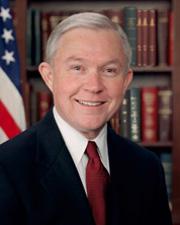 Sen. Jeff Sessions (R-AL)
Legislative Activity
Stay on top of the latest movement without scrolling through every action
Senate amendment agreed to: Amendment SA 1616 agreed to in Senate by Yea-Nay Vote. 92 - 0. Record Vote Number: 234.
July 20, 2009
View full timeline
Senate amendment agreed to: Amendment SA 1616 agreed to in Senate by Yea-Nay Vote. 92 - 0. Record Vote Number: 234.
July 20, 2009
Roll call votes on amendments in Senate: Amendment SA 1616 agreed to in Senate by Yea-Nay Vote. 92 - 0. Record Vote Number: 234.
July 20, 2009
Senate amendment proposed (on the floor): Amendment SA 1616 proposed by Senator Levin for Senator Sessions.(consideration: CR S7686-7687; text: CR S7686)
July 20, 2009
Amendment SA 1616 proposed by Senator Levin for Senator Sessions. (consideration: CR S7686-7687; text: CR S7686) To prohibit assault or battery of a United States serviceman on account of the military service of the United States serviceman or status as a serviceman.
July 20, 2009
Amendment SA 1616 agreed to in Senate by Yea-Nay Vote. 92 - 0. Record Vote Number: 234.
July 20, 2009
Senate amendment submitted
July 16, 2009
Votes
1 roll call on this amendment
Text
Proposed
NATIONAL DEFENSE AUTHORIZATION ACT FOR FISCAL YEAR 2010

The ACTING PRESIDENT pro tempore. Under the previous order, the
Senate will resume consideration of S. 1390, which the clerk will
report.
The assistant legislative clerk read as follows:

A bill (S. 1390) to authorize appropriations for fiscal
year 2010 for military activities of the Department of
Defense, for military construction, and for defense
activities of the Department of Energy, to prescribe military
personnel strengths for such fiscal year, and for other
purposes.

Pending:

Thune amendment No. 1618, to amend chapter 44 of title 18,
United States Code, to allow citizens who have concealed
carry permits from the State in which they reside to carry
concealed firearms in another State that grants concealed
carry permits, if the individual complies with the laws of
the State.

The ACTING PRESIDENT pro tempore. The Senator from Nebraska.

Cap and Trade

Mr. JOHANNS. Mr. President, I rise to discuss an Agricultural
Committee hearing that is scheduled later on this week. It is an
important topic. The hearing is titled ``The Role of Agriculture and
Forestry in Global Warming Legislation.'' I look forward to
participating. This is the committee's first effort this year to tackle
the ongoing climate change debate. It is very important. Much of the
discussion in both Houses of Congress has centered on potential new
legislation and regulations relative to climate change. Any

[[Page S7668]]

kind of new climate-related law would have sweeping consequences that
touch every corner of American life. Thus, I have made it clear that
any climate change legislation should require a robust, open, and
extensive debate on the Senate floor.
Numerous studies have now been released about cap and trade and
affect on American life. Those studies also include agriculture. During
last year's debate over cap and trade, the Fertilizer Institute
released a study stating that the legislation would result in a $40 to
$80 increase in the cost to produce an acre of corn. That means higher
input costs for livestock producers as well. That same study indicated
the cost of producing soybeans would increase from $10 to $20 an acre.
Wheat would jump $16 to $32 an acre.
According to one recent analysis, the Waxman-Markey cap-and-trade
bill would also have a significant, if not severe, impact on
agriculture. If the bill is enacted, farm income is estimated to
decrease as much as $8 billion in the year 2012. By 2024, farmers stand
to lose $25 billion. An eye-popping $50 billion would be lost by
farmers by 2035. Gasoline and diesel costs are expected to increase by
58 percent. Electric rates would soar maybe as high as 90 percent.
Agriculture is an energy intensive industry. Those kinds of increased
costs are certainly going to impact this business. These are not
isolated studies. The American Farm Bureau Federation, the largest
agricultural organization in the country, has also studied these costs.
The Farm Bureau reported that if Waxman-Markey were to become law,
input costs for agriculture would rise by $5 billion, compared to a
continuation of current law. Other studies have indicated in various
ways that the likely impact of cap and trade would include increased
electricity and heating costs, construction costs, fertilizer prices,
higher gas, and higher diesel prices. Different studies come up with
varied numbers, but they all paint the same picture--agriculture loses.
None of this should surprise anyone because the bill is specifically
designed to increase the cost of energy.
In fact, according to the Congressional Budget Office:

Reducing emissions to the level required would be
accomplished mainly by stemming demand for carbon-based
energy by increasing its price.

We also know farmers in America's heartland get hit worse by these
high energy costs, and we know that USDA agrees. Last week, USDA
officials indicated in testimony to the Senate Environment and Public
Works Committee that as a result of cap-and-trade legislation:

The agriculture sector will face higher energy and input
costs.

At the very least, all of this tells us that this is an enormously
complicated issue with significant economic ramifications, perhaps as
complex as any we will deal with this Congress, not to mention very
costly. Given the gloomy predictions about cap-and-trade proposals, it
seems clear to me that we need to take an approach that is extensive,
methodical, and well thought out. We need more specific and clear
analysis to make sure we know--and, most importantly, the American
people know--exactly what passage of this bill will mean.

As I mentioned, USDA knows that cap and trade will increase energy
prices. Here is the kicker: At the same time the Department also has
indicated:

USDA believes the opportunities for climate legislation
will likely outweigh the costs.

Let me say that again: USDA says energy prices will increase, but
they think the opportunities for climate change legislation will
outweigh the costs. This kind of claim must be based on hard data or it
is reckless to make the claim. Such a sweeping conclusion should not be
drawn unless the impact is studied and analyzed. If USDA has conducted
analysis of increases in farm input costs and weighed them against the
measured opportunities, then I applaud their efforts. But if that is
the case, it is mystifying that the Department has not shared the
analysis, despite having testified before the Senate twice in the 2
weeks preceding this week.
Having served as the Secretary of Agriculture, I know that the USDA
has an outstanding team of economists with expertise to do this kind of
analysis. That is why last week I sent a letter to the current Ag
Secretary, Tom Vilsack, who will testify at the Ag Committee hearing
this week. The letter requested USDA to provide the following: A State-
by-State analysis of the cost of cap and trade on ag industries; a
crop-specific analysis; an analysis of how the legislation would impact
livestock producers; finally, USDA's assessment of how many acres will
be taken out of production as a result of the bill and what impact this
will have on food availability, the cost of food, fiber, feed,
biofuels, and other ag products.
Without detailed analysis, USDA's assertions about costs and benefits
will simply ring hollow. Why wouldn't the USDA provide this
information? Isn't this why the department exists? Agriculture is going
to be directly impacted by the legislation. Yet we have no analysis
from the people's department. If the people who feed the world are
going to get hammered by this legislation, we should know about it. We
should debate it, and we should vote on it on this floor.
I hope the third time is the charm for the USDA, and they bring more
than rhetoric to Wednesday's hearing. Cap and trade will not affect
States, crops or regions equally. It will have a different impact on a
corn farmer in Nebraska than on a chicken farmer in Arkansas.
Similarly, it will impact a dairy farmer in New York differently than
the orange grower in California. We need a State-by-State and
commodity-by-commodity analysis. One-size-fits-all will not work. A
national average would not paint a true picture. When one is camping,
they can't put one foot in the cooler and one foot in the campfire and,
on average, it is about right. The same goes for loose assessments that
are riddled with averages.
We have a responsibility to seek a full understanding of this
legislation's impact on our Nation's farmers and related ag industries.
The information I requested is critical to help the Senate and
America's producers develop a clearer picture of cost increases for
farmers, ranchers, and consumers.
We need the impact analysis to tell us which parts of the country
will be hit the hardest and which industries within agriculture will
incur the greatest losses as a result of this legislation.
I have asked for this analysis prior to the hearing. I believe it is
necessary, and I hope we will have it before the hearing.
I am puzzled by the passage of nearly a full week since my request
and no analysis has been provided. I trust the administration has
nothing to hide. I will remain engaged in the debate. I look forward to
Wednesday's hearing.
With that, Mr. President, I yield the floor.

Recognition Of The Minority Leader

The ACTING PRESIDENT pro tempore. The Republican leader is
recognized.
Mr. McCONNELL. Mr. President, I am going to proceed on my leader
time.
The ACTING PRESIDENT pro tempore. The Senator is recognized.

Sotomayor Nomination

Mr. McCONNELL. Mr. President, I want to begin by thanking the
Judiciary Committee staff, as well as Senators Leahy and Sessions, for
conducting a collegial, civil, and dignified hearing on the matter of
the Supreme Court nomination. In my view, the hearing was in perfect
keeping with the importance of the task before it.
Article II, section 2 of the Constitution says the President ``shall
nominate''--``by and with the Advice and Consent of the Senate''--
``Judges of the supreme Court.'' It is an obligation that all of us in
the Senate take very seriously, even though Senators have not always
agreed on the exact meaning of the phrase ``advise and consent.'' In
fact, it has been the subject of significant disagreement and struggle
over the years.
I remember from my days as a young staffer on the Senate Judiciary
Committee in the late 1960s and early 1970s, when the debate flared up
over the nominations of Clement Haynsworth and Harrold Carswell after a
full century in which appointments to the Supreme Court had more or
less been a sleepy Presidential prerogative.
It was during that time that I first grasped the danger of
politicizing the process. By focusing on a nominees's

[[Page S7669]]

ideology or political views above all else, I feared the Senate would
end up distorting its traditional role of providing advice and consent
and weaken the Presidential prerogative of making appointments to the
Court.
I was so concerned, in fact, about the potential dangers that I wrote
a law review article on the topic, which I have repeatedly returned to
over the years. Its purpose was to establish a meaningful standard for
considering Supreme Court nominees that would bring some consistency to
the process.
In the course of developing that standard, I went back and looked at
the history of nominations, and I noticed something interesting: Every
time a Senator had opposed nominees in the past, the reason for doing
so was almost always based on the nominees's ``fitness''--even if it
was perfectly clear to everyone else that the Senator's opposition was
based on political or ideological differences.
What this polite fiction showed me, quite clearly, was that up until
fairly recent history, ideology had never been viewed as an openly
acceptable reason to oppose a nominee. And, in my view, this aversion
to a political litmus test was a good convention and well worth
following if we wanted to avoid gridlock every time the White House
switched parties.
So I developed a list of fairly standard criteria that I had hoped
would govern the process: A nominee must be competent; have obtained
some level of distinction; have a judicial temperament; violated no
existing standard of ethical conduct; and have a clean record in his or
her life off the bench.
In short, a President should be given great deference on his choice
of a nominee, and these criteria certainly allowed that. As a Senator,
I have consistently applied these criteria to Supreme Court nominees by
Presidents of both parties.
In adhering to this standard, I was confident I had history on my
side. Despite a few notable exceptions, during the last century the
Senate understood its advice and consent role to be limited to an
examination of a nominee's qualifications, not his or her ideology.
This attitude is consistent with the Framers' decision, after no little
debate, to invest the President, not the Senate, with the power to
nominate Justices. They did not want politics to interfere. And that is
why it has always been my view that opposing a nominee to the Supreme
Court because he or she has a different judicial philosophy than I do
was not a valid reason for doing so.
During the Clinton years, I had no illusions about the ideology or
political views of Stephen Breyer or Ruth Bader Ginsburg. Justice
Ginsburg's views on a number of contentious issues were well known and
clearly different than my own, such as her view that Mother's Day
should be abolished or that the Boy Scouts and Girl Scouts should be
criticized for perpetrating false stereotypes about gender.
Most Americans, and certainly most Kentuckians, do not think those
kinds of things. Yet despite that, I and the vast majority of my
Republican colleagues voted for Justice Ginsburg. Why? Because the
Constitution gave the President the power to nominate. And, in my view,
Justice Ginsburg met the traditional standards of competence,
distinction, temperament, and ethical conduct.
The vote in favor of Justice Ginsburg was 96 to 3. The vote in favor
of Justice Breyer was 87 to 9. I voted for both, just as I had voted
for every previous Republican nominee to the high Court since my
election to the Senate--consistent with my criteria and based on their
qualifications.
In voting for nominees such as Ginsburg and Breyer, it was my hope
that broad deference to a President's judicial nominees would once
again become the standard. Even if the treatment of Republican
nominees, such as Robert Bork and Clarence Thomas, suggested that many
Democrats felt differently than I did, it was still possible at that
time to imagine a day when the traditional standard would reemerge. As
it turned out, that hopefulness was misplaced and short-lived.
Things changed for good during the last administration. It was then
that the Democrats turned their backs on the old standard once and for
all. Ideology as a test would no longer be the exception but the rule.
The new order was firmly established at a Democratic retreat in April
2001 in which a group of liberal law professors laid out the strategy
for blocking any high-level conservative judicial nominee. The strategy
was reinforced during a series of hearings in which Senator Schumer
declared that ideology alone--ideology alone--was sufficient reason to
block judicial nominees.
These events marked the beginning of a seismic procedural and
substantive shift on judicial nominees, and the results were just as I
had anticipated as a young staffer. Democrats would now block one
highly qualified nominee after another to the appeals court for no
other reason than the fact that they were suspected of being too
conservative for their tastes.
Miguel Estrada was one of the first victims of the new standard.
Because he had been nominated by a Republican, Estrada got no points
for his compelling personal story, despite the fact that he had come
here as a child from Honduras, went to Harvard Law School, clerked on
the U.S. Supreme Court, and served as a prosecutor in New York and at
the Justice Department. He was blocked by seven leadership-led
filibusters--an unprecedented action for an appeals court nominee.
Opponents of the Estrada nomination were ruthless and eventually
succeeded in driving him to withdraw from consideration after more than
2 years of entrenched opposition. He was not alone. Democrats employed
the filibuster strategy against an entire block of Republican nominees
on the insistence of special interest groups and in complete
contravention of Senate tradition--often relying on the flimsiest of
pretexts for doing so.
As a result, several widely respected, highly qualified nominees saw
what should have been a high honor transformed into a humiliating and
painful experience for themselves and for their families; the country
was deprived of their service on the circuit court; and the standard I
had articulated and applied throughout my career became increasingly
irrelevant.
Despite my efforts to preserve deference and keep ideology out of the
process, the proponents of an ideological test had won the fight; they
changed the rules. Filibustering nominees on the grounds of ideology
alone was now perfectly acceptable. It was now Senate precedent.
Some may argue that Republicans were no better since a few of them
supported filibusters against two Clinton-era nominees, Richard Paez
and Marsha Berzon. It is a flawed comparison. First, neither filibuster
attempt got very far. And in both cases, the leadership--the
leadership--of the Republican Party, including me, strongly opposed the
effort.

Senator Lott, the then-majority leader at the time, voted in favor of
allowing an up-or-down vote on both nominees, even though he would
ultimately vote against them as nominees to the Ninth Circuit, as did I
and the vast majority of our conference. It was our view that a
President--and in that instance President Clinton--deserved
considerable deference and that therefore his nominees should not be
filibustered.
The new standard devolved even further during the Roberts nomination.
Judge Roberts was a spectacular nominee, a man whose background and
legal abilities, even according to Democrats, made him one of the most
qualified Supreme Court nominees in the history of our country. For
him, Democrats came up with an even more disturbing test.
Ironically, no one Senator articulated this new test more forcefully
than Senator Obama. In a floor speech announcing his opposition to John
Roberts, Senator Obama was perfectly straightforward. Roberts was
completely qualified, he said. But he still would not get his vote.
Here is what Senator Obama said on the Senate floor:

There is absolutely no doubt in my mind Judge Roberts is
qualified to sit on the highest court in the land. Moreover,
he seems to have the comportment and the temperament that
makes for a good judge. He is humble. He is personally
decent.

The reason Senator Obama would vote against Judge Roberts, he said,
rested not on any traditional standard, but on a new one, a standard
which amounted to a kind of alchemy based on what he described as
``one's deepest values, one's core concerns, one's broader perspectives
on how the world

[[Page S7670]]

works, and the depth and breadth of one's empathy''--what has come to
be known as the ``empathy standard.''
So over the course of the Bush administration the rules completely
changed. Not only had it become common practice to block nominees on
the grounds of ideology, but now it was acceptable to reject someone
based solely on the expectation that their feelings--their feelings--
would not lead them to rule in favor of certain groups. Suddenly,
judges were not even expected to follow the fundamental principle of
blind justice. Deference had eroded even more.
As I have stated repeatedly throughout this debate, empathy is a very
good quality in itself. And I have no doubt that Senator Obama--now
President Obama--had good intentions, and that his heart was in the
right place when he made this argument. But when it comes to judging,
empathy is only good if you are lucky enough to be the person or group
that the judge in question has empathy for. In those cases, it is the
judge, not the law, who determines the outcome. And that is a dangerous
road to go down if you believe, as I do, in a nation not of men but of
laws--which brings us to Judge Sotomayor.
Over the past several weeks, Judge Sotomayor has impressed all of us
with her life story. And the confirmation process is not easy. I admire
anyone who goes through it, which is why I was gratified by Judge
Sotomayor's statement at the conclusion of the hearing that she was
treated fairly by everyone.
But the first question I have to ask myself in deciding how to vote
on this nominee is this: How stands the traditional standard for voting
on nominees?
Deference is still an important principle. But it was clearly eroded
during the filibusters of appeals court nominees early in the Bush
administration, and it was eroded even further when Senators voted
against John Roberts and tried to filibuster Samuel Alito. Moreover,
the introduction of a new standard--the empathy standard--forces us to
reevaluate again the degree of deference a President should be granted.
Isn't it incumbent upon even those of us who have always believed in
deference to be even more cautious about approving nominees in this new
environment? I believe it is.
If empathy is the new standard, then the burden is on any nominee who
is chosen on that basis to show a firm commitment to equal justice
under law. In the past, such a commitment would have been taken for
granted. Americans have always had faith that our judges would apply
the law fairly--or at least always knew they should. Unfortunately, the
new empathy standard requires a measure of reassurance about this. If
nominees aren't even expected to apply equal justice, we can't be
expected simply to defer to the President, especially if that nominee,
as a sitting judge, no less, has repeatedly doubted the ability to
adhere to this core principle.
This doesn't mean I would oppose a nominee just because he or she is
nominated by a Democrat. It means that, at a minimum, nominees should
be expected to uphold the judicial oath that judges in this country
have taken since the earliest days of our Nation; namely, that they
will ``administer justice without respect to persons, and do equal
right to the poor, to the rich, and . . . faithfully and impartially
discharge and perform all the duties incumbent upon them under the
Constitution and laws of the United States, so help [them] God.''
Looked at in this light, Judge Sotomayor's record of written
statements suggests an alarming lack of respect for the notion of equal
justice and therefore, in my view, an insufficient willingness to abide
by the judicial oath. This is particularly important when considering
someone for the Supreme Court since, if she were confirmed, there would
be no higher court to deter or prevent her from injecting into the law
the various disconcerting principles that recur throughout her public
statements. For that reason, I will oppose her nomination.
Judge Sotomayor has made clear over the years that she subscribes to
a number of strongly held and controversial beliefs that I think most
Americans, and certainly most Kentuckians, would strongly disagree
with, but that is not why I oppose her nomination; rather, it is her
views on the essential question of the duty of a judge and the fact
that there would be no check on those views were she to become a member
of the Supreme Court.
In her writings and in her speeches, Judge Sotomayor has repeatedly
stated that a judge's personal experiences affect judicial outcomes.
She has said her experiences will affect the facts she chooses to see
as a judge. Let me say that again. She has said her experiences will
affect the facts she chooses to see as a judge. She has argued that in
deciding cases, judges should bring their sympathies and prejudices to
bear. She has dismissed the ideal of judicial impartiality as an
``aspiration''--an aspiration--that, in her view, cannot be met even in
most cases. Taken together, these statements suggest not just a sense
that impartiality is not just impossible but it is not even worth the
effort.
But there is more. It appears these views have already found
expression in Judge Sotomayor's rulings from the bench. The clearest
evidence of this is the judgment of the Supreme Court itself. The
Supreme Court doesn't take easy cases. It only takes cases where there
is no easy precedent, where the law is not crystal clear, cases where
somebody's policy preferences can more easily make their way into an
opinion. In this vein, it is worth noting that the Supreme Court has
found that Judge Sotomayor misapplied the law in 9 of the 10 cases in
which her rulings were brought before it. In this term, in fact, she is
zero for three. Not only isn't this a record to be proud of, together
with her statements about impartiality, it is a record to be scared of
if you happen to find yourselves standing in front of Justice
Sotomayor.
Her most recent reversal by the Court is a perfect illustration of
how her personal views can affect an outcome. I am referring to the
Ricci case in which a majority of the Justices of the Supreme Court
rejected Judge Sotomayor's decision, and all of them, all nine of them,
agreed that her reading of the law was flawed.
This was a case in which a group of firefighters who had studied hard
and passed a written test for promotion were denied it because not
enough minority firefighters had scored as well as they had. In a one-
paragraph opinion that a number of judges on her own court criticized
as insubstantial and less than adequate given the seriousness of the
circumstances, Judge Sotomayor flatly rejected an appeal by
firefighters who had scored highly.
Here was a case where Judge Sotomayor's long history of advocacy for
group preferences appeared to overtake an evenhanded application of the
law. Judge Sotomayor didn't empathize with the firefighters who had
earned a promotion, and they suffered as a result. This is the real-
world effect of the empathy standard. If the judge has empathy for you,
great, but if she has it for the other guy, it is not so good. That is
why you can call this new standard a lot of things, but you certainly
can't call it justice.
Judge Sotomayor's record on the Second Circuit is troubling enough,
but, as I have noted, at least on the circuit court there is a
backstop. Her cases can be reviewed by the Supreme Court. This meant
that in the Ricci case, for example, the firefighters whose promotions
were unfairly denied could appeal the decision. Fortunately for them,
the Supreme Court sided with them over Judge Sotomayor. If, however,
Judge Sotomayor would become a Supreme Court Justice, her rulings would
be final. She would be unencumbered by the obligation of lower court
judges to follow precedent. She could act more freely on the kinds of
views that animated her troubling and legally incorrect ruling in the
Ricci case. That is not a chance I am willing to take.
From the beginning of the confirmation process, I have said that
Americans expect one thing when they walk into a courtroom, whether it
is a traffic court or the Supreme Court, and that is equal treatment
under the law. Over the years, Americans have accepted significant
ideological differences in the kinds of men and women various
Presidents have nominated to the Supreme Court, but one thing Americans
will never tolerate in a nominee is a belief that some groups are more
deserving of a fair shake than others. Nothing could be more offensive
to the American sensibility than that.

[[Page S7671]]

Judge Sotomayor is a fine person with an impressive story and a
distinguished background. But above all else, a judge must check his or
her personal or political agenda at the courtroom door and do justice
evenhandedly, as the judicial oath requires. This is the most basic and
therefore the most fundamental standard of all upon which judges in our
country must be judged. Judge Sotomayor does not meet the test.
Mr. President, I yield the floor.
The ACTING PRESIDENT pro tempore. The Senator from Arizona.
Mr. McCAIN. Mr. President, I congratulate the Republican leader on
his statement. I think it was very thorough. I think it was very
thoughtful, and I am sure it took a lot of hours of deliberation and
observation not only of Judge Sotomayor's record but also of her
testimony before the Judiciary Committee. So I congratulate the
Republican leader on a very thoughtful statement and one that I think
makes very clear the reason he reached the difficult decision to oppose
the nomination of Judge Sotomayor for the U.S. Supreme Court.
I wish to say that we are supposed to be on the Department of Defense
authorization bill. Obviously, we are not. We are on the hate crimes
bill, which the majority leader decided was important enough to replace
the proceedings of the Senate on the Defense authorization bill and the
very urgent mission we have and obligation and duties we have as a
Congress to authorize the means necessary to defend the security of
this Nation and the men and women who are defending it. So we will be
wrapped around the axle on amendments and which ones are allowed and
time agreements. I am not saying this legislation would have moved
forward smoothly; there are always some difficulties. But for many
years now, I have been involved in the authorization bill, and this is
the first time I ever saw the majority leader of the Senate come
forward and propose a comprehensive piece of legislation which had not
gone through the committee of authorization, and, of course, this side
of the aisle then had to, as is our right, propose an amendment of our
own. Of course, there is some reluctance on this side of the aisle to
agree to a time agreement, and so we go back and forth. Meanwhile, the
men and women of the military are in two wars and they don't quite
understand why we don't just move forward and do what our oath of
office requires us to do, and that is to support and defend the
Constitution of the United States. So I will continue to work with the
distinguished chairman, and I am hoping we will be able to work
together to get the legislation moving again.
I understand there are four amendments to be considered on the hate
crimes bill and that a gun amendment has been introduced and there may
be amendments on that, and time agreements. Meanwhile, the issue of the
F-22 and whether we continue production of it is set aside while we
debate nongermane amendments to the Defense authorization bill.
So I guess what is probably going to happen, from previous
experience--and I don't know--probably around Thursday, the majority
leader will come to the floor and say that we haven't moved forward and
we haven't made progress, blame it on this side of the aisle, and file
cloture. Then we will have a vote on cloture. I would imagine that
given--I don't know how that vote turns out; it depends on whether
Members on both sides of the aisle feel their amendments or their views
have been adequately addressed.
But I am convinced that we would have moved forward with the
authorization bill, that we probably could have addressed the issue of
the F-22--and I do not say this side of the aisle is blameless, but I
do understand why, when we knew hate crimes was going to be brought up,
that those who feel strongly on this side of the aisle--including the
fact that it never went through the Judiciary Committee; it has never
been reported out but is added on a defense authorization bill--had
their concerns. So it is unfortunate. It is unfortunate, and it is not
really a good statement about the way we represent the American people,
because if there is any legislation we should be moving forward on--and
I will take responsibility on this side of the aisle too--that
certainly is the Defense authorization bill.
I believe there is an unbroken record of approval of the Defense
authorization bill over a many-year period of time. I hope that, on
behalf of the greater good, we can sit down and work out amendments and
work through the hate crimes and the amendment by the Senator from
South Dakota, and we can move forward and get this issue resolved. I
don't think it is the right way to do business, particularly when we
are talking about the defense of the Nation.
So I pledge to my colleague from Michigan, the distinguished chairman
whom I have had the great honor of working with for many years, to try
to work through this. But I still maintain that the fact that the
majority leader of the Senate felt it necessary to bring a hate crimes
bill up before the Senate on a defense authorization bill, which is
clearly not germane, triggered this situation we are in today.
Having said that, it is what it is, and so I will go in the back now
and see where we can work out amendments, see if we can work out an
agreement to have the hate crimes vote, to have the gun vote, and then
hopefully work with the target of tomorrow morning for voting on the F-
22 since, as we have discussed in the past on the floor of the Senate,
the importance of that vote is far transcendent of any single weapons
system. It is really all about whether we are going to have business as
usual and spend taxpayers' money on what the President of the United
States, the Secretary of Defense, the Chairman of the Joint Chiefs of
staff, and our other military leaders think should be spent on the
Joint Strike Fighter rather than further production of the F-22. From
what I understand, it may be a close vote and a very interesting one. I
wish we were spending more time debating that than hate crimes and gun
amendments.
Mr. President, I yield the floor.
The ACTING PRESIDENT pro tempore. The Senator from Michigan is
recognized.
Mr. LEVIN. Mr. President, first of all, we are operating under a
unanimous consent agreement. We have an agreement to vote on the F-22
amendment after 2 hours of debate. We are attempting to schedule that
now. People are getting the cooperation of Members for tomorrow
morning. That is our goal.
The pending amendments to the hate crimes provision are going to be
disposed of this afternoon pursuant to that same unanimous consent
agreement. There may be a difference as to how we got to where we are.
There is a difference; it was the inability to get the F-22 amendment
to a vote, to get a time agreement, which triggered the determination
of the majority leader to offer an amendment that Senator Kennedy had
offered about 2 years ago on a Defense authorization bill. It passed
the Senate after a long debate.
It is not the first time hate crimes was taken up by the Senate. It
is not the first time the hate crimes amendment was offered on the
Defense authorization bill. It was offered 2 years ago, and it passed
on a 60-to-39 vote, I believe. It was Senator Kennedy's amendment. Of
course, Senator Kennedy is not available now to offer his own
amendment. The majority leader offered it because of Senator Kennedy's
necessary absence.
So now we are operating under a unanimous consent agreement. The
pending amendment is Senator Thune's. It is not germane, but, again, it
is not unusual that nongermane amendments are offered in the Senate. We
try to keep them to a minimum--those who manage bills--in order to get
through the bill.
We are hoping that once the F-22 amendment and the amendment of
Senator Thune are disposed of, we will then be able to get back to
germane and relevant amendments. That is our hope. In order for that to
happen, we need Members of the Senate to bring those amendments to the
floor and tell us they are ready to proceed.
We are working very hard, as we always do, and our staffs are working
very hard, as they always do, to clear amendments. I believe we have
about 20 amendments that have been cleared already and, at an
appropriate time, I believe Senator McCain and I will be able to offer
them as a package.
Senator McCain was extremely helpful in getting us to the point where
we

[[Page S7672]]

could enter the unanimous consent agreement. A vote is scheduled today
on our hate crimes-related amendment. We have a time agreement on the
F-22 amendment, and a time for voting on that amendment is being
discussed. It is my goal that we vote on that amendment tomorrow
morning after we debate it.
Please, colleagues, bring your amendments to the floor. We are here.
We are ready to be notified of those amendments on which Members of the
Senate believe we will need a rollcall vote. We will try to clear as
many amendments as we can. We urge our colleagues to notify us now of
the amendments they intend to offer.
Mr. President, I ask unanimous consent that amendment No. 1614 be
identified as a Kennedy amendment.
The ACTING PRESIDENT pro tempore. Without objection, it is so
ordered.
Mr. LEVIN. Mr. President, I suggest the absence of a quorum.
The ACTING PRESIDENT pro tempore. The clerk will call the roll.
The assistant legislative clerk proceeded to call the roll.
Mr. BROWN. Mr. President, I ask unanimous consent that the order for
the quorum call be rescinded.
The ACTING PRESIDENT pro tempore. Without objection, it is so
ordered.
Mr. BROWN. Mr. President, I ask unanimous consent to speak as in
morning business.
The ACTING PRESIDENT pro tempore. Without objection, it is so
ordered.

Moon Landing Anniversary

Mr. BROWN. Mr. President, I rise to celebrate the historic event that
took place on this date 40 years ago. On this day in 1969, Ohio native
Neil Armstrong became the first human to step foot on the Moon.
For those of us old enough to remember that day, it was a day when
the stuff of dreams became reality. While that magical moment is still
a source of inspiration for young people today, the times in which the
landing took place are often forgotten. The United States and the
Soviet Union were in the middle of the space race, but the Moon landing
was about so much more than who could get there first.
It was the height of a major progressive era in our Nation's history,
which saw the establishment of Medicare and Medicaid; saw the Civil
Rights and Voting Rights Act signed into law; the creation of Head
Start; a time which saw the beginning of the environmental movement in
our time, all within about a 5-year period, during that progressive
era.
It was also a time of turmoil for America. We were a nation at war.
We bore witness to the assassinations, only a year before, of Dr.
Martin Luther King and Robert Kennedy.
When America needed heroes--and it did that summer in 1969--it found
them in the crew of the Apollo 11 spacecraft.
Despite uncertain times our Nation faced, we refused to succumb. We
moved forward in the most American way--working to achieve what others
said could not be done.
I was 16 years old when Neil Armstrong took that historic first step.
Neil Armstrong is from Wapakoneta, OH, in the western part of the
State, with just shy of 10,000 people and a little more than 100 miles
or about a 2-hour drive from where I grew up.
I remember those days when I was 16. We had a black-and-white
television, and my brother convinced my parents, because we were the
only ones among our friends who still had a black-and-white TV, that
they should go out and get a colored TV so we could watch the Moon
landing. I think my brother knew--although I am not sure--that the Moon
landing would be broadcast in black and white. But my brother convinced
my parents to get that TV, on which we enjoyed watching Cleveland
Indians baseball games and other things after that. Nonetheless, I am
sure almost everybody of almost any age remembers, after watching that
Moon landing, going outside on that late July night and looking up at
the Moon and being private with our thoughts, wondering about these two
Americans walking on the Moon, wondering about the other American in
the space capsule--not at that time able to walk on the Moon. He was
staying inside the space capsule.
I remember, too, 7 years before Neil Armstrong landed on the Moon,
similar to most Americans, watching John Glenn, from New Concord, OH,
become the first American to orbit the Earth.
So an Ohioan was the first one to orbit the Earth and an Ohioan was
the first to walk on the Moon.
Today, such as then, NASA continues to capture our Nation's
imagination. While Neil Armstrong will forever be remembered as the
Christopher Columbus of our time, his step for all humankind was a
culmination of the efforts of thousands of Americans who dedicated
themselves to landing on the Moon.
It was more than his crew mates, Buzz Aldrin and Michael Collins. It
was more than the hundreds of men and women at mission control. From
what is now NASA Glenn Research Center in Cleveland to the hundreds of
thousands of scientists and researchers around the Nation, the Moon
landing was about the American spirit and know-how. The Apollo 11 Moon
landing was a national collaborative success.
As we look back on the past 40 years, we have seen a different
country in a different time, with many of the same challenges. As our
Nation struggles to pull itself out of the current economic downturn,
we have debated what role the government should play in space
exploration. While we debate the future of NASA, we must also remember
the billions of dollars of economic benefit NASA has brought, and is
still bringing, our Nation.
The myth that the Federal Government is incapable of doing great
things is shattered when one thinks of achievements such as the Moon
landing--not to mention Medicare, Social Security, and all we talked
about in that progressive era.

From the six Apollo landings, to Skylab, to cooperation with the
Soviet Union, to the shuttle program, to the Hubble telescope, to the
space shuttle, and beyond, NASA has touched and improved nearly every
aspect of our American way of life.
Those who believe government should sit on the sidelines and merely
be an observer in our Nation's future need not look back 40 years but
can look at everything NASA has done and what it continues to do today.
Today, NASA, in many ways, is more important than ever. As we work
toward a carbon-free economy, we forget that NASA was building the
first large-scale windmills in the 1970s. Much of the early work on
wind turbine technology development was done at Plum Brook in northern
Ohio, near Sandusky, part of NASA Glenn.
In a modern version of the space race, the United States is in a
sprint to lead the world in clean energy. NASA's alternative fuel
research laboratory, and its solar-powered aircraft, Helios and
Pathfinder Plus and its space solar program are just three of the many
NASA clean energy programs.
We can create a carbon-free world, and NASA can lead the way, just
like it has in aeronautics and space flight. We must never forget the
men and women of NASA and their work that enabled the United States to
put Apollo 11 on the Moon.
I am proud to cosponsor S. 951, which would authorize the President
to award Congressional Gold Medals to Neil A. Armstrong, the first
human to walk on the Moon; Edwin E. ``Buzz'' Aldrin, Jr., the pilot of
the lunar module and second person to walk on the Moon; Michael
Collins, the pilot of their Apollo 11 mission's command module; and the
first American to orbit the Earth, John Herschel Glenn.
The bill's sponsor is Senator Nelson of Florida, an American hero in
his own right, who has a long history of service to our Nation and
NASA.
Today is a celebration of NASA, of the Apollo mission, and a
celebration of our country. It is also a celebration of humankind's
ability to do great things. Today is a celebration of reaching for the
stars in every way.
I yield the floor and suggest the absence of a quorum.
The ACTING PRESIDENT pro tempore. The clerk will call the roll.
The assistant legislative clerk proceeded to call the roll.
Mr. SESSIONS. Mr. President, I ask unanimous consent that the order
for the quorum call be rescinded.
The PRESIDING OFFICDER (Mr. Warner). Without objection, it is so
ordered.
Mr. SESSIONS. Mr. President, I am very concerned about legislation
that has been added to the Defense bill, the

[[Page S7673]]

so-called Hate Crimes Act. Certainly, none of us has any sympathy
whatsoever for people who commit crimes of any kind, particularly those
who would attack somebody because of their race, ethnicity, sexual
orientation, or any other reason. I wish to take a few moments to
explain why this is important and why this legislation is not good and
it ought not to be passed. Some of my remarks may appear to be
technical, but they are very important, in my view, as a former Federal
prosecutor for almost 15 years.
I don't think it was ever appropriate that we bring this legislation
to the floor and stick it on this Defense bill without having a markup
in the committee without the ability to discuss it and improve it.
For years legal commentators and jurists have expressed concern at
the tendency of Congress, for the political cause of the moment, to
persist in adding more and more offenses to the U.S. Criminal Code that
were never Federal U.S. crimes before. This is being done at the same
time that crime rates over the past decade or so have dropped and State
and local police forces have dramatically improved their skills and
technology. There are really fine police forces all over the country
today. An extraordinary number of police officers have college degrees
and many advanced degrees.
I think two questions should be asked initially. First, is this a
crime that uniquely affects a Federal interest, and can it be addressed
by an effective and enforceable statute? Second, have local police and
sheriffs' offices failed to protect and prosecute this vital interest?
Most people do not understand that a majority of crimes--theft, rape,
robbery, and assault--are not Federal crimes and are not subject to
investigation by the FBI or any other Federal agency. They could not do
so if they wanted to because they have no jurisdiction. They can only
investigate Federal crimes. It has been this way since the founding of
our country, and it fixes responsibility for law enforcement on local
authorities where it should be.
Americans have always feared a massive Federal Government police
force. It is something that we have not ever favored. This is not
paranoia but a wise approach, and I do not think it should be changed.
Instead of administering justice without fear or favor, this
legislation that has been placed on this bill creates a new system of
justice for individuals because of their sexual orientation or gender
identity, providing them with a special protection, while excluding
vulnerable individuals, such as the elderly or police officers or
soldiers, from such special protections. I don't think we can justify
that.
The purpose of the DOD reauthorization bill is to make sure the men
and women who protect our freedoms have the necessary resources to
continue to do the fabulous job they have been doing. We should not
deviate from this path by addressing matters wholly unrelated to the
defense of our Nation.
A bill of such breadth and lack of clarity as this should be
carefully reviewed with the opportunity for discussion and amendment in
committee. Yet this legislation had no markup in any committee. In
fact, no version of the bill has been marked up since 2001, and this
version is quite different and more expansive than the 2001 bill.
The committee did hold a quickly thrown-together hearing on June 25
in which Attorney General Holder himself appeared. The Attorney
General, however, failed to point to one single serious incident in the
past 5 years, when I asked him that question, where the types of crimes
that are referred to in the bill, to give special Federal protection to
select individuals, were not being prosecuted by State and local
governments.
Additionally, the Attorney General refused to say attacks on U.S.
soldiers predicated on their membership in the military by, for
example, a Muslim fundamentalist, could be considered a hate crime.
It is baffling to me, given previous opposition and serious concerns
which have been raised about this legislation, that the act, instead of
being constrained, is actually expanded in a vague and awkward way. It
focuses on the perception of what someone might have been thinking when
they committed the crime and includes categories which are undefined
and exceedingly broad, such as gender-related characteristics and
gender identity. From questions that have been raised, these categories
do not have clear meaning. During the course of debate on hate crimes
legislation--a debate that started in 2001--amendments have been
offered to also protect our military men and women, where it is
unquestioned they have been targeted. Those amendments were rejected.

Mr. President, I will briefly outline my opposition to the
legislation in the following ways:
The hate crimes amendment is unwarranted, possibly unconstitutional--
certainly, I believe it is unconstitutional in certain parts--and it
violates the basic principle of equal justice under the law. The hate
crimes amendment to this bill has been said to cheapen the civil rights
movement.
When Congress passed the original civil rights statute in 1968, it
criminalized violent and discriminatory actions directed at individuals
because of race, color, religion, or national origin. There was, sadly,
quite a substantial body of evidence that crimes were being committed
against minorities and they were not being prosecuted. Section 245 that
was then passed was never envisioned by Congress to be a hate crimes
statute but one, rather, that would ensure access by minorities to
specific activities legitimate to their freedom, such as enrolling in
public schools, enjoying the benefit of programs administered by the
State, or attending court as a juror.
In 1968, care was taken to ensure that the underlying statute was
carefully crafted and narrowly tailored to address the problem of
access to ensure that criminal activity fell within the confines of the
constitutional requirement that there be a Federal nexus with
interstate commerce. The statute enumerates six instances in which a
crime could be charged. That statute says this:

Whoever, whether or not acting under the color of law, by
force or threat of force willfully injures, intimidates or
interferes with, or attempts to injure, intimidate or
interfere with any person because of his race, color,
religion or national origin and because he is or has been. .
. .

And then it lists specific areas that would encompass a criminal
offense.

(a) enrolling in or attending any public school or public
college.

So if anyone who was attempting to attend a public school or college
was interfered with or intimidated because of their race, color,
religion or national origin, that would be the offense.

(b) participating in or enjoying any benefit, service,
privilege, program, facility or activity provided or
administered by any State or subdivision thereof.

In other words, you can go to the city hall, you can go to the health
department, and you cannot be discriminated against because of your
race or background.
Unfortunately, I have to say there were areas of the country--
particularly in my area of the South--where that was not so. People
were being unfairly treated. In fact, in some other areas of the
country also. I believe great care was taken with that act because, as
I said, there was strong evidence to suggest that a Federal expansion
of criminal law would be appropriate to deal with it.
So the history of civil rights violations caused and fully justified
Congress's passage of this statute. There was direct evidence, for
example, that African Americans were being denied the right to vote or
intimidated at voting precincts without State and local law enforcement
protecting them. There was much evidence, sadly, that other rights of
African Americans were not being protected.
But that is not the case with this amendment, and I will talk about
that in a minute. Gays and lesbians have not been denied basic access
to things such as health or schooling or to the ballot box. They openly
are able to advocate their positions today, which I think is certainly
healthy, and have no difficulty in approaching government officials at
whatever level.
When Eric Holder testified a few weeks ago before the Judiciary
Committee, I asked him point-blank for direct evidence that hate crimes
against individuals over the past 5 years, because of their sexual
orientation or

[[Page S7674]]

otherwise, were not being prosecuted by local authorities. Instead of
answering the question, he referred me to four cases in his written
testimony which he had delivered to the committee. Let me make the
number clear as strong evidence that these cases are being prosecuted.
The Attorney General could not come up with 4,000 cases or 400 or 40
cases. He only named four cases in 5 years. So we took a look at those
four cases he cited in his testimony, and this is what we found.
In one case, Joseph and Georgia Silva assaulted an Indian-American
couple on the beach. Although there was evidence that racial and ethnic
slurs were used during the altercation, a California El Dorado County
judge ruled that prosecutors failed to produce sufficient evidence that
the alleged assault was motivated by racial prejudice. The prosecutor
had pursued a hate crimes conviction, including charging Silva with a
felony assault, punishable by up to 3 years in prison. The evidence,
according to the judge, was that racial slurs were used in the heat of
anger. There was no evidence the attack was initiated because of
ethnicity.
Both Joseph and Georgia Silva were convicted of assault, the basic
crime that they committed, and Joseph Silva was sentenced to 6 months
in prison and 3 months probation, while Georgia was sentenced to 1 year
in prison.
So the question is, was there an important Federal right left
unaddressed that needed to be vindicated by charging this couple again
for the crime arising from that assault? In other words, that is what
this bill does. It says if we are unhappy with the result in State
court under a select group of crimes, the Federal Government can try
the case again.
You might say, well, there is a double jeopardy clause in the
Constitution; you can't be tried twice for the same crime. Good; if you
asked that question, you get an A in constitutional law. However, there
is an answer. It has long been established that the States are
sovereign and the Federal Government is sovereign. So an individual can
be tried by two separate sovereigns without implicating the double
jeopardy clause of the Constitution. However, we have always understood
that ought not to be done lightly. It ought not be done without a real
justification because it violates the spirit of the double jeopardy
clause of the Constitution.
Attorney General Holder also cited a 2003 case in Holtsville, NY. In
that case, three White men, while using racial slurs, assaulted a group
of Latino teenagers as they entered a Chili's restaurant. One of the
three defendants entered a guilty plea for his involvement in the
assault and was sentenced to 15 months in prison. The other two
defendants proceeded to trial and were acquitted because the jury
apparently concluded there was insufficient evidence to prove beyond a
reasonable doubt that the offense that occurred was to deny the victims
access to the restaurant. So they had a trial, and one was convicted
and two were not.
The Attorney General cited a South Carolina case where a gay man was
assaulted after leaving a bar. During the altercation, he fell and he
suffered a fatal strike to the head from the concrete. Stephen Miller
was convicted of involuntary manslaughter and sentenced to 5 years in
prison.
Finally, the Attorney General cited a case from here in the District
of Columbia where a transgender prostitute was murdered. Apparently,
after Derrick Lewis discovered that the prostitute he had picked up in
his automobile was not female, and the prostitute refused to get out of
his car, an altercation of some kind occurred--an argument--and he had
a gun and shot and killed this transgender individual. He eventually
pled guilty, gave a full statement of what happened, and was sentenced
to 10 years in prison. The evidence showed they had begun fighting and
that is when he pulled the gun and shot him. He said the individual
would not get out of the car.
Well, those are not insignificant crimes, but I can just advise my
colleagues, if we just pause one moment and think, we know that at this
very moment thousands, maybe 10,000 or more trials are ongoing in State
and local courts all over America, and they do not always end as people
would like them to end. What this bill does basically is it provides an
opportunity for the Federal Government to pick and choose certain
crimes they want to prosecute again to get the kind of justice they
think might be likely. That is a broad power that we give to the
Attorney General and a broad statute I don't believe is compelled by
the facts that are happening in America today.
When my staff followed up with the Office of the Attorney General to
see why they listed just these cases, the response wasn't that State
and local law enforcement were not doing their jobs but that the
Attorney General believed the cases were under prosecuted. Citing four
cases over 5 years as being underprosecuted is not the kind of evidence
needed to justify the passage of such an expansive new piece of
legislation that injects Federal prosecutors in areas of crime not
heretofore occurring.
After the Judiciary hearing, both Senator Coburn and I sent followup
questions to the Attorney General to provide him an additional
opportunity to demonstrate that the bill was necessary because of under
prosecution, as he had testified. Senator Coburn asked this question:

Precisely how many hate crimes is the Justice Department
aware of that have gone unprosecuted at the State and local
level?

This is the answer we got from the U.S. Attorney General:

The Department believes that our partners at all levels of
law enforcement share our commitment to effective hate crimes
enforcement. The Department does not have access to precise
statistics of hate crimes that have gone unprosecuted at the
State and local level, and we are unaware of any source for
such comprehensive information of unprosecuted offenses
generally. Federal jurisdiction over the violent bias-
motivated offenses covered under S. 909 is needed as a
backstop for State and local law enforcement, to ensure that
justice is done in every case.

So he is suggesting that, in a select group of cases that are on the
front burner today, the Attorney General needs this legislation--S.
909, which has now been attached to the Defense bill--as a backstop for
State and local law enforcement to ensure that justice is done in every
case.
Well, there are many prosecutorial and jury decisions that are made
in State courts every day with which one could disagree. The question
is whether the Federal Government will be empowered to ensure justice
is done in every case.

I just want to share the reality of the world with my friends here,
that anyone, I guess, can conclude that a case didn't end justly for
them. One distinguished jurist is famously quoted as saying, ``To speak
of justice is the equivalent of pounding the table. It just adds an
element of emotion to the discussion.'' But whatever we mean by that
word, it basically means the Attorney General gets to decide whatever
he wants to do. I am not sure this is good legislation. I think
legislation ought to be crisp and clear and set forth criteria by which
a prosecution occurs or does not occur, leaving not so much broad
discretion among the prosecutorial authorities.
I submitted, after Senator Coburn--or at the same time, really--a
similar question because I believed he had not been responsive to my
question, and I asked this about our colleague, referring to Senator
Hatch--of course a former chairman of the Judiciary Committee and who
has worked on this issue for a number of years--and my question is
this:

Senator Hatch in the past has offered a complete substitute
to similar legislation, which would require that a study be
conducted to prove that there is an actual problem with hate
crimes not being prosecuted. Do not give me a general
response that there are some problems out there. I would like
you to provide the Committee with an exact and precise number
of hate crimes the Justice Department is aware of which have
gone unprosecuted at the State and local level. Please detail
every example you or anyone in the Department of Justice is
aware of where no prosecutorial effort took place.

This was the answer we got:

The Department is unable to provide an exact number of
cases in which State, local or tribal jurisdictions have
failed to prosecute hate crimes because we are not aware of
any such compilation of data.

Senator Hatch has been offering this amendment for a study for a
decade.
The Attorney General goes on to say:

When the Department receives complaints it clearly lacks
jurisdiction to prosecute, these matters generally are never
opened as investigations. . . .

[[Page S7675]]

Let me just say, if this legislation is passed it will have one
dramatic, undiscussed impact. Federal law enforcement agents--and there
are not many. You may have a city with 300 police officers in it and 10
FBI agents, another hundred sheriffs' deputies, another number of State
officers. Now huge numbers of crimes will be coming across the desk of
the FBI, which has terrorism, white-collar crime, bank fraud which they
need to be working on today, violent crimes and drug smuggling. Now
they are going to have to review hundreds of complaints about cases
they had not heretofore had jurisdiction of and did not have to review.
I just raise that point as an aside.
Based on the Attorney General's response, I conclude that the bottom
line is there is nowhere near the real evidence needed to justify this
legislation. No one in this body has produced the evidence, and the
Attorney General of the United States, who is promoting the bill, has
not produced any. Attorney General Holder's response, instead of
demonstrating the need for hate crimes legislation as written, provides
verification that it is not necessary, and it raises a question of
whether this is driven by political interests at this time. It is easy
to complain that anybody who opposes a hate crimes bill favors hate.
That is not a fair charge. I think most of our colleagues fully
understand that. But politically that is the suggestion some have made
when this legislation has been objected to by people with very valid
concerns.
As a matter of fact, one of the studies heavily relied on by the
Attorney General in support of this bill is a 2008 report published by
the National Coalition of Anti-Violence Programs, which is composed
primarily of lesbian, gay, bisexual, and transgender groups. They have
every right to do those studies and present them, but it is a coalition
clearly with a vested interest in the legislation, and it should be
examined carefully. The Attorney General had to rely on these types of
reports because crime statistics do not support the notion that the
incidence of hate crimes has increased. Even though we are doing a
better job of reporting those today, still over the past 10 years the
number is down, down slightly, even though population is up in our
country.
Furthermore, in a rushed attempt to provide answers to the committee
prior to this amendment being filed, the Department seemed to put
little thought into their responses to our questions. As a matter of
fact, it appears the Attorney General didn't think the issue important
enough to answer them himself. He let his staff people answer, when he
was the one who appeared before the committee and we were following up
on his personal testimony.
A number of arguments and statements have been made, including those
by the Attorney General, that there are quite a few of these incidents,
tens of thousands of these incidents over the last number of years. But
overwhelmingly these despicable incidents are of vandalism, many by
juveniles. Let me make clear that even those incidents are significant
and deserve prosecution and investigation and, where appropriate, stiff
punishment. But let's look at the views of the members of the U.S.
Commission on Civil Rights, our own U.S. Civil Rights Commission, who
have examined this legislation carefully. Six of its eight members
signed a strong letter to the President and to the Judiciary Committee
to oppose hate crimes legislation. Did I mean to say the Civil Rights
Commission wrote in favor it? No. But to oppose it. Their letter, dated
June 16--just last month--addressed to the Members of the Senate and
the President, said this:

We believe that the MSHCPA [Matthew Shepard Hate Crimes
Prevention Act] will do little good and a great deal of harm.
Its most important effect will be to allow Federal
authorities to reprosecute a broad category of defendants who
have already been acquitted by State juries, as in the Rodney
King and Crown Heights cases more than a decade ago. Due to
the exception for prosecution by ``dual sovereigns,'' [that
is the two sovereign entities] such double prosecutions
technically are not violations of the double jeopardy clause
of the U.S. Constitution. But they are very much a violation
of the spirit that drove the Framers of the Bill of Rights,
who never dreamed that Federal criminal jurisdiction would be
expanded to the point where an astonishing portion of crimes
are now both State and Federal offenses. We regard the broad
federalization of crime as a menace to civil liberties. There
is no better place to draw the line on that process than with
a bill that purports to protect civil rights.

They go on to say:

While the title of MSHCPA suggests that it will apply only
to ``hate crimes,'' the actual criminal prohibitions
contained in it do not require that the defendant be inspired
by hatred or ill will in order to convict. It is sufficient
if he acts ``because of'' someone's actual or perceived race,
color, religion, national origin, gender, sexual orientation,
gender identity or disability.

I am quoting from the Civil Rights Commission letter.

Rapists are seldom indifferent to the gender of their
victims. They are virtually always chosen ``because of''
their gender. A robber might well steal only from women or
the disabled because, in general, they are less able to
defend themselves. Literally they [these victims] are chosen
because of their gender or disability.

The letter goes on to state their belief that every rape in America
would now be declared a crime under this bill because it is an action
taken against someone because of their gender.
Professor Gail Heriot, a member of the U.S. Commission on Civil
Rights, testified at our June 25 hearing. She made clear that all rapes
would be covered under the bill and that, indeed, this was intentional.
She said:

This wasn't just sloppy draftsmanship. The language was
chosen deliberately. Officials understandably wanted
something susceptible to broad construction, in part because
it makes prosecutions easier. As a staff member of the Senate
Judiciary Committee back in 1998, I had conversations with
the Department of Justice representatives. They repeatedly
refused to disclaim the view that all rape would be covered,
and resisted efforts to correct any ambiguity by redrafting
the language. They wanted a bill with broad sweep. The last
thing they wanted was to limit the scope of the statute's
reach by requiring that the defendant be motivated by ill
will toward the victim's group.

I think that is a serious charge made by a member of the Civil Rights
Commission about the purpose of the Department of Justice in supporting
this act.
I would note, it is an inevitable delight of prosecutors to have more
and more power and more and more ability to prosecute criminals. That
is what they do. They are wonderful people. I never enjoyed anything
more than being a prosecutor, wearing a white hat every day to work and
trying to vindicate decent people from criminal acts. But that is just
a tendency of the prosecutorial mindset that we ought not to forget.
The truth is, during the recent hate crimes hearing, no one who
testified in favor of the bill could point to a single incident where,
I think, a valid hate crime was not pursued or prosecuted by State and
local law enforcement officers.
In the latest statistics that are available, of the 2006 hate crimes
reported in 2007, only nine were classified as murder or nonnegligent
manslaughter. That is certainly nine too many. I think every one should
be prosecuted. But no complaints have been raised that any of these
were not vigorously or fairly prosecuted. Indeed, two-thirds of the
offenses involved property defacement, such as graffiti and name-
calling. Missing from the analysis is any evidence that the crimes are
not being prosecuted at the State and local level. Indeed, 45 of the 50
States and the District of Columbia already have and enforce hate
crimes laws. Although the language is broad and some could criticize
it, these States have passed these bills, and they are able to enforce
them.
Statistics show that these hate crimes, even with better reporting,
have decreased slightly over the years. Forty-four States have stiffer
penalties for violence related to race, religion, or ethnicity, and 31
States have tougher penalties on violence related to sexual
orientation.
The question arises, do we have a basis for this massive and historic
change in Federal enforcement of what have been State crimes?
Perhaps Mr. Andrew Sullivan--an openly gay man who has pioneered the
effort to have gays in the military and is a well known and an able
writer, provides the answer. Mr. Sullivan had this to say about the
legislation.

The real reason for hate crime laws is not the defense of
human beings from crimes. There are already laws against
that--and Matthew Shepard's murderers were successfully
prosecuted to the fullest extent of the law in a State that
had no hate crime law at the time.

[[Page S7676]]

The real reason for the invention of hate crimes was a hard
left critique of conventional liberal justice and the
emergence of special interest groups which need boutique
legislation to raise funds for their large staffs and
luxurious buildings. Just imagine how many direct mail pieces
have gone out explaining that without more money, more gay
human beings will be crucified on fences. It is very, very
powerful as a money-making tool, which may explain why the
largely symbolic Federal bill still has not passed (if it
passes, however, I'll keep a close eye on whether it is ever
used.)

This is a gay man expressing his opinion. No doubt he takes these
issues very seriously, and symbolism is important in our political
world, but we need to be careful that statutes that become a permanent
part of our criminal code are supported by evidence and principle.
I do not think our focus here is to deal with symbolic legislation
that is broad and can expand Federal criminal jurisdiction beyond its
historic role and where the facts do not support the need. In other
words, more narrowly tailored legislation consistent with a
constitutional right could very well be something this Congress would
want to pass. To pass legislation so extremely broad again could give
Federal jurisdiction for the first time in history to every rape that
occurs in America. It ought to be looked at with great care and ought
not to be stuck onto a defense bill and moved forward, in my opinion.
The Constitution endows Congress with limited and enumerated powers.
There is no general police power in the Federal Government. So at this
point, I wish to raise issues with the constitutionality of the hate
crimes provision.

Congress's power is limited to what it can regulate under
the Commerce Clause. The proposed legislation is based upon
the idea that a discrete crime in a local community may have
an impact on interstate commerce. This is the same theory
that was rejected in both U.S. vs. Lopez and U.S. vs.
Morrison, where the Supreme Court essentially ruled that
intrastate violent conduct does not impact commerce normally.

Nat Hentoff, a well-respected noted civil rights and civil
libertarian attorney and writer recently wrote about some
constitutional concerns he has with the legislation. This is what he
said:

In the definitive constitutional analysis of James B.
Jacobs and researcher Kimberly Potter, it is documented in
``Hate Crimes: Criminal Law and Identity Politics'' that in
``Grimm v. Churchill the arresting officer was permitted to
testify that the defendant had a history of making racial
remarks. Similarly, in People v. Lampkin, the prosecution
presented as evidence racist statements the defendant had
uttered six years before the crime for which he was on
trial,'' as specifically relating to the offense.
As for the 14th Amendment's essential requirement that no
person be denied ``the equal protection of the laws,'' there
is carved above the entrance to the Supreme Court the words
``Equal Justice Under Law.''
This legislation, certain to be passed by the Senate, now
it seems will come to the Supreme Court.

And I am quoting Mr. Nat Hentoff, the well-known and respected civil
libertarian civil rights attorney. He says this:

When it comes before the Supreme Court, I hope the Justices
will look up at the carving as they go into the building.
They should also remember that the Fifth Amendment makes
clear: ``nor shall any person be subject for the same offence
to be twice put in jeopardy.''
But the House hate crime bill allows defendants found
innocent of that offense in a state court to be tried again
in federal court because of insufficiently diligent
prosecutors; or, as Attorney General Holder says, when state
prosecutors claim lack of evidence. It must be tried again in
federal court. Imagine Holder as the state prosecutor in the
long early stages of a Duke University lacrosse rape case.
What also appalls me, as the new federal bill races toward
a presidential signature, is that for many years, and now,
the American Civil Liberties Union approves ``hate crimes''
prosecutions. I have long depended on the ACLU's staff of
constitutional warriors to act persistently against
government abuses of our founding documents. And these
attorneys and analysts have been especially valuable in
opposing the results of executive branch lunges against the
separation of powers in the Bush-Cheney years, and still
under Obama.

Then he says this:

Is there no non-politically correct ACLU lawyer or other
staff worker or anyone in the ACLU affiliates around the
country or any dues-paying member outraged enough to demand
of the ACLU's ruling circle to at last disavow this
corruption of the Constitution?

That is Mr. Hentoff's view of it.
So this hate crimes amendment is a substantial overreach by Congress,
I do believe. It is not carefully crafted or narrowly tailored. Unlike
the historic civil rights statute, it seeks to federalize the violent,
noneconomic conduct that is local in nature and has little or no
Federal nexus.
The Supreme Court has held that violent conduct that does not target
economic activity is among the types of crimes that have the least
connection to Congress's commerce power. However, this is precisely the
sort of violent, noneconomic conduct that this amendment would
federalize.
If this approach were permissible, it would put Congress on a path to
rely on the Commerce Clause and legislate any criminal law it wants.
When it comes to criminal law, Congress would no longer be a body of
limited and enumerated powers but would have plenary power to
criminalize any and all conduct that is already criminalized by the
States, a clear violation of our historical policy of not taking over
State and local law enforcement.
There are still a lot of complaints over the drug laws aggressively
prosecuted when I was a Federal prosecutor, and many think that was an
overreach. When drugs come in, the vast majority from outside the
country, they move as interstate commerce, and the courts have held
that up.
But there is still intellectual criticism and concern about it. But
in this case, you do not have the kind of dramatic nexus, and you also
lack the evidence to suggest those cases are not being effectively
prosecuted. So the sponsors have also tried to ease constitutional
concerns by citing the 13th, 14th and 15th amendments.
The 13th amendment provides Congress with the limited authority to
abolish ``all badges and incidents of slavery in the United States.'' I
hope my colleagues are not seriously attempting to argue that
assaulting someone because of their religious views or gender is
tantamount to slavery.
The 14th and 15th amendments apply only to State actions, and since
we have already established that States are vigorously prosecuting
these actions and not ignoring them, I do not think this is a valid
approach.
Finally, I would note that the legislation raises questions
concerning the constitutional imperative that there be ``equal justice
under law.'' Is there a legitimate, justifiable reason to punish one
rape differently than another rape simply because someone decides the
first rape was committed out of hate or actually because of the gender
of the victim? I think the victims would say the same thing, the
criminal should be punished to the fullest extent of the law.
This legislation would add a different element to certain crimes, and
I know, as a former prosecutor, make it more difficult and more
expensive to obtain a conviction, especially when you have to prove an
individual's thought process as an underlying element to the offense.
This bill at bottom tries to distinguish between assaults by
declaring if someone assaults and kills his girlfriend because she
broke up with him it is not a Federal offense, but if he kills her
because she claims she wanted to explore her sexual orientation and he
became upset and killed her, that would be a Federal offense.
Senator Hatch offered a complete substitute on Thursday night. It was
rejected. His proposal would require that a study be conducted so
actual evidence can be obtained to see if there is a real serious
problem with States not prosecuting these matters.
For some reason, even though Senator Hatch has been trying to get it
passed for quite a number of years, the study has never been conducted,
and all proposals for such a study have been rejected. I fear it is
because perhaps Mr. Sullivan got it right. It is not so much about the
failure of States to prosecute these crimes but about an underlying
idea to pass a symbolic piece of legislation.
There is no good reason to pass such a broad piece of legislation. To
pass it would be unwise. No one believes that individuals should be
assaulted because of their beliefs, their gender or their sexual
orientation. That type of behavior is unacceptable and should be
prosecuted.

It has been prosecuted. I am sure State and local law enforcement
officers will continue to do so. I believe

[[Page S7677]]

that if my colleagues would study the legislation and think about what
they are doing, they would see that this is more unwise and the
objections they have heard have far more weight than they had thought
initially.
It seems like a good idea. Who would want to be against a crime that
says it wants to punish hate? But there are serious matters and
constitutional issues, as I noted from the Civil Rights Commission,
from the civil rights attorneys such as Mr. Nat Hentoff.
I think, in truth, the Attorney General should have been more
balanced in his testimony before the Judiciary Committee. He came
pushing this legislation without listening or expressing any concern.
But I do think he should have pointed out that it represents one of the
largest expansions of Federal law enforcement in history. He should be
the first to point out and express that concern. He should not allow
politics to drive law in America.
I know most of my colleagues think this is the right thing to do. I
wish I had been able to participate more in the debate before it was a
done deal the other night. I was involved at the same time, of course,
with the confirmation process.
Hopefully, we can watch this legislation come with some ideas that
curtail its potential for abuse and make it better. But, in reality, I
want my colleagues to know it is time for us in Congress to step back
and question carefully any proposal to create new or further expand
federal criminal jurisdiction that would encroach upon the historic
powers of our State and local law enforcement to enforce the law in
their jurisdiction.
I yield the floor.
The PRESIDING OFFICER. The Senator from Michigan.
Mr. LEVIN. I ask unanimous consent that the Senator from Virginia be
recognized next as in morning business for up to 10 minutes.
The PRESIDING OFFICER. Without objection, it is so ordered.
(Mr. LEVIN assumed the Chair.)
The PRESIDING OFFICER. The Senator from Virginia is recognized.

Sotomayor Nomination

Mr. WARNER. Mr. President, I rise to speak in support of the
nomination of Judge Sonia Sotomayor to serve on the Supreme Court of
the United States.
First, I would like to applaud Chairman Leahy and Ranking Member
Sessions for conducting a successful confirmation hearing. The hearings
lasted 4 days, 15 witnesses testified, and thousands of people attended
the hearing in person.
The topics of discussion ranged from executive privilege to property
rights. In the end, the reviews were that the hearing was constructive
and fair. At the same time, millions of Americans all across the
country tuned in to the confirmation hearings on television to find out
who Justice Sotomayor is.
As a U.S. Senator, I had the privilege of meeting with Judge
Sotomayor in person and can say that the American people say what I
witnessed firsthand, an individual with extensive judicial experience,
a clear understanding of the law, and the judicial temperament to be an
excellent Supreme Court Justice. Judge Sotomayor's nomination is a
historic moment for several reasons. With 17 years as a Federal
district and appellate court judge, Judge Sotomayor has more judicial
experience than anyone confirmed for the Court in the past 100 years.
She is also part of a small group of judges who have been nominated to
the Federal judiciary by Presidents of different parties: President
George H.W. Bush and President Bill Clinton. With the addition of
President Obama, she will become the first person nominated by three
Presidents to serve on the Federal judiciary.
Judge Sotomayor is also the first Hispanic American nominated to
serve on the Supreme Court in its 220-year history.
Her family immigrated to the United States from Puerto Rico. The
family didn't have a lot of money, but her mother valued education and
hard work. Judge Sotomayor would go on to Princeton and Yale Law
School, where she excelled academically. Judge Sotomayor did not have
the benefit of a family name or wealth but she had ambition. She proved
that one can improve their life in a single generation. I am confident
many young men and women of all backgrounds are inspired by her
example. Perhaps they will hit the books a little harder, practice
their craft a little more, and not give up on reaching their own
individual dreams.
As Governor of Virginia and now U.S. Senator, I have carried out the
responsibility of selecting, vetting, and nominating individuals to
serve on the bench. It is an enormous responsibility, because the
decisions judges make affect people's lives. Much has been said about
Judge Sotomayor's judicial philosophy. In testimony before the Senate
Judiciary Committee, she made clear to me that she fully understands
the role of a judge. In her own words, her judicial philosophy is
simple: ``Fidelity to the law'' and a ``rigorous commitment to
interpreting the Constitution according to its terms.''
Independent institutions can attest to this. The American Bar
Association unanimously found Judge Sotomayor to be highly qualified,
its highest rating. A number of other nonpartisan groups have found her
constitutional decisions to be solidly in the mainstream. Judge
Sotomayor's commitment to public service, extensive judicial
experience, and fidelity to the law make her an excellent candidate to
serve on the Supreme Court of the United States. I look forward to
casting my vote in support of Judge Sotomayor and encourage my
colleagues on both sides of the aisle to do the same.
I yield the floor and suggest the absence of a quorum.
The PRESIDING OFFICER. The clerk will call the roll.
The legislative clerk proceeded to call the roll.
Mr. KYL. I ask unanimous consent that the order for the quorum call
be rescinded.
The PRESIDING OFFICER (Mr. Warner). Without objection, it is so
ordered.

Six Months in Office

Mr. KYL. Mr. President, today marks President Obama's sixth month in
office. The President began his term with an enormous amount of
goodwill, high approval ratings and pledges to work in a bipartisan
way. In the earliest days he reached out in a bipartisan way to secure
passage of administration priorities and Republicans reciprocated. For
example, I joined the President in supporting the release of the second
tranche of financial stabilization money. But the administration has
become increasingly partisan in the months since then. The
effectiveness of the President's policies is increasingly questioned by
the American people as spending and deficits have skyrocketed.
Unemployment has gotten much worse since he took office, and America's
interests abroad have been challenged with little response.
Let me first speak to the issue of domestic policy, spending and
debt. On domestic policy, President Obama's first 6 months in office
have been characterized by unprecedented spending and debt
accumulation. In 6 months, President Obama has put the country on a
course to spend more and accrue more debt than any President in
history; in fact, to take on more debt than all of the other Presidents
in the history of the United States combined. The President has at the
same time exercised the power of government in unprecedented ways. The
President knows this is greatly concerning to the American people. So
on June 16, President Obama told an interviewer:

I actually would like to see a relatively light touch when
it comes to government.

But when it comes to the size and scope of the government, nothing
President Obama has done in his first 6 months resembles a light touch.
Time after time, he has pushed government intervention and takeovers
and huge spending increases as the preferred solutions to various
problems, whether it is to stimulate the economy, reform health care,
or bail out bankrupt car companies.
The President cites the economic downturn as a reason to clear the
way for more and more new spending, but we still don't have any
evidence that this record-breaking spending has actually helped the
economy. Take the $1.2 trillion so-called stimulus bill. In pitching
the stimulus to the Nation, the President pledged that ``a new wave of
innovation, activity, and construction would be unleashed all across
America.'' The administration also said it would help keep unemployment
from topping 8 percent and ``save or

[[Page S7678]]

create 3.5 million new jobs.'' He insisted Congress rush the bill
through despite concerns about the cost and the Government's ability to
disburse funds in a timely way.
As we now know, since President Obama signed the legislation, far
from stopping unemployment from exceeding 8 percent, unemployment has
now reached over 9.5 percent and is headed to at least 10 percent. The
economy has lost over 2 million jobs, including 433,000 last month.
According to the White House Web site, which tracks stimulus spending,
only 7.68 percent of the stimulus money has been funneled into the
economy.
In an article for the Washington Post, Michael Gerson explains why
the stimulus is having such a negligible effect:

Pouring money into the economy through a thirst sponge of
federal programs . . . is slow and inefficient.

Just as Senate Republicans argued when we opposed this plan.
The nonpartisan Congressional Budget Office projects less than a
quarter of the funds earmarked for this bill will be spent by the end
of this year, with the lion's share being distributed over the next 3
years, by which time, hopefully, the recession will be over. If that is
the case, the administration will no longer have a justification for
this stimulus spending. But taxpayers will still be on the hook for the
hundreds of billions of dollars the government will have to borrow to
pay for it.
Thanks to a new report by Senator Coburn, we know more about some of
these wasteful projects that have been funded by the so-called stimulus
or are awaiting funds, including a $23.5 million turtle tunnel in
Florida, a $550,000 skateboard park in Rhode Island, and even $40,000
to give someone a job in North Carolina to lobby for more stimulus
funds. That is just a handful of the projects approved so far.
So what has happened to the President's plan to spend wisely? That
brings us to the budget. The President's $3.4 trillion 10-year budget
also defies the idea of a light touch. In an editorial about the
budget, the Wall Street Journal wrote:

With [his] fiscal 2010 budget proposal, President Obama is
attempting not merely to expand the role of the federal
government, but to put it in such a dominant position that
its power can never be rolled back.

So the spending is the means to an end, a bigger government that can
never be tamed. To understand the magnitude of the budget the President
proposed, consider: Federal spending will skyrocket to 27.7 percent of
the gross domestic product in 2009. That is up from 21 percent of GDP
in 2008. According to the CBO's monthly budget review, for the first 9
months of the 2009 fiscal year, outlays are 21 percent higher than they
were in the first three quarters of 2008, though revenues have fallen
by 18 percent. Federal spending will make up a greater share of the
economy in 2009 than in any year since 1945, when the country was still
fighting World War II. It is also a greater share of the economy than
during the Vietnam war or during the recessions of 1974-1975 or 1981-
1982.
The debt created by his budget will be greater than the combined debt
created by the budgets of each of the previous 43 Presidents, all the
way back to President Washington. By the end of this fiscal year, our
publicly held debt will amount to roughly 57 percent of the gross
domestic product and deficits of $1 trillion every year are predicted
for the next decade. This will drive the debt to 82 percent of the
gross domestic product by the year 2019. Interest payments on this debt
will soon make up the single largest item in the debt. In fact, as for
the interest cost, beginning in 2012 and every year thereafter, the
government will spend more than $1 billion a day on finance charges to
holders of U.S. debt. That means Federal spending on finance charges
for the government's debt will be a whopping $5,700 per household in
2019.
Americans are weary of this kind of debt, to say the least, and many
don't think it is fair for Washington to overspend and then simply pass
the bill on to our children and grandchildren.
These levels of spending and debt would be reckless in the best of
economic times, and they are not consistent with President Obama's
pledge for a new era of fiscal responsibility.
Let's turn to health care.
The American people--and those of us in Congress--want health care
reform. That is not in question. But President Obama is proposing a
trillion-dollar health care program that would, according to the
Congressional Budget Office, cause millions of Americans to lose their
current care by providing an incentive to employers to drop their
health care coverage.
How is this consistent with the President's assurances that if
Americans like their current insurance, they can keep it? Remember, 85
percent of Americans have insurance and the vast majority of them like
their coverage and they do not want to lose it.
President Obama frames this huge new entitlement as a cost-saving,
deficit-reducing measure. At a July 1 townhall meeting in Virginia, the
President told participants:

If we want to control our deficits, the only way for us to
do it is to control healthcare costs.

But does anyone believe that creating a new trillion-dollar,
Washington-run health care bureaucracy will reduce costs? When in
history has a new government program ever reduced costs? Our two
current government-run health care programs--Medicare and Medicaid--are
both on financially unsustainable paths. Medicare alone has a $38
trillion unfunded liability over the next 75 years and is in urgent
need of reform.
Some of the projected revenue for the President's plan comes from
cuts in Medicare. How is it fair to cut seniors' care to pay for a new
government-dominated system for nonseniors, especially since Medicare
is already in financial trouble? This would ultimately lead to
shortages, rationing, and the elimination of private plan choices--
something our seniors rightly fear.
It does not make much sense to strip funds from those already
participating in government health care and to then use the savings for
the creation of a massive new government health care system that few
people want. Americans rightly worry the President's proposals will
lead to the kind of denial and delay that happens in Canada and Great
Britain.
The President has even said:

What I think the government can do is be an honest broker
in assessing and evaluating treatments.

That can only mean one thing: denial and delay of care. In that kind
of system, Federal boards would dictate what is best for you and me, if
our health care is worth the money, and drive a wedge between doctors
and patients.
President Obama said recently:

When you hear the naysayers claim that I am trying to bring
about government-run healthcare . . . know this, they are not
telling the truth.

Well, maybe the President does not like the term ``government-run
health care'' because it is not popular with Americans. But a plan
administered by the government, with prices and policies and treatments
evaluated and dictated by Washington bureaucrats, is government-run
health care, plain and simple.
On another issue, cap and trade: One of the President's oft-repeated
campaign pledges was he would not raise taxes on middle-income
Americans. But the cap-and-trade legislation he and congressional
Democrats are backing would do just that.
On June 26, the House of Representatives passed cap-and-trade
legislation described by Harvard University economist Martin Feldstein
as ``a stealth strategy for a massive long-term tax increase.''
The bill would implement a cap-and-trade program with the goal of
reducing carbon dioxide emissions into the atmosphere. Cap-and-trade
programs set strict mandatory limits on carbon emissions from various
sources, such as electric utilities. Those sources would then either
reduce carbon emissions or buy or trade emission allowances to achieve
the required overall emissions reductions.
The energy bill would not directly raise taxes on Americans; that is,
they will not necessarily see a larger income tax bill at tax time in
April. Rather, cap and trade increases the cost of living for everyone
by raising energy costs and consumer prices for virtually everything.
The effect would be the same as if the IRS sent them a tax bill.
When the nonpartisan Congressional Budget Office analyzed the cost of
a reduction of carbon emissions by 15 percent below 2005 levels, it
estimated a

[[Page S7679]]

family's cost of living would increase by $1,600.

To put that $1,600 carbon tax in perspective--

Martin Feldstein wrote--

a typical family of four with earnings of $50,000 now pays an
income tax of about $3,000. The tax imposed by the cap-and-
trade system is, therefore, equivalent to raising the
family's income tax by about 50 percent

That is $1,600 that families will not be able to spend or save for
the future.
In addition to the tax increase, cap and trade would retard economic
growth. The Heritage Foundation analyzed the proposal and concluded it
would slow long-term growth by almost $10 trillion over the next 26
years. Jobs would be lost. The Heritage Foundation's analysis, in fact,
found that my State of Arizona would lose thousands of jobs.
Proponents of the cap-and-trade proposal argue that job losses will
be offset by the creation of new green jobs. But it is not at all
certain those jobs will materialize, let alone make up for the jobs
that are lost. In Spain, where government has invested heavily in green
jobs, two jobs are lost for every green job created, according to
Spanish economist Gabriel Calzada.
Especially at a time when the economy is shaky and unemployment has
reached a 25-year high, I am disappointed the President is promoting
this legislation that not only would violate his campaign promise but
would cost taxpayers billions of dollars and harm jobs.
Let me now address some issues that are not directly domestic: free
trade issues and problems with Iran and North Korea.
First, on free trade: I am very disappointed that the administration
has not made free trade a top priority. It has failed in its first 6
months to take any action on bilateral trade pacts with Colombia,
Panama, and South Korea--all of which were signed under President Bush.
These trade deals would provide a boost to the U.S. economy and would
also strengthen U.S. partnerships in two important regions. Not only
has the administration failed to move swiftly on these trade
agreements, it has also supported a number of damaging protectionist
measures, such as a ``Buy American'' provision in the stimulus package.
These policies have angered U.S. trading partners and hurt America's
credibility as a promoter of free trade liberalization. They have
already triggered retaliation. For example, after the administration
canceled a trucking program with Mexico--a program opposed by the
Teamsters Union--the Mexican Government responded by slapping tariffs
on a range of American imports, including wheat, beans, beef, and rice.
A global recession is no time in which to start a trade fight.
With Iran: There are few regions of the world as volatile as the
Middle East. Yet the administration's approach to Iran has been
regrettable, to say the least.
When prodemocracy demonstrations were being suppressed in Tehran, the
President offered barely a word of support for the people putting their
lives on the line for their freedom.
Iranian people were met with violence after they took to the streets
to peacefully protest the validity of Iran's Presidential election in
June to declare their support for free elections and oppose Iran's
oppressive police state.
The President likes to say: Words matter. Very true. But his initial
statement referring to ``deep concerns about the election'' failed to
condemn the Iranian theocracy and lacked moral fortitude. And even as
pressure rose on the President to take a stronger stand, he declined to
provide the leadership the world expects from America, the standard
bearer for freedom and democracy.
As the Weekly Standard recently editorialized:

Since June 12, [President Obama has] done nothing to help
those Iranians who have been seeking, in the words of Thomas
Jefferson, `` . . . to assume the blessings and security of
self-government.''

Explaining his reticence, the President said:

It's not productive, given the history of U.S.-Iranian
relations to be seen as meddling--the U.S. president meddling
in Iranian elections.

The United States should be lending full-throated voice to the
democratic aspirations of the Iranian people, while seeking to impose
sanctions on their oppressors. It is not meddling for the world's
oldest and greatest democracy to stand with them.
The administration's Iranian policy was flawed from the beginning. It
came into office with the idea that it could negotiate a ``grand
bargain'' with the mullahs on Iran's nuclear program and would meet
with its rogue leader without preconditions. With the mullah's
repression of dissent following Iran's flawed elections, that has all
gone by the boards. Of course, it was always destined to fail.
Was it ever realistic to believe this is a government with which we
can successfully negotiate--a government that sponsors terrorism and
murders peaceful student protesters and does not even have the mandate
of its own people? What do we think we can give this government more
than it wants a nuclear weapon?
What is more, what message do we send to the Iranian people, many of
whom have been arrested, tortured, and had family members killed, by
negotiating with this regime while it robs its own people of their
fundamental rights? I do not believe the United States can deal in good
faith with a regime that so violently suppresses its own citizens. I
hope the President will come to agree.
With regard to North Korea, the administration's reaction to North
Korea's recent activity is also of concern. As Pyongyang prepares for
the transition of power from Kim Jong Il to his son Kim Jong Un, the
regime's behavior has become increasingly belligerent and
unpredictable.
North Korea has pulled out of the six-party negotiations, restarted
its nuclear program, test launched several ballistic missiles, and
conducted a suspected underground nuclear test. The regime even
declared that it has now abandoned the armistice that brought a cease-
fire to the Korean war.
What has the Obama administration done in response to this threat to
the security of other nations in the region and indeed to the very
security of the United States? The answer is disappointing. It has cut
missile defense.
The President's budget cut the Missile Defense Agency's budget for
fiscal year 2010 by $1.2 billion and decreased the planned number of
Ground-Based Interceptor missiles in Alaska from 44 to 30. These
proposals amount to almost a 15-percent cut in the Missile Defense
Agency's budget and a major reduction in our missile defense
portfolio--at the very moment we should be increasing our capability to
defend ourselves and our allies from the North Korean threat.
Finally, a word about the prison at Guantanamo Bay. I think this is
important in evaluating the first 6 months of this administration
because one of the very first acts of the President, after he was
inaugurated 6 months ago, was his self-imposed deadline to close the
facility at Guantanamo within 1 year.
A majority of Americans strongly oppose the closure of Guantanamo.
Congress has refused to support President Obama's arbitrary deadline to
close the facility without a plan, for example, showing where he will
relocate the terrorists. The administration has convinced Palau and
Bermuda to take a few detainees, but this is not much of a solution if
the President is determined to close the facility in just another 6
months. Where will the rest of the detainees still housed at Guantanamo
Bay go? We still do not know.
Ultimately, the debate over Guantanamo has become a debate over
geography. Both the new Attorney General and the new Solicitor General
have endorsed the government's right to detain suspected terrorists
indefinitely. Whether we can detain them at Guantanamo or at prisons on
U.S. soil does not change the fundamental reality that this
administration, similar to its predecessor, will be holding certain
individuals without trial.
We have been told that Guantanamo must be closed for symbolic
reasons. But America should never make national security decisions
based on symbolisms--or on false moral arguments.
In conclusion, on the campaign trail and after his election,
President Obama repeatedly promised ``change we can believe in'' and
the end of partisan politics in Washington. He pledged to bring
Republicans and Democrats together.
On election night, he said:

[[Page S7680]]

Let us resist the temptation to fall back on . . .
partisanship.

But partisan politics looms larger than ever. Congress is urged to
rush costly legislation through, despite frequent Republican concerns
about the pricetag and the efficacy of the legislation. Indeed, the
President's budget and stimulus both passed mainly on party lines.
As Michael Barone recently wrote, the President:

Brings [to Washington] the assumption that there will
always be a bounteous private sector that can be plundered on
behalf of political favorites. Hence, the takeover of
Chrysler and GM to bail out the United Auto Workers union.

Six months later, President Obama continues to take unnecessary jabs
at his predecessor. On his promise for change, more government debt,
government bailouts, and large transfers of the economy from the
private to the public sector are not what Americans are looking for.
Americans want the President and Congress to support the private
sector to help the economy get back on track, without tidal waves of
spending, debt, and new taxes. They want real health care reform
without a government takeover, and they want the President to lead us
in this dangerous world, acknowledging the harsh reality that not every
rogue regime will respond to smooth talk.
In the next 6 months, and beyond, I hope the President will take a
more sensible and, indeed, more bipartisan course so we can all
accomplish what the American people seek.
The PRESIDING OFFICER. The Senator from Illinois.
Mr. DURBIN. Mr. President, I ask unanimous consent to speak as in
morning business and that Senator Kaufman of Delaware be recognized
after I have concluded.
The PRESIDING OFFICER. Without objection, it is so ordered.
Mr. DURBIN. Thank you very much.
Mr. President, I thank the minority whip for his statement on the
floor. I would like to suggest I see things a little differently and
suggest there are a couple items I would like to speak to.
First, on Guantanamo:
President Obama took office and realized we had a serious problem in
Guantanamo Bay. It is a safe and secure facility, but it has become a
recruiting tool for terrorists around the world. That is not just his
conclusion; it is the conclusion of people I respect very much. Among
those who called for the closing of Guantanamo include the following:
GEN Colin L. Powell, former Chairman of the Joint Chiefs of Staff and
Secretary of State under President George W. Bush; Republican Senators
John McCain and Lindsey Graham; former Secretaries of State James
Baker, Henry Kissinger, and Condoleezza Rice; Defense Secretary Robert
Gates, who served President Bush and President Obama; ADM Mike Mullen,
Chairman of the Joint Chiefs of Staff; and GEN David Petraeus.
These are not politicians, these are people who represent both sides
of the political aisle--Democrat and Republican--who have concluded
that keeping Guantanamo open, unfortunately, is going to continue to
give encouragement to the recruitment of terrorists around the world.
President Obama announced that we should start to close Guantanamo,
we should start deciding the fate of each of these prisoners, and it is
high time we do.
Under President George W. Bush, hundreds of Guantanamo Bay detainees
were released. They were arrested, incarcerated, questioned, and
released, no charges against them. It was accepted. We made mistakes on
the battlefield. People came up collecting bounties for turning in
prisoners who turned out not to be dangerous. These people were
released. The overwhelming majority of these people didn't cause any
trouble beyond that. Some did. That is a fact. I will not ignore it.
Now comes the Republican side of the aisle arguing that it is unsafe
for us to transfer Guantanamo prisoners from Guantanamo to Federal
prisons in the United States. I have heard the arguments. They say it
is unsafe in my community of Springfield, IL, to have a convicted
terrorist; that it is a threat to all the people, the 12.5 million
people who live in Illinois, and they believe that is the case around
the country. But if we look at the facts, that argument doesn't stand
up.
Today, in the prisons of the United States, the Federal prisons, we
have 355 convicted terrorists currently incarcerated, being held safely
and securely. They are no threat to our safety. In my hometown of
Springfield, not far away, just in southern Illinois, maybe a little
over 100 miles, is Marion Federal Penitentiary. I visited there several
weeks ago and talked to the men and women who are the guards and those
running the prison, and they said to me: Senator Durbin, send them
here. We have dealt with terrorists. We have terrorists now on our cell
block. We have had crime syndicates. We have had people from the
Colombian drug cartels. We can handle them.
The mayor of Marion, IL, went out and said to the people: Are you
frightened if these detainees come to Marion?
They said: No.
These guards know how to do their job. This is a Federal penitentiary
that is safe. So the fear that is being espoused and bred by the other
side of the aisle about Guantanamo Bay is not well placed. What the
President is doing systematically and carefully is evaluating each of
these prisoners.
I know of one who received notice from our government last year,
after having been held for 6 years as a prisoner, that we had no case
against him. No charges were going to be pursued. He is still a
prisoner. We are looking for a place to put him. He is from the Gaza, a
bottled up area. There is a question about whether he goes back there.
But the fact is, we have no reason to believe we can convict or
prosecute this man for anything. He is being held. It will be his
seventh year now. He came in at age 19. He may leave at age 26 or 27.
His life is dramatically changed because, unfortunately, our early
inclination that he was a danger to this country turned out not to be a
basis for a crime that could be prosecuted. That is the reality.
The President has addressed this issue. Just a few weeks ago he
announced one of these detainees in Guantanamo Bay was finally going to
face justice, and despite the protests of some on the other side of the
aisle, he moved that prisoner to New York for a trial. It wasn't the
first time the city of New York has had the trial of a terrorist. It
has happened before. They know how to hold these terrorists in jail
during the course of the trial. We don't hear panic in the streets in
New York over it. The only panic and fear we hear comes from the other
side of the aisle in the Senate.
The President is doing the right thing closing Guantanamo Bay and
saying to the world: We will not engage in torture. We will close
Guantanamo Bay. This is a new chapter and a new day for America. With
this approach, we are closing down a recruiting tool for terrorists and
opening the door for allies to come back to the side of the United
States to join us in stopping the kind of extremism that led to the
tragedy of 9/11.
So I disagree with my colleague from Arizona who has argued that we
shouldn't close Guantanamo Bay. I agree with GEN Colin L. Powell and
other military leaders that closing it is in the best interests of the
security of the United States.
Senator Kyl initiated his remarks by noting that we have reached the
6-month anniversary of the inauguration of President Obama. It is hard
to imagine. It seems to have just been flying by if you are on the
floor of the Senate with all of the activity and all of the business we
have considered. But he made special notice of the stimulus bill.
I wish to remind people what the President inherited when he took his
oath of office 6 months ago. Our economy was losing on average 700,000
jobs a month when President Obama took his oath of office. The growth
rate was at a negative 6.3 percent, the worst since the 1982 recession.
Home foreclosures, mortgage foreclosures were at record levels, and
residential investment had fallen by more than 40 percent in just 18
months. Banks were in crisis, freezing lending, and nearly $10 trillion
in wealth had been lost in the stock market. Virtually all of us who
had 401(k)s or savings involved in the stock market know exactly what
happened to those savings. We lost a lot of value.
As President Obama took office, this is what he inherited. He came to
the

[[Page S7681]]

Congress and said: We can't stand idly by. We have to do something. We
have to try to energize this economy, create and save American jobs;
give businesses and families a fighting chance. He asked for both sides
of the aisle to cooperate.
On the House side not a single Republican House Member would join the
President in this effort, in this attempt at a bipartisan effort to
deal with the economic situation in our country. On this side of the
Rotunda, three Republican Senators stepped up and said they would work
with the Democrats to try to find a way to help put our economy back on
its feet--only three, despite the President's invitation for all of
them to join in this conversation to try to find a compromise to work
toward a solution to the problems we faced.
At the end of the day, the bill was a $787 billion recovery and
reinvestment bill to be spent over 2 years. We are now 4 months into
that 2-year period--150 days, roughly, into that 2-year period--and
Senators are coming to the Senate floor, as did the minority whip, and
saying it has failed.
Well, let's take a look and see what it has done. So far we have
actually spent about $56 billion out of the $787 billion, a very small
amount. We have obligated--which means we have promised to spend--up to
$200 billion, 4 months into it. We are trying to address this carefully
so taxpayers' funds are not wasted. But there are still those who voted
against it initially who come to the Senate floor, as the previous
Senator did, and say it was a failure; we shouldn't have done it.
Several things should be noted. First, they had no alternative. They
had no substitute. They had no option for the economy other than to
stand idly by, take two Excedrin, try to take a nap, and hope it would
be better in the morning. Not good enough.
If we are going to deal with an economy with so many jobs lost, so
many businesses failing, standing idly by waiting for the economy to
work its way out would have been a disaster.
This stimulus package from President Obama stopped what could have
been the collapse of the U.S. economy and the global economy. We still
have a long way to go. We are not out of this recession, but it could
have been worse. For those who say we shouldn't have done it, let me
tell my colleagues: Over 40 percent of the money in the stimulus
package went back to tax breaks for working families in America.
Ninety-five percent of working families across America will see the
benefits of the Making Work Pay tax credit in their paychecks. Those
dealing with job loss, unemployed people, got an additional $25 a week.
It doesn't sound like much unless you have no other source of income.
I take it from their statements those on the other side of the aisle
think the tax breaks for working families should not have been enacted.
They oppose the unemployment compensation benefit increases.
We also gave a helping hand to unemployed families to keep health
insurance for their kids and their families. That was part of the
stimulus package, as well as money for nutrition assistance, food
stamps for some of these unemployed families. So when the other side of
the aisle says we shouldn't have done this, they are basically saying
we shouldn't have helped these unemployed families and a lot of other
families across America. I think it was the right thing to do.
We are making investments in the infrastructure of America as well.
Basically, we are trying to make an investment that will give us a
recovery in jobs. We were losing about 25,000 jobs a day when this
initially hit. Now we are trying to build back from that to create and
save jobs across America. In my home State of Illinois, it means
infrastructure projects, transportation infrastructure projects, and
many others. So we are just beginning. We are moving in the right
direction. We have stopped the worst from occurring in the economy. We
are going to see a turnaround, I hope, sooner rather than later.

The President's words warrant repeating: This is not going to happen
overnight, and we have to be open to the idea that it is going to take
some time for us to make the kind of recovery we absolutely need.
Secondly, the Senator from Arizona talked about health care reform.
Republican after Republican has come to the Senate floor--not all of
them but many of them--and criticized the idea of health care reform,
but they are ignoring the obvious. We have a serious problem with
health care in America. We are spending twice as much per person as any
nation on Earth for health care, and the results--the health care
results don't show it. Many times countries spend far less, have far
better outcomes in terms of curing diseases and life expectancy.
So we should ask the hard questions: Shouldn't our money be better
spent? Shouldn't it be more effectively spent? Then we take a look at
what we face when it comes to health insurance premiums, and we find
out that premiums over the last several years have been going up three
times the increase in the average worker's wages in this country.
We are falling further and further behind as the costs of health care
go beyond the grasp of individual families and small businesses. So we
have to tackle this, and the American people know we do. They
understand this system is, unfortunately, out of control. They have
called on us to fix what is broken and to preserve those parts of our
system that are important.
One of the things we want to make sure we do is to say: If you have a
health insurance policy today you want to keep for your family or your
business, you can keep it. Nothing we say or do in the law will change
that. It is ultimately your decision.
Secondly, we want to preserve the relationship between doctor and
patient--the confidential relationship, the trust that has developed
between them so that you can take a member of your family or yourself
to a doctor and believe it is a confidential conversation and that
doctor is giving the best advice possible for you. We want you to have
that choice and make that decision.
What we want to stop is the mistreatment of Americans and American
families by health insurance companies. You know what I mean: If you
happened to have had an illness last year and it becomes a preexisting
condition this year and you find out your health insurance won't cover
it, or if they are going to cover it but dramatically increase your
premiums, in fact, they increase your premiums without notice or any
kind of forewarning that it is going to occur, these sorts of things
trouble people.
The fact that their doctors have to get into a fight with health
insurance clerks as to appropriate medical care and whether a person
should be hospitalized; the fact that health insurance companies,
private health insurance companies, have turned out to be some of the
most profitable companies in America, even during the recession. All of
these things are fair warning that if we don't do something about
health care in this country, the costs are going to break the bank, not
only for individuals, families, and businesses, but for governments at
every single level.
Today many Americans live in fear of the astronomical costs that will
occur if they or their families experience a health care emergency. Two
and a half Illinoisans in my State of 12.5 million, more than one out
of every five under the age of 65, is in a family who must spend more
than 10 percent of its income on health care costs. Among those, one-
fourth of those are spending more than 25 percent of their income on
health care costs.
The other side says: Just leave well enough alone. This isn't ``well
enough.'' For these families, this is intolerable and unsustainable. It
is an astounding burden. It is 30 percent more people than the number
facing the 25-percent payment than faced it 8 years ago.
There is also concern on the other side about cap and trade. Well,
cap and trade is a bill that has passed the House to address global
warming, to try to assign a value to carbon in our economy. Just last
week we had the CEOs of three major companies come speak to us: Duke
Energy, one of the largest energy companies in America, DuPont, and
Siemens.
They favor the establishment of a cost for carbon. They said: Give us
a transition period so that we can make our plants cleaner, our
processes more energy effective, and we can meet that goal. We have the
creativity to do it.

[[Page S7682]]

So we can reduce global warming and reduce the pollution and our
dependence on foreign oil. In the meantime, we will create new
businesses; new products; new technology that will be energy efficient;
new jobs, 21st-century jobs that will pay well, and jobs we can keep
right here in America. There are those who oppose this and say leave it
as it is. Our continued dependence on foreign oil should be a source of
concern to every single person.
I am also genuinely concerned that the world I am leaving my grandson
might be a compromised world because of some of the bad environmental
decisions that have been made by my generation. We have an opportunity
to change that, to make this a cleaner planet, to show ourselves as
good stewards of the Earth that God gave us, and we can work together
in a bipartisan fashion to find a way to encourage the right conduct
and discourage bad conduct when it comes to these energy issues. Some
don't want to touch it; they just want to criticize it. At the end of
the day, we won't be judged as having met our responsibility if we do
nothing.
I know Senator Kaufman is on the floor and will ask for recognition
at this time.
I yield the floor.
The PRESIDING OFFICER. The Senator from Delaware is recognized.

Apollo Moon Landing Anniversary

Mr. KAUFMAN. Mr. President, I rise today, on the 40th anniversary of
the Apollo 11 Moon landing, to highlight the importance of scientific
research and development to America's economic recovery.
Forty years ago, astronauts Neil Armstrong and Buzz Aldrin took the
first human steps on the Moon. It was, needless to say, a historic
moment for the United States and the world.
Eight years prior, President John F. Kennedy declared before a joint
session of the Congress that the United States ``should commit itself
to achieving the goal, before the decade is out, of landing a man on
the moon.'' Armstrong's famous words, ``One small step for man, one
giant leap for mankind,'' marked the fulfillment of President Kennedy's
goal. That momentous step signaled the coronation of the United States
as the world leader in the sciences--a distinction we held through the
rest of the 20th century but which is now in jeopardy.
Make no mistake, the dawn of a renewed American powerhouse economy
will not come without the same determination that propelled America's
journey to the Moon. The key to America's success in a global economy
will be the research, innovation, and hard work of our Nation's
scientists and engineers.
Americans at the time were inspired by a sense of patriotism and
dedication to explore the universe following the Soviets' successful
launch of the Sputnik satellite. The race to the Moon launched a
substantial Federal investment in scientific and technological research
and development. Students across the country were inspired to study
engineering, and I, a working engineer at the time, was among those
inspired.
This extraordinary investment in research and development helped fuel
the Nation's economic growth and left an indelible mark on our society.
The discoveries and innovations of this time created new opportunities,
industries, companies, products and services, and new ways of
delivering old products and services more efficiently.
Unfortunately, since that time our investments in research and
development have not kept up. Other nations may soon outpace us in
pursuit of the technological and scientific discoveries that will
define this generation. If we hope to assert our country's preeminence
in these fields, we must again invest significantly and responsibily in
research and development.
The vitality of our economy rests with our ability to be the world's
leader in innovation. As we face some of our greatest economic
challenges, the scientific and engineering community has the greatest
potential to find avenues for what we need most: new, sustainable jobs.
That is why I am pleased President Obama has set the goal to devote
more than 3 percent of our economy to research and development--a feat
that will require significant Federal as well as private investment.
The American Recovery and Reinvestment Act has already provided over
$20 billion of Federal funds to reach this target, and it is our job to
see that these resources are spent wisely in order to achieve the
maximum economic benefit.
But the national goal is also about research and development
investment by private industry, which the government can help foster
with pro-innovation policies. We also need to encourage a new
generation of engineers through education policies that emphasize
science and math.
I am confident that engineers will continue to foster the research
and innovation that will lead America on the path to economic recovery
and prosperity. They will help us build a clean energy economy, stay
competitive in a globalizing world, and drive the real-world
applications from our Nation's health and science research to improve
our quality of life. Moreover, these discoveries and innovations will
create millions of new jobs and invest in our future.
Just before Apollo 11 returned to Earth, Armstrong concluded that:

The responsibility for this flight lies first with history
and with the giants of science who have preceded this effort;
next, with the American people, who have, through their will,
indicated their desire; next, with 4 administrations and
their Congresses, for implementing that will; and then, with
the agency and industry teams that built our spacecraft, the
Saturn, the Columbia, the Eagle, and the little EMU, the
spacesuit and backpack that was our small spacecraft out on
the lunar surface.

Just as we all came together in the race to the Moon over 40 years
ago, we need a renewed urgency for science and engineering. The
American people, the administration, Congress, agencies, and industries
must unite to support the research and development that will lead us
not only to new frontiers in health, energy, technology, and security,
but to new jobs and, ultimately, a sustainable economic recovery.
I yield the floor.
The PRESIDING OFFICER. The Senator from Florida is recognized.
Mr. NELSON of Florida. Mr. President, four decades ago, in this
extraordinary feat we have recently seen repeated over and over with
the death of Walter Cronkite--we have seen that time he was
broadcasting live when we landed on the Moon. That restrained TV anchor
exhibited extraordinary excitement at the landing on the Moon. That is
what the entire world felt at the time.
I was a lieutenant in the Army and happened to be behind the Iron
Curtain at the particular time we lifted off. I went to the Embassy in
Budapest, Hungary, and asked if they had a TV so that we could see the
launch. They said no, but to take your shortwave radio and go outside
of the city on those hills and put your radio antenna up, and you can
get the BBC, which we did. They cut into NASA control, and we three
young Americans stood on that hill cheering as Apollo 11 lifted off.
We fulfilled the human dream of boundless flight to another celestial
body. Neil Armstrong promised us that it was ``one small step for man,
one giant leap for mankind.'' It was to be the first step on our way to
Mars and beyond, toward new knowledge of our universe and, perhaps, the
discovery of other life.
Yet today we are mired in a debate about the direction of our space
program. We had a little victory last week when we had unanimously
confirmed the new Administrator and Deputy Administrator of NASA. But
now we are in this debate of where the space program should go. The
answer should be obvious: Our thirst for knowledge requires that we
explore the universe. I often say that this country is built on the
character we have and that we are, by nature, explorers and
adventurers. When this country was founded, our frontier was westward.
Now that frontier is upward or inward. Space flight--as we continue in
pushing that frontier upward, what does it do? It grows science and
technology. It grows education. It grows the economy.
Earlier today, I was on one of the network talk shows, and the whole
idea was, what does it do for education? My goodness, look at the
competitive edge America has in the global economy today from our
superiority in math, science, technology, and engineering that occurred
over four decades ago. Why? Because young people were so inspired by
the extraordinary feats we

[[Page S7683]]

were accomplishing in our space program that they wanted to go into
engineering, math, science, and technology. That produced a generation
of these people from whom we are continuing to reap the benefits.
Of course, space flight improves and enriches life here on Earth. How
does it do that? Well, if you think about it, four decades ago what we
did was--if we were going to the Moon, we had to have highly reliable
systems that were small in volume and light in weight. That led to the
revolution in microminiaturization. For instance, my watch is a part of
the space program. All of the microminiaturization was spawned off of
that necessity to get things smaller, more reliable, and light in
weight. That is just one example of how it enriches life here on Earth.
If you think back to the visionary President we had who started this
whole thing, President Kennedy said the opening of the vistas of space
would bring high costs and grave dangers. Indeed, it did. But he said
that ``this country was not built by those who rested.''
So today, on this historic anniversary, let us not rest. Our
President needs to make space exploration a national priority. Our
Nation needs a clear goal, and that is a lunar base, humans on Mars,
and then beyond. It is up to us to continue the greatest adventure. It
is up to us to reach for the stars.
I yield the floor, and I suggest the absence of a quorum.
The PRESIDING OFFICER. The clerk will call the roll.
The bill clerk proceeded to call the roll.
Mr. LEVIN. Mr. President, I ask unanimous consent that the order for
the quorum call be rescinded.
The PRESIDING OFFICER. Without objection, it is so ordered.

Amendments Nos. 1614, as Modified, 1615, as Modified, and 1617, as
Modified

Mr. LEVIN. Mr. President, I ask unanimous consent that it be in order
for the Senate to consider en bloc the following amendments: amendments
Nos. 1614, 1615, and 1617.
The PRESIDING OFFICER. Without objection, it is so ordered.
Mr. LEVIN. I now call up amendments Nos. 1614, 1615, and 1617 and ask
that the amendments be modified with changes at the desk and that once
modified, the amendments be agreed to, as modified, and the motions to
reconsider be laid upon the table en bloc.
The PRESIDING OFFICER. Without objection, it is so ordered.
The amendments, as modified, were agreed to, as follows:

AMENDMENT NO. 1614, as modified

(Purpose: To limit prosecutions until the Attorney General establishes
standards for the application of the death penalty)

At the appropriate place, insert the following:

SEC. __. LIMITATION ON PROSECUTIONS.

(a) In General.--All prosecutions under section 249 of
title 18, United States Code, as added by this Act, shall be
undertaken pursuant to guideline, issued by the Attorney
General--
(1) to guide the exercise of the discretion of Federal
prosecutors and the Attorney General in their decisions
whether to seek death sentences under such section when the
crime results in a loss of life; and
(2) that identify with particularity the type facts of such
cases that will support the classification of individual
cases in term of their culpability and death eligibility as
low, medium, and high.
(b) Requirements for Death Penalty.--If the Government
seeks a death sentence in crime under section 249 of title
18, United States Code, as added by this Act, that results in
a loss of life--
(1) the Attorney General shall certify with particularity
in the information or indictment how the facts of the case
support the Government's judgment that the case is properly
classified among the cases involving a hate crime that
resulted in a victim's death;
(2) the Attorney General shall document in a filing to the
court--
(A) the facts of the crime (including date of offense and
arrest and location of the offense), charges, convictions,
and sentences of all state and Federal hate crimes (committed
before or after the effective date of this legislation) that
resulted in a loss of life and were known to the Assistant
United States Attorney or the Attorney General; and
(B) the actual or perceived race, color, national origin,
ethnicity, religion, gender, sexual orientation, gender
identity, or disability of the defendant and all victims; and
(3)(A) the court, either at the close of the guilt trial or
at the close of the penalty trial, shall conduct a
proportionality review in which it shall examine whether the
prosecutorial death seeking and death sentencing rates in
comparable cases in Federal prosecutions are both greater
than 50 percent; and
(B) if the United States fails to satisfy the test under
subparagraph (A), by a preponderance of the evidence, the
court shall dismiss the Government's action seeking a death
sentence in the case.

AMENDMENT NO. 1615, as modified

(Purpose: To authorize the death penalty)

At the apporpriate place insert the following:

title, or both, and shall be subject to the penalty of death
in accordance with chapter 228 (if death results from the
offense), if--
``(i) death results from the offense; or
``(ii) the offense includes kidnapping or an attempt to
kidnap, aggravated sexual abuse or an attempt to commit
aggravated sexual abuse, or an attempt to kill.
``(2) Offenses involving actual or perceived religion,
national origin, gender, sexual orientation, gender identity,
or disability.--
``(A) In general.--Whoever, whether or not acting under
color of law, in any circumstance described in subparagraph
(B) or paragraph (3), willfully causes bodily injury to any
person or, through the use of fire, a firearm, a dangerous
weapon, or an explosive or incendiary device, attempts to
cause bodily injury to any person, because of the actual or
perceived religion, national origin, gender, sexual
orientation, gender identity or disability of any person--
``(i) shall be imprisoned not more than 10 years, fined in
accordance with this title, or both; and
``(ii) shall be imprisoned for any term of years or for
life, fined in accordance with this title, or both, and shall
be subject to the penalty of death in accordance with chapter
228 (if death results from the offense), if--

AMENDMENT NO. 1617, as modified

(Purpose: To require that hate-crimes offenses be identified and
prosecuted according to neutral and objective criteria)

At the appropriate place, insert the following:

SEC. ___. GUIDELINES FOR HATE-CRIMES OFFENSES.

Section 249(a) of title 18, United States Code, as added by
section ___ of this Act, is amended by adding at the end the
following:
``(4) Guidelines.--All prosecutions conducted by the United
States under this section shall be undertaken pursuant to
guidelines issued by the Attorney General, or the designee of
the Attorney General, to be included in the United States
Attorneys' Manual that shall establish neutral and objective
criteria for determining whether a crime was committed
because of the actual or perceived status of any person.''.

(At the request of Mr. Reid, the following statement was ordered to
be printed in the Record.)
<bullet> Mr. KENNEDY. Mr. President, Senator Sessions has introduced an
amendment that would create two new death penalty eligible offenses for
crimes under the Matthew Shepard Act. I stand firmly in opposition to
any new legislation that would radically expand the use of the death
penalty, and I urge my colleagues in the Senate to oppose the Sessions
amendment because it adds another new death penalty to the Federal
Criminal Code.
Since the reinstatement of the death penalty in the 1970s, the Death
Penalty Information Center has reported that 135 people have been
released from death row in the United States because of innocence--
approximately one exoneration for every nine executions. Some have
attempted to argue that the large number of death row exonerations
demonstrates that the system is working. Yet in many cases, fatal
mistakes were avoided only because of discoveries made by students or
journalists, not the courts.
In the last 6 months, there have already been five exonerations in
death penalty cases in four different States. Ronald Kitchen was freed
from prison in Illinois after the State dismissed all charges against
him on July 7. He had spent 13 years on death row and a total of 21
years in prison. Herman Lindsey was freed from Florida's death row on
July 9 after the State supreme court unanimously ruled for his
acquittal from a 2006 conviction. As the court said:

[T]he State failed to produce any evidence in this case
placing Lindsey at the scene of the crime at the time of the
murder. . . . Indeed, we find that the evidence here is
equally consistent with a reasonable hypothesis of innocence.

There have also been three other exonerations of death row prisoners,
including Nathson Fields in Illinois, Paul House in Tennessee, and
Daniel Moore in Alabama.
This high number of exonerations has led many observers, both liberal
and conservative, to express concern about

[[Page S7684]]

the fairness of the death penalty's administration. As former Supreme
Court Justice Sandra Day O'Connor has stated ``if statistics are any
indication, the system may well be allowing some innocent defendants to
be executed.'' How can we continue to expand a system that likely leads
to the execution of innocent defendants?
The U.S. Government should not be in the business of taking the lives
of innocent Americans. Supreme Court Justice Arthur Goldberg once said
that the deliberate institutionalized taking of human life by the state
is the greatest degradation of the human personality imaginable. We
must not expand this flawed system by accepting Senator Sessions' broad
amendment.
In 2007, New Jersey became the first State to repeal the death
penalty since the modern era of capital punishment began in the 1970s.
New Mexico followed in 2009. The number of States without a death
penalty has now increased to 15. States have begun to recognize that
flawed administration of the death penalty has dire consequences--no
matter how slight or unintentional that flaw may be.
The American public has also recognized the danger created by a
society that supports the death penalty. A 2008 Gallup poll found that
support for the death penalty is at its lowest level in the last 30
years. American citizens are deciding that they will not tolerate this
archaic form of punishment.
Furthermore, there is no denying that there is a pattern of racial
bias in death sentencing. A study in California found that those who
killed Whites were over three times more likely to be sentenced to
death than those who killed Blacks, and over four times more likely
than those who killed Latinos. In addition, a study found that in 96
percent of the States where there have been reviews of race and the
death penalty, there was a pattern of either race-of-victim or race-of-
defendant discrimination, or both. Administration of the death penalty
is flawed, and that flaw disproportionately affects racial minorities.
The average cost of defending a Federal murder case when the death
penalty is sought is $620,000. That is about eight times the cost of a
Federal murder case in which the death penalty is not sought. It has
been shown time and time again that sentencing an individual to life in
prison is far cheaper than the administration of the death penalty. For
example, the California death penalty system costs taxpayers $114
million a year beyond the costs of keeping convicts locked up for life.
Taxpayers have paid more than $250 million for each of the State's
executions. While the monetary costs of seeking the death penalty are
high, the possibility of executing an innocent American is the ultimate
cost.
Some argue in favor of the death penalty because they believe it
deters individuals from committing some of the most severe crimes.
According to a survey of the former and current presidents of the
Nation's top academic criminology societies, 88 percent of these
experts rejected the notion that the death penalty acts as a deterrent
to murder. In addition, a Hart Research Poll of police chiefs in the
U.S. found that the majority of the chiefs do not believe that the
death penalty is an effective law enforcement tool. If the death
penalty does not deter violent crime, we shouldn't ask our government
to play executioner.
Stephen Bright is a preeminent scholar on the death penalty. In his
law review article Will the Death Penalty Remain Alive in the Twenty-
First Century?, he states:

If we here in the United States examine our own system,
face its flaws, and think about what kind of society we want
to have, we will ultimately conclude that, like slavery and
segregation, the death penalty is a relic of another era,
that it represents the dark side of the human spirit, and
that we are capable of more constructive approaches to the
problem of crime in our society.

All violent crime is reprehensible and deserves to be punished.
However, as Stephen Bright points out, we are capable of more
constructive approaches to dealing with crime than by using the death
penalty. The death penalty is a relic of the past. It has been proven
to lead to wrongful executions where innocent lives are lost at the
hand of their government. Although most developed nations in the world
have abandoned the death penalty, the United States, which purports to
be a leader in the protection of human rights, continues to increase
the number of death-eligible offenses that are on the statute books.
The Kennedy amendment being offered will ensure consistency with
existing federal law and Supreme Court precedent by setting forth clear
standards for the use of the federal death penalty only in hate crimes
cases where a murder occurs. Given concerns regarding the well-
documented mistakes and racial disparities associated with death
penalty cases, this amendment adds appropriate safeguards in cases
where the federal government seeks the ultimate--and irreversible--
penalty of death. In a hate crime prosecution involving the death
penalty, the amendment will empower the trial court to determine
whether the case was properly considered to be among the most
aggravated of death-eligible hate crimes.
The Kennedy amendment is modeled after an existing Nebraska State
law, and will establish a system of meaningful proportionality review
in capital hate crime prosecutions. If the court determines that a case
is not among the ``worst of the worst'' of hate crimes resulting in a
homicide, it can dismiss the government's request for a death penalty
at the conclusion of the guilt trial or at the conclusion of the
penalty trial, before the sentencing decision is submitted to the jury.
Under the Kennedy amendment, the test applied by the trial court to
determine whether a case is among the ``worst of the worst'' is whether
death sentences are sought and imposed more than half the time in
similar Federal cases. This information will enable the court to assess
the extent to which race or other inappropriate factors may have been a
systemic factor in prior capital charging and sentencing decisions in
hate crimes that have resulted in the victim's death. The Kennedy
amendment's requirements are a significant improvement over existing
Federal practice in death penalty cases.
Senator Sessions' amendment increases the number of death-eligible
offenses. It expands the use of the death penalty to two new offenses--
those created by the Matthew Shepard Act. It is time to stand up
against expansion of the death penalty. With this statement, I submit
several letters of opposition to the Sessions amendment and other
amendments proposed by Senator Sessions. I urge my colleagues to vote
against Senator Sessions' amendment and to support the Kennedy
amendment to correct the flaws in Senator Sessions' proposal.
In addition, Senator Sessions has introduced an amendment that
creates a new Federal criminal offense for cases involving assaults or
battery of a U.S. serviceman--or a member of the serviceman's immediate
family. It creates a new Federal crime to punish individuals who
knowingly destroy or injure the property of an active or retired
serviceman or the property of an immediate family member, or conspires
to do so. Crimes against veterans, members of the armed service are
reprehensible. It is undeniable that our Nation is held together by the
protection that these brave men and women provide each day. This
amendment places another mandatory minimum in our Federal code.
Mandatory minimums are unjust, unwise and unnecessary. Such sentences
tie the court's hand to review the facts of an individual case. I hope
that problems with the broad language of this amendment and the
inclusion of a mandatory minimum can be worked out in conference.
Finally, I appreciate that we were able to work with Senator Sessions
to make some modifications to his amendment regarding the issuance of
Attorney General guidelines for hate crime offenses. For over 40 years,
the Justice Department's record demonstrates objective decisionmaking
when selecting hate crime cases for prosecution--regardless of the
administration in charge.
DOJ guidance and professional responsibility rules already guard
against any nonmeritorious prosecution. As originally drafted, Senator
Sessions' amendment could have prevented ``mistake of fact'' cases--
such as an attack against a White person whom the defendant believed to
be African American or cases based upon associations--in which a White
woman is targeted because her spouse is African American. In addition,
there was concern about whether the amendment

[[Page S7685]]

could also impede prosecutions where a hate crimes victim was perceived
to be African American, Latino, or gay because the amendment covers a
more narrow class of victims than those covered under the hate crimes
bill. With the cooperation and assistance from Chairman Leahy's staff
along with Senator Sessions' staff, I believe that the modified version
of this amendment will address these concerns so that the amendment
will not be interpreted in any way to limit the scope of victims who
are protected under the Matthew Shepard Act.
Mr. President, I ask to have the letters to which I referred printed
in the Record.
The letters follow.

American Civil Liberties Union,

Washington, DC, July 20, 2009.
Re: ACLU urges ``No'' vote on SA 1615--Sessions Death Penalty
Amendment to Hate Crimes Amendment in Defense
Authorization Bill (S. 1390); Sessions amendment is
unconstitutional.

Dear Senator: On behalf of the American Civil Liberties
Union (ACLU), a non-partisan organization with more than a
half million members, countless activists and supporters, and
fifty-three affiliates nationwide, we write to urge you to
oppose Senate Amendment 1615, being offered by Senator Jeff
Sessions (R-AL) to the National Defense Authorization Act (S.
1390). This unconstitutional and misguided amendment seeks to
expand the reach of the federal death penalty, including to
non-homicide crimes, by adding it to a hate crimes provision
that the Senate adopted by unanimous consent on Thursday
night.
Capital punishment has been proven to be an unreliable and
expensive means of punishment and Congress should oppose any
effort to expand its scope and reach. According to the Death
Penalty Information Center, 135 innocent people have been
exonerated from death row since 1973, including five so far
in 2009 alone. Such a high error rate illustrates the
fallibility of our nation's death penalty system. Indeed,
chronic problems, including inadequate defense counsel and
racial disparities, have always plagued the death penalty
system in the United States. In a 2003 report entitled
``Death by Discrimination--The Continuing Role of Race in
Capital Cases,'' Amnesty International found that even though
blacks and whites are murder victims in nearly equal numbers
of crimes, 80 percent of people executed since the death
penalty as reinstated have been executed for murders
involving white victims. More than 20 percent of black
defendants who have been executed were convicted by all-white
juries. Even if one supports the death penalty in theory,
there is no justifiable reason to expand our system of
capital punishment while such discriminatory impacts continue
to exist.
A troubling record of the death penalty being imposed on
defendants who were later found to be innocent, along with a
long history of racial and geographic disparities in its use,
have spurred states to move away from its use. In 2007 and
2008, New Jersey and New Mexico, respectively, abolished the
death penalty, bringing to 15 the number of states (including
the District of Columbia) that currently have no death
penalty. In addition, in recent years, the number of death
sentences returned by juries has declined precipitously--from
around 300 a year in the 1990s to approximately 120 in the
past few years.
The ACLU is also concerned that the Sessions Amendment
would unconstitutionally expand the reach of the federal
death penalty to include certain non-homicide crimes. The
United States Supreme Court has already held that the death
sentence is an unconstitutional penalty for kidnapping (see
Eberheart v. Georgia); sexual abuse (see Coker v. Georgia and
Kennedy v. Louisiana); and attempted murder (see Enmund v.
Florida and Tison v. Arizona), all crimes included in the
scope of the Session amendment. To now expand the reach of
the federal death penalty to these non-homicide crimes would
be clearly unconstitutional, under recent Supreme Court
precedent.
The ACLU has a long history of supporting civil rights
legislation, including legislation responding to criminal
civil rights violations. While we did not support the
underlying hate crimes provision in the defense authorization
bill because of First Amendment weaknesses, an expansion of
the federal death penalty stands in stark contrast to
furthering the cause of civil rights in the United States.
The ACLU urges you to oppose the Sessions Amendment (S.A.
1615) to the defense authorization bill and to vote ``NO''
when it comes to the floor. The ACLU will score this vote.
Please do not hesitate to contact Chris Anders at (202) 675-
2308 if you have any questions regarding this amendment or
the underlying hate crimes provision.
Sincerely,
Michael W. Macleod-Ball,
Interim Director, ACLU Washington Legislative Office.
Christopher E. Anders,
Senior Legislative Counsel.
Jennifer Bellamy,
Legislative Counsel.
____

Leadership

Conference on Civil Rights,

Washington, DC, July 20, 2009.
Dear Senator: On behalf of the civil rights, religious,
professional, civic, and educational groups below, we write
to urge you to oppose two unnecessary and harmful amendments
offered by Senator Sessions to S. 1390, the FY 2010
Department of Defense Authorization bill.
As strong supporters of S. 909, the Matthew Shepard Hate
Crimes Prevention Act (HCPA), we supported the addition of
this legislation as an amendment to S. 1390 last week. At a
time when Congress is poised to advance civil rights
protection by promoting new Federal-state partnerships and
providing new tools to address bias-motivated violence, the
proposed amendments by Senator Sessions (a staunch opponent
of the HCPA) would be a disturbing step backward--and raise
the prospects of unequal, politically-motivated, shifting
standards of justice in applying the new hate crime law in
the future.
One amendment offered by Senator Sessions, S.Amdt. 1615,
would add the death penalty to the provisions of the HCPA. We
strongly oppose this amendment.
The HCPA was first introduced in 1997, but no version of
the bill has ever included the death penalty. Senate and
House sponsors of the bill and the very broad coalition of
supporters have always opposed adding the death penalty to
this legislation. The House of Representatives approved its
very similar version of this measure, HR 1913, the Local Law
Enforcement Hate Crime Prevention Act, without the death
penalty on April 29 by a vote of 249-175. An amendment to add
the death penalty was defeated at the House Judiciary
Committee markup.
Supporters of the HCPA should oppose this amendment. The
death penalty is irreversible and highly controversial--with
significant doubts about its deterrent effect and clear
evidence of disproportionate application against poor people.
Moreover, there are serious, well-documented concerns about
unequal and racially biased application of the death penalty.
According to the Justice Department's Bureau of Justice
Statistics, since 1977, blacks and whites have been the
victims of murders in almost equal numbers, yet 80% of the
people executed in that period were convicted of murders
involving white victims.
Importantly, the vast majority of hate crimes are
prosecuted by state and local officials. Failure to include
the death penalty in the HCPA, which will be codified at 18
U.S.C. 249, will not impact state action. States with the
death penalty are free to pursue that option.
We also urge you to oppose another amendment, SA 1617,
offered by Senator Sessions. This amendment would require the
Attorney General to promulgate guidelines with ``neutral and
objective criteria for determining whether a crime was
motivated by the status of the victim.'' This amendment is
unnecessary and injects politics into the Justice
Department decision-making process in these cases.
Senators should be especially concerned that this
additional Attorney General guidance could vary from
Administration to Administration, resulting in uncertainty
and, at worst, an unequal application of this important
law.
Moreover, the amendment is redundant. The HCPA already
requires the Attorney General to certify that a crime meets
the requirement of the statute before initiating any
prosecution:
(A) the State does not have jurisdiction;
(B) the State has requested that the Federal Government
assume jurisdiction;
(C) the verdict or sentence obtained pursuant to State
charges left demonstratively unvindicated the Federal
interest in eradicating bias-motivated violence; or
(D) a prosecution by the United States is in the public
interest and necessary to secure substantial justice.
This language tracks the very similar certification
requirement from an existing statute, 18 U.S.C. Sec. 245. FBI
investigators and Justice Department prosecutors have had
forty years of experience under this parallel statute to
develop well-established procedures governing the conduct of
prosecutors--and for determining whether a case is bias-
motivated and whether the Justice Department has jurisdiction
to pursue it. There is no record of abuse by the Justice
Department in selective prosecutions or in using its
authority capriciously or arbitrarily. Therefore, there is no
need to burden these prosecutions with another layer of
guidance and another procedural obstacle.
The time for action to update and expand federal hate crime
law is now. These amendments offered by Senator Sessions are
unnecessary and harmful and we urge you to oppose them.
Please contact Michael Lieberman, Anti-Defamation League
Director, Civil Rights Policy Planning Center or Nancy
Zirkin, LCCR Executive Vice President with any questions.
Thank you in advance for your support.
Sincerely,
Anti-Defamation League; Human Rights Campaign; Leadership
Conference on Civil Rights; National Council of Jewish
Women; American Association of People with
Disabilities; American Association of University Women
(AAUW); American Federation of Labor-Congress of
Industrial Organizations (AFL-CIO) American Federation
of Teachers.

[[Page S7686]]

American Jewish Committee; Amputee Coalition of America;
Asian American Justice Center; Association of
University Centers on Disability; Bazelon Center for
Mental Health Law; B'nai B'rith International;
DignityUSA; Disability Rights Education and Defense
Fund.
Family Equality Council; GLSEN--The Gay, Lesbian and
Straight Education Network; Helen Keller National
Center National Coalition on Deaf-Blindness; Hindu
American Foundation; Human Rights Campaign; Human
Rights First; Jewish Council for Public Affairs; Legal
Momentum.
NAACP; NA'AMUT USA; National Advocacy Center of the
Sisters of the Good Shepherd; National Center for
Transgender Equality; National Coalition for the
Homeless; National Coalition on Deaf-Blindness;
National Coalition to Abolish the Death Penalty;
National Congress of Black Women.
National Council of La Raza; National Disability Rights
Network; National Gay and Lesbian Task Force Action
Fund; National Urban League; Orthodox Church in
America; Parents, Families and Friends of Lesbians and
Gays (PFLAG) National; People for the American Way;
Religious Institute.
School Social Work Association of America; Sikh American
Legal Defense and Education Fund; The American-Arab
Anti-Discrimination Committee (ADC); Union for Reform
Judaism; Unitarian Universalist Association of
Congregations; United Methodist Church, General Board
of Church and Society; Women of Reform Judaism; YWCA
USA.
____

American Bar Association,

Washington, DC, July 20, 2009.
Dear Senator: I write on behalf of the American Bar
Association to urge you to vote against the Sessions
Amendment (No. 1615) to create a death penalty offense for
what are now non-capital hate crimes. We understand that the
amendment will be offered during consideration of S. 1390,
Department of Defense authorization legislation.
For decades, the American Bar Association has studied the
administration of the death penalty in the United States and
identified serious concerns that must be addressed by all
jurisdictions that seek to impose it. Among these concerns
are: (1) the lack of competent counsel in capital cases; (2)
the need for proper procedures for adjudicating claims in
capital cases (including the availability of federal habeas
corpus); and (3) racial discrimination in the administration
of capital punishment. The ABA has called for reforms that
are consistent with many longstanding ABA policies intended
to ensure that death penalty cases are administered fairly
and impartially, in accordance with due process, and to
minimize the risk that innocent persons may be executed.
The proposed Sessions Amendment to S. 1390 (``Amendment'')
fails to address the profound concerns articulated by the ABA
and others about the lack of fairness and due process in the
federal death penalty system. To expand an already ``broken
system'' without first addressing the serious flaws in the
system would risk the execution of innocent persons and other
acts of injustice.
The Amendment would also result in an unprecedented and
unconstitutional expansion of the federal death penalty.
Unlike every other state death penalty statute in the United
States, a death sentence pursuant to this Amendment is
available for an offense that did not result in the death of
a victim. The United States Supreme Court has definitively
ruled that a death sentence is inappropriate when the offense
did not result in the death of the victim. Kennedy v.
Louisiana, 554 US        (2008). The Court held that none of
these laws, where the crime against an individual involved no
murder, were in keeping with the national consensus
restricting the death penalty to the worst offenses. The ABA
is thus concerned that the proposed Amendment is not
consistent with constitutional principles or Supreme Court
precedent.
The ABA strongly condemns hate crimes; we adopted policy in
1987 that states that ``the ABA condemns crimes of violence
including those based on bias or prejudice against the
victim's race, religion, sexual orientation, or minority
status, and urges vigorous efforts by federal, state, and
local officials to prosecute the perpetrators and to focus
public attention on this growing national problem.''
Likewise, ABA supports the aggressive prosecution and
deterrence of these offenses. However, in light of its
experiences, studies, and policies on the death penalty, the
ABA opposes an expansion of the current federal death penalty
system so that these crimes would carry a potential death
sentence for offenders.
The American Bar Association thus urges you to vote against
this Amendment when it is considered on the Senate floor.
Sincerely,
Thomas M. Susman,
Director, Governmental Affairs Office.<bullet>

Amendment No. 1616

Mr. LEVIN. Mr. President, I ask unanimous consent that the Sessions
amendment No. 1616 now be the pending business, and that at 4:10 p.m.,
the Senate proceed to vote in relation to the amendment, with the time
until then equally divided and controlled in the usual form.
The PRESIDING OFFICER. Without objection, it is so ordered.
The clerk will report.
The legislative clerk read as follows:

The Senator from Michigan [Mr. Levin], for Mr. Sessions,
proposes an amendment numbered 1616.

Mr. LEVIN. Mr. President, I ask unanimous consent, with the
permission of the Senator from Alabama, that the reading of the
amendment be dispensed with.
The PRESIDING OFFICER. Without objection, it is so ordered.
The amendment is as follows:

(Purpose: To prohibit assault or battery of a United States serviceman
on account of the military service of the United States serviceman or
status as a serviceman)

At the appropriate place, insert the following:

SEC. __. ATTACKS ON UNITED STATES SERVICEMEN.

(a) In General.--Chapter 67 of title 18, United States
Code, is amended by adding at the end the following:

``Sec. 1389. Prohibition on attacks on United States
servicemen on account of service

``(a) In General.--Whoever knowingly assaults or batters a
United States serviceman or an immediate family member of a
United States serviceman, or who knowingly destroys or
injures the property of such serviceman or immediate family
member, on account of the military service of that serviceman
or status of that individual as a United States serviceman,
or who attempts or conspires to do so, shall--
``(1) in the case of a simple assault, or destruction or
injury to property in which the damage or attempted damage to
such property is not more than $500, be fined under this
title in an amount not less than $500 nor more than $10,000
and imprisoned not more than 2 years;
``(2) in the case of destruction or injury to property in
which the damage or attempted damage to such property is more
than $500, be fined under this title in an amount not less
than $1000 nor more than $100,000 and imprisoned not more
than 5 years; and
``(3) in the case of a battery, or an assault resulting in
bodily injury, be fined under this title in an amount not
less than $2500 and imprisoned not less than 16 months nor
more than 10 years.
``(b) Exception.--This section shall not apply to conduct
by a person who is subject to the Uniform Code of Military
Justice.
``(c) Definitions.--In this section--
``(1) the term `Armed Forces' has the meaning given that
term in section 1388;
``(2) the term `immediate family member' has the meaning
given that term in section 115; and
``(3) the term `United States serviceman'--
``(A) means a member of the Armed Forces; and
``(B) includes a former member of the Armed Forces during
the 5-year period beginning on the date of the discharge from
the Armed Forces of that member of the Armed Forces.''.
(b) Technical and Conforming Amendment.--The table of
sections for chapter 67 of title 18, United States Code, is
amended by adding at the end the following:

``1389. Prohibition on attacks on United States servicemen on account
of service.''.

Mr. LEVIN. I yield the floor.
The PRESIDING OFFICER (Mrs. Hagan). The Senator from Alabama.
Mr. SESSIONS. Did we get an agreement on the time before we vote?
The PRESIDING OFFICER. The time is equally divided until 4:10 p.m.
Mr. SESSIONS. Madam President, I thank Senator Levin. It is always a
pleasure to work with him and others who work with us to make sure that
when we prosecute a hate crime that results in death, that it is
possible to have the death penalty in Federal court. I think that is
appropriate in those instances where it may be appropriate for the
Federal Government to proceed with such a death penalty prosecution. It
would be odd that it would not be possible and a crime could have
resulted--easily in multiple murders--by one of the most vicious
criminals one can imagine.
The next amendment I call the soldiers amendment. It is distinct from
the hate crimes legislation we have been discussing. It expands the
protections that the United States of America provides to its soldiers.
Remember, we provide protections now to Federal officers, postmen--any
Federal officer of the United States is protected, and so are soldiers
in certain circumstances.
This amendment would create a new Federal crime which puts members of
the U.S. military on equal footing with other protected classes. It
makes it a crime to knowingly assault, batter a serviceman or immediate
family member or knowingly destroy or injure

[[Page S7687]]

their property ``on account of the military service or status of that
individual as a United States serviceman . . . ''
It is not a total expansion of Federal law, but it says if you are
attacked or assaulted, battered, or your family members are simply
because you are a member of the U.S. military serving your country,
then the Federal Government would obviously have the ability to
prosecute because it is a high duty, and no higher responsibility, for
the U.S. Government to protect its soldiers from assaults arising from
their service to our country.
The PRESIDING OFFICER. The Senator's time has expired.
Mr. SESSIONS. Madam President, we have had problems with these
assaults on our military officers. This will be a good step in
correcting that situation.
I thank the Chair for the opportunity to speak. I hope my colleagues
will support the amendment.
The PRESIDING OFFICER. The Senator from Michigan.
Mr. LEVIN. Madam President, first, I thank the Senator from Alabama
for this amendment. He is a valued member of the Armed Services
Committee. He knows, as we all know, because of our work on the Armed
Services Committee, how our men and women in uniform protect us, and we
should do everything we can when it comes to our criminal laws to
protect them and their families. This amendment is aimed at doing this.
It would create a new Federal crime. It is appropriate we do that. I
support the amendment.
I suggest the absence of a quorum.
The PRESIDING OFFICER. Without objection, the clerk will call the
roll.
The bill clerk proceeded to call the roll.
Mr. LEVIN. Madam President, I ask unanimous consent that the order
for the quorum call be rescinded.
The PRESIDING OFFICER. Without objection, it is so ordered.
Mr. LEVIN. I ask for the yeas and nays.
The PRESIDING OFFICER. Is there a sufficient second?
There appears to be a sufficient second.
The question is on agreeing to amendment No. 1616.
The clerk will call the roll.
The legislative clerk called the roll.
Mr. DURBIN. I announce that the Senator from West Virginia (Mr.
Byrd), the Senator from Massachusetts (Mr. Kennedy), the Senator from
Louisiana (Ms. Landrieu), and the Senator from Maryland (Ms. Mikulski)
are necessarily absent.
Mr. KYL. The following Senators are necessarily absent: the Senator
from Utah (Mr. Bennett), the Senator from Missouri (Mr. Bond), the
Senator from Florida (Mr. Martinez), and the Senator from Alaska (Ms.
Murkowski).
The PRESIDING OFFICER. Are there any other Senators in the Chamber
desiring to vote?
The result was announced--yeas 92, nays 0, as follows:

[Rollcall Vote No. 234 Leg.]

YEAS--92

Akaka
Alexander
Barrasso
Baucus
Bayh
Begich
Bennet
Bingaman
Boxer
Brown
Brownback
Bunning
Burr
Burris
Cantwell
Cardin
Carper
Casey
Chambliss
Coburn
Cochran
Collins
Conrad
Corker
Cornyn
Crapo
DeMint
Dodd
Dorgan
Durbin
Ensign
Enzi
Feingold
Feinstein
Franken
Gillibrand
Graham
Grassley
Gregg
Hagan
Harkin
Hatch
Hutchison
Inhofe
Inouye
Isakson
Johanns
Johnson
Kaufman
Kerry
Klobuchar
Kohl
Kyl
Lautenberg
Leahy
Levin
Lieberman
Lincoln
Lugar
McCain
McCaskill
McConnell
Menendez
Merkley
Murray
Nelson (NE)
Nelson (FL)
Pryor
Reed
Reid
Risch
Roberts
Rockefeller
Sanders
Schumer
Sessions
Shaheen
Shelby
Snowe
Specter
Stabenow
Tester
Thune
Udall (CO)
Udall (NM)
Vitter
Voinovich
Warner
Webb
Whitehouse
Wicker
Wyden

NOT VOTING--8

Bennett
Bond
Byrd
Kennedy
Landrieu
Martinez
Mikulski
Murkowski
The amendment (No. 1616) was agreed to.
The PRESIDING OFFICER. The Senator from South Carolina.
Mr. DeMINT. I ask unanimous consent I be allowed to speak for 5
minutes and Senator Hutchison to follow me.
The PRESIDING OFFICER. Is there objection?
Mr. LEVIN. I was going to inquire of the Senator whether he is
speaking on the bill? It is morning business.
Mr. McCAIN. For how long?
The PRESIDING OFFICER. Is there objection?
Without objection, it is so ordered.

Health Care Reform

Mr. DeMINT. Madam President, I know we are debating the Defense
Authorization bill and a myriad of other things we are sticking into
the bill. Nationally, Americans are focused on health care and what the
President and the majority are trying to push through in a mad rush
that we seem to have been in all year long under this guise of crisis.
It is pretty amazing in that the legislation we are talking about would
not take effect for several years, so it is incredible we are being
told we need to pass this in the next couple of weeks before we go home
in August.
The last time the President made grand promises and demanded passage
of a bill before it could be reviewed or even read, we ended up with
the colossal stimulus failure and unemployment near 10 percent. Now we
are being told they misread the economy. But we were urged to pass this
within a day or two because we had to do it in order to keep
unemployment below 8 percent.
Now the President wants Americans to trust him again but he cannot
back up the utopian promises he is making about a government takeover
of health care. He insists his health care plan will not add to our
Nation's deficit, despite the nonpartisan Congressional Budget Office
saying exactly the opposite.
Today we learned that the President is refusing to release a critical
report on the state of our economy which contains facts essential to
this debate. What is he hiding? If the actual legislation came close to
matching the President's rhetoric, he would have no problem passing
this bill, with huge Democratic majorities in both Chambers. But
Americans are not being fooled and we are discovering the truth about
his plan, which includes rationed care, trillions in new costs and high
taxes, and penalties which will destroy jobs, and even government-
funded abortion.
In addition, we are looking at a deficit increased by hundreds of
billions of dollars and billions in new taxes on small businesses. It
could destroy over 4 million more jobs, according to a model by the
President's own chief economic adviser, and it could force 114 million
Americans to lose their health care, according to a nonpartisan group.
Let's be clear. There is no one in this debate advocating that we do
nothing, despite the President's constant straw man arguments.
Republicans have offered comprehensive health care reform solutions
that cover millions of the uninsured without exploding costs, raising
taxes, and rationing care. Since I have been in Congress, we have
introduced a number of proposals that would help the uninsured buy
their own policies.
We have introduced bills that would allow them to deduct it from
their taxes just as businesses do, but our Democratic colleagues have
killed it. We have introduced legislation that would allow Americans to
buy health insurance anywhere in the country, to make it more
competitive and more affordable, but the Democrats have killed it. We
have introduced legislation that would allow Americans to use money in
their health savings accounts to pay for an insurance premium, but the
Democrats have killed it. We have introduced legislation that would
stop all these frivolous and wasteful lawsuits that cause the cost of
medicine to go up, but the Democrats have killed it. We have introduced
association health plans that would allow small businesses to come
together so they could buy policies less expensively, but the Democrats
have killed it. Now they want to come back and say the government needs
to take over health care.
It makes absolutely no sense at all. We can give every American
access to affordable health insurance plans if we get out of the way
and allow the market to work.
This is no time to rush into another government takeover of another
part of the American economy, spending billions of dollars we do not
have and raising taxes on the small businesses that create jobs.
There are good solutions. I introduced one a couple of weeks ago that

[[Page S7688]]

would give people fair treatment. If you do not get your insurance at
work or you are unemployed, we will give you $5,000 a year to buy
health insurance. That is fair treatment. It is the same basic benefit
we give people who get insurance at work, good insurance that does not
cost any more money.
I would encourage the President to stop the rhetoric, let us take
some time for debate, let's reform health care in a way that makes it
possible for every American to have a health insurance plan they can
afford and own and keep. We do not need the government to take it over.
I yield for the Senator from Texas.
The PRESIDING OFFICER. The Senator from Texas is recognized.

Apollo 11 Anniversary

Mrs. HUTCHISON. Madam President, today I rise to speak and
commemorate a great milestone; that is, Apollo 11, the anniversary of
its landing.
Forty years ago today, on a hot Sunday afternoon in Texas, three
astronaut families and close friends in the Houston suburb of El Lago
were gathered around television sets in the privacy of their homes
watching grainy broadcasts and listening to the sounds from a small
loudspeaker wired from Mission Control conveying the voices of
astronaut Charlie Duke's conversation with the Apollo 11 astronauts
during the final moments leading to the first landing on the Moon.
It was an intensely personal experience for all of them and yet one
shared by much of the world. Everyone was glued to their televisions,
those who could get to a television at that moment, and waiting for the
word, wherever they were. It was 3:18 p.m. Houston time when Neil
Armstrong announced: ``Houston, Tranquility Base here, The Eagle has
landed.''
A baseball game in Yankee Stadium in New York was stopped, and the
announcement made that America had put men on the Moon. The audience
erupted in applause and then burst into singing ``The Star Spangled
Banner.'' In college dormitories, in workplaces, in living rooms across
the world, people gathered to watch this broadcast of the ``giant leap
for mankind'' that Neil Armstrong made, and Buzz Aldrin following him
onto the surface of the Moon, that attracted and compelled millions of
people throughout the world.
The Apollo 11 landing is forever etched in the minds of those who
watched it or heard it. They are bound together in the history of
mankind in a stunning milestone in the advancement of humanity.
The Apollo Program gave us the very first view through the eyes of
human beings, captured and transmitted by their cameras, of the Earth,
our own spaceship against the infinite backdrop of space. It gave us
great advancement in technology, new industries, capabilities
benefitting everyone on Earth, especially medical science and quality
of life.
Most importantly, it gave us a new vision of ourselves as a nation
and the sense of our ability to accomplish things that once seemed
utterly impossible and probably were not even thought about but yet had
just happened.
The anniversary we celebrate today comes at a time when we need to be
reminded that we can overcome challenges and achieve great things when
we are committed and dedicated and prepared to step up to the plate. We
face enormous challenges as a nation and as part of the global
community: finding solutions to our current economic crisis; ensuring
our national security; finding solutions to the many domestic issues we
face in health care, unemployment, energy, and the environment.
What many may not recall is that in May of 1961, President Kennedy
spoke to Congress on ``urgent national needs.'' He spoke of issues
strikingly similar to those we face today. He began with a focus on
``the great battleground for the defense of freedom'' being in Asia,
Latin America, Africa, and the Middle East, and of enemies of freedom
whose ``aggression is more often concealed than open.''
Remember this is 1961, and the President is talking about issues that
relate to us today. Yet, he said, as he turned to the economy, he
described the need ``to turn recession into recovery'' and meeting
``the task of abating unemployment and achieving a bold use of our
resources.'' He spoke of shoring up our international allegiances and
providing aid to developing countries seeking to establish themselves
as democratic states. He spoke of reshaping our military to better meet
unconventional threats and mobility and flexibility in response and the
need to ensure effective and accurate intelligence.
This sounds so familiar because we are talking about a Moon landing,
but yet we are facing all of these domestic, international, and
security issues at the same time. But yet we do not lose that zeal to
command something that is beyond the parameters we have known.
President Kennedy spoke of the need to expand efforts in civil
defense, what we might now call homeland security, to ensure the safety
of our citizens at home. He spoke of renewed calls for arms control and
reductions in nuclear arsenals across the globe.
Finally, he focused his concluding remarks on the challenge of space
exploration saying:

Now is the time . . . for a great new American enterprise--
time for this Nation to take a clearly leading role in space
achievement which, in many ways, may hold the key to our
future on earth.

He went on to use those words that are perhaps the most familiar from
that speech.

I believe this Nation should commit itself to achieving the
goal, before this decade is out, of landing a man on the moon
and returning him safely to the earth.

President Kennedy made that commitment for U.S. leadership in space
and set the highest possible goal for establishment of that leadership
with the Apollo Program at a time when the Nation faced challenges not
unlike those we face today. I believe he did so because he saw that
space exploration was something that could elevate the entire national
spirit and enhance its broader economy and national security.
As we celebrate the anniversary of the lunar landing, we honor the
vision, the courage, and the accomplishments of all of the men and
women of Apollo, whether astronauts, engineers, flight directors, or
assembly workers, and their families. We thank them for two generations
of excellence and leadership in science and technology.
How do we best honor that legacy? We can do it by continuing our
Nation's commitment to space exploration and to sustain the leadership
role they won for us in those early pioneering days. We must recognize,
as President Kennedy did, that space exploration was an important and
urgent national need, not an activity to be short-changed or sacrificed
in the face of other pressing economic and security concerns.
We must make the investment needed to ensure that the United States
has the ability to launch humans into space. Today, we are looking at a
few more missions of our space shuttle, and then we are looking at up
to 5 years in which America will not be able to put men and women in
space at all.
This is, as Charles Krauthammer said in a recent article: Five years
in which we are going to beg Russia or even China for space on their
spaceships to be able to put men and women in space.

Forty years ago America did something that changed our country and
the world. It gave us new technology. It gave us the dominance of space
for our national security purposes. It gave us the ability to have
satellite-guided missiles that can now go into a window from miles away
and stop the collateral damage and the death of innocent humans when we
are in a war situation. It has given us so much. Forty years later we
are sitting here with a space program where we are going to have 5
years in which we cannot put men and women into space with our own
vehicle. That is not what we should be celebrating on this 40th
anniversary. We should be celebrating a renewal of the commitment to
space exploration.
We should be celebrating that we are going to finish out an
international space station in which many of our international partners
have invested billions, as have we, and that we are committed to
putting people in that space station that is now designated as a
national laboratory--our part is--to have the scientific exploration
capability to be able to take the next step in medical research that
cannot be done on Earth because we have that national lab.

[[Page S7689]]

The idea that we would make that investment and then not be able to
put people there for 5 years is unthinkable. That is what it is, it is
unthinkable.
So I want to remember the words of President Kennedy, and I have to
say I want to remember another speech that President Kennedy made. It
was at Rice University. He was talking about why we are committed to
putting people on the Moon, why we are committed to things that are so
visionary for the future.
He said: Why would we put people into space? Why would Rice play
Texas? Not because it is easy but because it is hard.
That very next year, Rice tied the University of Texas in football.
It was not in the same league as putting men on the Moon. It was not.
But he had the vision and he also had the humor to convey it. He knew
what made our country the best country in the world was the vision of
doing things that would be seemingly impossible and having the capacity
and commitment to do it.
That is what President Kennedy led us to do 40 years ago. Today we
must renew that commitment. That is the only way we can show we are
worthy of all that has gone on before us that led to Neil Armstrong's
famous words: ``One small step for man, one giant leap for mankind.''
I hope with all of the remembrances we are making that the real
effort that will be made is what Charlie Bolden said when he was in our
committee last week. The chairman of the committee asked Charlie:
``NASA's deteriorating. Tell me why we should support it?''
Charlie Bolden, the new Administrator of NASA, said:

I am committed to doing it and doing it right. We have to
have the commitment of Congress to make it happen.

He knows what is right. He is a former astronaut, he is an engineer,
he is a great Texan who is a visionary and the person who can implement
that vision, and we are going to support him in every way.
I hope all of my colleagues in Congress will do the same thing on the
eve of the anniversary of one of the great achievements of America and
all mankind.
I yield the floor.
The PRESIDING OFFICER. The Senator from New Jersey is recognized.
Mr. LAUTENBERG. Madam President, I commend the Secretary from Texas
for her commemoration of this spectacular day when Americas went to the
Moon. One of them was a fellow named Buzz Aldrin, who lived in the town
of Montclair, NJ, the town that I inhabited for many years.
Mrs. HUTCHISON. I thank the Senator from New Jersey because, of
course, Buzz Aldrin is going to be at that commemoration tomorrow and
has been one of the leaders in trying to make sure America does not
flag in its enthusiasm and commitment to space exploration and all that
it will bring us.
So I thank the Senator for remembering Buzz Aldrin as well because he
was a great astronaut and one of the leaders still today for that very
important mission.
Mr. LAUTENBERG. It looked as though it were a fairly simple mission.
Now as we study it more thoroughly and realize what conditions were
like there--the dust was threatening to the people, to the machinery,
to the ship that took them there, to the spaceship that took them
there--it was a remarkable event. I join the distinguished Senator from
Texas in her tribute.
Mrs. HUTCHISON. I thank the Senator from New Jersey.

Amendment No. 1618

Mr. LAUTENBERG. Madam President, this past Friday, five policemen
from a city in New Jersey, Jersey City, were shot by a single gunman.
On the previous Wednesday, only a few hundred feet from the steps of
this Senate, a gunman fired an assault weapon at Capitol policemen.
Despite this point in time, after all of that mayhem last week, we have
seen the prospect for more gun violence offered by the Senator from
South Dakota.
He has offered an amendment that would gut State public safety laws
and make it easier to carry concealed weapons across State lines,
regardless of the laws of that State. Currently 48 States do allow some
sort of concealed carried weapons. The standards vary from State to
State based on each State's law enforcement needs and challenges. But
under this new idea, this amendment would permit a concealed carry
permit from one State to simply override the rules in other States. If
I get a permit in State A, I can go to State B, C, D, any one I choose,
with a weapon on my back, on my hip, wherever I want it. And I don't
think it matters how many guns one carries.
Understand this thoroughly, that despite a State's laws on
availability of concealed guns, Congress would override them. The State
says no. Congress would say: No, we want the Federal Government to be
able to tell you what to do. That is unusual, because I think the
offeror of this amendment is more often a States rights person. But now
he wishes Congress to override State laws and make one's own State
follow this mandate. It would deprive one's State from making its own
decisions on the issue. One's constituents would not be able to say
they don't want this to happen. In fact, this amendment would allow
some people to carry concealed assault weapons, multifiring, multishell
firing weapons in States where those assault weapons are not even
permitted.
The amendment before us is more about the right of States to make
their own decisions about how they keep families in their States safe
from gun violence. This amendment would allow almost anyone anywhere to
carry a concealed firearm regardless of that State's law. Strangers
coming into town carrying a hidden weapon have an open sesame
opportunity to go anywhere they darn please--into town, into a school,
into a sporting event, into a shopping mall, anywhere they wish to go
regardless of what that State's laws are. Because under this amendment
it is clear: If you have a license for a permit from a State in the Far
West and you want to carry it to the eastern part of our country, you
can do so. Just take away the public safety laws in that State and
essentially erase the fact that they are now in the laws.
The amendment declares to State governments that they don't know how
to take care of themselves. The gun lobby in Washington is the best
place to go to find out what you should or can do. We can't tolerate
such an insult.
Here are some of the State concealed weapon requirements that would
be wiped out by the amendment. Eighteen States prohibit alcohol abusers
from receiving carry permits, including South Dakota. Under the Thune
amendment, these 18 States would have to allow alcohol abusers from
other States to carry a weapon into their State. Twenty-four States
prohibit those convicted of certain misdemeanor crimes, including
Pennsylvania, which does not allow those convicted of impersonating a
police officer, to carry concealed weapons. Under this amendment, those
prohibitions would be violated. Nineteen States require those seeking
concealed carry permits to complete gun safety programs. Under this
amendment, those States would have to allow untrained, untested gun
users from other States to carry concealed firearms. It is an outrage.
The proponents of this amendment claim they are respecting each
State's concealed carry laws. That is simply not true. Not only does
the Thune amendment override a State's concealed weapons law, it also
overrides State laws restricting the type of guns that can be possessed
in that State, such as assault weapons. Think about that; the type of
guns that are restricted in the State, that rule would be obviated, and
you would have to permit the licensed gun owner from a far different
State to come in.
I have a letter from 400 mayors opposed to the Thune amendment. Over
400 mayors wrote to the Congress and said: Vote no on the Thune
amendment, including 106 from Pennsylvania, 51 from Florida, 50 from
Ohio, 13 from Wisconsin--the list goes on--from Louisiana, from
Missouri, from South Carolina, from almost every State in the country
that has its own gun laws. They have written and said: Don't do this.
As these mayors explained in their letter:

Each state ought to have the ability to decide whether to
accept concealed carry permits issued in other states.

[[Page S7690]]

I ask unanimous consent that this letter be printed in the Record.
There being no objection, the material was ordered to be printed in
the Record, as follows:

July 17, 2009.
Re: 400 mayors call on Congress to respect State autonomy and
protect public safety by voting no on the Thune Concealed
Carry Amendment.

Hon. Nancy Pelosi,
Office of the Speaker,
Washington, D.C.
Hon. Harry Reid,
Senate Majority Leader,
Washington, D.C.
Dear Speaker Pelosi and Majority Leader Reid: As members of
Mayors Against Illegal Guns, a bi-partisan coalition of more
than 400 mayors representing more than 56 million Americans,
we are writing to express our strong opposition to
Congressional bills pushing for the Thune Concealed Carry
Amendment. If passed, this legislation will infringe upon the
ability of state and local governments to protect their
citizens with sensible, constitutional, community-specific
laws and regulations regarding the carrying of hidden
handguns. It will empower gun traffickers, making it easier
for them to transport the guns they sell to criminals without
being apprehended by law enforcement. Finally, the bill
threatens the safety of our police officers by making it far
more difficult to distinguish between legal and illegal
firearm possession.
The Mayors Against Illegal Guns coalition has long believed
that the issue of concealed carry regulation is one best left
to cities and states. Our coalition believes that what state
officials, law enforcement and legislators decide are the
best policies for rural areas may not be the best for big
cities--and vice-versa.
It is very common for states to set standards for carrying
guns on city streets that go beyond simply whether an
applicant is able to pass a federal background check. Many
states, including those with strong gun rights traditions,
have enacted common sense concealed carry laws that prohibit
carrying by persons regarded as unusually dangerous and
criminals convicted of certain misdemeanors, or that require
safety training for anyone who wants to carry concealed
firearms. For example:
At least 31 states prohibit alcohol abusers from obtaining
a concealed carry permit, including South Carolina, which
prevents ``habitual drunkards'' from carrying guns.
At least 35 states prohibit persons convicted of certain
misdemeanor crimes from carrying concealed firearms,
including Pennsylvania, which bars carrying by those who have
been convicted of impersonating a law enforcement officer and
other misdemeanor offenses.
At least 31 states require the completion of a gun safety
program prior to the issuance of a permit, including Nevada,
which requires a 40-question written exam and live fire
training from three different positions with a certified
instructor as components of their required gun safety course.
This legislation would eviscerate all of these standards,
moving concealed carry permitting to a new national lowest
common denominator.
Each state ought to have the ability to decide whether to
accept concealed carry permits issued in other states. 9
states have chosen to allow concealed carrying by all out-of-
state permit holders. However, 12 states choose not to
recognize any out-of-state permits. And 29 states recognize
permits only from selected states--typically from states with
equivalent or higher standards. Any of these options should
be available--and it should be each state's choice to make.
This legislation will also aid and abet gun traffickers. In
December 2008, Mayors Against Illegal Guns issued a first-of-
its-kind report illustrating how traffickers already rely on
states with weak laws as a source for the guns they sell
illegally. In fact, the report showed that 30% of crime guns
crossed state lines before they were recovered, meaning
traffickers and straw purchasers often purchase guns in one
state and then drive them to their destinations, often major
cities hundreds of miles away. This bill would frustrate law
enforcement by allowing criminal traffickers to travel to
their rendezvous with loaded handguns in the glove
compartment. Even more troubling is that a trafficker holding
an out-of-state permit would be able to walk the streets of
their city with a backpack full of loaded guns, enjoying
impunity from police unless he or she was caught in the act
of selling a firearm to another criminal.
Finally, this law would not only frustrate our police
officers, it would endanger them. Policing our streets and
confronting the risks inherent in even routine traffic stops
is already perilous enough without increasing the number of
guns that officers encounter. Ambiguity as to the legality of
firearm possession could lead to confusion among police
officers that could result in catastrophic incidences.
Congress should be working to make the job of a police
officer more safe--not less.
We urge every member of Congress who respects the
prerogatives of local law enforcement, wishes to shield
communities from gun trafficking, and strives to protect our
nation's police officers to take immediate action to oppose
and vote against this legislation.
Sincerely,
Thomas M. Menino,
Mayor of Boston, Coalition Co-Chair.
Michael R. Bloomberg,
Mayor of New York City, Coalition Co-Chair.

Mr. LAUTENBERG. As the mayors make clear, the Thune amendment savages
the rights of States to enact their own laws. Unfortunately, this
dangerous amendment doesn't end there. It would unleash total havoc by
suddenly letting dangerous and unstable people carry weapons into other
States and across State lines. Supporters of this amendment claim that
only ``law-abiding citizens'' get their hands on concealed weapons
permits. That is not true. Over the 2-year period from May 2007 to
April 2009, concealed carry permit holders killed seven law enforcement
officers with guns. In fact, the Florida Sun Sentinel did an
investigation of concealed carry permit holders in Florida and found
that Florida granted concealed carry weapons to more than 1,400 people
who pled guilty or no contest to a felony; 216 people with outstanding
warrants were allowed to carry a gun; 120 people with active domestic
violence injunctions; and 6 registered sex offenders.
I worked very hard some years ago--going back to 1996--to get a rule
on issuing guns that would say to those convicted of misdemeanor
spousal abuse should be unable to get guns. It was scoffed at by some
who were here at that time who said: This isn't a gun matter. It is
nothing too serious and why bother. I am pleased to tell the Senate
that with Supreme Court affirmation about 6 months ago, saying that the
law prohibiting gun permits to spousal abusers stood, 150,000 of these
people were denied guns.
When I look at these things, it raises a question. While a State such
as Florida works to correct these problems, should every other State be
forced to allow felons, domestic abusers, and sex offenders to carry
guns within their States? I don't want it in my State.
This is a reckless amendment that would force States from coast to
coast to comply with the weakest conceal carry laws. A few months ago
in Alabama, a person holding a concealed carry license went on a
murderous rampage that lasted almost a full hour and spanned two
communities. First he shot and killed his mother in Coffee County, AL.
He then put on a vest loaded with firearms and ammunition, got into his
car and drove into town. Once there he shot and murdered 10 innocent
people--we can't forget that--including two young mothers, a father,
and an 18-month-old child. It was later discovered that this killer had
qualified and been issued a concealed weapons permit from the Coffee
County sheriff's department.
A few weeks after Mr. Mclendon's murderous rampage in Alabama, there
was a premeditated shooting spree in upstate New York. The gunman drove
his car up to a citizenship services center in Binghamton, NY,
barricaded the backdoor with his car, and then burst through the front
entrance with two handguns and a bag full of ammunition. In what would
become the worst mass shooting since the tragic assault at Virginia
Tech, the assailant opened fire, killing one receptionist and wounding
another.
He then entered a classroom where he sprayed gunfire, killing 12 more
innocent people and wounding 7 others. The gunman then committed
suicide. The killer was no stranger to guns. He was a firearms
enthusiast and even though he had been convicted of a misdemeanor, he
held a license to carry concealed weapons.
The day after the city of Binghamton was terrorized by a gunman, two
police officers arrived at a house in Pittsburgh to quell a domestic
conflict between a man and his mother. When the two officers entered,
they were ambushed and killed. The assailant was carrying three
firearms and wearing a bulletproof vest and murdered the policemen with
an AK-47.
Minutes later, the gunman shot and killed a third officer who arrived
at the scene. The attacker held the police at bay for 4 hours before
surrendering. It was later learned the killer had been arrested for
domestic abuse against his girlfriend but held a concealed weapons
permit.
We have to face up to this. This amendment would let more brutal
people carry concealed weapons legally--

[[Page S7691]]

and not just in their own town or in their own State but in other
States and across State lines.
This amendment would also open the floodgates for gun trafficking. A
gun dealer who sells firearms to criminals would be free to travel
across the country with a car full of loaded weapons as long as the
driver had a concealed weapons permit from some other State. The fact
is, if the police were to discover the pile of guns in the trafficker's
trunk, the police could do nothing about it.
The prospect of this scenario is no exaggeration. Last year, a report
showed that one-third of firearms sold on the black market came from
States with weak gun safety laws. The Thune amendment would simply
exacerbate this problem and make it easier for gun traffickers to
supply known criminals--including terrorists--with weapons.
The scourge of gun violence and gun deaths is a menace this Chamber
must take seriously. Think about it. All of us here represent a State--
all of us, two per State--and we are being told by one of our Members
that what we ought to do is let the Federal Government decide how we
care for our people: decide, the Federal Government, how safe our
streets ought to be; decide, the Federal Government, to ignore or
obviate laws we have on our books, and say: We are going to override
your books. We know best what is good for you.
Well, those in other States--whether Illinois or San Francisco, CA,
or Houston, TX--do not know better about what we ought to do in New
Jersey than we do about them, and we should not allow this to take
place.
Just look at the toll gun violence takes on our most innocent and
defenseless in our country. Every single day, 8 children die because of
gun violence, while another 48 kids are shot. They, however, manage to
survive their gun injuries. Think about it: over 50 kids shot each and
every day. It is a tragedy in America.
The Thune amendment would place our communities in danger in further
danger than we already have. That is why law enforcement leaders--the
very people who put their lives on the line to combat criminals and
keep families safe--are against the Thune amendment. I have a letter
from the International Association of Chiefs of Police opposing this
amendment. As the letter explains, the police chiefs urge Congress to
``act quickly and take all necessary steps to defeat this dangerous and
unacceptable legislation.'' The Association of Chiefs of Police--if
anybody ought to know what is good for their communities, it should be
the chiefs of police.
Madam President, I ask unanimous consent that this letter be printed
in the Record directly following my remarks.
The PRESIDING OFFICER. Without objection, it is so ordered.
(See exhibit 1.)
Mr. LAUTENBERG. It is no wonder that when police departments are in
charge of issuing concealed weapons permits, they are very conservative
about whom they allow to have these permits. Nevertheless, the
amendment from Senator Thune would defer to the weakest--think this
through--would defer to the weakest concealed permit laws. So now
untrained, amateur gun owners will be free to carry a hidden firearm in
other States and across State lines.
Do we want to completely disregard State law enforcement officers'
decisions or do we want criminals wandering our streets with pistols in
their backpacks or carrying them on their sides or do we want unstable
drivers stuck in rush hour with guns in the front seats of their cars?
I do not.
These are critical questions, and they should not be resolved by an
amendment tacked onto a Defense authorization bill--defense. We have
our soldiers, and the toll keeps rising in Afghanistan. By no means is
Iraq a safe place to be. They should not have to be further jeopardized
or have their health threatened. We see what conditions are like. We
see the reports from the war front. This bill ought to be moved along
just on the Defense authorization.
On Thursday, the Judiciary Committee is going to hold hearings on
Senator Thune's proposal. That hearing will give everyone a fair
opportunity to get all the facts, hear from both sides of the issue,
and learn from the testimony of experts. The hearing will include law
enforcement officers testifying against this legislation. They deserve
to have their voices heard. We should not shortcut the legislative
process and the vital work of the Judiciary Committee.
Before I close, I wish to make one thing crystal clear: This
amendment has nothing to do with individuals' rights to protect
themselves in their own homes. A concealed weapons permit is a separate
and special privilege that lets gun owners hide their firearms in a
jacket or a bag as they travel in the community and go out in public.
Whether they are riding in a bus or a car or walking down the street,
they can have that weapon.
Why in our world is it necessary to make sure those who want to carry
a concealed weapon can go anyplace they want with this weapon? You know
what happens. We read about fights occurring in cafes all the time. To
just allow people to come in there with weapons and see what happens
after alcohol or too much celebration? Bad idea, and we should not
allow it.
States and local communities must be allowed to choose who has earned
this privilege, based on what is in the best interest of that
particular State or community. Unfortunately, this amendment takes the
power away from the local community, away from the State capitals, and
leaves the decision about what is in the public interest to the gun
lobby and the politicians here in town--lobbyists in many cases.
The Thune amendment poses extreme danger to our country, and it
blatantly nullifies State laws and State rights in favor of a radical
agenda. I strongly urge my colleagues to vote no on the Thune
amendment.
I recently was traveling with my wife out West, and we were
interested in seeing a particular baseball team play. We know the
owners of the team. The hotel had a gun show.
By the way, I carried a gun. It was not concealed. I did it in a
uniform during a war, and I loved that weapon. But it had a mission. It
had a mission to kill somebody else before they killed me. That is not
what we typically see with concealed weapons.
In this case, we were at this hotel gun show, and people were buying
ammunition for their purpose. There was lots of activity. Lots of
ammunition was being put in the back of cars. The State, though, in
that case permitted it. There could not be any objection. The State
decided what was best for its citizens and its communities, and they
did just that. I do not agree with that, but I cannot object. If that
State wants to do it that way, they are entitled to do it that way, and
who am I, from the State of New Jersey, to tell them how they should
conduct themselves in those moments? I have no right to do that.
So here we are. We are faced with an amendment that says nobody in
the State knows what is better for their people than does the gun
lobby, the NRA, the gun manufacturers. We disagree with that, and I
hope we will show the American people we care enough about them and
respect their intelligence--respect the fact they have their own
structure in their States to take care of their needs as they see them.
We do not want to see intruders carrying guns coming into those
States--not mine, not yours, not anybody's--who do not pass the test
that is required within that State's jurisdiction before they go around
town with their weapons.

Exhibit 1

International Association

of Chiefs of Police,

Alexandria, VA, July 17, 2009.
Hon. Harry Reid,
Majority Leader, U.S. Senate,
Washington, DC.
Dear Majority Leader Reid: On behalf of the International
Association of Chiefs of Police (IACP), I am writing to
express our strong opposition to S. 845, the Respecting
States Rights and Concealed Carry Reciprocity Act of 2009.
This bill would weaken existing state laws by allowing an
individual to carry concealed firearms when visiting another
state or the District of Columbia as long as the individual
was entitled to carry concealed firearms pursuant to the laws
of his or her home state.
It is the IACP's belief that S. 845 would severely
undermine state concealed carry licensing systems by allowing
out of state visitors to carry concealed firearms even if
those visitors have not met the standards for

[[Page S7692]]

carrying a concealed weapon in the state they are visiting.
For example, some states require a person to show that they
know how to use a firearm or meet minimum training standards
before obtaining a concealed carry license. These states
would be forced to allow out of state visitors to carry
concealed weapons even if they do not meet that state's
concealed licensing standards.
It is the IACP's belief that states and localities should
have the right to determine who is eligible to carry firearms
in their communities. It is essential that state, local and
tribal governments maintain the ability to legislate
concealed carry laws that best fit the needs of their
communities--private citizens as well as active and former
law enforcement personnel.
The IACP urges you to act quickly and take all necessary
steps to defeat this dangerous and unacceptable legislation.
Thank you for your attention to this matter. Please let me
know how we can be of assistance.
Sincerely,
Russell B. Laine,
President.

Mr. LAUTENBERG. Madam President, I suggest the absence of a quorum.
The PRESIDING OFFICER. The clerk will call the roll.
The assistant legislative clerk proceeded to call the roll.
Mr. THUNE. Madam President, I ask unanimous consent that the order
for the quorum call be rescinded.
The PRESIDING OFFICER. Without objection, it is so ordered.

Amendment No. 1618

Mr. THUNE. Madam President, the business pending before the Senate is
the amendment I have offered to the Defense authorization bill. I think
it is close to nearing an agreement with both sides about a process for
proceeding to have debate on this amendment and then perhaps,
hopefully, a vote sometime as early as Wednesday of this week.
I think it is important to note for the record--because many have
already or some at least have come down already and spoken on this
amendment--that I had hoped to offer this amendment as a second-degree
amendment to the hate crimes amendment that has been on the floor now
for the past week. The Defense authorization bill was brought up early
last week. Immediately, this hate crimes amendment was offered. It is a
nongermane amendment. It is not relevant, obviously, to the underlying
content of the bill.
The Defense bill sets priorities for our national security interests
for the coming year. Yet the Democratic leadership chose to make the
hate crimes amendment the first amendment to be debated and voted upon.
When they did that, it had been my intention to offer as a second-
degree amendment the concealed carry amendment, which is now the
pending amendment before the Senate. It makes sense in a lot of ways,
to me, to do that simply because one of the best ways to help prevent
hate crimes against potential victims of hate crimes is to allow them
to defend themselves. The concealed carry permit is something most
States across the country have. What my amendment simply does is it
allows those who have concealed carry permits in their own States to be
able to move across State lines to other States that also allow
concealed carry permits. Obviously, they also have to respect the laws
of those individual States if there are restrictions on the exercise of
that right.
I think it is important in the debate over hate crimes to point out
that the victims of those crimes ought to have at their disposal as
many ways of defending themselves as is possible. Frankly, there are
lots of organizations that have come out in support of this amendment
for that reason, because they believe if you want to prevent those
types of violent crimes, those types of hate crimes from being
committed in this country, one way to do that is to allow individuals
who are the potential victims of those types of crimes to be able to
have a concealed carry permit in order to deter a crime from being
committed.
It is also important to point out that there are a number of
arguments that have been raised against this amendment which just,
frankly, are not true.
First of all, my amendment does not create a national concealed carry
permit system or standard. My amendment does not allow individuals to
conceal and carry within States that do not allow their own citizens to
do so. My amendment does not allow citizens to circumvent their home
State's concealed carry permit laws. If an individual is currently
prohibited from possessing a firearm under Federal law, my amendment
would continue to prohibit them from doing so. When an individual with
a valid concealed carry permit from their home State travels to a State
that allows their citizens to conceal and carry, the visitor must
comply with the restrictions of the State they are in.
It has been suggested that somehow this preempts State laws. That is
not the case. The restrictions an individual State imposes upon
concealed carry laws that have been enacted by that State must be
followed by any individual who has a concealed carry permit in their
own State. In other words, the individual who travels to that State
will be required to live under the laws that are on the books in that
State.
But it does get at an issue which I think many have raised regarding
people who travel across State lines all the time--truckdrivers, for
instance, who on any given day take a cargo load from one State across
several States in this country and want to be able to protect
themselves as they do so. In many cases, they stay overnight in
truckstops or pull over for a nap somewhere. Being able to possess a
firearm that would enable them to have some level of self-protection
and to deter crimes from being committed makes a lot of sense.
So the amendment is very straightforward and very simple. It is
simply tailored to allow individuals to protect themselves while at the
same time respecting States rights. So individual States can continue
to enact restrictions on that, and every State has those. They may be
place restrictions, and I think most States--I know my State of South
Dakota has restrictions regarding courthouses, schools, and those sorts
of places where there are restrictions against concealed carry. Many
States have those types of laws which would apply to anyone who has a
concealed carry permit in their own State of residence and moves into
another State that also has a concealed carry permit law. So they would
have to live under the laws of those States. So I want to make very
clear what the amendment does and doesn't do.
I have heard it said here that somehow this is going to be used to
circumvent or to preempt State laws. That certainly is not the case.
But it does get at the heart of what is a constitutional right in this
country. The second amendment of the Constitution allows people to keep
and bear arms. That is a constitutional right, and it should not be
infringed upon. Like I said before, an individual State can enact
statutes that impose restrictions on that. That is something most
States have, and every State treats the situation a little differently.
But an individual should be able to exercise their second amendment
constitutional right and be able to travel through individual States as
long as they live by the laws of those States.
So that is essentially what the amendment does. It is very simple,
very straightforward, and not particularly complicated, as I said. It
certainly doesn't do many of the things that have been proposed here on
the floor that it does. So I thought it was important to set the record
straight.
Obviously, we will have a debate about this in the next couple of
days. I think we will probably have a debate on the defense amendment
here first, and then we will get to this particular issue. But I hope
my colleagues, as they listen to that debate, will do their best to
ferret out and to differentiate facts from myth and facts from fiction
because there are a lot of statements that are being made that are not
consistent with the facts, and the facts on this are very clear.
So I look forward to having the opportunity to make that case and to
have this issue debated. As I said before, I had hoped to be able to
offer this as a second-degree amendment to the hate crimes amendment
because I think it fits very nicely there. As I said before, it ties in
to the overall theme of protecting potential victims from hate crimes
by allowing them to have a deterrent. Obviously, a concealed carry
permit acts as a deterrent and has been proven over time, both in terms
of the data you look at as well as a lot of anecdotal examples, to have
the desired effect, which is to prevent many of these crimes from
occurring in the first place.

[[Page S7693]]

Because the Democratic leadership filled the tree--in other words,
precluded or prevented my offering a second-degree amendment to the
hate crimes amendment--we are now offering it as a first-degree
amendment and understand completely the importance of moving the
Defense bill forward. So I think, on Wednesday, after we have had a
certain amount of time to debate, we will bring it to a vote, and I
hope my colleagues would support this. I think it is an amendment that
has broad bipartisan support. I already have 22 or 23 cosponsors on
this amendment from both sides of the aisle, and I hope that number
grows because it is common sense. It has been very effective in many
States across the country.
We want to use as many tools as we can to deter crime, particularly
violent crimes that are committed against individuals in this country.
It seems to me it makes sense in having a concealed carry permit law
that allows an individual who has a valid concealed carry permit in
their individual State of residence an opportunity to move freely
across this country and to have that constitutional right protected.
With that, Madam President, I yield the balance of my time and look
forward in the next day or two, as this issue is debated further, to
having a discussion with my colleagues here in the Senate in hopes that
we can get this amendment enacted on this bill. So I hope my colleagues
will vote for it when the time comes.
The PRESIDING OFFICER. The Senator from Alabama.
Mr. SESSIONS. Madam President, I just want to say how much I
appreciate the Senator's efforts. It is consistent with the retired law
enforcement officers bill we passed, as I recall, not long ago that
allowed them to carry their weapons in other States under certain
circumstances. When people are traveling, they many times feel more
vulnerable and they feel a greater need to protect themselves.
I think it is a sound and reasonable approach--limited but
important--and I thank Senator Thune for offering that amendment.
The PRESIDING OFFICER. The majority leader.
Mr. REID. Madam President, notwithstanding the order of July 16,
2009, I ask unanimous consent that the Levin-McCain F-22 amendment be
considered on Tuesday, July 21, beginning immediately after the opening
of the Senate on that day and extending for up to 2 hours, and the vote
on the amendment occur upon the use or yielding back of time, as
provided for under the previous order which established the parameters
of considering the amendment, with the other provisions of the July 16
order governing consideration of the Levin-McCain F-22 amendment
remaining in effect; further, that on Wednesday, July 22, at 9:30 a.m.,
after opening of the Senate, the Senate then resume consideration of S.
1390 and the Thune amendment No. 1618, with the time until 12 noon for
debate with respect to amendment No. 1618, and the time equally divided
and controlled between Senators Thune and Durbin or their designees,
with no amendments in order to the Thune amendment during its pendency;
that adoption of the Thune amendment requires an affirmative 60-vote
threshold; further, that if the amendment achieves that threshold, then
it be agreed to and the motion to reconsider be laid upon the table;
that if it does not achieve that threshold, then it be withdrawn; that
at 12 noon, the Senate proceed to vote in relation to the amendment.
The PRESIDING OFFICER. Is there objection?
Without objection, it is so ordered.
Mr. REID. Madam President, for the information of the Senate, on
Tuesday the Senate will convene at 10 a.m.; therefore, the vote on the
Levin-McCain amendment is expected to occur around 12 noon. That is
expected to be the first vote of the day.
Mr. SESSIONS. Madam President, we have been busy in the Judiciary
Committee with the Sotomayor hearing. I have not been able to
participate in the debate over the hate crimes legislation. I want to
follow up a little bit more on what I said earlier today. I have an
obligation to assert a principle that I think is important in Federal
criminal law.
I was a Federal prosecutor for 15 years and was very familiar with
the jurisdiction issues that are involved in Federal criminal law. We
need to do this right. I do not think we have done that right.
The bill has basically been made a part of this Defense bill already,
so in one sense I guess the die is cast, but I will share a few
thoughts.
To repeat briefly, I will quote from the letter from six, I believe,
of the eight members of the U.S. Commission on Civil Rights that was
received June 16, was sent to the President and members of the
Judiciary Committee. They said:

We believe the MSHCPA--

That is the so-called hate crimes legislation, this is their opinion,
six of the eight members--

will do little good and a great deal of harm. Provisions in
the bill ``are very much a violation of the spirit that drove
the framers of the Bill of Rights, who never dreamed that
federal criminal jurisdiction would be expanded to the point
where an astonishing proportion of crimes are now both state
and federal offenses. We regard the broad federalization of
crime as a menace to civil liberties. There is no better
place to draw the line on that process than with a bill that
purports to protect civil rights.

In other words, this is an official commission of the U.S.
Government, appointed by Presidents, and that is what they sent to us.
Gail Heriot, who is a member of the commission, testified at our
judiciary hearing a couple of weeks ago. She testified that:

The proposed hate crimes legislation, which is being touted
as a response to murders, should not have been treated as a
mere photo opportunity. It is real legislation with real
world consequences--and not all of them are good. A close
examination of its consequences, especially its consequences
for federalism and double jeopardy protections, is therefore
in order.
Given the many civil liberties issues that would raise,
including the routine potential for double jeopardy
prosecutions, this is a step that members of the Senate
should think twice before they take.

Bob Knight, a senior fellow--I guess I am going to show some members,
liberal lawyers and conservative advocates, also sharing concern over
this legislation. I hope my colleagues have not treated these concerns
too lightly.
It is hard to vote against legislation that purports to fight hate.
You do not want to be somebody defending hate crimes. I certainly do
not. Neither do these good people who have expressed their concern.
Bob Knight, a senior fellow at the American Civil Rights Union, said
this:

The proposed law, whatever its sponsors' good intentions,
is a grave threat to the constitutional guarantee of equal
protection under the law. America's legal heritage of judging
actions rather than thoughts or beliefs, and it will
politicize law enforcement by making some crime victims'
cases more important than others.
Beyond the obvious unfairness of excluding some groups from
enhanced protections, such as the elderly, homeless, veterans
and children--

They are not given enhanced protections of the hate crimes bill--

the proposed law advances an underlying ambitious agenda to
punish individuals and groups that hold traditional values.

This law:

. . . lays the groundwork for the concept of ``thought
crime,'' in which someone's views or beliefs are
criminalized. Violent acts are already illegal and punished
under criminal law. This law adds penalties based on thought.
In order to prove that the defendant holds particular beliefs
that motivated a criminal act, his or her speech, writing,
reading materials and organizational memberships would become
key evidence.

Brian Walsh, a senior fellow at the conservative Heritage Foundation,
says this:

The criminal justice system is in great need of principled
reform . . . this reform should not be driven by some
partisan politics. Unfortunately, the HCPA fails to measure
up to this standard and would substantially undermine
constitutional federalism and the high regard in which the
American public should hold Federal criminal law.

The three main problems with this amendment are that:

. . . the Act's new ``hate crimes'' offenses are far broader
and more amorphous than any properly defined criminal offense
should be--

I agree with that, parenthetically. He goes on to say:

--and they thus invite prosecutorial abuse, politically
motivated prosecutions, and related injustices. The Act's
``hate crimes'' offenses violate constitutional federalism by
asserting Federal law-enforcement power to police truly local
conduct over which the Constitution has reserved sole
authority to the 50 states. The Act's ``hate crimes''
offenses would be counterproductive, for nearly all States
have--tough ``hate crimes'' laws

[[Page S7694]]

and the violent conduct underlying the Act's ``hate crimes''
offenses has always been criminalized in all 50 states.

Nat Hentoff is a famous civil rights and libertarian attorney, a
writer well known in the country as being a passionate advocate for
civil liberties from an objective, I would say, point of view. He has
respect from both conservatives and liberals, but I guess his
background has mostly been on a more liberal approach to law.
He starts off saying:

Why is the press remaining mostly silent about the so-
called ``hate crimes law'' that passed the House on April 29?
The Local Law Enforcement Hate Crime Prevention Act passed in
a 249-175 vote--17 Republicans joined with 231 Democrats.
These Democrats should have been tested on their knowledge of
the First Amendment, equal protection of the laws . . . and
the prohibition of double jeopardy. . . . No American can be
prosecuted twice for the same crime or offense. If they had
been, they would have known that this proposal, now headed
for a Senate vote-- violates all these constitutional
provisions.
This bill would make it a federal crime to willfully cause
bodily injury--or try to--because of the victim's actual or
perceived ``race, color, religion, national origin, gender,
sexual orientation, gender identity or disability''--as
explained on the White House Web Site, signaling the
president's approval. A defendant convicted on these grounds
would be charged with a ``hate crime'' in addition to the
original crime and would get extra prison time.
The extra punishment applies only to these ``protected
classes.''

He quotes a Denver, CO criminal defense lawyer:

As Denver criminal defense lawyer Robert J. Corry Jr. asked
. . . ``Isn't every criminal act that harms a person a hate
crime?'' Then, regarding a Colorado ``hate crime'' law, one
of 45 such state laws, Corry wrote:
``When a Colorado gang engaged in an initiation ritual
specifically seeking out a `white woman' to rape, the Boulder
prosecutor declined to pursue ``hate crime'' charges. She was
not enough of one of its protected classes.''
Corry adds that the State ``hate crime'' law--like the
newly expanded House of Representatives Federal bill--``does
not apply equally,'' as the 14th amendment requires,
essentially instead:
``Criminalizing only politically incorrect thoughts
directed against politically incorrect victim categories.''

Hentoff concluded:

Whether you're Republican or Democrat, think hard about
what Corry adds:
``A government powerful enough to pick and choose which
thoughts to prosecute is a government too powerful.''

David Rittgers of the CATO Institute, a libertarian group, said this:

The Federal hate crimes being considered in the Senate
undermines the rule of law and shows casual disregard, if not
outright hostility, for the principles of limited government
and equality under the law. The bill Federalizes violent acts
against victims by reason of their actual or perceived race,
color, religion, national origin, gender, sexual orientation,
gender identity or disability.
Never mind that these acts are already prosecuted by the
states--45 of which have their own hate crime laws--and that
violent crimes of this nature are universally perceived as an
affront to justice. Matthew Shepard, a gay man brutally
killed in Wyoming, has provided one of the rallying cries for
passage of this legislation. His killers both received two
consecutive life sentences from a state court. James Byrd,
Jr., the African-American man dragged to death behind a truck
in Texas, is cited as another reason to pass the law. His
killers received death sentences or life imprisonment.
The federal government would also be authorized to
prosecute whenever ``the verdict or sentence obtained
pursuant to State charges left demonstratively unvindicated
the Federal interest in eradicating bias-related violence.''
While this doesn't violate the letter of the Supreme Court's
double jeopardy jurisprudence--the federal and state
governments are considered separate sovereigns--it certainly
violates its spirit.

The National Religious Broadcasters write they are opposed to the
concept as well as the current legislative permutations of the so-
called ``hate crimes.'' This legislation takes any conduct that is
viewed as a threat to homosexuals or bisexuals or a threat to persons
who want to immunize their religion from public debate and turns that
threat or perceived threat into a species of criminal felony. As a
consequence, this legislation will inevitably stifle the free exercise
of religion and freedom of speech, and brings with it the very real
likelihood of abusive prosecutions. Federal ``hate crimes'' laws also
ignore the fact that the underlying core offense, the causing of bodily
injury to another, is already criminalized in all 50 states.
The Research Council says this:

Hate crimes laws force the courts to guess the thoughts and
beliefs which lie behind a crime, instead of looking at the
crime itself.

The Family Research Council believes that all crimes should be
prosecuted to the fullest extent of the law, and that every violent
crime has some form of hate behind it. All around the country, crimes
are being prosecuted in the State justice systems. American justice is
being done. There is simply no need for a Federal hate crimes law.
Violent attacks upon people or property are already illegal,
regardless of the motive behind them. With hate crime laws, however,
people are essentially given one penalty for the action they engage in
and an additional penalty for the particular and highly selective
attitudes and thoughts that motivated these actions.
Motive-based analysis and intent-based analysis are not the same
thing. For example, with the crime of manslaughter, intent-based
analysis looks at whether the perpetrator intended the result. Hate
crime legislation takes into account what the offender thinks, feels,
or believes about the victim regardless of whether the perpetrator
intended the result. This is why hate crimes may be referred to as
``thought crimes.''
The Traditional Values Coalition says:

The so-called hate crimes bill will be used to lay the
legal foundation and framework to investigate and prosecute
and persecute pastors, business owners, Bible teachers,
Sunday School teachers, youth leaders, Christian counselors,
religious broadcasters, and anyone else whose actions are
based upon and reflect the truths found in the Bible, which
have been protected by the first amendment.

That is not accurate? Well, they are concerned about that. And they
object to the legislation.
The Concerned Women for America note that:

The legislation would violate genuine constitutional rights
in an attempt to address a nonissue, create a caste system of
victims, violate the spirit of the Double Jeopardy Clause of
the Constitution, and unintentionally extend privileges to
individuals who engage in illegal sexual acts even against
children.

I would share those thoughts and say that this is why this
legislation has been controversial. The predicate for this legislation
is the interstate commerce tag that is very weak. The Supreme Court has
already found several Federal statues do not have sufficient interstate
nexus to justify prosecuting a crime in Federal court.
I would say if a few people walk out in the pasture and one finds a
rock and murders a person, as a Federal prosecutor for 15 years I will
tell you, there is no jurisdiction federally to try and prosecute that
case. It is a criminal case in the State court only. And to make it a
Federal case, you have to have some sort of peg to hang your hat on, so
to speak.
In that case, I do not think there is any. But if you are on a
railroad train and you are traveling and you are in interstate
commerce, you murder someone, that can be a Federal crime. If you steal
from an interstate shipment, that can be a Federal crime. If you murder
a postman, that is a Federal crime--or a Federal civil servant, and so
forth. Those are Federal crimes. But normal murder, rape, robbery,
theft, that occur by the tens of thousands every day all over America
are not Federal crimes. They are not prosecutable in Federal court.
The very small number of FBI agents, compared to the massive numbers
of police and sheriffs, deputies, and State law enforcement officers is
such that there is no way they can ever begin to prosecute or
investigate these crimes. They have to focus on those crimes that are
uniquely Federal, vindicate a uniquely Federal interest.
With regard to the Civil Rights Act that was passed in the 1960s, it
has some similarities, although it is more tightly written.
I will conclude with these thoughts: There was a demonstrable record
of failure to prosecute violations of civil rights against African
Americans in the South, sad to say, and in other places in this
country. It appeared that local law enforcement was ineffective,
sometimes unwilling, to vindicate those rights, and so the Civil Rights
Act said: If you are going to school or a legal activity at the city or
county or Federal Government or voting and you are interfered with,
that can be a Federal offense.

[[Page S7695]]

There was a clear record to justify the need for Federal involvement
in those cases. And most of those cases, I think virtually all, have
been upheld as being sufficiently tied to interstate commerce to be a
legitimate Federal crime to prosecute.
We asked the Attorney General at a hearing recently, can he name any
cases? He did not name a single one. But he said in his statement there
were four. After the hearing we submitted questions to the Attorney
General: Did he have any cases to show that these prosecutions are not
being effectively prosecuted locally?
He stood by the four. That is all we ever got over a period, I think,
of 5 years. At least that is what I asked him for. And the four cases
were very insubstantial. In each one of the four cases prosecutions
were initiated. I think in all but one convictions were obtained.
Some people were not happy with the results of the case, and they
would have liked the Federal Government to take it over and prosecute
it again. But as I said, there are tens of thousands of cases
prosecuted every day, and many victims in those cases felt that the
outcome of the case was not sufficient. They would like also for the
Federal Government to prosecute it again. But they might not have been
in these ``special classes'' that got this ``special benefit'' in this
bill.
Do you see then what it is all about? It is basically saying that the
Federal Government sits up and hovers above the criminal justice
system, and it can decide whenever, based on the length of the
chancellor's foot, I suppose, when a case has not effectively resulted
in justice.
They said in their answer, they want to make sure that there is
justice every time. That is a pretty high goal, I have got to tell you,
especially when people might not agree. Juries make decisions. I hope
we in this Congress will understand the huge responsibility we have to
the historic concept that crimes of a local nature should be prosecuted
locally, and that the Federal Government does not need to be involved
in everything to try to ensure perfect justice.
Indeed, it is not involved in every case and it never has been. It
should not be. I wanted to make these quotes a part of the Record, and
call on the Members of the Senate as we go forward in the future to
make sure that the legislation we pass is consistent with our heritage,
which understands that the Federal Government does not have a general
criminal power, has only narrow limited enumerated power to make crimes
Federal, and we ought not overreach and create a situation in which,
according to the U.S. Civil Rights Commission in their letter to us:
Every single rape would be a Federal crime because the action would
have been carried out as a result of the gender of the person being
assaulted.
Ms. Heriot said she had talked with the Department of Justice in
previous years about this, before she was on the Commission, and they
refused to narrow the language because they wanted that broader
language.
I think that is too broad. This bill is too amorphous and too broad
and should not become law.
I yield the floor and I suggest the absence of a quorum.
The PRESIDING OFFICER. The clerk will call the roll.
The legislative clerk proceeded to call the roll.
Mrs. HAGAN. I ask unanimous consent that the order for the quorum
call be rescinded.
The PRESIDING OFFICER (Mr. Merkley). Without objection, it is so
ordered.
Mrs. HAGAN. I ask unanimous consent to speak as in morning business.
The PRESIDING OFFICER. Without objection, it is so ordered.
(The remarks of Mrs. HAGAN pertaining to the introduction of S. 1473
are located in today's Record under ``Statements on Introduced Bills
and Joint Resolutions.'')
Mr. LEAHY. Mr. President, it reflects well upon this body that the
Senate late last week voted to include the Matthew Shepard Hate Crimes
Prevention Act of 2009 as an amendment to the Defense authorization
bill with a strong bipartisan vote. This important legislation has also
passed the Senate in 2007, 2004, 2000, and 1999. I am hopeful and
optimistic that this time it will make it to the President's desk and
be signed into law.
This legislation will help to address the serious and growing problem
of hate crimes. The recent tragic events at the Holocaust Museum, on
top of many other recent hateful and devastating acts, have made clear
that these vicious crimes continue to haunt our country. This
bipartisan bill is carefully designed to help law enforcement most
effectively respond to this problem. It has been stalled for far too
long. The Senate's action last week was the right step and long
overdue.
I thank Senator Collins, Senator Snowe, and the other bipartisan
cosponsors for their support. I particularly thank Senator Ted Kennedy,
for whom this important civil rights measure has long been a priority,
and I commend him for his steadfast leadership over the last decade in
working to expand our Federal hate crimes laws.
I wish he could have been here for the vote on Thursday, but I know
he was proud of what the Senate did. I thank the many staff members who
helped with this effort--Roscoe Jones, Joe Thomas, Elise Burditt, Leila
George-Wheeler, Matt Smith, Noah Bookbinder, Kristine Lucius, and Bruce
Cohen on my staff--as well as the staff for Senator Kennedy--Christine
Leonard and Ty Cobb--who worked so hard on this legislation.
I appreciate that Republicans were willing to come to an agreement to
let this hate crimes amendment move forward. As part of that agreement,
today we vote on several additional related amendments from Senator
Sessions.
Senator Sessions proposed an amendment creating a new criminal
statute for attacks against U.S. servicemembers. While servicemembers
are already appropriately covered by strong legal protections, I agree
with the purpose of this amendment, and I appreciate Senator Sessions'
willingness to work with us to improve it. I will support this
amendment.
Senator Sessions was also willing to work with us on another
amendment of his which would require that all hate crimes prosecutions
be undertaken pursuant to guidelines promulgated by the Attorney
General. With the improvements that we worked out, I am happy to
support this amendment as well.
Finally, Senator Sessions proposed an amendment to apply the death
penalty to a broad swath of hate crimes. This amendment, as offered,
would have applied the death penalty even to cases involving offenses
like attempted kidnapping where there was no intent to kill any person.
Such a broad application would have clearly violated the Constitution
as set out in ruling Supreme Court precedent.
With regard to the death penalty, the Supreme Court recently held
that, ``As it relates to crimes against individuals, . . . the death
penalty should not be expanded to instances where the victim's life was
not taken.''
Whether or not Senators agree with that sentiment, we should not
purposefully pass legislation that we know to be unconstitutional. As a
result of my criticism, I understand that Senator Sessions will be
modifying his amendment, and I appreciate that.
Adding an expansive death penalty provision to hate crime statutes
would also add new costs to enforcement since death penalty cases are
consistently far more expensive and difficult for the government to
litigate. Those increased costs could reduce the number of important
hate crime investigations and prosecutions the government could
conduct.
We should be facilitating more hate crime investigations and
prosecutions, not restricting the number the government can bring. I
should also note that many proponents of hate crimes legislation,
particularly in the House, as well as other influential House Members,
strongly oppose the death penalty.
The Leadership Conference on Civil Rights has written us to oppose
this death penalty amendment, and I know several of my fellow Senators
share my concerns with this amendment.
Senator Kennedy has proposed a further amendment which would add
important guidelines about when the death penalty could be used. I
support this commonsense measure.
I hope all Senators will join me in doing everything we can to ensure
that effective, meaningful hate crimes legislation can be signed into
law this summer.

[[Page S7696]]

Mr. NELSON of Nebraska. Mr. President, I come to the floor to express
my disappointment that the Senate failed to take advantage of an
opportunity to debunk a false argument against the Matthew Shephard
Hate Crimes Prevention Act. If it were up to me, the debate never would
have gone in this direction, but since it has I have tried to do my
best to address the concern--though I believe it to be unfounded--that
this legislation protects ``pedophiles.''
Some, including some constituents of mine in Nebraska, are concerned
that a term used in this legislation, ``sexual orientation,'' could be
interpreted as including ``pedophiles.'' This is obviously not the
intent of the bill, nor is it possible that any of the categories
protected by the bill could be read to include pedophiles. In short,
nothing in this legislation is intended, nor can it be construed, to
protect pedophiles.
The Attorney General, the chief law enforcement officer in the United
States, has rejected the argument that this bill covers pedophiles. In
fact, the ranking member of the Judiciary Committee, Senator Sessions,
explicitly asked Attorney General Eric E. Holder a question for the
record of the Judiciary Committee's hearing on this bill, which makes
clear that the bill, as written, could not possibly be read to include
pedophiles. As the Attorney General stated:

Proposed U.S.C. Sec.  249(a)(2) would cover violent crimes
motivated by bias against the ``actual or perceived religion,
national origin, gender, sexual orientation, gender identity,
or disability of any person.'' This legislation would only
cover groups falling under these categories. The Department
[of Justice] does not believe that any group falling under
these categories should be excluded. The Department does not
believe that any of the listed categories could possibly be
read to include pedophiles, and therefore we do not believe
an amendment to exclude pedophiles is necessary.

Despite this assurance, my colleague from South Carolina offered just
such an amendment, and I signed on as a cosponsor to express
sensitivity to the concern he raises, even though I do not believe this
legislation protects pedophiles in any way.
Existing Federal law, codified at 28 U.S.C Sec.  534 defines sexual
orientation as consensual homosexuality or heterosexuality. A similar
definition can be found in any dictionary of the English language. That
and nothing more is what we are addressing in this bill.
I might add that in my view to claim that this law could somehow be
used to protect pedophiles shows a lack of confidence in and respect
for local law enforcement, and the groups, such as the International
Association of Chiefs of Police, the National Sheriffs Association, and
the National District Attorneys Association, which are strongly
supporting this bill and asking us to pass this legislation to help
them do their jobs in investigating and prosecuting these heinous
crimes.
In order for the hate crimes law to be used in the manner some groups
claim it could, a chief of police or local sheriff would have to
decide, in conjunction with the county attorney or district attorney,
that it was in their best interest and the best interest of the
community to bring such a prosecution, in contravention of existing
Federal laws that protect children from predators. Federal law
enforcement, which serves as a backstop to local efforts under this
bill, would also not use the law in this way because the Department of
Justice has already stated their policy that this legislation does not
protect pedophiles. As I quoted above, the Attorney General, the
Nation's top law enforcement official, made the Department's policy
crystal clear in Congressional testimony: ``the Department does not
believe that any of the listed categories could possibly be read to
include pedophiles.''
We can have an honest debate about this bill. I have heard several
arguments of reasons why this bill should be opposed, and I appreciate
and respect the concerns which underlie those arguments. However, I
feel the need to reaffirm that in no way is this bill intended to, or
can be construed as, protecting pedophiles.
Mr. REID. Mr. President, I ask unanimous consent that the July 15,
2009, letter from Attorney General Holder to Senator McConnell and
myself be printed in the Record.
There being no objection, the material was ordered to be printed in
the Record, as follows:

Office of the Attorney General,

Washington, DC, July 15, 2009.
Hon. Harry Reid,
Majority Leader, U.S. Senate,
Washington, DC.
Hon. Mitch McConnell,
Minority Leader, U.S. Senate,
Washington, DC.
Dear Senators Reid and McConnell: I understand that S. 909,
the Matthew Shepard Hate Crimes Prevention Act, is now before
the Senate in the form of an amendment to pending
legislation. On behalf of the Administration, I strongly urge
the Senate to approve this vital legislation.
As I stated in testimony before the Senate Judiciary
Committee on June 25, hate crimes victimize not only
individuals, but entire communities. Perpetrators of hate
crimes seek to deny the humanity we all share, regardless of
the color of our skin, the God to whom we pray, or whom we
choose to love.
Bias-motivated acts of violence divide our communities,
intimidate our most vulnerable citizens, and damage our
collective spirit. The FBI reported 7,624 hate crime
incidents in 2007, the latest year for which the FBI has
compiled such data. Recent numbers also suggest that hate
crimes against certain groups, such as individuals of
Hispanic national origin, are on the rise. Between 1998 and
2007, more than 77,000 hate crime incidents were reported to
the FBI. That is nearly one hate crime every hour of every
day over the span of a decade.
Most hate crimes in the United States are investigated and
prosecuted by our partners in state, local, and tribal law
enforcement, and this legislation will not change that
reality. Rather, this bill will give law enforcement
authorities at all levels the tools they need to effectively
investigate, prosecute and deter bias-motivated violence.
First, it will enable the Department of Justice to provide
our non-federal partners with technical, forensic,
prosecutorial, and financial assistance to bolster their hate
crimes enforcement efforts. Second, it will eliminate the
antiquated and burdensome requirement under existing Federal
law that prosecutors prove that a hate crime was motivated by
a victim's participation in one of six enumerated federally
protected activities. Third, it will expand coverage beyond
violent acts motivated by actual or perceived race, color,
religion, or national origin to those motivated by actual or
perceived gender, disability, sexual orientation and gender
identity.
Although local law enforcement agencies will continue to
play the primary role in the investigation and prosecution of
hate crimes, federal jurisdiction is a necessary backstop.
Federal resources may be better suited to address crimes
involving multiple jurisdictions, and there may be times when
local authorities request Federal involvement.
There also may be rare circumstances in which local
officials are unable or unwilling to bring appropriate
charges, or when prosecutions, even when successful, do not
fully serve the interests of justice. At the same time, there
are safeguards, both in the legislation and in the
Department's internal policies, to ensure that crimes will be
prosecuted at the Federal level only when necessary to
achieve justice in a particular case.
Some have raised concerns that Congress lacks the
constitutional authority to enact this legislation, as well
as concerns that it could infringe on First Amendment rights.
The Department addressed these issues at length in a June 23,
2009, views letter to Senator Edward Kennedy. As we explain
in that letter, the legislation is constitutional and would
not infringe on First Amendment rights because it would
criminalize no speech or association, but only bias-motivated
violent acts resulting in bodily injury (or attempts to
commit such violent acts). Finally, the legislation is
carefully tailored to address violence targeting members of
communities that have suffered a long history of bias and
prejudice.
This Administration strongly supports S. 909, the Matthew
Shepard Hate Crimes Prevention Act, and I urge its passage
without further delay. Now is the time to provide justice to
victims of bias-motivated violence and to redouble our
efforts to protect our communities from heinous acts of
violence based on bigotry and prejudice.
Sincerely,
Eric H. Holder, Jr.,
Attorney General.

Mrs. HAGAN. Mr. President, I suggest the absence of a quorum.
The PRESIDING OFFICER. The clerk will call the roll.
The assistant legislative clerk proceeded to call the roll.
Mrs. HAGAN. Mr. President, I ask unanimous consent that the order for
the quorum call be rescinded.
The PRESIDING OFFICER. Without objection, it is so ordered.

____________________