To restore sums to the Highway Trust Fund.
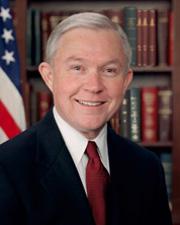 Sen. Jeff Sessions (R-AL)
Legislative Activity
Stay on top of the latest movement without scrolling through every action
Senate amendment submitted
July 30, 2009
View full timeline
Senate amendment submitted
July 30, 2009
Senate amendment proposed (on the floor): Amendment SA 2223 proposed by Senator Sessions.(consideration: CR S8528, S8530; text: CR S8528)
July 30, 2009
Senate amendment not agreed to: Amendment SA 2223 not agreed to in Senate by Yea-Nay Vote. 40 - 57. Record Vote Number: 252.
July 30, 2009
Roll call votes on amendments in Senate: Amendment SA 2223 not agreed to in Senate by Yea-Nay Vote. 40 - 57. Record Vote Number: 252.
July 30, 2009
Amendment SA 2223 proposed by Senator Sessions. (consideration: CR S8528, S8530; text: CR S8528) To restore sums to the Highway Trust Fund.
July 30, 2009
Amendment SA 2223 not agreed to in Senate by Yea-Nay Vote. 40 - 57. Record Vote Number: 252.
July 30, 2009
Votes
1 roll call on this amendment
Text
Proposed
HIGHWAY TRUST FUND EXTENSION--Continued

The PRESIDING OFFICER. The Senator from Texas is recognized.
Mrs. HUTCHISON. Mr. President, I wish to speak about the transfer of
the highway trust fund money. I do, of course, support having the money
in the highway fund because so many States need to have this money and
we need to assure it is there. I also support the amendments that would
use the stimulus money so it would not be new money.
But I do wish to talk about the highway trust fund because I think it
is important, as we are talking about this very important
transportation issue for our States, that we begin the debate about
whether the highway trust fund is now the appropriate vehicle for
keeping our Federal highways repaired and also doing the best for every
State in transportation. What concerns me is that the first reason for
the highway trust fund back in President Eisenhower's day over 50 years
ago has been achieved. Yet we are still continuing to have the same
formulas where some States are winners and some States are losers. But
every State today has the capacity to determine its own priorities and
the capacity to fund those priorities, unlike 50 years ago when there
were many States that had very little capacity. They had little
property, they had little taxable revenue sources, and therefore there
was a need for a national system of highways to assure that we had
national security. That was the first reason for it--but also mobility
and commerce.
Today, however, I think it is time for us to start all over. I think
it is time for us to allow States to opt out of the highway trust fund.
Of course, I am speaking for the largest donor State in America. We
give more back to other States than any other State. We are a State
that has more highway miles than any other State; therefore, we collect
more taxes. Because we are a donor State, we give the most away. If
these were States that could not meet their own needs and my State of
Texas was a State that had its needs covered, maybe you could argue
that would be OK. But, in fact, that is not the case. In fact, Texas is
facing a huge shortage in our highway funding. We now have two cities
that have mass transit systems that are certainly very successful but
very far behind the curve when it comes to the transportation glut on
our highways. We need to have the money in Texas to start meeting our
great transportation needs.
This also affects our environment, because when we have people
clogged in traffic, sitting on freeways hour after hour, of course it
is bad for the ability to get where you want to go, but it is also bad
for the environment to have the fumes going in the air.
I think today it is time for us to start the debate. Why not let a
State opt out, agree to keep in good repair the Federal highway system
and allow the States to use their own taxpayer dollars for their own
priorities to meet their own transportation and mobility needs? If
Texas could keep all the money it raises, rather than toll roads, which
are now being contemplated throughout our State, perhaps we could have
a mobility plan that would include highways, rapid transit, high-speed
rail, and more innovative ideas that are very costly, which we cannot
afford at this time.
Obviously, today we are going to go forward with extending the trust
fund and replenishing the highway trust fund because that is what
people want to do because we don't have time to address the whole issue
of reauthorization at this very complicated time. I wish we were not
going to consider an 18 month extension in September because I think we
ought to have a short-term extension, so we do have the reauthorization
of the highway bill, so we can start discussing these priorities--so we
can start maybe thinking outside the box. Maybe we can start all over.
The highway trust fund and the highway authorization bill is a
mishmash of different projects. I don't think there is fairness in the
system at all. You have donor States, you have winner States, and the
winner States have all the capacity. The loser States have as much need
as the winner States, and the winner States have the ability, I
believe, to fund their own options.
Even though I know we are going to extend the highway bill for 18
months by the end of September, and I know we are going to replenish
the highway fund today--and I wish it would be from our stimulus
package so it would not be yet another deficit-inducing measure from
this Congress--I think I am going to lose all the arguments I am
making. But I do think it important that we bring this issue to the
forefront.
There is no reason in this country today for winner States and loser
States. Our States should be able to plan for themselves, make their
own priorities, meet their needs, be able to be more efficient, have
multimodal systems--which is what I hope for Texas--and be able to use
our own tax dollars for our own needs. Were we a State that did not
have needs, were we a State that was not growing, maybe we could afford
to continue giving 8 cents back for every $1 we send to Washington.
Maybe we could afford to leave the 8 cents in Washington.
Instead, we are getting 92 cents back for every $1 we send to
Washington. That is hundreds of millions of dollars that we need for
our high-growth State that has many traffic problems and congestion
problems today. We will repair our highways. We would sign an agreement
to repair our highways so there would be no Federal responsibility for
that. But I hope this argument will be the beginning of a debate so we
can instate a system that will be more in tune with today's times, 50
years after the National Highway System was created--a wonderful system
that connects our country but one, now, that is finished. We have our
National Highway System. We do have

[[Page S8526]]

connectivity among our States. Why not allow the States to go out from
those Federal highway miles and lanes, to go into their States in the
best way for each individual State?
I thank Senator Brown for allowing me to speak on this issue. I hope,
as we go through, we will have more of a discussion.
I do have a bill introduced that would allow States to opt out. It is
something I think the time has come to address.
I yield the floor.
I suggest the absence of a quorum.
The PRESIDING OFFICER. Without objection, the clerk will call the
roll.
The assistant legislative clerk proceeded to call the roll.
Mr. BROWN. Mr. President, I ask unanimous consent the order for the
quorum call be rescinded.
The PRESIDING OFFICER. Without objection, it is so ordered.
Mr. BROWN. I ask unanimous consent to speak in time counting against
the Ensign amendment. I ask unanimous consent to speak as in morning
business and the time be counted against the Ensign amendment.
The PRESIDING OFFICER. Without objection, it is so ordered.
Mr. BROWN. Mr. President, I first congratulate the Presiding Officer
for his first time in the Presiding Officer's chair and wish him many
more of these. I know the experience will continue to enrich him and
enrich the Senate. I thank the Presiding Officer of the Senate.
Mr. President, last week, more than 1,500 Ohioans woke up at dawn to
wait in a line that snaked around the W.O. Walker Center, co-owned by
the Cleveland Clinic and University Hospital.
Last week, President Obama also visited the Cleveland Clinic--one of
our Nation's premier health care centers.
He observed firsthand how the Cleveland Clinic and cutting-edge
health care centers like University Hospitals and Metro Health are
providing high-quality care while reducing patients' costs.
But the more than 1,500 Ohioans who stood in line at 5 a.m. last
Saturday morning were not waiting for President Obama.
They were waiting to see one of hundreds of dermatologists, nurses,
urologists, cardiologists, neurologists, infectious disease
specialists, dentists, and other volunteers who were providing free
health care for one of Cleveland's first mass health clinics.
Need a pair of glasses? Lead optician Dr. Rob Engel checked your
vision while volunteer Sharon Connor helped you select a pair on the
spot.
Need prescription medicine? You were able to visit Margo and Rob
Roth, who ran the clinic's pharmacy.
Worried about women's health services? Dr. Laura David, an
obstetrician from University Hospitals, was ready to help.
Along with volunteers Maria Parks and her husband Lee, I helped sign-
in and register a number of Ohioans.
Many of them were members of hard-working families worried that they
might join the 14,000 Americans who lose health insurance each day.
Maria, Lee, and I heard one organizer call a medical volunteer a
``hero'' for stepping forward to help their neighbors.
That same volunteer responded by saying the real heroes are the
fathers, mothers, sons, and daughters struggling every day in the
shadow of a looming health care crisis that threatens to send their
family into financial ruin.
In fact, most of the people who sought health services at the weekend
clinic were from middle class families who had fallen on hard times.
Together with MetroHealth, St. Vincent's, University Hospitals, Case
Western Reserve University, and the Cleveland Clinic, Medworks
volunteers provided the kind of health care all Americans need, but too
many don't receive.
Medworks founder Zac Ponsky turned not only to his community but to
his family to contribute their time.
Zach's wife Taryn helped coordinate the many moving parts of the
clinic. Kim Ponsky, Zac's sister, is a professional photographer who
documented the weekend.
Meanwhile, Zac's father Jeff, brothers Lee and Todd, and sister-in-
law Diana--all physicians--provided a standard of care that most of the
patients that day had never received.
During a single weekend, the generous volunteers of Medworks taught
us the meaning of compassion and humility.
They led by example.
Many patients received multiple services, while doctors made instant
referrals to other Cleveland-area doctors for those patients not
originally scheduled.
Over the course of the weekend, seven people needing advanced care,
once diagnosed, were able to receive it at local hospitals.
More than 130 women had pap tests and nearly 100 women received
vouchers for free mammograms at Women's Diagnostics.
Nearly 300 people either walked out of the clinic with a brand new
pair of glasses or will be receiving a new pair soon.
A number of patients received vouchers for follow-up eye care at St.
Vincent's Charity Hospital, an exceptional hospital in Cleveland.
Approximately 50 people were tested for HIV. But it was not just
health care services that were provided. Each patient also spent time
with a social worker who provided counseling and information about
followup services. The Ohio Benefits Bank was on hand to offer
prescreening for medical, housing, energy, tax, employment and other
programs. Approximately 100 patients took advantage of that service.
All told, approximately 300 community members, 100 doctors, 175
nurses, and social workers volunteered their time and services during
this Saturday/Sunday event. This includes a number of volunteers who
simply showed up unannounced. It included a few patients who were so
grateful for the care they then volunteered to stay after their
appointments to help.
Building on effectiveness of the weekend, MedWorks is now focused on
patient followup. Currently, a team of doctors is reviewing medical
records to follow up with emergency cases and to help those people
suffering from chronic illness.
MedWorks volunteer and chief of surgery at University Hospitals, Dr.
Jeff Ponsky, said:

We're very hopeful that this will become a regular part of
our community. We'll get better at it, and we'll be a leader
for the country.

We can do more for the millions of Americans who are one illness away
from financial ruin. We can do more for the 14,000 Americans who lose
their insurance every day. We can do more for the 45 million uninsured
and the tens and tens of millions of underinsured in this country.
Today is the 44th anniversary of President Johnson's signing of
Medicare. Medicare changed our Nation. It helped pull millions of
seniors out of poverty; it fostered personal independence; it fueled
our economy; and it helped retirees live long and healthy lives.
Just as those who worked tirelessly 44 years ago to secure health
care for America's seniors, the generous MedWorks volunteers in
Cleveland are doing all they can for their community.
In Washington, we are working to effect change in our health care
system. That is our duty, to make this historic change, to reform the
health insurance industry, to allow our Nation to move on from human
tragedy--from the health care related bankruptcies, from the
competitive disadvantage American businesses face from the huge costs,
the burden that small businesses face in this country. We can keep
working, keep fighting for the change Americans are demanding.
The Ohioans I met in Cleveland last Saturday, and every Ohioan from
Lima to Zanesville, from Chillicothe to Ashtabula, every American in
every town in every State in this Nation all deserve the humane justice
of stable and secure health care. That means quality and affordable
health care options, public and private both. It means the health care
plan that was voted out of the HELP Committee on which the Presiding
Officer sits. It means the plan that came out of that committee 2 weeks
ago, a plan that injects competition between private insurance plans
and a public option, an option that people can choose. It will make
those plans work better, cut costs, and keep the insurance companies
honest. That will mean people, if they are laid off--if people are laid
off in Marion or

[[Page S8527]]

Dayton, OH, people who have lost their insurance, people in Wapakoneta,
in rural Ohio, all will have a public option to compete with sometimes
all too few private insurance companies in their areas.
To all the MedWorks volunteers, including Jack Ponsky and his family,
including Karil Bialostosky, Joel Goldstein, and Brian Smith, I thank
all of you for your commitment, your compassion, and your care for
those in need.
Now it is up to us to provide the kind of health care to protect what
works in our health care system and to fix what is broken in our health
care system.
I yield the floor, and I suggest the absence of a quorum.
The PRESIDING OFFICER. The clerk will call the roll.
The assistant legislative clerk proceeded to call the roll.
Mr. LIEBERMAN. Mr. President, I ask unanimous consent that the order
for the quorum call be rescinded.
The PRESIDING OFFICER. Without objection, it is so ordered.
Mr. LIEBERMAN. Mr. President, I ask unanimous consent now that the
debate time remaining with respect to amendments offered be yielded
back; that after Senator Thune offers his amendment, then debate time
on that amendment extend until 3:45 p.m., divided as previously
provided; that at 3:45 p.m. today, the Senate proceed to vote in
relation to the amendments and motion to waive in the order listed,
with 2 minutes of debate equally divided and controlled, in order prior
to each vote, with the vote time after the first vote limited to 10
minutes each as follows:
Vitter amendment No. 1907, as modified; Ensign amendment No. 1905, as
modified; Bond amendment No. 1904; the Thune amendment I have referred
to; and the Boxer motion to waive the applicable Budget Act point of
order; that with reference to amendment No. 1904, if a Budget Act point
of order is raised against the amendment, then a motion to waive the
applicable point of order be considered made, further that all other
provisions of the previous order remain in effect.
The PRESIDING OFFICER. Without objection, it is so ordered.
Mr. LIEBERMAN. Mr. President, I suggest the absence of a quorum.
The PRESIDING OFFICER. The clerk will call the roll.
The assistant legislative clerk proceeded to call the roll.
Mrs. BOXER. I ask unanimous consent that the order for the quorum
call be rescinded.
The PRESIDING OFFICER. Without objection, it is so ordered.
Mrs. BOXER. Mr. President, we are going to vote on a series of
Republican amendments to a bill that has come over from the House of
Representatives that funds the highway trust fund until September 30,
that funds unemployment insurance, and that helps us with the housing
crisis and allows us to see more mortgages go to qualified families of
America.
It is important to note that if we don't accept the House package, we
are really playing Russian roulette with the highway trust fund. As the
chairman of the Environment and Public Works Committee, who works very
hard with my colleague Senator Inhofe across party lines to ensure we
have a robust infrastructure program, I want to be clear: If we don't
pass this House bill, then we are up against the wall. We send a very
bad signal to the people who are counting the contracts that go out for
the highway program and the work that follows. We have many working
people who count on these jobs.
I support one of these amendments. The Bond amendment makes eminent
sense. I do take issue with the timing because we have been told by our
House colleagues that this is all we are going to do; if we amend this
bill, then we are stuck. So it is one of those awkward and difficult
moments.
Truth be told, the people out there who are working hard are not
going to get all the subtleties of the moment. They want to make sure
their job is there in the morning.
So even though I support one of these amendments, the Bond
amendment--and I have stated and Senator Bond understands that I will
be supporting him when we reauthorize this bill September 30; we will
take care of this rescission--we don't have to take care of it now.
What we must take care of today is the highway trust fund. It is
running out of funds. We have to act. I hope we can do it across party
lines.
The other thing I support is an 18-month extension of highway
programs. That is, again, something I have done with my Republican
colleagues. We passed out of the Environment and Public Works
Committee, on a unanimous vote, an 18-month extension. Senator Baucus,
over on Finance, was able to come up with an intergovernmental transfer
that does not add to the deficit of about $27 billion to ensure that we
can go forward for 18 months while we sit down across party lines and
figure out the long-term answer to funding our highway and
transportation needs over the next 5 years.
There is a split between the Senate approach and the House approach.
The House approach, which I don't agree with, is to keep making short-
term extensions as a way to force us to act in the long term. But we
all know we have to figure out a funding source that will take us
through the next 5 or 6 years. It is going to take time, and we need to
do it right. I believe in making sure we have a pay-go system. I am not
willing, as the chairman of the committee, to simply hand off a huge
bill to the Finance Committee without any recommendations. So it will
take us a little while. We have a difference between the House approach
and the Senate approach.
But here is the point and why I believed it was important to be heard
before we vote. The House has a very short-term extension. That is what
they have given us. They have told us that if we don't take this, we
are not going to be able to ensure that the highway trust fund is
solvent. I, for one, am not willing to play games with this. It is too
serious. Even though I don't agree with the House approach, we have
other days left to make the case.
The other point I want to make is that the Republican approach to
this is the 18-month extension, which I fully support, and the way they
pay for it is by saying: We are going to take money out of the stimulus
program, the economic stimulus program that has just begun to take hold
in the country. The Republicans didn't vote for it, most of them--three
of them did, but the others didn't--and they want to stop it. It is
counterproductive, in a time of recession, to stop a jobs program right
in the middle. These are jobs for highways, transportation, cleaning up
Superfund sites. These are jobs that are dealing with water
infrastructure, with education. Of all the times to come up here and
recommend that we stop this jobs program now, this is wrong.
I am totally willing to work with my colleagues so at the end of the
stimulus bill, at the end of that time, which is in about 18 months, if
we have not spent some of those funds, we should take a hard look at
putting those funds into the Treasury to reduce the deficit, perhaps.
Perhaps we need at that point to use some of it for the highway trust
fund. But today is not the day.
If I could summarize where I see things today, we have a series of
Republican amendments that basically say we should stop this, we should
take funds out of the stimulus package now in order to pay for
unemployment insurance, in order to pay for the highway trust fund, and
in order to pay to help our people with their mortgages. And it is
counterproductive.

On the one hand, they are doing something to help the economy by
helping our people with mortgages, by ensuring there is unemployment
insurance, and ensuring there is money in the highway trust fund. On
the other hand, they are stopping jobs to do it, and it is not
necessary. The House bill, although I do not appreciate the fact that
it is a very short-term extension of the highway trust fund, is deficit
neutral. CBO has so scored it. So we do not have to do this, and we
should not do this.
As I understand it, it is time now to have that series of votes. So I
make a parliamentary inquiry as to what time we are having those votes.
The PRESIDING OFFICER. The time under the previous order has expired.
Mrs. BOXER. All right. Then I would yield the floor, and I hope we
would be voting at this point.
The PRESIDING OFFICER. The Senator from Oklahoma.
Mr. INHOFE. Mr. President, it is my understanding that Senator
Sessions

[[Page S8528]]

is going to get one more amendment in, and then we will start the
voting; is that correct?
Mr. SESSIONS. Mr. President, that would be my preference. I would be
pleased to call up this amendment now. I do not know what the time
agreement is at this point.
Mr. INHOFE. We are ready to vote as soon as the Senator brings it up.

Amendment No. 2223

Mr. SESSIONS. Mr. President, I ask unanimous consent to call the
amendment up and to be able to speak for 2 minutes.
Mr. INHOFE. That sounds good.
The PRESIDING OFFICER. Without objection, it is so ordered.
Mr. SESSIONS. Mr. President, we have an opportunity to save $200
billion. It is time for us to do the right thing. We cannot keep
spending more and more.
The PRESIDING OFFICER. The clerk will report the amendment.
The assistant legislative clerk read as follows:

The Senator from Alabama [Mr. Sessions] proposes an
amendment numbered 2223.

The amendment is as follows:

(Purpose: To restore sums to the Highway Trust Fund and for other
purposes in a fiscally responsible manner)

Strike all after the enacting clause and replace:

SECTION L. FUNDING OF THE HIGHWAY TRUST FUND.

Subsection (f) of section 9503 of the Internal Revenue Code
of 1986 (relating to determination of trust fund balances
after September 30, 1998) is amended--
(1) by striking paragraph (2), and
(2) by adding at the end the following new
``(2) Increase in Fund Balance.--Out of money in the
Treasury not otherwise appropriated, there is hereby
appropriated (without fiscal year limitation) to the Highway
Trust Fund $7,000,000,000.''.

SEC. 2. ADVANCES TO THE UNEMPLOYMENT TRUST FUND AND OTHER
FUNDS.

The item relating to ``Department of Labor--Employment and
Training Administration--Advances to the Unemployment Trust
Fund and Other Funds'' in title I of division F of the
Omnibus Appropriations Act, 2009 (Public Law 111-8; 123 Stat.
754) is amended by striking ``to remain available through
September 30, 2010'' and all that follows (before the heading
for the following item) and inserting ``such sums as may be
necessary''.

SEC. 3. FHA MORTGAGE INSURANCE COMMITMENT AUTHORITY.

The item relating to ``Federal Housing Administration--
Mutual Mortgage Insurance Program Account'' in title II of
division I of the Omnibus Appropriations Act, 2009 (Public
Law 111-8; 123 Stat. 966) is amended by striking
``$315,000,000,000'' and inserting ``$400,000,000,000''.

SEC. 4. GNMA MORTGAGE-BACKED SECURITIES GUARANTEE COMMITMENT
AUTHORITY.

The item relating to ``Government National Mortgage
Association--Guarantees of Mortgage-Backed Securities Loan
Guarantee Program Account'' in title II of division I of the
Omnibus Appropriations Act, 2009 (Public Law 111-8; 123 Stat.
967) is amended by striking ``$300,000,000,000'' and
inserting ``$400,000,000,000''.

SEC. 5. USE OF STIMULUS FUNDS TO OFFSET APPROPRIATION OF
FUNDS.

The unobligated balance of each amount appropriated or made
available under the American Recovery and Reinvestment Act of
2009 (Public Law 111-5) is rescinded pro rata such that the
aggregate amount of such rescissions equals the aggregate
amount appropriated under the amendments made by this Act.
The Director of the Office of Management and Budget shall
report to each congressional committee the amounts so
rescinded within the jurisdiction of such committee.

Mr. SESSIONS. I thank the Presiding Officer.
We cannot keep spending more and more. We have several different
problems--we have housing problems; we have a problem with unemployment
insurance because more people are unemployed than had been predicted;
and we have a problem with a shortfall in the highway fund.
Some Senators could argue we do not need to fix every one of these
because we do not have the money. But in a way we do have the money
because we passed $800 billion in a stimulus package earlier this year.
It was supposed to be primarily, we heard, for roads. But only 4
percent went to roads. So we can fix the shortfall in the highway trust
fund by using some of the $800 billion we have already spent. We can
fix the other two problems--unemployment insurance and housing--in the
same fashion. Those can be fixed out of this fund.
This amendment would do that. It would reduce the other accounts
across the board. Of course, we will still be in session this year and
next year. If we need to adjust other things in some way, we can. Don't
let anybody tell you this is going to savage some other account because
we can fix those accounts.
I will just say--I know my time is short--this is $200 billion that
will either go to increase spending and increase debt, or we can meet
these needs--which hopefully are all necessary--out of the funds we
already have out there. If we do not start making these kinds of
decisions soon, we are going to have a real problem. According to the
scoring of the President's own budget, the total debt of America debt
has gone from $5 trillion this year, to $11 trillion 5 years from now,
to $17 trillion 10 years from now.
I thank the Presiding Officer and yield the floor.

Amendment No. 1907, as Modified

The PRESIDING OFFICER. Under the previous order, there is 2 minutes,
equally divided, on the Vitter amendment.
The Senator from Louisiana.
Mr. VITTER. Mr. President, I rise and urge strong bipartisan support
for the Vitter amendment. The Vitter amendment simply moves $7 billion
from the stimulus--less than 1 percent of the original stimulus
program--to backfill and take care of the need in the highway trust
fund.
This is important to do for two reasons.
First of all, we need to stop the reckless borrowing. We are
borrowing ourselves into oblivion. We are borrowing our children into
poor economic times. We need to reverse that trend. The underlying bill
fixes the hole in the highway trust fund simply by racking up more
debt, and that is why there is a budget point of order against it. So
we need to stop this never-ending upward spiral of borrowing.
No. 2, by doing this, we can focus a little bit of the stimulus on
something I believe we all think it always should have been focused on:
infrastructure spending and spending now versus later. This will move
the $7 billion toward roadway spending now, which is effective
stimulus.
The PRESIDING OFFICER. The Senator has used 1 minute.
The Senator from California.
Mrs. BOXER. Mr. President, I urge strong bipartisan support against
the Vitter amendment. There is nothing about reckless borrowing going
on. I have already put into the Record today the CBO analysis of the
House bill that is before us that says it even creates a little bit of
surplus because of how this is handled. This is not going on the debt.
So let's not stand here and say what it is about.
The second point is, there are tens of billions of dollars in unspent
funds that we authorized on a bipartisan vote on the stimulus package.
I know most of my colleagues on the other side never wanted to do that
stimulus package. I understand that. I respect it. But the fact is, we
finally see these funds going out and hiring the people we want to make
sure have jobs. We see and we hear from our Governors that the funding
is helping them retain teachers, police officers. We see funding is
helping them move forward with shovel-ready projects.
The PRESIDING OFFICER. The Senator's 1 minute has expired.
Mrs. BOXER. OK. I urge a ``no'' vote.
The PRESIDING OFFICER. The question is on agreeing to the amendment.
Mr. VITTER. Mr. President, I ask for the yeas and nays.
The PRESIDING OFFICER. Is there a sufficient second?
There appears to be a sufficient second.
The clerk will call the roll.
The assistant legislative clerk called the roll.
Mr. DURBIN. I announce that the Senator from West Virginia (Mr.
Byrd), the Senator from Massachusetts (Mr. Kennedy), and the Senator
from Maryland (Ms. Mikulski) are necessarily absent.
The PRESIDING OFFICER (Mrs. Shaheen). Are there any other Senators in
the Chamber desiring to vote?
The result was announced--yeas 42, nays 55, as follows:

[Rollcall Vote No. 249 Leg.]

YEAS--42

Alexander
Barrasso
Bennett
Bond
Brownback
Bunning
Burr
Chambliss
Coburn
Cochran
Collins
Corker
Cornyn
Crapo
DeMint

[[Page S8529]]

Ensign
Enzi
Graham
Grassley
Gregg
Hatch
Hutchison
Inhofe
Isakson
Johanns
Kyl
Lincoln
Lugar
Martinez
McCain
McConnell
Murkowski
Nelson (NE)
Risch
Roberts
Sessions
Shelby
Snowe
Thune
Vitter
Voinovich
Wicker

NAYS--55

Akaka
Baucus
Bayh
Begich
Bennet
Bingaman
Boxer
Brown
Burris
Cantwell
Cardin
Carper
Casey
Conrad
Dodd
Dorgan
Durbin
Feingold
Feinstein
Franken
Gillibrand
Hagan
Harkin
Inouye
Johnson
Kaufman
Kerry
Klobuchar
Kohl
Landrieu
Lautenberg
Leahy
Levin
Lieberman
McCaskill
Menendez
Merkley
Murray
Nelson (FL)
Pryor
Reed
Reid
Rockefeller
Sanders
Schumer
Shaheen
Specter
Stabenow
Tester
Udall (CO)
Udall (NM)
Warner
Webb
Whitehouse
Wyden

NOT VOTING--3

Byrd
Kennedy
Mikulski
The amendment (No. 1907), as modified, was rejected.
Mrs. BOXER. Madam President, I move to reconsider the vote.
Mr. DURBIN. I move to lay that motion on the table.
The motion to lay on the table was agreed to.

Amendment No. 1905, as Modified

The PRESIDING OFFICER. There is 2 minutes equally divided.
The Senator from Nevada.
Mr. ENSIGN. Madam President, the next amendment we are going to vote
on is a very simple vote, similar to the last one. What it says is the
States right now are borrowing from the Federal unemployment trust
fund, and that trust fund has been depleted. There are more States that
are going to need to borrow from it. It is temporarily putting back
into that trust fund a little over $7 billion.
Next year, there is going to be about $30 billion that is going to be
needed. Does anyone around here, with the dire straits States are in,
believe we will not forgive this debt for the States? That is why I am
saying don't just borrow the money--even though CBO says this is
deficit neutral, let's not borrow the money, which is what is going to
end up happening. Let's take it out of the stimulus funds and let's be
fiscally responsible around here. States need the help. Those who are
unemployed need help. Let's give the help but do it in a fiscally
responsible way. That is really the purpose of this amendment. I
encourage all Senators to vote for it.
The PRESIDING OFFICER. Who yields time in opposition?
The Senator from Illinois.
Mr. DURBIN. Madam President, I rise in opposition to the Ensign
amendment. I know the Senator has the best of intensions. The
underlying bill takes care of the unemployment insurance account. It
does it in a deficit-neutral fashion. In fact, it generates a surplus,
extra funds beyond what is needed for this purpose.
What the Senator from Nevada wants to do, if you can imagine, is he
wants to cut back on spending in the stimulus program, which is
building highways and projects across America. He wants to reduce the
President's effort to create jobs, thereby creating more unemployment
in order to have more money for unemployment in America. It does not
work.
We have a good program here. The underlying program takes care of the
need of the UI fund, and the President's stimulus package, now 150 days
into operation, is generating jobs and opportunities across America. We
do not need to kill the stimulus package at this moment. We need to
make sure it works to get America back to work.
Please defeat the Ensign amendment.
Mr. ENSIGN. I ask for the yeas and nays.
The PRESIDING OFFICER. Is there a sufficient second?
There is a sufficient second.
The question is on agreeing to the amendment. The clerk will call the
roll.
The bill clerk called the roll.
Mr. DURBIN. I announce that the Senator from West Virginia (Mr.
Byrd), the Senator from Massachusetts (Mr. Kennedy), and the Senator
from Maryland (Ms. Mikulski) are necessarily absent.
The PRESIDING OFFICER. Are there any other Senators in the Chamber
desiring to vote?
The result was announced--yeas 41, nays 56, as follows:

[Rollcall Vote No. 250 Leg.]

YEAS--41

Alexander
Barrasso
Bennett
Bond
Brownback
Bunning
Burr
Chambliss
Coburn
Cochran
Corker
Cornyn
Crapo
DeMint
Ensign
Enzi
Graham
Grassley
Gregg
Hatch
Hutchison
Inhofe
Isakson
Johanns
Kyl
Lincoln
Lugar
Martinez
McCain
McConnell
Murkowski
Nelson (NE)
Risch
Roberts
Sessions
Shelby
Snowe
Thune
Vitter
Voinovich
Wicker

NAYS--56

Akaka
Baucus
Bayh
Begich
Bennet
Bingaman
Boxer
Brown
Burris
Cantwell
Cardin
Carper
Casey
Collins
Conrad
Dodd
Dorgan
Durbin
Feingold
Feinstein
Franken
Gillibrand
Hagan
Harkin
Inouye
Johnson
Kaufman
Kerry
Klobuchar
Kohl
Landrieu
Lautenberg
Leahy
Levin
Lieberman
McCaskill
Menendez
Merkley
Murray
Nelson (FL)
Pryor
Reed
Reid
Rockefeller
Sanders
Schumer
Shaheen
Specter
Stabenow
Tester
Udall (CO)
Udall (NM)
Warner
Webb
Whitehouse
Wyden

NOT VOTING--3

Byrd
Kennedy
Mikulski
The amendment (No. 1905), as modified, was rejected.

Amendment No. 1904

The PRESIDING OFFICER. There is now 2 minutes evenly divided before a
vote with respect to the Bond amendment.
The Senator from Missouri.
Mr. BOND. Madam President, if I could have the attention of my
colleagues, please, this measure simply ends the rescission in the
SAFETEA-LU highway funding bill we passed 4 years ago which otherwise
takes $8.7 billion out of highway and bridge contract authority for the
States. Best estimates are that this would cost 250,000 jobs in all 50
States.
To the argument that we have to take this exactly as the House has
passed it because they won't stick around--well, they are in session.
If this is right, let's do it.
And for the Budget Act point of order, if you wanted to have this
paid for, you should have taken the Vitter amendment. The underlying
bill requires the Budget Act point of order waived because it is funded
by claiming the nonexistent interest on intergovernmental transfers.
That is a transparent sleight of hand or a sleight of pen.
If you want to keep from taking the shovels out of the hands of
workers on shovel-ready jobs in every State in the Nation, please vote
aye on the waiver of the Budget Act point of order.
The PRESIDING OFFICER. The Senator from Illinois.
Mr. DURBIN. Madam President, I would like to ask my colleagues if
they will follow me for just one moment. This is a little complex, but
if you will follow me.
First, I agree with Senator Bond's amendment and will vote for it,
but not at this moment. Here is why. This rescission Senator Bond wants
to achieve is something most of us agree with. If it doesn't happen,
the penalties will come to our States on September 30. What we have is
the assurance of the chairman of the Environment and Public Works
Committee that she will put this rescission in the reauthorization of
the highway trust fund before September 30 so there would not be any
loss to States.
So what is the problem? Why don't we do it today? Because if we do it
today, we jeopardize this extension of the highway trust fund until
September 30. We are trying to get this done in short order so we can
end the session and come back and do the right thing before September
30. All we are asking today is for you to join us in saying to Senator
Bond: Thank you for your good thought, but hold that thought until
September.
We still have time to make sure we do the right thing, and we have
the assurance of the chairman that it is going to happen. It pains me
greatly to raise a point of order against my friend from Missouri on an
amendment whose substance I agree with, but if we want to protect the
highway trust fund and we want to have an orderly adjournment to the
session and not jeopardize jobs, then we need to vote against the Bond
amendment.

[[Page S8530]]

The PRESIDING OFFICER. The Senator has used his time.
Mr. DURBIN. Madam President, I make a point of order that the pending
amendment violates section 302(f) of the Congressional Budget Act of
1974.
Mr. BOND. Madam President, do I have any time?
The PRESIDING OFFICER. The Senator has used his time as well.
Under the previous order, a motion to waive is considered made.
Mr. DURBIN. I ask for the yeas and nays.
The PRESIDING OFFICER. Is there a sufficient second?
There appears to be a sufficient second.
The yeas and nays were ordered.
The PRESIDING OFFICER. The question occurs on agreeing to the motion.
The clerk will call the roll.
The legislative clerk called the roll.
Mr. DURBIN. I announce that the Senator from West Virginia (Mr.
Byrd), the Senator from Massachusetts (Mr. Kennedy), and the Senator
from Maryland (Ms. Mikulski) are necessarily absent.
The PRESIDING OFFICER. Are there any other Senators in the Chamber
desiring to vote?
The yeas and nays resulted--yeas 34, nays 63, as follows:

[Rollcall Vote No. 251 Leg.]

YEAS--34

Alexander
Barrasso
Begich
Bennet
Bennett
Bond
Chambliss
Cochran
Collins
Cornyn
Crapo
Enzi
Harkin
Hutchison
Inhofe
Isakson
Leahy
Martinez
McCaskill
Murkowski
Nelson (NE)
Nelson (FL)
Risch
Roberts
Sanders
Shaheen
Shelby
Snowe
Specter
Thune
Udall (CO)
Voinovich
Wicker
Wyden

NAYS--63

Akaka
Baucus
Bayh
Bingaman
Boxer
Brown
Brownback
Bunning
Burr
Burris
Cantwell
Cardin
Carper
Casey
Coburn
Conrad
Corker
DeMint
Dodd
Dorgan
Durbin
Ensign
Feingold
Feinstein
Franken
Gillibrand
Graham
Grassley
Gregg
Hagan
Hatch
Inouye
Johanns
Johnson
Kaufman
Kerry
Klobuchar
Kohl
Kyl
Landrieu
Lautenberg
Levin
Lieberman
Lincoln
Lugar
McCain
McConnell
Menendez
Merkley
Murray
Pryor
Reed
Reid
Rockefeller
Schumer
Sessions
Stabenow
Tester
Udall (NM)
Vitter
Warner
Webb
Whitehouse

NOT VOTING--3

Byrd
Kennedy
Mikulski
The PRESIDING OFFICER. On this vote, the yeas are 34, the nays are
63. Three-fifths of the Senators duly chosen and sworn not having voted
in the affirmative, the motion is rejected.
The point of order is sustained and the amendment falls.

Amendment No. 2223

Under the previous order, there will now be 2 minutes of debate
equally divided prior to a vote in relation to amendment No. 2223,
offered by the Senator from Alabama.
Mr. SESSIONS. Madam President, among some of the things I think most
Members would like to accomplish is fixing the highway trust fund,
fixing the unemployment insurance shortfall, and to do something about
the housing loan authority. Those are three matters we can address
without increasing our deficit. There is $7 billion in the highway fund
this amendment would fix, which is the short-term fix the House did;
another $7 billion for unemployment insurance; and the $185 billion for
the housing fix. Those things we can do within the stimulus package.
Only 11 percent of the $800 billion will be spent by the end of this
fiscal year. We can use that money to fund these programs, take care of
them as we planned to do from the beginning but without increasing the
debt.
People say the underlying bill will not increase the debt. That is
not accurate. If we agree to this amendment, we will prevent increasing
the Nation's debt by $200 billion.
I urge your support for the amendment. At this point in time we need
to save a few billion dollars.
The PRESIDING OFFICER. The Senator from California is recognized.
Mrs. BOXER. Madam President, I hope colleagues will listen. What this
Sessions amendment does, it takes all the corrections that are in the
underlying bill--making sure the highway trust fund does not go bust,
making sure the unemployment trust fund is full, making sure we have
help for our middle-class families seeking to get mortgages--and it
funds it instead of in a deficit-neutral way that is in the underlying
bill which I put in the Record, the CBO score which actually scores
positive in terms of the surplus over the 10 years, it slashes the
stimulus funding right as it is beginning to take hold.
If you want to take care of all these things, and I think we all do,
let's do it the right way. Let us not do it the wrong way and slash
funds from the stimulus bill as we are beginning to see it take hold.
I urge a ``no'' vote on the Sessions amendment.
The PRESIDING OFFICER. All time has expired. The question is on
agreeing to the Sessions amendment.
Mr. SESSIONS. Madam President, I ask for the yeas and nays.
The PRESIDING OFFICER. Is there a sufficient second? There is a
sufficient second.
The clerk will call the roll.
The legislative clerk called the roll.
Mr. DURBIN. I announce that the Senator from West Virginia (Mr.
Byrd), the Senator from Massachusetts (Mr. Kennedy), and the Senator
from Maryland (Ms. Mikulski) are necessarily absent.
The PRESIDING OFFICER. Are there any other Senators in the Chamber
desiring to vote?
The result was announced--yeas 40, nays 57, as follows:

[Rollcall Vote No. 252 Leg.]

YEAS--40

Alexander
Barrasso
Bayh
Bennett
Bond
Brownback
Bunning
Burr
Chambliss
Coburn
Cochran
Corker
Cornyn
Crapo
DeMint
Ensign
Enzi
Graham
Grassley
Gregg
Hatch
Hutchison
Inhofe
Isakson
Johanns
Kyl
Lugar
Martinez
McCain
McConnell
Murkowski
Nelson (NE)
Risch
Roberts
Sessions
Shelby
Thune
Vitter
Voinovich
Wicker

NAYS--57

Akaka
Baucus
Begich
Bennet
Bingaman
Boxer
Brown
Burris
Cantwell
Cardin
Carper
Casey
Collins
Conrad
Dodd
Dorgan
Durbin
Feingold
Feinstein
Franken
Gillibrand
Hagan
Harkin
Inouye
Johnson
Kaufman
Kerry
Klobuchar
Kohl
Landrieu
Lautenberg
Leahy
Levin
Lieberman
Lincoln
McCaskill
Menendez
Merkley
Murray
Nelson (FL)
Pryor
Reed
Reid
Rockefeller
Sanders
Schumer
Shaheen
Snowe
Specter
Stabenow
Tester
Udall (CO)
Udall (NM)
Warner
Webb
Whitehouse
Wyden

NOT VOTING--3

Byrd
Kennedy
Mikulski
The amendment (No. 2223) was rejected.
The PRESIDING OFFICER. Under the previous order, there will now be 2
minutes of debate equally divided prior to a vote on the motion to
waive.
The Senator from California.
Mrs. BOXER. Madam President, I yield 30 seconds to Senator Inhofe.
The PRESIDING OFFICER. The Senator from Oklahoma.
Mr. INHOFE. Madam President, this is a very significant vote. I am
very upset that we have a lot of things in here I didn't want--the
unemployment insurance loans, the Federal Housing Administration loan
limit increase. That should not be there. The amendments failed. I wish
they had passed. I voted for them.
The thing that bothers me more than anything else is the House put us
in this position. They said: Here is the bill; you do it; we are
leaving town. That is exactly what happened.
So this is the final vote. We have to have 60 votes. For all
practical purposes, this is the final vote. I urge my Republican
friends to support waiver of the point of order.
The PRESIDING OFFICER. The Senator from California.
Mrs. BOXER. Madam President, I thank my ranking member. He and I, as
everyone knows, don't always agree. But when we do agree, we hope our
colleagues will follow. We do not want to play Russian roulette with
the highway trust fund. We have to make sure it stays solvent. I urge
an ``aye'' vote.
The PRESIDING OFFICER. The Senator from Louisiana.
Mr. VITTER. Madam President, this is about a budget point of order.
That

[[Page S8531]]

means the bill, since it was not amended as I would have liked, is
contrary to the Budget Act. It has more outlays this year. It also
requires us to rack up more debt, borrow more money. In the face of $2
trillion of new debt this year, doubling that in 5 years, and tripling
it in 10, this is a critical vote. Either you vote yes and say let's
continue to go down that path or you vote no and say we need to change
course about debt.
Mrs. BOXER. I ask for the yeas and nays.
The PRESIDING OFFICER. Is there a sufficient second?
There appears to be.
The question is on agreeing to the motion.
The clerk will call the roll.
The legislative clerk called the roll.
Mr. DURBIN. I announce that the Senator from West Virginia (Mr.
Byrd), the Senator from Massachusetts (Mr. Kennedy), and the Senator
from Maryland (Ms. Mikulski) are necessarily absent.
The PRESIDING OFFICER. Are there any other Senators in the Chamber
desiring to vote?
The yeas and nays resulted--yeas 71, nays 26, as follows:

[Rollcall Vote No. 253 Leg.]

YEAS--71

Akaka
Alexander
Baucus
Bayh
Begich
Bennet
Bingaman
Bond
Boxer
Brown
Burris
Cantwell
Cardin
Carper
Casey
Cochran
Collins
Conrad
Crapo
Dodd
Dorgan
Durbin
Feingold
Feinstein
Franken
Gillibrand
Hagan
Harkin
Inhofe
Inouye
Johnson
Kaufman
Kerry
Klobuchar
Kohl
Landrieu
Lautenberg
Leahy
Levin
Lieberman
Lugar
Martinez
McCaskill
Menendez
Merkley
Murkowski
Murray
Nelson (NE)
Nelson (FL)
Pryor
Reed
Reid
Risch
Roberts
Rockefeller
Sanders
Schumer
Shaheen
Shelby
Snowe
Specter
Stabenow
Tester
Udall (CO)
Udall (NM)
Voinovich
Warner
Webb
Whitehouse
Wicker
Wyden

NAYS--26

Barrasso
Bennett
Brownback
Bunning
Burr
Chambliss
Coburn
Corker
Cornyn
DeMint
Ensign
Enzi
Graham
Grassley
Gregg
Hatch
Hutchison
Isakson
Johanns
Kyl
Lincoln
McCain
McConnell
Sessions
Thune
Vitter

NOT VOTING--3

Byrd
Kennedy
Mikulski
The PRESIDING OFFICER. On this vote, the yeas are 71, the nays are
26. Three-fifths of the Senators duly chosen and sworn having voted in
the affirmative, the motion is agreed to.
Mrs. BOXER. Madam President, I move to reconsider the vote.
Mrs. MURRAY. I move to lay that motion on the table.
The motion to lay on the table was agreed to.
Mr. NELSON of Nebraska. Madam President, when the stimulus bill was
being debated, I advocated that any package include a robust investment
in rebuilding our Nation's infrastructure. While the stimulus takes a
big step in the right direction to address the needs of our aging
transportation system, many more steps need to be taken.
I believe that the issues that we face with the solvency of the
highway trust fund is an opportunity to make sure that more funding
from the stimulus is directed towards our Nation's roads, while not
adding new spending and increasing the Federal deficit. I would
encourage any unobligated funding that is redirected as a result of the
passage of the amendments offered today be in addition to any stimulus
funding already provided for road projects; especially in the case of
local road projects. Road projects at the local level will be vital
part of the engine that drives our Nation's economic recovery in
communities across the country and not maintaining funding for those
projects would be a step in the wrong direction.
Finally, an investment in our Nation's roads is a two-for-one: it
creates jobs while helping to rebuild our infrastructure. By making
sure the highway trust fund remains solvent and continuing to invest in
important transportation projects, we can rededicate our efforts to
addressing our transportation system needs.
Mr. DODD. Madam President, I rise in strong support of this
legislation.
In addition to the important sections dealing with transportation and
unemployment insurance, the bill before us today includes two important
provisions that are crucial to our Nation's housing market--it
increases the authority of the Federal Housing Administration--FHA, to
insure loans and the authority of the Government National Mortgage
Association--GNMA, to guarantee securities backed by FHA loans.
Just about 2 years ago, the housing market started to implode as the
predatory and abusive loans that were pumped out by banks and mortgage
lenders started to fail in great numbers. These loans were made by
lenders who knew these borrowers could not afford to repay them, and
they were made under the eyes of regulators who were indifferent to the
fate of the borrowers and who underestimated the impact on our
financial system.
These loans were originated by mortgage brokers or retail lenders
with funds provided by Wall Street. Nobody took any responsibility for
the quality of these loans because everyone thought they were laying
the risk off on the next guy by securitizing the loans and selling them
off. Regrettably, it is the American people--and the economy--that is
paying the price today in the form of a severe credit crunch that is
affecting homeowners, small businesses, entrepreneurs, and every
consumer that uses a credit card.
As we all know, foreclosures have skyrocketed. Some analysts predict
that 8 million homeowners will lose their homes to foreclosure before
this crisis is over.
In fact, as the mortgage market has ground to a halt, housing prices
have fallen all over the country, in many places by 20 percent or more.
This problem is being exacerbated by foreclosed homes flooding the
market, driving home prices down further.
The only mortgage credit available in this country is credit that is
provided, directly or indirectly, by the Federal Government. A key
component of this, accounting for about 30 percent of the new mortgages
being made in the market today, is FHA-insured mortgages.
The legislation before us would increase FHA's authority to insure
mortgages. If we do not do this, FHA could shut down while we are away
on recess. That would mean that about 30 percent of the mortgage credit
that is available today to homebuyers and homeowners would simply
vanish from the marketplace.
The impact of this would be immediate and devastating--a likely spike
in interest rates; more foreclosures; and fewer home purchases as
buyers withdraw from the market.
Just this week, we heard some data which indicate that home prices
may be stabilizing. But the situation is fragile. If we eliminate FHA
from the marketplace, we could eliminate tens of thousands of potential
home buyers from the market, as well. As demand dropped, so would home
prices, starting a new cycle of economic despair and disinvestment in
our cities and towns. That is why the National Association of Realtors,
the National Association of Home Builders, and the Mortgage Bankers
Association all strongly support this legislation.

The story is much the same with the GNMA increase. GNMA makes it
possible for lenders to make FHA loans, and then sell them in federally
guaranteed loan pools. GNMA creates an essential outlet for FHA loans
so that banks and other lenders can make more mortgage credit
available. Without the increased commitment level included in this
bill, GNMA will also be forced to close its doors.
These two provisions of the bill before us are crucial for working
American families. I strongly urge my colleagues to pass this
legislation so that we can send it to President Obama for his
signature.
Mr. WARNER. Madam President, as the Highway Trust Fund Act moves
through the Senate, I would like to take a moment to stress the
importance and urgency of reforming our national transportation system.
I commend Chairman Boxer for her leadership on this effort to keep
the trust fund solvent. But the fact that we needed this emergency
infusion indicates a much greater problem with the transportation
system and how it is funded. I recognize and appreciate the desire to
pass a clean 18-month extension of SAFETEA-LU. However, I think we can
all agree that fundamental reform will be needed when the time

[[Page S8532]]

comes to consider a full 6-year authorization bill.
Our Nation's infrastructure is currently inadequate to preserve our
global competitiveness and the way we allocate funds for surface
transportation lacks true accountability. In short, we do not tie
funding to performance. To move to a true performance-based system,
there are some immediate steps that should be taken.
An 18-month extension provides a unique opportunity to take some of
these steps. Without making any policy reforms or adding any programs,
we can begin to collect information on how well transportation funds
are serving the public, which will ease our transition to a reformed
and effective long-term policy. I have drafted an amendment that would
direct the Secretary of Transportation to coordinate with states,
metropolitan planning organizations and our new chief performance
officer to develop metrics to address the following factors: (1)
National Connectivity: How have transportation investments improved the
connection of people and goods across the Nation?
(2) Metropolitan Accessibility: How have transportation investments
allowed Americans in metropolitan regions to access their jobs and
other activities more reliably and efficiently?
(3) Energy Security and Environmental Protection: How have
transportation investments reduced carbon emissions and petroleum
consumption?
(4) Safety: How have transportation investments improved safety by
reducing fatalities and injuries associated with transportation?
My proposal outlines how States and metropolitan regions can begin to
report these measures. The factors above are outcome-oriented,
objective and measurable. They are also designed to cut across all
modes of transportation, and to measure performance across an entire
region as opposed to measuring specific projects in a vacuum.
This legislation will help ease the transition to a more performance-
based system. Not only will it provide us with actual performance data,
but it will help clarify what additional resources states will need to
better provide such data in the future.
I look forward to working with my colleagues in the Senate on this
initiative to ensure its inclusion in any extension of SAFETEA-LU.
Mr. INHOFE. Madam President, I have worked with the chairmen of the
Environment and Public Works, Banking, Commerce and Finance Committees
over the last month to put a bill together to address two urgent issues
facing the Nation's highway program. First, the highway trust fund is
going to run out of money sometime in the next few weeks and will
require an infusion of $5 to $7 billion to get us through the rest of
fiscal year 2009. Second, SAFETEA the 2005 highway bill, is set to
expire in 9 weeks. With no realistic chance of Congress passing a fully
funded reauthorization before the program expires, it is essential to
provide funding certainty with a longer term extension. States cannot
afford to move forward with transportation development activities
without confidence in long-term and consistent future Federal
reimbursements.
Unfortunately, the House chose not to address both issues, but rather
just provide the money necessary to ensure that the highway trust fund
does not go broke over the August recess. Their decision has put the
Senate in a situation of taking or leaving their bill. I do not like it
and frankly think the responsible thing would have been to take up the
Senate bill, which would have provided for an 18-month extension of the
existing program. The House has been short sighted in forcing the
Senate to only address the trust fund fix; with so many other important
issues facing Congress, the Senate now must return in 30 days to do
this all over again before the program expires at the end of September.
I also did not like the added provisions of the loans to unemployment
insurance fund or the increase in the Federal Housing Administration
cap on loans they can authorize under the Mutual Mortgage Insurance
Program. Finally, I thought all the amendments offered by my Republican
colleagues were improvements to the bill, but unfortunately, none of
them were adopted. Nonetheless, I supported final passage and most
importantly voted to waive the point of order that was raised because
we cannot afford to allow the highway trust fund to become insolvent.
While the bill we adopted today only addresses the immediate trust fund
shortfall I look forward to taking care of the extension of the program
when we return in September along with the fix of the $8.7 billion
rescission as proposed by Senator Bond's amendment. Given the fiscal
pressures on states and the current economic downturn, I agree with the
administration that this uncertainty would be devastating to States and
would translate into job losses, and so we need to provide certainty
until we are able to pass a comprehensive bill.
I am hopeful that as soon as we return from August recess that we
will immediately consider the extension legislation introduced earlier
this week by all the relevant committees.
The PRESIDING OFFICER. Under the previous order, the clerk will read
the bill for the third time.
The bill was read the third time.
The PRESIDING OFFICER. The bill having been read the third time, the
question is, Shall the bill pass?
Mr. GREGG. Madam President, I ask for the yeas and nays.
The PRESIDING OFFICER. Is there a sufficient second?
There appears to be a sufficient second.
The clerk will call the roll.
The assistant legislative clerk called the roll.
Mr. DURBIN. I announce that the Senator from West Virginia (Mr.
Byrd), the Senator from Massachusetts (Mr. Kennedy), and the Senator
from Maryland (Ms. Mikulski) are necessarily absent.
Mr. KYL. The following Senator is necessarily absent: The Senator
from Oklahoma, Mr. Inhofe.
The PRESIDING OFFICER. Are there any other Senators in the Chamber
desiring to vote?
The result was announced--yeas 79, nays 17, as follows:

[Rollcall Vote No. 254 Leg.]

YEAS--79

Akaka
Alexander
Baucus
Bayh
Begich
Bennet
Bingaman
Bond
Boxer
Brown
Brownback
Burris
Cantwell
Cardin
Carper
Casey
Chambliss
Cochran
Collins
Conrad
Cornyn
Crapo
Dodd
Dorgan
Durbin
Feingold
Feinstein
Franken
Gillibrand
Graham
Grassley
Hagan
Harkin
Hutchison
Inouye
Isakson
Johnson
Kaufman
Kerry
Klobuchar
Kohl
Landrieu
Lautenberg
Leahy
Levin
Lieberman
Lincoln
Lugar
Martinez
McCaskill
Menendez
Merkley
Murkowski
Murray
Nelson (NE)
Nelson (FL)
Pryor
Reed
Reid
Risch
Roberts
Rockefeller
Sanders
Schumer
Shaheen
Shelby
Snowe
Specter
Stabenow
Tester
Udall (CO)
Udall (NM)
Vitter
Voinovich
Warner
Webb
Whitehouse
Wicker
Wyden

NAYS--17

Barrasso
Bennett
Bunning
Burr
Coburn
Corker
DeMint
Ensign
Enzi
Gregg
Hatch
Johanns
Kyl
McCain
McConnell
Sessions
Thune

NOT VOTING--4

Byrd
Inhofe
Kennedy
Mikulski
The bill (H.R. 3357) was passed.
Mrs. BOXER. Madam President, I move to reconsider the vote.
Mr. REID. I move to lay that motion on the table.
The motion to lay on the table was agreed to.
Mrs. BOXER. Madam President, I wish to take a moment to thank
everyone. This was a very complicated series of amendments. It was
daunting to figure out what each one of them meant.
The bottom line is that we did replenish the highway trust funds
until September 30. Most of us would have liked to have done better
than that. We helped with unemployment insurance, and we helped
families get mortgages. We also made a commitment to Senator Bond that
we are going to take care of his amendment at the appropriate moment.
I particularly thank Senator Durbin for all his help on the floor.
Again, this was a confusing series of amendments. I am pleased with the
outcome.
I yield the floor.
The PRESIDING OFFICER. The majority leader is recognized.
Mr. REID. Madam President, for the information of all members, I have
had

[[Page S8533]]

a number of conversations with Senator McConnell this afternoon. It
appears, at this stage, we have a path toward completing our work next
week. We are going to move forward with the Agriculture appropriations
bill this evening. We will be on that tonight and tomorrow, and it will
be open for amendments. It appears, on that matter, we will either have
a vote after 5 o'clock on Monday on final passage or on cloture on that
appropriations bill.
Tuesday, we will move to the Supreme Court nomination of Judge Sonia
Sotomayor. I haven't had a chance to talk with the chairman and ranking
member of the Judiciary Committee. With their approval, we will move to
that matter on Tuesday.
We will set a time certain to vote on cloture on the Travel Promotion
Act. We need a time certain because, as everyone knows, Senator
Mikulski is in the hospital now having repair work done on her leg as a
result of a fall. We will set that time. And there may be some
nominations we will need to deal with.
At this stage, I think that is where we are headed. There will be no
votes tonight or tomorrow. It appears the next vote will be Monday
afternoon. I have spoken to Senator Kohl and Senator Brownback, and
they agree on the appropriations bill that is the way to move forward.
I appreciate everyone's cooperation.
The PRESIDING OFFICER. The Senator from Georgia is recognized.

____________________