To establish within the Food and Drug Administration 2 review groups to recommend solutions for the prevention, diagnosis, and treatment of rare diseases and neglected diseases of the developing world.
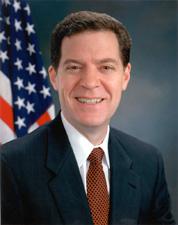 Sen. Sam Brownback (R-KS)
Legislative Activity
Stay on top of the latest movement without scrolling through every action
Senate amendment agreed to: Amendment SA 2229 as modified agreed to in Senate by Voice Vote.(text as modified: CR S8651)
August 3, 2009
View full timeline
Senate amendment agreed to: Amendment SA 2229 as modified agreed to in Senate by Voice Vote.(text as modified: CR S8651)
August 3, 2009
Considered by Senate. (consideration: CR S8647, S8651)
August 3, 2009
Amendment SA 2229 as modified agreed to in Senate by Voice Vote. (text as modified: CR S8651)
August 3, 2009
Senate amendment proposed (on the floor): Amendment SA 2229 proposed by Senator Brownback to Amendment SA 1908.(consideration: CR S8620-8622; text: CR S8620)
July 31, 2009
Amendment SA 2229 proposed by Senator Brownback to Amendment SA 1908. (consideration: CR S8620-8622; text: CR S8620) To establish within the Food and Drug Administration 2 review groups to recommend solutions for the prevention, diagnosis, and treatment of rare diseases and neglected diseases of the developing world.
July 31, 2009
Senate amendment submitted
July 30, 2009
Text
Proposed
AGRICULTURE, RURAL DEVELOPMENT, FOOD AND DRUG ADMINISTRATION, AND
RELATED AGENCIES APPROPRIATIONS ACT, 2010

The ACTING PRESIDENT pro tempore. Under the previous order, the
Senate will resume consideration of H.R. 2997, which the clerk will
report.
The assistant legislative clerk read as follows:

A bill (H.R. 2997) making appropriations for Agriculture,
Rural Development, Food and Drug Administration, and Related
Agencies programs for the fiscal year ending September 30,
2010, and for other purposes.

Pending:

Kohl/Brownback amendment No. 1908, in the nature of a
substitute.
Kohl (for Tester) amendment No. 2230 (to amendment No.
1908), to clarify a provision relating to funding for a
National Animal Identification Program.

Cloture Motion

Mr. REID. Mr. President, I would now ask that the cloture motion
which is at the desk on the substitute amendment be stated.
The ACTING PRESIDENT pro tempore. The cloture motion having been
presented under rule XXII, the Chair directs the clerk to read the
motion.
The assistant legislative clerk read as follows:

Cloture Motion

We, the undersigned Senators, in accordance with the
provisions of rule XXII of the Standing Rules of the Senate,
hereby move to bring to a close debate on the substitute
amendment No. 1908 to H.R. 2997, the Agriculture
Appropriations Act for Fiscal Year 2010.
John D. Rockefeller, IV, Tom Udall, Mark L. Pryor, Edward
E. Kaufman,

[[Page S8620]]

Blanche L. Lincoln, Kent Conrad, Kay R. Hagan, Mark
Begich, Byron L. Dorgan, Max Baucus, Ben Nelson, Herb
Kohl, Daniel K. Inouye, Michael F. Bennet, Mary L.
Landrieu, Charles E. Schumer.

Cloture Motion

Mr. REID. Mr. President, I have a cloture motion at the desk on the
bill itself.
The ACTING PRESIDENT pro tempore. The cloture motion having been
presented under rule XXII, the Chair directs the clerk to read the
motion.
The assistant legislative clerk read as follows:

Cloture Motion

We, the undersigned Senators, in accordance with the
provisions of rule XXII of the Standing Rules of the Senate,
hereby move to bring to a close debate on H.R. 2997, the
Agriculture Appropriations Act for Fiscal Year 2010.
John D. Rockefeller, IV, Tom Udall, Mark L. Pryor, Edward
E. Kaufman, Blanche L. Lincoln, Kent Conrad, Kay R.
Hagan, Mark Begich, Byron L. Dorgan, Max Baucus, Ben
Nelson, Herb Kohl, Daniel K. Inouye, Michael F. Bennet,
Mary L. Landrieu, Jon Tester, Charles E. Schumer.

Mr. REID. Mr. President, I ask unanimous consent that the cloture
vote on the substitute amendment occur at 5:30 p.m. on Monday, August
3; that if cloture is invoked, postcloture time be considered to have
begun as if cloture had been invoked at 11 a.m.; further, that the
mandatory quorums required be waived, and that first-degree amendments
be filed at the desk by 3:30 p.m. on Monday.
The ACTING PRESIDENT pro tempore. Without objection, it is so
ordered.
The Senator from Wisconsin.
Mr. KOHL. Mr. President, as we wait for Members to come forward with
amendments, I wish to talk about something that is happening down at
the USDA right now. This morning, Secretary Vilsack is announcing
changes to the Dairy Product Price Support Program. I wish to commend
him for his diligence and his willingness to keep pushing on this.
Wisconsin is home to more dairy farms than any other State in the
Union. We produce 2.1 billion pounds of milk each month. About half the
State's $51 billion agriculture economy is directly tied to dairy. So
when the dairy sector hurts, Wisconsin hurts. And I will say in no
uncertain terms that the pain in dairy across America is very acute
right now.
From January through April, the price of milk paid to dairy farmers
has been about $4.80 per hundredweight below the cost of production.
Dairy producers have lost $3.9 billion in equity in 5 months. At risk
is the long-term stability of the industry, the Nation's milk
production infrastructure, and thousands of rural communities.
With Senator Leahy and a number of our colleagues, we have pushed to
confront these challenges. In the last farm bill, we extended the basic
safety net for dairy producers, and we strengthened it with something
called a ``feed cost adjuster.'' In the economic recovery bill we added
credit to help producers survive.
At the same time, the Secretary has worked to boost exports and
provide more dairy products for nutrition programs. All of these are
critical steps. Together they reflect, literally, a billion-dollar
effort to address a crisis that has hurt dairy producers in every
corner of the country.
But over the past several weeks, in hearings and letters--and
personal consultations I have been a part of--there is a growing
appreciation that more needs to be done. Today the Secretary is taking
the next step. For August through October, he is adjusting the Dairy
Product Price Support Program in a way that will yield an estimated
$243 million in revenue increases for dairy producers.
I commend our Secretary of Agriculture for working with intensity and
persistence. I commend our President for appointing a Secretary of
Agriculture who works with intensity and persistence. And I want to
reassure dairy farmers all across America that, although we do not have
all the answers, we are committed to pressing forward on their behalf.
I yield the floor.
The ACTING PRESIDENT pro tempore. The Senator from Kansas.
Mr. BROWNBACK. Mr. President, I urge my colleagues, particularly on
my side of the aisle, to get their amendments and bring them forward,
bring them forward this morning. It would be my hope we could get this
bill done on Monday, early evening, so we can move to the Sotomayor
discussion and debate on the floor. I think most Members want to speak
about Sotomayor, so it is going to take a lot of time next week, being
the last week before we go on break. I hope we could start that as fast
as possible and we could move through this bill expeditiously.
We worked very closely with the majority. I think we have a good
bill. It certainly is not perfect; no bill is. But it is one for which
we have done a lot of work, and I do not see the issues outstanding
here to the degree that I think it would merit us putting off the
discussion and debate on Sotomayor. So I am hopeful we can get those
amendments coming forward.

Amendment No. 2229 To Amendment No. 1908

Mr. President, I have discussed with the majority about bringing up
an amendment to deal with the issue of neglected and rare diseases. The
FDA funding is in this bill, and we have negotiated an amendment with
the proper authorizing committee. So with that, I ask unanimous consent
to set aside the pending amendment, to call up amendment No. 2229, and
ask for its immediate consideration.
The ACTING PRESIDENT pro tempore. Without objection, the clerk will
report.
The assistant legislative clerk read as follows:

The Senator from Kansas [Mr. Brownback] proposes an
amendment numbered 2229 to amendment No. 1908.

Mr. BROWNBACK. Mr. President, I ask unanimous consent that reading of
the amendment be dispensed with.
The ACTING PRESIDENT pro tempore. Without objection, it is so
ordered.
The amendment is as follows:

(Purpose: To establish within the Food and Drug Administration 2 review
groups to recommend solutions for the prevention, diagnosis, and
treatment of rare diseases and neglected diseases of the developing
world)

On page 85, between lines 16 and 17, insert the following:
Sec. 7__. (a) The Commissioner of Food and Drugs shall
establish within the Food and Drug Administration a review
group which shall recommend to the Commissioner of Food and
Drugs appropriate preclinical, trial design, and regulatory
paradigms and optimal solutions for the prevention,
diagnosis, and treatment of rare diseases: Provided, That the
Commissioner of Food and Drugs shall appoint 8 individuals
employed by the Food and Drug Administration to serve on the
review group: Provided further, That members of the review
group shall have specific expertise relating to the
development of articles for use in the prevention, diagnosis,
or treatment of rare diseases, including specific expertise
in developing or carrying out clinical trials.
(b) The Commissioner of Food and Drugs shall establish
within the Food and Drug Administration a review group which
shall recommend to the Commissioner of Food and Drugs
appropriate preclinical, trial design, and regulatory
paradigms and optimal solutions for the prevention,
diagnosis, and treatment of neglected diseases of the
developing world: Provided, That the Commissioner of Food and
Drugs shall appoint 8 individuals employed by the Food and
Drug Administration to serve on the review group: Provided
further, That members of the review group shall have specific
expertise relating to the development of articles for use in
the prevention, diagnosis, or treatment of neglected diseases
of the developing world, including specific expertise in
developing or carrying out clinical trials: Provided further,
That for the purposes of this section the term ``neglected
disease of the developing world'' means a tropical disease,
as defined in section 524(a)(3) of the Federal Food, Drug,
and Cosmetic Act (21 U.S.C. 360n(a)(3)).
(c) The Commissioner of Food and Drugs shall--
(1) submit, not later than 1 year after the date of the
enactment of this Act, a report to Congress that describes
both the findings and recommendations made by the review
groups under subsections (a) and (b);
(2) issue, not later than 180 days after submission of the
report to Congress under paragraph (1), guidance based on
such recommendations for articles for use in the prevention,
diagnosis, and treatment of rare diseases and for such uses
in neglected diseases of the developing world; and
(3) develop, not later than 180 days after submission of
the report to Congress under paragraph (1), internal review
standards based on such recommendations for articles for use
in the prevention, diagnosis, and treatment of rare diseases
and for such uses in neglected diseases of the developing
world.

Mr. BROWNBACK. Mr. President and colleagues, this amendment goes at a
critical problem in the world and one

[[Page S8621]]

we hold the key to answering. There is a lot of work that needs to be
done on disease treatment and drug development. Unfortunately, what we
have seen taking place is that the cost of developing a pharmaceutical
product to treat particular diseases continues to go up and up and up
into, in some cases, billions of dollars to develop a particular drug
for a treatment for individuals.
When you are looking at disease categories, now that we are getting
into finer and finer groups, you may have a group of, say, 50,000
people who have a particular disease, or for a neglected disease that
is in a Third World country, you can have millions, even more than
that, who are affected by a disease, but there is not a large
marketplace to support the research that is necessary to develop a
cure.
What we have put forward in this amendment is a review process to try
to establish a new system for neglected and rare diseases so that drug
delivery can proceed, and it can proceed on an expedited basis and
reduce the cost of doing it, so we can start to develop drug treatments
for rare diseases and neglected diseases that happen in poorer parts of
the world where the economy does not support that level of research.
The amendment establishes two review groups within the Food and Drug
Administration that would recommend solutions for the prevention,
diagnosis, and treatment of both rare diseases and neglected diseases
of the developing world.
According to the World Health Organization, more than 1 billion
people--nearly one of every six people worldwide--are affected by at
least one neglected disease. We have a billion people who are in this
category of having a disease for which there is little to no research
being done.
Examples of well-known neglected diseases include malaria,
tuberculosis, and cholera. Africa certainly bears the brunt of this, as
nearly 90 percent of the world's neglected diseases afflict people in
this continent.
While this is the target category, it is my hope that what this will
lead to is us developing systems and ways where we can reduce the cost
and the time for drug delivery and development so we can use that in
this country. We can use that on rare diseases where you do not have
the population pool to support as much of the research.
Neglected diseases claim roughly 500,000 lives each year. They
disproportionately affect very low-income populations in developing
countries. Unfortunately, less than 1 percent of the roughly 1,400
drugs registered between 1975 and 1999 treated such diseases--1 percent
of them.
Streamlining the FDA review process to treat these diseases is not
only in our country's national interest, but it is consistent with our
longstanding tradition of caring for those who are less fortunate
around the world.
I might point out that as to the public opinion standing of the
United States, the continent where we have the highest public opinion
standing of the population is not even North America, it is Africa,
where we are helping people with the PEPFAR program, with malaria, with
food, and people like you if you are helping them stay alive. This
continues in that, so it is good foreign policy as well and also helps
us in drug delivery and development for our rare diseases.
This amendment also addresses rare diseases or those diseases for
which little market exists since so few patients are affected. If this
happens to be a person in your family, you do not care how many people
are affected, you are affected, and you want somebody to be developing
cures for it. Rare diseases can be especially lethal since few
treatments may exist for individual patients and time is not on their
side.

For these reasons, I strongly urge my colleagues to support this
amendment No. 2229, which would allow experts to identify ways we can
improve the Food and Drug Administration's ability to review treatments
for rare and neglected diseases.
We worked carefully on this proposal with a number of individuals,
including Dr. Francis Collins, who is nominated to be the head of NIH
and who had the Human Genome Project, one of the great scientific
breakthroughs of the last 25 years; as well as with former FDA
officials and a number of people interested and concerned about what is
taking place here; about the expanded cost of developing drugs and the
smaller economic category that they have to hit in. I think this is in
the best traditions of the United States and is very helpful to us as a
country to address.
I and my colleagues have traveled to some of the Third World areas.
We know malaria hits 60 percent of the children in Sub-Saharan Africa--
60 percent. Tuberculosis as well is rampant. We have other diseases
that we haven't thought of here for a long time--sleeping sickness,
river blindness--that affect a large cross-section of individuals with
little to no effort going into it. To the degree we can help will be a
massive good that we do. It is my fundamental belief that we are
blessed to be a blessing, and this country has been blessed. We
certainly have our difficulties; no question about that, but here is an
area where we can help and it helps us too.
I hope my colleagues will see fit to support this amendment. I will
ask at the proper time that it be supported and that we vote on it.
I yield the floor.
Mr. KOHL. Mr. President, as we said before this morning, we intend to
complete action on this bill Monday. We are here today to work with
Senators if they have amendments. We need to move this bill along so we
can complete all our work as we know we wish to do before the August
recess. So if any Senators have amendments to the bill, they should
come to the floor so they can be offered, debated, and considered.
I suggest the absence of a quorum.
The ACTING PRESIDENT pro tempore. The clerk will call the roll.
The assistant legislative clerk proceeded to call the roll.
Mr. BROWNBACK. Mr. President, I ask unanimous consent that the order
for the quorum call be rescinded.
The ACTING PRESIDENT pro tempore. Without objection, it is so
ordered.
Mr. BROWNBACK. Mr. President, while we are waiting on Members to come
and present their amendments, I want to talk about something associated
with agriculture in my State. It is an issue that will probably come up
after the August break, and that is energy legislation. Energy, in our
State, is inextricably linked to agriculture, where it is a big energy-
using industry but also one that derives a lot of income for
agriculture.
The industry itself moved from a food and fiber industry to a food,
fiber, and fuels industry, with ethanol and biodiesel and
increasingly--this is a bit of a sidebar but a connection--wind energy.
Wind energy, in many of the rural areas of our State, is providing
income to those regions.
I want to talk about the energy policy of this country, particularly
as it is associated with agriculture. We need to look at the
agricultural industry and what it can produce for a domestic fuel need.
I am hopeful we can, over time, up the ethanol standard from 10 percent
to a higher mixed blend. I would like to see us get to 15, 20 percent
in the current vehicle fleet. I think this is doable and the technology
is there and it is not harmful to anybody or any of the automobiles in
the automobile industry.
A number of us signed a letter asking that fuel blend be upped and
also that the refineries be held harmless in any up mixture of blending
that might be considered. A number of refineries are sensitive about
the MTBE problem, when they were pushed by Congress to put in MTBE, and
later were held responsible for difficulties associated with that. I
think we ought to hold the refinery industry harmless but allow the
mixture to go up from 10 percent.
In my State, a number of ethanol plants have been built. They are
cost effective and they continue to operate well. It is a dual-
commodity business, where we are looking at the commodity price of oil
and the commodity price of corn. We can do very well financially, but
if they move against us, we can do poorly. We have the capacity to move
the blend up to the 15 or 20 percent level.
It is my hope that down the road that will be something of
consideration. That has been a big piece of the agricultural policy in
this country--something that has been supported in the Agriculture
appropriations bill, to increase research on ethanol and make

[[Page S8622]]

the next generation out of cellulose or make everything a cellulosic
stream, along with a grain stream of ethanol in the same ethanol plant,
so we can mix those methods of making ethanol. That is an important
endeavor that we can do.
On the Energy bill, there is a renewable energy standard put in it
and not the cap-and-trade bill. I urge my colleagues, let's work on
renewable energy where we can get good, strong bipartisan support and
not a cap-and-trade system where it is going to hurt a number of States
that are high energy using and producing States--particularly like my
own State or others in the Midwest that are very dependent upon energy.
This is a major tax on us. It taxes our electrical production that is
coal based. Our State is in the 60 to 70 percent electric production.
If we are taxing that, we are taxing people's utility bills. If we go
with a renewable energy standard, we can seed and develop the growth of
the wind energy business throughout a lot of the country, or biomass,
which is helpful to agriculture, and not raise utility rates and not do
it by taxing and regulating but, rather, by innovation and investment.
Earlier this week, I met with a number of people from the wind energy
business, and they were saying we have had a good run, but it is not
going very well now with this economy and without a renewable energy
standard. The one we put forward in the Energy Committee has a 15-
percent renewable energy standard; 4 percent of that can be met by
conservation and 11 percent by renewable production, biomass, wind, and
even things such as algae biofuel production, which is very much in the
experimental stage, but it is a developing technology.
If we can consider that and do the renewable energy standard
portfolio, separate and distinct, and not blend it with cap and trade,
I think we can come forward with a good, bipartisan bill that moves us
forward off of our energy reliance on foreign fuels and into a cleaner
environment. The tax and regulatory structure of a cap-and-trade system
would be very harmful on a State such as mine.
Senator Bingaman chairs the Energy Committee. He did a markup over a
period of 4 weeks that was one of the most impressive markups I have
seen, where he worked with everybody to get this bill together on a
renewable energy standard. We came out with a bipartisan energy bill on
a renewable energy standard. Not everybody got what they wanted; nobody
ever does, but it was bipartisan, and it wasn't a cap-and-trade bill,
which really sends the bells off for a lot of high energy using States.
That is doable, and it is what we ought to do rather than what the
House did on cap-and-trade legislation, which passed by the thinnest of
margins.
It was basically done completely on Democratic votes, without
Republican votes; whereas, the renewable energy standard we passed had
a mixture of Republican and Democratic votes and even some Democrats
voted against the bill in committee. It is a bipartisan process and one
that we can move forward with--not to mention other things.
I just met with a refinery group doing petroleum products--pavement
and other things--in the United States. They look to get hit with cap-
and-trade legislation--to the point they will be driven out of
business. But we are still going to need asphalt in this country.
They are saying: Do you know where it is going to come from? It will
come from China and India; they will make the asphalt. Big plants are
being planned and built there in anticipation that we will do cap-and-
trade legislation and they won't. Their CO<inf>2</inf> emissions are
not counted and ours will be and they will sell us the product. That
completely defeats the purpose of any type of CO<inf>2</inf>
mitigation--just driving the industry overseas. It is going to be more
polluting there than here, and the CO<inf>2</inf> emissions that go
into the atmosphere affect everybody. It is a bad idea for us to cause
that to happen in our own legislation.
Industries are planning on doing that now, just building and moving
the industries to China and importing the products back to the United
States. That hurts us. That hurts our people, our job formation, and it
doesn't help the environment. We have another way. We have a way,
through this renewable energy standard, that can actually work.
I ask, as we consider the Agriculture bill and others, that we keep
an eye on energy because it is one of the key cost drivers within the
industry. It is also one of the key possibilities for us to grow it in
the future and grow it for our country. That is why we put some
provisions in this Agriculture appropriations bill that are supporting
the energy industry in agriculture. But personally--and I know others
have different opinions on this--I ask that we don't then hurt it with
legislation later on that is not complementary toward it.
Mr. President, I yield the floor and suggest the absence of a quorum.
The ACTING PRESIDENT pro tempore. The clerk will call the roll.
The legislative clerk proceeded to call the roll.
Mr. BROWNBACK. I ask unanimous consent that the order for the quorum
call be rescinded.
The ACTING PRESIDENT pro tempore. Without objection, it is so
ordered.

Dr. Robert Keleher

Mr. BROWNBACK. Mr. President, while we have time waiting to clear
some amendments, I am also ranking member on the Joint Economic
Committee. Today is the last day serving on that committee staff of Dr.
Robert Keleher. I rise to recognize him briefly.
He is retiring after many years of valuable service in the Congress.
Congressman Jim Saxton, when he was chairman, persuaded Bob to join the
committee staff back in 1996, as chief macroeconomist after an already
distinguished career. Bob's insightful mind, high standard, and
extensive knowledge of economics made him a critical component of the
staff for many years.
Before joining the committee staff, Bob's career, including serving
as the senior macroeconomist of President Reagan's Council of Economic
Advisers in 1985 and 1986, The head of Macro and International
Economics at the Federal Reserve Bank of Atlanta, and as a special
monetary and economic adviser to the Federal Reserve Board of Governors
Vice Chairman Manuel Johnson. I think under anybody's standard, that is
a very successful career as an economist.

Bob's contribution to the committee was broad based and valuable. In
particular, his early and prolific work on the issue of inflation
targeting represents almost the entire body of congressional analysis
in this area from 1997 to 2006.
During his career, Bob also conducted research applying the classical
principles of economics to tax policy. His research emphasized the
important effects that marginal tax rates have on economic behavior, in
particular the positive effects that reducing personal marginal rates
have on creating incentives for healthy economic growth. We would be
wise to take Bob's research findings to heart.
Yet a person's work career is not the only thing that defines him.
Bob's work was first rate, relevant, and valuable to members of the
committee. But Bob's character as a man, his judgement, and integrity
only add to the reasons he will be missed.
Mr. President, I know my colleagues on the committee, from both the
Senate and the House, join me in extending a heartfelt thanks to Bob
for his years of service and in congratulating him upon his retirement.
Thank you, Bob. We wish you and your family the best. You have earned
it. Godspeed.
Mr. President, I yield the floor.
I suggest the absence of a quorum.
The ACTING PRESIDENT pro tempore. The clerk will call the roll.
The assistant legislative clerk proceeded to call the roll.
Mr. KOHL. Mr. President, I ask unanimous consent that the order for
the quorum call be rescinded.
The ACTING PRESIDENT pro tempore. Without objection, it is so
ordered.

Amendments Nos. 2234, 2225, and 2226 To Amendment No. 1908

Mr. KOHL. Mr. President, I ask unanimous consent to set aside the
pending amendment to call up the following amendments which are at the
desk: Leahy No. 2234, Murray No. 2225, and Bill Nelson of Florida No.
2226.

[[Page S8623]]

The ACTING PRESIDENT pro tempore. The clerk will report.
The assistant legislative clerk read as follows:

The Senator from Wisconsin [Mr. Kohl] proposes amendments
en bloc numbered 2234, 2225, and 2226 to amendment No. 1908.

Mr. KOHL. Mr. President, I ask unanimous consent that reading of the
amendments be dispensed with.
The ACTING PRESIDENT pro tempore. Without objection, it is so
ordered.
The amendments are as follows:

amendment no. 2234

(Purpose: To provide funding for the Office of Inspector General to
conduct inspections of the national organic program)

On page 8, line 2, before the period, insert the
following: ``: Provided, That of the amount made available
for the Office of Inspector General to conduct investigations
such sums as are necessary shall be made available for the
inspection of the national organic program established under
the Organic Foods Production Act of 1990 (7 U.S.C. 6501 et
seq.)''.

amendment no. 2225

(Purpose: To allow State and local governments to participate in the
conservation reserve program)

On page 85, between lines 16 and 17, insert the
following:
Sec. 7__.  Section 1001(f)(6)(A) of the Food Security Act
of 1985 (7 U.S.C. 1308(f)(6)(A)) is amended by inserting
``(other than the conservation reserve program established
under subchapter B of chapter 1 of subtitle D of title XII of
this Act)'' before the period at the end.

amendment no. 2226

(Purpose: To prohibit funds made available under this Act from being
used to enforce a travel or conference policy that prohibits an event
from being held in a location based on a perception that the location
is a resort or vacation destination)

On page 85, between lines 16 and 17, insert the
following:
Sec. 745.  No agency or department of the United States
may use funds made available under this Act to enforce a
travel or conference policy that prohibits an event from
being held in a certain location based on a perception that
the location is a resort or vacation destination.

Mr. KOHL. I suggest the absence of a quorum.
The ACTING PRESIDENT pro tempore. The clerk will call the roll.
The assistant legislative clerk proceeded to call the roll.
Mr. KOHL. Mr. President, I ask unanimous consent that the order for
the quorum call be rescinded.
The ACTING PRESIDENT pro tempore. Without objection, it is so
ordered.

Amendment No. 2234

Mr. KOHL. Mr. President, the Leahy amendment No. 2234 has been
approved on both sides, and I urge its adoption.
The ACTING PRESIDENT pro tempore. Is there further debate on the
amendment?
If not, the question is on agreeing to the amendment.
The amendment (No. 2234) was agreed to.
Mr. KOHL. Mr. President, I move to reconsider the vote.
Mr. BROWNBACK. I move to lay that motion on the table.
The motion to lay on the table was agreed to.

Bovine Tuberculosis

Ms. KLOBUCHAR. Mr. President, I seek to clarify with the chairman an
effort across two States to address the growing issue of bovine
tuberculosis.
I have asked the subcommittee to provide funds for a joint effort
between the University of Minnesota and Michigan State University in
support of research to prevent the spread of bovine tuberculosis and
ultimately eradicate the disease from cattle, deer, and other wildlife.
My colleagues from Michigan and I understand the negative economic
impacts bovine tuberculosis impose on our States' agricultural
industries. In fact, agriculture is the second largest industry in both
States, and this research is key to protecting our economies.
However, it is my understanding that this research effort may have
been mistakenly associated with Michigan's ongoing eradication efforts.
Mr. KOHL. I thank the Senator from Minnesota for bringing to my
attention this issue. I understand the importance of the joint research
effort on bovine tuberculosis taking place at the University of
Minnesota and Michigan State University.
I will work with Senator Klobuchar to ensure that the bovine
tuberculosis joint university research program is addressed as the
fiscal year 2010 Agriculture appropriations bill moves through the
legislative process.
Ms. KLOBUCHAR. Mr. President, I congratulate the chairman for
crafting a strong fiscal year 2010 Agriculture appropriations bill and
thank him for his efforts to assist me on this important initiative.
Mr. CONRAD. Mr. President, I rise to offer for the Record, the Budget
Committee's official scoring of S. 1406, the Agriculture, Rural
Development, Food and Drug Administration and Related Agencies
Appropriations Act for fiscal year 2010.
The bill, as reported by the Senate Committee on Appropriations,
provides $23.1 billion in discretionary budget authority for fiscal
year 2010, which will result in new outlays of $17.7 billion. When
outlays from prior-year budget authority are taken into account,
nonemergency discretionary outlays for the bill will total $24.9
billion.
The Senate-reported bill matches its section 302(b) allocation for
budget authority and for outlays.
The bill is not subject to any budget points of order.
I ask unanimous consent that the table displaying the Budget
Committee scoring of the bill be printed in the Record.
There being no objection, the material was ordered to be printed in
the Record, as follows:
S. 1406, Agriculture, Rural Development, Food and Drug Administration
and Related Agencies Appropriations Act, 2010

[Spending comparisons--Senate-Reported Bill (in millions of dollars)]

General purpose
Senate-Reported Bill:
Budget Authority...............................................23,050
Outlays........................................................24,886
Senate 302(b) Allocation:
Budget Authority...............................................23,050
Outlays........................................................24,886
House-Passed Bill:
Budget Authority...............................................22,900
Outlays........................................................24,686
President's Request:
Budget Authority...............................................22,819
Outlays........................................................24,743
Senate-Reported Bill Compared To:
Senate 302(b) allocation:
Budget Authority................................................  -
Outlays.........................................................  -
House-Passed Bill:
Budget Authority................................................150
Outlays.........................................................200
President's Request:
Budget Authority................................................231
Outlays.........................................................143

Note: Table does not include 2010 outlays stemming from emergency
budget authority provided in the 2009 Supplemental Appropriations Act
(P. 1102).
Mr. KOHL. I suggest the absence of a quorum.
The ACTING PRESIDENT pro tempore. The clerk will call the roll.
The assistant legislative clerk proceeded to call the roll.
Mr. KOHL. Mr. President, I ask unanimous consent that the order for
the quorum call be rescinded.
The ACTING PRESIDENT pro tempore. Without objection, it is so
ordered.

____________________