To prohibit no-bid contracts and grants.
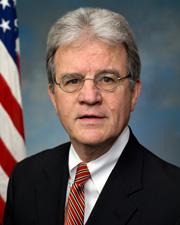 Sen. Tom Coburn (R-OK)
Legislative Activity
Stay on top of the latest movement without scrolling through every action
Considered by Senate. (consideration: CR S8711, S8716, S8718-8719)
August 4, 2009
View full timeline
Considered by Senate. (consideration: CR S8711, S8716, S8718-8719)
August 4, 2009
Point of order raised in Senate with respect to amendment SA 2248.
August 4, 2009
Amendment SA 2248 ruled non-germane by the chair.
August 4, 2009
Senate amendment submitted
August 3, 2009
Senate amendment proposed (on the floor): Amendment SA 2248 proposed by Senator Coburn to Amendment SA 1908.(consideration: CR S8659; text: CR S8659)
August 3, 2009
Amendment SA 2248 proposed by Senator Coburn to Amendment SA 1908. (consideration: CR S8659; text: CR S8659) To prohibit no-bid contracts and grants.
August 3, 2009
Amendments
1 amendmentOffered to this amendment
Amendments
1 amendmentOffered to this amendment
Text
Proposed
AGRICULTURE, RURAL DEVELOPMENT, FOOD AND DRUG ADMINISTRATION, AND
RELATED AGENCIES APPROPRIATIONS ACT, 2010

The ACTING PRESIDENT pro tempore. Under the previous order, the
Senate will resume consideration of H.R. 2997, which the clerk will
report.
The assistant legislative clerk read as follows:

A bill (H.R. 2997) making appropriations for Agriculture,
Rural Development, Food and Drug Administration, and Related
Agencies programs for the fiscal year ending September 30,
2010, and for other purposes.

Pending:

Kohl/Brownback amendment No. 1908, in the nature of a
substitute.
Kohl (for Tester) amendment No. 2230 (to amendment No.
1908), to clarify a provision relating to funding for a
National Animal Identification Program.
Brownback amendment No. 2229 (to amendment No. 1908), to
establish within the Food and Drug Administration two review
groups to recommend solutions for the prevention, diagnosis,
and treatment of rare diseases and neglected diseases of the
developing world.
Kohl (for Murray/Baucus) amendment No. 2225 (to amendment
No 1908), to allow State and local governments to participate
in the Conservation Reserve Program.
Kohl (for Nelson (FL)) amendment No. 2226 (to amendment No.
1908), to prohibit funds made available under this act from
being used to enforce a travel or conference policy that
prohibits an event from being held in a location based on a
perception that the location is a resort or vacation
destination.

The ACTING PRESIDENT pro tempore. The Senator from Arizona is
recognized.

Amendment No. 1910 to Amendment No. 1908

Mr. McCAIN. I ask unanimous consent to call up amendment No. 1910
which is at the desk.
The ACTING PRESIDENT pro tempore. Is there objection? Without
objection, it is so ordered.
The clerk will report.

[[Page S8648]]

The assistant legislative clerk read as follows:

The Senator from Arizona [Mr. McCain] proposes an amendment
numbered 1910 to Amendment No. 1908.

Mr. McCAIN. I ask unanimous consent that reading of the amendment be
dispensed with.
The ACTING PRESIDENT pro tempore. Without objection, it is so
ordered.
The amendment is as follows:

(Purpose: To strike a setaside for certain grants authorized under the
Rural Electrification Act)

On page 49, strike line 7 and all that follows through
``U.S.C. 918a):'' on line 12.

Mr. McCAIN. Mr. President, I intend to have three amendments
considered. I discussed with the majority leader and the Republican
leader how we would proceed. So at this time, after I make a brief
remark about amendment No. 1910, I will be calling up amendment No.
1912 and amendment No. 2030, both of which are at the desk.
Amendment No. 1910 eliminates, as suggested and recommended strongly
by the President of the United States, the U.S. Department of
Agriculture's High Energy Cost Grant Program. This is a $17.5 million
subsidy designed to pay for energy generation systems in rural areas.
This program was proposed for termination by the administration because
it is duplicative of existing programs, including USDA's own Rural
Utilities Service Loan Program.
Under the fiscal year 2010 budget, the Rural Utilities Service
Program would provide $6.6 billion in electric loans at no cost to the
taxpayers. In comparison, providing $17.5 million in grants, as opposed
to a loan, actually costs the taxpayer $17.5 million. Moreover,
Senators should know there is $20 million in unobligated high energy
cost grants still available from the previous year.
This is the submission to Congress, the budget of the U.S. Government
for fiscal year 2010, by the Office of Management and Budget. Guess
what. In there is a page that is titled ``Termination: High Energy Cost
Grant, Department of Agriculture.'' It goes on to say:

The administration proposes to eliminate the High Energy
Cost Grants program because it is duplicative of and less
effective than the Rural Utilities Service's electric loan
program.

Those are not my words, those are the words of the Director of the
Office of Management and Budget, who, at the direction of the President
of the United States, prepared this document of certain programs that
should be eliminated.
It goes on to say:

The 2010 budget proposes elimination of the duplicative
High Energy Cost Grants program in favor of electric loans,
which are more cost effective from the standpoint of the
taxpayer. Using loans to provide support is less expensive
than using grants because loans provide more support . . .
with fewer appropriated dollars. For example, the 2010 budget
provides for $6.6 billion in electric loans at no cost to the
taxpayer. In comparison, providing $18 million in grants
costs the taxpayers $18 million. In addition, the funds for
High Energy Cost Grants have not been obligated in a timely
manner and $20 million in balances from previous year funding
are still available.

In other words, this amendment eliminates a duplicative, unnecessary
program, according to the Director of the Office of Management and
Budget, and at the President's request, he has sent over one of the
programs they want eliminated. So somehow it ends up back in the
appropriations bill.
It seems to me it is a pretty clear-cut case again that at some point
we have to try to make some kinds of cost savings. I admit, as we are
throwing around billions and trillions of dollars, as we do here
lately, $17.5 million is probably not much money given the kind of
behavior the Congress and the administration have been up to lately. I
would still argue, though, to millions of Americans, including those in
my home State of Arizona, $17.5 million--in the view of the
administration and a clear argument, it is not a complicated issue--
should be eliminated.
I hope we will be able to vote on this amendment.

Amendment No. 1912 to Amendment No. 1908

Mr. McCAIN. Mr. President, I ask unanimous consent to set aside the
pending amendment and call up amendment No. 1912 which is at the desk.
The ACTING PRESIDENT pro tempore. Without objection, it is so
ordered.
The clerk will report.
The assistant legislative clerk read as follows:

The Senator from Arizona [Mr. McCain] proposes an amendment
numbered 1912 to amendment No. 1908.

The amendment is as follows:

amendment no. 1912 to amendment no. 1908

(Purpose: To strike a provision relating to certain watershed and flood
prevention operations)

On page 31, strike line 20 and all that follows through
page 32, line 10.

Mr. McCAIN. This amendment eliminates the U.S. Watershed and Flood
Prevention Operations Program, also known as the Small Watersheds
Program.
This program is a textbook example of how reckless earmarks can
devastate a government program. Like the previous four Presidents'
budgets, the administration proposes to terminate this account because
Congress has earmarked virtually all of this program in recent years,
meaning that the agency is unable to prioritize projects on any merit-
based criteria such as cost effectiveness.
According to the Congressional Research Service, the Small Watersheds
Program was 97 percent earmarked in fiscal year 2009, which severely
marginalized the USDA's ability to evaluate and prioritize projects.
Earmarks may partly be to blame for the findings of a 2003 Office of
Management and Budget study that showed this program has a lower
economic return than any other Federal flood prevention program,
including those in the Army Corps of Engineers and the Federal
Emergency Management Agency.
The onslaught of earmarks over the years has almost certainly
contributed to the current backlog of about 300 unfunded authorized
small watershed projects totaling $1.2 billion. As it was originally
intended, the Small Watersheds Program may be a worthwhile program. I
am sure we will hear a vigorous defense of this program. But by
inundating it with so-called congressionally designated projects, the
program is challenged to function properly to the point where the
administration would rather see it gone.
Note this. Our friends on the Appropriations Committee have not given
up on plundering it yet. This bill provides $24.3 million for this
program, including $16.5 million in earmarks for projects such as $2
million for the Pocasset River in Rhode Island, which is not
authorized; $1.5 million for Dunloup Creek in West Virginia, which is
not authorized; and $1 million for the DuPage County Watershed in
Illinois, which is not authorized, to name a few.
I refer back again to the Office of Management and Budget publication
entitled ``Terminations, Reductions and Savings,'' where the
administration proposes to terminate watershed and flood prevention
operation programs. Congress has earmarked virtually all of this
program in recent years, meaning that agencies are unable to prioritize
projects on any merit-based criteria such as cost effectiveness.
So, again, these first two amendments, the President of the United
States, the Office of Management and Budget, most any casual observer
would argue need to be eliminated.

Amendment No. 2030 to Amendment No. 1908

Mr. McCAIN. Mr. President, I ask unanimous consent to set aside the
pending amendment and call up amendment No. 2030, which is at the desk.
The ACTING PRESIDENT pro tempore. Without objection, it is so
ordered.
The clerk will report.
The assistant legislative clerk read as follows:

The Senator from Arizona [Mr. McCain] proposes an amendment
numbered 2030 to amendment No. 1908.

The amendment is as follows:

amendment no. 2030

(Purpose: To prohibit funding for an earmark)

On page 85, between lines 16 and 17, insert the following:
Sec. 7__.  None of the funds made available under this Act
may be used for the Iowa Vitality Center, Iowa State
University.

Mr. McCAIN. This amendment is very simple. It prohibits funding of
the $250,0000 earmark for the Iowa Vitality Center at Iowa State
University.
This earmark is a textbook example of how difficult it is to stop
funding for

[[Page S8649]]

an earmark once it starts. According to the Web site of the earmark
sponsor, since fiscal year 2001, the Iowa Vitality Center has received
$2,579,000. For what? What is so vital about the Iowa Vitality Center
that it has required over $2.5 million of scarce taxpayer funds?
Well, according to their own Web site, the purpose of the Iowa
Community Vitality Center is to serve as a catalyst in fostering
collaborative public-private partnerships among nonmetro community
interests to stimulate vitality and address barriers to growth.
I am not making that up. I am not making it up. That is what the Web
site says. Let me repeat. We spent $2.5 million. The purpose of the
Iowa Community Vitality Center is to serve as a catalyst in fostering
collaborative public-private partnerships among nonmetro community
interests to stimulate vitality and address barriers to growth.
Is there anyone who has a clue as to what that means? I wanted to be
clear. I am not questioning the merits of this program, but I am
questioning the process. Why was this funding earmarked? If the
Vitality Center is such a critical national priority at this time, why
wasn't the funding authorized since 2001 or requested by the President
in his budget submission?
The funding for the Vitality Center is often justified as helping
communities ``plan strategically'' and as ``representing diverse
interest across the state.'' However, the sponsors of the earmark
neglect to explain why 10 years of strategic planning have been
insufficient to accomplish this center's stated purpose.
Our current economic situation and our vital national security
interest concerns require, now more than ever, that we prioritize our
Federal spending. We need to prove to the American people that we are
serious about changing the way we do business and we should start with
ending the practice of earmarking. We need to put our national
priorities first and eliminate unnecessary wasteful earmarks such as
the Iowa Vitality Center.
The Agriculture appropriations bill for the year 2010 spends about
$123 billion in direct and mandatory spending, an amount that is
approximately $234 million above the administration's budget request.
We debate this legislation in the shadow of the fiscal year 2009
omnibus bill, the omnibus bill which doled out $108 billion for U.S.
Department of Agriculture programs, as well as the infamous economic
stimulus package which provided another $26.5 billion in agricultural
spending. So 2009 is certainly a good year to be a U.S. Department of
Agriculture program office.
I acknowledge that many of the programs funded by this are valid for
providing important services to the agricultural community at large. I
commend the members of the Senate Appropriations Committee for
reporting this bill in a timely manner. I agree we should ensure that
our farmers stay out of the red and that some Federal involvement is
necessary to assist low-income families under the nutrition programs.
Unfortunately, Congress once again has conformed to the practice of
diverting precious taxpayer dollars into an array of special interest
projects which have not been authorized or requested, and in the case
of two of these, they have been requested to be terminated by the
administration.
The committee report accompanying this bill contains 296
congressionally directed spending items, a fancy new term for
``earmarks,'' totaling over $220 million. None of these projects was
requested by the administration. Many of them were not authorized or
competitively bid in any way. No hearings were held to judge whether
these were national priorities worthy of scarce taxpayer dollars. They
are in this bill for one reason and one reason only--because of the
prerogatives of a select few Members of the Senate to serve their own
interests over those of the American taxpayer.
Let's take a look at some of the earmarks. Let's take a look at some
of the earmarks that are in this bill and its accompanying reports.
There is $250,000 for gypsy moth research in New Jersey. Don't gypsy
moths travel all over the country? Why just New Jersey? Over the past
10 years, the taxpayer has funded $42.8 million worth of gypsy moth
research.
There is $500,000 for the hemlock woolly adelgid at the University of
Tennessee. This is an aphid-like insect. That is a lot of money for
that bug.
There is $235,000 for noxious weed management in Nevada. I think a
better term for this one is obnoxious. Over the past 10 years, over
$15.4 million has been earmarked for Nevada noxious weed management.
There is $200,000 for cotton research at Texas Tech University.
Congress subsidizes the industry, the cotton industry, to the tune of
$3 billion a year.
There is $300,000 for floriculture at the University of Hawaii.
Nearly $3.5 million has been earmarked for floriculture in the past 10
years.
There is $165,000 for the Maple Research Center at the University of
Vermont. According to the center's director, Tim Perkins, Maple syrup
science is a nose-and-mouth science. The technical term is
organoleptic, which means you put it in your mouth and taste it, says
Perkins. We get people who know the flavor of maple syrup, and off-
flavors, and they try each one. Laboratory tests using gas
chromatography provide a breakdown of the many compounds in the syrup,
which supplements the tastebud approach. Since 1998, the University of
Vermont Proctor Maple Research Center has received over $2.1 million in
earmarks.
There is $75,000 for farm safety education for children in Iowa. Who
better than a bureaucrat in Washington to teach a farmer's children to
be safe. The 10-year total for earmarks for Iowa farm safety
education--over $4.2 million.
There is $300,000 for shrimp aquaculture research at the University
of Southern Mississippi Thad Cochran Marine Agricultural Center. Over
the past 10 years, we have earmarked over $30.4 million on shrimp
aquaculture research.
There is $1 million for potato research at Oregon State University.
We have earmarked, over the past 10 years, $7.1 million for potato
research.
There is $600,000 which is gobbled down by the National Wild Turkey
Federation for projects in Nebraska, Georgia, Mississippi, and South
Carolina. Since fiscal year 2004, the National Wild Turkey Federation
has received over $1.7 million in earmarks.
There is $265,000 for minimizing blackbird damage to sunflowers in
North and South Dakota. This is an earmark ``regular'' for the
Agriculture appropriations bill. Evidently the South Dakota sunflowers
have a rather serious Alfred Hitchcock ``Birds'' problem. According to
the USDA, blackbird management in North and South Dakota has received
over $1.2 million over the past 5 years.
There is $200,000 for Washington State University to study goatgrass.
Since 2003, $767,000 has been earmarked for goatgrass research.
There is $372,000 for the University of Pennsylvania to study dairy
farm profitability. If you are relying on a federally mandated study to
make your dairy farm profitable, you might want to find a new business
plan, because nearly $3.8 million has been earmarked for dairy farm
profitability over the last 10 years.
There is $288,000 for the Iowa Soybean Association. Since 2002, over
$3.3 million has been earmarked for the Iowa Soybean Association. There
is $1 million for Mormon cricket control in Nevada; the 10-year total
for Mormon cricket control, nearly $13.7 million. There is $260,000 for
wine grape research at Washington State University. According to
Washington State University's own Web site, the wine industry generates
$3 billion in their State, so we are going to pour another $260,000
into it. There is $350,000 for the Wisconsin Department of Agriculture
to support the ``specialty meats industry.'' Specialty meats industry?
Since 2004, the Wisconsin specialty meats industry has received over
$12.7 million in earmarks. There is $340,000 for the Center for Beef
Excellence in Pennsylvania. According to their own press release, the
center was established by the Pennsylvania Department of Agriculture
just last year. At least we can agree that a $340,000 handout from
Congress is quite a good start. Over $1 million has been earmarked to
the Center for Beef Excellence since 2005. There is $450,000 for the
University of Northern

[[Page S8650]]

Iowa to study agriculture-based lubricants. They have received over $3
million in the last 10 years.
It is not surprising that the largest earmark in this bill goes to
Hawaii. The Aloha State bags $5 million to continue construction of an
Agricultural Research Service center to study agricultural practices in
the Pacific. As my colleagues might know, ARS construction is one of
the most heavily earmarked accounts in government, so much so that the
President's budget actually proposed zeroing out Agricultural Research
Service center construction for fiscal year 2010 because ``Congress
routinely earmarks small amounts of funding for [these projects]
located throughout the nation. The result of scattering funding in this
manner is that . . . few, if any, of the projects are able to reach the
critical threshold of funding that would allow construction to begin.
Funding construction over such a long time significantly increases the
amount of money needed to fully complete these projects as well as
postponing their completion for many years.''
So here we have a program that is earmarked so severely that it
delays and drives up the cost of approved construction projects. Not
only are we defiantly funding this Hawaiian facility, the bill provides
a total of $47 million for a list of 15 of these facilities ranging
from $4 million for a fruit lab in West Virginia to $2 million for an
animal waste research facility in Kentucky.
Another amendment I have filed proposes striking the $50.7 million
contained in this bill for USDA's Resource Conservation and Development
Program, known as RC&D. The RC&D Program was created in 1962 to promote
resource conservation through community-based conservation leadership
councils. The RC&D councils have helped to leverage local funding for
efforts such as soil mapping or erosion control for rural areas. The
administration supports terminating this program because, in their own
words:

After 47 years, the goal of the RC&D program has been
accomplished. These councils have developed sufficiently
strong state and local ties . . . and are now able to secure
funding for their continued operation without Federal
assistance. The program has been in operation for decades and
these councils have a proven track record of success, showing
that they have outlived the need for Federal funding.

A half-century-old program proposed for termination by this
administration, yet retained by appropriators for its spoils.
I could go on for a long time.
This bill funds several other government programs that were proposed
for termination in the President's budget. I filed amendments to strike
these programs as well as zero out the ARS construction account. If
successfully adopted, these amendments would save taxpayers over $144.5
million. As I have said throughout my comments, some of these programs
may have merit and may be helpful to the designated communities. But
considering our current budgetary crisis, it is inappropriate to
include them in this year's agricultural spending bill, especially when
they have been identified for termination or reduction.
I hope my colleagues will agree that we have higher spending
priorities that are directly related to the purposes of this
Agriculture bill. This bill is intended to address farmers, women,
children, and rural communities with the greatest need and should not
be used as a vehicle for piggybacking pet projects to get the support
of special interest constituents.
It is no surprise that many of these earmarks are not included for
practical purposes. I know many of my colleagues have spoken about the
economic struggles of America's hard-working farmers and low-income
families. The farmers and struggling families I know are tired of
watching their hard-earned money go down the drain. I intend to fight
every single unnecessary, unrequested, unauthorized earmark in this and
every other appropriations bill.
I filed 313 amendments to this bill. The bulk of those amendments
seek to strike the 296 earmarks, now humorously called
``congressionally directed spending items,'' in the committee report on
this bill. I have now offered only three of these amendments. Let me
assure my colleagues I have no problem with offering, debating, and
voting on each and every one of the amendments I have filed. The time
has come to end this practice.
This first amendment, which we may vote on today, I want to
emphasize, eliminates, as recommended by the President and the Office
of Management and Budget, the U.S. Department of Agriculture's High
Energy Cost Grants Program, a $17.5 million subsidy designed to pay for
energy generation systems in rural areas. It was proposed for
termination by the administration because it is duplicative of existing
programs. Under the fiscal year 2010 budget, the rural utility service
program would provide $6.6 billion in electric loans at no cost to the
taxpayers. Senators should know there is $20 million in unobligated
high energy cost grants still available from last year.
I urge a ``yes'' vote on my amendment.
I yield the floor and suggest the absence of a quorum.
The ACTING PRESIDENT pro tempore. The clerk will call the roll.
The assistant legislative clerk proceeded to call the roll.
Mr. KOHL. I ask unanimous consent that the order for the quorum call
be rescinded.
The ACTING PRESIDENT pro tempore. Without objection, it is so
ordered.
Mr. KOHL. Mr. President, the Senate began work on the Agriculture
appropriations bill last Thursday. Senator Brownback and I were here
then to consider amendments Senators might wish to offer. We were back
on the bill Friday, and we were again prepared to consider amendments.
It is my hope we can complete action on the bill today. The filing
deadline for first-degree amendments was 3:30, and a cloture vote is
scheduled for 5:30. Once we finish this bill, the Senate still has
important work to do this week before the start of the August recess. I
hope any Senator who has an amendment to offer will come to the floor
in the next few hours to see if we can dispose of all remaining issues
and make it possible to go to final passage as early as this evening.

Amendment No. 2233 to Amendment No. 1908

I ask unanimous consent to set aside the pending amendment and call
up the following amendment which is at the desk and ask for its
immediate consideration: Kohl amendment No. 2233.
The ACTING PRESIDENT pro tempore. Without objection, it is so
ordered.
The clerk will report.
The assistant legislative clerk read as follows:

The Senator from Wisconsin [Mr. Kohl] proposes an amendment
numbered 2233 to amendment No. 1908.

Mr. KOHL. I ask unanimous consent that reading of the amendment be
dispensed with.
The ACTING PRESIDENT pro tempore. Without objection, it is so
ordered.
The amendment is as follows:

(Purpose: To provide the Food and Drug Administration the ability to
collect user fees as authorized by the Family Smoking Prevention and
Tobacco Control Act)

On page 59, line 22, strike ``2,995,218,000'' and insert
``3,230,218,000''.
On page 60, line 9, strike ``and''.
On page 60, line 12, after ``expended'', insert ``; and
$235,000,000 shall be derived from tobacco product user fees
authorized by the Family Smoking Prevention and Tobacco
Control Act (Public Law 111-31) and shall be credited to this
account and remain available until expended''.
On page 60, line 14, strike ``and'', and insert after ``,
and tobacco product'' after ``generic drug''.
On page 61, line 12, strike (7) and insert ``(8)''; after
``Research;'' insert ``(7) $216,523,000 shall be for the
Center for Tobacco Products and for related field activities
in the Office of Regulatory Affairs;''; and strike
``$115,882,000'' and insert ``$117,225,000''.
On page 61, line 15, strike ``(8)'' and insert ``(9)''.
On page 61, line 16, strike $168,728,000'' and insert
``$171,526,000''.
On page 61, line 17, strike ``(9)'' and insert ``(10)''.
On page 61, line 18, strike ``$185,793,000'' and insert
``$200,129,000''.

Mr. KOHL. I ask unanimous consent for the adoption of this amendment
and the Tester amendment No. 2230 which has been approved by both
sides.
The ACTING PRESIDENT pro tempore. Without objection, it is so
ordered.
The amendments (Nos. 2233 and 2230) were agreed to.

[[Page S8651]]

Mr. KOHL. Mr. President, I move to reconsider the vote.
Mr. BROWNBACK. I move to lay that motion on the table.
The motion to lay on the table was agreed to.
Mr. BROWNBACK. Mr. President, I ask my colleagues, if people have
amendments, that they come down to the floor now and start working on
these. It would be my hope we can move through this bill as fast as
possible so that we can get to the debate on Judge Sotomayor and have
as much time as possible to deal with that. I urge colleagues to start
working with us on these issues. By unanimous consent, the cloture vote
has been scheduled for 5:30 today. There are things we need to get
resolved; they should be taken care of now.

Amendment No. 2229, as Modified

Mr. BROWN. I send a modification to my amendment No. 2229 to the desk
and ask unanimous consent that it be accepted as modified.
The ACTING PRESIDENT pro tempore. Without objection, the amendment is
so modified.
The amendment, as modified, is as follows:

On page 85, between lines 16 and 17, insert the following:
Sec. 7__. (a) The Commissioner of Food and Drugs may
establish within the Food and Drug Administration a review
group which shall recommend to the Commissioner of Food and
Drugs appropriate preclinical, trial design, and regulatory
paradigms and optimal solutions for the prevention,
diagnosis, and treatment of rare diseases: Provided, That the
Commissioner of Food and Drugs shall appoint 8 individuals
employed by the Food and Drug Administration to serve on the
review group: Provided further, That members of the review
group shall have specific expertise relating to the
development of articles for use in the prevention, diagnosis,
or treatment of rare diseases, including specific expertise
in developing or carrying out clinical trials.
(b) The Commissioner of Food and Drugs may establish within
the Food and Drug Administration a review group which shall
recommend to the Commissioner of Food and Drugs appropriate
preclinical, trial design, and regulatory paradigms and
optimal solutions for the prevention, diagnosis, and
treatment of neglected diseases of the developing world:
Provided, That the Commissioner of Food and Drugs shall
appoint 8 individuals employed by the Food and Drug
Administration to serve on the review group: Provided
further, That members of the review group shall have specific
expertise relating to the development of articles for use in
the prevention, diagnosis, or treatment of neglected diseases
of the developing world, including specific expertise in
developing or carrying out clinical trials: Provided further,
That for the purposes of this section the term ``neglected
disease of the developing world'' means a tropical disease,
as defined in section 524(a)(3) of the Federal Food, Drug,
and Cosmetic Act (21 U.S.C. 360n(a)(3)).
(c) The Commissioner of Food and Drugs shall--
(1) submit, not later than 1 year after the date of the
establishment of review groups under subsections (a) and (b),
a report to Congress that describes both the findings and
recommendations made by the review groups under subsections
(a) and (b);
(2) issue, not later than 180 days after submission of the
report to Congress under paragraph (1), guidance based on
such recommendations for articles for use in the prevention,
diagnosis, and treatment of rare diseases and for such uses
in neglected diseases of the developing world; and
(3) develop, not later than 180 days after submission of
the report to Congress under paragraph (1), internal review
standards based on such recommendations for articles for use
in the prevention, diagnosis, and treatment of rare diseases
and for such uses in neglected diseases of the developing
world.

Mr. BROWNBACK. This is an amendment that has been cleared by both
sides. It is on neglected and rare diseases. Senator Brown has asked to
be a cosponsor. I ask unanimous consent that the pending amendment be
set aside and that this be considered the pending amendment and that it
be passed.
The ACTING PRESIDENT pro tempore. Without objection, it is so
ordered. If there is no further debate on the amendment, the question
is on agreeing to amendment No. 2229, as modified.
The amendment (No. 2229), as modified, was agreed to.
Mr. BROWNBACK. What we are trying to do is to work through the
amendments to the degree we can. We certainly want to. I ask our
colleagues to bring those to the floor as soon as they possibly can.
I suggest the absence of a quorum.
The ACTING PRESIDENT pro tempore. The clerk will call the roll.
The assistant legislative clerk proceeded to call the roll.
Mrs. HAGAN. Mr. President, I ask unanimous consent that the order for
the quorum call be rescinded.
The ACTING PRESIDENT pro tempore. Without objection, it is so
ordered.
Mrs. HAGAN. Mr. President, I ask unanimous consent to speak for 10
minutes as in morning business.
The ACTING PRESIDENT pro tempore. Without objection, it is so
ordered.

Sotomayor Nomination

Mrs. HAGAN. Mr. President, today I am pleased to rise in support of
Judge Sonia Sotomayor's nomination to be an Associate Justice of the
Supreme Court of the United States. Judge Sotomayor's background
demonstrates that she is an extremely well-qualified, mainstream judge
who has the utmost respect for precedent and believes in fidelity to
the law.
I have always said I do not believe in a litmus test for judicial
nominees, and I will look at the nominee's record as a whole. Judge
Sotomayor's record, in its entirety, is nothing short of impressive.
With 17 years on the Federal bench, she has more Federal judicial
experience than any Supreme Court nominee in 100 years.
Judge Sotomayor has a compelling, ``pull yourself up by your
bootstraps'' personal story. She was raised by a single mom who
emphasized education as she struggled to support her family while
working as a nurse. With her mother's strong work ethic and focus on
education deeply ingrained in her, Judge Sotomayor went on to graduate
summa cum laude from Princeton University, and she received her law
degree from Yale Law School, where she was editor of the Yale Law
Journal.
She then became a prosecutor in the Manhattan District Attorney's
office, where she was tough on criminals and gained valuable
perspective for her later career as a judge. She also became active in
many areas of her community, showing her desire to serve others and
promote justice in society. Having served as a volunteer for many
efforts in my hometown of Greensboro, North Carolina, I know how
serving others can enhance one's understanding and appreciation of the
world.
After her time as a prosecutor, Judge Sotomayor went into practice as
a commercial litigator, where she dealt with business and finance law--
an area of importance to my State of North Carolina. In 1991, upon the
recommendation of then-Senator Daniel Patrick Moynihan of New York, she
was nominated by President George H.W. Bush to serve as a Federal judge
for the Southern District Court of New York, and in 1992 she was
unanimously confirmed for that position by the Senate.
While serving as a district court judge, she was known for her
toughness, fairness, and dedication to the law--characteristics of a
strong judge. Because of her outstanding record on the district court
level, Judge Sotomayor was nominated, in 1997, by President William
Jefferson Clinton, to serve as a judge on the U.S. Court of Appeals for
the Second Circuit. In 1998, the Senate confirmed her by a wide margin.
Among the Senators voting for her confirmation was former North
Carolina Senator Jesse Helms. I would like to think that Senator Helms
saw in Judge Sotomayor the same qualities President Obama saw: fairness
of mind, supreme intellect, and an unsurpassed devotion to the law and
to our system of government.
Some opponents have repeatedly brought up a few select comments made
by Judge Sotomayor to suggest that she will not be impartial. However,
Judge Sotomayor has made it clear she does not let her background
influence her interpretation of the law. Her statements to the
Judiciary Committee and her 17-year record on the bench confirm this.
As Judge Sotomayor has said:

My record shows that at no point or time have I ever
permitted my personal views or sympathies to influence an
outcome of a case. In every case where I have identified a
sympathy, I have articulated it and explained to the litigant
why the law requires a different result.

Judge Sotomayor has also said that as much as her experiences
influence her perspective, they have also taught

[[Page S8652]]

her to be aware of other people's perspectives. In 2001, she said:

I am reminded each day that I render decisions that affect
people concretely and that I owe them constant and complete
vigilance in checking my assumptions, presumptions and
perspectives and ensuring that to the extent that my limited
abilities and capabilities permit me, that I reevaluate them
and change as circumstances and cases before me require.

As Judge Sotomayor said in her confirmation hearing, her underlying
judicial philosophy is ``fidelity to the law.'' In an independent
study, Supreme Court expert Tom Goldstein looked at 97 race-related
cases in which Judge Sotomayor participated while on the Second
Circuit. He found that she and the rest of her panel ``rejected
discrimination claims roughly 80 times and agreed with them 10 times.''
The circuit rejected discrimination claims by a margin of 8 to 1.
Goldstein wrote: ``Of the 10 cases favoring claims of discrimination, 9
were unanimous'' and ``of those 9, in 7, the unanimous panel included
at least one Republican-appointed judge.''
``Given that record,'' Goldstein concluded, ``it seems absurd to say
that Judge Sotomayor allows race to infect her decisionmaking.''
Judge Sotomayor has also demonstrated she does not legislate from the
bench, and she gives deference to Congress in clarifying the intent of
laws. In her dissent to the majority's opinion in Hayden v. Pataki,
Judge Sotomayor wrote:

The duty of a judge is to follow the law, not to question
its plain terms. I do not believe that Congress wishes us to
disregard the plain language of any statute or to invent
exceptions to the statutes it has created.

She also said:

I trust that Congress would prefer to make any needed
changes itself, rather than have courts do so for it.

Additionally, a comprehensive study of Judge Sotomayor's criminal
appellate decisions by the majority staff of the Senate Judiciary
Committee found, as an appellate judge, Sotomayor sat with Republican-
appointed judges on more than 400 criminal cases. In those cases, she
agreed with all Republican-appointed judges 97 percent of the time; and
she agreed with at least one Republican-appointed judge 99 percent of
the time.
Judge Sotomayor's sensible attitude toward following the law and her
ability to objectively evaluate all angles of her cases has resulted in
high ratings and endorsements by numerous organizations.
The American Bar Association unanimously found Sotomayor to be ``well
qualified,'' which is the highest rating the ABA gives to judicial
nominees. The Congressional Research Service conducted an analysis of
her opinions and concluded:

As a group, the opinions belie easy categorization along
any ideological spectrum. . . . Perhaps the most consistent
characteristic of Judge Sotomayor's approach as an appellate
judge has been an adherence to the doctrine of stare decisis,
i.e., the upholding of past judicial precedents.

Judge Sotomayor has an impressive list of law enforcement
endorsements and supporters, including the International Association of
Chiefs of Police; the National Association of Police Organizations; the
National District Attorneys Association; the Fraternal Order of Police;
the National Latino Peace Officers Association; the Federal Law
Enforcement Officers Association; the Federal Hispanic Law Enforcement
Officers Association; the National Organization of Black Law
Enforcement Executives; and the National Sheriffs' Association.
Judge Sotomayor has also been endorsed by the U.S. Chamber of
Commerce, which stated:

The Chamber evaluated Judge Sotomayor's record from the
standpoint of legal scholarship, judicial temperament, and an
understanding of business and economic issues. Based on the
Chamber's evaluation of her judicial record, Judge Sotomayor
is well-qualified to serve as an Associate Justice of the
U.S. Supreme Court.

The nonpartisan Brennan Center for Justice reviewed all of Judge
Sotomayor's constitutional law decisions and said:

Based on this exhaustive review, the conclusion is
unmistakable: in constitutional cases, Judge Sotomayor is
solidly in the mainstream of the Second Circuit.

Judge Sotomayor's former law clerks wrote a letter endorsing her
nomination, in which they said:

As former law clerks to Judge Sotomayor, each of us can
attest to her intellectual prowess, extraordinary work ethic,
and commitment to the rule of law. Working for Judge
Sotomayor is an awe-inspiring experience. We each had the
privilege of working closely with her as she confronted, and
resolved, incredibly complex and intellectually demanding
legal challenges. Judge Sotomayor approaches each case with
an open mind and arrives at her decision only after carefully
considering all of the pertinent facts and applicable rules
of law.

The law clerks said they agree with many of Judge Sotomayor's other
colleagues, who ``respect her intellectual dynamism, collegiality, and
balanced, fair jurisprudence.''
I would like to thank and congratulate the members of the Judiciary
Committee for holding an extraordinarily civil and open Supreme Court
nomination process. I commend President Obama for selecting a woman, a
Hispanic, and, above all, an extremely well-qualified nominee. I am
thrilled to have the opportunity to be a part of this historic moment,
and if she is confirmed, I believe she will serve our country well.
Based on my conversations with the nominee, her statements in her
confirmation hearings, and my review of her record, I intend to support
her confirmation when it is voted upon later this week, and I urge my
colleagues to do the same.
I yield the floor.
The ACTING PRESIDENT pro tempore. The Senator from Wisconsin.
Mr. KOHL. Mr. President, I join my colleagues in congratulating
Senator Leahy and Senator Sessions for their work on the Sotomayor
nomination. The process was fair to both sides, and, most importantly,
fair to the nominee.
I am pleased to rise in support of Judge Sotomayor, an individual
whose life story is an inspiration to millions of Americans. A child of
immigrants with modest means, Judge Sotomayor has risen by dint of
exemplary academic accomplishment and hard work to the cusp of
confirmation to our Nation's highest Court.
But Judge Sotomayor is much more than just a story of accomplishment.
She has shown herself to be a judge truly worthy of elevation to the
Supreme Court. Both on the bench and before this committee, Judge
Sotomayor has proved she has the necessary character, competence, and
integrity to serve on the Supreme Court. Her distinguished 17-year
record on the bench demonstrates a commitment to fair and impartial
application of the law and respect for the values which make up our
Constitution.
At her hearing, Judge Sotomayor assured us she will listen with an
open mind to all sides of an argument and that she will be mindful of
the very real impact her decisions will have on each and every
American. She pledged fidelity to the Constitution and to the Court's
precedent, as well as a responsibility to cautiously review precedent
when justice requires.
As we conclude the Senate's action on Judge Sotomayor's nomination
this week, I believe we need to reflect upon the role that confirmation
hearings play in the Senate's duty to advise and consent. While I have
no reservations about my support for Judge Sotomayor, I share the
concerns expressed by many Americans, legal commentators, and others on
the Judiciary Committee about our committee's ability to have candid
and substantive conversations with nominees about the issues Americans
care about.
We all know the confirmation process is crucial. It is the public's
only opportunity to learn about a nominee before he or she serves for
life on the highest Court in our land. But, for many years now, we have
seen a familiar pattern from nominees--Democratic and Republican
alike--who have learned the path of least resistance is to limit their
responses and cautiously cloak them in generalities.
Understandably, nominees do not want to risk their confirmation by
saying anything that might provoke potential opponents. We cannot ask
nominees to disclose how they would vote on cases that might come
before them. But it is reasonable for us to ask them to speak more
openly about past Supreme Court decisions and how they would decide
cases that are close calls--what reasoning they would use and what
factors they would consider.
The concerns I raise do not reflect any personal criticism about
Judge

[[Page S8653]]

Sotomayor. I think she responded to our committee's questions with
great intellect and sincerity and that she has rightly earned
bipartisan praise.
However, going forward, I hope together we can explore ways to
achieve the greater candor that the confirmation process demands and
deserves. For example, we could convene a bipartisan group of Judiciary
Committee members, members of the bar, constitutional scholars, and
perhaps even members of the media who have experience following the
Court and our hearings to help us determine what specific questions we
can and should expect substantive answers about. If we can do this,
then the committee's unique opportunity to engage nominees in the great
legal questions facing our Nation will more effectively serve the
Senate as we fulfill our constitutional duty.
In the meantime, I commend President Obama for nominating Judge
Sotomayor--a woman of great ability who has demonstrated an enduring
commitment to public service and to the law. I look forward to her
tenure on the Court.

Amendment No. 2241 to Amendment No. 1908

Mr. JOHANNS. Mr. President, I ask unanimous consent that the pending
amendment be set aside so that I may call up amendment No. 2241.
The ACTING PRESIDENT pro tempore. Is there objection? Without
objection, it is so ordered.
The clerk will report.
The bill clerk read as follows:

The Senator from Nebraska [Mr. Johanns], for himself and
Mr. Nelson of Nebraska, proposes an amendment numbered 2241
to amendment No. 1908.

Mr. JOHANNS. Mr. President, I ask unanimous consent that the reading
of the amendment be dispensed with.
The ACTING PRESIDENT pro tempore. Without objection, it is so
ordered.
The amendment is as follows:

(Purpose: To provide funding for the tuberculosis program of the Animal
and Plant Health Inspection Service)

On page 19, line 9, before the period, insert the
following: ``: Provided further, That of the amount available
under this heading, at least $17,764,000 shall be used for
the tuberculosis program (including at least $3,000,000 for
tuberculosis indemnity and depopulation)''.

Mr. JOHANNS. Mr. President, I rise to discuss my amendment to
increase funding for USDA's tuberculosis program by $2 million.
In early June, TB was discovered in a beef cattle herd in Rock
County, NE. As many of my colleagues know, this is a disease that can
spread very quickly among cattle. It is also transmissible to humans.
This is not just a Nebraska issue or a Midwest issue. As I speak,
California, Michigan, Minnesota, and New Mexico are battling the
effects of TB. Other States, including Colorado, South Dakota, and
Texas have had TB scares as well. Although, thankfully, up to this
point they have not seen any change in their TB status. This problem
could impact the beef industry nationwide, and it is critical that we
do everything we can to eliminate it immediately when it is discovered.
In Nebraska, thankfully, only two animals in the entire herd tested
positive for the disease, and they were put down to prevent further
spread. Since that time, Nebraska State officials have worked side by
side with USDA officials to test the infected herd, as well as several
neighboring herds, which is the process. Based on the latest reports
from home, 8,900 cattle have been tested to date, and all have,
thankfully, tested negative for TB. That is great news.
I commend the efforts of the veterinarians and the government
officials on the ground in Nebraska. I thank those officials for their
efforts. They have been aggressively dealing with this issue every day
since the initial discovery. I wish to thank the USDA specifically for
providing significant expertise and personnel to assist with the
ongoing testing. The Department's assistance has been sound and it has
been steady. We greatly appreciate it, but the work is not yet done.
The testing is not quite complete. Hopefully, the results will keep
coming back negative, but, regardless, we are going to remain vigilant.
We must make sure the USDA has the resources on hand to respond in
the event that further cases of TB are discovered. That could be
anywhere in this country. TB can have a crippling impact on a State's
beef industry. It can negatively impact the ability of State producers
to shift cattle State to State, and, of course, potentially it can have
an impact on export markets.
Ranchers cannot afford to have their State lose its TB-free status.
Anytime a disease such as TB is discovered in a herd, it is absolutely
critical the infected herd be depopulated immediately. I say that from
my experience as a former Secretary of Agriculture. Depopulation is
oftentimes essential. Doing so significantly decreases the likelihood
of the spread of the disease. It also reassures the rest of the beef
industry that we will always respond decisively to combat the spread of
the animal disease.
We need to send a strong signal to our producers that they will have
our support if they come forward when they discover the herd has a
problem. If depopulation indemnity funds are not available, a producer
literally may hesitate to disclose the information. Then the problem
festers and it festers and it spreads. We simply cannot take that kind
of risk. Consumer confidence and producer trust are far too important.
It is imperative that we make sure USDA has the funding and the tools
on hand to deal with existing TB problems and to take swift action in
the event of future TB discoveries. That is why I am offering this
amendment--to make sure the resources are there.
At this point I ask unanimous consent that a letter supporting my
amendment from the National Cattlemen's Beef Association be printed in
the Record.
There being no objection, the material was ordered to be printed in
the Record, as follows:

National Cattlemen's

Beef Association,

Washington, DC, August 3, 2009.
Hon. Mike Johanns,
U.S. Senate,
Washington, DC.
Dear Senator Johanns: I am writing today in support of your
amendment to the Fiscal Year 2010 Agriculture Appropriations
bill that increases United States Department of Agriculture
(USDA) funding for bovine tuberculosis (TB) indemnity and
depopulation. Bovine TB is a contagious animal disease that
the cattle industry and Federal government have been working
to eradicate for close to 100 years. In order to eventually
eradicate this disease, infected herds must be depopulated
quickly and the fanner or rancher must be compensated in a
fair and equitable way for the value of lost cattle. Your
amendment will go far in helping with this effort.
The work done by the Animal and Plant Health Inspection
Service (APHIS), the Food Safety Inspection Service (FSIS),
and state and industry partners, has been critical in
containing and managing this disease. FSIS maintains a robust
TB surveillance program at harvesting facilities to ensure
that no cattle with TB enter the food supply. This
illustrates the effectiveness of the food safety measures
utilized in the beef industry. In recent years, APHIS has
intensified their TB surveillance and has indicated that the
disease has nearly been eradicated. We also know that
wildlife play a critical part in the transmission of the
disease, and industry is working with both Federal and state
governments to address this.
In our combined effort for eventual eradication, the
national tuberculosis eradication program has successfully
reduced the incidence of the disease in U.S. cattle. There
continues, however, to be a low incidence of TB as evidenced
by the handful of newly identified infected herds over the
past several years. These additional cases are in part due to
intentional intensified surveillance activities, and the
infected animals, along with their herd mates, are then
quarantined in order to control the disease and minimize its
impact on cattle movement and markets. This has proven to be
the most effective method to protect our domestic cattle herd
since the national program began in 1917.
We support USDA's efforts to eradicate this disease, but
historically we have not seen enough funding to adequately
compensate farmers and ranchers for cattle that had to be
depopulated. It is evident with the limitations of current
technology, the wildlife vector, and the complicated nature
of TB, that the current amount of Federal funding is not
adequate. More funding and research is needed to provide
better answers and solutions. Until those solutions are
found, we need timely and adequate funding to depopulate any
current beef herds and compensate cattle producers for their
losses. Since TB is a concern across the country, this
amendment will help to provide that needed compensation and
allow the TB eradication program to be successful.
We urge the Senate to vote YES on your amendment during
floor consideration of this bill. Thank you for your
leadership and support of U.S. cattle producers.
Sincerely,
Gary Voogt,
President.

[[Page S8654]]

Mr. JOHANNS. Finally, I urge my colleagues to support this very
important amendment to make the resources available to the USDA, and I
urge my colleagues, if they have any questions, to get in touch with
us. This is a very important issue.
With that, I thank the Chair, and I yield the floor.
The ACTING PRESIDENT pro tempore. The Senator from Wisconsin.
Mr. KOHL. Mr. President, the Senator's amendment would increase the
amount in this bill from $15.7 million to $17.7 million. The amendment
would require at least $3 million to compensate producers for losses.
The Secretary currently has access to the Commodity Credit Corporation
to compensate producers, and we hope the Secretary will use those funds
as needed.
Since this amendment would reduce other animal and plant health
activities, I must oppose it at this time.
The PRESIDING OFFICER (Mrs. Hagan). The Senator from Kansas is
recognized.
Mr. BROWNBACK. Madam President, I ask unanimous consent to speak as
in morning business for such time as I may consume.
The PRESIDING OFFICER. Without objection, it is so ordered.

Guantanamo Bay

Mr. BROWNBACK. Madam President, the reason I ask that on this bill--
and I do urge my colleagues to come forward to speak on the Agriculture
appropriations bill. We have already cleared some amendments, and we
need to move forward.
Something happened yesterday that affected my State directly, and
that was the statement by the administration--or leak from the
administration--that they are considering moving Guantanamo Bay
detainees to my State, associated with Fort Leavenworth. This has riled
up everybody. I was just there this morning, and we had 100 people who
came out after very short notice. It is virtually unanimous in their
opinions--not everybody but close to everybody is opposed to this idea
for a multiple set of reasons.
Moving the Guantanamo Bay detainees to Fort Leavenworth and the Fort
Leavenworth area would not work, to start off with, and will
significantly hurt the core educational and international mission of
the fort. On top of that it is totally unnecessary. I hope the
administration will start to rethink this idea of moving the Guantanamo
Bay detainees. I think it is a bad idea that we replicate the facility
we already have at Guantanamo Bay somewhere in the United States
because we already have a facility to hold the detainees. We already
have a facility to try the detainees. It is all set up. I was there. I
led a congressional delegation a couple of months ago. They are being
humanely treated, and if they are not, and if there are credible
reports that they are not, then let's work on fixing Guantanamo Bay
rather than moving the detainees to the United States.
If there are problems, let's fix them rather than just say we are
going to change the name of the place and we are going to move the
detainees from Guantanamo Bay to Leavenworth. We are not going to
change the opinion of the world of the United States one iota by
substituting the name ``Leavenworth'' for the name ``Guantanamo Bay,''
creating a replica of what we already have at Guantanamo Bay, only
somewhere else. It would cost hundreds of millions of dollars we don't
have when we already have an $11 trillion debt, and it is growing at a
rate of nearly $2 trillion a year. So why would we spend hundreds of
millions of dollars doing something that is not going to change world
opinion, replicating a facility that we already have, that slows the
process? This doesn't make any sense.
On top of that, what is being considered at Leavenworth would not
work. The fort at Leavenworth--if I could just talk to my colleagues
about this, and I hope they will look at the factual setting. Fort
Leavenworth is one of the smallest Army bases we have around the world.
It is 8 square miles. It butts up in and is a part of an urban area of
Kansas City. It has on its border a river and a train that goes through
about every 25 minutes. It is not the secure facility one would need to
have for these detainees. We don't have any setbacks like we have in a
number of other facilities, and it has one of the highest population
densities per square mile or square foot of any of our military bases
because it houses the Command and General Staff College of the
military.
If I could just point out that facility to my colleagues--and I hope
some of them come and attend and address the Command and General Staff
College. We get students from around the world on a regular basis at
that facility. Generally, some 90 countries at any one point in time
have students at the Command and General Staff College. Of these 90
countries that send students for their Army training for their
military, half of those students will become general flag officers
before their career is done. A number of them will become civilian
leaders in their own country as well. So you get the cream of the crop
from around the world. They come here. They also meet with our future
military leaders, and this is the training center they have. It is the
Command and General Staff College at Fort Leavenworth.
The primary mission of Fort Leavenworth is that training as well as
that relationship and integration between our U.S. Army forces and
forces of militaries, Army forces from around the world, which is
critically important when you go into places such as Pakistan or
Afghanistan or you are working with the Jordanians or the Egyptians,
just to name a few. They send leaders from all of those countries,
future flag officers to Fort Leavenworth to be trained. We have already
heard in canvassing students from Jordan, Egypt, and Pakistan that they
will pull their students from Fort Leavenworth if the detainees are
moved there. They don't want to have their military leaders, their
future military leaders at the same place that the detainees are being
held in the United States, and they have already stated that to us.
So we are going to hurt the core mission of Fort Leavenworth in a
facility that doesn't have setbacks to safely handle this for no gain.
I would point out that I spoke with the commanding general at Fort
Leavenworth yesterday. I called him after I heard about this report on
MS-NBC. That was how I got the news of it. My wife was on the Internet,
and she was on MSNBC's Web site and she sees that they are thinking
about moving the Gitmo detainees to either Leavenworth or Michigan.
That didn't set very well with me, that that is how I learned about
this to start off with.
As I started calling around, I called the commanding general, and he
said he learned about it pretty late as well and has difficulties,
although he is a military man. He will salute and take orders and do
what he is directed to do, but he is not--he needs to be asked and
brought in to testify about what his opinion would be about this issue.
I talked to the Governor in Kansas last night. The Governor, a
Democratic Governor, has issued a statement previously opposed to this
move taking place to Fort Leavenworth. The Congresswoman from the area
was there this morning opposed to this move. The mayor of Leavenworth
was there opposed to this move.
We have voted in this body virtually unanimously--close to a
unanimous vote--that you have to work with local officials before the
Gitmo detainees can be moved anywhere into the United States. Well, the
local officials are uniformly opposed to this at Leavenworth, and we
wake up and it is in the morning paper and nobody has been consulted
about it.
I wish to say the detainees in my estimation deserve appropriate
humane treatment. They deserve to be treated under our international
obligations. If they are not getting that, then that needs to be
changed, and it needs to be changed at Guantanamo Bay. I hope we would
have international investigations to tell us what is not being met that
we are required to do, that is not being done. I have not seen any
credible international reports that say there are things we are not
doing that we should do at Guantanamo Bay. There is a gray category
that is involved where you have enemy combatants who don't represent a
foreign country, and that is a big part of our problem. There is also a
very tough area, and that is--I saw this when I was at Guantanamo Bay--
a number of the detainees are continuing the fight

[[Page S8655]]

today. While in prison, at Gitmo, they continue the fight. So whoever
gets these or takes these detainees is going to have to be prepared to
have the continuation of the war on terrorism happening near them and
happening in the prison facility. That is not everybody, but some of
them continue to fight in prison. That is going to be a difficult
situation for whoever is to handle it.
On top of that, our folks at Leavenworth--we have prisoners in there,
and the town is proud of their ability to handle various prisoners.
Their concern is not keeping the detainees in, because you can staff up
for that, but it is keeping out people who seek to get in or make a
statement in that area. Plus, they would have to scale up their
facilities.
We have a medium-security Bureau of Prisons facility. It is not
maximum security. We have a dominated medium-security disciplinary
barracks there, and we have space for 25 maximum-security prisoners--
only 25. You would have to move out all of the current military
personnel convicted in military courts who are held in the disciplinary
barracks. We are not situated to handle this. It would cost a huge
amount of money, and it would not be safe to do it at Leavenworth. It
is a bad idea for us to do that there.
I ask the President to come to Leavenworth. He was invited by the
mayor this morning. He can look at the facility and examine it himself.
The Attorney General can come and examine the facility, look at it, and
see what estimation they come up with after examining and looking at
the facility. I understand they are looking at some sort of hybrid
facility. We don't have the situation to be able to house it in Kansas.
On top of that, I ask the President to really listen to the American
people. The American people don't want these detainees moved to the
United States. They don't want to hurry up artificial timelines set for
moving the detainees to the United States, and they feel the President
should be listening to them and not to European leaders or somebody
around the world who doesn't like the Guantanamo Bay facility and
thinks it has a bad name. Listen to the American people on this issue.
I ask that the President come and talk to the Members of Congress who
may be impacted by this and ask our opinions and look at what is taking
place. This is being rushed. It is on an artificial time deadline. It
doesn't need to happen. It is replicating a facility we have, at a cost
of hundreds of millions of dollars, and it will slow the process down.
It is a bad idea chasing a bad idea with an artificial time limit. I
ask that the President not do that.
My colleague and I from Kansas will fight every step of the way to
keep this facility from being moved to Kansas. We are representing our
constituents, who don't want these detainees moved to Kansas. We are
going to fight it every step of the way.
With that, I yield the floor and suggest the absence of a quorum.
The PRESIDING OFFICER. The clerk will call the roll.
The bill clerk proceeded to call the roll.
Mr. KOHL. Madam President, I ask unanimous consent that the order for
the quorum call be rescinded.
The PRESIDING OFFICER. Without objection, it is so ordered.
Mr. KOHL. Madam President, I received a Statement of Administration
Policy from the Executive Office of the President relating to the
Agriculture appropriations bill. I will read from that document at this
time:

The administration strongly supports Senate passage of H.R.
2997, with the Committee-reported text of S. 1406, making
appropriations for Agriculture, Rural Development, Food and
Drug Administration, and Related Agencies programs for the
fiscal year ending September 30, 2010.
A strong, vibrant rural America is central to the Nation's
future. The bill, as reported by the Committee, makes
important investments in infrastructure so economic progress
does not bypass rural communities. The legislation also
provides the resources necessary to keep food and medicines
safe and reliable. It provides critical support for farmers
to continue the Nation's leading role in feeding the world.
In addition, this legislation addresses chronic problems
facing Americans, including poverty, nutrition, and housing.
Moreover, the legislation responds to the President's call
for investments in programs that work while ending programs
that do not. This legislation gives priority to merit-based
funding in critical infrastructure programs. The
Administration urges the Congress to continue to apply high
standards to funding decisions so taxpayer money is spent
efficiently and effectively.

Madam President, I am grateful that the executive branch has
recognized the good work done to craft this bill in a way that meets
the serious requirements of our country. Again, I thank the ranking
member, Senator Brownback, for his help. This is a good bill, and I
urge all Senators to support its passage.
I suggest the absence of a quorum.
The PRESIDING OFFICER. The clerk will call the roll.
The bill clerk proceeded to call the roll.
Mr. UDALL of New Mexico. Madam President, I ask unanimous consent
that the order for the quorum call be rescinded.
The PRESIDING OFFICER. Without objection, it is so ordered.
Mr. UDALL of New Mexico. Madam President, I ask unanimous consent to
speak as in morning business for 12 minutes.
The PRESIDING OFFICER. Without objection, it is so ordered.

Sotomayor Nomination

Mr. UDALL of New Mexico. Madam President, I rise today to talk about
Judge Sotomayor's experience, and I also want to talk about empathy.
In the period since President Obama nominated Sotomayor, some of her
opponents have done their best to give empathy a bad name. I think that
is a shame. It would be sad for us to confirm Sonia Sotomayor but allow
her empathy to be discredited as a human emotion and a judicial asset.
During his confirmation hearings, Clarence Thomas said:

What I bring to this Court, I believe, is an understanding
and the ability to stand in the shoes of other people across
a broad spectrum of this country.

Justice Thomas's description of empathy captures one thing Sotomayor
would bring to this Court: a diversity of experience and the ability to
stand in the shoes of other people.
During her opening statement before the Judiciary Committee, Judge
Sotomayor talked about her experience as a prosecutor in New York for
legendary district attorney Bob Morgenthau. She said:

I saw children exploited and abused. I felt the pain and
suffering of families torn apart by the needless deaths of
loved ones. I saw and learned the tough job law enforcement
has in protecting the public.

According to those who knew and worked with her, Judge Sotomayor was
an excellent prosecutor. She knew the law, she studied the facts, and
she did the hard work to keep people safe from crime. In this difficult
job, she benefited from her empathy. Judge Sotomayor felt the pain and
suffering of families destroyed by crime. She felt the difficulties law
enforcement officers face, and she understood that her job was not just
about enforcing the law, it was about ending the suffering crime
brings.
During her testimony, Judge Sotomayor talked about the ``Tarzan''
case, a famous burglary and murder case she prosecuted. A quarter
century later, she still feels deeply the impact of that crime. I was
struck by her description of how the murder of a son devastated the
lives of his mother and grandmother, how one act of violence produced
ripples that destroyed a family and weakened a community, and how the
family and the community demanded justice.
When I served as a Federal prosecutor, I learned that empathy is
every bit as important as legal knowledge and good judgment. A
prosecutor who reads the facts of a crime and cannot empathize with
those involved is not just a strange person, he or she is likely to be
an ineffective lawyer. A proper respect for the law demands a
recognition that individuals involved in a legal dispute are not
abstractions; they are sons, daughters, sisters, and brothers, men and
women who deserve justice. Empathy allows us to recognize that, and
that is essential to the practice of law. It is also an essential
quality for judges.
Some Members of this body have suggested that empathy is inconsistent
with impartial judgment. I disagree. Judges must, first and foremost,
apply law to facts. But this process is not a mechanical calculation;
it requires attention to the human impact of legal decisions. Legal
reasoning that ignores

[[Page S8656]]

the human dimension risks inhuman outcomes to human problems. Law
without empathy produces decisions such as Dred Scott and Plessy v.
Ferguson. It gives you reasoned arguments and unreasonable results.

When the Supreme Court ruled in Dred Scott, its members were applying
the law to the facts as they saw them. One fact they took for granted
was that Dred Scott was so different as to be unworthy of legal
protections. The Taney Court could not put themselves in Scott's shoes,
and the result was such a rebuke to the values of this Nation that it
helped drive us to civil war.
When the Court wrote in Plessy that ``the enforced separation of the
two races [does not stamp] the colored race with a badge of
inferiority,'' they were not misinterpreting the law. They just could
not feel the sting of segregation. Or to put it another way, they
failed to show empathy, and generations of Black citizens paid the
price.
Of course, a judge with empathy must also determine with whom to
empathize. One of my colleagues has argued that empathy for somebody is
always discrimination against somebody else. Again, I disagree. I
believe that justice is not a zero-sum game. Equal justice for
minorities does not mean less justice for others. A judge who feels
compassion for those who face the legacy of codified bigotry is not
less able to sympathize with a White firefighter who has been denied a
promotion. The law respects the humanity of every individual. Judges
can and should do the same.
Judge Sotomayor has explained that her experience has helped her to
``understand, respect and respond to the concerns and arguments of all
litigants who appear before me.'' All litigants.
As a prosecutor, Judge Sotomayor sympathized with the victims of
crime. But she could also look at a defendant and see a fellow human
being--somebody who deserves fairness, if not freedom. As a judge, she
has ruled for civil rights claimants, and she has ruled against them.
She has ruled for prosecutors and for defendants. Her compassion has
not led her to come down on one side or the other. It has helped her to
be both wise and fair--to treat every individual with the respect he or
she deserves.
President Obama has nominated a Supreme Court Justice with a wealth
of both personal and professional experience. Her experience has given
her the intelligence to understand the law and the wisdom to apply it.
But it has also given her something more. Judge Sotomayor has seen
housing projects and Ivy League dorms. She has defended those whom
society ignores and prosecuted those who ignore society's rules. At the
trial and appellate level, she has seen the human drama of American law
play out in countless ways.
This experience has given her compassion for the diverse experiences
that make up the American experiment. She understands in a deep and
personal way that we all deserve equal justice under law. I can think
of no more important qualification for a Supreme Court Justice.
She has earned her right to serve on the Nation's highest Court. I
look forward to supporting her confirmation.
Madam President, I yield the floor, and I suggest the absence of a
quorum.
The PRESIDING OFFICER. The clerk will call the roll.
The legislative clerk proceeded to call the roll.
Mr. BROWNBACK. Madam President, I ask unanimous consent that the
order for the quorum call be rescinded.
The PRESIDING OFFICER. Without objection, it is so ordered.

Amendment No. 2253, as Modified, to Amendment No. 1908

Mr. BROWNBACK. Madam President, we are attempting to work through
some amendments. I ask unanimous consent that the pending amendment be
set aside so I may call up amendment No. 2253 on behalf of Senator
Chambliss, and the amendment be modified with the changes at the desk.
The PRESIDING OFFICER. Without objection, it is so ordered.
The clerk will report.
The legislative clerk read as follows:

The Senator from Kansas [Mr. Brownback], for Mr. Chambliss,
for himself and Mr. Harkin, proposes an amendment numbered
2253, as modified, to amendment No. 1908.

Mr. BROWNBACK. Mr. President, I ask unanimous consent that the
reading of the amendment be dispensed with.
The PRESIDING OFFICER. Without objection, it is so ordered.
The amendment is as follows:

(Purpose: To require a report on the status of the reorganization of
the Foreign Agricultural Service and future plans to modify office
structures)

On page 85, between lines 16 and 17, insert the following:
Sec. 7__.  Not later than 60 days after the date of
enactment of this Act, the Administrator of the Foreign
Agricultural Service shall submit to Congress a report that
describes the status of the reorganization of the Foreign
Agricultural Service and any future plans of the
Administrator to modify office structures to meet existing,
emerging, and new priorities.

Mr. BROWNBACK. Madam President, it is my understanding this amendment
has been cleared on both sides, so I ask unanimous consent that the
amendment, as modified, be agreed to.
The PRESIDING OFFICER. Is there further debate?
If not, the question is on agreeing to the amendment No. 2253, as
modified.
The amendment (No. 2253), as modified, was agreed to.
Mr. BROWNBACK. I move to reconsider the vote, and I move to lay that
motion on the table.
The motion to lay on the table was agreed to.
Mr. BROWNBACK. I suggest the absence of a quorum.
The PRESIDING OFFICER. The clerk will call the roll.
The legislative clerk proceeded to call the roll.
Mr. UDALL of New Mexico. Madam President, I ask unanimous consent
that the order for the quorum call be rescinded.
The PRESIDING OFFICER. Without objection, it is so ordered.
Mr. UDALL of New Mexico. Madam President, I ask unanimous consent to
speak as in morning business for 15 minutes.
The PRESIDING OFFICER. Without objection, it is so ordered.

Clean Energy Jobs

Mr. UDALL of New Mexico. Madam President, as I rise today, the world
is engaged in a high-stakes competition. The country that wins this
competition will not only produce jobs today, it will dominate the
industries of the future. The competition is the race to create clean
energy jobs. I want America to win, and the Congress will play a key
role in deciding whether we do.
But before I talk about the decision we have to make, I want to be
clear about a decision that America does not have to make. We don't
have to decide whether clean energy will be the industry of the future.
It will. The clean energy industry is primed to produce millions of
jobs in the coming years. The question is whether these jobs will be in
America. We have to answer this question now.
If we put our minds to it, Americans can produce the clean energy
technologies that will power the future. The country that invented the
light bulb, the automobile, and the Internet is not going to finish
last when it comes to developing new ideas. But we need policies that
promote innovation. Right now, we are falling behind.
Progressive policies have given other countries a lead. With a
population roughly one-quarter as large as America's, Germany has more
than twice as many workers developing wind energy and solar
photovoltaic technologies. By 2020, more Germans will be producing
clean energy than are producing German cars. Spain has almost five
times as many workers in the solar thermal industry as the United
States. China has more than 300 times as many. Do we want to lose this
race to Germany, to Spain, to China?
Some have argued that America cannot lead on climate change; that we
need to wait for countries such as China and India to act first. This
would be incredibly shortsighted. If America solves its energy problems
first, every country on Earth will be begging for the technologies we
develop. If we don't, we will be begging for technologies developed
elsewhere.
Americans always prosper by being one step ahead. We mass produced
the car, and American manufacturing built the middle class. We sparked
the IT revolution, and our high-tech industry still gives us high-
paying jobs. Today, being one step ahead means developing

[[Page S8657]]

the clean energy technologies of the future before anybody else does.
Waiting for China to address its emissions problems before we address
ours is like waiting for an opponent to finish the race before we start
to lace up our shoes.
China is not waiting for America to act. It has already implemented
strong policies to promote clean energy. Chinese fuel efficiency
economy standards are higher today than ours will be in 2020. They have
already set a 15-percent renewable energy standard for 2020, and their
government recently said they could reach 20 percent. In 2009, China
became the world's largest clean energy investor. It plans to spend
nearly half a trillion dollars over 10 years to ensure clean energy
jobs come to China.
China's policies have already begun to pay off. It is now the leading
manufacturer of wind turbines and it has 65 percent of the world's
solar thermal water heating market. China even beats us in industries
we created. America invented solar photovoltaics, but China now
dominates that market, while America comes in tenth.
I am not content to let other countries keep beating us at our own
game. It is time to act. The clean energy bill currently being
developed in Congress is the kind of action we need. It is a distinctly
American solution to this global problem because it relies on private
markets and private businesses, and that is why it provides real change
with minimal cost.
Of course, some people will claim this plan breaks the bank.
Defenders of the status quo never run out of excuses to do nothing.
They have made huge profits polluting our air, and clean energy is a
threat to them. The same people who denied the science of global
warming will tell you that a clean energy solution is too expensive.
They were wrong about the science then, and they are wrong about the
economics now.
In 1990, polluters told America we could not afford the Clean Air
Act, a bipartisan bill signed by a Republican President. History has
shown that the act actually cost one-fortieth of what they said it
would. The best independent estimate about this bill comes from the
nonpartisan Congressional Budget Office, and they say it will cost
Americans less than 50 cents per day, and the CBO numbers likely
overestimate costs. To keep their analysis simple, they ignore the
impact of increased efficiency. When you factor in efficiency, New
Mexicans will probably end up ahead about $4 per month on their energy
bills, and low-income New Mexicans will save even more. The most
expensive energy policy America can pursue is the status quo.
In 2006, I introduced a clean energy bill similar to the bill we are
considering now. The month I introduced it, gas prices were at about
$2.25 per gallon. Critics claimed clean energy would drive up prices
and Congress never acted. By 2008, the price of gas had nearly doubled
to a high of $4.11.
Much of the money America spends on gas flows right out of this
country. Today, the United States is importing nearly 70 percent of its
oil. We sent roughly $4,280 per U.S. family out of the country in 2008
to pay for oil, and too much of that money goes to individuals who
finance terrorism and regimes that don't like Americans.
Some will say the solution is increased oil production, and I support
increased production. My home State of New Mexico is one of 10 that
produces more oil than it consumes, and I am proud that we help meet
America's energy needs. But increased production alone is not enough.
America has only 3 percent of the world's oil reserves. More than 66
percent of those reserves--those that are left--are in Russia, Iran,
and six other countries in the Middle East. The more we depend only on
fossil fuels, the more American money will flow to these countries.
When it comes to energy, we have to do it all and we have to do it
now. Since comprehensive clean energy legislation was first introduced
in 2003, we have sent trillions of dollars abroad every year to pay for
oil--in fact, $700 billion a year. We cannot afford 6 more years of
delay.
But the status quo doesn't just threaten our economy and our
security; it threatens the basis of our way of life. Scientists predict
that global warming could give my home State of New Mexico the same
climate as the Sonoran Desert in Chihuahua, Mexico. If that happens,
farmers who have worked the land for generations will be forced out of
business. Forest fires will become more common and more dangerous. Our
communities will face a bleak economic future. For the children of my
State and our country, we cannot afford to stay on this path.
Fortunately, America has what it takes to change course. Even without
progressive policies on the national level, New Mexico has begun to
create massive numbers of clean energy jobs. Between 1998 and 2007,
clean energy jobs grew 25 times faster than other jobs. We call these
the jobs of the future. Increasingly, they are also the jobs of today.
There are too many success stories to tell, but I want to mention
one. Three weeks ago, a company called Schott Solar opened its second
renewable technologies plant in Albuquerque, NM. The plant currently
employs 300 people, and it comes 2 months after the company opened a
plant that will eventually employ 1,500. Schott decided to locate these
plants in New Mexico after our State passed a series of clean energy
incentives.
What I like most about this story is that Schott is a German company.
It looked at New Mexico's policies and decided to invest German money
in creating American jobs. For years, while American policymakers
failed to act, American investors sent our capital to Germany. New
Mexico's forward-looking policies are helping to reverse the flow. What
that tells me is that with the right policies, America can lead the
world in this crucial industry. We can stop creating jobs in Saudi
Arabia and start creating them in Socorro, NM. We can stop letting
China develop our technologies and sell them back to us.
We can win the clean energy revolution the same way we won the high-
tech revolution--by getting there first--or we can wait and watch the
world pass us by. I think the choice is clear. I hope my colleagues do
as well, and I hope they will join me in supporting the Senate's clean
energy legislation when it comes to the floor.
Madam President, I yield the floor, and I suggest the absence of a
quorum.
The PRESIDING OFFICER. The clerk will call the roll.
The legislative clerk proceeded to call the roll.
Ms. MURKOWSKI. Madam President, I ask unanimous consent that the
order for the quorum call be rescinded.
The PRESIDING OFFICER. Without objection, it is so ordered.

Amendment No. 1910

Ms. MURKOWSKI. Madam President, I would like to take a few minutes
this afternoon to speak to an amendment to the agriculture bill that
has been introduced. This is amendment No. 1910. It has to do with the
high energy cost grants. This is a program within the rural utility
service.
I would like to lay out for my colleagues a bit about this program.
The high energy cost grants are available for improving and providing
energy generation, transmission, and distribution facilities that serve
communities with average home energy costs that exceed 275 percent of
the national average. So 275 percent of the national average--you have
to see your home energy costs exceed this level in order to make
yourself available to this High Energy Cost Grant Program.
These grant funds can be used for on-grid and off-grid renewable
energy projects, energy efficiency, and energy conservation projects
serving these eligible communities.
Some have suggested this is somehow an Alaska aid program. It
certainly does help in my State, but it has provided aid to utilities
in more than a dozen States, including Alabama, Arizona, California,
Florida, Hawaii, Idaho, Kentucky, Maine, Massachusetts, Nevada, New
Mexico, New York, and Washington. In addition to these States,
applications have been submitted by other eligible communities in more
than eight States. This is in Colorado, Minnesota, Montana, North
Dakota, Rhode Island, South Dakota, Wisconsin, Wyoming, and also out in
Puerto Rico, the Virgin Islands, Guam, and American Samoa.
In addition, these are community-driven projects. They reflect the
local priorities for addressing energy challenges. Some of the projects
that are

[[Page S8658]]

currently underway with these high energy cost grants are replacing
failing transmission and distribution lines that serve communities in
my State and in Arizona, Idaho, Maine, and Nevada.
As we think about how we are going to move our energy, particularly
our renewable energy sources, we have to do more within our
transmission systems. This program allows us to replace our older or
failing transmission and distribution lines.
Some of the other projects extend electric distribution lines to
connect homes in rural communities in States such as Alaska, Arizona,
California, and Washington, including some homes on Indian
reservations.
The other projects replace old inefficient diesel generators in many
of the remote Alaska villages with more efficient, less polluting
units, with heat recovery systems. These funds from the high energy
cost grants go toward constructing community-owned renewable energy
projects, including wind and solar, small hydroelectric and biomass
systems. Again, the States where you see these projects are Alaska,
Arizona, Hawaii, Maine, New Mexico, New York, Washington, to the
Marshall Islands.
The last area of the program provides cost savings, energy
efficiency, and weatherization upgrades for rural homes and community
facilities in Alabama, Alaska, Florida Hawaii, Kentucky, and
Massachusetts.
I go through this list of where these projects are to ensure that
Members know we are not just talking about a benefit to a State such as
Alaska, where our energy costs are enormously high, but States such as
Alabama, where they might not be facing the cold winters but they are
certainly facing the hot summers and how they, too, can be more energy
efficient; how they, too, can benefit from programs that help to reduce
the high energy costs they face in their State.
This program has been one of the smartest things Congress has done
since the passage of the rural electrification programs back in the
1930s. It has provided assistance to run modern power lines on Indian
reservations, helped to propel economic activity where it is needed
most in this country. It has provided aid to towns off the interstate
transmission grid and a number of towns in the West that are isolated
and not so connected to that grid, thus more subject to the blackouts
and brownouts.
This program also motivated many States to step up their individual
efforts to increase funding for these programs. In my home State of
Alaska, despite the very dramatic decrease in revenues, we are
investing tremendous resources toward energy solutions. In the State's
fiscal year 2010 capital and operating budgets, they include $25.5
million for Alaska energy authority projects; $25 million for renewable
energy; $38 million for power cost equalization; and $26.4 million for
heating assistance. That is a total of about $115 million in funding
that is coming from the State to help, alongside funding for the high
energy cost grants.
If funding sources continue to be eliminated or reduced, the Nation's
efforts to address the high cost of energy by increasing energy
efficiencies and renewable resource development are going to be
severely hindered. This is at a time when we can least afford to do
this.
This program has helped with installation of renewable energy
systems, whether it be solar or wind or hydro, biomass or geothermal
projects. These are generally financed through guaranteed loans. This
is exactly in keeping with existing congressional intent and the intent
of this administration to expand renewable energy and to reduce carbon
emissions and greenhouse gas emissions and their potential climate
impacts. It has done so economically. The program has a 4-percent cap
on planning and administrative expenses. I wish all Federal programs
did this.
The program has an excellent track record. According to the
Congressional Research Service, it has such a low default rate on its
loans that the guarantee program has a zero subsidy cost; loans being
secured by the borrower's electric system and assets.
Earlier on the floor it was argued that this program is somehow
duplicative of other existing programs, but it is not. The existing
USDA Rural Utilities Service Loan and Grant Program cannot make loans
to school districts or to Indian reservations, such as the Navajo
projects that have been made in Arizona or to off-grid utilities. The
program can only make loans for electricity programs, not for renewable
energy projects to tie into grids.
This is exceptionally important, the fact that the programs currently
can only make those loans to electricity programs and not the renewable
energy projects.
The program was authorized, the High Energy Cost Grant Program was
authorized by Congress back in the 2000 Rural Electrification Act,
simply because it covered a gap in existing programs that desperately
needed to be filled.
This amendment might not only kill this program in the future, but it
also might pull the rug out from under the projects that have expended
funds and which have started and which are waiting for the Federal
funds to be delivered.
This program actually lowers Federal unemployment and economic
assistance costs over time because helping to reduce our energy costs
is one of the best things we can be doing in government to support
sustainable economic development in a State or in the region.
I certainly support the need for fiscal responsibility--absolutely,
especially given the size of our deficit. Cutting the High Energy Cost
Grants Program is likely to not only lessen economic activity in rural
areas but also worsen our overall economy and unemployment across the
Nation. There is no reason to delete the continuation of funding that
is proposed for this program.
I urge my colleagues to vote against this amendment when the time
comes.
I yield the floor.
Madam President, I suggest the absence of a quorum.
The PRESIDING OFFICER. The clerk will call the roll.
The assistant legislative clerk proceeded to call the roll.
Mr. KOHL. Madam President, I ask unanimous consent the order for the
quorum call be rescinded.
The PRESIDING OFFICER. Without objection, it is so ordered.
Mr. KOHL. I ask unanimous consent the Senate proceed to vote in
relation to the McCain amendment, No. 1910, after the cloture vote with
respect to the Kohl-Brownback substitute amendment No. 1908, and that
prior to the vote with respect to amendment No. 1910, there be 4
minutes of debate, equally divided and controlled in the usual form,
with no amendment in order to the amendment prior to the vote.
The PRESIDING OFFICER. Is there objection? The Senator from Oklahoma.
Mr. COBURN. Reserving the right to object, I was asked to come down
and get my amendments pending. I checked with the staff. All I would
like to do is get several amendments up, have them pending, and then we
will have the debate after the cloture vote. Is that agreeable?
Mr. KOHL. That is agreeable.
The PRESIDING OFFICER. Is there objection? Without objection, it is
so ordered.
The Senator from Kansas is recognized.

Amendment No. 2240 to Amendment No. 1908

Mr. BROWNBACK. Madam President, I have been asked by Senator Barrasso
to ask unanimous consent the pending amendment be set aside so I may
call up amendment No. 2240 on behalf of Senator Barrasso.
The PRESIDING OFFICER. Without objection, it is so ordered.
The clerk will report.
The assistant legislative clerk read as follows.

The Senator from Kansas [Mr. Brownback], for Mr. Barrasso,
for himself, and Mr. Vitter, Mr. Hatch, Mr. Roberts, Mr.
Enzi, Mr. Thune, and Mr. Johanns, proposes an amendment
numbered 2240 to amendment No. 1908.

Mr. BROWNBACK. I ask unanimous consent that reading of the amendment
be dispensed with.
The PRESIDING OFFICER. Without objection, it is so ordered.
The amendment is as follows:

[[Page S8659]]

(Purpose: To require the Secretary of Agriculture to conduct a State-
by-State analysis of the impacts on agricultural producers of the
American Clean Energy and Security Act of 2009 (H.R. 2452, as passed by
the House by Representatives on June 26, 2009)

On page 85, between lines 16 and 17, insert the following:
Sec. 7__. (a) Not later than 60 days after the date of
enactment of this Act, the Secretary of Agriculture shall
complete a State-by-State analysis of the impacts on
agricultural producers of the American Clean Energy and
Security Act of 2009 (H.R. 2452, as passed by the House of
Representatives on June 26, 2009) (referred to in this
section as ``H.R. 2452'').
(b) In conducting the analysis under subsection (a), the
Secretary shall--
(1) use a range of peer-reviewed analyses of H.R. 2454
conducted by public and private entities, including land
grant universities;
(2) consider a scenario in which the fertilizer industry
does not receive any free allowances under H.R. 2454;
(3) consider the impacts of H.R. 2454 on a range of
fishing, aquaculture, livestock, poultry, and swine
production and a variety of crop production, including
specialty crops; and
(4) analyze projected land use changes, afforestation
patterns, and other market incentives created by H.R. 2454
that may impact food or agriculture commodity prices,
including specific acreage estimates of parcels of land
planted with trees in the United States.

Mr. BROWNBACK. I wanted to get this for Senator Barrasso. We will be
handling that at a later point in time.
I yield the floor.

Amendment No. 2243 to Amendment No. 1908

The PRESIDING OFFICER. The Senator from Oklahoma is recognized.
Mr. COBURN. I ask unanimous consent the pending amendment be set
aside and amendment No. 2243 be called up.
The PRESIDING OFFICER. Without objection, it is so ordered. The clerk
will report.
The assistant legislative clerk read as follows:

The Senator from Oklahoma [Mr. Coburn] proposes an
amendment numbered 2243 to amendment No. 1908.

Mr. COBURN. I ask unanimous consent that reading of the amendment be
dispensed with.
The PRESIDING OFFICER. Without objection, it is so ordered.
The amendment is as follows:

(Purpose: To eliminate double-dipped stimulus funds for the Rural
Business-Cooperative Service account)

At the appropriate place, insert the following:
Sec. 7__.  Notwithstanding any other provision of this Act,
each amount provided under the heading ``Rural Business--
Cooperative Service'' in title III is reduced by the pro rata
percentage required to reduce the total amount provided under
that heading by $124,800,000.

Amendment No. 2244 to Amendment No. 1908

The PRESIDING OFFICER. The Senator from Oklahoma is
recognized.

Mr. COBURN. I ask unanimous consent that the pending amendment be set
aside and amendment No. 2244 be called up.
The PRESIDING OFFICER. Without objection, it is so ordered. The clerk
will report.
The assistant legislative clerk read as follows:

The Senator from Oklahoma [Mr. Coburn] proposes an
amendment numbered 2244 to amendment No. 1908.

Mr. COBURN. I ask unanimous consent that reading of the amendment be
dispensed with.
The PRESIDING OFFICER. Without objection, it is so ordered.
The amendment is as follows:

(Purpose: To support the proposal of the President to eliminate funding
in the bill for digital conversion efforts of the Department of
Agriculture that are duplicative of existing Federal efforts)

On page 51, beginning on line 10, strike ``: Provided
further,'' and all that follows through ``technologies'' on
line 20.

Amendment No. 2245 to Amendment No. 1908

The PRESIDING OFFICER. The Senator from Oklahoma is recognized.
Mr. COBURN. I ask unanimous consent the pending amendment be set
aside and amendment No. 2245 be called up.
The PRESIDING OFFICER. Without objection, it is so ordered. The clerk
will report.
The assistant legislative clerk read as follows:

The Senator from Oklahoma [Mr. Coburn] proposes an
amendment numbered 2245 to amendment No. 1908.

Mr. COBURN. I ask unanimous consent that reading of the amendment be
dispensed with.
The PRESIDING OFFICER. Without objection, it is so ordered.
The amendment is as follows:

(Purpose: To strike a provision providing $3,000,000 for specialty
cheeses in Vermont and Wisconsin)

Beginning on page 75, strike line 16 and all that follows
through page 76, line 3.

Amendment No. 2248 to Amendment No. 1908

The PRESIDING OFFICER. The Senator from Oklahoma is recognized.
Mr. COBURN. I ask unanimous consent the pending amendment be set
aside and amendment No. 2248 be called up.
The PRESIDING OFFICER. Without objection, it is so ordered. The clerk
will report.
The assistant legislative clerk read as follows:

The Senator from Oklahoma [Mr. Coburn] proposes an
amendment numbered 2248 to amendment No. 1908.

Mr. COBURN. I ask unanimous consent that reading of the amendment be
dispensed with.
The PRESIDING OFFICER. Without objection, it is so ordered.
The amendment is as follows:

(Purpose: To prohibit no-bid contracts and grants)

At the appropriate place, insert the following:

prohibition on no-bid contracts and grants

Sec. __.  (a) Notwithstanding any other provision of this
Act, none of the funds appropriated or otherwise made
available by this Act may be--
(1) used to make any payment in connection with a contract
not awarded using competitive procedures in accordance with
the requirements of section 303 of the Federal Property and
Administrative Services Act of 1949 (41 U.S.C. 253), section
2304 of title 10, United States Code, and the Federal
Acquisition Regulation;
(2) awarded by grant not subjected to merit-based
competitive procedures, needs-based criteria, and other
procedures specifically authorized by law to select the
grantee or award recipient; or
(3) spent on a congressionally directed spending item, as
defined by Rule XLIV of the Standing Rules of the Senate, not
subjected to merit-based competitive procedures, needs-based
criteria, and other procedures specifically authorized by law
to select the grantee to perform the activity to be provided
by the congressionally directed spending item.
(b) This prohibition shall not apply to the awarding of
contracts or grants with respect to which--
(1) no more than one applicant submits a bid for a contract
or grant; or
(2) Federal law specifically authorizes a grant or contract
to be entered into without regard for these requirements,
including formula grants for States.

Mr. COBURN. I now call for the regular order on amendment No. 2226
and send a second-degree amendment to the desk, ask for its immediate
consideration, and ask any consideration be delayed until after the
cloture vote and that the second-degree amendment is my amendment No.
2246.
The PRESIDING OFFICER. Was there a unanimous consent request?
Mr. COBURN. Yes, unanimous consent is requested for that.
The PRESIDING OFFICER. Is there objection?
Mr. KOHL. I object and suggest the absence of a quorum.
The PRESIDING OFFICER. The Senator does not have the floor. Objection
is heard.
The Senator from Oklahoma.

Amendment No. 2246 to Amendment No. 2226

Mr. COBURN. I ask unanimous consent the pending amendment be set
aside and amendment No. 2246 be called up.
The PRESIDING OFFICER. Is there objection?
The amendment is drafted as a second-degree amendment to amendment
No. 2226.
Mr. COBURN. I will change the drafting.
I yield the floor, and I suggest the absence of a quorum.
The PRESIDING OFFICER. The clerk will call the roll.
The assistant legislative clerk proceeded to call the roll.
Mr. COBURN. I ask unanimous consent that the order for the quorum
call be rescinded.
The PRESIDING OFFICER. Without objection, it is so ordered.
Mr. COBURN. I call for the regular order on amendment No. 2226, and I
send a second-degree amendment to the desk and ask for its immediate
consideration.
The PRESIDING OFFICER. The clerk will report.

[[Page S8660]]

The assistant legislative clerk read as follows:

The Senator from Oklahoma [Mr. Coburn] proposes an
amendment numbered 2246 to amendment No. 2226.

The amendment is as follows:

(Purpose: To provide additional transparency and accountability for
spending on conferences and meetings of the Department of Agriculture)

In lieu of the matter proposed to be inserted, insert the
following:
Sec. 7__. (a) In this section, the term ``conference''
means a meeting that--
(1) is held for consultation, education, awareness, or
discussion;
(2) includes participants who are not all employees of the
same agency;
(3) is not held entirely at an agency facility;
(4) involves costs associated with travel and lodging for
some participants; and
(5) is sponsored by 1 or more agencies, 1 or more
organizations that are not agencies, or a combination of such
agencies or organizations.
(b) Not later than September 30, 2011, the Secretary of
Agriculture shall submit to the appropriate committees of
Congress and post on the public Internet website of the
Department of Agriculture (referred to in this section as the
``Department'') in a searchable, electronic format, a report
on each conference for which the Department paid travel
expenses during fiscal year 2010 that includes--
(1) the itemized expenses paid by the Department, including
travel expenses and any Department expenditure to otherwise
support the conference;
(2) the primary sponsor of the conference;
(3) the location of the conference; and
(4) in the case of a conference for which the Department
was the primary sponsor, a statement that includes--
(A) a justification of the location selected;
(B) a description of the cost efficiency of the location;
(C) the date of the conference;
(D) a brief explanation of how the conference advanced the
mission of the Department; and
(E) the total number of individuals whose travel or
attendance at the conference was paid for in part or full by
the Department.
(c) Notwithstanding any other provision of this Act, the
aggregate amount made available under this Act for expenses
of the Department relating to conferences in fiscal year
2010, including expenses relating to conference programs,
staff, travel costs, and other conference matters, may not
exceed $12,000,000.

Mr. KOHL. I send to the desk a second-degree amendment to amendment
No. 2246.
The PRESIDING OFFICER. Amendment No. 2246 is a second-degree
amendment.
Mr. KOHL. I ask unanimous consent that amendment No. 2248 be pending.
The PRESIDING OFFICER. Without objection, it is so ordered.

Amendment No. 2288 to Amendment No. 2248

Mr. KOHL. I send to the desk a second-degree amendment to amendment
No. 2248.
The PRESIDING OFFICER. The clerk will report.
The assistant legislative clerk read as follows:

The Senator from Wisconsin [Mr. Kohl] proposes an amendment
numbered 2288 to amendment No. 2248.

The amendment is as follows:

(Purpose: To provide requirements regarding the authority of the
Secretary of Agriculture and the Commissioner of Food and Drugs to
enter into certain contracts)

In lieu of the matter proposed to be inserted, insert the
following:
Sec. 7__.  None of the funds appropriated or otherwise made
available by this Act may be used by the Secretary of
Agriculture or the Commissioner of Food and Drugs to enter
into any Federal contract unless the contract is--
(1) entered into in accordance with the requirements of
section 303 of the Federal Property and Administrative
Services Act of 1949 (41 U.S.C. 253) or chapter 137 of title
10, United States Code, and the Federal Acquisition
Regulation described in section 6(a) of the Office of Federal
Procurement Policy Act (41 U.S.C. 405(a)); or
(2) otherwise authorized by law to be entered into without
regard to the laws cited in paragraph (1).

Mr. KOHL. Madam President, I suggest the absence of a quorum.
The PRESIDING OFFICER. The clerk will call the roll.
The assistant legislative clerk proceeded to call the roll.
Mr. KOHL. I ask unanimous consent that the order for the quorum call
be rescinded.
The PRESIDING OFFICER. Without objection, it is so ordered.

Amendment No. 2289 to Amendment No. 1908

Mr. KOHL. I ask unanimous consent to set aside the pending amendment,
and I send to the desk an amendment and ask for its immediate
consideration.
The PRESIDING OFFICER. Without objection, it is so ordered. The clerk
will report.
The assistant legislative clerk read as follows:

The Senator from Wisconsin [Mr. Kohl], for himself and Mr.
Brownback, proposes an amendment numbered 2289 to amendment
No. 1908.

Mr. KOHL. I ask unanimous consent that the reading of the amendment
be dispensed with.
The PRESIDING OFFICER. Without objection, it is so ordered.
Mr. KOHL. I ask for its adoption.
The PRESIDING OFFICER. Is there further debate? The question is on
agreeing to the amendment.
The amendment (No. 2289) was agreed to, as follows:

(Purpose: To ensure the compliance of the United States regarding
obligations under international trade agreements)

On page 85, line 16, strike ``inspections.'' and insert the
following:
inspections: Provided further, That this section shall be
applied in a manner consistent with United States obligations
under international trade agreements.

Mr. KOHL. Madam President, I move to reconsider that vote.
Mr. BROWNBACK. I move to lay that motion upon the table.
The motion to lay upon the table was agreed to.

Amendments Nos. 2254 and 2255 to Amendment No. 1908

Mr. BROWNBACK. Madam President, I ask unanimous consent that the
pending amendment be set aside, and I call up amendment No. 2254 on
behalf of Senator Chambliss and 2255 on behalf of Senator Vitter en
bloc.
The PRESIDING OFFICER. Without objection, it is so ordered. The clerk
will report.
The assistant legislative clerk read as follows:

The Senator from Kansas [Mr. Brownback], for Mr. Chambliss
and Mr. Vitter, proposes amendments en bloc numbered 2254 and
2255.

Mr. BROWNBACK. I ask unanimous consent that the reading of the
amendments be dispensed with.
The PRESIDING OFFICER. Without objection, it is so ordered.
Mr. BROWNBACK. I understand these amendments have been cleared on
both sides. I offer them for Senators Chambliss and Vitter. I ask
unanimous consent that the amendments be agreed to en bloc.
The PRESIDING OFFICER. Without objection, it is so ordered.
The amendments (Nos. 2254 and 2255) were agreed to, as follows:

amendment no. 2254

(Purpose: To prohibit the use of funds to assess greenbook charges to
agencies or to use previously assessed funds)

On page 85, between lines 16 and 17, insert the following:
Sec. 7__.  None of the funds made available by this Act may
be used to pay the salaries and expenses of any employee of
the Department of Agriculture to assess any agency any
greenbook charge or to use any funds acquired through an
assessment of greenbook charges made prior to the date of
enactment of this Act.

amendment no. 2255

(Purpose: To require the Commissioner of Food and Drugs to conduct a
study on imported seafood)

On page 85, between lines 16 and 17, insert the following:
Sec. 7__.  The Commissioner of Food and Drugs, in
consultation with the Administrator of the National Oceanic
and Atmospheric Administration, shall conduct a study and,
not later than 240 days after the date of enactment of this
Act, submit a report to Congress on the technical challenges
associated with inspecting imported seafood. The study and
report shall--
(1) provide information on the status of seafood
importation, including--
(A) the volume of seafood imported into the United States
annually, by product and country of origin;
(B) the number of physical inspections of imported seafood
products conducted annually, by product and country of
origin; and
(C) a listing of the United States ports of entry for
seafood imports by volume;
(2) provide information on imported seafood products, by
product and country of origin, that do not meet standards as
set forth in the applicable food importation law, including
the reason for which each such product does not meet such
standards;
(3) identify the fish, crayfish, shellfish, and other sea
species most susceptible to violations of the applicable food
importation law;
(4) identify the aquaculture and mariculture practices that
are of greatest concern to human health; and
(5) suggest methods for improving import inspection
policies and procedures to protect consumers in the United
States.

Mr. BROWNBACK. I suggest the absence of a quorum.

[[Page S8661]]

The PRESIDING OFFICER. The clerk will call the roll.
The assistant legislative clerk proceeded to call the roll.
Mr. KOHL. I ask unanimous consent that the order for the quorum call
be rescinded.
The PRESIDING OFFICER. Without objection, it is so ordered.

Amendment No. 2259, as Modified

Mr. KOHL. I ask unanimous consent to set aside the pending amendment
and call up the following amendment, which is at the desk, and ask for
its immediate consideration: Landrieu amendment No. 2259, as modified.
The PRESIDING OFFICER. Without objection, it is so ordered.
The clerk will report.
The assistant legislative clerk read as follows:

The Senator from Wisconsin [Mr. Kohl], for Ms. Landrieu,
proposes an amendment numbered 2259, as modified, to
amendment No. 1908.

Mr. KOHL. I ask unanimous consent that reading of the amendment be
dispensed with.
The PRESIDING OFFICER. Without objection, it is so ordered.
The amendment, as modified, is as follows:

(Purpose: To require a report on increasing the participation of rural
small businesses in tourism activities)

On page 85, between lines 16 and 17, insert the following:

SEC. _745. REPORT ON TOURISM FOR RURAL COMMUNITIES.

(a) In General.--Not later than 1 year after the date of
the enactment of this Act, the Comptroller General of the
United States shall report to the Committees on
Appropriations of the House of Representatives and of the
Senate on developing the tourism potential of rural
communities.
(b) Content of the Report.--The report required by
subsection (a) shall--
(1) identify existing Federal programs that provide
assistance to rural small businesses in developing tourism
marketing and promotion plans relating to tourism in rural
areas;
(2) identify existing Federal programs that assist rural
small business concerns in obtaining capital for starting or
expanding businesses primarily serving tourists; and
(3) include recommendations, if any, for improving existing
programs or creating new Federal programs that may benefit
tourism in rural communities.

Mr. KOHL. This amendment has been approved by both sides, and I ask
for its adoption.
The PRESIDING OFFICER. Is there further debate? If not, the question
is on agreeing to amendment No. 2259, as modified.
The amendment (No. 2259), as modified, was agreed to.
Mr. KOHL. I move to reconsider the vote.
Mr. BROWNBACK. I move to lay that motion on the table.
The motion to lay on the table was agreed to.

Cloture Motion

The PRESIDING OFFICER. Under the previous order, pursuant to rule
XXII, the clerk will report the motion to invoke cloture.
The assistant legislative clerk read as follows:

Cloture Motion

We, the undersigned Senators, in accordance with the
provisions of rule XXII of the Standing Rules of the Senate,
hereby move to bring to a close debate on the substitute
amendment No. 1908 to H.R. 2997, the Agriculture
Appropriations Act for Fiscal Year 2010.
John D. Rockefeller, IV, Tom Udall, Mark L. Pryor, Edward
E. Kaufman, Blanche L. Lincoln, Kent Conrad, Kay R.
Hagan, Mark Begich, Byron L. Dorgan, Max Baucus, Ben
Nelson, Herb Kohl, Daniel K. Inouye, Michael F. Bennet,
Mary L. Landrieu, Charles E. Schumer.

The PRESIDING OFFICER. By unanimous consent, the mandatory quorum
call has been waived.
The question is, Is it the sense of the Senate that debate on
amendment No. 1908 to H.R. 2997, the Agriculture, Rural Development,
Food and Drug Administration and Related Agencies Appropriations Act,
2010, shall be brought to a close?
The yeas and nays are required under the rule.
The clerk will call the roll.
The assistant legislative clerk called the roll.
Mr. DURBIN. I announce that the Senator from West Virginia (Mr.
Byrd), the Senator from Massachusetts (Mr. Kennedy), the Senator from
Connecticut (Mr. Lieberman), the Senator from New Jersey (Mr.
Menendez), and the Senator from Maryland (Ms. Mikulski) are necessarily
absent.
Mr. KYL. The following Senator is necessarily absent: the Senator
from Mississippi (Mr. Cochran).
The PRESIDING OFFICER (Mrs. Shaheen). Are there any other Senators in
the Chamber desiring to vote?
The yeas and nays resulted--yeas 83, nays 11, as follows:

[Rollcall Vote No. 255 Leg.]

YEAS--83

Akaka
Alexander
Baucus
Bayh
Begich
Bennet
Bennett
Bingaman
Bond
Boxer
Brown
Brownback
Burr
Burris
Cantwell
Cardin
Carper
Casey
Chambliss
Coburn
Collins
Conrad
Cornyn
Crapo
Dodd
Dorgan
Durbin
Feingold
Feinstein
Franken
Gillibrand
Graham
Grassley
Hagan
Harkin
Hatch
Hutchison
Inhofe
Inouye
Isakson
Johnson
Kaufman
Kerry
Klobuchar
Kohl
Landrieu
Lautenberg
Leahy
Levin
Lincoln
Lugar
Martinez
McCaskill
McConnell
Merkley
Murkowski
Murray
Nelson (NE)
Nelson (FL)
Pryor
Reed
Reid
Risch
Roberts
Rockefeller
Sanders
Schumer
Sessions
Shaheen
Shelby
Snowe
Specter
Stabenow
Tester
Thune
Udall (CO)
Udall (NM)
Voinovich
Warner
Webb
Whitehouse
Wicker
Wyden

NAYS--11

Barrasso
Bunning
Corker
DeMint
Ensign
Enzi
Gregg
Johanns
Kyl
McCain
Vitter

NOT VOTING--6

Byrd
Cochran
Kennedy
Lieberman
Menendez
Mikulski
The PRESIDING OFFICER. On this vote, the yeas are 83, the nays are
11. Three-fifths of the Senators duly chosen and sworn having voted in
the affirmative, the motion is agreed to.

Amendment No. 1910

The PRESIDING OFFICER. There will now be 4 minutes of debate equally
divided on the McCain amendment No. 1910.
The Senator from Arizona is recognized.
Mr. McCAIN. Madam President, this amendment eliminates the U.S.
Department of Agriculture's High Energy Cost Grant Program which is a
$17.5 million subsidy that is designed to pay for energy generation
systems in rural areas.
The 2010 budget from the President of the United States and the
Office of Management and Budget have recommended a number of programs
be eliminated. Concerning this High Energy Cost Grant Program, it says:

The administration proposes to eliminate the High Energy
Cost Grant Program because it is duplicative of and less
effective than the Rural Utility Services Electric Loan
Program.

This recommendation by the administration to eliminate this program
is because it is both duplicative and unnecessary and there is a $6.6
billion program in electric loans at no cost to the taxpayer.
I recommend we agree with the President of the United States and
eliminate this unnecessary $17.5 million subsidy.
I yield.
The PRESIDING OFFICER. Who yields time in opposition?
The Senator from Alaska.
Ms. MURKOWSKI. Madam President, I stand in opposition to this
amendment. The funds contained within this High Cost Energy Program are
designed to improve energy generation, transmission, and distribution.
These are designed to do exactly what we are working so hard in this
body to do: to improve our energy generation, our transmission
facilities, our distribution facilities, and we are doing this through
a program where the qualifications in order to comply are you have to
serve communities in which the average residential home energy costs
are 275 percent of the national average.
There are 14 States across the country that have projects that focus
on these very high energy areas. We are trying to reduce our energy
costs for renewables and through the standard energy mechanisms but,
quite honestly, when your energy costs are 275 percent above the
national average, it is pretty darn tough.
So these are funds made available to communities in the State of
Alaska, but also communities in Arizona, California, Florida, Hawaii,
Idaho, Kentucky, Maine, Massachusetts, Nevada, New Mexico, Washington,
and the Marshall Islands, and it allows them to have energy at a more
affordable cost.

[[Page S8662]]

I urge defeat of the amendment.
The PRESIDING OFFICER. The Senator from Wisconsin.
Mr. KOHL. Madam President, this bill includes the programs the
amendment would strike. The Senator from Alaska has spoken eloquently
and I believe correctly. So I do oppose the amendment.
The PRESIDING OFFICER. Is there further debate?
If not, the question is agreeing to the amendment.
Mr. KYL. Madam President, I ask for the yeas and nays.
The PRESIDING OFFICER. Is there a sufficient second?
There appears to be a sufficient second.
The clerk will call the roll.
The bill clerk called the roll.
Mr. DURBIN. I announce that the Senator from West Virginia (Mr.
Byrd), the Senator from Massachusetts (Mr. Kennedy), the Senator from
Connecticut (Mr. Lieberman), and the Senator from Maryland (Ms.
Mikulski) are necessarily absent.
The PRESIDING OFFICER. Are there any other Senators in the Chamber
desiring to vote?
The result was announced--yeas 41, nays 55, as follows:

[Rollcall Vote No. 256 Leg.]

YEAS--41

Alexander
Barrasso
Bayh
Bunning
Burr
Cardin
Chambliss
Coburn
Conrad
Corker
Cornyn
DeMint
Dorgan
Ensign
Enzi
Feingold
Graham
Grassley
Gregg
Hutchison
Inhofe
Isakson
Johanns
Kaufman
Klobuchar
Kyl
Lugar
Martinez
McCain
McCaskill
McConnell
Menendez
Merkley
Nelson (NE)
Sessions
Shaheen
Thune
Udall (CO)
Vitter
Voinovich
Whitehouse

NAYS--55

Akaka
Baucus
Begich
Bennet
Bennett
Bingaman
Bond
Boxer
Brown
Brownback
Burris
Cantwell
Carper
Casey
Cochran
Collins
Crapo
Dodd
Durbin
Feinstein
Franken
Gillibrand
Hagan
Harkin
Hatch
Inouye
Johnson
Kerry
Kohl
Landrieu
Lautenberg
Leahy
Levin
Lincoln
Murkowski
Murray
Nelson (FL)
Pryor
Reed
Reid
Risch
Roberts
Rockefeller
Sanders
Schumer
Shelby
Snowe
Specter
Stabenow
Tester
Udall (NM)
Warner
Webb
Wicker
Wyden

NOT VOTING--4

Byrd
Kennedy
Lieberman
Mikulski
The amendment (No. 1910) was rejected.
Mr. KOHL. Madam President, I move to reconsider the vote, and I move
to lay that motion on the table.
The motion to lay on the table was agreed to.
The PRESIDING OFFICER. The Senator from Mississippi is recognized.
Mr. WICKER. Madam President, I ask unanimous consent to speak as in
morning business for 12 minutes.
The PRESIDING OFFICER. Without objection, it is so ordered.

Health Care Reform

Mr. WICKER. Madam President, in the ongoing debate on health care
reform, it has become clearer and clearer that this is a competition of
two very different philosophies of government. On the one hand, there
are those who think government ought to be the primary sponsor of
almost everything, including our American health care system. These
persons basically hope and fervently believe things would be better in
this country if only the Federal Government took control of more
aspects of our society.
The other approach is one that I have advocated. It is the philosophy
held by those of us who look at history and realize that government
doesn't run things very well. We believe government can and should set
standards, establish goals, and create incentives for the right
behavior, but we do not believe the Federal Government should run
health care or, for that matter, is capable of running the American
health care system.
The debate so far this year has been very instructive for this
Congress and for the taxpayers. Here are some things we have already
learned as a result of the very thorough process we have gone through.
First, we know instead of saving money for our economy, as we were
promised during the 2008 campaign, health care spending will actually
go up under the Democrats' proposal. This is true both short term and
in the long run.
Second, we have been informed by the nonpartisan Congressional Budget
Office that both the House and Senate bills would add to the Federal
deficit.
Third, according to a CBO letter, dated July 17, ``millions of
Americans would lose their private health care coverage if these plans
are enacted, and millions more would be forced into a government
plan.'' That is not me talking, it is the nonpartisan Congressional
Budget Office.
Fourth, small businesses and other job creators will pay higher
taxes, including specifically $163 billion in penalties and $543
billion in other taxes if the Democrats' plans are enacted.
Fifth, the provisions of these risky schemes could reduce job
creation. Again quoting the nonpartisan CBO:

The play or pay provision could reduce the hiring of low-
wage workers.

One has to wonder, if you are a job applicant out there in our
economy looking to earn a living, applying for a job, would you rather
see a Federal takeover of the health care system or would you rather
have a job? I think most American job seekers, given that choice, would
say: I want a job. Don't reduce my chances of getting that job.
Then we learned just a few days ago that the Medicaid provisions of
these proposals could amount to a massive cost shift to the States. The
outcry against this has been loud and it has been bipartisan.
Here is what two-term Democratic Tennessee Governor Phil Bredesen had
to say recently. He called the proposal ``the mother of all unfunded
mandates.'' Governor Bredesen went on to say:

Medicaid is a poor vehicle for expanding coverage. It is a
45-year-old system originally designed for women and
children. It's not health care reform to dump more money into
Medicaid.

The words of Democratic Governor Phil Bredesen of Tennessee.
And Governor Bredesen is not an isolated example. At the National
Governors Association meeting in Biloxi, Gov. Brian Schweitzer, a
Democrat, said the legislation currently making its way through
Congress would unfairly burden States. Here is some good advice from
Governor Schweitzer:

What we need Congress to do is cost control.

Cost control is something that would actually help in health care
reform. I appreciate Governor Schweitzer calling for it. I am grateful
to Governor Schweitzer for his honest assessment.
In fact, the American people owe a debt of gratitude to Democratic
and Republican Governors for speaking the truth. These Governors may
have saved us from a catastrophe by speaking out and telling us what
the consequences are, as States struggle to meet their current
obligations. Indeed, there is a great deal of bipartisanship emerging
on the issue of health care reform, and that bipartisanship is coming
in the form of alarm--alarm about what the bill proposes to do to State
budgets, to small businesses, to job creation, and to choice in health
care.
We are also learning that when it comes to the discussion of the so-
called public plan or public option, there is a great amount of bait
and switch lurking about. Bait and switch is basically a form of fraud
or trickery that, unfortunately, goes on in our economy. It is such a
problem that the U.S. Federal Trade Commission has issued guidelines
warning the public about this practice.
Here is a direct quote from 16 CFR part 238 entitled ``Guides Against
Bait Advertising.'' The FTC says this:

Bait advertising is an alluring but insincere offer to sell
a product or service which the advertiser in truth does not
intend or want to sell. Its purpose is to switch consumers
from buying the advertised merchandise in order to sell
something else. . . .

One thing is advertised and the other is attempted to be sold. I
think this is exactly what is going on in the debate over the public
option. We are being offered the promise of genuine competition between
the public plan and private insurance plans when, in fact, the purpose
is to switch Americans to a European-style, single-payer plan down the
road.
By now, it is abundantly clear that citizens of the United States do
not want to risk putting our country on a path toward a single-payer
plan such as the ones in Canada or Great Britain.

[[Page S8663]]

Americans do not want a single-payer system. The leadership of both
parties, House and Senate, understands this fact. The American public
does not want a wholesale government takeover of one-sixth of our
economy. We do not want waiting lists such as in Canada. We do not want
rationing such as in the United Kingdom.
Realizing where public opinion is on this pivotal issue, the
advocates of these congressional Democratic plans have gone to great
lengths to assure people they do not want a single-payer option either.
These reassurances have come from as high as the White House itself.
Just last week in North Carolina, President Obama said:

Nobody is talking about some government takeover of health
care. . . .These folks need to stop scaring everybody.

I wish that were true. But with due respect to our Chief Executive,
there is a reason people are frightened. They are paying attention, and
they see that sponsors of this legislation are, in fact, advocating a
government takeover.
I found it interesting that just 1 day after the President's remarks,
I turned on the news to see one of the most senior Democratic chairmen
in the House of Representatives seem to contradict the President. Here
is the exact quote from this leading Member of the House on the
consequences of a public option. He said:

I think if we get a good public option, it could lead to a
single payer and that is the best way to reach single payer.

I wonder what the Federal Trade Commission would say about that type
of advertisement. To me, it says: Let's lure people into going along
with a public plan when we know it will eventually lead to a single
payer down the road. I don't want to take that risk.
Another leading House advocate of the public option had this to say
about a path to a single-payer system:

This is a fight about strategy about getting there----

Meaning the single-payer option----

and I believe we will.

I think most folks would call this a classic legislative bait and
switch.
I recently ran across a blog from Dr. Michael Swickard of New Mexico,
cautioning about this very tactic. Here is what Dr. Swickard said:

Given the track record of our government in bait and
switch, all of the promises of national health care are just
that--promises to be broken. Maybe there will be a few years
before the full impact of the bait and switch is felt by
citizens. But given the past actions of our government when
implementing programs, our future is clear.

I hope we can avoid that future for our country, but the writer's
point is this: It may take a while, but the pattern is there. The
future he fears includes a single-payer takeover that very few
Americans would vote for today.
I say to my colleagues, there is much to be said about the ill
effects of the health care proposals being put forward by the House and
Senate committees. But among the most troublesome aspects of this so-
called reform is the enactment of a public plan which will inevitably
lead to a single-payer system Americans don't want and don't need.
Don't take my word for it on the cost, on the loss of choice, and on
the effect on small business job creators. Just read the words of the
nonpartisan Congressional Budget Office. On the issue of massive,
unsustainable cost shifting to State governments, don't take my word
for it. Listen to the experienced Democratic Governors pleading with us
not to go down this road. And when it comes to whether the goal of this
whole exercise is to move us to a European single-payer plan, it is no
longer necessary to heed the warnings of the political conservatives.
When you listen closely, the leading advocates of the House and Senate
legislation, in their unguarded moments, are willing to admit that a
single-payer government takeover is their ultimate dream. I hope we do
not go down that road.
Madam President, I yield the floor.
The PRESIDING OFFICER. The Senator from Connecticut.
Mr. DODD. I yield to my colleague from Vermont.

Amendments Nos. 2276 and 2271 to Amendment No. 1908

Mr. SANDERS. Madam President, I seek unanimous consent to set aside
the pending amendment so that I may call up my amendments Nos. 2276 and
2271.
The PRESIDING OFFICER. Without objection, it is so ordered. The clerk
will report.
The legislative clerk read as follows:

The Senator from Vermont [Mr. Sanders] proposes amendments
numbered 2276 and 2271, en bloc, to amendment No. 1908.

The amendments are as follows:

amendment no. 2276

(Purpose: To modify the amount made available for the Farm Service
Agency)

On page 24, line 12, strike ``$1,253,777,000'' and insert
``$1,603,777,000''.

amendment no. 2271

(Purpose: To provide funds for the school community garden pilot
program, with an offset)

On page 52, lines 22 and (23), strike ``$16,799,584,000, to
remain available through September 30, 2011,'' and insert
``$16,802,084,000, to remain available through September 30,
2011, of which $2,500,000 shall be used to carry out the
school community garden pilot program established under
section 18(g)(3) of the Richard B. Russell National School
Lunch Act (42 U.S.C. 1769(g)(3)) and shall be derived by
transfer of the amount made available under the heading
`Animal and Plant Health Inspection Service' of title I for
the National Animal Identification program''.

Mr. INOUYE. Madam President, the Senate is considering the fiscal
year 2010 appropriations bill for the Department of Agriculture, rural
development, the Food and Drug Administration, and related agencies. I
thank our two managers, Senators Kohl and Brownback, for their hard
work on this measure.
The bill was reported by the Appropriations Committee more than 3
weeks ago on a bipartisan basis with all members voting in support of
the measure.
As my colleagues are aware, as the new chairman of the Appropriations
Committee this year one of my goals was to increase transparency and
accountability in the appropriations process. In many respects I have
followed the lead of former Chairman Senator Byrd in this regard. To
this end, the Agriculture bill and report have been available on the
Internet and in printed form for several weeks. All Members have had
ample time to review the material in this bill.
As the Senate considers this measure it will find a bill that will
meet our Nation's critical requirements to support agriculture and
related programs which are vital to our economy and, frankly, our
Nation's livelihood.
Our Nation has been blessed with a wealth of natural resources which
allows us to be the world's leader in agriculture. This bill offered by
Senators Kohl and Brownback will help to ensure that we maintain that
position.
There is a total funding of $123.9 billion included in this bill, of
which $23.05 billion is for discretionary programs, the same as the
302(b) allocation. While this represents an 11-percent increase in
funding when compared with fiscal year 2009, not including supplemental
spending, my colleagues should recognize that for too long funding for
our Agriculture and Rural Development Subcommittee has been severely
constrained.
Even with this level of funding, the subcommittee has had to find
savings in farm programs to live within this allocation.
I very much thank our two managers for their work in preparing this
bill. The Committee on Appropriations has offered its unanimous
support. I believe the full Senate should do the same.

____________________