To affirm the continuing existence of the community service requirements under section 12(c) of the United States Housing Act of 1937.
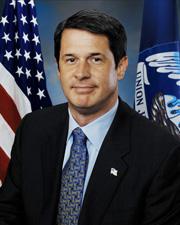 Sen. David Vitter (R-LA)
Legislative Activity
Stay on top of the latest movement without scrolling through every action
Senate amendment agreed to: Amendment SA 2376 agreed to in Senate by Yea-Nay Vote. 73 - 25. Record Vote Number: 280.
September 16, 2009
View full timeline
Senate amendment agreed to: Amendment SA 2376 agreed to in Senate by Yea-Nay Vote. 73 - 25. Record Vote Number: 280.
September 16, 2009
Roll call votes on amendments in Senate: Amendment SA 2376 agreed to in Senate by Yea-Nay Vote. 73 - 25. Record Vote Number: 280.
September 16, 2009
Considered by Senate. (consideration: CR S9397, S9402)
September 16, 2009
Amendment SA 2376 agreed to in Senate by Yea-Nay Vote. 73 - 25. Record Vote Number: 280.
September 16, 2009
Senate amendment submitted
September 15, 2009
Senate amendment proposed (on the floor): Amendment SA 2376 proposed by Senator Vitter.(consideration: CR S9350-9355; text: CR S9350)
September 15, 2009
Amendment SA 2376 proposed by Senator Vitter. (consideration: CR S9350-9355; text: CR S9350) To affirm the continuing existence of the community service requirements under section 12(c) of the United States Housing Act of 1937.
September 15, 2009
Votes
1 roll call on this amendment
Text
Proposed
TRANSPORTATION, HOUSING AND URBAN DEVELOPMENT, AND RELATED AGENCIES
APPROPRIATIONS ACT, 2010--Continued

Mr. WICKER. Mr. President, I suggest the absence of a quorum.
The PRESIDING OFFICER. The clerk will call the roll.
The legislative clerk proceeded to call the roll.
Mrs. BOXER. Mr. President, I ask unanimous consent that the order for
the quorum call be rescinded.
The PRESIDING OFFICER. Without objection, it is so ordered.

Amendments Nos. 2370, 2371, and 2372

Mrs. BOXER. Mr. President, I have decided to come to the Chamber in
my capacity as chairman of the Environment and Public Works Committee
to address a number of Coburn amendments that he has either laid down
or intends to lay down, and I hope we can work to defeat these
amendments, as I understand them, and I want to say why.
We have a very important relationship with our States when it comes
to transportation and highway programs, and we work with them on many
aspects of transportation. We have something called the Transportation
Enhancement Program. It is a TE program. It was created in 1991 in the
ISTEA bill, and one of the purposes was to encourage investments in
many areas that have been overlooked. I want to give you an example of
those.
Since 1992, because of this TE Program, over $11.5 billion has been
made available to the States for some very important purposes that deal
with safety, that deal with making sure our highways are kept in a
condition we want to see them kept. I will give more examples of the
funding. But over that period of time, that $11.5 billion has created
399,000 jobs. Let me repeat that. This special program Senator Coburn
wants to strip--and he wants to strip parts of it--is responsible for
399,000 jobs since 1992. I am here to say--because I know my friend,
Senator Murray, agrees with me--of all the times not to visit more job
losses on our people, it certainly is now. Jobs are key, and the Coburn
amendment is a jobs killer.
Let me tell you about the various areas that fall under this program
he is taking the ax to.
Environmental mitigation. This includes projects that address water
pollution due to highway runoff. We just read a front-page story in the
New York Times where we see terrible water pollution affecting our
children. They had a picture of a child who has been drinking water
that really has not been tested in the right way according to the law.
This child's teeth all have to be capped because his teeth rotted. So
we want to make sure we do not let that runoff get into waterways.
Also, we hear about wildlife mortality. Anyone who has seen the
result of a crash between a car and, let's say, a deer on a road knows
this is a horrific situation for all parties, and it is a matter of
life or death for drivers and their passengers. That is what some of
this money is used for and that is what our friend, Senator Coburn,
wants to take the ax to, as far as I understand it.
Then there are facilities for pedestrians and bicyclists and safety
and educational activities for pedestrians. Residents of my State are
strong supporters of spending transportation funds on bicycle paths and
pedestrian facilities. We all know walking and biking are forms of
transportation which should not be cut but, rather, encouraged.
Other categories of TE, the transportation enhancements, that it is
my understanding Senator Coburn wants to cut: acquisition of scenic
easements and scenic history sites, including historic battlefield
sites. Does he think that little of the history of the country that he
wants to take an ax to this, scenic or historic highway programs,
including the provision of tourist and welcome center facilities?
Again, tourism is one of the things we need to build up. There are many
millions of jobs related to tourism, landscaping, and other scenic
beautification. We all know and take pride in our communities. Highway
beautification, to me, is a key part of our quality of life--historic
preservation, rehabilitation, and operation of historic transportation
buildings.

We have seen some of those. We have seen them in places as far flung
as New York to places in St. Louis, MO, to San Francisco, CA--
preservation of abandoned railway cars, including conservation and use
of the cars for pedestrian or bike trails; inventory control and
removal of outdoor advertising and archeological planning and research.
Senator Coburn would have us believe that transportation enhancements
are a low-priority project. These are investments that put hundreds of
thousands of Americans to work. These are investments that improve
safety, prevent pollution, save fuel, and improve the quality of life
for millions of Americans.
I wonder if Senator Murray and I can engage for a minute here through
the Chair.
What is the timing of when these amendments will be voted on? Can the
chairman tell me?
Mrs. MURRAY. Mr. President, in response to the Senator from
California, the Senator from Oklahoma has offered a number of
amendments. We are hoping to debate them this afternoon and vote on
them tomorrow morning.
Mrs. BOXER. May I ask, through the Chair, if the chairman of the
subcommittee would allow me to be heard for a minute before we have a
vote on any of these amendments that deal with transportation
enhancement programs.
Mrs. MURRAY. Mr. President, we will make sure, as we put together the
order for tomorrow, the Senator can be heard before the votes occur.
Mrs. BOXER. I thank the Senator.
I yield the floor.
Mrs. MURRAY. Mr. President, I suggest the absence of a quorum.
The PRESIDING OFFICER. The clerk will call the roll.
The assistant bill clerk proceeded to call the roll.
Mr. WICKER. Mr. President, I ask unanimous consent that the order for
the quorum call be rescinded.
The PRESIDING OFFICER. Without objection, it is so ordered.

Amendment No. 2366, As Modified

Mr. WICKER. Mr. President, I ask unanimous consent to set aside the
pending amendment and call up amendment No. 2366, as modified.
The PRESIDING OFFICER. Without objection, it is so ordered.
The clerk will report.
The assistant bill clerk read as follows:

The Senator from Mississippi [Mr. Wicker] proposes an
amendment numbered 2366, as modified.

[[Page S9350]]

Mr. WICKER. Mr. President, I ask unanimous consent that reading of
the amendment be dispensed with.
The PRESIDING OFFICER. Without objection, it is so ordered.
The amendment is as follows:

(Purpose: To permit Amtrak passengers to safely transport firearms and
ammunition in their checked baggage)

At the appropriate place, insert the following:
Sec. __. (a) Funding Limitation.--Notwithstanding any other
provision of law, beginning on the date of the enactment of
this Act, amounts made available in this Act for the National
Railroad Passenger Corporation (Amtrak) shall immediately
cease to be available if after March 31, 2010, Amtrak
prohibits the secure transportation of firearms on passenger
trains.
(b) Definition.--In this section, the term ``secure
transportation of firearms'' means--
(1) if an Amtrak station accepts checked baggage for a
specific Amtrak route, Amtrak passengers holding a ticket for
such route are allowed to place an unloaded firearm or
starter pistol in a checked bag on such route if--
(A) before checking the bag or boarding the train, the
passenger declares to Amtrak, either orally or in writing,
that the firearm is in his or her bag and is unloaded;
(B) the firearm is carried in a hard-sided container;
(C) such container is locked; and
(D) only the passenger has the key or combination for such
container; and
(2) Amtrak passengers are allowed to place small arms
ammunition for personal use in a checked bag on an Amtrak
route if the ammunition is securely packed--
(A) in fiber, wood, or metal boxes; or
(B) in other packaging specifically designed to carry small
amounts of ammunition.

Mr. WICKER. Mr. President, I rise today in support of amendment No.
2366, as modified, which I have offered on behalf of millions of law-
abiding gun owners across the country.
Earlier this year, I offered an amendment to the budget that would
have limited certain budget opportunities to Amtrak, unless this
federally subsidized agency enacted policies to accommodate passengers'
second amendment rights. The amendment I offered passed by a bipartisan
vote of 63 to 35, but it was not included in the final version of the
legislation when it returned from conference.
Therefore, I am here on the floor to try again. In our country today,
airline passengers may transport firearms and ammunition in secure
checked baggage when declared during the check-in process. But, on the
other hand, Amtrak passengers are not permitted to do likewise. This
means that sportsmen who wish to use an Amtrak train for hunting trips
cannot do so because they are not allowed to bring a firearm in checked
luggage--something that is done every day at airports across our
country.
I want to emphasize that this amendment only deals with secured and
checked luggage, as checked baggage on Amtrak trains. Law-abiding gun
owners should not be penalized for seeking alternative means of travel.
At one time, Amtrak accepted firearms in secure checked baggage, but
this policy was changed in 2001.
The commonsense amendment before us today is straightforward. It
simply says that if Amtrak continues to deny the right of gun owners to
securely transport firearms in checked luggage, the rail line will no
longer receive a Federal subsidy of $1.55 billion. At the request of
the leadership of the committee, I have modified my amendment to make
it effective only after March 31, 2010, in order to give the agency
adequate time in which to comply with this amendment.
I want my colleagues to know that the amendment before us today
mirrors current TSA requirements to check a firearm for air travel. I
must say these requirements are detailed and strict. For example,
should my amendment pass, the following requirements must be met:
No. 1, a passenger who wishes to transport a firearm must be
travelling on a route that accepts checked luggage.
No. 2, the passenger must declare the firearm before boarding the
train.
No. 3, the firearm must be unloaded and stored in a hard-side
container that is locked, as is required on the airlines.
No. 4, only the passenger can have the key or combination for the
container.
This was done successfully by Amtrak prior to 2001, without incident.
Regional rail lines, such as Alaska Railroad Corporation, allow
firearms, as I am trying to do in this amendment, and that is done
currently in Alaska Railroad Corporation, again, without incident.
It is sometimes much more convenient for sportsmen to travel by rail,
particularly in rural and remote parts of the country. The Alaska
Railroad Corporation knows there is no need to show prejudice to lawful
American sportsmen. That is why their travellers may transport firearms
in checked luggage, and that is why we are asking nothing more than
that and nothing less than that of the government-controlled Amtrak
system.
I might also add that spending is certainly out of control in
Washington, and it is hard for me to imagine Congress considering
providing over $1.5 billion to Amtrak, while the rail line
intentionally limits its revenue and chooses not to receive passenger
miles from this specific and law-abiding segment of travelers.
Americans should not have their second amendment rights restricted
for any reason, particularly if they choose to travel on America's
federally subsidized rail line.
A vote in support of this amendment is a vote in support of the
second amendment and for the right of gun owners across America. I urge
adoption of the amendment.
I suggest the absence of a quorum.
The PRESIDING OFFICER. The clerk will call the roll.
The assistant bill clerk proceeded to call the roll.
Mr. VITTER. Mr. President, I ask unanimous consent the order for the
quorum call be rescinded.
The PRESIDING OFFICER (Mr. Udall of Colorado). Without objection, it
is so ordered.

Amendment No. 2376

Mr. VITTER. Mr. President, I ask unanimous consent to set aside any
pending amendment and call up amendment No. 2376.
The PRESIDING OFFICER. Is there objection? Without objection, it is
so ordered.
The clerk will report.
The assistant legislative clerk read as follows:

The Senator from Louisiana [Mr. Vitter] proposes an
amendment numbered 2376.

Mr. VITTER. I ask unanimous consent the reading of the amendment be
dispensed with.
The PRESIDING OFFICER. Without objection, it is so ordered.
The amendment is as follows:

(Purpose: To affirm the continuing existence of the community service
requirements under section 12(c) of the United States Housing Act of
1937)

At the appropriate place, insert the following:
Sec_. None of the funds made available in this Act shall be
used to restrict implementation or enforcement of the
community service requirements under section 12(c) of the
United States Housing Act of 1937 (42 U.S.C. 1437j(c)).

Mr. VITTER. Mr. President, my amendment, No. 2376, is very simple and
straightforward. To understand it, we need to go back a little bit, to
1998. In 1998, Congress passed the Quality Housing and Work
Responsibility Act, a law requiring all able-bodied people living in
public housing to perform 8 hours per month of community service, with
the idea that individuals who are getting this benefit from all of the
other taxpayers should give back, should contribute to the community as
some partial repayment for the very significant benefit they are
getting. I think that concept had--and I certainly hope it still has--
widespread consensus, bipartisan support. It has been the law since
1998.
Unfortunately, some folks in Congress--I believe a minority, but some
folks in Congress--want to throw this basic, straightforward community
service requirement out the window. In fact, in 2001, these proponents
actually got language included in the VA/HUD appropriations bill which
temporarily, for that one fiscal year, did do away with this community
service requirement. It was just that 1 year. That is the only year
since 1998 where the requirement was thrown out the window, but it did
happen in that year.
Unfortunately, those same folks, like-minded folks, have made the
attempt again, and in this year's VA/HUD appropriations bill on the
House side, before a lot of advocates for the community service
requirement were

[[Page S9351]]

able to take notice, a similar amendment doing away with the community
service requirement was passed through the House by voice. Again, this
slipped through. The advocates of the community service requirement did
not notice; otherwise, they would have demanded a rollcall vote. But it
did slip through by voice.
It is very important that we correct that and preserve the community
service requirement in the Senate version of the bill so we can also
preserve it in the final version of this appropriations bill. This is a
very basic, straightforward idea with which I believe the huge majority
of the American people agree. It is simply saying: If you are getting a
benefit from the taxpayer, you are getting free or highly subsidized
public housing, and you are able-bodied, then you should help repay for
that benefit by simply devoting 8 hours per month--not per week, 8
hours per month--to community service.
I want to emphasize a few things. No. 1, this applies to fully able-
bodied recipients of the benefit only. Exempted residents, for
instance, include those who are 62 years old or older, those who are
disabled and can certify they cannot comply with the requirement,
caretakers of a person with a disability, those engaged in work
activities or are exempt from work activities under TANF, family
members in compliance with TANF, or the State welfare program's work
requirements. That is separate, and they would be exempt and are exempt
from this.
Still, according to the Congressional Research Service, after you
take all those exempt individuals out, HUD estimates there are
approximately 100,000 to 150,000 households that include folks who
would have to meet this requirement.
I believe, when you consider the requirement, 8 hours of community
service per month, when you consider the exemptions for folks over 62,
for folks who have any disability, for folks who are not able-bodied in
any way, this public service requirement is truly minimal and
thoroughly reasonable. I believe that is why it passed into law in 1998
with broad public and bipartisan support. I believe that is why we
should retain it in law today and make sure the House attempt to throw
that requirement out the window is not successful.
Public housing authorities are given broad discretion in implementing
and enforcing this requirement. There is no absolute penalty for not
meeting this requirement. Folks are not immediately thrown out of their
public housing. All of this has been done in an as modest, frankly, and
absolutely reasonable way as possible. I urge my colleagues, Democrats
and Republicans, to retain this important part of present law, to
retain this commonsense approach that a wide majority, a broad majority
of the American people support. I certainly hope this amendment could
be accepted or, if not, retained by a good vote on the floor of the
Senate that is overwhelming and bipartisan.
With that, I yield the floor. I suggest the absence of a quorum.
The PRESIDING OFFICER. Will the Senator withhold the request for a
quorum call?
Mr. VITTER. I will.
Mrs. MURRAY. The Senator from Louisiana offers an amendment that
makes sure the community service requirement for people living in
public housing remains in effect. This includes part of the existing
law and is currently being enforced by public housing authorities. What
the amendment of the Senator does is simply restate current law. I will
be happy to accept it. If the Senator is willing, we can take it on a
voice vote at the present time. I am willing to move forward with it.
Mr. VITTER. I will be happy to consider that offer and get back to
the distinguished Senator. My only concern is we have as much
ammunition as possible to retain this provision in conference, which a
very good rollcall vote could perhaps give us. That is my only concern,
since the House version of the bill has taken this language out. I will
be happy to consider that offer and personally follow up with the
distinguished Senator.
Mrs. MURRAY. Again, we are happy to accept the amendment right now.
If the Senator wants to have a vote, if we can work out a time to do
that, I am happy to do that as well.
Mr. VITTER. I yield my time and suggest the absence of a quorum.
The PRESIDING OFFICER. The clerk will call the roll.
The assistant legislative clerk proceeded to call the roll.
Mr. CARPER. Mr. President, I ask unanimous consent the order for the
quorum call be rescinded.
The PRESIDING OFFICER. Without objection, it is so ordered.
Mr. CARPER. Mr. President, I come to the floor today to give actually
a little bit of a history lesson, to look back and also look forward. I
ask my colleagues to join me in looking back some 300-and-almost-75
years. Roughly at that time the first Swedes and Finns sailed to
America on a couple of boats, one of which was called the Kalmar
Nyckel.
The first Swedes and Finns came to shore--actually, they came up the
Delaware Bay, up into the Delaware River, and they took a left turn at
an uncharted river and decided to name it after the child Queen of
Sweden, naming the river the ``Christina River.'' They landed their
boats at a place which we now call The Rocks and decided to name that
area the ``Colony of New Sweden.'' The first Swedes, the first Finns in
America came ashore in what is now really Wilmington, DE. For the first
year, they never called it Wilmington, they called it the Colony of New
Sweden.
They came by ships, and for about the next 300 years, a lot of ships
were built along the banks of the Christina River, especially during
the period from 1945 to 1946 during the heart of World War II. Among
the ships that were built there were destroyer escorts, troop landing
ships, and a variety of other ships that helped to win the war, helped
to win World War II.
When World War II was at its most robust, fullest form, we had 10,000
people who worked on the banks of the Christina River building those
ships. A few years after the war ended, what had been a vibrant
shipbuilding area along the Christina River dried up, the activity went
away. The war was won, and what had been a vibrant shipbuilding area
became, over time, a decaying industrial wasteland with relatively
little new activity.
In the 1960s, I-95 was built up the northeast corridor of our
country, the mid-Atlantic part of our country, and it literally cut
Wilmington, DE, in half. Off to the right, to the east of I-95, was the
Christina River, and add to that the northeast corridor, the Amtrak
main lines between Washington and Boston. The main line of Amtrak also
sat between I-95 and the Christina River and served to make it
difficult for people even to access the river, almost hard for them to
even know it was there.
I became Governor in 1993, and toward the end of that year, I was
visited by a former Governor, Russ Peterson, and by a former president
of the University of Delaware.
They said: We have been thinking of an idea. We have actually been
working under the direction of a joint resolution signed by former
Governor Mike Castle to think about what the potential could be for
development along the Christina River and the Brandywine Creek not far
away. We haven't finished our job. We have had a good start on it, but
we need more time. We are about to run out of time under the joint
resolution. We wonder if we can have a little more time to think it
through.
I said: Hey, look, I am up to my eyeballs in alligators. I have been
Governor for less than a year. You guys take as much time as you need.
They went away, and I wasn't sure I would ever see them again or talk
to them again. As it turns out, in about 6 months they came back, and
they said: Do you remember our coming in and talking to you?
I said: Yes, I remember that.
They said: We have gone back and done more work on a vision, if you
will, of what the Christina River, this industrial wasteland along
either side of the river, of what it could be, and we would like to
share that with you today.
I said: Have at it.
By that time, I had been Governor about a year and a half, things
were settling down, and I was ready to listen. They had these big
architect renderings of a riverfront that certainly looked nothing like
the Christina River, didn't look at all like an industrial wasteland.
There was a river

[[Page S9352]]

that was pristine, with parks, walking paths, boats out on the river,
museums, restaurants, places for people to live, places for people to
work, theaters, museums. And I never will forget--I looked at them. I
was blown away by the vision.
I said to former Governor Peterson: Who is going to make all of this
happen?
He looked me right in the eye and he said: You are.
I said: Why me?
He said: Well, because you are the Governor.
I said: Well, I love this vision, and let's see if we can't help to
realize it.
I think that conversation was in 1994. Anybody who today takes the
train up the northeast corridor and stops at the Wilmington train
station would say we have made a lot of progress. The place is cleaned
up. We actually have walking paths along the river. We have parks. We
have beautiful places where people live and condominiums and apartments
as well as other homes. We have restaurants and we have museums. We
have hope--that is what I am here to talk about today--for a children's
science museum along the riverfront. But it is a vision that has been
realized. A lot of people come there to eat at restaurants along the
riverfront. And the river itself is being cleaned up, the water quality
is being cleaned up, and the environmental hazards, and so forth, the
waste that was left there has been for the most part cleaned up.
Probably in another month or so, less than a month or so, we are
going to open a 250-acre wildlife refuge named after former Governor
Peterson, built in partnership with the DuPont Company and the Nature
Education Center. People will come and just enjoy, literally on the
outskirts of the city, a large, urban wildlife refuge with walking
paths and see what might have been some 100 years ago or 50 years ago
in that place.
About 10 years ago, when I was nearing the end of my time as
Governor, my second term, a group of citizens in our State came to see
me, and they said they were exited about the riverfront and what was
happening there.
They said: You know, Delaware does not have a children's museum.
I think every other State does. We do not. In fact, it turns out
there are about 250 children's museums across the country.
They said: We are interested in having a children's museum to go with
all of the other attractions on the riverfront.
We talked about it for some time, and I said: I like the idea. I like
the concept. But to tell you the truth, I would be a lot more
interested in it if it were a children's science museum.
At the time, I was trying to figure out, how do we get kids
motivated, excited about science, how do we get them excited about
careers in science? It is all well and good, the State is big in
tourism, big in financial services, we have had a great history with
the chemical industry, shipbuilding at one time. But in our Nation and
in my State, we need more scientists, we need more engineers, we need
more people who have facility in mathematics and who are going to go
out and become inventors, create things, things of value that will help
us, among other things, create jobs in the 21st century. Whether it is
in clean energy or conservation or wind, solar, new ways to create
nuclear power, we need people with those credentials too.
It starts very young. We have adopted, in my State, rigorous academic
standards for math and science, English and social studies, with a real
focus on the math and science. We say: This is what we expect you to
know and learn and be able to do. And we are going to measure students'
progress on that. Most every State has done that. As I said earlier,
most every other State has decided it is going to have its own
children's museum.
I told the folks who presented their idea to me about a decade ago:
If you want me to be involved, if you want me to be as excited as you
are, I want to change the focus not just to be a children's museum in
Delaware, I want it to be a children's museum that focuses on science.
I want young kids in the target audience of 6 to 12 to come here and
leave here excited about wanting to be astronauts or wanting to be
environmentalists or wanting to create new ways to harness the energy
of the Sun or the wind or to find ways to deal with spent fuel rods
from nuclear powerplants. That is where my interest is.
Over time, the focus of this concept, this idea of the children's
museum, has turned to focus on science, and to date I am told we have
raised over $11 million for the project. We actually have picked out
the building. I think they have a lease or a sort of a contract on a
large structure right at the bend of the Christina River there in
Wilmington, which is where Kahunaville used to be. Kahunaville sort of
conveys the idea of a good time, and for many years, people went there
and had a really good time. It was a great nightclub with some big acts
over the years. Bob Dylan performed there and Hall and Oats, all kinds
of people over the years. It is no longer a nightclub; it is an empty
building, and it is a large empty building that actually lends itself
to being, we think, a terrific site for a science museum for the kids
of Delaware.

So far to date we have raised, as I said, over $11 million. To date,
the Federal Government has provided about $250,000. So out of over $11
million, less than 3 percent has come from the Federal Government.
I have asked for an appropriation, a directed appropriation, of about
another $198,000, and I appreciate very much the support of the
Appropriations Committee to include that amount. If it is included in
what we have already appropriated, it would be about $450,000 out of a
budget of roughly $11.5 million--roughly 4 percent of the total
project. A lot of the money is going to come from the private sector, a
fair amount from local sources, State and local sources, as well.
I will give you a flavor of the kinds of exhibits we are going to
have there. I will mention the names of some of the sponsors. The
DuPont Company has been great, and it is a wonderful environmental
company. It has agreed to help sponsor over the next couple of years an
exhibit that focuses on environmental issues, I think largely focusing
on estuaries. We have a big estuary in the Delaware Bay and not far
away in the Chesapeake Bay. This will really excite our kids about the
water and preserving the quality of our water and improving the quality
of our water. AstraZeneca is going to help us create an exhibit on the
human body, something interactive that the kids can really get into and
enjoy and learn from. One of our larger banks, JPMorgan Chase, is going
to help us with a project to focus on financial literacy. If there is
anything that would help us all, young and old, that is, I think the
events of the last year or two have pointed this out. We will have
exhibits that focus on clean energy, whether it is wind, solar. We will
have ways to use wind and solar, to show and demonstrate how we rely on
those. We will have an exhibit that will focus on conservation, smart
grid, to show how we can be better consumers, smarter consumers. We
will have some focus on, among other things, nuclear energy and show
how we actually create electricity from nuclear power. Those are some
of the dynamics.
Our vision is, that when the kids leave the children's science museum
on the banks of the Christina River, they will be juiced, they will be
excited, and they will want to come back. But just as importantly, when
they go back to class the next day or the next week, they will be
thinking about their math assignments and even their science
assignments a little bit differently and trying to provide a
connection: How is what I am learning in my classroom relevant to what
is going on in our world? How is it relevant to what I might be doing
as a life work later on when I am finished with school and go out into
the world?
We need more scientists, we need more engineers. I know we need both
of those. We need people who have a lot of expertise in math. We need
people who are going to invent things to help us make this a better
world. And for what I think is a fairly modest investment on behalf of
the Federal Government--about 4 percent of a much bigger project--I
think this is a very good investment, and not just for kids in Delaware
but for the kids who are going to graduate from the schools and go on
and do things in their life to help all of us in Delaware and across
the country and maybe even around the world.
Those are some of the reasons I have asked for this appropriation. I
am

[[Page S9353]]

grateful to the Congress for supporting this a year ago. When we asked
for about $250,000, it was included. With this money, if we are
successful in gaining this appropriation, we will be able to go forward
and hopefully actually open the Delaware children's science museum in
the spring of next year, which would be a very good thing, not just for
us in Delaware, not just for those who visit Delaware, but I think, on
a broader scale, for a lot of folks in our country.
I see I have been joined by the former Governor of Virginia, in whose
State I visited a number of those children's museums, those science
museums. I remember taking our boys, when they were between the ages of
6 and 12, to a couple of them around the country. Just remember, we
have one who is a mechanical engineer, at a 4-year college up in
Boston, and his little brother--now a very big brother--he is really
good in math and a bunch of other things as well, and I think maybe a
little bit of that came from those visits all those years ago.
The PRESIDING OFFICER. The Senator from Virginia.
Mr. WARNER. Mr. President, I commend my colleague and good friend
from Delaware for his compassionate interest, not only in what sounds
like a very worthy project in Delaware, but his constant commitment to
making sure we are always looking over that next horizon, whether it is
in education or energy issues he has been involved with as a Member of
Congress and as a Governor, and now as the senior Senator from
Delaware. The project he describes sounds like a good one, and I hope
it gets favorable consideration from the Senate. I welcome the chance
to support him.
I wanted to take a moment to talk about a project that is already in
this very important 2010 Transportation-HUD appropriations bill. I
commend the subcommittee chair, the Senator from Washington, and the
ranking member for their good work on this bill. There is a certain
amount of celebration in this bill for us in the greater Washington
region because this Transportation appropriations bill is actually the
culmination, in many ways, of an effort that has been ongoing for close
to 50 years. Even when your dad served in the other body, one of the
things I know he probably experienced was flying into our region,
particularly flying into Dulles, and he might have found it difficult
to get from Dulles into greater Washington.
One of the most remarkable things that has always stunned me as a
Virginian, and as a long-time resident of the national capital area is
that we have never had rail or metro linkage from our international
gateway airport out at Dulles into our Nation's capital. With this
legislation, with actions taken earlier this year, we finally have in
place a financing arrangement and the beginnings of construction for
the long overdue Dulles Metrorail project.
The Dulles metrorail project is part of a 50-year plan that started
with the construction of Dulles Airport. Throughout that time, there
was always a reserve. Anybody who made that drive--and I know the
Presiding Officer has made that drive many times--has seen the corridor
in the middle of the road. That corridor has been reserved for
ultimately building out rail, from the existing Washington metro
system, all the way to Dulles.
This is a project that my predecessor, John Warner, worked on for
years. It was one of his proud accomplishments, finalizing Federal
support for this project. I commend his efforts in the past. It is a
project I have been involved with for over 20 years, first when I was
on the Commonwealth Transportation Board, when we had to preserve that
corridor for a metrorail project. I recall, back in the late 1980s and
early 1990s, efforts to try to take away that right-of-way so it could
be used for additional highway construction. There was always a need to
say: No, we have to reserve that. At some point, we will finally get
metrorail to Dulles. This has now become a reality.
It was a project I worked on as Governor. There were a number of
times we tried to put together a very complex financing arrangement in
order to make sure all the partners, State and local and Federal, would
step to the plate and do what was right but also do what was terribly
important to the national capital region: making sure our international
gateway airport is linked to the capital. I am proud to report that
earlier this year in March, Secretary LaHood and former Senator Warner
and myself, Governor Kaine, Congressman Frank Wolf, who has been a
long-time supporter, got together and signed the final funding
arrangement that committed the Federal Government, the Commonwealth of
Virginia, and local communities on this critically important project.
It is needed for a variety of reasons. It is needed not only to link
international and domestic passengers who come into Dulles to visit our
Nation's capital, but this corridor has rapidly become the economic hub
of all northern Virginia. Dulles Airport currently serves about 24
million passengers each year. Population in the Dulles corridor is
expected to increase by 50 percent and employment to increase by 47
percent by 2030. As someone who I know travels that corridor on a
regular basis, you have seen how it has been built up, and there will
continue to be the expansion of a great deal of economic activity for
all northern Virginia and for the entire Washington area, particularly
in the high-tech sector.
This past March, the full funding agreement was signed, and $900
million over the period of the whole project was committed from Federal
funds. But let me make clear it is not only the Federal Government that
is stepping up on this critically important project. The Commonwealth
of Virginia has committed to be a major partner in funding. The
localities have stepped forward in terms of funding. There have been
very creative activities in terms of creating a special taxing district
of our local property owners in the region who will benefit from this
metrorail extension. They have skin in the game as well. The State is
contributing some of the toll revenues from our toll road in the
corridor. This is a project, even during these difficult economic
times, where the State, the localities, and the Federal Government have
stepped up in a major way.
It will be enormously beneficial to our whole region. It will be
enormously beneficial to the Commonwealth and to our Nation's capital
in terms of the millions of visitors who come in from all over the
country and the world. They will have the opportunity not only to take
one of those increasingly expensive cabs, but also simply to jump on
the train and come into Washington.
There is also another very important reason for continuing this
project. The Dulles Corridor Metrorail Project is an important
multimodal project with critical homeland security implications.
Expanding metrorail into the Dulles corridor is terribly important in
terms of evacuation opportunities, should the capital ever be under
assault. It is obviously terribly important in economic development
activities, in terms of tourism activities. This project is crucial to
the well-being of the whole national capital region.
As a matter of fact, earlier today I was out in Tysons Corner, one of
our major development areas on the way out to Dulles rail. Although we
were caught in some pretty dreadful traffic, it was a little bit of a
mixed blessing. Part of the traffic was because construction has
actually started on some of the rail stops in the Tysons area that will
ultimately relieve not only traffic congestion but will, obviously,
decrease greenhouse gases. So this project has added benefits as well,
an issue I know is very important to the Presiding Officer in terms of
dealing with climate change.
I know there are others in this body who perhaps have raised
questions about some of the projects that are included in this 2010
Transportation-HUD appropriations bill. This is one of those projects I
can't imagine anyone being critical of. This has been 50 years in the
making. Enormous time, effort, and resources have gone into it. The
fact that the final funding agreement has now been signed and we
actually have broken ground is a time to celebrate. The $85 million
included in this year's appropriations funding for the downpayment and
first installment of what is going to be a critical Federal funding
stream is a very worthy sum that is going to provide benefits for this
region and for our capital for many years to come.
I, again, commend the chair of the Appropriations subcommittee, my
colleague and friend, the Senator from

[[Page S9354]]

Washington, for her great work on not only this particular Dulles
metrorail project, which I believe, as a frequent flier in and out of
Dulles, I hope she will be the immediate beneficiary of as well, but to
all members of her subcommittee. I thank them for their good work on
this bill, this important project, and the many other projects in this
legislation.
I yield the floor and suggest the absence of a quorum.
The PRESIDING OFFICER. The clerk will call the roll.
The bill clerk proceeded to call the roll.
Mr. COCHRAN. I ask unanimous consent that the order for the quorum
call be rescinded.
The PRESIDING OFFICER. Without objection, it is so ordered.
Mr. COCHRAN. Mr. President, the Senate Appropriations Committee has
reported all 12 appropriations bills for fiscal year 2010, and the
Senate has considered and passed 4 of those bills. I expect passage of
the Transportation, Housing and Urban Development bill we are now
considering will be the fifth. I am pleased the full Senate has had the
opportunity to consider and debate the policies and priorities embodied
in these bills. All Senators have had the opportunity to question the
managers and to offer amendments, if they wanted to do so.

By next week, I expect the House and the Senate will be convening
conference committees to complete action on the bills that have already
passed the Senate. It is a fact, however, there are only 2 weeks
remaining in this fiscal year. We will probably need to pass a short-
term continuing resolution to keep the remainder of the government
running beyond September 30. While we anticipate we will be able to
pass such a resolution, I think it is important we complete action on
the remaining appropriations bills as soon as possible.
We have sent a letter, dated March 24, to the majority leader of the
Senate--suggested by the distinguished Senator from Tennessee, Mr.
Corker, back last March--and in that letter we requested the leadership
``allocate an appropriate amount of time for the Senate to consider,
vote, and initiate the conference process on each of the 12
appropriations bills independently through a deliberative and
transparent process. . . .''
That letter stated a goal of passing 8 of the 12 bills before the
August recess. While the Senate did not meet that goal of passing eight
bills prior to the recess, I think we did make good progress. I have to
congratulate the distinguished chairman from Washington for helping
lead the way and helping us achieve that progress. To a degree, we have
been hampered by the lateness of the President's budget request and the
necessity of waiting for the House to pass the appropriations bills
first.
But the House has now passed all of its bills, and we have a window
of floor time available to consider the remaining bills in the Senate.
I believe strongly all Members should have the opportunity to consider
the bills and participate in this process and offer amendments, if they
choose to do so. But with the end of the fiscal year approaching and
floor time becoming a precious commodity, we should not have to spend
large blocks of time in quorum calls waiting for Senators to offer
amendments.
At some point, the bills will have to be taken up and passed one way
or another. In the past, this has meant packaging bills together into
omnibus bills, and we know how well that is received. Not at all. And
all but a few Members lose the opportunity to participate and
contribute through the amendment process and debate and influence the
outcome of conference reports.
I have concerns about the budget proposed by the President, most of
which is embodied in the congressional budget resolution that provides
the framework for the appropriations process. I voted for several
amendments to the budget resolution that would have reduced spending
from the levels proposed by the President. I also voted against the
resolution itself. I think the level of debt we have accumulated is
alarming.
The fact remains, however, that Congress has approved the President's
budget. While an Omnibus appropriations bill would highlight the
problems with the President's spending policies, I do not think that
course of action would be helpful to the process. By considering the
bills individually, though, all Senators will be given an opportunity
to have meaningful input and participation in the process, and that is
as it should be.
So I look forward to continuing to work with the distinguished
chairman, Mr. Inouye, our subcommittee chairs, and our two leaders, and
all Senators to complete the appropriations process in an orderly and
timely fashion that will reflect credit on the Senate.
The PRESIDING OFFICER (Mr. Nelson of Nebraska). The Senator from
Washington.
Mrs. MURRAY. Mr. President, I thank the Senator from Mississippi for
his remarks. As ranking member and former chairman of this committee,
he knows full well we work very hard to accomplish and complete these
bills and to get them done in a timely fashion. We are working our
hearts out to get that done.
To that point, the bill before us, the transportation and housing
bill, has now been on the floor of the Senate Thursday afternoon and
evening, Friday, Monday, all of today, and we will finish it tomorrow.
So for any Senators who are sitting out there with issues, you need to
come to the floor and get them resolved. We hope to start a series of
votes tomorrow morning to get through a number of the amendments that
are out there and finish this so we can move to the Interior
appropriations bill tomorrow.
So, again, for the notification of all Senators, to the point the
Senator from Mississippi raised, come to the floor, resolve your
disagreements, or help us schedule a vote. We are going to finish this
bill tomorrow.
Mr. President, I yield the floor.
The PRESIDING OFFICER. The Senator from Vermont.
Mr. SANDERS. Mr. President, I ask unanimous consent to speak as in
morning business.
The PRESIDING OFFICER. Without objection, it is so ordered.

Emergency Senior Citizens Relief Act

Mr. SANDERS. Mr. President, I want to touch upon an issue I think has
not gotten as much consideration in the Senate as it might; that is,
for the first time since 1975, and in the midst of a major recession,
senior citizens in our country who are on Social Security will not--
unless we act--be receiving a cost-of-living adjustment this year.
Let me repeat that. For the first time since 1975, and while we are
in the midst of a major economic recession which is causing havoc with
the lives of all of our people, including senior citizens, this year--
unless Congress acts--senior citizens will not be getting a cost-of-
living adjustment.
Among other things, this would mean monthly Social Security payments
would drop for millions of retirees because Medicare prescription drug
premiums--the Medicare Part D Program--which are deducted from Social
Security payments, are scheduled to increase.
So what we are looking at is that not only will tens of millions of
America's seniors not receive any increase in Social Security but many,
in fact, will see a reduction because their Social Security checks will
go to pay for an increase in Medicare Part D payments. I would suggest
in the midst of the worst recession since the Great Depression, we
cannot allow that to happen.
Many senior citizens in this country have recently, within the last
year or two, seen a significant decline in their savings because of the
losses they incurred with the drop in the stock market. Many have seen
their pensions disappear. Many have seen the value of their home
dramatically diminish. All of this is taking place at a time while
poverty among senior citizens is going up. And the number of seniors
who are declaring bankruptcy is also increasing.
Most importantly, I think it is imperative that sooner than later we
take a hard look to determine how COLAs for Social Security
beneficiaries are, in fact, determined. Some years ago, when I was a
Member of the House, I introduced legislation to establish a separate
index for seniors because the simple reality is, it is wrong to include
seniors in the overall index because their needs--how they spend their
money--are often very different than how the rest of the population
spends their money.

[[Page S9355]]

If you are a young person or a middle-aged person and you want to go
out and buy a laptop computer today, for example, the odds are you are
going to get a pretty good price on that computer, and the price of
that computer will be substantially lower than it was a couple years
ago. So for you, inflation for your expenditures on technology may well
have gone down.
On the other hand, if you are a senior citizen, especially one who
does not have a whole lot of money, how are you spending your money?
Well, a very significant cost for seniors, obviously, is health care.
For those needs Medicare does not cover, the truth is, health care
costs, as we all know, are exploding. They are going up.
So if you are a senior, the odds are you are spending a lot more for
health care out of your own pocket this year than you did last year. If
you are a senior and you get caught in the doughnut hole of Medicare
Part D, you are spending a lot of money because prescription drug
costs, in many instances, are also going up.

So I think when we take a look at the COLA, we should understand the
needs of somebody who is 75 or 80 years of age and how he or she spends
their money, from an inflation perspective, is very different from
somebody who is 18 years of age or maybe 40 years of age. But be that
as it may, there can be no debate that millions of senior citizens
today, in the midst of this recession, are hurting very badly. I think
we would be doing a great disservice to them by turning our back on
their needs and not making sure we are providing some financial support
to them.
Therefore, I am asking my colleagues to join me in becoming an
original cosponsor of the Emergency Senior Citizens Relief Act,
legislation I will be formally introducing on Thursday. Under this
legislation, all Social Security recipients, railroad retirees, SSI
beneficiaries, and adults receiving veterans benefits will receive a
one-time additional check of $250 in 2010. Since seniors living on
fixed incomes are most likely to spend this money--whether it is on
health care, whether it is trying to keep warm this winter--this
legislation would provide a boost to our economy as it emerges from the
economic crisis.
I very much appreciate that my colleague from Vermont, Senator Leahy,
is an original cosponsor, and I hope within the next couple of days we
can have more.
For more than three decades, seniors have relied on a cost-of-living
adjustment in their Social Security benefits to keep up with their
increased expenses. Unfortunately, the current formulation for
determining Social Security COLAs, in my view, does not accurately take
into account the purchasing needs of today's seniors who often do not
buy items such as laptop computers and cellular phones but spend, as I
mentioned a moment ago, a disproportionate percentage of their income
on health care needs and prescription drugs.
The truth is, what we are proposing now is something very similar to
what the Obama administration provided for in the stimulus package.
This legislation we are offering is fully paid for by simply applying
the Social Security payroll tax to household incomes above $250,000 and
below $359,000 in 2010.
Under current law, only the first $106,000 of earned income is
subject to the Social Security payroll tax, thus a worker earning
$106,000 pays the same payroll tax as a CEO making $300 million. This
legislation begins to correct this inequity in 2010, while making sure
seniors receive a fair increase in benefits next year. I should point
out, in terms of this offset, no one in America earning $250,000 or
less would see their payroll taxes go up at all.
So I think this is an important issue. I think seniors all over this
country are worried about their financial situation. They want the
Congress to pay attention to their needs. I think the one-time
financial support of a check of $250, while not a whole lot of money,
would at least help many people not see a reduction in their Social
Security checks and would be of real help.
Mr. President, with that, I yield the floor and suggest the absence
of a quorum.
The PRESIDING OFFICER. The clerk will call the roll.
The bill clerk proceeded to call the roll.
Mrs. MURRAY. Mr. President, I ask unanimous consent that the order
for the quorum call be rescinded.
The PRESIDING OFFICER. Without objection, it is so ordered.

____________________