To increase by $50,000,000 the amount available for the Department of Veterans Affairs for minor construction projects for the purpose of converting unused Department of Veterans Affairs structures into housing with supportive services for homeless veterans, and to provide an offset.
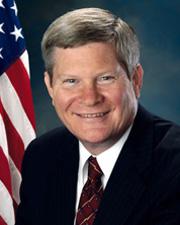 Sen. Tim Johnson (D-SD)
Legislative Activity
Stay on top of the latest movement without scrolling through every action
Roll call votes on amendments in Senate: Amendment SA 2733 agreed to in Senate by Yea-Nay Vote. 98 - 1. Record Vote Number: 346.
November 17, 2009
View full timeline
Roll call votes on amendments in Senate: Amendment SA 2733 agreed to in Senate by Yea-Nay Vote. 98 - 1. Record Vote Number: 346.
November 17, 2009
Senate amendment agreed to: Amendment SA 2733 agreed to in Senate by Yea-Nay Vote. 98 - 1. Record Vote Number: 346.
November 17, 2009
Considered by Senate. (consideration: CR S11403, S11405)
November 17, 2009
Amendment SA 2733 agreed to in Senate by Yea-Nay Vote. 98 - 1. Record Vote Number: 346.
November 17, 2009
Considered by Senate. (consideration: CR S11362)
November 16, 2009
Considered by Senate. (consideration: CR S11313)
November 10, 2009
Senate amendment proposed (on the floor): Amendment SA 2733 proposed by Senator Johnson to Amendment SA 2730.(consideration: CR S11267; text: CR S11267)
November 9, 2009
Amendment SA 2733 proposed by Senator Johnson to Amendment SA 2730. (consideration: CR S11267; text: CR S11267) To increase by $50,000,000 the amount available for the Department of Veterans Affairs for minor construction projects for the purpose of converting unused Department of Veterans Affairs structures into housing with supportive services for homeless veterans, and to provide an offset.
November 9, 2009
Senate amendment submitted
November 5, 2009
Votes
1 roll call on this amendment
Text
Proposed
MILITARY CONSTRUCTION, VETERANS AFFAIRS AND RELATED AGENCIES
APPROPRIATIONS ACT, 2010

The ACTING PRESIDENT pro tempore. Under the previous order, the
Senate will resume consideration of H.R. 3082, which the clerk will
report.
The legislative clerk read as follows:

A bill (H.R. 3082) making appropriations for military
construction, the Department of Veterans Affairs, and related
agencies for the fiscal year ending September 30, 2010, and
for other purposes.

Pending:

Johnson/Hutchison amendment No. 2730, in the nature of a
substitute.
Udall (NM) amendment No. 2737 (to amendment No. 2730), to
make available from Medical Services $150 million for
homeless veterans comprehensive service programs.

The ACTING PRESIDENT pro tempore. The Senator from South Dakota.
Mr. JOHNSON. Mr. President, I suggest the absence of a quorum.
The ACTING PRESIDENT pro tempore. The clerk will call the roll.
The legislative clerk proceeded to call the roll.
Mr. GRASSLEY. I ask unanimous consent that the order for the quorum
call be rescinded.
The ACTING PRESIDENT pro tempore. Without objection, it is so
ordered.
Mr. GRASSLEY. I ask unanimous consent to speak in morning business
for 5 minutes.
The ACTING PRESIDENT pro tempore. Without objection, it is so
ordered.
Mr. GRASSLEY. Mr. President, I am here to discuss a very important
matter that I had intended to bring up in the Judiciary Committee last
week but the agenda did not allow it. It is about the oversight of the
Department of Justice and the responses provided by Attorney General
Holder to questions from the Judiciary Committee. Two weeks ago,
Chairman Leahy--and I thank him for participating--and I sent a letter
to the Attorney General asking him to stand by his statements made
during his confirmation and answer a number of outstanding requests for
information. That list includes questions submitted by members of the
Judiciary Committee to an FBI oversight hearing over 1\1/2\ years ago.
We all agreed no committee should have to wait that long to get answers
to oversight questions.
Last Friday, the Judiciary Committee received answers from the
Attorney General following his June 17,

[[Page S11266]]

2009, testimony. I hoped he would uphold his commitment he made during
his confirmation hearing to ``fully and in a timely fashion'' answer
Judiciary Committee inquiries.
The questions I submitted to Attorney General Holder addressed a
number of important issues, including a series of 24 questions related
to the Department's involvement with the termination of Inspector
General Walpin at the Corporation for National and Community Service.
The answers I received were totally inadequate. Instead of answering
the 24 questions, the Department responded with a five-paragraph
recitation of publicly available facts and information. The Department
also said it would respond under separate cover to the document
requests. I appreciate the Department's comments that it intends to
respond to my requests, but I am very concerned this is more of the
same problem Chairman Leahy and I were trying to get at with our letter
2 weeks ago.
My questions were more than just requests for documents and asking
for a recitation of public facts. They were serious inquiries about the
role the acting U.S. attorney played in the termination of that
inspector general. I requested specific answers to questions that have
arisen in my investigation. For example, I asked about communications
between the U.S. attorney and the Office of Professional Responsibility
and whether the referral by the U.S. attorney complied with the ethical
requirements outlined in the U.S. Attorneys' manual for misconduct by
non-Department of Justice attorneys and judges. While this is only one
example of the questions I asked, none of the questions were
specifically answered.
While the Department did say it was going to provide the documents I
requested under separate cover, the response seems to indicate that all
my questions were answered. They were not answered. I intend to get
these answers.
This is a prime example of what is wrong with the inadequate
responses to all our questions. They avoid the question and filibuster
with public facts.
I have previously stated that unless the Department of Justice starts
answering our questions completely and in a timely manner, I will start
holding up nominees. I have done nothing but patiently work in good
faith with the chairman and the Department to get answers. Yet despite
these threats, it is business as usual.
This culture of not answering questions timely, in an evasive manner,
and punting document requests to future separate cover letters is
unacceptable. We have a constitutional duty to oversee the bureaucracy,
and the executive branch is thumbing its nose at the Congress. I know
Chairman Leahy agrees oversight is an important part of what the
Judiciary Committee does. I hope he will continue to work with all
members to get answers from the Attorney General. He has surely helped
me.
I am tired of wasting time having to raise these concerns publicly,
but shaming the Department seems to be the only way they will respond,
and even that doesn't work all the time. This administration rode into
town on a campaign of accountability and transparency. Attorney General
Holder told all of us he respected congressional oversight. Yet in his
first set of oversight questions submitted by the committee, he gave us
the same nonresponse we have seen from the Department. That is not the
accountability or transparency the American taxpayers deserve.
This is yet another public warning to the Department. It is time to
start responding fully to our requests in a timely manner or face the
consequences. I hope the Attorney General and his staff will hear this
and provide complete answers to our questions prior to his scheduled
appearance in the Judiciary Committee later this month.
I see my colleague, Senator Kyl. I think he has interest in this
oversight matter as well.
I yield the floor.
Mr. KYL. Mr. President, I ask unanimous consent to speak for up to 10
minutes to continue the discussion Senator Grassley has commenced.
The ACTING PRESIDENT pro tempore. Without objection, it is so
ordered.
Mr. KYL. Mr. President, I rise to join in the comments Senator
Grassley has offered. I voted for Attorney General Holder, and we had
several conversations about being forthcoming in responding to our
requests for information. I thought at the time he would be able to
work with us and provide those kinds of answers and support. I have
been disappointed, as has Senator Grassley.
A couple of examples: June 17, we had a hearing at which Attorney
General Holder was present. It was an oversight hearing. He was asked a
number of questions. He took many of those questions for the record
which, of course, is perfectly fine. But his answers were not submitted
to us for another 4\1/2\ months. It was October 29 when we received the
answers.
I wish to cite two examples of questions and answers which
demonstrate the unresponsiveness of the Attorney General.
I asked him to identify the legal basis the Department of Justice
could invoke to prevent a Gitmo detainee from being released into the
United States if found not guilty in a Federal court--an important
question because the administration apparently intends to bring Gitmo
detainees to the United States for trial. Here is the response:

Where we have legal detention authority, as the President
has stated, we will not release anyone into the United States
if doing so would endanger the national security of the
American people. There are a number of tools at the
government's disposal to ensure that no such detainee is
released into the United States, all of which are currently
being reviewed by the Special Interagency Task Force on
Detention Policy created pursuant to Executive Order 13493.

I asked the Attorney General to identify the operative legal
authority that could be used to detain acquitted detainees. He
responded by saying the administration probably would not release
someone ``where we have legal detention authority.'' It is like a cat
chasing its tail. What is legal authority? That was the question. Do
you have legal authority? Releasing a detainee into the United States
obviously could have grave consequences. I think we deserve more than
just the Attorney General's vague and rather meaningless reference to
tools at our disposal.
Similarly, I asked the Attorney General to explain whether the crimes
committed by those presently held in U.S. prisons for conviction on
terrorism charges are comparable to the terrorist acts of high-value
detainees at Gitmo. The reason I asked was, they said we have several
convicted terrorists in our prisons here in the United States. My
question was, Well, but are those really serious crimes as opposed to
the 9/11-related crimes committed by those we are holding at Gitmo?

His response was:

A number of individuals with a history of, or nexus to,
international or domestic terrorism are currently being held
in federal prisons, each of whom was tried and convicted in
an Article III court.

We knew that.

The Attorney General considers all crimes of terrorism to
be serious.

Well, so do I. I am glad the Attorney General considers all crimes of
terrorism to be serious. But that does not answer my question: How do
these crimes compare to the crimes of those high-value detainees at
Gitmo?
So these are examples of the kind of nonresponses we get from the
Attorney General when we ask questions.
Let me close with one final point, and then if Senator Grassley would
have anything else to say, I will certainly yield to him.
We know for several weeks we have had on the Judiciary Committee
agenda a bill called the media shield bill. It is a bill that has a lot
of problems with it. Many members of the past administration had
written in opposition to the bill, pointing out the problem of
convicting people who were engaged in espionage or acts of terror
against the United States, in the event this legislation were to be
passed.
So I was curious about this Attorney General's views on that. He
finally got us a views letter last week, and he said ``the result of a
series of productive and cooperative discussions with the sponsors and
supporters of the legislation'' is how they put this latest draft
together. Obviously, absent is any discussion with those of us who have
expressed our longstanding concerns.
This is one of those matters I had raised with the Attorney General
at his confirmation hearing, and his reply was:

[[Page S11267]]

The concerns you raised are legitimate ones.

So I am glad my concerns were legitimate.
He also said at his hearing that he would--I am quoting now--``work
with both Republicans and Democrats on this Committee on a federal
media shield law.''
Further, during my questioning of Attorney General Holder on the
media shield bill, he again stated his willingness to ``work to address
the concerns raised in'' views letters issued in the 110th Congress.
In response to my questions, he testified:

I want to talk to you and to people who worked on this bill
and who might have a contrary view of it.

I never heard from him again. I met with him on May 4 to reaffirm my
strong interest in the legislation. I never heard from him after that
meeting.
This is despite the fact that in response to a question I asked,
Attorney General Holder testified:

I want to talk to you and to people who worked on this bill
and who might have a contrary view of it. As I said before, I
guess in my opening statement, you know, knowledge doesn't
reside only in the executive branch. The experience that
you've had with this, the obvious knowledge that you have of
these issues are the kinds of things that I need to be
educated about. It may change my mind, frankly.

Well, maybe it would have. But by not talking to me, he was able not
to change his mind.
I heard that a new version of the bill had been written, and I
reviewed it. So, finally, on November 2 I called the Attorney General
myself to express my concerns about it. I asked if I could get an
explanation of why this version satisfied all of the objections that
had been previously raised, and I interpreted his response to be that
he would testify before the committee if he were called upon to do so.
Well, 2 days later, as I said, this views letter was sent to us. To
put it charitably, it is extraordinarily light on analysis.
I, as I said in the beginning, voted for Attorney General Holder. I
thought at the time he would keep the commitments he made to us under
oath at his confirmation hearing. He assured us he wanted to work with
us and he would be forthcoming and cooperative.
Mr. President, I think it is time for the Attorney General to keep
the commitments he made in his confirmation hearing.
The ACTING PRESIDENT pro tempore. The Senator from Iowa.
Mr. GRASSLEY. Mr. President, two things. I thank the Senator from
South Dakota for giving us this opportunity to make this point. I hope
the Attorney General will respond to our questions. We are just doing
our constitutional job of oversight, checks and balances of our system
of government.
I yield the floor.
The ACTING PRESIDENT pro tempore. The Senator from South Dakota.
Mr. JOHNSON. Mr. President, the MILCON-VA appropriations bill is very
important to America's military forces and veterans.
On Wednesday, the Nation observes Veterans Day. There is no reason
this bill should not be completed before Veterans Day. But if we are to
achieve that goal, we cannot wait until Tuesday to start the debate and
amendment process.
We have a choice. We can go home for Veterans Day with a speech in
our pockets or we can go home for Veterans Day with a solid
accomplishment for our veterans: passage of the fiscal year 2010
MILCON-VA appropriations bill, to our credit. I vote for the latter,
and I urge my colleagues to join with me in working to make progress on
this bill today so we will be able to move to final passage tomorrow.
Mr. President, I ask unanimous consent that the pending amendment be
set aside.
The ACTING PRESIDENT pro tempore. Without objection, it is so
ordered.

Amendment No. 2733 to Amendment No. 2730

Mr. JOHNSON. Mr. President, I call up amendment No. 2733 and ask for
its immediate consideration.
The ACTING PRESIDENT pro tempore. The clerk will report.
The assistant legislative clerk read as follows:

The Senator from South Dakota [Mr. Johnson] proposes an
amendment numbered 2733 to amendment No. 2730.

Mr. JOHNSON. Mr. President, I ask unanimous consent that reading of
the amendment be dispensed with.
The ACTING PRESIDENT pro tempore. Without objection, it is so
ordered.
The amendment is as follows:

(Purpose: To increase by $50,000,000 the amount available for the
Department of Veterans Affairs for minor construction projects for the
purpose of converting unused Department of Veterans Affairs structures
into housing with supportive services for homeless veterans, and to
provide an offset)

On page 52, after line 21, add the following:
Sec. 229. (a)(1) The amount appropriated or otherwise made
available by this title under the heading ``construction,
minor projects'' is hereby increased by $50,000,000.
(2) Of the amount appropriated or otherwise made available
by this title under the heading ``construction, minor
projects'', as increased by paragraph (1), $50,000,000 shall
be available for renovation of Department of Veterans Affairs
buildings for the purpose of converting unused structures
into housing with supportive services for homeless veterans.
(b) The amount appropriated or otherwise made available by
title I under the heading ``Homeowners Assistance Fund'' is
hereby reduced by $50,000,000.

Mr. JOHNSON. Mr. President, this August I had the opportunity to
accompany Secretary Shinseki in South Dakota to meet with the many
South Dakotans who have served our Nation. During this trip, the
Secretary outlined for me his ambitious plan to end homelessness among
veterans and impressed upon me how this is one of his top priorities
for the VA.
The fiscal year 2010 MILCON-VA bill before us provides a significant
amount of resources to help him accomplish that goal, including over
$500 million for direct homeless programs. However, after returning
from the August recess, I began to look into other efforts the VA could
undertake to further address this issue. As many of you know, the VA
has 153 hospitals, many on expansive campuses which include numerous
buildings, some used and others sitting empty.
The amendment I have just offered would add $50 million to the VA's
minor construction account specifically for the VA to renovate unused,
empty buildings sitting on VA campuses for the purpose of providing
housing with supportive services for homeless veterans. In today's
economic climate, many of the community organizations and nonprofits
that run homeless shelters for vets cannot come up with the capital
needed to renovate unused VA buildings. This amendment would allow the
VA to make those renovations and then pursue public-private ventures
that address the problem of homelessness among vets.
The amendment is fully offset and does not exceed the subcommittee's
allocation for budget authority or outlays. I would urge all of my
colleagues to support this amendment.
Mr. President, I ask unanimous consent that Senators Byrd and
Feinstein be added as cosponsors.
The ACTING PRESIDENT pro tempore. Without objection, it is so
ordered.
Mr. JOHNSON. Mr. President, I yield the floor and suggest the absence
of a quorum.
The ACTING PRESIDENT pro tempore. The clerk will call the roll.
The assistant legislative clerk proceeded to call the roll.
Mr. FRANKEN. Mr. President, I ask unanimous consent that the order
for the quorum call be rescinded.
The ACTING PRESIDENT pro tempore. Without objection, it is so
ordered.

Amendment No. 2745 to Amendment No. 2730

Mr. FRANKEN. Mr. President, I ask unanimous consent to set aside the
pending amendment and to call up my amendment No. 2745.
The ACTING PRESIDENT pro tempore. Is there objection?
Without objection, it is so ordered.
The clerk will report.
The assistant legislative clerk read as follows:

The Senator from Minnesota [Mr. Franken], for himself and
Mr. Johnson, proposes an amendment numbered 2745.

Mr. FRANKEN. Mr. President, I ask unanimous consent that the reading
of the amendment be dispensed with.
The ACTING PRESIDENT pro tempore. Without objection, it is so
ordered.

[[Page S11268]]

(Purpose: To ensure that $5,000,000 is available for a study to assess
the feasibility and advisability of using service dogs for the
treatment or rehabilitation of veterans with physical or mental
injuries or disabilities)

On page 52, after line 21, add the following:
Sec. 229.  Of the amounts appropriated or otherwise made
available by this title for the Department of Veterans
Affairs, $5,000,000 shall be available for the study required
by section 1077 of the National Defense Authorization Act for
Fiscal Year 2010.

Mr. FRANKEN. Mr. President, the amendment I offer today would fund a
vital new initiative within the Department of Veteran Affairs that was
authorized by the recent National Defense Authorization Act. This
initiative is a VA program and study for the provision of service dogs
to disabled veterans, which began as an amendment I offered to the
Defense authorization bill and is now a provision in the enacted law.
This 3-year program will study the benefit of using service dogs to
help treat veterans with physical and mental injuries and disabilities.
It is meant to provide the VA with one more tool to raise the quality
of life for those who have given so much to our Nation.
Under this program, the VA will partner with nonprofit organizations
that provide service dogs free of charge to veterans. The government
will offset some of the costs of providing the dogs, which are
currently funded largely through private donations. This will allow
roughly 200 veterans to be paired with dogs and to participate in the
study. In this way, the program will amount to a public-private
partnership where donors to those nonprofits will know their money will
go further, thanks to public matching funds.
The veterans who participate in the study will be veterans with
physical disabilities and with mental disabilities such as PTSD. It was
one such veteran, CPT Luis Montalvan, who initially sparked my interest
in this effort. I met Luis, who had been injured while serving in Anbar
in Iraq, along with his service dog Tuesday, at an inaugural event.
Luis explained to me that he could not have been there if it weren't
for Tuesday who eases his PTSD in numerous and very impressive ways.
After meeting Luis, I undertook research and learned about all of the
benefits that service dogs can provide individuals with disabilities. I
saw the wonderful work of the nonprofits which give their time and the
donors who give their money to undertake the intensive training and the
provision of these dogs. I learned there were more veterans out there
who feel they could benefit from such a service dog if they had access
to one.
I introduced my legislation shortly after coming to office. The VA
program it establishes will study--scientifically--the benefits to
veterans of the service dogs, so we are proceeding based on evidence.
The VA will also provide funds to veterans who participate in the study
to cover some of the costs of maintaining their service dogs.
Today I am offering this amendment to the Military Construction and
Department of Veterans Affairs appropriations legislation so the fully
authorized VA initiative may now be fully funded. The amendment is
straightforward and reasonable. My amendment today would simply make $5
million available for this study that passed by unanimous consent. In
this way, we can both provide more service dogs to the veterans who
want them, and we can study the benefits they can provide to those
veterans and the most effective ways to provide those benefits.
Our Nation owes a profound debt to those who have served in the
military. For those veterans with disabilities, we need to make sure
the VA has as many effective tools for raising their quality of life as
possible. My amendment would make sure that one of those tools is
funded.
I urge my colleagues to support this amendment.
I yield the floor, and I suggest the absence of a quorum.
The ACTING PRESIDENT pro tempore. The clerk will call the roll.
The assistant legislative clerk proceeded to call the roll.
Mr. JOHNSON. Mr. President, I ask unanimous consent that the order
for the quorum call be rescinded.
The ACTING PRESIDENT pro tempore. Without objection, it is so
ordered.

____________________