To make available from Medical Services, $150,000,000 for homeless veterans comprehensive service programs.
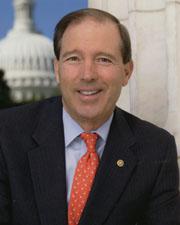 Sen. Tom Udall (D-NM)
Legislative Activity
Stay on top of the latest movement without scrolling through every action
Senate amendment agreed to: Amendment SA 2737 as modified agreed to in Senate by Unanimous Consent.
November 16, 2009
View full timeline
Senate amendment agreed to: Amendment SA 2737 as modified agreed to in Senate by Unanimous Consent.
November 16, 2009
Considered by Senate. (consideration: CR S11362, S11377-11378; text as modified: CR S11377)
November 16, 2009
Amendment SA 2737 as modified agreed to in Senate by Unanimous Consent.
November 16, 2009
Considered by Senate. (consideration: CR S11313)
November 10, 2009
Considered by Senate. (consideration: CR S11265)
November 9, 2009
Senate amendment submitted
November 6, 2009
Senate amendment proposed (on the floor): Amendment SA 2737 proposed by Senator Udall NM to Amendment SA 2730.(consideration: CR S11240-11241; text: CR S11240)
November 6, 2009
Amendment SA 2737 proposed by Senator Udall NM to Amendment SA 2730. (consideration: CR S11240-11241; text: CR S11240) To make available from Medical Services, $150,000,000 for homeless veterans comprehensive service programs.
November 6, 2009
Text
Proposed
MILITARY CONSTRUCTION, VETERANS AFFAIRS, AND RELATED AGENCIES
APPROPRIATIONS ACT, 2010

The ACTING PRESIDENT pro tempore. Under the previous order, the
Senate will resume consideration of H.R. 3082, which the clerk will
state by title.
The assistant legislative clerk read as follows:

A bill (H.R. 3082) making appropriations for military
construction, the Department of Veterans Affairs, and related
agencies for the fiscal year ending September 30, 2010, and
for other purposes.

Pending:

Johnson/Hutchison amendment No. 2730, in the nature of a
substitute.

The ACTING PRESIDENT pro tempore. The Senator from South Dakota is
recognized.

[[Page S11240]]

Mr. JOHNSON. Mr. President, as we resume consideration of the MilCon/
VA bill, I remind my colleagues how important this bill is to the
health and well being of our Nation's veterans and military troops and
families.
Overall, the bill provides $134 billion for veterans health and
benefits and for urgent investments in military construction, including
family housing, barracks and operational facilities.
Within that total, the bill before the Senate provides increased
funding for a number of smaller but important initiatives. Let me cite
just a few examples.
For veterans, the bill provides $3.2 billion for health care and
supportive services for homeless veterans. Ending homelessness among
veterans is one of Secretary Shinseki's top priorities, and I am
committed to doing everything possible through the appropriations
process to help him achieve that goal. To that end, I have an amendment
to provide another $50 million to the VA to renovate empty buildings on
VA medical campuses to provide housing and services to homeless vets.
For the military, the bill fully funds the expansion of the
Homeowners Assistance Program to help military families who face steep
losses on home sales as a result of orders to new posts during the
current mortgage crisis. Military families cannot pick and choose when
or where they move--they go where their orders send them when they are
told to move. The expansion of the Homeowners Assistance Program is
designed to help military families who must move at a time when home
values have plummeted to avoid foreclosure or financial ruin by
compensating them for losses on home sales.
And for the Nation's economic and environmental health, the bill
provides $225 million to promote energy conservation and investment in
renewable energy resources at U.S. military bases, nearly triple the
budget request. The Defense Department is the single largest consumer
of energy in the Nation. This bill provides the funding to step up
efforts to reduce energy consumption on military bases and to promote
renewable energy alternatives, ranging from installing energy efficient
light bulbs to powering an installation with geothermal energy.
These are just a few examples of the many important programs funded
in this bill, and a few of the reasons why it is important that we act
swiftly to pass the bill. I urge my colleagues to come to the floor if
they wish to speak or if they have amendments to offer, and to work
with the committee staff to clear amendments.
Mr. President, I yield the floor and suggest the absence of a quorum.
The ACTING PRESIDENT pro tempore. The clerk will call the roll.
The assistant legislative clerk proceeded to call the roll.
Mr. UDALL of New Mexico. Mr. President, I ask unanimous consent that
the order for the quorum call be rescinded.
The ACTING PRESIDENT pro tempore. Without objection, it is so
ordered.

Amendment No. 2737 to Amendment No. 2730

(Purpose: To make available from Medical Services, $150,000,000 for
homeless veterans comprehensive service programs)

Mr. UDALL of New Mexico. Mr. President, I call up amendment No. 2737.
The PRESIDING OFFICER. The clerk will report.
The assistant legislative clerk read as follows:

The Senator from New Mexico [Mr. Udall], for himself, Mr.
Bingaman, and Mr. Bond, proposes an amendment numbered 2737
to amendment No. 2730.
On page 52, after line 21, add the following:
Sec. 229.  Of the amount appropriated or otherwise made
available by this title under the heading ``medical
services'', $150,000,000 shall be available for the grant
program under section 2011 of title 38, United States Code,
and per diem payments under section 2012 of such title.

Mr. UDALL of New Mexico. Mr. President, let me, first of all, thank
Senator Johnson for all his hard work on this appropriations bill. The
Military Construction, Veterans Affairs appropriations bill is one of
the most important bills we do in the Congress because, as he has said
earlier, it supports our veterans, supports their health care, supports
military construction, and supports what they do in the communities
around the country and across the world. In particular, it supports the
Department of Veterans Affairs.
After reviewing this piece of legislation, I commend Senator Johnson
on his excellent leadership. I also thank him for working with me on
this particular amendment. I also thank his excellent staff.
I rise to talk about America's forgotten heroes and to offer this
amendment to improve upon the excellent legislation before us today.
Imagine dedicating your life to serving your country. You give up time
with your family, you put your life on the line, you sacrifice
everything for the freedom and security of your fellow Americans. Then,
you come home and you cannot hold down a job or you cannot adjust to
everyday life because of the traumatic experience you have been
through. Soon, you find yourself without four walls to call home.
Many of our veterans transition back into civilian life without
problems. For many others, it simply takes more time. But for some
veterans, that transition is painfully difficult. Sometimes, it never
happens at all. Right now, more than 130,000 of our Nation's 24 million
military veterans--brave Americans who answered the call to serve--are
homeless on any given day. They are in their greatest hour of need,
living on the streets without support or any hope for a better
tomorrow.
If every American living on the street is a tragedy, every veteran
living on the street is a crime. Our veterans deserve better than that
from the Nation they served. At the bare minimum, this country has a
responsibility to provide its veterans with a place to lay their heads.
Sadly, when it comes to this basic duty, we have not lived up to our
ideals. Roughly, 200,000 American veterans experience homelessness at
some time during the year. Veterans are twice as likely as other
Americans to be homeless. This is a statistic that should outrage all
of us.
President Obama has set a goal of eliminating the homelessness of
veterans in 5 years. I commend him for that. I commend the subcommittee
for the legislation they have put together to provide funding for
several VA homelessness programs--and I commend Senator Johnson for his
leadership on this legislation--including $144 million for the Homeless
Grant and Per Diem Program.
My amendment, however, increases the funding in the bill by a modest
$6 million, bringing it to the program's full authorization
level. Senators Bond and Bingaman are joining in this effort as
amendment cosponsors, and I thank them for their support.

This amendment will provide additional funds to construct, renovate,
and acquire buildings to be used as service centers or transitional
housing for homeless veterans. These grants are critical to
organizations working to provide shelter to our homeless veterans. In
my home State of New Mexico, six organizations in Albuquerque, Gallup,
Las Cruces, and Las Vegas, have received these funds over the past 8
years. They will tell you firsthand how critical this funding is to our
veterans and to our country.
While I know this funding is not an end-all, be-all solution to
veteran homelessness, it is a good start.
I received a letter from a 15-year-old Boy Scout from Albuquerque a
bit ago. His father and grandfather are veterans, and he is planning to
follow in their footsteps and join the military himself when he is old
enough. This young man wrote to say how angry he is that we are not
doing enough to help our homeless veterans. Here is what he said in his
letter that he wrote me:

These men and women are doing what they were called to do
by our government . . . but then they come back and are
treated so poorly by everyone . . . We, as a nation, need to
do more to help our veterans.

As long as America faces threats and values freedom, we will need men
and women to protect us. And as long as men and women serve in uniform,
we all have a sacred responsibility to support them.
To the smart young man who wrote me that letter and to all America's
veterans, this bill and this amendment builds on efforts to meet our
country's moral obligations to the men and women who so bravely served
our country. I urge my colleagues to support passage of both.

[[Page S11241]]

Mr. President, I yield the floor.
The ACTING PRESIDENT pro tempore. The Senator from South Dakota.
Mr. JOHNSON. Mr. President, this is an excellent amendment. I thank
the Senator for offering it. I will accept this amendment at the
appropriate time.
Mr. UDALL of New Mexico. Mr. President, if the Senator will yield for
a comment, I, once again, thank Senator Johnson. I know when he looks
at these veterans issues and deals with them, he has the utmost
respect. I believe he has a son who has served. He brings a compassion
to these veterans issues that shows in this legislation we have on the
floor today.
I hope all of my colleagues will review the legislation and see that
the Senator from South Dakota put a lot of hard work in and his staff
has put a lot of hard work in. I once again appreciate him and his
staff for working with me on this amendment. I look forward to working
with him to see that it is accepted.
Mr. JOHNSON. I thank the Senator from New Mexico.
Mr. INOUYE. Mr. President, I submit pursuant to Senate rules a
report, and I ask unanimous consent that it be printed in the Record.
There being no objection, the material was ordered to be printed in
the Record, as follows:

Disclosure of Congressionally Directed Spending Items

I certify that the information required by rule XLIV of the
Standing Rules of the Senate related to congressionally
directed spending items has been identified in the committee
report which accompanies S. 1407 and that the required
information has been available on a publicly accessible
congressional website at least 48 hours before a vote on the
pending bill.

Mr. SANDERS. Mr. President, I ask unanimous consent to speak as in
morning business.
The ACTING PRESIDENT pro tempore. Without objection, it is so
ordered.

Too Big To Fail Legislation

Mr. SANDERS. Mr. President, as a result of the greed, the
recklessness, and the illegal behavior of a handful of executives on
Wall Street, we are in the midst of the worst economic crisis since the
Great Depression. Millions of Americans from one end of this country to
the other have lost their jobs, they have lost their homes, they have
lost their savings, they have lost their ability to send their kids to
college, and they have lost their hope. In fact, just this morning, we
have learned that the official unemployment rate is now a staggering
10.2 percent--the highest in over 26 years.
Since the recession began in December of 2007, 8.2 million Americans
have lost their jobs and the unemployment rate has more than doubled.
In total, today 15.7 million Americans are officially unemployed;
another 9.3 million are working part time--they want to work 40 hours a
week, but they are only working part time; and 2.2 million workers have
given up looking for work altogether. When you add those three factors
together--official unemployment, people who have given up looking for
work, and people working part time who want to work full time--what you
are left with is an incredible 17.5 percent of the American workforce
unemployed or underemployed--27 million Americans. And when we go out
and we find that people are angry or hurt or depressed, that is one of
the reasons.
Over a year has gone by since Congress--against my vote--passed the
$700 billion bailout for Wall Street. The Federal Reserve has committed
trillions of additional dollars in virtually zero-interest loans and
other assistance to large financial institutions. Add it all together,
and you are looking at the largest taxpayer bailout in the history of
the world.
Then-President Bush, Secretary of the Treasury Paulson, and Fed
Chairman Ben Bernanke told us at that time that we needed to bail out
Wall Street because we could not allow these huge financial
institutions and insurance companies to fail because if they failed,
their failure would be systemic and would impact every aspect of our
economy and would take down large segments not only of financial
services but the entire economy as well. We all remember: This is not a
bailout of Wall Street, this is a bailout to help Main Street.
One might think, if these institutions were ``too big to fail,'' one
kind of obvious solution--and you don't need a Ph.D. in economics to
figure this out--is that you might want to make them smaller. If they
are too big to fail, maybe you would want to reduce their size. Yet,
under the leadership of the Bush administration and Fed Chairman Ben
Bernanke, these financial institutions did not get smaller, they got
bigger.
Last year, Bank of America, the largest commercial bank in this
country, which received a $45 billion taxpayer bailout, purchased
Countrywide, the largest mortgage lender in this country, and Merrill
Lynch, the largest brokerage firm in this country. You don't become
smaller when you incorporate other large institutions into your
existence.
Last year, JPMorgan Chase, which received a $25 billion bailout from
the Treasury Department and a $29 billion bridge loan from the Fed,
acquired Bear Stearns and Washington Mutual, the largest savings and
loan in the country.
Last year, the Treasury Department provided an $18 billion tax break
to Wells Fargo to purchase Wachovia, allowing that bank to control 11
percent of all bank deposits in this country.
Today, these huge financial institutions have become so big that,
according to the Washington Post, the four largest banks in America--
and I want people to hear this--Bank of America, Wells Fargo, JPMorgan
Chase, and Citigroup, now issue one of every two mortgages. Got that?
The largest four financial institutions issue half of the mortgages in
America. They issue two out of three credit cards and hold $4 out of
every $10 in bank deposits in the entire country.
The face value of over-the-counter derivatives at commercial banks
has grown to $290 trillion, 95 percent of which are held at just five
financial institutions in the entire country--JPMorgan Chase, Bank of
America, Citigroup, Goldman Sachs, and Morgan Stanley. Derivatives are
nothing more than side bets by Wall Street gamblers that oil prices
will go up or down or that the subprime mortgage market will continue
to get worse or on the weather or whatever can make them a quick buck.
Risky derivative schemes led to the $182 billion bailout of AIG, the
collapse of Lehman Brothers, the downfall of Bear Stearns, and
precipitated the largest bailout in the history of the world.
If any of these financial institutions were to get into major trouble
again--and, frankly, there is no reason to believe that will not happen
because they are spending millions of dollars trying to influence
Congress to prevent any action to stop them from going back to the way
they were before the collapse--we would be in line for a bailout that
would be even larger than the bailout that took place over a year ago.
Obviously, we cannot allow that to happen.
Not only are too-big-to-fail financial institutions bad for
taxpayers, the enormous concentration of ownership in the financial
sector has led to higher bank fees, usurious interest rates on credit
cards, and fewer choices for consumers.
Mr. President, I am sure you have gotten the same calls I have gotten
from people who say: You know, I pay my credit card bills on time every
single month, and suddenly they raise my interest rates to 29 percent,
to 30 percent. And one of the reasons these guys can get away with
doing that is there is not a heck of a lot of competition out there.
One out of four American families, as a result of this greed, this
usury, is now paying an interest rate of at least 20 percent on their
credit cards. That is another issue that, obviously, we have to deal
with.
According to BusinessWeek:

Bank of America sent letters notifying some responsible
cardholders that it would more than double their rates to as
high as 28 percent.

These are people who pay their bills on time.
According to a recent study by the Pew Charitable Trusts, credit card
interest rates went up by an average of 20 percent in the first 6
months of this year, even as banks' cost of lending declined. In other
words, as banks get bigger, consumers are having to pay twice--once to
bail out these institutions when they screw up altogether and a second
time to pay higher fees and interest rates.

[[Page S11242]]

The time has come for us to do exactly what Teddy Roosevelt, a good
Republican, did in the early 1900s; the time is now to do what I think
most Americans understand we have to do; that is, break up these huge
financial institutions.
Yesterday, I introduced S. 2746, the Too Big To Fail, Too Big To
Exist Act, which would do just that, and that is the bottom line. The
bottom line here is that if a financial institution is too big to fail,
that financial institution is too big to exist, and we have to start
breaking them up.
This legislation is all of two pages. So when people ask you if you
have read it, unlike the 1,900-page health care legislation, you can
say with all confidence that you have read it, because it is all of two
pages. What it says is, first, that the Secretary of the Treasury has
to identify every single financial institution and insurance company in
this country that is too big to fail within 90 days. In other words,
what are the institutions that if they fail would cause widespread
economic harm to the country? The Secretary of the Treasury does that
within 90 days. After 1 year, the Secretary of the Treasury would be
required to break up these institutions so that their failure would not
lead to the collapse of the U.S. or global economy.
There is growing support in our country and around the world for
breaking up too-big-to-fail financial institutions. Let me give you a
few important examples of that growing sentiment all over the world.
It was reported in the Washington Post and major media all over the
world that the British Government, in fact, is moving in that
direction. Let me quote from the Washington Post:

The British Government will break up parts of major
financial institutions bailed out by taxpayers. Spurred on by
European regulators, the British Government is forcing the
Royal Bank of Scotland, Lloyds Banking Group and Northern
Rock to sell off parts of their operations. The Europeans are
calling for more and smaller banks to increase competition
and eliminate the threat posed by banks so large that they
must be rescued by taxpayers, no matter how they conducted
their business, in order to avoid damaging the global
financial system.

That is about it. Ain't more complicated than that. Let's break them
up before they again lead this world to a major financial crisis. Let's
break them up before they require hundreds and hundreds of billions of
dollars in bailout. And in my view, it is a positive thing that the
Government of the UK is moving in that direction.
But it is not just the Government of UK. On October 15, 2009,
Bloomberg News reported that former Federal Reserve Chairman Alan
Greenspan--perhaps more than any other individual, the person most
responsible for the deregulatory efforts which led us to where we are
today--said this. This is what Greenspan said on October 15, 2009:

If they're too big to fail, they're too big. In 1911, we
broke up Standard Oil--so what happened? The individual parts
became more valuable than the whole.

Former Fed Reserve Chairman Paul Volcker, the head of President
Obama's Economic Recovery Advisory Board, said:

Keep banks small so that any failure won't have systematic
importance . . . People say I'm old-fashioned and banks can
no longer be separated from nonbank activity. That argument
brought us to where we are today.

That is former Fed Chairman Paul Volcker.
Robert Reich, President Clinton's former Labor Secretary, said:

No important public interest is served by allowing giant
banks to grow too big to fail . . . Wall Street giants should
be split-up--and soon.

Sheila Bair, the head of the Federal Deposit Insurance Corporation,
has said:

We need to reduce our reliance on large financial
institutions and put an end to the idea that certain banks
are too big to fail.

On and on, people all over our country, conservatives, progressives,
are making that point.
Let me conclude by saying this. As Members of the Senate, Members of
Congress, we are besieged every day by enormously powerful and wealthy
special interests. The health insurance industry is spending over $1
million a day on lobbying, huge amounts of campaign contributions. The
drug companies, the military defense contractors, you name it, they are
all outside the door, fighting to make sure that their special
interests are getting more and more. But at the top of that list of
powerful special interests certainly are the large financial interests.
Over a 10-year period they spent over $5 billion in lobbying and
campaign contributions in order to make sure that Congress deregulated
their activities so they could merge, so they could engage in reckless
financial speculation.
They won and the American people have lost, and the American people
are paying that price today. The time is now for us to say enough is
enough, for us to do what I think the vast majority of the American
people want us to do and that is, if an institution is too big to fail,
it is too big to exist.
Let's start breaking them up for two basic reasons. No. 1, I don't
want to see a huge bailout having to take place again, hundreds and
hundreds of billions of dollars of taxpayer money going to these guys.
No. 2, it is unhealthy for the economy when so few people have such a
concentration of ownership in terms of credit cards, in terms of
mortgages, in terms of other financial transactions. The small business
community and middle business community desperately need credit and
they are not getting credit. You have people on there who are
controlling a whole lot of our financial system.
Now is the time to do what Teddy Roosevelt did well over 100 years
ago, and that is to stand up to these guys. For the well-being of the
economy and for the American people, let's break them up.
Mr. President, I yield the floor.
The ACTING PRESIDENT pro tempore. The Senator from South Dakota.
Mr. JOHNSON. Mr. President, I suggest the absence of a quorum.
The ACTING PRESIDENT pro tempore. The clerk will call the roll.
The legislative clerk proceeded to call the roll.
Mr. TESTER. Mr. President, I ask unanimous consent the order for the
quorum call be rescinded.
The ACTING PRESIDENT pro tempore. Without objection, it is so
ordered.
Mr. TESTER. Mr. President, I ask unanimous consent to speak as in
morning business.
The ACTING PRESIDENT pro tempore. Without objection, it is so
ordered.

Rural Veterans Health Care

Mr. TESTER. Mr. President, I rise to join with the chairman of the
Veterans' Affairs Committee to urge passage of S. 1963. This bill
contains the Rural Veterans Healthcare Improvement Act, a bipartisan
measure that will make countless improvements in the VA for veterans in
most of the rural places in this country. This bill locks in the
mileage reimbursement rate for disabled veterans who have to travel
long distances to get to a VA clinic. It also gives greater authority
to develop new strategies to address the mental health needs of OIF and
OEF veterans in highly rural areas where access to health care is an
enormous challenge.
I am also pleased the bill authorized hiring of health care
coordinators at a local level, to prioritize the needs of our country's
184,000 American Indian veterans. Most of these veterans are located in
only a few States. The bill gets folks who understand the unique needs
of tribal veterans to the areas that need them the most. I am honored
we were able to get strong support across the veterans community for
this bill and I think it will help a lot of rural veterans if we get
this bill passed.
When someone puts their life on the line to defend this country, they
have earned health care, education benefits, and disability benefits if
needed. America's responsibility to honor the promise of our veterans
should not depend on whether the veteran lives in an urban area, but
too often that is still the case. This bill helps to address some of
the inequalities facing rural veterans.
This bill was approved unanimously by the VA Committee just before
Memorial Day. It is now almost Veterans Day. We can do better by folks
who served our country and settled down in rural America. Let's not
stand in the way for better VA services for rural veterans.
I understand there has been a hold put on this bill. Our veterans are
too important for politics. The fact of the matter is, our veterans are
folks who, as I said in my comments, have served this country so very
well. We need to

[[Page S11243]]

step to the plate and serve them in the same way they served us--live
up to our promises, live up to our obligations to the veterans of this
country.
I encourage the Senate to pass this bill very soon. Hopefully, we can
get it done before Veterans Day.
I yield the floor.
The ACTING PRESIDENT pro tempore. The Senator from Tennessee is
recognized.
Mr. CORKER. Mr. President, I rise to speak as in morning business.
The ACTING PRESIDENT pro tempore. Without objection, it is so
ordered.

Health Care Reform

Mr. CORKER. Mr. President, I will be very brief. I know there are
very few Senators still here in the Capitol. Most people, as they
should, have gone home to meet with constituents, something I will do a
little later this afternoon. I realize there may be very few staff
members who may be listening. I realize the other body is in session
and may possibly take up the health care bill that all of us have been
talking about for some time here on the floor.
I want to make a point I made a few days ago one more time. Early
this week I woke up early in the morning and was thinking about the
health care legislation that is before this body--or will be before
this body very soon. It has been the focus of the country, if you will,
over the last several months. I thought about the provisions that are
the base building blocks in this legislation. You have a piece of
legislation that is taking Medicare savings, $400 to $500 billion, and
using those ``savings'' to leverage a whole new entitlement, not using
those ``savings'' to take Medicare and make it more solvent or to deal
with the SGR issue so many physicians around this country are concerned
about.
I thought about the fact that not long ago, a couple of years ago--
and probably, Mr. President, even when you were doing the same thing I
was doing and that is seeking this office--so many people were
concerned about the unfunded liabilities we had in Medicare and Social
Security. There seemed to be a bipartisan move to want to solve that
problem for the long haul so we knew that those particular entities
would be dealt with in an appropriate way. Here we have a bill that is
taking $400 billion to $500 billion in savings, depending on which
draft, whether it is the House or the Senate, and instead of making
Medicare more solvent--it has $38 trillion in unfunded liabilities--we
in this body are using those savings to leverage a whole new program.

Second, we are using Medicaid and basically creating huge unfunded
mandates for our States. I think all of us know that. In my own State
we have a Democratic Governor who wants to see health care reform
occur, as I do, but he is very concerned, in a State that expects
revenues to be at 2008 levels in 2013, that all of a sudden he has this
unfunded mandate.
Third, this bill, as we know, is going to raise insurance rates
because of some of the provisions wherein insurance companies have to
take all comers but everyone doesn't have to bill health insurance. In
my own State, it is a 60-percent increase projected in 5 years by an
independent group. This is not something the insurance companies
directly put together; an audit was put together to look at this.
If I had drafted this bill, Bob Corker from Tennessee, a Republican,
if any of the people on this side of the aisle had drafted this bill,
there would not be one single Democratic vote for this bill if you look
at those components which are the basic building blocks of this bill.
This week, as I have come up here to vote, I have talked to numbers of
my friends, like you, Mr. President. You are one of the specific ones.
I don't want to throw you in this category, but you are my friend. I
have numbers of friends on the other side of the aisle where I seek to
find common ground and we cosponsor legislation together. You and I are
working on something right now.
As I rode the elevator up yesterday to the vote we had last night, I
talked to some numbers of my friends on the other side of the aisle,
both on the elevator, walking here, but on this floor.
And I said: You know, guys, if I had offered this bill, or any
Republican had offered this bill that we are getting ready to debate on
the Senate floor, there would not be a single Democratic vote for it.
That is not because of partisanship, by the way; it is because of
what is in the bill itself. Almost to a person, there were a few who
said they agreed.
They said: You are right. If Republicans offered a bill that is at
$400 to $500 billion of Medicare savings and did not apply it to making
Medicare more solvent but took that to leverage a whole new program,
there would not be a single Democratic vote for that bill.
So I understand. We had a President of our party during the first 2
years I was here. I understand what happens when you are going to ``do
one for the Gipper,'' if you will. You are going to ``do one for the
President'' who needs this. But this is a very important piece of
legislation. I do not understand--I really do not--on something that is
going to be hard to undo, why so many of my colleagues on the other
side of the aisle are supporting a piece of legislation that if they
were left to their own accord and in a vacuum--did not have the
President, did not have the majority leader, did not have the Speaker
of the House pushing this legislation--if it was just presented to them
if they were at a townhall meeting, they had never heard of this
legislation before, and somebody said: Would you support a bill that
does this, I do not think there would be a person on the other side of
the aisle who would support this legislation.
So as we move into this weekend--and I know this body is not going to
take it up. I know the House is. I hope there are a few House Members
listening. I hope people will think about this and step back away from
it.
I am one of those Republicans who wants to see responsible health
care reform. I want to see us lower the costs of this delivery system,
which this bill candidly does not do. I want to see more Americans have
access--if not all--to affordable, quality health care.
This bill, we all know, takes us in a direction, there is no
question, that is not the right direction. I hope that together we will
figure out a way to address health care reform in a way that will stand
the test of time.
This bill will not do that, and I know I have already talked to many
of the people I mentioned yesterday who said: We realize we are going
to create lots of problems. They are going to have to be dealt with
down the road, but we cannot vote against this piece of legislation
today.
I hope the body will rise to the occasion. I hope the body will put
aside a piece of legislation that I do not think anybody feels great
about. I hope we will come together and do something that is in the
best interests of our country.
I yield the floor.
The ACTING PRESIDENT pro tempore. The Senator from Hawaii is
recognized.
Mr. AKAKA. Mr. President, I ask unanimous consent to proceed as in
morning business.
The ACTING PRESIDENT pro tempore. Without objection, it is so
ordered.

rural veterans health care

Mr. AKAKA. Mr. President, I have come to the floor today to discuss
an important veterans' bill. Before I do so, I wish to express my great
sadness about the horrible tragedy yesterday at Fort Hood. My thoughts
and prayers are with those wounded, the families of those killed, and
to all the soldiers and civilians defending our great nation at Fort
Hood.
As chairman of the Senate Committee on Veterans' Affairs, I take my
responsibility to the Nation's veterans very seriously. We are an
active committee and are working hard to make improvements in VA care
and benefits.
I am delighted to note that the President signed the Veterans Health
Care Budget Reform and Transparency Act of 2009 into law last month.
This measure will provide timely and predictable funding for the
veterans health care system. I am grateful to all who worked on this,
including the committee's ranking member, and the Veterans Service
Organizations, that made this one of their priorities.
Despite this success, we, as a committee, have not been able to
achieve action on S. 1963, the proposed Caregiver and Veterans Health
Services Act of 2009. This vitally important veterans' health bill is
being held up by a single Senator. Each day that this measure is
delayed, means that vital benefits for veterans are delayed.

[[Page S11244]]

This is a bipartisan bill, the provisions of which were reported by
the committee as S. 801 and S. 252, with the full support of our
ranking member, Senator Burr.
This bill is supported by many veterans' organizations, including the
American Legion, the Veterans of Foreign Wars, the Disabled American
Veterans, the Paralyzed Veterans of America, and the Wounded Warrior
Project.
Various other advocates support this bill, as well, including the
Nurses Organization of Veterans Affairs, the Brain Injury Association
of America, the American Academy of Ophthalmology, the American
Association of Colleges of Nursing, and many others.
By blocking S. 1963, this single senator is denying veterans many
benefits and services.
One of the key benefits is caregiver assistance for our most
seriously wounded veterans.
The committee continues to hear about family members who quit their
jobs, go through their savings, and lose their health insurance, as
they stay home to care for their wounded family members.
For those family members who manage to keep their jobs, their
employers, including many small businesses already struggling in these
economic times, lose money from absenteeism and declining productivity.
The toll on the caregivers, who try to do it all, can be measured in
higher rates of depression, and poor health as they struggle to care
for these wounded warriors, an obligation that ultimately belongs to
the government.
This legislation fulfills VA's obligation to care for the nation's
wounded veterans, by providing their caregivers with counseling,
support, and a living stipend.
The measure also provides health care to the family caregivers of
injured veterans. These caregivers deserve our support and assistance.
As a representative of the Wounded Warrior project said in testimony
before the committee, ``The time has surely come to create a robust,
nationwide wounded warrior family caregiver program to address the
urgent needs of these family members.'' S. 1963 creates such a program.
By blocking S. 1963, this Senator is also blocking benefits
specifically for women veterans. This bill, and Senator Murray has been
a leader on this, would do a number of things, such as increase funding
for mental health care for women who suffered military sexual trauma,
and for medical services for newborn children.
With the help of Senator Tester, this bill also would improve access
to care in rural areas. States which have an especially high number of
veterans living in rural areas, such as Montana, Nevada, Wyoming,
Florida, Arizona, Arkansas, Virginia, Idaho, Oklahoma, and New Mexico,
would benefit greatly from these programs.
The bill also attacks another problem, that of homeless veterans.
On any given night we know that more than 130,000 veterans are
homeless.
We know that homelessness is often a consequence of multiple factors,
including unstable family supports, job loss, and health problems.
S. 1963 would also create programs to help ease the burden of veteran
homelessness, including programs aimed at outreach so that veterans
know that they are eligble for benefits.
This lone Senator also is blocking provisions that would improve
quality controls for VA health care, from the facility level to the
national level.
Two years ago, the VA hospital in Marion, IL, hadnine veterans die
following surgery.
The VA's inspector general found that the Marion VA's quality
controls were not adequate to ensure that veterans received good
quality care.
This month, the IG published another report on the Marion hospital,
finding that it still did not have adequate quality controls. It is
time for this body to act, so that no more veterans receive less than
the best care VA can provide.
Senator Durbin drafted provisions in this bill that will help improve
overall quality management so as to help fix the problems at Marion and
other facilities.
S. 1963 would provide uniform allowances for VA police officers. Many
organizations have expressed support for these provisions, including
the Fraternal Order of Police.
VA police officers ensure the security of veterans and their families
while they are visiting VA hospitals and clinics.
To refuse to provide for these officers because it is too expensive
is not only penny-wise and pound-foolish, it cheapens the sacrifices of
these uniformed officers and the Nation's veterans who are protected by
them.
While I understand that the Senator who is refusing to agree to allow
this bill to go forward questions the cost of the underlying bill, I
would say that we cannot now turn our back on the obligation to care
for those who fought in those efforts.
When we, as a body, vote to send American troops to war, we are
promising to care for them when they return.
I firmly believe the cost of veterans' benefits and services is a
true cost of war and must be treated as such.
We are preparing to observe Veterans Day.
Let us remember that we owe our veterans our gratitude and
appreciation year round, and not merely on the day set aside for the
commemoration of their service and sacrifice.
It would be truly disgraceful if veterans were made to feel forgotten
except for this 1 day per year.
Indeed, our gratitude should be as steadfast as the great monuments
that Americans have built in commemoration of the very service and
sacrifices our veterans made.
There should be no ambivalence in our attitude toward those who serve
in the U.S. Armed Forces.
And this legislation should be immediately cleared by the Senate.
The ACTING PRESIDENT pro tempore. The Senator from Alaska.
Mr. BEGICH. Mr. President, I ask unanimous consent to speak in
morning business.
The ACTING PRESIDENT pro tempore. Without objection, it is so
ordered.
Mr. BEGICH. Mr. President, I rise in support of S. 1963, the
Caregiver and Veterans Omnibus Health Services Act of 2009. I thank the
chairman of the Veterans' Affairs Committee, Senator Akaka, for his
leadership on this bill and in committee.
S. 1963 is comprehensive legislation that addresses many of the needs
of our veterans, our Nation's heroes. Provisions are included to
improve veterans health care, provide benefits for caregivers of
wounded veterans, enhance outreach to homeless veterans, and expand
health care for female veterans. The bill also provides for VA
personnel improvement and quality management. Rural veterans, such as
those in my State who face challenges accessing health care every day,
will benefit from this bill. It expands telemedicine programs and
provides the Department of Veterans Affairs authority to recruit and
retain high-quality health professionals in rural communities. The bill
also improves mental health care. Eligibility to receive readjustment
counseling for Iraq and Afghanistan vets, including the National Guard
and reservists, will increase.
So many issues facing our veterans today are addressed in S. 1963.
Passage of this legislation and its enactment into law will improve and
increase services for veterans and acknowledge the sacrifice of their
caregivers.
Yet even as Veterans Day approaches, a Member of the Senate has
placed a hold on this bill, denying better services for our veterans. I
cannot imagine why this hold has been placed on this legislation. How
can a Member of the Senate deny our veterans better care? How can my
Senate colleague justify his hold on a bill that helps homeless and
wounded veterans? How can my colleague deny veteran caregivers deserved
relief and support? There is no excuse for not supporting our veterans
and their caregivers. They have earned better than what we have
provided to date. This bill gives us an opportunity to provide for
veterans and to honor their sacrifices. This bill, on which my
colleague has placed a hold, will eliminate copayments for veterans who
are catastrophically disabled and allow the VA to reimburse these
veterans for emergency care at non-VA facilities. How can my colleague
deny disabled veterans easier and less costly medical care? Veterans
have paid their dues, and it is our turn, our duty, and our obligation
to take care of them.
I am disappointed my Senate colleague does not share this same sense

[[Page S11245]]

of duty and responsibility to our Nation's heroes who have sacrificed
so much for our very right to stand in this body and debate this
matter. There is no good reason or rationale for a hold to be placed on
this legislation.
I call on my colleague to remove this hold and ask my colleague to
remember, as Veterans Day approaches, that those who have served this
country deserve better. They have earned it. It is my obligation and
his obligation to support our veterans and to always remember the
sacrifice they have made.
Senator Coburn, let the Senate proceed with recognizing and providing
for our Nation's veterans by removing your hold on S. 1963.
Again, I thank Chairman Akaka for his unwavering support and advocacy
for our veterans.
I suggest the absence of a quorum.
The ACTING PRESIDENT pro tempore. The clerk will call the roll.
The legislative clerk proceeded to call the roll.
Mr. REED. Mr. President, I ask unanimous consent that the order for
the quorum call be rescinded.
The ACTING PRESIDENT pro tempore. Without objection, it is so
ordered.

Tragedy at Fort Hood, Texas

Mr. REED. Mr. President, I come to the floor today, as so many of my
colleagues have, to reflect on the extraordinary tragedy that took
place at Fort Hood, TX, yesterday. It is almost inconceivable such an
event could take place.
As we sort through the motives and the rationale, which may take
weeks, I think we, obviously, have to extend our deepest, sincerest
condolences to the families of these men and women. They were there
because they wanted to serve their country. They were there because
they were willing to risk their lives in service to this Nation.
Tragically and inexplicably, it happened on a post in the United
States not in a faraway land. I think this is a moment where we all
have to stop, not only to extend our warmest condolences to the
families, but also to reflect on the service and sacrifice of all the
troops. Their continued willingness to serve and expose themselves to
risk, to leave their families behind--all of this creates the pressure,
the tension, the burden of soldiering in this moment in our history. We
owe them more than we can repay them.
At this moment, I express my deepest condolences to the families and
also to those soldiers who came to the aid of their comrades, who
exposed themselves in a dangerous manner to try to get people to
safety, to try to provide first aid to the wounded. They continue to be
our heroes, and they always will be.
Mr. President, I would now like to speak on the military construction
bill before us. I want to commend, obviously, my colleagues, Senator
Johnson and Senator Hutchison, for their great work. I had the
privilege for a short time to serve as the acting chairman of the
subcommittee and worked very closely with both Senator Johnson, our
chairman, and Senator Hutchison, the ranking member. They are both very
committed and dedicated colleagues, and they have done a remarkable
job.
This bill provides $134 billion for military construction, military
family housing, and veterans affairs programs, an increase of
approximately $429 million over the President's request.
This bill provides a total of $109 billion for the VA and increases
funding for medical care by $4.2 billion over last year's funding.
For the first time, the bill includes advance appropriations for the
VA's medical programs to ensure a stable and uninterrupted funding
stream.
This bill also provides funding to combat homelessness among
veterans. This is a priority of both Secretary Gates and Secretary
Shinseki, and also Admiral Mullen, the Chairman of the Joint Chiefs of
Staff. This bill includes $3.2 billion for health care, support
services, and housing assistance for homeless veterans.
I hope, again, the Senate will act before Veterans Day to pass this
measure. I think it would be a fitting tribute to our veterans, whom we
honor in words, and I think we have the chance, early next week, to
honor them in deeds.
Mr. President, I ask unanimous consent that my following remarks be
printed elsewhere in Morning Business.
The ACTING PRESIDENT pro tempore. Without objection, it is so
ordered.
(The remarks of Mr. Reed are printed in today's Record under
``Morning Business.'')
Mr. REED. Mr. President, I yield the floor and suggest the absence of
a quorum.
The ACTING PRESIDENT pro tempore. The clerk will call the roll.
The assistant legislative clerk proceeded to call the roll.
Mr. REED. Mr. President, I ask unanimous consent that the order for
the quorum call be rescinded.
The ACTING PRESIDENT pro tempore. Without objection, it is so
ordered.

____________________