To clarify standing.
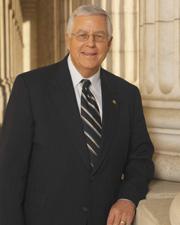 Sen. Michael B. Enzi (R-WY)
Legislative Activity
Stay on top of the latest movement without scrolling through every action
Roll call votes on amendments in Senate: Motion to table amendment SA 28 agreed to in Senate by Yea-Nay Vote. 55 - 41. Record Vote Number: 10.
January 22, 2009
View full timeline
Roll call votes on amendments in Senate: Motion to table amendment SA 28 agreed to in Senate by Yea-Nay Vote. 55 - 41. Record Vote Number: 10.
January 22, 2009
Considered by Senate. (consideration: CR S739, S748-753, S758-759)
January 22, 2009
Motion to table amendment SA 28 agreed to in Senate by Yea-Nay Vote. 55 - 41. Record Vote Number: 10.
January 22, 2009
Senate amendment proposed (on the floor): Amendment SA 28 proposed by Senator Enzi.(consideration: CR S710-711; text: CR S710)
January 21, 2009
Amendment SA 28 proposed by Senator Enzi. (consideration: CR S710-711; text: CR S710) To clarify standing.
January 21, 2009
Senate amendment submitted
January 16, 2009
Votes
1 roll call on this amendment
Text
Proposed
LILLY LEDBETTER FAIR PAY ACT OF 2009--Resumed

The PRESIDING OFFICER. The clerk will report the pending business.
The assistant legislative clerk read as follows:

A bill (S. 181) to amend title VII of the Civil Rights Act
of 1964 and the Age Discrimination in Employment Act of 1967,
and to modify the operation of the Americans with
Disabilities Act of 1990 and the Rehabilitation Act of 1973,
to clarify that a discriminatory compensation decision or
other practice that is unlawful under such Acts occurs each
time compensation is paid pursuant to the discriminatory
compensation decision or other practice, and for other
purposes.

Pending:

Hutchison amendment No. 25, in the nature of a substitute.

Mr. LEAHY. Madam President, I thank the Senator from Texas, and I
especially thank my dear friend from Ohio, whom we are going to miss
around here.
Madam President, I held a hearing at which Miss Lilly Ledbetter
testified before the Senate Judiciary Committee. It was one of the most
moving hearings we have had. The fact that a very activist, very
Republican Supreme Court had basically written new law to deny her
rights was shocking to everybody before that committee.
I believe we have to pass the bipartisan Lilly Ledbetter Fair Pay Act
so employers are not rewarded for deceiving workers about their illegal
conduct and maybe signal to the Supreme Court to stop legislating, and
stop being an activist Court, but to uphold the law as we write it.
One of the Justice Department's roles in our Federal system of
government is to protect the civil rights of all Americans, including
those that protect them against discrimination.
The Bush administration's erosion of longstanding interpretation of
our antidiscrimination laws has created a new obstacle for victims of
pay discrimination to receive justice. That was a mistake when it was
advanced by the Bush-Gonzales et al. Justice Department. It was a
mistake when five Justices on the Supreme Court adopted the Justice
Department's erroneous interpretation of congressional intent. It
culminated in an erroneous opinion written by Justice Alito.
I understand the Members on the other side of the aisle introduced
partisan amendments to the legislation. They have that right. But it is
my belief that the amendments should be opposed for one simple reason:
they are going to allow illegal pay discrimination to continue.
We are going to hear that this might encourage workers who are being
paid less as a result of discrimination to delay filing for equal pay.
That argument defies logic. Anyone who heard Ms. Ledbetter's testimony
before either the Senate Judiciary Committee or the Senate Health,
Education, Labor, and Pensions Committee knows that she, like other
victims of pay discrimination, had no incentive to delay filing suit.
But employers, based on the erroneous interpretation by the Supreme
Court, the activist interpretation by the Supreme Court, now have a
great incentive to delay revealing their discriminatory conduct:
blanket immunity.
The reality is, many employers do not allow their employees to learn
how their compensation compares to their coworkers'. They can hide it
and hide it and hide it until these women finally retire, pray that
they never find out how they were discriminated against, and then say
when they are found out: Oh, my goodness gracious, you should have
filed suit earlier. The fact that we had it all locked up and you
couldn't possibly have known you were being discriminated against is
your fault. These victims have the burden of proving the discrimination
occurred and that evidentiary task is only made more difficult as time
goes on.
It seems it is always the woman employee's fault. That is wrong.
Workers like Ms. Ledbetter and her family are the ones hurt by the
ongoing diminished paychecks, not their employers.
The bipartisan Ledbetter Fair Pay Act of 2009 does not disturb the
protections built into existing law for employers, such as limiting
backpay in most cases to 2 years. It does not eliminate the existing
statute of limitations. Instead, it reinstates the interpretation of
when the 180-day time limit begins to run, an interpretation that was
run over roughshod by the Bush administration at its urging by their
appointees on the Supreme Court. The bill corrects this injustice to
allow workers who are continuing to be short-changed to challenge that
on-going discrimination when the employer conceals its initial
discriminatory pay decision.
Opponents of the bipartisan Ledbetter Fair Pay Act may raise other
excuses. They will no doubt

[[Page S695]]

claim that somehow trial lawyers will benefit, but the reality is the
Supreme Court in the Ledbetter decision could actually lead to more
litigation because people will feel they have to file premature claims
so that time does not run out.
The Congressional Budget Office has concluded that this legislation
``would not establish a new cause of action for claims of pay
discrimination'' and ``would not significantly affect the number of
filings with the Equal Employment Opportunity Commission'' or with the
Federal courts.
Congress passed title VII of the Civil Rights Act to protect
employees against discrimination with respect to compensation because
of an individual's race, color, religion, sex or national origin but
the Supreme Court's Ledbetter decision goes against both the spirit and
clear intent of our antidiscrimination laws.
It also sends the message to employers that wage discrimination
cannot be punished as long as it is kept under wraps.
At a time when one-third of private sector employers have rules
prohibiting employees from discussing their pay with each other, the
Court's decision ignores a reality of the workplace--pay discrimination
is often intentionally concealed.
The Lilly Ledbetter Fair Pay Act is the only bill that gives workers
the time to consider how they have been treated and the time to work
out solutions with their employers. Our bipartisan bill fulfills
Congress's goal of creating incentives for employers voluntarily to
correct any disparities in pay that they find. Most importantly, our
bipartisan bill ensures that employers do not benefit from continued
discrimination.
I will not support amendments that weaken this bipartisan bill. I
support the ability of all employees to receive equal pay for equal
work.
The Lilly Ledbetter Fair Pay Act is the only bill that gives workers
the time to consider how they have been treated and the time to work
out a solution with their employers. Our bipartisan bill fulfills
Congress' goal of creating incentives for employers voluntarily to
correct any disparities in pay they find. I am not going to support
amendments that weaken this bipartisan bill. I support the ability of
all employees to receive equal pay for equal work. It comports
completely with what we learned in the Judiciary Committee.
I applaud the Senator from Maryland. I applaud her cosponsors. I am
proud to be one of them.
Ms. MIKULSKI. Before the Senator from Ohio speaks as agreed upon, I
thank the chairman of the Judiciary Committee for his compelling
remarks and steadfast support for women generally and certainly for his
longstanding advocacy that women should be paid equal pay for equal or
comparable work. Thank you very much.
The PRESIDING OFFICER (Mr. Nelson of Florida). The Senator from Ohio
is recognized.
Mr. VOINOVICH. Mr. President, I rise today in strong support of the
Hutchison substitute amendment.
Before I discuss the merits of the Hutchison amendment, I wish to
thank Senator Mikulski for her commitment to debate this legislation in
a constructive manner. As Senator Mikulski said, we can disagree,
without being disagreeable.
I thank the Democratic leader, the Senator from Nevada and the
minority leader, the Senator from Kentucky, for agreeing that we will
make our best efforts to return to the tradition here in the Senate of
debating bills and allowing amendments to be offered, and returning
things to the point where I think it will enhance the reputation of
this great body in terms of the body that is looking in on us. I hope
this is the beginning of a new era here. I think the more we can work
together, the better they are going to feel about the future of our
country.
I would also like to thank my colleague, Senator Hutchison, who I
know is extremely busy in her role as ranking member of the Commerce
Committee. Her efforts to draft a solution are commendable. Senator
Hutchison is in a strong position to speak on issues arising from both
her substitute amendment and Senator Mikulski's underlying legislation.
As Senator Hutchison said in her opening remarks, as a young lawyer
coming out of law school, she experienced the nefarious consequences of
gender discrimination. In addition, I think her experience as a small
business owner and the general counsel of a bank provides Senator
Hutchison with the unique perspective to understand the problems with
Senator Mikulski's legislation.
There is one thing on which we all agree: Gender and other forms of
discrimination are wrong, illegal, and they should not be tolerated.
This debate should not be about whether one party condones illegal
discrimination; rather, this debate must focus on how to strike the
right balance to address the situation in which a person is subject to
an individual act of discrimination but through no fault of their own
has no way to know about it.
As I mentioned during my retirement announcement last week, one of
the reasons I decided to retire in 2 years was the desire to spend more
time with my family. I am the proud father of a daughter, Betsy, who
graduated as a member of Phi Beta Kappa. When she was growing up, I
said: Honey, the sky is the limit for whatever you want to do.
In addition to my daughter Betsy, I have seven grandchildren, and six
of them are girls. I have said the same thing to them: The sky is the
limit. My oldest granddaughter, Mary Faith, is 12 years old. One of
these days, she is going to be out in that business world. I want
Betsy, Mary Faith, and all my grandchildren, to have the opportunity to
reach their full potential based on their God-given talents, and not be
constrained by outdated prejudices.
Based on the debate so far, I believe there is a good deal of
agreement between Members who support Senator Hutchison and Members who
support Senator Mikulski's legislation. For example, we agree that
discrimination based on gender is illegal and wrong. We also agree that
the dynamics of the modern workplace may make instances of such
discrimination difficult to detect if the discrimination is reflected
in pay decisions.
Unlike when someone is denied a job, a promotion, or is terminated,
paycheck discrimination may not be obvious. The source of our
disagreement is how to find a solution to address this specific issue.
Before I address the specifics of why I support Senator Hutchison's
amendment over Senator Mikulski's legislation, I believe there are some
misconceptions about the Supreme Court's Ledbetter v. Goodyear
decision. Advocates of the Ledbetter legislation have continued to
state that passing the Lilly Ledbetter Fair Pay Act will restore the
law to what it was before the Supreme Court's decision. This is
misleading. In its Ledbetter decision, the Supreme Court clarified a
faulty interpretation of its early decision in Bazemore v. Friday. The
Supreme Court did not change the underlying statute of limitations in
title VII.
I think it is helpful to understand what the Court did in
distinguishing these two cases. The Court's Bazemore decision held that
if an employer's pay structure is facially discriminatory, that is, the
pay structure sets different compensation on criteria like race or
gender, then the paycheck is the last act of illegal conduct from which
the 180-day filing period begins. The Court, rightfully in my opinion,
distinguished this from the situation in Ms. Ledbetter's lawsuit.
With Ms. Ledbetter's lawsuit there was not a discriminatory pay
structure in place, but rather allegations of specific acts of
discrimination. The Court found those discrete acts occurred outside
the 180-day filing period. I think that is an important distinction
Members should understand.
Still, as some of my colleagues pointed out during this debate,
specific and discrete acts of wage-based discrimination may be very
difficult to detect within the 180-day filing period provided under
title VII. This could lead to situations in which an employer escapes
liability simply because the person did not know that a discriminatory
act took place.
In such a situation, the 180-day filing rule appears to reward bad
behavior and harm the person facing the illegal discrimination. I agree
with Senator Mikulski that under this situation a strict 180-day filing
rule is unfair.
As one of my colleagues supporting the Ledbetter legislation pointed
out,

[[Page S696]]

the Supreme Court, in TRW v. Adelaide and in an opinion authored by
Justice Ginsburg, interpreted a statute of limitations arising under
the Fair Credit Reporting Act as starting ``from the date on which the
liability arises.'' Understanding this could unduly penalize victims of
identity theft, Congress enacted a fix as part of the Fair and Accurate
Credit Transaction Act of 2003. This fix extended the relevant statute
of limitations based on the ``discovery by the plaintiff'' of the
impermissible conduct.
Unfortunately, this is not the approach the Ledbetter legislation
takes. Rather, it would adopt a rule allowing for the filing of
lawsuits 180 days after the last paycheck issued by the employer that
was affected by a discriminatory act, even if it was a single act that
occurred many years ago. Thus, the Ledbetter legislation could allow
for the filing of lawsuits long after someone knew they were subject to
a discriminatory act, effectively eliminating the statue of limitations
from title VII in many cases.
As the Supreme Court noted in its Ledbetter decision, statutes of
limitations serve an important policy of repose in our justice system.
Under American legal principles, it has long been public policy that a
person should not be called into court to defend claims that are based
on conduct long past.
As many of my colleagues who have practiced law know, it can be very
difficult to mount a defense in cases in which the underlying conduct
occurred long ago because witnesses are difficult to locate, memories
fade, and records are not maintained. In Ms. Ledbetter's case, the
supervisor accused of the misconduct died by the time of the trial. Yet
under the approach taken by the Ledbetter legislation, defendants could
potentially find themselves facing lawsuits that are years, if not
decades, old.
Because she recognizes that paycheck discrimination may not be
obvious in the modern workplace and that a bad actor should not benefit
from hiding such discrimination, Senator Hutchison crafted a sensible
compromise. Under the Hutchison amendment, a person could bring a claim
under title VII within 180 days after obtaining knowledge or
information that the person is the victim of discriminatory conduct. In
other words, you don't start the 180-day statute of limitations until
the person knows or has reasonable suspicion that she is subject to a
discriminatory wage. But once you know you have been discriminated
against, then it is your obligation to bring that to the attention of
the EEOC and start the process to obtain relief.
By allowing a person to bring a claim from 180 days after the
discriminatory conduct is discovered, Senator Hutchison's amendment
stops bad actors from benefiting, and addresses many of the concerns
many of my colleagues raised.
Unfortunately, the Ledbetter legislation would swing the pendulum
completely in the opposite direction and create an open-ended legal
liability that could expose businesses, the very entities we need to
help us lift our economy out of this recession, to expensive new legal
liabilities.
While this may not be good for insurance companies who write policies
and trial lawyers who bring lawsuits, I do not believe the legislation
is sound public policy.
Finally, I want to address a related issue before I yield the floor.
Besides disagreeing on the solution to the issues created by the
Ledbetter decision, Senator Mikulski's legislation did not go through
the HELP Committee during this Congress.
While I understand the HELP Committee held one hearing on the
Ledbetter bill during the 110th, this hearing occurred before Senator
Hutchison introduced her legislation, which is now before us as the
pending amendment. As a result, the Senate is left without the wisdom
of having testimony and information comparing the different approaches.
While I understand sometimes it is necessary to bypass committees,
the Senate has started to bypass the committee process too frequently.
So often, as a result of that committee process, compromises can be
worked out so once the bill is out of committee in many instances you
can get a UC and get that legislation passed, or at least people have
had a chance to talk about it in terms of some compromise.
So I am glad to be involved in this debate, but I believe the Senate
and our Nation would be better served if the Senate got back into the
habit of taking up legislation after it has gone through the relevant
committee. In fact, I believe if these two legislative proposals had
been discussed in the HELP Committee, the committee might have crafted
a compromise bill that had the support of most, if not all, of my
colleagues.
Mr. President, I yield the floor.
The PRESIDING OFFICER. Under the previous order, the Senator from
Texas is recognized.
Mrs. HUTCHISON. Mr. President, I appreciate very much the remarks of
the Senator from Ohio who has much the same feeling about this I do. He
wants to protect the employee who has known discrimination but also
knowing that a business or small business needs to know what the
liability might be and, hopefully, correct it if the notification is
given in a timely way.
So I would look forward to talking about my amendment. At this time,
I ask unanimous consent that my amendment be set aside in order for
Senator Specter to be able to offer amendments, after which then
Senator Mikulski will have the floor. Then when we get back to my
amendment, I would like to debate my amendment.
Ms. MIKULSKI. Mr. President, I thank the Senator. We wish to follow
the recommendations of our mutual leadership, which was to debate the
Hutchison substitute tonight but to get as many amendments laid down
tonight as we can. The Senator from Pennsylvania has two amendments he
wants to offer. So I agree with the plan of laying aside the Hutchison
substitute, having the Senator from Pennsylvania, Mr. Specter, offer
his amendment, and at such time we will return to our robust debate on
the Hutchison substitute and, hopefully, we can get a regular order
going back and forth.
Mrs. HUTCHISON. Mr. President, I think that is a good plan. I
appreciate the accommodation of the Senator from Maryland.
The PRESIDING OFFICER. The Senator from Pennsylvania.

Amendment No. 26

(Purpose: To provide a rule of construction)

Mr. SPECTER. Mr. President, I call up amendment No. 26.
The PRESIDING OFFICER. The clerk will report.
The legislative clerk read as follows:

The Senator from Pennsylvania [Mr. Specter] proposes an
amendment numbered 26.

The amendment is as follows:

(Purpose: To provide a rule of construction)

Strike the heading for section 6 and insert the following:

SEC. 6. CONSTRUCTION.

Nothing in this Act or any amendment made by this Act shall
be construed to prohibit a party from asserting a defense
based on waiver of a right, or on an estoppel or laches
doctrine.

SEC. 7. EFFECTIVE DATE.

Mr. SPECTER. Mr. President, I agree with the underlying approach that
women ought to receive equal pay for comparable work. I voted for
cloture on the Ledbetter bill in the last Congress. I had been a
cosponsor of the bill. I had not cosponsored the legislation this year
because of my interest in making two changes I think would improve the
legislation and would reduce the opposition.
I begin by congratulating Senator Mikulski and Senator Enzi for the
very important work they have done. I congratulate Senator Hutchison on
the amendment she has offered, the substitute. I intend to support her
amendment.
The time when the statute of limitations begins to run is when the
employee knew or should have known. I think that is fair. I think it is
reasonable to say to an individual where you are being discriminated
against, and you know about it, or you should, in reasonable diligence,
know about this. This is a standard used in the law in many areas:
actual knowledge or constructive knowledge, where somebody should have
known. That is fair to say, at that point a person is on notice, they
ought to begin their lawsuit. It is fair for the statute of limitations
to begin running at that time to give the defendant a fair opportunity
to know about it.
The amendment I have offered is hand in glove with the concept of

[[Page S697]]

``should have known,'' that is, or actual knowledge, actual or
constructive, to provide that the defendant will have the defense based
on waiver or estoppel or laches. Waiver means you take an affirmative
act and say: I do not want to assert my rights. That is a waiver.
Estoppel means you are estopped from bringing the defense because of
some conduct on your part which precludes you from bringing the action,
or estopped. You are estopped from bringing the claim. And laches means
too much time has passed, that you are barred by time. These are
equitable doctrines which have more flexibility as opposed to a
specific date. The essence of these defenses of waiver, laches, and
estoppel was articulated in the dissenting opinion of Justice Ginsburg.
She disagreed in the 5 to 4 decision which precluded women from
claiming equal pay. She said that women ought to be able to claim equal
pay and employers have a fair right to defend if they can assert these
defenses.
So this is what Justice Ginsburg said: Allowing employees to
challenge discrimination ``that extends over long periods of time,''
into the charge-filing period, does not leave employers defenseless
against unreasonable or prejudicial delay. Employers disadvantaged by
such delay may raise various defenses. Doctrines such as ``waiver,
estoppel, and equitable tolling'' ``allow us to honor Title VII's
remedial purpose without negating the particular purpose of the filing
requirement, to give prompt notice to the employer.''
So what Justice Ginsburg lays out are the defenses which the
employers would have in any event, but in putting it into the statute,
it makes it conclusive. I think it is good so that you do not have an
argument as to whether employers have these defenses. It allows the
plaintiff to bring the claim, and allows a reasonable defense by the
employer.
Mr. President, I now ask unanimous consent that the Hutchison
amendment and my amendment be set aside so that I may lay down a second
and final amendment.
The PRESIDING OFFICER. Without objection, it is so ordered.

Amendment No. 27

Mr. SPECTER. Mr. President, I now call up amendment No. 27.
The PRESIDING OFFICER. The clerk will report.
The assistant legislative clerk read as follows:

The Senator from Pennsylvania [Mr. Specter] proposes an
amendment numbered 27.

Mr. SPECTER. Mr. President, I ask unanimous consent that the reading
of the amendment be dispensed with.
The PRESIDING OFFICER. Without objection, it is so ordered.
The amendment is as follows:

(Purpose: To limit the application of the bill to discriminatory
compensation decisions)

At the appropriate place, insert the following:

SEC. __. LIMITING APPLICATION TO DISCRIMINATORY COMPENSATION
DECISIONS.

(a) Findings.--In section 2(1) of the Lilly Ledbetter Fair
Pay Act of 2009, strike ``or other practices''.
(b) Civil Rights Act of 1964.--In section 706(e) of the
Civil Rights Act of 1964 (as amended by section 3), strike
subparagraph (A) of paragraph (3) and insert the following:
``(A) For purposes of this section, an unlawful employment
practice occurs, with respect to discrimination in
compensation in violation of this title, when a
discriminatory compensation decision is adopted, when an
individual becomes subject to a discriminatory compensation
decision, or when an individual is affected by application of
a discriminatory compensation decision, including each time
wages, benefits, or other compensation is paid, resulting in
whole or in part from such a decision.''.
(c) Age Discrimination in Employment Act of 1967.--In
section 7(d) of the Age Discrimination in Employment Act of
1967 (as amended by section 4), strike paragraph (3) and
insert the following:
``(3) For purposes of this section, an unlawful practice
occurs, with respect to discrimination in compensation in
violation of this Act, when a discriminatory compensation
decision is adopted, when a person becomes subject to a
discriminatory compensation decision, or when a person is
affected by application of a discriminatory compensation
decision, including each time wages, benefits, or other
compensation is paid, resulting in whole or in part from such
a decision.''.

Mr. SPECTER. Mr. President, the essence of this amendment is to
strike the term ``or other practices.'' The core issue here is pay, and
that is what I think we ought to deal with.
There are objections to this bill on the grounds that it is a lawyers
bonanza and will allow a lot of litigation. Well, I do not think that
is a sound argument, but I think there is merit in specifying that this
legislation is aimed at pay, and if you talk about other practices it
is going to produce a lot of litigation because there is no definition
of what the ``other practices'' means.
For example, other practices might be promotion, might be hiring,
might be firing, might be training, might be territorial assignment,
might be transfer, might be tenure, might be demotion, place of
business reassignment, might be discipline. All of these are
possibilities when you talk about ``other practices.'' I do not purport
to be making an exhaustive list. Those are only some of them, the
possibilities on what might be included in other practices. When
talking about pay, you know what you are talking about. Now, if it is
the objective of the drafters of the bill to cover promotion or to
cover hiring or to cover firing, fine; let's say so. If there is an
intent to cover any of these other specific items, let's consider that.
Let's make an evaluation as to whether that is a practice which
requires remedial legislation. But in order to have ``other
practices,'' I think we have the potential of reaching a quagmire and
have a lot of litigation about what the intent was of Congress, a lot
of questions as to what we intend to do.
Now, of course, in listing all of these items, if this amendment is
defeated, I know lawyers will be citing this argument to say, well, if
the amendment offered by Arlen Specter was defeated, it must mean that
all of those other practices are included, and then some, which is not
my intent. But I do believe it would be a crisper bill, and we would
know exactly what we are talking about.
Again, I say if anybody wants to include other practices, so be it.
Mr. President, I was advised that the senior Senator from Illinois
was going to be here at 5:15. I want the Record to show that I finished
my comments 1 minute early so as to allow the manager to maintain her
commitment.
The PRESIDING OFFICER. The assistant majority leader.
Mr. DURBIN. Let me thank the Senator from the Commonwealth of
Pennsylvania for his gracious acknowledgment of my opportunity to speak
on this legislation. I look forward to working with him. I hope we can
get this passed.
Let me tell you what the issue is. Fundamentally, it is just basic.
In the case of Lilly Ledbetter, here is what it is coming down to:
Should women be paid the same for work as men? That is it. That is the
basic question.
Lilly Ledbetter was a lady who worked at the Goodyear Tire plant in
Gadsden, AL. You do not expect to find a lot of women working in a
plant like that, do you? She went on to the managerial part of the
plant, which meant she was on her way up in the managerial ranks. She
worked there for years, 19 years, and at the end of the 19 years when
she was near retirement, somebody said: Lilly, did you realize all of
these years you were working there that men who had the same job you
did were being paid more than you?
She said: That is not right. That can't be true.
She checked it out, and it was true. All those years she had the same
job classification, the same job responsibilities, and she was paid
less.
She said: It is not fair. I think I ought to receive compensation
because the company basically discriminated against me just because I
am a woman. She takes her case and files it. In most cases, it is a
pretty simple situation. What was the job; what did it pay. Did you pay
women less than you paid men? These are basic fact questions. Then it
made it all the way across the street to the U.S. Supreme Court. Then
nine Justices sat down to take a look at the Ledbetter case. The Chief
Justice of the Supreme Court, John Roberts, and Sam Alito, a recent
appointee by the Bush administration to the Supreme Court said: We are
sorry, Ms. Ledbetter. You cannot recover for this discrimination.
She said: Why?
They said: Well, you should have discovered this and reported it the
first time you got a discriminatory paycheck. The first time you were
paid

[[Page S698]]

less than a man who had the same job, you had 180 days from that point.
When that different paycheck was given, you had to file your claim.
Of course, common sense and life experience would tell you that most
people at work don't know what their fellow employee is being paid.
Lilly Ledbetter didn't know. She didn't know for 19 years that the men
working right next to her were being paid more than she. But the
Supreme Court said: Sorry, Lilly Ledbetter. Darn shame, but you should
have filed this claim years ago. The fact that you are still being paid
a discriminatory wage doesn't work because you had 180 days from the
first time they sent a different paycheck to a man than a woman to file
your claim, and you didn't do it. You are out of court. Thanks for
dropping by. End of case.
I look back at these Supreme Court Justices' answers when they
appeared before the Senate Judiciary Committee. I particularly remember
Chief Justice Roberts because he was the most impressive witness I had
ever seen. He sat there for days and answered every question without a
note in front of him. He is a brilliant man. He made a point of saying:
I feel like a Supreme Court Justice is an umpire. I'll call balls and
strikes there. I am not supposed to make up new rules for the ball
game. I'll watch the pitches coming in, and I'll call balls and
strikes.
This is a foul ball. This decision by that Supreme Court ignores the
reality of the workplace today. I asked Senator Mikulski, who is
leading our effort, what is the basic discrimination between men and
women in pay today? She said it is about 78 cents for the woman and a
dollar for the man. As a father of daughters and sons, I think my
daughters should be treated as fairly as my son. If they do the same
work, they ought to get the same pay. What Senator Mikulski says in her
basic bill, the Lilly Ledbetter Fair Pay Act, is we are not going to
allow the Supreme Court decision to stand. It makes no sense. If the
company is continuing to discriminate against you in its paycheck, that
is good enough. You ought to be able to go to court, not the fact that
the discrimination started 10 years ago, 12 years ago, and you didn't
know about it.
Basically, in the law, we have this matter called the statute of
limitations. It says you get a day in court but only for a window of
time for most things. If you don't go to court in that window, you
don't get to go. You are finished. But we make an exception in most
cases for what is known as fraud and concealment. If the person guilty
of the wrongdoing has concealed what they are doing and you don't know
it, you can't say the time is running. It doesn't run in that
circumstance because there is concealment. In this case, there is
clearly a situation where you don't know what your fellow employee is
being paid.
Senator Hutchison of Texas comes with an amendment. I am sure it is a
well-intentioned amendment, and I am sure she is not going to defend
pay discrimination. I am sure she doesn't stand for that; none of us
do. But she adds a provision, and I wish to make sure I have the
language right because it is important we take it into consideration.
She says her amendment would only permit a victim to bring a
discrimination claim if she ``did not have, and should not have been
expected to have, enough information to support a reasonable suspicion
of such discrimination.'' On its face it sounds: What is wrong with
that? What is wrong with that is now Lilly Ledbetter and people such as
she have a new burden of proof. They have to prove to the court they
had no reason to suspect their employer was discriminating against
them. It becomes subjective. It becomes difficult. It adds another
hurdle. Why would we assert this hurdle? If anything happened yesterday
in Washington, DC, it was an announcement of change in this town and in
this Nation. With the election of Barack Obama as President, many of us
believe we are going to start standing up for folks who haven't had a
fighting chance for a long time. People who are being discriminated
against in the workplace, folks such as Lilly Ledbetter, who spent a
lifetime getting less pay than the man right next to her, are going to
have their day in court, a chance to be treated fairly. That is what
this bill says. That is why Senator Mikulski's leadership is so
important.
We are saying to the Supreme Court, wake up to reality. You don't
know what the person next to you is being paid. They don't publish it
on a bulletin board. Maybe they do for public employees such as us, and
that is right. But in the private sector, that doesn't happen. That is
what this is all about. That is what the battle is all about.
Senator Hutchison comes here and says: Here is another thing Lilly
Ledbetter should have had to prove; in her words, Lilly Ledbetter would
have been required to prove that she should not have been expected to
have enough information to support a reasonable suspicion.
I think it goes too far. We ought to look at the obvious. If a person
is a victim of discrimination, once they have discovered those facts
and assert those in court, they should have compensation. Employers
ought to be given notice nationwide that we want people to be treated
fairly, Black, White, and Brown, men and women, young and old, when it
comes to job responsibilities. If you do the work, you get the pay. If
you get discriminated against because your employer is secretly giving
somebody more for the same job, you will have your day in court.
I think it is pretty American, the way I understand it. It gets down
to the basics of what this country is all about.
I salute Senator Mikulski for her leadership and urge my colleagues
to oppose the Hutchison amendment and to pass the underlying bill.
Now I will quote a newspaper from Chicago which occasionally endorses
me but not very often, the Chicago Tribune, no hotbed of liberalism.
When they read the Ledbetter decision from the Supreme Court, they
said:

The majority's sterile reading of statute ignores the
realities on the ground. A woman who is fired on the basis of
sex knows she has been fired. But a woman who suffers pay
discrimination may not discover it until years later, because
employers often keep pay scales confidential. The
consequences of the ruling will be to let a lot of
discrimination go unpunished.

Those who vote against the Ledbetter bill or vote for the Hutchison
amendment will allow a lot of discrimination in America to go
unpunished. President-elect Obama has said that passing this bill as
one of the earliest items in his new administration is part of an
effort to update the social contract in this country to reflect the
realities working women face each day.
I urge my colleagues to help update the social contract with this new
administration and this new day in Washington. Let us, after we have
cleaned up the mall and all the folks have gone home, not forget why we
had that election, made that decision as a nation, and why America is
watching us to see if our actions will be consistent with our promises.
I yield the floor.
Mrs. HUTCHISON. Mr. President, is the pending legislation my
substitute for the Mikulski bill?
The PRESIDING OFFICER. The pending amendments are the two Specter
amendments.

Amendment No. 25

Mrs. HUTCHISON. Mr. President, I ask unanimous consent that the
Hutchison substitute be laid on the table and be the pending business.
The PRESIDING OFFICER. Is there objection?
Ms. MIKULSKI. Reserving the right to object.
Mrs. HUTCHISON. Mr. President, it was my understanding that when
Senator Specter laid aside my amendment, we would return to my
amendment, my substitute, after his two amendments had been offered.
That was what we intended and that is what I was trying to restore.
Ms. MIKULSKI. I believe that clarifies it. I concur. I withdraw my
reservation of objection.
The PRESIDING OFFICER. Without objection, it is so ordered. The
amendment of the Senator from Texas will be the pending business.
Mrs. HUTCHISON. I yield 10 minutes to the Senator from Alaska.
The PRESIDING OFFICER. The Senator from Alaska.
Ms. MURKOWSKI. Mr. President, I rise to speak in support of the
Hutchison substitute amendment to

[[Page S699]]

the Lilly Ledbetter Fair Pay Act. I do believe this substitute
amendment strikes a fair balance in ensuring that employees can be
relieved of discrimination. I wish to say, at the outset of my
comments, I am very pleased we are able to offer amendments to this
legislation. I do intend to work with my colleagues to craft and
support any other amendments that I believe will improve the
legislation before us.
Before speaking directly to the Hutchison substitute, I wish to make
very clear one point: Discrimination because of an individual's gender,
ethnicity, religion, age or disability cannot be tolerated. No American
should be subject to discrimination. If they are, they have the right
to the law's full protection.
The heart of the Supreme Court's Ledbetter decision is the ruling
that the law requires an employee to file a complaint within 180 days
of when the discriminatory intent is first activated by paycheck. Last
year, I had the opportunity to speak with Lilly Ledbetter. I know she
made a visit to many offices. I had a good conversation. I believed her
when she told me she didn't know her wages were lower than those of her
male colleagues. I agreed it is often very difficult, perhaps
impossible, to know how one's wages compare with another employee's,
and that even if an employee does know that he or she is being paid
less, that often it is very difficult to know for sure that the reason
for the disparity is discrimination.
The best solution to this problem, though, is not necessarily to
restart the clock at each paycheck. I believe the best solution is to
clarify that if the employee did not know about the discriminatory
action at the time it was supplied or could not have reasonably
suspected discrimination, the clock starts when that knowledge is
available to the employee or when it is reasonable for the employee to
have known of the discrimination.
It is also reasonable to require that an employee file a complaint in
a timely manner, once that knowledge or that suspicion is available.
The Hutchison substitute is a good fix to the Ledbetter decision. Her
amendment not only recognizes that many employees do not know what
their colleagues are being paid or that any disparity is due to
discrimination, the Hutchison substitute amendment would also restore
the reasonable requirement that the employee file a complaint in a
timely manner.
We all know memories have a tendency to fade away. Paperwork may be
lost or thrown away. People leave jobs. Requiring an employee to file a
timely claim benefit benefits the employee in pressing his or her
claim. How can the Equal Employment Opportunity Commission investigate
a claim of discrimination and find the truth, if the discriminating
supervisor has retired, moved away or, perhaps, even died? That is what
happened to Lilly Ledbetter. The supervisor who made the original
discriminatory decision about her wages died before she could even file
her complaint. He wasn't even available to be questioned or cross-
examined. How can the EEOC find out the truth, if the records were lost
that show a woman or a minority or senior or disabled person's first
paycheck was inordinately lower than the first paycheck of his or her
peers?
So Senator Hutchison's amendment ensures that this clock does not
start running on the 180-day statute of limitations until an employee
finds out about, or could reasonably be expected to suspect, the
possibility of discrimination. It ensures that workers can hold their
employers accountable for pay discrimination.
Now, some have argued--or some will argue--Senator Hutchison's
amendment would institute an unfair discovery rule. They argue it will
force employees to file before they are sure of discrimination, when
they may most fear retaliation. But I disagree. Senator Hutchison's
amendment says the clock starts when the employee ``did not have, and
should not have been expected to have, enough information to support a
reasonable suspicion of such discrimination, on the date on which the
alleged unlawful employment practice occurred.'' It does not say the
employee must file when they have a hunch. It says a ``reasonable
suspicion.''
Opponents of this amendment may also contend that the Lilly Ledbetter
Fair Pay Act simply restores the paycheck accrual rule that was in
place before the Supreme Court decision and that a discovery rule would
be a new hurdle for employees to deal with. Again, I disagree with
this. Prior to the Supreme Court's Ledbetter decision, the EEOC
applied, through regulation, the concept--many attorneys are familiar
with it--of ``equitable tolling.'' This concept basically means that a
plaintiff may proceed with a complaint notwithstanding missing a
deadline if the employee did not know he or she was being discriminated
against.
The Hutchison amendment actually strengthens that familiar, often
used legal concept that protects employees' rights by putting it in the
statute.
Opponents of placing a so-called discovery rule in the law also
allege it would lead to confusion in the courts. They call it an
unclear and untested rule. Again, I would disagree. The EEOC and the
courts are quite familiar with the concept of equitable tolling, and
there is substantial case law in which it has been applied.
Opponents also claim a discovery rule will force plaintiffs to prove
a negative--that the employee should not be expected to have known
about the discrimination--before they even get to the question of
whether there was discrimination. I believe it is fairly easy to prove
that one did not have access to the pay records of other employees,
that it is fairly easy to prove the piece of information that led the
employee to file the complaint was not available to him or her earlier.
I believe the substitute amendment we have before us strikes the
right balance in ensuring that employees can be relieved of
discrimination. It recognizes employees often do not know their pay is
different from their colleagues. It recognizes it is not always obvious
that a pay disparity is based on discrimination.
For those reasons, I have cosponsored this amendment by my colleague,
Senator Hutchison, and I urge my other Senate colleagues to support it.
With that, Mr. President, I yield the floor.
The PRESIDING OFFICER. The Senator from Texas.
Mrs. HUTCHISON. Mr. President, I thank the Senator from Alaska for
her support of my amendment.
I wish to lay out my amendment one more time, and then the long-
suffering and ever-patient Senator from Maryland will have the chance
to rebut. She has been so wonderful about making sure everyone got a
chance to speak and knowing we would still be here to debate this
amendment, and then setting a time agreement for the vote tomorrow,
when the leaders have made that decision.
This is such an important issue. As the Senator from Alaska has said,
and really everyone has said, we all want to make sure we give every
opportunity to a person who has faced discrimination in the workplace
to be able to have a redress of that discrimination.
The law, as it is today, gives 6 months for a person to be able to go
forward to the EEOC, and then later to the courts, to say there has
been an act of discrimination. Now, most of the time it is easy for an
employee to know when a cause of action occurs. If it is age
discrimination and someone has been demoted; if it is a firing, of
course; any lessening of duties or responsibilities, that is a signal
that perhaps there is some discrimination of some kind--whether it be
based on age or gender or whatever might be alleged.
The harder issue is pay, there is no question because most people do
not talk about what they make around the water cooler or in the break
room. Most people hold that close because there are many factors that
go into pay. Because of that, it is harder to do the fair thing. That
is what I am trying to do with my amendment, to make sure there is a
fair opportunity for an employee to have the right of redress and also
a fair opportunity for the person in business to know if there is a
liability or a mistake.
If the Mikulski bill passes, one would be able to sit on a claim
because it would not matter if the person should have known of the
alleged discrimination. They can pick their time, and it could be
months, years, decades after a discrimination has occurred. This is a

[[Page S700]]

problem because the employer has to be able to have an opportunity to
mount a legitimate defense with records that would be kept, with
witnesses who would come forward, with memories that would be fresh, to
give the employer the right to know what the liability is and be able
to have witnesses or the person who is accused there to make the other
side of the case.
In pay discrimination, what we are doing in my substitute is
basically setting a standard that will be uniform across the country,
in all courts. It is what the Supreme Court has said should be the
test. In some districts, the court will say: Well, let's hear from the
employee why she did not know or why he did not know. If the court
says: Well, I think that is reasonable--maybe there is a policy in the
company that if you talk about your salary, that is grounds for firing.
Now, that would be a very strong presumption for the employee that
maybe they were in the dark. So we want that employee to have the right
to say there is no way I could have known. There was a policy against
it. But we need to have that standard across the board in every
district. Some courts will do it, but not every court will do it, which
is why my substitute amendment is needed, because we need every
employee to have the ability to make the case that person could not
have known.
Now, the distinguished assistant majority leader said that puts the
employee with the burden of proof. Well, the employee is the plaintiff.
The plaintiff always has the burden of proof in our legal system. We
would certainly--if it were something that would make a difference to
the Senator from Maryland or the Senator from Illinois; if it would
make a difference that we would establish a rebuttable presumption that
would favor the employee but be allowed to be rebutted by the
employer--we could talk about that, and I would be open to that
suggestion.
But the plaintiff bringing the case in our system does have the
burden of proof. What we want is to assure that responsibility is
codified in the law, that it is codified so that person has the right,
but also the responsibility to press a claim. This is the important
part of the substitute that says we want the right of the employee to
be able to say they did not know, and why, and give courts the chance
to apply a standard that would be set for everyone in this country to
have the right to press the claim if they did not know.
On the other hand, the reason we have statutes of limitations--and we
have had since the beginning of law in this country, and in other civil
law countries--is that the defendant does have a right to be able to
make the defense and be able to anticipate what the liability might be.
A small business that has a person come forward who has a claim from 10
years ago, and they did not know the employer did not know this right
was accumulating and could result in a catastrophic effect on a small
business--when if the employee, when he or she suspected, brought
forward this claim, perhaps it could be settled right then and there so
everyone wins.
So I hope we can work on this bill so we do give fairness to both
sides in a legal case. We wish to have the right of the employee to
come forward when that person knew or should have known within 6 months
of that right accruing; and we need to have the right for the business
to be able to have evidence, records, witnesses, and fresh memories to
mount an effective case in defense if they are going to rebut the
charge. That is one part of the substitute.
The other part is, I think, also very important; and that is that in
the bill before us there is a major change in common law and in tort
law that has also been a part of our legal system and our case law
since the beginning of law in our country and in other countries that
have the types of laws we do; and that is that a tort accrues a right
to the person who is offended or damaged or hurt by another action. It
does not accrue to another person who is affected by or might be
considered affected by this claim.
Now, there are exceptions to that. But in the main, it is, I think,
essential, if we are going to have a statute of limitations that goes
beyond the act itself--and in this case it would be 6 months, which is
the law today--that it accrue to the person actually injured, the
employee, and not some other person on behalf of the person who did not
bring the case.
Under the Mikulski bill, the Ledbetter Act, a new right has been
given to a person who may not be the person with the injury. So it
could be a case where the person dies after working at a place of
employment, a business. The person dies, and within 6 months of that
person's last paycheck and subsequent death, some other person--an
heir, a child, a mother, a father--could bring a case, which the person
who has allegedly been discriminated against chose not to bring or did
not bring. In such an absurd case, possible under the Ledbetter bill,
you do not even have the person discriminated against to testify. I
think this is a very big hole in the concept of fair play that our
legal system tries to provide. By saying ``other affected parties,'' I
think we have opened up a whole new right and possible class of
plaintiffs that has not been contemplated before and could achieve an
inequitable result.

So I hope very much that people will look at my substitute and try to
get to the same end Senator Mikulski and I both want, by trying to
shape the legislation so that it keeps the fairness in the process for
a person who claims a discrimination and a person in the business that
has hired this person to have a fair right for a defense. That should
be our goal. I think my substitute does achieve that balance. I hope
very much we can work this into a bill that all of us can support for
people who have certainly known discrimination, as I have, and for
people who want to make sure their children and grandchildren don't
face discrimination, as well as for those who wish to make sure we
don't discriminate against that small business owner who is all of a
sudden, after 10 or 15 years, maybe looking at a liability that they
didn't know about, couldn't prepare for because they don't know about
it; maybe it is a mistake and maybe it could be corrected if we keep
that statute of limitations that would say a person knew or should have
known can have 6 months to file a claim so there can be an equitable,
judicial remedy for this potential claim.
Mr. President, I yield the floor.
The PRESIDING OFFICER. The Senator from Maryland is recognized.
Ms. MIKULSKI. Mr. President, I yield the floor to the Senator from
Maryland for such time as he may consume. He has been a longstanding
advocate for women. He is a current member of the Judiciary Committee.
He was the Speaker of the House in Maryland. He was a member of the
House of Representatives, and now is a member of the Senate Judiciary
Committee. He is a real leader and I think we can look forward to a
thoughtful presentation.
The PRESIDING OFFICER. The Senator from Maryland does not control the
time.
The Senator from Maryland is recognized.
Mr. CARDIN. Mr. President, let me first thank my colleague from
Maryland for giving me the opportunity to speak, but also to thank her
for her extraordinary leadership on behalf of gender equality in our
Nation. Senator Mikulski is no stranger to this issue. She has fought
her entire life on behalf of equality for all people in this country.
From her days as a social worker to her service on the City Council of
Baltimore and now to the Senate, she has been our leader on speaking
out for what is right on behalf of women, on behalf of all of the
people of our Nation. So I thank Senator Mikulski very much for
everything she has done, not just on this issue but on so many issues
that affect equality for the people of our country.
This has been an extraordinary week. On Monday we celebrated the life
and legacy of Dr. Martin Luther King, Jr. Dr. King had a dream that
everyone in this country would have the equal opportunity of this great
land, regardless of race, religion, sexual orientation, or gender. He
had a dream. Then, yesterday, we saw this Nation take a giant step
forward in reaching that dream with the inauguration of Barack Obama as
the 44th President of the United States. We can take another giant step
forward now by passing the legislation that my colleague from Maryland
is bringing forward, the Lilly Ledbetter Fair Pay Act. It is so
important that we do this.

[[Page S701]]

Let me give my colleagues some of the facts. They know this, but it
is worth repeating. Today in the workplace women are being
discriminated against. On average, women make 77 percent of what a male
makes for the same work. That is unacceptable and inexcusable. We need
to change that.
Lilly Ledbetter worked for 19 years at Goodyear Tire Company. It was
shown that she was making $15,000 less than her male counterparts were
making in the United States of America. Well, we passed legislation to
make sure that could not happen and that there were rights to protect
women who were discriminated against by that type of action by an
employer. Lilly Ledbetter did what was right. She filed her case and it
was found that, yes, she was discriminated against, but guess what. Her
claim was denied by the Supreme Court of the United States by a 5-to-4
vote because she didn't bring her case within 180 days of the
discrimination. She didn't know about the discrimination until a fellow
worker told her about it, well past 180 days. She couldn't possibly
have brought the case within 180 days.
Now it is time for us to correct that Supreme Court decision, and
that is exactly what the legislation Senator Mikulski has brought
forward will do. It will reverse the Supreme Court decision giving
women and giving people of this Nation an effective remedy if an
employer discriminates based upon gender.
I have listened to some of the debate on the floor. I don't want to
see us put additional roadblocks in the way of women being able to have
an effective remedy. I respect greatly my colleague from Texas. She is
very sincere and a very effective Member of this body. However, I don't
want to have lawyers debating whether a person can bring a claim, as to
whether they had reasonable cause or try to think of what someone was
thinking about at the time. This is very simple. If you discriminate
against your employee, they should have an effective remedy. The
Supreme Court turned down that remedy. The legislation that is on the
floor corrects it. It is our obligation, I believe, to make sure that
is done.
So I wish to take these few moments to urge my colleagues to pass the
legislation that is before us. Let's not put additional roadblocks in
the way. Let's not pass amendments that will become ways in which
employers such as Goodyear Tire could prevent their employees from
getting fair pay. The time is now. Let's pass this legislation.
I again congratulate my colleague from Maryland for her leadership on
this issue.
Mr. President, I yield the floor.
The PRESIDING OFFICER. The senior Senator from Maryland.
Ms. MIKULSKI. Mr. President, I thank my colleague for his eloquent
and persuasive argument.
I rise to debate with my colleague from Texas her amendment. Before I
go into the Hutchison substitute amendment, I wish to clear up two
misconceptions. The first misconception is that there have been no
hearings on this bill; somehow or another this is a fast-track, jerry-
rigged, gerrymandered process. That couldn't be further from the truth.
In 2008, we held two hearings on Ledbetter, one in January of 2008--
just about this time--in the Senate Health, Education and Labor
Committee, which was a very active committee. Second, we also held a
hearing in the Senate Judiciary Committee to get the extensive legal
commentary. That hearing was held on September 23. There are those who
would say, But that was the last Congress. Well, that was last year,
but the relevant facts are the same. So there have been extensive
hearings in the Senate and in the House. I believe we are following a
framework for getting views through the regular process.
Now, our new President, President Barack Obama, has said very clearly
that he wants to create jobs in this country. If you don't have a job,
you get a chance to get one, and if you do have a job, you get a chance
to hold on to it. Additionally, he said that if you have a job or you
are going to get a job, you will not face wage discrimination in the
United States of America. That is why he wants not only in his first
100 days, but in his first 10 days, to pass legislation that closes a
loophole on wage discrimination.

That takes me to the second misconception. The Lilly Ledbetter Fair
Pay Act, which I am the lead sponsor of--but I wish to acknowledge the
role of Senator Kennedy as the lead sponsor, and I am carrying this
responsibility as a member of the committee. Now, the second
misconception is that somehow or another the Fair Pay Act only deals
with wage discrimination affecting women. Oh, no. It deals with wage
discrimination affecting all people. So if you are discriminated
against in your paycheck because of your race, ethnicity, religion,
natural origin, or gender, this legislation will protect you. This
loophole was created by the Supreme Court, and I will elaborate on that
as well.
So we followed hearings. This bill, as part of President Obama's hope
for America, makes sure that when you get a job or you keep your job,
you will never be discriminated against in your wages. So I wanted to
clear up those two misconceptions.
Now I wish to go to the Hutchison substitute. First, I wish to
acknowledge the Senator from Texas, my truly very good friend, for her
long-standing advocacy for women. We have worked together on a
bipartisan basis for women. Her advocacy has been steadfast. She has
been of particular help. We have worked together on the women's health
agenda. We have mammogram standards in this country because of the
Hutchison-Mikulski amendment. We have helped with breast cancer
research funding because we have worked together, and I could give
example after example.
I also wish to acknowledge that the Senator from Texas herself was
discriminated against in the workplace. Maybe later on in the debate
she will share her own very compelling personal story. So I wish to
acknowledge that.
I also wish to acknowledge that we--the women of the Senate--can
disagree, which she and I do tonight, without being disagreeable. There
is no doubt that the Senator from Texas and I agree that we do not want
wage discrimination against women. Where we disagree is not on the goal
but on the means. She has her substitute, and I have, which I think is
the superior framework, the Lilly Ledbetter Fair Pay Act. I wish to be
clear that in this new Senate, we can offer amendments, we can have our
shared goals, and we can do it in a way that is not prickly or
rancorous and so on. So I wish to be able to say that. Although I
disagree with her, my bill--the Kennedy-Mikulski bill--which has 54
cosponsors, simply restores the law before the Supreme Court decision.
It is a legal standard that nine separate decisions in front of courts
of appeal agreed with.
Let me elaborate. The Hutchison amendment acknowledges that the
Supreme Court Ledbetter decision is unfair and it has closed the
courthouse door for legitimate claimants. Unfortunately, Senator
Hutchison's effort to fix Ledbetter's problem is flawed. I think it is
a well-intentioned but misguided attempt. Her amendment will not fix
the problem caused by the Ledbetter decision. In fact, review of her
amendment leaves the core of the Ledbetter's harsh ruling intact,
creating only a very narrow and vague exception. Moreover, the
exception creates significant legal hurdles for those workers who try
to take advantage of it.
In the Ledbetter decision, the Supreme Court said an employee must
challenge pay discrimination within 180 days of the employer's initial
decision to discriminate or the employee will be forever barred from
enforcing her rights. This decision gave employers a free pass to
continue discrimination. By keeping in place the heart of the Ledbetter
decision, the Hutchison amendment would allow such injustice to
continue.
The Senator from Texas says her amendment would bring balance to our
antidiscrimination laws, but in reality it imposes a very unreasonable
standard on workers--a standard that would be almost impossible for
someone to meet.
Under the Hutchison framework, a worker would have to prove not only
that she did not know she was being discriminated against but also she
``should not have been expected to have had enough information to
support a reasonable suspicion of discrimination.''

[[Page S702]]

How can workers prove what someone else expects of them? How does a
worker prove a negative, that she didn't suspect that something in the
workplace wasn't quite right? And--again quoting the Hutchison
recommendation--what is a ``reasonable suspicion of discrimination''?
That phrase, ``reasonable suspicion of discrimination,'' is vague, and
fuzzy, and I am concerned would even add to the already legal burdens.
There is no similar standard in any other discrimination law.
Workers would have to prove they could meet this vague standard
before they could even raise their allegations of discrimination. This
means time and resources spent on what workers knew and when they knew
it instead of on the conduct of unscrupulous employers.
Even conservative commentators are worried about the Hutchison
amendment. Andrew Grossman of the Heritage Foundation noted that the
Hutchison amendment would fail to provide the certainty of a hard
statute of limitations.
By contrast, the Lilly Ledbetter Fair Pay Act would restore a bright
line for determining the timeliness of pay discrimination claims. We
know employers and workers can understand this rule and live with it
because it was the law of the land in most of the country for decades
prior to the Ledbetter decision. Our bill would simply put the law back
to what it was before the Supreme Court upended the law.
Although Senator Hutchison claims her amendment would protect
employers from unreasonable lawsuits, it could cause an explosion in
the number of lawsuits. If this amendment was adopted, workers would
feel compelled to file claims quickly for fear that they would miss
their statute of limitations. So the only way you can protect yourself
is to file a claim because you might have a reasonable suspicion. Given
the way women are treated in the workplace, you could have a reasonable
suspicion every time you walk in somewhere. Workers have to run to the
EEOC even if the only evidence of discrimination is rumor or
speculation. This could create a very nasty and hostile work
environment. Without any guidance of what constitutes a ``reasonable
expectation'' or a ``reasonable suspicion'' of discrimination, workers
will file a tremendous number of claims. That is just what we don't
want to do. We want to return to the law.
They say the Lilly Ledbetter Fair Pay Act is only going to cause an
explosion of lawsuits, but it didn't before the Supreme Court decision.
In fact, we now know the Lilly Ledbetter Fair Pay Act would not cause
an increase in lawsuits because it gives the workers the time they need
to consider how they have been treated and try to work out solutions
with employers before they get into filing complaints and also
lawsuits.
You don't have to take my word for this. History proves it. The rule
that workers can file claims within 180 days of receiving a
discriminatory paycheck did not encourage any unreasonable number of
lawsuits in the decade before the Ledbetter Supreme Court decision.
We turned to CBO, again, a pretty cut-and-dry, button-down crowd.
They said this bill would not increase claims filed with the EEOC or
lawsuits filed in court, meaning the Lilly Ledbetter Fair Pay Act, not
the Hutchison amendment.
The best evidence the Hutchison amendment does not solve the problems
caused by the Ledbetter decision is that the amendment would not have
helped Lilly Ledbetter herself. Isn't that something. Under the
Hutchison framework, this amendment would have tipped the scales of
justice against her in favor of her law-breaking employer because it is
virtually impossible to meet the reasonable expectation of a reasonable
suspicion standard. Ms. Ledbetter would have been forced to spend all
of her time and all of her money trying to prove that she had no reason
to suspect discrimination before the EEOC or the courts could have even
considered Goodyear's illegal and unfair treatment of her.
Discrimination claimants face enough difficult hurdles. Brave workers,
such as Lilly Ledbetter, do not need more disincentives to stand up for
themselves and their rights.
The Lilly Ledbetter Fair Pay Act is a bipartisan solution. It
responds to the basic injustice of the Supreme Court Ledbetter v.
Goodyear decision. I urge my colleagues to vote against the Hutchison
amendment and vote for the Lilly Ledbetter Fair Pay Act.
I yield the floor.
The PRESIDING OFFICER (Ms. Cantwell). The Senator from Texas.
Mrs. HUTCHISON. Madam President, I was going to engage in a
discussion with the Senator from Maryland. I see the Senator from
Minnesota is in the Chamber. Is it OK to proceed?
The PRESIDING OFFICER. The Senator from Texas.
Mrs. HUTCHISON. Madam President, I wish to talk about a couple of
points that were made by the Senator from Maryland.
First, I want to say how much I appreciate her talking about how much
we have done together in the Senate for women. We have made significant
legislation that has improved the lives of women. She mentioned many of
the bills we cosponsored.
The other one I want on the record, because I think it is so
important for the homemakers of our country, is the homemaker IRA,
which was the Hutchison-Mikulski bill that allows stay-at-home spouses,
those who work inside the home, to put aside the same amount for
retirement security that will accrue without being taxed as someone who
works outside the home, which was not the case before Senator Mikulski
and I passed our bill. It is one of the singular achievements, I think,
in helping especially women who usually go in and out of the workplace
to save, without being taxed every year, in a retirement account the
same amount as if they work outside the home.
We have worked together, and I know we will work together on many
other issues. And I hope we will end up working together on this issue
because we do have the same goal, and that is to provide a fair legal
process for people to have the right to sue for discrimination and the
employer that is accused to have the right of defense.
I ask unanimous consent to print in the Record the report of the
Heritage Foundation that was mentioned earlier.
There being no objection, the material was ordered to be printed in
the Record, as follows:

[From the Heritage Foundation, Jan. 7, 2009]

The Ledbetter Act: Sacrificing Justice for ``Fair'' Pay

(By Andrew M. Grossman)

Congressional leaders have said that they will fast-track
the Lilly Ledbetter Fair Pay Act, a bill that would allow pay
discrimination lawsuits to proceed years or even decades
after alleged discrimination took place. Proponents say that
the legislation is necessary to overturn a Supreme Court
decision that misconstrued the law and impaired statutory
protections against discrimination, but the Court's decision
reflected both longstanding precedent and Congress's
intentions at the time the law was passed.
In addition, eliminating the limitations period on claims
would be bad policy. Since ancient Roman times, all Western
legal systems have featured statutes of limitations for most
legal claims. Indeed, they are so essential to the
functioning of justice that U.S. courts will presume that
Congress intended a limitations period and borrow one from an
analogous law when a statute is silent. While limitations
periods inevitably cut off some otherwise meritorious claims,
they further justice by blocking suits where defensive
evidence is likely to be stale or expired, prevent bad actors
from continuing to harm the plaintiff and other potential
victims, prevent gaming of the system (such as destroying
defensive evidence or running up damages), and promote the
resolution of claims. By eliminating the time limit on
lawsuits, the Ledbetter Act would sacrifice these benefits to
hand a major victory to trial lawyers seeking big damage
payoffs in stale suits that cannot be defended.
The Ledbetter Act would also lead to myriad unintended
consequences. Foremost, it would push down both wages and
employment, as businesses change their operations to avoid
lawsuits. Perversely, it could actually put women,
minorities, and workers who are vocal about their rights at a
disadvantage if employers attempt to reduce legal risk by
hiring fewer individuals likely to file suit against them or
terminating those already in their employ.
Rather than effectively eliminate Title VII's limitations
period, Congress could take more modest, less risky steps to
ease the law's restrictions, if such change is warranted.
Most directly, it could lengthen the limitations period to
two or three years to match the periods in similar laws.
Another option is to augment the current limitations period
with a carefully drafted ``discovery rule'' so that the time
limit on suing begins running only when an employee
reasonably suspects, or should reasonably suspect, that he or
she has been discriminated against.

[[Page S703]]

While either of these options would sacrifice some of the
benefits of the current limitations period, they are far
superior alternatives to throwing the law wide open to stale
claims and abuse.

The Ledbetter Suit

For all the rhetoric about the Supreme Court's Ledbetter
decision--the New York Times, for one, called it ``a blow for
discrimination''--it addresses not the substance of gender
discrimination but the procedure that must be followed to
assert a pay discrimination claim. Specifically, the case
presented only the question of when a plaintiff may file a
charge alleging pay discrimination with the Equal Employment
Opportunity Commission (EEOC), a prerequisite to suing.
Lilly Ledbetter, who worked for Goodyear Tire and Rubber
Co. from 1979 until 1998 as a factory supervisor, filed a
formal EEOC charge in July 1998 and then a lawsuit in
November, the same month that she retired. Her claim was that
after she rebuffed the advances of a department foreman in
the early 1980s, he had given her poor performance
evaluations, resulting in smaller raises than she otherwise
would have earned, and that these pay decisions, acting as a
baseline, continued to affect the amount of her pay
throughout her employment. She said she had been aware of the
pay disparity since at least 1992.
Initially, Ledbetter sued under the Equal Pay Act of 1963
(EPA) and Title VII of the Civil Rights Act of 1964, a more
general anti-discrimination statute. The EPA, unlike Title
VII, has been interpreted not to require proof that pay
discrimination was intentional but just that an employer paid
an employee less for equal work without a good reason for
doing so. For such claims, the EPA imposes a two-year statute
of limitations, meaning that an employee can collect
deficient pay from any discriminatory pay decisions made
during that period, whether or not the employer intended to
discriminate in any of those decisions. Title VII, while
imposing a shorter filing deadline of 180 days and requiring
proof of intent to discriminate, allows for punitive damages,
which the EPA does not. Perhaps for this reason, Ledbetter
abandoned her EPA claim after the trial court granted summary
judgment on it in favor of her former employer.
On her Title VII claim, however, Ledbetter prevailed at
trial before a jury, which awarded her $223,776 in back pay,
$4,662 for mental anguish, and a staggering $3,285,979 in
punitive damages. The judge reduced this total award to
$360,000, plus attorneys' fees and court costs.
Goodyear appealed, and the Eleventh Circuit Court of
Appeals reversed the decision on the grounds that Ledbetter
had not provided sufficient evidence to prove that an
intentionally discriminatory pay decision had been made
within 180 days of her EEOC charge. Ledbetter appealed to the
Supreme Court, challenging not that determination but only
the Court of Appeals' application of Title VII's limitations
period.
In a decision by Justice Samuel Alito, the Supreme Court
held that the statute's requirement that an EEOC charge be
brought within 180 days of an ``alleged unlawful employment
practice'' precluded Ledbetter's suit, because her recent pay
raises were not intentionally discriminatory. Ledbetter
argued that the continuing pay disparity had the effect of
shifting intent from the initial discriminatory practice to
later pay decisions, performed without bias or discriminatory
motive. The Court, however, had rejected this reasoning in a
string of prior decisions standing for the principle that a
``new violation does not occur, and a new charging period
does not commence, upon the occurrence of subsequent
nondiscriminatory acts that entail adverse effects resulting
from the past discrimination.'' For those familiar with the
law, this appeared to be a rehash of a 1977 case that reached
the same conclusion on identical grounds.
Thus, the Court affirmed the lower decision against
Ledbetter.

The Purposes of Limitations Periods

That result did not speak to the merits of Ledbetter's
case--that is, whether she had suffered unlawful
discrimination years before--but only to the application of
the statute's limitations period. Although it seems
intrinsically unfair to many that a legal technicality should
close the courthouse doors, statutes of limitations, as the
majority of the Court observed, do serve several essential
functions in the operation of law that justify their cost in
terms of barred meritorious claims. In general, limitations
periods serve five broad purposes.
Justice Story best articulated the most common rationale
for the statute of limitations: ``It is a wise and beneficial
law, not designed merely to raise a presumption of payment of
a just debt, from lapse of time, but to afford security
against stale demands, after the true state of the
transaction may have been forgotten, or be incapable of
explanation, by reason of the death or removal of
witnesses.''
Indeed, Ledbetter itself illustrates this function.
Different treatment, such as pay disparities, may be easy to
prove even after much time has lapsed, because the kinds of
facts at issue are often documented and, indeed, are rarely
in dispute. More contentious, however, is the defendant's
discriminatory intent, which Title VII requires in addition
to proof of disparate treatment. The evidence proving intent
can be subtle--for example, ``whether a long-past performance
evaluation . . . was so far off the mark that a sufficient
inference of discriminatory intent can be drawn.'' With the
passage of time, witnesses' memories may fade, stripping
their accounts of the details necessary to resolve the claim.
Evidence may be lost or discarded. Indeed, witnesses may
disappear or perish--the supervisor whom Ledbetter accused of
misconduct had died by the time of trial. Sorting out the
subtleties of human relationships a decade or more in the
past may be an impossible task for parties and the courts,
one at which the defendant, who did not instigate the suit,
will be at a particular disadvantage. This seems to have been
the case in Ledbetter.
Statutes of limitations, in contrast, require a plaintiff
to bring his or her claim earlier, when evidence is still
fresh and the defendant has a fair chance of mustering it to
mount a defense. In this way, statutes of limitations also
serve to prevent fraudulent claims whose veracity cannot be
checked due to passage of time.
Second, statutes of limitations also help to effectuate the
purposes of law. They encourage plaintiffs to diligently
prosecute their claims, thereby achieving the law's remedial
purpose. This is particularly the case for statutes such as
those forbidding discrimination in employment practices,
where Congress has created causes of action to supplement
government enforcement actions. Litigation under such
statutes is, in part, a public good, because the plaintiff in
a meritorious suit secures justice not just for himself but
for similarly situated victims, as well as the public at
large, which has expressed its values through the law. Anti-
discrimination law is the archetypical example of an area
where private suits can promote far broader good. Other
victims and the public are best served when workers who
believe they have been subject to discrimination have the
incentive to investigate the possible unlawful conduct,
document it, and then challenge it in a timely fashion.
This was an explicit goal of the Civil Rights Act of 1964,
whose drafters reasoned that the short limitations period
and mandatory EEOC administrative process would lead most
discrimination complaints to be resolved quickly, through
cooperation and voluntary compliance.
Third, time limits on filing lawsuits prevent strategic
behavior by plaintiffs. In some cases, plaintiffs may wait
for evidence favorable to the defense to disappear or be
discarded, for memories to fade and witnesses to move on,
before bringing claims. Particularly under laws that allow
damages continuing violations or punitive damages, plaintiffs
may face the incentive to keep quiet about violations as the
potential pool of damages grows. Concerns that plaintiffs
will game the system in this way are so prevalent that an
entire doctrine of judge-created law, known as ``laches,''
exists to combat certain of these abuses. Laches, however, is
applied inconsistently, and courts often decline its exercise
in enforcing statutory rights. A limitations period puts a
limit on the extent to which plaintiffs can game the law by
delaying suit.
Fourth, time-limiting the right to sue furthers efficiency.
Valuable claims are likely to be investigated and prosecuted
promptly, while most of dubious merit or value are ``allowed
to remain neglected.'' Thus, ``the lapse of years without any
attempt to enforce a demand, creates, therefore, a
presumption against its original validity, or that it has
ceased to subsist.'' Statutes of limitations, then, are one
way that our justice system focuses its limited resources on
the most valuable cases, maximizing its contribution to the
public good.
Finally, there is an intrinsic value to repose. It promotes
certainty and stability. Putting a deadline on claims
protects a business's or individual's settled expectations,
such as accounting statements or income. At some point,
surprises from the past, in the form of lawsuits, cease to be
possible. As with adverse possession of land, the law
recognizes that, though a wrong may have been done, over time
certainty of rights gains value.
For these important reasons, statutes of limitation are
ubiquitous in the law and have been since ancient Roman
times. Limitations periods necessarily close the courthouse
doors to some potentially worthwhile claims--an outcome so
harsh that it would be ``pure evil,'' observed Oliver Wendell
Holmes, if it were not so essential to the operation of law.
That a single good claim has been barred, then, proves not
that the deadline for suit is unfair or unwise but only that
justice cannot provide a remedy in every case.

The Ledbetter Act

Nonetheless, editorial reaction to Ledbetter was swift and
almost entirely negative, with most writers drawing from
Justice Ginsburg's bombastic dissent (which she read in part
from the bench) calling the majority's reasoning ``cramped''
and ``incompatible with the statute's broad purpose.''
Ginsburg's logic, repeated on the opinion pages, and often
news pages, of countless newspapers, was that Ledbetter was a
member of a protected class (women), performed work equal to
that of the dominant class (men), and was compensated less
for that work due to gender-based discrimination. End of
story. Pay discrimination, Ginsburg argued, is different than
other forms of discrimination and is more akin to a ``hostile
work environment'' claim, which by its nature involves
repeated, ongoing conduct. But

[[Page S704]]

this is creative reimagining of the statute: Nowhere in it is
there any room for the limitations period present in the
statute or indeed any of the other requirements that Congress
crafted.
Unfortunately, though, it was Ginsburg's dissent, and her
unseemly urging that ``once again, the ball is in Congress'
court,'' that spurred the drafters of the Lilly Ledbetter
Fair Pay Act, which was introduced soon after the Court
issued its decision and passed the House in short order. The
bill would adopt Ginsburg's view, amending a variety of anti-
discrimination laws to the effect that a violation occurs
``each time wages, benefits, or other compensation is paid''
that is affected by any discriminatory practice. In this way,
the law would simply eliminate the limitations period as
applied to many cases.
Under the Ledbetter Act, employees could sue at any time
after alleged discrimination occurred, so long as they have
received any compensation affected by it in the preceding 180
days. While this would certainly reverse Ledbetter, it goes
much further by removing any time limitation on suing in pay-
related cases, even limitations relating to the employee's
learning of the discrimination--an approach that is known in
other contexts, such as fraud, as a ``discovery rule.'' This
new rule is also broader in that it would apply to any
(alleged) discrimination that has had an (alleged) effect on
pay, such as an adverse promotion decision. In addition,
retirees could bring suits alleging pay-related
discrimination that occurred decades ago if they are
presently receiving benefits, such as pensions or health
care, arguably effected by the long-ago discrimination.
In these ways, the Ledbetter Act would allow cases
asserting extremely tenuous links between alleged
discrimination and differences in pay, which may result from
any number of non-discriminatory factors, such as experience.
Employers would be forced to defend cases where plaintiffs
present evidence of a present wage gap, allegations of long-
ago discrimination, and a story connecting the two. As wage
differences between employees performing similar functions
are rampant--consider how many factors may be relevant to
making a wage determination--a flood of cases alleging past
discrimination resulting in present disparity would likely
follow passage. In addition to investigatory and legal
expenses, employers will face the risk of punitive damages
and the difficulty of rebutting assertions of discriminatory
acts from years or decades ago.
The flood of lawsuits would not be endless, however,
because, as Eric Posner observes, employers can be expected
to change their hiring, firing, and wage practices to reduce
the risk of lawsuits. To the extent that disparities in
treatment are the result of discrimination, this may undercut
its effects. But if, as Posner puts it, businesses ``start
paying workers the same amount even though their productivity
differs because they fear that judges and juries will not be
able to understand how productivity is determined,'' the law
would impose significant costs on businesses and, by
extension, consumers and the economy. The result would be a
hit to employment and wages, combined with higher prices for
many goods and services.
Perversely, the Ledbetter Act may actually harm those it is
intended to protect. In making employment decisions,
businesses would consider the potential legal risks of hiring
women, minorities, and others who might later bring
lawsuits against them and, as a result, hire fewer of
these individuals. Even though this discrimination would
violate the law, it would be difficult for rejected
applicants to prove. Other employers might simply fire
employees protected by Title VII--and especially those who
are vocal about their rights under the law--to put a cap
on their legal liabilities. Again, this would be illegal,
but difficult to prove.
These kind of unintended consequences have been a chief
effect of the Americans with Disabilities Act, which
prohibits discrimination against individuals with
disabilities and enforces that prohibition through civil
lawsuits. Today, the disabled earn less and work far less
than they did prior to enactment of the ADA, and a number of
economists, including MIT's Daron Acemoglu, blame the ADA for
reducing the number of employment opportunities available to
the disabled. In this way, by dramatically increasing
employers' exposure to potential liability when they hire
members of protected classes, the Ledbetter Act would put
members of those classes at a disadvantage in the labor
marketplace.

Big Payoffs for the Trial Bar

It is difficult to explain the hue and cry from parts of
the bar that accompanied Ledbetter, given that the plaintiff
clearly could have proceeded under the Equal Pay Act without
running into a limitations period problem. One explanation is
that Title VII, unlike the EPA, allows for punitive damages
in addition to several years' worth of deficient pay. Had she
proceeded under the EPA and prevailed, Ledbetter would have
received deficient pay going back two or three years prior to
filing a charge with the EEOC--about $60,000 according to the
trial court. But under Title VII, the case was worth six
times that amount, due to a large punitive award.
That result becomes all the more alluring to the
plaintiff's bar when one considers the possibility of follow-
on lawsuits and, in limited instances, class actions. A
single legal victory against an employer could provide the
fodder for scores of lawsuits by similarly situated employees
and former employees receiving benefits, each alleging a
pattern of discrimination affecting pay, as evidenced by the
previous lawsuits. In this way, each lawsuit becomes easier
and cheaper to bring than the last. Employers, then, would
face the choice of fighting every suit with all their might--
because any loss could lead to scores more--or agreeing to
generous settlements, even in marginal cases, to avoid the
risk of high-stakes litigation.
This may account for the trial bar's keen interest in the
Ledbetter Act--it is among the top priorities of the American
Association for Justice (formerly the American Trial Lawyer's
Association)--despite the existence of other, less attractive
statutory remedies for those who are the victims of recent or
continuing discrimination or unjustified pay disparities.

Safer Solutions

It is true, as proponents of the Ledbetter Act have noted,
that the statute of limitations for Title VII is shorter than
most others. There are good reasons for this, though,
considering the context in which it was drafted. Chief among
them, many Members of Congress, when they considered the
Civil Rights Act of 1964, feared that businesses would be
overwhelmed with litigation. Others favored voluntary
conciliation over litigation. Some might have been concerned
that evidence of discriminatory intent would fade away if the
limitations period were too long. A relatively brief
limitations period certainly satisfies these concerns.
But if Congress believes that it is too short, it has far
less drastic and disruptive options at its disposal than
effectively eliminating the limitations period altogether. It
could, quite simply, extend the period to two or three years
to match the EPA. This would give employees more time to
uncover possible discrimination and seek remedies, without
allowing a flood of lawsuits premised on aged grievances.
There is also more logic to matching the more specific
statute's limitations periods than leapfrogging it so
dramatically.
Another option was proposed in the last Congress as the
``Title VII Fairness Act'' (S. 3209, 110th Cong.). This
legislation would maintain the current limitations period but
augment it with a ``discovery rule'' so that the period
begins running only when the employee reasonably suspects, or
should reasonably suspect, that he or she has been
discriminated against. This approach has the benefit of
encouraging employees to investigate and take action on
worthwhile claims, while keeping many stale claims out of
court. Some courts, however, might twist this looser rule to
allow stale claims brought by sympathetic plaintiffs, such as
Lilly Ledbetter, who learned about the possible
discrimination fully six years before filing a charge. It
would also undermine, somewhat, the clear bright-line rule
that a hard statute of limitations provides. Nonetheless,
this approach would provide far more certainty, and prove far
less disruptive, than eliminating the limitations period.

A Perfect Storm

It was a surprise to many legal observers a year and a half
ago that the Ledbetter case--an unremarkable application of a
rule settled 20 years prior--would attract any interest at
all. But on closer examination, the course of events leading
up to the Supreme Court's decision, and the reaction since,
have not been by chance but by design, part of a ``perfect
storm'' orchestrated by trial lawyers, wrongheaded civil
rights organizations, and labor groups to achieve a radical
shift in employment law. These special interests have an
extensive agenda planned for the current Congress. Yet
Members should consider each plank of it on the merits.
Far beyond reversing the result of a single Supreme Court
decision--one that, viewed fairly, was consistent with
precedent and fairly represented Congress's intentions--the
Lilly Ledbetter Fair Pay Act would open the door to a flood
of lawsuits, some frivolous, that employers would find
difficult or impossible to defend against, no matter their
ultimate merit. Rather than help employees, the bill could
end up hurting them by reducing wages and job opportunities--
at a time when unemployment is rising and many are nervous
about their job prospects. Instead, Congress should recognize
that statutes of limitations serve many important and
legitimate purposes and reject proposals that would allow
litigants to evade them.

Mrs. HUTCHISON. Madam President, it is very important that we have
the whole legal memorandum on the Ledbetter Act and my substitute
amendment. I want to read a couple of paragraphs from it. The Heritage
Foundation report says:

Another option was proposed in the last Congress--

My bill--

as the ``Title VII Fairness Act.'' This legislation would
maintain the current limitations period but augment it with a
``discovery rule'' so that the period begins running only
when the employee reasonably suspects, or should reasonably
suspect, that he or she has been discriminated against. This
approach has the benefit of encouraging employees to
investigate and take action on worthwhile claims, while
keeping many stale claims out of court. Some courts, however,
might twist the looser rule to allow stale claims brought by
sympathetic plaintiffs, such as Lilly

[[Page S705]]

Ledbetter, who learned about the possible discrimination
fully six years before filing a charge. It would also
undermine, somewhat, the clear bright-line rule that a hard
statute of limitations provides. Nonetheless, this approach
would provide far more certainty, and prove far less
disruptive, than eliminating the limitations period.

Which the underlying bill does. I added for emphasis those last
words.
It goes on to say:

Far beyond reversing the result of a single Supreme Court
decision--one that, viewed fairly, was consistent with
precedent and fairly represented Congress's intentions--the
Lilly Ledbetter Fair Pay Act would open the door to a flood
of lawsuits, some frivolous, that employers would find
difficult or impossible to defend against, no matter their
ultimate merit. Rather than help employees, the bill could
end up hurting them by reducing wages and job opportunities--
at a time when unemployment is rising and many are nervous
about their job prospects. Instead, Congress should recognize
that statutes of limitations serve many important and
legitimate purposes and reject proposals that would allow
litigants to evade them.

The full reading of this legal memorandum by the Heritage Foundation,
I think, makes the case for my substitute as the right approach, giving
more rights to the plaintiff but not eliminating or discriminating
against the business to defend itself.
Let me make two points. My amendment codifies the employee's right to
establish what he or she didn't know. It is so necessary that we have
this right, and it is necessary to know when the person should have
known and make that part of the record. Otherwise, it would allow a
person to knowingly sit on a claim, to run up the amount that might be
added to the discriminatory act in punitive damages. That should not be
a part of our legal system.
There is one other point I want to make about the Supreme Court case
that the Mikulski bill will overturn.
The Supreme Court separated a discriminatory pay policy from a single
discriminatory act. That was their intention. It is the law today, and
it would be the law under my substitute, that if there is a policy of
discriminatory pay, every paycheck would be a discriminatory act. So it
would continue if it were a policy. That is the law, and it should be
the law, and it will be the law if my substitute is adopted.
What the Supreme Court did in the Ledbetter case was say when it is a
single act of discrimination, not one that is discriminatory in policy,
that should have a statute of limitations. But perhaps we could have a
reasonable rebuttable presumption that the person should have known,
and when the person brings the claim, that person can establish: I
could not have known because we weren't allowed to talk about our pay.
That could be a reason the court would say is legitimate, and it would
uphold the statute of limitations.
The Senator from Pennsylvania was here earlier. He has several
amendments. The Senator from Wyoming, Mr. Enzi, has an amendment. I
think we can make this a good bill that everyone will think is fair,
that will give more rights to the plaintiff but does not keep the
defense from having a fair chance to defend the business. And I believe
that is the right approach.

I hope we can pass my substitute. I hope we can continue to work on
this bill so that everyone will feel good about voting for it and our
businesses won't be subject to a lawsuit 10 years after an act is
alleged to have occurred and have a bill run up, when maybe if we have
a statute of limitations that is reasonable and you have the ability to
bring it, it could even be settled right then and there so that the
employer is not going to have a big expense that might even close the
business and lay off more people, which is not a result any of us would
want. So I hope we can write the law carefully to avoid that
eventuality.
Madam President, I yield the floor.
Ms. MIKULSKI. Madam President, I know the Senator from Minnesota
wishes to speak, and I also know the Senator from New Jersey is here. I
believe we are going to turn next to the Senator from New Jersey.
Madam President, while the Senator from New Jersey, who just arrived,
is still organizing, I suggest the absence of a quorum.
The PRESIDING OFFICER. The clerk will call the roll.
The assistant legislative clerk proceeded to call the roll.
Mr. MENENDEZ. Madam President, I ask unanimous consent that the order
for the quorum call be rescinded.
The PRESIDING OFFICER. Without objection, it is so ordered.
Mr. MENENDEZ. Madam President, is there a time limitation?
The PRESIDING OFFICER. There is not.
Mr. MENENDEZ. Madam President, I rise today to support the Lilly
Ledbetter Fair Pay Act in order to defend the Civil Rights Act of 1964
and to protect all Americans from the evils of discrimination.
Yesterday, millions of Americans rejoiced as Barack Obama was sworn
in as the 44th President of the United States. Hope for a more
inclusive America, a more unified America, a more just America swept
across this land from our biggest cities to our smallest towns. There
was a sense of wonder that someone who wouldn't have been allowed to
eat in certain restaurants or drink from certain water fountains over
40 years ago had just become the freely elected leader of the greatest
country on Earth. We should be incredibly proud of the progress we have
made since the errors of slavery and Jim Crow.
But while we believe our Union can be perfected, we know it still
isn't perfect. We know that equal opportunity and impartial justice for
all have yet to be attained. And we know what the consequences are,
for, as Dr. King so eloquently put in his letter from a Birmingham
jail, ``Injustice anywhere is a threat to justice everywhere.''
Despite the progress we have made, we live in a country where women
still earn 78 cents for every dollar a man makes, where African
Americans earn only 80 cents for every dollar a White man makes and
Latinos earn only 68 cents for every dollar a White man makes. Our
country, therefore, is still far from perfect.
Today, the Senate has a historic opportunity to narrow the gap
between our ideals and our practices. We have the opportunity to say
that women should be treated the same as men. We have the opportunity
to say that people should be fairly paid for their labor. We have the
opportunity to loudly proclaim in a unified voice that discrimination
will not be tolerated in America.
As of last year, after a misguided Supreme Court decision overturned
what had been the law of the land for decades, a worker can't bring an
action for wage discrimination if the original decision to discriminate
happened more than 180 days beforehand. The Supreme Court said
employers can get away with discrimination if they hide it long enough,
even though the effects of that bigotry have no expiration date.
The Lilly Ledbetter Fair Pay Act would recognize the long-term,
continuous, systemic discrimination as it really is and not let
offending companies get away with it through loopholes and
disinformation. If a woman sees her wages continuously fall behind
those of her male counterparts or a worker gets paid a wage far lower
than the company average just because she is Black, they should be able
to challenge their employers even if the original decision to
discriminate was made years ago.
Narrowly defining discrimination as merely the original decision to
discriminate makes no sense at all. Let's say, for example, that a
criminal hacks into your bank account and decides to steal a portion of
your paycheck every 2 weeks. If we were to apply a precedent similar to
the Ledbetter case, if the hacker doesn't get caught 180 days after the
initial decision to hack in, he can keep stealing forever with no fear
of prosecution. Current discrimination law makes about that much sense.
Now, some of my colleagues on the other side of the aisle will ask
why workers often don't file their claim within 180 days from the first
instance of discrimination. Well, there are several reasons. To begin
with, workers generally find it difficult to compare their salaries to
coworkers, and many businesses actually prohibit it. Even if a worker
sees her pay is lower than her coworkers, she might not recognize it
was a result of discrimination. And if workers do recognize it as
discrimination, they often wait to contact the EEOC--the Equal
Employment Opportunity Commission--or decide not to due to feeling
ashamed or more often they fear retaliation by their company.

[[Page S706]]

They fear the consequences of ``rocking the boat'' and figure a job in
which they are discriminated against is better than being fired and
having no job at all. And certainly, in these incredibly tough economic
times, that is a rising reality. To make matters worse, skyrocketing
unemployment rates have only put these vulnerable workers in a more
precarious and often helpless position.
Some of my Republican colleagues will also argue that this
legislation will open the floodgates, leading to thousands of lawsuits
claiming wage discrimination. But this argument simply has no merit.
For over 40 years, the courts have interpreted the Civil Rights Act of
1964 to be consistent with the Lilly Ledbetter Fair Pay Act. Eight out
of nine appellate courts interpreted it that way, and yet there was no
flood of litigation then, nor will there be after we enact this vital
piece of legislation into law.
Some of my conservative colleagues will argue that this legislation
will make companies liable for decades of backpay and will encourage
workers to intentionally delay and file claims years later when those
accused might no longer be around to defend themselves. Again, these
arguments simply ignore the facts. Under this legislation, backpay
would be capped at 2 years regardless of how long the victim was
discriminated against and the burden to prove discrimination took place
is borne by the worker. Any lack of witnesses available to testify
would only hurt the worker's efforts to prove their case.
Critics who say this legislation will cripple businesses miss the
point. The fact is that companies following the law are currently put
at a competitive disadvantage compared to those who exploit their
workers. The executive director of the U.S. Women's Chamber of
Commerce--a strong business advocacy group--succinctly noted:

The Lilly Ledbetter Fair Pay Act rewards those who play
fair--including women business owners--unlike the Supreme
Court's decision, which seems to give an unfair advantage
to those who skirt the rules.

So we have a strong business advocacy group saying treat those who
are obeying the law as it was intended and as it, in fact, has been
pursued for over four decades in a way that doesn't put them at a
competitive disadvantage. The vast majority of businesses that practice
legal hiring procedures will not have to change anything and will no
longer be punished for doing the right thing.
Wage discrimination is real. The Fair Pay Act would strike a clear
blow against it. So we have to make sure to keep the legislation
strong. Unfortunately, I am afraid the amendment offered by our
colleague from Texas, Senator Hutchison, would severely undermine it.
That amendment would require people to prove they had no reason--no
reason--to suspect their employer was discriminating against them in
180 days. The amendment is pretty confusing just on its face. I have to
ask, how does an employee prove she doesn't suspect discrimination? And
when should she have to? In general, I don't see how it is relevant
whether a victim suspects discrimination; the issue is whether there is
discrimination. If it is happening, it has to be stopped, plain and
simple. You can't ultimately be in a position in which you are allowed
to discriminate and get away with it. If we send that message in our
society, then all the progress we have made will be rolled back.
Madam President, I would like to believe that every Member of this
body champions principles of equality, justice, and liberty as much as
I do. But principles are meaningless without practice. Without
vigilantly ensuring that no person is discriminated against because of
their gender, their race, their religion, their ethnicity, or their
sexual orientation, our principles become just empty words.
I would like to remind my colleagues that inaction on this issue is
akin to tacit acceptance. And as Dr. King said:

We will remember not the words of our enemies but the
silence of our friends.

I urge my colleagues to remember those wise words and put their votes
where their values are by supporting this vital piece of civil rights
legislation.
I thank my distinguished colleague from Maryland for leading the
charge. She has been an exceptional fighter on this issue, and I know
she will soon see the fruits of her labor, not for herself and her
advocacy but for millions of women, Latinos, and African Americans who
find themselves discriminated against and who deserve the ability for
all to be able to enjoy the fruits of their labor without such
discrimination.
Madam President, I thank my distinguished colleague from Minnesota
for allowing me to move forward in this time, during this process, and
I yield the floor.
The PRESIDING OFFICER. The Senator from Minnesota.
Ms. KLOBUCHAR. Madam President, I am proud to join with Senator
Mikulski and so many others in calling for the Senate to take up and
pass the Lilly Ledbetter Fair Pay Act and to do it as soon as possible.
Many here have told Lilly Ledbetter's story, so I am not going to go
through it again. But I will tell you, sometimes when you get to know
someone, as I have gotten to know Lilly Ledbetter as a person, it means
more to you. It is like when someone is arguing against a change in the
law, and they suddenly find it happens to their own wife or their own
daughter, they start to feel a little differently about it. So that is
why I believe it is very important to do this and to make this as
simple as possible and as easy as possible in order to make sure there
is not discrimination in the workplace, because it is a sad reality,
that still, 88 years after the 19th amendment gave women equal voting
power, and 45 years after the passage of the Equal Pay Act, it still
takes women 16 months to earn what men can earn in 12 months.

I have been listening to some of the arguments made today. I was
picturing what would happen if, in fact, that Supreme Court decision
stayed in place, which basically said that you are supposed to somehow
figure out you are being discriminated against. It says it doesn't
matter if you knew or not. If it happens, you have to sue right away. I
was thinking how that would work in reality, how you are supposed to
find out and how Lilly Ledbetter was supposed to find out. It would be
as if Senator Menendez and I worked in the same company and we were
doing the same job and both doing it well and he was paid more than I
was. How would you know that, if you are an employee at a workplace?
Are you supposed to start snooping through their paychecks and opening
them and trying to figure out how much he is paid? I don't think a
normal person would do that.
Are you supposed to start getting to know the people who work around
him to find out how much money he makes, see if he told anyone, start
asking around about your fellow employee? This doesn't make sense in
the real world workplace, and it certainly, as has been pointed out, is
not consistent with 40 years of law in this area.
Today we have before us the Hutchison amendment. I appreciate the
work of Senator Hutchison in so many areas, how the women of the Senate
work on a bipartisan basis, but I believe in the end this amendment is
wrong. What this amendment basically says is you are not going to be
able to bring any kind of claim of discrimination, even a valid one,
without having to go through a bunch of hoops and dot a bunch of I's
and cross a bunch of T's that is very hard to do. Again, if you want to
make sure this discrimination doesn't take place, make it a clear rule,
make it a bright-line rule, as we do in so many other employment cases.
Under the Hutchison amendment, our workers are subject to that
Supreme Court decision in Ledbetter, unless they can prove they had no
reason to suspect that their employer was discriminating against them.
Again, I believe this is done for good motives, in the spirit of some
kind of compromise. But, again, I try to look at the real world and
think: How would you be able to prove this? Maybe things happen in the
real world, maybe one of your work colleagues--if Senator Menendez and
I were working in the same factory and maybe someone else, maybe you,
the Presiding Officer, also worked there and maybe sometime at a coffee
break you said: You know, I think he is making more money than you are,
and it goes away and nobody talks about it. Would that be enough? Would
that be enough to show a suspicion that you thought you were being

[[Page S707]]

discriminated against, that he was making more money?
What if he bought a new car, a nice new car. He is driving around in
that nice car and people are starting to think: I wonder if he got a
raise. Is that a suspicion that he is making more money? What if you
just think he is making more money and you tell one person on the
phone, but you don't know for sure?
When you start thinking this through, you realize why this standard,
this ``reasonable suspicion'' standard, doesn't appear in our
employment statutes. It is because it is simply unworkable as a
standard, despite the good motivation to try to come up with some
understanding, some kind of compromise. It doesn't make any sense. It
is based on rumor.
I believe there are enough rumors around this place without starting
to put them into law. A rumor starts somewhere. It changes someplace
else. By the time it comes back to you, it is totally different, and I
would rather not write rumors and suspicions into the law. I prefer a
bright-line rule.
As has also been mentioned by some of my colleagues, we have not seen
this unfair rush of litigation under the existing law. In fact, under
this, if you have suspicions, it would force you to try to rush to file
your claim. I think a good argument could be made--we don't know for
sure, but a good argument could be made it would actually lead to more
claims. This idea that it would force a worker, put the burden on the
worker to spend time and money trying to meet this complicated standard
that does not appear anywhere else in the law deprives employers and
employees of a clear bright-line rule for determining the timeliness of
claims.
I know from my work in the private sector for 13 years, people prefer
bright-line rules. It makes it easier for everyone.
One of the arguments made is that somehow this would allow some
raving employee, some mad employee to go back--they would simply hide
their case so no one would know about it so they could keep getting
backpay. This argument defies the actual rules. What are the actual
rules? It says you can go back for only 2 years. Look what happened in
the Lilly Ledbetter case. She went to her trial. The jury awarded her a
big amount, but then it had to be reduced because the law acknowledged
this, the argument made of the difficulty, and said you can only go
back for 2 years. The law also has caps on damages for major employers.
I think it is something like $300,000. There are caps. There are look-
back rules that get to the argument that was made here. You can see it
right in the Ledbetter case, if you do not believe me. The money was
reduced because of those rules that are in place.
Why suddenly we would put in a standard that we do not have in the
law today, when, in fact, we have that 2-year backpay rule to protect
against exactly the arguments that were being made, and we have caps in
place?
The Lilly Ledbetter Fair Pay Act is the only bill that gives
employees the time to consider how they have been treated and try to
work out solutions with their employers. That often happens. We
encourage that. We would like that to happen. You don't want everyone
running into court. It fulfills Congress's goals, creating incentives
for employers to voluntarily correct any disparity in pay they find,
and it ensures that employers do not benefit from continued
discrimination. That is all it does. It is simple.
Let me tell you a little story from the State of Minnesota to end
here, why I care about this so much. That is that my grandpa was a
miner up in northern Minnesota. He worked hard his whole life. He never
graduated from high school, saved money in a coffee can to send my dad
to college. He worked hard in those mines. It was a rough-and-tumble
world up in the mines of northern Minnesota.
In the mine next door to where my grandpa worked, there were a number
of women--decades later, after my grandpa worked there--who started
working in the mines. It was not an easy life. If anyone has seen the
movie ``North Country,'' that was the basis of the movie. It happened
in the mines. My relatives were right next door.
The women there were discriminated against. I am not sure of all the
details. Maybe some of it was pay, but some of it was just
discriminatory treatment. It went on and on. It was an example, if you
have seen that movie, of how difficult it was for them to get the
gumption to stand and finally file suit because they liked these guys.
They were their coworkers. They worked with them. They wanted to fit in
and they tried so hard. Eventually, they brought a lawsuit, but it took
time for them to be able, in that hard, rough-and-tumble world of those
iron ore mines, to bring that lawsuit.
They eventually did and they eventually won that suit at great
personal sacrifice to them, as documented in that movie, ``North
Country.''
Things changed as a result of that lawsuit at the mines. It was not a
popular thing they did. It is not even popular right now. But things
changed in those mines. When I ran for the Senate, the first
endorsement I got was from the United Steelworkers. The guy who gave it
to me was the guy who was the union steward, the same guy, Stan
Daniels, at that mine at that time, that was the subject of the
lawsuit.
I got elected the first woman Senator from Minnesota. The world
changes. That is why this bill is so important, to maintain that right
of workers. I know in my State there is lots of the discriminatory
treatment going. The world changes as people realize and understand the
law and employers are educated on the law, but we still need that
safety valve in place. We still need those protections in place so
workers can get paid fair pay for what they do.
Madam President, I yield the floor.
The PRESIDING OFFICER. The Senator from Maryland is recognized.
Ms. MIKULSKI. Madam President, we are awaiting the arrival of the
distinguished ranking member of the Health, Education, Labor, and
Pensions Committee because he wishes to offer an amendment this
evening. We wish to accommodate him. The Senator from Wyoming has been
the soul of civility on this issue and has helped us to move the bill
thus far. But it is our intention to ask all speakers to come now
because the Senator from Texas and I would like to be able to conclude
this debate for this evening--not to conclude the debate, but for this
evening--around 7. I am not making a unanimous consent request, I just
wish to put a few things out there.
While we are waiting for the arrival of our colleague from Wyoming, I
would like to have printed in the Record an excellent monograph put out
by the National Women's Law Center on the Hutchison amendment. It is a
very lawyer-like paper, but it is also done in plain English. That
outlines some of the real issues the Hutchison substitute could
present.
I ask unanimous consent that this paper in its entirety be printed in
the Record.
The PRESIDING OFFICER. Without objection, it is so ordered.
(See exhibit 1.)
Ms. MIKULSKI. Just to give a few highlights, they advise us that the
Hutchison bill allows clear pay discrimination to continue without a
remedy. That is why we are doing this Lilly Ledbetter Fair Pay Act in
the beginning. They make that point because they say:

The Hutchison bill prevents employees from challenging
discrimination to which they continue to be subject. [It]
perpetuates the basic problem created by the Ledbetter
decision.

That is what I argued earlier in the evening.

Under the bill, employers are left without any remedy
against present and continuing pay discrimination if they do
not file a government complaint within 180 days of the first
day when they ``have or should be expected to have'' enough
information to suspect discrimination.

One of the main arguments, the differences we have with our colleague
from Texas, is the should have, we should have, we should have known--
how should you have known?
When you go into a workplace, one of the few things that is not
discussed is pay. I commented in an earlier debate, you can talk about
anything in the workplace. You can talk about religion at the water
cooler. You can talk about politics at the Xerox machine. But you
cannot talk about pay. This could have, should have--we don't want to
have a framework where everyone who has been discriminated against by
our culture and by our practice in the

[[Page S708]]

workplace goes into a new job with a chip on their shoulder. We are
going to presume people are fair-minded. That is the way most people
show up every day. This Hutchison amendment, could have, would have,
should have, I think is going to create a nightmare. It is going to do
exactly what the Senator doesn't want. I think it is going to generate
more lawsuits and not only more lawsuits but more lawyers arguing about
could have or should have suspected.

The Hutchison bill permits employers to escape
accountability for continuing pay discrimination. Like the
Ledbetter decision, the Hutchison substitute immunizes an
employer from any challenge to pay discrimination, even where
the employer continues to profit from it. Under the Hutchison
bill, an employer is off the hook for, and can continue to
gain a windfall from, continued pay discrimination. . . .

You know, when you discriminate, you don't usually just discriminate
against one person in the company. It is usually more than one--others.
Again, we are back to this would have, should have, could have.

The Hutchison bill deprives employees of the chance to
assess the extent of the discrimination and work voluntarily
with their employers to address any disparities.
[It] forces employees to forfeit their claims if they take
the time to work out disputes amicably.

That is exactly what we want. We want to be able to work out disputes
amicably, to go to maybe some alternative dispute resolution
mechanism, have time to find out the facts: What is the situation?
Particularly because pay disparity may start small and grow over time.
Employees may want to give their employers the benefit of the doubt
hoping the employers will voluntarily remedy that gap or may want to
work actively with the employer to resolve the dispute. This is
especially true for employees new on the job. The Hutchison amendment
denies employees this opportunity, forcing them from the get-go to file
adversarial Government complaints immediately upon suspecting
discrimination or risk losing the right to any relief.

Now, not only is this bad law, it is bad policy, and it is going to
be bad budget. I chair the Appropriations Committee which funds the
EEOC. Under the administration that left town, they were revenue
starved. They have a tremendous backlog right this minute of a variety
of discrimination cases. Some were wages, some dealing with gender or
race or ethnicity or religion. Many of those workers really feel under
siege with the workload they are going to carry. Under the Hutchison
amendment, as soon as you walk into your workplace and you have a
whiff, a rumor, gossip, or, oh, gee, wonder what is going on, then you
have to run right to the EEOC and file a complaint.
I do not think that is good common sense. It sure is not good money
sense from the strain it is going to put already on an overburdened
EEOC. I think we are headed in the wrong direction.
This Hutchison bill creates burdensome and expensive, time-consuming
distractions from the fundamental issue of whether an employee has been
subject to pay discrimination. I fear that the Hutchison bill will
increase the number of lawsuits filed against employers, and it is
going to result in very protracted and very expensive minitrials in
those cases that are brought.
We want to get into making sure we end wage discrimination. This bill
will result in confusion for the courts and for employers. This bill
rejects the bright-line familiar rule in effect before the Ledbetter
decision in favor of a standard that raises numerous thorny legal and
factual issues.
I like the Ledbetter Fair Pay Act, which is my bill, and also is
sponsored by 54 other Members of the Senate which simply restores the
familiar role for assessing the timeliness of discrimination claims
that prevailed in virtually every court in this country prior to the
Ledbetter decision. The Hutchison bill creates an entirely new legal
regime.
The bill raises innumerable questions, including when an employee
could have been found to have a ``reasonable suspicion of
discrimination.''
Madam President, I have more arguments to make, but at the end of the
day, why is the Lilly Ledbetter Fair Pay Act so excellent? Well, the
bill from the viewpoint that I am advocating and the legislation that I
am sponsoring would give employees the time to evaluate their
suspicions of discrimination and work toward solutions with their
employers, including voluntarily.
It would ensure that employers are held accountable for continued
discrimination and, most of all, it would provide certainty in
assessing the timeliness of pay discrimination claims and restore the
law before the outrageous Supreme Court decision.
Congress should reject the approach of the Hutchison bill and instead
act expeditiously to enact the Lilly Ledbetter Fair Pay Act.

Exhibit 1

[From the National Women's Law Center]

The Title VII ``Fairness'' Act, S. 3209, Allows Pay Discrimination To
Continue

On May 20, 2007, in Ledbetter v. Goodyear Tire & Rubber
Co., the Supreme Court held that employees must file claims
with the government for compensation discrimination within
180 days of an employer's initial decision to discriminate or
be barred from future challenges--no matter how long the
discrimination has continued. The Court's decision upends
decades of prior precedent and is fundamentally unfair to
those subject to pay discrimination. Under the Ledbetter
rule, employees have no recourse--and employers have no
accountability--for continuing discrimination once 180 days
have passed from the initial pay decision.
In July, 2007, the House of Representatives passed the
Lilly Ledbetter Fair Pay Act to overturn the Ledbetter
ruling. The Act would restore the law that applied virtually
everywhere in the country before the Supreme Court's
decision--that each discriminatory paycheck constitutes an
act of discrimination that can be challenged. The Senate's
vote on a motion to advance the Ledbetter Fair Pay Act fell
just three votes short of passage in April of 2008.
In June, Senator Hutchison (together with other Senators
who voted against advancing the Ledbetter Fair Pay Act)
introduced S. 3209, an alternative titled the Title VII
Fairness Act. But unlike the Ledbetter Fair Pay Act, the
Hutchison bill fails to restore prior law or solve the
problems created by the Ledbetter decision; it instead
creates damaging new legal hurdles for people receiving
discriminatory pay to overcome. Indeed, the Hutchison bill
stands to set back basic anti-discrimination protections in
the workplace even beyond equal pay.
The Hutchison bill allows clear pay discrimination to
continue without a remedy.
The Hutchison bill prevents employees from challenging
discrimination to which they continue to be subject. The
Hutchison bill perpetuates the basic problem created by the
Ledbetter decision. Under the bill, employees are left
without any remedy against present, continuing pay
discrimination if they do not file a government complaint
within 180 days of the first day when they ``have or should
be expected to have'' enough information to suspect
discrimination.
The Hutchison bill permits employers to escape
accountability for continuing pay discrimination. Like the
Ledbetter decision, the Hutchison bill immunizes an employer
from any challenge to pay discrimination even where the
employer continues to profit from it. Under the Hutchison
bill, an employer is off the hook for, and can continue to
gain a windfall from, continued pay discrimination that is
not immediately challenged when the employee first ``should
have'' suspected it.
The Hutchison bill deprives employees of the chance to
assess the extent of the discrimination and work voluntarily
with their employers to address any disparities.
The Hutchison bill forces employees to forfeit their claims
if they take the time to work out disputes amicably.
Particularly because pay disparities may start small and grow
only over time, employees may want to give their employers
the benefit of the doubt, hoping that the employers will
voluntarily remedy the pay gap--or may want to work
actively with their employers to resolve the dispute over
time. This is especially true if an employee is new on the
job. But the Hutchison bill denies employees this
opportunity, forcing them to file adversarial government
complaints immediately upon suspecting discrimination or
risk losing the right to any relief.
The Hutchison bill denies employees adequate time to assess
the merits of their claims. Particularly because employees
subject to pay discrimination may be in an ongoing
relationship with an employer, they are likely to want to be
sure that they have meritorious claims before filing a
government challenge to their employers' practices. But the
Hutchison bill limits employees' ability to take the time
necessary to confirm their suspicions of discrimination or
act when the problem reaches serious proportions.
The Hutchison bill creates burdensome, expensive and time-
consuming distractions from the fundamental issue of whether
an employee has been subject to pay discrimination.
The Hutchison bill will increase the number of lawsuits
that are filed against employers. Employees who suspect
discrimination will be forced to file preemptive claims to
avoid forfeiting their rights. The Hutchison bill will thus
increase the amount of litigation that occurs.

[[Page S709]]

The Hutchison bill will result in protracted and expensive
mini-trials in the cases that are brought. Employers and
employees will be forced to engage in costly battles before
even getting to the merits of a discrimination dispute--that
is, whether a pay decision was, in fact, based on sex, race,
disability or another prohibited ground. A court will have to
resolve multiple threshold issues, including what the
employee suspected about pay discrimination and when s/he
suspected it. On top of that, even if an employee in fact had
no suspicion of discrimination, she will have to prove that
her failure to suspect was reasonable. These time-consuming
battles will only add to the cost and burdensomeness of
litigation--and will increase the difficulty employees denied
equal pay will have in getting the wages they have earned.
The Hutchison bill will result in confusion in the courts
and for employers.
The Hutchison bill rejects the bright-line, familiar rule
in effect before the Ledbetter decision in favor of a
standard that raises numerous thorny legal and factual
issues. Unlike the Ledbetter Fair Pay Act, which simply
restores the familiar rule for assessing the timeliness of
pay discrimination claims that prevailed in virtually every
court in the country prior to the Ledbetter decision, the
Hutchison bill creates an entirely new legal regimen. The
bill raises innumerable questions, including when an employee
can be found to have a ``reasonable suspicion of
discrimination.''
The Hutchison bill will result in inconsistent standards
for employers in different parts of the country for years to
come. Because courts will likely reach different conclusions
on the many legal and factual questions raised by the bill,
employers in different parts of the country will likely be
subject to conflicting rules, making it difficult, if not
impossible, to understand their legal obligations. It will be
years, if not decades, before these questions are
authoritatively resolved by the Supreme Court.
The Hutchison bill could limit protections for employees in
contexts beyond pay discrimination.
The Hutchison bill is not restricted to pay discrimination.
The so-called Title VII Fairness Act applies to any unlawful
employment practice under the anti-discrimination laws. As a
result, it goes well beyond the targeted, restorative
approach of the Ledbetter Fair Pay Act.
The Hutchison bill could have particularly troubling impact
on harassment claims. Under current law, employees can bring
harassment claims as long as any incident of ongoing
harassment occurs within 180 days prior to the complaint--
regardless of how many incidents have occurred previously. It
is predictable that some employers would use this bill's
broad scope to try to escape their responsibility for sexual
harassment and other types of discrimination.
The Hutchison bill responds to a purported ``problem'' that
is, in fact, wholly invented.
Employees have no incentive to delay filing pay
discrimination claims. Because employees typically cannot
afford to struggle without pay to which they are legally
entitled, it is simply a red herring to suggest that they
will delay filing pay discrimination for years, or even
decades. Furthermore, because Title VII has a two-year limit
on the back pay that any plaintiff can receive, that means
that if they delay they will lose compensation for all but
the last two years of pay discrimination they suffer.
Therefore, there is every incentive for an employee to file a
pay discrimination complaint as soon as reasonably possible.
It is the employer, not the employee, who benefits from any
delay.
Employers were satisfied with the rules in place before the
Ledbetter decision. Prior to the Ledbetter decision,
employers were not asking for a change to the longstanding
rules relating to the timeliness of pay discrimination claims
that the Ledbetter Fair Pay Act restores. There is no
evidence that the operation of the rule prejudiced employers
or resulted in the success of non-meritorious claims. In
fact, employers benefited from the certainty of the rule in
place before Ledbetter.
The Lilly Ledbetter Fair Pay Act is the only bill that will
address the basic pay discrimination that Lilly Ledbetter,
and others like her, suffer.
The Ledbetter Fair Pay Act is the only bill that would have
helped Lilly Ledbetter. Under the Hutchison bill, Lilly
Ledbetter--to whom a jury awarded more than $3 million in
damages for the egregious discrimination she endured--would
have been embroiled in protracted arguments about what she
knew about her workplace and when. A court would have had to
decide, for example, whether idle gossip and boasting by her
coworkers--who had harassed and lied to her in the past--were
sufficient to give Ms. Ledbetter a ``reasonable suspicion''
of discrimination. By contrast, the Ledbetter Fair Pay Act
creates a bright line rule that would ensure the timeliness
of claims like Ms. Ledbetter's, when the pay continues into
the present.
The Ledbetter Fair Pay Act is the only bill that corrects
the problems with the Supreme Court opinion. Unlike the
Hutchison bill, the Ledbetter Fair Pay Act would:
Give employees the time to evaluate their suspicions of
discrimination and work toward solutions with their
employers;
Ensure that employers are held accountable for continued
discrimination;
Provide certainty in assessing the timeliness of pay
discrimination claims;
Restore the law.
Congress should reject the approach of the Hutchison bill
and should instead act expeditiously to enact the Lilly
Ledbetter Fair Pay Act.

The PRESIDING OFFICER. The Senator from Texas.
Mrs. HUTCHISON. Madam President, I know the Senator from Rhode Island
wants to speak. I will take a minute and say a couple of things.
We are going to codify a right that is not in the law today. It is
sometimes applied by judges and sometimes not. We do clarify so that
there is fairness for the employee as well as for the small business
owner to know if something is occurring.
Our standard is, should have known, and that is what the person can
show, that they had no way to know that a discrimination was occurring.
We are clarifying and trying to make it more fair and more clear and
more uniform across all the districts in our country.
That is our goal, and I do hope we will be able to have this
amendment that will make it a law that is better for employees who
might have been discriminated against, but also give the fair right to
an employer not to have a right sat on and built up so that it becomes
something that could hurt the small business and be unexpected.
I yield the floor.
The PRESIDING OFFICER. The Senator from Rhode Island.
Mr. WHITEHOUSE. Madam President, I ask unanimous consent to speak as
in morning business for up to 15 minutes.
The PRESIDING OFFICER. Without objection, it is so ordered.

Accountability

Mr. WHITEHOUSE. Madam President, I rise as we celebrate a new
President, a new administration, a new mode of governing, and a new
future for America.
Even in the gloom of our present predicaments, Americans' hearts are
strong and confident because we see a brighter future ahead. President
Obama looks to that future. Given the depth and severity of those
present predicaments, we need all his energy to look forward to lead us
to that brighter day, forward to what Winston Churchill in Britain's
dark days called ``broad and sunlit uplands.'' But as we steer toward
this broad and sunlit future, what about the past?
As the President looks forward and charts a new course, must someone
not also look back to take an accounting of where we are, what was
done, and what must now be repaired? Our new President has said,
``America needs to look forward.'' I agree. Our new Attorney General-
designate has said: We should not criminalize policy differences. I
agree, and I hope we can all agree that summoning young sacrificial
lambs to prosecute, as we did after Abu Ghraib, would be reprehensible.
But consider the pervasive, deliberate, and systematic damage the
Bush administration did to America, to her finest traditions and
institutions, to her reputation, and integrity. I evaluate that damage
in history's light. Although I am no historian, here is what I believe:
The story of humankind on this Earth has been a long and halting march
from the darkness of barbarism and the principle that to the victor go
the spoils, to the light of organized civilization and freedom.
During that long and halting march, this light of progress has
burned, sometimes brightly and sometimes softly, in different places at
different times around the world.
The light shone in Athens, when that first Senate made democracy a
living experiment, and again in the softer but broader glow of the
Roman Empire and Senate. That light burned brightly, incandescently, in
Jerusalem, when Jesus of Nazareth cast his lot with the weak and the
powerless.
The light burned in Damascus, Baghdad, Cairo, and Cordoba, when the
Arab world kept science, mathematics, art, and logic alive, as Europe
descended into Dark Ages of plague and violence.
The light flashed from the fields of Runnymede when English nobles
forced King John to sign the Magna Carta, and it glowed steadily from
that island kingdom as England developed Parliament and the common law
and was the first to stand against slavery.
It rekindled in Europe at the time of the Reformation, with a bright
light flashing in 1517 when Martin Luther nailed his edicts to the
Wittenberg Cathedral doors, and faced with excommunication stated:
``Here I stand. I can do no other.''

[[Page S710]]

Over the years, across the globe, that light, and the darkness of
tyranny and cruelty, have ebbed and flowed. But for the duration of our
Republic, even though our Republic is admittedly imperfect, that light
has shown more brightly and more steadily in this Republic than in any
place on Earth as we adopted the Constitution, the greatest achievement
yet in human freedom; as boys and men bled out of shattered bodies into
sodden fields at Antietam and Chickamauga, Shiloh, and Gettysburg to
expiate the sin of slavery; as we rebuilt shattered enemies, now
friends, overseas and came home after winning world wars; and as we
threw off bit by bit ancient shackles of race and gender to make this a
more perfect Union for all of us.
What has made this bright and steady glow possible is not that we are
better people, I believe, but that our system of government is
government of the people, by the people, and for the people. Why else
does our President take his oath to defend the Constitution of the
United States of America? Our unique form of self-government is a
blessing, and we hold it in trust, not just for us but for our children
and grandchildren down through history; not just for us but as an
example out through the world.
That is why our Statue of Liberty raises a lamp to other nations
still engloomed in tyranny. That is why we stand as a beacon in this
world, beckoning to all who seek a kinder, freer, brighter future.
We hold this unique gift in trust for the future and for the world.
Each generation assumes responsibility for this Republic and its
Government, and each generation takes on a special obligation when they
do. Our new President closed his inaugural address by setting forth the
challenge by which future generations will test us: Whether ``with eyes
fixed on the horizon and God's grace upon us, we carried forth that
great gift of freedom and delivered it safely to future generations.''
There are no guarantees that we will. This is a continuing experiment
we are embarked upon and a lot is at stake. Indeed, the most precious
thing of man's creation on the face of this Earth is at stake. That is
what I believe.
So from that perspective, what about the past? No one can deny that
in the last 8 years America's bright light has dimmed and flickered,
darkening our country and darkening the world. The price of that is
incalculable. There are nearly 7 billion human souls in this world.
Every morning, the Sun rises anew over their villages and hamlets and
barrios, and every day they can choose where to invest their hopes,
their confidence, and their dreams.
I submit that when America's light shines brightly, when honesty,
freedom, justice, and compassion glow from our institutions, it
attracts those hopes, those dreams, and the force of those 7 billion
hopes and dreams, the confidence of those 7 billion souls and our
lively experiment is, I believe, the strongest power in our national
arsenal, stronger than atom bombs. We risk it at our peril.
Of course, when our own faith is diminished at home, this vital light
only dims further, again, at incalculable cost. So when an
administration rigs the intelligence process and produces false
evidence to send our country to war; when an administration descends to
interrogation techniques of the Inquisition of Pol Pot and the Khmer
Rouge, descends to techniques that we have prosecuted as crimes in
military tribunals and Federal trials; when institutions as noble as
the Department of Justice and as vital as the Environmental Protection
Agency are systematically and deliberately twisted from their missions
by odious means of institutional sabotage; when the integrity of our
markets and the fiscal security of our budget are open wide to the
frenzied greed of corporations, speculators, and contractors; when the
integrity of public officials, the warnings of science, the honesty of
government procedures, and the careful historic balance of our
separated powers of government are all seen as obstacles to be overcome
and not attributes to be celebrated; when taxpayers are cheated and the
forces of government ride to the rescue of the cheaters and punish the
whistleblowers; when a government turns the guns of official secrecy
against its own people to mislead, confuse, and propagandize them; when
government ceases to even try to understand the complex topography of
the difficult problems it is our very purpose and duty to solve and
instead cares only for those points where it intersects with party
ideology so that the purpose of government becomes no longer to solve
problems but only to work them for political advantage; in short, when
you have pervasive infiltration into all the halls of government--
judicial, legislative and executive--of the most ignoble forms of
influence; when you see systematic dismantling of historic processes
and traditions of government that are the safeguards of our democracy;
and when you have a bodyguard of lies, jargon, and propaganda emitted
to fool and beguile the American people, well, something very serious
in the history of our Republic has gone wrong, something that dims the
light of progress for all humanity.

As we look forward, as we begin the task of rebuilding this Nation,
we have an abiding duty to determine how great the damage is. I say
this in no spirit of vindictiveness or revenge. I say it because the
thing that was sullied is so precious. I say it because the past bears
upon the future. If people have been planted in government in violation
of our civil service laws to serve their party and their ideology
instead of serving the public, the past will bear upon the future. If
procedures and institutions of government have been corrupted and are
not put right, that past will assuredly bear on the future.
In an ongoing enterprise such as government, the door cannot be so
conveniently closed on the closets of the past. The past always bears
on the future. Moreover, a democracy is not just a static institution.
It is a living education, an ongoing education in freedom of a people.
As Harry Truman said, addressing a joint session of Congress back in
1947:

One of the chief virtues of democracy is that its defects
are always visible, and under democratic processes can be
pointed out and corrected.

Entirely apart from tentacles of the past that may reach into the
future are the lessons we as a people have to learn from this past
carnival of folly, greed, lies, and sabotage, so that it can, under
democratic processes, be pointed out and corrected. If we blind
ourselves to this history, if we pull an invisibility cloak over it, we
will deny ourselves its lessons. Those lessons came at too painful a
cost to ignore. Those lessons merit discovery, disclosure, and
discussion. Indeed, disclosure and discussion is the difference between
a valuable lesson for the bright upward forces of our democracy and a
blueprint for darker forces to return and do it all over again.
A little bright, healthy sunshine and fresh air so that an educated
population knows what was done and how can show where the tunnels were
bored, when the truth was subordinated, what institutions were
subverted, how our democracy was compromised; so this grim history is
not condemned to repeat itself; so a knowing public, in the clarity of
day, can say: Never, never, never again; so we can keep that light,
that light that is at once America's greatest gift and greatest
strength brightly shining. To do this, I submit, we must look back.
I yield the floor.
The PRESIDING OFFICER (Mr. Begich). The Senator from Wyoming is
recognized.

Amendments Nos. 28 and 29, En Bloc

Mr. ENZI. Mr. President, I ask unanimous consent to set aside the
current amendment so that I may offer two amendments, amendments Nos.
28 and 29, and then return to the pending amendment.
The PRESIDING OFFICER. Without objection, it is so ordered.
The clerk will report.
The legislative clerk read as follows:

The Senator from Wyoming [Mr. Enzi] proposes amendments en
bloc numbered 28 and 29.

The amendments are as follows:

Amendment No. 28

(Purpose: To clarify standing)

Beginning on page 3, line 22, strike ``adopted,'' and all
that follows through ``including'' on page 4, line 1, and
insert ``adopted or when an individual becomes subject to a
discriminatory compensation decision or other practice,
including''.

[[Page S711]]

Amendment No. 29

(Purpose: To clarify standing)

Beginning on page 5, line 6, strike ``adopted,'' and all
that follows through ``including'' on page 5, line 10, and
insert ``adopted or when a person becomes subject to a
discriminatory compensation decision or other practice,
including''.

Amendment No. 25

Mr. ENZI. Mr. President, I rise to speak in support of the Hutchison
amendment. Before I do that, I want to voice some concern, again, about
the process we have gone through on this bill and that we might be
going through on others. I just came from a health care meeting where
we are, in a bipartisan way, trying to reform health care. That is
being done the right way. We have a task force and the task force has
set down principles and questions. Those of us on the task force are
returning to Members of our side of the aisle and gathering their
input, answers, and additional questions. We will keep going through
this process until we have hammered out the principles. Then we will
start putting substance in it. Then it will go to the two committees of
jurisdiction. That makes it a lot more difficult than most bills. It
will go to both the HELP Committee for the health policy portion, and
then it will go at the same time to the Finance Committee for the way
to finance what we are talking about in the policy.
We did this on the pension bill. That was a 1,000-page bill that only
took up an hour of floor time while we debated two amendments, had
those two votes, and a final vote. That is the simpler way of doing
bipartisan work that winds up with an actual result. So often here we
spend all of our time debating the 20 percent we don't agree on and
fail to look for any kind of a third way of doing something that solves
the problem we started out on originally. This is not a very conducive
atmosphere to negotiate anything. It is not a negotiation. It is a lay
down your amendment, have it voted up or down, and because there can't
be any nuances in it, the hundred voices are not heard. The voices of
the constituents of the 100 people who serve here are not heard. We
vote down a lot of things. Occasionally, we vote for something. But
usually, what is brought to the floor is done so without any kind of a
real set of principles, let alone consensus, and thus, never makes it
through the body.
I know there have been some changes in majority and minority. That
will still hold true, and I appreciate the majority agreeing that there
will be amendments and that I got to offer two amendments that we will
be debating and voting on later, I hope. This is kind of a test to see
if we are going to do anything in a bipartisan way, and to see if we
can do it from the floor of the Senate rather than in committee. This
has not had a committee markup. This has not had the voice of the 23
people working, in some detail probably, through a couple hundred very
detailed amendments, and that would be resolved between the Members.
That is the most effective way to address the issue and to get it
resolved.
The issue that was raised is, what if an employer discriminated
against an employee because she was female and paid her less than male
colleagues doing the same job with the same skills and experience? That
is terrible. Such conduct by an employer has been illegal for 45 years
under one statute and 46 under another. But like virtually all rights
of action, it has to be exercised within a statute of limitations. So
this bill's supporters ask: What if the employer hid the information
the employee needed to realize she was the victim of discrimination and
she missed the deadline to sue? We don't want that to happen, and
courts have dealt with that issue by extending the statute of
limitations on a case-by-case basis through the use of estoppel and
equitable tolling. The reason this was not applied in the Lilly
Ledbetter case was because there she stated in court proceedings that
she was aware of the pay disparity many years before she brought the
lawsuit. But putting her case aside, I can certainly agree that the
statute of limitations should be extended, particularly in cases where
an employer has deliberately hidden the fact of discrimination.
Senator Hutchison's amendment does just that. It codifies the
discretion courts have applied for years. Under the Hutchison
amendment, individuals who, because of conscious concealment or simple
lack of information, are not aware of discrimination are not prevented
from filing and pursuing their discrimination claim, even if it is well
beyond the statute of limitations. Here we have an amendment that would
provide some statute of limitations but takes care of that case where
somebody illegally hides information or where it isn't the normal
course of business to get that information.
I wish to review what the Hutchison amendment does not do. It does
not eliminate the statute of limitations for all employment
discrimination cases and thereby create a litigation bonanza. It does
not eliminate the incentive for employees to air and resolve concerns
about whether they are being treated fairly in the workplace. It does
not open up standing to bring employment discrimination cases to
individuals other than the affected employee. That is an important part
right there. In the bill we are talking about, I know we would have
extensive committee discussion about other affected parties. Who would
they be? How long could they make a claim? Can it be generations later?
Does it have to be at the time of death, while the person is still
working there? We can't tell from the bill, but other affected persons
is anybody the person may or may not be related to who could be
affected by the decision.
Can you think of anything broader than that? Don't you think that
ought to be pulled back a little bit? Again, we didn't talk about
principles. We didn't go through committee. We didn't put in multiple
amendments that could have brought up some of these points, so here we
are on the floor of the Senate kind of doing up-or-down amendments and
I am sure arriving at things that, even if they pass, will come to
raise a lot of questions in a very short period of time. That is not
what we are supposed to be getting done for the American people.
The Hutchison amendment does not present a direct threat to our
already struggling defined benefit pension system. The more strain we
put on that, the less people are going to do it, and we want people to
have pensions. So for all of those reasons, I will support Senator
Hutchison's wise and effective approach, one that could probably be
negotiated finer and done more carefully, but that would be committee
work. I will support it because I think it is a wise and effective
approach that will ensure that no one loses the right to sue because
they didn't have the information to realize they were being mistreated.
That is our goal.
While I am expressing strong support of S. 166, which is the
Hutchison alternative, and I spoke on this matter earlier, I continue
to express my deep concern shared by most of my colleagues about the
way the bill has been handled. I will keep bringing that up on this and
every bill that skips the process.
By circumventing the regular order and not subjecting this
legislation to the committee amendment process, I believe it has
inadequate review and debate and no opportunity for a measured
consideration of other means of achieving its same stated legislative
goals. That is a process which should be done in committee, not
attempted to be done on the floor. However, that is the route that is
being forced on us, the minority, so that is the route we will have to
follow now. We hope this is not a precedent-setting bill--or precedent-
setting process. It definitely will be a precedent-setting bill
regardless of whether it is S. 181 or S. 166. Yet when we compare the
substance of S. 181 with that of the Hutchison bill, it should be clear
the legislation has suffered from a lack of process and the review and
scrutiny it needs and could bring.
Now, we should begin by first keeping clearly in mind the harm which
S. 181 was purportedly designed to address. The problem is a simple
one. Title VII requires that the victims of employment discrimination
must commence a legal claim within 180 days of the act of
discrimination, or in the case of a series of discriminatory acts,
within 180 days of the last act in the series.
I should note that in most States the limitations period is actually
300 days. But in Mrs. Ledbetter's home State of Alabama, it is 180
days, so I will use that number in my statement today.

[[Page S712]]

When title VII was drafted, Congress consciously used the 180-day
period because they wanted to ensure that all claims of employment
discrimination were raised immediately and remedied quickly--get the
relief to the person right away. However, what happens if the victim
does not know he or she has been discriminated against? There are a lot
of possible examples of this. Suppose an individual who is a member of
a racial minority applies but is not selected for a job bid or a
promotion yet learns, more than 180 days after being denied the job,
that it was awarded to a White applicant with the same or lesser
qualifications? Or suppose a female worker receives a wage increase but
does not learn until well beyond 180 days from when she gets the wage
increase that she has received less than her male peers? She may not
know she is being compensated less because her employer has
intentionally hidden those facts or simply because employees may simply
not know such information. In either case, the result is the same--the
employee, through no fault of his or her own, simply does not know they
may be the victim of discrimination until well beyond the 180 days from
the time they received their wage increase or lose their job bid.
Let us be completely clear. I do not believe there is anyone who
believes an employee in any of those or similar circumstances should
lose the right to file a discrimination claim because they did not have
the necessary facts and did not have any reason to know they were being
discriminated against before the 180 days passed. This was precisely
the problem that S. 181, the Ledbetter bill, was allegedly designed to
address. If that were actually the case, I would vote for the Ledbetter
bill. But the Ledbetter bill goes way beyond addressing the kind of
situations I have outlined here--so far beyond that it creates new
problems that make supporting it impossible for me and many other fair-
minded Members.
By contrast, the Hutchison bill directly addresses and solves the
very problems I have outlined. Under the Hutchison bill, the denied job
applicant who did not learn the facts until long after his bid was
denied or the female worker who did not know her wage differential
compared to her male peers, either because of conscious concealment or
simple lack of information, are not prevented from filing and pursuing
their discrimination claim, even if it is well beyond the 180 days from
when they got the raise or did not get the job. The Hutchison bill does
this by making the 180-day period a flexible one that can be readily
extended in the kind of cases I have mentioned.
On the other hand, the Ledbetter bill does this by eliminating the
180-day limitation period completely. The Hutchison bill is a rifle
shot to solve a problem that everyone agrees must be solved. The
Ledbetter bill is a shotgun blast that causes collateral damage to
important safeguards in our system of laws.
Limitation periods, such as the 180-day period for Title VII
employment discrimination claims, are a feature in every law that
grants the right to someone to bring a legal action against someone
else. They are universal because such limitations serve two very
important purposes.
First, the existence of a limitations period is an inducement to
those who have claims to seek redress promptly. All of us have an
interest in a society where the laws are promptly enforced and, where
the beneficiaries of those laws are promptly protected and promptly
compensated. This is particularly true in the area of discrimination
where society benefits best when discrimination is immediately exposed
and immediately remedied. It may affect more than just the one person.
Second, limitations periods serve to ensure fairness in our
litigation process. The simple truth is that the more removed in time
an event is, the less likely anyone is to remember it clearly or
accurately. In a work setting, those who made compensation decisions 5,
10, 20 years ago, may no longer be around. And even if they are around,
how could they possibly remember with any accuracy the basis for the
decisions? Under our Tax Code, records are not kept nearly that long
for individuals or for businesses.
The inability to fairly defend against a claim and the inability to
develop reliable evidence are the exact reasons why laws invariably
contain a limitations period. Limitations periods are why someone
cannot come along and try to sue you over an automobile accident that
took place 20 years ago, or commence a legal action to take your house
away because of a claimed defect in the title that is decades old, and
why the Government cannot pursue actions against citizens that have
become stale with time.
But S. 181 would do away with such limitation periods in employment
discrimination cases and allow individuals to reach back in time to
raise claims about which there is no fair chance to defend, no evidence
of any value, and possibly nobody who was even there. We do not have to
do this to address the concerns raised by the proponents of S. 181.
Senator Hutchison's bill addresses those concerns completely.
S. 181 has a number of other problems which will be explained by my
colleagues as we proceed to this bill, such as the potential to
severely destabilize defined benefit pension plans and the expansion of
individuals with standing to sue under civil rights laws. These are
normally the kind of discussions we would have in the committee of
jurisdiction, which in this case would be the Health, Education, Labor,
and Pensions Committee, where our members and staff are well-versed in
employment laws. However, the majority's actions will require us to
have those discussions on this floor. It is not the way I want to do
it, and it is not the way the American people expect us to do business,
and it is not the way we will get things done.
Now, on this bill a vast number of people voted to proceed to the
bill, and we all waived the 30 hours that could have been required
before we could even make the first amendment. It was a nice concession
on both sides; speeds up the process. But there are a number of
opportunities--if the process were to get jammed--that huge hours can
be added to the deliberations on this bill that do not need to be, that
would not have been, probably, had it gone through the committee
amendment process.
I just cannot emphasize enough how important that is to me. I made
sure it happened when we were in the majority. I am hoping it will
happen on future bills while I am in the minority. Cooperation around
here gets a lot more done, and that is what the American people expect
of us.
I yield the floor.
Mr. SANDERS. Mr. President, I suggest the absence of a quorum.
The PRESIDING OFFICER. The clerk will call the roll.
The legislative clerk proceeded to call the roll.
Mr. REID. Mr. President, I ask unanimous consent that the order for
the quorum call be rescinded.
The PRESIDING OFFICER. Without objection, it is so ordered.

____________________