Relative to limitation on amount of attorney's contingency fees.
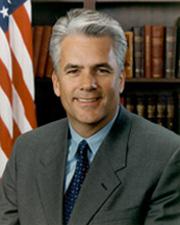 Sen. John Ensign (R-NV)
Legislative Activity
Stay on top of the latest movement without scrolling through every action
Roll call votes on amendments in Senate: Amendment SA 2927 under the order of 12/5/2009, not having achieved 60 votes in the affirmative, the amendment was not agreed to in Senate by Yea-Nay Vote. 32 - 66. Record Vote Number: 366.
December 6, 2009
View full timeline
Roll call votes on amendments in Senate: Amendment SA 2927 under the order of 12/5/2009, not having achieved 60 votes in the affirmative, the amendment was not agreed to in Senate by Yea-Nay Vote. 32 - 66. Record Vote Number: 366.
December 6, 2009
Senate amendment not agreed to: Amendment SA 2927 under the order of 12/5/2009, not having achieved 60 votes in the affirmative, the amendment was not agreed to in Senate by Yea-Nay Vote. 32 - 66. Record Vote Number: 366.
December 6, 2009
Considered by Senate. (consideration: CR S12524, S12527-12540, S12540-12541, S12542-12543)
December 6, 2009
Amendment SA 2927 under the order of 12/5/2009, not having achieved 60 votes in the affirmative, the amendment was not agreed to in Senate by Yea-Nay Vote. 32 - 66. Record Vote Number: 366.
December 6, 2009
Proposed amendment SA 2927 under the order of 12/5/2009, not having achived 60 votes in the affirmative, the amendment was withdrawn in Senate. (consideration: CR S12543)
December 6, 2009
Senate amendment submitted
December 5, 2009
Senate amendment proposed (on the floor): Amendment SA 2927 proposed by Senator Ensign to Amendment SA 2786.(consideration: CR S12496-12516; text: CR S12496)
December 5, 2009
Amendment SA 2927 proposed by Senator Ensign to Amendment SA 2786. (consideration: CR S12496-12516; text: CR S12496) Relative to limitation on amount of attorney's contingency fees.
December 5, 2009
Votes
1 roll call on this amendment
Text
Proposed
SERVICE MEMBERS HOME OWNERSHIP TAX ACT OF 2009

The PRESIDING OFFICER. Under the previous order, the Senate will
resume consideration of H.R. 3590, which the clerk will report.
The assistant legislative clerk read as follows:

A bill (H.R. 3590) to amend the Internal Revenue Code of
1986 to modify the first-time home buyers credit in the case
of members of the Armed Forces and certain other Federal
employees, and for other purposes.

Pending

Reid amendment No. 2786, in the nature of a substitute.
Lincoln amendment No. 2905 (to amendment No. 2786), to
modify the limit on excessive remuneration paid by certain
health insurance providers to set the limit at the same level
as the salary of the President of the United States.
Johanns motion to commit the bill to the Committee on
Finance, with instructions.

The PRESIDING OFFICER. Under the previous order, the next 3 hours of
debate will be equally divided between the two leaders or their
designees, controlled in 45-minute alternating blocks of time, with the
majority controlling the first portion of time.
Who yields time?
The junior Senator from Minnesota.
Mr. FRANKEN. Mr. President, I ask unanimous consent to speak as in
morning business for 5 minutes.
The PRESIDING OFFICER. Without objection, it is so ordered.
(The remarks of Mr. Franken are printed in today's Record under
``Morning Business.'')
Mr. FRANKEN. I suggest the absence of a quorum.
The PRESIDING OFFICER. The clerk will call the roll.
The assistant legislative clerk proceeded to call the roll.
Mr. HARKIN. Mr. President, I ask unanimous consent the order for the
quorum call be rescinded.
The PRESIDING OFFICER. Without objection, it is so ordered.
Mr. HARKIN. Mr. President, first of all, let me say I am glad we are
here

[[Page S12463]]

this weekend. Oh, I know we like to be with our families, we have
Christmas shopping to do and things such as that. It is always nice to
be with our families on the weekends. But think about it this way:
Millions of Americans today are giving up their weekends, they are
giving up their nights, their holidays, because they are either out of
work, they are working part time, they are trying to do odd jobs to get
enough money together to keep their families intact. So they are
working at nights, they are working on weekends. They are not taking
time off. They are out there looking for work now or out there doing
odd jobs, whatever they can possibly do. They are making sacrifices.
They are making sacrifices for their families, but they are also making
these sacrifices to pay their medical bills or to afford their needed
prescriptions. It seems to me we owe them nothing less than the same
level of commitment to the task of bringing quality, affordable health
care within their reach.
Our leader, Senator Reid, was right to call the Senate into session
this weekend. We ought to keep at this bill, this health care reform
bill, working hard, until the Senate finishes the job before us.
Nothing less will do.
I do not plan to spend a lot of time on the debate over Medicare
Advantage that we had yesterday. However, after listening to the
comments yesterday, I did want to mention briefly editorials that
appeared in the Des Moines Register. The first was published 6 years
ago when the Senate considered the Republican Medicare drug
legislation. The major element of that bill was to give outrageous
bonuses to private health plans in Medicare Advantage. In criticizing
that proposal, the Register called on Members of Congress ``to remind
themselves their job is to serve the interests of the people, not
industry lobbyists.''
Sadly, we didn't heed that call that time, 6 years ago. Instead,
Congress, under Republican leadership at that time, enacted a bill that
provided a massive and unjustified windfall to the insurance industry.
The Register revisited the same subject in an editorial this year,
May 31 of this year. Here is what they said:

Congress encouraged private insurance plans, known as
Medicare Advantage plans, which have cost taxpayers more than
covering seniors in traditional government-administered
Medicare.
Congress should not repeat the mistakes it made in 2003
when reforming Medicare--catering to special interests and
pushing people into private-sector insurance coverage.

Our health bill, the one we have before us, heeds these words. We
stand up to the special interests that even today are demanding
billions of dollars in taxpayer funds to prop up their inflated
profits. So yesterday was a good day. Yesterday we said no to giving
the insurance industry a $120 billion bonus for doing the same job that
Medicare can do for far less.

Today we will consider a proposal from Senator Lincoln to say no to
the outrageous salaries that top executives in these companies receive.
Chief executive officers at the seven leading insurance companies made
a combined $118.6 million in 2007 alone, an average of $11.9 million
each. Let's compare that to the wages of millions of Americans or the
minimum wage. For someone making the minimum wage, it would take nearly
800 years to make what these insurance company executives make in 1
year.
Again, here is the CEO compensation. For United Health Group, they
made $2.9 billion in profit in 2008 and they paid their CEO $9.4
million; WellPoint, $9.8 million; Aetna, $24.3 million; Humana, $47.3
million; Coventry Health Care, $11 million; Cigna, $4.4 million. That
is the CEO compensation. That probably is not the whole package when
you consider all the other benefits they get, deferred compensation and
on and on--golden parachutes, all that kind of stuff. That is basically
their CEO compensation for the year.
As you can see, they get paid pretty well and $11.9 million is the
average. Here is Aetna, $24 million a year. They had a profit of $1.3
billion that year. So they did well, their shareholders did well, their
CEO did well. But how about the consumers, the working families?
In 2003, by the way, Aetna, this company right here, making all this
money, paying their CEO $24 million a year--in 2003 Aetna settled a
lawsuit. You know, usually when you settle lawsuits it is because you
think you are going to get hit worse down the line. They settled a
lawsuit brought by who? Brought by physicians, a whole group of
physicians brought a class action against Aetna because they had a
history of shortchanging patient care. Aetna settled for $470 million,
just to get away from it, in 2003.
There was not any money to help them afford the coverage patients
need, but they had billions for profits and they had millions for
salaries--nothing for working families.
The reality for working families across America is simply this:
Insurance premiums have skyrocketed, outpacing the growth in wages over
the same period. Quality affordable health care is slipping further and
further from the grasp of middle-class Americans. Between 1999 and
2007, the average American worker saw wages increase 29 percent.
Insurance premiums during that same time rose more than 120 percent.
They see the premiums skyrocketing, but their health care is slipping
away.
There is something else. The profit margins of the insurance industry
soared. Over the last 7 years the profits of the seven largest publicly
traded health insurance companies increased by 428 percent. Profits
increased by 428 percent, from $2.4 billion to $12.9 billion. Yet look
at what our workers' wages went up--29 percent.
Now you begin to understand why people in this country are upset and
discouraged and outright mad about their lack of health insurance
coverage, about the affordability of that coverage and the quality of
that coverage. Yet with all of this money that is going to their CEOs
and huge increases in the profits they make, our Republican friends on
the other side of the aisle say they still need a Federal handout. The
industry cannot find a dime to bring down prices for consumers but they
can find millions to lobby for more special favors.
The Wall Street Journal reported that the health care industry
boosted their efforts in lobbying this year. In a quote from the Wall
Street Journal:

Overall, the health-care sector reported a five percent
increase in lobbying expenditures to $133 million, making it
the single largest spender on lobbying of the 10 major
industry sectors tracked by the Center for Responsive
Politics. Health-insurance companies increased lobbying
activity by 11 percent to $7.8 million, according to the
data.

An increase of 11 percent. You wonder why all this health sector this
year had $133 million in lobbying expenditures. I think, if I am not
mistaken, the supposed, stated purpose of health insurance is to
protect Americans from the cost of illness. Supposedly their purpose is
to keep the American people healthy and productive for the benefit of
society. Yet over some 60 years, this industry, the health insurance
industry, has transformed itself from an industry that is there to help
you to an industry that is there to take money from you when you are
healthy and avoid paying your bills when you get sick. This is an
industry with armies of actuaries and functionaries whose job is to
prevent you from enrolling if you have a preexisting condition. It is
an industry that looks at the fine details of your medical records when
you get sick so they can figure out how to cancel your policy and leave
you high and dry when you need their help the most, as has been said
many times around here.
The majority, actually 62 percent of bankruptcies in America, is
because of medical costs, and 80 percent of that group had health
insurance. They actually had health insurance, but they had to file for
bankruptcy because--they didn't know it, but in their contract, in
their policy, there was some fine print called a rescission clause, or
there is fine print in there on terms of their annual or lifetime caps,
which most people do not even know are in their policies. But when they
got very sick, all of a sudden their policy got rescinded, which means
when it came up for renewal the insurance company didn't renew it, and
here you are with an expensive chronic disease or illness such as
cancer or heart disease or disability, and they cancel your policy. You
are left with only one recourse--file for bankruptcy.

This is an industry which defines being a victim of domestic violence
as a preexisting condition. I spoke about this previously. Only in
America, with this health insurance industry running

[[Page S12464]]

everything in terms of our health care coverage, only here would we
have a situation where a woman can be the victim of domestic violence,
be battered, get medical help, go to the hospital perhaps, a victim of
domestic abuse, and then later on find that she can't get her policy
renewed because she has a preexisting condition, the preexisting
condition of being the victim of domestic violence.
You may think that is outlandish, but it is true, and it happens. All
we are seeking is competition, openness, transparency, and fairness.
The insurance industry, what are they seeking? They are seeking to
preserve and protect a sweet deal they have been enjoying on the backs
of middle-class Americans and seniors. The proposal Senator Lincoln is
offering says basically: Enough is enough. In defense of their
outlandish salaries, the insurance company CEOs cite the difficulty of
their jobs and the complexity of their tasks. The President of the
United States probably has a pretty difficult job. He has a few complex
tasks to confront. There is no reason insurance company CEOs should get
a tax break on salaries higher than the President's. That is exactly
what the Lincoln amendment does.
I thank Senator Lincoln for her commonsense proposal. I think
consumers across America should know that when they pay their hard-
earned dollars to cover the soaring cost of premiums, they are not just
chipping in to pay for the CEOs' next new yacht or the newest Mercedes
in the driveway. In homes across Iowa people are clipping coupons and
making do with secondhand, patching up instead of buying new. They have
had to make sacrifice after sacrifice to afford premiums that provide
coverage for their health care. It is outrageous that their hard-earned
cash goes for gold-plated salaries and bonuses. Senator Lincoln is
right to take a stand against these excesses. I urge my colleagues to
support her amendment.
The Lincoln amendment is consistent with a major theme of our
legislation. It is basically standing up to the health insurance
industry on behalf of consumers. Her proposal will add one more
important item to the list of benefits our legislation will bring to
American patients.
As I said before, this bill ends the practice of denying coverage
because a person has a preexisting medical condition. I would wager
probably every Member of this Senate has some kind of a preexisting
condition of some sort, and every one of us could be turned down if we
didn't have the kind of secured program under the Federal employees
program. Why shouldn't the rest of the American people have the same
kind of security?
This legislation ends the lifetime limits and bans unreasonable
annual limits. Our bill gives young people better options to stay on
their family's and parents' plan until they are age 26. It also ends
the outrageous practice of charging women higher prices for the same
policy, the exact same policy a man gets. I can remember, during my
town meetings back in August, talking about this issue. People were
startled to learn that an insurance company can charge a woman up to
twice as much for the same policy--same age, all the same parameters,
same occupation, same kind of history. They can charge a woman up to
twice as much as a man for the exact same coverage, the exact same
policy. We get rid of that in this bill. We do not allow that kind of
discrimination in any other kind of industry. Why should we allow it in
this industry?
Our bill provides better options for individuals, small businesses,
farms, for the self-employed. I have said many times the biggest
winners in our health care reform bill are small businesses and the
self-employed. Right now they are sort of at the end of their rope.
They have no bargaining power whatsoever. Our bill will create
exchanges so they will be able to go on the exchange and pool with
other people for more options, more competition, more transparency
available.
Some places in Iowa we have only one insurance company offering
policies. There is absolutely no competition. Setting up the exchanges
will allow our self-employed and small businesses to get more
bargaining power.
These are the kinds of measures the American people want and need to
make sure they get a fair deal on the coverage they buy. We need a
health insurance industry that is a partner for employers and ordinary
Americans, charges fair premiums, treats us right, and pays our bills
when we get sick. That is what our bill is all about. It is to end a
lot of these outrageous practices that have gone on for far too long in
the health insurance industry.
A lot of times people say: You are always beating up on the health
insurance industry. Not really. We are just taking them to task for
where they have gone. Years ago when they first started out, they were
doing a good job. Then the greed, the normal human nature and greed for
more profits, higher CEO salaries, $24 million salaries for CEOs, gold-
plated benefits packages for all their CEOs and corporate executives;
it just got out of hand. It became a situation where almost one health
insurance company was trying to outdo the others in terms of how much
money they could squeeze out of the consumers. It is just a system that
sort of ran amok.
Now it is up to us in the Congress to rein it in, to make the health
insurance industry what it ought to be--a fair and reasonable,
competitive system for the consumers. That is what this bill does. To
me, that is the American way. That is why we have to stay here on the
weekends, if we have to. If we have to be here today, fine; and
tomorrow, fine; and all next week, fine; and next weekend; and, if we
have to, right through the holidays.
The American people are looking to us to get this job done. We are
going to get the job done. No matter how much our friends on the
Republican side want to delay, delay, delay, and try to kill this bill,
it is not going to happen. This bill is unstoppable because the
American people are demanding that we do something about it. We are
responding to that, and we are going to get the job done.
I yield the floor.
The PRESIDING OFFICER. The Senator from Pennsylvania.
Mr. CASEY. Mr. President, we gather today on a Saturday which, as
many Americans know, is rare, but it is entirely appropriate and
essential that we make sure we spend the time on a weekend to debate
this bill and to get the bill passed. I commend the words of Senator
Harkin and his great work over many months on this legislation. We are
grateful for his leadership. I commend Senator Lincoln on the amendment
we will vote on today regarding executive compensation.
I rise to speak about children, as this bill affects their lives--in
particular, the lives of children who are particularly vulnerable. I
have said a number of times in this debate that at the end of this
debate, when the bill is enacted into law, we should be able to say
that no child is worse off, especially a child who happens to be poor
or has special needs. That is what I rise to speak of this morning.
I had a joint resolution a number of months ago that was filed
relating to this bill. It was joined in by Sen-
ators Dodd, Rockefeller, Brown, Whitehouse, and Sanders. It was simple.
It basically said what this chart says: No child worse off at the end
of the debate. It is a fundamental principle, but I also believe it is
a commitment we must keep. When we talk about the legislation before
us, we are not talking about some new system. We are talking about
figuring out a way--and I think we have in the Senate--to fix what is
broken and build upon what works. I believe that is what we are trying
to do.
When it comes to children, we have special considerations, and we
have to have unique strategies to make sure they get the best health
care possible. As so many child advocates tell us--and it seems like
such a simple maxim--children are not small adults. That is a profound
statement. You can't just take a health care program for adults and
overlay that on the health care that is provided to children. Children
are not small adults. They are different. The care they get has to be
different. It has to be tailored and focused on their needs. The care
they get, especially a child who is vulnerable, is determinative of
their life. If we don't provide them the kind of care in the dawn of
their life, as Hubert Humphrey talked about, there is very little after
that we can do to save them or to allow them to reach their full
potential.

[[Page S12465]]

That bright light inside a child, if we miss the opportunity to care
for that child, will never be the same. We have an opportunity in this
debate, and at the end of the debate with the legislation, to
positively affect the lives of countless American children.
I have some changes I will propose to the Children's Health Insurance
Program, but I wanted to speak this morning about parts of the bill
that speak directly to the needs of at least two vulnerable children,
two young girls by the name of Hannah and Madeline from Pennsylvania.
I will get to their story in a moment, but their mother, Stacie,
communicated with us and a lot of other people about their lives and
their challenges. I did want to first review some of the basic parts of
the bill. We often say this bill contains consumer protections. That is
a nice-sounding phrase, but when you talk about consumer protections in
the lives of young children such as Hannah and Madeline, it takes on a
whole new meaning. I will talk more about them in a moment.
I want to walk through some of the basic provisions in the bill as
they relate to children and what we have in the bill already.
No. 1, the bill ensures pediatric input into benefit packages so that
the skill and the knowledge of a pediatrician and the kind of care they
can provide to a child is part of the benefits package. Again, children
are not small adults. The bill also ensures benefit packages that
include pediatric benefits including critical oral and vision health
care.
We all remember the tragedy last year of Diamante Driver of the State
of Maryland, a young boy who lost his life because his family did not
have coverage for an infected tooth and couldn't afford the care. We
are talking about a child in America who died from an infected tooth
that would have cost $80 to treat. This horrible tragedy that everyone
in Washington was talking about at the time was entirely preventable.
We remembered his story and his tragedy in the bill by making sure that
oral and vision health care are part of what we do.
In addition, the bill mandates prevention and screenings for
children. It creates pediatric medical homes. People say: What is a
medical home? That is not a place. It is a way to treat someone, so if
an American, especially a child, has a primary care doctor, which many
of them unfortunately don't--and that is another part of what we are
trying to do--that primary care doctor should be surrounded by the
expertise we can bring to bear to help the child. We have so much
knowledge and wisdom and ability when it comes to our doctors. We have
remarkable pediatricians whose sole focus is to help a child in one
part of their needs, the health care needs of that child. Why should
not every child be surrounded by that kind of expertise? That is what
we are trying to do.
We strengthen the pediatric workforce. We can't just say we need a
lot of pediatricians and hope it happens. We have to make sure we have
a workforce and a recruiter workforce to do that.

Senator Dodd and I and Senator Brown--I know Senator Dodd is on the
floor--added a loan repayment provision in the bill for pediatric
specialists and providers for mental health services for children.
I have two more items and then I will get to the story of Hannah and
Madeline.
We expand drug discounts for children's hospitals and finally
increase access to immunizations. The CDC will provide grants to
improve immunizations for children and adolescent adults.
But let me talk for a couple moments--I know we have others who are
waiting to talk this morning--about these two children: Hannah and
Madeline. The good news is--this picture is a dramatic depiction of
what they were suffering from when they were diagnosed with leukemia at
the age of 4. They are 11 years old now, and they are doing better, but
they still have enormous challenges in their lives. Their mother Stacie
Ritter wrote as follows:

When my identical twins were both diagnosed with [a kind of
leukemia]--

And she talks about it--

at age four, we were told they would need a bone marrow
transplant in order to survive.

Imagine that. I have four daughters, and I remember when they were
about the age of 4. I never had to worry about any of this. I never had
to even think about it. But if my wife and I--my wife Teresa and I--
were given this news, we would have been given coverage for a condition
such as that by an insurance policy because I happened to be a State
government employee, and now I am a Federal Government employee. So I
never had to worry about that diagnosis for my daughters. Other than
the challenge of the diagnosis itself, I did not have to worry about
coverage. But Stacie Ritter and her husband Ben did. She says:

I learned that the insurance company thought my daughters
were only worth $1,000,000 each. It sounds like a lot of
money. It's not!

She says that with an exclamation point.

When you add up the costs involved in caring for a patient
with a life threatening disease like cancer $1,000,000 barely
covers it.

I think that is an understatement.

Fortunately the hospital social worker recommended we apply
for a secondary insurance through the state considering the
highly probable chance we would hit that [million dollar]
cap. And we did hit that cap before the end of treatment.
Thankfully the state program kicked in and helped pay for the
remainder of treatment.

The State program--it sounds a lot like a public option, doesn't it,
an awful lot like a public option. So at least for this part of the
story, they were able to get some help through a State program, a kind
of public option. We will talk more about that later.
But then Stacie goes on, and the lead headline of this section is one
word, ``Bankruptcy.''

During this time my husband had to take family medical
leave so we could take turns caring for our one year old son
and our twins--

These twins, as shown in these pictures--

at the hospital. . . . For the 7 months my husband was out on
family medical leave, he was able to maintain his employer
based insurance for us via $117.18 a month COBRA payments.

My recollection is, COBRA was an initiative by the Federal Government
to make sure, if you lose your job, you do not lose your health
insurance. We have to extend it right now--another government
initiative that was helpful here.

After spending all our savings to pay the mortgage and
other basic living expenses we had to rely on credit cards.

So a mother and a father who get this diagnosis for their children at
age 4 have to rely on credit cards to get the help their daughters
need.
Stacie writes:

In the end we had no choice but to file bankruptcy. And
when you file bankruptcy everything must be disclosed, we
even had to hand over the kids' savings accounts that their
great grandparents--

Their great grandparents--

had given them. . . .

Is this the kind of system we want, when a mother and a father are
hit with that diagnosis for their two daughters, when they are age 4,
that we have a system that says: Do you know what. We have to cap your
coverage. We can help you a little bit, but we are going to limit it.
You will figure it out. Don't worry. That is basically what the system
said to them.
So what are we doing? Well, we have a bill that happens to speak to
these kinds of situations. It is ironic--I guess is the word--that on
page 16 of the bill, which is actually the second page of the text, we
have a provision that says this:

A group health plan and a health insurance issuer offering
group or individual health insurance coverage may not
establish . . . lifetime limits on the dollar value of
benefits for any participant or beneficiary. . . .

It is not complicated. It is not legalese. It is very specific to the
lives of these two children. The first provision in the bill says there
are no lifetime limits. So you cannot say to Hannah and Madeline:
Sorry, we know you have leukemia and we know you need expert care and
treatment, but we are going to limit your care.
So for those who think this is complicated and difficult in a lot of
debate here in Washington, it is not complicated. If we had this
provision as a matter of law in effect when Stacie got that diagnosis
for her daughters, she would not have had to worry about coverage. She
would not have had to use credit cards and go into bankruptcy and take
the savings these children were given by their great grandparents.

[[Page S12466]]

Why do we tolerate this system? Why do we go, year after year, and
talk about changing it, saying: Oh, isn't that terrible we have these
situations and we let it go and we say that is too bad we couldn't get
the bill passed; it got a little difficult in Washington.
Well, the time for talk and debate and discussing the finer points of
this is over. We have to act to make sure a family such as this never
has to go through what these parents went through but especially what
these two young girls went through.
I will conclude with this: This picture, as dramatic as it is, I
think connotes a lot of hope. Look at those two young girls, facing the
most horrific of circumstances, and they are smiling and hopeful. But
they still need help. We are going to be spending time in the next
couple days getting this bill done so we can make sure we help them in
the future.
With that, I yield the floor.
The PRESIDING OFFICER. The Senator from Connecticut.
Mr. DODD. Mr. President, before he leaves the floor, I wish to thank
our new colleague from Pennsylvania. From the moment he arrived here,
he has raised the profile of this issue involving children and
families. As someone who has been involved, myself, for a long time
chairing the Subcommittee on Children and Families, and with the help
of the Presiding Officer and others, we did the Family and Medical
Leave Act back some 17 years ago; the childcare legislation almost 25
years ago, dealing with infant screening, premature births, autism--a
whole host of other issues.
I wish to thank him for bringing what has been a tireless effort
since he has arrived in this Chamber, adding yet another voice, another
strong voice, on behalf of children in our country. Jay Rockefeller,
our colleague from West Virginia, has been a stalwart for years on
these issues as well. I know Sherrod Brown of Ohio is also working very
hard on these issues, and I wish to commend him.
So I wish to say thank you to my colleague from Pennsylvania. The
points that he raises are good ones.
I know our time has expired, and I apologize for interfering with our
other colleagues' time, but I wish to thank him for his efforts. I
cannot think of a more noble cause to be involved in. There will be a
lot of debate about this bill, but we must keep in mind that the most
innocent in our society, our children, are born into circumstances
totally beyond their own control. And there are too many instances
where they are suffering from one problem after another. A great
country such as this, with great resources and potential, ought to be
able to ensure that every child in this country--regardless of the
economic circumstances or the physical circumstances they are born
into--gets the kind of care that America can be proud of. I say to the
Senator, you are a champion of that, and I thank you for it.
I yield the floor. I66F

RECOGNITION OF THE MINORITY LEADER

The PRESIDING OFFICER. The Senator from Kentucky.
Mr. McCONNELL. Mr. President, I am going to proceed on my leader
time, which I assume will not be charged on this side.
The PRESIDING OFFICER. The Senator is correct. His leadership time
has been reserved.
The Chair will note, there is 3\1/2\ minutes remaining on the
Democratic side allocated on the debate; and then, of course, there is
another 45 minutes, under the unanimous consent agreement, that will be
allotted to the Republican side of the aisle.
Mr. DODD. Mr. President, I would like to yield my 3\1/2\ minutes to
my distinguished friend from Kentucky and my friend from Arizona and my
friend from Utah and my friend from Florida and my friend from Wyoming
as well--3\1/2\ minutes for all of them.
The PRESIDING OFFICER (Mr. Begich). The Republican leader.
Mr. McCONNELL. Mr. President, we all know the U.S. health care system
is in serious need of reform. Costs are too high, they are rising, and
if we do nothing, they will continue to consume a larger and larger
share of Federal dollars and of the budgets of millions of middle-class
American families, of young workers trying to get their start in life,
and, of course, of seniors.

For months, the administration and its allies in Congress promised a
solution to these problems, a solution they said would lower costs and
help the economy. They assured us that under their proposal anyone who
likes the health care plans they have would be able to keep them, and
they said their proposal would save Medicare.
But, in the end, what matters is not what we say. It is what we do.
This week, the proponents of this plan did more with a single vote than
they did all year in talking about all the things their health care
plan would do.
How? Because in voting to cut a $\1/2\ trillion from the Medicare
Program for seniors, our Democratic friends undercut not only the
roughly 40 million seniors who depend on Medicare, they also undercut
their own promises about reform.
As I said, the President and congressional Democrats have noted,
again and again, that under their measure those who like their plans
will be able to keep them. After Thursday's vote, even Democrats are
admitting that is no longer true.
Here is how one of our Democratic colleagues put it:

We're not going to be able to say that ``If you like what
you have, you can keep it.''

Then he added:

. . . and that basic commitment that a lot of us around
here have made will be called into question.

As for the oft-repeated pledge to save Medicare, well, nobody buys
that one after the vote on Thursday to cut it by $\1/2\ trillion.
These Medicare cuts will impact the quality of care for millions of
American seniors. Nearly 11 million seniors on Medicare Advantage will
see a reduction in benefits. Hospice care will see massive cuts.
Hospitals that treat Medicare patients will see massive cuts. Nursing
homes are cut. More than $40 billion is cut from home health care
agencies--agencies that provide an appealing alternative to seniors who
would rather receive the care and attention they need in the comfort
and privacy of their own homes.
I hear from seniors all over Kentucky worried about the impact these
cuts will have.
Anita, from Hebron, KY, says she is worried about the impact these
cuts will have on her husband, a Vietnam vet with multiple sclerosis.
Every 2 weeks, she writes, a home health care nurse visits her husband
to perform procedures prescribed by his doctors. Now Anita is worried
those visits might be limited or curtailed under this bill. It is not
clear they will not be because cutting $40 billion from a benefits
program is bound to affect the benefits that people such as her husband
receive.
Joy, from Somerset, KY, works for a home health care agency. She
wrote my office because she is also concerned about cuts to home health
care. She asked me to protect the rights of the chronically ill,
elderly Medicare population that she and her colleagues care for every
day in Kentucky through cost-effective home health care.
Robin, from Independence, KY, writes that her father is almost 80 and
receives home health care twice a week. She says he depends on a walker
and a wheelchair to get around and that it is hard for him to get out
of the house. Robin's father is the kind of person home health care is
meant to help. Frankly, I do not know what to tell her--I literally do
not know what to tell her--except that $40 billion in cuts to this
program is not a very encouraging sign for people such as her dad.
I noticed that some years ago one of the top Senators on this issue
on the Democratic side used the very same image I have used to decry
these cuts. Back then, he warned, as I have in recent months, not to
use Medicare as a piggy bank. Yet that is precisely what our friends
are doing with Medicare. They are not fixing it. They are raiding it--
raiding it--to create an entirely new government entitlement program,
raiding Medicare not to help save Medicare but to create an entirely
new entitlement program. In fact, one of the largest single sources of
money for this 2,074-page bill is the money they get from Medicare.
I am not sure what has changed since our friends decried cuts to
Medicare as immoral and irresponsible. But today I would, once again,
urge them to reconsider their vote from earlier this week. They have
voted now to cut Medicare, and they have now voted twice to cut the
important Medicare Advantage Program for nearly 11 million seniors.

[[Page S12467]]

Today we will have a chance to restore the cuts they authorized to
home health care. A vote in favor of the Johanns amendment is a vote in
favor of the men and women who have been writing our offices, sharing
their stories about the benefits of home health care. Americans never
expected that health care reform would mean that they would have to
give up the health care they have and like. They didn't expect it
because they were told it wouldn't happen. Unfortunately, that pledge
was broken this week. That pledge was broken this week. Today our
friends have an opportunity to help repair some of that damage.

Mr. President, I yield the floor.
The PRESIDING OFFICER. The minority now has 45 minutes for debate.
The Senator from Arizona.
Mr. McCAIN. Mr. President, I ask unanimous consent that the Senator
from Utah, the Senator from Kentucky, the Senator from New Hampshire,
the Senator from Georgia, the Senator from Florida, and the Senator
from Wyoming be allowed to participate in a colloquy.
The PRESIDING OFFICER. Without objection, it is so ordered.
Mr. McCAIN. Mr. President, very quickly, I wish to remind my
colleagues that the AARP continues to be referred to as endorsing this
legislation and supporting it and opposing amendments that would have
done things that they in the past have supported. So I urge my
colleagues to look at this Washington article--one of my favorite
sources of information and opinion, the Washington Post:

But not advertised in this lobbying campaign have been
AARP's substantial earnings from insurance royalties and the
potential benefits that would come its way from many other
reforms.

So we have been looking into that, and guess what. The AARP
endorsement of more than $400 billion in Medicare savings--according to
its own financial statements from 2008, AARP generated 38 percent of
its $1.1 billion in revenue or more than $414 million in royalty fees.
They also obviously will--if we take away Medicare Advantage, then
Medigap sales will have to go up because that provides for the services
that are being taken away. So under the AARP, they would generate in
their endorsements--they have generated $414 million, putting them in
fifth place of all of the health insurance companies in America behind
United Health, Wellpoint, Aetna, and Humana. So we have before the body
an amendment that would modify any health insurer's remuneration to the
same level as the salary of the President of the United States.
So I ask unanimous consent at this time that the AARP executives be
added in under the effect of this pending amendment from the Senator
from Arkansas.
The PRESIDING OFFICER. Is there objection?
Mr. BAUCUS. Mr. President, I object.
The PRESIDING OFFICER. Objection is heard.
Mr. McCAIN. Mr. President, I also understand that Walmart sells
health insurance policies. They are based in Arkansas. I ask unanimous
consent that Walmart be included in this curb on excessive remuneration
that will now place them under the same level.
The PRESIDING OFFICER. Is there objection?
Mr. BAUCUS. Reserving the right to object, to be totally candid,
these are stunt amendments which we have not seen. I have never heard
of the amendments.
Mr. McCAIN. It is not complicated. It is pretty simple. It is people
who sell health insurance.
The PRESIDING OFFICER. Is there objection?
Mr. BAUCUS. Reserving the right to object, because I have not even
seen these amendments, I object.
The PRESIDING OFFICER. Objection is heard.
Mr. McCAIN. I am sorry the Senator from Montana cannot understand
that they are people who sell health insurance as well. AARP does,
Walmart does. If we are going to have this kind of demagogic amendment,
then we should include them, especially Walmart, that does a lot of
business.
Mr. McCONNELL. Mr. President, I would ask the Senator from Arizona if
I may ask a question. I would ask the Senator from Arizona, is this the
same AARP that I recall opposed a $10 billion reduction in the rate of
increase in Medicare spending back in 2005?
Mr. McCAIN. I would say to my colleague they not only opposed it,
they got all of their members fired up in opposition to it. We all
heard from them back in 2005. These were reductions in spending. This
was not $438 billion taken out of Medicare and put in to create a new
entitlement program of $2.5 trillion.
Mr. McCONNELL. Could I ask my friend one more question? Is this the
same bill that back in 2005 my counterpart, the majority leader,
decried as immoral?
Mr. McCAIN. As I recall, that is exactly it. I think the Senator from
New Hampshire recalls that debate.
Mr. GREGG. Mr. President, if the Senator will yield, absolutely. I
was chairman of the Budget Committee at the time. As the Republican
leader is alluding to, we attempted to reduce the rate of growth of
Medicaid by $10 billion of a $1 trillion base over 5 years, less than
one-tenth of 1 percent, I believe that was. It was opposed aggressively
by the AARP, and it was opposed by the other side of the aisle. Not one
Member of the other side of the aisle voted for that. Do you know what
that change was going to be? It was going to require that wealthy
people who benefited from the Part D drug benefit would have to pay
part of their premiums rather than getting them all for free. So Warren
Buffett, for example, would actually have to contribute to his drug
benefit, assuming he is on Part D. Maybe he isn't. Maybe he hasn't
opted for it. But as a practical matter it was a very reasonable
amendment.
Now we are seeing, as the Senator from Arizona has pointed out, a
$460 billion cut over the first 10 years of this bill; a $1 trillion
cut in Medicare, $3 trillion over the first 20 years of this bill--$3
trillion--when we already know Medicare, according to this chart, is
insolvent to the extent of $38 trillion--insolvent. Yet we are going to
take this money out of Medicare, as the Senator from Arizona has
pointed out, and we are going to fund a brandnew entitlement.
We are going to expand Medicaid to 133 percent of poverty with this
money, and we are going to create this brandnew entitlement which has
nothing to do with Medicare. None of the people who are going to get
this benefit probably have ever paid into the hospital trust fund,
which is what funds Medicare. That seems totally inconsistent with the
purposes of Medicare.
Shouldn't Medicare funds benefit Medicare recipients, I would ask the
Senator from Arizona or the Republican leader? If there are going to be
reductions in Medicare, should it not go to make Medicare more solvent
and not to create a new entitlement?
Mr. McCAIN. One would think so. There are two doctors in the Senate;
there are lots of lawyers, two doctors. Both of them have hands-on
experience. I don't know if Dr. Barrasso has seen this morning's New
York Times, another of my favorite sources of news information and
opinion. On the front page this morning: ``Home Care Patients Worry
Over Possible Cuts.''

I understand the purpose of health care reform as proposed by the
other side is to reduce health care costs. Is there a way to reduce
health care costs better than treating people at home than instead of
in a hospital? I am curious about the Senator's experience.
Mr. BARRASSO. Well, as the Senator from Arizona knows, I have treated
patients in Wyoming, families in Wyoming, for 25 years. The story in
the New York Times has a wonderful picture of Bertha Milliard, a 94-
year-old lady, who is very similar to many of the patients I have taken
care of in families in Wyoming who depend on this care. There is a
picture of Bertha dealing with her nurse. Bertha greets the nurse who
has come to check her condition and review the medications she takes
for chronic pain, for heart failure, and for stroke. Ms. Milliard says
those visits have been highly effective, she says, in keeping her out
of the hospital.
That is the whole idea: Keep them out of the hospital so they can
lower the cost of care. But the home care that she receives could be
altered, according to the front page of the New York Times, under the
legislation passed by the House and pending on the Senate floor today.
The legislation

[[Page S12468]]

would reduce Medicare spending on home health services, which is a
lifeline for homebound Medicare beneficiaries which keeps them out of
hospitals as well as out of nursing homes.
So there you have it. What could be better for our seniors than to
have the dignity of being in their own homes, to have someone coming
into their homes to help them, to make their lives better, and that is
going to include skilled nursing care, physical therapy, occupational
therapy, sometimes speech and language therapy, and different medical
and social services? That is where the care ought to be given, in the
home. That is what we want for our seniors: the dignity at home,
opportunities at home, to stay in their surroundings. That is what we
want for not just all seniors such as Bertha, we want that for our
Nation because that will help keep down the cost of care.
This bill does the exact opposite. That is why we have to have this
amendment that says don't cut Medicare for our seniors and certainly
not to start a whole new program.
In the Wall Street Journal today is an editorial by the dean of Johns
Hopkins Medical Center, a wonderful, world class center: ``Health
Reform Could Harm Medicaid Patients.''
So we are taking the money from Medicare, hurting Medicare patients,
and they are using it in a way that is actually going to make it worse
for patients on Medicaid, as they have dumped 15 million people into
this program that is absolutely broken.
Mr. BAUCUS. Will the Senator yield for a question? Will the Senator
yield for a question?
Mr. BARRASSO. I will yield to the Senator from Arizona.
Mr. McCAIN. If it is taken out of your time, just exactly as you
responded when someone asked if you would yield for a question from
them yesterday. Is it taken out of your time?
Mr. BAUCUS. Yes.
Mr. McCAIN. I ask unanimous consent that the time for the Senator's
question not be taken out of the time that is allotted to us.
The PRESIDING OFFICER. It will not be.
The Senator from Montana.
Mr. BAUCUS. Do the Senators realize and do they know that yesterday
the Home Care and Hospice Association, the National Association for
Home Care and Hospices, the umbrella organization for home health and
hospice, wrote a letter to me, which basically says:

[F]or all of these reasons, we support the provisions of
your health care reform legislation as it relates to home
health care.

Is the Senator aware of that letter, the Home Care and Hospice
Association's support for this legislation? Is the Senator aware of
that letter?
Mr. McCAIN. My response is, I don't know what deal has been cut in
Senator Reid's office, as the deal was cut with the pharmaceutical
companies and the deal was cut with the AMA and the deal was cut with
the hospital association. But I know what the effect is. I know what
the effect is. The bill would slice $55 billion----
Mr. BAUCUS. This is not on my time because he is going to filibuster
over there.
Mr. McCAIN. The House bill would slice $55 billion over 10 years for
projected Medicare spending on home health services while the Senate
bill would take $43 billion. I know that. But I don't know the details
of the deal that was cut over where the white smoke comes out. I don't
know what the deal was. I know what the deal was with PhRMA. I know
what the deal was with PhRMA. They told them they would oppose drug
reimportation from Canada, and they told PhRMA they would not allow
competition for Medicare patients.
So I don't know the deal that was cut that bought them, but I know
deals have been going on, and I know they are unsavory. I know people,
such as the lady who was just referred to, Bertha Milliard, are not too
interested in seeing their home health care cut.
Mr. BAUCUS. If the Senator will yield, with time being equally
divided on both sides for this colloquy.
Mr. McCAIN. I don't know what the deal was----
Mr. BAUCUS. I can tell the Senator the deal. I am going to tell the
Senator the deal.
The PRESIDING OFFICER. The Senator from Arizona has the floor.
Mr. McCAIN. I don't know what the deal was, but we will find out,
just like the deals that were cut with all of these other
organizations.
Mr. BAUCUS. I will tell the Senator what the deal was.
Mr. McCAIN. This place is full of lobbyists. I can't walk through the
hallway without bumping into one of their lobbyists. If the Senator
keeps interrupting, he is violating the rules of the Senate. He needs
to learn the rules of the Senate.
Mr. BAUCUS. Will the Senator yield to know what the deal was?
Mr. McCAIN. I would like to finish my answer to you, if I may; that
is, I don't know the deal that was cut with them, but we will find out.
I know Bertha Milliard was not there when the deal was cut that
generated that letter. That is my answer.
Mr. BAUCUS. Will the Senator yield for another question?
Mr. McCAIN. I will yield for one more, but we have other Senators who
wish to speak.
Mr. BAUCUS. Does the Senator know that the so-called deal was that
whereas MedPAC and the administration and the House wanted to make
domestic cuts to home health care, but rather we went to the home
health care industry, worked with them, and took two of their major
suggestions about fraud and abuse as well as outliers, so we modified
so that the home health industry thought this was fair and reasonable?
Does the Senator know that was the agreement that was reached?
Mr. McCAIN. My quick answer is, I don't know what the deal was, but I
know the people who are in the home health care business, who will see
$43 billion in cuts to their business, the funding for their business,
were not there when the lobbyists showed up.
We have already heard the stories of the meetings you and the
majority leader have had with these people saying: Get on board or when
we shape the final parameters of this bill, we are going to hurt you.
We know they have been threatened.
Mr. GREGG. I was wondering if that was the deal. We know there are a
lot of deals around here. I know the Senator from Arizona pays a fair
amount of attention to earmarks and other things done around here. I
hope we will get an amendment from the Senator from Arizona that lists
the special deals like the ones that exempted a few States from the
Medicare Advantage cuts, like the deals that got allegedly a few votes
on their side of the aisle so we could get cloture and proceed to this
bill.
Do you think it is part of the deal that they would not--if there
really was a deal, should we not put in here that this money would go
to benefit Medicare recipients and not to create a new entitlement? If
you were going to take $42 billion out of Medicare money going to home
health, shouldn't it have gone to making the system more solvent rather
than creating a new entitlement with that and taking that money from
seniors and giving it to somebody else? Shouldn't that have been part
of the deal?
Mr. McCAIN. As is often said, it is what it is.
The Senator from Georgia has a comment.
Mr. ISAKSON. If there was a deal, it wasn't made with everybody. I
have a letter that was sent December 4 of this year to me from Judy
Adams, executive director of the Georgia Association for Home Health
Care Agencies, endorsing the Johanns amendment. So they must not have
been part of the deal. They represent Georgia. Further, in here----
Mr. McCAIN. They will probably be called up to Senator Reid's office
very soon.
Mr. ISAKSON. They estimate that 68 of the 100 Medicare-approved home
health care agencies in Georgia will go out of business. So if there
was a deal, it wasn't made with every State because the State of
Georgia is on record.
I ask unanimous consent to have this letter printed in the Record.
There being no objection, the material was ordered to be printed in
the Record, as follows:

Georgia Association for

Home Health Agencies, Inc.,

Marietta, GA, December 4, 2009.
Hon. Johnny Isakson,
Russell Senate Office Building,
Washington, DC.
Dear Senator Isakson: The members of the Georgia
Association for Home Health

[[Page S12469]]

Agencies, Inc. fully support Senator Johann's motion to
commit Senator Reid's Patient Protection and Affordable Care
Act back to the Senate Finance Committee with instructions to
eliminate the home health cuts.
According to a study conducted by the National Association
for Home Care and Hospice, under Senator Reid's bill 72.15
percent of home health agencies in Georgia will have negative
margins by 2016 in the Senate bill, and approximately 68
percent of the 100 Medicare Certified home health agencies in
Georgia will go out of business and the patients they serve
will be rehospitalized or forced to seek alternative more
costly care.
We appreciate the opportunity to offer our support for
Senator Johann's motion and thank you for being an advocate
for the sick and elderly citizens of Georgia.
Sincerely,
Judy Adams,
Executive Director.

Mr. LeMIEUX. If I may, I will follow up on my colleagues' comments
about what happened in Georgia.
I walked to one of the largest home health care providers in Florida.
We have a letter to the editor in the Sarasota Herald Tribune of
November 16 where this person, who works for one of these home health
care companies--one of the bigger ones, which aren't going to be in as
much trouble--they say:

Contrary to the other assertions that senior care will be
unaffected by health care reform in Florida, this scenario
could be devastating for older Floridians. More than 56
percent of Florida's home health agencies could be in the red
as early as 2011.

So we are going to take the smaller home health agencies--the mom-
and-pops--in Florida, we have 1.9 million small businesses. They are
not going to be able to function because we are going to take this
money out.
I want to make a point, also, that today in the New York Times, a
good point was made that there is going to be no new insurance money
coming in for home health care agencies--or very little. It is not as
if there are going to be folks having this new public option or new
insurance-backed program because home health care is for seniors. There
is not going to be any extra money. So what is going to happen? We are
going to have our moms, dads, and grandparents who are benefiting from
this home health care in Florida and across this country instead of
having to go to a nursing home, instead of having to go to an assisted
living facility away from their home and family--they are not going to
be able to go anymore.
By the way, I don't believe that will save any money. I think that
will increase costs because we know nursing home care is far more
expensive than home health care. It is estimated that 1 day of hospital
costs, for example, is 43 times as much as home health care. When you
get rid of home health care, you are actually going to increase costs.
I want to follow up on a comment, if I can, of my friend from New
Hampshire. I am new here, and I am still understanding the ways of
Washington, DC. Everybody in America needs to know this bill will not
help seniors at all. This bill takes money from senior health care. If
there was a legitimate and straightforward effort to actually help
seniors, we would take Medicare savings and keep the money in Medicare.
But, as our leader said today, we are robbing the piggy bank, taking
money out of health care for seniors and putting it into this new
program.
Mr. McCAIN. Let me remind the Senator from Montana, sometimes there
is good news and sometimes it is bad. There was an article earlier this
year where the staff of the Senator from Montana called in the high-
paid lobbyists and told them not to meet with Republicans, saying that
if they did, it would be treated as a hostile act. I can provide that
article for the Record. I hope it is not true, but I think it is.
Mr. BENNETT. I say to the Senator from Arizona and others who have
commented, home health care is not the only way seniors will be hurt by
this. I am quoting from an article by Tom Scully, one of the designers
of the Medicare Part D benefit, on the impact of this bill on Medicare
Part D for seniors. Let me quote the key points of the article. I ask
unanimous consent to have the entire article printed in the Record.
There being no objection, the material was ordered to be printed in
the Record, as follows:

Medicare Part D `Reforms' Will Harm Seniors

(By Tom Scully)

There is a little-noticed provision buried deep in both the
House and Senate health-care reform bills that is intended to
save billions of dollars--but instead will hurt millions of
seniors, impose new costs on taxpayers, and charge employers
millions in new taxes.
As part of the Medicare Modernization Act in 2003, Congress
created a new drug benefit--called Medicare Part D--for
retirees at a cost of about $1,900 per recipient per year.
Many private employers already provided drug coverage for
their retirees, and the administration and Congress did not
want to tempt employers into dropping their coverage.
Actuaries calculated that if the government provided a
subsidy of at least $800, employers would not stop covering
retirees.
The legislation created a $600 tax-free benefit (the
equivalent of $800 cash for employers), and it worked.
Employers continued to cover about seven million retirees who
might have otherwise been dumped into Medicare Part D.
It was a good arrangement for all involved. An $800 subsidy
is cheaper than the $1,900 cost of providing drug coverage.
And millions of seniors got to keep a drug benefit they were
comfortable with and that in many cases was better than the
benefit offered by the government.
But now that subsidy is coming in to be clipped. This fall
congressional staff, looking for a new revenue source to pay
for health reform, proposed eliminating the tax deductibility
of the subsidy to employers. The supposed savings were
estimated by congressional staff to be as much as $5 billion
over the next decade.
It sounds smart--except that nobody asked how many
employers will drop retiree drug coverage. Clearly, many
will. The result is that, instead of saving money, the
proposed revenue raiser will force Medicare Part D costs to
skyrocket as employers drop retirees into the program.
The careful calculation that was made in 2003 to minimize
federal spending and maximize private coverage will go out
the window if this provision becomes law. Any short-term cost
savings that Congress gets by changing the tax provision will
be overwhelmed by higher costs in the long run.
Some members in the House want to mitigate the cost of this
provision by mandating that employers maintain existing
levels of retiree coverage despite the reduced subsidy. But
it's not that simple. A mandate would increase costs on
businesses, which in turn would make it harder for those
businesses to hire new employees. The mandate would
effectively be a tax on employers that provide retiree
benefits; this in turn will simply induce some unknown number
of employers to terminate their retiree drug programs before
the mandate kicks in.
In short, if the changes that are proposed for employer
subsidies in the current Medicare Part D program are enacted,
everyone will lose. Unions will lose as employers seek ways
to drop retiree drug coverage. Seniors will lose as employers
drop them into Medicare Part D. Medicare and taxpayers will
lose as they face higher costs. And employers will lose as
they find it harder to provide benefits.
To make matters worse, accounting rules for post-retirement
benefits will require companies that keep their retiree
benefits to record the entire accrued present value of the
new tax the day the provision is signed into law. This would
cause many employers to immediately post billions in losses,
which could significantly impact our financial markets.
There are many reasons to pass health-care reform. There is
no reason to hurt seniors, employers and taxpayers in the
process. Businesses are struggling, and the Medicare trust
funds have plenty of problems as it is. It makes no sense to
make these problems worse.

Mr. BENNETT. He says:

There is a little-noticed provision buried deep in both the
House and Senate health care reform bills that is intended to
save billions of dollars--but instead will hurt millions of
seniors, impose new costs on taxpayers, and charge employers
millions in new taxes.

Here is the core of it:

This fall, congressional staff, looking for a new revenue
source to pay for health reform, proposed eliminating the tax
deductibility of the subsidy to employers. The supposed
savings were estimated by congressional staff to be as much
as $5 billion over the next decade.
It sounds smart--except that nobody asked how many
employers will drop retiree drug coverage. Clearly, many
will. The result is that, instead of saving money, the
proposed revenue raiser will force Medicare Part D costs to
skyrocket as employers drop retirees into the program.

He concludes with this comment:

There are many reasons to pass health care reform. There is
no reason to hurt seniors, employers and taxpayers in the
process. Businesses are struggling and the Medicare trust
funds have plenty of problems as it is. It makes no sense to
make these problems worse.

So not only are the programs going to be cut, but the drug costs are
going to be dumped into the program, with an increased number of people
involved. You are going to see tremendous financial distortions as a
result of the passage of this bill.

[[Page S12470]]

Mr. McCAIN. I yield to the Senator from North Carolina for a question
and then the Senator from Tennessee.
Mr. BURR. I will make this point and ask this question: The President
set out in this debate and targeted two things--quality and savings. He
assured the American people that we were going to save health care and
we were going to maintain quality.
Would it not be accurate to say that, as you take money away from
home health, one, you remove from that population that tool that
maintains disease, that keeps that from getting worse, and you chase
seniors back to the hospitals for the services. So, one, the acuity of
the senior patient is much worse and, two, the cost of the delivery of
the service because by the time they hit the hospital, it has
deteriorated. So we flunk on both points. We don't decrease cost by
cutting home health, we increase it. From the standpoint of the
quality, the outcome of the patient is worse because we put them into a
hospital setting. Is that not what we are trying to eliminate?
Mr. McCAIN. It seems to me, yes.
I yield to the Senator from Tennessee.
Mr. CORKER. I was watching this in my office.
Mr. McCAIN. It is a lot of fun, isn't it?
Mr. CORKER. It is. I would rather not be any other place than on the
floor talking about the most important piece of legislation we probably
will deal with in our tenure here.
Mr. McCAIN. Based on the principle that a fight not joined is a fight
not enjoyed.
Mr. CORKER. I can tell. I have never seen the Senator from Arizona as
happy as he is today in the fight against something that is so
devastating.
I don't understand what it is that would cause my friends on the
left, on the other side of the aisle, to throw seniors under the bus.
There is no doubt that there ought to be some changes in Medicare to
make it more solvent. We all want to ensure that seniors, down the
road, have the ability to benefit from Medicare. no question. I think
we have all said from day one that we want to join with Senator Gregg
and others to make sure Medicare is here for seniors.
I do not understand--I listened to the last segment of my friends on
the other side of the aisle talking about the many needs in this
country. Many people don't have health insurance, and many of us have
offered bills to solve that.
I don't understand, and I hope you can explain it to me, why the left
would be willing to throw seniors under the bus. Regardless of what you
say about the bill, they are being thrown under the bus, and doctors
are going to get a 23-percent cut in a year, and they are not even
dealing with that, and they are taking $464 billion out of Medicare.
What is it that would drive our friends on the left who in the past--
not today--have supported seniors but today are willing to throw them
under the bus for a political victory? What drives them?
Mr. McCAIN. I do not understand it. Perhaps my other colleagues can
explain it better.
I also want to return for a second to the question of the Senator
from Montana. The AMA is a classic example. When I go back to Arizona
and talk to doctors and providers, they say: What is going on? You made
a deal with the lobbyists. That is my answer to you. You made a deal
with the lobbyists--not the home health care providers, not the nurses,
not the doctors, the people who are the users of pharmaceuticals who,
this year, have seen an 8- to 9-percent increase in the cost of
prescription drugs--because your deal is going to protect them. My
answer to you is, I don't know what you bought that letter for, but it
was probably a pretty high price.
The Senator from----
Mr. BAUCUS. Will the Senator yield? I can answer the Senator's
question.
The PRESIDING OFFICER. The Senator from Arizona has the floor.
Mr. McCAIN. I know the answer to it. I just gave you the answer.
I yield to the Senator from Wyoming.
Mr. BARRASSO. I agree with the Senator. It is astonishing that the
Senator from Montana would read a national organization's letter
instead of one from his home State.
In Wyoming, we have 43 different home health care agencies, and some
of them are in communities that don't even have hospitals. Therapists
drive long distances. We have colleagues from rural States here, and
Montana is certainly one of them. Those home health care agencies know
they are not even going to get paid enough from Medicare to put gas in
the car to drive out to the ranches and the farms where people are who
are staying at home, trying to stay out of the hospitals and nursing
homes. We have home health agencies throughout the States, and they
drive tens of thousands of miles every year, with therapists and nurses
and home care aides going out to help people stay at home and therefore
give them dignity and allow them to keep down the cost of care for
everybody.
Mr. McCAIN. Mr. President, how much time remains?
The PRESIDING OFFICER. Twenty minutes 22 seconds.
Mr. McCAIN. The salary of William B. Novelli, who has since stepped
down--an old friend--last year was $1,797,751. Mr. Tauzin, a
pharmaceutical research and manufacturers lobbyist, only made $1.5
million last year. Scott Serota, of BlueCross BlueShield, made $1.6
million. Chicken feed.
I yield to the Senator from Utah.
Mr. BENNETT. Mr. President, I thank the Senator from Arizona.
My mind goes back to a personal experience I had that I would like to
share with my friends on the left. It was an entirely different bill--
No Child Left Behind. We were all for it on this side of the aisle
because our President had proposed it. My staffer said to me, listening
to the debate: You know, Senator, if President Clinton had proposed
this, you would vote against it because you would think it was too
heavyhanded with government interference. I said: You know, you are
right. I have to do the right thing. I was one of the few Senators who
voted against it.
If we had proposed what the Democrats had proposed, every argument we
are currently hearing from the right side of the aisle would be coming
with great roars and insistent statements on the other side of the
aisle. But because it is their President who proposed it, they are
somehow keeping their consciences under control. I hope they will
recognize the irony of that and that at least one Senator--that is all
we need in order to stop this bill--would recognize that conscience
ought to prevail and this bill ought to be stopped.
Let's be clear. If this bill is stopped, health care reform will not
die as a cause. Indeed, health care reform will be reborn in a
bipartisan sense of, let's solve the problem, rather than in a partisan
sense of, let's jam something down somebody's throat.
I hope that is what will happen, that conscience will prevail
somewhere and one member of the Democratic Party who feels in his or
her heart that this is a dumb idea will let his or her conscience
prevail.
I see the Republican leader.
Mr. McCONNELL. Will the Senator yield for an observation? Senator
McCain has pointed out where the lobbyists are on this bill. Senator
Isakson has pointed out where the people of Georgia are on this bill.
Senator Barrasso has pointed out where the people of Wyoming are on
this bill. We also know where the American people are.
I have not seen a survey in months--in months--by anybody that
indicates the American people are for this bill. It is not in doubt. We
have heard that President Clinton came up to their lunch. The President
may be coming back himself. The argument they are making on the other
side? Ignore the American people, make history. Make history? What I
hear the American people saying to us is: Vote for this bill and you
will be history.
This is not in the gray area. The American people are asking us to
stop this bill and start over. They do not want a 2,074-page
monstrosity of complexity and Medicare cuts and tax increases and
higher premiums for everybody else. They want us to stop and start over
and get it right.
Mr. McCAIN. I ask the Senator from New Hampshire very quickly, is it
your understanding that AARP does sell health insurance and Wal-Mart
sells health insurance?
Mr. GREGG. Both of those are correct.

[[Page S12471]]

Mr. McCAIN. Then would it make sense they would be included in the
amendment to modify the limit on excessive remuneration paid by certain
health insurance providers to set the limit at the same level as the
salary of the President of the United States? Wouldn't the CEO of Wal-
Mart and the head of AARP, who only made $1.8 million last year, fall
under that umbrella?
Mr. GREGG. The underlying proposal is a blatant act to try to
Europeanize our economy and move us to a process where the government
decides what the market should do. But consistency would require that
both of those organizations be included in that if the author is going
to be consistent with the theme of the amendment, which is absolutely
wrong in my opinion because there is no reason that we as a Congress
should decide the compensation levels for people who are in the private
sector.
Mr. McCAIN. The Senator from Georgia.
Mr. ISAKSON. I want to put a face on what home health care means to
the quality of health care and the lowering of the cost of health care
in America.
My youngest son was in a horrible accident in 1989. He was
hospitalized for 8 weeks, had four surgeries, developed an infection,
and had some bone marrow threats. He was put in home health care after
those 8 weeks. At a cost of pennies on the dollar, a visiting nurse
came and helped my wife and me administer antibiotic drips periodically
so he could continue to have the protection he needed to fight off the
infection.
The 8 weeks he was in the hospital cost over $100,000. The 8 weeks
following that, when he was at home, home health care cost only a few
thousand dollars.
We are taking an agency and a service that has provided to the
American people that greatly reduces the cost of health care, improves
the quality of life of the individual and forcing the only option for
somebody hurt like that to be in a hospital. Granted, my son was not in
Medicare, but people in Medicare are in accidents and have the same
type of thing happen.
The patent effect of this is, on the one hand you save money to pay
for somebody else's government option health insurance, but you take
away an affordable, effective way to deliver health care.
Mr. McCAIN. The Senator from Tennessee.
Mr. CORKER. I was thinking about last year's campaign. The Senator
from Arizona was highly involved in that campaign. I know he offered
some health care solutions that were greatly maligned. But I think back
on that, and I wonder, had our sitting President run on a health care
reform bill that took money out of Medicare, which was insolvent,
created a new entitlement, hurt seniors through home health, eliminated
choices, making sure doctors got a 23-percent cut in a year, if he ran
on a platform of health care reform that did that--had unfunded
mandates to States, raised taxes--and told the American people while he
was campaigning that their premiums were going to go up, I do wonder if
the outcome would have been the same.
As a matter of fact, I cannot imagine a health care policy being
presented that is more off base than the one we are debating. But one
that makes Medicare insolvent, has unfunded mandates to States when
they are troubled, raises taxes and raises premiums. That is what we
are discussing. Why my friends on the left want to give our President a
victory on that basis is astounding to me.
I don't know, but since you were up close and personal to that, I
wonder if you might respond.
Mr. McCAIN. I thank the Senator from Tennessee. I am very reluctant
to take a trip down memory lane again. Could I say, one of the phrases
throughout the campaign was: If you like the insurance policy you have,
you can keep it. You tell me how people who now have Medicare Advantage
can keep it under this proposal? It is impossible.
Maybe the other side is right. Maybe these reductions have to be made
in Medicare Advantage. Maybe those changes have to be made. I don't
happen to agree, although cost savings should be there. But no one can
believe that you can keep the same Medicare Advantage policy that 11
million seniors in America have today under this proposal. It is
impossible.
The Senator from Florida.
Mr. LeMIEUX. If the Senator from Arizona will allow, I want to ask
one question of my friend, the medical doctor, about infections in
hospitals. My understanding is that home health care is actually better
for the patient, it is better for the efficacy of the treatment because
a big problem we have in hospitals is that patients get staph
infections and other infections. In fact, it is one of the leading
causes of death in a hospital. You don't go in with this infection, you
get it there.
Isn't this proposal that is going to take people out of home health
care and send them to hospitals going to actually hurt patients?
Mr. BARRASSO. This proposal is going to hurt patients in a lot of
ways. It is going to hurt patients psychologically. They are in a
hospital when they want to be at home. It is going to hurt patients in
terms of their health. The better place to be is at home, as long as
somebody is coming around to check on them. That is why for so many
reasons, doctors have for decades said: Try to help patients get home
as quickly as they can. That is the best place for them to heal.
We have heard from the Senator from Georgia a remarkable story about
pennies on the dollar, the effectiveness of this program. It is good
for folks, and it is good for the whole health care of our Nation if we
have people healing at home, not in the hospital.
Mr. McCAIN. Thanks to our crack staff who are a good example of the
success of work release programs, I remind my friend from Montana, a
Rollcall article as of June 11:

Top aides to Senate Finance Chairman Max Baucus called a
last-minute, pre-emptive strike on Wednesday with a group
of prominent Democratic lobbyists, warning them to advise
their clients not to attend a meeting with Senate
Republicans set for Thursday.
Russell Sullivan--

Whom I don't happen to know--

the top staffer on Finance, and Jon Selib, Baucus' chief of
staff, met with a bloc of more than 20 contract lobbyists,
including several former Baucus aides.

Who have made a nice transition.

``They said, `Republicans are having this meeting and you
need to let all of your clients know if they have someone
there, that will be viewed as a hostile act,' '' said a
Democratic lobbyist who attended the meeting.
``Going to the Republican meeting will say, `I'm interested
in working with Republicans to stop health care reform,' ''
the lobbyist added.

Again, PhRMA, the New York Times, again my favorite. Tauzin, the
$1.5-million-per-year representative of PhRMA said:

``We were assured: `We need somebody to come in first. If
you come in first, you will have a rock-solid deal,' '' Billy
Tauzin, the former Republican House member from Louisiana . .
. said. ``Who is ever going to get into a deal with the White
House again if they don't keep their word? You are just going
to duke it out instead.''

They cut a deal. That is, again, in answer to the Senator from
Montana, that is probably how they got the letter, the same way Tauzin
wrote his letter.
The majority leader--the minority leader, hopefully majority leader
soon.
Mr. McCONNELL. I say to my friend from Arizona, at the risk of being
repetitious, what we all know is going on here is there is a total
disconnect between inside-the-beltway lobbyists who cut their special
deals and the American people who are speaking loudly to all of us in
all of the surveys saying: Please stop this thing.
I have never been involved in an issue in all the years I have been
here, I say to my friend from Arizona and other colleagues, on which
people spontaneously stop me in the airport and say: Please stop this
bill.
I am sure there are people in Kentucky who are for it. I have not met
one. There must be a doctor in Kentucky who is for this. I have not
heard from one.
This is an incredibly unpopular bill. Thus, their only rallying cry:
Make history, ignore the American people. What an act of arrogance.
What an act of total arrogance. We know better than you. Why don't all
you American people, all 300 million of you, shut up, sit down, and we
will do it for you. We will restructure one-sixth of the economy. We
know what is best for you. This is an act of total arrogance.

[[Page S12472]]

As the Senator from Utah pointed out, we just need one Democratic
Senator to say no: No, I am not going to do this. I know the President
would like me to make history, but this is wrong for the country, and I
will not participate in it. Just one can make a difference.
Mr. McCAIN. The Senator from North Carolina.
Mr. BURR. The Washington Post in October of this year, talking about
the story on AARP, said:

The group and its subsidiaries collected more than $650
million in royalties and other fees last year from the sale
of insurance policies, credit cards and other products that
carry the AARP name . . .

Mr. McCAIN. Wouldn't that mean that AARP executive would naturally
fall under the Lincoln amendment?
Mr. BURR. Absolutely, because it says ``the majority of its $1.14
billion in revenue'' that AARP collected, according to the tax records,
were made up of sale of these insurance products.
Mr. GREGG. I think the Senator from North Carolina has made an
excellent point. Consistency would require for the AARP to be included
in this amendment, if the amendment is going to go forward. I hope the
amendment is not adopted. But clearly it should be consistent with all
the different interest groups. It appears it is not included because
some deal was cut. Is that the implication here?
Mr. McCAIN. The Senator from Utah?
Mr. COBURN. If I might, I ask unanimous consent to have printed in
the Record the consolidated audited financial statements of AARP. They
are the fifth largest insurance sales company in America.
There being no objection, the material was ordered to be printed in
the Record, as follows:

KPMG LLP,

Washington, DC, March 30, 2009.

Independent Auditors' Report

The Board of Directors,
AARP, Inc.
We have audited the accompanying consolidated statements of
financial position of AARP, Inc. and affiliates
(collectively, AARP) as of December 31, 2008 and 2007, and
the related consolidated statements of activities and cash
flows for the years then ended. These consolidated financial
statements are the responsibility of AARP management. Our
responsibility is to express an opinion on these consolidated
financial statements based on our audits.
We conducted our audits in accordance with auditing
standards generally accepted in the United States of America.
Those standards require that we plan and perform the audit to
obtain reasonable assurance about whether the financial
statements are free of material misstatement. An audit
includes consideration of internal control over financial
reporting as a basis for designing audit procedures that are
appropriate in the circumstances, but not for the purpose of
expressing an opinion on the effectiveness of AARP's internal
control over financial reporting. Accordingly, we express no
such opinion. An audit also includes examining, on a test
basis, evidence supporting the amounts and disclosures in the
financial statements, assessing the accounting principles
used and significant estimates made by management, as well as
evaluating the overall financial statement presentation. We
believe that our audits provide a reasonable basis for our
opinion.
In our opinion, the consolidated financial statements
referred to above present fairly, in all material respects,
the financial position of AARP as of December 31, 2008 and
2007, and the changes in its net assets and its cash flows
for the years then ended in conformity with U.S. generally
accepted accounting principles.
As discussed in note 2 to the consolidated financial
statements, AARP adopted Financial Accounting Standards Board
Statement No. 157, Fair Value Measurements, in 2008.
KPMG LLP.

CONSOLIDATED STATEMENTS OF FINANCIAL POSITION, DECEMBER 31, 2008 AND
2007
[In thousands]
------------------------------------------------------------------------
2008               2007
------------------------------------------------------------------------
Assets:
Cash and cash equivalents                $472,006           $325,154
(note 2(c))..................
Accounts receivable, net (note             70,419             79,122
5)...........................
Prepaid expenses and other                 26,013             34,805
assets (note 8)..............
Prepaid pension asset (note     .................              4,789
10)..........................
Investments (note 4)..........            916,146          1,087,082
Property and equipment, net               315,166            304,778
(note 6).....................
-------------------------------------
Total assets..............          1,799,750          1,835,730
=====================================
Liabilities:
Accounts payable and accrued              100,030            143,680
expenses.....................
Insurance premiums payable                711,242            662,974
(note 3).....................
Deferred revenue and other                 31,701             25,057
liabilities..................
Deferred membership dues......            435,597            388,280
Accrued pension liability                 113,764  .................
(note 10)....................
Accrued postretirement health              69,823             67,808
benefits (note 11)...........
Notes payable (note 7)........            230,069            230,053
-------------------------------------
Total liabilities.........          1,692,226          1,517,852
-------------------------------------
Net assets:
Unrestricted:
Undesignated..............             17,186            101,481
Board designated (note 14)             81,348            205,461
-------------------------------------
Total unrestricted net             98,534            306,942
assets...............
Temporarily restricted (note                8,990             10,936
15)..........................
-------------------------------------
Total net assets......            107,524            317,878
-------------------------------------
Total liabilities and           1,799,750          1,835,730
net assets...........
=====================================
------------------------------------------------------------------------
See accompanying notes to consolidated financial statements.

CONSOLIDATED STATEMENT OF ACTIVITIES, YEAR ENDED DECEMBER 31, 2008
[In thousands]
----------------------------------------------------------------------------------------------------------------
Temporarily
Unrestricted      restricted         Total
----------------------------------------------------------------------------------------------------------------
Operating revenues:
Membership dues..........................................        $249,314   ...............        $249,314
Royalties (note 3).......................................         652,701   ...............         652,701
Publications advertising.................................         119,696   ...............         119,696
Grant revenue (note 9)...................................          89,649   ...............          89,649
Program income...........................................          82,114   ...............          82,114
Contributions............................................          41,113             $879           41,992
Other operating income...................................          19,683   ...............          19,683
Net assets released from restrictions....................           2,825           (2,825)  ...............
--------------------------------------------------
Operating revenue before investment loss.............       1,257,095           (1,946)       1,255,149
Investment loss (notes 3 and 4)..........................        (175,063)  ...............        (175,063)
--------------------------------------------------
Total operating revenues.............................       1,082,032           (1,946)       1,080,086
--------------------------------------------------
Operating expenses:
Program services:
Programs and field services..........................         298,310   ...............         298,310

[[Page S12473]]

Publications.........................................         177,638   ...............         177,638
Member services......................................         284,086   ...............         284,086
Legislation and research.............................          58,844   ...............          58,844
--------------------------------------------------
Total program services...........................         818,878   ...............         818,878
--------------------------------------------------
Supporting services:
Membership development...................................         114,096   ...............         114,096
Management and general...................................         204,879   ...............         204,879
--------------------------------------------------
Total supporting services........................         318,975   ...............         318,975
--------------------------------------------------
Total operating expenses.........................       1,137,853   ...............       1,137,853
--------------------------------------------------
Change in net assets from operations.............         (55,821           (1,946)         (57,767)
Other income (expenses):
Investment loss from sinking fund (notes 4 and 7)........         (22,513)  ...............         (22,513)
Income taxes (note 8)....................................         (17,427)  ...............         (17,427)
Charges other than net periodic benefit cost (notes 10           (106,239)  ...............        (106,239)
and 11).................................................
--------------------------------------------------
Change in net assets before effect of adoption of            (202,000)          (1,946)        (203,946)
measurement provisions of FASB Statement No. 158....
Effect of adoption of measurement provisions of FASB               (6,408)  ...............          (6,408)
Statement No. 158 (note 2)..............................
--------------------------------------------------
Change in net assets.................................        (208,408)          (1,946)        (210,354)
Net assets, beginning of year................................         306,942           10,936          317,878
--------------------------------------------------
Net assets, end of year......................................          98,534            8,990          107,524
==================================================
----------------------------------------------------------------------------------------------------------------
See accompanying notes to consolidated financial statements.

CONSOLIDATED STATEMENT OF ACTIVITIES, YEAR ENDED DECEMBER 31, 2007
[In thousands]
----------------------------------------------------------------------------------------------------------------
Temporarily
Unrestricted      restricted         Total
----------------------------------------------------------------------------------------------------------------
Operating revenues:
Membership dues..........................................        $249,353               --         $249,353
Royalties (note 3).......................................         497,635               --          497,635
Publications advertising.................................         121,518               --          121,518
Grant revenue (note 9)...................................          82,431               --           82,431
Program income...........................................          90,850               --           90,850
Contributions............................................          42,353           $6,878           49,231
Other operating income...................................           2,938               --            2,938
Net assets released from restrictions....................             888             (888)              --
--------------------------------------------------
Operating revenue before investment income...........       1,087,966            5,990        1,093,956
Investment income (notes 3 and 4)........................          79,951               --           79,951
--------------------------------------------------
Total operating revenues.............................       1,167,917            5,990        1,173,907
--------------------------------------------------
Operating expenses:
Program services:
Programs and field services..........................         302,518               --          302,518
Publications.........................................         184,572               --          184,572
Member services......................................         294,631               --          294,631
Legislation and research.............................          60,581               --           60,581
--------------------------------------------------
Total program services...........................         842,302               --          842,302
--------------------------------------------------
Supporting services:
Membership development...............................         112,960               --          112,960
Management and general...............................         204,079               --          204,079
--------------------------------------------------
Total supporting services........................         317,039               --          317,039
--------------------------------------------------
Total operating expenses.........................       1,159,341               --        1,159,341
--------------------------------------------------
Change in net assets from operations.............           8.576            5,990           14,566
Other income (expenses):
Investment income from sinking fund (notes 4 and 7)......           4,479               --            4,479
Income taxes (note 8)....................................          (8,902)              --           (8,902)
--------------------------------------------------
Change in net assets before effect of adoption of           4,153            5,990           10,143
recognition provisions of FASB Statement No. 158
Effect of adoption of recognition provisions of FASB                 (580)              --             (580)
Statement No. 158 (note 2)..............................
--------------------------------------------------
Change in net assets.............................           3,573            5,990            9,563
Net assets, beginning of year................................         303,369            4,946          308,315
--------------------------------------------------
Net assets, end of year......................................         306,942           10,936          317,878
==================================================
----------------------------------------------------------------------------------------------------------------
See accompanying notes to consolidated financial statements.

CONSOLIDATED STATEMENTS OF CASH FLOWS, YEARS ENDED DECEMBER 31, 2008 AND
2007
[In thousands]
------------------------------------------------------------------------
2008             2007
------------------------------------------------------------------------
Cash flows from operating activities:
Change in net assets..............       $(210,354)          $9,563
Adjustments to reconcile change in
net assets to net cash provided
by operating activities:
Depreciation and amortization.          27,606           24,846
Reserve for uncollectable                  248              (22)
accounts.....................
Effect of adoption of FASB               6,408              580
Statement No. 158............
Charges other than net                 106,239               --
periodic benefit cost........
Net loss (gain) on investments         258,420          (19,554)
Deferred income taxes.........           1,447             (327)
Amortization of premium on                  18              120
investments..................
Changes in operating assets and
liabilities:
Cash and cash equivalents held              --           41,506
as collateral................
Accounts receivable...........           8,455          (24,173)
Prepaid expenses and other               7,345            1,325
assets.......................
Prepaid pension asset.........           4,789            4,570
Accounts payable and accrued           (43,650)           2,139
expenses.....................
Insurance premiums payable....          48,268           50,331
Securities loan payable.......              --          (41,506)
Deferred revenue and other               6,644            2,484
liabilities..................
Deferred membership dues......          47,317           29,629
Accrued pension liability.....          (1,408)              --
Accrued postretirement health            4,540            5,336
benefits.....................
---------------------------------
Total adjustments.........         482,686           77,284
---------------------------------

[[Page S12474]]

Net cash provided by               272,332           86,847
operating activities.....
---------------------------------
Cash flows from investing activities:
Purchases of property and                  (37,978)         (31,350)
equipment........................
Proceeds from sale and maturities          995,414        1,304,705
of investments...................
Purchases of investments..........      (1,082,916)      (1,358,527)
Investment in joint venture.......              --              (33)
---------------------------------
Net cash used in investing            (125,480)         (85,205)
activities...................
---------------------------------
Net increase in cash and cash          146,852            1,642
equivalents..................
Cash and cash equivalents, beginning           325,154          323,512
of year..............................
---------------------------------
Cash and cash equivalents, end of year         472,006          325,154
=================================
Supplemental disclosures:
Cash paid for interest............          12,979           14,623
Cash paid for income taxes........          17,928            6,646
------------------------------------------------------------------------
See accompanying notes to consolidated financial statements.

Mr. BENNETT. Mr. President, I have enjoyed this colloquy. I have
enjoyed the enthusiasm that is here. I noticed that the sense of
passion to get something done properly for the American people is on
this side of the aisle. A great of sense of defensiveness is on the
other side of the aisle.
We all have an been caught one time or another in the struggle
between support for a leadership position or a Presidential position
and our own sense of what is the right thing to do. I join with my
leader from Kentucky in saying that the people of Utah have never been
more worked up about any issue than this one. I have never seen any
circumstance where they have been more firm and unanimous in their
demand that this bill be stopped.
The Senator from Kentucky said if there is somebody in Kentucky who
is for this bill, he has not met him. I have met some people in Utah
who are for this bill. They have spoken to me about it, as I pass
through airports or I walk down the street in the hearing of other
people from Utah. As soon as anybody hears someone tell me, Vote for
this bill, there is a chorus of voices that spontaneously come up
around that and say: Don't listen to him; listen to us. This is a
terrible bill. This is a terrible circumstance.
I have been proud in the debate to point out that in Utah, the
Dartmouth study says we have the best health care available in the
United States, and if everybody got their health care there, it would
not only be the best, it would be one-third cheaper than the national
average.
I have spent a lot of time talking with the people who provided that
result. Unanimously they tell me this bill would damage that result. It
would damage the quality, and it would raise the price. Why in the
world would we want to do those two things?
Mr. McCAIN. Dr. Barrasso from Wyoming.
Mr. BARRASSO. It has been a privilege to take care of patients in
Wyoming for the last 25 years. This bill is going to hurt them. It is
going to hurt the future of care. It is going to hurt the future of
Medicare in America. You cannot take $464 billion away from Medicare, a
program on which the seniors of this country depend, and say it will
not affect their care. It will affect them in the hospitals, it will
affect them in the doctors' offices, it will affect them in the home,
it will affect them in the final days of their lives in the hospices.
That is what I hear about across Wyoming.

I have not met doctors who support this--not at all. I have not met
very many patients who support it, and they are also told by others: We
don't want this. The townhall meetings have been overwhelming in
opposition.
This is a bill that will be bad for our small businesses and bad for
people who want to get insurance. It will be bad for people who have
insurance because they know their premiums are going to go up. It will
be bad for people who pay taxes because those are going to go up. But
specifically for home health care, this will be awful. It will affect
small communities--in all of the small communities of America, not just
in Wyoming. I can't imagine anyone in a small community being for this.
Mr. McCAIN. And put more people in the hospital.
The Senator from Tennessee.
Mr. CORKER. Mr. President, I have been listening to the debate, and
it is seldom that debate on the Senate floor has much impact on me, I
must add. But the fact is, I do think this amendment--the Lincoln
amendment--is a terrible amendment. We should not be voting on
compensation.
But I am wondering, I ask Senator McCain, if we should offer a
unanimous consent agreement to change the amendment to take into
account AARP, PhRMA, and others. I wonder if the other side would be
willing to take that unanimous consent request.
Mr. McCAIN. Not to mention the chief executives of the pharmaceutical
companies. Why wouldn't we want to bring them in on it? After all, they
are paying for lobbyists at $1.7 million every year to cut these deals
at the White House that they describe on the front page of the New York
Times.
I would hope the Senator would be glad to modify her amendment to
include all these other people who have gotten extremely wealthy--
PhRMA, an 8-percent increase in drug prices in the last year. Again, I
refer to the New York Times.
Anyone else? Senator Burr.
Mr. President, how much time remains?
The PRESIDING OFFICER. One minute.
Mr. McCAIN. Senator Burr will wrap it up.
Mr. BURR. The Senator from Arizona has stated this case very well
over a number of days, and it will continue to be stated--they are
cutting Medicare to fund a new government program. They are taxing the
American people through drugs and devices and more money for their own
insurance policies so that government can have a larger hand in health
care.
You know what. At the end of the day, the American people realize now
that they are going to pay more and the quality of their health care is
going to go down. It is no more obvious than the current amendment on
slashing the reimbursements to nursing homes or to hospice or to any
other area under Medicare.
This is wrong, it should be stopped, and the American people's voices
should be heard in this debate.
I thank the Senator.
Mr. McCAIN. It has been a great time. We are going to do it again, a
lot, between now and the time the vote is forced, and the American
people are on our side.
The PRESIDING OFFICER. The Senator's time has expired.
The Senator from Montana.
Mr. BAUCUS. Mr. President, this is very frustrating because we have
these blocks of time, with Senators lining up to take control of the
time and to make their points, and then they flee the Senate floor and
we cannot get into a debate or a colloquy. We cannot make points that
rebut the points they have made because they have all left the floor.
Mr. CORKER. I am glad to stay here.
The PRESIDING OFFICER. The Senator from Montana has the floor.
Mr. BAUCUS. They all come in and make their points and then they
flee.
Mr. McCAIN. We are here.
Mr. BAUCUS. Good, I am glad they are staying because I want them to
hear this. Maybe we will all learn something.
First of all, clearly, we all care about home health care. I mean,
let's obviously agree that we all do. I see the Senator from Arizona
nodding his head in agreement; he does care about home health care.
This Senator cares about home health care. The Senator from Wyoming,
Dr. Barrasso--here he is, over here--he cares about home health care.
He has talked about home health care.
We all know seniors would rather be home than in the hospital or a
nursing home, if that is medically appropriate. We all know that. I
know that personally. My mother was in the hospital 2 weeks ago, and
she is now, thankfully--praise the Lord--out of the hospital, and she
is home. We have a home health care person coming in every day to see
my mom.
When I am there with the home health care person, I am very
impressed. They do a super job. It is really something to behold. My
mother loves it and I love it. We clearly are not going to do anything
to cut home health care.
But another point I would assume all my colleagues agree with is that
we want to cut waste, if there is waste. We want to cut waste out of
the health

[[Page S12475]]

care system. Why should we allow waste, as representatives of our
people--the taxpayers? We want to cut out waste. Again, I see the
Senator from Arizona is nodding his head, yes, that clearly we want to
cut out waste that may or may not occur in the system.
Now, the next question--and it is a question--is, there are lots of
forms of waste, and one is fraud--people just ripping taxpayers off and
ripping seniors off. That is clear. There is a lot of waste. Let me
take one small example in the home health provisions in the Senate
bill, and that is this: The General Accountability Office found that in
the home health industry there are a lot of outlier expenditures which
are fraudulent; that is, some home health agencies classify their
expenditures for home health as outliers--as extra payments--for very
sick people.
In fact, there is one county in Florida which accounts for 60 percent
of all outlier reimbursements, whereas they provide health care for
only 1 percent of the Nation's people. The GAO has found lots of
examples where the outlier portion of home health is abused. It is
fraud. It is abused. Well, guess what. The home health care industry
came to us and said: Gee, we have some ideas how to stop that because
we don't like rotten apples spoiling our barrel. We want to stop this
fraud that exists with excessive outlier payments.
So they came to us with some ideas. I know it is easy to think that
suggestions might be classified as deals or whatnot, but that has not
happened. They came with an idea of how to cut excessive costs in
outliers, and we have done that. That is in this bill. There are a lot
of other provisions with respect to home health care.
I know the Senators have letters from their home States. I don't know
if they are referring to a House-passed bill, which is very aggressive
in cutting home health care benefits, or whether they have read the
most recent language in the Senate bill, which essentially is much less
aggressive because in talking to the agencies, they were saying: Yes,
we can live with these changes--such as rebasing and market basket
updates, phasing them in instead of immediately--with the idea, again,
of getting rid of excessive payments and fraudulent payments.
I say excessive because the home health care industry is enjoying an
11-percent growth rate annually, as it is right now in dollars. Well,
some think it is 17 percent. The chart I have is 11 percent, but maybe
17 percent. Then the national health care spending rate, spending for
all care, goes up about 6 percent a year, about 6 percent a year
nationwide. Home health without reform is between 11 and 17 percent. It
is almost double.
Under this legislation spending will be about 8 percent. Remember,
national health spending is 6 percent, and the home health industry did
write a letter saying: Yes, we can live with that.
My approach, frankly, in regard to legislation, is to work with
groups, to work with industries and talk to them and not just be
draconian and not be arbitrary in cuts or changes. You talk to them to
see what accommodations can be made consistent with your principles.

One of my principles is stopping a lot of the fraud and to see if
there is a way to cut excessive spending because sometimes there is
excessive spending around here, and that is what we have done in the
home health industry.
I could go into more detail, but I want my colleagues to know there
is real, solid, sound reason for these changes in the home health
provisions, and it is my judgment this will not hurt home health care
for patients. That is a very important point to make.
The same is basically true with the other industries--say with regard
to the hospital industry. We worked with them and said: OK, we know you
should be cut. I talked to a lot of hospital administrators privately
and said: What do you think?
They said: Yeah, Max, we should take a haircut. Our hospital should
take a haircut.
As you well know, you sometimes go to a hospital and you say: Good
gosh, why do they have that big fountain out front? Why do they have
all that marble? Why does this look like the Taj Mahal? You don't need
that for health care.
So then they crank that back for the need of their health care. Some
of the executives say to me privately: Yeah, there should be some
reductions in hospital payments. So we go to the hospitals and say:
What is reasonable? Remember, this is over a 10-year period.
They say: We could take a $155 billion cut. But they say that, in
part, because they know what they lose on the margin they can make up
in volume because of everybody's health insurance. That means, too,
that we can get health care reform.
You know, it is hard to get the health insurance industry to work
with us if there is no health insurance for most Americans. If there is
no health insurance for most Americans, then the health insurance
industry is inclined to revert back to their old ways--or try to
anyway--underwriting insurance, denying policies based on preexisting
conditions, et cetera.
So this whole effort is to work with groups--work with consumer
groups, with labor, with hospitals, doctors, the insurance industry,
pharmaceuticals--to see what is reasonable. That is democracy--to try
to get some kind of broad-based kind of rough justice agreement to put
this together. That is the effort we have undertaken in this
legislation.
I hear criticism, well, gee, we are cutting this and cutting that.
But let's remember--and I know my colleagues agree with this--the waste
in the American health care system is somewhere between $300 billion a
year to upper estimates of $800 billion a year. It is waste, and we
have to figure out a way to get rid of the waste without sacrificing
care and actually, at the same time, improving the quality of care.
That is the major goal.
So when you see reductions in some of the payments to providers, a
lot of that is an honest attempt to get rid of the waste or excessive
payments. Let's take Medicare Advantage. Somebody quoted Tom Scully
today. I have a quote from Tom Scully that says there is way too much
spending in Medicare Advantage. I don't have the exact quote, but it is
basically a public quote that we should cut Medicare Advantage spending
because there is way too much expense in Medicare Advantage.
It is a question of judgment as to how much to cut, I grant you. But
still there are areas where there is excessive spending, there is
waste, and home health care is a good area where we worked hard to
refine the changes to get rid of some of the fraud--the outliers I
mentioned--but in a way that helps seniors get good home health care.
The PRESIDING OFFICER. The Senator from Tennessee.
Mr. CORKER. Mr. President, I noticed the senior Senator from Montana
referred to us being here, and I wonder if he would yield for a very
short question.
Mr. BAUCUS. I agree, so long as it comes off their future time.
The PRESIDING OFFICER. Without objection, it is so ordered.
Mr. CORKER. Well, I think we have a lot of time today, so I think
that will work.
Mr. President, I was wondering if the Senator from Montana might
educate us--and all seniors in this country who receive Medicare--if
his intent is to make Medicare work better--and, by the way, I think he
is, in some cases, working sincerely to do that--why is he taking those
savings away from Medicare? And being the distinguished chairman of the
Finance Committee, he knows as well as anybody in this country that
Medicare is insolvent. Why is he not using whatever he believes to be
good savings--and we may disagree with those savings--to make Medicare
solvent, or at least to pay the physicians who treat Medicare
recipients? They are going to get a 23-percent cut next year, and it
will take $250 billion just to make them equal in 10 years. Why is he
not using those savings to actually make Medicare work for the people
who are already receiving it versus leveraging all the entitlement from
one insolvent entitlement to another insolvent entitlement? Why would
the chairman of the Finance Committee consider doing something like
that?
Mr. BAUCUS. Mr. President, I would very much like to respond to that
question. First of all, I appreciate the implied premise in the
statement that the Senator agrees there should be savings.

[[Page S12476]]

The question is, Where should the savings go? I mean, basically, the
Senator is implying there should be savings, and that is very good to
hear. I think that is a very constructive addition to a part of this
dialogue, this conversation, that we should take savings because there
is waste.
The Senator's question is, OK, you take the savings, what should we
do with the savings? That is the basic question.
The fact is, because of the reforms in Medicare, a couple things are
happening. No. 1, we are extending the solvency of the trust fund; it
is another 5 years. The Medicare trust fund will now be extended 5
years, so that helps seniors.
I know the Senator didn't mean this at all, but, rhetorically,
earlier he said: Why does this side want to throw seniors under the
bus? I know he didn't mean that. I know he knows nobody is trying to
throw seniors under the bus, nobody wants to do that in the Senate. But
the fact is, these changes do extend the solvency of the trust fund.
Then he asked a different question, and it is a very good question.
It is a judgment call, what should be done with the additional savings?
This legislation takes those savings to help more people get health
insurance. One could argue those savings should not be used to help
those without health insurance get health insurance for them. They
could go back to the Medicare trust fund, they could reduce the budget
deficits--there are a lot of different options here. But this is a
health care reform bill. In this legislation, we are trying to come up
with a system, if you will, that gets some coherence nationwide in
health care. We don't have a system today. It is a hodgepodge. It is a
collection. It is kind of a free-for-all. Docs do their things,
hospitals do their things, nursing homes do their things; each attempt
to get health care based on profit motive, but it is kind of
incoherent. There is no real--anything there.
We say let's try to look for coherence. We are the only
industrialized country in the world that does not have some system,
some way where everybody has health insurance. It seems to me we should
try to see if we can have some kind of system, some way, where
everybody has health insurance. I know it is extremely complicated.
There is no doubt it is complicated. But if people have health
insurance, that opens up lot of doors for other reform; one is to
prevent companies, health insurance companies, from denying coverage
based on preexisting conditions, health care status, and so on and so
forth, because then what they lose on the margin, they can make up in
volume because everybody has health insurance. It is the same with the
hospitals, same with the pharmaceutical industry, same with virtually
all providers, the whole system. If everybody has health insurance, not
most everybody--more have health insurance the better the system is.
That is a judgment call. But I do believe, when people have health
insurance--those who do not now have it--are going to be more healthy.
I think that is a good thing. Hospitals will not have to worry near as
much about uncompensated care, which is a big challenge to hospitals
these days. The average, I think, is about $1,100, $1,200 a year per
family, when it comes to uncompensated care that private patients' pay.
Then, after that, we open up doors to delivery system reform. You get
the system working a lot better, compensating more on quality outcomes
rather than quantity, et cetera. I know the Senator knows much about
all these things.
But it is a judgment call for those savings. I am glad the Senator
seems to imply there should be or are savings, but it is a judgment
call as to where the savings go.
The 21 percent in docs, we are going to have to take that up after
this bill. It is going to be difficult because some want to pay for it;
some want to not pay for it. I grant you, that is going to be a huge
battle.
You might ask: Why is that not in this bill?
Mr. CORKER. I did ask.
Mr. BAUCUS. My answer to that is, A, it is not part of health reform.
But, B, on the other hand, it is; they are docs, we care about our docs
and we are going to have to find a way to pay for them and we will, I
think, by the end of this year because we have to. Docs--there cannot
be any reduction.
Frankly, there is a partial fix in this bill anyway. It is 1 year
with an update. At least this bill does take care of docs for at least
1 year and with an increase. That is 1 year. The House wants a
permanent fix.
Frankly, I would love to have a permanent fix, but we are having a
hard time finding the dollars to pay for it all, but this legislation
does have a 1-year fix for docs.
I yield to the Senator from Massachusetts.
The PRESIDING OFFICER. The Senator from Massachusetts is recognized.
Mr. KERRY. Mr. President, just one moment?
Mr. BAUCUS. If the Senator will yield, I thank my colleagues for
staying on the floor. I appreciate that.
Mr. KERRY. Mr. President, I just was notified--I wish to respond to a
few of the things here. The Senator from Arkansas has the pending
amendment. My amendment is apparently not quite ready to be called up.
What I want to do, if I can make a couple comments so the conversation
doesn't stay where it is, prior to the Senator from Arkansas and then I
will yield and then I would like to be able to come back after that
with my amendment.
I wish to say to our colleagues on the other side of the aisle, I
have listened carefully, obviously, for a number of days now. I notice
most of them have, indeed, disappeared--as the Senator from Montana
suggested. It is pretty hard to have a legitimate debate in the Senate
when people speak and then leave the floor and we can't actually test
the things that have been said.
One of the things that was said a moment ago by the Senator from Utah
was, you cannot find any doctors who support this plan. Can you find
doctors who oppose it? Absolutely. I will give him that. But don't come
to the floor of the Senate and suggest there are not huge numbers of
doctors across the country who are desperately waiting for the Senate
to pass health care reform and, in fact, this plan. In fact, the AMA--
this is what the AMA says. They represent tens of thousands of doctors
across the country, and they said:

[We are] working to put the scare tactics to bed once and
for all and inform patients about the benefits of health
reform.

We have heard an incredible amount of scare tactics, Senator after
Senator standing there, jumping up, pounding out one sort of
misstatement or one distortion or another. The bottom line is, they
have stood there for the last hour or so, claiming they are standing
there to protect seniors. It is ironic, when one Senator, the Senator
from Arizona, who said yesterday and sort of repeated it today--this is
what he said yesterday:

I will eagerly look forward to hearing from the authors of
this legislation as to how they can possibly add $\1/2\
trillion in cuts without impacting existing Medicare programs
negatively and eventually lead to rationing of health care. .
. .

That is the Senator from Arizona today.
Only a year ago, when he was running for President of the United
States, this is what the Senator proposed:

"John McCain would pay for his health plan with major
reductions to Medicare and Medicaid,'' a top aid said, ``in a
move that independent analysts estimate could result in cuts
of $1.13 trillion in 10 years to the government programs.''

Consistency, obviously, has never constrained anybody in politics. We
know that. But to stand there, over the last half hour or 45 minutes,
and say: Seniors are going to get hurt and seniors don't support this
and we are here to protect seniors--just a few days ago the
organization that represents 40 million seniors in America, it is the
largest single representative group of seniors in our country--we all
know it, it is called AARP. It is the American Association of Retired
Persons. It represents people from 50 years old on up. There are a
total of about 90 million of those in the United States of America, so
they represent about half the seniors in America.

Their interest, day to day, is making sure those seniors' interests
are not hurt by what we do here in Washington. Here is what they said,
on November 20:

Opponents of health reform won't rest. [They are] using
myths and misinformation to distort the truth and wrongly
suggest that Medicare will be harmed. After a lifetime of
hard work, don't seniors deserve better?

[[Page S12477]]

This is what AARP said a few days before that, on November 18:

The new Senate bill makes improvements to the Medicare
program by creating a new annual wellness benefit, providing
free preventive benefits and--most notably for AARP members--
reducing drug costs for seniors who fall into the dreaded
Medicare doughnut hole, a costly gap in prescription
coverage.

The Federation of American Hospitals said the following:

Hospitals always will stand by senior citizens.

They have no intention of pulling out the support that exists today.
The American Medical Association:

[We are] working to put the scare tactics to bed once and
for all and inform patients about the benefits of health
reform.

The Catholic Health Association of the United States:

The possibility that hospitals might pull out of Medicare
[is] very, very unfounded. Catholic hospitals would never
give up on Medicare patients.

So everything we have just heard continues the scare tactics, trying
to gin anger in America that is unfounded, based on the basics of this
bill. Let me call attention--this is the report this year in March that
came out from Medicare--it is about Medicare payment policy. It is a
report to us, the Congress, by MedPAC. As we all know, MedPAC is the
entity that oversees the administration of Medicare, and its concern is
maintaining the viability of Medicare, making sure Medicare patients
are not hurt by a particular program.
What is in this bill--that Senator Baucus and those of us on the
Finance committee put in the bill--is precisely what MedPAC told us we
should do and could do without harming seniors. Let me share,
specifically, what they said we should do:

The recommendation is that Congress should eliminate the
market basket increase for 2010 and advance the planned
reductions for coding adjustments in 2011 to 2010 so that
payments in 2010 are reduced by 5.5 percent to 1990 levels.

They suggested that. They did it because they know it will make the
program sounder and it will allow them to make payments in other areas
of Medicare that wind up taking care of Medicare beneficiaries more
effectively. They said:

The Congress should direct the Secretary [of health and
human services] to rebase rates for home health care services
to reflect the average cost of providing care.

That is precisely what we do here. But the other side jumps up, and
they will take any change, anything that reflects a shift from one
place to another--they will exploit shamelessly in an effort to scare
seniors and pretend it is somehow going to affect them.
What is interesting--and America ought to take note of this--they
keep coming to the floor and they keep opposing what is here. They keep
wanting to strip something out. They keep wanting to send the bill back
so that ends this process altogether. But they do not come to the floor
of the Senate and show us how we could fix it more effectively and, in
fact, serve seniors better, rather than just embracing the status quo.
Everyone in America knows the status quo is unacceptable. We cannot
afford it. Medicare will go bankrupt within the next 10 years, and then
where are we going to be?
This is the time for responsible action, and every step we have
offered offers that kind of responsible action without reducing care.
I will make one last comment and I will yield to the Senator from
Arkansas and then come back and talk about further ways in which this,
in fact, serves seniors and others more effectively. But as they have
talked, for the last moments they have been talking about home care
cuts.
I have an amendment that shortly we will talk about that will
prohibit any reduction in home care, that will guarantee we are clear
that we are prohibiting any reduction in home care. But I have long
been an advocate for better home care, more home care capacity. In the
Finance Committee, I offered amendments to sustain that home care
quality.
Nobody worked harder than our late colleague Senator Ted Kennedy,
with whom I worked for years on this, to try to extend home health
care, protect home health care patients and augment home health care.
Here is what the people who represent home health care in America have
to say. This is from the National Association for Home Care & Hospice,
a letter they sent to Senator Baucus. It was a letter they sent
yesterday.

The National Association for Home Care & Hospice supports
making health care available to all Americans. We believe
that every-one must be willing to sacrifice to make this
happen. [The National Association for Home Care & Hospice]
has agreed to do its part by reducing costs and payments in a
manner that makes the Medicare home care program more
efficient and less susceptible to abuse. We are grateful for
the opportunity to make these improvements and at the same
time protect the thousands of ethical providers who are
participating in this important program. We are pleased to
have the opportunity to work with your staff to make this
happen. For all these reasons, [the National Association for
Home Care & Hospice] supports the provisions of your health
care reform legislation as they relate to home health care.
We look forward to working with you and your staff . . .
Thank you for [the] important work [you are doing].

Who better to speak to the concerns of home health care? The folks
who have continually been distorting this debate and who continue to
try to scare people, or an association whose sole existence, whose
payroll every day is put to the use of protecting the folks they
represent in home care? I think the answer is self-evident to anybody
who wants to listen to common sense.
Mr. BURR. Will the Senator yield for a question?
Mr. BAUCUS. It will have to be on your time.
Mr. BURR. I would ask the Senator from Massachusetts, relating to the
quote from Senator McCain that he showed, is the Senator aware that the
day after that, factcheck.com said that was false?
Mr. KERRY. What I am aware of is that the individual who was running
for President of the United States never stood up and said it was
false. I don't have any quote of Senator McCain ever refuting it. All I
can say is that throughout the campaign, that was the operative
language. It was debated. It was never refuted.
I yield the floor.
The PRESIDING OFFICER. The Senator from Arkansas.
Mrs. LINCOLN. Mr. President, I am proud to join in this debate on an
issue that is absolutely critical to all Arkansans and all Americans. I
compliment Chairman Baucus because, as we talk about this issue in
terms of health care reform, clearly, our delivery system in health
care is broken. We have the best hospitals and doctors, research and
technologies in the world. Yet our delivery system is broken. For the
last 24 months, the Senate Finance Committee has held hearings and
roundtables, summits, all kinds of different deliberative efforts
working in partnership with associations that represent providers,
advocacy groups on behalf of patients, anybody who would come to the
table to talk about how we reform this system and make it better for
the constituents we serve, the patients who are the ultimate recipients
of the health care system. I applaud him and the work we have done.
To anyone who says we are jumping in here and moving too fast, I have
tremendous respect for the minority leader from Kentucky. My husband
trained at Kentucky, did his subspecialty there. His admiration for one
of those he trained with is a good friend of Senator McConnell's. But
the minority leader's comment that we are saying to our constituents,
sit down and shut up, again, like the comment from the Senator from
Tennessee that we are throwing seniors under the bus, we are in a body
that is here to be respectful of one another, respectful of our
differences, our different approaches, how we come to the ideas we have
of how we solve these questions.
The Senator from Massachusetts brings up a great point. Where are the
suggestions from the other side of how we solve this? Come to the
table. Are they going to come to the table with ideas of how we do
something other than just going with the status quo? Clearly, Americans
understand that we are not throwing them under the bus. We are trying
to figure out how we preserve a Medicare Program that is going to be
bankrupt in 2017. How do we make the difference in the delivery system
so we bring down those long-term costs in health care, so that we can
actually preserve the programs

[[Page S12478]]

that work and that are so meaningful to people in their lives. As we
come to this debate, I hope we will continue the age-old attitude in
the Senate of being respectful for one another's views and one
another's efforts in trying to bring about something that will make
sense and that will be helpful, not throwing people under the bus, not
telling constituents to sit down and shut up, but actually working hard
to come up with some solutions.
Senator McCain was trying to call an awful lot of people in Arkansas.
My mother was one of those whom he tried to get in touch with to tell
them that something is wrong up here and that we are not doing what we
need to do. I certainly visit with my mom an awful lot. I hear about
her experiences and the concerns she has about Medicare, which is a
system that is great for her, and I am proud I live in a country that
provides her with that kind of care. She does believe very strongly in
some of the things she has seen in her Medicare bill, inefficiencies
that could be changed, ways that we could make it a better program. I
hope we will all come to the table here with good ideas and ways that
we can make a difference.
I notice that there was an effort or certainly a concern about
wanting to add people to my amendment. I would welcome Republicans, if
they wish to offer their own amendment to include other entities, if
they wish to do that. I have worked on my amendment, and I like my
amendment the way it is. I think it focuses on an industry with the
sole purpose to provide health insurance. Their sole purpose is to
provide health insurance. If they want to add other people----
Mr. THUNE. Will the Senator yield?
Mrs. LINCOLN. I will continue visiting for a moment, and then I will
let the Senator take time on his part. I am directing it solely to
those businesses whose only purpose is to provide health insurance for
the people of this country.
I refer as an example to an article that came out yesterday. It
references basically one of our large national insurance companies
working hard, at least I hope they are, to do what is right. I see that
they are going to be dumping 600,000-plus customers because they don't
think their profits are big enough. Yet I look at the record, and I
believe their CEO actually, in 2008, made over $24 million. If they can
pay their top executive $24 million last year but they are going to
complain that their profits are not big enough, that they have to dump
patients, I would ask my colleagues, where do we go to correct this
imbalance, if it is not to a very plausible amendment? My amendment
does not restrict what industries, corporations can provide or give
their executives in pay. It says we are not going to subsidize that
with tax dollars. The very American taxpayers they are dumping are the
ones who are subsidizing those incredible executive pay amounts.
I have to say to my friends over there, those over there who are
defending the status quo on behalf of the health insurance companies
and their executives who are receiving these multimillion dollar
compensation packages, it took nine of them at one time, so it is a
tough lift to be able to defend these executive compensations for
insurance company executives; otherwise, nine of them wouldn't have
been down here trying to shift the conversation to something else.

The American people do understand that is out of balance. Here we are
with an opportunity to provide these insurance companies even more
customers. We just simply want to be reassured that we are not, through
taxpayers' dollars, subsidizing these enormous executive compensation
amounts and, more importantly, that the savings that come from that are
going to go into the Medicare trust fund to shore it up.
I appreciate everyone's debate and their efforts to come to the floor
today and talk about a critical issue. I remind my colleagues, current
law allows all businesses to deduct up to $1 million annually per
executive as a business expense. That is a million dollar tax break per
executive per company that is subsidized by the taxpayers. There are
multiple more ways they can obviously provide greater compensation, and
there are lots of loopholes in there that allow them to get tax
subsidies for more compensation for their executives. My amendment
would limit this amount to $400,000, the very amount the highest public
official in this land gets paid, the President, a $400,000 salary for
those health insurance companies that will profit as a result of the
health insurance reform.
Our objective is to get more people insured. Working diligently
through all of these technicalities, trying to get more people insured,
we are creating a new marketplace for them with more consumers, a
tremendous amount. This is only in regard to health insurance
companies. It doesn't dictate what a business can pay an employee. It
does limit the taxpayer subsidies for compensation. This is a fair
policy. It is aimed at encouraging health insurance companies to put
premium dollars toward lower rates and more affordable coverage, not
into their pocketbooks. They are complaining about profits. Yet they
are still paying these executives a tremendous amount of money. To be
sure, there is evidence these companies need the encouragement to do
the right thing for consumers. Where health insurers spent more than 90
cents per every dollar on patient care in the early 1990s, that number
has decreased to just over 80 cents per dollar. For every dollar they
spend, only 80 cents of it goes back into their efforts to provide
coverage for consumers. That is in 2007. Those are the numbers we have.
According to testimony delivered to the Senate Commerce Committee
earlier this year, this trend has translated into a difference of
several billion dollars in favor of insurance company shareholders and
executives at the expense of health care providers and their patients.
It is imperative that we do what we can to reverse that trend,
particularly now when millions more Americans will be purchasing their
health insurance coverage as a result of this health reform package.
Taxpayers are footing the bill for this subsidy, and we must take steps
to deter the health insurance companies from further enhancing their
profit margins at the expense of the American people.
We had a lot of Senators who came to the floor this morning on the
Republican side to defend the status quo on behalf of the health
insurance companies and their executives who are receiving these
multimillion dollar compensation packages. Maybe they don't understand
that under current law, the American people are already footing the
bill for this tax windfall for health insurance executive pay. As we
move forward, it is going to be a greater benefit to those executives
and the ability for these insurance companies to be able to do that. We
want to keep those insurance companies in business. We want to make
sure they are there as providers. It is just a disconnect when they say
they have to cut 600,000 of their insured under the current system
because their profits aren't high enough. Yet they are paying their top
executive a $24 billion compensation package that is subsidized by the
taxpayers.
I hope we will work together to figure out what is the right place to
be here, if what we want to do is to make sure we are reforming health
care, that we are asking everybody to come to the table and make an
effort in putting ourselves back on track. Ultimately, we want that
quality of life that a new, reformed health insurance and health care
delivery system can provide. We also want to make sure we strengthen
our economy. Making sure we make good use of every medical dollar, that
we are getting the biggest bang for that buck is a critical part of
putting our economy back on track.
The assumption on the other side has basically been based on the
current and broken marketplace where insurance companies really do
bully their customers and monopolize choices. I don't know about their
phones, but I hear a lot on my phones and from my constituents that
they can't get insurance.
They have a neighbor--a hard-working woman who is a single mom--who
cannot get insurance because of a preexisting condition. I have others
who have had insurance, and then when they did become ill, they got
dropped.
So our hope is we look at this in the context not of the broken
marketplace that exists today but of what we are trying to create, and
that is, a more robust marketplace, and one that makes sense both for
insurance companies and for consumers as well.

[[Page S12479]]

With insurance market reforms we plan to implement, along with more
consumer choices through the exchange, these insurance companies are
going to have to work to keep up with the business they have and to be
able to be there for future customers. That is a healthy marketplace. I
do not think I will get any disagreement from my colleagues on the
other side that competition and choice is the way to go in the
marketplace. That is who we are as Americans. It is to let those who
have that entrepreneurial spirit--who want to get in the marketplace
and provide a product at a reasonable cost--to be an active part of the
marketplace. That is what we are trying to encourage in this
legislation.
So the amendment I am offering today would set the deduction cap at
the same level as the highest paid government official, and that is the
President. It is estimated to save approximately $650 million over 10
years, and will place these savings in the Medicare trust fund to
further strengthen the solvency of that fund and protect our seniors.
We want desperately to make sure we protect our seniors. We know that
in many instances there are Medicare Programs out there, unfortunately,
that are oversubsidized, which means those who are in regular Medicare
Programs are having to pay for the outrageous subsidies in these other
Medicare Programs. We want to make sure we bring them to balance and
create a better system for everybody out there. That means bringing
down long-term costs. It means making sure we are protecting Medicare
for all seniors. It means we do it in a deficit-neutral way, which we
have done in this bill and the other bills we worked on in the Finance
Committee. It means we work to put our best foot forward and bringing
about partnerships between States and the Federal Government, as well
as with providers who understand this delivery system is broken as
well.
So in closing, the choice on this vote is very simple: either you
support these revenues being placed in the Medicare trust fund or you
support having the IRS write a check and sending it to health insurance
companies to subsidize the multimillion-dollar salaries they are paying
in their taxes.
I urge my colleagues to support this effort on behalf of the American
taxpayer and on behalf of our seniors, and to vote in favor of this
amendment that I feel has been structured in a very fair way.
Mr. President, I yield to the Senator from Montana.
Mr. BAUCUS. Mr. President, I think we have less than 4 minutes
remaining on this side. I see someone else who wishes to speak. I
promised him time, and Senator Durbin as well. I know they are both
eloquent orators. It is a bit difficult here. So I will split it in
half, the time remaining, between each of the two.
Mr. DURBIN. I say to the chairman, I would yield whatever time I
would have and come around in the next round.
Mr. BAUCUS. Fine.
Mr. DURBIN. I yield to Senator Nelson. And I think Senator Kerry
wanted to lay down an amendment.
Mr. BAUCUS. Thank you.
Mr. NELSON of Florida. Mr. President, the Senator from Florida has 4
minutes?
The PRESIDING OFFICER. He has 2\1/2\ minutes.
Mr. NELSON of Florida. Well, let me say, the people of Florida gave
me one of the toughest jobs I ever had in my life when they elected me
the insurance commissioner 16 years ago of the State of Florida. I have
some familiarity with the conduct of the insurance companies, and it
does not surprise me that the insurance industry is out to kill this
legislation and is spending millions of dollars running TV ads.
It does not surprise me that the insurance industry was very
interested in this legislation to begin with, when we were going to
expand all of those 46 million people who do not have insurance, to
bring them into private insurance.
It does not surprise me that since they have calculated they have to
do their part, and that this bill will not allow them to cancel
policies in the middle of somebody getting their health care--and we
have heard those horror stories: in the middle of chemotherapy,
suddenly, the woman gets the notice that her insurance is canceled. We
have heard those horror stories of that little boy who was a year old
and was heavy in pounds, and the insurance company said: We are not
going to cover him. We hear the stories that: Oh, no, we can't insure
you because you have a preexisting condition. And when you look what
that preexisting condition is, it was a skin rash.
Did you ever hear of the word cherry-picking? That is the typical
modus operandi of insurance companies that want to keep their profit.
They cherry-pick the good risk, the healthy ones, and they deny
insurance to the ones who need the health insurance.
So as we come to consider the amendment of the Senator from Arkansas,
which I support, as we, many times, come to hear all of this extraneous
argument, come right back to the main function. When you try to--
The PRESIDING OFFICER. The Senator's time has expired.
Mr. NELSON of Florida. When you try to reform the health care system,
look who is trying to kill the reform.
Thank you, Mr. President.
The PRESIDING OFFICER. The Senator from Iowa.
Mr. GRASSLEY. Mr. President, I yield 5 minutes to Senator Coburn.
The PRESIDING OFFICER. The Senator from Oklahoma.
Mr. COBURN. Mr. President, I thank you. I appreciate it. I sat here
and listened to my colleagues to hear their input. I find it extremely
peculiar that the only industry for which you would limit their taxes
is one that has not struck a deal with the committee. The only one.
Pharmacists are going to spend $70 million advertising for this bill.
The other industries are putting up additional moneys to advertise for
this bill. The only industry that we are going to restrict is the
industry that is in opposition to what we are doing. It is interesting.
Senator Cornyn made the point with me a moment ago that we are going
to take $450 billion, and we are going to give it to the very industry
you are talking about. We are going to take $463 billion from Medicare
and give it to the same industry you are now criticizing.
Senator Baucus said--and let me quote--he said: As we tried to work
this, it was ``rough justice'' to put this agreement together. This is
democracy.
It was done behind closed doors. That is not democracy. It was done
behind closed doors. The Senator from Arkansas asked why we have not
brought forward something. The Senator from Massachusetts asked. The
first bill introduced was the Patients' Choice Act.
I commend to my colleagues a white paper by Thomson Reuters, a very
well respected firm, talking about the $600 to $850 billion worth of
waste in the health care system today, entitled ``Where Can $700
Billion in Waste Be Cut Annually From the U.S. Healthcare System.''
The reason we are concerned about $465 billion coming out of
Medicare, to be paid to the very insurance companies you are going
after right now, is because we are not going where the real waste is.
The promise of the President was to cut the cost of health care. Right
here is where it is. This bill does not touch it.
There is $175 billion a year in fraud in the health insurance
industry. You all go after $2 billion of it--$2 billion. There is $175
billion a year in fraud. What is in it? Nothing. We are going to manage
to pay a private industry, but only the private industry that will not
play along behind the closed door, rough justice of democracy in this
country.
When Senator Corker asked the chairman of the Finance Committee, Why
are you taking the money from Medicare and using it somewhere else,
rather than extending the life of Medicare, he did not answer the
question. The fact is, there is a $44 trillion--according to the latest
calculation, if you go to the Medicare trustees: $44 trillion--counting
what has been borrowed--unfunded liability over the next 75 years for
Medicare. We are going to take $\1/2\ trillion out of that program that
we all know is going wrong. And I do not doubt the motives of anybody
here. I just think we are misdirected. And we are going to take that
and spend it on another program. That is where people ought to be
concerned.
It is interesting--I will submit another document for the Record.
This is

[[Page S12480]]

a report from the Congressional Research Service, released December 1,
2009, at my request.
I ask unanimous consent that document be printed in the Record.
There being no objection, the material was ordered to be printed in
the Record, as follows:

Memorandum

December 1, 2009.
To: Senator Tom Coburn, Attention: Evan Feinberg.
From: Thomas L. Hungerford, Specialist in Public Finance,
Congressional Research Service.
Subject: Public and Private Expenditures for Health Care,
2007.

This memorandum responds to your request for information on
total national health expenditures for health care and the
proportion funded by the federal, state and local
governments. In particular you are interested in
incorporating tax expenditures into the estimate of the
proportion of national health expenditures coming from public
sources. It can be argued that some private health
expenditures should be attributed to the public sector
because of tax subsidies available for health care spending.
Table 1 reports the breakdown of national health
expenditures by source of funds. In 2007, national
expenditures amounted to $2.24 trillion, of which 53.8% came
from private sources such as private health insurance and
46.8% came from public (federal, state, and local government)
sources. This breakdown, however, does not take into
consideration the tax subsidies for private funding for
health care. For example, the exclusion of employer provided
health care provides a subsidy for private health insurance,
which could be counted as public funds rather than private
funds.
Incorporating tax expenditures into the breakdown of health
expenditures into public and private sources will change the
results that are reported in Table 1. The intuition behind
the analysis is fairly simple. For example, take a dollar an
employer pays for a premium for an employee's health
insurance. This dollar is part of the employee's
compensation, but it is not taxed like other income (at an
average federal, state, and local tax rate of 15%); it is
excluded from income for income tax purposes. In essence, the
employee receives a 15 cent government subsidy for this
dollar spent on health insurance--the government pays 15
cents and the employee pays 85 cents. This suggests that some
funds that are classified as private in Table 1 could
arguably be classified as public funds.

TABLE 1--NATIONAL HEALTH EXPENDITURES BY FUNDING SOURCE, 2007
------------------------------------------------------------------------
Amount
Source of funds                         (billions)
------------------------------------------------------------------------
Total National Expenditures................................     $2,241.2
Private Funds..............................................      1,205.5
Out-of-pocket payments.................................        268.6
Private Health Insurance...............................        775.0
Other Private Funds....................................        162.0
Public Funds...............................................      1,035.7
Medicare...............................................        431.2
Medicaid (federal, state and local)....................        329.4
Other Federal..........................................        137.0
Other state and local..................................       138.1
------------------------------------------------------------------------
Source: Center for Medicare and Medicaid Services, Office of the
Actuary, National Health Statistics Group, National Health Expenditure
Data, table 3, available at <a href='http://www.cms.hhs.gov/
NationalHealthExpendData/downloads/tables.pdf'>http://www.cms.hhs.gov/
NationalHealthExpendData/downloads/tables.pdf</a>.

Table 2 reports the results of applying this reasoning to
total national health expenditures. The table shows the
funding sources and public/private breakdown as reported by
the Center for Medicare and Medicaid Services (CMS) in the
first column. The two columns of numbers show the revised
split between public and private funds based on applying the
reasoning described above to tax expenditures (the method is
described below).

TABLE 2--REVISED NATIONAL HEALTH EXPENDITURES BY FUNDING SOURCE, 2007
[Billions of dollars]
------------------------------------------------------------------------
Source of funds                   Private      Public
------------------------------------------------------------------------
Private (CMS definition)........................      894.8      a 310.7
Out-of-pocket payments......................      257.1       a 11.5
Private Health Insurance....................      482.1      a 292.9
Other Private Funds.........................      155.7        a 6.3
Public Funds (CMS definition)...................  .........      1,035.7
Medicare....................................  .........        431.2
Medicaid....................................  .........        329.4
Other Federal...............................  .........        137.0
Other State and local.......................  .........        138.1
-----------------------
Total...................................      894.8     1,346.4
------------------------------------------------------------------------
Note: a The public portion is due to tax expenditures.
Source: CRS analysis of CMS data.

CMS attributes $268.6 billion of out-of-pocket expenditures
to private sources. However, taxpayers are allowed to deduct
out-of-pocket medical expenditures exceeding 7.5% of adjusted
gross income on their federal and state tax forms. The Joint
Committee on Taxation estimates that the federal government
lost $8.7 billion in tax revenue in 2007 from this deduction.
Other tax expenditures for out-of-pocket expenses amount to
$0.3 billion. State and local income tax revenues are about
28% of federal income tax revenues; it is assumed that state
and local revenue losses from tax expenditures will also be
28% of federal revenue loss estimates. Consequently, it is
estimated that state and local governments lost $2.5 billion
from these tax expenditures. The total tax subsidy for out-
of-pocket health expenditures is $11.5 billion.
The Joint Committee on Taxation estimates that federal
government forgoes $251.0 billion in income and payroll tax
revenue due to the exclusion of employer provided health
insurance and other health insurance deductions. State and
local government lose $41.9 billion in income tax revenue
because of these exclusions and deductions. Consequently,
$292.9 billion of the $775.0 billion for health insurance is
classified as coming from public funds. Other private funds
for health expenditures include charitable contributions to
hospitals and other providers. These charitable contributions
are deductible and reduce federal, state, and local tax
revenues by $6.3 billion. This analysis estimates that $310.7
billion of health expenditures that CMS attributes to private
funds could be considered public funds.
The last row of Table 2 reports the revised breakdown of
national health care expenditures between private and public
sources. It is estimated that public funding sources account
for $1,346.4 billion--60% of national health expenditures can
be attributed to public sources.

Mr. COBURN. Here is what it says. I asked them what percentage of
health care today is run through the government. You might be
interested to know it is 60 percent. As the Finance chairman responded
on why we were fixing it, we are going to create 70 new government
programs in this bill--70 new government programs in this bill--and we
are fixing the government programs we have now. And we wonder why
health care costs are out of control? They are out of control because
the government is running 60 percent of it now, and there is no
competition for that 60 percent.
Nobody is going to defend outlandish salaries, but it is interesting,
we are not going after the outlandish salaries of the companies that
are going to spend $80 million to support this bill, the pharmaceutical
companies. We are not going to go after the salaries of the people who
run the hospitals who, on average, make more than $1 million a year. We
are not going to do any of those. Only the ones who say: Wait a minute.
Maybe this is not such a good deal.
Mr. President, I commend to my colleagues a document entitled
``Impact Of The Patient Protection And Affordable Care Act On Costs In
The Individual And Small-Employer Health Insurance Markets'' from
Oliver Wyman and Associates, because what you claim you want to do is
going to create 11 million young people who are not going to have
insurance, and for those who remain, their insurance is going to cost
twice as much.
The PRESIDING OFFICER. The Senator's time has expired.
Mr. COBURN. Mr. President, I thank the chairman for allowing me to
respond.
Mr. GRASSLEY. Mr. President, I yield 5 minutes to the Senator from
Georgia.
The PRESIDING OFFICER. The Senator from Georgia.
Mr. CHAMBLISS. Mr. President, I thank the ranking member on the
Finance Committee for allowing me to speak for a few minutes to simply
respond to some of the statements, just as Dr. Coburn has done, that
were made earlier.
My friend from Massachusetts, whose heart, I know, is in the right
place, talked about the AMA, as if it were the last word in the medical
arena, being in support of this bill.
Well, Dr. Coburn is a practicing physician, and he can speak to this
maybe even better than I can, but what we know is that the AMA
represents 10 percent of the practicing physicians in America--10
percent. That means 90 percent of the docs in America do not belong to
this group that sent this letter in support of the Senate bill.
I speak to this with authority because my phones have been ringing
off the hook since this debate started months ago--the calls coming in
from docs around the State of Georgia, who are violently opposed to the
Senate bill--as it was being discussed and as it came out of the
closed-door session that took place across the hall after the
leadership in the Finance Committee, after the leadership in the HELP
Committee could not agree on the direction on which we want to go.
The Senator from Massachusetts said we are here scaring seniors.
Well, I hope we are. Seniors ought to be scared. They ought to be
scared to death of what is going to happen here because we are taking
almost $500 billion out of Medicare, a program that a bipartisan
Medicare Commission has said is going broke. And the Senator recognized
this: It is going broke. We are taking $500 billion out of it. Whether
you agree or disagree that the cuts

[[Page S12481]]

in Medicare proposed by the Democrats are legitimate, we ought to be
taking that money and putting it back into Medicare to save that
program for the long term.
The Senator from Tennessee asked the right question to the Senator
from Montana, and he took 10 minutes responding to the question. And
Dr. Coburn is right, he did not answer the question. There is a good
reason why he did not answer the question. Because there is no
legitimate answer to taking this $500 billion out of Medicare and
creating an entirely new entitlement program that in and of itself is
destined to go broke.
If seniors are not scared by what we are saying, simply go to your
doctor. Go to your doctor and ask your doctor about this. I know what
happens to patients, Medicare patients who go to physicians who are
generally in the range of 45 years or younger. Those physicians are not
taking additional Medicare patients or any Medicaid patients because
they can't afford it. The reimbursement rates to the physicians are
less than the cost of the services they render.

The Senator from Montana said: Well, we understand that, yes; there
is $250 billion in reimbursements over the next 10 years that we need
to take care of. And we are going to take care of. And I appreciate
that because we need to. But it is in the House bill, and the House
bill is $1.2 trillion. It is not in this bill, other than the 1-year
fix the Senator alluded to. That is the reason the House bill is $1.2
trillion and this bill is about $800 billion. That is the sole
difference in the two, basically.
But we are coming back, and in addition to the $800-plus billion
expenditure in this bill, we still have a hole to be filled to try to
take care of these docs or there is going to be a wholesale refusal on
the part of the medical community to see Medicare patients. That should
scare seniors. So I hope that message is getting out there.
I wish to close with one other response to my friend from
Massachusetts who said the National Association for Home Care and
Hospice is the leading organization in America in dealing with this
issue, and we ought to listen to them. Let me tell my colleagues what
they say about what is going on in my State.
I quote from a letter that has already been introduced dated December
4 from the Georgia Association for Home Health Agencies. In this letter
the executive director says:

According to a study conducted by the National Association
for Home Care and Hospice, under Senator Reid's bill, 72
percent of home health agencies in Georgia will have negative
margins by 2016 in the Senate bill and approximately 68
percent of the 100 Medicare Certified home health agencies in
Georgia will go out of business and the patients they serve
will be rehospitalized or forced to seek alternative more
costly care.

Well, I don't know how it is in the other 49 States, but I want to
see our patients, our Medicare patients in Georgia, do what they want
to do, which is stay at home for the most part and receive the good
home health care they are getting today which, frankly, allows them to
live a better quality of life and a longer life. It is pretty obvious--
--
The PRESIDING OFFICER. The Senator's time has expired.
Mr. CHAMBLISS. From this letter that is not going to happen.
I yield back, and I thank the ranking member.
Mr. GRASSLEY. I yield to Senator Murkowski for 5 minutes.
Ms. MURKOWSKI. Thank you, Mr. President, and thank you to my
colleague from Iowa.
In this morning's Wall Street Journal there is an article--actually,
an editorial--and it starts out: ``Another Day, Another Study,''
confirming that Obamacare will increase the price of health insurance.
It goes on to talk about a Blue Cross study. It talks about CBO
numbers. But the reality is, we have numbers all over. I think we all
recall the quote from Mark Twain: You've got liars, damn liars, and
statisticians.
Well, I think we are caught up in that world now of dueling numbers.
Our numbers say this is going to increase your premiums. The other
side's numbers say it is going to decrease your premiums. So the real
question is, Who is right and whose numbers do you look to?
Well, I think it is important, as so many of my colleagues have
mentioned this morning, when we are talking about whether it is the
home health care statistics in a State they impact, to look to those
States and what they are saying the impact will be. So I have gone to
our State's think tank, if you will. The Institute for Social and
Economic Research at the University of Alaska is the entity that does a
lot of analysis, not only on health care policy and issues but other
economic issues. I have asked them, let's sort through some of these
numbers. Let's sort through some of the statements that have been made
out there. I think it is important to share this morning some of the
statements coming out of ISER.
When we talk about the premiums Alaskans are going to face, instead
of a statement, a very simple statement, that, well, your premiums are
going to go down, what ISER is saying is, when we look to the CBO
estimate of the increase in the average premium for the nongroup
market, what we expect to see is about a 12-percent increase by 2016.
For single coverage, this is about $1,160 a year, and for family
coverage it is about $2,900 in 2016.
ISER is still conducting the analysis to determine the extent of the
subsidies that may be available for Alaskans that could, in fact,
reduce those premiums. But I think it is important to make clear that
we are understanding what we are talking about when we make statements
such as, well, this is going to increase or this is going to decrease.
We need to make sure we are looking at all of the numbers.
CBO has very clearly stated that the average premium per person for
new nongroup policies is going to be between 10 and 13 percent higher
in 2016 than the average premium. So we have to say, well, what is the
difference between that statement and the statement the Democrats have
made saying that the premiums are going to decrease by 14 to 20
percent? We have to look behind the screen, behind the curtain.
Two of the factors, administrative efficiencies and new enrollment,
will make premiums go down, but these reductions are then overwhelmed
by a 27- to 30-percent increase in premiums because of the coverage
requirements that are mandated within the bill. The Democratic analysis
that is out there omits this 27- to 30-percent increase, fundamentally
flawing the analysis.
What are some of the other things ISER has taken a look at as it
relates to this bill that is before the Senate right now? They have
stated that because Alaska is a high-cost State, it is highly likely
health insurance plans in Alaska will become subject to the excise tax
on health insurance sooner than the U.S. average. The preliminary
estimate is that roughly 50 percent of health plans in Alaska will be
subject to the tax by the year 2016 compared to only a 19-percent
average in the rest of the lower 48. They have also indicated that
while the uninsured population will be reduced in Alaska, adding
approximately 65,000 new enrollees to the market, their concern--and
this is a statement I think is very important--is that the newly
enrolled Medicaid expansion, and through the new exchange, will create
a big surge in demand that could easily create what they call a
``traffic jam'' in the health care system and send the Medicare
beneficiaries to the back of the line in Alaska due to Medicare's low
reimbursement rate. This is exceptionally important for us to
understand.
On today's front page of the Washington Post there is an article
about Texas----
The PRESIDING OFFICER (Mrs. Shaheen). The Senator's time has expired.
Ms. MURKOWSKI. The only statement we need to remember from this
article is that even with insurance, you need somewhere to go.
Thank you, Madam President. I yield the floor.
Mr. GRASSLEY. Madam President, I yield myself 5 minutes.
The PRESIDING OFFICER. The Senator from Iowa.
Mr. GRASSLEY. I rise to tell my colleagues why I am going to vote
against the Lincoln executive compensation amendment. This amendment
picks out one set of executives in the entire health care arena and
singles out that one set of executives for limits on compensation. In
the entire health care

[[Page S12482]]

sector of the economy, this amendment suggests that only one group of
executives warrants this sort of special treatment, and that happens to
be the executives of health insurance companies. This amendment then
takes that excess compensation that apparently Congress knows is the
appropriate amount for compensation and devotes that excess money to
the Medicare trust fund.

Well, a very commonsense question in this town of nonsense is, why
not limit compensation for executives in other areas of health care?
What about the executives of hospitals? Shouldn't their excess
compensation go to protect Medicare? Why not executives of nursing
homes then? Why not executives of medical device manufacturers? Why not
limit compensation on the people who run home health agencies? Why not
limit compensation for doctors? Why not limit compensation for
executives at the drug companies?
Well, let's wait a second on that one. We know the answer to the one
about why not include drug companies. This amendment can't touch drug
company executives because their industry cut a secret deal where they
agreed to some things in this bill, and they are going to get a huge
payoff in profits once this goes into effect, as long as they don't
open their big mouth and fight this legislation.
Of course, this all adds up because if you are watching TV at home,
or even here on the Hill, big PhRMA is running ads all over the country
in support of this 2,074-page Reid bill.
If the idea is for Congress to set the precedent of limiting
compensation to protect the Medicare trust fund, then shouldn't we
branch out even beyond the health care industry? We could get a lot of
compensation--or we could get a lot of income into the Medicare trust
fund by limiting compensation beyond health care to say, for instance,
executives of trade associations or union leaders or trial lawyers or
baseball players or movie stars. But, no; this amendment focuses on one
specific group of executives who weren't going to be bought off by this
bill. So let's just call this amendment out for the brazen political
stunt it is, and if we do that, vote it down.
I wish to remind everyone in closing that I asked the sponsor to
include drug company executives in her amendment but was turned down.
I yield the floor and yield 5 minutes to Senator Brownback.
The PRESIDING OFFICER. The Senator from Kansas.
Mr. BROWNBACK. Madam President, I wish to thank the ranking member
from Iowa for his comments on the amendment.
I wish to speak on the Johanns motion and its effect on the State of
Kansas and the underlying bill in particular. Cuts to home health
agencies of $42 billion have a huge impact in my State, and I wish to
urge my colleagues to support the Johanns amendment and restore that
amount of money to the home health care agencies.
Years ago I did some work with the home health care agencies, and
anybody who has been around them knows these groups don't operate on
much of a profit margin. They are frequently not highly capitalized.
They are high on people and people skills. They take care of folks in
their homes. They do a great job of it. They take care of people where
they want to be taken care of, which is in their homes and not in
hospitals or extended stay facilities.
Home health care and hospice frequently work with people in some of
the most difficult times in their lives, when they are facing those
difficult, often final, illnesses and they want to do it at home. They
don't want to be in the hospital. They want to be at home with family
and friends around comfortable surroundings. In this underlying base
bill, home health care is cut $42 billion from the people who need it
the most and from agencies that need it the most and are in dire
straits.
I have a chart up here which shows the impact on my State,
particularly on home health care agencies. Roughly $240 million in cuts
to home health care agencies in the State of Kansas will take place
under this base bill. In this base bill, 64 percent of the home health
agencies in Kansas will go broke by 2016, 64 percent by 2016. So just
at the point in time where you have a lot of uptake and need for home
health care for some people who are aging at that point in time, you
are going to cut and you are going to cut this much, $240 million in my
State, 64 percent of them go broke, and for what?
Supposedly, it is to save a bunch of money, right? Well, on top of
this, the CMS Office of the Actuary recently pointed out that the
drastic cut to home health care will not produce savings to the
Medicare Program. According to OACT, the savings from permanent annual
productivity adjustments are unrealistic.
Again, that just stands to reason; if you are going to force people
out of their homes into a hospital for extended care because you are
cutting home health care, you are not going to save money in that
system. You are going to spend more money in that system. This is not
going to work. It is going to hurt people overall, and it is going to
be at a point in their lives when they would rather be at home than in
the hospital.
I think these are cruel cuts. I think it is at a terrible time. That
is just for home health care, that alone, and then with the hospice. I
have a letter from the Kansas Home Care Association that I wish to ask
unanimous consent of the Presiding Officer to have printed in the
Record at the end of my statement.
The PRESIDING OFFICER. Without objection, it is so ordered.
(See exhibit 1.)
Mr. BROWNBACK. They say in this sentence, among other things:

This will cause an increase in patients seeking care in
more expensive institutions which will only cause more of a
drain on State and Federal budgets.
It is projected that over 58 percent of Kansas home health
agencies will operate at a negative margin in 2010. . . .

I noted to you the number that is going to go broke by 2016. This
isn't a far-off prospect. This is even next year, under the current
setting. Then they are going to cut another $240 million from the
Kansas ones that will cause even more of them to have great difficulty
and financial trouble at this point in time.
I ask my colleagues to revisit this issue. Vote for the Johanns
motion that supports home health care agencies. The Johanns motion is
simple. It says: Look, restore this piece. Don't take these moneys from
home health care agencies. For a number of us who represent a number of
rural States, home health care is key. It can be expensive in a rural
setting. They need the resources to be able to meet the needs of the
seniors we have.
On top of that, in the overall cuts that are taking place are key and
major cuts to Medicare Advantage programs. Referring to the chart,
there will be a 63.7-percent cut to Medicare Advantage benefits that
will affect more than 1 in 10 Kansas Medicare beneficiaries. A $1.5
billion cut to Kansas hospitals is taking place and an 11.8-percent cut
in hospice payments. Home health care agencies often do hospice care as
well. So this is a double cut for them.
Again, this is at a point in time in life where it is the most
difficult. There is $124 million in cuts of skilled nursing facilities
as well. This will force more people into that setting.

Exhibit 1

Kansas Home Care Association,

Topeka, KS, December 4, 2009.
Hon. Pat Roberts,
Senator from Kansas.
Dear Senator Roberts: On behalf of the Home Health Care and
Hospice agencies of Kansas, we would like to support the
Republican Senators motions to commit back to the Senate
Finance Committee the HCR bill with changes that do not
include cuts in payments to both home health and hospice
agencies.
This bill includes cuts to home health agencies that total
$42.1 billion and cuts to hospice agencies of $7.7 billion.
In Kansas a number of our member agencies service both home
care patients and hospice patients, so they would be hit
twice with monstrous cuts.
It is projected that over 58 percent of Kansas home health
agencies will operate at a negative margin in 2010 and that
number increases significantly in years to follow. Hospice
agencies have already sustained cuts that have limited access
to the Hospice benefit, particularly in rural areas, which of
course is much of Kansas.
Last week Governor Mark Parkinson announced a 10 percent
cut to Medicaid providers in order to balance the state
budget. Agencies that provide services to Medicaid clients
cannot sustain such drastic cuts and access will be severely
limited. This will cause an increase in patients seeking care
in more expensive institutions which will only cause more of
a drain on state and federal budgets.

[[Page S12483]]

On behalf of the Kansas Home Care Association members, we
applaud your efforts to block cuts to home health care and
hospice benefits that the citizens of Kansas and the United
States need and deserve.
Sincerely yours,
Jane Kelly,
Executive Director.

The PRESIDING OFFICER. The Senator's time has expired.
The Senator from Iowa is recognized.
Mr. GRASSLEY. Madam President, I yield 10 minutes to the Senator from
Texas.
Mr. CORNYN. Madam President, I want to talk about the breathtaking
audacity of this bill, in a takeover of yet another important sector of
our economy, at a time when our economy is in recession--and the
President was wondering at his job summit just on Thursday, how come
the private sector seems to be on the sidelines when they should be
back in the game creating jobs. This bill is exactly one of the reasons
for that outcome.
This bill is chock-full of avenues that lead to more and more
Washington control over our health care system and our economy. The
amendment of the Senator from Arkansas would give Washington control
over how much money health care executives would make. But we know as a
practical matter, in terms of limiting executive compensation, section
162(m) has been a disaster.
Actually, in the past, when Congress has attempted to do this, it has
exacerbated the problem by encouraging companies to come up with
different ways of compensating their executives that would not be
subject to those limitations. This is ineffective in accomplishing the
goal the Senator claims she wants.
This amendment also adds to the complexity--it adds mud to the
already muddy waters--by imposing complex limitations on just one
industry, as has been described.
I listened this morning--amazed--when there were offers to include
other organizations such as AARP, which has reaped hundreds of billions
of dollars of income from insurance sales, and executives at Walmart in
the Senator's home State, who are also involved in the health care
industry. Of course, those were rejected. Our favorite game around here
is to try to demonize certain parts of the private sector and, of
course, if the private sector is not involved in creating jobs, all
that leaves is the government.
In health care, all that will do--once there is no private health
insurance available because of draconian mandates, taxes, and
limitations on compensation--is eventually leave the government as a
single-payer provider of health care in this country. I suspect that
may be the ultimate goal.
We already know the Reid bill will force millions of seniors to
purchase so-called Medicare gap products which, by coincidence, are
sold by AARP. We have heard Senators come to the floor and quote AARP
as if it was holy writ, and somehow they represent all seniors. We know
they have a blatant conflict of interest in supporting this bill,
particularly as to stripping out Medicare Advantage benefits so they
can sell more of our seniors Medigap coverage, which Medicare Advantage
eliminates the need for.
We also know this bill provides more power to Washington and is
taking it away from individuals in other ways by limiting individuals
to only four different options for what kinds of health coverage they
can get. There is no room for innovation or flexibility. We know,
ultimately, that drives up the cost for people who have insurance now--
their health insurance premiums.
We ought at least be as good to the American people as we are to
ourselves as Members of Congress. We have almost 300 different health
care plan options under the Federal employees health care benefits. Why
should the American people accept less choices when it comes to their
health care than Members of Congress? They should not.
These health insurance market reforms are designed to give Washington
more power. More and more studies have said new controls by Washington
will do nothing but drive up the cost of insurance. The Congressional
Budget Office said they will go up by $2,100 for American families. A
new study came out yesterday saying that, in Texas, premiums would go
up for 61 percent of individuals purchasing their insurance in the
individual market.
The President of the United States said his goal for health care
reform was to lower the cost of health insurance for the average
American family by $2,500. By that test, this bill fails to deliver on
the President's promise.
Then there is, of course, the expansion of other government programs
that, while they promise coverage, limit access to care by the way they
are structured. This bill purports to give 94 percent of the American
people health care coverage but does so by putting 15 million more
Americans on the Medicaid Program. Of the 31 million newly insured
under the Reid bill, the only choice of 15 million would be Medicaid.
Of course, we know Medicaid--for example, in Dallas, TX, only 38
percent of doctors will see a new Medicaid patient because
reimbursement rates are so low that a doctor cannot see Medicaid
patients and leave his or her door open to see other patients. We, in
essence, condemn low-income persons to a health care gulag, where they
are offered coverage but have no access to health care. For 60 million
Americans, Medicaid would be their only choice.
The $120 billion cuts to Medicare Advantage that we talked about
earlier gives more power to Washington and takes it away from the
individual. By cutting the private part of Medicare under Medicare
Advantage, it would result in seniors having no choice but Medicare fee
for service. Medicare fee for service compensates doctors at about 80
percent of what private insurance does. That is why, in Texas, 42
percent of the doctors will not see a new Medicare patient under the
Medicare fee-for-service payment formula. Frankly, it pays so low that
they cannot afford to see new Medicare patients.
That means, again, this fraud is perpetrated on the American people--
our seniors--saying we are going to keep our promise to them by
providing coverage by effectively denying access to care because the
reimbursement rates are so low.
This bill gives the government more power over people, and it takes
it away from individuals in a number of other ways. While advocates
describe it as a way to create competition and choice, the reality is
it would drive out competition from the market and ultimately become
the only choice for millions of American people. The so-called public
option, which sounds relatively innocuous until people realize the
effect of that, and the pay-or-play mandate on small businesses, which
kills jobs, creates a rational decisionmaking process, and employers
that will drop employees from the current private coverage, only to be
left on a government-run plan, the so-called government option, which
will end up, in the end, being anything but optional--denying power to
the individual to make their own decisions in consultation with their
doctor and family, and giving Washington more power over their lives.

There are good reasons the vast majority of Americans don't trust
Washington with running our health care system--an issue that so
intimately affects all 300 million of us in America. We know Washington
has a lousy record at managing spending. We have a $12 trillion
national debt and, before the end of this month, the administration and
the majority leader will come to Members of Congress and say: Would you
please lift the statutory debt limit because we maxed out our credit
card and we need to lift the statutory debt limit.
Our entitlement programs are out of control, with Medicare running an
unfunded liability of $38 trillion. The majority wants to take $\1/2\
trillion from Medicare and use it not to fix Medicare but to create a
new entitlement program. Washington running health care means the
personal health care decisions will be impacted by lobbyists and
special interests rather than the interests of the American people.
That is the reason the insurance industry has been supportive of health
care up until now. There is $450 billion in tax dollars that will flow
directly to the insurance industry under this bill in the form of tax
credits.
The hospital associations cut a deal so they would not be subject to
the axe of the so-called ``independent'' Medicare advisory board.
Everyone has heard about the deal that the pharmaceutical industry
cut,

[[Page S12484]]

in which it would result in them running ads supporting Members of
Congress who support this bill because they want to protect their
special deal cut behind closed doors. We heard Senator McCain talk
about the special deal cut in this bill for Medicare Advantage
beneficiaries in Florida--another special political deal in order to
secure a vote to support this bad deal--but it left out seniors in
Pennsylvania and California.
I believe if there is any special deal to be cut, every senior who is
a beneficiary under Medicare Advantage ought to have the same deal, not
any more of these behind-closed-doors special deals in order to secure
votes.
The PRESIDING OFFICER. The time of the Senator has expired.
Mr. CORNYN. There is just one job-killing policy after another in
this bill, and this is the latest.
Mr. GRASSLEY. Madam President, I yield the remaining time to the
Senator from Wyoming.
Mr. BARRASSO. Madam President, how much time remains?
The PRESIDING OFFICER. There is 4\1/2\ minutes remaining.
Mr. BARRASSO. Madam President, you know as well as I that the
President promised the American seniors that if they liked the care
they had, they could keep it. Nothing could be further from the truth.
Looking through this bill we are debating, there is an incredible
amount of cuts to Medicare, which is a program seniors rely upon for
their health care: $120 billion of cuts to Medicare Advantage. One in
four people in America who depend on Medicare for their health care--11
million Americans--are on Medicare Advantage. The reason they chose it
is because it is an advantage. It helps with coordinated care and
preventive care. Having practiced medicine for 25 years, I know the
people at home get it. That is why they chose that program. It also
cuts $135 billion from hospitals and $115 billion from nursing homes.
I want to focus a little bit on the $42 billion cut from our home
health agencies. I don't know how anybody on the other side of the
aisle can say with a straight face that the legislation before us
doesn't cut Medicare and doesn't hurt our seniors because it does.
I will tell you, having taken care of people in hospitals, the
services that are provided through home health care is what helps get
people out of the hospital sooner, gets them home faster, gets them out
of nursing homes, and helps keep down their costs. These services
include skilled nursing care, physical therapy, occupational therapy,
speech and language therapy, and medical social services.
I have a letter from the director of home health services of Wyoming,
the Home Health Care Alliance.
I ask unanimous consent that it be printed in the Record.
There being no objection, the material was ordered to be printed in
the Record, as follows:

December 5, 2009.
Senator Michael B. Enzi,
Ranking Member, Committee on Health, Education, Labor, and
Pensions, Hart Senate Office Building, Washington, DC.
Dear Senator Enzi: Over the past ten years the Medicare
home health benefit has taken a larger hit in spending
reductions than any other benefit. As home health has become
an increasingly important part of our health care system with
highly skilled and often technically complex services that
enable millions of senior citizens and disabled Americans to
avoid being hospitalized or admitted to nursing homes, these
home health services save Medicare millions of dollars each
year.
I believe that further reduction in home health payments
would place the quality and availability of home health
services at risk. I urge you to oppose the cut in Medicare
dollars for home health agencies through out our nation.
Sincerely,

Mari Irelan,

President,
Home Health Care Alliance of Wyoming.

Mr. BARRASSO. This letter talks about the devastating impact of the
cuts proposed in this bill we are considering today. There are 43 home
health agencies in Wyoming and a number of them are in communities--the
occupant of the chair is from a State where there are a lot of rural
areas. A number of our agencies are in communities that don't even have
hospitals. So it helps people stay in their homes, in their home
communities, stay out of the hospital, out of the nursing home, and it
gives them the dignity and the opportunity and the independence they
need to stay at home.
Yet this bill, according to the folks in Wyoming and the folks
nationally, is going to make it that much harder for our seniors to
stay at home.
Taking $42 billion from home health care, raiding that program to
start another program, to spend it on a new government program is going
to absolutely impact the ability of home health care providers in this
country to offer services. These nurses, therapists, and home care
aides all drive hundreds of miles on a daily basis in Wyoming, going
from ranch to farm, to help care for people and to help them stay at
home. It is all around the country.
There is a front-page story in the New York Times today, a wonderful
story of a delightful 94-year-old lady, Bertha Milliard. She lives in
Maine. There is a picture of her with her nurse during a home health
care visit. Bertha is very worried that they are going to lose this
service, which is the service that keeps her out of the hospital.
It just seems, as we look at this, that there is no way home health
care agencies around the country are going to be able to sustain these
kinds of cuts and continue to remain available to the Medicare patients
who depend on home health care.
Even the National Association for Home Care & Hospice said that in a
few short years, Medicare will be paying home health agencies less than
it costs to even provide the services. We are talking about less than
the gas in the cars and the salaries of the folks who drive around. We
are not talking about profit. We are talking just about keeping doors
open.
As I think about the patients in Wyoming whom I have taken care of
over the years who have benefited from home health services, who have
been able to receive care from nurses, therapists, home care aides and
allow them to stay at home, to be more independent--not totally
independent but more independent--I think anything that cuts into this
is not good for America.
The PRESIDING OFFICER. The Senator's time has expired.
Mr. BARRASSO. I yield the floor.
The PRESIDING OFFICER. The Senator from Montana.
Mr. BAUCUS. Madam President, I ask unanimous consent that we continue
with debate, and debate only, as under the previous order, for an
additional hour, with Senators permitted to speak for up to 10 minutes
each.
The PRESIDING OFFICER. Without objection, it is so ordered.
Mr. BAUCUS. Madam President, I yield to the Senator from Michigan,
Ms. Stabenow, 5 minutes.
The PRESIDING OFFICER. The Senator from Michigan.
Ms. STABENOW. Madam President, I thank the distinguished Senator from
Montana, who has been here morning, noon, and night counteracting
falsehoods and scare tactics on the floor and putting forward what is
really in this legislation that is so important to millions of people
around the country. Everyone benefits, in one way or the other, by
either costs coming down or by direct access to more affordable
insurance. I thank our distinguished leader from Montana.
We have talked so much about Medicare and Medicare Advantage, but I
do have to take a moment to respond to what has been said over and over
on the floor. It is very difficult for me--and I know for others around
the country--to listen to our friends from the other side of the aisle
lamenting that they want to protect Medicare, when it was a Democratic
Congress and a Democratic President who created Medicare, over the same
objections, by the way. You can take a look at the objections in 1965,
the debate: The world was going to come to an end if, in fact, we
passed Medicare. Of course, Medicare has become a great American
success story for tens of millions of seniors and people with
disabilities.
Our friends now talk about how they are going to protect Medicare, at
the same time that just a couple weeks ago, on the House side, 80
percent of Republicans voted to do away with Medicare as we know it
today and make it a voucher system and put insurance companies back in
control.
One of the frustrations for me is to hear the unfortunate negative
comments that have been made about a very distinguished organization
that represents senior citizens across the

[[Page S12485]]

country, the American Association of Retired Persons, that I might add,
when we were doing the prescription drug bill, my colleagues on the
other side of the aisle used in every single speech because they were
supporting them at that time. Now they are supporting our position.
They disagree with them. They have said:

Most importantly, the legislation does not reduce any
guaranteed Medicare benefits.

Now we are hearing how horrible they are, which I think is a real
disservice to a very important national organization. I think it is
important, in the name of truth and in the name of fairness, to look at
quotes that have been made about AARP that are different from what we
have heard on the floor today and since this debate began.
Our distinguished colleague from Arizona, who sponsored an amendment
related to Medicare Advantage and has been on the floor numerous times,
including today, disparaging AARP, said at an AARP convention:

I say God bless AARP--

This is the senior Senator from Arizona.

I say God bless AARP for everything they are doing, not
only for the present generations of Americans, but for future
generations. That's your duty, that's your strength, and
that's why I love to see you at every town hall meeting.

The unfortunate thing is now our colleagues on the other side of the
aisle don't want to see AARP at every townhall meeting because they are
not saying what they want them to say.
I also have to express concern that we had 6 years of our colleagues
in full control of the Federal Government--the Presidency, House, and
Senate--and we did not get legislation to bring down health care costs
or legislation to make sure every American, small business, and family
could afford insurance as we are doing today. So it is a little
difficult, even though we have come together on other issues on health
care, on this particular one it is difficult now to hear all the
criticisms that are flying and all the things we should be doing, but
they were not brought forward a number of years ago, when they actually
were in charge and could have done something about it. That is
concerning to me.
This legislation is about saving lives, it is about saving money, and
it is about saving Medicare.
I wish to share one story because not too long ago--it seems like a
long time since we have been working so diligently this week--it was
just Thanksgiving, and families all across America came together to
reminisce around the dinner table, to watch football, and share a
family meal. Even in tough times we stop, reflect, and give thanks for
our many blessings. I know that is true for my family, and I am sure
all our families.
This year, there were 45,000 empty place settings at tables across
the country for men and women whose lives were cut short because they
did not have health insurance. I wish to share one story.
The PRESIDING OFFICER. The Senator's time has expired.
Ms. STABENOW. I ask for an additional minute.
Mr. BAUCUS. I yield 1 minute.
The PRESIDING OFFICER. Without objection, it is so ordered.
Ms. STABENOW. One of those place settings was for a young man named
Dr. Joe Hines, from Okemos, MI. He was a recent graduate of dental
school. He had just completed his residency and had lined up a job in
private practice in Detroit. He did not have health insurance. He
became ill. He called his mom who urged him to go to a doctor, but he
did not have insurance. He waited too long, figuring it would pass and
it did not pass. It got worse. He died at age 27.
This legislation is about Joe Hines. It is about his family. It is
about every one of the 45,000 families who lost loved ones this year.
It is about the 14,000 people who got up this morning--today--on a
Saturday, with insurance and will go to bed without it. Saving lives,
saving money, saving Medicare, that is what we are fighting to do.
The PRESIDING OFFICER. The Senator from Iowa.
Mr. GRASSLEY. Madam President, I yield to the Senator from Alabama 10
minutes.
The PRESIDING OFFICER. The Senator from Alabama.
Mr. SESSIONS. Madam President, I thank Senator Grassley, and I
appreciate his leadership on this very important issue.
As I have reviewed the legislation and looked at the analysis, the
financial accounting that has gone into it, I have been astounded,
beyond my ability to express it, by the errors and fictitious promises
that have been made by the bill's supporters.
My colleagues and people listening to or reading these words may
think what I am saying cannot be true, that this is an exaggeration or
has absolutely another side to the issue. But the statements I am
making, I believe, are accurate, and if I am in error, I am glad to
stand corrected.
The numbers are so huge they cannot, in reality, be hidden. The
numbers simply do not add up. President Obama had a grand concept in
his mind. He was following, I think, a great chimera of reform that he
believed he could accomplish. He was able to express it on the campaign
trail with cadence, passion, and skill. People liked those promises. As
so often is the case with many of us, he came to believe his own
rhetoric, his own words, and those words took on a reality of their
own.
But once one takes office, words cease to be reality. Facts then
dominate. Promises easily made in the Iowa spring or the New Hampshire
winter, if not carefully constructed when made, become unreachable when
a candidate takes office. Realities, I have to say, have risen to
defeat his vision. They are not compatible.
One, the basic promises he has made financially under this bill
cannot be met. The numbers do not add up. They do not work.
Two, the present debt crisis we are in, a crisis that will lead to
doubling of the national debt in 5 years, the debt accumulated from the
founding of the Republic, will double in 5 years and triple in 10,
according to our own Congressional Budget Office. That does not include
any money spent on this legislation because it is not current law. It
will only make it worse. The financial crisis we are facing makes it
even more important that we act with care and caution before we move
forward.
I also note that many people today are happy with the quality of the
health care they receive. They are nurses, they are doctors, the
quality of the diagnostic equipment, the hospitals they have to
utilize. They do not have any desire, whatsoever, for the Federal
Government to take that over.
What they have been concerned about--and rightly so--are the rising
costs. But the promises in this bill to reduce costs for the average
American have not been achieved. Costs will continue to go up for
average Americans.
There are many flaws, many fictions in the legislation. Its promises
sound good, but reality, in fact, is interfering. I will point out a
number of promises that have been made and the facts that dispute
those. I will then point out what I think are the real facts. I will
ask and evaluate this bill on how well it meets the promises that have
been made for it. From this analysis, it becomes clear to me that it is
an offer we can and an offer we must refuse.
Fiction No. 1: The allegation has been made and statements have been
made from the beginning that the bill would cost $848 billion.
The facts are, when the new programs created by this bill are fully
implemented, the bill will cost $2.5 trillion. I think the sponsors of
the bill acknowledge that.
No. 1, is the cost $848 billion as promised? The answer is, no, it is
much more than that. In fact, $2.5 trillion--2,500 billion dollars.
How can we be that far apart? The bill's new benefits programs, the
expenditures the bill calls for are not phased in until 2014, the fifth
year of the 2010-2019 period, during which the cost of this bill is
scored by the Congressional Budget Office.
For example, the insurance subsidies funded by the Federal Government
do not begin until 2014. Also, according to the bill, Medicaid will be
expanded up to 133 percent of Federal poverty level, but that does not
happen until 2014. It is disingenuous at best--just not accurate, some
would say dishonest--for promoters of this legislation to claim the
costs of the bill are only $848 billion, when they don't begin to pay
out the new benefits in the 10-year period until 5 years from now. So
shouldn't

[[Page S12486]]

you score the bill from the time the benefits start and then for 10
years to get a 10-year honest score of the legislation?
The Reid bill that is on the floor today, that was written basically
in secret and added to this unrelated piece of legislation to get it to
the floor, this piece of legislation begins to collect fees from
insurers, medical device companies, and others--they are collecting
money in increased fees and taxes--as soon as 2010. But when the true
10-year score, when the expenditures start from 2014 to 2023--the first
10 years of real implementation of the bill--that is when the cost of
the program is $2.5 trillion. I don't think that is disputable in any
significant way. Maybe a little here or there. I am just explaining
what the facts are.

Overall, costs rise too. They do not go down. The Congressional
Budget Office states that, ``Under the legislation, Federal Government
outlays for health care would increase during the 2010-2019 period, as
would the Federal budgetary commitment to health care.'' So the Federal
Government spending on health care, far from going down, is increased
under this legislation.
We currently spend one-sixth of our total gross domestic product--
one-sixth of the productivity of our economy--on health care. How much
more can we afford to pay? And wasn't it the original intent of the
bill to rein in health care spending to reduce the percentage of GDP
going to health care? Wasn't that one of the concerns our business
community has had--that too much of America's wealth is going to health
care? They would like to see something that would reduce that.
I suppose the fact that it utterly fails in that regard and, in fact,
increases the national health care expenditures from 17 percent of GDP
now--more than any other country--to 21 percent is the reason groups
such as the U.S. Chamber of Commerce have said this bill must be
defeated and have aggressively opposed it. They do not always get
engaged in these issues, but on this question they are engaged, and
they have said it will not do and not meet the concerns President Obama
reflected upon. He talked about the need to reduce the percentage of
GDP on health care, but it is going up under this legislation,
according to the scoring of the CBO.
One more question. If the benefits don't start until after 5 years
from today, why is it so important to pass this monstrous bill today?
Why can't we slow down a little bit? Why can't we do exactly as we are
asking and go step by step and find out the things we know can work and
do those things--particularly those things we can do now--that don't
cost money but can actually help increase the quality of health care
and maybe even bring costs down? Why don't we do those things?
Fiction No. 2: The President said in his State of the Union Address
to the Congress, the joint session of Congress, that not one dime would
be added to the Nation's surging debt.
Now, is that true or not? If it is not true, then I think people--
The PRESIDING OFFICER. The Senator's time has expired.
Mr. SESSIONS. Madam President, I appreciate the opportunity to speak.
I will talk about the other points as the time avails itself and we
have the time to do so.
I yield the floor.
The PRESIDING OFFICER. The Senator from Montana.
Mr. BAUCUS. Madam President, I ask unanimous consent that Senator
Rockefeller be added as cosponsor to the Lincoln amendment, No. 2905.
The PRESIDING OFFICER. Without objection, it is so ordered.
Mr. BAUCUS. Madam President, may I ask how much time remains on each
side?
The PRESIDING OFFICER. The minority has 19 minutes 40 seconds
remaining; the majority has 23\1/2\ minutes.
Mr. BAUCUS. I thank the Chair. I yield 10 minutes to the Senator from
Illinois.
The PRESIDING OFFICER. The Senator from Illinois.
Mr. DURBIN. I thank the chairman.
Madam President, the Senator from Alabama has just said to the
Senate: Slow down; you are going too fast on health care reform here.
Today, across America, 14,000 Americans will lose their health
insurance. Tomorrow, 14,000 Americans will lose their health insurance.
Monday, the same, and every day of the week.
Are we going too fast? The first time this issue came before us was
over 100 years ago. Theodore Roosevelt, a Republican, said: We need to
talk about health care for all Americans. It was a cause that was
repeated by Franklin Roosevelt, certainly by Harry Truman and Lyndon
Johnson. For 100 years now, there have always been voices in the Senate
who have said: Slow down, you are going too fast.
This year, 45,000 Americans will die because they do not have health
insurance. We are the only civilized country in the world--the only
Western industrialized, developed country in the world--where a person
can die because they do not have health insurance. That is a fact of
life.
Slow down, they say on the other side of the aisle; you are going too
fast. Well, we are here on a Saturday. It is a rare occurrence for the
Senate to meet on Saturday, but I am glad we are here. If there were
ever a time we should be here, it is right now. And we are here to
discuss this bill--a 2,000-page bill. You know what went into this
bill? Two committees: the Senate Finance Committee, under the
leadership of the Senate Finance Committee chairman, Max Baucus of
Montana, and the HELP Committee, now chaired by Senator Dodd of
Connecticut. They spent days and weeks preparing this bill. Why did it
take that long? Because health care represents $1 out of every $6 spent
in America--one-sixth of our economy. It is that big a deal. And we
produced this bill, this 2,075-page bill, after the considered effort
of Democrats and Republicans writing it over the course of 1 year. Yet
the other side says: Slow down.
You know what, the American people ought to ask our Republican
friends: Where is your bill? Why haven't you prepared a bill? You have
had a year to do it. You knew this was coming. I know you have many
ideas because we have heard them in speeches, we have seen them in
charts, and we have seen them in press releases. But we don't see a
bill. Nothing. It leads you to two conclusions--one of two. This is too
hard to do, so they didn't do it, too difficult to write a bill, so
they didn't do it, or they really don't believe we need to change the
current system. Well, they are wrong.
Today, health protection for Americans is not affordable. The cost of
health insurance is going up so fast--faster than wages, faster than
businesses can keep up with it--and people are being tossed aside, one
after the other. Fourteen thousand Americans a day are losing health
insurance because they lost their job or the business they work for
says: We just can't pay the premiums anymore. That is the reality.
This bill makes health insurance more affordable, No. 1 and, No. 2,
this bill, at the end of the day, means that 94 percent of the people
living in America will have health insurance. We have never in our
history ever reached that level of protection--94 percent. I wish it
were 100 percent, but it is 94 percent. Have the Republicans produced a
bill that adds health insurance protection for anyone in America? No.
Nothing.
There is something else this bill does, and it took a lot of hard
work to achieve it. This bill not only tackles health reform, but it
reduces our deficit, and we should. This is a debt our kids are
carrying. So Senator Baucus and the Finance Committee worked with
Senator Reid of Nevada. This bill, by the Congressional Budget Office
estimates, will reduce the deficit by $130 billion in the first 10
years, $650 billion in the next 10. How does it do that? Well, if the
cost of health care goes down, the cost of government goes down for the
same health care--real savings. Have the Republicans, who stand here
day after day saying we have to do something about the deficit,
produced a health care reform bill that reduces it? No. Nothing. They
have nothing to bring to us.
Let me talk about one other aspect of this bill that is critically
important. This bill gives to the American families and consumers, for
the first time in a long time, a fighting chance against the health
insurance companies. Do you know what they do to you? Do you know what
happens when you get sick? You not only have to battle your illness,
you have to battle

[[Page S12487]]

your insurance company. Your doctor says you need this prescription,
your doctor says you need this surgery, and then the doctor calls some
clerk in some office in the middle of nowhere who says: Not covered. We
are not paying for it. And do you know what happens next? The battle
rages. It isn't just you against the disease; it is you against your
insurance company. Do you know what they do? They turn you down. They
say: We looked at your application for insurance, and you forgot to
mention a preexisting condition, such as acne, when you were a
teenager. I am not making that up. You didn't take into consideration
that there is a limit on how much we will pay, and when you get really
sick, we just stop paying. You didn't realize that you thought your
child was covered by your family health insurance company, but your
young son just reached the age of 24 and he is not covered anymore. He
is on his own.
Well, we take care of every one of those things in this bill. We give
families, for the first time in history, a fighting chance to take on
these insurance companies--real reform. I have yet to hear the first
Republican come to the floor and endorse that concept. Why? Because the
health insurance companies hate it. This is how they make money.
Did you see what Aetna just announced? Aetna is one of the biggest
health insurers. Their CEO makes a very modest $24 million a year in
salary--$24 million. They had their most profitable quarter ever, and
they announced they need more. So in order to add to their profits next
year and add to the payments to their CEO and their shareholders, they
are going to take 650,000 people out of coverage at Aetna. They are
going to drop the people they think may just get sick someday. So they
try to cherry-pick the healthiest people to keep their profits high.
What is going to happen to those 650,000 people? Do you think they are
going to join in the chorus from the other side that says slow down
when it comes to health insurance for everybody in this country? Of
course not.
Senator Lincoln has an amendment that challenges the CEOs of these
health insurance companies and says: Enough is enough. We will let you
deduct from your taxes, we will give you a subsidy for $400,000 in
income for a CEO of a health insurance company--that is how much the
President gets paid, incidentally--but beyond that, we will not let you
deduct it. We won't subsidize these obscene bonuses and payments to the
health insurance executives. That is part of this as well.
I also think it is great to hear our colleagues on the other side of
the aisle with their newfound belief in Medicare. They come before us
and say: You know, we are standing here to fight for Medicare. That is
what this battle is really all about. Historically, that party has not
stood to fight for Medicare; they have stood to fight Medicare. They
opposed it when it was created, they have tried to privatize it, and
they have basically ridiculed it as a government health insurance
program. But for 45 million Americans, it is a lifeline to insurance
when they retire so that their savings don't melt away and disappear
because of high health care bills.
Most of our colleagues have ignored a vote they just cast 2 days ago.
One of the most important votes we have had on the floor--in addition
to Senator Mikulski's amendment which helped the women of America get
preventive health services--was the amendment of Senator Michael Bennet
of Colorado. He offered an amendment that basically said any of the
savings that come forward out of this Medicare change in this bill have
to be put into giving sound financial footing to Medicare, more
services for the elderly, and making certain we protect the services
that are already guaranteed. That passed 100 to 0. My friends on the
other side of the aisle know that. They all voted for it.
So we are protecting Medicare. We are going to put it on sound
financial footing. And for the 45 million people currently receiving it
and those who look forward to it in the future, this bill will make
Medicare stronger.
Slow down? No, we are not slowing down. This time, we are going to
pass health care reform. This time, we are going to make America a
healthier country with quality, affordable health care for everybody.
Madam President, I yield the floor.
The PRESIDING OFFICER. The Senator from Iowa is recognized.
Mr. GRASSLEY. Madam President, I yield myself such time as I might
consume on this side.
I listened to the distinguished majority whip. I don't know how many
times we on this side have to tell him that if they want to read
Republican bills here is an opportunity to come and read them. They do
exist and they have existed for a long time, going back to some of
their entries into the Senate in the spring.
Another thing I heard was that Republicans have no ideas, taking on
the insurance companies. I would refer him to the Coburn-Burr bill that
does away with the discrimination, that insurance companies cannot deny
health insurance because of preexisting conditions.
I heard him say we are newfound supporters of Medicare. Let me
suggest to him that when we learned from the complaints of his party 4
years ago, when they were berating the fact that we wanted to take $10
billion out of Medicare and how that was ruining Medicare--we are faced
now with $464 billion out of Medicare and we think they have talked out
of both sides of their mouth, in the sense that 4 years ago, if
Medicare would be hurt if $10 billion were taken out, surely if $464
billion were taken out, it is hurting Medicare.
I rise not to take on the Senate majority whip at this point but I
rise because we keep hearing from the other side about how premiums are
going to go down. I referred in previous remarks in this past week to a
letter sent to Senator Bayh that provides a very comprehensive analysis
of what health insurance premiums will look like as a result of this
Reid bill now before us.
That reminds me of one other thing the Senate majority whip said,
that we want to delay action on this bill. What we want to have is 99
Senators have the time to consider what is in this 2,074-page bill,
when you have to remember that in the secrecy of the Senate leader's
office, Senator Reid's office, from October 2 until about the Saturday
before Thanksgiving, it took that long in secrecy to put two bills
together out of two separate committees. That is one Senator putting
together the 2,074-page bill we have before us. Don't you think that 99
other Senators ought to have at least that same period of time to
consider what is in this bill? I think so.
Anyway, getting back to the increase in premiums and Senator Bayh's
letter from the Congressional Budget Office saying that premiums are
going to go up, I wonder if anyone has actually read that letter. I
hear a lot of people saying this letter proves that premiums would go
down under the Reid bill, even though that is not what that letter
says. So I am here to tell people what the letter says. The letter
makes it very clear that premiums will increase on average 10 to 13
percent for people buying coverage in the individual market. I think
you saw a specific figure given by the Senator from Texas, that in his
State for a large percentage of the individual market premiums would go
up, just for people in the State of Texas.
I have a chart here in case you missed what this letter actually
says. The people who keep saying premiums are going to go down
conveniently forget to mention this 10 to 13-percent increase that is
going to happen for the individual market. No, they would prefer to
talk about 57 percent of Americans in the individual market who are
going to get subsidies. Yes, it is true. The Government is spending
$500 billion of hard-earned taxpayers' dollars in addition to the cuts
they are having in home health care that is a pending amendment before
the Senate. These cuts and these tax increases cover up the fact that
this bill drives up premiums faster than current law.
I repeat, premiums will go up faster under this bill. Supporters of
this bill are covering up this increase in costs by then handing out
these subsidies. But if you are 1 of the 14 million people who does not
get a subsidy--well, what? You are out of luck. You are stuck with the
fact that this is 10 to 13 percent more expensive and, coupled with it,
an unprecedented new Federal law that mandates that you buy and
purchase insurance.
Some may say this is the individual market, it only accounts for a
small

[[Page S12488]]

portion of the total market. Again, if you are comfortable, as the
other side seems to be, with 14 million people paying more under this
bill than they would under current law.
I wish to also have you look at the employer-based market. The
Congressional Budget Office analysis says this bill maintains the
status quo in the small group and large group insurance market. Is this
something we ought to be celebrating, maintaining the status quo? Are
expectations so low at this point that Democrats are celebrating that
this bill will increase premiums for some 14 million people and
maintain the status quo for everybody else?
I am being generous in using the phrase status quo, because this bill
actually makes things worse for millions of people. This bill is so bad
that Democrats are trying to convince the American people that this is
more of the same when even that is not the case.
What happened to bending the growth curve? In other words, the
inflation we have historically had in health care costs, going up three
or four times the rate of inflation, going up now 8 or 9 percent even
when we have deflation in the economy at large? What about the
President's promise that everyone will save $2,500? According to CBO,
almost every small business will pay between 1 percent more or 2
percent less for health insurance. That means compared to what
businesses would have paid under current law, this bill will raise
premiums 1 percent or maybe decrease them by a whopping 2 percent. That
doesn't sound like this bill is providing real relief, and $2,500 in
savings for every American, as President Obama pledged repeatedly
during the campaign, is not going to happen.
The larger businesses will pay the same or up to 3 percent less for
health insurance. Once again, that doesn't sound like relief, it sounds
like more of the same. In fact, the Congressional Budget Office has
confirmed that between now and the year 2016, premiums will continue to
grow at twice the rate of inflation.
I thought Congress was considering health reform to put an end to the
unsustainable premium increases. This bill cuts Medicare by $500
billion, raises taxes by $500 billion, restructures 17 percent of our
economy, spends $2.5 trillion, and some of my colleagues on the other
side of the aisle are celebrating that they have achieved the status
quo when in fact the situation will be worse. I thought the status quo
was not something that was acceptable to most Members of this body.
Our constituents want to lower costs. That is their main concern.
That is what our constituents begged for, lower costs. But this bill
fails to address that concern. It raises premiums and, despite offering
new ideas throughout the committee process and on the floor,
Republicans are being accused of supporting the status quo when our
bills are right here for anybody to look at if they think there are not
any ideas we would put forth.
The Congressional Budget Office has spoken and it is pretty clear my
colleagues across the aisle are not only OK with the status quo, they
are OK with making things worse--higher taxes, higher premiums,
increased deficits and less Medicare. Just think, we are approaching
the Christmas holiday season and a Christmas gift coming from this
Senate, with a 2,074-page bill: higher taxes, higher premiums,
increased deficits, $464 billion cuts in Medicare and not doing
anything about inflation in health care costs. They are celebrating
that they spend $2.5 trillion to raise premiums for 14 million people,
not bending this growth curve, not cutting costs.
Don't take my word for it. You have to read this letter from the
Congressional Budget Office. It is there in black and white as
evidenced by the chart I have here.
I yield the floor.
The PRESIDING OFFICER. The Senator from Massachusetts is recognized.
Mr. KERRY. Madam President, I will yield myself such time as I will
use.
There have been times during this debate that I have listened with
astonishment to the minority. They agree with the diagnosis--that our
health care system is in need of treatment. But they offer no remedy,
no prescription, no cure.
We don't need a second opinion on what the problems are with our
health care system. Our country leads the world in the advancement of
medical science. We have the best doctors, the best technology and the
best hospitals in the world. It is no surprise to see kings and queens
come to the United States for medical treatment.
But for all that, the system is dysfunctional, wasteful and abusive.
It rewards quantity over quality. And it delivers profits more than
care. It is a system in which too many American families are just one
illness or one injury away from financial ruin.
I would like to thank Majority Leader Reid, Chairman Baucus, Chairman
Dodd and Chairman Harkin for getting us to this important point in our
long march toward a health care system that is affordable and available
to all Americans. Their efforts have presented us an opportunity to
cast a vote that will make life better for every single American. It
isn't often that we get a chance to do that. But we have that chance
now.
I know the majority leader, the Senate Finance Committee, and the
Health, Education, Labor, and Pensions Committees have each tirelessly
worked on the provisions in this bill and have taken great care to
ensure that Medicare beneficiaries will maintain access to their
guaranteed benefits and will receive additional preventive benefits and
expanded prescription drug coverage.
The amendment offered Senator Johanns is very similar to the McCain
amendment we debated over the last few days. Once again, the opponents
of this bill are endorsing the status quo that leaves Medicare on the
brink of going bankrupt and seniors facing higher costs. My amendment
simply ensures that no beneficiary would receive a reduction in their
guaranteed Medicare home health benefit.
Let me remind my colleagues again what will happen if we stick with
the status quo. The status quo means Medicare will be broke in
approximately 8 years. The status quo means seniors will continue
paying higher and higher premiums and cost-sharing due to wasteful
overpayments to providers. The status quo means that each year billions
of Medicare dollars will continue to be wasted on lining the pockets of
private insurance companies. And the status quo means that seniors will
continue struggling to pay for prescription drugs.
The stakes for seniors and for the Medicare Program have never been
higher. Senators have a choice: Endorse the status quo or strengthen
Medicare. Regarding Medicare changes for home health providers, let me
describe what is in the Senate bill.
As most of my colleagues would agree, home health care is an
important benefit in the Medicare Program. Today more than 3 million
Medicare beneficiaries receive home health services across the
country--including those with acute illnesses and injuries and those
afflicted with numerous chronic conditions.
Across the country, more than 9,800 home health agencies provide care
to seniors in their homes. This care helps seniors get better and avoid
expensive rehospitalizations. Home health providers make a real
difference in improving seniors' health. We should support their
efforts.
While I have great respect for the services of home health providers,
we also have a responsibility to protect the Medicare Program. As part
of this, we must make sure Medicare is paying appropriately--and not
overpaying--for Medicare services. We must also take action to root out
fraud and abuse in the Medicare Program. I believe the policies in the
Senate bill achieve both goals.
First, the Senate bill would ``rebase'' home health payments to
ensure payments reflect actual costs of providing care. These changes
are based on MedPAC recommendations, which is the nonpartisan group
that advises Congress on Medicare.
When the current home health payments were set, seniors received an
average of 31 visits per episode. Today, they only receive 22 visits.
The Senate bill directs CMS to ``rebase'' payments to reflect this
change. That is common sense.
The Senate bill also roots out fraud in the system by revising how
Medicare pays for ``outlier'' cases. Medicare provides an extra payment
today for providers who treat sicker or ``outlier'' patients.
Unfortunately, the GAO found

[[Page S12489]]

that some providers were gaming the system and getting more outlier
payments than they deserve.
For example, GAO found that in one Florida County, providers were
receiving 60 percent of all total outlier payments--even though the
county had less than 1 percent of the total Medicare population.
Clearly, something was going on there that needs to be changed.
The Senate bill addresses this problem by placing a cap on the amount
any individual provider can receive in outlier payments. In addition,
it establishes a productivity adjustment for home health providers
beginning in 2015. These changes ask home health providers--like all
other providers--to offer more efficient and higher quality care over
time.
I believe the Senate policies are fair and reasonable. In making
these changes, we worked closely with the home health industry to
ensure these changes were reasonable and fair. On the rebasing policy,
MedPAC recommended we fully implement these changes in 2011. To ensure
providers could adapt to the new payment rates, the Senate bill phases-
in the changes over 4 years. The home health providers support this
phase-in.
The outlier policy and fraud changes were actually suggested by the
home health industry. The home health industry fully supports these
changes. For the productivity changes, the Senate bill holds off on
applying these reductions while the rebasing policy is taking effect.
This will give providers extra time to adapt to the payment changes
and is much less aggressive than the proposals put forth by MedPAC, the
House bill and the administration, which require all of these payment
changes to be implemented at the same time.
Finally, the Senate bill includes special protections for rural home
health providers. From 2010--2015, rural providers will receive a 3
percent extra payment each year. This payment will ensure that rural
providers are protected as we reform the broader home health system. In
total, the Medicare delivery reforms in the Senate bill strike a fair
balance between ensuring seniors have access to care, while also
rooting out inappropriate payments from the system.
The opponents of these Medicare changes do not have a plan to protect
seniors and strengthen the Medicare Program. They advocate doing
nothing. The opponents of health reform are now claiming that Medicare
beneficiaries will be harmed by this bill. And here is what AARP--for
example--has said about these claims:
AARP:

Opponents of health reform won't rest. [They are] using
myths and misinformation to distort the truth and wrongly
suggesting that Medicare will be harmed. After a lifetime of
hard work, don't seniors deserve better?

I would like to remind my colleagues of the positive changes in the
bill. It improves the solvency of the Medicare Program by 5 years. It
puts $30 billion back into the pockets of seniors in the form of lower
Medicare premiums. It makes prescription drugs more affordable. It
guarantees that seniors can continue to see the doctor of their
choosing. It provides free wellness and prevention benefits to Medicare
beneficiaries. And it also includes fair and appropriate changes for
home health that protect access to care.
The truth is the Johanns amendment is harming seniors, harming the
Medicare Program, and harming taxpayers. For this reason, I urge my
colleagues to oppose the amendment by Senator Johanns and to support my
home health amendment which ensures that no beneficiary would receive a
reduction in their guaranteed Medicare home health benefit.
I just listened to my friend, Senator Grassley. He and I have a good
relationship; we work together here; we both serve on the Finance
Committee. I have enjoyed a lot of the things we do together. Clearly,
whatever I am saying is going to be substantive, but there is nothing
personal in it. I have to say there is a lack of reality here in a lot
of the comments we are hearing from our friends on the other side of
the aisle, and a persistance in perpetuating a myth.
A lot have seen the politics of this country where, if you say
something over and over, no matter how true it is, it can have an
impact. I know that personally. But let me tell you, I heard the
Senator from Iowa say--I am going to quote him; I wrote it down:

Certainly if $450 billion is being taken out of Medicare,
it is hurting Medicare.

That is what he said. Let me review what is happening here. I want to
go back to the comments of the Republican nominee for President last
year. This is a quote. John McCain, from an article in the Wall Street
Journal:

John McCain would pay for his health care plan with major
reductions to Medicare and Medicaid, a top aide said, in a
move that independent analysts estimate could result in cuts
of $1.3 trillion.

After I said that on the floor, the Senator from North Carolina,
Senator Burr, stood up and said:

Have you seen factcheck.org?

I said I haven't read the specific article but we didn't see that
corrected in the course of the campaign.
Now I have seen the article. I wanted to know what the Senator from
North Carolina was referring to, so I went and got factcheck.org.
Factcheck.org went through the Obama campaign ads and their ads and
fact checked what was being said. The McCain adviser is a fellow named
Holtz-Eakin. In a conference call with reporters after the ad was
released, what he said was:

No service is being reduced. Every beneficiary will in the
future receive exactly the benefits that they have been
promised from the beginning.

That is the same thing as we are doing. No benefit is being cut. But
he didn't say he was not going to reduce the overall amount of money.
What he said subsequently, and I am quoting from factcheck.org--here it
is as late as October 17, about 2 weeks before the election--Mr. Holtz-
Eakin said in a telephone conference call with reporters, representing
the campaign for the Republican party:

Any shortfall in McCain's health care plan will be covered
without cutting benefits by such measures as Medicare fraud
and abuse reduction, employing a new generation of treatment
models for expensive chronic diseases, speeding adoption of
low-cost generic drugs, and expanding the use of information
technology in medicine.

That is exactly some of which is happening right here--some of which
is happening right here.
Let's get this conversation into a place of reality. Here is what
happened in arriving at the reductions in overall Medicare
expenditures, which does not reduce any benefit to any senior
citizen, which is why AARP, that represents 40 million senior citizens,
is supporting the Democratic legislation. They have written that to us
as late as yesterday.

Madam President, $120 billion comes from reducing overpayments in
Medicare. Someone on the other side of the aisle has to explain to me
how you hurt Medicare by stopping the charging of a $90 overprice of
premium to seniors, which is what happens. Do you know how the
overpayments are paid for? Every senior couple, in a traditional
Medicare plan, pays an additional $90 per year in order to finance the
overpayments. What they are suggesting is, we shouldn't cut
overpayments. What they are suggesting is, Medicare is OK, paying
seniors in a certain group an overpayment that doesn't even go to the
seniors. Guess whom it goes to. It goes to the insurance company. Are
you telling me we ought to go to the taxpayers and say: Hey, folks, we
know we are paying a 14-percent overpayment for the service compared to
what we pay for everybody else and we are going to keep on paying it.
That is exactly what our friends on the other side of the aisle are
saying.
What we are saying is: No, we think we ought to reduce that payment,
and that is the $120 billion. That doesn't cut one benefit for a
senior, but it makes the program more effective.
Let me go further. Here are the people who have come together in a
series of meetings to say: Yes, we can live with a reduction in our
overall Medicare payment because we can be more efficient. The
hospitals came to the White House and said: We are willing to reduce
the payments we are receiving by $150 billion. Guess what. We are not
even doing that. We are only asking them to reduce their payments by
$106 billion. That is what is in this bill. The hospitals have agreed.
I represent hospitals in Massachusetts. We have one of the best
hospital systems in America in the network of hospitals we have. People
come from all over the

[[Page S12490]]

world to come to our hospitals. I see the Senator from Minnesota. They
come from all over the world to go to some of the hospitals Minnesota
has. The fact is, those hospitals agree we can do this more
efficiently, and we can reduce the overall payments under Medicare. We
have worked very hard to protect the way we do that so it doesn't do
injury.
The insurers have come to the table. Home health care came to the
table. I read the letter earlier from home health care services. It is
from the President of the National Association for Home Care & Hospice.
He writes: We support the provisions of your health care reform
legislation as they relate to home health care. That is what we are
debating on the floor. They do support it.
The fact is, the Senator from Georgia, who stood and said: In our
State, we have a letter that says--well, first of all, that is based on
an earlier assumption. Secondly, we have no idea what the assumptions
are in the analysis they made. Thirdly, it is based primarily on the
House bill, which has $13 billion more in reductions than we have. So
before we get stuck there, we ought to listen to the national
association that is working with us on a daily basis, where we agree on
what the reductions ought to be.
The skilled nursing facilities, the rehab facilities, the long-term
acute care hospitals have all come to the table and said: We can do
this. Is that their preference? Do they love it? Nobody wants their
budget to be tightened, where they have to make changes to try to be
more effective. But the bottom line is, every single one of them has
agreed with what we are doing on this side of the aisle.
Notwithstanding that, our friends on the other side of the aisle keep
coming back and keep trying to stand for grandma or stand for some
senior citizen who is being falsely scared into believing their benefit
is going to be cut or that Medicare is somehow going to be less
available to them.
My amendment, which we will ultimately vote on, will guarantee that
no benefit is going to be cut for any senior under this plan. That is
what we are going to do.
In addition to that, let me remind my colleagues and people listening
what this bill does. This bill actually improves the solvency of
Medicare. We have heard any number of people say Medicare is going to
go bankrupt by 2017. Indeed, it is. We stretch that out. We improve
that so we can then take the improvements in the health care system----
The PRESIDING OFFICER. The time of the Senator has expired.
Mr. KERRY. I yield myself an additional couple of minutes.
It improves the solvency of the Medicare program by 5 years. It puts
$30 billion back into the pockets of seniors in the form of lower
Medicare premiums. It makes prescription drugs more affordable. It
guarantees that seniors can continue to see the doctor of their choice.
It provides free wellness and prevention benefits to Medicare
beneficiaries. They are busy talking about the cuts, when this actually
improves what Medicare beneficiaries are going to get. They don't have
wellness and prevention benefits today. It provides for them.
It guarantees they will see the doctor of their choice. It actually
puts $30 billion back into their pockets, and it also includes fair and
appropriate changes for home health that actually protects access to
health care.
The truth is, the Johanns amendment is the amendment that actually
would wind up hurting seniors. This amendment provides additional
benefits. We all understand the importance of this. The Senate bill
releases home health care payments so those payments actually reflect
the real cost of providing care. We do that not in a partisan way. We
do that based on the nonpartisan MedPAC commission recommendations to
us of how you can improve Medicare.
Our colleagues have a long way to go on the other side to begin to
talk about real health care change. This bill roots out fraud from the
system, revises how Medicare pays for the outlier cases; that is, the
cases that treat the sicker or what we call outlier patients.
Unfortunately, GAO found some providers were gaming the system and
getting more outlier payments than they deserve. Do they want us to
continue to overpay people, providing service that people either don't
need or charging more for the service that they do need but could have
gotten at a lower price? Those are the changes we make. The American
people will be proud of it.
Let me give an example. The GAO found that in a Florida county,
providers were receiving 60 percent of all the other outlier payments,
even though the county had less than 1 percent of the total Medicare
population. That is absurd. What we do is fix those kinds of
absurdities that make Americans so angry about the administration of
their tax dollars in Washington.
I believe the Senate bill addresses a number of these problems in a
thoughtful way.
We need to have a debate about what is in this bill and what the real
impacts are and what the negative impacts are of not doing these
things. Our colleagues stand for the status quo. This is going to be
historic when we pass it because it is going to benefit people in so
many different ways, getting rid of preexisting condition restraints,
not having people kicked off insurance they thought they had but when
they get sick, they find it is gone. We end that. We get 31 billion
more people covered in a way that spreads the risk of being sick in a
sensible way and reduces the costs for other Americans. That is common
sense. I am proud of what we are doing.
The PRESIDING OFFICER. The Senator from Arizona.
Mr. McCAIN. Madam President, as much as I would like to put the last
Presidential campaign behind me, we seem to be continuing to dredge it
up in a totally false manner, time after time.
I ask unanimous consent that my campaign position paper on a specific
plan of action lowering health care costs be printed in the Record.
The PRESIDING OFFICER. Without objection, it is so ordered.
There being no objection, the material was ordered to be printed in
the Record, as follows:

A Specific Plan of Action: Lowering Health Care Costs

John McCain Proposes a Number of Initiatives That Can Lower
Health Care Costs. If we act today, we can lower health care
costs for families through common-sense initiatives. Within a
decade, health spending will comprise twenty percent of our
economy. This is taking an increasing toll on America's
families and small businesses. Even Senators Clinton and
Obama recognize the pressure skyrocketing health costs place
on small business when they exempt small businesses from
their employer mandate plans.
Cheaper Drugs: Lowering Drug Prices. John McCain will look
to bring greater competition to our drug markets through safe
re-importation of drugs and faster introduction of generic
drugs.
Chronic Disease: Providing Quality, Cheaper Care For
Chronic Disease. Chronic conditions account for three-
quarters of the nation's annual health care bill. By
emphasizing prevention, early intervention, healthy habits,
new treatment models, new public health infrastructure and
the use of information technology, we can reduce health care
costs. We should dedicate more federal research to caring and
curing chronic disease.
Coordinated Care: Promoting Coordinated Care. Coordinated
care--with providers collaborating to produce the best health
care--offers better outcomes at lower cost. We should pay a
single bill for high-quality disease care which will make
every single provider accountable and responsive to the
patients' needs.
Greater Access and Convenience: Expanding Access To Health
Care. Families place a high value on quickly getting simple
care. Government should promote greater access through walk-
in clinics in retail outlets.
Information Technology: Greater Use Of Information
Technology To Reduce Costs. We should promote the rapid
deployment of 21st century information systems and technology
that allows doctors to practice across state lines.
Medicaid and Medicare: Reforming the Payment System To Cut
Costs. We must reform the payment systems in Medicaid and
Medicare to compensate providers for diagnosis, prevention
and care coordination. Medicaid and Medicare should not pay
for preventable medical errors or mismanagement. Medicare
should lead the way in health care reforms that improve
quality and lower costs. We need to change the way providers
are paid to move away from fragmented care and focus their
attention on prevention and coordinated care, especially for
those with chronic conditions. This is the utmost important
step in effectively caring for an aging population. We must
work in a bipartisan manner to reform the physician payment
system, focus efforts on eliminating fraud and move Medicare
into a new generation of coordinated, quality care.
Smoking: Promoting the Availability of Cessation Programs.
Most smokers would

[[Page S12491]]

love to quit but find it hard to do so. Working with business
and insurance companies to promote availability, we can
improve lives and reduce chronic disease through smoking
cessation programs.
State Flexibility: Encouraging States To Lower Costs.
States should have the flexibility to experiment with
alternative forms of access, coordinated payments per episode
covered under Medicaid, use of private insurance in Medicaid,
alternative insurance policies and different licensing
schemes for providers.
Tort Reform: Passing Medical Liability Reform. We must pass
medical liability reform that eliminates lawsuits directed at
doctors who follow clinical guidelines and adhere to safety
protocols. Every patient should have access to legal remedies
in cases of bad medical practice but that should not be an
invitation to endless, frivolous lawsuits.
Transparency: Bringing Transparency To Health Care Costs.
We must make public more information on treatment options and
doctor records, and require transparency regarding medical
outcomes, quality of care, costs and prices. We must also
facilitate the development of national standards for
measuring and recording treatments and outcomes.

Confronting the Long-Term Care Challenge

John McCain Will Develop A Strategy For Meeting The
Challenge Of A Population Needing Greater Long-Term Care.
There have been a variety of state-based experiments such as
Cash and Counseling or The Program of All-Inclusive Care for
the Elderly (PACE) that are pioneering approaches for
delivering care to people in a home setting. Seniors are
given a monthly stipend which they can use to: hire workers
and purchase care-related services and goods. They can get
help managing their care by designating representatives, such
as relatives or friends, to help make decisions. It also
offers counseling and bookkeeping services to assist
consumers in handling their programmatic responsibilities.

Setting the Record Straight: Covering Those With Pre-Existing
Conditions

Myth: Some claim that under John McCain's plan, those with
pre-existing conditions would be denied insurance.
Fact: John McCain Supported The Health Insurance
Portability And Accountability Act In 1996 That Took The
Important Step Of Providing Some Protection Against Exclusion
Of Pre-Existing Conditions.
Fact: Nothing In John McCain's Plan Changes The Fact That
If You Are Employed And Insured You Will Build Protection
Against The Cost Of Any Pre-Existing Condition.
Fact: As President, John McCain Would Work With Governors
To Find The Solutions Necessary To Ensure Those With Pre-
Existing Conditions Are Able To Easily Access Care.

Mr. McCAIN. Then I ask unanimous consent to have printed in the
Record a statement from FactCheck.org, of October 20, 2008, that says:
``Obama's False Medicare Claim,'' which were the attacks on me which
were not based on fact. I quote from FactCheck.org:

These claims are false, and based on a single newspaper
report that says no such thing. McCain's policy director
states unequivocally that no benefit cuts are envisioned.
McCain does propose substantial ``savings'' . . .

I did propose savings, and we can make savings. Nowhere in my wildest
imagination did I ever believe we were going to cut benefits in order
to create a $2.5 trillion new entitlement program when the system is
already going broke. I will have those put in the Record.
Mr. KERRY. Reserving the right to object----
Mr. McCAIN. The Senator from Massachusetts wants to distort my
record, and that is fine. But it gets a little----
The PRESIDING OFFICER. Is there objection to having the document
printed in the Record?
Mr. McCAIN. As Ronald Reagan once said: Facts are stubborn things.
Mr. KERRY. Madam President, I am not going to object to putting
something important in, but I would like my colleague to stay for a
moment because this is very important.
Mr. GRASSLEY. Regular order.
The PRESIDING OFFICER. The majority's time has expired.
The Senator from Iowa.
Mr. GRASSLEY. I yield the remaining time on our side to Senator
Thune.
Mr. KERRY. I have objected to a statement being put in unless I have
a chance to explain it.
The PRESIDING OFFICER. Objection is heard.
Mr. McCAIN. I ask unanimous consent that the Senator from
Massachusetts be allowed 3 additional minutes and I be allowed 2
additional minutes.
The PRESIDING OFFICER. Is there objection?
The Senator from Massachusetts.
Mr. KERRY. I thank my friend from Arizona because this is the way the
Senate ought to work. I totally agree with what the Senator said. I
want the Senator to know I agree with him. He is correct that the
statement in FactCheck.org calls the Obama campaign to account for a
misstatement about his proposal. I agree. It did that. It did not
recommend a reduction in benefits. But that is not what I suggested
that it did. What I am talking about is, the Senator said--and his
staff insisted--he could get the savings for his reductions that would
benefit Medicare from waste, fraud, and abuse from new treatment
models, from expanding the use of information technology and that there
is a complete similarity between what we are doing in order to achieve
these savings and what he was doing. I am trying to point out the
similarity, not the difference. I am not here to debate the campaign
ad. I think it didn't accurately reflect the Senator's position. But do
I believe, if you read the whole article, which is why I will not
object to it being put in there, you will see it clearly says he is
supportive of savings in Medicare, so you can do it without cutting
benefits, which is exactly what we are doing.
I yield the floor and thank my colleague for his courtesy.
The PRESIDING OFFICER. The Senator from Arizona.
Mr. McCAIN. Madam President, I thank the Senator from Massachusetts.
This has been a vigorous debate. I see my prime adversary, the Senator
from Illinois, on the floor, whom I look forward to doing battle with
additionally, as well as my friend from Massachusetts. The fundamental
point, I would say to my friend from Massachusetts, is that I never
envisioned, nor do I believe the American people ever envisioned, we
would be ``cutting'' benefits or, as the Senator says, making savings
in order to transfer that to a brand new entitlement program. That is
what the debate is about, whether we are going to take a failing system
that in 7 years is going bankrupt, according to the Medicare trustees,
and then take all this money, no matter how these savings are made--and
I believe they are cuts of huge magnitude--and then fund a brandnew
entitlement program.
That is what this real debate is about.
I thank my friend from Massachusetts for his courtesy. I look forward
to the rebuttal from the Senator from Illinois, as well as the Senator
from Montana. Thank you.
I yield the floor.
Several Senators addressed the Chair.
The PRESIDING OFFICER. The Chair is in doubt.
Mr. BAUCUS. Madam President, I suggest the Senator from Iowa be
recognized.
The PRESIDING OFFICER. The Senator from Iowa.
Mr. GRASSLEY. Madam President, I yield the remainder of the time to
the Senator from South Dakota.
The PRESIDING OFFICER. The Senator from South Dakota.
Mr. THUNE. Madam President, this is a great discussion. I have to say
the fundamental point in this discussion should not be lost on anybody
in this Chamber or on the American people; that is, whatever was said
during the course of the campaign last year was said in the context of
protecting and preserving and prolonging the lifespan of Medicare.
Senator McCain is very accurate in the way he describes his position.
But the American people need to understand what the other side is
proposing: a $2.5 trillion expansion of the Federal Government,
financed with $\1/2\ trillion in Medicare cuts in the first 10 years
and, as the Senator from New Hampshire said, $3 trillion in the first
two decades of this program--which does nothing to extend the lifespan
of Medicare by 1 day, nothing. What it does is it creates an entirely
new entitlement program that is going to be paid for by future
generations of Americans.
So Medicare, which is destined to be bankrupt by 2017--is sitting out
there floundering with this huge unfunded liability. It is going
bankrupt. What we are talking about doing is piling a $2.5 trillion new
entitlement program on top of that. That is what this debate is about.
They can say these Medicare cuts are not real. But we have 11 million
people in this country who get Medicare Advantage benefits, and if
there is going

[[Page S12492]]

to be $118 billion cut, somebody is going to feel some pain. Surely,
you jest when you say these cuts are not going to hurt anybody.
Hospitals, home health agencies--$15 billion out of nursing homes.
In the State of South Dakota, home health care agencies, like they do
in Montana, provide services to people in rural areas. Some home care
specialists have to travel 50 or 60 miles to serve a patient in their
home. What we are talking about doing is cutting, in my State, $35
million out of home health care. These cuts are $\1/2\ trillion. Of
course, somebody gets hurt by that.
But what is probably most troubling of all, I guess, about the whole
proposal the other side has made is, after all that--cutting Medicare,
raising taxes--at the end of the day 90 percent of the people in this
country either have their health insurance premiums stay the same or go
up--over 6 percent if you are in the small-employer market, 5 percent
if you are in the large-
employer market--double the rate of inflation. That does not change
anything.
If you are a family today, and you are paying $13,000 for health care
insurance--this is according to the Congressional Budget Office--in
2016 you will be paying over $20,000 a year for health insurance. That
is a $7,000 increase. Now, tell me how that reforms or helps anybody in
this country?
I want to show you how far we have come because the President said,
in 2007, when he was campaigning: When I become President, we will have
a health care reform bill that reduces premiums for people in this
country by $2,500 per family and covers everybody. We all know this
bill leaves 24 million people uncovered, according to the Congressional
Budget Office. It raises premiums by 10 to 13 percent for everybody who
buys in the individual marketplace. It keeps them the same--and when I
say ``the same,'' there will be yearly increases of 5 to 6 percent year
over year for this foreseeable future--for everybody else.
The best you can hope for, America--90 percent of America--is the
status quo. That is the best you can hope for under this bill. How does
that change the status quo? How is that reform? You can call this an
overhaul. You can call this a takeover. You can call it lots of things.
But it is not reform because when the American people think about
reform, they are thinking about something that drives their health care
costs down not up.
The Congressional Budget Office has said that under this bill, health
care costs in this country will go up by $160 billion over the first 10
years, not down. If you are 90 percent of Americans, you stay the same
or your premiums--at worst--go up by 10 to 13 percent. That is
according to the Congressional Budget Office.
So I want to point out how far this debate has evolved from what the
goals were in the first place. I have some comments some of my
colleagues have made. Senator Stabenow said:

High health care costs are causing cuts in benefits and
increases in premiums, adding to the ranks of the uninsured
at alarming rates. But the impact of this problem goes beyond
individual families. Skyrocketing health care costs make our
businesses less competitive in the global marketplace and
cost us good-paying jobs.

This is about jobs, and this proposal does nothing to help small
businesses create jobs. It kills jobs. That is why the National
Federation of Independent Business, the Chamber of Commerce, the
National Association of Wholesalers and Distributors--all the major
business organizations--are opposed to this legislation. They know the
impact it will have on jobs.
I want to read one final quote. This does not come from a business
organization. This comes from the dean of the Harvard Medical School.
This was in an op-ed just recently in the Wall Street Journal:

Speeches and news reports can lead you to believe that
proposed congressional legislation would tackle the problems
of cost, access and quality. But that's not true. . . . So
the overall effort will fail to qualify as reform.
In discussions with dozens of health-care leaders and
economists, I find near unanimity of opinion that, whatever
its shape, the final legislation that will emerge from
Congress will markedly accelerate national health-care
spending rather than restrain it.

That is from the dean of the Harvard Medical School. He goes on to
say:

This will make an eventual solution even more difficult.

So these Medicare cuts are real. They are $\1/2\ trillion in the
first 10 years. As the Senator from New Hampshire has said, $3 trillion
over the first two decades. It cuts Medicare Advantage. There are 11
million seniors in this country who get Medicare Advantage. So do not
say they are not going to get hurt. Their benefits are going to go
down. Of course they are going to get hurt.
Home health agencies, nursing homes, hospices--as I said, in my State
of South Dakota, home health care delivery will feel an impact of $35
million in an area of the country where we have vast distances in
geography and where we already have home health agencies closing up
shop because the reimbursements do not keep up with the costs,
particularly when you have to travel the distances we have to in our
States. If you have to put them in the hospital, the costs go up by
multiples. It is so much more efficient to have somebody served in a
home health setting rather than have them stay overnight in a hospital
or staying successive nights in a hospital.
So this is not reform. This actually keeps costs the same or drives
them up for 90 percent of Americans. It does nothing to preserve the
lifespan----
The PRESIDING OFFICER. The minority's time has expired.
Mr. THUNE. I yield the floor.
The PRESIDING OFFICER. The Senator from Montana.
Mr. BAUCUS. Madam President, I ask unanimous consent that 10 more
minutes of debate be allowed, evenly divided.
The PRESIDING OFFICER. Without objection, it is so ordered.
Mr. BAUCUS. Hearing no objection?
The PRESIDING OFFICER. Yes, without objection, it is so ordered.
Mr. BAUCUS. Madam President, I would just like to state as clearly as
I possibly can, so people understand, the Medicare savings are being
used for Medicare. There is a strong implication by many Senators that
the savings are not going to be used for Medicare, that it will go
someplace else. That is not true. The Medicare savings are going to be
used for Medicare.

What are the savings? I think all Senators would like to reduce
waste. All Senators agree there is too much waste in the current
system. It makes good sense to try to attack that waste, root out that
waste, and where there are overexpenditures, to try to get the levels
down to a reasonable level. Everybody knows we have spent too many
dollars on Medicare Advantage. Everybody knows that. That is why we are
bringing that cost down.
There is also waste and fraud--I know my good friend from South
Dakota understands this--in home health care agencies. In the State of
Florida, for example, the Government Accountability Office showed that
in Florida 60 percent of the outlier payments--the extra money that
goes for sicker patients--were in one county. That county has 1 percent
of seniors. It had 60 percent of the outlier payments, according to the
Government Accountability Office. That is fraud. They rooted out a lot
of fraud in home health.
Home health is very good. My mother is in home health right now. It
works really well. I am very proud of the home health caretaker there
who takes care of my mother. But we are reducing some of the
overpayments. We are getting the waste out. And guess what. Those
savings, where do they go? They go back into Medicare. I repeat that.
They go back into Medicare. I do not know if any Senator wants to open
up his ears or her ears and hear that. They go back into Medicare.
Guess what. That is why the solvency of the Medicare trust fund is
extended.
If these so-called cuts, which we hear about on the other side, were
really cuts, as implied by the other side, you would think that would
hurt Medicare. You would think that might reduce the period in which
the trust fund would be solvent; that it would go insolvent at an
earlier time, if we were really cutting Medicare. No, it is the
opposite. These are savings in Medicare which extend the life of
Medicare.
Please, please--I see my friend from Iowa. I think he understands,
these Medicare savings go into Medicare for extending the solvency of
the Medicare trust fund. I see my friend from South Dakota. I think he
understands--he is sitting there and grinning at me now--

[[Page S12493]]

I think he understands those savings go back into Medicare and extend
the solvency of the trust fund. So let's make that very clear.
Second, we are using some of the money to reduce Part B premiums.
That helps seniors. If Part B premiums are reduced, that helps seniors.
By how much? Madam President, $30 billion over 10 years. That will
reduce seniors' Part B premiums. That helps seniors. We are not taking
money away from seniors; we are helping seniors, giving more dollars to
seniors in this legislation.
In addition, there are additional benefits for seniors in this
legislation. We are starting to close the doughnut hole--that is
something seniors talk about--in prescription drug benefits. They want
that doughnut hole closed.
I might add to that, there are other benefits: new preventive
benefits under Medicare for mammograms, preventive screenings,
colonoscopies, annual wellness visits--all new benefits.
So I want to make it very clear that it is not true when some
Senators say we are taking money away from Medicare and creating a
whole new entitlement program. We are not taking money away from
Medicare and hurting seniors. We are reforming how dollars are paid,
taking the waste out, and extra, excessive payments, and putting the
money back into Medicare, back for seniors, back for beneficiaries.
Also, not one penny of guaranteed benefits will be cut. Not one penny
can be cut. So please, people, understand that the savings go to help
seniors, with more benefits, extending the solvency of the trust fund.
That is what we are doing. If we keep that firm point in mind, then
maybe we can go address some of the next steps that are in this bill.
But that is very important.
Madam President, I do not know how much time I have.
The PRESIDING OFFICER. The Senator has 16 seconds.
Mr. BAUCUS. Madam President, he can probably extend a little bit. I
see the Senator from Minnesota anxiously sitting over there in the
corner. Maybe we could give him a couple----
Mr. FRANKEN. Madam President, I will just take the 16 seconds.
The PRESIDING OFFICER. The Senator from Minnesota.
Mr. FRANKEN. I do have the microphone, and I thank you for the 16
seconds.
I would like to now--oh, I have used it up.
I yield my time.
The PRESIDING OFFICER. The Senator from Wyoming.
Mr. ENZI. Madam President, first, I ask unanimous consent that an
article that was discussed earlier and had some objection to it--but
that objection has been resolved now--from FactCheck.org be printed in
the Record.
There being no objection, the material was ordered to be printed in
the Record, as follows:

Obama's False Medicare Claim

(By Brooks Jackson)

Summary

In a TV ad and in speeches, Obama is making bogus claims
that McCain plans to cut $880 billion from Medicare spending
and to reduce benefits.
A TV spot says McCain's plan requires ``cuts in benefits,
eligibility or both.''
Obama said in a speech that McCain plans ``cuts'' that
would force seniors to ``pay more for your drugs, receive
fewer services, and get lower quality care.''
Update, Oct. 21: A second Obama ad claims that McCain's
plan would bring about a 22 percent cut in benefits, ``higher
premiums and co-pays,'' and more expensive prescription
drugs.
These claims are false, and based on a single newspaper
report that says no such thing. McCain's policy director
states unequivocally that no benefit cuts are envisioned.
McCain does propose substantial ``savings'' through such
means as cutting fraud, increased use of information
technology in medicine and better handling of expensive
chronic diseases. Obama himself proposes some of the same
cost-saving measures. We're skeptical that either candidate
can deliver the savings they promise, but that's no basis for
Obama to accuse McCain of planning huge benefit cuts.

Analysis

The Obama campaign began the Medicare assault with a 30-
second TV ad released Oct. 17, which it said would run
``across the country in key states.''
Announcer. John McCain's health care plan . . . first we
learned he's going to tax health care benefits to pay for
part of it.
Now the Wall Street Journal reports John McCain would pay
for the rest of his health care plan ``with major reductions
to Medicare and Medicaid.''
Eight hundred and eighty-two billion from Medicare alone.
``Requiring cuts in benefits, eligibility, or both.''
John McCain . . . Taxing Health Benefits . . . Cutting
Medicare. We Can't Afford John McCain.
Obama. I'm Barack Obama and I approved this message. The ad
quotes the Wall Street Journal as saying McCain would pay for
his health care plan with ``major reductions to Medicare and
Medicaid,'' which the ad says would total $882 billion from
Medicare alone, ``requiring cuts in benefits, eligibility, or
both.''
Obama elaborated on the theme Oct. 18 in a stump speech in
St. Louis, Mo., claiming flatly that seniors would face major
medical hardships under McCain: ``Obama, Oct. 18: But it
turns out, Senator McCain would pay for part of his plan by
making drastic cuts in Medicare--$882 billion worth. Under
his plan, if you count on Medicare, you would have fewer
places to get care, and less freedom to choose your doctors.
You'll pay more for your drugs, receive fewer services, and
get lower quality care.''
Update, Oct. 21: A second and even more misleading Obama ad
begins: ``How will your golden years turn out?'' It states
flatly that McCain's plan would mean a 22 percent cut in
benefits, higher premiums, higher co-pays, and more expensive
prescription drugs, and claims that both nursing home care
and a patient's choice of doctor could be affected.
As the narrator says that McCain's plan ``means a 22
percent cut in benefits,'' the ad displays a footnote citing
an Oct. 6 Wall Street Journal story as its authority.
But, in fact, the Journal story makes no mention of any 22
percent reduction, or any reduction at all. To the contrary,
the story's only mention of what might happen to benefits is
a quote from McCain adviser Douglas Holtz-Eakin promising to
maintain ``the benefit package that has been promised.'' The
story quotes him as saying ``savings'' would come from
eliminating Medicare fraud and by reforming payment policies
to lower the overall cost of care.

Obama-Biden Ad: ``Golden Years''

Obama. I'm Barack Obama and I approve this message.
Announcer. How would your golden years turn out under John
McCain? His health care plan would cut Medicare by $800
billion. That means a 22% cut in benefits. Higher premiums
and co-pays. More expensive prescription drugs. Nursing home
care could suffer and so could your choice of doctor. After a
lifetime of work, seniors' health care shouldn't be a gamble.
John McCain's plan, it's not the change we need.
The fact is that McCain has never proposed to cut Medicare
benefits, or Medicaid benefits either. Obama's claim is based
on a false reading of a single Wall Street Journal story,
amplified by a one-sided, partisan analysis that piles
speculation atop misinterpretation. The Journal story in turn
was based on an interview with McCain adviser Holtz-Eakin. He
said flatly in a conference call with reporters after the ad
was released, ``No service is being reduced. Every
beneficiary will in the future receive exactly the benefits
that they have been promised from the beginning.''

Twisting Facts to Scare Seniors

Here's how Democrats cooked up their bogus $882 billion
claim.
On Oct. 6, the Journal ran a story saying that McCain
planned to pay for his health care plan ``in part'' through
reduced Medicare and Medicaid spending, quoting Holtz-Eakin
as its authority. The Journal characterizes these reductions
as both ``cuts'' and ``savings.'' Importantly, Holtz-Eakin
did not say that any benefits would be cut, and the one
direct quote from him in the article makes clear that he's
talking about economies: ``Wall Street Journal, Oct. 6: Mr.
Holtz-Eakin said the Medicare and Medicaid changes would
improve the programs and eliminate fraud, but he didn't
detail where the cuts would come from. ``It's about giving
them the benefit package that has been promised to them by
law at lower cost,'' he said.''
Holtz-Eakin complains that the Journal story was ``a
terrible characterization'' of McCain's intentions, but even
so it clearly quoted him as saying McCain planned on ``giving
[Medicare and Medicaid beneficiaries] the benefit package
that has been promised.''
Nevertheless, a Democratic-leaning group quickly twisted
his quotes into a report with a headline stating that the
McCain plan ``requires deep benefit and eligibility cuts in
Medicare and Medicaid''--the opposite of what the Journal
quoted Holtz-Eakin as saying. The report was issued by the
Center for American Progress Action Fund, headed by John D.
Podesta, former chief of staff to Democratic President Bill
Clinton. The report's authors are a former Clinton
administration official, a former aid to Democratic Sen. Bob
Kerrey and a former aid to Democratic Sen. Barbara Mikulski.
The first sentence said--quite incorrectly--that McCain
``disclosed this week that he would cut $1.3 trillion from
Medicare and Medicaid to pay for his health care plan.''
McCain said no such thing, and neither did Holtz-Eakin. The
Journal reporter cited a $1.3 trillion estimate of the amount
McCain would need to produce, over 10 years, to make his
health care plan ``budget neutral,'' as he promises to do.
The estimate comes not from McCain, but from the Urban-
Brookings Tax Policy Center. McCain and Holtz-

[[Page S12494]]

Eakin haven't disputed that figure, but they haven't endorsed
it either.
Nevertheless, the report assumes McCain would divide $1.3
trillion in ``cuts'' proportionately between the two
programs, and comes up with this: ``The McCain plan will cut
$882 billion from the Medicare program, roughly 13 percent of
Medicare's projected spending over a 10-year period.'' And
with such a cut, the report concludes, Medicare spending
``will not keep pace with inflation and enrollment growth--
thereby requiring cuts in benefits, eligibility, or both.''

``Savings'' vs. ``Cuts''

For the record, Holtz-Eakin said in a telephone conference
call with reporters Oct. 17, after the ad was released, that
any shortfall in McCain's health care plan could be covered,
without cutting benefits, by such measures as reducing
``Medicare fraud and abuse,'' employing ``a new generation of
treatment models'' for expensive chronic diseases, speeding
adoption of low-cost generic drugs, and expanding the use of
information technology in medicine.
Interestingly, Obama proposes to pay for his own health
care plan in part through some of the same measures,
particularly expanded use of I.T. and better handling of
chronic disease. Whether either candidate can achieve the
huge savings they are promising is dubious at best. As
regular readers of FactCheck.org are aware, we're skeptical
of Obama's claim that he can achieve his promised $2,500
reduction in average health insurance premiums, for example.
But achievable or not, ``savings'' are what McCain is
proposing. It's a rank distortion for Obama's ad to twist
that into a plan for ``cuts in benefits, eligibility or
both,'' and for Obama to claim in a speech that seniors will
``receive fewer services, and get lower quality care.''
Update, Oct. 21: The Center for American Progress Action
Fund issued a rebuttal to this article, claiming our analysis
is ``flawed,'' that this article ``relies solely on the
denials of McCain senior policy adviser Douglas Holtz-Eakin''
and that we failed to conduct a ``thorough analysis of the
implications'' of McCain's health care proposals.
We disagree. Our criticism of both Obama and American
Progress is that they themselves misinterpret and
misrepresent what Holtz-Eakin said to the Wall Street Journal
in the first place. He was quoted in the Journal, and stated
again to reporters in a conference call, that what McCain is
proposing is to reduce the costs borne by Medicare and
Medicaid, and that benefits will not be reduced. American
Progress simply ignores that clear statement in its analysis,
and the Obama ads take the extra step of telling seniors that
McCain plans to cut benefits, when McCain says the opposite.
The American Progress argument rests on the idea that
because McCain has also promised to make his health care plan
budget neutral--neither raising nor cutting total federal
spending--and that because American Progress' analysis
concludes that he cannot achieve the savings that he claims,
that McCain therefore must be forced to break his promise not
to cut benefits.
We are also skeptical that McCain can achieve such savings,
and we said so at the outset of our article. And we've twice
called into question the campaign's claim that its plan is
budget neutral. But it is false logic to conclude that
Medicare benefit cuts would be McCain's only option should
his promised savings fail to materialize. McCain could simply
run up the deficit. Or he could choose to water down his
health care plan to make it less expensive.
It is certainly possible that McCain will break his promise
not to cut benefits, just as it is possible that Obama will
break his promise to raise taxes only on families making over
$250,000 a year. We have no crystal ball, and we don't
pretend we can predict the future. But for Obama or American
Progress to state as a matter of fact that McCain will be
forced to cut benefits, or that he is proposing any such
thing, is simply a falsehood designed to frighten elderly
voters.

Mr. ENZI. Madam President, I yield 5 minutes to the Senator from
Maine.
The PRESIDING OFFICER. The Senator from Maine.
Ms. COLLINS. Madam President, I thank the manager of the bill.
I rise in support of the motion offered by my colleague from Nebraska
to commit this bill in order to strike the more than $42 billion in
cuts in the Medicare home health benefit.
Madam President, you, too, come from a pretty rural State, so I know
you understand just how important home health care is to the seniors in
our States. Home health care has become an increasingly important part
of our health care system. The highly skilled services and
compassionate care that our Nation's home health agencies provide have
helped to keep families together. They have enabled millions of our
most frail and vulnerable senior citizens to avoid hospitals and
nursing homes and, instead, to receive care just where they want to be,
in the privacy, comfort, and security of their own homes.
Moreover, by helping these individuals to avoid more costly
institutional care, home health saves Medicare millions of dollars each
year. That is why I find it so frustrating and so ironic that once
again the Medicare home health benefit is under attack.

The bill before us would cut payments to home health providers by
more than $42 billion over the next 10 years. Moreover, these cuts are
a double whammy because they come in addition to $7.5 billion worth of
cuts that have been imposed by the Centers for Medicare and Medicaid
Services through regulation.
These cuts are particularly unfair and disproportionate for a program
that costs Medicare less than $16 billion a year. That is simply not
right, and it is certainly not in the interests of our Nation's seniors
who rely on home health care in order to keep out of more expensive
hospitals, nursing homes, and other institutions.
The Medicare home health benefit has already taken a larger hit in
spending over the past 10 years than any other Medicare benefit. In
fact, home health as a share of Medicare spending has dropped from 8.7
percent in 1997 to only 3.6 percent today.
There was an excellent article in today's New York Times talking
about the disproportionate impact this bill would have on home health
care. As the reporter points out, under this legislation, home care
would absorb a disproportionate share of the cuts. It currently
accounts for 3.7 percent of the Medicare budget but would be required
to absorb 10.2 percent of the savings from Medicare under the House
bill and 9.4 percent of savings under the Senate bill. That does not
make sense.
Home health care has consistently proven to be a compassionate and
cost-effective alternative to institutional care. In rural States where
home health providers have to travel long distances to deliver care,
the impact of these cuts will ultimately fall on our seniors because
home health agencies simply will not be able to afford to serve seniors
who are living in smaller communities off rural roads in isolated parts
of our States.
These deep cuts are completely counterproductive to our efforts to
control overall health care costs. They also place the quality of home
health services at risk, particularly given ever-rising staffing,
transportation, and technology cuts.
As our Nation faces the continuing challenges of caring for an aging
population, now is not the time to be making such deep cuts in the
Medicare home health benefit. I urge support for the motion to commit
introduced by my friend and colleague from Nebraska.
Thank you, Madam President.
Mr. ENZI. Madam President, how much time do we have?
The PRESIDING OFFICER. The minority time has expired.
The Senator from Montana.
Mr. BAUCUS. Madam President, I suggest the absence of a quorum.
The PRESIDING OFFICER. The clerk will call the roll.
The legislative clerk proceeded to call the roll.
The PRESIDING OFFICER. The Senator from Wyoming.
Mr. ENZI. I ask unanimous consent that the order for the quorum call
be rescinded.
The PRESIDING OFFICER. Is there objection?
Mr. BAUCUS. As long as it is equally divided between the two sides.
Mr. ENZI. That would be fine with me, and I would even allow the
Senator from Minnesota to go first. I would use the same amount of time
he uses.
The PRESIDING OFFICER. Without objection, it is so ordered.
Mr. FRANKEN. How much time do I have? Two minutes.
The PRESIDING OFFICER. The Senator from Minnesota.
Mr. FRANKEN. Madam President, let me use the 16 seconds I had but use
it in a better way, so maybe it won't be 2 minutes. I was going to talk
about Senator Lincoln's amendment to limit tax benefits health
insurance companies receive on salaries for CEOs, but let me just talk
about the nature of this debate.
My esteemed colleague from Arizona, Senator McCain, quoted Ronald
Reagan saying facts are stubborn things. We just had my distinguished
colleague from South Dakota say that this bill does not extend for 1
day the solvency of Medicare. Well, according to the Office of the
Actuary for the

[[Page S12495]]

Centers for Medicare and Medicaid Services, it extends it for 5 years.
Now, facts are either stubborn things or they aren't. The Actuary for
CMS is either the Actuary for CMS or not. You can't have a debate such
as this and throw things around. Facts are stubborn things. We are
entitled to our own opinions. We are not entitled to our own facts. You
cannot stand up here and wave your arms and say this doesn't extend
Medicare 1 minute, 1 day, when the Actuary for Medicare says the bill
extends it for 5 years.
I yield the floor.
Mr. ENZI. Madam President, how much time do I have?
The PRESIDING OFFICER. The Senator has no time.
Mr. ENZI. Madam President, the agreement was that whatever time he
took, our side would get.
The PRESIDING OFFICER. The Senator would then have 2 minutes.
Mr. ENZI. Thank you.
Madam President, the first thing I wish to do is mention that some of
these things are facts, particularly if you go to specific situations.
In Wyoming, our home health care is a specific situation, and we have
had letters pouring in. I have one here from the Home Health Care
Alliance of Wyoming, and I ask unanimous consent that it be printed in
the Record.
There being no objection, the material was ordered to be printed in
the Record, as follows:

Home Health Care

Alliance of Wyoming,

Wheatland, WY, December 5, 2009.
Senator Michael B. Enzi,
Ranking Member, Committee on Health, Education, Labor &
Pensions, Hart Senate Office Building, Washington, DC.
Dear Senator Enzi: Over the past ten years the Medicare
home health benefit has taken a larger hit in spending
reductions than any other benefit. As home health has become
an increasingly important part of our health care system with
highly skilled and often technically complex services that
enable millions of senior citizens and disabled Americans to
avoid being hospitalized or admitted to nursing homes, these
home health services save Medicare millions of dollars each
year.
I believe that further reduction in home health payments
would place the quality and availability of home health
services at risk. I urge you to oppose the cut in Medicare
dollars for home health agencies throughout our nation.
Sincerely,
Mari Irelan,
President.

Mr. ENZI. Madam President, the letter says:

Over the past 10 years the Medicare home health benefit has
taken a larger hit in spending reductions than any other
benefit. As home health has become an increasingly important
part of our health system with highly skilled and often
technically complex services that enable millions of senior
citizens and disabled Americans to avoid being hospitalized
or admitted to nursing homes, these home health services save
Medicare millions of dollars each year.
I believe that further reduction in home health payments
will place the quality and availability of home health
services at risk. I urge you to oppose the cut in Medicare
dollars for home health agencies throughout our Nation.

The New York Times today pointed out that in the Reid bill:

Home care would absorb a disproportionate share of cuts. It
currently accounts for 3.7 percent of the Medicare budget,
but would account for 9.4 percent of the cuts in the Senate
bill according to the Congressional Budget Office.

That is from the New York Times.
The last time Congress made similar cuts was in the Balanced Budget
Act in 1997 when about 15 percent of home health agencies ended their
participation in Medicare. So there is a history on this that shows
that if we do what we are talking about doing here, we will put people
out of business and we will put an end to services to seniors and the
more rural----
Mr. BAUCUS. Madam President, if my good friend would allow me to
interrupt to propound a unanimous consent agreement so Senators know
when votes are going to come up, and then continue.
Mr. ENZI. Sure.
Mr. BAUCUS. Madam President, I ask unanimous consent that once this
agreement is entered, it be in order for Senator Kerry or his designee
to be recognized to offer the majority side-by-side to the Johanns
motion; that the Senate proceed to vote in relation to the Kerry
amendment; and that upon disposition of the Kerry amendment, the Senate
then proceed to vote in relation to the Johanns motion; that no
amendments be in order to the Kerry amendment or the Johanns motion;
further, that upon disposition of the above-referenced amendment and
motion, the Republican leader's designee be recognized to call up an
amendment related to the Lincoln amendment No. 2905; further, that on
Sunday, December 6, after the Senate has resumed consideration of H.R.
3590, the time until 3:15 p.m. be for debate with respect to the
Lincoln amendment No. 2905, and the Republican amendment identified
above; with the time on Sunday equally divided and controlled, with
Senators permitted to speak for up to 10 minutes each; that at 3:15
p.m., the Senate proceed to vote in relation to the Lincoln amendment
No. 2905; that upon disposition of amendment No. 2905, the Senate then
proceed to vote in relation to the Republican amendment related to the
Lincoln amendment; that all of the amendments and motions covered in
this agreement be subject to an affirmative 60-vote threshold and that
if any achieve it, then they be agreed to and the motion to reconsider
be laid upon the table; that if they do not achieve that threshold,
then they be withdrawn; that prior to the second votes covered in this
agreement, there be 2 minutes of debate; that after the first vote,
each succeeding vote covered here be limited to 10 minutes each;
provided further that no other motion be in order, except a motion to
reconsider a vote with respect to the above-referenced amendments and
motion.
The PRESIDING OFFICER. Is there objection?
The Republican leader.
Mr. McCONNELL. Reserving the right to object, and I will not be
objecting, I also wish to make clear that the majority leader and I
have an understanding that we will actually have four votes tomorrow--
not just two, four. Bearing that in mind, I do not object.
The PRESIDING OFFICER. Without objection, it is so ordered.
Mr. BAUCUS. Madam President, I might say, that is our understanding
on this side as well.

Amendment No. 2926 to Amendment No. 2786

Mr. BAUCUS. Madam President, I call up the Kerry amendment which is
at the desk and ask for the yeas and nays.
The PRESIDING OFFICER. The clerk will report the amendment.
The legislative clerk read as follows:

The Senator from Montana [Mr. Baucus], for Mr. Kerry,
proposes an amendment numbered 2926.

The amendment is as follows:

(Purpose: To protect home health benefits)

On page 869, between lines 14 and 15, insert the following:

SEC. 3143. PROTECTING HOME HEALTH BENEFITS.

Nothing in the provisions of, or amendments made by, this
Act shall result in the reduction of guaranteed home health
benefits under title XVIII of the Social Security Act.

The PRESIDING OFFICER. The question is on agreeing to the amendment.
The yeas and nays have been requested. Is there a sufficient second?
There appears to be.
The clerk will call the roll.
Mr. DURBIN. I announce that the Senator from West Virginia (Mr. Byrd)
is necessarily absent.
Mr. KYL. The following Senators are necessarily absent: the Senator
from Kentucky (Mr. Bunning), the Senator from Oklahoma (Mr. Inhofe),
and the Senator from South Carolina (Mr. Graham).
Further, if present and voting, the Senator from Kentucky (Mr.
Bunning) would have voted ``yea.''
The result was announced--yeas 96, nays 0, as follows:

[Rollcall Vote No. 363 Leg.]

YEAS--96

Akaka
Alexander
Barrasso
Baucus
Bayh
Begich
Bennet
Bennett
Bingaman
Bond
Boxer
Brown
Brownback
Burr
Burris
Cantwell
Cardin
Carper
Casey
Chambliss
Coburn
Cochran
Collins
Conrad
Corker
Cornyn
Crapo
DeMint
Dodd
Dorgan
Durbin
Ensign
Enzi
Feingold
Feinstein
Franken
Gillibrand
Grassley
Gregg
Hagan
Harkin
Hatch
Hutchison
Inouye
Isakson
Johanns
Johnson
Kaufman
Kerry
Kirk
Klobuchar
Kohl
Kyl
Landrieu

[[Page S12496]]

Lautenberg
Leahy
LeMieux
Levin
Lieberman
Lincoln
Lugar
McCain
McCaskill
McConnell
Menendez
Merkley
Mikulski
Murkowski
Murray
Nelson (NE)
Nelson (FL)
Pryor
Reed
Reid
Risch
Roberts
Rockefeller
Sanders
Schumer
Sessions
Shaheen
Shelby
Snowe
Specter
Stabenow
Tester
Thune
Udall (CO)
Udall (NM)
Vitter
Voinovich
Warner
Webb
Whitehouse
Wicker
Wyden

NOT VOTING--4

Bunning
Byrd
Graham
Inhofe
The PRESIDING OFFICER. On this vote, the yeas are 96, the nays are 0.
Under the previous order requiring 60 votes for the adoption of this
amendment, the amendment is agreed to.
Mr. LAUTENBERG. Mr. President, I move to reconsider the vote.
Mr. BEGICH. I move to lay that motion on the table.
The motion to lay on the table was agreed to.

Motion to Commit

The PRESIDING OFFICER. There will now be 2 minutes of debate equally
divided on the Johanns motion to commit.
The Senator from Montana.
Mr. BAUCUS. Madam President, this is very simple. A vote for the
Johanns amendment is a vote for the status quo. What does that mean? It
means seniors will continue to pay higher and higher premiums, higher
cost sharing due to wasteful overpayments. A vote against Johanns means
we can extend the solvency of the Medicare trust fund that helps
benefits.
I think we are for seniors in this body. I urge a vote against
Johanns.
The PRESIDING OFFICER. The Senator from Maine.
Ms. COLLINS. Madam President, home health care is the compassionate,
cost-effective alternative to institutional care. It allows our seniors
to receive care just where they want to be--in their own homes. Under
this bill, home health care would take a disproportionate cut.
Let me quote a home health care director in my State who sums up what
the approach will be, what will happen if this motion is agreed to. She
says:

Our staff is scared, but it is our patients who will pay
the price if Congress makes cuts in home care.

I urge support for the motion to commit offered by the Senator from
Nebraska.
Ms. COLLINS. I ask for the yeas and nays.
The PRESIDING OFFICER. Is there a sufficient second?
There appears to be a sufficient second.
The question is on agreeing to the motion.
The clerk will call the roll.
The bill clerk called the roll.
Mr. DURBIN. I announce that the Senator from West Virginia (Mr.
Byrd), the Senator from Vermont (Mr. Leahy), and the Senator from
Vermont (Mr. Sanders) are necessarily absent.
Mr. KYL. The following Senators are necessarily absent: the Senator
from Kentucky (Mr. Bunning), the Senator from Oklahoma (Mr. Inhofe),
and the Senator from South Carolina (Mr. Graham).
Further, if present and voting, the Senator from Kentucky (Mr.
Bunning) would have voted ``yea.''
The ACTING PRESIDENT pro tempore. Are there any other Senators in the
Chamber desiring to vote?
The result was announced--yeas 41, nays 53, as follows:

[Rollcall Vote No. 364 Leg.]

YEAS--41

Alexander
Barrasso
Bayh
Bennett
Bond
Brownback
Burr
Chambliss
Coburn
Cochran
Collins
Corker
Cornyn
Crapo
DeMint
Ensign
Enzi
Grassley
Gregg
Hatch
Hutchison
Isakson
Johanns
Kyl
LeMieux
Lincoln
Lugar
McCain
McConnell
Murkowski
Nelson (NE)
Risch
Roberts
Sessions
Shelby
Snowe
Thune
Vitter
Voinovich
Webb
Wicker

NAYS--53

Akaka
Baucus
Begich
Bennet
Bingaman
Boxer
Brown
Burris
Cantwell
Cardin
Carper
Casey
Conrad
Dodd
Dorgan
Durbin
Feingold
Feinstein
Franken
Gillibrand
Hagan
Harkin
Inouye
Johnson
Kaufman
Kerry
Kirk
Klobuchar
Kohl
Landrieu
Lautenberg
Levin
Lieberman
McCaskill
Menendez
Merkley
Mikulski
Murray
Nelson (FL)
Pryor
Reed
Reid
Rockefeller
Schumer
Shaheen
Specter
Stabenow
Tester
Udall (CO)
Udall (NM)
Warner
Whitehouse
Wyden

NOT VOTING--6

Bunning
Byrd
Graham
Inhofe
Leahy
Sanders
The ACTING PRESIDENT pro tempore. On this vote, the yeas are 41, the
nays are 53. Under the previous order requiring 60 votes for the
adoption of this motion, the motion is withdrawn.
Mr. DORGAN. Mr. President, I move to reconsider the vote and to lay
that motion on the table.
The motion to lay on the table was agreed to.
The ACTING PRESIDENT pro tempore. The Senator from Nevada.

Amendment No. 2927 to Amendment No. 2786

Mr. ENSIGN. Mr. President, I have an amendment at the desk.
The ACTING PRESIDENT pro tempore. The clerk will report the
amendment.
The bill clerk read as follows:

The Senator from Nevada [Mr. Ensign] proposes an amendment
numbered 2927 to amendment No. 2786.

Mr. ENSIGN. Mr. President, I ask unanimous consent to waive the
reading of the amendment.
The ACTING PRESIDENT pro tempore. Without objection, it is so
ordered.
The amendment is as follows:

At the appropriate place, insert the following:

SEC. _. LIMITATION ON AMOUNT OF ATTORNEY'S CONTINGENCY FEES.

(a) In General.--An attorney who represents, on a
contingency fee basis, a plaintiff in a medical malpractice
liability action may not charge, demand, receive, or collect
for services rendered in connection with such action
(including the resolution of the claim that is the subject of
the action under any alternative dispute resolution system)
in excess of--
(1) 33\1/3\ percent of the first $150,000 of the total
amount recovered by judgment or settlement in such action;
plus
(2) 25 percent of any amount recovered in excess of the
first $150,000 recovered by such judgment or settlement,
unless otherwise determined under State law. Such amount
shall be computed after deductions are made for all the
expenses associated with the claim other than those
attributable to the normal operating expenses of the
attorney.
(b) Calculation of Periodic Payments.--In the event that a
judgment or settlement includes periodic or future payments
of damages, the amount recovered for purposes of calculating
the limitation on the contingency fee under subsection (a)
may, in the discretion of the court, be based on the cost of
the annuity or trust established to make the payments. In any
case in which an annuity or trust is not established to make
such payments, such amount shall be based on the present
value of the payments.
(c) Definitions.--In this section:
(1) Contingency fee.--The term ``contingency fee'' means
any fee for professional legal services which is, in whole or
in part, contingent upon the recovery of any amount of
damages, whether through judgment or settlement.
(2) Health care professional.--The term ``health care
professional'' means any individual who provides health care
services in a State and who is required by the laws or
regulations of the State to be licensed or certified by the
State to provide such services in the State.
(3) Health care provider.--The term ``health care
provider'' means any organization or institution that is
engaged in the delivery of health care services in a State
and that is required by the laws or regulations of the State
to be licensed or certified by the State to engage in the
delivery of such services in the State.
(4) Medical malpractice liability action.--The term
``medical malpractice liability action'' means a cause of
action brought in State or Federal court against a health
care provider or health care professional by which the
plaintiff alleges a medical malpractice claim.

Mr. ENSIGN. Mr. President, the amendment I am offering is an
amendment on medical liability reform. I believe meaningful medical
liability reform should be included in any overall health care
legislation that we do this year. I have a separate bill from this
amendment, a complete comprehensive medical liability reform bill,
which I introduced earlier, known as S. 45. In an effort to find a
compromise, however, I am offering this amendment today.
This amendment was originally offered by Senator Edward Kennedy back
in 1995. While many Members of the Senate, including myself, were not
here in 1995, 21 Members from the other side of the aisle were here at
that time, and they supported this amendment. Those Members included:
Senator Akaka,

[[Page S12497]]

Senator Baucus, Senator Bingaman, Senator Boxer, Senator Byrd, Senator
Conrad, Senator Dodd, Senator Dorgan, Senator Feingold, Senator
Feinstein, Senator Harkin, Senator Inouye, Senator Kerry, Senator Kohl,
Senator Lautenberg, Senator Leahy, Senator Levin, Senator Mikulski,
Senator Murray, Senator Reid, and Senator Specter. I would hope these
Members will today continue to support Senator Kennedy's amendment from
1995.
Clearly, the issue of medical liability reform is even more pressing
today than it was back in 1995. We, as Americans, spend more money on
lawsuits than any other country in the world and more than twice as
much as all but one other country. According to a recent nonpartisan
study, the direct cost of health care lawsuits is around $30 billion a
year. That is the direct cost to our health care system--around $30
billion a year. These costs are multiplied by indirect costs,
especially doctors ordering costly tests out of fear of being sued.
Estimates of wasted money spent on unneeded tests range from over
$100 billion a year annually to $250 billion a year annually. Let me
repeat those numbers. The estimates range from $100 billion to $250
billion annually in unnecessary tests conducted by doctors due to fear
of lawsuits.
In 2006, an article in the New England Journal of Medicine suggested
that as much as 40 percent of medical liability lawsuits are without
merit. Medical liability insurance premiums are threatening the
stability of our Nation's health care system. These rates are forcing
many physicians, hospitals, and other health care providers to move out
of high-liability States, limit the scope of their practices, and even
to close their doors permanently. This crisis is affecting more and
more patients and is threatening access to reliable, quality health
care services.
I have a good friend in southern Nevada who practices obstetrics. In
his practice, he specializes in high-risk pregnancies. Because of the
medical liability problems we have seen in the past several years, his
insurance company limits the number of high-risk pregnancies in which
he can assist. So you have one of the best doctors practicing
obstetrics who--because of fear of lawsuits by his insurance company--
is limited as to the number of high-risk pregnancies in which he can
assist.
If you are a woman with a high-risk pregnancy, it would seem to me
you would want the best doctors to take care of you. That only makes
sense. Because of the medical liability crisis we are facing in this
country, however, the best of the best are limited to the number of
cases they can handle. Because of unaffordable medical liability
insurance premiums, it is now common for obstetricians to not even
deliver babies and it is also common for other specialists to no longer
provide emergency calls or to provide certain high-risk procedures.
Ask yourself this question: What if you were in need of an emergency
procedure; what if you were the woman who had a high-risk pregnancy and
could not find a specialist to provide you with the care you needed?
The medical liability crisis is threatening patient access to
reliable quality health care services all over America. Additionally,
costly medical liability insurance premiums have forced some emergency
departments to shut down temporarily in recent years.
In my home State of Nevada, our level I trauma center closed for 10
days in 2002. This closure left every patient within a 10,000 square
mile area unserved by a level I trauma center.
Unfortunately, Jim Lawson was one of those in need of the trauma unit
at that time. Jim lived in Las Vegas, and was just 1 month shy of his
60th birthday. He had recently returned from visiting his daughter in
California. When he returned, he was injured in a severe car accident.
Jim should have been taken to University Medical Center's level I
trauma center, but it was closed. Instead, Jim was taken to another
emergency room, where he was to be stabilized and then transferred to
Salt Lake City's trauma center. Tragically, Jim never made it that far.
He died that day due to cardiac arrest caused by blunt force from
physical trauma.
Why was Nevada's only level I trauma center closed? Due to a simple
fact: the doctors could not afford medical liability premiums, and
there were not enough doctors to provide care. Ultimately, the State
had to step in and take over the liability to reopen the trauma center.
More than 35 percent of neurosurgeons have altered their emergency or
trauma call coverage because of the medical liability crisis. This
means that patients with head injuries or those who are in need of
neurosurgical services must be transferred to other facilities,
delaying much needed care.
Dr. Alamo of Henderson, NV, brought another example of this problem
to my attention. Dr. Alamo was presented with a teenager suffering from
myasthenia gravis. She was in a crisis and in need of immediate medical
treatment. Because of the medical liability situation, there was no
emergency neurologist on call to assist this young woman.
Dr. Alamo called several in the area, and none of them wanted to take
her case because of the medical liability situation. So Dr. Alamo had
the young woman transported to California by helicopter to receive the
medical care she needed. Just imagine if that was your daughter or some
close friend or relative. How would you feel?
These kinds of situations should not happen and should not be forced
to happen because of the medical liability crisis we have in America
today. Stories such as these are all too common across our country.
To address the growing medical liability crisis in my State of
Nevada, the State enacted legislation that includes a cap on
noneconomic damages and a cap on total damages for trauma care. Several
other States have enacted similar reforms.
This should not be a Republican or Democratic issue; this is
fundamentally a patient issue. Simply put, the current medical
liability crisis means patients cannot find access to care when they
need it most in many areas.
Without Federal legislation, the exodus of providers from the
practice of medicine will continue, and patients will find it
increasingly difficult to obtain needed care.
As we work on a comprehensive healthcare reform bill, one of our
primary goals must be to enact meaningful medical liability reform to
help ensure patients access to care. As you know, President Obama
addressed the entire Congress on health reform in September. During his
speech, he said, ``I don't believe malpractice reform is a silver
bullet, but I have talked to enough doctors to know that defensive
medicine may be contributing to unnecessary costs.'' I think that is
quite an understatement. Talk to health care providers. It drastically
contributes to unnecessary costs, not just maybe contributes.
The President went on to say that he has asked Secretary Sebelius to
move forward on demonstration projects in individual States to test
ways to put patient safety first and let doctors focus on practicing
medicine.
Let's face reality. There is no doubt that defensive medicine occurs
every day and that the costs to the health care system are staggering.
As I mentioned earlier, tens if not hundreds of billions of dollars are
wasted every year due to the practice of defensive medicine, largely in
an attempt to avoid frivolous, junk lawsuits.
Just think of how many uninsured patients we could take care of with
that money or how much cheaper premiums would be for those who have
insurance. We must stop playing games and start doing something real to
address this important healthcare issue.
Unfortunately, the underlying bill does not meaningfully address
medical liability reform--it only contains a toothless sense of the
Senate. The Sense of the Senate notes that Congress should consider
establishing a State demonstration program to evaluate alternatives to
the current civil litigation system.
Let's be honest with ourselves. This is just windowdressing. The
Sense of the Senate is just fluff. It ignores the substantial progress
that many States have already made with medical liability reform.
Capping noneconomic damage awards has been highly successful in a
number of States, such as Texas and is something that should be part of
health care reform.
But, if we cannot reach a consensus on this, then we should at least
follow Senator Kennedy's example and limit the amount of attorneys'
contingency fees as an important first step.

[[Page S12498]]

Let's do the right thing. Let's enact real medical liability reform.
The amendment that I am proposing today would place reasonable limits
on attorney's contingency fees in medical malpractice cases. The limit
would be 33\1/3\ percent of the first $150,000 of the total amount
recovered by the judgment or settlement. There would be a further limit
of 25 percent of any amount recovered in excess of the first $150,000
recovered by the judgment or settlement.
While helping to reign in the cost of frivolous medical malpractice
lawsuits, this amendment also ensures that States' rights are
protected. This amendment explicitly allows States that have different
fee limitations to keep them in place instead of these caps. This
amendment ensures appropriate State flexibility while at the same time
helping to improve access to care and reduce health care costs. Let me
repeat. Back in 1995 when Senator Edward Kennedy offered this
amendment, these 21 Senators, part of the Democratic majority, all
voted for the Kennedy amendment.
To be clear, my Medical Care Access Protection Act contains more
detailed limitations on contingency fees than those contained in the
amendment I am proposing today. But in the interest of finding a
starting point on medical liability reform, I am willing to start off
the debate by enacting Senator Kennedy's limitations first.
By the way, the other side is going to say that the trial lawyers
need this money to be able to take these cases. Let's face it, the
trial lawyers are mostly the ones who get the money out of these cases.
We want to make sure that money goes mostly to the patient. So when you
see pictures put up by the other side, you will notice that my
amendment would actually help those very patients who are in the
pictures that those on the other side will put up.
Medical liability reform works, and it is already turning the tide
against frivolous lawsuits and outrageous jury awards in some States.
We have seen it in California, in Texas and in my home State of Nevada,
where the number of medical malpractice lawsuits has decreased
drastically. It has been a crisis driving doctors out of business for
too long. It is time to protect patients across the country and ensure
access to quality health care.
To illustrate my point, I would like to tell you about the success of
medical liability reform in several States. First, take the example of
Texas that passed medical liability reform in 2003.
To begin with, access to health care has improved, with 18,252 new
physicians coming to Texas. The number of high-risk medical specialists
in Texas is growing. Since 2003, Texas has added 768 emergency medicine
doctors, 481 heart doctors, 218 obstetricians, 212 orthopedic surgeons,
and 48 neurosurgeons. These additions are not limited to metro Texas.
The ranks of rural obstetricians have grown by 27 percent; 22 rural
counties have added an obstetrician and ten counties have added their
first OB; 23 rural counties have added at least one emergency medicine
physician and 18 counties added their first ER doctor.
In addition to improvements in access to health care, charity care
has also greatly expanded due to medical liability reform. Today, Texas
hospitals are rendering $594 million more in charity care annually than
they were just 6 years ago. That is a 24 percent increase in charity
care, which is due to liability savings.
Liability savings in States across the country have allowed hospitals
to: upgrade medical equipment; expand the emergency room; expand
outpatient services; staff ER rooms 24/7 with high-risk specialists;
improve salaries for nurses; and launch patient safety programs.
Without reforms and the attendant savings, these healthy developments
would not have been possible. Lawsuit reform has been a magnet for
attracting doctors and the funding mechanism to improve access to care
and enhance patient safety.
Physicians have seen a decrease in their medical liability premiums.
Since 2003, physicians in Texas have saved a collective $574 million on
their liability premiums. Today, most Texas doctors are paying lower
liability premiums than they were in 2001. All major physician
liability carriers in Texas have cut their rates since the passage of
the reforms, most by double digits. Texas physicians have seen their
liability rates cut, on average, 27.6 percent. Eighty-five percent of
Texas doctors have seen their rates slashed 30 percent or more. More
than 43 percent of Texas doctors have seen their liability premiums
reduced in half. Twenty-five rate cuts have occurred since the passage
of the 2003 landmark reforms.
In my home State of Nevada, limitations on noneconomic damages has
helped to stabilize the medical liability climate and allowed the
Independent Nevada Doctors Insurance Exchange to keep rates steady in
2008, following a 20 percent decline in 2007. And rates stayed steady
after years of increasing dramatically.
In Mississippi reform in 2004 created a hard $500,000 limit on non-
economic damages. Since that law took effect, the number of medical
malpractice lawsuits has fallen nearly 90 percent, which in turn has
cut malpractice insurance costs by 30 percent to 45 percent, depending
on the county.
Ohio and West Virginia have also seen sizable reductions in frivolous
lawsuits and as a result less costly medical liability insurance.
These examples prove that lawsuit reform can improve access to care,
expand the number of doctors and types of care that hospitals are able
to offer, and help reduce medical costs.
According to a conservative estimate by the Congressional Budget
Office, if Congress adopted my full Medical Care Access Protection Act,
the deficit would decrease by $54 billion over 10 years.
It would also, according to the CBO, save the private sector about
the same amount of money. So over $100 billion in savings that now goes
to propping up a lot of frivolous lawsuits across the country.
By the way, think about it. If you had medical malpractice committed
against you, I believe you should have access to the courts. I believe
you should be able to sue. I believe you should be able to get just
compensation. The problem is now, because our courts are so clogged
with all these frivolous lawsuits, it takes years if not up to a decade
to be able to get through the court system. For many of these patients
who were severely hurt--many of them die before the case is ever
settled. That is another reason we need medical liability reform and we
need it now.
Let me tell you why I believe medical liability reform has been left
out of this bill. Actually, I don't want to tell you why. Let me let
Howard Dean tell you why. Howard Dean, obviously, is the former
chairman of the Democratic National Committee. I am going to quote from
him.

[T]he reason why tort reform is not in the bill is because
the people who wrote it did not want to take on the trial
lawyers in addition to everybody else they were taking on,
and that is the plain and simple truth. Now, that's the
truth.

That is a direct quote from Howard Dean, the former chairman of the
Democratic National Committee.
I hope as this debate unfolds many of my colleagues on the other side
of the aisle will change their minds about enacting serious medical
liability reform. I hope that at least these 21 Senators who voted for
this amendment before will vote for it again when it comes to a vote
tomorrow. This isn't a battle between the right and the left; it is a
battle between right and wrong.
This amendment is a helpful prescription for patients. I know many on
the other side of the aisle would like to cap salaries of people who
work in the health insurance industry. I hope these same Members would
support this simple amendment to limit trial lawyers' contingency fees
in a responsible manner.
I urge adoption of the amendment and yield the floor.
The ACTING PRESIDENT pro tempore. The Senator from Illinois.
Mr. DURBIN. Mr. President, I ask unanimous consent that upon the
conclusion of the remarks of Senator Ensign, I be recognized for a
period of time equal to that utilized by Senator Ensign; further, that
upon the conclusion of my remarks, Members be recognized in an
alternating fashion and that they be permitted to speak for up to 10
minutes each; further, if any extensions of time are requested, the
other side be accorded the same addition; further, that the Democratic

[[Page S12499]]

speakers following me be as follows: Senators Franken, Lautenberg,
Stabenow, Dodd, and Kaufman.
The ACTING PRESIDENT pro tempore. Is there objection?
Mr. ENZI. Reserving the right to object, and I will not, I wish to
make a clarification that you wouldn't object to a couple of people
without alternating so that we can have a couple of people who also go
without alternating. Hopefully, we can make some arrangements on the
time. I would like a provision that if one goes longer, the other side
can go longer too. With that provision, I have no objection.
The ACTING PRESIDENT pro tempore. Without objection, it is so
ordered.
Mr. DURBIN. Will the Chair inform me how much time the Senator from
Nevada used?
The ACTING PRESIDENT pro tempore. Twenty-one and a half minutes.
Mr. DURBIN. I thank the Chair.
Mr. President, this issue is very personal and very important. I know
a little bit about this because many years ago, before coming to
Congress, I was a trial lawyer. I spent many years defending doctors
when they were sued for medical malpractice, and I spent as many years
representing plaintiffs who claimed to be victims of medical
malpractice. I have literally been at both tables in the courtroom. At
least in a previous life, I knew a little bit about this field of legal
practice.
What the Senator from Nevada is trying to do is to reduce the
contingency fee that can be paid to a lawyer who represents a
plaintiff.
Here is how it works. If you believe you or a member of your family
has been a victim of medical malpractice, where you have either been
hurt or someone in your family has died, you will go to a lawyer and
say: I don't think I was treated right.
The lawyer will say to you: If I think you have a good case we can
prove in court, I will represent you. But I know you don't have enough
money to pay me my legal fee. I will take your case, accept your case
on a contingency, which means if you win, I get paid, and if you lose,
I don't get paid.
That is what a contingency fee is. For most Americans who are not
wealthy, this is the only way they can get a good attorney to go into
court, is to pay a percentage if they win, a contingency fee. That is
one side, one table in the courtroom.
There is another table in the courtroom. At that table sits the
doctor or hospital and an attorney. That attorney isn't paid on a
contingency fee; that attorney is paid by the hour, by the insurance
company. No matter how many hours that attorney puts into the case,
that attorney is confident at the end of the day he will be paid, win
or lose.
The Senator from Nevada comes here and says: We think it would be
just to limit how much victims' attorneys can get paid. I waited
patiently and listened, hoping that at some point he would say: And in
all fairness, we think defense attorneys should be limited in what they
are paid too. But I didn't hear that because what it gets down to is
really not about attorneys. If we are about making it fair and equal
for both tables in the courtroom, we would limit both attorneys' fees.
No. What this is all about is to discourage attorneys from representing
victims, limit the amount of money a plaintiff's attorney can receive
as a contingency fee.
There has been a lot said about frivolous lawsuits for medical
malpractice. I want to tell you, as a person who did this for a living,
the last thing in the world I would ever consider doing is taking a
frivolous lawsuit. It costs a fortune. At the end of the day, you are
likely to lose. You can't keep the doors open and the lights on in a
law practice taking lawsuits that are going to lose, taking on
frivolous cases. You carefully weigh the cases you take because you, as
a plaintiff's attorney representing a victim, have to make a massive
time-and-dollar commitment to bring that case to trial, realizing that
at the end of the day, if there is a ``not guilty,'' you are
emptyhanded. You have nothing to show for all of that effort and all of
that money spent. That is what is behind contingency fee cases.
That is why the Senator from Nevada has focused on only one table in
the courtroom--the victims' table--saying we want to discourage lawyers
from taking on victims' medical malpractice cases, we want to
discourage them by paying them less. Defense lawyers--no limit
whatsoever on how much the insurance company can pay them. That is the
Ensign amendment in summary.
I am sorry in a way that Senator Ensign has invoked Senator Kennedy's
name to support his effort. I am sorry that Senator Kennedy is not here
because I think I know what Ted Kennedy, sitting right back here, would
be saying at this very moment. He would explain to the Senator from
Nevada that the amendment he is referring to was part of the Gingrich
revolution, which some may recall, which was an attempt to change tort
reform laws across America with some onerous provisions--removing, for
example, the right of people to recover punitive damages in a lawsuit,
all sorts of limitations or bars against filing lawsuits. It was an
onerous law which Senator Kennedy offered his amendment to in the hopes
of slowing it down. Senator Kennedy was not successful. At the end of
the day, this bill passed, this Gingrich revolution bill passed. It was
sent to President Clinton, who vetoed it. So to suggest this was
Senator Kennedy's life's work--it was his attempt to slow down a
steaming locomotive coming through the Senate. It didn't work. To
invoke his name at this point is to at least not tell the whole story
behind the amendment.
If you are going to tell the whole story about this amendment, you
need to get beyond lawyers and start talking about victims going into
courtrooms.
For the longest time, the argument on the other side of the aisle has
been, if you go into a courtroom saying you are the victim of medical
malpractice and prove that you are, they want to limit the amount of
money a jury can give you for your injury. They used to call it caps.
Right now, if you are a victim of medical malpractice and you are
successful in a courtroom, you are likely to recover your medical bills
and your lost income and some money for what they call noneconomic
damages. Those would be scarring, disfigurement, pain and suffering. So
what most of the effort has been on the other side is to limit the
amount you can recover for these noneconomic losses--scarring,
disfigurement, pain and suffering. For people who have proven they were
the victims of malpractice, they have tried to limit the amount they
can take from a jury. In over half the States in the Nation, those
limitations or caps have been put in place.

What is the scope of this problem? The Institute of Medicine tells
us--at least this was a finding they made back in 1999--that there are
up to 98,000 deaths in America each year, preventable deaths, because
of medical malpractice--98,000. When you look across the board at the
number of paid malpractice claims each year against doctors in America,
it is about 11,000. One in 10 of the deaths and injuries--frankly, a
much smaller number than 1 in 10--actually ends up in a lawsuit. So the
vast majority of victims of medical malpractice don't bring a lawsuit.
Either they don't know they were victims or they decide it is not
something they want to do. A very small percentage do.
What the Senator from Nevada did not tell us is that since 2003, when
this issue has been addressed by so many States, the number of medical
malpractice lawsuits each year has gone down and continues to go down.
The premiums for medical malpractice insurance have started to come
down as well. So there is a positive trend here because of State reform
and other circumstances which have led to fewer medical malpractice
lawsuits.
But make no mistake, there are still victims and there still will be.
We have to be honest about what those victims face and what the Ensign
amendment will mean. What the Ensign amendment means is that many of
them won't be able to find a lawyer. Some of them should. Let me tell
you some real-life stories of victims of medical malpractice and what
happened to them.
This beautiful couple, Molly Akers of New Lenox, IL, and her husband
tell a story that is heartbreaking. Molly had a swelling in her breast,
and her doctor performed a biopsy and determined she had breast cancer.
She had several mammograms which found no evidence of a tumor. The
doctors decided, however, that it must have been some rare

[[Page S12500]]

form of breast cancer, and they said that Molly, to be safe, needed a
mastectomy. They removed her right breast. After the operation, the
doctor called her into the office and revealed that they discovered she
never had breast cancer. Instead, the radiologist who reviewed her
slides accidentally switched Molly's slides with those of another
woman. Molly was permanently disfigured because of this mistake, this
negligence.
She said:

I never thought something like this could happen to me, but
I now know that medical malpractice can ruin your life.

By the way, the other woman, whose slides were switched with Molly's,
was told she was cancer free. That was a medical error that ended up
injuring two people, not just one.
Is she entitled to her day in court? Is she entitled to be
compensated for what she went through? Is she entitled to have at least
those responsible pay for her medical bills, her lost wages, pain and
suffering, scars and disfigurement? By most standards of justice, the
answer would be yes. But if she isn't rich enough to pay an attorney's
fee, she walks in and says: The best I can do is tell you that if I
win, you win. It will be a contingency fee basis to the lawyer. What
the Senator from Nevada wants to do is to reduce the likelihood that
she will find a lawyer to represent her.
This is another story of another person from Illinois. Glenn
Steinberg is shown here. In 2004, Glenn went for surgery in Chicago to
remove a tumor from his abdomen. Ten days after surgery, while he was
still in the hospital, he was having pain and problems. They did an
xray of his abdomen and they found a 4-inch metal retractor lodged
against his intestine that had been left in his body after the surgery.
A second surgery was performed to remove this metal instrument, during
which time Glenn's lungs aspirated and he died. Glenn's wife Mary lost
her husband. She said:

Not a day goes by that I don't miss Glenn's companionship
and the joy he brought to our home. Because of gross
negligence, he was not here to support me when my son went
off to serve our country in Iraq.

A real-life story. This man did nothing wrong--an innocent victim
who, in our system of justice, is entitled to compensation. But if his
widow didn't have enough money to pay the attorney's fees and went in
for a contingency fee, she might be limited because of the amendment
offered by the Senator from Nevada.
This next case in Illinois involves children. I have met the little
fellow we are going to talk about, Martin Hartnett. He is the second
boy from the right. When Martin's mother, Donna, arrived at the
hospital to deliver him, her labor was not progressing. Her doctor
broke her water and found it was abnormal. Rather than considering a C-
section, Donna's doctor tried administering a drug to help induce
contractions. Six hours later, Donna still hadn't delivered, but her
son's fetal-monitoring system began indicating he was in severe
respiratory distress. The doctor finally decided it was time to perform
an emergency C-section but waited another hour before she was taken to
the operating room. During that time, the doctor failed to administer
oxygen or take other immediate steps to help Martin breathe.
After Martin was born, he was in intensive care for 3 weeks. Later,
Donna learned that Martin had substantial brain damage and cerebral
palsy--a direct result of the doctor's failure to respond to
indications of serious oxygen deprivation and to deliver in a timely
manner.
Donna's doctor told her not to have any more children because he said
there was a serious problem with her DNA which could result in similar
disabilities in the future.
Well, that turned out not to be true. Donna has given birth since to
three perfectly healthy sons who are shown in this photo as well. Donna
sued the doctor responsible for Martin's delivery and received a
settlement in the case. Here she is, a young mother who is being told
the problem was her problem, and it turned out it was a problem in the
way she was treated when she went to the hospital.
Again, the Senator from Nevada would reduce the likelihood that
Donna--the mother of this child who is going to face a lifetime of
challenges--would have the attorney to come to court for reasonable
compensation.
These are real-life examples. I know the other side--the Senator from
Nevada said specifically: Oh, you are going to hear about the victims,
but this is really about lawyers.
These victims would not have their day in court, would not have a
chance to recover from medical malpractice that was eventually admitted
or proven if it were not for an attorney to bring them to court. It
does take a long time. I will concede, the Senator from Nevada said it
takes a long time on these cases. Well, I have been there, and I know
why. The attorneys representing the other side try to drag it out as
long as they possibly can, filing motions and requiring discovery. It
can go on and on. So an attorney who takes up one of these cases better
not take up a frivolous case because it will be a lifetime of futility
if you take that approach.
I took a look and asked my staff: Well, if Senator Ensign's amendment
is dealing with victims' attorneys, are they really getting paid a lot
more compared to the defense attorneys? Well, we went and looked at the
information. We found that in a recent year, there was around $1.3
billion paid to victims' attorneys who filed medical malpractice cases
in America--$1.3 billion. At the same time, $2.1 billion was paid to
defense attorneys.
So to argue we just want to reduce the plaintiffs' or the victims'
attorneys' fees and ignore the defense attorneys' fees is to ignore a
mismatch already. The defense attorneys in America are being paid
substantially more--50 percent more--than those who represent the
victims.
In 2008, in Texas, medical malpractice insurers earned $369 million
in premiums. They paid out $17 million in losses. If one-third of that,
say $5.5 million, went to victims' attorneys, how much went to defense
attorneys in medical malpractice cases in Texas? Mr. President, $41
million. So $5.5 million for plaintiffs' attorneys, $41 million for
defense attorneys.
This amendment does not even address the cost of defense attorneys.
In Tennessee, in 2008 malpractice insurers paid $79 million in losses
to victims, so perhaps $26 million went to victims' attorneys' fees,
and $83 million was paid in defense attorney fees.
There is no similar outrage on the other side of the aisle when it
comes to how much money the defense attorneys are being paid.
In the State of Mississippi in 2008 they paid out $874,000 in losses,
and paid $4.1 million in defense attorneys' fees.
So it just goes on and on. The evidence is clear. Overwhelmingly, in
the courtroom, the race goes to the swift, and the swiftest are the
ones with the most resources--the most attorneys, the most discovery,
the most expert witnesses, and they all cost money. Time and again,
plaintiffs' attorneys come into many courtrooms at a distinct
disadvantage to the insurance companies that would be benefited by
this.
Now, what are we going to do about this issue? And it is an issue.
Well, I think the President is on the right track. First, we know it is
a State issue when it comes to medical malpractice. Historically, the
States set the standards, and the States initiate the reforms. A
majority of States have already done that, limiting recoveries, even
limiting fees in some cases. They have done it. Why would we come in at
the Federal level and preempt that?
Secondly, the President said: Let's encourage some positive thinking
about ways to end this. How can you reduce the number of medical
malpractice lawsuits? There is one simple way, and many States have
discovered it. It is when a doctor walks in and says to a patient: I
made a mistake, and I am sorry. It sounds simple, doesn't it?
It happened in my family recently. One of the members of my family
went for back surgery and had complications afterwards. It went on for
weeks. He went in, and the doctor said: I am sorry. When I did your
back surgery, I should have cauterized you right then and there rather
than waiting through 2 miserable weeks until we finally did it. It was
my mistake.
Well, my relative did not file a lawsuit. That doctor was honest. We
know doctors are human. They make mistakes. Some States have protected
the

[[Page S12501]]

doctors' right to say: I am sorry. Many times that is all that is
needed. There are other cases where States have put together panels to
review lawsuits before they are filed. They do it successfully. There
are other cases where they have to file an affidavit from a doctor that
says this is a lawsuit with a real possibility of medical malpractice
being proven.
All of these things are working, and we want to encourage them. But,
please, do not close the door of the courtroom to victims and their
attorneys. Do not benefit the defense attorneys, the insurance
attorneys, at the expense of the victims' attorneys.
Mr. BROWN. Mr. President, will the Senator yield?
Mr. DURBIN. I am happy to.
Mr. BROWN. I say thank you to Senator Durbin.
My understanding is, some States have stricter licensing requirements
for doctors, and that typically very few doctors, relatively, commit
significant, repeated mistakes as they are practicing medicine. But
some small number of doctors are responsible for the large number of
medical errors and negligence and malpractice.
How important is it that the States strengthen their licensing
requirements so those doctors--the small minority of doctors--who
really do seem guilty of the most malpractice are disciplined either by
losing their license or by being disciplined in other ways so they are
not inflicting this on their patients?
Mr. DURBIN. I think the Senator from Ohio has put his finger on a
part of the problem. It turns out, the vast majority of lawsuits
involve a very small percentage of doctors, many of whom are making
errors repeatedly. I would recommend to my friend from Ohio a book to
read, and I know he reads them. It is called ``Complications.'' It is
by Dr. Atul Gawande, who is a Boston surgeon with whom we are familiar.
I read it, and it was an eye opener about what a surgeon learns and
goes through. But he spends a whole chapter in there about doctors and
nurses of practicing doctors who are not up to skill anymore because of
age, alcoholism, and drug addiction, and they are afraid to speak out.
That is not common. It is rare. But it should not happen at all.
Those doctors who consistently make mistakes, consistently get sued, or
have these problems should be identified and removed from the practice
until they can be rehabilitated or go off to another job.
Mr. BROWN. If the Senator will yield for a moment, again, don't the
State licensing boards have the ability to do disciplinary action? I
know in my State, in Columbus, they do. Are they not doing that enough?
Is there a way to strengthen that?
Mr. DURBIN. The point Dr. Gawande makes is there is this conspiracy
of silence, this fear of outing a doctor.
Mr. BROWN. Nurses are not willing to speak up?
Mr. DURBIN. Nurses are not willing to speak up, other colleagues are
not willing to speak up, and they should for the sake of their own
profession, but certainly for the sake of the patients.
Mr. BROWN. So the Senator is arguing that if there was a mechanism or
an environment where nurses and doctors would be willing to speak up,
if there was a doctor, a surgeon who had a problem with alcohol, this
issue would not go away certainly, but this issue would be much less
serious, the issue of malpractice, the medical errors, the deaths, the
injuries that come from some kind of medical error? Medical malpractice
would be much alleviated?
Mr. DURBIN. I am.
I see my time is over. I thank the Senator from Ohio, and I would say
this is one part of the answer. But denying victims a day in court I do
not think brings justice to this country or fairness, and I know
Senator Kennedy would be saying the same thing if he were here today.
I yield the floor.
The PRESIDING OFFICER (Ms. Stabenow). The Senator from Wyoming.
Mr. ENZI. Madam President, I yield time to the Senator from Nevada.
The PRESIDING OFFICER. The Senator from Nevada.
Mr. ENSIGN. Madam President, there is an urban myth that people like
to talk about when they are discussing health care reform. It is like
one of those rumors that runs rampant on the Internet. Nobody knows
where it started, but you are sure it must be true.
The story is about Canadian health care: everyone there is covered,
and they have a progressive health care system that we should somehow
copy.
Well, it is time to bust this myth and tell the American people what
a government-run health care system like Canada's would mean for us in
the United States.
Canada and Great Britain offer what is typically referred to as
universal coverage. Universal coverage, however, does not mean
unlimited access to care or readily available care. Let me tell you
why.
Let's talk about spending first. The U.S. spends about 16 percent of
its gross domestic product on health care, while Canada spends about 10
percent. I know some Members of this body have been asking: If Canada
can spend less money on health care, why can't we?
Well, there is a right way to reduce spending with technology,
healthier behaviors, common sense, medical liability reform, other
things I have talked about; and there is a wrong way.
In Canada, the government spends 10 percent on health care by setting
a global budget. When the demand for health care exceeds that amount,
the Canadian Government does not increase funding. Instead, medical
care is often delayed and/or denied. Some estimate that about 750,000
Canadians are currently on a waiting list for medical procedures or
referrals to specialists.
Madam President, can you imagine waiting up to 6 months for a hip
replacement or up to 6 months for cardiac bypass surgery? What if you
had to wait up to 4 months to get an MRI.
People who live in countries that have government-forced health care
systems often wait, and then wait some more, for medical care. This
chart shows typical patient wait times in Canada. The blue bar shows
median clinically reasonable wait times. The red bar shows actual wait
times. So this, in the blue, is what a reasonable patient wait time
should be and what is shown in red is what patients actually
experience.
If you look at this chart and study the wait times, you can see that
in every single one of these cases whether it is general surgery,
gynecology, internal medicine, neurosurgery, or ophthalmology, the
actual wait times are always much longer than what a clinically
reasonable wait time should be in Canada.
For example, the median clinically reasonable wait time for
neurosurgery is 5.8 weeks. But, as we see from this chart, the actual
wait time is 31.7 weeks. That is for neurosurgery. That is shown on
this part of the chart. Can you imagine having to wait that long for
neurosurgery?
For orthopedic surgery, the clinically reasonable wait time is 11
weeks. The median actual wait time is 36.7 weeks. This is hard to
fathom.
In Canada, the wait time depends on many factors. Getting in to see a
doctor depends on the province in which you live, whether you are an
urban or rural resident, the urgency of your medical condition, and
your age.
I want to encourage all Americans not to take my word for it on these
wait times. You can go to this Web site,
http://ontariowaittimes.com
,
and it will actually tell you what the wait times are for various
procedures.
As a matter of fact, my assistant who is on the Senate floor with me
today broke her arm several months ago. Interestingly, she went to this
Web site to find out how long her wait time would be for surgery in
Ontario. By the time she would have got in to see a doctor in Canada to
have the necessary procedure conducted, her arm would have already
healed. It would have healed incorrectly, but it would have already
healed.
That is unacceptable, but that is typical of what happens in
countries where there is government rationing, and where the government
sets a global budget.
Think about how frustrated you would be if you had to wait that
length of time. Some Canadians get tired of this waiting. They leave
the queue and catch planes, trains, and automobiles to the United
States to get medical care when they need it most.
The Mayo Clinic, for example, sees about 2,000 Canadian patients each

[[Page S12502]]

year. The Henry Ford Clinic in Michigan saw 191 hospital patients from
Canada and had about 1,400 outpatient visits from Canada last year
alone.
Those numbers have increased steadily over the past 3 years. In fact,
revenue from Canadian patients has increased by $7.5 million at the
Henry Ford Clinic in the last 3 years. Although these major medical
clinics do not track why some Canadian patients come to the United
States for medical care, I believe the significant wait times in Canada
are one of the primary reasons they choose to cross the border.
I also believe that Canadian patients come to the United States to
reap the benefit of America's research and development and to access
new breakthroughs in medical technologies.
Many of my colleagues have heard the story of Shona Holmes. Shona, a
Canadian citizen, was experiencing numerous conditions, including
headaches, fatigue, and severe vision problems. Her primary care doctor
in Canada ordered an MRI and the results suggested a brain tumor. Shona
would have to wait 4 months to see a neurologist or 6 months to see an
endocrinologist in Canada. She couldn't wait that long. Since it would
be illegal for her to see a doctor outside the government-run health
care system in her own country, she traveled 2,000 miles to the Mayo
Clinic to Scottsdale, AZ, and paid for the visit herself. Doctors at
the Mayo Clinic diagnosed Shona with Rathke's cleft cyst.
Shona returned to Canada with her diagnosis and attempted to have
surgery under Canada's government-run health care plan. The Canadian
Government wasn't able to do the necessary surgery within a 6-month
time period. Since Shona's vision was rapidly declining, waiting more
than 6 weeks for surgery was completely unacceptable. So her husband
got a second job, took out a second mortgage on their home, and
borrowed money from family and friends for surgery at the Mayo Clinic.
Incidentally, the Mayo Clinic recommended a second surgery to remove
her adrenal gland. So Shona went back to Canada and got in line. It
took 3 years for her to get her second surgery in Canada--3 years.
In written testimony before the House Energy and Commerce Committee,
Shona said:

If I had relied on my own government-run health care system
in Canada, I would not be sitting before you today. At the
very best I would be blind and at the very worst I would be
dead.

Shona isn't the only Canadian citizen who has come to the United
States for access to timely medical care. A private company called
Timely Medical Alternatives was created in 2003 to help Canadian
citizens obtain medical care in the United States. Over the years, the
company has sent more than 500 Canadians to the United States for
timely medical care. Richard Baker, the founder of Timely Medical
Alternatives said:

The Canada Health Act is responsible for more pain, more
suffering, and more death than any other piece of domestic
legislation in Canadian history.

I am concerned that the inclusion of a government-run health plan in
the Democrats' health reform bill will destroy the American health care
system as we know it today.
Section 1323 of this bill establishes the community health insurance
option. Don't let the name fool you; it is a government-run plan.
States can opt out of the government-run plan if they enact a law
prohibiting the offering of the government-run plan in the exchange,
but I honestly expect that few States will take this course of action.
Regardless of the language indicating that people won't be forced to
participate in a public health insurance program and won't be penalized
for not participating, I still believe that some individuals will be
forced into this government-run plan. I also believe this is just the
first step toward a complete government-run plan.
Under the bill, the Secretary of Health and Human Services will be
required to negotiate provider reimbursement rates. The government
typically doesn't negotiate with doctors and hospitals. The government
would likely resort to price-setting based on Medicare or Medicaid or
use existing government programs as leverage for negotiations, creating
similar effects. Remember, Medicare and Medicaid currently reimburse at
much lower rates than the private sector.
Madam President, I ask for an additional 3 minutes.
The PRESIDING OFFICER. Is there objection? Without objection, it is
so ordered.
Mr. ENSIGN. Madam President, Democrats claim that they will not be
putting private health insurance companies out of business, but it
seems to me that they are doing everything possible to make it harder
for these companies to stay in business. I also question whether
Members of Congress will be required to participate in this government-
run program. We should be required to do so. If we decide that a
government-run plan is good enough for the American people, then I
believe that Members of Congress should subject themselves to the same
type of care. I know there will be an amendment to do just that.
I want to tell a story about how federal government officials don't
always think that they should be subject to the same type of care as
their country's citizens. Belinda Stronach, a former Canadian Member of
Parliament, opposed the privatization of Canada's health care system.
Well, that was at least until she got sick. She was diagnosed with
breast cancer in June 2007. Although she had led the charge against
having a private system in Canada, she didn't want to wait in line in
Canada to obtain treatment--so what did she do? As a matter of fact,
she traveled to the United States for care--on the advice of her
doctor. She went to UCLA for surgery and she paid for that treatment
out of her own pocket. I have a feeling that she came to the United
States because she knew that if she waited for care in Canada, the
chances of her having successful treatment would be a lot lower.
Madam President, the wait to see a doctor is not the only wait
Canadian patients face. Canada and other countries with government-run
health care systems are slow to adopt new medical technologies. And,
access to the latest medical technologies is limited. As a result,
patients often have to rely on old or outdated medical equipment for
treatment.
Canadians have less access to MRIs, CT scanners, and lithotroptors
than patients in other countries belonging to the Organisation of
Economic Co-Operation and Development. Lack of access to cutting-edge
medical technology has significant consequences. New medical
technologies can often provide faster and more efficient identification
and treatment of disease. They can offer the patient safer, less
invasive and more comfortable treatments and care, as well as offering
new treatment options where none previously existed. What is the secret
to other countries' keeping costs down? One is refusing to approve or
cover new life saving drugs and medical devices.
In 2007, the United States had 25.9 MRI machines per million people.
Canada had 6.7 MRIs per million people and the United Kingdom had 8.2
per million people. In 2007, the United States had 34.3 CT machines per
million people. The same year, Canada had 12.7 machines and the United
Kingdom had 7.6 machines per million people.
It took France 5 years to approve the endoscopy pill camera and 10
years to approve implantable defibrillators. Japan is well known for
refusing to pay for the latest technologies because of budgetary
constraints and has yet to approve, for example, prosthetic titanium
ribs and imaging masks for head surgery that have been approved in the
United States for the past 6 years.
In my home State of Nevada, robotics surgery has become an exciting
new frontier. Across Nevada, six hospitals are now equipped with the da
Vinci Surgical System which allows patients access to cutting-edge
minimally, invasive surgery. In all of Canada, the entire country,
there are nine such machines. The United States has 968 machines.
Wouldn't you prefer a system that thrives on innovation in medical
technology? Where you have access to the most cutting-edge technology
that can better diagnose and treat you?
Even with this clear discrepancy in technology investment, Democrats
have argued that the United States spends more money than any other
country on health care and gets worse results. The implication is that
we should look to other countries for guidance on how to run our own
system

[[Page S12503]]

better. But if we look, for example, at cancer survival rates, we see
that the United States gets better results than other countries that
have experimented with broader government control of health care.
International studies have found Americans have far better access to
new cancer drugs than do patients in Europe and the United Kingdom. The
United States also has higher rates of cost-effective prevention
measures that can detect certain cancers early when they are cheaper,
easier, and more effective to treat. As a result of this superior
prevention and treatment, the United States has higher cancer survival
rates.
Madam President, I would like to show another chart. This chart shows
the European cancer survival rates for the major cancers in comparison
to the United States. The United States data is in gold; the European
Union data is in red. This chart shows 5-year survival rates. This part
of the chart shows kidney cancer survival rates. We have significantly
higher survival rates in the United States for colorectal cancer,
breast cancer, cervical cancer, breast cancer, and skin cancer. You
name it, across the board we have better survival rates because we
don't ration care, we don't delay care, and we have access to better
technology in the United States.
Madam President, I would like to be a little more specific when it
comes to these facts and figures. A study published in The Lancet
Oncology found that when comparing 5-year cancer survival rates, the
United States had better outcomes than European countries. Among men,
nearly two in three American cancer patients survived for at least 5
years, while fewer than half of Europeans did. Among women, 63 percent
survived for 5 years in the United States, versus 56 percent in Europe.
According to the study, survival rates for breast cancer were 11
percentage points higher in the United States than in Europe. Prostate
cancer is even more alarming, with a 99 percent 5-year survival rate in
the United States versus 78 percent in Europe. Colorectal cancer rates
were 10 percentage points higher in our country than in Europe. And,
survival rates for kidney cancer, cervical cancer, and melanoma were
higher in the United States than in Europe.

Madam President, I think this body should take a look at what it
would mean for quality of care and access to medical care in the United
States if we were to adopt a government-run health care system. Many of
us on this side of the aisle are opposed to government-run health care
systems. We don't want these type of survival rates that are common in
the European Union. We don't want people from Canada coming here and
not having a place to go to obtain medical treatment. As a matter of
fact, if the United States ends up going to a government-run healthcare
system, where will Americans go for high-quality care when they need it
most? All Americans should think about that as this bill is being
considered on the floor of the Senate.
We should be very careful that reforms to our health system do not
lead to reduced preventive care and poor access to lifesaving drugs.
These reforms have led to lower rates of survival in places with
greater government control over health systems.
These reforms have also proven unsustainable in other countries. The
British National Health Service trust is issuing a report that says it
will face the most severe and sustained financial shortfall in its
history after 2011. In fact, the NHS trust is asking staff to work a
day for free, take unpaid leave, and carry forward their vacations in
order to save money. Germany's new proposal to reform the health care
system met with thousands of protesters because it faces a massive
budget shortfall due to rising costs. What are they looking at doing?
Introduce fees, raise taxes, and do away with private plans to bring
people with those plans into the public system. Sound familiar? France,
too, has a gaping hole in its health care budget. France is looking at
cutting subsidies in order to stop the problem. Japan faces one of the
most difficult problems because of its rapidly aging population. It too
has budget problems and has to find a way to offset a 5-percent
increase in next year's health care budget despite all of its massive
price controls on doctor, medical device, and drug prices. Is this the
future of U.S. health care?
These are not health care systems that we should want to copy.
Contrary to the opinion of some, the United States provides among the
best care in the world for patients. The World Health Organization
identifies the United States as 37th in the world, but these ratings
are faulty. The United Nations World Health Organization uses
subjective criteria such as ``fairness'' to rate many countries.
``Fairness'' means that any out-of-pocket expense by a patient is
regressive and therefore penalizes poor people more. So, in the view of
the United Nations, the United States is 54th in terms of their view of
fairness. Consequently, according to the WHO ratings, countries like
Colombia, Cuba, Micronesia, Mozambique, Saudi Arabia, Samoa, and
Uruguay are ``fairer'' and therefore better than the United States.
Something is wrong with that rating.
In contrast, the United States is No. 1 in responsiveness to patient
care according to WHO. So, if you are sick and want the best care, even
the United Nations agrees that the United States is the place to be
treated.
Michael Moore's movie ``SICKO'' advertised how great Cuban health
care is, but he apparently did not see the system used by the 11
million ordinary Cubans where patients ``have to bring their own food,
soap, sheets'' with them to the hospital.
Some of my colleagues ask, if the United States is No. 1 in
responsiveness according to WHO, then why is there lower life
expectancy compared to other developed countries? Simple. Because the
numbers are wrong. Life expectancy in the United States has been rising
as it has been in most of the developed world. All of the life
expectancy statistics include accidental and even intentional deaths
that clearly have no relation to the merit of our health care system.
For example, if you remove car accidents and homicides, both of which
are higher in the United States for reasons unrelated to the
effectiveness of health care, then the actual U.S. life expectancy is
higher. Some economists rank the United States near the top of world
rankings when that point is factored in. Moreover, the history of
exceptionally heavy smoking in the United States and the recent
increase in obesity means that diseases and shortened life expectancies
related to these factors have little to do with the effectiveness of
our health care system. That is why my approach to health care reform
includes creating incentives for people to make healthier choices. We
need to get to the root of health problems, not chase phantom foreign
statistics.
Another example is high infant mortality. The United States has a
higher level than other countries in part because of the higher number
of low weight babies from teenage pregnancies. That social problem is
not related to how effective our health care system is. In fact, a low
birth weight baby in the United States has a better chance of survival
than in Canada, but we have three times the quantity of low weight
babies as Canada does.
The bottom line is that the United States has the best doctors,
nurses, medical and nursing schools, medical research, medicine,
hospitals, medical devices, innovative companies, and health care in
the world. It is like that because we demand it.
Every night on the news for the past month or so, there are stories
about the lines for the H1N1 vaccine. The vaccine supply has been
slowly trickling out, and Americans are not accustomed to waiting for
their care. They are frustrated about these lines and the priority
groups that have denied some of them the vaccine. Welcome to
government-run health care.
What Canada and Great Britain and other countries do with their
health care systems is their business. They have determined that they
want the government at the center of their health care system. The
government decides what treatments patients can have, how long they
have to wait, and how much is invested in technology. Here in the
United States, that is the last kind of system we need. Instead, we
need to move to a patient-centered system. We want to continue to
empower patients to make decisions about their own treatment, to be
consumers in the process, and to have access to the care they need.

[[Page S12504]]

The United States is home to some of the greatest medical
advancements in the world. Turning away from that system at a time of
great medical promise is not the direction we should be heading.
For generations, American researchers, scientists, physicians, and
patients have worked together to push the envelope on the best tools
for diagnosis and treatment. We have invested in finding cures and
vaccines for illnesses. We could be on the cusp of cures for cancer,
Alzheimer's disease, Parkinson's disease. The list goes on and on. But
what happens when we become a one-size-fits-all, government-centered,
bureaucracy-run health care system? We become like Canada and Great
Britain, where wait times are unacceptable, where care is rationed,
where technology and innovation are not a priority, where the doctor-
patient relationship is devalued, and where patients have lost their
say in their own care. So, it is not surprising that when people in
other countries want the best, they come here.
Madam President, let's not put Americans in a position where they may
have to wait weeks and even months for medical care. Let's not put
Americans in a position where they can't access the latest medical
technology or the best prescription drugs. And, let's not have
government bureaucrats stand in the way of medical care. This is about
patients. This is about creating a patient-centered healthcare system.
The bill before us is not the answer.
The PRESIDING OFFICER. The Senator's time has expired.
Mr. ENSIGN. I thank the other side for their indulgence and I yield
the floor.
The PRESIDING OFFICER. The Senator from Minnesota is recognized. As a
result of the previous agreed-upon conditions, 3 minutes will be added
to the Senator's time.
Mr. FRANKEN. Madam President, I actually was kind of feeling bad
because I thought I was going to be changing the subject, when Senator
Durbin said I would be the next Democrat to speak. Because our good
colleague from Nevada brought up an amendment on medical malpractice
liability and the Senator from Illinois responded to it and I thought
the Senator from Nevada was going to respond to his response with some
factual information or something, he completely changed the subject. So
he went from the Canadian system to rationing, and he will include his
entire statement, which included this: We don't ration care here in the
United States, we let--meaning the government--we let the private
sector do that.
They do a great job of rationing care in the private sector. That is
where we ration care in this country. They ration it by cutting off
your insurance when you get sick. They ration care by not giving you
insurance if you have a preexisting condition.
I wish to speak about an amendment I have--that is why I was going to
change the subject--but let me talk a little bit about tort reform,
liability insurance. Senator Durbin mentioned Atul Gawande. He wrote
that article in the New Yorker. Senator Ensign talked about how great
the tort reform was in Texas. McAllen, TX, has the most expensive
health care in the country. What kind of progress is that? They have
the most draconian medical liability reform. In Minnesota, we don't
have anything such as that. We do it for a third of the cost that they
do it for in Texas and with better outcomes.
The reason I actually asked for time today is to express my support
for Senator Lincoln's amendment to limit the tax benefits that health
insurance CEOs receive--not limit their salaries, limit the tax
benefits. This does not limit their compensation, as was claimed by the
Senator from Nevada.
Most Americans would agree that the government, though, shouldn't be
giving tax breaks to insurance companies for lining the pockets of
their CEOs at the expense of working families who are forced to pay
more and more as their premiums spiral out of control. The savings from
removing this tax deduction in Senator Lincoln's amendment will go
directly to our seniors as a direct deposit into the Medicare trust
fund. This amendment is immensely important because it reinforces one
of our primary goals with this bill, which is to rein in the cost of
health care. One of the key ways we can control costs is by holding
insurance companies accountable.
I am pleased to be working with Senator Lincoln on another effort to
make our health care system focused on patients, not profits.
Yesterday, Senator Lincoln joined me, Senator Rockefeller, and others
in introducing an amendment to require that at least 90 percent of your
premium dollars go toward actual health services. We do that in
Minnesota. We do that in Minnesota--91 cents, actually.
I urge my colleagues to support both our amendments to ensure we get
the highest possible value for our premium dollars because nobody can
contest the fact that for-profit health insurance companies have been
making obscene amounts of money, while Americans watch their premiums
skyrocket. From 2000 to 2007, insurance company profits rose 428
percent--in 8 years. During that same time, we saw more than 6 million
more Americans become uninsured. During that same period, American
families saw their premiums almost double.
So nobody can stand on this floor and argue that American families
aren't suffering. No one can dispute what I hear from Minnesotans every
day, that in this economic downturn, one of the greatest fears families
have is: What happens if I get sick? What happens if my spouse or my
child gets sick? We are hardly holding on now. We are just one illness
away from losing everything. That is what I hear. That is what I hear
from Minnesota families, and this is a State that has less-expensive,
higher quality health care than the rest of the country. If Minnesotans
are struggling, we know we have a crisis on our hands.
That is why I am working to make sure this bill does everything it
can to bring down costs, improve quality, and hold private insurance
companies accountable.
The current reality is, most of us don't know where our health
insurance premiums go. It is difficult enough to understand a billing
statement from your health insurer, much less track where your money is
spent. Well, we are going to change that. We are going to change that
with transparent reporting of how health insurance companies are
spending your money. That is in this bill. Clear reporting, written in
plain English will help us hold them accountable for every dollar we
spend on health insurance. But reporting isn't enough because, right
now, some of the health insurance plans being marketed and sold in this
country are nothing short of a rip-off.
A recent report in BusinessWeek magazine described a policy being
sold in Florida to college students in which only 10 percent of the
premium went toward actual health services. Again, only 10 cents out of
every dollar goes to health care in this plan. The rest goes to
marketing, wasteful administrative costs, and, of course, profits. And
this is legal. It has been legal. It was legal when the Republicans had
the White House and controlled this Congress. We are going to make it
illegal.
I don't think this is what we want for our children--insurance
companies pocketing millions of dollars at the expense of our physical
and economic health. Is that the kind of country we want to be? I
believe we can all agree this health care reform bill must guarantee
that Americans get value for the premiums we pay.
I implore my colleagues to support these efforts because health
insurance should be about providing the best possible health care, not
about marketing, wasteful administrative costs, CEO pay, and profits.
Madam President, I yield the floor.
The ACTING PRESIDENT pro tempore. The Senator from New Jersey is
recognized.
Mr. LAUTENBERG. Mr. President, how much time is available?
The ACTING PRESIDENT pro tempore. There is 4\1/2\ minutes remaining.
Mr. LAUTENBERG. I ask unanimous consent to be able to speak for up to
10 minutes. It will be less, I promise. I think we had a little miscue
in our timing. Is there any objection to that?
The ACTING PRESIDENT pro tempore. The Senator from Wyoming is
recognized.
Mr. ENZI. Mr. President, reserving the right to object, would it be
possible

[[Page S12505]]

for the Senator from Arizona to do a 5-minute speech and then the
Senator from New Jersey do his speech?
Mr. LAUTENBERG. All right. If we can be assured that the Senator who
speaks will not take more than 5 minutes, I will consent to that. That
includes a unanimous-consent agreement for me to have up to 10 minutes.
I also see our colleague from Michigan, and I don't know whether that
would disturb her.
Mr. ENZI. I am willing to let her go as well, and we will make up the
time on our side after that.
Ms. STABENOW. May I ask my friend a question. Do I understand it
would be the Senator from New Jersey and then the Senator from Arizona
and then myself?
Mr. ENZI. The Senator from Arizona, the Senator from New Jersey, and
then the Senator from Michigan.
The ACTING PRESIDENT pro tempore. The Senator from Arizona is
recognized.
Mr. KYL. Mr. President, I thank my colleagues for their courtesies. I
am sure the Chair will cut me off at 5 minutes.
I wish to respond to some comments made earlier relative to the
amendment of the Senator from Nevada on capping attorney's fees. We
have an amendment we will vote on tomorrow that caps executive
compensation, effectively, and the response to that from Senator Ensign
was, if we are going to do that, let's cap the attorney's fees because
we can accomplish something by doing that in medical malpractice cases.
We can make sure the people who were injured get more of the money
coming from these awards, with less going to the attorneys.
I think this would be a very salutary situation. This contingent fee
system can really result in some abuses. I will cite some statistics
from the Jury Verdict Research in a study done in 2005: Fifty-two
percent of all awards in medical liability lawsuits exceed $1 million.
Think about that. Over half of the awards in these malpractice cases
exceed $1 million. The average award now weighs in at $4.7 million.
That is a lot of money. Obviously, juries have felt that is what the
victims in these cases needed in order to be properly compensated.
The Ensign amendment would limit the amount of contingency fees in
these kinds of lawsuits to no more than a third of the first $150,000
recovered and a quarter of any recovery in excess of $150,000. For
example, an attorney representing a client in this average case, with a
$4.7 million verdict, would still receive $1,187,500 for his or her
services under the Ensign amendment. That is not a bad deal with a $4.7
million verdict. The attorney gets $1.1 million-plus and the injured
party, the plaintiff, gets the remainder. I ask my colleagues, in that
situation, isn't $1.1 million-plus enough compensation?
We are limiting the compensation for an entire year for an executive
of an insurance company to $400,000 as the amount that would be
deductible to the company as a usual and ordinary business expense.
Here, a lawyer has just one case, and you can have many cases in a
year. He would be limited, in this particular situation, to $1.1
million.
A lot of folks have been asked to sacrifice under this legislation--
hospitals, doctors, and States, by accepting more Medicaid patients
under their program; seniors would face sacrifices because of the $500
billion cuts in Medicare; individuals would see their premiums rise;
and small businesses would get hit. The one constituency that hasn't
been asked to sacrifice anything is the trial lawyers. I don't think it
is much of a sacrifice to say, when you get this kind of award--a $4
million award--for your client, your fees should not exceed a little
bit over $1 million.
Even Howard Dean stated:

Tort reform is not in the [health care] bill because the
people who wrote it did not want to take on the trial
lawyers. And that is the plain and simple truth.

We know that to be the case. Surely, it wouldn't be too much to ask
our trial lawyer friends to limit just a little bit the contingency
fees they make in these cases.
There is a study that was recently conducted by the Institute for
Legal Reform that found that medical liability lawsuits are being
driven by the plaintiffs' bar. It cites all the advertising costs and
the increase in the amount of advertising they are doing. That is where
a lot of this money is going--to advertise for these lawsuits.
Additionally, it showed that spending for these ads has increased
dramatically in the last few years.
The threat of these ``jackpot justice'' suits against doctors is one
of the reasons health insurance premiums are rising faster than the
rate of inflation. In fact, a PricewaterhouseCoopers study concluded
that approximately 10 percent of the costs of health insurance premiums
are attributed to the cost of litigation and defensive medicine.
An even bigger health care cost related to the threat of frivolous
lawsuits is the practice of defensive medicine. A 2005 survey in the
Journal of the American Medical Association found that 93 percent of
physicians reported practicing defensive medicine, costing the health
care system $200 billion annually.
We clearly need to reform the tort system, and not in the form of
some sense of the Senate but in the way of something real. It seems to
me the Ensign amendment begins that process by saying: Let's at least
allow the injured plaintiffs in these cases to keep more of the award
granted to them and have less of that go to the lawyers who bring the
cases. Surely, it is an adequate incentive that they receive about $1
million out of a $4 million lawsuit.
I thank my colleagues from New Jersey and Michigan for allowing me to
speak first.
The ACTING PRESIDENT pro tempore. The Senator from New Jersey is
recognized.
Mr. LAUTENBERG. Mr. President, I rise to speak in support of the
amendment proposed by Senator Lincoln from Arkansas. I thank her for an
excellent idea.
At the outset, before I came to the Senate, I was a founder and CEO
of a major New York Stock Exchange company--a company now employing
over 40,000 people. I say that because I do understand how business
works. I know we have to pay executives to encourage their full
capacity. But the money being paid to top health insurance executives
is simply outrageous.
Most of these companies where these executives work get subsidies
from the Federal Government through payments to Medicare Advantage and
Medicare Part D. Our tax dollars then wind up stuffing the pockets of
insurance company executives.
Remember, these companies are obliged to provide health care funding
when people are ill or need counseling to improve their health and
their longevity.
The average compensation package for the top five insurance chief
executives between 2006 and 2008 was almost $15 million a year.
I think their services in these companies more closely resemble a
fire department or an emergency response organization than a
traditional product producer or a Wall Street firm. These companies are
not selling lawnmowers. They have a different obligation, to provide a
guarantee to help people maintain better health, which is essential for
individuals and should be great for our country. Our country will save
money by reducing overhead and improving programs that will fight to
help people live better and longer.
As their executives make millions of dollars every year, their
customers are getting messages such as this: Sorry, this operation or
that operation is not covered by your policy, or, we don't pay for that
kind of medication.
Here is an example that really lays it out perfectly.
There is a company called UnitedHealthcare. It is a major health
insurance company. After that company engaged in the practice of
backdating hundreds of millions of dollars in stock options--and that
was done to get an even better price than the shielded gain they get--
after backdating hundreds of millions of dollars of stock options,
their CEO, William McGuire, was forced to quit for his questionable
performance. Despite this scandal, United gave Mr. McGuire a golden
parachute of more than $1 billion. Where did that money come from? It
came from the pockets of senior citizens and from the people who had
programs that were covered by this company--$1 billion for an outgoing
CEO who engaged in misconduct, while hard-working, everyday Americans
get turned down for needed and critical

[[Page S12506]]

medical procedures. There was a disease in that boardroom when they
permitted those inexplicable decisions.
While health insurance executives have been gouging working families,
they are gorging themselves with their outrageous pay, corporate jets,
and other perks. A cancer victim may not get critical chemotherapy. A
family may not be able to cover the ravages of a child with diabetes.
But health insurance company executives draw down millions of dollars.
It doesn't add up.
This amendment will not tell insurance companies what they can pay
their executives. They can pay them whatever they choose to. But only
$400,000 annually can be treated as an expense. That is what the
President of the United States makes. The rest of it will be taxed,
with those funds going to make Medicare more solvent. Again, the
Lincoln amendment wisely uses that new tax revenue generated by this
measure to further shore up Medicare.
An observation I wish to make is that I have listened to the debate
over a long period of time--not just in recent weeks but long before
that--about getting health care improved for the people across our
country, the over 40 million people who cannot go to a doctor but who
will go to an emergency room, draw a ticket as if they are waiting for
a table in a restaurant, and hope they get seen before some critical
disease gets worse. What we hear is objection after objection. They
like the status quo. They have their friends in the industry. Look at
the advertising budgets we see and the percentage of commercials paid
for by those who are opposed as contrasted with those who desperately
need the insurance.

We are seeing now, for instance, that one element of our reform
program is the government plan, the plan that makes the industry more
competitive, the public option. We hear all kinds of reasons why that
cannot be.
What is the ultimate conclusion? It is that this lush field these
insurance companies plow day after day, year after year, should be held
intact. It is the wrong way to go. I say to them: Stand up, say you
don't want 40 million people, or somewhere near that number, to get
health care coverage. Say they don't deserve it because they may not be
able to afford it. Say you don't deserve it, you don't have the money
to pay for it. Who do you think you are, citizens of this country.
People who are here, who have worked, in many instances, who have
lost jobs in this recession, are being told--they don't use the
language but the message is clear--you don't deserve it. But they want
the insurance company executives to be treated particularly well.
We need clarification of the thinking of the Republicans--and I have
a lot of good friends over there, and I know there are a lot of good
thinking people. But when the Senator from South Carolina said publicly
that if we can bring down this health care plan, we will present a
Waterloo for President Obama, what they are seeking is a political
victory. They are not seeking to help people who are desperate.
More people are worried about the loss of their health insurance than
they are about their jobs because a job of some sort often can be
available. But if you lose your health care, if you have a condition
that the insurance company is not going to cover, you are in deep
trouble.
I plead with my colleagues and I plead with the people across our
country who may hear our voices to protest this assault against logic,
this assault against those who need help, those who understand that
government can be better.
I was a young boy when I enlisted in the Army, 18. My father was sick
with cancer. He was 42 years old when he was diagnosed with cancer. He
was a healthy man. He used to work out at the Y and take care of
himself, but cancer overtook him and after 13 months of illness--a
painful illness because they did not have the materials in those days
to reduce the pain victims felt--he died, leaving a 37-year-old widow,
my mother, who not only was grief-stricken but flat broke, no money.
She owed pharmacists. She owed doctors. She owed hospitals.
I learned then that if you cannot turn to government in the United
States, you are in bad shape. We have the means to do it, and we must
do it.
I yield the floor.
The ACTING PRESIDENT pro tempore. The Senator from Michigan.
Ms. STABENOW. Mr. President, I want to specifically respond to the
Senator from Nevada who was talking about the Canadian health care
system a little earlier. I appreciate the information, the education.
Of course, it has nothing to do with this debate, but it was nice to
hear. We now understand a little bit more about the Canadian health
care system.
The great news for us is that what we are designing is a uniquely
American health care system. I want to walk through the elements.
About 60 percent of the folks of the great State of Michigan get
their health insurance through their employer. That will continue. We
are told that either their premiums will stay the same or go down,
according to the Congressional Budget Office. And we believe many of
the efforts in this bill will actually bring costs down.
One of the reasons that costs will come down is those of us with
insurance will no longer be paying through the back door for people who
use the emergency room who are sicker than they otherwise would be.
They use the emergency room and then the costs are shifted on to people
with insurance. We know there is about a $1,100 hidden tax we each pay
on our premiums to pay for people right now who do not have insurance
and use the emergency room inappropriately. Those with insurance now
will not see their insurance change in terms of how they relate to
their employer and their insurance company, but they will see costs go
down because others will actually have insurance and not be using
emergency rooms inappropriately.
We also put in place protections for consumers, basically those, as
the Senator from Minnesota was talking about, who have a preexisting
condition and cannot find insurance now. Or somebody who has insurance.
I don't know how many times I have heard from constituents of mine who
have paid all their life and said, I don't have a problem, I have
insurance, and then somebody gets sick and somebody gets dropped. They
get dropped from their insurance because the insurance company does not
want to pay for it.
People with insurance now will keep the system they have but will
benefit from consumer protections and from gradually seeing costs come
down because we are not paying for people who are using other health
care services inappropriately.
We have about 80, 85 percent of the public right now who are covered
with insurance, either through their employer or through Medicare, the
great American success story we have been talking about, or through
Medicaid, the VA, and so on. For the 15 to 20 percent of the public we
are trying to provide options for affordable insurance, those are
mainly people working. A vast majority of the people we are talking
about work for a small business, they work part time, they work two
part-time jobs, they work three part-time jobs.
I have been hearing from small businesses for years: We wish we had
the same clout as big business. We wish we could pool all the small
businesses and the individuals, that entrepreneur working out of their
garage, that realtor who does not have a pool. Pool us and give us the
same clout as big business.
That is what we are doing in this bill. Versions of this have been
proposed by the distinguished Senator from Wyoming. I know back during
the Clinton years during the debate, Senator Bob Dole proposed
something similar. This has been a Democratic idea and a Republican
idea for years.
We are calling this an insurance exchange where basically if somebody
right now cannot find affordable insurance by going out by themselves
in the individual market, they are going to be able to go to a place
where companies will bid on the large pool of everybody who does not
have affordable insurance now. Just like what we do for the Federal
Government, like our insurance plan, our Federal employee insurance
plan, which is an insurance exchange, someone will be able to go to a
Web site or be able to get information and be able to find out about
the private insurance companies that want to offer insurance to them
through this insurance pool.

[[Page S12507]]

One of the things we are debating is whether there should be a public
insurance choice for people. I believe there should be. I believe that
in order to provide competition for the for-profit companies, we should
have that. But the exchange is set up basically for small businesses
and individuals to purchase--and we are told that people will see
cheaper rates being able to do that. And to be sure they are able to do
that, we are including tax cuts, refundable tax credits for
individuals, for small businesses that cannot afford insurance today,
to help them afford insurance. That is what the exchange is about. That
will affect 15 to 20 percent of the public who do not have insurance
today.
We also have in the bill another option where a State could choose to
take the tax credits available to people in the exchange and could
decide to pool those and do a basic health insurance plan and negotiate
with an insurance company to get a better deal for people in their
State.

We also have something I wish had been in place a couple of years ago
for my own children, and that is, we are going to say to young people
that you can stay on your parents' insurance until your 27th birthday.
We also have a policy that is more geared to young people within the
exchange that will be less cost to them.
Can you imagine all of the young people today, college or not, who
come out, get the first job, like my children, no health insurance, who
will benefit by saying you can stay on your parents' insurance until
your 27th birthday? That is in this bill, and it is very important.
Also basically make Medicaid for low-income individuals a safety net so
that anyone below 133 percent of poverty can qualify. What that says
is--and this is very important to people in my State where we have the
highest unemployment rate in the country--if you lose your job, you are
not going to lose your insurance. It is a very important right for
Americans.
We are improving the Medicare system. We have certainly talked about
that for a long time on the floor. A lot of time has been spent on the
Medicare Program. We are cutting out overpayments to insurance
companies, the for-profit companies right now that are being paid more
than they should be and putting that back into the Medicare system to
make it stronger for the future, to help pay for prescription drugs and
to create more preventive care for seniors.
Then another very important piece I was very proud to coauthor with
Senator Kerry relates to early retirees. We have a lot of folks who are
retiring early not by choice. They are being told they are going to
have to retire early at age 55 or age 58 or 59. They may or may not
have insurance. If they do, they are a higher cost for their employer,
and if they do not, it is extremely difficult to find affordable
insurance for somebody more likely to be using health care at that
point.
We have a provision where the Federal Government will partner with a
business, with an insurance plan to make sure the costs are lower for
the early retiree. It is called reinsurance. But for higher cost
procedures or episodes, the Federal Government will come in above a
certain level and cover the costs. It is a partnership between the
private sector and the Federal Government to make sure early retirees,
who are already being hit with a thousand different challenges as a
result of early retirement, can afford insurance.
This is a snapshot of what we are doing. Again, the vast majority of
people are in private employer-based insurance today. That will not
change, other than this will over time bring their costs down and it
will give them new protections because if something happens--and it is
happening every single day where an employer has to decide, Do I pay
the 30 percent increase in premiums or do I keep people employed? If
people find themselves in a situation where their employer drops
insurance or drops employees as a result of costs, they have another
option. They have someplace to go where they cannot today. They can go
into the insurance exchange. They can get tax cuts that will help them
purchase more affordable insurance from a large group pool as a big
business does.
Let me say that bottom line for all of this for us, despite
everything that is being said, is that this is about saving lives, it
is about saving money, and it is about saving Medicare. Every year we
are losing 45,000 Americans who are dying prematurely because they
cannot find health insurance and cannot get the health care they need.
We have a variety of ways in this bill in which we are saving dollars.
We have analysis from the Congressional Budget Office and Joint Tax
showing that. And finally, we are saving Medicare for the future.
The ACTING PRESIDENT pro tempore. The Senator has spoken for 10
minutes.
Ms. STABENOW. I yield the floor.
The ACTING PRESIDENT pro tempore. The Senator from Wyoming.
Mr. ENZI. Mr. President, I have found this afternoon to be very
interesting. We have actually two debates going on at the same time,
and sometimes they do not seem very related, but they are.
One of the amendments we are debating is the one authored by the
Senator from Arkansas, and it limits the deductible compensation for
insurance executives to $400,000. Then we have the Ensign amendment
which suggests that we should do the same for lawyers bringing junk
lawsuits, although it doesn't go quite as far or is not quite as
unreasonable in that it only limits it as a portion of the lawsuit.
Of course, one of the reasons being given on the Senate floor for
supporting the amendment of the Senator from Arkansas is that
Republicans are funded by insurance companies. Well, I have to object
to that kind of wording. We could make a lot of insinuations about who
junk lawsuits are being supported by and where the money from those
folks goes. The Democrats say: Well, the evidence is that the insurance
companies are putting so much money into defeating this piece of
legislation. Well, I found out the pharmaceutical industry is now so
firmly in the President's camp that it is developing plans to spend
$150 million promoting the plan on TV. That certainly makes me kind of
curious as to why the Arkansas Senator did not include executives of
pharmacy companies in her piece of legislation.
Mr. President, I don't begrudge anybody anything that they make, but
I do find it interesting that the CEO of Abbott Laboratories makes $28
million, the Allergan CEO makes $14 million, the CEO of Bristol-Myers
Squibb makes $23 million, the CEO of Eli Lilly makes $12 million, the
CEO of Johnson and Johnson makes $29 million--the Senator from New
Jersey was mentioning these things, so I checked--and the CEO of Merck,
which is New Jersey based, makes $25 million; the CEO of Pfizer, $15
million; Schering-Plough, $18 million; Valeant Pharmaceuticals, their
CEO makes $20 million; and Wyeth Pharmaceuticals' CEO makes $25
million.
Why would we want to leave these people out of the same formula? Is
it because they are taking the side of passing the bill as opposed to
the side of opposing the bill and informing the people? We ought not to
be about that sort of thing.
Mr. President, I ask unanimous consent to have printed in the Record
an article from CBS News titled, ``White House & Big Pharma: What's the
Deal?''
There being no objection, the material was ordered to be printed in
the Record, as follows:

White House & Big Pharma: What's the Deal?

(By Sharyl Attkisson)

While much of the health care debate has been carried out
publicly, some very private negotiations have gone on too--
between the White House and the pharmaceutical industry. So
private, neither side will release all the details, yet they
potentially involve millions of Americans, reports CBS News
correspondent Sharyl Attkisson.
Sources say negotiations involving the White House and the
pharmaceutical industry shifted to fast-forward in mid-June.
President Obama had just taken a serious hit on the
escalating cost of his health care plan and needed a shot in
the arm. Days later, he got it with the full backing of the
pharmaceutical industry and its promise to save Americans $80
billion in health care costs.
``This is just part of the legislative process--working
with industry, part of getting this done,'' said Nancy-Ann
Deparle, director of the White House Office of Health Reform.
``And the great thing is the pharmaceutical industry and
others in the health care sector are supporting reform this
time.''
But what did the pharmaceutical industry get in return?
Initial reports said the White House agreed not to seek price
controls on drugs for seniors on Medicare and would not

[[Page S12508]]

support importing cheaper drugs from Canada. Both the White
House and the pharmaceutical industry now dispute that.
But news of a backroom deal riled even some fellow
Democrats, including a key committee chairman Henry Waxman.
``We're not bound by that agreement,'' Waxman said. ``We
weren't part of it and we feel strongly that the drug
companies shouldn't get off with a windfall at the expense of
our seniors.''
Whatever the case, the pharmaceutical industry is now so
firmly in the president's camp, it's developing plans to
spend up to $150 million dollars promoting it with TV ads.
``The president and Congress have a plan,'' reads one ad.
Consumer watchdog Dr. Sidney Wolfe says there's reason for
the public to be skeptical.
``We'll give you this, you'll give us this,'' Wolfe says.
``All sort of off the record, not really incorporated in any
kind of legislation and I believe in the long run a very bad
deal for the American public even if it's a good deal for the
drug industry.''
The president may have won crucial support from the
pharmaceutical industry but the question is whether that
could jeopardize support among Democrats and the public.

Mr. ENZI. Mr. President, I am sorry the Senator from Minnesota
finished his presiding in the Chair. I will still address the question
to him--I did not expect him to give me an answer at the moment
anyway--because he said there was a 428-percent increase in profits for
the insurance companies. I didn't quite get what the dates were, but he
was talking percentages. As the accountant, I like to talk dollars. I
would like to know what those dollars were from that first year to the
final year because, for example, if a person makes $1 in the first year
and in the last year cited they make $5.28, that is a 428-percent
increase. If you start with the low number of zero, you can have an
unlimited--or infinity--increase in whatever year you pick after that,
if they even make a penny. So percentages can give some bad numbers.
Also, the Senator from New Jersey was talking about administrative
costs, and so was the Senator from Minnesota. I would like to get the
figures from Minnesota to see how that is working--to have a limitation
of 91 percent of all insurance money going to evidently pay claims--
because I am not aware of the administrative costs being quite that low
in almost any business. Again, as the accountant, I find that most
people--and when I say most people, I would include my colleagues--
think most businesses are pretty simple. But when I visit one of those
businesses, and I learn a little about it, I find that when I scratch
the surface, there is a lot going on that the average person out there
couldn't handle.
Some of that shows up in the legislation that we do. For instance,
Cash for Clunkers. That was supposed to be a 4-month program. We ran
out of money in 4 days. That shows how much we knew about the car
business.
So when we are talking about these different things, I got involved
with some of these administrative costs when I was working on health
plans. I did small business health plans, and that is something that
has been rattling around here for about 12 years. It still is, and now
it is 15 years. Now, how that works is that it allows small businesses,
through their associations, to group together to form a big enough pool
so that they can effectively lobby against insurance companies or
negotiate with providers. They can make these associations across State
lines, even make them nationwide if that will work better.
Presently, they have to do it within their own State. That is the law
that we have set up. But I found an example of one in Ohio that is very
successful. It works well. That is kind of how I modeled my small
business health plan. When I did small business health plans, I was
taking on the insurance companies. They were pretty upset that I was
doing anything in that area, and they joined with some other people to
keep me from getting cloture on the motion to proceed to the debate on
that. So I know how tough health care is to move along.
But Ohio has that association within its State boundaries, and it
works because they have a huge population. We have less than 500,000
people who live in Wyoming, and so if you break that down by
associations, it would be small pools, and you don't get the actuarial
value out of it that you would if you go to a big population. But in
Ohio they can do it within the State, and in Ohio they did do it within
the State. It brought down the cost of health insurance. It brought
down the cost.
Now, not only that, the biggest savings was actually in
administrative costs. It costs a lot more to keep track of all of the
claims and everything from a small business than it does from a big
business. The bigger the pool, again, the more capable you are of
handling unusual situations. But administrative costs came down from 37
percent to 12 percent, which is a 25 percent savings. Every business
would like to have that. But that is how much it costs to administer
small ones, so that is why they wanted to group together to form
associations to form this bigger pool, which we haven't been able to
do.
I would ask the Chair how much time I have remaining?
The PRESIDING OFFICER (Ms. Landrieu). There is 2 minutes 15 seconds
remaining.
Mr. ENZI. I do want to make some quick comments about the junk
lawsuits. We do have to do something about that. When I am talking
about junk lawsuits, I am talking about a bunch of them being filed
these days that are $25,000, $45,000, $95,000, or whatever is less than
what it would cost to defend that lawsuit because if it is less than
what it would cost to do the lawsuit, the insurance company is going to
say: Let's just pay them and we will be saving money. It is bad
precedent and it leads to more junk lawsuits being filed.
It is interesting to note that both lawyers who are with the
insurance companies and lawyers who are with the people who have been
harmed don't want to have tort reform. That kind of surprised me. Then
I thought: Well, they probably learned a lot of this in law school. In
law school they probably are taught how important it is to somebody's
retirement. Then I remembered the Old West and the story about how when
one lawyer comes to town, he is broke. But if they can get two, they
can both make a good living. It does take lawyers on both sides working
these lawsuits, and it does amount to a lot of money.
So we do have to do something, particularly in the medical area,
because we could save $45 billion a year if we were to have something
done about junk lawsuits, particularly with OB-GYNs. We are losing all
of them in Wyoming, and it is because there is such a long tail on it.
Somebody can sue for 18 years after they are born. So the OB-GYNs have
to pay a lot longer insurance tail than that.
We had one dramatic case of a doctor attending a basketball game in
Douglas. The reason he chose to announce his retirement is because he
couldn't afford the insurance he had to pay. The reason he did is
because he had birthed almost every kid on both teams. So the mothers
there don't have OB-GYN help as a result of his retirement, simply
because of what it cost him for insurance.
The PRESIDING OFFICER. The Senator's time has expired.
Mr. ENZI. I thank the Chair, and I yield the floor.
The PRESIDING OFFICER. The Senator from Ohio.
Mr. BROWN. Madam President, I come to the floor pretty often reading
letters from people in my State who have had problems with their health
insurance. What is interesting about these letters is that in almost
every case, if you had asked these people--Mary from Madison County,
Ann from Montgomery, Sheila from Richland County--a year or two years
ago if they were satisfied or happy with their insurance, most of them
would have said yes. But today they say something very different, maybe
because a baby was born with a preexisting condition, so they can't get
insurance now or maybe they got very sick and the insurance company
took them off their plan, kicked them off their plan because they were
costing too much or maybe they changed jobs and lost their insurance or
maybe they got laid off.
The other thing I noticed--and as the Presiding Officer knows, from
what happens in Louisiana and the letters you get from Baton Rouge and
Shreveport and all over--is so many people who are 58 or 62 or 63 years
old, and who don't have insurance, they just pray that they can make it
until they are 65 because they know they have a good strong public plan
at 65 that doesn't deny people with preexisting conditions. Medicare
doesn't do that, of

[[Page S12509]]

course. It is a plan that is predictable and they can stay with it and
it will help them.
I want to share a handful of these letters, Madam President, and I
will start with Mary from Madison County. Madison is just west of
Columbus. And Mary writes:

For the past 26 years, I've worked hard and carried my own
insurance. When I started a home-based business, I joined my
husband's employer-based plan. But when he had an on the job
injury and went on Social Security Disability in 2006, I
had to find my own insurance. Guess what? I was turned
down by almost every health insurance company because of a
pre-existing condition--which was a heart attack I had in
2004. The only insurance I could buy was a short-term
policy.

Mary says she then got sick and had $40,000 in medical bills from a
procedure, that she has wiped out her savings, and she says:

I'm still unable to buy a major medical policy. I am too
young for Medicare and I make too much to qualify for
Medicaid.

Mary is an example of someone who would absolutely be helped by this
bill. She could go to the insurance exchange, choose a private company
or choose a public option, and she could make a decision based on what
her needs are whether she wants the private or the public. She would
know that with the public option prices will be more stable and that
the quality will be better because there will be more competition than
there would be otherwise.
Here is a letter from Ann, from Montgomery County, the Dayton area.
She writes:

Our insurance premiums have nearly tripled in the last six
years--going from about $560 per month to about $1,500 per
month. At the same time, none of our benefits have increased.
Since we bought our policy, we have paid the insurance
company $68,000 for the insurance.

Then she writes as though she is writing in a magazine, and she says:

Anthem's total spending from my family's claims since we
bought the insurance: $4,064.24. Anthem's profit from my
family: just under $464,000. Anthem's CEO's total
compensation last year alone: $10 million.

Now, clearly, one of the biggest, strongest supporters of my friends
on the other side of the aisle is the insurance industry. They are as
supportive of the insurance industry as the industry is of them. Well,
we do know that if we do insurance reform right--as I think we will--
and the Presiding Officer from Louisiana has been in a lot of these
meetings where we have discussed some of these changes that we want to
make--insurance companies are not going to be able to deny coverage.
When someone gets sick and submits their claims, they are going to get
paid instead of having to fight over it. And we know if there is a
public option, there will be more competition and that these CEO
salaries are probably not going to be as high. The average salary for
CEOs of the top 10 health insurance companies in the country is $1
million. That kind of salary is probably not going to happen if we have
the type of insurance reform we hope to have because they will not make
the kind of money to do that.
The next letter is from Sheila from Richland County--Mansfield, my
hometown--and Sheila writes:

I moved to Ohio five years ago to be with my grand-
daughter. I've worked hard all my life, and now, I'm 60 years
old still working and paying for my insurance. The other day
I learned that my health insurance has doubled. I am alarmed
because I'm wondering how long I will be able to pay for my
benefits. I've talked to some other people my age and they
are feeling the same way. I have always worked, never sat
down, or expected hand-outs. But insurance companies are
downright greedy. I do have a problem with seniors being
gouged because of age and health issues.

I think that says it all.
Most of these people, as you can see, happen to be women. Women are
much more likely to write us about these problems, often not just for
themselves but often because they are taking care of their families.
They are the major caregivers and they are the ones who navigate their
way through these complicated policies to advocate for their families.
These people who work hard and play by the rules--they do everything we
ask of them as American citizens. We owe them a little better treatment
than that.
This last one I will read is from Kelly, from Delaware County, north
of Columbus.

I am a 39-year-old mother of two young sons. My husband and
I decided it would be better for me to leave my job and stay
at home and take care of our children.
But this also meant we would lose our health insurance
through my employer.

She had the insurance in the family.

My husband works for a small business that does not provide
benefits.
We ended up purchasing at what we thought was a reasonable
price. But it tripled within a year.
In February 2008 I found out I was pregnant and I inquired
about the maternity coverage we added despite the high cost.
I was shocked to learn there was a nine-month waiting
period before the coverage took effect--and that the
pregnancy and birth would not be covered because it's a pre-
existing condition.
That is $15,000 to $20,000 that would not be covered. My
husband and I talked about that if I needed critical medical
care, could we end up bankrupt? Could we lose our home? [How
about] our child's college fund?

That $15,000 or $20,000 obviously is without major complications.

By the grace of God my husband's company decided to offer
health benefits and pregnancy was covered.

Then she writes, thinking of people other than herself--Kelly writes:

Please take up reform in a serious manner and consider
among your reforms, a public option. Why can't insurance
companies compete? What are they so afraid of?

Kelly gets it. She understands that a public option will mean that
insurance companies will have to compete.
For instance, in southwest Ohio, the Cincinnati area, two insurance
companies have 85 percent of the insurance business. You create a
public option, it doesn't mean someone from Lebanon or Batavia or
Cincinnati or Blue Ash or Evendale or Middletown or Hamilton has to
take that public option. But it does mean, because of the existence of
the public option, there will be more competition and the insurance
company will behave better. You get better quality, lower prices, and
you will not have these companies dropping coverage because of a
preexisting condition.
Let me add one other thing. There was a Dow Jones story a couple of
years ago entitled ``Humana's Third Quarter Profits Up 65 Percent, Sees
Strong Medicare Advantage Gains.''
Let me excerpt from the first few paragraphs. Humana Inc.'s third-
quarter earnings rose 65 percent amid improved margins in government--
i.e., Medicare Advantage--segment. The company also gave an initial
2010 forecast in which the health insurance projects ``substantial''
Medicare Advantage membership growth, resulting in revenue of $32
billion to $34 billion--well above analysts' average estimate of 29
billion. Humana's forecast takes into account reductions in Medicare
Advantage overpayments.
We were on this floor in the last few days, listening over and over
to my friends on the other side of the aisle defend the insurance
industry, saying if you do this the insurance industry is going to be
in such trouble and they will have to cut benefits.
The insurance industry under our plan will get 20, 25, 30 million new
customers because all these people without insurance are going to buy
insurance. Of course we are putting some new rules on them. We don't
want them to continue to deny care for preexisting condition; we don't
want them to continue discriminating against women, as the Presiding
Officer knows. As a female, but as a good Senator, she understands that
women are paying oftentimes way more than men for more or less
identical coverage and more or less identical situations. The insurance
companies will not be able to do that anymore. So they will have these
new customers. We have some rules so they will not be able to keep
gaming the system.
My friends on the other side of the aisle I hope would sort of back
off the defense of the insurance industry because that is not what we
are here for. We are here to help make this insurance system work
better for all Americans. That is the reason for the public option.
That is the reason for the insurance reforms. It will mean people will
not be denied for a preexisting condition, it means people will not
have to fight so hard when they submit their claims and have the
insurance companies turn them down.
About a third of claims that people submit to the insurance industry
are denied. That means on the initial round that people do not get
reimbursed for their expenses. It also means

[[Page S12510]]

people have to fight with their insurance companies, far too often,
people in a situation where they should not have to do that, they are
sick, caring for a loved one, whatever it is.
That is the reason this insurance reform is so important. I ask we
move forward and pass this bill.
I yield the floor.
The PRESIDING OFFICER. Who seeks recognition? The Senator from
Oklahoma is recognized.
Mr. COBURN. Madam President, I ask unanimous consent that myself and
the Senator from North Carolina consume the next hour discussing the
health care bill.
The PRESIDING OFFICER. Is there objection?
Without objection, it is so ordered.
Mr. COBURN. Madam President, we have been discussing health care in
Washington for the past 8 months rather vigorously. Four years ago I
started working on a bill with my colleagues in the Senate and we
introduced a bill 2 years ago and modified it this year. It was
introduced before the House bill, it was introduced before the Senate
bill. It was introduced before the bill we have on the floor at this
time. It is called the Patients' Choice Act.
We have heard several times that the Republicans want to stop this.
As a practicing physician, I fully recognize the need to significantly
reform health care. There is no question. I recognize that. In that
bill is a guaranteed issue--no preexisting conditions are allowed in
exchanges under our bill. But I also recognize that as we fix health
care, some of the things we cannot do are make our fiscal situation
worse and also our inefficiencies worse.
Earlier today I referred to research put out and published in October
of 2009, which is a white paper on the waste in our health care. This
is Robert Kelly, vice president, Health Care Analytics, at Thomson
Reuters, a highly esteemed, reputable firm which says that every year
between $600 and $850 billion of money is wasted in health care. It is
wasted. It doesn't help anybody get well and it doesn't prevent anybody
from getting sick.
When you look at the breakdown of where that comes from, it is rather
apparent that the largest component of it is unwarranted use. They
break that down. What is that? That is me as a physician--I am a
practicing physician, delivered thousands of babies, cared for
thousands of grandmoms, granddads, kids, set bones, done operations--
old-time, broad-based practice.
But what is this unwarranted use? Madam President, 40 percent of $700
billion is $280 billion a year. They are saying a total of $700
billion, times 10 years in my math, at least from Oklahoma, is $7
trillion.
We have not begun to touch in any of these other bills this
unwarranted use, the fraud and abuse--19 percent--that comes to $175
billion a year in fraud. Most of it is not in the private sector, it is
in Medicare and Medicaid. That is where most of the fraud is. We have
not begun to touch that, we have not attacked it. There is a minimal $2
billion over 10 years of direct fraud elimination in the bill we have
on the floor.
Administrative inefficiencies. That is the bureaucratic paperwork
that both the hospitals and the doctors spend money on to make sure
they maintain compliance with the regulation of medicine--17 percent.
That 17 percent comes to somewhere between $100 billion and $150
billion a year that does not help one patient get well. It doesn't
prevent one patient from getting sick.
In this unwarranted use happens to be the very thing that none of the
bills attack, except our bill, which is the defensive medicine costs in
this country. Why would it be important to fix that? Because it is
close to $200 billion a year. That is $200 billion of tests that are
ordered on patients, on procedures that are done on patients they do
not need, because the doctors need to do it to prevent themselves being
exposed to unnecessary litigation. That is $200 billion a year, that is
$2 trillion over 10 years. Yet we do not address it, not one iota in
the bill we have on the floor.
Avoidable care--those are complications. Those are things that we
cause. Iatrogenic, they are induced complications. We are not going to
be able to do much with that. We could fix this--lack of care
coordination with accountable care organizations--by incentivizing
outcomes, by grouping in payment for how we pay. But we have not done
any of that.
So here is Thomson Reuters that is showing if we want to drive down
costs in our health care system, what do we have to do? We have to
attack where the waste is. There is nary a gnat's rear end of reduction
in these things in the bill that is before us.
The other thing I referred to earlier today was a report by the
Congressional Research Service, which was issued December 1, this year,
last week. What did they say? The question that was asked of them: What
percentage of health care is run or funded by the Federal Government
today--or the governments today? The number came back--I have been
quoting 61 percent on my back-of-the-envelope calculation. The number
came back, as affirmed by Congressional Research Service, that 60
percent of all health care in America is funded through or by your tax
dollars funding through a government organization.
The question has to be asked: How well are we doing? Could there be
any coordination or connection to the fact that the government is now
running 60 percent of the health care, and health care inflation is
twice what all the rest of the inflation is? Could there be any
connection between the inefficiencies that are in health care and the
fact that we have bureaucracies that have themselves in between
patients and their providers? I think the answer to that is an
astounding yes.
I visited with a cardiovascular surgeon, because I have made this
statement on the floor and people have disputed it.
Find me a doctor who has trained in the last 30 years in this
country, who spent part of his training at a VA medical center, and ask
him or her the following question: If you or your family were sick and
you had the choice of where you trained at a VA hospital or any other
hospital you trained, would you go to the VA hospital or would you go
to one of the private hospitals where you trained? One hundred percent
will say no.
Our VA system has markedly improved. I will readily admit, in certain
areas, they are better than anybody else, especially prosthetics,
especially post-traumatic stress disorder. They are better. But on the
vast majority of the issues, they are not. They are run by the
government. Look at the Indian Health Service. We have a profound legal
treaty obligation to provide health care to Native Americans. Yet
Indian health care is abysmal. That is a government-run program. Then
look at Medicaid, which we are going to put millions of people in. What
happens? In Medicaid, 40 percent of the doctors and 65 percent of the
specialists will not see you. But we are going to say: We will give you
coverage in a system where you have access to only 60 percent of the
doctors. That is not choice. That is relegating you to a system that
says you can't get care.
I have talked on this floor about pediatric subspecialties. Because
of Medicaid, we have an absolute dearth of pediatric subspecialties
because the payment mechanism is so low that nobody will spend the
extra time in residency to become a pediatric subspecialist. Whether it
is a cardiologist or gastroenterologist or pediatric neurologist, we
can't find them. Nobody will go there. The rates for reimbursement are
set so low. So physicians graduating from medical school make an
economic decision based on the health and well-being of their family to
not go into those areas because we have forced them.
What we know is, there are poorer health outcomes in Medicaid. That
should not be surprising. Some of the best doctors are not available to
Medicaid patients because we will not pay for their expertise. We also
pay an extra $1,800 per family, everybody in this country who has
insurance, because of the underpayment of Medicare and Medicaid.
Finally, with the large tranche of people under this bill who are going
into the Medicaid Program, we are going to break the States, if they
are not broken already. We are going to cover it for 4 years. For
certain States, we will do a whole lot better than that; Louisiana and
a few others for which we have made special exceptions. But we are
basically going to transfer a load of fiscal responsibility, call it
equal, and put that load on the taxpayers of the individual States.
As we look at health care, one of the things I wished to do was to
talk about

[[Page S12511]]

the problems but also talk about the bill we have before us and make
this point. Are we better off with the government running health care
or are we better off changing the system in such a way so the patient
is put first, the government is put last, and the doctor is a 100-
percent advocate for their patient? Which would be the better way?
Knowing that we have $7 to $800 billion a year wasted, why would we not
design a system that goes after that waste and create the same
opportunity for everybody?
When you look at the Patients' Choice Act, which my colleague,
Senator Burr, will talk about in a minute, there are some important
things. First, let me tell what the CBO says about it. The CBO says it
will reduce future budget deficits, relative to protections under
current law, by amounts that increase over time--the first 10 years,
$70 billion. But what it will do for the States is $1 trillion in
savings the first 10 years. It will lead to lower budget deficits. That
is what the CBO said. It said it also would reduce spending on health
care because it will be more efficient spending. Then, finally, the
Federal contribution for Medicaid would grow at a lower rate, lower
than health care inflation, which means it is going to save a ton of
money for the States.
The bill we have before us creates 70 new government programs. It has
1,696 times that we will write bureaucratic rules and regulations that
are going to cause the government to step between the patient and their
caregiver. It is estimated, right now, to add somewhere around 20,000
new Federal employees--we are trying to get a handle on that--20,000
new Federal employees to tell you what you will and will not do in your
health care. It is going to create at least $5 to $10 billion in new
requirements for the Internal Revenue Service just to check on you.
That is per year to check on you to make sure you are filling out the
forms right. It will create a massive disruption in the insurance
market.
Nobody who practices medicine today likes insurance companies. The
very fact that we would have our colleagues claim we are defending the
process is absurd. What we are defending is allowing the free market,
with legitimate regulation, to allocate a scarce resource without
putting the patient second. There is a big difference. I can tell you
horror stories about insurance companies, but I can tell you worse
stories about the Federal Government and the fact that it denies twice
as many claims per 10,000 claims as all the other insurance companies.
So when we are talking about access to care, both of the
bureaucracies are a nightmare. Yet this bill creates the mother of all
bureaucracies, the mother of all new programs.
I will make one last point and yield the floor. We have been down
here fixing things that are wrong. We fixed the Preventive Services
Task Force. We said it doesn't apply to breast cancer screening. That
is what we said. We voted for it. It doesn't apply. Are we going to
pass that every time? We didn't get rid of it. We didn't get rid of the
Medicare Advisory Commission. We didn't get rid of the Comparative
Effectiveness Panel. Every time they make a bad decision, are we going
to pass a law and say: You were wrong or are we going to trust the
professionals, the professional societies that guide my practice of
medicine today or are we going to have a bureaucrat and a bureaucratic
system that says what you will get and what you won't? Under the bill
we have, you are going to have that. We have taken the hot potato off
the floor in terms of breast cancer, in terms of what they said. We
said it doesn't apply. We passed something for women's health which I
applaud. But what about men's health? What about children, what about
prostate screening for men? What about colon screening for men? What
about cardiovascular screening for men? We didn't do a thing. Why
didn't we? Because we know a larger percentage of the emotional
attraction has to do with those things associated with women. So we
pounded our chests and passed the Mikulski amendment for preventative
care for women, and we ignored the preventative requirements of
everybody else. How does that fit with what we should be doing?
It doesn't connect. It is political. It makes good news. It satisfies
vocal interest groups. But does it fix the long-term problem?
I yield to my fellow Senator from North Carolina.
The PRESIDING OFFICER. The Senator from North Carolina.
Mr. BURR. Madam President, this debate to date has not been about
health care reform. It has been about coverage expansion. We are
learning how expensive it is not to do reform. In fact, incorporated in
this bill, just short of $900 billion, we are required to offset 100
percent of it because you don't receive savings unless you reform.
When Dr. Coburn and I started work over 3\1/2\ years ago to try to
figure out how you change the health care system to the most efficient,
yet maintaining the same quality of care and innovation and
breakthrough, we went on a search. We went to States to look at
creative things that States had done. I daresay everybody trumpeted the
reforms in Massachusetts. What we learned very early on was
Massachusetts didn't have any reforms. They did coverage expansion.
Where they used to pay for it out of the right pocket, now they paid
for it out of the left pocket. They promised that coverage would be
extensive and include everyone.
Where are we today, just a few years later? The companies they said
they would never send bills to, they are sending an additional
surcharge to the Massachusetts people, and they said everybody would be
covered. This year they are throwing people off the Massachusetts plan
because they don't have enough money to cover them.
Real health care reform means we are going to make sure every
American has the resources to be covered or to be able to pay out of
pocket because the real boogeyman of health care today is the cost
shift. It is cost that is incurred when a service is delivered to you
that the person or the institution delivering the service isn't
reimbursed for. If they receive no payment for the service they
provide, then they have to shift the cost of delivery of that service
over to somebody else. The somebody else is people who privately pay.
They either pay out of their pocket or they walk in with insurance, and
the cost of those services is shifted to everybody who falls into that
category.
Up until this debate, most Americans had thought cost shift was only
generated by people who had no insurance. What we have learned in this
debate is it doesn't stop there, that the cost shift is also initiated
from somebody who is underinsured, meaning they haven't got enough
insurance to take care of the services they need. But it doesn't stop
there. For every beneficiary that Medicaid covers, we reimburse at an
average rate of 72 cents of every dollar of service provided, meaning
for the millions of Americans who are covered under every State
Medicaid plan, we automatically cost shift 28 cents of every dollar of
service they get to the private side.
As a matter of fact, for the 35 to 40 million seniors under Medicare,
we reimburse at 91 cents for every dollar of service provided.
Therefore, 9 cents is shifted in some fashion to the private pay side.
No wonder health insurance and the cost of health care has continued to
rise at an unsustainable rate. It is because we keep growing the pool
of people who don't provide 100 percent of the cost of the service
provided.
We are here debating a plan that they say is a reform. Well, I will
give them credit for this: They do cover 31 million Americans who are
not covered today. It still leaves 24 million Americans uninsured,
uncovered, but they do cover 31 million. Fifty percent of that number,
15 million Americans, are going to be thrown into Medicaid in the
States they live in. If the attempt is to reform health care, the first
place you start is with eliminating cost shift. The first place they
have started is to take the least-efficient medical delivery system in
the country, Medicaid, and jam 15 million Americans into it. Forget the
fact that it is an unfunded mandate to the States at some point, after
the Federal Government pays 100 percent of the initial charge. We are
exacerbating the problem that exists in health care today because we
are putting 15 million new covered lives into Medicaid, and we know for
every dollar of services they get, we are going to cost shift 28 cents
of that over to people who pay out of pocket or have insurance.

[[Page S12512]]

The direction we have started in is flawed because we haven't tried
to address the cost shift that exists in our health care system.
Senator Coburn and I attacked that. After we got past Massachusetts, we
looked at innovative plans such as North Carolina's for Medicaid, where
they were making progress reaching new efficiencies and last year saved
$200 million in their health care plan.
Most people don't know it, but Medicaid is an opt-out program. States
can choose to opt out.
That word has been used a lot as we talk about health care reform in
the United States, and that as long as you do an opt-out, we will be
fine for a public option for the government-run system. Well, we have
one of those. It is called Medicaid. It is an opt-out government health
care program. How many States opt out? None. Why? Because the subsidy
is so big they cannot do it.
But what happens when they want to change their plans? Let's go back
to North Carolina. North Carolina would like to change their plan
further, now that they have learned things they can do. They asked the
Centers for Medicare and Medicaid Services for a waiver. Religiously,
what happens? They are denied the waiver to change their health care
plan to raise the quality and to reduce the cost.
Sound eerily similar to what we are talking about, potentially, in a
health care plan we are going to roll out for the rest of the country?
Maybe an opt-out plan where States could opt out, where they say it is
not a government takeover. Well, if you have to go to the government
and ask their permission to change it, to increase the quality of the
care and to decrease the cost because of the efficiencies you get
through how you design it, I will tell you that is a government-run
plan, plain and simple.
We talked to self-insured companies. There was a gold mine of great
ideas from companies such as Dell, SAS, Safeway, and Pitney Bowes,
companies that had frozen their health care costs year after year after
year. We had one simple question. How did you do it?
They looked at us and said: We invested in prevention, wellness, and
chronic disease management--even to the degree that one company offered
the employees who had chronic disease the ability to have a program
specifically designed for them for free, if they would enter into the
program. Employees in some cases chose not to go into it. The company
turned around and financially rewarded them by writing them a check to
get into the program.
At one company, when they wrote them a check, they had 80 percent
enrollment, and in the first 18 months they saved $1,782 per employee.
That is real savings. That is bending the cost curve of health care
down. That is not what we are doing in this debate. Even the CBO says
you are going to spend almost $900 billion and you have to raise $900
billion to do it because there is no savings because there is no
reform.
So Senator Coburn and I went through that process, and we began to
construct a bill. He did a majority of the work. What did we find? We
found that we needed massive insurance reform in this country. As he
said earlier, you cannot be excluded if you have a preexisting
condition. You cannot be excluded because you get sick. What you have
to have is competition.
Well, I will tell you, in this plan, where they say there is choice
and competition and innovation, they actually mention choice 40 times,
they mention innovation 25 times, and, believe it or not, they mention
competition 13 times. Yet when they talk about taxes, fees, and
revenues, they mention it 899 times. That gives the American people
some insight as to where the focus of this health care bill is.
Dr. Coburn and I went exactly the opposite way. This is not a reform
effort that needs to be dominated by government. We chose the carrot
versus the stick. In the bill on the Senate floor we are talking about,
if an individual does not buy insurance, they are fined. They are fined
if they do not buy insurance. We thought the Constitution said that if
you tax the American people, you have to do it equally. You have to
apply the same tax to this group that you do to that group.
Through equalizing the application of taxes in this country, we were
able to come up with a plan that provided every American family $5,700
per year in refundable tax credits. So every American family would get
that $5,700 every year.
If, yes, we had that individual who was not married, and he or she
got a $2,800 refundable tax credit, and they did not use it, we gave
the States the option that they could opt them in. They could actually
enroll them with that $2,800 into a high-risk catastrophic plan. We did
not penalize the individual. We took what the government had provided
and made sure they had insurance so that the next weekend, if they were
riding their Harley-Davidson and they had a wreck and they ended up in
the emergency room with no insurance, at least for the $200,000 bill to
get them well, the hospital was not going to cost-shift that to
somebody else because they were going to have catastrophic insurance.
Maybe the hospital had to eat the first $5,000. But after that, they
had an insurance policy.
But this is the difference in approaches. We are not penalizing the
American people. We want them to be part of a health care system that
is reformed.
We looked at Medicaid. We saw this problem with a 28-percent cost-
shift. We said we have to reform Medicaid. How do you do it? We gave
States the option: If you want to enroll your Medicaid beneficiaries
into this new plan that we created in this new competitive insurance
market, then we will double the investment in your Medicaid
beneficiaries so they can have $10,000 worth of coverage through the
private sector.
Again, we did not force them. We did what Dell did, what companies
did: we gave them cash because we think we can increase the quality and
decrease the overall cost.
Tort reform: Dr. Coburn has talked about tort reform. Every doctor
has talked about tort reform and defensive medicine, how it has run up
the cost of diagnostic procedures because you have to cover yourself
for the one lawsuit you get.
We came up with quite a unique approach to it. We gave States three
options. We gave them the ability to have arbitration, we gave them the
stability to create a health court, and we said to States: If you adopt
any one of these three options, we will give you a 1-percent bonus on
your Medicaid. You do not have to adopt the tort reform. But if you
want the 1-percent bonus on Medicaid, then you have to adopt one of the
three options we have put into it.
So, in essence, what are the three things we have done in our bill,
which Dr. Coburn, once again, said was the first bill introduced in the
Congress of the United States? I have sat on this floor, as Dr. Coburn
has, as many people have, and, yes; we have had a sharp exchange about
what is in this bill and whether it is beneficial or whether it hurts.
I happen to think it hurts. But I have also listened to folks on that
side of the aisle say: When are Republicans going to offer something
constructive? When are they going to offer a pathway?
We have. We were the first. We were ignored. We will get an
opportunity to debate it as we go through this. We will get an
opportunity to vote on it, I can assure you. I do not expect it to
pass. But there are a lot of good things in here.
Mr. COBURN. Madam President, will the Senator yield for a question?
Mr. BURR. I am happy to yield.
Mr. COBURN. Does the Senator recall the vote in the HELP Committee
when this bill was offered--this bill that allows you to keep whatever
you have, if you like it; this bill that gives no tax increases on
American families; this bill with no increase in taxes on American
business; this bill that lowers everybody's health insurance premium;
this bill that covers preexisting conditions, period; this bill that
protects seniors' high quality of care and keeps their choices; this
bill that increases personal control over health care; this bill that
does not do a Medicaid expansion but, instead, puts Medicaid patients
into real insurance so they can have the same choice as every other
American; this bill that protects physician-patient relationships; and
this bill that empowers patients, families, physicians, and providers,
but does not empower the government--what was the vote, does the
Senator recall?

[[Page S12513]]

Mr. BURR. All the Republicans voted for it and all the Democrats
voted against it.
Mr. COBURN. Exactly right. The difference is, you can either trust
people or you can put all your trust in a nanny state, and the nanny
state is running 61 percent, 60 percent of our health care today.
I thank the Senator for answering my question.
Mr. BURR. Let me conclude and give the floor back to the Senator.
There are three objectives Dr. Coburn and I set out to accomplish for
all Americans in the bill. The first was to cover all Americans, make
sure everybody had the capability to access affordable coverage.
Two, remember what the companies that were self-insured told us:
Invest in prevention, wellness, and chronic disease management. The
only direct cost savings in health care today is prevention, wellness,
and chronic disease management. There are a lot of indirect savings--
tort reform, insurance reform, purchasing insurance across State
lines--but the only direct savings comes from prevention, wellness, and
chronic disease management.
Third, and probably most important, make sure it is financially
sustainable.
Well, I do not know why, right now, we would create a health care
plan in America that could not financially be sustainable for decades.
Why would we create a health care plan that for the current generation
entering adulthood would not live with that health care plan in a
financially sustainable fashion for their lives? This one will not. It
costs $2.5 trillion. It does not make it through the first 10 years.
Yet we have an option. It is an option that Republicans have already
introduced. We have let the American people see it. It is not 2,074
pages. I think it is barely 240-some pages, and it incorporates much
more. Oh, by the way, it fulfills--it checks all the boxes the
President said we needed to do when we started on health care reform.
It covers all the American people, is financially sustainable,
maintains the level of quality, and it bends the cost curve down.
What is the most disappointing thing out of this debate so far? It is
that we do not have to get down here to tell the American people this
is going to cost them more. They know it. They know their insurance
premium is going up if they have coverage today. They know the doctors
are going to have to charge more because Medicare is going to cut its
reimbursements. They know more doctors are going to drop seeing
Medicaid beneficiaries because the reimbursements are going to continue
to go down. The American people get it. That is why, in an overwhelming
fashion, they are opposed to what we are here debating.
My hope is that at some point in this debate we will talk about some
rational things, like what we have in the Patients' Choice Act. I do
not expect it to become law, but I expect reasonable people to accept
things that really do reform health care, and a lot of them are in this
bill.
Madam President, I yield to my good friend.
Mr. COBURN. Madam President, could I inquire of the Chair how much
time we have remaining?
The PRESIDING OFFICER (Mrs. Gillibrand). There is 24 minutes
remaining.
Mr. COBURN. Madam President, I want to go back over some of the
things in the Patients' Choice Act because people ask me why they have
not heard of it, and it is because the press does not want to cover a
commonsense bill that does not spend money. The majority does not want
to incorporate the ideas because it is not government-centered, it is
patient-centered. We have a bill on the Senate floor that is totally
government-centered.
But what does the Patients' Choice Act do? Senator Burr alluded to a
lot of it. But I want to go into it in a little bit of depth.
What it does it is looks at the five preventable diseases in this
country that consume 75 percent of our dollars, five chronic diseases:
heart disease, cancer, stroke, chronic obstructive pulmonary disease,
and diabetes. They cause two-thirds of the deaths and consume 75
percent of our dollars. The Patients' Choice Act invests in preventing
those diseases.
The second thing it does is it creates affordable and accessible
health insurance options--not government-run, not government-mandated,
but uses the experience of 50 States through exchanges and sets a
floor. What is the floor? The floor is the same level of care Members
of Congress can get. That is the floor. But you get to choose. Nobody
says you have to have this.
Do you realize that 15 million Americans who are going to be forced
into Medicaid in this bill will not have any choice? They will just
say: You have Medicaid. And they will be denied 60 percent of the
doctors in this country.
It eliminates preexisting conditions. It eliminates the ability of an
insurance company to drop you if you are sick. You get offered health
insurance regardless of your age or regardless of your health. Yet we
are saving trillions, and they are spending trillions.
What is the difference? What is the disconnect? It gives you, as
Senator Burr talked about, an auto enrollment mechanism. If you choose
to be irresponsible, that is fine, but the rest of us should not have
to pay for your irresponsibility. So if you do not sign up, you have an
automatic enrollment with your tax credit that puts you in a very high
deductible plan, so if you have a catastrophic illness, the rest of us
do not have to pay for you.
It also allows States to join in pooling arrangements, or regional
areas, where they increase their buying power through these exchanges.
Whatever you have today, if you like it, you really can keep it. That
is not true in this bill that is coming across the Senate floor. There
is an absolutely zero tax increase on American families, and it is not
true in this bill on the floor. There is $500 billion worth of tax
increases on either families or businesses.
It lowers the cost of health insurance premiums. This one on the
floor says, at best, in the large group and medium group market, it is
going to be about the same trajectory of twice the inflation rate. But
if you are in the individual market, it is going to be 10 to 13 percent
higher. Our bill lowers everybody's cost. It protects the seniors'
high-quality care and choices today. It doesn't pick winners and
losers; it allows patients to pick what is best for them. It increases
patients' own personal control over their health care, and it converts
Medicaid to a system where no longer are patients in Medicaid
discriminated against because what we do is we buy them an insurance
system--allow them to buy insurance where nobody will ever know they
are a Medicaid patient, so nobody will ever know to deny them, because
the patient rate will be equivalent to anybody else in the insurance
market. So we give them the same access.

We treat Medicaid as we treat Indian health care: Here is your health
care, but it is not as good, so tough it. Here is your health care. We
know the outcomes aren't as good. So what. Those aren't Tom Coburn's
opinions. Those are published data where we know the outcome in
Medicaid isn't as good as any of the other insurance programs or it is
not as good as people who are in the cash market even though they pay
more.
It protects patients and their caregivers' relationship. Finally, it
empowers patients. It empowers mothers to make choices for their
children; gives them a broad array of choices. It empowers, but it
doesn't empower the Federal Government.
The Federal Government is failing in health care right now. It really
isn't my ingenuity that came up with this chart, but since I am around
my three daughters and a lot of younger people who work for me on my
staff, this is a comparison of the Patients' Choice Act or the act we
have here. It is like comparing old Ma Bell to an iPhone.
The Patients' Choice Act is the iPhone.
A little over a decade ago, iPhones or even cell phones in general--
who would have thought they would be so widespread? Apple's iPhone was
the fastest growing smartphone of 2008, and its 2008 sales were 2\1/2\
times higher than 2007. Why the increase? Why did iPhone sales take
off? What did they do? They are hugely popular because they are user
friendly and they allow tons of options and you get a personalized
iPhone experience that you control.
So what does an iPhone have to do with health care? Both sides of the
political aisle rhetorically agree that

[[Page S12514]]

American consumers prefer products that are personalized, that fit
their needs, that are affordable, and that are portable. It sounds a
lot like an iPhone. As a matter of fact, my colleagues across the aisle
are now using the language ``choice and competition'' to try to sell
this monstrosity on the American people, the most massive expansion of
Federal Government control since Johnson's Great Society.
The problem is that the policies in this bill would discard the
iPhone's individual choices and consumer control. But what it would
embrace is Ma Bell, the old land line black phone with a rotary dial.
That is what we are going to embrace with this bill. We are not going
to embrace the iPhone; we are going to embrace being locked to your
house with limited choices, limited capability to expand your choices,
and limited freedom.
Mr. BURR. Would the Senator yield for a question?
Mr. COBURN. I am happy to.
Mr. BURR. My question is this: It sounds as though the Patients'
Choice Act allows an individual to design the coverage to meet their
age, their income, and their health condition.
Mr. COBURN. Absolutely right.
Mr. BURR. That is customizing your health care choice.
Mr. COBURN. It puts the consumer--i.e, the patient--in charge of
their health care rather than the government in charge of their health
care.
Mr. BURR. So one could then conclude that the current legislation we
are debating in the Senate not only limits but it takes away choices
that currently exist to seniors, to people who work, and to the younger
generation.
Mr. COBURN. I don't think there is any question that is going to
happen. Actually, it is even going to be worse than that because we
have shrunk the differential for young people. If you are a young
person, listen to me. The cost of your insurance is going to double
under this bill. If you are a young couple or a young individual--and I
am talking 40 and under, 24 to 40--your insurance is going to double
under this bill. What you are going to do, you are going to do this:
You are going to say, I am going to pay the tax rather than coverage
for insurance because it is financially much more important for me to
do that. And what we know is that between 6 million and 11 million
young people are going to cancel their insurance under this bill,
according to a report put out by--and I will reference it here--Oliver
Wyman and Associates.
Mr. BURR. But typically children are a lot less expensive to insure
because they are younger and they are healthier.
Mr. COBURN. What do you think is going to happen?
Mr. BURR. What happens?
Mr. COBURN. What is going to happen is the spread--the people who
have insurance, if you are over 40, because these young people drop
out, your premium is going to go up. So what is available today because
of the mix of people who are in the broad group of pools who are
insured--we are going to drop out young, healthy people, so that small
younger group insurance is going to go up. But because there are going
to be 6 million to 11 million fewer of them and the insurance company
keeps them in the pot to lower the cost for the older ones, the 65 and
above, their premiums are going to go up.
So we are going to have exactly the opposite effect because when you
mandate coverage and you force people to buy it with a big government
program, people are going to make an economic decision--and the first
year of this is $250 is all you have to pay, and it goes up to $750--
they are going to say: Why would I do that? I will buy the insurance
when I get sick.
So what we are going to do is totally disrupt--and it may be planned
to be that way so we can come back and say: Well, look at the private
insurance industry. It is not working. The government needs to take it
all over. I don't know that is the case, but the consequences of what
this bill is going to do----
Mr. BURR. From the way the Senator has described it, the current bill
that is being debated in the Senate really doesn't benefit anybody.
Everybody loses.
Mr. COBURN. Oh, yes, it does. We will have at least 20,000 new
Federal Government employees. It will benefit them. It will benefit the
bureaucracies. It will give them power to control. It is not a soft
control or a light control; it is a heavy control. We will mandate on
States bankruptcy through Medicaid--mandate to the States--the mother
of all mandates to the States. So it will benefit the Federal
Government and the bureaucracy but will have minimal benefit for the
patients in this country.
Mr. BURR. So at best, we can claim that the bill being debated in the
Senate is a $2.5 trillion bill designed to try to stop waste, fraud,
and abuse in the health care system.
Mr. COBURN. Supposedly.
Mr. BURR. Think about that. We are spending $2.5 trillion to try to
get waste, fraud, and abuse out of just the government side of health
care. Yet the bill itself is making the government a bigger factor in
health care, which means the likelihood is, because of the design not
changing, you have more waste, fraud, and abuse. So there is no real
value to the $2.5 trillion, except to the government workers who are
hired to either collect the fines and the new taxes or sit on the
panels to determine who gets coverage and who doesn't.
Mr. COBURN. Well, I wouldn't go quite that far. There is no question
that some people who have no coverage today will get Medicaid. But
compared to the Patients' Choice Act, they could get a private
insurance policy instead of Medicaid. They would get access to all of
the physicians, not just 60 percent of them.
Mr. BURR. And save $2.5 trillion of the American people's money.
Mr. COBURN. And save $2.5 trillion and have the flexibility of choice
based on what they need and what they perceive their children or family
needs.

So they do increase coverage, but how do they do it? They put you
into a substandard plan. They put you into a plan that doesn't give you
the same access Members of Congress have. They put 15 million people
into that, and they decrease the flexibility and choice for those
people, 11 million people, in Medicare, because we know better.
Mr. BURR. My good friend probably remembers the day we marked this up
in the Health, Education, Labor, and Pensions Committee. As a matter of
fact, it wasn't a day, it was 3\1/2\ weeks and 56\1/2\ hours, if I
remember exactly. One of the amendments they accepted was an amendment
that is titled this: The 2220 rule. My good friend being a doctor would
recognize this was a program the Federal Government had to allow
medical students to delay the repayment of their student loans until
they actually got their practice up and running. That was eliminated
about 2 years ago. I am sure the good doctor remembers that was
accepted under a UC in the committee. But if you read the 2,074 pages,
it was noticeably absent in the 2220 rule. Yet, as you know, we have
less than a million doctors in the United States of America trying to
provide medical coverage to 300 million people and growing. And some
suggest that if this bill passed, we would lose 25 percent of our
doctors in the first year who decided: This is it. I am going to
retire. I am out of here.
The 2220 provision is the only thing we had in our bill that actually
created an incentive for more individuals to seek medicine as a career.
Mr. COBURN. Madam President, if I may inquire how much time we have
remaining.
The PRESIDING OFFICER. Nine minutes.
Mr. COBURN. Thank you.
Again, going back to incentive, carrots versus sticks, how is it that
we have a shortage of primary care physicians in the country? Why is
that? We have put a lot of money into medical schools. The States have
put a lot of money into medical schools. We have student loans for
physicians who average about $170,000 in debt when they get out of
there. How is it that people don't want to be a pediatrician and a
general internist or a family practice doctor? Why is that?
Mr. BURR. Reimbursements.
Mr. COBURN. The reimbursements, where you can invest 1 additional
year in residency and double the income you can make from being a
physician.
How did the payment rates get where they are? Who set the payment
rates? The Federal Government set the payment rates because 60 percent
of the payments to private physicians come from Medicare, Medicaid,
TRICARE.
Mr. BURR. Indian Health.

[[Page S12515]]

Mr. COBURN. Those are contracted. Those are even lower. So they set
them. Private insurance sets all the rates based on what the government
does. So the government has created a shortage of primary care which we
are going to see just explode as we put other people--the CBO has
rightly said, if you add lots of people, you will get some increased
utilization, a significant amount. They are not there. They are not
there.
So you take somebody in their late fifties, mid- to late fifties or
early sixties, who planned on practicing 10 or 15 years, and all of a
sudden you say--and we don't in this bill. We had the claim today that
this extends the life of Medicare. Well, here is how it does that. It
uses the Medicare Advisory Commission to force cuts in Medicare, not
fraud necessarily, just cuts. It doesn't pay for the doctor fix, which
is $250 billion, and then it cuts Medicare.
So the reason--and I don't have any problem extending the life of
Medicare--I think so--but it ought to be all about fraud. It ought to
be all about--the vast majority of fraud in health care today is
through government programs, not the private sector. The fraud rate in
the private sector is less than 1 percent. Here we have $150 billion.
We could save $1 trillion over the next 10 years if we had an effective
fraud program, which this bill minimally addresses, which our bill
aggressively addresses--aggressively addresses. We even have undercover
patients, undercover doctors where we create sting operations to put
people in jail--not fine them, not ban them from Medicare; we put them
in jail if you are stealing from the American people.
There is nothing anywhere close to that in this bill. So, in fact, we
are aggressively going after the largest problem of the $800 billion
that is wasted every year, which is fraud.
The second largest problem is we need to incentivize the States to
fix the tort extortion that is going on in this country that causes
people to have tests done on them, not necessarily without any
consequence to their health, and money wasted on tests so the doctors
can be in a better defensive position.
Mr. BURR. How could a group such as AARP, whose primary role, by
design, is to represent our Nation's seniors, be in favor of a reform
package that doesn't provide any additional benefits to our Nation's
seniors?
Mr. COBURN. And it doesn't reform. I have wondered that.
Mr. BURR. As the Senator knows, we drastically cut Medicare
Advantage, the only private sector option that a senior has for
coverage. We basically eliminate that. That is 11 million seniors in
this country.
Mr. COBURN. Well, we have protected some through earmarks in this
bill--certain States; we have protected some. In some States, if you
have Medicare Advantage, you are protected. In other States, if you
don't happen to be on that side of the aisle, or you don't need help in
your reelection, you don't get that.
Mr. BURR. If somebody didn't have Medicare Advantage as a choice,
what insurance product would they have to go into the marketplace to
buy?
Mr. COBURN. If they could afford it--and that is where a large number
of Medicare Advantage people will be hurt; most of those people cannot
afford to buy a supplemental policy. The fifth largest seller of
insurance policies in the country happens to be AARP.
Mr. BURR. AARP, yes. So to eliminate Medicare Advantage is a
tremendous financial windfall to AARP.
Mr. COBURN. For AARP.
Mr. BURR. That association supposedly looking out over the seniors in
this country.
Mr. COBURN. We are fairly cynical, and we don't mean to be. We need
to wrap up, if we can. There are two ways of fixing health care in this
country. One is, we have the government running it--I make this point.
Everybody agrees that in 2017 or 2019, Medicare will go belly up.
Medicaid is already belly up. They are all in trouble. They are running
deficits. The Census is broke. Social Security is going to be broke.
The U.S. Post Office is absolutely broke. Cash for clunkers was broke
before we started. The highway trust fund is $18 billion in the red.
And we are going to put another 16 percent of health care--76 percent
instead of 60--in the hands of the government. Or we can utilize what
we know works, which if you incentivize the management of chronic
disease and incentivize prevention, incentivize transparency, and you
create a way for people to have access, the Patients' Choice Act will
insure 94 percent of Americans with a real insurance policy, not
Medicaid or Indian health care.
By the way, Native Americans, listen up. Under our bill, if you are
due health care, you get a card and you can go anywhere you want and it
will be paid for. We need to do that for veterans, too.
The point is there is a choice. We can run a large government option
or we can run a small government with 50 States, incentivizing them to
do the right and best thing for their citizens, where we will actually
lower costs, increase access, and have better care, and we won't
destroy the best health care system in the world.
I challenge my colleagues to come down here to the floor and debate
me on that, because I guarantee you that in their families I can find
somebody who was saved because they lived in this country and, had they
not, they would not be alive. It is the best health care system in the
world. Why should we destroy that as we try to fix what is wrong in
health care in America today?
Mr. BURR. I ask my colleague to put that next chart up.
I ask unanimous consent for 5 additional minutes.
The PRESIDING OFFICER (Mrs. McCaskill). Without objection, it is so
ordered.
Mr. BURR. Madam President, this is self-explanatory, I think. Today
we are borrowing 43 cents out of every dollar we spend; 43 cents of
every dollar we spend in the Federal Government we are borrowing from
somebody. You know, we talk about these unbelievable numbers in
Washington--billions and trillions. The most popular bumper sticker out
there is this: Don't tell Congress what comes after a trillion.
Personally, I don't want to know, because I know if we get there, we
are at the point of no return. Senator Coburn and I are close to the
same age. We have kids just getting started raising families. We know
what they are going to be faced with to raise their families, to make
sure their children and grandchildren get educations, to make sure they
go to college and have that opportunity, and make sure they have an
opportunity after that for a place to work and an income. Do you know
what is going to be the thing that dictates most of what they are faced
with? It is right there on that chart. For every penny we borrow, it
means we have an obligation to pay interest on that penny. Today
interest is practically zero. We provide, as a Federal Government,
money to banks they can lend out, and we charge them practically zero.
That will not last forever. At some point, interest rates will go up.
Depending upon how much money we have borrowed, that will dictate how
much we are obligated to pay in interest.
Mr. COBURN. Let me interrupt my colleague. Here is what the
constellations show. Walk with me slowly. If you are 25 years of age or
younger today in America--and we go out 20 years--that will be 45 and
younger--that is 103 million Americans who will be in that group. Here
is what they are each going to owe based on the unfunded liabilities of
Medicare, Medicaid, and Social Security: 103 million Americans, 45
years and younger, will each owe $1.119 million. That is what they will
be responsible for. They will have to pay the average interest on that,
which will be about 6 percent. Before they ever pay the first bit of
income taxes, they will have to cover that interest; otherwise, that
will grow.
How does that fit a young family 20 years from now? We are talking
about tax rates that allow no increased standard of living. As a matter
of fact, they are rates that decrease the standard of living by 35
percent. That is the heritage we are creating and what we are going to
expand with this health care bill the majority leader has brought to
the floor. We are going to steal the future and the opportunity for
those 25 years and younger today, because we cannot live and make the
hard choices that are necessary, and we think the answer to every
problem is more government, rather than more personal responsibility,
competition, transparency in a market, and incentivizing people to do
the right

[[Page S12516]]

thing, rather than punishing them when they do the wrong thing.
Mr. BURR. The Senator is absolutely correct. What we can only hope to
pass on to the next generation is an opportunity equal to what we have
had. To strap them with this debt, to continue to go down this road and
pile on the obligations, we will limit the next generation's
opportunity. As you choke that opportunity for them, you will choke the
fabric of this country in a way that the problems we are faced with
today are minor in comparison to what they will deal with in the
future.
As we sit here and debate the pluses and minuses of this health care
legislation, I remind my colleagues, when you talk about $2.5
trillion--and you probably never will save that money out of Medicare;
you probably never will cut that doctors' reimbursement quite as much
as in there--every time you don't do that, we are borrowing 43 cents of
every dollar we spend. That is the obligation our children will inherit
from us.
I am not willing to do that anymore. I want to make sure we are
focused on the opportunity that is there for them. We can only do that
if we do it in a responsible way, do the right thing as it relates to
health care here.
Mr. COBURN. I yield the floor, and I suggest the absence of a quorum.
The PRESIDING OFFICER. The clerk will call the roll.
The legislative clerk proceeded to call the roll.
Mr. PRYOR. Madam President, I ask unanimous consent that the order
for the quorum call be rescinded.
The PRESIDING OFFICER. Without objection, it is so ordered.
Mr. PRYOR. Madam President, I ask unanimous consent that no
amendments be in order to the pending amendments prior to the votes on
Sunday, December 6.
The PRESIDING OFFICER. Without objection, it is so ordered.

____________________