To prohibit the use of Federal funds for abortions.
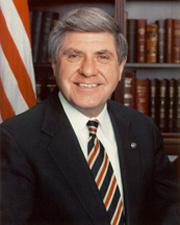 Sen. Ben Nelson (D-NE)
Legislative Activity
Stay on top of the latest movement without scrolling through every action
Roll call votes on amendments in Senate: Motion to table amendment SA 2962 agreed to in Senate by Yea-Nay Vote. 54 - 45. Record Vote Number: 369.(consideration: CR S12683)
December 8, 2009
View full timeline
Roll call votes on amendments in Senate: Motion to table amendment SA 2962 agreed to in Senate by Yea-Nay Vote. 54 - 45. Record Vote Number: 369.(consideration: CR S12683)
December 8, 2009
Considered by Senate. (consideration: CR S12648, S12659-12664, S12669-12683)
December 8, 2009
Motion to table amendment SA 2962 agreed to in Senate by Yea-Nay Vote. 54 - 45. Record Vote Number: 369. (consideration: CR S12683)
December 8, 2009
Senate amendment submitted
December 7, 2009
Senate amendment proposed (on the floor): Amendment SA 2962 proposed by Senator Nelson NE to Amendment SA 2786.(consideration: CR S12600-12603, S1609-12613; text: CR S12600)
December 7, 2009
Amendment SA 2962 proposed by Senator Nelson NE to Amendment SA 2786. (consideration: CR S12600-12603, S1609-12613; text: CR S12600) To prohibit the use of Federal funds for abortions.
December 7, 2009
Votes
1 roll call on this amendment
Text
Proposed
SERVICE MEMBERS HOME OWNERSHIP TAX ACT OF 2009

The ACTING PRESIDENT pro tempore. Under the previous order, the
Senate will resume consideration of H.R. 3590, which the clerk will
report.
The legislative clerk read as follows:

A bill (H.R. 3590) to amend the Internal Revenue Code of
1986 to modify the first-time home buyers credit in the case
of members of the Armed Forces and certain other Federal
employees, and for other purposes.

Pending:

Reid amendment No. 2786, in the nature of a substitute.
Pryor amendment No. 2939 (to amendment No. 2786), to
require the Secretary to provide information regarding
enrollee satisfaction with qualified health plans offered
through an Exchange through the Internet portal.
Gregg amendment No. 2942 (to amendment No. 2786), to
prevent Medicare from being raided for new entitlements and
to use Medicare savings to save Medicare.

The ACTING PRESIDENT pro tempore. Under the previous order, there
will be 2 hours of controlled debate, equally divided between the two
leaders or their designees, with the Republicans controlling the first
30 minutes, and the majority controlling the second 30 minutes.
The Senator from Tennessee.
Mr. ALEXANDER. Madam President, on our Republican time, the Senator
from Wyoming, Mr. Barrasso, will lead a colloquy and ask for permission
to do that concerning Senator Gregg's amendment, which we will be
talking about this afternoon, making clear to the American people this
Democratic health care bill is being paid for by treating Medicare as a
piggy bank. But before we do that, I want to say, briefly, something in
response to the majority leader's comments.
He, the majority leader, said the Republican leader had said the
Democratic health care bill is arrogant. It is historic in its
arrogance. It is arrogant to think we are wise enough--we 100 Senators
are wise enough--in a 2,000-page bill to completely turn upside down
and change a comprehensive health care system that affects nearly 300
million Americans and 16 or 17 percent of our economy all at once.
It is arrogant for us to imagine the American people are not wise
enough to see through the proposals in this bill, which are to transfer
millions more Americans into a Medicaid Program for low-income people
that none of us would want our families or members a part of.
It is arrogant for us, then, to send a significant bill for much of
that to State governments. We make the decision, we send them the bill,
and do that in a way that in my State, at least, will cause devastating
cuts in higher education or huge tax increases.
It is arrogant to say to the American people it is an $800 billion
bill, which, as the Senator from New Hampshire has pointed out, when it
is fully implemented it is a $2.5 trillion bill--half paid for by
Medicare cuts.
It is arrogant to say we have balanced our budget when in fact--when
in fact--we leave outside the budget what it costs to pay doctors to
work in the government-run program we have today.
So this legislation is historic. It is historic in its arrogance, and
the American people will see through it and will expect us to, instead,
identify a clear goal. That is the Republican proposal, which is, to
reduce costs and go step by step in a direction toward those goals--
whether we are allowing small businesses to put together their plans so
they can serve more people at a lower cost, whether it is creating
competition by allowing people to buy insurance across State lines,
whether it is reducing junk lawsuits against doctors. We have made all
these proposals.
We are ready not to roll a wheelbarrow of our own in here with a
comprehensive proposal. But day after day, we have said, instead of
increasing costs, raising taxes, allowing premiums to go up, shifting
costs to States, and dumping low-income Americans into Medicaid, let's
reduce costs. We have a plan to do that.

Amendment No. 2942

I wish to recognize the Senator from Wyoming so we can have a
discussion about Senator Gregg's amendment.
The PRESIDING OFFICER (Mr. Bingaman). The Senator from Wyoming.
Mr. BARRASSO. Mr. President, I ask unanimous consent to engage in a
colloquy with my colleagues to discuss the issues at hand.
The PRESIDING OFFICER. Without objection, it is so ordered.
Mr. BARRASSO. I thank the Presiding Officer.
Mr. President, I have been looking at the bill, which, to me, is
going to hurt the health care system of our country. I am a physician.
I have taken care of families in Wyoming for 25 years, and I think if
we want to get costs under control, if we want to help families all
across America who are struggling with their health care needs, we need
to focus on an amendment that is before us today, brought forward by
the Senator from New Hampshire.
I ask my friend and colleague from New Hampshire, is it not true that
the numbers we are looking at are underreported? It is going to be much
more expensive and the cuts are going to come from our seniors, those
who are vulnerable, those who depend on Medicare for their health care,
and we need to make sure and promise the American people we will be
protecting those folks who depend on Medicare for their health care?
Mr. GREGG. Mr. President, the Senator from Wyoming, first as a doctor
and second as a Senator, raises a very important point; that is, this
is the largest expansion in government in the history of the
government.
Let's begin right there. This is a $2.5 trillion expansion in the
size of the government when fully implemented. It is a massive growth
in the size of government. Most of that growth comes from the expansion
of government in two areas: the expansion and creation of a brand new
entitlement and the expansion of Medicaid, as was alluded to by the
Senator from Tennessee.
How is that paid for? How is this huge explosion in the size of
government paid for? Well, a large part of that is paid for by reducing
the amount of money in Medicare that is paid in Medicare, paid to
Medicare providers, and available to Medicare recipients--$460 billion
in the first 10 years, $1 trillion in the first 10 years when the
program is fully implemented--that would start in about 5 years--
and then $3 trillion, by our estimates, which are linear--I suspect it
will be more--over the first 20 years of this bill, a $3 trillion
reduction in Medicare benefits.

We heard arguments from the other side of the aisle: Oh, that is not
going to affect benefits. Well, that is not believable. We know that.
You cannot reduce Medicare provider payments and you cannot cut
Medicare Advantage--with the total cuts of both, combined, by $460
billion in the first 5 years, $1 trillion in the first 10 years of full
implementation, and $3 trillion over 20 years--and not affect benefits.
This is money that is going to have the most significant impact we
have ever had occur on our seniors in their Medicare system. This is a
fundamental change in the way Medicare services are paid for and the
insurance that is available to seniors under Medicare, specifically,
Medicare Advantage. We know for a fact that of the 11 million people on
Medicare Advantage, approximately a fourth of them will lose it--simply
lose their Medicare Advantage.
We also know hospital groups, provider groups, and doctors are all
going to see significant reductions in their reimbursement rates, which
means, of course, they are going to change the way in which they treat
seniors. Seniors are going to find it harder to find a doctor. They are
going to find it harder to get a procedure they need because the
reimbursement rate for those procedures is going to have been cut so
significantly under this bill.
Home health care will be dramatically impacted. The Senator from
Wyoming had a very interesting letter from his home health care groups
in Wyoming which related to what percentage of home health care
agencies would actually close. It was a very high percentage under this
proposal.
There is no question but that Medicare is in dire straights. It is
headed toward insolvency. It goes into a negative cashflow in 2 years,
and it has $35 trillion of obligations, which we have no idea how we
are going to pay for. So Medicare reform is important. I have supported
it. I proposed it. In fact, I proposed it a number of times and have
always been voted against by colleagues on the other side of the aisle.
But any reform to Medicare of this size--$464 billion in the first 10
years,

[[Page S12566]]

$1 trillion in the first 10 years of implementation, $3 trillion over
20 years--anything that is going to cut Medicare by those numbers,
those savings, if they are going to occur, those reductions, should go
to benefit making Medicare more solvent.
But what happens under this bill? That is not what they are used for.
Those dollars which come right out of the pockets of seniors and the
people who provide seniors care--and the ability of seniors to purchase
insurance under Medicare Advantage--those dollars go from the senior
over to creating these new major programs, these new entitlements.
In fact, I was looking at the bill. It appears to me some of those
dollars go to get votes around here. Isn't that incredible? They are
going to take money away from seniors and use it for the purposes of
getting votes to pass this bill by sending money back to States of
Members who are maybe a little wavery on whether they want to vote for
this bill. That is where some of the money goes.
But most of the money goes to creating these new entitlements for
people who may be deserving--probably are deserving--but who are not
seniors and who probably have not paid into the insurance fund that
seniors have paid into for all their life and, thus, it is totally
inappropriate to do that.
I have an amendment. It is very simple. It is an amendment that has
real teeth, and it is actually an amendment that follows up on a number
of statements from the other side of the aisle and some sense of the
Senate which were voted 100 to nothing around here, which says, simply:
No Medicare money can be used to fund other parts of this bill. To the
extent Medicare savings occur under this bill as a result of cuts to
home health care, cuts to Medicare Advantage, cuts to provider groups,
those dollars will not be taken and used to fund new entitlements for
people who are not on Medicare, not seniors. They will not be taken to
fund the purchase of votes around here to pass this bill.
This is a real amendment. A lot of stuff happening around here is
sense of the Senate, where people stand up and say: Oh, I am for that.
Exactly, what I said--let's do a sense of the Senate to that effect.
But sense of the Senate has no impact at all. It is political cover.
This is not political cover. This amendment, as structured, will
actually accomplish the goal of not allowing Medicare dollars--cuts in
Medicare that are $464 billion over the first 10 years, $1 trillion
over the fully implemented period, and $3 trillion over the 20-year
period--it will not allow any of those dollars to be used to fund new
programs in this bill which do not benefit seniors.
That is all it says. It seems to me, if you are going to stand up for
responsible action in the area of Medicare, if you are going to live by
the sense of the Senate that have been voted for here, if you are going
to stand behind your word, as the sense of the Senate have called for--
that Medicare money be used for Medicare, and that Medicare money not
be used to fund things that are extraneous to Medicare; Medicare cuts
savings--then you have to vote for this amendment.
Mr. THUNE. Will the Senator yield for a question?
Mr. GREGG. I would be happy to yield.
Mr. THUNE. It strikes me that the Senator's amendment is very
straightforward, very simple, and very clear; that is, any savings that
come out of the Medicare Program cannot be used to fund a new
entitlement program.
Mr. GREGG. That is not related to seniors.
Mr. THUNE. Correct. And it seems to me, at least, that the amendment
gets at what some on the other side have argued, with their amendments,
they are trying to accomplish.
Could the Senator from New Hampshire describe how the effect, the
legal effect, of his amendment differs from, say, for example, the
votes we have had, where it was a 100-to-0 vote the other day on a
Bennet amendment, what the impact the amendment of the Senator from New
Hampshire would be relative to some of the previous votes we have had,
which it appears to me, at least, were completely meaningless, sort of
cover votes, to try and give people on the other side the opportunity
to say: We voted to protect Medicare, when, in fact, they did not?
How is the amendment of the Senator from New Hampshire distinguished
from those that have been voted on previously?
Mr. GREGG. My amendment has force of law behind it. Those amendments
have no force of law behind them. They have no effect at all. As the
Senator said: a political statement, an editorial comment, a piece of
paper written.
This amendment, if passed, will have the force of law behind it. It
will very simply be structured in a way that the money cannot be taken
out of Medicare if it is going to be used for the purposes of funding
the new programs in this bill, whether they are the entitlement
programs for people who are not seniors--this expansion of
entitlements--or whether they are for the purposes of getting votes to
pass the bill.
Mr. THUNE. So if a Senator on either side of the aisle, a Republican
on this side or a Democrat, was serious about protecting Medicare,
ensuring that Medicare's solvency is protected and that these funds are
not going to be reallocated to create some new entitlement program or
spend money on some new, clearly, $2\1/2\ trillion expansion of
government, which we know is going to require enormous amounts of
revenue which seems to me has to come from somewhere--what the
Senator's amendment would do is simply force the other side to put up
or shut up with regard to this argument they have, which is that they
are, in fact, supporting Medicare; the Senator's amendment would
essentially say, very clearly, in a very straightforward way, that
funds that come in out of savings from Medicare have to be retained in
the Medicare account.
Mr. GREGG. That is correct. This is the first and only vote Members
on this floor are going to have, to make it clear that Medicare dollars
will not be used for something other than Medicare.
Mr. CHAMBLISS. Would the Senator yield for an additional question?
The language in the Bennet amendment that passed 100 to nothing the
other day said, basically, that Medicare savings should benefit the
Medicare Program and Medicare beneficiaries. That sounds pretty
straightforward, pretty simple. But let me ask the Senator--
Mr. GREGG. Well, if I might interject, anybody who voted for that
amendment would want to vote for mine.
Mr. CHAMBLISS. That is exactly the question I am getting to. Is there
anything in the Bennet amendment that removes the expenditure of almost
$500 billion from Medicare in the base Reid bill that would require the
restoration of those cuts to benefit Medicare versus using it as a fund
to pay for the underlying Reid bill?
Mr. GREGG. Well, the Senator has made an excellent point.
Essentially, the Bennet amendment has no teeth. It has no substance. It
has no substantive effect. It is just a statement of purpose. If the
statement of purpose is as recited by the Senator from Georgia, then
you would need to vote for this amendment, my amendment, if you voted
for the Bennet amendment, because my amendment has the teeth that backs
up the language of the Bennet amendment.
Mr. CHAMBLISS. If I understand what the Senator is saying in his
amendment, he is requiring the Office of Management and Budget as well
as CMS to certify to Congress, basically, that the savings that are
referred to in the Bennet amendment as well as in the Senator's
amendment are, in fact, being used to fund Medicare benefits versus
being used to fund other benefits outside Medicare until such time as
Medicare is fully funded.
Mr. GREGG. That is, essentially, what it says. It says that CMS and
OMB must certify that no funds are being used to fund the additional
activity in this bill that does not relate to Medicare with Medicare
funds. It does not say that Medicare savings--it agrees to the Medicare
savings, but those Medicare savings would basically be used for the
purposes of reducing the outyear fiscal imbalance of Medicare. So it
doesn't contest the Medicare savings as proposed in this bill, although
those amendments have--we have already voted on a number of those. We
voted on home health care, and we voted on Medicare Advantage, but to
the extent those savings go in, those

[[Page S12567]]

cuts in Medicare benefits go in, the revenues from those cuts cannot be
used and spent to expand the size of government in someplace else which
has nothing to do with senior citizens.
Mr. BARRASSO. If I could follow up with a question for my colleague
from New Hampshire, because as I read the Sunday New York Times, it
said the Bennet amendment was completely meaningless--the Bennet
amendment was meaningless. It also goes on to say, Senator McCain is
trying to keep that $500 billion in Medicare, but the Democrats are
trying to take that money out of Medicare and, as the article says, the
editorial says: to finance coverage for uninsured Americans but not
people on Medicare.
So it does seem the New York Times, at least in this segment, got it
right: that the Bennet amendment that our colleague from Georgia
referred to is meaningless, that the cuts are going to come out of
people who depend upon Medicare for their health care to pay for a
whole new government program and not to focus on Medicare.
Well, don't we owe it to these seniors who have paid into the program
and who have been promised the program to save that program first?
Mr. GREGG. Well, the Senator from Wyoming is absolutely right. I
think the New York Times got it right. It is a convergence of two
unique forces of nature that the Republican minority in the Senate and
the New York Times should be on the exact same page on this issue and
both be right.
Mr. ALEXANDER. I wonder if the Senator from New Hampshire would
characterize this discussion this way: As I am hearing it, in order to
protect Medicare, a Senator wouldn't want to say: I voted for the
Bennet amendment and then I voted against the Gregg amendment, when it
counted.
Mr. GREGG. It would be virtually impossible to make that argument
with a straight face.
Mr. BARRASSO. I have a question for my Senate colleague from South
Dakota who is here. We heard the majority leader, Senator Reid, come to
the floor a few minutes ago and talk about how this bill is going to
get premiums under control, keep the cost--for people who have
insurance, keep their premiums under control. I saw a chart from the
Senator from South Dakota yesterday that said for 90 percent of
Americans, those who have insurance now, if we did nothing and did not
pass this bill, the premiums would be lower than if we do pass this
bill; that passing this bill actually will raise premiums, in spite of
the fact the President of the United States promised, while
campaigning, that he would lower the cost of premiums for American
families by $2,500.
I would ask my colleague from South Dakota, isn't it true that if
this bill passes, Americans wanting--feeling they have been promised
that premiums would be reduced, are they not doomed to disappointment?
Mr. THUNE. The Senator from Wyoming is correct. This is where the
real rub in this bill comes into play because what we were told and the
promises that were made--of course, many promises were made throughout
the course of the campaign, many of which will never be realized with
this legislation. There was also a promise made that taxes wouldn't go
up for people making less than $250,000 a year--not payroll taxes, not
income taxes, not any kind of taxes. In fact, we now know that 38
percent of the people who make under $200,000 a year are going to see
their taxes go up under this legislation. So promises made during a
campaign season tend not to necessarily be adhered to when it comes
time to legislate and actually follow through, and I think that is
clearly the case here.
With regard to the question of the Senator from Wyoming, the whole
purpose of health care reform, at least as I understand it--and I
think, for the most part, as the people of South Dakota whom I
represent understand it--is to lower cost. Because everybody
complains--the thing you hear the most when you go home--and the
Senator from Georgia is here. If you go to Georgia, Wyoming, South
Dakota, I think the sentiment you hear most frequently from people in
our States is: Do something about the cost of health care. We have
these year-over-year, double-digit increases or increases that are
twice the rate of inflation, and we are dealing with this. Small
businesses are dealing with it. More and more people--families are
struggling with the high cost of health care. Nobody argues that. We
all, basically, accept the premise that health care costs have been
going up and health care reform ought to be focused directly on trying
to get those costs under control.

The irony in all this is, after cutting $\1/2\ trillion from Medicare
in the first 10 years, and if you go into the fully implemented time
period it is about $1 trillion, and $\1/2\ trillion in tax increases,
what happens with premiums? Well, according to the Congressional Budget
Office, 90 percent of Americans would be the same or worse off. In
other words, 90 percent of Americans would see no improvement in their
health insurance premiums. In fact, if you buy in a small group market,
if you buy in a large group market, your premiums go up by about 6
percent a year, year over year. In fact, a family of four--let's put it
in a perspective that an American family can understand. If you are a
family of four--this is according to the Congressional Budget Office--
that is paying $13,900 for insurance this year and you are getting your
insurance in a large group market because you work for a large
employer, in 2016, your insurance cost is going to be over $20,000 a
year. In other words, your insurance is going to go up about--a little
under $14,000 to over $20,000 a year in that time period.
So what American in their right mind is going to say that is reform?
I think most Americans are going to say: What are you doing? You are
spending $2.5 trillion, you are raising my taxes, and cutting my
parents' or my grandparents' Medicare benefits, for what? So my
premiums can stay the same or go up? If you buy your insurance in the
individual marketplace, your insurance premiums, according, again, to
the Congressional Budget Office, are going to go up anywhere from 10 to
13 percent a year. So you get Medicare cuts, you get tax increases, and
for 90 percent of Americans, you stay the same or are worse off. In
other words, your insurance premiums are now going to be impacted, you
have achieved the status quo or, worse yet, your insurance premiums are
going to go up 10 to 13 percent if you are buying in the individual
market. That is according to the Congressional Budget Office.
So I would say to my friend from Wyoming, the point he made is
exactly right. In doing all this, the exercise ought to be about
reducing costs. Clearly, that is not the case with this legislation.
Mr. CHAMBLISS. Let me address a question to our friend from Wyoming
who is a medical doctor, in addition to being an outstanding Senator.
What we are being asked to believe from the folks on the other side
and what the American people are struggling with and having a hard time
believing is, they are saying that even though they are cutting
Medicare by a total of $450 billion-plus over a 10-year period,
actually the solvency of Medicare is going to be extended. They expect
the American people to believe that somehow.
The fact is, we know from the information we received this spring
from the bipartisan Medicare Commission, unless something is done,
Medicare is going to become insolvent in the year 2017, pure and
simple. What we are doing is not taking the savings they are
proposing--and we don't agree with them, but irrespective of that--
irrespective of the savings they are saying are going to be achieved,
instead of applying that back, we are going to use that to grow the
size of government, tie some reimbursement payments to physicians to
the Medicare Program, and now we are looking at about a 23-percent
reduction in payments to physicians as reimbursement under Medicare if
we don't take some action next year. When you put all this together,
the American people are saying: You have to be kidding me. How in the
world are you going to extend the life of Medicare by cutting it by
almost $500 billion?
Mr. BARRASSO. As my colleague from Georgia knows, there is no way you
can save Medicare when you cut that kind of money out of it. How, when
they cut physicians' payments by 23 percent, are we going to have
physicians going to any of our small communities in South Dakota, in
Georgia, in Wyoming, where we have many people

[[Page S12568]]

who depend on Medicare for their health care? I worry about access to
care.
Our colleague, Senator Isakson, yesterday talked about home health
care and how, for pennies on the dollar, you can help people. It
provides a lifeline for people who are homebound. It keeps them out of
the hospital, out of the nursing homes. Instead, this Senate, the
Democratically led Senate, yesterday voted to cut $42 billion out of
home health care, which people in our small communities and in the
rural areas of our State depend upon. So there is no way this program
can stay solvent.
It is hard for me to fathom and, clearly, hard for the people of
Wyoming to fathom, how with all this budget trickery it is going to
work for people who need to go to see a doctor or to have a home health
care provider in many of our rural communities.
We all have townhall meetings, and when I go to townhall meetings,
people say: Don't cut my Medicare, don't raise my taxes, and don't make
things worse for me than they are now.
Mr. THUNE. If the Senator will yield, the Senator, of course, is one
of only two physicians in the Senate and has great experience and great
depth on this issue and knows what it is like to serve and provide
health care services to people in rural areas, such Wyoming and South
Dakota and some areas of Georgia.
I think it is interesting too--and the Senator from Georgia was here,
as was I; I don't think the Senator from Wyoming was here at the time.
But in 2005, we had a debate about Medicare, and the Senator from New
Hampshire proposed cutting $10 billion in Medicare, taking $10 billion
over a 5-year period or about $2 billion a year, and paid for it by
income testing the Part D benefit that people got. In other words, the
premiums that are paid, those who are in the higher income categories
would have to pay a higher premium for their Part B drug benefit than
would those in lower income categories. You would have thought that the
apocalyptic pronouncements and predictions around here about what that
was going to do for Medicare: $2 billion a year or $10 billion over 5
and you heard the other side describe it as immoral, it was cruel, it
was a disaster of monumental proportions. That was some of the
terminology that was used around here at the time. That was for $10
billion over 5 years, and that basically was to say to people who have
higher incomes, the Warren Buffetts of the world ought to pay a little
bit more for their prescription drug benefit under Medicare than those
in lower income categories, and people on the other side went nuts
about that.
Now here we are talking about cutting $465 billion over a 10-year
period, $1 trillion over 10 years, when it is fully implemented, and it
seems to me, I would say to my colleagues, the other side is going to
have a lot of explaining to do to the American people about why $10
billion in reductions was immoral, cruel, and a disaster of monumental
proportions, but cutting $\1/2\ trillion out of home health care and
nursing homes and hospitals and everything else to pay for an entirely
new entitlement program, a $2.5 trillion expansion, somehow makes
sense.
Mr. BARRASSO. Mr. President, I appreciate the comments from my
colleagues. I think we are hearing around the country that we do need
health care reform. We need to get costs under control. We need to have
patient-centered reform, not government-centered reform, not insurance-
centered reform. We need to not cut Medicare. We need to not raise
taxes. We need to not make things worse for the American people.
From what I have seen of this bill--and I worked my way all the way
through it--it makes things worse for the American people, not better.
This is not the right prescription for health care in America.
With that, I yield the floor.
The PRESIDING OFFICER. The Senator from Montana is recognized.
Mr. BAUCUS. Mr. President, for the benefit of all Senators, I will
take a moment to lay out today's program. It has been 2\1/2\ weeks
since the majority leader moved to proceed to the health care reform
legislation. This is the eighth day of debate. The Senate has
considered 16 amendments and motions and conducted 12 rollcall votes.
Today, we will debate an amendment by Senator Pryor and, at the same
time, an amendment by Senator Gregg to do with spending taking effect.
The first 2 hours will be equally divided. The Republicans will control
the first 30 minutes and the majority will control the next 30 minutes.
There may or may not be a side-by-side amendment to the Gregg
amendment. The Senate will conduct votes on or in relation to the Pryor
and Gregg amendments this afternoon. We expect at least those votes to
begin sometime between 3:15 and 4 p.m. this afternoon.
I will take a few moments to discuss the amendment Senator Gregg
offered yesterday. The Gregg amendment has been billed as protecting
Medicare. That seems to be the new fashion on the other side of the
aisle--to say that the bill cuts Medicare. Frankly, that is a
misleading statement at best, and it is inaccurate, basically. In
reality, the Gregg amendment is a killer amendment. It is designed to
prevent health care reform from taking effect. That is the purpose of
the Gregg amendment. It is a killer amendment.
The amendment has more details to it, but you can get the flavor of
it from a few excerpts. Let me quote from the amendment.
The first subsection of the amendment is entitled ``Ban on New
Spending Taking Effect.'' You really don't have to go much further to
get an idea of what the amendment is about. Just focus on that
statement in the amendment--a ban on new spending taking effect.
Let me quote further from the second subsection:

. . . the Secretary of the Treasury and the Secretary of
Health and Human Services are prohibited from implementing
the provisions of, and amendments made by, sections 1401,
1402, 2001 and 2101. . . .

What are those sections? The Gregg amendment will stop this spending
from taking effect.
Section 1401 is refundable tax credits providing premium assistance
for coverage. Those are the tax credits, the tax reductions that help
people buy health insurance. The Gregg amendment says we cannot help
people buy health insurance, that they can't have those tax credits.
The second section is 1402. What is that? It is to reduce cost
sharing for individuals. That is the part that would make copays and
other out-of-pocket expenses affordable. The Gregg amendment says: No,
we can't have reduced cost sharing for individuals. We have to keep
those copays in effect and out-of-pocket expenses high. It would help
people with copays and other out-of-pocket expenses.
The third section the Gregg amendment would stop is section 2001. It
is a section that provides Medicaid coverage for the lowest income
population. That is the one that provides expanded Medicaid coverage up
to 133 percent of poverty. The Gregg amendment says: No, you can't help
poor people with health care. The Secretary is prohibited from making
those payments to Medicaid if that amendment is adopted.
The fourth section the Gregg amendment would stop is section 2101.
Section 2101 is a section that provides additional funding for the
Children's Health Insurance Program. Can you believe that? A Senator
gets up on the floor of the Senate and wants to stop funding to the
Children's Health Insurance Program? That is what that section
provides.
So if you don't like tax reductions to help people buy health
insurance, if you don't like making health insurance affordable, if you
don't like health care for the lowest income Americans, and if you
don't like health care for kids, then the Gregg amendment is for you.
The folks on the other side of the aisle have spent a lot of time
this year talking about Medicare. That is about all I hear from them.
They make it sound as if they want to help Medicare. In effect, they
are hurting it. A lot of folks say they want to help Medicare, and I
see the big crocodile tears they shed. I will take a few moments to set
the record straight about how the trust fund works. That might help
them understand, frankly, why the bill before us--the Reid bill--helps
Medicare, contrary to protestations of those on the other side.
The Medicare trust fund provides hospital insurance for seniors and
Americans who are disabled. Working Americans pay into that trust fund
when they pay their payroll taxes.

[[Page S12569]]

When a senior has to go to the hospital or a nursing home--there are
lots of areas where seniors get help--the spending to help pay for that
hospitalization comes out of the trust fund. The actual sum comes out
of Medicaid, but some payments come out of the Medicare trust fund,
such as for home health care, et cetera.
When payroll tax revenues are greater than the payments for
hospitalizations, the assets in the Medicare trust fund grow. That is
good. On the other hand, when spending for hospital care is greater
than payroll tax revenues and interest payments on the trust fund
assets, then assets in the Medicare trust fund diminish. That is not
good.
The Actuary for Medicare--the person charged with determining the
health of the Medicare trust fund over at HHS--tells us that if we
don't do anything--if this legislation is not passed--then by about
2017 the Medicare trust fund assets will be exhausted. That is clear.
That is definite. That is a fact, and I emphasize the word ``fact.'' I
am just being honest, Mr. President. I have to be objective and honest
about this stuff. When I hear Senators talk about Medicare, they are
not looking at facts. It is one thing to say something and engage in
all this rhetoric, but if it is not backed by facts, it is a bit
irresponsible.
The fact is, the life of the Medicare trust fund will be extended for
5 years under this legislation. I talked to a Senator on that side
privately. He said that the Medicare trust fund will not be extended--
the solvency--for 5 years. I asked him privately: How can that be true?
Did you read the Actuary's report? By the way, it was not this Senator
right here; it was another Senator, and that Senator said: I don't
believe it. It is a fact. The Actuary says that will be the result of
the legislation before us; namely, that the solvency of the trust fund
will last 5 more years. That is a fact. That is what the Actuary's
report said.
So we can either raise more payroll taxes to continue the solvency of
the trust fund so that seniors get their benefits or we can reduce
spending out of the trust fund. We can either increase the money or
decrease the money coming out.
I will say it again. The Medicare Actuary tells us that health care
reform will extend the life of the Medicare trust fund by 5 years or,
to put it another way, if we do not enact health care reform, we will
hurt Medicare's long-term solvency.
Let me cite some examples on how that works.
Health care reform would discourage hospital readmissions, for
example. That is waste. See, here is what the other side doesn't quite
understand. You don't hear them talking about it. The goal here is to
extend the life of the trust fund, basically by cutting out waste--not
hurting seniors but cutting out waste and cutting back on overpayments
in some areas where some providers are overpaid, and where seniors are
helped, not hurt.
Again, here is an example: hospital readmissions. If you can
discourage hospital readmissions, that is fewer dollars wasted out of
the trust fund, and it is better health care for seniors. The incentive
is for hospitals to have more readmissions because that is how they
make money. Some hospitals, frankly, don't go out of their way to
prevent readmissions because they can make more money that way,
although it is not good care for seniors.
When a senior is discharged from a hospital, you want to make sure
there is a flow, a seamless effort of keeping health care for that
patient, whether it is extended care or home health care in a nursing
home or whatnot, and there is a physician involved and nurses involved
and so forth, making sure the patient is taking his or her medication,
and it is just to make sure patients are getting better all the time.
We all know--I know because I have experienced it, and I have watched
it firsthand, and I have heard many people talk about this--that too
often, when a patient is discharged, the care for that patient is not
as great, as the hospital is in longer involved, and sometimes the
regular doctor is not involved because that doctor is not very much
involved with the patient at the hospital. My own view is that it needs
improvement. It is not working too well.
Again, we are saving dollars in the Medicare trust fund by preventing
excessive readmissions. That is wasteful and doesn't help the patient.
So that is a way we are saving and extending the solvency of the trust
fund. That is one way. There are others. I will cite a second.
Health care reform discourages hospital-acquired infections. I think
in America, unfortunately--and I don't know the facts, but I have read
this somewhere, but I haven't confirmed it--the rate of infections in
American hospitals is greater than it is for other industrialized
countries. That is clearly a problem. People die from infections in
hospitals, and it seems to me that the more we can encourage fewer
infections--one way is through health care reform. Maybe we can lower
payments to hospitals that have too many infections. I know it is hard
to do. It is a judgment call. You have to do the best you can. That,
too, will help the solvency of the trust fund and help care for
patients. That is another way we are extending solvency of the trust
fund.
I see my good friend from Wyoming on the floor, Senator Barrasso, who
talks about home health care. I am sure he wants to eliminate fraud in
home health care. I am sure he does. We all want to. So we cut back on
areas where there is fraud. Where is there fraud? In outliers. Too many
hospitals bill too much for outlier payments, additional payments,
because they say they have a special patient who is an outlier. One
county in Florida billed for 60 percent of the outlier payments in
America even though they had 1 percent of seniors in America. There are
other examples like that. The GAO came to us and said we have to do
something about this. There is fraud in the home health care program. I
am a big fan of home health care--a big, big fan. They do very good
work. But we want to take out the fraud--excessive payments that are
fraudulent. Isn't that a good thing? Doesn't that extend the solvency
of the trust fund? Isn't that helping patients instead of hurting them?
There are examples. The home health folks came to us and said: Make
some of these changes because it is more efficient and we can give
better care. As a result, fewer dollars are going to home health care.
We also had a provision for rural health care. We add an extra bonus
for rural health care.
My point is simply that when Senators stand up on the floor and say
we are cutting Medicare--sometimes they use the words ``cutting
benefits'' or ``hurting beneficiaries''--that is patently false. It is
not true. It is true that in some cases we are taking some of the fraud
out. It is also true that in some cases we are taking excessive
payments--not by our judgment but by the judgment of MedPAC and other
organizations and experts who study this. One Senator from Florida
stood up and told me he agreed that payments to Medicare Advantage are
excessive. Doesn't it make sense to take out the excess, the waste, and
the fraud in order to extend the solvency of the trust fund? That is
what this bill does.
It doesn't hurt seniors by ``cutting'' Medicare, leaving the
implication that we are cutting Medicare benefits. It is an old saying
in life: If you say something loud enough, maybe people will start to
believe it. That is what the other side is engaging in.
If you look at the actual facts, the actuary says it does extend the
life and solvency of the trust fund. The actual fact is we are cutting
out waste. The actual fact is the industry has come to us and said:
Help us with this, help us with that so we can be more efficient, much
of what is going on here.
I have countless examples. Let me give a third one. This legislation
would encourage hospitals and doctors to work together by bundling
payments. If doctors and hospitals work together, guess what happens.
They are less likely to order duplicate tests. They are working
together. Payments based on fee for service, payments based today on
volume, on quantity are, in some cases, wasteful. It is wasteful.
All of us who go to a hospital, a doctor's office, we kind of wonder:
My gosh, some things seem wasteful here. We have to get new tests, new
this; the doctor doesn't know what happened when I was here previously;
we have to start all over again; new x rays, new imaging, so forth.
They are waste. We

[[Page S12570]]

are trying to cut out a lot of this waste, and bundling payments is
definitely going to help.
We have other techniques--accountable care organizations, medical
home concepts. These could take 1 year, 2, 3, or 4 to kick in. But if
they do work, it is the model of integrated care systems we all talked
about which cut out waste and improve quality at the same time, and
that is going to help Medicare. These integrated systems are going to
also help extend the solvency of the trust fund and improve quality of
care--not reduce it but improve it.
The main point I am making is these reforms will extend the life of
the trust fund. And guess what. They improve the quality of care, not
decrease the quality of care but improve it.
We also add some additional benefits for seniors that they will not
receive if this legislation does not go into effect.
I note we only have a half hour on our side. I probably used more
time than I should. The chairman of the HELP Committee is on the floor.
Mr. President, how much time remains on the majority side?
The PRESIDING OFFICER. Thirteen minutes remains.
Mr. BAUCUS. I yield 10 minutes to the Senator from Iowa.
The PRESIDING OFFICER. The Senator from Iowa.
Mr. HARKIN. Mr. President, I thank my colleague from Montana, the
chairman of the Finance Committee, for his great leadership on this
issue, on this bill, and Senator Dodd, who took the leadership of our
HELP Committee, in putting our bill together. The two of them have done
an admirable job of getting our bill this far along and, hopefully, we
are going to see the light at the end of the tunnel pretty soon. One of
the best Christmas presents we can give the American people is to bring
this bill to a close, have our votes up or down and let's get this bill
passed so the American people can look ahead to a brighter future in
terms of their health care and its quality, affordability, and
accessibility.

Amendment No. 2939

I wish to take a little bit of time this morning to speak in strong
support of Senator Pryor's amendment, which is before us, which would
provide information on the consumer satisfaction of health plans
offered through the exchanges. The Pryor amendment develops an enrollee
satisfaction survey for these plans and requires exchanges to include
information from this survey on an Internet Web site. This, too, will
allow consumers, both individuals and small businesses, to easily
compare survey results and make well-informed choices.
Currently, OPM manages an enrollee satisfaction survey for the
Federal Employees Health Benefits Plan, the one we are all in and the
one our staffs are in, the one that postal workers are in and civil
servants all over this country are in. Right now OPM, in managing that
plan, has an enrollee satisfaction survey. The Pryor amendment would
provide a tool to all Americans that we as Members of Congress have
when we select a plan.
The survey results could be used by GAO, the Government
Accountability Office, and the committee I chair, the Senate HELP
Committee, to monitor the quality of exchange plans and fulfill our
oversight responsibilities over the exchanges.
As a little aside, I keep reminding people we will pass this bill, we
will get this health reform bill passed. It will be signed into law.
But that does not mean, like the Ten Commandments, it is written in
stone, never to be changed. Laws are laws and laws change. They get
amended, and we change and adapt as times and conditions demand. As we
move ahead and as we look at how the exchanges work, what is happening
out there, I have no doubt in my mind there will be some bumps in the
road and we will have to come back and revisit it and make some
changes. By having this Pryor amendment and what we have in the bill to
provide for this kind of survey to see how satisfied people are with
the plans, it gives us that kind of oversight ability, that oversight
responsibility to look ahead and plan on changes that we will probably
be making in the future.
But most important, the Pryor amendment will give consumers an
important voice. It will keep the insurance companies honest because
they will know to maintain and grow their enrollment they must satisfy
their customers.
This amendment truly complements and reinforces the purpose and
function of the exchanges. The Patient Protection and Affordable Care
Act, our reform bill, creates exchanges as a place for one-stop
shopping where consumers, the self-employed, and small businesses can
easily compare plans. This amendment will increase competition and
lower premiums as the exchanges will increase competition and lower
premiums.
This past week, the Congressional Budget Office validated this
approach, and the CBO said this about the exchanges:

The exchanges would enhance competition among insurers in
the nongroup market--

That is small businesses, individuals, self-employed--

by providing a centralized marketplace in which consumers
could compare the premiums of relatively standardized
insurance products. The additional competition would slightly
reduce average premiums in the exchanges by encouraging
consumers to enroll in lower-cost plans and by encouraging
plans to keep their premiums low in order to attract
enrollees.

What we have been hearing from the other side of the aisle all along
is premiums are going to go up, everything is going to skyrocket. CBO
debunked this last week. CBO also said it will benefit small business:

Those small employers that purchase coverage through the
exchanges would see similar reductions in premiums because of
the increased competition among plans.

The Senate bill before us ensures consumers and small businesses have
the information they need to make informed choices.
One, our bill requires exchange plans to provide information on
quality measures for health plan performance. This was a provision
offered in our committee by Senator Jack Reed, and I commend him for
it.
Second, our bill develops a rating system that will rate exchange
plans based on quality and price--ratings, again, that will be
available on an Internet Web site.

Third, our bill requires exchanges to operate a toll-free hotline to
respond to requests for consumer assistance.
Fourth, our bill develops an online calculator so that consumers can
figure out how much they will have to pay, factoring in their tax
credits and cost-sharing reductions.
And fifth, and perhaps most important, I want to acknowledge a
contribution made by Senator Dodd in this area. He authored a key
provision in our bill to require all plans--all plans--not just
exchange plans, all plans--to provide a uniform, easily understandable
summary of coverage to enrollees and applicants. In other words, no
longer will Americans have to read and try to comprehend the fine
print.
All of these provisions are currently in our bill to enhance consumer
choice, which is what this bill is about--enhancing and expanding
affordable choices.
Some of them have been overlooked in a lot of the verbiage going on
about cutting Medicare and all that stuff, but these provisions will do
a great deal to change the way Americans shop for and buy health
insurance.
This amendment by Senator Pryor will add one more important tool to
help our consumers. It is a consumer amendment to make sure consumers
get the information they need and the input, a satisfaction survey so
consumers can have an input. That way we know here if we need to make
changes down the road.
I commend Senator Pryor for offering the amendment. I urge my
colleagues to support it.
I yield the floor.
The PRESIDING OFFICER. The Senator from Minnesota.
Ms. KLOBUCHAR. Mr. President, I ask unanimous consent to speak as in
morning business for up to 7 minutes.
The PRESIDING OFFICER. Is there objection?
Mr. BARRASSO. No objection.
The PRESIDING OFFICER. No objection is heard. The Senator may speak
for up to 7 minutes.
Ms. KLOBUCHAR. Mr. President, I rise today in support of the
amendment offered by Senator Pryor that calls for an enrollee
satisfaction survey for health care plans offered through the exchange.
As you know, the exchange

[[Page S12571]]

will be a series of different policies from which people can choose.
What I love about this idea is that for my small businesses and self-
employed who are paying 20 percent more than people who work for big
businesses right now because they simply cannot leverage their numbers,
it is hard for them to get good rates because they are out there on
their own, this exchange, where they can choose a number of different
policies like Members of Congress can choose from, whether it is Blue
Cross or a number of the other choices, they can pick a policy on the
exchange.
I serve with Senator Pryor on the Consumer Protection Subcommittee
and know that he offers this amendment with the full intent of
improving resources for individuals who buy insurance. A satisfaction
survey will be a tool to help consumers navigate through the
complicated process of purchasing health insurance. The survey results
will allow individuals and small businesses to make well-informed
health care decisions by comparing current enrollee satisfaction levels
among the plans offered through the exchange.
This survey also provides, as Senator Harkin has pointed out, an
oversight tool for Congress so we can monitor the progress of the
exchange and present information to patients in an open, transparent
manner.
As I have said many times, I come from Minnesota, often known as a
``medical Mecca.'' We are home to the Mayo Clinic. We are home to the
University of Minnesota. Countless innovative businesses have
contributed groundbreaking medical research that is bettering the lives
of patients.
The key to this Minnesota model, where we have some of the highest
quality care in the country and some of the lowest costs, is by putting
the patient in the driver's seat. I have been at the Mayo Clinic. I
have seen what happens there. It is integrated care with one primary
doctor with a group of doctors that work with him, like a quarterback
on a football team. They also focus on the patients with satisfaction
surveys, keeping the team accountable for what they are doing.
I always say to my colleagues, it is counterintuitive. If you go to a
hotel and pay more money, you often get the best room with a view. That
is not true with health care in America. You can pay more money and get
some of the worst quality care in this country because there is no
accountability. That is why these patient surveys, in allowing
consumers in this country to look at these different plans and figure
out which one is better for them, is the way to go.
In my State, 92 percent are covered by some form of health insurance,
and we have done that by learning the importance of transparency and
providing quality information to consumers.
In 2004, a Minneapolis-based nonprofit called Minnesota Community
Measurement developed a consumer resource called Developed
HealthScores. HealthScores is based on information submitted by more
than 300 clinics statewide and is available to consumers on an easily
accessible Web site.
HealthScores is also used by medical groups and clinics to improve
patient care and by employers and patients to provide access to
critical information about the quality of health care services.
Researchers at the University of Oregon have studied public reporting
efforts and found that public reporting motivates health care providers
and insurers to work harder on improving care, largely because of a
concern about their reputation.
This is how the private market should work. You cannot just have
insurance policies that have a name and not understand what they mean
for the consumer. By having these surveys, we are going to be able to
understand so a consumer can navigate through and figure out which
policy is good, what it offers, what is best for their family.
As we continue our debate on health care, we must remain focused on
solutions with outcomes. Public reporting works. Senator Pryor's
amendment ensures that customers are able to voice their approval or
disapproval of plans offered by insurance companies and that
information will be available to small businesses and individuals to
make well-informed decisions about their health care.
How can they make a well-informed decision without knowing what plans
are good, what plans are bad, what plans offer? That is why we need
this, if we want to make this private market solution work for
consumers.
As the experience in Minnesota has shown, public reporting also has
the ability to improve quality as well. HealthScores in Minnesota has
forced health plans, medical groups, and employers to focus on a common
set of goals. Through this process, patient outcomes have produced
dramatic improvements for chronic conditions such as diabetes.
We know already that small businesses are paying too much--up to 18
percent more than large businesses--often forcing small businesses to
lay off employees or cut back on their coverage. We all know, from the
letters we have gotten in our offices, what the average American
families are facing right now with these skyrocketing premiums.
We must provide these patients and these consumers with tools to make
informed health care decisions. Not only will we put consumers in the
driver's seat so they can make the decision, we will also have an
effect on the entire market. Because if insurance companies think no
one is watching them, that consumers can't figure it out--maybe
something has a great name so they go buy it--they will never get the
kind of accountability and cost reductions we want.
The lessons from Minnesota have shown that providing consumers with
information about their health care has the ability to improve patient
satisfaction and drive our system to focus on quality results.
I yield the floor.
The PRESIDING OFFICER. The Senator from Utah.
Mr. BENNETT. Mr. President, I ask unanimous consent to proceed as in
morning business, not to exceed 10 minutes.
The PRESIDING OFFICER. Without objection, it is so ordered.
Mr. BENNETT. Mr. President, in this morning's Washington Post, we
have, once again, an outstanding article by Robert Samuelson, this one
entitled: ``Health-care Nation: Medical spending threatens everything
else.'' Mr. Samuelson has been critical of Republicans--and he is in
this article--and he has been critical of Democrats--and he is in this
article--but he makes some points I think are worth bringing to our
attention, the primary one being that we are not focusing on the right
issue, which is making some kind of attempt to turn the cost curve
down--using the budgetary doublespeak--with respect to health care.
Let me quote a few comments from Mr. Samuelson's presentation. He
says, first:

The most obvious characteristic of health spending is that
government can't control it.

As demonstrated by our past history, that is a very true statement,
which I will show in a moment. He goes on to say:

[The] consequence is a slow, steady, and largely invisible
degradation of other public and private goals. Historian
Niall Ferguson, writing recently in Newsweek, argued that the
huge Federal debt threatens America's global power by an
``inexorable reduction in the resources'' for the military.
Ferguson got it half right. The real threat is not the debt
but burgeoning health spending that, even if the budget were
balanced, would press on everything else. ``Everything else''
includes universities, roads, research, parks, courts, border
protection, and--because similar pressures operate on States
through Medicaid--schools, police, trash collection and
libraries. Higher health spending similarly weakens families'
ability to raise children, because it reduces households'
discretionary income either through steeper taxes or lower
take-home pay, as higher employee-paid premiums squeeze
salaries.

He concludes:

. . . Obama talks hypocritically about restraining deficits
and controlling health costs while his program would increase
spending and worsen the budget outlook. Democrats
congratulate themselves on caring for the uninsured--who
already receive much care--while avoiding any major overhaul
of the delivery system. The resulting society discriminates
against the young and increasingly assigns economic resources
and political choice to an unrestrained medical-industrial
complex.

Mr. President, I ask unanimous consent to have printed in the Record
the entire article at the conclusion of my remarks.
The PRESIDING OFFICER. Without objection, it is so ordered.

[[Page S12572]]

(See exhibit 1.)
Mr. BENNETT. To demonstrate the accuracy of what Mr. Samuelson has to
say, I have some charts. This one shows the breakdown of Federal
spending in 1966. Why do I pick 1966? Because that was the year for the
beginning of Medicare. At that time, 26 percent of the Federal budget
went for mandatory spending--overwhelmingly Social Security--7 percent
went to pay interest on the national debt, and 44 percent went for
defense, with 23 percent for nondefense.
Where are we now? In 2008, mandatory spending had more than doubled
and had gone to 54 percent, interest costs remained about the same--8
percent--defense had shrunk to 21 percent, cut in half, and the
nondefense discretionary, 17. The difference? Medicare and Medicaid
taking over the mandatory side.
What do we see as we look out to 2019. We can't break down the
difference between defense and nondefense because that would require an
analysis that is not available to us in that future year. But mandatory
by that time will have grown to 61 percent. The size of the debt
increasing costs now, interest costs have grown to 10 percent and
defense and nondefense discretionary have shrunk to 29--a complete
reversal. That is roughly what mandatory was when Medicare was started.
I am not saying we should not have Medicare, and I am not saying we
should not have Medicaid, but I am saying we should be focusing on how
we make people healthier, how we reward people for not using the
system, how we do something to control the costs, instead of increasing
the status quo with respect to health care spending.
This chart was drawn up before we had the bill before us. I think it
is very likely, if the bill before us passes, this mandatory will grow
even further and we find ourselves in this situation with respect to
2010. I watched the budget as it came down and it said, in 2010,
Federal revenues were going to be $2.2 trillion and mandatory spending
was going to be $2.2 trillion, which means every dime of everything
else had to be borrowed.
I worked with Senator Wyden and a number of others on both sides of
the aisle to craft a health care plan that would turn the cost curve
for health care down. We didn't even get a vote in the Finance
Committee. We didn't even get anybody to consider what we had to say
because everyone was focused entirely on the issue of let's cover the
uninsured. The position is: Let's cover the uninsured by taking what we
are doing now and spreading it even wider.
As Mr. Samuelson says, very clearly, in his column today: That
squeezes out the money for everything else. That is an uncontrolled
expenditure. We are not focusing on changing the system in a way that
can cause cost curves to come down, we are focusing on taking the
present system and spreading it wider.
The cost curve can come down. I have quoted this before. The
Dartmouth study talks about where the best health care is available in
America, and it is in three cities, according to Dartmouth: Seattle,
WA, Rochester, MN, and Salt Lake City, UT. Then they go on to say, if
every American got his or her health care in Salt Lake City, UT, it
would be the best in the country and one-third cheaper than the
national average. It is one-third cheaper than the national average
because the focus in that plan, as it is in Rochester, MN, at the Mayo
Clinic, and other places, is trying to make health care better and,
therefore, cheaper, instead of focusing on taking the present system
and perpetuating it.
If we don't get into that mentality, if we just take the present
system, which this bill does, and spread it over a wider number of
people, which this bill does, we will see the spending go up and we
will see everything else suffer as a result of it and the health care
will not get any better for the people who are involved.

Exhibit 1

[From the Washington Post, Dec. 7, 2009]

Health-Care Nation

(By Robert J. Samuelson)

President Obama's critics sometimes say that he is
engineering a government takeover of health care or even
introducing ``socialized medicine'' into America. These
allegations are wildly overblown. Government already
dominates health care, one-sixth of the economy. It pays
directly or indirectly for roughly half of all health costs.
Medicine is pervasively regulated, from drug approvals to
nursing-home rules. There is no ``free market'' in health
care.
What's happening is the reverse, which is more interesting
and alarming: Health care is taking over government.
Consider: In 1980, the federal government spent $65 billion
on health care; that was 11 percent of all its spending. By
2008, health outlays had grown to $752 billion--25 percent of
the total, one dollar in four.
Even without new legislation, the health share would grow,
as an aging population uses more Medicare (insurance for the
elderly) and Medicaid (the joint federal-state insurance for
the poor, including the very poor elderly). Obama would
magnify the trend by expanding Medicaid and providing new
subsidies for private insurance. Thirty million or more
Americans would receive coverage.
All this is transforming politics and society. The most
obvious characteristic of health spending is that government
can't control it. The reason is public opinion. We all want
the best health care for ourselves and loved ones; that's
natural and seems morally compelling. Unfortunately, what we
all want as individuals may harm us as a nation. Our concern
sanctions open-ended and ineffective health spending, because
everyone believes that cost controls are heartless and
illegitimate. The recent furor over proposals to reduce
mammogram screenings captures the popular feeling.
The consequence is a slow, steady and largely invisible
degradation of other public and private goals. Historian
Niall Ferguson, writing recently in Newsweek, argued that the
huge federal debt threatens America's global power by an
``inexorable reduction in the resources'' for the military.
Ferguson got it half right. The real threat is not the debt
but burgeoning health spending that, even if the budget were
balanced, would press on everything else.
``Everything else'' includes universities, roads, research,
parks, courts, border protection and--because similar
pressures operate on states through Medicaid--schools,
police, trash collection and libraries. Higher health
spending similarly weakens families' ability to raise
children, because it reduces households' discretionary income
either through steeper taxes or lower take-home pay, as
higher employer-paid premiums squeeze salaries.
A society that passively accepts constant increases in
health spending endorses some explicit, if poorly understood,
forms of income redistribution. The young transfer to the
elderly, because about half of all health spending goes for
those 55 and over. Unless taxes are increased
disproportionately for older Americans (and just the opposite
is true), they are subsidized by the young. More and more
resources also go to a small sliver of the population: In
2006, the sickest 5 percent of Americans accounted for 48
percent of health spending.
Political power in this system shifts. It flows to groups
that promote and defend more health spending--AARP, the lobby
for Americans 50 and over, and also provider organizations
such as the American Medical Association (AMA), which
represents doctors. Predictably, AARP has been active in the
present debate. It claims to have participated in 649 town-
hall and other meetings and to have reached more than 50
million people through ads this year. Not surprisingly, AARP
and the AMA recently conducted a joint TV ad campaign.
The rise of health-care nation has confounded America's
political and intellectual leaders, of both left and right.
No one wants to appear unfeeling by denying anyone treatment
that seems needed; no one wants to endorse openly meddling
with doctors' independence. It's easier to perpetuate and
enlarge the status quo than to undertake the difficult job of
restructuring the health-care system to provide better and
less costly care.
Obama's health-care proposals may be undesirable (they
are), but it's mindless to oppose them--as many Republicans
do--by screaming that they'll lead to ``rationing.'' Almost
everything in society is ``rationed,'' either by price (if
you can't afford it, you can't buy it) or explicit political
decisions (school boards have budgets). Health care is an
exception; it enjoys an open tab. The central political
problem of health-care nation is to find effective and
acceptable ways to limit medical spending.
Democrats are no better. Obama talks hypocritically about
restraining deficits and controlling health costs while his
program would increase spending and worsen the budget
outlook. Democrats congratulate themselves on caring for the
uninsured--who already receive much care--while avoiding any
major overhaul of the delivery system. The resulting society
discriminates against the young and increasingly assigns
economic resources and political choice to an unrestrained
medical-industrial complex.

Mr. BENNETT. Mr. President, I see the Senator from Iowa wishes to ask
me a question and I am happy to respond, but tell me how much time I
have remaining. Maybe some of it will have to come off his time.
The PRESIDING OFFICER. The Senator has 2 minutes remaining.
Mr. BENNETT. In my 2 minutes remaining, unless it is a long question,
I will be happy to respond to any question my friend may ask.

[[Page S12573]]

Mr. HARKIN. Mr. President, I would say that a lot of what Senator
Bennett says I agree with. That is why, in this bill--and I keep
reminding people because it is not talked about much--there are more
provisions in this bill to promote wellness and prevention than any
health bill we have ever passed--ever--in the United States. There are
huge investments in this bill on prevention and wellness.
I happen to think that perhaps one of the reasons Salt Lake City is
so good is because people don't smoke and don't drink and that goes a
long way toward providing for a healthier form of living. So I say to
my friend from Utah, people talk about bending the cost curve only in
terms of the spending. I think--and I sincerely believe this--the only
way we are going to bend that cost curve is by pushing more of this
upstream, by keeping people healthy in the first place, starting with
kids and adults, community-based, clinical-based, workplace-based
wellness programs.
So I ask my friend from Utah to look at that part of the bill.
Mr. BENNETT. Mr. President, if I can reclaim my 2 minutes to respond
to the Senator from Iowa, I can give you data that indicates it is not
just the fact there are a lot of people who don't smoke and don't drink
in Utah that makes them healthier. I agree there are many things in
this bill that are for wellness, and I approve of that. But the fact
is, the bill does not go anywhere near far enough in this direction to
change the paradigm that has created the situation we find ourselves
in.
Every expert I have talked to, in the 3\1/2\ years I have immersed
myself in this issue, has repeated that. They have said the only way
you are going to deal with this is to do something dramatically
different, which is what Senator Wyden and I tried to do and we got the
cold shoulder. All right, I understand, if you don't have the votes,
you can't get anywhere. But the fact remains, we are not going to be
able to afford all the things we want to do in this country, militarily
and otherwise, in this cost projection that we are on with respect to
health care right now.
Mr. BAUCUS. Will the Senator yield for a question?
The PRESIDING OFFICER. The Senator has used 10 minutes.
Mr. BENNETT. That is right; my time has gone. I will be happy to
respond to the Senator from Montana, if he wants to take the time to
let me.
Mr. BAUCUS. If my colleagues will allow, I ask unanimous consent for
3 minutes.
The PRESIDING OFFICER. Without objection, the Senator from Montana
has 3 minutes.
Mr. BAUCUS. I understand what the Senator is saying, and like
everything around here, there is a kernel of truth in almost
everything. I read that Samuelson article, and what I took away from it
is the guy is kind of pessimistic. There is not a lot you can do.
People love health care, they want to get all the health care they
want, and that is going to drive up spending.
But the main point is this. You mentioned how Intermountain and the
quality of care is so good at Intermountain and the costs are down.
Mr. BENNETT. If I may, it is not just Intermountain. There are other
agencies in Utah that do a good job.
Mr. BAUCUS. I was going to say, it is Intermountain, and there are
many other great integrated systems. There is one in Billings, MT--the
Billings Clinic. There are lots of integrated systems, and generally in
these areas, in these integrated systems--which I think work quite
well--a lot of the doctors are salaried, a lot of the incentives are
there to focus on health care of the patient, and it is coordinated
care in contrast with some other parts of the country.
In this bill, in addition to wellness and prevention, I would ask if
the Senator agrees the delivery system reforms will help move health
care, as it is in Intermountain and other integrated systems, to
encourage coordinated care, encourage bundling, encourage these
accountable care organizations and so forth. I was wondering if the
Senator thinks that will help systems--clinics, doctors, hospitals,
nursing homes and health care providers generally--to work better
together, where there may be more salaried physicians than there are
currently, but the salaried physicians I talked to at the Mayo Clinic,
for example, and Kaiser and other similar places, kind of like that
because they get decent salaries and they can spend their time not on
paperwork but can focus on the patients.
I am sure the Senator knows all the delivery reforms that are in this
that help move toward the Intermountain direction, and I would ask if
he thinks that will help.
Mr. BENNETT. Responding to the question of the Senator from Montana,
I am delighted there is as much of that in the bill as there is, but I
still believe the basic structure of the bill is fatally flawed because
it perpetuates the present system in ways that will guarantee the cost
curve will continue to go up. I disagree with him about the Samuelson
article. I do not think he is being overly pessimistic. I think he is
being very realistic.

Mr. BAUCUS. One more moment, if I might, Mr. President.
I understand the bill that the Senator and Senator Wyden cosponsored
is basically to move us away from the employer-based system. Currently,
our tax law encourages employers providing tax free health insurance
and so forth. I understand the theoretical and actual problems with the
current system. In fact, I earlier advocated moving in that direction,
all the way to your legislation. But as you know, this town, this city,
this country, this White House was not moving there, and major business
was not moving in that direction. Therefore, we had to find something
else. My main point is, if we can't go in that direction--you might say
keep trying, but read the tea leaves. If we can't do that, at least
now, isn't it better to start moving toward the integrated delivery
system reforms in this bill?
Mr. BENNETT. Mr. President, I certainly hope this legislation will
surprise me by producing----
Mr. BAUCUS. I hope so, too.
Mr. BENNETT. The result the Senator from Montana is hoping for.
Mr. BAUCUS. I like your answer, too. Thank you.
Mr. BENNETT. I am not going to hold my breath, however.
Mr. BAUCUS. Mr. President, I am going to yield 10 minutes--this is a
jump ball, so why don't you go ahead. I yield to the Senator from
Vermont.
The PRESIDING OFFICER. The Senator from Vermont is recognized for 10
minutes.
Mr. SANDERS. Mr. President, there are at least two major goals we
have to achieve in health care reform and that is we have to expand
access to everyone in America, and we have to control costs. We focus a
lot on expanding insurance but expanding insurance is not expanding
access. There are people today in America who have insurance but they
do not have access. The fact is, we have 60 million people who do not
have access to a physician on a regular basis and many of those
people--according to recent studies, 45,000--may die because they do
not get to a doctor in a timely manner. By the time they walk into the
doctor's office their situation is terminal.
We need substantially improved access to health care. When we improve
access, we save money because people do not go to the emergency room,
they do not end up in the hospital, sicker than they otherwise would
have been. We need a revolution in primary health care in America.
Unless we do something and do it now, our primary health care system
infrastructure is close to collapse.
We have an aging primary care workforce which is not being replaced.
At a Senate hearing I chaired earlier this year, it was noted that only
2 percent of internal medicine residents were choosing primary care as
their specialty. Happily, there are two Federal programs that can both
assure access and control costs, and I refer to the Community Health
Center Program and the National Health Service Corps. Both are well-
established programs that have garnered broad bipartisan support
because of their proven cost effectiveness.
What a federally qualified community health center is about--and I
believe they exist in all States in this country. They have widespread
support from Members of the Senate and the House of both political
parties. What they are about is saying that anyone in an underserved
area can walk into that facility and get health care, either

[[Page S12574]]

Medicaid, Medicare, private insurance, or a sliding scale--if you don't
have enough money, you pay on a sliding scale basis--and low-cost
prescription drugs.
This is a very successful program that now provides health care to
over 20 million Americans and it is a 40-year-old program, again
supported widely in the House and the Senate.
I am pleased that in the Senate bill, it recognizes the importance of
both federally qualified community health centers and the National
Health Service Corps. The National Health Service Corps is a long-
established Federal program which says to people in medical school: We
are prepared to provide debt forgiveness to you--on average, I know in
Vermont, people are coming out $150,000 in debt--if you are prepared to
work in primary health care in an underserved area.
In the Senate bill we recognize the importance of the federally
qualified community health centers and the National Health Service
Corps. In fact, our bill calls for authorization levels that, if
appropriated, would enable the Community Health Centers Program to
expand to every underserved area within 5 years, and would result in
supporting at least 40,000 more primary care professionals in the next
10 years--doctors, nurses, dentists.
But we can and must improve the Senate bill. I favor very strongly
the language in the House bill which calls for a dedicated trust fund
with mandatory annual spending for community health centers and the
National Health Service Corps. In other words, in the Senate we have
authorized funding. The House has established a trust fund to actually
pay for it. The Senate bill contains authorization levels that would be
sufficient to fund a community health center in every underserved area
in America and thus provide primary health care to 60 million more
people by the year 2015. These are people who do not have to go into
the emergency room, they don't have to go into the hospital because
they are sicker than they should have been. They are going to get
timely, cost-effective health care at a community health center.
Therefore, let me be very clear: I favor the language in the House
bill which includes community health centers in its Public Health
Investment Fund and guarantees mandatory funding for health centers
totaling $12 billion over the next 5 years. This is in addition to the
$2.2 billion current annual appropriation for community health centers
which, it is anticipated, would also continue to be appropriated in
each of the next 5 years. While this House funding level will not
achieve a community health center in every underserved area, it will
take us very far toward that goal, bringing primary care health
services to some 40 million citizens living in underserved areas. Also
in the House bill there is appropriated money to greatly expand the
National Health Service Corps.
In the middle of all this discussion on health care, health
insurance, let us not forget a few basic points. Sixty million
Americans do not have access to a doctor. We need a revolution in
primary medical care. We need to make sure we have the physicians,
nurses, and dentists who are going to get out in underserved areas. The
Senate bill provides authorization. The House bill provides a trust
fund for community health centers and for disease prevention in
general. My strong hope--and I am going to do everything I can to make
sure it happens--is that the Senate adopts the House provisions.
If we are serious about providing health care to all Americans, we
have to expand community health centers, we have to make sure there are
primary health care doctors, dentists, nurses out there.
In addition, we need to focus on disease prevention. I know my
colleague from Iowa has worked very hard on that. So we have to support
the trust fund in that area.
I yield to my friend from Iowa.
Mr. HARKIN. First, I thank my friend from Vermont. There is no one
who has been leading the charge longer and stronger and more fervently
than the Senator from Vermont, Mr. Sanders. I thank him for that.
Obviously, we all have community health centers in our States. In Iowa
they have been a godsend for so many people in rural areas who did not
have access to these kinds of facilities.
I remember one time I was in Fort Dodge several years ago. They had a
small free clinic there. It was in a church basement one night a week,
so people could come in who didn't have insurance and couldn't get
access to a doctor. They had one old dental chair there. I think every
couple of weeks a dentist would come in for people. A woman had come in
who had an abscessed tooth. It was hurting her so much she took a
hammer and screwdriver and tried to knock her tooth out. Of course she
damaged her gums. That is how desperate people get.
Because of that, I got the Fort Dodge community looking at a
community health center. They now have a wonderful community health
center. They have doctors there, they have nurses there, and people
have access to that kind of dental care and health care.
Mr. SANDERS. Let me mention to my friend, in the State of Vermont,
the poorest region of our State borders on Canada. It is called the
Northeast Kingdom, in the northeast part of the State. For 30 years we
have had a number of community health centers in that region. Do you
know what? Amidst all of the poverty, all of the unemployment, all of
the economic problems, we do not have a problem in terms of primary
health care in the poorest area of the State of Vermont precisely
because of these community health centers, which you indicate address
dental care, which we often forget about, mental health counseling, we
forget about, low-cost prescription drugs.
I look forward to working with the chairman of the HELP Committee and
others to make sure we fund the kind of revolution we need in disease
prevention, in primary health care, which at the end of the day
improves people's health, keeps them out of the emergency room, keeps
them out of the hospital, saves us money.
Study after study: Saves us money.
Mr. HARKIN. I thank the Senator again. I can't help but every time we
talk about community health centers, I always have to add one thing. A
lot of people think community health centers are just for poor people
who do not have anything. Nothing could be further from the truth. They
will take anyone who walks in the door. You can have health insurance,
you can be on Medicare, you can be on Medicaid, you can have no
insurance, you can have a great insurance plan--whoever walks in the
door. They have a sliding scale based on income, based on resources, of
who they will take.
It has been my experience--I ask the Senator from Vermont what it has
been in his area, but it has been my experience in our growing number
of community health centers in my State of Iowa that more and more
people----
Mr. SANDERS. I ask unanimous consent for 2 minutes more.
The PRESIDING OFFICER. Without objection, it is so ordered.
Mr. HARKIN. Come to community health centers. Why? Because they get
the kind of hands-on care, they get many kinds of supportive services.
A lot of times there are language barriers that are a problem. They get
preventive care, they get all the things that make people feel better
about their own quality of health care. So more and more we are finding
people who actually have health insurance going to community health
centers.
I ask if that has been the experience in Vermont?
Mr. SANDERS. Let me concur. In the State of Vermont we have gone from
2 to 8 with 40 satellites. Over 100,000 people in Vermont are now
accessing community health centers for their primary health care.
The other point we don't often make about community health centers is
they are democratically run, they are run by the communities
themselves. My experience is exactly that of the Senator from Iowa.
They are community health centers.
In rural areas it is not rich or poor. By and large, most of the
people, regardless of income, go there. The doctors are there for a
long time. The dentists are there. It is, in fact, in the best sense of
the word, a community health center open and accessed by all people.
People take responsibility for it because it is democratically run. It
is a program--one of the bright shining stars of public health in
America. I hope to work with the chairman of the HELP Committee to make
sure these

[[Page S12575]]

programs are funded adequately in this bill and that we adopt the
language in the House, which goes a long way.
I yield the floor.
Mr. HARKIN. I can assure my friend from Vermont that this Senator
will be in the forefront of fighting for the maximum possible support,
money, and input for community health centers that we can possibly get
out of this bill. I can assure him that.
Mr. SANDERS. I thank the Senator very much and yield the floor.
The PRESIDING OFFICER. The Senator from Wyoming.
Mr. ENZI. Mr. President, I yield myself as much time as I might need
out of the remaining time we have.
I, too, thank the Senator from Vermont for his passionate comments on
community health centers. In Wyoming we have community health centers
and they serve a great role. For underserved areas across the Nation,
they are absolutely critical. I wish there were more that we were doing
in the area of community health centers. I think it provides some
better solutions than some of the other things we are doing in this
bill.
Wyoming is considered to be underserved. The whole State is
underserved. Even our biggest cities are considered underserved. We are
missing every single kind of medical provider, including veterinarians.
Usually when I make that comment, people say: People don't use
veterinarians. But as far as our distances are, some people are happy
to get to a veterinarian in an emergency situation.
We do have situations across the country that need to be taken care
of. One of my concerns is that we are doing this huge Medicaid
expansion. And when we do the Medicaid expansion, we already have it
priced for doctors so that 60 percent of the doctors won't take a
Medicaid patient. If you can't see a doctor, you don't have insurance,
period. I don't think we are doing enough to take care of that
difficulty prior to expanding this population. So we are going to shove
more and more people out of getting any health care.

Amendment No. 2942

But the main thing I wanted to do today is rise in support of the
Gregg amendment which would prevent Medicare cuts in the Reid bill from
being used to create new entitlement programs to cover the uninsured.
Yes, I want to have the uninsured covered. I don't oppose covering the
uninsured, nor do I oppose reforming the Medicare Program. We need to
do those things. We absolutely need to do those. But we shouldn't do it
on a system that is going broke. We should not take the money from a
system that is going broke to do new entitlement programs.
I know the Senator from Montana admitted that if the Gregg amendment
were to pass, it would limit some of these entitlements, that they
wouldn't be able to do them. Again, we are not opposed to doing those
new entitlements. We are opposed to paying for them with Medicare money
because Medicare is going broke.
They do say that if we put these extra burdens on Medicare, we will
extend the life of it. And you can believe that or not. But we could
expand it even more and we could solve some problems in Medicare if we
took the money and we used it for Medicare. Medicare needs changes.
Medicare needs to have money that we are now going to move away and put
into other programs. But don't worry about it because we are going to
form a Medicare Commission. Every year, that Commission is going to
tell us what we ought to do to make more cuts. Before we start doing
more cuts, maybe we ought to make sure the cuts we are doing go to what
we anticipated needed the most help.
I am not opposed to covering the uninsured. I don't oppose reforming
the Medicare Program. We should do those things. What I oppose is the
Reid bill. This is the wrong approach to solve the problems.
The Gregg amendment would go quite a ways to solving some of my
discontent with the bill. The amendment offered by my friend from New
Hampshire highlights the main problems of the Reid bill and suggests a
better approach. His amendment would protect the savings from the
Medicare Program and prevent them from being used to create a new
entitlement. This would mean this new program would not have to rely on
cuts to Medicare to fund its operation. It would also reserve all money
taken from Medicare so that it could be used to fix the problems in the
Medicare system.
Earlier, we had an amendment that said that the money for Medicare
would go to Medicare. Every single program that we allocate money to,
we have inspectors general who are supposed to make sure the money for
that program goes to that program. But this is a different situation.
What we are saying here is that we want the money from Medicare to go
to Medicare, not the money for Medicare to go to Medicare. The money
for Medicare has to go to Medicare. But we are going to take money from
Medicare. I say, if we have that money we can take from Medicare, we
ought to put it to Medicare and only to Medicare until we have the
Medicare problem solved. Our seniors are relying on that. Don't be
caught up by the little words in do-nothing amendments that say the
money for Medicare is going to go to Medicare. What we want to say is
that the money from Medicare goes only to Medicare.
Mr. BAUCUS. Will the Senator yield on that point?
Mr. ENZI. I am on my time here.
Mr. BAUCUS. Do we have any time remaining on our side, Mr. President?
The PRESIDING OFFICER. There are 12 minutes remaining on the majority
side and 14 minutes remaining on the Republican side.
Mr. BAUCUS. I will take 2 minutes from our side to ask a question.
The PRESIDING OFFICER. Does the Senator from Wyoming wish to yield
time?
Mr. ENZI. It is my understanding that the Senator from Montana is
willing to take his time for the question.
Mr. BAUCUS. Correct.
The PRESIDING OFFICER. The Senator from Montana is recognized.
Mr. BAUCUS. May I ask the Senator from Wyoming a question? To, from,
for--isn't the result the same? If we take a program--let's take home
health care. We are all for home health care. But if there is fraud, if
the GAO says there is fraud in home health--maybe others too--doesn't
the Senator think it is a good idea that we eliminate some of the fraud
that might exist in the Medicare Program? Does the Senator agree with
that?
Mr. ENZI. Absolutely.
Mr. BAUCUS. Does the Senator also agree that when that happens, that
means that program--say, home health care, for example--is spending
fewer dollars not on less care but fewer dollars because it is not
making fraudulent payments?
Mr. ENZI. Yes.
Mr. BAUCUS. Does the Senator further agree that would extend the life
of the trust fund because that program--in this case, home health--
would be spending fewer dollars even though the quality of health care
is not diminished? Doesn't that have the effect of extending the
quality of health care, and isn't that reduction for Medicare, for
seniors, not to take it away but to give it to seniors because it
extends the life of the trust fund?
Mr. ENZI. That is where the Senator runs into a dead end. If you take
the money that would be from home health care and you put it into an
entitlement that has nothing to do with home health care, nothing to do
with Medicare, then you did not extend the life of Medicare.
Mr. BAUCUS. No, no, no. There is less spending; therefore, by
definition, the solvency of the trust fund is extended, so there are
more dollars for seniors in future years. That is the basic point here.
That is not a dead end. That is a big wide avenue to help extend the
solvency of the Medicare trust fund.
Mr. ENZI. Reclaiming my time, I am the accountant in the Senate. If
you take money from a program and you give it to something else, you
have less money in that program. We admit that Medicare does have
problems in the long term. Seven or eight years out there, it is going
broke, and maybe we can extend it a year or two. If we took that money,
that fraud and abuse--and I will say some more things about fraud and
abuse here in just a minute--if we took that money and put it into the
Medicare Program to extend the life of the program, we could give some
assurance to seniors that we are doing something for them. That is
where a lot of the concern comes from.
On fraud and abuse, if there is all this fraud and abuse out there,
how

[[Page S12576]]

come we haven't been getting at that in the past and putting it to some
kind of good use? All of a sudden, we are saying there is all this
fraud and abuse and we are going to take this extra fraud and abuse and
we are going to put it in there. I notice we have increased the amount
of fraud and abuse we are capturing, but we did that by changing the
definition. We just claimed more fraud and abuse. We didn't capture
more money. That is one of the problems with having a government
bureaucracy do things they really have no value in doing. If the
government agency finds the money, it doesn't come back to their
program, so they are not very excited about doing it. We keep passing
fraud and abuse things around here, and the fraud and abuse never gets
found to any extent. And the money can't be used if it can't be found.
As an accountant, what I have always suggested is, we have a separate
fund set up, and when we find this fraud and abuse, we put it in that
fund. We would only be able to use the money from that fund in these
areas where we say we are going to fund it with fraud and abuse money.
Because we have no incentive in government to go out and collect the
money. It is a huge problem around here.

Some Democrats have argued that we are not creating a new entitlement
program. They are simply wrong with that too. Just like Social
Security, Medicare, and Medicaid, this bill will commit the Federal
Treasury to paying for these new subsidies for the uninsured forever.
When we start a program around here, we don't put an end date on it.
As soon as we have passed it, the people say: Wow, thanks, that is
really great. Now what are you going to do for us? We look around and
we say: Maybe we can do like Medicare Part D. Then we pass that and
they say: Yes, you gave us Medicare Part D, but you still have the
doughnut hole. So we take care of that. Anytime we do an entitlement,
we keep adding to the entitlement regardless of where the money is
coming from. And that is how Medicare has gotten in trouble. Once
subsidies are given, they are never taken back. They are only expanded.
There is no appreciation for what has been done. Medicare Part D; now
they want the doughnut hole closed.
We are going to do kind of a phony thing to close that doughnut hole.
PhRMA said they would give $50 billion that can be used as a subsidy as
people go through the doughnut hole, but they said: You can only use
the subsidy if we can pay it directly to the customer. That way, they
keep in contact with the customer. And you can only use it if they stay
with our brand name. OK, so they get through the doughnut hole. Then
the taxpayer picks up the money, and they are stuck with the brand
name. That is why the pharmaceutical companies can make so much money.
If they can get them to not switch to that generic and make good
economic decisions as they go through the doughnut hole, they can make
a lot more money, once it is on the taxpayer outside of the doughnut
hole. I am really upset with the pharmaceutical industry for doing
that. That is the reason they are putting all the money into promoting
this.
That means that as Federal spending continues to grow, new programs
continue to grow. It will crowd out other Federal spending priorities
such as education or national defense. States will tell you it is
already crowding out education. When we put these new Medicaid
requirements in there and they have to pay for them, they have a
limited budget too. What they have done is take money away from
colleges, so colleges have had to increase tuition dramatically in
order to cover the money they had to give to Medicaid. So when we do
some of these things, we are affecting a whole lot of things, other
spending priorities such as education and national defense.
Any future attempts to modify or restrain this growth will be met by
cries of indignation, arguing that cuts would devastate access to
health care. If anyone has any doubt, they should look at the
transcripts from our debate on the Deficit Reduction Act.
In 2005, Congress tried to reduce Medicare spending by about $20
billion and enact modest reforms to the Medicare Program. These reforms
would have strengthened the long-term solvency of these programs which
we are talking about now and helped reduce the Federal deficit. In
response, Senator Reid called that bill an ``immoral document,'' and
the junior Senator from California said she strongly opposed the cuts
in the bill because they would ``cut Medicare and Medicaid by $27
billion.''
There are thousands of media quotes. The media quotes the majority
more often, and here in DC the volume of quotes is equated with being
right. Yet today these same Members and the rest of my Democratic
colleagues want to create a new entitlement program that will spend
hundreds of billions of dollars, and they would pay for it by cutting
$464 billion from the Medicare Program. That is enough money to run the
State of Wyoming for 320 years.
We don't understand how much money we are talking about here. You
can't take that kind of money from a program, give it to other
programs, and expect the program to work. We recognize that. That is
why we put this Medicare Commission in there that annually is supposed
to suggest extra cuts.
Let's see. We made a deal with the hospitals that we weren't going to
cut them. We made a deal with the pharmaceuticals that we wouldn't cut
them any more. We made a deal with doctors that we wouldn't cut them
any more, although we never followed through on the doctor stuff
because their deal--and these were all hidden deals--was supposed to be
that they would either get a 1-year fix on the doc fix and medical
malpractice or they would get a 10-year fix on the doc fix. That isn't
in either of the bills. I don't know if they are going to stick with
the hidden deal they made. I don't know what other hidden deals there
were in this.
I believe these facts highlight why we need to adopt the Gregg
amendment.
We should be very careful creating a new entitlement program which
will permanently obligate our children and grandchildren to pay its
costs. In fact, with the way we have maxed out our credit cards, we are
now talking about the seniors actually having to pay for these other
new entitlements. So grandpa and grandma will be paying for that, too,
not just our grandkids and children. If my colleagues insist on doing
it, however, at a minimum we need to guarantee that any new program has
a stable and reliable source of funding. The Medicare cuts in this bill
are neither stable nor reliable.
My Democratic colleagues have spoken at length about how the Medicare
provisions in this bill will bend the growth of health care spending.
That, unfortunately, is far from accurate. If you don't believe me,
listen to what the other nationally recognized experts have to say.
According to the New York Times, the CEO of the world-renowned Mayo
Clinic, which we use around here all the time, dismissed the reforms in
the bill. Dennis Cortese said the Reid bill only took baby steps toward
revamping the current fee-for-service system. The dean of the Harvard
Medical School, Jeffrey Flier, said the bills being considered in
Congress would accelerate national health care spending.
I wish there were more actual reforms in this bill. I applaud some of
the efforts Senator Baucus included that will create incentives for
coordinated care and rewarding providers who provide higher quality. I
believe those are exactly the types of things we should do to improve
the Medicare Program. Unfortunately, the savings from these actual
reforms are a few pennies compared to the dollars of the arbitrary
payment cuts included in the bill.

According to the Congressional Budget Office, all of the savings from
the various policies to link Medicare payments to quality and encourage
better coordination of care in the Reid bill provide less than $20
billion in total savings.
In contrast, the Reid bill includes over $220 billion in arbitrary
payment cuts to health care providers, including hospitals, nursing
homes, home health agencies, and hospice providers. We have made a
point of how much those are and what the effect is going to be, and it
is going to take away service that people have come to expect.
The Reid bill also includes an additional $120 billion in cuts to
Medicare Advantage plans. Medicare Advantage is--we talked about
wanting to provide catastrophic care for everybody. That

[[Page S12577]]

was one of the goals. Well, Medicare people do not have catastrophic
care. They can buy catastrophic care through Medicare Advantage. But we
are talking about making some substantial cuts to that which are either
going to decrease benefits or, in some cases, make the whole service go
away.
Those are not reforms. Instead, they represent the best efforts of
folks in Washington to guess how much it actually costs real doctors
and nurses to provide health care services to Medicare beneficiaries.
We are not experts in the health care field, but we are going to guess
at how much extra revenue they are getting. I want to emphasize that
word ``revenue'' because, again, as an accountant, there is a
difference between profit and revenue. We are going to cut
substantially into the revenues, which is going to eliminate profits,
which is the point at which people say: Why am I doing this?
So doctors and nurses are going to--people who are looking at being
doctors and nurses are going to say: Why would I want to do that? Well,
there is going to be a huge demand because the baby boomers are coming
up, and they are going to need services.
So cuts like the ones to doctors and nurses and home health, and all
of those, are an excellent example of how government price controls do
not work.
Medicare does not negotiate payment rates with providers like private
insurers do. Medicare uses price controls to set payment rates.
When I first went into the shoe business, President Nixon suggested
we should have price controls; that the cost of goods was going out of
sight. At that time, one could buy a pair of men's dress shoes for $10.
They put in price controls--like this--but they could not put the price
controls in immediately because it takes a while to pass a bill. So
what did everybody who was manufacturing shoes do? They raised their
prices, which forced us at the retail end to have to raise our prices
too. By the time that went into effect, that $10 pair of shoes was $20.
So price controls do not work. I have experienced it. It was dramatic,
and it was terrible for the customer. We are talking about customers
again.
Medicare uses price controls to set payment rates. Experts in
Washington then look at various reported costs, revenues, and profits
of health care providers, and then decide how much we should pay health
care providers.
I have often said everyone thinks they know everything about a
business until they actually have to run it. Unfortunately, we have
been taking over a lot of businesses, and our expertise is showing. I
am kind of fascinated by the Cash for Clunkers. That was a little
business we decided we would set up on behalf of the government, and we
said it would last for 4 months. It went broke in 4 days.
So as to any of the numbers anybody around here is considering, you
ought to take a look at it because as a former small business owner, I
want to assure them, it is actually a lot harder to run a business than
it looks. For the simplest business you can think of out there, if you
scratch the surface just a little bit you will find out those people
are making dramatic decisions on a daily basis just to keep in
business, which means, hopefully, paying themselves, but definitely
paying their employees because that is not an option. If it was as easy
as we think around here to do a business, everybody would be going into
business.
The Medicare cuts in this bill are based on the efforts of folks in
Washington to decide how much it costs to run a nursing home in
Cheyenne or a home health agency in Gillette or any of these businesses
in much smaller communities than that. Based on the past track record
of Washington, I do not have much confidence in their abilities, and I
do not think America does. I think that is showing up in the polls. I
think that is showing up in the town meetings.
In 1997, Congress passed the Balanced Budget Act. It contained
Medicare payment cuts. Lots of smart folks in Washington made arguments
similar to those we are hearing today about how those cuts would not
harm the providers or beneficiaries. That was historic.
Well, let me show you the historic arrogance of that time. What
happened after these cuts went into effect? Within 2 years, these cuts
had driven four of the largest nursing home chains in the Nation into
bankruptcy. Vencor, Sun Healthcare, Integrated Health Services, and
Mariner Post-Acute Network all filed for bankruptcy. Between them, they
operated 1,400 nursing homes that provided care for hundreds of
thousands of Medicare beneficiaries.
Similarly, the bill also included cuts in payments to Medicare+Choice
plans. After these cuts went into effect, one out of every four plans
pulled out of the Medicare program. Millions of beneficiaries lost the
extra benefits these plans had provided.
Given this track record, I have grave concerns about what the
Medicare cuts in the Reid bill would do to Medicare beneficiaries and
the doctors, hospitals, and other providers who treat them. I have even
greater concerns about using any estimated savings from these cuts to
fund this new entitlement program for the uninsured.
That is why we should pass the Gregg amendment. Rather than relying
on cuts that could devastate the Medicare Program, let's find a stable
and reliable funding source that we could use to pay for health care
reform. The Gregg amendment says that savings from any Medicare cuts
should be reserved for the Medicare Program. That way, if the
Washington experts again got it wrong, we will not have already spent
all the savings on another program.
The ACTING PRESIDENT pro tempore. The Senator's time has expired.
Mr. ENZI. Madam President, I yield the floor.
The ACTING PRESIDENT pro tempore. The Senator from Montana.
Mr. BAUCUS. Madam President, I ask unanimous consent that the time
until 1 p.m. today be under the same conditions and limitations as
previously ordered; further, that the prohibition on amendments and
motions also be extended until 1 p.m.
The ACTING PRESIDENT pro tempore. Without objection, it is so
ordered.
Mr. BAUCUS. Madam President, I yield 25 minutes to the Senator from
North Dakota.
The ACTING PRESIDENT pro tempore. The Senator from North Dakota.
Mr. CONRAD. Madam President, I thank the distinguished chairman and I
thank the Acting President pro tempore.
I come to the floor to respond to some of the things I have heard
over the last several days with respect to the legislation before us
and to try to give--in some cases--the other side of this story because
I am increasingly concerned, as I listen to this debate, that people
have started to create their own facts, and that is never useful in a
debate.
Let me start with an ad that is running--a full-page ad--back in my
home State of North Dakota, with the headline:

Isn't Senator Conrad Supposed to be a ``Deficit Hawk?''

It starts by saying some nice things about me. It says:

Senator Kent Conrad has a long, admirable record as a
deficit hawk. For years, he has advocated for fiscal sanity
and smaller deficits, and he has served North Dakota well.

I wish they would have just ended the ad there. That would have been
a very good ad. But they go on to say:

Now, federal spending is totally out of control:

And they give some examples. Then they say:

On top of all this, Congress is considering a new $900
billion health care entitlement, with some estimates saying
it could actually cost more than $2 trillion!

Well, the $2 trillion number is a number that somebody has concocted.
That is not the 10-year cost of this bill. The 10-year cost of this
bill is between $800 billion and $900 billion, as the ad says. Then
they go on to conclude:

America can't afford it. And North Dakotans can't afford
it.

Of course, this ad is not paid for by North Dakotans. But they are
clear that: ``North Dakotans can't afford it.''

Senator Conrad: how can you even consider this?

``How can you even consider this?'' Well, because I have read the
bill, and this bill does not increase the deficit; this bill reduces
the deficit. That is not my opinion as chairman of the Budget
Committee. That is what the Congressional Budget Office--which is
nonpartisan, which is the objective scorekeeper--they are the ones we
look to

[[Page S12578]]

for analysis of legislation before Congress. Objective analysis--not
made up analysis. Here is their conclusion.
This is the Congressional Budget Office estimate of the Senate health
plan, the legislation that is before us now. It reduces the deficit
over the budget period by $130 billion. It does not increase the
deficit, despite all the speeches that have been given. It reduces the
deficit by $130 billion.
Our colleagues get different numbers because they come out here and
say: Well, if this part of the bill were not included, it would
increase the deficit. But that is not the bill. The bill before us has
been analyzed by the Congressional Budget Office, and they say the bill
before us--the one we will be voting on--reduces the deficit by $130
billion in the first budget window.
In the second budget window--the second 10 years--the Congressional
Budget Office says:

CBO expects that the bill, if enacted, would reduce federal
budget deficits over the ensuing decade [beyond 2019]
relative to those projected under current law--with a total
effect during that decade that is in a broad range around
one-quarter percent of [gross domestic product].

What is one-quarter of 1 percent of gross domestic product in the
second decade? It is $650 billion. If you take, then, in total what the
Congressional Budget Office is telling us to 2019--the first 10 years--
it reduces the deficit by $130 billion. In the second 10 years, it
reduces the deficit by one-quarter of 1 percent of GDP, which is equal
to $650 billion.
So to my friends who ran this ad in every newspaper in my State,
wondering why a deficit hawk might support this legislation, it is
because this legislation reduces the deficit, both in the first 10
years and in the second 10 years, according to the Congressional Budget
Office. That record should be clear.
Do we have a problem long term? Absolutely, we do. As this chart
shows, Medicare and Medicaid combined are going from 2 percent of GDP,
back in 1980, to 12.7 percent of GDP on the current trend line by 2050,
and that is an unsustainable course. I think we all understand that.
Medicare and Medicaid are increasing very dramatically as a share of
our gross domestic product, and they are a key reason we are seeing the
gross Federal deficit expand, and expand dramatically.
We now project the gross Federal debt to be 114 percent of the gross
domestic product in 2019. That is almost as high as it was after World
War II, which is the previous record in this country. Already we are
approaching 100 percent of GDP with the economic downturn and with all
the pressures that exist with two wars and a very sharp reduction in
revenue in this country.
The reality is, for those who say we do not have to do anything,
Medicare is going broke. It is already cash negative; that is, more
money is going out from Medicare than is coming in under the revenue
sources of Medicare. The trustees tell us it will be insolvent by
2017--2 years earlier than forecast just last year.
So those who say we do not have to do anything--just steady as she
goes, the status quo is fine--are detached from any financial reality.
The bill before us has significant Medicare savings: provisions that
lower cost growth without harming beneficiaries.
Let me give some examples. In the legislation before us, we reduce
overpayments to private Medicare Advantage plans. We reform the health
care delivery system. By the way, this is the provision that most
experts say is the single most important component of this legislation,
and it has gotten almost no attention in this debate. It has gotten
almost no attention in the media--reforming the delivery system so
instead of paying for procedures, we pay for quality outcomes.
We incentivize those integrated systems such as the Mayo Clinic, such
as the Cleveland Clinic, such as Geisinger in Pennsylvania and
Intermountain Healthcare out in Utah that have much lower cost and the
highest quality outcomes. We are going to, for the first time, provide
major incentives for other systems to adopt their good practices. This
is what health care reformers say are really the most important parts
of the legislation.
We also improve payment accuracy, crack down on fraud and waste,
which we all know is significant in Medicare, perhaps as much as $70
billion a year. We are going to beef up very substantially the moves to
go after those who are committing fraud in this system. It also slows
the growth in reimbursements to providers, many of whom will benefit
from over 30 million newly insured people.
So people ask: How is this bill paid for? One of the biggest ways of
paying for it is to go to the providers and say: Your future increases
will not be as large as previously indicated. You are not going to have
growth as much as you had previously thought in your level of
reimbursements. These groups have, by and large, agreed to that
prospect. Why? Because, No. 1, they know there are savings to be
accrued. No. 2, they know that with over 30 million more people being
covered, they will have a big increase in business, and they will have
a sharp reduction in uncompensated care.
So that is why the hospitals have agreed to more than $150 billion in
savings over ten years and that is why nursing homes and home health
care have agreed to significant savings and why the pharmaceutical
industry has as well. Let me say, before we are done, I believe that
what is in the bill for nursing homes will be further modified so it is
not as much of a reduction in their increases as was anticipated.
Because if you look at who has put up how much, there is rough
agreement from these providers to take these reductions in their
increases. They are not cuts in the sense of getting less next year
than they got the year before, it is getting less of an increase.
Interestingly enough, an argument made by Republicans when they were
advocating reductions and savings out of Medicare were far higher, far
bigger than anything that is in this bill. This is an amusing point for
those who have been listening to this debate. Our Republican colleagues
are now decrying savings out of Medicare which just a year ago they
themselves were advocating. They had their President come forward with
a proposal with much bigger savings than those in this bill. We will
get to that in a minute.
Here is what some of my colleagues have been saying on deficit and
debt because the rhetoric coming from our colleagues on the other side
has been interesting, and the difference between their rhetoric and
their amendments is striking. Here is what they have said. This is
Senator McConnell, the Republican leader:

We're heading down a dangerous road. It's long past time
for the administration and its allies in Congress to face the
hard choices that Americans have had to face over the past
several months. No more spending money we don't have on
things we don't need. No more debt.

That is Leader McConnell.
Senator Kyl, again, a member of the Republican leadership:

We have got to reduce deficit spending to manageable levels
and ultimately learn to live within our means, and the sooner
the better.

Senator McCain, who offered the first Republican amendment:

This staggering deficit threatens our children's and
grandchildren's future and simply cannot be sustained. I call
on my colleagues on both sides of the aisle to chart a
different course toward real change and fiscal
responsibility.

Well, that is what they have said in their speeches. What have they
done with their amendments with respect to debt? This is curious. Every
major amendment they have offered was to increase the debt, to increase
deficits. After all the brave speeches about how important it was to be
fiscally responsible, what amendments have they offered? Well, Senator
McCain offered the first one to eliminate the Medicare savings. That
would increase the deficit and increase the debt by $441 billion. So
much for the brave speeches.
The Hatch amendment was to continue overpayments to Medicare
Advantage plans, increasing the deficit and debt by $120 billion. So
much for the brave speeches.
The Johanns amendment to eliminate the home health care savings would
increase the deficit and debt by $42 billion.
So far our Republican colleagues, who have given such strong speeches
about the need to reduce deficits and debt, every single major
amendment they have offered have been to increase deficits and debt and
so far the running

[[Page S12579]]

total is over $440 billion that our colleagues on the other side would
increase the deficit and debt by, if their amendments had been adopted.
The good thing is, there are other people watching, other people who
are listening to the speeches and comparing the speeches to the
amendments and comparing the speeches to the policy prescriptions of
our colleagues on the other side. Here is what the American Association
of Retired Persons said on November 20:

Opponents of health care reform won't rest. They are using
myths and misinformation to distort the truth and wrongly
suggesting that Medicare will be harmed. After a lifetime of
hard work, don't seniors deserve better?

On November 18, the American Association of Retired Persons said
this:

The new Senate bill--

Talking about the bill before us--

makes improvements to the Medicare program by creating a new
annual wellness benefit, providing free preventive benefits,
and--most notably for AARP members--reducing drug costs for
seniors who fall into the dreaded Medicare doughnut hole, a
costly gap in prescription drug coverage.

The Federation of American Hospitals, on November 20, said:

Hospitals always will stand by senior citizens.

The American Medical Association said, on that same day:

We are working to put the scare tactics to bed once and for
all and inform patients about the benefits of health reform.

On November 16, the Catholic Health Association of the United States
said:

The possibility that hospitals might pull out of Medicare
is very, very unfounded. Catholic hospitals would never give
up on Medicare patients.

Again, from the National Committee to Preserve Social Security and
Medicare on November 19:

We are . . . very well aware of the positive impact health
reform can have on the future of the Medicare program and its
beneficiaries.

One of the things that is most striking to me in listening to our
friends on the other side is they are trying to scare people into
thinking that the savings in Medicare are going to disadvantage
Medicare beneficiaries. What is most remarkable is, the last time our
friends on the other side offered a budget, it was offered in the Bush
administration. Their savings out of Medicare in that budget were $481
billion over 10 years, far larger than the savings in this bill.
Interestingly enough, I never heard a single Republican colleague say
one peep about those savings out of Medicare. There was no suggestion
it threatened grandma. There was no suggestion this was going to ruin
Medicare. There was no suggestion these savings out of Medicare were
going to undermine Medicare beneficiaries. That was their budget. That
was their President's budget, to save $481 billion out of Medicare.
Let's compare it to the savings in Medicare in this bill. The Bush
administration, the last budget they offered, had $481 billion in 10-
year savings out of Medicare. The net reduction in this bill is $380
billion. I would ask my colleagues on the side opposite: What is the
bigger number? Is $481 billion bigger or is $380 billion bigger? They
didn't say one word in opposition to Medicare savings from the previous
administration, their administration, when it was $481 billion, but now
this administration has savings of $380 billion on a net basis, all of
a sudden the sky is falling and it is the end of the world. I would say
the hypocrisy meter is on tilt when I listen to these speeches from the
opposite side.
Medicare Advantage plans. I have heard so many speeches here about
Medicare Advantage. Medicare Advantage was originally put in place to
save money for Medicare. In fact, it was capped at 97 percent of
traditional fee-for-service Medicare. What has happened? Is it saving
money? No. On average, it is costing 114 percent of traditional fee-
for-service Medicare. In fact, there are plans in Medicare Advantage
that are costing 150 percent of traditional fee-for-service Medicare.
We have a runaway train. We have a program in Medicare Advantage--at
least some elements of it, to be fair, because some of them are working
fine--some elements of it are a runaway deficit train, costing 150
percent of traditional fee-for-service Medicare. These are the hard
realities Medicare Advantage is contributing to Medicare's fiscal
problem.
This is the MedPAC report from March of 2009:

In 2009, payments to Medicare Advantage plans continue to
exceed what Medicare would spend for similar beneficiaries in
traditional fee-for-service. Medicare Advantage payments per
enrollee are projected to be 114 percent of comparable fee-
for-service spending for 2009. . . . This added cost
contributes to the worsening long-range financial
sustainability of the Medicare program.

In plain English, it is contributing to Medicare heading for
insolvency, and this bill does something about it. It moves Medicare
Advantage to a more sound and sustainable course.
By the way, interestingly enough, the estimates by the Congressional
Budget Office are, there will be more people in Medicare Advantage
after this bill passes. After this bill passes, there will still be
more people in Medicare Advantage than have been in the past. So
Medicare Advantage will go forward, but the abuses will be run out of
the system, the overpayments will be reduced, and that will help extend
the solvency of Medicare.
Question: Does this bill that is before us extend the solvency of
Medicare or does it reduce the years of solvency of Medicare? What is
the right answer? The correct answer is, this legislation extends the
solvency of Medicare by at least 4 years and perhaps 5. We know the
House bill has been scored. It extends Medicare solvency, according to
the CMS actuaries, 5 years. The bill that came out of the Finance
Committee extended solvency of Medicare by at least 4 years, and most
estimates are, the bill before us does somewhat better.
Back on the question of Medicare Advantage:

Taxpayers pay 50 percent more for beneficiaries enrolled in
Medicare Advantage plans in some areas.

I asked CBO last year: Is Medicare Advantage saving money which was
its original intention? They came back and said not only is it not
saving money:

It is on average costing 14 percent more, or 114 percent of
traditional fee-for-service Medicare and, in some places, the
Medicare Advantage pricing benchmarks currently range from
100 percent to over 150 percent of local per capita spending
in the fee-for-service traditional Medicare sector.

Facts are stubborn things. The fact is, this bill reduces the deficit
by $130 billion over the first 10 years and by as much as $650 billion
over the second 10 years. Those are facts, according to CBO, not facts
made up by colleagues on the floor, for one purpose or another.
This bill extends the solvency of Medicare by at least 4 years and
perhaps as long as 5 years. That is not all that needs to be done, but
it is a beginning. Those who want to oppose it and vote against it will
have to explain why they don't want to extend the solvency of Medicare,
why they don't want to achieve savings, why they don't want to go after
the fraud and abuse that exists in the system.
Let me say with respect to the Gregg amendment, I have enormous
respect for Senator Gregg, but his amendment is designed to kill this
bill.
Let's just be clear. That is the purpose of the amendment. If you
want to kill the bill that reduces the deficit, the bill that will
reduce premiums for a significant majority of the American people; if
you want to kill the bill that begins the critically important process
of reform, then you ought to vote for the Gregg amendment. If you want
this bill to be able to advise and deliver on the promises made to the
American people about what must be done to solve Medicare--not to solve
it but to extend its solvency; if you want to have legislation that
begins the critically important process of reform, then reject the
Gregg amendment.
I yield the floor.
The ACTING PRESIDENT pro tempore. The Senator from Wyoming is
recognized.
Mr. ENZI. Madam President, I wasn't going to take any part of this 30
minutes, but I can't help it. I will allocate myself 5 minutes.
I keep running into this comment that the Republicans were willing to
cut $481 billion from Medicare. Would somebody show me where we cut
$481 billion from Medicare? We didn't do it, and this bill won't cut
$464 billion. Seniors won't let you do that. We didn't even propose it;
the President proposed that. We knew it wasn't going to happen. You
cannot cut Medicare without

[[Page S12580]]

having the seniors all upset because they understand their program is
going broke--going broke.
That is why we have had this series of amendments. We have tried to
come up with one that would actually solve the problem. We have been
emphasizing the problem. The Gregg amendment takes care of the problem.
That is why we brought up the Gregg amendment and why we should pass
it. Rather than relying on cuts that can devastate the Medicare
Program, we can find a stable and reliable funding source to pay for
health care reform.
The Gregg amendment says that savings from any Medicare cuts should
be reserved for the Medicare Program. That is saying that if these
things are all possible that we are talking about as being possible and
as being cost savers, if they really work, put it into Medicare. If you
really want to extend Medicare, don't just say you are going to extend
Medicare and then overlook a few things.
I have a little chart I haven't had a chance to use yet.
It was reiterated here that this bill is ``deficit neutral.'' Yes,
according to CBO, it is--if you assume that Medicare physician payments
will be cut 20 percent in 2011 and that they will be cut 40 percent
over the next 10 years. We hold the physicians hostage every year, 1
year at a time, to get something out of them, and then we keep the cuts
from happening. These cuts aren't going to happen. If they did happen,
it would not be deficit neutral.
The bill makes no provision for paying this 20 percent that will be
cut in 2011 or for the 40 percent over the next 10 years. There is no
provision. So that part is going to be false as to having a deficit-
neutral bill.
A massive new tax will be imposed on employer health benefits,
hitting 31 percent of American family plans by 2019, if that does not
happen--and I think people will notice the tax in a whole bunch of
different ways--then this assumption is wrong and it is not deficit
neutral.
Also, it relies on us cutting $464 million from Medicare. The Actuary
said this level of cuts would bankrupt hospitals and threaten patient
care.
I have a typo on the chart. It is supposed to be $464 billion, not
million. I am still having trouble with that.
That amount would fund the State of Wyoming for 320 years. It is a
big number. We are talking about cutting it by that much. If we don't
cut this and we use this to pay for the other entitlement, the bill is
not deficit neutral. CBO says that.
Everybody is entitled to their own opinions, but the facts are there.
The facts say that if, if, if. We are not going to do those ``ifs.'' I
will not go into that point, even though I am a little upset.
Mr. GREGG. Will the Senator yield for a quick question?
Mr. ENZI. Yes.
Mr. GREGG. I know the Senator from Idaho wants to speak, but if I can
ask the ranking member a quick question.
Mr. CRAPO. That is fine.
Mr. GREGG. I heard the Senator from Montana and the Senator from
North Dakota say the amendment I have pending would make it impossible
for them, under this bill, to create their entitlement programs because
the Medicare money that will be taken from Medicare would not be
available. My amendment says they cannot do that. It says Medicare
cannot be used to create new entitlements, but it doesn't say those
entitlement programs cannot be created if they want to pay for them
some other way. So really what they are saying is they don't have the
idea, the courage, or the will to pay for them in a way other than by
stealing from Medicare. Isn't that what they are saying?
Mr. ENZI. The Senator from New Hampshire is absolutely correct. I am
glad he came here to make that point on the amendment we are going to
vote on this afternoon. It is critical. If you want to save Medicare,
this amendment will save Medicare. It doesn't prohibit their programs
from happening. They can still do the entitlements, but they have to be
sure they are paid for. That is one of the problems. To say they are
going to take the $464 billion from Medicare and put it into these
other entitlements, that is not fair.
Mr. GREGG. I thank the Senator.
Mr. ENZI. Madam President, I yield 10 minutes to the Senator from
Idaho.
The ACTING PRESIDENT pro tempore. The Senator from Idaho is
recognized.
Mr. CRAPO. Madam President, I am here to speak in support of the
Gregg amendment. I rise in support of my colleague's amendment because
it would prohibit using Medicare cuts in the Democratic health care
bill to pay for new government spending.
It is interesting, as you listen to the debate--in fact, I was
interested to hear my colleague from North Dakota say the Republican
amendments would increase the deficit. They would only do that if you
assume all of the spending in the bill, which is also opposed by the
Republicans.
One of the key parts of the debate that I think needs to be
emphasized here is, among all of the other things this bill does, when
you have the first full 10 years of real implementation of the bill, it
is a $2.5 trillion increase in Federal spending, paid for with hundreds
of billions--in fact, trillions in new taxes and cuts in Medicare.
The purpose of the Gregg amendment is to require that when we do
achieve savings in Medicare, instead of it being used to just transfer
into a new government entitlement program, making Medicare less
solvent, we use the savings for Medicare itself.
In the first 10 years of their bill, we will see cuts in Medicare by
$465 billion, every dollar of which will simply be transferred over to
a massive new Federal entitlement program. If you actually take the
first 10 full years of the implementation of the bill--and recall that
there are some budget gimmicks being played to say it is not generating
a deficit, and it is not really implemented fully until about 4 years
into the bill--if you take the first 10 years of implementation, the
cuts to Medicare are not $465 billion but $1 trillion, and $3 trillion
over a longer period of time as we evaluate the bill moving into the
future.

In Medicare's hospital insurance trust fund, annual outlays already
exceed the annual income, so the fund is drawing down its holdings to
pay full benefits--but not for long. By 2017, the HI trust fund will be
insolvent and will no longer able to pay full benefits for seniors.
These cuts will make it worse.
This amendment provides that the major provisions in the underlying
bill, including the subsidies and Medicaid expansion, cannot go into
effect unless the Director of OMB and the Centers for Medicare and
Medicaid Services certify that all of the projected spending in the
bill is offset with savings, but that savings shall exclude any changes
to Medicare or Social Security. In other words, we require that
Medicare savings be used for Medicare and Social Security savings be
used for Social Security. This will ensure that the savings generated
from the Medicare cuts in the bill don't go toward the creation of a
new entitlement program at the expense of our seniors. If the non-
Medicare savings don't offset the new costs, then the Secretary of the
Treasury and the Secretary of HHS are prohibited from implementing new
spending or revenue-reduction provisions in the bill.
Republicans have opposed the Reid bill's harmful cuts to Medicare
through three votes. Should those cuts remain, the Gregg amendment
makes sure Medicare savings go to making the program more solvent, not
to offsetting the new entitlement programs.
Congress should not raid Medicare--a program that has $38 trillion in
unfunded liabilities--and use it as a piggy bank to pay for a new
health care entitlement. The government already has $70 trillion in
unfunded obligations over the next 75 years, and we should not add to
it with these dangerous provisions. The $70 trillion in unfunded
obligations represents a burden of $600,000 per American household. The
Reid bill carries an estimated cost of $2.5 trillion over the first 10
years that it is fully implemented. It is fully loaded with budget
gimmicks.
Earlier in the debate, we voted 100 to 0 for the Bennet amendment--a
rule of construction--which stated that nothing in the bill ``shall
result in the reduction of guaranteed'' Medicare benefits. In contrast
with the Bennet amendment, the Gregg amendment actually guarantees
there will be Medicare for future generations, while guarding against
the creation of a new unfunded entitlement this country cannot afford.

[[Page S12581]]

I wish to respond a little bit to some of the arguments my colleague
from North Dakota just made.
I mentioned we have had three votes already to try to take these
Medicare cuts out of the bill. All of those votes have failed. The
Senator from North Dakota indicated those votes would have reduced the
deficit or would have caused a huge deficit problem. That is only true
if you assume the $2.5 trillion of spending in the bill will continue.
But those who claim there is a reduction in the deficit in this bill
can do so only if they assume three things--one, if they assume the
budget gimmicks are implemented. They have not included the SGR
payments for physicians--a $245 billion cost over the next 10 years. It
is just not in the bill because it cannot be accounted for.
Second, they have delayed the cost implementation portions of the
bill by 4 years now, so that they have 10 years of revenue and 4 years
of spending, so they can claim it balances. Even then, they cannot
claim this bill helps the deficit unless they assume the hundreds of
billions of dollars of new taxes and the hundreds of billions of
dollars of cuts in Medicare. If any one of those items was taken out--
the Medicare cuts, the tax increases, or the budget gimmicks--this bill
would be shown to be what it is: a huge expansion of the Federal
Government that is going to necessitate increased tax burdens and
reductions in spending, as well as budget gimmicks to hide what cannot
be hidden in order to claim it doesn't generate a deficit. I think most
Americans understand that those kinds of gimmicks are the things we see
all the time in Congress when we are trying to make it look as if we
are not engaging in debt spending and increasing the national debt.
The bottom line here is that there is a significant amount of reform
that can be achieved, that can reduce the cost of health care, that can
reduce the cost of health insurance premiums, that we could agree to on
a bipartisan basis if we were not stuck in this debate on the
insistence that we create a massive new intrusion of the Federal
Government into the operation and control of the health care economy
and the development of another massive new Federal entitlement program
at the expense of some of the current entitlement programs.
I haven't even talked about what is being done in Medicaid yet. I am
sure others will talk about that.
This bill, as I said, will increase spending and the size of the
government by $2.5 trillion. It will cut Medicare benefits over that
same true full period by $1 trillion. It will increase taxes by
hundreds of billions of dollars, and over that true full 10-year period
of implementation, over $1 trillion. It will force the neediest of our
uninsured in this country not into the opportunity to gain insurance
coverage but into another failing entitlement program, which is
Medicaid. It will drive a massive, unfunded mandate onto our States,
which are already trying to figure out how they are going to deal with
their fiscal problems. It will cause the cost of health insurance to go
up for 30 percent of all Americans immediately and for the 70 percent
who are in the large groups and get insurance from large companies, and
they will basically see no significant savings and ultimately more
taxes.
The bottom line is, we are not going to see an increase in the
ability to control or handle the cost of health care. We are going to
see an increase in government, an increase in government controls, an
increase in taxes, and a reduction in the stability of our Medicare
programs. That is not the way we should approach reform.
The Gregg amendment simply says let's create a lockbox, if you will,
for Medicare, the same kind of lockbox we need for Social Security to
keep the Congress from continuing to raid Social Security. Let's put it
into place to ensure that all these great statements we hear on the
floor about how we want to protect and preserve Medicare are enforced.
It simply creates by power of law, by force of law, the necessary
mechanism to help all of us be sure that what we are talking about on
the floor actually happens; namely, that we protect Medicare from being
raided for the establishment of yet again another massive Federal
entitlement program.
Madam President, I yield back my time.
The ACTING PRESIDENT pro tempore. The Senator from Wyoming.
Mr. ENZI. Madam President, may I inquire as to the time arrangement?
The ACTING PRESIDENT pro tempore. The minority has 5\1/2\ minutes.
The majority has 7\1/2\ minutes.
Mr. BAUCUS. Madam President, before we continue, I ask unanimous
consent that the time be extended for debate only until 2 p.m., with
the limitations of the previous order remaining in effect.
The ACTING PRESIDENT pro tempore. Without objection, it is so
ordered.
The Senator from Wyoming.
Mr. ENZI. Madam President, I usually don't say much at these debates,
but today I am going to make that an exception. I allocate the rest of
our time to me. There have been a lot of comments here and they need to
be clarified.
I do want to pass a bill that decreases health insurance premiums. I
have traveled thousands of miles across the State of Wyoming, and every
time I talk with somebody about health care, they ask me to do
something to lower their health care costs--to lower their health care
costs. That is what most people in America want.
American families cannot afford to pay ever increasing health
insurance premiums. Small businesses cannot afford premiums that
increase twice as fast as inflation.
Earlier this week, CBO issued--actually, it was last week--its long
awaited report on the impact the Reid bill would have on insurance
premiums. CBO said the premiums for individuals and families purchasing
their health insurance will increase by 10 to 13 percent.
That means if the Reid bill is enacted, these folks will pay 10 to 13
percent more--more--for their health insurance. The legislation that
its sponsors say is intended to lower health care costs will actually
increase insurance premiums.
We should not be surprised by this finding. Several well-known
actuarial business consulting firms have already issued reports that
said the exact same thing: The bill increases health insurance
premiums.
What is surprising is that some of my Democratic colleagues have
argued that this CBO report provides support for enacting health
reform. The New York Times even described this as ``Good News on
Premiums.''
These statements defy logic and common sense. The bill attempts to
completely restructure the nonemployer insurance market and impose
massive new government mandates. Is anybody surprised that as a result
the costs will go up?
Yet some of my Democratic colleagues have attempted to cherry-pick
data and use selective quotes to try to mask what CBO said. For
instance, some of them have pointed out how CBO said the Reid bill
would lower premiums by 7 to 10 percent because of changes in the rules
governing the insurance market.
As the Senate's only accountant, I take offense to these kinds of
misrepresentations. Giving my Democratic colleagues the benefit of the
doubt, I will assume they do not understand the differences between
gross and net numbers.
I am not going to try to do a lot of numbers here. I did that once in
committee and my staff watching back at the office--I got to ask the
accountants at the SEC important questions at the time Enron was
failing. You could see this little wedge of people seated behind the
people testifying, and they were all asleep. I want to use this chart
instead.
CBO did say the premiums would go down 7 to 10 percent due to
insurance market changes. They also said premiums would go down another
7 to 10 percent because healthier people would sign up for insurance.
What my colleagues forgot to mention or do not want to mention is that
CBO also said that premiums would go up by 27 to 30 percent because the
bill has so many mandates and requires most Americans to purchase more
expensive coverage.
Yes, the Federal Government is going to tell you what you need for
insurance, and then they are going to fine you if you do not get it.
Maybe this chart helps to explain it.
We can see the net impact. Here is the 27 percent in increases
because of

[[Page S12582]]

the mandates and the requirement to purchase more expensive coverage.
This is the decrease that I mentioned. But you cannot just talk about
this decrease and you cannot just talk about this decrease. You can
talk about the net, and the net is a 13-percent increase in premiums.
I urge anyone who questions what I am saying to read the CBO letter.
It is on the CBO Web site. Page 4 of the letter clearly states premiums
will increase by 10 to 13 percent. That amounts to $2,100 for families
purchasing coverage on their own. That does not meet the requirement
that people in Wyoming think they are going to get. And the younger
they are, the more surprised they are going to be because we get rid of
the ratings, and young people will be paying considerably more. They
are already paying into Medicare for seniors without getting any
promise that will last until the time they become seniors, unless we
pass something like the Judd Gregg amendment.
We have to protect that Medicare money to make sure it goes to
Medicare and only Medicare if we are going to make sure Medicare stays
solvent. We have to make that as a promise to the kids paying into the
system now. They and their employers, and the amount the employers pay
in, is the amount they could have in their own pocket if the employer
did not have to pay it. But they are paying that so seniors can have
the Medicare benefits, and we want them to have those benefits. We
should not at this point take money from Medicare and build new
entitlements and expect those same young people to pay an increased
amount on while they pay an increase in their insurance premiums. Their
insurance increase is going to be a lot more than 27 percent. In
Wyoming, it was estimated to be around 300 percent. I think they will
notice. I think they will be upset. If this bill passes, there will be
a revolution in this country when people realize what has been thrust
on them in this bill.
I yield the floor and keep the remainder of my time.
The ACTING PRESIDENT pro tempore. The Senator from Montana.
Mr. BAUCUS. Madam President, I think everybody who is interested in
the subject ought to read the CBO letter. Different people make
different claims about the CBO letter, but I think it is only fair to
read the entire letter, refer to the entire letter, not bits and pieces
and parts of the CBO letter.
For example, it has been stated that CBO claims the average
premiums--we are talking about the nongroup market. That is the
individual market now. In fact, that is page 6 of their letter which
said average premiums would be 27 percent to 30 percent higher because
of greater coverage. That is the statement we just heard.
The CBO letter does say that. But I think it is also important to say
that those people would be getting much higher quality insurance
because of all the insurance market reforms we provide for in this
legislation.
Even more important, CBO goes on to say on that same page in that
same letter:

The majority of these enrollees, about 57 percent, would
receive subsidies via the new insurance exchanges, and those
subsidies on average would cover two-thirds of the total
premium.

It is true that some in the so-called nongroup market in the year
2016 would find their premiums go up without subsidies. I think that
figure nets out to about 7 percent. But they are getting better
insurance, much better insurance than they currently have because the
insurance they buy in the exchange--we are talking about 2016-- will be
much better insurance than they now have.

According to everybody else, a fair reading of the CBO letter leads
one to conclude that premiums will basically go down by a little bit--
not a lot, a little bit--or be about the same. For example, I have
heard on this floor the assertion, but no reference, no authority for
this assertion--I heard this morning the assertion that for employees
who work for larger companies, their premiums would go up. The fact is
the CBO letter said just the opposite.
One can make the assertion premiums go up, but I think it is unfair
to the American people to make rhetorical claims that are not backed up
with authority. The CBO letter is probably the best authority we have
for us to work with, and that letter says flatly that premiums for
those persons--that is about five-sixths of Americans--would go down,
not up, as has been asserted without the authority on the floor.
I am making the opposite assertion they will go down by about 3
percent. Not a lot but 3 percent. But my authority is the Congressional
Budget Office. That is what they say.
Basically, 93 percent of premiums will either go down or be about the
same. I mentioned a 3-percent reduction for the employees. Five-sixths
of persons work for big companies and in the so-called small group
market, CBO says--this is all the year 2016--premiums will be up 1
percent or down by 2 percentage points. It depends on who gets the
credit. Some will, some will not.
Let's not forget small business gets credit under this legislation,
too. I am not sure whether CBO calculated that in. A fair reading is
the small group market, that is about 13 percent of Americans, it is,
say, a net minus 1 because some go up 1 percent and some down by 2
percent.
Basically, if we compare apples to apples, that is what insurance
will be in 2016--premiums will go down for those in the nongroup
market, down by 14 or 20 percent. Because those with better benefits
will find their premiums might go up by 10 to 13 percent and add in the
tax credits which one has to do because that is the legislation, on a
net basis, for two-thirds of those folks, their premiums will be lower
by a large amount. By ``large,'' I mean by about 56 to 59 percent.
Who knows what is going to happen in 2016. CBO is giving their best
shot based on this legislation. That is what their letter says. I have
the letter right in front of me.
I might also say that CBO says--I don't know if it is in this letter
or another letter--the bill is deficit neutral, and basically over 10
years--I think a 20-year period--the net effect is not much more
government or less government, it is about the same as today. There are
wild assertions: Oh, it is bigger government. CBO said government's
involvement in people's lives will be basically no more or less than
today, and that is partly because of a lot more choice people will
have. They will have a lot more choice in the exchanges, a lot of
choice under the exchanges. It is that choice which will encourage
greater competition, and greater competition will encourage lower
prices. At least that is the theory. Most of us tend to think
competition lowers prices, and that is what the legislation does.
Unless the Senator from Wyoming wishes to speak, Senator Kerry, on
our side, wishes to speak for at least 15 minutes.
The ACTING PRESIDENT pro tempore. The Senator from Massachusetts.
Mr. KERRY. Madam President, I might pick up, if I may, on this issue
of premiums. First, let me say it is astonishing to me how we are
continuing here to have a debate about mythology and not reality. We
keep trying to bring it back to reality. Our friends on the other side
of the aisle, for better or worse, seem to be content to continue to
try to scare America's seniors and to try to frighten people about this
legislation overall.
I was listening to the debate about premiums, whether premiums are
going to go up or premiums are going to go down. Let me share with
people who are listening, particularly seniors, who I hope will not be
scared by the false assertions that have been made; let me tell you
about the experience in the Commonwealth of Massachusetts where we
passed landmark health care reform 3 years ago.
Since implementing this plan in which we require--we require--every
single citizen in the State to buy insurance, and employers are
penalized if they do not provide insurance, the fact is that today in
Massachusetts, the plan is working. The companies like it and the
citizens like it because they have the coverage. In fact, coverage by
companies, corporations, has gone up since we put it in place. There
are more companies that now participate and find that it works for them
than before. But most important, 432,000 people now have gained
quality, affordable health care coverage where they didn't have it
before.

[[Page S12583]]

We have the lowest uninsured numbers in the United States of America
and we are proud of that. In Massachusetts, 97.3 percent of our
citizens--more than we are attempting to cover under the legislation we
want to pass here--97.3 percent of our citizens are covered and have
health insurance. Equally important, the newly insured have enrolled in
all types of private and public coverage. There are 18 percent who are
in the State's Medicaid; 40 percent are in something called
Commonwealth Care, which is administered by the Commonwealth, the new
subsidized plan; 33 percent are in employer-based coverage; and 9
percent are in a nongroup purchase plan.
Let me say to the Senate, health reform has improved access in the
Commonwealth of Massachusetts. There are fewer insured individuals who
report cost as a barrier to being able to get care. In the last year,
most Massachusetts residents--88 percent--had at least one visit to a
doctor and 78 percent had a preventive care visit. A recent State
survey found that 92 percent of individuals reported having a primary
care provider in our State. As coverage has increased, the number of
uninsured individuals going to hospitals for free care has declined. So
we have reduced the number of people who sort of unfairly require
everybody else to pay for their coverage when they go to a hospital and
the hospital covers them, and it is paid for unevenly by the people who
have coverage and by the corporations that have to make up the
difference. That has gone down now. Now the free care has gone down
because the people have a program, they have a plan, and they can go in
and get the care that is afforded to them.
Here is what is important--and I say this to my friend who is
managing for the Republicans right now--the average premiums in the
individual market fell dramatically in Massachusetts--falling from
$8,537 at the end of 2006 to $5,143 in mid-2009. In other words,
premiums, which we have been arguing about, in the individual market,
fell by 40 percent, while the rest of the Nation saw a 14-percent
increase. Which would you rather have, a program where you spread the
risk more fairly, where you lower the premiums and you provide quality
care for people who don't have coverage today or continue the status
quo, where you get thrown off your insurance by a company that just
wants to take the profit and doesn't care about the fact that you got
sick; that cuts you off after you have paid your premiums because they
find a little catchphrase in the clauses of the contract and they tell
you: Sorry, you are not covered when you are sick, or you can't even
get covered because you have a preexisting condition when you walk in
and you try to get the coverage.
I think the case is so clear it is almost unbelievable to me that we
are here arguing about this at this point. But even more ridiculous is
the following: The very same people who are coming to the floor right
now and telling us not to slow the growth of Medicare, which is all
that we are doing. We are not cutting any benefits. I hope every senior
in America hears this. It is time to end these scare tactics. There is
no cut in benefits. Every benefit currently under the law will continue
to be given to the seniors of this country, and that is an obligation
we have. But listen to what the people who are coming to tell you that
there are cuts in your benefits used to say. I say used to say because
it was when they had a Republican President and they were running the
Senate.
The fact is, back in June 2009, because of a report on the long-term
budget outlook, we know, point-blank, that if we don't cut, if we don't
do something to reduce the rate of growth in Medicare, by 2080, the
Federal Government is going to spend almost as much a share of the
economy on just its two major health programs as it spent on all its
programs in every branch of government in recent years. The Medicare
provisions in this bill take the necessary steps to try to reform the
delivery system through value-based purchasing initiatives, through
bundled payments. A bundled payment is when you give a hospital or a
delivery provider a sort of global budget, if you will. You give them a
big amount of money and you say: This is what we are giving you, and
you have to manage with that amount of money, instead of paying them
for every single time somebody comes in to do something. When you give
them that global budget, that so-called bundled budget, it encourages
the executives to do what they haven't done today, which is find the
ways to deliver the same quality of care but to deliver it more
effectively and more efficiently.
We provide the creation of an innovation center to test new payments,
to have comparative effectiveness research. Doesn't that make sense? We
want to know if what they are doing in Wyoming or what they are doing
in Colorado or some other part of the country makes as much sense as
what they are doing in Kentucky or Massachusetts or West Virginia
somewhere. By looking at the comparative effectiveness, we will all
learn and become more effective and more efficient at delivering
services. Thanks to the distinguished Senator from West Virginia, we
create an independent Medicare advisory board, which will have a
profound impact on forcing the Congress to make decisions we have
avoided for far too long.
Our colleagues who are here today saying: Don't do this. Don't be
smart about Medicare. That is effectively what they are saying because
that is what we are doing. We are trying to be smart about Medicare. We
are not cutting any benefits. But they are coming here and telling you
we are cutting benefits, even though in June of 1995, June 28, Senator
Grassley from Iowa came to the floor and said:

We propose slower growth of Medicare. Medicare would
otherwise be bankrupt.

On June 29, 1995 Senator John Kyl said:

We do heed the warning of the Medicare board of trustees
and limit growth to more sustainable levels to prevent
Medicare from going bankrupt in 2002.

Medicare, we think, is not going to go bankrupt until 2017. Thanks to
what is in this bill, we actually extend the life of Medicare another
4, definitely, and hopefully 5 years. But here is what Senator Kyl
said:

Preventing Medicare from going bankrupt is what is
necessary to make sure seniors do not lose their benefits
altogether as a result of bankruptcy in 7 years.

On June 29, 1995, Senator Hatch said:

It is important to start the structural reforms which are
necessary to make Medicare solvent in the long term.

That is exactly what we are doing. That is precisely what we are
doing, and we should have the support of Senator Kyl and Senator
Grassley and Senator Hatch.
On October 17, 1995, Senator Kyl said:

We also know that it is necessary to prevent the Medicare
program from going broke. The Republican budget will slow the
growth in Medicare because the Medicare trustees have warned
us that without doing so the system will go broke. I think
that it is totally irresponsible for any organization in
America to be scaring America's senior citizens.

I am quoting Senator John Kyl: ``. . . irresponsible for any
organization . . . to be scaring America's seniors.'' Yet here is the
Republican Party scaring America's seniors.
I wish to talk about what this legislation does and doesn't do
because every claim that is being made is simply without foundation.
This amendment is basically an amendment designed to try to gut this
bill and what it does is condition any spending increases or tax
reductions in the bill on certification that all costs in the bill are
offset, without counting changes in Medicare or Social Security. That
is a gimmick. It is a game. It is calculated to prevent us from taking
the positive changes we make and using those positive changes in an
effective way to do even more that is positive.
I wish to be very specific about more that is positive, but I want
to, first, go through each of the claims made by the other side. First
of all, they claim the Medicare payroll taxes are used in this bill to
pay for non-Medicare benefits. They say this bill raises the Medicare
payroll tax so we pay for non-Medicare benefits. Well, it is not true.
It is true the payroll tax goes up for an individual with an income
over $200,000 and for a married couple with an income over $250,000.
But let's set the record straight. By law--and nothing in this bill
changes that law--all Medicare payroll taxes are used to improve the
solvency of the Medicare Program. This bill does not change that
practice, notwithstanding anything they try to say, and it certainly
doesn't divert

[[Page S12584]]

Medicare payroll taxes to another program.
Even the CMS actuary has certified that because of the Medicare
provisions contained in this bill, the solvency of the Medicare Part A
hospital insurance trust fund will be improved by 5 years. So what they
are saying with respect to that is simply not true.
They also claim Medicare cuts are used to pay for coverage expansion.
This statement actually ignores the benefits seniors receive from this
bill.
I think it also is important to remind people how the Medicare
financing system works. I just talked about the Medicare solvency in
the Part A Program. The Part A Program is paid through payroll tax. The
Part B Program and the prescription drug program is paid through a
combination of general revenue contributions and enrollee premiums.
About 25 percent of the total program cost is paid through the premium,
and 75 percent is paid by the general revenues. Part D financing works
exactly the same way.
This bill reduces Medicare spending by a total of $463 billion. It
doesn't reduce the benefits, but it reduces the spending over the next
10 years. Do you know what that does? That lowers the out-of-pocket
premiums beneficiaries pay for Medicare physician services and
prescription drug coverages. In effect--and this has already been
certified by CBO--we lower the premiums for seniors. That is the
benefit.
The opponents claim the Medicare cuts to providers are going to
result in decreased access. Well, it is interesting that the very same
people who brought us the so-called death panels, which never existed,
are at it again with respect to access. They want to scare you. They
want to say you are not going to get access to a doctor or access to
your medical care, and they claim Medicare benefits could be harmed by
the bill. Yet, even as they say that, AARP, the people who represent 40
million retired Americans, says: No, no, no, that is not true. Our
people are protected. The American Medical Association says: No, no,
no, that is not true. The folks we care about are protected.
This bill fully protects guaranteed Medicare benefits for seniors. It
will keep Medicare from going broke in 7 years, it extends the life of
the Medicare trust fund, it reduces prescription drug costs for
seniors, it ensures seniors can keep their own doctors next year by
blocking a 21-percent pay cut for physicians, it creates new prevention
and wellness benefits in Medicare, and it keeps seniors in their own
homes and not in nursing homes.

The ACTING PRESIDENT pro tempore. The time of the Senator has
expired.
Mr. BAUCUS. Mr. President, I yield an additional 5 minutes to the
Senator from Massachusetts.
The ACTING PRESIDENT pro tempore. The Senator may proceed.
Mr. KERRY. I thank the distinguished leader and the Chair.
So the opponents of health care reform are simply not telling you
that the program is about to be insolvent because private insurance
companies and some of the providers are, in fact, using the money
basically to get rich off the Medicare dollar.
We ought to be clear about the impact of these policies. Even with
the Medicare changes we have made--I hope Medicare beneficiaries hear
this--even with the Medicare changes in the bill, overall provider
payments are still going to go up. They are not cut. They are going up.
We are simply slowing the rate of growth, and that is something
everybody on the other side has said they want to do.
Wall Street analysts also have suggested that many providers,
including hospitals, are going to be ``net winners.'' That is a quote,
``net winners.'' Under our bill, they estimate hospital profitability
will increase with reform because more and more hospital patients will
have private insurance that they do not have today and the hospitals
today are out of pocket because they take care of these people but they
do not have the insurance. Just as in Massachusetts, where the premiums
went down and where the expenses for free care went down, that is
precisely what the impact will be here.
We have a choice. We can do nothing, which is basically what our
colleagues have proposed. The status quo means Medicare is going to be
broke in approximately 7 years. It means seniors are going to pay
higher and higher premiums and cost sharing due to wasteful
overpayments to providers. It means that each year billions of Medicare
dollars are going to continue to be wasted, lining the pockets of the
private insurance companies that kick people off indiscriminately or
tell them they don't have the coverage when they finally get sick and
need the coverage. The status quo means seniors are going to continue
to pay for their prescription drugs.
The fact is, this is the time for responsible action. This bill
strengthens the Medicare Program, it reduces premium costs for seniors,
it restores Medicare's financial integrity, and it fortifies Medicare
and protects Medicare benefits for America's seniors.
Let me point to another thing they keep saying. They keep saying this
bill cuts billions of dollars from the Medicare Advantage Program,
hurting the 11 million seniors who are enrolled in those programs
today. I know that is exactly what they have said--this bill cuts
Medicare Advantage and hurts those millions of seniors. Wrong, not
true, scare tactic, same old procedure, trying to distort and provide
fear. Nothing could be further from the truth. This bill cuts down on
overpayments, not benefits. What taxpayer in America should knowingly
be paying an additional amount for a service, more than the service is
worth and more than we pay in the regular program?
Mr. COBURN. Will the Senator yield for a question?
Mr. KERRY. I want to finish the thought. If we can yield on your time
at the end, I will be happy to do that, but I want to make the points.
It is the overpayments to insurers that actually threaten Medicare's
future. That is what increases the costs for seniors.
In 2009, MedPAC, the independent commission that advises us on issues
affecting Medicare, estimates that Medicare is going to pay
approximately $12 billion more for beneficiaries enrolled in private
Medicare Advantage plans than if they were in the traditional Medicare.
These are overpayments, according to MedPAC and according to folks in
the medical profession. They exist because private insurers, under
Medicare Advantage, are overpaid by about 14 percent, on average.
I might add, coincidentally, in 2008, when the Senator from Arizona
was the nominee for President, one of his top aides, Mr. Douglas Holtz-
Eakin, said--I think it was in an article in USA TODAY--that Medicare
Advantage plans should ``compete on a level playing field'' with
traditional Medicare. The changes in this bill will help to reduce
these overpayments, and they bring us closer to that level playing
field that was suggested last year.
My friends on the other side of the aisle also say that reducing the
government subsidies to private medical plans is going to increase the
costs for seniors. Again, this statement is fiction. The overpayments
private insurance companies receive under the current law to deliver
Medicare benefits have increased the costs for seniors today. They, in
fact, result in a $90 increase in premiums to every married couple
enrolled in Medicare.
As we go forward, I hope it is the truth and facts that will prevail
here, not the fiction we keep hearing to scare seniors.
Americans ought to take note that the Minority do not come to the
floor of the Senate and show us how we could fix Medicare's problems
more effectively. The minority does not support changes that serve
seniors better. Instead, they just embrace the status quo. Everyone in
America knows the status quo is unacceptable. We cannot afford it.
Medicare will go bankrupt within the next 10 years. I ask my
colleagues, then where are we going to be?
This is the time for responsible action, and every step we have
offered offers that kind of responsible action without reducing care.
Opponents of health reform won't rest. They are using myths and
misinformation to distort the truth and wrongly suggest that Medicare
will be harmed. After a lifetime of hard work, don't seniors deserve
better?
The Patient Protection and Affordable Care Act clearly strengthens
the Medicare program. The bill reduces premium costs for seniors,
improves

[[Page S12585]]

Medicare's financial integrity and delivers immediate benefits for
seniors like lower prescription drug costs and free preventive
services. In short, health care reform will fortify Medicare and
protect Medicare benefits for America's seniors.I would like to take
the next few minutes to separate the facts from the fiction.
My friends on the other side of the aisle say that health reform will
cut Medicare benefits for seniors. And once again, this statement is
false. Health reform will increase the number of Medicare benefits that
seniors are entitled to under law. Nothing in this bill will take away
or reduce guaranteed Medicare benefits. In fact, the legislation
increases coverage of preventive services at no additional costs to
seniors. That means, when seniors visit a doctor for a colonoscopy,
mammography, or other preventive screen, they won't pay the co-pay
required under current law. Encouraging more preventive care is one of
the best ways we can save lives and lower health care costs. That's
why, under this bill, seniors will receive even better preventive
benefits than they receive today.
My friends on the other side of the aisle say that under health
reform, government bureaucrats will dictate personal health care
decisions. This statement is completely false. Health care decisions
about providers and treatments are some of the most personal decisions
many people make. Under current law, doctors and patients decide which
treatments Medicare patients need. The same is true under this bill.
Health reform will keep these decisions between health care providers
and patients. And with improved payment policies, this bill also
ensures Medicare providers get the resources they need to continue
providing quality care to their patients.
My colleagues on the other side of the aisle say that reducing fraud,
waste and abuse in Medicare will not save a significant amount of
money. To the contrary, waste, fraud and abuse cost the health care
system billions of dollars every year. Improving Medicare's financial
integrity is one of the first steps we can take to save the program.
According to independent analysis from the Congressional Budget Office,
under this bill, enhanced oversight, like requiring background checks
and screening for providers, will save Medicare dollars. Targeting
waste, fraud and abuse in Medicare will protect American taxpayers and
help extend the life of the program.
My friends on the other side of the aisle claim that health care
reform will not lower costs for seniors but drive costs higher. The
truth is that seniors will see immediate savings in prescription drug
costs under health care reform. This legislation will save seniors
money in the Medicare prescription drug coverage program by providing
more coverage and lowering the costs of brand-name prescription drugs.
In 2010, seniors will receive an additional $500 of coverage before
they have to begin paying out of their own pocket in the coverage gap
or ``doughnut hole'' in the Medicare Prescription Drug Benefit. Also
beginning in 2010, the price of brand-name drugs and biologics will be
cut in half for the seniors who have to pay for prescriptions out of
their own pocket when they hit the ``doughnut hole'' between initial
and catastrophic coverage.
Those on the other side of the aisle say that we are not doing enough
to protect home health care. The fact is that this bill includes
provisions I introduced to make home and community-based services more
widely available in Medicaid. Despite advancements in home and
community-based services, seniors have few affordable and accessible
options in choosing a health care setting today. Seniors deserve more
options, rather than just nursing homes. For seniors eligible for both
Medicare and Medicaid and who prefer home or community-based services,
this bill provides valuable support.
We have heard repeatedly from my friends on the other side of the
aisle that leading advocacy groups do not support the Senate health
care bill. Nothing could be further from the truth. The country's
leading advocacy groups for seniors rights are helping stop the scare
tactics and clear up the facts. Voices like AARP and the American
Medical Association support the responsible Medicare reform in this
bill.
On November 18th, AARP said:

The new Senate bill makes improvements to the Medicare
program by creating a new annual wellness benefit, providing
free preventive benefits, and--most notably for AARP--members
reducing drug costs for seniors who fall into the dreaded
Medicare doughnut hole, a costly gap in prescription drug
coverage.

On November 20th, the American Medical Association said:

[We are] working to put the scare tactics to bed once and
for all and inform patients about the benefits of health
reform.

On November 16th, the Federation of American Hospitals said

Hospitals always will stand by senior citizens.

And on November 16th, the Catholic Health Association of the United
States said:

The possibility that hospitals might pull out of Medicare
[is] very, very unfounded. Catholic hospitals would never
give up on Medicare patients.

The minority today is arguing the exact opposite of what they have
said previously. In the late 1990s, Republicans and Democrats joined
together to fight for America's seniors, advocating Congress take the
advice of experts who said the solvency of Medicare was in trouble.
Today, some are using scare tactics, falsely claiming that the Patient
Protection and Affordable Care Act will impose ``cuts to Medicare''
that hurt seniors. In truth, this bill protects the guaranteed Medicare
benefits our seniors deserve. I urge my colleagues to stop spreading
the misinformation and false claims about this bill that are intended
only to scare seniors. Instead, I urge you to work with us on this
legislation which delivers health care to an additional 31 million
Americans and strengthens and preserves Medicare for the 45 million
beneficiaries who rely on the program.
The PRESIDING OFFICER (Mr. Rockfeller). The Senator from Wyoming is
recognized.
Mr. ENZI. Mr. President, I ask unanimous consent that following the
comments of the Senator from Massachusetts, an article be printed in
the Record called ``The Coming Deficit Disaster'' by Douglas Holtz-
Eakin, the same Congressional Budget Office Director to whom he was
referring. That goes into a number of these points I probably will do
later, but I want it at this moment because I want to relinquish such
time as the Senator from Oklahoma might want.
There being no objection, the material was ordered to be printed in
the Record, as follows:

The Coming Deficit Disaster

The president says he understands the urgency of our fiscal
crisis, but his policies are the equivalent of steering the
economy toward an iceberg. By Douglas Holtz-Eakin (Mr. Holtz-
Eakin is former director of the Congressional Budget Office
and a fellow at the Manhattan Institute. This is adapted from
testimony he gave before the Senate Committee on the Budget
on Nov. 10.)
President Barack Obama took office promising to lead from
the center and solve big problems. He has exerted enormous
political energy attempting to reform the nation's health-
care system. But the biggest economic problem facing the
nation is not health care. It's the deficit.
Recently, the White House signaled that it will get serious
about reducing the deficit next year--after it locks into
place massive new health-care entitlements. This is a recipe
for disaster, as it will create a new appetite for increased
spending and yet another powerful interest group to oppose
deficit-
reduction measures.
Our fiscal situation has deteriorated rapidly in just the
past few years. The federal government ran a 2009 deficit of
$1.4 trillion--the highest since World War II--as spending
reached nearly 25% of GDP and total revenues fell below 15%
of GDP. Shortfalls like these have not been seen in more than
50 years. Going forward, there is no relief in sight, as
spending far outpaces revenues and the federal budget is
projected to be in enormous deficit every year. Our national
debt is projected to stand at $17.1 trillion 10 years from
now, or over $50,000 per American. By 2019, according to the
Congressional Budget Office's (CBO) analysis of the
president's budget, the budget deficit will still be roughly
$1 trillion, even though the economic situation will have
improved and revenues will be above historical norms.
The planned deficits will have destructive consequences for
both fairness and economic growth. They will force upon our
children and grandchildren the bill for our over-
consumption. Federal deficits will crowd out domestic
investment in physical capital, human capital, and
technologies that increase potential GDP and the standard of
living. Financing deficits could crowd out exports and harm
our international competitiveness, as we can already see
happening

[[Page S12586]]

with the large borrowing we are doing from competitors like
China.
At what point, some financial analysts ask, do rating
agencies downgrade the United States? When do lenders price
additional risk to federal borrowing, leading to a damaging
spike in interest rates? How quickly will international
investors flee the dollar for a new reserve currency? And how
will the resulting higher interest rates, diminished dollar,
higher inflation, and economic distress manifest itself?
Given the president's recent reception in China--friendly but
fruitless--these answers may come sooner than any of us would
like.
Mr. Obama and his advisers say they understand these
concerns, but the administration's policy choices are the
equivalent of steering the economy toward an iceberg. Perhaps
the most vivid example of sending the wrong message to
international capital markets are the health-care reform
bills--one that passed the House earlier this month and
another under consideration in the Senate. Whatever their
good intentions, they have too many flaws to be defensible.
First and foremost, neither bends the health-cost curve
downward. The CBO found that the House bill fails to reduce
the pace of health-care spending growth. An audit of the bill
by Richard Foster, chief actuary for the Centers for Medicare
and Medicaid Services, found that the pace of national
health-care spending will increase by 2.1% over 10 years, or
by about $750 billion. Senate Majority Leader Harry Reid's
bill grows just as fast as the House version. In this way,
the bills betray the basic promise of health-care reform:
providing quality care at lower cost.
Second, each bill sets up a new entitlement program that
grows at 8% annually as far as the eye can see--faster than
the economy will grow, faster than tax revenues will grow,
and just as fast as the already-broken Medicare and Medicaid
programs. They also create a second new entitlement program,
a federally run, long-term-care insurance plan.
Finally, the bills are fiscally dishonest, using every
budget gimmick and trick in the book: Leave out inconvenient
spending, back-load spending to disguise the true scale,
front-load tax revenues, let inflation push up tax revenues,
promise spending cuts to doctors and hospitals that have no
record of materializing, and so on. If there really are
savings to be found in Medicare, those savings should be
directed toward deficit reduction and preserving Medicare,
not to financing huge new entitlement programs. Getting long-
term budgets under control is hard enough today. The job will
be nearly impossible with a slew of new entitlements in
place. In short, any combination of what is moving through
Congress is economically dangerous and invites the rapid
acceleration of a debt crisis.
It is a dramatic statement to financial markets that the
federal government does not understand that it must get its
fiscal house in order. The time to worry about the deficit is
not next year, but now. There is no time to waste.
Again, Mr. Holtz-Eakin is former director of the
Congressional Budget Office and a fellow at the Manhattan
Institute. This is adapted from testimony he gave before the
Senate Committee on the Budget on Nov. 10.

Mr. COBURN. Mr. President, the question I was going to ask the
distinguished Senator from Massachusetts is, how many Medicare
Advantage patients has he ever cared for? How many Medicare Advantage--
how many Medicare patients has he ever cared for? How many times has he
been in the trough, experiencing the heavy hand of government as we try
to care for people on Medicare? The answer to that question is zero
because he is not a physician. He relies on the American Medical
Association--the American Medical Association that today represents
less than 10 percent of the active practicing doctors in this country.
He relies on AARP, which has 40 million in membership but is the fifth
largest revenue receiver from supplemental policies. That is whom he
relies on. The fact is, he does not have the experience of being in the
trough, caring for patients.
Let me tell you what is going to happen to Medicare Advantage
patients.
Mr. KERRY. Will the Senator yield----
Mr. COBURN. The Senator would not yield to me. I have no intention to
yield to him.
Mr. KERRY. I was ready to yield on your time.
Mr. COBURN. The Senator would not yield. I will continue my talk.
For Medicare Advantage patients--there is no question, I have agreed
with the chairman of the Finance Committee--the competitive bidding
needs to happen. But there is one little thing that happened on the way
to the bank. It is that there is going to be a decrease in benefits--
not only a decrease in what we pay for, but there is going to be a
decrease in benefits. Where will that impact be most importantly felt?
Not in the urban areas. It is not going to be felt in the urban areas.
It is going to be felt in rural areas throughout this country. That is
where it is going to be felt. It is going to be felt out there where
there is a marginal rural hospital that is using the other benefits to
help maintain the flow to that hospital.
So there is no question that, if you are one of the 11 million--with
the exception of those who got deals cut in this bill--that, for sure,
the 90,000 Oklahomans are going to feel an impact from this cut.
Nobody says Medicare Advantage is perfect. It is not. It is far from
it. But there is another aspect of Medicare Advantage that really helps
those on the lower rung of the economic ladder. It is that with
Medicare Advantage, they did not have to buy a supplemental policy
because all the things they need are covered.
Ninety-four percent of Americans on Medicare who are not on Medicare
Advantage purchase a supplemental policy. Why do they do that? Why do
they spend $300 or $400 a month to buy a supplemental policy? Because
basic Medicare that we have proudly said will not be cut does not cover
the basic needs of a senior and their health care. Consequently, they
pay into Medicare Part A, HI trust fund their whole life, they buy
Medicare Part B, and then they buy a supplemental policy. It just so
happens that one of the largest sellers of those policies happens to be
somebody who is endorsing this bill. If that is not a conflict of
interest, I don't know what is.
I heard the Senator talk about Massachusetts. I refer to an article
from the Chicago Tribune--they have broadened care. I am proud of them
for doing that. But at what cost? At a 10-percent increase in cost of
premiums for the people in the middle.
When we go back to what the President said about what his goals are,
there is no question that this bill does not keep those promises.
I now ask unanimous consent to turn to another area which we have
discussed and ask unanimous consent to have printed in the Record an
article from the North County Times/The Californian, dated December 5,
2009, at 9:35 p.m.
Mr. KERRY. Reserving the right----
The PRESIDING OFFICER. It is so ordered--the Senator from
Massachusetts?
Mr. KERRY. I reserve the right to object. I want to find out if we
can have a moment to have a discussion, I ask my colleague.
Mr. COBURN. I will offer you the same courtesy you offered me. When I
finish my remarks, on your time, you are more than welcome to refute
what I said.
I ask unanimous-consent that be printed in the Record.
The PRESIDING OFFICER. Without objection, it is so ordered.
The Senator's unanimous-consent request is granted as it was before.
There being no objection, the material was ordered to be printed in
the Record, as follows:

[From the North County Times, Dec. 5, 2009]

State Ends Subsidy for Mammograms to Low-Income Women Under 50

(By Bradley J. Fikes)

The eligibility age for state-subsidized breast cancer
screening has been raised from 40 to 50 by the California
Health and Human Services Agency, which will also temporarily
stop enrollment in the breast cancer screening program.
Advocates for low-income women, whose health care the
department helps pay for, say the cuts put a two-tier system
in place that is based on money rather than medical
standards.
The cuts will greatly harm the clinic's mammogram program,
said Natasha Riley, manager of Vista Community Clinic's
Breast Health Outreach and Education Program.
The clinic and others like it in San Diego County provide
reduced-cost care, mostly to low-income people, with money
from the state and some private donations.
``More than 50 percent of the women we give breast exams
and mammograms to are in their 40s,'' Riley said. ``The
majority of our current breast cancer survivors are women in
their 40s.''
The state's decision, announced Dec. 1 and effective Jan.
1, follows a controversial federal recommendation last month
that mammograms before the age of 50 are generally not
needed.
However, the public health department also linked the
change to California's budget woes.
The federal recommendation, made Nov. 16 by the U.S.
Preventive Services Task Force, has encountered strong
opposition.
The task force later retreated a bit, adjusting its
recommendation to state that mammograms for women ages 40 to
49 should be

[[Page S12587]]

considered by their doctors on an individual basis.
Moreover, private health care systems such as Scripps
Health have rejected the federal task force's recommendation,
choosing instead to keep the existing standard, which calls
for a mammogram at age 40, with annual mammograms thereafter.
That means doctors will be using two medical practice
guidelines, distinguished not by knowledge but by the
pocketbook, said Dr. Jack Klausen, a gynecologist and
obstetrician who practices at Vista Community Clinic.
``If we are in a situation where we don't screen, but the
private-practice doctor can screen, then we are actually not
practicing to the standard of care,'' Klausen said.
In its announcement, the state said the cuts were needed
because of a projected budget shortfall for the California
Department of Public Health, and from declining revenue from
tobacco taxes.
However, it did not say how much money it expected to save.
Calls to the department were not returned Friday.
The policy puts lives at risk, said Barbara Mannino, CEO of
Vista Community Clinic.
``I bet you everybody knows a woman who was diagnosed in
her 40s, and her life was saved by a mammogram, or lost
because it was too late,'' Mannino said, just before leaving
for her own mammogram.
And she said that little money would be saved, because all
the equipment and staff to provide mammograms is already in
place.
There is a difference of opinion in the medical community
about when mammograms, an X-ray of the breast, should be
used.
Mammograms sometimes give false alarms, with the incidence
of false positives especially high for women in their 40s.
Estimates are that 10 percent to 15 percent of mammograms
give false positives, experts say.
False negatives, in which the cancer is present but the
mammogram seems normal, occurs 20 percent of the time,
according to the National Cancer Institute.
However, false negatives become less frequent with age.
But the benefits in finding cancers when they are more
easily treatable outweigh the drawbacks, Mannino and Klausen
said.
And Scripps' breast cancer task force said that because 28
percent of women newly diagnosed with breast cancer are
younger than 50, the number of lives saved outweighs the
additional cost.
Klausen said the federal panel was trying to ``create a
best-practices (standard) from a monetary point of view,'' to
provide the most health care for all, out of a limited
budget.
Women who get false positives on mammograms not only
undergo stress, but they must go through other tests, only to
find out there's nothing wrong.
That adds costs to the system without providing any better
health care, according to the federal panel's reasoning.
However, Klausen said the state has taken that reasoning
too far, putting too much emphasis on saving money.
``What makes me really worried is that the California
Department of Public Health wants to save money by taking
away a cancer-detection program,'' Klausen said. ``That
discriminates against a gender, and also discriminates
against an income level. And it also discriminates against
how community clinics can practice medicine.''

Mr. COBURN. In this bill, what we are debating are three terrible
things for care but great things for cost: the U.S. Preventive Task
Force on Prevention Services, the Medicare Advisory Commission, and the
references to the Cost Comparative Effectiveness Panel.
When the U.S. Preventive Services Task Force came out with their
recommendation, as far as costs--I am talking about breast cancer
screening for 40- to 49-year-olds--as far as costs, they were
absolutely right, as far as cost-effectiveness. But as far as clinical
effectiveness, they were absolutely wrong. What did we do? We accepted
a Vitter amendment to hold off, so that recommendation, that mandate
from that panel will not apply to women in this country under these
programs--except the women in California on Medi-Cal because, you see,
this week California embraced the U.S. Preventive Services Task Force.
So if you are a Medicaid patient--which we are going to put 15 million
more people into--you cannot have a mammogram in California if you are
under 50. You cannot have it because, from a cost standpoint, they are
right. From a clinical standpoint, they are wrong.
What we have done is, every time one of these three organizations
creates a ruling, that the American people rise up and say: That is
wrong, we are going to come in here and correct it? But throughout this
bill, strung throughout are multiple references to what these three
panels are going to ration--I did not miss that word--ration the care
to American people in this country.
If you are a senior, you have two real reasons to be worried. One is,
we are cutting Medicare. And if we are not, then vote for the Gregg
amendment and you will make sure we don't. It is an insurance policy.
But more important, within that, we are going to see the care to
seniors rationed based not on what is in their own best interests or
their health's best interests but what is in the cost's best interests.
There is no question about it. We are going to do that.
It would be different if we created a comparative effectiveness
panel, a clinical comparative panel. But they are already out there. We
knew that.
When I study to take my recertification exams, I have to know what
the clinical comparative effectiveness guidelines are or I will not
pass as a practicing physician. But we didn't do that. We said: Cost is
most important. So how are we going to cut? We are going to say where
something is cost-effective though not clinically effective, we are
going to cut that care.
So if you are a senior, especially if you are on Medicare Advantage,
you don't have to just worry about the fact that we are going to
decrease the revenue stream that will supply those benefits that cause
you not to have to buy a supplemental policy, and we are going to
decrease some of the things that are available to you as a Medicare
Advantage patient, but you also have to worry about the next ruling
that is going to come from the U.S. Preventative Health Services Task
Force. You have to worry about what is going to come from the Medicare
Payment Advisory Commission because it is going to be looking at costs
too.
Then you have to worry about what is going to come from the cost
comparative effectiveness panel. I could spend up to 8 hours talking
about tragedies from England and Canada on care denied based on things
Americans have today that that very panel is going to deny to Americans
in the future because they are not cost-effective. That is one of the
reasons our result in terms of cancer treatments is one-third better
than anywhere else in the world. It is because we don't have mother
nanny bureaucracy saying what you can and cannot have.
It would be totally different if we created incentives for lowering
the cost, but we don't. We create mandates. We drive down the cost of
health care in specific areas through these three separate panels.
There is one thing that is even worse than the two things I just
talked about for Medicare patients. Here is what it is. When you have
these three panels, you have just taken away the loyalty of your
physician to you. You have just decided, with these three panels, that
the physicians have to keep their eyes on the government. They have to
do what the government says is in your best health interest rather than
what that provider knows is in your best interest. Remember, the
Medicare Payment Advisory Commission, the cost comparative
effectiveness panel, and the Preventative Services Task Force doesn't
know your family history, doesn't know your clinical history, has never
done an exam on you, do not know the idiosyncrasies of your health
care. But we are going to apply that all to you; we are going to
depersonalize health care.
I readily admit, for 80 percent of the people, it is going to be just
fine. They will not see any untoward result. But I will predict, as a
practicing physician for over 25 years, for that remaining 20 percent
it is going to be a disaster as far as their personal health is
concerned. It will destroy the patient-doctor relationship. It will
give us worse outcomes, and it will not save us any money because the
consequences of those decisions will create a complication which will
require more dollars expended.
When we think the government can practice medicine--and that is what
this bill does; this bill sets up the government to practice medicine--
we might as well hang it up and just be ready because 20 percent are
going to get substandard care compared to what a Medicare patient
receives today. We are going to get sicker. The life expectancy of
people under this health care bill will decline. The quality of care
will decline. The innovation of new advancements in health care will
decline because we have chosen the government to decide what everybody
will get. It is a disaster as far as the individual patient is
concerned.

[[Page S12588]]

That is not the motivation of my colleagues on the other side. I know
that. I am not accusing them of that. But what they don't see, sitting
in Washington, is what I see in a clinic office practice in medicine.
Medicine is intensely personal. It ought to be about your choice, about
what is best for you and your family and your children, not what the
government says makes the best economic sense to the budget picture in
Washington any particular year. When we lose that quality in American
medicine, we are going to lose the best of what we have in the name of
fixing what is wrong.
I agree with my colleagues the insurance industry has a lot of stink
to it. But there are a lot of ways to fix it other than the way we have
done. I agree with my colleagues that my profession is not pure at
every turn of the corner. I agree with my colleagues we can do better.
But when we write a bill that is absent any absolute clinical judgment
left to the practice of medicine by those who know the patients best,
who have 100 percent of that patient's best interests at heart, we are
going to hurt the quality of care. We are going to hurt it
significantly. Your motivations are good. The answers are wrong on a
clinical basis.
Now to the Gregg amendment. The Gregg amendment does what you all say
you want to do. I remind my colleagues the Medicare trustees are highly
suspicious of the Medicare cuts in this bill. What they say is, they
highly doubt it will ever happen because it has never happened before
because there is not the political will to decrease the dollars in
Medicare. More importantly, the dollars are going to come out of care
instead of out of fraud. There is only $2 billion, say, out of at least
$100 billion a year, in fraud. Only 2 percent of it per year is coming
out. That is the problem. We could have had a Medicare bill and we
could have cut $60 or $70 billion of fraud together out of this bill.
We can come together on that. We could have cut $720 billion out of
Medicare just based on fraud alone without ever touching Medicare
Advantage, without ever giving sweetheart deals to the people in
Florida because their Senator wanted it, without ever touching FMAP
adjustments in other States.
We could have done that, but we chose not to. We chose what we know
up here rather than what we know in the hinterland, those of us who are
practicing medicine. What do we know? We know there are some rip-offs
in home health care. We know there are significant rip-offs in durable
medical equipment. We know there are some rip-offs in hospice. We know
there are drug company rip-offs. We could agree to some of those. We
actually even know in large hospitals that there are some problems
there as well. But there are very few problems in our rural hospitals
because they are struggling just to keep the doors open. We could have
done that, but we chose not to. So we have this divide, and we are
going to fix it one way. The biggest pot of honey in Medicare is fraud.
Everybody knows that. But we are not going to fix it.
If, in fact, what my colleagues claim is true, that these are
Medicare cuts that nobody will ever feel any consequence from, in spite
of my own years of practice and knowing the difference, that that isn't
true, but let's give you that, why would we not put it all back in
Medicare so we don't steal from our children and our grandchildren? Why
would we not do that? We have chosen not to do that. We have chosen to
mix it. And it is honorable to try to create a system to get more
people insured. Yet we will still have 24 million people not insured.
Out of this bill, we will still have 24 million people not insured,
when it is all said and done, if everything goes as planned.
Yesterday I introduced into the Record the analysis by the State
insurance commission in the State of Oklahoma. Kim Holland is of your
party, the majority party. But she sees what is getting ready to happen
with this bill. What does she say? What she says is, insurance premiums
are going to significantly rise in Oklahoma. More people will be
uninsured than there are today. The State Medicaid fund is going to be
tremendously stressed with at least $67 million a year having to go
into that, again, based on the mandates in this bill that we don't have
money to do; that, in fact, it is not the way to solve what Oklahoma is
facing in terms of health care.
I didn't call her and say: Give me something bad to say about this
bill. She volunteered this information out of her legitimate concern
for the consequences, of what is going to happen with this bill. Why
would she do that? Because she knows one heck-of-a-lot more about
insurance than I do and anybody else in this body. She knows it in our
State. And the other insurance commissioners around here, some through
their association, have endorsed this bill. Most, when they look at
their State, especially the poorer States, especially West Virginia, it
is going to hurt.
How are we going to cover that? We are going to shift 15 million
people to Medicaid. What do we know about Medicaid? I have delivered
thousands of babies and over half of them have been Medicaid. I have
cared for thousands of Medicaid children, thousands of Medicaid adults
and thousands of Medicaid patients. What do we know? Medicaid is a
substandard program. Compared to everybody else, it is substandard,
except when compared to the Indian Health Service, and that is a
disaster. So our answer is to put a mandate on the States that they
cannot afford and shove another 15 million people into a system that
has poorer outcomes, higher complication rates, higher infant mortality
rates, later presentation, and a system that has 11 million people
eligible for it today who are not signed up.
We have the system out there, but they are not signed up. So they are
not getting any preventative care. They are not interacting with a
primary care physician.
And that is our answer? Move 15 million more Americans into Medicaid.
By the way, keep a discriminatory stamp on their forehead, rather than
give them an insurance program; put a stamp on their forehead that says
40 percent of the doctors can't see you, 65 percent of the specialists
will not see you because your reimbursement rate is so low they can't
afford to have you walk into their office and cover the cost of seeing
you. That is what we are going to do.
That is not reform to health care. That is banishing people to a
substandard system as compared to what the rest of the system is and
then feeling good about it. That is not reform. That is discrimination
because here is what really happens to a Medicaid mom and her children.
If she has a sick kid, she can't get in. She has this 6-year-old with
a fever, not eating, dehydrated, and she can't get in to see a primary
care physician, which could keep that child out of the hospital. So
what happens? She keeps trying to get in. What does she do? She
accesses the emergency room, the most expensive place. She accesses it
late--not early, late.
So we have a sicker child, with higher costs, because we have a
system that will not reimburse its costs. And you all have actually
talked about the cost shift on that, from Medicare and Medicaid, to the
private sector. We would be much better off paying the same rates in
Medicaid so we do not get that cost shift, so we do not discriminate
against people on Medicaid for access to care. But we have chosen not
to do that because it fits with the numbers. It fits with the
Washington, government-centered management of health care.
I will tell you as a physician, we would be better off--single-payer
rationing and all--than what you are doing to so many of these patients
in this bill. We would be better off with the government just running
it all, rationing it, and saying: Tough, you get to 75 years of age,
you can't get your hip fixed; you get cancer, we are not going to give
you the latest drugs. We would be better off because now we are going
to get the worst of both worlds. We are going to get the rationing
through these three panels I talked about. They are going to tell
doctors what they can and cannot do. They are going to practice
medicine--the very people who have never touched, never had an
encounter, never visited with that patient and do not know anything
about them--they are going to make a decision.
Mr. President, I would inquire, I think I have 5 minutes.
The PRESIDING OFFICER. The Senator is correct.
Mr. COBURN. What is the request of my ranking member?

[[Page S12589]]

Mr. ENZI. Senator Sessions?
Mr. SESSIONS. Mr. President, I will just respond by saying to Senator
Coburn, I think he should use the remainder of the time, and then I
will be able to work with the Democrats to get time.
Mr. COBURN. I think I will finish up in seconds.
Mr. SESSIONS. I say to the Senator, take the remainder of the time,
if you would like it. I will get my opportunity in a few minutes.
Mr. COBURN. Every person in this country should be able to have
access. I agree. Nobody should lose their home. Nobody should have to
file for bankruptcy because of health care. I agree. That premise we
agree on. How we get there is in two totally different ways.
The No. 1 impediment to access is cost. Costs are not going to go
down. We know that by all the studies. The health care costs are not
going to go down. They are not going to go down per individual and they
are not going to go down in total. So we will not have fixed the big
problem with health care, which is cost.
We will have worked on access through a government program, but we
will not have fixed the real problems. What are the real problems?
Fraud is at least 6 percent of the cost of health care. Tort extortion
by the trial bar is at least 6 percent of the cost of health care when
you count defensive medicine. There is 12 percent where you could lower
it tomorrow--12 percent where you could lower the cost of health care
tomorrow if, in fact, we would fix the real problems.
No. 3, transparency with insurance companies and transparency with
doctors so you know what the cost is, you know what the outcomes are,
you know what their track record is, so you can truly make a decision
about your care. There is no incentive for that, the incentivization
for prevention and management of chronic disease.
I have said this on the floor before, but it bears repeating: The
reason we have a primary care doctor shortage in this country today is
because of Medicare. The Centers for Medicare & Medicaid Services sets
the rates of reimbursement for primary care encounters in Medicare, and
everybody else follows it. So you have a disruption, a differential of
300 percent from a family practice doctor and an obstetrician like me
to a super-subspecialist. And what do you think the doctors in medical
schools are doing? Last year, only 1 in 50 went into primary care. Only
1 in 50 went into primary care.
So let's say we get everybody covered. Who are they going to see? Oh,
I know what the answer is. We are going to use physician extenders. So
not only are we going to say you are covered, now we are not going to
give you an experienced, gray-haired, reasoned, long-term educated
physician with 25 or 30 years of experience; we are going to hand you
off to somebody who is a nurse or a PA who is good at limited things
but does not practice the art of medicine.
So I will wind up with this. I so want to fix health care. I am so
sick of the way it is. But I am not near as sick of the way it is as
the way it is getting ready to be under this bill. I know my patients
are going to get hurt under this bill. My Medicaid patients are going
to get hurt under this bill. My Medicare patients are going to get hurt
under this bill. And those who are in between--whether it is with
insurance with their employer or insurance they are buying on their own
or they are paying cash--are going to pay more for their health care
because of this bill. That is what I believe is going to be the outcome
of this bill. And all you have to do is go look at the history. Talk to
Alice Rivlin, the first CBO Director, about the accuracy of CBO in
estimating anything when it comes to health care. They have missed it
every way. They have only gotten one ``wrong,'' by saying it was going
to cost more. For every other one, they said it was going to cost less
than it did. So every patient--every patient--in some way or another is
going to suffer under this bill. That is what we should be worried
about. We should not worry about whether the President wins or we win.
The PRESIDING OFFICER. The Senator's time has expired.
Mr. COBURN. I thank the Presiding Officer for the accommodation of
the time, and I yield the floor.
The PRESIDING OFFICER. The Senator from Montana.
Mr. BAUCUS. Mr. President, how much time is remaining in this hour?
The PRESIDING OFFICER. Eight and a half minutes.
Mr. BAUCUS. Mr. President, I would like to yield 3 minutes to the
Senator from Massachusetts. I have spoken with Senator Sessions. He is
very kindly and very graciously agreeing that Senator Shaheen from New
Hampshire will be able to speak next after Senator Kerry. So Senator
Kerry for 3 minutes, and then the remaining 5\1/2\ minutes will be for
Senator Shaheen.
I also unanimous consent that we be able to proceed until 3 o'clock
under the usual form; that is, under the conditions of the last
agreement.
The PRESIDING OFFICER. Without objection, it is so ordered.
Mr. BAUCUS. Mr. President, I yield 3 minutes to the Senator from
Massachusetts. It is also my understanding that the Republican leader
may come down at some point after Senator Shaheen speaks and use leader
time. That is my understanding--or after Senator Kerry speaks. Whenever
he comes, he comes. Thank you.
The PRESIDING OFFICER. The Senator from Massachusetts.
Mr. KERRY. Mr. President, thank you very much, and I thank Senator
Baucus for the time.
My friend from Oklahoma asked how many patients I take care of in
terms of Medicare. I must say that is not the essential ingredient of
being able to exercise common sense and to make some judgments about
this issue. I could turn to him and ask, how many buses has he driven,
but he votes on transportation policy; how many wars has he fought in,
but he sends people to Afghanistan; how many courtrooms has he
practiced in and tried a case in, but he is willing to limit attorney's
fees. That is not the measure here. The measure is, what does the
policy do?

Let me be very clear. The Medicare Advantage Program was put in
place. It is a private plan that is run by the insurance companies. We
put them in place, and they grew, in 2003, and gained the name
``Medicare Advantage'' because they were going to be run more
efficiently and at lower cost. Originally, we were paying about 95
percent to the repayment, but that has angled up now to the point where
MedPAC itself--not AARP. This is not AARP. This is MedPAC. Here is the
MedPAC report. MedPAC says:

Currently, Medicare pays Medicare Advantage plans 14
percent more than it would spend for similar beneficiaries in
[the Medicare program], pays a subsidy of $3.26 for each
dollar of enhanced benefits. . . .

So the Medicare folks are subsidizing additional payments to a
program that is paying more than is regularly paid, and it goes
straight to the insurance company. It does not make sense for tax
dollars to be spent that way.
Finally, let me just say, the Senator referenced Massachusetts. Let
me read a quote from the Massachusetts Taxpayers Foundation. It is the
most conservative--it is constantly protecting the expenditure of tax
dollars. Everyone in the State looks to it on issues of tax policy,
expenditures. Here is what it says about our plan in Massachusetts:

[T]he cost to taxpayers of achieving near universal
coverage has been relatively modest and well within initial
projections of how much the state would have to spend to
implement reform, in part because many of the newly insured
have enrolled in employer-sponsored plans at no public
expense.

That is what happens.
The final comment I make to him: We are blessed to have five
physicians in my immediate family--my daughter, my son-in-law, her
father-in-law, and two nieces--and every single one of them would
overwhelmingly disagree with the comments made by the Senator from
Oklahoma. They hope we will pass this legislation, as do millions of
other doctors.
The PRESIDING OFFICER. The Senator from New Hampshire.
Mrs. SHAHEEN. Mr. President, for the past several months, my office
has responded to thousands of letters and phone calls about health
care. I have traveled all across New Hampshire talking to small
business owners and families who are desperate for help. I have talked
to health care providers that are frustrated with the current system.
The underlying message is very clear: Health care reform cannot wait
any longer.

[[Page S12590]]

My colleagues on the other side of the aisle continue to offer
amendments that would take this bill off the floor of the Senate,
arguing we need to go back to the beginning and start all over or,
worse, do nothing at all. But, Mr. President, you and I both know we
need to act and we need to act as soon as possible. We need to continue
to move forward. We need to move forward on behalf of thousands in New
Hampshire and millions across this country who need health care reform.
I have listened to these families, these individuals, and I want to
take a few minutes this afternoon to share two of their stories.
Judith Pietroniro from Francestown, NH, was diagnosed with breast
cancer in 2005 after her doctor found a lump during a routine
mammogram. After undergoing multiple surgeries and radiation treatment,
I am very pleased to report that Judith is now in her fourth year of
being cancer free. However, at a time in her life when she should be
celebrating her good health, Judith is facing a new challenge--finding
affordable health insurance--because, you see, when Judith was in
treatment, she was fortunate to be covered on her husbands's insurance
plan. They paid $82 a week for a family plan. Unfortunately, her
husband lost his job last year. But the family has been able to take
advantage of COBRA. However, when her COBRA option runs out, which is
going to be at the end of this year, she will be unable to buy an
insurance plan from her current carrier. That is because breast cancer
is considered a preexisting condition until the patient is cancer free
for 5 years under her plan. But the rub is, once she is cancer free for
5 years and able to qualify for insurance under her current plan, she
will face a monthly premium of over $2,000 for a plan that has a huge
deductible. Health care for Judith will simply be out of reach.
Now, Mr. President, you and I both know cancer does not discriminate.
This could happen to any of us.
I also recently heard from Colleen Conners, a woman who lives in my
hometown of Madbury, NH. Like so many others, she has struggled with
our ailing health care system. She was born with a hip condition, and
she has suffered from several other medical problems, including lupus
and scoliosis. As a result, she has also been denied coverage because
of her preexisting conditions.
I heard my colleague from Oklahoma talking about the people who he
said were being denied care in other health care systems. But let me
read what Colleen, my neighbor in Madbury, says about her situation
under our health care system. She writes:

It's very difficult to be in this position. As a part-time
lecturer at a college, I'm not eligible to buy health
insurance through the system.

She says:

I was born with a serious congenital hip deformity and have
incurred some 30, mostly related, surgical procedures to make
it possible for me to walk and function with relative
normalcy. It has given--

She names her insurer; I will not report that--

all the reason, it seems, to legally deny me the coverage I
so desperately need. All other venues I have attempted to
engage to secure affordable, sustainable, and efficacious
coverage have similarly been denied me. I cannot tell you how
hurtful this has been. The trickle down economics of my
currently uninsured state has had a terrible impact on my
daughter also, who just earlier today asked me, ``Mom, how
long ago is it since your last mammogram?'' I told her,
``Five years, I think,'' to which she replied, ``Well, I've
already lost one parent. I don't want to lose two.''

What is happening to people in New Hampshire and throughout this
country is devastating to people like Colleen and Judith. But despite
Colleen's struggles and the difficulties life has placed in her path,
she has remained optimistic and hopeful that things will get better. I,
too, am optimistic. I am optimistic we can pass comprehensive health
reform that changes the way the insurance market works so my neighbors
Colleen and Judith from New Hampshire and Americans in communities all
across this country no longer face this discrimination.

The reality is we can't always control whether we get sick, and when
we are at our most vulnerable moments, we shouldn't have to worry about
whether we are going to be kicked off our insurance or whether our
coverage is going to run out. Health care reform will offer this peace
of mind to millions of Americans. Health care reform will touch the
lives of all Americans.
We have the opportunity to improve our health care system for
everyone in New Hampshire and across the country, and we must act now
on this opportunity and pass meaningful, comprehensive health care
reform.
I thank the Chair.
Mr. ENZI. Mr. President, I yield up to 20 minutes to the Senator from
Alabama.
The PRESIDING OFFICER (Mr. Franken). The Senator from Alabama is
recognized.
Mr. SESSIONS. Mr. President, I appreciate the comments that have been
made about preexisting illnesses, and I do think we can do something
with this legislation to fix that. We just have to be careful. If you
have two people both making the same salary, they have both worked for
20 years, one individual saved and paid his health care insurance for
those 20 years and got sick and is covered by it, and another one chose
not to, it is not insurance if a person then walks in and wants
somebody else to pay for it. But we can do that. I think we can work
through those difficulties, and I would definitely support moving in
that direction.
My colleagues earlier mentioned about Medicare Advantage, that this
is a program some are critical of, and they think we can deliver health
care better without the Medicare Advantage part of the Medicare
Program. I would say Medicare Advantage can and probably should be
reformed, but we shouldn't address the problems in Medicare Advantage
by directly cutting its seniors' benefits.
With regard to the physicians, in my hometown of Mobile, the medical
association ran a poll of their members and 94 percent of them opposed
a government option which is in this bill, a part of this legislation.
They opposed the bill in general in large numbers. A similar poll in
Montgomery, AL, showed the same thing.
What I wish to talk about today is the Gregg amendment. The purpose
of his amendment is to prevent Medicare from being raided for new
entitlements and to use those Medicare savings, any that we can
achieve, to save Medicare. I note for the record Senator Gregg, the
former chairman of our Budget Committee and the ranking member on the
Budget Committee today, is probably the most knowledgeable person in
the Senate--not probably, I am pretty certain he is the most
knowledgeable person in the Senate on the financial instability of
Medicare. He has worked hard over the years to try to identify some way
to fix it. A number of years ago he proposed an amendment, an idea that
would have saved, over 5 years, $10 billion through cost effectiveness
and smart actions within Medicare, and that $10 billion would have
enabled the Medicare Program to extend its life. Because all the
actuaries tell us--and there is no dispute about this--that by 2017
Medicare will be in default. Less money will be coming in than going
out. So Senator Gregg saw that coming and he attempted to fix it. He
was attacked by my colleagues on the other side for this $10 billion
efficiency idea that would have strengthened Medicare, not spent it on
something else, but he would spend it to strengthen Medicare. I do not
think a single Member of the Democratic Party voted for it and several
Republicans didn't. It was a tie vote. The Vice President had to break
the vote.
The idea now that we are going to find $465 billion in Medicare
savings without damaging the care and take that money not to strengthen
Medicare and put it on a self-sustaining basis, as we should be trying
to do, but to take it and create an entirely new entitlement program,
is something I cannot support. Actually, I understand my colleagues in
their speeches say they don't support it. They say they don't. They
voted for the Bennet amendment which sort of seemed to say that. But we
knew, those of us who read it carefully, that the amendment of the
Senator from Colorado wouldn't do anything. Even the New York Times
which supports this bill said it was a meaningless amendment.
So let's talk about where we are. The Gregg amendment, unlike the
Bennet amendment, means what it says. This is a serious vote. It simply
says if you

[[Page S12591]]

take money from Medicare, it ought to be used to strengthen Medicare,
not to create a new program with it. It is pretty clear about it. It
has teeth. It means what it says. It is not a joke. It is not a
flimflam. It is a serious amendment. So we will now be, I think,
ascertaining how people in this body actually believe with reference to
Medicare and whether we ought to be taking money from it.
The amendment says if non-Medicare savings--which are very few, if
you want to know the truth--if the non-Medicare savings in this
proposal do not offset the new cost of this new bill, the Secretary of
the Treasury and the Secretary of HHS are prohibited from implementing
new spending or revenue reduction provisions in the bill. The reality
is there are not going to be any--or very few say non-Medicare savings.
That is where the savings are, frankly.
The amendment prevents Medicare cuts from being used to create new
and expanded entitlement programs and to fuel massive government growth
on the backs of Medicare beneficiaries. I recall for my colleagues that
people who pay into Medicare have paid into it all their lives and they
are now at a point in their life where they are drawing from it. The
social contract we had with them was that they would pay into this
program, and when they got to be 65, they would get the benefits from
it. They didn't get the benefits of it when they were 30. They didn't
get the benefits when they were 40. They didn't get the benefits when
they were 50, yet they were paying in all these years, and now when the
time comes to benefit from it, we have a massive plan to raid that
program that clearly is the most unstable, actuarially unsound program
we have in our country. It is heading into default. When it goes into
default, it is not going to gradually go beyond the break-even line; it
is going to drop below it dramatically. It accelerates. One study from
the Heritage Foundation, I believe, said as much as $80 trillion over
the lifetime of instability in this program. So I don't think anybody
disputes the numbers and the problems that Medicare faces.
The bill says we are going to have a budget-neutral piece of
legislation here, and don't worry, it is not going to add to the debt.
In fact, we are told by the President that not one dime will be added
to the debt. We have Members of this body who say the bill on the floor
will create a $130 billion surplus over 10 years. Well, that would be
good if it were true. How do you do that? Well, there are a number of
things, but one of them is you have a $494 billion tax increase, and an
$848 billion fund achieved largely from Medicare. That is where the
$465 billion comes from: Medicare. But the truth is that is not an
accurate number, because the tax increases start immediately and the
benefits don't start until 2014, 5 years down the road, the fifth year.
When you add that up and you take the first 10 years of the real
implementation of the legislation that is on the floor, it is going to
cost $2.5 trillion. That is a big amount of money.

Also, it does not fix the doctors payments that everybody assumed and
thought and we were told would be part of health care reform. That is
not done. Why is it not done? Because the bill wouldn't balance. You
wouldn't be able to tell the American people that it brings in revenue
when it doesn't. That is $250 billion to fix an essential payment to
our doctors that we cannot cut. We need to put that on a sound
financial basis. It should be a part of this reform. But since they
couldn't--they figured they had raised enough taxes and they couldn't
claim to cut anymore from Medicare, they put it out here on the side
somewhere and we will do as has been done in the past, unfortunately:
Pay the doctors their payments by increasing the debt. Every penny of
the money that goes to make up the shortfall in doctor payments
increases the debt and it is going to continue and it should end.
The bill is not balanced in any fair analysis. It is a shell game. It
moves the $250 billion shortfall for doctors out of the bill. They say
we don't have a problem, our bill balances. But there is a $250 billion
hole sitting over here; we just moved it across the room here. That is
not good and sound policy.
The Gregg amendment prohibits the using of the $465 billion in
Medicare cuts to pay for the new government spending in this
legislation. It would keep the Medicare expansions--Medicaid expansions
from going into effect without--by having or saving cuts in Medicare or
Social Security. Unlike the Bennet amendment, which had no meaning
whatsoever, it has some teeth to it. So we will know something
significant about how people feel about Medicare and the financial
responsibility when this vote comes up.
Senator Bennet has said:

With my amendment, the bill strengthens Medicare and
preserves seniors' benefits.

Well, I think that is not an accurate statement. Once and for all,
with this amendment, we will be able to show American seniors who have
paid into their health care--Medicare--all their lives, that we mean it
when we say we don't want to weaken their program.
One asks, how can you have such a disagreement, Senator Sessions?
Look, you might ask me, they say the money is there; you say you are
cutting Medicare; they say it is not cutting Medicare, $465 billion.
Somebody ought to be able to get it straight here. How can you possibly
have this kind of disagreement? I say to you the general fund budget
for the State of Alabama--we are about one-fiftieth of the Nation's
population, 4 million people, it is about $2 billion. So how can we
lose $465 billion? Well, this is what they are saying. If you listen to
much of the comments carefully, they are saying: We are not cutting
guaranteed benefits to seniors. They are not saying they are cutting
Medicare, if you listen to most of the people who are careful about
what they say. They say, We are not cutting guaranteed benefits.
I see. What are we doing?
We are cutting home health care agencies; we are cutting hospice
programs; we are cutting hospitals; we are cutting the disproportionate
share hospitals for poor people; we are cutting program after program
after program. So they are cutting the providers and telling everybody
we are not cutting Medicare. But if we are going to cut providers, why
haven't we already done it and put Medicare on a sound footing? You
can't cut providers this much. You cannot do so. They will collapse.
Doctors already are refusing to take Medicare patients and they are
worried about that. I think in the future, if we go through with this
legislation, we will see far more will quit seeing those patients.

Well, the Gregg amendment makes sure Medicare savings go to making
the program more solvent and not to offset the creation of an entirely
new entitlement program. There are many things we can do in this
legislation to improve health care in America. I know many on our side
have offered many things, some of which are in the bill, many of which
are not, but we can do a lot of things together that we could agree on
that would strengthen and make health care better in this country.
This legislation is unsound. We will be raiding Medicare. We will
have a massive, new tax increase. If we were going to raise taxes, let
me ask, might that money be best spent to make Medicare solvent instead
of creating a new program, when we know Medicare is going to be
insolvent in just a few years? We will be raising taxes and creating
bogus, phantom cuts in Medicare, and they claim that will make this
bill balance. They are adjusting the numbers in the bill so the
benefits don't start for 5 years, to make the first 10 years look like
it is a sound program--looks like it is going to cost $848 billion for
the first full 10 years of implementation, and it costs $2.5 trillion.
There is not nearly enough money to pay for that. We are just going
to be increasing the debt. That is why the American people have
noticed. They have been out there at tea parties and meetings and
rallies, pleading with us to be responsible, to quit throwing away
money, quit acting like there can be something for nothing. There can't
be something for nothing. Somebody has to provide care if we say care
will be provided. If they provide it, it has to be paid for. That is
simple.
We are creating a mindset that has resulted in a budget from the
President that will double the entire national debt in 5 years and
triple the national debt in 10 years. The national debt--$5.7 trillion
last year--will go to $11 trillion-plus in 5 years and $17 trillion in
10 years. That is unacceptable. It is irresponsible. We need to listen
to our constituents and respond to their commonsense pleas that we act
with more

[[Page S12592]]

responsibility in the Senate. I thank the Chair.
The PRESIDING OFFICER. The Senator from Arkansas is recognized.
Mr. PRYOR. Mr. President, I am here to speak on my amendment, which
is a simple and straightforward amendment to create an enrollee
satisfaction survey for the qualified health plans offered through the
exchange established in the Senate health care reform bill. Let me show
you how this will work. This is taken from the Federal Employees Health
Benefits Program Web page that is administered by the Office of
Personnel Management, OPM. They lay out on the Web page how the survey
works.
The first question is:

How would you rate your overall experience with your health
plan?

Other questions are:

When you needed care right away, how often did you get care
as soon as you thought you needed it?
How often did your personal doctor listen carefully to you,
show respect for what you had to say, and spend enough time
with you?

This is all collected and put into a form and used when people make
health care decisions on what plan to choose. One of the real measures
of the quality of a health care plan is how satisfied people are with
that plan. It is a little bit hard to measure. We send out these
surveys to Federal employees. They come back and the information is
available to the public. People can click on this and know, when they
are about to sign up for a plan, how the plan rates in satisfaction.
This is not a new idea. It has been around for a long time. It helps
people make good health care decisions. It allows them to compare one
company to another. It allows them to look at what the people who have
that health care plan right now, how they perceive the performance of
the plan. It is a win-win for the whole system.
The idea is to make this part of the new law, and if you are on the
exchange, you would have access to filling out one of these surveys;
but, more importantly, you would also have access to reading the
surveys and knowing, when you are making your health care choice, how
your company rates. Here are a few examples.
Again, this is from the Web page right now under the Federal health
care plan. The first question was about overall plan satisfaction. The
FEHBP national average is 80 percent. People are 80 percent satisfied
with that. There is one insurance company that only has 54.5 percent.
Another one has 88.7 percent. So you can understand the range. Again,
that is not to say nobody is happy with that one at 54.5 percent, but
it allows the people who are purchasing the health care to make an
informed decision before they enter into a contract with the company.
One of these categories is ``getting care quickly.'' The average is
91.6 percent. It is not a big spread, but one company is at 88 percent,
a little below average. The highest company is at 93.5 percent, a
little above average. That is not a very big spread, but if getting
care quickly is your most important thing, you may want to go to the
one where the people who use that insurance company right now say you
get care the quickest.
Another issue is the claims processing. That is one of the questions
here: How does a company do in processing your claims? In our office,
we have hundreds of complaints from people around Arkansas who have had
problems with insurance companies processing their claims. Again, the
average here is 92 percent. That is what the FEHBP average is. There is
a company that has a 77-percent rating as a result of the survey.
There, again, that is not saying people would not choose that company;
they may choose it for other reasons. But if the claims processing part
of their business is important, they may not choose that company, or at
least they know what they are getting into. The highest one I saw in
the claims processing was 96.8 percent.
You understand this is something that already exists, something I
cannot imagine anybody having a problem with because it puts the tool
in the hands of the people making decisions on the health care provider
that they are going to choose. It puts the tool in their hands, before
they choose them, to know what they are getting into.
Lastly, basically, this doesn't cost any money--and if it does, it is
just a tiny amount. This is a very consumer-friendly tool. It
simplifies the process for people. It takes a lot of anxiety out of the
process for people. It is also a very good commonsense, grassroots way
to hold insurance companies accountable. If they don't do well in these
customer surveys, chances are they will not get a lot of business in
the coming year. It puts a quality control there--a satisfaction-based
quality control there. I think it is a great tool for keeping people
happy. I can guarantee you that, when they look at the survey from this
company that only had 55 percent respond in a positive way, they are
going to talk to their folks and say: We have to get that number up.
What is going on in this company?
Again, this is something people talk about. I have heard many people
in Arkansas and around the country say they want the same deal we have
in Congress. This isn't all the same deal, but this is part of it. What
we are able to do is, when we make health care choices, we are able to
have this knowledge before we make a decision. Accountability and
performance go hand in hand. This is a great example of how we can do
that and have a very inexpensive way and a way that is meaningful to
the people making the decision. This is there at the point of decision.
I ask that all my colleagues join in this amendment. We will vote on
this, I understand, around 4 o'clock.
With that, I yield the floor and suggest the absence of a quorum.
The PRESIDING OFFICER. The clerk will call the roll.
The legislative clerk proceeded to call the roll.
Mr. PRYOR. Mr. President, I ask unanimous consent that the order for
the quorum call be rescinded.
The PRESIDING OFFICER. Without objection, it is so ordered.
Mr. PRYOR. Mr. President, I ask unanimous consent that the time
during the quorum call be charged equally between the two sides.
The PRESIDING OFFICER. Is there objection?
Without objection, it is so ordered.
Mr. PRYOR. Mr. President, I suggest the absence of a quorum.
The PRESIDING OFFICER. The clerk will call the roll.
The legislative clerk proceeded to call the roll.
Mr. ENZI. Mr. President, I ask unanimous consent that the order for
the quorum call be rescinded.
The PRESIDING OFFICER. Without objection, it is so ordered.
Mr. ENZI. Mr. President, I allocate the balance of our time to the
Senator from Tennessee.
The PRESIDING OFFICER. The Senator from Tennessee is recognized.
Mr. DURBIN. Mr. President, before the Senator speaks, I ask unanimous
consent to follow the Senator from Tennessee.
The PRESIDING OFFICER. Without objection, it is so ordered.
Mr. CORKER. Mr. President, how much time is there on the minority
side?
The PRESIDING OFFICER. There is 12 minutes.
Mr. CORKER. Mr. President, I may not take 12 minutes, I tell the
Senator from Illinois so he may plan his time.
I am here to speak regarding the Gregg amendment. This health care
debate, in many ways, has been going on the better part of this entire
year. There are obviously differences in this body over philosophical
issues and how health care needs to be delivered.
One of the things I hope has come across is that all of us would like
to see health care reform. I campaigned on health care reform. I used
to be commissioner of finance for the State of Tennessee. In that
particular role, I oversaw the Medicaid Program, which is called
TennCare. I saw, firsthand, the tremendous plight of people not having
appropriate health care and what they deal with on a daily basis. When
I ran for the Senate--and I have been here 3 years now--I ran on the
whole notion of health care reform.
I have put forth numerous ideas during my first Congress, authored
with others bills that I feel would have delivered health care in an
appropriate way to citizens across this country. The other part of the
debate, though, is not just philosophically how that is done--and we
have had a lot of give and take on that--but it has been the issue of
paying for something such as this.

[[Page S12593]]

Early on, I sat down with the chairman of the Finance Committee. I
have met ad nauseam with people on both sides regarding health care
insurance and sent to the majority leader of the Senate a letter,
signed by 36 Senators, to this effect: We all want to see health care
reform.
But we also want to ensure that the entitlements that are in place,
and in particular in this case Medicare, are on a sound footing. We
want to make sure those commitments we have made to seniors and future
seniors will remain in place. And we want to make sure our country's
fiscal condition is on solid footing.
I could go into discussions about how we are perceived around the
world as relates to our financial situation. I could talk about the
value of the dollar. But I am going to speak about the one issue the
Gregg amendment addresses, and that is keeping integrity in the
Medicare Program.
I believe the Senator from Illinois, who is going to speak in a
moment, and myself would be much closer in this debate had we not begun
with a fundamental building block of this bill using $464 billion in
Medicare ``savings,'' to leverage an entirely new entitlement. For me
that was an absolute nonstarter. I know for Senator Enzi from Wyoming
it was an absolute nonstarter.
We have a number of differences, but the fact that we would raid a
program we all know is insolvent, that has $38.6 trillion of unfunded
liabilities, that we know is going to end up creating havoc for our
country if we do not deal with it, the fact that we would take savings
from that program, which is insolvent, and use it to leverage a new
entitlement, in my State and I think most States around the country,
does not pass the commonsense test.
People have lined up on both sides. My friends on the left certainly
see this possibility, and certainly I am in no way implying any agenda
issue, but this has become a political issue. The President obviously
was over here yesterday advocating that everybody stick together and
pass this bill. This one amendment we are getting ready to vote on this
afternoon to me defines much of this debate; that is, are we truly as a
country going to take $464 billion in savings from an insolvent program
that everyone knows is insolvent and use that to leverage a new
entitlement, that even when it begins is insolvent also? If you look at
10-year costs versus 10-year revenue, we know that over time, this new
entitlement that might be created by this bill is also going to have
tremendous fiscal implications to our country.
One of the most offensive pieces of this legislation is not only will
we be taking this $464 billion--and I realize the Senator from Illinois
mentioned yesterday on the floor the fact that some of the things that
are in this bill will lengthen the life of Medicare. I understand how
the math works on that. I do. I understand that. But I think the fact
that we would take, again, savings from a program that is an
entitlement that people count on, that seniors count on and that future
generations--these young people sitting before us on the steps, these
wonderful people who have come here to help us--are going to ultimately
be stuck paying for, taking that money to create a new entitlement, to
me, does not make sense.
The offensive part I was going to allude to is not even dealing with
the SGR, the doc fix. This pays for the doc fix, or SGR, for 1 year.
For those who are listening and don't know what that means, it means
that physicians who deal with Medicare recipients for 1 year will not
receive a 21-percent cut in reimbursements. But the very next year,
there is going to be a 23-percent cut to physicians who serve Medicare
recipients.
This bill, instead of taking those savings and dealing with that--and
over a 10-year period that would cost $250 billion, I might add--
instead of dealing with that, we are going to throw that off to the
side and use the $464 billion to create a new entitlement. I do not
know how anyone in this body can talk to their constituents or talk to
any of us with a straight face and say that is a sensible thing to do.
All of us know we have huge deficits, and even though we disagree
about much of that, the stimulus, and other issues that are happening,
the thing that we agree on is our country has some long-term issues
that need to be dealt with. It seems to me we would show people around
this world who loan us money and certainly show our citizens back home
that we have the courage to deal with those entitlements.
I am hoping we are going to have an opportunity to vote on a task
force, a commission that will have a binding ability to cause us to
deal with Medicare and Social Security in a defined amount of time very
soon. But it seems to me the first huge step for all of us is to vote
for the Gregg amendment today.
I realize that if the Gregg amendment is adopted, the construct under
which this entire health care reform bill is based would dissipate. I
realize that. I realize we are creating a health care bill from
something that is insolvent, taking money from it to create something
that, again, will be insolvent.
What I say to my friends on the left is I stand ready to talk about
solutions. I have proposed solutions. I don't know how anybody in this
body can with a straight face say we are being responsible as it
relates to Medicare as an entitlement if, in fact, Members of this body
do not support the Gregg amendment which would keep this savings from
being used for a new entitlement and instead would lock it away in a
manner to make Medicare more solvent for generations to come.
I thank my colleagues for the time. I do believe it is the initial
building blocks, the fundamentals of this bill that have kept us apart.
I realize there are some emotional issues that separate Members of this
body, and my guess is that Senator Reid, in his managers' amendment, in
working with Senator Durbin and others, will figure out a way to
resolve this issue. I know there is the issue of the public option. My
guess is that will be figured out in some form or fashion on the other
side of the aisle. There are other issues that I know are emotional
that divide us. But the fundamental building blocks of this bill are
flawed. They are flawed. It is this very issue, plus a couple of
others, that has kept this body from being able to work together and
has made this debate a very partisan debate. I regret that.
I hope my friends on the other side of the aisle will over the next
few days realize this is not something of common sense, this is not
sensible. I hope they will reconvene and I hope that we together can
focus on something that will stand the test of time instead of kicking
the can down the road, knowing full well this is incredibly
irresponsible.
My guess is--and I would love to hear the Senator from Illinois
dispute this--if this bill were to pass in its present form, that
within a week or two, the majority will take up the issue of paying for
the doc fix or not paying for it, but actually passing legislation to
basically throw debt on these young men and women sitting in front of
us.
My guess is if this bill passes, the majority party will say: Oh, we
have to deal with the doc fix; we have to deal with SGR. By the way,
that is a $250 billion tab. My guess is the majority party is going to
bring legislation forward in the next 2 or 3 weeks to deal with that--
or maybe not in the next 2 or 3 weeks. I guess since we have a 1-year--
within the next year the majority party will bring something forth to
deal with this issue and point back to this moment of disingenuous
activity on this floor. I hope that is not the case.
I thank all involved. I know this has been a very vigorous debate
which I hope will carry on until we get it right. But I am very
disappointed that the fundamental building blocks of this bill have
separated us. I hope this body will stop what it is doing in regard to
Medicare, come together, and do something that stands the test of time.
I realize my time is about up. I do not want to cause the Presiding
Officer to tell me that.
I yield the floor.
The PRESIDING OFFICER. The Senator from Illinois.
Mr. DURBIN. How much time is remaining on the Democratic side?
The PRESIDING OFFICER. Nineteen minutes.
Mr. DURBIN. Mr. President, I thank the Senator from Tennessee.
Although we disagree on this issue, I respect him very much. I am
hoping--maybe it is a false hope--before the end of the day,

[[Page S12594]]

he will join us and make this a truly bipartisan effort. We have tried,
we have reached out to the other side of the aisle for almost one
calendar year with lengthy hearings in the HELP Committee, in the
Finance Committee, inviting Republican Senators to come join us.
There were times when there was kind of a tease that was going on
where they would come in and offer amendments and the amendments would
be adopted in the HELP Committee. I think over 100 Republican
amendments were adopted. We felt they were coming our way, that we were
going to have a bipartisan bill. Then the roll was called and not a
single Republican Senator would vote for it.
As I stand here today, after 1 year of effort, despite three
committees in the House going through markup, two committees in the
Senate, despite the vote on the Senate floor, the official tally is
this: Only two Republicans have voted for health care reform. One
Congressman from New Orleans, LA, a Republican Congressman, voted for
the House bill. One Republican Senator, Senator Snowe of Maine, voted
for the Finance Committee bill to be brought from the committee. We
have made a good-faith effort. We will continue to.
I salute the Senator from Wyoming who is on the floor who is the
ranking member of the HELP Committee. I know he spent long, arduous
allocations of time meeting and trying to find a bipartisan solution
without success. But thank you for trying.
I say to the Senator from Tennessee, we would like to have your
support. We would like to have your help in passing this bill and truly
making it bipartisan. That is our goal, and I hope it happens.
The Senator from Tennessee questioned the fundamental building blocks
of this bill. I cannot resist the opportunity to say I think this is a
good bill, and I believe the effort that went into it by Senator Dodd,
who has now joined us, and the HELP Committee and Senator Baucus and
the Finance Committee gives us a bill that has many positive things.
This is our bill, 2,074 pages. It is the Democratic reform bill. You
will see the desks on the other side of the aisle are empty because
they do not have a bill. The Republicans have not produced a health
care reform bill. In 1 year of speeches and press releases and charts
and appearances on television talking about health care reform, they
have not produced a comprehensive health care reform bill. I know why.
It is hard. It is very difficult to tackle one-sixth of our economy. We
did it, and it took a lot of effort, as I mentioned earlier.
Second, there are some in the Senate--not on this side of the aisle--
some in the Senate who do not believe we need to change. Some accept
the current system. I think if they accept it, then they have to answer
a few fundamental questions about the building blocks of this
amendment. If the Republican Senators who oppose our bill accept the
current system, what do they have to say about the affordability of
health care premiums?
We know what has happened. Health care premiums have risen
dramatically. Ten years ago, a health insurance plan for a family of
four was $6,000 on average. Today it is $12,000. We project in 8 years
it will be $24,000. If we do not stop this, fewer and fewer Americans
will have health insurance, and what they have may not be any good.
We have in this bill efforts to reduce the increase in costs in
health insurance premiums. Don't take my word for it. The Congressional
Budget Office, which is the official umpire, has said, yes, the vast
majority of Americans will see their health insurance premiums either
go down in cost or not go up as they would have. So we address, No. 1,
the affordability of health care for businesses and families across
America. There is no Republican bill that does this.

Secondly, the provisions in this bill will extend protection of
health insurance so that 94 percent of Americans will have the peace of
mind of knowing they have health insurance. Thirty million more
Americans uninsured today will have health insurance. Of the lowest
income categories, some will qualify for Medicaid, the government
program for the poor and disabled, and in other instances some will
qualify for the health insurance program, but they will have
protection--30 million more Americans. There is no Republican bill or
amendment that extends coverage of health insurance to 30 million more
Americans. There is none.
There is a third issue, too. We have built into the front end of this
bill what we call the health care bill of rights. It is about time
somebody stood up for families and individuals across America who have
been treated very poorly by health insurance companies. These extremely
profitable companies make a lot of money by saying no--saying no to
your doctor's recommendation for surgery, saying no to your doctor's
recommendation for the appropriate medication. They have people who
just say no. But here is what our bill does. Our bill says that in
America you will have the right to buy insurance if you have a
preexisting condition.
What that basically means is the No. 1 reason that health insurance
companies deny coverage today is going to come to an end. We are
creating new risk pools where preexisting conditions cannot exclude
you. I know everyone is concerned about that critical moment in time
when there is a frightening diagnosis or a terrible accident that they
will turn to their health insurance they have paid into for a lifetime
and the company will say: No. We checked your application and you
failed to disclose something about your past medical history--such as
acne. Incidentally, that was one of the reasons used to refuse
coverage. So the first thing we do is make sure that Americans have the
right to buy insurance and won't be excluded for preexisting
conditions.
We also make sure you will be able to keep your insurance if you
become sick or injured. Too many times when you get sick, your
insurance fails you. Two out of three people filing for bankruptcy in
America today file because of medical bills they can't pay--two out of
three. And 74 percent of them had health insurance. They thought they
had protection--they paid the premiums--but when they needed it, it
wasn't there. So the No. 2 element in our health care bill of rights in
this bill is that you can keep your insurance if you become sick or
injured, that your insurance won't face lifetime limits on coverage,
and that you will have affordable insurance if you lose or change your
job. That is a large portion of the uninsured people in America.
Here is one that parents will appreciate. Remember when you first
learned when your family policy wouldn't cover your son or daughter,
right as they were coming out of college? And you thought: Uh-oh, they
are loaded with student debt, they are looking for a job, and now they
don't have health insurance. I can't tell you how many times I called
my daughter and said: Jennifer, have you got health insurance yet? Oh,
yeah, dad, I will get to that soon. I didn't like to hear that. Parents
don't like to hear that. Well, we extend them from age 24, and we say
they can stay on their parents' insurance policy until they are 27.
That is an addition of several years of protection--peace of mind--
while a young person goes about finding a job, starting a career, and
starting a family.
We also provide preventive care without extra cost, and we also begin
to eliminate the discrimination in health insurance premiums. Health
insurance companies--insurance companies in general and health
insurance companies--are the only business, save American baseball,
that is exempt from antitrust laws, which means they can literally come
together--the executives of the insurance companies--and decide how
much to charge in premiums for women, the elderly, people who are
members of a minority group, and they can make those distinctions and
do it legally. We put an end to that. We say you have a right to fair
insurance premiums without discrimination based on gender, health
history, family history, or occupation.
There has not been a single Republican bill offered that offers this
patients bill of rights to make sure we have this kind of protection
when it comes to health insurance. It is one of the fundamental
building blocks when it comes to health care reform in America.

[[Page S12595]]

The Senator from Tennessee and others have raised the question about
deficits and have said: Well, isn't this bill, for all that it seeks to
do, going to add more expense to our deficit? That was a legitimate
question, asked by President Obama when he told us: If you want to do
health care reform, don't do it at the expense of adding to our debt as
a nation.
When we passed the prescription drug bill under Medicare--when there
was a different party in charge in the Senate and in the White House--
they added $400 billion to the deficit and didn't blink--$400 billion
in debt added to America with impunity. It meant more subsidies for
pharmaceutical companies--which do quite well--and more subsidies for
health insurance companies--which are very profitable--at the expense
of our deficit.
Now when it comes to this bill, that same party has returned to its
role as the deficit hawk. Well, they should look very carefully at this
bill, because the Congressional Budget Office tells us this legislation
will reduce the deficit of the United States by $130 billion over the
next 10 years, and in the following 10 years there will be $650 billion
in reduced deficit. That is almost $1 trillion in deficit savings over
20 years.
There is no bill that has ever been introduced that makes this kind
of deficit savings, according to the Congressional Budget Office. And
unfortunately for their argument, there is not a single bill before us
on the Republican side of the aisle which would even come close to
reducing the deficit in that regard. In fact, all the major amendments
that have been offered so far on the Republican side of the aisle add
to our deficit. They want to continue the subsidy for private health
insurance companies under a program called Medicare Advantage.
The Senator from Connecticut has said repeatedly--and I hope he will
say again soon--that Medicare Advantage is neither Medicare nor an
advantage. It is a subsidy from taxpayers to profitable health
insurance companies, which the Republican side of the aisle has labored
day after day to protect--a private subsidy to health insurance
companies. The health insurance companies can't stand this bill because
it upsets their apple cart and maybe their profit and loss statement,
and they can't stand the thought of having Medicare Advantage policies
held to accountability or losing the subsidy they currently have. But
we believe that if we are honest with Medicare and its future, we have
to do that.
I want to address one issue that comes up every time my colleagues on
the other side of the aisle stand to speak, and it is the issue of the
future of Medicare. They fail to recall that Senator Corker, from
Tennessee, Senator Dodd, myself, and the Presiding Officer all voted in
favor of the amendment offered by Senator Michael Bennet of Colorado.
The amendment that he offered--which is the most bipartisan amendment
we have had on this otherwise partisan bill--said nothing we do here in
this bill will in any way reduce or endanger guaranteed benefits under
Medicare, No. 1. And, No. 2, any savings that we get from this bill
under the Medicare Program have to go back into putting Medicare on
solid financial footing, to extend the benefits available to seniors,
and to reduce the cost to seniors.
We all voted for that. It is now a part of the law we want to pass.
So to come to the floor and argue the opposite is to ignore their own
votes on the issue. Senator Bennet of Colorado has passed a watershed
amendment that every senior and the families of seniors should respect
as important to their future. So although you may disagree with the
fundamental building blocks of this amendment, I think they are sound,
I think they are responsible from a fiscal viewpoint, and they are
responsible when it comes to the future of Medicare.

Mr. DODD. Will my colleague yield?
Mr. DURBIN. Mr. President, I will be happy to yield, and I will be
glad to yield the floor, if the Senator from Connecticut wants to
speak.
Mr. DODD. No, no, but I certainly like these moments where we engage
a little bit.
Mr. DURBIN. It is perilously close to debate here in the Senate.
Mr. DODD. Be careful about that. The last thing you want to have is a
debate here. We used to have them. It doesn't happen often enough these
days.
A couple of points you made can't be reinforced enough. One of the
great worries, obviously, is the cost issue. I think everyone agrees
this is the great nightmare we have, the growing problem of cost--the
premium costs. Again, we either love or hate CBO depending on what
numbers they come back to us with. I have been on both sides of those
emotions when dealing with CBO, but we have come to recognize and
accept the fact--I think collectively here--that we rely on them. This
is not Mount Olympus, not to say they are 100 percent right on every
occasion. But I was going over the numbers, and I wondered if my
colleague from Illinois--I know he is aware of these, but I may be
wrong on some of this.
If you take the individual market in the country, there are 32
million people under CBO's analysis that are in the individual market.
They would pay, according to CBO, 14 to 20 percent less in premiums of
an equivalent plan than under the status quo. In the small group
market, there are 25 million people, according to CBO, who fall into
the small business market--the small group market, and the ones who are
eligible for tax credits would pay 8 to 11 percent less in premiums
than for an equivalent plan under the status quo. If you work for small
business and don't qualify for the tax credit, your premiums would be
about 2 or 3 percent lower. So you go from 8 to 11 percent to 2 or 3.
And, lastly, where most people are--where five out of every six people
work, in the large group market--people who work for large employers--
roughly 134 million people, according to CBO--would see lower premiums
up to 3 percent than what they pay under the status quo.
That, to me, goes to the heart of this. Obviously, getting down and
reducing our budget deficit by $130 billion, $150 billion the second
decade, is terribly important. But if I am sitting out there as a
consumer and I want to know one thing more than anything else--how is
this going to affect me; am I going to be paying more or less--as the
Senator points out, we are now looking at the year 2000 in Connecticut
where a family of four paid between $6,000 and $7,000 for health care
and they are now paying $12,000, the same family, and in the next 7
years they will go to 24,000, and some predict within 10 years going to
35,000. Those are staggering increases.
Compare that, if you will, with what we are being told, even if these
numbers are off a little bit, and they may well be one way or the
other. But assume for the sake of debate they are not off quite that
much; they may almost be flat, the cost; not actually a reduction in
premiums. I can't understand why people wouldn't embrace this in a
wholehearted fashion and say this is a great achievement. No one has
been able to improve these numbers.
Am I wrong about some of these numbers, or are those your
calculations as well?
Mr. DURBIN. As a matter of fact, the Senator from Connecticut, I
would say through the Chair, is quoting a study from the Congressional
Budget Office requested by Senator Bayh of Indiana, who asked the
straight-up question of the Congressional Budget Office: If this is
passed and becomes law, what will happen to premiums to people across
America? As the Senator from Connecticut correctly reports, the
premiums are either going to stay the same or go down for the vast
majority of people; otherwise, they are going up dramatically.
There is one other element, which I know the Senator is aware of. If
you happen to be one of those callous, styptic-hearted individuals who
could care less about people who are uninsured, believing the poor will
always be with us, you ought to stop and reflect upon the fact that
many of the poor people with no health insurance receive medical care
through charity, compassionate care from hospitals and doctors, and
their costs are passed along. We estimate that current premiums reflect
about $1,000 to $1,200 a year that each of us pays--in addition to what
we need to cover our families--to cover those uninsured who receive the
benefits and the treatment they seek at hospitals.
So in addition to reducing the premiums, as the Senator from
Connecticut said, as more and more people

[[Page S12596]]

come into coverage with their own health insurance, there is less of a
pull on our benefit packages to subsidize the uninsured.
Mr. DODD. One other statistic that again jumps off the page at you,
and I went back to my staff and said: Are you sure these numbers are
right? I am told they are correct. For people who receive tax credits--
and many do under our proposal here--the premium savings, on average,
are 56 to 59 percent lower relative to the current individual market
premiums--56 to 59 percent lower.
That is an incredible achievement in a piece of legislation designed
to deal with cost--how do you get costs down? And of course the added
elements of this--which again CBO doesn't calculate in showing
reductions in premiums--include catastrophic options available to young
adults, reinsurance provisions, which would reduce premiums even
further. None of those calculations were actually calibrated by CBO in
arriving at their conclusion. So, actually, I think these numbers turn
out to be far better than the ones we have just talked about.
Mr. DURBIN. I say to the Senator from Connecticut, this affordability
element is the No. 1 reason why we need health care reform, and I think
the one reason why our critics on the other side of the aisle come to
this debate emptyhanded. They don't have anything to offer to reduce
the costs. We are looking for a comprehensive bill from the Republican
side.
This is ours, and it has been on the Internet for over 2 weeks. Every
word can be read by every person in America. That kind of transparency
and disclosure is what we need in the course of this debate. I am sorry
the other side doesn't offer an alternative but does offer,
unfortunately, amendments which don't enhance this bill's goals.
Mr. DODD. If I could get a last minute on the floor, Mr. President, I
commend Senator Mark Pryor, our colleague from Arkansas, whose
amendment we will vote on shortly. I commend him for his work. This is
a very worthwhile amendment he is offering, and gives individuals and
small businesses better and more consistent information about insurance
plans that would be sold in the exchange. All of us in this Chamber,
and every Federal employee, gets one of these. This is a little
booklet. What it says is: ``Guide to Federal Benefits.'' I think I get
some 15 or 20 options this year. I get options--take a look. I can open
this book to various pages, and there is a comparative analysis of
consumer reactions to the various plans over the last year or so, what
they thought of them, how well they worked. There is nothing similar to
this. We put language in our bill out of the HELP Committee to try to
put this in common language people can understand, getting away from
the small print, telling people what exactly will be the benefits under
their plan, or the disadvantages, to some degree. The Pryor amendment
includes this kind of provision in the bill and strengthens it
tremendously. I commend Senator Pryor of Arkansas for including a
provision in this bill that will provide greater clarity and greater
understanding, the same kind of clarity we get under the Federal
Employees Health Benefits package that allows us to make that very
simple. You don't have to have a Ph.D. in economics to understand this.
You can go right through and they list it quickly, if it is only
yourself, yourself and your family, what it is like in Delaware, the
District of Columbia, Florida, Georgia, every State. It is a very
simple, very clear understanding of how this works.

One of the complaints all of us get all the time, this is
complicated. No matter how sophisticated you may think you are, trying
to sort out what is the best plan for you--and I say this candidly, the
insurance industry isn't always as forthcoming in letting you know what
the disadvantages are as they are marketing their various plans to
people. So the Pryor amendment, I think, will go a long way toward
providing that kind of clarity and understanding that all Americans
want. I urge my colleagues to support the Pryor amendment when that
issue comes up for a vote.
I see the time is 3. I inquire and see I have gone over a little bit
past 3 o'clock. I apologize to my colleague.
Mr. DURBIN. I ask unanimous consent that the next half hour, between
now and 3:30, be evenly divided as the time has been before and the
first person recognized on the Democratic side in that slot be the
Senator from Washington, Mrs. Murray.
The PRESIDING OFFICER. Without objection, it is so ordered.
Mr. DURBIN. And that the same other conditions will apply as the
previous unanimous consent.
Mr. CORKER. I wonder if the Senator from Illinois will yield for a
question.
The PRESIDING OFFICER. Does the Senator from Illinois yield?
Mr. DURBIN. Relative to the unanimous consent request?
Mr. CORKER. No.
Mr. DURBIN. I have pending a unanimous consent request.
The PRESIDING OFFICER. Is there objection to the request? Without
objection, it is so ordered.
Mr. DURBIN. I will be happy to yield and ask our time be evenly
divided, but I wish to give the Senator from Washington a chance to
speak for a few moments too.
Mr. ENZI. I think we are in alternating modes, so I could yield some
time to the Senator from Tennessee.
Mr. CORKER. I listened to the Senator from Illinois talking about
Medicare, and I assume, based on his comments, there is a chance we may
get a 100-to-zip vote on the Gregg amendment, which truly ensures that
all Medicare savings are used to make sure Medicare is more solvent.
The Bennet amendment, as I think the Senator knows, was parodied in
the New York Times over the weekend, talking about it as toothless. It
was a cover vote to give people the opportunity to be able to say they
voted for something that saved Medicare, but actually the Gregg
amendment does that. It puts the money away in such a fashion that all
savings that are derived from Medicare are used to make Medicare more
solvent. I am assuming that, since the Senator from Illinois is so
supportive of ensuring that occurs, that he will be supporting this
amendment.
Mr. DURBIN. If the Senator from Tennessee is propounding a question,
I will be opposing the Gregg amendment. I think the Bennet amendment
achieves what we wanted to achieve. I think my friend from New
Hampshire in his amendment goes too far and, basically, we understand
what he wants to do. He doesn't want to see us create tax credits to
help families pay for health insurance premiums. He believes it is an
entitlement. I think your side referred to it as such. I think it is
important to help businesses and individuals who are struggling to pay
health insurance premiums receive some assistance in doing so.
Mr. CORKER. So what the Senator from Illinois just said is the answer
is no; that they are willing to use Medicare savings to create a new
entitlement and they are not willing to do something that absolutely
locks away those savings so they can only be used to make Medicare more
solvent. I think all of us know the Bennet amendment was a cover vote.
Nothing around here that has any meaning passes with 100 votes, with 58
Democrats, 40 Republicans, 2 Independents. The fact is, the whip on the
other side of the aisle, whom I respect and who is very eloquent, has
just said that, yes, we are willing to raid Medicare and to take the
savings from that, an insolvent program, to create a new entitlement or
a new program--whatever you want to call it; I don't want to be
pejorative--that is also going to be insolvent the day it starts, but,
yes, we will take Medicare dollars directly. We will not do what
Senator Gregg wants to do; that is, to be responsible, to try to make
it solvent. We are going to lever it for a new entitlement--or a new
program, whatever you want to call it--and I think, by virtue of this
vote, we will see who in this body is serious about truly wanting to
save Medicare for seniors and making sure young people are not hocked
to the hilt in the future.
Mr. ENZI. Mr. President, I reserve the remainder of our time for the
Senator from New Hampshire, but I will allow the Senator to speak now.
The PRESIDING OFFICER. The Senator from Washington is recognized.
Mrs. MURRAY. Mr. President, I come to the floor this afternoon,
although I know this is an extremely important issue we are debating,
health care, but I wish to speak on a different topic.

[[Page S12597]]

(The further remarks of Mrs. MURRAY are printed in today's Record
under ``Morning Business.'')
The PRESIDING OFFICER. The Senator from New Hampshire.
Mr. GREGG. How much time remains on both sides?
The PRESIDING OFFICER. The minority has 13\1/2\ minutes; the majority
has 1 minute 8 seconds.
Mr. GREGG. I yield 11 minutes to the Senator from Iowa.
The PRESIDING OFFICER. The Senator from Iowa is recognized.
Mr. GRASSLEY. Mr. President, opponents of the Gregg amendment claim
the Reid bill doesn't technically change the law on guaranteed benefits
for beneficiaries. But they are ignoring the fact that while those
benefits may be ``technically guaranteed,'' if the cuts put health care
providers out of business, then those guarantees will be nothing more
than useless words in the Medicare Act. Guaranteed benefits are not
worth much without health care providers that can treat patients,
provide home health services, and run hospitals and hospice agencies.
These claims are not good enough to assure seniors who have paid into
the Medicare Program for all these years. It is not good enough for
protecting access to health care services and the benefits that our
seniors have been promised.
My colleague from New Hampshire in his amendment would back up those
claims with very real enforceable mechanisms to ensure that Medicare
savings are not being used to fund a whole new program at a time when
the trust fund is just about broke. The Gregg amendment is needed to
protect the Medicare Program. After all, if you knew the Medicare
Program already had $37 trillion in unfunded obligations, would you be
assured without an enforcement mechanism to back up those promises? No
guarantee is worth the paper it is written on without an enforcement
mechanism to back it up. That is what the Gregg amendment is all about;
otherwise, it is just a meaningless guarantee that our friends on the
other side of the aisle are talking about. It is not real without an
enforcement mechanism.
Let me say for a third time, the Gregg amendment provides that
enforcement mechanism. It makes guarantees real. It then goes much
further than just the words we get from the other side of the aisle to
make sure that what seniors have they will actually get when needed.
Opposition to the Gregg amendment shines light on this issue. If the
Gregg amendment is not approved, it should be clear to everyone
watching that all the guarantees that are made from the other side of
the aisle that Medicare is protected in the Reid bill are worthless. As
a result, I hope everyone will be watching carefully how the other side
votes on the Gregg amendment. The Gregg amendment is essential for
protecting the Medicare Program. It is essential for making guarantees
real.
The way the Gregg amendment works to enforce those guarantees is
quite simple. The Gregg amendment would make sure the Medicare Program
is not used as a piggy bank to spend for other purposes. It would make
sure the Medicare Program is not being raided to fund this new program,
as the other side claims. Under this important amendment, the Director
of the White House Office of Management and Budget and Medicare's Chief
Actuary would both be required to add up non-Medicare savings in the
bill and compare that total to the total of new spending and revenues
in this bill. The Gregg amendment works then that if the non-Medicare
savings don't offset all the new costs, then the Treasury Secretary and
the Health and Human Services Secretary would be prohibited from
implementing the new spending or revenue provisions in the bill. By
doing so, the Gregg amendment would ensure that non-Medicare savings
are, in fact, paying for the new spending in this bill. It would ensure
at the same time that Medicare itself is not being used to pay for new
spending in the bill.
It is very simple, very straightforward. It brings common sense to
this whole argument that has been full of a lot of nonsense before now.
The amendment, therefore, would prevent massive government expansion at
the expense of Medicare beneficiaries. Massive expansion of government
is one thing, if it is paid for, but it is quite another thing if you
take the money out of a trust fund that is on its way to being broke
and use it to set up a brandnew entitlement program to the tune of $464
billion.
As opposed to the mere nonbinding sense-of-the-Senate resolution the
other side has offered to pretend to protect Medicare, this Gregg
amendment requires action, action that has to be taken to protect the
Medicare Program. The Gregg amendment is the enforcement mechanism for
the guarantees the other side says they are making to protect Medicare.
Slashing Medicare payments to start up another new and, in fact,
unsustainable government entitlement program is not the way to address
big and unsustainable budgets.

Amendment No. 2939

I would like to take a little bit of time to discuss the Pryor
amendment. I have always been a strong supporter of transparency. In
order to have a successful free market, consumers need to have
information. I can't think of any reason, besides my strong objection
to the underlying 2,074-page bill, to oppose the Pryor amendment. It is
pretty straightforward. It requires that the Secretary of Health and
Human Services have a rating system for private health plans. That
sounds OK to me. An informed consumer makes better decisions. So I
don't object to the Pryor amendment. But I do object to the fact that
the Pryor amendment is more proof that this bill is not being crafted
out in the open on the Senate floor.
The Associated Press has confirmed, based on an e-mail circulated by
Democratic staff, that the Bennet amendment of last week to protect
Medicare was simply ``a message amendment.''
The New York Times went on to call the Bennet amendment
``meaningless.'' Now we have a Pryor amendment that requires a level of
transparency that, in fact, is already required by the bill. If you
look at page 134, the bill already describes a rating system developed
by the Secretary that consumers can use to choose the right health
insurance plan. So if the underlying bill is already doing this, I can
only assume this amendment by my friend from Arkansas is specifically
designed to buy time so the White House and Democratic leadership can
cut deals and twist arms behind closed doors.
That is right. The American people need to know this bill is not
being written on the Senate floor. In fact, we have a 2,074-page bill
before us that took since October 2, until we took it up, for one
Senator, the majority leader, to put together. Somehow the other 99
Senators shouldn't have 3 weeks to look at a bill that took well over a
month to put together.
Then we had the President here yesterday speaking to his caucus. That
kind of obviates any efforts to get bipartisan support for this bill. I
think it gives further proof that it is not only partisan but that what
this final 2,074-page bill is, we don't know yet. They are trying to
put together some sort of a group that can get 60 votes to get a bill
passed.
Do we really know what sort of a Christmas present we are giving to
the American people with this health reform bill? I don't think so.
I yield the floor.
The PRESIDING OFFICER. Who yields time?
Mr. GREGG. Mr. President, what is the time situation?
The PRESIDING OFFICER. There is 3\1/2\ minutes for the Republicans
and 1 minute 9 seconds for Democrats.

Amendment No. 2942

Mr. GREGG. Mr. President, I am not sure when the vote is going to
occur. I hope sooner rather than later.
First, I congratulate the Senator from Iowa who has been involved in
Medicare and the issue of how we manage Medicare for many years, both
as chairman of the Finance Committee and as ranking member. His
analysis of this situation relative to my amendment was absolutely dead
on and accurate, as he always is. It was a breath of fresh air, common
sense and plain speak in this institution, which often gets convoluted,
gets tied around its own axle. In this case, it didn't. The Senator
from Iowa was very precise, a Senator who used to be chairman of the
Finance Committee and is now ranking.
My amendment is simple. It says the cuts in Medicare in this bill,
which are

[[Page S12598]]

substantial--$460 billion over the first 10 years, $1 trillion over the
10 years when fully implemented, $3 trillion over 20 years, that is how
much Medicare is cut--the cuts come out of primarily Medicare Advantage
and provider payments, all of which will translate into a lesser
quality of care for senior citizens, that those Medicare cuts cannot be
used for the purpose of financing new programs which have nothing to do
with seniors. The new entitlements in this bill are significant, they
are expensive, and they benefit a number of people. But they don't
benefit seniors. In fact, they benefit very few people who have even
paid into the hospital insurance fund from which the Medicare trust
fund is funded. It is totally inappropriate to take Medicare money and
use it to fund a brandnew entitlement, a series of new initiatives, the
biggest of which is a brandnew entitlement and the expansion of
Medicaid.

The other side of the aisle--and 100 participated in the vote--
sponsored an amendment, agreed to 100 to nothing, which said that
wouldn't happen; that Medicare money would not be used for the purpose
of funding new programs that had nothing to do with Medicare, the
Bennet amendment. But that was a political vote. Everybody knew that
was a statement. It was called a sense of the Senate. It didn't even
raise to the standard of being an amendment. It is something around
here that is a unique vehicle, the purpose of which is to make a
political statement; not worth much more than the paper it is printed
on.
This is different. This amendment, as the Senator from Iowa pointed
out, is real. It has a hardened enforcement mechanism which requires
that moneys which are saved by cutting senior citizen benefits and by
cutting Medicare will not be used for the purposes of creating new
programs at the Federal level.
I have heard from the other side of the aisle that this is an
amendment that destroys the bill because all these new benefits they
have plowed in here--there are benefits for a lot of new folks in here;
there are benefits for Senators whose votes they need, and that has
been publicly reported; all funded in large part by Medicare reductions
or significantly by Medicare reductions--I have heard the other side of
the aisle say that is going to destroy these new programs. No, it is
not.
The PRESIDING OFFICER. The Senator's time has expired.
Mr. GREGG. I ask unanimous consent for 1 additional minute.
The PRESIDING OFFICER. Without objection, it is so ordered.
Mr. HARKIN. As long as we get an additional minute.
The PRESIDING OFFICER. Without objection, it is so ordered.
Mr. GREGG. These programs are not going to be terminated by this
bill. The programs will still be in the law. They will still go
forward. They just have to be paid for with something other than
seniors' money, with something other than Medicare. That representation
from the other side of the aisle is a straw dog.
What is not a straw dog is that my amendment enforces the language
which this Congress, this Senate has already voted on 100 to nothing in
the Bennet amendment. It says Medicare money will not be used to fund
new programs that are not Medicare related. In the end, that means
Medicare money will be used, hopefully, to the extent that these cuts
go into place and these changes and benefits go into place, for
seniors, to make the Medicare system more solvent because it is already
headed toward insolvency.
I reserve the remainder of my time.
Mr. HARKIN. Mr. President, do I have 2 minutes?
The PRESIDING OFFICER. The Senator is correct.
The Senator from Iowa.
Mr. HARKIN. Mr. President, I listened to my colleague from Iowa
earlier talking about the ``meaningless amendments'' and that
amendments that do not have any teeth are just meaningless, stuff like
that. I listened to that.
I want to make it very clear that the Gregg amendment is not a
meaningless amendment. It has a lot of meaning because what it does is
it kills health reform. Oh, yes, this is a meaningful amendment, make
no mistake about it. It goes right to heart of what the health reform
is all about: making sure people at the low-income end of the scale
have a little bit better coverage; that is, people on Medicaid--that is
section 2001--the tax credits and the copays that are in there, again,
to help moderate-income people and families be able to afford better
coverage for themselves and their families--he guts that too--and, of
course, the expansion of SCHIP.
So really, yes, I say to my friend from Iowa, this is a meaningful
amendment--if you want to kill the bill, if you want to kill it. I
suppose since most of my friends on that side of the aisle would like
to kill the bill, they will probably vote for the Gregg amendment. But
it completely guts it--completely guts it. Why? To help protect the
wasteful subsidies to the insurance companies at the expense of
families who are struggling to afford insurance and seniors who rely on
Medicare.
This bill lowers premiums for American families, businesses, and the
country as a whole. The Congressional Budget Office just said that this
week. It strengthens Medicare, it improves benefits, and it adds years
of life to the Medicare trust fund.
Let's be clear. Not one dime of the Medicare trust fund is used to
pay for this reform, and no guaranteed Medicare benefits will be cut.
If anyone can prove otherwise, please come forward. We have had a lot
of rhetoric about it, but prove that this statement is not true: Not
one dime of the Medicare trust fund is used to pay for reform and no
guaranteed Medicare benefits will be cut.
The PRESIDING OFFICER. The Senator's time has expired.
Mr. HARKIN. Mr. President, I ask unanimous consent that the Senate
now proceed to vote in relation to the Pryor amendment No. 2939; and
that upon disposition of that amendment, there be 2 minutes of debate
prior to a vote in relation to the Gregg amendment No. 2942; that no
amendments be in order to either amendment, and that the second vote in
this sequence be 10 minutes in duration; that each of the above-
referenced amendments be subject to an affirmative 60-vote threshold,
and if the amendment achieves that threshold, then it be agreed to and
the motion to reconsider be laid upon the table; that if the amendment
does not achieve that threshold, then it be withdrawn; that upon
disposition of the above amendments, Senator Nelson of Nebraska be
recognized to call up his amendment No. 2962; that once the amendment
has been reported by number, it be set aside, and the Republican
leader's designee be recognized to call up his motion to commit with
instructions.
The PRESIDING OFFICER. Is there objection?
Mr. GREGG. Mr. President, reserving the right to object, I believe I
still have 15 seconds left on my time. But independent of that, I would
ask that this unanimous consent request be amended and that we agree to
the Pryor amendment by unanimous consent.
The PRESIDING OFFICER. Is there objection?
Mr. HARKIN. Mr. President, reserving the right to object, will the
Senator please repeat what he just asked?
Mr. GREGG. Mr. President, I requested that we amend the unanimous
consent request and agree to the Pryor amendment by unanimous consent.
Mr. HARKIN. Mr. President, I will have to object to that. I have no
instructions from Senator Pryor. I believe he wants a vote on his
amendment. So I would have to object to that.
The PRESIDING OFFICER. Objection is heard for the modification.
Mr. HARKIN. Mr. President, I want to modify my request, that the 2
minutes I asked for for debate prior to the vote be evenly divided
between the two sides.
The PRESIDING OFFICER. Is there objection to the Senator's
modification?
Mr. GREGG. I reserve the right to object because I would like to
reserve my 15 seconds.
The PRESIDING OFFICER. Without objection, the Senator's time will be
reserved, his 15 seconds will be reserved.
Is there objection to the original request of the Senator from Iowa?
Without objection, it is so ordered.
The Senator from New Hampshire has 15 seconds.

[[Page S12599]]

Mr. GREGG. Mr. President, I reserved the 15 seconds because it is
easy to respond to the Senator from Iowa and it only takes 15 seconds.
Taking money out of the Medicare fund to fund other parts of this
bill is a mistake and it is not appropriate.
The PRESIDING OFFICER. The Senator still has 3 seconds.
Mr. GREGG. I thank the Presiding Officer. I yield my 3 seconds.
Actually, I yield it to the Senator from Iowa.
The PRESIDING OFFICER. The Senator from Arkansas.

Amendment No. 2939

Mr. PRYOR. Mr. President, I would like to speak on my amendment for
just 1 minute.
The PRESIDING OFFICER. Without objection, it is so ordered.
Mr. PRYOR. Mr. President, I would ask my colleagues to look at this
amendment very closely. It is a good consumer-oriented amendment that
will allow people to make smart decisions on their health insurance. We
need more of this type of information to allow the premium payers to
make good decisions for themselves, for their families, and for their
businesses. So I would ask my colleagues on both sides of the aisle to
consider voting for this amendment.
Mr. President, I ask for the yeas and nays.
The PRESIDING OFFICER. Is there a sufficient second?
There appears to be a sufficient second.
The question is on agreeing to amendment No. 2939.
The clerk will call the roll.
The assistant legislative clerk called the roll.
Mr. DURBIN. I announce that the Senator from West Virginia (Mr. Byrd)
and the Senator from Pennsylvania (Mr. Specter) are necessarily absent.
The ACTING PRESIDENT pro tempore. Are there any other Senators in the
Chamber desiring to vote?
The result was announced--yeas 98, nays 0, as follows:

[Rollcall Vote No. 367 Leg.]

YEAS--98

Akaka
Alexander
Barrasso
Baucus
Bayh
Begich
Bennet
Bennett
Bingaman
Bond
Boxer
Brown
Brownback
Bunning
Burr
Burris
Cantwell
Cardin
Carper
Casey
Chambliss
Coburn
Cochran
Collins
Conrad
Corker
Cornyn
Crapo
DeMint
Dodd
Dorgan
Durbin
Ensign
Enzi
Feingold
Feinstein
Franken
Gillibrand
Graham
Grassley
Gregg
Hagan
Harkin
Hatch
Hutchison
Inhofe
Inouye
Isakson
Johanns
Johnson
Kaufman
Kerry
Kirk
Klobuchar
Kohl
Kyl
Landrieu
Lautenberg
Leahy
LeMieux
Levin
Lieberman
Lincoln
Lugar
McCain
McCaskill
McConnell
Menendez
Merkley
Mikulski
Murkowski
Murray
Nelson (NE)
Nelson (FL)
Pryor
Reed
Reid
Risch
Roberts
Rockefeller
Sanders
Schumer
Sessions
Shaheen
Shelby
Snowe
Stabenow
Tester
Thune
Udall (CO)
Udall (NM)
Vitter
Voinovich
Warner
Webb
Whitehouse
Wicker
Wyden

NOT VOTING--2

Byrd
Specter
The ACTING PRESIDENT pro tempore. On this vote, the yeas are 98, the
nays are zero. Under the previous order, requiring 60 votes for the
adoption of amendment No. 2939, the amendment is agreed to.
Mr. BAUCUS. Madam President, I move to reconsider the vote, and I
move to lay that motion on the table.
The motion to lay on the table was agreed to.

Amendment No. 2942

The ACTING PRESIDENT pro tempore. Under the previous order, there
will now be 2 minutes of debate, equally divided, prior to a vote on
the amendment No. 2942, offered by the Senator from New Hampshire, Mr.
Gregg.
The Senator from Montana is recognized.
Mr. BAUCUS. Madam President, the Gregg amendment is a killer
amendment. It would kill the tax cuts in the bill, kill assistance for
copays, kill the Medicaid expansion for the lowest income Americans,
kill additional funding for the Children's Health Insurance Program.
Proponents advertise this amendment as protecting Medicare. That is
false advertising. The Gregg amendment would kill health care reform.
Health care reform would extend the life of the Medicare trust fund by
4 to 5 years. Health care reform would result in commonsense changes,
such as decreasing hospital readmissions, decreasing hospital-acquired
infections, and paying doctors and hospitals to work together. Health
care reform will not reduce guaranteed Medicare benefits. Health care
reform would extend the life of the Medicare trust fund.
The choice is clear. If you want to vote against tax cuts, Medicaid,
and the Children's Health Insurance Program, vote for the Gregg
amendment. If you want to extend the life of Medicare, vote against it.
The ACTING PRESIDENT pro tempore. The Senator from New Hampshire is
recognized.
Mr. GREGG. Madam President, I appreciate--although it was with a bit
of hyperbole--that the Senator from Montana has made my case.
The Medicare trust fund and its recipients will be cut by almost $\1/
2\ billion in the first 10 years. That money will be taken to fund
initiatives that have nothing to do with senior citizens, and it will
not benefit them.
In the end, it is going to mean the Medicare trust fund is less
solvent and less capable of sustaining the benefits seniors deserve.
This is the only amendment we will get to vote on that absolutely
guarantees the Medicare funds will not be used to fund a new
entitlement or the purchase of votes for the purpose of passing this
bill or to fund anything else in this bill that isn't tied to the
senior citizens' benefits.
You can either vote with seniors and protect the Medicare funds for
them or you can vote to raid the Medicare fund and spend it on
something else.
Madam President, I ask for the yeas and nays.
The ACTING PRESIDENT pro tempore. Is there a sufficient second? There
is a sufficient second.
The question is on agreeing to the amendment.
The clerk will call the roll.
The bill clerk called the roll.
Mr. DURBIN. I announce that the Senator from West Virginia (Mr. Byrd)
is necessarily absent.
The ACTING PRESIDENT pro tempore. Are there any other Senators in the
Chamber desiring to vote?
The result was announced--yeas 43, nays 56, as follows:

[Rollcall Vote No. 368 Leg.]

YEAS--43

Alexander
Barrasso
Bayh
Bennett
Bond
Brownback
Bunning
Burr
Chambliss
Coburn
Cochran
Collins
Corker
Cornyn
Crapo
DeMint
Ensign
Enzi
Graham
Grassley
Gregg
Hatch
Hutchison
Inhofe
Isakson
Johanns
Kyl
LeMieux
Lugar
McCain
McConnell
Murkowski
Nelson (NE)
Risch
Roberts
Sessions
Shelby
Snowe
Thune
Vitter
Voinovich
Webb
Wicker

NAYS--56

Akaka
Baucus
Begich
Bennet
Bingaman
Boxer
Brown
Burris
Cantwell
Cardin
Carper
Casey
Conrad
Dodd
Dorgan
Durbin
Feingold
Feinstein
Franken
Gillibrand
Hagan
Harkin
Inouye
Johnson
Kaufman
Kerry
Kirk
Klobuchar
Kohl
Landrieu
Lautenberg
Leahy
Levin
Lieberman
Lincoln
McCaskill
Menendez
Merkley
Mikulski
Murray
Nelson (FL)
Pryor
Reed
Reid
Rockefeller
Sanders
Schumer
Shaheen
Specter
Stabenow
Tester
Udall (CO)
Udall (NM)
Warner
Whitehouse
Wyden

NOT VOTING--1

Byrd

The ACTING PRESIDENT pro tempore. On this vote, the yeas are 43, the
nays are 56. Under the previous order requiring 60 votes for the
adoption of this amendment, the amendment is withdrawn.
Mr. NELSON of Nebraska. I suggest the absence of a quorum.
The ACTING PRESIDENT pro tempore. The clerk will call the roll.
The legislative clerk proceeded to call the roll.
Mr. NELSON of Nebraska. Madam President, I ask unanimous consent that
the order for the quorum call be rescinded.
The ACTING PRESIDENT pro tempore. Without objection, it is so
ordered.

[[Page S12600]]

Amendment No. 2962 to Amendment No. 2786

Mr. NELSON of Nebraska. Madam President, I call up amendment No.
2962.
The ACTING PRESIDENT pro tempore. The clerk will report the
amendment.
The legislative clerk read as follows:

The Senator from Nebraska [Mr. Nelson], for himself, Mr.
Hatch, Mr. Casey, Mr. Brownback, Mr. Thune, Mr. Enzi, Mr.
Coburn, Mr. Johanns, Mr. Vitter, and Mr. Barrasso, proposes
an amendment numbered 2962 to amendment No. 2786.

Mr. NELSON of Nebraska. Madam President, I ask unanimous consent that
further reading of the amendment be dispensed with.
The ACTING PRESIDENT pro tempore. Without objection, it is so
ordered.
The amendment is as follows:

(Purpose: To prohibit the use of Federal funds for abortions)

Beginning on page 116, strike line 15 and all that follows
through line 15 on page 123, and insert the following:
(a) Special Rules Relating to Coverage of Abortion
Services.--
(1) In general.--Subject to paragraph (2), nothing in this
Act (or any amendment made by this Act) shall be construed to
require any health plan to provide coverage of abortion
services or to allow the Secretary or any other person or
entity implementing this Act (or amendment) to require
coverage of such services.
(2) Community health insurance option.--The Secretary may
not provide coverage of abortion services in the community
health insurance option established under section 1323,
except in the case where use of funds authorized or
appropriated by this Act is permitted for such services under
subsection (b)(1).
(3) No discrimination on the basis of provision of
abortion.--No Exchange participating health benefits plan may
discriminate against any individual health care provider or
health care facility because of its unwillingness to provide,
pay for, provide coverage of, or refer for abortions.
(b) Limitation on Abortion Funding.--
(1) In general.--No funds authorized or appropriated by
this Act (or an amendment made by this Act) may be used to
pay for any abortion or to cover any part of the costs of any
health plan that includes coverage of abortion, except in the
case where a woman suffers from a physical disorder, physical
injury, or physical illness that would, as certified by a
physician, place the woman in danger of death unless an
abortion is performed, including a life-endangering physical
condition caused by or arising from the pregnancy itself, or
unless the pregnancy is the result of an act of rape or
incest.
(2) Option to purchase separate supplemental coverage or
plan.--Nothing in this subsection shall be construed as
prohibiting any non-Federal entity (including an individual
or a State or local government) from purchasing separate
supplemental coverage for abortions for which funding is
prohibited under this subsection, or a plan that includes
such abortions, so long as--
(A) such coverage or plan is paid for entirely using only
funds not authorized or appropriated by this Act; and
(B) such coverage or plan is not purchased using--
(i) individual premium payments required for a qualified
health plan offered through the Exchange towards which a
credit is applied under section 36B of the Internal Revenue
Code of 1986; or
(ii) other non-Federal funds required to receive a Federal
payment, including a State's or locality's contribution of
Medicaid matching funds.
(3) Option to offer supplemental coverage or plan.--Nothing
in this subsection shall restrict any non-Federal health
insurance issuer offering a qualified health plan from
offering separate supplemental coverage for abortions for
which funding is prohibited under this subsection, or a plan
that includes such abortions, so long as--
(A) premiums for such separate supplemental coverage or
plan are paid for entirely with funds not authorized or
appropriated by this Act;
(B) administrative costs and all services offered through
such supplemental coverage or plan are paid for using only
premiums collected for such coverage or plan; and
(C) any such non-Federal health insurance issuer that
offers a qualified health plan through the Exchange that
includes coverage for abortions for which funding is
prohibited under this subsection also offers a qualified
health plan through the Exchange that is identical in every
respect except that it does not cover abortions for which
funding is prohibited under this subsection.

Mrs. BOXER. Madam President, would my friend yield for a unanimous
consent request?
Mr. NELSON of Nebraska. Yes.
The ACTING PRESIDENT pro tempore. The Senator from California.
Mrs. BOXER. Madam President, we are trying to get the times locked in
so that Senators who have come over here get their time. So I ask
unanimous consent that Senator Nelson speak for 10 minutes, Boxer for
5, Mikulski for 10, Grassley for 10, Cornyn for 10, Gillibrand for 10,
and then Senator McCain wishes to comment.
Mr. McCAIN. I object.
The ACTING PRESIDENT pro tempore. Objection is heard.
The Senator from Nebraska.
Mr. NELSON of Nebraska. Madam President, my lead cosponsor, Senator
Hatch, will appear sometime later and speak in favor of amendment 2962.
He is unable to be here at the moment.
Before the Thanksgiving break, I voted with a number--and the
majority, actually--of my colleagues in favor of beginning this debate.
Debate is essential in our democracy. It keeps our country resilient
and strong through changing times.
Before that vote, some argued here on the Senate floor that we
shouldn't hold this open and full debate. They seemed to suggest that
obstruction was better than action. Some also argued here on the floor
that the November 21 vote was about abortion. They were wrong. That
vote was whether to begin a debate on an issue that has consumed the
American public. Now is the time to start debating the issue of
abortion, as we are addressing many other issues in health care reform.
I wish to discuss the amendment that I propose, along with a
bipartisan group of colleagues, which includes Senators Hatch, Casey,
Brownback, Thune, Coburn, Johanns, Vitter, and Barrasso. The amendment
we offer today mirrors the Stupak language added to the House health
care bill.
For more than three decades, taxpayer money has not been used for
elective abortions, and it shouldn't under any new health reform
legislation either. Some suggest that the Stupak language imposes new
restrictions on abortion. I disagree. We are seeking to justify the
same standards on abortion to the Senate health care bill that already
exist for Federal health programs. They include those covering
veterans, all Federal employees, Native Americans, active-duty
servicemembers, and others.
I note that the Senate health care bill, if enacted, would indeed
chart new ground--it covers abortion. The language in the bill goes
around the Federal standard disallowing public funding of abortion. A
clear majority of Americans, including my constituents in Nebraska,
support this prohibition against using public money to cover abortion.
Our amendment formally extends that standard to this health reform
bill.
The U.S. Supreme Court has held that government may regulate abortion
and may disallow public funds being used for elective abortions.
Beginning in 1976, with the Hyde amendment, Congress has prohibited
public funding for elective abortion in all significant health-related
bills. Exceptions have been preserved for when the life of the mother
is in danger or in cases of rape or incest. And except for those
exceptions, public funds may not be used for any health care benefits
package that covers abortion.
Some have now cited the Federal Employees Health Benefits Program--
FEHBP--as a possible model for health care reform. The FEHBP helps pay
premiums for many different private health insurance plans. That way,
Federal employees may choose the insurance plan that best suits their
budget and personal needs. It is important to note that none of the
benefits packages offered to Federal employees provide health insurance
coverage for abortion. I repeat: None of the benefits packages offered
to Federal employees provide coverage for abortion, nor do benefits
packages that are offered to individuals in other Federal programs,
such as the Children's Health Insurance Program, Medicare, Medicaid,
Indian Health Services, veterans health, and military health care
programs.
Some have argued that the Stupak language imposes tougher
restrictions than in current law. That is not the case. Our amendment
merely aims to extend the current standard to this new legislation.
On another point, under Federal law, States are allowed to set their
own policies concerning abortion. Many States oppose the use of public
funds for abortion. Many States also have passed laws that regulate
abortion by requiring informed consent and waiting periods, requiring
parental involvement in cases where minors seek abortions and
protecting the rights of health care providers who refuse, as a

[[Page S12601]]

matter of conscience, to assist in abortions. And perhaps most
importantly, there is no Federal law, nor is there any State law, that
requires a private health plan include abortion coverage.
I believe the current health care reform we are debating should not
be used to open a new avenue for public funding of abortion. We should
preserve the current policies prohibiting the use of taxpayer money for
abortion that have existed for more than three decades.
A number of polls this year have again shown that most Americans do
not support using taxpayer money for abortion. The Senate bill, as
proposed, goes against that majority public opinion. The bill says the
Secretary of Health and Human Services may allow elective abortion
coverage in the Community Health Insurance Option--the public option--
if the Secretary believes there is sufficient segregation of funds to
ensure Federal tax credits are not used to purchase that portion of the
coverage.
The bill would also require that at least one insurance plan cover
abortion and one that does not cover abortion be offered on every State
insurance exchange. Federal legislation establishing a public option
that provides abortion coverage and Federal legislation allowing States
to opt out of the public option that provides abortion coverage eases
the restrictions established by the Hyde amendment.
Our amendment would prohibit Federal funds from being used for
elective abortion services in the public option and also prohibit
individuals who receive tax credits from purchasing a plan that
provides elective abortions.
I have always been pro-life and I have a strong record opposing
abortion. As Governor of Nebraska in the 1990s, I signed into law the
parental notification law and the ban against partial birth abortion.
In the Senate, I cosponsored and voted for legislation that prohibits
taking minors across State lines to avoid parental notification laws
and voted for legislation creating a separate offense for harming or
killing an unborn child in utero during the commission of specified
violent crimes.
Aside from my personal views, however, I think most Americans would
prefer that the health care reform we are working on remain neutral on
abortion. Public polls suggest so. So does the fact that over the last
30-plus years Congress has passed new Federal laws that have not
provided public funding for abortions.
So the question has been settled: Most Americans, even some who
support abortion, do not want taxpayer money to be used for abortions.
We should not break with precedent on this bill.
And, finally, as President Obama has said, this is a health care
reform bill. It is not an abortion bill. It is time to simply extend
the standard disallowing public funding of abortion, which has stood
the test of time, to new proposed Federal legislation.
I look forward to debating this and other issues in the health reform
bill as we work to address solutions to our troubled health care
system. Today it costs too much and delivers too little to the people
of my State and to most Americans.
Madam President, I yield the floor.
The ACTING PRESIDENT pro tempore. The Senator from Texas.
Mr. CORNYN. Madam President, this last Thursday was one of those days
in Washington where the left hand of government didn't know what the
right hand was doing. On one end of Pennsylvania Avenue, the President
was hosting a jobs summit. But here on the other end of Pennsylvania
Avenue, we continued debate on a health care bill which will, for
reasons I will explain, be a job killer and will discourage small and
large businesses from hiring new people, even though unemployment
exceeds double digits.
The November jobs number shows the economy is still hurting. Not only
is the unemployment rate at 10 percent, 11,000 more families have lost
a breadwinner. More than 15 million Americans remain unemployed, and
more than 3 million Americans have lost their jobs since Congress
passed the stimulus bill in February, which failed in its essential
purpose--to keep unemployment under 8 percent.
According to an article by Mort Zuckerman in U.S. News and World
Report, 21 percent of all families have an immediate family member who
has lost a job. My family is one of those. My daughter has lost a job.
And, according to the article, 33 percent--a third--of U.S. families
have an immediate family member or a close friend who has lost a job.
But the President, during the jobs summit, seemed to be completely
unaware of the impact that policies here in Washington have on the
desire and willingness of job creators to actually re-hire laid-off
American workers. He seemed to be oblivious to the role of the private
sector in creating those jobs.
If you look at the States that have been most successful in creating
jobs, it is clear that jobs-friendly policies can actually lead to
better results. I don't want to brag, but Texas has been one of the
best economies we have had, even during this tough recession. Many
analysts have wondered why that is--from the Wall Street Journal to The
Economist. But it is clear to me that the Texas economy has been doing
better than other States because our laboratory of democracy has
embraced better policies--things such as growing jobs in the private
sector over government, lower taxes, fiscal discipline, right-to-work
legislation, and commonsense civil justice reforms, to mention a few.
But my State isn't the only State that has been successful in
embracing these sound job-creating policies. Other States have adopted
similar policies and they have seen similar results. That is why it is
so frustrating to many of us to see the White House ignore these
results and focus on policies that will actually kill jobs, not
encourage job creation.
For example, cap and trade. In Texas alone, according to the State
comptroller, more than 300,000 jobs would be lost in the State of Texas
if we embrace the ill-considered and misguided cap-and-trade
legislation that has passed the House and which we will consider
later--perhaps next year. Here is a quote from economist Anne Layne-
Farrar regarding card check--eliminating the secret ballot:

For every 3 percentage points gained in union membership
through card checks and mandatory arbitration, the following
year's unemployment rate is predicted to increase by 1
percentage point--and job creation predicted to fall by about
1.5 million jobs.

So cap and trade is a job killer and card check is a job killer. Then
there are higher taxes. Small businesses, which are America's best job
creators, may soon face the highest marginal tax rate in a quarter of a
century. And still the White House wants to raise taxes higher on
energy producers right here at home as well as companies that sell
American products in foreign markets. The biggest job killer of all, of
course, is the bill that is presently on the Senate floor. This is a
$2.5 trillion expansion of government, and it will cost Americans jobs
in a number of ways.

We will recall the President's pledge on September 12, 2008. He said:

I make a firm pledge under my plan, no family making less
than $250,000 will see their taxes increase--not your income
taxes, not your payroll taxes, not your capital gains taxes,
not any of your taxes.

But yesterday the Joint Tax Committee came out with a new score or
analysis of what the impact would be of the Reid health care bill. They
said the Reid health care bill increases taxes for 25 percent of
taxpayers earning less than $200,000. That is even after the subsidies
that are provided for in this bill are applied. Without those subsidies
about 42 percent of taxpayers would see an increase in their taxes.
There are nearly $\1/2\ trillion of higher taxes in this bill,
including things such as $149 billion in excise taxes on Americans who
have certain types of health plans, a $15.2 billion tax on all
taxpayers with catastrophic medical costs, and $14.6 billion of
additional taxes on workers who use FSAs.
There are also taxes that allegedly target only the rich. But you
know what. These taxes hit thousands of small businesses. That is
right; the very job creators we are trying to encourage to create new
jobs and retain new jobs, particularly those who file as sole
proprietors or partnerships or subchapter S corporations that pay
flowthrough income on individual tax returns at individual rates.
For example, a $54 billion increase in the Medicare payroll tax would
be used not to pay for Medicare but to pay for yet a new entitlement
spending program. The Reid bill also adds $100 billion in new taxes and
fees on the health

[[Page S12602]]

care industry which will, of course, be passed down to consumers, which
is one reason insurance premiums are calculated to go up under this
bill, not down.
The Reid bill would create new punitive taxes on businesses that do
not offer a Washington-approved health care plan.
Then there is the employer mandate. The employer mandate will kill
jobs because the additional cost of insurance will be passed along to
workers in the form of lower wages or result in reduced hours or
layoffs. Harvard Professor Kate Baicker said this:

Workers who would lose their jobs are disproportionately
likely to be high school dropouts, minority and female. . . .
Thus, among the uninsured, those with the least education
face the highest risk of losing jobs under employer mandates.

I mentioned the Reid bill would raise premiums for small businesses.
Under one study those premiums in the group market would rise by 20
percent. I thought the purpose of health care reform was to lower and
make more affordable health care, not to make it more expensive. But
the Reid bill does the opposite of reform and makes it worse, not
better.
Then, of course, the Reid bill would kill jobs by increasing the cost
shifting due to low Medicaid reimbursements. Of course, cost shifting
occurs because Medicaid pays a fraction of what private insurance pays.
Medicare pays about 80 percent, and so in order to make up the
difference, those with private health insurance have to pay an
additional cost in the form of cost shifting. Fifteen million more
Americans on Medicaid would make this worse, not better.
The Reid bill would kill jobs by raising State and local taxes
because of unfunded mandates. Because of the expansion of Medicaid,
which is not paid for by the Federal Government, over 10 years the
State of Texas alone would see $20 billion more in Medicaid spending
because of this unfunded mandate--$20 billion. We are a big State, but
we can't afford $20 billion more in an unfunded mandate because of the
Medicare expansion under this bill.
It should not be any surprise that the Reid bill and these other job-
killing policies are the reasons the private sector is not hiring.
Again, according to Mort Zuckerman of U.S. News and World Report,
businesses ``are holding back in hiring because of anxiety over the
administration's policies on such matters as increased health care
costs . . . higher taxes . . . more corporate regulations . . . and
disaffecting labor policies.''
These policies are causing the greatest anxiety among small business
owners. Firms with fewer than 20 workers employ a quarter of the
workforce. In the last economic expansion they accounted for 4 out of
10 new jobs.
I hear this from my constituents in Texas, people such as Richard
Belden who owns a small retail grocery business that has been in the
family for 54 years and employs 75 people. He files as a subchapter S
corporation, so he pays taxes according to the highest marginal tax
bracket. He is going to get hit by these taxes.
Do you think that is going to make it easier for him to hire more
people and keep the people he has or make it harder? I think the answer
is self-evident.
This is from Nathan Avard, who owns and operates five Burger King
restaurants in northeast Texas and employs more than 100 people. He
said the employer mandate included in this bill will make it harder,
not easier, for him to keep the employees he has. He believes the
employer mandate would cost him thousands of dollars per restaurant,
effectively eliminating much of his profit and making it exceedingly
difficult for him to operate and improve his business in this economy.
I have heard the same story from the Chamber of Commerce in Lubbock,
TX, that represents more than 2,100 businesses that employ more than
57,000 workers. But it is not just the Lubbock, TX, Chamber, but the
Greater Irving-Los Colinas Chamber, the Greater Austin Chamber, the
Rosenberg-Richmond Area Chamber, the Harlingen Area Chamber, the
Liberty-Dayton area Chamber, the Tyler Area Chamber, the Bryan/College
Station's Chamber, the Port Aransas Chamber, the Northwest Houston
Chamber, the Odessa Chamber, the Deer Park Chamber, the Henderson Area
Chamber, the West I-10 Chamber, the Crowley Area Chamber, Marble Falls/
Lake LBJ Chamber, Granbury Chamber, McAllen Area Chamber, and the
Washington County Chamber. You get the idea. These are job-killing
policies, and this bill is perhaps the biggest of them all.
Of course, a few enterprises will get bigger under the Reid bill;
namely, the Internal Revenue Service. According to the nonpartisan
Congressional Budget Office, the IRS will need a budget nearly twice
its current size to enforce the Reid bill. The IRS will need more
agents and more bureaucrats to collect the new taxes, enforce all of
the new mandates, and apply all the additional redtape.
I think we should be about facilitating the creation of new jobs not
killing jobs through ill-considered policies such as this bill.
I yield the floor.
The ACTING PRESIDENT pro tempore. The Senator from California is
recognized.
Mrs. BOXER. Madam President, it is an honor to be here in the Senate
at a time when we are working on one of the major issues of our time.
We know that generations of leaders in both parties have tried to solve
the health care crisis, and they have done it bit by bit. We read
history. We know that leaders struggled with Social Security. The
Democrats were in the forefront. Republicans fought us every step of
the way. Franklin Roosevelt took the lead on that, and we had John
Kennedy and Lyndon Johnson take the lead on Medicare. The Republicans
fought us every inch of the way. We had some cooperation from certain
Senators and certain Members of Congress, but overall it was very
difficult.
This fight is very difficult to make sure that we turn things around.
We live in a society where, if we do not step into the breach--we are
told by nonpartisan surveys that if we do nothing--and this is
important--average premiums for our families in California will be 41
percent of income. In States such as Pennsylvania it will be 50 percent
of income. We know what that means. People will not have health
insurance. So we can pull the covers over our heads and say it is too
hard; it is too tough. We can turn our backs on the fact that 62
percent of bankruptcies are related to a health care crisis. We could
turn our backs on that. We could turn our backs on the fact that the
infant mortality rate in America is 29th out of 30 nations--that is
where we come out.
This is America, the greatest country in the world. Something is
wrong when so many people do not have access to insurance; and even if
they do, when they need it most it is gone.

How proud am I to be here at this time? Very proud. How grateful am I
to the people of my State for sending me back here three times, so I
can stand here and be a voice for them? I can't tell you how proud I
am.
When we started this health care debate we knew it was important to
the people we represent and we knew it was important to the economy of
this country. Senator Cornyn has gotten up and said this bill is
terrible for the economy. Let me tell you, there are $27 billion of tax
cuts in this bill. Let me repeat that--$27 billion of tax cuts for
small business.
There are billions of dollars of tax breaks for individuals. For
people to stand up and say this is not good for our economy, I don't
think they understand or get it. If we continue with the status quo,
that is when we are in trouble.
The women of the Senate have been very involved, the Democratic
women. We have worked together to make sure this bill meets the needs
of all of our families, including the women of this country. Senator
Mikulski, who is on the floor, took the lead and made sure that we
corrected a problem that was in the bill, a problem which basically was
unclear as to who was going to set the benefits. We wanted to make sure
that women could get mammograms after 40 every year. Senator Mikulski
fixed it by making sure the head of Health and Human Services is going
to be the one to decide what is covered.
Women's prevention has now gone way up to the top of the list because
of Senator Mikulski and the women who worked with her. We are very
proud of that.
There is one thing that was taken care of in the Reid bill that we
didn't

[[Page S12603]]

think we would have an argument about; that is, we thought we had an
understanding that we were not going to bring up the issue of abortion;
that it was not necessary to do it because we were not doing anything
in the bill--Senator Reid doesn't do anything in the bill that changes
the current agreement.
Let me say, because I started in the House in the 1980s, I was part
of that agreement. I offered the amendment that said, yes; it is true
no Federal funds could be used unless the life of the woman was at
stake, for abortion. Through my amendment we added rape and incest.
Those are the only three exceptions. No Federal funds could be used for
abortion except to save the life of the woman or if she is a victim of
rape or incest. That agreement has held for three decades.
It is fair to say neither side is thrilled with it, but the fact is,
the agreement has held. The fact is, Senator Reid has crafted a bill,
which is the underlying bill, that preserves that three-decades-long
agreement.
But over on the House side they passed the radical Stupak amendment
which strikes at the heart of this delicate compromise by preventing
women from using their own private funds for their legal reproductive
health care. That is a big shock because women have been able to
utilize their own private funds in order to get a legal procedure--
legal procedure--and never has anyone, to my knowledge, on either side
of the aisle said she could not get access to insurance to cover the
whole range of legal reproductive health care if she uses her own
funds. This amendment takes us way back.
Here is what is interesting. The people who bring us this--mostly it
is going to be the men who speak on this, I think. We will see if that
is right or wrong, but I predict that.
The men who have brought us this do not single out a procedure that
is used by a man, or a drug that is used by a man, that involves his
reproductive health care and say they have to get a special rider.
There is nothing in this amendment that says if a man someday wants to
buy Viagra, for example, that his pharmaceutical coverage cannot cover
it; that he has to buy a rider. I would not support that. And they
should not support going after a woman, using her own private funds,
for her reproductive health care.
Is it fair to say to a man: You are going to have to buy a rider to
buy Viagra--and this is public information. It could be accessed. No, I
don't support that. I support a man's privacy just as I support a
woman's privacy.
So it is very clear to me that this amendment would be the biggest
rollback of a woman's right to choose in decades.
We didn't ask for this fight. We didn't plan for this fight. We don't
want this fight. We simply want to ensure that this three-decades-long
agreement is kept in place. And that is what Senator Reid does in the
underlying bill. It is very clear that in the underlying bill, there is
a firewall between Federal funds and private funds. All we are saying
is, please leave it alone. We believe it is discriminatory to single
out a procedure only women can utilize and say to the women of this
Nation: Yes, this is a legal procedure, but you can't use your own
private funds. Senator Reid is very clear. He puts a firewall in place
between the Federal funds and the private funds.
Roe v. Wade is still the law of the land. I know a lot of my
colleagues would like to see it overturned. They would like to make
abortion illegal at the earliest stages. They would like to criminalize
it. They would like to put women and doctors in jail. The fact is, Roe
v. Wade is the law of the land. At the early stages of a pregnancy, a
woman has a right to choose. That is the law. Later on, she can't do
it. There are restrictions for her, hurdles for her. That is what Roe
does.
There are many people, particularly on the other side of the aisle--
more than on our side, for sure--who want to overturn Roe. They know
they can't do it because the vast majority of the people support a
woman's right to choose at the early stages of a pregnancy. So what can
they do? They can make it impossible for her to access a doctor for
this procedure. In this bill, they go after her insurance. It is
surprising to me that such an amendment could pass the House, but it
did.
I am asking my colleagues, women and men, both sides of the aisle, to
please stand up for equality. Please don't single out women. What have
women done to deserve this? They are our mothers, our daughters, our
grandmas. They serve in the military with dignity. Why punish them this
way? Why have such a lack of respect for them that they can't even get
reproductive health care with their own private funds? It is, to me,
such a rollback of women's rights.
I believe we will defeat this in the Senate. I believe Senator Reid
deserves a lot of credit because what he did in the underlying bill is
preserve the status quo--no Federal funds for abortion, not a dollar,
but a woman can use her own private funds to buy health insurance.
I yield the floor.
The ACTING PRESIDENT pro tempore. The Senator from Arizona.

Motion to Commit

Mr. McCAIN. Madam President, as is the agreed-upon procedure by the
two leaders, I send a motion to commit to the desk with instructions,
as part of the side-by-side procedure that has been agreed to by the
majority leader and the minority leader, and ask for its consideration.
The ACTING PRESIDENT pro tempore. The clerk will report.
The legislative clerk read as follows:

The Senator from Arizona [Mr. McCain] moves to commit the
bill (H.R. 3590) to the Committee on Finance with
instructions.

Mr. McCAIN. I ask unanimous consent that reading of the motion be
dispensed with.
The ACTING PRESIDENT pro tempore. Without objection, it is so
ordered.

The motion is as follows: Motion to commit the bill H.R.
3590 to the Committee on Finance with instructions to
report the same back to the Senate with changes that
include applying the amendments made by section 3201(g)
(related to Grandfathering Supplemental Benefits for
Current Enrollees) to all individuals enrolled in a
Medicare Advantage plan under part C of title XVIII of the
Social Security Act as of the date of enactment, in order
to ensure the following:
That the 10,600,000 seniors enrolled in Medicare Advantage
can continue to keep the benefits they have and may continue
to benefit from the protection against traditional Medicare's
significant out-of-pocket costs, wellness programs, and
vision, hearing, and dental benefits that they have come to
rely on.
That the Senate does not cut benefits in a program that
disproportionately benefits low-income and minority seniors
by providing protection from higher out-of-pocket spending.
That the approximately $5,000,000,000 ``Grandfathering''
protections under the amendments made by section 3201(g),
which provide Medicare Advantage enrollees in certain States,
including Florida, protection from a 64 percent cut in
benefits under the Medicare Advantage program under part C,
are also provided to the following:
The 181,304 Medicare Advantage enrollees in Alabama.
The 462 Medicare Advantage enrollees in Alaska.
The 329,157 Medicare Advantage enrollees in Arizona.
The 70,137 Medicare Advantage enrollees in Arkansas
The 1,606,193 Medicare Advantage enrollees in California.
The 198,521 Medicare Advantage enrollees in Colorado.
The 94,181 Medicare Advantage enrollees in Connecticut.
The 6,661 Medicare Advantage enrollees in Delaware.
The 7,976 Medicare Advantage enrollees in the District of
Columbia.
The 946,836 Medicare Advantage enrollees in Florida.
The 176,090 Medicare Advantage enrollees in Georgia.
The 79,386 Medicare Advantage enrollees in Hawaii.
The 60,676 Medicare Advantage enrollees in Idaho.
The 176,395 Medicare Advantage enrollees in Illinois.
The 148,174 Medicare Advantage enrollees in Indiana.
The 63,902 Medicare Advantage enrollees in Iowa.
The 43,867 Medicare Advantage enrollees in Kansas.
The 110,814 Medicare Advantage enrollees in Kentucky.
The 151,954 Medicare Advantage enrollees in Louisiana.
The 26,984 Medicare Advantage enrollees in Maine.
The 56,812 Medicare Advantage enrollees in Maryland.
The 199,727 Medicare Advantage enrollees in Massachusetts.
The 406,124 Medicare Advantage enrollees in Michigan.
The 284,101 Medicare Advantage enrollees in Minnesota.
The 44,772 Medicare Advantage enrollees in Mississippi.

[[Page S12604]]

The 195,036 Medicare Advantage enrollees in Missouri.
The 27,592 Medicare Advantage enrollees in Montana.
The 30,571 Medicare Advantage enrollees in Nebraska.
The 104,043 Medicare Advantage enrollees in Nevada.
The 13,200 Medicare Advantage enrollees in New Hampshire.
The 156,607 Medicare Advantage enrollees in New Jersey.
The 73,567 Medicare Advantage enrollees in New Mexico.
The 853,387 Medicare Advantage enrollees in New York.
The 251,738 Medicare Advantage enrollees in North Carolina.
The 7,633 Medicare Advantage enrollees in North Dakota.
The 499,819 Medicare Advantage enrollees in Ohio.
The 84,980 Medicare Advantage enrollees in Oklahoma.
The 249,993 Medicare Advantage enrollees in Oregon.
The 864,040 Medicare Advantage enrollees in Pennsylvania.
The 400,991 Medicare Advantage enrollees in Puerto Rico.
The 65,108 Medicare Advantage enrollees in Rhode Island.
The 110,949 Medicare Advantage enrollees in South Carolina.
The 8,973 Medicare Advantage enrollees in South Dakota.
The 233,024 Medicare Advantage enrollees in Tennessee.
The 532,242 Medicare Advantage enrollees in Texas.
The 85,585 Medicare Advantage enrollees in Utah.
The 3,966 Medicare Advantage enrollees in Vermont.
The 151,942 Medicare Advantage enrollees in Virginia.
The 225,918 Medicare Advantage enrollees in Washington.
The 88,027 Medicare Advantage enrollees in West Virginia.
The 243,443 Medicare Advantage enrollees in Wisconsin.
The 3,942 Medicare Advantage enrollees in Wyoming.

Mr. McCAIN. Madam President, the motion I am offering would simply
commit the bill back to the Finance Committee for a short period to
apply the same grandfathering provision in this legislation to all
Medicare Advantage beneficiaries, the provision in the bill as it is
specifically drafted, to prevent the drastic Medicare Advantage cuts
from impacting some seniors in Florida, which compare to the cuts
facing Medicare Advantage enrollees in the rest of Florida and the rest
of America, including the 330,000 Medicare Advantage enrollees in my
State.
Basically, this motion says that the same benefits that have been
granted in the legislation to citizens in Florida would also apply to
citizens who are enrollees in the Medicare Advantage Program all over
America. It is pretty simple.
Specifically, starting in 2012, this motion would accomplish a fix
that allows all Medicare Advantage enrollees to maintain the current
levels of benefits on the date of enactment. That would be in keeping
with the sense-of-the-Senate resolution that was agreed to by the
Senator from Colorado, Mr. Bennet, that called for all Americans to be
able to keep the same level of benefits as they presently have today
under Medicare and Medicaid.
During the Finance Committee markup, the senior Senator from Florida
advocated in favor of treating certain Medicare Advantage enrollees in
Florida better than the rest of America's seniors under Medicare
Advantage.
Let me read from two articles written at the time of the Senate
Finance Committee's deliberation. From the New York Times, ``Senator
Tries to Allay Fears on Health Overhaul,'' September 24, 2009:

But Mr. Nelson, a Democrat, has a big problem. The bill
taken up this week by the committee would cut Medicare
payments to insurance companies that care for more than 10
million older Americans, including nearly one million in
Florida. The program, known as Medicare Advantage, is popular
because it offers extra benefits, including vision and dental
care and even, in some cases, membership in health clubs or
fitness centers.
``It would be intolerable to ask senior citizens to give up
substantial health benefits they are enjoying under
Medicare,'' said Mr. Nelson, who has been deluged with calls
and complaints from constituents. ``I am offering an
amendment to shield seniors from those benefit cuts.''

Pretty simple. The Senator from Florida believes there would be cuts
to the Medicare Advantage Program, and he was able to get into this
bill an exemption for some 950,000 enrollees in Medicare Advantage in
Florida. Admirably, the Senator from Florida was able to insert in this
bill protection for 800-some or 900-some thousand constituents of his
who are Medicare enrollees. There are 330,000 of them in my State who
are seniors, who have paid into Medicare, who have the Medicare
Advantage Program which, under the legislation, with the exception of
the carve-out for the citizens in Florida by Mr. Nelson, would also
then lose their benefits.

Similar concerns exploded into public view on Wednesday as
members of the Finance Committee slogged through a mammoth
health care overhaul bill for a second day.
Senator Nelson said Republicans were waging a ``scare
campaign,'' but he shares some of their concerns. His
predicament highlights the political risks for Democrats
eager to reassure older Americans who vote in large numbers.
There are risks for President Obama as well. He cannot
afford to lose Mr. Nelson's vote. White House officials have
offered to work with him to address his concerns. Mr. Obama
has said repeatedly that ``if you like your health care plan,
you will be able to keep it.''

That is one of the remarkable statements that is obviously
contradicted by anybody who reads this bill. Any one of 11 million
Americans, with the exception of Senator Nelson's constituents, who are
under Medicare Advantage will see cuts in Medicare Advantage. That is a
fact. If those 11 million Americans like their health care plan, they
will not be able to keep it.

The cost of Mr. Nelson's proposed fix--to preserve benefits
for many people enrolled in the private Medicare plans--could
total $40 billion over 10 years, and that could also be a
problem for the White House. Mr. Obama has promised not to
sign a health bill that increases the deficit, and so far Mr.
Nelson has not said precisely how he would pay for his
amendment.
Approval of the amendment could invite other Democrats to
ask for similar deals that might make the bill more palatable
to their constituents, but more costly as well.

Well, since that September article, obviously other Senators have
asked for the same shielding of their constituents who are enrolled in
Medicare Advantage.
An October 20, 2009, Bloomberg story, ``Reid Leads Democrats into
Carving Out Favors for States on Health.''

Democrats such as Senator Bill Nelson of Florida and Ron
Wyden of Oregon secured provisions setting aside $5 billion
to shore up benefits for constituents who participate in
Medicare Advantage. That program allows private insurers to
contract with the government to provide Medicare benefits.
Nelson said the aid isn't directed solely at Florida. ``It
affects several States, including New York,'' he said.
``We're trying to grandfather in seniors so they don't lose
the benefits they have.''

Well, I am trying to carry out Senator Nelson's ambition. Senator
Nelson said that, in effect, several States, including New York, are
trying to grandfather in seniors so they don't lose the benefits they
have. That is exactly what this motion is all about.
I assume I can expect Senator Nelson's affirmative vote, along with
all others listed in the motion of the 11 million people who are under
Medicare Advantage in their States.
And the deal-making continues. We have now learned about the special
provisions in the 2,000-page legislation designed for certain
Senators--I might add, at the expense of Medicare Advantage members in
other States and the American taxpayer. We have had to read about such
deals because they have been cut in secret closed meetings without the
benefit of the C-SPAN cameras, as promised. Just the other day, it came
to light that this legislation has special provisions for Oregon, New
York, and a special one in Florida. I have had a conversation with
Senator Wyden of Oregon, and he says that is not the case. I will
certainly take Senator Wyden's word for it.
I want the same protections extended to all seniors. That is all this
motion is about--the same protection for all seniors, no special deals
for any constituents related to the State in which they reside or the
influence of their elected representatives. That is not the way we
should treat seniors who have paid into Medicare Advantage.
The special carve-out for some Florida seniors is quite interesting.
Despite beneficiaries in Florida hearing the President's promises about
being able to keep what you have, it appears the 950,000 Medicare
Advantage enrollees in Florida aren't satisfied with the Democrats'
promises to protect so-called guaranteed benefits. Medicare Advantage
beneficiaries in Florida thought

[[Page S12605]]

they would be able to keep the Medicare Advantage benefits that provide
protection from high cost sharing in traditional Medicare, wellness
programs, and vision, hearing, and dental benefits upon which they have
come to rely.
However, when Florida beneficiaries learned they were not going to be
able to keep what they have--in fact, they were going to see a 64-
percent cut in benefits--a deal benefiting some at the expense of other
Medicare Advantage beneficiaries and taxpayers was added in exchange
for support to move forward on the cuts.
Let me point out, despite attempting to protect hundreds of thousands
of Florida seniors from benefit cuts, Senator Nelson's deal still
leaves approximately 150,000 Florida seniors and seniors across the
country unprotected. So even in the proposed deal that was cut, Senator
Nelson was willing to leave 150,000 beneficiaries subject to Medicare
Advantage cuts.
The Medicare Advantage Program is a program that had bipartisan
support and the support of 11 million seniors who are enrolled in the
program.
Just a few short years ago, when Congress enacted the Medicare
Modernization Act, new funding was intentionally provided to stabilize
the Medicare health plan program. This was one of the few issues on
which there was strong bipartisan agreement during the 2003 Medicare
debate. It was done to ensure seniors all across America had access to
an option in the Medicare Program, an option for additional, better
benefits than are available under the traditional Medicare Program.
In June 2003, several of our colleagues, including Senator Schumer
and Senator Kerry, offered a bipartisan amendment on the Senate floor
to provide additional funding for benefits under the Medicare Advantage
Program. So I find it a little interesting that Members on the other
side want to cut benefits to seniors now. Even though they supported
the funding before, they now want to cut them.
Later in 2003, as the Medicare conference committee was completing
its deliberations, a bipartisan group of 18 Senators signed a letter
urging the conferees to provide a meaningful increase in Medicare
Advantage funding. This letter was signed by a diverse group of our
colleagues, including Democratic Senators such as Dianne Feinstein,
Christopher Dodd, Ron Wyden, Frank Lautenberg, Patty Murray, Arlen
Specter, Mary Landrieu, and Maria Cantwell.
Here is a letter dated September 30, 2003. It says ``United States
Senate,'' and it is signed by a number of Senators, including my
colleague, Senator Kerry. It says:

Dear Medicare conferee:
We are writing to ask you, as a member of the Medicare
conference committee, to ensure that the final Medicare bill
includes a meaningful increase in Medicare+Choice funding in
fiscal years 2004 and 2005.

So I guess my friend and colleague, Senator Kerry, was against cuts
in funding before he was for them. He was against them before he was
for them. So anyway it goes on to say:

We strongly support additional Medicare+Choice funding for
two very important reasons: (1) to protect the health care
choices and benefits of the nearly 5 million Medicare
beneficiaries who are currently enrolled in private sector
health plans; and (2) to strengthen the foundation for future
health plan choices.
We believe that the Medicare+Choice funding provisions . .
. are critically important to preserving choice and quality
for America's seniors. We urge you to include these
provisions in the final bill reported out of the Medicare
conference committee.

Since then the Medicare Advantage Program has been popular enough so
that 11 million of our senior citizens have joined the program. I think
that is a pretty impressive number of people who have decided to join
the program. So I urge my colleagues to vote for this motion, just to
give equal access to a very popular program to all citizens rather than
just give it to several hundred thousand who happen to live in a
certain part of the country.
Mrs. BOXER. Madam President, will the Senator yield for just a brief
question on time, I say to Senator McCain?
I just wondered how much longer the Senator was going to go because
we have people waiting on both sides to speak up to 10 minutes.
Mr. McCAIN. I am not sure.
So, Madam President, recently there was an article in the North
County Times from San Diego, dated Saturday, December 5, 2009.
I would say to the Senator from California, in response to her
question, this is a very important issue, as the Senator from
California just pointed out. I have a lot to say on it, and I have
waited my turn to speak. In keeping with the procedures that are in
keeping with the agreement between the two leaders, I do not expect to
be too much longer, but I do not expect to curtail my remarks on this
very important issue at 5:20 p.m. in the afternoon.
So here is an article from the North County Times from San Diego,
dated December 5, 2009: ``REGION: State ends subsidy for mammograms to
low-income women under 50.'' I repeat: ``State ends subsidy for
mammograms to low-income women under 50.'' It goes on to say:

The eligibility age for state-subsidized breast cancer
screening has been raised from 40 to 50 by the California
Health and Human Services Agency, which will also temporarily
stop enrollment in the breast cancer screening program.
Advocates for low-income women, whose health care the
department helps pay for, say the cuts put a two-tier system
in place that is based on money rather than medical
standards.
The cuts will greatly harm the clinic's mammogram program,
said Natasha Riley, manager of Vista Community Clinic's
Breast Health Outreach and Education Program.
The clinic and others like it in San Diego County provide
reduced-cost care, mostly to low-income people, with money
from the state and some private donations.
``More than 50 percent of the women we give breast exams
and mammograms to are in their 40s,'' Riley said. ``The
majority of our current breast cancer survivors are women in
their 40s.''
The state's decision, announced Dec. 1 and effective Jan.
1, follows a controversial federal recommendation last month
that mammograms before the age of 50 are generally not
needed.

So now we see the Federal recommendation that was made last month--
that mammograms before the age of 50 are generally not needed--is now
being implemented in the State of California.

Moreover, private health care systems such as Scripps
Health have rejected the federal task force's recommendation,
choosing instead to keep the existing standard, which calls
for a mammogram at age 40, with annual mammograms thereafter.
That means doctors will be using two medical practice
guidelines, distinguished not by knowledge but by the
pocketbook, said Dr. Jack Klausen, a gynecologist and
obstetrician who practices at Vista Community Clinic.
``If we are in a situation where we don't screen, but the
private-practice doctor can screen, then we are actually not
practicing to the standard of care,'' Klausen said.

Madam President, I ask unanimous consent that this entire article be
printed in the Record. I certainly hope that a decision like this would
not be implemented in discrimination against low-income women in the
State of California.
There being no objection, the material was ordered to be printed in
the Record, as follows:

[From the North County Times, Dec. 7, 2009]

Region: State Ends Subsidy for Mammograms to Low-Income Women Under 50

(By Bradley J. Fikes)

The eligibility age for state-subsidized breast cancer
screening has been raised from 40 to 50 by the California
Health and Human Services Agency, which will also temporarily
stop enrollment in the breast cancer screening program.
Advocates for low-income women, whose health care the
department helps pay for, say the cuts put a two-tier system
in place that is based on money rather than medical
standards.
The cuts will greatly harm the clinic's mammogram program,
said Natasha Riley, manager of Vista Community Clinic's
Breast Health Outreach and Education Program.
The clinic and others like it in San Diego County provide
reduced-cost care, mostly to low-income people, with money
from the state and some private donations.
``More than 50 percent of the women we give breast exams
and mammograms to are in their 40s,'' Riley said. ``The
majority of our current breast cancer survivors are women in
their 40s.''
The state's decision, announced Dec. 1 and effective Jan.
1, follows a controversial federal recommendation last month
that mammograms before the age of 50 are generally not
needed.
However, the public health department also linked the
change to California's budget woes.
The federal recommendation, made Nov. 16 by the U.S.
Preventive Services Task Force, has encountered strong
opposition.
The task force later retreated a bit, adjusting its
recommendation to state that mammograms for women ages 40 to
49 should be

[[Page S12606]]

considered by their doctors on an individual basis.
Moreover, private health care systems such as Scripps
Health have rejected the federal task force's recommendation,
choosing instead to keep the existing standard, which calls
for a mammogram at age 40, with annual mammograms thereafter.
That means doctors will be using two medical practice
guidelines, distinguished not by knowledge but by the
pocketbook, said Dr. Jack Klausen, a gynecologist and
obstetrician who practices at Vista Community Clinic.
``If we are in a situation where we don't screen, but the
private-practice doctor can screen, then we are actually not
practicing to the standard of care,'' Klausen said.
In its announcement, the state said the cuts were needed
because of a projected budget shortfall for the California
Department of Public Health, and from declining revenue from
tobacco taxes.
However, it did not say how much money it expected to save.
Calls to the department were not returned Friday.
The policy puts lives at risk, said Barbara Mannino, CEO of
Vista Community Clinic.
``I bet you everybody knows a woman who was diagnosed in
her 40s, and her life was saved by a mammogram, or lost
because it was too late,'' Mannino said, just before leaving
for her own mammogram.
And she said that little money would be saved, because all
the equipment and staff to provide mammograms is already in
place.
There is a difference of opinion in the medical community
about when mammograms, an X-ray of the breast, should be
used.
Mammograms sometimes give false alarms, with the incidence
of false positives especially high for women in their 40s.
Estimates are that 10 percent to 15 percent of mammograms
give false positives, experts say.
False negatives, in which the cancer is present but the
mammogram seems normal, occurs 20 percent of the time,
according to the National Cancer Institute.
However, false negatives become less frequent with age.
But the benefits in finding cancers when they are more
easily treatable outweigh the drawbacks, Mannino and Klausen
said.
And Scripps' breast cancer task force said that because 28
percent of women newly diagnosed with breast cancer are
younger than 50, the number of lives saved outweighs the
additional cost.
Klausen said the federal panel was trying to ``create a
best-practices (standard) from a monetary point of view,'' to
provide the most health care for all, out of a limited
budget.
Women who get false positives on mammograms not only
undergo stress, but they must go through other tests, only to
find out there's nothing wrong.
That adds costs to the system without providing any better
health care, according to the federal panel's reasoning.
However, Klausen said the state has taken that reasoning
too far, putting too much emphasis on saving money.
``What makes me really worried is that the California
Department of Public Health wants to save money by taking
away a cancer-detection program,'' Klausen said. ``That
discriminates against a gender, and also discriminates
against an income level. And it also discriminates against
how community clinics can practice medicine.''

Mr. McCAIN. Madam President, I have found that the debate on the
floor has been invigorating. I have found it to be educational not only
to the Members of this body, and this Senator in particular, but I
think to all Americans. Believe it or not, a lot of the deliberations
and the debate and discussion we have had on the Senate floor have been
vigorous. They have been sometimes passionate because this is such an
important issue--issues such as the one I just discussed--and they have
been sometimes tough.
But I must say, I have always tried to be respectful of the views of
my colleagues, even though we have had some--especially the Senator
from Illinois, the distinguished whip of the Democratic Party, whom I
have engaged vigorously--but they have always been respectful debates.
I intend to maintain that respect, as I have throughout my career. But
I do not mean that means I will not be passionate.
So I was astonished--I was astonished--and taken aback to see a
foxnews.com article that just crossed my desk titled: ``Reid Compares
Opponents of Health Care Reform to Supporters of Slavery.''

Senate Majority Leader Harry Reid took his GOP-blasting
rhetoric--

I am quoting from the article--

to a new level Monday, comparing Republicans who oppose
health care reform to lawmakers who clung to the institution
of slavery more than a century ago.
Senate Majority Leader Harry Reid took his GOP-blasting
rhetoric to a new level Monday, comparing Republicans who
oppose health care reform to lawmakers who clung to the
institution of slavery more than a century ago.
The Nevada Democrat, in a sweeping set of accusations on
the Senate floor, also compared health care foes to those who
opposed women's suffrage and the civil rights movement--even
though it was Sen. Strom Thurmond, then a Democrat, who
unsuccessfully tried to filibuster the Civil Rights Act of
1957 and it was Republicans who led the charge against
slavery.

So not only was Senator Reid wrong in his accusations, Senator Reid
was also incorrect in who opposed slavery and who supported the Civil
Rights Act. But that is not the important point. The important point,
as the article goes on to say:

But Reid argued that Republicans are using the same
stalling tactics employed in the pre-Civil War era.

And I quote from the article that is quoting Senator Reid:

``Instead of joining us on the right side of history, all
the Republicans can come up with is, `slow down, stop
everything, let's start over.' If you think you've heard
these same excuses before, you're right,'' Reid said Monday.
``When this country belatedly recognized the wrongs of
slavery, there were those who dug in their heels and said
`slow down, it's too early, things aren't bad enough.' ''
He continued: ``When women spoke up for the right to speak
up, they wanted to vote, some insisted they simply, slow
down, there will be a better day to do that, today isn't
quite right.''
``When this body was on the verge of guaranteeing equal
civil rights to everyone regardless of the color of their
skin, some senators resorted to the same filibuster threats
that we hear today.''
That seemed to be a reference to Thurmond's famous 1957
filibuster--the late Senator switched parties several years
later.
Sen. Orrin Hatch, R-Utah, said Reid's remarks were over the
top.
``That is extremely offensive,'' he told Fox News. ``It's
language that should never be used, never be used. . . .
Those days are not here now.''
Sen. Saxby Chambliss, R-Ga., suggested Reid was starting to
``crack'' under the pressure of the health care reform
debate.
``I think it's beneath the dignity of the majority
leader,'' Sen. Tom Coburn, R-Okl., said. ``I personally am
insulted.''

So this is a debate which has been spirited. This has been a debate
which has been passionate. This has been a debate that I think has been
very helpful to the American people. Some of the back and forth that I
have seen I think has been excellent. It has been excellent debate and
discussion. I enjoyed it when the Senator from Montana and I had a
discussion about various endorsements. I appreciated the fact that
Senator Durbin brought my record to light and questioned it. But, most
importantly, most of the conversation has been about the components of
this bill and its impact on the future of America.
So to somehow compare--as this article says--we who believe firmly in
the principles that are being violated by this 2,000-page legislation
to people who supported slavery, I would very much appreciate it if
Senator Reid would come to the floor and, if not apologize certainly
clarify his remarks that he was not referring to those of us who
believe we are carrying out and performing our constitutional duties;
that is, acting in the best interests of our constituents on an issue
that will impact the future of the United States of America for years
and years and years.
Madam President, I ask unanimous consent that the foxnews.com article
be printed in the Record.
There being no objection, the material was ordered to be printed in
the Record, as follows:

Reid Compares Opponents of Health Care Reform to Supporters of Slavery

Senate Majority Leader Harry Reid took his GOP-blasting
rhetoric to a new level Monday, comparing Republicans who
oppose health care reform to lawmakers who clung to the
institution of slavery more than a century ago.
The Nevada Democrat, in a sweeping set of accusations on
the Senate floor, also compared health care foes to those who
opposed women's suffrage and the civil rights movement--even
though it was Sen. Strom Thurmond, then a Democrat, who
unsuccessfully tried to filibuster the Civil Rights Act of
1957 and it was Republicans who led the charge against
slavery.
Senate Republicans on Monday called Reid's comments
``offensive'' and ``unbelievable.''
But Reid argued that Republicans are using the same
stalling tactics employed in the pre-Civil War era.
``Instead of joining us on the right side of history, all
the Republicans can come up with is, `slow down, stop
everything, let's start over.' If you think you've heard
these same excuses before, you're right,'' Reid said

[[Page S12607]]

Monday. ``When this country belatedly recognized the wrongs
of slavery, there were those who dug in their heels and said
`slow down, it's too early, things aren't bad enough.' ''
He continued: ``When women spoke up for the right to speak
up, they wanted to vote, some insisted they simply, slow
down, there will be a better day to do that, today isn't
quite right.
``When this body was on the verge of guaranteeing equal
civil rights to everyone regardless of the color of their
skin, some senators resorted to the same filibuster threats
that we hear today.''
That seemed to be a reference to Thurmond's famous 1957
filibuster--the late senator switched parties several years
later.
Sen. Orrin Hatch, R-Utah, said Reid's remarks were over the
top.
``That is extremely offensive,'' he told Fox News. ``It's
language that should never be used, never be used. . . .
Those days are not here now.''
Sen. Saxby Chambliss, R-Ga., suggested Reid was starting to
``crack'' under the pressure of the health care reform
debate.
``I think it's beneath the dignity of the majority
leader,'' Sen. Tom Coburn, R-Okla., said. ``I personally am
insulted.''

Mr. McCAIN. So if I could return to my amendment. My amendment would
make sure every beneficiary is protected and receives equal treatment.
I would expect strong bipartisan support, since I think we would all
like to see the same protections guaranteed for our own constituents. I
know the Senator from Pennsylvania will appreciate this amendment,
since he filed his own amendment to spend $2.5 billion in taxpayers'
dollars to protect Medicare Advantage beneficiaries in Pennsylvania. I
guess the 864,000 Medicare Advantage beneficiaries in Pennsylvania
weren't satisfied with the promise to protect so-called guaranteed
benefits either.
This motion to commit is straightforward and will help the President
keep his promise that if you like your health insurance you have today,
the policy you have today, you can keep it, and will protect 10.6
million Medicare Advantage beneficiaries from at least a 64-percent cut
in benefits.
May I say, again, I think it has been an important debate we have
engaged in. I do not and will not impugn the motives or the integrity
of those who are sponsors of this legislation. Yes, I will argue we
didn't keep the President's promise and commitment over a year ago
during the Presidential campaign when he said he would have the C-SPAN
cameras in, that there would be bipartisan negotiations with the C-SPAN
cameras in, with Republicans and Democrats sitting down together so, in
his words, the American people could see who is on the side of the
health insurance companies and the special interests and who is on the
side of the American people. I think that is a legitimate statement and
a legitimate questioning as to the process that is taking place today,
where there have been no negotiations with the Members on this side and
there has been no C-SPAN camera included where these negotiations are
taking place. So I hope there will be. I hope this legislation is
defeated. I hope we can go back and sit down together, Republicans and
Democrats, and agree on medical malpractice reform, on crossing State
lines to be able to get the best insurance policy for every citizen and
their family, to emphasize wellness and fitness and reward it, and to
enact outcome-based treatment for our patients. I hope we can produce a
lot of measures and take a lot of significant steps that would truly
reduce the cost of health care in America, not enact a $2.5 trillion
new entitlement program that is a scam. It is a scam because of the way
the budgetary process has been set up. Right now, today, I can go out
and buy an automobile, and I don't have to make a payment for a year.
Under this proposal, you start making the payments and 4 years later
you get the benefits. That is Enron accounting.
I hope my colleagues will allow us to continue this spirited debate
and discussion. I say, with the greatest respect, these are tough
issues and there are strong differences of opinion. But I think,
overall, this debate and discussion is good for the American people
and, hopefully, the outcome will be one where we will be better
informed and can better address the issue of the skyrocketing costs of
health care in America and our ability to provide them with affordable
and available health care.
I yield the floor.
The ACTING PRESIDENT pro tempore. The Senator from New York.
Mrs. GILLIBRAND. Madam President, I ask unanimous consent that no
further amendments be in order during today's session.
The ACTING PRESIDENT pro tempore. Without objection, it is so
ordered.
Mrs. GILLIBRAND. I yield the floor now to Senator Mikulski for 10
minutes.
The ACTING PRESIDENT pro tempore. The Senator from Maryland.
Ms. MIKULSKI. Madam President, I rise to speak on the bill as well as
in opposition to the Nelson of Nebraska amendment on the subject of
abortion.
First of all, I truly believe health care reform is the most
important social justice vote we will cast in this decade. Why? Because
we are talking about providing universal access to health care, which I
believe is a basic human right and should be a fundamental American
right. That is why health care reform is so important: To provide
universal access to health care and, in this bill, ending the punitive
practices of insurance companies against women, particularly in the
area of gender discrimination, where we pay more and get less in our
benefit package, as well as where simply being a woman is often treated
as a preexisting condition.
Eight States consider domestic violence a preexisting condition and
you can't get insurance. One woman who had a medically mandated C-
section was told she couldn't get insurance again unless she had a
sterilization--coerced sterilization in the United States of America. I
thought that is what they did in Nazi Germany or in old Communist
China.
The other thing this bill does is strengthen and stabilize Medicare
to make sure seniors have access to health care at all ages and all
stages.
I consider these principles to be pro-life. I think the health care
bill we are debating is as pro-life as can be because what other thing
helps maintain, protect, save, or deal with impaired life better than
providing universal access to health care? A famous pastor by the name
of Rick Warren, who has written the great book that has inspired so
many, ``The Purpose Driven Life,'' talks not about pro-life but whole-
life principles. I think being able to see a doctor or an appropriate
health care professional saves lives, and I view this vote on health
care reform as the most important pro-life or whole-life vote anyone
can cast.
I agree with Pastor Rick Warren when he uses that principle. I
believe in seeing a doctor when you need one, in saving a life, or in
getting the health care you need so you don't lose an eye from
diabetes, you don't lose your kidney, you don't lose your foot or, if
you are pregnant and diabetic, you don't lose your child. We want to
make sure women have access to mammograms, that the men we love and who
love us have access if they have high blood pressure--and sometimes
they have it because they don't have health care for their family--or
prostate cancer. I believe that is what whole life is.
So with this bill, I believe supporting screening for diabetes is
pro-life, cervical cancer screening is pro-life, but, most of all, if
you want people to have healthy pregnancies, healthy childbirth,
healthy babies, they need access to health care. So that is why I say
voting for universal access to health care is as pro-life as you can
be.
Making this debate about abortion, I believe, is misguided and wrong.
First of all, in the bill, we already deal with this topic. In the
interest of passing health care reform, I believe we deal with this
sensitive topic in a sensitive way. We rejected shrill and strident
amendments on both sides. For example, we did not seek to change the
settled language regarding abortion that is the Hyde amendment.
There were those in the exuberance of last year's election who said:
Oh, let's get rid of Hyde. Many of us took that position, trying to
find that sensible center. We are principled and whole-life people as
well. We said: Let's keep the Hyde amendment. It is settled language. I
don't use the term ``settled law'' because that is a precise legal
term, and I know my colleague from Pennsylvania and others can argue
that, but Hyde is settled language.
What does the Hyde amendment that has been around for almost 30 years
do? It prohibits any Federal funds to be

[[Page S12608]]

used directly for abortions, except in the case of rape, incest, or
when the life of the mother is at risk. It has additional provisions
that provide a conscious clause to protect providers who do not want to
provide abortions. This bill does not seek to change the underlying
premise of the Hyde amendment which, as I said, I regard as settled
language of 30 years ago.
The pending Senate bill goes even further than Hyde. It was
legislation that came out of the Finance Committee, and I salute them
for, once again, trying to find a sensible center, engaging in civil
and rational dialogue. I wish to compliment them on their efforts.
However, the other side keeps changing the midpoint. By seeking a
greater good, many of us agreed to what was in the Finance bill. Quite
frankly, it went further than I would have liked if I were writing the
bill, but, again, in the interest of comity we would keep this debate
on the issue of providing health care and not turn it into an abortion
debate.

What does what came out of the Finance Committee and what is in the
merged bill do? It says loudly, clearly, and consistently: No Federal
funds can be used to pay for the coverage of abortion, and it does it
by separating out funds so no public money from Federal credits or
subsidies would be used for abortions. What more can we ask anyone to
do? Under the pending bill, health care plans cannot be required to
cover abortion. Health care plans can choose to cover or not cover it,
and State laws regarding abortion are not preempted. It, again,
includes the longstanding practice of a strong conscience clause for
either individual providers or institutions--for example, Catholic
hospitals--from performing abortions if it is against their conscience.
I believe what we have done is found the sensible center, and it
leaves the decision in the hands of patients and doctors, not
politicians or insurance executives. So the question is not what is
decided but who decides. I believe it should be in the hands of
patients and doctors, not politicians or insurance executives.
Let's go to Nelson, which is a Senate version of Stupak. I reject the
Ben Nelson amendment. I believe it is unnecessary. I believe it is
unneeded. I believe it is uncalled for. It goes further than Hyde
because it prohibits the public option from covering abortions and it
prohibits individuals receiving Federal insurance subsidies from
purchasing a plan that covers abortion and, even if you use your own
money, it cannot be used for abortion.
It also allows women to purchase an abortion rider. Oh, boy. Is this
supposed to be a big deal? Is this supposed to be the kind of thing
that is supposed to make us happy? What an insulting, humiliating thing
to say: If you want an abortion, go buy a rider. I think it demonizes
women. Why don't you go into the workplace and paint a scarlet letter
on your head. Hawthorne still lives in the Nelson amendment. Lets paint
the ``A word'' on your forehead. Can you believe this? I don't know of
any individual woman or any woman in consultation with the man she
loves and who loves her saying: Yes, you know, we might have an
abortion. Why don't we buy that rider. Nobody plans to have an
abortion. It is not the subject of intimate conversations that families
talk about as they plan their lives together. Do you realize the
intense discrimination a woman would face? How about: Why don't we have
men buy an abortion rider for the women they get pregnant? Let them buy
the abortion rider. Maybe we can even give them a discount.
We are hot about this, and we are cranky about it because there is no
need to do it like this. We have tried, at every step of the way, to
handle this topic with great respect because there are people with
principles. We are all people of principle. Some use the term ``pro-
life.'' I use the term ``whole life.'' What are the rest of us? Do you
think I am anti-life?
All my life as a social worker, I have fought for social justice. I
fought for access to health care. And to say I am going to support a
bill that denies access to services for most women in the exchange--
anyway, I think this thing goes further than Hyde, and we should be
debating health care, not abortion. This legislation on the Senate
floor should be about women's health, like the debate we had last week
about prenatal health care, how to improve delivery systems for greater
survival and how to minimize birth defects. That is what it should be.
Women's health care decisions should be made by the women, in
consultation with their doctor. The Patient Protection and Affordable
Care Act is what we believe is a wonderful compromise, and it rejects
these strident viewpoints. The most pro-life thing we can do is pass
universal access to health care. The most pro-life thing we can do is
stabilize Medicare so people have health care at all ages and all
stages.
So reject the Nelson amendment, and if you are pro-life, vote for the
Senate merged bill.
I yield the floor.
The ACTING PRESIDENT pro tempore. The Senator from Iowa is
recognized.
Mr. GRASSLEY. Madam President, for the benefit of my colleagues
waiting to speak, I don't think I will speak much more than 10 minutes.
Before I speak on my purpose for coming to the floor to support Senator
McCain's amendment, I want to take a couple of minutes to go over a
source of information that is no longer credible, which has been used
in debate on the floor several times, used throughout the year--
information that has been in letters to the editor of Iowa newspapers.
The most recent hearing of this was when the Senator from California
rose to talk about the quality of our health care and the reference to
the fact that the United States is 37th out of all of the nations of
the world in quality of health care.
I don't deny we have to do a lot to improve the quality of health
care in America. I even admit that in this legislation, though I oppose
the bulk of this 2,074-page bill, there is a lot in the bill that has
to do with the enhancing of the quality of care.
We keep hearing about the United States being 37th in quality. That
comes from a World Health Organization analysis that was made back in
the year 2000, ranking the United States among all the other nations.
It is a 10-year-old report that was flawed in its analysis at the very
outset. Yet it is repeated as if gospel truth by almost anybody who
wants to denigrate America's health care system and build a case for
this monstrosity of a bill we have before us. When I call it a
monstrosity, I will say it has some very good provisions in it that
would enhance the quality of care. The World Health Organization no
longer produces such a ranking table because of the complexities of the
task. The rankings were flawed because they judged health care systems
for problems--cultural, behavioral, and economic--that are not
controlled by health care. There is no differentiation between the
quality of medical systems and other factors, such as diet, exercise,
and violent crime rates, which ought to be taken into consideration
when considering a nation's delivering quality of health care.
The editor in chief of this 2000 report of the World Health
Organization, Philip Musgrove, called the figures `` . . . many made-up
numbers,'' and the result a ``nonsense ranking.'' Dr. Musgrove, an
economist who is now deputy editor of the journal Health Affairs, said
he was hired to edit the report's text but didn't fully understand the
methodology until after the report was released. Once he left the World
Health Organization, he wrote an article in 2003 for the medical
journal Lancet criticizing the rankings as ``meaningless.''
The U.S. health system spends more than any other country per capita
and was ranked 37th out of 191 due to that spending alone. Prior to
considering how much we spend, the United States was ranked 15th, not
37th.
The Dominican Republic, Costa Rica, and Morocco ranked 42nd, 45th,
and 94th before adjusting for spending levels. After the adjustment for
spending levels, can you believe it? They ranked above the United
States--35th, 36th, and 29th, respectively.
The United States ranked first in responsiveness. That means respect
for persons and prompt attention. Americans understand and appreciate
this quality care. This will be lost in this massive health care reform
bill when the government takes more control.
Experts in the field of health, such as Mark Pearson, head of health
for the

[[Page S12609]]

Organization of Economic Cooperation and Development, OECD, was quoted
as saying:

It's a very notorious ranking. Health analysts don't like
to talk about it in polite company. It's one of those things
that we wish would go away.

I hope my colleagues will take that into consideration when they
bring up the rationale for this bill, that it is because of that World
Health Organization study, which I think what I said and a lot of other
things you can say about it ought to put it into proper perspective.
For my support of the McCain motion to bring equalization among the
50 States for the Medicare Advantage portions of this bill, I have
spent the past 28 years in Congress working to make sure that rural
Iowans have access to the same quality of health care as people living
in more urban areas.
Medicare, since 1965, has been a national program. Well, it is a
national program with traditional Medicare. But before we brought
equity to Medicare Advantage, it wasn't a national program. It was a
program for California, Arizona, Texas, New York, Florida, Chicago, or
near the Midwest, maybe Omaha. Since Medicare Advantage was not a
national program, and since Medicare since 1965 has been a national
program, I set out in the Medicare Modernization Act to bring equity to
rural America just as we have in urban America. I fought to make sure
that seniors living in rural areas would have the same choices as
seniors living in Miami, New York City, or Los Angeles.
That is simply saying that wherever you live in the United States,
you have Medicare--traditional Medicare. Before then, wherever you
lived in the United States, in most rural areas you didn't have
Medicare Advantage. Since Medicare is a national program, people living
in rural America ought to have the same choice as those in urban
America.
Today that is the case. Seniors in every county in Iowa have a choice
between traditional Medicare and Medicare Advantage. That is a big
improvement, since prior to the Medicare Modernization Act not all
Iowans had that choice. I can narrow it down to 1 out of 99 counties--
Pottawattamie County, across from Omaha, had Medicare Advantage. The
other 98 counties didn't have it. I want to tell you, there are still
inequities, because Iowa providers offer high-quality care that leads
to less utilization. Iowans get approximately $1,500 less per year in
Medicare Advantage benefits than seniors living in Florida. Under this
bill, Iowans will see even less in Medicare Advantage benefits. It
looks like that won't be the case for some lucky Floridians.
In another one of those backroom deals--a backroom deal that seemed
to be needed to get 60 votes, backroom deals that are still being
attempted to get 60 votes--the Senator from Florida, in one of these
backroom deals, was able to secure a provision in the Finance Committee
bill that would make sure that seniors in certain Florida counties are
able to maintain their current benefits. I am not talking about the so-
called guaranteed benefits that Democrats say they are protecting. The
provision secured by the Senator from Florida will also protect
additional and extra benefits for Floridians. In pushing for this
amendment, the senior Senator from Florida said:

It would be intolerable to ask senior citizens to give up
substantial health benefits they are enjoying under Medicare.

I guess Floridians weren't satisfied with the promise that has been
made throughout the last 2 weeks of debate on this bill to protect the
so-called guaranteed benefits. Seniors in Florida still wanted the
lower cost sharing, wellness programs and vision, hearing and dental
benefits they have come to rely on. Now we have the Senator from
Pennsylvania filing an amendment to help Medicare beneficiaries in
Pennsylvania protect their extra benefits, to get these extra benefits
that people on Medicare Advantage have.
I am guessing that seniors in Pennsylvania must have also picked up
on the Democrats' hollow promises to protect guaranteed benefits but
not worry about other benefits. In fact, the presence of these special
deals is proof that this bill is cutting Medicare benefits.
It is even proof that some Senators are worried about going back to
their constituents and trying to explain the difference between cutting
guaranteed and additional benefits, and explaining why they voted to
cut Medicare Advantage benefits by 64 percent. Why else would these
special deals be necessary?
I am here to ask my colleagues, why should seniors in Florida or
Pennsylvania get to keep their extra benefits, while more than 9
million seniors in other parts of the country see an average cut of 64
percent? To quote the Senator from Florida, isn't this also
intolerable?
My colleagues on the other side talk about efficiency and fairness,
but they are supporting a bill that maintains the highest Medicare
Advantage payments in the country, while slashing benefits in higher
quality rural areas. One of those higher quality rural areas is the
State of Iowa, where we are fifth in quality but near the bottom of 50
States in reimbursement on Medicare, whereas other States are fiftieth
in quality and No. 1 in reimbursement on health care.
All of this doesn't sound very efficient or fair to me. Senator
McCain's motion is pretty straightforward. It goes State by State. I am
not going to read all 50 States, but it says here that 1 million--it is
going to benefit the 70,000 Medicare Advantage enrollees in Arkansas.
It is going to benefit the 198,000 Medicare Advantage enrollees in
Colorado. In Iowa, it is probably something in the neighborhood of
63,902. It will make sure that seniors in every other State in the
country--red States and blue States--get the same deal Senator Nelson
got for Florida.
A vote for the McCain amendment is simply a vote for equity. But a
vote against the amendment is a vote to favor backroom deals that put
the interest of a handful of Floridians above 10 million seniors across
the country.
I urge my colleagues to support all seniors and vote for the McCain
motion.
I yield the floor.
The ACTING PRESIDENT pro tempore. The Senator from New York.

Amendment No. 2962

Mrs. GILLIBRAND. Mr. President, I rise today in strong opposition to
an amendment that has been offered by my distinguished colleague from
Nebraska.
There has been a lot of misinformation about what the health care
bill we are debating would mean for women and for reproductive rights.
So let me please set the record straight.
The underlying legislation before us maintains a historic compromise
we have had in this country by barring the use of Federal funds for the
full range of reproductive services, except in cases of rape, incest,
and to save a woman's life. That is the current law of the land, and
the Senate bill goes to great lengths to maintain current Federal law.
The legislation would segregate private funds from public funds, so
only a person's private money will contribute to their reproductive
coverage. This is not an accounting gimmick, as some critics have
falsely charged. In fact, this kind of arrangement is often used when
public funds are given to parochial schools or other religious
institutions to maintain a separation of church and state.
The Senate version would also require that at least one plan within
the health insurance exchange offer a plan that covers reproductive
services and one that does not. It would authorize the Secretary of
Health and Human Services to audit any and all plans to make absolutely
certain abortion is not being paid for with Federal dollars. This
arrangement is squarely in line with the historic compromise we have
had in this country for 30 years that keeps Federal funds from being
used to pay for abortions.
As we debate the solution to the deepening health care crisis that
has affected every citizen, business, and community in the country,
this is not the time nor the place to instigate a new battle over
reproductive rights and reproductive freedoms. Families and businesses
that are getting buried under the weight of the current cost of health
care deserve much better.
Proponents of the Stupak-Pitts amendment claim this is a continuation
of current Federal law, but that is simply false. This proposal goes
far beyond Federal law and will, in fact, bring about significant
change and dramatic new limitations on reproductive access in this
country. It establishes

[[Page S12610]]

for the very first time restrictions on people who pay for their own
private health insurance. This is not partisan spin; this is fact. A
new study by George Washington University School of Public Health and
Health Services concluded:

The treatment exclusions required under the Stupak/Pitts
amendment will have an industry-wide effect, eliminating
coverage of medically indicated abortions over time for all
women, not only those whose coverage is derived through a
health insurance exchange.

This is government invading the personal lives of Americans, and it
puts the health of women and young girls at grave risk.
In fact, this amendment would represent the only place in the entire
health care bill where opponents are actually correct. This would truly
limit access to medical care by giving the government the power to make
medical decisions, not the patient or the doctor.
We all agree it is important to reduce abortions in this country, and
I will continue to work in many ways to reduce unintended pregnancies
and to promote adoption. However, the Stupak amendment prohibits the
public plan as well as the private plans offered through the exchange,
if they accept any subsidized customers, from covering any abortion
services. This effectively bans full reproductive coverage in all
health insurance plans in the new system, whether they are public or
private.
Creating a system in which women are forced to purchase a separate
abortion rider is not only discriminatory, it is ridiculous. It would
require women to essentially plan for an event that occurs in the most
unplanned of circumstances and often in critical emergency situations.
There are currently five States that require a separate rider for
abortion coverage. In these five States, it is nearly impossible to
find such a private insurance policy that covers full reproductive
care. In one State, one insurance company holds 91 percent of the
State's health insurance market and refuses to even offer such a rider.
There is no doubt that a lack of access to full reproductive health
care puts the lives of women and girls at grave risk. The Stupak
measure poses greater restriction on low-income women and those who are
more likely to receive some kind of subsidy and less likely to be able
to afford a supplemental insurance policy.
Denying low-income women reproductive coverage in this way is not
only discriminatory, it is dangerous. Without proper coverage, women
will be forced to postpone care while attempting to find the money to
pay for it. Such a delay can lead to increased costs and graver health
risks, particularly for these younger girls or these women will be
forced to return to dangerous back-alley providers. Women and girls in
America deserve better.
I am optimistic we can defeat this radical change to Federal law,
pass a health care bill in the Senate that respects current law, and
strip the dangerous Stupak measure during the conference process. As I
said before, I think there has been a lot of misinformation about what
the Stupak measure does and the level of danger this kind of sweeping
change could pose to women and girls.
This health care package must move us forward toward quality,
affordable health care for every single American.
I ask my colleagues to oppose the Nelson amendment and any similar
measure. I ask that we work together to preserve current law and
respect the private choices made between a woman and her doctor.
Madam President, I yield the floor.
The PRESIDING OFFICER (Mrs. Shaheen). The Senator from Pennsylvania.
Mr. SPECTER. Madam President, I have sought recognition to join
Senator Boxer, Senator Mikulski, and Senator Gillibrand in opposing the
Stupak amendment.
The controversy set forth on this issue has been debated in this body
and in the House since the Hyde amendment was enacted in 1977. What is
attempted by the pending amendment in the Senate and the Stupak
amendment in the House is to alter that to the disadvantage of a
woman's right to choose.
The decision in Roe v. Wade in 1973 was admittedly and obviously
viewed as a landmark decision which recognizes the constitutional right
of a woman to choose. There have been some limitations drafted as we
have moved through the process. We have had many debates on this floor
on the Mexico City policy, and many aspects have been subject to
challenge. But the provision which is in the bill presented by the
distinguished majority leader, Senator Reid, the pending bill,
maintains careful delineation which has been worked out up until this
time; that is, there would not be any Federal funds used for abortion,
but there would be no limitation on the ability of a woman to have
abortion coverage if she chooses to so long as she paid for it herself.
The provisions in the statute are very plain. Section 1302(2)(a)
provides for the prohibition on the use of Federal funds. I am
inserting the meaning of the language where it has references to many
subsections. But the prohibition on the use of Federal funds states, in
effect, that if a qualified health plan provides coverage of services
for abortion, the issuer of the plan shall not use any of the Federal
funds for abortion. Then there is a provision on segregation of funds,
section 1303(2)(b), which provides, in effect, in the case of a plan
which covers abortions, the issuer of the plan shall segregate an
amount equal to the cost of services for medical services other than
abortion from the cost of medical services for abortions. That sets it
out about as plainly as you can.
The precedent on Medicaid coverage, which involves Federal funding,
where some 23 States have chosen to add abortion coverage where the
States are putting up their own money, so that there are no Federal
funds involved but the Medicaid services do cover abortions, but they
are with funds other than Federal funds--State funds--it is just the
same analogy as no Federal funds under this bill but with moneys
provided by the woman who wants the coverage for herself. The precedent
from Medicaid, it seems to me, is totally dispositive of the matters of
public policy.

Also, it ought to be noted that there is some 87 percent of insurance
in the private market which covers abortions. Insurance in the private
market provided by employers has the feature of deductibility. So while
there is not a direct payment by the Federal Government on policies
which do cover abortions, there is an indirect factor here because
there is a tax break. The Federal Government does not get taxes on
items which the employer deducts on the cost of the insurance coverage.
There is also a consideration on an underlying issue of
discriminatory practices as to women on the limitation of what is
reasonable medical coverage. There is an analogy--none of the analogies
are really compelling, but the argument has been made that where you
have a pharmaceutical coverage on Viagra, for example, which deals with
reproductive capacity, nobody would think of saying the pharmaceutical
coverage ought to be limited. Similarly, where there is the right to an
abortion, if a woman wants to have it, which she pays for herself, it
has all of the ring of discrimination.
A principal concern which I have is that if this issue results in a
stalemate, the entire bill will be defeated because of this issue.
There are two remaining matters to be resolved which have some
significant import which could lead to the defeat of the bill. One is
on the issue of the public option. It is my argument, contention that
we still ought to have a robust public option. There is a vast
misunderstanding that the public option does not mean that the Federal
Government is taking over on insurance coverage. That is single payer.
That is not the public option, which is what it says, an option, one
alternative. There are efforts being made to find an accommodation. I
hope we stick with a robust public option.
The other issue which could lead to defeat of this bill, bring it
down, is this controversy on abortion. It is still unclear how the
Stupak amendment emerged in the House bill. There are lots of
objections to it. Why the dichotomy of Hyde with no Federal funds being
used and people could pay for their own was not followed in the House
bill I do not know. I do not ascribe any inappropriate motives to any

[[Page S12611]]

of my colleagues. I would not do that. But I think a consequence of
this controversy--and I think there may be some who do want to kill the
bill. Certainly, the delaying tactics on the other side of the aisle
make it plain that there are those who would use whatever procedures
are available, whatever arguments are available to defeat the bill.
That would be very regrettable in terms of the long struggle. We have
discussed this on the floor again and again, what has happened since
Theodore Roosevelt, FDR, and the efforts made to have coverage of
health care for the uninsured.
If we stalemate on this issue, that could be the consequence. There
is no reason to stalemate when there is such a clear-cut path. The bill
explicitly provides that no Federal funds may be used for abortion,
that any Federal funds would be segregated. That is the precise
precedent of Medicaid. So I urge my colleagues to defeat the pending
amendment so we can proceed to move for final enactment of this
important legislation.

I thank the Chair and I yield the floor.
The PRESIDING OFFICER. The Senator from Minnesota.
Mr. FRANKEN. Madam President, I rise to speak in opposition to the
Nelson-Hatch amendment, which replaces the compromise language in the
current bill with unprecedented restrictions on women's access to safe
and legal abortion services.
I think we can all agree that women's health is fundamental to our
Nation's health. We all know that when women are healthier, families,
communities, and countries are healthier. But I also know the issue of
abortion is difficult, no matter where you stand on it, and I truly
respect the fact that we have a range of opinions among us. Women have
abortions for different reasons. Some of these reasons may not seem
right to some of us. But even if we disagree, it is better that each
woman be able to make her own decision with her doctor.
In a perfect world, no woman should have to face the decisions we are
discussing today. But the reason we have insurance coverage is to help
us deal with the unexpected. No woman expects to have an unplanned
pregnancy. No woman expects to end a wanted pregnancy because of fetal
anomalies or risks to her own health. If we limit options in private
health insurance coverage, we take away a woman's right to make a
decision that may be best for her and for her family in their
circumstances.
But unplanned pregnancies do occur, and we have a responsibility to
provide women with the full range of choices regarding their health.
The Supreme Court has repeatedly ruled on this issue and made it clear
that women have a constitutional right to access abortion. It is our
responsibility to make sure abortions are safe, legal, and rare.
Supporting a woman's right to make decisions about her health means
more than keeping abortion services legal; it means supporting a
woman's decision to terminate a pregnancy safely and with dignity. It
also means teaching honest, realistic sex education. It means the right
to choose contraception. It means standing with women who choose to
continue their pregnancies--with the hope and expectation that a
compassionate society will support them in their responsibilities
raising a child. It is about respecting women's personal decisions and
the challenges they face, especially at times when they are the most
vulnerable.
I strongly oppose the Nelson-Hatch amendment because it undermines
the status quo and breaks new ground by restricting women's fundamental
rights. The amendment stipulates that health plans cannot cover
abortion services if they accept even one subsidized customer, even if
the abortion coverage would be paid with the private premiums health
plans receive directly from individuals. If adopted, this would mark
the first time in Federal law that we would restrict how individuals
can use their own dollars in the private health insurance marketplace.
I also oppose the amendment because we have a workable solution. The
existing compromise in our bill represents genuine concessions by both
pro-choice and pro-life Members of Congress. The current bill prohibits
Federal funding of abortion but also allows women to pay for abortion
coverage with their own private funds. It makes clear abortion can't be
mandated or prohibited and stipulates that Federal funds cannot be used
for abortion.
Let me be clear. The compromise within the current bill is as far as
we can go. We have negotiated to get to this point. We cannot negotiate
further without literally undermining the compromise we have made on
behalf of women's health in this country.
We are on the verge of passing a historic health reform law that will
do more to improve the health of women and families than any
legislation in recent history. We will end discrimination based on
health history, on gender, or history of domestic violence. We will
provide access to preventive health services so women can get annual
exams and mammograms at no cost. It is our responsibility to guarantee
women are not worse off--under the health reform we are going to pass--
than they are today.
As my friend Paul Wellstone used to say: ``If we don't fight hard
enough for the things that we stand for, at some point we have to
recognize that we don't really stand for them.'' I urge my colleagues
to stand with me today to oppose this amendment.
I yield the floor, and I suggest the absence of a quorum.
The PRESIDING OFFICER. The clerk will call the roll.
The legislative clerk proceeded to call the roll.
Mr. BROWN. Madam President, I ask unanimous consent that the order
for the quorum call be rescinded.
The PRESIDING OFFICER. Without objection, it is so ordered.
Mr. BROWN. Madam President, I am troubled by what I have seen in the
Chamber of the Senate in the last week. Actually, I am troubled by what
I have seen in the Senate Chamber for the last several weeks, as I have
watched this slow walk that so many of my colleagues who oppose health
care reform are doing--anything to stall, anything to slow things down,
anything to distract the public.
It began last summer, when some negotiations were going on. It was
pretty clear there was no interest in any kind of real compromise, in
any kind of constructive input into these negotiations. I can say that
because I remember what happened in the Health, Education, Labor, and
Pensions Committee in July. In June and July, we wrote the original--
the first health care bill that passed a Senate committee, the HELP
Committee.
We processed hundreds of amendments. The markup--which is the
discussion inside the committee--took 11 days, the longest markup in
anybody's memory. Everybody got a chance, everybody--all 23 Members of
the committee, 13 Democrats, 10 Republicans--to offer amendments. Most
of those amendments were voted on or agreed to. Nobody filibustered.
There was certainly lots of discussion. Sometimes we are a little
long-winded around here, more so than we should be, but 160 Republican
amendments were passed--either agreed to or actually voted on and
passed in the committee. I voted for most of those amendments--I would
say probably all but 10 of them--something like that. But the point is,
there was a lot of bipartisanship in this legislation.
On the bigger questions, the differences are more ideological, more
fundamental. For instance, Democrats support a strong Medicare.
Republicans, who originally opposed Medicare in the 1960s--and not for
partisan reasons but for ideological reasons--do not think government
should run Medicare. That was pretty clear.
In the 1990s, when I was a Member of the House, Speaker Gingrich and
the Republicans--they had a majority in the House and Senate--tried to
privatize Medicare. President Clinton mostly blocked it, although he
went along with some of it. When the Republicans, for the first time,
had the House, the Senate, and the White House, in 2003, they
dramatically privatized Medicare, shoveling all kinds of moneys into
the insurance companies and giving huge subsidies to the drug
companies. Look what we got. We got more difficult problems with
Medicare, more budget problems. We went from a budget surplus to a
budget deficit, partly because of that bill and because of the war.

[[Page S12612]]

My point is, this bill was bipartisan in many ways, but on the big
fundamental questions--should government be involved in things such as
Medicare; what should we do on worker safety issues; what to do on
consumer protections--the Democrats want to see strong consumer
protections, with no more cutting people off their coverage because of
preexisting conditions, no more discrimination against women.
As the Presiding Officer knows, through her work in New Hampshire,
she has seen too many of her female constituents paying higher prices
than male constituents. What is fair about that? So the Republicans
have generally sided with the insurance companies and the Democrats
generally side with consumers. On those fundamental questions, they
aren't really partisan as much as they are ideological.
Saturday night, a couple weeks ago, when we actually began the
debate--where no Republican voted to allow the bill to even be
debated--that was the ultimate stall tactic, to keep it off the floor.
The Democrats voted to put it on the floor. But what bothers me about
this stalling is not just that they are stopping us from doing what we
need to do in this country, it is that in my State alone, there are 400
people every single day--from Toledo to Athens, from Bryan to St.
Clairsville, from Conneaut to Middletown--400 Ohioans every day lose
their insurance, 400 Ohioans every day. Across the country, 45,000
people die every year, according to studies, and 1,000 people a week
die because they don't have insurance.
As the Presiding Officer knows, because of her work on women's health
care, a woman with breast cancer, without insurance, is 40 percent more
likely to die than a woman who has breast cancer with insurance.
Think about that. If you have breast cancer, as anxious as you are,
as fearful as you are, as sick as you are, if you have insurance you at
least do not have to worry about that; you can go get decent medical
care and many times your life is saved, particularly if you caught it
early enough. But if you don't have insurance, you can't go to the
emergency room. They are not going to take care of you every day. They
might take care of you at the end of your life, right at the end; if
you are dying you might get emergency care. But people like that are
just left out of the system. That is why a woman with breast cancer
without insurance is 40 percent more likely to die. That is why these
delays from my friends over there, they write memos on the best way to
delay the bills. They try every motion they can think of. For 3 days we
couldn't even get a vote when we wanted to vote on one of their
amendments, Senator McCain's amendment on Medicare. We literally could
not get a vote because the Republicans blocked the vote. We finally
did.
It is just these delay tactics. Again, 400 people in Findlay and
Mansfield and Zanesville and Springfield and Xenia and Columbus--400
people every day lose their insurance in my State alone. Forty-five
thousand people die a year because they do not have insurance.
Let me read a couple of letters. I come to the floor most days and
read letters from people from my State. Many of these letters--not
every one, but many of them--come from people who, if you asked them a
year ago, would have said they had pretty good insurance. Then they
have a child born with a preexisting condition, and they lose their
insurance or then maybe they got sick and their hospital bills were so
high the insurance company cut them off. Maybe they lost their job and
they lost their insurance.
So many of those letters, as I said, were from people who thought
they had good insurance and found out when they really needed the
insurance, it was not such good insurance.
Let me just read from a couple of letters. This comes from Amy from
Franklin County. Franklin County is in the middle of the State, the
State capital located in Franklin County.

I recently had two minor surgeries. But in the last six
months alone, I've had to spend about $4,000 to cover 15
percent of my income. Thank you for taking a strong stance on
health reform.

What Amy writes about, when you are spending one-sixth of your gross
income on health care--then this is somebody who is working, she is
playing by the rules, she is doing everything she can, and she got
really sick--there was not the safety net for her that there should be.
Our bill will take care of that. Our bill says if you have health
insurance and you like it, you can keep it, but in addition you are
going to get good consumer protections, no more preexisting condition,
no denial of care that way.
A second thing: If you are a small business you are going to get
assistance--some tax incentives, some tax incentives, some tax
credits--to insure your employees. Most small business people I know in
Bucyrus, OH, in Galion, in Crestline, in Shelby, and all over my part
of the State, like that. Most of them want to cover their employees,
but if you have 20 employees and one of them gets sick, your insurance
rates will go so high you can no longer afford it sometimes or you will
get cancelled.
The third thing our bill does is it helps people, those who do not
have insurance, by giving them assistance so they can afford insurance,
so people like Amy can get a better insurance policy rather than
spending that much money out of pocket.
The other letter I would like to share is from Amber from Morrow
County, an area of the State sort of north-central, north of Columbus,
Mount Gilead, that part of the State, Cardington. She says, at age 19--
this is more a story about her than an actual letter--at age 19 Amber
was discontinued on her stepfather's insurance plan because of a
preexisting condition. Needing constant medication and treatment for
her diabetes, she tried to obtain her own health insurance plan. She
was unable to afford any of her treatments or medications because she
couldn't get insurance. As a result of an inability to treat her
condition, she suffered two heart attacks and lost most of her vision.
She is 22 years old now. Now legally blind, she has lost feeling in
her hand and feet, missing many of her teeth, and has kidney and
intestinal problems. She feels lucky now to qualify for government
disability benefits.
I don't know Amber. I know what her family members sent to us about
her. But because she could not get insurance, because she was taken off
her stepfather's insurance because of a preexisting condition, she was
not able to do the kind of care diabetics are able to do.
It is a horrible disease. My best friend had diabetes. We have
friends and neighbors and family members and colleagues and associates
who have diabetes. Most of them, if they have a good health insurance
plan, are able to live normal lives and don't have these kinds of
things happen that happened to Amber.
What has happened, lost feeling in her hands and feet, kidney and
intestinal problems, all the awful things that come out of diabetes are
because it is a chronic disease. They are manageable. You know what
will happen. Amber ends up in the hospital. Because she doesn't have
insurance, it costs others in Morrow County who have insurance. They
all pay more because they have to take care of Amber in a very
expensive situation instead of providing insurance for Amber so she can
manage her diabetes at much less cost and much more humanely.
It simply doesn't make sense to continue to stall. I have been around
a good while in government. I have never been more upset than I have
watching these stall tactics. These are not games people should be
playing when you think about the human life, you think about Amber, you
think about Amy, you think about how we all have people in our States
who have suffered because they do not have insurance. We know how to
fix it. We need to move forward and get this done as quickly as we can.
Four hundred Ohioans losing their insurance every day; 45,000
Americans dying every year because they don't have insurance. Those
things simply are not acceptable.
I yield the floor.
Mr. KOHL. Madam President, with America aging at an unprecedented
rate, and with the high and rising costs of caring for a loved one, the
financing of long-term care must be addressed if we are going to get
health care costs under control. For those who can plan ahead while
they are still healthy, and who can afford it, private long-term care
insurance may play a helpful role

[[Page S12613]]

in enhancing their retirement security--but only if the policies they
purchase are sound and the protections are strong.
We all know that long-term care is expensive. The cost of care in a
nursing home now averages $75,000 per year. However, most Americans do
not realize Medicare provides only very limited assistance through home
health services, and that Medicaid will not cover long-term care costs
unless their household savings are nearly eliminated. States share the
responsibility of providing Medicaid funding for long-term care with
the Federal Government, and are also looking for ways to reduce their
expenses. As of today, 43 States are in the process of launching
``partnership'' programs, which provide consumers who purchase private
long-term care insurance and exhaust their benefits the ability to
retain higher assets than are normally permitted if they go on to
receive services under Medicaid.
We have a duty to try to ensure that these policies, which often span
decades, are financially viable. During the last several years, several
long-term care insurance carriers have fallen into financial
difficulties, raising questions about how protected policyholders'
investments are, and others have sharply raised premiums to compensate
for actuarial miscalculations. Such premium increases can be
devastating for older persons who are living on fixed incomes. Their
choices are often stark and very limited: they can either dig deeper
and pay the increased premiums, or let their policy lapse, leaving them
with no coverage if they ever need care.
Last year, I was joined by several Senate and House colleagues in
releasing a GAO report on whether adequate consumer protections are in
place for those who purchase long-term care insurance. The report found
that rate increases are common throughout the industry, and that
consumer protections are uneven. While some States have adopted
requirements that keep rates relatively stable, some have not, leaving
consumers unprotected.
The amendment I am cosponsoring with Senators Wyden and Klobuchar
will help mitigate these problems and do a better job of protecting
policyholders who buy policies in the future. We need to strengthen
standards for all policies to ensure that premiums increases are kept
to a minimum; that insurance agents receive adequate training; and that
complaints and appeals are addressed in a timely manner. We also need
to make it easier for consumers to accurately compare policies from
different insurance carriers, particularly with regard to what benefits
are covered and whether the plan offers inflation protection. States
should also have to approve materials used to market Partnership
policies. This amendment will institute these and many other
improvements.
It is estimated that two out of three Americans who reach the age of
65 will need long-term care services and supports at some point to
assist them with day-to-day activities, and enable them to maintain a
high-quality, independent life. Long-term care insurance is an
appropriate product for many who wish to plan for a secure retirement.
But to be a viable part of the health care solution, we must take the
necessary steps to guarantee that consumers across the country have
adequate information and protections, and that premiums won't skyrocket
down the road.
I am pleased to say that this policy is strongly supported by the
National Association of Insurance Commissioners and the Wisconsin
Office of the Insurance Commissioner, Consumers Union, Genworth
Financial, Northwestern Mutual, the National Treasury Employees Union,
and California Health Advocates, which provides support to that state's
insurance counseling and advocacy programs.
I urge my colleagues to support this vital amendment.

____________________