To provide for a study.
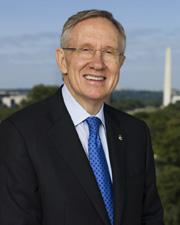 Sen. Harry Reid (D-NV)
Text
Proposed
This amendment's own text couldn't be picked out of its Congressional Record passage, so the passage is shown in full.
DEPARTMENT OF DEFENSE APPROPRIATIONS ACT, 2010
Mr. REID. Madam President, I ask the Chair to lay before the Senate a
message from the House with respect to H.R. 3326, the Department of
Defense Appropriations Act.
The PRESIDING OFFICER. The Chair lays before the Senate the message
from the House.
H.R. 3326
Resolved, That the House agree to the amendment of the
Senate to the bill (H.R. 3326) entitled ``An Act making
appropriations for the Department of Defense for the fiscal
year ending September 30, 2010, and for other purposes'',
with a House amendment to Senate Amendment.
Cloture Motion
Mr. REID. Madam President, I move to concur in the House amendment,
and I send a cloture motion to the desk.
The PRESIDING OFFICER. The clerk will report the motion.
The legislative clerk read as follows:
Cloture Motion
We, the undersigned Senators, in accordance with the
provisions of rule XXII of the Standing Rules of the Senate,
hereby move to bring to a close debate on the motion to
concur in the House amendment to the Senate amendment to H.R.
3326, the Department of Defense Appropriations Act for Fiscal
Year 2010.
Daniel K. Inouye, Harry Reid, Max Baucus, Patrick J.
Leahy, Sheldon Whitehouse, Carl Levin, Patty Murray,
Mark Begich, Maria Cantwell, Mark L. Pryor, Jack Reed,
Edward E. Kaufman, Al Franken, Tom Harkin, Jim Webb,
Paul G. Kirk, Jr., Michael F. Bennet.
Amendment No. 3248
Mr. REID. Madam President, I move to concur in the House amendment
with an amendment, which is at the desk.
The PRESIDING OFFICER. The clerk will report.
The legislative clerk read as follows:
The Senator from Nevada (Mr. Reid) moves to concur in the
House amendment to the Senate amendment with an amendment
numbered 3248.
Mr. REID. Madam President, I ask unanimous consent that reading of
the amendment be dispensed with.
The PRESIDING OFFICER. Without objection, it is so ordered.
The amendment is as follows:
At the end of the House amendment, insert the following:
The provisions of this Act shall become effective 5 days
after enactment.
Mr. REID. Madam President, I ask for the yeas and nays.
The PRESIDING OFFICER. Is there a sufficient second?
There is a sufficient second.
The yeas and nays were ordered.
Amendment No. 3252 to Amendment No. 3248
Mr. REID. Madam President, I have an amendment at the desk.
The PRESIDING OFFICER. The clerk will report.
The Senator from Nevada (Mr. Reid) proposes an amendment
numbered 3252 to amendment No. 3248.
Mr. REID. I ask unanimous consent that reading of the amendment be
dispensed with.
The PRESIDING OFFICER. Without objection, it is so ordered.
The amendment is as follows:
Strike ``5 days'' and insert ``1 day''.
Motion to Refer/Amendment No. 3249
Mr. REID. Madam President, I have a motion to refer, with
instructions, at the desk.
The PRESIDING OFFICER. The clerk will report.
The assistant legislative clerk read as follows:
[[Page S13296]]
The Senator from Nevada (Mr. Reid) moves to refer H.R. 3326
to the Committee on Appropriations with instructions to
report back with the following amendment No. 3249:
At the end, insert the following:
The Appropriations Committee is requested to study the
impact of any delay in implementing the provisions of the Act
on service members' families.
Mr. REID. Madam President, I ask for the yeas and nays.
The PRESIDING OFFICER. Is there a sufficient second?
There is a sufficient second.
The yeas and nays were ordered.
Amendment No. 3250
Mr. REID. Madam President, I have an amendment to my instructions at
the desk.
The PRESIDING OFFICER. The clerk will report.
The assistant legislative clerk read as follows:
The Senator from Nevada (Mr. Reid) proposes an amendment
numbered 3250 to the instructions of amendment No. 3249.
Mr. REID. Madam President, I ask unanimous consent that reading of
the amendment be dispensed with.
The PRESIDING OFFICER. Without objection, it is so ordered.
The amendment is as follows:
At the end, add the following:
``and the health care provided to those service members.''
Mr. REID. Madam President, I ask for the yeas and nays on the
amendment.
The PRESIDING OFFICER. Is there a sufficient second?
There is a sufficient second.
The yeas and nays were ordered.
Amendment No. 3251 to Amendment No. 3250
Mr. REID. Madam President, I have a second-degree amendment at the
desk.
The PRESIDING OFFICER. The clerk will report.
The assistant legislative clerk read as follows:
The Senator from Nevada (Mr. Reid) proposes an amendment
numbered 3251 to amendment 3250.
Mr. REID. Madam President, I ask unanimous consent that reading of
the amendment be dispensed with.
The PRESIDING OFFICER. Without objection, it is so ordered.
The amendment is as follows:
At the end, add the following:
``and the children of service members.''
Mr. REID. Madam President, I suggest the absence of a quorum.
The PRESIDING OFFICER. The clerk will call the roll.
The assistant legislative clerk proceeded to call the roll.
Mr. DURBIN. Madam President, I ask unanimous consent that the order
for the quorum call be rescinded.
Mr. ENSIGN. I object.
The PRESIDING OFFICER. Objection is heard. The clerk will continue
calling the roll.
The assistant legislative clerk proceeded to call the roll.
Mr. REID. Madam President, I ask unanimous consent that the order for
the quorum call be rescinded.
The PRESIDING OFFICER. Is there objection?
Without objection, it is so ordered.
Mr. REID. It is my understanding that the Senator from Texas wishes
to speak for up to 5 minutes. I ask unanimous consent that she be
recognized, and following that Senator Durbin be recognized.
The PRESIDING OFFICER. Without objection, it is so ordered.
The Senator from Texas is recognized.
Mrs. HUTCHISON. Madam President, I thank the majority leader for
allowing me to speak because I am very concerned about a precedent that
has been set on the floor in this last vote.
When the Senator from Vermont withdrew his amendment and started
talking, my motion to commit was the measure pending on the floor. I
did not have notice--which is the normal procedure here--to be able to
talk on my motion. We had no idea there would be a motion to table my
motion before I had a chance to close.
Here is my point. The measure that was tabled, the Hutchison-Thune
motion, would have assured the American people that there would not be
4 years of tax collection before any kind of program would be put
forward under the health care reform package. I thought it was very
important that Senator Thune and I be able to close on that. That is a
concept we have always had in the Senate--that a program starts when it
starts. That means if taxes are included, the taxes will start when the
program starts. That is not the case in the underlying bill. The
underlying health care reform bill has 4 years of taxes. There will be
taxes on insurance companies that will surely raise the premium of
every insurance policy in America. There are taxes on prescription drug
companies, so that prescription drug prices will surely go up. There
are taxes on medical device companies, so the prices on health care
equipment will also go up. How much are we talking about? We are
talking about $100 billion in taxes that will start in 3 weeks--in
January of 2010. Again, we are looking at taxes that will start in 3
weeks, next month, which will accumulate up to $73 billion before a
program is implemented that will give anyone a choice of an affordable
health care option.
That is the motion that was tabled 10 minutes ago. I want to make
sure everyone knows I never had a chance to close on the motion.
Senator Thune didn't have a chance to close, because it was a motion
made that could not be objected to. That is not the way things have
operated here in the past, and I think it is time we bring back the
traditions of the Senate, where we have time that we agree to,
everybody has their say, and then we go forward.
I am very concerned about that process. I hope it is not setting
precedent because I think we can resurrect health care reform if we
have a bipartisan health care effort. If we have an effort that will
bring down the costs, that will increase the risk pools so that an
employer will be able to afford to offer employees health care
coverage, bring down the costs of health care with medical malpractice
reform that would save $54 billion in the system, we can do things
without a government takeover of health care. But the bill that is
before us has $\1/2\ trillion in Medicare cuts--Medicare cuts, $\1/2\
trillion--and $\1/2\ trillion in new taxes--taxes on businesses that
offer not enough coverage, businesses that offer too much coverage, a
40-percent excise tax on policies that give what is called Cadillac
coverage, the high benefit plans. So if you have a good insurance
policy, you have a 40-percent tax on top of the premium you pay. And if
you have too little coverage, you also get taxed. You are whipsawed in
this bill.
I think the small business people of this country know what this bill
is about because that is the comment we are getting. They are the
people calling into our offices. They are the people I see on the
airplanes as I go back and forth to try to make sure we are covering
the bases on this bill and trying to let the American people know what
is in it.
I am concerned about the precedent that was set, but more than that,
I am concerned that the American people must know that if this bill
passes as it is on the floor today, the taxes will take effect in 3
weeks, that insurance premiums will surely go up, prescription drugs
will surely go up, prices on medical equipment will surely go up, and
there will not be an affordable insurance plan for people to choose to
take for 4 years. It is like buying a house and having the mortgage
company hand you the keys and say: Come back in 4 years, and we will
let you unlock the door.
I don't think that is transparency, and it is certainly not health
care reform. I hope there is still a chance that we can bring this body
to a bipartisan effort that will allow lower premiums, more health care
options for the people of this country but, most important, that will
keep the quality of health care, the choices we have in health care
that Americans have come to expect and not start going on the road to a
single-payer system because in the end, that is what the bill before us
will lead to. It will be a single-payer system. It will take choices
out. It will take quality out.
It will add taxes and burdens on our small businesses at a time when
they need to be able to hire people to get our economy going and to get
that jobless rate down. We need them to employ people. We need to
encourage our employers to employ people. They cannot do it if we put
more taxes and burdens on them, which is what the bill before us does.
I thank the majority leader for allowing me to speak since I did not
have a chance to speak before my motion was tabled. I hope the American
people
[[Page S13297]]
are listening because we have a chance to do this right. The bill on
the floor today is not that bill.
I yield the floor.
The PRESIDING OFFICER (Mr. Burris). The Senator from Illinois is
recognized.
Mr. DURBIN. Mr. President, I thank the Senator from Texas. I am glad
she had an opportunity to speak. We disagree on this issue, but I am
glad she had her opportunity to speak.
I hear from different people. Obviously, we must ride on different
planes because the people I speak with are anxious to see some change
in this health care system and know that 14,000 Americans lose their
health insurance every single day. They know that most people cannot
afford health insurance because of the increase in costs.
I say to the Senator from Texas, she is my friend and we have worked
on many issues in the past, but we disagree on this issue.
I am coming before the Senate with a holiday proposal. Recently there
was a book that was published about World War I. It was about trench
warfare that went on and on with horrendous casualties and lives being
lost. Then there came a moment, a Christmas moment, when they decided
to call a truce because of Christmas and play a soccer game. The Allied
and Axis troops came out and, for a brief moment, stopped the war,
played the soccer game, and went back to the trenches and the next day
started shooting again.
I am looking for a holiday truce here for our troops because what we
have before us right now is the Department of Defense appropriations
bill. Although Senator Hutchison and I clearly disagree and many
Members on both sides clearly disagree when it comes to health care,
there is no disagreement when it comes to our troops. Every one of us
supports our troops. Every one of us wants to make sure they have what
they need, the resources they need to perform their mission
successfully and come home safely.
This bill that is before us, this Department of Defense
appropriations conference report, is an attempt for us to do something
to help these troops in time of war. I would hope I could appeal to my
colleagues on the other side of the aisle that for one brief, shining
moment in the spirit of the holiday we set aside our political
differences for the sake of our men and women in uniform.
The point I am getting to is that if we go through the ordinary,
tortured procedure and wait, it is going to take us days to complete
this bill for our troops. I hope we can show good faith on both sides
of the aisle and overcome that. I hope we could enter into a consent
agreement among Republicans and Democrats because I know as I stand
here that the Republicans feel as the Democrats do--that we should
provide funding for our overseas operations of our men and women in
uniform.
In this bill, $101 billion is included for operations and maintenance
for ongoing military operations in Iraq and Afghanistan and to support
the preparations to continue the withdrawal from Iraq.
In this bill, there is $23.36 billion for equipment. We want to make
sure our men and women in uniform have the equipment they need to make
certain they are safe and have what they need to come home safely.
There is also a pay raise in this bill, a 3.4-percent pay raise. Does
anyone dispute the need that our military has to be recognized for what
they have given our country and be given a pay raise?
When it comes to readiness and training, there is $154 billion for
the defense operation and maintenance account to increase readiness.
In the field of military health care, there is $29 billion for the
Defense Health Program to provide quality care for servicemembers and
their families. It includes, incidentally, $120 million for traumatic
brain injury and psychological health research.
These are issues we have all come together on. We are not arguing
about these issues, and I do not think we should at this moment.
There is $472 million for family advocacy programs and full funding
for Family Support and Yellow Ribbon to provide support to military
families, including quality childcare, job training for spouses, and
expanded counseling and outreach.
There is one other section of the bill--and I will yield for a
question from my friend from Alaska when I complete this point--there
is one other section that relates to the unemployment crisis facing
this country. It is a modest extension of the unemployment benefits.
The last time it was on the floor, I believe it passed 97 to 0. I do
not believe there is any controversy to the fact that we want to extend
unemployment insurance benefits through February 28 of next year. It is
difficult to envision a situation where we would actually leave here to
go home to our families for the holidays and not take care of the
unemployed.
There is also a provision for their health insurance under COBRA and
for food stamps on which we know so many unemployed families rely. It
seems to me if there is one thing in the midst of this political
turmoil we can agree on, it is let's stand behind our troops, let's
make sure people who are unemployed have a happy holiday season. Why do
we want a tortured process to reach a ``yes'' on this conference
report? I appeal to my colleagues on the other side of the aisle to
make this a bipartisan effort. Let's do this part. We can return to the
health care bill and the debate. But let's get this done and do it
without all the necessary motions and time that may be spent.
I yield for a question from the Senator from Alaska.
The PRESIDING OFFICER. The Senator from Alaska is recognized.
Mr. BEGICH. Mr. President, I appreciate the Senator from Illinois
bringing up what I consider a very most important piece of legislation
to Alaska. Eleven percent of our population are veterans. We have
thousands of military individuals in our State.
I am new to the process. One of the questions I have for the
Senator--and I hope he can enlighten me and also enlighten the whole
public watching--this is probably one of the most important departments
at this time. We are in two wars. Can the Senator give me an
explanation? In the past--Senator Durbin started to do it--the Defense
bill seemed to be one of those bills where we all came together. It is
a bipartisan approach. I know as members of the Armed Services
Committee, it seems every time we deal with these issues we are
unified.
Help me to understand why this is something that seems to be
controversial and yet should be so simple for us to do.
Mr. DURBIN. I say in response to the Senator from Alaska, I think it
is the moment. If we were in a different political environment, I think
the Republican Senators and Democratic Senators would agree that this
should go through and go through quickly. But we have been caught up
for weeks now in debate and controversy, and this bill has been tossed
into that environment. That is the explanation because I do not think
there is a single provision I read here that Republican Senators do not
support, as the Democratic Senators support. That is why I made my
suggestion.
Mr. BEGICH. Mr. President, if I may ask one more question. That last
statement the Senator from Illinois made, I know as a member of the
Armed Services Committee, I have not heard complaints about this bill
from anyone from the other side. I am asking, from a leadership
position, have we heard any complaints on this legislation? Is it just
that, it is the moment in time?
Mr. DURBIN. I say in response to the Senator from Alaska, it does
include some provisions relative to the unemployed. There were other
things that could have been included by the House, but we reached out
to the Republican side and asked: Are any of these problematic? By and
large, they said here are the things you should not include, and we did
not. We did our best to ensure we brought a noncontroversial bill for
consideration.
Mr. BEGICH. I thank the Senator.
Ms. STABENOW. Will the Senator yield for a question?
Mr. DURBIN. I am happy to yield to the Senator from Michigan.
Ms. STABENOW. Mr. President, from the Senator's explanation and from
what we have been working on, I want the Senator to clarify two things.
First of all, we could do this conference report today if there were
a willingness and, secondly, we have a pay raise for our troops that is
coming right before Christmas, the holidays,
[[Page S13298]]
help for families, help for those who have lost their jobs and are
trying to figure out how they keep their health care going, and help
for people who are trying to put food on the table for the holidays; is
that correct? I ask the Senator to expand. As I understand it, we could
actually get this done today and give people some peace of mind going
into the holidays.
Mr. DURBIN. I say to the Senator from Michigan, yes, we could enter
into a consent agreement now and pass this conference report without
controversy, and I bet you it would get a unanimous vote.
As the Senator from Michigan described this, everybody here wants to
make sure we take care of our troops. We received a unanimous vote, if
memory serves me, the last time we extended unemployment benefits. I
think most Members want to stand up and help those who are unemployed
through this difficult time of unemployment in our country.
If there ever were a bill to bring us together in those two areas--
helping our troops and helping the unemployed--this is the bill.
Ms. STABENOW. Mr. President, I wish to ask another question of the
Senator from Illinois. If, in fact, the Senator from Illinois is
finding the same thing I am right now--certainly, we have the highest
unemployment rate in Michigan--and we are hearing it from all over the
country; we are hearing from people that their unemployment benefits
are about to expire. They are trying to figure out how they are going
to make it through the next few months.
There are particular concerns that if we do not extend it by the end
of the year that, in fact, many will have to go out and resign up with
a new bureaucracy to continue benefits.
I wonder if the Senator has heard the same kinds of concerns and
sense of urgency people have about being able to keep a roof over their
head, keep food on the table, and keep their health care going--the
same sense of urgency that I know we are feeling from people in
Michigan?
Mr. DURBIN. I say in response to the Senator from Michigan, through
the Chair, that I am happy to read the latest unemployment statistics
showing the number of people declared unemployed each month is going
down. We will not feel good about it until it is turned around and we
are creating jobs again, which I hope is soon.
In the meantime, we have about six unemployed people for every job
that is available. These people are in a market that is terrible, and
they are trying their best. Some have gone back to school. Some are
getting training courses. Some are trying to keep things together with
their family and not lose their home because of unemployment.
I am sure the Senator from Michigan has met with the unemployed in
Michigan, as I have in Illinois. Some are, little by little, exhausting
the savings they have. Even with COBRA, many people find the COBRA
provision, which gives people a chance to buy insurance at discounts,
is still too expensive. They are without a job. They are running the
risk of losing their home. They are without health insurance for their
children and are desperately looking for a job. We certainly do not
want to put them in a situation where there is a question mark as to
whether after December 31 the unemployment check will be there next
month. I think it is that peace of mind we owe these folks caught up in
the bad circumstances of our economy.
Ms. STABENOW. If I may conclude, to clarify, we can get this done
today. We can create that peace of mind for families going into the
holidays, going into Christmas, into the end of the year. We could
actually do that today in the next few hours?
Mr. DURBIN. That is correct, I say to the Senator from Michigan, we
can. Earlier we were embroiled in the reading of an amendment that
would have literally consumed the entire day and forced us into another
day's time and run the risk of not providing money for the troops when
the continuing resolution, the funding resolution, ran out.
The Senator from Vermont withdrew his amendment, and now we have
moved to this bill. But there is nothing stopping us. A consent
agreement can be entered into by both sides of the aisle that can move
this through quickly and say to our troops: We are with you.
I yield to the Senator from Rhode Island.
Mr. WHITEHOUSE. Mr. President, will the Senator from Illinois yield
for a question?
Mr. DURBIN. I will be happy to yield.
Mr. WHITEHOUSE. I am interested in the parliamentary situation that
took place earlier whereby one of our Members was actually obliged to
withdraw an amendment that was going to be voted on by all of us
because of an insistence on the part of the other side that 800 pages
be read by our poor clerk before that vote should take place.
I have also heard the other side say that we want to get going, we
want to move toward votes. I would be interested in the reflections of
the distinguished majority whip on the extent to which a procedural
objection to force the clerk to read 800 pages of an amendment, and
deny one of our colleagues his vote, fairly represents a desire to move
forward and get through our votes.
Mr. DURBIN. I would say in response to the Senator from Rhode Island,
we have heard repeatedly that people want amendment, debate, and a
vote. What happened on the floor today, when Senator Coburn of Oklahoma
refused to give consent to suspending the reading of the amendment, is
that the clerk--clerks, I should say--were forced to start reading. As
good as they are at reading, the fact is, it was going to take up to 10
hours to read this amendment. During that 10-hour period of time,
nothing could happen--no debate, no amendments--nothing other than
listening to the clerks' melodious voices. Fortunately for us, the
Senator from Vermont stepped up and said: I withdraw the amendment. But
if there was a true interest in debate and amendments on health care,
it is inconsistent to say we are going to take a day out of the whole
affair and read an amendment.
I can tell you, as I said to the Senator from Oklahoma, I can't
believe there is a person in America who sat glued to the C-SPAN
television listening to this amendment so they would understand it. It
is a very complicated amendment page by page but, in general,
understandable. The Senator from Vermont was seeking a single-payer
health care system. It was not likely to pass, but it is something he
believes in fervently and he wanted to offer it. So I would say the
strategy on the floor today belies any request that we have more debate
and more amendments.
Before the Senator from Rhode Island continues, I think this has been
cleared on both sides, but I ask unanimous consent that the time until
6:15 p.m. be equally divided between the two sides, with Senators
permitted to speak for up to 15 minutes each.
The PRESIDING OFFICER. Without objection, it is so ordered.
Mr. WHITEHOUSE. If the Senator from Illinois would yield for another
question.
I was elected just about 3 years ago, and I came in with the new
majority, so I did not have a chance to serve in this body when there
was a Republican President and a Republican majority. I wonder if the
Senator, who was here at that time, would reflect on how the other side
viewed Defense appropriations for our troops during the Iraq war when
they were in the majority. Were they desirous of delay and obstruction
and debate and procedural maneuver on Defense appropriations at that
time or is this a new strategy of theirs?
Mr. DURBIN. I would say to my colleague from Rhode Island that
exactly the opposite was true. They wanted to move quickly to pass any
appropriations bill to make certain there was no question in the minds
of our men and women in uniform that we were standing with them, and we
did. I don't believe even those of us who voted against the invasion of
Iraq tried to stop the proceedings from funding the troops, regardless
of what our votes might be.
So I think it would be consistent now for our colleagues on the other
side of the aisle to join us, in a bipartisan fashion, to say whatever
differences on other issues, such as health care, let's let the troops
know this holiday season we stand behind them--Republicans and
Democrats--and let's do it in an efficient and effective way.
Since this unanimous consent request has been granted, I am going to
[[Page S13299]]
yield the floor and any of my colleagues who wish to speak, it will be
equally divided time for the next 2 hours.
At this time, I yield the floor. Mr. President, if no one seeks time,
I suggest the absence of a quorum and I ask unanimous consent that
during the time of the quorum the time be equally divided between both
sides.
The PRESIDING OFFICER. Without objection, it is so ordered. The clerk
will call the roll.
The assistant legislative clerk proceeded to call the roll.
Mr. LeMIEUX. Mr. President, I ask unanimous consent the order for the
quorum call be rescinded.
The PRESIDING OFFICER. Without objection, it is so ordered. The
Senator from Florida is recognized.
Mr. LeMIEUX. Mr. President, while we have been here discussing health
care, the clock has been ticking on our national debt. Just in the
first 2 months of this fiscal year, we have accumulated $296 billion in
debt. We took in revenues of $268 billion, and we spent $565 billion.
We spent double what we took in just in the first 2 months of the
fiscal year.
I know you are new to this Chamber, Mr. President, as am I. I have
only been here 90 days, but I have been here long enough to know this
system is broken. It doesn't work. Neither this body nor the body
across the Capitol has an ability to make ends meet. We continue to
spend money we do not have. We spend the money of our children and our
grandchildren. Right now we have a $12 trillion debt. It took us 167
years in this country just to amass a $1 trillion debt in 1982. Now we
are at $12 trillion. Every family in this country is now responsible
for $100,000 of debt.
Where are we getting this money? We are borrowing it from countries
such as China, and it is hurting our standing in the world. Central
banks that hold American currency are shedding those dollars because
they no longer believe our country is a good investment. I worry about
our children and our grandchildren. I have three sons, as you know,
Max, Taylor and Chase--they are 6, 4 and 2--and we have a baby on the
way in March. I am very worried that my children will not be able to
experience the American dream like you and I have; to be able to be in
the Senate, to be able to achieve all of our goals, whether in public
service or in private. I do not believe America is going to be the same
place for them, that it is going to hold the same opportunities because
I believe this debt is going to strangle us.
If this body and the body across the Capitol don't figure out we need
to start making ends meet and stop spending the dollars of future
generations, this country will not be the leader of the world. It will
not have the promise we have all enjoyed.
I rise today to speak about S.J. Res. 22, which I filed yesterday. It
is a constitutional amendment that requires the Congress to balance its
budget and also gives to the President of the United States a line-item
veto so he, like most of the Governors in this country, can strike out
inappropriate budget items, these earmarks that you hear about.
Senator McCain spoke this weekend about $2.5 million to the
University of Nebraska to study operations and medical procedures in
space. We cannot afford that program under any circumstance, and we
certainly can't afford programs like that when we are $12 trillion in
debt. These dollar numbers are so big they are hard to comprehend.
What does $1 trillion mean? What does $1 billion mean? In Washington
we throw these amounts around, and we do not even comprehend them. I
know for the American people at home it is hard to get their minds
around how much money this is. I have said this on the Senate floor
before, and I am going to keep saying it so people understand that
every dollar we spend is a choice.
One million dollars laid edge to edge on the ground would cover two
football fields. One billion dollars laid edge to edge on the ground
would cover the city of Key West, FL, 3.7 square miles. And $1 trillion
would cover the State of Rhode Island--twice. If you stacked them on
the ground going up into the sky, it would be 600 miles of one-dollar
bills.
Every dollar is a choice, and these numbers are out of control. Just
this past Saturday we voted on a spending bill, a spending bill that
had a 12-percent increase and $40 billion more than last year. I want
to give the American people the sense of what you could do with this
kind of money, what good you could do or, better yet, you could give it
back to the American people and they could decide what good they could
do with those dollars for their families.
With $100 billion, we could give every Floridian a $5,000 tax cut.
With $200 billion we could pay the salary of every teacher for a
year. With $300 billion we could pay first-year tuition at a university
of their choice for every kid who is in K-12. With $400 billion, we
could build high-speed rail for 10,000 miles. We could connect Key West
to Anchorage and back.
Every dollar is a choice. We are spending money out of control.
Similar to those who have come before me, I will sound the alarm
because we still haven't done anything about this problem. There are
good measures out there. Senator Gregg from New Hampshire has a
measure, along with Senator Conrad, to put together a commission. I
support that. Senator Sessions has a measure to bring caps back. Up
until about 2002, we actually were making headway against the budget.
Then those caps expired and spending went out of control.
I support all those efforts. I support any effort to bring spending
under control. This body doesn't have any leadership on spending. Look
at what we spend. We don't look at the revenues coming in the door.
I served as chief of staff to a Governor in Florida. When the budget
started to go bad in 2007, I was on the phone monthly with the person
who determined our receipts. I knew in Florida we could only spend as
much money as we had. This institution does not work that way. No one
even checks to see what kind of money we are bringing in. We just
spend.
I wish to talk to the American people about articles in the Wall
Street Journal of today. This is not a Democratic problem or a
Republican problem. This is a problem of this institution. The article
is titled ``The Audacity of Debt.'' I wish to read one paragraph. I ask
unanimous consent that the full article be printed in the Record.
There being no objection, the material was ordered to be printed in
the Record, as follows:
[From the Wall Street Journal, Dec. 16, 2009]
The Audacity of Debt
Comparing today's deficits to those in the 1980s
At least someone in America isn't feeling a credit
squeeze: Uncle Sam. This week Congress will vote to raise the
national debt ceiling by nearly $2 trillion, to a total of
$14 trillion. In this economy, everyone de-leverages except
government.
It's a sign of how deep the fiscal pathologies run in this
Congress that $2 trillion will buy the federal government
only one year before it has to seek another debt hike--
conveniently timed to come after the midterm elections. Since
Democrats began running Congress again in 2007, the federal
debt limit has climbed by 39 percent. The new hike will lift
the borrowing cap by another 15 percent.
There is surely bipartisan blame for this government debt
boom. George W. Bush approved gigantic spending increases for
Medicare and bailouts. He also sponsored the first
ineffective``stimulus'' in February 2008--consisting of $168
billion in tax rebates and spending that depleted federal
revenues in return for no economic lift.
Democrats ridiculed Mr. Bush as ``the most fiscally
irresponsible President in history,'' but then they saw him
and raised. They took an $800 billion deficit and made it
$1.4 trillion in 2009 and perhaps that high again in 2010. In
10 months they have approved more than $1 trillion in
spending that has saved union public jobs but has done little
to assist private job creation. Still to come is the
multitrillion-dollar health bill and another $100 billion to
$200 billion ``jobs'' bill.
We've never obsessed over the budget deficit, because the
true cost of government is the amount it spends, not the
amount it borrows. Milton Friedman used to say that the
nation would be far better off with a budget half the current
size but with larger deficits. Mr. Obama and his allies in
Congress have done the opposite: They have increased the
budget by 50 percent and financed the spending with IOUs.
Our concern is that the Administration and Congress view
this debt as a way to force a permanently higher tax base for
decades to come. The liberal grand strategy is to use their
accidentally large majorities this year to pass new
entitlements that start small but will explode in future
years. U.S. creditors will then demand higher taxes--taking
[[Page S13300]]
income taxes back to their pre-Reagan rates and adding a
value-added tax too. This would expand federal spending as a
share of GDP to as much as 30 percent from the pre-crisis 20
percent.
Remember the 1980s and 1990s when liberals said they
worried about the debt? We now know they were faking it. When
the Gipper chopped income and business tax rates by roughly
25 percent and then authorized a military build-up, Democrats
and their favorite economists predicted doom for a decade.
The late Paul Samuelson, the revered dean of the neo-
Keynesians, expressed the prevailing view in those days when
he called the Reagan deficits ``an all-consuming evil.''
But wait: Those ``evil'' Reagan deficits averaged less than
$200 billion a year, or about one-quarter as large in real
terms as today's deficit. The national debt held by the
public reached its peak in the Reagan years at 40.9 percent,
and hit 49.2 percent in 1995--This year debt will hit 61
percent of GDP, heading to 68 percent soon even by the White
House's optimistic estimates.
Our view is that there is good and bad public borrowing. In
the 1980s federal deficits financed a military buildup that
ended the Cold War (leading to an annual peace dividend in
the 1990s of 3 percent of GDP), as well as tax cuts that
ended the stagflation of the 1970s and began 25 years of
prosperity. Those were high return investments.
Today's debt has financed . . . what exactly? The TARP
money did undergird the financial system for a time and is
now being repaid. But most of the rest has been spent on a
political wish list of public programs ranging from
unemployment insurance to wind turbines to tax credits for
golf carts. Borrowing for such low return purposes makes
America poorer in the long run.
By the way, today's spending and debt totals don't account
for the higher debt-servicing costs that are sure to come.
The President's own budget office forecasts that annual
interest payments by 2019 will be $774 billion, which will be
more than the federal government will spend that year on
national defense, education, transportation--in fact, all
nondefense discretionary programs.
Democrats want to pass the debt limit increase as a
stowaway on the defense funding bill, hoping that few will
notice while pledging to reduce spending at some future date.
Republicans ought to force a long and careful debate that
educates the public. Ultimately, the U.S. government has to
pay its bills and the debt limit bill will have to pass. But
debt limit votes are one of the few times historically when
taxpayer advocates have leverage on Capitol Hill. Republicans
and Democrats who care should use it to discuss genuine ways
to put Washington on a renewed and tighter spending regime.
``Washington is shifting the burden of bad choices today
onto the backs of our children and grandchildren,'' Senator
Barack Obama said during the 2006 debt-ceiling debate.
``America has a debt problem and a failure of leadership.
Americans deserve better.'' That was $2 trillion ago, when
someone else was President.
Mr. LeMIEUX. Reading from the Wall Street Journal:
Democrats ridiculed Mr. Bush as ``the most fiscally
irresponsible President in history,'' but then they saw him
and raised. They took an $800 billion deficit and made it
$1.4 trillion in 2009 and perhaps that high again in 2010. In
10 months they have approved more than $1 trillion in
spending that has saved union public jobs but has done little
to assist private job creation. Still to come is this
multitrillion-dollar health care bill and another $100
billion to $200 billion ``jobs'' bill.
We can't afford the programs we have, let alone the programs we want.
I filed this joint resolution to have a balanced budget. I filed the
joint resolution to give the President the line-item veto like
Governors do. I know I am tilting at windmills. I know there are very
few people in this Chamber or the Chamber down the hall who have the
courage to do this. They are part of the process. They go along and get
along. But I am fresh enough to still remember how things work in the
real world. We have to change things. Our children are not going to
have this great country. I am so afraid that one of my kids is going to
come to me when they are 18 or 22 and say: Dad, I am going to go to
another country to make my living. I am going to go to Ireland or Chile
or India because I have a better opportunity there to succeed. I can't
pay 60 percent in taxes. I can't assume what will then be a $23 or $30
billion debt.
We are not even talking about all the entitlements we haven't paid
for. We are not talking about all the money we have raided out of
Medicare and Social Security in order to pay for current expenses. Some
people say those obligations are more than $60 trillion, numbers we
can't even comprehend.
I filed this resolution. I will send a letter to every Governor
asking them to adopt it in advance of the Congress taking it up. A
constitutional amendment requires two-thirds of both Chambers and
three-quarters of the States. They can act first. They can send letters
and resolutions from their legislators to this legislative body and
say: Get your act under control.
It affects them too. This new health care bill is going to send an
unfunded mandate to the States and increase Medicaid from 100 percent
of poverty to 133 percent. They will have to pay that bill. It is going
to cost Florida in 10 years almost $1 billion. Right now, in Florida,
the No. 1 expenditure in our budget is Medicaid. Because we balance our
budget, that means we take money away from teachers and education. That
means we take money away from law enforcement. It is out of control.
I am here to say the siren is sounding. The ship is going to hit the
iceberg. We can't make just incremental change because then we will
just hit the side of the iceberg. We have to make substantial change.
The people in this body have to have the courage to do it. We can't
just go along and get along as we have before. We cannot be tone deaf.
The American people are onto us. They understand we are spending money
we don't have. I will not stand by and let this great country fall into
decline without at least arguing and pushing as strenuously as I can
for a solution. I am willing to work with men and women of good will on
both sides of the aisle to solve the problem. I am new here. I might
not have all the answers. I probably don't. But I will surely work
hard. I know this is one solution. If every State can have a balanced
budget amendment and 43 States can have a line-item veto, why can't
this body?
I have filed this resolution. I look forward to talking about it
more. I hope this body will take it seriously. I see my friend from
Massachusetts is here. He also is new to this body, although he spent
many years working here. We have to do things differently. We throw
around billions and trillions like it is just nickles and dimes in our
pockets. It is not. Every dollar is a choice. It is a choice to make.
If we don't make the right choice, it will be a choice our children and
grandchildren will suffer under.
I yield the floor.
The PRESIDING OFFICER. The Senator from Massachusetts.
Mr. KIRK. Mr. President, ``The need for comprehensive national health
insurance and concomitant changes in the organization and delivery of
health care in the United States is the single most important issue of
health policy today.'' Those are not my words. Those are the words of
Senator Edward M. Kennedy. The ``today'' of which he spoke was December
16, 1969, exactly 40 years ago today. It was his first major speech on
health care reform, and I was privileged to be a young member of his
staff. He delivered that speech to a group of physicians at Boston
University Medical Center.
Senator Kennedy went on to say:
If we are to reach our goal of bringing adequate health
care to all our citizens, we must have full cooperation
between Congress, the administration, and the health
professionals. We already possess the knowledge and the
technology to achieve our goal. All we need is the will. The
challenge is enormous, but I am confident that we are all
equal to the task.
The world has progressed in many ways since he spoke those words four
decades ago, but our health care system has not. In 1969, the United
States spent $18 billion on health care. Today we spend over $2
trillion a year. Senator Kennedy pointed out, in 1969, that the Nation
faced a shortage of primary care doctors. The reimbursement rates for
physicians treating Medicare and Medicaid patients were too low. There
was a need to support greater innovation in delivering care, and
neighborhood health centers were underfunded. He said we needed to
develop an effective means of providing quality, affordable care to all
Americans, regardless of their standing in life.
Does all this sound familiar? Yes. But that was then and this is now.
In recent weeks, Senators on both sides of the aisle have come to
this floor to debate the merits of the Patient Protection and
Affordable Care Act. We have had our differences of opinion, to be
sure. But on one issue there is no dispute. When it comes to our health
care system, there is no such thing as a status quo. We will move
forward or we will continue to fall behind.
Here is what we will face, if we do not pass this reform. Premiums
will skyrocket and could consume as much as 45 percent of a median
family's income by 2016. Bankruptcies will increase due to families not
being able to
[[Page S13301]]
afford their medical costs. More Americans will be uninsured. Small and
large businesses will suffer financially due to health cost increases.
Health care could constitute as much as 28 percent of our Nation's GDP
by 2030. Fifteen percent of the Federal budget could be dedicated to
Medicare and Medicaid by 2040.
Ted Kennedy had a keen sense of history. He knew Germany adopted the
idea of national health insurance in the 1880s, that Britain, France,
and a number of other European nations embraced the concept after the
First World War, that Canada has had a publicly funded system since the
1950s. He would ask, as he did in 1969 and again in 2009: If all these
nations understood long ago that their economic health was ultimately
tied to the health of their people, why does the United States stand
alone as the only major industrial nation in the world that fails to
guarantee health care for all its citizens?
It is not that we have never sought this goal in the past.
Presidents, Republicans and Democrats, over many decades, have proposed
national health insurance in America. Presidents Theodore Roosevelt,
Franklin Roosevelt, Harry Truman, John F. Kennedy, Richard Nixon, and
Bill Clinton all made health reform a part of their agenda. Now we
stand on the threshold of history. Never has this country been so close
to bringing affordable, quality health care to millions of America's
families. Today, under President Obama's leadership, the goal is within
our reach. Failure is not an option. All interested parties have been
brought to the table. Physicians, hospitals, insurance companies, small
businesses, pharmaceutical companies, and many others have had an
opportunity to present their suggestions and offer their input. Dozens
of hearings were held on all topics related to this issue.
The House of Representatives has acted. The Senate HELP Committee,
through the diligence of Senators Kennedy, Dodd, and Harkin and the
Finance Committee, under the leadership of Senator Baucus, held lengthy
executive sessions that discussed all areas of reform and delivered and
developed their respective bills. Due to the hard work and tireless
patience of the majority leader, we have one merged bill before us, a
single piece of legislation which will improve the lives of millions of
Americans in the following ways. It expands coverage to an additional
31 million Americans, bringing health insurance to almost 94 percent of
our citizens. It saves money by rewarding the quality and value of
care, not the quantity and volume of care. It controls the cost of
skyrocketing premiums and limits out-of-pocket expenses. It reduces the
Federal deficit by an estimated $130 billion in the first 10 years and
an estimated $650 billion in the second 10 years. It stimulates
competition in the health insurance marketplace through establishment
of exchanges. It strengthens Medicare by reducing unnecessary spending,
lowering prescription costs, and closing the so-called doughnut hole.
It attacks fraudulent and wasteful spending and helps to correct abuses
in the system. It rewards wellness and prevention by expanding access
to advice on how to live a healthy lifestyle by practicing good
nutrition, increasing physical activity, and quitting smoking.
It eliminates unfair discrimination against patients by preventing
insurance firms from denying certain coverage to women or to
individuals with preexisting conditions.
It promotes flexibility and innovation in new health care
technologies. It introduces a self-funded, voluntary choice for long-
term services and support for the elderly and disabled. Most of all, it
saves lives by providing affordable, quality care for individuals,
families, and small businesses.
In my State of Massachusetts, because of our successful reform, the
rate of the uninsured has been reduced to 2.7 percent of the
population, and the lives of thousands of citizens of our Commonwealth
have been immeasurably improved.
Carol's case is one example. Carol did not realize the importance of
having quality, affordable health insurance until she was confronted
with the gravity of her own health problems. She is a 24-year-old woman
suffering from seizures and desperately in need of help.
She remembers having occasional seizures as a child. They occurred
mostly when she was overtired. As Carol grew older, the seizures became
more frequent. One day, she had an episode when driving her car.
Fortunately, her passenger was able to assist her. But that frightening
incident convinced Carol to seek professional help.
She learned about the assistance of Health Care For All, the
Massachusetts organization dedicated to making quality, affordable
health care accessible to everyone. She applied and was declared
eligible for Commonwealth Care. She immediately went to see a
specialist and was given the health care she needed.
Carol expressed her gratitude in these words:
I definitely feel blessed to be a Massachusetts resident. I
can't thank Health Care For All and MassHealth enough for all
the support given to me. The Helpline counselors literally
held my hands and brought me to live a healthy life, where
there is no fear or embarrassment, but there is knowledge and
a total control of my seizures. So, thank you so much all of
you who make this happen in people's lives.
We should all think about Carol and the millions of working families
across the country when we vote for this legislation. It is our
responsibility to enact laws that make a positive difference in
people's lives, and that is what this bill is all about.
Senator Ted Kennedy envisioned a better America where, as he said:
[E]very American--north, south, east, west, young, old--
will have decent, quality health care as a fundamental right
and not a privilege.
This is a historic moment in our national life. We have the chance to
finally complete the work that a respected Republican President called
for over a century ago. Quality health care for all has always been
needed in America but never more than now. The finish line is clearly
in sight. The momentum and the energy are with us, and it is our
obligation to seize this historic moment.
Every Member of this body is aware of the valiant fight Senator
Kennedy waged for his own health during the last 15 months of his life.
Many of you saw him, after receiving radiation and chemotherapy in the
morning in Boston, walk into this Chamber that he loved to cast a
deciding vote in the afternoon on the issue he proudly called the cause
of his life.
While being treated at Massachusetts General Hospital, Senator
Kennedy met a woman named Karen List. Her daughter Emily was one of
many patients receiving a similar regimen of exhausting cancer
treatments. They came from different walks of life, and cancer had
touched them all.
In September 2008, after Emily's long summer of treatments, Karen
wrote about Senator Kennedy and other patients he had met during his
treatment. She wrote:
Now, it is almost fall, and little Caroline is starting
kindergarten. Senator Kennedy, who came from a hospital bed
to speak at the convention, is planning his return to the
Senate in January. Alex, an Apache helicopter pilot, is back
at Fort Campbell and expects to be deployed to Afghanistan in
the New Year. And Emily hopes to be well enough by spring to
return to her life in London. The dream, as Senator Kennedy
promised, does live on.
Mr. President, I ask unanimous consent that the article by Karen List
in the Daily Hampshire Gazette be printed in the Record.
There being no objection, the material was ordered to be
printed in the Record, as follows:
[From the Daily Hampshire Gazette, Sept. 8, 2008]
A Champion of Health Comforts his Fellow Patients
(by Karen List)
As Sen. Ted Kennedy's distinctive voice passed the torch at
the Democratic National Convention and promised us that the
dream lives on, all I could think of was that same
distinctive voice several weeks ago calling out: ``Where's
Emily?''
Ted was at the other end of the hall in the Proton Therapy
Center, Dept. of Radiation Oncology, at Massachusetts General
Hospital, where both the senator and my daughter Emily were
being treated for cancer.
The proton beam is cutting-edge treatment for certain types
of tumors, and the MGH center is one of only five in the
country and a handful in the world.
We were lucky to be there, though it was getting
increasingly hard to feel lucky as seven weeks of daily
treatment took their toll on Emily and the other patients at
the center.
They ranged in age from toddlers to the elderly. Little
Caroline was 5. Senator Kennedy was 77. In between them were
Emily, 23,
[[Page S13302]]
and Alex, 26, two of just a few young adults in proton beam
treatment.
Radiation burn was the worst side effect for many patients,
and it was now preventing Emily from eating or talking. She
was at a low point, and she needed a lift.
We had seen Teddy come and go for several days, slipping in
through a side entrance and out the same way, always
accompanied by his wife, Vicki. When our eyes happened to
meet, we exchanged a thumb's up and were treated to that
Kennedy smile--as distinctive as the voice.
The day before Ted's treatment was to end, Emily's nurse
stopped by the room where she was being treated and pulled
the curtain aside. Several minutes later we heard him call
from the other end of the hallway: ``Where's Emily?'' And
then he was there, talking to her, encouraging her--and just
as quickly, he was gone.
Emily was so excited that she was hopping up and down in
the bed from a reclining position, if such a thing is
possible. But because she couldn't talk, she hadn't been able
to say a word to one of the few politicians she really
admires.
The next day, our nurse delivered the card we'd written to
the senator, explaining how thrilled Emily had been to meet
him and how distressed she was that she couldn't tell him so
herself. On the card was a photo of Emily at her favorite
English pub, smiling her own distinctive smile. She had been
home for a short break from her work interning in the London
Theater when she'd been diagnosed with cancer. Now she was
battling to get her work and her life back.
Teddy had just finished his treatment. This time, as he
came down the hall for the last time, Emily was ready. On the
slate that she'd been using to communicate, she'd written in
purple marker: ``We love you, Ted.'' The senator laughed,
walked to her bedside and whispered to her for a few minutes
in solidarity, while Vicki talked to Emily's dad and me. We
exchanged heartfelt good wishes for each other as they left
the center to return home.
Emily had another week of treatment left. During that time,
her nurse told us how concerned Sen. Kennedy had been about
the other patients, especially the children and young
people--and their parents. He had been through this same
experience with his own son decades earlier when only one
type of chemotherapy was available, unlike the cocktail of
diverse chemo drugs that patients like Emily receive today.
This lifelong champion of health care for all Americans,
especially children, had experienced once again--this time as
the patient himself--what first-rate cancer care could mean.
And he intends to continue fighting for its accessibility to
everyone as the senior Democrat on the Health, Education,
Labor, and Pensions Committee.
On Emily's last day at the center, there was a special gift
waiting for her. Ted had left her a copy of his book, ``My
Senator and Me: A Dog's-Eye View of Washington, D.C.,''
written by him and his dog Splash. It was inscribed: ``To
Emily--Splash and I hope you enjoy.''
And she did. Ted had provided just the encouragement she
needed. He'd also left a stack of books for other young
patients and the book on tape for those whose vision had been
compromised by their treatments.
Now it's almost fall, and little Caroline is starting
kindergarten. Senator Kennedy, who came from a hospital bed
to speak at the convention, is planning his return to the
Senate in January. Alex, an Apache helicopter pilot, is back
at Ft. Campbell and expects to be deployed to Afghanistan in
the New Year. And Emily hopes to be well enough by spring to
return to her life in London.
The dream, as Senator Kennedy promised, does live on.
Mr. KIRK. Karen's was a statement of hope--hope and promise for each
of these patients in the face of daunting odds. Their age did not
matter; their economic status did not matter; each received the highest
quality of health care available. And so it should be for all our
people.
Senator Kennedy understood that we are all connected to one another.
He often referred to President Lincoln's words about our common
humanity and the good that can come to us all when touched ``by the
better angels of our nature.'' And he knew that on no issue are our
futures more connected than on health care.
Ted Kennedy's voice still echoes in this Chamber. His spirit of hope
and strength, of determination and perseverance is still felt here. He
said:
For all my years in public life, I have believed that
America must sail toward the shores of liberty and justice
for all. There is no end to that journey, only the next great
voyage. We know the future will outlast all of us, but I
believe that all of us will live on in the future we make.
Let each of us in this Senate be moved by the better angels of our
nature and make that future a better one for our generation and for
generations to come. As Ted Kennedy said 40 years ago: ``All we need is
the will.'' This is our time, Mr. President. Let us pass this
legislation now.
Mr. President, I ask unanimous consent that the speech delivered by
Senator Edward M. Kennedy on December 16, 1969, be printed in the
Record.
There being no objection, the material was ordered to be printed in
the Record, as follows:
Address by Senator Edward M. Kennedy, Lowell Lecture Series, Boston
University Medical Center--Lowell Institute, December 16, 1969
I am delighted to be in Boston today under the auspices of
the Boston University Medical Center and the Lowell Institute
to address this distinguished audience of medical educators,
private physicians, and lay men concerned with the quality of
health care in America.
I am particularly pleased to be here because it gives me
the opportunity to commend the many worthy accomplishments of
the Boston University Medical Center and its School of
Medicine. You have succeeded in breaking down walls that for
decades have turned medicine inward toward the age-old
trinity of patient care, research and teaching. You have
expanded your horizon to embrace the equally important area
beyond your walls--the community in which we live.
For more than 90 years, your Home Medical Service has taken
students into the community and provided model health care
and innovative medical services in the home. Your expanding
programs of new hospital affiliation have brought modern
urban medicine to outlying communities. You have helped to
lead the way in efforts throughout the world to unify cancer
care with cancer research, so that today's advances in the
laboratory become tomorrow's accepted treatment. Your School
of Graduate Dentistry, dedicated in September, will provide
high quality dental care as part of the Medical Center's
total health program for the community.
In the course of the past decade, your pioneering program
in community psychiatry and mental health in the South End
and Roxbury--launched long before the Great Society and the
Office of Economic Opportunity came into being and made such
programs fashionable--have become a model for the nation. You
helped develop what is now the rallying cry for health
planning in America--that new health programs must be
designed with the people and by the people, not just for the
people. As Dr. Handler has so eloquently stated, your far-
reaching role in community involvement is like a man standing
by a river watching people drown:
``Medicine traditionally wades in,'' he said, ``and tries
to save them one at a time. After doing this repeatedly, you
can't help but ask what is happening upstream. It seemed
sensible to go back and find out why all the people were
falling in, and try to do something about it.''
I commend you for your leadership in looking upstream, and
for the remarkable efforts you are making in preventive
community medicine and all the other major areas of this
great center's activity.
Six weeks ago in Springfield, I had the occasion to discuss
what I regard as the single overriding economic issue of the
day--the war against inflation. As I have frequently stated,
the war against inflation is a war that can and must be won
without the cost of heavy unemployment. It is a war that can
and must be won without cutting back on our important
domestic priorities.
Nowhere is the impact of inflation more obvious than in the
rising cost of medical care. Never has the gift of good
health been more precious:
In the last three years, the cost of health has risen by 22
per cent, or nearly double the rise in general consumer
prices.
Hospital daily service charges have soared by the
astronomical rate of 55 per cent, or nearly five times the
rise in consumer prices. The average cost of a hospital day
is now $68. It will rise to $74 next year, and to $98 by
1973.
Physicians' fees have risen by 21 per cent. Doctors line up
at lawyers' offices to form corporations and raid the Federal
Treasury for hundreds of thousands of dollars a year in
deferred taxes.
All of this inflation has occurred during the early years
of Medicare and the troubled Medicaid program. The most
rewarding experience of Medicare has been its success in
solving the serious problem of health costs for our poor and
our aged citizens. In spite of inflation, Medicare has been
immensely popular. It is liked and accepted by the people.
The most painful experience of Medicare and Medicaid has
been their unfulfilled promise. We sought to spread the
benefits of medical science and technology to millions of
Americans, without considering the anachronistic and obsolete
structure of the system by which the health services would be
delivered. Unwisely, as many experts have recognized, we
assumed that all that stood between our poor and aged
citizens and high quality medical care was a money ticket
into the mainstream of modern American medicine.
We know now that we were wrong. The money ticket was
important, but it was not enough to solve the problem. In the
years since Medicare and Medicaid were enacted, we have
learned that medical insurance and payment programs could not
be translated instantaneously into more doctors, more nurses,
more health facilities, or better organization of the
delivery system.
In wedding new purchasing power to the already existing
demand for health services, we did nothing to solve an
already intolerable situation. The cost of health care began
[[Page S13303]]
to soar. In some cases, the quality of care declined, and an
enormous strain was placed on the capacity of our existing
health services and facilities. When an already overworked
physician goes from seeing one hundred patients a day to
seeing two hundred patients a day, the quality of his care is
inevitably affected. His only escape is to consign more of
his patients to hospital treatment, thereby increasing the
strain on hospital facilities and hospital costs.
Today in the United States, health care is big business.
Indeed, it is the fastest growing failing business in the
nation--a $60 billion industry that fails to meet the
urgent demands of our people. Today, more than ever
before, we are spending more on health care and enjoying
it less. By 1975, we may be spending $100 billion a year
on health and be worse off than we are now in terms of the
quality and responsiveness of our health care system.
Perhaps the most serious fault in the present situation is
the failure of the Federal Government to play a greater role
in improving the quality of the nation's health care. Health
is big business in America, and the Federal Government has
become a major partner in this business. The total outlays
for medical and health-related activities in the Federal
budget estimated for 1970 are $18 billion, or nearly one-
third of the total health expenditures in the nation. The
outlays for 1970 are divided among 14 principal departments
and agencies. By far the largest amount--$13 billion--is
expended by the Department of Health, Education and Welfare,
but significant amounts are also expended by the Department
of Defense--$2 billion--and the Veterans Administration--$1.7
billion.
In 1960, the total outlays for health in the Federal budget
were only $3 billion. Thus, in the decade of the Sixties
alone, we have had a six-fold increase in total Federal
outlays for health. Indeed, almost 10 per cent of the total
Federal budget now goes for health. The major share of the
rise in recent years has been for Medicare and Medicaid. Yet,
in spite of the dramatic increases in the health budget and
the large amounts we are now spending, there is almost no one
who believes that either the Federal Government or the
private citizen is getting full value for his health dollar.
Of course, a significant proportion of the increase in
health expenditures is being consumed by rising costs and our
growing population. Between 1950 and 1969, personal health
care expenditures increased by $42 billion. Of this increase,
50 per cent was attributable to rising coats, and another 19
per cent was attributable to population growth, so that only
31 per cent of the increase represents real growth in health
supplies and services over the past two decades.
Although the conventional wisdom is content to blame our
current medical inflation on Medicare and Medicaid and the
excess demand created by these programs for health care,
there is another, more controversial aspect to the rising
prices. At Professor Rashi Fein and other experts in the
field of the economics of medicine have made clear, the basic
models used by economists are not appropriate when applied to
health. The medical market. is characterized by the absence
of competition, diverse products, and consumer ignorance.
Comparisons of quality and performance are extremely
difficult, if not impossible.
In other words, the medical marketplace is an area where
the laws of supply and demand do not operate cleanly, and
where physicians have a relatively large amount of discretion
in setting their fees. Thus, at the time Medicaid and
Medicare were instituted, fees rose for a variety of reasons,
many of which were unrelated to the creation of excess
demand:
Some physicians raised their fees in anticipation of a
Federal fee freeze.
Some raised their fees in the face of rising hospital
costs, in order simply to preserve their slice of the growing
health pie.
Some raised their fees simply because they had the
discretion to do so, and decided to take advantage of the
instability and price consciousness generated by the new
Federal programs.
As In the case of physicians' fees, the economic model of
supply and demand does not tell the whole story of rising
hospital costs. In part, hospitals took the opportunity to
provide substantial--and wholly justified--wage and salary
increases to their notoriously underpaid employees. In part,
costs rose because the new Federal financing methods
contained few incentives for improving efficiency, but simply
encouraged hospitals to pass the higher costs on to
Washington.
The high cost of medical care is but one aspect of the
overall health crisis, In America today, it is clear that we
are facing a critical shortage of health manpower. Indeed, at
bottom, our crisis in medicine is essentially a crisis in
manpower. The need is urgent for more physicians, more
dentists, more nurses, and more allied health professional
and technical workers. We must develop new types of health
professionals and pare-professionals. We must make far more
efficient utilization of our existing health manpower. Only
if we succeed in these efforts will we be able to free our
physicians and highly trained medical experts to perform the
sort of intricate operations and sensitive counselling
discussed by Dean Redlich in the inaugural lecture in this
series.
The need is especially clear in the case of the shortage of
doctors. Our low physician-population ratio means that
unsatisfactory medical care is a way of life for large
numbers of our people in many parts of our nation. In 1967,
in the United States as a whole, there were 260,000 private
physicians providing patient care for our 200 million people.
This is a ratio of 130 physicians for every 100,000 citizens,
or one doctor for every 700 people.
At first glance, the ratio appears to be fairly close to
the satisfactory ratio generally recommended by many health
experts, but the figures are misleading. The family doctor--
the general practitioner--is fast disappearing, and is on the
verge of becoming an extinct species. At the present time
only one out of four of the nation's physicians is engaged in
the general practice of medicine. Three out of four are
specialists, most of whom accept patients only on a referral
basis. The true doctor-population ratio, therefore, is more
like one general practitioner per three thousand population,
a ratio that is clearly unacceptable for adequate health care
for our people. For far too many of our citizens, the only
``doctor'' they know is the cold and impersonal emergency
ward of the municipal hospital.
To make matters worse, the geographic distribution of our
doctors is highly uneven. Two-thirds of our physicians serve
the more affluent half of our population. In some states, of
course, the physician-population ratio is higher than the
national average of 130 doctors per 100,000 population. In
Washington, D.C., the ratio is 318; in New York it is 199; in
Massachusetts, 181.
In sixteen states, however, the physician-population ratio
is far below the national average. In Alaska and Mississippi,
the ratio is an abysmal 69, or about one-half the national
average. In Alabama, it is 75. Even in Texas, it is only 106.
Clearly, therefore, extremely large groups of our population
are receiving seriously inadequate medical care because of
the shortage of physicians.
One of our most urgent needs to meet this crisis is a
stronger Federal program to expand existing medical schools
and establish new schools. We must substantially increase the
output of doctors from our medical schools. At the present
time, about 8,000 students are graduated from our medical
schools each year. The Association of American Medical
Colleges estimates that the number of students entering
medical schools will increase by 25 per cent to 50 per cent
by 1975, as a result of the construction of new medical
schools already begun, and the expansion of existing schools
already planned. Yet, if the physician-patient ratio is to be
improved substantially, our goal should be to admit double
the number of current students by 1975, with special emphasis
on medical schools in regions where the physicians-population
ratio is too low.
There is another reason why we must increase the enrollment
in our medical schools, aside from the need to provide better
health care for our people. Today in America, the medical
profession is that one profession that flies in the face of
the American credo that every man shall have the opportunity
to join the profession of his choice. Today in America, if a
poor black or white young American aspires to be a lawyer, he
will have the opportunity to enroll in a law school somewhere
in the nation that will give him the chance to fulfill his
dream. It is the shame of American medicine that no such
opportunity exists for the youngster who aspires to enter
what is perhaps the most exalted and selfless of all our
professions, the healing arts.
Ironically, at the very time we are denying this
opportunity to our own citizens, we are importing thousands
of foreign-trained doctors each year to meet our manpower
crisis. Twenty per cent of the newly licensed physicians each
year in the United States are foreign-trained. Forty thousand
foreign medical graduates are now practicing medicine in the
United States, or about 15 per cent of the total number of
doctors providing patient care. Thirty per cent of all our
interns and residents are foreign-trained.
These figures are appalling. I believe that at this crucial
period in world history, it is deeply immoral for us to be
luring physicians from the rest of the world to meet our own
doctor shortage, when their services are even more critically
needed in their own lands.
The landscape we see is bleak, but it is not without hope.
If we are to be equal to the challenge, however, we must be
prepared to take major new steps. As Hippocrates himself put
it two thousand years ago, where the illness is extreme,
extreme treatments may be necessary. I would like, therefore,
to share with you my views as to the directions we should
begin to take now, if we are to meet the challenge.
First, and perhaps most important, we need a new approach
to the politics of health. Our single greatest deficiency in
the area of health is our failure to develop a national
constituency, committed to a progressive and enlightened
health policy. As a prestigious Committee of the National
Academy of Sciences has recently and eloquently stated with
respect to the problem of the confrontation between
technology and society, the issue is far more serious than
the simple question of braking the momentum of the status
quo. Today, all too often, whether the area be that of
medicine, or education, or pollution, the vested interests
are strongly ranged against innovation, and there is no
champion capable of marshaling the diffuse advocates for
progress and reform. When a better teaching organization
threatens the bureaucratic status quo in education, we know
there will be organized opposition from
[[Page S13304]]
school officials, but there is seldom organized advocacy by
parents and children. When a new and more efficient
development is offered that threatens the status quo in
health--whether in the organization, financing, or delivery
of health care--we know there will be opposition from
organized medicine, but there is seldom organized advocacy by
health consumers.
In these situations, a thorough consideration of the
relative merits of alternative proposals is rendered
difficult, if not impossible, by the presence of powerful
spokesmen for the old, and the absence of effective spokesmen
for the new. If we are to succeed in making basic changes in
our health care system, we can do so only by creating the
sort of progressive national health constituency that can
make itself heard in the halls of Congress and the councils
of organized medicine.
To be sure, there is cause for hope. The present generation
of medical students is outstanding. They are already
beginning to develop the commitments to public causes, the
enlightment and social conscience so desperately needed in
the health profession, And, in spite of the heavy
responsibility that organized medicine must bear for the
inadequacy of our health manpower and other resources, a
few leaders have recently made progressive statements
suggesting a new recognition and awareness of the problem.
Second, the Federal Government must play a far more active
and coherent role in the formulation and implementation of
health policy. We must develop a comprehensive and carefully
coordinated national health policy, with an administrative
structure capable of setting health goals and priorities for
the nation, In the spring of 1968, I introduced legislation
urging the creation of a National Health Council to be
established in the Executive Office of the President with
responsibility for setting health policies and making
recommendations for the attainment of health goals, including
the evaluation, coordination, and consolidation of all
Federal health programs and activities. The National Health
Council would be modeled along the lines of the Council of
Economic Advisors, which has consistently played a
superlative role in planning and coordinating the nation's
economic policy.
Third, we must move away from our excessive emphasis on
high-cost acute-care hospital facilities. We must make more
imaginative use of innovative types of low-cost facilities,
such as neighborhood health centers and other out-patient
facilities, storefront clinics, and group health facilities.
In spite of the active opposition of a substantial segment of
the medical profession, group practice and hospital-based
practice are probably the most efficient and economical means
of delivering health care today. In many areas, the ideal
arrangement consists of a teaching hospital in a medical
center, with affiliations to community hospitals in the
surrounding area. In turn, each of the community hospitals
serves as the center of a series of satellite group practice
clinics that can reach out directly into the entire
community.
Fourth, while we are building the nation's overall health
policy, we must give special attention to the health of our
urban and rural poor. For too many of the poor, the family
physician has disappeared, to be replaced by the endless
lines and impersonal waiting rooms of huge municipal and
county hospitals. Yet, there are few physicians today who
were not trained on the wards and charity patients in our
teaching hospitals. Too often, as Professor Alonzo Yerby has
eloquently stated, our poor have had to barter their bodies
and their dignity in return for medical treatment.
In America today, millions of our citizens are sick, and
they are sick only because they are poor. We know that
illness is twice as frequent among the poor. We know that the
poor suffer three times as much heart disease, seven times as
many eye defects, five times as much mental retardation and
nervous disorders. Although our goal must be one health care
system open to all our citizens, we have an obligation now to
increase the range and efficiency of the health services and
facilities available to the poor, with special emphasis on
breaking down the barriers that have for so long divided our
society into a two-class system of care--one for the rich and
one for the poor, separate and unequal.
Specifically, I urge the Administration to create a
National Health Corps, as an alternative to the draft for
doctors, and stronger than the ``Project U.S.A.'' program
recently recommended by the AMA. Today, doctors are exempt
from the draft if they serve two years in the National
Institutes of Health or other branches of the Public Health
Service. The same exemption should exist for doctors
volunteering for medical service in urban or rural poverty
areas, Only in this way will we be able to meet the critical
need for health manpower in depressed areas. And, once young
physicians are exposed to the problems of health care for the
poor, a significant proportion of them will be encouraged to
remain and dedicate their careers to this service.
In addition, we should make a substantial new effort to
expand the neighborhood health center program. At the present
time, less than a dozen medical societies in the nation have
become actively involved in neighborhood health centers. Yet,
in recent weeks, prominent leaders of the AMA itself have
called for a greater role for neighborhood health centers as
a means of extending health care to the poor. A few
imaginative pilot projects reaching in this direction have
recently been funded by the Office of Economic Opportunity,
including a program to reorganize the out-patient department
at Boston City Hospital as a nucleus for community health
care, but our overall effort has been inadequate. Tragically,
at a time when even organized medicine is moving forward, we
have been unwilling to allocate the resources so urgently
needed for this program.
Fifth, within the critical area of health manpower, we must
give special attention to training new types of health
professionals. In far too many cases, highly trained
physicians spend the overwhelming majority of their working
day in tasks that do not require their specialized medical
skills. One of the most promising methods of easing the
shortage of doctors is to train new types of health workers
to perform these non-specialized tasks, thereby freeing our
physicians for other, more urgent needs. We must develop a
broad new range of allied health professionals, such as
paramedical aides, pediatric assistants, community service
health officers, and family health workers.
At a number of our universities, imaginative new programs
are under way to train medical corpsmen from Vietnam as
physicians' assistants. In the State of Washington, hospital
corpsmen are trained for three months in the medical school,
and then sent into the field for nine months' further
training in the offices of private physicians. A similar
program now exists at Duke University. These programs are
unique in their emphasis on combined training in the
classroom and in the field. They are programs that must be
greatly expanded if we are to meet the urgent demand for more
and better trained health manpower.
Sixth, we must restore the severe budget cuts that have
been proposed in Federal health programs by the present
Administration. Later this week, the full Senate will vote on
Federal health appropriations for the current fiscal year,
1970. None of us in Congress can be proud that almost half
way through the present fiscal year, we are only now about to
vote the funds that may be used. Our error is compounded by
the knowledge that at this time of medical crisis, Federal
assistance to health programs may be drastically curtailed,
especially in the areas of research and manpower training.
Today, when every medical school and every other health
school is being urged to expand its manpower programs, the
Administration is requesting far less funds than Congress
authorized as recently as 1968 for these vital programs.
The impact of the proposed cuts will be felt in medical
schools, hospitals, research centers, and communities
throughout the nation. It will be measured in terms of cancer
research cut short, lives lost because coronary care units
are un-funded, special hardship for the poor, and the loss of
dedicated young students from careers in medicine and medical
research.
Seventh, I come to what I believe is the most significant
health principle that we as a nation must pursue in the
decade of the Seventies. We must begin to move now to
establish a comprehensive national health insurance program,
capable of bringing the same amount and high quality of
health care to every man, woman, and child in the United
States.
National health insurance is an idea whose time has been
long in coming. More than a millennium ago, Aristotle defined
the importance of health in a democratic society, when he
said:
``If we believe that men have any personal rights at all as
human beings, then they have an absolute moral right to such
a measure of good health as society and society alone is able
to give them.''
Today, the United States is the only major industrial
nation in the world that does not have a national health
service or a program of national health insurance. The first
comprehensive compulsory national health insurance was
enacted in Prussia in 1854. Throughout the Twentieth century,
proposals have been periodically raised for an American
program, but never, until recently, with great chance of
success.
National health insurance was a major proposal of Theodore
Roosevelt during his campaign for the Presidency in 1912.
Shortly before the First World War, a similar proposal
managed to gain the support of the American Medical
Association, whose orientation then was far different than it
is today, During the debate on social security in the
Thirties, the issue was again raised, but without success.
Today, the prospect is better. In large part it is better
because of the popularity of Medicare and the fact that many
other great national health programs have been successfully
launched. The need for national health insurance has become
more compelling, and its absence is more conspicuous. In
part, the prospect is good because the popular demand for
change in our existing health system is consolidating urgent
and widespread new support for a national health insurance
program as a way out of the present crisis.
For more than a year, I have been privileged to serve as a
member of the Committee for National Health Insurance,
founded by Walter Reuther, whose goal has been to mobilize
broad public support for a national health insurance program
in the United States. Two months ago in New York City, the
Reuther Committee sponsored a major conference, attended by
officers and representatives of more than 65 national
organizations, to consider a tentative blueprint for
[[Page S13305]]
a national health insurance program. At the time of the
conference, I commended Mr. Reuther for the extraordinary
progress his Committee has made. I look forward to the future
development of the program. Already, it offers. one of the
most attractive legislative proposals that is likely to be
presented for our consideration next year in Congress.
We must recognize, therefore, that a great deal of solid
groundwork has already been laid toward establishing a
national health insurance program. It is for this reason that
I believe it is time to transfer the debate from the halls of
the universities and the offices of professors to the public
arena--to the hearing rooms of Congress and to the offices of
your elected representatives.
Early next year, at the beginning of the second session of
the 91st Congress, I intend to introduce legislation
proposing the sort of comprehensive national health insurance
legislation that I believe is most appropriate at the current
stage of our thinking. The mandate of the Medicaid Task Force
in the Department of Health, Education and Welfare has been
expanded to investigate this area, and I urge the
Administration to prepare and submit its own proposals.
Senator Ralph Yarborough of Texas has told me that, as
Chairman of the Senate Subcommittee on Health, he will
schedule comprehensive hearings next year on national health
insurance. Our immediate goal should be the enactment of
legislation laying the cornerstone for a comprehensive
health insurance program before the adjournment of the
91st Congress. This is an issue we can and must take to
the people. We can achieve our goal only through the
mobilization of millions of decent Americans, concerned
with the high cost and inadequate organization and
delivery of health care in the nation.
Last week on the floor of the Senate, we witnessed the
culmination of what has been one of the most powerful
nationwide legislative reform movements since I joined the
Senate--the taxpayers' revolution. It now appears likely that
by the end of this month, there will be laid on the
President's desk the best and most comprehensive tax reform
bill in the history of the Federal income tax, a bill that
goes far toward producing a more equitable tax system.
We need the same sort of national effort for health--we
need a national health revolution, a revolution by the
consumers of health care that will stimulate action by
Congress and produce a more equitable health system.
Because of the substantial groundwork already laid, I
believe that we can agree on three principles we should
pursue in preparing an effective program for national health
insurance:
First, and most important, our guiding principle should be
that the amount and quality of medical care an individual
receives is not a function of his income. There should be no
difference between health care for the suburbs and health
care for the ghetto, between health care for the rich and
health care for the poor.
Second, the program should be as broad and as comprehensive
as possible, with the maximum free choice available to each
health consumer in selecting the care he receives.
Third, the costs of the program should be borne on a
progressive basis related to the income level of those who
participate in the program.
I believe there is no need now to lock ourselves into a
specific method of financing the insurance program. There are
distinct advantages and disadvantages to each of the obvious
alternative financing methods that have been proposed--
financing out of general revenues of the Treasury, out of tax
credits, out of the Social Security Trust Fund, or out of
another independent trust fund that could be created
specifically for the purpose.
At the present time, I lean toward a method of financing
that would be based on general Treasury revenues, with
sufficient guarantees to avoid the vagaries of the
appropriations process that have plagued the Congress so much
in recent years.
I recognize the obvious merit of the tax credit and social
security approaches. In particular, Social Security financing
offers the important advantage that it is a mechanism that
Americans know and trust. In the thirty-five years of its
existence, Social Security has grown into a program that has
the abiding respect and affection of hundreds of millions of
Americans. In 1966, it demonstrated its capacity to broaden
its horizon by its successful implementation of the Medicare
program. To many, therefore, Social Security is the obvious
vehicle to embrace a program for national health insurance,
and soothe the doubts and suspicions that will inevitably
besiege the program when it is launched.
At the same time, however, we must recognize the obvious
disadvantages of Social Security financing. Under the Social
Security system, the payroll tax is heavily regressive. The
poor pay far too high a proportion of their income to Social
Security than our middle or upper income citizens. Today, at
a time when Congress is about to grant major new tax relief
to all income groups, I believe it would be especially
inappropriate to finance a national health insurance program
through the conventional but regressive procedures of Social
Security, rather than through the progressive procedures of
the Federal income tax laws.
I wish to make clear, however, that I am not now rejecting
an approach that would finance national health insurance by a
modified approach through the Social Security System. By the
use of payroll tax exemptions and appropriate contributions
from the Federal. Government, it may be possible to construct
a program that will build in the sort of progression that all
Americans can accept. The important point here is that we
must discuss these possibilities in a national forum, and
weigh the alternatives in the critical light of open hearings
and national debate.
We must be candid about the costs of national health
insurance. In light of our present budgetary restrictions,
the price tags applied to the various health insurance
programs are too high. They range from about $10 billion for
``Medicredit,'' the AMA proposal, to about $40 billion for
the Reuther proposal, It is therefore unrealistic to suppose
that a total comprehensive program can be implemented all at
once.
We can all agree, however, that it is time to begin. In
light of the fiscal reality, the most satisfactory approach
is to set a goal for full implementation of the program at
the earliest opportunity. I believe that the goal should be
1975. The legislation we enact should reflect our firm
commitment to this target date. Halfway through the decade of
the Seventies, we should have a comprehensive national health
insurance, program in full operation for all Americans.
I have already stated my view that legislation establishing
the program should be enacted next year. In January, 1971, we
should begin to phase-in a program that will reach out to all
Americans by the end of 1975, To meet that timetable, we
should establish coverage in the first year--1971--for all
infants, pre-school children, and adolescents in elementary
and secondary schools. In each of the following four years,
we should expand the coverage by approximately ten-year age
groups, so that by the end of 1975, all persons up to age 85
will be covered by the program, and the existing Medicare
program can be phased in completely with the new
comprehensive insurance.
The idea of phasing in children first should receive wide
support, both from the population as a whole and from the
medical profession as well. As a nation today, the United
States is the wealthiest and most highly developed medical
society in the world, but we rank 14th among the major
industrial nations in the rate of infant mortality, and 12th
in the percentage of mothers who die in childbirth. In spite
of our wealth and technology, we have tolerated disease and
ill-health in generations of our children. We have failed to
eliminate the excessive toll of their sickness, retardation,
disability and death.
Equally important, we are already close to the level of
manpower needed to implement a national health insurance
program for our youth. American medicine is equal to the
challenge. We have a solid tradition of excellence in
pediatric training, with a strong and growing supply of
experienced pediatricians, pediatric nurses, and allied
manpower.
Moreover, by beginning our new program with youth and child
care, it will be easier for the medical profession to
implement the changes in the delivery system that must
accompany any effective national health insurance program.
And, the changes that we make in the delivery system for
pediatric care will give us valuable experience and insights
into the comparable but far more difficult changes that will
be necessary in the delivery of care to adults as the
insurance program is phased in over subsequent years.
Finally, by phasing in the insurance program over a period
of years, I believe we can avoid a serious objection that
will otherwise be raised--that national health insurance will
simply exacerbate our current inflation in medical costs by
producing even greater demand for medical care without
providing essential changes in the organization and delivery
system.
We know from recent experience that changes in the
organization and delivery of health care in the United States
will come only by an excruciating national effort. Throughout
our society today, there is perhaps no institution more
resistant to change than the organized medical profession.
Indeed, because the crisis is so serious in the organization
and delivery of health care, there are many who argue that we
must make improvements here first, before we can safely
embark on national health insurance.
I believe the opposite is true. The fact that the time has
come for national health insurance makes it all the more
urgent to pour new resources into remaking our present
system. The organization and delivery of health care is so
obviously inadequate to meet our current health crisis that
only the catalyst of national health insurance will be able
to produce the sort of basic revolution that is needed if we
are to escape the twin evils of a national health disaster or
the Federalization of health care in the Seventies. To those
who say that national health insurance won't work unless we
first have an enormous increase in health manpower and health
facilities and a revolution in the delivery of health care, I
reply that until we begin moving toward national health
insurance, neither Congress nor the medical profession will
ever take the basic steps that are essential to reorganize
the system. Without national health insurance to galvanize us
into action, I fear that we will simply continue to patch the
present system beyond any reasonable hope of survival.
The need for comprehensive national health insurance and
concomitant changes in the organization and delivery of
health
[[Page S13306]]
care in the United States is the single most Important issue
of health policy today. If we are to reach our goal of
bringing adequate health care to all our citizens, we must
have full and generous cooperation between Congress, the
Administration, and the health profession. We already possess
the knowledge and the technology to achieve our goal. All we
need is the will. The challenge is enormous, but I am
confident that we are equal to the task.
Mr. KIRK. Mr. President, I yield the floor.
Mr. President, I suggest the absence of a quorum and ask unanimous
consent that the time in the quorum call be divided equally between the
majority and minority.
The PRESIDING OFFICER. Without objection, it is so ordered.
The clerk will call the roll.
The bill clerk proceeded to call the roll.
Mr. JOHNSON. Mr. President, I ask unanimous consent that the order
for the quorum call be rescinded.
The PRESIDING OFFICER. Without objection, it is so ordered.
Mr. JOHNSON. Mr. President, I rise to express my support for the
Patient Protection and Affordable Care Act and to encourage my
colleagues to support this effort to address our health care system's
immediate and long-term challenges in a fiscally responsible manner.
For decades, attempts have been made to reform the way our health
care system works, but only incremental changes have been made. The
result is a broken system where costs are rising out of control and
millions of Americans are priced out of the health insurance market.
In the last 8 years, health care premiums have grown four times
faster than wages. If health care costs continue to rise at the current
rates, without reform, it is projected that the average South Dakota
family will be paying nearly $17,000 in yearly premiums by 2016. That
is a 74-percent increase over the current premium costs that so many
already struggle to afford.
Throughout the ongoing health reform discussion, I have heard from
far too many South Dakotans who currently face barriers in accessing
quality health care. This can be due to exorbitant out-of-pocket costs,
having no insurance coverage, being denied coverage by insurance
companies, or limited or no health care providers in their area. The
Patient Protection and Affordable Care Act addresses these barriers in
part by extending access to affordable and meaningful health insurance
to all Americans.
This legislation stands up on behalf of the American people and puts
an end to insurance industry abuses that have denied coverage to hard-
working Americans when they need it most. Insurance companies will no
longer be able to deny coverage for preexisting conditions and will not
be able to drop coverage just because a patient gets sick. Reform will
ensure that families always have guaranteed choices of quality,
affordable health insurance whether they lose their job, switch jobs,
move, or get sick.
The bill allows Americans to shop for the best health care plan to
meet their needs and provides tax credits to help those who need
assistance. It strengthens our health care workforce, improves the
quality of care, and reduces waste, fraud, and abuse in the health care
system.
Every American is adversely affected in some fashion by the
shortcomings of our existing system, and far too many have a false
sense of security. The system costs us lives, and it costs us money. If
we fail to act, health care costs will consume a greater and greater
share of our Nation's economy and have tremendous potential to cripple
our Nation's future.
The Patient Protection and Affordable Care Act puts our Nation on a
more sustainable financial path. The nonpartisan Congressional Budget
Office projects that this health reform bill will reduce the Federal
deficit by $130 billion in the next 10 years and as much as $650
billion in the decade after that. CBO also projects that this bill will
result in health care coverage for more than 94 percent of legal
residents in our Nation. Our citizens deserve this basic security,
while improving current Medicare benefits.
This bill is the product of months of research, committee
deliberation, and bipartisan negotiation. I have listened to some of my
colleagues' claims that they support health reform yet object to this
approach. These protests echo those made nearly 50 years ago when a new
program called Medicare was proposed to provide meaningful health
benefits to seniors. The increasing cost of health care is
unsustainable and the do-nothing approach hurts all Americans by
robbing us of this historic opportunity to stop talking about the
problems and finally find a solution.
This bill is not perfect, but a ``yes'' vote will allow the
conference committee a chance to improve it. The United States is the
only Nation among industrialized democracies to not have some form of
national health care. Yet the Senate Republican Party is attempting to
deny us the right to vote this historic legislation up or down. They
want to kill it even before it has the chance to go to conference.
I urge my colleagues to support the Patient Protection and Affordable
Care Act.
Mr. President, I ask unanimous consent that the time be charged
equally.
The PRESIDING OFFICER. Is there objection?
Without objection, it is so ordered.
The Senator from Ohio is recognized.
Mr. VOINOVICH. Thank you, Mr. President. I have been coming to the
floor to remind my colleagues and the American people about the fiscal
realities our Nation faces and to explain how this health reform
legislation would make our fiscal situation worse and our economy
suffer even more. I have been here before to highlight how this health
care bill is chock-full of budget gimmicks to hide its true
unmanageable costs.
As I have said before on the floor of the Senate, as a former mayor
and a former Governor, many people have come to me over the years and
said: Mayor, you have to do this; Governor, you have to do this. The
plea they had was genuine, and the need they expressed was genuine, but
the fact is we couldn't afford what they were asking us to do, and I
had to say no. Unfortunately, this legislation, in my opinion, will
increase the cost of health care, drive up our national debt, and
contribute to unbalanced budgets as far as the eye can see in the
United States.
As a former Governor and chairman of the National Governors
Association, the past chairman of the National League of Cities, one
gimmick I am particularly concerned about is the one that puts 14
million additional individuals into the Medicaid Program and then asks
the States to pick up a portion of the tab. I am very familiar with
what unfunded mandates can do to State and local governments, and I
wish to highlight some of the potential consequences of the Medicaid
expansion for my colleagues.
At a $374 billion cost to Federal taxpayers, the health care bill
before us would expand Medicaid coverage to all people under 133
percent of the Federal poverty level. Because Medicaid costs are shared
by the Federal and State governments, the States will be on the hook
for $25 billion of this expansion during the first 10 years.
To put the $25 billion into perspective, let me spend a minute
explaining the current fiscal situation of most States in this country.
Most States such as my State--and I am sure the same is true in the
Presiding Officer's State--are struggling to make ends meet. I have
never seen anything like it in my entire life.
According to the National Governors Association, the States are in
the deepest and longest economic downturn since the Great Depression.
In the first two quarters of 2009, State revenues were down 11.7 and
16.6 percent, respectively. At the same time, Medicaid spending is
growing, which already makes up, on average, approximately 22 percent
of States' budgets, and enrollment in the program is skyrocketing at
the levels it is today because more and more people are becoming
eligible for Medicaid under the current Federal law.
In Ohio, for example, where the unemployment rate is hovering around
10.5 percent, 154,000 Ohioans enrolled in the Medicaid Program in the
last year alone, an 8-percent increase over last year. This is hard to
believe, but Medicaid now provides health coverage to nearly 2 million
Ohioans, almost one out of five residents. Unbelievable.
Recognizing this increased demand, States have had some help from the
Federal Government. Earlier this year,
[[Page S13307]]
Congress provided $87 billion in Federal aid to States in the so-called
stimulus bill to help States deal with Medicaid costs. Yet this money
was not intended to last forever. As it stands right now, in December
2010, States will face--that is next December--States will face a steep
budget cliff when the temporary Medicaid payments coming from the
stimulus package expire. In facing these realities, Governors across
the country are already wondering how they will cover the cost of their
existing programs.
I recently met with Ray Scheppach, who is the executive director of
the National Governors Association. He said: Senator, Governor, Mayor,
we are going to need some help when the money runs out or we will not
be able to handle the Medicaid challenges we have.
Not surprisingly, my State's current Governor, Ted Strickland, a
Democrat, has told me if Medicaid is expanded, he hopes the Federal
Government will assume most, if not all, the costs. In fact, he told
the Columbus Dispatch that he has warned officials in Washington that
``with our financial challenges right now, we are not in a position to
accept additional Medicaid responsibilities.''
I suspect that almost every Governor in the country would make that
same statement to us in the Senate. By the way, this is both Republican
and Democratic Governors.
I ask: How can we in good conscience move forward with this bill and
the new mandate it places on States? How can we force the States to
make the difficult choices that we are unwilling or unable to make in
Washington? Pass it on to them, we will pay for it a while, and then
you guys pick up the cost.
I served the people of Ohio as Governor for 8 years, and I was forced
to cut my budget in the beginning four times. I will never forget it.
There were about 5,000 people outside my office screaming because we
had made it more difficult or increased the cost of tuition for our
colleges. I had to make countless difficult decisions across the board
to be fiscally responsible. I understand the demands of soaring health
care costs, and as I called that program then, it devoured--Medicaid
devoured up to 30 percent of our State budget, and I referred to it as
the Medicaid Pac-Man. I think some people remember Pac-Man. That was
the Pac-Man just eating up money like crazy. It took away money from
primary and secondary education, higher education, roads, bridges,
county and local government projects, and safety service programs that
we wanted to provide for the citizens of Ohio. We had to do it. It was
a mandate. It just sucked up that money, and that meant we didn't have
money for higher education, secondary and primary education, and some
of the other responsibilities of the State.
With this experience, I became particularly concerned with the cost
of Federal mandates, and I worked tirelessly with State and local
governments to help pass the Unfunded Mandates Reform Act. In fact, the
first time I ever set foot on the floor of the Senate is the day the
unfunded mandates bill passed the Senate. It was a wonderful day for
Ohio and for this country. I was in the Rose Garden representing State
and local governments when President Clinton signed the legislation
into law in 1995.
After that experience, you can imagine how it pains me to be standing
here today debating legislation that provides for the largest single
expansion of the Medicaid Program in our country's history and a
brandnew fiscal liability for States at a time when the States can
least afford it. I have serious concerns if this bill becomes law and
States are required to take on more just as the extra stimulus funds
disappear--which they are going to have to do or we will have to come
up with the money--Congress will be forced to spend billions more to
keep the Medicaid safety net from failing completely in the not too
distant future.
So what I am basically saying is that when the stimulus money ends in
December of next year, the Governors are going to be down here with a
bathtub asking us to fill it because if we don't do it, they are going
to have to knock off thousands of people, millions in the country,
because they don't have the money to provide for the program.
Now, providing extra dollars to States--and I predict it is going to
happen. It will become an annual ritual for Congress, just as the
doctors fix has become an annual ritual for doctors. Every year they
come in. We are not going to cut the annual reimbursement. Next year it
is 23 percent, I think. We are not going to fill the hole, and the
Governors are going to be asking for the same kind of help. It is not
only a mandate for them, it is going to become a mandate for us at a
time when we are least able to handle anything like that.
So as a former Governor and a former mayor, a former county
commissioner, I urge my colleagues to consider the impact this bill
will have on their respective States. Think about it. Talk to your
Governors. See what it is going to do to your States. I hope each of my
colleagues will give careful thought to the potentially devastating
effects it could have on each of their State budgets and to consult, as
I said, with their Governors and to talk about the fact that if this
happens, what is going to happen in terms of the Pac-Man eating up more
money in their State and their inability to take care of primary and
secondary education, higher education, and all of the other
responsibilities State governments have.
Mr. President, I yield the floor.
The PRESIDING OFFICER. The Senator from Hawaii is recognized.
Mr. INOUYE. Mr. President, I rise today to address the Department of
Defense appropriations bill for fiscal year 2010.
As my colleagues know, this afternoon the Senate received this
measure from the House which represents a compromise between the bill
passed by the House last July and what we passed this past October.
Since passage of the Senate measure, Vice Chairman Cochran and I and
our staffs have spent countless hours in discussion with our colleagues
in the House to thrash out the differences between our two bills. The
product the Senate will consider represents the work of our
discussions. While this is a House measure, I can assure my colleagues
it is a very fair and balanced product.
The Defense appropriations portion of this measure totals $636.3
billion in discretionary spending, including more than $128 billion for
the cost of our ongoing efforts in Iraq and Afghanistan.
In total, the Defense bill is $3.8 billion below the request of the
President and within the subcommittee's allocation.
This bill represents the hard work over the past year of all the
members of the Defense subcommittee. It contains funds that we believe
will best meet the needs of the men and women who volunteer to serve
our Nation in the military. The bill provides funding to increase their
pay by 3.4 percent. It provides more than $30 billion to care for their
health and the health of their families.
It provides support to families with loved ones serving in harm's way
overseas and funding to ensure that their workplaces and quality of
life back home are protected.
Of equal importance, the funding in this bill ensures that our forces
in the field have the equipment and other tools required to meet their
missions. Funding has been added to the President's request to provide
for more MRAP vehicles to protect our forces from IEDs in Afghanistan.
Funds are provided for more medical evacuation and combat rescue
helicopters to save our wounded troops. Funds have been added to
sustain production of the C-17 Program so our forces in the field can
be adequately resupplied, no matter where they are based.
This bill enhances research in lifesaving technologies and increases
funds to care for our wounded personnel. It fully funds the priorities
of Secretary Gates and our military commanders.
While I know some will criticize the fact that funds have been
included at the request of Members of Congress, I remind my colleagues
that, in total, this amount is less than 1 percent of the funding in
the bill.
Moreover, all the so-called earmarks in the defense portion of this
bill were in either the House or Senate bills. There are no
``airdropped'' earmarks in the defense funding included in this
measure.
In addition to the defense portion of the bill, the House has added a
little
[[Page S13308]]
more than 1 dozen provisions to provide a 2-month safety net to
unemployed and nearly impoverished Americans and to extend critical
provisions which are set to expire this month.
For individual Americans, provisions were included to extend, through
February 28, 2010, expiring unemployment insurance benefits that were
established in the American Recovery and Reinvestment Act.
Likewise, provisions were included to extend the 65-percent COBRA
health insurance subsidy from 9 to 15 months for individuals who have
lost their jobs and to extend the job lost eligibility date also
through February 28, 2010.
Further, a provision was included to freeze the Department of Health
and Human Services' poverty guidelines at 2009 levels in order to
prevent a reduction in eligibility for programs such as Medicaid, food
stamps, and school lunch programs through March 1 of next year.
This provision keeps struggling families from falling through the
cracks.
In addition, provisions were included to provide $125 million to
extend the Recovery Act program for small businesses. The program
reduces lending fees charged to borrowers under the Small Business
Administration's guaranteed loan programs and increases the Federal
guarantee on certain small business loans.
The Recovery Act supported a resurgence in SBA small business
lending, but funds were exhausted in November. The additional funding
in this bill will help support lending for small businesses during the
economic recovery by continuing fee relief for borrowers and
encouraging lenders to extend credit to small businesses.
Further, this bill includes a short-term extension of the highway,
transit, highway safety and truck safety programs. Without this
extension, the highway program would be brought to a standstill and the
Department of Transportation would be unable to reimburse States for
eligible expenses.
In addition, several agencies--including the Federal Highway
Administration, the National Highway Traffic Safety Administration, and
the Federal Motor Carrier Safety Administration--would not have the
funds necessary to pay their employees.
This is not your typical end-of-the-year Christmas tree; to the
contrary, it is the bare minimum of programs which must be continued to
provide for our less fortunate and our struggling small businesses.
It also allows for a 2-month extension of laws such as the PATRIOT
Act, in order to allow more time for our authorizing committees to come
to agreement on more permanent legislation.
The House has passed a compromise measure and forwarded it to the
Senate because of the calendar. Today is December 16, and our
Department of Defense has been operating on a continuing resolution for
more than 2 months.
It is time we get on with the process and get this bill to the
President. It is a good measure. Our troops deserve our support. Let's
show we support those who volunteered to serve all of us by voting
today to send this bill to the President.
As I close, I wish to thank the Defense Subcommittee staff for their
dedication and hard work in putting this bill together. I wish to put
into the Record the names of these staff members who have worked on
this bill in a bipartisan fashion. They are:
Charlie Houy, Nicole Diresta, Kate Fitzpatrick, Katy Hagan,
Kate Kaufer, Ellen Maldonado, Rachel Meyer, Erik Raven, Gary
Reese, Betsy Schmid, Renan Snowden, Bridget Zarate, Rob
Berschinski, Stewart Holmes, Alycia Farrell, Brian Potts,
Brian Wilson and Tom Osterhoudt.
Mr. President, it is my pleasure and privilege to be chairman of the
committee. It is a great honor. I wish to make certain we express our
gratitude to all these staff people. Without them, I would not be
standing here at this moment.
I yield the floor.
The PRESIDING OFFICER. The Senator from Mississippi is recognized.
Mr. COCHRAN. Mr. President, I am glad I was here to hear the remarks
of the distinguished Senator from Hawaii. I serve on that subcommittee
of Defense Appropriations with him and get to observe, at close range,
the skill and effort and courtesy that is reflected in his service as
chairman of our committee. It is a pleasure to serve with him and it is
an honor. He has provided leadership and cooperation in working with
all Senators--not just members of our committee--to move forward in
carrying out of duties by the Department of Defense through our
appropriations process.
It is very important that the Senate approve, as soon as possible,
the funding that is contained in the bill that our committee has
reported to the Senate. It will help support and provide the resources
necessary to carry out the missions of our men and women have in
Afghanistan, Iraq, and around the world, safeguarding our freedom,
protecting our security interests.
The Department of Defense is now operating under a continuing
resolution that expires on Friday. This is an inefficient way of
managing the support for our Department of Defense. It causes too much
effort to be made by employees and men and women in the Defense
Department, focusing on management, how to manage day-to-day operating
expenses dealing with the challenges that too few dollars are provided
in a way that gives people time to plan and then execute efficiently
their missions and responsibilities.
This affects the support that is available to the men and women who
are overseas and in harm's way.
The act contains funds necessary to provide medical care as well as
family support for members of our Armed Forces and their families.
During this time of war, it is very important that every effort be made
to provide good medical care for those who are injured and wounded
serving our country.
It is also important we support the families. There are funds in this
legislation that do just that, trying to address the stresses that are
associated with combat and deployment and separation.
I am disappointed the normal process has been circumvented, or at
least delayed, and the other body has not appointed conferees to the
Defense Appropriations conference committee. It is a disappointment
also that the Defense Appropriations bill is used as a vehicle to move
other initiatives that seem to be slowing down the process. These
measures should be considered separately and addressed in a more
thoughtful way, based on their own merits, not on the legislation they
are tied to, to carry them through the legislative process.
I think attaching nondefense-related legislation to the Defense
Appropriations Act for this fiscal year has been a mistake. It has been
unnecessary, unfortunate, and it has resulted in delays and
uncertainty.
I am sure there are Senators who can make suggestions for improving
this bill. We are open to hear those concerns and do our best to
respond to the suggestions from all Senators. We don't individually
support all aspects of the agreement, but we think that, in total, it
is a good bill. It ought to be passed, and it ought to be passed as
soon as possible in recognition of our respect for our service members
and their families.
Mr. INOUYE. Mr. President, there is nothing in rule XLIV which
governs a message between the Houses in regard to disclosing earmarks.
However, as chairman of the Appropriations Committee it is my belief
that the committee should none the less attest that all earmarks have
been fully disclosed. Accordingly I note that in the bill H.R. 3326 as
passed by the House and explained in the statement offered by the
chairman of the Subcommittee on Defense of the House of Representatives
on December 16, 2009, each earmark in the bill has been disclosed in
accord with rule XLIV.
Mr. CONRAD. Mr. President, section 401(c)(4) of S. Con. Res. 13, the
2010 budget resolution, permits the Chairman of the Senate Budget
Committee to adjust the section 401(b) discretionary spending limits,
allocations pursuant to section 302(a) of the Congressional Budget Act
of 1974, and aggregates for legislation making appropriations for
fiscal years 2009 and 2010 for overseas deployments and other
activities by the amounts provided in such legislation for those
purposes and so designated pursuant to section 401(c)(4). The
adjustment is limited to the total amount of budget authority specified
in section 104(21) of S. Con. Res. 13. For 2009, that limitation is
$90.745 billion, and for 2010, it is $130 billion.
[[Page S13309]]
The Senate is considering H.R. 3326, the Department of Defense
Appropriations Act, 2010. That legislation includes amounts designated
pursuant to section 401(c)(4). Since this is the last of the 12 regular
appropriations bills for 2010, I am revising previous adjustments made
to the discretionary spending limits and the allocation to the Senate
Committee on Appropriations for discretionary budget authority and
outlays to reflect the final amount of designations made pursuant to
section 401(c)(4). When combined with all previous adjustments, the
total amount of adjustments for 2010 is $130 billion in discretionary
budget authority and $101.178 billion in outlays. In addition, I am
also further revising the aggregates for 2010 consistent with section
401(c)(4) to reconcile the amount of outlays estimated by the
Congressional Budget Office for designated funding with the amount
originally assumed in the 2010 budget resolution.
I ask unanimous consent that the following revisions to S. Con. Res.
13 be printed in the Record.
There being no objection, the material was ordered to be printed in
the Record, as follows:
CONCURRENT RESOLUTION ON THE BUDGET FOR FISCAL YEAR 2010--S. CON. RES.
13; FURTHER REVISIONS TO THE CONFERENCE AGREEMENT PURSUANT TO SECTION
401(c)(4) ADJUSTMENTS TO SUPPORT ONGOING OVERSEAS DEPLOYMENTS AND OTHER
ACTIVITIES
[In billions of dollars]
Section 101
(1)(A) Federal Revenues:
FY 2009...................................................1,532.579
FY 2010...................................................1,623.888
FY 2011...................................................1,944.811
FY 2012...................................................2,145.815
FY 2013...................................................2,322.897
FY 2014...................................................2,560.448
(1)(B) Change in Federal Revenues:-
FY 2009.......................................................0.008
FY 2010.....................................................-42.098
FY 2011....................................................-143.820
FY 2012....................................................-214.578
FY 2013....................................................-192.440
FY 2014.....................................................-73.210
(2) New Budget Authority:-
FY 2009...................................................3,675.736
FY 2010...................................................2,910.707
FY 2011...................................................2,842.766
FY 2012...................................................2,829.808
FY 2013...................................................2,983.128
FY 2014...................................................3,193.887
(3) Budget Outlays:-
FY 2009...................................................3,358.952
FY 2010...................................................3,023.691
FY 2011...................................................2,966.921
FY 2012...................................................2,863.655
FY 2013...................................................2,989.852
3,179.437............................................................
____
CONCURRENT RESOLUTION ON THE BUDGET FOR FISCAL YEAR 2010--S. CON. RES.
13; FURTHER REVISIONS TO THE CONFERENCE AGREEMENT PURSUANT TO SECTION
401(c)(4) TO THE ALLOCATION OF BUDGET AUTHORITY AND OUTLAYS TO THE
SENATE APPROPRIATIONS COMMITTEE AND THE SECTION 401(b) SENATE
DISCRETIONARY SPENDING LIMITS
[In millions of dollars]
------------------------------------------------------------------------
Initial Revised
Allocation/ Adjustment Allocation/
Limit Limit
------------------------------------------------------------------------
FY 2009 Discretionary Budget 1,482,201 0 1,482,201
Authority.......................
FY 2009 Discretionary Outlays.... 1,247,872 0 1,247,872
FY 2010 Discretionary Budget 1,219,651 1 1,219,652
Authority.......................
FY 2010 Discretionary Outlays.... 1,376,195 -157 1,376,038-
------------------------------------------------------------------------
The PRESIDING OFFICER. The Republican leader is recognized.
Setting Precedent
Mr. McCONNELL. Mr. President, I rise to make some observations about
a matter that occurred in the Senate earlier this afternoon.
The plain language of the Senate precedent, the manual that governs
Senate procedure, is that unanimous consent of all Members was required
before the Senator from Vermont could withdraw his amendment while it
was being read--unanimous consent.
Earlier today, the majority somehow convinced the Parliamentarian to
break with the longstanding precedent and practice of the Senate in the
reading of the amendment.
Senate procedure clearly states:
Under rule 15, paragraph 1, and Senate precedents, an
amendment shall be read by the clerk before it is up for
consideration or before the same shall be debated unless a
request to waive the reading is granted.
It goes on to state that:
. . . the reading of which may not be dispensed with,
except by unanimous consent, and if the request is denied,
the amendment must be read and further interruptions are not
in order.
Nothing could be more clear.
You may have heard that the majority cites an example in 1992 when
the Chair made a mistake and allowed something similar to happen. But
one mistake does not a precedent make.
For example, there is precedent for a Senator being beaten with a
cane in the Senate. If mistakes were the rule, then the caning of
Senators would be in order. Fortunately for all of us, it is not.
It is now perfectly clear that the majority is willing to do
anything--anything--to jam through a 2,000-page bill before the
American people or any of us have had a chance to read it, including
changing the rules in the middle of the game.
Mr. President, I yield the floor.
The PRESIDING OFFICER. The Senator from Georgia is recognized.
Mr. CHAMBLISS. Mr. President, I rise today to speak about the
decision to move the remaining detainees held at Guantanamo Bay Naval
facility, or Gitmo, to the Thomson Correctional Center in Illinois.
The decision to transfer Gitmo detainees to the heartland of our
country is irresponsible, a waste of taxpayer dollars, and contrary to
the wishes of the American people.
Congress has included language permitting the transfer or detention
of Gitmo detainees to the United States only under certain limited
conditions in every relevant appropriations bill passed this year,
including the recently passed Omnibus Appropriations Act. That is one
of the reasons I voted against every single one of those bills.
The President now has made the decision to purchase the Thomson
Correctional Center from the State of Illinois for the purpose of
transferring and detaining Gitmo detainees.
Further, the President stated he will need to expend millions of
additional dollars renovating and securing the facility when much has
already been invested in the state-of-the-art facility at Guantanamo
Bay. This unnecessary spending is an abuse of our tax dollars and one
that holds dire national security consequences.
The administration claims that many of these detainees will continue
to be held by the military in the same prison where the Department of
Justice will hold average, ordinary criminals. What the administration
fails to tell the American people is that these detainees will obtain
the same rights as U.S. citizens the moment they step inside the United
States. We have already seen detainees attempt to gain these same
rights as Americans in our courts and have seen the courts grant them
limited rights without them being inside the United States.
In habeas corpus cases where the court has ruled, 30 out of 38 Gitmo
detainees have been found to be unlawfully detained and their release
has been ordered. After reviewing the classified biographies on some of
these individuals, it is clear from these decisions that the courts are
not in a position to judge matters of war and cannot when they are
bound by our criminal justice system. It is not designed to handle war
criminals.
The courts do not adequately consider the threat these individuals
pose to U.S. interests or will pose in the future when they return to
terrorism. President Obama cites the authorization for the use of
military force as legal justification for continuing the detention of
these terrorists. However, the courts have already indicated that these
detainees cannot be indefinitely held. I wonder if the administration
considered this when it decided to move Gitmo detainees to the United
States.
This administration may face the same problem as the last
administration did in justifying to a U.S. court the continuing
detention of these terrorists. Only this time, the court will have a
remedy.
It is foreseeable that some, and possibly many, of those detainees
will be ordered released by our courts. The administration has tried to
assure the public that our immigration laws will prohibit the release
of those individuals into the United States. But, once again, this
administration fails to appreciate the limits of our legal system.
[[Page S13310]]
Once these detainees are physically present in the United States, prior
judicial precedent indicates that the government can only detain an
individual while immigration removal proceedings are ongoing for a
maximum of 6 months. If a detainee cannot be transferred or deported,
they will be released, freed into the United States, after 6 months.
This is much more than just moving Guantanamo north.
On the other hand, if the administration is able to secure the
transfer of these detainees to another country, we can be sure to watch
the recidivism rates rise. The Department of Defense's last
unclassified fact sheet on recidivism reported that 14 percent of the
former Gitmo detainees returned to terrorism after their release or
their transfer. This is almost one out of every seven detainees
transferred. This number is much larger now after 8 months and
countless transfers of the most serious terrorists.
Some of the detainees transferred openly admit their affiliation with
a terrorist organization or that they were combating U.S. forces in
Afghanistan. Confirming this, two former Gitmo detainees transferred to
Saudi Arabia announced earlier this year that they were now the leaders
of al-Qaida in the Arabian peninsula. Another detainee, Ali bin Ali
Aleh, lived with Abu Zubaydah in Pakistan and was identified on a list
of names in Khalid Shaikh Mohammed's possession when KSM was captured.
Ali bin Ali Aleh was determined not to be an enemy combatant and
ordered to be released by a U.S. court in May of this year. He was
transferred to Yemen in September.
Maybe some of my colleagues have seen the recent headlines indicating
that some European countries are willing to accept these detainees. In
fact, detainees have recently been transferred to Belgium, Ireland,
Hungary, and Italy. However, the American people are not fooled by
these headlines. Of the 779 detainees held since 2001 at Guantanamo
Bay, our European partners have accepted only 37. The vast majority of
detainees--almost 400--have been transferred to four countries:
Afghanistan, Saudi Arabia, Pakistan, and Yemen. These four countries
are either currently in conflict or actively combating al-Qaida. In all
four of these countries, the threat from al-Qaida and associate
militants has done nothing but increase over the past few years. Yet
the United States is sending back hundreds of terrorists to the most
volatile regions of the world--South Asia, which poses the greatest
terrorist threat currently to the homeland and to the Arabian
peninsula, which I believe will present itself as the next greatest
threat to the United States.
The decision to move these terrorists to the United States may force
the administration to choose between freeing terrorists into Illinois
or transferring them back to the center of the battle. Is this the
policy position we want to put our country in while we are still
combating terrorism?
No one doubts the security of our prisons to safely hold these
individuals. I doubt the ability of our laws and judicial system to
ensure that these terrorists are convicted or kept in prison.
Prohibiting the detainees from entering the United States is the only
guarantee. However, the decision to move the remaining terrorists at
Gitmo to the heart of this country shattered any remaining hope for
this guarantee. This is yet another step in a series of poor policy
decisions which is leading our country in the wrong direction.
I am disappointed by this decision, obviously. But I can only imagine
how the residents of Illinois feel about it. I know Georgians would not
be pleased with housing over 200 of the most serious and hardened
terrorists in the world in their backyard.
I yield the floor and suggest the absence of a quorum.
The PRESIDING OFFICER (Mrs. Shaheen). The clerk will call the roll.
The assistant legislative clerk proceeded to call the roll.
Mr. DURBIN. Madam President, I ask unanimous consent that the order
for the quorum call be rescinded.
The PRESIDING OFFICER. Without objection, it is so ordered.
Mr. DURBIN. Madam President, I wish to respond to my friend from
Georgia, who just stepped off the floor, about the transfer of
detainees from Guantanamo because he misstated a few things that I do
not want to stay on the record.
First, he suggested that these detainees would be freed in Illinois.
Not so. The plan of this administration is not to free them; the plan
is to imprison them in the most secure prison in the United States of
America. It is in Thomson, IL, 150 miles from Chicago. I was there a
few weeks ago. It is a supermax prison built 7 years ago and never
fully occupied. Now they are going to build an additional fence around
it. It will be more secure than any prison in America. They will be
freed into the most secure prison in America and they are not coming
out until such time as there is a resolution of whatever their issues
may be or they pass away.
I might also say that the current law in the United States prohibits
the President of the United States from releasing these detainees in
the United States. Those statements by the Senator from Georgia are
just flat incorrect.
He is entitled to his position--and others share it--that we should
not close Guantanamo. I believe we should. On my side of this argument
would be the following people who have called for the closure of
Guantanamo: President George W. Bush; Secretary of State and former
Chairman of the Joint Chiefs of Staff Colin Powell; Secretary of
Defense under President Bush and under President Obama, Robert Gates;
former Secretary of State and domestic policy adviser Condoleezza Rice;
GEN David Petraeus, and 33 other generals, in addition to President
Barack Obama.
This argument that closing Guantanamo endangers the United States
ignores the obvious. The people entrusted with the responsibility of
protecting the United States have called for the closure of Guantanamo.
Yesterday, Robert Gibbs, press secretary to President Obama, was asked
about this decision to transfer. He said that on more than 30
occasions--I am not sure of the timeframe, whether it was this year or
a longer period of time--but on more than 30 occasions, they have found
direct linkage of terrorist recruitment activity and the use of
Guantanamo as an illustration of why people needed to convert to
terrorism around the world. It is still being actively used for
recruitment.
If the Senator from Georgia would go back a few weeks and read
Newsweek magazine, one of their reporters was captured in Tehran and
held in captivity for almost 4 months. He told a story of how he was
first incarcerated in a prison in Tehran. As he arrived, his jailer
said to him: Welcome to Abu Ghraib and Guantanamo, American.
So for us to believe that the rest of the world does not have a
negative image of Guantanamo and it is not being used against our
troops is to ignore the obvious.
There are some in this body who are hidebound to keep Guantanamo open
at any costs. I will tell you, the cost is too high. If the
continuation of Guantanamo means danger to our troops, we owe it to
them to close it. Presidents have reached that conclusion, people in
charge of national security have reached that conclusion, and we should
as well.
Then there is this notion about the danger of incarcerating
terrorists in the United States. For the record, over 350 convicted
terrorists are currently imprisoned in the United States, all over the
United States. In my home State of Illinois, 35 convicted terrorists
are in prison today. The most recent incarceration involves a man
arrested shortly after 9/11 in Peoria, IL, an unlikely hotbed of
terrorism and spy activity, but, in fact, this man going to school in
Peoria, IL, through his communications was linked with al-Qaida. He
served time in a Navy brig in South Carolina, if I am not mistaken, and
eventually was tried in the courts of Peoria, IL, convicted and now
incarcerated in Marion, IL, in southern Illinois.
I heard not one word of criticism when this took place under the
previous administration. The belief was this man had to answer for the
crimes he was charged with and serve time in our prison system as a
result of it. Never--not once, not one time--did I ever hear any
Congressman of either political party say: Boy, it is unsafe to try him
in Peoria or it is unsafe to incarcerate him in southern Illinois. It
has never been said.
[[Page S13311]]
What happens to these people when they go into our supermax prisons,
where no one has ever escaped? They disappear, as they should. They are
where they ought to be--isolated and away from causing harm to anyone.
When President Obama was looking for an alternative to Guantanamo, we
came forward. One of the mayors of a small town in Illinois--Thomson,
IL--with just several hundred people living there, wrote to the
Governor of our State and to me and said: I have a big old prison the
State built and never opened--built it in 2001. It has the capacity of
several thousand prisoners, and the State could never afford to open
it. We had hoped that this prison would create a lot of local jobs for
us. Can you find a use for it at the Federal level?
The Obama administration took a hard look at this for a long period
of time. Part of it was done confidentially, and then they came out
publicly and said: We are seriously interested.
The Senator from Georgia said earlier: Well, the people of Illinois
are against this.
Well, I would say to my friend from Georgia, come on down to Thomson,
IL. Come down and see the people who are overwhelmingly supportive--and
not just Democrats, believe me. Local State representative Jim Sacia is
a Republican and a former FBI agent. He said we would be idiots not to
take this offer from the Federal Government. He is right. Three
thousand jobs. I don't know that there is a Senator here if you said to
him: Would you be interested in 3,000 jobs in the midst of a recession,
who wouldn't stand up and say: Let's talk.
Well, we did. So it is 3,000 new jobs at this prison when it is
opened as part of the Bureau of Prisons and part of the Department of
Defense.
How many Guantanamo detainees will be sent there? Fewer than 100. We
have 35 in our prisons already. Life has not changed in my home State
of Illinois, nor has it changed in any other State where they are
incarcerated. It would not change in Thomson, IL. These people can be
held safely and securely. I trust our men and women in the military to
do that, and the Members of the Senate should do so as well.
These 3,000 jobs are going to be a Godsend to an area with 11 percent
unemployment. First, there will be a lot of construction jobs, and we
can use those. Those are good-paying jobs for Americans right here at
home. Then those who work for the Bureau of Prisons are going to be
paid a good salary and receive good benefits, the kind of salary you
can use to build a family, a community, a neighborhood. These will be
people who will be buying homes--3,000 of them. They will be buying
homes, cars, shopping for appliances, and going to the local shopping
malls. Is that going to be good for the economy? You bet it is. It is
just what we need, and it is just what this area of the State wants.
This argument that we somehow will oppose it is just wrong.
There is a local Congressman, who is a friend of mine--a Republican
Congressman--who opposes it. We have talked about it. We just don't see
eye to eye on it. But even in Rockford, IL, the largest city in his
district, which is northeast of Thomson, the city council in Rockford
passed a resolution of approval of this Thomson prison, 12 to 2. In
county after county, State and local governments--I should say local
county governments are coming out in favor of this Thomson prison.
Those who come to the Senate floor and argue otherwise don't know the
facts. When they know the facts, they will realize we are prepared to
do this.
Now the question is whether the Senate will stand behind the
President, stand behind our security advisers who believe this is in
the best interest of the United States. I think it is. It isn't the
first time Illinois has been called on to do something extraordinary
for our country. The first supermax prison in our Federal system was
built in Marion, IL, years and years ago. There was controversy. This
was the most secure prison in America. But I will tell you, the people
of southern Illinois rallied behind it. It has been a prison with a lot
of great professionals who have worked there. They have done their jobs
and done them well.
When I go down to Marion, IL, and talk to them about Guantanamo
detainees, they say: Senator, listen. Send them here. We will take care
of them. We can point out among those who are incarcerated at Marion
prison those who were engaged in al-Qaida terrorism, Colombian drug
gangs, Mexican drug cartels, some of the meanest, toughest most violent
gang bangers from the cities in the Midwest--and they are held safely
every day.
I will tell you, when I hear people say they do not trust our prison
system to hold a handful or 50 or whatever the number may be--less than
100--of these Guantanamo detainees, they ought to meet the men and
women who do it every single day in America, and do it well. They
should realize these detainees will be held by our military, the
Department of Defense employees. Those are the ones we can trust to do
it.
So I would urge my friends and others who have spoken earlier--
Senator McConnell came to the Senate floor earlier. It has become,
unfortunately, a party position now that it is a bad idea. Earlier,
Senator McCain and Senator Graham on the Republican side of the aisle
didn't argue against the transfer of these detainees. They understand
these prisoners aren't larger than life. They have been in prison for 8
years. Frankly, I don't know how much longer they will stay there. But
as long as they are a threat to the United States, they will.
Madam President, I would like to at this point address an issue which
came up earlier on the Senate floor.
Something unusual happened on the floor of the Senate today, Madam
President. It happens but rarely. Under the rules of the Senate,
amendments and bills can be read, if a Member requests, and we usually
ask unanimous consent to dispense with the reading. And, routinely,
that is done. It is done every day on scores of different things.
Today, Senator Sanders of Vermont offered an amendment near and dear
to his heart on single-payer health care reform, and it turned out to
be a voluminous amendment--800 pages long. When the time came to ask
consent that it not be read, there was an objection from Senator Coburn
of Oklahoma. He insisted that it be read. Our poor clerking staff up
here--the clerks of the Senate--started reading this bill, and they
read on for almost 2 hours or more.
As they were reading it, it came to our attention that Senator
Sanders of Vermont had authority under the Senate rules to withdraw his
amendment and to stop the reading of the amendment.
I wasn't aware of that because I can't recall that has ever happened
since I have been here. But I made a point--since many years ago I was
a parliamentarian of the Illinois State Senate and tried to at least
read the rules from time to time--to turn to rule XV, section 2, in the
Standing Rules of the Senate, and here is what it says:
Any motion, amendment, or resolution may be withdrawn or
modified by the mover at any time before a decision,
amendment or ordering of the yeas and nays, except a motion
to reconsider, which shall not be withdrawn without leave.
In other words, until action was taken on the Sanders amendment, he
had the authority under rule XV, paragraph 2 to withdraw his amendment,
which he did.
Some have come to the floor and protested and said this was
extraordinary, and it can't be backed up by the Senate rules. But I
refer them to this rule, which is explicit, and that no action had
taken place on this amendment other than the introduction of the
amendment and reading. So, as it says here, ``any time before a
decision, amendment, or ordering of the yeas and nays.'' I think that
is a clear case.
I have since read an earlier ruling by the Chair relative to the same
rule that goes back several decades, so the ruling of the Chair today,
or at least the finding of the Chair, was consistent with the rules of
the Senate. But the strategy that came out in the ordering of this
amendment to be read is pretty clear when it comes to health care. The
Republican strategy is clear to anyone who is watching the debate: They
do not want amendments. In fact, they just don't want us to vote on
health care reform. There comes a time when people make the best
arguments they can and the Senate makes a decision, and that is what we
are facing. That is what we want. We would like to do that in a timely
fashion.
[[Page S13312]]
Members here believe we can do that in a responsible way and move
this health care reform bill to a point of a vote--a cloture vote, with
a 60-vote requirement--and do that in a way that we can find the
sentiment in the Senate on this important measure and just maybe go
home for Christmas, which a lot of us would like to do. We have been
away from our families for quite a while.
During the course of this debate, we have been spending a lot of time
on the bill itself. I usually like to give people an idea by holding up
this 2,074-page bill. It took a lot of work to get to this point. The
managers' amendment to this will be several hundred pages, I imagine.
People say: Why is it so big? It is big because we are changing the
health care system in America, which is one-sixth of our economy. You
can imagine all the different moving parts in this complicated health
care system that we address with this bill.
During this period of time, the Republicans have not offered any
alternative or substitute. I thought that would be their first motion,
to come forward and say: That is the Democratic plan to change the
health care system in America, but you should see the Republican plan,
how much better it is. They didn't do that because there is no
Republican alternative. There is no Republican substitute.
Last week, when I went to the Senate Republican Web site--and I
invite people to do the same--I found there was only one bill printed
there on health care reform. It was the Democratic bill, not any bill
that has been offered by the Republican side. The reason is this is
hard work. Putting a bill like this together, getting experts to look
at it and decide whether it is going to save money or cost money, it
takes time. We have taken that time to do it, and do it right, and they
have not. So they are either not up to the challenge of preparing an
alternative bill, or they are content with the current system.
I guess some people are content with the current system. Among those
who are content with it are the CEOs of health insurance companies.
They like this system. They make a lot of money. They do it at the
expense of a lot of people who need health care and end up being turned
down. So, unfortunately, the Republicans have no constructive proposals
to improve our bill. Each and every amendment, almost without
exception, has been to send the bill back to committee; to stop working
on it, and let's do this another day. All they want to do on the bill
is to delay it, as they tried to do today with the reading of the
Sanders amendment.
Senator Judd Gregg of New Hampshire is a friend of mine. He and his
wife Kathy and my wife Loretta and I have traveled together on official
business of the Senate. I like him. He is a smart guy. He is going to
retire, and he, in his wisdom, decided to leave a playbook for the
Republican side of the aisle, which they shared. It is page after page
of ways to slow down and stop the Senate from acting. Senator Gregg is
entirely within his rights as a Senator to do it. What I read in his
memo was accurate, but the intent and motive are clear: He wanted to
stop this bill from moving in order, and that became the real cause on
the Republican side of the aisle. They took a page out of Senator
Gregg's playbook today with Senator Coburn's demanding the amendment be
read. But it didn't work.
Madam President, I ask unanimous consent to have printed in the
Record a colloquy between former Senators Adams and Packwood on the
floor of the Senate on September 24, 1992.
There being no objection, the material was ordered to be printed in
the Record, as follows:
Tax Enterprise Zones Act
(Senate--September 24, 1992), [Page: S14919]
The Senate continued with the consideration of the bill.
The PRESIDING OFFICER. The Senator from Washington is
recognized.
AMENDMENT NO. 3173
(Purpose: To amend the Internal Revenue Code of 1986 to deny the
benefits of certain export subsidies in the case of exports of certain
unprocessed timber, and to establish rural development programs for
certain rural communities and small businesses that have been adversely
affected by a declining timber supply and changes in the timber
industry in the Pacific Northwest)
Mr. ADAMS. Mr. President, I send an amendment to the desk
and ask for its immediate consideration.
The PRESIDING OFFICER. The clerk will report.
The assistant legislative clerk read as follows:
The Senator from Washington [Mr. Adams] proposes an
amendment numbered 3173.
Mr. ADAMS. Mr. President, I ask unanimous consent that
reading of the amendment be dispensed with.
Mr. PACKWOOD. Mr. President, I object.
The PRESIDING OFFICER. Objection is heard. The clerk will
read the amendment.
The assistant legislative clerk continued reading the
amendment.
Mr. ADAMS. Mr. President, I ask unanimous consent that
further reading of the amendment be dispensed with.
Mr. PACKWOOD. I object.
The PRESIDING OFFICER. Objection is heard.
Mr, ADAMS. Mr. President, parliamentary inquiry? I have a
parliamentary inquiry of the Chair. Is it in order, during
the reading of the amendment, without it being dispensed
with, for the floor leader and the opponent of the amendment
to have a discussion?
The PRESIDING OFFICER. The regular order, as the Chair is
advised by the Parliamentarian, is that the amendment is to
be read because objection has been heard to the unanimous-
consent request.
The clerk will read the amendment.
The assistant legislative clerk continued reading the
amendment.
Mr. ADAMS. Mr. President, I ask permission to withdraw the
amendment.
The PRESIDING OFFICER. The Senator has a right to withdraw
the amendment.
Mr. ADAMS. I withdraw the amendment.
The PRESIDING OFFICER. The amendment is withdrawn.
The amendment (No. 3173) was withdrawn.
The text of the amendment (No. 3173) is as follows:
At the end of title VIII, insert the following new
sections:
Mr. DURBIN. Incidentally, Madam President, that is the colloquy I
referred to earlier where the Chair made exactly the same ruling on
that day as was made today, the finding in terms of rule XV, paragraph
2.
I also ask unanimous consent to have printed in the Record the
memorandum prepared by Senator Gregg for the Republican side of the
aisle concerning the rights of the minority in the Senate, which I have
mentioned earlier, and largely includes the rights to slow down and
stop the activity of the Senate.
There being no objection, the material was ordered to be printed in
the Record, as follows:
Foundation for the Minority Party's Rights in the Senate (Fall 2009)
The Senate rules are designed to give a minority of
Senators the right to insist on a full, complete, and fully
informed debate on all measures and issues coming before the
Senate. This cornerstone of protection can only be abrogated
if 60 or more Senators vote to take these rights away from
the minority.
I. Rights Available to Minority Before Measures are
Considered on Floor (These rights are normally waived by
Unanimous Consent (UC) when time is short, but any Senator
can object to the waiver.)
New Legislative Day, An adjournment of the Senate, as
opposed to a recess, is required to trigger a new legislative
day. A new legislative day starts with the morning hour, a 2-
hour period with a number of required procedures. During part
of the ``morning hour'' any Senator may make non-debatable
motions to proceed to items on the Senate calendar.
One Day and Two Day Rules--The 1-day rule requires that
measures must lie over one ``legislative day'' before they
can be considered. All bills have to lie over one day,
whether they were introduced by an individual Senator (Rule
XIV) or reported by a committee (Rule XVII). The 2-day rule
requires that IF a committee chooses to file a written
report, that committee report MUST contain a CBO cost
estimate, a regulatory impact statement, and detail what
changes the measure makes to current law (or provide a
statement why any of these cannot be done), and that report
must be available at least 2 calendar days before a bill can
be considered on the Senate floor. Senators may block a
measure's consideration by raising a point of order if it
does not meet one of these requirements.
``Hard'' Quorum Calls--Senate operates on a presumptive
quorum of 51 senators and quorum calls are routinely
dispensed with by unanimous consent. If UC is not granted to
dispose of a routine quorum call, then the roll must continue
to be called. If a quorum is not present, the only motions
the leadership may make are to adjourn, to recess under a
previous order, or time-consuming motions to establish a
quorum that include requesting, requiring, and then arresting
Senators to compel their presence in the Senate chamber.
II. Rights Available to Minority During Consideration of
Measures in Senate (Many of these rights are regularly waived
by Unanimous Consent.)
Motions to Proceed to Measures--with the exception of
Conference Reports and Budget Resolutions, most such motions
are fully debatable and 60 votes for cloture is needed to cut
off extended debate.
[[Page S13313]]
Reading of Amendments and Conference Reports in Entirety--
In most circumstances, the reading of the full text of
amendments may only be dispensed with by unanimous consent.
Any Senator may object to dispensing with the reading. If, as
is often the case when the Senate begins consideration of a
House-passed vehicle, the Majority Leader offers a full-text
substitute amendment, the reading of that full-text
substitute amendment can only be waived by unanimous consent.
A member may only request the reading of a conference report
if it is not available in printed form (100 copies available
in the Senate chamber).
Senate Points of Order--A Senator may make a point of order
at any point he or she believes that a Senate procedure is
being violated, with or without cause. After the presiding
officer rules, any Senator who disagrees with such ruling may
appeal the ruling of the chair--that appeal is fully
debatable. Some points of order, such as those raised on
Constitutional grounds, are not ruled on by the presiding
officer and the question is put to the Senate, then the point
of order itself is fully debatable. The Senate may dispose of
a point of order or an appeal by tabling it; however, delay
is created by the two roll call votes in connection with each
tabling motion (motion to table and motion to reconsider that
vote).
Budget Points of Order--Many legislative proposals (bills,
amendments, and conference reports) are subject to a point of
order under the Budget Act or budget resolution, most of
which can only be waived by 60 votes. If budget points of
order lie against a measure, any Senator may raise them, and
a measure cannot be passed or disposed of unless the points
of order that are raised are waived. (See <a href='http://
budget.senate.gov/republican/pressarchive/PointsofOrder.pdf'>http://
budget.senate.gov/republican/pressarchive/PointsofOrder.pdf</a>)
Amendment Process
Amendment Tree Process and/or Filibuster by Amendment--
until cloture is invoked, Senators may offer an unlimited
number of amendments--germane or non-germane--on any subject.
This is the fullest expression of a ``full, complete, and
informed'' debate on a measure. It has been necessary under
past Democrat majorities to use the rules governing the
amendment process aggressively to ensure that minority
Senators get votes on their amendment as originally written
(unchanged by the Majority Democrats.)
Substitute Amendments--UC is routinely requested to treat
substitute amendments as original text for purposes of
further amendment, which makes it easier for the majority to
offer 2nd degree amendments to gut 1st degree amendments by
the minority. The minority could protect their amendments by
objecting to such UC's.
Divisible Amendments--amendments are divisible upon demand
by any Senator if they contain two or more parts that can
stand independently of one another. This can be used to fight
efforts to block the minority from offering all of their
amendments, because a single amendment could be drafted,
offered at a point when such an amendment is in order, and
then divided into multiple component parts for separate
consideration and votes. Demanding division of amendments can
also be used to extend consideration of a measure. Amendments
to strike and insert text cannot be divided.
Motions to Recommit Bills to Committee With or Without
Instructions--A Senator may make a motion to recommit a bill
to the committee with or without instructions to the
Committee to report it back to the Senate with certain
changes or additions. Such instructions are amendable.
After Passage: Going to Conference,Motions to Instruct
Conferees, Matters Out of Scope of Conference
Going to Conference--The Senate must pass 3 separate
motions to go to conference: (1) a motion to insist on its
amendments or disagree with the House amendments; (2) a
motion to request/agree to a conference; and (3) a motion to
authorize the Chair to appoint conferees. The Senate
routinely does this by UC, but if a Senator objects the
Senate must debate each step and all 3 motions may be
filibustered (requiring a cloture vote to end debate).
Motion to Instruct Conferees--Once the Senate adopts the
first two motions, Senators may offer an unlimited number of
motions to instruct the Senate's conferees. The motions to
instruct are amendable--and divisible upon demand--by
Senators if they contain more than one separate and distinct
instruction.
Conference Reports, Out of Scope Motions--In addition to
demanding a copy of the conference report to be on every
Senator's desk and raising Budget points of order against it,
Senators may also raise a point of order that it contains
matter not related to the matters originally submitted to the
conference by either chamber. If the Chair sustains the point
or order, the provision(s) is stricken from the conference
agreement, and the House would then have to approve the
measure absent the stricken provision (even if the House had
already acted on the conference report). The scope point of
order can be waived by 60 Senators.
Availability of Conference Report Language. The conference
report must be publicly available on a website 48 hours in
advance prior to the vote on passage.
Mr. DURBIN. Madam President, I would just say that when Senator
McConnell came to the floor after the ruling and the decision of the
Chair, he said the plain language of the Senate precedent--the manual
that governs Senate procedure--is that unanimous consent of all Members
was required before the Senator from Vermont could withdraw his
amendment while it was being read. He said it required unanimous
consent. But that is not what the language of the Senate rules say that
I have read. They say a Senator has, as a matter of right under rule
XV, paragraph 2, to withdraw his amendment before action is taken. In
this case, as I mentioned earlier, the argument back in 1992 backs up
the Parliamentarian's decision in that interpretation of the rule.
So I would say it didn't work today to stop or slow down the Senate.
Currently, we are not technically debating health care reform. What is
before us now is the Department of Defense appropriations bill from the
House, which I hope we can move on quickly. I think it is not
controversial. It is a matter of finding money for our troops who are
risking their lives overseas and supporting their families at home and
providing health care for members of the military and their families. I
don't think there is much debate about that.
It also extends the unemployment benefits that people need across
America, which passed with a 97-to-0 vote, if I am not mistaken, not
that long ago--the last time it was considered. So these are matters
which should move along, and we should be able to do it in a fairly
straightforward way. I would hope we can show some bipartisanship when
it comes to our men and women in uniform and approve the Department of
Defense appropriations bill, which does not contain anything
controversial beyond what I have just described. We can then get back
to the health care reform bill. I think it is important that at some
point we bring this to a vote, to find if we indeed have the 60 votes
for health care reform. I sincerely hope we do.
I will close by saying this health care reform bill has its critics,
but it also has several features which can't be denied.
The first of those features that have been verified by the
Congressional Budget Office: This bill does not add to the deficit of
the United States; it reduces the deficit by $130 billion over 10 years
and $650 billion, moreover, the following 10 years.
We have also received reports from the Congressional Budget Office
that the result of this bill will be a decline in the increase in the
cost of health insurance premiums--something we desperately need.
It is a bill that will also extend health insurance coverage to 30
million more Americans who do not have it today--50 million uninsured
Americans; 30 million of them, 60 percent of them, will have the
protection of health insurance coverage. Ninety percent of Americans
will have health insurance coverage--the highest percentage in the
history of the United States of America--as a result of this bill.
This bill addresses directly the issue of whether health insurance
companies can continue to deny coverage when people need it the most.
We know stories from our own life experience and our families' and
people who write to our offices, that people in the most need of health
insurance protection are often turned down by the companies. They pore
through the applications and say: You failed to disclose a preexisting
condition. They say: Your amount of coverage has lapsed; your child is
too old to be covered by your family plan--the list goes on and on.
Finally, some of the most egregious abuses by health insurance
companies are addressed in this bill, and consumers across America are
given the legal power to fight back and the legal power to be
protected. That is why this bill is important and why it is worth
passing, all the criticism notwithstanding.
I might also say that it is a bill that is critically important for
the future of Medicare. If we do nothing, Medicare is going broke in 7
or 8 years, but we are told this bill will extend the life of Medicare
up to 10 more years. That is good news, to put Medicare on sound
financial footing, so our seniors like that.
The majority leader of the Senate came to the floor 2 days ago to
announce something else that will be part of the conference committee
here. The so-called doughnut hole, that gap in coverage for
prescription drugs under
[[Page S13314]]
Medicare, is going to be filled so that seniors will no longer have
that period of uncertainty where their bills have reached a level where
they are disqualified from payment--the so-called doughnut hole. It
will be filled. It will give them peace of mind that if they have
expensive pharmaceuticals, they will have no interruption in coverage
in the future when it comes to those pharmaceuticals.
For seniors, these are two major things--to put Medicare on sound
financial footing and to fill the doughnut hole under the Medicare
prescription part of the program.
It also is going to give seniors for the first time access to the
kind of preventive care--regular checkups--they need for peace of mind
and so doctors and professionals can catch problems before they get
worse.
This bill is a positive bill, a positive step forward.
Yesterday, we had a chance as a Senate Democratic caucus to meet with
President Obama. We went to the White House, the Executive Office
Building, and the President talked to us about what this bill means. He
reminded us that seven Presidents have tried to do this and failed. He
told us when he started this trek that he wanted to be the last
President to deal with health care reform because he wanted to get it
done. I feel the same way. I think the American people feel the same
way.
I am sure there is confusion. There have been a lot of misstatements
made about death panels and things that really have no basis in fact.
But people should be confident that when the AARP, the American
Association of Retired Persons, stands up and says this is a good bill
for the seniors in America under Medicare and Social Security and for
their families; when medical professionals, doctors and medical
professionals, stand up and say this is a good bill, that we have the
kind of support we need to say to the American people that this is an
important step forward in health care protection in America.
It is time for us to make history and pass this bill. Let's do it and
do it in time for Members to enjoy Christmas with their families.
I yield the floor and suggest the absence of a quorum.
The PRESIDING OFFICER. The clerk will call the roll.
The assistant legislative clerk proceeded to call the roll.
Mr. DURBIN. Madam President, I ask unanimous consent that the order
for the quorum call be rescinded.
The PRESIDING OFFICER. Without objection, it is so ordered.
____________________Legislative Activity
Stay on top of the latest movement without scrolling through every action
Considered by Senate. (consideration: CR S13402, S13408)
December 18, 2009
View full timeline
Considered by Senate. (consideration: CR S13402, S13408)
December 18, 2009
SA 3249 fell when cloture invoked on the motion to concur in House amendment to Senate amendment.
December 18, 2009
Considered by Senate. (consideration: CR S13345)
December 17, 2009
Senate amendment submitted
December 16, 2009
Senate amendment proposed (on the floor): Amendment SA 3249 proposed by Senator Reid.(consideration: CR S13295-13296; text: CR S13296)
December 16, 2009
Amendment SA 3249 proposed by Senator Reid. (consideration: CR S13295-13296; text: CR S13296) To provide for a study.
December 16, 2009
Amendments
1 amendmentOffered to this amendment
Amendments
1 amendmentOffered to this amendment