To require the Secretary of the Treasury to carry out a program to enable certain individuals to trade certain old automobiles for certain new automobiles.
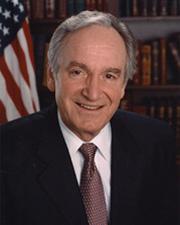 Sen. Tom Harkin (D-IA)
Legislative Activity
Stay on top of the latest movement without scrolling through every action
Considered by Senate. (consideration: CR S1617)
February 5, 2009
View full timeline
Considered by Senate. (consideration: CR S1617)
February 5, 2009
Proposed amendment SA 338 withdrawn in Senate. (consideration: CR S1661)
February 5, 2009
Senate amendment submitted
February 4, 2009
Senate amendment proposed (on the floor): Amendment SA 338 proposed by Senator Baucus for Senator Harkin to Amendment SA 98.(consideration: CR S1533-1536, S1537-1538; text: CR S1537-1538)
February 4, 2009
Amendment SA 338 proposed by Senator Baucus for Senator Harkin to Amendment SA 98. (consideration: CR S1533-1536, S1537-1538; text: CR S1537-1538) To require the Secretary of the Treasury to carry out a program to enable certain individuals to trade certain old automobiles for certain new automobiles.
February 4, 2009
Text
Submitted
SA 338. Mr. HARKIN (for himself, and Ms. Stabenow) submitted an
amendment intended to be proposed to amendment SA 98 proposed by Mr.
Inouye (for himself and Mr. Baucus) to the bill H.R. 1, making
supplemental appropriations for job preservation and creation,
infrastructure investment, energy efficiency and science, assistance to
the unemployed, and State and local fiscal stabilization, for fiscal
year ending September 30, 2009, and for other purposes; which was
ordered to lie on the table; as follows:

On page 431, between lines 8 and 9, insert the following:

SEC. 1607. AUTOMOBILE TRADE-IN PROGRAM.

(a) Definitions.--In this section:
(1) Automobile, fuel, manufacturer, model year.--The terms
``automobile'', ``fuel'', ``manufacturer'', and ``model
year'' have the meaning given such terms in section 32901 of
title 49, United States Code.
(2) Eligible individual.--The term ``eligible individual''
means an individual--
(A) who does not have more than 3 automobiles registered
under his or her name;
(B) who filed a return of Federal income tax for a taxable
year beginning in 2007 or in 2008, and, if married for the
taxable year concerned (as determined under section 7703 of
the Internal Revenue Code of 1986), filed a joint return;
(C) who is not an individual with respect to whom a
deduction under section 151 of the Internal Revenue Code of
1986 is allowable to another taxpayer for a taxable year
beginning in the calendar year in which the individual's
taxable year begins;
(D) whose adjusted gross income reported in the most recent
return described in subparagraph (B) was not more than
$50,000 ($75,000 in the case of a joint tax return or a
return filed by a head of household (as defined in section
2(b) of the Internal Revenue Code of 1986));
(E) who has not acquired an automobile under the Program;
and
(F) who did not file such return jointly with another
individual who has acquired an automobile under the Program.
(3) Eligible new automobile.--The term ``eligible new
automobile'', with respect to a trade of an eligible old
automobile by an eligible individual under the Program, means
an automobile that--
(A) has never been registered in any jurisdiction;
(B) was assembled in the United States; and
(C) has a fuel economy that--
(i) is not less than 25 miles per gallon (20 miles per
gallon in the case of a pick up truck), as determined by the
Administrator of the Environmental Protection Agency using
the 5-cycle fuel economy measurement methodology of such
Agency; and
(ii) has a fuel economy that is more than 4.9 miles per
gallon greater than the fuel economy of such eligible old
automobile, as determined by the Administrator using the 2-
cycle fuel economy measurement methodology of such Agency for
both automobiles.
(4) Eligible old automobile.--The term ``eligible old
automobile'', with respect to a trade for an eligible new
automobile by an eligible individual under the Program, means
an automobile that--
(A) is operable;
(B) was first registered in any jurisdiction by any person
not less than 10 years before the date on which such trade is
initiated;
(C) is registered under such eligible individual's name on
the date on which such trade is initiated; and
(D) was registered under such eligible individual's name
before January 16, 2009.
(5) Pick up truck.--The term ``pick up truck'' means an
automobile with an open bed as determined by the Secretary in
consultation with the Secretary of Transportation.
(6) Program.--The term ``Program'' means the Automobile
Trade-In Program established under subsection (b).
(7) Secretary.--Except as otherwise provided, the term
``Secretary'' means the Secretary of the Treasury, or the
Secretary's designee.
(b) Program Established.--The Secretary shall establish the
Automobile Trade-In Program to provide eligible individuals
with subsidies to purchase eligible new automobiles in
exchange for eligible old automobiles.
(c) Duration of Program.--The Program shall commence on the
date on which the Secretary prescribes regulations under
subsection (h) and shall terminate on the earlier of--
(1) September 30, 2010; and
(2) the date on which all of the funds appropriated or
otherwise made available under subsection (j) have been
expended.
(d) Trades.--
(1) In general.--Except as otherwise provided in this
subsection, if an eligible individual and a seller of an
eligible new automobile initiate a trade as described in
subsection (e) for such new automobile with an eligible old
automobile of the eligible individual before the termination
of the Program under subsection (c), the Secretary shall
provide to the seller of such new automobile $10,000.
(2) Limitation on purchase price of eligible new
automobiles.--The Secretary may not make any payment under
this subsection for a trade for an eligible new automobile
under the Program if--
(A) the purchase price of such new automobile exceeds the
manufacturer's suggested retail price for such new
automobile; or
(B) the price of the non-safety related accessories, as
determined by the Secretary in consultation with the
Administrator of the National Highway Traffic Safety
Administration, of such new automobile exceeds--
(i) the average price of the non-safety related accessories
for the prior model year of such new automobile; or
(ii) in the case that there is no prior model year for such
new automobile, the average price of non-safety related
accessories for similar new automobiles (as determined by the
Secretary), with consideration of the types of non-safety
related accessories that are typically provided with such
automobiles.
(3) Compensation for delayed payments.--In the case that a
payment under this subsection to a seller for a trade under
the Program is delayed, the Secretary shall provide to such
seller the amount otherwise determined under this subsection
plus interest at the overpayment rate established under
section 6621 of the Internal Revenue Code of 1986.
(e) Initiation of Trade.--An eligible individual and the
seller of an eligible new automobile initiate a trade under
the Program for such eligible new automobile with an eligible
old automobile of such individual if--
(1) the eligible individual, or the eligible individual's
designee, drives such old automobile to the location of such
seller;
(2) the eligible individual provides to the seller--
(A) such old automobile; and
(B) an amount (if any) equal to the difference between--
(i) the purchase price of such new automobile; and
(ii) the amount the Secretary is required to provide to the
seller under subsection (d); and
(3) the eligible individual and the seller notify the
Secretary of such trade at such time and in such manner as
the Secretary considers appropriate.
(f) Limitation on Resale.--
(1) In general.--Except as provided in paragraph (2), an
individual who purchases an automobile under the Program may
not sell or lease the automobile before the date that is 1
year after the date on which the individual purchased the
automobile under the Program.
(2) Exception for hardship.--The limitation in paragraph
(1) shall not apply to an individual if compliance with such
limitation would constitute a hardship, as determined by the
Secretary.
(g) Disposal of Eligible Old Automobiles.--
(1) In general.--A seller who receives an eligible old
automobile in exchange for an eligible new automobile under
the Program shall deliver such old automobile to an
appropriate location for proper destruction and disposal as
determined by the Secretary in accordance with paragraph (2).
(2) Disposal and salvage.--The Secretary may permit a
seller under paragraph (1) to salvage portions of an
automobile to be destroyed and disposed of under such
paragraph, except that the Secretary shall require the
destruction of the engine block and the frame of the
automobile.
(3) Compensation.--The Secretary shall compensate a seller
described in paragraph (1) for costs incurred by such seller
under such paragraph in such amounts or at such rates as the
Secretary considers appropriate.
(h) Regulations.--
(1) In general.--Not later than 30 days after the date of
the enactment of this Act,

[[Page S1597]]

the Secretary shall prescribe rules to carry out the Program.
(2) Expedited procedures for rulemaking.--The provisions of
chapter 5 of title 5, United States Code, shall not apply to
regulations prescribed under paragraph (1).
(i) Monitoring.--The Secretary shall establish a mechanism
to monitor the expenditure of funds appropriated under
subsection (j).
(j) Direct Spending Authority.--
(1) In general.--There is authorized to be appropriated and
is appropriated to the Secretary $16,000,000,000, including
administrative expenses, to carry out the Program.
(2) Availability.--The amount appropriated under paragraph
(1) shall be available for the purpose described in such
paragraph until September 30, 2010.
(3) Emergency designation.--Amounts appropriated pursuant
to paragraph (1) are designated as an emergency requirement
and necessary to meet emergency needs pursuant to section
204(a) of S. Con. Res. 21 (110th Congress) and section
301(b)(2) of S. Con. Res. 70 (110th Congress), the concurrent
resolutions on the budget for fiscal years 2008 and 2009.
______