To index tax thresholds imposed under the legislation to prevent the government from using inflation to impose those taxes on individuals currently making less than $200,000 and families making less than $250,000.
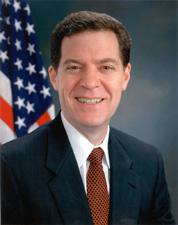 Sen. Sam Brownback (R-KS)
Legislative Activity
Stay on top of the latest movement without scrolling through every action
Senate amendment proposed (on the floor): Amendment SA 3697 proposed by Senator Brownback.(consideration: CR S2074-2075; text: CR S2074)
March 25, 2010
View full timeline
Senate amendment proposed (on the floor): Amendment SA 3697 proposed by Senator Brownback.(consideration: CR S2074-2075; text: CR S2074)
March 25, 2010
Roll call votes on amendments in Senate: Motion to table amendment SA 3697 agreed to in Senate by Yea-Nay Vote. 56 - 42. Record Vote Number: 98.
March 25, 2010
Amendment SA 3697 proposed by Senator Brownback. (consideration: CR S2074-2075; text: CR S2074) To index tax thresholds imposed under the legislation to prevent the government from using inflation to impose those taxes on individuals currently making less than $200,000 and families making less than $250,000.
March 25, 2010
Motion to table amendment SA 3697 agreed to in Senate by Yea-Nay Vote. 56 - 42. Record Vote Number: 98.
March 25, 2010
Senate amendment submitted
March 24, 2010
Votes
1 roll call on this amendment
Text
Proposed
HEALTH CARE AND EDUCATION RECONCILIATION ACT OF 2010

The PRESIDING OFFICER. Under the previous order, the Senate will
resume consideration of H.R. 4872, which the clerk will report.
The legislative clerk read as follows:

A bill (H.R. 4872) to provide for reconciliation pursuant
to Title II of the concurrent resolution on the budget for
fiscal year 2010 (S. Con. Res. 13).

The PRESIDING OFFICER. The Senator from New Hampshire.
Mr. GREGG. Madam President, the Senator from Nevada is going to be
recognized to offer an amendment at this time. I note that after the
Senator from Nevada, the plan is to go to Senator Coburn, Senator
Sessions, Senator Cornyn, Senator Grassley, Senator Brownback, Senator
Vitter and Senator DeMint, and then maybe Senator Coburn again and then
maybe Senator Ensign again.
The PRESIDING OFFICER. The Senator from Nevada.

Amendment No. 3593

Mr. ENSIGN. Madam President, I call up amendment No. 3593.
The PRESIDING OFFICER. The clerk will report.
The legislative clerk read as follows:

The Senator from Nevada [Mr. Ensign] proposes an amendment
numbered 3593.

Mr. ENSIGN. Madam President, I ask unanimous consent that the order
for the quorum call be rescinded.
The PRESIDING OFFICER. Without objection, it is so ordered.
The amendment is as follows:

(Purpose: To improve access to pro bono care for medically underserved
or indigent individuals by providing limited medical liability
protections)

At the end of subtitle B of title II, insert the following:

SEC. 2__. HEALTH CARE SAFETY NET ENHANCEMENT.

(a) Limitation on Liability.--Notwithstanding any other
provision of law, a health care professional shall not be
liable in any medical malpractice lawsuit for a cause of
action arising out of the provision of, or the failure to
provide, any medical service to a medically underserved or
indigent individual while engaging in the provision of pro
bono medical services.

[[Page S2070]]

(b) Requirements.--Subsection (a) shall not apply--
(1) to any act or omission by a health care professional
that is outside the scope of the services for which such
professional is deemed to be licensed or certified to
provide, unless such act or omission can reasonably be
determined to be necessary to prevent serious bodily harm or
preserve the life of the individual being treated;
(2) if the services on which the medical malpractice claim
is based did not arise out of the rendering of pro bono care
for a medically underserved or indigent individual; or
(3) to an act or omission by a health care professional
that constitutes willful or criminal misconduct, gross
negligence, reckless misconduct, or a conscious, flagrant
indifference to the rights or safety of the individual harmed
by such professional.
(c) Definition.--In this section--
(1) the term ``medically underserved individual'' means an
individual who does not have health care coverage under a
group health plan, health insurance coverage, or any other
health care coverage program; and
(2) the term ``indigent individual'' means and individual
who is unable to pay for the health care services that are
provided to the individual.

Mr. ENSIGN. Madam President, very briefly, this is an amendment to
improve the health care system in America. We talk about making health
care more affordable. One of the ways to do that is to encourage people
to give away health care.
In my veterinary practice, I used to give away about 10 to 20 percent
of my business. I did not have to be worried about being sued. Every
doctor, every health care provider I have talked with, if they give
away, if they do it pro bono, if they do it out of compassion, that is
one of the first times they are going to get sued.
What this amendment says is, unless there is gross negligence, if a
health care provider is giving their services away out of the
compassion of their heart, they cannot be sued. It is a very simple
amendment.
We have had this debate on the Senate floor before. This would
greatly improve our medical system by encouraging people to be
compassionate for those who cannot afford medical care, but they should
not have to be worried about being sued if they happen to be
compassionate enough to give their services away.
This is a commonsense amendment. I encourage all our colleagues to
vote for this amendment. This will improve our health care system in
the United States.
The PRESIDING OFFICER. Who yields time in opposition?
Mr. BAUCUS. Madam President, we just now saw this amendment. We have
to look at it. I suggest the absence of a quorum.
The PRESIDING OFFICER. The clerk will call the roll.
The assistant legislative clerk proceeded to call the roll.
Mr. BAUCUS. Madam President, I ask unanimous consent that the order
for the quorum call be rescinded.
The PRESIDING OFFICER. Without objection, it is so ordered.
Mr. BAUCUS. Madam President, as I said, we were just handed this
amendment. We have now examined it. This is an amendment that is
related to medical malpractice and tort reform. There are a lot of
provisions already in the bill which cover this subject. However, the
main point of this amendment is not the jurisdiction of the relevant
committees.
I raise a point of order that the Ensign amendment would violate
section 313(b)(1)(C) of the Congressional Budget Act.
The PRESIDING OFFICER. The Senator from Nevada.
Mr. ENSIGN. Pursuant to section 904 of the Congressional Budget Act
of 1974 and section 4(g)(3) of the statutory Pay-As-You-Go Act of 2010,
I move to waive all applicable sections of those acts and applicable
budget resolutions for purposes of my amendment and ask for the yeas
and nays.
The PRESIDING OFFICER. Is there a sufficient second?
There appears to be a sufficient second.
The question is on agreeing to the motion.
The clerk will call the roll.
The assistant legislative clerk called the roll.
Mr. DURBIN. I announce that the Senator from California (Mrs. Boxer),
the Senator from West Virginia (Mr. Byrd), the Senator from Washington
(Ms. Cantwell), and the Senator from New Jersey (Mr. Lautenberg) are
necessarily absent.
Mr. KYL. The following Senator is necessarily absent: the Senator
from Georgia (Mr. Isakson).
The PRESIDING OFFICER. Are there any other Senators in the Chamber
desiring to vote?
The yeas and nays resulted--yeas 40, nays 55, as follows:

[Rollcall Vote No. 93 Leg.]

YEAS--40

Alexander
Barrasso
Bennett
Bond
Brown (MA)
Brownback
Bunning
Burr
Chambliss
Coburn
Cochran
Collins
Corker
Cornyn
Crapo
DeMint
Ensign
Enzi
Graham
Grassley
Gregg
Hatch
Hutchison
Inhofe
Johanns
Kyl
LeMieux
Lugar
McCain
McConnell
Murkowski
Risch
Roberts
Sessions
Shelby
Snowe
Thune
Vitter
Voinovich
Wicker

NAYS--55

Akaka
Baucus
Bayh
Begich
Bennet
Bingaman
Brown (OH)
Burris
Cardin
Carper
Casey
Conrad
Dodd
Dorgan
Durbin
Feingold
Feinstein
Franken
Gillibrand
Hagan
Harkin
Inouye
Johnson
Kaufman
Kerry
Klobuchar
Kohl
Landrieu
Leahy
Levin
Lieberman
Lincoln
McCaskill
Menendez
Merkley
Mikulski
Murray
Nelson (NE)
Nelson (FL)
Pryor
Reed
Reid
Rockefeller
Sanders
Schumer
Shaheen
Specter
Stabenow
Tester
Udall (CO)
Udall (NM)
Warner
Webb
Whitehouse
Wyden

NOT VOTING--5

Boxer
Byrd
Cantwell
Isakson
Lautenberg
The PRESIDING OFFICER. On this vote, the yeas are 40, the nays are
55. Three-fifths of the Senators duly chosen and sworn not having voted
in the affirmative, the motion is rejected.
The point of order is sustained, and the amendment falls.
Mr. GREGG. Madam President, I understand we will now be having 10-
minute votes. Is that correct?
The PRESIDING OFFICER. The Senate will be in order.
Mr. GREGG. I ask unanimous consent that all additional votes on this
bill be 10 minutes.
The PRESIDING OFFICER. Is there objection? Without objection, it is
so ordered.
The Senator from Oklahoma.

Amendment No. 3700

Mr. COBURN. Madam President, I have an amendment at the desk.
The PRESIDING OFFICER. The clerk will report.
The assistant legislative clerk read as follows:

The Senator from Oklahoma [Mr. Coburn] proposes an
amendment numbered 3700.

Mr. COBURN. I ask unanimous consent the reading of the amendment be
dispensed with.
The PRESIDING OFFICER. Without objection, it is so ordered.
The amendment is as follows:

(Purpose: To help protect Second Amendment rights of law-abiding
Americans)

At the end, add the following:

TITLE III--SECOND AMENDMENT PROTECTION

SEC. 3001. VETERANS SECOND AMENDMENT PROTECTION.

(a) Short Title.--This section may be cited as the
``Veterans 2nd Amendment Protection Act''.
(b) Conditions for Treatment of Certain Persons as
Adjudicated Mentally Incompetent for Certain Purposes.--
(1) In general.--Chapter 55 of title 38, United States
Code, is amended by adding at the end the following:

``Sec. 5511. Conditions for treatment of certain persons as
adjudicated mentally incompetent for certain purposes

``In any case arising out of the administration by the
Secretary of laws and benefits under this title, a person who
is mentally incapacitated, deemed mentally incompetent, or
experiencing an extended loss of consciousness shall not be
considered adjudicated as a mental defective under subsection
(d)(4) or (g)(4) of section 922 of title 18 without the order
or finding of a judge, magistrate, or other judicial
authority of competent jurisdiction that such person is a
danger to himself or herself or others.''.
(2) Clerical amendment.--The table of sections at the
beginning of chapter 55 of such title is amended by adding at
the end the following new item:

``5511. Conditions for treatment of certain persons as adjudicated
mentally incompetent for certain purposes.''.

(c) Severability.--Notwithstanding any other provision of
this Act, if any provision

[[Page S2071]]

of this section, or any amendment made by this section, or
the application of such provision or amendment to any person
or circumstance is held to be unconstitutional, this section
and amendments made by this section and the application of
such provision or amendment to other persons or circumstances
shall not be affected thereby.
(d) Effective Date.--The amendments made by this section
shall take effect on the date of enactment of this Act.

Mr. COBURN. Madam President, 140,000 of our troops have lost their
second amendment rights as they go through the VA hospital system. They
are not a danger to themselves or anyone else. This amendment is
something that has passed this body unanimously, has come out of the
committee unanimously, but still we have 140,000 of our long-serving
veterans who have lost their rights to own a gun, hunt with their
grandchildren, or to hunt birds in North Dakota.
We have taken it away, not because of anything we did, because the
bureaucracy did it. This amendment restores that. As they have gone
through the VA system and the health care system, a bureaucrat has
taken that right away.
This is supported by the National Alliance on Mental Illness, AMVETS,
Military Order of Purple Heart, NRA, Gun Owners of America, Veterans of
Foreign Wars, and the American Legion.
I yield the floor.
The PRESIDING OFFICER. The Senator from Montana.
Mr. BAUCUS. Madam President, this is a health care reform----
Mr. COBURN. They lost it under their health care.
The PRESIDING OFFICER. The Senator from Montana.
Mr. BAUCUS. This is a health care reform bill, and we should keep all
amendments to that subject. When we were sworn in as Senators, we took
an oath of office to support the Constitution of the United States,
which clearly includes the second amendment. All of us have a strong
belief in the second amendment to our Constitution. But whatever you
think about second amendment rights and the application of the second
amendment, whatever you think about veterans and the relationship to
questions of competency, I think we all should agree that neither what
anybody thinks about second amendment rights or what veterans'
relations should be to that should be in this bill. This is a health
care bill.
I note this bill already explicitly protects the rights of gun
owners. Therefore, because this amendment is nearly entirely composed
of matter outside the jurisdiction of the reconciled committees, I
raise a point of order that the Coburn amendment violates section
313(b)(1)(C) of the Congressional Budget Act.
The PRESIDING OFFICER. The Senator from Oklahoma.
Mr. COBURN. Pursuant to section 904 of the Congressional Budget Act
of 1974 and section 4(g)(3) of the Statutory Pay-as-you-go Act of 2010,
I move to waive all applicable sections of those acts and applicable
budget resolutions for purposes of my amendment.
I ask for the yeas and nays.
The PRESIDING OFFICER. Is there a sufficient second? There appears to
be a sufficient second.
The question is on agreeing to the motion. The clerk will call the
roll.
The assistant legislative clerk called the roll.
Mr. DURBIN. I announce that the Senator from West Virginia (Mr. Byrd)
is necessarily absent.
Mr. KYL. The following Senator is necessarily absent: the Senator
from Georgia (Mr. Isakson).
The PRESIDING OFFICER. Are there any other Senators in the Chamber
desiring to vote?
The yeas and nays resulted--yeas 45, nays 53, as follows:

[Rollcall Vote No. 94 Leg.]

YEAS--45

Alexander
Barrasso
Bayh
Bennett
Bond
Brown (MA)
Brownback
Bunning
Burr
Chambliss
Coburn
Cochran
Collins
Corker
Cornyn
Crapo
DeMint
Ensign
Enzi
Graham
Grassley
Gregg
Hatch
Hutchison
Inhofe
Johanns
Kyl
LeMieux
Lincoln
Lugar
McCain
McConnell
Murkowski
Nelson (NE)
Pryor
Risch
Roberts
Sessions
Shelby
Snowe
Thune
Vitter
Voinovich
Webb
Wicker

NAYS--53

Akaka
Baucus
Begich
Bennet
Bingaman
Boxer
Brown (OH)
Burris
Cantwell
Cardin
Carper
Casey
Conrad
Dodd
Dorgan
Durbin
Feingold
Feinstein
Franken
Gillibrand
Hagan
Harkin
Inouye
Johnson
Kaufman
Kerry
Klobuchar
Kohl
Landrieu
Lautenberg
Leahy
Levin
Lieberman
McCaskill
Menendez
Merkley
Mikulski
Murray
Nelson (FL)
Reed
Reid
Rockefeller
Sanders
Schumer
Shaheen
Specter
Stabenow
Tester
Udall (CO)
Udall (NM)
Warner
Whitehouse
Wyden

NOT VOTING--2

Byrd
Isakson
The PRESIDING OFFICER. On this vote, the yeas are 45, the nays are
53. Three-fifths of the Senators duly chosen and sworn having not voted
in the affirmative, the motion is not agreed to, the point of order is
sustained, and the amendment falls.
Mr. DURBIN. Madam President, I move to reconsider the vote and lay
that motion upon the table.
The motion to lay upon the table was agreed to.
The PRESIDING OFFICER. The Senator from Alabama.

Amendment No. 3701

Mr. SESSIONS. Madam President, President Obama made a promise to the
American people that health care legislation would not provide benefits
to those illegally in the country.
The PRESIDING OFFICER. Does the Senator wish to call up his
amendment?
Mr. SESSIONS. I would call up my amendment.
The PRESIDING OFFICER. The clerk will report.
The assistant legislative clerk read as follows:

The Senator from Alabama [Mr. Sessions] proposes an
amendment numbered 3701.

Mr. SESSIONS. I ask unanimous consent that the reading of the
amendment be dispensed with.
The amendment is as follows:

(Purpose: To ensure that Americans are not required to pay for the
health benefits for those here illegally by requiring the use of an
effective eligibility verification system, consistent with existing law
for other Federal health related programs, and to also maintain the
current, and well-established requirement of law, that legal immigrants
should not become a ``public charge'' or burden to the American
taxpayers, to reduce the cost of this bill, and to reduce the deficit
and for other purposes)

At the end of subtitle A of title I, insert the following:

SEC. 1006. PROVISIONS TO ENSURE EFFECTIVE ELIGIBILITY
VERIFICATION SYSTEM.

(a) Eligibility for Credits and Cost-Sharing Reductions.--
(1) Credits.--Section 36B of the Internal Revenue Code of
1986, as added by section 1401 of the Patient Protection and
Affordable Care Act, is amended--
(A) in subsection (c) (1), by striking subparagraph (B) and
by redesignating subparagraphs (C) and (D) as subparagraphs
(B) and (C), respectively, and
(B) by striking paragraph (3) of subsection (e).
(2) Reduced cost-sharing.--Section 1402 of the Patient
Protection and Affordable Care Act is amended--
(A) by striking the last sentence of subsection (b),
(B) by striking paragraph (3) of subsection (e), and
(C) by adding at the end of subsection (f) the following:
``(4) Subsidies treated as public benefit.--Notwithstanding
any other provision of this Act or any other provision of
law, for purposes of section 403 of the Personal
Responsibility and Work Opportunity Reconciliation Act of
1996 (8 U.S.C. 1613), the following shall be considered a
Federal means-tested public benefit:
``(A) The ability of an individual to purchase a qualified
health plan offered through an Exchange.
``(B) The premium tax credit established under section 1401
of this Act (and any advance payment thereof).
``(C) The cost sharing reductions established under this
section (and any advance payment thereof).''.
(b) Eligibility Determinations.--Section 1411 of the
Patient Protection and Affordable Care Act is amended--
(1) in subsection (a)--
(A) by striking so much of such subsection as precedes
paragraph (1) and inserting:
``(a) Verification Process.--The Secretary shall ensure
that eligibility determinations required by this Act are
conducted in accordance with the following requirements,
including requirements for determining:'', and
(B) by inserting ``eligible'' before ``alien'' in paragraph
(1),
(2) in subsection (b)(1)--
(A) by inserting ``the Exchange with the following'' after
``provide'',
(B) by striking ``and'' at the end of subparagraph (A), by
redesignating subparagraph (B) as subparagraph (C) and by
inserting after subparagraph (A) the following:

[[Page S2072]]

``(B) a sworn statement, under penalty of perjury,
specifically attesting to the fact that each enrollee is
either a citizen or national of the United States or an
eligible lawful permanent resident meeting the requirements
of section 1402(f)(3) of this Act and identifying the
applicable eligibility status for each enrollee; and'', and
(C) by inserting ``and documentation'' after
``information'' in subparagraph (C) (as so redesignated),
(3) by striking subparagraphs (A) and (B) of subsection
(b)(2) and inserting the following:
``(A) In the case of an enrollee whose eligibility is based
on attestation of citizenship of the enrollee, the enrollee
shall provide satisfactory evidence of citizenship or
nationality (within the meaning of section 1903(x) of the
Social Security Act (42 U.S.C. 1396b)).
``(B) In the case of an individual whose eligibility is
based on attestation of the enrollee's immigration status--
``(i) such information as is necessary for the individual
to demonstrate they are in `satisfactory immigration status'
as defined and in accordance with the Systematic Alien
Verification for Entitlements (SAVE) program established by
section 1137 of the Social Security Act (42 U.S.C. 1320b-7),
and
``(ii) any other additional identifying information as the
Secretary, in consultation with the Secretary of Homeland
Security, may require in order for the enrollee to
demonstrate satisfactory immigration status.'',
(4) by striking so much of subsection (c) as precedes
paragraph (3) and inserting the following:
``(c) Verification of Eligibility Through Documentation.--
``(1) In general.--Each Exchange shall conduct eligibility
verification, using the information provided by an applicant
under subsection (b), in accordance with this subsection.
``(2) Verification of citizenship or immigration status.--
``(A) Verification of attestation of citizenship.--Each
Exchange shall verify the eligibility of each enrollee who
attests that they are a citizen or national of the United
States, as required by subsection (b)(1)(A) of this section,
in accordance with the provisions of section 1903(x) of the
Social Security Act.
``(B) Verification of attestation of eligible immigration
status.--Each Exchange shall verify the eligibility of each
enrollee who attests that they are eligible to participate in
the exchange by virtue of having been a lawful permanent
resident for not less than 5 years, as required by subsection
(b)(l)(B) of this section, in accordance with the provisions
of section 1137 of the Social Security Act.'',
(5) by striking subparagraph (B) of subsection (c)(4),
(6) by striking subsection (d) and redesignating
subsections (e) through (i) as subsections (d) through (h),
respectively, and
(7) by striking ``under section 1902(ee) of the Social
Security Act (as in effect on January 1, 2010)'' in
subsection (d)(3) (as redesignated under paragraph (6)) and
inserting ``in accordance with the secondary verification
process established consistent with section 1137 of the
Social Security Act (as is in effect as of January 1,
2009)''.

Mr. SESSIONS. I would note that loopholes do remain in the health
care legislation. My amendment would simply ensure that the promise
that has been made to the American people would be kept. It sets up an
effective eligibility verification system consistent with that for
other Federal health-related programs.
The amendment maintains current law, which prohibits legal immigrants
from becoming a public charge on the taxpayers. It also prohibits the
Secretary from drafting any regulation that would amend or alter these
principles, principles that the President, the Congress, and the
American people have said they support. The amendment would reduce
fraud and the financial burden of the legislation on the American
taxpayers.
I reserve the remainder of my time.
The PRESIDING OFFICER. The Senator from Illinois.
Mr. DURBIN. Madam President, I urge my colleagues to oppose the
Sessions amendment. It does two things. First, it requires legal
permanent residents in the United States to produce documentary proof
of their legality. We tried this under Medicaid and found out that many
people in our country, the elderly and others, found it difficult to
produce documentation though they were clearly eligible and clearly
legal and entitled to basic assistance.
Instead, our bill that we passed, health care reform, verifies that a
person is legal by declaration of their Social Security number, which
is verified. So we go through a good process here to make sure only
those eligible will receive, and, secondly, what Senator Sessions'
amendment does, is say to legal permanent residents paying taxes, they
cannot use the Tax Code like other citizens for deductions and credits
for 5 years. They are paying taxes under the Tax Code. They should be
allowed the same tax credits as other Americans, other people living in
this country.
I urge my colleagues to defeat it for those two reasons, and the fact
that this is an attempt to derail this bill.
I move to table the Sessions amendment and ask for the yeas and nays.
The PRESIDING OFFICER. Is there a sufficient second?
There appears to be a sufficient second.
The question is on agreeing to the motion.
The clerk will call the roll.
The assistant legislative clerk called the roll.
Mr. DURBIN. I announce that the Senator from West Virginia (Mr. Byrd)
is necessarily absent.
Mr. KYL. The following Senator is necessarily absent: the Senator
from Georgia (Mr. Isakson).
The PRESIDING OFFICER. Are there any other Senators in the Chamber
desiring to vote?
The result was announced--yeas 55, nays 43, as follows:

[Rollcall Vote No. 95 Leg.]

YEAS--55

Akaka
Baucus
Begich
Bennet
Bingaman
Boxer
Brown (OH)
Burris
Cantwell
Cardin
Carper
Casey
Conrad
Dodd
Dorgan
Durbin
Feingold
Feinstein
Franken
Gillibrand
Hagan
Harkin
Inouye
Johnson
Kaufman
Kerry
Klobuchar
Kohl
Landrieu
Lautenberg
Leahy
Levin
Lieberman
Lincoln
McCaskill
Menendez
Merkley
Mikulski
Murray
Nelson (FL)
Reed
Reid
Rockefeller
Sanders
Schumer
Shaheen
Specter
Stabenow
Tester
Udall (CO)
Udall (NM)
Warner
Webb
Whitehouse
Wyden

NAYS--43

Alexander
Barrasso
Bayh
Bennett
Bond
Brown (MA)
Brownback
Bunning
Burr
Chambliss
Coburn
Cochran
Collins
Corker
Cornyn
Crapo
DeMint
Ensign
Enzi
Graham
Grassley
Gregg
Hatch
Hutchison
Inhofe
Johanns
Kyl
LeMieux
Lugar
McCain
McConnell
Murkowski
Nelson (NE)
Pryor
Risch
Roberts
Sessions
Shelby
Snowe
Thune
Vitter
Voinovich
Wicker

NOT VOTING--2

Byrd
Isakson

The motion was agreed to.
Mrs. MURRAY. Madam President, I move to reconsider the vote.
Mr. INOUYE. I move to lay that motion on the table.
The motion to lay on the table was agreed to.
The PRESIDING OFFICER. The Senator from Texas.

Amendment No. 3698

Mr. CORNYN. Madam President, I call up amendment No. 3698 and ask for
its consideration.
The PRESIDING OFFICER. The clerk will report.
The assistant legislative clerk read as follows:

The Senator from Texas [Mr. Cornyn] proposes an amendment
numbered 3698.

Mr. CORNYN. I ask unanimous consent that reading of the amendment be
dispensed with.
The amendment is as follows:

(Purpose: To ensure that health care reform reduces health care costs
for American families, small businesses, and taxpayers)

At the end of subtitle F of title I, insert the following:

SEC. 1__. LIMITATION ON APPLICATION OF ACTS.

Notwithstanding any other provision of law, the Secretary
of Health and Human Services shall not implement the Patient
Protection and Affordable Care Act and the Health Care and
Education Reconciliation Act of 2011 until the Office of the
Actuary at the Centers for Medicare & Medicaid Services
certifies to Congress that such Acts will reduce National
health expenditures relative to the level of such
expenditures under current law.

Mr. CORNYN. Madam President, this amendment would ensure that health
care reform costs are lowered by this piece of legislation. If
independent actuaries for the Centers for Medicare and Medicaid
Services cannot certify that this health care reform legislation lowers
national health expenditures, this bill will not go into effect.
I reserve the remainder of my time before the vote.
The PRESIDING OFFICER. The Senator from Montana.

[[Page S2073]]

Mr. BAUCUS. Madam President, this amendment is a thinly disguised
attempt to kill health care reform. Let me explain why. I remind my
colleagues that the Congressional Budget Office has told us that in the
first 10 years the bill actually will reduce the deficit by a
significant amount. CBO also informs us that health care reform will
lower premiums for 97 percent of Americans, improve benefits for many
who are underinsured, and health care reform will bend the growth curve
of health care spending. The CMS Actuary also says that national health
care spending will be lower under the law than it will be without
reform. In 2019, health spending will be 6.7 percent, compared to 7.2
without reform.
To prohibit implementation unless all these projections bear out is
just another attempt to kill the bill. For that reason, I urge
colleagues to resist this amendment.
The PRESIDING OFFICER. The time of the Senator from Montana has
expired.
The Senator from Texas.
Mr. CORNYN. Madam President, if you raise taxes enough and if you cut
Medicare enough, you might be able to claim, through phony bookkeeping,
that somehow this cuts the deficit. The administration's own actuaries
have concluded this law will raise health care costs. That is why it is
important we pass this amendment, so that the central purpose of this
legislation--to bend the cost curve down--is actually realized.
I urge colleagues to support the amendment.
The PRESIDING OFFICER. The majority leader.
Mr. REID. Madam President, we need to move these amendments more
quickly. We have an agreement. We want to make sure everyone continues
working in good faith. I ask unanimous consent that all future votes,
starting with this one, be 10 minutes, and we will only have 2 minutes
for the penalty period, so to speak. After 12 minutes, the votes are
going to be cut off. Everyone should understand.
The PRESIDING OFFICER. Without objection, it is so ordered.
Mr. BAUCUS. Madam President, I move to table the Cornyn amendment and
ask for the yeas and nays.
The PRESIDING OFFICER. Is there a sufficient second?
There appears to be a sufficient second.
The question is on agreeing to the motion.
The clerk will call the roll.
The bill clerk called the roll.
Mr. DURBIN. I announce that the Senator from West Virginia (Mr. Byrd)
is necessarily absent.
Mr. KYL. The following Senator is necessarily absent: the Senator
from Georgia (Mr. Isakson).
The PRESIDING OFFICER (Mr. Menendez). Are there any other Senators in
the Chamber desiring to vote?
The result was announced--yeas 58, nays 40, as follows:

[Rollcall Vote No. 96 Leg.]

YEAS--58

Akaka
Baucus
Bayh
Begich
Bennet
Bingaman
Boxer
Brown (OH)
Burris
Cantwell
Cardin
Carper
Casey
Conrad
Dodd
Dorgan
Durbin
Feingold
Feinstein
Franken
Gillibrand
Hagan
Harkin
Inouye
Johnson
Kaufman
Kerry
Klobuchar
Kohl
Landrieu
Lautenberg
Leahy
Levin
Lieberman
Lincoln
McCaskill
Menendez
Merkley
Mikulski
Murray
Nelson (NE)
Nelson (FL)
Pryor
Reed
Reid
Rockefeller
Sanders
Schumer
Shaheen
Specter
Stabenow
Tester
Udall (CO)
Udall (NM)
Warner
Webb
Whitehouse
Wyden

NAYS--40

Alexander
Barrasso
Bennett
Bond
Brown (MA)
Brownback
Bunning
Burr
Chambliss
Coburn
Cochran
Collins
Corker
Cornyn
Crapo
DeMint
Ensign
Enzi
Graham
Grassley
Gregg
Hatch
Hutchison
Inhofe
Johanns
Kyl
LeMieux
Lugar
McCain
McConnell
Murkowski
Risch
Roberts
Sessions
Shelby
Snowe
Thune
Vitter
Voinovich
Wicker

NOT VOTING--2

Byrd
Isakson

The motion was agreed to.
Mr. SCHUMER. Mr. President, I move to reconsider the vote.
Mr. DODD. I move to lay that motion on the table.
The motion to lay on the table was agreed to.
The PRESIDING OFFICER. The Senator from Iowa.

Amendment No. 3569

Mr. GRASSLEY. Mr. President, I call up amendment No. 3569.
The PRESIDING OFFICER. The clerk will report.
The bill clerk read as follows:

The Senator from Iowa [Mr. Grassley] proposes an amendment
numbered 3569.

Mr. GRASSLEY. Mr. President, I ask unanimous consent that reading of
the amendment be dispensed with.
The PRESIDING OFFICER. Without objection, it is so ordered.
The amendment is as follows:

(Purpose: To amend title XVIII of the Social Security Act to ensure
Medicare beneficiary access to physicians, eliminate sweetheart deals
for frontier States, and ensure equitable reimbursement under the
Medicare program for all rural States)

At the end of subtitle B of title I, insert the following:

SEC. __. REVISIONS TO THE PRACTICE EXPENSE GEOGRAPHIC
ADJUSTMENT UNDER THE MEDICARE PHYSICIAN FEE
SCHEDULE.

Effective as if included in the enactment of the Patient
Protection and Affordable Care Act, subparagraph (H) of
section 1848(e)(1) of the Social Security Act (42 U.S.C.
1395w-4(e)(1)), as added by section 3102(b) of the Patient
Protection and Affordable Care Act, is amended to read as
follows:
``(H) Practice expense geographic adjustment for 2010 and
subsequent years.--
``(i) For 2010.--Subject to clause (iii), for services
furnished during 2010, the employee wage and rent portions of
the practice expense geographic index described in
subparagraph (A)(i) shall reflect \1/2\ of the difference
between the relative costs of employee wages and rents in
each of the different fee schedule areas and the national
average of such employee wages and rents.
``(ii) For 2011.--Subject to clause (iii), for services
furnished during 2011, the employee wage and rent portions of
the practice expense geographic index described in
subparagraph (A)(i) shall reflect \1/4\ of the difference
between the relative costs of employee wages and rents in
each of the different fee schedule areas and the national
average of such employee wages and rents.
``(iii) Hold harmless.--The practice expense portion of the
geographic adjustment factor applied in a fee schedule area
for services furnished in 2010 or 2011 shall not, as a result
of the application of clause (i) or (ii), be reduced below
the practice expense portion of the geographic adjustment
factor under subparagraph (A)(i) (as calculated prior to the
application of such clause (i) or (ii), respectively) for
such area for such year.
``(iv) Analysis.--The Secretary shall analyze current
methods of establishing practice expense geographic
adjustments under subparagraph (A)(i) and evaluate data that
fairly and reliably establishes distinctions in the costs of
operating a medical practice in the different fee schedule
areas. Such analysis shall include an evaluation of the
following:

``(I) The feasibility of using actual data or reliable
survey data developed by medical organizations on the costs
of operating a medical practice, including office rents and
non-physician staff wages, in different fee schedule areas.
``(II) The office expense portion of the practice expense
geographic adjustment described in subparagraph (A)(i),
including the extent to which types of office expenses are
determined in local markets instead of national markets.
``(III) The weights assigned to each of the categories
within the practice expense geographic adjustment described
in subparagraph (A)(i).

In conducting such analysis, the Secretary shall not take
into account any data that is not actual or survey data.
``(v) Revision for 2012 and subsequent years.--As a result
of the analysis described in clause (iv), the Secretary
shall, not later than January 1, 2012, make appropriate
adjustments to the practice expense geographic adjustment
described in subparagraph (A)(i) to ensure accurate
geographic adjustments across fee schedule areas, including--

``(I) basing the office rents component and its weight on
occupancy costs only and making weighting changes in other
categories as appropriate;
``(II) ensuring that office expenses that do not vary from
region to region be included in the `other' office expense
category; and
``(III) considering a representative range of professional
and non-professional personnel employed in a medical office
based on the use of the American Community Survey data or
other reliable data for wage adjustments.

Such adjustments shall be made without regard to adjustments
made pursuant to clauses (i) and (ii) and shall be made in a
budget neutral manner.
``(vi) Special rule.--If the Secretary does not complete
the analysis described in clause (iv) and make any
adjustments the Secretary determines appropriate for 2012 or
a subsequent year under clause (v), the Secretary shall apply
clause (ii) for services furnished during 2012 or a
subsequent year in the same manner as such clause applied for
services furnished during 2011.''.

[[Page S2074]]

SEC. __. ELIMINATION OF SWEETHEART DEAL THAT INCREASES
MEDICARE REIMBURSEMENT JUST FOR FRONTIER
STATES.

Effective as if included in the enactment of the Patient
Protection and Affordable Care Act, section 10324 of such Act
(and the amendments made by such section) is repealed.

The PRESIDING OFFICER. The Senator from Iowa is recognized for 1
minute.
Mr. GRASSLEY. Mr. President, this is about geographical equity for
all States. The Senate health reform bill just signed into law includes
a frontier sweetheart deal that improves Medicare payments for five
rural States at the expense of the other 45. The special deal is for
North Dakota, South Dakota, Montana, Utah, and Wyoming. The Washington
Post calls these deals the ``Candy Land'' of the health care bill.
Repealing this provision will not kill the bill because it has to go
back to the House anyway.
My amendment also ensures that Health and Human Services cannot undo
the formula fix that my amendment established in the Senate health care
bill that is now law.
The PRESIDING OFFICER. The time of the Senator has expired.
The Senator from Montana.
Mr. BAUCUS. Mr. President, I have the highest regard for my good
friend from Iowa. We work very closely together. We want to make sure
our States are fully incorporated, involved in the national health care
delivery system; that is, rural States. We also want a balance between
urban and rural. It is the only fair solution. This bill has that
balance.
I might say, there are some--I chuckle a little bit--I have talked to
some of my friends in the East who talk about rural America--rural New
York or rural Illinois or rural Indiana--and I appreciate that very
much. But we are talking here, with frontier States, with what is
really rural: only about six people per square mile.
So I say to my friend from Iowa, we have the balance in the bill. We
should maintain that current balance. I think this amendment is
inadvisable, and I urge us to not support it.
Mr. President, I move to table the amendment, and I ask for the yeas
and nays.
The PRESIDING OFFICER. Is there a sufficient second?
There appears to be a sufficient second.
The question is on agreeing to the motion.
The clerk will call the roll.
The bill clerk called the roll.
Mr. DURBIN. I announce that the Senator from West Virginia (Mr. Byrd)
is necessarily absent.
Mr. KYL. The following Senator is necessarily absent: the Senator
from Georgia (Mr. Isakson).
The PRESIDING OFFICER (Mrs. Gillibrand). Are there any other Senators
in the Chamber desiring to vote?
The result was announced--yeas 53, nays 45, as follows:

[Rollcall Vote No. 97 Leg.]

YEAS--53

Akaka
Baucus
Begich
Bennet
Bingaman
Boxer
Brown (OH)
Burris
Cantwell
Cardin
Carper
Casey
Conrad
Dodd
Dorgan
Durbin
Feingold
Feinstein
Franken
Gillibrand
Hagan
Harkin
Inouye
Johnson
Kaufman
Kerry
Klobuchar
Kohl
Landrieu
Lautenberg
Leahy
Levin
Lieberman
McCaskill
Menendez
Merkley
Mikulski
Murray
Nelson (FL)
Reed
Reid
Rockefeller
Sanders
Schumer
Shaheen
Specter
Stabenow
Tester
Udall (CO)
Udall (NM)
Warner
Whitehouse
Wyden

NAYS--45

Alexander
Barrasso
Bayh
Bennett
Bond
Brown (MA)
Brownback
Bunning
Burr
Chambliss
Coburn
Cochran
Collins
Corker
Cornyn
Crapo
DeMint
Ensign
Enzi
Graham
Grassley
Gregg
Hatch
Hutchison
Inhofe
Johanns
Kyl
LeMieux
Lincoln
Lugar
McCain
McConnell
Murkowski
Nelson (NE)
Pryor
Risch
Roberts
Sessions
Shelby
Snowe
Thune
Vitter
Voinovich
Webb
Wicker

NOT VOTING--2

Byrd
Isakson

The motion was agreed to.
The PRESIDING OFFICER. The Senator from Kansas is recognized.

Amendment No. 3697

Mr. BROWNBACK. Madam President, I call up, on behalf of myself and
Senator Murkowski, amendment No. 3697 and ask for its immediate
consideration.
The PRESIDING OFFICER. The clerk will report.
The legislative clerk read as follows:

The Senator from Kansas [Mr. Brownback], for himself and
Ms. Murkowski, proposes an amendment numbered 3697.

Mr. BROWNBACK. I ask unanimous consent that the reading of the
amendment be dispensed with.
The PRESIDING OFFICER. Without objection, it is so ordered.
The amendment is as follows:

(Purpose: To index tax thresholds imposed under the legislation to
prevent the government from using inflation to impose those taxes on
individuals currently making less than $200,000 and families making
less than $250,000)

At the end of section 1402(a), insert the following:
(5) Inflation adjustment.--Section 1411 of the Internal
Revenue Code of 1986, as added by paragraph (1), is amended
by adding at the end the following new subsection:
``(f) Adjustment for Inflation.--In the case of any taxable
year beginning after December 31, 2013, each of the dollar
amounts under paragraphs (1) and (3) of subsection (b),
subparagraphs (A) and (C) of section 3101(b)(2), and clauses
(i) and (iii) of section 1401(b)(2)(A) shall be increased by
an amount equal to--
``(1) such amount, multiplied by
``(2) the cost-of-living adjustment determined under
section 1(f)(3) for the calendar year in which such taxable
year begins by substituting `calendar year 2012' for
`calendar year 1992' in subparagraph (B) thereof.
If any increase determined under this subsection is not a
multiple of $1,000, such increase shall be rounded to the
next lowest multiple of $1,000.''.

Mr. BROWNBACK. Madam President, this is a very simple but very
important amendment in the sense that the new surtaxes on Medicare, on
wages, and on unearned income are not indexed for inflation. All of my
colleagues are familiar with the problem we have had with the
alternative minimum tax being not indexed for inflation, and with that
being a problem, it is now built into this bill. This new surtax is not
indexed for inflation.
If I can show my colleagues for a moment, on this chart, we can see
how quickly, with a 4-percent rate of inflation, the people who are
getting the subsidy today will be taxed as high income in a few years.
This is a problem we are very familiar with. We fight with it
regularly. It is part of the funding base of this bill. It needs to be
taken out. The bill should not be paid for with inflation, and we are
all too likely to have significant inflation.
So I urge my colleagues to support this amendment.
The PRESIDING OFFICER. The Senator from Montana.
Mr. BAUCUS. Madam President, I have a lot of sympathy with the
amendment. We don't want to get into an AMT situation. The AMT was not
indexed when the AMT was enacted. We are now paying the price today. It
is very possible that if this level is not indexed, we may be paying
the price later on, in several years' time, but this is not the time or
place.
I might also say there are other provisions in the bill that are not
indexed, such as the affordability provisions. That is not indexed. I
don't think it is fair to index only for upper income and others whose
incomes are below $20,000. But it is an issue, and we will address this
at a subsequent date because it must be.
In the meantime, I move to table the amendment and ask for the yeas
and nays.
The PRESIDING OFFICER. Is there a sufficient second? There appears to
be a sufficient second.
The question is on agreeing to the motion.
The clerk will call the roll.
The bill clerk called the roll.
Mr. DURBIN. I announce that the Senator from West Virginia (Mr. Byrd)
is necessarily absent.
Mr. KYL. The following Senator is necessarily absent: the Senator
from Georgia (Mr. Isakson).
The PRESIDING OFFICER. Are there any other Senators in the Chamber
desiring to vote?
The result was announced--yeas 56, nays 42, as follows:

[Rollcall Vote No. 98 Leg.]

YEAS--56

Akaka
Baucus
Begich
Bennet
Bingaman
Boxer
Brown (OH)
Burris
Cantwell
Cardin
Carper
Casey

[[Page S2075]]

Conrad
Dodd
Dorgan
Durbin
Feingold
Feinstein
Franken
Gillibrand
Hagan
Harkin
Inouye
Johnson
Kaufman
Kerry
Klobuchar
Kohl
Landrieu
Lautenberg
Leahy
Levin
Lieberman
Lincoln
McCaskill
Menendez
Merkley
Mikulski
Murray
Nelson (NE)
Nelson (FL)
Pryor
Reed
Reid
Rockefeller
Sanders
Schumer
Shaheen
Specter
Stabenow
Tester
Udall (CO)
Udall (NM)
Warner
Whitehouse
Wyden

NAYS--42

Alexander
Barrasso
Bayh
Bennett
Bond
Brown (MA)
Brownback
Bunning
Burr
Chambliss
Coburn
Cochran
Collins
Corker
Cornyn
Crapo
DeMint
Ensign
Enzi
Graham
Grassley
Gregg
Hatch
Hutchison
Inhofe
Johanns
Kyl
LeMieux
Lugar
McCain
McConnell
Murkowski
Risch
Roberts
Sessions
Shelby
Snowe
Thune
Vitter
Voinovich
Webb
Wicker

NOT VOTING--2

Byrd
Isakson

The motion was agreed to.

Amendment No. 3665

The PRESIDING OFFICER. The Senator from Louisiana.
Mr. VITTER. Madam President, I ask unanimous consent that amendment
No. 3665 be called up and immediately considered.
The PRESIDING OFFICER. Without objection, it is so ordered.
The clerk will report.
The legislative clerk read as follows:

The Senator from Louisiana [Mr. Vitter] proposes an
amendment numbered 3665.

Mr. VITTER. I ask unanimous consent that the reading of the whole be
waived.
The PRESIDING OFFICER. Without objection, it is so ordered.
The amendment is as follows:

(Purpose: To prevent the new government entitlement program from
further increasing an unsustainable deficit)

At the end of subtitle B of title I, insert the following:

SEC. ___. SUSPENSION OF THE ACT.

If at the beginning of any fiscal year OMB determines that
the deficit targets set forth in the CBO report of March 20,
2010 will not be met, the provisions of this Act and the
Patient Protection and Affordable Care Act shall be suspended
for that year.

Mr. VITTER. Madam President, I was very happy to hear the
distinguished chairman of the Finance Committee absolutely promise that
the ObamaCare bill will reduce the deficit, and the CBO projects that.
The problem is, I think the American people have a very different view
based on their gut common sense. There was a recent national scientific
poll that showed significantly more Americans think there is life on
Mars than think that the bill will reduce the deficit.
My amendment is a simple, straightforward way to settle the question.
It says for any fiscal year when those CBO costs or deficit reduction
projections are busted, the entire ObamaCare bill is suspended. So, in
fact, if this is ballooning spending and ballooning the deficit, we
will stop it in its tracks. I urge a ``yes'' vote.
The PRESIDING OFFICER. The Senator from Montana.
Mr. BAUCUS. Madam President, we have had all sorts of amendments this
morning. We have had amendments on malpractice, we have had amendments
on guns, we have had amendments on immigration. Even last night we had
amendments on some very interesting subjects, but this is the return of
the killer amendment. We had a few killer amendments yesterday, and
this is the return of the killer amendment.
Why is it a killer amendment? Basically because this would suspend
health care reform if certain arbitrary budget targets are not met. It
is on again, off again, wondering about the other. It is clearly
designed to kill the bill. Therefore, Madam President, I raise a point
of order that the Vitter amendment violates section 313(b)(1)(c) of the
Congressional Budget Act.
The PRESIDING OFFICER. The Senator from Louisiana.
Mr. VITTER. Madam President, my amendment only kills the bill----
The PRESIDING OFFICER. The Senator's time has expired.
Mr. VITTER. If the bill busts the budget.
Pursuant to section 904 of the Congressional Budget Act of 1974 and
section 4(g)(3) of the Statutory Pay-As-You-Go Act of 2010, I move to
waive all applicable sections of those acts and applicable budget
resolutions for purposes of my amendment, and I ask for the yeas and
nays.
The PRESIDING OFFICER. Is there a sufficient second?
There appears to be a sufficient second.
The question occurs on agreeing to the motion. The clerk will call
the roll.
The legislative clerk called the roll.
Mr. DURBIN. I announce that the Senator from West Virginia (Mr.
Byrd), the Senator from Louisiana (Ms. Landrieu), and the Senator from
Colorado (Mr. Udall) are necessarily absent.
Mr. KYL. The following Senators are necessarily absent: the Senator
from Georgia (Mr. Isakson) and the Senator from Utah (Mr. Bennett).
The PRESIDING OFFICER (Mrs. Hagan). Are there any other Senators in
the Chamber desiring to vote?
The yeas and nays resulted--yeas 39, nays 56, as follows:

[Rollcall Vote No. 99 Leg.]

YEAS--39

Alexander
Barrasso
Bond
Brown (MA)
Brownback
Bunning
Burr
Chambliss
Coburn
Cochran
Collins
Corker
Cornyn
Crapo
DeMint
Ensign
Enzi
Graham
Grassley
Gregg
Hatch
Hutchison
Inhofe
Johanns
Kyl
LeMieux
Lugar
McCain
McConnell
Murkowski
Risch
Roberts
Sessions
Shelby
Snowe
Thune
Vitter
Voinovich
Wicker

NAYS--56

Akaka
Baucus
Bayh
Begich
Bennet
Bingaman
Boxer
Brown (OH)
Burris
Cantwell
Cardin
Carper
Casey
Conrad
Dodd
Dorgan
Durbin
Feingold
Feinstein
Franken
Gillibrand
Hagan
Harkin
Inouye
Johnson
Kaufman
Kerry
Klobuchar
Kohl
Lautenberg
Leahy
Levin
Lieberman
Lincoln
McCaskill
Menendez
Merkley
Mikulski
Murray
Nelson (NE)
Nelson (FL)
Pryor
Reed
Reid
Rockefeller
Sanders
Schumer
Shaheen
Specter
Stabenow
Tester
Udall (NM)
Warner
Webb
Whitehouse
Wyden

NOT VOTING--5

Bennett
Byrd
Isakson
Landrieu
Udall (CO)
The PRESIDING OFFICER. On this vote, the yeas are 39 and the nays are
56. Three-fifths of the Senators duly chosen and sworn not having voted
in the affirmative, the motion is rejected.
The point of order is sustained, and the amendment falls.
Mrs. MURRAY. Madam President, I move to reconsider the vote.
Mr. REID. I move to lay that motion on the table.
The motion to lay on the table was agreed to.
The PRESIDING OFFICER. The Senator from South Carolina.

Motion to Commit

Mr. DeMINT. I have a motion at the desk.
The PRESIDING OFFICER. The clerk will report.
The legislative clerk read as follows:

The Senator from North Carolina. [Mr. DeMint] moves to
commit the bill H.R. 4872 to the Committee on Finance of
the Senate with instructions to report the same back to
the Senate within 1 day with changes that ensure that the
Patient Protection and Affordable Care Act (including the
amendments made by such Act) does not prohibit Americans
from purchasing health insurance across State lines.

Mr. DeMINT. Madam President, this motion will ensure that the new
government health regime that has just been made law will not prohibit
Americans from purchasing private health insurance plans across State
lines without going through a government exchange.
Throughout this yearlong health care debate, we have talked about the
importance of competition between insurance companies, how it could
bring accountability and lower costs. Yet the laws of the land have
actually created State-by-State monopolies that have not been
responsive to the American people and have run up costs.
This motion could change that, creating hundred of choices, for
Americans all across our Nation, with insurance companies competing for
their business. CBO says this would lower their costs at least 5
percent; other folks say much more, particularly if you are in a State
with a lot of mandates.
I encourage my colleagues to support my motion.

[[Page S2076]]

The PRESIDING OFFICER. The time of the Senator has expired.
The Senator from Montana.
Mr. BAUCUS. This is a motion to commit to the Finance Committee
obviously designed to kill the bill. Clearly, there is inadequate
competition among insurance companies in most of our States. In fact,
in most States I think there are maybe just two major companies. We
want to encourage much more competition.
Allowing them to sell across State lines is in concept a good idea,
but it must be done responsibly. The underlying bill--the bill that
passed, actually--does allow for interstate compacts. States can
compact to sell across State lines. Once the exchange is open in 2014,
insurance companies will automatically be able to sell across State
lines. But to allow sales now would be irresponsible because it would
encourage a race to the bottom. By that, I mean that irresponsible
companies will be inclined to go to States with the lowest standards
and then sell health insurance to other parts of the country, so people
in other States will have virtually no remedies.
It makes sense to have health care reform provisions in place, and
then we can sell across State lines with compacts through the
exchanges.
The PRESIDING OFFICER. The time of the Senator has expired.
Mr. BAUCUS. I move to table the DeMint motion, and I ask for the yeas
and nays.
The PRESIDING OFFICER. Is there a sufficient second? There is a
sufficient second.
The question is on agreeing to the motion. The clerk will call the
roll.
The legislative clerk called the roll.
Mr. KYL. The following Senator is necessarily absent: the Senator
from Georgia (Mr. Isakson).
The PRESIDING OFFICER. Are there any other Senators in the Chamber
desiring to vote?
The yeas and nays resulted--yeas 56, nays 43, as follows:

[Rollcall Vote No. 100 Leg.]

YEAS--56

Akaka
Baucus
Begich
Bennet
Bingaman
Boxer
Brown (OH)
Burris
Byrd
Cantwell
Cardin
Carper
Casey
Conrad
Dodd
Dorgan
Durbin
Feingold
Feinstein
Franken
Gillibrand
Hagan
Harkin
Inouye
Johnson
Kaufman
Kerry
Klobuchar
Kohl
Landrieu
Lautenberg
Leahy
Levin
Lieberman
McCaskill
Menendez
Merkley
Mikulski
Murray
Nelson (FL)
Pryor
Reed
Reid
Rockefeller
Sanders
Schumer
Shaheen
Specter
Stabenow
Tester
Udall (CO)
Udall (NM)
Warner
Webb
Whitehouse
Wyden

NAYS--43

Alexander
Barrasso
Bayh
Bennett
Bond
Brown (MA)
Brownback
Bunning
Burr
Chambliss
Coburn
Cochran
Collins
Corker
Cornyn
Crapo
DeMint
Ensign
Enzi
Graham
Grassley
Gregg
Hatch
Hutchison
Inhofe
Johanns
Kyl
LeMieux
Lincoln
Lugar
McCain
McConnell
Murkowski
Nelson (NE)
Risch
Roberts
Sessions
Shelby
Snowe
Thune
Vitter
Voinovich
Wicker

NOT VOTING--1

Isakson

The motion was agreed to.

=========================== NOTE ===========================

On page S. 2076, March 25, 2010, the Record does not contain a
vote result.

The online Record has been corrected to read: The motion was
agreed to.

========================= END NOTE =========================

Amendment No. 3710

The PRESIDING OFFICER. The Senator from Nevada.
Mr. ENSIGN. I call up amendment No. 3710.
The PRESIDING OFFICER. The clerk will report.
The legislative clerk read as follows:

The Senator from Nevada [Mr. Ensign], for himself and Mr.
Brown of Massachusetts, proposes an amendment numbered 3710.

Mr. ENSIGN. Madam President, I ask unanimous consent that the reading
of the amendment be dispensed with.
The PRESIDING OFFICER. Without objection, it is so ordered.
The amendment is as follows:

(Purpose: To strike the penalty for failure to comply with the
individual mandate)

Strike section 1002 and insert the following:

SEC. 1002. REPEAL OF PENALTY FOR FAILURE TO MAINTAIN MINIMUM
ESSENTIAL COVERAGE.

Section 5000A of the Internal Revenue Code of 1986, as
added by the Patient Protection and Affordable Care Act, is
amended by striking subsections (b), (c), (e), and (g).

Mr. ENSIGN. I call the attention of the Senate to this clever
cartoon. This cartoon has captured a very important part of this health
care bill. It is a Trojan horse that says ``health care reform'' on it.
You see a bunch of IRS agents coming out.
My amendment goes to the heart of one of the problems with this bill.
There is an individual mandate that puts fines on people that can also
attach civil penalties. And 16,500 new IRS agents are going to be
required to be hired because of the health care reform bill.
Do we want IRS agents showing up at people's houses, not only to
audit them because of their taxes but because now they are not paying
an individual mandate fine? I do not think America wants expansion of
the IRS. We should be focusing on jobs, not new jobs for IRS agents.
I encourage my colleagues to vote for this amendment that would
eliminate the individual fines on the individual mandates and civil
penalties.
The PRESIDING OFFICER. The Senator from Montana.
Mr. BAUCUS. Madam President, the whole premise, the theory of health
care reform is that it is a shared responsibility--employers,
employees, American citizens, companies, a shared solution here.
The bill already waives any criminal penalties. That is taken out of
the bill. No criminal penalties. A person cannot go to jail. That is
provided for in the bill that was signed a couple of days ago. The bill
also limits collection activities. It is very sensitive to the points
made by the Senator from Nevada. It has a good balance of
responsibility and accountability. But there must be some consequence
of somebody not living up to his or her shared responsibility. It is
very sensitive to doing this in the right way. I think it is a good
balance. Their amendment goes way too far by eliminating any
consequences.
I move to table the amendment and ask for the yeas and nays.
The PRESIDING OFFICER. Is there a sufficient second?
There appears to be a sufficient second.
The question is on agreeing to the motion.
The clerk will call the roll.
The assistant legislative clerk called the roll.
Mr. DURBIN. I announce that the Senator from Delaware (Mr. Kaufman),
is necessarily absent.
I further announce that, if present and voting, the Senator from
Delaware (Mr. Kaufman) would vote ``aye.''
Mr. KYL. The following Senator is necessarily absent: the Senator
from Georgia (Mr. Isakson).
The PRESIDING OFFICER. Are there any other Senators in the Chamber
desiring to vote?
The result was announced--yeas 58, nays 40, as follows:

[Rollcall Vote No. 101 Leg.]

YEAS--58

Akaka
Baucus
Bayh
Begich
Bennet
Bingaman
Boxer
Brown (OH)
Burris
Byrd
Cantwell
Cardin
Carper
Casey
Conrad
Dodd
Dorgan
Durbin
Feingold
Feinstein
Franken
Gillibrand
Hagan
Harkin
Inouye
Johnson
Kerry
Klobuchar
Kohl
Landrieu
Lautenberg
Leahy
Levin
Lieberman
Lincoln
McCaskill
Menendez
Merkley
Mikulski
Murray
Nelson (NE)
Nelson (FL)
Pryor
Reed
Reid
Rockefeller
Sanders
Schumer
Shaheen
Specter
Stabenow
Tester
Udall (CO)
Udall (NM)
Warner
Webb
Whitehouse
Wyden

NAYS--40

Alexander
Barrasso
Bennett
Bond
Brown (MA)
Brownback
Bunning
Burr
Chambliss
Coburn
Cochran
Collins
Corker
Cornyn
Crapo
DeMint
Ensign
Enzi
Graham
Grassley
Gregg
Hatch
Hutchison
Inhofe
Johanns
Kyl
LeMieux
Lugar
McCain
McConnell
Murkowski
Risch
Roberts
Sessions
Shelby
Snowe
Thune
Vitter
Voinovich
Wicker

NOT VOTING--2

Isakson
Kaufman

The motion was agreed to.
Mr. GREGG. Madam President, I move to reconsider the vote and to lay
that motion on the table.
The motion to lay on the table was agreed to.
The PRESIDING OFFICER. The Senator from Alaska.

Amendment No. 3711

Ms. MURKOWSKI. I call up my amendment at the desk.

[[Page S2077]]

The PRESIDING OFFICER. The clerk will report.
The legislative clerk read as follows:

The Senator from Alaska [Ms. Murkowski] proposes an
amendment numbered 3711.

Ms. MURKOWSKI. I ask unanimous consent that reading of the amendment
be dispensed with.
The PRESIDING OFFICER. Without objection, it is so ordered.
The amendment is as follows:

(Purpose: To provide an inflation adjustment for the additional
hospital insurance tax on high-income taxpayers)

On page 94, between lines 20 and 21, insert the following:
(2) Inflation adjustment.--
(A) FICA.--Paragraph (2) of section 3101(b) of the Internal
Revenue Code of 1986, as added by section 9015 of the Patient
Protection and Affordable Care Act and amended by section
10906 of such Act and paragraph (1), is amended--
(i) by striking ``In addition'' and inserting the
following:
``(A) In general.--In addition'', and
(ii) by striking ``and which are in excess of'' and all
that follows and inserting ``and which are in excess of--
``(i) in the case of a joint return, $250,000,
``(ii) in the case of a married taxpayer (as defined in
section 7703) filing a separate return, one-half the dollar
amount determined under clause (i), and
``(iii) in any other case, $200,000.
``(B) Inflation adjustment.--In the case of any taxable
year beginning after 2013, the $250,000 and $200,000 amounts
under subparagraph (A) shall each be increased by an amount
equal to--
``(i) such dollar amount, multiplied by
``(ii) the cost-of-living adjustment determined under
section 1(f)(3) for the calendar year in which the taxable
year begins, determined by substituting `calendar year 2012'
for `calendar year 1992' in subparagraph (B) thereof.

Any increase determined under the preceding sentence shall be
rounded to the nearest multiple of $1,000.''.
(B) SECA.--
(i) In general.--Paragraph (2) of section 1401(b) of the
Internal Revenue Code of 1986, as added by section 9015 of
the Patient Protection and Affordable Care Act and amended by
section 10906 of such Act, is amended by redesignating
subparagraph (B) as subparagraph (C) and by inserting after
subparagraph (A) the following new subparagraph:
``(B) Inflation adjustment.--In the case of any taxable
year beginning after 2013, the $250,000 and $200,000 amounts
under subparagraph (A) shall each be increased by an amount
equal to--
``(i) such dollar amount, multiplied by
``(ii) the cost-of-living adjustment determined under
section 1(f)(3) for the calendar year in which the taxable
year begins, determined by substituting `calendar year 2012'
for `calendar year 1992' in subparagraph (B) thereof.

Any increase determined under the preceding sentence shall be
rounded to the nearest multiple of $1,000.''.
(ii) Conforming amendment.--Subparagraph (C) of section
1401(b)(2) of such Code, as added by section 9015 of the
Patient Protection and Affordable Care Act and redesignated
by subparagraph (A), is amended by inserting ``(after the
application of subparagraph (B))'' after ``subparagraph
(A)''.
(C) Replenishment of general fund through rescission of
certain stimulus funds.--Notwithstanding section 5 of the
American Recovery and Reinvestment Act of 2009 (Public Law
111-5; 123 Stat. 116), from the amounts appropriated or made
available under division A such Act (other than under title X
of such division A), there is rescinded $1,600,000,000 of any
remaining unobligated amounts. The Director of the Office of
Management and Budget shall apply the rescission in a pro
rata manner with respect to such amounts. The Director of the
Office of Management and Budget shall report to each
congressional committee the amounts so rescinded within the
jurisdiction of such committee.

Ms. MURKOWSKI. Madam President, the amendment I offer is simple. What
we are doing is indexing for inflation the Medicare tax increase the
majority has levied on the American people through this health care
bill. Under the bill that is now law, Medicare taxes are going to jump
.9 percent for certain income groups. This is about an $86 billion tax
hike. My amendment aim is to contain the damage by indexing for
inflation the wage thresholds for those subject to the tax increase.
The amendment is very similar to what my friend from Kansas offered not
too many amendments ago. It is a reminder that we have gone down this
path before with the AMT. The AMT was not indexed for inflation. Today
we have nearly 30 million taxpayers hit by the AMT tax. We deal with it
every year through the AMT patch. I wish to make sure we are not
repeating history.
The PRESIDING OFFICER. The Senator from Montana.
Mr. BAUCUS. Madam President, as I said on the Brownback amendment,
there is much to be said for indexing this provision. It is true we
don't want to get back into the situation we now face with the AMT
because the AMT was not originally indexed. Unfortunately, the current
amendment will be offset with unspent, unallocated mandatory spending
of stimulus funds. Unemployment is still hovering close to 10 percent.
There is growing evidence the recovery package is working. I don't
think we want to stifle the stimulus now. Over the last 6 months of
2009, the economy grew at an annual rate of 4 percent. The fourth
quarter grew at a higher rate, but that was due to an inventory
situation. By and large, it is not proper to offset this with stimulus
dollars. We will find some time at a later date to deal with this
issue. I do think it is a serious issue.
I raise a point of order that the Murkowski amendment violates
section 313(b)(1)(c) of the Congressional Budget Act.
Ms. MURKOWSKI. Pursuant to section 904 of the Congressional Budget
Act of 1974 and section 4(g)(3) of the Statutory Pay-As-You-Go Act of
2010, I move to waive all applicable sections of those acts and
applicable budget resolutions for purposes of the amendment, and I ask
for the yeas and nays.
The PRESIDING OFFICER. Is there a sufficient second?
There appears to be a sufficient second.
The question is on agreeing to the motion. The clerk will call the
roll.
The assistant legislative clerk called the roll.
Mr. KYL. The following Senator is necessarily absent: the Senator
from Georgia (Mr. Isakson).
The PRESIDING OFFICER. Are there any other Senators in the Chamber
desiring to vote?
The yeas and nays resulted--yeas 42, nays 57, as follows:

[Rollcall Vote No. 102 Leg.]

YEAS--42

Alexander
Barrasso
Bayh
Bennett
Bond
Brown (MA)
Brownback
Bunning
Burr
Chambliss
Coburn
Cochran
Collins
Corker
Cornyn
Crapo
DeMint
Ensign
Enzi
Graham
Grassley
Gregg
Hatch
Hutchison
Inhofe
Johanns
Kyl
LeMieux
Lugar
McCain
McConnell
Murkowski
Risch
Roberts
Sessions
Shelby
Snowe
Thune
Vitter
Voinovich
Webb
Wicker

NAYS--57

Akaka
Baucus
Begich
Bennet
Bingaman
Boxer
Brown (OH)
Burris
Byrd
Cantwell
Cardin
Carper
Casey
Conrad
Dodd
Dorgan
Durbin
Feingold
Feinstein
Franken
Gillibrand
Hagan
Harkin
Inouye
Johnson
Kaufman
Kerry
Klobuchar
Kohl
Landrieu
Lautenberg
Leahy
Levin
Lieberman
Lincoln
McCaskill
Menendez
Merkley
Mikulski
Murray
Nelson (NE)
Nelson (FL)
Pryor
Reed
Reid
Rockefeller
Sanders
Schumer
Shaheen
Specter
Stabenow
Tester
Udall (CO)
Udall (NM)
Warner
Whitehouse
Wyden

NOT VOTING--1

Isakson

The PRESIDING OFFICER. On this vote, the yeas are 42, the nays are
57. Three-fifths of the Senators duly chosen and sworn not having voted
in the affirmative, the motion is rejected. The point of order is
sustained, and the amendment falls.
The Senator from Texas.

Amendment No. 3634

Mrs. HUTCHISON. Madam President, I call up amendment No. 3634.
The PRESIDING OFFICER. The clerk will report.
The bill clerk read as follows:

The Senator from Texas [Mrs. Hutchison] proposes an
amendment numbered 3634.

Mrs. HUTCHISON. Madam President, I ask unanimous consent that the
reading of the amendment be dispensed with.
The PRESIDING OFFICER. Without objection, it is so ordered.
The amendment is as follows:

(Purpose: To strike the 2-year limitation on the small business tax
credit for taxable years after the Exchanges open)

At the end of subtitle A of title I, insert the following:

SEC. 1006. REPEAL OF TAXABLE YEAR LIMITATION ON SMALL
BUSINESS TAX CREDIT.

(a) In General.--Section 45R of the Internal Revenue Code
of 1986, as added by section 1421 of the Patient Protection
and Affordable

[[Page S2078]]

Care Act and amended by section 10105(e) of such Act, is
amended--
(1) by striking ``in the credit period'' in subsection (a),
(2) in subsection (e), by striking paragraph (2) and
redesignating paragraphs (3), (4), and (5) as paragraphs (2),
(3), and (4), respectively,
(3) in subsection (g), by striking paragraph (1) and
redesignating paragraphs (2) and (3) as paragraphs (1) and
(2), respectively, and
(4) by striking ``to prevent the avoidance of the 2-year
limit on the credit period through the use of successor
entities and'' in subsection (i).
(b) Effective Date.--The amendments made by this section
shall take effect as if included in the provisions of the
Patient Protection and Affordable Care Act to which the
amendments relate.

Mrs. HUTCHISON. Madam President, our small businesses are struggling.
We all know that. We are trying to encourage small businesses to hire
and help our economy. Yet when this bill passes, our small businesses
are going to have a tax credit if they offer health care to their
employees, but what we are not telling the American people is that tax
credit is limited to 2 years once the bill becomes fully effective.
When the exchange opens, then the tax credit will last for 2 years.
My amendment assures this is not going to be a bait-and-switch to our
small businesspeople; that they will be able to have the tax credit
permanently if they offer health care to their employees and they are a
business of 25 employees and under.
I hope our colleagues will support this amendment to help these small
businesses. That is what will encourage them to offer health care to
their employees.
The PRESIDING OFFICER (Mr. Burris). The Senator's time has expired.
The Senator from Montana.
Mr. BAUCUS. Mr. President, in an effort to help small business, there
are many provisions in this bill to accomplish that result. One is $37
billion in tax credits that are in this bill already for small
business.
I do agree with the Senator from Texas, though, that it would be
better if the credit, which is available for 2 years beginning in 2014
when the exchange is up and running, was extended. That would be my
preference. But right now, in 2010, we are short on money, frankly, and
we can't find all the money that is necessary to make that permanent to
accomplish the wishes of the Senator from Texas. But I do say I am
sympathetic with extending that 2 years, and we will work to try to
find ways in the future to accomplish that.
In the meantime, I move to table the amendment, and I ask for the
yeas and nays.
The PRESIDING OFFICER. Is there a sufficient second?
There appears to be a sufficient second.
The question is on agreeing to the motion.
The clerk will call the roll.
The bill clerk called the roll.
Mr. DURBIN. I announce that the Senator from Indiana (Mr. Bayh) is
necessarily absent.
Mr. KYL. The following Senator is necessarily absent: the Senator
from Georgia (Mr. Isakson).
The PRESIDING OFFICER. Are there any other Senators in the Chamber
desiring to vote?
The result was announced--yeas 55, nays 43, as follows:

[Rollcall Vote No. 103 Leg.]

YEAS--55

Akaka
Baucus
Begich
Bennet
Bingaman
Boxer
Brown (OH)
Burris
Cantwell
Cardin
Carper
Casey
Conrad
Dodd
Dorgan
Durbin
Feingold
Feinstein
Franken
Gillibrand
Hagan
Harkin
Inouye
Johnson
Kaufman
Kerry
Klobuchar
Kohl
Landrieu
Lautenberg
Leahy
Levin
Lieberman
McCaskill
Menendez
Merkley
Mikulski
Murray
Nelson (NE)
Nelson (FL)
Pryor
Reed
Reid
Rockefeller
Sanders
Schumer
Shaheen
Specter
Stabenow
Udall (CO)
Udall (NM)
Warner
Webb
Whitehouse
Wyden

NAYS--43

Alexander
Barrasso
Bennett
Bond
Brown (MA)
Brownback
Bunning
Burr
Byrd
Chambliss
Coburn
Cochran
Collins
Corker
Cornyn
Crapo
DeMint
Ensign
Enzi
Graham
Grassley
Gregg
Hatch
Hutchison
Inhofe
Johanns
Kyl
LeMieux
Lincoln
Lugar
McCain
McConnell
Murkowski
Risch
Roberts
Sessions
Shelby
Snowe
Tester
Thune
Vitter
Voinovich
Wicker

NOT VOTING--2

Bayh
Isakson

The motion was agreed to.
The PRESIDING OFFICER. The Senator from Texas is recognized.

Amendment No. 3712

Mr. CORNYN. Mr. President, I ask unanimous consent to call up
amendment No. 3712, and I ask for its immediate consideration.
The PRESIDING OFFICER. The clerk will report.
The bill clerk read as follows:

The Senator from Texas [Mr. Cornyn] proposes an amendment
numbered 3712.

Mr. CORNYN. Mr. President, I ask unanimous consent that the reading
of the amendment be dispensed with.
The PRESIDING OFFICER. Without objection, it is so ordered.
The amendment is as follows:

(Purpose: To give States incentives to reduce fraud, waste, and abuse
in their Medicaid programs)

At the end of subtitle C of title I, add the following:

SEC. 1207. FMAP REDUCTION FOR HIGH PAYMENT ERROR RATE.

Section 1905 of the Social Security Act, as amended by
section 1202(b) of this Act, is amended by adding at the end
the following:
``(ee) Decreased FMAP for High Payment Error Rate
Measurement.--Notwithstanding any other provision of this
title, beginning January 1, 2014, in the case of a State for
which the payment error rate measurement (commonly referred
to as `PERM') is at least 10 percent, the Federal medical
assistance percentage otherwise applicable to the State with
respect to payments for medical assistance for individuals
enrolled in the State plan under subclause (VIII) or (IX) of
section 1902(a)(10)(A)(i) or subclause (XX) or (XXI) of
section 1902(a)(10)(A)(ii) shall be reduced by 1 percentage
point until the date on which the Secretary determines that
the PERM for the State is below 10 percent.''.

Mr. CORNYN. Mr. President, this amendment will lower the deficit
while attacking the scourge of fraud and waste in our Medicaid Program.
The $3.4 trillion Medicaid Program is riddled with waste, fraud, and
abuse, and improper repayment rates that range roughly in the 10-
percent range for the Nation. Some States and some cities are even
worse.
In Washington, DC, 19.3 percent of Medicaid payments are classified
by Health and Human Services as improper payments. In Oregon, one out
of every five people on Medicaid is not even eligible to be on
Medicaid. That is 20 percent.
This amendment takes the $434 billion that we are putting into the
health care coverage, much of it in Medicaid, and it provides a
financial incentive for the States to reduce their improper payment
rates.
Since the Medicaid expansion does not go into effect until 2014, this
provides a more than adequate period of time for the States to comply
with bringing their improper payment rates down under Medicaid and thus
to avoid any penalty under this amendment.
I ask my colleagues for their consideration.
The PRESIDING OFFICER. Who yields time in opposition?
The Senator from Montana is recognized.
Mr. BAUCUS. Mr. President, we all want to fight fraud, waste, and
abuse. In fact, there are many provisions in this bill which so
provide. To add to that, when we negotiated the bill, the White House
came up with even stronger provisions. They have the screening, time to
check for payments, and so forth.
I talked with the Senator from Florida, Mr. LeMieux, who also has
good ideas. I pledge to him to do what we can to get some of that
passed this year. However, the amendment before us is much too
punitive. It is arbitrary in its numbers. I think it would be
counterproductive, especially at a time when States are already
struggling with their Medicaid Programs. I think it would be
inappropriate for us to lay this arbitrary punitive measure on them.
Mr. GREGG. Mr. President, if the Senator will allow me to make a
quick statement just for the edification of our colleagues.
The PRESIDING OFFICER. The Senator from New Hampshire.
Mr. GREGG. This is our last amendment, I believe and hope--genuinely

[[Page S2079]]

hope. After this amendment is completed, I understand there will be a
colloquy between the ranking member of the Finance Committee and the
chairman of the Budget Committee. Then we will proceed to raising
points of order relative to the bill.
Mr. BAUCUS. And other measures.
Mr. GREGG. Then we will proceed to final passage at 2 o'clock. That
is the general outline of where we are.
Mr. BAUCUS. I might reconfirm, this is the last amendment. There will
be points of order raised and other business will transpire before we
get to the points of order, which I understand will begin about quarter
of 2. We are going to finish at 2 o'clock. We are right there. It is
going to work.
Mr. President, I move to table the Cornyn amendment and ask for the
yeas and nays.
Mr. CORNYN. Is there time remaining?
The PRESIDING OFFICER. All time has expired.
Is there a sufficient second?
There appears to be a sufficient second.
The question is on agreeing to the motion.
The clerk will call the roll.
The bill clerk called the roll.
Mr. DURBIN. I announce that the Senator from West Virginia (Mr. Byrd)
is necessarily absent.
Mr. KYL. The following Senator is necessarily absent: the Senator
from Georgia (Mr. Isakson).
The PRESIDING OFFICER. Are there any other Senators in the Chamber
desiring to vote?
The result was announced--yeas 57, nays 41, as follows:

[Rollcall Vote No. 104 Leg.]

YEAS--57

Akaka
Baucus
Bayh
Begich
Bennet
Bingaman
Boxer
Brown (OH)
Burris
Cantwell
Cardin
Carper
Casey
Conrad
Dodd
Dorgan
Durbin
Feingold
Feinstein
Franken
Gillibrand
Hagan
Harkin
Inouye
Johnson
Kaufman
Kerry
Klobuchar
Kohl
Landrieu
Lautenberg
Leahy
Levin
Lieberman
Lincoln
McCaskill
Menendez
Merkley
Mikulski
Murray
Nelson (NE)
Nelson (FL)
Pryor
Reed
Reid
Rockefeller
Sanders
Schumer
Shaheen
Specter
Stabenow
Tester
Udall (CO)
Udall (NM)
Warner
Whitehouse
Wyden

NAYS--41

Alexander
Barrasso
Bennett
Bond
Brown (MA)
Brownback
Bunning
Burr
Chambliss
Coburn
Cochran
Collins
Corker
Cornyn
Crapo
DeMint
Ensign
Enzi
Graham
Grassley
Gregg
Hatch
Hutchison
Inhofe
Johanns
Kyl
LeMieux
Lugar
McCain
McConnell
Murkowski
Risch
Roberts
Sessions
Shelby
Snowe
Thune
Vitter
Voinovich
Webb
Wicker

NOT VOTING--2

Byrd
Isakson

The motion was agreed to.
The PRESIDING OFFICER. The Senator from Montana is recognized.
Mr. BAUCUS. Mr. President, that was the last vote on amendments. I
wish to repeat that statement: That was the last vote on amendments.
Mr. UDALL of Colorado. Mr. President, I was unable to cast a vote for
rollcall No. 99 in the second session of the 111th Congress--the motion
to waive the Budget Act point of order against Vitter amendment No.
3665 to H.R. 4872, the Health Care and Education Reconciliation Act.
Had I been present, I would have voted ``no'' on the motion.
Mr. KAUFMAN. Mr. President, I was unfortunately off the Senate floor
when the Senate conducted rollcall votes Nos. 68 and 101 and,
therefore, missed those recorded votes. I wish to state for the record
that had I been prsent for rollcall vote No. 68, I would have voted
``yea'' on the motion to table Senate amendment No. 3582, and if I had
been present for rollcall vote No. 101, I would have voted ``yea'' on
the motion to table Senate amendment No. 3710.

Lawfully Present Immigrants

Mr. MENENDEZ. Mr. President, I rise to speak about an issue affecting
some of the most vulnerable families living in our society. Under
health reform, tax credits are provided to families between 100 percent
and 400 percent of the Federal poverty line in order to purchase health
insurance. Families below 133 percent of the poverty line become
eligible for Medicaid. Certain lawfully present immigrants however are
not eligible for Medicaid due to their immigration status. Fortunately,
health reform does not leave them in the cold. Mr. Chairman, am I
correct in saying that lawfully present immigrants, who are otherwise
ineligible for Medicaid, are eligible for premium tax credits in the
exchange?
Mr. BAUCUS. That is right. Due to the Senator's leadership and hard
work, we were able to make sure those here legally had a place to find
affordable health coverage.
Mr. MENENDEZ. I believe it is important to clarify that the Senate
bill's treatment of certain lawfully present immigrants as having an
income at 100 percent of the Federal poverty level was intended to
pertain only to their eligibility for the affordability credit--not the
size of the actual tax credit. Plainly put, a legal immigrant whose
income is at 50 percent of the poverty line should not have to pay the
same premium amount as someone whose income is at 100 percent of the
poverty line. Was this the intent of this provision in the health
reform legislation?
Mr. BAUCUS. The Senator is exactly right. The health reform
legislation that was signed into law allows immigrants who are here
lawfully, who are otherwise ineligible for Medicaid to receive tax
credits in the exchange. However, the size of those tax credits should
be based on the families' actual income, not an artificial level of 100
percent of the poverty line. I expect this provision will be
implemented as such. I look forward to working with Senator Menendez to
ensure that these families receive access to affordable health
insurance coverage.
Mr. MENENDEZ. I thank the Chairman.
Mrs. FEINSTEIN. Mr. President, I rise today to speak about a specific
section of the health insurance reform bill.
There has been some concern that language in the bills could be
misinterpreted to create new causes of action or claims that would
interfere with existing State medical malpractice laws.
As Representative Henry Waxman clarified on the floor of the House of
Representatives, it has never been the intent of the bill to create any
new causes of action or to preempt any State medical malpractice law.
Section 10201(j) of H.R. 3590, which added Section 3512 to subtitle F
of title III of the act, calls for the Comptroller General to conduct a
study of whether the development, recognition or implementation of any
guideline or other standards under a list of enumerated sections of the
Senate bill would result in a new cause of action or claim.
It is important that this language requesting such a study not be
interpreted in any way as creating any inference or implication that
the enumerated sections of the bill will create any new action or
claim.
Additionally, it is important to understand that Congress has no
intent in this legislation to modify or supersede any State medical
liability law that governs legal standards or procedures used in
medical malpractice cases.
Mr. LEAHY. Mr. President, in addition to important improvements to
the health reform bill President Obama signed into law this week, the
reconciliation measure before the Senate also provides a significant
investment in higher education.
I have always strongly believed in the importance of a college
education. Unfortunately, in recent years, average college tuition
rates have increased faster than inflation, and have far outpaced
student financial aid. Skyrocketing tuition is making it increasingly
difficult for families to afford higher education. Many students are
forced to take on significant debt, and too often are not able to
complete college because of soaring costs.
Especially during these difficult economic times we need to be doing
more to address the rising costs of higher education and the growing
need for student financial aid. I am glad to see that the measure in
front of us today streamlines our student lending system and no longer
subsidizes banks to lend to students risk free. By requiring that all
future student loans be made directly to students through the Federal
Government, this bill will save $61 billion over 10 years. Not only
will this provision save the government money,

[[Page S2080]]

but the Direct Loan Program is projected to save students millions of
dollars in fees and interest payments.
A portion of the savings from this bill will be used to fund the Pell
Grant Program, which is facing a significant shortfall this year. The
measure provides $13.5 billion in mandatory appropriations for Pell
grants, and will provide additional mandatory funding to the program by
tying increases to inflation. Combined with the investment in Pell
grants in the American Recovery and Reinvestment Act last year, which I
was proud to support, the maximum Pell grant award will double as a
result of this bill. Unfortunately, Pell grants cover less than half as
much tuition at a public college or university as they did just a few
decades ago, so a significant investment in the program's growth is
necessary to help the more than 8 million students who participate. I
met with students who attended school in Vermont this week and they
shared their stories about how important this program was to them, and
how it was critical to their ability to attend college. No student
should be denied the opportunities of a college education because of
financial burdens.
I am also pleased the changes to student lending in the
reconciliation bill will help nonprofits to provide important loan
servicing and counseling services to students and their families.
Several States have established not-for-profit State agencies to
administer financial aid and to provide their residents and students
attending their schools with quality counseling services and low-cost
loans. Vermont pioneered this movement by creating the Vermont Student
Assistance Corporation, VSAC, more than 40 years ago. Since then, VSAC
has worked hard to establish and maintain strong and longstanding
working relationships with Vermont's higher education institutions as
well as K-12 schools to provide outreach programs critical to the
economic vitality of Vermont.
The reconciliation bill will prohibit anyone other than the Federal
Government from originating new Federal loans, but unlike the lending
measure the House passed in July, the reconciliation package will help
nonprofits continue to provide important college access and completion
activities. This measure will double the funding directed to Vermont,
which will help VSAC continue to counsel students and their families
about entering and completing college. Additionally, the reconciliation
legislation will allow non-profits to contract with the Federal
Government to continue to service loans at a competitive market rate.
I have heard from countless Vermonters about the invaluable services
VSAC provides to help students attend and complete college. Just
recently, a father of twins attending college in Vermont contacted my
office to share with me the support that VSAC provided. If not for
VSAC, he said, he did not think he could have made it through the
paperwork or learned about the scholarships that were available.
I am glad that Congress has recognized the importance of these
services in States across the country and will allow for a continued
role to help more students access and complete college. I look forward
to continuing to work with VSAC to ensure their place as an important
part of students' college experience.
Mr. BAYH. Mr. President, included within this budget reconciliation
bill are provisions that make significant changes to the federal
student loan programs. Like others, I strongly support the provisions
that increase funding for Pell grants. These grants form the foundation
of Federal student aid, and do much to increase college access.
Other provisions in the bill and the Higher Education Act also are
important to students. As students increasingly look to Federal student
loans to cover the costs of their college education, they are in need
of federally supported services that help students to make well-
informed financial decisions. In this bill, section 2103 extends and
roughly doubles the authorization, to $150 million annually, for the
college access challenge grants, CACG. The CACG authorizes States who
receive funding under the CACG to provide subgrants to guaranty
agencies to assist students and families with such services as early
awareness and outreach, financial literacy, debt management, and loan
counseling to impact the ability of students to successfully manage
their student loan obligations and start off their postcollege and
professional lives on the right foot. Congress should encourage the
States to continue to work with their designated guarantors to use the
opportunity of continued authorization and increased funding of the
CACG to utilize the expertise of guaranty agencies in providing such
services. I agree with the comments of the chairman of the House
Committee on Education and Labor during House consideration of this
bill--Congress intends that states receiving grants under the college
access challenge grant program should partner with entities, including
guaranty agencies and their nonprofit subsidiaries, to provide
financial literacy, delinquency and default aversion activities, and
other loan counseling activities for borrowers.
I also share the House chairman's view that the Secretary of
Education has existing tools to ensure students have access to borrower
and school services for financial literacy and default prevention.
Under the Direct Loan Program, the Secretary is authorized to contract
with guaranty agencies for services that ensure the successful
operation of the program. As we move to require all institutions of
higher education to participate in the Federal Direct Loan Program,
students should continue to have access to the borrower and school
services provided so well over the past 40 years by guaranty agencies.
In my State of Indiana, our guaranty agency has a distinguished history
of providing comprehensive services to help borrowers repay their loans
and avoid default. Along with the House chairman, I, too, expect the
Department of Education to ensure the availability of these services by
exercising the Secretary's authority to contract with guaranty agencies
for the provision of these services for students and schools.
Mr. DURBIN. Mr. President, our colleagues on the other side of the
aisle have confused some statements made by the President and made by
me regarding whether the new health law will cause premiums to go down.
The President has spoken forcefully about the impact of the new
reform law on health insurance premiums. He has contrasted the effect
of reform with the effect of doing nothing. He made it clear that if we
passed a reform bill, premiums would go down compared to the status quo
of not enacting a reform law.
A couple of weeks ago, I said on the Senate floor that no one claims
premiums will go down tomorrow when we pass this legislation. I was
speaking in absolute terms. Premiums have been rising at a high and
unsustainable rate. With these reforms, premiums will rise more slowly.
The President and I were saying the same thing, using different
words. The point is the same. With this new law, American families and
businesses can have hope that their premiums will not rise as fast as
they have been in the past.
The days of 39 percent premium increases, as we have seen in
California, will be over once this law is fully implemented.
The days of 60 percent premium increases, as we have seen in my home
State of Illinois, will be over once this law has been carried out.
And if we repeal this new law, as the Senators on the other side of
the aisle advocate, premiums will continue to rise at an unsustainable
rate with spikes like those we have seen this year.
Senators on the other side of the aisle are right to ask what will
happen to premiums.
Every American wants to know, ``What is going to happen to the cost
of my healthcare?'' And they are right to ask that question.
But the obstructionists and naysayers on the other side of the aisle
are wrong when they oppose this bill and the new law based on the false
claim that it will cause premiums to rise faster than the status quo.
That is simply not true.
And you don't have to take my word for it. Just ask the nonpartisan
Congressional Budget Office--the congressional ``umpire'' when it comes
to questions of what legislation will cost or save.

[[Page S2081]]

Early in the health reform debate, throughout most of last year, we
had useful data from the Congressional Budget Office--but it was not
definitive. It was easily distorted by the opponents of reform and the
defenders of the insurance companies, who want to stop all action and
allow premiums to be increased by 10, 20, 39, 60 percent each year.
The initial CBO reports compared premiums in today's market with the
cost of a more generous health plan that is likely to be offered in the
insurance exchanges of a reformed market.
That is not a fair comparison, but it is all we had.
It showed that people would pay more if they chose better coverage.
But it didn't clearly say that for coverage comparable to what is
available today, premiums would be lower.
And so there was confusion.
In January, when no one was paying attention and the debate on the
Senate floor had shifted to jobs, we received some important additional
information from CBO.
The new data, from the people who know the numbers best at CBO, backs
our conclusion that the Senate health reform bill will reduce the
premiums people will pay for health insurance, compared to current law.
That clear answer came in response to a request from the senior
Republican Senator from Maine, Ms. Snowe.
At the request of Senator Snowe, CBO estimated the premiums for a
Bronze plan under the Senate reform bill.
Bronze plans will cover roughly the same proportion of an individual
or family's total health care costs as the average plan sold in the
individual market today.
So using Bronze plans to compare the Senate reform bill to current
law provides an ``apples to apples'' comparison. It tells you what
premiums you can expect if the bill passes, compared to what premiums
you can expect for a similar policy if the bill is defeated. That is a
fair comparison.
Here's what CBO tells us:
A Bronze plan in 2016 will cost an individual between $4,500 and
$5,000 a year.
Earlier, CBO estimated that under current law, with no health reform
in place, an average plan in 2016 will cost an individual $5,500.
So, under reform, the cost of a typical plan will be considerably
less than the cost if we do nothing. In fact the savings will be
roughly $500-$1,000 a year.
We see the same story for family coverage. According to CBO, under
the Senate reform bill, a family can expect to pay between $12,000 and
$12,500 for family coverage. If we do nothing, a family can expect to
pay $13,100.
That is a savings of $600-$1,100 a year for American families.
So now we have the answer that many Senators, and many Americans,
sought.
CBO's analysis provides a fair assessment of the effect of reform on
the individual and family pocketbook.
And the answer is savings of $500 to $1,100 a year, from 2016 on.
But only if we preserve the reforms the President signed into law.
And that is just the direct effect on premiums. Millions of Americans
will be eligible for subsidies that will dramatically reduce their
costs beyond these basic reductions available to everyone.
But even people who don't receive subsidies will have lower premiums.
Lower than if we don't implement the reform law.
Not because of assistance from the Federal Government, but because
health reform legislation will give people buying power and will take
the necessary steps to rein in health care costs.
The changes included in the new law will make a difference in the
health care system and those changes will reap benefits for all of us.
This is confirmation that the reform bill represents an important
victory for Americans struggling with the high cost of health
insurance.
And now we can put a value on the savings: $500 to $1,000 a year for
individuals and $600 to $1,100 a year for families.
The Senators on the other side of the aisle haven't been talking
about this report, which was provided by the CBO to a member of their
own party, because they don't want the American people to know that
premiums will go down relative to doing nothing.
So instead, they try to find alleged discrepancies between the
President and me that simply do not exist on this issue.
The evidence is clear. The Congressional Budget Office has weighed
in. The facts are plain.
The health reform bill will reduce premiums compared to the do-
nothing outcome pursued by the obstructionists.
Similarly, there has been some confusion about the magnitude of the
tax cuts in this bill.
The tax cuts in the reform bill passed by the Congress and signed
into law by the President are the largest middle-class tax cut for
health care in the history of our Nation.
No Congress has provided greater tax assistance to American families
and individuals and small businesses to help them afford the cost of
health care.
There have been larger tax cuts unrelated to health care--not all of
them wise.
But American businesses and families need help to deal with the high
cost of health care, and this Congress has responded.
The new law, combined with the improvements in the reconciliation
bill, will provide refundable tax credits to people with incomes up to
400 percent of the poverty level--around $88,000 for a family of four--
so that they can afford their health insurance premiums.
Ordinarily, a tax credit is provided when you file your tax return
after the end of the year. The new law allows the credit to be paid to
the insurer month by month, so that you can afford your monthly
premiums. That is a good thing if you live month to month and can't
wait until the end of the year to receive the tax credit and still pay
your monthly premiums.
The new law also provides tax credits to small businesses--available
starting right now--to help them pay for health insurance.
These provisions will give nearly $500 billion of tax cuts and cost-
sharing assistance to middle-class Americans. That is what makes this
the largest middle-class tax cut for health care in the history of our
nation.
We received no help from the Members on the other side of the aisle
in enacting these tax cuts. This Democratic Congress did it anyway. We
provided the largest middle-class tax cuts for health care ever, and we
are proud to have done so.
Mr. HARKIN. Mr. President, we are concluding an historic week here in
the Nation's Capital and in the U.S. Senate. Health reform is no longer
a bill. It is the law of the land.
Just as the history books remember 1935 as the year FDR signed Social
Security into law, and 1965 as the year Lyndon Johnson signed Medicare
into law, they will now remember 2010 as the year President Barack
Obama signed comprehensive health reform into law.
Of course, not only is health reform the law of the land, but, thanks
to the reconciliation bill, we have also passed a landmark reform of
the student lending program, permitting a major increase in Pell
grants.
Appropriately, Members have cited the historic contributions of key
leaders here in the Senate, including Majority Leader Reid, Senator
Conrad, Senator Baucus, Senator Dodd, and, of course, for his
commitment to this cause spanning decades, the late Senator Ted
Kennedy.
It is also important to etch into history, in our Congressional
Record, the names of Senate staff members who have done so much to get
us to this point. I have often cited the old saying that ``Senators are
a constitutional impediment to the smooth functioning of staff.'' We
laugh at that, but we also know that there is a lot of truth. Were it
not for skilled, talented, dedicated staff members, willing to spend so
many evenings and weekends away from their families, we would not have
arrived at the historic triumph of passing comprehensive health reform.
I am especially grateful to the extraordinary efforts of staff
members on the Committee on Health, Education, Labor and Pensions,
which I chair. I would like to thank Dan Smith, Pam Smith, Michael
Myers, Mark Childress, David Bowen, Jenelle Krishnamoorthy, Connie
Garner, Portia Wu, John McDonough, Topher Spiro, Stacey

[[Page S2082]]

Sachs, Tom Kraus, Terri Roney, Craig Martinez, Taryn Morrissey, Brian
Massa, Andrea Harris, Caroline Fichtenberg, Bethany Little, Luke
Swarthout, David Johns, Maria Worthen, Thomas Showalter, Paulette
Acevedo, Abby Bartine, Ches Garrison, Sarah Whitton, Robin Juliano,
Lory Yudin, and Evan Griffis.
On the staff of Majority Leader Reid, I want to thank Gary Myrick,
Kate Leone, Jason Unger, Carolyn Gluck, Jacqueline Lampert, Bruce King,
David Krone, Rodell Molineaux, and Randy DeValk.
On Senator Dodd's staff, I thank Jim Fenton, Tamar Magarik Haro,
Monica Feit, Brian DeAngelis, Madeline Gitomer, and Averi Pakulis.
On Senator Baucus's staff: Liz Fowler, Bill Dauster, Russ Sullivan,
John Sullivan, Scott Mulhauser, Kelly Whitener, Cathy Koch, Yvette
Fontenot, David Schwartz, Neleen Eisinger, Chris Dawe, and Hun Quach.
On Senator Conrad's staff: Mary Naylor, John Righter, Joe Gaeta,
Robyn Hiestand, Matt Mohning, Purva Rawal, Sarah Kuehl, Joel Friedman,
Jim Esquea, and Jennifer Hanson-Kilbride.
On my personal staff, I want to thank Beth Stein, Lee Perselay, Kate
Cyrul, Bergen Kenny, Dan Goldberg, Lindsay Jones, and Jim Whitmire.
Mr. President, I also want to salute the great skill and
professionalism of the Senate Parliamentarian Alan Frumin, as well as
Assistant Parliamentarians Elizabeth MacDonough, Peter Robinson and
Leigh Hildebrand.
In addition, we owe an enormous debt of gratitude to the staff of the
Congressional Budget Office. They are an extremely knowledgeable and
capable team, willing to work late nights and through the weekends to
model and estimate the budgetary effects of the complex provisions in
this bill.
Finally, I want to thank staff members in the Senate Legislative
Counsel's office. They also worked many long hours to assist my HELP
Committee in drafting the language and working out the technical issues
in the bill.
To all of these dedicated members of our Senate family, I say thank
you for your service to this body, and thank you for your selfless
service to our Nation.
Mr. DODD. Mr. President, I wish to spend a couple of minutes to
express my gratitude to a lot of people. I begin by thanking my
colleagues here, both Democrats and Republicans. Obviously, all of us
would have liked to have had a health care bill that was more than a
partisan vote. It didn't turn out that way. I am glad we ended up with
the result we did.
I thank the members of the HELP Committee on which I serve, both
Democrats and Republicans. Although we didn't end up with a bipartisan
vote on that committee, there was a very vibrant, active, civilized
discussion over many days last summer regarding the HELP Committee's
portion of this health care product. Obviously, having been the acting
or temporary chair of the committee in the absence of our friend and
colleague from Massachusetts who was obviously ill and could not be
there, I begin by thanking Tom Harkin. You have heard people talk about
him already. He has taken over the reins of that committee and has done
an excellent job. I thank Barbara Mikulski, my long-time friend and
colleague, who did a tremendous job in dealing with various aspects of
the health care debate, as Tom Harkin did, Jeff Bingaman, Patty
Murray--again, seasoned members of the committee and Members of this
body who have contributed to many pieces of legislation over the years.
Jack Reed, my neighbor and great friend from Rhode Island, was
tremendously helpful on the committee, as well as Bernie Sanders of
Vermont, Sherrod Brown of Ohio, who played a critical role working with
people like Senator Hagan of North Carolina, working with Sheldon
Whitehouse, who was on our committee at the time and played a critical
role in fashioning our public option. Jeff Merkley and Bob Casey were
very productive and serious members of the committee effort. Al Franken
and Michael Bennet have since joined the committee, and Sheldon
Whitehouse has moved on. But I want the record to reflect my deep
appreciation for their work.
Let me also thank Mike Enzi and the people such as Tom Coburn and
others, Judd Gregg, from the committee. I can't go down the whole list,
but the Republicans on the committee, while they don't necessarily like
to admit it, made a contribution to the bill. One hundred sixty-one
amendments--I know they are tired of hearing me talk about over the
last several months--were their additions to the HELP Committee final
product.
I have talked about Max Baucus, my friend. We have served together,
along with Tom Harkin in this Chamber and the other, for 35 years
together. The work of the Finance Committee, which bore a tremendous
share of this responsibility, dealing with very complicated issues that
are within the jurisdiction of that committee, was tremendously
important. I won't go down and list all the members of the Finance
Committee. In fact, we had several on our committee who served both on
Finance and on the HELP Committee: Jeff Bingaman on the Democratic
side; I know there were several Republicans as well who filled a dual
role by serving on both committees.
I thank my friend from Montana as well for his work. He has been
recognized and acknowledged by many and deservedly so over the last
number of days.
I commend, if I may, the staff members of the Finance Committee,
beginning with Liz Fowler and the group I ask unanimous consent to
include for the Record. They did a wonderful job. Senator Baucus has
referred to them already, but I also wish to thank them this afternoon
for their work.
On the Budget Committee, again you have heard Senator Kent Conrad
talk about the Budget Committee staff. I ask unanimous consent that
their names be printed as well at this juncture in the Record, if I
may.
There being no objection, the material was ordered to be printed in
the Record, as follows:

finance committee

Liz Fowler, David Schwartz, Yvette Fontenot, Neleen
Eisinger, Shawn Bishop, Chris Dawe, Andrew Hu, Bill Dauster,
Russ Sullivan, Cathy Koch, Jon Selib.

budget committee

Sarah Kuehl, Purva Rawal, Jim Esquea, Mary Naylor.

Mr. DODD. I want to make particular reference to the members of my
staff, beginning with Jeremy Sharp and Tamar Magarik Haro who did a
wonderful job. Jeremy Sharp's father is former Congressman Phil Sharp.
He was part of the class with Max Baucus and Tom Harkin and me, Henry
Waxman and George Miller, who played a critical role in the debate in
the House. Both Tamar and Jeremy were tireless in this effort, going
back many months. I am deeply grateful to them. Jim Fenton is my
legislative director and played a very important role as well in those
efforts.
Then, of course, there are the other members of the HELP Committee,
many of whom, of course, were staff members of Ted Kennedy. I inherited
their expertise, their knowledge, their great abilities when Ted was
laid up. They continued to work with us, beginning with Carey Parker
who is, of course, legendary in this institution, having served with
Senator Kennedy since the day he arrived 47 years ago. While not
directly on the HELP Committee staff, I can't tell you what a critical
role Carey Parker played time and time again during the rough spots.
Michael Myers, Pam Smith, Connie Garner, Stacey Sachs, David Bowen--all
were tremendously influential in the process. Mark Childress, who
worked with Tom Daschle before, was at the White House for a while,
came back up and stayed with us on that effort. Mark was invaluable in
understanding the rhythms of the Senate, understanding the White House,
and we are deeply grateful. Jenelle Krishnamoorhty, who worked with Tom
Harkin, I have gotten to know her very well, and the members of Tom's
staff. I want Jenelle to know how much I appreciate her work. She did a
tremendous job for us as well.
I want to thank the leader's staff as well, who were so valuable to
us: Kate Leone, obviously; Carolyn Gluck; Bob Greenawalt; Bruce King;
Randy Devalk; Jacqueline Lampert; and Gary Myrick, who we see here all
the time pacing this Chamber at all hours of the day and night, keeping
an eye on the movements of the Senate and what is occurring, keeping
the leader well informed, about as knowledgeable as

[[Page S2083]]

anyone you will meet in understanding exactly what is happening at all
moments. To Gary and the leader's staff, I apologize if I left anybody
out, but I thank them for their work as well.
This bill also included the work on education issues. There were a
number of people who played a very important role in that. In my
office: Maddy Gitomer, Averi Pakulis, Joe Caldwell, and Anna Staton
were all part of our efforts in that regard. I should have mentioned
earlier Tom Kraus, Topher Spiro, and Andrea Harris who worked on HELP
Committee efforts as we moved forward on the bill.
Those were a lot of names I have just recited. I said them so quickly
that they may fly by. It hardly reflects the recognition they deserve
for the time and effort they have put in. They will never be standing
before a bank of microphones or getting their picture taken, probably
won't have articles written about them and what they did or didn't do
during their tenure in the Senate. But this place only functions and
runs, the floor staff who are here and the respective cloakrooms who do
the work every single day that make this institution work as well as it
does, spending the hours, the weekends crafting ideas and compromises
that allow us to move forward.
While there are a lot of people deservedly, in a very public way,
getting credit for the work that has transpired over these many months,
I didn't want this moment to pass without at least expressing my
gratitude to them and others whose names I, unfortunately, have not
mentioned, who have made this day possible.
To them, to my colleagues, to Senator Reid, Speaker Pelosi, House
Members who valiantly took up a Senate-passed bill that they had strong
reservations about and yet understood the value of the moment.
And to President Obama, who understood the importance of this issue
and insisted it come up. I remember Daniel Patrick Moynihan. Max Baucus
and I served with Dan Moynihan, and Max had served with him on the
Finance Committee when he chaired that committee, a very wise man who
understood the movements of the executive branch and the legislative
branch. He once told me that American Presidents, whether they get one
or two terms, only get somewhere between 18 and 24 months to do
anything really meaningful. It is those first days from January 20,
Inauguration Day, to maybe as late as Election Day of the midterm
elections in their first term. If they are going to do anything really
important, that is the window in which they have to try. After that, it
gets harder. You campaign for reelection. If you are reelected, you are
a lame duck. Your ability to affect huge issues narrows.
I thank our President. Whether you agree or disagree with his
politics or his policies, the fact that he took on a major issue that
had been crying out for decades for resolution is testimony to his
willingness to put a political administration, a political campaign on
the line. For those who work with him, from his chief of staff to his
advisers on these various matters, history will be and should be deeply
grateful to President Barack Obama for having the courage to take up a
big issue that deserved and needed resolution by the Congress for the
American people. Whatever else transpires in the remaining tenure of
his office, whether he serves one term or two, in large measure he will
be defined by his willingness, his courage to raise this issue, when
many others suggested this was a worthless task to take on, we couldn't
succeed, he would be wiser to follow a course where less significant
issues might be at stake.
So to the President, I thank you immensely for having the courage to
take this on. I believe in the long call of history the American people
will thank you as well for having the courage to bring up this
important issue.
With that, again, this is one of those very few rare days we get in
this institution historically, but it is one in which I am deeply proud
to have been involved. I thank all who made it come to pass.
I yield the floor.
The PRESIDING OFFICER. The Senator from Rhode Island.
Mr. REED. Mr. President, I had the great privilege of observing
Senator Dodd as he stepped into the breach for Senator Kennedy and did
an extraordinary job--hour after hour after hour--listening to the
comments, the suggestions of both sides of the aisle. I think about 400
amendments were filed, and 161, or so, were accepted. In that process,
his leadership was extraordinarily effective and critical. So the
praise he rightfully accords to others he must share in a major way. We
would not be here today if Senator Dodd had not stepped in while
simultaneously also doing financial reform and getting us to this
moment.
So I say to the Senator, thank you.
I concur, obviously, with his comments about Senator Baucus and
express the respect I have for Senator Baucus. As chairman of the
Finance Committee, Max had an extraordinarily important role to play,
and he played it with great wisdom and great judgment throughout.
Again, we are here today because of these two gentlemen, and my
colleagues in the House.
I, too, commend the President. It would have been easy at any time in
this process to fold up the book and say: Well, I have joined the ranks
of all my predecessors since Franklin Roosevelt. I have tried and have
not succeeded. I think at moments he might have come tantalizingly
close to that conclusion. But he pressed on. Ultimately, it was his
decision more than anyone else to try to do this that got it done.
As Thucydides said: The bravest of the brave are those who, seeing
both the glory and the danger, go forth to seize it. These gentlemen--
particularly the President--saw the danger and the glory and refused to
retreat and went forward. We have a historic victory today. But our
work is not done.
Mr. BYRD. Mr. President, I support the Health Care and Education
Reconciliation Act. America has 47 million people without health
insurance, including more than 240,000 West Virginians, and the number
grows every week. More than half of West Virginia's uninsured are
between the ages of 19 and 49. Health care consumes more than 15
percent of our national gross domestic product. Health care reform
should matter to every West Virginian.
When the health care debate began last year, I urged the Senate to
forgo using the budget reconciliation process to shield a comprehensive
reform bill from debate and amendment. I am pleased that the Senate
heeded that call, and opted to consider the Patient Protection and
Affordable Care Act under the cloture rule and the regular procedures.
When amendments to that measure were proposed by the President, to be
enacted through the budget reconciliation process, I insisted that
those amendments be considered in a manner consistent with the
Congressional Budget Act and section 313 of that act, the Byrd rule.
The reconciliation bill must not address extraneous matter, and it
must--absolutely must--reduce the deficit. This measure meets that
test. I applaud the Senate for bringing the health care debate to a
close in a manner that is balanced, fair, and equitable. The rights of
the minority have been protected, and the Senate has upheld its
historical role as a forum for debate and amendment.
While this bill as passed may not satisfy the individual concerns of
each and every constituent or member of Congress, it does begin to
satisfy the growing needs of millions of Americans who find themselves
without access to the medical services and attention they need. Access
to proper health care for every American citizen should not only be
held as a necessity, it should be considered the commensurate right of
any and every citizen of the mightiest and most advanced Nation the
world has ever known.
Mr. President, in order to clarify for the record, I want to make it
known that section 1556 of the Patient Protection and Affordable Care
Act is intended to apply to all claims filed after January 1, 2005,
that are pending on or after the date of enactment of that act.
It is clear that the section will apply to all claims that will be
filed henceforth, including many claims filed by miners whose prior
claims were denied, or by widows who never filed for benefits following
the death of a husband. But section 1556 will also benefit all of the
claimants who have recently filed a claim, and are awaiting or
appealing a decision or order, or who are in the

[[Page S2084]]

midst of trying to determine whether to seek a modification of a recent
order.
Section 1556 applies immediately to all pending claims, including
claims that were finally awarded or denied prior to the date of
enactment of the Patient Protection and Affordable Care Act, for which
the claimant seeks to modify a denial, or for which other actions are
taken in order to modify an award or denial, in accordance with 20 CFR
725.309(c) or 725.310. Section 1556 applies even if a final order is
modified, or actions are taken to bring about the modification of an
order, subsequent to the date of enactment of the Patient Protection
and Affordable Care Act, in accordance with the sections of Part 725
that I mentioned. I look forward to working to ensure that claimants
get a fair shake as they try to gain access to these benefits that have
been so hard won.
Mrs. HAGAN. Mr. President, I rise today to speak in support of the
education provisions in H.R. 4872, the Health Care and Education
Affordability Reconciliation Act of 2010.
Over 40 years ago, Congress passed the Higher Education Act of 1965
with the conviction that no qualified student should be denied the
opportunity to attend college simply because of the cost. Who knew that
today, in the year 2010, this concern would still ring true? The
passage of this legislation will provide greater access to higher
education for thousands of American students.
The Health Care and Education Affordability Reconciliation Act
represents the single largest investment in college affordability in
history. From increasing the maximum Pell grant for low-income students
to eliminating excessive subsidies for banks, this bill makes
significant improvements to Federal student loan programs. Also, as
students and their families look to Federal loans to pay for their
post-secondary education, this legislation will allow non-profit
student loan servicers in states like mine to continue servicing
student loans.
This legislation provides funding for the college access challenge
grant program, a program created in the College Cost Reduction and
Access Act of 2007. This program was designed to assist states working
in partnership with organizations with expertise in improving access to
college. These guarantee agencies ensure that students have access to
high-quality, affordable higher education. In my home State, the
College Foundation of North Carolina serves as our State guarantee
agency and plays a critical role in providing students and families
with financial literacy, debt management, and loan counseling
information.
I fully support the intent of the access and completion challenge
grants included in this legislation. They will allow State guarantee
agencies to continue the important work that they do. The College
Foundation of North Carolina has done extraordinary work in this regard
and, as a result, has had a default rate consistently below the
national average for the past several years. As a strong advocate for
financial literacy education, I can think of nothing more important
than ensuring that students and families are armed with the tools they
need to understand the dynamics of their student loans.
In North Carolina, we have 58 community colleges and 10 historically
Black colleges and universities. The students at these institutions of
higher education stand to benefit greatly from the passage of this
legislation. A $2.55 billion investment over the next 10 years for
Minority Serving Institutions, and more specifically Historically Black
Colleges and Universities, is unprecedented. While HBCUs only make up 3
percent of all colleges and universities across the country, they
graduate 40 percent of African-Americans with degrees in science,
technology, engineering and mathematics, 50 percent of African-American
teachers, and 40 percent of African-American health professionals.
Community colleges play an instrumental role in our education and
workforce systems by providing postsecondary education and job
training. We need to keep our community colleges open and thriving. I
can't think of a better investment as we encourage people to get the
training and skills necessary to get back to work.
Making the commitment to create greater access to higher education,
and ensuring that our students have the tools that they need to
complete their postsecondary education is at the core of the education
provisions in the Health Care and Education Affordability
Reconciliation Act, and I am proud to support this legislation.
Mr. FEINGOLD. Mr. President, the Senate has considered dozens of
amendments and motions to the reconciliation bill this week. The vast
majority of these proposals were flawed, either because they would have
undermined the important consumer, business and taxpayer protections in
the health care reform bill signed into law Tuesday, or because they
were not offset and thus would have reduced the savings in the
reconciliation bill.
Some of these proposals, however, did have merit. In particular,
amendment No. 3564 by Senator Grassley would have clarified that all
congressional employees, as well as certain other Federal employees,
must receive their health insurance through the new health insurance
exchanges. The health care reform bill already requires ``Members of
Congress and congressional staff'' to receive care through the
exchanges, but I support efforts to remove any ambiguity about who is
covered. Another amendment by Senator Grassley, No. 3569, would have
slightly increased reimbursements for rural physicians in Wisconsin,
building on important provisions in the new law. And I strongly support
efforts to remove the unjustified ``sweeteners'' that remain in the
health care reform law; unfortunately, the amendment offered by Senator
McCain, No. 3570, to remove those provisions also would have eliminated
provisions that were entirely legitimate.
Two other amendments addressed legitimate concerns that Congress is
already working to address. I am a cosponsor of legislation to clarify
that coverage provided by TRICARE will be treated as minimum essential
coverage under the health care reform bill. The amendment offered by
Senator Burr, No. 3652, addressed this topic. Similarly, the chairman
of the Veterans Committee is already seeking a legislative fix to
protect the Second Amendment rights of veterans, as Senator Coburn
proposed to do, No. 3700.
However, all of these amendments and motions--even the more appealing
sounding ones--had the same purpose: to delay and obstruct
reconciliation legislation that will fill the Medicare Part D doughnut
hole, make coverage more affordable and in other ways improve the new
health care reform law. I opposed these efforts to undermine health
care reform, and I will continue fighting to ensure Wisconsinites get
the affordable and dependable coverage they deserve.
Mr. BAUCUS. I now ask unanimous consent that Senators Grassley and
Conrad be permitted to engage in a colloquy and inquiries of the Chair
for up to 5 minutes.
The PRESIDING OFFICER. Without objection, it is so ordered.
The Senator from Iowa.
Mr. GRASSLEY. Mr. President, parliamentary inquiry.
The PRESIDING OFFICER. Will the Senator state his inquiry.
Mr. GRASSLEY. Mr. President, I have submitted a list of provisions
for review by the Chair. It is my understanding that these provisions
of the bill have been reviewed and further, if points of order were
raised against these provisions, the Chair would have ruled that the
various points of order would not have been taken. Is this the opinion
of the Chair?
The VICE PRESIDENT. That the points of order would not have been well
taken, yes. That is the decision of the Chair.
Mr. GRASSLEY. I thank the Chair. I ask unanimous consent to have
printed in the Record the list of provisions just referred to.
There being no objection, the material was ordered to be printed in
the Record, as follows:

Section 1002--Insurance Mandate
Subject to (b)(1)(D)
Merely incidental to non-budgetary components of the
provision

Section 1203--DSH Methodology
Page 70 Line 4 through Page 71 Line 12
Subject to (b)(1)(A)
No budgetary effect

Section 2301--grandfathering
Subject to (b)(1)(D)
Merely incidental to non-budgetary components of the
provision

Section 1401--High cost plans tax

[[Page S2085]]

Subject to 310(g)

Section 1401--indexing
Pg 84 lines 3 through 17
Subject to (b)(1)(A)
No budgetary impact

List of Points of Order Submitted to the Chair by Senator Grassley

1. A point of order under Section 313(b)(1)(D) of the
Budget Act against Section 1002 of the bill.
2. A point of order under Section 313(b)(1)(A) of the
Budget Act against Section 1203, page 70 line 4 through page
71 line 12 of the bill.
3. A point of order under Section 313(b)(1)(D) of the
Budget Act against Section 2301 of the bill.
4. A point of order against the bill under Section 310(g)
of the Budget Act.
5. A point of order under Section 313(b)(1)(A) of the
Budget Act against Section 1401, page 84 line 1 through 15 of
the bill.

The VICE PRESIDENT. The Senator from North Dakota.
Mr. CONRAD. Mr. President, my staff, working with the staff of the
Finance and HELP Committees, has spent an enormous amount of time
ensuring that this bill complies with the rules of the reconciliation
process. The majority and minority staffers have spent long hours going
over this bill in excruciating detail with the Parliamentarian. We just
heard the Parliamentarian's determinations on some of those issues.
The Parliamentarian has further advised us that two provisions do
violate the Byrd rule. The first provision concerns the formula setting
the maximum Pell grant amount annually and is considered out of order.
Basically, it provides an insurance policy on how that level is
calculated.
The second provision says this, in its entirety: ``(D) by striking
subparagraph (E); and(E) by redesignating subparagraph (F) as
subparagraph (E),'' and is also considered out of order.
CBO has concluded that the two provisions do not score for budgetary
purposes. The Parliamentarian gave great weight to this in making his
determination.
While I wish these provisions were not being stricken, removing them
would not affect the score of the program or prevent the bill from
achieving the goals of the new Pell grant policy.
Mr. President, we think it is important for the historical record to
have these matters laid out on the record. I thank Senator Grassley and
his staff for the work to make certain that the historical record is
clear, and I want to thank my staff as well, and the staff of the
Finance Committee for an extraordinary effort. I hope the people of
this country recognize that these staffs have worked on both sides,
minority and majority, weekend after weekend after weekend, night after
night after night, and they deserve our commendation and our thanks.
I thank the Chair.
Mr. BAUCUS. Mr. President, there are a flood of emotions going
through all of us today as we pass this reconciliation bill which
improves upon the bill the President signed 2 days ago. I would like to
focus only on one part--a very important part but only one part--and
that is to thank the people who have worked so hard, especially in this
body, to help accomplish this result.
I thank especially my friends Senator Dodd, the chairman of the
Banking Committee, who many times acted in the capacity as chairman of
the HELP Committee, and Senator Harkin, chairman of the HELP Committee,
working so hard with their staffs. As well, I thank Senator Conrad,
especially for his acumen, his budgetary acumen. I don't know anybody
who knows this stuff better than Senator Conrad. We all rely on him
very much.
I thank Leader Reid for his strategic vision--he helped put the
Finance Committee bill together; he saw a path forward--and his staff,
who are so competent--Kate Leone, Bob Greenawalt, Randy DeValk--his top
three staff.
I also thank my friend from New Hampshire, Senator Gregg, for his
courtesy in managing this bill. He was very decent and a very good
person to work with.
We all want to thank so many people. Once we start mentioning a
couple or three names, we run the danger of offending people whose
names are not mentioned. We all know that. There will be an appropriate
time for us to make all the thanks, and I will make mine so sincerely
because I am so grateful for all the hard work my staff has put into
this.
I wish to single out one person, and that one person is sitting next
to me. Her name is Liz Fowler. Liz Fowler is my chief health counsel.
Liz Fowler has put my health care team together. Liz Fowler worked for
me many years ago, left for the private sector, and then came back when
she realized she could be there at the creation of health care reform
because she wanted that to be, in a certain sense, her profession
lifetime goal. She put together the White Paper last November--2008--
the 87-page document which became the basis, the foundation, the
blueprint from which almost all health care measures in all bills on
both sides of the aisle came. She is an amazing person. She is a
lawyer; she is a Ph.D. She is just so decent. She is always smiling,
she is always working, always available to help any Senator, any staff.
I thank Liz from the bottom of my heart. In many ways, she typifies,
she represents all of the people who have worked so hard to make this
bill such a great accomplishment.
I will have printed in the Record the names of all my professional
staff. There are more than I realized, so I can't name them all. I ask
unanimous consent to have that list printed in the Record and just
regret that I cannot thank everybody personally.
There being no objection, the material was ordered to be printed in
the Record, as follows:

Committee on Finance Majority Professional Staff

Ryan Abraham, Joseph Adams, Sarah Allen, John Angell, Randy
Aussenberg, Mary Baker, Scott Berkowitz, Shawn Bishop, Mark
Blair, Pat Bousliman, Joe Carnucci, Tony Clapsis, Alan Cohen,
Blaise Cote, Amber Cottle, Tim Danowski, Bill Dauster, Chris
Dawe, Jennifer Donohue, Neleen Eisinger.
Danielle Edwards, Andrew Fishburn, Yvette Fontenot, Liz
Fowler, Jim Frisk, Christopher Goble, Michael Grant, Jewel
Harper, Diedra Henry-Spires, Laura Hoffmeister, Andrew Hu,
Matt Kazan, Ayesha Khanna, Tom Klouda, Cathy Koch,
Christopher Law, Josh Levasseur, Richard Litsey, Carla
Martin, Kerra Melvin.
Bob Merulla, Rory Murphy, Scott Mulhauser, Kelcy Poulson,
Holly Porter, Hun Quach, Russell Quiniola, Tom Reeder, Matt
Schmechel, Athena Schritz, David Schwartz, Erin Shields,
Michael Smart, Meaghan Smith, Tiffany Smith, Challee Stefani,
Greg Sullivan, Russ Sullivan, Chelsea Thomas, Kelly Whitener,
Erin Windauer.

Mr. GREGG. I join the chairman of the Finance Committee in thanking
so many people who participated in the process. I especially thank the
staff on the dais and staff in the cloakroom who were here so late last
night and do such an exceptionally professional job; otherwise, we
could not move this type of legislation in a coherent way.
Obviously, I thank the chairman and I thank his staff and I thank the
chairman of the Budget Committee and his staff because really there has
to be cooperation across the aisle to handle something this complicated
and do it in a reasonably efficient way, by Senate standards, which we
did.
I especially, of course, thank the people on our side who played such
a large role, our leadership but especially my staff on the Budget
Committee--Cheri Reidy, who runs the committee, who does such an
exceptional job; Jim Hearn, her partner; and Allison Parent. I will
submit for the Record, as the Senator from Montana has, other members
of our committee staff who have done such an exceptional job. But it
seems you have to be named ``Liz'' around here to really understand
health care because I have Liz Wroe on my staff, who really did such an
extraordinary job for us here.
Again, I thank everyone who was so cooperative. There were an awful
lot of amendments, and we could not have been successful without
cooperation on both sides of the aisle.
Mr. CONRAD. Will the Senator yield?
Mr. GREGG. Yes, I will.
Mr. CONRAD. May I just say I really owe it to several people on my
staff, especially my staff director, Mary Naylor. I don't know that
there has been a person more dedicated to public service than Mary
Naylor. What an extraordinary effort she has made, along with Bill
Dauster of the Finance Committee and also my deputies, John Righter,
Joel Friedman; my counsel, Joe Gaeta; and Sarah Kuehl, who led my
health care team. We owe deep thanks to this staff. This has been a
year-and-a-half long effort by so many;

[[Page S2086]]

lost weekends with their families, lost evenings.
Thank you. Thank you.
The VICE PRESIDENT. The majority leader.
Mr. REID. Mr. President, we have a few more items of business that
must be taken care of, but I didn't want the time to go by without
saying something to the American people.
We all know the importance of this legislation. It is a Thursday
afternoon, about 2 o'clock. We are all tired. But this has been a
legislative fight that will be in the record books. I am grateful for
everyone who has worked on this to make this happen.
First of all, I have had a number of people on my staff who have
worked very hard--Randy DeValk, who is kind of the resource of all the
Senators, Republicans and Democrats. He is a utility man. He can do
anything. He is a very accomplished, fine human being and a great
person to have working for you.
Kate Leone has been such a stalwart in helping me work through these
issues. We started this a number of months ago. We got together every
week because I didn't know a lot about health care. She and I would sit
and talk for an hour every week so I became more accomplished in
knowing at least the framework of this legislation we looked forward to
dealing with. I have so much appreciation for her. Like Randy, they
left their families at home. She left her baby at home. A lot of the
times, it was very difficult for a young mother to do that. I have such
respect and admiration for her skill and her being such a nice person.
Bob Greenawalt, my tax guy, has done a remarkably good job--very
quiet but someone whom everyone knows in the Senate. He is someone you
can go to and get a straight answer.
Senator Baucus, the chairman of the Finance Committee, has had a
tremendous burden. It has gone on for well more than a year. He has
been criticized, he has been praised, but he has always been there
trying to move this ball forward, always having the idea that we could
get this done when a lot of people around him said, ``It can't be
done.'' I personally appreciate Max Baucus and the good work he has
done for these many years for the State of Montana, but in recent
months America has come to know the great work he has done on this bill
which is now law.
Tom Harkin--what a wonderful human being. When I had a very difficult
election in 1998, no one called more often to find out how I was doing,
both before the election and after the election. He is my friend. I
care a great deal about him. He has some big shoes to fill, those of
Ted Kennedy. He has been so easy to work with.
Chris Dodd--even though he was no longer running the committee
because Senator Kennedy died, Tom Harkin never got involved in it. He
left everything involved with health care that the committee had up to
Chris Dodd. It worked out well. We were able to do reconciliation, and
he moved into something for which he has such great passion, and that
is education. So thank you very much.
Kent Conrad and I came to the Senate together. When the history books
are written, there will certainly be a chapter or two or three talking
about a person who over the years has come to know more about the
finances of this country than any other human being--anyone. He and I
are friends. He is the reason we are here now with so little
controversy on these points of order. He has been someone whom you can
really, because he is such a perfectionist--frankly, he can really get
on your nerves. He is someone who always wants to make sure that the
``i'' is dotted and the ``t'' is crossed. I am so grateful we are able
to be where we are as a result of the good work of this honorable man
from the State of North Dakota.
Finally, I have seen this man shed tears on so many occasions in the
last few months. Why? Because his pal is no longer in the Senate, his
buddy, his soulmate. There could not be two better friends than Ted
Kennedy and Chris Dodd. I don't know how you can be better friends than
they were to each other. He has done such a good job filling in for Ted
Kennedy. I know we want to get to this vote, but I love Chris Dodd. He
is such a wonderful person, and his family is remarkably good. He got
home at quarter to 4 this morning, and Grace woke him up at 5 to tell
her story.
Chris, thank you very much for what you did.

Moment of Silence

I think it would be very appropriate, and I hope I do not offend
anyone--if I do, I certainly do not mean to--I think it would be very
appropriate right now to have a moment of silence for our departed
friend, one of the great Senators in the history of this country, Ted
Kennedy.
I ask the Chair to direct that moment of silence.
The VICE PRESIDENT. Without objection, the Chair will direct a moment
of silence.
(Moment of silence.)
The VICE PRESIDENT. The majority leader is recognized.
Mr. REID. Mr. President, I ask that when the vote is called, Senators
vote from their desks.
The VICE PRESIDENT. Without objection, it is so ordered.
The Senator from New Hampshire.
Mr. GREGG. Mr. President, let me acknowledge the majority leader also
because he has been under tremendous stress. We all know that, with
what has happened relative to Landra and his daughter. We appreciate
the fact that he has been so professional and worked so hard while
confronted with this extraordinarily difficult situation. We obviously
wish everyone in his family well.
Mr. President, at this time I will make two points of order. I submit
for the Record a statement of those points of order.
The following provision of the pending bill, H.R. 4872, the Health
Care and Education Affordability Reconciliation Act, on page 118 at
line 15 through 25 does not produce changes in outlay or revenues and
thus is extraneous. Therefore, I raise a point of order under section
313(b)(1)(A) of the Congressional Budget Act of 1974.
The VICE PRESIDENT. The point of order is sustained.
Mr. GREGG. Mr. President, the following provision of the pending
bill, H.R. 4872, the Health Care and Education Affordability
Reconciliation Act, on page 120, lines 3 through 5, does not produce
changes in outlays or revenues and is extraneous. Therefore, I raise a
point of order under section 313(b)(1)(A) of the Congressional Budget
Act of 1974.
The VICE PRESIDENT. The point of order is sustained. Both provisions
are stricken.
Mr. GREGG. I thank the Chair.
The VICE PRESIDENT. The Senator from North Dakota.
Mr. CONRAD. Mr. President, in keeping with my previous statement, we
on our side would not further contest either of those provisions.
The VICE PRESIDENT. The question is on the engrossment of the
amendments and third reading of the bill.
The amendments were ordered to be engrossed, and the bill to be read
a third time.
The bill was read a third time.
The VICE PRESIDENT. The Senator from Montana.
Mr. BAUCUS. Mr. President, is it appropriate to ask for the yeas and
nays?
The VICE PRESIDENT. Yes, it is.
Mr. BAUCUS. I ask for the yeas and nays.
The VICE PRESIDENT. Is there a sufficient second? There is a
sufficient second.
The bill having been read the third time, the question is on passage
of H.R. 4872, as amended by operation of section 313(e) of the
Congressional Budget Act of 1974.
The clerk will call the roll.
The assistant legislative clerk called the roll.
Mr. KYL. The following Senator is necessarily absent: the Senator
from Georgia (Mr. Isakson).
The VICE PRESIDENT. Are there any other Senators in the Chamber
desiring to vote?
The result was announced--yeas 56, nays 43, as follows:

[Rollcall Vote No. 105 Leg.]

YEAS--56

Akaka
Baucus
Bayh
Begich
Bennet
Bingaman
Boxer
Brown (OH)
Burris
Byrd
Cantwell
Cardin
Carper
Casey
Conrad
Dodd
Dorgan
Durbin
Feingold
Feinstein
Franken
Gillibrand
Hagan
Harkin
Inouye
Johnson
Kaufman

[[Page S2087]]

Kerry
Klobuchar
Kohl
Landrieu
Lautenberg
Leahy
Levin
Lieberman
McCaskill
Menendez
Merkley
Mikulski
Murray
Nelson (FL)
Reed
Reid
Rockefeller
Sanders
Schumer
Shaheen
Specter
Stabenow
Tester
Udall (CO)
Udall (NM)
Warner
Webb
Whitehouse
Wyden

NAYS--43

Alexander
Barrasso
Bennett
Bond
Brown (MA)
Brownback
Bunning
Burr
Chambliss
Coburn
Cochran
Collins
Corker
Cornyn
Crapo
DeMint
Ensign
Enzi
Graham
Grassley
Gregg
Hatch
Hutchison
Inhofe
Johanns
Kyl
LeMieux
Lincoln
Lugar
McCain
McConnell
Murkowski
Nelson (NE)
Pryor
Risch
Roberts
Sessions
Shelby
Snowe
Thune
Vitter
Voinovich
Wicker

NOT VOTING--1

Isakson

The bill (H.R. 4872), as amended, was passed.
Mr. REID. Mr. President, I move to reconsider the vote.
Mr. DURBIN. I move to lay that motion on the table.
The motion to lay on the table was agreed to.
Mr. LEAHY. Mr. President, today's final passage of this Health Care
and Education Reconciliation Act marks the culmination of a decades-
long struggle to make health insurance affordable to hard working
Americans. This has been an arduous process, but it has proven that
change truly is possible. America again has risen to meet one of its
foremost challenges.
Still, there is more work to be done to introduce competition into
the health insurance industry. Today, health insurers do not play by
the same rules of competition as do other industries. Benefiting from a
60-year-old special interest exemption, the business of insurance is
not subject to the Nation's antitrust laws. These laws promote
competition, which ensures that consumers will pay lower prices and
receive more choices. We can surely agree that health insurers should
not be allowed to collude to set prices and allocate markets.
Last fall, I introduced legislation to repeal the health insurers'
antitrust exemption. I held a hearing to examine the merits of this
repeal, and worked to build bipartisan support. A few weeks ago, repeal
of the antitrust exemption for health insurers became the first stand-
alone part of the health reform package to pass the House, in a strong
bipartisan vote of 406-19. Today I want to renew my call for the Senate
to take up and pass this legislation to repeal the antitrust exemption
for health insurance companies.
As they begin to implement the measures included in the Patient
Protection and Affordable Care Act, the Department of Health and Human
Services, other Federal agencies, and the States can all greatly
benefit from the competitive analysis provided by both the Department
of Justice's Antitrust Division and the Federal Trade Commission, FTC.
The Justice Department and the FTC have the knowledge and experience to
provide informed assessments of whether a marketplace is functioning
properly, and when there may be warning signs that competitive abuses
are taking place. Their expertise will ensure that the basic rules of
fair competition apply to those reforms included in the new health
insurance reform law.
Mr. CONRAD. Mr. President, I want to add to my comments from earlier
today regarding the passage of H.R. 4872, the Health Care and Education
Reconciliation Act of 2010. I want to again acknowledge and thank my
staff for their extraordinary effort and professionalism. My staff has
worked tirelessly over many months, working late nights and weekends on
health care reform and reconciliation. I greatly appreciate the
sacrifices that they--and their families--have made in these efforts.
On my Budget Committee staff, I want to again thank my extraordinary
staff director, Mary Naylor, as well as my deputy staff directors, John
Righter and Joel Friedman, and my counsel, Joe Gaeta. In addition, I
want to thank my incredible Budget health team, which is led by Sarah
Kuehl, but also includes Purva Rawal, Jim Esquea, Jennifer Hanson-
Kilbride, and Steve Bailey. They did extraordinary work. I also want to
thank my Budget education team, Robyn Hiestand and Matt Mohning.
Education was an important part of the reconciliation bill and college
students will benefit greatly from the expansion of Pell grants and
other assistance. I want to thank the remainder of my excellent Budget
Committee staff, all of whom contributed greatly to this effort. I
particularly want to thank Craig Kalkut, Ron Storhaug, and Jean Biniek
for their assistance in this effort.
Finally, I want to thank the staff in my personal office. They also
played a key role in this effort and represented the State of North
Dakota very well. I want to thank Sara Garland, my chief of staff; Tom
Mahr, my legislative director; Kate Spaziani and Dana Halvorson, my
personal office health team; and Caitlin Coghlan, my education
specialist. In particular, I want to thank Tom and Kate for their
extraordinary efforts. They worked hand-in-hand with my Budget team in
helping produce a bill that moves this nation in the right direction on
health care and fiscal responsibility.
I believe it is important that the American people understand the
work and sacrifice made by the staff who work here in Congress on their
behalf. The last year has witnessed an incredible effort by staff on
both sides of the aisle. I thank them all, and again, thank my staff in
particular.
Mrs. BOXER. Mr. President, it is clear to everyone watching the
debate on the Health Care and Education Reconciliation Act that
amendments were offered for the sole purpose of derailing health care
reform. Therefore I voted to table all amendments.
Under normal circumstances, I would have supported some of the
amendments offered by my colleagues. For example, last night, an
amendment was offered to clarify that the health care reform bill would
not adversely affect VA and military health care programs. I am a
cosponsor of freestanding legislation that would make that very same
clarification. However, last night, when Senator Webb asked unanimous
consent for that legislation to be adopted separate from this bill, an
objection was raised from my friends on the other side of the aisle.
I am pleased that the bill passed because it will make life better
for the people I represent.
Mr. DURBIN. Mr. President, the reconciliation bill on the floor today
realizes a dream of my friend and mentor, former Senator Paul Simon--
consolidation of the Federal student loan program entirely into direct
loans.
The very first Federal student loans were direct loans provided under
the National Defense Education Act of 1958--directly from the Federal
Government to students.
In 1965, the Federal Government began guaranteeing student loans
provided by banks and nonprofit lenders through the Federal Family
Education Loan, FFEL, Program. Through this program, the Federal
Government would pay banks a certain rate of return on student loans
and guarantee those loans against default.
By the early 1990s, it was clear to Paul Simon that incentivizing
banks through subsidies no longer made sense. The Federal Government
could make loans more cheaply and more simply directly to students.
As he said: ``Are we in the business of helping banks and guarantee
agencies, or are we in the business of helping students?''
Paul Simon became the leading Senate champion of a new direct college
loan program, enacted in 1992 as a small pilot program. He and others
hoped that the Direct Loan Program would be quickly expanded to replace
the FFEL Program.
In 1993, during a budget reconciliation fight, lobbyists for the
banks and Sallie Mae joined forces to try to defeat the effort to move
the student loan system into direct loans. The result was our current
system: the Direct Loan Program and the FFEL Program operating side-by-
side.
This system hasn't worked. Private lenders like Sallie Mae have
retained the majority of the student loan market through special deals
with financial aid offices and have continued to make billions off of
taxpayer-funded subsidies--$6 billion per year. Taxpayers are absorbing
all the risk of student loan defaults, while private corporations bank
all the profit.
Senator Kennedy, a longtime proponent of direct loans, once said:
``We

[[Page S2088]]

waste billions of dollars in corporate welfare every year on student
loans, and we cannot afford it any longer.''
I agree with Paul Simon and Ted Kennedy. And so does Chairman Harkin,
who led this bill through the HELP Committee. I join him in supporting
this bill that would finally end corporate welfare in the Federal
student loan program and put that money back in the hands of students.
The reconciliation bill will shift all loans into the Direct Loan
Program that Paul Simon envisioned and use the $68 billion in savings
to invest in education priorities.
We will put $36 billion over the next 10 years into the Pell Grant
Program, a program that we know is essential for many poor families and
struggling students.
For the first time, we will index the Pell grant to inflation. We
will also avert a projected Pell grant budget shortfall caused by
recent increased demand for Pell grants.
Without this investment, 8 million students could see their Pell
grants cut by 60 percent next year, and 600,000 students could lose
their scholarships completely.
The bill will cap monthly student loan payments at just 10 percent of
discretionary income, so that college graduates can pursue careers in
teaching or public service without the burden of student loan bills
they couldn't keep up with.
We will also invest in historically Black colleges and universities,
minority serving institutions, community colleges, and state-based
college access programs that help students succeed in college.
And we will reduce the deficit by $10 billion over 10 years.
Families and students will benefit enormously from this bill and the
realization of Paul Simon's vision. And who will suffer? Bank and
lending executives who have grown rich off of unnecessary taxpayer
subsidies for decades.
Paul Simon was right 20 years ago, and he is still right today. It is
time to take the middleman out of the student loan industry and return
our focus to students.
I would like to thank Senator Harkin for his hard work on the student
loan reform provisions in this bill and for his tireless efforts on
behalf of college students across the country.
I strongly support the student loan reform provisions that are
included in the reconciliation bill and I look forward to seeing Paul
Simon's full Direct Loan Program finally signed into law.
Mr. ROCKEFELLER. Mr. President, I have always wondered if this day
would come, when I could stand on the Senate floor before my colleagues
and say those words:
We did it. We passed comprehensive health care reform.
Many have come before us and we have worked together for years. We
took on a monumental task and faced obstacles at every corner.
It wasn't easy--nothing that is worth doing is easy. But we put aside
our own differences and came together to pass meaningful legislation
that will transform the way health care works in our country.
And it was worth every minute and every hurdle. It was worth every
setback and every step forward.
Because for all those challenges, for all our debates and
negotiations, I know that any trouble we faced was nothing in
comparison to the daily struggle millions of Americans face everyday
without health insurance. Millions that are without coverage who live
everyday in terror of becoming sick--parents powerless to provide care
for a sick child, workers unable to change jobs and pursue a new
opportunity, families forced to choose between seeing a doctor and
paying their mortgage.
When I think about the cause of reform, I think about those people
and their stories.
And I want to tell you about some of them today.
I want to tell you about the Bord family of West Virginia.
The Bords are two dedicated school teachers--with health insurance,
through their employer--whose son Samuel had Leukemia and needed
treatment well beyond the onerous annual insurance limits, they didn't
even know they had. Samuel's parents were desperate and feared for the
worst. When he hit his million dollar cap, my office helped his parents
find more resources.
But, the Bords were left with two heart-wrenching suggestions--
consider getting a divorce so that Samuel would qualify for Medicaid
and stop taking their other children--Samuel's twin brothers--to the
doctor altogether, even if they got sick, in order to save every penny
for Samuel.
That's right. Get a divorce and choose one child's health care needs
over another's.
Those are the choices our Nation offered to these caring, hard-
working parents with a sick child?
They did everything in their power but, this fall, Samuel passed
away.
It breaks my heart to think of what his parents went through: not
only the pain of watching their son fight a terrible disease, but also
the uncertainty of paying for his treatment when the coverage they
counted--on and paid for--abandoned them.
And so now, we are creating a more secure and reliable health care
system that works for every American: where those who are uninsured
finally have someplace to go for care; where those with health
insurance know that the coverage they count on--and pay for--will be
there when they need it; and where a profit driven insurance industry
cannot play mercilessly with people's lives or steal their hope for a
healthy future.
This new law is for all those countless people we have lost to a
broken system. This is Samuel's law. We will never be able to bring him
back--but we can make sure no one's health is ever left to the whims of
annual and lifetime caps or pre-existing conditions or arbitrary rate
hikes.
In the course of my Senate Commerce Committee investigations into the
health insurance industry, I met a wonderful woman named Susan Pearl.
You see, we knew in the committee that health insurance companies
were not being straightforward about how much money they were spending
on actual medical care. Too many people were not getting the care they
needed, yet health insurance industry profits continued to soar.
So Susan came to us. Her husband owns his own business, and they had
coverage--good coverage. And they were glad to have it--their son Ian
was born with muscular dystrophy, but was doing well with medical
treatment.
Unfortunately, Susan's insurance then decided that her son's care--
including the round-the-clock nursing necessary for advanced muscular
dystrophy--was getting just too expensive for them to continue paying.
So with the full knowledge of the devastating and fatal effects of
dropping coverage--Guardian Insurance abruptly rescinded, not just Ian
Pearl's coverage, but the entire family policy, replacing it with
another plan that was, quite simply, inadequate.
With Ian's life-saving care costing upwards of $1 million a year,
Susan did everything she could to reinstate Ian on his original plan--
the one she had paid into faithfully for years.
Thankfully, Susan Pearl was able to recover Ian's old coverage--but
only after Guardian's deplorable practices drew worldwide media
attention.
This new law means health insurance companies can no longer gamble
with people's lives and rescind coverage because it's hurting their
bottom line.
You shouldn't need the full focus of a Senate investigation, just to
be treated fairly by your insurance company.
I think of small business owners like Kate from my home State of West
Virginia who shared her story on the White House Office on Health
Reform's public website
www.healthreform.gov.
Her 2-year-old son is the
only person with health insurance coverage in her household.
Many of us know that it is often hard for small businesses to find
affordable coverage for themselves and their employees.
She and her husband are small business owners and they simply could
not find an affordable policy. Today, small businesses pay up to 18
percent more than large firms for the same health insurance policy, so
many just don't even offer it. While small businesses make up 82
percent of businesses in West Virginia, only 37 percent of them offered
health insurance coverage to their employees in 2008.
Kate wished she even had the security of catastrophic coverage. She

[[Page S2089]]

knows she is risking her home and economic security without health
coverage, but, basic health insurance is a luxury she and her husband
simply can't afford.
When it comes to health care, small business owners have been facing
higher administrative costs, lower bargaining power, greater price
volatility and fewer pooling options. These are not minor details. They
are major problems and health care reform includes concrete solutions
to begin solving them.
Now, with this new law, West Virginia businesses will have access to
far more affordable coverage options. In 6 months, as many as 20,000
small businesses in West Virginia like Kate's will have access to tax
credits for up to 35 percent of the cost of health coverage for their
employees.
And new State-based health insurance exchanges will be designed to
help small businesses cover their employees in the small group market.
By expanding the pool and spreading risk across every individual in the
State exchanges, we can significantly decrease premiums for small
businesses and lower administrative costs for small business coverage
by as much as 30 percent.
Many people have heard about Sarah Wildman, a woman who purchased
insurance on the individual market right here in Washington, DC.
Sarah was an informed consumer and specifically chose a policy she
believed included good maternity coverage--one of the few policies on
the individual market that cover maternity care at all.
Of course, her so-called ``Maternity'' coverage didn't cover labor,
delivery, or even her stay in the hospital. And as a result, Sarah was
left with a $22,000 bill.
And, because she gave birth by cesarean section--she now has a
``preexisting'' condition and can no longer get coverage elsewhere.
Sarah's situation would seem absurd, if it were not so deadly
serious. And it begs the question: What is the value of health
insurance that offers no coverage when it's needed?
But soon she won't have to worry. This new law will mean the
elimination of preexisting condition exclusions--right away for our
children and as soon as the exchanges are up and running for adults.
Both the House and the Senate have spent more than a year working on
a meaningful plan to move our health system forward.
For many of us this journey started in earnest three years ago in our
effort to reauthorize the Children's Health Insurance Program.
Protecting that program--which will cover more than 14 million children
by 2013--represents yet another of this new law's enormous
achievements.
But today's achievement is built on more than 50 years of effort and
incremental change--some quite meaningful, but none truly
comprehensive.
At last, our work has brought fundamental changes to a broken health
care system, and takes an enormous step to begin making people's lives
better.
I was so proud to be there with the President when he signed the
Patient Protection and Affordable Care Act into law--after spending my
entire career in public service committed to this cause, it was a
chance to witness history in the making.
I want to thank my colleagues in the House and Senate who did the
right thing for the American people. I know we are walking on the right
side of history. I know many wanted to do even more, and go further. I
know this bill is not perfect, but it will be transformative and that
is a good thing.
I particularly want to thank two courageous colleagues on the House
side--Congressmen Allan Mollohan and Nick Rahall who took a stand for
the American people and voted to pass this legislation.
I want to thank Harry Reid for his leadership, and his unwavering
vision which helped deliver a final bill to the President's desk.
And finally, I want to thank the President who came to the White
House as a champion of change. And now, he has delivered.
We knew it would not be easy to change our health care system, but we
persevered. All of us have stories like the ones I told.
I am enormously proud to have supported this legislation, which, more
than anything, means a better health care system. It means a better
America and a better life for families everywhere.
Mr. REID. I suggest the absence of a quorum.
The VICE PRESIDENT. The clerk will call the roll.
The legislative clerk proceeded to call the roll.
Ms. LANDRIEU. Mr. President, I ask unanimous consent that the order
for the quorum call be rescinded.
The PRESIDING OFFICER (Mr. Burris). Without objection, it is so
ordered.

____________________