In the nature of a substitute.
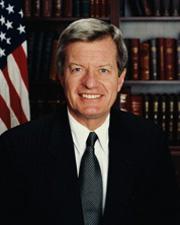 Sen. Max Baucus (D-MT)
Legislative Activity
Stay on top of the latest movement without scrolling through every action
Roll call votes on amendments in Senate: Cloture on amendment SA 3721 invoked in Senate by Yea-Nay Vote. 60 - 38. Record Vote Number: 116.(consideration: CR S2364-2365; text: CR S2364)
April 15, 2010
View full timeline
Roll call votes on amendments in Senate: Cloture on amendment SA 3721 invoked in Senate by Yea-Nay Vote. 60 - 38. Record Vote Number: 116.(consideration: CR S2364-2365; text: CR S2364)
April 15, 2010
Senate amendment agreed to: Amendment SA 3721 as modified agreed to in Senate by Unanimous Consent.
April 15, 2010
Considered by Senate. (consideration: CR S2341, S2364-2365)
April 15, 2010
Cloture on amendment SA 3721 invoked in Senate by Yea-Nay Vote. 60 - 38. Record Vote Number: 116. (consideration: CR S2364-2365; text: CR S2364)
April 15, 2010
Amendment SA 3721 as modified agreed to in Senate by Unanimous Consent.
April 15, 2010
Roll call votes on amendments in Senate: Motion to waive the Budget Act (all applicable budgetary discipline) with respect to amendment SA 3721 rejected in Senate by Yea-Nay Vote. 58 - 40. Record Vote Number: 110.
April 14, 2010
Roll call votes on amendments in Senate: Motion to waive the Budget Act (all applicable budgetary discipline), upon reconsideration, with respect to amendment SA 3721 agreed to in Senate by Yea-Nay Vote. 60 - 40. Record Vote Number: 112.
April 14, 2010
Considered by Senate. (consideration: CR S2265, S2266-2269; text as modified: CR S2266-2267)
April 14, 2010
Point of order that an emergency designation within the amendment violates the CBA raised in Senate with respect to amendment SA 3721.
April 14, 2010
Motion to waive the Budget Act (all applicable budgetary discipline) with respect to amendment SA 3721 rejected in Senate by Yea-Nay Vote. 58 - 40. Record Vote Number: 110.
April 14, 2010
The emergency designation within amendment SA 3721 was stricken.
April 14, 2010
Motion by Senator Reid to reconsider the vote by which the motion to waive the CBA (all applicable budgetary discipline) re: amendment SA 3721 was rejected (Record vote no. 110) entered in Senate. (consideration: CR S2269)
April 14, 2010
Cloture motion on amendment SA 3721 presented in Senate. (consideration: CR S2288; text: CR S2288)
April 14, 2010
Motion to proceed to consideration of the Reid motion to reconsider the vote by which the motion to waive the CBA (all applicable budgetary discipline) re: amendment SA 3721 was rejected (Record vote no. 110) agreed to in Senate by Unanimous Consent. (consideration: CR S2288)
April 14, 2010
Motion by Senator Reid to reconsider the vote by which the motion to waive the CBA (all applicable budgetary discipline) re: amendment SA 3721 was rejected (Record vote no. 110) agreed to in Senate by Unanimous Consent.
April 14, 2010
Motion to waive the Budget Act (all applicable budgetary discipline), upon reconsideration, with respect to amendment SA 3721 agreed to in Senate by Yea-Nay Vote. 60 - 40. Record Vote Number: 112.
April 14, 2010
The chair's previous action striking the emergency designation within amendment SA 3721 was annulled and the language was restored.
April 14, 2010
Senate amendment submitted
April 13, 2010
Senate amendment proposed (on the floor): Amendment SA 3721 proposed by Senator Baucus.(consideration: CR S2228-2235; text: CR S2228-2229)
April 13, 2010
Amendment SA 3721 proposed by Senator Baucus. (consideration: CR S2228-2235; text: CR S2228-2229) In the nature of a substitute.
April 13, 2010
Votes
3 roll calls on this amendment
SENATE
Roll Call AvailableApril 15, 2010 at 5:31 PM
On the Cloture Motion S.Amdt. 3721 to H.R. 4851 (Continuing Extension Act of 2010)
Majority required: 3/5 (60%)
60 - 38
SENATE
Roll Call AvailableApril 14, 2010 at 5:48 PM
On the Motion (Upon Reconsideration Motion To Waive All Applicable Budgetary Discipline Baucus Amdt. No. 3721, As Modified)
Majority required: 3/5 (60%)
60 - 40
SENATE
Roll Call AvailableApril 14, 2010 at 12:30 PM
On the Motion (Motion to Waive All Applicable Budgetary Discipline - Baucus Amdt. No. 3721, As Modified)
Majority required: 3/5 (60%)
58 - 40
Amendments
6 amendmentsOffered to this amendment
Amendments
6 amendmentsOffered to this amendment
No matches
To pay for the full cost of extending additional unemployment insurance and other Federal programs.
Motion to table amendment SA 3727 agreed to in Senate by Yea-Nay Vote. 53 - 45. Record Vote Number: 114. (consideration: CR S2346) · Sponsored by Tom Coburn · Amends S.Amdt. 3721
To pay for the full cost of extending additional unemployment insurance and other Federal programs.
Motion to table amendment SA 3726 agreed to in Senate by Yea-Nay Vote. 50 - 48. Record Vote Number: 113. (consideration: CR S2345-2346) · Sponsored by Tom Coburn · Amends S.Amdt. 3721
Expressing the sense of the Senate that the Value Added Tax is a massive tax increase that will cripple families on fixed income and only further push back America's economic recovery and the Senate opposes a Value Added Tax.
Amendment SA 3724 as modified agreed to in Senate by Yea-Nay Vote. 85 - 13. Record Vote Number: 115. · Sponsored by John McCain · Amends S.Amdt. 3721
To pay for the full cost of extending additional unemployment insurance and other Federal programs by rescinding unspent federal funds not obligated for any purpose.
Motion to table amendment SA 3723 agreed to in Senate by Yea-Nay Vote. 51 - 46. Record Vote Number: 111. (consideration: CR S2282) · Sponsored by Tom Coburn · Amends S.Amdt. 3721
Sponsored by Jim Bunning · Amends S.Amdt. 3721
Sponsored by Tom Coburn · Amends S.Amdt. 3721
Text
Modified
CONTINUING EXTENSION ACT OF 2010

The PRESIDING OFFICER. Under the previous order, the Senate will
resume consideration of H.R. 4851, which the clerk will report.
The assistant legislative clerk read as follows:

A bill (H.R. 4851) to provide a temporary extension of
certain programs, and for other purposes.

Pending:

Baucus amendment No. 3721, in the nature of a substitute.

The PRESIDING OFFICER. Under the previous order, the time until 12:30
will be equally divided between the two leaders or their designees.
The Senator from Tennessee is recognized.
Mr. CORKER. Mr. President, I appreciate it. I had not planned to come
to the floor today, but my great friend, Senator Warner from Virginia,
is here. I did want to clarify a couple of things. I did not hear all
of his comments.
I very much appreciate the partnership we have had, the work we have
been able to do together. I think what is happening on this financial
regulation bill is a lot like what happened during the health care
debate in many ways. There is something that is being focused on. Some
of it is sort of being blown out of proportion.
I did want to clarify something. Senator Warner spent a lot of time
talking about a couple of titles in the bill that Senator Dodd has put
forth. There are other places in this bill that do, in fact, create an
opportunity for large institutions that fail to continue on. Treasury
got involved in this bill a couple of weeks before--about a week before
it came to committee. There are some loopholes in this bill that give
Treasury and the FDIC the ability to allow large institutions to
continue on without failing. My sense is the Senator from Virginia
knows what those are. My sense is the Senator from Connecticut, who is
the chairman of the committee, knows what those are. And my sense is
that on those topics--and they do exist, so criticisms about the Dodd
bill allowing potentially creation of loopholes for large institutions
not to go through an orderly liquidation or bankruptcy, are valid. But
the fact is I think we can fix those in about 5 minutes.
My point is I think everyone understands what Treasury did. I think
everyone understands what the FDIC did. I think we can come to a
conclusion in solving that very quickly. But I wanted to clarify that
was not part of the title that Senator Warner came up with.
The focus, then, has been on this $50 billion fund. I think Senator
Warner eloquently talked about the fact this was a lot of debate. The
FDIC wanted $50 billion as a debtor-in-possession fund to be operating,
to figure out what the assets of these firms were worth before they
sold them off. Treasury wanted no fund.
My guess is that at the end of the day, on one hand you are
protecting taxpayers more fully, on the other hand you are not--but my
guess is, the Senator from Virginia and the Senator from Connecticut
might drop that in about 5 minutes--not that the Senator from Virginia
is actually advocating, he is just trying to solve that problem. My
point is I think that is something that in about 5 minutes could be
solved.
So I do think what Senator Warner has said is true; that is, the
rhetoric around this, an issue that could be dealt with literally in
about 5 minutes, is probably overheated. The fact is, what we need to
do is figure out a way to focus on this issue in an intelligent way.
I think that, as the Senator from Virginia mentioned, people on both
extremes want to make sure that if a large institution in this country
fails, it is just like the small institutions in this country--they go
out of business. And I think we are united on that. Are there some
flaws that exist? Yes. Did the bill get a little sideways at the end?
Yes. But do people understand the way we can deal with this in an
intelligent, thoughtful way and fix that? Yes.
I wonder if the Senator from Virginia would wish to not maybe get
into specifics but agree that there are some flaws that need to be
corrected, but we know what they are, and they can be corrected pretty
quickly, can they not?
The PRESIDING OFFICER. The Senator from Virginia.
Mr. WARNER. Let me just acknowledge that we may--the Senator from
Tennessee and I may differ slightly on how large some of the things the
Treasury and FDIC put in at the end--because clearly one of the things
that I think the Senator from Tennessee--and we can very quickly get
into the weeds, but the weeds are important on this--the so-called 13-3
authority of the Fed would no longer be used for specific institutions,
but the ability to help supplement around a liquidity crisis so that we
don't have firms move from a liquidity crisis into a solvency crisis
was an important tool, but it was perhaps misused in the past in terms
of targeted at specific firms rather than issue-wide.
There are certain other aspects that I believe can be corrected, but
the overriding point that I think Senator Corker and I both want to
make is I

[[Page S2266]]

think we put together, at least in title I and title II--and I think
there has been good work done in other parts of this bill as well, but
in title I and title II, systemic risk, too big to fail resolution--we
have put the framework in place that while some on both ends of the
political extremes may be attacking, the overwhelming response has been
that this is a good framework. Like any piece of legislation, it needs
some fine-tuning, but the fine-tuning ought to be preserving this
framework, perhaps moving back from some of the pieces the FDIC and
Treasury put in place. But we can get there, and this is too important
to allow this piece of legislation to be drawn by the aisle that
separates this body into Republican and Democratic camps. We need to
put a piece of legislation and solution in place that sets the
financial framework and predictability for the next century, and I
think we have gone a long way toward doing that.
Mr. CORKER. Mr. President, I want to speak for 60 more seconds and
then stop. I thank the Senator from Montana and the Senator from
Florida for allowing me to do this. I want to be clear and say we have
had a great partnership, numbers of us have. Some of the claims in this
bill about preserving too big to fail are legitimate because of some
changes that occurred about 10 days before the bill came to committee,
maybe a week. But the fact is, they can be very easily fixed, and I
think we all know how to fix them, and they can be fixed very quickly.
The prefunding issue is an issue that, to me, is a legitimate debate.
If it needs to go to zero, the framework, as Senator Warner just talked
about, is still intact. It still works exactly the same way. It is a
debate as to whether you want to absolutely make sure taxpayers are
protected. But if people think this prefund is something that looks
like a bailout, let's drop it, let's get rid of it, let's end it. Let's
let borrowing capacity at the FDIC be the only avenue.
But my point is, these are all--in the scope of things, they are
being made into really big things, when, in essence, a couple of
semithoughtful people could solve these things in just a few minutes
and we could move on to other aspects of the bill that do need to be
corrected.
The one place I think the Senator from Virginia and I might differ
more greatly is that I do think there are other issues in this bill
that create problems that need to be resolved, and I hope the spirit we
have shown with each other will emanate on both sides of the aisle--I
think it will--and that we will work through those, too, and end up
with a good bill.
I yield the floor.
The PRESIDING OFFICER. The Senator from Florida is recognized.
Mr. LeMIEUX. Mr. President, I rise to speak today on this extenders
bill that we will vote on here on a point of order that I will make in
just a few minutes. The purpose of this point of order is this: Not too
long ago in this Congress, we passed legislation called pay-go, and
what pay-go is supposed to mean is that we will pay as we go in this
Congress; that when we create a new program, we extend a current
program, we will pay for it; that we will not continue to borrow
against our children's future. I was here in the Senate when we had
that debate. It was a debate that came down to a purely party-line
decision.
I am new to this body, and I wanted to vote for this because I
believe pay-go might actually be something that limits the out-of-
control spending of Washington. I talked to my colleagues, and some of
my colleagues who have been around longer than I said: Look, Senator,
it is not really going to do anything. They are just going to move to
waive it every time it comes into effect. They are not going to play by
the rules. They are not going to pay for things as you go. It is just
cover.
I wanted to vote for it. I struggled with it. In the end, I did not
vote for it. And here we are just a few months--2 months past February
12 when the President signed this pay-as-you-go legislation--only 19
days after that, we waived it on a bill very similar to this, and now
we are going to seek to waive this legislation again to spend $19
billion and put it on the tab of our children and our grandchildren.
Let's talk about what this bill is. It would extend unemployment
compensation and it would extend COBRA, which is health care benefits
for people who lose their jobs. If we were to vote on this and pay for
it, I think 100 Senators would vote for it. Shortly before the recess
for the holiday break, there was an agreement in this Chamber between
Republicans and Democrats that we would find the money to pay for this
so that we wouldn't have to put it on the backs of our children, so
that we would not have to borrow the money from China, so that we
wouldn't have to increase our growing debt and deficit.
Our national debt is now nearly $13 trillion. It has gone up $1
trillion in the short time I have been here in the Senate. To give you
reference on that, it took until 1980, from the founding of this
country until 1980 for us to amass our first trillion dollars in debt.
The system of spending is unsustainable. I spoke on the floor this
morning about it. But don't just take my word for it; take Ben
Bernanke, the Chairman of the Federal Reserve, who testified today
before the Joint Economic Committee of Congress and said this
government must begin to make difficult choices to address its deficits
and warned that postponing them will only make them more difficult. So
here today we are going to spend another $19 billion and put it off on
our children, and they will have to pay for it because we are going to
have to borrow this money.
We are not supposed to be able to waive this rule, this legislation,
unless it is an emergency. This is no emergency, and that is the basis
of my point of order I will make here in just a few minutes.
What is an emergency? Well, most of us think it is what Merriam-
Webster says it is: an unforeseen combination of circumstances
resulting in a state that calls for immediate action--an unforeseen
combination of circumstances. Has it been unforeseen that we were going
to have to extend unemployment compensation? Was it unforeseen that we
were going to have to extend COBRA? Of course, it is not. We knew we
were going to have to do this, but there is an unwillingness in this
Congress to pay for things. There is a willingness to put the debt upon
our children and our grandchildren.

The Budget Act of 1974 that we operate under says that an emergency
is necessary, essential or vital, sudden, quick coming into being and
not building up over time, urgent, pressing, compelling, unforeseen,
unpredictable, not permanent, temporary in nature. None of those
requirements are met by this attempt to waive the pay-as-you-go
requirements. Why do we have pay-go if we are just going to waive it
every time we think we need to spend more money?
This is no emergency. This is just part and parcel of the problem we
have in Washington of continuing to spend in an unsustainable way. And
when, 5 years or 10 years from now, we are in the same situation Greece
is in; when we have failed this country for our children; when we have
$900 billion in interest payments alone in 2020 on our current course,
which will not allow us to spend money on anything else because that
plus mandatory spending will be all there is in the budget; when our
economic system fails because we have failed to make the decisions to
control our spending, you will know why--because of the decisions that
are being made today, in 2010, in April, decisions to add another $19
billion to our national debt.
I yield the floor. I reserve my right to speak shortly before the
vote is called at 12:30.
The PRESIDING OFFICER. The Senator from Montana is recognized.

Amendment No. 3721, as Modified

Mr. BAUCUS. Mr. President, pursuant to the previous order, I have a
modification to my amendment at the desk, and I so modify my amendment.
The PRESIDING OFFICER. The amendment is so modified.
The amendment, as modified, is as follows:

Strike all after the enacting clause and insert the
following:

SECTION 1. SHORT TITLE.

This Act may be cited as the ``Continuing Extension Act of
2010''.

SEC. 2. EXTENSION OF UNEMPLOYMENT INSURANCE PROVISIONS.

(a) In General.--(1) Section 4007 of the Supplemental
Appropriations Act, 2008 (Public Law 110-252; 26 U.S.C. 3304
note) is amended--

[[Page S2267]]

(A) by striking ``April 5, 2010'' each place it appears and
inserting ``June 2, 2010'';
(B) in the heading for subsection (b)(2), by striking
``april 5, 2010'' and inserting ``june 2, 2010''; and
(C) in subsection (b)(3), by striking ``September 4, 2010''
and inserting ``November 6, 2010''.
(2) Section 2002(e) of the Assistance for Unemployed
Workers and Struggling Families Act, as contained in Public
Law 111-5 (26 U.S.C. 3304 note; 123 Stat. 438), is amended--
(A) in paragraph (1)(B), by striking ``April 5, 2010'' and
inserting ``June 2, 2010'';
(B) in the heading for paragraph (2), by striking ``april
5, 2010'' and inserting ``june 2, 2010''; and
(C) in paragraph (3), by striking ``October 5, 2010'' and
inserting ``December 7, 2010''.
(3) Section 2005 of the Assistance for Unemployed Workers
and Struggling Families Act, as contained in Public Law 111-5
(26 U.S.C. 3304 note; 123 Stat. 444), is amended--
(A) by striking ``April 5, 2010'' each place it appears and
inserting ``June 2, 2010''; and
(B) in subsection (c), by striking ``September 4, 2010''
and inserting ``November 6, 2010''.
(4) Section 5 of the Unemployment Compensation Extension
Act of 2008 (Public Law 110-449; 26 U.S.C. 3304 note) is
amended by striking ``September 4, 2010'' and inserting
``November 6, 2010''.
(b) Funding.--Section 4004(e)(1) of the Supplemental
Appropriations Act, 2008 (Public Law 110-252; 26 U.S.C. 3304
note) is amended--
(1) in subparagraph (C), by striking ``and'' at the end;
(2) by inserting after subparagraph (D) the following new
subparagraph:
``(E) the amendments made by section 2(a)(1) of the
Continuing Extension Act of 2010; and''.
(c) Effective Date.--The amendments made by this section
shall take effect as if included in the enactment of the
Temporary Extension Act of 2010 (Public Law 111-144).

SEC. 3. EXTENSION AND IMPROVEMENT OF PREMIUM ASSISTANCE FOR
COBRA BENEFITS.

(a) Extension of Eligibility Period.--Subsection (a)(3)(A)
of section 3001 of division B of the American Recovery and
Reinvestment Act of 2009 (Public Law 111-5), as amended by
section 3(a) of the Temporary Extension Act of 2010 (Public
Law 111-144), is amended by striking ``March 31, 2010'' and
inserting ``May 31, 2010''.
(b) Rules Relating to 2010 Extension.--Subsection (a) of
section 3001 of division B of the American Recovery and
Reinvestment Act of 2009 (Public Law 111-5), as amended by
section 3(b) of the Temporary Extension Act of 2010 (Public
Law 111-144), is amended by adding at the end the following:
``(18) Rules related to april and may 2010 extension.--In
the case of an individual who, with regard to coverage
described in paragraph (10)(B), experiences a qualifying
event related to a termination of employment on or after
April 1, 2010 and prior to the date of the enactment of this
paragraph, rules similar to those in paragraphs (4)(A) and
(7)(C) shall apply with respect to all continuation coverage,
including State continuation coverage programs.''.
(c) Effective Date.--The amendments made by this section
shall take effect as if included in the provisions of section
3001 of division B of the American Recovery and Reinvestment
Act of 2009.

SEC. 4. INCREASE IN THE MEDICARE PHYSICIAN PAYMENT UPDATE.

Paragraph (10) of section 1848(d) of the Social Security
Act, as added by section 1011(a) of the Department of Defense
Appropriations Act, 2010 (Public Law 111-118) and as amended
by section 5 of the Temporary Extension Act of 2010 (Public
Law 111-144), is amended--
(1) in subparagraph (A), by striking ``March 31, 2010'' and
inserting ``May 31, 2010''; and
(2) in subparagraph (B), by striking ``April 1, 2010'' and
inserting ``June 1, 2010''.

SEC. 5. EHR CLARIFICATION.

(a) Qualification for Clinic-Based Physicians.--
(1) Medicare.--Section 1848(o)(1)(C)(ii) of the Social
Security Act (42 U.S.C. 1395w-4(o)(1)(C)(ii)) is amended by
striking ``setting (whether inpatient or outpatient)'' and
inserting ``inpatient or emergency room setting''.
(2) Medicaid.--Section 1903(t)(3)(D) of the Social Security
Act (42 U.S.C. 1396b(t)(3)(D)) is amended by striking
``setting (whether inpatient or outpatient)'' and inserting
``inpatient or emergency room setting''.
(b) Effective Date.--The amendments made by subsection (a)
shall be effective as if included in the enactment of the
HITECH Act (included in the American Recovery and
Reinvestment Act of 2009 (Public Law 111-5)).
(c) Implementation.--Notwithstanding any other provision of
law, the Secretary of Health and Human Services may implement
the amendments made by this section by program instruction or
otherwise.

SEC. 6. EXTENSION OF USE OF 2009 POVERTY GUIDELINES.

Section 1012 of the Department of Defense Appropriations
Act, 2010 (Public Law 111-118), as amended by section 7 of
the Temporary Extension Act of 2010 (Public Law 111-144), is
amended by striking ``March 31, 2010'' and inserting ``May
31, 2010''.

SEC. 7. EXTENSION OF NATIONAL FLOOD INSURANCE PROGRAM.

(a) Extension.--Section 129 of the Continuing
Appropriations Resolution, 2010 (Public Law 111-68), as
amended by section 8 of Public Law 111-144, is amended by
striking ``by substituting'' and all that follows through the
period at the end and inserting ``by substituting May 31,
2010, for the date specified in each such section.''.
(b) Effective Date.--The amendments made by subsection (a)
shall be considered to have taken effect on February 28,
2010.

SEC. 8. COMPENSATION AND RATIFICATION OF AUTHORITY RELATED TO
LAPSE IN HIGHWAY PROGRAMS.

(a) Compensation for Federal Employees.--Any Federal
employees furloughed as a result of the lapse in expenditure
authority from the Highway Trust Fund after 11:59 p.m. on
February 28, 2010, through March 2, 2010, shall be
compensated for the period of that lapse at their standard
rates of compensation, as determined under policies
established by the Secretary of Transportation.
(b) Ratification of Essential Actions.--All actions taken
by Federal employees, contractors, and grantees for the
purposes of maintaining the essential level of Government
operations, services, and activities to protect life and
property and to bring about orderly termination of Government
functions during the lapse in expenditure authority from the
Highway Trust Fund after 11:59 p.m. on February 28, 2010,
through March 2, 2010, are hereby ratified and approved if
otherwise in accord with the provisions of the Continuing
Appropriations Resolution, 2010 (division B of Public Law
111-68).
(c) Funding.--Funds used by the Secretary to compensate
employees described in subsection (a) shall be derived from
funds previously authorized out of the Highway Trust Fund and
made available or limited to the Department of Transportation
by the Consolidated Appropriations Act, 2010 (Public Law 111-
117) and shall be subject to the obligation limitations
established in such Act.
(d) Expenditures From Highway Trust Fund.--To permit
expenditures from the Highway Trust Fund to effectuate the
purposes of this section, this section shall be deemed to be
a section of the Continuing Appropriations Resolution, 2010
(division B of Public Law 111-68), as in effect on the date
of the enactment of the last amendment to such Resolution.

SEC. 9. SATELLITE TELEVISION EXTENSION.

(a) Amendments to Section 119 of Title 17, United States
Code.--
(1) In general.--Section 119 of title 17, United States
Code, is amended--
(A) in subsection (c)(1)(E), by striking ``April 30, 2010''
and inserting ``May 31, 2010''; and
(B) in subsection (e), by striking ``April 30, 2010'' and
inserting ``May 31, 2010''.
(2) Termination of license.--Section 1003(a)(2)(A) of
Public Law 111-118 is amended by striking ``April 30, 2010'',
and inserting ``May 31, 2010''.
(b) Amendments to Communications Act of 1934.--Section
325(b) of the Communications Act of 1934 (47 U.S.C. 325(b))
is amended--
(1) in paragraph (2)(C), by striking ``April 30, 2010'' and
inserting ``May 31, 2010''; and
(2) in paragraph (3)(C), by striking ``May 1, 2010'' each
place it appears in clauses (ii) and (iii) and inserting
``June 1, 2010''.

SEC. 10. EXTENSION OF SMALL BUSINESS LOAN GUARANTEE PROGRAM.

(a) Appropriation.--There is appropriated, out of any funds
in the Treasury not otherwise appropriated, $80,000,000, for
an additional amount for ``Small Business Administration--
Business Loans Program Account'', to remain available until
expended, for the cost of fee reductions and eliminations
under section 501 of division A of the American Recovery and
Reinvestment Act of 2009 (Public Law 111-5; 123 Stat. 151)
and loan guarantees under section 502 of division A of the
American Recovery and Reinvestment Act of 2009 (Public Law
111-5; 123 Stat. 152), as amended by this section:  Provided,
That such costs shall be as defined in section 502 of the
Congressional Budget Act of 1974.
(b) Extension of Sunset Date.--Section 502(f) of division A
of the American Recovery and Reinvestment Act of 2009 (Public
Law 111-5; 123 Stat. 153) is amended by striking ``April 30,
2010'' and inserting ``May 31, 2010''.

SEC. 11. DETERMINATION OF BUDGETARY EFFECTS.

(a) In General.--The budgetary effects of this Act, for the
purpose of complying with the Statutory Pay-As-You-Go Act of
2010, shall be determined by reference to the latest
statement titled ``Budgetary Effects of PAYGO Legislation''
for this Act, submitted for printing in the Congressional
Record by the Chairman of the Senate Budget Committee,
provided that such statement has been submitted prior to the
vote on passage.
(b) Emergency Designation for Congressional Enforcement.--
This Act, with the exception of section 4, is designated as
an emergency for purposes of pay-as-you-go principles. In the
Senate, this Act is designated as an emergency requirement
pursuant to section 403(a) of S. Con. Res. 13 (111th
Congress), the concurrent resolution on the budget for fiscal
year 2010.
(c) Emergency Designation for Statutory PAYGO.--This Act,
with the exception of section 4, is designated as an
emergency requirement pursuant to section 4(g) of the
Statutory Pay-As-You-Go Act of 2010 (Public Law 111-139; 2
U.S.C. 933(g)).

Mr. BAUCUS. Mr. President, shortly, the Senate will vote on the
motion to waive the Budget Act for the consideration of my amendment
and this important bill to extend unemployment

[[Page S2268]]

insurance benefits and other vital safety net programs.
We need to waive the Budget Act to allow this bill to move forward.
We need to waive the Budget Act for the people who depend on
unemployment insurance benefits.
We need to waive the Budget Act for people like the Montanans from
whom I have heard.
We need to waive the Budget Act for Bonnie from Whitefish, MT. Bonnie
lost her job in property management last year, and has been scraping by
on unemployment benefits ever since. Bonnie has already sacrificed
much, but she is still falling behind on her rent. She is unable to
afford many necessities. Unemployment benefits help her get by from day
to day.
We need to waive the Budget Act for people like Richard from Bozeman.
Unemployment insurance has helped keep Richard afloat as he searches
for a job. So far, Richard has applied for more than 150--think of it!
150--jobs and has had only 2 temporary part-time positions to show for
his effort. Though his financial situation is grim, it would be even
more so without unemployment benefits.
We need to waive the Budget Act for people like the single father
from Missoula. He has been out of work for weeks. He exhausted his
State benefits, and is now receiving Federal extended benefits. He
recently called the Montana Unemployment Insurance Claims Processing
Center for additional help because he does not know how he can take
care of his daughters.
Unemployment benefits help these Montanans to pay the bills.
Unemployment benefits help these Montanans and millions of Americans
who, through no fault of their own, have fallen victim to this Great
Recession.
The average unemployment benefit is $335 a week. These days, $335
only stretches so far.
Benefits have lapsed for 200,000 Americans. Since Authority expired a
few days ago. If we do not pass this bill this week, another 200,000
Americans could lose their benefits.
Responding to recessions is the very definition of an emergency.
Responding to this kind of need is why the Budget Act built in motions
to waive the budget in the first place. The budget needs to have
flexibility to address truly unusual circumstances like today's
economy.
Extending unemployment insurance benefits is a good investment to
make now. It is an investment, in our economy.
Unemployment benefits help our unemployed neighbors. And in helping
our neighbors, unemployment benefits also help to keep open the
neighborhood grocery store, and the neighborhood gas station.
In helping our unemployed neighbors, unemployment benefits also help
the economy. The nonpartisan Congressional Budget Office says that
extending additional unemployment benefits would have one of the
largest effects on economic output and employment per dollar spent
compared with any other action we could take. CBO says for each dollar
spent, increasing aid to the unemployed could increase the gross
domestic product by up to $1.90. That is 2 to 1. For every dollar spent
on unemployment benefits, that could increase gross domestic product by
$1.90. Households receiving unemployment benefits spend their benefits
right away. That is very important. They don't save it; they spend it.
That spurs demand for goods and services. That boosts production and
leads businesses to hire more employees.
Some critics insist that emergency spending to address the recession
is busting the budget. Some critics blame emergency spending and the
Recovery Act for the huge budget deficits we face today.
We do need to address our Nation's fiscal circumstances, of course,
we do. We are currently laboring to reach an agreed-upon package of
offsets to pay for much of the long-term extension in unemployment
insurance and other programs the Senate passed on March 10.
And on a larger level, we also need to balance the Nation's revenues
and outlays. The President's fiscal commission will begin its work a
week from Tuesday. We will need to think about fundamental tax reform
as part of that exercise. And we will need to make sure that we get a
dollar's worth of value for every taxpayer dollar the government
spends.
But let me set the record straight. Emergency spending like this bill
and the Recovery Act is responsible for only a small share of the
deficit.
In fact, the cost of the Recovery Act is projected to be less than 10
percent of the total deficit legacy over the next 10 years.
The chart behind me tells the story. The majority of the deficit we
will face over the next 10 years stems from inherited policies. The tax
cuts enacted under the previous administration, the wars in Afghanistan
and Iraq, and the economic downturn itself explain nearly $11 trillion
of our deficit over the next 10 years.
These policies were enacted before the current administration and
before this Congress. Because these policies were not paid for, we are
now facing huge deficits.
Unemployment benefits are not the cause of the deficit. We should not
balance the budget on the backs of the unemployed.
Right now, it is essential we pass a temporary extension of
unemployment benefits. It is essential we help Americans put food on
the table. It is essential to pay the bills, while they continue to
look for work.
So let us waive the Budget Act for Bonnie from Whitefish.
Let us extend unemployment insurance benefits for Richard from
Bozeman, MT.
Let us extend this vital lifeline for the single father from Missoula
and for his daughters who depend on him.
And in this great recession, let us waive the Budget Act to enact
this temporary extension of unemployment insurance for the hundreds of
thousands of Americans struggling, through no fault of their own, just
to get by.
It is true that very soon we must significantly address the budget
deficit. The real test will be the degree to which this country, the
President, and the Congress buckle down and start to reduce the budget
deficit during times of prosperity; that is, after we get out of this
recession and when unemployment levels start to reach sensible, lower
levels. That is when we face the true test of whether we reduce the
budget deficit. It is our responsibility to do so. We should let
unemployment benefits be extended. We should not have to pay for those
now. But soon, when the unemployment rate falls, when the country comes
out of the recession, then it is up to us to go the extra mile to make
sure we, in a responsible way, start to address the huge deficits. When
we do, it will keep interest rates low, and other countries will have
more confidence in the United States. I daresay they have confidence
now, but they will have even more confidence. I very much expect and
hope that this body will exercise that effort responsibly to begin to
tackle huge deficits.
Now is not the time. Soon we will face the time. It is not now.
I suggest the absence of a quorum and ask unanimous consent that time
under the quorum be charged equally against both sides.
The PRESIDING OFFICER. Without objection, it is so ordered.
The clerk will call the roll.
The legislative clerk proceeded to call the roll.
Mr. LeMIEUX. I ask unanimous consent that the order for the quorum
call be rescinded.
The PRESIDING OFFICER. Without objection, it is so ordered.
Mr. LeMIEUX. Mr. President, I thank my colleague, the chairman of the
Finance Committee. I appreciate his comments about the need for this
body to enter into a discussion about fiscal discipline. I offered
legislation today to have a requirement that we would have a debate
every year to talk about bringing spending back to 2007 levels, prior
to the stimulus, prior to the recession, certainly a time when this
country had a much better economy than now. If I asked Floridians if
they could live off of what they had in 2007, they would be happy to
have that much money. Whatever the architecture is, we need to get into
that. Our budget deficit and the debt are cascading out of control.
I disagree with my colleague that we can wait until the recession is
over. While I am optimistic that we will soon be turning the corner,
times are very tough in my State. I don't know if it is

[[Page S2269]]

going to be next year or the year after that we are out of this
recession. We have the worst unemployment we have had since we have
been keeping records in Florida, 12.2 percent. I don't know that we can
wait, especially when we hear the Chairman of the Federal Reserve say
we must act now.
Recently, we were in a situation where bonds went out to issue, and
the Wall Street Journal reported that the yield rate the Federal
Government had to offer on those bonds, the interest rate was more than
Warren Buffett had to offer. Warren Buffett was a better investment
than the United States. Why is that? It is because the world is
beginning to believe the United States can't manage its debt. Places
such as Brazil have had their stock market increase 100 percent in the
last year because they are now seen as a better investment than this
country.
We can't wait. We can't wait for 6 months or a year from now. Perhaps
the time has already gone too far.
I raise a point of order pursuant to section 4(g) of the Statutory
Pay-As-You-Go Act of 2010.
The PRESIDING OFFICER. The time of the Senator has expired.
Mr. LeMIEUX. I raise a point of order against the emergency
designation in the pending substitute amendment and note this is not a
budget point of order. It doesn't kill this provision. It only requires
that it be paid for by the end of the year. Everybody is for extending
unemployment compensation. Everyone is for paying for COBRA. The point
is, pay for it.
The PRESIDING OFFICER. Does the Senator wish to raise a point of
order?
Mr. LeMIEUX. I have raised a point of order. I repeat, pursuant to
section 4(g) of the Statutory Pay-As-You-Go Act of 2010, I raise a
point of order against the emergency designation provision in the
pending substitute amendment.
The PRESIDING OFFICER. The Senator from Montana.
Mr. BAUCUS. Pursuant to section 904 of the Congressional Budget Act
and section 4(g)(3) of the Statutory Pay-As-You-Go Act, I move to waive
all applicable provision of those acts and applicable budget
resolutions for consideration of the pending amendment, No. 3721, as
modified, and the underlying bill, and I ask for the yeas and nays on
the motion to waive.
The PRESIDING OFFICER. Is there a sufficient second?
There appears to be.
The yeas and nays were ordered.
Mr. BAUCUS. I suggest the absence of a quorum.
The PRESIDING OFFICER. The clerk will call the roll.
The legislative clerk proceeded to call the roll.
Mr. BAUCUS. Mr. President, I ask unanimous consent that the order for
the quorum call be rescinded.
The PRESIDING OFFICER. Without objection, it is so ordered.
The question is on agreeing to the motion.
The yeas and nays have been previously ordered.
The clerk will call the roll.
The legislative clerk called the roll.
Mr. DURBIN. I announce that the Senator from Vermont (Mr. Leahy) is
necessarily absent.
Mr. KYL. The following Senator is necessarily absent: the Senator
from Utah (Mr. Bennett).
The PRESIDING OFFICER (Mrs. Hagan). Are there any other Senators in
the Chamber desiring to vote?
The yeas and nays resulted--yeas 58, nays 40, as follows:

[Rollcall Vote No. 110 Leg.]

YEAS--58

Akaka
Baucus
Bayh
Begich
Bennet
Bingaman
Boxer
Brown (OH)
Burris
Byrd
Cantwell
Cardin
Carper
Casey
Conrad
Dodd
Dorgan
Durbin
Feingold
Feinstein
Franken
Gillibrand
Hagan
Harkin
Inouye
Johnson
Kaufman
Kerry
Klobuchar
Kohl
Landrieu
Lautenberg
Levin
Lieberman
Lincoln
McCaskill
Menendez
Merkley
Mikulski
Murray
Nelson (NE)
Nelson (FL)
Pryor
Reed
Rockefeller
Sanders
Schumer
Shaheen
Specter
Stabenow
Tester
Udall (CO)
Udall (NM)
Voinovich
Warner
Webb
Whitehouse
Wyden

NAYS--40

Alexander
Barrasso
Bond
Brown (MA)
Brownback
Bunning
Burr
Chambliss
Coburn
Cochran
Collins
Corker
Cornyn
Crapo
DeMint
Ensign
Enzi
Graham
Grassley
Gregg
Hatch
Hutchison
Inhofe
Isakson
Johanns
Kyl
LeMieux
Lugar
McCain
McConnell
Murkowski
Reid
Risch
Roberts
Sessions
Shelby
Snowe
Thune
Vitter
Wicker

NOT VOTING--2

Bennett
Leahy
The PRESIDING OFFICER. On this vote, the yeas are 58, the nays are
40.
Three-fifths of Senators duly chosen and sworn not having voted in
the affirmative, the motion is not agreed to.
The emergency designation is stricken.
Mr. REID. Madam President, I enter a motion to reconsider.
The PRESIDING OFFICER. The motion is entered.
Mr. REID. Madam President, with the consent of the minority, I
suggest we go into a period of morning business for 1 hour, and at 2
o'clock we go back on this bill. As soon as Senator Coburn comes--
Chairman Baucus will be here around 2:15 and he will be ready to offer
his first amendment. If there are any procedural issues, which there
shouldn't be because this point of order was not well taken--so if
there is anything we need to do, staff will be working on that so that
procedurally we can get to him.
We all know that at 2:15 we will be back on the bill, and Senator
Coburn will be offering his first amendment.

____________________