In the nature of a substitute.
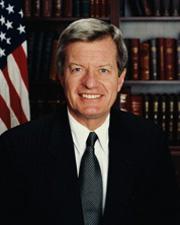 Sen. Max Baucus (D-MT)
Legislative Activity
Stay on top of the latest movement without scrolling through every action
Roll call votes on amendments in Senate: Cloture on amendment SA 3721 invoked in Senate by Yea-Nay Vote. 60 - 38. Record Vote Number: 116.(consideration: CR S2364-2365; text: CR S2364)
April 15, 2010
View full timeline
Roll call votes on amendments in Senate: Cloture on amendment SA 3721 invoked in Senate by Yea-Nay Vote. 60 - 38. Record Vote Number: 116.(consideration: CR S2364-2365; text: CR S2364)
April 15, 2010
Senate amendment agreed to: Amendment SA 3721 as modified agreed to in Senate by Unanimous Consent.
April 15, 2010
Considered by Senate. (consideration: CR S2341, S2364-2365)
April 15, 2010
Cloture on amendment SA 3721 invoked in Senate by Yea-Nay Vote. 60 - 38. Record Vote Number: 116. (consideration: CR S2364-2365; text: CR S2364)
April 15, 2010
Amendment SA 3721 as modified agreed to in Senate by Unanimous Consent.
April 15, 2010
Roll call votes on amendments in Senate: Motion to waive the Budget Act (all applicable budgetary discipline) with respect to amendment SA 3721 rejected in Senate by Yea-Nay Vote. 58 - 40. Record Vote Number: 110.
April 14, 2010
Roll call votes on amendments in Senate: Motion to waive the Budget Act (all applicable budgetary discipline), upon reconsideration, with respect to amendment SA 3721 agreed to in Senate by Yea-Nay Vote. 60 - 40. Record Vote Number: 112.
April 14, 2010
Considered by Senate. (consideration: CR S2265, S2266-2269; text as modified: CR S2266-2267)
April 14, 2010
Point of order that an emergency designation within the amendment violates the CBA raised in Senate with respect to amendment SA 3721.
April 14, 2010
Motion to waive the Budget Act (all applicable budgetary discipline) with respect to amendment SA 3721 rejected in Senate by Yea-Nay Vote. 58 - 40. Record Vote Number: 110.
April 14, 2010
The emergency designation within amendment SA 3721 was stricken.
April 14, 2010
Motion by Senator Reid to reconsider the vote by which the motion to waive the CBA (all applicable budgetary discipline) re: amendment SA 3721 was rejected (Record vote no. 110) entered in Senate. (consideration: CR S2269)
April 14, 2010
Cloture motion on amendment SA 3721 presented in Senate. (consideration: CR S2288; text: CR S2288)
April 14, 2010
Motion to proceed to consideration of the Reid motion to reconsider the vote by which the motion to waive the CBA (all applicable budgetary discipline) re: amendment SA 3721 was rejected (Record vote no. 110) agreed to in Senate by Unanimous Consent. (consideration: CR S2288)
April 14, 2010
Motion by Senator Reid to reconsider the vote by which the motion to waive the CBA (all applicable budgetary discipline) re: amendment SA 3721 was rejected (Record vote no. 110) agreed to in Senate by Unanimous Consent.
April 14, 2010
Motion to waive the Budget Act (all applicable budgetary discipline), upon reconsideration, with respect to amendment SA 3721 agreed to in Senate by Yea-Nay Vote. 60 - 40. Record Vote Number: 112.
April 14, 2010
The chair's previous action striking the emergency designation within amendment SA 3721 was annulled and the language was restored.
April 14, 2010
Senate amendment submitted
April 13, 2010
Senate amendment proposed (on the floor): Amendment SA 3721 proposed by Senator Baucus.(consideration: CR S2228-2235; text: CR S2228-2229)
April 13, 2010
Amendment SA 3721 proposed by Senator Baucus. (consideration: CR S2228-2235; text: CR S2228-2229) In the nature of a substitute.
April 13, 2010
Votes
3 roll calls on this amendment
SENATE
Roll Call AvailableApril 15, 2010 at 5:31 PM
On the Cloture Motion S.Amdt. 3721 to H.R. 4851 (Continuing Extension Act of 2010)
Majority required: 3/5 (60%)
60 - 38
SENATE
Roll Call AvailableApril 14, 2010 at 5:48 PM
On the Motion (Upon Reconsideration Motion To Waive All Applicable Budgetary Discipline Baucus Amdt. No. 3721, As Modified)
Majority required: 3/5 (60%)
60 - 40
SENATE
Roll Call AvailableApril 14, 2010 at 12:30 PM
On the Motion (Motion to Waive All Applicable Budgetary Discipline - Baucus Amdt. No. 3721, As Modified)
Majority required: 3/5 (60%)
58 - 40
Amendments
6 amendmentsOffered to this amendment
Amendments
6 amendmentsOffered to this amendment
No matches
To pay for the full cost of extending additional unemployment insurance and other Federal programs.
Motion to table amendment SA 3727 agreed to in Senate by Yea-Nay Vote. 53 - 45. Record Vote Number: 114. (consideration: CR S2346) · Sponsored by Tom Coburn · Amends S.Amdt. 3721
To pay for the full cost of extending additional unemployment insurance and other Federal programs.
Motion to table amendment SA 3726 agreed to in Senate by Yea-Nay Vote. 50 - 48. Record Vote Number: 113. (consideration: CR S2345-2346) · Sponsored by Tom Coburn · Amends S.Amdt. 3721
Expressing the sense of the Senate that the Value Added Tax is a massive tax increase that will cripple families on fixed income and only further push back America's economic recovery and the Senate opposes a Value Added Tax.
Amendment SA 3724 as modified agreed to in Senate by Yea-Nay Vote. 85 - 13. Record Vote Number: 115. · Sponsored by John McCain · Amends S.Amdt. 3721
To pay for the full cost of extending additional unemployment insurance and other Federal programs by rescinding unspent federal funds not obligated for any purpose.
Motion to table amendment SA 3723 agreed to in Senate by Yea-Nay Vote. 51 - 46. Record Vote Number: 111. (consideration: CR S2282) · Sponsored by Tom Coburn · Amends S.Amdt. 3721
Sponsored by Jim Bunning · Amends S.Amdt. 3721
Sponsored by Tom Coburn · Amends S.Amdt. 3721
Text
Proposed
CONTINUING EXTENSION ACT OF 2010

The PRESIDING OFFICER. Under the previous order, the Senate will
resume consideration of the motion to proceed to H.R. 4851, which the
clerk will report by title.
The legislative clerk read as follows:

Motion to proceed to the bill (H.R. 4851) to provide a
temporary extension of certain programs, and for other
purposes.

The PRESIDING OFFICER. Under the previous order, the motion to
proceed is agreed to and the Senate will proceed to the consideration
of H.R. 4851, which the clerk will report by title.
The legislative clerk read as follows:

A bill (H.R. 4851) to provide a temporary extension of
certain programs, and for other purposes.

The PRESIDING OFFICER. The Senator from Montana.
Mr. BAUCUS. Mr. President, we are now on the temporary extension of
unemployment insurance benefits. This bill will help millions of
Americans who are struggling to feed their families, struggling to pay
the bills.
Take, for example, a single father from Missoula, MT. He has been out
of work for weeks. He exhausted his State benefits, and he is now
receiving Federal extended benefits. He called the Montana Unemployment
Insurance Claims Processing Center, and he said if his unemployment
insurance benefits are not extended, he does not know how in the world
he is going to take care of his daughters. He continues to search for a
job. But for now, unemployment insurance benefits are the lifeline for
him and for his family.
Unemployment benefits help him to pay the bills for his daughters.
Unemployment benefits help the single dad from Missoula and also help
millions of Americans who, through no fault of their own, have fallen
victim to this Great Recession.
As we meet today, benefits have lapsed for 200,000 Americans. Another
200,000 Americans could lose their benefits, too, if we do not pass
this bill this week.
Unemployment benefits help our unemployed neighbors. In helping our
neighbors, we also help to keep open the neighborhood grocery store and
the neighborhood gas station. In helping our unemployed neighbors, we
also help to keep houses out of foreclosure. In helping our unemployed
neighbors, we also help the economy.
The nonpartisan Congressional Budget Office says that extending
additional unemployment benefits would have one of the largest effects
on economic output and unemployment per dollar spent of any option. The
CBO chart behind me tells us how effective increasing aid to the
unemployed can be.
The CBO analyzed the effectiveness of a number of job creation
proposals. For each policy, the CBO estimated the number of jobs
created for each dollar of budgetary cost. You will see on the chart
behind me, there are 11 policies the CBO analyzed. Increasing aid to
the unemployed is ranked first. It is No. 1, at the top of the chart.
You can see it with the blue line. Among all these policies, increasing
aid to the unemployed is the most effective. The Congressional Budget
Office says it will create the most jobs per dollar of budgetary cost.
It is the most efficient and creates more jobs. Other policy options
are much less cost effective.
CBO also says each dollar spent increasing aid to the unemployed
could increase the gross domestic product by up to $1.90. That is
almost double per dollar spent. Why is increasing aid to the unemployed
so effective? Let's ask ourselves that question. Well, households
receiving unemployment benefits spend their benefits right away. They
have to. They are spent. That spurs demand for goods, demand for
services. That boosts production, and that leads businesses to hire
more employees.
Unemployment benefits are essential to bridging the gap between
losing one job and finding another, and it has become increasingly
difficult to find that next job. In February, there were 2.7 million
job openings. In the same month, there were 15 million Americans out of
work. That means there are about five and one-half job seekers for
every job opening--over five.
It is no wonder it is hard for people who are unemployed to find
jobs. This chart behind me tells the story. Prior to the Great
Recession, there were fewer than two job seekers for every open
position. Now there are five and one-half. Let me repeat that. Prior to
the Great Recession--you can see it on this chart with the red line
over to the left--there were fewer than two job seekers for every job
that was open, every position that was open. That was back in December
2007. Now, if you look at the red line that goes to the right, there
are five and one-half.
It is important we extend unemployment benefits. We need to bridge
that

[[Page S2227]]

gap between jobs. Getting unemployment benefits is not living high on
the hog by any stretch of the imagination. The average unemployment
benefit is $335 a week. The average cost of a loaf of bread is $2.97.
The average cost of a gallon of milk is $2.72. Diapers for just one
baby can cost up to $85 a month. These days, $335 only stretches so
far.
We need to keep our unemployed neighbors from falling into poverty.
We need to figure out how best to create new jobs for unemployed
workers. One way we could do that is to help foster job growth, and
that is by using the unemployment insurance program to create the right
conditions for job creation. In that vein, I am holding a hearing in
the Finance Committee tomorrow to explore ways to use the unemployment
insurance system to help Americans get back to work. Let's reform this
system. Let's modernize it. Let's make it work better.
States and experts have great ideas for how we can improve the
unemployment insurance system. They have ideas about how it can save
and create more jobs. For example, some States are creating new jobs
through subsidy programs. Montana has a job subsidy program and has put
hundreds of people back to work. Using funds from the Recovery Act,
this program helps employers to pay for the cost of creating new jobs.
Across the country, thousands of people are benefiting from job subsidy
programs.
But right now, it is essential we pass a temporary extension of
unemployment benefits. It is essential we help Americans put food on
the table. It is essential to pay the bills while they continue to look
for work. It is essential for people such as Jeremy from Flathead
County, MT.
Jeremy is a wildland firefighter. He is receiving unemployment
benefits for the first time in his life. Fighting wildfires is seasonal
work. Typically, Jeremy can find another job during the off-season, but
this year he has been unable to find employment. Jeremy's benefits
lapsed on February 28. That is when Congress failed to extend
unemployment benefits. Jeremy has been left hanging. It is not right to
leave Americans in this position.
So let us extend unemployment insurance benefits for Jeremy the
firefighter. Let us extend this vital lifeline for this single dad from
Missoula and for his daughters who depend on him. Let us enact this
temporary extension of unemployment insurance without delay.
I suggest the absence of a quorum.
The PRESIDING OFFICER. The clerk will call the roll.
The legislative clerk proceeded to call the roll.
Mr. CARDIN. Mr. President, I ask unanimous consent that the order for
the quorum call be rescinded.
The PRESIDING OFFICER. Without objection, it is so ordered.
Mr. CARDIN. Mr. President, I rise in strong support of the bill that
is currently before the Senate which would provide for a temporary
extension of unemployment benefits, COBRA coverage, and prevent a
severe cut to provider reimbursements under Medicare. The bill would
also extend the National Flood Insurance Program, which expired on
March 28 at midnight. Each of these provisions is important in its own
right, and each will help our economy to move forward.
The long-term unemployment rate is defined as the percentage of
people in the workforce who have been out of work for more than 6
months and are still looking for jobs. That rate reached 4.3 percent of
the workforce in March; that is, 4.3 percent are out of work for 6
months and cannot find employment. Our Nation's overall unemployment
rate is still at 10 percent.
Maryland's unemployment rate continues to rise, reaching 8.3 percent
in February statewide, up from 7 percent in February 2009. In 11 of our
counties, nearly one-half of the counties in Maryland, the unemployment
rate exceeds the national rate. In Baltimore City, it is 11.2 percent.
In Dorchester County, it is 12.9. In Worcester County, it is an
astonishing 18.8 percent--more than double the statewide percentage. In
these counties, the situation is urgent. We must act to help keep these
families' heads above water. Each of the thousands of families who
depend upon extended unemployment benefits needs our help. In Maryland,
it is 16,000 families. They need our help in order to be able to feed
their families, pay the rent and utilities on their homes, and to keep
their houses literally out of foreclosure.
I hear from heads of households every day who are trying to find
work, but the jobs just aren't there. In fact, the Labor Department
statistics tell us that for every job opening, there are five
individuals actively seeking employment. Those odds are not very good
for somebody who is trying to find employment today. That is why we
have the long-term unemployment and why we need to extend the benefits
to those who are in need today. We are emerging from the most severe
and prolonged economic downturn since the Great Depression.
For those of my colleagues who are insisting that the unemployment
compensation extension be paid for, I point out that for every dollar
we spend in unemployment compensation, we are generating more than
$1.50 back into our economy. In other words, this is a stimulus. This
helps job growth. When people have unemployment insurance, they spend
it immediately. It helps our retail establishments, our food stores,
and our economy. It is the definition of stimulus spending, and it is
immediate.
I also add that it is not a handout. Employment insurance is just
that--an insurance program. It is an insurance program to which
employers and employees contribute so that in difficult times such as
these, they can receive benefits. We are in these times now. That is
why we paid the unemployment insurance benefits taxes. These funds
should now be available to help the people who need it.
Equally essential are COBRA benefits, which allow people who lose
their jobs to continue health insurance coverage for themselves and
their families. I cannot tell you the number of people who are shocked
when they lose their jobs and go to pay for their COBRA and find out it
is prohibitive and they cannot afford it. They cannot afford to
continue their health insurance protection in the most critical time of
their lives. That is why Congress passed help for people during this
economic time with their COBRA protection. But that has expired. We
need to extend that so families can continue to maintain their health
insurance. The extension of COBRA benefits will allow us to get
affordable health care to those who are in the most desperate need.
I want to mention the expiration of the National Flood Insurance
Program. In my State, over 60,000 homes are covered by the National
Flood Insurance Program, and half of those are on Maryland's Eastern
Shore. This program was authorized, but it expired on March 28, 2010.
Since then, no new policies have been issued, no policies have been
renewed, and there has been no increased coverage on existing policies
that could be issued. So Marylanders who wish to purchase a home in a
flood plain cannot do so during this period.
We need to act now. We literally have frozen the market, which is not
good for our economy, for our families, and it is certainly something
we need to correct. The bill before us will retroactively make up for
the past 2 weeks, but we need to act quickly in order that this
important program continues.
Finally, I wish to stress the urgency of fixing the Medicare
physician reimbursement, an area on which I have worked for many years
to try to repeal the flawed sustainable growth rate payment system that
makes no sense. As of April 1, there is a 21.2-percent across-the-board
cut in Medicare reimbursement for physicians and other providers who
are paid according to the fee schedule--physical, occupational, and
speech language therapists, nurse practitioners, and others. The
Centers for Medicare and Medicaid Services is holding claims until
Wednesday, April 14. At that time, claims will be paid at the lower
reimbursement rate. We must stop that from happening.
Today, my office received nearly a dozen calls from constituents who
were told by their doctors that they are not accepting new Medicare
patients at this time. This is no longer a hypothetical; there is a
denial of access to care. Seniors are being made to suffer because of
obstructionism in this body of not allowing this bill to move forward
in a prompt way.
I come to the floor today to urge immediate passage of this
legislation and

[[Page S2228]]

urge my colleagues to work together to pass a long-term extension of
these essential benefits. Ensuring that American families are able to
weather this economic storm should not be a partisan issue. We need to
work together to debate the merits of this bill and provide the
American people with the help they need and the economy with the boost
it needs while we are working on long-term recovery of our Nation.
With that, I yield the floor and suggest the absence of a quorum.
The PRESIDING OFFICER (Mrs. Gillibrand). The clerk will call the
roll.
The legislative clerk proceeded to call the roll.
Mr. BAUCUS. Mr. President, I ask unanimous consent that the order for
the quorum call be rescinded.
The PRESIDING OFFICER (Mr. Burris). Without objection, it is so
ordered.

Amendment No. 3721

Mr. BAUCUS. Mr. President, I send an amendment to the desk.
The PRESIDING OFFICER. The clerk will report.
The bill clerk read as follows:

The Senator from Montana [Mr. Baucus] proposes an amendment
numbered 3721.

Mr. BAUCUS. Mr. President, I ask unanimous consent that reading of
the amendment be dispensed with.
The PRESIDING OFFICER. Without objection, it is so ordered.
The amendment is as follows:

(Purpose: In the nature of a substitute)

Strike all after the enacting clause and insert the
following:

SECTION 1. SHORT TITLE.

This Act may be cited as the ``Continuing Extension Act of
2010''.

SEC. 2. EXTENSION OF UNEMPLOYMENT INSURANCE PROVISIONS.

(a) In General.--(1) Section 4007 of the Supplemental
Appropriations Act, 2008 (Public Law 110-252; 26 U.S.C. 3304
note) is amended--
(A) by striking ``April 5, 2010'' each place it appears and
inserting ``June 2, 2010'';
(B) in the heading for subsection (b)(2), by striking
``april 5, 2010'' and inserting ``june 2, 2010''; and
(C) in subsection (b)(3), by striking ``September 4, 2010''
and inserting ``November 6, 2010''.
(2) Section 2002(e) of the Assistance for Unemployed
Workers and Struggling Families Act, as contained in Public
Law 111-5 (26 U.S.C. 3304 note; 123 Stat. 438), is amended--
(A) in paragraph (1)(B), by striking ``April 5, 2010'' and
inserting ``June 2, 2010'';
(B) in the heading for paragraph (2), by striking ``april
5, 2010'' and inserting ``june 2, 2010''; and
(C) in paragraph (3), by striking ``October 5, 2010'' and
inserting ``December 7, 2010''.
(3) Section 2005 of the Assistance for Unemployed Workers
and Struggling Families Act, as contained in Public Law 111-5
(26 U.S.C. 3304 note; 123 Stat. 444), is amended--
(A) by striking ``April 5, 2010'' each place it appears and
inserting ``June 2, 2010''; and
(B) in subsection (c), by striking ``September 4, 2010''
and inserting ``November 6, 2010''.
(4) Section 5 of the Unemployment Compensation Extension
Act of 2008 (Public Law 110-449; 26 U.S.C. 3304 note) is
amended by striking ``September 4, 2010'' and inserting
``November 6, 2010''.
(b) Funding.--Section 4004(e)(1) of the Supplemental
Appropriations Act, 2008 (Public Law 110-252; 26 U.S.C. 3304
note) is amended--
(1) in subparagraph (C), by striking ``and'' at the end;
(2) by inserting after subparagraph (D) the following new
subparagraph:
``(E) the amendments made by section 101(a)(1) of the
Continuing Extension Act of 2010; and''.
(c) Effective Date.--The amendments made by this section
shall take effect as if included in the enactment of the
Temporary Extension Act of 2010 (Public Law 111-144).

SEC. 3. EXTENSION AND IMPROVEMENT OF PREMIUM ASSISTANCE FOR
COBRA BENEFITS.

(a) Extension of Eligibility Period.--Subsection (a)(3)(A)
of section 3001 of division B of the American Recovery and
Reinvestment Act of 2009 (Public Law 111-5), as amended by
section 3(a) of the Temporary Extension Act of 2010 (Public
Law 111-144), is amended by striking ``March 31, 2010'' and
inserting ``May 31, 2010''.
(b) Rules Relating to 2010 Extension.--Subsection (a) of
section 3001 of division B of the American Recovery and
Reinvestment Act of 2009 (Public Law 111-5), as amended by
section 3(b) of the Temporary Extension Act of 2010 (Public
Law 111-144), is amended by adding at the end the following:
``(18) Rules related to april and may 2010 extension.--In
the case of an individual who, with regard to coverage
described in paragraph (10)(B), experiences a qualifying
event related to a termination of employment on or after
April 1, 2010 and prior to the date of the enactment of this
paragraph, rules similar to those in paragraphs (4)(A) and
(7)(C) shall apply with respect to all continuation coverage,
including State continuation coverage programs.''.
(c) Effective Date.--The amendments made by this section
shall take effect as if included in the provisions of section
3001 of division B of the American Recovery and Reinvestment
Act of 2009.

SEC. 4. INCREASE IN THE MEDICARE PHYSICIAN PAYMENT UPDATE.

Paragraph (10) of section 1848(d) of the Social Security
Act, as added by section 1011(a) of the Department of Defense
Appropriations Act, 2010 (Public Law 111-118) and as amended
by section 5 of the Temporary Extension Act of 2010 (Public
Law 111-144), is amended--
(1) in subparagraph (A), by striking ``March 31, 2010'' and
inserting ``May 31, 2010''; and
(2) in subparagraph (B), by striking ``April 1, 2010'' and
inserting ``June 1, 2010''.

SEC. 5. EHR CLARIFICATION.

(a) Qualification for Clinic-Based Physicians.--
(1) Medicare.--Section 1848(o)(1)(C)(ii) of the Social
Security Act (42 U.S.C. 1395w-4(o)(1)(C)(ii)) is amended by
striking ``setting (whether inpatient or outpatient)'' and
inserting ``inpatient or emergency room setting''.
(2) Medicaid.--Section 1903(t)(3)(D) of the Social Security
Act (42 U.S.C. 1396b(t)(3)(D)) is amended by striking
``setting (whether inpatient or outpatient)'' and inserting
``inpatient or emergency room setting''.
(b) Effective Date.--The amendments made by subsection (a)
shall be effective as if included in the enactment of the
HITECH Act (included in the American Recovery and
Reinvestment Act of 2009 (Public Law 111-5)).
(c) Implementation.--Notwithstanding any other provision of
law, the Secretary of Health and Human Services may implement
the amendments made by this section by program instruction or
otherwise.

SEC. 6. EXTENSION OF USE OF 2009 POVERTY GUIDELINES.

Section 1012 of the Department of Defense Appropriations
Act, 2010 (Public Law 111-118), as amended by section 7 of
the Temporary Extension Act of 2010 (Public Law 111-144), is
amended by striking ``March 31, 2010'' and inserting ``May
31, 2010''.

SEC. 7. EXTENSION OF NATIONAL FLOOD INSURANCE PROGRAM.

(a) Extension.--Section 129 of the Continuing
Appropriations Resolution, 2010 (Public Law 111-68), as
amended by section 8 of Public Law 111-144, is amended by
striking ``by substituting'' and all that follows through the
period at the end and inserting ``by substituting May 31,
2010, for the date specified in each such section.''.
(b) Effective Date.--The amendments made by subsection (a)
shall be considered to have taken effect on February 28,
2010.

SEC. 8. COMPENSATION AND RATIFICATION OF AUTHORITY RELATED TO
LAPSE IN HIGHWAY PROGRAMS.

(a) Compensation for Federal Employees.--Any Federal
employees furloughed as a result of the lapse in expenditure
authority from the Highway Trust Fund after 11:59 p.m. on
February 28, 2010, through March 2, 2010, shall be
compensated for the period of that lapse at their standard
rates of compensation, as determined under policies
established by the Secretary of Transportation.
(b) Ratification of Essential Actions.--All actions taken
by Federal employees, contractors, and grantees for the
purposes of maintaining the essential level of Government
operations, services, and activities to protect life and
property and to bring about orderly termination of Government
functions during the lapse in expenditure authority from the
Highway Trust Fund after 11:59 p.m. on February 28, 2010,
through March 2, 2010, are hereby ratified and approved if
otherwise in accord with the provisions of the Continuing
Appropriations Resolution, 2010 (division B of Public Law
111-68).
(c) Funding.--Funds used by the Secretary to compensate
employees described in subsection (a) shall be derived from
funds previously authorized out of the Highway Trust Fund and
made available or limited to the Department of Transportation
by the Consolidated Appropriations Act, 2010 (Public Law 111-
117) and shall be subject to the obligation limitations
established in such Act.
(d) Expenditures From Highway Trust Fund.--To permit
expenditures from the Highway Trust Fund to effectuate the
purposes of this section, this section shall be deemed to be
a section of the Continuing Appropriations Resolution, 2010
(division B of Public Law 111-68), as in effect on the date
of the enactment of the last amendment to such Resolution.

SEC. 9. SATELLITE TELEVISION EXTENSION.

(a) Amendments to Section 119 of Title 17, United States
Code.--
(1) In general.--Section 119 of title 17, United States
Code, is amended--
(A) in subsection (c)(1)(E), by striking ``April 30, 2010''
and inserting ``May 31, 2010''; and
(B) in subsection (e), by striking ``April 30, 2010'' and
inserting ``May 31, 2010''.
(2) Termination of license.--Section 1003(a)(2)(A) of
Public Law 111-118 is amended by striking ``April 30, 2010'',
and inserting ``May 31, 2010''.
(b) Amendments to Communications Act of 1934.--Section
325(b) of the Communications Act of 1934 (47 U.S.C. 325(b))
is amended--
(1) in paragraph (2)(C), by striking ``April 30, 2010'' and
inserting ``May 31, 2010''; and
(2) in paragraph (3)(C), by striking ``May 1, 2010'' each
place it appears in clauses (ii) and (iii) and inserting
``June 1, 2010''.

[[Page S2229]]

SEC. 10. DETERMINATION OF BUDGETARY EFFECTS.

(a) In General.--The budgetary effects of this Act, for the
purpose of complying with the Statutory Pay-As-You-Go Act of
2010, shall be determined by reference to the latest
statement titled ``Budgetary Effects of PAYGO Legislation''
for this Act, submitted for printing in the Congressional
Record by the Chairman of the Senate Budget Committee,
provided that such statement has been submitted prior to the
vote on passage.
(b) Emergency Designation for Congressional Enforcement.--
This Act, with the exception of section 4, is designated as
an emergency for purposes of pay-as-you-go principles. In the
Senate, this Act is designated as an emergency requirement
pursuant to section 403(a) of S. Con. Res. 13 (111th
Congress), the concurrent resolution on the budget for fiscal
year 2010.
(c) Emergency Designation for Statutory PAYGO.--This Act,
with the exception of section 4, is designated as an
emergency requirement pursuant to section 4(g) of the
Statutory Pay-As-You-Go Act of 2010 (Public Law 111-139; 2
U.S.C. 933(g)).

Mr. BAUCUS. Mr. President, on March 10, the Senate passed a bill to
extend unemployment insurance and a number of other provisions through
the end of this year. We are currently working with the House of
Representatives to agree on a package of offsets for a portion of that
bill.
In the meantime, Congress needs to act on the pending bill to ensure
that Americans can receive their much needed unemployment benefits.
This bill would extend benefits to the end of this month.
My amendment, which I just offered, will extend the programs in the
bill before us today for one more month, until the end of May. Why?
What is the purpose of this? The answer is that this further short-term
extension would ensure that Congress has enough time to resolve its
differences over the long-term extension.
It is now April 13. The end of the month is not too long away. It is
not sufficient time to work out an agreement with the relevant Senators
on both sides of the aisle as to how to pay for this and what portions
of the unemployment/COBRA bill. It is going to take a little more time
than 2 weeks. This amendment will extend the unemployment benefits and
all the provisions in the current bill for one more month to give us
time to work out a solid understanding so that in the end we can pass
the bigger, longer term extenders bill, which would extend the tax
provisions, as well as the SGR, COBRA, UI, FMAP, and other provisions
until the end of the calendar year.
Mr. President, I suggest the absence of a quorum.
The PRESIDING OFFICER. The clerk will call the roll.
The bill clerk proceeded to call the roll.
Mr. DORGAN. Mr. President, I ask unanimous consent that the order for
the quorum call be rescinded.
The PRESIDING OFFICER. Without objection, it is so ordered.
Mr. DORGAN. Mr. President, we invoked cloture last evening on a
motion to proceed to legislation that will extend unemployment benefits
during what has been the deepest recession since the Great Depression.
We have had objections from the other side to extending unemployment
benefits as an emergency, saying these cannot be extended because they
will cost too much and add to the deficit and this and that.
It is interesting to me that in this country, when our country has
experienced an economic downturn, we have always dealt on an emergency
basis with the most vulnerable Americans by extending unemployment
insurance benefits. Why? For two reasons. No. 1, when you work for a
living in this country, you actually pay premiums for an unemployment
insurance plan that then kicks in when you lose your job. This is not
as if somebody is getting something for nothing. People who are working
in this country are actually paying into a plan that provides for
unemployment insurance. And, No. 2, extending unemployment insurance
during a severe economic downturn is just the right thing to do for the
most vulnerable Americans.
I find it interesting that the very people who have been standing in
the way of doing this, saying it is the Federal budget deficits, that
they are too big--I agree they are too big. But I have not seen any of
these folks out here when it really matters. This is taking on the most
vulnerable Americans. They are out here taking on that issue.
How about the big issues? How about fighting a war and not paying for
one penny of it over a 10-year period? In the 8 years of the previous
administration, we went to war, and we were told by President George W.
Bush: You are not going to pay for a penny of this; and if you try to
pay for it, I will veto the bill. It is all going to be emergency
spending. The fact is, we should have seen the same folks out here
complaining about that issue.
Or how about going back 10 or 11 years when legislation was passed
that built these huge corporate financial pyramids that got engaged in
all kinds of unbelievable risky speculation and ran the country into
the economic ditch and caused $15 trillion of American wealth to vanish
and cause these unbelievable increases in deficits? I did not see them
out here on that issue either. In fact, many of them voted for the
legislation that repealed the protections that were put in place after
the Great Depression and actually allowed to happen what has happened
in the last 10 years that caused this collapse.
I don't know. It seems to me this last stand on the budget deficit,
to say let's have the last stand when it comes to the most vulnerable
Americans, that is our last stand--how about a last stand, for example,
on some of the affluent Americans? How about a last stand on carried
interest? I encourage my colleagues who have been out here worried
about the budget deficit to come out here while I am here and talk
about changing the carried interest rules.
What does that mean? It sounds like a foreign language to some. It
means some in this country are earning more income than anybody in
America and paying the lowest income tax rates. Why is that the case?
That is what the law allows them to do. We have been trying to change
the law, but some of my colleagues do not want to change the law. That
would be increasing taxes.
Let me give an example of increasing taxes. How about increasing
taxes on a person who made $3.6 billion in a year--which, by the way,
is about $10 million a day--and pays 15 percent income taxes? How about
if we say to that person and others like him or her: How about you pay
the same kind of taxes everybody else in this country pays? That will
reduce the Federal budget deficit.
I ask my colleagues, do you want to join me to do that? I am all for
reducing the Federal budget deficit. Tighten our belts, reduce
spending--I am all for that. But, also, how about asking people to pay
their fair share of taxes?
I said yesterday, as I said before, that we have some of the biggest
financial institutions in this country that in the last decade decided
to buy sewer systems from foreign cities in order to avoid paying U.S.
taxes. How about let's make sure we close all loopholes, such as that
loophole, that say: You want all the benefits America has to offer? How
about paying the taxes and being responsible as an American citizen for
things that you are required to do?
If we want to reduce the Federal budget deficit let's take some real
big hunks at doing that by, yes, reducing some spending, and there is
plenty of waste. I chaired 20 hearings on the biggest waste, fraud, and
abuse in the history of this country; that is, the contracting in Iraq
and Afghanistan. I will not go through it in detail today. I am telling
you, it is the biggest waste in American history in these contracts.
Let's cut some of that spending. Let's raise some taxes on those who
are not paying their fair share, those who are doing everything they
can to avoid paying taxes in this country. Let's cut the deficit, but
let's not come out here and pretend that the last stand is to take on
the most vulnerable Americans at a time when we should extend
unemployment insurance. That makes no sense.
Mr. President, if you know much about economics, you understand
during a steep economic downturn there is substantially less revenue
coming into the Federal Government. We have lost something like $400
billion a year in revenue. At exactly the same time when we have a
steep economic downturn, the economic stabilizers kick in--unemployment
insurance, food stamps, and other programs for people who have been
laid off, out of work, in trouble. That is exactly what we do during

[[Page S2230]]

an economic downturn. We have less revenue and more spending. That is
temporary because the minute we come out of this and restore economic
health, then we do the things necessary to get rid of those budget
deficits and put the country back on track to a better course.
I don't know, this has been a Byzantine circumstance to see who comes
to the floor of the Senate and say: You know what. Now we are going to
make our last stand, and it is going to be when you want to give some
unemployment insurance to the most vulnerable Americans, those who have
lost their jobs.
Someplace in this country, all around the country today, about 17
million people or so woke up jobless. They have lost their jobs. They
do not have work. They got dressed and went out with some hope in their
hearts that maybe they could find a job. But tonight will come and they
will not have found a job. The question they ask is, Am I going to get
the funding I was told would exist, for which I paid insurance premiums
for unemployment insurance? Am I going to get that help during this
period of time? This was not my fault. I was laid off because of a very
steep economic recession.
The answer should be from this Congress: Yes, you are going to get
that help. We understand the obligation and the need to do that during
this economic recession.
My hope is we will get a little cooperation and see if we can do
that. Again, I am very interested in tackling this Federal budget
deficit. Let's tackle it in big ways in the areas where substantial
additional revenue that should come in is now not coming in because
people are avoiding paying their taxes, some of those who are the
wealthiest Americans.
Let's also tighten our belt and cut spending in areas I just
described. Let's not decide the last stand is to take on the most
vulnerable Americans who woke up this morning jobless and, in some
cases, hopeless and helpless if they do not have money to buy food, pay
rent, and buy medicine.
We can do better than that. There is a moral imperative for this
Congress to at long last do the right thing.
I did not come to the floor to say that, but because that is the
business of the day, I wanted to, on behalf of Senator Baucus and
Senator Reid and others, say that we have an obligation, and we are
trying to work through this issue.
Last night by one vote we were able to invoke cloture with almost no
help--we got a little help to get cloture invoked. Now we will get on
with the business of seeing if we can, during a very deep economic
downturn, extend unemployment insurance as we are required to do and as
we have an obligation to do.
I hope the answer is yes. That is our responsibility. That is our
obligation. If there are those who come to the floor later wanting to
join me in dealing with the issues I just described--spending cuts,
revenue increases from those who are not paying their fair share, some
of the biggest financial companies in the country--let's join and do
that. I am here and very happy to do it.

Energy

Mr. President, there are many things on the agenda for this country
that need doing. We are trying to work through this list. We worked on
a health care reform bill that I understand was very controversial. The
fact is, health care is such a significant part of our economy and the
costs are growing so rapidly that we have to try to address it, and we
did.
There is another issue, however, that I want to talk about today, and
that is the issue of energy. We do not think much about energy because
it becomes kind of second nature to the way we live. We get up in the
morning and the first thing we do is turn off an electric alarm clock,
perhaps, and then flick a switch and lights go on. We do almost
everything without thinking, and that reflects on our use of energy.
Someone makes coffee. They turn on a stove to make coffee or plug in a
toaster to make toast. They get in their car to drive to work, perhaps
take a shower beforehand with hot water from a hot water heater. All of
those, even before they get started, reflect the prodigious use of
energy in our country.
Almost two-thirds of the oil that we use in this country comes from
other countries outside our shores. I have spoken often about this
fact. But we stick straws in this planet and suck oil out of it. We
suck out about 85 million barrels of oil a day and one-fourth is
destined to come to the United States because that is how much we need
and how much we use. The problem is that about two-thirds of it comes
from other countries. Some of it comes from countries that do not like
us very much.
The question is, How do we provide greater energy security for our
country, more energy security so we are less vulnerable? Second, and
just as important, how do we change our mix of energy and our use of
energy to protect our planet with respect to the issue of climate
change?
Let me talk about this for a moment and say the following: First,
climate change is important. There is something happening to our
climate, and we ought to address it. Even the skeptics should at least
be in support of a series of no-regret steps that if 50 years from now
you decide that climate change was not happening, at least you have
done something you don't have regrets doing because they were the right
things to do. Even the skeptics should agree about that. But, yes,
something is happening to our climate and we ought to take some steps
to address them. I am in favor of capping carbon. The use of carbon and
emitting it into the airshed is a serious problem. We need to have a
lower-carbon future. I am in favor of capping carbon emissions. But it
has to be done in a smart way and an appropriate way, and I am in favor
of that. I am also in favor of putting a price on carbon.

There are some people who I think that I and others who want to bring
the Energy bill to the floor of the Senate--which came from the Energy
Committee and the work we did last year--don't support addressing
climate change. I support the effort to address climate change. I
support a cap on carbon, and I support the opportunity to decide that
we are going to not only lower carbon emissions, but put a price on
carbon, which is a way to accomplish all that. What I don't support is
what is called ``cap and trade'' as the mechanism to do that because I
don't have any interest or willingness to consign a $1 trillion carbon
securities market to Wall Street to speculate on. There are other ways
to do this.
Let me just say that the issue of restraining carbon and putting a
price on carbon can be done in many different ways. Some of my
colleagues say: Well, the only way to do it is what we call cap and
trade. I don't believe that, and I don't support that for the reasons I
have described. There could be a carbon fee, a straightforward carbon
fee, which is much less complicated. There is the cap-and-dividend
approach, which has some advantages as well. There is a sector-by-
sector approach. There are a number of hybrid approaches being
discussed. There is the command-and-control approach, where you simply
say: Here is the restriction. So, there are many different approaches
to this issue of restricting carbon and trying to price carbon.
But here is what is happening. We passed an energy bill out of the
energy committee last June. It was bipartisan. Republicans and
Democrats joined together and we passed an energy bill and here is what
it does: It will reduce the amount of carbon emitted into the airshed,
it will maximize the production of energy from wind and solar sources,
which are carbon free, and it will build the transmission capability
around the country, a superhighway of transmission so you can gather
energy from where the sun shines and the wind blows and put it on the
wire to move the energy where it is needed to a load center. We also
have a renewable electricity standard, called an RES, requiring 15
percent of all electricity be done from renewables. I would offer an
amendment to take that to 20 percent, if we can get the bill to the
floor of the Senate.
That is just an example of what is in the bill. In fact, this is a
chart reflecting that it will reduce our dependence on foreign energy
and it will increase domestic production. It was my amendment that
opens the eastern Gulf of Mexico for production. It is the only area
that is not now open and has substantial reserves of both oil and
natural gas. We establish a renewability

[[Page S2231]]

electricity standard, create a transmission superhighway. We electrify
and diversify the vehicle fleet in our country. Seventy percent of the
oil used in this country is used in the vehicle fleet. So that is very
important. The bill contains substantial provisions dealing with energy
efficiency and new green energy technology.
All those things are exactly what we would do if we had already
passed a climate change bill to say: All right. Now how do you
implement it? What are the provisions you develop in order to implement
this, to have less carbon emitted? This is what you would do.
So many of us have been impatient about trying to get this bill to
the floor of the Senate, but here is what I understand. I understand
that those who say they want climate change legislation first have said
they don't want an energy bill to come to the floor of the Senate
because they want there to be some agreement on climate change, and
until they get that, they don't want the Energy bill to come to the
floor of the Senate. My view is, we should bring the Energy bill to the
floor of the Senate. Let's all of us decide this is a priority. When
the bill comes to the floor of the Senate, let's reach an agreement on
some kind of climate change amendment to this bill and move ahead.
I wouldn't support cap and trade, but there are other things I will
support that will put a price on carbon. But why would we end this
Congress not having achieved some very substantial achievements in a
bipartisan energy bill that will actually reduce the emission of carbon
in the atmosphere? That makes no sense to me.
As we go forward, I know this is an issue that requires it fit into a
broader set of issues--immigration reform is discussed these days, Wall
Street reform or financial reform is going to come to the floor at some
point, which will take some time, appropriations bills, and there are
many other things--but I still believe it is very important that we
diversify America's energy supply, that we maximize the production of
renewable energy, and that we produce more here at home and, yes, that
includes oil and natural gas. The use of coal is also very important,
the use of coal using new technology to decarbonize. We can do all
these things. Our legislation includes the provisions that will
accomplish that.
So, what we need to have happen is to have our legislation come to
the floor of the Senate from the Energy Committee. I would say to all
those who wish to work on the broader piece of climate change to add to
it as an amendment. I support a carbon cap, and I will support pricing
carbon. That does not include support for cap and trade. If we haven't
learned anything from the last decade or so about what Wall Street
would do with a $1 trillion securities market, then we are pretty ill-
prepared to legislate on these issues.
There are not a lot of weeks left in this legislative session, and my
fervent hope, I would say to those who have been working on climate
change and blocking our ability to bring an energy bill to the floor of
the Senate, is that we can perhaps find a way to work together to bring
the Energy bill to the floor. That is the way the Senate works. The
Senate works by running things through a committee and working hard to
achieve compromise. We did that on a bipartisan basis and passed a
piece of legislation that is a Democratic-Republican energy bill that
reduces carbon, maximizes renewable energy, opens additional areas of
drilling in the eastern gulf, builds an interstate highway of
transmission capability, has the first ever RES, renewable electricity
standard, and all those things are important to this country. We should
not leave them at the starting gate. Let's at least decide that this,
too, is a priority for our country. Yes, health care is a priority, but
so is energy.
Let me make one final point. If tomorrow morning, instead of flicking
that switch, shutting off the alarm clock, taking a shower with the use
of an electric water heater, putting a piece of bread in the toaster,
taking something out of your refrigerator and using all that energy
even before you get in your car to go to work, if, God forbid, somehow
terrorists interrupted the pipeline of foreign oil coming to this
country--and there are a lot of points where that possibility exists--
this country's economy would be flat on its back. We are, in my
judgment, far too vulnerable with the percentage of our economy that
runs on foreign oil and there is a way to respond to that and a way to
address it and much of that is included in this legislation that has
already passed the Energy Committee on a bipartisan vote.
I yield the floor, and I suggest the absence of a quorum.
The PRESIDING OFFICER (Mrs. Hagan). The clerk will call the roll.
The bill clerk proceeded to call the roll.
Mr. KAUFMAN. Madam President, I ask unanimous consent that the order
for the quorum call be rescinded.
The PRESIDING OFFICER. Without objection, it is so ordered.
Mr. KAUFMAN. Madam President, I ask unanimous consent to speak as in
morning business.
The PRESIDING OFFICER. Without objection, it is so ordered.
(The remarks of Mr. Kaufman pertaining to the introduction of S. 3196
are printed in today's Record under ``Statements on Introduced Bills
and Joint Resolutions.'')
Mr. KAUFMAN. I yield the floor and suggest the absence of a quorum.
The PRESIDING OFFICER. The clerk will call the roll.
The assistant bill clerk proceeded to call the roll.
The PRESIDING OFFICER. The Senator from Colorado.
Mr. UDALL of Colorado. Madam President, I ask unanimous consent that
the order for the quorum call be rescinded.
The PRESIDING OFFICER. Without objection, it is so ordered.

NASA Budget

Mr. UDALL of Colorado. Madam President, I rise today to discuss
President Obama's proposed fiscal year 2011 budget and the proposed
path forward for the National Aeronautics and Space Administration
which we all know as NASA. Even though Colorado doesn't have a NASA
facility, this proposed budget and the major changes to NASA's
direction included in it have major implications for thousands of
Coloradans. I was the chairman on the House side of the Space
Subcommittee and I know what space means to Colorado and I know what it
means to our Nation.
Yesterday, Senator Bennet and I had the opportunity to meet with
former General and now NASA Administrator Charlie Bolden to urge him to
reevaluate the decision included in the President's budget request for
NASA to terminate the Constellation Program. This program is developing
the successor to the retiring space shuttle known as the Orion capsule
and Ares rocket. Those two technologies will be teamed up in the
planning that was brought together.
We had a frank and productive discussion with Administrator Bolden.
Senator Bennet and I impressed upon him the importance of this
program--especially the development of the Orion capsule--to thousands
of jobs in Colorado and, frankly, to America's leadership more broadly
in space. General Bolden assured us that he wants to be flexible and
work with Congress on this NASA budget and that he is committed to
human space flight. In other words, the President's budget request is
the beginning of a long process, and I was pleased to hear General
Bolden is set on working with Congress to chart a future course for
NASA and America's leadership in space. I look forward to working with
General Bolden as this unfolds.
If I might, I will take a few moments to describe the aerospace
community in Colorado. Although we don't host a NASA facility, Colorado
has the second largest aerospace economy in the Nation, behind only
California. We have a talented and educated workforce and our colleges
and universities have deep ties to NASA, private aerospace companies,
and Federal research laboratories. We have many businesses that partner
with NASA and the military to provide launch services and satellite
development as well as a number of startup companies that are pushing
the boundaries of what is possible in privately financed access to
space. We can also in Colorado boast of the two key military space
commands--NORAD and the Air Force Space Command--and three Air Force
bases with strong space missions: Buckley, Peterson, and Schriever.

[[Page S2232]]

In short, Colorado's aerospace enterprise brings together the
government and commercial sectors as well as the military and civil
sectors. For all of these reasons, I pay close attention to NASA and to
the administration's vision for the agency, and the significant changes
in the President's fiscal 2011 budget request demand an especially hard
look. I know many of my Senate colleagues feel the same way.
I have been reviewing the President's NASA budget since it was
released in February and, as I noted earlier, Senator Bennet and I
shared our concerns with General Bolden yesterday.
Let me start by saying there is much to like in the President's
budget. First, it supports an extension of the International Space
Station until 2020 and possibly beyond. Completing this station has
been a long time coming and I am pleased to see that this
administration's commitment to fully utilizing it past the previous end
date of 2015.
Second, the budget includes important new investments in science and
aeronautics research. My goal is to balance each of NASA's four mission
priorities: earth science, space science, space exploration, and
aeronautics. The President's request for nonexploration priorities
represented a farsighted investment that should pay large dividends.
Also, the budget includes an additional $6 billion over 5 years,
which is especially notable at a time when many agencies are seeing
flat or declining budgets. Much of this investment will go toward
developing transformative technologies and propulsion systems that will
help NASA cross into new frontiers.
However, the elephant in the room is understandably the proposed
cancellation of the Constellation Program, which is to be supplanted by
commercial development of human space flight. A purely commercial
approach to human space flight may be the future, but I am concerned
that it also runs the risk of diminishing American leadership in space.
If that happens, that would be a great shame. It would be penny wise,
but I fear it would be pound foolish. Let me be frank. This move would
hit Colorado especially hard. Well over 1,000 Coloradans work directly
on one aspect or another of Constellation. In addition, the Jefferson
County Economic Council estimates that work on Constellation supports
nearly 4,000 additional Colorado jobs and $300 million worth of
economic activity in the Metro Denver area. As the Presiding Officer
can imagine, those kinds of numbers give me real pause. They are
especially worrisome in today's economic conditions.
The budget proposal leaves broader questions unanswered as well.
After the planned retirement of the space shuttle next year, the United
States will be without the capacity to launch humans into space,
including to the International Space Station. At that point, we will be
forced to purchase access to space on Russian Soyuz spacecraft.
Constellation was supposed to minimize the gap in our ability to access
Low Earth Orbit, otherwise known as LEO, and now the President is
proposing to rely on the commercial sector to minimize the gap instead.
I strongly support development of commercial launch capabilities and
space services, and I look forward to the day when the commercial
sector can provide these services for NASA to focus on development of
new exploration technologies and human missions beyond Low Earth Orbit.
I am confident that day will come. However, I have not seen
sufficient proof from the administration that day is close at hand. The
commercial sector has yet to prove it can safely put a human into
orbit.
Should the commercial sector fail to deliver human access to space,
America will be reliant on Russian-procured launch services to the
space station and LEO for the foreseeable future. In my opinion, that
is an unacceptable position for our Nation.
The United States and Russia have enjoyed a very productive
partnership in space. It has been good for our country and good for
space exploration. We should cooperate and share resources wherever
possible. But I am concerned about what an indefinite reliance on
Russian launch services will mean for our leadership in space.
Cancelling Constellation has other important implications for our
national security. NASA is a prime customer for the U.S. space launch
industrial base, which we rely on to sustain our strategic deterrence
mission and to ensure access to space. These issues are especially
important to me, as I sit on the Armed Services Committee.
Department of Defense officials have stated that Constellation's
cancellation could increase the current price of propulsion systems for
our launch vehicles. The Department of Defense is looking at the cost
impacts, but we will not have clear answers until this summer. Congress
needs this information before deciding whether to approve the
President's budget request.
I do not want to appear naive about the problems this administration
faced in crafting a NASA budget and direction for the future. The
Constellation Program, as currently resourced, is clearly
``unsustainable,'' in the words of the Review of Human Spaceflight
Plans Committee--more commonly known as the Augustine Committee. The
committee went on to say that we are ``perpetrating the perilous
practice of pursuing goals that do not match allocated resources.''
That is simply not a recipe for U.S. leadership in space either.
In the midst of crafting this budget for NASA, the administration
also faced the worst economic conditions in a generation. I can
appreciate the difficulty of designing a sustainable plan for NASA with
today's fiscal constraints.
We cannot and should not ask NASA to do more with less. Transferring
routine space operations to the commercial sector appears to be an
attractive, potentially money-saving alternative.
I know I am not alone in believing that Congress should not support
this budget based on what we know now. Terminating Constellation does
not make sense. But we should be open to restructuring the program in a
way that preserves American leadership in space and protects jobs.
Madam President, where do we go from here? The President will be
speaking later this week in Florida. It will be his first set of
comments on the proposed NASA budget. I appreciate the fact that the
President is tackling the problems with Constellation head on. However,
he needs to explain his plan better.
I hope the President will begin to answer the questions that I and
many of my colleagues in Congress have asked. I hope he will begin to
articulate a plan for NASA that is, in the words of the Augustine
Committee, ``worthy of a great nation.'' I do not believe we are there
yet, but we will get there.
One of the lessons I learned as a mountaineer came on the 10th day of
what was supposed to be a 7-day climb of Mount McKinley. At that
critical moment in our climb, I learned that when you are all the way
in, you will find a way. I believe the American people are all the way
in with NASA. I know this Congress is.
NASA's mission of exploration resonates with each of us. That mission
transcends programs, budgets, and politics. It has endured the end of
Mercury, Gemini, and Apollo, and it will soon endure the end of the
space shuttle.
Unfortunately, the history of NASA is littered with canceled programs
with little to show for them. I don't want to see the same happen with
Constellation, nor do I want to continue on an unsustainable course.
The challenge before us is to ensure that NASA's programs and budgets
are worthy of its mission.
Over the coming weeks and months, I will be working with my
colleagues in Congress and the administration to find the right way to
further NASA's mission.
I believe there is a sweet spot to be found that includes many of the
positive aspects of the President's proposal. But the American people
deserve answers on the President's vision for our Nation's leadership
in human space travel.
While some changes need to be made, I believe the Constellation
Program has advanced an important mission. It would be highly
disappointing to leave behind the significant investments we have made
in Constellation without anything to show for them.
We will find a budget that works for NASA, for Congress, and for
Colorado. We have to because we are in all the way.

[[Page S2233]]

I yield the floor and suggest the absence of a quorum.
The PRESIDING OFFICER. The clerk will call the roll.
The legislative clerk proceeded to call the roll.
Mr. REID. Mr. President, I ask unanimous consent that the order for
the quorum call be rescinded.
The PRESIDING OFFICER (Mr. Udall of Colorado). Without objection, it
is so ordered.
Mr. REID. Mr. President, there will be no more votes today.
I ask unanimous consent that on April 14, tomorrow, following morning
business, the Senate resume consideration of H.R. 4851, with the time
until 12 noon equally divided and controlled between the leaders or
their designees; that during this time, it be in order for the
Republican leader or his designee to make a relevant Budget Act point
of order against the pending Baucus amendment No. 3721, to be modified
as specified below; that after the point of order is made, Senator
Baucus or his designee be recognized to move to waive the applicable
point of order; that the vote on the motion to waive the budget point
of order occur at 12 noon; that no intervening motions or amendments be
in order during this period of debate; further, that it be in order to
modify the Baucus amendment with provisions which cover the extension
of small business programs.
The PRESIDING OFFICER. Without objection, it is so ordered.
Mr. REID. I suggest the absence of a quorum.
The PRESIDING OFFICER. The clerk will call the roll.
The assistant editor of the Daily Digest (Joe Johnston) proceeded to
call the roll.
Mr. VOINOVICH. Mr. President, I ask unanimous consent that the order
for the quorum call be rescinded.
The PRESIDING OFFICER. Without objection, it is so ordered.

Recess Appointment

Mr. VOINOVICH. Mr. President, I rise to speak about one of the recess
appointments President Obama made when the Senate was not in session.
Before I get into my concern about this, I wish to emphasize the fact
that I have been the ranking member or the chairman of the Oversight of
Government Management and the District of Columbia and then several
years ago the Federal Workforce. Working with Senator Akaka, we have
conscientiously tried to make the most significant improvements in the
Federal service, in terms of human capital and looking at title V of
the code that deals with our Federal workers.
If we look at the past and determine why we have had some real bad
situations in the Federal Government, it is we have not had the right
people with the right knowledge and skills at the right time in the
right place. The whole effort has been to try to improve the management
of our government, to work with Senator Akaka to try to get Federal
agencies off the high-risk list. The high-risk list is agencies subject
to waste, fraud, abuse, and mismanagement.
I first share that with you because I think it may cast a little bit
of a light on what I am going to talk about this evening.
The President nominated Rafael Borras to serve as the Department of
Homeland Security Under Secretary for Management on June 24, 2009. That
is June of last year. I met with Mr. Borras to discuss his experience,
qualifications, and goals for the Department of Homeland Security and
also served as the ranking member when the Homeland Security and
Governmental Affairs Committee held his nomination hearing on July 29,
2009.
I carefully reviewed Mr. Borras's background and resume and stated
qualifications and heard what people he worked for and what people who
worked for him said about him. Based on all that, I placed a hold on
Mr. Borras's nomination because I believe he is unqualified to be the
DHS Under Secretary for Management.
On March 27 of this year, the President ignored my concerns and my
hold and made Mr. Borras 1 of his 15 recess appointments, and I want to
know why. I want to know why. I do not generally oppose nominees, and I
do not put holds on lightly. When I do, I explain why I put on holds. I
do not hide out. I let people know why I put on a hold.
I am extremely concerned about the management challenges the
Department of Homeland Security faces, which are wide ranging and far
reaching.
When Congress established the Department of Homeland Security in
2002, we initiated the Federal Government's largest restructuring since
the Department of Defense was created in 1947. What is more, we told
the Department to protect us from terrorism and natural disasters,
while addressing the organizational, operational, and cultural
challenges associated with merging 22 agencies and 170,000 employees
into one entity. It is probably the biggest management challenge in the
history of the world. The Government Accountability Office cautioned
about the challenges the merger would cause and placed the Department
of Homeland Security on its high-risk list in January of 2003.
Today, DHS is the third largest Cabinet department with about 230,000
employees and an annual budget of $50 billion. Management challenges
persist and the Department remains on GAO's high-risk list.
Additionally, the DHS inspector general, the DHS Chief Financial
Officer, and the Homeland Security Advisory Council's Cultural Task
Force have also identified management challenges at the DHS. They
recognize they have some big problems.
DHS is too big an entity, spending too much money, with too important
a job to be deemed susceptible to waste, fraud, abuse, and
mismanagement year after year, and it is imperative that the right
person be put in place to address those challenges. I do not believe
Mr. Borras is the person, and I do not think he will move the
Department forward toward getting off the Government Accountability
Office's high-risk list.
My concerns about Mr. Borras's qualifications and the hold on the
nomination, as I mentioned, were not secret. I wrote to the majority
leader, I wrote to Secretary Napalitano, and I also wrote to the
President to outline my concerns.
I announced at a Homeland Security and Governmental Affairs hearing
on DHS management challenges that I was holding the nomination because
of those concerns, but no one approached me to discuss those concerns.
The Senate did not debate Mr. Borras's qualifications. No cloture
motion was filed. Rather, my concerns were ignored, and this recess
appointment was made.
I would like for someone in the administration to explain why things
were done this way. I assume because it is everyone knows Mr. Borras is
not the best person to manage our third largest department, and any
debate we had would have made his lack of qualifications plainly
apparent. So we did not debate it.
If the Senate had taken the time to debate this nomination, I would
have explained in 2007, Congress set statutory requirements for the DHS
Under Secretary for Management. By the way, we helped create that
special Under Secretary for Management because we believed the
Department needed someone who would get up early in the morning and go
to bed late at night and move on the transformation that is needed in
the Department to get it off the high-risk list.
We required the Under Secretary to have extensive executive-level
leadership and management experience, a demonstrated ability to manage
large and complex organizations, and a proven record in achieving
positive operational results. Mr. Borras did not meet those statutory
requirements because he does not have the appropriate executive-level
leadership experience or demonstrated ability to manage an organization
as large and complex as DHS.
The administration and Mr. Borras point to his experience as one of
several vice presidents in one region of a Fortune 500 company, as a
regional administrator for one region of the General Services
Administration, and as a Deputy Assistant Secretary at the Department
of Commerce. I do not believe, and most people do not believe, these
experiences are in any way comparable to the challenges Mr. Borras will
face at DHS.
Mr. Borras has never overseen a budget anywhere near as large as the
DHS budget. His own assertions indicate that the largest budget he ever
was involved with was $4.5 billion at the Department of Commerce. That
is roughly one-tenth the size of the DHS

[[Page S2234]]

$50 billion budget, and Mr. Borras was never directly responsible for
the Commerce Department budget. He was just one of those who worked at
the Department.

Additionally, Mr. Borras has never managed hundreds of thousands of
employees, such as the 230,000 he will be responsible for at DHS. At
most, he asserts he was directly responsible for managing 1,500
employees while a GSA regional administrator.
He has also never overseen a procurement budget similar to that at
DHS, where in 2005, $10 billion was spent on 63,000 contracts. Mr.
Borras asserts that the largest procurement budget he has been involved
with was one-quarter of that, $2.5 billion, while he was at the General
Services Administration.
Given the vast difference between Mr. Borras's experience and the
requirements of the job, I agree with two of his former supervisors who
told me this job is a big leap from what he has done in the public and
private sector. In other words, they said this is a big leap from what
he has done.
Further, when you compare Mr. Borras's qualifications with the
qualifications of past nominees for this position, it is even more
concerning.
For example, Paul Schneider had over 38 years of Federal service when
he was nominated to be the DHS Under Secretary for Management, and much
of that experience was with the Navy, a large, complicated organization
such as DHS.
Similarly, Elaine Duke had more than 25 years of progressively
difficult Federal Government experience, primarily within the
Department of Defense, when she was nominated to be DHS Under Secretary
for Management.
I do not mean to imply only career civil servants are appropriate for
this role, but Mr. Borras's resume does not include high-level
managerial positions in organizations that are similarly complex to
DHS. I think the Department of Homeland Security Under Secretary for
Management needs a proven record in that regard.
I emphasize again, we set this up specifically to be responsible for
transformation and to deal with the management problems of the
Department. We laid it out: This is the kind of person we ought to be
putting into this position.
Additionally and unfortunately, Mr. Borras demonstrated a lack of
attention to detail on two separate occasions in his personal life,
which makes me wonder whether he is prepared to successfully undertake
all the responsibilities required of the DHS Under Secretary for
Management, such as addressing DHS's low rank on the ``Best Places to
Work in the Federal Government'' study and overseeing the billions of
dollars the DHS spends on hard-to-manage projects such as SBInet.
I feel so strongly about Mr. Borras's lack of qualifications that I
am no longer seeking to work to enact a 5-year term for the person who
holds this position. The thought was, when we put this position
together, we would give it a 5-year term because we knew that if we
were going to do transformation, it was going to take more than 1 year.
We would give that individual 5 years to go forward and work on nothing
but transformation, transformation, transformation, so this Department
would come together and get it off the high-risk list.
The Government Accountability Office suggested that such a term would
help improve the management function at DHS, and I have been advocating
for such legislation for the last couple years. My bill has bipartisan
support and has passed the Senate before, but now I don't want it
enacted because I am afraid of having Mr. Borras in this position for 5
years. I don't think he has the skills necessary to get the job done.
So that is gone.

I know I am not alone in my concerns. Mr. Borras was passed out of
the Homeland Security and Governmental Affairs Committee largely on a
party-line vote, but it should be noted that two Democratic members of
the committee expressed concern about his qualifications when we were
debating his nomination.
In fact, one of the Democrats who voted for the nomination said she
was doing so to send the nomination to the floor, but that she wanted
the committee to take a closer look at Mr. Borras's qualifications to
make sure he had the management skills necessary to manage the
Department of Homeland Security.
I wonder, did such a review ever occur? If it did, it did not include
me even though I am the ranking member on the committee's Oversight of
Government Management Subcommittee. I should have asked Senator Akaka
if he had ever been consulted, but a dime will get you a dollar that
they didn't talk to him at all.
I wasn't a strong supporter in creating the Department of Homeland
Security. Standing it up created real challenges, and those challenges
remain. But the Department exists, and we owe it to the United States
and our children and grandchildren to ensure that the Department is as
good as it can be. I think we need to ask our President why he made
this recess appointment when doubt existed on both sides of the aisle
about Mr. Borras's qualifications. What was the stated reason for the
appointment? Will somebody explain why the appointment was made?
I sat with the Secretary, and we talked about it. Never in all of my
conversations did anyone come forward and say he should get the job;
that he is qualified for the job. The fact that no one in the
administration defended Mr. Borras or explained why they thought he was
qualified to be a DHS Under Secretary for Management still remains a
puzzlement to me. I think somebody owes it to me, to Senator Akaka, and
to the Members of this Senate to explain why they put this man in this
position under a recess appointment, particularly when we have an
agency that, if we don't have the kind of attention given to it, will
never be in a position where it can get off the high-risk list.
Mr. President, I yield the floor, and I suggest the absence of a
quorum.
The PRESIDING OFFICER. The clerk will call the roll.
The assistant editor of the Daily Digest proceeded to call the roll.
Mr. BROWN. Mr. President, I ask unanimous consent that the order for
the quorum call be rescinded.
The PRESIDING OFFICER. Without objection, it is so ordered.
Mr. BROWN of Ohio. Mr. President, I ask unanimous consent to speak as
in morning business.
The PRESIDING OFFICER. Without objection, it is so ordered.
Mr. BROWN of Ohio. Mr. President, I noticed the senior Senator from
Ohio, my colleague, was in the Chamber, and I wanted to thank him
publicly for his vote yesterday, joining with three other Republicans
Senators--Senators Collins, Snowe, and Brown, the new Senator from
Massachusetts--in their vote to extend unemployment benefits.
There is simply no reason this shouldn't be bipartisan--this
extension of unemployment benefits. It is not solving all our Nation's
problems, but it certainly stimulates the economy. It is the best use
of public dollars to help the economy because when we extend
unemployment benefits, we pay unemployment benefits to a family in
Ashtabula or a family in Yellow Springs who ends up putting money into
their community. They spend it at the local grocery store, the hardware
store, or the department store. They are able to pay their property
tax, which is money that goes to schools, and all of those things. So
it clearly has a stimulative effect on the local economy.
Even more than that, it is what we owe to people who are working
hard, playing by the rules, and who can't find a job. We don't call it
unemployment welfare. We call it unemployment insurance. I think all of
us on both sides of the aisle, even though 30 of my colleagues worked
against passing this legislation to extend unemployment benefits to
people who are now unemployed but who were employed, understand, though
maybe we need to have a little more instruction around here, that when
people are employed, they pay into the system as insurance. When they
are unemployed, they get assistance from the government to keep bread
on the table, to keep their families fed. It is a pretty simple
concept, and it has worked well for us for decades.
I hear from my Republican colleagues who voted against the extension
of unemployment benefits that the reason they did so is because it is
not paid for and that it will blow a hole in the budget. I know the
Presiding Officer, when he represented Boulder in his

[[Page S2235]]

congressional district in Colorado before he came to the Senate--he was
down the hall from me, and he remembers, as I do the time when we
opposed the war in Iraq, and the Republicans who supported it, all but,
I believe, three in the House and one in the Senate didn't think then
about paying for that war. They didn't think about what that meant in
terms of cost to their children and grandchildren when they passed
that.
We were both in the House, Senator Udall of Colorado and myself, and
they didn't think about the cost when we passed the Medicare giveaway
to the drug and insurance companies, which Senator Udall and I--then
congressmen--opposed. They didn't say anything about paying for it in
those days. They just added it to the credit card for our children and
grandchildren.
When they gave tax cuts to the richest Americans--hundreds of
billions of dollars over 10 years to the wealthiest Americans--that was
just added to the credit card of the future.
It is only now they object to the cost, when it is unemployed
workers--people whose lifestyle, people whose quality of life isn't
close to the quality of life and the lifestyle and the standard of
living that we enjoy, dressed like this, working in a place like this,
this august body, with the privileges that surround us. It is only when
we talk about people who have lost their jobs, who don't have
privileges that we do now--and generally through no doing of their own,
but simply because they lost their jobs because their company closed or
they got laid off--that they object to the cost.
Most of these workers were efficient workers who did what their
employer asked. Yet we are going to be so stingy as to deny them
unemployment compensation.
It is not like they are sitting around with nothing to do and should
be out working. I talked to dozens of people, as I am sure Senator
Udall, the Presiding Officer, has, talked to dozens of people who tell
me they send out 10 or 15, sometimes 25, sometimes 50 resumes every
week or so to try to get a job. Usually these resumes go unanswered and
possibly barely even looked at because these companies are not even
hiring.
It is a question of fairness. It is a question of good economics. It
is a question, in some sense, of the privilege we enjoy here that they
are denying even a shred of that same advantage, by refusing to extend
their unemployment benefits and refusing to extend the assistance they
could get for health care with the so-called COBRA program which allows
them to keep the health insurance they had. It is at high cost--but not
so prohibitively high a cost since we have been helping with that since
the stimulus package and legislation I had written before the stimulus
bill that included it in it that gave assistance to people who lost
their insurance when they signed up for COBRA to keep what they had.
I do not know what to think about their opposition. I hear them say
it is about the budget deficit but I really wonder if it is because
they didn't say it before when it was the tax cuts for the rich, the
drug and insurance company giveaway, billions of taxpayer dollars, and
the Iraq war. They never thought about paying for those things but they
want to do it on the backs of unemployed workers. I do not get that.
Let me make it more personal. I have two letters today. I talked to a
lady from Painesville, OH, east of Cleveland, in Lake County right
along Lake Erie. She wrote and then I actually called her today and
talked to her. Her name is Barbara. She said:

My son-in-law just got his last unemployment check. He has
2 kids, a $1,000 house payment, car insurance, gas is $3 a
gallon, food bills, school clothes, school supplies, car
maintenance.

She writes:

Oh yes, the kids like to eat. . . . They turn off the
utilities when you do not pay them. . . . [P]lease vote to
extend unemployment until jobs are available that pay more
than minimum wage.

She goes on to write:

[We] need good paying jobs or unemployment right now. [My]
daughter has bills she wants to pay.

She said:

[My] husband wants to work for money.

She said:

My kids don't want welfare.

Again, I think perhaps the Republicans who voted en masse--with the
exception again of four courageous Republicans, including my seatmate,
Senator Voinovich, the senior Senator from my State, including the two
Maine Senators and the Massachusetts Senator--perhaps they do not
understand the difference between welfare and unemployment insurance. I
wish they would pay more attention so that they did. This is again
unemployment insurance. These people are not taking welfare. These are
people who earned it.
The second and last letter I will read--Janet from Toledo in
northwest Ohio writes:

I have been working since I was 14. I am going on 65.

So Janet has worked 50 years or so.

I had to take early retirements and I am [at] risk of
losing my home. . . . Thank the Lord I kept my car, but I
can't afford much else like health insurance.
People like me are struggling. Giving unemployment . . . is
giving money to people who have already earned it and paid
into the system.

She is not asking for herself but she is asking for the many people
she sees in Oregon, OH, and Wauseon and Bryan and Toledo and Sylvania
and all over northwest Ohio, people who again, as most Americans, play
by the rules, work hard and simply ask for a fair shake. They want this
unemployment insurance available, payments available to them. It is not
a lot of money. It is not anything most of us would want to live on, on
any kind of decent standard of living. It is enough to get them to pay
their bills through the week, through the month, so their house will
not be foreclosed on, so they can feed their children or whatever the
basic needs of life are that are so important to them.
I again thank the four Republicans who joined the Democrats in
extending this legislation. I hope we can move forward this week, pass
this legislation and get it to the President so we can get on with the
job of figuring out how to put more people to work in this country.
I spoke today, I did a conference call with several Ohio highway
contractors to talk about what this meant to them, what we can do to
get money so they can build more highways and bridges and water and
sewer systems so they can help companies that want to expand do what
they need to do to modernize and expand their plants so they can begin
hiring people. That is our mission, extend unemployment benefits and
figure out, working with the private sector, how we help them create
jobs and get this economy back on track.
I yield the floor and I suggest the absence of a quorum.
The PRESIDING OFFICER. The clerk will call the roll.
The legislative clerk proceeded to call the roll.
Mr. BROWN of Ohio. Mr. President, I ask unanimous consent the order
for the quorum call be rescinded.
The PRESIDING OFFICER. Without objection, it is so ordered.
Mr. BROWN of Ohio. Mr. President, I ask unanimous consent the order
with respect to H.R. 4851 and the Baucus amendment No. 3721 be modified
to provide the vote on the motion to waive the Budget Act occur at
12:30 p.m., the additional time be divided as previously ordered, and
the remaining provisions of the previous order still in effect.
The PRESIDING OFFICER. Without objection, it is so ordered.

____________________