To ensure that any new revenues to the Oil Spill Liability Trust Fund will be used for the purposes of the fund and not used as a budget gimmick to offset deficit spending.
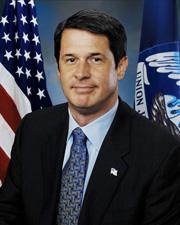 Sen. David Vitter (R-LA)
Legislative Activity
Stay on top of the latest movement without scrolling through every action
Senate amendment not agreed to: Amendment SA 4312 under the order of 6/15/10, not having achieved 60 votes in the affirmative, the amendment was not agreed to in Senate by Yea-Nay Vote. 48 - 49. Record Vote Number: 188.
June 15, 2010
View full timeline
Senate amendment not agreed to: Amendment SA 4312 under the order of 6/15/10, not having achieved 60 votes in the affirmative, the amendment was not agreed to in Senate by Yea-Nay Vote. 48 - 49. Record Vote Number: 188.
June 15, 2010
Roll call votes on amendments in Senate: Amendment SA 4312 under the order of 6/15/10, not having achieved 60 votes in the affirmative, the amendment was not agreed to in Senate by Yea-Nay Vote. 48 - 49. Record Vote Number: 188.
June 15, 2010
Considered by Senate. (consideration: CR S4914, S4924, S4925-4926, S4927-4928)
June 15, 2010
Amendment SA 4312 under the order of 6/15/10, not having achieved 60 votes in the affirmative, the amendment was not agreed to in Senate by Yea-Nay Vote. 48 - 49. Record Vote Number: 188.
June 15, 2010
Proposed amendment SA 4312 under the order of 6/15/10, not having achieved 60 votes in the affirmative, the amendment was withdrawn in Senate. (consideration: CR S4928)
June 15, 2010
Considered by Senate. (consideration: CR S4877)
June 14, 2010
Senate amendment proposed (on the floor): Amendment SA 4312 proposed by Senator Vitter to Amendment SA 4301.(consideration: CR S4739; text: CR S4739)
June 9, 2010
Amendment SA 4312 proposed by Senator Vitter to Amendment SA 4301. (consideration: CR S4739; text: CR S4739) To ensure that any new revenues to the Oil Spill Liability Trust Fund will be used for the purposes of the fund and not used as a budget gimmick to offset deficit spending.
June 9, 2010
Senate amendment submitted
June 8, 2010
Votes
1 roll call on this amendment
Text
Proposed
AMERICAN JOBS AND CLOSING TAX LOOPHOLES ACT OF 2010

The ACTING PRESIDENT pro tempore. Under the previous order, the
Senate will resume consideration of the House message to accompany H.R.
4213, which the clerk will report.
The legislative clerk read as follows:

Motion to concur in the House amendment to the Senate
amendment to H.R. 4213, an act to amend the Internal Revenue
Code of 1986 to extend certain expiring provisions, and for
other purposes.

Pending:

Baucus motion to concur in the amendment of the House to
the amendment of the Senate to the bill, with Baucus
amendment No. 4301 (to the amendment of the House to the
amendment of the Senate to the bill), in the nature of a
substitute;
Sessions/McCaskill amendment No. 4303 (to amendment No.
4301), to establish 3-year discretionary spending caps;
Cardin amendment No. 4304 (to amendment No. 4301), to
provide for the extension of dependent coverage under the
Federal Employees Health Benefits Program;
Franken amendment No. 4311 (to amendment No. 4301), to
establish the Office of the Homeowner Advocate for purposes
of addressing problems with the Home Affordable Modification
Program; and
Cornyn/Kyl amendment No. 4302 (to amendment No. 4301), to
increase transparency regarding debt instruments of the
United States held by foreign governments, to assess the
risks to the United States of such holdings.

The ACTING PRESIDENT pro tempore. The Senator from Montana.
Mr. BAUCUS. Mr. President, in a few moments I will speak on the
pending business before the Senate--the American Jobs and Closing Tax
Loopholes Act--but before I do, I would like to refer to the comments
of the Republican leader, as well as the statement of the Senator from
Louisiana that he gave yesterday.
For several months now, Americans have witnessed a massive oilspill
in the Gulf of Mexico, Americans have seen the sweeping environmental
damage, and Americans have seen the dramatic economic effects. It is
something that is overwhelming, it is appalling, and it is incredible
how much damage is being created by the BP gulf oilspill. I am sure to
the average observer there might seem no better time than now to ask
oil companies to contribute more to shoulder the burden of the
oilspill. Actually, they have caused the spill--at least one company
has--and they should bear the burden.
This, then, would seem to be an appropriate time to raise the
oilspill liability tax. The oilspill liability tax is pretty small. It
is 8 cents a barrel. That is all it is currently. One would have to
come up with a pretty creative argument if one wanted to protect big
oil companies from this fee.
Well, the Senator from Louisiana, and just now the Republican leader,
have done that. They have come up with a pretty creative argument to
protect the oil companies. The Senator from Louisiana, for example, has
returned to the last refuge of bean counters, and he has cried double
counting. The double counting argument seems to be a favorite among
bean counters, Mr. President. It seems to be the argument one falls
back on when one cannot argue the substance and one just wants to muddy
the waters. In reality, the funds collected by raising the oilspill
liability tax will strengthen the Oil Spill Liability Trust Fund. That
is simple arithmetic. But opponents of raising the tax on big oil
companies want to make it less attractive for doing so. They want to
make it so that the funds collected by raising taxes on big oil do not
count in the Federal budget. That way it will be less effective and
less attractive to raise taxes on big oil.
So don't be misled by the green eyeshades talk. Don't be misled by
the bogus charges of double counting. Don't buy into the arguments of
those who want to protect big oil. I urge my colleagues that when we
get to it later today to vote against the Vitter amendment and to
reject the arguments we have been hearing today that raising the per-
barrel tax for funds which go into the oilspill liability fund is
somehow double counting because, clearly, that money goes into the
trust fund, and funds from that trust fund are then used to pay for the
cleanup and some damage that has occurred and also counts toward
reducing the Federal deficit because it is extra money that goes to
government debt and, therefore, is money which is not doubled counted.
I urge my colleagues to reject those arguments.
Mr. DURBIN. Will the Senator from Montana yield for a question?
Mr. BAUCUS. I will yield to the Senator.
Mr. DURBIN. I listened to the statements made today by the Republican
leader about the increase in this fee that is to be paid into the Oil
Spill Liability Trust Fund. I would like to ask the chairman of the
Finance Committee, currently, the fee is 8 cents a barrel?
Mr. BAUCUS. That is correct.
Mr. DURBIN. And the price of a barrel of oil, as of this morning's
Wall Street Journal, is $71.99 a barrel?
Mr. BAUCUS. That is correct.
Mr. DURBIN. So this is a small, tiny fraction--one-tenth----
Mr. BAUCUS. Of the current fee.
Mr. DURBIN. Of the current fee. One-tenth of 1 percent as best I can
calculate it.
Mr. BAUCUS. That is true.
Mr. DURBIN. That is being paid by oil companies into a fund so that
if there would be a spill and the oil company responsible couldn't pay
for it, they would have at least accumulated enough money to protect
the taxpayers----
Mr. BAUCUS. That is correct.
Mr. DURBIN. From this liability.
Mr. BAUCUS. That is correct. I might also say this fund was created
in the wake of the Exxon Valdez spill.
Mr. DURBIN. Twenty-one years ago. I might also ask the chairman of
the Finance Committee, it is my understanding that the total value of
the current Oil Spill Liability Trust Fund is somewhere in the range of
$1.5 billion?
Mr. BAUCUS. I think that is the amount. I am not certain, but it is
about that.
Mr. DURBIN. So the effort in this bill is to increase that per-barrel
tax paid by oil companies for this oilspill liability fund to----

Mr. BAUCUS. Forty-one cents.
Mr. DURBIN. Forty-one cents. So 41 cents would represent, as I
calculate it, one-half of 1 percent of the current cost of a barrel of
oil.
Mr. BAUCUS. The current oil priced at $71 a barrel.
Mr. DURBIN. Right. So the argument from the other side is that even
if we accumulated this money and put it into this fund for cleaning up
spills, we shouldn't count it as additional money being held by the
Federal Government at the same time; is that correct?
Mr. BAUCUS. That is correct.
Mr. DURBIN. And if we fail to count it as an additional source of
revenue being held by the Federal Government, is it not true that it
would be subject to a budget point of order, which would then require
60 votes, and that would allow the oil companies to find 41 friends on
the Senate floor--and I think I know where they will start looking--to
defeat this effort to create this tax?

[[Page S4712]]

Mr. BAUCUS. I might say that is my reading of the Budget Act; that is
correct.
Mr. DURBIN. Could I also ask the chairman of the Finance Committee,
in this situation--where BP is clearly responsible for the mess in the
Gulf of Mexico and has at least stated its responsibility; where we
have a deep-pocket defendant that declared $5.6 billion in profits the
first quarter of this year--if the next spill or the next accident
resulting in multibillion-dollar damage to the Gulf of Mexico, or
wherever, is caused by a company without deep pockets, is this fund the
only place to turn to protect taxpayers?
Mr. BAUCUS. That is exactly correct.
Mr. DURBIN. And if we fail to increase this tax and increase the size
of this fund, it means the taxpayers would be called on to bail out
other oil companies that may be responsible for similar damage in the
future?
Mr. BAUCUS. That is the precise theory of all trust funds in the
first place, but now the cap needs to be raised.
Mr. DURBIN. So all the protests from the other side of the aisle
about this 40-cent tax on big oil companies is basically not only to
protect the big oil companies but to put the taxpayers on the hook for
another bailout----
Mr. BAUCUS. That is correct.
Mr. DURBIN. If we run into another oilspill?
Mr. BAUCUS. If the fund is not large enough, that is exactly correct.
Mr. DURBIN. I thank the Senator.
Mr. BAUCUS. Mr. President, I know my friend wants to speak, but let
me just set the lay of the land so my friend from Vermont can speak.
The Senate has returned to the American Jobs and Closing Tax
Loopholes Act. I want to remind my colleagues this bill is about jobs.
It is about helping 15 million Americans who have lost their jobs as
well. We are talking about people who have worked, who want to work,
and who will work again. These are our neighbors, and they need our
help.
The Labor Department just reported that although things are getting
better, there are still five unemployed Americans for every job opening
available--five. For comparison, throughout 2007 there were fewer than
two unemployed workers for every job opening. Again, today there are
five. We need to do more to help create jobs. We need to continue to
help those who do not have jobs to get by.
Let me also remind my colleagues that hundreds of thousands of
unemployed Americans need the assistance in this bill just to get by.
The Senate needs to pass this bill, and we need to do it soon. As I
have noted, this bill is about jobs. This bill is about helping the 15
million Americans who have lost their jobs. I remind my colleagues
about that because, so far, aside from the substitute, none of the
amendments offered is about jobs or about helping the 15 million
Americans who have lost their jobs.
Many of the pending amendments are worthy efforts, but I encourage my
colleagues to stick to the task, to address the subject at hand, and to
pass this bill. People need help.
Right now, we have five amendments pending: this Senator's amendment
in the nature of a substitute, the Sessions amendment to cap
appropriations, the Cardin amendment to provide for dependent coverage
under the Federal Employees Health Benefits Plan, the Franken amendment
to create the homeowner advocate in the Home Affordable Modification
Program, and the Cornyn amendment for more reports on government debt.
The majority leader has requested that the Senate address the backlog
of pending amendments before we allow more amendments to become
pending. That is why I am serving notice that until we have voted on
some of the pending amendments, I will be obliged to object to setting
aside any of the pending amendments in order to allow further
amendments to become pending. Thus, we would like to line up some of
the votes, Mr. President.
If possible, we would like to have votes at least by noon or, at the
very latest, 2 p.m. We very much hope we can make some progress today--
not just hopefully but make progress. It is our obligation to make
progress. That is our job. People elected us to do what is right for
America. It is right to help extend these so-called tax extenders, the
R&D tax credit, and so on and so forth, but it is also right to make
sure unemployment benefits are available for those who are out of work.
I urge us to come together and do our work in these next couple of
days. I yield the floor.
The PRESIDING OFFICER (Mr. Udall of New Mexico). The Senator from
Vermont.
Mr. SANDERS. Mr. President, I want to speak briefly about an
amendment I have filed and look forward to getting pending in a short
while. This is an amendment which addresses many of the issues we have
been hearing about this morning about which the American people are
concerned.
This amendment helps us lower the record-breaking deficit this
country is facing, and this amendment will help us transform our energy
system away from fossil fuel--away from the oil disaster that we are
seeing in the gulf right now--to energy efficiency and sustainable
energy. So for all my colleagues who are concerned about record-
breaking deficits, I hope they will support this amendment which I will
explain in a moment. And for all of my colleagues who understand that
the future of this country is not offshore drilling, I hope they will
support this amendment.
Let me explain briefly what this amendment does. At a time when the
profits of big oil companies are soaring, at a time when we are in the
midst of the largest oilspill in our Nation's history--one of the
greatest ecological disasters this country has ever experienced--at a
time when we desperately need to end our dependence on oil and gas and
seriously transform our energy system by investing in energy
efficiency, conservation, and renewable energy, this amendment is
simple and it is straightforward and I think it addresses all of those
concerns.
This amendment simply repeals over $35 billion in tax breaks to the
oil and gas industry. Let me repeat that. This amendment simply repeals
over $35 billion in tax breaks to the oil and gas industry, all of
which were recommended for elimination in President Obama's fiscal year
2011 budget. What this amendment is doing is simply bringing to the
floor of the Senate the recommendations that were in President Obama's
budget.
According to OMB, the repeal of these tax breaks would be equivalent
to about 1 percent of domestic oil and gas industry revenues over the
next decade. This is not an onerous attack on the oil industry. In
other words, the cost to the oil and gas industry of repealing these
tax breaks is negligible. And $25 billion of the money saved under this
amendment would be used to reduce the deficit and $10 billion would be
used to invest in the highly successful Energy Efficiency and
Conservation Block Grant Program over a 5-year period.
This amendment does two things. For all of my friends, and every
American who is concerned about a $13 trillion national debt and
record-breaking deficits, this amendment says let us put $25 billion
into deficit reduction. For all of us who are concerned about
transforming our energy system away from fossil fuel to energy
efficiency and sustainable energy, this amendment says, over the next 5
years let's put $10 billion into the Energy Efficiency and Conservation
Block Grant Program, which provides funding to States, cities, and
towns all over America to begin transforming energy in their
communities.
This amendment is supported by Physicians for Social Responsibility,
Friends of the Earth, Public Citizen, moveon.org, Center for Biological
Diversity, One Sky, Environment America, the Sierra Club, and
Greenpeace.
If there is anything we should be learning from the gulf disaster,
the horrendous disaster we are experiencing today on the gulf coast, it
is that it is time to move aggressively away from polluting and unsafe
fossil fuels which are getting more and more difficult to produce as we
move farther and farther offshore to drill for them. With a $13
trillion national debt, the last thing we need to be doing is giving
huge tax breaks to big oil and gas companies that have been making
record-breaking profits year after year.
As I indicated before, all of the oil and gas tax breaks that my
amendment seeks to repeal have been targeted for elimination in
President Obama's fiscal year 2011 budget. So

[[Page S4713]]

here we are. For all of my deficit hawk friends: $25 billion into
deficit reduction by asking the oil industry, which has been hugely
profitable in recent years, to start paying their fair share of taxes.
Let me quote from a speech that President Obama gave on this subject.

Our continued dependence on fossil fuels will jeopardize
our national security. It will smother our planet. And it
will continue to put our economy and our environment at risk.
. . . If we refuse to take into account the full cost of our
fossil fuel addiction--if we don't factor in the
environmental costs and national security costs and true
economic costs--we will have missed our best chance to seize
a clean energy future. . . . The time has come once and for
all for this Nation to fully embrace a clean energy future.
Now, that means . . . rolling back billions of dollars of tax
breaks to oil companies so that we can prioritize investments
in clean energy research and development.

That is the end of the quote from President Barack Obama. Frankly,
that is what this amendment is all about.
Let me give one interesting example of the absurdity of continuing to
provide tax breaks to the oil and gas industry. Last year, ExxonMobil,
the most profitable corporation in the history of the world, reported
to the SEC that not only did it avoid paying any Federal taxes, it
actually received a $46 million refund from the IRS. How is that,
folks? So, for all of the taxpayers in this country, people who are
making $30,000 or $40,000 a year, who are prepared to pay their fair
share of taxes, we have a situation where last year ExxonMobil, the
most profitable corporation in the history of the world, reported to
the SEC that not only did it avoid paying any Federal taxes, it
actually received a $46 million refund from the IRS.
We have a lot of working people in the State of Vermont who make
$50,000 or $60,000 a year, working 6 or 7 days a week in order to take
care of their family. They pay taxes. ExxonMobil, the most profitable
corporation in America, gets a refund from the IRS. If anyone thinks
that makes sense I would like to hear about it.
ExxonMobil is the same huge oil company that had enough money to pay
a $398 million retirement package to its outgoing CEO, Lee Raymond, a
few years ago, so it is a real struggling company. They make more
profits than any company in the history of the world and paid their
outgoing CEO $398 million in a retirement package but they cannot
afford to pay a nickel in taxes. In fact, they get a tax refund. Do you
think we need to change that system? I do.
ExxonMobil is the same company that is making its profits by gouging
consumers at the pump by charging higher and higher prices for gasoline
even when demand is low and supply is high. In Vermont, gas is now
$2.85 a gallon. That has to stop.
This amendment would begin to make sure that ExxonMobil, BP, and
other big oil companies pay at least a minimal amount of their record-
breaking profits in taxes to the Federal Government so we can begin to
deal with our record-breaking deficit; so we can begin the process of
transforming our energy system.
Let me be clear. As millions of Americans have lost their jobs, their
homes, their life savings, and their ability to send their kids to
college because of this horrendous Wall Street recession, we cannot
continue to allow big oil companies to make out like bandits. In the
first quarter--I refer people to this chart--in the first quarter of
2009, when our gross domestic product shrank by 6.4 percent and overall
corporate profits decreased by 5.25 percent--that is what a recession
is about; profits are down, overall corporate profits--the five largest
oil companies were still able to earn over $13 billion in profits. As
this chart shows, during the last 10 years the five largest oil
companies--ExxonMobil, Shell, BP, ChevronTexaco, and ConocoPhillips--
earned over $750 billion in profits: a 10-year period, $750 billion in
profits. That is not chickenfeed.
During the first quarter of this year, big oil's profits increased by
85 percent--not bad, 85 percent. Instead of using these profits to
invest in renewable energy and to prevent oilspills, big oil and gas
companies are primarily using this money to buy back their own stock
and enrich their CEOs. According to the American Petroleum Institute,
between 2000 and 2007 the entire oil and gas industry, of all of their
profits--remember, $750 billion of profits over the last 10 years--
invested only $1.5 billion in North American ``nonhydrocarbon
investments'' aimed at reducing the Nation's dependence on oil. That is
less than one-quarter of 1 percent of their profits during this time
period.
Meanwhile, the CEOs of big oil companies have received hundreds of
millions in retirement packages and total compensation. Over the last 5
years, Ray Irani, the CEO of Occidental Petroleum, received over $725
million in total compensation; John Hess, the CEO of the Hess Oil
Company, has received over $240 million in total compensation; David
Lesar, the CEO of Halliburton, has received over $114 million in total
compensation; James Mulva, the CEO of ConocoPhillips, has received over
$95 million in total compensation; and Rex Tillerson, the CEO of
ExxonMobil, made over $30 million in total compensation over that 5-
year period. Further, since 2002, the five largest oil companies have
repurchased almost $270 billion of their own stock.
It is important for the American people to understand how excessively
we are subsidizing fossil fuels and benefiting big oil. It is not only
that they are making record-breaking profits; it is not only that they
are not paying their fair share of taxes; it is not only that they are
not investing in renewable energy so we can break our dependency on
fossil fuel and clean up this planet, but in addition to that, they are
receiving huge amounts of taxpayer subsidies. These guys who tell us
how terrible the big government is are not hesitant to be running here
to Capitol Hill to get their fair share of their welfare payments.

As this chart shows, according to the Environmental Law Institute,
from 2002 to 2008, the U.S. Government provided more than $70 billion
in fossil fuel subsidies compared to just over $12 billion for wind,
solar, geothermal, biomass, and other renewable energies which in fact
are the future of this country in terms of energy. This set of
priorities is totally absurd. We have to put an end to the outrageous
tax breaks and subsidies that have been given to big oil and gas
companies.
But that, again, is not all this amendment would do. It is not only
$25 billion in deficit reductions. This amendment begins to move us
away from fossil fuel to energy efficiency and renewable energy by
investing $10 billion into the Energy Efficiency and Conservation Block
Grant Program. The stimulus package provided $3.2 billion for this
highly successful program, and that money is filtering throughout 50
States in America. Hundreds and hundreds and thousands of communities
are now making energy efficiency improvements in their townhalls, in
their schools, and they are moving toward sustainable energy as a
result of this program. We would put $10 billion more, over a 5-year
period, into a program which finally moves us away from fossil fuel to
sustainable energy and energy efficiency.
Let me give an example of how this program is working. This program
is helping to build wind turbines in Carmel, IN, to power its city
sewer treatment plant. It is being used in Salt Lake City, UT, to
provide loans to businesses to make energy efficiency upgrades. It is
being used in Columbus, OH, to make 29 public buildings more energy
efficient.
I think, as everybody knows, the most significant thing we can do
today, the best return on our dollar, is energy efficiency. That is
what they are doing in Columbus, OH. That is what they are doing in
Vermont. That is what they are doing, in fact, all over this country,
as a result of programs such as the Energy Efficiency Block Grant
Program. It is being used in Portland, ME, to retrofit 55 public
buildings. It is being used in Miami, FL, to convert landfill gas into
the production of electricity. Methane gas out of rotting organic
matter in a landfill provides electricity. What can be smarter than
that? It is being used in New York City to help homeowners and
businesses with energy efficiency and renewable energy loans, among
many other projects we are seeing all over America, 50 States utilizing
this program, young people getting involved in thinking about energy,
energy efficiency, sustainable energy. We need to keep

[[Page S4714]]

these investments in energy efficiency and conservation going and that
is what this amendment does.
Finally, this amendment would dedicate $25 billion for deficit
reduction. At a time of record-breaking deficits and debt, we simply
cannot continue to give oil and gas companies huge tax breaks.
When it comes down to it, this amendment asks a very simple question:
Which side are you on? Which side are you on? Are you on the side of
big oil and gas companies or are you on the side of reducing the
deficit, reducing our dependence on oil, saving consumers and
businesses money on their energy bills, and saving the planet we live
on? I would hope most of our colleagues here are on the side of doing
what is right for the American people. That is what this amendment is
about. I understand that anytime you stand up to big oil and to big gas
companies, there is going to be a lot of political push back. We know
that since 1990 the oil and the gas industry has made over $238 million
in campaign contributions, and over the past 2 years alone, they spent
over $210 million on lobbying. With the BP disaster in the gulf coast,
my guess is these guys are all over the place now lobbying and sending
out their campaign contributions. But this amendment is the right thing
to do. It should bring together all of us who are concerned about
transforming our energy system, all of us who are concerned about
lowering our record-breaking deficits.
I intend to be offering this amendment. I look for widespread support
on both sides of the aisle.
I yield the floor.
The PRESIDING OFFICER. The Senator from Oklahoma.
Mr. COBURN. Mr. President, I ask unanimous consent to speak as in
morning business.
The PRESIDING OFFICER. Without objection, it is so ordered.

Foreign Law and the U.S. Constitution

Mr. COBURN. Mr. President, I send to the desk to have printed in the
Record a letter I sent to Justice Sonia Sotomayor dated the day before
yesterday. The reason for that concern is our Supreme Court process has
broken down.
There being no objection, the material was ordered to be printed in
the Record, as follows:

U.S. Senate,

Committtee on the Judiciary,

Washington, DC, June 8, 2010.
Justice Sonia Sotomayor,
Supreme Court of the United States,
Washington, DC.
Dear Justice Sotomayor: I write to inquire about your
decision to join Justice Anthony Kennedy's opinion in the
case of Graham v. Florida, No. 08-1224. In that case, a 5-4
majority of the Court ruled that sentencing a juvenile
offender to life in prison without parole for a nonhomicide
crime is unconstitutional.
In Justice Kennedy's opinion, he employs a methodology
similar to that used in Roper v. Simmons. In Roper and
Graham, the majority relies on what five Justices perceive to
be ``evolving standards of decency'' in concluding that the
punishment in question violates the Eighth Amendment's ban on
cruel and unusual punishment. In arriving at this conclusion,
Justice Kennedy looked to both the sentencing practices of
the states and the federal government and to the ``judgments
of other nations.'' Justice Kennedy's opinion in Graham,
which you joined, states, ``[the] global consensus against
the sentencing practice in question'' provides ``support for
our conclusion'' that the punishment is unconstitutional. He
further writes, the ``judgments of other nations and the
international community'' and the ``climate of international
opinion'' are ``not irrelevant'' to determining the
``acceptability of a particular punishment.'' Specifically,
the opinion notes, ` ``the overwhelming weight of
international opinion against' life without parole for
nonhomicide offenses committed by juveniles `provide[s]
respected and significant confirmation for our own
conclusion' '' that it violates the Eighth Amendment.
Given your testimony at your confirmation hearing, I have
serious concerns about your decision to join Justice
Kennedy's opinion, which extensively cites foreign law, At
your hearing. I asked you the following question: ``[W]ill
you affirm to this Committee and the American public that,
outside of where you are directed to do so through statute or
through treaty, refrain from using foreign law in making the
decisions that you make that affect this country and the
opinions that you write?'' You responded: ``I will not use
foreign law to interpret the Constitution or American
statutes. I will use American law, constitutional law to
interpret those laws, except in the situations where American
law directs a court.'' I sought further clarification and
asked: ``So you stand by it? There is no authority for a
Supreme Court justice to utilize foreign law in terms of
making decisions based on the Constitution or statutes?'' You
responded: ``Unless the statute requires you or directs you
to look at foreign law . . . the answer is no.''
Your decision to join Justice Kennedy's opinion that uses
foreign law to ``support'' its conclusion conflicts with your
pledge to the Judiciary Committee and the American public not
to ``use foreign law to interpret the Constitution.'' In
light of that conflict. I respectfully request that you
explain why you chose to join the majority's opinion in
Graham. I recognize that Justice Kennedy's opinion does not
rely on foreign law as precedent for its decision; however,
if foreign law is of no value to the reasoning of the opinion
and did not influence the final outcome, then please explain
why you supported its inclusion in the opinion. These
questions are particularly relevant as the Senate is faced
with evaluating another Supreme Court nominee in the coming
months. Accordingly, I would appreciate a prompt response.
Sincerely,
Tom Coburn, M.D.,
U.S. Senator.

Mr. COBURN. I want to read you some quotes of the Justice, and then I
want to read you the answers she gave to my queries during her hearing
on the Judiciary Committee. I think it is going to be plain to see that
we have to change what we are doing on Supreme Court nominees.
Previous quotes from Judge Sotomayor on foreign law; the use of
foreign law to interpret the U.S. Constitution, which is forbidden
under the Constitution, except in those international treaties where it
is so directed under statute and treaty.
Statement of Judge Sotomayor:

To suggest to anyone that you can outlaw the use of foreign
or international law is a sentiment that is based on a
fundamental misunderstanding. What you would be asking
American judges is to close their minds to good ideas.
Nothing in the American legal system prevents us from
considering the ideas.

That is true.

The international law and foreign law will be very
important in the discussion of how we think about unsettled
issues in our own legal system. It is my hope that judges
everywhere will continue to do this. Within the American
legal system, we are commanded to interpret our law in the
best way we can. That means looking to what anyone has said
to see if it has pervasive value.

Well, that is wrong. The Constitution defines what judges look at in
considering their decisions. So I asked her the following questions
during her confirmation hearing before the Judiciary Committee:

[W]ill you affirm to this Committee and the American public
that outside of where you are directed to do so through
statute or through treaty, refrain from using foreign law in
making the decisions that you make that affect this country
and the opinions that you write? [or concur with.]

Sotomayor's response:

I will not use foreign law to interpret the Constitution or
American statutes. I will use American law, constitutional
law to interpret those laws, except in situations where
American law directs a court [to do otherwise.]
So you stand by it?

These are my words.

There is no authority for a Supreme Court Justice to
utilize foreign law in terms of making decisions based on the
Constitution or our statutes?

Here is her response.

Unless the statute requires you or directs you to look at
foreign law, the answer is no.

So her statements before she comes before the committee are totally
opposite of what she tells the committee, and then what she has done
since proves that her testimony before the committee was totally
meaningless.
On May 17, Justice Sotomayor joined an opinion citing the ``judgments
of other nations'' when interpreting the eighth amendment to prohibit
sentencing of a juvenile offender. The opinion states the following:

[The] global consensus against the sentencing practice in
question provides support for our conclusion.

Well, either she was dishonest with us in the committee or she does
not know what she is signing on to, which tells you that our process
for intervening and holding Supreme Court candidates is a failure.
The opinion further states that:

The judgments of other nations and the international
community [and the] climate of international opinion are not
irrelevant to determining the acceptability of a particular
punishment.

That is a total violation of the U.S. Constitution and its statutes.
It is a total negation of what she told the committee as she came
through the

[[Page S4715]]

committee process. That is one of the reasons I did not believe her,
because I believed her earlier statements to be her true feeling.
So what we have before the Judiciary Committee--and we have another
nominee coming up now--is the ability for Justices to say whatever we
want to hear, and then do whatever they want to do and ignore the U.S.
Constitution, as she did, and in her testimony before the committee.
As journalist Stuart Taylor recently wrote in The Atlantic--this
opinion that she cosigned onto:

The opinion was based on little more than the personal
policy preferences of the five majority justices. And it
looked abroad for consensus that so plainly does not exist
here and violates our own U.S. Constitution.

So it did not matter what she told the committee. She did exactly the
opposite of what she told the committee as she signed onto this
opinion. We are going to need more than promises from the next nominee.
An acceptable Supreme Court nominee must have a demonstrated record of
adhering to the Constitution and their judicial oath by strictly
interpreting the Constitution, according to our Founders' intent, not
international opinion or consensus. It has no role in the
interpretation of our Constitution. Senators cannot simply accept
pledges from Supreme Court nominees that they will not use foreign law
when interpreting the U.S. Constitution. The nominee to come before us,
Solicitor General Kagan, wrote the following:

There are some circumstances in which it may be proper for
judges to consider foreign law sources in ruling on
constitutional questions.

Oh, really? Is that what our Constitution says? Is that what this
candidate believes? Here is what she said. What is she going to say
before us in committee, that she will not? What value is that if, in
fact, she knows that to be the law, she admits that is what the U.S.
Constitution says, and as soon as she is affirmed, does exactly the
opposite? The process has to be changed. We can no longer take it on
faith because, in fact, the process under which--since Bork actually
spoke what he believed, since him, nobody has said what they believe.
They have all chiseled on what they believe. They will not be
accountable to what they believe. So we have to change that process.
The other concerning thing about Nominee Kagan is that when she went
to Harvard, she made international law mandatory in terms of getting a
degree out of law school at Harvard. But do you realize Harvard does
not require its lawyers to take constitutional law? You can graduate
from Harvard Law School and never have studied U.S. constitutional law.
That tells you the trend this country is going in; we are abandoning
our Constitution and the very wisdom that gives us the freedom we have
today.
I will finish by saying, the consideration of any judge in the
future, in terms of this Senator, is going to be borne out by what they
have said before they got to the committee, not what they say to the
committee, because we can no longer, as a body, trust what the nominees
say in committee.
I yield the floor and suggest the absence of a quorum.
The PRESIDING OFFICER (Mr. Burris.) The clerk will call the roll.
The legislative clerk proceeded to call the roll.
The PRESIDING OFFICER. The Senator from Illinois.
Mr. DURBIN. Mr. President, I ask unanimous consent that the order for
the quorum call be rescinded.
The PRESIDING OFFICER. Without objection, it is so ordered.
Mr. DURBIN. Mr. President, pending before the Senate is a bill that
includes many provisions. It is known in shorthand as the extenders
bill because each year there are portions of the Tax Code which expire,
and they relate to a lot of different things we kind of take for
granted--the biofuels tax credit, for example--and other things. Each
year, Congress extends or reauthorizes those portions of the Tax Code,
and most of them are noncontroversial.
The obvious question many people ask who are affected by them is, Why
do you do this every year and go through this exercise? It is an honest
and legitimate question. I just say that the honest answer is, Because
the extenders themselves are not controversial; they are popular. They
become the spoonful of sugar that helps the medicine go down because
they usually accompany other things that have more controversy with
them. That is the way politics works. That is the way the Congress
works, and that is what we do each year. This year is no exception, and
we are considering the extension of portions of the Tax Code and
including with it other things that will have an impact on the country
and on the economy.
When I look at what is included in this bill, which is going to be
important, there are several provisions that I think are critically
important for the economy.
Most of us believe we would be better off in America if we stopped
exporting good-paying American jobs overseas. So the President has said
repeatedly and many of us have said in our speeches on the floor and
back home that we want to stop rewarding in the Tax Code companies that
decide it is to their economic advantage to locate overseas, closing
down a factory in Galesburg, IL, and moving over to Europe or Japan or
China or India or wherever it happens to be. So this bill, first and
foremost, eliminates major tax cuts and loopholes available to U.S.
corporations that want to relocate their business operations overseas.
I think that is eminently sensible. Why would we in our Tax Code reward
companies that want to leave the country, companies that want to
eliminate American jobs? That is the No. 1 thing this extenders package
does, in addition to extending some of the tax provisions I mentioned
earlier.
It also provides help for small businesses across America. If we are
going to get out of this recession sooner rather than later, we really
need to depend on small businesses in America that will be able to step
up and hire more people. We all think about the big company that is
going to locate its new plant in our hometown and create 1,000 or 2,000
jobs. Occasionally, that happens. But more likely than not, the job
growth in most communities and most cities will be when smaller
businesses can hire 1 or 2 people or maybe 10 or 20 people.
Cumulatively, those efforts result in a growth in the American
workforce. This bill, as a second part, creates tax incentives and help
for small businesses to hire more people in this weak economy.
Those are the two pillars of the bill: stop the export of American
jobs by eliminating the tax incentives in our American laws that reward
companies for sending jobs overseas and, secondly, create an
environment in our Tax Code and programs that help small businesses
retain and hire more American workers. I cannot think of two better
things to do in a weak economy. Yet it seems there is opposition to
this bill from the Republican side of the aisle. There are some who may
support it, and I hope they do. I hope it genuinely becomes a
bipartisan bill.
But there is a genuine concern about some other provisions that I
would like to address.
I don't know that there is an American alive today who is unaware of
what is going on in the Gulf of Mexico. I don't know what day we are
in--60, 61--of this terrible environmental disaster where the BP rig
blew up, killing 11 innocent people, and then the oil started spewing
into the Gulf of Mexico. British Petroleum came in and has been trying
vainly to stop this oil from flowing into the gulf. They have said
repeatedly that they will make this all whole at the end of the day;
they will stop the oil from flowing and set about repairing the damage,
which is extensive.
Twenty-one years ago, I was on a congressional trip up to Prince
William Sound in Alaska. The Exxon Valdez, a large tanker, had run
aground because the captain, they think--it was alleged--had been
drinking and didn't pay attention. It gashed the hull of the boat and
ended up spewing oil in every direction. I will never forget that as
long as I live because there was this black, dirty, sludgy oil all over
everything. We went out on a Coast Guard ship and looked at it. You
would see these horrible situations where, in this pristine Alaskan
environment, everything would be covered with this black oil, and you
would look down into the rocks and you could see as deep as you could
see that there was more and more of that oil.
I asked Senator Murkowski of Alaska what Prince William Sound is like

[[Page S4716]]

21 years later, and she said things have gotten back to a more normal
state but some things have changed forever. Some species of fish, such
as the herring, are just gone from this particular place. Maybe at some
distant point in the future, they will return, but for the last 20
years, they have been extinct and gone. I hope Mother Nature takes care
of that over time. You can see that it will take a long period of time.
We don't know what is going to happen in the Gulf of Mexico, but we
know it will be expensive, first, in terms of human life--losing 11
people--and, second, in terms of the environmental damage, which is
incalculable at this moment; that is, the economic cost of the damage.
If there is any encouraging thing--and there isn't much--in this
whole conversation, it is the fact that British Petroleum is a very
wealthy company. In the first 3 months of this year, they announced
$5.6 billion in profits. When they say they can pay for the damage, it
is clear that they have deep pockets and they can pay. And they will
pay. The taxpayers will not pay.
There is a provision in this bill relating to this issue that has
become controversial on the floor. We decided back in the time of the
Exxon Valdez spill that we would create an oilspill liability fund. In
other words, we would collect money and put it into a ``rainy day
fund'' that would be there in case of an environmental disaster to pay
for the damage. We collect, under current law, 8 cents for every barrel
of oil to put into this fund. This morning's paper tells us that a
barrel of oil is selling for $71.99, so 8 cents represents about one-
tenth of 1 percent of the cost of a barrel of oil. It is a tiny, small
amount.
Over time, with all the oil that has been explored and produced, we
have collected over $1 billion into this oilspill liability fund,
thinking we were prepared for the worst. We couldn't imagine what
happened in the Gulf of Mexico, where $1.5 billion wouldn't even come
close to paying for the damage that has been created by this BP
disaster. So this bill will increase the amount of tax on a barrel of
oil to 41 cents a barrel.
Remember, the price of a barrel of oil is $71.99, and we are going to
charge 41 cents to be put into this oilspill liability fund. There is
an objection to this from the Republican side of the aisle. Their
objection is a little hard to follow because they are kind of tied up
in a budgetary argument here. I think it is pretty clear to see what
the choices will be. If we don't collect this money for every barrel of
oil and put it into an oilspill liability fund, God forbid if there is
another environmental disaster; there won't be enough money to pay for
it.
Today, British Petroleum has its slimy fingerprints all over this
mess. We know they are going to end up holding the bag, as they should.
They have the money to pay for the damages associated with it. But what
about tomorrow? What if the company involved is not as well off as BP?
What if they are bankrupted by an environmental disaster and they go
out of business? Who then is going to compensate the shrimpers, the
oystermen, the fishermen, the tourist industry, the resorts, and all
the others who are affected by all this? At that point in time, you
would look to this oilspill liability fund. But the $1.5 billion it
currently holds is not enough to do the job. That is why this bill
increases the amount per barrel of oil from 8 to 41 cents, so instead
of one-tenth of 1 percent, it is about one-half of 1 percent of the
current cost of a barrel of oil that will be set aside as an insurance
fund.
The Republicans are objecting to this. You have to ask them, what is
the alternative? If the oil companies don't pay so that we have an
insurance fund for the next environmental disaster, who will pay? I
think we know the answer. It will require another taxpayer bailout,
which means taxpayers across America will be called on to come up with
the emergency disaster funds to pay for the next environmental
disaster, God forbid it ever occurs. Isn't it better to have the
industry drilling for oil building up the reserves in this oilspill
liability fund so that the taxpayers don't end up ultimately paying for
the cleanup? It is obvious to me. The alternative is unacceptable, but
the alternative is what is being argued for on the Republican side of
the aisle. They want to step aside from what is the clear
responsibility of the big oil companies and those who would drill.

Yesterday, we had a hearing in the Senate Judiciary Committee, and we
talked about the liability of the oil companies in this situation. It
turns out that Senator Patrick Leahy, of Vermont, and Senator Sheldon
Whitehouse, from Rhode Island, did some research on it and found that
most of the law that governed this situation was ancient law--150, 160
years old. The law, for example, for the 11 people who died on this oil
rig in the explosion limits the recovery of their surviving families to
the actual monetary losses--in other words, how much future income will
be lost to that family because of the death of that worker. They cannot
collect for any loss of companionship due to the death of a father or
husband, and they cannot collect punitive damages, except to the amount
of the actual compensatory damages--one to one. There is a limit to
what they can recover.
Yesterday, Christopher Jones testified about his brother Gordon, who
died as a result of the explosion on this rig in the Gulf of Mexico. He
showed us photos of the family, the two little boys--one born after the
father died and another young boy and his mom. It was so compelling.
The argument was made by a man representing the oil and energy
industry that it would be reckless for us to expand the liability of
oil companies beyond the current limitations in the law. I think it is
reckless for us to consider allowing anybody to drill in the Gulf of
Mexico who doesn't have the bonding and wherewithal to stand up for any
damages they should incur. Why in the world would we allow anybody to
go out in this circumstance, when we can see what happens when it goes
wrong, and do it again without having some sort of insurance that
protects those involved working there, as well as those who are
affected by the environment around the Gulf of Mexico? They have no
business drilling, as far as I am concerned, if they are not
financially responsible and if they cannot stand behind their
operations to make sure the taxpayers don't end up in a situation where
they are vulnerable.
The Republican position that says we should not impose a new tax on
oil companies to make sure there is enough money in an oilspill fund so
that the taxpayers won't have to pay for these disasters in the future
is a position that is indefensible. It is a position that makes no
sense.
They argue, incidentally, that if we collect this money, we should
somehow say it won't be used for any other purpose. Well, the money
will be used for the purpose of oilspill cleanup, but because it will
be a new asset of the Federal Government, it will be shown on the books
on the positive side. We are collecting the tax, gaining the asset, and
increasing in a small way our budget picture on the positive side. I
think they are lost in a budgetary argument that really is, in effect,
trying to protect the oil companies from this new tax.
I hope my colleagues won't be discouraged in this debate but will
stand by the efforts of the committee to impose this new tax
responsibility. I hope that as Members of the Senate consider this
bill--and I see my friend from Ohio here, and I will yield momentarily
to him--they will try to understand how difficult it might be to
explain why they voted against a bill that eliminates tax breaks for
American companies that want to locate their businesses overseas and
why they voted against a bill that provides help for small businesses
in America to hire more workers in a time of high unemployment. Those
are the two most important elements in this so-called extension bill. I
hope--wouldn't it be a great day--we could have bipartisan support for
those two basic ideas and at the end of the day do something on the
floor to create jobs in America and, in the process, do it in a
sensible way that builds for our future.
I yield the floor.
The PRESIDING OFFICER. The Senator from Ohio is recognized.
Mr. BROWN of Ohio. Mr. President, I stand here a bit incredulous
about the comments of Senator Durbin, the assistant majority leader,
about the oil industry and Republican opposition to simply making them
pay for potential problems they cause.

[[Page S4717]]

I say I am incredulous, but as I think a little longer, I realize
that is par for the course. I have only been in the Senate 3\1/2\
years. I have seen the Republicans side with the insurance companies on
health care reform. I have seen them side with the drug companies on
Medicare issues. I have seen them side with big Wall Street banks on
Wall Street reform. Now they side with the oil industry, with BP, with
Exxon and these companies that have had--literally, BP's profits were
over $1 billion, several billion, multibillion-dollar profits per
quarter. And my friends on the other side of the aisle--I don't know if
it is the campaign contributions, social connections, what it is with
the oil industry--it is always the oil industry first, taxpayers
second, and the consuming public third with them. I don't get that.

COBRA Subsidy Payments

I wish to talk about an amendment Senator Casey is offering and of
which I am a primary cosponsor dealing with COBRA, the health insurance
issue. When this recession started and unemployment began to spike,
most of us in Congress acted to help those in clear need with the
stimulus package and with the extension of unemployment insurance.
Remember, it is insurance; it is not welfare. People pay into the
unemployment insurance fund when they are working, and when they lose
their jobs, through no fault of their own, they get assistance from the
unemployment insurance fund.
Another part of that is, when someone in Joliet or Cleveland or
Springfield, IL, or Springfield, OH, loses their job, they all too
often lose their insurance. There is a Federal program, a Federal law,
that you can continue to draw health insurance when you lose your job
if you, the employee, pay for your part of it and you pay the employer
contribution for your health insurance, which at least doubles,
sometimes triples the amount of money you were paying for health
insurance when you were working.
That means simply, when you are working, you are paying X dollars,
which is never cheap. When you lose your job, you are paying 2X or 3X,
and almost nobody can afford that. If you have lost your job, how can
you pay more money for health insurance than before you lost it?
That is why in the Recovery Act a year and a half ago, I wrote
legislation, later amended in the bill, to give a significant subsidy
to those people who lost their job but are trying and struggling to
keep their insurance. It allows newly unemployed workers to stay on
their former employer's health plan with that subsidy.
I have received countless letters and e-mails from Ohioans who
describe how COBRA is more expensive than rent or food. That is why we
stepped in. We did a 65-percent subsidy. In other words, if you lose
your job, instead of paying your part of the insurance and your
employer's part, instead of paying that combined amount, which was
Federal law for years, we are subsidizing 65 percent of that amount.
I cannot count the number of people I have talked with in the last
year who have come up to me and said: I still have insurance because I
was able--it is still difficult; it is not as though money is growing
on trees for these people who lost their jobs. It is still difficult.
But so many people have come up to me and said: I still have my
insurance because of that subsidy.
In this legislation, the House took away the COBRA subsidy under the
view that we simply cannot afford this subsidy anymore. The Casey-Brown
amendment says: Yes, we can, and we are going to do it.
A recent report by the U.S. Department of Treasury concludes COBRA
``has been an important source of insurance coverage during the
recession, especially for the middle class.''
It said that COBRA has ``significantly slowed the growth of the
uninsured population, which had been skyrocketing through February
2009.'' In other words, this government report showed what we are doing
is working. A lot more people have insurance as a result of the COBRA
subsidy, just as a lot more people have jobs today because of the
stimulus package.
Granted, it is not good. There are too many people who have lost
their insurance and too many people who have lost their jobs. More
people have jobs because of the stimulus package and a whole lot more
people have health insurance and are not a burden on the State, their
community, or their families because they actually have insurance
through COBRA.
The COBRA subsidy expired for newly unemployed Americans on May 31, 9
days ago. The managers' amendment includes an extension of the
unemployment insurance program, which is a good thing, but it does not
include an extension of COBRA.
This absence is striking, given the fact that a recent survey shows
that 15 percent of unemployed insurance recipients rely on COBRA for
affordable coverage. Unemployment insurance is an important lifeline.
Of course, we need to do that. But it does not give enough money for a
family to pay for their insurance.
Again, look at the math. Your unemployment insurance is less than you
were making when you were working. Your insurance payment for COBRA, if
we do not subsidize it, is a lot more, a factor of two or three times,
in most cases, what you were paying for insurance when you were
working. You have less income and significantly higher health care
costs. That is why that subsidy is so very important. That is why I am
joining with Senator Casey in offering an amendment that will extend
the COBRA Premium Assistance Program for another 6 months.
Let me conclude with a couple letters from Ohioans who explain the
personal side of this issue. We all come to the floor and talk about
policy. We all are a little geeky sometimes. I like to come to the
floor and read letters from people I represent in my State.
Robert and Rachel are from Montgomery County. That is Dayton,
Kettering, Huber Heights, West Carrollton--those communities:

One month after I was laid off, my wife, a registered
nurse, had a stroke.
Since that time, we have struggled but managed to keep our
heads above water because of the COBRA subsidy. We have four
children, and simply cannot live without health insurance,
because the cost can be devastating.

Understand, too, if you lose your insurance, trying to get insurance
again is so difficult and so expensive. We do not want this
interrupted.
Robert writes:

We feel the need to be one more voice encouraging your
colleagues to speak out for the families that have been hurt
the most by this economic disaster.
Please keep fighting for us.

Montgomery County, Dayton, has been inflicted with a GM plant
closing. National Cash Register, NCR, one of the oldest companies
people associate with the city of Dayton--the CEO did not talk to
anybody. He pulled the company up, left, and moved to Atlanta. DHL, a
large cargo carrier, a German company, pulled out of Wilmington nearby.
That was several thousand jobs. They have had that kind of economic
hardship in Dayton.
We absolutely need to extend the COBRA subsidy for people such as
Robert and Rachel.
The last note I wish to read is from Mary from Cuyahoga County, which
is the northeastern Ohio area:

I live in northeast Ohio and have been out of work 13
months. I live alone with no dependents, yet I can barely
meet my monthly financial challenges.
I became a cancer victim last year, but when my COBRA
subsidy is stopped, it will feel like an additional cancer in
my life.
The COBRA subsidy has bought me time to explore what I hope
to be an improving job market.

We are seeing good signs in northeast Ohio of increased job numbers
and companies hiring people.

The COBRA subsidy has bought me time to explore what I hope
to be an improving job market. And not only would it buy me
time, it would renew my faith in government.

I urge my colleagues to support this amendment to continue the COBRA
subsidy. It clearly is the right thing to do. It is going to matter to
so many families.
I don't understand why so many on the other side would oppose
something such as this. It simply makes sense. I urge my colleagues to
support the Casey-Brown amendment.
Mr. President, I suggest the absence of a quorum.
The PRESIDING OFFICER. The clerk will call the roll.
The assistant legislative clerk proceeded to call the roll.
Mr. CASEY. Mr. President, I ask unanimous consent that the order for
the quorum call be rescinded.

[[Page S4718]]

The PRESIDING OFFICER. Without objection, it is so ordered.
Mr. CASEY. Mr. President, I rise today to speak about an urgent issue
that faces the American people, and it is an issue the Senate as well
as the House must deal with, in my judgment; that is, the issue of
extending COBRA premium assistance, health insurance assistance, to
many Americans who, through no fault of their own, are out of work; in
many instances, millions of Americans who have been out of work for a
long time.
Mr. President, I ask unanimous consent to add the following Senators
as cosponsors of an amendment I have that extends COBRA premium
assistance. These are Senators who will be added beyond those who were
original cosponsors.
They are Senators Franken, Stabenow, Reed of Rhode Island, and
Gillibrand.
The PRESIDING OFFICER. Without objection, it is so ordered.
Mr. CASEY. Mr. President, I rise today to speak about the basic issue
to have health insurance coverage for those who have been out of work.
I know I join Senator Brown and the other cosponsors of this amendment
to urge support for the extension of the eligibility period of the
COBRA Premium Assistance Program, which was authorized under the
Recovery and Reinvestment Act of 2009.
I do want to commend and note my appreciation for the support of
Senators Begich, Whitehouse, Lautenberg, Kerry, Wyden, Harkin, Levin,
Burris--the Presiding Officer--Franken, Reed of Rhode Island, and
Stabenow, who have cosponsored the amendment.
We continue to recover from this economic recession, a horrific
chapter in American history almost too difficult or too complicated for
some of us to fully understand because we haven't lived through it
ourselves. We in the Senate haven't lost our jobs or lost our health
insurance. But we hear from and know of people who have, and that is
one of the main reasons we are here to talk about this issue today.
We are recovering but we haven't recovered fully, and now is not the
time to pull up the ladder on people who are still hanging on, in some
cases to the last rung of the ladder. These basic, and I would argue,
vital safety net programs--whether it is unemployment insurance or
COBRA premium assistance for health care--are programs that we can't
short-circuit. We can't cut people off at this point.
The American people agree with us, by the way. They understand we
have made progress on economic recovery, but the unemployment rate is
still far too high. It has just been a little bit less than 10 percent
for far too long. In my home State of Pennsylvania, fortunately it is
lower than that. It has been lower than 9 percent a long time but has
bumped up to around 9. But that doesn't really matter. The percentage
doesn't really tell the story. In our State, we have over 580,000
people out of work, and the total number or the percentage number is a
lot higher in many other States. So we just can't pull up the ladder
and pretend we have fully recovered, that we can begin to transition to
a different strategy.
For millions of Americans out of work, through no fault of their own,
medical costs continue to rise while their personal savings dwindle or
in some cases have been wiped out because of this recession, leaving
millions of Americans without adequate health care coverage and leading
many to refuse necessary treatment due to the high cost.
Americans who lose their coverage through job loss cannot be expected
to purchase expensive health care plans while they are unemployed. It
is difficult enough for someone who has a job to pay for health
insurance. We know that is difficult. A lot of small businesses were
telling us about that throughout the health care debate. But just
imagine if you are out of work and you are trying to survive and you
are called upon or required to pay for an expensive health care plan.
So we should act, and we should act now, to provide an extension for
COBRA subsidies to ease the economic strain of expensive health care
coverage for the unemployed.
The amendment I have offered, and that today I am just speaking
about, will provide much needed relief at a very difficult time for
many families as unemployed workers focus on finding new employment
rather than having to worry--and worry doesn't even begin to describe
the anguish people feel--about receiving adequate health care coverage
for themselves and their families. We ought to provide them some peace
of mind so they can concentrate on finding a job instead of worrying
about whether they, someone in their family, or a loved one is going to
get the medical treatment they deserve.
The COBRA Premium Assistance Program has already been successful in
ensuring that Americans receive quality health care. Let me give one
example from a letter I received from Susan, in LeHigh County, PA. She
is a cancer survivor, but due to her treatments she has been diagnosed
with congestive heart failure as well. She is on five different
medications. Susan has relied upon her husband's health insurance, but
in September of 2009 her husband lost his job.
What I am describing has happened to millions of people. This isn't
isolated. This isn't anecdotal. This is a situation that millions of
Americans, if not tens of thousands, at a minimum, in a State such as
Pennsylvania have faced. So what does Susan do at that point? She has
to rely upon her husband's health insurance, he loses his job, and now
they have nothing. They have no coverage at all.
So Susan and her husband were able to utilize the COBRA Premium
Assistance Program as a means to keep their health insurance. Thank
goodness the Recovery Act provided that kind of help. When my office
followed up with Susan, we were happy to learn her husband had found a
new job and they were off of their COBRA Premium Assistance Program and
on her husband's new health insurance. Fortunately, that has a good
ending, but a lot of stories don't end that way.
Susan's story is a perfect example of the purpose behind the COBRA
Premium Assistance Program which helps people transition.
Here is another letter, which I will refer to in pertinent part. This
is a letter I received from another constituent in Pennsylvania by the
name of Lisa. I will not read her full name because I don't have
permission, but this is a letter she sent to us in early March, and
here, in pertinent part, is what she wrote about her own health care
situation. She said:

I have been receiving chemotherapy nearly every other week
for the past 18 months. The treatments were covered by my
COBRA benefits and has kept me alive.

So she is not saying the premium assistance from COBRA was something
that just gave her a little help when she needed it. She isn't just
saying: Thank goodness the COBRA premium assistance can pay for my
treatments--the chemotherapy that she needed. She is saying the COBRA
benefits ``kept me alive.'' That is a direct quotation from her letter.
Then she says:

I must continue chemotherapy but ran into a problem when an
extension of my COBRA coverage was denied.

In this country, with all the challenges we have, some things aren't
difficult to solve. If we pass an extension of COBRA premium
assistance, Lisa doesn't have to worry whether she is going to be able
to continue her chemotherapy treatments. Why should she have to worry
when we can help her here?
I know we will hear from people in Washington--a lot of hot air, a
lot of lecturing, a lot of speeches--that it is time to transition;
that the economy is getting better and it is time to transition now and
let Lisa get her treatments on her own. We hope she lives. But some
people in Washington may not want to help her any longer.
We know the American people support this extension. We know they
understand what real people are up against because, guess what, they
are living with it. People in Washington who come to the Senate every
day and are Senators and Congressmen, they do not quite understand this
sometimes. We don't have a full appreciation for how difficult it is
for Lisa and her chemotherapy treatments. We don't have a full
appreciation here for how difficult it has been for Susan. Thank
goodness her husband was able to get a job, but it was pretty tough
when they didn't have a job and they didn't have health insurance.
So COBRA helps a lot of people, and we should know what the
consequences

[[Page S4719]]

are of inaction, without the extension of the COBRA Premium Assistance
Program. A report from the National Employment Law Projects predicts
that as many as 150,000 Americans each month will lose out on the
subsidies necessary to afford quality health care. A study by Families
USA shows that 4 million Americans, including almost 100,000 in
Pennsylvania, lost their employer-based coverage due to job loss in
2009 alone--4 million Americans.
The average cost of COBRA family coverage is three-fourths of the
monthly unemployment benefits in Pennsylvania and 40 other States. So
the good news is you have unemployment coverage if you lost your job,
but the bad news is three-fourths of that goes for your health
insurance. We shouldn't force people to be in those situations.
In some States, health premiums actually cost more than the monthly
unemployment benefits, slowly driving families further into debt.
Providing continued relief for Americans is not just necessary, it is
essential to keep some people alive, literally--no exaggeration--as
Lisa's letter tells us. Giving people assistance in their greatest time
of need will allow them to focus on finding employment, caring for
their families rather than avoiding expensive treatments or teetering
on the brink of bankruptcy.

In conclusion, besides the amendment that Senator Brown and I have
been working on, along with our cosponsors, we circulated a letter that
will be delivered to Senator Reid and Senator Baucus this afternoon
that urges both to support the extension of the program and also the
pleas from people in Pennsylvania and a lot of other States who are
telling us how important this is--to provide an extension through the
end of November for COBRA premium assistance, so people can have health
care and in a larger sense, I guess, to have peace of mind to know even
though they are out of work we care about them, we are going to fight
for them, and we are going to make sure they have health insurance
coverage as they try to go from joblessness to transition into having a
job.
I yield the floor and suggest the absence of a quorum.
The PRESIDING OFFICER (Mrs. Hagan). The clerk will call the roll.
The legislative clerk proceeded to call the roll.
Mrs. McCASKILL. Madam President, I ask unanimous consent that the
order for the quorum call be rescinded.
The PRESIDING OFFICER. Without objection, it is so ordered.

Amendment No. 4303

Mrs. McCASKILL. Madam President, today, once again, the Senate is
going to consider the Sessions-McCaskill discretionary spending cap. I
wish to take a couple of minutes and try to, once again, talk some
common sense about Congress and our spending habits and about this very
modest baby step we must take if we are ever going to do the right
thing when it comes to spending in the U.S. Government.
What is this amendment about? Well, at its heart, this amendment is
about trying to regain the trust of the American people. We have had to
do big, bold things because of an economic crisis. No question this
President inherited a mess, and that we had to do some big, bold things
to try to get out of the ditch.
But in the process, we have also, I hope, begun to realize that there
is a two-step here. One is, big, bold things we had to do to get the
economy back on track, and the other is beginning to recognize, maybe
for the first time in a long time, that the path we are on is
unsustainable.
Chairman Bernanke said it yesterday. It is unsustainable, the path we
are on, in terms of spending in Washington, DC. What this amendment
does is something that is very responsible and, frankly, modest. It is
not a cut in spending. In this economy, I understand many economists
would argue it is not the time to cut spending, but is it not time we
capped growth?
Think about it for a minute. Everywhere in America, whether it is at
a family's kitchen table or whether it is at a school board meeting or
whether it is at a city council meeting or a county legislative body
meeting or a State legislative budget hearing, everywhere in America
they are having to trim their sails, cut their budgets, try to find a
meaningful way to do more with less.
And what are we doing here? We cannot agree to cap growth? Are you
kidding me? We cannot even say to the American people, we are not going
to grow by as much over the next 3 years?
This does not even try to cut spending, it tries to cap growth. There
are actually people in this body who think we cannot take this small
modest step to say we are not going to grow as quickly or by as much
over the next several years?
How on Earth can we do hard stuff? How on Earth can we live up to our
responsibility as Members of the Senate, when it comes to fiscal
policy? How can we ever in the future do what we are going to have to
do to rein in this government if we cannot even cap spending at a time
when everybody in America is cutting? Reining in growth should not be a
hard vote. It should not be a hard vote.
There are people, and I understand this, I understand there are a lot
of people in this body who have made it their work to appropriate, and
that has been the committee everybody wants to get on. It has been the
powerful committee. Everybody knows around here, if you spend the
money, you have power. I understand this is like the Earth shifting a
little bit, that all of a sudden people who appropriate around here are
going to have to take a different view of what their job is.
It is inevitable that that happens. Whether it happens this year,
next year, or the next decade, anybody knows we cannot sustain the
course we are on. But what is frustrating to me is that some of the
people who are so anxious to defeat this amendment are using such old-
fashioned fear tactics it is almost insulting. There are talking points
that are being circulated against this amendment that I think you ought
to blush if you are responsible for. The notion is that we are going to
make these cuts in our most important programs. There is a talking
point going around that this would make us have to cut Border Patrol.
Come on. That we are going to have to cut the priorities of this
government right now. No, we are not. We may have to cut back on some
of the earmarking? Yes, probably. And cut that money from the budget.
Would we have to maybe cut out some low-performing government
programs? Yes, we would. In fact, the President announced that he wants
everyone in the executive branch to identify 5 percent of their low-
performing programs. Then the next step would be that he would cut half
of that, 2\1/2\ percent. He is asking them to find cuts in government.
All this amendment is doing is saying, we are going to curb growth.
So this amendment is not going as far as the President has asked his
executive branch to do. The other thing about this is I keep getting
pushed at, well, these are priorities, our domestic discretionary
spending--and this is from a lot of my colleagues on this side of the
aisle. But this amendment is not just about domestic discretionary
spending. It is about defense discretionary spending. It exempts out
$50 billion a year for our overseas contingency operations. It clearly
exempts out emergencies, and there have always been more than 67 votes
when we have appropriated for emergencies in this country. It is not as
though 67 votes are hard to get after a Katrina, after some kind of
emergency that demands we respond to it.
The notion that we have now for the first time gotten the kind of
support this amendment has received from Republican Senators to freeze
the growth on defense spending is huge. It is huge. Anybody who has
spent any time looking around at contracting in the Department of
Defense, which I have spent a lot of time on, or the way money is spent
at the Pentagon, knows there are savings there. To curb the growth in
spending, in discretionary spending in the Defense Department is a
wonderful step forward. So it is not just domestic that is impacted by
this amendment, it is both domestic spending and defense spending, and
it is time. It is time.
I hope everyone who has voted against this amendment in the past does
a gut check this time and thinks of themselves in front of a bunch of
people they work for in their home State, explaining to them why they
could not vote to curb growth in the Federal Government's budget. I am
telling you what, that is one explanation I would not want to have to
give

[[Page S4720]]

right now at home. I would not want to tell the people in Missouri that
it was impossible for us to even put a lid on the growth of the Federal
Government, right now at this time in this Nation's history, with all
of the economic issues that are swirling around.
I think it would have a positive impact on our economy, to send this
signal. I think it would have a positive effect on our markets. I think
it would have a positive global effect as we look at what is going on
in Europe, that the Federal Government is finally acknowledging we have
got to begin to curb the growth of our expenditures.
These votes have been close. We got 56 the first time. We got 59, and
then everybody got nervous because we got 59 votes. Then the next time
we got 57. Three more votes. Three more votes, and we will send the
right signal to the American people that we get it. I hope today is the
day we send the signal to the American people that we know there are
hard decisions ahead and we are beginning to take some modest steps to
show we have the guts and the fortitude to make those decisions.
I yield the floor.
The PRESIDING OFFICER. The Senator from Louisiana.
Mr. VITTER. Madam President, I stand to strongly support my amendment
No. 4312, which I introduced today, along with Senators Gregg, Cornyn,
Enzi, Alexander, and Hutchison, and I urge all of my colleagues, both
sides of the aisle, to support this commonsense amendment.
This is about something at issue in this present extenders bill on
the floor now that is near and dear to my heart, because it is directly
related to the ongoing oil disaster, the ongoing crisis in the gulf,
and that is an increase in taxes to supposedly fund the Oil Spill
Liability Trust Fund but which does not do that at all, which is stolen
from that trust fund, used for completely unrelated purposes.
Put another way, it is double counted. It is used as a fraudulent
offset to mask other spending, other deficit spending in the bill. We
have a real crisis on our hands. Obviously it affects my State more
than any other. But it is a national challenge and a national crisis. I
have a pretty modest suggestion, in my opinion. Let's focus on the
challenge. Let's meet the challenge, not use it and abuse it
politically for other unrelated goals up here in Washington.
But I am afraid the Oil Spill Liability Trust Fund is being used and
abused in this bill for those other completely unrelated goals. I am
afraid it is a perfect example of Rahm Emanuel's now famous phrase from
around February 2009, ``We are not going to let a good crisis go to
waste.''
Well, this is a crisis. This is a whopper. But I take offense to not
letting it go to waste, meaning to using and abusing it for other
purposes. This bill proposes increasing the tax which ultimately is a
consumer tax on energy products that is supposed to be for the Oil
Spill Liability Trust Fund.
It increases that tax from 8 cents a barrel to 41 cents a barrel.
That is an over fivefold increase. If that is necessary to clean up
oilspills, to have it ready for the future, I am completely open to it.
But that is not where the number came from. The number was pulled out
of thin air. Because as soon as that money supposedly goes into the
trust fund, it is stolen. It pays for completely unrelated spending
items in the bill--for example, $15 billion over 10 years, and in this
bill that is double-counted because it is used as an offset to mask
deficit spending, to mask other spending items. That is wrong.
Amendment No. 4312 is simple and straightforward. It says and does
two things. No. 1, it says that the revenue supposedly going into the
Oil Spill Liability Trust Fund can only be used to clean up oilspills.
It is supposed to be there to clean up oilspills, it is supposed to be
a trust fund, so it can only be used for that purpose. Secondly, it
says that it cannot be double-counted. It is not be used as an offset
under the Congressional Budget Act or pay-as-you-go or anything else,
as an offset for unrelated spending, to hide other deficit spending.
That is the amendment--two things, pure and simple. A number of the
leadership of the majority have come to the floor concerned about this,
as they should be, because it stinks, and the American people know it
stinks, and have done gyrations and backflips to try to say they are
not stealing the money, they are not double-counting, it will be there.
If they really mean that, it is simple: No. 1, they should support my
amendment. No. 2, they should publicly admit that the true deficit cost
of this bill is not what they say it is. It is $15 billion more. It is
not $79 billion; it is $94 billion. If they are sincere, if they mean
it, great. Support my amendment and admit that the true deficit cost of
the bill before us is $15 billion more. But don't steal from that trust
fund. Don't use that money that is supposed to be there to clean up
oilspills, such as the one that is hammering my State, for completely
unrelated purposes. Don't double-count it. Don't use it as Enron
accounting, a fraud to mask other spending, to artificially lower the
deficit impact of this bill. That is wrong. That is using a crisis.
That is ``not letting a crisis go to waste.''
We have a crisis. It is a heck of a crisis. It is a serious crisis.
We should solve it. We should go at it. We should address it together
as a national challenge. We should not use it and abuse it politically
for an unrelated tax-and-spend agenda in Washington.
I urge all colleagues to come together, support amendment 4312,
protect the Oil Spill Liability Trust Fund, prevent it from being used
and abused, double-counted--Enron accounting to mask deficit spending.
Do the right thing by the people of Louisiana and by the people of this
Nation.
I suggest the absence of a quorum.
The PRESIDING OFFICER. The clerk will call the roll.
The assistant legislative clerk proceeded to call the roll.
Mr. WHITEHOUSE. Madam President, I ask unanimous consent that the
order for the quorum call be rescinded.
The PRESIDING OFFICER. Without objection, it is so ordered.

Burning of the Gaspee

Mr. WHITEHOUSE. Madam President, here in this historic Chamber it is
appropriate to recall those who came before us and risked their lives
to create the great Republic we serve in this Senate.
Today, I would like to talk about a group of men who, 238 years ago,
on this date, engaged in a daring act of defiance against the British
Crown--the first bloody act of defiance in the conflict that became the
American Revolution.
For many, the Boston Tea Party is considered a first act of defiance.
Growing up, we were taught how, on December 16, 1773, Bostonians poured
shipments of tea overboard into Boston Harbor to defend the principle,
``no taxation without representation.'' I think almost every
schoolchild in America has heard of the Boston Tea Party.
Conspicuously missing from those children's education is the story of
the brave Rhode Islanders who dared to challenge the British Crown more
than a year before those Bostonians threw tea into the Boston Harbor.
Today I would like to take us back to the real beginning of America's
fight for independence and share with all of you the story of the
British vessel, the HMS Gaspee, and to introduce some little known
names, heroes from history, who seem now to be lost in history's
footnotes.
In 1772, amidst growing tensions with American Colonies, King George,
III, stationed the HMS Gaspee in Rhode Island to prevent smuggling and
enforce the payment of taxes to the Crown. But to Rhode Islanders, the
Gaspee quickly became a symbol of oppression.
The patronizing presence of the Gaspee was matched by the patronizing
and domineering manner of its captain, LT William Dudingston.
Lieutenant Dudingston was known for destroying fishing vessels and
confiscating their contents and flagging down ships only to harass,
humiliate, and interrogate their sailors. But on June 9, 1772, an
audacious Rhode Islander named Captain Benjamin Lindsey took a stand.
Aboard his boat, the Hannah, Captain Lindsey set sail from Newport to
Providence. When he was hailed by Lieutenant Dudingston to stop for a
search by the Gaspee, the defiant Captain Lindsey continued on his
course. Gunshots were fired, and the Hannah sped north up Narragansett
Bay with the Gaspee in full chase behind.
Outsized and outgunned, Captain Lindsey drew courage and confidence
from his and his crew's keen familiarity with Rhode Island waters. He
led

[[Page S4721]]

the Gaspee into the shallow waters of Pawtuxet Cove, where the smaller
Hannah cruised over the sandbars and the heavier Gaspee ran aground.
The Gaspee was stranded in a falling tide, and it would be hours before
high tide would again set her free.
Captain Lindsey took advantage of this favorable situation. Arriving
triumphantly in Providence, Captain Lindsey visited John Brown, whose
family helped found Brown University. Knowing the Gaspee's helpless
state, the two men rallied a group of patriots at Sabin's Tavern--one
daren't speculate on the form of refreshment they took there--in what
is now the east side of Providence.
The Gaspee was universally despised by colonists who had been bullied
in their own waters, and the vulnerability now of this once powerful
vessel presented these patriots an irresistible opportunity. On that
dark night, 60 men in longboats with muffled oars, led by Captain
Lindsey and Abraham Whipple, moved quietly down the dark waters of
Narragansett Bay.
As they encircled the Gaspee, Brown shouted a demand for Lieutenant
Dudingston to surrender his ship. Dudingston refused and instead
ordered his men to fire upon anyone who tried to board. The fearless
Rhode Islanders took this as a cue to force their way onto the Gaspee
and forward they charged in a raging uproar of screams, gunshots,
powder smoke, and clashing swords. It was amidst this violent struggle
that Lieutenant Dudingston was shot by a musket ball. Right there in
Rhode Island, right then, the very first blood of the conflict that
would lead to the American Revolution was drawn. Victory was soon in
the hands of the Rhode Islanders.
Brown and Whipple took the captive Englishmen back to shore and
returned to set the abandoned Gaspee afire. She burned prodigiously
through the night, until the flames reached her powder magazine. Then,
with a convulsive explosion, she was flung in pieces across the bay.
The site of this historic victory would later be named Gaspee Point.
Too few people know of this bold undertaking which occurred 16 full
months before the heroes of Boston painted their faces and threw tea
into the Boston Harbor in the event that became known as the Boston Tea
Party. I hope the tale of the Gaspee will work its way into the history
books. It preceded the Tea Party. It was more significant than the Tea
Party. It was more violent than the Tea Party. And I think it set the
stage of conflict that led to our independence and the freedoms we
enjoy today.
So I hope Americans will think not just of the date of the Boston Tea
Party but will remember June 9, the day the Hannah led the Gaspee
across the sandbars of Pawtuxet Cove, stranding her, and those 60 Rhode
Islanders came down by oar to attack, burn, and destroy the Gaspee and
engage in armed conflict with her crew.
I do know these events are not forgotten in my home State. Over the
years, I have often had the chance to march in the annual Gaspee Day's
parade through Warwick, RI, as every year we recall the courage and the
zeal of these men who risked it all for the freedoms we enjoy today,
drawing the first blood of our later Revolutionary conflict.
I hope the young pages I see in the Chamber who, I assume, have all
heard of the Boston Tea Party--I see heads nodding, yes, they have--and
may not have heard of the Gaspee--I see heads shaking, they have not
heard of the Gaspee--at least a small audience of young people today
has been educated that it was Rhode Islanders first, Rhode Islanders
more energetically, Rhode Islanders more aggressively, and Rhode
Islanders more defiantly than anyone else at the early stages of the
Revolution.
I thank the Presiding Officer, and I yield the floor.
I suggest the absence of a quorum.
The PRESIDING OFFICER. The clerk will call the roll.
The assistant legislative clerk proceeded to call the roll.
Mr. DORGAN. Madam President, I ask unanimous consent that the order
for the quorum call be rescinded.
The PRESIDING OFFICER. Without objection, it is so ordered.

Islands of Secrecy

Mr. DORGAN. Madam President, this week there was a full-page
advertisement in the magazine Politico. It was actually a letter to me,
an open letter to Senator Byron Dorgan, and then it says: ``Setting the
Record Straight About the Cayman Islands.'' It is signed by a man named
Anthony Travers, chairman of the Cayman Islands Financial Services
Association. The letter says:

During the recent debate over financial regulatory reform,
you--

Meaning me--

perpetuated the myth that the Cayman Islands is a tax secrecy
jurisdiction with unbelievably enormous loopholes. Neither of
these claims are true.

And so on. I thought I would respond to Mr. Travers. I don't know Mr.
Travers from a cord of wood, but since he bothered to buy a full-page
ad in the newspaper Politico setting me straight, I thought perhaps it
would be useful for those who might ever have read this to know the
facts.
The Cayman Islands is a wonderful place. It has I guess the nicest
water I have ever seen; blue-green, beautiful water, beautiful beaches.
I don't know much about the Cayman Islands. I have visited there. I
know about some of the Cayman Islands from a number of things I have
read and seen about their banking system. What I have done on many
occasions on the floor of the Senate when I have been talking about
those who have been trying to avoid paying taxes to the United States
and those who want all that America has to offer them, except they
don't want to meet the obligations of citizenship by paying the taxes
they owe, is I have held up a picture of a house in the Cayman Islands.
So I will do it again today. This is called the Ugland House. A very
enterprising reporter named David Evans from Bloomberg News brought
this to my attention the first time.
This is a five-story white house. It sits on Church Street in the
Cayman Islands. It is a building that has 18,857 corporations that call
it home.
The first time I showed this on the floor, this five-story white
building on Church Street in the Cayman Islands, it had, I believe,
12,748 corporations that say this is our corporate home. Now it has
grown. There are actually 18,857 companies in this five-story building.
Oh, they are not there; it is just a fiction. They claim a mailbox in
this little white stucco building in order to find a way to avoid
responsibilities to others outside of the Cayman Islands. Many of them
would be American companies searching for ways to provide secrecy for
their financial transactions and presumably searching for ways to avoid
paying their tax obligations.
The fellow who wrote to me, whose name is Anthony Travers--and let me
describe who he is. Mr. Travers, says the Cayman Islands News Service,
is chairman of CSI Stock Exchange and a former partner of Maples and
Calder. Anthony Travers apparently chairs the Cayman Islands Financial
Services Association. So he is a former partner of Maples and Calder.
Who is Maples and Calder? The law firm of Maples and Calder is the only
occupant of the Ugland House. Isn't that interesting? They have 18,857
companies that claim to be there--that is pretty crowded, right--18,857
companies claim to be crowded into this five-story white stucco
building. But these companies are just there to claim a mailbox--
perhaps they all use the same mailbox--to avoid their obligations to
other countries, especially our country.
So Mr. Travers has an epileptic seizure because I suggest that the
Cayman Islands is a place where there is tax secrecy and he writes a
letter to set the record straight. He does no such thing. He doesn't
have the foggiest idea what he is talking about. I know what I am
talking about. This is a place he used to work. This is where the law
firm he worked for existed. They are the ones that accomplished
apparently the opportunity to have 18,857 companies claim a mail box as
their legal address.
Well, if that is not enough, let me say this: The Wall Street Journal
had an opinion piece by Robert Morgenthau in New York, he said:

There is $1.9 trillion--

He is talking about the lack of financial transparency and the
activities of principals in the financial markets--

There is $1.9 trillion, almost all of it run out of the New
York metropolitan area, that

[[Page S4722]]

sits in the Cayman Islands, a secrecy jurisdiction. Let me
say that again: ``A secrecy jurisdiction.''

That is from Mr. Robert Morgenthau, who knows what he is talking
about.
By the way, let me also say that McClatchy reported this:

Goldman Sachs used offshore tax havens to shuffle its
mortgage-backed securities to institutions worldwide,
including European and Asian banks, often in secret deals run
through the Cayman Islands, a British territory in the
Caribbean that companies use to bypass U.S. disclosure
requirements.

Well, I guess Mr. Travers sure did set me straight, except he didn't
have the facts. He knows what the facts are because he has been in this
building with 18,857 corporations. One wonders where he could find a
chair or even find lunch--a pretty crowded place.
Let me further then say, the Asset Protection Law Center, reportedly
run out of a law firm located in California, describes this as the four
main factors for being involved in the Caymans and being involved in
what they are doing:

No. 1: There are no income taxes, capital gains taxes,
profits tax or estate taxes.
No. 2: The bank secrecy laws are among the strictest in the
world with criminal penalties for unauthorized disclosure.
No. 3: The law allows companies to be formed with a minimum
of paperwork, and shares can be held anonymously in bearer
form or by nominees.
No. 4: The law regarding the formation of trusts is highly
developed and allows an excellent level of flexibility--

I will bet it does--

an excellent level of flexibility, asset protection, and
privacy.

I guess that describes what we have in the Cayman Islands. Again, the
letter from Mr. Travers to myself explains how the claims of tax
secrecy jurisdictions are untrue.
Then, if I might, one more time, without being too repetitious, the
five-story white building where Mr. Travers--or at least Mr. Travers'
old firm--occupies and accommodated 18,857 neighbors to join them for
the purpose of getting their mail there in order to claim that is where
their business location exists. Is it because they have relatives in
this building? No, no relatives. Is it because they visit the building
from time to time? No, likely they have never seen the building. Is it
because they want to claim an address in the Cayman Islands because
they like blue and green water or beaches? No. It is because they need
a location in an area where you have unbelievable secrecy so you can
claim this is home to avoid taxes and to avoid other disclosures of
what you are doing with a substantial amount of money.
Mr. Morgenthau had it correct. Mr. Morgenthau talked about $1.9
trillion that has been run around through these orifices, in this case
a five-story building in the Cayman Islands. All I say to Mr. Travers
is this: I have certain expectations of those who want everything that
America has to offer. If you are an American citizen or an American
corporation, which is an artificial person, if in those circumstances
you want all that America has to offer, then I believe you have
responsibilities to pay your taxes and become productive citizens and
meet the responsibilities that citizens have in this country. Most of
the people I represent up the street and down the block and out on the
farm don't have the ability or the willingness to decide to hide their
income from their government. But some of the biggest enterprises in
the country do, so they find a willing partner in a little white
building on Church Street in the Cayman Islands that allows them to do
that. That is very unfortunate.
I would say to Mr. Travers: Next time you try to set somebody
straight, use a few facts. Perhaps it will buttress your argument. But
don't try to fool me or the Congress or the American people about what
is going on inside of this white building. We understand what is going
on inside this building, and I think the people who allow that to
happen and to decide it is a legitimate way to do business ought to be
ashamed of themselves.

Gulf Oilspill

Madam President, if I might--I understand some colleagues are here--I
wish to make some very brief comments about a hearing we had this
morning in the Energy Committee with Secretary Salazar dealing with the
oilspill.
I asked this morning again about the promise and the pledge that BP
has made that they will cover all of the ``legitimate'' costs that
occur as a result of this oilspill. I have asked this question to the
U.S. Justice Department, I talked to the President about it yesterday,
and I talked to Secretary Salazar about it. Isn't it time now, on the
51st day of this gusher, for us to say to BP that we expect you to pay
and we don't expect the American taxpayer to bear the burden of your
mistakes? If, in fact, you have made a pledge--and they have
repeatedly--to cover all legitimate costs, let us finally take steps to
make that pledge binding. BP is a very large company that has made $150
billion in net profits over the last 10 years, averaging $15 billion a
year. This company made $6 billion in net profits in the first quarter
of this year. It is time to say to that company: If you are serious and
your commitment is real, then let's make a binding commitment.
I believe we ought to ask BP to put $10 billion in a gulf coast
recovery fund now, and that fund ought to be the result of a signed
agreement between our government and BP. That signed agreement ought to
create a special master and a special counselor from BP working
together to disperse funds from that $10 billion which will be the
first tranche of funds that likely will be necessary to respond to this
oilspill.
As I speak, there are people standing on a dock in a small town on
the gulf and they have a fishing boat at the end of a pier that is
going nowhere because there is no fishing to be done. They have to make
a payment on that boat at the end of this month. Also, there is likely
a small cafe on that pier and the people who put their life savings
into that don't have any customers. Who is going to help them? Who is
going to respond to their needs, and when? It is time, in my judgment--
past the time--for us to make this commitment that BP has said they
will pledge a binding commitment.
The initiation of that, in my judgment--I have written to the Justice
Department. I hope very much they will initiate that effort to do this.
If BP says, You know what, no, we are just going to give you a pledge,
I would say we have seen that pledge and heard that pledge before, and
long after people are dead. I am talking about Exxon Valdez. A company
that was still objecting to paying, despite the fact they made the same
pledge.
I want BP to make that pledge binding, and that can be done I believe
contractually through our government and BP by establishing a gulf
coast recovery fund. Placing the first $10 billion into that fund and
having a special master and counselor be in charge of that fund in
order to respond to those people out on the dock who are wondering: How
do I make my payment? How do I make my living? What do I do tomorrow,
next week, next month?
This is a very important issue, and I hope in the coming days the
administration and the Congress will be able to address this.
Let me make one final point. I know there are people trying to create
other issues from this disaster in the gulf. This President, President
Obama, did not punch that hole in the planet, he didn't drill that
well, and he can't cap that well. The fact is he, his administration,
and others have done everything possible.
This morning I met with Dr. Tom Hunter. I don't know whether people
know Dr. Tom Hunter. He is the head of Sandia National Laboratory. He
is one of the extraordinary minds, one of the really interesting people
in this country. Dr. Tom Hunter had some health issues some many months
ago, but I will tell my colleagues where he has spent his last 51 days.
He, as a part of a group with the other best thinkers in this country,
has been called by this administration to represent the core of
competent people to try to figure out how to address this issue. When I
heard Dr. Hunter was working on this with Dr. Steve Chu, the Energy
Secretary, Ken Salazar and so many others, I told the Secretary of the
Interior this morning: You know what, you look like you need 10, 12
hours of sleep.
I said: That doesn't mean you look awful; I just know how weary it
has been working every day for 51 days. This administration has tried
very hard, and they are continuing to try. The fact is, there are a lot
of people playing politics with this oilspill. We don't need to point
fingers. We need to

[[Page S4723]]

gather together and join hands and understand this was a national
disaster, and the consequences of it will be with us for a long time.
Now our first responsibility is simply to work together to figure out
how to shut off this gusher. Second, how do we deal with the problems
that exist for so many people as a result? How do we begin the process
of trying to clean up the environmental damage it has done? Third, it
is quite clear to me things aren't going to change with respect to
offshore drilling.
We need oil production. Thirty percent of our domestic production
comes from offshore drilling. Perhaps there is a difference between
shallow water and deep water production. There will be changes in
regulations and in approaches. All of that is necessary. But first and
foremost, we need to stop this gusher and then begin work to find a way
to address the needs of so many people who have lost hope and their
livelihoods. We can do that.
Let me just say again that this administration has done everything it
can, and it continues to do that. I am pleased to see Dr. Hunter and so
many of the others with the best minds in America brought together,
brought to bear on this issue. If this gusher can be stopped--and it
will be--it will be because some of the best people in the country have
worked 51 days overtime trying to find a way to address this very
significant disaster.
I apologize to my colleague for the waiting. I will perhaps come back
again if Mr. Traverse from the Cayman Islands wishes to send additional
information out about the Ugland House. Maybe I should visit the Ugland
House, if it is not too crowded with the 18,857 companies calling it
home. But that is perhaps for another speech and another day.
I yield the floor.
The PRESIDING OFFICER. The Senator from Delaware is recognized.
Mr. KAUFMAN. Madam President, I ask unanimous consent to speak as in
morning business for 5 minutes.
The PRESIDING OFFICER. Without objection, it is so ordered.
Mr. KAUFMAN. Madam President, I enjoy it very much and I learn a lot
every time the Senator from North Dakota gets up to speak. There is no
one in this body who better states the issues I am concerned about than
he does. This house in the Cayman Islands--maybe we should take a codel
down there. Also, his comments on the gulf are absolutely right on
point. Not only am I not disturbed, I enjoyed the opportunity to hear
him speak once again.

In Praise of Judge Timothy Rice

Mr. KAUFMAN. Madam President, I rise today to recognize another of
our Nation's great Federal employees.
Since first embarking on this series over a year ago, I have honored
so many dedicated public employees from across the executive branch. I
have shared the stories of some who work in the legislative branch as
well. Today, it is my distinct privilege to highlight an outstanding
public servant from the Federal judiciary.
Ever since the First Congress passed the Judiciary Act of 1789, one
of the hallmarks of American life has been our fair and independent
judicial system. Indeed, our courts have long been the envy of the
world and a model for other nations.
It has been an honor to serve on the Judiciary Committee and to
participate in the confirmation of Federal judges. Over the past year
in office and in my many years of working as chief of staff for the
former Judiciary chairman, Joe Biden, I have met so many highly
qualified judges.
America's Federal judges have, at times, faced great danger. From
those who served on the frontier in the 19th century to those who today
face ever-increasing threats from angry litigants and others, Federal
judges honor us all through selfless devotion to duty.
Although they come from diverse backgrounds, judges must all share a
dedication to justice and the law. For so many, these are truly a
passion. They don their robes each day inspired by the biblical
pronouncement: ``justice, justice, you shall pursue.''
The great Federal employee I am honoring today serves as a magistrate
judge for the district court for the Eastern District of Pennsylvania.
That court falls under the jurisdiction of the Third Circuit, which
also covers Delaware.
Judge Timothy Rice has been a Federal magistrate judge since 2005.
Before coming to the bench, Tim spent 17 years working for the Justice
Department as an assistant U.S. attorney. He served as chief of the
Eastern District's financial crimes section from 1995-1997 and later as
chief of the public corruption section from 1997-2002. In his last 3
years as an assistant U.S. attorney, Tim served as chief of the
criminal division.
While obtaining his law degree magna cum laude from Temple
University, he held the position of editor-in-chief of the Temple Law
Review. After graduating he clerked for Judge Anthony Scirica of the
Third Circuit Court of Appeals.
Before attending law school, Tim worked for 4 years as a news
reporter for the Observer-Dispatch in Utica, NY.
Despite his busy schedule presiding over a wide range of criminal and
civil matters, Tim makes time to give back to his community and his
country. He has taught courses at the Temple University School of Law
since 1990, and he was appointed last year by Chief Justice John
Roberts to serve on the Advisory Committee on Federal Rules of Criminal
Procedure of the U.S. Judicial Conference.
Tim volunteers his time with a number of charitable Catholic
organizations, such as the St. Vincent De Paul Society and
ResponseAbility. He also works with Philadelphia Reads, a literacy
mentorship program for second grade students.
As a magistrate judge, Tim cofounded the Supervision to Aid Re-entry
or ``STAR'' program to help reduce recidivism among ex-offenders. Not
only has the 3-year-old STAR program helped dozens of ex-offenders make
a smoother transition back into society, it has also saved the Federal
prison system an estimated $380,000. With volunteers from the court
system, the Philadelphia Bar Association, and area law schools, as well
as support from local charitable organizations, the STAR program
mentors ex-offenders to finish high school or college, find employment,
and avoid a return to crime. Thanks in large part to Tim's commitment,
energy, and vision, the STAR model is being replicated elsewhere around
the country.
Tim and his wife Elaine have passed on a love of public service to
their daughters, Meghan and Courtney, who work for the State Department
and have been assigned to numerous overseas posts since 2005, including
war-time service by both in Iraq. Their youngest daughter, Caitlin,
just graduated from the College of Charleston.
Judge Timothy Rice is just one of hundreds of Federal judges across
the Nation working day in and day out to fulfill the promise of our
Constitution's preamble to ``establish justice'' throughout this land.
I hope my colleagues will join me in thanking him and all those serving
in the Federal judiciary for their tireless work to protect our lives
and our liberties. They are all truly great Federal employees.
Madam President, I yield the floor and suggest the absence of a
quorum.
The PRESIDING OFFICER. The clerk will call the roll.
The bill clerk proceeded to call the roll.
Mr. DURBIN. Mr. President, I ask unanimous consent that the order for
the quorum call be rescinded.
The PRESIDING OFFICER (Mr. Udall of New Mexico). Without objection,
it is so ordered.
Mr. DURBIN. Mr. President, I ask unanimous consent to speak as in
morning business.
The PRESIDING OFFICER. Without objection, it is so ordered.

Resolution of Disapproval

Mr. DURBIN. Mr. President, pending before us on the floor is the bill
from the Senate Finance Committee, the extenders bill relating to the
Tax Code, but I would like to address an issue which is to come before
the Senate tomorrow. It is an issue that rarely comes here under a
procedure that was designed to give Congress a voice in the
determination of regulations and rules promulgated by a President and
the administration.
The Senate has entered into a unanimous consent agreement to consider
S.J. Res. 26 tomorrow, which would disapprove of the Environmental
Protection Agency's endangerment. As a result of this action by the
Senate, if we

[[Page S4724]]

vote, we will vote in disapproval of this endangerment. The EPA's
action was in response to a Supreme Court order that it make a
determination about whether greenhouse gases as pollutants could be
reasonably anticipated to endanger public health or welfare.
This is an interesting story because it began with a question that
was posed to Carol Browner, then head of the Environmental Protection
Agency under President Bill Clinton. As I was told the story, the
Republican leader in the House, Tom DeLay, asked Carol Browner of the
EPA whether the Clean Air Act covered greenhouse gases, and she said
she would have to get back to him because that particular question had
never been directly asked or answered. After long study, she replied in
the affirmative, which was not the reply the gentleman from Texas was
expecting. This led to a flurry of lawsuits and questions because it
really raised the question as to whether greenhouse gases, as we know
them, going into the atmosphere are dangerous to the health and safety
of people living on Earth and particularly here in the United States.
The EPA studied this for a long period of time. The Supreme Court
considered this case, as to whether the Clean Air Act applied to
greenhouse gases, and ultimately concluded that it did but left it to
the EPA to make the final determination as to whether in fact these
greenhouse gases were dangerous. The EPA responded to the direction
provided by the Supreme Court by proposing to find that the emission of
six greenhouse gases--carbon dioxide, methane, nitrous oxide,
hydrofluorocarbons, perfluorocarbons, and sulfur hexafluorides--
threatened the public health and welfare of current and future
generations and the combined emissions of these same gases from new
motor vehicles and motor vehicle engines contribute to the atmospheric
concentrations of these greenhouse gases and hence the threat of
climate change.
So, literally, tomorrow the Senate will be debating and voting on the
question of climate change and whether greenhouse gases in fact are
dangerous to the environment and the health and safety of people living
in the United States. This has been a long, torturous process that led
us to this moment. But the resolution being offered by the Senator from
Alaska, Ms. Murkowski, would basically ask the Senate to find against
the scientific findings linking greenhouse gases and climate change.
The judgment of the EPA was based on scientific findings that showed
that the concentration of greenhouse gases is at unprecedented levels
compared to the recent and distant past; the effects of climate changed
observed to date and projected to occur in the future will have impacts
on public health and welfare; and the emissions of greenhouse gases
from on-road vehicles regulated by the Clean Air Act contribute to
climate change.
There are those who deny the connection between greenhouse gases and
what is happening to the Earth, the world in which we live. There are
some who do not believe in climate change, they do not believe in
global warming, and they are very vocal in their positions.
I have had many groups come to see me on the issue from my State of
Illinois. Many of them are farmers, agricultural groups, and I have
made a point of asking these farmers--as they tell me they oppose any
type of efforts to control carbon, to tax it or measure it in the
future--a very basic question: Do you believe human activity on Earth
is leading to changes in the world we live in--climate changes, the
melting of glaciers, different problems with pollution, public health
issues, asthma, lung problems? And I have been surprised, at least
initially, to find that none of them believed it--not one. Three--after
I asked this repeatedly--three said they had some questions about it,
but not one said they believed it; that human activity was changing the
world in which we live. I said to them: It is very difficult for us to
have a conversation let alone a debate about this issue if you don't
buy the premise, if you don't buy the starting point that things we are
doing--the way we live, the way we produce electricity, the way we move
from one place to another--create pollution which changes the Earth.

This resolution by Senator Murkowski basically takes the same
position: that the Environmental Protection Agency's finding that these
greenhouse gases are a danger to us in the future and now is wrong. The
EPA did not reach this conclusion lightly, as to whether there was a
connection between greenhouse gases and the safety and health of people
living on Earth. They had over 380,000 public comments they elicited
for this work.
The EPA endangerment finding has been supported not only by their
conclusions but peer-reviewed literature in the work of the
Intergovernmental Panel on Climate Change and the Proceedings of the
National Academy of Sciences. For the Senate to decide tomorrow that
greenhouse gases do not pose a danger to our environment or our own
health is comparable to the Senate voting against gravity, saying
basically we are going to disagree with the scientific conclusion on
gravity.
I could argue without gravity the space program would be a lot
cheaper. But the fact is, gravity is a scientific finding backed up by
virtually everyone. Here we have a scientific finding backed up by the
National Academy of Sciences, and the Senator from Alaska is going to
ask us to vote tomorrow to reject it--the Senate to reject it. We will
stand in judgment of these scientists and find they are wrong.
By what authority could we reach that conclusion? They have gone
through this long process of concluding that greenhouse gas emissions
endanger the planet we live on and our lives in the future. They have
suggested we need to take that into consideration when we talk about
the fuels we burn in the future, the way we generate electricity in the
future, and start making plans to improve fuel efficiency, energy
efficiency, to reduce the dangers associated with this.
I think this is an important vote, maybe a historic vote. It is also
interesting who supports the position of Senator Murkowski that we
basically reject the sound science behind the EPA position. It is a
position backed by many groups but particularly supported by big oil.
The big oil companies are concerned about the impact of measuring
greenhouse gas emissions and carbon emissions on the environment
because it directly impacts the product they create and produce and
sell.
Here we are in the midst of an environmental disaster in the Gulf of
Mexico brought on by one of the biggest oil companies on Earth, and we
are now going to consider in the Senate a Murkowski resolution that is
supported by the same big oil interests asking us to reject the finding
by the EPA that greenhouse gas emissions do pose a danger to our
environment and the people living in the United States.
I say to my colleagues, tomorrow I hope they will think long and hard
about this vote. This is not just another vote about another political
issue. The credibility of the Senate is at issue. If we are going to
stand in judgment of these scientific findings and reject them, then I
think we will at least subject ourselves to a level of criticism that
we have not accepted basic and sound science as it has been developed.
There are many groups supporting the Murkowski resolution. I
mentioned big oil. But there are many groups that oppose the Murkowski
resolution. Among them are the American Academy of Pediatrics, the
Children's Environmental Health Network, the American Nurses
Association, the American Lung Association, Public Health Association,
Physicians for Social Responsibility, the Association of Schools of
Public Health, Union of Concerned Scientists--the list goes on and on.
It is interesting, too, that automobile manufacturers oppose the
Murkowski effort to reject the science behind greenhouse gas emissions.
An alliance of automobile manufacturers and 11 member companies have
written to us expressing concern over the Murkowski resolution that
would overturn the EPA's endangerment finding on greenhouse gas
emissions.

. . . if these resolutions are enacted into law, the
historic agreement creating the One National Program for
regulating vehicle fuel economy and greenhouse gas emissions
would collapse.

They are, of course, referring to an agreement which is trying to
move toward more fuel-efficient vehicles and vehicles that pollute
less. An agreement is being reached. Most Americans

[[Page S4725]]

would agree that is a good thing. But the basis for agreeing it is a
good thing is the belief that what is coming out of your tailpipe is
not necessarily good for the world we live in, and if we can reduce the
greenhouse gas emissions by moving toward hybrid engines, electric
cars, getting better mileage in cars we do use, it is a good thing for
the American owning the car--they buy less fuel oil--and it is a good
thing for the environment because there are fewer emissions.
If the Murkowski resolution prevails, we are rejecting the scientific
basis for believing that what comes out of your tailpipe can be harmful
to the world in which we live. That is a position which is hard to
understand and difficult to explain.
The auto workers have written to us asking us to vote against the
Murkowski resolution, saying they are very concerned that such a vote
``would unravel the historic agreement on one national standard for
fuel economy and greenhouse gas emissions.''
We have had EPA Administrators from Presidents, both Democratic and
Republican--under Nixon, Ford, and Reagan--who oppose the Murkowski
resolution: Russell Train, William Ruckelshaus, many faith groups, a
long list of environmental groups, and key stakeholders who oppose this
Murkowski resolution. The list goes on and on.
It will be an interesting vote tomorrow to see if this Senate, this
historic and traditional body, will be looking forward to the future
and realizing if we do not take better care of the world we live in, we
will not be leaving as clean a world, as safe a world to our children
in the future.
The Murkowski resolution says ignore the science, ignore the
findings, and ignore the responsibility we face to do something about
this problem. I think that is clearly a move in the wrong direction,
and I hope my colleagues will reject this resolution when it comes
before us tomorrow.
There are some who have argued if we do not pass the Murkowski
resolution the EPA will start regulating just about everything in
sight. When my farmers come here and start worrying about the tractors
they drive in the fields, I wonder if they have taken a close look at
what the EPA rule has suggested.
There are approximately 900 currently regulated facilities, and the
EPA estimates there will be about 550 more that would be affected by
this rule. No small farms, restaurants, or midsize commercial
facilities emit enough carbon to be regulated by the EPA. Many of these
entities have been frightened by people who have been exaggerating the
reach of the EPA or their interest in this particular issue.
When you look at the phase-in called for by the EPA, they are dealing
with the largest emitters of pollution in our country. What I think it
does is, unfortunately, make the debate somewhat distorted to suggest
it is going to apply to a farmer or small businessperson because the
EPA's schedule and rules do not.
The alternative of doing nothing is unacceptable from my point of
view. I do believe, sadly, things are changing for the worse in many
respects when it comes to the environment of the world in which we
live. I do believe there has been, as the EPA has found, an increase in
greenhouse gas emissions and accumulation of those emissions in the
environment which have had a negative impact on the world.
I have seen the photos--most everyone has--about the warming of this
Earth. Although there are clearly days and weeks when we have a lot of
cold weather--we had it in Washington--we know on average the
temperature of the world we live in is going up. As it does, things
change: glaciers melt, there is more water in the oceans, currents
change, the temperature of the water that moves around the world
changes, and climate patterns start to change as well.

We need to do something about it. Voting for the Murkowski resolution
is a step in the wrong direction. It basically says we are walking away
from our responsibility, a responsibility which, though it is
politically difficult, I think is a responsibility we must face because
the science and our human experience lead us to that conclusion.
I know it is going to mean some changes in the world. I come from a
State where there is a lot of coal. That coal is a source of a lot of
energy. But it also could be the source of a lot of pollution. There
are ways to deal with it.
I see the Senator from Missouri on the Senate floor. He and I have
come together, not on every issue but at least on the notion of carbon
sequestration. The idea is to take the emissions from an electric
powerplant using coal, for example, and pipe them deep into the earth
well below any surface where they could escape. I think this is one of
the technologies, one of the scientific processes that should be
researched as a possibility.
Let me conclude, because I see my colleague on the floor, by urging
my colleagues to oppose the Murkowski resolution tomorrow. This
resolution wants to basically reject scientific findings that have been
backed up across the world. It would subject this body to not only
criticism but maybe even ridicule for us to step away from basic
scientific findings which have linked the activities of humans on Earth
and a change in the Earth in which we live. We need to accept that
basic premise and accept that basic responsibility.
I yield the floor.
The PRESIDING OFFICER. The Senator from Missouri is recognized.
Mr. BOND. Mr. President, I wish to make some remarks on this
extenders bill now before us. It would seem to me, from what I have
heard as I traveled this past week, that Americans want to send a very
clear message to Washington. They have had enough of runaway spending,
exploding debt, the bailouts, and the job-killing policies coming out
of this Congress and this administration.
Unfortunately, with the bill on the floor now, it is clear that
Washington, or most of it, has stopped listening to the American
people. This bill is supposed to be about getting job creators some
certainty that temporary tax benefits they rely on to retain workers
will continue to be there. Instead, it seems Democrats cannot resist
the opportunity to use this bill to expand the debt and extend the
government reach because this $126 billion baby does all of the above.
It is loaded up with unrelated spending that has nothing to do with
extending necessary benefits and creating jobs. It is not fully paid
for and would add another $78.7 billion to the debt.
With the national debt at now a whopping $13 trillion, the American
people have said enough. Our children and grandchildren, if they were
here, would say: Don't put any more on our credit cards. Our debt is
now at an unprecedented $13 trillion for the first time in history.
This is no small milestone.
Make no mistake, the next crisis our Nation must deal with is the
exploding debt crisis that is upon us. I believe Chairman Bernanke
referred to that today.
I support the provisions in this bill that would give our small
businesses, our job creators, the security that longstanding tax
benefits they are counting on will continue. I also support extending
necessary benefits such as the Medicare reimbursements to keep doctors
supplying Medicare patients with health care. This was left out of the
ObamaCare bill to make it look not as expensive as it really was. But
we need to pay for that.
The difference between our view on this side of the aisle and that of
those on the other side of the aisle is that we should pay for
temporary tax extensions with reductions and cuts in spending, not with
permanent tax increases. We want to pay for necessary benefits with
cuts now, not saddle our children and grandchildren with even more debt
down the road.
I believe most of my colleagues on this side of the aisle agree. Like
me, many Republicans support some of the provisions buried in this
boondoggle of a bill. In fact, many of these provisions would easily
sail through the Senate, but Democrats continue to bury these
provisions in massive spending bills such as the ones before us,
compelling anyone who cares about our Nation's fiscal health to vote
no. Americans are demanding that we say no, that we put an end to the
Washington-gone-wild policies.
They have had enough spending, tax increases, debt, bailout,
government overreaching, and job-killing policies.

[[Page S4726]]

Right now it appears that the majority is not listening. This bill
contains provisions that will severely curtail the ability of U.S.
businesses that operate internationally, and will drive countless more
jobs and corporate headquarters overseas at a time when we should be
focusing on job creation and improving the competitiveness of the
United States.
These tax increases are a step in the wrong direction. The President
has even said we are going to have an economic recovery driven by
exports. Well, he has not stepped up and said we need to do free trade
agreements which would do that; free trade with Colombia, South Korea,
Panama.
This bill, by taxing the people who go overseas to create the
opportunity for more exports of American goods, will obviously destroy
our ability and lessen our ability to export more. As a technical
matter, six of the eight international tax increases in the extenders
bill have not even been considered in the committee. Two of the eight
were in the President's Greenbook. The other six were only publicly
bounced out for the first time May 20. This is $14.5 billion of tax
increases over the next 10 years.
Let me point out, as I have traveled overseas and looked at job
creation, I have been stunned to see that America is one of only two
countries that taxes businesses overseas and taxes them at home. Most
other countries which are growing in their export and their influence
overseas do not tax double.
Well, we are taxing double and we are increasing those taxes now.
Several of the international tax increases are retroactive tax
increases. Many companies, in their reports with the SEC for the
benefit of the investing public, have already claimed financial
statement benefit for certain foreign tax credits they have already
earned but for which they have not yet claimed credit.
The retroactive tax increases affect companies that have already
claimed credit for the tax credits to which they were entitled. They
have been treated properly as money in the bank. This extenders bill
would cause such companies to lose the credits, issue earnings
restatements and perhaps even lay off U.S. employees.
These international tax increases are permanent changes to the
Internal Revenue Code, meant to pay for 1 year of temporary provisions
in the Internal Revenue Code, a real mismatch. And how will the
extenders be paid for next year?
Some on the other side may say these tax increases are necessary to
preserve American jobs or keep business in America. Well, I can tell
you firsthand that is not the way it works. If you say that, you do not
understand economics and international business.
I have made many statements on this floor and written a book about
how the best foreign policy we can have is export and foreign
investment from this country. It is vitally important as a foreign
policy imperative, but also, I have seen firsthand that investment
overseas not only creates wealth overseas, but it brings more exports
from the United States, creating more jobs here. So it is a win-win for
both countries.
Foreign countries where we want to strengthen their economy are
crying for investments and for more of our exports because that is how
we can help them grow. But these tax increases make it less likely that
American businesses will hire, that American businesses will grow.
Instead, Germany, India, and Chinese companies, Australia, and the
British will outcompete us. They will be hiring more as they grow
overseas and as we shrink. This is not the way we should move forward
in job creation.
You may say there are reforms needed in the international tax arena,
but I think the biggest reform is to put us back on the same footing as
most other countries in the world that do not tax overseas. Why are we
the only ones? We are one of only two that do it. Does it make good
economic sense to penalize productive investment abroad which brings
back profits, capital, and export opportunities here at home? That is
just one. That is a $14\1/2\ billion job killer.
Another $14 billion job killer is on entrepreneurs, the people who
are creating jobs and need to have venture capital. This is designed to
cut the ability of venture capital groups to put together the money you
need for researchers or inventors who are creating jobs. I happen to be
very interested in this, because my State of Missouri has tremendous
research in universities and in organizations such as the Danforth
Plant Science Center coming up with innovation in agricultural
biotechnology that can provide better food, better products,
pharmaceuticals, improve the environment, and improve the well being of
people around the world. But there is a big jump between having
something in the lab that may work and getting it out in sufficient
quantity to supply the Nation and the world. Under the current law,
entrepreneurs have a clear signal to take risks on investments in
partnerships. The signal is this: They pay a 15-percent tax if they put
their time and effort to bring money and ideas together and make it
workable. They have to pay a 15-percent tax when it becomes valuable
enough to sell.
That clear signal incentivizes the flow of capital into startup and
other ventures. You cut that off and we are going to see venture
capital-driven new business opportunities disappear. What are we
thinking about? Let's go back.
The No. 1 concern of Missourians, of Americans, is creating jobs.
These are the jobs of the 21st century. We are losing lots of jobs of
the 20th century. We have to replace them with the jobs of the 21st
century. That is where venture capital comes in working with
entrepreneurs, working with researchers, bringing together the business
acumen, the business skill to get these good ideas into provable
products in the marketplace and supply the needs of the people in the
world.
Unfortunately, the majority and the Obama administration want to
raise that rate to 33 percent in a little over 6 months. This 33-
percent hit is set to be augmented by an additional tax hike on the
part of the partnership gain attributable to carried interest. It means
there is a double whammy coming at startups and other business entities
seeking capital to grow and, by the way, not incidentally, primarily
create jobs.
We want jobs. Stop the idea of taxing people who are going to create
jobs. Rule 1, if you want more of something, tax it less. If you want
less of something, tax it more. We want less jobs. That is the message
this substitute sends. The double whammy on startups and other
businesses would mean that almost half that carried interest, that is
now capital gain, would be treated as ordinary income. So with ordinary
rates set to rise to almost 40 percent, which will help kill small
businesses, it means two-thirds of that carried interest would be
almost 40 percent. That is a lot worse deal. That is the kind of thing
this country cannot afford when we need jobs. Even though many in the
business sector said they want some of the extenders, the temporary
extenders the bill includes, research and development and other things,
they do not want them if the price of getting them is these
international tax increases.
Those opposing the bill include the Chamber of Commerce, the Business
Roundtable, the National Foreign Trade Council, the National
Association of Manufacturers, the Information Technology Council, IBM,
and Microsoft. You can see that the innovative companies in our country
know this is going to shrink their business if these tax increases go
forward and it is going to cut both in international exports and to
startup venture capital.
This goes back to what the Gallup poll has shown, that only 16
percent of Americans approve of the job Congress is doing, and 80
percent disapprove. If you poll those who will lose their jobs, the
disapproval rate would be even higher.
I believe the only way to restore America's confidence in elected
officials, particularly in this body, is to prove we are listening. The
folks in my home State of Missouri, like most Americans, want Congress
and the President to quit treating their hard-earned tax dollars like
Monopoly money. The folks in Missouri want me to vote no and oppose any
effort to pile more debt on our children and grandchildren, and to
oppose efforts that would tax exports and job-creating investments in
small and growing businesses.
I have heard. I am listening. I want to act on it. I hope my
colleagues will join me.

[[Page S4727]]

I yield the floor and suggest the absence of a quorum.
The PRESIDING OFFICER. The clerk will call the roll.
The assistant bill clerk proceeded to call the roll.
Mr. McCAIN. I ask unanimous consent that the order for the quorum
call be rescinded.
The PRESIDING OFFICER. Without objection, it is so ordered.

Health Care Campaign

Mr. McCAIN. Mr. President, here we are the day after some elections
in various States around the country. I think everybody will draw their
own conclusion as a result of those elections, but it is hard to
dispute the assertion that the so-called tea party candidates did
rather well in the elections around the country.
Those people who believe the disconnect between themselves and their
neighbors and their fellow citizens and what we do here in our Nation's
capital is clearly disconnected. The anger and dissatisfaction
continues to be displayed in poll after poll and election after
election. And why are they so upset?
Well, our national debt has just surpassed $13 trillion for the first
time. We now, this morning, in a prediction, have predictions that it
will surpass $19 trillion in 5 years.
In the first 206 years of this Nation's existence, we were able to
accumulate a national debt of $1 trillion. Now it is going to take us 5
years to add $4 more trillion, up to $19 trillion. So what is the
response now by the administration and my colleagues across the aisle?
Another bill that addresses $10, $20, $30, $40, $50, $100 billion
additional to the debt and, of course, not paid for. And here we are,
after spending a good part of a $787 billion stimulus package, where we
were promised and assured that if we passed that the maximum
unemployment in the United States would be 8 percent. As we all know,
it is now at 9.7 percent, with the latest job information with a paltry
41,000 new jobs, and 400,000 temporary government Census jobs.
So is it surprising to anyone that there is great anger and
dissatisfaction throughout the country? We seem to be not just tone
deaf but deaf, which brings me to the issue of the so-called health
care reform.
CBO recently came forward and said, the real cost of the reform in
its new authorization is over $1 trillion, something we were assured at
the time, in the year-long debate, that it would not be over $1
trillion. It will cost over $2.6 trillion over its first 10 years of
full implementation.
I guess there was the assumption that either the American people
would forget the debate that was held here in the Congress or would
forget these promises were made about the benefits of health care
reform, but they were wrong. Recent polls show that about 60 percent of
the American people still oppose the legislation that was passed
through the Congress and signed by the President, to great fanfare.
In the immortal words of the Speaker of the House, who said, ``We
have to pass the bill so that you can find out what is in it,'' the
American people are finding out what is in it, including medical device
makers who assert that the new tax on them will cost jobs because of a
2.3-percent excise tax on companies that supply medical devices such as
heart defibrillators and surgical tools to hospitals. It will cost an
estimated $20 billion. The list of taxes goes on and on.
The response of those on the other side of the aisle is to launch a
$125 million health campaign. They will spend an estimated $25 million
a year over 5 years so that, quoting from a Politico story:

The extraordinary campaign, which could provide an
unprecedented amount of cover for a White House in a policy
debate, reflects urgency among Democrats to explain, defend
and depoliticize health care reform now that people are
beginning to feel the new law's effects.

Interesting--$125 million.
To do its bit, the Medicare people have decided to spend--because we
have lots of money; there are no worries--$18 million--chicken feed--in
Medicare funds to send a mailer to Medicare beneficiaries. The flier is
entitled ``Medicare and the New Health Care Law, What it Means for
You.'' It was sent to 43 million Medicare beneficiaries under the guise
of explaining how the new law will impact them. However, the brochure
goes into great detail about provisions of the law that do not even
apply to seniors and leaves out any mention of the cuts they will face.
For example, 330,000 of my fellow citizens in Arizona are enjoying a
program called Medicare Advantage. Medicare Advantage does what the
government doesn't want our Medicare recipients to do, and that is to
give people choices on dental care, eyeglasses, other decisions they
would make. Of course, those people will see the Medicare Advantage
program, which is very popular, dismantled under this law.
The flier and the President point out that over $500 billion in
Medicare cuts could jeopardize seniors' health care, forcing millions
to pay more. The cuts, according to the Obama administration's own
Medicare actuaries, will lead to 7.4 million Medicare beneficiaries
losing their health plan because of the $206 billion in cuts to
Medicare Advantage. The CBO estimates that Medicare prescription drug
coverage premiums will increase by 9 percent as a result of that law.
I look forward to continuing this debate with the President and my
friends. He took time out from his musical evenings to have a health
care townhall yesterday to talk about this great benefit to the
American people that his legislation has brought. Unfortunately,
seniors and the American people are not fooled.
I quote from a Wall Street Journal article of May 28, 2010:

In the full-circle department, recall the moment last
September when Senator Max Baucus and Medicare went after the
insurer Humana for having the nerve to criticize one part of
ObamaCare. It turns out those same regulators have different
standards for their own political advocacy.
This week Medicare sent a flyer to seniors, ostensibly to
inform them of what ObamaCare ``means for you.'' Many elderly
Americans are worried--and rightly so--about where they'll
rank in national health care, given that the new entitlement
is funded by nearly a half-trillion dollars in Medicare cuts.
They must have been relieved to hear that ``The Affordable
Care Act passed by Congress and signed by President Obama
this year will provide you and your family greater savings
and increased quality health care.''
That's the first sentence of the four-page mailer, and it
gives a flavor of the Administration's respect for the
public's intelligence. It goes on to mention ``improvements
to Medicare Advantage,'' the program that Democrats hate
because it gives nearly one out of four seniors private
health insurance options. ``If you are in a Medicare
Advantage plan, you will still receive guaranteed Medicare
benefits.''
But that's not what Medicare's own actuary thinks. In an
April memo, Richard Foster estimated that the $206 billion
hole in Advantage will reduce benefits, cause insurers to
withdraw from the program and reduce overall enrollment by
half. Doug Elmendorf and his team at the Congressional Budget
Office came to the same conclusion, as did every other honest
expert.

I don't know if my colleagues will recall, but the first amendment we
had proposed from this side when the bill came to the floor was to
prohibit cuts in Medicare. Now we are seeing that there will be a $206
billion hole in Medicare Advantage that will reduce benefits and cause
insurers to withdraw from the program and reduce overall enrollment by
half, just as we predicted on the floor of the Senate.
I look forward to coming back to the floor with my friend from
Tennessee and others as we continue this debate. Perhaps we should have
been discussing it more all along. I can assure my colleagues, from the
many townhall meetings I am having all over the State of Arizona, the
people of Arizona, especially those in programs such as Medicare
Advantage and others, are deeply concerned and deeply skeptical.
Our proposal still remains valid. Starting next January, we will make
every effort to repeal and replace because we cannot lay this burden on
future generations of Americans.
I yield the floor.
The PRESIDING OFFICER (Mr. Merkley). The Senator from Tennessee.
Mr. ALEXANDER. I thank the Senator from Arizona for his leadership
and for his thoughtful comments on the health care law. We fought those
battles last year. We won the argument but lost the vote. That is not
so good for the country, as our country is now finding out.
I am one of those 40 million Americans who are eligible for Medicare,
who received that brochure in the mail last week. I spoke about it
yesterday. I

[[Page S4728]]

found it very disingenuous and misleading and unfortunate.
(The remarks of Mr. Alexander pertaining to the introduction of S.
3470 are located in today's Record under ``Statements on Introduced
Bills and Joint Resolutions.'')
The PRESIDING OFFICER. The Senator from Kansas.

Amendment No. 4325 to Amendment No. 4301

Mr. ROBERTS. Mr. President, I ask unanimous consent to call up
amendment No. 4325.
The PRESIDING OFFICER. Without objection, the pending amendment is
set aside.
The clerk will report the amendment.
The assistant legislative clerk read as follows:

The Senator from Kansas [Mr. Roberts] proposes an amendment
numbered 4325 to amendment No. 4301.

Mr. ROBERTS. Mr. President, I ask unanimous consent that reading of
the amendment be dispensed with.
The PRESIDING OFFICER. Without objection, it is so ordered.
The amendment is as follows:

(Purpose: To exempt pediatric medical devices from the medical device
tax, and for other purposes)

At the end of title VI, add the following:

SEC. ___. EXEMPTION FOR PEDIATRIC MEDICAL DEVICES.

(a) In General.--Paragraph (2) of section 4191(b) of the
Internal Revenue Code of 1986 is amended by striking ``and''
at the end of subparagraph (C), by redesignating subparagraph
(D) as subparagraph (E), and by inserting after subparagraph
(C) the following new subparagraph:
``(D) medical devices primarily designed to be used by or
for pediatric patients, and''.
(b) Expansion of Affordability Exception to Individual
Mandate.--Section 5000A(e)(1)(A) of the Internal Revenue Code
of 1986 is amended by striking ``8 percent'' and inserting
``5 percent''.

Mr. ROBERTS. Mr. President, it is my understanding that we have
reached an understanding that this amendment will be a side-by-side
amendment to the amendment offered by Senator Cardin. So at the time it
would be considered we would have the vote.
Mr. President, included in the $\1/2\ trillion of new taxes in the
health care reform law is a tax hike of $20 billion on medical devices.
That is right. This new law imposes a $20 billion excise tax, a tax of
2.3 percent, on lifesaving medical devices.
The nonpartisan Congressional Budget Office and the Joint Committee
on Taxation both confirmed that these excise taxes will not be borne by
the medical device industry--will not be borne by the medical device
industry. Instead, the tax will be passed on to patients in the form of
higher prices and higher insurance premiums.
Recognizing that this tax, as initially proposed, was unpopular--
because as written it would have increased taxes on medical devices
such as eyeglasses and hearing aids--the bill was modified to exclude
these and other items that are generally purchased by the general
public at retail for individual use.
Yet even with these exemptions, patients still bear the burden of
this new tax. Here are just a few examples of the people who will be
hit by this new tax and the types of devices that will be taxed. People
with disabilities, diabetics, amputees, people with cancer, and those
with heart problems are just some of the people who will see their
health care costs go up because of this tax.
During debate on the health care bill, I offered amendments to simply
strike this unfair tax. Unfortunately, the majority did not approve
these amendments. My amendment today prevents this new tax from raising
the costs for pediatric medical devices--those devices that treat the
youngest in our population: children who have serious or life-
threatening illnesses such as cancer or a heart problem. The amendment
exempts from the excise tax medical devices primarily designed to be
used by or for pediatric patients.
This tax on medical devices is a tax on innovation as well. It harms
research and development that leads to medical advancement. It creates
an additional burden for medical device manufacturers to develop new
products or to redesign them to meet the specific needs of pediatric
patients.
As the FDA notes on its Web site:

Designing pediatric medical devices can be challenging:
[Obviously] children are often smaller and more active than
adults, body structures and functions change throughout
childhood, and children may be long-term device users.

With these challenges and other barriers that exist to the
development, approval, and availability of pediatric devices, it seems
to me--and I think it should be clear to everyone, all of my
colleagues--we should not add another barrier by taxing medical device
manufacturers who develop and manufacture pediatric devices. Imposing
the excise tax on pediatric medical devices will do nothing but slow
innovation for these necessary and lifesaving devices.
So when innovative and lifesaving technologies are taxed, when the
cost of many tests increases because the devices used in the tests are
taxed, when new devices are not developed, and when fewer manufacturers
are able to survive in the anticompetitive environment this tax will
create, the consumers of health care will suffer for it.
I urge my colleagues to support this amendment to exempt pediatric
medical devices from the excise tax to ensure that the youngest
patients who need the lifesaving treatment these devices can offer do
not have to pay more for that treatment. This is a step in the right
direction to correcting the serious flaws in the health care law.
Mr. President, I yield the floor.
Mr. President, I suggest the absence of a quorum.
The PRESIDING OFFICER. The clerk will call the roll.
The assistant editor of the Daily Digest proceeded to call the roll.
The PRESIDING OFFICER. The Senator from Montana.
Mr. BAUCUS. Mr. President, I ask unanimous consent that the order for
the quorum call be rescinded.
The PRESIDING OFFICER. Without objection, it is so ordered.
Mr. BAUCUS. Mr. President, we are hoping to reach an agreement soon
on a procedure during which we can cast votes on various amendments.
The first would be an amendment by Mr. Cardin; the next, Mr. Roberts;
and then the Sessions amendment. At the conclusion of the Sessions
amendment, I think we will then have 40 minutes of debate, and then the
Baucus amendment and then the Cornyn amendment, but that will be
outlined much more specifically in a unanimous consent request which I
think should be coming fairly quickly.
I wish to say a word or two about the Roberts side-by-side amendment
with respect to medical devices. I think it is important to remind
ourselves that we are a democracy. Sometimes I think that is forgotten.
That is, we are a country of laws. This is a country where we live by
the will of the majority, as enacted into law.
It used to be that we here in the Senate would air our differences,
vote, and then move on. I must say that lately, and especially with
regard to health care reform, many on the other side of the aisle
appear to be unable to move on. Many on the other side of the aisle
appear unwilling to accept the results of our legislative process as
enacted into law and signed by the President. Many on the other side of
the aisle appear simply unwilling to accept the new health care law.
Some come to the floor daily to complain about it and, in a sense,
relitigate it. It is already passed. It is the law. For the life of me,
I don't understand why Senators don't realize that now is the time,
since the law has been enacted, to offer constructive remarks to help
make sure it works even better. We are here to serve the American
people. We are not here to score partisan political points. I think
most people at home want the Senate to work to offer ideas to help make
the recently enacted health care reform law work even better.
So today, unfortunately, we have again an amendment to carve out an
exception to the medical device fee that helps pay for health care
reform. This amendment would pay for the loss of revenue by leaving
more Americans without health insurance. We are in a situation where if
we cut out this medical device provision, then we have to make it up in
some way, so this amendment would pay for the lost revenue by leaving
more Americans without health insurance.
Senator Roberts offered this amendment a few minutes ago, and it
would again seek to make changes to the medical device excise tax that
is set to go into effect in the year 2013. The Senate rejected an
amendment earlier in the year very much like this one. It rejected it
during consideration of the

[[Page S4729]]

Health Reconciliation Act on March 24. We have already been there. We
voted on this, not only in the health care reform bill that passed, but
we also already voted on this amendment, and the Senate rejected an
amendment very similar to this and rejected it soundly by a vote of 57
to 40. Here we are again.
But, still, some on the other side of the aisle appear unwilling to
move on. So for the same reasons we rejected this amendment in March,
we should reject it again today. We should not exempt one set of
medical device manufacturers from contributing their fair share toward
health care reform. We should not decrease the number of Americans with
health insurance, which this amendment would do--decrease the number of
Americans with health insurance. We should, therefore, reject the
Roberts amendment.
Let me describe the amendment in a little bit more detail. First, the
amendment tries to exclude certain medical device sales from
assessment. As my colleagues will recall, a fee was placed on various
providers to help pay for health care reform, and in virtually every
case, the providers agreed to the fee. They would rather not have to
pay a fee, but they agreed to it. They didn't cause a big fuss. Why?
Because, as a result, more people would have health insurance, and with
more health insurance, providers generally make a little more money.
What they may lose on markup they could make up in volume as more
people would have health insurance.
Products that consumers will buy at retail are already excluded.
Further attempts to exclude devices are attempts to undermine the
entire medical device policy.
The health care reform bill included shared responsibility for all
health care industries. I would remind my colleagues, that was the
basic premise of health care reform. We are all in this together.
Shared responsibility. All Americans help share responsibility--
individuals, companies, insurance companies, manufacturers, doctors,
hospitals. It is shared. All Americans share. It is about the only way
we could make health care reform work in this country, and reform we
must because of all the waste that otherwise occurs in our system.
There are some estimates that there is up to 29 percent waste in the
American health care system. That is a lot of money. We spend about
$2.5 trillion a year on health care reform and waste in the American
health care system. That is a lot of money. We spend about $2.5
trillion a year on health care reform, and 29 percent comes out to
around over $800 billion of waste. I am not saying we can get all of
that waste out of the system, but I am saying the passage of this
legislation will go a long way, in many respects because of its very
strong provisions to attack fraud and abuse in Medicaid and Medicare.
The health care reform bill included shared responsibility for all
health care industries. Medical device companies pledged to do their
part. They pledged to do their part, and they must do their part. This
is particularly true since that industry will see at least 32 million
more customers as a result of reform, leading to substantial new
profits. The device industry and many other industries in health care
will see 32 million more customers as a result of this health care
reform law we passed, leading to substantial new profits for them.
This amendment offered by the Senator from Kansas also seeks to
weaken the individual responsibility requirement in health reform--
weaken it. Remember, this is a shared responsibility. He wants us to
weaken a large part. The Congressional Budget Office has indicated that
the requirement is one of the most critical pieces of reform; that is,
that requirement that the Senator wishes to weaken. CBO, again, states
this requirement is one of the most critical pieces of reform. Without
it, we lose coverage for millions of Americans. Without it--without
that reform--premiums could spike by up to 15 to 20 percent in the
nongroup market. Premiums were likely to go up 15 to 20 percent in the
nongroup market if this health care reform bill had not passed. That is
the analysis of the nonpartisan Congressional Budget Office.
So, clearly, we must resist efforts to weaken the individual
responsibility policy in the health care reform bill. I, therefore, do
not support this amendment.
I have a couple of other matters. I have not had much opportunity to
speak today, so I wish to speak on those matters. I see my good friend
from Utah wishes to speak and I will try to speak quickly so he can
make his remarks.
The Senator from Arizona came to the floor a few moments ago to
attack a number of laws we have enacted this Congress. First, he
attacked the Recovery Act. The Senator from Arizona ridiculed the
Recovery Act's effects. But we here turn to the nonpartisan
Congressional Budget Office for the straight facts. What are the facts?
I think it was the late Senator Moynihan from New York who once said,
you know, you can argue the policy, but you can't argue facts. Facts
are facts. Facts are very tenacious things that are there that you
can't wish away. So what are the facts, according to the Congressional
Budget Office? The nonpartisan Congressional Budget Office says that in
the first quarter of calendar year 2010, the Recovery Act's policies
raised the level of real gross domestic product--that is adjusted for
inflation--raised the level of gross domestic product by between 1.7
percent and 4.2 percent--not zero, not decreased but raised--raised the
gross domestic product in the United States between 1.7 percent and 2.4
percent. Also, CBO says the Recovery Act lowered the unemployment rate
by between .7 percentage point and 1.5 percentage points. That is the
conclusion of the Congressional Budget Office.
What else did the Congressional Budget Office say? That the Recovery
Act increased the number of people employed by between 1.2 million and
2.8 million--increased the number of people employed. That is the
consequence of the act. The Congressional Budget Office further states
that it increased the number of full-time equivalent jobs by 1.8
million to 4.1 million compared with what those amounts would have been
otherwise. I think that is pretty clear.
I respect the ability of the Senator from Arizona to state his own
thoughts. That is why we are here in the Senate, in many respects. But
we can't dispute the facts as stated by the nonpartisan Congressional
Budget Office, the facts which I just recited.
Mr. President, I ask unanimous consent that at 4 p.m. today, the
Senate proceed to vote in relation to the following amendments in the
order listed and that no intervening amendment be in order prior to the
votes, with 2 minutes of debate prior to each vote, with the time
equally divided and controlled in the usual form; that after the first
vote in the sequence, the succeeding votes be limited to 10 minutes
each: Cardin amendment No. 4304; Roberts amendment No. 4325; Sessions
amendment No. 4303, with a modification which is at the desk, and that
the amendment be modified.
The PRESIDING OFFICER. Is there objection?
The Senator from Utah.
Mr. HATCH. Mr. President, reserving the right to object, and I won't
object, but I want to make sure I have enough time to give the remarks
I was supposed to give.
Mr. BAUCUS. That depends on how long the remarks are going to be.
Mr. HATCH. They will be wonderful remarks.
Mr. BAUCUS. I am sure they are going to be wonderful. That wasn't the
question.
Mr. HATCH. I am hopeful that I can be finished by 4 o'clock.
Mr. BAUCUS. We will work it out. We can always delay the first vote
until, say, 5 minutes after 4 to accommodate the Senator from Utah.
Mr. HATCH. I have no objection.
The PRESIDING OFFICER. Without objection, it is so ordered.
Amendment No. 4303, as modified, is as follows:

At the end of the amendment, insert the following:

SEC. ___. DISCRETIONARY SPENDING LIMITS.

(a) Point of Order.--It shall not be in order in the House
of Representatives or the Senate to consider any bill, joint
resolution, amendment, or conference report that includes any
provision that would cause the discretionary spending limits
as set forth in this section to be exceeded.
(b) Limits.--In this section, the term ``discretionary
spending limits'' has the following meaning subject to
adjustments in subsection (c):
(1) For fiscal year 2011--

[[Page S4730]]

(A) for the defense category (budget function 050),
$564,293,000,000 in budget authority; and
(B) for the nondefense category, $540,116,000,000 in budget
authority.
(2) For fiscal year 2012--
(A) for the defense category (budget function 050),
$573,612,000,000 in budget authority; and
(B) for the nondefense category, $543,790,000,000 in budget
authority.
(3) For fiscal year 2013--
(A) for the defense category (budget function 050),
$584,421,000,000 in budget authority; and
(B) for the nondefense category, $551,498,000,000 in budget
authority.
(4) With respect to fiscal years following 2013, the
President shall recommend and the Congress shall consider
legislation setting limits for those fiscal years.
(c) Adjustments.--
(1) In general.--After the reporting of a bill or joint
resolution relating to any matter described in paragraph (2),
or the offering of an amendment thereto or the submission of
a conference report thereon--
(A) the Chairman of the Senate Committee on the Budget may
adjust the discretionary spending limits, the budgetary
aggregates in the concurrent resolution on the budget most
recently adopted by the Senate and the House of
Representatives, and allocations pursuant to section 302(a)
of the Congressional Budget Act of 1974, by the amount of new
budget authority in that measure for that purpose and the
outlays flowing there from; and
(B) following any adjustment under subparagraph (A), the
Senate Committee on Appropriations may report appropriately
revised suballocations pursuant to section 302(b) of the
Congressional Budget Act of 1974 to carry out this
subsection.
(2) Matters described.--Matters referred to in paragraph
(1) are as follows:
(A) Overseas deployments and other activities.--If a bill
or joint resolution is reported making appropriations for
fiscal year 2011, 2012, or 2013, that provides funding for
overseas deployments and other activities, the adjustment for
purposes paragraph (1) shall be the amount of budget
authority in that measure for that purpose but not to
exceed--
(i) with respect to fiscal year 2011, $50,000,000,000 in
new budget authority;
(ii) with respect to fiscal year 2012, $50,000,000,000 in
new budget authority; and
(iii) with respect to fiscal year 2013, $50,000,000,000 in
new budget authority.
(B) Internal revenue service tax enforcement.--
(i) In general.--If a bill or joint resolution is reported
making appropriations for fiscal year 2011, 2012, or 2013,
that includes the amount described in clause (ii)(I), plus an
additional amount for enhanced tax enforcement to address the
Federal tax gap (taxes owed but not paid) described in clause
(ii)(II), the adjustment for purposes of paragraph (1) shall
be the amount of budget authority in that measure for that
initiative not exceeding the amount specified in clause
(ii)(II) for that fiscal year.
(ii) Amounts.--The amounts referred to in clause (i) are as
follows:

(I) For fiscal year 2011, $7,171,000,000, for fiscal year
2012, $7,243,000,000, and for fiscal year 2013,
$7,315,000,000.
(II) For fiscal year 2011, $899,000,000, for fiscal year
2012, and $908,000,000, for fiscal year 2013, $917,000,000.

(C) Continuing disability reviews and ssi
redeterminations.--
(i) In general.--If a bill or joint resolution is reported
making appropriations for fiscal year 2011, 2012, or 2013
that includes the amount described in clause (ii)(I), plus an
additional amount for Continuing Disability Reviews and
Supplemental Security Income Redeterminations for the Social
Security Administration described in clause (ii)(II), the
adjustment for purposes of paragraph (1) shall be the amount
of budget authority in that measure for that initiative not
exceeding the amount specified in clause (ii)(II) for that
fiscal year.
(ii) Amounts.--The amounts referred to in clause (i) are as
follows:

(I) For fiscal year 2011, $276,000,000, for fiscal year
2012, $278,000,000, and for fiscal year 2013, $281,000,000.
(II) For fiscal year 2011, $490,000,000; for fiscal year
2012, and $495,000,000; for fiscal year 2013, $500,000,000.

(iii) Asset verification.--

(I) In general.--The additional appropriation permitted
under clause (ii)(II) may also provide that a portion of that
amount, not to exceed the amount specified in subclause (II)
for that fiscal year instead may be used for asset
verification for Supplemental Security Income recipients, but
only if, and to the extent that the Office of the Chief
Actuary estimates that the initiative would be at least as
cost effective as the redeterminations of eligibility
described in this subparagraph.
(II) Amounts.--For fiscal year 2011, $34,340,000, for
fiscal year 2012, $34,683,000, and for fiscal year 2013,
$35,030,000.

(D) Health care fraud and abuse.--
(i) In general.--If a bill or joint resolution is reported
making appropriations for fiscal year 2011, 2012, or 2013
that includes the amount described in clause (ii) for the
Health Care Fraud and Abuse Control program at the Department
of Health & Human Services for that fiscal year, the
adjustment for purposes of paragraph (1) shall be the amount
of budget authority in that measure for that initiative but
not to exceed the amount described in clause (ii).
(ii) Amount.--The amount referred to in clause (i) is for
fiscal year 2011, $314,000,000, for fiscal year 2012,
$317,000,000, and for fiscal year 2013, $320,000,000.
(E) Unemployment insurance improper payment reviews.--If a
bill or joint resolution is reported making appropriations
for fiscal year 2011, 2012, or 2013 that includes
$10,000,000, plus an additional amount for in-person
reemployment and eligibility assessments and unemployment
improper payment reviews for the Department of Labor, the
adjustment for purposes paragraph (1) shall be the amount of
budget authority in that measure for that initiative but not
to exceed--
(i) with respect to fiscal year 2011, $51,000,000 in new
budget authority;
(ii) with respect to fiscal year 2012, $51,000,000 in new
budget authority; and
(iii) with respect to fiscal year 2013, $52,000,000 in new
budget authority.
(F) Low-income home energy assistance program (liheap).--If
a bill or joint resolution is reported making appropriations
for fiscal year 2011, 2012, or 2013 that includes
$3,200,000,000 in funding for the Low-Income Home Energy
Assistance Program and provides an additional amount up to
$1,900,000,000 for that program, the adjustment for purposes
of paragraph (1) shall be the amount of budget authority in
that measure for that initiative but not to exceed
$1,900,000,000.
(d) Emergency Spending.--
(1) Authority to designate.--In the Senate, with respect to
a provision of direct spending or receipts legislation or
appropriations for discretionary accounts that Congress
designates as an emergency requirement in such measure, the
amounts of new budget authority, outlays, and receipts in all
fiscal years resulting from that provision shall be treated
as an emergency requirement for the purpose of this
subsection.
(2) Exemption of emergency provisions.--Any new budget
authority, outlays, and receipts resulting from any provision
designated as an emergency requirement, pursuant to this
subsection, in any bill, joint resolution, amendment, or
conference report shall not count for purposes of this
section, sections 302 and 311 of this Act, section 201 of S.
Con. Res. 21 (110th Congress) (relating to pay-as-you-go),
section 311 of S. Con. Res. 70 (110th Congress) (relating to
long-term deficits), and section 404 of S. Con. Res. 13
(111th Congress).
(3) Designations.--If a provision of legislation is
designated as an emergency requirement under this subsection,
the committee report and any statement of managers
accompanying that legislation shall include an explanation of
the manner in which the provision meets the criteria in
paragraph (6).
(4) Definitions.--In this subsection, the terms ``direct
spending'', ``receipts'', and ``appropriations for
discretionary accounts'' mean any provision of a bill, joint
resolution, amendment, motion, or conference report that
affects direct spending, receipts, or appropriations as those
terms have been defined and interpreted for purposes of the
Balanced Budget and Emergency Deficit Control Act of 1985.
(5) Point of order.--
(A) In general.--When the Senate is considering a bill,
resolution, amendment, motion, or conference report, if a
point of order is made by a Senator against an emergency
designation in that measure, that provision making such a
designation shall be stricken from the measure and may not be
offered as an amendment from the floor.
(B) Supermajority waiver and appeals.--
(i) Waiver.--Subparagraph (A) may be waived or suspended in
the Senate only by an affirmative vote of three-fifths of the
Members, duly chosen and sworn.
(ii) Appeals.--Appeals in the Senate from the decisions of
the Chair relating to any provision of this paragraph shall
be limited to 1 hour, to be equally divided between, and
controlled by, the appellant and the manager of the bill or
joint resolution, as the case may be. An affirmative vote of
three-fifths of the Members of the Senate, duly chosen and
sworn, shall be required to sustain an appeal of the ruling
of the Chair on a point of order raised under this paragraph.
(C) Definition of an emergency designation.--For purposes
of subparagraph (A), a provision shall be considered an
emergency designation if it designates any item as an
emergency requirement pursuant to this paragraph.
(D) Form of the point of order.--A point of order under
subparagraph (A) may be raised by a Senator as provided in
section 313(e) of the Congressional Budget Act of 1974.
(E) Conference reports.--When the Senate is considering a
conference report on, or an amendment between the Houses in
relation to, a bill, upon a point of order being made by any
Senator pursuant to this paragraph, and such point of order
being sustained, such material contained in such conference
report shall be deemed stricken, and the Senate shall proceed
to consider the question of whether the Senate shall recede
from its amendment and concur with a further amendment, or
concur in the House amendment with a further amendment, as
the case may be, which further amendment shall consist of
only that portion of the conference report or House
amendment, as the case may be, not so stricken. Any such
motion in the Senate shall be debatable. In any case in which
such point of order is sustained against a conference report
(or Senate

[[Page S4731]]

amendment derived from such conference report by operation of
this subsection), no further amendment shall be in order.
(6) Criteria.--
(A) In general.--For purposes of this subsection, any
provision is an emergency requirement if the situation
addressed by such provision is--
(i) necessary, essential, or vital (not merely useful or
beneficial);
(ii) sudden, quickly coming into being, and not building up
over time;
(iii) an urgent, pressing, and compelling need requiring
immediate action;
(iv) subject to clause (ii), unforeseen, unpredictable, and
unanticipated; and
(v) not permanent, temporary in nature.
(7) Unforeseen.--An emergency that is part of an aggregate
level of anticipated emergencies, particularly when normally
estimated in advance, is not unforeseen.
(e) Limitations on Changes to Exemptions.--It shall not be
in order in the Senate or the House of Representatives to
consider any bill, resolution, amendment, or conference
report that would exempt any new budget authority, outlays,
and receipts from being counted for purposes of this section.
(f) Point of Order in the Senate.--
(1) Waiver.--The provisions of subsections (a) and (e) of
this section shall be waived or suspended in the Senate
only--
(A) by the affirmative vote of two-thirds of the Members,
duly chosen and sworn; or
(B) in the case of the defense budget authority, if
Congress declares war or authorizes the use of force.
(2) Appeal.--Appeals in the Senate from the decisions of
the Chair relating to any provision of this section shall be
limited to 1 hour, to be equally divided between, and
controlled by, the appellant and the manager of the measure.
An affirmative vote of two-thirds of the Members of the
Senate, duly chosen and sworn, shall be required to sustain
an appeal of the ruling of the Chair on a point of order
raised under this section.
(g) Limitations on changes to this section.--It shall not
be in order in the Senate or the House of Representatives to
consider any bill, resolution, amendment, or conference
report that would repeal or otherwise change this section.

The PRESIDING OFFICER. The Senator from Utah.
Mr. HATCH. Mr. President, I appreciate my colleague's remarks and I
appreciate his leadership on the Finance Committee. He is a fine man.
We have been friends for a long time. He has had a very tough job on
health care.
But I was a little amazed that he would suggest the Republicans are
opening up the health care bill after the distinguished Senator from
Maryland actually opened it up with his amendment. I suspect there is
going to be a lot of opening by Democrats, as well as Republicans, of
the health care bill because it is a colossally bad bill. There is no
sin in doing that. Plus I have to say, coming from one of the States
that is one of the major producers of medical devices, most of those
device companies hardly agreed to what has happened to them. They are
going to have to pass those additional taxes on to consumers.
I make those remarks to correct the record a little bit. I realize
what my friend is saying. I suspect there will be a lot of amendments
to what I consider to be a bill that I think will be a problem for the
rest of our lives if we don't reform it.
I rise today to express my deep concern about the so-called American
Jobs and Closing Tax Loopholes Act. I also wish to relay my growing
frustration with the partisan gamesmanship and lack of leadership by
the majority of this body that has brought us to the deplorable state
in which we find ourselves in connection with the expired tax
provisions.
As a long-time member of the Committee on Finance, it has been my
privilege to work with my colleagues on both sides of the aisle to try
to improve the tax laws of this country. While we have had our share of
partisan fights over the nearly 20 years I have served on the
committee, there has been an overall spirit of cooperation and
bipartisanship that has set this panel apart from all the others on
which I have served. Unfortunately, this positive spirit, which is so
badly needed in the Congress today, has been unraveling for some time
now.
Nowhere is this degradation of bipartisan cooperation more evident
than in taking care of what used to be the routine business of
extending expiring tax provisions. This, of course, is a major
objective of the bill before us.
Let us move back a few steps and take an objective look at what we
are attempting to do here with this bill. This legislation started out
with the purpose of reinstating a growing number of important tax
provisions that expired at the end of last year. I recall a time not so
long ago when the Senate took care of expiring provisions before they
lapsed, not 6 months or even more, after their sunset.
The problem is not with the provisions themselves--they almost
universally enjoy wide and deep support on both sides of the aisle. Nor
is it a problem that these provisions are not important to the American
economy. Admittedly, some of them are more significant than others. The
research credit, for example, is vital to our battle to keep R&D
activities here in the U.S.--which, by the way, is a battle we are in
danger of losing to many of our trading partners, who are working hard
to attract these activities away from our shores.
Rather, the problem is twofold--a lack of taking care of needed
business on the part of the Senate leadership and the tendency of the
majority to use the expired tax provisions as a pawn in the games of
politics they are playing.
Let me offer several examples of this. First, it has sadly become
commonplace for the leadership of the Senate to not even begin to take
the extension of expiring tax provisions seriously until after they
have expired. We have, so many times now, routinely extended these
provisions after the fact on a retroactive basis, that we have created
a sort of expectation that this is a normal and fine way of doing
things. This is true despite the fact that we know and admit that this
sloppy way of managing public policy will create additional complexity
and burdens to the taxpayers that are dependent on these provisions.
Second, the majority had ample opportunity before now to take up and
pass the tax extenders, but political games got in the way. For
example, early this year in a demonstration of bipartisanship worthy of
the reputation of the Finance Committee, Chairman Baucus reached out to
Senator Grassley and other committee members on both sides of the aisle
in an attempt to put together a job creation bill. This bill, which was
eventually enacted as the HIRE Act, was to have included the expired
tax provisions. Practically everyone agrees that these provisions are
job creators, and both sides wanted to put them in the bill.
Instead, however, the majority leader essentially hijacked this
cooperation and turned it into a partisan game where it was impossible
for our side to participate. In the process of doing so, he
inexplicably removed from the bill the expired tax provisions and
trashed them as Republican-only initiatives. Thus, these tax extenders
could have been enacted in March but the Democratic leadership
demonstrated that it would rather play political games than get these
important provisions taken care of, which we all pretty much supported.
Third, when the majority finally did turn its attention to extending
these expired tax provisions, it decided to attach unrelated provisions
that it felt it could push through the Congress because extender bills
eventually become ``must pass'' legislative vehicles. These unrelated
provisions include an expansion of the controversial Build America
Bonds program and a Medicare ``doc fix'' provision that had been
promised in the so-called health care reform bill. Adding these
provisions effectively turned the extenders into a pawn in this game of
politics.
Finally, the majority has engaged in a strange game of insisting that
the expired tax provisions be offset with tax increases on other
taxpayers, while allowing far larger portions of the bill, such as the
extension of unemployment benefits, to remain un-offset under the guise
that we are in an emergency.
Mr. President, we are indeed in an emergency, but it is an emergency
caused by too-high taxes and by lack of spending restraint. And by
national debt that is compounding itself day after day, year after
year, until we double our deficit in the next 5 years and triple it in
10, if we are lucky.

The solution is certainly not to raise taxes and increase spending,
yet this is exactly what this bill does. It is to these tax increases
included in the bill that I wish to address the remainder of my
remarks.
Most of my colleagues know that I have been a strong and long-time
supporter of many of the expired tax provisions. Let me again mention
the importance of the research tax credit. I, along with Senator
Baucus, have long

[[Page S4732]]

championed this provision, and I have worked to make it a permanent
credit so we do not have to see these repetitive lapses in its
coverage, which only make it less effective as an incentive.
I wish this bill included a permanent research tax credit, which many
of my colleagues on the other side of the aisle and the Obama
administration insist they are in favor of enacting. Knowing that a
permanent extension was out of the question, I attempted to strengthen
the credit on a temporary basis, along the lines of the bill that
Senator Baucus and I introduced last year, but the other side was not
even willing to do this. Nevertheless, a straight extension of the
current law research tax credit is significant and is of dire
necessity.
I hasten to point out it would not have been as effective as the
strengthening provision that we both had agreed should be in the bill.
Why, then, am I planning to vote against this bill? Along with the
huge increase in un-offset spending, it is for the same reason that
much of the business community is opposed to this legislation--the tax
increases added to the bill will damage the economy and job creation
and outweigh the benefits of extending the expired tax provisions.
That is at a time when we know that unemployment is not coming down,
nor is the economy getting that much better.
Let us take a look at some of these so-called tax loopholes that this
legislation is attempting to close.
The largest revenue raiser in the bill is the so-called carried
interest provision. For several years now, we have heard it stated with
outrage that hedge fund managers get by with paying a lower tax rate on
their billion dollar compensation packages than the tax rate their
secretaries pay on their relatively meager salaries. Well, if it were
this simple, maybe this is a legitimate loophole that we should have
closed a long time ago. Unfortunately, it is not this simple.
Rather, the carried interest issue is a complex one that permeates
through many structures throughout our economy in ways that are
difficult to understand. For example, the same partnership structure
that is often utilized by a hedge fund is also used by venture
capitalists and real estate developers. These structures have long been
part of our tax law and many multi-billion dollar deals that have
created millions of jobs have been built upon them.
I am not here to say that from a tax policy point of view, the way we
tax carried interest should not be examined and possibly changed. What
I am here to say is that we need to use extreme caution in making any
changes to the taxation of these structures. Why? Because the simple
fact is that if we increase the tax rates and change the nature of
income from these partnerships, the economic hurdle rates will rise,
and fewer deals will get done. And if fewer deals are done, less
economic activity will be generated and fewer jobs will be created. At
this time of economic strife in this country, this is not a chance we
should take.
The problem Mr. President, is that these offsets are being considered
for one reason and one reason only--for the tax revenue they are
projected to provide. We are trying to fill a hole and we need a
certain amount of new taxes to do it. We are not looking to improve tax
policy here. If we were, we would approach this matter with the caution
it warrants.
Another big tax change in this bill before us also needs to be
reconsidered. I refer to the provision to change the way certain owners
of S corporations are subject to self-employment tax. This $11 billion
plus revenue raiser will create all kinds of headaches for legitimate
small businesses that are currently playing by the rules.
The proponents of this change say that it is needed to close a
loophole made famous by a former colleague of ours who will remain
unnamed. However, the Internal Revenue Service already has all the
tools it needs, in the form of existing tax rules, to enforce the kind
of abuses that have occurred in this area.
The provision in this bill to correct this problem would arbitrarily
afflict certain small businesses whose only sin is that they might have
three skilled professionals rather than four. Essentially, the
provision creates a raft of unanswered and complex questions that will
likely bedevil hundreds of thousands of small business owners who would
much rather be concentrating on surviving the tough economic climate
and possibly creating some new jobs.
Finally, I must say a few words about another category of offsets in
this bill that are entirely unjustified and were not well considered.
These are the set of changes to the foreign tax credit rules that
suddenly appeared on the scene just a few days ago. Unlike most other
tax offsets that we discuss in the Finance Committee, which have been
around for a long time and have had the benefit of examination by the
professional tax community, these were sprung on us just a few days
ago. They were not part of the administration's budget proposal and
have not been subject to any kind of hearing in either House.
Rather, they were apparently concocted by some backroom bureaucrats
in the bowels of the executive branch and brought forth in the guise
that these are glaring loopholes that must be closed for the sake of
the future of the federal fisc. However, what I have been told by
seasoned tax professionals in the business community is that these are,
in large part, not loopholes at all but legitimate tax planning
techniques that the Treasury and Internal Revenue Service have known
about for years.
What is worse is that the effective date of these provisions in this
bill would have a retroactive effect. We all know that retroactive tax
increases belie good public policy. Moreover, many on the majority
side, including the chairmen of both of the tax-writing committees,
earlier agreed that international tax reform provisions should be
discussed in connection with international tax reform, not as a knee-
jerk reaction to a perceived need for revenues on an unrelated bill.
This is not good lawmaking and we should abandon consideration of these
revenue raisers until we can examine them from a tax policy point of
view.
In conclusion, we are on the low road with this bill. I am frankly
ashamed to tell Utahns who ask me about the expired provisions that
Congress has not dealt with them yet, and that the reason why is that
we are too busy playing partisan games to manage the affairs of the
nation in a responsible way.
It is not too late. Let us walk away from this mess and start again.
Let us take up a clean bill to extend the expired provisions, which we
all agree should be enacted, and then deal with these other issues
separately. Most importantly, let us not increase taxes on anyone when
the economy is in such a precarious position.
As our side has stated many times before, these tax provisions have
been paid for many times over in previous years, by enacting permanent
offsets to go along with their temporary extension. Let us not hurt our
constituents in the name of false fiscal responsibility. Let us instead
employ real fiscal responsibility and start finding ways to address our
runaway spending addiction.
I yield the floor and suggest the absence of a quorum.
The PRESIDING OFFICER. The clerk will call the roll.
The bill clerk proceeded to call the roll.
Mr. CARDIN. Mr. President, I ask unanimous consent that the order for
the quorum call be rescinded.
The PRESIDING OFFICER (Mr. Franken). Without objection, it is so
ordered.

Amendment No. 4304

Under the previous order, there will be 2 minutes of debate equally
divided prior to a vote in relation to amendment No. 4304, offered by
the Senator from Maryland, Mr. Cardin.
The Senator from Maryland.
Mr. CARDIN. Mr. President, the amendment we will be voting on is an
amendment that allows the Federal Employees Health Benefits Plan
enrollees to enroll their children up to age 26 immediately rather than
waiting until January 1, which is what the new law provides. Private
insurance companies are providing this opportunity now for their
individuals.
Let me point out that I understand a point of order might be raised
under the Budget Act. This has negligible costs. In fact, it will save
some money in that children who reach the age of 22 between now and the
end of the year

[[Page S4733]]

will be required to disenroll and then reenroll again after January 1,
which makes no sense whatsoever.
The Office of Personnel Management wants to implement this plan now.
They have the capacity to do it, but they need the legal authority to
do it.
For the sake of our 8 million active Federal workers, retirees, and
their families, it makes sense for us in an orderly way to allow their
children up to age 26 to be part of the Federal Employees Health
Benefits Plan now rather than have to wait until January 1.
I urge my colleagues to support the amendment and to support the
waiver of the budget point of order.
Mr. BAUCUS. Mr. President, prior to enactment of health care reform,
there was no law that required insurers to extend coverage for young
adults to remain on their parents' plans.
For years, getting a diploma also meant losing your health insurance.
And whether you went on to college or not, it was often hard as a young
person to find affordable coverage.
Overall, Americans in their twenties were twice as likely to go
without health insurance as older Americans.
For too many young Americans over the years, the answer to these
questions was simply to go without health insurance and hope that you
stayed healthy.
Under the new health reform law, insurers will be required to allow
all Americans under the age of 26 who do not get health insurance
through their job to stay on their parents' plan.
And beginning in 2014, children up to age 26 can stay on their
parent's employer plan even if they have another offer of coverage
through an employer.
This provision is scheduled to go into effect in September. But every
major insurance company--more than 65 in total--and several major self-
insured organizations have said they will provide continuous coverage
for young adults this summer.
The amendment by the Senator from Maryland would make it possible for
the Federal Employee Health Benefit Program to follow the lead of
private insurance companies and make this coverage available sooner, as
well.
This is a worthy goal. And the amendment would have negligible
effects on the budget. And so I support the motion by the Senator from
Maryland and urge my colleagues to vote for it.
The PRESIDING OFFICER. Who yields time in opposition?
The Senator from Utah.
Mr. HATCH. Mr. President, I have been asked to raise a point of order
that the Cardin amendment violates section 311 of the Congressional
Budget Act.
The PRESIDING OFFICER. The Senator from Maryland.
Mr. CARDIN. Mr. President, I ask that there be a waiver of all points
of order.
I ask for the yeas and nays.
The PRESIDING OFFICER. Is there a sufficient second?
There appears to be a sufficient second.
The question is on agreeing to the motion.
The clerk will call the roll.
The bill clerk called the roll.
Mr. DURBIN. I announce that the Senator from West Virginia (Mr. Byrd)
is necessarily absent.
The PRESIDING OFFICER. Are there any other Senators in the Chamber
desiring to vote?
The yeas and nays resulted--yeas 57, nays 42, as follows:

[Rollcall Vote No. 179 Leg.]

YEAS--57

Akaka
Baucus
Bayh
Begich
Bennet
Bingaman
Boxer
Brown (OH)
Burris
Cantwell
Cardin
Carper
Casey
Conrad
Dodd
Dorgan
Durbin
Feinstein
Franken
Gillibrand
Hagan
Harkin
Inouye
Johnson
Kaufman
Kerry
Klobuchar
Kohl
Landrieu
Lautenberg
Leahy
Levin
Lieberman
Lincoln
McCaskill
Menendez
Merkley
Mikulski
Murray
Nelson (NE)
Nelson (FL)
Pryor
Reed
Reid
Rockefeller
Sanders
Schumer
Shaheen
Specter
Stabenow
Tester
Udall (CO)
Udall (NM)
Warner
Webb
Whitehouse
Wyden

NAYS--42

Alexander
Barrasso
Bennett
Bond
Brown (MA)
Brownback
Bunning
Burr
Chambliss
Coburn
Cochran
Collins
Corker
Cornyn
Crapo
DeMint
Ensign
Enzi
Feingold
Graham
Grassley
Gregg
Hatch
Hutchison
Inhofe
Isakson
Johanns
Kyl
LeMieux
Lugar
McCain
McConnell
Murkowski
Risch
Roberts
Sessions
Shelby
Snowe
Thune
Vitter
Voinovich
Wicker

NOT VOTING--1

Byrd

The PRESIDING OFFICER. On this vote the yeas are 57 and the nays are
42. Three-fifths of the Senators duly chosen and sworn not having voted
in the affirmative, the motion is rejected.
The point of order is sustained and the amendment fails.
Mr. BAUCUS. Mr. President, the Senate is not in order.

Amendment No. 4325

The PRESIDING OFFICER. The Senate will be in order.
Under the previous order, there will be 2 minutes of debate equally
divided prior to a vote in relation to amendment No. 4325, offered by
the Senator from Kansas, Mr. Roberts.
The Senator from Kansas.
Mr. ROBERTS. Mr. President, much like Senator Cardin's amendment, my
amendment also recognizes the need to ensure that the youngest in our
population have access to health care. My amendment does this by
exempting medical devices primarily to be used by or for pediatric
patients. The CBO and the Joint Committee on Taxation both confirmed
that these excise taxes will not be borne by the medical device
industry. The tax will be passed on to patients in the form of higher
prices and higher insurance premiums.
My amendment prevents this new tax from raising the cost for
pediatric medical devices--those devices that treat the youngest in our
population, children who have serious or life-threatening illnesses,
such as a heart patient or a cancer patient.
I urge my colleagues to support the amendment.
The PRESIDING OFFICER. The Senator from Montana.
Mr. BAUCUS. Mr. President, the Roberts amendment would address almost
exactly the same matter the Senate voted on March 24. We rejected it
then and we should reject it now.
The amendment would carve out an exemption for certain medical device
manufacturers from paying their fair share of costs for health care
reform and it will be paid for by reducing the number of people to be
covered by health insurance. The last thing we should do is cut back on
health insurance coverage, and I urge my colleagues to oppose the
amendment.
I move to table the amendment and ask for the yeas and nays.
The PRESIDING OFFICER. Is there a sufficient second?
There is a sufficient second.
The question is on agreeing to the motion.
The clerk will call the roll.
The legislative clerk called the roll.
Mr. DURBIN. I announce that the Senator from West Virginia (Mr. Byrd)
is necessarily absent.
The PRESIDING OFFICER. Are there any other Senators in the Chamber
desiring to vote?
The result was announced--yeas 55, nays 44, as follows:

[Rollcall Vote No. 180 Leg.]

YEAS--55

Akaka
Baucus
Bayh
Begich
Bennet
Bingaman
Brown (OH)
Burris
Cantwell
Cardin
Carper
Casey
Conrad
Dodd
Dorgan
Durbin
Feingold
Feinstein
Franken
Gillibrand
Hagan
Harkin
Inouye
Johnson
Kaufman
Kerry
Kohl
Landrieu
Lautenberg
Leahy
Levin
Lieberman
Lincoln
McCaskill
Menendez
Merkley
Mikulski
Murray
Nelson (FL)
Pryor
Reed
Reid
Rockefeller
Sanders
Schumer
Shaheen
Specter
Stabenow
Tester
Udall (CO)
Udall (NM)
Warner
Webb
Whitehouse
Wyden

NAYS--44

Alexander
Barrasso
Bennett
Bond
Boxer
Brown (MA)
Brownback
Bunning
Burr
Chambliss
Coburn
Cochran
Collins
Corker
Cornyn
Crapo
DeMint
Ensign
Enzi
Graham
Grassley
Gregg
Hatch
Hutchison
Inhofe
Isakson
Johanns
Klobuchar
Kyl
LeMieux
Lugar
McCain
McConnell
Murkowski
Nelson (NE)
Risch
Roberts
Sessions
Shelby
Snowe
Thune
Vitter
Voinovich
Wicker

NOT VOTING--1

Byrd

The motion was agreed to.

[[Page S4734]]

Amendment No. 4303, as Modified

The PRESIDING OFFICER. Under the previous order, there will be 2
minutes of debate equally divided prior to a vote in relation to
amendment No. 4303, as modified, offered by the Senator from Alabama,
Mr. Sessions.
The Senator from Missouri.
Mrs. McCASKILL. Mr. President, I rise to spend a few moments to talk
about this amendment. We have voted on this amendment before, although
we have made a couple of changes: exempting moneys that are being spent
on contingency operations for our military overseas and lowering the
vote threshold for emergencies where we need to go beyond the spending
cap.
But this is the bottom line: On kitchen tables all across this
country families are cutting their budgets. In county courthouses all
over this country people are cutting budgets. In State legislatures all
over this country people are cutting budgets. In city council chambers
all over this country people are cutting budgets.
Then we get to Washington, and what we are trying to do here is not
cut a budget. That is the amazing part about this. This does not cut a
penny. All it does is curb the growth. Are we going to say to this
country that we are unable to cap the growth of this government over
the next 3 years?
This is a baby step. This is not a major assault on the spending of
the Federal Government. This is a baby step.
The PRESIDING OFFICER. The Senator's time has expired.
Mrs. McCASKILL. I urge the adoption of the amendment.
Mr. INOUYE. Mr. President, this will be the fourth time this year the
Senate will be voting on an amendment offered by the Senator from
Alabama which seeks to constrain discretionary spending. Each one of
the amendments has been similar.
This is the fifth time I have risen to speak in opposition to this
amendment, and I must admit I find myself somewhat at a loss for words.
There are only so many ways to highlight the negative impact of this
amendment on current services and the President's initiatives, while
explaining how it does not address real deficit reduction.
Fortunately, the Senate has voted this amendment down three times
already. I thank my colleagues for rejecting this amendment in the
past, and I certainly hope we will do so again.
There are a number of reasons why this amendment is a bad idea. Let
me remind my colleagues, again, of several of those reasons:
The Senator from Alabama uses last year's budget resolution as his
starting point. He believes that since Congress passed a budget
resolution last year with a nonbinding target for this year, that we
should now make that target binding.
But, since this amendment was originally proposed, the Budget
Committee has reviewed the President's budget request for fiscal year
2011 and has marked up a new budget resolution. In doing so, the
committee has changed their recommendation.
Since the committee with jurisdiction has determined the levels that
it believes the Congress should keep to, I am not sure what advantage
the Senate would have in agreeing to the notional targets in last
year's resolution.
I have stated this before, but it is important to note again for my
colleagues. The President's budget proposal for fiscal year 2011 allows
growth in Homeland Security; this amendment does not assume growth.
This could result in fewer border patrol agents and firefighting grants
and would weaken TSA's ability to respond to threats to aviation
security.
The President has requested more than $732 billion in his budget for
national defense for fiscal year 2011, including the cost of war. This
amendment only allocates $614 billion.
As I stated several weeks ago, over the 3 years covered in this
amendment, the caps that would be put into place are $141 billion below
President Obama's 3-year plan, including $50 billion below defense and
$91 billion below nondefense spending.
The Sessions amendment is $82 billion below the budget resolution
which the committee adopted, and includes a cut of $50 billion from
Defense, over 3 years. In the near term, for fiscal year 2011, the
Sessions amendment will require the Appropriations Committee to cut
defense spending by $9.5 billion and nondefense spending by about $11
billion.
Such across-the-board cuts make for a great photo opportunity for
appearing to reduce the deficit, but the consequences could be severe.
The lack of direction is reckless. Important needs would go unmet. This
amendment could result in cutting research funds for traumatic brain
injury, worsening the shortage of air traffic controllers, cutting
afterschool centers and veterans employment programs, to name just a
few.
This week, the President has asked Federal agencies to identify 5
percent in spending cuts for fiscal year 2012 to areas that are not
critical to their overall mission. A more thorough, deliberative
approach such as this is clearly more sensible than slashing budgets
across-the-board with little or no consideration of the consequences.
As I have said now several times before, a critical flaw in this
amendment is it does nothing to seriously reduce the deficit. It fails
to address the two principal reasons for the government's current
financial distress.
The two drivers behind the growth in the debt are unchecked mandatory
spending and the huge tax cuts for the wealthy passed, with no offsets,
by the previous administration. This amendment fails to address either
of those two problems. It simply does not get the job done. Further, it
hinders the efforts of those who do seek to address the deficit in a
comprehensive manner.
The fact of the matter is that many of our Republican colleagues are
more than willing to put a cap on discretionary spending. At the same
time, they refuse to support policies that would ensure the Nation has
sufficient incoming revenue to make a real impact on the deficit, even
though mandatory spending has increased significantly for the last few
years.
We all know that it is impossible to achieve a balanced budget simply
by freezing discretionary spending. In fact, we could eliminate all
discretionary spending increases for defense and nondefense spending
and still not even come close to balancing the budget.
And again, I remind my Democratic colleagues that if we cut
discretionary spending without also reaching an agreement on mandatory
spending and taxes, we will find it impossible to get those who do not
want to address revenues to come to a meaningful compromise.
I would also remind my colleagues that the deficit reduction
commission is working, as we speak, to come up with a comprehensive
solution to the current systemic imbalances we face.
And in the fall, they will make their recommendations to the
Congress, and we have a firm commitment to bring those recommendations
up for a vote.
The Senate has already rejected this flawed plan three times this
year. The flaws remain, and the Senate should reject it a fourth time.
This amendment fails to address the real causes of our deficits and
the national debt in a fair and comprehensive manner. It would provide
far less funding than either the President or the Senate Budget
Committee recommend.
For all of these reasons, I urge my colleagues once again to vote no.
The PRESIDING OFFICER. The Senator from Montana.
Mr. BAUCUS. Mr. President, this is the Sessions-McCaskill amendment.
We have voted at least four times on this amendment. The Senator from
Alabama has offered pretty much the same amendment.
For now, four times the Senator from Alabama has sought to fix caps
on the work of the appropriations process. Three times the Senate has
rejected this amendment. I think we should do so today. The amendment
by the Senators from Alabama and Missouri robs the Appropriations
Committee and the Congress of flexibility to respond to changed
circumstances in years to come. It would set budget caps, binding years
into the future, no matter what happens between now and then.
So for all of the reasons the Senate rejected this amendment three
times before, I believe we should reject it again today. The Sessions
amendment seeks to change the budget process; therefore, it violates
the Congressional Budget Act. I thus raise a point of order that the
Sessions amendment

[[Page S4735]]

violates section 306 of the Congressional Budget Act.
The PRESIDING OFFICER. The Senator from Alabama.
Mr. SESSIONS. I move to waive the applicable section of the budget
resolution with respect to my amendment and ask for the yeas and nays.
The PRESIDING OFFICER. Is there a sufficient second? There appears to
be a sufficient second. The question is on agreeing to the motion.
The legislative clerk called the roll.
Mr. DURBIN. I announce that the Senator from West Virginia (Mr. Byrd)
is necessarily absent.
Mr. KYL. The following Senator is necessarily absent: the Senator
from Kansas (Mr. Roberts).
The PRESIDING OFFICER. Are there any other Senators in the Chamber
desiring to vote?
The yeas and nays resulted--yeas 57, nays 41, as follows:

[Rollcall Vote No. 181 Leg.]

YEAS--57

Alexander
Barrasso
Bayh
Begich
Bennet
Bennett
Bond
Brown (MA)
Brownback
Bunning
Burr
Cantwell
Carper
Casey
Chambliss
Coburn
Cochran
Collins
Corker
Cornyn
Crapo
DeMint
Ensign
Enzi
Graham
Grassley
Gregg
Hagan
Hatch
Hutchison
Inhofe
Isakson
Johanns
Klobuchar
Kyl
LeMieux
Lieberman
Lincoln
Lugar
McCain
McCaskill
McConnell
Murkowski
Nelson (NE)
Nelson (FL)
Risch
Sessions
Shaheen
Shelby
Snowe
Thune
Udall (CO)
Vitter
Voinovich
Warner
Webb
Wicker

NAYS--41

Akaka
Baucus
Bingaman
Boxer
Brown (OH)
Burris
Cardin
Conrad
Dodd
Dorgan
Durbin
Feingold
Feinstein
Franken
Gillibrand
Harkin
Inouye
Johnson
Kaufman
Kerry
Kohl
Landrieu
Lautenberg
Leahy
Levin
Menendez
Merkley
Mikulski
Murray
Pryor
Reed
Reid
Rockefeller
Sanders
Schumer
Specter
Stabenow
Tester
Udall (NM)
Whitehouse
Wyden

NOT VOTING--2

Byrd
Roberts
The PRESIDING OFFICER. On this vote, the yeas are 57, the nays are
41. Three-fifths of the Senators duly chosen and sworn not having voted
in the affirmative, the motion is rejected. The point of order is
sustained, and the amendment falls.
The Senator from Montana.
Mr. BAUCUS. Mr. President, I ask unanimous consent that there now be
20 minutes of debate, with the time equally divided, with respect to
the Cornyn amendment No. 4302, and that the amendment be modified with
the changes at the desk; that Senator Baucus then be recognized to
offer an amendment on the same subject as the Cornyn amendment; that
the two amendments be debated concurrently for the total time as
specified above, with no intervening amendment in order to either
amendment; that upon the use or yielding back of time, the Senate
proceed to vote with respect to the Baucus amendment, to be followed by
a vote in relation to the Cornyn amendment, as modified; that prior to
any succeeding votes in this sequence, there be 2 minutes of debate,
equally divided and controlled in the usual form, and that any
succeeding votes be limited to 10 minutes; that the next amendment to
be offered be from the majority and then an amendment from the
Republican side.
The PRESIDING OFFICER. Is there objection?
Without objection, it is so ordered.
Under the previous order, the Cornyn amendment No. 4302 is modified
with the changes at the desk.
The amendment, as modified, is as follows:

At the appropriate place, add the following:

TITLE ----TRANSPARENCY REQUIREMENTS FOR FOREIGN-HELD DEBT

SEC. _01. SHORT TITLE.

This title may be cited as the ``Foreign-Held Debt
Transparency and Threat Assessment Act''.

SEC. _02. DEFINITIONS.

In this title:
(1) Appropriate congressional committees.--The term
``appropriate congressional committees'' means the following:
(A) The Committee on Armed Services, the Committee on
Foreign Relations, the Committee on Finance, and the
Committee on the Budget of the Senate.
(B) The Committee on Armed Services, the Committee on
Foreign Affairs, the Committee on Ways and Means, and the
Committee on the Budget of the House of Representatives.
(2) Debt instruments of the united states.--The term ``debt
instruments of the United States'' means all bills, notes,
and bonds issued or guaranteed by the United States or by an
entity of the United States Government, including any
Government-sponsored enterprise.

SEC. _03. SENSE OF CONGRESS.

It is the sense of Congress that--
(1) the growing Federal debt of the United States has the
potential to jeopardize the national security and economic
stability of the United States;
(2) the increasing dependence of the United States on
foreign creditors has the potential to make the United States
vulnerable to undue influence by certain foreign creditors in
national security and economic policymaking;
(3) the People's Republic of China is the largest foreign
creditor of the United States, in terms of its overall
holdings of debt instruments of the United States;
(4) the current level of transparency in the scope and
extent of foreign holdings of debt instruments of the United
States is inadequate and needs to be improved, particularly
regarding the holdings of the People's Republic of China;
(5) through the People's Republic of China's large holdings
of debt instruments of the United States, China has become a
super creditor of the United States;
(6) under certain circumstances, the holdings of the
People's Republic of China could give China a tool with which
China can try to manipulate the domestic and foreign
policymaking of the United States, including the United
States relationship with Taiwan;
(7) under certain circumstances, if the People's Republic
of China were to be displeased with a given United States
policy or action, China could attempt to destabilize the
United States economy by rapidly divesting large portions of
China's holdings of debt instruments of the United States;
and
(8) the People's Republic of China's expansive holdings of
such debt instruments of the United States could potentially
pose a direct threat to the United States economy and to
United States national security. This potential threat is a
significant issue that warrants further analysis and
evaluation.

SEC. _04. QUARTERLY REPORT ON RISKS POSED BY FOREIGN HOLDINGS
OF DEBT INSTRUMENTS OF THE UNITED STATES.

(a) Quarterly Report.--Not later than March 31, June 30,
September 30, and December 31 of each year, the President
shall submit to the appropriate congressional committees a
report on the risks posed by foreign holdings of debt
instruments of the United States, in both classified and
unclassified form.
(b) Matters To Be Included.--Each report submitted under
this section shall include the following:
(1) The most recent data available on foreign holdings of
debt instruments of the United States, which data shall not
be older than the date that is 7 months preceding the date of
the report.
(2) The country of domicile of all foreign creditors who
hold debt instruments of the United States.
(3) The total amount of debt instruments of the United
States that are held by the foreign creditors, broken out by
the creditors' country of domicile and by public, quasi-
public, and private creditors.
(4) For each foreign country listed in paragraph (3)--
(A) an analysis of the country's purpose in holding debt
instruments of the United States and long-term intentions
with regard to such debt instruments;
(B) an analysis of the current and foreseeable risks to the
long-term national security and economic stability of the
United States posed by each country's holdings of debt
instruments of the United States; and
(C) a specific determination of whether the level of risk
identified under subparagraph (B) is acceptable or
unacceptable.
(c) Public Availability.--The President shall make each
report required by subsection (a) available, in its
unclassified form, to the public by posting it on the
Internet in a conspicuous manner and location.

SEC. _05. ANNUAL REPORT ON RISKS POSED BY THE FEDERAL DEBT OF
THE UNITED STATES.

(a) In General.--Not later than December 31 of each year,
the Comptroller General of the United States shall submit to
the appropriate congressional committees a report on the
risks to the United States posed by the Federal debt of the
United States.
(b) Content of Report.--Each report submitted under this
section shall include the following:
(1) An analysis of the current and foreseeable risks to the
long-term national security and economic stability of the
United States posed by the Federal debt of the United States.
(2) A specific determination of whether the levels of risk
identified under paragraph (1) are sustainable.
(3) If the determination under paragraph (2) is that the
levels of risk are unsustainable, specific recommendations
for reducing the levels of risk to sustainable levels, in a
manner that results in a reduction in Federal spending.

[[Page S4736]]

SEC. _06. CORRECTIVE ACTION TO ADDRESS UNACCEPTABLE AND
UNSUSTAINABLE RISKS TO UNITED STATES NATIONAL
SECURITY AND ECONOMIC STABILITY.

In any case in which the President determines under section
___04(b)(4)(C) that a foreign country's holdings of debt
instruments of the United States pose an unacceptable risk to
the long-term national security or economic stability of the
United States, the President shall, within 30 days of the
determination--
(1) formulate a plan of action to reduce the risk level to
an acceptable and sustainable level, in a manner that results
in a reduction in Federal spending;
(2) submit to the appropriate congressional committees a
report on the plan of action that includes a timeline for the
implementation of the plan and recommendations for any
legislative action that would be required to fully implement
the plan; and
(3) move expeditiously to implement the plan in order to
protect the long-term national security and economic
stability of the United States.

The PRESIDING OFFICER. The Senator from Texas.

Amendment No. 4302, as Modified

Mr. CORNYN. Mr. President, according to the nonpartisan Congressional
Budget Office, the pending legislation before the Senate will add $80
billion to the Federal deficit. The Treasury Department, in a report to
Congress last week, projects that by 2015 the national debt will reach
$19.6 trillion.
My amendment represents a modest attempt to ensure that Congress is
kept informed on the economic and national security implications of two
important matters: first, the ballooning national debt; and, secondly,
the foreign financing of our deficit spending.
I believe it is only prudent for Congress to get regular analyses on
these issues, ones as critical as these.
My amendment has two components. First, it requires the General
Accounting Office to provide Congress with an annual risk assessment on
the national security and economic hazards posed by the national debt.
Secondly, it would require the President to provide Congress with
quarterly risk assessments on the national security and economic
hazards posed by current levels of foreign holdings of our debt. In the
event the risk level is found to be too high, the President would have
to put together and then execute a plan to mitigate that risk in a way
that reduces Federal spending.
It is the worst kept secret in the world that our deficit spending is
being financed by foreign investors who may not always have our
Nation's best interests at heart. We need to be thinking openly and
clearly about the potential consequences of this, as well as the
consequences of allowing our national debt to reach such massive
proportions.
The chairman of the Finance Committee apparently opposes my amendment
and will offer an alternate based closely on mine. I regret to say,
though, his amendment makes changes to the legislative language that
could potentially result in tax increases on American taxpayers, which
could not come at a worse time.
Under my amendment, the Government Accountability Office would be
required to recommend to Congress ways to bring down the security and
economic risks posed by the huge national debt. These recommendations
would be required to focus on spending reductions, not tax increases.
By contrast, under the Baucus amendment, this limitation is deleted,
effectively paving the way for the GAO to recommend that Congress raise
taxes rather than cut spending.
Similarly, in cases where foreign holdings of our debt pose
unacceptable risks to our security and economy, my amendment would
require the President of the United States to formulate and execute a
plan to mitigate those risks. His plan would have to reduce Federal
spending. The Baucus amendment deletes that limitation, opening the
door for the President's plan to include tax hikes on the American
taxpayer.
The Baucus amendment also substantially weakens the requirements for
the two types of debt risk assessments. First, it cuts the frequency of
the President's reporting requirements on the risks posed by foreign
debt holdings, making them annual rather than quarterly, and it also
shifts the requirement over to the Secretary of the Treasury. It makes
the reports more vague and, as a result, less useful to Members of
Congress who need this information.
Perhaps most puzzling, the Baucus amendment eliminates the
requirement for the GAO to determine whether our country can sustain
the security and economic risks posed by growing national debt. I
recognize it may be unpleasant--or even inconvenient--to think about
this, but it is a risk to our country, and it is an important question
that needs transparency and our best thinking.
We have an obligation to think openly and honestly about what effect
Congress's runaway spending may have on our Nation's future which, of
course, is the purpose of my amendment.
Mr. President, I ask my colleagues to oppose the Baucus amendment and
to support mine.
I yield the floor and reserve the remainder of my time.
The PRESIDING OFFICER. The Senator from Montana.

Amendment No. 4326 To Amendment No. 4301

Mr. BAUCUS. Mr. President, pursuant to the previous order, I call up
my amendment No. 4326 and ask unanimous consent that reading of the
amendment be dispensed with once it is reported.
The PRESIDING OFFICER. The clerk will report the amendment by number.
The assistant editor of the Daily Digest read as follows:

The Senator from Montana [Mr. Baucus], for himself, Mr.
Kerry, and Mr. Dodd, proposes an amendment numbered 4326 to
amendment No. 4301.

The amendment is as follows:

(Purpose: To increase transparency regarding debt instruments of the
United States held by foreign governments, to assess the risks to the
United States of such holdings, and for other purposes)

At the appropriate place, insert the following:

TITLE __--TRANSPARENCY REQUIREMENTS FOR FOREIGN-HELD DEBT

SEC. _01. SHORT TITLE.

This title may be cited as the ``Foreign-Held Debt
Transparency and Threat Assessment Act''.

SEC. _02. DEFINITIONS.

In this title:
(1) Appropriate congressional committees.--The term
``appropriate congressional committees'' means the following:
(A) The Committee on Armed Services, the Committee on
Foreign Relations, the Committee on Finance, the Committee on
Banking, Housing, and Urban Affairs, and the Committee on the
Budget of the Senate.
(B) The Committee on Armed Services, the Committee on
Foreign Affairs, the Committee on Ways and Means, the
Committee on Financial Services, and the Committee on the
Budget of the House of Representatives.
(2) Debt instruments of the united states.--The term ``debt
instruments of the United States'' means all bills, notes,
and bonds held by the public and issued or guaranteed by the
United States or by an entity of the United States
Government.

SEC. _03. SENSE OF CONGRESS.

It is the sense of Congress that--
(1) the growing Federal debt of the United States has the
potential to jeopardize the national security and economic
stability of the United States;
(2) large foreign holdings of debt instruments of the
United States have the potential to make the United States
vulnerable to undue influence by foreign creditors in
national security and economic policymaking;
(3) the People's Republic of China, Japan, and the United
Kingdom are the 3 largest foreign holders of debt instruments
of the United States; and
(4) the current level of transparency in the scope and
extent of foreign holdings of debt instruments of the United
States is inadequate and needs to be improved.

SEC. _04. ANNUAL REPORT ON RISKS POSED BY FOREIGN HOLDINGS OF
DEBT INSTRUMENTS OF THE UNITED STATES.

(a) Annual Report.--Not later than March 31 of each year,
the Secretary of the Treasury shall submit to the appropriate
congressional committees a report on the risks posed by
foreign holdings of debt instruments of the United States, in
both classified and unclassified form.
(b) Matters To Be Included.--Each report submitted under
this section shall include the following:
(1) The most recent data available on foreign holdings of
debt instruments of the United States, which data shall not
be older than the date that is 9 months preceding the date of
the report.
(2) The total amount of debt instruments of the United
States that are held by foreign residents, broken out by the
residents' country of domicile and by public and private
residents.
(3) An analysis of the current and foreseeable risks to the
long-term national security and economic stability of the
United States posed by foreign holdings of debt instruments
of the United States.
(c) Public Availability.--The Secretary of the Treasury
shall make each report required by subsection (a) available,
in its unclassified form, to the public by posting it on

[[Page S4737]]

the Internet in a conspicuous manner and location.

SEC. _05. ANNUAL REPORT ON RISKS POSED BY THE FEDERAL DEBT OF
THE UNITED STATES.

(a) In General.--Not later than March 31 of each year, the
Comptroller General of the United States shall submit to the
appropriate congressional committees a report on the risks to
the United States posed by the Federal debt of the United
States.
(b) Content of Report.--Each report submitted under this
section shall include the following:
(1) An analysis of the current and foreseeable risks to the
long-term national security and economic stability of the
United States posed by the Federal debt of the United States.
(2) Specific recommendations for reducing the levels of
risk resulting from the Federal debt.

SEC. _06. CORRECTIVE ACTION TO ADDRESS UNACCEPTABLE RISKS TO
UNITED STATES NATIONAL SECURITY AND ECONOMIC
STABILITY.

If the President determines that foreign holdings of debt
instruments of the United States pose an unacceptable risk to
the long-term national security or economic stability of the
United States, the President shall, within 30 days of the
determination--
(1) formulate a plan of action to reduce such risk;
(2) submit to the appropriate congressional committees a
report on the plan of action that includes a timeline for the
implementation of the plan and recommendations for any
legislative action that would be required to fully implement
the plan; and
(3) move expeditiously to implement the plan in order to
protect the long-term national security and economic
stability of the United States.

Mr. BAUCUS. Mr. President, I support transparency. I think most of us
do, certainly in concept. I support the transparency and deficit
reduction goals of the Cornyn-Kyl amendment. But that amendment is
unworkable. Why? Because it requires Treasury to speculate about the
intent behind foreign purchases of U.S. Treasuries. How in the world is
Treasury going to be able to know the intent behind foreign purchases
of U.S. treasuries?
The Cornyn-Kyl amendment also sends the wrong message that the United
States is deeply suspicious of foreign holders of U.S. debt, and it
potentially could chill foreign purchases of U.S. Treasury bonds. I do
not think we want to do that now.
Purchases of U.S. Treasury bonds have held interest rates very low.
We are very lucky. We are very lucky. I do not think many appreciate
this: With the budget deficits we have, and even with unemployment way
too high, things could be much worse; that is, if interest rates were
much higher. But investors like the safe haven of U.S. Treasuries--and
that is domestic and foreign purchases of U.S. Treasuries--and that is
helping to keep interest rates down at very low rates, and that is
keeping inflation down at very low rates. We are lucky that is a
condition we are experiencing in the United States today.
With America just beginning to recover from the financial crisis, we
cannot risk our ability to finance the debt. We cannot risk it. For
those reasons, I must oppose the Cornyn amendment.
However, I urge Senators to support my side-by-side amendment, which
meets the transparency objectives of the Cornyn-Kyl amendment, but
could actually be implemented and will avoid roiling financial markets
in this time of uncertainty.
Think a bit about what is happening in Europe. This is an uncertain
time. This is not a time to be taking big risks. Rather, it is a time
to be steady as she goes and be smart and be steady.
My amendment would require the President to submit an assessment to
Congress on the risks posed by foreign holdings of U.S. debt, but
without unnecessarily singling out individual countries. I do not think
we want to single out individual countries because that has too great a
risk of unintended consequences.
My amendment would require the GAO to assess the risk associated with
Federal debt, but it would not impose an unconstitutional requirement
on the President.
I am joined in this amendment by the chairman of the Foreign
Relations Committee, Senator Kerry, and the chairman of the Banking
Committee, Senator Dodd. I urge Senators to support the Baucus-Kerry
side-by-side amendment and oppose the Cornyn-Kyl amendment.
I yield the floor.
The PRESIDING OFFICER. The Senator from Texas.
Mr. CORNYN. Mr. President, how much time do I have remaining?
The PRESIDING OFFICER. Five minutes twenty seconds.
Mr. CORNYN. Mr. President, I will respond briefly.
The reason why we require, in my amendment, the President of the
United States to make the report on the risks to our national security
and our financial system is because only the President can command all
of the resources of the U.S. Government, including that of our
intelligence services, which may have something to say about the
national security risks associated with countries such as China owning
so much of our debt. We know that, for example, leaders in the Chinese
military have threatened retaliation in exchange for the United States
selling defensive weapons to the country of Taiwan. I would think the
Treasury Department, which in the Baucus amendment would be required to
make that report, would not have access to the intelligence and the
other information necessary--or from the Department of Defense--in
dealing with China.
The Senator from Montana also says we should not rock the boat. We
ought to go steady as she goes. The problem is our boat is going to
sink and go to the bottom of an ocean of debt if we do not change our
ways. This is a first step to try to provide additional transparency to
let the American people assess for themselves whether they think this
is a good idea or whether their elected representatives in Congress
should do something about rising debt and runaway spending. I
understand the Senator from Montana saying we don't want to single out
special countries. It is true that some of our closest allies such as
Japan and the United Kingdom also purchased large amounts of our debt,
but, frankly, I am not as worried about those allies of the United
States as I am the intention of China, which is not an ally, which is a
rival, to say the least, and one whose actions we need to be
appropriately skeptical about and discerning.

So unfortunately, I think the alternative amendment offered by the
Senator from Montana waters down this important amendment, and I think
it would obscure the facts from the American people and policymakers
here in Congress. So I ask my colleagues to vote against the Baucus
alternative and vote for the Cornyn amendment.
Mr. President, I yield the floor and reserve the remainder of my
time.
The PRESIDING OFFICER. The Senator from Montana.
Mr. BAUCUS. Mr. President, I am prepared to yield back the rest of my
time, and I wonder if the Senator from Texas is prepared to yield back
his.
Mr. CORNYN. I yield back the remaining time.
Mr. BAUCUS. I yield back our time as well, and I move to table the
Cornyn amendment. Wait. Which amendment is up first?
Mr. President, I suggest the absence of a quorum.
The PRESIDING OFFICER. The clerk will call the roll.
The assistant legislative clerk proceeded to call the roll.
Mr. BAUCUS. Mr. President, I ask unanimous consent that the order for
the quorum call be rescinded.
The PRESIDING OFFICER. Without objection, it is so ordered.
Mr. BAUCUS. Mr. President, as I understand it, although the Senator
from Texas personally is, the other side is not prepared to yield back
the rest of their time. Therefore, I ask unanimous consent to reclaim
my time and Senator Cornyn's time as well.
The PRESIDING OFFICER. The Senator from Texas.
Mr. CORNYN. Mr. President, parliamentary inquiry: My understanding is
that the Senator from Montana was yielding back. I was willing to yield
back my time and ask for a vote as soon as it can be conveniently
arranged.
Mr. BAUCUS. That is correct. I understand you are OK, but your side
is--now they are OK. So now that we have that settled, all time is
yielded back.
The PRESIDING OFFICER. If all time is yielded back, the question is
on agreeing to amendment No. 4326 of the Senator from Montana.
Mr. BAUCUS. Mr. President, I ask for the yeas and nays.
The PRESIDING OFFICER. Is there a sufficient second? There appears to
be a sufficient second.

[[Page S4738]]

The clerk will call the roll.
The assistant legislative clerk called the roll.
Mr. DURBIN. I announce that the Senator from West Virginia (Mr. Byrd)
is necessarily absent.
The PRESIDING OFFICER (Mr. Begich). Are there any other Senators in
the Chamber desiring to vote?
The result was announced--yeas 58, nays 41, as follows:

[Rollcall Vote No. 182 Leg.]

YEAS--58

Akaka
Baucus
Bayh
Begich
Bennet
Bingaman
Boxer
Brown (OH)
Burris
Cantwell
Cardin
Carper
Casey
Conrad
Dodd
Dorgan
Durbin
Feingold
Feinstein
Franken
Gillibrand
Hagan
Harkin
Inouye
Johnson
Kaufman
Kerry
Klobuchar
Kohl
Landrieu
Lautenberg
Leahy
Levin
Lieberman
Lincoln
McCaskill
Menendez
Merkley
Mikulski
Murray
Nelson (NE)
Nelson (FL)
Pryor
Reed
Reid
Rockefeller
Sanders
Schumer
Shaheen
Specter
Stabenow
Tester
Udall (CO)
Udall (NM)
Warner
Webb
Whitehouse
Wyden

NAYS--41

Alexander
Barrasso
Bennett
Bond
Brown (MA)
Brownback
Bunning
Burr
Chambliss
Coburn
Cochran
Collins
Corker
Cornyn
Crapo
DeMint
Ensign
Enzi
Graham
Grassley
Gregg
Hatch
Hutchison
Inhofe
Isakson
Johanns
Kyl
LeMieux
Lugar
McCain
McConnell
Murkowski
Risch
Roberts
Sessions
Shelby
Snowe
Thune
Vitter
Voinovich
Wicker

NOT VOTING--1

Byrd

The amendment (No. 4326) was agreed to.
Mr. FEINGOLD. Mr. President, I move to reconsider the vote, and I
move to lay that motion on the table.
The motion to lay on the table was agreed to.

Amendment No. 4302, as Modified

The PRESIDING OFFICER. Under the previous order, there will be 2
minutes of debate, to be equally divided, on the amendment offered by
the Senator from Texas, as modified.
Who yields time?
Mr. CORNYN. Mr. President, I urge my colleagues to support the Cornyn
amendment. This is a transparency amendment. It just gives the American
people and Congress the information we need in order to make a
determination of whether Third World countries owning our debt poses a
national security or a financial risk to the United States. I ask for
your support.
The PRESIDING OFFICER. The Senator from Montana is recognized.
Mr. BAUCUS. Mr. President, the Cornyn amendment is a dangerous one.
It would send the wrong message to people who are buying America's
debt. It would send a message that we are suspicious of people who buy
our debt and would require the Treasury to opine the intent of
purchasers of U.S. debt. It would thus discourage people from buying
American debt. This would cause us to have to pay higher interest rates
on our debt, and that would mean higher rates of inflation. It would
roil the bond markets at a sensitive time. Look at what has happened in
Europe and the softness there.
For lots of reasons I think it is unwise to undertake this risky
adventure.
The PRESIDING OFFICER. The majority leader is recognized.
Mr. REID. Mr. President, will the Senator withhold for a brief
minute.
Mr. BAUCUS. Yes.
Mr. REID. As soon as this vote is complete, that will be the last
vote for this evening. We are going to come in tomorrow morning at 9:45
and immediately go to the Murkowski resolution. There are 6 hours set
aside for that, and then a motion to proceed, and then an hour if the
motion to proceed succeeds. So everyone should be prepared tomorrow for
a long day. We will be in session on Friday more than likely. There
will be no votes on Friday or Monday. I remind everyone these are the
only days during the entire work period that there will be no votes.
Mr. BAUCUS. Mr. President, I move to table the Cornyn amendment and
ask for the yeas and nays.
The PRESIDING OFFICER. Is there a sufficient second? There is a
sufficient second.
The question is on agreeing to the motion to table. The clerk will
call the roll.
The assistant legislative clerk called the roll.
Mr. DURBIN. I announce that the Senator from West Virginia (Mr. Byrd)
is necessarily absent.
The PRESIDING OFFICER. Are there any other Senators in the Chamber
desiring to vote?
The result was announced--yeas 38, nays 61, as follows:

[Rollcall Vote No. 183 Leg.]

YEAS--38

Akaka
Baucus
Bayh
Bingaman
Burris
Cardin
Carper
Casey
Dodd
Durbin
Feinstein
Franken
Gillibrand
Hagan
Harkin
Inouye
Johnson
Kaufman
Kerry
Kohl
Landrieu
Lautenberg
Leahy
Levin
McCaskill
Menendez
Mikulski
Pryor
Reed
Rockefeller
Sanders
Schumer
Stabenow
Tester
Udall (CO)
Udall (NM)
Warner
Whitehouse

NAYS--61

Alexander
Barrasso
Begich
Bennet
Bennett
Bond
Boxer
Brown (MA)
Brown (OH)
Brownback
Bunning
Burr
Cantwell
Chambliss
Coburn
Cochran
Collins
Conrad
Corker
Cornyn
Crapo
DeMint
Dorgan
Ensign
Enzi
Feingold
Graham
Grassley
Gregg
Hatch
Hutchison
Inhofe
Isakson
Johanns
Klobuchar
Kyl
LeMieux
Lieberman
Lincoln
Lugar
McCain
McConnell
Merkley
Murkowski
Murray
Nelson (NE)
Nelson (FL)
Reid
Risch
Roberts
Sessions
Shaheen
Shelby
Snowe
Specter
Thune
Vitter
Voinovich
Webb
Wicker
Wyden

NOT VOTING--1

Byrd

The motion to table was rejected.
The PRESIDING OFFICER. If there is no further debate, the question is
on agreeing to the amendment.
The amendment (No. 4302), as modified, is agreed to.
The PRESIDING OFFICER. The Senator from Vermont.

Amendment No. 4318 to Amendment No. 4301

Mr. SANDERS. Mr. President, I move to set aside the pending amendment
to call up amendment No. 4318 and ask for its immediate consideration.
The PRESIDING OFFICER. Is there objection? Without objection, the
clerk will report.
The assistant bill clerk read as follows:

The Senator from Vermont [Mr. Sanders] proposes an
amendment numbered 4318 to amendment No. 4301.

Mr. SANDERS. I ask unanimous consent that the reading of the
amendment be dispensed with.
The PRESIDING OFFICER. Without objection, it is so ordered. The
amendment is as follows.

(Purpose: To amend the Internal Revenue Code of 1986 to eliminate big
oil and gas company tax loopholes, and to use the resulting increase in
revenues to reduce the deficit and to invest in energy efficiency and
conservation)

At the end of subtitle D of title IV, insert the following:

SEC. --. REPEAL OF EXPENSING AND 60-MONTH AMORTIZATION OF
INTANGIBLE DRILLING COSTS.

Subsection (c) of section 263 is amended by striking the
period at the end of the third sentence and inserting ``, or
to any costs paid or incurred after December 31, 2010.''.

SEC. --. REPEAL OF PERCENTAGE DEPLETION FOR OIL AND GAS
WELLS.

(a) In General.--Section 613 is amended by adding at the
end the following new subsection:
``(f) Termination of Percentage Depletion for Oil and Gas
Properties.--In the case of oil and gas properties, this
section shall not apply to any taxable year beginning after
December 31, 2010.''.
(b) Limitations on Percentage Depletion in Case of Oil and
Gas Wells.--Section 613A is amended by adding at the end the
following new subsection:
``(f) Termination.--This section shall not apply to any
taxable year beginning after December 31, 2010.''.

SEC. --. DENIAL OF DEDUCTION FOR INCOME ATTRIBUTABLE TO
DOMESTIC PRODUCTION OF OIL, NATURAL GAS, OR
PRIMARY PRODUCTS THEREOF.

(a) In General.--Subparagraph (B) of section 199(c)(4) is
amended by striking ``or'' at the end of clause (ii), by
striking the period at the end of clause (iii) and inserting
``, or'', and by inserting after clause (iii) the following
new clause:
``(iv) the production, refining, processing,
transportation, or distribution of oil, natural gas, or any
primary product thereof.''.
(b) Primary Product.--Section 199(c)(4)(B) is amended by
adding at the end the following flush sentence:

``For purposes of clause (iv), the term `primary product' has
the same meaning as

[[Page S4739]]

when used in section 927(a)(2)(C), as in effect before its
repeal.''.
(c) Conforming Amendments.--
(1) Section 199(c)(4) is amended--
(A) in subparagraph (A)(i)(III) by striking ``electricity,
natural gas,'' and inserting ``electricity'', and
(B) in subparagraph (B)(ii) by striking ``electricity,
natural gas,'' and inserting ``electricity''.
(2) Section 199(d) is amended by striking paragraph (9) and
by redesignating paragraph (10) as paragraph (9).
(d) Effective Date.--The amendments made by this section
shall apply to taxable years beginning after December 31,
2010.

SEC. --. APPROPRIATION OF FUNDS.

Out of any funds in the Treasury not otherwise
appropriated, there is appropriated to the Energy Efficiency
and Conservation Block Grant Program, under subtitle E of the
Energy Independence and Security Act of 2007, $2,000,000,000
for each of fiscal years 2011, 2012, 2013, 2014, and 2015.

Amendment No. 4312 to Amendment No. 4301

The PRESIDING OFFICER. The Senator from Louisiana.
Mr. VITTER. I ask unanimous consent to set aside the pending
amendment to call up amendment No. 4312 to amendment No. 4301.
The PRESIDING OFFICER. Is there objection? Without objection, it is
so ordered.
The assistant bill clerk read as follows:

The Senator from Louisiana [Mr. Vitter], for himself, Mr.
Gregg, and Mr. Cornyn, proposes an amendment numbered 4312 to
amendment No. 4301.

Mr. VITTER. I ask unanimous consent that the reading of the amendment
be dispensed with.
The PRESIDING OFFICER. Without objection, it is so ordered.
The amendment is as follows:

(Purpose: To ensure that any new revenues to the Oil Spill Liability
Trust Fund will be used for the purposes of the fund and not used as a
budget gimmick to offset deficit spending)

At the end of the subtitle D of title IV, add the
following:

SEC. ___. NEW REVENUES TO THE OIL SPILL LIABILITY TRUST FUND.

The revenue resulting from any increase in the Oil Spill
Liability Trust Fund financing rate under section 4611 of the
Internal Revenue Code of 1986 shall--
(1) not be counted for purposes of offsetting revenues,
receipts, or discretionary spending under the Congressional
Budget Act of 1974 or the Statutory Pay-As-You-Go Act of
2010; and
(2) shall only be used for the purposes of the Oil Spill
Liability Trust Fund.

Mr. VITTER. With that, I relinquish the floor and thank my colleague
for the courtesy of letting me call it up.
The PRESIDING OFFICER. The Senator from Vermont.

Amendment No. 4318

Mr. SANDERS. Mr. President, at a time when the profits of big oil
companies are soaring, at a time when we are in the midst of a
horrendous and huge oilspill on the gulf coast, at a time when we
desperately need to end our dependence on oil and gas and significantly
increase our investment in energy efficiency and renewable energy, the
amendment I am offering is simple and it is straightforward. This
amendment simply repeals over $35 billion in tax breaks to the oil and
gas industry, all of which were recommended for elimination in
President Obama's fiscal year 2011 budget.
Specifically, according to the Joint Committee on Taxation, the
repeal of expensing of intangible drilling costs, repeal of percentage
depletion for oil and gas wells, and repeal of the domestic
manufacturing deduction for oil and gas production would save $35.3
billion over a 10-year period. According to OMB, the repeal of these
tax breaks would be equivalent to about 1 percent of domestic oil and
gas industry revenues over the next decade--1 percent. In other words,
the costs to the oil and gas industry of repealing these tax breaks is
negligible.
More than $25 billion of the money saved under this amendment would
be used to reduce the deficit, and $10 billion would be used to invest
in the highly successful Energy Efficiency and Conservation Block Grant
Program over a 5-year period.
So we are accomplishing two very important goals. Every day, Members
of the Senate come down here and they say we have to deal with the
deficit. Under this amendment, we would save $25 billion for deficit
reduction. That is pretty significant. Second, Members come down here
every day and talk about the need to transform our energy system, to
move to energy efficiency and sustainable energy--wind, solar, biomass,
geothermal, other technologies. This amendment puts $10 billion in
moving us away from fossil fuel. So it accomplishes two very important
purposes.
This amendment is cosponsored by Senator Whitehouse and Senator
Wyden. We have support for funding for the Energy Efficiency and
Conservation Block Grant Program from the U.S. Conference of Mayors,
from the National Association of State Energy Officials, and the
National League of Cities. Taxpayers for Common Sense strongly supports
our efforts to repeal the oil and gas tax breaks and pay down the
deficit. Also supporting our amendment are the Sierra Club, Greenpeace,
the American Council for an Energy Efficient Economy, Conservation Law
Foundation, Physicians for Social Responsibility, Friends of the Earth,
Public Citizen, moveon.org, Center for Biological Diversity, One Sky,
Environment America, and Oceana.
If there is anything we should be learning from the gulf disaster, it
is that it is time to move aggressively away from polluting and unsafe
fossil fuels which are getting more difficult to produce and more
expensive to produce and that we must move toward safe, clean energy.
With a $13 trillion national debt, the last thing we need to be doing
is giving tax breaks to big oil and gas companies that have been making
recordbreaking profits, year after year.
I know there are some people who come down here and say that one way
to deal with the deficit problem is to privatize Social Security, to
privatize Medicare, to place at risk the retirement benefits of
millions of senior citizens. I think that is a very bad idea. There are
other people who come down to the floor and talk about cuts in
education, cuts to health care that the middle-class and working
families of this country desperately need. I think cutting those
programs is a bad idea. But I think going after some of the largest and
most profitable corporations in this country, which have not paid their
fair share of taxes, is a positive and intelligent way to deal with
deficit reduction.
Let me quote from the President of the United States, Barack Obama,
in his statements on this subject. Again, what we are proposing is what
President Obama has recommended in his 2011 budget. This is what
President Obama said:

Our continued dependence on fossil fuels will jeopardize
our national security. It will smother our planet. And it
will continue to put our economy and our environment at risk.
. . . If we refuse to take into account the full cost of our
fossil fuel addiction--if we don't factor in the
environmental costs and national security costs and true
economic costs--we will have missed our best chance to seize
a clean energy future. . . . The time has come, once and for
all, for this nation to fully embrace a clean energy future.
Now that means . . . rolling back billions of dollars of tax
breaks to oil companies so we can prioritize investments in
clean energy research and development.

That is exactly what this amendment is all about. Let me give just
one example. I hope people are listening to this one. Let me give one
example of the absurdity of continuing to provide tax breaks to the oil
and gas industry.
Last year, ExxonMobil, the most profitable corporation in the history
of the world, reported to the SEC that not only did it avoid paying any
Federal income taxes, it actually received a $156 million refund from
the IRS. So middle-class Americans, people in Vermont and all over this
country who are working 50 and 60 hours in order to provide the
necessary income they need to pay the bills for their families, those
folks go out and they pay their income tax. They may not be too happy
about it, but they understand that in a civilized society you have to
pay taxes to pay the bills of government. Not ExxonMobil. The most
profitable corporation in the history of the world last year not only
avoided paying any Federal income taxes, it actually received a $156
million refund from the IRS. If that makes sense to anybody--maybe it
does--it surely does not make sense to me.
I ask unanimous consent to have printed in the Record the page of
ExxonMobil's 10-K report to the SEC that discloses this information.
There being no objection, the material was ordered to be printed in
the Record, as follows:

[[Page S4740]]

United States Securities and Exchange Commission
Form 10-K--Annual Report Pursuant to Section 13 or 15(d) of
the Securities Exchange Act of 1934

NOTES TO CONSOLIDATED FINANCIAL STATEMENTS--18. INCOME, SALES-BASED AND OTHER TAXES
[Millions of dollars]
--------------------------------------------------------------------------------------------------------------------------------------------------------
2009                                   2008                                   2007
--------------------------------------------------------------------------------------------------------------------
U.S.       Non-U.S.      Total         U.S.       Non-U.S.      Total         U.S.       Non-U.S.      Total
--------------------------------------------------------------------------------------------------------------------------------------------------------
Income taxes:
Federal and non-U.S.:
Current........................      $ (838)      $15,830      $14,992       $3,005      $31,377      $34,382       $4,666      $24,329      $28,955
Deferred--net..................          650        (665)         (15)          168        1,289        1,457        (439)          415         (24)
U.S. tax on non-U.S. operations..           32  ...........           32          230  ...........          230          263  ...........          263
Total federal and non-U.S......        (156)       15,165       15,009        3,403       32,666       36,069        4,490       24,744       29,234
State............................          110  ...........          110          461  ...........          461          630  ...........          630
Total income taxes.............         (46)       15,165       15,119        3,864       32,666       36,530        5,120       24,744       29,864
Sales-based taxes................        6,271       19,665       25,936        6,646       27,862       34,508        7,154       24,574       31,728
All other taxes and duties:
Other taxes and duties...........          581       34,238       34,819        1,663       40,056       41,719        1,008       39,945       40,953
Included in production and                 699        1,318        2,017          915        1,720        2,635          825        1,445        2,270
manufacturing expenses..........
Included in SG&A expenses........          197          538          735          209          660          869          215          653          868
Total other taxes and duties...        1,477       36,094       37,571        2,787       42,436       45,223        2,048       42,043       44,091
Total........................       $7,702      $70,924      $78,626      $13,297     $102,964     $116,261      $14,322      $91,361     $105,683
--------------------------------------------------------------------------------------------------------------------------------------------------------
All other taxes and duties include taxes reported in production and manufactunng and selling, general and administrative (SG&A) expenses. The above
provisions for deferred income taxes include net credits for the effect of changes in tax laws and rates of $9 million in 2009, $300 million in 2008
and $258 million in 2007.

Mr. SANDERS. ExxonMobil is the same huge oil company that has had
enough money to provide a $398 million retirement package to its
outgoing CEO, Lee Raymond, just a few years ago. They made more money
than any corporation in the history of the world last year. They did
not pay any Federal taxes. In fact, they got a huge refund from the
Federal Government. And some years ago this particular corporation paid
out $398 million in retirement package for its CEO. I do not think that
makes a whole lot of sense. I think we ought to end that nonsense and
end it now. This country is at record-breaking deficits. We cannot
allow large corporations such as ExxonMobil not to pay taxes.
ExxonMobil is the same oil company that is making its profits by
gouging consumers at the pump by charging higher and higher prices for
gasoline even when demand is low and supply is high. In Vermont, it is
$2.85 a gallon. Working people are having a hard time paying high
prices for gas. It does not matter whether demand is high or low, it
appears that gas prices go up. This amendment would begin to make sure
that ExxonMobil, BP, and the other big oil companies pay at least a
minimal amount of their huge profits in taxes to the Federal
Government. That, it seems to me, is the very least we can do.
Let's be clear. As millions of Americans have lost their jobs, their
homes, their life savings, and their ability to send their kids to
college as a result of this Wall Street-induced recession, we cannot
continue to allow big oil companies to make out like bandits. Enough is
enough. In the first quarter of 2009, when our gross domestic product
shrank by 6.4 percent, and overall corporate profits decreased by 5.25
percent, the five largest oil companies were still able to earn over
$13 billion in profits. That is in the middle of a severe recession.
As this chart shows, the combined annual profits of the five largest
oil companies during the last 10 years--these five companies,
ExxonMobil, Shell, BP, ChevronTexaco, and ConocoPhillips--earned over
$750 billion in profits. Not bad. Not bad.
During the first quarter of this year, big oils' profits increased by
85 percent. Instead of using these profits to invest in renewable
energy and to prevent oilspills, big oil and gas companies are
primarily using this money to buy back their own stock and enrich their
CEOs.
According to the American Petroleum Institute, between 2000 and 2007,
the entire oil and gas industry invested only $1.5 billion in North
American nonhydrocarbon investments aimed at reducing the Nation's
dependance on oil. That is less than one-quarter of 1 percent of their
total profits during this time period. So here you have these companies
making huge profits. They are not reinvesting that money in making our
country cleaner and in moving us away from fossil fuels.
Meanwhile, the CEOs of the big oil companies have received hundreds
of millions of dollars in retirement packages and total compensation.
Over the past 5 years Ray Irani, the CEO of Occidental Petroleum,
received over $725 million in total compensation--$725 million, in a 5-
year period, is not too sloppy.
John Hess, the CEO of the Hess Oil Company, has received over $240
million in total compensation; David Lesar, the CEO of Halliburton, has
received over $114 million; James Mulva, the CEO of ConocoPhillips, has
received over $95 million; and Rex Tillerson, the CEO of ExxonMobil,
made over $30 million in total compensation over the past 5 years.
Further, since 2002, the five largest oil companies have repurchased
almost $270 billion of their own stock. When we talk about asking the
oil companies to start paying their fair share of taxes, we should also
remember that the Federal Government has provided very generous
subsidies above and beyond tax breaks for the oil companies. As this
chart shows, according to the Environmental Law Institute, from 2002 to
2008, the United States provided more than $70 billion for fossil fuel
subsidies, compared to just $12 billion for wind, solar, geothermal,
biomass, and other renewable energy. This makes no sense at all. We
have got to put an end to the outrageous tax breaks and subsidies we
have been giving to oil and gas companies.
But that is not all this amendment would do. This amendment would
also invest $10 billion into the Energy Efficiency and Conservation
Block Grant Program. The American Recovery and Reinvestment Act
provided $3.2 billion for this highly successful program. It is already
having a very positive impact in creating jobs, in saving energy in all
50 States of our country.
I am now quoting from a letter sent, in support of the $10 billion
block grant funding that this amendment provides, from Tom Cochran, the
executive director of the U.S. Conference of Mayors. This is what Mr.
Cochran says:

Throughout the United States more than 1,200 cities are now
receiving direct funding under the EECBG program. We strongly
support your efforts to secure predictable and ongoing
funding for the EECBG program allowing the nation to continue
to invest in these successful local energy and climate
initiatives which have been shown to reduce energy use,
harmful greenhouse gas emissions and environmental
degradation.

Let me give you some examples of how this program, of which this
amendment would provide $10 billion over a 5-year period, is working.
This program is helping to build wind turbines in Carmel, IN, to power
a city sewer treatment plant. It is being used in Salt Like City, UT,
to provide loans to businesses to make energy efficiency upgrades. It
is being used in Columbus, OH, to make 29 public buildings more energy
efficient. It is being used in Portland, ME, to retrofit 55 public
buildings. It is being used in Miami to convert landfill gas into the
production of electricity. It is being used in New York City to help
homeowners and businesses with energy efficiency and renewable energy
loans, among many other areas.
I know in my State of Vermont, dozens and dozens of communities and

[[Page S4741]]

schools are using this money to make their buildings more energy
efficient and, in some cases, move to sustainable energy. We need to
keep these investments in energy efficiency and conservation going.
That is exactly what this amendment would do to the tune of $10
billion.
Finally, this amendment would dedicate $25 billion for deficit
reduction, $10 billion for the block grant program to make our country
more energy efficient. And the $25 billion for deficit reduction at a
time of record-breaking deficits and debt, we simply cannot continue to
give oil and gas companies huge tax breaks.
I know it is easy for some of my colleagues to come to the floor and
talk about the deficit, talk about the debt we are leaving our kids and
grandkids. It makes for great rhetoric. But, occasionally, you are
going to have to stand up if you are serious about the debt and deficit
and take on some of those very powerful special interests who are
getting huge tax breaks, do not need those tax breaks and do not
deserve those tax breaks. It is more important to protect our kids and
grandchildren here and the deficit than it is to give tax breaks to
ExxonMobil. When it comes down to it, this amendment asks a very simple
question: Which side are you on? Are you on the side of big oil and gas
companies, companies that year after year after year are making huge
profits or are you on the side of reducing the deficit, reducing our
dependence on oil, saving consumers and businesses money on their
energy bills, and saving the planet we live on? That is what this
amendment is about.
I understand that there will be opposition to this amendment. I have
seen it surface already. After all, since 1990, the oil and gas
industry has made over $238 million in campaign contributions. And over
the past 2 years alone, this industry has spent $210 million on
lobbying, probably half a billion dollars since 1990 on campaign
contributions and lobbying. They have gotten a lot for that, I must
confess. For that investment, they have gotten a lot in tax breaks and
subsidies. But I think now is the time, given the oilspill in the gulf,
because of the threat of global warming, in order to clean up our
country, in order to create jobs and energy efficiency and sustainable
energy, we have got to say to big oil: Sorry. No more. No more. You are
going to have to start paying your fair share of taxes so we can
transform our energy system and so we can begin to deal with this very
serious deficit problem.
This amendment is the right thing to do for deficit reduction. It is
the right thing to do to transform our energy system. It is the right
thing to do for consumers. I ask my colleagues to vote for the
amendment.
I yield the floor and I suggest the absence of a quorum.
The PRESIDING OFFICER. The clerk will call the roll.
The assistant bill clerk proceeded to call the roll.
Mr. SANDERS. I ask unanimous consent that the order for the quorum
call be rescinded.
The PRESIDING OFFICER. Without objection, it is so ordered.

____________________