To extend the pilot program for employment eligibility confirmation established in title IV of the Illegal Immigration Reform and Immigrant Responsibility Act of 1966 for 6 years.
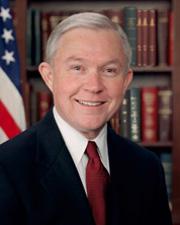 Sen. Jeff Sessions (R-AL)
Legislative Activity
Stay on top of the latest movement without scrolling through every action
Roll call votes on amendments in Senate: Motion to table amendment SA 604 agreed to in Senate by Yea-Nay Vote. 50 - 47. Record Vote Number: 93.
March 10, 2009
View full timeline
Roll call votes on amendments in Senate: Motion to table amendment SA 604 agreed to in Senate by Yea-Nay Vote. 50 - 47. Record Vote Number: 93.
March 10, 2009
Considered by Senate. (consideration: CR S2920, S2924, S2936, S2937-2938, S2942-2944)
March 10, 2009
Motion to table amendment SA 604 agreed to in Senate by Yea-Nay Vote. 50 - 47. Record Vote Number: 93.
March 10, 2009
Senate amendment proposed (on the floor): Amendment SA 604 proposed by Senator Sessions.(consideration: CR S2898-2899; text: CR S2898)
March 9, 2009
Amendment SA 604 proposed by Senator Sessions. (consideration: CR S2898-2899; text: CR S2898) To extend the pilot program for employment eligibility confirmation established in title IV of the Illegal Immigration Reform and Immigrant Responsibility Act of 1966 for 6 years.
March 9, 2009
Senate amendment submitted
March 2, 2009
Votes
1 roll call on this amendment
Text
Proposed
OMNIBUS APPROPRIATIONS ACT, 2009

The ACTING PRESIDENT pro tempore. Under the previous order, the
Senate will resume consideration of H.R. 1105, which the clerk will
report by title.
The assistant legislative clerk read as follows:

A bill (H.R. 1105) making omnibus appropriations for the
fiscal year ending September 30, 2009, and for other
purposes.

Pending:

Ensign amendment No. 615, to strike the restrictions on the
District of Columbia Opportunity Scholarship Program.
Kyl amendment No. 631, to require the Secretary of State to
certify that funds made available for reconstruction efforts
in Gaza will not be diverted to Hamas or entities controlled
by Hamas.
Kyl amendment No. 629, to provide that no funds may be used
to resettle Palestinians from Gaza into the United States.
Kyl amendment No. 630, to require a report on
countersmuggling efforts in Gaza.
McCain amendment No. 593, to prohibit the use of certain
funds provided in the bill.

The ACTING PRESIDENT pro tempore. The Senator from South Carolina.
Mr. DeMINT. Mr. President, everyone is well aware our country is
going through some serious tribulation economically. The whole world,
in fact, is dealing with serious economic troubles.
There are signs of hope in many areas of our economy. I think it is
important for us, particularly those of us in elected office, to
recognize those good things, and that the strength of the American
people will certainly pull us out of this hole, as they have many times
in the past.
Hopefully, what we do here in Washington will help and not hurt. I
think everyone is aware a large part of our recession is the banking
and credit problem. Certainly, if it did not cause it, it made it much
worse, and continues to today.
Unfortunately, the new administration and the Congress have not put
forth any plan to fix our credit crisis, to make our banks work
appropriately. While many of them are calling me to remind me they are
loaning money, they are working, there is still a lot we need to do in
the credit area that we have not fixed.
Unfortunately, the trillion-dollar so-called stimulus plan we passed
only a couple weeks ago--all borrowed money--did not address the
credit/banking problem. It addressed issues that had nothing to do with
the recession. The stimulus provided a lot of additional funds for
education, health care, and infrastructure--a lot of good things. But
those things did not cause our recession, and they are certainly not
going to get us out of it.
I think the failure to bring forth a plan that addresses the real
causes of the recession has many people around the country wondering
what we are thinking. The fact is, what we are thinking is about the
next election and not the next generation. It has become clear we are
not addressing the real causes of the problems but are doing things
that are more politically beneficial than beneficial to our economy.
As we deal with the difficult economic situation, it is almost hard
to see the White House going in a lot of different directions, and some
that are especially painful, particularly the issue of life. The new
President campaigned on reducing the number of abortions, but in the
first month or 6 weeks of his Presidency, he has changed the rule where
now the American taxpayer is funding abortions all around the world.
They put forth an Executive order to strike the conscience clause,
which means we are

[[Page S2875]]

going to require physicians who are opposed to abortion to perform
abortions. That makes no sense at all. When there are physicians who
make a living performing abortions, why should we take a physician who
considers it the taking of a life and force him to do it? Why do we
need to do that in the middle of a recession and the economic problems
we have?

Today, the President reversed a prohibition on Federal funding of
certain types of stem cells. It seems to be opening Pandora's box to
begin the destruction of unborn human beings. His Cabinet nominee for
Health and Human Services has been one of the most radical pro-abortion
folks in the country, having encouraged and protected late-term
abortion and partial-birth abortions. Many people who are not pro-life
believe we certainly should not be performing late-term abortions in
this country. Yet the President seems to be going in a rather radical
direction, in the middle of this economic storm we have. We have to
wonder: What are they thinking?
Today we come to this, what we are calling an omnibus spending bill.
Only 2 weeks after we passed this huge spending bill we called a
stimulus--$1 trillion or more if you add interest and 2 weeks later we
are talking about a bill that is over $400 billion. The Federal
agencies cannot even spend the money as fast as we are throwing it at
them, but now we are here today with this other bill under the pretense
that we have to have this money to make the country operate. Americans
need to know we have been operating under this year's funding through
what we call a continuing resolution, which means we are operating
essentially at last year's budget. The country has been operating
effectively. The reason we are passing this bill is not that we need it
to fund the Government because the Government is funded under a
continuing resolution which we could extend through the end of the
year. We actually need to be about working on next year's budget and
next year's appropriations. That is what we are supposed to be doing
now. Instead, we are going back and creating this new spending bill,
which I consider an ominous spending bill, not so much an omnibus.
What I have in front of me right here is the reason there is such a
rush to pass this additional spending bill. All Americans have heard of
earmarks. These are the earmarks in this spending bill. This is the
reason it has to be passed. Remember, last week they brought it up and
said we had to pass it before Friday or the Government would shut down
and it would just not be right to pass another continuing resolution.
Well, come Thursday, they found out that because the American people
had gotten agitated and outraged and had begun to call and e-mail their
Senators, they didn't quite have the votes to pass this bill last week.
But they will pass it because they have taken over 9,000 earmarks--
special projects--and sprinkled them all around among Republicans and
Democrats in the House and in the Senate. It is hard to vote against a
bill that has a special project in it.
Some Americans have begun to hear a little bit about these earmarks.
I will take the one that is sitting right here on the top of this
stack. Keep in mind we have over 9,000 earmarks for most of the
Congressmen and Senators. Now, a lot of Senators will come today and
talk about how it is wasteful and we should cut the earmarks, but they
will vote for it because a lot of them have already done the press
releases on the money they are taking back home.
I will read a couple on the front page. There is an amount column, a
project column, a purpose, and a location. Then they have the names of
the Congressmen and Senators, but they have struck those. I am not
exactly sure why. The first amount is $200,000 to Providence Holy Cross
Foundation and it is for tattoo removal to a violence prevention
outreach program in Mission Hills, CA. Now, I am sure that is a worthy
cause, but in the middle of a recession, when we are borrowing
trillions of dollars to try to keep this country going and the
President is saying we have to make every dollar count and he is going
to strike every item of waste, what is the Federal Government doing
funding the removal of tattoos?
The second item is $75,000. That is not too bad, although it is more
than most families make in a whole year. It is for the city of Albany.
It is for Totally Teen Zone. This is Albany, GA. This is where they go
and play with Xboxes and things such as that. I am sure that is a fine
thing, but you have to wonder, in these times when we are out of money
as a country, do we need to be involved as a Federal Government with
this kind of thing?
The next item is $400,000 for the University of Montana. It is for
teacher training, curriculum development, and awareness initiatives to
combat bullying as well as the development of emergency protocol for
school shootings--something I am sure is very necessary to combat
bullying in schools; it is certainly something every school has to deal
with. But how can we as a Federal Government send $400,000 to one
university and expect to solve problems all over the country?
Well, the next one is $50,000 to Los Angeles for after-dark gang
prevention. Again, these are all good things, but there is probably no
Senator who has read all of these, but they know the ones that are in
it for them because that is why they are going to be voting for the
bill. The tacit agreement always is, we are going to get the votes to
pass this bill so these 9,000 earmarks--these 9,000 press releases--
will go out all over the country.
Our only hope of stopping this is if the American people continue to
show their outrage and to continue to connect the dots of what we are
doing because we are not doing this to fund the Government. This isn't
about last year's business. It violates every pledge many people here
have run on and certainly the President. If you recall, the President
has said he was against earmarks. When I introduced a 1-year moratorium
on earmarks, he flew back, along with all the candidates for
President--or at least the top three at that time--to vote to have a 1-
year moratorium on earmarks because more and more we are seeing the
damage this is doing to our country. You can pass almost any bill with
any bad policy with almost any level of spending as long as you fill it
with earmarks for people back home.
They are thinking about the next election, not the next generation.
They are not thinking about the families who are hurting because they
are losing their jobs right now because this is much more likely to
cause additional job losses over the next 5 to 10 years than it is to
help create them. So this is the seed. This greases the skids to pass
almost any type of bill. If my colleagues remember, when the first Wall
Street bailout came through the House, it failed. So when the Senate
took it up, what did they add to it to help it get passed? More
earmarks.
Now, we have had several amendments to strike some of these earmarks,
and there have been some heroes on the issue. John McCain has certainly
been on the floor talking about the problems with earmarks he has seen
over the many years he has been in the Senate, and he has one other
amendment that will be on the floor that will basically take all these
earmarks--they aren't in the legislation; they are in what they call
report language off to the side, so it is not seen in the bill that is
on the desk right here. But there is a reference in here to this, and
that supposedly makes it all legal. The Constitution says we have to
appropriate money based on law, which means it has to be in the bill,
but we do everything we can to get around that Constitution and law by
attaching some rider in here that says all these should be considered
as law.
Folks, this is no way to run a Federal government. This is just one
bill; it has nothing to do with the trillions of dollars on Wall Street
and the banking bailout we have been talking about or the $1 trillion
stimulus 2 weeks ago. It is over $400 billion, with over 9,000 earmarks
they wanted to rush through last week, but because of people back home,
some were shamed into saying they couldn't vote for it unless we had a
longer process with more amendments.
Now, this is show. There is already a strategy to kill every
amendment that comes up, so we are not trying to pass an amendment to
strip earmarks. You will see Senator McCain's good amendment, a
commonsense amendment that, in the middle of our financial crisis,
let's us take these and set them aside and pass the bill that funds our

[[Page S2876]]

Government. It is a good amendment, but the decision has already been
made on the other side to kill that amendment unless the American
people can shame a few more into voting against it.

John Ensign has an amendment that will strike some language in the
bill that seeks to discontinue school choice in Washington, DC. It is a
small program--only 1,700 kids are involved with it--but there is a
waiting list of parents who would like another choice. In this funding
bill, this must-have funding bill, they sneak in a little policy such
as that to kill a little bit of freedom in our country that we need to
be expanding to every State, not killing it in Washington, DC.
David Vitter has an amendment that will force Congress to vote on pay
raises for Congressmen and Senators every year instead of what we do
right now. Currently, there is an automatic provision in appropriations
bills that goes through and gives us a cost-of-living pay raise. This
should be done in the light of day. Right now, we can say we didn't
vote on a pay raise, and we didn't because it was set up years ago to
be automatic. So at a time when many Americans don't have work and some
are taking pay cuts to keep their job, Senator Vitter's idea to be more
transparent in what we do in Washington makes a lot of sense.
The President has promised change. Our growing concern is that the
biggest change so far in Washington has been in him. We want to support
him as much as we can. He did say he would stop this practice of
earmarking, but he is looking the other way on this bill. He is saying
he supports it. He could veto this bill and send it back to Congress
and tell us to get rid of these earmarks. He could keep his promise and
he could force us to change. But right now, this stack of earmarks is
so addictive that the Congressmen and Senators who have these projects
that they are so proud of back home are not going to vote against the
bill. You could double this bill to $800 billion, and I am pretty sure
it would pass anyway, as long as it had these earmarks in it.
Folks, as Senator Coburn from Oklahoma says, earmarks are the gateway
drug to this runaway spending we have in Washington. We are spending
our children and grandchildren into such a hole it is going to be
almost impossible for them to get out. We are almost guaranteeing them
a lower quality of life than we have had, as we borrow more and more
money from other countries, as we print more and more money, and as we
spend more money as a government than we ever thought possible.
This is the time when we need to stop this runaway spending. An
amendment will be on the floor to strike these earmarks and to continue
to fund the Government through the rest of the year. The other side
doesn't want any amendments passed because that would mean we would
have to go back and work with the House on a final bill. They want it
to go through amendment free. It is up to us to make sure the American
people know what is in this bill before we vote on it. That is the
whole point of extending the debate. My hope is we will have 2 or 3
days to make the American people more aware of what is in it and, even
more importantly, what is in this stack of earmarks, which is the
reason this bill is being rushed through the Senate.
I thank the Chair, and I yield the floor.
The ACTING PRESIDENT pro tempore. The Senator from California is
recognized.
Mrs. FEINSTEIN. Mr. President, I came to the floor to oppose two
amendments, the Ensign amendment and the Barrasso amendment. However,
before doing so, because my distinguished colleague from South Carolina
spoke about the horrible earmarks, I wish to present my point of view.
I come from the largest State in the Union.
We are about 38 million people. In population, we are bigger than 21
States and the District of Columbia put together. We have 10.1 percent
unemployment. We have 1.86 million people unemployed. That is more
people unemployed in California today than are people in 14 States in
the United States. We have increasing wildfires. We have decreasing
water. We are the largest agricultural State in the Union--a $40
billion agricultural industry. For the great Central Valley south of
the delta, the water allocation for this year is zero. We are a State
that is in great need of infrastructure repair. The great North Delta,
which provides the drinking water for 16 million people in my State, is
subject to collapse. Levees collapse. We have major problems with
collapsing sewers, bridge repair--Doyle Drive going onto the great
Golden Gate Bridge is in high susceptibility to coming down in an
earthquake. I could go on and on.
I have been, for 14 out of the 16 years I have been here, on the
Appropriations Committee. Yes, I fight for funds for my State. That is
what I came here to do. I want my earmarks, which are congressionally
added spending, to be transparent and be out there for the world to
see. If I make a mistake, I will change the mistake. But I want to help
my State; otherwise, why do I come here? I cannot guarantee that the
President of the United States, with all he has on his desk, is going
to take care of California's needs. That is what I am here for; that is
what I became an appropriator to do. And to handcuff what is a coequal
branch of Government--remember, we have three branches of Government
and they are coequal under the Constitution. To say that I am going to
represent this great State, the seventh or eighth largest economic
engine on Earth, and not help its infrastructure, not help provide for
the needs of its people as somebody who sits as an appropriator--
something I don't want to do. Candidly, why be an appropriator if you
can't help your State? If you have to depend on a President who may
want to ignore your State--that has happened in the past, and it can
happen in the future.
So I think all of this dialog is misplaced. If I can't fight for my
State, if I can't help my State, if I can't see that there is money for
sewers and money for water reconstruction and where education needs are
vital--and a State that had a $42 billion deficit and was almost ready
to collapse because it could not come to agreement on the terms should
be made worse off because I can't do anything to help my State or
Senator Boxer can't do anything to help our State?
So I look at this as a way to reduce spending, no question about
that, but also to create a more powerful precedent where the Congress
is less able to add vital projects. Supposing a President has a bias
against a given project. There is nothing, then, that an individual
Senator or House Member or the House Members as a whole or the Senate
as a whole can do about it. We make ourselves impotent as a coequal
branch of Government if there is no ability, where necessary, to add to
the budget.
Now, it has been said that earmarks have greatly declined--and they
have--and it has been said by some that they will be limited to 1
percent of the budget for the next year. I have no problem with that. I
think that ought to be announced now. I am prepared to do that in the
Interior budget. But we have to know what the rules are when we do the
appropriations bills. What happens is, we do the appropriations bills,
and then they come out here and run into this kind of opposition. I say
set the rule ahead of time, decide earmarks are to be a certain part of
the budget. They have been ratcheted down over the years. Continue to
ratchet them down and set a percent, so every one of us who is chairman
of an appropriations subcommittee knows exactly what we have to work
with.
Quickly, let me speak to two amendments--one that has been presented
on the floor and one that hasn't but will be. The one that has been
presented on the floor is the Ensign amendment, No. 615, on DC
vouchers. I wish to speak on that and the Barrasso amendment, No. 637,
on oil and gas drilling permits.
Here is another situation we are in. If the Senate approves either of
these amendments, or any of the other 10 to 12 amendments now pending,
this omnibus bill dies. The bill has been passed by the House. The
House said they will take no amendments. The bill is over here, and we
have a number of amendments being presented, many of which some of us
would like to vote for, but we cannot. The Ensign amendment is one of
those amendments for me.
If the omnibus bill dies, you then fund the Federal Government for
another year. It has already been funded

[[Page S2877]]

for 6 months out of a continuing resolution. This year is already 43
percent gone. This means no agency has been able to start a new
program, and funding levels have been frozen at fiscal year 2008 levels
since October 1, 2008. As a matter of fact, we have paid for 1.2
million Federal executive branch employees. It is increased 3.9 percent
in January of this year. The money for that is in this omnibus bill. If
the bill doesn't pass, I suppose it has to be added to a CR, and other
things would have to be added to a CR as well. But I believe we should
pass this bill.
Let me speak for a moment about the Ensign amendment. I have
supported the pilot program that provides vouchers on a pilot basis in
Washington, DC, since its inception 5 years ago. I believe I was the
deciding vote. This was added to an appropriations bill. I thought long
and hard about it and decided to support it. I am prepared to continue
to support this if the comprehensive evaluation, due this spring, shows
that the program has value and students are improving.
I believe in my heart of hearts that public education must
fundamentally change. It must move away from the large, institutional-
type school into the smaller, more personal setting where teachers can
spend more time with students and their families, particularly in a
student's younger, habit-forming years. I don't believe youngsters from
lower income families should be denied the opportunity to learn in
these smaller, more personal settings.
We have huge schools in California. Some have thousands of students
and hundreds more than should be in any one school. The Washington, DC,
scholarship program is a 5-year pilot program to determine whether low-
income students do, in fact, learn more and learn better in the area's
private and parochial schools. Forty-nine schools, private and
parochial, are included; 1,700 students are participating. They come
from families under the average income of $23,000. They receive a
Federal stipend of $7,500 a year to make their education in the private
or parochial school possible, and the appropriation is $14 million a
year.
I believe we need different models for children to learn. Think of
it--this country is so diverse, so many different people, so many
different languages, so many different cultures. Yet there is one
institutional type--public school. That is the model that is followed.
I don't understand why there can't be different models. I believe there
should be.
So far, preliminary evaluation by the U.S. Department of Education
Institute of Educational Sciences has shown some academic gains in
reading and math. When these students entered the program, they were
performing in the bottom third in reading and math tests in DC's public
schools. Last year's evaluation, as I understand it, showed that the
reading test scores of three subgroups of students, representing 88
percent of students receiving a scholarship, were higher by the
equivalent of 2 to 4 months of additional schooling. These academic
gains, again, are despite the many challenges these children face
outside the classroom, coming from families where the average income is
$23,000.
I believe the results of the more comprehensive evaluation are
critical, and we expect to have those results this spring. I look
forward to learning more in the months ahead on how students are
performing overall in the program and the impact it has had.
In closing, I believe the debate over the DC Voucher Program is an
important one. It is a valid one, and we should discuss it and debate
it on this floor. But this bill is not the place to do it. If I were to
vote yes and others were to vote yes, it would kill this bill, and we
all know that. Simply stated, the House will not accept it. So I
believe the debate is for another time. I regretfully will have to vote
no on this amendment.
As chairman of the Appropriations Subcommittee on Interior, I also
want to oppose the Barrasso amendment. The 2009 Interior appropriations
bill, as written, carries a provision that allows the Bureau of Land
Management to recoup the cost of processing over 9,000 oil and gas
drilling permits that were filed this year. Now, appropriations bills
are replete with user fees, so this is nothing new. In fact, the
language we are carrying in the omnibus bill is the same as what was in
the 2008 bill and mirrors the proposal put forward by the Bush
administration for the past 2 years. This language simply says to the
oil and gas companies: If you are going to drill on public land, you
need to cover the cost of processing your permit. For fiscal year 2009,
the fee is $4,000 per permit. It is used to pay for the necessary
environmental analysis that must be done before a permit can be issued.
The $36 million raised through this fee is but a drop in the bucket
compared to what these companies are getting. Listen to this: 23,293
active leases produce 108 million barrels of oil, 3 trillion cubic feet
of natural gas, and 2 million gallons of liquid natural gas. In 2008,
that resulted in $34.9 billion in revenues to oil and gas companies.
From that, they pay $4.2 billion in royalties, leaving the companies
with $30.7 billion. Out of that substantial sum, what we are asking the
companies to do is pay $36 million in permit costs for environmental
analyses and the processing of the permits. That is less than one-
eighth of a percent or, to be precise, .12 percent to offset
administrative costs.
I want to ask you to consider this: From 2003 to 2007, the revenue of
the oil and gas industry increased by 63 percent, from $1.1 trillion to
nearly $1.9 trillion. At the same time, industry profits net income
more than doubled, increasing from $72 billion to more than $150
billion during this time period.

This is not an industry that is in need of a special break. As a
matter of fact, one of these companies is a corporation that has made
the greatest net profit of any corporation in our Nation's history.
These companies are well off. They can afford to pay the permit costs,
and I believe they should.
The amendment proposed by the Senator from Wyoming strikes the cost
recovery of the permit process and leaves the Federal Government and
ultimately the taxpayers responsible for paying all of the
administrative costs. I think that is fundamentally wrong.
Furthermore, the industry would cause the Interior bill to exceed the
subcommittee's spending allocation. Right now, our bill complies with
the allocation we have been given, but striking the cost recovery fee,
the Barrasso amendment would put the Interior bill $36 million over its
allocation. I understand a point of order will be made against the bill
at a later time.
That concludes my comments. I yield the floor.
The ACTING PRESIDENT pro tempore. The Senator from Tennessee.
Mr. ALEXANDER. Mr. President, while the Senator from California is
here, I wish to acknowledge her role in helping to create the DC
voucher program for low-income children. It was not an easy vote for
her. I listened to her remarks as I have before about the importance of
trying new ideas in American public education. The new Secretary of
Education, Arne Duncan, who I think is one of the President's best--
maybe his best--appointments, believes the same thing.
I look forward to working with the Senator to see what the study,
which comes out this spring, says about the first few years of this
program. We know parental satisfaction is high.
Mrs. FEINSTEIN. Mr. President, will the Senator yield to me?
Mr. ALEXANDER. Yes.
Mrs. FEINSTEIN. I know he is under a time agreement. I say to the
Senator through the Chair, I really do look forward to working with
Senator Alexander. This is very important. I so regret some of the
pressures that are brought upon this program. I am so pleased he and I
agree these children should have different models to choose from in the
public educational arena.
This Washington Scholarship Program, I think we both believe, can go
a long way, and hopefully the findings will be positive. I look forward
to working with the Senator from Tennessee as well. I thank him for his
comments.
Mr. ALEXANDER. Mr. President, I thank the Senator. We do agree on
that. The one area with which I respectfully disagree is that this was
not the bill to put on restrictions and conditions to make sure the
program ends. That is the reason we have an amendment, because someone
thought it was

[[Page S2878]]

important to say that the program needs to end unless it is approved by
the DC City Council which, unlike the Mayor, opposes the program. That
is why we have an amendment.
Unfortunately, the circumstance we have is, unless we take very quick
action in the Congress, the 1,700 children who are part of this program
will not be a part of it after another year. The program will shut
down. It is beginning to do that now, and it will not be accepting new
applications.
I also regret that the amendment is being offered, but that was
necessary because of the restrictions and the conditions that were
placed on the scholarship program in the omnibus. But that does not
change my attitude about working with the Senator from California to
look to the future.
Mr. President, I ask that I be notified when 9 minutes is completed.
The ACTING PRESIDENT pro tempore. The Chair will so notify.
Mr. ALEXANDER. I thank the Chair.
(The further remarks of Mr. Alexander are printed in today's Record
under ``Morning Business.'')
The ACTING PRESIDENT pro tempore. The Senator from Connecticut.
Mr. LIEBERMAN. Mr. President, I happened to be on the Senate floor. I
thank my friend from Tennessee for his statement in regard to the time
and difficulty it takes to confirm nominees for higher office in a new
administration.
I will tell my friend what he may well know, which is, under the
leadership of one of his predecessors, Fred Thompson, a former Senator
from Tennessee, our committee attempted to grapple with this problem. I
think we made some progress but obviously not enough.
I will be glad to discuss the Senator's proposal with Senator Collins
who is always ready to lead a gang in a good cause.
I thank my friend from Tennessee.
The PRESIDING OFFICER (Mrs. Hagan). The Senator from Connecticut.

Amendment No. 615

Mr. LIEBERMAN. Madam President, I rise to speak in favor of the
amendment which I have cosponsored to the legislation before us, the
one with Senator Ensign and others. I believe it is amendment No. 615.
This amendment would strike language currently in the omnibus bill
before us that is crippling to the DC Opportunity Scholarship
Program. The language we seek to strike terminates the OSP program
unless a reauthorization bill is passed by Congress and the DC Council
prior to the 2010-2011 school year. So the language I have offered with
Senator Ensign would strike the language that terminates the District
of Columbia Opportunity Scholarship Program.

Madam President, quoting from title IV of the underlying bill, it
says:

. . . use of any funds in this Act or any other Act for
opportunity scholarships after school year 2009-2010 shall
only be available upon enactment of reauthorization of that
program by Congress and the adoption of legislation by the
District of Columbia approving such reauthorization.

In narrative language attached to the report, it says:

Funding provided for the scholarship program shall be used
for currently-enrolled participants rather than new
applicants. The chancellor of the District of Columbia Public
Schools should promptly take steps to minimize potential
disruption and ensure smooth transition for any students
seeking enrollment in the public school system as a result of
any changes made to the private scholarship program affecting
periods after school year 2009-2010.

That is a quote from the underlying measure which the amendment of
Senator Ensign and I and others would strike.
Madam President, the language, in my opinion, is unnecessary, in some
sense it is gratuitous, as is the narrative language, which essentially
says to approximately 1,700 low-income students in the District of
Columbia who are benefitting from this program: Get ready for it to
end. I think substantively this is terribly wrong, but I think
procedurally it is wrong to include such a measure in an Omnibus
appropriations bill that we are being asked to pass without amendment.
I understand that request, but it is harder to respond to that request
when we are asked not to amend something that is not necessary as part
of the Omnibus appropriations bill. It is an unnecessary and, I would
say, gratuitous attempt to undercut this DC Opportunity Scholarship
Program before the evaluation of the benefits of the program for the
students involved are in and in total contradiction of the enormous
amount of money we appropriate every year without authorization for a
host of different programs.
That is the summary of why I support this amendment. I would come
back to say that the DC Opportunity Scholarship Program was created as
part of an agreement--a kind of grand bargain that occurs here
occasionally. A lot of people were opposed to these so-called vouchers,
but an agreement was made--a kind of tripartite agreement--which said
we would give, at that point, as I recall, an equal or slightly greater
amount of money to the public school budget for the District of
Columbia, to the charter school budget for the District of Columbia,
and to the DC Opportunity Scholarship Program, which allows low-income
students in the District to basically get a scholarship to go to a
private or religious--faith-based--school. I think in that agreement
there was the essence of what this is all about: Education is not about
protecting a particular system for the sake of the system, it is about
how we best educate our children.
I don't think anyone can say all our public schools are doing the job
that is so fundamental to our society; that of educating every one of
America's children so every one of them has an equal opportunity to
rise as far as their talents and hard work will take them. Some of them
are not getting a quality education in the public schools they are in.
Of course, as a societal goal, we should try to make sure every public
school in America is prepared to give every child that equal
opportunity to a first-class, world-class education. But that is not
the reality now. Suffering most of all are the poor children--often
children of minorities, either African American or Hispanic.
As one response to this dilemma, while we are working on so much
else, there has been an attempt in some parts of the country--Ohio, I
believe Wisconsin, and here, through congressional action the District
of Columbia--to create a lifeline for some of the children whose
parents want them to go to another school than the one they are going
to. As studies have shown, most Members of Congress send our children
not to public schools but to the private and faith-based schools
because we can afford it. This program says to the parents of children
of the District of Columbia--a limited number--you have the same right,
if you think the public school your child is in is not now giving them
the kind of high-quality education your child needs to realize his or
her dreams.
So far the evaluations of students who have benefitted or taken
advantage of this program have been quite positive. Final evaluation is
coming this spring. I guess one evaluation is that every year this
program is oversubscribed. In other words, there are many more parents
of children in the DC school system who aspire to a scholarship to go
to a school their parents feel is better. So why put in this omnibus
bill a demand or requirement that there needs to be an authorization
for this program to continue and adoption by the District City Council?
Why do that, when so many programs are appropriated without
authorization?
I read from a CBO report--Congressional Budget Office report--dated
January 15, 2009, titled ``Unauthorized Appropriations and Expiring
Authorizations,'' and on page 2 of that report it says:

In recent years, the total amount of unauthorized
appropriations reported by the Congressional Budget Office
has ranged between $160 billion and $170 billion.

Unauthorized appropriations every year are between $160 billion and
$170 billion. How much money do we appropriate for the DC Opportunity
Scholarship Program? Fourteen million dollars. That is million with an
M. So why are we singling out the $14 million dedicated to providing
school choice to low-income students in the District of Columbia for
such a demand, such a requirement? I don't think it is fair. I don't
think it makes sense. I think it is an attempt to put into this bill a
kind of obstacle that the sponsors of it don't think can be passed, and
particularly to do it on a measure in which we are

[[Page S2879]]

asked to oppose all amendments is just plain impossible to accept.
The average household income of the families in the scholarship
program in Washington is less than $24,000. So how in good conscience
can we tell parents in the District they are going to be denied the
resources to do what they believe is best for their children, when so
many of us make the very same decision regarding the education of our
own children? The DC scholarship program comes from our Nation's
fundamental commitment not just to opportunity but to equal
opportunity, so each and every American child is able to develop their
God-given talents to the fullest extent based on their own willingness
to work hard. We can't let the realization of that promise be
jeopardized by the language in this bill.
There was discussion on the DC Voting Rights Act of this DC
Opportunity Scholarship Program. Those who were going to amend that
bill withdrew it in a colloquy in which two things happened: First, as
chairman of the Homeland Security and Governmental Affairs Committee, I
committed to holding hearings this spring, hopefully after the final
evaluation of this program comes out--an independent evaluation which
will allow us to fairly evaluate it before we act in any way. Why our
committee? It happens that Governmental Affairs' jurisdiction--
traditional historic jurisdiction--includes jurisdiction over the
District of Columbia. I am open to proposals to improve the standards
in administration of the program and will probably propose some of my
own. But I believe the restrictive language in this bill, this Omnibus
appropriations bill, is so damaging to the Opportunity Scholarship
Program and to the lives of these 1,700 children that it should be
removed.
I was very encouraged that our new Education Secretary, Arnie Duncan,
said as much himself, when he said it would be particularly unfair to
stop this program appraisal and the funding of it by Congress for the
1,700 students who are in it now.
There was a second promise made, which was from Senator Reid, the
majority leader, which I greatly appreciate; and that was that at some
point this spring there would be floor time given to a debate on the
merits of the Opportunity Scholarship Program in the District of
Columbia. So why jump ahead of that with this restrictive language in
this underlying bill?
I would add this, finally. This is all about children, about the
future of our children. It is not about protecting the status quo, it
is not about teachers' rights, it is about giving kids a chance to make
their way forward and ultimately improving our public schools so they
are all as good as we want them to be.
I was raised with a quote that may seem irrelevant to this, but I
think it is relevant. It came from religious sources. It was that if
you save one life, it is as if you saved the whole world. What did that
mean? I was taught it meant if every individual--and I am looking at
these great pages of ours, young men and women with all sorts of
promise that just radiates from them--if you saved the life of one
person, all the promise, the possibilities of what that young man or
woman would do in life will be saved, and they, in effect, can change
the world.
When I heard that years ago, and I thought of saving a life, I
thought of protecting somebody from danger or a doctor who saved the
life of a patient. But I will tell you that a good education in our
country today makes so much of a difference between whether a person
will have a real life in this country, full of opportunity and
satisfaction and self-sufficiency or whether the person will always
feel slightly behind the ball and always feel slightly unable to do
what one has to do in this society to make it.
So this DC Opportunity Scholarship Program says we can save lives by
giving kids a choice, giving parents a choice to send their children to
the school they want to send them to because they think it will be
better for the child than the public school the child happens to be in
now.
As I mentioned in the beginning, this was part of a tripartite
agreement that gave money to public schools in the District, charter
schools in the District, and the DC Opportunity Scholarship Program. In
this budget this year, those numbers are $20 million for the public
schools here in the District, $20 million for the charter schools, and
$14 million to opportunity scholarships. I say to my friends who seem
to have this wonderful DC Opportunity Scholarship Program in the
crosshairs, that if this is followed through on, the danger here is
that other Members of the Senate and Congress will rise and eliminate
the extra funding for the DC public schools and the charter
schools. That would be a shame three times over. That is why I am so
proud to stand with Senator Ensign and others to try to strip this
language from this bill so my committee can go ahead and hold a hearing
this spring and we can bring a bill out to the floor this spring and
have a full debate based on the final evaluation that an independent
group will do. It is in the process of doing that, finishing the report
now.

I understand there are colleagues, like my friend and colleague from
California, Senator Feinstein, who just spoke before, who support the
DC Opportunity Scholarship Program, and she has worked so hard to make
this happen. I have the greatest admiration for her for doing that--and
so much else she has done in her public life. She will not vote for
this amendment of ours because she does not want to jeopardize the
underlying Omnibus appropriations bill.
I understand that, and I understand that is probably why the
amendment Senator Ensign and I and others have sponsored will not make
it. But it is an important cause for which we are fighting. I think it
is important that the vote on the amendment occur and that it serve as
a kind of preface to the full-scale debate we will have this spring on
this critically important and innovative and I think effective program
that is changing the lives--as I took the liberty to say, saving the
lives, creating a future--for 1,700 children, and hopefully more in the
years ahead, who live in the District of Columbia.
I yield the floor.
The PRESIDING OFFICER. The Senator from Kansas is recognized.
Mr. ROBERTS. I thank the Presiding Officer and ask that I be
recognized for 15 minutes, and I ask unanimous consent that Senator
Vitter be recognized to speak following me, after my 15 minutes.
The PRESIDING OFFICER. Without objection, it is so ordered.
Mr. ROBERTS. Madam President, in the midst of this debate on the $410
billion omnibus spending package, the Finance Committee heard from
Treasury Secretary Geithner as part of the committee's annual review of
the President's budget. This is a very ambitious budget, particularly,
coming on the heels of this omnibus package. It seems as if we have one
huge bill after another--TARP, omnibus, stimulus, and now budget.
For the first time we are looking at a budget that tops $3.6
trillion. At a time when many families are struggling, this budget asks
them, to support Federal spending on new and very questionable programs
and higher taxes to support those programs. We ought to be
concentrating instead on the scope of the economic recovery package,
not on these other programs--which I will go into in just a moment.
I also want to help set the record straight with regard to the
Federal deficit. If we are ever going to achieve any progress, and with
some bipartisan support, then we ought to quit looking in the rear-view
mirror and citing some statistics that do not add up. Facts are
stubborn. Since the new administration took office, we have heard a
persistent drumbeat from the majority about the legacy of debt that
they say they have inherited from the previous administration. The
President did inherit a significant debt, but to say it was solely a
result of Republican policies and those of the previous administration
is simply not telling the full story to the American people Or, as the
late great Paul Harvey would say: ``Now the rest of the story.''
I borrowed this chart from Senator Grassley, the ranking member and
previous chairman of the Finance Committee. It shows the deficit as a
percentage of GDP over the past 8 years. It begins with the economy
that the previous administration inherited. The deficit levels for
those earlier years of the decade reflect the downturn in the economy,
the burst of the tech and the impact of the 9/11 terrorist attacks on

[[Page S2880]]

the economy. However, the deficit levels came down when we had
bipartisan support for tax relief--not tax cuts, tax relief--that was
passed in 2001, 2003.
Look at what happened. The deficit shrank noticeably between 2004 and
2007, from $413 billion in 2004 to $163 billion in 2007. Nobody ever
talks about that.
If you really wanted to get somewhat partisan, you could point to the
fact that we were not in power then in 2007. That is when the majority
took over. But I am not into that. It doesn't make much difference. It
seems to me we should quit looking in the rear-view mirror and look on
down the road with what we do for economic recovery.
In other words, under the policy of the previous administration, the
deficit shrank by more than half during this period from 2004 to 2007.
Those are the facts. It was not until 2 years ago, when Democrats came
to power in Congress, that the deficits began to increase again. The
spending spree over the past 2 years was led by the majority who wrote
and pushed through a $700 billion financial bailout bill that has
contributed significantly to the deficit the country now faces.
This bill, I will be very fair about it--this bill was bipartisan. It
had the support of both Democrats and Republicans in the Congress, and
a Republican President. As a Member of the Senate at that time
President Obama supported the bill. When we talk about the deficit that
the country is facing, let's keep this in mind. Again, we cannot keep
looking in the rear-view mirror with facts that are misleading if we
wish to achieve bipartisan progress in addressing the deficit.
The American people are very fearful, if not fed up, with the current
rampant and unceasing spending that is going on in Washington--$700
billion to bail out financial firms that are too big to fail--with more
requests for assistance expected; a $250 billion placeholder is
provided in the President's budget; a questionable stimulus bill that
will cost $787 billion--more than $1 trillion, when you add in
interest; and there is a $410 billion omnibus bill and a $3.6 billion
budget proposal. They simply want to know, and I think every Senator
here wants to know as well, where does it end? When will we have spent
enough and how on Earth are we going to pay for it? Is it going to
work? Those are the questions.
At least a partial downpayment for this spending is included in the
budget. The President has returned to the tried and true majority
playbook to pay for more spending by simply raising taxes.
I take issue with the statement that the tax increases in the
President's budget will be borne primarily by those families who earn
over $250,000--the ``not one dime'' argument. This budget raises taxes
on small businesses, the Nation's job creators. It passes on the cost
of a cap-and-trade--or as I see it a cap-and-tax--system, not only to
businesses but to consumers in the form of higher prices for energy. To
my way of thinking, nobody has explained to this Senator how that is
going to work or if we have the technology to make it work. It may be
desirable, but I have yet to see how it is going to work or the
technology.
The budget raises taxes on domestic energy producers. It raises taxes
on investments. American consumers and families will pay higher taxes
under this cap-and-trade proposal.
The counter argument is that they are targeting what they have
determined are the wealthy to pay for their spending priorities. I
always said I wonder when it would be time for those in Congress who
believe this is the way to do things to determine who is rich or who is
not. That is called class warfare in my view, but that is another
speech and another story.
In other words, most Americans do not need to worry about these tax
increases because it will not affect them, it will only affect their
neighbor. I have yet to see a tax imposed on one set of taxpayers where
the cost was not ultimately passed on to someone else. We are all in
this economy together, and a tax increase on one neighbor is likely to
be felt by the guy next-door.
The President's budget includes several of what I call anthill
issues. These were the issues I discussed with Secretary Geithner.
The reason I call them anthill issues is you do not want to be giving
a speech, or standing on an anthill--and I have had that experience,
with a fellow Senator in Kansas, where she was standing on an anthill.
I suggested she move. She said she was happy where she was. And I said:
I don't think you will be in about 2 or 3 minutes. That was the case
and she moved.
I have read with interest over the past few days the comments from
several of my Democrat colleagues who have expressed the same concerns
I have about these so-called anthill issues, those that bite, and that
is a good sign. One anthill issue proposal would increase revenue by
reducing the amount of mortgage interest that homeowners who pay taxes
in the top brackets can deduct. At a time when the Federal Government
is taking unprecedented steps to shore up the housing market and make
home ownership possible for qualified homeowners, it seems
counterintuitive. That is a Senate word, ``counterintuitive.'' ``It
seems like we shouldn't be doing this.'' Those are the real words. It
seems counterintuitive, to say the least, to reduce an inherent
incentive in the Tax Code to own a home.
Does it make sense to tell these families who have lived in their
home for 10 to 20 years that they can no longer deduct their mortgage
interest? And what does reducing the mortgage interest deduction mean
for the value of their home? We have already heard concerns that
limiting the deduction would further depress home prices. What message
does it send to families who may be looking to purchase a home right
now, which I thought was the goal.
I do not know how the administration can, on one hand, provide
billions of dollars to aid housing, including a $75 billion plan that
Secretary Geithner announced a few weeks ago, to help those who have
bought homes they can no longer afford and aid homeowners who are
underwater in their mortgages but, on the other hand, reduce the tax
incentive for those earning over a certain amount and who own or are
looking to buy.
The second anthill proposal targets contributions to charitable
organizations. I don't know who thought this up. In this economic
climate, many charitable organizations are being asked to do more with
less while donors tighten their belts, while at the same time more
people are turning to charities for assistance. Yet this budget not
only raises income taxes on those in the top two tax brackets, reducing
their discretionary income from which they can make charitable
contributions, it also reduces the value of the deduction for
charitable contributions for these taxpayers. Clearly, these changes
will not bring a halt to charitable giving. I know that. But won't it
reduce contributions to charities when more Americans are relying more
on charitable assistance? Won't the cost of a decline in charitable
giving be borne by those most in need of assistance?
Secretary Geithner, in testimony, says an estimated $4 billion loss
is ``modest.'' I do not agree with that. I suggest that a $4 billion
loss to charitable organizations around the country is not modest. Why
would the administration create any disincentive that will reduce
donations to charity?
Finally, the third anthill issue targets certain small businesses for
tax increases. This is a point I want to underscore. In Kansas, we have
over 60,000 small businesses which make up 97 percent of the State
employers.
They are the leading job creators.
The budget reinstates the 36 percent and 39.6 percent--might as well
make it 40 and 41 when you count the deductions that will not be
included--in income tax rates for individuals earning over $200,000 and
for families earning over $250,000, reinstates the personal exemption
phaseout, and limits the benefits of itemized deductions for these
taxpayers.
These increases will result in higher taxes on many small businesses.
I know supporters of the wealth redistribution in the budget say it
does not raise taxes on that many small business owners. But the
National Federation of Independent Business data shows differently. The
data shows that 50 percent of the small business owners who employ 20
to 249 workers would fall into the top two brackets. And over half of
the Nation's private sector workers are employed by small businesses
with 20 to 500 employees.

[[Page S2881]]

Small businesses in Kansas feel they are stressed to the limit and
they worry that to pay the additional taxes proposed in this budget--
and this is the real world, this is the reality, this is the law of
unintended effects that we always fall into--means they are going to
have to lay off workers, reduce wages or benefits, or pass these costs
on to their customers. None of those are good options.
Let me say that tomorrow we are set to pass this $410 billion omnibus
spending bill. I am going to oppose this bill. I do not like doing so,
but I am going to oppose this bill. There are a lot of things wrong
with this bill. And it is clear, it seems to me, that we must--we
must--get a grip on Federal spending because in a few weeks we will
take up the budget proposal for next year.
If there is a silver lining in the President's $3.6 trillion budget,
it is that the tax increases would not take effect until 2011,
reflecting the administration's acknowledgment that raising taxes when
the economy is in crisis is not a good idea.
Thus, it appears that the administration expects that the economy
will be recovering by 2011. I hope so. And that certainly would be good
news. I hope the administration will use caution when determining if
the economy is sufficiently recovered to withstand nearly $1 trillion
in new taxes in 2011.
I hope they will consider stepping off the anthills I have mentioned:
limiting deductions for charitable giving, mortgage interest, and tax
increases on small businesses. I hope they will not insist on pursuing
their spending agenda at the expense of economic recovery. To forestall
recovery in order to pursue their tax and spending agenda is simply not
right.
As the eminent columnist Charles Krauthammer wrote in the Washington
Post last week with regard to the President's proposed budget:

The day of reckoning has arrived. President Obama has come
to redeem us with his far-seeing program of universal,
heavily nationalized health care; a cap and trade tax on
energy; and a major federalization of education with
universal access to college as the goal.

Wow, that is an ambitious agenda. However, pursuing this through
higher taxes and bigger Government is not a legacy I think the
administration will want to pass on to future Presidents or to future
generations.
That is the rest of the story.
I yield the floor.
The PRESIDING OFFICER. The Senator from Louisiana is recognized.

Amendment No. 621

Mr. VITTER. Madam President, the distinguished Senator from Iowa, Mr.
Grassley, is on his way to the floor to discuss the same issue I will
be discussing, so in light of that, I ask unanimous consent that
immediately following my remarks he be recognized for 10 minutes.
The PRESIDING OFFICER. In my capacity as a Senator from North
Carolina, I object.
Mr. VITTER. I ask unanimous consent to be recognized for 20 minutes
instead of my initial 15.
The PRESIDING OFFICER. Without objection, it is so ordered.
Mr. VITTER. I stand to discuss my amendment to the omnibus spending
bill, No. 621. My amendment would do something very simple and
straightforward but important. It would change the present system which
has been on the books since 1989 that puts annual pay raises for
Members of Congress on autopilot, so there never has to be any
inconvenient debate, any inconvenient votes whatsoever. They happen
automatically. No votes. In fact, there is not even a line item in the
appropriations bills about it.
My amendment would change that, would end that law to require that
any pay raise for Members of Congress, House or Senate, would have to
be debated in open before the public and then be followed by a rollcall
vote.
I am honored to be joined by several Senators who support this idea
and who have long tried to advance it. Senator Feingold has a stand-
alone bill, as do I. He has had it for several years. I certainly want
to recognize his leadership and thank him for that. He is an original
cosponsor of my amendment. Also Senators Grassley and Ensign are
original cosponsors of my amendment and our stand-alone bill.
This system of automatic, autopilot pay raises is offensive to the
American people. Let me mention an experience I have had recently in
Louisiana in the last several weeks. I have had well over a dozen
townhall meetings, as I do on a regular basis all around the State.
This past Friday I had two. The week before that during our recess week
I had 12 all around the State.
As I went to parishes all around the State, smaller communities,
Hahnville and Lake Providence, and larger places such as Gonzales in
the Greater Baton Rouge area, I was struck by a message that came
across loudly and clearly. The message was not about any one narrow
issue, the message was the tone of all of those meetings. Because
without exception, meeting after meeting after meeting, folks expressed
not just concern, not just anxiety, folks expressed real anger about
what was going on in our country, to our country; what was going on
here in the Halls of Congress in Washington, DC.
If I had to summarize the tone I heard at these meetings, not
directed at me because they knew my voting record, but directed at what
is going on here in this city, the tone was, to quote that movie from
several years ago, ``Network'': I am as mad as hell and I am not going
to take it anymore.
That was the tone over and over and over again. And why was that?
Well, it is pretty simple. People see their 401(k)s cut in half, people
see their life savings dwindling every day. People are facing, in some
cases, real crisis in their lives: losing jobs, losing homes, with it
losing crucial things such as health care.
And yet up here in Congress, a majority in Congress rolls along with
policy they view as enormously irresponsible, and in some cases,
downright offensive. One thing they point to as downright offensive is
this system of pay raises for Members of Congress being on autopilot,
happening every year without the need for any inconvenient debate,
without the need for any inconvenient vote, the system that has been in
place under the law since 1989.
My amendment would change that. It would simply say: We want to have
a raise, we need to talk about it, we need to justify it out in public,
in the open, have that open debate, and then have an actual vote on the
floor of the Senate, on the floor of the House, and have a full, open,
recorded rollcall vote.
That is the way we should do it whenever we debate the issue and
consider the issue. That sure as heck is the way we should do it in the
midst of a horrible recession, what will only surely be the worst
recession we have faced as Americans since World War II.
In this omnibus spending bill, we do have a provision to forgo the
one raise coming next year, and I applaud the leadership of the House
and Senate for at least agreeing to that and inserting that in the
underlying bill. That is the least we could do. We should have done
that last December as well.
We have been suffering this horrible economy for several months. We
have seen the financial collapse in September. The economy continued to
go down and down and down and yet still under this system, Congress had
a significant $4,700 raise. So we should have done it then too. But at
least this bill does it next time.

But, quite simply, that is not good enough. What is truly fair to the
American people is to do away with this system altogether, to get these
issues out in the open for public debate whenever we want them to come
up and demand a rollcall vote on the issue.
That is what my amendment would do, purely and simply. My amendment
is supported by Senators Feingold, Grassley, and Ensign. I urge
Members, Democrats and Republicans, to support this commonsense
reasonable amendment that the American people surely support
overwhelmingly.
In closing, let me say, in supporting this amendment, be aware of a
lot of diversions and a lot of distractions and a lot of tricks that
will no doubt be put before us. On Thursday night here on the floor, I
finally secured a vote on the amendment. I had been trying to get a
vote all last week. It was a significant amendment to the omnibus
spending bill. It is even germane. Trying to get a vote never could
happen.
I have to tell you, it was pretty frustrating. I would tune in my TV
in my office and hear over and over the leadership say: Come on down.
We are open for business. We are open for amendments. We want to make
amendments in order. And then when I would try to do that, the door was
inevitably shut.

[[Page S2882]]

Well, finally on Thursday night I secured a vote on this amendment
for the very simple reason that the distinguished majority leader
needed unanimous consent in order to call off the vote that was
scheduled for that evening and therefore had to agree to give me a vote
to get that unanimous consent. I am happy that happened.
Then the next day a funny thing happened. Out of the blue, after
denigrating it, quite frankly, in our exchange on the floor, the
concept of my amendment the night before, the distinguished majority
leader, backed by his leadership on the majority side, introduced a
stand-alone bill that was almost exactly my amendment.
Well, don't get me wrong. I am delighted to get any converts, folks
who have long supported the concept, recent converts. But let's not be
fooled by how the stand-alone bill might be used and abused, pointed to
saying, we will get to that. We will have a debate. We have this stand-
alone bill. That is not the way to enact change in the law. We all know
the way to enact this change into law, if we truly support it, is to
support this amendment, to put it on a spending bill that must pass at
the end of the day in some form, and to hold everyone's feet to the
fire. If we truly want to pass it into law, I urge all of us to come
together, particularly in this moment of enormous economic suffering
across all of America, come together around this reasonable amendment
and support amendment No. 621.
With that, I yield for my distinguished colleague from Iowa.
The PRESIDING OFFICER. The Senator from Iowa is recognized.
Mr. GRASSLEY. Madam President, I rise in support of the Vitter
amendment. Just so colleagues of mine don't think I am a latecomer to
this battle on pay raises, I want to refer to a debate that went on in
the House of Representatives, July 30, 1975, my first term in the
House. There was a noncontroversial bill that came up, referred to on
page 25824, -825 and -826 of the Congressional Record for that day, a
little noncontroversial postal safety bill came up for postal
employees. Attached to that bill were the provisions of the law that
have been a little bit changed in 1989 but go back to this postal bill
in 1975, when included in it was a provision that is referred to here
as section (c)(2):

Effective at the beginning of the first applicable pay
period commencing on or after the first day of the month in
which an adjustment takes effect under section 5305 . . .

And I will not read the whole legislative language from the debate,
but it essentially said that Members of Congress were going to get an
automatic pay increase just as civil servants were already getting.
The stage on that day was set so that everybody was going to be on
the floor of the House of Representatives. The idea of the Republican
leadership and the Democratic leadership--and the Democrats were
controlling the House at that time, with only 140 or 141 Republicans,
as I recall--the idea was to get everybody on the floor so when
unanimous consent was asked to bring up this bill, there would be
unanimous consent and there wouldn't be a vote because everybody, even
34 years ago, didn't want to take a vote on raising pay; particularly,
you didn't want to take a vote on the automatic increase in pay. So
they had the stage all set. There are two words I want to refer you to
after my name, ``Mr. Grassley.'' This is after unanimous consent was
asked for. I said:

I object.

My point in objecting wasn't knowing whether I could kill that piece
of legislation at that particular time. It was that I thought, as
Senator Vitter thinks and as I think yet today, 34 years later, that if
we are going to have a vote on a pay raise for a Member of Congress, we
ought to have guts enough to stand up and cast a vote, yes or no.
Eventually, the bill passed that very day by just a 1-vote margin,
214 to 213. I remember after that vote there was a Mr. Hays, a
Representative from Ohio, who was chairman of the Democratic
Congressional Campaign Committee. It is still called the same thing
today. He was chairman of it. He came up and he pointed to me and he
said: We are going to get you. In other words, he was going to do
everything he could as chairman of the Democratic Campaign Committee to
defeat me in the next election. Well, he didn't defeat me in that next
election, and I haven't been defeated since. That has nothing to do
with it except I think I was reflecting what the attitude of the people
at the grassroots of America was then, and I think Senator Vitter is
expressing that same thing today. My colleagues at that time were not
happy with me, and they probably aren't happy with what Senator Vitter
is doing today. I thank him for going out in front.
Then, in the 1980s, I sponsored legislation to reform the system
where the President could recommend a congressional pay increase and
have it go into effect without a vote of Congress because that system
needed to be reformed further. I worked with several of my colleagues
who felt letting pay raises take effect without a vote was wrong. The
system did get reformed as part of the 1989 ethics reform bill but not
in the way we had proposed at that particular time. That act just put
congressional pay raises on autopilot. The congressional pay raise now
takes effect every year unless Congress specifically rejects it.
I have consistently voted for measures to deny all the congressional
pay raises. However, in recent years Congress has not considered the
annual spending bills on time or under regular order. This has denied
us the typical opportunity to consider amendments as Senator Vitter is
offering now.
This massive omnibus bill we are now considering is a result of the
failure to consider any of the fiscal year 2009 appropriations bills
separately and on time. As a result, Congress gets a 2.8-percent pay
raise without a vote. At a time when many Americans are being forced to
tighten their belts, this sends a very bad message. It makes Americans
cynical about government. Congress seems totally out of touch, taking a
pay raise when the people who pay our salaries are struggling to make
ends meet. I completely understand the frustration because I hear it
from my own constituents. That is why I support this amendment.
I am not saying Congress should never consider increases to keep pace
with inflation. We don't want only people who are independently wealthy
to be able to afford to serve in Congress. What we are saying with this
amendment is that if Congress decides it needs a pay raise, we had
better be prepared to justify it to our constituents. When it can't be
justified, like now, when Americans are facing a dismal economy and
Congress just voted to double the deficit, then the least we can do is
not boost our own salary.
Article I, section 6, of the Constitution establishes that:

Senators and Representatives shall receive a Compensation
for their Services, to be ascertained by Law.

However, to prevent the conflict of interest inherent in Congress
raising its own salary, the 27th amendment stipulates that:

No law, varying the compensation for services of Senators
and Representative, shall take effect, until an election of
Representatives shall have intervened.

This amendment was submitted to the States in 1789 as part of what
became known as the Bill of Rights but was not fully ratified by the
necessary three-fourths of the States until 1992. The clear intent of
the wise and forward-thinking men of 1789 was that the sitting Congress
not be able to raise its own salary before the people could have their
say. Congress should be held accountable.
The courts have ruled that the annual automatic congressional pay
increase does not technically violate the 27th amendment, but it sure
seems to violate the intentions of its authors. It is time to go back
to the system originally envisioned by the Constitution without pay
raises for Congress when the American people are not looking. In fact,
I can't think of a better time to send that message to a public that is
becoming increasingly cynical about the actions of the Congress.
I urge adoption of the Vitter amendment to take us back to pre-July
30, 1975, when Congress, by a 1-vote margin on an otherwise
noncontroversial bill that was selected by the leadership of both the
Republicans and Democrats at that time to let Congressmen get a pay
raise without having a vote on it--that 1-vote margin was a controversy
at that time, and I hope at this particular time we have a massive vote
in support of this amendment.

[[Page S2883]]

I yield the floor.
The PRESIDING OFFICER. The Senator from Louisiana is recognized.
Mr. VITTER. I thank my colleague from Iowa. I thank him for all of
his leadership on this issue for several years. I also recognize again
the leadership of our cosponsors of the amendment, Senator Feingold and
Senator Ensign. Others will join us, but I ask all colleagues to
support this amendment when we present it and vote on it tomorrow.
I yield the floor.
The PRESIDING OFFICER. The Senator from Hawaii.
Mr. INOUYE. Mr. President, most Americans have a healthy
understanding of the difference between a pay raise and a pay
adjustment based on inflation.
Most Americans will tell you that when they do receive a pay
adjustment to their wages, they do not consider it a raise; they
consider it being held harmless against the impact of inflation.
The pay adjustment provided to Members of the House and Senate is
based on a method established by the 1989 Ethics Reform Act that
requires the annual adjustment be determined by a formula based on
certain elements of the employment cost index, an index that measures
inflation of wages.
Basically the formula is tied to the pay adjustments given to Federal
employees under the General Schedule.
Further by law, and under no uncertain terms, Members cannot receive
an adjustment greater than the increase provided in the base pay of our
GS level Federal employees.
Understanding that the substance of the matter before us is not about
pay raises for Members but about pay adjustments tied to inflation.
Everyone in this Chamber also is aware of the economic situation we are
facing as a Nation.
Because of this economic crisis, section 103 was included in the
underlying bill, stating that Members of Congress will not receive a
cost-of-living adjustment in fiscal year 2010.
We have proactively addressed the issue of a Member pay adjustment
and the current economic situation.
To offer this amendment today is simply playing politics.
This amendment is about trying to make it appear as if Members are
against prohibiting a pay adjustment for themselves, when in fact they
already have prohibited a pay adjustment for themselves.
This amendment is about trying to change the underlying bill, knowing
that the House has indicated they will not take this bill back up, in
an effort to force the Government to operate under a continuing
resolution for the remainder of the fiscal year.
If the Senator from Louisiana is successful in having his amendment
adopted and killing enactment of the underlying bill, the prohibition
against the Member pay adjustment for fiscal year 2010 will not be
enacted into law.
Further our Federal agencies will have to decide between eliminating
programs or firing employees as they absorb the 2009 cost increases at
fiscal year 2008 funding levels.
This amendment does not do anything that is not already addressed in
the underlying bill, and its passage could in fact jeopardize the steps
that have been taken.
I encourage my colleagues not to take the political bait here, and
vote against this amendment which appears to do one thing, but in fact
creates exactly the opposite situation.
I yield the floor.

Amendment No. 668

The PRESIDING OFFICER. The Senator from Wyoming.
Mr. ENZI. Madam President, I ask unanimous consent that the pending
amendment be set aside and amendment No. 668 be made pending.
The PRESIDING OFFICER. Without objection, it is so ordered.
The clerk will report.
The assistant legislative clerk read as follows:

The Senator from Wyoming [Mr. Enzi] proposes an amendment
numbered 668.

Mr. ENZI. I ask unanimous consent that reading of the amendment be
dispensed with.
The PRESIDING OFFICER. Without objection, it is so ordered.
The amendment is as follows:

(Purpose: To prohibit the use of funds to modify certain HIV/AIDS
funding formulas)

At the appropriate place in title II of division F, insert
the following:
Sec. __.  Notwithstanding any other provision of this Act,
no funds shall be made available under this Act to modify the
HIV/AIDS funding formulas under title XXVI of the Public
Health Service Act.

Mr. ENZI. Madam President, I rise to discuss amendment 668. This
amendment relates to the Ryan White Program. We reauthorized that
program 3 years ago. We did it on a very bipartisan basis. I need to
expose how one person has once again overruled a bipartisan, bicameral
effort to create fair and equitable funding mechanisms for the program.
I did this last year. It was funneling money specifically to one area
that had less people. The idea behind the bill was to make sure we had
money for the people with HIV/AIDS, and the money is supposed to follow
the people. Why do I bring this up? I was involved in the original
reauthorization. We will be doing that reauthorization later this year.
I can tell Members that Wyoming is not affected one way or the other by
my amendment. But 46 States are affected by this amendment; 46 States
are affected adversely if this amendment does not pass.
If anybody wonders which States those are, I am more than happy to
tell them who the losers will be. And it will probably be a lot easier
to say who the winners would be. I will get to that in a little bit.
The Ryan White CARE Act provides funding to States across this
country to provide HIV/AIDS treatment, care, and prevention to
individuals in need. In 2006, the committee reauthorized the program
and established new bipartisan, bicameral funding formulas that
provided more equity in the program. It required funding determinations
to be made based on the number of people with HIV and AIDS. This is a
major distinction.
Before 2006, funding was only based on AIDS cases. The Omnibus
Appropriations Act includes a provision that will modify and
dramatically change these bipartisan funding formulas. It allows larger
cities to receive more Ryan White funding simply because they received
more money in the past. The cities that had a high number of people
with AIDS before 2006 will benefit, and those that have seen an
increase in HIV and AIDS since 2006 will not be awarded the funding
they need. Sadly, larger cities, most notably San Francisco, will
receive more money than other cities for all the wrong reasons.
Unfortunately, this is not new language. We have seen it in the
appropriations bills in the past. We know exactly what the language
does. It primarily benefits San Francisco--a city that continues to
receive funding to care for people who are deceased. All the while,
nearly every other city would have reduced funding so San Francisco can
receive more riches.
According to data put together by GAO--these are not my numbers;
these are GAO's numbers, provided last Friday--so according to data put
out by the Government Accountability Office, the language in the bill
will ensure an additional $6.7 million will be awarded to San
Francisco, while the other large cities will see a decrease in funding.
I do not know why they did not ask to print $7 million more and put it
in there instead of taking it from other people. That is kind of what
we are doing these days.
That additional funding is not based on the number of people they are
treating or how many new cases they have. As a hold-harmless provision,
it is related to what that city has received before. Let me expand on
that. If your city's problem is increasing, under the omnibus, you will
get less money. You will be penalized if your city's HIV/AIDS problem
is increasing. Now, if your city's problem is decreasing, according to
the omnibus, you will get more money. If we are giving cities with more
people with HIV/AIDS less funding, and cities with less people with
HIV/AIDS more funding, how fair is that?
What is even more egregious is that after being exposed more than a
year ago, someone has the audacity to include the language again. Of
course, that may be because in conference they were able to get that
pulled out and it happened anyway, even after a very substantial vote
on this side of the building.
Our bipartisan reauthorization was based on a pretty simple idea: The

[[Page S2884]]

money should follow the patients. We modernized funding formulas in
order to fight this deadly disease on its new front lines. More people
in rural areas and the South, more women, and more African Americans
are being infected with HIV/AIDS every day, and we made sure these
populations could get the treatment they needed. It was a bipartisan,
bicameral agreement. We were very clear about the implications of those
new formula changes. In fact, we provided GAO reports with estimates on
how the new formulas would change funding levels for grantees that were
nearly identical to how the funding would be distributed today--but
because of the language in the appropriations bill, it has not. Yes,
that is how we did this vote last year, which, again, I repeat, Wyoming
had no gain or loss in. We are not even involved in this issue. I have
been involved in this issue trying to take care of HIV/AIDS patients.
My amendment was taken out so the language can continue, and it is very
unfair. It is unfair to the people in rural areas and the South, where
more women, more African Americans are being infected with HIV/AIDS
every day. We made sure treatment could be gotten. It passed this body.
It passed the House. We agreed to these formulas. We were clear about
the implications of the new formula changes. As I have mentioned, the
GAO reports are practically the same this time as they were a year ago.
Those funding formulas included hold-harmless provisions to ensure
that the formula funding would not decrease by more than 5 percent for
anybody. Now, when we did that, I think we all thought that was going
to be 5 percent for each of 3 years. As it turned out, it was a total
of a 5-percent decrease over the 3 years for anybody. I would have
preferred no hold-harmless provisions or ones that allowed for more
dramatic fluctuations so the money could follow the HIV-infected
person, but that was what we agreed on. That is the agreement we
reached in this bipartisan, bicameral bill.
We did not pull the wool over anyone's eyes. We provided clear
information about the implications of those funding formulas. We found
the third way. Now, with one simple pen stroke, someone is again
undoing all those carefully crafted bipartisan, bicameral compromises
by inserting another hold-harmless provision with little thought to how
this change would affect others. Last year we had the list of people,
and we have that again, of who gains and who loses, and it was an easy
vote to win.
This change does not allow money to follow the patient. It allows
money to follow those who are in power. We want to change that with
this amendment.
I do not know about you, but I find this reprehensible. This is
simply unfair to those cities and States that are struggling to come up
with the moneys for basic HIV/AIDS treatments. What is worse, the
majority--well, what is worse is that this bill continues to cheat
others. Not just once, not twice, but this would be the third year that
San Francisco will have benefited from this language.
In 2007, I brought up this exact issue. A very strong majority of the
Senate agreed with me. Unfortunately, it did not change. They are still
willing to try to institute an unfair and unjust formula. I object to
that provision and the implications of it.
We changed the formula to have money follow the problem. In 2007, we
passed my amendment to focus the funding on people living with HIV/
AIDS. Most of the people in this Chamber voted with me. Of the ones who
are still here, it is a vast majority.
Now, I understand that after passing it with those kinds of numbers,
it was dropped in conference. I understand that will probably happen
this year too. But I do think we need to send the message and hope for
fairness. Without this amendment, there will be no fairness.
You realize that--last year--only a couple of States have a city that
is helped. Most of you will be contributing money from your cities to
help those with declining problems. Where I come from that is called
cheating. So if you wonder if your State gains or loses, check with me.
The amendment I am offering is simple. It states that the language in
the omnibus bill will not change the funding formulas we agreed to in a
bipartisan, bicameral process in 2006. If you support an equitable
system that distributes funding on the true basis of need, I believe
you should support my amendment.
Madam President, I ask unanimous consent that a letter from GAO to me
dated March 6, 2009, and relevant material be printed in the Record.
There being no objection, the material was ordered to be printed in
the Record, as follows:

Government Accountability Office,

Washington, DC, March 6, 2009.
Subject: Ryan White CARE Act: Estimated Effect of Proposed
Stop-Loss Provision on Urban Areas
Hon. Michael B. Enzi,
Ranking Member, Committee on Health, Education, Labor, and
Pensions, U.S. Senate.
Hon. Tom A. Coburn,
U.S. Senate.
You asked us to estimate the effect on Ryan White
Comprehensive AIDS Resources Emergency Act of 1990 (CARE Act)
funding to urban areas if certain stop-loss provisions are
enacted. The CARE Act, administered by the Department of
Health and Human Services's (HHS) Health Resources and
Services Administration (HRSA), was enacted to address the
needs of jurisdictions, health care providers, and people
with human immunodeficiency virus/acquired immunodeficiency
syndrome (HIV/AIDS).\1\ In December 2006, the Ryan White HIV/
AIDS Treatment Modernization Act of 2006 (Modernization Act
of 2006) reauthorized CARE Act programs for fiscal years 2007
through 2009.\2\ In February 2009, the House of
Representatives passed H.R. 1105, the Omnibus Appropriations
Act, 2009, which contains a stop-loss provision covering CARE
Act funding for urban areas that receive funding under the
CARE Act.\3\ This bill has not been passed by the Senate.
Under the CARE Act, funding for urban areas--Eligible
Metropolitan Areas (EMA) and Transitional Grant Areas (TGA)
\4\--is primarily provided through three categories of
grants:
(1) formula grants that are awarded based on the case
counts of people with HIV/AIDS in an urban area; (2)
supplemental grants that are awarded on a competitive basis
based on an urban area's demonstration of need, including
criteria such as HIV/AIDS prevalence; and (3) Minority AIDS
Initiative (MAI) grants, which are supplemental grants
awarded on a competitive basis for urban areas to address
disparities in access, treatment, care, and health outcomes.
Changes in grantee characteristics and funding formulas can
cause increases or decreases in grantees' funding.
H.R. 1105, which was passed by the House of Representatives
on February 25, 2009, contains a provision to ensure that
decreases in total 2008 Part A funding for fiscal year 2008
for each EMA and TGA would not exceed levels specified in the
bill.\5\ It would limit the total funding decrease for an EMA
for the 2008 fiscal year to no more than 6.3 percent of what
the EMA received for the 2006 fiscal year. Decreases for a
TGA for the 2008 fiscal year would be limited to 11.3 percent
of its total funding for fiscal year 2006.\6\ The funding
necessary to limit the decreases to urban areas would be
given as increases to supplemental grants for fiscal year
2009.
To provide you with technical assistance, we developed an
estimate of fiscal year 2009 Part A CARE Act funding for EMAs
and TGAs with the stop-loss provision in H.R. 1105. We also
developed an estimate of such funding without that provision.
We used data from HHS, H.R. 1105, and an Explanatory
Statement submitted by the Chairman of the House Committee on
Appropriations to H.R. 1105 to estimate these amounts.\7\ In
order to conduct these analyses, we made a number of
assumptions. These assumptions are described in notes to the
accompanying tables. See enclosure I for estimates of Part A
CARE Act funding for EMAs with and without the stop-loss
provision. See enclosure II for estimates of Part A CARE Act
funding for TGAs with and without the stop-loss provision.
The objective of this work was to provide pertinent and
timely information by showing the effect of the stop-loss
provision on EMAs and TGAs for fiscal year 2009 that Congress
can use in determining funding for CARE Act programs. We used
data from agency reference documents to conduct our analyses.
Because of time constraints, we did not conduct any
additional analysis of the proposed provision. We performed
our work in March 2009.
We are sending copies of this letter to interested
congressional committees. The letter will be available at no
charge on GAO's Web site at <a href='http://www.gao.gov.
'>http://www.gao.gov.
</a> If you or your staff have any questions about this letter,
please contact me. Contact points for our Offices of
Congressional Relations and Public Affairs may be found on
the last page of this letter.
Marcia Crosse,
Director, Health Care.
Enclosures.

endnotes

\1\ Pub. L. No. 101-381, 104 Stat. 576 (codified as amended
at 42 U.S.C. 300ff through 300ff-121). Unless otherwise
indicated, references to the CARE Act refer to current law.
\2\ Pub. L. No. 109-415, 120 Stat. 2767. The CARE Act
programs had previously been reauthorized by the Ryan White
CARE Act Amendments of 1996 (Pub. L. No. 104-146, 110 Stat.
1346) and the Ryan White CARE

[[Page S2885]]

Act Amendments of 2000 (Pub. L. No. 106-345, 114 Stat. 1319).
\3\ H.R. 1105, 111th Cong. (2009). For purposes of this
report, unless otherwise specified we use the term H.R. 1105
to refer to the bill as passed by the House of
Representatives.
\4\ In this report, we use the term urban areas to refer to
both EMAs and TGAs. An EMA is a metropolitan area with a
population of 50,000 or more that had more than 2,000 AIDS
cases reported in the most recent 5-year period. The 2,000
AIDS-case criterion does not include cases of HIV that have
not progressed to AIDS. In fiscal year 2008, there were 22
EMAs. The Modernization Act of 2006 created a new program for
TGAs. A TGA is a metropolitan area with a population of
50,000 or more, which had 1,000 to 1,999 AIDS cases reported
in the most recent 5-year period. Under this program, urban
areas that were eligible for EMA funding in fiscal year 2006
but that no longer meet the eligibility criteria for either
EMAs or TGAs maintain their eligibility for funding and are
considered TGAs until for 3 consecutive years they (1) fail
to have at least 1,000 to 1,999 AIDS cases reported in the
most recent 5-year period and (2) do not have more than 1,500
living cases of AIDS. In fiscal year 2008, there were 34 TGAs
according to HRSA.
\5\ Part A of the CARE Act covers funding to urban areas.
Part B covers funding to states, territories, and the
District of Columbia.
\6\ The stop-loss provision in H.R. 1105 states that ``within
the amounts provided for Part A . .  ., $10,853,000 is
available . . . for increasing supplemental grants for fiscal
year 2009 to metropolitan areas that received grant funding
in fiscal year 2008 . . . to ensure that an area's total
funding under [Part A to an EMA] for fiscal year 2008,
together with the amount of this additional funding, is not
less than 93.7 percent of the amount of such area's total
funding under part A for fiscal year 2006, and to ensure . .
. that an area's total funding under [Part A to a TGA] for
fiscal year 2008, together with the amount of this additional
funding, is not less than 88.7 percent of the amount of such
area's total funding under part A for fiscal year 2006.''
Because the provision would apply to an EMA's or TGA's
``total funding'' under Part A, we consider the total amount
subject to the stop-loss provision to be formula,
supplemental, and MAI grants made with Part A funds. MAI
grants are authorized by 42 U.S.C. 300ff-121, which
specifically directs HHS to provide funding under Part A.
\7\ 155 Cong. Rec. H1653, H2377 (daily ed. Feb. 23, 2009)
(statement of Rep. Obey).

[[Page S2886]]

[GRAPHIC] [TIFF OMITTED] TS09MR09.001

[[Page S2887]]

[GRAPHIC] [TIFF OMITTED] TS09MR09.002

[[Page S2888]]

[GRAPHIC] [TIFF OMITTED] TS09MR09.003

[[Page S2889]]

Mr. ENZI. Madam President, I yield the floor.
The PRESIDING OFFICER. The Senator from Massachusetts is recognized.

Amendment No. 630

Mr. KERRY. Madam President, I rise to talk about two amendments
offered by the good Senator from Arizona, Mr. Kyl, amendment No. 630
and amendment No. 629. I say to my friend from Arizona that I regret to
sort of be in the position of opposing a couple of his amendments
because these are subjects I would have loved to have worked with him
on closely and I appreciate the relationship we have and the
conversations we have had recently about a number of very important
issues in front of the Senate.
So I find myself a little bit in an uncomfortable position, but
nevertheless a necessary one, because, first of all, on amendment No.
630--which refers to the issue of requiring a report on whether more
United States assistance to Egypt is going to improve Egyptian efforts
to counter illicit smuggling in Gaza--we all agree we have to increase
the efforts with respect to smuggling.
In fact, we agree so much that over the course of the last
administration, and now continuing into this one, we have entered into
new agreements with the Egyptians, with new technical means that are
going to be applied to this effort, with an increased effort that is
going to be taking place right now.
But the problem with the amendment is--it is a well-intended
amendment, but again everyone here understands what the effect of this
amendment is going to be. It is simply to keep us, if it were to pass,
from enacting this bill before the current continuing resolution
expires. Because given what we have heard from the House, a vote for
the amendment is effectively a vote against the Omnibus appropriations
bill and a vote for a year-long continuing resolution at last year's
funding levels. That is what is at stake here.
But going from there, given the fact there are so many priorities in
this bill we want to pass, and we need to, let me talk for a moment
about the substance, just on the substance itself. I personally do not
think this is the best moment or best way to go about achieving what we
want to achieve with the Egyptians, who have been particularly helpful
at this moment with respect to the efforts to try to seek Hamas-Fatah
reconciliation, and particularly helpful with respect to some of the
issues on the border at Rafah and with respect to the tunnels.
Moreover, the bill that is in front of us states that ``not less than
$1,300,000,000 shall be made available for grants only for Egypt,
including for border security programs and activities in the Sinai.''
So there is additional money here. There is money available to be spent
on this task.
It also reflects the fact we have recently upgraded our efforts with
Egypt. I think if we come along now and pass this amendment, we wind up
saying that the efforts we have made are insufficient, and it is a slap
in the face to the Egyptians in the process. So this is a sensitive
time. It is an important time. I hope Egypt's good interventions--and I
recently was in Egypt. I met with President Mubarak. I met with General
Suleiman and the people involved directly in this effort. I am
absolutely confident about their focus on the border, as well as their
focus on these reconciliation efforts. So in the context of those
efforts, this amendment is, frankly, not helpful to the broader
interests in the region at this moment.

Amendment No. 629

The second amendment, No. 629, would prohibit the use of any funds in
the omnibus to resettle Palestinians from Gaza into the United States.
Now, let me first point out, in 2008 the United States did not
resettle anyone from Gaza. So this is an amendment, this is a solution
in search of a problem. The fact is, there is no problem currently. But
let's assume--let's assume for the purposes of argument--in the future
a Palestinian escaped from Gaza to get away from Hamas oppression and
applied to be resettled in the United States. This amendment would
prevent that resettlement.
Now, obviously, any Palestinian refugee ought to be subjected to a
complete and thorough battery of security checks, screens, background
checks, as we do already for any refugee from anywhere. And, of course,
we want to be assured that an asylum seeker does not have ties with
Hamas, with Islamic Jihaddists or any other terrorist organization.
But the point is, we already have exactly those kinds of security
screens and background checks. We have them in the regular Department
of Homeland Security resettlement procedures. So I see no reason to
make an exception to the normal procedures that suddenly singles out a
resident of Gaza. It also sends a message, not just of indifference,
but, frankly, of hostility to tens of thousands of Palestinians in Gaza
who are victims of Hamas.
Now, I just was in Gaza. I became--unbeknownst to me; I did not
realize it at the time--the highest ranking American to go into Gaza in
something like 8 or 9 years, and I saw thousands of kids roaming around
the rubble of Gaza. I met with Fatah businessmen and others, with
people who are struggling to make ends meet and pull their lives
together. If one of them were to escape because of the oppression of
Hamas and wanted to come to the United States, it would seem, given the
daily deprivations and brutality of Hamas militants, the United States,
commensurate with our highest values and the traditions of this
country, would not want to refuse the possibility of asylum to those
folks. In fact, this amendment assumes that every resident of Gaza,
regardless of age, background, political opinion or any other
distinguishing characteristic, is pro-Hamas and ineligible for
consideration for resettlement in the United States, even if they are
lucky enough to escape from Gaza. It ignores the fact that a whole
bunch of folks in Fatah were killed by Hamas and some of them knee-
capped and otherwise assaulted in the course of the recent war because
they weren't part of Hamas.

It is unnecessary. There are ample laws on the books which prohibit
entry into the United States of any person who has been involved in
terrorism or other crimes. During the Cold War, we did not bar Russians
from coming to the United States, just as we don't bar Cubans or North
Koreans from entering the United States, even though they live in
oppressive regimes that we object to--or did live, in the case of the
Soviet Union, in that situation. This amendment, therefore, is not only
unnecessary but it would establish for the first time since the passage
of the 1980 Refugee Act a law that discriminates against a particular
nationality in a particular geographic region.
I urge my colleagues to vote against both these amendments, and I
yield the floor.
The PRESIDING OFFICER. The Senator from Arizona.
Mr. KYL. Madam President, while my colleague from Massachusetts is
still here, let me advise him of two things with respect to amendment
No. 629. First of all, it was certainly not my intention that we deal
individually with political asylees, but the amendment could have been
read that way and I appreciate the point. Secondly, it was a response
to a news story which gained a great deal of attention from my
constituents related to the January 30 order by the President, ordering
$20 million for urgent relief efforts to provide migration assistance
to Palestinian refugees. That has gotten a lot of attention from folks.
They wanted to know what we were doing.
We have talked to the State Department, and while I haven't withdrawn
the amendment yet, we have received assurances from them orally that--
and I believe and hope we will receive assurances in writing--that was
not the intention of that order. Assuming that is the case, there would
be no need for the amendment, and it would be my intention tomorrow to
withdraw it. I hope they will have something to us in writing. If not,
if they have a spokesman of high enough authority to provide the
assurance orally, that will suffice as well, but we will want to get
that.
I will speak to the other amendment, but I wished to respond to my
colleague.
Mr. KERRY. Madam President, I appreciate the comments of the Senator.
As I said, I know he works reasonably on these things and I look
forward to working with him on it and I thank him.

[[Page S2890]]

Amendment No. 630

Mr. KYL. Madam President, if my colleague would like to hear a brief
comment with regard to amendment No. 630, although I don't need to hold
him here, it will be my intention to get a vote on that amendment. Let
me explain why, even though I certainly recognize the validity of some
of the points made by the Senator from Massachusetts.
This amendment deals with a problem that was violently brought to our
attention again when the cease-fire between Hamas and Israel was broken
and hundreds of rockets were again rained down on Israel, most of which
had been smuggled across the Sinai and into the Gaza Strip; many of the
weapons having come from Iran, or at least groups sponsored by Iran. We
have partially, as a result--in fact, significantly, as a result of the
assistance that I know the Senator from Massachusetts has supported,
and we have all supported, to Egypt--gotten a lot of cooperation from
Egypt in helping to bring this smuggling to a much lower level than it
otherwise would have been. I am very cognizant of that. I have thanked
the Egyptian Government for its efforts, and we want to continue to
thank them for those efforts. The problem is smuggling does continue.
All this amendment does is to ask for a report about what other uses
this money could be put to, to help the Egyptians, the Israelis, the
United States, and others who engaged in the effort to stop the
smuggling from the Sinai through primarily tunnels but by other means
as well into Gaza so Israel can no longer be threatened. The amendment
is not to denigrate these efforts of the Egyptians in any way. I
understand there is some sensitivity by folks at the State Department,
for example, that the amendment may look like we are not grateful for
those efforts. Quite to the contrary. But I do think--and I will be
happy to read some news reports--that illustrates it is the view of the
Israeli Government that this smuggling is continuing and will continue
unless more is done, including by the Egyptians. So the purpose of the
amendment is simply to keep track of what else we might do to try to
stop the smuggling.
If my colleague would like to intercede at this point, I would be
happy to hear his comments.
The PRESIDING OFFICER. The Senator from Massachusetts.
Mr. KERRY. Madam President, I understand what the Senator is saying.
Again, I was just in Israel and I know the smuggling continues. We all
understand that.
Immediately after the war, the Hamas folks immediately began to try
to restore those tunnels, and we understand that. But there are
specific steps now to counter that in new means which I will not go
into here on the floor of the Senate--I can't. But Egypt has agreed to
engage in a significantly ratcheted-up effort. Since there is
additional money and that is exactly what is contained, again, I say
this is unnecessary, particularly given the impact that this might have
on this bill if it were to pass.
So we have three reasons there. One, the problem is being addressed.
Two, it does have an impact on the Egyptians in terms of what they have
already agreed to, given the fact that we have agreed to it. Three, it
has a huge damaging impact on the overall omnibus bill we are trying to
pass. But I thank my friend.
The PRESIDING OFFICER. The Senator from Arizona.
Mr. KYL. Madam President, I certainly acknowledge what my colleague
has said. Let me quote from one news article which illustrates the
reason why I think we need to do this. This is from March 3--very
recent--from the Jerusalem Post. The authors of the article talk about
Hamas's ongoing smuggling into Gaza--ongoing. They talk about the
persistence of Hamas arms smuggling which almost ensures a resumption
of hostilities in Gaza. That is the point of this: to try to prevent
more hostilities. If those weapons are not smuggled into Gaza, they are
not going to rain them down on the people of Israel and there won't be
a need for Israel to engage in any hostilities. I am afraid that if it
continues, they would have no choice but to try to defend itself.
I will conclude with these two paragraphs in this one article:

In most cases, following the exposure of a tunnel, Egyptian
forces have either placed a guard at the mouth of the tunnel
or blocked the tunnel's entrance rather than taking steps to
demolish the tunnel completely. As such, smugglers have been
able to employ these tunnels again after a short interval.
When a tunnel entrance has been blocked, diggers typically
cut a new access channel nearby and connect it with the
existing tunnel closer to the border.
In addition, there is no evidence that Egyptian forces are
taking steps to arrest and punish smugglers. These rings are
rarely broken up, and in the absence of lengthy jail terms,
there is little deterrence.

I ask unanimous consent that three of these similar reports be
printed in the Record at this point.
There being no objection, the material was ordered to be printed in
the Record, as follows:

[From the Jerusalem Post, Jan. 1, 2009]

Latest Rockets Manufactured in China

(By Yaakov Katz)

The Grad-model Katyusha rockets that were fired into
Beersheba on Wednesday were manufactured in China and
smuggled into Gaza after the Sinai border wall was blown up
by Hamas in January, defense officials said.
The Chinese rockets have a range of 40 kilometers. They are
very similar to the 122 mm Soviet-made Katyusha that was used
extensively by Hizbullah during the Second Lebanon War and
are slightly more sophisticated than an Iranian-made Grad-
model Katyusha that is also in Hamas's arsenal.
The four rockets that hit Beersheba this week were filled
with metal balls that can scatter up to 100 meters from the
impact site, officials said. These rockets have also been
fired into Ashkelon and Ashdod.
The three countries that manufacture Grad-model Katyushas
are China, Russia and Bulgaria.
Defense officials told The Jerusalem Post the rockets were
smuggled into Gaza in the 12 days after Hamas blew a hole in
the border wall between Gaza and Egypt on January 23.
``Huge quantities of weaponry were smuggled into Gaza then
from above ground, including the Grad rockets,'' an official
said, adding that even after the border wall was sealed,
Hamas continued to smuggle the long-range rockets into Gaza
via tunnels under the Philadelphi Corridor.
From China, the rockets make several stops before reaching
Gaza. In many cases, officials said, they are bought by Iran
or Hizbullah and then transferred to Sinai.
In some instances, the Shin Bet (Israel Security Agency)
has learned of weapons that came from Yemen and Eritrea, were
moved to Sudan, then north to Egypt, and finally smuggled
into Gaza.
``This is a complicated smuggling system that involves many
different people around the world,'' one official said.
The Grad-model Katyushas, officials said, were packed with
large quantities of ammonia and less-than-maximum explosives
to increase their durability and lethality.
Last Thursday, Egyptian Foreign Minister Ahmed Aboul Gheit
told Foreign Minister Tzipi Livni that Cairo was not
responsible for Hamas's military buildup and that the long-
range rockets in the group's arsenal were not smuggled
through the tunnels from Sinai.
Defense officials said. Wednesday that Aboul Gheit was
partially correct, in that some of the rockets did not come
into Gaza through tunnels, but that they did enter the Strip
from Sinai.
____

[From the Jerusalem Post, Mar. 3 2009]

Analysis: When It Comes to Tunnels, Egypt Still Has Its Head in the
Sand

(By Yoram Cohen and Matthew Levitt)

This week's Egyptian-hosted international conference on the
reconstruction of the Gaza Strip underlined that the
rehabilitation of Gaza is high on the international
community's agenda.
But the implementation of any rebuilding project may be
premature. Indeed, given Hamas's ongoing weapons smuggling
into Gaza, Israel's mid-January unilateral ceasefire may be
short-lived.
Although the United States and Israel reached an agreement
on January 16 to counter the smuggling, Egypt and Israel have
yet to forge a similar understanding. The persistence of
Hamas's arms-smuggling almost ensures an eventual resumption
of hostilities in Gaza.
Beyond small arms, Israeli intelligence estimates that some
250 tons of explosives, 80 tons of fertilizer, 4,000 rocket-
propelled grenades, and 1,800 rockets were transported from
Egypt to Gaza from September 2005 to December 2008.
According to Israeli figures, from June 2007 to December
2008, Hamas increased not only the quantity but also the
quality of its arsenal in Gaza, improving the performance of
its improvised explosive devices and expanding the distance
and payload capabilities of its Kassam rocket warheads.
Most small-range rockets fired from Gaza prior to and
during the recent conflict were locally produced. However,
over the past year, Hamas has acquired a formidable
collection of imported 122-mm. rockets--the longer-range
Grads--brought in piecemeal through tunnels and reassembled
in Gaza.

[[Page S2891]]

These Grads, an Iranian-produced version of the Chinese-
designed rocket, increase the reach of Hamas into Israel,
making them a sought-after commodity and well worth the
effort and expense of smuggling them all the way from Iran.
According to Israeli assessments, the arms-smuggling
network is directed by Hamas offices in Damascus and aided by
Iran's Islamic Revolutionary Guard Corps (IRGC), which
provides the majority of the weaponry.
The arms travel overland to Egypt through a variety of
routes that cross Yemen, Eritrea, Ethiopia, and South Africa
and eventually meet in Sudan, where they are moved to Egypt's
Sinai desert. After the material enters the Sinai, it is
transferred into Gaza via tunnels underneath the Philadelphi
Corridor.
Less frequently, arms are moved to Gaza via the
Mediterranean Sea. The weapons are deposited in waterproof
barrels submerged below the surface and tied to buoys
eventually retrieved by fishermen.
Despite recent improvements to the countersmuggling effort
in the Sinai, Egypt is averse to recognizing the severity of
the issue. Egypt's approach to countering Hamas's extensive
network of smuggling tunnels has been tentative, generally
limited to exposing tunnel openings and seizing weapons
arsenals inside the Sinai Peninsula.
In most cases, following the exposure of a tunnel, Egyptian
forces have either placed a guard at the mouth of the tunnel
or blocked the tunnel entrance, rather than taking steps to
demolish the tunnel completely. As such, smugglers have been
able to employ these tunnels again after a short interval.
When a tunnel entrance has been blocked, diggers typically
cut a new access channel nearby and connect with the existing
tunnel closer to the border.
In addition, there is no evidence that Egyptian forces are
taking steps to arrest and punish smugglers. These rings are
rarely broken up, and in the absence of lengthy jail terms,
there is little deterrence.
Moreover, cooperation between Egypt and Israel has been
lacking. In mid-February, for example, Egypt announced it
would not send a delegation to Israel as originally planned
to discuss anti-smuggling and cease-fire negotiation efforts.
Although Israel recognizes an effort is being made--Shin Bet
(Israel Security Agency) chief Yuval Diskin told the cabinet
on February 15 that Egyptian actions are indeed combating
arms smuggling--Israeli officials note that the effort is, at
best, ``slow.''
Finally, the United States has provided Egypt with various
technological devices--such as seismographic sensors--to
expose the tunnels, but Egyptian forces still require
training to make full use of these tools.
It is imperative that Egypt recognize that arms smuggling
is not just an Israeli issue but an Egyptian national
security priority. The head of the Egyptian parliament's
foreign relations committee said on December 3, 2008 that it
would not allow an Islamic state on its northern border. If
arms smuggling continues, however, such an outcome will
become more likely.
As such, Egypt needs to adopt a sustained and effective
approach to its activities countering the movement of weapons
from Sudan to the Sinai Peninsula, as well as the tunnels
themselves. First, Egypt should close these tunnels for good
rather than temporarily securing them. At the same time,
Egyptian security forces should arrest smugglers, target
their networks, and impose stricter penalties for these
illegal activities. Finally, Egypt should better publicize
these efforts to create a deterrent effect.
More effective bilateral cooperation between Israel and
Egypt, with US oversight and active involvement, should be
initiated. Discussions between all three parties would go a
long way toward increasing coordination and efforts to combat
this threat.
In this regard, the United States could play an important
role as a watchdog, providing periodic reports on the
effectiveness of Egyptian and Israeli action. Perhaps most
importantly, the three countries' intelligence services
should join forces and share information to successfully
combat the Hamas weapons-smuggling networks.
Much of the weaponry is provided by Iran, and specifically
by the IRGC, increasing Iran's regional influence while
threatening the position of Fatah in Palestinian politics.
Dealing effectively with these tunnel systems could curtail
Iranian influence. Conversely, if Gaza remains a terror
base--a safe haven for extremists and global jihadists--
regional instability and Palestinian suffering will surely
grow.
____

[From Haaretz, Feb. 26, 2009]

Gaza Rockets Strike Negev; IAF Returns Fire

(By Amos Harel and Anshel Pfeffer)

While talks between rival Palestinian factions continue in
Cairo, a near-daily ritual continues of Gaza militants firing
Qassam rockets and the Israel Air Force retaliating by
striking smuggling tunnels along the Philadelphi route.
Yesterday morning. two rockets landed in open fields in the
Eshkol region, causing neither casualties nor damage. In the
ensuing air strikes, an Israel Defense Forces spokesman said,
pilots reported seeing secondary blasts from the smuggling
tunnels, indicating that they contained explosives.
Security officials said yesterday the extended waiting
period for a cease-fire agreement between Israel and Hamas
could undermine the relative calm that currently prevails in
the Gaza Strip.
Egypt has been trying to broker a long-term cease-fire
between Israel and Hamas in the aftermath of Israel's 22-day
military offensive.
The officials said Hamas look steps to reduce the rocket
fire from smaller militant factions after Israel's withdrawal
from Gaza. However, since then, the group has noticeably cut
down its efforts. They added that Egypt is making only
limited attempts to stem the tide of weapons flowing into the
territory.
An Israeli intelligence source recently said that
significant quantities of weapons and explosives, including
Grad rockets, anti-aircraft missiles and explosive materials,
had been transported from Egypt to Gaza through the Rafah
crossing.
Israel tightened its blockade of Gaza alter Hamas took
control of the Strip in 2007. Egypt also limits the movement
through its border crossing with the territory.
``The smuggling is part of a broad worldwide apparatus,
from Iran to Yemen and other sources, to the Gaza Strip, by
land and sea. We are working against them,'' Defense Minister
Ehud Barak said.
____

[From the Jerusalem Post, Feb. 26, 2009]

Israel Thanks Cyprus for Confiscating Iranian Arms on Way to Gaza

(By Herb Keinon)

President Shimon Peres thanked visiting Cypriot Foreign
Minister Markos Kypriano on Wednesday for confiscating
Iranian arms that were believed to be headed to Gaza.
Peres, according to his office, said the confiscation of
the ship's cargo was extremely important, and that fighting
the arms smuggling to the Gaza Strip required this type of
cooperation.
Last Wednesday, Cypriot authorities said the ship suspected
of transporting the contraband cargo was free to go after the
cargo was unloaded and stored at a Cypriot naval base.
Cypriot officials said that the cargo was ``material that
could be used to make munitions,'' and the Cypriot government
said the ship had breached the UN ban on Iranian arms
exports.
The US military said it found arms aboard the ship after
stopping it last month in the Red Sea.
The issue also came up in talks Kypriano held with Foreign
Minister Tzipi Livni.
``Iran must be made aware that the weapon smuggling to
Syria, Lebanon and Hamas constitutes a severe violation of
international agreements, and must cease,'' Livni said. ``The
weapon smuggling organized by Iran is one of the central
problems in the region. If the weapon smuggling to Gaza
continues, Israel will have no other option than to initiate
another defensive operation. That is why the international
community must exhaust all the legal and operative means at
its disposal to put an end to the arms smuggling.''
____

[From VOA News, Feb. 16, 2009]

Israel Pounds Gaza Smuggling Tunnels After More Rocket Attacks

(By Luis Ramirez)

Israeli warplanes have attacked smuggling tunnels between
the Gaza Strip and Egypt, after militants in Gaza fired at
least two rockets into southern Israel. The tit-for-tat
violence is further complicating prospects to draft a truce
between Israel and the militant Islamic group Hamas.
The rocket attacks have again become an almost everyday
occurrence in the four weeks since Israel called off its 22-
day offensive on militants in Gaza.
Nearly a month after both sides declared separate cease-
fires, efforts by Egypt to mediate a durable truce are
deadlocked.
Hamas wants Israel to open all of its border crossings,
including one to Egypt. Israel wants Hamas to stop militants
from firing rockets into its territory and the smuggling of
weapons into the seaside enclave.
Israeli officials say they will not consider reopening
border crossings until Hamas returns Gilad Schalit, an
Israeli soldier who has been held since he was captured in
the Gaza Strip in 2006.
Hamas legislator Mushir al-Masri, a spokesman for the
militant Islamist group, rejected any attempt by Israel to
link the release of Schalit to a longer-term cease-fire.
Al-Masri says Hamas' position is obvious. He says Hamas
wants a cease-fire and is not backing away on that issue. But
he says the Israeli attempt to connect the Schalit case with
a cease-fire agreement is going to destroy the process and he
says Hamas considers that ``a stab in the face'' of the
Egyptian efforts to mediate peace.
Hamas is also demanding that Israel release hundreds of
prisoners--including militants who were responsible for a
number of suicide bombings--in exchange for Schalit.
Despite the setbacks, prospects for a truce remain alive.
Israeli officials say the country's security cabinet is due
to meet Wednesday to discuss a response to Hamas' demands,
and details of a possible peace deal.
Mr. KYL. Madam President, again, I wish to compliment the Egyptian
Government and others who have insisted on trying to stop this
smuggling. My amendment asks for a study by the Secretary of State and
the DNI about whether additional taxpayer support

[[Page S2892]]

out of the annual appropriation for Egypt would aid in stopping this
smuggling activity.
That is one of the two amendments--amendment No. 630--that will be
voted on this evening. The other amendment is amendment No. 631; that
is to say, if the unanimous consent agreement goes into effect, which
includes the four amendments we are likely to vote on, two of those
would be my amendments, No. 630 and 631.

Amendment No. 631

Let me briefly describe amendment 631. It deals with the $300 million
for Gaza reconstruction that Secretary Clinton offered at the Sharm el-
Sheikh Donors Conference last Monday. We don't have details from the
administration on its plans to keep the $300 million out of Hamas's
hands. Clearly, obviously, we want to do that. What we do have is a
general acknowledgment by the State Department of its concern that this
is important to do. Obviously, we are all aware that Hamas controls
nearly every means of power and leverage in the Gaza Strip. So I don't
think we can be too careful in ensuring that none of our taxpayer
dollars get into the hands of a terrorist group such as Hamas.
Section 7040(f) of the bill addresses this problem partly. It
provides limitations on the disbursements of the main types of
assistance funds--these are the bilateral economic assistance,
international security assistance and multilateral assistance and
export investment assistance--to the Palestinian Authority. So there
are limitations on the funds going to the Palestinian Authority.
The problem is, some of this money goes through the United Nations
and through nongovernmental organizations--the so-called NGOs. So what
my amendment does is to close this loophole to ensure that none of our
money goes to them and then Hamas as well. It adds the crucial step of
making explicit that no funds from the omnibus shall be made available
for reconstruction in Gaza until the Secretary of State certifies that
no such funds will be diverted to Hamas or entities controlled by
Hamas. As I said, the reason is because some of the money is going to
these other organizations.
There is a recent op-ed in Forbes magazine--and I will ask for its
inclusion in a moment--by Claudia Rosett, the same intrepid reporter,
incidentally, who first revealed the United Nations oil-for-food
scandal. In it she wrote:

On the matter of how exactly the ``safeguards'' will work,
the State Department has been stunningly vague. At a State
Department press briefing on Monday, while Clinton was in
Egypt making her pledge, a spokesman said that up to $300
million would go for Gaza's ``urgent humanitarian needs'' as
identified by the U.N. and the Palestinian Authority. Those
funds, he said, would flow via the United States Agency for
International Development ``in coordination with U.N.
agencies, international organizations, and USAID grantees''
and ``through the State Department for the U.N. agencies,
including the international committee of the Red Cross, and
other humanitarian organizations.''

Then she further notes that one of the institutions that the U.N.
uses to funnel aid to the Palestinian Authority is the Commercial Bank
of Syria. Here is what she says about that:

Under Secretary Stuart Levey alleged that the bank had been
used by terrorists to move money, ``and as a state-owned
entity with inadequate money laundering and terrorist
financing controls, the Commercial Bank in Syria poses a
significant risk of being used to further the Syrian
Government's continuing support for international terrorist
groups.'' Among the terrorist groups cited as examples of
such clients were Hezbollah in Lebanon, and such denizens of
Gaza as Palestinian Islamic Jihad, the Popular Front for the
Liberation of Palestine and Hamas.

I ask unanimous consent that this article be printed in the Record.
There being no objection, the material was ordered to be printed in
the Record, as follows:

[From Forbes magazine, Mar. 5, 2009]

Can We Give to Gaza Without Giving to Hamas?

(By Claudia Rosett)

If stuffing billions worth of aid into the Palestinian
territories could end Islamist terrorism out of Gaza, it
might be worth the money. That seems to be President Obama's
gamble, with Secretary of State Hillary Clinton jetting to a
donors' conference in Sharm el-Sheikh, Egypt, this past
Monday, to chip in $900 million on behalf of U.S. tax payers.
All told, more than 70 countries, cheered on by United
Nations Secretary-General Ban Ki-Moon, pledged a whopping
total of $4.5 billion in fresh aid to the Palestinians.
The focus was largely on repairing damage to Gaza, after
Israel's recent three-week battle to shut down mortar and
rocket attacks out of the terrorist-controlled enclave. But,
as Clinton described it, this is a nuanced effort. The broad
aim is to bypass the Iranian-backed Hamas terrorists who
control Gaza, and shovel resources for strictly humanitarian
uses into the enclave ``in coordination with'' the
Palestinian Authority, which is run by the U.S.-favored Fatah
faction, Hamas' rival, based in the West Bank.
Thus the long and winding title for the Sharm el-Sheikh
powwow: ``The International Conference in Support of the
Palestinian Economy for the Reconstruction of Gaza.'' Thus,
also, the confusion and contradictory news accounts over how
much of the multiple billions in aid will flow to the West
Bank, how much to Gaza, when and how this will happen, and
who will decide.
And so, despite a record which suggests that decades of aid
to the Palestinians--bilateral, multilateral, you name it--
have fostered not peace, but continuing violence, here we go
again. The plan this time seems to be to flood the
Palestinian Authority with funds that might somehow grease
the way toward somehow easing Hamas out of the cockpit in
Gaza.
Speaking of her aim to ``foster conditions'' to create a
responsible, accountable Palestinian state, living in peace
with Israel, Clinton pledged that America's $900 million in
new aid to Palestinians--still to be approved by Congress--
would include $300 million for Gaza. To blunt concerns that
some of these taxpayer dollars might end up bankrolling
Hamas, Clinton spelled out that ``We have worked with the
Palestinian Authority to install safeguards that will ensure
that our funding is used only where, and for whom, it is
intended, and does not end up in the wrong hands.''
Good luck. The downside of this gamble, and the likelier
scenario, is that this new multibillion-dollar wave of aid,
pouring in from many sources, will boost Hamas. In case
anyone needs a reminder, Hamas is an Islamist, terrorist
group, spun out of the Egyptian Sunni Muslim Brotherhood but
backed and trained these days by the Shiite mullocracy of
terrorist-sponsoring Iran--which looks close to acquiring a
nuclear arsenal. Hamas is dedicated in its charter to the
destruction of Israel and hostile in its principles to
western democracy.
Hamas was elected in 2006 by a Gazan population that five
years earlier had celebrated the Sept. 11 terrorist attacks
on America by handing out sweets and dancing in the streets.
Hamas consolidated its control over Gaza in 2007, kicking out
Fatah in a bloody battle that included fighting in hospitals
and apartment buildings, and both sides throwing prisoners
off rooftops. Nor does Hamas mind putting Gaza's 1.5 million
people at risk in order to pursue its terrorist ``Death to
Israel'' agenda. Since Israel called a halt on Jan. 17 to its
Operation Cast Lead, Hamas-controlled Gaza has continued to
serve as a launching pad for attacks on Israel, firing more
than 50 rockets, including 11 over the past weekend, one of
them hitting a school in Ashkelon.
Were such attacks targeting, say, New York, one might hope
they would be treated as terrorism and answered with force.
But on Monday, the de facto reply of the ``international
community'' to these assaults on Israel was to promise Gaza--
already one of the developed world's top per-capita welfare
clients--billions more in aid. Clinton, while making her
pledge, and detailing rosy visions of the future, made just
one ritual nod to the Hamas rockets of the here-and-now:
``These attacks must stop.'' Expect more rockets.
As for the financial safeguards--somewhere in Gaza, or
maybe Damascus or Tehran, members of Hamas must be smiling.
As long as Gaza is controlled by Hamas, any aid funneled into
the enclave is one dollar less that Hamas might be impelled
to spend on upkeep of its turf, and one dollar more available
for terrorist activities.
On the matter of how exactly the ``safeguards'' will work,
the State Department has been stunningly vague. At a State
Department press briefing on Monday, while Clinton was in
Egypt making her pledge, a spokesman said that up to $300
million would go for Gaza's ``urgent humanitarian needs'' as
identified by the U.N. and the Palestinian Authority. Those
funds, he said, would flow via United States Agency for
International Development ``in coordination with U.N.
agencies, international organizations and USAID grantees''
and ``through the State Department for the U.N. agencies,
[International Committee of the Red Cross] and other
humanitarian organizations.''
That's just the U.S. agenda, before we get to the even less
transparent donations, such as the $1.65 billion pledged by
the Gulf Arab States, to be handled out of the Saudi capital.
To explore every rabbit hole on this list could be the work
of an entire career. But let's go down just one of the big
ones.
Looking for further hints about what this three-ring aid
circus might entail, I pulled up the Web site on Tuesday of
the U.N.'s lead agency in Gaza, the U.N. Relief and Works
Agency for Palestine Refugees in the Near East, best known as
UNRWA. There, on UNRWA's home page, as of this writing, is a
photo of the U.N.'s Ban Ki-moon, standing in a damaged UNRWA
warehouse, backlit by what appear to be rays of the sun,
during his

[[Page S2893]]

visit in January to Gaza. Next to Ban's photo is a blurb
about his appeal for ``crucial funds needed for Gaza's
reconstruction after the recent Israeli offensive.''
But just below Ban's photo is where it gets interesting.
The same Web page lists several banks, complete with Society
for Worldwide Interbank Financial Telecommunication (SWIFT)
codes and account numbers through which benefactors are
invited to send money to UNRWA for its ``Special Gaza
Appeal.''
One of them is the state-owned Commercial Bank of Syria,
headquartered in Damascus, which is an intriguing choice for
Ban and UNRWA to condone, because for the past five years
this bank has been under sanctions by the U.S. Treasury as an
institution of ``primary money-laundering concern.''
In 2004, Treasury imposed sanctions on the Commercial Bank
of Syria alleging it had laundered illicit proceeds from the
U.N.'s Oil-for-Food program in Iraq, and had also handled
``numerous transactions that may be indicative of terrorist
financing and money laundering.'' According to Treasury, this
included two accounts ``that reference a reputed financier
for Usama bin Laden.''
In 2006, Treasury finalized its rule, which is still
current, against the Commercial Bank of Syria. Under-
Secretary Stuart Levey alleged that the bank had been used by
terrorists to move money, and ``as a state-owned entity with
inadequate money laundering and terrorist financing controls,
the Commercial Bank of Syria poses a significant risk of
being used to further the Syrian Government's continuing
support for international terrorist groups.'' Among the
terrorist groups cited as examples of such clients were
Hezbollah in Lebanon, and such denizens of Gaza as
Palestinian Islamic Jihad, the Popular Front for the
Liberation of Palestine and Hamas.
UNRWA's choice of this bank is all the more curious in
light of the lifestyle choices of a number of Hamas leaders,
such as Khaled Meshal, who are based not in Gaza, but work
``in exile'' in Damascus. According to a Council on Foreign
Relations backgrounder released in 2006, Meshal has served
Hamas from Damascus as head of the terrorist group's
politburo, and as chief strategist and fundraiser. In 2006 he
was alleged by Israeli then-Vice Premier Shimon Peres to have
ordered the kidnapping into Gaza of Israeli soldier Gilad
Shalit, who has not been released.
It's hard to know whether it is of any concern to UNRWA
that one of the conduits headlined by Ban Ki-moon for its
Gaza relief appeal is a U.S.-censured bank, headquartered in
a country that hosts Hamas leaders such as Meshal, and is
designated by the U.S. as a state sponsor of terrorism. The
U.N. has no definition of terrorism. UNRWA, which employs
mostly local Palestinian staff, and has never had an
independent outside audit, is not bound by U.S. sanctions. My
queries to UNRWA about this Syrian banking connection were
answered evasively by a spokesperson, who stated in an email
that ``UNRWA's strict financial regulations, and its close
oversight of all resources contributed to it, serve to ensure
that funds are used appropriately in our humanitarian relief
activities.''
It's likewise hard to say whether the U.S. State Department
cares that U.S. funds might mingle via UNRWA with money
flowing to Gaza through the Commercial Bank of Syria. My
queries to the State Department received no reply.
These are, of course, busy times for American diplomacy in
the Middle East. There are slows of new envoys setting out,
and the new administration is stepping up ``engagement''
already begun during the final years of President Bush, by
courting Syria as a potential U.S. partner. But if President
Obama wants to try banking on multi-tiered diplomacy and
massive aid to turn terrorist-infested, Iranian-armed Gaza
into a place of peace, it looks like someone in his
administration needs to be keeping a closer eye on who,
exactly, might be cashing in on the largesse.
Mr. KYL. Madam President, I also ask that a press release from the
ranking member on the House Foreign Affairs Committee and members of
the House Republican leadership also be printed in the Record.
There being no objection, the material was ordered to be printed in
the Record, as follows:

Ros-Lehtinen, Boehner, Cantor, McCotter, Pence Question Omnibus Funding
for UN Palestinian Agency Partnering With Banks Targeted by U.S.

(Washington).--U.S. Rep. Ileana Ros-Lehtinen (R-FL),
Ranking Republican on the House Foreign Affairs Committee,
Republican Leader John Boehner, Republican Whip Eric Cantor,
Republican Conference Chairman Mike Pence, and Republican
Policy Committee Chairman Thaddeus McCotter called on the
Senate to pull funding for UNRWA and the Palestinian
Authority from a $410 billion spending bill. Statement
follows:
``The Administration should withdraw its pledge to provide
$900 million in bonus funding to the Palestinian Authority
and Gaza reconstruction. These funds are proposed in addition
to what is already included in the Omnibus appropriations
bill pending in the Senate. And some of the funds will be
going through UNRWA at a time when this UN agency is
partnering with banks targeted by the U.S. for their roles in
financing violent Islamist militants.
``We need to protect taxpayer funds from finding their way
to the Commercial Bank of Syria, an UNRWA partner subject to
U.S. sanctions and run by the Syrian regime. Another UNRWA
partner is the Arab Bank, which is under investigation for
financing Palestinian militants and suicide bombers
responsible for the deaths of Israelis and Americans in
Israel.
``Yet, the Senate is poised to allow millions of taxpayer
dollars to go to UNRWA, which also fails to vet its own staff
and aid recipients for ties to violent Islamist groups. The
bailouts and spending sprees have become so vast that even
violent extremists and their enabling UN agencies are getting
a `piece of the pie.' ''
BACKGROUND: UNRWA's website solicits donations for its
``Special Gaza Appeal,'' and directs donors to send money to
accounts with the Commercial Bank of Syria, which the U.S.
Department of the Treasury has designated as a ``primary
money laundering concern,'' and with the Arab Bank, which is
reportedly under investigation by the U.S. government for
financing Palestinian militant groups. Treasury also states
that the Commercial Bank ``has been used by terrorists to
move their money and it continues to afford direct
opportunities for the Syrian government to facilitate
international terrorist activity and money laundering.'' The
Arab Bank was reportedly fined $24 million for extremist
financing in 2005.

Mr. KYL. Madam President, what these all point out is that in
addition to ensuring that money that goes to the Palestinian Authority
doesn't get into the hands of Hamas, which is assured by the
legislation, we need to make sure that other funds that go to the
United Nations or the NGOs also are not diverted to Hamas. That is what
we have provided by this amendment.
Incidentally, I would say this: One of my colleagues said: Well,
isn't a secretarial certification a little bit much? My response is:
Well, if the Secretary can't certify it, we probably shouldn't be
sending taxpayer money. But I had also suggested language such as the
following: That all possible steps have been taken to ensure that no
such funds have been diverted by Hamas or entities controlled by Hamas.
If there is any objection to the exact language of my amendment, I
would be happy to amend the language to include the language I
indicated.
So I hope my colleagues, when we vote at 5:30 this afternoon, will
consider the arguments I have made with respect to these two
amendments: to make sure that, first of all, our Egyptian friends have
all the support they need to ensure that smuggling does not occur in
the future and threaten the people of Israel; secondly, that no
American taxpayer money is spent either through the Palestinian
Authority or--and this is not controlled in the bill--through the
United Nations or other NGOs to provide support to any terrorist
groups, including Hamas, and my amendment would prevent that from
happening.
The PRESIDING OFFICER. The Senator from Vermont is recognized.
Mr. LEAHY. Madam President, my friend from Arizona's amendment No.
630 would require the Secretary of State to report on whether
additional foreign military financing assistance provided for Egypt
could be used to improve Egypt's efforts to counter illegal smuggling
and intercept weapons into Gaza.
We all want Egypt to intercept those weapons. So on the face of it,
it appears this amendment is very appealing. But I note for my friend
from Arizona that the omnibus bill already explicitly authorizes the
use of FMF assistance provided to Egypt ``for border security programs
and activities in the Sinai.''
That was language put in by the distinguished ranking Republican
member on the Appropriations Subcommittee, Senator Gregg, precisely for
the purpose of the Kyl amendment--to enable those funds to be used to
help police the border and reduce the smuggling into Gaza.
Now, I understand there is a concern about adding amendments to this
bill and sending it back to the other body. All this does, if passed,
is send the bill back to the other body because what the Senator from
Arizona is asking for is already in the bill. Egypt is already
cooperating with Israel and the United States to reduce smuggling of
weapons into Gaza. We need Egypt's continued help. The Egyptian
Government will--in fact, they already do--regard this amendment
requiring a report by the Secretary of State as a public slap in the
face. The distinguished Secretary

[[Page S2894]]

of State has just come back from the region. The State Department says
the bill gives them the authority and the money they want to do
precisely what the Kyl amendment asks for. Why pass something that is a
public humiliation of an ally in the area?
Egypt could undoubtedly do more. Everybody could. But publicly
shaming them as they are trying to negotiate a lasting cease-fire
between Hamas and Israel is in no one's interest. It is not in our
interest or Egypt's interest, and it is certainly not in Israel's
interest. Maybe some think this makes a good talking point.
I am more interested not in what makes great talking points, but in
stopping the smuggling of weapons into Gaza. That is why Senator Gregg
put the language into the foreign aid bill in the first place.
There is no question that the money can be used. We don't need a
report from the State Department telling us what we already know. We
wrote the law. We know what it says. We don't need the State Department
to tell us what it says.
The key point is this: You can vote against the Kyl amendment and
still be on record voting for everything in the Kyl amendment simply by
voting for final passage of the omnibus bill.
Also, the Senator from Arizona has offered amendment No. 629, which
would prohibit the use of any funds in the omnibus to resettle
Palestinians from Gaza into the United States. We are going to vote on
that tomorrow.
Frankly, it is unnecessary and for the United States, a Nation of
immigrants, it goes against everything we stand for.
We don't resettle anybody from Gaza, nor do we resettle anybody from
Gaza who is living in the U.N. refugee camps in the West Bank, Lebanon,
Syria, or Jordan. The amendment is a solution looking for a problem. If
a Palestinian from Gaza gets to a place like Italy, or somewhere in
Europe, the amendment would prevent the State Department from even
considering that person for resettlement to the United States. We would
have to tell them sorry, you can't come in, because you are from a
place that has terrorists.
I think back to my family who came to Vermont about 150 years ago. On
my father's side, they were Irish. If we had a law like this in place
then, it is questionable whether they could have entered this country.
If the Irish were fighting to keep their land, if they were fighting to
keep their rights, if they were fighting for the ability to vote, and
they lived in what is now the Republic of Ireland, they were considered
terrorists. We have gone back through the record and found when they
left Ireland, even though they had been offered free room and board for
the rest of their lives. They were very small rooms, with bars on the
windows, and they didn't know that the rest of their lives would come
very soon. But they left for Canada, the United States, or Australia.
I was thinking about the birthday party for Senator Kennedy the other
night at the Kennedy Center. There were a number of Irish-Americans
there who could speak about their roots, when their families came here,
and why they had to leave Ireland to come here. They were hunted
because they fought to practice their own religion. They were hunted
because they spoke Irish. They were hunted because they wanted to keep
their land. They were hunted because they would not renounce their
religion. Thank goodness the United States had open arms for them.
We have very strict rules about who can come into this country. This,
again, is an unnecessary amendment, saying that we in the Congress are
going to pick and choose which groups of people can resettle here.
When my maternal grandparents came from Italy, a country that had
numerous wars at that time, thank goodness they weren't blocked from
coming here. My grandmother lived long enough to see her grandson run
for the U.S. Senate. They came to this country not speaking English,
not reading or writing it, learning English and raising six children.
We could all tell stories like that.
I hope we don't start doing things that label whole groups of people
as terrorists, no matter who they are as individuals.
The Senator from Arizona has also offered amendment No. 631 which
prohibits funds for reconstruction efforts in Gaza until the Secretary
of State certifies that none of the funds will be diverted to Hamas or
entities controlled by Hamas. Again, it is an appealing amendment. We
all want to be sure no funds are diverted to Hamas. But, of course,
that is already in the bill. I don't know how many times we have to
vote on it. We voted on that; all Republicans and Democrats voted on
that in committee. It is already in the bill.
There is also permanent law in this country that prohibits any funds
going to Hamas or entities controlled by Hamas. So the amendment is
unnecessary--unless the intent of the amendment is simply to send the
bill back to the other body and further delay its passage.
Anybody can read the bill. Section 7040(f) of the bill, on page 861,
bans funding to Hamas and any entity effectively controlled by Hamas or
a power sharing government.
Section 7039 of the bill, on page 856, requires that the Secretary of
State take all appropriate steps to ensure that assistance doesn't go
to any individual or entity in the West Bank or Gaza that advocates,
plans, sponsors, engages in, or has engaged in terrorist activity. It
cannot be any clearer than that.
Maybe every one of us should introduce our own amendment to say the
same thing over and over again and have 100 of us saying we don't want
any money to go to Hamas. The easy way to do that is to vote for the
bill the way it was when the Senator from New Hampshire and I presented
it to the committee, which adopted it with only one dissenting vote. It
prohibits that.
The Palestinian Antiterrorist Act of 2006 prohibits money going to a
Hamas-controlled Palestinian Authority. That is section 620(k) of the
Foreign Assistance Act.
So we prohibited assistance to Hamas at least three times already.
And there are undoubtedly other laws on the books that prohibit funding
going to terrorist organizations, which Hamas is. Do we get extra
political points for doing this? Why don't we all stand and say: I am
against any assistance for Hamas? I have not heard a single Senator--
Republican, Democrat, or Independent--say they do want to support
Hamas. That is probably why we have all voted overwhelmingly in favor
of laws to prohibit it.
It appears to me some of these amendments are intended simply to try
to make a point, or to send the bill back to the other body.
Mr. GREGG. Will the Senator yield for a question?
Mr. LEAHY. Yes, without losing my right to the floor.
Mr. GREGG. I want to associate myself with the Senator's concern. I
think a proper explanation of how the bill is structured is in order.
As I understand it, as the bill left the subcommittee, and then the
full committee, it made it unalterably clear no money that goes into
Gaza can be used for Hamas. That doesn't need to be restated in an
amendment. In fact, doing that might imply that the language in the
bill isn't as strong as it should be. Also, on the issue of
resettlement of Palestinian refugees, there may be many we would want
to come to the United States--maybe physicists and other folks. This
blanket approach that nobody can enter the country is really over the
top and far too broad a brush to paint on the entire population of an
area.
Obviously, we don't want terrorists or anybody who is sympathetic to
the Hamas to come. But there are others we may wish to come to the
United States because maybe they were opposition leaders to Hamas.
Thirdly, the issue of the language relative to Egypt concerns me, and
I guess it concerned the Senator from Vermont. I will put this in the
form of a question.
To complete my inquiry of the chairman of the subcommittee, the
language relative to Egypt in using funds from the money that was
allocated to Egypt, approximately $1.3 billion for the purpose of
making sure the border entries into Gaza and other entries that might
affect Israel are adequately monitored, that language truly is not
necessary because we have language in the bill that says it can be used
for the purpose of limiting access on the borders.
There is an ongoing, good-faith effort, as I understand it, by the
Government of Egypt to police those borders,

[[Page S2895]]

using our resources to some degree. Further, Egypt has worked very hard
to be an ally to us in the region. It is one of our key allies in the
sense that it has always been reasonably supportive of what we have
tried to do. I think we have a responsibility to be equally supportive
of them when they make a legitimate request, which is that we not be
overly officious in directing them under this language.
The PRESIDING OFFICER. The Senator from Vermont.
Mr. LEAHY. Madam President, the senior Senator from New Hampshire is
correct on every one of the points he has made. He and I worked closely
together on this so all of these issues we have been discussing came
out of our subcommittee with strong bipartisan support.
Both of us were sensitive to a number of things: One, we did not want
money going to Hamas; two, we wanted to help Egypt because Egypt has,
with some peril to itself, been cooperating with us. Obviously, we are
committed to the security of Israel. We put all that in here. So it
becomes, in some ways, worse than redundancy.
The Senator from New Hampshire put his finger on it. It appears to be
an officious way of telling Egypt: We don't trust you. I would rather
continue as the Secretary of State has, as her predecessors in the past
administration did, working cooperatively with Egypt to try to address
this problem.
The last point about saying nobody should be allowed into the U.S.
from Gaza, there are tens of thousands of Palestinians in Gaza who are
victims of Hamas every day. Are we going to say that a Palestinian
child cannot be considered for resettlement, because of his or her
place or origin? Are we going to say to a child's parents, if they were
being persecuted by Hamas, they are ineligible for resettlement? Are we
going to say, as the distinguished Senator from New Hampshire
suggested, to a scientist who has great skills, we cannot accept you
because there are terrorists in Gaza? That is not what made this Nation
great. We have that wonderful Statue of Liberty with the upraised torch
in the New York Harbor--or the New Jersey Harbor, depending on where
you live--saying we are a welcoming country. I trust our State
Department and our intelligence agencies and others, that if somebody
with an interest that is hostile toward the United States tries to come
here, they will be barred. But let's not make a blanket rule against a
whole group of people based solely on their ethnicity or place of
origin.
I thank the distinguished senior Senator from New Hampshire for
coming down here and pointing these things out. He and I worked hard to
get a bipartisan bill that reflects the best interests of the United
States no matter who the administration might be.
Madam President, I yield the floor.
Mr. REID. Madam President, I ask unanimous consent that at 5:30 p.m.
today the Senate proceed to vote in relation to the following
amendments in the order listed; provided that prior to each vote, there
be 2 minutes of debate equally divided and controlled in the usual
form; that after the first vote, the vote time be limited to 10 minutes
each, with provisions of the previous order regarding intervening
amendments remaining in effect: McCain amendment No. 593, Kyl amendment
No. 630, Kyl amendment No. 631, Enzi amendment No. 668.
The PRESIDING OFFICER. Is there objection?
Without objection, it is so ordered.
The PRESIDING OFFICER. The Senator from Kentucky.

Amendment No. 665

Mr. BUNNING. Madam President, I call up Bunning amendment No. 665 and
ask for its immediate consideration.
The PRESIDING OFFICER. Without objection, it is so ordered. The clerk
will report.
The assistant legislative clerk read as follows:

The Senator from Kentucky [Mr. Bunning] proposes an
amendment numbered 665.

Mr. BUNNING. Madam President, I ask unanimous consent that the
reading of the amendment be dispensed with.
The PRESIDING OFFICER. Without objection, it is so ordered.
The amendment is as follows:

(Purpose: To require the Secretary of State to issue a report on
investments by foreign companies in the energy sector of Iran)

On page 942, between lines 14 and 15, insert the following:

investments in energy sector of iran

Sec. 7093.  (a) None of the amounts appropriated or
otherwise made available by this Act may be made available
for the Department of State until the Secretary of State, in
consultation with the Secretary of the Treasury, submits to
Congress a report on investments by foreign companies in the
energy sector of Iran since the date of the enactment of the
Iran Sanctions Act (Public Law 104-172; 50 U.S.C. 1701 note),
including information compiled from credible media reports.
The report shall include the status of any United States
investigations of companies that may have violated the Iran
Sanctions Act, including explanations of why the Department
of State has not made a determination of whether any such
investment constitutes a violation of such Act.
(b) In this section, the term ``investment'' has the
meaning given the term in section 14 of the Iran Sanctions
Act (Public Law 104-172; 50 U.S.C. 1701 note).

Mr. BUNNING. Madam President, I would like to send a modification to
the desk, if possible.
The PRESIDING OFFICER. Is there objection? The Senator from Vermont.
Mr. LEAHY. I will have to object. I object.
The PRESIDING OFFICER. Objection is heard.
Mr. BUNNING. Then I will speak on the original amendment No. 665.
The PRESIDING OFFICER. The Senator from Kentucky.
Mr. BUNNING. Madam President, we have had sanctions against Iran on
our books since 1987. They, along with other multilateral efforts, have
served to put a financial chokehold on Iran's rogue behavior. Now is
the time to enforce these sanctions and deny Iran the financial capital
it needs to fund its nuclear proliferation and support for
international terrorism. This is why I have offered an amendment
requiring the State Department to provide Congress with the report of
potential violations of existing Iranian sanctions under the Iran
Sanctions Act of 1996.
Under the act, a company is found in violation of our sanctions if it
invests more than $20 million in 1 year in Iran's energy sector. Since
enactment, companies have invested more than $29 billion in Iran's
energy sector. This does not include the $70 billion in pending
transactions that are known about, most of which are long-term
contracts to purchase Iranian gas and oil.
As it stands, the State Department is not required to provide any
type of report to Congress or publish in the Federal Registry a list of
potential violations of our sanctions against Iran. Time and time
again, I have asked the State Department for transparency on this
issue, as well as imposing some sort of timeline on ruling on pending
investigations of existing sanctions. The State Department has no
enforceable guidelines on these sanctions and, thus, gives them little
or no teeth. As it stands, pending investigations of companies in
violation of our sanctions laws have gone on as long as 10 years.
Furthermore, since enactment, there has only been one found violation
of the Iran Sanctions Act by a French company. Through the use of a
Presidential waiver, this violation was totally waived.
My amendment is in no way seeking to change or remove this
flexibility. It simply asks the State Department for a report on
pending violations of our existing sanctions laws against Iran.
I have long said that the danger of a nuclear Iran poses one of if
not the greatest threat to our national security. As this rogue nation
continues to ignore three U.N. Security Council resolutions, the time
for Congress to act is now. I ask my colleagues to join me and support
the Bunning amendment. Now more than ever, we need to tighten our
economic chokehold on Iran.
I ask for the yeas and nays in a timely fashion.
The PRESIDING OFFICER. Is there a sufficient second?
There appears to be a sufficient second.
The yeas and nays were ordered.
Mr. BUNNING. I yield the floor.
The PRESIDING OFFICER. The Senator from Hawaii.

Amendment No. 593

Mr. INOUYE. Madam President, I wish to speak on amendment No. 593, an
amendment submitted by the Senator from Arizona.
This amendment limits the flexibility of the executive branch. It has
no impact on Government spending and

[[Page S2896]]

will not add to congressional oversight. It is an amendment which will
serve no useful purpose to either the Congress or the executive branch.
The amendment of the Senator from Arizona states that no funds for
congressionally directed spending programs could be spent unless the
items were included in bill language. The Senator seems to believe that
the inclusion of the items in bill language affords the Congress
greater oversight over the items. This is not correct. The Senate has
the ability to review, debate, and vote in relation to any item,
whether it is included in this measure as bill language or just
identified in report language.
The Senator apparently believes that putting items in the bill
language offers better control over spending. The opposite is true.
When items are contained in bill language, the executive branch is
afforded less opportunity to exercise management over use of the funds.
For example, if the Congress appropriates $1 million for an item in
bill language, the funding can be used only for that purpose. Under
current law, funds must be spent for the purpose for which the funds
were appropriated unless the Congress has provided agencies additional
authority to transfer funds. While most agencies have some ability to
transfer funds, the rules are more often restrictive. The only other
recourse an agency has is to propose the funding for rescission.
The effect of this amendment would be to require that every item
specified in bill language could not be altered without either the use
of authorized transfer authority or the passage of a new law governing
the use of funds. If a product is allocated $1 million in report
language but only costs $800,000 to complete, in most cases agencies
are afforded some flexibility to reapply the remaining funds for other
authorized purposes. However, once the items are included in bill
language, unless additional legal authority has been enacted, they
cannot be allocated for another purpose. If a Government program
manager has an additional and unneeded $200,000 but which can only be
used for that one purpose, what incentive does he or she have to make
certain all the funds that are approved for spending are really
necessary? The unintended consequence of this amendment is to limit the
ability of agencies to adjust to changing circumstances, such as
reduced costs or resolution of environmental issues. This amendment
needlessly ties the hands of agencies.
This amendment will not save funding. If it were to be enacted, the
Congress would simply move items that currently appear in report
language to bill language.
We shouldn't see this amendment as a way to reduce spending. It would
probably necessitate the adding of an additional 1,000 pages to the
bill, but it would not save a dime.
I am not sure what useful purpose this amendment is thought to have.
Its enactment would limit the flexibility of our agencies to manage
funds. The amendment provides no additional congressional oversight of
funding. It would have no impact on spending. Its adoption would,
however, force the Senate to send the bill back to the House, further
delaying the passage of this important legislation. Therefore, I urge
my colleagues to vote no on this amendment.
I yield the floor.
The PRESIDING OFFICER (Mr. Udall of Colorado). The Senator from
Arizona.

Amendment No. 593

Mr. McCAIN. Mr. President, I have come to the floor today to discuss
my pending amendment which would prohibit funds to be spent on
thousands of earmarks that are listed in the statement of managers but
are not included in the bill text.
Most Americans would say: Why don't you have what you want to spend
in the bill itself? So far, obviously, the answer has been that this
has just grown and grown over the years, as earmarks have grown over
the years. And let me just also point out, there is an attempt to say:
Look, we have always done this. This has always been the case. So we
are just doing what we have always done. You know, the fact is, Mr.
President, we haven't always done this. The fact is this porkbarrel and
earmark spending has grown and grown and grown and grown over the
years.

One of the people I admired most when I served in the other body was
a Congressman from Tennessee, Congressman Natcher, who would not allow
a single earmark in his appropriations bills, not a single one. He was
proud of that, and he continued to get reelected.
I did a little research. It is a little hard to get the information,
but up until the 1960s or the 1970s there was no such thing as
earmarks. There was no such thing. Citizens Against Government Waste
have tracked the growth of earmarks, and in 1991, according to that
organization, there were 546 earmarks--546 earmarks in 1991. In this
bill, we have nearly 9,000.
Now, that is how evil grows. That is what happens when this kind of
activity continues to be allowed. There were 546 earmarks. In 2008,
there were 11,610 earmarks. That is an increase of 337 percent in 17
years. The numbers for fiscal 2009: with the three bills already
enacted, there were nearly 3,000, and this is another 9,000.
I don't enjoy bringing this up all the time, but the fact is, there
is another article this morning in RollCall with the headline
``Abramoff Case Keeps On Going.'' Quoting from the article, it says:

Disgraced former lobbyist Jack Abramoff may one day see an
end to the scandal that he largely created--at least in his
scheduled release from prison in 2011--but the complex
criminal investigation spurred by his activities shows no
sign of winding down any time soon.

It talks about former Senate aides who are either under indictment or
in prison or, according to this article, going to be indicted. But that
is what happens when you are able to put in an earmark without anybody
knowing about it, without any scrutiny, without any oversight, but
directly related to the influence of the individual Member or staff
member.
You can't make up these stories. You can't make them up. We have
various staff members who became lobbyists, and obviously, as we know,
we have former Members of Congress now residing in Federal prison. So I
come to my opposition to these earmarks because it makes good people do
bad things. A colleague from the other body, who was a great American
hero, ended up making a list of the appropriations that he would get
and the money that he would get in return, and now he resides in
Federal prison.
May I also say we continue to hear that the President will do
something about this. Last week Mr. Gibbs said we will see and hear the
President outline a process of dealing with this problem in a different
way and that the rules of the road going forward for those many
appropriations bills that will go through Congress and come to his desk
will be done differently. There is an easy way of doing that, Mr.
President. Just authorize them. Just send these requests through the
authorizing committees and have them authorized and you will never see
the Senator from Arizona on the Senate floor again complaining about
earmarks because then they will have done what we did for most of this
Nation's history, and that is to authorize projects and then have the
appropriators fund the projects. It is the way that the Congress should
do business and the way we have gotten away from in recent years.
So I say to the President, if you really want to see something
different, veto this bill. Just simply veto this bill and say: I am
sending it back to you. Authorize those earmarks, don't put them in,
all 9,000 of them.
I don't know if they are good or bad projects. I continuously see
Members come to the floor on both sides of the aisle saying: This is a
good project. This is a good project.
As you know, Mr. President, we are twittering over the top 10 every
day--the top 10--and the responses we get are from local authorities to
Members of Congress saying: This is a good, worthwhile project. Fine,
get it authorized. Get it authorized and you will not hear a word of
criticism from me.
Here we are, unemployment at 8.1 percent in February, the highest
since late 1983--when we didn't do earmarks, 25 years ago--and
employers having cut another 65,000 jobs. The Labor Department also
reported that job losses in December were the biggest monthly decline
in jobs since October 1949. So we are going to spend $1.7 million for
pig odor research--that has been bandied

[[Page S2897]]

about a lot--and $6.6 million for termite research, $1.9 million for
the Pleasure Beach Water Taxi Service Project in Connecticut, $951,000
for Sustainable Las Vegas. And the list goes on and on. I have talked
about many of them.
The message is this: As we are in the most dire economic times since
the Great Depression, in the view of many experts we are going to
continue business here as usual with 9,000 earmarks for things which
certainly do not have a priority for the American people at this time.
So if the President really wants to change Washington, as soon as this
bill reaches his desk he should veto it and send it back and say: Clean
it up. Clean it up. Then let's fix the system, which is obviously badly
broken.
I would remind my colleagues that back in January of 2007 we passed a
pretty tough reform bill through the Senate, and then 7 months later, I
believe it was, we then finally passed a much watered-down effort to
bring in the porkbarrel earmark spending under control.
In the last week or so, the Senator from Wisconsin and I have
introduced legislation which we call a line-item veto, which is more
understandable but, frankly, is really an enhanced rescission. The
President would issue a rescission and then the Congress would have to
vote in order for it to take place.
There is another aspect of this, because I see my colleague from
Alabama is here: policy changes. Policy changes have been enacted in an
appropriations bill. Appropriations, as is the title, is funding for
the Government. So what have we done? We have made changes in health
care in both the stimulus package and in the omnibus bill; welfare
changes, a number of changes that have been made in Government policy.
There are several provisions that would weaken U.S. sanctions against
the Castro regime in Cuba. That is a legitimate subject of debate. Why
should it be put in an appropriations bill? The DC school vouchers, why
should the vouchers for the District of Columbia schools, which provide
financial assistance to 1,800 students in the District of Columbia who
want to attend private elementary and secondary schools, why should
that policy be changed under this bill?
NAFTA and trucking--you can argue whether we should allow Mexican
trucks into the United States of America or not. It was part of the
North American Free Trade Agreement many years ago. You could have that
debate. But how can you rationalize a process that puts it into what is
supposed to be an appropriations bill without debate or anything else?
We need to end this earmarking practice. We don't have the votes
probably. I can count fairly well, not as well as some, but I can count
fairly well. But I can tell you that this week's debate has aroused a
lot of Americans. We have heard from them. We have heard from them.
They voted for change. They voted for change, and they are not getting
change. They are getting business as usual. They are getting 9,000
porkbarrel earmark projects that have not received scrutiny nor
authorization nor what they deserve if we are going to spend nearly $8
billion of the taxpayers' money.
I would also like to respond to what one of my colleagues said--
little porky projects. Another one said: Well, that is the way business
is done. I would argue that it is time to do business differently.
An article appeared in the Chicago Tribune today entitled ``Some
Odor.'' The article said:

The bill may still pass this week and if it does, President
Barack Obama is likely to sign it. But maybe, with the
benefit of a few more days to digest how much this thing
smacks of Washington business as usual, Democrats in Congress
and the White House will feel some pangs of responsibility.

I ask unanimous consent to have printed in the Record this morning's
Chicago Tribune article entitled ``Some Odor,'' along with the
Washington Post editorial this morning entitled ``Truck Stop.''
There being no objection, the material was ordered to be printed in
the Record, as follows:

[From the Chicago Tribune, Mar. 9. 2009]

Some Odor

Democrats were pushing full speed ahead last week for the
$410 billion bill to finance the government for the rest of
the year. That's the one that increases discretionary
spending by 8 percent and is loaded with 8,570 earmarks worth
$7.7 billion. It's the one the White House has dismissed as
``last year's business.''
But Senate Majority Leader Harry Reid had to acknowledge
Thursday night that he couldn't rustle up enough votes to
break a Republican filibuster. He had to pull the bill.
And suddenly, $1.7 million to study pig odor was in
jeopardy. New Orleans might not get $6.6 million to study
termites. New York could have to forgo $2.1 million to study
grape genetics. California might have to struggle without
$200,000 for gang tattoo removal. Arkansas? No $1.75 million
for a fish hatchery visitors center. Texas? It could still
study honeybees, but without $1.7 million in federal money to
do it.
All are earmarks in this spending bill.
The bill may still pass this week and if it does, President
Barack Obama is likely to sign it. But maybe, with the
benefit of a few more days to digest how much this thing
smacks of Washington business as usual, Democrats in Congress
and the White House will feel some pangs of responsibility.
____

[From the Washington Post, Mar. 6, 2009]

Truck Stop: Congress Flashes a Yellow Light on Free Trade With Mexico

PRESIDENT OBAMA seems to have resolved, for now, an
incipient dispute with Canada over ``Buy American'' rules in
the stimulus package. The law would have hurt Canadian steel
exports to the United States, but, at the White House's
insistence, Congress appended language that blunted the worst
protectionist consequences. Now, however, Congress has turned
on Mexico, the United States' other partner in the North
American Free Trade Agreement. A $410 billion omnibus
spending bill contains a provision that would pretty much
kill any chance that long-haul freight trucks from Mexico
could operate in the United States, as had been promised
under NAFTA.
Economically, giving U.S. and Mexican trucks reciprocal
access to each other's markets makes a lot of sense.
Currently, Mexican rigs can drive in only a small zone on the
U.S. side of the border, where they must offload their goods
onto U.S. trucks. The process wastes time, money and fuel,
harming the U.S. environment and raising the cost of Mexican
goods to U.S. consumers. Yet access for Mexican trucks has
been bitterly resisted by U.S. interests, most notably the
Teamsters union--which claims that poorly regulated trucks
from south of the border would be a menace on U.S. highways.
In an effort to disprove that, the Bush administration
promoted a pilot project under which Mexican trucks, screened
by U.S. personnel, could operate freely within the United
States. The Mexican trucks compiled a safety record
comparable to that of American rigs. Mexican participation
was limited, however, because of the political uncertainty.
And safety was always a smokescreen for the Teamsters' real
concern--economic turf--anyway. Now the Democratic majority
on the Hill has slipped into the omnibus bill a provision
killing the program. The provision seems certain to survive,
given that the president supported such a measure when he was
a senator; his transportation secretary, Ray LaHood, backed
it as a member of the House.
When the U.S. economy needs all the help it can get, this
legislation perpetuates inefficiency and invites Mexican
retaliation against U.S. exports. To a world looking for
signs that Democratic rule in Washington would not mean
revived protectionism, this can only be a disappointment.

Mr. McCAIN. The Washington Post article I just referred to states:

When the U.S. economy needs all the help it can get, this
legislation perpetuates inefficiency and invites Mexican
retaliation against U.S. exports. To a world looking for
signs that Democratic rule in Washington would not mean
revived protectionism, this can only be a disappointment.

So I object to this legislation on grounds that there are fundamental
policy changes which should be debated and be the subject of separate
legislation. I also object to the 9,000 earmarks that are in this
legislation, which sends the message to the American people that we are
doing business as usual.
I am encouraged to continue to hear the news that the President will
issue rescissions. He will say we are not going to do business like
this anymore. Well, the best way that the President can send the
message is, after we pass this legislation, to veto it and send it back
and ask for clean legislation.
I urge my colleagues to vote for my amendment, which separates this
1,844 pages, which was supposed to be originally just a statement of
the managers but is now full of thousands of earmark projects, and at
least not have those have the force of law.
I yield the floor.
Mr. LEVIN. Mr. President, there are many reasons to oppose the
amendment offered by the Senator from Arizona, but a principal reason
is that passage would not reduce Federal spending

[[Page S2898]]

by one dollar. The amendment would prohibit spending on specific
programs mentioned in the statement of managers but not included in the
statutory bill language. But the money would be appropriated and
available to be spent as the executive branch sees fit. So voting for
this amendment thinking it will reduce spending would be a vote cast on
a false assumption.
I ask unanimous consent to have printed in the Record a memo to me by
the Congressional Research Service. Part of that memo reads that
prohibiting the use of funds for `` projects referred to in the McCain
amendment number 593 would not have the effect of reducing the spending
provided in the measure.'' This is also true for the amendment which
had been offered by the Senator from Oklahoma, Senate amendment No.
610. According to Congressional Research Service, ``[t]he funds that
might have been set aside for these projects could not be used to fund
the projects, but would be available for other activities funded within
the pertinent account.''
There being no objection, the material was ordered to be printed in
the Record, as follows:

Congressional Research Service,

Washington, DC, March 9, 2009.

Memorandum

To: Honorable Carl Levin, Attention: Jack Danielson
From: Sandy Streeter, 7-8653, Analyst on the Congress and
Legislative Process
Subject: Spending Effect of Two Specified Senate Amendments
This memorandum responds to your request for the spending
effect of S. Amdt. 610 and S. Amdt. 593 to the Omnibus
Appropriations Act, 2009 (H.R. 1105).
The texts of the two amendments are provided below. Senate
amendment 610 stated:
At the appropriate place, insert the following:
Sec.     . Notwithstanding any other provision of this Act,
none of the funds made available under this Act may be
obligated or otherwise expended for any congressionally
directed spending item for--
(1) the Pleasure Beach Water Taxi Service Project of
Connecticut;
(2) the Old Tiger Stadium Conservancy of Michigan;
(3) the Polynesian Voyaging Society of Hawaii;
(4) the American Lighthouse Foundation of Maine;
(5) the commemoration of the 150th anniversary of John
Brown's raid on the arsenal at Harpers Ferry National
Historic Park in West Virginia;
(6) the Orange County Great Park Corporation in California;
(7) odor and manure management research in Iowa;
(8) tattoo removal in California;
(9) the California National Historic Trail Interpretive
Center in Nevada;
(10) the Iowa Department of Education for the Harkin grant
program; and
(11) the construction of recreation and fairgrounds in
Kotzebue, Alaska.
On March 4, 2009, the Senate rejected the amendment by a
vote of 34-61.
Senate amendment 593 would have a broader impact; it
states:
At the appropriate place, insert the following:

SEC X. PROHIBITION ON THE USE OF FUNDS.

None of the funds in this Act may be used for any project
listed in the statement of managers [joint explanatory
statement] that is not listed and specifically provided for
in this Act.
No Senate action has occurred on this amendment.
Total spending provided in the Omnibus Appropriations Act,
2009, generally equals the sum of numerous separate
appropriations and obligation limitations as well as
rescissions. The funding levels are provided in the text of
the measure for individual accounts and would have statutory
effect. The House and Senate Appropriations Committees
provided more detailed instructions to agencies in a ``joint
explanatory statement'' accompanying the bill. For example,
the committees provided direction allocating funds within
certain accounts for a variety of activities and projects.
Such statements do not have any statutory effect and as a
result, do not reduce spending provided in the accompanying
bill. An amendment that would prohibit the use of funds for
projects identified solely in a joint explanatory statement
(including the 11 projects listed in S. Amdt. 610 and the
projects referred to in S. Amdt. 593) would not have the
effect of reducing the spending provided in the measure. The
funds that might have been set aside for these projects could
not be used to fund the projects, but would be available for
other activities funded within the pertinent account.
If the provisions included in S. Amdt. 610 and/or S. Amdt.
593 become law, they would not have a direct effect on the
spending provided in the Omnibus Appropriations Act, 2009.
If I can be of further assistance, please contact me.

The PRESIDING OFFICER (Mrs. Shaheen). The Senator from Alabama.

Amendment No. 604

Mr. SESSIONS. Madam President, I ask unanimous consent to call up
amendment No. 604, the E-Verify amendment. I believe it has been agreed
to by the leaders.
The PRESIDING OFFICER. Without objection, it is so ordered.
The clerk will report the amendment.
The legislative clerk read as follows:

The Senator from Alabama [Mr. Sessions] proposes an
amendment numbered 604.

Mr. SESSIONS. Madam President, I ask unanimous consent that the
reading of the amendment be dispensed with.
The PRESIDING OFFICER. Without objection, it is so ordered.
The amendment is as follows:

(Purpose: To extend the pilot program for employment eligibility
confirmation established in title IV of the Illegal Immigration Reform
and Immigrant Responsibility Act of 1996 for 6 years)

On page 1121, line 5, strike ``143, 144,'' and insert
``144''.
On page 1121, between lines 10 and 11, insert the following
Sec. 102.  Section 143 of division A of the Consolidated
Security, Disaster Assistance, and Continuing Appropriations
Act, 2009 (Public Law 110-329; 122 Stat. 3580) is amended by
striking ``shall'' and all that follows through the end and
inserting ``is amended by striking `11-year' and inserting
`17-year'.''.

Mr. SESSIONS. Madam President, when we recently worked on the
stimulus package, I attempted, on three different occasions, to get a
vote on my amendment which incorporated E-Verify provisions that were
included in the House version of the bill. I was extremely disappointed
that all of my attempts were blocked by Democrats. The provisions I
refer to were both unanimously accepted without a vote by the House
Appropriations Committee. The provision that extended the E-Verify
Program for another 4 years had, in addition to being included in the
House-passed stimulus bill, overwhelmingly passed the House last July
by a vote of 407 to 2.
The E-Verify system is the system that about 2,000 businesses a week
are voluntarily signing up to use. Over 112,000 businesses are now
using it voluntarily. They simply check a person's Social Security
number when they make employment applications to verify they are
lawfully in the country, and not here illegally.
The main purpose of the stimulus package was to put Americans back to
work. It is common sense, therefore, to include a simple requirement
that the people hired to fill stimulus-related jobs be lawful American
citizens or residents. They could be here lawfully and obtain a job,
whether through as a green card or otherwise. The actions of the
majority in blocking that amendment seems to be a clear signal that
they are indifferent to the utilization of American tax money to hire
people who are unlawfully in the country and indifferent to the fact
that would deny an American citizen that job.
So I tried to offer the amendment that incorporated both the House
provision to the Senate bill. But it was blocked. That was interesting,
because the House had it in their bill, we did not have it in ours. We
could not get a vote on it. Had we had a vote on it, I am certain it
would have passed. But we did not get a vote on it.
When they went to conference, it was not in the Senate bill, but it
was in the House bill. So one side or the other had to give. So what
happened? The House gave. Speaker Pelosi and her team gave in and they
took the language out.
So I did not think that was good. I am pleased now that at least we
will get a vote, apparently, on that portion of the amendment that
would reauthorize the E-Verify Program for an additional 5 years. I
will be introducing soon a bill to make the E-Verify system permanent
and make it mandatory for contractors who get contracts with the U.S.
Government, get money from the U.S. taxpayers. Every one of them should
be using this program. In fact, it should have been law already. That
would include the TARP spending or other bills we are passing that
spend taxpayers' money. At a minimum what employers should do is take
the 2 minutes it takes to use E-Verify and determine whether a job
applicant is legally authorized to work in the country.
Short-term extensions, such as the 6 month extension included in the
underlying bill, are not the right way to go. It is baffling to me that
we would go through the process of wanting to extend this program for 6
months. Why 6

[[Page S2899]]

months? If you are committed to it, if you understand, as almost every
top official who has dealt with it understands, the E-Verify central
component of creating a lawful system of immigration, a short term
extension is simply unsatisfactory. E-Verify is a central component of
eliminating the jobs magnet that draws people into our country
illegally.
E-Verify is an on-line system operated by the Department of Homeland
Security and the Social Security Administration. Participating
employers can check the work status of new hires on line by comparing
information from their I-9 form against the Social Security
Administration and DHS databases. It is free and voluntary. It is the
best means available for determining employment eligibility of new
hires.
According to Homeland Security, 96 percent of employees are cleared
automatically, and growth continues throughout the country voluntarily
by businesses. As of February 2 of this year, there have been over 2
million inquiries run. In 2008, there were more than 6 million
inquiries run. So we can see that those numbers are going up
exponentially, since more than one-third of the number of inquiries
made last year were already made from January 1 through February 2 of
this year.
An employer who verifies work authorization under the E-Verify system
will have established a rebuttable presumption that it did not
knowingly hire an unauthorized alien. In other words, if law
enforcement says you illegally hired someone knowing they were illegal
and wants to prosecute, companies using E-Verify have a defense. That
is one of the reasons people like to use it.
I was most disappointed to learn that on January 28 of this year,
President Obama pushed back the implementation of Executive Order 12989
which would require all Federal contractors and subcontractors to use
E-Verify. It was supposed to take effect on February 20, but now it has
been pushed back to May 21.
Congress needs to act on this. My amendment that I called up today
only incorporates one part of what we need to do, that is, a short 5-
year extension. Though I do plan to offer the other provisions at some
point later, it is imperative that we reauthorize this successful
program which is currently set to expire when the CR runs.
It is important, particularly because of the economic downturn. The
Bureau of Labor Statistics reported that the unemployment rate in
February jumped to 8.1 percent, 651,000 jobs lost in January, which
equates to roughly 12 million workers without jobs. This is the highest
unemployment rate since the mid 1980s.
Immigration by illegal immigrants and other poorly educated aliens
has had a depressing effect on the standard of living of lower skilled
American workers. This is a matter of very little dispute. The U.S.
Commission on Immigration Reform, chaired by the late civil rights
pioneer Barbara Jordan, found that immigration of unskilled immigrants
``comes at a cost to U.S. workers.''
The Center for Immigration Studies has estimated that such
immigration has reduced the wage of average native-born workers in a
low-skilled occupation by 12 percent or almost $2,000 annually. Is
there any doubt about that? I do not think so.
In addition, Harvard economist George Borjas, himself a Cuban
refugee, an immigrant who came here as a young man, has estimated that
immigration in recent decades has reduced wages of native-born workers
with a high school degree by 8.2 percent.
It also takes jobs. A report in today's USA Today cites to studies by
the Heritage Foundation and the Center for Immigration Studies which
found that according to their estimate, out of the 2.5 million jobs
projected to be created by the stimulus plan, 300,000 would be going to
people illegally here. That is approximately 15 percent.
Doris Meissner, in February of this year, former head of the INS
under President Clinton, said this.
``Mandatory,'' this amendment does not make anything mandatory, but
she said:

Mandatory employer verification must be at the center of
legislation to combat illegal immigration . . . the E-Verify
system provides a valuable tool for employers who are trying
to comply with the law. E-Verify also provides an opportunity
to determine the best electronic means to implement
verification requirements. The Administration should support
reauthorization of E-Verify and expand the program . . .

This is an expert in this. She knows that E-Verify is the cornerstone
of the entire effort to clear a lawful system of immigration.
Mr. Alexander Aleinikoff, the Clinton administration INS official and
President Obama's transition team member, called it a ``myth'' that
``there is little or no competition between undocumented workers and
American workers.''
It is a myth. Of course it does. Of course it pulls down the wages of
lower hard-working American citizens. They are competition.
Even the distinguished majority leader, Senator Reid, has indicated
he supports the program. In a time of increased unemployment, our focus
should be on creating jobs for American citizens. It is critical that
we extend the E-Verify Program in order to protect American jobs and to
create a system we can be proud of.
Some critics have argued, the program is too cumbersome and costly.
But in a recent letter to the Wall Street Journal, Mark Powell, a human
resources officer executive for a Fortune 500 company, wrote this:

The E-Verify program is free, only takes a few minutes, and
is less work than a car dealership would do in checking a
credit score.

Well, that is correct. How else can you explain so many employers
signing up voluntarily. Recent improvements have also made the system
more accurate. The USCIS has begun to incorporate Department of State
passport information into the E-Verify program. This allows the system
to check passport numbers for citizens providing a U.S. passport as
Form I-9. Additionally, foreign born workers who receive a tentative
nonconfirmation can now directly call USCIS instead of visiting a
Social Security Administration office to resolve the case. Both of
these measures are steps toward greater accuracy by eliminating any
unforeseen delays in this system.
I will conclude by saying I hope our colleagues will consider this
amendment and will all vote for it. It would represent, in my view, a
statement that the fundamental electronic system that will help
businesses, particularly those that are doing business with the
Government, to ensure the applicant who applies with them for a job is
lawfully in the country. That system would continue, and it would give
encouragement for other businesses to voluntarily sign up for the
program. There are 12 States that have made it mandatory. I think this
is a good amendment. My amendment is not as far as we should go; it
simply reauthorizes the program. It is time to do that. I believe our
colleagues are prepared to vote for it. I certainly hope so. I think it
would send a very bad message were we not to do so.
We need to make it clear this foundational system will be continued
and will remain a part of our enforcement mechanism and we will
continue to enhance it, improve it in the years to come.
I would note, of course, if someone shows up as not being lawful, and
they cannot be hired, we do not have investigators or police or arrest
warrants or jail for them. The employer simply denies their employment
eligibility; they are not hired. That is not too much to ask. I think
it is the right thing. It is good policy.
I urge my colleagues to support it.
I yield the floor.
The PRESIDING OFFICER. The Senator from Hawaii is recognized.
Mr. INOUYE. Madam President, how much time remains?
The PRESIDING OFFICER. One minute remains prior to the debate on the
McCain amendment.

Amendment No. 668

Mr. INOUYE. Madam President, I realize time is of the essence, so I
will simply say I wish to oppose amendment No. 668, which was submitted
by Senator Enzi, which would strip a hold-harmless provision enacted
last year in the Ryan White Act, an act we passed several years ago to
combat the spread of HIV/AIDS. It is an amendment that will cause some
problems to the cities that are helping in this fight, and I hope my
colleagues will oppose this amendment.
In 2006, the Ryan White Care Act programs were reauthorized, enacting

[[Page S2900]]

some dramatic shifts in the formula by which funds are disbursed to
municipalities. Without increased funding, some cities were slated to
have more than 25 percent of their funding cut.
To reduce the impact of these extreme cuts, the Labor HHS
Appropriations bill has included provisions since 2006 that accomplish
two things.
First, the bill has provided increases in the formula funds to offset
the cuts.
Second, the bill included language in Part A providing a fully funded
partial hold-harmless account.
As the formula funding is increased every year, the funding needed
for the hold harmless is decreased. The fiscal year 2009 Omnibus
Appropriations bill ensures that no municipality receives more than a
6.3 percent cut from fiscal year 2006 funding levels.
The fiscal year 2009 Omnibus Appropriations bill includes a $35
million increase for Part A grants, of which $10.8 million is used
specifically to hold cities to no more than a 6.3 percent cut in their
funding level.
The remaining $25 million is used to increase the formula allotments
as the second part of efforts to reduce the impact of the authorized
shift in the formula.
The Enzi amendment seeks to stop the efforts to soften the blow to
those geographical regions negatively impacted from the authorized
shift in formula.
When the reauthorization was debated, the best information out there
was that there were 40,000 new cases of HIV per year in the U.S.
In 2007, just after that reauthorization passed, we learned that
number is really more than 56,000. Between 2004 and 2007, we saw a 15
percent increase in HIV diagnoses. We knew none of this when the
reauthorization passed.
With this many new infections happening, we cannot afford to cut HIV
treatment funding to any one area so drastically.
We are not overriding the formula. All we are doing is ramping down
the funding gradually. As the formula funding increases, the need for
the hold harmless decreases.
The Enzi amendment seeks to stop the ramp down approach and impose
draconian cuts when our cities simply cannot afford to keep up.
I urge my colleagues to agree to the modest adjustment included in
the underlying bill and vote no on the Enzi amendment.
I yield the floor and I suggest the absence of a quorum.
The PRESIDING OFFICER. The clerk will call the roll.
The legislative clerk proceeded to call the roll.
Mr. INOUYE. I ask unanimous consent that the order for the quorum
call be rescinded.
The PRESIDING OFFICER. Without objection, it is so ordered.

Amendment No. 593

The PRESIDING OFFICER. There is now 2 minutes equally divided prior
to a vote on amendment No. 593, offered by the Senator from Arizona,
Mr. McCain.
Mr. INOUYE. I yield back the remainder of my time and ask for the
yeas and nays.
The PRESIDING OFFICER. Without objection, it is so ordered.
Is there a sufficient second?
There appears to be.
The question is on agreeing to the amendment.
The clerk will call the roll.
The legislative clerk called the roll.
Mr. DURBIN. I announce that the Senator from Massachusetts (Mr.
Kennedy) is necessarily absent.
Mr. KYL. The following Senators are necessarily absent: the Senator
from Utah (Mr. Bennett), the Senator from Texas (Mrs. Hutchison), and
the Senator from Nebraska (Mr. Johanns).
The PRESIDING OFFICER. Are there any other Senators in the Chamber
desiring to vote?
The result was announced--yeas 32, nays 63, as follows:

[Rollcall Vote No. 86 Leg.]

YEAS--32

Barrasso
Bayh
Brownback
Bunning
Burr
Cantwell
Chambliss
Coburn
Corker
Cornyn
Crapo
DeMint
Ensign
Enzi
Feingold
Graham
Grassley
Gregg
Hatch
Inhofe
Isakson
Kyl
Lugar
Martinez
McCain
McCaskill
McConnell
Risch
Sessions
Thune
Vitter
Voinovich

NAYS--63

Akaka
Alexander
Baucus
Begich
Bennet
Bingaman
Bond
Boxer
Brown
Burris
Byrd
Cardin
Carper
Casey
Cochran
Collins
Conrad
Dodd
Dorgan
Durbin
Feinstein
Gillibrand
Hagan
Harkin
Inouye
Johnson
Kaufman
Kerry
Klobuchar
Kohl
Landrieu
Lautenberg
Leahy
Levin
Lieberman
Lincoln
Menendez
Merkley
Mikulski
Murkowski
Murray
Nelson (FL)
Nelson (NE)
Pryor
Reed
Reid
Roberts
Rockefeller
Sanders
Schumer
Shaheen
Shelby
Snowe
Specter
Stabenow
Tester
Udall (CO)
Udall (NM)
Warner
Webb
Whitehouse
Wicker
Wyden

NOT VOTING--4

Bennett
Hutchison
Johanns
Kennedy
The amendment (No. 593) was rejected.
Mrs. BOXER. Madam President, I move to reconsider the vote.
Mr. MENENDEZ. I move to lay that motion on the table.
The motion to lay on the table was agreed to.

Amendment No. 630

The PRESIDING OFFICER. There is now 2 minutes equally divided prior
to a vote on amendment No. 630, offered by the Senator from Arizona,
Mr. Kyl.
Mr. KYL. Colleagues, this amendment is very simple. It simply calls
for a study by the Secretary of State and the DNI about whether
additional U.S. taxpayer support out of the annual appropriation for
Egypt would aid in stopping smuggling activity from the Sinai into
Gaza.
Egypt has been helpful to the United States but much more could be
done. I put in the Record during my earlier remarks articles that
demonstrate the degree to which Egypt is not helping. I think,
therefore, those who argue this is a slap in the face at Egypt miss the
point. Egypt has been recognized for its support, but it can do much
more, and a mere study asking to identify what else it could do would
be very appropriate when we are talking about spending U.S. taxpayer
dollars.
The PRESIDING OFFICER. The Senator from Vermont.
Mr. LEAHY. Madam President, this amendment is unnecessary. As the
senior Senator from New Hampshire and I both said on the floor this
afternoon, the omnibus bill already explicitly authorizes the use of
foreign military financing assistance to Egypt for border security
programs and activities in the Sinai. Senator Gregg and I put that
language in to help them police the border and reduce the smuggling
into Gaza. Egypt is cooperating with Israel and the United States to do
this. If we were to pass this it would be seen in Egypt as though we do
not acknowledge their cooperation, it would be seen as publicly shaming
Egypt.
Senators can vote against the Kyl amendment and still be on record
supporting additional funds to stop smuggling into Gaza. That is
already in the omnibus bill. This is an unnecessary roiling of the
waters. Both Senator Gregg and I said this afternoon that it should be
opposed.
Madam President, I ask for the yeas and nays.
The PRESIDING OFFICER. Is there a sufficient second?
There appears to be a sufficient second.
The question is on agreeing to the amendment.
The clerk will call the roll.
The assistant legislative clerk called the roll.
Mr. DURBIN. I announce that the Senator from Massachusetts (Mr.
Kennedy) is necessarily absent.
Mr. KYL. The following Senators are necessarily absent: the Senator
from Utah (Mr. Bennett), the Senator from Texas (Mrs. Hutchison), and
the Senator from Nebraska (Mr. Johanns).
The PRESIDING OFFICER (Mr. Warner). Are there any other Senators in
the Chamber desiring to vote?
The result was announced--yeas 34, nays 61, as follows:

[Rollcall Vote No. 87 Leg.]

YEAS--34

Alexander
Barrasso
Bayh
Brownback
Bunning
Burr
Chambliss
Coburn
Collins
Cornyn
Crapo
DeMint
Ensign
Enzi
Feingold
Graham
Grassley
Hatch
Inhofe
Isakson
Kyl
Martinez
McCain
McConnell
Murkowski
Nelson (NE)
Risch
Roberts

[[Page S2901]]

Sessions
Shelby
Snowe
Specter
Thune
Vitter

NAYS--61

Akaka
Baucus
Begich
Bennet
Bingaman
Bond
Boxer
Brown
Burris
Byrd
Cantwell
Cardin
Carper
Casey
Cochran
Conrad
Corker
Dodd
Dorgan
Durbin
Feinstein
Gillibrand
Gregg
Hagan
Harkin
Inouye
Johnson
Kaufman
Kerry
Klobuchar
Kohl
Landrieu
Lautenberg
Leahy
Levin
Lieberman
Lincoln
Lugar
McCaskill
Menendez
Merkley
Mikulski
Murray
Nelson (FL)
Pryor
Reed
Reid
Rockefeller
Sanders
Schumer
Shaheen
Stabenow
Tester
Udall (CO)
Udall (NM)
Voinovich
Warner
Webb
Whitehouse
Wicker
Wyden

NOT VOTING--4

Bennett
Hutchison
Johanns
Kennedy
The amendment (No. 630) was rejected.

Amendment No. 631

The PRESIDING OFFICER. There is 2 minutes of debate, equally divided,
prior to a vote on amendment No. 631, offered by the Senator from
Arizona, Mr. Kyl.
The Senator from Arizona is recognized.
Mr. KYL. Mr. President, this amendment deals with $300 million in
this bill that Secretary of State Clinton announced at the donors
conference at Sharm el-Sheikh would go to support efforts of the
Palestinians in Gaza.
The point of the amendment is to keep the money out of the hands of
Hamas. Recognizing that this was important, there is a section of the
bill that explicitly puts limitations on the money that flows to the
Palestinian Authority to make sure it goes to the Palestinian Authority
and not to Hamas or other terrorists.
The problem is, according to a State Department spokesman, other
parts of the money are going to go to NGOs and through the U.N.
including potentially to a bank in Syria, which launders money to get
to Hamas.
The point of this amendment is to provide that the Secretary certify
that none of this money goes to Hamas, whether it is through the
Palestinian Authority or the U.N. or these NGOs. This amendment is
necessary to protect American taxpayer money from getting to terrorist
organizations such as Hamas.
The PRESIDING OFFICER. The Senator from Vermont is recognized.
Mr. LEAHY. Mr. President, I am in complete agreement with the Senator
from Arizona that no money should be diverted to Hamas. That is why the
omnibus bill already does that. When Senator Gregg and I wrote this
bill we included specific provisions. Section 7040(f) of the bill
prohibits funding to Hamas, to any entity effectively controlled by
Hamas, or to any power-sharing government.
When it comes to what the State Department might do, the State
Department lawyers have said they would not do anything differently if
the Kyl amendment were adopted, because laws that protect against the
diversion of funds to Hamas are already in the bill. You can vote
against the Kyl amendment and still be on record as voting for blocking
funds to Hamas. Nobody in this body, Republican or Democrat, wants any
funds to go to Hamas. This is an unnecessary amendment. I oppose it.
Mr. KYL. Mr. President, I ask for the yeas and nays.
The PRESIDING OFFICER. Is there a sufficient second?
There is a sufficient second.
The question is on agreeing to the amendment.
The clerk will call the roll.
The legislative clerk called the roll.
Mr. DURBIN. I announce that the Senator from Massachusetts (Mr.
Kennedy) is necessarily absent.
Mr. KYL. The following Senators are necessarily absent: the Senator
from Utah (Mr. Bennett), the Senator from Texas (Mrs. Hutchison), and
the Senator from Nebraska (Mr. Johanns).
The PRESIDING OFFICER. Are there any other Senators in the Chamber
desiring to vote?
The result was announced--yeas 39, nays 56, as follows:

[Rollcall Vote No. 88 Leg.]

YEAS--39

Alexander
Barrasso
Bond
Brownback
Bunning
Burr
Casey
Chambliss
Coburn
Collins
Cornyn
Crapo
DeMint
Ensign
Enzi
Feingold
Graham
Grassley
Hatch
Inhofe
Isakson
Klobuchar
Kyl
Lieberman
Martinez
McCain
McConnell
Murkowski
Nelson (FL)
Nelson (NE)
Risch
Roberts
Sessions
Shelby
Snowe
Specter
Thune
Vitter
Wicker

NAYS--56

Akaka
Baucus
Bayh
Begich
Bennet
Bingaman
Boxer
Brown
Burris
Byrd
Cantwell
Cardin
Carper
Cochran
Conrad
Corker
Dodd
Dorgan
Durbin
Feinstein
Gillibrand
Gregg
Hagan
Harkin
Inouye
Johnson
Kaufman
Kerry
Kohl
Landrieu
Lautenberg
Leahy
Levin
Lincoln
Lugar
McCaskill
Menendez
Merkley
Mikulski
Murray
Pryor
Reed
Reid
Rockefeller
Sanders
Schumer
Shaheen
Stabenow
Tester
Udall (CO)
Udall (NM)
Voinovich
Warner
Webb
Whitehouse
Wyden

NOT VOTING--4

Bennett
Hutchison
Johanns
Kennedy
The amendment (No. 631) was rejected.
Mr. INOUYE. I move to reconsider the vote, and I move to lay that
motion on the table.
The motion to lay on the table was agreed to.

Amendment No. 668

The PRESIDING OFFICER. There is now 2 minutes equally divided prior
to a vote on amendment No. 668 offered by the Senator from Wyoming, Mr.
Enzi.
Mr. ENZI. Mr. President, this amendment is an issue of the fairness
of HIV/AIDS funding on which most of my colleagues who were here last
year voted with me. With just those votes again, my amendment would be
adopted.
When we passed the last reauthorization of Ryan White 3 years ago, we
changed the formula to follow the HIV/AIDS patients. We did not just
keep increasing the amounts the cities got. The amount had to relate to
HIV or AIDS patients who were still living. We even put in a hold
harmless clause so no one would lose more than 5 percent over the 3-
year period. The reauthorization passed unanimously with the House
agreeing with our changes.
This amendment does not affect Wyoming, but I am sensitive as
chairman of the committee when we passed the reauthorization. The
omnibus has a provision which, according to the GAO, only four States
gain money. Of the $10 million being redistributed, San Francisco gets
$6.7 million. New York, New Jersey, Connecticut, and California are the
only States that gain. This is redistributed money, which means it is
not new money. This is money being taken from those with an increasing
problem to pay for those with a decreasing problem.
This language is an attempt to change a formula for which most of my
colleagues voted. I ask my colleagues to vote for the amendment.
The PRESIDING OFFICER. The Senator from Iowa.
Mr. HARKIN. Mr. President, when the reauthorization of the Ryan White
legislation came through, the best scientists who testified before us
said there were about 40,000 new cases of HIV in the United States. In
2007, just after the reauthorization passed, the number was more like
56,000.
Between 2004 and 2007, we saw a 15-percent increase in HIV diagnoses.
So we put this formula in without knowing this information. Some of the
cities, such as San Francisco and New York--I know Senator Dodd told me
about a couple cities in Connecticut that will get up to a 25-percent
cut in Ryan White.
What we did was we put in this bill a $35 million increase for Ryan
White. Mr. President, $25 million goes for the Enzi formula. About
$10.8 million goes to help hold harmless those largest cities that will
be facing a 25-percent cut. We cannot afford to have these cities take
that 25-percent cut.
If we want to go after the HIV/AIDS, we have to go where the people
are diagnosed with HIV/AIDS. That is what this bill does.
I urge the defeat of the Enzi amendment.
The PRESIDING OFFICER. The question is on agreeing to the amendment.
Mr. ENSIGN. I ask for the yeas and nays.
The PRESIDING OFFICER. Is there a sufficient second?
There appears to be a sufficient second.

[[Page S2902]]

The clerk will call the roll.
Mr. DURBIN. I announce that the Senator from Massachusetts (Mr.
Kennedy) is necessarily absent.
Mr. KYL. The following Senators are necessarily absent: the Senator
from Utah (Mr. Bennett), the Senator from Texas (Mrs. Hutchison), and
the Senator from Nebraska (Mr. Johanns).
The PRESIDING OFFICER. Are they any other Senators in the Chamber
desiring to vote?
The result was announced--yeas 42, nays 53, as follows:

[Rollcall Vote No. 89 Leg.]

YEAS--42

Alexander
Barrasso
Bond
Brownback
Bunning
Burr
Carper
Chambliss
Coburn
Cochran
Collins
Corker
Cornyn
Crapo
DeMint
Ensign
Enzi
Graham
Grassley
Gregg
Hatch
Inhofe
Isakson
Kyl
Lugar
Martinez
McCain
McCaskill
McConnell
Murkowski
Nelson (FL)
Nelson (NE)
Risch
Roberts
Sessions
Shelby
Snowe
Specter
Thune
Vitter
Voinovich
Wicker

NAYS--53

Akaka
Baucus
Bayh
Begich
Bennet
Bingaman
Boxer
Brown
Burris
Byrd
Cantwell
Cardin
Casey
Conrad
Dodd
Dorgan
Durbin
Feingold
Feinstein
Gillibrand
Hagan
Harkin
Inouye
Johnson
Kaufman
Kerry
Klobuchar
Kohl
Landrieu
Lautenberg
Leahy
Levin
Lieberman
Lincoln
Menendez
Merkley
Mikulski
Murray
Pryor
Reed
Reid
Rockefeller
Sanders
Schumer
Shaheen
Stabenow
Tester
Udall (CO)
Udall (NM)
Warner
Webb
Whitehouse
Wyden

NOT VOTING--4

Bennett
Hutchison
Johanns
Kennedy
The amendment (No. 668) was rejected.
Mr. HARKIN. Mr. President, I move to reconsider the vote.
Mr. REID. I move to lay that motion on the table.
The PRESIDING OFFICER. Without objection, it is so ordered.

Amendment No. 637

Mr. BARRASSO. Mr. President, I call up amendment No. 637 and ask for
its immediate consideration.
The PRESIDING OFFICER. Is there objection to setting aside the
pending amendment? Without objection, it is so ordered.
The clerk will report the amendment.
The legislative clerk read as follows:

The Senator from Wyoming [Mr. Barrasso], for himself, and
Mr. Enzi, proposes an amendment numbered 637.

Mr. BARRASSO. Mr. President, I ask unanimous consent that the reading
of the amendment be dispensed with.
The PRESIDING OFFICER. Without objection, it is so ordered.
The amendment is as follows:

(Purpose: To remove the new application fee for a permit to drill)

On page 426, lines 18 through 22, strike ``to be reduced''
and all that follows through ``each new application,''.

Mr. BARRASSO. Mr. President, I would like to talk a minute, if I
could, on my amendment.
Imagine you run a small company, a small, independent oil-and-gas
operation in Wyoming, and you have about a dozen people you employ--
people who are getting good benefits, people who have health insurance,
people who have retirement benefits--and you are applying for a permit
to explore for energy. As a result, people are going to be put to work,
your business is going to grow, and the economy of your community is
going to prosper.
Well, the success of your business strategy relies on the Government,
unfortunately. It relies on the Government to process your application
and to provide you with a response--is it OK to explore or is it not
OK? The law says the Government has to let you know in 30 days up or
down, yes or no, is it OK. Well, you have 30 days to get geared up. You
are waiting for your response.
Now, Mr. President, when you put in that application, you also had to
send in $4,000--$4,000 for each well. So if you are applying to do 10,
that is $40,000, but you know you are going to get your response in 30
days. Well, the calendar proceeds and the clock winds down and you
begin checking your mail every day. Nothing arrives. Each day for 30
days you check your mail. Nothing. You have called the agency but no
permit. They say they are deferring a decision. Another 30 days passes.
Nothing. You wait another 90 days and still no permit. You have paid
your $4,000 but no permit.
Half a year has passed--as has happened to many people in Wyoming--
and what do you have? Nothing. You have sent in $4,000, you have waited
6 months, the Government has promised you an answer in 30 days, and you
have nothing--not a yes, not a no, nothing.
That is the situation that small business owners in my State are
facing every day. It is a sad state of affairs when the Government
can't meet its own deadline.
Meanwhile, the backlog of these permits at the Bureau of Land
Management continues to grow. As of February 14 of this year, in the
field office in Buffalo, WY, Johnson County, the Bureau of Land
Management has over 2,600 applications for permits that are still
pending--2,609 permits still pending. For those applications in
Buffalo, WY, Washington has collected $4,000 per permit. That is over
$10 million. The energy producers in Wyoming continue to wait for an
answer.
America's independent producers drill and manage 90 percent of
America's wells. They produce 82 percent of America's natural gas and
62 percent of American oil. There are approximately 5,000 of these
independent producers in the United States, and on average they have
about a dozen employees. These are small businesses. These small
business men and women create jobs in the United States. These folks
are entrepreneurs whose hard work and innovative skills are integral to
meeting our Nation's energy needs.
The fees to apply for a permit place an especially heavy burden on
small independent producers without any tangible benefit whatsoever.
Congress should be focused on promoting job growth not on imposing
additional fees on U.S. energy investment and production.
Unfortunately, the fee is just the beginning of what these independent
producers are facing. The administration has already moved to restrict
oil-and-gas exploration and development in the United States. The
administration is proposing more fees, more taxes, and more
restrictions on these activities. None of this will make the United
States more energy independent. None of the administration's proposals
will make the Federal Government operate more efficiently.
I have talked to a number of these folks who are in this business,
and they tell me if the money that was collected from this application
fee--this $4,000 per permit--were actually used to hire more people to
help process the permits, then they could actually understand there is
some purpose in this fee, that it is being used to help with studying
this, looking at this, getting more people to work through these 2,600
applications for permits, for which they still have no answer.
Unfortunately, that is still not the case. The fee doesn't go to the
Bureau of Land Management to reduce the permit backlog. It doesn't go
to hire more people to look at these permits, to say if we should give
them a yes or a no.
At the very least, all of the revenue should be spent on reducing
this permit backlog so that the Government can keep its word to let
people know in 30 days yes or no, up or down. Instead, this money is
going into the Washington black hole.
So I urge my colleagues to support this amendment. We should not be
rewarding the inefficiency of Washington and the way this Government is
currently working.
Mr. President, I yield the floor.
Mr. WARNER. Is there further debate on the amendment?
If not, the question is on agreeing to the amendment.
The amendment (No. 637) was rejected.
Mr. REID. Mr. President, I move to reconsider the vote.
Mr. CARPER. I move to lay that motion on the table.
The motion to lay and the table was agreed to.

Project Attribution Correction

Mr. BOND. Mr. President, I rise today to join with our chair, Senator
Murray, in a colloquy to correct a clerical error in the attribution
table accompanying division I of H.R. 1105. Senator Barrasso is listed
as having requested the ``Casper Civic Auditorium'' project under HUD
Economic Development Initiatives. My staff has confirmed that this
project was not requested by Senator Barrasso and, as

[[Page S2903]]

such, Senator Barrasso's name should not be listed as a requestor.
Mrs. MURRAY. My colleague and subcommittee ranking member, Senator
Bond, is correct. This resulted from a clerical error involving
confusion between two different projects in the city of Casper. Senator
Barrasso should not be listed as a sponsor of the Civic Auditorium
project.
Mr. BOND. I thank the chair for her assistance in this matter.
Mr. REID. Mr. President, I ask unanimous consent that on Tuesday,
March 10, tomorrow, after the opening of the Senate, the Senate resume
consideration of H.R. 1105; that the remaining amendments be
considered, debated, and that after all debate is concluded on the
remaining amendments, the Senate then proceed to vote in relation to
the amendments in the sequence established under a subsequent order,
with 2 minutes of debate equally divided and controlled in the usual
fashion prior to a vote in relation to each; and that after the first
vote in the sequence, remaining votes be limited to 10 minutes each;
that upon the disposition of all remaining amendments, there be 30
minutes of debate prior to a vote on the motion to invoke cloture on
H.R. 1105 that will be equally divided and controlled between the
leaders or their designees, with the remaining provisions of the order
of March 6, 2009, remaining in effect.
The PRESIDING OFFICER. Without objection, it is so ordered.
Mr. REID. What this means is we will tomorrow debate all of the
amendments. I think there are seven left. A number of those may not be
brought to a vote. After the debate is completed, we will set a time to
start voting, and we will go right through the sequence as indicated in
the unanimous consent order.
It should work out very well. Everyone has had an opportunity to
offer the amendments they want that are on the list.

____________________