To prohibit funding for congressional earmarks for wasteful and parochial pork projects.
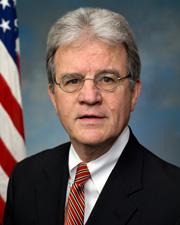 Sen. Tom Coburn (R-OK)
Legislative Activity
Stay on top of the latest movement without scrolling through every action
Roll call votes on amendments in Senate: Motion to table amendment SA 683 agreed to in Senate by Yea-Nay Vote. 70 - 27. Record Vote Number: 105.(consideration: CR S3389)
March 19, 2009
View full timeline
Roll call votes on amendments in Senate: Motion to table amendment SA 683 agreed to in Senate by Yea-Nay Vote. 70 - 27. Record Vote Number: 105.(consideration: CR S3389)
March 19, 2009
Considered by Senate. (consideration: CR S3385, S3387-3388, S3389)
March 19, 2009
Motion to table amendment SA 683 agreed to in Senate by Yea-Nay Vote. 70 - 27. Record Vote Number: 105. (consideration: CR S3389)
March 19, 2009
Senate amendment proposed (on the floor): Amendment SA 683 proposed by Senator Coburn to Amendment SA 684.(consideration: CR S3361; text: CR S3361)
March 18, 2009
Amendment SA 683 proposed by Senator Coburn to Amendment SA 684. (consideration: CR S3361; text: CR S3361) To prohibit funding for congressional earmarks for wasteful and parochial pork projects.
March 18, 2009
Senate amendment submitted
March 17, 2009
Votes
1 roll call on this amendment
Text
Proposed
REVOLUTIONARY WAR AND WAR OF 1812 BATTLEFIELD PROTECTION ACT--Continued

Amendment No. 680

The PRESIDING OFFICER. Under the previous order, there will now be 4
minutes of debate equally divided prior to a vote in relation to
amendment No. 680 offered by the Senator from Oklahoma, Mr. Coburn.
Who yields time?
Mr. COBURN. Mr. President, the amendment we are going to be voting on
next is amendment No. 680. If my colleagues have not read the GAO
report on the Department of Interior released this month, they should
as they consider this.
The national parks have--according to the national parks--a $9
billion backlog. According to the GAO, it is

[[Page S3349]]

somewhere between $13 billion and $19 billion. This amendment is not
intended to do anything except cause us to order a priority that we
will take care of what we have now before we spend new money on new
parks and new areas under the Department of the Interior. It is simple.
It is straightforward. There is nothing underhanded about it.
The fact is, we cannot continue adding things when we are not taking
care of the Statute of Liberty, the National Mall, and many of our
national parks that are falling down and are a threat to health and
safety of the visitors and the employees who work there.
Mr. President, I reserve the remainder of my time.
The PRESIDING OFFICER. The Senator from New Mexico is recognized.
Mr. BINGAMAN. Mr. President, I will take the first minute, and my
colleague from Alaska will take the second minute.
This amendment would prohibit the National Park Service from
beginning any new construction in national parks until the Secretary of
the Interior can certify that the backlog of maintenance in all
structures, trails, sites and transportation infrastructure has all
been accomplished. I would argue he or she will never be able to
certify that; therefore, we could not have new construction in our
national parks. This would apply to funds we have already appropriated,
including those in this American Recovery and Reinvestment Act that we
voted on a couple of weeks ago.
I urge my colleagues to oppose the amendment, and at the appropriate
time I will move to table the amendment.
I yield the remainder of the time to the Senator from Alaska.
The PRESIDING OFFICER. The Senator from Alaska is recognized.
Ms. MURKOWSKI. In addition to what the chairman of the Energy
Committee has stated, we may be in a situation where you have a newly
acquired national park or national historic facility and this amendment
would prevent the Director of the Park Service from even putting in new
facilities until the maintenance backlog is completed in older existing
park units. It could also force the agency to expend funds on
facilities they no longer need, such as trails or buildings that the
agency would like to remove.
I think this is a well-intended amendment, but I believe it misses
the mark by placing restrictions that could hamstring the National Park
Service's effort to provide high-quality recreational opportunities,
and I urge opposition.
The PRESIDING OFFICER. The Senator from Oklahoma.
Mr. COBURN. Mr. President, this does not limit the ability of the
National Park Service to consider something they do not want to repair.
In fact, there is an exact exemption in this amendment for that.
We are going to do the same thing. We are not going to take care of
what we have and we are going to spend money on new things and we are
going to put the employees and the people of this country at risk.
Let's take care of what we have. Let's agree to this amendment.
I yield the remainder of my time and ask for the yeas and nays.
Mr. BINGAMAN. Mr. President, I move to table the amendment and ask
for the yeas and nays on the motion to table.
The PRESIDING OFFICER. Is there a sufficient second? There is a
sufficient second.
The question is on agreeing to the motion. The clerk will call the
roll.
The legislative clerk called the roll.
Mr. DURBIN. I announce that the Senator from Massachusetts (Mr.
Kennedy) is necessarily absent.
The PRESIDING OFFICER. Are there any other Senators in the Chamber
desiring to vote?
The result was announced--yeas 79, nays 19, as follows:

[Rollcall Vote No. 101 Leg.]

YEAS--79

Akaka
Alexander
Barrasso
Baucus
Bayh
Begich
Bennet
Bennett
Bingaman
Bond
Boxer
Brown
Brownback
Burris
Byrd
Cantwell
Cardin
Carper
Casey
Cochran
Collins
Conrad
Crapo
Dodd
Dorgan
Durbin
Enzi
Feingold
Feinstein
Gillibrand
Gregg
Hagan
Harkin
Hutchison
Inouye
Johanns
Johnson
Kaufman
Kerry
Klobuchar
Kohl
Kyl
Landrieu
Lautenberg
Leahy
Levin
Lieberman
Lincoln
Lugar
Martinez
McCaskill
Menendez
Merkley
Mikulski
Murkowski
Murray
Nelson (FL)
Nelson (NE)
Pryor
Reed
Reid
Risch
Roberts
Rockefeller
Sanders
Schumer
Sessions
Shaheen
Snowe
Specter
Stabenow
Tester
Udall (CO)
Udall (NM)
Voinovich
Warner
Webb
Whitehouse
Wyden

NAYS--19

Bunning
Burr
Chambliss
Coburn
Corker
Cornyn
DeMint
Ensign
Graham
Grassley
Hatch
Inhofe
Isakson
McCain
McConnell
Shelby
Thune
Vitter
Wicker

NOT VOTING--1

Kennedy

The motion was agreed to.
Mr. BINGAMAN. Mr. President, I move to reconsider the vote, and I
move to table that motion.
The motion to table was agreed to.

AMENDMENT NO. 679

The PRESIDING OFFICER. Under the previous order, there will now be 4
minutes of debate, equally divided, on amendment No. 679 offered by the
Senator from Oklahoma, Mr. Coburn.
Mr. COBURN. Mr. President, this is another amendment, the whole
purpose of which is to think forward not think short term. What we are
going to do in this collage of 170 bills is restrict, significantly
restrict, the availability of geothermal, solar, wind, and biomass
energy.
We are doing that because we are going to limit the places where we
can get that. Ninety percent of the geothermal capability in this
country lies on Federal lands. What we are doing in this bill is not
thinking about what we are going to do on transmission lines, not
thinking how we are going to bring solar, wind, and geothermal, as well
as biomass, to the population centers of this country.
Yesterday, the Secretary of the Interior outlined, in his testimony
before the committee, the importance of getting transmission lines and
grids right in anticipation of having this access for renewable energy
that is clean and without a significant carbon footprint.
All this amendment does is say we are not going to allow it to
prohibit our utilization of geothermal, our utilization of solar, and
our utilization of wind by what we are doing in the bill.
So everything else stays the same, but we are not going to handicap
ourselves and handcuff ourselves by eliminating the ability to gather
these energy sources off these lands.
I reserve the remainder of my time.
Mr. BINGAMAN. Mr. President, I oppose this amendment as well. This
would open the wilderness areas, the parks, and the wild and scenic
rivers that are designated in the bill to potential development of new
energy projects, renewable energy projects, as well as the associated
facilities that go with those such as transmission lines, generating
stations, access roads.
There are 2 million acres of new wilderness area here. We do not want
wind farms in those wilderness areas. There are over 1,000 miles of
wild and scenic rivers. We do not want hydroelectric powerplants on
those wild and scenic rivers. I think this would be a major mistake for
us to make an exception and say that renewable energy sources should go
in regardless of the designation in the bill.
I yield the balance of my time to the Senator from Alaska.
Ms. MURKOWSKI. Mr. President, I make a point that is worth mentioning
that Senators may have forgotten. The 1964 Wilderness Act includes a
provision that allows the President may declare an emergency and allow
``water resources, reservoirs, water construction work, power plants,
transmission lines and other facilities needed in the public interest,
including road construction and maintenance essential to develop and
use thereof.''
So, therefore, other than a handful of declared wilderness areas in
Colorado and Nevada, this protection is included in the law
establishing every wilderness, including those in this bill. Therefore,
I do not think there is a reason we need the amendment of the Senator
from Oklahoma.
Mr. COBURN. Mr. President, what we are doing in this country is we
are shutting off oil and gas energy that we

[[Page S3350]]

are going to need for the next 20 years. Now we are going to handicap
the renewable, clean energy that is in the bill.
I disagree that the President has the ability only under an extreme
national emergency. Well, we have an emergency right now and nobody is
doing that. What we ought to do is make sure we do not limit further
energy potential for this country. We are going to see petroleum prices
rise. We are going to see energy costs double in the future.
This will eliminate some of that.
I yield back the time.
Mr. BINGAMAN. Mr. President, I move to table the amendment and ask
for the yeas and nays.
The PRESIDING OFFICER. Is there a sufficient second?
There appears to be a sufficient second.
The question is on agreeing to the motion.
The clerk will call the roll.
The legislative clerk called the roll.
Mr. DURBIN. I announce that the Senator from Massachusetts (Mr.
Kennedy) is necessarily absent.
The PRESIDING OFFICER (Mr. Merkley). Are there any other Senators in
the Chamber desiring to vote?
The result was announced--yeas 65, nays 33, as follows:

[Rollcall Vote No. 102 Leg.]

YEAS--65

Akaka
Alexander
Baucus
Bayh
Begich
Bennet
Bingaman
Boxer
Brown
Burris
Byrd
Cantwell
Cardin
Carper
Casey
Collins
Conrad
Corker
Crapo
Dodd
Dorgan
Durbin
Feingold
Feinstein
Gillibrand
Hagan
Harkin
Inouye
Johnson
Kaufman
Kerry
Klobuchar
Kohl
Kyl
Landrieu
Lautenberg
Leahy
Levin
Lieberman
Lincoln
Martinez
McCaskill
Menendez
Merkley
Mikulski
Murkowski
Murray
Nelson (FL)
Pryor
Reed
Reid
Rockefeller
Sanders
Schumer
Shaheen
Snowe
Stabenow
Tester
Udall (CO)
Udall (NM)
Voinovich
Warner
Webb
Whitehouse
Wyden

NAYS--33

Barrasso
Bennett
Bond
Brownback
Bunning
Burr
Chambliss
Coburn
Cochran
Cornyn
DeMint
Ensign
Enzi
Graham
Grassley
Gregg
Hatch
Hutchison
Inhofe
Isakson
Johanns
Lugar
McCain
McConnell
Nelson (NE)
Risch
Roberts
Sessions
Shelby
Specter
Thune
Vitter
Wicker

NOT VOTING--1

Kennedy

The motion was agreed to.
Mr. LEAHY. Mr. President, I move to reconsider the vote.
Mr. BINGAMAN. I move to lay that motion on the table.
The motion to lay on the table was agreed to.
The PRESIDING OFFICER. The Republican leader.

Senator Lugar Casts Vote No. 12,000

Mr. McCONNELL. Mr. President, the majority leader and I would like to
make a few brief comments before this last vote in the tranche of votes
we are having at the moment.
It is customary in the Senate to acknowledge one's colleagues on the
occasion of a major legislative milestone, and so today we honor the
senior Senator from Indiana on the occasion of his 12,000th vote. In
our Nation's history, only 12 individuals have cast more votes in this
body than Senator Lugar, and this is well worth noting.
But it is a special pleasure to recognize someone who has always been
so reluctant to speak about himself. Few Americans have more to brag
about than Senator Richard Lugar. Yet I know of no one who is less
likely to do so. So it is an honor for me to take a moment to brag
about my colleague, my neighbor, and my friend.
As a measure of Senator Lugar's reputation for bipartisanship,
historians will note that when our current President launched his
Presidential campaign at the Illinois statehouse 2 years ago, he
mentioned just one politician by name: Richard Lugar. No one in the
Senate commands more bipartisan respect.
As a measure of Senator Lugar's reputation as a foreign policy
expert, ask any television news producer for the first Senator they
would think to look to to discuss an important international story.
They would, of course, tell you: Richard Lugar.
As a measure of Senator Lugar's effectiveness as a lawmaker, just
take a look at the results from his last election. During a year in
which Democrats made significant gains in both the House and the
Senate, Senator Lugar won 87 percent of the vote--a victory so
convincing that the State chairman of the Democratic Party in Indiana
made the following statement: ``Let's be honest,'' he said, ``Richard
Lugar is beloved not only by Republicans, but by Independents and
Democrats.''
Never has anyone provided his or her political opponent with a better
script for a campaign ad than that--particularly since the comment had
the added virtue of being absolutely true.
As a measure of my own personal esteem for Senator Lugar, I would
note that I have 12 framed photographs in my office in the Capitol
marking various points in my own career, dating back to my days as a
college Republican. One of those photographs is a picture of a young
Senator Lugar helping me in my first Senate campaign. Whenever I see
it, I am reminded of what a public servant should be.
Senator Lugar's life has been one of high achievement: high school
valedictorian, a straight-A college student, Eagle Scout, Rhodes
Scholar, big-city mayor at the age of 35, U.S. Senator. He has been a
counselor to Presidents and one of the most widely respected voices on
foreign relations within the Senate for decades. Before he finishes out
his current term, he will have served almost twice as long as any
Indiana Senator before him--a milestone he has approached with
characteristic humility.
In a long Senate career, perhaps none of Senator Lugar's achievements
has been more far reaching as the Nunn-Lugar Cooperation Threat
Reduction Program, which has led to the dismantling of thousands of
nuclear warheads and contributed immeasurably to the promotion of
peace. For this achievement in particular, he has been considered for a
Nobel Peace Prize.
But ask Senator Lugar and he will probably tell you his greatest
achievement was his marriage to Charlene. Senator Lugar was recently
asked about the demands of his work. Here is what he had to say:

I've been especially fortunate that my wife, Charlene, has
shared my enthusiasm. It would not have been remotely
possible if that had not been the case.

Senator Lugar and Char have been married for more than 50 years. They
are proud of their four sons and their 13 grandchildren, and they can
be proud of the teamwork that has produced a brilliant career, carried
out in the best traditions of the Senate and of our country.
Senator Lugar, you are a treasure to the Senate and a model for
anyone who wishes to pursue a career in public service.
It is an honor and a privilege for me to recognize my esteemed
colleague on this latest of so many accomplishments in a truly
distinguished Senate career.
(Applause, Senators rising.)
Mr. BYRD. Hear, hear.
The PRESIDING OFFICER. The majority leader is recognized.
Mr. REID. Mr. President, I hesitate to jump in front of my friend
from Indiana, but I feel I want to say, as I should, a few things about
Senator Lugar.
He is not only the most senior Republican currently serving in the
Senate, he also will have served twice as long as any other Senator in
the history of the State of Indiana, as mentioned by my colleague,
Senator McConnell.
Born in Indianapolis, he spent much of his boyhood focusing on
things--as he is able to do--such as on becoming an Eagle Scout, and he
did become an Eagle Scout.
He graduated first in his class--not just at Shortridge High School
but also at Denison University. This is where he met Charlene, his
wife.
Richard Lugar is clearly one of the most intellectually sound Members
of the Senate. After college, he earned a Rhodes Scholarship to study
at Oxford University, where he received honors in various programs. He
received honors degrees in politics, philosophy, and economics and was
a member of Phi Beta Kappa. He has also earned honorary degrees from 41
universities and colleges--41.
When Richard Lugar returned from Oxford, he and Charlene were
married.

[[Page S3351]]

But just a few months later, Richard began his 3 years of volunteer
service in the U.S. Navy, where he was ultimately assigned as
intelligence briefer for ADM Arleigh Burke, the Chief of Naval
Operations.
Back home in Indiana, after the Navy, Richard went into business with
his brother, running a food machinery manufacturing company, before
winning a seat on the school board, and then serving two terms as mayor
of Indianapolis.
In the Senate, Richard Lugar has been a national leader on the
environment, foreign policy, and let's not forget agriculture.
He worked closely with then-Senator Obama on the Foreign Affairs
Committee on the complex challenge of loose nukes.
He currently serves as ranking Republican and former chairman of the
Foreign Relations Committee and as a member and former chairman of the
Agriculture Committee.
Charlene and Richard have four sons: Mark, Robert, John, and David,
and 14 grandchildren.
So, Senator Lugar, congratulations in casting your 12,000th vote as a
U.S. Senator. This milestone is the latest in a career filled with
remarkable accomplishments.
(Applause, Senators rising.)
Mr. BYRD. Hear, hear.
The PRESIDING OFFICER. The Senator from Indiana is recognized.
Mr. LUGAR. Mr. President, I thank my very dear friends, Mitch
McConnell and Harry Reid, for overly generous comments, which give me
great encouragement and inspiration.
I appreciate so much the Senate taking time for a moment in my life I
will always cherish. I thank you for recognizing the importance of my
sweetheart, Charlene, and our children and our grandchildren. They are
the precious inspiration for me, as it is for each one of us who serves
in this way and who enjoys and loves the Senate as I do.
I thank all of you so very much.
(Applause, Senators rising.)
The PRESIDING OFFICER. The majority leader is recognized.
Mr. REID. Mr. President, this will be the last vote in the series of
votes of amendments offered by Senator Coburn. There are three other
amendments Senator Coburn has laid down, two of which we will have to
vote on. On one I think there is agreement on this side it should be
accepted, and Senator Coburn has acknowledged we would not need a vote
on that. We are going to have those two votes. We are working on the
appropriate time.
Senator Coburn has one more amendment on which he needs to speak. He
has already spoken on the others I have mentioned.
I tell all Senators, we will likely do these votes when we first come
in in the morning rather than this afternoon. There are a number of
hearings and other things going on this afternoon. I think that would
be to everyone's advantage.
We are also working on a number of nominations we are trying to
complete. We hope we can get those done tomorrow. I do not see any
reason to do the votes tonight. We will do them in the morning, at a
very early time in the morning.

Amendment No. 675

The PRESIDING OFFICER. Under the previous order, there will now be 4
minutes of debate equally divided on amendment No. 675, offered by the
Senator from Oklahoma, Mr. Coburn.
The Senator from Oklahoma.
Mr. COBURN. Mr. President, I yield a minute to the minority whip.
The PRESIDING OFFICER. The Senator from Arizona.
Mr. KYL. Mr. President, I would ask for my colleagues' attention for
just a moment.
This is a very good amendment. The staff has informed me all the land
acquisition under this bill has been accomplished through the
cooperation of all parties--willing sellers, willing buyers--and there
is no need for condemnation of any property, no need for eminent
domain.
Believing that to be true, my colleague has simply said, therefore,
there will be no eminent domain used to purchase land under this bill;
in other words, no acquisitions contrary to the wishes of the
landowner.
Believing the staff is correct, and, therefore, that it is not
necessary, it seems to me it establishes a good principle to say that
where there is no need for it, we should not authorize eminent domain
to acquire land against a landowner's wishes.
Therefore, I urge my colleagues to vote in support of this amendment.
The PRESIDING OFFICER. The Senator from New Mexico.
Mr. BINGAMAN. Mr. President, first, it is important to understand
there are no provisions in the bill granting the Federal Government
eminent domain authority. That authority already exists. It has existed
for many years. The Supreme Court first recognized it in 1876 and
acknowledged that the Government had that authority.
What I believe is important is that there are water projects in this
bill which are very important--the San Joaquin project in California,
various water projects throughout the West--and it is important the
Bureau of Reclamation have authority, if it needs to use it, to proceed
with eminent domain proceedings.
My colleague from Arizona, I am sure, takes great pride in the
Central Arizona project. It is very doubtful that project could have
been accomplished had not the Federal Government had eminent domain
authority. That is true of these water projects in this legislation as
well.
So we should not be writing provisions in here that take that tool
away from our Federal land managers and particularly the Bureau of
Reclamation, and that is exactly what the effect of this amendment
would be.
So I urge my colleagues to oppose the amendment.
The PRESIDING OFFICER. The Senator from Oklahoma.
Mr. COBURN. Mr. President, there is eminent domain, and then there is
the threat of eminent domain. The threat of eminent domain is as
powerful as eminent domain in itself because we cause people who have
pure and sincere and guaranteed rights to their property to give up
their property.
The fact is, this bill relates to all sorts of statutes that utilize
eminent domain. If, in fact, we do not intend to utilize eminent
domain, why won't we say it? We will not say it because we want to use
the power of having that to intimidate property owners in this country
and landowners.
This is about protecting one of the most important principles of our
country: the right to have and hold property. This is an issue under
which we either accept the rights of individuals to hold property or we
say the Government knows better. Even though we are saying we are not
going to use it, we are going to use it to intimidate landowners.
I would appreciate your vote.
The PRESIDING OFFICER. The Senator from New Mexico.
Mr. BINGAMAN. Mr. President, I move to table the amendment and ask
for the yeas and nays.
The PRESIDING OFFICER. Is there a sufficient second?
There appears to be a sufficient second.
The question is on agreeing to the motion.
The clerk will call the roll.
The assistant legislative clerk called the roll.
Mr. DURBIN. I announce that the Senator from Massachusetts (Mr.
Kennedy) is necessarily absent.
The PRESIDING OFFICER. Are there any other Senators in the Chamber
desiring to vote?
The result was announced--yeas 63, nays 35, as follows:

[Rollcall Vote No. 103 Leg.]

YEAS--63

Akaka
Alexander
Baucus
Bayh
Bennet
Bingaman
Boxer
Brown
Burris
Cantwell
Cardin
Carper
Casey
Cochran
Collins
Conrad
Crapo
Dodd
Dorgan
Durbin
Feingold
Feinstein
Gillibrand
Gregg
Hagan
Harkin
Inouye
Johnson
Kaufman
Kerry
Klobuchar
Kohl
Landrieu
Lautenberg
Leahy
Levin
Lieberman
Lincoln
Martinez
McCaskill
Menendez
Merkley
Mikulski
Murkowski
Murray
Nelson (FL)
Pryor
Reed
Reid
Rockefeller
Sanders
Schumer
Shaheen
Snowe
Specter
Stabenow
Tester
Udall (CO)
Udall (NM)
Voinovich
Warner
Whitehouse
Wyden

NAYS--35

Barrasso
Begich
Bennett
Bond
Brownback
Bunning

[[Page S3352]]

Burr
Byrd
Chambliss
Coburn
Corker
Cornyn
DeMint
Ensign
Enzi
Graham
Grassley
Hatch
Hutchison
Inhofe
Isakson
Johanns
Kyl
Lugar
McCain
McConnell
Nelson (NE)
Risch
Roberts
Sessions
Shelby
Thune
Vitter
Webb
Wicker

NOT VOTING--1

Kennedy

The motion was agreed to.
Mr. DURBIN. Mr. President, I move to reconsider the vote, and I move
to lay that motion on the table.
The motion to lay on the table was agreed to.
Mr. DURBIN. Mr. President, I ask unanimous consent that after the
Republican leader, Senator McConnell, has an opportunity to be
recognized and speak, that Senator Corker be recognized at that point
and that I then follow him with another unanimous consent recognition,
and after that moment, Senator McCaskill be recognized to speak for 5
minutes, Senator Mikulski for 5 minutes, and Senator Burris for 5
minutes.
I wish to amend that UC request to include 10 minutes following
Senator Burris for Senator Sessions and 10 minutes for Senator
Grassley.
The PRESIDING OFFICER. Is there objection?
Without objection, it is so ordered.
The PRESIDING OFFICER. The Republican leader is recognized.

Depositor Protection Act of 2009

Mr. McCONNELL. Mr. President, I know how important it is to our
banking system, and especially our community banks, that the Senate
pass S. 541, the Depositor Protection Act of 2009.
This is a bipartisan bill, led by Senators Dodd and Crapo, that we
increase the borrowing authority of the Federal Deposit Insurance
Corporation, thereby freeing up capital for banks to lend to small
businesses and people who need it.
The Depositor Protection Act is cosponsored by Senators across the
political spectrum, including Senators Schumer, Brown, Akaka, Bond,
Gregg, and Corker, who is here on the floor with us. The fact that it
has such diverse support underscores how important it is to our
financial system. This is a bill we should pass without delay. Doing so
would help our financial institutions, and thus our economy, during
this economic downturn.
The bipartisan Dodd-Crapo bill should not be held hostage by efforts
to attach much more controversial legislation on top of it.
Specifically, I understand some of our Democratic colleagues want the
Dodd-Crapo bill to pull to passage a controversial measure called cram-
down, which would allow bankruptcy judges to basically rewrite mortgage
contracts.
Politically and economically, cram-down is the opposite of the Dodd-
Crapo bill because it has bipartisan opposition; it has bipartisan
opposition because it would worsen our economic situation. For example,
last year, 11 Senate Democrats, along with every single Republican in
the Senate, voted against cram-down because its passage would worsen
housing markets by raising interest rates for everyone in order to
benefit a very few. This, in turn, would make it more difficult for
everyone, especially those of modest means, to own a home. This is the
wrong prescription at the wrong time for an ailing housing market.
These concerns, of course, have not gone away. This year, some Senate
Democrats have publicly reiterated their opposition to cram-down. There
are no such concerns with the bipartisan Dodd-Crapo Depositor
Protection Act of 2009. We could pass it right now, Mr. President, on a
bipartisan basis and help our financial situation.
I hope our friends on the other side of the aisle will let us pass
this important bill. They should not hold it up so they can chase
something that is fraught with problems and, according to a Senate
Democrat, isn't going anywhere anytime soon.
I thank in particular one of the most knowledgeable Members of the
Senate, who is thoroughly conversant with these issues and has
recommended this approach, and that is my friend and colleague from
Tennessee, Senator Corker, whom I see is on the floor.
The PRESIDING OFFICER. The Senator from Tennessee is recognized.

Unanimous Consent Request--S. 541

Mr. CORKER. Mr. President, I ask unanimous consent that the Committee
on Banking, Housing, and Urban Affairs be discharged from further
consideration of S. 541, a Dodd-Crapo bill, which would increase the
borrowing authority of the FDIC, the Senate proceed to its immediate
consideration, the bill be read the third time and passed, and the
motion to reconsider be laid upon the table.
The PRESIDING OFFICER. Is there objection?
Mr. DURBIN. Mr. President, reserving the right to object.
The PRESIDING OFFICER. The Senator from Illinois is recognized.
Mr. DURBIN. Mr. President, I am going to object to this unanimous
consent request. The reason is that the provision that has been
referred to by Senator McConnell, the Republican leader, relative to
the Bankruptcy Code is one that is in negotiation at this very moment.
When this measure was called before the Senate last year, there were
some who ominously predicted we could be losing some 2 million homes to
foreclosure in America. The most recent estimate of Goldman Sachs is
that 13 million homes will be lost to mortgage foreclosure in the next
5 years.
The efforts underway to revise the bankruptcy law to provide for
authority in that court in specialized circumstances is one to prevent
and preclude these foreclosures from occurring. That is actively under
consideration. It is included in the House bill that I will
subsequently ask to be approved by unanimous consent, and it is one
supported by the chairman of the Banking Committee, Senator Dodd, as
well as many others.
I would hate to see us lose an opportunity to deal with this looming
foreclosure crisis by agreeing to this unanimous consent request. I
object.
The PRESIDING OFFICER. Objection is heard.
The Senator from Tennessee is recognized.
Mr. CORKER. I will yield to the Senator from Illinois.

Unanimous Consent Agreement--S. 541 and H.R. 1106

Mr. DURBIN. Mr. President, I ask unanimous consent that the Banking
Committee be discharged from further consideration of S. 541, the
Depositor Protection Act, and that the Senate proceed to its immediate
consideration; that an amendment at the desk, which contains the
provisions of the House-passed bill, H.R. 1106, be agreed to; the bill,
as amended, be read the third time and passed; and the motions to
reconsider be laid upon the table, with no intervening action or
debate.
The PRESIDING OFFICER. Is there objection?
The Senator from Tennessee is recognized.
Mr. CORKER. I object to this, Mr. President. As was stated, we have a
bipartisan solution that many banks across the country are clamoring
for--the banking system is clamoring for. This bill I tried to call up
would pass overwhelmingly in this body.
The Senator from Illinois--and I appreciate his persistence--has
continued to pursue this cram-down bill, which meets with tremendous
opposition in this body.
I just hate that what we are doing is in essence extorting community
banks and extorting credit unions all across this country to provisions
that everyone knows are very problematic.
I object, and I hope the Senator from Illinois will allow us, at some
point soon, to take up this issue that is very important to credit
unions, to community banks, to institutions across this country. As a
result, it is very important to the men and women all across this
country who are concerned about their jobs, concerned about credit.
This is something we can do together to change the atmosphere of the
banking community and change our country in the process. But it appears
we are not going to have that opportunity today. I hope the Senator
from Illinois will give us that opportunity in the near future.
The PRESIDING OFFICER. Objection is heard.
The Senator from Missouri is recognized.
Mrs. McCASKILL. Mr. President, I ask unanimous consent to speak as in
morning business.
The PRESIDING OFFICER. Without objection, it is so ordered.

Greed

Mrs. McCASKILL. Mr. President, as we look around at the problems we
are

[[Page S3353]]

facing in this country now when it comes to our economy, all of us are
trying to figure out what caused this mess, what is the root cause of
this incredible meltdown in the financial sector of our economy, in our
housing sector. It comes back to one simple concept: greed. It is just
about a bunch of really greedy people, brought to you by the current
executive pay structure we have on Wall Street and in some parts of
corporate America. It is the largest part of the problem.
These potential payouts under this corporate structure of pay we have
right now are so large that executives at financial institutions,
including institutions such as Fannie Mae and Freddie Mac that were
supposed to have a public purpose, had incentives to create rules that
would reward them no matter what happens. Why did all these exotic
derivatives and swaps start happening? Pay. Pay. And greed.
Performance, not so much. It didn't matter whether you failed, you got
paid anyway. That is the culture that caused the problem. Failure and
you walk with huge money.
These AIG bonuses are just one symptom of this very serious illness
that is gripping our economy and harming our competitiveness. The
Merrill Lynch bonuses, which I stood on the floor and railed about a
few short weeks ago, were exhibit B. Those guys failed, and they made
sure they got the money and walked with it before Bank of America took
over. They moved up their bonuses. Retention? Not so much. It doesn't
have much to do with that. These AIG bonuses--52 of the people had
already walked out the door when they got the money. We weren't paying
them to stay; they had already left.
Our competitive disadvantage in this regard is real. Two of the most
productive competitors to our country, Germany and Japan--their trade
surplus per capita is the highest. Do you know what their average
corporate pay is? It is 10 or 11 times the average worker's. What is it
in the United States of America? It is 400 times the average worker's.
We need to get back to our American values of hard work equals
success, equals financial reward--not failure and you get paid anyway.
It is most insulting on the American taxpayer's dime when it comes to
Merrill Lynch and AIG.
There is a great column in the New York Times today by David
Leonhardt. I recommend it to my colleagues. In that column, he makes
the following statement, and I paraphrase: Stop the deference to this
culture. Stop the deference to Wall Street. Treasury, can you hear me?
Stop the deference to the culture of Wall Street. Be bold, stand up to
them.
That deference has now created a cold anger of populism that is going
to make it very politically difficult for us to do anything else to
free up our credit markets that are so essential for our economy to
survive.
America's economy has a hangover from the drunken greed of high pay
and bonuses for failure. Sober up. Sober up, folks, because the
American people are paying too high a price.
I yield the floor.
The PRESIDING OFFICER. The Senator from Maryland is recognized.
Ms. MIKULSKI. Mr. President, I ask unanimous consent to speak as in
morning business.
The PRESIDING OFFICER. Without objection, it is so ordered.

AIG Bonuses

Ms. MIKULSKI. Mr. President, AIG is in the news. If you want to know
what I think AIG stands for, it is ``Ain't I Greedy.'' If there were
ever a company that stands for ``ain't I greedy,'' it is certainly AIG.
In the midst of one of the greatest economic turmoils to hit our
country, we have a corporation that received $170 billion in taxpayer
money to keep them afloat, and now they want to pay themselves $165
million in bonuses. Ain't I greedy?
You better believe they are greedy. The very people who helped bring
the financial services and structure of the world economy to the brink
of disaster now want to give themselves bonuses. That is like saying to
the crew on the Titanic, after they hit the iceberg: We are going to
give you a bonus for navigation.
What is this? I want people to know that I am mad as hell and, like
the taxpayers, I don't want to take it anymore. We need to do something
about this.
Right now, we see that over at that corporation, and others that are
doing these self-enrichment bonuses, they are the very people who
brought us near financial bankruptcy, and they are now demonstrating
moral bankruptcy. They nearly bankrupted their companies, but they come
with bankrupt values and a bankrupt approach to trying to help America
out of this situation. If we want bankruptcy modification, let's throw
those bums out. Let's make them wear a scarlet B. I am ready to put
them in a stockade in Rockefeller Center so all the people who are
losing their homes, losing their jobs, losing their health care can
come and take a look at them.

You think I am frustrated? I am nowhere near frustrated compared to
what my constituents are facing. They are very worried about their
future. Senior citizens who saved all their lives and fought in great
wars to protect America now have no one to protect their life savings
as Wall Street sinks. People who played by the rules and are raising
their families and trying to run a small business cannot have access to
credit because these guys were busy being celebrity CEOs, celebrity
chefs with celebrity wives, and now they want a celebrity bonus. You
better believe they are celebrities. Everybody knows who they are.
Also, what so infuriates the people of Maryland and, I believe, this
country and we in Congress is there is no remorse about what they did.
In a 12-step program, when you have been an addict--and they certainly
were addicted to greed and they certainly were compulsive about
failure--usually you say: I am sorry, I did wrong. I promise never to
do it anymore, and I want to make amends by making it right.
Not these guys. They want more money to do the same. What is it they
say to us? My way or the highway. We need to pay bonuses to get people
to stay. Why would we want them to stay? They got us into this mess.
They show no remorse, and I don't see a lot of competency in getting us
out of it.
We need to use the power of our ownership. We own 80 percent of AIG.
You know what I think an 80-percent owner ought to do? Goodbye to the
people who either do not know how to work to get us out of this mess or
are unwilling to help us get out of this mess unless they get a bonus.
Second, I think for those who took these bonuses, we are saying:
Don't take the money or, if you have, give it back.
I signed a letter with other colleagues to Mr. Liddy, the CEO,
saying: Don't give them the bonuses, and if they got any, to give it
back. But if they will not do it, I am saying loudly and clearly that I
will support the initiative to tax them at 90 percent of the money they
got.
My belief is: You can take it, but we are not going to let you keep
it. You can take it, but we are not going to let you keep it. We are
going to tax you at 90 percent. If we are 80 percent owners, then we
are going to exercise our influence.
I believe we need to show not only the taxpayers that we are serious
about being stewards of their money, but we have to show corporate
America they have to get serious about working with the Obama
administration and us to get this economy back on track. Then we need
to change not only the culture but help change the direction of our
economy.
I wish to see change in this country. That is what the voters voted
for. Let's start right now, today, by ending this culture of
corruption, greed, and self-enrichment.
I yield the floor.
The PRESIDING OFFICER. The Senator from Illinois.
Mr. BURRIS. Mr. President, I ask unanimous consent to speak as in
morning business.
The PRESIDING OFFICER. Without objection, it is so ordered.

AIG Bonuses

Mr. BURRIS. Mr. President, I rise to express my outrage that at a
time of economic crisis in our Nation and around the world, at a time
when so many Americans are losing jobs, defaulting on homes, and
falling behind in their own payments, they are paying into a system
doling out multimillion-dollar bonuses to employees at AIG.
Many of the same employees receiving these lavish payouts are the
same

[[Page S3354]]

ones who brought their company to the edge of collapse and the economy
into the depths of recession.
We cannot let their actions be rewarded--excessively rewarded--with
the multimillion-dollar bonuses paid by the taxpayers.
Time and again, we have gone back to our constituents and asked them
to sacrifice to make ends meet. Now we demand the corporate executives
do the same.
As American families struggle to balance their own checkbooks at
kitchen tables all across America, the employees of AIG walk out of
their offices with $165 million in bonuses so far and are on track to
take home an estimated $450 million by the end of this year--free money
that they did not earn and certainly do not deserve.
It is now time for those executives who, through their reckless greed
and irresponsible actions, have jeopardized our economic security to
share the burden in rebuilding this economy. If this company and others
like it fail to recognize the outrage and the frivolous nature of these
taxpayer-funded bonuses, Congress will intervene and act on their
behalf.
Yesterday, I joined my Democratic colleagues in sending a letter to
the CEO of AIG, Edward Liddy. We asked that Mr. Liddy take a reasonable
look at these excessive bonuses and requested that he act to
renegotiate them.
We also warned that if he chooses not to act immediately, we will
take action to recoup the American taxpayers' money through punitive
legislation.
Chairman Baucus has signaled he is poised to move forward with
legislation that he and Senators Grassley, Wyden, and Snowe are
drafting to allow the Government to recoup this money for taxpayers by
subjecting the bonuses to severe tax penalties.
At the same time we are correcting the payouts of the past, we have
been working with the current administration to put in place new
standards of accountability for the future.
As part of the American Recovery and Reinvestment Act we passed last
month, we asked the Treasury Department to establish new guidelines
regarding executive pay and luxuries. Just last week, we reiterated the
urgency in a second letter to the Treasury Department asking that they
swiftly complete this project and announce these new standards.
In addition to these steps, let us resolve to work in partnership
with the Obama administration and the Senate Banking Committee to take
up a strong Wall Street accountability bill as soon as possible.
Our responsibilities lie with the citizens we represent. If we are
successful in taming the greed of Wall Street, we will have gone a long
way to safeguarding the economic interests of those we represent and
those for whom we work--the people of the United States of America.
I yield the floor. I suggest the absence of a quorum.
The PRESIDING OFFICER. The clerk will call the roll.
The bill clerk proceeded to call the roll.
Mr. GRASSLEY. Mr. President, I ask unanimous consent that the order
for the quorum call be rescinded.
The PRESIDING OFFICER (Mr. Burris). Without objection, it is so
ordered.

Health Care Reform

Mr. GRASSLEY. Mr. President, I think our colleagues know that the
issue of health care reform is hopefully on a fast track in the sense
of getting something done this year. This is a very big project to get
underway. Senator Baucus and I have laid out an ambitious schedule for
enacting a bipartisan health reform bill, and I think there are a lot
of facets of it that we have to expect people who are not on the
committees--Senator Kennedy's committee on the one hand and Senator
Baucus's committee on the other hand--will have to take into
consideration. I am asking, through a series of speeches I will give
this spring, for people who perhaps don't think about the issue of
health care reform because they do not serve on the committees to think
of various things.
Today, I wish to address an issue we often read about in newspaper
accounts--and the most recent one comes from a Wall Street Journal
article I had a chance to read--that comes up as a reminder when people
think about health care reform that we ought to take into
consideration. I often refer to Canada, I suppose because a lot of
Americans are familiar with the health care system in Canada, and we
have a lot of our constituents who ask us why we don't put in place
what they have in Canada. We refer to that system as single payer. We
often run into people who say: Well, don't do what they are doing in
Canada. I think a lot of our colleagues here would support single
payer. So obviously, when these things are discussed in America at the
grass roots level, I think we ought to be constantly reminded of this
here as we debate health care reform, and a lot of our colleagues need
to be thinking about this a long time before legislation comes to the
floor.
We have a lot of work ahead of us if we want to see meaningful
legislation that will accomplish our three main goals of health care
reform: lower cost, expanded coverage, and better quality.
Let me say that again: Lower cost, expanded coverage, and better
quality.
As we roll up our sleeves, it is helpful to look to our neighbor to
the north, Canada, for some lessons about what works and what does not
work. Some of the proposals that are being discussed--the public plan
option, rationing of care, and a Federal health board--will make our
current market-based health care system that we have in the United
States more similar to the Canadian health care system. Some like that.
Some do not like it. My purpose is to be raising questions that our
colleagues ought to be considering.
The Canadian health care system might seem like a good idea to some
of my colleagues, but this should make anyone who values access to care
and the doctor-patient relationship very nervous. Canadian patients
often wait months or even years for necessary care. It has become so
bad that some patients are suing the Government in Canada to gain
access to care. One Ontario man suffering from headaches and seizures
was told he would have to wait 4\1/2\ months for an MRI. Instead of
standing in line, he did what a lot of Canadians do. He traveled across
the border to Buffalo for an MRI. It was there he discovered he had a
malignant brain tumor. When he returned to Canada, he was told again it
would be months before he could have surgery, so once again he traveled
to Buffalo, for surgery. Another Canadian man waited in pain for a year
before he could see a doctor about his arthritic hip. Once he finally
saw the right specialist he was told that he would need a state-of-the-
art procedure to resurface his hip, but sadly the Canadian Government
told the 57-year-old gentleman he was ``too old'' to get the procedure.
He was also prohibited from paying for the surgery with his own money.
Similar to so many other Canadian patients, he is taking his case to
court.
These court cases gained traction in 2005, when the Canadian supreme
court ruled that patients suffer physically and psychologically while
waiting for treatment in Canada's Government-run system. The court also
concluded that the Government's controls over basic health care
services impose a risk of irreparable harm and even death.
As some people propose that the Government take a more active role in
our Nation's health care system, I hope we can agree that access to a
waiting list is not access to health care. We all agree we need to fix
our health care system but, as we try to fix it, let's not make it
worse. Let's learn from our neighbors to the north. Let's not force
patients in America into a one-size-fits-all Government-run system.

Comparative Effectiveness Research

I would like to speak on another matter, about an important provision
tucked away in the $1 trillion spending bill that passed last month.
During the debate, Members spent a lot of time talking about big-ticket
health care provisions--Medicaid, COBRA, Health IT. But one issue that
did not receive enough attention was a term that a lot of our
colleagues are not familiar with, but every colleague needs to become
familiar with--this phrase ``comparative effectiveness research.'' I
still haven't figured out how spending money on comparative
effectiveness research is actually stimulative, but this is one of
those things that probably should not have been in the stimulus bill--
but it was there and is now law.

[[Page S3355]]

I am even willing to guess that a lot of Members do not even know
what comparative effectiveness research actually is, but in the so-
called stimulus bill, we increased our investment in this research from
about $30 million to $1 billion. That is over a 3,000-percent increase
for something a lot of Members don't know about and can't even define--
and I am not sure I want anybody to ask me right now to define it in
the purest sense. This makes me a little nervous.
Mr. President, $1 billion is a lot of money, but maybe it is money
that even people in comparative research might not even know what they
are spending the money for.
Some policy experts have expressed concerns that this drastic
increase in funding will help establish the United States version of
England's National Institute for Health and Clinical Excellence, also
referred to as--I don't know whether the English pronounce it ``nice''
or ``niece,'' I am going to say NICE.
So you are not misled, many patient groups consider NICE to be
anything but nice. NICE was created by the British Government in 1999
to decide what treatments, prescription drugs, and medical devices the
British Government is going to pay for. In other words, you are having
bureaucrats and/or politicians interfere in decisions that in America
we normally leave to the doctor and the patient. Put another way, NICE
was created for the Government to ration care and ultimately save
money.
If the Congress of the United States was passing something to ration
care, I will bet a good number of people in this country would get up
in arms. For example, a news story printed in August entitled
``UK's''--meaning United Kingdom's--``NICE says `No' to four new cancer
drugs.'' It detailed how the NICE panel concluded that the four drugs
would extend people's lives, but somehow you cannot use them because
they are not cost-effective.
So, under England's single-payer Government system, patients were
prohibited from getting those drugs, regardless of what the patient or
their doctor might have thought. It was not until there was public
outrage about that decision that made newspaper headlines around the
world that NICE then reversed its decision about at least one of those
drugs. The three other drugs are still considered too costly to give to
patients.
Another article in the New York Times on December 8, 2008, was
entitled ``British Balance Benefit vs. Cost of Latest Drugs.'' This
article told the story of Bruce Hardy, a British citizen who was
diagnosed with kidney cancer. Mr. Hardy was unable to get a particular
drug that would have extended his life because NICE determined the drug
was not ``cost-effective.'' That is because NICE has decided the
British Government can only afford to pay about $22,000 for every 6
months of life.
Get this. The Government of England is putting a value on life of
about $22,000 for every 6 months of life. This may be acceptable in a
government-run single-payer health care system, but here in the United
States only two people should be involved in deciding what treatment,
drug or device to use, and those two people would be, on the one hand,
the doctor; on the other hand, the patient.
We do not need the Federal Government standing between patients and
their doctors. We do not need bureaucrats in Washington denying
patients with terminal cancer access to the newest and most promising
experimental drugs. We do not need the drug companies to have undue
influence over our system either.
I think my work overseeing, as congressional responsibility dictates,
the Food and Drug Administration, gives me some authority to speak in
this area, that drug companies should not have undue influence. I have
been a leading advocate for increasing oversight of drugs and device
manufacturers. In fact, I have introduced legislation to make
manufacturers report payments to patients so we can make sure we do not
have conflicts of interest getting in the way of high-quality care. I
have also supported drug importation and legislation to prohibit brand-
name manufacturers from gaming the system to prevent lower cost generic
drugs from getting to the market. So I am not down here today to defend
the drug companies or device industry. They can do that on their own,
and I think they do it very well. But I think it is legitimate to be
concerned about patients. I don't want some faceless, unelected
Government panel keeping patients in Iowa or anywhere from getting the
lifesaving treatment they need.
At this time, I ask unanimous consent to have printed in the Record a
letter I received from 60 patient groups, from the breast cancer
advocates to muscular dystrophy, to name two, expressing concerns about
using comparative effectiveness to ration care.
There being no objection, the material was ordered to be printed in
the Record, as follows:

January 26, 2009.
Hon. Daniel Inouye, Chairman,
Hon. Thad Cochran, Ranking Member,
Committee on Appropriations, The Capitol, Washington, DC.
Hon. Tom Harkin, Chairman,
Hon. Arlen Specter, Ranking Member,
Committee on Appropriations, Subcommittee on Labor, Health
and Human Services, Education, and Related Agencies,
Washington, DC.
Dear Chairman Inouye, Ranking Member Cochran, Chairman
Harkin and Ranking Member Specter: We are writing to urge you
to ensure that any comparative effectiveness research (CER)
included in the economic stimulus package establish a
legislative framework that is strong and patient-centered.
The goal of CER should be to arm individual patients and
their doctors with the best available information to help
assess the relative clinical outcomes of various treatment
strategies and alternatives, recognizing that this will vary
with circumstances. When used appropriately, comparative
clinical effectiveness information can serve as a valuable
tool that can contribute to improving health care delivery
and outcomes by informing clinical decision making. By
focusing on quality of patient care, such research also can
help us achieve better health care value. However, we are
very concerned that the House legislation and accompanying
report language could have unintended and negative effects
for patients, providers and medical innovators, leading to
restrictions on patients' access to treatments and
physicians' and other providers' ability to deliver care that
best meets the needs of the individual patient. Rather, we
believe any provisions related to comparative effectiveness
should:
Focus CER on comparative clinical benefit, rather than
cost-effectiveness. Any legislation should state that funding
will be used only to support clinical comparative
effectiveness research, and define clinical comparative
effectiveness as research evaluating and comparing the
clinical effectiveness of two or more medical treatments,
services, items and care processes and management.
Additionally, CER should not encourage a generalized, ``one-
size fits all'' approach. Rather, it is necessary to design
studies and communicate results in ways that reflect
variation in individual patient needs, that help patients and
doctors make informed choices, and account for differences
among patients including co-morbidities, sex, race and
ethnicity. Recognizing these differences is important to
allowing patients optimal treatment today and to encouraging
the development of innovative targeted therapies which will
advance personalized medicine.
Be conducted through an open and transparent process that
allows for patients, providers and other stakeholders to
participate equally in governance and input, starting from
the research planning stage. There are many challenges in
successfully conducting and communicating high-quality,
patient-centered CER. Therefore, comparative effectiveness
programs should include transparent decision-making
procedures and broad stakeholder representation to enhance
the credibility and usefulness of such studies.
Ensure that research supports providers in delivering the
best possible care to their patients. To maintain a focus on
patient and provider needs, the research entity should not
engage in making policy recommendations or coverage
decisions. Patients may respond differently to the same
intervention and the needs of the individual must be taken
into consideration. Imposing rigid, federally-proscribed
practice guidelines, which fail to recognize such variations,
among patients can lead to poor patient outcomes and
increased health care costs.
Comparative effectiveness information that reflects
interactions among all of the various components of the
health care system has the greatest potential to empower
clinicians and patients to make more appropriate decisions.
In addition to comparing scientific treatment interventions,
research should also focus on how innovations in care
delivery models, such as disease management programs, may
produce better health outcomes.
We look forward to working with you to create a system that
improves information about clinical outcomes, ensures that
patients continue to have access to life-saving

[[Page S3356]]

treatments and the tools necessary to advance a better
quality of life for all Americans. Thank you for your
consideration.
Sincerely,
AACSA Foundation; The AIDS Institute; Alliance for Aging
Research; Alliance for Better Medicine; Alliance for Patient
Access; Alliance for Plasma Therapies; Alpha-1 Association;
Alpha-1 Foundation; American Association for Cancer Research;
American Association for Respiratory Care; American
Association of Neurological Surgeons (AANS); American
Association of Orthopaedic Surgeons; American Association of
People with Disabilities; American Autoimmune Related
Diseases Association; American College of Obstetricians and
Gynecologists; American Institute for Medical and Biological
Engineering (AIMBE); American Osteopathic Association;
Association of Clinical Research Organizations (ACRO); Asthma
and Allergy Foundation of America; Autism Society of America;
Breast Cancer Network of Strength.
C3: Colorectal Cancer Coalition; Californians for Cures;
Celiac Disease Center at Columbia University; Children's
Tumor Foundation; Coalition of State Rheumatology
Organizations; Colon Cancer Alliance; Congress of
Neurological Surgeons (CNS); COPD Foundation; Cure Arthritis
Now; Cutaneous Lymphoma Foundation; Easter Seals;
FasterCures; Foundation for Sarcoidosis Research; Friends of
Cancer Research; The Government Accountability Project;
Intercultural Cancer Council Caucus; International Cancer
Advocacy Network (ICAN); International Myeloma Foundation;
International Prostate Cancer Education and Support Network;
Kidney Cancer Association; Malecare Cancer Support.
Men's Health Network; Muscular Dystrophy Association;
National Alliance for Hispanic Health; National Alliance on
Mental Illness; National Alopecia Areata Foundation; National
Foundation for Ectodermal Dysplasias; National Hemophilia
Foundation; National Kidney Foundation; National Spinal Cord
Injury Association; Ovarian Cancer National Alliance; Plasma
Protein Therapeutics Association; Prostate Cancer
International, Inc.; Prostate Health Education Network, Inc.
(PHEN); RetireSafe; Society for Women's Health Research;
Tuberous Sclerosis Alliance; United Spinal Association; VHL
Family Alliance; Virginia Prostate Cancer Coalition; Vital
Options International; ZERO--The Project to End Prostate
Cancer.

Mr. GRASSLEY. I agree we need to lower the overall cost of our health
care system. We need to improve quality. It is true we spend more
money, about twice as much more than other developed nations in the
world, and still rank poorly in many health care indicators. But having
the Government ration care is not the answer. In fact, the
Congressional Budget Office concluded that comparative effectiveness
research would only save 1/10th of 1 percent of the total health care
spending.
Let me remind you when I started out I was saying I want my
colleagues to become familiar with comparative effectiveness research
because this is something we are going to be dealing with in the
legislation later on this year, and we just put $1 billion into this
project as opposed to $30 million previously.
If Congress is going to spend this $1 billion on this research, let's
not bill it as some magic bullet to control health care spending
because the Congressional Budget Office--and I hope you know they are
God around here, they are God around here because if they say something
costs something, it costs something. If you want to overrule them, it
takes 60 votes to overrule. So what they say counts. If we are going to
spend that $1 billion, we have to make sure it is improving quality and
informing patients and providers. If Congress is going to spend $1
billion on this, let's not establish the United States version of the
United Kingdom's government-run National Institutes of Health and
Clinical Excellence that I have been referring to by the acronym NICE.
Let's not set up a system for Washington dictating to your doctor what
treatment to prescribe. If we are going to do this, we have to do it
right. Comparative effectiveness research should be about comparing
clinical treatments and then letting your doctor decide the best way to
treat it.
I am not up here saying there should not be any comparative
effectiveness research. I am here to say it should not be a subterfuge
for some bureaucrat or politician deciding who is going to live and who
is going to die. It is information for doctors and patients. It should
be done in the most open and transparent process possible.
Finally, the research should be used to get information to doctors
and patients about the best treatment.
It should not be used for Washington to make policy or to decide what
treatments the government will or will not cover. I hope we can agree
the Federal Government should not be in the business of determining the
value of a person's life, as I indicated to you this outfit in the
United Kingdom decides that your life is worth $22,000 per 6 months.
Clinical comparative effectiveness can be a valuable tool in creating
a more efficient health care system, but let's make sure we use this
tool wisely.
I yield the floor.
The PRESIDING OFFICER. The Senator from Alabama is recognized.
Mr. SESSIONS. Mr. President, I ask unanimous consent to speak as in
morning business.
The PRESIDING OFFICER. Without objection, it is so ordered.

AIG Bonuses

Mr. SESSIONS. Mr. President, I first would like to say a thing or two
about the bonuses that have been paid to the AIG employees, those
persons who are in the specific division whose actions led to the
demise of what was once considered a great insurance company.
No doubt about it, that was a very serious error, and now as a result
of agreements made, apparently sometime ago, they are going to receive
bonuses. Everybody has been upset about it. So have I.
I said Monday on this floor the only thing I felt like giving them
for free would be a free lunch and a free bed somewhere in a
penitentiary. I know the Presiding Officer is a former prosecutor and
has sent some people to the penitentiary. I hope they are not guilty of
criminal activities, but that is how I feel about it.
But the reason we are in this is because of an unwise act. That act
was--beginning with Secretary Paulson, President Bush's Secretary of
the Treasury, continued now under Secretary Geithner, President Obama's
Secretary of the Treasury--taking over AIG.
We own 80 percent of AIG's stock. Secretary Paulson picked Mr. Liddy,
who had a good record in the past and was off somewhere with his
grandchildren, and asked him to come back and try to take over this
company and start pumping billions of dollars into it. It now has
totaled $170 billion.
It is unbelievable how much that is, $170 billion. I would repeat,
that is, compared to the Alabama budget, including schools and
teachers' pay, $7 billion a year. We gave one private company,
competing with a lot of other private insurance companies in America
today that did not get themselves in trouble--we are bailing them out.
So we should not have done that.
Now, when Mr. Paulson came before this body and asked for this power
to get $700 billion to spend as he wished, I objected. As just a
Senator, I was flabbergasted that he would ask for such unlimited
power. Not one time did he hint that he was going to buy stock in an
insurance company. It was to buy the toxic assets from banks. Do you
remember that?
So Secretary Paulson, within a few days, a week I believe, had gotten
his authority. But it did not say: Mr. Secretary, you get to buy toxic
assets in banks--which I did not think was very good anyway and voted
against it--it gave him power to do virtually anything. That is another
reason I voted against the legislation.
By the way, under oath in a House committee, Secretary Paulson said
he had no intention of buying stock. Somebody asked him: What about
buying stock in these banks?
He said, no, he did not want to buy stock; that we were just going to
buy these toxic assets.
A week later he was buying stock in an insurance company and stock in
banks. And to this day, we have not yet bought any of these toxic
assets, these bad mortgages that are really the problem that have
destabilized our financial situation and have not dealt with yet. That
is why there is still instability out there.
OK. So here we are now; we own this corporation. So I asked the
question about the bonuses at AIG. Apparently, they got a contract. By
the way, when we passed legislation here, it was with a Democratic
majority. Somewhere in conference they put in language in the
legislation that basically said bonuses would be honored if they were
entered into before a certain date. These bonus contracts were entered
into before that date.

[[Page S3357]]

So now we have all of these protestations and all this angst and all
this outrage about bonuses, and we have to do something about it. I am
outraged, too, really but have a little perspective. The amount of the
bonuses are one-thousandth, less than one-thousandth of the amount of
money we put in this corporation that is at great risk today. And that
is a galling issue for all of us, to have this division, the bad
division in the whole fine insurance company, taking this company down,
and they get the bonuses. It is outrageous. It really is. But the truth
is, it appears there is some contractual right for them to have it.
So I would ask, what about the folks in these companies who are paid
too much? Maybe we ought to have debate on the Senate floor about how
much every employee of AIG should be paid or how their bathrooms should
be configured or whether they should even have a private bathroom or
how many businesses they ought to have or what kind of cars they should
drive, whether they should have jet airplanes, whether they ought to be
on Manhattan or some cheaper place in Brooklyn.
I mean, what we are going to enter into is these have become
political decisions because politicians own the company. This is a
warning for us. We have to be careful about buying stock in
corporations. I am telling you, it is not a good policy. I do not
believe it was justified in this circumstance. I think history is
demonstrating that.
I am worried about it. We need to get out of AIG. How are we going to
do it? I think the way you do it, and the way it should have been done
from the beginning, is the company should have gone into chapter 11
under the Bankruptcy Code. You would have had a Federal bankruptcy
judge bring all of them in, raise their hands under oath, testify to
the financial condition, how this all happened, what parts of the
company are good, valuable, prosperous, what parts are sick and in
danger.
Then we could have figured out as a government how we could help with
the sick and toxic parts, get rid of the others and let all of that go,
and we would not have been running this company.
So now we are going to tax them. I am not sure how this has been
written, but we are somehow going to identify the several hundred
people who got bonuses, and we are going to tax them. We might as well
put their names in the Record. I do not know; it is probably
unconstitutional. It really is. It is a real constitutional question,
certainly a policy question, that the Congress is going to abrogate a
contract whether we like it or not. But a bankruptcy judge can. A
bankruptcy judge has constitutional power to abrogate a contract. I am
certain a bankruptcy judge would have invalidated the contract for
bonuses for the people in this division. They do not have the money.
The only reason they are afloat today is because we bailed them out.
They would not have jobs if we had not bailed them out. This whole
thing would have been done differently. So I am worried about what we
are doing.

The Budget

Mr. President, I am also worried about the budget. The President has
submitted a budget. It has come over to us now. It is in a bound book,
slick cover. It sets out his agenda for the future. It is an important
document, and it sets out his priorities and his direction he wants the
country to go.

I am a member of the Budget Committee, and we will be marking that up
and offering amendments to it next week. But the American people need
to know that the financial condition of our country will be altered to
a historic degree if this budget is passed. I am not just saying that.
I am saying, read the budget. That is what it says.
I will share some thoughts about it. I think there is a growing
bipartisan consensus, and certainly at least a concern on both sides of
the aisle, that the budget deficits and spending levels are
unsustainable; that is, continuing these levels of spending will
destabilize this country, weaken the value of our dollar, perhaps kick
off inflation, and in many other ways erode confidence in the United
States as a government of integrity and financial wisdom and management
that can be relied on.
So while American families are out there right now saving a good bit
more than they have in years past, watching their pennies, while
American cities and towns who have been in my office this week and are
telling me they are seeing a 6 or 7 or so percent reduction in sales
tax revenues and revenues for their towns, they are managing well, and
they are getting by. They are postponing some things they would like to
have done this year until they get a little more money in, and they are
not going out of business. They heard there was some free money in the
stimulus package. They wanted as much of it as they can get. Fair
enough. But, you know, they are getting by.
Our Government is increasing spending to a degree to which we have
never seen before. This budget calls for $3.6 billion in spending,
which is, in effect, a 20-percent growth in nondefense programs. I am
talking about the discretionary programs under our control that we deal
with from 2008 levels to 2010 levels, 20 percent.
At that rate, of course, that is 10 percent a year, and with a 7-
percent growth rate per year your money will double in 10 years. This
is the track we are on. It is a huge baseline budget increase to pay
for this expansion of Government.
The budget imposes or presumes $1.4 trillion in new taxes. That
includes a national energy tax similar to the one the MIT experts
predict would cost working families $3,100 per year. That is almost
$300 a month for the average family for this tax. So despite these
taxes, the budget will require even more borrowing. We will go even
further in debt despite the tax increase.
We would double the debt held by the public in 5 years. I mean, the
total American debt we have today would double in 5 years and triple in
10 years. Our budget is a 10-year budget. It projects what this
administration believes should happen over the next 10 years. That is
what they project will happen.
Under this plan, starting in 2012, the United States will pay $1
billion a day in interest to our creditors, the largest of which are
China and Japan outside of our country. That is $1 billion a day in
interest on this surging debt we have.
So, in summary, I believe it is fair and honest to say this budget
spends too much, it taxes too much, and it borrows too much. The
administration has promised the budget would be free of accounting
tricks and gimmicks, but they have not met that standard either. On the
one hand, we have been told repeatedly by the administration that we
face the gravest economic crisis since the Great Depression.
On the other hand, his budget assumes that unemployment will not rise
beyond today's level and economic growth will not substantially fall. I
cannot accept and I do not buy the rhetoric of imminent economic
disaster. I have not believed that is likely. I still don't believe it
is likely. I know we are in a difficult time, but few, if any,
economists would agree with the budget's prediction and assumption that
unemployment will stay at today's rate of 8.1 percent or that the gross
domestic product this year will only decrease by 1.2 percent. The
administration's rosy economic picture permits them to assume,
therefore, greater revenue. If you assume you have a higher growth
rate, a lower unemployment rate, more people are making money, more
people are working and getting paid, less people are on unemployment
compensation, you assume you have billions more dollars to spend on
whatever you would like to spend it on.
An independent blue chip group that predicts unemployment and
predicts GDP is predicting GDP will decline more than twice 1.2
percent, and they are also predicting the unemployment rate will hit
8.9. I believe our Congressional Budget Office is predicting
unemployment will cap out at 9.1 percent. I have seen some figures of
9.4 percent. I am hopeful we will come in under 10 percent. I believe
we will.
To build on good feelings here, I will note that under President
Reagan, when Mr. Volcker was Secretary of the Treasury, they realized
they had to confront and break the back of surging inflation.
Unemployment hit 10.9 in the early 1980s. It kicked off, though, a
sound economy, and for 20 years we have had steady growth after
collapsing the unacceptable inflation rate.
The best estimates I am seeing do not predict economic disaster, but
they

[[Page S3358]]

certainly don't predict the kind of minimum economic slowdown these
numbers are assuming. When those numbers prove to be off the mark, the
result will be deficits higher than the administration is predicting in
their own budget. That is what I am saying. If you look at the budget
over the next 10 years, that is what really worries me.
In 2004, President Bush, after 9/11 and after the recession that
occurred there, his deficit hit $412 billion. That was the biggest
deficit we had since World War II. He was roundly criticized for that.
I wasn't very happy with it either. I liked President Bush, but I
thought that was too big a deficit. It dropped until 2007, when it hit
$161 billion.
Last year, President Bush sent out the $300 checks and the $150
billion in deficit spending on top of our other deficit to try to
stimulate the economy. It didn't work. He sent out that money.
Everybody got the little check. Whatever they did with it, it didn't do
much good. The debt jumped to $455 billion. So last year, September 30,
the deficit was $455 billion, the largest we have ever had, perhaps
including World War II. This year, there is uniform agreement.
The Congressional Budget Office is scoring that at September 30, our
deficit--the amount of money we spent, less the amount of money we have
taken in in taxes--will be $1.8 trillion, one thousand eight hundred
billion, four times the highest deficit we ever had last year. That is
a serious matter, not a little bitty matter. The budget the President
sent us projects that next year--and he does this over 10 years--it
will be $1.1 trillion. It begins to drop down to that and hits $533
billion in the fourth year. That is the year he said he cuts the budget
deficit in half.
The reason the deficit was particularly high this year is the money
we spent for the financial bailout of Wall Street that they bought AIG
with and other bank stock. The Congressional Budget Office said we are
going to lose about $250 billion in that deal. We will get some of it
back. They scored in this year's budget $250 billion for that. We have
bought Freddie and Fannie, taken over and guaranteed all those loans at
those two huge financing institutions, which were quasi-private,
basically private, we have taken those over now, and CBO has scored
about another $250 billion. They are putting all of that in this year.
And then we passed, a few weeks ago, $800 billion--pure stimulus
spending to send out over the country. You heard it was for roads and
bridges. Only 3 or 4 percent went for roads and bridges. The rest of it
went for all kinds of nice ideas, not very stimulative in the minds of
experts. So you add that over the next 2 years of spending, split that
out. That is how we get such a high year this year.
One reason we are at a trillion dollars next year is because they are
scoring some of that $800 billion in next year's deficit. At any rate,
it drops down, OK? So the fourth year, we are hitting $533 billion.
That is still the highest deficit in the history of our Republic. Then
it starts going up. And the budget President Obama gives us projects
that in the 10th year, the deficit will be over $700 billion.
That is why we need the American people to be engaged. Members of
Congress are going to have to study the numbers. They are going to have
to study the immensity of the requirements of this budget. We are going
to have to reject it. We cannot pass such an automatic guaranteed surge
in debt. It would triple our total national public debt in 10 years.
This is the beginning. The budget will begin to be marked up next
week in committee. It is going to take more than just the committee
members to decide what we do. I believe the American people and the
Members of this Congress are going to have to get our heads together
and figure out some ways to do like our cities and counties. Instead of
having baseline spending increase at 7, 8, 10 percent a year, we might
go for a year or two where we don't increase at all. Just a little bit
of that would have a dramatic impact on the deficit. It is the
increases that are killing us. They are projecting increased revenues
in the years to come, but they are projecting substantially greater
increases in spending.
That is not who we are as a people. We are a people of limited
government. We are people of low taxes. We are people of individual
responsibility. That is a fundamental American ethic, individual
responsibility. The Europeans are more into this Socialist mentality,
but we were faced with the spectacle over the weekend of our own
Secretary of the Treasury going to Europe meeting with Europeans and
upbraiding them because they aren't borrowing enough or spending
enough, in his mind, going far enough into debt to stimulate the
economy as much as he would like to see it done. They are being more
conservative and responsible than we are. It is a matter of real
concern.
These are important issues. I hope the debate will continue and all
of us will look at the long-term interests of this great Nation and
take the steps today that will protect our future.
I yield the floor.
The PRESIDING OFFICER (Mr. Schumer). The Senator from Georgia.
Mr. ISAKSON. Mr. President, I ask unanimous consent to speak in
morning business.
The PRESIDING OFFICER. Without objection, it is so ordered.

Financial Markets Commission

Mr. ISAKSON. Mr. President, we were all reminded yesterday, when news
of the AIG bonus payouts hit, of the frustration all of us have and all
the American people have with the financial difficulties the Nation has
had but also what appear to be at best irresponsible acts taking place
by many of the financial institutions that, in fact, received Federal
TARP money.
I rise to repeat a call that Senator Conrad and I made 6 weeks ago on
the floor of the Senate. We created a piece of legislation known as the
Financial Markets Commission, a commission patterned after the 9/11
Commission, a commission of seven appointed members--two by the
President, one by the Speaker of the House, one by majority leader of
the Senate and one by the minority leader, one by the minority leader
of the House, and then one by the chairman of the Federal Reserve--
seven members given 360 days a year, empowered with a $3 million budget
and subpoena power to investigate every aspect of the financial
collapse in the United States, whether it is insurance, investment
bankers, mortgage bankers, individual managers such as Mr. Madoff in
New York or anybody else, and to come back to the American people and
to the President a year from now and tell us, to the best of their
ability, in a forensic way, what happened. If, in the course of their
investigation, they find inappropriate activities, there is the
requirement that they refer those to the Attorney General of the United
States of America.
It is important that we do this for four reasons. I will go about
them briefly.
No. 1, it should be an independent panel that is fully funded and has
subpoena power so there is no impediment to gathering facts, finding
out the information necessary, and making that report.

No. 2, it should be created by the Congress, but the membership
should be appointees who are experienced and knowledgeable in finance,
banking, investment banking, and in law, not politicians but
professionals who know, just as we had on the 9/11 Commission 2 years
ago.
No. 3, there is no question that mistakes were made, but there is no
question that some people took advantage of the system. The public
expects, I expect, and we should demand that where we find wrongdoing,
it is eliminated, pointed out, the individuals who did wrong are held
accountable, and we restore some level of confidence in the oversight
of our financial system.
No. 4, I think it is time that all of us recognize there is plenty of
fault to go around. You could blame a hedge fund. You can blame a
Madoff. You could blame an AIG. We have to look in the mirror as well.
The second vote I ever cast in the Congress was the vote that repealed
Glass-Steagall, put in the Gramm-Leach-Bliley bill. I thought it was
good legislation. So did 99 percent of the House and Senate. In
retrospect, by allowing the vertical integration of the financial
system from insurance and mortgage banking to investment banking and
regular banking, we blurred some of the lines that for so many years
had protected the integrity of the financial system in America. As a
result of that, situations happened, like AIG and Citibank, where
vertical integration beyond the original mission of the financial
services of the

[[Page S3359]]

company attracted more money but it also attracted more greed. And it
had no transparency.
I think it is critical, at a time and place where we recognize we
have had some significant problems, where the American people know it
is going to take us time to recover, for us to have a forensic audit of
the financial systems of the United States, the regulatory authorities,
the legislative bodies, and any individuals who were part of it so that
we can learn from the mistakes that have been made, we can put in the
transparency that is necessary to prevent it happening in the future,
and we can restore the confidence of the American people in the
American financial system.
I urge colleagues to look at the Financial Markets Commission, join
Senator Conrad and myself as cosponsors. Let's begin finding the
answers that all of us seek and that the American public demands.
I yield the floor and suggest the absence of a quorum.
The PRESIDING OFFICER. The clerk will call the roll.
The assistant legislative clerk proceeded to call the roll.
Mr. HARKIN. Mr. President, I ask unanimous consent that the order for
the quorum call be rescinded.
The PRESIDING OFFICER. Without objection, it is so ordered.

AIG

Mr. HARKIN. Mr. President, I am sure my office is not the only one
that has been flooded with calls, e-mails, and letters expressing
anger--righteous anger--as to what happened at AIG. In fact, the person
in charge of my mail told me our e-mails on this issue is running
higher than anything that has happened in recent history.
Well, I am not just angry and disgusted at AIG, I am, frankly, kind
of dumbfounded by how this has all happened. How in the world could AIG
decide to pay retention bonuses worth millions of dollars to the very
individuals whose reckless practices caused this meltdown on the global
financial system? This truly sets a new gold standard for arrogance and
being clueless.
Now, to add insult to injury, the CEO of AIG, Edward Liddy, told the
House Financial Services Committee this morning that these bonuses were
``distasteful'' but ``necessary'' because of contractual obligations.
Mr. Liddy said he asked the bonus recipients to return half of the
money. But he rebuffed the demand of 44 Senators, including me, that he
renegotiate those contacts and recoup all of the bonus payments.
Now, for the AIG unit specifically responsible for much of the
financial difficulties we are in to receive $170 billion in taxpayers'
money, and then to give these extraordinary bonuses to people who
should have been fired a long time ago, is shameful and inexcusable--
inexcusable--since the Federal Reserve and the Treasury knew about
these bonus payments before they went out but did not act aggressively
to stop them.
There is a broader context to the public's anger at AIG's misconduct.
Bear in mind we are in the longest, deepest, most destructive economic
downturn since the Great Depression. We are now losing jobs at a rate
of about 650,000 a month. Millions of Americans are losing their jobs,
their retirement savings, their pensions, their health insurance, and,
yes, their homes.
But Americans look at Wall Street and Washington, and they see
business as usual. They see alumni of Goldman Sachs and Citigroup
arranging tens of billions in bailouts for their former Wall Street
colleagues. They see corporate executives flying to Washington in
expensive corporate jets to ask for taxpayer bailout money.
At a time when their incomes are stagnant, they see a rapidly rising
concentration of wealth in the hands of a few, with the average CEO now
making 430 times as much as the average worker. They see these hedge
fund hotshots making tens of millions of dollars manipulating markets,
while they get paid the minimum wage for doing some of the most
difficult, draining work imaginable.
They see corporate executives getting gold-plated pensions worth tens
of millions of dollars, while, in some cases, the very same corporation
is slashing pensions for their rank-and-file employees.
Hard-working, ordinary Americans see these harsh realities and--with
good reason--they get the idea there is one set of rules for the little
people and a very different set of rules for the privileged and the
well-connected and the wealthy. Call it the Leona Helmsley rule.
For instance, look at the double standard for key people at AIG. The
Federal Government required union workers at GM and Chrysler--some
making as little as $14 an hour--to renegotiate their contracts and
accept lower compensation as a condition for their employers getting
taxpayer bailout money. But the compensation contracts at AIG are held
up as somehow sacrosanct and untouchable. Well, this is complete
nonsense. Why shouldn't multimillionaire employees at AIG be treated
the same as line workers at GM or Chrysler? Why shouldn't they have
been required in the first instance to renegotiate their compensation
contracts, as well, before we gave AIG all that money? To me, it is a
matter of basic fairness and equity.
So the anger of the American people at AIG must be seen in this
broader context. Hard-working Americans are sick and tired of playing
by the rules and falling further and further behind, while the
privileged and the well connected break the rules and get richer and
richer.
That is why the misconduct at AIG--these lavish bonus payouts to
people who deserve to be fired--must not be tolerated. It is time for a
measure of fairness and common sense.
Mr. President, 73 AIG employees were paid bonuses of $1 million or
more, and 7 in excess of $4 million. Now we find that a number of these
people who got these bonuses already left the company. We were told
before the reason for the bonuses was to retain people. Well, we see a
lot of these people have already left. So now the reason is because of
a contractual--a contractual--obligation.
Well, even if an AIG executive had a contractual claim to a multi
million bonus, one would think that contract has been abrogated. It has
been a few years since I have been in law school, but I do remember a
few things from contracts. Contracts can be abrogated.
For example, Mr. President, if you and I have a contract, and one
party does not perform, the contract is abrogated. Contracts also can
be abrogated by bankruptcy. We know that. If we have a contract, and
one party goes bankrupt, the contract can be abrogated.
Well, let's look at it from those two standpoints.
Nonperformance: Well, it is funny. We have been told about these
contracts, but has anyone ever seen one? I am talking about the
contracts AIG had with the people who were getting the bonuses. They
say they had a contractual obligation. I would like to see one of those
contracts. What did it say?
Well, to listen to Mr. Liddy, evidently all the contract said is, if
you are alive at a certain date you get a bonus. Now, I say to the
Presiding Officer, you know as well as I do, bonus contracts are not
made that way. Bonus agreements are made on the basis of performance.
Surely, AIG did not make a contract with one of their employees that
said: No matter what you do, no matter how much money you lose for this
company, no matter the circumstances, we are going to give you a bonus.
No one believes that.
So, herewith, I call upon Mr. Liddy to show us the contracts. Let us
see them. Let us see the contract that AIG had with all those people
who got bonuses. I would like to see what it says. I would like to see
if it just says: If you are alive on a certain date, you get the bonus
no matter what you do.
I do not think it said that. I think those contracts said: If you do
certain things, you get a bonus; or if you are here, we will give you a
bonus to retain you; or you have to do certain performances. I would
like to see those contracts.
Then I hear people in our own Government, in this administration,
talking about the sanctity of contracts. Well, maybe they ought to go
to law school--a couple of them--and find out that contracts can be
abrogated. They can also be abrogated if they are unconscionable.
Public policy: This goes way back into British common law. But,
again, that is a sort of maybe yes, maybe no.

[[Page S3360]]

But courts have held contracts to be abrogated if it is in the public
good or if it is unconscionable, for example, that these contracts were
made. I would say in this case it would be unconscionable for someone
who has been in charge of bringing this company down and lost more
money than any corporate enterprise in history to receive a bonus
payment, especially since it comes from the taxpayers.
Now, it might not be unconscionable if it came from stockholders,
shareholders, other equity partners. But when it comes from the
taxpayer, I would suggest it is unconscionable in this circumstance. So
I do not know who these people are, talking about the sanctity of these
contracts, but, obviously, on any one of those three items, surely
those contracts cannot be held to be valid.
Now, the only reason these contracts are worth anything at all is
because we stepped in and gave them all this money. If we allowed AIG
to go bankrupt, these executives would probably not have gotten one
cent of bonus. They would not have gotten one cent. So it really is
unconscionable they would then take taxpayer money and give these
bonuses out.
But, again, I repeat, we need to see these contracts so we can make a
judgment as to whether Mr. Liddy is telling the truth. I have gone
beyond accepting his word. I want to see the contracts.
Now, again, since AIG seems to have the responsiveness of a mule, it
is time to hit them in the head with a 2 by 4. Congress has to step in.
And I know the Presiding Officer, the distinguished Senator from New
York, Mr. Schumer, has worked on a bill that I support that would reach
out and get this money back to our taxpayers. I want to compliment my
good friend from New York, the Presiding Officer, right now for doing
that because basically that is the way we have to get the money back.

Ideally, I would tax at close to all income above $400,000 not only
at AIG but at all other companies that have taken TARP money, bonus or
otherwise. State, local and foreign income taxes plus payroll taxes and
the federal tax should add up to 100 percent on whatever is over
$400,000.
Now, I know Mr. Liddy asked for them to give back half of the money.
To me, that is not acceptable. If somebody got $4 million, and they are
going to give $2 million back, I am sorry, that is not acceptable. Go
tell that to the line workers at GM and Chrysler who was asked to gave
up some of their $14 per hour or gave up some of their pension rights
and things like that to get the bailout money.
Well, at any rate, I think there are 44 Senators on a letter, if I am
not mistaken, now, I say to my friend from New York that says take
those bonuses back or we stand ready to recoup those bonus payments,
perhaps with an income tax of 91 percent.
I also say there was an amendment that was added to the stimulus
bill, the American Recovery and Reinvestment Act, that limited
executive pay at bailed out companies to $400,000 annually and voided
any contracts providing compensation above that level. The Senator from
Missouri was the lead sponsor on that. I was a cosponsor on that
amendment. It was accepted on the stimulus bill here in the Senate, and
then it went to conference. Then it got dropped. Why did it get
dropped? When did it get dropped? Who advocated dropping that in
conference? I would like to know the answer to that question.
Now, again, you might say $400,000 annually? Well, that was put in
there because that is the salary of the President of the United States.
We said nobody working for are TARP receiving company should make over
that. You could get $400,000, but nobody over that. But that was put in
the stimulus bill, and then it got dropped mysteriously in conference.
I ask, why?
Well, again, I say to the Presiding Officer, I think your work on
this issue and I hope we act on the concepts we are urging soon; I do
not know when, but the sooner the better--that the tax be as close to
100 percent as we can get. But, obviously, we have to minus the State
and other income and payroll taxes that might be owed on that sum. That
has to be taken out. I understand that. And, ideally, if some lower
paid person, a secretary or someone like that, got--you do not want to
bother them either. But you want to get at these people who were
meddling and moving these credit default swaps and other financial
instruments around and ratcheting them up and giving phony valuations
to them. These are the people who should not be getting any of the
bonus money whatsoever.

I would also like to see the Treasury become a much more aggressive
watchdog and defender of the taxpayers' interests. When Wall Street
lawyers say that outrageous compensation contracts must be honored--
even under dramatically changed circumstances and even when we know the
contracts can be abrogated by certain circumstances such as
nonperformance and things such as that--we need Treasury lawyers who
will say no, who will push back hard, be creative and tough-minded,
doing everything possible to protect the taxpayers' interests.
Likewise, when the lawyers say AIG--which we must say now is the
Federal Government because we own 80 percent of it. So when you are
talking about AIG, you are talking about the Federal Government and
taxpayers. So when Wall Street lawyers and the Treasury lawyers say
taxpayers must pay 100 percent of payouts to counterparties on
derivatives contracts, we need a Treasury that will do all that they
can to say no and who will see to it that those counterparts, including
Deutsche Bank and other big banks in Europe, have to take a haircut
too. They have to share some of the pain. Again, after all, if we had
let AIG go bankrupt, Deutsche Bank would have gotten nothing or very
little. Yet to permit them to be made completely whole by the taxpayers
of this country is not right.
We need to make it clear to AIG--and, again, we are focused on AIG,
but we have to say this to all recipients of taxpayer bailout money
that business as usual will not be tolerated. Incompetence,
recklessness will not be rewarded. It is an insult and an affront to
the American people that will not be allowed to stand. Not just at AIG
but everyone else who is getting this so-called TARP money. It is time
to be fair, and it is time to let the taxpayers of this country know we
are going to stick up for them. We are not going to let this business
as usual continue.
Again, I thank the Presiding Officer, for the time but also for his
leadership on this issue, in making sure we go after these people and
get this money back. I just hope we do it soon. The sooner we do it,
the better off we are all going to be.
I yield the floor and note the absence of a quorum.
The PRESIDING OFFICER. The clerk will call the roll.
The assistant legislative clerk proceeded to call the roll.
Mr. LEVIN. Mr. President, I ask unanimous consent that the order for
the quorum call be rescinded.
The PRESIDING OFFICER. Without objection, it is so ordered.

Follow Autoworkers' Example

Mr. LEVIN. Mr. President, much has already been made of the recent
action by AIG to distribute $165 million in bonuses for some of the
very employees who contributed to the company's near collapse, the loss
to our Treasury of tens of billions of dollars, and the severe damage
to our economy. I joined with 43 colleagues yesterday in signing a
letter, which our Presiding Officer was instrumental in writing, to the
chief executive officer of AIG to express our outrage that this kind of
money could go out the door, when the only reason the company survives
today is the $170 billion in U.S. taxpayer dollars that has been pumped
into AIG over the past 6 months.
I recognize that my disgust with this situation is far from unique. I
wish to briefly discuss the appalling double standard revealed by the
treatment of hundreds of thousands of honest autoworkers who are
victims of the current financial crisis, compared to the treatment of a
few hundred overpaid financial executives whose poor judgment and greed
helped cause AIG's and our Nation's financial crisis.
Right now, in large part because of the mortgage fraud, sleazy
lending practices, outrageous financial engineering, and inadequate
regulatory oversight that caused the financial crisis, we are in a deep
recession. The recession means people aren't buying

[[Page S3361]]

cars, and many who want to buy a car cannot get a loan because credit
is so tight. No one foresaw those circumstances back in 2007, when the
UAW last negotiated a labor contract for this country's autoworkers.
That 4-year contract was supposed to last through 2011. When the bottom
fell out of the economy, the future of the big three auto companies was
called into question. The auto industry came to the Federal Government
for help, and we offered assistance in the form of bridge loans, with
the understanding that all the stakeholders would have to sacrifice to
make this a fair deal for taxpayers.
The autoworkers' response was not: We signed a 4-year contract and we
are not changing a word.
They could have taken that position, but they didn't. Instead, the
workers renegotiated their contract. They agreed to significant
reductions in their pay and benefits. They are doing what they can to
help their company survive and help get our Nation out of this economic
ditch.
Contrast those autoworkers with the AIG executives. When the economy
began tanking, AIG's stock nosedived, its assets plummeted in value,
and the company lost its AAA credit rating. Due to hundreds of billions
of dollars in commitments that AIG had issued, called credit default
swaps, but which they failed to support with reserves, AIG's executives
came hat in hand to the Government. The Government responded with
billions of dollars in aid, not to protect AIG but to safeguard the
U.S. economy from the threat posed by an AIG collapse.
AIG's executives, including the financial products division that
helped bring AIG down, were saved from bankruptcy. To recovery from
AIG's financial fiasco and repay the Government loans, it should have
been clear that everybody at AIG would have to make sacrifices to
sustain the company and rebuild the U.S. economy. Unlike the
autoworkers, however, AIG's executives didn't step to the plate. The
400 or so AIG employees at the Financial Products division signed
employment contracts in the spring of 2008 that promised millions of
dollars in bonuses and retention payments. When AIG attempted to
renegotiate those employment contracts, the Financial Products
executives refused. They demanded their millions, and AIG complied at
the same time the company is borrowing tens of billions of dollars from
American taxpayers.
This week, according to the information of the New York attorney
general, Andrew Cuomo, 73 AIG executives received so-called retention
bonuses of $1 million or more. That is 73 millionaires out of the AIG
fiasco that is taking billions of taxpayer dollars to fix. Eleven of
those millionaires took the money and ran--they don't even work at AIG
anymore.
Wall Street has been out of control for years now, with high-risk
financial concoctions and with excessive compensation that is too often
unrelated to performance or shareholder value. But the contrast between
assembly line workers in the auto industry giving up their bonuses and
benefits to keep the big three in business, while executives who drove
AIG over a cliff thumb their noses at the very taxpayers bailing them
out, is simply too much to go unnoticed.
The greed and chutzpah shown by these executives is reprehensible--
unacceptable to me, unacceptable to my constituents and unacceptable to
this body and to every American who believes, as I do, that our Nation
perseveres through hard times by working toward our common interests
and making shared sacrifice. American taxpayers are pouring billions
into AIG, even as millions of Americans have lost their jobs. Many more
have made sacrifices similar to the autoworkers to help their employers
and their families survive.
AIG employees need to be clear: Without the U.S. Government, there
would be no AIG, and they would have no job and no salary, let alone a
bonus--let alone a $1 million bonus. In these exceedingly difficult
times, AIG executives should follow the example set by the American
autoworkers and renegotiate their employment contracts and accept
compensation that doesn't shock and offend the American taxpayers who
are keeping their company and this economy afloat.
I yield the floor and suggest the absence of a quorum.
The PRESIDING OFFICER. The clerk will call the roll.
The bill clerk proceeded to call the roll.
Mr. COBURN. Mr. President, I ask unanimous consent that the order for
the quorum call be rescinded.
The PRESIDING OFFICER. Without objection, it is so ordered.
Mr. COBURN. Mr. President, H.R. 146 is the pending business; is that
correct?
The PRESIDING OFFICER. That is correct.

Amendment No. 683

Mr. COBURN. Mr. President, I call up amendment No. 683.
The PRESIDING OFFICER. Without objection, the pending amendment is
set aside.
The clerk will report.
The bill clerk read as follows:

The Senator from Oklahoma [Mr. Coburn] proposes an
amendment numbered 683.

(Purpose: To prohibit funding for congressional earmarks for wasteful
and parochial pork projects)

At the appropriate place, insert the following:

SEC. ___. PROHIBITION ON FUNDING FOR CONGRESSIONAL EARMARKS
FOR WASTEFUL AND PAROCHIAL PORK PROJECTS.

Sections 7203, 7404, 13006, 10001 through 10011, and
12003(a)(3) shall have no effect and none of the funds
authorized by this Act may be spent on a special resource
study of Estate Grange and other sites and resources
associated with Alexander Hamilton's life on St. Croix in the
United States Virgin Islands, a celebration of the 450th
anniversary of St. Augustine, Florida, and its Commemoration
Commission, the National Tropical Botanical Garden and the
operation and maintenance of gardens in Hawaii and Florida,
and a water project in California to restore salmon
populations in the San Joaquin River or the creation of a new
ocean exploration program to conduct scientific voyages to
locate, define and document shipwrecks and submerged sites.

Mr. COBURN. Mr. President, this is the last of the amendments I will
offer on this bill. These are specifically five particular directed
authorizations and spending that really do not fit--maybe with the
exception of one--that do not pass the smell test and do not pass the
commonsense test. I have no delusions about how the Congress will
handle this. We have demonstrated our inability to choke off our own
parochial interests. These are five areas that, I believe, if the
American people really knew what they were about, would reject out of
hand.
This bill is going to cost the American taxpayers $11 billion. If we
adopt this amendment, we will reduce that by 10 percent.
In this bill is $3.5 million for a birthday celebration for the
oldest city in America, St. Augustine in Florida. That is going to
occur 6 years from now. Think about that. We are in one of the most
difficult financial times we have experienced. Families are being hit
severely with unemployment, declining values of their savings,
declining values of their No. 1 asset, their home, and we are going to
authorize $3.5 million to study how to best have a birthday party in a
town in America. It may be a great thing to celebrate this early city
in our country, but it is not a great thing to steal $3.5 million from
the next two generations to pay for it. Noting, and I have said this on
the floor, that we will have a $2.2 trillion deficit this year, any
example of less than the tightest fiscal ship ought to be made fun of,
it ought to be brought forward, it ought to be made public so people
can see it.
There is not a whole lot of difference between this and somebody
inserting something in a bill to say the people who got the $176
million worth of bonuses will be able to keep them. That is what
happened in the conference. That is why the AIG problem is there,
because some Member of Congress made it happen that way. We should be
just as outraged when we see these kinds of projects earmarked in an
authorization bill that do not pass the smell test either.
There is $5 million for botanical gardens in Hawaii and Florida. We
don't have to spend that money. That is an option. This is directed
authorization to make sure when it comes to appropriations we know
where it is going to go. It is going to go to somebody's benefit--some
Congressman's benefit or some Senator's benefit.
So in this bill is a birthday celebration, $5 million for botanical
gardens in

[[Page S3362]]

Hawaii and Florida, a controversial issue, to say the least, in terms
of spending over $1 billion on a settlement claim on a river. Prior to
a dam being placed there, they already had a marked decline of the
salmon run in it. That is what the historical records show. But we have
a lawsuit and a Federal judge who says we are going to do this. By the
way, we are going to put at risk $11 billion worth of commerce in some
of the most productive areas of California. The metric on spending the
$1 billion that has been agreed to is when you have 500 salmon. That
comes out to over $2 million a salmon. I have not figured that up by
ounce, but it is pretty expensive salmon. It is not to say we should
not do good things and right things to maintain fisheries and to
maintain natural salmon runs. The fact is, this happened a long time
ago, and it was diminished before there was ever an imprint in terms of
damming in the waterway.
There is also $250,000 to study Alexander Tyler's boyhood home in St.
Croix, Virgin Islands, with the idea of making it a national landmark.
First, it is not a priority--it cannot be a priority for us. It cannot
be a priority that we would spend money right now at this time when we
are facing these significant difficulties financially, when, in fact,
we are going to borrow $7,000 per person across the whole Nation more
than we spend this year--$7,000. That works out to almost $30,000 a
family that we are going to borrow against our kids and our grandkids.
And then we have the gall to say it is OK to spend money on this.
The final aspect is a study and an authorization to allow an
unspecified amount for a new national ocean exploration program and
undersea research program within the National Oceanic and Atmospheric
Administration that is tasked to conduct scientific voyages to locate,
define, and document historic shipwrecks. There is $320 million
authorized to be spent over the next 7 years on that. It may be
something we want to do when we have our ship aright and our ship is
not sinking, but to authorize and spend that money now on a new program
to look for sunken ships does not pass the commonsense test this body
ought to be about.
We already have the following that documents shipwrecks, old ones as
well as new ones: the U.S. Coast Guard, the Library of Congress, 12
private museums, 8 libraries, 8 historical societies. And those are
just a few. There are other Government sources, including the National
Archives and Records Administration, Internal Revenue Service, Office
of Distribution Services, the Defense Mapping Agency, the Smithsonian
Institution, the Naval Historical Center, and the Federal Building,
Great Lakes Courthouse papers. There are 12 separate museums and 8
other libraries and historical societies. There are 22 publications out
this year on shipwrecks. Oh, there are nine U.S. Government shipwreck
publications, and there are eight other additional sets of records in
custody of the National Archives.
The other thing that this bill does is it throws five earmarks right
at President Obama and says: We don't care what you said, we are going
to do it anyway. It goes against his pledge. It goes against our
pledge. It goes against the idea of change you can believe in. It
diminishes hope when we have items such as this in this bill. It is
discouraging to the people who are out there struggling that we would
put such things in this bill. I understand they are authorizations and
they may not happen. I agree that you ought to authorize earmarks
before we do them. But I can tell you, I don't think these pass any
resemblance to anything that has common sense.
I will talk about this again in the morning. Tomorrow, I also plan,
before the final vote on this bill, to list specifically over 30
wilderness areas that the wilderness study said should not be
transferred into wilderness as we do in this bill. Hear me clearly: 30
new wilderness areas which the study said should not be included in the
wilderness area that we have included in wilderness in this new bill.
Why spend the money on a study if you are not going to pay attention to
it? Why did we waste all that money?
I will go through a limited but thorough critique of the bill again
tomorrow.
I know the ranking member would like to speak and to praise a species
of stamina and courage that I would only hope we would reflect in the
Senate.
I yield the floor.
The PRESIDING OFFICER (Ms. Cantwell). The Senator from Alaska.

Tribute to Lance Mackey

Ms. MURKOWSKI. Madam President, my colleague from Oklahoma has given
me a fine lead-in this evening to rise and tell an amazing story of an
Alaskan dog musher named Lance Mackey and the story of his dog teams
that carried him to yet another recordbreaking victory today in the
toughest race on Earth, and that is the Iditarod.
The story of Lance Mackey is not only amazing because of his skill
and his determination in the sport of dog mushing, but Lance Mackey has
also overcome some very incredible personal challenges. He had a
victory over cancer that preceded his victories in the sport of dog
mushing.
Lance is a lifelong Alaskan. He married his high school sweetheart.
He has four children.
He was diagnosed with throat cancer after finishing in 36th place in
the 2001 Iditarod sled dog race. After that race--the man doesn't give
up--he had extensive surgery and radiation treatment.
He attempted to complete the Iditarod the following year, in 2002,
after this surgery, but he had to scratch. He had to drop out of that
race, taking time off from dog mushing to recover from his cancer and
the surgery. He is now considered cancer free. He went on to win the
Yukon Quest, one of the two major sled dog races in Alaska. He did this
in 2005 and 2006. Then Lance Mackey went on to do what no one had done
before and what most people consider absolutely impossible. In 2007 and
2008, he won both the Yukon Quest and the Iditarod, two incredibly
grueling races, with only a week and a half in between each race to
rest before he moved to the next event. For the first time in the
history of the races, Lance had won both races, and he did so 2 years
in a row. And today, Lance Mackey won the Iditarod yet again.
For those of you who may be unfamiliar with either the Iditarod or
the Yukon Quest, these races are the world's two longest sled dog
races. Both races span over 1,000 miles of really tough mountains,
rugged mountains, frozen tundra, dense forests. These are true tests of
dedication and determination. Not only does the rugged terrain pose
immense obstacles, but they have the weather that factors in. It is
starting to turn a little bit like spring around here, but back home it
is still winter, and these mushers face temperatures which frequently
drop to 30 or 40 degrees below zero. And then they have the wind that
kicks up, winds gusting up to about 100 miles per hour. So you can
imagine what the wind chill factor is as you are racing those dogs in
the weather and the elements.
The annual Yukon Quest sled dog race is a 1,000-mile international
trek. It goes from Fairbanks, AK, over to Whitehorse in Canada. Lance
Mackey and his team of canine athletes have won this race 4 years in a
row.
The race Lance won for the third consecutive year today is the 1,100-
mile Iditarod sled dog race. This race starts in Willow, AK, and ends
up in Nome, AK. The race commemorates the 1925 diphtheria serum relay.
They ran dog teams in a relay to pass along a vaccine for
diphtheria. They needed to get it from Anchorage, where it had come in
by ship, to Nome. At that point in time, we didn't have the ability for
air transport to get into Nome. So how do you move it and how do you
move it quickly? Well, we resorted to a series of dog teams to move
that serum north and to save the lives of those who were infected.

Today, the Iditarod is no longer run as a relay, but it is a race of
individual dog sled teams. This 1,100-mile race takes the mushers into
some incredibly beautiful areas. The journey they travel through--the
Alaskan wilderness--is exceptionally beautiful. But as I mentioned, you
not only have tough terrain but you have brutal weather. This year has
been particularly tough, with the snow and the wind. It has caused
delays, it has caused real setbacks with the mushers and the teams as
they have been trying to go through high snowpack. There have been some
accidents, there have been some sleds that have been lost, and it has
been very difficult. We had some near hurricane-

[[Page S3363]]

force winds that forced dog musher Lou Packer and his dogs to be
airlifted to safety, and he and his team had to quit the race. He
described what I would call life-threatening weather conditions by
saying:

We were climbing over this mountain and we got hit by this
wind that hit us like a hammer. The temperature dropped--
started plummeting--and I lost the trail. And the wind
started to build and build, and then the wind got bad, so I
climbed in my sled and it was pretty much a survival
situation at this point. I threw all the gear out of my sled
and climbed in and zipped it up; it was probably 30, 35
below, I have no idea.

These are the types of individuals who train all year long with their
dogs to prepare for this incredible race. So it is not just the musher
whose success we celebrate but it is these incredible four-legged
athletes that are absolutely astounding.
Some of the other mushers out on the trail are pretty extraordinary
folks, such as John Baker, out of Nome, Sebastian Schnuelle and Aaron
Burmeister. They were describing other conditions along the trail.
Schnuelle described it as brutal, but he said:

At times the wind was blowing so hard out of Shaktoolik
that his dog team moved sideways.

Well, when you have about 15 or 16 dogs pulling a loaded sled and a
musher and you have winds that are blowing you sideways, you know you
are in some weather. He commented further:

First we had snow and wind. Now we have wind and wind.

Well, earlier this afternoon, thousands gathered at the famous burled
wood arch on Front Street in Nome, AK, to cheer on Lance Mackey as his
dogs carried him to victory over his extremely talented and resilient
competitors from all over the world. This is an international race,
most absolutely. Lance and his team of canines completed the race a
little less than 3 hours short of 10 days.
Imagine yourself standing on the back of sled runners going over
mountain ranges, going through ice and snow, in temperatures of 30
below and the wind howling at you. And that is fun, ladies and
gentlemen. This is man and dog against Mother Nature, and the best
teams sure are winning.
Alaskan newspapers tell a story of Lance's fired-up dog team after
taking his only 24-hour break during the race. He broke in a town
called Takotna. After the layover was completed--you have to rest for
24 hours, mandatory, because sometimes your teams don't want to rest;
they want to keep moving. Well, after this layover was completed,
Lance's 16 dogs were barking and pulling at their tug lines like they
were leaving the race's starting line. Lance said he had this amazing
run, and he was going to put the bale of straw out for the dogs to
rest. He had every intention of stopping, but then he sees that his
dogs are yelping and barking to get going, so he takes off. He said:

They're telling me what to do. So I dumped the straw, and
it's been heaven ever since.

What you have here, with this individual musher, Lance Mackey, who
cares so deeply for the health and the condition of these four-legged
athletes, is a guy who has shown a great mastery of working with and
training these canine athletes for the sport of dog mushing. The
Anchorage Daily News last year, when he won, stated:

A musher doesn't win four straight 1,000 mile Yukon Quests
and two straight Iditarods by making dogs run. He wins by
making dogs want to run.

Lance describes working with his dogs this way: He says:

The biggest challenge working with a large team of dogs is
the individual personalities. Like a classroom full of kids,
all with issues, wants, questions, some barking wildly to get
my attention, and then there are some who just do what needs
to be done and require only a nod or a smile. Every dog is
different. Every need is different. That is what I love. The
reward is seeing them all come together as a team working for
a common goal. It's just cool.

I had the opportunity last week--when I was up in the State for the
ceremonial start of the Iditarod--to go around and talk with the
mushers and see all their teams. I had a chance to see Larry, his lead
dog. My favorite is Lippy. I just kind of like the name, but Lippy has
great little eyebrows. My favorite picture is with Lippy, but these
dogs all have personalities unto themselves. And when they do come
together as a team to do these incredible athletic feats, we must
acknowledge and respect them.
Lance Mackey continues to impress all of us with his remarkable
achievements and record-setting performances. He is an inspiration to
others who struggle with cancer. He named his dog kennel up north the
Lance Mackey's Comeback Kennel. I think that is most appropriate.
So it is my honor today to stand before the Senate to congratulate
Lance Mackey and his team of amazing dogs. Lance is a world-class dog
musher and a true Alaskan hero, and I wish him and his team continued
success and good health in the future.
With that, I yield the floor, and I suggest the absence of a quorum.
The PRESIDING OFFICER. The clerk will call the roll.
The bill clerk proceeded to call the roll.
Mr. REID. I ask unanimous consent that the order for the quorum call
be rescinded.
The PRESIDING OFFICER (Mr. Begich). Without objection, it is so
ordered.
Mr. REID. I ask unanimous consent that tomorrow morning, March 19,
following a period of morning business, the Senate proceed to H.R. 146;
that upon the bill being reported, there be 20 minutes of debate
equally divided and controlled between Senators Bingaman and Coburn or
their designees; that upon the use or yielding back of this time, the
Senate proceed to vote in relation to the amendments as listed below
and that the order with respect to time prior to votes and vote
sequencing remain in effect: amendment No. 677, No. 682, No. 683; that
upon disposition of all amendments, there be 30 minutes of debate with
respect to the bill, equally divided and controlled between Senators
Bingaman and Coburn or their designees; that upon the use or yielding
back of that time, the Senate then proceed as provided for under the
order of March 17, with all other provisions remaining in effect.
The PRESIDING OFFICER. Without objection, it is so ordered.
Mr. REID. I ask unanimous consent that upon disposition of H.R. 146,
the Senate proceed to a period of morning business with Senators
allowed to speak therein for up to 10 minutes each.
The PRESIDING OFFICER. Without objection, it is so ordered.

____________________