To restore the budget discipline of the Federal Government by freezing nondefense discretionary spending for fiscal years 2010 and 2011, and limiting the growth of nondefense discretionary spending to one percent annually for fiscal years 2012, 2013, and 2014.
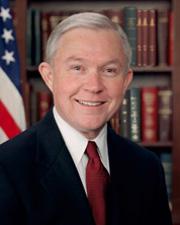 Sen. Jeff Sessions (R-AL)
Legislative Activity
Stay on top of the latest movement without scrolling through every action
Senate amendment not agreed to: Amendment SA 772 not agreed to in Senate by Yea-Nay Vote. 40 - 58. Record Vote Number: 120.(text as modified: CR S4144-4145)
April 1, 2009
View full timeline
Senate amendment not agreed to: Amendment SA 772 not agreed to in Senate by Yea-Nay Vote. 40 - 58. Record Vote Number: 120.(text as modified: CR S4144-4145)
April 1, 2009
Roll call votes on amendments in Senate: Amendment SA 772 not agreed to in Senate by Yea-Nay Vote. 40 - 58. Record Vote Number: 120.(text as modified: CR S4144-4145)
April 1, 2009
Considered by Senate. (consideration: CR S4112, S4144-4145, S4145-4146)
April 1, 2009
Amendment SA 772 not agreed to in Senate by Yea-Nay Vote. 40 - 58. Record Vote Number: 120. (text as modified: CR S4144-4145)
April 1, 2009
Senate amendment submitted
March 31, 2009
Senate amendment proposed (on the floor): Amendment SA 772 proposed by Senator Sessions.(consideration: CR S4037-4055; text: CR S4037-4038)
March 31, 2009
Amendment SA 772 proposed by Senator Sessions. (consideration: CR S4037-4055; text: CR S4037-4038) To restore the budget discipline of the Federal Government by freezing nondefense discretionary spending for fiscal years 2010 and 2011, and limiting the growth of nondefense discretionary spending to one percent annually for fiscal years 2012, 2013, and 2014.
March 31, 2009
Votes
1 roll call on this amendment
Text
Proposed
CONGRESSIONAL BUDGET FOR THE UNITED STATES GOVERNMENT FOR FISCAL YEAR
                            2010--Continued

  Mr. AKAKA. Mr. President, I suggest the absence of a quorum.
  The PRESIDING OFFICER. The clerk will call the roll.
  The legislative clerk proceeded to call the roll.
  Mrs. BOXER. Mr. President, I ask unanimous consent that the order for
the quorum call be rescinded.
  The PRESIDING OFFICER. Without objection, it is so ordered.


                           Amendment No. 731

  Mrs. BOXER. What is the order right now?
  The PRESIDING OFFICER. The time until 2:30 is equally divided.
  Mrs. BOXER. I am happy to yield to my friend if he would like to, and
then I will close the debate.
  Mr. THUNE. How much time do we have equally divided right now?
  Mrs. BOXER. Six minutes.
  The PRESIDING OFFICER. Three minutes 30 seconds.
  The Senator from South Dakota is recognized.
  Mr. THUNE. Mr. President, we are going to have a vote in just a few
minutes on an amendment I offered yesterday, and now there is a side-
by-side offered by the Senator from California which tries to modify my
amendment in a way that gives folks who want to be able to vote for
something, something to vote for when, in fact, my amendment is the one
that is very simple and straightforward. That is, if we have a reserve
fund created for climate change, the revenues coming into that fund
obviously are going to be significant: $646 billion, if the President's
budget is accurate, and much more than that by many other analyses that
have been done. It simply says that cannot be used to increase
electricity rates or gasoline taxes on the American consumer.
  So what I would hope that my colleagues will bear in mind when we
vote is that any cap-and-trade system that is put in place is going to
have a significant increase in energy costs in this country. You can
call it what you want--a lightbulb tax, a national energy tax--but it
is pretty clear that is going to be the case. The President, a year
ago, even made the same argument: ``Under my plan of a cap-and-trade
system, electricity rates would necessarily skyrocket.'' That is a
direct quote.
  All of the studies that have been done have suggested that this could
cost anywhere from, as CBO said, $50 billion a year to $300 billion a
year; MIT said $366 billion a year. An enormous amount of money is
going to come into the Federal Treasury by any form of cap-and-trade
bill that is passed here in the Congress. It just depends on how rigid
or how restrictive the caps are as to what that cost is going to be,
and there are several other bills that are out there.
  What I wish to point out, however, is that the Senator from
California--her bill, S. 309 from the last session of Congress,
actually designates seven different funds that the revenue would go
into. What her amendment would say is that a lot of these revenues
would go back in the form of some assistance to consumers in this
country, but, in fact, if you look at her legislation, there are seven
different funds that it goes into. Essentially, what her bill would do
is take all of these revenues that are going to come into the Federal
Treasury and distribute them through Government agencies to all of
these different areas, including the climate change worker training
fund; the adaptation fund, whatever that is; the climate change and
national security fund; the Bureau of Land Management emergency
firefighting fund; the Forest Service emergency firefighting fund; and
the Climate Security Act management fund. Those are six of the funds
that are listed in her bill as uses of revenues that would be derived
from a cap-and-trade and national energy tax that would be imposed upon
the American consumers. Again, I point out that MIT, in their analysis
of her bill, said it would cost the average household in this country
an additional $3,128 annually in energy costs.
  The President himself has said: ``Under my plan of a cap-and-trade
system, electricity rates would necessarily skyrocket.'' Nobody
disputes the fact that rates are going to go up. What we are saying is
that shouldn't happen; we can't do that, particularly now at a time
when the American economy is struggling and most Americans are having
to tighten their belts already. To impose a huge national energy sales
tax on American consumers would be very ill-timed.
  Frankly, I don't believe for a minute that any of the revenues that
come in as a result of the imposition of that national energy tax are
going to be used to refund the American consumers. There is a $400 and
$800 tax credit the President has put in place, but that is a
fraction--a fraction--of the amount of the revenue that is going to
come in.
  So I hope my colleagues will support my amendment and vote against
the side-by-side that is being offered by my

[[Page S4029]]

colleague from California. I don't think there is any question but this
is going to raise taxes, energy taxes in the form of a national sales
tax on energy for consumers in this country. My amendment would make it
very clear that cannot be the case.
  I yield back the remainder of my time.
  Mrs. BOXER. Mr. President, Senator Thune makes it sound as if a cap-
and-trade regime that we hope we will be able to put in place to fight
global warming is going to be bad for the economy. The fact is, we have
hundreds and hundreds of business leaders and union members, working
people, the Conference of Mayors, and Governors of both parties
strongly supporting global warming legislation because it will create
millions of green jobs.
  My friend argues it will raise prices on consumers, and he cites
Barack Obama's comments taken out of context because here is the thing:
We all know there will be revenues coming into the Government which we
use to soften the blow to consumers. As a matter of fact, my friend
cites the MIT study, but he forgets the conclusion of the MIT study,
which is that a family of four could get a rebate as high as $4,500 per
year. That is more than the increase in costs that are predicted.
  So my friend is a pessimist, and he is standing here saying: The sky
is falling, the sky is falling. Where was he when gas prices reached
almost $5 a gallon without any global warming legislation but because
of speculators? I didn't hear my friend complain. Where was my friend?
  Mr. THUNE. Will the Senator yield for a question?
  Mrs. BOXER. Where was my friend when Enron had a scandal--and I won't
yield; I don't have time to yield--where was my friend when Enron had a
scandal in which it raised prices? I didn't hear him coming down here
and complaining about it. But because we are contemplating a way to
solve a major crisis that is facing the American people--and by the
way, in the course of that crisis of fighting global warming, we will
generate revenues that we can give back to consumers--suddenly--if I
might ask for order. If I might ask for order.
  The PRESIDING OFFICER. The Senate will be in order.
  Mrs. BOXER. Suddenly, my friend is upset that consumers won't be made
whole.
  Well, I hope my colleagues will support my amendment because my
amendment says that, in fact, consumers will be made whole by the
policies in the bill, by the revenues in the bill.
  We embrace what he is doing with his amendment. We hope he will
embrace what we are doing in our amendment, which is to say that
consumers will do well in any cap-and-trade system. They will not be
hit. They will have rebates. They will be made whole. The fact is, the
very same MIT study he cites proves our point.
  Our friends on the other side are nervous and excited now because
there are studies that say gasoline could go up by 10 cents over 10
years--a penny a year. They are getting very exercised about that. None
of us want that. But they weren't exercised over it when there was
manipulation going on by the oil companies, the traders, and the rest
of it. What we are saying in our amendment is----
  The PRESIDING OFFICER. The Senator's time has expired.
  Mrs. BOXER. Vote aye on the Boxer amendment and vote aye on the Thune
amendment.


                           Amendment No. 749

  The PRESIDING OFFICER. There will now be 2 minutes of debate, equally
divided, on the Boxer amendment.
  The Senator from South Dakota is recognized.
  Mr. THUNE. Mr. President, I say to my friend from California that
when gas prices were going up last summer, many of us were trying to
put together a plan that would increase production in this country. We
had a simple strategy: find more and use less.
  Many of us were working constructively to try to come up with an
energy solution that would increase domestic supply so we can drive
down the cost of energy. I was engaged in that with a number of
colleagues from the other side of the aisle.
  But that has nothing to do with this debate. This deals strictly with
a cap-and-trade proposal--a national energy tax proposal that is being
contemplated in this budget. My amendment also was straightforward and
simple. It says any reserve funds created as a result of this budget
that would call for climate change legislation cannot raise electricity
rates or gasoline prices for American consumers. That is a tax on
American consumers when they need it the least.
  I hope my colleagues will support my amendment and reject the Boxer
amendment.
  The PRESIDING OFFICER. The Senator from California is recognized.
  Mrs. BOXER. Mr. President, there is no national energy tax proposal.
Nobody I know has ever proposed it. If the purpose of this amendment is
to fight a national energy tax proposal, then it is very interesting
because there is no such proposal.
  The fact is, we have a cap-and-trade system in place for acid rain. I
never heard one Republican come to the floor and call that a tax. It is
not a tax.
  My friend is very concerned that energy prices will go up. I share
his concern. He should vote for my amendment. As a matter of fact, I
think it would be stunning if my friend didn't because I said any kind
of a cap-and-trade system that comes forward will not increase
electricity or gas prices or increase the overall burden on consumers.
  The PRESIDING OFFICER. The Senator's time has expired.
  Mrs. BOXER. He will have a lot of explaining to do to his
constituents. I urge an ``aye'' vote on Boxer and on Thune.
  The PRESIDING OFFICER. The question is on agreeing to the amendment
No. 749.
  Mrs. BOXER. Mr. President, I ask for the yeas and nays.
  The PRESIDING OFFICER. Is there a sufficient second? There is a
sufficient second.
  The clerk will call the roll.
  The legislative clerk called the roll.
  Mr. DURBIN. I announce that the Senator from New York (Mrs.
Gillibrand) and the Senator from Massachusetts (Mr. Kennedy) are
necessarily absent.
  The PRESIDING OFFICER. Are there any other Senators in the Chamber
desiring to vote?
  The result was announced--yeas 54, nays 43, as follows:

                      [Rollcall Vote No. 116 Leg.]

                                YEAS--54

     Akaka
     Baucus
     Bayh
     Begich
     Bennet
     Boxer
     Brown
     Burris
     Cantwell
     Cardin
     Carper
     Casey
     Conrad
     Dodd
     Dorgan
     Durbin
     Feingold
     Feinstein
     Hagan
     Harkin
     Inouye
     Johnson
     Kaufman
     Kerry
     Klobuchar
     Kohl
     Landrieu
     Lautenberg
     Leahy
     Levin
     Lieberman
     Lincoln
     McCaskill
     Menendez
     Merkley
     Mikulski
     Murray
     Nelson (FL)
     Nelson (NE)
     Pryor
     Reed
     Reid
     Rockefeller
     Sanders
     Schumer
     Shaheen
     Stabenow
     Tester
     Udall (CO)
     Udall (NM)
     Warner
     Webb
     Whitehouse
     Wyden

                                NAYS--43

     Alexander
     Barrasso
     Bennett
     Bingaman
     Bond
     Brownback
     Bunning
     Burr
     Byrd
     Chambliss
     Coburn
     Cochran
     Collins
     Corker
     Cornyn
     Crapo
     DeMint
     Ensign
     Enzi
     Graham
     Grassley
     Gregg
     Hatch
     Hutchison
     Inhofe
     Isakson
     Johanns
     Kyl
     Lugar
     Martinez
     McCain
     McConnell
     Murkowski
     Risch
     Roberts
     Sessions
     Shelby
     Snowe
     Specter
     Thune
     Vitter
     Voinovich
     Wicker

                             NOT VOTING--2

     Gillibrand
     Kennedy

  The amendment (No. 749) was agreed to.
  Mr. CONRAD. Mr. President, I move to reconsider the vote.
  Mrs. BOXER. I move to lay that motion on the table.
  The motion to lay on the table was agreed to.


                           Amendment No. 731

  The PRESIDING OFFICER. Under the previous order, there will now be 2
minutes of debate equally divided prior to a vote in relation to
amendment No. 731 offered by the Senator from South Dakota, Mr. Thune.
  The Senator from South Dakota is recognized.
  Mr. THUNE. Mr. President, if you honestly believe the trillions of
dollars that are going to come in from a cap-and-trade proposal--what
is essentially a national energy sales tax--that those revenues are
going to be distributed

[[Page S4030]]

back to the American people, then voting for the Boxer amendment was
the correct vote.
  If you believe, as I do, that the trillions of dollars that come in
through a cap-and-trade proposal are, in fact, not going to be rebated
to the American people, that they are going to fund programs in
Washington, DC, then you should vote for my amendment because my
amendment prevents any program that is created--a cap-and-trade
program--from increasing electricity rates or gasoline prices for
American consumers.
  This is a national energy tax on the American people, on American
consumers. If you want to vote against that, then voting for my
amendment is the correct vote.
  I yield the floor.
  The PRESIDING OFFICER. The Senator from California.
  Mrs. BOXER. Mr. President, I think Members should feel free to vote
for the Thune amendment because the Boxer amendment was adopted, which
means that if there is any increase in gasoline prices, in electricity
prices, because the Boxer amendment was adopted, we said we can rebate,
we can take the funds that have come in from a cap-and-trade system and
keep consumers whole. So I have no problem at all with the Thune
amendment now that we have passed Boxer. So feel very free to do that.

  I will say that my friends on the other side are so desperate to kill
cap and trade that they call it a national sales tax. They never called
the cap-and-trade system for acid rain a national sales tax. So they
are inventing a new vocabulary just to kill any chance at addressing
global warming in the way that most businesses want us to address it--
through a cap-and-trade system.
  But I feel comfortable voting for the Thune amendment because the
Boxer amendment passed, and we will have the ability to keep consumers
whole.
  The PRESIDING OFFICER. The Senator's time has expired.
  Mr. CONRAD. I ask for the yeas and nays.
  The PRESIDING OFFICER. Is there a sufficient second?
  There appears to be a sufficient second.
  The question is on agreeing to amendment No. 731. The clerk will call
the roll.
  The assistant legislative clerk called the roll.
  Mr. DURBIN. I announce that the Senator from New York (Mrs.
Gillibrand) and the Senator from Massachusetts (Mr. Kennedy) are
necessarily absent.
  The PRESIDING OFFICER (Mr. Udall of Colorado). Are there any other
Senators in the Chamber desiring to vote?
  The result was announced--yeas 89, nays 8, as follows:

                      [Rollcall Vote No. 117 Leg.]

                                YEAS--89

     Akaka
     Alexander
     Barrasso
     Baucus
     Bayh
     Begich
     Bennet
     Bennett
     Bond
     Boxer
     Brown
     Brownback
     Bunning
     Burr
     Burris
     Byrd
     Cantwell
     Carper
     Casey
     Chambliss
     Coburn
     Cochran
     Collins
     Conrad
     Cornyn
     Crapo
     DeMint
     Dodd
     Dorgan
     Ensign
     Enzi
     Feingold
     Graham
     Grassley
     Gregg
     Hagan
     Harkin
     Hatch
     Hutchison
     Inhofe
     Inouye
     Isakson
     Johanns
     Johnson
     Kaufman
     Kerry
     Klobuchar
     Kohl
     Kyl
     Landrieu
     Lautenberg
     Leahy
     Levin
     Lieberman
     Lincoln
     Lugar
     Martinez
     McCain
     McCaskill
     McConnell
     Merkley
     Mikulski
     Murkowski
     Murray
     Nelson (FL)
     Nelson (NE)
     Pryor
     Reed
     Reid
     Risch
     Roberts
     Rockefeller
     Sanders
     Schumer
     Sessions
     Shaheen
     Shelby
     Snowe
     Specter
     Stabenow
     Tester
     Thune
     Udall (CO)
     Vitter
     Voinovich
     Warner
     Webb
     Wicker
     Wyden

                                NAYS--8

     Bingaman
     Cardin
     Corker
     Durbin
     Feinstein
     Menendez
     Udall (NM)
     Whitehouse

                             NOT VOTING--2

     Gillibrand
     Kennedy
  The amendment (No. 731) was agreed to.
  Mrs. BOXER. Mr. President, I move to reconsider the vote, and I move
to lay that motion on the table.
  The motion to lay on the table was agreed to.


                           Amendment No. 739

  The PRESIDING OFFICER. Under the previous order, there will now be 2
minutes of debate equally divided prior to a vote in relation to
amendment No. 739 offered by the Senator from New Hampshire, Mr. Gregg.
  The Senator from New Hampshire is recognized.
  Mr. GREGG. Mr. President, I call this the 1789 amendment because it
simply says that if there is a budget brought forward after January
2009 that raises the debt of this country more than all the debt added
up by all the Presidents since 1789, starting with George Washington,
Thomas Jefferson, Franklin Pierce--to remind a few of you folks--
Franklin Roosevelt, all the Presidents since 1789, all the debt they
added to this Nation--if there is a budget that brings forward more
debt than that in one 5-year period, as regrettably President Obama's
budget does--it doubles the debt in 5 years and triples it in 10
years--then there will be a point of order against that budget so it
will take 60 votes in this body to pass that budget rather than 51. It
is a reasonable request.
  The PRESIDING OFFICER. The time of the Senator has expired.
  Mr. CONRAD. Mr. President, one has to wonder where the Senator was
when they were doubling the debt over the last 8 years. But this
solution is the most curious offered yet. What it says is we would make
getting a budget resolution--which is the only prospect of disciplining
the process--even more difficult. The cure is worse than the disease.
  I urge my colleagues to oppose this wrongheaded amendment.
  Mr. GREGG. Mr. President, I ask unanimous consent that if the Senator
wishes to make this retroactive, we will accept it.
  Mr. CONRAD. We already have the problems that President Obama has
inherited. We are stuck with that.
  The PRESIDING OFFICER. The question is on agreeing to amendment No.
739.
  Mr. GREGG. Mr. President, I ask for the yeas and nays.
  The PRESIDING OFFICER. Is there a sufficient second?
  There is a sufficient second.
  The clerk will call the roll.
  The legislative clerk called the roll.
  Mr. DURBIN. I announce that the Senator from New York (Mrs.
Gillibrand) and the Senator from Massachusetts (Mr. Kennedy) are
necessarily absent.
  The PRESIDING OFFICER. Are there any other Senators in the Chamber
desiring to vote?
  The result was announced--yeas 43, nays 54, as follows:

                      [Rollcall Vote No. 118 Leg.]

                                YEAS--43

     Alexander
     Barrasso
     Bennett
     Bond
     Brownback
     Bunning
     Burr
     Chambliss
     Coburn
     Cochran
     Collins
     Corker
     Cornyn
     Crapo
     DeMint
     Ensign
     Enzi
     Graham
     Grassley
     Gregg
     Hatch
     Hutchison
     Inhofe
     Isakson
     Johanns
     Kyl
     Lugar
     Martinez
     McCain
     McConnell
     Murkowski
     Nelson (NE)
     Risch
     Roberts
     Sessions
     Shelby
     Snowe
     Specter
     Tester
     Thune
     Vitter
     Voinovich
     Wicker

                                NAYS--54

     Akaka
     Baucus
     Bayh
     Begich
     Bennet
     Bingaman
     Boxer
     Brown
     Burris
     Byrd
     Cantwell
     Cardin
     Carper
     Casey
     Conrad
     Dodd
     Dorgan
     Durbin
     Feingold
     Feinstein
     Hagan
     Harkin
     Inouye
     Johnson
     Kaufman
     Kerry
     Klobuchar
     Kohl
     Landrieu
     Lautenberg
     Leahy
     Levin
     Lieberman
     Lincoln
     McCaskill
     Menendez
     Merkley
     Mikulski
     Murray
     Nelson (FL)
     Pryor
     Reed
     Reid
     Rockefeller
     Sanders
     Schumer
     Shaheen
     Stabenow
     Udall (CO)
     Udall (NM)
     Warner
     Webb
     Whitehouse
     Wyden

                             NOT VOTING--2

     Gillibrand

     Kennedy
  The amendment No. 739 was rejected.
  Mr. CONRAD. Mr. President, I move to reconsider the vote and to lay
that motion on the table.
  The motion to lay on the table was agreed to.


                           Amendment No. 763

  The PRESIDING OFFICER. The Senator from North Dakota.
  Mr. CONRAD. Mr. President, the next amendment in order is the
Lieberman-Collins amendment. We have a 30-

[[Page S4031]]

minute time agreement equally divided on the amendment.
  The PRESIDING OFFICER. The Senator from Connecticut.
  Mr. LIEBERMAN. Mr. President, I thank my friend from North Dakota,
chairman of the Budget Committee. I call up the amendment that has been
filed by Senator Collins and me recently.
  The PRESIDING OFFICER. Is there objection to setting aside the
pending amendment?
  Without objection, it is so ordered.
  The clerk will report.
  The assistant legislative clerk read as follows:

       The Senator from Connecticut [Mr. Lieberman], for himself,
     Ms. Collins, Mr. Bennet, Mr. Bingaman, Mrs. Feinstein, Mrs.
     Hutchison, Mr. Kyl, Mr. Pryor, and Mr. Udall of New Mexico,
     proposes an amendment numbered 763.

  Mr. LIEBERMAN. I ask unanimous consent that reading of the amendment
be dispensed with.
  The PRESIDING OFFICER. Without objection, it is so ordered.
  The amendment is as follows:

   (Purpose: To protect the American people from potential spillover
 violence from Mexico by providing $550 million in additional funding
 for the Department of Homeland Security and the Department of Justice
 and supporting the Administration's efforts to combat drug, gun, and
 cash smuggling by the cartels, by providing: $260 million for Customs
  and Border Protection to hire, train, equip, and deploy additional
officers and canines and conduct exit inspections for weapons and cash;
 $130 million for Immigration and Customs Enforcement to hire, train,
  equip, and deploy additional investigators; $50 million to Alcohol,
  Tobacco, Firearms, and Explosives to hire, train, equip, and deploy
 additional agents and inspectors; $20 million for the Human Smuggling
  and Trafficking Center; $10 million for the Office of International
  Affairs and the Management Directorate at DHS for oversight of the
 Merida Initiative; $30 million for Operation Stonegarden; $10 million
 to the Office of National Drug Control Policy for the High Intensity
    Drug Trafficking Areas program, to support state and local law
   enforcement participation in the HIDTA program along the southern
 border; $20 million to DHS for tactical radio communications; and $20
 million for upgrading the Traveler Enforcement Communications System)

       On page 17, line 22, increase the amount by $30,000,000.
       On page 17, line 23, increase the amount by $3,000,000.
       On page 18, line 3, increase the amount by $11,000,000.
       On page 18, line 7, increase the amount by $9,000,000.
       On page 18, line 11, increase the amount by $7,000,000.
       On page 24, line 24, increase the amount by $520,000,000.
       On page 24, line 25, increase the amount by $406,000,000.
       On page 25, line 4, increase the amount by $62,000,000.
       On page 25, line 8, increase the amount by $52,000,000.
       On page 27, line 23, decrease the amount by $550,000,000.
       On page 27, line 24, decrease the amount by $409,000,000.
       On page 28, line 3, decrease the amount by $73,000,000.
       On page 28, line 7, decrease the amount by $61,000,000.
       On page 28, line 11, decrease the amount by $7,000,000.

  Mr. LIEBERMAN. Mr. President, the reporting of the amendment
mentioned my name and others. I rise with Senator Collins, representing
the bipartisan leadership amendment of the Senate Homeland Security
Committee, to offer this bipartisan amendment to the fiscal year 2010
budget resolution to strengthen Federal law enforcement efforts on our
southern border. Our amendment would provide an additional $550 million
to increase the number of Federal agents, investigators, and resources
on the border to staunch the flow of guns and money southward into
Mexico and the flow of drugs and violent drug dealers northward into
America.
  The increasing competition among the Mexican drug cartels caused by
the initiative by President Philippe Calderon has touched off a bloody
war that has claimed over 7,200 lives in Mexico since the start of
2008. This violence is supported by guns flowing south from the United
States, along with billions of dollars of ill-gotten money earned from
drug sales in the United States which allows the cartels, among other
things, to corrupt officials in Mexico but also some in the United
States as well. President Calderon has taken unprecedented steps to
challenge the cartels. He has deployed the Mexican military to assist
in the fight and has acted aggressively to root out corruption in
government and law enforcement agencies in Mexico. But he needs our
help and more of it, and we need to help him succeed in defeating the
Mexican drug cartels which create such havoc in the United States
through the drugs they sell but whose violence has begun to spill over
the Mexican border into the United States. We cannot sit idly by while
the streets in Mexico run with blood, nor can we wait until the
cartels' brutal violence further invades our own cities.
  The Department of Justice testified before the Senate Homeland
Security Committee on this subject a week or so ago that the Mexican
drug cartels are today the No. 1 organized crime threat in our country.
They operate in 230 of our cities, bringing their deadly drugs and
violence with them. In Phoenix, AZ, alone, the cartels have been
involved in kidnappings that numbered 700 in the last 2 years. That
makes Phoenix second only to Mexico City in the number of kidnappings
in any city in the world. That is a direct overflow result of the
Mexican drug cartel violence and competition in Mexico. This
lawlessness must be stopped before it spreads.
  Last week, the Obama administration announced it was redeploying
investigators and other law enforcement officers from the Departments
of Homeland Security and Justice to the southern border to expand our
Government's efforts to investigate and interdict the cartels'
activities in the United States. This was a real step forward.
Department of Homeland Security Secretary Napolitano said at her
hearing before the committee last Wednesday that the plan she had put
into effect the day before was budget neutral. I know we want
everything we do to be budget neutral, but this is an urgent crisis.
  The Mexican drug cartels are a clear and present danger not only to
the people of Mexico but to the people of the United States. That fact,
Senator Collins and I believe, compels us to provide our Federal law
enforcement agencies with additional funding to ensure that the
redeployment of forces that Secretary Napolitano announced last week is
sustainable, that it does not take personnel away from other sections
of our country where they are needed for law enforcement purposes, and
that we provide the substantial additional resources that we conclude,
as the leaders of the Homeland Security Committee, are necessary to
effectively combat the cartels.
  Secretary Napolitano announced the redeployment of 350 personnel
within her Department. We need to do more. The Secretary also said she
had to play with the hand she was dealt. This amendment would
dramatically improve that hand, and I urge my fellow Senators to
support our Secretary and the amendment and the security of the
American people by supporting it.
  I wish to briefly speak now about what the amendment does. It
provides $260 million additional for Customs and Border Protection to
hire, train, and equip 1,600 new officers and 400 canine teams to be
sent to the border to significantly increase the number of inspections
there, particularly exit inspections, which we do not do routinely. The
funding would also cover costs related to temporary infrastructure to
ensure that the officers are protected from both the elements and those
who would evade inspection to come across the border. CBP would also
receive $20 million to modernize its border-screening database to
better identify potential criminals and stop suspicious loads--
truckloads or carloads--at ports of entry.
  The Department of Homeland Security would receive an additional $20
million to improve the tactical communications in the field for Customs
and Border Protection and Immigration and Customs Enforcement to ensure
that our law enforcement officers have the ability to call for help
when they are confronted by dangerous situations and to better
communicate with State and local law enforcement who must be part of
this anti-Mexican drug cartel campaign.
  Increasing inspections is just one part of a comprehensive strategy
which this amendment would enable. We also need to ensure that the
Department of Homeland Security and the Department of Justice have the
resources--

[[Page S4032]]

people--they need to investigate the cartels. That is why our amendment
provides $130 million to ICE--Immigration and Customs Enforcement--for
350 full-time investigators to work on firearms-trafficking and money-
laundering investigations.
  We would also double the number of border enforcement security teams
along the southwest border. These teams create fusion centers that
bring together all the Federal agencies with State and local
governments to combat the cartels' activities. The fact is, many State
and local law enforcement agencies, particularly along our southern
border, simply cannot afford to detail the necessary additional
resources and personnel to these fusion centers. So this amendment
would provide $30 million for Operation Stonegarden to reimburse State
and local law enforcement for their participation in these programs.
  We would also add $10 million in the Department of Justice
competitive grants for local, State, and tribal law enforcement
agencies located along the southern border and in high-intensity drug-
trafficking areas across our country.
  There is $50 million here for the Alcohol, Tobacco, and Firearms
agency to better support an existing program called Project Gunrunner.
It would enable the hiring of an additional 150 agents and 50
inspectors to investigate illegal firearms trafficking near or across
the Mexican border, and $20 million for the Human Smuggling and
Trafficking Center at the Department of Homeland Security to better
coordinate investigations between Federal, State, and local law
enforcement.
  Finally, we appropriate an additional $10 million so the Department
of Homeland Security can oversee the implementation of its part of the
Merida Initiative, most of which has funds flowing through the
Department of State. If I may borrow a phrase from another conflict,
this amendment enables a real surge in America's joint war with the
Government of Mexico against the Mexican drug cartels to occur.
  The cartels are now presenting a genuine and very unique security
threat to our homeland. Our Federal law enforcement officers and
investigators are doing the best they can, but there are simply not
enough of them with enough resources to take on the threat the cartels
pose to America's security and the security of our friend and ally
nation to the south, Mexico. Additional resources provided by this
amendment would improve our ability to break the grip of the cartels
and ensure that the drug-related violence from Mexico does not further
encroach on America's communities and people.
  Mr. President, I thank the Chair, and I now am proud to yield to the
ranking member of our committee, Senator Collins of Maine.
  The PRESIDING OFFICER (Mr. Kaufman). The Senator from Maine.
  Ms. COLLINS. Mr. President, I am pleased to join with my friend and
colleague, the distinguished chairman of the Homeland Security
Committee, in offering this bipartisan amendment to provide urgently
needed resources to confront a major and growing threat to our homeland
security.
  Since the beginning of 2008, more than 7,000 people have been killed
in drug-related violence in Mexico, including 522 military and law
enforcement officials. The Mexican drug cartels have become
increasingly brazen and violent, targeting police and journalists and
using graphic displays of violence to intimidate communities. The drug
cartels also have been able to corrupt some local law enforcement
officials, who then have turned a blind eye to or are complicit in
illegal drug production and trafficking.
  Compounding the danger of the situation, Mexico's drug cartels have,
in recent years, acquired increasingly sophisticated and powerful
weaponry. Smuggling equips the cartels with large numbers of firearms,
as well as items such as night vision goggles and electronic intercept
and encrypted communications capabilities. Police in Mexico are often
ill-equipped to confront such well-armed and trained forces.
  This growing violence poses a significant danger to the security of
our country, particularly to border States. Drug-related violence has
already spilled over our borders. Kidnappings, assaults, murders, and
home invasions related to the Mexican drug cartels are on the rise,
particularly in the State of Arizona. Tucson and Phoenix have created
special task forces to investigate a rash of kidnappings and home
invasions directly related to these Mexican drug cartels. Authorities
estimate, as the chairman has indicated, that more than 230 cities, as
far away as Anchorage, AK, and Boston, MA, have distribution networks
related to the Mexican cartels. This number is up from just 100 cities
3 years ago. As the drugs come north from Mexico, these distribution
networks use the revenues from their sales to send cash and weapons
back to the traffickers in Mexico.
  The U.S. Government has invested significant resources in preventing
drugs from entering our country. But until very recently, the Federal
Government has focused only very limited resources on the supply of
money and weapons going south--south to fuel the drug war. In our own
country, some local and State law enforcement agencies simply do not
have the capabilities to fully counter the increasingly complex
operations and sophisticated weapons of the Mexican cartels'
distribution networks.
  The amendment Senator Lieberman and I are offering would provide
absolutely critical resources to supplement those efforts underway on
our southwest border to combat drug, gun, and cash smuggling by the
drug cartels in Mexico. These resources represent a more substantial
commitment to address the threat than the administration announced last
week when it moved some personnel from other parts of the country to
the southwest border. Those steps were good ones, they are needed, but
they simply are not sufficient, and they risk leaving other borders not
fully staffed, particularly the northern borders.
  Our amendment, as Senator Lieberman has indicated, provides
additional funding for Customs and Border Protection to deploy 1,600
additional officers at ports of entry without robbing other ports of
entry. It would also provide funding for 400 new canine teams. Many of
these new officers and teams will be deployed to the southwest border
to conduct inspections, exit inspections of southbound traffic to
Mexico so we can interdict the illegal export of weapons and cash that
again fuel that cartel-related violence in Mexico.
  To investigate and dismantle the networks involved in smuggling the
drugs, the weapons, and the cash, our amendment provides $130 million
for Immigration and Customs Enforcement to hire and train 350 new
investigators. That will help ensure that the number of border
enforcement security teams along the southwest border doubles. These
teams have been highly successful in coordinating with Mexican
officials to combat cross-border smuggling, but they are simply
overwhelmed by the extent of the threat.
  As Senator Lieberman has described, our amendment also provides $50
million in additional funding to hire, train, and deploy an additional
100 investigators working on Project Gunrunner. This will help expand
investigations of armed smuggling.
  The amendment sets aside an additional $30 million for a highly
successful cooperative program known as Operation Stonegarden. This
program has been a big success in my own State, so I know how helpful
it can be in combating this emerging and growing threat.
  Finally, this amendment provides $40 million for important technology
upgrades to make CBP officers and Border Patrol agents along the
border, and indeed across the country, more effective in identifying
potential smugglers and in communicating with each other and with State
and local law enforcement. This will make a real difference.
  What we have done is put together a carefully crafted amendment that
will help to fill the real gaps that exist at the Federal level and, in
cooperation with State and local law enforcement, to help us counter
this extraordinary rise in violence that has spilled over the border
from Mexico that is threatening the security particularly in those
border States, such as Arizona, but also poses a threat to States
throughout our country because of these distribution networks the drug
cartels are using.
  This amendment is essential to the security of our country. The
violence the cartels originate in Mexico--and

[[Page S4033]]

certainly we have to be concerned about the violence in a neighboring
country, but this affects American citizens directly. I am convinced,
based on the hearings our committee has held and the investigations we
have conducted, that this amendment is essential to countering this
growing threat to our homeland security. I urge support for the
amendment, and I am very pleased to work with my chairman to bring this
issue before the Senate.

  Thank you, Mr. President.
  The PRESIDING OFFICER. The Senator from Connecticut.
  Mr. LIEBERMAN. Mr. President, I first wish to thank my colleague from
Maine for her excellent statement as well as for the spirit of
bipartisanship that has blessed and characterized our relationship. I
am very pleased we have been able to bring this amendment forward
quickly in response to testimony we have heard and an investigation our
staff has done. This is an urgent problem that concerns people
particularly along our southern border but also in cities around
America, 230 cities where the Mexican drug cartels are operating, and
they are all over the country. This is a business that by varying
estimates returns between $16 billion and $38 billion a year. It takes
$16 billion to $38 billion a year out of the United States and sends it
back to the drug cartel kingpins in Mexico. If that was a business, it
would be one of the larger businesses in our country today.
  We just have to help President Calderon, who has had the guts to take
on the Mexican drug cartels at tremendous risk to himself and his
government and deployed his military. We are helping him through the
merit initiative. This is a way to beef up our own response and our own
partnership on this side of the border. I thank Senator Collins for her
statement and for her support.
  I do wish to indicate for the Record that also original cosponsors of
this amendment are Senator Bennet from Colorado, Senator Bingaman from
New Mexico, Senator Feinstein from California, Senator Hutchison from
Texas, Senator Kyl from Arizona, Senator Pryor from Arkansas, Senator
Udall from Colorado, and Senator Udall from New Mexico, a truly
bipartisan group of cosponsors. We are going to ask for a rollcall vote
on this amendment. I know there is a lot of interest in it from Members
on both sides of the aisle throughout the Senate and throughout the
country, and we hope we can vote on it as soon as possible.
  With that, I thank the Chair, and I yield back the remaining time
that we have been allotted on this amendment.
  The PRESIDING OFFICER. The Senator from Tennessee is recognized.


                           Amendment No. 747

  Mr. ALEXANDER. Mr. President, I was just making my entrance at the
time the Senator from Connecticut concluded.
  I ask unanimous consent to set aside the pending amendment.
  The PRESIDING OFFICER. Is there objection?
  Without objection, it is so ordered.
  Mr. ALEXANDER. Mr. President, I call up amendment No. 747 and ask for
its immediate consideration.
  The PRESIDING OFFICER. The clerk will report the amendment.
  The bill clerk read as follows:

       The Senator from Tennessee [Mr. Alexander] proposes an
     amendment numbered 747.

  Mr. ALEXANDER. Mr. President, I ask unanimous consent that the
reading of the amendment be dispensed with.
  The PRESIDING OFFICER. Without objection, it is so ordered.
  The amendment is as follows:

 (Purpose: To create runaway debt point of order against consideration
 of a budget resolution that projects the ratio of the public debt to
GDP for any fiscal year in excess of 90 percent to ensure the continued
  viability of U.S. dollar and prevent doubling or tripling the debt
                     burden on future generations)

       On page 68, after line 4, insert the following:

     SEC. __. LIMIT ON PUBLIC DEBT.

       (a) Federal Spending Limit Point of Order.--
       (1) In general.--It shall not be in order in the Senate to
     consider any budget resolution, bill, joint resolution,
     amendment, or conference report that would exceed the limit
     on public debt for any fiscal year covered therein.
       (2) Waiver or suspension.--This subsection may be waived or
     suspended in the Senate only by the affirmative roll call
     vote of three-fifths of the Members, duly chosen and sworn.
       (3) Appeals.--Appeals in the Senate from the decisions of
     the Chair relating to any provision of this subsection shall
     be limited to 1 hour, to be equally divided between, and
     controlled by, the appellant and the manager of the bill or
     joint resolution. An affirmative vote of three-fifths of the
     Members of the Senate, duly chosen and sworn, shall be
     required to sustain an appeal of the ruling of the Chair on a
     point of order raised under this subsection.
       (4) Form of point of order.--A point of order under this
     subsection may be raised by a Senator as provided in section
     313(e) of the Congressional Budget Act of 1974.
       (b) Definitions.--In this section:
       (1) Limit on public debt.--The term ``limit on public
     debt'' means a level of public debt for a fiscal year in the
     resolution where the ratio of the public debt to GDP is 90
     percent.
       (2) GDP.--The term ``GDP'' means the gross domestic product
     for the relevant fiscal year.

  Mr. ALEXANDER. Mr. President, I see the Senator from New Hampshire is
here, and the Senator from Arizona, the assistant Republican leader,
will be here in a few minutes, I believe. Senator Gregg earlier offered
an amendment which essentially would say that the projected debt under
President Obama's budget couldn't go up more than all of the debt that
has been accumulated by all of the Presidents from George Washington to
President Bush. That is one way of saying to the American people and to
the Senate that the debt that is proposed by these budgets is so
staggeringly high that we need to find some way to put a limit on it.
  I am offering with my amendment another way to put some limit on the
debt. I call it a runaway debt point of order. This is not a matter of
not letting the horse get out of the barn; this recognizes that the
horse is already out of the barn and we are trying to put a fence
around him before he gets into the next county or even into the next
country.
  This amendment would create a new point of order against considering
any budget resolution that estimates gross Federal debt--our total
debt, total amount of obligations--exceeding 90 percent of gross
domestic product in any year covered by the budget. To put that in a
little plainer English, what it means is the Senate would be forced to
come up with 60 votes if the public debt in any year goes beyond 90
percent of the estimated gross domestic product.
  The gross domestic product is what all of us produce in the United
States every year. Despite the fact we are in an economic slowdown, we
are a very privileged country. We make up only about 5 percent of the
world population--those of us who live in the United States--but year
in and year out we produce about $1 out of every $4 of wealth produced
in the world. So 22, 23, 25, 26 percent of all of the wealth, all of
the money produced each year in the world is produced in the United
States for distribution among primarily the 5 percent of us who live
here. We are a very privileged country. This amendment says if we
intend in any year to increase the debt above 90 percent of all of that
production in any year, that 60 Senators have to agree with it.
  When was the last time the United States had a debt, a national debt,
that exceeded 90 percent of the gross domestic product? It was when we
were fighting in World War II and as we were coming out of World War
II. Of course, during that time, it didn't matter what we spent. It
didn't matter what we taxed. We were in a fight for our lives, and we
did whatever we could think of to do, spent whatever we could think of
to spend, and ran up any debt we needed to to win the war. And we did
win that war.
  Right after World War II, our national debt was about 90 percent of
the annual gross domestic product of the United States. More recently,
it has been about 40 percent.
  So here is what happens now--the Senator from New Hampshire went into
this to some degree. We talked about deficits and we need to make a
clear distinction between deficits and debt. Deficits adds to the debt
each year. We talked about the fact that the deficit is going up this
year and next year during the recession, and we understand that is
necessary to some degree. But then the deficit comes back down to
approximately 4 percent of gross domestic product, and it stays at a
little over 4 percent in President Obama's budget. That is also the
Conrad budget, which OMB Director for

[[Page S4034]]

President Obama said, is about 98 percent of the Obama budget. This
proposes an annual deficit as compared with GDP that is worse than the
following countries: Guatemala, the Philippines, Aruba, Cuba, Nigeria.
  This amendment I'm offering, however, seeks to talk about the debt.
For example, the President's proposal is to double the debt in 5 years
and to almost triple it in almost 10 years. So we start out with debt
held by the public at about 40 percent of gross domestic product. But
by 2014, we are at 66.5 percent of gross domestic product under Senator
Conrad's budget. President Obama proposed a 10-year budget--which is a
picture of America's future in the same way that a photograph of a
first grade class would be a picture of a community's future 10 years
out--that actually presented a very honest picture of our future as he
sees it. I respect him greatly for that. I just don't like the picture
he has presented because that picture, as I mentioned, doubles the debt
in 5 years and nearly triples it in 10 years. So we go from a level of
debt held by the public equaling about 40 percent of gross domestic
product to 82 percent of gross domestic product.
  Under President Bush--and we hear a lot of talking about President
Bush, we had lower deficits. I was listening to the radio yesterday
morning, and they said: How can you Republicans be talking about debt
when under President Bush you ran up the debt? True, true. But Senator
Gregg offered an amendment that gives us a chance to deal with that
because he points out that President Obama would increase the debt more
than, not just President Bush, but than all of the Presidents put
together, going back to George Washington. That is a very sobering
fact. So President Bush may have made some mistakes, but he was not
judged on whether he caused Hurricane Katrina. He was judged on how he
reacted to it. President Obama certainly didn't create the economic
mess we are in, and he won't be judged by that, but he will be judged--
and the majority party will be judged--by how they react to it. I don't
believe doubling the debt and tripling the debt is the way to grow the
economy or restore good jobs.
  I see the Senator from New Hampshire here, and I would like to ask
him about these gross domestic product discussions--90 percent of this
and 20 percent of that and a trillion of this--all of that makes the
case, but it is hard to fathom.
  Through the Chair, I would ask the Senator from New Hampshire how
would he put it in terms that the average family can deal with, what it
means to double the debt in 5 years and nearly triple it in 10 years,
as the President's budget would do.
  Mr. GREGG. Mr. President, if the Senator would yield for the purposes
of a question, I will try to make it rhetorical. First off, I
congratulate the Senator for his amendment because it is a serious
amendment addressing what I consider to be the most serious problem
with the President's budget, which is that the amount of debt that is
being put on the books by this budget is a result of incredible
expansion of the size of the Government and the spending of the
Government. It is going to put us in a situation where, as the Senator
noted, we will probably not be able to sustain the payment of that debt
or we will be forced into a position similar to some of the countries
the Senator mentioned, which is serious inflation or an inability to
borrow money because people will worry about the ability to be able to
pay it back and our concern about the devaluation of the dollar.
  It is hard, I think, and inappropriate for one generation to put that
much debt on the back of another generation.
  So what the Senator is proposing is--not that you can't pass a
budget, but when you do pass a budget that raises the public debt and
grows debt, in this case up to 90 percent of GDP, at a level of
countries such as Cuba and Aruba--what were the other countries?
  Mr. ALEXANDER. Guatemala, the Philippines, Aruba.
  Mr. President, I ask unanimous consent that the Senator from New
Hampshire and I be allowed to engage in a colloquy for the remaining
minutes we have.
  The PRESIDING OFFICER. Without objection, it is so ordered.
  Mr. ALEXANDER. Guatemala, the Philippines, Cuba, Nigeria, and Aruba
are countries that have an annual deficit level lower than we will
have.
  Mr. GREGG. And the debt level, too, I suspect. In fact, we could not
get into the European Union at the debt level of 90 percent of GDP.
They would not even allow us in.
  Mr. ALEXANDER. Lots of times Members of Congress sort of make fun of
Europe and make fun of France and say: Well, that is French. We don't
want to be French. It is embarrassing to stand here and say the
situation exists where, if the United States were applying to be a
member of the European Union, our annual deficit level would be too
high to be admitted. We would be unable to qualify for the entire 10
years projected in this budget if we were to choose to do that.
  Mr. GREGG. That is correct, as a result of this budget proposed by
the President, because the budget proposal is a dramatic expansion in
spending--an expansion of spending up to levels we have not seen since
World War II in terms of gross national product. Huge numbers.
  The Senator asked how can this--these huge numbers, which nobody can
understand, $1 trillion or 90 percent of GDP--how does that translate
to the person who lives on Main Street? Well, basically it means at the
end of this budget, every household in America will have an obligation
relative to the Federal debt that is owed of $133,000. That is probably
going to exceed a lot of mortgages they have. So not only do you have
your mortgage on your house, but you are going to have a Federal debt
which you are responsible for of $130,000. The service on that debt--in
other words, the interest costs to pay for that debt--will be $6,200 a
year.
  Mr. ALEXANDER. Mr. President, if I may ask the Senator from New
Hampshire, who will be the mortgage holder on that debt in 20 or 30 or
40 years?
  Mr. GREGG. Well, China regrettably. They are the primary mortgage
holder, although other nations also hold our debt. Russia owns a lot of
it, and Middle Eastern countries, such as oil-producing emirates and
Saudi Arabia. Obviously, America also owns some of its debt. But the
countries outside our Nation, regrettably, have raised their level of
ownership of our debt. It has actually been good for us because some
people have been able to borrow from us; we have borrowed from people
who lent us money--primarily, China, Russia, and other countries in the
Middle East have been lending us money.
  When we pay back this debt, which is going to be run up
dramatically--doubled in 5 years and tripled in 10 years by this
budget--we are basically going to be sending hard-earned money from
Americans to these other nations.
  Mr. ALEXANDER. If the mortgage holders around the world--China, the
Middle East, and other countries--worry about our ability to pay it
back, I suppose they could simply stop buying our dollars or ask us to
pay them more or pay a higher interest rate for our mortgage debt.
  Mr. GREGG. That is absolutely right. That comes out of every
American's ability to have a better lifestyle here. It means Americans
will have to pay higher taxes, and they will not have as much
discretionary money to spend on buying a house, sending their children
to college, buying a car, and doing things Americans like to do in
order to enjoy a good life. So much of the income of America will have
to be poured into paying off the debt, which will be run up by this
budget.
  There is an interesting fact that I know the Senator is aware of: By
the time we get through the 10-year period proposed in the budget, the
amount of money that we as a nation will pay in interest--just
interest--on the Federal debt will be over $800 billion, or almost a
trillion dollars. That is interest annually. That will be more money
than we spend on defending America, on our national defense.
  Mr. ALEXANDER. We have been worrying about sending billions of
dollars overseas to buy oil. So we should be worried about sending half
of that money overseas to pay interest on the debt.
  The Senator from New Hampshire was Governor of New Hampshire, as I
was Governor of Tennessee, and we used to have a friendly competition
about which had the most conservative fiscal policies. Of course,
Tennessee did, but one thing we always tried to do was keep our debt
low because that

[[Page S4035]]

meant we had more money for schools and for State parks and for
hospitals. What happens when we run the debt so high that we are paying
$800 billion in interest, which I believe is 8 times more than the
Federal Government spends on education each year and 8 times more than
the Federal Government spends on transportation each year. We are
taking away the money that we would invest to make this a better
country in the future.
  Mr. GREGG. The Senator is absolutely correct. We will spend this
money for the purpose of paying interest and, as the Senator points
out, maybe more than half the interest payment will go to the people in
China, Russia or in the Middle Eastern countries, rather than spending
it here to build better schools or basically make sure our national
defense is adequate, which is the primary responsibility of the
Government, or to build better roads or invest in energy. That seems to
be a very bad policy to me.
  Mr. ALEXANDER. How much time do we have, Mr. President?
  The PRESIDING OFFICER. The Senator used 16 minutes. There is 44
minutes left in support of the amendment.
  Mr. GREGG. Mr. President, I believe we had an agreement that, under
this amendment, our side would have 25 minutes and the other side would
have 25 minutes.
  I ask unanimous consent that we be able to have another 5 minutes on
our side, and then we will go to the other 25 minutes.
  The PRESIDING OFFICER. Without objection, it is so ordered.
  Mr. ALEXANDER. Mr. President, I see the Senator from North Dakota
here. We have been talking about Senator Gregg's amendment, which would
try to put some limit on the size of the debt. And we have been talking
about my proposal, the runaway debt point of order, which would say
debt is not where it should be, so let's say whoa out there and let
ourselves and the American people know when we reach a debt level of 90
percent of GDP and that we should not have a budget in any year that
does that.
  I know the chairman, Senator Conrad, has said in committee he didn't
think that was a very effective way to do things. I wonder why that is
true because it seems to me it would be extremely effective to shine a
big spotlight on the Senate and say you have proposed a budget where
debt exceeds 90 percent of the gross domestic product of this country
for a year. You cannot do that, unless a bipartisan group of 60 of you
agree to do it.
  I wonder whether Senator Gregg believes these kinds of limits or
spotlights would be a helpful tool in beginning to reduce the
staggering debt these budgets propose.
  Mr. GREGG. I think they would be. First off, we are not barring the
ability to bring a budget to the floor. We are simply saying any budget
that anticipates the debt of the United States, which in this budget
potentially is occurring or which would occur under this budget as
proposed from the President, that has a general debt of over 90 percent
of GDP, gross national product, requires 60 votes. Why shouldn't it? If
you are going to do that and step off down the road of basically banana
republicanism--is that a word?--you ought to have a major vote to do
that, a supermajority to accomplish that.
  I don't want to be like some of these nations listed by the Senator
from Tennessee. I would rather not find myself in a situation where we
basically cannot afford our debt and we are passing on to our children
a nation which has been so profligate in its spending that it ran up a
debt to make it impossible for our kids to have such a life as good as
the one we have had.
  Mr. ALEXANDER. Mr. President, I believe our time has expired. I ask
unanimous consent to allow a couple more minutes because I see Senator
Kyl from Arizona who wishes to speak briefly.
  Mr. CONRAD. Mr. President, I yield 2 minutes off my time to Senator
Kyl. I do that not because I am eager to hear from Senator Kyl but
because I would like to maintain the overall time constraint we have
put into place, given all the other demands. I am happy to yield to the
Senator.
  Mr. KYL. Mr. President, I am appreciative and chagrined at the same
time. I appreciate very much the courtesy. The only point I wished to
briefly make--and I don't know whether it was made before with
specificity--is that there is a reason why the debt and the deficits
matter. It is because so much of it is held by other countries. Those
other countries are becoming very concerned about the debt they hold in
America.
  We don't have an unlimited ability to continue to sell this debt to
other countries. I just got these statistics. The Chinese specifically
hold $727 billion or about 23.6 percent of all foreign holdings of U.S.
debt. The Japanese hold $626 billion or 20 percent. Others are held by
Persian Gulf countries. When they hold this debt, they both have a very
large indirect stake in the kinds of policies we can pursue as a
nation, and they also, obviously, would affect our future ability to
borrow by their assessment of the quality of the debt and of the value
of the dollar.
  To this point, the Chinese Premier, in response to a question at a
news conference, said:

       We have lent huge amounts of money to the United States. Of
     course we are concerned about the safety of our assets.

  My only point is, it is not just a matter that there is more debt in
this budget than the entire history of the United States combined--
there is a reason to be concerned about that debt beyond the fact that
our kids and grandkids are going to have to pay it back--but today and
tomorrow how that debt is viewed by the holders of the debt in other
countries. Therefore, I think we ignore that at our peril.
  I appreciate the willingness of the chairman to lend me a couple
minutes to make that point.
  The PRESIDING OFFICER. The Senator from North Dakota is recognized.
  Mr. CONRAD. Mr. President, look, I believe that, over the first 5
years, this budget resolution takes us in the right direction. The
resolution dramatically reduces our deficits, reduces them by more than
two-thirds, it reduces our deficit as a share of gross domestic product
from 12.2 percent this year down to less than 3 percent in the fifth
year.
  The place where I would actually agree with my colleagues is in the
second 5 years of either the President's budget or, frankly, mine,
although mine would have substantially less debt than would the second
5 years of the President's. My own belief is getting down to 3 percent
of GDP is not enough. Why is it not enough? Because at 3 percent of
GDP, you stabilize the debt. That is why it is so critical to get
there. At least that is what the economists tell us.
  The problem with that, I believe, is I don't think stabilizing the
debt at those high levels is an acceptable outcome. I think when the
Senator talks about the Chinese Premier--when Senator Kyl talks about
the Chinese Premier sending a warning shot, we had better take that
very seriously. I think that when we see the U.S. gross debt
approaching 100 percent of GDP--gross debt as distinguished from the
publicly held debt--that is a real warning flag. I understand that
Japan's debt is about 180 percent of their GDP and rising. I don't
think it is healthy for them or for us to have public debt so high
relative to GDP once the immediate crisis has passed.
  Look, the problem I have with the Alexander amendment is not the
sentiment behind it; it is the specifics of the amendment because what
does it provide? The amendment says you are going to have a 60-vote
point of order against the budget resolution when you are at those debt
levels. Senator Alexander said it himself moments ago--we would not do
a budget when we get to those debt levels. I don't think that is what
he meant because that is not what his amendment provides. The amendment
provides a 60-vote point of order against the budget resolution at
those levels. I just don't get how that is the solution to the buildup
of debt.
  I think one of the last things you would want to do is make a budget
resolution more difficult because the budget resolution actually has
the disciplines, the points of order, and the supermajority points of
order that help discipline the budget process, which makes it easier to
prevent more appropriated spending.
  Let me say this. I have been through this exercise of cutting $160
billion over 5 years from the President's discretionary proposal. I
have the scars to prove it. I will tell you, if you want an intense
experience around here, cut domestic discretionary spending. That is

[[Page S4036]]

what this budget does. There are a lot of people who are not happy
about it--very much not happy. I don't know what else you do when you
are faced with losing $2 trillion in revenue.
  I say to my colleagues that I agree very much with the sentiment that
Senator Alexander has expressed about the dangers of debt. I have said
many times on the floor of the Senate that debt is the threat. The debt
is the threat. I will just say this: In the previous administration, we
never heard the word ``debt'' leave the mouths of the President or Vice
President of the United States. Never did you hear them talk about the
debt of the United States. Do you know why? Because they doubled the
debt during their time. Our colleagues were complicit in that activity.
They stood and voted with them to endorse the policies that doubled the
debt of the United States. That was during good economic times.
  In the final year of the Bush administration, the economy plunged
into the worst condition since the Great Depression. That is true. But
in the early days of that administration--well, the early days were
recession, too. They began in recession and they ended in a very severe
recession. But in between, we had a number of years of economic growth,
but that growth was propelled by writing trillions of dollars of hot
checks. That is what was being done during the Bush administration. The
result is right here. This is what they did to the debt. They doubled
it. That is the Bush legacy--doubling the debt of the United States
and, again, during relatively good times. Our friends on the other side
of the aisle were with them every step of the way as they took us right
over the cliff.
  Why did we wind up in this devastating economic downturn? I
personally believe it was the result of four factors: No. 1, a very
loose fiscal policy under the control of the Congress and the President
of the United States. And I fought it every step of the way. I opposed
this massive buildup of debt because I thought it would fundamentally
threaten the economic security of the country.
  No. 2, a loose monetary policy under the control of the Federal
Reserve. After 9/11, the Federal Reserve kept interest rates low. So we
had a combination--very unusual in economic history--of very loose
fiscal policy and loose monetary policy. On top of that, we had a
dysfunctional trade policy with trade deficits running well above $700
billion a year, meaning we were consuming substantially more than we
could produce. We were sending vast sums of money to other countries to
buy their energy, to buy their goods and to, in effect, make them our
bankers, because guess what? We financed our budget deficits largely
through foreign borrowing.
  No. 4, we had a very loose regulatory climate in which nobody was
watching these derivative instruments, these other exotic investment
tools, the mortgage-backed securities that were created by people who
lent money and did not care if they got repaid because as soon as they
made the mortgage, they packaged it in these collateralized debt
obligations and they took those packages and sold them around the world
and got huge fees from it, made a lot of money from it, didn't care if
the people who had the underlying mortgages paid them back or ever had
any prospect of paying them back because they were not there to
collect. They had shuffled it off to somebody else. They didn't shuffle
it off just to American banks, they shuffled it off to banks all around
the world, precipitating this crisis.
  On top of it all, we had investment banks going from 11-to-1 leverage
to 30 to 1. These guys were no fools. They thought to themselves: This
is going to be great, we go from 11-to-1 leverage to 30-to-1 leverage.
What does that mean? Let's say you bet on the price of oil and the
price of oil goes up a buck. You make $11 if you have 11-to-1 leverage.
If you have 30-to-1 leverage, you don't make $1, you make $30. But
leverage works both ways. It works very well when things are going up.
It does not work so well when things are going down.
  What did these guys figure out? They figured out: Let's see if we
can't find somebody to sell us insurance against the downside risk of
the debt we are incurring, against the downside risk of the deals we
are entering. So, in case the complicated packages of loans we're
holding as assets begin to default, we will be covered.
  That leads us to AIG, doesn't it? Because AIG, which had been a very
strong insurance company, a highly respected company worldwide, had
this little skunk works over in England, about 300 people, who started
writing these exotic insurance policies called credit default swaps
which insured owners of debt securities against default on the
underlying loans. AIG sold that insurance at very high premiums and
earned huge profits on those insurance sales. The buyers paid those
premiums because having the insurance from AIG insulated them from
downside risk. Or so they thought.
  So what went wrong? What went wrong was that AIG never took any steps
to cover their potential insurance obligations in case things went bad.
They did not have the capital to back up the insurance agreements they
entered into. So when things, in fact, did go bad, they could not come
up with the money to provide the insurance that others had paid in
expensive premiums to purchase.
  It reminded me of the guy--remember back in the World Series when it
was in San Francisco and they had the earthquake? We are watching the
World Series and all of a sudden, the stadium starts shaking. I heard
about a guy out in the Bay area who, after that, came up with a scheme
to sell earthquake insurance. His earthquake insurance idea was that he
would get you a helicopter within 15 minutes of the next earthquake to
rescue your family, or rescue your top executives. He goes around and
starts selling insurance to have a helicopter rescue you within 15
minutes, he starts collecting premiums. The problem is he did not have
any helicopters.
  That is basically what AIG was doing with their bogus debt
insurance--insuring the debt of already heavily leveraged banks and
investment banks against defaults on their debt securities. When it was
revealed that AIG had not covered its bets, could not cover its bets,
credit markets seized worldwide.
  Shame on them. Shame on all of them. They put the world's economy at
risk, and we are reaping the whirlwind today.
  If I am right about this analysis that the seedbed for all of this is
created by very loose fiscal policy, massive runup in debt, loose
monetary policy by the Federal Reserve, irresponsible trade policy, and
almost no regulatory oversight--that is the seedbed for the current
precipitous decline. That is what I believe.
  Senator, if you believe that, why are you writing a budget that has
more debt? Very simply because when you are in a steep contraction, a
steep decline, the only entity big enough to provide the liquidity to
prevent a complete collapse is the Federal Government. Consumers cannot
do it. They are tapped out. Companies cannot do it. They are tapped
out. The only one left to do it is the Federal Government.
  If we do not do it--if we did not do it--the precipitous decline we
are already in could become a deflationary spiral that would suck this
economy down, like the Great Depression.
  Let's remember, we have 8.1 percent unemployment today. In the Great
Depression, they had 25 percent unemployment. Ninety percent of the
stock market's value was lost in the Great Depression. It took them
decades to recover. We think we have problems now? Don't pursue the
right policy options, don't have the Government provide liquidity,
don't have the Government provide things such as guarantees to money
market funds. I tell you, I was in the room with the previous Secretary
of Treasury and the head of the Federal Reserve when they came one
night to tell us--not to consult us, to tell us--they were taking over
AIG the next morning. Leaders of Congress were there, the chairmen of
the Banking Committees were there, the chairmen of the Budget
Committees were there, and the ranking members of the House and Senate
were there. We were told in no uncertain terms by the Secretary of the
Treasury--not this one, the previous one--and the Chairman of the
Federal Reserve that if they did not take over AIG the next morning,
there would be a global financial collapse. That is what they told us.
And they did not just use those words; they

[[Page S4037]]

provided a lot of specifics of the companies that would be on the brink
of going under within 1 week if we did not provide the assistance
required and if they did not make the decision to take over AIG.

  Again, they were not there to consult us. They were not there to ask
us. They were there to tell us what they were doing.
  If this analysis is correct--and I believe it is--then our current
economic circumstance is the result of an overly loose fiscal policy,
overly loose monetary policy, dysfunctional trade policy, coupled with
deregulation that provided no oversight.
  These deals by AIG, those derivative deals--nobody even has a list of
what these deals were around the world. There is not even a list
because there was no requirement for any governmental agency anywhere
to oversee it.
  There are real consequences to policy failures. In the short term,
there is no question in my mind we have to take on additional deficits
and debt in order to give lift to this economy and provide liquidity to
prevent a much greater collapse.
  As this economy strengthens and recovers--and it will--we then have
to pivot to get back to a more sustainable long-term policy. But
honestly, I don't think the answer is the Alexander amendment. I think
the answer is something much more like what Senator Gregg and I
proposed, which is a special task force with everything on the table
made up of 16 Members of Congress, members of the administration,
everybody with some responsibility to come up with a plan to dig out.
That is what I believe is the appropriate response.
  Again, I would resist the Alexander amendment because I think it
could in a strange way actually make things worse. Not to have a budget
resolution, not to have the disciplines that are provided for in a
budget resolution I think would be a big mistake because in a budget
resolution, there is a whole series of points of order against
additional spending, against excessive spending, 60-vote hurdles.
Without a budget resolution, we would be left with simple majority
votes.
  Anybody who has been here, if we get an appropriations bill out on
this floor and not have any of the budget protections that are in the
Budget Act in a budget resolution--it is open checkbook, open
checkbook. That is what would happen.
  I have enormous respect for Senator Alexander and for Senator Gregg.
They are well motivated. They are serious about this country's economic
future. But I believe this particular solution, as I said earlier--this
is a circumstance in which the cure is worse than the disease. I hope
my colleagues will resist it.
  I ask the Chair, how much time is remaining on the Alexander
amendment?
  The PRESIDING OFFICER. The Senator has 43 minutes remaining.
  Mr. CONRAD. No, I think not. They are counting the official 2 hours.
That is not the agreement we are operating under. Maybe we should
clarify. If we are at 60 minutes equally divided, including the time
already used, would there be any time remaining on this amendment?
  The PRESIDING OFFICER. The Senator would have 14 minutes remaining.
Senator Alexander would have no time remaining.
  Mr. CONRAD. Mr. President, I ask unanimous consent that following the
use or yielding back of time on the Lieberman-Collins amendment, the
next amendments to be debated are the following: the Alexander
amendment regarding debt, with 60 minutes equally divided, including
the time already used, and we will come back to the disposition of the
remaining time on that amendment; the Sessions amendment regarding a
discretionary freeze, 45 minutes equally divided, with Senator Inouye
in control of 10 minutes in opposition; that upon the use or yielding
back of time on the amendments, the amendments be set aside and the
Senate proceed to a period of debate only with the following order:
Senator Cardin recognized for 15 minutes; Republican members of the
Joint Economic Committee recognized for 30 minutes; myself or my
designee for 30 minutes; following the remarks of Senator Conrad or his
designee, the Senate continue for debate only for Senators to speak for
up to 10 minutes each on the resolution or on amendments they intend to
offer at a later time; further, that speakers alternate between the two
sides; finally, that the previous order with respect to Senator Conrad
or his designee to offer a side-by-side amendment to amendment No. 735
remain in effect.
  The PRESIDING OFFICER. Without objection, it is so ordered.
  Mr. GREGG. Mr. President, I ask unanimous consent that all time
remaining on the Alexander amendment be yielded back.
  Mr. CONRAD. There is no objection to that.
  The PRESIDING OFFICER. Without objection, it is so ordered.
  Mr. CONRAD. Mr. President, that would take us, if I am not mistaken,
to the Sessions amendment, and we understand he will be here shortly,
so that leaves some time.
  Mr. President, I can announce on behalf of the leader that as a
result of this agreement there will be no further rollcall votes today.
It will be our intention to try to stack votes at approximately 11 a.m.
tomorrow. I think we will need to finalize and formalize that and
announce it later in the evening, but that will be our intent.
  Are we in agreement on that, I ask Senator Gregg?
  Mr. GREGG. Yes.
  Mr. CONRAD. With that, I suggest the absence of a quorum.
  The PRESIDING OFFICER. The clerk will call the roll.
  The legislative clerk proceeded to call the roll.
  Mr. CONRAD. Mr. President, I ask unanimous consent that the order for
the quorum call be rescinded.
  The PRESIDING OFFICER. Without objection, it is so ordered.
  Mr. CONRAD. Mr. President, one part of the unanimous consent request
was that at the end of today, at the end of all the speakers and when
we have exhausted all the time today, we will have 20 hours left on the
resolution to be equally divided. Mr. President, one other caveat I
would like to have as an understanding is with respect to Senator
Inouye. If he is somewhat late because of other responsibilities, he
would still have his full 10 minutes.
  The PRESIDING OFFICER. Is there objection?
  The Chair hears none, and it is so ordered.
  Mr. CONRAD. I thank the ranking member, and we thank Senator Sessions
for being not only on time but ahead of time. He sets a very good
example for our colleagues. We appreciate very much Senator Sessions
being here early.
  The PRESIDING OFFICER. The Senator from Alabama.


                           Amendment No. 772

  Mr. SESSIONS. Mr. President, I have filed and call up amendment No.
772 and ask that it be the pending business.
  The PRESIDING OFFICER. Without objection, the pending amendment is
set aside.
  The clerk will report the amendment.
  The legislative clerk read as follows:

       The Senator from Alabama [Mr. Sessions] proposes an
     amendment numbered 772.

  Mr. SESSIONS. Mr. President, I ask unanimous consent that the reading
of the amendment be dispensed with.
  The PRESIDING OFFICER. Without objection, it is so ordered.
  The amendment is as follows:

(Purpose: To restore the budget discipline of the Federal Government by
 freezing nondefense discretionary spending for fiscal years 2010 and
 2011, and limiting the growth of nondefense discretionary spending to
      one percent annually for fiscal years 2012, 2013, and 2014)

       On page 4, line 14, decrease the amount by $34,170,000,000.
       On page 4, line 15, decrease the amount by $38,847,000,000.
       On page 4, line 16, decrease the amount by $45,300,000,000.
       On page 4, line 17, decrease the amount by $50,655,000,000.
       On page 4, line 18, decrease the amount by $57,729,000,000.
       On page 4, line 23, decrease the amount by $23,170,000,000.
       On page 4, line 24, decrease the amount by $37,847,000,000.
       On page 4, line 25, decrease the amount by $43,300,000,000.
       On page 5, line 1, decrease the amount by $49,655,000,000.
       On page 5, line 2, decrease the amount by
     $56,729,000,000,000.
       On page 5, line 7, decrease the amount by $23,170,000,000.
       On page 5, line 8, decrease the amount by $37,847,000,000.

[[Page S4038]]

       On page 5, line 9, decrease the amount by $43,300,000,000.
       On page 5, line 10, decrease the amount by $49,655,000,000.
       On page 5, line 11, decrease the amount by
     $56,729,000,000,000.
       On page 5, line 17, decrease the amount by $23,170,000,000.
       On page 5, line 18, decrease the amount by $61,018,000,000.
       On page 5, line 19, decrease the amount by
     $104,317,000,000.
       On page 5, line 20, decrease the amount by
     $153,972,000,000.
       On page 5, line 21, decrease the amount by
     $210,701,000,000.
       On page 5, line 25, decrease the amount by $23,170,000,000.
       On page 6, line 1, decrease the amount by $61,018,000,000.
       On page 6, line 2, decrease the amount by $104,317,000,000.
       On page 6, line 3, decrease the amount by $153,972,000,000.
       On page 6, line 4, decrease the amount by $210,701,000,000.
       On page 26, line 24, decrease the amount by $170,000,000.
       On page 26, line 25, decrease the amount by $170,000,000.
       On page 27, line 3, decrease the amount by $847,000,000.
       On page 27, line 4, decrease the amount by $847,000,000.
       On page 27, line 7, decrease the amount by $2,300,000,000.
       On page 27, line 8, decrease the amount by $2,300,000,000.
       On page 27, line 11, decrease the amount by $4,655,000,000.
       On page 27, line 12, decrease the amount by $4,655,000,000.
       On page 27, line 15, decrease the amount by $7,729,000,000.
       On page 27, line 16, decrease the amount by $7,729,000,000.
       On page 27, line 23, decrease the amount by
     $34,000,000,000.
       On page 27, line 24, decrease the amount by
     $23,000,000,000.
       On page 28, line 2, decrease the amount by $38,000,000,000.
       On page 28, line 3, decrease the amount by $37,000,000,000.
       On page 28, line 6, decrease the amount by $43,000,000,000.
       On page 28, line 7, decrease the amount by $41,000,000,000.
       On page 28, line 10, decrease the amount by
     $46,000,000,000.
       On page 28, line 11, decrease the amount by
     $45,000,000,000.
       On page 28, line 14, decrease the amount by
     $50,000,000,000.
       On page 28, line 15, decrease the amount by
     $49,000,000,000.
       On page 50, line 13, decrease the amount by
     $34,000,000,000.
       On page 50, line 14, decrease the amount by
     $23,000,000,000.

  Mr. SESSIONS. Mr. President, as so often has been said, we are on an
unsustainable path of taxing and spending and borrowing. The numbers
are larger than anything we have ever seen before in the history of our
country. We have dueling charts and different views and obfuscation and
spin and talk and all that kind of thing, but the bottom line is that
our debt is surging under this budget--President Obama's budget and the
Senate budget and the House budget--to a degree we have never seen
before. I think that much is not disputable.
  President Bush had a $412 billion deficit at the time of the
recession he inherited and the war in which we found ourselves. Then it
dropped until 2007 to $161 billion. This Congress, responding to the
President's requests--without my vote--added another $150 billion and
sent out the checks last spring, which did nothing good for the
economy, although everybody was glad to get the free money from
Washington. That caused us to reach $455 billion in deficits for that
year--the largest in the history of the Republic outside of World War
II. This year, the deficit will be $1,800 billion--four times that.
Next year, we will be over a trillion.
  The Congressional Budget Office scores President Obama's 10-year
budget as averaging over $900 billion in deficit each year--almost $1
trillion in deficit each year--with no plan to bring that down. In
fact, it surges in the 10th year to $1.2 trillion, according to the
Congressional Budget Office. The CBO is our group, a bipartisan office,
though the Democratic majority hires them. But basically we have a good
group, and they are honest numbers. So that is what we are looking at.
  To say President Bush's $455 billion deficit he had in his last
year--which every dime of that was appropriated by the Democratically
controlled Congress--somehow excuses the path we are on today is
unbelievable. The year before last, he had $161 billion. They are going
to average $900 billion.
  What does it mean in terms of interest? Most people can understand
this. When you borrow money--and we have to borrow the money. That is
where we get the money. It doesn't drop out of the sky. If we print it,
it debases the value of the currency. So we are borrowing. That is what
we plan to do, to borrow the money and pay interest. This year,
interest on our over $5 trillion debt is $170 billion.
  This chart shows the trend of the interest this Government will pay
each year on the debt we are now adding to each year in unprecedented
record numbers. It goes from $170 billion in 10 years to $806 billion.
This is a thunderous alteration of our financial situation. This is not
politics; this is the President's budget as scored by the Congressional
Budget Office. These are not my numbers but CBO's numbers.
  I know the budget we have today on the floor is a 5-year budget. They
didn't like the looks of the President's 10-year budget, so my
colleagues cut it to a 5-year budget. There is nothing in this 5-year
budget that suggests there is any effort to contain the surging deficit
in the outyears, which continues to surge. There is nothing in the
budget that suggests we are going to control entitlements or any other
spending. In fact, Mr. Orszag, who used to be CBO Director but who is
now the President's Director of the Office of Management and Budget,
says the Senate budget is essentially ``98 percent of what the
President wanted.'' So it is essentially the same budget. It puts us on
the same path. You can spin it any way you want to, but that is true.
Those of us here in the body know that. Anyone who is sophisticated
about it understands what is happening, and it is very troubling.
  The President proposed an 11\1/2\-percent increase in domestic
nondefense discretionary spending this year. That is a thunderous
number, particularly in light of the fact that we just passed, a few
weeks ago, a stimulus package that added $800 billion in spending on
top of all of the fundamental baseline spending we have. Scored over 10
years, that is $1.2 trillion based on the interest to it.
  So our colleagues in the Senate Budget Committee thought that didn't
look good and it was easier, I think, to just propose a 5-year budget
so they wouldn't have to deal with these numbers out here. No changes
were made that would have actually created any real reduction in those
numbers. They propose, instead of an 11-percent increase in domestic
discretionary spending, a 7-percent increase. That is on top of the
stimulus package. Surely we all know that every penny of that stimulus
package was paid for by increased debt. We are already in deficits, so
when you add another $800 billion, where do you get it? You borrow it.
  You know the House is not outside of this game. They are in the game
too. What does their budget do on nondefense discretionary spending?
Their budget projects an 11\1/2\- to 12-percent increase in
discretionary spending. They passed their budget. So if we go to
conference with this bill, the Senate will be at 7, the House will be
at 11 or 12, the President is at 11 or 12, and I suspect we will come
out with a budget that increases by about 10. Let me just note that an
11\1/2\-percent increase over 7 years doubles your money. You know the
rule of 7: If you have 7 percent on your money, in 10 years it doubles.
  Here we are talking about a rate of increase that will double
nondefense discretionary spending in 10 years--probably considerably
less than that. That is why the baseline funding is important.
  I have to note, in all frankness, that our Senate budget is less
honest--I will use that word for lack of a better one--than the
President's. The President scored the cost of fixing the alternative
minimum tax for 10 years, which he says will be about $600 billion.
  The President also scored the cost of fixing our doctors' medical
payments that, if we do not put money in, will drop down 20 percent.
Our Senate budget doesn't fix that. So that is maybe how they make the
numbers look a little better. But I want to say these numbers are huge.
  Madam President, what is the status of our time?
  The PRESIDING OFFICER (Mrs. McCaskill). The Senator has used 9
minutes 27 seconds.
  Mr. SESSIONS. I wish to be notified when I have 6 minutes remaining.
  The PRESIDING OFFICER. The Chair will so notify the Senator.

[[Page S4039]]

  Mr. SESSIONS. Madam President, this is a dangerous exercise we are
in. I want to say a couple of things. The surging of debt and interest
payments is not due to an expectation by the Senate or the President
that we will be in a recession or in an economic slowdown. This is the
only year they are scoring us as having negative growth. The President
expects 3 percent next year and 4 percent the next and 3 years which is
robust growth. Those are the kinds of numbers that President Reagan and
President Clinton had in their best years. So that is not why we are
going deeper and deeper in debt with a $1 trillion 1-year debt in the
10th year. It is because of spending.
  States are facing financial crisis. This year States are expected to
reduce their spending by 4.1 percent. Are they going to disappear from
the face of the Earth? No, they are making some tough decisions. They
are wrestling with costs, fraud, accountability, efficiency,
productivity. We need to be doing that instead of throwing money at
this problem.
  I suggest that, with the huge surge of stimulus funding, we ought to
keep the baseline level for 2 years. We will be spending huge amounts
of money--65 percent more nondefense discretionary budget authority in
the first 2 years with the stimulus money pouring into the system. So I
suggest we could achieve a significant improvement in our long-term
fiscal situation by saying during this time of stimulus spending we
will have a 2-year freeze and then we will go up to a 1-percent
increase.
  Flat spending does not require us to savage anybody's budget. The
power is given to our appropriators to work out exactly how some
programs might take more than others. Others could still get an
increase. But fundamentally we need to set here, as a principle, we are
going to have a budget that actually contains baseline spending and it
will save $226 billion over 5 years. I project it would save at least
that much in the second 5, maybe more because the baseline of our
budget would not have gone up so much.
  What about this interest on the increasing debt? It amounts, today,
in 2009, that every household is paying to the Federal Government
$1,435, just to pay the $170 billion in interest. That number in 5
years, 2014, will increase to $3,433 per household, to pay the interest
on the debt. With interest rates increasing as we expect--unfortunately
as they are going to be doing with this inflationary budget--the number
may well be twice that in 10 years. That is an unsustainable path.
  I propose we take this step. It is a rational step in light of the
huge stimulus package we passed--without any cutting of total
expenditures but an unprecedented increase in our expenditures would
still occur with flat funding, level funding for 2 years and 1 percent
for 3 years. I think this is a rational approach we could be proud of.
  Yesterday the Wall Street Journal noted that nations such as the
United States and the United Kingdom will be tempted to use inflation
to pay their massive debts. Households in the United States are among
the most indebted in the world. People on fixed incomes would be most
hurt by inflationary rates. Other nations might also continue to
borrow, creating more nations seeking to borrow more and more money,
therefore having to raise interest rates to get people to buy their
debt, which could mean that the estimate that in 2019 we would be
paying 5.5 percent on our Treasury bills would probably be low. In
fact, it could be much higher.
  Indeed, Mr. Rogov was quoted in the Wall Street Journal. He is at
Harvard. He was the chief economist for the International Monetary
Fund. He predicted--hold your hat. This is something new. He predicted
that inflation in the United States could hit up to 10 percent in the
next 3 to 5 years, all because of this incredible spending spree we are
on.
  Let me say this to my colleagues. This country is going to come out
of this economic problem. We don't have to spend irresponsibly now. We
have already spent an incredible amount of money in the stimulus
package. Our baseline budget needs to start getting frugal, to
challenge us to get more for less in the Federal Government. The best
way the U.S. Government can help the American people and the American
economy is to use every dollar our Government gets wisely, to get the
best possible return for it. You will not get that kind of return
throwing money around as rapidly as we are throwing it today. In fact,
I think it is a general acknowledgment that the surge in spending under
the stimulus package, plus 7, 8, 12 percent increase in general
spending, will throw so much money so fast that our Presiding Officer,
who doesn't like waste, fraud, and abuse, is going to have a lot to do
to watch out for it because, like her, we have been prosecutors and we
know that you have dangers out there in spending money unwisely.
  The PRESIDING OFFICER. The Senator has 6 minutes remaining.
  Mr. SESSIONS. I believe the issues we are talking about today are not
insignificant. They represent the direction the President of the United
States wants this country to go--which is huge spending without
compensating cuts, with tax increases but not enough to cover it--and
that this is an unsustainable path. This amendment would be a
significant step in the right direction. With the stimulus package that
has already been passed this year, we will still have sizable increases
in discretionary spending across the board, and we will be able to
carry on all requirements of our Government without having to spend
this much of our children's money.
  Maybe we won't have to pay $806 billion a year in interest, when our
education and highway budgets will each be about $100 billion. The
education budget and the State general fund budget in Alabama, for the
teachers and schools and highways and police and the Governor and the
legislature--all of that is less than $10 billion a year and we are
talking about $806 billion in interest? It is not responsible.
  I thank my colleagues for giving this amendment their serious
consideration. I believe it is the right step and the right direction.
  I yield the floor.
  The PRESIDING OFFICER. The Senator from North Dakota is recognized.
  Mr. CONRAD. Madam President, when I hear the other side all of a
sudden concerned about debt, it raises the question in my mind: Where
were they? Where were they over the last 8 years when their
administration doubled spending, doubled the debt as is shown in this
chart, and they were voting for all of the policies that led to these
results? Now they come and all of a sudden they are very concerned
about debt. I have been concerned about debt the entire 22 years I have
been here. But I also recognize that when you are in the sharpest
economic downturn since the Great Depression, trying to freeze spending
or trying to cut spending or raise taxes doesn't make a whole lot of
sense. That would make the downturn only worse.
  Senator Gregg, who is the ranking member on the committee, recognized
that in a floor statement on March 11. I referred to this earlier
today. March 11 is riveted in my mind because it is my daughter's
birthday. My birthday is the next day. And this year--you know,
typically Senator Gregg and I exchange birthday gifts. This year I got
no present. I didn't even get a card. I did get this statement--which
is very helpful. So I will take this as my gift. He said:

       I'm willing to accept this short-term deficit and not
     debate it because we are in a recession, and it's necessary
     for the Government to step in and be aggressive and the
     Government is the last source of liquidity. And so you can
     argue that this number, although horribly large, is something
     we will simply have to live with.

  He was right then. I say it is very clear, if we are going to have
any kind of rational economic policy, we have to be taking the steps
necessary to prevent a much steeper slide. That is the near term. In
the longer term we have to pivot and get this debt under control. That
is critically important. This budget seeks to do that by cutting the
deficit by two-thirds by 2014.
  Under the budget resolution we go from $1.7 trillion of deficit this
year--most of which is a responsibility of the previous administration
because we are living off their last budget.
  Then we are going to cut the deficit $500 billion in this resolution
before us, the next year cut it another $300 billion, the next year cut
it another $300 billion and get it down to $508 billion by the fifth
year, a more than two-

[[Page S4040]]

thirds reduction. If you measure it the way economists prefer, we are
reducing the deficit from 12.2 percent of GDP in 2009 down to 2.9
percent in 2014. That is a very substantial reduction, a reduction of
more than three-quarters over the 5 years of this budget.
  With respect to the question of spending, let me be clear what this
budget does. On discretionary spending, both defense and nondefense, we
bring the spending down as a share of GDP in both categories and by
about the same amount. For example, defense in 2010 is 4.8 percent of
GDP. At the end of the budget period, we will have reduced it to 3.7
percent of GDP. Nondefense discretionary this year is 4.7 percent of
GDP. By 2014, we will have reduced it to 3.6 percent of GDP, a roughly
proportionate reduction in both defense and nondefense discretionary
spending.
  On domestic discretionary spending, the percent of the GDP under the
budget resolution is reduced from 4.3 percent in 2010 to 3.2 percent in
2014. On total domestic discretionary spending--and this excludes
international--we bring it down from 4.3 percent of GDP to 3.2 percent
of GDP.
  Let me be clear: The average annual increase in nondefense
discretionary spending under this budget resolution is 2.5 percent.
That is a pretty tough budget. Anybody who doesn't think it is a tough
budget, come and join me in my office for the next 2 hours and see the
phone calls I am getting from colleagues and others who say: Won't you
add a little more here or a little more there. I have to say: No, no,
no. Why? Because we have to get on a more sustainable budget course.
  The increases we do have, where do they go? Where does the money go?
Thirty-seven percent of the increase in discretionary goes for regular
defense funding. International is the next biggest increase, 14
percent; that is, 14 percent of the increase that we have provided in
total discretionary goes for international funding. Why did we do that?
Because, again, in the previous administration, they kept hiding money.
They kept it out of the budget, and they kept putting it into
supplemental appropriations bills in order to try to hide the ball. We
are not hiding the ball. We are laying it right out there.
  I had both the Secretary of Defense and the Secretary of State call
me the weekend before last, asking me to do more for international
funding. It is very rare. I have never had the Secretary of Defense on
any budget call me and ask me to have more funding for international
accounts. Why did he do that? He made it very clear that we have been
funding in the defense budget things that more properly belong in the
State Department budget. I had to tell the Secretary of State and the
Secretary of Defense I was having to cut that line by $4 billion from
the President's request, still providing an increase but reducing the
amount the President requested by $4 billion. Why did I do that? I did
that because we lost $2 trillion from the revenue forecast. When you
lose $2 trillion, guess what. You have to make some changes. Ten
percent of the discretionary increase is for veterans. We have given
veterans the biggest increase in the history of the Senate Budget
Committee. We have done it because we recognize these vets are coming
home, and they deserve the best health care we can provide. Ten percent
of the increase is in education. Ten percent is in income security; 8
percent for the census. We have to do a census every 10 years. It costs
money. So 8 percent of the increase was for the census. Six percent is
for natural resources, to try to reduce our dependence on foreign oil;
3 percent for transportation; 2 percent is other. That is where the
money has gone.
  Again, I emphasize, here is the amount of spending increase for
nondefense discretionary spending over the 5 years of this budget. It
averages 2.5 percent a year. That is one of the most conservative
budgets anybody has brought to this floor in a very long time. It is a
response to the need to get back to more sustainable deficit numbers.
We have done it, reducing the deficit by two-thirds over the next 5
years.
  How much time remains on my side? I note the Senator from Texas is
here, and we would like to accommodate her.
  The PRESIDING OFFICER. The Senator has 12\1/2\ minutes remaining.
  Mr. CONRAD. How much does Senator Sessions have?
  The PRESIDING OFFICER. The Senator has 3\1/2\ minutes.
  Mr. CONRAD. How much time would the Senator from Texas like?
  Mrs. HUTCHISON. Five minutes.
  Mr. CONRAD. I yield the remaining 3\1/2\ minutes of Senator Sessions'
and a minute and a half of my time so the Senator from Texas has 5
minutes.
  Mrs. HUTCHISON. Is that going to take away anything you need from
your side? Are you saying there is only 3\1/2\ minutes left on our side
on this?
  Mr. CONRAD. On this amendment. But I am happy to yield the Senator a
minute and a half of my time.
  Mrs. HUTCHISON. I thank the chairman of the Budget Committee because
I know he has tried very hard to do something better than the budget
delivered by President Obama and tried to cut back on the deficit. In
fact, they have cut back on the deficit. But they have only cut back on
the deficit because they made it a 5-year bill instead of a 10-year
bill. That is a problem. Because if you take this 5-year bill and
extend it 10 years, it is still going to have the same impact. The
impact is, this budget is going to double the national debt in 5 years,
and it will triple the national debt when it is taken out to its 10-
year maximum. In fact, I am hoping we can do some amending on this
bill. I am hoping there will be enough time for us to talk about the
principles in this bill. This is going to set our country on a course,
the likes of which we haven't seen since World War II.
  In fact, the Obama budget creates more debt than under every
President from George Washington to George W. Bush combined. That is
the 100-year budget put forward by the administration. By 2019, under
this proposal, the public debt would exceed 80 percent of GDP. That is
more than twice the historic average and the highest since World War
II.
  We have looked, since we have been in this financial crisis, at the
models of the past, when we have been in recessions and even looking at
the Depression. There are people who have taken the Roosevelt model.
When we have looked at historians' viewpoints of the New Deal, in 1941,
Federal debt was only about 40 percent of the GDP. Today the national
debt is at 57 percent of GDP. I think we are looking at a very slippery
slope. In fact, it was said on March 20 by the nonpartisan
Congressional Budget Office that the dimensions of the debt problem in
the President's budget are that it is one-third more--actually, it
would add $9.3 trillion, about a trillion every year--than the Obama
administration had estimated when it sent the budget over.
  We need to look at some of the bipartisan, nonpartisan economists and
organizations looking at this budget. I hope we can have a reality
check. We are getting ready to take a step that is continuing what has
happened in the last 2 months. We passed a $1 trillion stimulus package
and then a $1 trillion Omnibus appropriations bill within a 2-week
period. Now we are looking at a $1 trillion deficit, adding to the debt
every single year.
  On Sunday, March 29, David Broder said in his column:

       The Democratic Congress is about to perform a cover-up on
     the most serious threat to America's economic future. The
     real threat is the monstrous debt resulting from the slump in
     revenue and the staggering sums being committed by Washington
     to rescuing embattled banks and homeowners in the absence of
     any serious strategy for paying it back.

  In 10 years, the President's budget will spend more on interest
payments than on education, energy, and transportation combined. Under
the President's budget, the debt per household for fiscal year 2010
would be $78,000. Every household in America would have a debt of
$78,000. This ever-growing national debt is going to require larger
annual interest payments, with much of that money going overseas, as we
know, because foreign entities own 25 percent of our public debt. The
Chinese Government already owns about $1 trillion in U.S. debt. What is
going to be their answer when they see this debt continuing to go up?
Many of us are concerned that they are going to either say: We are not
going to buy any more debt. Then we would be in a downward spiral from
which I don't see a recovery plan. Or they may say: The

[[Page S4041]]

risk is greater and, therefore, we are going to charge a higher
interest rate. What is that going to do in these very fragile economic
times?
  I appreciate the time given by the majority. There will be amendments
offered and there will be substitutes. I hope we can have some
bipartisanship so we could have a budget that maybe all of us would
agree is the right path for the future.
  I yield the floor.
  The PRESIDING OFFICER. The Senator from North Dakota.
  Mr. CONRAD. Madam President, I would like to correct a statement of
the Senator from Texas. She said the only change we made to reduce
deficits from what the President has proposed was, we went from a 10-
year budget to a 5-year budget. That is not the case. We did go from a
10-year to a 5-year budget, because in the 34 times Congress has done a
budget, 30 of those 34 times it has been a 5-year budget. The reason
for that change is the second 5 years of forecasts are notoriously
unreliable--notoriously unreliable.

  The reason we have substantial savings from the President's budget
over the 5 years of our budget--in fact, we have $608 billion of
savings from the President's budget, comparing his 5 years to our 5
years--is because we cut spending, not only discretionary spending, but
we cut mandatory spending, and we had revenue changes. The combined
result is a savings of $608 billion over 5 years. So we have $608
billion less of deficits and debt. That is the fact.
  I see the very distinguished chairman of the Appropriations
Committee. Is he seeking time or would he prefer to--the chairman has
asked to defer for a couple minutes until he is prepared to discuss
this amendment.
  Madam President, could I ask, how much time do I have remaining?
  The PRESIDING OFFICER. Nine minutes.
  Mr. CONRAD. Nine minutes. Then the chairman of the Appropriations
Committee still has 10 minutes?
  The PRESIDING OFFICER. Nine minutes total left on the amendment.
  Mr. CONRAD. All right. I thought there were 10 minutes, under the
order, reserved for the chairman of the Appropriations Committee.
  The PRESIDING OFFICER. The Senator from North Dakota has used part of
that time.
  Mr. CONRAD. Well, Madam President, I do not know how that would occur
without my being notified, but let me ask unanimous consent that the
chairman of the Appropriations Committee be given the 10 minutes that
was intended.
  The PRESIDING OFFICER. Without objection, it is so ordered.
  The Senator from Hawaii.
  Mr. INOUYE. Madam President, the budget resolution we are considering
now proposes to increase discretionary nondefense spending by $35
billion from the level approved in fiscal year 2009. My colleagues
should all understand that this is $15 billion less than was requested
by President Obama.
  As chairman of the Appropriations Committee, I am not particularly
pleased that the resolution has cut the President's request by $15
billion. We on the Appropriations Committee know that in order to meet
the level proposed by the Budget Committee, we will have to make real
cuts in the budget proposed by President Obama.
  But I must say that I am surprised that we are now facing an
amendment which would seek to cut discretionary spending even more. As
I stand here, I find myself somewhat at a disadvantage to explain all
the impacts that would occur if further cuts are made.
  While we know the overall parameters of the President's budget, we do
not yet have most of the details on the thousands of programs which
will be reviewed in detail by the Appropriations Committee. That
information is not available to the Congress at this moment. So we
really do not know which programs that have been supported by the
Senate in years past will be proposed for cuts or elimination. We do
not know which fees or offsetting collections might be buried in the
President's request that the Congress is likely to insist on
eliminating, adding to the unfunded costs in the budget. We also know
that nearly all of our colleagues will be asking for items that will
not be included in the request. We know that many of you will be
writing our various subcommittees urging that we adopt new programs and
initiatives that might be incorporated in this budget. And we know this
for sure: The committee will face a much larger burden than just
identifying $15 billion that can be reduced by the President's request.
  With the few details we have already received about the budget
request, there are a few things that we know would result by freezing
nondefense discretionary spending.
  First, my colleagues should all be advised that the largest single
increase in the domestic spending budget for fiscal year 2010 will be
for the census. A $4.5 billion increase is necessary to meet our
constitutional responsibility. This amount is needed in fiscal year
2010. It cannot be delayed. The timeliness and accuracy of the census
will be in jeopardy if we do not fund this amount.
  Second, we are advised that the budget will include a $3.5 billion
increase for the Veterans' Administration to cover the cost of medical
care inflation, as well as projected increases in VA enrollment, and
new initiatives such as the proposal to expand VA health care to over
500,000 modest-income veterans.
  Increased veterans health care services and specialty care services
targeted at the growing population of Iraq and Afghanistan veterans
include prosthetics, traumatic brain injury, and spinal cord injury,
which would have to be curtailed if we freeze spending. Surely, the
sponsors of this amendment do not want us to cut these needed increases
for our veterans.
  Madam President, if I may be personal at this juncture--and this is
not in my prepared text--I had the privilege and honor of serving in
the Army of the United States during World War II. I was literally a
young boy. I was 18 when I got in. But I know a few things about that
war.
  My regiment, the 442nd Regimental Combat Team, has been declared to
be the most decorated unit of its size in World War II. It also had one
of the highest casualty numbers of any war.
  We began our battles in Italy in June of 1944, and the war ended in
May of 1945. In those 11 months, we began our service with 5,000 men,
infantry men. At the end of 11 months, over 12,000 had gone through the
ranks, all brought about because of the necessity of replacements to
replace those who had been wounded in action. So when our men got
involved in a major battle--I remember one battle that lasted 5 days.
At the end of the battle, our casualty rate was 800, and of that number
250 dead. When you see these numbers, somehow Iraq becomes
inconsequential: four today, three tomorrow. But at that time, times
were a little different. For example, if I had been wounded in Baghdad,
I would have been evacuated from that site of battle to the hospital
within 30 minutes by helicopter.
  On my last battle, when I received three wounds--my arm, my gut, my
leg--I had to be evacuated by stretcher. Evacuation began at 3 o'clock
in the afternoon. I got to the hospital at midnight--9 hours. So it
sounds unbelievable, but with all the casualties we have had, not one
double-amputee survived the war. And we had dozens of them, but they
bled to death because of the long evacuation. Not one brain injury case
survived because of the long evacuation. Not one spinal injury case
survived because of the long evacuation. Today, they are all surviving,
and this amount will cut it out. Help for them will disappear.
  On a final note, I think about this and I chuckle. When I was taken
to the hospital at midnight, we were put into a tent about half the
size of this Chamber. Hundreds were lined up on stretchers, and teams
of doctors and nurses would go down the line, look at the medical card,
and whisper among themselves--and you could hear--``No. 1,'' ``No. 2,''
``No. 3.'' By the time it got to me--I sensed that ``No. 1'' meant:
Send him immediately to the operating room; ``No. 2'' meant: Oh, his
injury is not that serious, he can wait; ``No. 3'' was: You have done a
good job for us. Thank you. So people would see the Chaplain going to
all the No. 3's.
  The Chaplain came to me. I did not know, but I was designated a No.
3, and the Chaplain said: Son, God loves you.
  I looked at the Chaplain, and I said: Chaplain, I know God loves me,
but I am not ready to see Him yet.

[[Page S4042]]

  So here I am.
  What I am trying to say, is that in that war, seriously injured
soldiers did not survive. And maybe in a sense, it is God's gift. I
would hate to think of myself lying in bed the rest of my life looking
at the ceiling.
  But they survived, and I think it is our responsibility. This
amendment would cut that out.
  If I may proceed further, third, we know that the budget will include
a $250 million increase to cut down on overpayments in Social Security.
We know this from experience, that for every $1 we spend, we save $10
in inappropriate payments. Isn't that a good investment? By spending
$250 million, we are going to save billions. I thought the business was
not in spending but in saving. We would lose more than $2 billion in
mandatory savings by freezing discretionary funds.
  Fourth, we have an amount of $183 million, which would be cut out. We
are told by the Department of Agriculture that an additional $183.5
million will be needed simply to maintain existing rental assistance
agreements. This assistance provides subsidies to maintain affordable
rent and utility costs for very low-income rural residents. Without
this increase, 41,705 households will face substantial rent increases
forcing many to leave, be evicted from their homes.

  I know the sponsors are not seeking to force the poor from their
homes.
  Madam President, as you preside and as I speak, we should keep in
mind that many of our fellow citizens are sweating out each day, not
knowing whether he or she has a job tomorrow or whether they can keep
up the payments on the mortgage or whether they can pay for health care
or whether they can pay the rent. Without this, all hope is gone. The
least we can do is to let them know we are here to help them get
through this crisis.
  Yes, there is another one.
  Fifth, we know about potential accidents at airports. We know we do
not have enough trained air traffic controllers. This resolution
provides funds for that purpose, to train them so we may have safer
traveling.
  When I travel, which is not often enough, I go to Hawaii. It takes,
just in flying time, 11 hours. I feel safe because I have confidence in
our air traffic controllers. But many of them are now on the verge of
retiring. We need a new crew. This budget resolution provides the funds
for training them.
  The FAA faces a crisis in maintaining an adequate workforce of
trained air traffic controllers with a freeze in nondefense
discretionary spending for 2010, the FAA would be forced to freeze or
reduce the number of new air traffic controllers the agency can bring
on board and train--worsening the experience shortage we already have
in our air traffic control towers. With a freeze in funding, the FAA
also would be unable to settle an ongoing dispute over the terms of its
contract with its air traffic controllers. This dispute has hurt the
agency's productivity and its ability to retain experienced
controllers, who are essential to training the agency's newly hired
controllers.
  Sixth, the section 8 tenant-based account provides critical resources
to help the Nation's most vulnerable families find and maintain safe
and affordable housing in the private market. Congress provides annual
funding adjustments for this program to cover housing cost increases,
so that all families served by the program can maintain their housing.
If nondefense discretionary spending were frozen in fiscal year 2010,
housing agencies wouldn't have the necessary resources to cover these
increased costs. As a result, tens of thousands of families could be at
risk of losing their housing.
  Seventh, we know that because of high food costs and other factors,
the overall cost of the WIC program has already increased dramatically.
In fiscal year 2009, $760,000,000 above the budget request was required
to keep people from losing WIC benefits. A freeze on spending could
cause no new participation, waitlists, and could potentially cause some
people to lose benefits.
  As I noted earlier, we simply do not have all the details of the
budget to be able to explain to our colleagues all the harm that a
freeze on discretionary spending will do.
  Nonetheless, I believe from the information that we have already
received that I just listed it is clear that we simply cannot sustain
additional cuts in the request.
  These economic times are tough. But in tough times our people count
on the Federal Government for more services.
  Each day as more wage earners lose their jobs, more of them become
eligible for many of the assistance programs which I have highlighted.
Many of these programs are designed to help people in need during
difficult economic times.
  Our efforts to reduce spending here will result in an even greater
reliance on mandatory programs such as welfare rolls, food stamps, and
public assistance.
  For these reasons I must oppose the amendment from the Senator from
Alabama, and I would urge my colleagues to oppose it as well.
  Madam President, as I said, I am going to vote against this
amendment. It is a bad amendment. It is not American.
  The PRESIDING OFFICER. The Senator's time has expired.
  Mr. INOUYE. Thank you very much, Madam President.
  I yield my time.
  The PRESIDING OFFICER. The Senator from Maryland.
  Mr. CARDIN. Madam President, I take this time to urge my colleagues
to support the budget resolution that came out of the Budget Committee.
I am proud to serve on the Budget Committee. I congratulate Senator
Conrad for his extraordinary work in bringing out a well-balanced
budget resolution during extremely difficult times. I think we all know
the economic crisis we are in, and Senator Conrad's budget does what a
budget should do. It is the blueprint of our Nation's priorities.
President Obama brought forward a budget that gives new hope for
America's future. Then Senator Conrad had to fit those priorities into
the realities of our revenues.
  We all know we have the new Congressional Budget Office numbers. It
shows the economy is a lot weaker than when President Obama submitted
his budget. But Senator Conrad's budget fits the priorities of
President Obama into the realities of our projected revenues. I thank
Senator Conrad for bringing forward this budget.
  President Obama inherited an economic mess. That is worth repeating.
Take a look at the mess the President inherited. The Congressional
Budget Office shows it is more severe than President Obama thought when
he first took office.
  The deficit in 2000, when President Bush took office, was not a
deficit. It was a surplus of $236 billion. Congress worked hard during
those years to balance the Federal budget. In 2009, we are now
projecting a deficit of $1.75 trillion. How did we get there? There has
been a lot of time spent going over the mistakes that have been made
over the last 8 years. But we had tax cuts we did not pay for. We had
spending we did not pay for. We had a war in Iraq we never budgeted for
correctly. And we ignored the underlying problems of our economy.
  The Bush administration took our health care system, which had 40
million people without health insurance from when President Bush took
office, to a health care system that now has 47 million people without
health insurance. Health costs in America grew during those years to be
twice any other industrial nation's spending on health care. We do not
have the results to reflect that type of economic expenditures.
  We found that the Bush administration wanted to privatize our health
care system. As a result, we spent more money--more money on
prescription drugs because we only used a private insurance option;
more money for private insurance within Medicare, paying those who
enroll in private insurance more than the Government would pay if they
stayed in traditional Medicare. This past administration did everything
it could to privatize even if it cost more public money.
  In energy, the Bush administration never dealt with the energy
problems of our country. We became more dependent rather than less
dependent upon imported energy sources. This prior administration
subsidized the oil industry, even knowing full well that the energy we
imported very much affected our national security and the moneys we had
to spend on national security.

[[Page S4043]]

  We now have these large deficits. We cannot do anything about that.
President Obama inherited these deficits. He also inherited a
governmental system that failed to deal with the underlying problems of
our economy.
  President Obama says there is a different course. If we take the same
type of budget and do that for our future and try to address the
deficits today, we are going to have the deficits of tomorrow. We need
to deal with the underlying problems.

  President Obama has submitted a very open and honest budget. He is
actually budgeting for the costs of government rather than saying,
Well, we will pay for it after the fact. He has tackled the tough
problems of our time, and he is prepared to make difficult choices to
meet tomorrow's challenges.
  The first issue this budget deals with is the economic problems of
our Nation. We need to make that our top priority. The budget allows
for investment in job creation. We are losing over 500,000 jobs a month
in America today--about 600,000. We have been doing that now for the
last several months because of the economic crisis. This budget allows
us to invest in job creation so we can provide new jobs for Americans.
It provides money in the hands of consumers. Middle-class tax cuts are
extended. The AMT--alternative minimum tax--relief is provided. We
extend the marriage penalty provisions to avoid the marriage penalty.
There are credits for savers. The estate tax issue is accommodated in
the budget. So the budget provides for the realities of a recession
that consumers need to have more money in their family budgets in order
to help stimulate our economy.
  The budget Senator Conrad has brought forward protects critical
programs for Americans to meet economic challenges, whether it is
unemployment insurance, health care, veterans, transportation, job
training, research, education, or small business issues. I wish to
mention for 1 minute the SBA, the Small Business Administration. We all
know if we are going to get out of this recession, we need to create
jobs, and we create jobs mainly through small businesses. Over 99
percent of America's businesses are small businesses, and they are
particularly vulnerable today. Most of our job growth comes from small
companies. The President has brought forward initiatives that allow for
the SBA loan programs--the 7(a) program and the 504 program--to be less
costly to small business. He has also instructed Treasury to go out and
help with the secondary markets to make money available for small
business loans. We need a Small Business Administration that can
provide the services to small businesses. During the Bush years, the
SBA budget was decimated. This will allow the SBA to have the resources
necessary not only to administer these programs but to provide
counseling and mentoring to small businesses and to oversee what other
Federal agencies do to make sure that small businesses get their fair
share of government procurement contracts. I particularly appreciate
the fact that the Budget Committee passed an amendment I offered that
increased the SBA's budget to $880 million, up from $700 million. That
money is going to be used for the right reasons.
  This budget also deals with fiscal responsibility. It deals with the
economic crisis but also with fiscal responsibility. The President's
goal was to halve the budget deficit in 5 years. Well, it has gone
beyond that. The budget Senator Conrad has brought to the floor will
take the budget deficit from $1.7 trillion this year to 5 years from
now a budget deficit of $508 billion. We want to see it lower than
that, but reducing it by two-thirds over that period of time is
certainly moving in the right direction. That is fiscal responsibility.
That is making the tough decisions. It also allows us, when we get out
of this recession, to deal with the underlying problems in our economy.
  We deal with energy in this budget by allowing a cap-and-trade system
so we can become energy independent for the sake of our national
security; so we can create good jobs for the sake of our economy; so we
can reduce carbon emissions for the sake of our environment. Global
climate change is a real problem, and this budget allows us to deal
with it by creating jobs and reducing the deficit, while also dealing
with energy independence.
  It deals with the underlying problems in our health care system by
allowing our committees to bring out legislation that will provide for
universal health coverage for the 47 million Americans who don't have
health insurance; by moving forward with preventive health care which
we know will save money; by improving health information technology
which will save money; by investing in research which will give us the
answers to how to deal with the health challenges of tomorrow; by
improving our Medicare system to deal with physician reimbursement
rates, and an amendment I offered that deals with the outpatient
therapy caps. So our committees will be able to deal with the health
care issues that will, if we don't deal with them, add to the budget
deficits of the future.
  We invest in education, from Head Start to making college affordable.
The 1979 Pell grants covered 70 percent of the tuition and fees of
public 4-year colleges. Today, it is less than one-third. We need to do
better in making college affordable. The Obama budget does that. The
Conrad budget does that. It invests in America's future so we can meet
the challenges of the future so we will have an easier time, not only
balancing our budgets in the future, but having the type of economic
growth this Nation needs.
  I wish to deal with one last issue on which there is disagreement in
our caucus, and that is reconciliation instructions. I regret that the
budget does not bring forward reconciliation instructions, particularly
on the energy issue. I know there is a bad taste among my colleagues on
the use of reconciliation, considering how it has been used in the past
with the Republican leadership to bring about tax cuts. It is supposed
to be used to reduce the deficit. In fact, they increased the deficit
and that was wrong, but the proper use of reconciliation instructions
can help us reduce the Federal deficit and avoid the misuse by the
minority of filibusters. Does anyone here believe that the right number
of filibusters has been used by the minority over the last years? Of
course not. It has been used way too often.
  So what proper budget reconciliation instructions will allow us to do
is have an up-or-down vote on a critical issue that is important to
reducing the deficit. Why do I say that? Because the cap and trade will
produce $237 billion of revenue over the next 5 years. Some of that
revenue will be used for direct--direct--deficit reduction. If we do
the cap-and-trade system right, if we become energy independent--we all
know the secondary impact of becoming energy independent, of not having
to bring our energy in from foreign sources--it will help us balance
our budgets in the future. We also know if we do it right and use the
market forces, as a cap-and-trade system will do, we will create good
green jobs here in America, using American technology, keeping jobs
here. That will also help us balance the budget in the future.
  So I hope we will get back in time to the proper use of
reconciliation instructions. That was part of budget reform, and that
should be included in our budget document.
  However, today we have a choice on the resolution that is before us.
I strongly support the budget resolution that came out of the
committee. We have a choice. We can continue down the same path we have
in the past, which is not dealing with the underlying problems of our
country--and I dare say we will have a much more difficult time
balancing our budgets in the future, and certainly being competitive
internationally, as we need to be for the sake of growth of our
economy--or we can choose a different direction for our economy; one
that embraces fiscal responsibility; one that provides an opportunity
to reform our health care system; one that allows us to have an energy
policy that not only brings about energy independence but does it in a
way that will reduce greenhouse gases and deal with the international
issue of global climate change; and one that will invest in the
critical investments for America's future, including education. That
choice is the one offered by the budget brought out by the Budget
Committee.
  I urge my colleagues to support the budget resolution so we can
change the

[[Page S4044]]

direction of America, so we can invest in our future, so we not only
deal with the economic crisis we are in today, we not only deal with
the budget deficits we are facing, but we deal with the underlying
problems and invest in America's future. I urge my colleagues to
support the budget resolution.
  With that, I yield the floor.
  The PRESIDING OFFICER (Mr. Udall of New Mexico). The Senator from
Kansas is recognized.
  Mr. BROWNBACK. Mr. President, I wish to speak on the economics of
this issue and talk about it from the Joint Economic Committee
perspective, as I am ranking member on that committee. There are a lot
of problems within this budget as far as what it does to the overall
economy, and I think we are going to see some of it as we go through a
few of these charts.
  The problem I see overall and one of the things we have to watch the
most, as far as its impact on the overall economy, is what the percent
of the Federal Government is of the overall economy. The problem with
this budget and the deficits and the financing that takes place in
future years is we are going to start moving this government from being
roughly and normally somewhere below 20 percent of the economy as far
as intake--the taking of taxes--to somewhere north of there, probably
around 23 percent. We normally average around 18 percent of the economy
being taken by the Federal Government in taxes. This budget moves us,
over a period of years, to 23 percent. That is completely
unsustainable. It is harmful. We have been somewhere close to that. We
haven't been that high. We have been somewhere close to that in the
past. Whenever we have been, it has had significantly bad economic
consequences for our overall economy.
  That is just the take. I am afraid what we have going on is too much
a philosophy of ``spend it and the taxes will come,'' so that we go
ahead and spend this money into the economy and taxes will build up and
increase so that over a period of years we spend it in deficit form and
start financing the taxes, so we edge up that percentage from 18
percent of what the Federal Government takes to 23 percent over a
period of years, while we get people hooked to the spending early on
and say, isn't this a great program? We have spent it on school
buildings, and on this program, and on that program. Don't you love
that? Isn't that great? Yes. We have to build the taxes up now to pay
for it. We get a wholly unsustainable situation for the Federal
economy. And that is not anything about the State or local share of it,
which adds to it, and then people are working half of the year for the
Government and not working enough of the year for themselves. That
doesn't work.
  I hope we can back up, philosophically, for a little bit and think
where we want to be as a government. I think it is important that we
look at it. Thomas Jefferson, in the first inaugural address he gave--
he is one of the greatest minds ever to be in this country and one of
the great public policy thinkers. He said this:

       A wise and frugal government, which shall restrain men from
     injuring one another, which shall leave them otherwise free
     to regulate their own pursuits of industry and improvement,
     and shall not take from the mouth of labor the bread it has
     earned. This is the sum of good government. . . .

  So it is the limited focus of Government that everybody recognizes,
which Jefferson said it should be, one of our country's great minds. It
is this limited view of Government and a maximum view of personal
responsibility and opportunity that has produced this vibrant, active,
growth-oriented country for 200-plus years. Do we want to move away
from that to an economy that is much more stagnant, more Government
driven, rather than individual driven? Certainly we need to do things
in particular areas, such as in the financial market structure, no
question about that. But do you want to fundamentally move away from
this idea Jefferson spoke of regarding what Government is to be about:
``A wise and frugal government, which shall restrain men from injuring
one another, which shall leave them otherwise free to regulate their
own pursuit of industry and improvement, and shall not take from the
mouth of labor the bread it has earned. This is the sum of good
government. . . .''
  Jefferson then warned about the perils of excess taxation, excess
spending, and excess debt, all three of which are present in this
budget. He warned that ``We must not let our rulers load us with
perpetual debt.'' We are getting close to that with this budget. ``We
must make our selection between economic and liberty or profusion and
servitude.'' He was saying, look, we either move forward as a free
economy or there is going to be servitude in the process. His warning
was that big Government, with its excessive spending and taxation,
inevitably strips its citizens of their liberties. Yet here we are
today, heeding the notion ``spend and the money will come.'' Spend it
and people will attach it to a government program, and the taxes will
flow thereafter. It doesn't comport with what Jefferson said. It won't
work.
  I believe it is a fatal error to assume that higher spending today
will generate higher future tax revenues. The proposed budget amounts
to an ever-increasing size of Government, and at some point we will
have to face up to the massive Government we have created through
massive tax increases, which will chip away at economic growth and
threaten the principles of freedom and the pursuit of happiness on
which our Nation was founded and has thus far prospered.
  On top of this, you have this demographic nightmare coming of the
full-scale retirement of the baby boomer generation. So you are
upscaling your Government spending and your taxes, and then you are
going to have a bunch of people getting into the retirement system,
getting Medicare, Social Security, all of which they have paid for and
earned, but adding more to the growth of government, more to the demand
for more tax increases, and taking away more from the liberty of
individuals.
  More than any budget debate during the time I have been in Congress,
this debate isn't simply about the spending priorities of the next 5
years; it is a debate about what kind of economy we will leave not just
to the next generation but generations to come. It is a debate about
whether we believe that what made America great will keep America
great. It is a philosophical debate. It is about the proper role of
Government. Do we believe that the strength of America lies in its
Government and its political leaders or that the strength of America
lies with the American people? That is a fundamental question. Is it
better for the Government to decide who runs GM or is it better for GM
to decide who runs it?
  Do we believe that the best opportunity to rebuild this economy is a
free enterprise system that encourages investment, encourages
entrepreneurs to start new businesses, and empowers our citizens to
pursue their dreams and aspirations or do we believe the Government
should act as head of a household, determining what is in the best
interest of our families? How we answer that question will determine if
we begin the inexorable slide toward an America where the Government
tells you how much you can earn or who will be deemed ``acceptable'' to
run the Nation's enterprises. How we answer that question will
determine whether we are willing to accept mediocrity and condemn
future generations to an America with fewer economic liberties and
opportunities. Make no mistake, as our economic liberties disappear,
not just our children but our grandchildren and their children will see
their political liberties slip further away. Government will become the
master of the people, not their servant.
  Unfortunately, the spending, taxes, and debt contained in the budget
outline submitted by the President and the one reported by the Budget
Committee represent a statement that Government knows best, and that we
should trust in Government before we trust in a free people.
  I will talk about the budget suggested by the President and reported
by the Budget Committee interchangeably because they are essentially
the same. The only true differences come from the use of budget
gimmicks and sleights of hand that attempt to make this budget look
more ``responsible'' than the one the President has put forward. They
are almost identical. I have a chart that points that out where they
are on discretionary outlays and total outlays. They are the same.

[[Page S4045]]

  The American people deserve an honest discussion of the budget and
the spending and taxes it contemplates. They deserve to know that the
policies contemplated by this budget will add more to the national debt
over the next 10 years than in all the years from the founding of this
Nation until 2008. In fact, according to CBO's estimates, the publicly
held debt of the United States will triple over the next 10 years under
this budget.
  It is not simply the dollar amount of the debt that should concern
us, it is the size of the publicly held debt in relation to the size of
the economy. According to CBO's estimate, the publicly held debt will
rise to more than 82 percent of GDP by 2019. That is a level seen only
once in our Nation's history--in the extraordinary time of World War
II. Yet this comparably massive-sized deficit will come with a
significant reduction in defense spending. We did that spending in
World War II to pay for war. This has a cut in defense spending.
  As bad as these numbers are, I am concerned that the situation this
budget will put us in is likely to be worse, not better, to the overall
economy. Not only were the economic assumptions used by the President
overly optimistic, I am concerned that those used by the CBO in
creating the baseline are too optimistic.
  I want to talk about this chart. We talk too much about taxes and too
much spending, and it goes too much in debt. This tells a lot of that
situation. You can see about debt held by the public as a percent of
GDP. This is the average--about 35 percent for a long period of time.
You can see that at times, we dipped below that at different points,
and then you can see what happens in 2008 and that this shoots up in a
dramatic way--not to pay for war. What that debt number shoots up to is
dramatic.

  The point is that this is ``spend it and the taxes will come.'' What
are you going to do if you cannot sustain the amount of debt? You are
going to raise taxes to pay for that.
  While CBO projects a larger decline in GDP during fiscal year 2009
than the blue chip consensus, CBO projects a brighter outlook going
forward through 2015. CBO also projects lower inflation, interest
rates, and unemployment than the private forecasters. I don't think
that is probably likely assumptions to actually happen. For instance,
these different assumptions result in significantly higher deficits
than forecast by the administration. You can see on the chart of the
Obama budget deficit what is projected. These are budget deficits under
blue chip assumptions. Even that big number of deficit increases
probably--it masks the true picture, which is much worse than that. It
results in about $2 trillion more in publicly held debt by 2019 than
projected by the administration. You can see these dollar numbers. You
can see the side bar being trillions instead of billions and millions.
You can see it goes from $8 trillion up to nearly $18 trillion. That is
the likely scenario, actually, versus what the Obama administration is
saying, around $15 billion, which it would be by 2019. That is $2
trillion more.
  This budget spends too much. There are many important priorities that
may have to be delayed. It is no different than what American families
do when things get difficult. They figure out what the priorities are
and they go with it.
  Suggesting that the new administration's budget reflects a ``new era
of responsibility'' is like bestowing claims of prudence and
reliability on the mortgage brokers who contributed to the housing
bubble and ensuing economic crisis by carelessly selling unscrupulous
and inferior loans. It is neither responsible budget nor fair nor
efficient to use the current economic crisis as a means to expand
Government spending to unsustainable levels financed entirely through
deficit spending and ultimately higher taxes on individuals. The
Government is effectively charging its excessive consumption to the
taxpayers' credit card, except that the beneficiaries of that
consumption will not be the ones who pay off the debt. Rather, today's
young workers and future generations will bear the burden of this
Government's undisciplined spending. We are essentially forcing upon
our young workers, our children, and grandchildren a massive credit
card debt--if you can imagine that--resulting from our inability to
live within our means. Would any of us do that to our children? Of
course not. But that is what this budget does.
  This budget contemplates permanently increasing the size of
Government to unsustainable levels--especially when you consider the
demographic-driven entitlement tsunami that is waiting to overwhelm the
American economy. Under this budget, Federal spending as a percentage
of GDP will be 28 percent of GDP in this fiscal year. Only 3 times
since 1930 has the Government spent a greater share of the Nation's
domestic output--1943, 1944, and 1945.
  More disturbing than this year's spending is the escalating spending
that this budget entails. Even if you give the President and the Budget
Committee the benefit of the doubt for this fiscal year, since much of
that money has already been appropriated, spending as a percent of GDP
will average 23.7 percent over the 2010 to 2019 period. We will average
a greater percentage of GDP over those years than we have spent in any
single year, except the 1942 to 1945 timeframe. So you have a permanent
growth in Government spending, not paying for war, paying for the
excesses in our spending that we want to do.
  We are going to have to pay that at some point or, more correctly,
our children and grandchildren will. I have asked the staff to put
together a quick estimate of how high marginal tax rates might have to
rise if we are going to balance these budgets. You cannot sustain this
amount of debt, and you have spent it, and ``there is nothing so
permanent as a temporary Government program,'' as President Ronald
Reagan observed. So you have started these on a temporary basis. They
are going to balloon up and people get attached. So now you have to
raise taxes to pay for it, because you cannot sustain that level of
debt.
  Here are the answers they came up with: projected tax rates that will
have to go up, particularly on our top brackets because the President
is saying we are going to tax the top brackets to do that. We are
looking at a 65-, 69-percent marginal tax rate.
  We have been there before as a country. We have had marginal tax
rates up this high. It has never worked. It was economically stagnant
for us as a country. People did not invest money, and basically the
Government took this money and gave it to the Government instead of
having it in productive sectors in the economy. We were looking at
rates of 65, 69 percent.
  Who is going to work and pay taxes at that rate? People working say:
This is not worth it to me. We have been here before. This is a failed
policy model. We have done this before. It has failed. We do not want
to go back to that failed policy of the past.
  Then there is the talk that we will do cap and trade, we will have an
energy tax that will help pay for some of these programs. Consumers
might not pay it directly, but they will certainly pay it at a rate of
more than $3,000 per American family with an energy tax. The cost of
living will rise, American industry will become less competitive,
unemployment will rise, and the American people will suffer. We do not
want that.
  Particularly troubling was the suggestion of the majority leader that
this is the right time to start health care reform and the same old
Government game, trying to tell people: Look at this wonderful thing
Government is providing you, and you are going to get it for free.
  The reality of economics is that individuals pay corporate taxes in
the form of higher taxes. That is simply a fact of life.
  Equally troubling is the administration's desire to tax corporations
that ship jobs overseas. It is nice rhetoric, but the policy is exactly
opposite the one we should be pursuing. We should be pursuing
incentives for multinational corporations to repatriate their earnings
from abroad. One estimate put the amount of capital that could be
repatriated if we instituted a 1-year tax rate of 5 percent on
repatriated earnings. We could bring back as much as $500 billion into
the U.S. economy.
  Instead, the administration is going exactly the other way. We are
going to raise these taxes, and instead of bringing that money home, we
are going to

[[Page S4046]]

drive it overseas. That is what is going to take place. That is what
has happened to date.
  Over the last several years, many of us have tried working on another
issue and put a great deal of effort into eliminating the so-called
marriage penalty. I am concerned that the President's proposal and this
budget will serve to create economic disincentives for family
formation.
  I have another chart to show this situation of the rate increases on
increasing the marriage penalty that is going to take place under the
President's proposed budget. A marriage penalty already exists in
present law, and it gets worse under these policies.
  The marriage penalty will nearly double in this particular wage
earner's case from $2,900 to nearly $5,000. Is that the policy signal
we want to send; that if you are going to get married, we are going to
double your taxes? That is not a wise way for us to go, and our
families are already stressed out the way it is now.
  I know the President is calling for limiting deductions for higher
income taxpayers. What no one on the other side of the aisle is saying,
however, is that these limitations are a backdoor method of expanding
the reach and scope of the alternative minimum tax.
  Our economy cannot afford the kind of taxation that this budget is
requiring in the future. The all-time high for the Government's take in
revenue is 20.9 percent. That is the all-time high of the percentage we
have taken of the economy, 20.9 percent. That has occurred twice;
again, once during World War II and in 2000. The postwar average is
17.9 percent. Normally, we are taking under 18 percent of the economy,
and that is high.
  Since the spending under this budget and the President's budget is
permanent, revenues will have to rise and be sustained at a level of 6
percent of GDP higher than the historical average in order to bring the
budget into balance. That is a share of GDP, more than a third higher
than the historic average. The historic average is 18 percent. This is
going to be 23 percent. We have never been that high before. It is not
sustainable. It is harmful to the economy. If you think the economy is
in tough shape now, wait until you see the stagnation, the inflation,
the unemployment this budget proposal will bring us at 23 percent
taxation rates for the overall economy.
  This is a bold new vision for America. Yet it is a vision that tries
to deny the fundamental laws of economics. It is the same denial of
risk on the part of financial institutions that put people in houses
they could not afford and encouraged them to run up massive amounts of
credit card and other consumer debt and led those sophisticated
institutions to take on massive amounts of leverage that even the
smallest of losses could not survive.
  We are in the situation we are in because of excessive spending by
Government and excessive risk-taking by institutions that were allowed
to become too big to fail. It is time to face the facts. Too big has
failed. This economy simply cannot afford this budget. The American
people cannot afford this budget. Future generations cannot afford this
budget. This budget asks the American people to buy into a Ponzi scheme
based on the promise of returns that we will never be able to pay,
while we divert massive sums in an attempt to socially reengineer the
economy and the Nation.
  Let us heed Thomas Jefferson's warning that I read at the outset and
refuse to go down a road that enslaves our descendants for generations
to come in the shackles of a mountain of debt, high taxes, and a
government that has destroyed any vestige of economic freedom.
  I yield the floor.
  The PRESIDING OFFICER. The Senator from Georgia is recognized.
  Mr. ISAKSON. Mr. President, we have heard all week long about this
budget, President Obama's budget, and the mantra that it spends too
much, it taxes too much, and it borrows too much. I agree with that.
But I wish to bring up some other points about this budget that, quite
frankly, are counterintuitive to what we have been told by the
administration.
  The President has said repeatedly in the last 2 weeks, in talking
about the American recovery, that his vision for the American recovery
is founded in this budget document. I wish to talk about some of the
things that have been talked about in this budget document as they
relate to the recovery we so desperately need in this country.
  For example, I think everyone agrees--Democrats, Republicans,
Independents--that what led us into this difficulty is the housing
market. Sure, the subprime mortgages were a part of it, but it is the
loss of equity that homeowners have all over this country, a decline in
value, an escalating foreclosure rate, and a massive amount of short
selling and foreclosing that is going on.
  It would seem at a time when that is going on, when that is the major
cause of the crisis with which we are confronted, you would have
policies for home ownership so buyers would come back to the market,
they would buy the homes that are distressed and troubled, stabilize
the values, and begin to build the equity of the average American
family. But this budget portends we would drop the tax deductibility
for a first mortgage on a family home that they occupy. So you take
away a tax preference that for history and for years the American
Government has granted to homeowners to encourage home ownership and
you take it away from them at the very time home ownership is under the
greatest stress in its history. It is counterintuitive and it is wrong.
  The Senator from Kansas made a reference to charity. I just came from
a congressional awards reception downstairs where we gave golden awards
to young people around this country for the volunteer service they have
given to help their fellow man. That is a gift of charity itself.
  At that reception were four major corporations that make charitable
contributions to the Gold Medal Award Program to encourage these young
people to volunteer their time. If you reduce the ability of
corporations or high-income wage earners or high-income earners to
deduct the charitable donation, you are actually motivating at a time
of need less charity on behalf of your people and in turn putting more
burden on the back of the Government.
  We saw earlier today, with the vote on the Thune amendment, that
there is one idea the entire Congress almost appears not to like about
this budget, and that is part of this budget portends that we would pay
for some of the increased spending by taxing utilities.
  The Thune amendment made the statement that the Senate does not
believe that is right, and 88 Members of the Senate voted for the Thune
amendment. Obviously, that policy is misdirected.
  And then we are at a time when values in equities have declined, when
American investment is declining, when corporate America is finding
great difficulties, and at a time when all those things are going on,
this budget portends that we would raise the capital gains tax by 33
percent and, further, that we would raise the dividend tax at the
highest marginal rate by three times what it is right now. Penalizing
people for investing in stocks that pay dividends at a time when the
market is depressed does not make sense to me.

  Further, they are saying, for those who have assets or have a profit
built in, they are going to raise that tax by 33 percent at a time when
the economy is suffering. I think it is, at best, counterintuitive.
  I do not like politicians who get up and talk about how bad something
is without offering some solutions. We have a responsibility--every
Member in this body--to offer some proposals. So if I think these
policies driven by this budget proposal are going in the wrong
direction, what is the right direction?
  I have an amendment that will be offered at the appropriate time. It
is amendment No. 762. It is an amendment that creates a placeholder, a
deficit-neutral placeholder in this budget proposal for a $15,000 tax
credit for any family who buys a home and occupies it as their
residence in the next 12-month period following the passage of that
amendment.
  What will it do? Quite frankly, the Senate unanimously adopted that
amendment a few weeks ago on the stimulus, only to find it taken out by
the House of Representatives. Why do we need to stimulate home
ownership right now? Because it is the single

[[Page S4047]]

largest asset of the average American family. It is the basis on which
most credit is extended to families. It is fundamentally the foundation
of consumer confidence in the United States of America. And right now
there isn't any, and there isn't any because the housing market
basically collapsed, values have depreciated in some areas by as much
as a third, and one in every five houses in America is actually
underwater, meaning the debt exceeds the value.
  This tax credit is not an original idea by me as a Member of the
Senate. In fact, in 1974, when we had the last major housing crisis in
America, the Congress--Democratically controlled and a Republican
President, Gerald Ford--passed a $2,000 tax credit for the purchase of
any standing vacant home in 1975. This country took a declining housing
market, with a 3-year supply of houses on the market, back to stability
and equilibrium in 12 months, all with the motivation of the tax
credit.
  I first offered this tax credit in January of last year when we began
to see the downward spiral in our economy. It is scored at $34.2
billion. I was told last January that is too much. So we then spent
$700 billion in October on the TARP, and the Federal Reserve has spent
almost $14 trillion. We are considering spending more, and $34 billion
to me does not sound like very much. In fact, economic estimates by
experts--not by me--have estimated that the tax credit, if passed by
the Congress, would create 700,000 home sales in the first 12 months
and 587,000 jobs. I don't know about you, but both of those are awfully
good numbers that we certainly would like to be seeing reported on Wall
Street and on Main Street.
  When I offer this amendment, what I will merely be asking the Senate
to do is send a signal. Instead of discouraging home ownership, we want
to encourage it because it is the foundation of our recovery. Instead
of having a tax policy that is punitive to investment, we want to have
a tax policy that is positive to investment, and understanding home
ownership and the value of it is still the fundamental key, the
economic stability of the American family.
  It is my hope the Senate will adopt this amendment and send the
message so we can come back after the recess, pass the tax credit, make
it effective, and return investment to the housing market and stability
to the U.S. economy. So instead of taxing too much, spending too much,
and borrowing too much, it is time we encourage investment in the
American dream, which always has been and remains the home in which
people raise their families, live, and retire.
  Mr. President, I yield the floor and suggest the absence of a quorum.
  The PRESIDING OFFICER. The clerk will call the roll.
  The legislative clerk proceeded to call the roll.
  Mr. SANDERS. Mr. President, I ask unanimous consent that the order
for the quorum call be rescinded.
  The PRESIDING OFFICER. Without objection, it is so ordered.
  Mr. SANDERS. Mr. President, tomorrow, I intend to call up an
amendment which will be cosponsored by Senators Bunning, Feingold, and
Menendez. This is a very simple amendment, couldn't be simpler. What
the amendment is about is that when taxpayers of this country, the
American citizenry, put at risk trillions of dollars which go to large
financial institutions, they have a right to know who is receiving that
money. That is about it, not more complicated.
  Earlier this year, Doug Elmendorf, the Director of the Congressional
Budget Office, told the Budget Committee that the Federal Reserve has
committed nearly $2.3 trillion in taxpayer dollars to deal with the
financial crisis. You have no clue, I have no clue, and nobody in
America has any clue where that money went, who got it.

  It seems to me that right here on the floor of the Senate I have been
involved in long, heated debates about whether we spend $20 million on
this and $30 million on that. These debates go on forever. Yet when we
are prepared to place at risk through the Fed $2.3 trillion, I guess
the American people don't have a right to know who is getting that
money.
  Interestingly, if you go to your computer and you go to the
appropriate Web site, you can find out, appropriately enough, which
financial institutions and other corporations have received TARP funds.
I voted against those bailouts, but the truth is, if you want to know
how much Citigroup has gotten, if you want to know how much Bank of
America has gotten, there it is. It is in black and white, as it should
be. But you will not know and you do not know which institutions
received $2.3 trillion.
  Earlier this month, I had an opportunity to ask Ben Bernanke, the
Chairman of the Fed, about this issue when he testified before the
committee. At this hearing, the Chairman told the Budget Committee that
since the start of the financial crisis, the Fed has provided loans to
``hundreds and hundreds of banks.'' But Mr. Bernanke declined to name
any of these banks, how much assistance they provided to each bank, or
what those banks are doing with this money. What the Federal Reserve
needs to understand is that this money does not belong to them, it
belongs to the American people. It is literally mind-blowing that
trillions of dollars have been placed at risk--by whom, for what, going
to whom? We don't know.
  I hope we have strong bipartisan support for this amendment which
simply begins the process of asking for transparency at the Fed, which
is probably the most secretive institution in Government.
  During the markup of the budget resolution last week, I offered an
amendment with Senators Bunning, Feingold, and Menendez--all of whom
serve with me on the Budget Committee--to create a deficit-neutral
reserve fund to provide increased transparency at the Federal Reserve.
Due to some concerns raised by the Parliamentarian, this amendment was
modified and passed the Budget Committee by a voice vote.
  The amendment I will be calling up tomorrow is more specific in terms
of what type of transparency the Fed should be providing. The Sanders-
Bunning-Feingold-Menendez amendment simply puts the Senate on record
that the Federal Reserve should publish on its Web site--just as the
Treasury Department does with TARP funding--comprehensive information
about all of the financial assistance it has provided under the lending
facilities it created to deal with the financial crisis since March 24,
2008. What we ask specifically is--and believe me, I don't think the
taxpayers in this country are asking too much when they get this
information--No. 1, the identity of each business, individual, or
entity that the Fed has provided financial assistance to; No. 2, the
type of financial assistance provided to that business, individual, or
entity; No. 3, the value or amount of that financial assistance; No. 4,
the date on which the financial assistance was provided; No. 5, the
specific terms of any repayment expected; No. 6, the specific rationale
for providing that assistance; and No. 7, what that business,
individual, or entity is doing with this financial assistance.
  In addition, this amendment also puts the Senate on record in support
of providing the GAO with the tools and authority it needs to conduct
an independent audit of the Federal Reserve--something I know Senator
Bunning, among others, has been trying to accomplish for several years.
  This is a very simple amendment. It is a very important amendment.
Anyone who believes in transparency in Government should be supporting
it. I hope and expect we are going to have support from both sides of
the aisle--from progressives, from conservatives. This really is a
commonsense amendment that the American people deserve to see passed.
  I yield the floor and suggest the absence of a quorum.
  The PRESIDING OFFICER. The clerk will call the roll.
  The legislative clerk proceeded to call the roll.
  Mr. DURBIN. Mr. President, I ask unanimous consent that the order for
the quorum call be rescinded.
  The PRESIDING OFFICER. Without objection, it is so ordered.
  Mr. DURBIN. Mr. President, for those who are following the action of
the Senate, the debate over the budget resolution, this is an annual
event that involves planning ahead for our spending for the next fiscal
year, which starts October 1, and beyond. Presidents come forward and
suggest what

[[Page S4048]]

they would like to see us do with the submission of the budget. Then it
is up to the Congress to decide, within the confines of the President's
budget request, what to do with the money--how to raise it, how to
spend it. Naturally, it is a contentious process because there are a
lot of different opinions on where money should be spent--how much
should be given to this agency or how much should be in tax cuts.
  President Obama came to this assignment with a very difficult set of
circumstances--the worst economy in 75 years; a nation in recession;
the need for us to put money into the economy to create and save jobs,
good-paying jobs right here in America, which he did with his Recovery
and Reinvestment Act; and then the question about what will our
priorities be as a nation as we try to bring ourselves out of this
recession and plan ahead.
  This week, the Senate is going to vote on its version of the budget
resolution for the fiscal year 2010, starting October 1, 2009. We are
going to make fundamental decisions about what our economy and the
prosperity of our country will be. Of course, those decisions will
impact the direction of our Nation, not only next year but beyond.
  We need to face facts. This is the hardest budget we have faced in a
long time. Because of the deficit which the President inherited from
President Bush--the largest in history--we are trying our best to spend
our money wisely but not make the debt any worse in the long term. We
have taken an important step with the economic recovery package, but
there is a lot more we have to do to put the economy back on track.
  Now we need to pass a budget that is smart and fair and responsible,
one that helps our economy work again and invest in things that will
pay off over the long run. The Senate budget resolution reported by
Chairman Kent Conrad of North Dakota would allow us to do that. I
certainly do not agree with all of the specifics in his budget
resolution. I would write it differently. Every Member of the Senate
can say that. But when I look, on balance, I believe this budget
resolution really addresses the realities of what we face and the
challenge of what lies ahead. It restores fairness for middle-class
families, working families across America, it reestablishes
responsibility in the budgeting process, and it makes some smart
investments in America's future.
  The Budget Committee followed the principles laid out in President
Obama's proposal to Congress. It sets a path to regain balance that our
country once enjoyed--careful investments in our future while creating
opportunity for working families who have lost a lot of ground over the
last 10 years. It provides the flexibility to authorizing committees to
tackle our toughest challenges, and it starts to repair years of
neglect and make critical investments in health care, education,
energy.
  Let's speak to the health care issue for a moment. Our Nation spends
more than any other industrialized nation on health care. Yet the
United States is the only industrialized nation that does not offer
health care coverage to all of its citizens. We can't just throw money
at this problem and hope everybody gets good health care. Instead, the
President's budget identified specific changes in the current system to
improve efficiency. The savings from those changes would then be
applied to Congress's efforts at reforming health care. That is smart,
it is fair, and it is responsible.
  To implement the President's request, the Senate budget resolution
includes a deficit-neutral reserve fund that allows the committees here
in the Senate to take on the challenge of health care reform. We need
to spend our health care dollars more sensibly, and we need to provide
quality health care for all Americans.
  Let me tell you about one program that kind of tells the story about
the debate we have been engaged in over the last several years.
President Obama has said we need to take a closer look at the Medicare
Advantage program. He said it is time for us to end excessive payments
to private insurance companies that administer that program.
  From the beginning, Medicare Advantage was sold to Members of
Congress as the private sector alternative to Medicare which will
prove, as they argued, that if you let the private insurance companies
do the Medicare Program, they are going to save the Government money.
Those who argued for it started with the premise that when the
Government bureaucrats get their hands on it, they are going to make a
mess of it, it will cost too much, have too much redtape, and at the
end of the day, if you just left it to the market forces and the
private sector, you would come out with a much better and cheaper
result. Taxpayers would save money if you took away the Government
program and replaced it with a private sector program. That was the
premise behind Medicare Advantage.
  It was a good theory: The competition among private insurance
companies would bring down the costs of traditional Medicare. But it
turns out to be wrong. Congress passed legislation in 2003 and agreed
to pay for-profit insurance companies 12 percent more per beneficiary
than regular Medicare would spend to cover the same people. So the
premise that private insurance companies would save us money was
defeated from the beginning. We started off subsidizing private
insurance companies to offer as much coverage as Medicare offered.
  We gave them a 12-percent subsidy to prove that the free market
works. Today, research from the Medicare Payment Advisory Commission,
our official experts on Medicare payments, showed that Government pays
private fee-for-service programs 119 percent of the average cost for
beneficiaries in traditional Medicare.
  If they were setting out to prove that they could do the job of
Medicare with competition and private insurance cheaper, they failed,
failed by 19 percent. What is it costing us? Last year, a report from
the Congressional Budget Office said payments to private health plans
in Medicare Advantage rose from $40 billion in 2004 to $56 billion in
2006, $75 billion in 2007.
  Federal payments to these private insurance companies are expected to
reach $194 billion by 2017. So for 10 years, from 2007 to 2017, the
Federal Government is on the hook for $1.5 trillion in an experiment
that was supposed to save us money. The share of Medicare spending for
Medicare Advantage Plans will increase from 17 percent in 2006 to 27
percent in 2017.
  So they end up proving, year after year, that they can reach into and
grab more and more Medicare beneficiaries, lure them into private plans
that cost the taxpayers more money, when they were supposed to be
proving they could save us money.
  Insurers claim they are paid more because they offer more than
Government-sponsored Medicare. It is true that many plans do offer
things that the original Medicare plan did not offer. But in a report
issued last year, the Government Accountability Office noted that only
a small share of the money that the Government will pay Medicare
Advantage Plans over the next 4 years goes to extra benefits; only 11
percent.
  It turns out there is much more in profitability and in offering
services that do not benefit Medicare beneficiaries. Most of the rest
of it goes to out-of-pocket spending, reducing out-of-pocket spending
and copays.
  Sounds good until you realize that to pay for this reduction, we are
now charging higher premiums for the 35 million Medicare beneficiaries
who enrolled in traditional Medicare. Follow it? Private companies that
are going to show they can run rings around traditional Medicare, offer
the same benefits at a lower cost, it turns out, were wrong, and we are
paying 19 percent more for private insurance companies to offer
Medicare Programs than if traditional Medicare offered it, and the 19
percent is being paid by the seniors in traditional Medicare. They are
paying for the subsidy for the private insurance companies.
  Each beneficiary enrolled in traditional Medicare sees their premiums
increase $3 a month to pay for the reductions in out-of-pocket spending
for beneficiaries enrolled in Medicare Advantage. Worse, we do not even
know if this program is working. In 2007, CBO Director Peter Orszag,
now head of OMB, pointed out in testimony before the Senate Finance
Committee that little information is available on the degree to which
plans generate better health outcomes than traditional Medicare.

[[Page S4049]]

  Now, you want to know why and how we are wasting money? Here is one
good example. If we are going to bring down the cost of care and
maintain its quality, we cannot afford subsidizing private insurance
companies that charge us more than traditional Medicare and cannot
prove that the outcomes are any better.
  The President's budget proposes to cut Federal payments to insurers
that run plans by requiring them to competitively bid to offer coverage
in a given geographic area. Insurers will be paid according to the
average of the bids. If they are as good as they say they are, let's
have them compete.
  This process will save us $177 billion over 10 years. It is a sacred
cow. I recall an alderman from Chicago, a friend of mine, a Hispanic
alderman, called me and said: Senator, I have to see you. I just have
to see you.
  I said: OK. We will set it up. I said: I am coming out of meeting
over here in a hotel. If you can meet me in the lobby, I would be glad
to talk.
  And he did. We sat down and he said: Senator, you just have to save
the Medicare Advantage program.
  I said to my friend, the alderman: Why in the world did you come to
lobby me on this?
  Well, he said, it turns out, one of the major insurance companies
called me and said that my people liked this plan. And they gave me the
names of some people who liked this plan.
  I said to the alderman: Do you know this plan costs more than
traditional Medicare and your people are not getting anything more for
it?
  No, I did not know that, he said.
  But they went to the lengths, the insurance company, of sending this
alderman in, a nice fellow, trying to do the right thing for people he
represents, trying to sell an idea that, frankly, costs the Federal
Government more money.
  That is how you get into the mess we are in with health care in
America today. This $177 billion we could save by taking an honest look
at Medicare Advantage we can use to expand health insurance protection
to the 48 million uninsured people in this country. We can expand and
build community health centers. God bless them. These are people who do
great work in primary care all across America.
  I tell you, I visit these centers, clinics, all across Chicago. Erie
Health Clinic is one of my favorites, Alivio Health Clinic. I walk in
there and I say to these doctors, face to face, eye to eye: If I were
sick, I would be happy to walk through the door of your clinic and have
your doctors and nurses see me. They are fine, quality care. And many
of the people whom they serve are poor people, uninsured people, folks
who have no coverage, no insurance. They are doing great work, and we
need to have more of them providing primary care, keeping people out of
emergency rooms.
  The money we have spent and we have been spending to subsidize
Medicare Advantage is money that is wasted, money that, in fact, goes
to private health insurance companies. Well, President Obama said: The
free ride is over. If you cannot compete and get your prices down to a
reasonable level, we are going to stop this subsidy. You set out to
prove to us how good the private sector was and how good the free
market worked and then you are demanding a subsidy of the Government to
keep offering your Medicare Advantage program.
  I have a friend of mine, Doug Mayol in Springfield, IL, who knows too
well the difficulty this economy can create for someone on their health
care. I have a picture of Doug here. I want him to be seen on C-SPAN
back in Springfield, IL, or wherever he is watching.
  Doug, since 1988, has operated a small business in downtown
Springfield selling cards, gifts, knickknacks. And as you can imagine,
a self-insured businessman, his profits, many times, are at the mercy
of the rising costs of health care. He is fortunate that his only
employee in his little shop is over 65 years of age and qualifies for
Medicare and also receives spousal benefits from her late husband. If
that were not the situation, Doug does not think he could help her pay
for her health insurance.
  In terms of his own insurance, Douglas has a challenge. Doug has a
preexisting condition and fears the possibility of becoming uninsured.
Some 30 years ago, Doug was diagnosed with a congenital heart valve
defect. He has no symptoms, but without regular health care, he is at
the risk of developing a serious problem.
  Like most Americans, his health care premiums have risen over the
years. But recently it has been shocking. In 2001, Doug paid $200 a
month for health insurance. By 2005, it had doubled to $400 a month.
When Doug turned 50 years of age in 2006, the monthly rate went up to
$750 a month for his health insurance. He tried to work within the
system. He chose a smaller network of providers and a higher deductible
and brought the monthly premium down from $750 to $650.
  Unfortunately, last year, that premium for this small business owner
in Springfield, IL, went to $1,037 a month. Only by taking the highest
deductible allowed, $2,500, was he able to bring it down to $888 a
month. He knows and we know the numbers are going to keep going up.
  Because of his high deductible, Doug thought he should open a health
savings account, but he could not set aside the $200 a month on top of
the $888 premium every month, found it impossible to do.

  You know what. He is not a sick person or costly patient. With his
high deductible, the insurance does not even pay out, as Doug has never
made a claim for an illness or injury except for routine primary care.
Yet more affordable insurance carriers reject him because of his
preexisting condition, the possibility of high expenditures in the
future for things such as surgery.
  This condition, or burden you can say, severely limits his choices
when it comes to insurance. But he cannot afford not to have health
insurance either. With his heart condition, antibiotics are needed
before undergoing even a visit to the dentist. Although he should see a
cardiologist periodically, Doug avoids it. He fears it would add
another red flag to his already tainted medical record in the eyes of
the insurance companies.
  What kind of system are we operating in America that even those with
coverage are delaying care because it costs and the way insurance is
structured? Americans need peace of mind of knowing that health
insurance companies will not be able to pick and choose whom they
cover. We deserve the highest quality care our country has to offer,
and President Obama has made a commitment to reach that goal.
  This budget resolution lays the foundation for making that commitment
a reality. Doug is living his American dream. He has his own business.
Having health insurance should not destroy that dream. Doug should not
be forced to choose between keeping the shop doors open and paying his
insurance premium.
  The budget resolution also offers a promising vision for education in
America, closely following the President's proposals. The budget fully
funds the President's request for a smart, fair, responsible investment
in education and training and improves chances to learn.
  First, the budget dramatically expands access to quality early
childhood education programs. I listened on the floor while Republicans
came and criticized the Senate budget resolution for spending too much
money.
  The major investment and expenditures in this resolution, in terms of
new expenditures, are three. We put more money into veterans care
because a lot of soldiers are coming back hurt; they need help. They
need to have the clinics and hospitals and medical professionals that
we promised them we would give them. We put the money in this budget
resolution to keep that promise.
  The second thing we do is pay for the census. This comes up every 10
years. We have to prepare for it. We cannot escape it. It is required.
Let's do it right. We are doing what others have done in the past. That
is one of the new areas of spending.
  Third is education. This budget dramatically expands access to
quality early childhood education. I believe and think most parents
understand that the earlier you start teaching a child, the better
chance that child has in school or to succeed. Unfortunately, a lot of
kids come to kindergarten well behind the other kids in the class. This
is especially true for kids from homes where families struggle
economically.

[[Page S4050]]

  That is why early childhood education programs such as Head Start can
make a big difference. After a year or two in a preschool setting,
these kids start kindergarten ready to learn. If you listen to the
stories from Head Start teachers, you will understand how important
these programs can be. I do not have a chart here, but I will tell you
that Vamyah is a child in Chicago who began in a class taught by Ms.
Hardy, as a tearful, timid little girl.
  After 2 years in Head Start, Vamyah is singing and playing with the
other kids and even attempting to write her name at the writing table.
She has progressed so far, she is now helping other kids write letters,
numbers, and puzzles. Ms. Hardy reports that when Vamyah goes to
kindergarten in the fall, she is going to be missed. But she has a
better future ahead of her because of the experience she has had at
Head Start.
  This budget will give other kids the opportunity to grow and learn
before even entering school. Once they begin their schooling, the
budget asks us to invest in teachers and innovative programs so all
children can succeed in the classroom. We improve student assessments,
teacher training, principal preparation, and programs that reward
strong teacher performance.
  These are initiatives we want to see in our kid's schools and every
school. The budget will help us build the education system to compete
in the challenging 21st century. Once these kids move on to higher
education, the budget would help them afford the high cost of tuition
by raising the maximum Pell grant award and streamlining student loan
programs.
  The cost of college keeps going up. Everyone knows it. This morning,
NPR reported that record numbers of kids are enrolled in community
colleges. It is the affordable alternative. But as the costs go up, we
have to give a helping hand because otherwise these kids will end up
with a mountain of debt, pushing them into jobs they may not aspire to.
  If a young person wants to be a teacher, we ought to give them a
helping hand. Making the Pell grant larger each year will reduce the
ultimate debt they face. Financial aid has not kept up with costs. Some
30 years ago, a Pell grant covered 77 percent of public college costs.
Now it covers less than half that amount. To fill in the gap, more
students have taken out student loans to afford college.
  In the early 1990s, fewer than one-third of college graduates had
loan debt. Now that number has doubled, more than doubled, to 70
percent, to an average of $20,000 debt per student. This budget
increases Pell grants to $5,550.
  It currently helps 7 million American kids stay in college.
  One of the students who will be helped is Kendra Walker at Southern
Illinois University in Edwardsville. She grew up in St. Louis and had a
difficult childhood. She and her brother were raised by a single mom
who was a crack addict for 12 years. Kendra had to grow up pretty fast,
taking care of a little brother and often taking care of her mom. Her
mom eventually went to rehab, but things were still pretty tough at
home. Kendra worked all through high school to pay the bills and buy
groceries when the family needed them. Even as she struggled, she
thought: I can do better in my life. She knew her future had to include
college. She worked hard in school. She was on the honor roll and
graduated fourth in her class from high school. She believed her hard
work had paid off when she was accepted at Howard University.
  Then reality set in and Kendra knew she would not be able to go
because she just didn't have the money. Instead, she started college at
St. Louis Community College with plans to transfer to a university.
  When her mother passed away suddenly in July of 2007, she had to
redouble her efforts. She enrolled at SIU Edwardsville and moved into
student housing. Today she is a junior studying criminal justice and
political science. She is still struggling to pay the cost of her
education, and she has nobody to help her.
  As Kendra says: It is just me and the Financial Aid Office.
  She has Pell grants, work-study funds, a few scholarships, and too
many student loans. It is becoming harder for Kendra to make ends meet.
Paying the bills and keeping food on the table is pretty tough. She
almost didn't start school because her Pell grant didn't cover all the
cost. She was forced to take out even more student loans. She worries
about the debt she is piling up, but she knows to quit now without a
bachelor's degree is to end up with debt and no diploma. When she
graduates next year, Kendra plans to become a probation officer for
teenagers so she can help them turn their lives around. She also dreams
of attending graduate school, maybe someday going to law school and
becoming a defense attorney. What a remarkable young lady.
  Look at what she has been through at this point in her life. If a
budget talks about a nation's values, this budget shows that we care
about students like Kendra. Our budget reflects it.
  In her words:

       Without federal financial aid I would just be another
     statistic. With the help of programs like the Pell Grant, me
     and others like me can obtain our goals and have bright
     futures.

  We need to help people such as Kendra achieve their college dreams by
increasing help through the Pell grant. This budget will do that.
  The Republicans come and criticize it: Why are we spending more
money? It is another one of those overspending budgets.
  We are spending more money to provide more Pell grants so Kendra
Walker can finish college, get a job, and contribute back to society.
Is that a good investment? I think it is one of the best.
  This budget also provides a downpayment on weaning America from
foreign energy sources. We know we have to cut back on foreign energy
that generates greenhouse gases and makes us dependent on foreign
countries. This budget proposes we spend less money heating and cooling
with old, inefficient systems in Federal buildings and more money
developing smarter ways to use power. It proposes we spend less burning
conventional fuels and more money developing cleaner energy sources.
  If this budget had already passed and this funding was already
available, Lee Celske of Alito, IL, might have been able to put a small
portion of that funding to good use.
  In this budget, Lee Celske can be helped. Lee is an interesting and
entrepreneurial fellow. He has figured out how to create greenhouses
out of recycled glass. They can be framed for $30,000, quick to
assemble, and a good option for communities. They are energy efficient,
can withstand a category 5 hurricane. The factory that makes the houses
would employ 30 high-tech, high-paying green-collar workers.
  Over the past 14 months, Lee has presold nearly $2 million worth of
houses, relying on loan guarantees from the bank that would underwrite
the factory once sufficient sales were in place. But then the bank
pulled the financing. Lee hasn't done anything wrong. His small company
is ahead of schedule on growth targets, and it will create good jobs.
Yet his progress has been stopped cold by the freeze in the credit
markets. This budget will help finance entrepreneurs such as Lee in
Alito, IL.
  It contains a deficit-neutral reserve fund to advance the President's
goal of expanding renewable energy use, ensuring 10 percent of our
electricity comes from renewable sources by 2012 and 25 percent by
2025. There is also money in this budget to green Federal buildings.
  Three weeks ago I was a visitor to what was then the Sears Tower, the
tallest office building in America. It is now the Willis Tower. I was
shown a demonstration where they are about to take this 35-year-old
building and make it energy efficient. It starts with replacing 16,000
single-pane windows, energy-inefficient windows, with triple-paned
windows, putting in new brackets to sustain the new weight on the
building, changing the heating and air-conditioning system, generating
electricity with the over 130 elevators that move up and down the old
Sears Tower, now the Willis Tower. They will make this investment.
  We need to look at our Federal buildings the same way and realize
that sticking with old energy-inefficient

[[Page S4051]]

buildings is draining money from taxpayers' pockets. Money spent now
creating good jobs, making these buildings energy efficient is money
well invested. It will reduce the cost in the future of these
buildings. Weatherization of homes and office buildings is a critical
part of the energy agenda. Mr. President, 60 percent--some say 40
percent, but whatever it is--is a substantial portion of the pollution.
It comes from buildings we live in, and we can reduce that pollution if
we start dealing with these energy issues honestly.
  I listened to the debate on the Senate floor as my colleagues on the
Republican side criticized this budget. I will say, in their defense,
that writing a budget is not easy. It is hard. There were years when we
were in the loyal opposition and couldn't do it, couldn't write it. It
diminished our ability to criticize because, frankly, we couldn't put a
budget on the table. We just couldn't do it.
  Well, the Republicans can't do it this year. They can't produce a
budget. They certainly can't produce one to meet the goals they say
they want in this budget. So there they stand, emptyhanded, criticizing
our work effort, our budget resolution. It does detract from their
credibility, if they can't produce their own budget. As I have said, it
is hard. There have been times in the past where we in the loyal
opposition couldn't.
  I encourage colleagues to take a close look at this budget. It makes
smart investments in the future. It is fair, particularly to working
families. It is responsible. We put on line the actual cost of two wars
which the previous President wouldn't even put in his regular budget.
We are going to let the American people know what they cost and make
sure we make allotments and allocations for them.
  I hope when this comes up for a final vote, we can have the support
of a sufficient number to pass this budget resolution and move America
forward again.
  I yield the floor.
  The PRESIDING OFFICER. The Senator from Utah.
  Mr. BENNETT. I have listened with interest to my friend from Illinois
where everything works, every proposal makes sense, every Federal
appropriation is carefully handled, and every citizen of the State of
Illinois personally prospers. That would be a great world. I hope we
can get to it. I don't think this budget takes us there.
  I rise to discuss another aspect of this budget, to discuss amendment
No. 759, which I have submitted.
  I ask unanimous consent that Senators Thune and Ensign be added as
cosponsors.
  The PRESIDING OFFICER. Without objection, it is so ordered.
  Mr. BENNETT. This amendment has to do with the tax treatment of
charitable contributions. The budget the Senator from Illinois
discussed has to be paid for. One of the ways President Obama has
proposed that it be paid for is to change the tax treatment of
charitable contributions for those evil people in America who earn more
than $250,000 a year. I say ``evil'' in a sardonic sense because, in
fact, we all recognize they are essential to the economy. Without them,
we would not have the tremendous amount of income tax revenue we do
have. We understand that they are paying the lion's share of the income
tax. We should not demonize them. But some people have in their
response to this and say they earn too much, and we should not allow
them to accumulate too much.
  One way we are going to make sure they don't accumulate too much is
to see to it that they are not allowed to deduct the same percentage of
their income taxes for charitable contributions that other people are.
  Let's talk about this for a moment. Taxpayers with incomes in excess
of $250,000 contributed $81 billion to charities, according to the IRS.
That is an average contribution of $22,000. The people with incomes
below that have made an average contribution of $2,700, nearly 10 times
less. So the charitable contributions made in this country clearly come
in the bulk from those who earn over $250,000 who would see the tax
benefit from making that contribution go down if President Obama has
his way.
  I have two interesting personal comments to make about that, one from
my son who was having a debate with one of his liberal friends. His
liberal friend said to him: Jim, you don't earn over $250,000 so this
would not affect you. Why are you so concerned?
  He responded: I work for a nonprofit. If their contributions are cut
as a result of this, it will affect me. More importantly, it will
affect those people whom this nonprofit serves.
  I take my son Jim as an example. The nonprofits in this country
employ 10.2 million people. When we talk about this budget saving jobs,
we have to ask: How many of that 10.2 million people will lose their
jobs as they see the contributions go down as a result of this change
in tax treatment?
  President Obama says: You should make the contribution regardless of
the tax treatment. The tax treatment should not stand in the way of
your doing good work.
  I agree with that. But if the tax treatment holds down the amount of
money you have available to do good work, it will impact it.
  George Washington made this comment with respect to charitable
contributions:

       Let your heart feel for affliction and distress of everyone
     and let your hand give in proportion to your purse.

  What is happening is that President Obama is suggesting that the
proportion of your purse will go down as a result of Federal action.
  Now I go to the second personal experience that comes out of this. I
have long been known as one who is a strong supporter of the arts. I
supported the arts when some members of my party wanted to eliminate
them, particularly the National Endowment for the Arts. I was here on
this floor to argue in favor of that and have been happy to see the
arts amount go up each year since we saved it as a result of the action
we did in the Senate. Our friends in the other body had zeroed it out
in their budget, and we did our best and succeeded in saving it.
  A group of arts people have been to see me this week, thanked me for
the work I have done--and I thanked them for that--and then described
their problem. Their problem is, of course, that their contributions
are down. Why? Because the economy is down. So they are having to lay
people off. They are saying: Can't we get an even bigger Federal
contribution to make up for the fact that the private contributions are
down?
  Step back from those two comments and see how ironic it is. The
President is saying: We are going to change the tax treatment so there
will be less incentive for private contributions. The people who live
on the basis of these contributions are saying: Our contributions are
down. Will you please increase the tax contribution so we can make up
the difference?
  The President's proposal sets up a situation which takes away with
one hand and then presumably gives with another. There is a proposal in
this deficit for more money for the arts.
  I support that proposal, as I say, because I have always been in
favor of some money for the arts, but not for enough money from the
Federal taxpayer to make up the amount that will be lost if we follow
President Obama's proposal. My amendment will deal with that.
  Over one-third of the charitable contributions that are paid go to
faith-based organizations, to churches. We have always recognized the
importance of religion in this country. Freedom of religion is the
first item mentioned in the first amendment. The Founding Fathers
thought that freedom of religion and saying that Congress shall in no
way interfere with religions was the most important thing they could
say in the first amendment. It is there ahead of freedom of speech,
ahead of freedom of the press, ahead of the right to petition the
Government for a redress of your grievances.
  We are going to say to those faith-based organizations, all right,
the large donors who make the contributions to the church universities
or to the major church activities, they are going to be discouraged by
virtue of this tax treatment President Obama has proposed. Yes, you can
still pass the plate for the small parishioners. And I do not wish in
any way to denigrate the importance of the widow's mite, but anyone who
has ever run a major fundraising organization knows that you start out
with the big contributions first, and

[[Page S4052]]

then you try to add to those the smaller contributions and get
everybody involved.
  I come from a constituency that has a long history of faith-based
contributions and that has used those contributions for tremendously
valuable purposes. Originally, to bring people to Utah, they organized
what was known as the Perpetual Emigration Fund. People of means put
money into that fund so people who could not afford to come to Utah
could borrow from it; and then, when they were there, they would pay it
back. That is why it was called the Perpetual Emigration Fund. We do
not need that anymore.
  We now have what is known as the Perpetual Education Fund. People of
means put substantial amounts into this fund, which then makes loans to
those who cannot get an education otherwise. We heard the Senator from
Illinois talk about the importance of educational loans and the
importance of Pell grants. This is a fund that makes loans of all
kinds, primarily to people at the bottom of the economic ladder, to
give them a trade, to help them get the skills they need to support
their families--mainly young people who do not have families yet and
may not be starting families because they are afraid they cannot afford
it.
  The large contributors who contribute to this fund are now being
told: Well, we still need your money. We still need this effort for all
of these young people who need this benefit. But the Federal Government
is going to take a little more off the top than they used to.
  For those who say: Well, I have only so much to give, and I have to
reduce it in order to be able to pay the extra tax, it is the Perpetual
Education Fund that will pay the price.
  So we have submitted this amendment that would make it clear that
nothing in this budget could be used to put in place the President's
proposal, and I hope when the time comes, all of my Senators will vote
for it.
  The PRESIDING OFFICER. The Senator from Pennsylvania.
  Mr. CASEY. Mr. President, we are discussing and debating all week on
the budget resolution. I stand before the Senate tonight to talk about
some amendments I am offering. But this is a budget that President
Obama has worked very hard on, as well as Chairman Kent Conrad, the
chairman of our Budget Committee. That work done by the President and
his team, as well as by the Budget Committee, has resulted in a series
of proposals that focuses on a whole range of issues.
  But one of the most important parts about this resolution is that it
keeps its focus on recovery for the short term, but long term it
focuses on issues we all are concerned about and need to spend a lot of
time on--issues such as health care, education, and energy. This budget
also cuts the deficit in half over the next couple of years and cuts
taxes for working families.
  We need to focus on all of those issues, and more, because of what
has happened to our economy. Since December of 2007, we have lost 4.4
million jobs. In my home State of Pennsylvania, in February of this
year, it was reported we had lost 41,000 jobs--the largest single month
job loss for the State in 13 years.
  These numbers reveal that not only is the economic downturn ongoing
but the pace of job loss is not slowing down. In response to the
economic crisis, many of our communities in Pennsylvania have community
colleges that have offered at least one semester of free tuition to
workers who have lost their jobs as a result of the economic downturn.
  The first amendment I am offering creates a deficit-neutral reserve
fund to establish a tuition assistance program in the Department of
Labor. Voluntary participation in this program will not only help
workers in need of skills and training for future employment, it will
also strengthen qualifying educational institutions and reinforce their
role in workforce development in our complex economy.
  It makes perfect sense that when people are losing their jobs because
of the economy, because of the recession, they be offered an
opportunity for further education. This amendment makes all the sense
in the world in light of that reality.
  The second amendment I am offering sets forth a fund for accelerated
carbon capture and storage and advanced coal technologies. This
amendment creates a fund to accelerate the research, development,
demonstration, and deployment of advanced carbon capture and storage,
known by the acronym CCS, and coal power generation technologies.
  Today, coal provides over half of the Nation's electricity and
supplies more than 40 percent--40 percent--of worldwide electricity
demand. Any domestic program to meet the challenge of climate change
must include carbon capture and sequestration. We know coal helps build
our businesses, helps keep American homes, factories, airports,
schools, and hospitals humming. It creates millions of good-paying jobs
across the economy.
  We know in addition to addressing our greenhouse gas
responsibilities, this amendment I am offering will make the United
States a leader in the development and export--and that word is very
important: ``export''--of advanced coal technologies to those countries
such as China and India that also rely upon coal as their dominant
energy source.
  I am proud to be joined in this amendment by Senators Rockefeller,
Bayh, and Stabenow.
  Finally, I have a third amendment which would create a deficit-
neutral fund for long-term stability and housing for victims of
violence. This would be an amendment that speaks directly to a program
authorized under the Violence Against Women Act--a great piece of
legislation passed to protect women in America.
  I am offering this amendment because I want to highlight two very
serious problems in this country and the relationship between the two:
domestic violence, on the one hand, and its impact on women and
children.
  In particular, women and children in high numbers fleeing abusive
situations often become homeless. There are many very harmful
consequences of homelessness for children, which I will mention in a
moment. But first I want to emphasize the nexus between domestic
violence, on the one hand, and homelessness on the other. That is the
reason I am offering this amendment.
  One of the things the National Center on Family Homelessness
highlighted in its recent report is how frequently domestic violence is
a direct avenue to homelessness for women and children. This is
supported by other data from the National Network to End Domestic
Violence and many other policy groups and researchers.
  Several national and State reports show that between 22 and 57
percent of homeless women report that domestic violence was the
immediate cause of their homelessness. Research on domestic violence is
well documented that batterers commonly sabotage a woman's economic
stability, making abused women more vulnerable to homelessness. This
program I am offering an amendment for builds on collaboration between
domestic violence service providers and housing providers and
developers to leverage existing resources and create housing solutions
that meet victims' needs for long-term housing. Helping victims remain
safe and stable over time is critical. Victims of domestic violence
often return to their abuser because they cannot find long-term
housing.

  Just to give one example of a real person, a real story from my home
county, Lackawanna County, PA: Jean is a 43-year-old survivor who
experienced severe domestic violence during her 10-year marriage. She
filed for divorce from her abuser in an attempt to find a better life
for her and her 2 children, a 4-year-old son and 14-year-old daughter.
Unfortunately, as often happens when the victim tries to end the
relationship, the violence escalated as her husband stalked her, broke
into her home, and severely beat her with a crowbar as her son watched
in horror. Her husband was arrested and sentenced to 1 to 4 years.
  Following the arrest of her estranged husband, Jean turned to the
Women's Resource Center in Scranton, PA. There, she received free and
confidential counseling and became an active participant in support
groups. Her children joined the children's group at the center, and
with legal representation from the center, Jean was able to
successfully fight her ex-husband's petition for custody while he was
in prison.
  Jean's family resided in transitional housing offered by the center
while she

[[Page S4053]]

got back on her feet financially after the divorce. She returned to
school, and this past Mother's Day she graduated with a bachelor's
degree in social work. She completed an internship at the center and
now works as relief staff member at the center as she prepares to
finish graduate school this fall.
  Jean says the center is:

       The wind beneath her wings. Everything I've done, I've done
     because of their help, their encouragement and their
     empowerment. I am where I am and who I am today only through
     their incredible support.

  So said Jean, a real person living a life of horror that most of us
can only imagine.
  Her story illustrates the kind of vital help victims of domestic
violence and their children can get and need to get. We have a
responsibility, every one of us here has a responsibility to victims of
domestic violence and to children to keep these programs and services
going with the funding they need. These programs save money and
literally safe lives. As did Jean, victims of domestic violence and
their children can become survivors and go on to live successful, happy
lives, free of abuse and free of fear. If we do anything in this budget
this year, we should speak directly to those victims who are able to
survive horrors that I can't even begin to imagine and go on to lead
productive lives.
  So with these three amendments, I hope to improve upon what I think
is a very good product already--a budget that focuses on our
priorities, our fiscal priorities, health care, education, and energy.
  With that, I yield the floor.
  The PRESIDING OFFICER. The Senator from New Jersey is recognized.
  Mr. MENENDEZ. Mr. President, while we are getting set up, I would
first ask unanimous consent to speak for 15 minutes.
  The PRESIDING OFFICER. Without objection, it is so ordered.
  Mr. MENENDEZ. Mr. President, this week we are laying out a blueprint
for the part Congress will play in America's economic recovery.
  Our budget isn't just a list of revenues and expenditures; it is a
balance sheet of priorities and values. The line of numbers come
together to form a bigger picture, laying out a vision for where we
plan to lead the Nation. On a practical level, it gives us a chance to
plan how we are going to create jobs, reform health care, make college
more affordable, and end our dependence on foreign oil. This is
President Obama's vision, and it is a mission we share and seek to make
a reality with this budget.
  Considering the current state of the economy, the times demand a bold
strategy to give immediate help to those damaged by the crisis and
create the conditions for recovery in the long term. But as we are
moving forward with clarity and confidence, let's not forget how we got
where we are today.
  We would all prefer not to have the Government run a deficit and a
debt. There is no question about that. Unfortunately, my colleagues on
the other side of the aisle are a little late in coming to that
conclusion. Republican policies were tried in the last Presidency over
the last 8 years and were tried in Congress for 10 years. They took a
record surplus to a record deficit. They added trillions of dollars in
debt, trading away our fiscal health in exchange for subsidies to big
oil companies and tax breaks for the wealthy. They rubberstamped a $1
trillion war in Iraq without even accounting for it in the budget.
  For those who are proclaiming themselves guardians of fiscal
responsibility, where were they when Dick Cheney declared that
``deficits don't matter''? Deficits don't matter.
  So let's be very clear: It is a Republican deficit that we are
inheriting and that the President inherited. Even if he did absolutely
nothing, he would have well over a $1 trillion deficit.
  Republican policies got us into the red. As President Obama has made
very clear, over the next few years we are going to bring down that
deficit he inherited because our long-term financial health depends on
it. But right now, there is a bigger question. The question isn't just
how do we cut the Republican deficit the Nation inherited; the question
is, What kind of country do we want our children to inherit? Do we want
them to inherit a country where foreign workers are better trained and
better prepared to compete in the global economy or a country where
Americans are, bar none, hands-down the best educated, best trained
innovators in the world? Should the country they grow up in be one
where they stay up at night worrying because one serious illness or
injury can drive their family into bankruptcy or one where everybody
can sleep soundly, knowing their whole family has health coverage? Is
this going to be a nation that is forced to send hundreds of billions
of dollars a year to foreign governments to pay for oil or a leader in
the development of clean, cheap energy, creating jobs that can't be
outsourced in exporting our technologies around the world?
  Those are the choices we face, and in this budget we have chosen our
path with confidence. We are making health care more affordable for the
middle class, investing in clean energy to create jobs that can't be
outsourced, helping more middle-class Americans get a college
education, and cutting taxes for middle-class Americans. That is the
kind of country President Obama has promised to help us build, and it
is the kind of country we are choosing to build in this budget. In a
sense, if we want to get our economy moving again, we don't really have
a choice but to make these investments.
  Since this recession began, more than 4 million Americans have lost
their jobs, 600,000 people are losing their jobs every month and often
their health insurance along with it. The housing market, the epicenter
of this crisis, is still unstable. A tsunami of foreclosures is still
devastating our neighborhoods and leaving families on the rocks, while
homeowners have seen their homes lose a staggering collective $6.1
trillion in value since 2006. While paychecks are shrinking, Americans
continue to send hundreds of billions of dollars every year to foreign
countries to pay for their oil.
  So I don't think there is any doubt that investing in a better future
isn't a luxury; it is a necessity. It is time for the kind of
reinvestment this country needs to recover our economic dynamism and
strengthen the 21st century economy, and that is what this budget does.
  Let me talk about middle-class tax relief.
  First, this budget brings immediate tax relief to middle-class
families. It brings tax relief to married couples, an expanded child
tax credit, and a patch for the alternative minimum tax. That tax, the
alternative minimum tax, was originally designed to keep the wealthiest
Americans from using creative accounting to avoid all taxes, but it was
never intended to hit the middle class as hard as it is hitting them
right now.
  I am proud to have introduced the amendment earlier this year in the
stimulus package that passed that saves, for example, in my home State
of New Jersey, over a million New Jersey families up to $5,600 a year,
and this budget makes a commitment to those taxpayers that they will
not be subjected to higher taxes under the alternative minimum tax for
the next several years. That is why collectively all of the tax cut
benefits--the revenue changes in this budget--are about $825 billion in
tax cuts over the next 5 years. That is the kind of relief we need to
put money back into people's pockets and give families who are being
squeezed some financial breathing room. If you are a middle-class
family, there is no doubt that this budget is good for you.
  Our budget also makes a strong investment in education. There are few
instruments and investments we can make that are as important because
it is no secret how closely tied our economic success is to success in
the classroom. The country that out-teaches us today out-competes us
tomorrow. So if we are going to stay at the apex of the curve of
intellect and innovation, we need to invest in human capital and give
our young people the skills to thrive in a 21st century economy.
  I know what that means personally. I know what Pell grants and other
assistance for higher education means for students and their families.
I was raised in a tenement--poor, the son of immigrants, the first in
my family to go to college. I know I wouldn't be standing here today as
one of 100 Senators in a country of 300 million people if it weren't
for the Federal Government's support for higher education.

[[Page S4054]]

So I am proud that this budget commits to making college more
affordable. It boosts Pell grants to $5,550, and it provides a $2,500
credit for higher education through the American opportunity tax
credit. That amounts to almost half of tuition at a State college or
research university and full tuition at a community college. That is
the kind of investment we need to help workers damaged by this crisis
as well as to prepare younger people for a brighter future.
  Our family budgets, our economic competitiveness, the stability of
our climate, and our national security all depend on ending our
dependence on foreign oil. The budget builds on the economic recovery
package, supporting investments in renewable energy, efficiency and
conservation, and modernizing the electric grid. I am proud to have
authored provisions that bring funding to our communities to help save
energy in the most efficient ways they know. The more we assist our
hometowns in energy-efficiency projects, the more it creates jobs,
brings down our electric and heating bills, and fights the global
warming that threatens our very way of life.
  The budget also takes a major step toward making health care more
accessible and affordable. It expands coverage, saves on costs by
implementing new technologies, puts a stronger emphasis on prevention
and wellness, and supports the kind of research that can find a cure
for my mom's Alzheimer's. For years, the administration neglected key
areas of the Federal health system. This budget restores them to their
rightful importance.
  We are going to have a National Institutes of Health which will save
lives with their innovations. We are going to have an FDA that has the
resources to keep the food we put on the table safe to eat and make
sure we fully know the risks and rewards of the drugs that come into
the market. A larger health care reform is on the way, but up until
that happens, our message is very clear: We will not rest until, in
this great Nation of ours, no one goes to sleep at night without access
to affordable health care.
  Let me conclude. There is one thing all economic crises have in
common: They all end. While history has shown that government can play
a constructive role, a recovery can't come from government alone. The
jobs of the 21st century are going to be created by the free market
within a regulatory structure that prevents it from collapsing on
itself. With the kinds of investments we make in this budget, we are
paving the way for the private sector to create jobs and start us on
the road to economic recovery.
  The budget sends tax relief where it should go: to working middle-
class families. It moves us away from the mistakes of the past by
accounting for the costs of the war in Iraq until we withdraw in 2010.
It makes health care more affordable and brings a college education
within reach for millions of young people. It makes the investments to
begin to end our dependence on foreign oil that will keep money in our
pockets and create jobs here in America. And it will cut the deficit
President Bush left us before the end of President Obama's term.
  To sum it all up, we put forth a plan to invest in our future and get
our economy moving again. It is a plan that puts forth a basic idea
about what America should be. It should be a country where anyone
willing to work hard can get an education and a job, a country where
everyone has access to the medical services that keep them healthy, a
country where a lifetime of hard work guarantees the right to retire
with dignity, a country that knows its past and cares about its future.
  We have a lot of work to do. I am tired of hearing just a chorus of
noes, the same old politics, the same old Republican policies that got
us to where we are today. As President Obama and we try to move forward
in a much better direction for the country, what we hear is no, no, and
no. This is about saying yes to a brighter future. This is about saying
yes to the fulfillment of the opportunities that each and every
American should have. This is about saying yes to a new set of
policies, and it is about an opportunity to change the direction of our
country.
  I have great faith that we will meet these challenges. This is a
country that went to war twice in Europe to beat nazism and fascism and
did so. This is a country that put a man on the Moon and created a
scientific revolution as a result of it. It is a country that cured
diseases that were once thought incurable. It started a technological
revolution that still is the envy of the world. And with this budget
and working with this President, it is a country that, once again, will
lead both at home and abroad.
  With that, Mr. President, I yield the floor and note the absence of a
quorum.
  The PRESIDING OFFICER. The clerk will call the roll.
  The assistant legislative clerk proceeded to call the roll.
  Mrs. SHAHEEN. Mr. President, I ask unanimous consent that the order
for the quorum call be rescinded.
  The PRESIDING OFFICER. Without objection, it is so ordered.
  Mrs. SHAHEEN. Mr. President, I rise today to speak in support of the
underlying budget resolution we are considering this week. I first want
to thank Chairman Conrad for all of his leadership and for the good
work he and his staff have put into developing this budget resolution.
  In November, the American people chose a new direction. That is what
President Obama and this 111th Congress are working to deliver. I am
proud of what we have been able to accomplish so far: an economic
recovery package that is already putting Americans back to work and
investing in our communities; a children's health insurance bill that
expands access to health insurance to 4 million children who will now
be able to receive health care services no matter what the
circumstances their families face; the Lilly Ledbetter Fair Pay Act,
which ensures that all Americans are paid the same regardless of age,
gender, race, or ethnicity; a national service bill that taps into the
strong desire of Americans to do their part to help our country recover
and prosper through voluntarism; a public lands bill, which is the most
significant conservation legislation passed by Congress in 15 years.
  We are off to a good start, but we all know we still have a lot of
challenges to tackle. We have inherited the worst economic crisis in
generations, and we need to get our economy back on track. That means
finally addressing challenges that have been ignored for far too long.
We have the opportunity to begin this process now by passing a
comprehensive and sensible budget to guide our next year.
  I support the priorities that President Obama has set out for the
budget. Like the President, I believe we must reform our health care
system. We must move our country toward energy independence. We must
expand the promise of education. We must cut our national deficit in
half over the next 4 years.
  Right now, we spend 16 percent of the national gross domestic product
on a health care system that is broken. This is the time--especially
now--when we need to reform health care to bring down costs, expand
coverage, and improve the quality of the health care coverage that we
all receive.
  Our Nation can save billions of dollars through health information
technology. I am pleased this budget that we are considering builds on
the funding in the economic recovery package that has been dedicated to
modernizing health care through the use of electronic medical records.
  This budget also makes a significant investment in comparative
effectiveness research. It is a long name, but what it essentially
means is that we need to look at what is working in health care for the
least cost, the research on which Dartmouth College in my home State of
New Hampshire has been working hard. The Dartmouth Atlas Project has
done some of the best research into looking at what is most effective
for health care procedures and remedies in the country.
  On energy, we all know our national energy strategy has been on an
unsustainable course for a very long time. We are overly dependent on
foreign oil, and we must begin to address the threats of climate
change.
  These challenges call for a paradigm shift in the way we produce and
use energy. I am pleased the budget we are considering makes
investments in clean energy technology, energy efficiency, and
recognizes that we have to modernize our energy infrastructure. I
believe these investments in clean energy will create new green-collar
jobs

[[Page S4055]]

at home that will save consumers money.
  We also have to invest in education so our children can compete in
this global economy. Senator Menendez talked about that very eloquently
a little while ago when he talked about his experiences.
  I am one of those kids, too, who, without a public system of higher
education, would not have been able to go to college. That is why I am
pleased the budget resolution we are considering expands opportunities
for students to go to college--to go to college and to graduate--
because it increases Pell grants to $5,550 per student and provides
education tax incentives for families.
  This budget also recognizes the critical importance of the early
years in a child's life by providing significant support for early
childhood education and title I programs. The long-term strength of our
economy is dependent on each of these issues--education, health care,
and energy policy. We need to act now to make critical investments to
stimulate the economy in the short term. But we also have to do this in
a fiscally responsible way that puts us on a path toward reducing our
deficit. The budget deficit has been growing for 8 years. This
President and this Congress inherited a debt and deficit that are at
record highs. We are not going to erase these deficits and debt
overnight. But we can work toward significantly cutting the deficit
over the next few years. The budget that has been laid out by Senator
Conrad and the Budget Committee puts us on an aggressive course toward
a balanced budget.
  Spending nearly doubled under the previous administration, and
revenues have now fallen to the lowest level as a share of our economy
since 1950. The Obama administration inherited these record deficits
and a national debt that doubled during the 8 years of the Bush
administration.
  This Congress, this President, and this budget are reversing course
and putting our country back on a path to a balanced budget. This
budget cuts the deficit by two-thirds by 2014. At the same time, it
makes wise investments that will lead to economic growth in the future.
  As a former Governor, I understand how important and difficult it is
to balance the budget. It takes a lot of hard work, patience, and
compromise.
  I never expected the New Hampshire State Legislature to rubberstamp
my budget when I submitted it. I knew it would change to reflect the
interests and priorities of legislators, and that is exactly what is
happening in Congress. But I also understand this Congress is going to
send a budget back to the President that I believe will contain those
priorities that the President supports and that we support as Members
of Congress.
  Mr. President, I also want to speak about an amendment I intend to
offer this week. My amendment is No. 776. It is simple and
straightforward. It would establish a deficit-neutral reserve fund to
monitor FHA-approved loans. We have to remember that one of the things
that got us into this economic mess is what happened in the housing
market. Unfortunately, we need to make sure that doesn't continue to
happen going forward.
  The Federal Housing Administration is playing an increasingly
critical role in promoting home ownership during these tough economic
times. The FHA now insures about one-third of all new mortgages.
  In the runup to the subprime crisis, many fraudulent lenders pushed
borrowers into mortgages and refinancing that they could not afford
just to collect commissions and fees. We need to make sure we prevent
that from migrating now to federally insured loans, which would put
taxpayers at risk of footing the bill for another bailout.
  The amendment I am going to offer addresses the need for HUD--Housing
and Urban Development--to be able to properly investigate and remove
fraudulent lenders from the program whenever they deem it appropriate.
  As I said, I am confident that we will be able to pass a budget that
invests in the future of America. I am hopeful all of our colleagues
will join in that effort because I think it is important to strengthen
the middle class, restore fiscal discipline, and make the investments
that we need to make to ensure that this country is going to continue
to be strong and competitive in the future.
  I urge my colleagues to support the 2010 budget resolution, and I
hope they will also support the amendment I am offering to address
potential fraud in the FHA housing market.
  I yield the floor and suggest the absence of a quorum.
  The PRESIDING OFFICER. The clerk will call the roll.
  The bill clerk proceeded to call the roll.
  Mrs. SHAHEEN. Mr. President, I ask unanimous consent that the order
for the quorum call be rescinded.
  The PRESIDING OFFICER. Without objection, it is so ordered.

                          ____________________