To provide for a deficit-neutral reserve fund to establish a national usury law, and for other purposes.
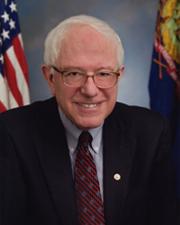 Sen. Bernard Sanders (I-VT)
Legislative Activity
Stay on top of the latest movement without scrolling through every action
Senate amendment not agreed to: Amendment SA 811 not agreed to in Senate by Yea-Nay Vote. 31 - 67. Record Vote Number: 140.
April 2, 2009
View full timeline
Senate amendment not agreed to: Amendment SA 811 not agreed to in Senate by Yea-Nay Vote. 31 - 67. Record Vote Number: 140.
April 2, 2009
Roll call votes on amendments in Senate: Amendment SA 811 not agreed to in Senate by Yea-Nay Vote. 31 - 67. Record Vote Number: 140.
April 2, 2009
Senate amendment proposed (on the floor): Amendment SA 811 proposed by Senator Sanders.(consideration: CR S4266; text: CR S4266)
April 2, 2009
Amendment SA 811 proposed by Senator Sanders. (consideration: CR S4266; text: CR S4266) To provide for a deficit-neutral reserve fund to establish a national usury law, and for other purposes.
April 2, 2009
Amendment SA 811 not agreed to in Senate by Yea-Nay Vote. 31 - 67. Record Vote Number: 140.
April 2, 2009
Senate amendment submitted
April 1, 2009
Votes
1 roll call on this amendment
Text
Proposed
CONGRESSIONAL BUDGET FOR THE UNITED STATES GOVERNMENT FOR FISCAL YEAR
2010

The ACTING PRESIDENT pro tempore. Under the previous order, the
Senate will resume consideration of S. Con. Res. 13, which the clerk
will report.
The legislative clerk read as follows:

A concurrent resolution (S. Con. Res. 13) setting forth the
congressional budget for the United States Government for
fiscal year 2010, revising the appropriate budgetary levels
for fiscal year 2009, and setting forth the appropriate
budgetary levels for fiscal years 2011 through 2011.

Pending:

Ensign amendment No. 805, to require certain higher income
beneficiaries enrolled in the Medicare prescription drug
benefit to pay higher premiums, as is currently required for
physicians' services and outpatient services, and as proposed
in the budget of the U.S. Government most recently submitted
by the President.
McCain amendment No. 882, in the nature of a substitute.

The ACTING PRESIDENT pro tempore. Under the previous order, there is
90 minutes of debate remaining on the resolution, of which 40 minutes
is for the debate of amendment No. 882, offered by the Senator from
Arizona, Mr. McCain.
The Senator from North Dakota is recognized.
Mr. CONRAD. Mr. President, I am going to respond briefly to the
Republican leader and then we will go to the McCain amendment.
First of all, I have just listened to remarks that are an attempt to
rewrite history. Trying to put this deficit and this debt at the door
of our new President is simply misplaced. He inherited a debt that was
doubled over the last 8 years, and most of my friends on the other side
were silent sentinels as that debt grew and grew and grew. Most of them
said nothing; worse, they supported the policies that created that
doubling of the debt. Beyond that, they tripled foreign holdings of
U.S. debt and left the country in the worst recession since the Great
Depression. This President inherited a crisis in the financial markets,
a crisis in housing, a fiscal crisis, and two wars.
The budget that is before us is not as described by the Republican
leader. The budget before us reduces the deficit by two-thirds over the
5 years of its term. In fact, as a share of GDP--which most economists
say ought to be the measuring point because it excludes inflation--we
reduce the deficit by three-quarters, all while maintaining the
President's key priorities of reducing our dependence on foreign
energy. That is not just a Presidential priority, that is an American
priority. If we are going to be strong in the future, we have to
dramatically reduce our dependence on foreign energy.
On education, there is a focus on excellence in education. If we are
not the best educated, we are not going to be the strongest country in
the world very long.
The prospect of major health care reform, which is provided for in
this budget, is the 800-pound gorilla. We are now spending $1 of every
$6 in this country on health care. If we stay on the current trend, we
will spend more than $1 of every $3 in this country on health care.
That is utterly unsustainable.
They describe the budget of the President as having all these tax
increases. I would remind my colleagues that when the Congressional
Budget Office scores the President's budget, they say there is $2.2
trillion in tax cuts. If they look at the budget I have offered, which
is a 5-year budget instead of a 10-year budget, it has $825 billion in
tax cuts on a net basis. As I say, all while cutting the deficit in
half, which was the President's goal. In the President's budget and the
budget I have offered, we cut it by two-thirds.
Now, on spending. Well, on spending, the hard fact is, the budget I
have offered reduces deficits and debt by $608 billion compared to the
President's budget, on a 5-year comparison to a 5-year comparison. We
reduce it by $608 billion in the budget that is before us. And on
spending, we increase domestic spending, on average, by 2\1/2\ percent
a year. Believe me, I have heard lots of criticism from the left with
respect to the fact that is not enough. But when you lose $2.3 trillion
in revenue because of the new CBO forecast, we felt it was necessary to
make adjustments in the President's budget while maintaining his
priorities.
Now, in terms of middle-class tax relief, which is contained in this
budget, let me be clear that all the provisions from 2001 and 2003 are
included in this budget. The 10-percent bracket, the child tax credit,
the marriage penalty relief, the education incentives--all of it--is in
this budget and an extension for the full 5 years.
In addition, the President's Make Work Pay provision was previously
provided for in the stimulus package for 2 years, and we provide the
ability to extend that, if there are offsets. In addition, we have
provided for alternative minimum tax reform, fully funded for 3 years.
No other budgets in the last 5 years have done it for that long. It has
always been a year-by-year fix.
On estate tax reform, we take the provisions from 2009 and extend
them for 2010--a $3.5 million exemption per person, $7 million per
family. Instead of going back to $1 million in 2011, we continue that
$3.5 million exclusion per person, $7 million per couple, adjusted for
inflation.
We also provide for the business tax provisions and the extenders
fully paid for. That is a total of almost a trillion dollars of tax
relief, offset by certain loophole closers to go after these abusive
tax shelters--these offshore tax havens. We have the spectacle now of
companies buying European sewer systems, not because they are in the
sewer business but in order to depreciate them on their books for U.S.
tax purposes. That is outrageous--United States companies buying
European sewer systems so they can write them off on their books here,
and then they lease them back to the European cities that built them in
the first place.
The guys who came up with these scams didn't limit themselves to
sewer systems. They are doing the same thing with public buildings and
city halls. We have companies that have bought city halls in Europe in
order to depreciate them on their books in the United States and then
lease the city halls back to the European countries that built them in
the first place. Is that acceptable? I don't think so. The President in
his budget and we in our budget say: Enough of that. Let's shut down
these abusive tax shelters. Let's shut down these offshore tax havens,
which our Permanent Subcommittee on Investigations tells us is costing
us $100 billion a year.
If anybody wonders about it, read the Stanford saga. Mr. Stanford was
running these offshore tax havens; running billions of dollars through
these offshore tax havens. Why? Why are they sending their money down
to the Cayman Islands? Is it because they think the banks down there
are more secure? Oh, no. They are sending their money down there to
dodge the tax liability in the United States. That is the basis upon
which Mr. Stanford sold his services.
On a net basis, our budget has $825 billion in tax cuts. Again, on
spending, domestic spending increased at an average rate of 2\1/2\
percent a year. That is pretty tough.
In our proposal, in the budget before the body, there is no energy
tax. There is none contained here. This reference to a national sales
tax on energy, it is not in this budget proposal. It is not there. We
have a reserve fund that permits the committees of jurisdiction to come
up with a way of reducing our dependence on foreign energy. We have the
ability for the committees of jurisdiction to write climate change
legislation. But there is no endorsement of any specific plan in this
budget around climate change that has been posited by others.
I wish to make clear that this budget is responsible, it controls
spending, it

[[Page S4234]]

reduces the deficit by two-thirds, it extends the middle-class tax
cuts, and it adopts the President's priorities of reducing our
dependence on foreign energy, putting a focus on excellence in
education and providing the possibility of major health care reform.
Those are the priorities of the American people, and they are contained
in our budget.
Our budget has made significant adjustments from the President's.
Again, over 5 years, we have reduced the deficit and debt in the
President's proposal by $608 billion.
The ACTING PRESIDENT pro tempore. The Senator from Arizona is
recognized.

Amendment No. 882, as Modified

Mr. McCAIN. Mr. President, I ask unanimous consent that the McCain
substitute amendment be modified with the changes at the desk.
The ACTING PRESIDENT pro tempore. Without objection, it is so
ordered.
Mr. McCAIN. Mr. President, I appreciate the courtesy of the chairman
in allowing me to do this modification. I am aware it could have been
objected to, and I would like to say that the sense-of-the-Senate
provision is removed because I believe that sense-of-the-Senate
resolutions are not done this year in the budget resolution. There was
a formula glitch that affected some of the funding levels. We have
corrected the problem in the modification. We have corrected budget
authority and spending levels.
I thank my friend for allowing me to make this modification.
The ACTING PRESIDENT pro tempore. The amendment has been modified.
The amendment, as modified, is as follows:

Strike all after the resolving clause and insert the
following:

SECTION 1. CONCURRENT RESOLUTION ON THE BUDGET FOR FISCAL
YEAR 2010.

(a) Declaration.--Congress declares that this resolution is
the concurrent resolution on the budget for fiscal year 2010
and that this resolution sets forth the appropriate budgetary
levels for fiscal years 2009 and 2011 through 2019.

(b) Table of Contents.--The table of contents for this
concurrent resolution is as follows:

Sec. 1. Concurrent resolution on the budget for fiscal year 2010.

TITLE I--RECOMMENDED LEVELS AND AMOUNTS

Sec. 101. Recommended levels and amounts.
Sec. 102. Social Security.
Sec. 103. Major functional categories.

TITLE II--RESERVE FUNDS

Sec. 201. Deficit-reducing reserve funds for entitlement commissions--
Social Security and Medicare & Medicaid.
Sec. 202. Deficit-neutral reserve fund for comprehensive healthcare
reform.
Sec. 203. Deficit-neutral reserve fund for America's veterans and
wounded servicemembers.
Sec. 204. Deficit-neutral reserve fund for energy security.
Sec. 205. Deficit-neutral reserve fund for tax code modernization.
Sec. 206. Deficit-neutral reserve fund for defense acquisition and
contracting reform.
Sec. 207. Deficit-neutral reserve fund for a bipartisan, comprehensive
investigation into the current financial crisis.

TITLE III--BUDGET PROCESS

Subtitle A--Budget Enforcement

Sec. 301. Discretionary spending limits, program integrity initiatives,
and other adjustments.
Sec. 302. Point of order against advance appropriations.
Sec. 303. Emergency legislation.
Sec. 304. Point of order against legislation increasing short-term
deficit.

Subtitle B--Other Provisions

Sec. 311. Oversight of government performance.
Sec. 312. Budgetary treatment of certain discretionary administrative
Expenses.
Sec. 313. Application and effect of changes in allocations and
aggregates.
Sec. 314. Adjustments to reflect changes in concepts and definitions.
Sec. 315. Exercise of rulemaking powers.
Sec. 316. Cost estimates for conference reports and other measures.
Sec. 317. Limitation on long-term spending proposals
Sec. 318. Revenues collected from closing the tax gap are used only for
debt reduction.
Sec. 319. Point of order to save Social Security first.
Sec. 320. Point of order against a budget resolution containing a debt-
held-by-the-Public-to-GDP ratio that exceeds 65%.
Sec. 321. Point of order against a budget resolution containing deficit
levels exceeding 8% of GDP.

TITLE I--RECOMMENDED LEVELS AND AMOUNTS

SEC. 101. RECOMMENDED LEVELS AND AMOUNTS.

The following budgetary levels are appropriate for each of
fiscal years 2009 through 2014:
(1) Federal revenues.--For purposes of the enforcement of
this resolution:
(A) The recommended levels of Federal revenues are as
follows:
Fiscal year 2009: $2,186,000,000,000
Fiscal year 2010: $2,332,000,000,000
Fiscal year 2011: $2,651,000,000,000
Fiscal year 2012: $2,858,000,000,000
Fiscal year 2013: $3,025,000,000,000
Fiscal year 2014: $3,166,000,000,000
Fiscal year 2015: $3,329,000,000,000
Fiscal year 2016: $3,470,000,000,000
Fiscal year 2017: $3,625,000,000,000
Fiscal year 2018: $3,771,000,000,000
Fiscal year 2019: $3,923,000,000,000
(B) The amounts by which the aggregate levels of Federal
revenues should be changed are as follows:
Fiscal year 2009: $0
Fiscal year 2010: -$3,000,000,000
Fiscal year 2011: -$132,000,000,000
Fiscal year 2012: -$228,000,000,000
Fiscal year 2013: -$257,000,000,000
Fiscal year 2014: -$269,000,000,000
Fiscal year 2015: -$280,000,000,000
Fiscal year 2016: -$291,000,000,000
Fiscal year 2017: -$302,000,000,000
Fiscal year 2018: -$313,000,000,000
Fiscal year 2019: -$325,000,000,000
(2) New budget authority.--For purposes of the enforcement
of this resolution, the appropriate levels of total new
budget authority are as follows:
Fiscal year 2009: $3,672,991,000,000
Fiscal year 2010: $2,843,271,000,000
Fiscal year 2011: $2,733,991,000,000
Fiscal year 2012: $2,700,845,000,000
Fiscal year 2013: $2,828,619,000,000
Fiscal year 2014: $2,951,763,000,000
Fiscal year 2015: $3,044,960,000,000
Fiscal year 2016: $3,167,613,000,000
Fiscal year 2017: $3,238,948,000,000
Fiscal year 2018: $3,319,833,000,000
Fiscal year 2019: $3,472,009,000,000
(3) Budget outlays.--For purposes of the enforcement of
this resolution, the appropriate levels of total budget
outlays are as follows:
Fiscal year 2009: $3,360,034,000,000
Fiscal year 2010: $2,971,983,000,000
Fiscal year 2011: $2,875,771,000,000
Fiscal year 2012: $2,752,996,000,000
Fiscal year 2013: $2,846,991,000,000
Fiscal year 2014: $2,943,836,000,000
Fiscal year 2015: $3,027,078,000,000
Fiscal year 2016: $3,150,051,000,000
Fiscal year 2017: $3,214,230,000,000
Fiscal year 2018: $3,289,783,000,000
Fiscal year 2019: $3,445,611,000,000
(4) Deficits.--For purposes of the enforcement of this
resolution, the amounts of the deficits are as follows:
Fiscal year 2009: -$1,693,000,000,000
Fiscal year 2010: -$1,190,000,000,000
Fiscal year 2011: -$798,000,000,000
Fiscal year 2012: -$502,000,000,000
Fiscal year 2013: -$477,000,000,000
Fiscal year 2014: -$484,000,000,000
Fiscal year 2015: -$459,000,000,000
Fiscal year 2016: -$503,000,000,000
Fiscal year 2017: -$481,000,000,000
Fiscal year 2018: -$484,000,000,000
Fiscal year 2019: -$448,000,000,000
(5) Public debt.--Pursuant to section 301(a)(5) of the
Congressional Budget Act of 1974, the appropriate levels of
the public debt are as follows:
Fiscal year 2009: $11,836,000,000,000
Fiscal year 2010: $13,255,000,000,000
Fiscal year 2011: $14,321,000,000,000
Fiscal year 2012: $15,194,000,000,000
Fiscal year 2013: $16,074,000,000,000
Fiscal year 2014: $16,943,000,000,000
Fiscal year 2015: $17,774,000,000,000
Fiscal year 2016: $18,630,000,000,000
Fiscal year 2017: $19,470,000,000,000
Fiscal year 2018: $20,318,000,000,000
Fiscal year 2019: $21,093,000,000,000
(6) Debt held by the public.--The appropriate levels of
debt held by the public are as follows:
Fiscal year 2009: $7,496,000,000,000
Fiscal year 2010: $8,686,000,000,000
Fiscal year 2011: $9,484,000,000,000
Fiscal year 2012: $9,986,000,000,000
Fiscal year 2013: $10,464,000,000,000
Fiscal year 2014: $10,948,000,000,000
Fiscal year 2015: $11,407,000,000,000
Fiscal year 2016: $11,910,000,000,000
Fiscal year 2017: $12,391,000,000,000
Fiscal year 2018: $12,875,000,000,000
Fiscal year 2019: $13,323,000,000,000

SEC. 102. SOCIAL SECURITY.

(a) Social Security Revenues.--For purposes of Senate
enforcement under sections 302 and 311 of the Congressional
Budget Act of 1974, the amounts of revenues of the Federal
Old-Age and Survivors Insurance Trust Fund and the Federal
Disability Insurance Trust Fund are as follows:
Fiscal year 2009: $654,000,000,000
Fiscal year 2010: $682,000,000,000
Fiscal year 2011: $719,000,000,000
Fiscal year 2012: $756,000,000,000
Fiscal year 2013: $803,000,000,000
Fiscal year 2014: $842,000,000,000
Fiscal year 2015: $879,000,000,000
Fiscal year 2016: $925,000,000,000
Fiscal year 2017: $962,000,000,000
Fiscal year 2018: $1,004,000,000,000
Fiscal year 2019: $1,048,000,000,000
(b) Social Security Outlays.--For purposes of Senate
enforcement under sections

[[Page S4235]]

302 and 311 of the Congressional Budget Act of 1974, the
amounts of outlays of the Federal Old-Age and Survivors
Insurance Trust Fund and the Federal Disability Insurance
Trust Fund are as follows:
Fiscal year 2009: $662,000,000,000
Fiscal year 2010: $695,000,000,000
Fiscal year 2011: $721,000,000,000
Fiscal year 2012: $749,000,000,000
Fiscal year 2013: $790,000,000,000
Fiscal year 2014: $839,000,000,000
Fiscal year 2015: $891,000,000,000
Fiscal year 2016: $948,000,000,000
Fiscal year 2017: $1,008,000,000,000
Fiscal year 2018: $1,072,000,000,000
Fiscal year 2019: $1,141,000,000,000

SEC. 103. MAJOR FUNCTIONAL CATEGORIES.

Congress determines and declares that the appropriate
levels of new budget authority and outlays for fiscal years
2009 through 2019 for each major functional category are:
(1) National defense (050):
Fiscal year 2009:
(A) New budget authority, $689,926,000,000
(B) Outlays, $666,842,000,000
Fiscal year 2010:
(A) New budget authority, $686,128,000,000
(B) Outlays, $689,963,000,000
Fiscal year 2011:
(A) New budget authority, $614,923,000,000
(B) Outlays, $657,207,000,000
Fiscal year 2012:
(A) New budget authority, $623,612,000,000
(B) Outlays, $637,011,000,000
Fiscal year 2013:
(A) New budget authority, $634,421,000,000
(B) Outlays, $636,332,000,000
Fiscal year 2014:
(A) New budget authority, $648,249,000,000
(B) Outlays, $641,632,000,000
Fiscal year 2015:
(A) New budget authority, $663,159,000,000
(B) Outlays, $653,234,000,000
Fiscal year 2016:
(A) New budget authority, $678,149,000,000
(B) Outlays, $671,890,000,000
Fiscal year 2017:
(A) New budget authority, $694,153,000,000
(B) Outlays, $683,256,000,000
Fiscal year 2018:
(A) New budget authority, $709,147,000,000
(B) Outlays, $693,789,000,000
Fiscal year 2019:
(A) New budget authority, $726,167,000,000
(B) Outlays, $714,089,000,000
(2) International Affairs (150):
Fiscal year 2009:
(A) New budget authority, $57,114,000,000
(B) Outlays, $41,514,000,000
Fiscal year 2010:
(A) New budget authority, $42,847,000,000
(B) Outlays, $43,622,000,000
Fiscal year 2011:
(A) New budget authority, $43,167,000,000
(B) Outlays, $43,897,000,000
Fiscal year 2012:
(A) New budget authority, $43,473,000,000
(B) Outlays, $43,985,000,000
Fiscal year 2013:
(A) New budget authority, $43,759,000,000
(B) Outlays, $43,911,000,000
Fiscal year 2014:
(A) New budget authority, $44,214,000,000
(B) Outlays, $43,866,000,000
Fiscal year 2015:
(A) New budget authority, $44,847,000,000
(B) Outlays, $44,257,000,000
Fiscal year 2016:
(A) New budget authority, $45,621,000,000
(B) Outlays, $44,870,000,000
Fiscal year 2017:
(A) New budget authority, $46,430,000,000
(B) Outlays, $45,575,000,000
Fiscal year 2018:
(A) New budget authority, $47,211,000,000
(B) Outlays, $46,301,000,000
Fiscal year 2019:
(A) New budget authority, $48,084,000,000
(B) Outlays, $47,105,000,000
(3) General science, space, and technology (250):
Fiscal year 2009:
(A) New budget authority, $35,264,000,000
(B) Outlays, $30,855,000,000
Fiscal year 2010:
(A) New budget authority, $29,780,000,000
(B) Outlays, $31,707,000,000
Fiscal year 2011:
(A) New budget authority, $30,007,000,000
(B) Outlays, $31,161,000,000
Fiscal year 2012:
(A) New budget authority, $30,231,000,000
(B) Outlays, $30,214,000,000
Fiscal year 2013:
(A) New budget authority, $30,432,000,000
(B) Outlays, $30,312,000,000
Fiscal year 2014:
(A) New budget authority, $30,758,000,000
(B) Outlays, $30,584,000,000
Fiscal year 2015:
(A) New budget authority, $30,703,000,000
(B) Outlays, $30,417,000,000
Fiscal year 2016:
(A) New budget authority, $31,748,000,000
(B) Outlays, $31,359,000,000
Fiscal year 2017:
(A) New budget authority, $32,319,000,000
(B) Outlays, $31,984,000,000
Fiscal year 2018:
(A) New budget authority, $32,872,000,000
(B) Outlays, $32,446,000,000
Fiscal year 2019:
(A) New budget authority, $33,484,000,000
(B) Outlays, $33,028,000,000
(4) Energy (270):
Fiscal year 2009:
(A) New budget authority, $44,998,000,000
(B) Outlays, $5,350,000,000
Fiscal year 2010:
(A) New budget authority, $5,568,000,000
(B) Outlays, $8,974,000,000
Fiscal year 2011:
(A) New budget authority, $5,582,000,000
(B) Outlays, $11,303,000,000
Fiscal year 2012:
(A) New budget authority, $5,459,000,000
(B) Outlays, $11,999,000,000
Fiscal year 2013:
(A) New budget authority, $5,319,000,000
(B) Outlays, $7,091,000,000
Fiscal year 2014:
(A) New budget authority, $5,175,000,000
(B) Outlays, $2,082,000,000
Fiscal year 2015:
(A) New budget authority, $5,212,000,000
(B) Outlays, $3,214,000,000
Fiscal year 2016:
(A) New budget authority, $5,325,000,000
(B) Outlays, $3,512,000,000
Fiscal year 2017:
(A) New budget authority, $5,478,000,000
(B) Outlays, $3,765,000,000
Fiscal year 2018:
(A) New budget authority, $5,567,000,000
(B) Outlays, $3,905,000,000
Fiscal year 2019:
(A) New budget authority, $5,595,000,000
(B) Outlays, $4,502,000,000
(5) Natural resources and environment (300):
Fiscal year 2009:
(A) New budget authority, $54,596,000,000
(B) Outlays, $36,252,000,000
Fiscal year 2010:
(A) New budget authority, $35,085,000,000
(B) Outlays, $38,866,000,000
Fiscal year 2011:
(A) New budget authority, $35,772,000,000
(B) Outlays, $37,713,000,000
Fiscal year 2012:
(A) New budget authority, $35,952,000,000
(B) Outlays, $36,983,000,000
Fiscal year 2013:
(A) New budget authority, $36,160,000,000
(B) Outlays, $36,478,000,000
Fiscal year 2014:
(A) New budget authority, $36,465,000,000
(B) Outlays, $36,631,000,000
Fiscal year 2015:
(A) New budget authority, $36,714,000,000
(B) Outlays, $36,712,000,000
Fiscal year 2016:
(A) New budget authority, $37,002,000,000
(B) Outlays, $36,845,000,000
Fiscal year 2017:
(A) New budget authority, $37,312,000,000
(B) Outlays, $36,917,000,000
Fiscal year 2018:
(A) New budget authority, $37,602,000,000
(B) Outlays, $36,923,000,000
Fiscal year 2019:
(A) New budget authority, $37,952,000,000
(B) Outlays, $37,215,000,000
(6) Agriculture (350):
Fiscal year 2009:
(A) New budget authority, $6,349,000,000
(B) Outlays, $6,111,000,000
Fiscal year 2010:
(A) New budget authority, $6,131,000,000
(B) Outlays, $6,217,000,000
Fiscal year 2011:
(A) New budget authority, $6,150,000,000
(B) Outlays, $6,133,000,000
Fiscal year 2012:
(A) New budget authority, $6,205,000,000
(B) Outlays, $6,159,000,000
Fiscal year 2013:
(A) New budget authority, $6,261,000,000
(B) Outlays, $6,207,000,000
Fiscal year 2014:
(A) New budget authority, $6,319,000,000
(B) Outlays, $6,261,000,000
Fiscal year 2015:
(A) New budget authority, $6,359,000,000
(B) Outlays, $6,275,000,000
Fiscal year 2016:
(A) New budget authority, $6,402,000,000
(B) Outlays, $6,312,000,000
Fiscal year 2017:
(A) New budget authority, $6,455,000,000
(B) Outlays, $6,345,000,000
Fiscal year 2018:
(A) New budget authority, $6,507,000,000
(B) Outlays, $6,401,000,000
Fiscal year 2019:
(A) New budget authority, $6,601,000,000
(B) Outlays, $6,532,000,000
(7) Commerce and housing credit (370):
Fiscal year 2009:
(A) New budget authority, $13,216,000,000
(B) Outlays, $6,253,000,000
Fiscal year 2010:
(A) New budget authority, $6,197,000,000
(B) Outlays, $8,977,000,000
Fiscal year 2011:
(A) New budget authority, $6,055,000,000
(B) Outlays, $6,847,000,000
Fiscal year 2012:
(A) New budget authority, $6,097,000,000
(B) Outlays, $7,436,000,000
Fiscal year 2013:
(A) New budget authority, $5,982,000,000
(B) Outlays, $7,180,000,000
Fiscal year 2014:
(A) New budget authority, $5,909,000,000
(B) Outlays, $6,250,000,000
Fiscal year 2015:
(A) New budget authority, $5,860,000,000
(B) Outlays, $5,915,000,000
Fiscal year 2016:
(A) New budget authority, $5,855,000,000
(B) Outlays, $5,748,000,000
Fiscal year 2017:
(A) New budget authority, $5,839,000,000
(B) Outlays, $5,730,000,000
Fiscal year 2018:
(A) New budget authority, $5,814,000,000
(B) Outlays, $5,701,000,000
Fiscal year 2019:
(A) New budget authority, $5,793,000,000
(B) Outlays, $5,675,000,000
(8) Transportation (400):
Fiscal year 2009:

[[Page S4236]]

(A) New budget authority, $79,061,000,000
(B) Outlays, $85,668,000,000
Fiscal year 2010:
(A) New budget authority, $30,312,000,000
(B) Outlays, $92,847,000,000
Fiscal year 2011:
(A) New budget authority, $30,717,000,000
(B) Outlays, $93,051,000,000
Fiscal year 2012:
(A) New budget authority, $31,140,000,000
(B) Outlays, $92,082,000,000
Fiscal year 2013:
(A) New budget authority, $31,544,000,000
(B) Outlays, $92,110,000,000
Fiscal year 2014:
(A) New budget authority, $32,105,000,000
(B) Outlays, $92,296,000,000
Fiscal year 2015:
(A) New budget authority, $32,806,000,000
(B) Outlays, $91,863,000,000
Fiscal year 2016:
(A) New budget authority, $33,656,000,000
(B) Outlays, $90,792,000,000
Fiscal year 2017:
(A) New budget authority, $34,545,000,000
(B) Outlays, $90,908,000,000
Fiscal year 2018:
(A) New budget authority, $35,432,000,000
(B) Outlays, $92,372,000,000
Fiscal year 2019:
(A) New budget authority, $36,385,000,000
(B) Outlays, $93,932,000,000
(9) Community and regional development (450):
Fiscal year 2009:
(A) New budget authority, $23,006,000,000
(B) Outlays, $26,252,000,000
Fiscal year 2010:
(A) New budget authority, $14,959,000,000
(B) Outlays, $26,337,000,000
Fiscal year 2011:
(A) New budget authority, $15,070,000,000
(B) Outlays, $24,669,000,000
Fiscal year 2012:
(A) New budget authority, $15,179,000,000
(B) Outlays, $21,493,000,000
Fiscal year 2013:
(A) New budget authority, $15,277,000,000
(B) Outlays, $18,981,000,000
Fiscal year 2014:
(A) New budget authority, $15,435,000,000
(B) Outlays, $17,445,000,000
Fiscal year 2015:
(A) New budget authority, $15,662,000,000
(B) Outlays, $16,156,000,000
Fiscal year 2016:
(A) New budget authority, $15,932,000,000
(B) Outlays, $15,504,000,000
Fiscal year 2017:
(A) New budget authority, $16,215,000,000
(B) Outlays, $15,664,000,000
Fiscal year 2018:
(A) New budget authority, $16,481,000,000
(B) Outlays, $15,911,000,000
Fiscal year 2019:
(A) New budget authority, $16,787,000,000
(B) Outlays, $16,153,000,000
(10) Education, training, employment, and social services
(500):
Fiscal year 2009:
(A) New budget authority, $188,508,000,000
(B) Outlays, $94,814,000,000
Fiscal year 2010:
(A) New budget authority, $89,417,000,000
(B) Outlays, $138,899,000,000
Fiscal year 2011:
(A) New budget authority, $90,007,000,000
(B) Outlays, $127,810,000,000
Fiscal year 2012:
(A) New budget authority, $90,588,000,000
(B) Outlays, $98,331,000,000
Fiscal year 2013:
(A) New budget authority, $91,092,000,000
(B) Outlays, $94,666,000,000
Fiscal year 2014:
(A) New budget authority, $91,948,000,000
(B) Outlays, $94,142,000,000
Fiscal year 2015:
(A) New budget authority, $93,164,000,000
(B) Outlays, $95,075,000,000
Fiscal year 2016:
(A) New budget authority, $94,657,000,000
(B) Outlays, $96,402,000,000
Fiscal year 2017:
(A) New budget authority, $96,235,000,000
(B) Outlays, $97,938,000,000
Fiscal year 2018:
(A) New budget authority, $97,739,000,000
(B) Outlays, $99,507,000,000
Fiscal year 2019:
(A) New budget authority, $99,415,000,000
(B) Outlays, $101,130,000,000
(11) Health (550):
Fiscal year 2009:
(A) New budget authority, $75,483,000,000
(B) Outlays, $57,635,000,000
Fiscal year 2010:
(A) New budget authority, $56,948,000,000
(B) Outlays, $64,243,000,000
Fiscal year 2011:
(A) New budget authority, $57,413,000,000
(B) Outlays, $62,603,000,000
Fiscal year 2012:
(A) New budget authority, $57,881,000,000
(B) Outlays, $59,451,000,000
Fiscal year 2013:
(A) New budget authority, $58,305,000,000
(B) Outlays, $57,913,000,000
Fiscal year 2014:
(A) New budget authority, $58,971,000,000
(B) Outlays, $58,176,000,000
Fiscal year 2015:
(A) New budget authority, $59,879,000,000
(B) Outlays, $58,713,000,000
Fiscal year 2016:
(A) New budget authority, $60,974,000,000
(B) Outlays, $59,583,000,000
Fiscal year 2017:
(A) New budget authority, $62,124,000,000
(B) Outlays, $60,662,000,000
Fiscal year 2018:
(A) New budget authority, $63,242,000,000
(B) Outlays, $61,727,000,000
Fiscal year 2019:
(A) New budget authority, $64,465,000,000
(B) Outlays, $62,697,000,000
(12) Medicare (570):
Fiscal year 2009:
(A) New budget authority, $5,390,000,000
(B) Outlays, $5,255,000,000
Fiscal year 2010:
(A) New budget authority, $5,595,000,000
(B) Outlays, $5,566,000,000
Fiscal year 2011:
(A) New budget authority, $5,819,000,000
(B) Outlays, $5,781,000,000
Fiscal year 2012:
(A) New budget authority, $5,852,000,000
(B) Outlays, $5,828,000,000
Fiscal year 2013:
(A) New budget authority, $5,893,000,000
(B) Outlays, $5,855,000,000
Fiscal year 2014:
(A) New budget authority, $5,927,000,000
(B) Outlays, $5,920,000,000
Fiscal year 2015:
(A) New budget authority, $5,967,000,000
(B) Outlays, $5,935,000,000
Fiscal year 2016:
(A) New budget authority, $6,004,000,000
(B) Outlays, $5,955,000,000
Fiscal year 2017:
(A) New budget authority, $6,035,000,000
(B) Outlays, $5,962,000,000
Fiscal year 2018:
(A) New budget authority, $6,065,000,000
(B) Outlays, $5,975,000,000
Fiscal year 2019:
(A) New budget authority, $6,085,000,000
(B) Outlays, $5,992,000,000
(13) Income security (600):
Fiscal year 2009:
(A) New budget authority, $74,067,000,000
(B) Outlays, $64,056,000,000
Fiscal year 2010:
(A) New budget authority, $62,365,000,000
(B) Outlays, $67,580,000,000
Fiscal year 2011:
(A) New budget authority, $62,275,000,000
(B) Outlays, $67,880,000,000
Fiscal year 2012:
(A) New budget authority, $62,540,000,000
(B) Outlays, $66,271,000,000
Fiscal year 2013:
(A) New budget authority, $62,803,000,000
(B) Outlays, $65,341,000,000
Fiscal year 2014:
(A) New budget authority, $63,328,000,000
(B) Outlays, $64,169,000,000
Fiscal year 2015:
(A) New budget authority, $64,221,000,000
(B) Outlays, $64,804,000,000
Fiscal year 2016:
(A) New budget authority, $65,362,000,000
(B) Outlays, $65,660,000,000
Fiscal year 2017:
(A) New budget authority, $66,561,000,000
(B) Outlays, $66,690,000,000
Fiscal year 2018:
(A) New budget authority, $67,716,000,000
(B) Outlays, $67,735,000,000
Fiscal year 2019:
(A) New budget authority, $68,976,000,000
(B) Outlays, $68,840,000,000
(14) Social security (650):
Fiscal year 2009:
(A) New budget authority, $6,386,000,000
(B) Outlays, $5,479,000,000
Fiscal year 2010:
(A) New budget authority, $5,460,000,000
(B) Outlays, $5,549,000,000
Fiscal year 2011:
(A) New budget authority, $5,545,000,000
(B) Outlays, $5,655,000,000
Fiscal year 2012:
(A) New budget authority, $5,630,000,000
(B) Outlays, $5,763,000,000
Fiscal year 2013:
(A) New budget authority, $5,716,000,000
(B) Outlays, $5,849,000,000
Fiscal year 2014:
(A) New budget authority, $5,830,000,000
(B) Outlays, $5,809,000,000
Fiscal year 2015:
(A) New budget authority, $5,969,000,000
(B) Outlays, $5,942,000,000
Fiscal year 2016:
(A) New budget authority, $6,135,000,000
(B) Outlays, $6,103,000,000
Fiscal year 2017:
(A) New budget authority, $6,306,000,000
(B) Outlays, $6,271,000,000
Fiscal year 2018:
(A) New budget authority, $6,479,000,000
(B) Outlays, $6,443,000,000
Fiscal year 2019:
(A) New budget authority, $6,665,000,000
(B) Outlays, $6,627,000,000
(15) Veterans benefits and services (700):
Fiscal year 2009:
(A) New budget authority, $49,394,000,000
(B) Outlays, $46,757,000,000
Fiscal year 2010:
(A) New budget authority, $53,263,000,000
(B) Outlays, $52,474,000,000
Fiscal year 2011:
(A) New budget authority, $54,417,000,000
(B) Outlays, $53,972,000,000
Fiscal year 2012:
(A) New budget authority, $55,855,000,000
(B) Outlays, $55,487,000,000
Fiscal year 2013:
(A) New budget authority, $57,384,000,000
(B) Outlays, $56,932,000,000
Fiscal year 2014:
(A) New budget authority, $58,969,000,000
(B) Outlays, $58,519,000,000
Fiscal year 2015:
(A) New budget authority, $60,971,000,000
(B) Outlays, $59,265,000,000
Fiscal year 2016:
(A) New budget authority, $62,494,000,000
(B) Outlays, $61,978,000,000
Fiscal year 2017:

[[Page S4237]]

(A) New budget authority, $64,367,000,000
(B) Outlays, $63,067,000,000
Fiscal year 2018:
(A) New budget authority, $65,404,000,000
(B) Outlays, $65,012,000,000
Fiscal year 2019:
(A) New budget authority, $67,415,000,000
(B) Outlays, $65,345,000,000
(16) Administration of justice (750):
Fiscal year 2009:
(A) New budget authority, $54,099,000,000
(B) Outlays, $48,018,000,000
Fiscal year 2010:
(A) New budget authority, $48,763,000,000
(B) Outlays, $49,470,000,000
Fiscal year 2011:
(A) New budget authority, $50,595,000,000
(B) Outlays, $51,525,000,000
Fiscal year 2012:
(A) New budget authority, $50,506,000,000
(B) Outlays, $51,416,000,000
Fiscal year 2013:
(A) New budget authority, $50,389,000,000
(B) Outlays, $51,428,000,000
Fiscal year 2014:
(A) New budget authority, $50,263,000,000
(B) Outlays, $50,466,000,000
Fiscal year 2015:
(A) New budget authority, $50,156,000,000
(B) Outlays, $49,725,000,000
Fiscal year 2016:
(A) New budget authority, $50,012,000,000
(B) Outlays, $49,250,000,000
Fiscal year 2017:
(A) New budget authority, $50,023,000,000
(B) Outlays, $49,366,000,000
Fiscal year 2018:
(A) New budget authority, $50,015,000,000
(B) Outlays, $49,501,000,000
Fiscal year 2019:
(A) New budget authority, $50,247,000,000
(B) Outlays, $46,565,000,000
(17) General government (800):
Fiscal year 2009:
(A) New budget authority, $24,562,000,000
(B) Outlays, $18,861,000,000
Fiscal year 2010:
(A) New budget authority, $18,976,000,000
(B) Outlays, $19,896,000,000
Fiscal year 2011:
(A) New budget authority, $19,286,000,000
(B) Outlays, $20,181,000,000
Fiscal year 2012:
(A) New budget authority, $19,598,000,000
(B) Outlays, $20,541,000,000
Fiscal year 2013:
(A) New budget authority, $19,915,000,000
(B) Outlays, $20,781,000,000
Fiscal year 2014:
(A) New budget authority, $20,320,000,000
(B) Outlays, $20,662,000,000
Fiscal year 2015:
(A) New budget authority, $20,828,000,000
(B) Outlays, $20,951,000,000
Fiscal year 2016:
(A) New budget authority, $21,426,000,000
(B) Outlays, $21,366,000,000
Fiscal year 2017:
(A) New budget authority, $22,039,000,000
(B) Outlays, $21,854,000,000
Fiscal year 2018:
(A) New budget authority, $22,668,000,000
(B) Outlays, $22,427,000,000
Fiscal year 2019:
(A) New budget authority, $23,330,000,000
(B) Outlays, $22,873,000,000
(18) Net Interest (900):
Fiscal year 2009:
(A) New budget authority, $0
(B) Outlays, $0
Fiscal year 2010:
(A) New budget authority, $0
(B) Outlays, $0
Fiscal year 2011:
(A) New budget authority, $0
(B) Outlays, $0
Fiscal year 2012:
(A) New budget authority, $0
(B) Outlays, $0
Fiscal year 2013:
(A) New budget authority, $0
(B) Outlays, $0
Fiscal year 2014:
(A) New budget authority, $0
(B) Outlays, $0
Fiscal year 2015:
(A) New budget authority, $0
(B) Outlays, $0
Fiscal year 2016:
(A) New budget authority, $0
(B) Outlays, $0
Fiscal year 2017:
(A) New budget authority, $0
(B) Outlays, $0
Fiscal year 2018:
(A) New budget authority, $0
(B) Outlays, $0
Fiscal year 2019:
(A) New budget authority, $0
(B) Outlays, $0
(19) Allowances (920):
Fiscal year 2009:
(A) New budget authority, $0
(B) Outlays, $0
Fiscal year 2010:
(A) New budget authority, $0
(B) Outlays, $0
Fiscal year 2011:
(A) New budget authority, $0
(B) Outlays, $0
Fiscal year 2012:
(A) New budget authority, $0
(B) Outlays, $0
Fiscal year 2013:
(A) New budget authority, $0
(B) Outlays, $0
Fiscal year 2014:
(A) New budget authority, $0
(B) Outlays, $0
Fiscal year 2015:
(A) New budget authority, $0
(B) Outlays, $0
Fiscal year 2016:
(A) New budget authority, $0
(B) Outlays, $0
Fiscal year 2017:
(A) New budget authority, $0
(B) Outlays, $0
Fiscal year 2018:
(A) New budget authority, $0
(B) Outlays, $0
Fiscal year 2019:
(A) New budget authority, $0
(B) Outlays, $0
(20) Undistributed Offsetting Receipts (950):
Fiscal year 2009:
(A) New budget authority, $0
(B) Outlays, $0
Fiscal year 2010:
(A) New budget authority, $0
(B) Outlays, $0
Fiscal year 2011:
(A) New budget authority, $0
(B) Outlays, $0
Fiscal year 2012:
(A) New budget authority, $0
(B) Outlays, $0
Fiscal year 2013:
(A) New budget authority, $0
(B) Outlays, $0
Fiscal year 2014:
(A) New budget authority, $0
(B) Outlays, $0
Fiscal year 2015:
(A) New budget authority, $0
(B) Outlays, $0
Fiscal year 2016:
(A) New budget authority, $0
(B) Outlays, $0
Fiscal year 2017:
(A) New budget authority, $0
(B) Outlays, $0
Fiscal year 2018:
(A) New budget authority, $0
(B) Outlays, $0
Fiscal year 2019:
(A) New budget authority, $0
(B) Outlays, $0

TITLE II--RESERVE FUNDS

SEC. 201. DEFICIT-REDUCING RESERVE FUNDS FOR ENTITLEMENT
COMMISSIONS--SOCIAL SECURITY AND MEDICARE &
MEDICAID.

(a) The Chairman of the Senate Committee on the Budget may
revise the allocations of a committee or committees,
aggregates, and other appropriate levels and limits in this
resolution for one or more bills, joint resolutions,
amendments, motions, or conference reports that would provide
for a BRAC-like commission to review the current and long-
term solvency of Social Security and a BRAC-like commission
to review the current and long-term solvency of Medicare and
Medicaid, by the amounts provided in such legislation for
those purposes, provided that such legislation would not
increase the deficit over either the period of the total of
fiscal years 2009 through 2014 or the period of the total of
fiscal years 2009 through 2019.
(b) These commissions will provide recommendations to
reduce mandatory spending by at least four percent over the
next five years, and seven percent over the next ten years.
(c) For the purposes of this Resolution, for individuals 55
or older, Medicare will not be changed (other than means
testing for high-income beneficiaries under the prescription
drug benefit under Part D).

SEC. 202. DEFICIT-NEUTRAL RESERVE FUND FOR COMPREHENSIVE
HEALTHCARE REFORM.

The Chairman of the Senate Committee on the Budget may
revise the allocations of a committee or committees,
aggregates, and other appropriate levels and limits in this
resolution for one or more bills, joint resolutions,
amendments, motions, or conference reports that would address
health care costs, coverage, and care in the United States in
a manner that reduces the costs of health care, increases
access to health insurance, and improves the transparency of
the costs and quality for medical care, by the amounts
provided in such legislation for those purposes, provided
that such legislation would not increase the deficit over
either the period of the total of fiscal years 2009 through
2014 or the period of the total of fiscal years 2009 through
2019. The legislation may include tax provisions.

SEC. 203. DEFICIT-NEUTRAL RESERVE FUND FOR AMERICA'S VETERANS
AND WOUNDED SERVICEMEMBERS.

The Chairman of the Senate Committee on the Budget may
revise the allocations of a committee or committees,
aggregates, and other appropriate levels and limits in this
resolution for one or more bills, joint resolutions,
amendments, motions, or conference reports that would expand
the number of disabled military retirees who receive both
disability compensation and retired pay, accelerate the
phase-in of concurrent receipt, and eliminate the offset
between Survivor Benefit Plan annuities and Veteran's
Dependency and Indemnity Compensation, by the amounts
provided in such legislation for those purposes, provided
that such legislation would not increase the deficit over
either the period of the total of fiscal years 2009 through
2014 or the period of the total of fiscal years 2009 through
2019.

SEC. 204. DEFICIT-NEUTRAL RESERVE FUND FOR ENERGY SECURITY.

The Chairman of the Senate Committee on the Budget may
revise the allocations of a committee or committees,
aggregates, and other appropriate levels and limits in this
resolution for one or more bills, joint resolutions,
amendments, motions, or conference

[[Page S4238]]

reports that promote energy security activities including,
but not limited to, increasing funding for waste storage
alternatives, advanced technology assessment and deployment
for clean coal and carbon capture and storage, and clean
energy deployment including increasing the use of nuclear
power and refurbishing the transmission grid, and allowing
loans under the Department of Energy's Innovative Technology
Loan Guarantee Program of up to $50,000,000,000 for the
purposes of constructing nuclear power generating units, by
the amounts provided in such legislation for those purposes,
provided that such legislation would not increase the deficit
over either the period of the total of fiscal years 2009
through 2014 or the period of the total of fiscal years 2009
through 2019.

SEC. 205. DEFICIT-NEUTRAL RESERVE FUND FOR TAX CODE
MODERNIZATION.

The Chairman of the Senate Committee on the Budget may
revise the allocations of a committee or committees,
aggregates, and other appropriate levels and limits in this
resolution for one or more bills, joint resolutions,
amendments, motions, or conference reports that provide for
revenue-neutral income (including AMT revenue) and payroll
tax reform that makes the tax code fair, more pro-growth,
easier to administer, improves compliance and aids U.S.
international competitiveness, by the amounts provided in
such legislation for those purposes, provided that such
legislation would not increase the deficit over either the
period of the total of fiscal years 2009 through 2014 or the
period of the total of fiscal years 2009 through 2019.

SEC 206. DEFICIT-NEUTRAL RESERVE FUND FOR DEFENSE ACQUISITION
AND CONTRACTING REFORM

The Chairman of the Senate Committee on the Budget may
revise the allocations of a committee or committees,
aggregates, and other appropriate levels and limits in this
resolution for one or more bills, joint resolutions,
amendments, motions, or conference reports that--
(1) enhance the capability of the Federal acquisition or
contracting workforce to achieve better value for taxpayers;
(2) reduce the use of no-bid and cost-plus contracts; or
(3) reform Department of Defense processes for acquiring
weapons systems in order to reduce costs, improve cost and
schedule estimation, enhance developmental testing of
weapons, or increase the rigor of reviews of programs that
experience critical cost growth;

by the amounts provided in such legislation for those
purposes, provided that such legislation would not increase
the deficit over either the period of the total of fiscal
years 2009 through 2014 or the period of the total of fiscal
years 2009 through 2019.

SEC. 207. DEFICIT-NEUTRAL RESERVE FUND FOR A BIPARTISAN,
COMPREHENSIVE INVESTIGATION INTO THE CURRENT
FINANCIAL CRISIS.

The Chairman of the Senate Committee on the Budget may
revise the allocations of a committee or committees,
aggregates, and other appropriate levels and limits in this
resolution for one or more bills, joint resolutions,
amendments, motions, or conference reports for a select
senate committee to carry out a bipartisan, comprehensive
investigation into the underlying causes of the current
economic crisis, and recommend ways to avoid another crisis,
by the amounts provided in such legislation for those
purposes, provided that such legislation would not increase
the deficit over either the period of the total of fiscal
years 2009 through 2014 or the period of the total of fiscal
years 2009 through 2019.

TITLE III--BUDGETARY PROCESS

Subtitle A--Budget Enforcement

SEC. 301. DISCRETIONARY SPENDING LIMITS, PROGRAM INTEGRITY
INITIATIVES, AND OTHER ADJUSTMENTS.

(a) Senate Point of Order.--
(1) In General.--Except as otherwise provided in this
section, it shall not be in order in the Senate to consider
any bill or joint resolution (or amendment, motion, or
conference report on that bill or joint resolution) that
would cause the discretionary spending limits in this section
to be exceeded.
(2) Supermajority Waiver and Appeals.--
(A) WAIVER.--This subsection may be waived or suspended in
the Senate only by the affirmative vote of three-fifths of
the Members, duly chosen and sworn.
(B) APPEALS.--Appeals in the Senate from the decisions of
the Chair relating to any provision of this subsection shall
be limited to 1 hour, to be equally divided between, and
controlled by, the appellant and the manager of the bill or
joint resolution. An affirmative vote of three-fifths of the
Members of the Senate, duly chosen and sworn, shall be
required to sustain an appeal of the ruling of the Chair on a
point of order raised under this subsection.
(b) Senate Discretionary Spending Limits.--In the Senate
and as used in this section, the term ``discretionary
spending limit'' means--
(1) with respect to fiscal year 2009--
(A) for the defense category $689,926,000,000 in new budget
authority and $666,842,000,000 in outlays;
(B) for the Veterans Affairs (VA) category $49,394,000,000
in new budget authority and $46,757,000,000 ; in outlays; and
(C) for the nondefense/non-VA category $742,099,000,000 in
new budget authority and $532,373,000,000 in outlays.
(2) with respect to fiscal year 2010--
(A) for the defense category $686,128,000,000 in new budget
authority and $689,963,000,000 in outlays, as adjusted in
conformance with the adjustment procedures in subsection (c);
(B) for the Veterans Affairs (VA) category $53,263,000,000
in new budget authority and $52,274,000,000 ; in outlays; as
adjusted in conformance with the adjustment procedures in
subsection (c); and
(C) for the nondefense category $458,515,000,000 in new
budget authority and $608,750,000,000 in outlays, as adjusted
in conformance with the adjustment procedures in subsection
(c).
(3) with respect to fiscal year 2011 --
(A) for the defense category $614,293,000,000 in new budget
authority and $657,207,000,000 in outlays;
(B) for the Veterans Affairs (VA) category $54,417,000,000
in new budget authority and $53,972,000,000 ; in outlays; and
(C) for the nondefense/non-VA category $463,460,000,000 in
new budget authority and $596,209,000,000 in outlays.
(4) with respect to fiscal year 2012--
(A) for the defense category $614,293,000,000 in new budget
authority and $657,207,000,000 in outlays;
(B) for the Veterans Affairs (VA) category $54,417,000,000
in new budget authority and $53,972,000,000 ; in outlays; and
(C) for the nondefense/non-VA category $463,460,000,000 in
new budget authority and $596,209,000,000 in outlays.
(5) with respect to fiscal year 2013--
(A) for the defense category $634,421,000,000 in new budget
authority and $636,332,000,000 in outlays;
(B) for the Veterans Affairs (VA) category $57,384,000,000
in new budget authority and $56,932,000,000 ; in outlays; and
(C) for the nondefense/non-VA category $468,849,000,000 in
new budget authority and $544,103,000,000 in outlays.
(6) with respect to fiscal year 2014--
(A) for the defense category $648,249,000,000 in new budget
authority and $641,632,000,000 in outlays;
(B) for the Veterans Affairs (VA) category $58,969,000,000
in new budget authority and $58,515,000,000 in outlays; and
(C) for the nondefense/non-VA category $472,964,000,000 in
new budget authority and $534,759,000,000 in outlays.
(7) with respect to fiscal year 2015--
(A) for the defense category $663,159,000,000 in new budget
authority and $6653,234,000,000 in outlays;
(B) for the Veterans Affairs (VA) category $60,971,000,000
in new budget authority and $59,265,000,000 in outlays; and
(C) for the nondefense/non-VA category $478,347,000,000 in
new budget authority and $535,954,000,000 in outlays.
(8) with respect to fiscal year 2016--
(A) for the defense category $678,149,000,000 in new budget
authority and $671,890,000,000 in outlays;
(B) for the Veterans Affairs (VA) category $62,494,000,000
in new budget authority and $61,978,000,000 in outlays; and
(C) for the nondefense/non-VA category $486,111,000,000 in
new budget authority and $539,261,000,000 in outlays.
(9) with respect to fiscal year 2017--
(A) for the defense category $694,153,000,000 in new budget
authority and $683,256,000,000 in outlays;
(B) for the Veterans Affairs (VA) category $64,367,000,000
in new budget authority and $63,067,000,000; in outlays; and
(C) for the nondefense/non-VA category $493,916,000,000 in
new budget authority and $545,501,000,000 in outlays.
(10) with respect to fiscal year 2018--
(A) for the defense category $709,147,000,000 in new budget
authority and $693,789,000,000 in outlays;
(B) for the Veterans Affairs (VA) category $65,404,000,000
in new budget authority and $65,012,000,000 in outlays; and
(C) for the nondefense/non-VA category $501,500,000,000 in
new budget authority and $553,275,000,000 in outlays.
(11) with respect to fiscal year 2019--
(A) for the defense category $726,167,000,000 in new budget
authority and $714,089,000,000 in outlays;
(B) for the Veterans Affairs (VA) category $67,415,000,000
in new budget authority and $65,345,000,000 in outlays; and
(C) for the nondefense/non-VA category $509,864,000,000 in
new budget authority and $558,866,000,000 in outlays.
(c) Adjustments in the Senate.--
(1) In general.--After the reporting of a bill or joint
resolution relating to any matter described in paragraph (2),
or the offering of an amendment thereto or the submission of
a conference report thereon--
(A) the Chairman of the Senate Committee on the Budget may
adjust the discretionary spending limits, budgetary
aggregates, and allocations pursuant to section 302(a) of the
Congressional Budget Act of 1974, by the amount of new budget
authority in that measure for that purpose and the outlays
flowing therefrom; and
(B) following any adjustment under subparagraph (A), the
Senate Committee on Appropriations may report appropriately
revised suballocations pursuant to section 302(b) of the
Congressional Budget Act of 1974 to carry out this
subsection.
(2) Adjustments to support ongoing overseas contingency
operations.--The Chairman of the Senate Committee on the
Budget may adjust the discretionary spending
limits, allocations to the Senate Committee on
Appropriations, and aggregates for one or more--
(A) bills reported by the Senate Committee on
Appropriations or passed by the House of Representatives;

[[Page S4239]]

(B) joint resolutions or amendments reported by the Senate
Committee on Appropriations;
(C) amendments between the Houses received from the House
of Representatives or Senate amendments offered by the
authority of the Senate Committee on Appropriations; or
(D) conference reports; making appropriations for fiscal
year 2010 for overseas contingency operations by the amounts
provided in such legislation for those purposes (and so
designated pursuant to this paragraph), up to
$130,000,000,000 in budget authority for fiscal year 2010 and
the new outlays flowing therefrom.
(3) Revised appropriations for fiscal year 2010.--
(A) In general.--If after adoption of this resolution by
the Congress, the Congressional Budget Office (CBO) re-
estimates the President's request for discretionary spending
in fiscal year 2010 at an aggregate level different from the
CBO preliminary estimate dated March 20, 2009, the Chairman
of the Senate Committee on the Budget may adjust the
discretionary spending limits, budgetary aggregates, and
allocations pursuant to section 302(a) of the Congressional
Budget Act of 1974 by the amount of budget authority and
outlays flowing therefrom, to reflect the difference between
such re-estimate and the CBO preliminary estimate dated March
20, 2009.
(B) Suballocations.--Following any adjustment under
subparagraph (A), the Senate Committee on Appropriations may
report appropriately revised suballocations pursuant to
section 302(b) of the Congressional Budget Act of 1974 to
carry out this paragraph.
(d) Inapplicability.--In the Senate, subsections (a), (b),
(c), and (d) of section 312 of S. Con. Res. 70 (110th
Congress) shall no longer apply.

SEC. 302. POINT OF ORDER AGAINST ADVANCE APPROPRIATIONS.

(a) In general.--
(1) Point of order.--Except as provided in subsection (b),
it shall not be in order in the Senate to consider any bill,
joint resolution, motion, amendment, or conference report
that would provide an advance appropriation.
(2) Definition.--In this section, the term advance
appropriation'' means any new budget authority provided in a
bill or joint resolution making appropriations for fiscal
year 2010 that first becomes available for any fiscal year
after 2010, or any new budget authority provided in a bill or
joint resolution making general appropriations or continuing
appropriations for fiscal year 2011, that first becomes
available for any fiscal year after 2011.
(b) Exceptions.--Advance appropriations may be provided for
fiscal years 2011 and 2012 for programs, projects,
activities, or accounts identified in the joint explanatory
statement of managers accompanying this resolution under the
heading Accounts Identified for Advance Appropriations'' in
an aggregate amount not to exceed $28,852,000,000 in new
budget authority in each year.
(c) Supermajority Waiver and Appeal.--
(1) Waiver.--In the Senate, subsection (a) may be waived or
suspended only by an affirmative vote of three-fifths of the
Members, duly chosen and sworn.
(2) Appeal.--An affirmative vote of three-fifths of the
Members of the Senate, duly chosen and sworn, shall be
required to sustain an appeal of the ruling of the Chair on a
point of order raised under subsection (a).
(d) Form of Point of Order.--A point of order under
subsection (a) may be raised by a Senator as provided in
section 313(e) of the Congressional Budget Act of 1974.
(e) Conference Reports.--When the Senate is considering a
conference report on, or an amendment between the Houses in
relation to, a bill, upon a point of order being made by any
Senator pursuant to this section, and such point of order
being sustained, such material contained in such conference
report shall be deemed stricken, and the Senate shall proceed
to consider the question of whether the Senate shall recede
from its amendment and concur with a further amendment, or
concur in the House amendment with a further amendment, as
the case may be, which further amendment shall consist of
only that portion of the conference report or House
amendment, as the case may be, not so stricken. Any such
motion in the Senate shall be debatable. In any case in which
such point of order is sustained against a conference report
(or Senate amendment derived from such conference report by
operation of this subsection), no further amendment shall
be in order.
(f) Inapplicability.--In the Senate, section 313 of S. Con.
Res. 70 (110th Congress) shall no longer apply.

SEC. 303. EMERGENCY LEGISLATION.

(a) Authority to Designate.--In the Senate, with respect to
a provision of direct spending or receipts legislation or
appropriations for discretionary accounts that Congress
designates as an emergency requirement in such measure, the
amounts of new budget authority, outlays, and receipts in all
fiscal years resulting from that provision shall be treated
as an emergency requirement for the purpose of this section.
(b) Exemption of Emergency Provisions.--Any new budget
authority, outlays, and receipts resulting from any provision
designated as an emergency requirement, pursuant to this
section, in any bill, joint resolution, amendment, or
conference report shall not count for purposes of sections
302 and 311 of the Congressional Budget Act of 1974, section
201 of S. Con. Res. 21 (110th Congress) (relating to pay-as-
you-go), section 311 of S. Con. Res. 70 (110th Congress)
(relating to long-term deficits), and sections 301 and 304 of
this resolution (relating to discretionary spending and
short-term deficits). Designated emergency provisions shall
not count for the purpose of revising allocations,
aggregates, or other levels pursuant to procedures
established under section 301(b)(7) of the Congressional
Budget Act of 1974 for deficit-neutral reserve funds and
revising discretionary spending limits set pursuant to
section 301 of this resolution.
(c) Designations.--If a provision of legislation is
designated as an emergency requirement under this section,
the committee report and any statement of managers
accompanying that legislation shall include an explanation of
the manner in which the provision meets the criteria in
subsection (f).
(d) Definitions.--In this section, the terms ``direct
spending'', ``receipts'', and ``appropriations for
discretionary accounts'' mean any provision of a bill, joint
resolution, amendment, motion, or conference report that
affects direct spending, receipts, or appropriations as those
terms have been defined and interpreted for purposes of the
Balanced Budget and Emergency Deficit Control Act of 1985.
(e) Point of Order.--
(1) In general.--When the Senate is considering a bill,
resolution, amendment, motion, or conference report, if a
point of order is made by a Senator against an emergency
designation in that measure, that provision making such a
designation shall be stricken from the measure and may not be
offered as an amendment from the floor.
(2) Supermajority waiver and appeals.--
(A) Waiver.--Paragraph (1) may be waived or suspended in
the Senate only by an affirmative vote of three-fifths of the
Members, duly chosen and sworn.
(B) Appeals.--Appeals in the Senate from the decisions of
the Chair relating to any provision of this subsection shall
be limited to 1 hour, to be equally divided between, and
controlled by, the appellant and the manager of the bill or
joint resolution, as the case may be. An affirmative vote of
three-fifths of the Members of the Senate, duly chosen and
sworn, shall be required to sustain an appeal of the ruling
of the Chair on a point of order raised under this
subsection.
(3) Definition of an emergency designation.--For purposes
of paragraph (1), a provision shall be considered an
emergency designation if it designates any item as an
emergency requirement pursuant to this subsection.
(4) Form of the point of order.--A point of order under
paragraph (1) may be raised by a Senator as provided in
section 313(e) of the Congressional Budget Act of 1974.
(5) Conference reports.--When the Senate is considering a
conference report on, or an amendment between the Houses in
relation to, a bill, upon a point of order being made by any
Senator pursuant to this section, and such point of order
being sustained, such material contained in such conference
report shall be deemed stricken, and the Senate shall proceed
to consider the question of whether the Senate shall recede
from its amendment and concur with a further amendment, or
concur in the House amendment with a further amendment, as
the case may be, which further amendment shall consist of
only that portion of the conference report or House
amendment, as the case may be, not so stricken. Any such
motion in the Senate shall be debatable. In any case in
which such point of order is sustained against a
conference report (or Senate amendment derived from such
conference report by operation of this subsection), no
further amendment shall be in order.
(f) Criteria.--
(1) In general.--For purposes of this section, any
provision is an emergency requirement if the situation
addressed by such provision is--
(A) necessary, essential, or vital (not merely useful or
beneficial);
(B) sudden, quickly coming into being, and not building up
over time;
(C) an urgent, pressing, and compelling need requiring
immediate action;
(D) subject to subparagraph (B), unforeseen, unpredictable,
and unanticipated; and
(E) not permanent, temporary in nature.
(2) Unforeseen.--An emergency that is part of an aggregate
level of anticipated emergencies, particularly when normally
estimated in advance, is not unforeseen.
(g) Inapplicability.--In the Senate, section 204(a) of S.
Con. Res. 21 (110th Congress), the concurrent resolution on
the budget for fiscal year 2008, shall no longer apply.

SEC. 304. POINT OF ORDER AGAINST LEGISLATION INCREASING
SHORT-TERM DEFICIT.

(a) Point of Order.--It shall not be in order in the Senate
to consider any bill, joint resolution, amendment, motion, or
conference report (except measures within the jurisdiction of
the Committee on Appropriations) that would cause a net
increase in the deficit in excess of $10,000,000,000 in any
fiscal year provided for in the most recently adopted
concurrent resolution on the budget unless it is fully offset
over the period of all fiscal years provided for in the most
recently adopted concurrent resolution on the budget.
(b) Supermajority Waiver and Appeal in the Senate.--
(1) Waiver.--This section may be waived or suspended only
by the affirmative vote of three-fifths of the Members, duly
chosen and sworn.
(2) Appeal.--An affirmative vote of three-fifths of the
Members, duly chosen and

[[Page S4240]]

sworn, shall be required to sustain an appeal of the ruling
of the Chair on a point of order raised under this section.
(c) Determinations of Budget Levels.--For purposes of this
section, the levels shall be determined on the basis of
estimates provided by the Senate Committee on the Budget.
(d) Sunset.--This section shall expire on September 30,
2018.
(e) Inapplicability.--In the Senate, section 315 of S. Con.
Res. 70 (110th Congress), the concurrent resolution in the
budget for fiscal year 2009, shall no longer apply.

Subtitle B--Other Provisions

SEC. 311. OVERSIGHT OF GOVERNMENT PERFORMANCE.

In the Senate, all committees are directed to review
programs within their jurisdiction to root out waste, fraud,
and abuse in program spending, giving particular scrutiny to
issues raised by Government Accountability Office reports.
Based on these oversight efforts and committee performance
reviews of programs within their jurisdiction, committees are
directed to include recommendations for improved governmental
performance in their annual views and estimates reports
required under section 301(d) of the Congressional Budget Act
of 1974 to the Committees on the Budget.

SEC. 312. BUDGETARY TREATMENT OF CERTAIN DISCRETIONARY
ADMINISTRATIVE EXPENSES.

In the Senate, notwithstanding section 302(a)(1) of the
Congressional Budget Act of 1974, section 13301 of the Budget
Enforcement Act of 1990, and section 2009a of title 39,
United States Code, the joint explanatory statement
accompanying the conference report on any concurrent
resolution on the budget shall include in its allocations
under section 302(a) of the Congressional Budget Act of 1974
to the Committees on Appropriations amounts for the
discretionary administrative expenses of the Social Security
Administration and of the Postal Service.

SEC. 313. APPLICATION AND EFFECT OF CHANGES IN ALLOCATIONS
AND AGGREGATES.

(a) Application.--Any adjustments of allocations and
aggregates made pursuant to this resolution shall--
(1) apply while that measure is under consideration;
(2) take effect upon the enactment of that measure; and
(3) be published in the Congressional Record as soon as
practicable.
(b) Effect of Changed Allocations and Aggregates.--Revised
allocations and aggregates resulting from these adjustments
shall be considered for the purposes of the Congressional
Budget Act of 1974 as allocations and aggregates contained in
this resolution.
(c) Budget Committee Determinations.--For purposes of this
resolution the levels of new budget authority, outlays,
direct spending, new entitlement authority, revenues,
deficits, and surpluses for a fiscal year or period of fiscal
years shall be determined on the basis of estimates made by
the Senate Committee on the Budget.

SEC. 314. ADJUSTMENTS TO REFLECT CHANGES IN CONCEPTS AND
DEFINITIONS.

Upon the enactment of a bill or joint resolution providing
for a change in concepts or definitions, the Chairman of the
Senate Committee on the Budget may make adjustments to the
levels and allocations in this resolution in accordance with
section 251(b) of the Balanced Budget and Emergency Deficit
Control Act of 1985 (as in effect prior to September 30,
2002).

SEC. 315. EXERCISE OF RULEMAKING POWERS.

Congress adopts the provisions of this title--
(1) as an exercise of the rulemaking power of the Senate,
and as such they shall be considered as part of the rules of
the Senate and such rules shall supersede other rules only to
the extent that they are inconsistent with such other rules;
and
(2) with full recognition of the constitutional right of
the Senate to change those rules at any time, in the same
manner, and to the same extent as is the case of any other
rule of the Senate.

SEC. 316. COST ESTIMATES FOR CONFERENCE REPORTS AND OTHER
MEASURES.

It shall not be in order to consider a conference report,
bill, or joint resolution unless an estimate of costs has
been printed in the Congressional Record at least one day
before its consideration.

SEC. 317. LIMITATION ON LONG-TERM SPENDING PROPOSALS

It shall not be in order to consider any bill or joint
resolution reported from a committee if such bill or
resolution is not accompanied by a cost estimate prepared by
the Congressional Budget Office on whether or not the measure
would cause a net increase in direct spending in excess of $5
billion in any of the four next five-year periods.

SEC. 318. REVENUES COLLECTED FROM CLOSING THE TAX GAP ARE
USED ONLY FOR DEBT REDUCTION.

(a) Special Scorekeeping Rule in the Senate.--
(1) Report to budget committee.--When a bill is cleared for
the President, the Congressional Budget Office (CBO),
pursuant to section 202 of the Congressional Budget Act of
1974, and the Joint Committee on Taxation shall inform the
Chairman of the Committee on the Budget if that measure
contains provisions that increase revenues from closing the
tax gap. The report shall include the amount of revenue
raised each year including the current year, the budget year,
and for each of the 10 years following the current year.
(2) Exclusion from pay-as-you-go scorecard.--Any revenue
raised from provisions to close the tax gap (as detailed in
the report described in (a)(1)) shall not count as offsets
for purposes of section 201 of S. Con. Res. 21, the FY 2008
Budget Resolution.
(b) Criteria and Definitions.--
(1) The tax gap is the difference between the revenue that
is owed to the federal government in accordance with existing
tax law and the revenue that is collected by the federal
government.
(2) The tax gap is a combination of inadvertent errors and
deliberate evasion.
(3) Revenues raised from changes to withholding or payment
reporting requirements are examples of efforts to close the
tax gap.
(4) The tax gap is not about clarifying existing law in
order to close loopholes, broadening the tax base, raising
tax rates, or any other action that would change existing tax
law.

SEC. 319. POINT OF ORDER TO SAVE SOCIAL SECURITY FIRST.

(a) Point of Order in the Senate.--It shall not be in order
in the Senate to consider any direct spending legislation
that would increase the on-budget deficit above the amounts
provided for in this resolution in any fiscal year until the
President submits legislation to Congress and Congress enacts
legislation which would restore 75-year solvency to the Old-
Age, Survivors, and Disability Insurance Trust Funds as
certified by the Social Security Administration actuaries.
(b) Supermajority Waiver and Appeal.--This section may be
waived or suspended in the Senate only by an affirmative vote
of three-fifths of the Members, duly chosen and sworn. An
affirmative vote of three-fifths of the Members of the
Senate, duly chosen and sworn, shall be required in the
Senate to sustain an appeal of the ruling of the Chair on a
point of order raised under this section.

SEC. 320. POINT OF ORDER AGAINST A BUDGET RESOLUTION
CONTAINING A DEBT HELD BY THE PUBLIC-TO-GDP
RATIO THAT EXCEEDS 65%.

(a) In General.--It shall not be in order in the Senate to
consider a concurrent resolution on the budget for the budget
year or any amendment, amendment between Houses, motion, or
conference report thereon that contains a ratio of debt held
by the public-to-Gross Domestic Product which exceeds 65% in
any year covered by the budget resolution.
(b) Supermajority Waiver and Appeal in the Senate.--
(1) Waiver.--This section may be waived or suspended in the
Senate only by an affirmative vote of three-fifths of the
Members, duly chosen and sworn.
(2) Appeal.--An affirmative vote of three-fifths of the
Members of the Senate, duly chosen and sworn, shall be
required in the Senate to sustain an appeal of the ruling of
the Chair on a point of order raised under this section.
(c) Determination of Debt Levels.--For purposes of this
section, the debt level shall be determined by the Chairman
of the Senate Committee on the Budget on the basis of
estimates provided by the Congressional Budget Office.

SEC. 321. POINT OF ORDER AGAINST A BUDGET RESOLUTION
CONTAINING DEFICIT LEVELS EXCEEDING 8% OF GDP.

(a) In General.--It shall not be in order in the Senate to
consider a concurrent resolution on the budget for the budget
year or any amendment, amendment between Houses, motion, or
conference report thereon that contains deficits as a
percentage of the Gross Domestic Product in excess of 8% in
any year covered by the budget resolution.
(b) Supermajority Waiver and Appeal in the Senate.--
(1) Waiver.--This section may be waived or suspended in the
Senate only by an affirmative vote of three-fifths of the
Members, duly chosen and sworn.
(2) Appeal.--An affirmative vote of three-fifths of the
Members of the Senate, duly chosen and sworn, shall be
required in the Senate to sustain an appeal of the ruling of
the Chair on a point of order raised under this section.
(c) Determination of Deficit Levels.--For purposes of this
section, the deficit as a percentage of Gross Domestic
Product shall be determined by the Chairman of the Senate
Committee on the Budget on the basis of estimates provided by
the Congressional Budget Office.

Mr. McCAIN. Mr. President, I ask unanimous consent that the
Republican time be allocated as follows, between now and the time of
the vote: that Senator Hutchison be allowed 5 minutes on the substitute
amendment, Senator Graham 5 minutes, Senator Coburn 5 minutes, myself 5
minutes, Senator Gregg 10 minutes, Senator Inhofe 3 minutes, Senator
Sessions 5 minutes, Senator Chambliss 2 minutes, and Senator Wicker 2
minutes.
The ACTING PRESIDENT pro tempore. Without objection, it is so
ordered.
Mr. McCAIN. Mr. President, I yield 5 minutes to the Senator from
Texas, Mrs. Hutchison.
The ACTING PRESIDENT pro tempore. The Senator from Texas is
recognized.

[[Page S4241]]

Mrs. HUTCHISON. Mr. President, I, first, wish to thank Senator McCain
for leading this effort to present an alternative because we all know,
after looking at the Democratic budget and the Obama administration
budget which produced the Democratic budget, that the debt is
unsustainable. This is a budget that would double our debt in 5 years,
and if it goes out to 10, it would triple our debt. As a matter of
fact, it spends too much, it taxes too much, and it borrows too much.
We have to start putting some common sense in this budget process or
we are going to go into an abyss. We must take the reins of this budget
and hold it back. Today, our debt-to-gross domestic product is 57
percent. That is pretty high. The average over the last 50 years has
been about 40 percent. This underlying budget today would take our
debt-to-gross domestic product ratio to 80 percent. That is simply
unsustainable on a long-term basis. During the Great Depression, during
World War II, we saw numbers such as that, but you cannot sustain it
over a long period of time. It was brought back down after World War II
so that it was in the 30-percent range. Forty percent is optimum. We
are at 57. We would go to 80 if we don't do something.
That is why Senator McCain and those of us who are cosponsoring his
substitute are trying to do the right thing. We are trying to produce
an alternative that is responsible and takes care of the needs of our
country at the same time.

The key points of this substitute are that we would cap discretionary
spending at baseline levels plus inflation, except for defense and
veterans. That means every program we have can grow with inflation. You
are not cutting anything from today, but you are allowing it to just
grow by inflation, which will cap it--except for defense, which does
increase, and our veterans, which does increase. We have increased our
veterans, we have increased defense, we continue to do so because we
know our duty to those who are serving our country and protecting our
freedom.
This substitute also extends the 2001 and 2003 tax cuts. That means
marriage penalty relief will be extended. It means we will not put a
shock into the stock market by increasing the capital gains and
dividends rates at a time when we want to shore up our stock market.
The worst thing we can do is send a signal that those taxes are going
to go up in 2 years when our economy is already flailing. It will lower
everyone's tax burden--everyone's. It will keep that 10-percent rate
instead of moving it up. It will keep everyone's tax burden lower.
Marriage penalty relief is something I am going to offer an amendment
on if this substitute does not pass because we need to make it
permanent. The marriage penalty in this country, if we go back to the
way it used to be, is over $1,000 a couple. Is this a country that
wants to dissuade people from getting married? That is the core of our
family support in this country. Our substitute will extend the tax
cuts, including marriage penalty, including every bracket, and
including capital gains and dividends, to encourage savings and shore
up our stock market.
It also takes the bigger picture view. This is a 10-year substitute,
so it ensures that revenues collected from closing the tax gap would
only be used for debt reduction. This is planning for the future. This
is saying we are going to bring down that debt burden that is in the
underlying bill before us. It will not be used to increase Federal
spending because we are going to cap that at the baseline plus
inflation. We are not going to hurt anyone. We are not going to also
add to our debt. In fact, we would cut $4 trillion from the budget that
is before us.
The PRESIDING OFFICER (Mrs. Gillibrand). The time of the Senator has
expired.
Mrs. HUTCHISON. I hope my colleagues will look at this responsible
alternative.
The PRESIDING OFFICER. The Senator from Oklahoma is recognized.
Mr. COBURN. Madam President, the thing many of my colleagues don't
know is, before I was a physician I was an accountant, and the thing
about numbers is you can make them show anything you want. That,
historically, is what Republicans and Democrats have done with budgets.
They play games. The only year that counts is the next year, this next
2010 fiscal year. That is the only thing that counts in terms of what
they are going to do.
The important thing before us ought to be the following: At the end
of the budget that is offered by both President Obama and the majority,
the deficit will be higher than it has ever been any time prior to this
year, and it will not go down. It will never go down, in light of that,
in terms of a sustainable level.
The second point I want to make on this budget is this budget is a
real budget that says to every American except our fighting men and
women and our seniors and our veterans: Everybody has to sacrifice for
us to get out of the mess we are in. The sacrifice will not necessarily
be hard because of the tremendous amount of waste that is in the
Federal Government right now. At a conservative minimum, 10 percent of
everything we spend is pure waste or fraud. We will not do anything
about it. One of the things with the McCain budget, the Republican
budget, is that it will force us to do something about it.
We take some of that $380 billion a year that is now defrauded of the
Federal Government, or pure waste, and we will recapture that to do
something positive. But the underlying point is, as Americans, if we
are going to get out of the problems we are in, we cannot spend our way
into prosperity, and we can't borrow our way out of debt. That is what
this budget does. It attempts to grow Federal Government.
The claim is that it only grows it 2 percent over 5 years. But when
you look at the numbers in this budget, it grows at 7 percent in the
next year, in terms of discretionary spending. Then all the pain is
after that. We all know the reality of the Senate. There will not be
any pain. It will be 7 percent the year after that. You watch what
comes from the appropriators.
The House budget has a 12-percent increase in it. The President's had
an 11-percent increase. We can hear all these statements on the floor,
but the No. 1 fact is, everybody in this country is going to have to
sacrifice except those who have already sacrificed. If we do anything
less than that, then what we are doing is sacrificing the future of our
kids and our grandkids.
In this budget we have a proposal that will pick up the 11 million
Americans who are eligible for Medicaid who are not even getting health
care now and, at the same time, save the States $88 billion a year and
save the Federal Government $40 billion a year and improve the health
care of everybody on Medicaid today. That is $1.3 trillion of
efficiency in health care that we will save. The States will love the
plan.
Does it fit into the overall plan of what we have now? Is it the only
way we can do it? No. But the fact is, 40 percent of the doctors and
caregivers in our country today will not even see a Medicaid patient.
We are up to almost 20 percent not seeing a Medicare patient. We have
to do something about that. But we don't need more money in health
care; what we need is a more efficient market and common sense in the
way we spend the money so we get great quality care at a fair price,
which is not happening today.
I hope my colleagues will consider the McCain budget because of the
significant truth that underlies it, that everybody is going to have to
sacrifice some. Everybody has to sacrifice if we are to get out of the
mess we are in. You can be critical of it, but the fact is, there is no
program, in terms of total dollars, that is going to see a marked
decrease in terms of spending without getting exactly the same or
better results.
Our President said he wants a line-by-line review of every program,
that he wants competitive bidding, he wants metrics. That is what we
do. We actually do what the average American would do. We apply common
sense to the way the Government spends money, and we look at it and say
we cannot continue on the path we are on without bankrupting our kids.
The very real possibility that out of the budget that is being
presented today we will have a fiat currency or a currency that is
inflated, which will devalue the assets of everybody in this country,
is absolutely real and recognized.

[[Page S4242]]

The PRESIDING OFFICER. The time of the Senator has expired.
Mr. COBURN. I thank the Senator from Arizona for the time to speak on
his budget, and I yield.
The PRESIDING OFFICER. Who yields time?
Mr. McCAIN. Madam President, how much time is remaining on both
sides?
The PRESIDING OFFICER. The majority has 35 minutes and the
Republicans also have 35 minutes.
Mr. McCAIN. I thank the Chair.
Mr. SESSIONS. Madam President, I ask to be notified after 4 minutes.
The PRESIDING OFFICER. The Chair will so advise the Senator. The
Senator from Alabama is recognized.
Mr. SESSIONS. Madam President, I thank the Chair. I appreciate the
comments that have been made. I agree first with Senator Coburn's
comments about our distinguished chairman's pride in spending less
money than the Obama proposal called for for discretionary spending
over 5 years. He said he saved $600 billion--and it should save some.
However, President Obama's budget was an 11-percent increase.
Senator Conrad came in with a 7-percent increase, which is huge in
light of the money we are spending on top of that with the stimulus
package we just passed; and at 7 percent, Government spending would
double in 10 years. But the House is at 12 percent. So when the bill
goes to conference, it is not going to be at 7, it is going to be at
10, 11, maybe 12 percent.
No. 2, his savings are projected in years 2, 3, 4 and 5, and as
Senator Coburn said, when we come back next year, this body, if the
same Members are here, is going to have another 7 percent or 10
percent. The only one that counts is this year. So I do not believe we
have a real change in this budget. I believe Mr. Orszag is correct--the
President's budget manager--that this is 98 percent of what he asked
for and he asked for a budget over 10 years that doubles the debt in 5
years and triples it in 10. It triples the debt in 10. It is admitted
by the President's own budget. It is in the numbers he sent to us. We
are not making this up. That is No. 1.
I have several amendments I will be calling to my colleagues'
attention. One is the Comprehensive Outer Continental Shelf Study. We
have no idea today how much oil and gas may be off our coasts, our
Atlantic coast and Pacific coast. Particularly, the Atlantic States are
eager to know what is out there and to consider whether they want to
produce out there. I think it has great potential for America.
Every barrel of oil and energy we can produce in the United States
off our shores so we do not have to transfer our wealth to Saudi Arabia
or Venezuela or places around the world but keep it here creating jobs
and revenue is progress for America in a significant way. That is an
amendment on which I hope we will have bipartisan support.
Missile defense, I am working with Senator Lieberman on that. I am
concerned there might be some belief that we can ease off the
completion of missile defense. Our missile defense system now has 26
launchers already built or contracted for; we want to do 44. After
years and years of science and technology and investment, we are about
to be able to complete a missile defense system that will make us all
proud and can protect us from such things as a North Korean launch. If
we don't get this system up like we need it, we will not be able to do
that.
I believe today our technology would knock down that missile if it
reached the United States. We need to complete that program. If we slow
it down, it will just drive up the cost even more. That is important.
I am concerned about the history of this Congress when it deals with
border security. We have voted repeatedly--the last big vote was 80 to
19--to complete 700 miles of fencing and barriers on our border. The
money often does not get appropriated, however. We vote and say we are
for it, but when the chips are down the money doesn't get funded. This
would call on us to complete the funding for that project. I think all
of us would want to complete what we have started.
The PRESIDING OFFICER. The Senator has 1 minute.
Mr. SESSIONS. Madam President, I want to say it is not impossible for
us at least to move substantially toward a balanced budget. In the
immediate years ahead it is going to be hard to get to a balanced
budget. But the President's budget does not attempt to do so. In fact,
in years 7 and 10 of his budget, his deficits are not going down. This
is his own document he submitted to us--they are surging upward. In his
10th year, the Congressional Budget Office says his deficit will be, in
1 year, $1.2 trillion. That will be almost three times the highest
deficit this country has ever had in its history.
I thank Senator McCain and others who are working on it.
The PRESIDING OFFICER. Who yields time?
Ms. LANDRIEU. Madam President, I suggest the absence of a quorum.
The PRESIDING OFFICER. The clerk will call the roll.
The legislative clerk proceeded to call the roll.
Mr. CONRAD. Madam President, I ask unanimous consent that the order
for the quorum call be rescinded.
The PRESIDING OFFICER. Without objection, it is so ordered.
Mr. CONRAD. Madam President, how much time remains under my control?
The PRESIDING OFFICER. There is 25 minutes remaining.
Mr. CONRAD. Madam President, how much time is under the control of
Senator McCain?
The PRESIDING OFFICER. There is 10 minutes remaining on the McCain
amendment.
Mr. CONRAD. I ask unanimous consent that the debate on the McCain
amendment appear all as one piece in the Record. I think that will be
better for those reading this at some point in the future, if someone
does care to read it in the future. It will be better if we keep the
McCain debate all together as one.
The PRESIDING OFFICER. Without objection, it is so ordered.
Mr. CONRAD. First, I thank and congratulate the Senator from Arizona
for producing a budget and a budget alternative. That was not done on
their side until he did it, and I commend him for it.
I also commend him for producing a budget that in its overall totals
is very close to the budget resolution I have advanced through the
Budget Committee.
In fact, if you compare Senator McCain's 5-year totals with my 5-year
totals, compare his revenue to my revenue, his spending to my spending,
they are 98 percent alike. In addition, the size of the deficit in 2014
is virtually the same. Mine is 2.9 percent of GDP, his is 2.8. And the
debt, mine is 98.7, his is 98.3, virtually identical in 2014.
So there is some commonality here, and that is something perhaps we
can build on. Of course, there are differences, and differences do
matter. Largely they appear in two places. The Senator from Arizona
appears to reduce mandatory spending by $350 billion over 5 years.
But where does he do it? Does he show savings in Medicare? No. Does
he show savings in Medicaid and the health care accounts? No. Does he
show savings in Social Security? No. Does he show savings in
agriculture? No. He does not do it in any of those places that are the
major pots of money for mandatory spending. Instead, he takes all of
the $350 billion in savings in Function 920. That is the general
overhead function for all of those categories.
So, in effect, what he has is an across-the-board cut in Medicare,
Medicaid, Social Security, agriculture, and that is how this budget
would work. I do not know if that is the intention, but that is what
would happen.
In fact, excluding debt service, 85 percent of the claimed savings
are from function 920, no specific savings at all. Where are the
remaining 15 percent of the savings? Largely, they are in the
international affairs budget. Relative to the budget resolution before
us, and that is before we adopted the Kerry amendment yesterday, he
reduces spending on international accounts by $44 billion over the 5
years. The Senator from Arizona assumes an increase of 1.3 percent in
2010 and less than 1 percent over the remaining 5 years. That runs
counter to what the Secretary of Defense has asked of us because he has
asked that we plus-up the international accounts so that things that
really ought to be done in the international accounts, instead of the
Defense Department accounts, be shown there.

[[Page S4243]]

Disturbingly, next year, when we will still be recovering from the
worst recession since the Great Depression, the budget advanced by the
Senator from Arizona would cut nondefense discretionary spending,
compared to the resolution before us, by $23 billion. Those cuts would
affect virtually every discretionary function, although not defense and
not veterans. I commend him for holding them harmless, but that means
everything else has to be cut more. That means education, the health
care accounts--all of those would have to be cut.
In terms of looking at a budget in a fair and balanced way, while I
commend the Senator for producing a budget, it is a budget without
detail, a budget without specificity, a budget that is almost ``paint
your own picture.'' Because he has this $350 billion of savings in
function 920, because he doesn't specify, that would have to be done
across the board. That means all of these other functions--Medicare,
Social Security, agriculture, all of the other mandatory accounts--
would have to take significant across-the-board cuts.
I commend the Senator from Arizona for offering an alternative, but I
think the difference between his plan and my plan in overall numbers is
very small, but the differences that do exist matter a great deal.
One other point I want to make: As with many of my GOP colleagues'
amendments, the McCain amendment would create 60-vote points of order
against future budget resolutions, threatening the ability to maintain
the disciplines that come through the budget process. Caps on
discretionary spending, allocations to committees, the supermajority
points of order against excessive spending--all of that would be put at
risk in the name of preventing the growth of deficits and debt. While I
share the basic idea and the basic value of trying to control deficits
and debt, as an unintended consequence, the cure here is worse than the
disease. When the answer is to make it harder to do a budget
resolution, you actually lose the disciplines we could employ in order
to reduce the growth of deficits and debt.
It is a curious thing, if one thinks about it. The way to prevent the
growth of debt is not to do a budget or make it harder to do a budget.
Unfortunately, around here one of the few things we have to discipline
spending is a budget. That is where all the points of order lie when we
go to the appropriations process. If it were successful, if you were
able to prevent doing a budget resolution, you would then immediately
go to appropriations bills and you would have no points of order, no
60-vote hurdles against excessive spending. We want to think carefully
whether that is the answer.
My own view is, we would be much better off doing some kind of
special process where all of the major players are at the table,
everything is on the table, and we have a special process to get
whatever plan they develop to the floor for an actual vote. My own
belief is, after 22 years of this, the only real hope for changing the
underlying policies, for disciplining entitlements, for fundamental tax
reform, the only way to do that is some sort of special bipartisan
process where everybody is at the table, everything is on the table,
and the work of that group comes to the floor for a guaranteed vote.
That is the best hope we have.
With that, I yield the floor and retain the remainder of my time.
The PRESIDING OFFICER. The Senator from Arizona.
Mr. McCAIN. I yield myself a couple of minutes.
First, the fundamental difference between the proposal before us and
my proposal is that the budget as proposed has a growth in 2010 for
nondefense spending of 8 percent, with about 1 percent growth in each
of the following years from 2011 to 2014. That is an old gimmick. The
budget proposal before us caps discretionary funding in 2010, which
front-loads all the higher costs in the first year. Without caps in the
outyears, we will find ourselves right back here next year listening to
why the administration can't possibly live with an increase in 2011 of
less than 1 percent as recommended in the budget.
Mandatory spending is more than Social Security and Medicare. It is
general sciences, space, energy, natural resources. Every estimate we
have is that we could cut 10 percent immediately in unnecessary and
wasteful spending and fraud across the board, including Medicare,
including all of these other programs. We are asking Americans who are
tightening their belts, we are asking every State legislature in
America to make tough decisions, and we are not making those tough
decisions. We are just going on as if it were business as usual. An 8-
percent increase in spending for 2010? Tell me one State legislature in
America or any family in America that can afford an 8-percent increase
in their budget. Only we can because we print money.
I reserve the remainder of my time.
The PRESIDING OFFICER. Who yields time?
The Senator from Georgia.
Mr. CHAMBLISS. I ask unanimous consent that the Senator from Arizona
yield 2 minutes to me to speak on the budget.
The PRESIDING OFFICER. The Senator is allotted 2 minutes.
Mr. CHAMBLISS. Madam President, as everyone knows, the chairman of
the Budget Committee happens to be a dear friend of mine, a guy with
whom I work on any number of issues on a regular basis. I empathize
with him for having to take what I think has been generally recognized
as a freewheeling spending budget coming from the White House and try
to evolve that into something that is meaningful and much more
responsible. Unfortunately, that is a difficult task. I don't think it
has been done. I thought for a minute, in listening to the chairman of
the committee speak about the McCain alternative, that perhaps he was
going to support it. But I understand why he can't.
There is one other major difference the Budget Committee chairman
fails to point out between the President's budget and the Democratic
budget we will be voting on, and it is a fundamental difference. The
President's budget and the Democratic budget focus on where we are
going to spend money, versus the McCain budget which seeks to reduce
Federal spending for the short term and the long term. The reason that
is a fundamental difference is that when you look at the President's
budget and you look at the Democratic budget, in the year 2019, for
example, the amount of money that will be owed as interest on the debt
will exceed the amount of money we are going to spend on discretionary
defense. That is outrageous.
I have four grandchildren. Two of them are brand new. They are the
ones who will be charged with repaying this debt. By passing the
Democratic budget and the President's budget, there is simply no way
the grandchildren of all of us are ever going to be able to pay the
money back.
I urge support for the McCain alternative.
The PRESIDING OFFICER. The Senator from Arizona.
Mr. McCAIN. I yield myself 30 seconds.
I didn't mention at the beginning of my response, but I wish to
express my appreciation for the way the chairman, Senator Conrad, and
Senator Gregg have handled this debate. People have had a good
opportunity to express their views. The worst part, obviously, is
coming up in about 20 minutes. Both the distinguished chairman and
ranking member of the committee have handled the debate in a fashion
better than I have ever seen in the past. I congratulate both of them
for allowing virtually every Member of the Senate to express their
views on this important issue.
I retain the remainder of my time.
The PRESIDING OFFICER. Who yields time?
The Senator from North Dakota.
Mr. CONRAD. Madam President, I inquire if the Senator from Arizona
wishes to go on his amendment. Do we still have Senator Graham?
Mr. McCAIN. I think he is on his way.
Mr. CONRAD. Could I say, I was told a number of years ago that one of
our colleagues called in and said he was on his way, that he was at the
airport, and then it turned out he was at the Philadelphia airport.
The PRESIDING OFFICER. The Senator from Arizona.
Mr. McCAIN. Madam President, I thank the chairman.
I wish to remind my colleagues where we are. We have a national debt
of $10.7

[[Page S4244]]

trillion. The budget that was proposed by the President was $3.6
trillion. What we are looking at is a debt of $10.7 trillion. The Fed
just pumped $1.2 trillion into the economy. The TARP, Troubled Asset
Relief Program, was $700 billion. We passed an omnibus bill of $410
billion. Prior to that, we passed a $1.1 trillion stimulus package. And
to cap it all off, the Chinese own $2 trillion of our paper, of our
debt.
This is an unprecedented expenditure of the taxpayers' dollars, and
with no way of paying for it. So these are extraordinary times, and we
need to do extraordinary things. But let's try not to ignore what we
are doing to future generations of Americans. Especially this time of
year, I see lots of our citizens around the halls of Congress wearing
badges and buttons and carrying signs and advocating for the causes and
efforts they believe in. Generally speaking, those causes and efforts,
in their view, require more of our tax dollars. I understand that. I
appreciate it. And it is wonderful to see people exercising their right
to petition Congress, which is guaranteed by the Constitution.
But I do not see anybody who is in the halls of Congress for my kids
and my grandkids and your kids and your grandkids. We are laying an
astronomical debt on them, which they will have to pay for sooner or
later. One of the ways to pay for it is to debase the currency and
print money. The result of that is hyperinflation, which is the
greatest enemy of the middle class, and we have seen that before in the
1970s.
So, yes, this is a tough budget I am talking about. Yes, these are
caps on discretionary spending. Tell me of a family in America--
hardly--that is not having to put a cap on their spending. Tell me of a
State legislature in America that is not having to put a cap on their
spending because of enormous debts. My home State of Arizona is looking
at a billion-dollar deficit. That is small compared to what is
happening in California.
Madam President, I ask for 2 additional minutes from Senator Gregg's
time.
Mr. GREGG. Madam President, I yield the Senator 3 minutes.
The PRESIDING OFFICER. Without objection, it is so ordered.
Mr. McCAIN. So my point here is--by the way, one of the areas I agree
with both Senator Gregg and Senator Conrad is, we have to have a
commission that meets and makes tough decisions on entitlements. We
know entitlements cannot be sustained at their present level. And, of
course, the first area we ought to look at is the $60 billion the
inspector general has said is wasted in Medicare and Medicaid every
year. But tough decisions have to be made.
This is a tough budget proposal here. This is tough. It caps
discretionary spending, except for defense and veterans. It increases
defense spending. We are in two wars. We are in two wars, and I wish to
give a little straight talk. In Afghanistan it is going to get worse
before it gets better, and it is going to cost more of American blood
and treasure.
It reduces the deficit and debt more than the proposals offered by
the Senate Budget Committee or the President, and I would point out
that 10 years is what we have to plan for rather than 5. It addresses
the critical problem of Social Security and Medicare solvency by the
establishment--according to the proposal both by the chairman and
ranking member--of BRAC-like commissions that would provide
recommendations to reduce mandatory spending by at least 4 percent over
the next 5 years.
It addresses our critical energy goals, and it also extends the tax
cuts. This is the wrong time to increase anyone's taxes. History shows
us if we raise people's taxes in tough economic times, it exacerbates
the economic problems.
I do not pretend this is easy. I do not pretend this does not affect
many Americans and their lives. But if we lay these multitrillion-
dollar debts on future generations of Americans, we have contradicted
and betrayed the commitment this Nation has kept throughout our
history; that is, that the next generation of Americans inherit a
better Nation than the one we did.
Madam President, I urge a vote for this amendment and this alternate
budget proposal.
I yield the floor.
The PRESIDING OFFICER. The Senator from North Dakota.
Mr. CONRAD. Madam President, could the Chair inform us of the time
remaining on both sides?
The PRESIDING OFFICER. The Senator from North Dakota has 9 minutes.
The Senator from New Hampshire has 7\1/2\ minutes. The Senator from
Oklahoma has 3 minutes. The Senator from South Carolina has 5 minutes.
The Senator from Mississippi has 2 minutes.
Mr. CONRAD. Madam President, I think I will take a bit of my time,
then, as we await these other Senators. Perhaps the cloakroom could
check on the availability of Senators who have time so we can use the
time effectively and efficiently.
With respect to Senator McCain's amendment, his substitute, I want to
again indicate there is virtually no difference between the debt at the
end of the 5 years under his amendment and the amendment that has come
through the Senate Budget Committee. The debt as a share of GDP on the
budget that is on the floor is 98.7 percent of GDP in 2014. In the
substitute amendment offered by the Senator from Arizona, it is 98.3
percent. There is virtually no difference in the debt levels under the
McCain amendment and the budget I have offered our colleagues.
With respect to deficits, in 2014, the deficit as a share of GDP in
the budget that is before us is 2.9 percent. Under the McCain
amendment, it is 2.8 percent.
So I say to my colleagues, if you rack up, if you look at his revenue
compared to my revenue: 98 percent the same. His spending versus my
spending: 98 percent the same. Where have we heard that figure before?
I think the point that needs to be made, though, is that there are
differences, and the differences do matter. The big difference here is
the Senator from Arizona saves $350 billion out of the mandatory
accounts, but he does not say where. He does not say where. He does not
say it is out of Medicare. He does not say it is out of Social
Security. He does not say it is out of agriculture. He does not say it
is out of the other mandatory accounts. He puts all $350 billion in
section 920, which is an across-the-board cut in all of them--$350
billion.
Colleagues, if you want to be voting for cuts that could be $350
billion in Medicare and Social Security, vote for the McCain
alternative. If you do not think that is a real good idea, stick with
the budget that is before us. Because we have been specific about where
the revenues are, about where the spending is, and we have tried to be
disciplined about getting down to virtually the same levels on deficits
and debt that are in the McCain amendment.
I yield the floor.
I suggest the absence of a quorum.
The PRESIDING OFFICER. The clerk will call the roll.
The assistant legislative clerk proceeded to call the roll.
Mr. GRAHAM. Madam President, I ask unanimous consent that the order
for the quorum call be rescinded.
The PRESIDING OFFICER. Without objection, it is so ordered.
Mr. GRAHAM. Madam President, if it is all right with the bill
managers, I would ask for 7 minutes to speak in support of the McCain
amendment.
The PRESIDING OFFICER. The Senator has 5 minutes under the order.
Mr. GRAHAM. Five minutes. OK, thank you, Madam President.
I stand today in support of an alternative budget that is being
proposed by Senator McCain and others. This country is trying to write
a budget for the American people. That should not be unknown to the
American people. They are doing it every day. Every business is writing
a budget. Every family is trying to plan a budget. The one thing
families and businesses are doing is they are tightening their belts.
Well, we are not. We are buying a bigger belt. We are buying a bigger
suit.
We are trying to mask the fact that we are grossly overburdened. The
budget before us is better than President Obama's budget. But Peter
Orszag of OMB says it is 98 percent the same. So we are tying to find a
different path. You can evaluate the people running your country as to
how they want to spend your money and how much.
What we are proposing in this budget is to basically freeze domestic
spending, except for defense and veterans--to

[[Page S4245]]

do what you are doing, basically; that is, control your spending, to
get by on the same amount of money, with allowing some growth in some
needed areas, but to rein in what will be a dramatic increase over time
of domestic spending. I think we can do that.
We are spending trillions of dollars. We have trillions of dollars
available to us. I know we could get by for another year or two on that
same amount of money, allowing growth in certain key areas if we wanted
to. But we don't have to. It is a choice we make. You don't have that
choice. You can't go and print money. If you write a bad check, you go
to jail; we call it good government. So you have choices. You have to
make choices. We seem not to be bound by any choices.

If you are going to build a budget from a Federal level, what is the
most important thing? At home and in your business, you build a budget
around the essentials of what your family needs and what your business
needs. I think we should be building a budget around securing the
Nation. Under the budget of President Obama, defense spending goes from
4.7 percent of GDP--we are in Iraq and Afghanistan; there are all kinds
of threats from Iran, North Korea, you name it; the world is a very
dangerous place--and over 10 years, his defense budget takes spending
down to 3 percent of GDP. I don't know what he is listening to in terms
of intelligence reports, but I don't think this world is safe right
now, and now is not the time to cut defense. The budget I am
supporting, Senator McCain's alternative, does away with tax increases
on the job creators. If you make over $250,000 a year, your taxes are
going to go up by about 25 percent. At a time when we are trying to get
people to expand their business--and I can tell my colleagues one
thing, and John Kennedy understood this--if you raise taxes, people do
less business. If you raise the capital gains rates from 15 to 20,
people do less capital gains transactions because there is a penalty to
engage in business activity. So now is not the time to raise taxes on
anyone.
We have to compete with China and India. When you pass on the cost of
doing business--and that is what will happen--the American consumer
suffers and the American business community is going to suffer because
they are competing with people in a global economy who do not have all
these tax burdens.
The biggest problem this country faces in terms of long-term debt is
Social Security and Medicare. These are entitlement programs. When you
get retirement eligible under Social Security, you get a check based on
your contributions. Nobody wants to allow that system to go bankrupt,
but it is headed toward bankruptcy. Why? Because the amount of money
coming in and the amount of money obligated do not match.
When I was born in 1955, there were 15 workers for every retiree.
Today there are three and in 20 years there will be two. People will
not be able--two workers will not be able to meet the obligations that
are owed through the Social Security system unless we act now. This
budget puts aside a reserve program to deal with saving Social
Security. Medicare and Social Security and Medicaid are a very large
part of our budget, and they are on autopilot. I commend the President
for wanting to do something in health care, but in his budget, he adds
$1.6 trillion as a downpayment on health care reform.
We already spend more money than any country in the world on health
care. Rather than adding another $1 trillion into the system, let's see
if we can better manage the money we have today. This budget puts a new
earmark system in place so Senators and Congressmen cannot, in the
middle of the night----
The PRESIDING OFFICER. The Senator's time has expired.
Mr. GRAHAM. This is an alternative that makes sense. This is an
alternative that has to make the same choices you are making in the
private sector. I hope the Congress will adopt this proposal.
The PRESIDING OFFICER. The Senator from Vermont is recognized.

Amendment No. 875

Mr. SANDERS. Madam President, I ask unanimous consent to call up
amendment No. 875.
The PRESIDING OFFICER. Without objection, it is so ordered.
The clerk will report.
The legislative clerk read as follows:

The Senator from Vermont [Mr. Sanders] proposes an
amendment numbered 875.

Mr. SANDERS. Madam President, I ask unanimous consent that the
reading of the amendment be dispensed with.
The PRESIDING OFFICER. Without objection, it is so ordered.
The amendment is as follows:

(Purpose: To require information from the Board of Governors of the
Federal Reserve System about the use of emergency economic assistance)

On page 48, line 24, insert ``including the identity of
each entity to which the Board has provided such assistance,
the value or amount of that financial assistance, and what
that entity is doing with such financial assistance,'' after
``2008,''.

Mr. SANDERS. Madam President, the American people are outraged by the
greed, the recklessness, and the illegal behavior they have seen from
the masters of the universe on Wall Street, who, through their
outrageous behavior, these financial tycoons, many of whom have earned
hundreds of millions of dollars, if not billions of dollars in their
career, have plunged our country and much of the world into a deep
recession which has cost our people millions of jobs, which has cost
people their homes, which has cost people their savings, and which has
led millions of Americans to wonder what kind of future their kids are
going to have.
All of this is not the result of an act of nature, it is the result
of very definitive actions by a small number of people on Wall Street
who have shown outrageous greed in their behavior. It goes without
saying that we need a major investigation to understand how we got into
this disaster, and what we are going to do to get out of it, and whom
we are going to hold accountable.
It goes without saying that we need to begin the process of
reregulating Wall Street, bringing back Glass-Steagall, and making sure
our taxpayers will never again be put in this position of having to
bail out the greed on Wall Street. It goes without saying that we have
got to address the issue of too big to fail, in my view--and I have
said this many times--if an institution is too big to fail, it is too
big to exist, and we begin should begin right now in starting the
breakup of these mammoth financial institutions whose failure would
cause systemic damage to our entire economy.
It goes without saying that we have got to do more than worry about
Wall Street, we have got to start worrying about Main Street and the
middle class of this country. We need to pass strong mortgage reform
legislation, as well as legislation to protect the American people, who
are paying outrageously high interest rates on their credit cards.
In that regard, I have introduced legislation, and hope to get it to
the floor of the Senate before too long, which would put a cap of 15
percent on the interest rates any credit card holder in this country
would be charged.
But those issues dealing with Wall Street and many more will have to
wait for another day. Today, I am offering, along with Senators
Feingold and Webb, a very simple, what I believe is a noncontroversial
amendment, which I hope will have the support of every Member of this
body.
As you well know, the Congress voted to provide $700 billion in so-
called TARP funds to help bail out some of the major financial
institutions in our country. I happen to have voted against that
bailout. But what is very clear is that every penny of that TARP
bailout money is now public.
As part of that bailout legislation, what was mandated is that every
financial institution that received 1 penny of the taxpayers' money
would be listed on the Treasury Department Web site. And if any
American wants to know where that $700 billion went, they can account
for every nickel of that. That is the way it should be.
On the other hand, what many people do not know is that the TARP
funds, that $700 billion, were only one part of the bailout. What many
people do not know is that the Federal Reserve has lent out over $2
trillion to a number of financial institutions. But if you were to ask
me or any Member of the Senate, any Member of Congress, any American,
who received that money, what they will tell you is: We do not

[[Page S4246]]

know. Over $2 trillion of taxpayer money has been placed at risk, but
the American people do not know who received those funds, and what the
exact contractual arrangements were.
Anybody who believes in the concept of good government, anybody who
believes in transparency, understands that is wrong, that is
unacceptable, and that has got to change.
Earlier this month, I had an opportunity to ask Ben Bernanke, who is
the Chairman of the Federal Reserve, about this issue when he testified
before the Budget Committee, of which I am a member.
At that hearing, Chairman Bernanke told the Budget Committee that
since the start of the financial crisis, the Fed has provided loans to
``hundreds and hundreds of banks.'' But Mr. Bernanke declined to name
any of those banks, how much assistance they were provided, or what, in
fact, those banks are doing with the money that taxpayers gave them.
What the Federal Reserve needs to understand is that this money does
not belong to them, it belongs to the American people, and the American
people have a right to know who the Fed is lending taxpayer money to,
how much they are getting, and what the Fed is asking in return for
this money. I cannot imagine anything that is more obvious, more common
sense. How can you put $2.2 trillion of taxpayer money at risk and not
know who is receiving that money? I think back now to the financial
forms that Members of Congress have to fill out. People want to know,
are we in a conflict of interest. We fill out those forms, they are
made public. Our staff members fill out those forms. In many instances,
when people are applying for Federal aid, they are forced to make
public what they are asking for and how much. Some years ago, small
farmers in the State of Vermont received some help from the Federal
Government as part of the MILC program, if I recall correctly there. It
was right in the newspaper, every nickel the struggling farmers were
getting. Some of these farmers make $20,000, $25,000 a year. Some of
them are on food stamps. It was, $8,399 goes to this farmer and that
farmer. They were not happy about it. That is what the process was.
So it seems to me that if small farmers in Vermont are going to see
what they get from the Federal Government and hope to keep small farms
alive in this country, I think that multibillion dollar financial
institutions should also be asked to have what they received made
public as well.
The amendment I am offering today is a pretty simple one. It amends
an amendment I offered. It was submitted in the Budget Committee.
Specifically this amendment calls for increased transparency, including
names, which institutions received assistance from the Fed, how much
money they received, and what they are doing with this assistance.
I sincerely believe that is not an issue of left versus right. In
fact, some of the strongest supporters of this concept are very
conservative people such as Ron Paul, a colleague of mine in the
House--a former colleague--who supports this type of approach. A number
of Republicans have spoken for increased transparency, as well as
progressives.
That is the issue. It is as simple and as clear as it can possibly
be, that if taxpayers are going to be placed at risk by providing
trillions of dollars in loans to large financial institutions, the
American people have a right to know who is receiving that money, and
what the terms are.
This amendment, once again, is supported by Senator Feingold and
Senator Webb. I ask my colleagues to support this amendment.
I yield the floor.
The PRESIDING OFFICER. Who yields time?
The Senator from North Dakota.
Mr. CONRAD. Madam President, I yield 5 minutes to the Senator from
Louisiana to discuss her amendment, not to call it up but to discuss
her amendment.
The PRESIDING OFFICER. Without objection, it is so ordered.
The Senator from Louisiana.

Amendment No. 931

Ms. LANDRIEU. I rise to speak about amendment No. 931 which is at the
desk, as modified. I will ask the chairman at a later time for it to be
voted on and in order.
I wanted to speak about an issue in the budget as we discuss the
importance of laying out a framework for how we may allocate future
revenues that come into our general fund from offshore oil and gas
drilling.
A couple of years ago, in 2006, Senator Domenici and I led a
bipartisan effort to establish what I believe is a breakthrough process
as we seek to build a system or a method of energy security for our
Nation which would, as the debate is going on in the Congress, include
more domestic oil and gas drilling and an expansion of our nuclear
capability for the production of electricity. I am very hopeful about
alternative energy--wind and solar. We also have some interesting
experiments underway with geothermal and energy created by our tides.
There are also exciting opportunities for new hydro projects. It is
going to take all of the above to help our country maximize domestic
energy sources.
Representing the State of Louisiana, I am offering this amendment
with the Senator from Alaska as well, Mr. Begich, who also represents a
State that has contributed a great deal to conventional oil and gas
production. It is important that the revenue streams associated with
this production are shared equitably and fairly, not only with the
Federal Treasury but with States that serve as platforms for this
industry and with counties and, in the case of Louisiana, parishes that
serve as platforms for this great industry.
More than ever, people in businesses and residences, individuals and
families are focused on the cost of energy and electricity, both on the
electricity side and the transportation side. While we are not there
yet, we are pushing forward with the President's new initiatives and
agenda to find a way to make America more energy secure.
In large measure, this debate has actually been led by the chairman
of the Budget Committee, who is doing an outstanding job on the budget,
but has also been flexing his muscle and lending his voice, and we are
so grateful and appreciative, to pushing our country to energy
security.
I offer this amendment as a basis to establish a deficit-neutral
reserve fund that will continue the precedent and practice that was set
by the Gulf of Mexico Energy Security Act, which will set aside 50
percent of future funds to be allocated in a budget-neutral fashion for
revenue sharing for States and local governments, along with
contributions out of that fund made to the Land and Water Conservation
Fund and to investments in energy innovation--those three allocations
of funding, whether it is for revenue sharing to establish a
partnership with State and local governments, as we consider where else
in America we can drill.
This amendment does not say where we are going to drill. It does not
authorize drilling. It says when those decisions are made that the
revenues should be shared with State and local governments
appropriately, to enter into strong, reliable partnerships and mutually
beneficial partnerships for increased drilling domestically. I think
this is a very smart way to proceed, and it has been voted for by over
72 Members of this Senate, both Republicans and Democrats.
In addition, we understand that a part of this money could be
dedicated to conservation, land and water. It could also go to energy
innovation, research, and development. So, again, it does not tie our
hands to the specifics. It does not authorize any drilling that is not
already authorized under the law. But it does establish a deficit
reserve fund for us to act in the future.
I understand my time has come to an end. I thank the chairman for his
consideration. We will call this amendment up, No. 931, at the
appropriate time.
The PRESIDING OFFICER. The Senator from North Dakota.
Mr. CONRAD. Madam President, I thank the distinguished Senator from
Louisiana for her leadership on these issues and for the good working
relationship we have enjoyed. One thing I have learned about the
Senator from Louisiana: She is persistent with a capital ``P.'' And I
will tell you, if I wanted somebody to represent me here in this
Capitol to get a result, I would pick her because never have I seen
someone more indefatigable in defense of their State than the Senator
from Louisiana, and I mean that with the highest praise.

[[Page S4247]]

The PRESIDING OFFICER. Who yields time?
The Senator from New Hampshire.
Mr. GREGG. How much time is still pending for the various parties?
The PRESIDING OFFICER. The Senator from North Dakota has 5\1/2\
minutes, the Senator from New Hampshire has a total of 10 minutes, the
Senator from Oklahoma has 3 minutes, and the Senator from Mississippi
has 2 minutes.
Mr. GREGG. I see the Senator from Oklahoma.
The PRESIDING OFFICER. The Senator from Oklahoma is recognized.
Mr. INHOFE. Madam President, I ask unanimous consent to set aside the
pending amendment to call up amendment No. 742.
The PRESIDING OFFICER. Is there objection? Would the Senator restate
the number.
Mr. INHOFE. No. 742.
The PRESIDING OFFICER. The clerk will report----
Mr. CONRAD. Madam President, I object. We have a queue here. We have
a unanimous consent agreement. It would be out of order to call up an
amendment at this point.
Mr. INHOFE. Madam President, let me withdraw that unanimous consent
request and let me comment about what this amendment is about. There
was a misunderstanding. I thought this was going to be voice voted at
some point, or accepted.
It has been accepted on both sides. My cosponsor is Senator Akaka,
who I think is down here now. I will briefly describe what it is and,
hopefully, we will be able to get it in before the day is over.
There is a little bit of a problem we have in health care for our
veterans, in that quite often--in fact, 19 out of the last 22 years--
Congress has been unsuccessful in passing annual funding for veterans
health care in time. Over the past 7 years, the VA has received its
final budget at an average of 3 months after the beginning of the new
year.
There is a solution to this--this discontinuation of health care for
our veterans--that doesn't cost anything, and that is what this bill is
all about. It would allow us to have advanced appropriations for
veterans health care. This is not unprecedented; it happens in other
areas too.
In October 2008, during his campaign, then-Senator Obama said:

The way our Nation provides funding for VA health care must
be reformed . . . My administration will recommend passage of
advance appropriations legislation for the fiscal year 2010
appropriations cycle.

So this is a recommendation that actually came from the
administration. I am joined by several others, including Senator Akaka,
who is, of course, the head of the Veterans' Committee.
At the appropriate time, I wish to go ahead and get this through, and
I will leave it up to the managers of the bill as to when that
appropriate time will be.
I yield the floor.
The PRESIDING OFFICER. Who yields time?
Mr. GREGG. Madam President, I will yield myself a few minutes.
The PRESIDING OFFICER. The Senator from New Hampshire is recognized.
Mr. GREGG. I suggest the absence of a quorum.
The PRESIDING OFFICER. The clerk will call the roll.
The assistant legislative clerk proceeded to call the roll.
Mr. GREGG. Madam President, I ask unanimous consent that the order
for the quorum call be rescinded.
The PRESIDING OFFICER. Without objection, it is so ordered.
Mr. GREGG. Madam President, we had represented to our colleagues that
we would begin voting at 11:30. We have an inordinate number of votes
already in the queue. I hope people will appreciate the fact that the
number of amendments pending right now is going to take us well into
the evening tonight, headed toward midnight. I recognize everybody
wants to get their amendment up, and that is their right, but I would
simply counsel that if we are going to complete this bill--which
probably I should not counsel for since I am not for it, but as a
practical matter, if we are going to complete this bill, we need to be
a little bit judicious as we ask for votes on amendments; otherwise, we
will be here well into Friday, if not into Saturday at this rate.
At this point, in order to recognize the fact that we are already
behind schedule a little bit, I would suggest to the chairman that we
yield back all time, even though I had a brilliant statement in
opposition to the bill.
Mr. ENSIGN. Madam President, if the Senator will yield, I wasn't able
to speak on my amendment last night. I wonder if I could have the
remaining time until 11:45 to speak on the amendment.
Mr. GREGG. I do have 10 minutes left, so I will yield the Senator 5
minutes.
I, first, wish to take a minute, however, to say I appreciate Senator
McCain's full substitute. I think it is a very positive substitute. It
does what the American people need to have done. It controls spending
in the outyears.
The essence of the problem with the budget that has been brought
forward by the President and by the Senator from North Dakota is that
in the outyears, the debt explodes and it explodes as a result of an
explosion in spending. Senator McCain has taken an aggressive effort to
try to change that course of action so our kids have an affordable
Government. I congratulate him for it.
I yield 5 minutes to the Senator from Nevada.
Mr. CONRAD. Madam President, if the Senator from Nevada will withhold
for 1 minute--and this time will not come out of his time--I think it
is very important Senators understand that we have done a 5-year budget
here. That is what we have done 30 of the 34 times Congress has done a
budget under the Budget Act, including the last 5 years and including 2
when the ranking member was the chairman. Now, why have we done 5-year
budgets? It is because the projections beyond 5 years are notoriously
unreliable. The ranking member himself has said that second 5 years is
a guess. My own belief is the fact that President Obama came forward
with a 10-year budget is a useful thing. We have that scored. We know
what that does. We know what it does in the second 5 years. But
Congress has almost always done 5-year budgets. Thirty of the thirty-
four times a budget has been written in Congress, it has been done on a
5-year basis because the outyears are so notoriously unreliable.
One other point I wish to make to colleagues. We now have over 100
amendments pending. If everyone insists on their amendment, we can do
three an hour, we will be here for 33 hours. It is in the hands of our
colleagues. If everybody is going to insist on their amendment and a
vote on their amendment, you can do the math. We can do three votes an
hour, and we will be here for 33 hours. I hope my colleagues think
carefully about that.
Mr. GREGG. Madam President, 33\1/2\ hours.
Mr. CONRAD. So 33\1/2\ hours. I stand corrected.
The PRESIDING OFFICER. The Senator from Nevada.

Amendment No. 805

Mr. ENSIGN. Madam President, my amendment which I have offered in the
past, is a means testing of Medicare Part D, the prescription drug
benefit.
This Congress, under the leadership of President George W. Bush,
offered seniors a brand new benefit: Prescription drug coverage. The
problem with what this Congress did is that in this brand new benefit,
we didn't take into account wealthier seniors who were getting a
benefit from a system they never paid into. People pay taxes for
Medicare Part A: Hospital coverage. That is what Part A is for. We
currently means test and require seniors that have more means to pay
part of the Part B premium, which covers doctors. Well, Part D is to
cover prescription drugs. So what we are doing with this amendment is
saying to seniors, that instead of a schoolteacher, firefighter or
police officer, the middle-income folks out there having to pay higher
taxes in order to pay for your prescription drugs, if you have the
means, then you should pay for them.
That is all this amendment does. The savings are contributed to
deficit reduction.
We are talking about the massive amount of debt this budget puts onto
our children and our grandchildren. The Chinese, who are a big buyer of
our debt, are questioning whether they want to continue to buy our
debt. If

[[Page S4248]]

that ever happens, if the Japanese, the Chinese, other sovereigns
around the world, or if our own citizens quit buying our Treasury bills
this country is in trouble. We should be looking at ways to lower our
debt, to lower the amount of money we are borrowing from our children
and grandchildren.
This amendment saves about $3 billion. I realize it is small change,
but that used to be a lot of money around here. In these tough economic
times we should save money whenever we can. This means-testing of
Medicare Part D is absolutely a place where we should start saving.
Mr. GREGG. Madam President, will the Senator yield?
Mr. ENSIGN. I am happy to yield.
Mr. GREGG. I know the Senator mentioned this, but I wish to reinforce
it. This was a proposal that came from President Obama's administration
and it was in his budget; is that correct?
Mr. ENSIGN. The Senator is correct, that the President of the United
States did include means testing as a part of his budget, means testing
for Part D. He did put that toward health care. There are many of us
who believe we spend plenty of money on health care in this country; we
just don't spend it in the right way. We have a sick care system that
pays people, doctors, and hospitals once people get sick, but we don't
do pay for better behavior in this country, such as not smoking.
Safeway was in here talking to us about the program they implemented,
and they actually give financial incentives for healthier living. They
have actually been able to lower costs, compared to the rest of the
United States, by 40 percent over the last 4 years. The United States
does not need to spend more money on health care. We need to better
allocate the money we are spending. That is why putting the savings
from Medicare Part D toward deficit reduction is the responsible way to
go.

Let's take the $3 billion in savings, considered a pittance around
here, and put it toward deficit reduction so we do not continue to put
a huge burden on our children and our grandchildren.
Lastly, when the President says: Let's means test Part D, I think we
should do just that. When our children and our grandchildren are
saying: Let's not have any more debt, let's not be burdened with huge
taxes in the future, we should listen to them as well. We have a
responsibility to do that.
I yield the floor.
The PRESIDING OFFICER. Who yields time? The Senator from Montana is
recognized.
Mr. BAUCUS. Madam President, this amendment sounds good on the
surface, but, frankly, it will make health care reform more difficult.
It is difficult enough as it is. This amendment will make it much more
difficult.
Some suggest that wealthier Americans should be ``means tested;''
that is, they should not get the same benefit under the Part D drug
benefit as others. That is a policy that needs to be debated. I
personally think that is something we should consider. After all, as
the Senator from Nevada said, it is in the President's budget to means
test Part D drug benefits.
But that is not the point here. The point here is, do we want to help
make health care reform easier or more difficult? The effect of the
amendment is to reduce the Finance Committee's allocation in health
care reform. That is going to make the Finance Committee's effort to
get meaningful health care reform more difficult.
I suggest we take up that issue--whether to means test Medicare or
not--in the context of health care reform. Then the savings that would
be achieved by means testing--if we enacted it--would go toward health
care reform.
The effect of the Senator's amendment is twofold. One is to suggest
means testing Medicare Part D, which is in the President's budget, but
the President doesn't want to use means testing to reduce spending on
health care. He doesn't want that. So it would accomplish both
purposes; that is, to be sure we meaningfully address means testing but
in a way that doesn't hurt the efforts of health care reform.
It makes much more sense to not adopt this amendment but take up the
question of means testing in the context of health care reform, where
it is part of many other components of health care reform, where the
pieces will fit together in a way that makes more sense.
I respectfully say this is not the place to consider means testing.
It should be done in the context of health care reform. If we don't
approve this amendment, then we can deal with this issue on health care
reform.
There are a lot of arguments for and against this. I take no firm
position as chairman of the Finance Committee, but I believe the
Senator's concept has merit. After all, it is in the President's
budget, but it should not be done here, which has the effect of taking
it out of the Finance Committee's allocation, which makes it more
difficult for the Finance Committee to do its work on health care
reform.
I respectfully urge Senators to not support this amendment so we can
make it easier to take up health care reform in a way that we can
consider this policy as one of the many we take up on health care
reform.
Again, I urge that the amendment not be adopted so we can do our job.
I yield the floor.
The PRESIDING OFFICER. The Senator from North Dakota is recognized.
Mr. CONRAD. Madam President, momentarily, we will go to a vote on the
Ensign amendment.
Before we do that, I ask unanimous consent that upon the use of all
time remaining for debate on the budget resolution, the Senate then
proceed to vote in relation to the following amendments in the order
listed; that each amendment be reported by number prior to the time for
debate with respect to the amendment; that the previous order remaining
debate time and vote time remain in effect; provided further, that if a
budget point of order is raised against any amendment, then a motion to
waive the applicable point of order be considered made, with the vote
occurring on the motion to waive.
The list of amendments is as follows: Ensign, No. 805; McCain, No.
882, as modified; Dodd-Shelby, No. 913; Sanders, No. 875; Johanns,
motion to recommit; Bennett, No. 759; Bennet, No. 799; Democratic side-
by-side amendment to the Vitter amendment; Vitter No. 787; Coburn, No.
892; Casey, No. 755; Coburn, No. 893; Brown, No. 808; Graham, No. 910;
Landrieu, No. 931, as modified, with the changes at the desk.
The PRESIDING OFFICER. Is there objection?
Without objection, it is so ordered.
Mr. CONRAD. I thank the Chair.
The PRESIDING OFFICER. The Senator from New Hampshire is recognized.
Mr. GREGG. Madam President, I wish to speak in support of the Ensign
amendment. It should have been done long ago. There is no reason that
people who are working in a restaurant or at Wal-Mart in New Hampshire
should have to subsidize Warren Buffett's drugs, which is what happens
under present law. There is no requirement that people who are wealthy
have to pay anything on Part D premiums.
I certainly hope we will approve the Ensign amendment.
At this point, I suggest that we yield back all time.
Mr. CONRAD. I am prepared to yield back all time.
Mr. GREGG. We yield back all time, and we will go to the vote on the
Ensign amendment.
The PRESIDING OFFICER. The question is on agreeing to amendment No.
805, offered by the Senator from Nevada, Mr. Ensign.
Mr. GREGG. Madam President, I ask for the yeas and nays.
The PRESIDING OFFICER. Is there a sufficient second? There is a
sufficient second.
The clerk will call the roll.
The assistant legislative clerk called the roll.
Mr. DURBIN. I announce that the Senator from Massachusetts (Mr.
Kennedy) is necessarily absent.
Mr. KYL. The following Senator is necessarily absent: the Senator
from Alaska (Ms. Murkowski).
The PRESIDING OFFICER (Mrs. Hagan). Are there any other Senators in
the Chamber desiring to vote?
The result was announced--yeas 39, nays 58, as follows:

[Rollcall Vote No. 128 Leg.]

YEAS--39

Alexander
Barrasso
Bennett
Bond
Brownback
Bunning
Burr
Chambliss
Coburn

[[Page S4249]]

Cochran
Collins
Corker
Cornyn
Crapo
DeMint
Ensign
Enzi
Feinstein
Graham
Grassley
Gregg
Hatch
Hutchison
Inhofe
Isakson
Johanns
Kyl
Lugar
McCain
McCaskill
McConnell
Risch
Roberts
Sessions
Shelby
Specter
Thune
Vitter
Voinovich

NAYS--58

Akaka
Baucus
Bayh
Begich
Bennet
Bingaman
Boxer
Brown
Burris
Byrd
Cantwell
Cardin
Carper
Casey
Conrad
Dodd
Dorgan
Durbin
Feingold
Gillibrand
Hagan
Harkin
Inouye
Johnson
Kaufman
Kerry
Klobuchar
Kohl
Landrieu
Lautenberg
Leahy
Levin
Lieberman
Lincoln
Martinez
Menendez
Merkley
Mikulski
Murray
Nelson (FL)
Nelson (NE)
Pryor
Reed
Reid
Rockefeller
Sanders
Schumer
Shaheen
Snowe
Stabenow
Tester
Udall (CO)
Udall (NM)
Warner
Webb
Whitehouse
Wicker
Wyden

NOT VOTING--2

Kennedy
Murkowski

The amendment (No. 805) was rejected.
Mr. CONRAD. Madam President, Senator Feinstein wishes to be
recognized for the purpose of changing her vote.
The PRESIDING OFFICER. The Senator from California is recognized.

Change of Vote

Mrs. FEINSTEIN. Madam President, I want to change my vote on rollcall
No. 128. It was my intention to vote ``yes'' and I voted ``no.'' Since
it will not change the outcome of the vote, I ask unanimous consent
that my vote be changed to reflect a ``yea'' vote.
The PRESIDING OFFICER. Without objection, it is so ordered.
(The foregoing tally has been changed to reflect the above order.)
Mr. REID. Madam President, I announced this morning, though only
Senator McConnell and I were on the floor, that today we are going to
enforce the rule. This vote was turned in at 20 minutes. The 10-minute
votes are going to be enforced. You have a 5-minute leeway. If you are
not here exactly on time, the vote will be turned in. The clerks have
been instructed of that fact.
Senator McConnell and I believe we have to move this show along
today. There is no reason to leave the Chamber. There is something to
drink in the cloakroom and a sandwich if someone wants one, but let's
cooperate and get this done today.
The PRESIDING OFFICER. The Senator from North Dakota.
Mr. CONRAD. Madam President, now that colleagues are in the Chamber,
we will give you a status update. We now have over 100 amendments
pending. We can do three an hour. If we hold on that, and everybody
insists on a vote on their amendment, we will be here for at least 33
hours.
I implore colleagues on both sides, if you can take a voice vote on
your amendment, please be willing to do that. So I ask colleagues, if
you can take a voice vote on your amendment or if you can hold off to
another day, please do so; otherwise, we will be here clear through
tomorrow.
Mr. GREGG. The next amendment is Senator McCain, I believe.

Amendment No. 882, as Modified

The PRESIDING OFFICER. Under the previous order, there will now be 2
minutes of debate equally divided prior to a vote in relation to
amendment No. 882, as modified, offered by the Senator from Arizona,
Mr. McCain.
The Senator from Arizona.
Mr. McCAIN. Madam President, this proposal caps discretionary funding
at a baseline level plus inflation, a dramatic difference between this
proposal and the Senate budget committee proposal. The proposal by
Senator Conrad increases domestic spending by 8 percent for 2010 and
then 1 percent in the years following.
We all know that is unrealistic. And we all know we will be back here
next year with another 8 percent increase in domestic spending. It is
time for some tough love. This is what this budget proposal is.
The PRESIDING OFFICER. The Senator from North Dakota.
Mr. CONRAD. Madam President, the chairman's mark that was referenced
increases discretionary spending not by 8 percent but by 5.3 percent.
That is all domestic discretionary spending is increased--by 5.3
percent. It averages nondefense discretionary spending at a 2\1/2\-
percent increase over the 5 years.
The McCain offer and the chairman's mark are almost identical with
respect to deficit levels and debt levels. In 2014, the debt is 98.3
percent of GDP under the McCain amendment; 98.7 percent under the
Chairman's mark--virtually no difference.
But there are differences. He takes $350 billion in savings out of
mandatory programs and doesn't specify whether it comes out of Social
Security or Medicare or agriculture--$350 billion. Where does it land?
If you want to risk cutting Social Security and Medicare by $350
billion, vote for the McCain substitute. If not, vote no.
The PRESIDING OFFICER. The Senator's time has expired.
Mr. GREGG. I ask for the yeas and nays.
The PRESIDING OFFICER. Is there a sufficient second?
There appears to be a sufficient second.
The question is on agreeing to amendment No. 882, as modified.
The clerk will call the roll.
The bill clerk called the roll.
Mr. DURBIN. I announce that the Senator from Massachusetts (Mr.
Kennedy) is necessarily absent.
The PRESIDING OFFICER. Are there any other Senators in the Chamber
desiring to vote?
The result was announced--yeas 38, nays 60, as follows:

[Rollcall Vote No. 129 Leg.]

YEAS--38

Alexander
Barrasso
Bennett
Bond
Brownback
Bunning
Burr
Chambliss
Coburn
Cochran
Cornyn
Crapo
DeMint
Ensign
Enzi
Graham
Grassley
Gregg
Hatch
Hutchison
Inhofe
Isakson
Johanns
Kyl
Lugar
Martinez
McCain
McConnell
Murkowski
Risch
Roberts
Sessions
Shelby
Specter
Thune
Vitter
Voinovich
Wicker

NAYS--60

Akaka
Baucus
Bayh
Begich
Bennet
Bingaman
Boxer
Brown
Burris
Byrd
Cantwell
Cardin
Carper
Casey
Collins
Conrad
Corker
Dodd
Dorgan
Durbin
Feingold
Feinstein
Gillibrand
Hagan
Harkin
Inouye
Johnson
Kaufman
Kerry
Klobuchar
Kohl
Landrieu
Lautenberg
Leahy
Levin
Lieberman
Lincoln
McCaskill
Menendez
Merkley
Mikulski
Murray
Nelson (FL)
Nelson (NE)
Pryor
Reed
Reid
Rockefeller
Sanders
Schumer
Shaheen
Snowe
Stabenow
Tester
Udall (CO)
Udall (NM)
Warner
Webb
Whitehouse
Wyden

NOT VOTING--1

Kennedy

The amendment (No. 882), as modified, was rejected.
The PRESIDING OFFICER. The Senator from North Dakota is recognized.

Amendment No. 913

Mr. CONRAD. Madam President, next in order is the Dodd-Shelby
amendment, No. 913.
Senator Dodd?
Mr. DODD. Madam President, I offer this amendment on behalf of myself
and Senator Shelby. This amendment calls for increased transparency and
disclosure at the Federal Reserve Bank in order to understand better
the risks the Fed is taking onto its balance sheets. It also calls for
a further evaluation of the costs of the existing Federal Reserve Bank
system, which has not been done before.
Our colleagues from Vermont and Kentucky will offer an amendment
after our amendment is offered. There is a distinction between these
two. The amendment offered by the Senators from Vermont and Kentucky
goes one step further than ours. Presently--and it has been the case
for years and years--you do not reveal the names of the companies that
show up at the discount window. There is a reason for that. The reason
is obviously to avoid potential runs on those institutions. Our
amendment does not require the disclosure of those companies names. We
call for transparency, disclosure of the items I mentioned, the
collateral that the Fed is taking, but we stop short of insisting upon
naming the people who show up at the discount window. That is a
fundamental distinction which our colleagues will have to decide on
which course to follow.
We think there is some danger in going the route our colleagues from

[[Page S4250]]

Vermont and Kentucky are proposing. If we end up naming those names,
you could well trigger runs on those institutions, and that could end
up costing the taxpayer a lot more. The Dodd-Shelby amendment improves
disclosure and transparency at the Federal Reserve but does not risk
the problems associated with the other amendment. We urge our
colleagues to support our amendment.
I call up the amendment.
The PRESIDING OFFICER. The clerk will report the amendment.
The bill clerk read as follows:

The Senator from Connecticut [Mr. Dodd], for himself and
Mr. Shelby, proposes an amendment numbered 913.

The amendment is as follows:

(Purpose: To provide for enhanced oversight of the Board of Governors
of the Federal Reserve System concerning the use of emergency economic
assistance)

On page 48, line 21, strike ``banks'' and all that follows
through ``purposes,'' on line 25 and insert the following
``banks, to include (1) an evaluation of the appropriate
number and the associated costs of Federal reserve banks; (2)
publication on its website, with respect to all lending and
financial assistance facilities created by the Board to
address the financial crisis, of (A) the nature and amounts
of the collateral that the central bank is accepting on
behalf of American taxpayers in the various lending programs,
on no less than a monthly basis; (B) the extent to which
changes in valuation of credit extensions to various special
purpose vehicles, such as Maiden Lane I, Maiden Lane II, and
Maiden Lane III, are a result of losses on collateral which
will not be recovered; (C) the number of borrowers that
participate in each of the lending programs and details of
the credit extended, including the extent to which the credit
is concentrated in one or more institutions; and (D)
information on the extent to which the central bank is
contracting for services of private sector firms for the
design, pricing, management, and accounting for the various
lending programs and the terms and nature of such contracts
and bidding processes,''.

Mr. DODD. I do not see Senator Shelby in the Chamber.
The PRESIDING OFFICER. The time of the Senator has expired. Who
yields time in opposition?
Mr. CONRAD. Senator Sanders will have the time in opposition.
The PRESIDING OFFICER. The Senator from Vermont is recognized.
Mr. SANDERS. The Dodd-Shelby amendment is a very good step forward in
terms of long-overdue transparency of the Fed. I compliment both
Senators for their effort, and I support their amendment.
Unfortunately, this amendment, as Senator Dodd has just told us, does
not go far enough. The bottom line is that the Fed has lent out some
$2.2 trillion, and the American people and the Members of Congress do
not know which financial institutions have received that money or what
the exact terms of those transactions are. I think it is basically
absurd that $2.2 trillion is at risk without us knowing who has
received that money.
I support the Dodd-Shelby amendment, and in a moment I will ask for
support for the Sanders-Feingold-Webb amendment as well.
The PRESIDING OFFICER. All time has expired. The question is on
agreeing to amendment No. 913.
Mr. DODD. I ask for the yeas and nays.
The PRESIDING OFFICER. Is there a sufficient second? There is a
sufficient second.
The question is on agreeing to the amendment.
The clerk will call the roll.
The assistant legislative clerk called the roll.
Mr. DURBIN. I announce that the Senator from Massachusetts (Mr.
Kennedy), is necessarily absent.
The PRESIDING OFFICER. Are there any other Senators in the Chamber
desiring to vote?
The result was announced--yeas 96, nays 2, as follows:

[Rollcall Vote No. 130 Leg.]

YEAS--96

Akaka
Barrasso
Baucus
Bayh
Begich
Bennet
Bennett
Bingaman
Bond
Boxer
Brown
Brownback
Bunning
Burr
Burris
Byrd
Cantwell
Cardin
Carper
Casey
Chambliss
Coburn
Cochran
Collins
Conrad
Corker
Cornyn
Crapo
DeMint
Dodd
Dorgan
Durbin
Ensign
Enzi
Feingold
Feinstein
Gillibrand
Graham
Grassley
Hagan
Harkin
Hatch
Hutchison
Inhofe
Inouye
Isakson
Johanns
Johnson
Kaufman
Kerry
Klobuchar
Kohl
Kyl
Landrieu
Lautenberg
Leahy
Levin
Lieberman
Lincoln
Lugar
Martinez
McCain
McCaskill
McConnell
Menendez
Merkley
Mikulski
Murkowski
Murray
Nelson (FL)
Nelson (NE)
Pryor
Reed
Reid
Risch
Roberts
Rockefeller
Sanders
Schumer
Sessions
Shaheen
Shelby
Snowe
Specter
Stabenow
Tester
Thune
Udall (CO)
Udall (NM)
Vitter
Voinovich
Warner
Webb
Whitehouse
Wicker
Wyden

NAYS--2

Alexander
Gregg

NOT VOTING--1

Kennedy

The amendment (No. 913) was agreed to.
Mr. DODD. Madam President, I move to reconsider the vote and lay that
motion on the table.
The motion to lay on the table was agreed to.

Amendment No. 875

The PRESIDING OFFICER. Under the previous order, there will now be 2
minutes of debate, equally divided, prior to a vote on amendment No.
875, offered by the Senator from Vermont, Mr. Sanders.
Mr. SANDERS. Madam President, I ask unanimous consent that Senator
Bunning be added as a cosponsor. I will yield 30 seconds to him and 10
seconds to Senator Webb, who is a very quick speaker.
The PRESIDING OFFICER. Without objection, it is so ordered.
Mr. SANDERS. The taxpayers of this country, through the Fed, have
lent $2.2 trillion to a number of financial institutions. We do not
know who these institutions are or what they received. This is totally
absurd. We need to name the names. That is what this amendment is
about.
I yield to Senator Bunning.
The PRESIDING OFFICER. The Senator from Kentucky is recognized.
Mr. BUNNING. Madam President, this is a transparency amendment that
allows the Fed, forces them, to reveal what banks have received over $2
trillion in assistance. That is what the amendment says. That is what
it does.
The PRESIDING OFFICER. The Senator from Virginia is recognized.
Mr. WEBB. I ask my colleagues to consider 10 words: The American
people deserve to know where their money went.
The PRESIDING OFFICER. The Senator from Alabama is recognized.
Mr. SHELBY. Madam President, I share Senator Sander's concern
regarding the transparency of these programs. We all do. We just voted
on the Dodd-Shelby amendment--96 to 2, it passed, I believe.
As Senator Dodd has pointed out, however, disclosing the names of the
companies may create financial instability by unnecessarily raising
concerns about institutions that accessed these facilities, something
we should try to avoid. I believe the Senate has already spoken, and we
certainly do not need this amendment.
The PRESIDING OFFICER. The question is on agreeing to amendment No.
875.
Mr. SANDERS. Madam President, I ask for the yeas and nays.
The PRESIDING OFFICER. Is there a sufficient second?
There appears to be a sufficient second.
The clerk will call the roll.
The bill clerk called the roll.
Mr. DURBIN. I announce that the Senator from Massachusetts (Mr.
Kennedy) is necessarily absent.
The PRESIDING OFFICER (Mr. Udall of New Mexico). Are there any other
Senators in the Chamber desiring to vote?
The result was announced--yeas 59, nays 39, as follows:

[Rollcall Vote No. 131 Leg.]

YEAS--59

Akaka
Begich
Boxer
Brown
Brownback
Bunning
Burr
Burris
Byrd
Cantwell
Cardin
Casey
Coburn
Collins
Conrad
Cornyn
Crapo
DeMint
Dorgan
Durbin
Ensign
Feingold
Feinstein
Graham
Grassley
Hagan
Harkin
Hutchison
Inhofe
Inouye
Kerry
Klobuchar
Landrieu
Leahy
Levin
Lincoln
McCain
McCaskill
Merkley
Mikulski
Murray
Nelson (FL)
Pryor
Reid
Risch
Roberts
Rockefeller
Sanders
Sessions
Snowe
Specter
Stabenow
Tester

[[Page S4251]]

Thune
Udall (NM)
Vitter
Webb
Whitehouse
Wyden

NAYS--39

Alexander
Barrasso
Baucus
Bayh
Bennet
Bennett
Bingaman
Bond
Carper
Chambliss
Cochran
Corker
Dodd
Enzi
Gillibrand
Gregg
Hatch
Isakson
Johanns
Johnson
Kaufman
Kohl
Kyl
Lautenberg
Lieberman
Lugar
Martinez
McConnell
Menendez
Murkowski
Nelson (NE)
Reed
Schumer
Shaheen
Shelby
Udall (CO)
Voinovich
Warner
Wicker

NOT VOTING--1

Kennedy

The amendment (No. 875) was agreed to.
Mr. SANDERS. Mr. President, I move to reconsider the vote.
Mr. DURBIN. I move to lay that motion on the table.
The motion to lay on the table was agreed to.
Mr. REID. Mr. President, the reason this vote took a little longer is
because people, even though it is a 10-minute vote, waited until the
last minute to come and vote or to change their vote. It is making it
extremely difficult for the people at the desk to do this. There was a
mistake made because people were switching votes, so it took a lot
longer.
If everyone would stay as close as they can to get the votes out of
the way and not wait until the last minute--the Republican cloakroom,
we have sent pages back to try to find Members, and to the Democratic
cloakroom as well.
The PRESIDING OFFICER. The Republican leader.

Senator Grassley's 10,000th Vote

Mr. McCONNELL. Mr. President, our good friend from Iowa, Senator
Grassley, has cast his 10,000th vote. Senator Grassley has been a
distinguished Member of this body for 29 years and, in my view, the
Nation is always a lot better off when people are paying very close
attention to Chuck Grassley.
Over the course of the past two centuries, nearly 2,000 men and women
have served in the Senate. Fewer than 30 have cast more votes than
Chuck Grassley. Only one other Senator from Iowa has served longer.
This year Senator Grassley will mark 50 years of public service to the
people of the Hawkeye State. While some Members of Congress have a
tendency to lose touch with their constituents, Senator Grassley has
always worked hard to make sure he never did. He has made it his
business to stay connected to the folks back home by holding at least
one townhall meeting a year in all of Iowa's 99 counties and by
responding to every letter, postcard, e-mail, and phone call his office
receives from Iowans.
He also stays close to the land by working his family farm, even
while he keeps up with his duties in Washington. Chuck Grassley may be
a U.S. Senator, but he has always preferred to be known as ``a farmer
from Butler County.'' Visitors to the Grassley farm say it is not
uncommon to see Senator Grassley pulling a cell phone out from under
his baseball cap while riding on his tractor. Remind me never to borrow
Senator Grassley's cell phone.
A 1955 graduate of the University of Northern Iowa, Senator Grassley
ran for the Iowa House at the age of 23 and lost. But this is a man,
the Des Moines Register once wrote, for whom the word ``dogged'' was
invented. Three years later, at age 25, he won that seat in the House,
and Iowa voters have been reelecting him ever since, including five
terms in the Senate.
Over the years, Senator Grassley has distinguished himself for his
tenacity and his commitment to the public interest. Whistleblower
amendments that he has sponsored have recovered $18 billion to the U.S.
Treasury. He has kept a watchful eye on spending at the Pentagon and,
as the top Republican on the Senate Finance Committee, he has been an
equal opportunity foe of loopholes, closing them to corporations and
individuals alike. He has also done the hard work of following up on
these and other accountability measures he has authored over the years.
Senator Grassley has a lot to be proud of in his career. He and
Barbara are also rightly proud of their 54 years of marriage, their
five children, and nine grandchildren. Chuck couldn't have foreseen
such an eventful life when he and Barbara met, and Barbara probably
certainly didn't expect that 30 years of marriage would pass before she
finally got her diamond engagement ring. We all know it is probably
because Chuck didn't want to spend that money.
Senator Grassley has been a farmer, a father, a government watchdog,
a steward of the Nation's finances; in short, he is a real statesman.
The Senate would not be the same without him, and the Nation, I firmly
believe, would be a lot worse off without the remarkable service of
Chuck Grassley. Senator, congratulations.
(Applause, Members rising.)
The PRESIDING OFFICER. The majority leader.
Mr. REID. Mr. President, I join the Republican leader in
congratulating Chuck Grassley, our friend, on casting his 10,000th
vote. Chuck was born in the city of New Hartford--but not Connecticut--
Iowa, where he and his wife Barbara raised their five children. They
reside there today. After graduating Iowa State Teachers College, he
earned a doctorate from the University of Iowa.
I have referred to Senator Grassley on a number of occasions as
Chuck, Senator, Hey You, but now Dr. Grassley. Everyone should
understand that.
Chuck, in addition to his education excellence, worked as an assembly
line laborer before he was elected to the Iowa House of Representatives
and later to the United States Congress. He has been in the Senate
since 1980. Chuck quickly became known as a friend to taxpayers and a
foe to government waste.
As former chairman of the Senate Aging Committee, on which I served
under him, Senator Grassley worked to expose the neglectful practices
of many of America's nursing homes, and certainly Senator Grassley was
a catalyst for change. To ensure that government workers feel free to
shine a light on corruption and misappropriation of public funds, Chuck
Grassley coauthored the Whistleblower Protection Act of 1989.
As former chairman and now ranking member of the Finance Committee,
Senator Grassley has worked with Members of both sides of the aisle to
find bipartisan solutions to put taxpayers first.
He is a man of his word, and once he tells you what he has agreed to
do, he goes to the wall. I have found that on a number of different
issues working with him.
Senator Grassley is a leader on health care issues. Senator Grassley
reached across the aisle to coauthor legislation with Senator Kennedy
12 years ago that provides middle-class families with the opportunity
to buy into Medicare for children with special needs.
I particularly appreciate Senator Grassley's longstanding commitment
to developing clean, homegrown renewable energy.
In addition to his leadership on a broad spectrum of national issues,
Iowans depend on Chuck Grassley for his responsiveness to constituent
services. He has accomplished the remarkable feat of visiting each one
of Iowa's 99 counties--that is so hard for me to comprehend. The State
of Nevada, as big as it is, only has 17 counties. Iowa has 99 counties,
and he has visited those counties every year at least once since he was
first elected to the Senate.
Chuck and Barbara, as Senator McConnell has mentioned, are the
parents of five children: Lee, Wendy, Robin, Michele, and Jay.
An accomplishment for sure--10,000 votes cast in the U.S. Senate. It
is a remarkable accomplishment. But as I look at his record, I think
one of his greatest accomplishments is the fact that the Senator from
Iowa will achieve, this year, his 55th wedding anniversary with
Barbara.
Congratulations, Chuck.
(Applause, Senators rising.)
The PRESIDING OFFICER. The Senator from Iowa.
Mr. HARKIN. Mr. President, I join with the entire Senate family in
congratulating my colleague, my good friend, and the senior Senator
from Iowa, on casting his 10,000th vote in the Senate. This is a truly
remarkable milestone, but even more remarkable is the fact that Senator
Grassley has cast nearly 6,000 votes without missing a vote. It has
been 16 years since Senator Grassley has missed a vote. The last time
he missed a vote, he had to be

[[Page S4252]]

in Iowa during that terrible flooding we had in 1993. So he has not
missed a vote since. It has been 16 years that Senator Grassley has not
missed a vote.
I note for the record that Cal Ripken, the great shortstop and third
baseman for the Baltimore Orioles, went 16 years without missing a
game, and they called him the Iron Man. So now Senator Grassley has
gone 16 years without missing a vote, so I guess now we can call him
the Iron Man of the U.S. Senate.
But the measure of a Senator is not just how many votes he or she
casts, it also includes what he or she accomplishes off the floor of
the Senate. That is also where Senator Grassley has truly distinguished
himself in this body over the last 28 years.
Count me as one of those who believes the executive branch of this
Government has gotten too powerful, has arrogated too much power to
themselves in relation to the legislative branch.
Mr. BYRD. Yes, yes.
Mr. HARKIN. And it is a power they flaunt. I do not care whether it
is a Democratic administration or a Republican administration. I
daresay no Senator is more dedicated to providing rigourous, relentless
oversight of executive branch agencies--whether during Republican
administrations or Democratic administrations--than Senator Grassley.
Senator Grassley's dedication to the oversight function has been
exemplary, a model every Senator ought to strive to emulate.
Chuck Grassley and I have served together in the Congress since we
were both elected the same year in 1974. We took our oaths of office on
the same day in the House in 1975. Of course, he preceded me to the
Senate. He came to the Senate in 1981. I followed him here in 1985.
Well, we belong to different parties, but I like to think we share a
down-to-earth, commonsense Iowa way of looking at the world. I value
his friendship and his counsel. I have the highest respect for his work
here in the Senate and his work in Iowa on behalf of all Iowans.
So, again, I join my colleagues in congratulating my colleague, my
friend, and the senior Senator from Iowa on this remarkable milestone.
(Applause, Senators rising.)
The PRESIDING OFFICER. The Senator from Montana is recognized.
Mr. BAUCUS. Mr. President, I have lined up to speak. So many of us
want to congratulate the esteemed Senator from Iowa. I congratulate him
on his 10,000th vote.
Many of you know Chuck and I get together once a week. We started
this practice at least 8 or 9 years ago, and sometimes he is chairman,
sometimes I am chairman; chairman or ranking member, vice versa, back
and forth. We meet every Tuesday at 5 o'clock in the afternoon, and we
have done this for 8 years. Maybe we have missed five or six or seven
times, but constantly, consistently we get together to go over matters,
minimize misunderstandings, and so forth. Lately, the last couple, 3
years, the meetings have been in my office. I have a little bit bigger
conference room. That is not the real reason, though. The real reason
is, as Chuck always reminds me, in my office the coffee is free, so it
is much better to meet in my office.
All of you who know Chuck know he passes the airport test; that is,
if you are ever stranded in an airport for 10 or 12 hours and you are
sitting next to somebody, you get to like the person or you do not get
to like the person. Chuck more than passes the airport test. The more
you get to know Chuck Grassley, the more you will like him. It is his
decency, his honesty. He is unpretentious. It is his basic Iowa
grassroots personality. It means so much to me, in spending so much
time with him. The only time our meetings are cut short, I might say,
is when Chuck has to dash out and get on the radio and talk to people
back home in Iowa; otherwise, Chuck stays throughout the meeting. The
people in Iowa mean so much to him.
I might also say that we know how much he protects taxpayers'
interests. It has been mentioned--whistleblower legislation, which he
promotes so aggressively. He is also downright parsimonious himself. He
turns the balance of his office budget back to the taxpayers. Every
year, he returns a good portion back to the taxpayers. He also, I might
say, promotes ethanol for several reasons. One, it is good for Iowa.
But he also contributes to the reduction of fossil fuel consumption.
When he comes back home from plowing his field, he is on his tractor,
and he coasts downhill the last mile to save a few pennies of diesel
fuel. He does. I checked that out a short while ago. Yes, he does that
just to save a few pennies of diesel fuel.
Anyway, I want to tell you how much I appreciate him. He is one of my
very best friends.
I think the measure of a Senator really is whether he or she is
popular in two different areas, with two different audiences. First is
the people back home--how popular is a Senator back home? The second
is, how popular is he or she with his or her colleagues? There are two
separate audiences. There are two separate criteria. Clearly, Chuck is
popular in both areas. He is very popular in Iowa. The people of Iowa
love him. The people, Members of the Senate love him. He is one heck of
a guy, and I just feel so honored to be able to serve with Chuck on the
Finance Committee, but also, more importantly, he is a very good friend
here in the Senate.
So I congratulate you, Chuck.
(Applause, Senators rising.)
The PRESIDING OFFICER. The Senator from Iowa.
Mr. GRASSLEY. Mr. President, do you know what, so many of you stayed
around. I do not know how many times I have heard of other Senators
having voted 10,000 or 12,000 times and I probably did not stay around,
and I probably have not earned what you have said about me because I
did not pay that much attention to the rest of you who have gone
before. So let me apologize for that, and I will bet next time I will
stay around.
So I am not flying under false colors, I would like to say a couple
things. One person spoke about my being a farmer, and that is
absolutely right. I am. But I can tell you this, that when you get a
25-year-old grandson, grandfathers are not as important in the farming
operation as you would like to be. So I consider myself now more of a
hired man for Robin Grassley and Pat Grassley than I am a family
farmer. But I still am a crop sharer with my son, and I market my own
crops, and I am there to help put the crop in when they need me--and
wish they needed me more--and help get the crop out, and wish they
needed me more. So I do appreciate that.
As much as I would like to be called Dr. Grassley--you can get that
impression maybe because I did do 2 years of graduate work beyond my
master's degree, but I did not quite finish it because I was elected to
the State legislature and I never went back to the University of Iowa
to finish it, and I kind of regret that. But I did not get back.
Mr. REID. Will my friend yield?
Mr. GRASSLEY. Yes, I will yield.
Mr. REID. I am sorry. That was something that was prepared for me.
You always reminded me of having a Ph.D.
Anyway, here is the story. Somebody like you or me is going to go
give a speech--and they give us these speeches, and we walk out and
give them--and he is about halfway through his speech, and he comes to
a page that is blank, and he says: You are on your own, you SOB. So
that is kind of like this. I will check with my staff to make sure they
do not make a mistake like that again.
(Laughter.)
Mr. GRASSLEY. Well, it is one of these cases where I passed the
French test, and I was ready to write a dissertation, and I never quite
got around to it.
One other thing I would like to say is, obviously, thank you for the
recognition. I enjoy my job in the Senate very much. I guess if you
vote 10,000 times, you are just doing what we are paid to do.
It is a wonderful experience serving here in the Senate. And I think
I can say--as Senator Baucus has inferred, I hope I am liked by
everybody. I like every one of you. I do not know any of you who
consider me an enemy. And if you do, I do not want to know who you are.
(Laughter.)
If you wonder why there is some emphasis upon voting, people in this
country are very cynical about those of us in elected office. I think:
What can you

[[Page S4253]]

do to reduce cynicism? And I thought a long time ago, sitting in a
restaurant one time--and probably nobody at that time knew who I was. I
overheard them saying something like: Well, it must be election time;
the politicians are in town.
I heard that 30 years ago, and I made up my mind that at least one
way I was going to try to overcome that for politicians generally was
to make sure the process of representive government works. So when I
was elected to the Senate, it was not something I promised the people
of Iowa, it was just something I promised myself: that I am going to go
to every county every year to hold at least one town meeting so that
person who was griping about only seeing a politician at election time
could not say that about Chuck Grassley, and I hope in the process it
has raised the respect people have for those of us who are elected.
The other thing about voting as often as I do here in the Senate, it
is an opportunity to let people know when you are in session, you are
here working. And when we are not in session, I am back in Iowa with my
people. It is an opportunity to kind of quantify what our job is all
about and to get over this business of people who, I think, think we
are only here in Washington sitting around with our feet up on our desk
waiting to take a phone call from somebody--that we are actually doing
something. This is one way--maybe a very elementary way, but sometimes
that is the way you have to explain government to the American people--
that we are on the job, doing our job, and when we are not here, we are
at home making the process of representative government work.
So I very much appreciate the kind words that have been said. And I
did not record them, but if I did, I would play them back during
election time.
Thank you very much for the honor.
I would yield to the Senator--oh, the Senator from Illinois said
something nice about me one time, and I did use it in my literature.
And some people of his party got on him: Why are you doing that?
Well, I think he said: It was true.
And he came to me one time and he said: Will you say something nice
about me? I could put it in my literature.
And I gave him a slip of paper that said: He is not as bad as you
think he is.
I yield the floor.
(Applause, Senators rising.)
The PRESIDING OFFICER. The Senator from Nebraska.

Motion To Recommit

Mr. JOHANNS. Mr. President, I have at the desk a motion, and I would
ask for its immediate consideration.
The PRESIDING OFFICER. The clerk will report the motion.
The bill clerk read as follows:

The Senator from Nebraska [Mr. Johanns] moves to recommit
S. Con. Res. 13 to the Committee on the Budget with
instructions to report the same back to the Senate in 3 days
making the following changes:

Mr. JOHANNS. Mr. President, I ask unanimous consent that reading of
the motion be dispensed with.
The PRESIDING OFFICER. Without objection, it is so ordered.
The motion is as follows:

(1) Amend levels in the resolution as to report back a
resolution with an aggregate level of budget authority (and
associated outlays) for nondefense, nonveterans discretionary
accounts for fiscal year 2010 at the level enacted for fiscal
year 2009 level, increased by the rate of inflation for 2010
as projected by the Congressional Budget Office.
(2) Amend spending levels in the resolution so as to report
back a resolution with aggregate spending levels for
discretionary nondefense, nonveterans spending for each
subsequent fiscal year in the budget window so as not to
exceed the immediately previous fiscal year spending level
for discretionary nondefense, nonveterans spending, increased
by the rate of inflation for the applicable year as projected
by the Congressional Budget Office.

The PRESIDING OFFICER. There is 2 minutes equally divided on the
motion.
Mr. JOHANNS. Mr. President, the budget before us increases nondefense
discretionary spending by $42 billion over last year's levels.
Here is what my motion does. It would limit the overall increase in
the budget to CBO's projected rate of inflation for nondefense,
nonveterans spending. This motion will save $36 billion in 2010 and
$194 billion over the 5-year budget window.
My motion only affects aggregate spending so it allows some programs
to be larger than the rate of inflation; thus, any claim that it is
unfair to one particular group would be inaccurate. The motion allows
the committee to take a scalpel to the budget, which is exactly what
the President called for. If not, our country continues to be in a dire
situation. This helps deal with the spending piece of this.
This motion will allow us to take a step back from bloated spending
and step forward to fiscal responsibility.
The PRESIDING OFFICER. The Senator's time has expired.
Mr. JOHANNS. I urge my colleagues to vote yes and I ask for the yeas
and nays.
The PRESIDING OFFICER. Is there a sufficient second?
There appears to be a sufficient second.
The yeas and nays were ordered.
The PRESIDING OFFICER. Who yields time in opposition?
The Senator from North Dakota.
Mr. CONRAD. Mr. President, in more normal times, this is an amendment
I might well support, but these are not normal times. We are faced with
the steepest economic decline since the Great Depression. The
underlying budget mark already cuts nondefense discretionary spending
by more than $160 billion. This would cut another $120 billion, much of
it front end loaded, at the worst possible time for economic recovery.
One other point I would make. We have more than 200 amendments
pending now--more than 200. If the Senator's amendment were to pass--
this is a motion to recommit the budget resolution to the committee. If
anybody wants to repeat the entire exercise of this week, the week we
get back, I recommend you vote for the Senator's amendment. If you
prefer to end this today, I recommend you vote no.
The PRESIDING OFFICER. The question is on agreeing to the motion. The
yeas and nays have been ordered.
The clerk will call the roll.
The legislative clerk proceeded to call the roll.
The PRESIDING OFFICER. Are there any other Senators in the Chamber
desiring to vote?
Mr. DURBIN. I announce that the Senator from Massachusetts (Mr.
Kennedy) is necessarily absent.
The result was announced--yeas 43, nays 55, as follows:

[Rollcall Vote No. 132 Leg.]

YEAS--43

Alexander
Barrasso
Bayh
Bennett
Bond
Brownback
Bunning
Burr
Chambliss
Coburn
Cochran
Collins
Corker
Cornyn
Crapo
DeMint
Ensign
Enzi
Graham
Grassley
Gregg
Hatch
Hutchison
Inhofe
Isakson
Johanns
Kyl
Lugar
Martinez
McCain
McConnell
Murkowski
Nelson (NE)
Risch
Roberts
Sessions
Shelby
Snowe
Specter
Thune
Vitter
Voinovich
Wicker

NAYS--55

Akaka
Baucus
Begich
Bennet
Bingaman
Boxer
Brown
Burris
Byrd
Cantwell
Cardin
Carper
Casey
Conrad
Dodd
Dorgan
Durbin
Feingold
Feinstein
Gillibrand
Hagan
Harkin
Inouye
Johnson
Kaufman
Kerry
Klobuchar
Kohl
Landrieu
Lautenberg
Leahy
Levin
Lieberman
Lincoln
McCaskill
Menendez
Merkley
Mikulski
Murray
Nelson (FL)
Pryor
Reed
Reid
Rockefeller
Sanders
Schumer
Shaheen
Stabenow
Tester
Udall (CO)
Udall (NM)
Warner
Webb
Whitehouse
Wyden

NOT VOTING--1

Kennedy

The motion was rejected.
Mr. CONRAD. Mr. President, I move to reconsider the vote.
Mrs. FEINSTEIN. I move to lay that motion on the table.
The motion to lay on the table was agreed to.
Mr. CONRAD. Mr. President, I want to inform colleagues that when I
said earlier we had 100 amendments pending, I was half right. That was
last night. As of now, we have over 230 amendments pending. If you
divide 230 by 3, that is almost 80 hours--about 76, 77 hours. That
would mean we would be here all day today, tomorrow, and all day
Saturday. If everybody sticks to their amendment, that is what is going
to happen.

[[Page S4254]]

I hope people in the calmness of the moment will think about other
options. No. 1, if you will accept a voice vote--Senator Gregg and I
are trying to work things out on amendments that could be accepted. If
not, if you would withhold until there is another vehicle--and there
will be a lot of vehicles this year. Really, we have been doing this
for a lot of years. Amendments have sprouted here. I hope people will
think: Do we want to do this for 3 days straight?

Amendments Nos. 759, 799, 949, 755, and 808

We have an agreement to take several amendments here by unanimous
consent. They are: Bennett No. 759; Bennet No. 799; Democratic side-by-
side to Vitter; Casey No. 755, and Brown No. 808. I ask unanimous
consent that these amendments be agreed to.
The PRESIDING OFFICER. Without objection, it is so ordered.
The amendments are as follows:

amendment no. 759

(Purpose: To prohibit changing current tax laws for charitable
contribution tax deductions to pay for modernizing the health care
system)

On page 31, line 9, after ``purposes,'' insert ``provided
that such legislation would not result in diminishing a
taxpayers' ability to deduct charitable contributions as an
offset to pay for such purposes, and'',

amendment no. 799

(Purpose: To establish a deficit-neutral reserve fund to address the
systemic inequities of Medicare and Medicaid reimbursement that lead to
access problems in rural areas, including access to primary care and
outpatient services, hospitals, and an adequate supply of providers in
the workforce)

At the appropriate place in title II, insert the following:

SEC. __. DEFICIT-NEUTRAL RESERVE FUND TO ADDRESS THE SYSTEMIC
INEQUITIES OF MEDICARE AND MEDICAID
REIMBURSEMENT THAT LEAD TO ACCESS PROBLEMS IN
RURAL AREAS.

The Chairman of the Senate Committee on the Budget may
revise the allocations of a committee or committees,
aggregates, and other appropriate levels and limits in this
resolution for one or more bills, joint resolutions,
amendments, motions, or conference reports that would address
the systemic inequities of Medicare and Medicaid
reimbursement that lead to access problems in rural areas,
including access to primary care and outpatient services,
hospitals, and an adequate supply of providers in the
workforce, by the amounts provided in such legislation for
those purposes, provided that such legislation would not
increase the deficit over either the period of the total of
fiscal years 2009 through 2014 or the period of the total of
fiscal years 2009 through 2019.

amendment no. 755

(Purpose: To establish a deficit-neutral reserve fund to provide for
accelerated carbon capture and storage and advanced clean coal power
generation research, development, demonstration, and deployment)

At the appropriate place in title II, insert the following:

SEC. 2__. DEFICIT NEUTRAL RESERVE FUND TO PROVIDE FOR
ACCELERATED CARBON CAPTURE AND STORAGE AND
ADVANCED CLEAN COAL POWER GENERATION RESEARCH,
DEVELOPMENT, DEMONSTRATION, AND DEPLOYMENT.

(a) In General.--Subject to subsection (b), the Chairman of
the Committee on the Budget of the Senate may revise the
allocations, aggregates, and other levels and limits in this
resolution by the amounts provided by a bill, joint
resolution, amendment, motion, or conference report that
would accelerate the research, development, demonstration,
and deployment of advanced technologies to capture and store
carbon dioxide emissions from coal-fired power plants and
other industrial emission sources and to use coal in an
environmentally acceptable manner.
(b) Deficit Neutrality.--Subsection (a) applies only if the
legislation described in subsection (a) would not increase
the deficit over the period of the total of fiscal years 2009
through 2014 or the period of the total of fiscal years 2009
through 2019.

amendment no. 808

(Purpose: To provide for legislation that removes Social Security
numbers from Medicare cards and to pay for such legislation by reducing
waste, fraud, and abuse in other federal programs)

On page 20, line 24, increase the amount by $5,000,000.
On page 20, line 25, increase the amount by $5,000,000.
On page 21, line 3, increase the amount by $10,000,000.
On page 21, line 4, increase the amount by $10,000,000.
On page 21, line 7, increase the amount by $10,000,000.
On page 21, line 8, increase the amount by $10,000,000.
On page 27, line 23, decrease the amount by $5,000,000.
On page 27, line 24, decrease the amount by $5,000,000.
On page 28, line 2, decrease the amount by $10,000,000.
On page 28, line 3, decrease the amount by $10,000,000.
On page 28, line 6, decrease the amount by $10,000,000.
On page 28, line 7, decrease the amount by $10,000,000.

Mr. CONRAD. Mr. President, I want to make it clear that the side by
side to the Vitter amendment we approved by voice vote is No. 949.
With that, the next amendment up is the Vitter--I suggest the absence
of a quorum.
The PRESIDING OFFICER. The clerk will call the roll.
The legislative clerk proceeded to call the roll.
Mr. CONRAD. Mr. President, I ask unanimous consent that the order for
the quorum call be rescinded.
The PRESIDING OFFICER. Without objection, it is so ordered.
Mr. CONRAD. Mr. President, on the Bennett amendment No. 759, Senator
Bennett of Utah wishes to be recognized for a brief statement.
The PRESIDING OFFICER. The Senator from Utah is recognized.
Mr. BENNETT. Mr. President, I understand from the distinguished
Budget Committee chairman that they have accepted this amendment by
unanimous consent. Therefore, I congratulate them on their wisdom and
thank them.
This is a serious amendment, which I hope will survive conference. I
am glad to have it accepted. It deals with the tax treatment of
charitable contributions. I am happy to have it accepted by the other
side so that the Senate is on record saying they want the President's
budget not to change the tax treatment of charitable contributions.
The PRESIDING OFFICER. The Senator from North Dakota is recognized.
Mr. CONRAD. Mr. President, I yield time to the Senator from Montana.
Mr. BAUCUS. Mr. President, the Bennett amendment would express the
importance of taxpayers' ability to take deductions for contributions
to charity. It is also important to recognize that this amendment is
not inconsistent with either current law or the President's budget.
This amendment is also consistent with the votes that we took last
week when we affirmed our support for charitable contributions.
I urge the Senate to adopt the amendment.

Amendment No. 949

Mr. CONRAD. Mr. President, on an amendment that we just adopted by
voice vote, the Reed amendment No. 949, there is a misunderstanding.
There was not unanimous consent. So I think in fairness we ought to go
back to that amendment and have Senator Reed offer it.
I ask unanimous consent to vitiate the adoption of the Reed amendment
No. 949.
The PRESIDING OFFICER. Without objection, it is so ordered.
Mr. CONRAD. That would be the pending amendment, No. 949, and Senator
Reed would be recognized to offer the amendment.
The PRESIDING OFFICER. The Senator from Rhode Island.
Mr. REED. Mr. President, my amendment would focus on the issue I
think we are all concerned about, and it would be a counterpoint to
Senator Vitter's amendment, and that would be the administration of the
Troubled Asset Relieve Program. My amendment would create a reserve
fund, which would focus the remaining resources in the TARP fund on
supporting small businesses, saving homeowners from foreclosure,
helping the bond market, and making credit more widely available. It
would also strengthen the oversight entities, the Special Inspector
General, the Congressional Oversight Panel, and the Government
Accountability Office.
Senator Vitter's amendment purports to take back the money by
striking certain functions, such as function 370. But that function
also has the funding for the FHA, the Rural Housing Program, and the
Small Business Administration. In effect, we will not be taking away
the TARP money, we will be challenging these other programs to find
funds.
I urge adoption of my amendment and the rejection of Senator Vitter's
amendment.

[[Page S4255]]

The PRESIDING OFFICER. Has the Senator offered the amendment?
Mr. REED. Mr. President, I offer it at this time.
The PRESIDING OFFICER. The clerk will report.
The legislative clerk read as follows:

The Senator from Rhode Island (Mr. Reed) proposes an
amendment numbered 949.

The amendment is as follows:

(Purpose: To provide for the expenditure of the remaining Troubled
Asset Relief Program funds for the benefit of consumers)

At the appropriate place, insert the following:

SEC. ___. EXPENDITURE OF REMAINING TARP FUNDS.

The Chairman of the Senate Committee on the Budget may
revise the allocations of a committee or committees,
aggregates, and other appropriate levels and limits in this
resolution for one or more bills, joint resolutions,
amendments, motions, or conference reports that reaffirm that
the remaining Troubled Asset Relief Program funds shall be
used to save homes, save small businesses, help the municipal
bond market, make credit more widely available, and provide
additional resources for the Special Inspector General for
the Troubled Asset Relief Program, the Congressional
Oversight Panel, and the Government Accountability Office for
vigorous audit and evaluation of all expenditures and
commitments made under the Troubled Asset Relief Program, by
the amounts provided in that legislation for those purposes,
provided that such legislation would not increase the deficit
over either the period of the total of fiscal years 2009
through 2014 or the period of the total of fiscal years 2009
through 2019.

The PRESIDING OFFICER. Who yields time in opposition?
The Senator from Louisiana is recognized.
Mr. VITTER. Mr. President, next after this amendment is my amendment.
It would return TARP funds not already out the door, except for the
$100 billion set aside for buying toxic assets, which is exactly what
TARP was supposed to be about. But it ends everything else and invites
the Obama administration to come back to us regarding other programs.
The Reed amendment reaffirms TARP as it has been executed. So if you
like everything that has been done under TARP and how it has been done,
that model and program changing every other week, vote for the Reed
amendment and reaffirm TARP as it is. If you think a change and focus
needs to be brought to TARP, vote for the Vitter amendment, which is
next.
The PRESIDING OFFICER. All time has expired. The question is on
agreeing to amendment No. 949.
Mr. REED. Mr. President, I ask for the yeas and nays.
The PRESIDING OFFICER. Is there a sufficient second?
There is a sufficient second.
The clerk will call the roll.
The bill clerk called the roll.
Mr. DURBIN. I announce that the Senator from Massachusetts (Mr.
Kennedy) is necessarily absent.
The PRESIDING OFFICER. Are there any other Senators in the Chamber
desiring to vote?
The result was announced--yeas 56, nays 42, as follows:

[Rollcall Vote No. 133 Leg.]

YEAS---56

Akaka
Baucus
Bayh
Begich
Bennet
Bingaman
Boxer
Brown
Burris
Byrd
Cantwell
Cardin
Carper
Casey
Conrad
Dodd
Dorgan
Durbin
Feinstein
Gillibrand
Hagan
Harkin
Inouye
Johnson
Kaufman
Kerry
Klobuchar
Kohl
Landrieu
Lautenberg
Leahy
Levin
Lieberman
Lincoln
McCaskill
Menendez
Merkley
Mikulski
Murray
Nelson (FL)
Pryor
Reed
Reid
Rockefeller
Sanders
Schumer
Shaheen
Stabenow
Tester
Udall (CO)
Udall (NM)
Voinovich
Warner
Webb
Whitehouse
Wyden

NAYS--42

Alexander
Barrasso
Bennett
Bond
Brownback
Bunning
Burr
Chambliss
Coburn
Cochran
Collins
Corker
Cornyn
Crapo
DeMint
Ensign
Enzi
Feingold
Graham
Grassley
Gregg
Hatch
Hutchison
Inhofe
Isakson
Johanns
Kyl
Lugar
Martinez
McCain
McConnell
Murkowski
Nelson (NE)
Risch
Roberts
Sessions
Shelby
Snowe
Specter
Thune
Vitter
Wicker

NOT VOTING--1

Kennedy

The amendment (No. 949) was agreed to.
Mr. CONRAD. Mr. President, I have a unanimous consent request that I
wish to propound on the next group of amendments before we go to the
Vitter amendment.
I ask unanimous consent that the following group of amendments be the
next to be considered; that the provisions of the previous order
regarding debate time, vote time, and budget points of order remain in
effect for the duration of consideration of amendments to the budget
resolution; and that the amendments be considered in the order listed.
This is the order proposed: Senator Hutchison amendment No. 866;
Menendez amendment No. 921; Coburn amendment No. 895; Brownback
amendment No. 841; Graham amendment No. 898; Boxer amendment No. 953;
Reid amendment No. 730; Hutchison amendment No. 868; Snowe amendment
No. 773; Senators Murray and Bond amendment No. 880; Thune amendment
No. 803; Barrasso-Wyden--I do not have a number on that amendment; a
Democratic side by side to Bennett of Utah on spending stimulus;
Bennett of Utah amendment No. 954; a Democratic side by side to the
Enzi trigger; Enzi No. 824; Conrad or his designee side by side on AMT;
and Grassley on AMT.
The PRESIDING OFFICER. Is there objection?
Mr. GREGG. Reserving the right to object, we do not have copies of
the side by sides. I suggest we hold those four that are involved until
we get a copy of the side by sides. That would be the Democratic side
by side to Bennett, the Bennett, the Democratic side by side to Enzi,
and the Enzi.
The PRESIDING OFFICER. The Senator from North Dakota.
Mr. CONRAD. Mr. President, I alter the unanimous consent request so
that the last four amendments in that request not be included. I also
want to clarify that Brownback is No. 840.
The PRESIDING OFFICER (Mr. Brown). Is there objection?
Mr. GREGG. Reserving the right to object, the wrong number was
announced on Brownback. The number is 840.
Mr. CONRAD. That is what I just did.
The PRESIDING OFFICER. Without objection, it is so ordered.
The Senator from Louisiana is recognized.

Amendment No. 787

Mr. VITTER. Mr. President, I now present the Vitter amendment. It is
very simple. It says that the Troubled Asset Relief Program, TARP, will
actually be about troubled asset relief. It returns the other money not
reserved for troubled asset relief to the Treasury for debt reduction,
$136 billion of debt reduction.
I reserve the remainder of my time.
The PRESIDING OFFICER. Has the Senator offered the amendment?
Mr. VITTER. I offer the amendment at this point.
The PRESIDING OFFICER. The clerk will report.
The legislative clerk read as follows:

The Senator from Louisiana [Mr. Vitter] proposes an
amendment numbered 787.

The amendment is as follows:

(Purpose: To end $272 billion in spending on bailouts under TARP and
reduce record deficits and levels of debt)

On page 4, line 13, decrease the amount by
$116,626,400,000.
On page 4, line 14, decrease the amount by $23,103,200,000.
On page 4, line 15, decrease the amount by $4,939,200,000.
On page 4, line 16, decrease the amount by $7,053,600,000.
On page 4, line 17, decrease the amount by $9,575,200,000.
On page 4, line 18 decrease the amount by $12,156,800,000.
On page 4, line 22, decrease the amount by
$116,626,400,000.
On page 4, line 23, decrease the amount by $23,103,200,000.
On page 4, line 24, decrease the amount by $4,939,200,000.
On page 4, line 25 decrease the amount by $7,053,600,000.
On page 5, line 1, decrease the amount by $9,575,200,000.
On page 5, line 2, decrease the amount by $12,156,800,000.
On page 5, line 6, decrease the amount by $116,626,400,000.
On page 5, line 7, decrease the amount by $23,103,200,000.
On page 5, line 8, decrease the amount by $4,939,200,000.
On page 5, line 9, decrease the amount by $7,053,600,000.
On page 5, line 10, decrease the amount by $9,575,200,000.
On page 5, line 11, decrease the amount by $12,156,800,000.
On page 5, line 16, decrease the amount by
$116,626,400,000.

[[Page S4256]]

On page 5, line 17, decrease the amount by
$139,729,600,000.
On page 5, line 18, decrease the amount by
$144,668,800,000.
On page 5, line 19, decrease the amount by
$151,722,400,000.
On page 5, line 20, decrease the amount by
$161,297,600,000.
On page 5, line 21, decrease the amount by
$173,454,400,000.
On page 5, line 24, decrease the amount by
$116,626,400,000.
On page 5, line 25, decrease the amount by
$139,729,600,000.
On page 6, line 1, decrease the amount by $144,668,800,000.
On page 6, line 2, decrease the amount by $151,722,400,000.
On page 6, line 3, decrease the amount by $161,297,600,000.
On page 6, line 4, decrease the amount by $173,454,400,000.
On page 15, line 17, decrease the amount by
$116,000,000,000
On page 15, line 18, decrease the amount by
$116,000,000,000.
On page 15, line 21, decrease the amount by
$20,000,0000,000.
On page 15, line 22, decrease the amount by
$20,000,000,000.
On page 26, line 20, decrease the amount by $626,400,000.
On page 26, line 21, decrease the amount by $626,400,000.
On page 26, line 24, decrease the amount by $3,103,200,000.
On page 26, line 25, decrease the amount by $3,103,200,000.
On page 27, line 3, decrease the amount by $4,939,200,000.
On page 27, line 4, decrease the amount by $4,939,200,000.
On page 27, line 7, decrease the amount by $7,053,600,000.
On page 27, line 8, decrease the amount by $7,053,600,000.
On page 27, line 11, decrease the amount by $9,575,200,000.
On page 25, line 12, decrease the amount by $9,575,200,000.
On page 27, line 15, decrease the amount by
$12,156,800,000.
On page 27, line 16, decrease the amount by
$12,156,800,000.

Mr. VITTER. I reserve the remainder of my time.
The PRESIDING OFFICER. The Senator from North Dakota.
Mr. CONRAD. Mr. President, I yield time in opposition to Senator Reed
of Rhode Island.
The PRESIDING OFFICER. The senior Senator from Rhode Island is
recognized.
Mr. REED. Mr. President, the Reed amendment, which we just adopted,
focuses the remaining TARP funds on functions that are critical to the
economic progress of the country--keeping people in homes, providing
help for small business, supporting the traditional bond market, making
credit more widely available. The restriction of these funds proposed
by Senator Vitter will undercut these objectives. In addition, the Reed
amendment has strengthened the oversight responsibilities.
Secretary Geithner has just announced a program that will focus on
these toxic assets. Keeping these TARP funds, I believe, will give the
Treasury the flexibility to make that program work more effectively,
and I oppose the Vitter amendment.
The PRESIDING OFFICER. The Senator from Louisiana has 35 seconds.
Mr. VITTER. Mr. President, the program which Secretary Geithner has
actually announced about toxic assets is protected even under my
amendment. What my amendment says is that we are not any longer going
to allow the Treasury to do other things on an ad hoc basis, making it
up as they go along every week.
In the process, we would reduce the debt of this country by at least
$136 billion under this amendment. I urge support for the amendment.
The PRESIDING OFFICER. The Senator's time has expired.
Mr. GREGG. Mr. President, I ask for the yeas and nays.
The PRESIDING OFFICER. Is there a sufficient second?
There appears to be a sufficient second.
The question is on agreeing to amendment No. 787.
The clerk will call the roll.
The legislative clerk proceeded to call the roll.
Mr. DURBIN. I announce that the Senator from Massachusetts (Mr.
Kennedy) is necessarily absent.
The result was announced--yeas 28, nays 70, as follows:

[Rollcall Vote No. 134 Leg.]

YEAS--28

Barrasso
Bennett
Bond
Brownback
Bunning
Burr
Coburn
Collins
Cornyn
Crapo
DeMint
Ensign
Enzi
Feingold
Grassley
Hutchison
Inhofe
Johanns
McCain
Murkowski
Nelson (NE)
Risch
Sessions
Shelby
Specter
Thune
Vitter
Wicker

NAYS--70

Akaka
Alexander
Baucus
Bayh
Begich
Bennet
Bingaman
Boxer
Brown
Burris
Byrd
Cantwell
Cardin
Carper
Casey
Chambliss
Cochran
Conrad
Corker
Dodd
Dorgan
Durbin
Feinstein
Gillibrand
Graham
Gregg
Hagan
Harkin
Hatch
Inouye
Isakson
Johnson
Kaufman
Kerry
Klobuchar
Kohl
Kyl
Landrieu
Lautenberg
Leahy
Levin
Lieberman
Lincoln
Lugar
Martinez
McCaskill
McConnell
Menendez
Merkley
Mikulski
Murray
Nelson (FL)
Pryor
Reed
Reid
Roberts
Rockefeller
Sanders
Schumer
Shaheen
Snowe
Stabenow
Tester
Udall (CO)
Udall (NM)
Voinovich
Warner
Webb
Whitehouse
Wyden

NOT VOTING--1

Kennedy

The amendment (No. 787) was rejected.
Mr. LEAHY. Mr. President, I move to reconsider the vote.
Mrs. MURRAY. I move to lay that motion on the table.
The motion to lay on the table was agreed to.
The PRESIDING OFFICER. Without objection, it is so ordered.
The senior Senator from South Carolina is recognized.
Mr. GRAHAM. I call up amendment No. 910.
Mr. GREGG. Will the Senator allow us to do a unanimous consent?
Mr. GRAHAM. I will.

Amendments Nos. 892 and 893

Mr. CONRAD. Mr. President, I ask unanimous consent that the Coburn
amendment No. 892 and Coburn amendment No. 893 be accepted.
The PRESIDING OFFICER. Is there objection?
Mr. CONRAD. No objection.
The PRESIDING OFFICER. Without objection, it is so ordered.
The amendments (No. 892 and No. 893) were agreed to, as follows:

amendment no. 892

(Purpose: To end bogus bonuses awarded to contractors and government
executives responsible for over budget projects and programs that fail
to meet basic performance requirements)

On page 49, between lines 3 and 4, insert the following:

SEC. 216. DEFICIT-NEUTRAL RESERVE FUND FOR PROHIBITING
UNDESERVED CONTRACTING PERFORMANCE BONUSES.

The Chairman of the Senate Committee on the Budget may
revise the allocations of a committee or committees,
aggregates, and other appropriate levels and limits in this
resolution for one or more bills, joint resolutions,
amendments, motions, or conference reports that would
prohibit federally funded bonuses awarded to contractors and
government executives responsible for over budget projects
and programs that fail to meet basic performance
requirements, by the amounts provided in that legislation for
that purpose, provided that such legislation would not
increase the deficit over either the period of the total of
fiscal years 2009 through 2014 or the period of the total of
fiscal years 2010 through 2019.

amendment no. 893

(Purpose: to support President Obama in his effort to go line by line
through the Federal Budget in order to help him eliminate wasteful,
inefficient, and duplicative programs)

On page 49, between lines 3 and 4, insert the following:

SEC. __. DEFICIT-REDUCTION RESERVE FUND TO ENSURE THE PLEDGE
OF PRESIDENT OBAMA TO ELIMINATE WASTEFUL,
INEFFICIENT, AND DUPLICATIVE PROGRAMS.

The Chairman of the Senate Committee on the Budget may
revise the allocations of a committee or committees,
aggregates, and other appropriate levels and limits in this
resolution for one or more bills, joint resolutions,
amendments, motions, or conference reports that achieves
savings by going through the Federal Budget line by line, as
President Obama has called for, to eliminate wasteful,
inefficient, and duplicative spending by requiring--
(1) the head of every department and agency to provide a
report to Congress within 90 days after the date of enactment
of this resolution on programs that are duplicative,
inefficient, or failing, with recommendations for elimination
and consolidation of these programs,
(2) the Office of Management and Budget to provide a report
to Congress within 90 days after the date of enactment of
this resolution on programs that are duplicative government-
wide, with recommendations for elimination or consolidation
of these programs, and

[[Page S4257]]

(3) every standing committee of the Senate to conduct at
least one oversight hearing each fiscal year in order to
identify wasteful, inefficient, outdated, and duplicative
programs that could be eliminated and consolidated,

by the amounts provided in such legislation for those
purposes, provided that such legislation would not increase
the deficit over either the period of the total of fiscal
years 2009 through 2014 or the period of the total of fiscal
years 2009 through 2019.

The PRESIDING OFFICER. The Senator from North Dakota is recognized.
Mr. CONRAD. Mr. President, I thank Senator Coburn for his courtesy
and say he has set a very good example for other Members, a very good
example.
The PRESIDING OFFICER. The Senator from South Carolina is recognized.

Amendment No. 910

Mr. GRAHAM. Mr. President, since I am not a squish like Senator
Coburn, I am going to go ahead.
My amendment is straightforward. This amendment creates a budget
point of order on legislation that increases the cost of energy for
middle-class families. Why are we doing this? The climate change
proposal that was in the President's budget would create a massive tax
increase on anybody who uses energy, and that would be every American
middle-class family, which already has a tough time getting by. This
would be a point of order against any bill that would raise the cost of
energy on our middle-class families who are struggling to get by.
I ask the Senate to rally around this concept. We can deal with
climate change without passing a $3,000-per-household energy tax on the
families of America who are having a hard time paying their bills.
The PRESIDING OFFICER. Is the Senator from South Carolina offering
the amendment?
Mr. GRAHAM. Yes. I am sorry. I thought we had done that. Everything I
said still goes.
The PRESIDING OFFICER. The clerk will report the amendment.
The legislative clerk read as follows:

The Senator from South Carolina [Mr. Graham] proposes an
amendment numbered 910.

The amendment is as follows:

(Purpose: To protect middle-income taxpayers from a national energy
tax)

On page 68, after line 4, insert the following:

SEC. _. POINT OF ORDER AGAINST LEGISLATION THAT IMPOSES A
NATIONAL ENERGY TAX ON MIDDLE-INCOME TAXPAYERS.

(a) In General.--After a concurrent resolution on the
budget is agreed to, it shall not be in order in the senate
to consider any bill, resolution, amendment between Houses,
motion, or conference report that includes a National energy
tax increase which would have widespread applicability on
middle-income taxpayers.
(b) Definitions.--In this subsection:
(1) Middle income taxpayers.--The term ``middle-income''
taxpayers means single individuals with $200,000 or less in
adjusted gross income (as defined in section 62 of the
Internal Revenue Code of 1986) and married couples filing
jointly with $250,000 or less in adjusted gross income (as so
defined).
(2) Widespread applicability.--The term ``widespread
applicability'' includes the definition with respect to
individual income taxpayers in section 4022(b)(1) of the
Internal Revenue Service Restructuring and Reform Act of
1998.
(3) National energy tax increase.--The term ``National
energy tax increase'' means any legislation that the
Congressional Budget Office would score as leading to an
increase in the costs of producing, generating or consuming
energy.

The PRESIDING OFFICER. The Senator from North Dakota is recognized.
Mr. CONRAD. Mr. President, it is my intention to vote for this
amendment. I ask the Senator from South Carolina, would the Senator
from South Carolina, in a moment of comity and weakness, be willing to
accept a voice vote?
Mr. GRAHAM. No.
Mr. CONRAD. I thought that might be the answer. All right. My
intention is to vote for the amendment, and I ask for the yeas and
nays.
The PRESIDING OFFICER. Is there a sufficient second? There is a
sufficient second.
The question is on agreeing to the amendment. The clerk will call the
roll.
The legislative clerk called the roll.
Mr. DURBIN. I announce that the Senator from Massachusetts (Mr.
Kennedy) is necessarily absent.
The result was announced--yeas 65, nays 33, as follows:

[Rollcall Vote No. 135 Leg.]

YEAS--65

Alexander
Barrasso
Baucus
Bayh
Begich
Bennet
Bennett
Bond
Brownback
Bunning
Burr
Byrd
Cantwell
Casey
Chambliss
Coburn
Cochran
Collins
Conrad
Corker
Cornyn
Crapo
DeMint
Dorgan
Ensign
Enzi
Feingold
Graham
Grassley
Gregg
Hagan
Hatch
Hutchison
Inhofe
Isakson
Johanns
Johnson
Klobuchar
Kohl
Kyl
Landrieu
Lincoln
Lugar
Martinez
McCain
McCaskill
McConnell
Murkowski
Murray
Nelson (FL)
Nelson (NE)
Pryor
Risch
Roberts
Sessions
Shelby
Snowe
Specter
Tester
Thune
Vitter
Voinovich
Webb
Wicker
Wyden

NAYS--33

Akaka
Bingaman
Boxer
Brown
Burris
Cardin
Carper
Dodd
Durbin
Feinstein
Gillibrand
Harkin
Inouye
Kaufman
Kerry
Lautenberg
Leahy
Levin
Lieberman
Menendez
Merkley
Mikulski
Reed
Reid
Rockefeller
Sanders
Schumer
Shaheen
Stabenow
Udall (CO)
Udall (NM)
Warner
Whitehouse

NOT VOTING--1

Kennedy

The amendment (no. 910) was agreed to.
Mr. BOND. Mr. President, I move to reconsider the vote and lay that
motion on the table.
The motion to lay on the table was agreed to.

Amendment No. 931, as Modified

Mr. CONRAD. Mr. President, the next amendment is the Landrieu
amendment with 2 minutes equally divided.
Ms. LANDRIEU. Mr. President, this amendment seeks to establish a
deficit-neutral reserve fund based on the current law supporting
revenue sharing for coastal States contributions to the Land and Water
Conservation Fund and a fund for innovative energy technology.
It would save up to, which is the current law today, which 26
Senators voted on, up to 50 percent which can be set aside from future
oil and gas revenues for revenue sharing for coastal States for the
Land and Water Conservation Fund and for funds to be created to invest
in alternative energy technologies.
This is something that has been debated in the Senate but has been
broadly supported by Republicans and Democrats. There has been some
opposition. I suspect there may be some today. But there has been broad
bipartisan support for revenue sharing for coastal States contributions
to the Land and Water Conservation Fund and alternative energy sources.
This does not change the current law, it does not direct drilling
anywhere in the country that does not already exist. That is the
essence of the amendment I offer with myself and Senator Begich from
Alaska.
The PRESIDING OFFICER. The clerk will report the amendment.
The legislative clerk read as follows:

The Senator from Louisiana [Ms. Landrieu], for herself and
Mr. Begich, offers an amendment numbered 931, as modified.

Mr. GREGG. I ask unanimous consent that the reading of the amendment
be dispensed with.
The PRESIDING OFFICER. Without objection, it is so ordered.
The amendment, as modified, is as follows:

At the appropriate place in title II, insert the following:

SEC. 2___. DEFICIT-NEUTRAL RESERVE FUND FOR OUTER CONTINENTAL
SHELF OIL AND NATURAL GAS LEASING REVENUES.

(a) In General.--Subject to subsection (b), the Chairman of
the Committee on the Budget of the Senate may revise the
allocations, aggregates, and other levels in this resolution
by the amounts provided by a bill, joint resolution,
amendment, motion, or conference report that would provide
that up to 50 perecent of any revenues collected by the
United States from oil and natural gas leases in the outer
Continental Shelf shall be--
(1) distributed among coastal energy producing States; and/
or
(2) allocated for--
(A) the conduct of innovative alternative energy research;
and
(B) supporting parks and wildlife.
(b) Deficit Neutrality.--Subsection (a) applies only if the
legislation described in subsection (a) would not increase
the deficit over the period of the total of fiscal years 2009
through 2014 or the period of the total of fiscal years 2009
through 2019.

The PRESIDING OFFICER. The Senator from Montana.
Mr. BAUCUS. Mr. President, this is not an insignificant amendment. It
is not small change. It has very significant consequences to all
States. A very small number of States, a handful, will

[[Page S4258]]

get a big windfall. All of the rest of the States will have money
otherwise raised from OCS--raised from revenues from mineral leasing
royalties not go to them at all.
Currently, revenue goes to all 50 States. There is a small carving
out for some of the coastal States and Florida. This amendment says:
All the revenue raised, all the coastal revenue goes to only those few
coastal States, which means revenue would not go to the other States
that benefit currently from oil and gas leasing revenue.
The other big consequence is, this is a big tax increase. It is a
revenue-neutral provision. That means it is $110 billion,
conservatively, over 10 years, which means we have to raise taxes $110
billion to pay for giving money to a small handful of States and take
it away from the majority of the States.
I strongly urge members not to support this amendment.
The PRESIDING OFFICER. The question is on agreeing to the amendment.
Ms. LANDRIEU. Mr. President, I ask for the yeas and nays.
The PRESIDING OFFICER. Is there a sufficient second?
There appears to be a sufficient second. The clerk will call the
roll.
The assistant legislative clerk called the roll.
Mr. DURBIN. I announce that the Senator from Massachusetts (Mr.
Kennedy) is necessarily absent.
Mr. KYL. The following Senator is necessarily absent: the Senator
from Alabama (Mr. Sessions).
The PRESIDING OFFICER (Mr. Merkley). Are there any other Senators in
the Chamber desiring to vote?
The result was announced--yeas 37, nays 60, as follows:

[Rollcall Vote No. 136 Leg.]

YEAS--37

Barrasso
Begich
Bennett
Bond
Brownback
Bunning
Burr
Carper
Chambliss
Coburn
Cochran
Cornyn
Crapo
DeMint
Ensign
Enzi
Graham
Grassley
Hatch
Hutchison
Inhofe
Isakson
Johanns
Kyl
Landrieu
McCain
McConnell
Murkowski
Nelson (NE)
Risch
Roberts
Shelby
Vitter
Warner
Webb
Whitehouse
Wicker

NAYS--60

Akaka
Alexander
Baucus
Bayh
Bennet
Bingaman
Boxer
Brown
Burris
Byrd
Cantwell
Cardin
Casey
Collins
Conrad
Corker
Dodd
Dorgan
Durbin
Feingold
Feinstein
Gillibrand
Gregg
Hagan
Harkin
Inouye
Johnson
Kaufman
Kerry
Klobuchar
Kohl
Lautenberg
Leahy
Levin
Lieberman
Lincoln
Lugar
Martinez
McCaskill
Menendez
Merkley
Mikulski
Murray
Nelson (FL)
Pryor
Reed
Reid
Rockefeller
Sanders
Schumer
Shaheen
Snowe
Specter
Stabenow
Tester
Thune
Udall (CO)
Udall (NM)
Voinovich
Wyden

NOT VOTING--2

Kennedy
Sessions

The amendment (No. 931), as modified, was rejected.

Change of Vote

The PRESIDING OFFICER. The Senator from North Dakota.
Mr. CONRAD. Mr. President, Senator Roberts has a unanimous consent
request on a change of vote.
The PRESIDING OFFICER. The Senator from Kansas.
Mr. ROBERTS. I thank the distinguished Senator and nattily dressed
chairman of the Budget Committee.
Mr. President, on rollcall vote 136, I voted ``nay.'' It was my
intention to vote ``yea.'' Therefore, I ask unanimous consent that I be
permitted to change my vote, since it will not affect the outcome.
The PRESIDING OFFICER. Without objection, it is so ordered.
(The foregoing tally has been changed to reflect the above order.)
The PRESIDING OFFICER. The Senator from North Dakota.
Mr. CONRAD. Mr. President, I would say to colleagues, I do not know
what it is about this year, but the hole just keeps getting deeper. We
still have over 200 amendments, and nobody seems to be much interested
in kind of being collegial here and allowing us to get to some kind of
reasonable list. Now, 200 amendments pending, 3 an hour--that is almost
70 hours. That is 3 days. So please work with us and be willing to take
voice votes. When we have amendments that are being adopted
overwhelmingly, you know, really, do we really intend to stay here for
3 days? I hope not.
Mr. President, I ask unanimous consent that the following be the next
group of amendments to be considered; that the provisions of the
previous order regarding debate time, vote time, and budget points of
order remain in effect for the duration of consideration of amendments
to the budget resolution; that the amendments be considered in the
order listed: Hutchison No. 866, Menendez No. 921, Coburn No. 895,
Brownback No. 840--we have done this? Well, this is good. We are making
progress.
Mr. GREGG. What about voice votes?
Mr. CONRAD. I suggest the absence of a quorum.
The PRESIDING OFFICER. The clerk will call the roll.
The assistant legislative clerk proceeded to call the roll.
Mr. CONRAD. Mr. President, I ask unanimous consent that the order for
the quorum call be rescinded.
The PRESIDING OFFICER. Without objection, it is so ordered.

Amendments Nos. 921, 895, 880, and 788

Mr. CONRAD. Mr. President, we have four amendments in this list that
we could agree to: Menendez No. 921; Coburn No. 895, Murray-Bond No.
880, and Barrasso-Wyden--do we have a number on that?
Mr. GREGG. No. 788.
Mr. CONRAD. No. 788.
Mr. GREGG. Mr. President, I ask unanimous consent that they be agreed
to.
Mr. CONRAD. Mr. President, I ask unanimous consent that those four
amendments be agreed to.
The PRESIDING OFFICER. Is there objection?
Mr. BUNNING. What are the four amendments, please?
Mr. CONRAD. Menendez No. 921, Coburn No. 895, Murray-Bond No. 880,
Barrasso-Wyden No. 788.
The PRESIDING OFFICER. Is there objection?
The Chair hears none, and it is so ordered.
The amendments (Nos. 921, 895, 880, and 788) were agreed to, as
follows:

amendment no. 921

(Purpose: To establish a deficit-neutral reserve fund for the Violence
Against Women Act (VAWA) and the Family Violence Prevention and
Services Act (FVPSA), and other related programs)

On page 49, after line 3, insert the following:

SEC. __. DEFICIT-NEUTRAL RESERVE FUND FOR THE VIOLENCE
AGAINST WOMEN ACT (VAWA) AND THE FAMILY
VIOLENCE PREVENTION AND SERVICES ACT (FVPSA),
AND OTHER RELATED PROGRAMS.

The Chairman of the Senate Committee on the Budget may
revise the allocations of a committee or committees,
aggregates, and other appropriate levels and limits in this
resolution for one or more bills, joint resolutions,
amendments, motions, or conference reports that provide
resources for programs administered through the Violence
Against Women Act and the Family Violence Prevention and
Services Act, and other related programs, by the amounts
provided in such legislation for those purposes, provided
that such legislation would not increase the deficit over
either the period of the total of fiscal years 2009 through
2014 or the period of the total of fiscal years 2009 through
2019.

amendment no. 895

(Purpose: To provide a deficit-neutral reserve fund to end abusive no-
bid contracts by requiring all Federal contracts over $25,000 to be
competitively bid)

On page 49, between lines 3 and 4, insert the following:

SEC. 216. DEFICIT-NEUTRAL RESERVE FUND FOR ENDING ABUSIVE NO-
BID CONTRACTS.

The Chairman of the Senate Committee on the Budget may
revise the allocations of a committee or committees,
aggregates, and other appropriate levels and limits in this
resolution for one or more bills, joint resolutions,
amendments, motions, or conference reports that would end
abusive no-bid contracts by requiring all Federal contracts
over $25,000 to be competitively bid, by the amounts provided
in that legislation for that purpose, provided that such
legislation would not increase the deficit over either the
period of the total of fiscal years 2009 through 2014 or the
period of the total of fiscal years 2010 through 2019.

amendment no. 880

(Purpose: To create a deficit-neutral reserve fund for legislation to
enable States to establish or expand quality programs of early
childhood home visitation)

At the appropriate place in title II, insert the following:

[[Page S4259]]

SEC. __. DEFICIT-NEUTRAL RESERVE FUND FOR HOME VISITATION
PROGRAMS.

The Chairman of the Senate Committee on the Budget may
revise the allocations, aggregates, and other levels in this
resolution for one or more bills, joint resolutions,
amendments, motions, or conference reports that provide funds
to States to establish or expand quality programs of early
childhood home visitation that increase school readiness,
child abuse and neglect prevention, and early identification
of developmental and health delays, including potential
mental health concerns, and that--
(1) serve pregnant women, or parent's or other primary
caregivers and their children under the age of entry into
kindergarten through quality programs of early childhood home
visitation;
(2) are delivered by nurses, social workers, child
development specialists, or other well-trained and competent
staff, as demonstrated by education or training and the
provision of ongoing specific training and supervision in the
model of service being delivered;
(3) have outcomes and research standards that--
(A) demonstrate ongoing positive outcomes for children,
parents and other primary caregivers that enhance child
health and development;
(B) conform to a clear consistent home visitation model
that has been in existence for at least 3 years and that--
(i) is research-based, grounded in relevant empirically-
based knowledge;
(ii) is linked to program determined outcomes;
(iii) is associated with a national organization or
institution of higher education that has comprehensive home
visitation program standards that ensure high quality service
delivery and continuous program quality improvement; and
(iv) has demonstrated significant positive outcomes when
evaluated using well-designed and rigorous randomized
controlled or well-designed and rigorous quasi-experimental
research designs, and the evaluation results have been
published in a peer-reviewed journal; and
(4) show, establish, or propose linkages to high quality
early learning opportunities;

provided that such legislation would not increase the deficit
over either the period of the total of fiscal years 2009
through 2014 or the period of the total of fiscal years 2009
through 2019.

amendment no. 788

(Purpose: To fund the account Hazardous Fuel Reduction on Federal Lands
(within Function 300) at the level authorized in the Healthy Forests
Restoration Act of 2003)

On page 13, line 21, increase the amount by $200,000,000.
On page 13, line 22, increase the amount by $140,000,000.
On page 14, line 1, increase the amount by $60,000,000.
On page 27, line 23, decrease the amount by $200,000,000.
On page 27, line 24, decrease the amount by $140,000,000.
On page 28, line 3, decrease the amount by $60,000,000.

amendment no. 788

Mr. WYDEN. Mr. President, this is an amendment that Senator Barrasso
and I have offered to fully fund the Healthy Forests Restoration Act,
by providing an additional $200 million for this purpose. I am very
pleased that my colleague from Oregon, Senator Merkley, has also joined
us in this amendment as well as Senators Crapo, Kyl, Enzi, Bennett and
Hatch.
Significantly, this amendment would provide for full funding for this
legislation for the first time since its passage. I helped author the
Healthy Forests Restoration Act in 2003--a bipartisan bill that I
worked on with a number of my colleagues to help address serious forest
health issues and a significant backlog of hazardous fuels that have
been building up on our national forests.
When Congress passed the Healthy Forests Restoration Act, HFRA,
Congress authorized $760 million in new money to complete hazardous
fuel reduction work on 20 million acres. Yet in each of the past years
the Bush administration's budget request has fallen short, in my
estimation by well over $600 million less than Congress authorized.
Because the Healthy Forests Restoration Act was never fully funded in
the prior administration, it has never really had the chance to work.
Our amendment would ensure that rural communities will finally get the
resources they were promised. These funds will put these communities on
a path to preventing wildfires and bringing jobs back to the forest.
In hearings before the Energy and Natural Resources Committee,
previous administration leaders assured me that even in the face of
such severe budget cuts, they could get the work done, possibly within
8 to 10 years. Yet in hearings before the committee we also heard
witnesses from the GAO and USDA inspector general's office testify that
the agencies were falling far short of meeting this mandate and that
hazardous fuels were building up in our forests as much as three times
faster than the agencies could remove them.
When you come from a State like mine, where the Federal Government
owns so much of the land, the health of those public forests is a very
serious issue--one with life or death consequences for communities that
are next to these forests and could become raging infernos in the next
fire season.
We can no longer dawdle on completing the thinning work that urgently
needs to be performed on our Nation's forests. This work would also
provide jobs thinning overstocked forests in rural communities, while
reducing the threat of wildfires.
Those wildfires are getting more and more costly to fight and
consuming more and more of the budget of our public lands agencies. It
simply doesn't make sense to not spend the money on preventing the
fires and then turn around during the fire season and watch the
millions of dollars flow freely while people's homes and livelihoods go
up in smoke.
Full funding of the HFRA would also allow for funding to communities
so they can implement ``community wildfire protection plans'' developed
in areas that are part of ``wildland urban interface'' and living on
the edge of our public forests.
I hope my colleagues will support this commonsense amendment and get
the Healthy Forests Act back on track.

Amendment No. 840, as Modified

Mr. GREGG. Mr. President, I ask unanimous consent to send a
modification to the desk on behalf of Senator Brownback to his
amendment No. 840.
The PRESIDING OFFICER. Without objection, the amendment is so
modified.

Amendment No. 866

Mr. CONRAD. Mr. President, that takes us to the Hutchison amendment,
No. 866.
The PRESIDING OFFICER. The Senator from Texas.
Mrs. HUTCHISON. Mr. President, my amendment would create a point of
order against any legislation that would impose or increase the
marriage penalty tax. We have worked very hard in Congress to eliminate
the marriage penalty, which we have not been able to do completely, but
we have mitigated it, lowered it significantly.
Before we addressed this issue, the marriage penalty was an average
of $1,100 per couple; that is, two single people getting married caused
them to have to pay $1,100 more in taxes because of the marriage
penalty in the Tax Code. We have mitigated that to a great extent.
This amendment would create a point of order against any legislation
that would impose or increase the marriage penalty. We all know we
should not in any way discourage marriage in this country. We have been
able to do that. I think we need to stick with it, and this is the way
to do it.
Thank you, Mr. President.
The PRESIDING OFFICER. The clerk will report the amendment.
The legislative clerk read as follows:

The Senator from Texas [Mrs. Hutchison], for herself, Mr.
Martinez, Mr. Vitter, Mr. Enzi, and Mr. Brownback, proposes
an amendment numbered 866.

The amendment is as follows:

(Purpose: To provide a point of order against legislation that has the
effect of imposing a greater tax liability on taxpayers who are married
than if such taxpayers had filed individual tax returns)

At the end of subtitle A of title III, insert the
following:

SEC. __. POINT OF ORDER ON LEGISLATION THAT IMPOSES A
MARRIAGE TAX PENALTY.

(a) In General.--In the Senate, it shall not be in order,
to consider any bill, joint resolution, amendment, motion, or
conference report that includes any provision which imposes
or increases a marriage tax penalty.
(b) Definition.--In this section, the term ``marriage
penalty'' means any provision under which the Federal income
tax liability of taxpayers filing a joint return under
section 6013 of the Internal Revenue Code of 1986 is greater
than such tax liability of such taxpayers if such taxpayers
were unmarried and had filed individual tax returns under
section 1(c) of such Code.
(c) Waiver.--This section may be waived or suspended only
by an affirmative vote of three-fifths of the Members, dully
chosen and sworn.
(d) Appeals.--An affirmative vote of three-fifths of the
Members of the Senate, duly

[[Page S4260]]

chosen and sworn, shall be required to sustain an appeal of
the ruling of the Chair on a point of order raised under this
section.

The PRESIDING OFFICER. The Senator from North Dakota.
Mr. CONRAD. Mr. President, I support the Hutchison amendment. I think
there is strong support on this side.
Would the Senator be willing to take a voice vote?
Mrs. HUTCHISON. Mr. President, I would.
Mr. CONRAD. I thank the Senator from Texas.
I ask unanimous consent that the Hutchison amendment No. 866 be
agreed to.
The PRESIDING OFFICER. The Senator yields back time?
Without objection, the amendment is agreed to.
The amendment (No. 866) was agreed to.

Amendment No. 840, as Modified

Mr. CONRAD. Mr. President, that takes us to Brownback amendment No.
840. Senator Brownback would describe that amendment. This is a similar
circumstance. There is strong support on this side toward the Senator's
amendment, and we could take it on a voice vote if the Senator would be
willing to do that.
If the Senator would take a moment to describe his amendment.
The PRESIDING OFFICER. The Senator from Kansas.
Mr. BROWNBACK. Mr. President, I would be happy to take a moment to
describe the amendment. And if by going by voice vote it is more likely
to stay in conference, I would be happy to do a voice vote.
Mr. CONRAD. It is amazing how that will improve the chances.
Mr. BROWNBACK. Well, I am quite excited about that.
The PRESIDING OFFICER. The clerk will report the amendment.
The legislative clerk read as follows:

The Senator from Kansas [Mr. Brownback] proposes an
amendment numbered 840, as modified.

The amendment is as follows:

(Purpose: To provide funds for a Commission on Budgetary Accountability
and Review of Federal Agencies)

On page 25, line 24, increase the amount by $3,000,000.
On page 25, line 25, increase the amount by $3,000,000.
On page 26, line 3, increase the amount by $6,000,000.
On page 26, line 4, increase the amount by $6,000,000.
On page 26, line 7, increase the amount by $8,000,000.
On page 26, line 8, increase the amount by $8,000,000.
On page 26, line 11, increase the amount by $8,000,000.
On page 26, line 12, increase the amount by $8,000,000.
On page 26, line 15, increase the amount by $4,000,000.
On page 26, line 16, increase the amount by $4,000,000.
On page 10, line 20, decrease the amount by $3,000,000.
On page 10, line 21, decrease the amount by $3,000,000.
On page 10, line 24, decrease the amount by $6,000,000.
On page 10, line 25, decrease the amount by $6,000,000.
On page 11, line 3, decrease the amount by $8,000,000.
On page 11, line 4, decrease the amount by $8,000,000.
On page 11, line 7, decrease the amount by $8,000,000.
On page 11, line 8, decrease the amount by $ 8,000,000.
On page 11, line 11, decrease the amount by $4,000,000.
On page 11, line 12, decrease the amount by $4,000,000.

Mr. BROWNBACK. Mr. President, colleagues, this is an amendment that
passed last year. It creates a commission, an independent commission,
to review all of Federal spending, make recommendations to the body,
and then requires a vote on those recommendations whether to continue
the program or discontinue it. It is a way for us to get at failed
programs. It is a way for us to get at inefficient programs or programs
that have accomplished their purposes.
This is at the core of what so many people want to see us do; that
is, to get our spending under control so we can spend on higher
priority categories. That is what this amendment would do, and it does
it in a fashion and in a way that we have seen before that has worked
on eliminating wasteful Government spending.
This has had broad bipartisan support in the past. I would hope we
could accept it and it could stay in the overall budget in conference.
The PRESIDING OFFICER. The Senator from North Dakota.
Mr. CONRAD. Mr. President, we have strong support for the amendment
on this side. I ask unanimous consent that the amendment be adopted.
The PRESIDING OFFICER. Is there objection?
Hearing none, it is so ordered.
The amendment (No. 840), as modified, was agreed to.

Amendment No. 898 Withdrawn

Mr. GREGG. Mr. President, I ask unanimous consent, on behalf of
Senator Graham, to withdraw amendment No. 898.
The PRESIDING OFFICER. Is there objection?
Mr. CONRAD. Without objection on this side.
The PRESIDING OFFICER. Without objection, it is so ordered.

Amendment No. 953, as Modified

Mr. CONRAD. Mr. President, that takes us to the Boxer amendment, No.
953, afterschool reserve fund.
Senator Boxer.
Mrs. BOXER. I say to the Senators, thank you so much, Senator Conrad
and Senator Gregg. I say thank you very much to Senator Ensign. He and
I have been working on afterschool for many years.
This is a Boxer-Ensign amendment. There is a modification at the
desk.
The PRESIDING OFFICER. The clerk will report the amendment.
The legislative clerk read as follows:

The Senator from California [Mrs. Boxer] for herself and
Mr. Ensign, proposes an amendment numbered 953, as modified.

Mrs. BOXER. Mr. President, I ask unanimous consent that reading of
the amendment be dispensed with.
The PRESIDING OFFICER. Without objection, it is so ordered.
The amendment is as follows:

(Purpose: To add a deficit-neutral reserve fund for the 21st Century
Community Learning Centers afterschool program)

At the end of Title II, insert the following:

SEC. __. DEFICIT-NEUTRAL RESERVE FUND FOR 21ST CENTURY
COMMUNITY LEARNING CENTERS

The Chairman of the Senate Committee on the Budget may
revise the allocations of a committee or committees,
aggregates, and other levels and limits in this resolution
for one or more bills, joint resolutions, amendments,
motions, or conference reports that would increase funding
for the 21st Century Community Learning Centers program by
the amounts provided in such legislation for such purpose,
provided that such legislation would not increase the deficit
over either the period of the total of fiscal years 2009
through 2014 or the period of the total of fiscal years 2009
through 2019.

Mrs. BOXER. Mr. President, we are not adding a penny. We are just
saying, within the amounts that are in the education budget, to fully
fund afterschool programs. We all know it helps our kids, and there are
millions on the list. Senator Ensign explained many times--he wanted to
speak here today, but he is not on the floor--that afterschool programs
really saved his life when he was a young child.
So I hope this amendment will be accepted.
I thank my colleagues, and I yield back.
The PRESIDING OFFICER. Who yields time in opposition?
Mrs. BOXER. Mr. President, I ask for a voice vote, if we could do
that.
Mr. GREGG. Mr. President, if the Senator would be willing to let us
pass over this amendment for a minute, we have some questions on our
side, and hopefully we can clear them up.
Mrs. BOXER. I am sorry?
Mr. GREGG. We have some questions on our side. Hopefully, we can
clear them up. I ask the Senator, can we move on to the next amendment
and move back to yours?
Mrs. BOXER. Of course. Senator Ensign thought it was all taken care
of, so he is off the floor. Maybe we can get him back out here. Thank
you.
The PRESIDING OFFICER. Is there objection to setting aside the
amendment?
Without objection, the amendment is set aside.

Amendment No. 730

Mr. CONRAD. Mr. President, that takes us to Reid amendment No. 730,
and the leader is here.
Senator Reid.
The PRESIDING OFFICER. The majority leader is recognized.
Mr. REID. Mr. President, prior to the Tax Reform Act of 1986,
individuals

[[Page S4261]]

were entitled to deduct State and local sales taxes. When the deduction
was repealed, it put taxpayers in States without an income tax, such as
Nevada, Washington, and others, at a disadvantage. It took us 22 years
before fairness was restored when the deduction was reinstated in 2004.
The problem is that deduction is not a permanent part of the law.
The amendment I have filed with Senators Ensign, Cantwell, Murray,
Nelson, Hutchison, and others fixes that by establishing a reserve fund
for legislation making the deduction permanent. Based on all the
information we have, this would affect lots of people--almost half a
million in Nevada. At a time when families are struggling to make ends
meet, every penny counts.
I would accept a voice vote on this amendment, Mr. President.
The PRESIDING OFFICER. The Senator from North Dakota.
Mr. CONRAD. Mr. President, we have just been informed that the
matching amendment to the Reid amendment may be withdrawn. They are
working on that right now. So that would mean a vote on the Reid
amendment and the Hutchison amendment may not be necessary.

Amendment No. 953, as Modified

So, Mr. President, I ask that we now return to the Boxer amendment
because we have reached conclusion on that. We know it will require a
vote. If the Senator would be so inclined, we could return to that
amendment and go to a vote.
Mr. GREGG. Mr. President, the Senator has used her minute.
I ask for the yeas and nays.
The PRESIDING OFFICER. Is there a sufficient second?
There appears to be a sufficient second.
The yeas and nays were ordered.
Mrs. BOXER. Colleagues, if I could ask to be heard for one more
moment.
The PRESIDING OFFICER. The Senator from California.
Mrs. BOXER. Thank you.
I simply want to say that we are a little caught off guard here
because we were told this was cleared on the Republican side. This is a
Boxer-Ensign amendment. It does not add one penny to the deficit. It
does not change anything. It just says, within the funding for
education, let's fully fund afterschool programs because we have so
many kids who are waiting to get into those programs. I am hopeful we
will have a strong bipartisan vote for this amendment.
The PRESIDING OFFICER. The question is on agreeing to amendment No.
953, as modified. The yeas and nays have been ordered. The clerk will
call the roll.
The legislative clerk called the roll.
Mr. DURBIN. I announce that the Senator from Massachusetts (Mr.
Kennedy) is necessarily absent.
The PRESIDING OFFICER. Are there any other Senators in the Chamber
desiring to vote?
The result was announced--yeas 89, nays 9, as follows:

[Rollcall Vote No. 137 Leg.]

YEAS--89

Akaka
Alexander
Barrasso
Baucus
Bayh
Begich
Bennet
Bennett
Bingaman
Bond
Boxer
Brown
Brownback
Burr
Burris
Byrd
Cantwell
Cardin
Carper
Casey
Chambliss
Cochran
Collins
Conrad
Corker
Cornyn
Crapo
Dodd
Dorgan
Durbin
Ensign
Enzi
Feingold
Feinstein
Gillibrand
Graham
Grassley
Hagan
Harkin
Hatch
Hutchison
Inouye
Isakson
Johanns
Johnson
Kaufman
Kerry
Klobuchar
Kohl
Landrieu
Lautenberg
Leahy
Levin
Lieberman
Lincoln
Lugar
Martinez
McCaskill
McConnell
Menendez
Merkley
Mikulski
Murkowski
Murray
Nelson (FL)
Nelson (NE)
Pryor
Reed
Reid
Risch
Roberts
Rockefeller
Sanders
Schumer
Shaheen
Shelby
Snowe
Specter
Stabenow
Tester
Thune
Udall (CO)
Udall (NM)
Vitter
Warner
Webb
Whitehouse
Wicker
Wyden

NAYS--9

Bunning
Coburn
DeMint
Gregg
Inhofe
Kyl
McCain
Sessions
Voinovich

NOT VOTING--1

Kennedy

The amendment (No. 953), as modified, was agreed to.
Mrs. BOXER. Mr. President, I move to reconsider the vote.
Mr. CONRAD. I move to lay that motion on the table.
The motion to lay on the table was agreed to.
Mr. CONRAD. Mr. President, if we are really going to have recorded
rollcall votes--what was the final tally--on votes that are 89 to 9, we
are going to be here a very long time.
Honestly, I have been doing this for 22 years. I don't know if I have
ever seen a year where colleagues just seem to be absolutely insistent
on having rollcall votes on things that are going to keep us here a
very long time. We cannot make people give up their votes or take voice
votes. But at some point there has to be a serious consideration. Is
this what we are really going to do to each other? Are we going to be
here for 70 hours? That is where we are headed.
With that, we can go to the Snowe amendment--or has the Hutchison-
Reed amendment been resolved? We should pass over that and go to
Senator Snowe's amendment. She is right here. If the Senator would
explain her amendment.
The PRESIDING OFFICER. The Senator from Maine is recognized.

Amendment No. 773

Ms. SNOWE. Mr. President, I call up amendment No. 773.
The PRESIDING OFFICER. The clerk will report.
The legislative clerk read as follows:

The Senator from Maine [Ms. Snowe] proposes an amendment
numbered 773.

The amendment is as follows:

(Purpose: To provide for a deficit-neutral reserve fund to provide for
the extension of the top individual tax rates for small businesses
after 2010)

At the end of title II, insert the following:

SEC. ___. DEFICIT-NEUTRAL RESERVE FUND TO PROVIDE FOR THE
EXTENSION OF THE TOP INDIVIDUAL TAX RATES FOR
SMALL BUSINESSES.

The Chairman of the Senate Committee on the Budget may
revise the allocations of a committee or committees,
aggregates, and other appropriate levels and limits in this
resolution for one or more bills, joint resolutions,
amendments, motions, or conference reports that maintains the
rates of tax under section 1 of the Internal Revenue Code of
1986 for the highest two rate brackets at 33 percent and 35
percent, respectively, for individuals who receive more than
50 percent of income from a small business concern (as
defined under section 3 of the Small Business Act), by the
amounts provided by that legislation for those purposes,
provided that such legislation would not increase the deficit
over either the period of the total of fiscal years 2009
through 2014 or the period of the total of fiscal years 2009
through 2019.

Ms. SNOWE. Mr. President, my amendment would create a deficit-neutral
reserve fund for the tax cuts of 2001 to extend those tax rates to
small businesses that earn 50 percent of their income from small
business.
If we fail to do that, we can expect small businesses to see their
taxes rise by 9 percent by allowing those rates to go up from 33
percent to 36 percent, and 36 percent to 39.6 percent. Why would we
want to impose a tax on the very entities that we are depending upon to
lead us out of this economic morass by increasing their taxes?
Just this week, the Joint Tax Committee indicated there are 6.5
percent of those small businesses that earn over $250,000, which is
three times the original estimate by those who were opposed to this
amendment. Let me say that the Small Business Administration said 93
percent of all small business owners file an individual tax return. The
Treasury Department has indicated that 9 percent earn 70 percent of the
income in this country.
The PRESIDING OFFICER. The time of the Senator has expired.
Mr. CONRAD. Mr. President, I ask the Senator if she is willing to
take this on a voice vote?
Ms. SNOWE. I am.
Mr. CONRAD. I ask for a voice vote.
The PRESIDING OFFICER. The question is on agreeing to amendment No.
773, offered by the Senator from Maine.
The amendment (No. 773) was agreed to.

Amendments Nos. 816, 885, 872, 827, 764, 788, 795, 817, 837, 818, 874,
839, 877, 797, 802, and 826 En Bloc

Mr. CONRAD. Mr. President, we are now ready to offer a draft
managers' package No. 1.
Mr. President, I ask unanimous consent that the following amendments
be considered en bloc and adopted en bloc, and that the motions to
reconsider be considered made and laid on the table. The amendments are
as follows:

[[Page S4262]]

Boxer, No. 816, dependent care; Bennett of Utah, No. 885, DOE
pensions; Dodd, No. 872, firefighter grants; Collins, No. 827; Carper,
No. 764; Barrasso, No. 788; Pryor, No. 795; Bunning, No. 817; Dorgan,
No. 837; Bunning, No. 818; Landrieu, No. 874; Roberts, No. 839; Reed of
Rhode Island, No. 877; Burr, No. 797; Pryor, No. 802, and Enzi, No.
826.
Mr. INHOFE. Reserving the right to object, has the Senator considered
my amendment No. 742, which is accepted on both sides to my knowledge?
Senator Akaka and I put it forward, having to do with the health care
of veterans. Nobody has objected to it.
Mr. CONRAD. That is being considered in the next tranche. We are
working on that right now.
Mr. INHOFE. I thank the Senator.
The PRESIDING OFFICER. Is there objection?
Without objection, it is so ordered.
The amendments were agreed to, as follows:

amendment no. 816

(Purpose: To provide access to affordable, quality child care for
middle class families by making improvements in the employer-provided
child care credit and the dependent care tax credit)

On page 38, line 19, after ``refundable tax relief'' insert
``and enhancement of the employer-provided child care credit
and enhancement of the dependent care tax credit''.

amendment no. 885

(Purpose: To establish a deficit-neutral reserve fund to cover the full
cost of pension obligations for employees of laboratories and
environmental cleanup sites under the jurisdiction of the Department of
Energy)

At the appropriate place in title II, insert the following:

SEC. 2___. DEFICIT-NEUTRAL RESERVE FUND FOR PENSION COVERAGE
FOR EMPLOYEES OF DEPARTMENT OF ENERGY
LABORATORIES AND ENVIRONMENTAL CLEANUP SITES.

(a) In General.--Subject to subsection (b), the Chairman of
the Committee on the Budget of the Senate may revise the
allocations, aggregates, and other levels in this resolution
by the amounts provided by a bill, joint resolution,
amendment, motion, or conference report that would authorize
funding to cover the full cost of pension obligations for
current and past employees of laboratories and environmental
cleanup sites under the jurisdiction of the Department of
Energy (including benefits paid to security personnel) in a
manner that does not impact the missions of those
laboratories and environmental cleanup sites.
(b) Deficit Neutrality.--Subsection (a) applies only if the
legislation described in subsection (a) would not increase
the deficit over the period of the total of fiscal years 2009
through 2014 or the period of the total of fiscal years 2009
through 2019.

amendment no. 872

(Purpose: To add a deficit-neutral reserve fund for provisions of
critical resources to firefighters and fire departments)

At the end of Title II, insert the following:

SEC.__. DEFICIT-NEUTRAL RESERVE FUND FOR PROVISION OF
CRITICAL RESOURCES TO FIREFIGHTERS AND FIRE
DEPARTMENTS.

The Chairman of the Senate Committee on the Budget may
revise the allocations of a committee or committees,
aggregates, and other levels and limits in this resolution
for one or more bills, joint resolutions, amendments,
motions, or conference reports that would provide
firefighters and fire departments with critical resources
under the Assistance to Firefighters Grant and the Staffing
for Adequate Fire and Emergency Response Firefighters Grant
of the Federal Emergency Management Agency, by the amounts
provided in such legislation for 1 such purpose, provided
that such legislation would not increase the deficit over
either the period of the total of fiscal years 2009 through
2014 or the period of the total of fiscal years 2009 through
2019.

AMENDMENT NO. 827

(Purpose: To modify the provision relating to the deficit-neutral
reserve fund for clean energy legislation to include industrial energy
efficiency programs)

On page 33, line 4, insert ``(including through industrial
energy efficiency programs)'' after ``and efficiency''.

AMENDMENT NO. 764

(Purpose: To establish a deficit-reduction reserve fund for the
elimination and recovery of improper payments)

On page 49, between lines 3 and 4, insert the following:

SEC. ___. DEFICIT-REDUCTION RESERVE FUND FOR THE ELIMINATION
AND RECOVERY OF IMPROPER PAYMENTS.

The Chairman of the Senate Committee on the Budget may
revise the aggregates, allocations, functional totals, and
other appropriate levels and limits in this resolution upon
enactment of legislation that achieves savings by requiring
that Federal departments and agencies eliminate improper
payments and increase the use of the recovery audits and uses
such savings to reduce the deficit, by the amount of such
savings, provided that such legislation would decrease the
deficit.

AMENDMENT NO. 795

(Purpose: To modify a deficit neutral reserve fund to ensure
improvement of infrastructure related to flood control)

On page 37, between lines 8 and 9, insert the following:
(d) Flood Control Projects.--The Chairman of the Senate
Committee on the Budget may revise the allocations of a
committee or committees, aggregates, and other appropriate
levels and limits in this resolution for one or more bills,
joint resolutions, amendments, motions, or conference reports
that provide for levee modernization, maintenance, repair,
and improvement, by the amounts provided in that legislation
for those purposes, provided that such legislation would not
increase the deficit over either the period of the total of
fiscal years 2009 through 2014 or the period of the total of
fiscal years 2009 through 2019.

AMENDMENT NO. 817

(Purpose: To modify a deficit-neutral reserve fund for the repeal of
the 1993 increase in the income tax on social security benefits)

At the end of title II, add the following:

SEC. ___. DEFICIT-NEUTRAL RESERVE FUND FOR THE REPEAL OF THE
1993 INCREASE IN THE INCOME TAX ON SOCIAL
SECURITY BENEFITS.

The Chairman of the Senate Committee on the Budget may
revise the allocations, aggregates, and other levels in this
resolution by the amounts provided by a bill, joint
resolution, amendment, motion, or conference report that
would repeal the 1993 increase in the income tax on social
security benefits, provided that such legislation would not
increase the deficit over either the period of the total of
fiscal years 2009 through 2014 or the period of the total of
fiscal years 2009 through 2019.

amendment no. 837

(Purpose: To increase funding for organ transplantation and organ
donation activities at the Health Resources and Services Administration
by $10 million in FY 2010)

On page 19, line 24, increase the amount by $10,000,000.
On page 19, line 25, increase the amount by $3,000,000.
On page 20, line 4, increase the amount by $4,000,000.
On page 20, line 8, increase the amount by $2,000,000.
On page 20, line 12, increase the amount by $1,000,000.
On page 27, line 23, decrease the amount by $10,000,000.
On page 27, line 24, decrease the amount by $3,000,000.
On page 28, line 3, decrease the amount by $4,000,000.
On page 28, line 7, decrease the amount by $2,000,000.
On page 28, line 11, decrease the amount by $1,000,000.

AMENDMENT NO. 818

(Purpose: To provide for a deficit-neutral reserve fund to provide for
legislation to increase the amount of capital losses allowed to
individuals)

At the end of title II, insert the following:

SEC. ___. DEFICIT-NEUTRAL RESERVE FUND FOR LEGISLATION TO
INCREASE THE AMOUNT OF CAPITAL LOSSES ALLOWED
TO INDIVIDUALS.

The Chairman of the Senate Committee on the Budget may
revise the allocations of a committee or committees,
aggregates, and other appropriate levels and limits in this
resolution for one or more bills, joint resolutions,
amendments, motions, or conference reports that increases the
amount by which a capital loss of an individual is allowed,
by the amounts provided by that legislation for those
purposes, provided that such legislation would not increase
the deficit over either the period of the total of fiscal
years 2009 through 2014 or the period of the total of fiscal
years 2009 through 2019.

AMENDMENT NO. 874

(Purpose: To provide for a deficit-neutral reserve fund for foster care
financing reform)

At the end of title II, insert the following:

SEC. __. DEFICIT-NEUTRAL RESERVE FUND FOR FOSTER CARE
FINANCING REFORM.

The Chairman of the Senate Committee on the Budget may
revise the allocations of a committee or committees,
aggregates, and other appropriate levels and limits in this
resolution for one or more bills, joint resolutions,
amendments, motions, or conference reports that would--
(1) change the Federal foster care payment system from a
system that supports programs to one that supports children,
whatever their best placement may be, and one that promotes
permanency for children;
(2) when it is determined to be in the best interests of
the child, promote and improve family support, family
preservation, including residential family treatment for
families suffering from substance abuse and addiction, and
time-limited family reunification services;
(3) provide for subsidies and support programs that are
available to support the needs of the children prior to
removal, during removal, and post placement, whether through
reunification, adoption, kinship adoption, or guardianship;
(4) promote innovation and best practice at the State
level; and
(5) guarantee that public funds are used to effectively
meet the needs of children who have been abused or neglected;

[[Page S4263]]

by the amounts provided in such legislation for those
purposes, provided that such legislation would not increase
the deficit over either the period of the total of fiscal
years 2009 through 2014 or the period of the total of fiscal
years 2009 through 2019.

AMENDMENT NO. 839

(Purpose: To fully fund the small business child care grant program
under section 8303 of the Small Business and Work Opportunity Act of
2007)

On page 21, line 24, increase the amount by $20,000,000.
On page 21, line 25, increase the amount by $15,200,000.
On page 22, line 3, increase the amount by $20,000,000.
On page 22, line 4, increase the amount by $19,800,000.
On page 22, line 7, increase the amount by $10,000,000.
On page 22, line 8, increase the amount by $12,400,000.
On page 22, line 12, increase the amount by $2,500,000.
On page 22, line 16, increase the amount by $100,000.
On page 27, line 23, decrease the amount by $20,000,000.
On page 27, line 24, decrease the amount by $15,200,000.
On page 28, line 2, decrease the amount by $20,000,000.
On page 28, line 3, decrease the amount by $19,800,000.
On page 28, line 6, decrease the amount by $10,000,000.
On page 28, line 7, decrease the amount by $12,400,000.
On page 28, line 11, decrease the amount by $2,500,000.
On page 28, line 15, decrease the amount by $100,000.

AMENDMENT NO. 877

(Purpose: To ensure that the deficit-neutral reserve fund for higher
education may be used for Leveraging Educational Assistance Partnership
programs)

On page 34, line 13, insert ``such as by investing in
programs such as the programs under subpart 4 of part A of
title IV of the Higher Education Act of 1965 (20 U.S.C. 1070c
et seq.),'' after ``students,''.

AMENDMENT NO. 797

(Purpose: To develop biodefense medical countermeasures by fully
funding the Biomedical Advanced Research and Development Authority
(BARDA) in a fiscally responsible manner)

On page 19, line 24, increase the amount by $850,000,000.
On page 19, line 25, increase the amount by $170,000,000.
On page 20, line 4, increase the amount by $476,000,000.
On page 20, line 8, increase the amount by $136,000,000.
On page 20, line 12, increase the amount by $51,000,000.
On page 20, line 16, increase the amount by $17,000,000.
On page 27, line 23, decrease the amount by $850,000,000.
On page 27, line 24, decrease the amount by $170,000,000.
On page 28, line 3, decrease the amount by $476,000,000.
On page 28, line 7, decrease the amount by $136,000,000.
On page 28, line 11, decrease the amount by $51,000,000.
On page 28, line 15, decrease the amount by $17,000,000.

amendment no. 802

(Purpose: To provide a deficit-neutral reserve fund for the Veterans
Health Administration to ensure that the supply of appropriately
prepared health care professionals is available to meet the needs of
the Veterans Health Administration)

At the end of title II, add the following:

SEC. 216. DEFICIT-NEUTRAL RESERVE FUND FOR HEALTHCARE
PROFESSIONALS FOR THE VETERANS HEALTH
ADMINISTRATION.

The Chairman of the Senate Committee on the Budget may
revise the allocations of a committee or committees,
aggregates, and other appropriate levels and limits in this
resolution for one or more bills, joint resolutions,
amendments, motions, or conference reports that would--
(1) increase the number of healthcare professionals in the
Veterans Health Administration to meet the needs of the
expanding number of veterans and to fill healthcare
professional positions in the Veterans Health Administration
that are currently vacant; and
(2) provide enhanced incentives for healthcare
professionals of the Veterans Health Administration who serve
in rural areas;

by the amounts provided in that legislation for that purpose,
provided that such legislation would not increase the deficit
over either the total of the period of fiscal years 2009
through 2014 or the period of the total of fiscal years of
2009 through 2019.

amendment no. 826

(Purpose: To establish a deficit-neutral reserve fund to repeal certain
deductions from mineral revenue payments made to States)

At the appropriate place in title II, insert the following:

SEC. 2___. DEFICIT-NEUTRAL RESERVE FUND TO REPEAL DEDUCTIONS
FROM MINERAL REVENUE PAYMENTS TO STATES.

(a) In General.--Subject to subsection (b), the Chairman of
the Committee on the Budget of the Senate may revise the
allocations, aggregates, and other levels in this resolution
by the amounts provided by a bill, joint resolution,
amendment, motion, or conference report that would repeal the
requirement to deduct certain amounts from mineral revenues
payable to States under the heading ``administrative
provisions'' under the heading ``Minerals Management
Service'' under the heading ``DEPARTMENT OF THE INTERIOR'' of
title I of the Department of the Interior, Environment, and
Related Agencies Appropriations Act, 2009 (Public Law 111-8).
(b) Deficit Neutrality.--Subsection (a) applies only if the
legislation described in subsection (a) would not increase
the deficit over the period of the total of fiscal years 2009
through 2014 or the period of the total of fiscal years 2009
through 2019.

amendment no. 872

Mr. DODD. Mr. President, I am in strong support of the Dodd-
Lieberman-Collins amendment.
A decade ago, many of us in this body worked together to create the
FIRE Grant Program--the goal of which was simple, but essential: It
gives local fire departments the ability to purchase new equipment and
initiate education and training programs.
Soon after we wrote that bill, we were reminded why it was so
desperately needed--the Worcester Cold Storage blaze on December 3,
1999, that left 17 children without their fathers.
That story reminds us of the price our fire fighters pay every day to
keep our communities safe.
We also wrote the SAFER Act to put an additional 75,000 firefighters
on the job.
Today, the FIRE Act provides the single largest stream of Federal
funding to communities to train and equip firefighters. Along with the
SAFER Act, it has already provided more than $3 billion in grants to
help hire, train, and equip firefighters.
In essence, these historic pieces of legislation have made the
Federal Government a partner with our Nation's firefighters.
But to make that partnership as strong as it needs to be to keep our
communities safe, we need to ensure that the Federal Government
provides the necessary resources. We need to fund those programs.
In fiscal year 2009, the FIRE and SAFER Programs were funded at $565
million and $210 million respectively. FIRE is authorized through this
fiscal year and will be reauthorized later this year, while SAFER is
scheduled for reauthorization next year.
Our amendment will simply ensure there is adequate funding for the
FIRE and SAFER Programs for fiscal years 2010 to 2014.
Economic recovery depends on safe and secure communities.
Just recently, East Hartford was forced to eliminate 19 municipal
jobs, including firefighters. Farmington is trying to budget for
replacing decade old fire engines, while Torrington and Greenwich are
deciding whether they will be able to repair and build a new firehouse.
This is happening in fire departments across my State.
We already made great strides with the economic recovery package
providing $210 million to help America's first responders. But with
this amendment, we can ensure that one thing that will not be left
behind during this economic downturn is the safety of our communities.
And so I thank my colleagues and urge them to support this amendment.

amendment no. 874

Mr. GRASSLEY. Mr. President, this amendment would create a deficit
neutral fund in order to provide for reform of the current foster care
system.
The foster care system is broken tremendously overburdened and needs
to be fixed.
The system is understaffed and under trained. Children linger too
long before securing a safe and permanent home. More funding could be
available for family reunification services. Administrative funds could
be used more efficiently.
Data collection is insufficient. The foster care financing structure
is antiquated and inflexible and prevents states from responding to a
variety of challenges.
We need to replace the old system with one that improves the foster
care payment structure to support children

[[Page S4264]]

rather than programs, promotes and improves family preservation and
ensures that public funds are used effectively.
Our amendment sets us on a course to make these vital improvements to
the foster care system.
I urge my colleagues to support the Landrieu-Grassley amendment.
Mr. CONRAD. Mr. President, that is very helpful. That cleared a lot
of amendments on both sides. I now go to Senator Hutchison for the
purpose of withdrawing her amendment.

Amendment No. 868 Withdrawn

Mrs. HUTCHISON. Mr. President, I withdraw my amendment No. 868. I do
support Senator Reid's amendment. It is important.

Amendment No. 868 Withdrawn

Mr. CONRAD. I thank the Senator. That is very gracious of her. We
could go to the Reid amendment.
I ask unanimous consent that Reid amendment No. 730 be adopted.
Mr. GREGG. Reserving the right to object, and I will not, I want to
point out that in New Hampshire we have no sales or income tax. If
people want to escape these taxes, they should come to New Hampshire.
Mr. CONRAD. Mr. President, I renew my request.
The PRESIDING OFFICER. All time is yielded back.
Without objection, the amendment is agreed to.
The amendment (No. 730) was agreed to, as follows:

(Purpose: to establish a deficit-neutral reserve fund to permanently
extend the deduction for state and local sales taxes)

At the end of Title II, insert the following:

SEC. __ . RESERVE FUND TO PROMOTE TAX EQUITY FOR STATES
WITHOUT PERSONAL INCOME TAXES.

The Chairman of the Senate Committee on the Budget may
revise the aggregates, allocations, and other appropriate
levels in this resolution for one or more bills, joint
resolutions, amendments, motions, or conference reports that
would provide for the permanent extension of the deduction
for state and local sales taxes, by the amounts provided in
such legislation for those purposes, provided that such
legislation would not increase the deficit over either the
period of the total of fiscal years 2009 through 2014 or the
period of the total of fiscal years 2009 through 2019.

Mr. CONRAD. Mr. President, that takes us to the Thune amendment No.
803.
The PRESIDING OFFICER. The Senator from South Dakota is recognized.

Amendment No. 803

Mr. THUNE. Mr. President, I send my amendment to the desk.
The PRESIDING OFFICER. The clerk will report.
The legislative clerk read as follows:

The Senator from South Dakota [Mr. Thune] for himself, Mr.
Bennett, and Mr. Ensign, proposes an amendment numbered 803.

The amendment is as follows:

(Purpose: To protect charitable giving by ensuring that organizations
that provide important religious, educational, cultural, health care,
and environmental services are not negatively impacted by changes to
the Federal income tax deduction for charitable donations)

On page 68, after line 4, insert the following:

SEC. __. POINT OF ORDER ON LEGISLATION THAT INCREASES REVENUE
ABOVE THE LEVELS ESTABLISHED IN THE BUDGET
RESOLUTION.

(a) In General.--After a concurrent resolution on the
budget is agreed to, it shall not be in order in the Senate
to consider any bill, resolution, amendment between Houses,
motion, or conference report that would cause revenues to be
more than the level of the revenues set forth, prior to any
adjustment made pursuant under any reserve fund, for that
first fiscal year or for the total of that fiscal year and
the ensuing fiscal years in the applicable resolution for
which allocations are provided under section 302(a) of the
Congressional Budget Act of 1974.
(b) Supermajority Waiver and Appeal.--
(1) Waiver.--This section may be waived or suspended in the
Senate only by an affirmative vote of three-fifths of the
Members, duly chosen and sworn.
(2) Appeal.--An affirmative vote of three-fifths of the
Members, duly chosen and sworn, shall be required in the
Senate to sustain an appeal of the ruling of the Chair on a
point of order raised under this section.

Mr. THUNE. Mr. President, my amendment is very straightforward. It
creates a budget point of order against any legislation that would
raise revenue from a reduction in the tax deduction for charitable
donations.
What the Senator from North Dakota is going to say is that it is not
included in his budget. As we know, this is a long process, and we also
know the President, in his budget, included a proposal that would
reduce the amount people could claim as a tax benefit for a charitable
donation.
Again, we don't know what is going to happen from this point forward
in the budget process. This could go into conference, and a provision
like this could be added. Again, this places a point of order against
any legislation that would raise revenue from the tax deduction for
charitable giving.
Americans gave $300 billion in 2007 to charitable causes, which is
equal to 2 percent of our GDP.
A Washington Post article said this:

Diana Aviv, [president of Independent Sector, a national
membership organization of charities] said any decrease in
charitable giving caused by Obama's proposal, no matter how
small, would be `seen as a stake in the heart.' ''--``With
all other means of income down, the idea that there will be
another potential cut to the income of those nonprofit
organizations feels catastrophic,'' Aviv said. ``It is
utterly unacceptable.''

I hope my colleagues will vote for this amendment.
Mr. CONRAD. Mr. President, would the Senator accept a voice vote? It
would help a great deal in terms of moving the agenda and in terms of
the disposition of the chairman on results out of the conference
committee.
Mr. THUNE. Mr. President, as much as I appreciate the generosity of
the Senator in offering me that opportunity, I think this is an
important issue. I think the Senate needs to be on record.
I ask for the yeas and nays.
The PRESIDING OFFICER. Is there a sufficient second?
There is a sufficient second.
All time is yielded back.
The question is on agreeing to the amendment.
The clerk will call the roll.
The assistant legislative clerk called the roll.
Mr. DURBIN. I announce that the Senator from Massachusetts (Mr.
Kennedy) is necessarily absent.
Mr. KYL. The following Senator is necessarily absent: the Senator
from Pennsylvania (Mr. Specter).
Further, if present and voting, the Senator from Pennsylvania (Mr.
Specter) would have voted ``yea.''
The PRESIDING OFFICER (Ms. Klobuchar). Are there any other Senators
in the Chamber desiring to vote?
The result was announced--yeas 94, nays 3, as follows:

[Rollcall Vote No. 138 Leg.]

YEAS--94

Akaka
Alexander
Barrasso
Baucus
Bayh
Begich
Bennet
Bennett
Bingaman
Bond
Boxer
Brown
Brownback
Bunning
Burr
Burris
Byrd
Cantwell
Cardin
Carper
Casey
Chambliss
Coburn
Cochran
Collins
Conrad
Corker
Cornyn
Crapo
DeMint
Dodd
Dorgan
Durbin
Ensign
Enzi
Feingold
Feinstein
Gillibrand
Graham
Grassley
Gregg
Hagan
Harkin
Hatch
Hutchison
Inhofe
Inouye
Isakson
Johanns
Johnson
Kaufman
Kerry
Klobuchar
Kohl
Kyl
Landrieu
Lautenberg
Leahy
Levin
Lieberman
Lincoln
Lugar
Martinez
McCain
McConnell
Menendez
Merkley
Mikulski
Murkowski
Murray
Nelson (FL)
Nelson (NE)
Pryor
Reed
Reid
Risch
Roberts
Rockefeller
Schumer
Sessions
Shaheen
Shelby
Snowe
Stabenow
Tester
Thune
Udall (CO)
Udall (NM)
Vitter
Voinovich
Warner
Webb
Wicker
Wyden

NAYS--3

McCaskill
Sanders
Whitehouse

NOT VOTING--2

Kennedy
Specter

The amendment (No. 803) was agreed to.
The PRESIDING OFFICER. The Senator from North Dakota is recognized.

Amendment No. 824

Mr. CONRAD. Madam President, I propose we go next to Enzi amendment
No. 824. It has been cleared on both sides.
Mr. ENZI. Madam President, built into this budget is an assumption
that the 33 percent and 35 percent tax brackets would be allowed to
expire. As a result, many individuals and small businesses would see
their taxes rise substantially in the very near future.

The Administration has been quick to explain that the tax hike
wouldn't

[[Page S4265]]

take effect until January 2011 after the economy has rebounded. But no
one can be sure when our economy will turn the corner and the
administration's economic assumptions have been criticized as being
more optimistic than most.
While I do not support raising taxes--especially in this economic
climate--I realize I am in the minority in this Chamber. So I am here
now to offer my friends across the aisle a chance to improve this
budget resolution.
My amendment would block any tax increase until the economy has
recovered. A sure sign of recovery would be a reduction in the
unemployment rate to 5.8 percent, a level many private sector
economists associate with a fully productive economy.
Common sense tells us that employment is a key indicator of our
economy's strength and potential for growth. The organization formally
tasked with identifying U.S. recessions, the National Bureau of
Economic Research--NBER--used job numbers to determine the start date
of our current recession and it is only right to use job numbers as a
signal that it has ended.
I don't support the tax increases in this budget, but if the majority
in this Chamber insists on moving forward with higher taxes, they
shouldn't do it while the economy is mired in recession.
I urge my colleagues to support this amendment.
Mr. CONRAD. Madam President, I ask unanimous consent that we adopt
the Enzi amendment No. 824.
The PRESIDING OFFICER. Is there objection?
Hearing no objection, it is so ordered.
The amendment (No. 824) was agreed to, as follows:

(Purpose: To protect taxpayers and businesses from the job-killing and
growth-stunting impact of tax increases imposed while the domestic
economy is in crisis)

At the end of subtitle A of title III, insert the
following:

SEC. __. POINT OF ORDER ON LEGISLATION THAT INCREASES TAXES
DURING ANY PERIOD WHEN THE UNEMPLOYMENT RATE IS
IN EXCESS OF 5.8 PERCENT.

(a) In General.--In the Senate, it shall not be in order,
to consider any bill, joint resolution, amendment, motion, or
conference report during any period in which the unemployment
rate in the United States (as measured by the most recent
Bureau of Labor Statistics' Current Population Survey and
based on the national seasonally adjusted rate for persons
age 16 and over) exceeds 5.8 percent if such bill, joint
resolution, amendment, motion, or conference report increases
taxes.
(b) Waiver.--This section may be waived or suspended only
by an affirmative vote of three-fifths of the Members, duly
chosen and sworn.
(c) Appeals.--An affirmative vote of three-fifths of the
Members of the Senate, duly chosen and sworn, shall be
required to sustain an appeal of the ruling of the Chair on a
point of order raised under this section.

Mr. CONRAD. Madam President, I especially thank Senator Enzi, who
demonstrates once again why everybody regards him as a gentleman here.
I appreciate his being gracious.
Madam President, that takes us next to the Conrad AMT amendment,
which I will not pursue, and we will go directly to the Grassley
amendment on the alternative minimum tax.

Amendment No. 950

The PRESIDING OFFICER. The clerk will report.
The bill clerk read as follows:

The Senator from Iowa [Mr. Grassley] proposes an amendment
numbered 950.

The amendment is as follows:

(Purpose: To ensure that millions of middle-income families do not face
an alternative minimum tax increase in 2013 and 2014 and that the
budget resolution honestly and accurately reflects that result)

On page 3, line 14, decrease the amount by $8,608,000,000.
On page 3, line 15, decrease the amount by
$105,822,000,000.
On page 4, line 8, increase the amount by $8,608,000,000.
On page 4, line 9, increase the amount by $105,822,000,000.
On page 4, line 17, increase the amount by $179,046,000.
On page 4, line 18, increase the amount by $2,901,367,000.
On page 5, line 1, increase the amount by $179,046,000.
On page 5, line 2, increase the amount by $2,901,367,000.
On page 5, line 10, increase the amount by $8,787,046,000.
On page 5, line 11, increase the amount by
$108,723,367,000.
On page 5, line 20, increase the amount by $8,787,046,000.
On page 5, line 21, increase the amount by
$117,510,413,000.
On page 6, line 3, increase the amount by $8,787,046,000.
On page 6, line 4, increase the amount by $117,510,413,000.
On page 27, line 11, increase the amount by $179,046,000.
On page 27, line 12, increase the amount by $179,046,000.
On page 27, line 15, increase the amount by $2,901,367,000.
On page 27, line 16, increase the amount by $2,901,367,000.

The PRESIDING OFFICER. The Senator from Iowa.
Mr. GRASSLEY. Madam President, the chairman's resolution patches the
AMT for 2010 through 2012. Now, that is good, but it is not good
enough. Since we have a 5-year window, we should patch AMT for all 5
years. My amendment is to make sure that AMT is patched 2013 and 2014
so that the entire 5-year period has an AMT patch.
This would provide tax relief to 18 million families at a cost of
$114 billion. This patch is essential to honest budgeting because we
all know that the AMT will eventually pass without being patched. This
amendment also helps families plan their financial affairs properly,
rather than leave them guessing as to what their future tax burden will
be.
Also, by giving greater stability to this area of the tax law, tax
professionals will administer the law better, leading to better
compliance and a smaller tax gap.
I ask support for this amendment to patch AMT for 2013 and 2014, and
I yield the floor.
The PRESIDING OFFICER. The Senator from North Dakota.
Mr. CONRAD. Madam President, we already have 3 full years of
alternative minimum tax protection in the chairman's mark--3 full
years. We have never had that much before in any resolution.
The amendment of the Senator would add $117 billion to the debt.
After we lost $2 trillion in the CBO forecast, we had to insist that
some additional things be paid for. I urge my colleagues to defeat the
Grassley amendment and understand we have 3 full years of alternative
minimum tax protection in the chairman's mark.
I ask for the yeas and nays.
The PRESIDING OFFICER. Is there a sufficient second?
There appears to be.
The question is on agreeing to amendment No. 950.
The clerk will call the roll.
The bill clerk proceeded to call the roll.
Mr. DURBIN. I announce that the Senator from Massachusetts (Mr.
Kennedy) is necessarily absent.
The PRESIDING OFFICER. Are there any other Senators in the Chamber
desiring to vote?
The result was announced--yeas 40, nays 58, as follows:

[Rollcall Vote No. 139 Leg.]

YEAS--40

Alexander
Barrasso
Bennett
Bond
Brownback
Burr
Chambliss
Coburn
Cochran
Collins
Corker
Cornyn
Crapo
DeMint
Ensign
Enzi
Graham
Grassley
Gregg
Hatch
Hutchison
Inhofe
Isakson
Johanns
Kyl
Lugar
Martinez
McCain
McConnell
Murkowski
Nelson (NE)
Risch
Roberts
Sessions
Shelby
Snowe
Specter
Thune
Vitter
Wicker

NAYS--58

Akaka
Baucus
Bayh
Begich
Bennet
Bingaman
Boxer
Brown
Bunning
Burris
Byrd
Cantwell
Cardin
Carper
Casey
Conrad
Dodd
Dorgan
Durbin
Feingold
Feinstein
Gillibrand
Hagan
Harkin
Inouye
Johnson
Kaufman
Kerry
Klobuchar
Kohl
Landrieu
Lautenberg
Leahy
Levin
Lieberman
Lincoln
McCaskill
Menendez
Merkley
Mikulski
Murray
Nelson (FL)
Pryor
Reed
Reid
Rockefeller
Sanders
Schumer
Shaheen
Stabenow
Tester
Udall (CO)
Udall (NM)
Voinovich
Warner
Webb
Whitehouse
Wyden

NOT VOTING--1

Kennedy

The amendment (No. 950) was rejected.
The PRESIDING OFFICER. The Senator from North Dakota is recognized.
Mr. CONRAD. Madam President, I ask unanimous consent that under the
rules we have been operating on for each of the tranches, that we next
go

[[Page S4266]]

to Inhofe No. 742; followed by Sanders, No. 811; followed by Stabenow,
No. 879; followed by Bond, No. 926; followed by Coburn, No. 894;
followed by Bennett, No. 954.
The PRESIDING OFFICER. Is there objection? Without objection, it is
so ordered.
Mr. CONRAD. Madam President, that would take us next to the Inhofe
amendment. If the Senator would describe his amendment.

Amendment No. 742

Mr. INHOFE. Madam President, I ask unanimous consent that the
amendment No. 742 be considered.
The PRESIDING OFFICER. Without objection, it is so ordered. The clerk
will report.
The bill clerk read as follows:

The Senator from Oklahoma [Mr. Inhofe] proposes an
amendment numbered 742.

The amendment is as follows:

(Purpose: To provide for advance appropriations for medical care for
veterans through the Department of Veterans Affairs)

On page 57, strike line 23 and insert the following:

casting; and
(3) for the Department of Veterans Affairs for the Medical
Services, Medical Administration, Medical Facilities, and
Medical and Prosthetic Research accounts of the Veterans
Health Administration.

The PRESIDING OFFICER. The Senator from Oklahoma is recognized.
Mr. INHOFE. Madam President, this is one of the rare amendments we
have that is not going to cost anything but makes a rearrangement in
the flow of funding. One of the problems we are having now is that in
19 out of the last 22 years, Congress has been unsuccessful in passing
annual funding for veterans health care. In fact, over the last 7
years, there has been a delay averaging 3 months in the funding flow
for the care of veterans.
This can be corrected. What this amendment does, it offers a solution
by providing advance appropriations for veterans health care. It does
not mean it increases the cost. It means it actually comes in--and this
is used in some other areas of Government. In fact, it is interesting
that in October of 2008, then-Senator Obama, a candidate, said:

The way our Nation provides funding for VA health care must
be reformed. . . . My administration will recommend passage
of advance appropriations legislation . . .

For this purpose.
Senator Danny Akaka is a cosponsor on this. I ask it be accepted. I
do not need a rollcall.
The PRESIDING OFFICER. The Senator from North Dakota.
Mr. CONRAD. Will the Senator from Oklahoma be agreeable to a voice
vote on this amendment?
Mr. INHOFE. Yes.
Mr. CONRAD. I ask unanimous consent that we accept the Inhofe
amendment, No. 742.
The PRESIDING OFFICER. Without objection, it is so ordered.
The amendment (No. 742) was agreed to.

Amendment No. 811

Mr. CONRAD. Madam President, that takes us then next to the Sanders
amendment, No. 811.
The PRESIDING OFFICER. The clerk will report.
The bill clerk read as follows:

The Senator from Vermont [Mr. Sanders] proposes an
amendment numbered 811.

The amendment is as follows:

(Purpose: To provide for a deficit-neutral reserve fund to establish a
national usury law, and for other purposes)

At the appropriate place, insert the following:

SEC. __. DEFICIT-NEUTRAL RESERVE FUND TO ESTABLISH A NATIONAL
USURY LAW.

The chairman of the Committee on the Budget of the Senate
may revise the aggregates, allocations, and other appropriate
levels in this resolution for one or more bills, joint
resolutions, amendments, motions, or conference reports to
establish a national usury law, provided that such
legislation does not increase the deficit over either the
period of the total of fiscal years 2009 through 2014 or the
period of the total of fiscal years 2009 through 2019.

The PRESIDING OFFICER. The Senator from Vermont is recognized.
Mr. SANDERS. Madam President, this amendment, No. 811, would simply
establish a deficit-neutral reserve fund to establish a national usury
law. Establishing a national usury law is not a radical concept. About
half the States in our country have usury laws now, capping interest
rates on their books. Unfortunately, the State usury laws were made
meaningless by a 1978 Supreme Court decision that allowed national
banks to charge whatever interest rates they wanted if they move to
States without an interest rate cap.
The bottom line is people all over this country are tired of bailing
out banks and then paying 25 or 30 percent interest rates on their
credit cards. That is wrong. We need a national usury rate, and this
amendment would begin the process of establishing one.
The PRESIDING OFFICER. The Senator from New Hampshire.
Mr. GREGG. Madam President, obviously, this is not the appropriate
vehicle to legislate a national usury law. Even if a national usury law
made sense, which it does not, because this is clearly a States rights
issue, I am not sure what we would use here. Would we use the Koran or
the Bible for setting this?
Let's be honest, a national usury law is not a good idea. Its time
has not come and this amendment should be defeated.
Mr. CONRAD. Madam President, I ask for the yeas and nays.
The PRESIDING OFFICER. Is there a sufficient second? There is a
sufficient second. The question is on agreeing to the amendment.
The clerk will call the roll.
The bill clerk called the roll.
Mr. DURBIN. I announce that the Senator from Massachusetts (Mr.
Kennedy) is necessarily absent.
The PRESIDING OFFICER. Are there any other Senators in the Chamber
desiring to vote?
The result was announced--yeas 31, nays 67, as follows:

[Rollcall Vote No. 140 Leg.]

YEAS--31

Begich
Boxer
Brown
Burris
Cardin
Casey
Dodd
Durbin
Feingold
Feinstein
Gillibrand
Harkin
Kaufman
Kerry
Kohl
Lautenberg
Leahy
Levin
McCaskill
Menendez
Merkley
Mikulski
Reed
Reid
Rockefeller
Sanders
Schumer
Shaheen
Udall (NM)
Whitehouse
Wyden

NAYS--67

Akaka
Alexander
Barrasso
Baucus
Bayh
Bennet
Bennett
Bingaman
Bond
Brownback
Bunning
Burr
Byrd
Cantwell
Carper
Chambliss
Coburn
Cochran
Collins
Conrad
Corker
Cornyn
Crapo
DeMint
Dorgan
Ensign
Enzi
Graham
Grassley
Gregg
Hagan
Hatch
Hutchison
Inhofe
Inouye
Isakson
Johanns
Johnson
Klobuchar
Kyl
Landrieu
Lieberman
Lincoln
Lugar
Martinez
McCain
McConnell
Murkowski
Murray
Nelson (FL)
Nelson (NE)
Pryor
Risch
Roberts
Sessions
Shelby
Snowe
Specter
Stabenow
Tester
Thune
Udall (CO)
Vitter
Voinovich
Warner
Webb
Wicker

NOT VOTING--1

Kennedy

The amendment (No. 811) was rejected.
The PRESIDING OFFICER. The Senator from Minnesota.

Change Of Vote

Ms. KLOBUCHAR. Mr. President, thank you very much. And I thank the
manager of the bill.
I would like to change my vote on rollcall vote No. 140. It was my
intention to vote ``nay,'' and I voted ``yea.'' I voted ``yea'' when I
was presiding. I ask unanimous consent that my vote be changed to
reflect a ``nay'' vote.
The PRESIDING OFFICER. Is there objection?
Without objection, it is so ordered.
(The foregoing tally has been changed to reflect the above order.)
Mr. CONRAD. Madam President, just for the information of colleagues,
very soon we are going to need to take a break. Floor staff have not
eaten; they have not had a break. So we are going to have to take a
break.
Before we do that, I would like to dispose of the remaining
amendments in this tranche, and I would ask Senator Bond if we would be
willing to take a voice vote on his amendment if Senator Stabenow would
take a voice vote on hers?
Mr. BOND. Madam President, I will respond by saying that we on this
side would like to have a vote on the point of order on the climate
legislation.
Mr. CONRAD. So I take that as----
Mr. BOND. No.
Mr. CONRAD. Well, OK. That means two more votes. I do not know how
many times we voted on this already. But if people are insistent on
having votes, we will get to stay here.

[[Page S4267]]

Mr. DORGAN. Would the chairman of the committee yield? Is it not the
case that most of the amendments, perhaps 90 percent of the amendments
we have voted on today, would have no real policy implications?
Mr. CONRAD. That is probably a pretty fair estimate. The Budget
Committee does not have the authority to tell committees of
jurisdiction the specifics of legislative outcomes. These are message
amendments, and the truth is, we all do it. We do it on both sides. But
I have to say to my colleagues, it has run amok this year. For some
reason this year we have hundreds of amendments out there, and people
are just stuck. Even when they could get a voice vote and it pass, they
still want votes. We have had votes that were nine in opposition. But
that is a Senator's right.
Mr. DORGAN. If the Senator would yield further for a question, might
it not be advisable, given the fact that most amendments have no policy
implications at all, if they are made to the Budget Act, just to accept
all amendments en bloc by UC and discard all of those without merit
once you get to conference?
Mr. CONRAD. The problem is, that would take unanimous consent. It is
very clear we cannot get unanimous consent.
Is Senator Coburn in the Chamber? I ask unanimous consent that we set
aside for a moment the Stabenow and Bond amendments for the purpose of
going to the Coburn amendment because I am told that Senator Coburn
would be willing to take a voice vote; is that correct?
Mr. COBURN. I would take it by unanimous consent.
Mr. CONRAD. Even better. I ask unanimous consent that the Coburn
amendment, No. 894, be adopted.
The PRESIDING OFFICER. Without objection, it is so ordered.
The amendment (No. 894) was agreed to, as follows:

(Purpose: To provide a deficit-neutral reserve fund to set performance
standards to identify failing Government programs)

On page 49, between lines 3 and 4, insert the following:

SEC. 216. DEFICIT-NEUTRAL RESERVE FUND FOR SETTING
PERFORMANCE STANDARDS TO IDENTIFY FAILING
GOVERNMENT PROGRAMS.

The Chairman of the Senate Committee on the Budget may
revise the allocations of a committee or committees,
aggregates, and other appropriate levels and limits in this
resolution for one or more bills, joint resolutions,
amendments, motions, or conference reports that would develop
performance measures for each program receiving Federal
assistance under their jurisdiction, by the amounts provided
in that legislation for that purpose, provided that such
legislation would not increase the deficit over either the
period of the total of fiscal years 2009 through 2014 or the
period of the total of fiscal years 2010 through 2019.

Amendment No. 879

Mr. CONRAD. I thank our colleague. That takes us back to Stabenow
amendment No. 879.
The PRESIDING OFFICER. The clerk will report.
The legislative clerk read as follows:

The Senator from Michigan [Ms. Stabenow], for herself, Mr.
Brown, Mrs. Boxer, and Mrs. Shaheen, proposes an amendment
numbered 879.

The amendment is as follows:

(Purpose: To modify the authorization for climate change legislation)

On page 33, line 20, strike ``or help'' and insert ``create
new jobs in a clean technology economy, strengthen the
manufacturing competitiveness of the United States, diversify
the domestic clean energy supply to increase the energy
security of the United States, protect consumers (including
policies that address regional differences), provide
incentives for cost-savings achieved through energy
efficiencies, provide voluntary opportunities for agriculture
and forestry communities to contribute to reducing the levels
of greenhouse gases in the atmosphere, and help''.

The PRESIDING OFFICER. The Senator is recognized for 1 minute.
Ms. STABENOW. We have had a number of votes that indicated what we
should not do as it relates to a climate change policy. This is about
what we should do. I believe, just as with any piece of legislation, if
it is done right, it can be very positive.
I believe it can be about creating jobs and revitalizing the economy.
I would like to thank Senators Brown, Boxer, and Shaheen for supporting
this amendment which lays out a framework for a balanced climate change
policy to create jobs and a clean technology economy, strengthening
manufacturing competitiveness, diversifying domestic clean energy
supplies, protecting consumers, including policies that address
regional differences, provide incentives for cost savings achieved
through energy efficiencies, and allowing voluntary opportunities for
agriculture and forestry to participate in this process of lowering
greenhouse gases.
I ask for support from my colleagues.
The PRESIDING OFFICER. Who yields time in opposition?
Mr. GREGG. Would the Senator take a voice vote?
Ms. STABENOW. My question, I guess, through the Chair would be, is
Senator Bond also willing to take a voice vote on his amendment?
Mr. BOND. Madam President, my amendment shoots with real bullets. It
provides a Budget Act point of order for any climate change legislation
that brings in more revenue than that set forth in the budget
resolution.
So it does--if that will be accepted by voice vote, it is creating a
new Budget Act point of order. We would like a vote. But it does have
real teeth.
Mr. CONRAD. I would just say to the Senator, we would be willing to
take yours on a voice vote, Senator Stabenow's on a voice vote, then go
to the Bennett for a vote. And we could take a break because people
have not had a break.
We have voted on this over and over and over. I do not think the
record could be more clear.
Mr. BENNETT. Madam President, assuming a voice vote means approval, I
am willing to take a voice vote.
Mr. CONRAD. That is in a separate category. We will have a vote on
yours.
Mr. GREGG. We will vote on both.
Mr. CONRAD. I ask for the yeas and nays.
The PRESIDING OFFICER (Mr. Whitehouse). Is there a sufficient second?
There appears to be a sufficient second.
The question is on agreeing to amendment No. 879.
The clerk will call the roll.
The assistant legislative clerk called the roll.
Mr. DURBIN. I announce that the Senator from Massachusetts (Mr.
Kennedy) is necessarily absent.
The PRESIDING OFFICER. Are there any other Senators in the Chamber
desiring to vote?
The result was announced--yeas 73, nays 25, as follows:

[Rollcall Vote No. 141 Leg.]

YEAS--73

Akaka
Baucus
Bayh
Begich
Bennet
Bingaman
Bond
Boxer
Brown
Brownback
Burr
Burris
Byrd
Cantwell
Cardin
Carper
Casey
Collins
Conrad
Crapo
Dodd
Dorgan
Durbin
Feingold
Feinstein
Gillibrand
Graham
Grassley
Hagan
Harkin
Hutchison
Inouye
Johanns
Johnson
Kaufman
Kerry
Klobuchar
Kohl
Lautenberg
Leahy
Levin
Lieberman
Lincoln
Lugar
Martinez
McCaskill
Menendez
Merkley
Mikulski
Murray
Nelson (FL)
Nelson (NE)
Pryor
Reed
Reid
Risch
Roberts
Rockefeller
Sanders
Schumer
Shaheen
Snowe
Specter
Stabenow
Tester
Thune
Udall (CO)
Udall (NM)
Voinovich
Warner
Webb
Whitehouse
Wyden

NAYS--25

Alexander
Barrasso
Bennett
Bunning
Chambliss
Coburn
Cochran
Corker
Cornyn
DeMint
Ensign
Enzi
Gregg
Hatch
Inhofe
Isakson
Kyl
Landrieu
McCain
McConnell
Murkowski
Sessions
Shelby
Vitter
Wicker

NOT VOTING--1

Kennedy

The amendment (No. 879) was agreed to.
Mr. CONRAD. Mr. President, I move to reconsider the vote, and I move
to lay that motion on the table.
The motion to lay on the table was agreed to.
The PRESIDING OFFICER. The majority leader is recognized.

____________________