To increase transparency by requiring five days of public review of legislation before passage by the Senate.
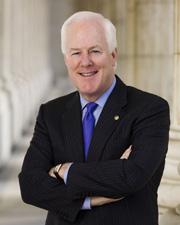 Sen. John Cornyn (R-TX)
Legislative Activity
Stay on top of the latest movement without scrolling through every action
Senate amendment submitted
April 2, 2009
View full timeline
Senate amendment submitted
April 2, 2009
Senate amendment proposed (on the floor): Amendment SA 934 proposed by Senator Cornyn.(consideration: CR S4273; text: CR S4273)
April 2, 2009
Roll call votes on amendments in Senate: Motion to waive the Budget Act with respect to rejected in Senate by Yea-Nay Vote. 46 - 52. Record Vote Number: 144.
April 2, 2009
Amendment SA 934 proposed by Senator Cornyn. (consideration: CR S4273; text: CR S4273) To increase transparency by requiring five days of public review of legislation before passage by the Senate.
April 2, 2009
Point of order raised in Senate with respect to amendment SA 934.
April 2, 2009
Defense of Germaneness raised in Senate.
April 2, 2009
Motion to waive the Budget Act with respect to rejected in Senate by Yea-Nay Vote. 46 - 52. Record Vote Number: 144.
April 2, 2009
Amendment SA 934 ruled non-germane by the chair.
April 2, 2009
Votes
1 roll call on this amendment
Text
Proposed
CONGRESSIONAL BUDGET FOR THE UNITED STATES GOVERNMENT FOR FISCAL YEAR
2010--Continued

Mr. CONRAD. Mr. President, I suggest the absence of a quorum.
The PRESIDING OFFICER. The clerk will call the roll.
The legislative clerk proceeded to call the roll.
Mr. BOND. Mr. President, I ask unanimous consent that the order for
the quorum call be rescinded.
The PRESIDING OFFICER (Mr. Bennet). Without objection, it is so
ordered.

Amendment No. 926

Mr. BOND. Mr. President, I call up amendment No. 926 and ask for its
immediate consideration.
The PRESIDING OFFICER. The clerk will report.
The legislative clerk read as follows:

The Senator from Missouri [Mr. Bond] proposes an amendment
numbered 926.

Mr. BOND. Mr. President, I ask unanimous consent that the reading of
the amendment be dispensed with.
The PRESIDING OFFICER. Without objection, it is so ordered.
The amendment is as follows:

(Purpose: To protect workers from significant job loss by providing a
point of order against climate change or similar legislation that
raises Federal revenues to such an extent that it causes significant
job loss in manufacturing- or coal-dependent U.S. regions such as the
Midwest, Great Plains or South)

On page 68, after line 4, insert the following:

SEC.___. POINT OF ORDER AGAINST LEGISLATION THAT CAUSES
SIGNIFICANT JOB LOSS.

(a) In General.--After a concurrent resolution on the
budget is agreed to, it shall not be in order in the Senate
to consider any bill, resolution, amendment between Houses,
motion, or conference report that--
(1) would cause revenues to be more than the level of
revenues set forth for that first fiscal year or for the
total of that fiscal year and the ensuing fiscal years in the
applicable resolution for which allocations are provided
under section 302(a) of the Congressional Budget Act of 1974,
and (2) would cause significant job loss in manufacturing- or
coal-dependent regions of the United States such as the
Midwest, Great Plains or South.
(b) Supermajority Waiver and Appeal.--
(1) Waiver.--This section may be waived or suspended in the
Senate only by an affirmative vote of three-fifths of the
Members, duly chosen and sworn.
(2) Appeal.--An affirmative vote of three-fifths of the
Members, duly chosen and sworn, shall be required in the
Senate to sustain an appeal of the ruling of the Chair on a
point of order raised under this section.

Mr. BOND. Mr. President, I ask for the yeas and nays.
The PRESIDING OFFICER. Is there a sufficient second? There appears to
be.
The yeas and nays were ordered.
The PRESIDING OFFICER. The Senator from Missouri is recognized.
Mr. BOND. Mr. President, this amendment provides a new point of order
to prevent climate change legislation from raising more revenue than in
the resolution, killing jobs in the coal and manufacturing-dependent
regions of the United States, such as the Midwest, the Great Plains,
and the South.
There is no question climate change legislation will raise trillions
of dollars in Federal revenue through its Government auction of carbon
allowances.
President Obama said ``electricity rates would necessarily
skyrocket.''
This new energy tax will kill jobs in energy-intensive sectors such
as manufacturing, auto assembly, steel, cement, plastics, glass, and
fertilizer.
Experts predicted last year's Lieberman-Warner cap-and-trade bill
would have killed 3 million to 4 million jobs. The Northeast and west
coast will avoid the full impacts because they rely on lower carbon
natural gas to generate electricity. However, climate legislation will
hit hard the coal and manufacturing-dependent Midwest, Great Plains,
and South.
I ask my colleagues to protect our workers by supporting this
amendment.
The PRESIDING OFFICER. The Senator's time has expired.
The Senator from North Dakota is recognized.
Mr. CONRAD. Mr. President, on behalf of the Senator from Michigan,
Ms. Stabenow, who had the time in opposition, I wish to indicate that
what the Senator is talking about is not part of the chairman's mark.
The chairman's mark provides an energy initiatives reserve fund. It is
entirely up to the committees of jurisdiction what legislation they
write to reduce our dependence on foreign energy, to deal with global
climate change. This resolution makes absolutely no determination about
what those committees will report. The effect of this amendment, to me,
is a nullity because it is creating a budget point of order against
something that does not exist in the chairman's mark.
I ask my colleagues to oppose this amendment, on behalf of Senator
Stabenow.
Mr. BOND. Will the Senator yield?
The PRESIDING OFFICER. The Senator's time has expired.
The question is on agreeing to the amendment.
The yeas and nays were previously ordered.
The clerk will call the roll.
The legislative clerk called the roll.
Mr. DURBIN. I announce that the Senator from Massachusetts (Mr.
Kennedy) is necessarily absent.
The result was announced--yeas 54, nays 44, as follows:

[Rollcall Vote No. 142 Leg.]

YEAS--54

Alexander
Barrasso
Baucus
Bayh
Bennett
Bond
Brownback
Bunning
Burr
Byrd
Chambliss
Coburn
Cochran
Collins
Corker
Cornyn
Crapo
DeMint
Dorgan
Ensign
Enzi
Feingold
Graham
Grassley
Gregg
Hagan
Hatch
Hutchison
Inhofe
Isakson
Johanns
Kohl
Kyl
Landrieu
Lincoln
Lugar
Martinez
McCain
McConnell
Murkowski
Nelson (NE)
Pryor
Risch
Roberts
Rockefeller
Sessions
Shelby
Snowe
Specter
Tester
Thune
Vitter
Voinovich
Wicker

NAYS--44

Akaka
Begich
Bennet
Bingaman
Boxer
Brown
Burris
Cantwell
Cardin
Carper
Casey
Conrad
Dodd
Durbin
Feinstein
Gillibrand
Harkin
Inouye
Johnson
Kaufman
Kerry
Klobuchar
Lautenberg
Leahy
Levin
Lieberman
McCaskill
Menendez
Merkley
Mikulski
Murray
Nelson (FL)
Reed
Reid
Sanders
Schumer
Shaheen
Stabenow
Udall (CO)
Udall (NM)
Warner
Webb
Whitehouse
Wyden

NOT VOTING--1

Kennedy

The amendment (No. 926) was agreed to.
Mr. REID. I move to reconsider the vote, and I move to lay that
motion on the table.
The motion to lay on the table was agreed to.
Mr. REID. I suggest the absence of a quorum.
The PRESIDING OFFICER (Mr. Begich). The clerk will call the roll.
The legislative clerk proceeded to call the roll.

[[Page S4269]]

Mr. CONRAD. Mr. President, I ask unanimous consent that the order for
the quorum call be rescinded.
The PRESIDING OFFICER. Without objection, it is so ordered.
Mr. CONRAD. Mr. President, the next amendment to be dealt with is
Bennett amendment No. 954.
The PRESIDING OFFICER. The Senator from Utah.

Amendment No. 954, as Modified

Mr. BENNETT. Mr. President, I call up amendment 954, as modified.
The PRESIDING OFFICER. The clerk will report.
The legislative clerk read as follows:

The Senator from Utah [Mr. Bennett] proposes an amendment
numbered 954, as modified.

The amendment is as follows:

(Purpose: To save the American taxpayer over $150,000,000,000 by
adjusting spending levels beyond fiscal year 2010 to compensate for
spending from the stimulus bill in the corresponding fiscal years)

On page 4, line 15, decrease amount by $76,325,000,000.
On page 4, line 16, decrease amount by $38,065,000,000.
On page 4, line 17, decrease amount by $22,872,000,000.
On page 4, line 18, decrease amount by $12,787,000,000.
On page 4, line 24, decrease amount by $76,325,000,000.
On page 4, line 25, decrease amount by $38,065,000,000.
On page 5, line 1, decrease amount by $22,872,000,000.
On page 5, line 2, decrease amount by $12,787,000,000.
On page 5, line 8, decrease amount by $76,325,000,000.
On page 5, line 9, decrease amount by $38,065,000,000.
On page 5, line 10, decrease amount by $22,872,000,000.
On page 5, line 11, decrease amount by $12,787,000,000.
On page 5, line 18, decrease amount by $76,325,000,000.
On page 5, line 19, decrease amount by $114,390,000,000.
On page 5, line 20, decrease amount by $137,262,000,000.
On page 5, line 21, decrease amount by $150,049,000,000.
On page 6, line 1, decrease amount by $76,325,000,000.
On page 6, line 2, decrease amount by $114,390,000,000.
On page 6, line 3, decrease amount by $137,262,000,000.
On page 6, line 4, decrease amount by $150,049,000,000.
On page 9, line 24, decrease amount by $960,000,000.
On page 9, line 25, decrease amount by $960,000,000.
On page 10, line 3, decrease amount by $634,000,000.
On page 10, line 4, decrease amount by $634,000,000.
On page 10, line 7, decrease amount by $277,000,000.
On page 10, line 8, decrease amount by $277,000,000.
On page 10, line 11, decrease amount by $104,000,000.
On page 10, line 12, decrease amount by $104,000,000.
On page 10, line 24, decrease amount by $162,000,000.
On page 10, line 25, decrease amount by $162,000,000.
On page 10, line 3, decrease amount by $114,000,000.
On page 10, line 4, decrease amount by $114,000,000.
On page 10, line 7, decrease amount by $50,000,000.
On page 10, line 8, decrease amount by $50,000,000.
On page 11, line 25, decrease amount by $1,095,000,000.
On page 12, line 1, decrease amount by $1,095,000,000.
On page 12, line 4, decrease amount by $750,000,000.
On page 12, line 5, decrease amount by $750,000,000.
On page 12, line 8, decrease amount by $174,000,000.
On page 12, line 9, decrease amount by $174,000,000.
On page 12, line 12, decrease amount by $63,000,000.
On page 12, line 13, decrease amount by $63,000,000.
On page 13, line 25, decrease amount by $13,760,000,000.
On page 14, line 1, decrease amount by $13,760,000,000.
On page 14, line 4, decrease amount by $11,759,000,000.
On page 14, line 5, decrease amount by $11,759,000,000.
On page 14, line 8, decrease amount by $7,728,000,000.
On page 14, line 9, decrease amount by $7,728,000,000.
On page 14, line 12, decrease amount by $5,419,000,000.
On page 14, line 13, decrease amount by $5,419,000,000.
On page 14, line 25, decrease amount by $5,685,000,000.
On page 14, line 1, decrease amount by $5,685,000,000.
On page 14, line 4, decrease amount by $4,111,000,000.
On page 14, line 4, decrease amount by $4,111,000,000.
On page 15, line 8, decrease amount by $2,286,000,000.
On page 15, line 9, decrease amount by $2,286,000,000.
On page 15, line 12, decrease amount by $468,000,000.
On page 15, line 13, decrease amount by $468,000,000.
On page 15, line 25, decrease amount by $5,584,000,000.
On page 16, line 1, decrease amount by $5,584,000,000.
On page 16, line 4, decrease amount by $4,284,000,000.
On page 16, line 5, decrease amount by $4,284,000,000.
On page 16, line 8, decrease amount by $3,047,000,000.
On page 16, line 9, decrease amount by $3,047,000,000.
On page 16, line 12, decrease amount by $531,000,000.
On page 16, line 13, decrease amount by $531,000,000.
On page 16, line 25, decrease amount by $8,785,000,000.
On page 17, line 1, decrease amount by $8,785,000,000.
On page 17, line 4, decrease amount by $7,035,000,000.
On page 17, line 5, decrease amount by $7,035,000,000.
On page 17, line 8, decrease amount by $6,052,000,000.
On page 17, line 9, decrease amount by $6,052,000,000.
On page 17, line 12, decrease amount by $5,422,000,000.
On page 17, line 13, decrease amount by $5,422,000,000.
On page 19, line 3, decrease amount by $29,963,000,000.
On page 19, line 4, decrease amount by $29,963,000,000.
On page 19, line 7, decrease amount by $4,011,000,000.
On page 19, line 8, decrease amount by $4,011,000,000.
On page 19, line 10, decrease amount by $262,000,000.
On page 19, line 11, decrease amount by $262,000,000.
On page 20, line 3, decrease amount by $6,421,000,000.
On page 20, line 4, decrease amount by $6,421,000,000.
On page 20, line 7, decrease amount by $3,157,000,000.
On page 20, line 8, decrease amount by $3,157,000,000.
On page 20, line 11, decrease amount by $842,000,000.
On page 20, line 12, decrease amount by $842,000,000.
On page 20, line 15, decrease amount by $183,000,000.
On page 20, line 16, decrease amount by $183,000,000.
On page 23, line 3, decrease amount by $133,000,000.
On page 23, line 4, decrease amount by $133,000,000.
On page 23, line 7, decrease amount by $150,000,000.
On page 23, line 8, decrease amount by $150,000,000.
On page 23, line 11, decrease amount by $150,000,000.
On page 23, line 12, decrease amount by $150,000,000.
On page 24, line 3, decrease amount by $297,000,000.
On page 24, line 4, decrease amount by $297,000,000.
On page 24, line 7, decrease amount by $133,000,000.
On page 24, line 8, decrease amount by $133,000,000.
On page 25, line 3, decrease amount by $848,000,000.
On page 25, line 4, decrease amount by $848,000,000.
On page 25, line 7, decrease amount by $649,000,000.
On page 25, line 8, decrease amount by $649,000,000.
On page 25, line 11, decrease amount by $750,000,000.
On page 25, line 12, decrease amount by $750,000,000.
On page 26, line 3, decrease amount by $1,400,000,000.
On page 26, line 4, decrease amount by $1,400,000,000.
On page 26, line 7, decrease amount by $1,196,000,000.
On page 26, line 8, decrease amount by $1,196,000,000.
On page 26, line 11, decrease amount by $1,024,000,000.
On page 26, line 12, decrease amount by $1,024,000,000.
On page 26, line 15, decrease amount by $504,000,000.
On page 26, line 16, decrease amount by $504,000,000.
On page 27, line 3, decrease amount by $857,000,000.
On page 27, line 4, decrease amount by $857,000,000.
On page 27, line 7, decrease amount by $457,000,000.
On page 27, line 8, decrease amount by $457,000,000.
On page 27, line 11, decrease amount by $230,000,000.
On page 27, line 12, decrease amount by $230,000,000.

[[Page S4270]]

On page 27, line 15, decrease amount by $93,000,000.
On page 27, line 16, decrease amount by $93,000,000.

Mr. CONRAD. Mr. President, we have not seen the modification.
Mr. BENNETT. I have only one copy which I gave the clerk. We found
that some of the numbers had been omitted.
Mr. CONRAD. Mr. President, I suggest the absence of a quorum.
The PRESIDING OFFICER. The clerk will call the roll.
The bill clerk proceeded to call the roll.
Mr. CONRAD. Mr. President, I ask unanimous consent that the order for
the quorum call be rescinded.
The PRESIDING OFFICER. Without objection, it is so ordered.
Mr. CONRAD. Mr. President, Senator Bennett can conclude his remarks.
The PRESIDING OFFICER. The Senator from Utah.
Mr. BENNETT. Mr. President, according to CBO, the stimulus bill will
spend over $150 billion between fiscal years 2011 and 2014. My
amendment will remove that amount from this budget resolution because
it seems to me we do not need to fund the same things twice.
By reducing the proposed spending amounts in the budget resolution,
Congress will be recognizing that we have already passed money to spend
in that area. For those who say, yes, but the stimulus is different, we
are all hoping that the need for stimulus will be passed by the time we
get to 2014 and it will not be stimulative but, rather, inflationary.
It is for that reason that I offer the amendment.
The PRESIDING OFFICER. The Senator from North Dakota.
Mr. CONRAD. Mr. President, the Senator's amendment would eliminate 20
percent of the economic recovery package we passed weeks ago. The
Senator's amendment would cut defense by over $2 billion, would cut
veterans by over $400 million, would cut areas in education, health,
and infrastructure.
If there is one thing that united this body, it was investments in
infrastructure, much of what would be cut under this amendment.
I urge my colleagues to vote no.
The PRESIDING OFFICER. The question is on agreeing to the amendment.
Mr. CONRAD. I ask for the yeas and nays.
The PRESIDING OFFICER. Is there a sufficient second?
There appears to be a sufficient second.
The clerk will call the roll.
The bill clerk called the roll.
Mr. DURBIN. I announce that the Senator from Massachusetts (Mr.
Kennedy) is necessarily absent.
The result was announced--yeas 42, nays 56, as follows:

[Rollcall Vote No. 143 Leg.]

YEAS--42

Alexander
Barrasso
Bennett
Bond
Brownback
Bunning
Burr
Chambliss
Coburn
Cochran
Collins
Corker
Cornyn
Crapo
DeMint
Ensign
Enzi
Graham
Grassley
Gregg
Hatch
Hutchison
Inhofe
Isakson
Johanns
Kyl
Lugar
Martinez
McCain
McConnell
Murkowski
Nelson (NE)
Risch
Roberts
Sessions
Shelby
Snowe
Specter
Thune
Vitter
Voinovich
Wicker

NAYS--56

Akaka
Baucus
Bayh
Begich
Bennet
Bingaman
Boxer
Brown
Burris
Byrd
Cantwell
Cardin
Carper
Casey
Conrad
Dodd
Dorgan
Durbin
Feingold
Feinstein
Gillibrand
Hagan
Harkin
Inouye
Johnson
Kaufman
Kerry
Klobuchar
Kohl
Landrieu
Lautenberg
Leahy
Levin
Lieberman
Lincoln
McCaskill
Menendez
Merkley
Mikulski
Murray
Nelson (FL)
Pryor
Reed
Reid
Rockefeller
Sanders
Schumer
Shaheen
Stabenow
Tester
Udall (CO)
Udall (NM)
Warner
Webb
Whitehouse
Wyden

NOT VOTING--1

Kennedy

The amendment (No. 954 was rejected.
Mr. CONRAD. Mr. President, we are now making significant progress on
putting together a managers' package and on putting together those
amendments that will require a vote. We still have a certain amount of
clearing to be done in order to be ready to go to those final lists and
get them locked in, but that work is going on right now between the two
sides.
Let me just give a status report, if I could. We are down to about 55
amendments. That is pretty good, given the fact we started at 231. But
55 at 3 an hour would be another 18 hours. So the word needs to go out
that we are asking colleagues who can withhold on amendments that they
have filed to use them for a later date. Those who would be willing to
accept a voice vote, if they could make certain our staffs are notified
of that, we will then be able to proceed in the most efficient way
possible.
Mr. President, we also should notify Members that at 8 p.m., give or
take a few minutes, we intend to vote on the amendment on estate tax.
That is the Lincoln-Kyl amendment. We just want to give people a heads-
up that the amendment will be voted on at about that time--roughly 8
p.m., give or take.
With that, I suggest the absence of a quorum.
The PRESIDING OFFICER. The clerk will call the roll.
The legislative clerk proceeded to call the roll.
Mr. CONRAD. Mr. President, I ask unanimous consent that the order for
the quorum call be rescinded.
The PRESIDING OFFICER. Without objection, it is so ordered.
Mr. CONRAD. Mr. President, we need to alert colleagues that we really
need them, if they have amendments, to be on the floor or in the
cloakroom. We have amendments that we are ready to go to, but we can't
find the Senators. So let me just tell you, if we can't find the
Senators, they are going to lose their chance to offer their amendment.
We are going to give a 5-minute grace period, but if Senators have
amendments, they have to be in a place where we can reach them.

Amendment Nos. 889, 881, 955, 809, 912, 794, 876, 899, 883, 970, 820,
887, 917, 838, and 916

Mr. President, we are ready to go to the next managers' package.
I ask unanimous consent that the managers' package be considered en
bloc and agreed to en bloc. It includes the following: Klobuchar
amendment No. 889, Dorgan amendment No. 881, Dodd amendment No. 955,
Brown amendment No. 809, Begich amendment No. 912, Pryor amendment No.
794, Lincoln-Snowe amendment No. 876, Lincoln-Snowe amendment No. 899,
Collins amendment No. 883, Hatch amendment No. 970, Enzi amendment No.
820, Klobuchar amendment No. 887, McCaskill amendment No. 917, Dorgan
amendment No. 838, and Tester amendment No. 916.
The PRESIDING OFFICER. The Chair would like to clarify that it is
Enzi amendment No. 820?
Mr. CONRAD. Enzi. That is correct.
The PRESIDING OFFICER. Is there objection? There is no objection, and
it is so ordered.
The amendments were agreed to, en bloc, as follows:

AMENDMENT NO. 889

(Purpose: To establish a deficit-neutral reserve fund to expedite
research at the Department of Energy and the Environmental Protection
Agency on the viability of the use of higher ethanol blends at the
service station pump)

At the appropriate place in title II, insert the following:

SEC. 2___. DEFICIT-NEUTRAL RESERVE FUND TO EXPEDITE RESEARCH
ON VIABILITY OF USE OF HIGHER ETHANOL BLENDS AT
SERVICE STATION PUMP.

(a) In General.--Subject to subsection (b), the Chairman of
the Committee on the Budget of the Senate may revise the
allocations, aggregates, and other levels in this resolution
by the amounts provided by a bill, joint resolution,
amendment, motion, or conference report that would expedite
research at the Department of Energy and the Environmental
Protection Agency on the viability of the use of higher
ethanol blends at the service station pump.
(b) Deficit Neutrality.--Subsection (a) applies only if the
legislation described in subsection (a) would not increase
the deficit over the period of the total of fiscal years 2009
through 2014 or the period of the total of fiscal years 2009
through 2019.

AMENDMENT NO. 881

(Purpose: To provide for the use of the deficit-neutral reserve fund
for tax relief to extend and expand the charitable IRA rollover)

On page 38, line 19, insert ``, such as enhanced charitable
giving from individual retirement accounts, including life-
income gifts,'' before ``or refundable tax relief''.

[[Page S4271]]

amendment no. 955

(Purpose: To increase funding for the Maternal and Child Health Block
Grant within the Health Resources and Services Administration by $188
million in FY 2010)

On page 19, line 24, increase the amount by $188,000,000.
On page 19, line 25, increase the amount by $56,000,000.
On page 20, line 4, increase the amount by $81,000,000.
On page 20, line 8, increase the amount by $34,000,000.
On page 20, line 12, increase the amount by $13,000,000.
On page 27 line 23, decrease the amount by $188,000,000.
On page 27, line 24, decrease the amount by $56,000,000.
On page 28, line 3, decrease the amount by $81,000,000.
On page 28, line 7, decrease the amount by $34,000,000.
On page 28, line 11, decrease the amount by $13,000,000.

AMENDMENT NO. 809

(Purpose: To modify the deficit-neutral reserve fund for Clean Energy
to create jobs and strengthen American manufacturing competitiveness by
establishing clean renewable energy manufacturing supply chains)

On page 33, line 2, after ``development,'', insert
``strengthen and retool manufacturing supply chains,''.

AMENDMENT NO. 912

(Purpose: To include in the deficit-neutral reserve fund for America's
veterans and wounded servicemembers funding authority for retirement
benefits for members of the Alaska Territorial Guard who served during
and after World War II)

On page 41, line 24, insert after ``Indemnity
Compensation,'' the following: ``provide for the payment of
retired pay for members of the Alaska Territorial Guard who
served in the Alaska Territorial Guard during and after World
War II,''.

AMENDMENT NO. 794

(Purpose: To establish deficit-neutral reserve funds to enhance and
coordinate drug control efforts among Federal, State, and local law
enforcement agencies through the expansion of the High Intensity Drug
Trafficking Areas program and increased drug interdiction funding at
the Department of Homeland Security)

On page 49, between lines 3 and 4, insert the following:

SEC. ___. DEFICIT-NEUTRAL RESERVE FUNDS TO ENHANCE DRUG-
CONTROL EFFORTS WITHIN OUR COMMUNITIES AND
ALONG OUR BORDERS.

(a) HIDTA.--The Chairman of the Senate Committee on the
Budget may revise the allocations of a committee or
committees, aggregates, and other appropriate levels and
limits in this resolution for one or more bills, joint
resolutions, amendments, motions, or conference reports that
increase the number of counties designated as High Intensity
Drug Trafficking Areas to provide coordination, equipment,
technology, and additional resources to combat drug
trafficking and its harmful consequences in critical regions
of the United States by the amounts provided in such
legislation for those purposes, provided that such
legislation would not increase the deficit over either the
period of the total of fiscal years 2009 through 2014 or the
period of the total of fiscal years 2009 through 2019.
(b) Drug Smuggling.--The Chairman of the Senate Committee
on the Budget may revise the allocations of a committee or
committees, aggregates, and other appropriate levels and
limits in this resolution for one or more bills, joint
resolutions, amendments, motions, or conference reports that
increase drug interdiction funding at the Department of
Homeland Security to combat drug smuggling across
international borders by the amounts provided in such
legislation for those purposes, provided that such
legislation would not increase the deficit over either the
period of the total of fiscal years 2009 through 2014 or the
period of the total of fiscal years 2009 through 2019.

AMENDMENT NO. 876

(Purpose: To ensure that health coverage is affordable to small
businesses and individuals who are self-employed)

On page 30, line 10, strike ``, households'' and insert
``(in particular to small business and individuals who are
self-employed), households''.

AMENDMENT NO. 899

(Purpose: To provide for a deficit-neutral reserve fund to promote
individual savings and financial security, and for other purposes)

At the appropriate place, insert the following:

SEC. __. DEFICIT-NEUTRAL RESERVE FUND TO PROMOTE INDIVIDUAL
SAVINGS AND FINANCIAL SECURITY.

The chairman of the Committee on the Budget of the Senate
may revise the aggregates, allocations, and other appropriate
levels in this resolution for one or more bills, joint
resolutions, amendments, motions, or conference reports that
promote financial security through financial literacy,
retirement planning, and savings incentives, including
individual development accounts and child savings accounts,
provided that such legislation does not increase the deficit
over either the period of the total fiscal years 2009 through
2014 or the period of the total fiscal years 2009 through
2019.

amendment no. 883

(Purpose: To ensure that the deficit-neutral reserve fund for higher
education may be used for Federal TRIO programs and Gaining Early
Awareness and Readiness for Undergraduate Programs)

On page 34, line 13, insert ``such as by investing in
programs such as the programs under chapters 1 and 2 of
subpart 2 of part A of title IV of the Higher Education Act
of 1965 (20 U.S.C. 1070a-11 et seq., 1070a-21 et seq.),''
after ``students,''.

AMENDMENT NO. 970

(Purpose: To establish a deficit-neutral reserve fund to support the
National Health Service Corps)

On page 49, between lines 3 and 4, insert the following:

SEC. __. DEFICIT-NEUTRAL RESERVE FUND FOR THE NATIONAL HEALTH
SERVICE CORPS.

The Chairman of the Senate Committee on the Budget may
revise the allocations of a committee or committees,
aggregates, and other appropriate levels and limits in this
resolution for one or more bills, joint resolutions,
amendments, motions or conference reports that provide the
National Health Service Corps with $235,000,000 for fiscal
year 2010, by the amount provided in that legislation for
those purposes, provided that such legislation would not
increase the deficit over either the period of the total for
fiscal years 2009 through 2014 or the period of the total for
fiscal years 2009 through 2019.

AMENDMENT NO. 820

(Purpose: To establish a deficit-neutral reserve fund to improve the
animal health and disease program)

At the appropriate place in title II, insert the following:

SEC. 2___. DEFICIT-NEUTRAL RESERVE FUND TO IMPROVE ANIMAL
HEALTH AND DISEASE PROGRAM.

(a) In General.--Subject to subsection (b), the Chairman of
the Committee on the Budget of the Senate may revise the
allocations, aggregates, and other levels in this resolution
by the amounts provided by a bill, joint resolution,
amendment, motion, or conference report that would ensure
that the animal health and disease program established under
section 1433 of the National Agricultural Research,
Extension, and Teaching Policy Act of 1977 (7 U.S.C. 3195) is
fully funded.
(b) Deficit Neutrality.--Subsection (a) applies only if the
legislation described in subsection (a) would not increase
the deficit over the period of the total of fiscal years 2009
through 2014 or the period of the total of fiscal years 2009
through 2019.

AMENDMENT NO. 887

(Purpose: To establish a deficit-neutral reserve fund to promote
payment policies under the Medicare program that reward quality and
efficient care and address geographic variations in spending)

On page 32, line 10, after ``increases;'' insert ``or'' and
the following:
(4) promote payment policies under the Medicare program
that reward quality and efficient care and address geographic
variations in spending;

AMENDMENT NO. 917

(Purpose: To expand the matters covered by the deficit-neutral reserve
fund for defense acquisition and contracting reform)

On page 43, after line 24, add the following:
(4) reduce the award of contracts to contractors with
seriously delinquent tax debts;
(5) reduce the use of contracts, including the continuation
of task orders, awarded under the Logistics Civil
Augmentation Program (LOGCAP) III;
(6) reform Department of Defense processes for acquiring
services in order to reduce costs, improve costs and schedule
estimation, enhance oversight, or increase the rigor of
reviews of programs that experience critical cost growth;
(7) reduce the use of contracts for acquisition, oversight,
and management support services; or
(8) enhance the capability of auditors and inspectors
general to oversee Federal acquisition and procurement;

AMENDMENT NO. 838

(Purpose: To ensure full funding for Adam Walsh Act programs, with an
offset)

On page 24, line 24, increase the amount by $23,000,000.
On page 24, line 25, increase the amount by $16,000,000.
On page 25, line 4, increase the amount by $4,000,000.
On page 25, line 8, increase the amount by $2,000,000.
On page 25, line 12, increase the amount by $1,000,000.
On page 27, line 23, decrease the amount by $23,000,000.
On page 27, line 24, decrease the amount by $16,000,000.
On page 28, line 3, decrease the amount by $4,000,000.
On page 28, line 7, decrease the amount by $2,000,000.
On page 28, line 11, decrease the amount by $1,000,000.

AMENDMENT NO 916

(Purpose: To increase funding for veterans beneficiary travel
reimbursement mileage rate, with an offset)

On page 23, line 24, increase the amount by $133,000,000.

[[Page S4272]]

On page 23, line 25, increase the amount by $133,000,000.
On page 27, line 23, decrease the amount by $133,000,000.
On page 27, line 24, decrease the amount by $133,000,000.

Amendment No. 881

Mr. GRASSLEY. Mr. President, I rise to express my concerns about the
Dorgan-Snow amendment No. 881.
The IRA rollover was first enacted as temporary provision in the
Pension Protection Act which I championed in 2006. Rollovers to grant-
making charitable organizations with some element of donor control,
such as private foundations, donor advised funds, and supporting
organizations, were specifically prohibited. These entities were
specifically prohibited from receiving rollover funds because I wanted
to make sure that the money would actually get to charities doing work
on the frontlines rather than sit in a donor-controlled account.
The provision has become one of the annual ``tax extender''
provisions. So under current law, which expires December 31, 2009, an
individual may rollover up to $100,000 from their IRA to a public
charity but not to one of the prohibited entities. Amendment No. 881 to
the budget resolution, S. Con. Res. 13, promotes the extension of
current-law regarding IRA rollovers to charity, which I also support.
However, the amendment also promotes an expansion of the provision by
allowing split-interest trusts to receive IRA rollover contributions.
Split-interest trusts are more worrisome than those that are currently
prohibited from receiving IRA rollover contributions. These trusts
allow donors to retain an income stream from the contributed assets for
a defined period. So, just like with donor-advised funds and supporting
organizations, the contribution does not result in an immediate benefit
to a charity actually providing services while the donor receives
significant tax benefits at the time of the contribution.
The cost of extending current law through 2009 was almost $1
billion--expanding the IRA rollover provision to allow more entities to
receive them would increase the cost. Before we do that, I believe we
should make sure that grant-making entities, including split-interest
trusts, are accountable for paying out minimum amounts to actual
charities before we allow them to receive IRA rollovers.
I understand that Senator Dorgan is willing to work with me and my
staff if and when Senator Baucus and I consider an expansion of the IRA
rollover provision in the Finance Committee. In light of this good
faith offer, I will not object to the unanimous consent request for
this amendment today and look forward to working with Senator Dorgan to
resolve our differences.

Amendment No. 876

Ms. SNOWE. Mr. President, I rise today in support of Senate amendment
No. 876, which I have cosponsored with my colleague Senator Lincoln.
Our bipartisan amendment would simply clarify that a deficit-neutral
reserve that would transform the health system will specifically
address the needs of small businesses and the self-employed. More than
half--52 percent--of our nation's uninsured either work for a small
business or are dependent on someone who does. Yet remarkably, this
budget resolution fails to even mention the crucial priority of small
business health insurance reform.
As former chair and now ranking member of the Senate Committee on
Small Business and Entrepreneurship, one of the top issues facing small
business continues to be access to affordable health insurance. Since
2000, health insurance premiums have increased by 89 percent--far
outpacing inflation and wage gains, and only 49 percent of our Nation's
smallest employers, with less than 10 employees, are now able to offer
health insurance to their employees as a workplace benefit.
Further compounding the crisis, small businesses are trapped in
dysfunctional markets that possess little, if any, meaningful
competition among insurers. Just last month, the Government
Accountability Office released a report that I requested, along with
Senators Bond, Durbin, and Lincoln, which highlighted an alarming trend
of consolidation in the state small group insurance markets. For
example, the combined market share of the five largest carriers
represented 75 percent or more in 34 of 39 States surveyed, compared to
26 States in 2005. Large insurers dominated over 90 percent of the
market in 23 States, including Maine, where five insurers now control
96 percent of the market.
The sad truth remains that small business insurance markets continue
to lack competition among insurers. No competition means higher costs,
and higher costs translate to no health insurance.
That is why I will soon reintroduce, with Assistant Majority Leader
Durbin and Senator Lincoln, the Small Business Health Options Program--
SHOP--Act, a bipartisan measure that has generated a broad array of
support, including NFIB, the National Association of Realtors, SEIU,
AARP, and Families USA. Our bipartisan measure would inject competition
into reformed state insurance markets, allow small businesses and the
self employed to pool together nationally, and provide a targeted tax
credit to small business owners. I firmly believe that the policies in
the SHOP Act, including fairer insurance ``rating'' rules that are not
based on an individual's health status, must be included in the broader
health reform debate that is underway in Congress.
I urge all of my colleagues on both sides of aisle to support this
non-controversial amendment, which would clarify that when Congress
passes broader health reform and universal coverage this year, it will
fully consider the issue of small business health insurance reform.

Amendment No. 899

I rise as a cosponsor to support amendment No. 899 introduced by my
colleague Senator Blanche Lincoln that creates a deficit neutral
reserve fund to promote financial security through financial literacy,
retirement planning, and savings incentives, including individual
development accounts and child savings accounts. I am proud that we
have worked together on the issue of financial security and financial
literacy over the last several years, in particular on the issue of
individual development accounts, IDAs, that will allow low-income
individuals to pay for education expenses, first-time homebuyer costs,
and business capitalization or expansion costs.
I join Senator Lincoln in support of this crucial amendment because
we must boost savings in the United States, as a sound national savings
policy is essential to helping Americans build a better future for
themselves. Higher rates of saving can also strengthen the national
economy. A paradox of the current economic recession is that our
national savings rate has risen as Americans prepare for possible bad
times ahead. Personal saving, as a percentage of disposable personal
income, was 4.2 percent in February. It was 4.4 percent in January. The
last time the saving rate exceeded 4.0 percent two straight months was
August and September 1998, up 4.3 percent and 4.2 percent,
respectively.
It was more than 10 years ago the last time we had a savings rate
above 4 percent. I am glad to see it happening, but we need to increase
education on financial security so that Americans have a cushion to get
through difficult economic times. I thank the new Chairman of the
Subcommittee on Social Security, Pensions and Family Policy for adding
me as a cosponsor of this amendment.
Mr. CONRAD. Mr. President, I thank all our colleagues for cooperating
on these managers' packages. We are working to clear additional
amendments right now. I think at this point, until Senator Gregg
returns, we need to note the absence of a quorum.
The PRESIDING OFFICER. The clerk will call the roll.
The bill clerk proceeded to call the roll.
Mr. CONRAD. Mr. President, I ask unanimous consent the order for the
quorum call be rescinded.
The PRESIDING OFFICER. Without objection, it is so ordered.

Amendment No. 957

Mr. CONRAD. Mr. President, the next amendment that requires a vote is
the Lautenberg amendment as it affects Amtrak. The Senator is not quite
ready. We will give him a minute to do that.
While we are waiting, let me indicate to colleagues, we need Senators
who have amendments to be here or to be in

[[Page S4273]]

the cloakroom. We have dead time here because, for amendments that are
going to require a vote, Senators who are insisting on votes are not
here. That is not going to work.
We have now worked on another group of amendments. Momentarily we
will be prepared to offer another managers' amendment. I remind
colleagues that the estate tax amendment of Senator Lincoln and Senator
Kyl will be voted on about 8 o'clock. We need to keep that in mind as
we plan the time.
I say to the Senator, we are ready to accept that amendment by
unanimous consent. If the Senator wishes to speak, he could, for a
minute, or we could take the amendment.
Mr. LAUTENBERG. Mr. President, I want to offer a straightforward
amendment that recognizes that investments in our transportation
infrastructure system must be a priority for our country. The amendment
would simply add transportation, including passenger and freight rail,
as an eligible project under the ``Investments in America's
Infrastructure'' reserve fund. It is already included in the budget.
Our highways and skyways are so congested and crowded that passengers
and freight are routinely delayed. The estimates show these problems
will only get worse with the growth of freight traffic, expected to
double its size by 2025. Railroads are the one mode of transportation
that can grow to help alleviate the congestion.
Amtrak needs more and better passenger and freight rail service. I
ask support for this amendment.
I call up the amendment and ask for its immediate consideration,
amendment No. 957.
The legislative clerk read as follows:

The Senator from New Jersey [Mr. Lautenberg] proposes an
amendment numbered 957.

The amendment is as follows:

(Purpose: To include funding for freight and passenger rail in the
deficit-neutral reserve fund for investments in America's
infrastructure)

On page 35, line 18, insert ``transportation, including
freight and passenger rail,'' after ``energy, water,''.

The PRESIDING OFFICER. Is there further debate?
Mr. CONRAD. Mr. President, we are prepared to take that amendment.
The PRESIDING OFFICER. The question is on agreeing on the amendment.
The amendment (No. 957) was agreed to.

Amendment No. 934

Mr. CONRAD. Mr. President, Senator Cornyn is prepared with an
amendment. Would the Senator describe his amendment?
The PRESIDING OFFICER. The Senator from Texas is recognized.
Mr. CORNYN. Mr. President, I call up amendment No. 934 and ask for
its immediate consideration.
The PRESIDING OFFICER. The clerk will report.
The bill clerk read as follows:

The Senator from Texas [Mr. Cornyn] proposes an amendment
numbered 934.

The amendment is as follows:

(Purpose: To increase transparency by requiring five days of public
review of legislation before passage by the Senate)

At the appropriate place insert the following:

SEC.  _. REQUIREMENT THAT LEGISLATION BE AVAILABLE AND SCORED
5 DAYS BEFORE A VOTE ON PASSAGE.

(a) In General.--In the Senate, it shall not be in order,
to vote on final passage on any bill, joint resolution, or
conference report unless the text and a budget score from the
Congressional Budget Office of the legislation, are available
on a publicly accessible Congressional website five days
prior to the vote on passage of the legislation.
(b) Waiver.--This section may be waived or suspended in the
Senate only by an affirmative vote of three-fifths of the
Members, duly chosen and sworn.
(c) Appeals.--An affirmative vote of three-fifths of the
Members of the Senate, duly chosen and sworn, shall be
required to sustain an appeal of the ruling of the Chair on a
point of order raised under this section.

Mr. CORNYN. Mr. President, my amendment would pose a 60-vote point of
order against a bill that had not been made available for public review
along with the score of the Congressional Budget Office on a
congressional Web site for at least 5 days.
As everyone will recall, the President himself said this was his
goal, to offer greater transparency, hence greater accountability, and
thus instill greater confidence in the people and their Government.
Unfortunately, that pledge has been violated more times than it has
been honored, and in our rush to pass the stimulus bill that was
circulated--the conference report--at 11 o'clock on a Thursday night,
we were required to vote on it less than 24 hours later and thus the
uproar over the AIG bonuses ensued because, frankly, Members of the
Senate did not know what they were voting on and could not know what
they were voting on without this kind of transparency.
I commend this to my colleagues. It is consistent with what the
President has advocated and I think it is a good way to do business.
Mr. CONRAD. Mr. President, I would ask the Senator from Texas, would
he be willing to allow us to take this on a voice vote or by unanimous
consent?
Mr. CORNYN. I would say to the distinguished chairman of the Budget
Committee, I have three amendments which I have on the dock. This is
the only one of those three that I would like to have a record vote on.
Mr. CONRAD. Can I put this another way? This amendment is not
germane. So we can have a vote on it, it probably will not succeed, or
we could voice vote it and you would succeed.
Mr. CORNYN. Well, we have had this proposition tendered before. I
realize that in all likelihood this amendment would be stripped out in
conference behind closed doors. I do not think that is particularly an
honest way to deal with these important issues--to say yes on the floor
and then to strip them out behind closed doors and to act like we are
being consistent and not hypocritical.
I understand what the chairman has to do. He will do what he has to
do. But I would like a record vote.
Mr. CONRAD. Mr. President, the Senator certainly has that right. Let
me raise the germaneness point of order.
Let me ask the Parliamentarian, is the amendment of the Senator
germane?
The PRESIDING OFFICER. In the opinion of the Chair, it is not
germane.
Mr. CONRAD. I raise the germaneness point of order.
The PRESIDING OFFICER. Under the previous order, the question is on
agreeing to waive the point of order.
Mr. CONRAD. I ask for the yeas and nays.
The PRESIDING OFFICER. Is there a sufficient second?
There appears to be a sufficient second. The clerk will call the
roll.
The legislative clerk called the roll.
Mr. DURBIN. I announce that the Senator from Massachusetts (Mr.
Kennedy) is necessarily absent.
The PRESIDING OFFICER. Are there any other Senators in the Chamber
desiring to vote?
The yeas and nays resulted--yeas 46, nays 52, as follows:

[Rollcall Vote No. 144 Leg.]

YEAS--46

Alexander
Barrasso
Bayh
Bennett
Bond
Brownback
Bunning
Burr
Chambliss
Coburn
Cochran
Collins
Corker
Cornyn
Crapo
DeMint
Ensign
Enzi
Graham
Grassley
Gregg
Hatch
Hutchison
Inhofe
Isakson
Johanns
Klobuchar
Kyl
Landrieu
Lugar
Martinez
McCain
McCaskill
McConnell
Murkowski
Nelson (NE)
Risch
Roberts
Sessions
Shelby
Snowe
Specter
Thune
Vitter
Voinovich
Wicker

NAYS--52

Akaka
Baucus
Begich
Bennet
Bingaman
Boxer
Brown
Burris
Byrd
Cantwell
Cardin
Carper
Casey
Conrad
Dodd
Dorgan
Durbin
Feingold
Feinstein
Gillibrand
Hagan
Harkin
Inouye
Johnson
Kaufman
Kerry
Kohl
Lautenberg
Leahy
Levin
Lieberman
Lincoln
Menendez
Merkley
Mikulski
Murray
Nelson (FL)
Pryor
Reed
Reid
Rockefeller
Sanders
Schumer
Shaheen
Stabenow
Tester
Udall (CO)
Udall (NM)
Warner
Webb
Whitehouse
Wyden

NOT VOTING--1

Kennedy

The PRESIDING OFFICER. On this vote, the yeas are 46, the nays are
52. Three-fifths of the Senators duly chosen and sworn not having voted
in the affirmative, the motion is rejected. The point of order is
sustained, and the amendment falls.
The Senator from North Dakota.
Mr. CONRAD. Next up is Senator Wicker.

[[Page S4274]]

The PRESIDING OFFICER. The Senator from Mississippi.

Amendment No. 798

Mr. WICKER. Mr. President, I call up amendment No. 798 and ask for
its consideration.
The PRESIDING OFFICER. The clerk will report.
The legislative clerk read as follows:

The Senator from Mississippi [Mr. Wicker] proposes an
amendment numbered 798.

Mr. WICKER. I ask unanimous consent that reading of the amendment be
dispensed with.
The PRESIDING OFFICER. Without objection, it is so ordered.
The amendment is as follows:

(Purpose: To ensure that law abiding Amtrak passengers are allowed to
securely transport firearms in their checked baggage)

On page 37, between lines 8 and 9, insert the following:
(d) Allowing Amtrak Passengers to Securely Transport
Firearms on Passenger Trains.--None of amounts made available
in the reserve fund authorized under this section may be used
to provide financial assistance for the National Railroad
Passenger Corporation (Amtrak) unless Amtrak passengers are
allowed to securely transport firearms in their checked
baggage.

Mr. WICKER. The amendment is very simple and straightforward. It aims
to ensure that gun owners and sportsmen are able to transport securely
firearms aboard Amtrak trains in checked baggage, a practice that is
done thousands of times a day at airports across the country. I
emphasize that this amendment deals with checked, secured baggage only.
It would return Amtrak to a pre-9/11 practice. It does not deal with
carry-on baggage. Unlike the airline industry, Amtrak does not allow
the transport of firearms in checked bags. This means that sportsmen
who wish to use Amtrak trains for hunting trips cannot do so because
they are not allowed to check safely a firearm. I emphasize, this bill
deals with checked, secure luggage, not carry-on luggage. It would
apply to Amtrak the same as airlines.
The PRESIDING OFFICER. The Senator from North Dakota.
Mr. CONRAD. I yield the time in opposition to the Senator from New
Jersey.
The PRESIDING OFFICER. The Senator from New Jersey.
Mr. LAUTENBERG. I object to this disruptive amendment offered by the
Senator from Mississippi. He wants to enable the carrying of weapons,
guns, in checked baggage. One doesn't have to be very much concerned
about what we are doing when they look at the history of attacks on
railroads in Spain and the UK and such places.
This amendment has no place here interrupting the budgetary
procedure. The pending amendment is not germane and, therefore, I raise
a point of order that the amendment violates section 305(b)(2) of the
Congressional Budget Act of 1974.
Mr. GREGG. Is the germaneness well taken on this?
The PRESIDING OFFICER. The question is on agreeing to the motion to
waive the Budget Act in relation to the Wicker amendment No. 798.
Mr. GREGG. I didn't even make the motion to waive, but I am happy to
have the question be on the motion to waive.
The PRESIDING OFFICER. Under the previous order, that motion is
automatic.
Mr. GREGG. I ask for the yeas and nays.
The PRESIDING OFFICER. Is there a sufficient second?
There appears to be a sufficient second.
The clerk will call the roll.
The legislative clerk called the roll.
Mr. DURBIN. I announce that the Senator from Massachusetts (Mr.
Kennedy) is necessarily absent.
The PRESIDING OFFICER. Are there any other Senators in the Chamber
desiring to vote?
The yeas and nays resulted--yeas 63, nays 35, as follows:

[Rollcall Vote No. 145 Leg.]

YEAS--63

Alexander
Barrasso
Baucus
Bayh
Begich
Bennet
Bennett
Bingaman
Bond
Brownback
Bunning
Burr
Casey
Chambliss
Coburn
Cochran
Corker
Cornyn
Crapo
DeMint
Dorgan
Ensign
Enzi
Feingold
Graham
Grassley
Gregg
Hagan
Hatch
Hutchison
Inhofe
Isakson
Johanns
Johnson
Klobuchar
Kohl
Kyl
Landrieu
Leahy
Lincoln
Lugar
Martinez
McCain
McConnell
Murkowski
Nelson (NE)
Reid
Risch
Roberts
Sanders
Sessions
Shaheen
Shelby
Snowe
Specter
Tester
Thune
Udall (CO)
Udall (NM)
Vitter
Voinovich
Webb
Wicker

NAYS--35

Akaka
Boxer
Brown
Burris
Byrd
Cantwell
Cardin
Carper
Collins
Conrad
Dodd
Durbin
Feinstein
Gillibrand
Harkin
Inouye
Kaufman
Kerry
Lautenberg
Levin
Lieberman
McCaskill
Menendez
Merkley
Mikulski
Murray
Nelson (FL)
Pryor
Reed
Rockefeller
Schumer
Stabenow
Warner
Whitehouse
Wyden

NOT VOTING--1

Kennedy

The PRESIDING OFFICER. On this vote, the yeas are 63, the nays are
35. Three-fifths of the Senators duly chosen and sworn having voted in
the affirmative, the motion is agreed to.
The majority leader.
Mr. REID. Mr. President, I move to reconsider the vote, and I move to
lay that motion on the table.
The motion to lay on the table was agreed to.
Mr. REID. I suggest the absence of a quorum.
The PRESIDING OFFICER. The clerk will call the roll.
The assistant legislative clerk proceeded to call the roll.
Mr. CONRAD. Mr. President, I ask unanimous consent that the order for
the quorum call be rescinded.
The PRESIDING OFFICER. Without objection, it is so ordered.
Mr. CONRAD. Next up----
Mr. GREGG. Mr. President, if the motion was agreed to, then we have
to vote on the amendment.
Mr. CONRAD. Why don't we just take it on a voice vote?
Mr. GREGG. Yes. I ask unanimous consent.
Mr. CONRAD. I think we have to do it by voice.
The PRESIDING OFFICER. If there is no further debate on the
amendment, the question is on agreeing to the amendment.
The amendment (No. 798) was agreed to.
Mr. GREGG. Mr. President, I move to reconsider the vote.
Mr. CONRAD. I move to lay that motion on the table.
The motion to lay on the table was agreed to.
Mr. CONRAD. Mr. President, Senator Lieberman is next.
The PRESIDING OFFICER. The Senator from Connecticut is recognized.

Amendment No. 904

Mr. LIEBERMAN. Mr. President, I thank the Chair, and I call up
amendment No. 904.
The PRESIDING OFFICER. The clerk will report.
The legislative clerk read as follows:

The Senator from Connecticut [Mr. Lieberman] proposes an
amendment numbered 904.

Mr. LIEBERMAN. Mr. President, I ask unanimous consent that the
reading of the amendment be dispensed with.
The PRESIDING OFFICER. Without objection, it is so ordered.
The amendment is as follows:

(Purpose: To add a deficit-neutral reserve fund to reduce the strain on
United States military personnel by providing for an increase in the
end strength for active duty personnel of the United States Army)

At the end of title II, insert the following:

SEC. 216. DEFICIT-NEUTRAL RESERVE FUND FOR INCREASE IN THE
END STRENGTH FOR ACTIVE DUTY PERSONNEL OF THE
ARMY.

The Chairman of the Senate Committee on the Budget may
revise the allocations of a committee or committees,
aggregates, and other levels and limits in this resolution
for one or more bills, joint resolutions, amendments,
motions, or conference reports that would reduce the strain
on the United States Armed Forces by authorizing an increase
in the end strength for active duty personnel of the Army to
a level not less than 577,400 persons, by the amounts
provided in such legislation for such purpose, provided that
such legislation would not increase the deficit over either
the period of the total of fiscal years 2009 through 2014 or
the period of the total of fiscal years 2009 through 2019.

Mr. LIEBERMAN. Mr. President, I am honored to be joined in
introducing this amendment by my colleagues, Senators Cornyn, Thune,
and the distinguished occupant of the chair, Senator Begich. This
amendment would ease the strain on the U.S. Army which today is
carrying the bulk of the battle in Iraq and Afghanistan for us by
establishing a deficit-neutral reserve

[[Page S4275]]

fund to increase Army Active-Duty end strength by 30,000 personnel.
Although we have depleted the so-called Grow the Force initiative and
the Army is now at an end strength of 547,000, the so-called well time
for our soldiers has not improved. They still have little more than 1
day at home for every day they spend in the theater. Our soldiers and
their families----
The PRESIDING OFFICER. The Senator's time has expired.
Mr. LIEBERMAN. Our soldiers continue to serve under an unacceptable
strain. I ask my colleagues to ease that strain by adopting this
amendment.
Mr. CONRAD. Mr. President, we are prepared to take that on a voice
vote.
The PRESIDING OFFICER. If there is no further debate on the
amendment, the question is on agreeing to the amendment.
The amendment (No. 904) was agreed to.
Mr. GREGG. Mr. President, I move to reconsider the vote.
Mr. CONRAD. I move to lay that motion on the table.
The motion to lay on the table was agreed to.

Amendment No. 746

Mr. CONRAD. Mr. President, the next amendment is from Senator Udall
of Colorado. If he could describe it in 30 seconds.
Mr. Udall of Colorado. Mr. President, I wish to thank Senator Ensign
for joining me in this amendment. This is a deficit-neutral reserve
fund amendment that would help prevent forest fires. Our State budgets
are facing economic wildfires. This would help State and private lands
reduce fuel loads so we can prevent catastrophic forest fires. Let's
stand with Smokey the Bear. Let's prevent forest fires. Vote for this
amendment.
Mr. CONRAD. Mr. President, on behalf of Senator Udall, I call up his
amendment No. 746.
The PRESIDING OFFICER. The clerk will report.
The legislative clerk read as follows:

The Senator from Colorado [Mr. UDALL] proposes an amendment
numbered 746.

Mr. CONRAD. I ask unanimous consent that the reading of the amendment
be dispensed with.
The PRESIDING OFFICER. Without objection, it is so ordered.
The amendment is as follows.

(Purpose: To establish a deficit-neutral reserve fund for wildland fire
management activities)

At the appropriate place in title II, insert the following:

SEC. 2___. DEFICIT-NEUTRAL RESERVE FUND FOR WILDLAND FIRE
MANAGEMENT ACTIVITIES.

(a) In General.--Subject to subsection (b), the Chairman of
the Committee on the Budget of the Senate may revise the
allocations, aggregates, and other levels in this resolution
by the amounts provided by a bill, joint resolution,
amendment, motion, or conference report that would--
(1) allow wildland fire management funds for hazardous
fuels reduction and hazard mitigation activities in areas at
high risk of catastrophic wildfire to be distributed to areas
demonstrating highest priority needs, as determined by the
Chief of the Forest Service; and
(2) provide that no State matching funds are required for
the conduct of activities described in paragraph (1).
(b) Deficit Neutrality.--Subsection (a) applies only if the
legislation described in subsection (a) would not increase
the deficit over the period of the total of fiscal years 2009
through 2014 or the period of the total of fiscal years 2009
through 2019.

Mr. CONRAD. Mr. President, we are prepared to take this amendment on
a voice vote.
The PRESIDING OFFICER. If there is no further debate on the
amendment, the question is on agreeing to the amendment.
The amendment (No. 746) was agreed to.
Mr. CONRAD. Mr. President, next we go to the Lincoln-Kyl amendment.
The PRESIDING OFFICER. The Senator from Arkansas is recognized.

Amendment No. 873

Mrs. LINCOLN. Mr. President, before I begin, I wish to say a word of
thanks to Chairman Conrad, who has done a tremendous job providing
great leadership. He and his staff have done a wonderful job reflecting
the President's priorities and, more importantly, putting balance to
the budget before us.
Because my time is limited, I wish to take a moment to read to you a
few excerpts from an editorial that appeared in the Arkansas Democrat-
Gazette earlier this year. It was submitted by a member of a family who
runs a timber operation in southwest Arkansas and that has been in the
family since 1907. He said:

The estate tax kills jobs. It kills companies that provide
jobs. In the process it kills towns and communities,
particularly those in rural areas dependent upon the land and
local industry.

Five times this man's family has been subjected to the estate tax--
five times.
He goes on:

Between the 1950s and 1980s, vast amounts of money--tens of
millions of dollars--were raised to pay the tax. Lands were
clear cut, mills liquidated, communities destroyed. . . .The
next hit will be too great.

Think about this type of family business. They have grown their
business, reinvested in it over a century's worth of time, put almost
all their profits back into it, and now this particular company employs
over 1,000 Arkansans and has multiple mills that are worth a good bit
of money--millions of dollars.
This amendment provides real relief to our family-owned businesses.
In a time when our Government has handed out billions upon billions to
failed Wall Street banks, it is time we provide a little relief to our
businesses on Main Street that are in need of help right now. These are
people who employ more than half the workers in Arkansas. These are the
people who, if we reform the estate tax, will invest in their
businesses and create more jobs.
The PRESIDING OFFICER. The Senator's time has expired.
Mrs. LINCOLN. I ask my colleagues to look at this seriously and
realize we are not protecting the ultrawealthy. We are working for
small businesses, family businesses in each and every one of our
States.
The PRESIDING OFFICER (Mr. Bennet). I remind the Senator that the
amendment has not been called up.
Mrs. LINCOLN. Mr. President, I ask unanimous consent to call up
amendment No. 873.
The PRESIDING OFFICER. The clerk will report.
The legislative clerk read as follows:

The Senator from Arkansas [Mrs. Lincoln], for herself, Mr.
Kyl, Mr. Nelson of Nebraska, Mr. Grassley, Mr. Pryor, Mr.
Roberts, Mrs. Landrieu, and Mr. Enzi, proposes an amendment
numbered 873.

The amendment is as follows:

(Purpose: To create a deficit-neutral reserve fund for estate tax
relief)

At the appropriate place in title II, insert the following:

SEC. __. DEFICIT-NEUTRAL RESERVE FUND FOR ESTATE TAX RELIEF.

The Chairman of the Senate Committee on the Budget may
revise the allocations of a committee or committees,
aggregates, and other appropriate levels and limits in this
resolution for one or more bills, joint resolutions,
amendments, motions, or conference reports that would provide
for estate tax reform legislation establishing--
(1) an estate tax exemption level of $5,000,000, indexed
for inflation,
(2) a maximum estate tax rate of 35 percent,
(3) a reunification of the estate and gift credits, and
(4) portability of exemption between spouses, and

provided that such legislation would not increase the deficit
over either the period of the total of fiscal years 2009
through 2014 or the period of the total of fiscal years 2009
through 2019.

The PRESIDING OFFICER. The Senator from North Dakota.
Mr. CONRAD. Mr. President, I wish to remind all colleagues that the
chairman's mark takes the estate tax exemption from $1 million per
person in 2011 to $3.5 million, $7 million a couple. The proposal by
the Senator from Arkansas would take it to $5 million, and $10 million
a couple, reduces the rate from 45 percent to 35 percent. It is in a
deficit-neutral reserve fund. The cost of this amendment from 2012 to
2021, when it is fully effective, is over $100 billion. Where does the
money come from? Either by cutting spending somewhere else or raising
other taxes.
I urge my colleagues to reject the amendment.
The PRESIDING OFFICER. The Republican leader is recognized.
Mr. McCONNELL. Mr. President, I wish to proceed for a few moments on
my leader time. I am speaking in effect for Senator Kyl, who has been
our leader on the issue of the death tax for many years.
The Lincoln-Kyl amendment, on which we are about to vote, would
decrease the burden on those who get hit with the death tax by
increasing the exemption by $1.5 million to $5 million

[[Page S4276]]

and by reducing the rate of taxation down by 10 percent to 35 percent.
No one should have to be taxed on their assets twice, and no one
should have to visit the tax man and the undertaker on the same day. It
is the Government's final outrage. But if we can't repeal this tax,
then we should at least lower it at a time when Americans are already
burdened by shrinking retirement savings.
This budget, in keeping with the administration's plan, seeks to keep
the death tax exemption at $3.5 million and the tax rate at 45 percent.
By offering an amendment that would lower the rate and the exemption,
Senators Kyl and Lincoln are offering crucial support and protection to
small businesses, family ranchers, and farms.
This amendment has wide bipartisan support, including Senators
Nelson, Pryor, and Landrieu--all on the Democratic side--and Senators
Grassley, Roberts, Enzi, and Collins on the Republican side. It also
has strong support from the small business community, which desperately
needs relief at the current moment. It would spur economic growth,
which we need, and it makes good overall economic sense since the death
tax costs more to comply with than it raises in revenue.
The Lincoln-Kyl amendment is important, it is timely, and I strongly
urge its support.
Mr. GRASSLEY. Mr. President, the distinguished majority leader, my
friend, Senator Reid quoted me by name in his remarks in opposition to
the Lincoln-Kyl amendment.
The distinguished leader quoted me as describing death tax relief
legislation as ``unseemly.''
Since that quote was used to argue against Senator Lincoln's
amendment, which I support, I thought it important to respond to the
distinguished leader and set the record straight.
The distinguished leader is correct. I did say, at that time shortly
after the Katrina hurricane hit, that proceeding to death tax relief
would be ``unseemly.''
It is important for everyone to understand the context of that
statement. It was made shortly after the terrible hurricane hit the
gulf states. At that time, the Senate was about to reconvene after the
August recess. The pending business was a cloture motion on the motion
to proceed to a House bill that provided death tax relief.
The majority leader, Senator Frist, had filed the cloture motion
before the Senate departed for the August recess. Of course, that
procedural action occurred weeks before the hurricane hit. When asked
about the Senate schedule, I responded that proceeding to the death tax
bill, and, thereby not dealing with the hurricane victims, would be
unseemly.
The distinguished leader's comments caused me to recall how the
finance Committee, which I chaired at the time, dealt with Katrina.
Senator Frist did the right thing and set the Senate in motion to
deal with the hurricane victims. The Finance Committee acted with
lightning speed on a bipartisan basis, and in concert with the House,
to deliver relief to hurricane victims. I was quite proud of our
efforts to help people in need. That was the first Katrina tax relief
bill.
The second Katrina tax relief bill, unfortunately, took a lot longer
to do. Some on the other side saw the Katrina bill as a chance to enact
a National agenda of greatly enhancing social programs. I did not
question their motives at the time and do not now. But, the bottom line
was that this attempt to leverage a crisis for a National agenda,
significantly delayed our efforts to rebuild the hard-hit gulf zone.
As the distinguished leader will recall, the gulf state Senators, led
by Senator Lott, forced the Senate to focus on helping their states
rebuild and recover. A similar effort was underway in the House.
Fortunately, the efforts of the bipartisan group of gulf state
Senators caused the leadership on the other side to abandon their
efforts to leverage the hurricane disaster for a National agenda. No
one accused the leadership on the other side of being unseemly.
Senator Frist did the right thing and focused on the hurricane
victims. The leadership on the other side did the right thing and
focused on bipartisan hurricane relief efforts.
There is a lesson in this history for all of us. Do not try to
leverage a crisis for unrelated purposes.
Senator Lincoln's amendment was not ``unseemly.'' To use my reaction
to a question about the Senate schedule is to miss the point I was
making The Lincoln/Kyl amendment is a reasonable effort to find a
bipartisan compromise on a time-sensitive tax issue. It is an effort to
enable a solution to a problem that vexes family farmers and small
businesses. The amendment's purpose and substance are the opposite of
unseemly. The Lincoln/Kyl amendment is ``decorous.''
The PRESIDING OFFICER. The majority leader is recognized.
Mr. REID. Mr. President, I will use my leader time. This chart says
it all. In February, 651,000 Americans lost their jobs. Five million
Americans have lost their jobs this past year--5 million. Our
unemployment rate currently stands at 8.1 percent. Nevada's
unemployment is 10 percent, but Nevada is not the highest. We have some
States that are far more than 10 percent unemployed. Three million more
children will likely be living in poverty by the end of this year. The
net worth of American households dropped by a combined total of $11
trillion last year--$11 trillion.
These statistics tell a story--a very clear story--but what is even
clearer is the suffering every American sees and feels every day.
Families whose incomes have fallen are now concerned that they won't
be able to make their next mortgage payment. Students at this time of
the year should be overjoyed with receiving acceptance to go to
college, but because of what is happening at home--their dad or mom has
lost a job--they can't go to college. Workers who have given decades of
loyal service at the office or factory realize now they can't retire
because their pensions are gone and their retirement savings have
disappeared. Senior citizens on a fixed income used to have to make a
decision as to whether it would be medicine or food. Now many seniors
don't have the choice for either.
We know what caused this crisis: 8 years of fiscal policies under the
previous administration and its allies in Congress who gave away the
store at the expense of the rest of America.
President Obama inherited a crisis that no President should have to
inherit or fix. Instead of focusing full time on the future, he and we
in Congress must first clean up the devastating mistakes of the past.
We can only turn the page from the recession to recovery if we watch
every single taxpayer dollar the way families watch every dollar in
their budget. Every dollar counts.
That is why it is so stunning, so outrageous, that some would choose
this hour of national crisis to push an amendment to slash the estate
tax for the superwealthy. This isn't for the wealthy; this is for the
superwealthy. Yet that is what we see here today.
The proposal now before us would take $100 billion of American
taxpayer money--actually, it is more than that--more than $100 billion
of taxpayer money over the next few years and spend it on slashing
taxes on the estates of the wealthiest two-tenths of 1 percent of
Americans. So 99.8 percent of Americans would derive no benefit--none.
In fact, 99.8 percent of Americans would actually see their tax dollars
redirected to the estates of those who are at the very top of the
economic food chain.
Here is what one newspaper said today:

The proverbial millionaires next door--the plumbers,
contractors, and accountants who amass substantial wealth
through hard work and modest living--are not the intended
beneficiaries of the proposed cut. The Obama budget already
takes care of them. That means 99.8 percent of estates will
never, ever pay a penny of estate tax.

Here is what another newspaper said today, entitled ``More Tax Cuts
for the Rich":

The hypocrisy here is breathtaking. More fundamentally, it
is hard to stomach those who argue for more tax cuts--and
then bemoan the failure to stanch rising deficits. A vote for
this amendment, at this time of so much red ink and so much
suffering, would reflect the most skewed of priorities.

This is only a couple of the Americans all over America today trying
to understand what is going on in Washington.
In recent years, Congress has already reduced tax rates on the
ultrawealthy estates. In fact, the Tax Policy Center calculates that a
$20 million estate

[[Page S4277]]

right now--now--will pay an effective tax rate of 23 percent. Nurses
pay more than that, schoolteachers pay more than that, and secretaries
pay a higher tax rate than that, but we say for an estate of $20
million, 23 percent is OK. That is what the Tax Policy Center
calculates.
But for the proponents of the amendment now before us, that is not
good enough. So they propose that we spend $100 billion on a tax cut
for the top two-tenths of 1 percent. Proponents of this legislation say
they will find offsets for this $100 billion giveaway that will make it
deficit neutral. Think about that. Deficit neutral. That means you have
to get offsets.
Where are we going to get offsets? They have to come from somewhere.
They are not coming from the sky. Are we going to take them from
Medicare? From Senator Inouye's defense budget? From the Peace Corps?
From education?
Even in the best of times, there is no question that we could find a
better use for an extra $100 billion. We could put new textbooks in
classrooms. We could build better renewable energy transmission lines.
We could provide health care to more working families. If it got out of
hand, we could do what we did in the last years of the Clinton
administration: Reduce the debt.
I can think of no way to describe this amendment other than stunning
hypocrisy.
Many of the very same Republicans who held hands with President Bush
as he squandered a record budget surplus and turned it into a record
deficit suddenly claim to be ``deficit hawks.'' They tell us we cannot
invest in the middle class--the very people their disastrous policies
have harmed.
These same Republicans tried to stop us from providing health
insurance to millions of children of low-income families, so that these
kids could go to a doctor when they are sick or hurt. They fought
against President Obama's economic recovery plan, because it had the
audacity to invest in creating jobs for victims of the recession Bush
created.
Now they are fighting against a budget that cuts taxes for the middle
class, puts us on a path toward cutting the Republican deficit in half,
and invests in middle-class priorities, such as health care, education,
and clean, renewable energy. That is what Chairman Conrad has done.
After 8 years of creating a record deficit so that they could slash
taxes on the ultrawealthy, now they oppose our efforts to help the
middle class.
These newly hatched deficit hawks say no to any proposal that invests
in the people their policies harmed. But when it comes to giving away
another $100 billion plus of taxpayer money to the top two-tenths of 1
percent--money that could pay down the deficit they claim to care so
much about--these same Senators line up in support.
Again, this is stunning hypocrisy. Not only that; it is outrageous
hypocrisy.
When the estate tax issue was debated back in 2005, in the aftermath
of Hurricane Katrina, the then-chairman of the Finance Committee,
Senator Grassley, said this--remember, at that time there was a defined
group of people who were suffering in the gulf, but now it is the whole
country. Today, it was announced on the radio that, for the first time
since the Great Depression, all 50 States, without exception, have a
downturn in their economy. Here is what Senator Grassley said then,
after Hurricane Katrina:

It's a little unseemly to be talking about doing away with
or enhancing the estate tax at a time when people are
suffering.

If Katrina, which was a disaster for this country, was a reason not
to do the estate tax, why now when all 300 million Americans are
suffering? People are suffering now in every city, State, and town in
America.
I urge my colleagues to oppose this amendment. It amounts to nothing
but a giveaway to the wealthiest two-tenths of 1 percent of Americans,
at the expense of the other 99.8 percent of Americans.
Especially in this time of economic crisis, this is the wrong
priority for our country. I ask everybody to vote ``no'' on this
amendment.
The PRESIDING OFFICER. The question is on agreeing to the Lincoln
amendment No. 873.
Mr. KYL. Mr. President, I ask for the yeas and nays.
The PRESIDING OFFICER. Is there a sufficient second?
There is a sufficient second.
The clerk will call the roll.
The assistant legislative clerk called the roll.
The PRESIDING OFFICER. Are there any other Senators in the Chamber
desiring to vote?
The result was announced--yeas 51, nays 48, as follows:

[Rollcall Vote No. 146 Leg.]

YEAS--51

Alexander
Barrasso
Baucus
Bayh
Bennett
Bond
Brownback
Bunning
Burr
Cantwell
Chambliss
Coburn
Cochran
Collins
Corker
Cornyn
Crapo
DeMint
Ensign
Enzi
Graham
Grassley
Gregg
Hatch
Hutchison
Inhofe
Isakson
Johanns
Kyl
Landrieu
Lincoln
Lugar
Martinez
McCain
McConnell
Murkowski
Murray
Nelson (FL)
Nelson (NE)
Pryor
Risch
Roberts
Sessions
Shelby
Snowe
Specter
Tester
Thune
Vitter
Voinovich
Wicker

NAYS--48

Akaka
Begich
Bennet
Bingaman
Boxer
Brown
Burris
Byrd
Cardin
Carper
Casey
Conrad
Dodd
Dorgan
Durbin
Feingold
Feinstein
Gillibrand
Hagan
Harkin
Inouye
Johnson
Kaufman
Kennedy
Kerry
Klobuchar
Kohl
Lautenberg
Leahy
Levin
Lieberman
McCaskill
Menendez
Merkley
Mikulski
Reed
Reid
Rockefeller
Sanders
Schumer
Shaheen
Stabenow
Udall (CO)
Udall (NM)
Warner
Webb
Whitehouse
Wyden
The amendment (No. 873) was agreed to.
Mr. McCONNELL. Mr. President, I move to reconsider the vote.
Mr. GREGG. I move to lay that motion on the table.
The motion to lay on the table was agreed to.

Amendments Nos. 913, as Modified, and 875, as Modified

Mr. CONRAD. Mr. President, I ask unanimous consent that
notwithstanding the adoption of amendments Nos. 913 and 875, the
amendments be modified with the changes at the desk.
The PRESIDING OFFICER. Without objection, it is so ordered.
The amendments, as modified, are as follows:

amendment no. 913, as modified

(Purpose: To provide for enhanced oversight of the Board of Governors
of the Federal Reserve System concerning the use of emergency economic
assistance)

On page 48, line 21, strike ``banks'' and all that follows
through ``2008,'' on line 24 and insert the following
``banks, to include (1) an evaluation of the appropriate
number and the associated costs of Federal reserve banks; (2)
publication on its website, with respect to all lending and
financial assistance facilities created by the Board to
address the financial crisis, of (A) the nature and amounts
of the collateral that the central bank is accepting on
behalf of American taxpayers in the various lending programs,
on no less than a monthly basis; (B) the extent to which
changes in valuation of credit extensions to various special
purpose vehicles, such as Maiden Lane I, Maiden Lane II, and
Maiden Lane III, are a result of losses on collateral which
will not be recovered; (C) the number of borrowers that
participate in each of the lending programs and details of
the credit extended, including the extent to which the credit
is concentrated in one or more institutions; and (D)
information on the extent to which the central bank is
contracting for services of private sector firms for the
design, pricing, management, and accounting for the various
lending programs and the terms and nature of such contracts
and bidding processes,''.

amendment no. 875, as modified

(Purpose: To require information from the Board of Governors of the
Federal Reserve System about the use of emergency economic assistance)

In Sec. 215, following ``contracts and bidding processes,''
add the following: ``;and (3) including the identity of each
entity to which the Board has provided ``all loans and other
financial assistance since March 24, 2005, the value or
amount of that financial assistance, and what that entity is
doing with such financial assistance,'' after ``2008,''.

Mr. CONRAD. Mr. President, I ask unanimous consent that the list I
send to the desk be the only amendments remaining in order to the
budget resolution and managers' amendments which have been cleared by
the managers and leaders and that a side by side be in order to any of
the amendments on the list at the discretion of the managers and
leaders; that the order in which

[[Page S4278]]

the amendments are considered be determined by the managers; that upon
disposition of all amendments, the Senate proceed to vote on adoption
of the concurrent resolution, with the provisions of the previous
orders remaining in effect.
The PRESIDING OFFICER. Without objection, it is so ordered.
The list is as follows:

DeMint healthcare No. 963, Kyl Iran No. 932, Crapo Capital
Gains No. 897, Hatch Terrorism Tools POO No. 962, Alexander
Student Loans No. 792, DeMint CPSC No. 964, DeMint Autos No.
965, DeMint Earmarks No. 967, Sessions Border Fence POO No.
969, Crapo FDIC No. 958, Burr Veterans Health No. 777, Coburn
No. 828, Coburn No. 830, Hatch Medicare Advantage No. 976,
Hatch/Baucus (Not Yet Filed), KBH OCS No. 867, Vitter Oil and
Gas No. 751, Vitter Drug Testing No. 937, Enzi Unfunded
Mandates No. 819, Enzi Health IT No. 822, Graham Debt/
Household No. 959, Barrasso Cow Tax No. 765, Barrasso NEPA
No. 960, Barrasso ESA No. 890, Crapo DOE Loan Guarantees No.
733, Crapo Nuclear Research Priority No. 734, Hatch DNRF for
FDA Facilities No. 939, Snowe/Landrieu DNRF for Energy Star
No. 940, Session OCS Inventory No. 770, Hatch/Dodd Maternal
Child Health Block Grant No. 878, Martinez Trade Agreements
No. 843, Murkowski Nat'l Health Service Corps No. 841, Begich
Denali No. 901, Begich Arctic Oil No. 903, Brown Training No.
810, Klobuchar Food Safety No. 886, Lautenberg Homeland
Security Grants No. 977, Pryor CPSC No. 814.

Mr. CONRAD. Mr. President, we are prepared to go to the DeMint
amendment.
Mr. GREGG. No, Durbin.
Mr. CONRAD. I am sorry. Mr. President, next in order is the Durbin
amendment and then the DeMint amendment.
Senator Durbin.

Amendment No. 974, as Modified

Mr. DURBIN. Mr. President, I call up amendment No. 974, as modified.
The PRESIDING OFFICER. The clerk will report.
The legislative clerk read as follows:

The Senator from Illinois [Mr. Durbin] proposes an
amendment numbered 974, as modified.

The amendment is as follows:

(Purpose: To provide that no additional estate tax relief beyond that
which is already assumed in this resolution, which protects over 99.7
percent of estates from the estate tax, shall be allowed under any
deficit-neutral reserve fund unless an equal amount of aggregate tax
relief is also provided to Americans earning less than $100,000 per
year)

At the appropriate place in title II, insert the following:

SEC.__. POINT OF ORDER AGAINST LEGISLATION THAT PROVIDES
ADDITIONAL RELIEF FOR THE ESTATE TAX BEYOND THE
LEVELS ASSUMED IN THIS BUDGET RESOLUTION UNLESS
AN EQUAL AMOUNT OF ADDITIONAL TAX RELIEF IS
PROVIDED TO MIDDLE-CLASS TAXPAYERS.

(a) In General.--In the Senate, it shall not be in order to
consider any bill, joint resolution, amendment, motion, or
conference report that would provide estate tax relief beyond
$3,500,000 per person ($7,000,000 per married couple) and a
graduated rate ending at less that 45 percent unless an equal
amount of tax relief is provided to Americans earning less
than $100,000 per year and that such relief is in addition to
the amounts assumed in this budget resolution.
(b) Waiver.--This section may be waived or suspended only
by an affirmative vote of three-fifths of the Members, duly
chosen and sworn.
(c) Appeals.--An affirmative vote of three-fifths of the
Members of the Senate duly chosen and sworn shall be required
to sustain an appeal of the ruling of the Chair on any point
of order raised under this section.

Mr. DURBIN. Mr. President, in the midst of the worst recession in 75
years, with hundreds of thousands of Americans losing their jobs and
their homes, 51 Members of the Senate believe our highest priority is
to give a generous tax break to the wealthiest people in America. Many
of these same Senators have been wailing for weeks about deficits but
obviously believe deficits do not count when it comes to tax breaks for
the wealthy.
At this point, it is clear they would move forward with these tax
breaks for the wealthiest people in America. My amendment is simple. It
creates a point of order. It says we should help struggling Americans
first. Before we give an additional $100 billion in tax breaks to the
superwealthy, we must first give at least as much in tax relief to
Americans earning less than $100,000. It will be tax relief beyond that
already included in this budget resolution.
The amendment creates a point of order that if the people insist, a
majority of Senators, that we give this estate tax to the wealthiest,
at least let's help working families first before we do so.
I urge my colleagues to support the amendment.
The PRESIDING OFFICER. Who yields time in opposition? The Senator
from Arizona.
Mr. KYL. Mr. President, the Senate just voted to support estate tax
relief set at $5 million per person to be exempted and at no more than
a 35-percent rate. The Durbin amendment creates a point of order unless
you have a rate of at least 45 percent and a $3.5 million per person
exempted amount. It is directly contrary to what we just voted for.
Were this to be adopted, you would have two absolutely contradictory
instructions--one for a $5 million exempted amount; the Durbin
amendment, $3.5 million. Having voted the way we did, the Durbin
amendment should be defeated.
To the extent that it suggests there should be other tax relief, I
stipulate to that, I am all for it. But the point of order relates to
anything above the $3.5 million or below the 45-percent rate.
I urge my colleagues to vote against it.
Mr. DURBIN. Do I have any time remaining?
The PRESIDING OFFICER. All time has expired. The question is on
agreeing to amendment No. 974, as modified.
Mr. GREGG. I ask for the yeas and nays.
The PRESIDING OFFICER. Is there a sufficient second?
There appears to be a sufficient second.
The clerk will call the roll.
The legislative clerk called the roll.
The PRESIDING OFFICER. Are there any other Senators in the Chamber
desiring to vote?
The result was announced--yeas 56, nays 43, as follows:

[Rollcall Vote No. 147 Leg.]

YEAS--56

Akaka
Baucus
Bayh
Begich
Bennet
Bingaman
Boxer
Brown
Burris
Byrd
Cantwell
Cardin
Carper
Casey
Conrad
Dodd
Dorgan
Durbin
Feingold
Feinstein
Gillibrand
Hagan
Harkin
Inouye
Johnson
Kaufman
Kennedy
Kerry
Klobuchar
Kohl
Lautenberg
Leahy
Levin
Lieberman
Lincoln
McCaskill
Menendez
Merkley
Mikulski
Murray
Nelson (NE)
Pryor
Reed
Reid
Rockefeller
Sanders
Schumer
Shaheen
Stabenow
Tester
Udall (CO)
Udall (NM)
Warner
Webb
Whitehouse
Wyden

NAYS--43

Alexander
Barrasso
Bennett
Bond
Brownback
Bunning
Burr
Chambliss
Coburn
Cochran
Collins
Corker
Cornyn
Crapo
DeMint
Ensign
Enzi
Graham
Grassley
Gregg
Hatch
Hutchison
Inhofe
Isakson
Johanns
Kyl
Landrieu
Lugar
Martinez
McCain
McConnell
Murkowski
Nelson (FL)
Risch
Roberts
Sessions
Shelby
Snowe
Specter
Thune
Vitter
Voinovich
Wicker
The amendment (No. 974), as modified, was agreed to.
The PRESIDING OFFICER. The Senator from North Dakota.

Amendments Nos. 777, 962, and 946

Mr. CONRAD. Mr. President, we have a number of amendments we can now
take by unanimous consent: Burr No. 777, Hatch No. 962, and Dorgan No.
946.
I ask unanimous consent that we approve Burr amendment No. 777, Hatch
amendment No. 962, and Dorgan amendment No. 946.
The PRESIDING OFFICER. Is there objection?
Hearing no objection, it is so ordered.
The amendments (Nos. 777, 962, and 946) were agreed to, as follows:

AMENDMENT NO. 777

(Purpose: To provide that legislation that would provide authority to
the Secretary of Veterans Affairs to recover from a private health
insurer of a disabled veteran amounts paid for treatment of such
disability is subject to a point of order in the Senate)

At the appropriate place, insert the following:

SEC. ___. LIMITATIONS ON LEGISLATION THAT WOULD PERMIT THE
SECRETARY OF VETERANS AFFAIRS TO RECOVER FROM A
PRIVATE HEALTH INSURER OF A DISABLED VETERAN
AMOUNTS PAID FOR TREATMENT OF SUCH DISABILITY.

(a) Point of Order.--If the Senate is considering
legislation, upon a point of order being made by any Senator
against the legislation, or any part of the legislation, that
the legislation, if enacted, would result in providing
authority to the Secretary of Veterans Affairs to recover
from a private

[[Page S4279]]

health insurer of a veteran with a service-connected
disability amounts paid by the Secretary for the furnishing
of care or treatment for such disability, and the point of
order is sustained by the Presiding Officer, the Senate shall
cease consideration of the legislation.
(b) Waivers and Appeals.--
(1) Waivers.--
(A) In general.--Before the Presiding Officer rules on a
point of order described in subsection (a), any Senator may
move to waive the point of order and the motion to waive
shall not be subject to amendment.
(B) Vote.--A point of order described in subsection (a) is
waived only by the affirmative vote of 60 Members of the
Senate, duly chosen and sworn.
(2) Appeals.--
(A) In general.--After the Presiding Officer rules on a
point of order described in subsection (a), any Senator may
appeal the ruling of the Presiding Officer on the point of
order as it applies to some or all of the provisions on which
the Presiding Officer ruled.
(B) Vote.--A ruling of the Presiding Officer on a point of
order described in subsection (a) is sustained unless 60
Members of the Senate, duly chosen and sworn, vote not to
sustain the ruling.
(3) Debate.--
(A) In general.--Debate on the motion to waive under
paragraph (1) or on an appeal of the ruling of the Presiding
Officer under paragraph (2) shall be limited to 1 hour.
(B) Division.--The time shall be equally divided between,
and controlled by, the Majority leader and the Minority
Leader of the Senate, or their designees.
(c) Legislation Defined.--In this section, the term
``legislation'' means a bill, joint resolution, amendment,
motion, or conference report.
(d) Termination.--The provisions of this section shall
terminate on December 31, 2012.

AMENDMENT NO. 962

(Purpose: To ensure the continued safety of Americans against terrorist
attack by Al Qaeda and other terrorist organizations by providing a
point of order against any legislation that would weaken or eliminate
critical terror-fighting tools)

At the appropriate place, insert the following:

SEC. ___. POINT OF ORDER.

(a) In General.--After a concurrent resolution on the
budget is agreed to, it shall not be in order in the Senate
to consider any bill, resolution, amendment between Houses,
motion, or conference report that--
(1) weakens any authorized anti-terrorism tool or
investigative method provided by the USA Patriot Act of 2001
(PL 107-56), the Intelligence Reform and Terrorism Prevention
Act of 2004 (PL 108-458), the USA Patriot Improvement and
Reauthorization Act of 2005 (PL 109-177), or the FISA
Amendments Act of 2008 (PL 110-261); or
(2) eliminates any authorized anti-terrorism tool or
investigative method provided by any of the statutes referred
to in paragraph (1).
(b) Supermajority Waiver and Appeals.--
(1) Waiver.--Subsection (a) may be waived or suspended in
the Senate only by the affirmative vote of three-fifths of
the Members, duly chosen and sworn.
(2) Appeals.--Appeals in the Senate from the decisions of
the Chair relating to any provision of subsection (a) shall
be limited to 1 hour, to be equally divided between, and
controlled by, the appellant and the manager of the bill or
joint resolution. An affirmative vote of three-fifths of the
Members of the Senate, duly chosen and sworn, shall be
required to sustain an appeal of the ruling of the Chair on a
point of order raised under subsection (a).

amendment no. 946

(Purpose: To increase the budget authority for the Indian Health
Service by an additional $200 million to obtain a total $600 million
increase over the FY 2009 enacted level)

On page 19, line 24, increase the amount by $200,000,000.
On page 19, line 25, increase the amount by $130,000,000.
On page 20, line 4, increase the amount by $40,000,000.
On page 20, line 8, increase the amount by $20,000,000.
On page 20, line 12, increase the amount by $10,000,000.
On page 27, line 23, decrease the amount by $200,000,000.
On page 27, line 24, decrease the amount by $130,000,000.
On page 28, line 3, decrease the amount by $40,000,000.
On page 28, line 7, decrease the amount by $20,000,000.
On page 28, line 11, decrease the amount by $10,000,000.

amendment no. 962

Mr. HATCH. Mr. President, since the attacks of September 11, 2001,
Congress has taken steps to give the Federal law enforcement and
intelligence community the necessary tools to keep our citizens safe
from terrorist attacks. Last week, FBI Director Robert Mueller
testified before the Senate Judiciary Committee. When asked about
expiring provisions of the PATRIOT Act, Director Mueller urged Congress
to renew these provisions. He referred to them as ``exceptional tools
to help protect our national security.'' Director Mueller further
provided the committee with information regarding the use of these
provisions.
From 2004 to 2007, the roving wiretaps provision was used 225 times--
that is--25 times over 3 years. That breaks down to 75 times a year.
Roving wiretaps were only used 147 times in 3 years. Congress granted
the FBI the authority to use national security letters, NSL, in
counterterrorism and counterintelligence investigations. The use of
NSLs is invaluable in these investigations. Their use also predates the
attacks on 9/11.
The uninformed and the paranoid portray these tools as an example of
unchecked government monitoring reminiscent of a scene from George
Orwell's book ``1984.'' I would submit to my colleagues that these
figures show that these necessary tools have not been overused. Fail-
safes and checks against overuse and improper application exist at
numerous levels in this process. Changing administrations does not
diminish the terrorism threat to our country. Two days ago, a Taliban
leader responsible for brazen attacks in Pakistan issued a threat to
attack the White House.
Mr. DORGAN. Mr. President, This amendment will go far in meeting the
Federal Government's trust responsibility to provide health care
services to Native Americans.
There is a health care crisis in Indian Country and I have spoken
many times on the Senate floor about the importance of funding and
meeting our obligation to provide for the health care of the First
Americans. There are over 4 million Native Americans in this country,
just fewer than 2 million of which depend on the Indian Health Service
for their health care needs. However, the Indian Health Service is
severely underfunded. Despite our trust obligation to Indian Tribes,
the Federal Government spends twice as much on the health care of
Federal prisoners as we do on American Indians.
My amendment will increase the budget authority for the Indian Health
Service by an additional $200 million to obtain a total of $600 million
in increased budget authority over the fiscal year 2009 enacted level.
The President's request for ``over $4 billion'' for total IHS funding,
asks for an increase for IHS of over $400 million. My amendment will
increase the President's budget request from $400 million to $600
million in increased budget authority for the Indian Health Service.
This brings us to the total that committee Vice Chairman Barrasso and I
recommended for the Indian Health Service for fiscal year 2010 in our
views and estimates letter to the Senate Budget Committee on March 13,
2009. As my colleagues will remember, last year, Congress
overwhelmingly passed a similar amendment requesting a $1 billion
increase in Indian Health Service budget authority by a vote of 69 to
31. I ask my colleagues to again consider the great need for assistance
in Indian health, even in these tough economic times.
While $200 million is small in comparison to the unmet needs of the
Indian Health Service, when included with the President's request, the
amendment makes the overall increase in budget authority equal to $600
million. This amendment is crucial because it shows that Congress is
committed to funding the Indian Health Service at a higher level and
emphasizes the government's effort to continue to fulfill its trust
responsibility to provide health care in Indian Country.
We passed the Indian Health Care Improvement Act on the floor of the
Senate in the 110th Congress. I am proud of that because it had been
many years since this Congress had addressed the issue of Indian health
care. Unfortunately, the bill did not pass the House and Indian Country
suffers the consequences.
Through a number of hearings by the Senate Indian Affairs Committee,
we have confirmed extensive unmet health care needs in Indian Country.
The need includes over $3 billion just for health facilities and an
ever growing $1 billion for contract health services. The health status
of Native Americans are staggering. For example, Native Americans die
at higher rates than other Americans from tuberculosis 600 percent
higher, alcoholism, 510 percent higher, diabetes, 189 percent higher,
and suicide, 70 percent higher. Third

[[Page S4280]]

world conditions exist right here in this country on Indian lands.
The story of Jami Rose Jetty highlights what underfunding the Indian
health care system means to the lives of our youth and families in
Indian Country and communities across the U.S. In February, I held an
Indian Affairs oversight hearing on youth suicide. At that hearing, a
young woman of 16 years old, named Dana Lee Jetty of the Spirit Lake
Nation in North Dakota testified. She told the story of losing her
sister, Jami Rose Jetty, who committed suicide at just 14 years old.
Dana described her sister Jami as someone who had a lot of friends
and was mature for her age. Jami was an open-minded, caring, and
compassionate teenager. The sisters were best friends and part of a
middle-class, loving home.
Jami's mother knew there was something wrong with her daughter. She
took Jami to Indian health care facilities over and over again, but no
doctor properly diagnosed her depression. Even though her mother knew
better, the doctors would say Jami was ``just a typical teenager'' and
send the family home. In November 2008, Jami took her own life.
During her testimony, Dana emphasized that she felt her sister Jami
would still be alive had there been trained mental health professionals
available near the Spirit Lake Reservation. Unfortunately, Jami didn't
receive the services she needed. Dana, her family, and the entire
Spirit Lake community were affected by the loss of this precious young
life.
Jami did not receive the care she needed because we have a health
care system in Indian Country that is not working. It is dramatically
underfunded. We are rationing health care and people are dying as a
result. It is truly a scandal, which should be front-page news.
Mr. President, by asking for an increase in Indian health funding, my
amendment allows us to continue the dialogue with Indian Country. It
emphasizes that the United States understands the health disparities
that Native Americans face and that we will make Indian Country a
priority this Congress. I thank my colleagues for joining me today and
in the future in supporting efforts to improve the health of Native
Americans throughout the United States.

Amendment No. 965

Mr. CONRAD. Mr. President, next we go to an amendment by Senator
DeMint with respect to the auto industry.
The PRESIDING OFFICER. The Senator from South Carolina.
Mr. DeMINT. I call up amendment No. 965.
The PRESIDING OFFICER. The clerk will report the amendment.
The legislative clerk read as follows:

The Senator from South Carolina [Mr. DeMint] proposes an
amendment numbered 965.

The amendment is as follows:

(Purpose: To prevent taxpayer-funded bailotus for auto manufacturers)

On page 4, line 13, decrease the amount by $10,829,000,000.
On page 4, line 14, decrease the amount by $131,000,000.
On page 4, line 15, decrease the amount by $195,000,000.
On page 4, line 16, decrease the amount by $279,000,000.
On page 4, line 17, decrease the amount by $379,000,000.
On page 4, line 18, decrease the amount by $485,000,000.
On page 4, line 22, decrease the amount by $10,829,000,000.
On page 4, line 23, decrease the amount by $131,000,000.
On page 4, line 24, decrease the amount by $195,000,000.
On page 4, line 25, decrease the amount by $279,000,000.
On page 5, line 1, decrease the amount by $379,000,000.
On page 5, line 2, decrease the amount by $485,000,000.
On page 5, line 6, decrease the amount by $10,829,000,000.
On page 5, line 7, decrease the amount by $131,000,000.
On page 5, line 8, decrease the amount by $195,000,000.
On page 5, line 9, decrease the amount by $279,000,000.
On page 5, line 10, decrease the amount by $379,000,000.
On page 5, line 11, decrease the amount by $485,000,000.
On page 5, line 16, decrease the amount by $10,829,000,000.
On page 5, line 17, decrease the amount by $10,960,000,000.
On page 5, line 18, decrease the amount by $11,155,000,000.
On page 5, line 19, decrease the amount by $11,434,000,000.
On page 5, line 20, decrease the amount by $11,813,000,000.
On page 5, line 21, decrease the amount by $12,298,000,000.
On page 5, line 24, decrease the amount by $10,829,000,000.
On page 5, line 25, decrease the amount by $10,960,000,000.
On page 6, line 1, decrease the amount by $11,155,000,000.
On page 6, line 2, decrease the amount by $11,434,000,000.
On page 6, line 3, decrease the amount by $11,813,000,000.
On page 6, line 4, decrease the amount by $12,298,000,000.
On page 15, line 17, decrease the amount by
$10,800,000,000.
On page 15, line 18, decrease the amount by
$10,800,000,000.
On page 26, line 20, decrease the amount by $29,000,000.
On page 26, line 21, decrease the amount by $29,000,000.
On page 26, line 24, decrease the amount by $131,000,000.
On page 26, line 25, decrease the amount by $131,000,000.
On page 27, line 3, decrease the amount by $195,000,000.
On page 27, line 4, decrease the amount by $195,000,000.
On page 27, line 7, decrease the amount by $279,000,000.
On page 27, line 8, decrease the amount by $279,000,000.
On page 27, line 11, decrease the amount by $379,000,000.
On page 27, line 12, decrease the amount by $379,000,000.
On page 27, line 15, decrease the amount by $485,000,000.
On page 27, line 16, decrease the amount by $485,000,000.

Mr. DeMINT. Mr. President, this amendment is called the Auto Bailout
Prevention Amendment. We are debating an amendment which spends more,
borrows more, and taxes more than any budget in history. Americans are
already fed up with how much we spent on all the bailouts. One of the
areas they are most frustrated with is the auto bailouts. We have
already taken over $17 billion from funds designated to financial
institutions and now the administration is talking about some form of
bankruptcy while General Motors and Chrysler have asked for another
$21.6 billion.
This amendment reduces function 370 funds by $21.6 billion, which
prevents the President from further using TARP to prop up General
Motors and Chrysler with taxpayer dollars.
Enough is enough. I reserve the remainder of my time.
The PRESIDING OFFICER. The time of the Senator has expired. Who
yields time in opposition?
The Senator from North Dakota.
Mr. CONRAD. Mr. President, Senator Stabenow has the time in
opposition.
The PRESIDING OFFICER. The Senator from Michigan.
Ms. STABENOW. Mr. President, just 3 days ago, President Obama
released a bold new plan to revitalize the American auto industry. We
need to give this plan a chance to work. There are two or three
different outcomes. But they are in the middle of the boldest
restructuring of the American auto industry we have ever seen. This
would cut the legs out from under that.
Our President has made it clear that we are not going to walk away
from the people, the communities or the businesses--the thousands of
businesses that depend on the auto industry.
I would finally say that all around the world countries such as Japan
helping Toyota, Germany, Korea, China, France--around the world, other
countries understand the critical nature for their own national
security in terms of the auto industry; their economic security in
terms of building a middle class, and they have stepped forward in this
global credit crisis to help their auto industries.
We are now in the middle of a plan to save jobs in communities and
restructure. I urge strongly a ``no'' vote.
The PRESIDING OFFICER. The time of the Senator has expired.
The question is on agreeing to amendment No. 965.
Mr. GREGG. I ask for the yeas and nays.
The PRESIDING OFFICER. Is there a sufficient second? There is a
sufficient second.
The clerk will call the roll.
The assistant legislative clerk called the roll.
Mr. DURBIN. I announce that the Senator from West Virginia (Mr. Byrd)

[[Page S4281]]

and the Senator from Massachusetts (Mr. Kennedy) are necessarily
absent.
The PRESIDING OFFICER. Are there any other Senators in the Chamber
desiring to vote?
The result was announced--yeas 31, nays 66, as follows:

[Rollcall Vote No. 148 Leg.]

YEAS--31

Barrasso
Bunning
Burr
Chambliss
Coburn
Cochran
Collins
Cornyn
Crapo
DeMint
Ensign
Enzi
Graham
Grassley
Gregg
Inhofe
Isakson
Johanns
Kyl
McCain
McConnell
Murkowski
Nelson (NE)
Risch
Roberts
Sessions
Shelby
Specter
Thune
Vitter
Wicker

NAYS--66

Akaka
Alexander
Baucus
Bayh
Begich
Bennet
Bennett
Bingaman
Bond
Boxer
Brown
Brownback
Burris
Cantwell
Cardin
Carper
Casey
Conrad
Corker
Dodd
Dorgan
Durbin
Feingold
Feinstein
Gillibrand
Hagan
Harkin
Hatch
Hutchison
Inouye
Johnson
Kaufman
Kerry
Klobuchar
Kohl
Landrieu
Lautenberg
Leahy
Levin
Lieberman
Lincoln
Lugar
Martinez
McCaskill
Menendez
Merkley
Mikulski
Murray
Nelson (FL)
Pryor
Reed
Reid
Rockefeller
Sanders
Schumer
Shaheen
Snowe
Stabenow
Tester
Udall (CO)
Udall (NM)
Voinovich
Warner
Webb
Whitehouse
Wyden

NOT VOTING--2

Byrd
Kennedy

The amendment (No. 965) was rejected.
Mrs. MURRAY. Mr. President, I move to reconsider the vote.
Ms. STABENOW. I move to lay that motion on the table.
The motion to lay on the table was agreed to.
Mr. CONRAD. Mr. President, we still have probably 30-some amendments
left to do. We are working through a process to try to put together
managers' packages that could clear the significant majority of those
amendments, but we still have a number of amendments that will require
votes. One of the lessons I hope we learn from this is to never do it
again. That would be my strong recommendation.
In just a moment, we will be prepared to have a managers' package.

Amendments Nos. 901, 903, 886, 792, 958, 976, 867, 819, 960, 890, 733,
734, 939, 878, and 841, en bloc

Mr. CONRAD. Mr. President, I propose a managers' package that would
involve Begich No. 901, Begich No. 903, Klobuchar No. 886, Alexander
No. 792, Crapo No. 958, Hatch No. 976, Hutchison No. 867, Enzi No. 819,
Barrasso No. 960, Barrasso No. 890, Crapo No. 733, Crapo No. 734, Hatch
No. 939, Hatch-Dodd No. 878, and Murkowski No. 841. I ask that they be
accepted by unanimous consent.
The PRESIDING OFFICER. Without objection, it is so ordered. The
amendments are agreed to.
The amendments are as follows:

AMENDMENT NO. 901

(Purpose: To express the sense of the Senate regarding the funding
level for the Denali Commission)

On page 35, strike line 11 and insert the following:
(a) Infrastructure.--
(1) In general.--The Chairman of the Senate
On page 35, between lines 23 and 24, insert the following:
The Chairman of the Budget Committee may also revise the
allocations to allow funding for the Denali Commission
established by section 303(a) of the Denali Commission Act of
1998 (42 U.S.C. 3121 note; 112 Stat. 2681-637) for each
applicable fiscal year at a level equal to not less than the
level of funding made available for the Denali Commission
during fiscal year 2006.

AMENDMENT NO. 903

(Purpose: To modify the deficit-neutral reserve fund to invest in clean
energy and preserve the environment to provide for additional funding
for the conduct of arctic oil spill research)

On page 33, line 5, before ``implement'', insert ``set
aside additional funding from the Oil Spill Liability Trust
Fund for arctic oil spill research conducted by the Oil Spill
Recovery Institute,''.

AMENDMENT NO. 886

(Purpose: To create a deficit-neutral reserve fund to improve the
safety of the food supply in the United States)

On page 46, between lines 2 and 3, insert the following:
(c) Food Safety.--The Chairman of the Senate Committee on
the Budget may revise the allocations of a committee or
committees, aggregates, and other appropriate levels and
limits in this resolution for one or more bills, joint
resolutions, amendments, motions, or conference reports that
would improve the safety of the food supply in the United
States, by the amounts provided in such legislation for these
purposes, provided that such legislation would not increase
the deficit over either the period of the total of fiscal
years 2009 through 2014 or the period of the total of fiscal
years 2009 through 2019.

AMENDMENT NO. 792

(Purpose: To modify the Deficit-Neutral Reserve Fund for Higher
Education, to maximize higher education access and affordability by
ensuring that institutions of higher education and their students are
able to continue to participate in a competitive student loan program,
in order to maintain a comprehensive choice of student loan products
and services)

On page 34, line 10, strike ``affordable,'' and insert
``affordable while maintaining a competitive student loan
program that provides students and institutions of higher
education with a comprehensive choice of loan products and
services,''.

AMENDMENT NO. 958

(Purpose: To provide for a deficit-neutral reserve fund to increase the
borrowing authority of the Federal Deposit Insurance Corporation and
the National Credit Union Administration, and for other purposes)

At the appropriate place, insert the following:

SEC. __. DEFICIT-NEUTRAL RESERVE FUND INCREASE FDIC AND NCUA
BORROWING AUTHORITY.

The chairman of the Committee on the Budget of the Senate
may revise the aggregates, allocations, and other appropriate
levels in this resolution for one or more bills, joint
resolutions, amendments, motions, or conference reports to
increase the borrowing authority of the Federal Deposit
Insurance Corporation and the National Credit Union
Administration, provided that such legislation does not
increase the deficit over the period of the total of fiscal
years 2009 through 2019.

AMENDMENT NO. 976

(Purpose: To establish a deficit-neutral reserve fund to address our
Nation's long-term fiscal problems)

On page 32, line 10, after ``increases;'' insert ``or'' and
the following:
(4) protect Medicare Advantage enrollees from premium
increases and benefit reductions in their Medicare Advantage
plans that would result from the estimate of the national per
capita Medicare Advantage growth percentage contained in the
Centers for Medicare & Medicaid Services' Advance Notice of
Methodological Changes for Calender Year 2010, as proposed on
February 20, 2009, that is made using the Medicare payment
rates for physicians' services assumed in such Advance Notice
rather than the Medicare payment rates for physicians'
services assumed in the President's budget proposal for
fiscal year 2010 (which accounts for additional expected
Medicare payments for such services).

AMENDMENT NO. 867

(Purpose: To reduce U.S. dependence on foreign energy sources, minimize
future gasoline price increases, and reduce the federal budget deficit
through expanded oil and gas production on the Outer Continental Shelf)

On page 33, line 1 after ``reduce our Nation's dependence
on imported energy'' insert ``including through expanded
offshore oil and gas production in the Outer Continental
Shelf''.

amendment no. 819

(Purpose: To reinstate the 60-vote point of order under section
425(a)(2) of the Congressional Budget Act of 1974 for legislation that
creates unfunded mandates on States and local governments)

On page 68, between lines 4 and 5, insert the following:

SEC. ___. RESTRICTIONS ON UNFUNDED MANDATES ON STATES AND
LOCAL GOVERNMENTS.

(a) Point of Order.--It shall not be in order in the Senate
to consider any bill, joint resolution, motion, amendment, or
conference report that would increase the direct costs of one
or more States or local governments by an amount that exceeds
the threshold provided under section 424(a)(1) of the
Congressional Budget Act of 1974 (2 U.S.C. 658c(a)(1)).
(b) Waiver and Appeal.--Subsection (a) may be waived or
suspended in the Senate only by an affirmative vote of three-
fifths of the Members, duly chosen and sworn. An affirmative
vote of three-fifths of the Members of the Senate, duly
chosen and sworn, shall be required to sustain an appeal of
the ruling of the Chair on a point of order raised under
subsection (a).

amendment no. 960

(Purpose: To increase amounts made available for the conduct of reviews
under the National Environmental Policy Act of 1969)

On page 13, line 21, increase the amount by $50,000,000.
On page 13, line 22, increase the amount by $50,000,000.
On page 27, line 23, decrease the amount by $50,000,000.
On page 27, line 24, decrease the amount by $50,000,000.

[[Page S4282]]

amendment no. 890

(Purpose: To provide funding to enable certain individuals and entities
to comply with the Endangered Species Act of 1973)

On page 13, line 21, increase the amount by $50,000,000.
On page 13, line 22, increase the amount by $50,000,000.
On page 27, line 23, decrease the amount by $50,000,000.
On page 27, line 24, decrease the amount by $50,000,000.

amendment no. 733

(Purpose: To establish a deficit-neutral reserve fund for the
innovative loan guarantee program of the Department of Energy)

At the appropriate place in title II, insert the following:

SEC. 2___. DEFICIT-NEUTRAL RESERVE FUND FOR INNOVATIVE LOAN
GUARANTEE PROGRAM OF THE DEPARTMENT OF ENERGY.

(a) In General.--Subject to subsection (b), the Chairman of
the Committee on the Budget of the Senate may revise the
allocations, aggregates, and other levels in this resolution
by the amounts provided by a bill, joint resolution,
amendment, motion, or conference report that authorizes an
additional $50,000,000,000 for use to provide loan guarantees
for eligible projects under title XVII of the Energy Policy
Act of 2005 (42 U.S.C. 16511 et seq.).
(b) Deficit Neutrality.--Subsection (a) applies only if the
legislation described in subsection (a) would not increase
the deficit over the period of the total of fiscal years 2009
through 2014 or the period of the total of fiscal years 2009
through 2019.

AMENDMENT NO. 734

(Purpose: To establish a deficit-neutral reserve fund for unclear
research and development)

At the appropriate place in title II, insert the following:

SEC. 2___. DEFICIT-NEUTRAL RESERVE FUND FOR NUCLEAR RESEARCH
AND DEVELOPMENT.

(a) In General.--Subject to subsection (b), the Chairman of
the Committee on the Budget of the Senate may revise the
allocations, aggregates, and other levels in this resolution
by the amounts provided by a bill, joint resolution,
amendment, motion, or conference report that authorizes
nuclear research and development activities, including the
Generation IV program, the Advanced Fuel Cycle Initiative,
and the Light Water Reactor Sustainability program.
(b) Deficit Neutrality.--Subsection (a) applies only if the
legislation described in subsection (a) would not increase
the deficit over the period of the total of fiscal years 2009
through 2014 or the period of the total of fiscal years 2009
through 2019.

AMENDMENT NO. 939

(Purpose: To establish a deficit-neutral reserve fund for the 2012
completion of Food and Drug Administration facilities)

On page 49, between lines 3 and 4, insert the following:

SEC. __. DEFICIT-NEUTRAL RESERVE FUND FOR THE 2012 COMPLETION
OF FOOD AND DRUG ADMINISTRATION FACILITIES.

The Chairman of the Senate Committee on the Budget may
revise the allocations of a committee or committees,
aggregates, and other appropriate levels and limits in this
resolution for one or more bills, joint resolutions,
amendments, motions, or conference reports in order to
provide sufficient funding for the General Services
Administration to complete construction of the Food and Drug
Administration White Oak Campus in Silver Spring, Maryland by
2012, by the amounts provided in such legislation for those
purposes, provided that such legislation would not increase
the deficit over either the period of the total of fiscal
years 2009 through 2014 or the period of the total of fiscal
years 2009 through 2019.

AMENDMENT NO. 878

(Purpose: To increase funding for the Maternal and Child Health Block
Grant within the Health Resources and Services Administration by
$188,000,000 in fiscal year 2010)

On page 19, line 24, increase the amount by $188,000,000.
On page 19, line 25, increase the amount by $56,000,000.
On page 20, line 4, increase the amount by $81,000,000.
On page 20, line 8, increase the amount by $34,000,000.
On page 20, line 12, increase the amount by $13,000,000.
On page 27, line 23, decrease the amount by $188,000,000.
On page 27, line 24, decrease the amount by $56,000,000.
On page 28, line 3, increase the amount by $81,000,000.
On page 28, line 7, increase the amount by $34,000,000.
On page 28, line 11, increase the amount by $13,000,000.

AMENDMENT NO. 841

(Purpose: To increase funding for the National Health Service Corps)

On page 19, line 24, increase the amount by $100,000,000.
On page 19, line 25, increase the amount by $30,000,000.
On page 20, line 4, increase the amount by $43,000,000.
On page 20, line 8, increase the amount by $18,000,000.
On page 20, line 12, increase the amount by $7,000,000.
On page 27, line 23, decrease the amount by $100,000,000.
On page 27, line 24, decrease the amount by $30,000,000.
On page 28, line 3, decrease the amount by $43,000,000.
On page 28, line 7, decrease the amount by $18,000,000.
On page 28, line 11, decrease the amount by $7,000,000.

amendment no. 792

Mr. ALEXANDER. Mr. President, I am pleased that the Senate
unanimously approved my amendment to maximize college affordability and
access by helping to preserve competition and choice in the student
loan program. I look forward to working with my colleagues to preserve
the Federal Family Education Loan--FFEL--program as a viable program
for students and institutions of higher education.
My amendment is very straightforward and it calls on the Congress to
maintain ``a competitive student loan program that provides students
and institutions of higher education with a comprehensive choice of
loan products and services.'' We know that institutions of higher
education like the ability to choose which program to participate in,
and 73 percent of schools choose to use the FFEL program.
I think that we should maintain that ability of institutions to
choose which program to participate in so that we can give them, and
their students, the best options, the best services, and the best
programs.
The President's budget proposes to originate all new student loans in
the Direct Loan program, which is a proposal that I do not support.
When I was U.S. Secretary of Education, I opposed the creation of the
Direct Loan program because I felt that the Federal Government
shouldn't be in the business of being a bank. I still feel that way.
The problem with the government operating as a bank is that we would
have to borrow a lot of money and add to the Federal deficit. The FFEL
program last year generated $52.9 billion in loans, while the Direct
Loan program generated $21.8 billion. If we were to move all of the
FFEL loans to the government's loan program, that's a lot more debt to
add to our books. I don't think we should do that right now when we
know that the FFEL program is working.
I also thought that the Federal Government wouldn't be able to manage
that many loans very effectively or efficiently for the students, and I
haven't changed my mind on that. There are 6,000 colleges and
universities, and over 15 million loans each year to students and
parents. The Department of Education can't manage that many loans, nor
should they. It is a massive undertaking that calls on over 30,000
people throughout our Nation working for banks, guarantors, and
nonprofit lenders. We don't need to increase the Department of
Education staffing by 30,000 people, so I don't see why we should move
all of the loans and operations to that agency.
As the president of one of our lenders in Tennessee recently wrote in
the Knoxville News Sentinel, ``Nationalizing the student loan industry
would be the equivalent of the government taking over the parcel
shipping industry and doing away with FedEx and UPS, relying entirely
on the U.S. Postal Service.'' We can't afford to take that risk when we
are dealing with students.
In the past week we have all heard from many of the institutions of
higher education in our States favoring the continuation of the FFEL
program. My amendment does just that, and it sends the message that the
U.S. Senate supports giving colleges and universities--and ultimately
parents and students--the choice which student loan program works best
for them.
Mr. CONRAD. Mr. President, let me say that we are just about ready.
I suggest the absence of a quorum.
The PRESIDING OFFICER. The clerk will call the roll.
The assistant legislative clerk proceeded to call the roll.
Mr. CONRAD. Mr. President, I ask unanimous consent that the order for
the quorum call be rescinded.
The PRESIDING OFFICER. Without objection, it is so ordered.

[[Page S4283]]

Amendment No. 967

Mr. CONRAD. Mr. President, we are prepared to go to DeMint amendment
No. 967.
Mr. DeMINT. Mr. President, I would like to call up DeMint Amendment
No. 967.
The PRESIDING OFFICER. The clerk will report.
The assistant legislative clerk read as follows:

The Senator from South Carolina [Mr. DeMint] proposes an
amendment numbered 967.

Mr. DeMINT. Mr. President, I ask unanimous consent that the reading
of the amendment be dispensed with.
The PRESIDING OFFICER. Without objection, it is so ordered.
The amendment is as follows:

(Purpose: To implement President Obama's earmark reforms)

At the appropriate place, insert the following:

SEC. ___. EARMARK POINT OF ORDER.

(a) In General.--It shall not be in order in the Senate to
consider a bill, resolution, amendment, or conference report
that includes--
(1) a congressional earmark to a private for profit entity
that is not subject to the same competitive bidding
requirements as other Federal contracts;
(2) a congressional earmark which has not been the subject
of a public hearing in the committee of jurisdiction where
the member requesting the earmark has testified on its
behalf; or
(3) a congressional earmark which has not been posted on
the Member sponsor's website at least 72 hours before
consideration of the legislation.
(b) Trading Earmarks.--A Senator may not trade a
congressional earmark for any political favor, including a
campaign contribution.
(c) Supermajority Waiver and Appeals.--
(1) Waiver.--Subsection (a) may be waived or suspended in
the Senate only by the affirmative vote of three-fifths of
the Members, duly chosen and sworn.
(2) Appeals.--Appeals in the Senate from the decisions of
the Chair relating to any provision of subsection (a) shall
be limited to 1 hour, to be equally divided between, and
controlled by, the appellant and the manager of the bill or
joint resolution. An affirmative vote of three-fifths of the
Members of the Senate, duly chosen and sworn, shall be
required to sustain an appeal of the ruling of the Chair on a
point of order raised under subsection (a).
(d) Definition.--In this section, the term ``congressional
earmark'' means a provision or report language included
primarily at the request of a Member, Delegate, Resident
Commissioner, or Senator providing, authorizing or
recommending a specific amount of discretionary budget
authority, credit authority, or other spending authority for
a contract, loan, loan guarantee, grant, loan authority, or
other expenditure with or to an entity, or targeted to a
specific State, locality or Congressional district, other
than through a statutory or administrative formula-driven or
competitive award process.

Mr. DeMINT. Mr. President, one of the changes President Obama said he
would bring to Washington is earmark reform.
Last month, on March 11, he laid out his plan. And that is what this
amendment is. It is a four-point plan. I will explain it with quotes
from the President: Any earmark for a for-profit private company should
be subject to the same competitive bidding requirements as other
Federal contracts; No. 2, each earmark must be open to scrutiny at
public hearings where Members will have to justify their expense to the
taxpayer; No. 3, earmarks that Members do seek might be aired on those
Members' websites in advance so the public and the press can examine
them and judge their merits for themselves; and, No. 4, that he would
prohibit the trading of earmarks for public favors.
It is just that simple. This is the President's plan for earmark
reform. I ask my colleagues to support it.
The PRESIDING OFFICER. The Senator from North Dakota.
Mr. CONRAD. Chairman Inouye has the time in opposition.
Mr. INOUYE. Mr. President, at this moment, if you are trying to get
an earmark in the bill, you have to have it posted on your Web site 30
days before markup to give the public an opportunity to look at the Web
site.
Secondly, there is much transparency, much more than ever before.
Thirdly, we have reduced earmarks to less than 1 percent. And now
that, as our Senator has indicated, on March 11, the President spoke on
the earmarks, it went something further.
The President said:

I recognize that Congress has the power of the purse, and I
believe that individual Members of the Congress understand
their districts best. They should have the ability to respond
to the needs of the communities.

Yes, all of us were elected to represent our districts and our
States. We were not elected to be rubberstamps of anyone.
Mr. COCHRAN. Mr. President, the amendment of the Senator from South
Carolina creates a point of order against legislation that does not
comply with President Obama's recently proposed earmark reforms.
The amendment ignores the layers of reforms that Congress has adopted
in recent years and the reduction in the amount of earmarks that has
already taken place.
For the coming fiscal cycle the Appropriations Committee has required
that earmarks be posted on the requesting Members' Web sites well in
advance of the appropriations bills even being considered in
subcommittee. This well exceeds the 72 hour threshold sought by
President Obama. And I note that President Obama will not make public
his own earmark requests prior to publication of his budget.
The amendment would require all Senators to testify at hearings in
support of any earmarks they seek. If testimony by Senators is to be
required to justify legislative initiatives, why on Earth would we want
to limit this to earmarks? Shouldn't Senators be required to testify at
hearings in support of any legislative initiative they advocate? When
was the hearing on the amendment of the Senator from South Carolina?
The amendment purports to prohibit earmarks from being traded for
``political favors.'' Mr. President, does this mean it is OK to trade
any other official act for political favors? Does this give Members
license to pursue legislative provisions for labor interests or for
particular industries in exchange for political favors? Of course, it
doesn't. My colleagues are well aware that trading earmarks or any
other official act for political favors is already against the laws and
ethics rules of this body.
I am happy for earmarks and all other legislative matters to be
subject to the scrutiny of the legislative process. That is exactly as
it should be. I hope my colleagues will support efforts to consider
individual appropriations bills this summer in an orderly and timely
manner so that the Senator from South Carolina and all other Members
can offer amendments to eliminate spending that they see as wasteful.
But we don't need new points of order to do this. I urge my
colleagues to reject this amendment.
Mr. GREGG. I ask for the yeas and nays.
The PRESIDING OFFICER. Is there a sufficient second?
There appears to be.
The yeas and nays were ordered.
Mr. CONRAD. Mr. President, I raise a point of order that the
amendment is not germane.
The PRESIDING OFFICER. The motion to waive is considered made.
Mr. DeMINT. I ask for the yeas and nays on the motion to waive.
The PRESIDING OFFICER. Is there a sufficient second?
There appears to be.
The question is on agreeing to the motion to waive the Budget Act in
relation to the DeMint amendment No. 967.
The yeas and nays have been ordered.
The clerk will call the roll.
The assistant legislative clerk called the roll.
Mr. DURBIN. I announce that the Senator from West Virginia (Mr. Byrd)
and the Senator from Massachusetts (Mr. Kennedy) are necessarily
absent.
The PRESIDING OFFICER. Are there any other Senators in the Chamber
desiring to vote?
The yeas and nays resulted--yeas 28, nays 69, as follows:

[Rollcall Vote No. 149 Leg.]

YEAS--28

Barrasso
Bennet
Bunning
Burr
Chambliss
Coburn
Corker
Cornyn
Crapo
DeMint
Ensign
Enzi
Feingold
Graham
Grassley
Inhofe
Isakson
Johanns
Kyl
Lieberman
Martinez
McCain
McCaskill
Risch
Sessions
Snowe
Thune
Vitter

NAYS--69

Akaka
Alexander
Baucus
Bayh
Begich
Bennett

[[Page S4284]]

Bingaman
Bond
Boxer
Brown
Brownback
Burris
Cantwell
Cardin
Carper
Casey
Cochran
Collins
Conrad
Dodd
Dorgan
Durbin
Feinstein
Gillibrand
Gregg
Hagan
Harkin
Hatch
Hutchison
Inouye
Johnson
Kaufman
Kerry
Klobuchar
Kohl
Landrieu
Lautenberg
Leahy
Levin
Lincoln
Lugar
McConnell
Menendez
Merkley
Mikulski
Murkowski
Murray
Nelson (FL)
Nelson (NE)
Pryor
Reed
Reid
Roberts
Rockefeller
Sanders
Schumer
Shaheen
Shelby
Specter
Stabenow
Tester
Udall (CO)
Udall (NM)
Voinovich
Warner
Webb
Whitehouse
Wicker
Wyden

NOT VOTING--2

Byrd
Kennedy

The PRESIDING OFFICER. On this vote, the yeas are 28, the nays are
69. Three-fifths of the Senators duly chosen and sworn not having voted
in the affirmative, the motion is rejected. The point of order is
sustained and the amendment falls.
The Senator from North Dakota.

Modification to Purpose of Amendment No. 890

Mr. CONRAD. Mr. President, I ask unanimous consent that
notwithstanding the adoption of amendment No. 890 by Senator Barrasso,
the amendment be modified in the purpose statement. The modification is
at the desk.
The PRESIDING OFFICER. Without objection, it is so ordered.
The purpose, as modified, is as follows:

(Purpose: To provide funding for voluntary efforts to conserve
endangered species and to enable certain individuals and entities to
comply with the Endangered Species Act of 1973)

Amendments Nos. 980, as modified; 830, 765, 940, 870, and 810

Mr. CONRAD. Mr. President, I have six amendments that have been
agreed to by both sides, starting with Kyl amendment No. 980, as
modified, on Iran--I think the modification is at the desk.
Mr. KYL. It is.
Mr. CONRAD. The modification is at the desk--Coburn amendment No.
830; Barrasso No. 765; Snowe-Landrieu No. 940; Thune No. 870; and Brown
No. 810.
I ask unanimous consent those six amendments be agreed to.
The PRESIDING OFFICER. Without objection, the amendments are agreed
to.
The amendments (Nos. 980, as modified; 830, 765, 940, 870, and 810)
were agreed to, as follows:

amendment no. 980, as modified

(Purpose: To deny funding for federal government expenditures to
companies that are obtaining at least $1,000,000 in revenue from the
sale of goods or services to or investment in Iran's energy sector,
including, but not limited to: the exploration, development or
exploitation of Iran's natural gas or crude oil fields; the import of
refined petroleum products, including but not limited to liquefied
natural gas and petroleum bi-products into Iran; the enhancement or
maintenance of Iran's oil refineries; and assistance in the import and
or export of energy products to or from Iran, including the provision
of shipment, insurance, and reinsurance services)

On page 12, line 21, decrease the amount by $1.00.
On page 12, line 22, decrease the amount by $1.00.
On page 27, line 23, decrease the amount by $1.00.
On page 27, line 24, decrease the amount by $1.00.

amendment no. 830

(Purpose: To provide for legislation that allows for a temporary
suspension of the 10 percent tax penalty in order for struggling
families to make an early withdrawal from their qualified retirement
accounts to pay their monthly mortgage payments)

On page 40, strike lines 9 through 22 and insert the
following:
(f) Housing Assistance.--The Chairman of the Senate
Committee on the Budget may revise the allocations of a
committee or committees, aggregates, and other appropriate
levels and limits in this resolution for one or more bills,
joint resolutions, amendments, motions, or conference reports
related to housing assistance, which may include low income
rental assistance, assistance provided through the Housing
Trust Fund created under section 1131 of the Housing and
Economic Recovery Act of 2008, and legislation that allows
for a temporary suspension of the 10 percent tax penalty in
order for struggling families to make an early withdrawal
from their qualified retirement accounts to pay their monthly
mortgage payments, by the amounts provided in such
legislation for those purposes, provided that such
legislation would not increase the deficit over either the
period of the total of fiscal years 2009 through 2014 or the
period of the total of fiscal years 2009 through 2019.

amendment no. 765

(Purpose: To provide that the authorized climate change legislation
decrease greenhouse gas emissions without regulating carbon dioxide,
nitrogen oxide, water vapor, or methane emissions from biological
processes associated with livestock production)

On page 33, lines 19 and 20, after ``emissions'' insert the
following: ``(without regulating carbon dioxide, nitrogen
oxide, water vapor, or methane emissions from biological
processes associated with livestock production)''.

amendment no. 940

(Purpose: To establish a deficit-neutral reserve fund to require a
certain portion of funding for the Energy Star Program of the
Environmental Protection Agency to be allocated to the Energy Star for
Small Business Program)

At the appropriate place in title II, insert the following:

SEC. 2___. DEFICIT-NEUTRAL RESERVE FUND FOR ENERGY STAR FOR
SMALL BUSINESS PROGRAM.

(a) In General.--Subject to subsection (b), the Chairman of
the Committee on the Budget of the Senate may revise the
allocations, aggregates, and other levels in this resolution
by the amounts provided by a bill, joint resolution,
amendment, motion, or conference report that would set aside,
from amounts made available for the Energy Star Program of
the Environmental Protection Agency, at least 2 percent for
the Energy Star for Small Business Program.
(b) Deficit Neutrality.--Subsection (a) applies only if the
legislation described in that subsection would not increase
the deficit over the period of the total of fiscal years 2009
through 2014 or the period of the total of fiscal years 2009
through 2019.

amendment no. 870

(Purpose: To provide for a total of $99,000,000 in COPS Hot Spots
funding, as authorized in the Combat Meth Act)

On page 24, line 24, increase the amount by $99,000,000.
On page 24, line 25, increase the amount by $12,000,000.
On page 25, line 4, increase the amount by $28,000,000.
On page 27, line 23, decrease the amount by $99,000,000.
On page 27, line 24, decrease the amount by $12,000,000.
On page 28, line 3, decrease the amount by $28,000,000.

amendment no. 810

(Purpose: To modify the deficit-neutral reserve fund for economic
stabilization and growth to promote new employment opportunities that
are critical to economic recovery by supporting workforce strategies
that help workers seeking specialized training for emerging industries)

On page 37, line 24, insert ``by increasing support for
sector workforce training,'' after ``products,''.

amendment no. 940

Ms. SNOWE. Mr. President, as ranking member of the Senate Committee
on Small Business and Entrepreneurship, and as a longstanding steward
of the environment, I have continuously requested increased funding for
the Environmental Protection Agency's Energy Star for Small Business
Program, which has documented how voluntary action by small business
owners can reduce energy costs by 30 percent or more.
The Snowe-Landrieu amendment would require that a minimum of 2
percent of the EPA's Energy Star Program's total budget be allocated to
the Energy Star for Small Business Program. This critical program
provides free unbiased information and technical support for small
businesses to improve their company's financial performance by reducing
energy waste and energy costs, while protecting the Earth's
environment.
Regrettably, in the past, less than 2 percent of Energy Star's annual
funding has been allocated to the Small Business program which is
responsible for reaching the entire small business community, thereby
restricting its tremendous potential impact. This inadequate percentage
grossly underestimates the critical role small businesses can play in
improving our Nation's energy efficiency and reducing our carbon
footprint.
Through efforts to increase energy efficiency, small businesses can
contribute to America's energy security,

[[Page S4285]]

help to combat global warming, while strengthening their competitive
advantage all at the same time. With 27 million small businesses in the
U.S. comprising 99.7 percent of all domestic employer firms and
producing approximately half of all the commercial and industrial
energy in the United States, the role small businesses can play in
forging a solution to global climate change and rising energy prices is
undeniable.
This amendment would provide small businesses with the funding,
technical assistance, and resources necessary to improve small business
energy efficiency. Every effort must be made at the Federal level to
ensure the connection small businesses can engage in clean and
renewable energy. I appreciate the support of my colleagues on this
amendment.

Amendment No. 810

Mr. President, I support the amendment offered by Senator Brown,
which I am cosponsoring, to create a deficit-neutral reserve fund to
support funding for critical workforce strategy programs that help
individuals seeking specialized training for emerging industries. This
reserve fund will help highlight the need for resources to grow new
employment opportunities that are critical to economic recovery by
supporting workforce strategy programs that help those in need of
training.
Any effort to further stabilize our careening economy must include
consideration of job training and transformation. Improving and
reauthorizing the Workforce Investment Act, WIA, to help the millions
of unemployed--and millions more underemployed--must be a critical
element of bolstering our economy.
Much has been made of the phenomena of ``green jobs'' and a ``green
technology.''At a recent speech in Atlanta, author Tom Friedman urged
America to retake the lead in the world through innovation in ``ET''--
Energy Technology. Friedman said the United States needs to ``invent a
source of abundant, cheap, clean, reliable electrons.'' He compared the
``ET'' movement to the ``IT''--Information Technology--movement of the
last decade. There are thousands of entrepreneurs who are developing
the next energy concept that will revolutionize our energy policies,
and those concepts will need a highly educated and prepared workforce
to make them a reality. The job training programs already in place
under the Workforce Investment Act can help activate Americans, and
expedite the transformation into a new energy economy. I believe this
amendment will help ensure funding for our workers to get the best
training and pave the way for just such a revolutionary shift in the
future of this country.
Throughout the Nation, workforce strategy programs, like those within
WIA, are being used to promote the long-term competitiveness of
industries and to advance employment opportunities. For example, the
State of Maine has created a program called the North Star Alliance
Initiative. The Alliance has brought together Maine's boat builders,
the University of Maine's Advanced Engineered Wood Composites Centers,
Maine's marine and composite trade association, economic development
groups, and investment organizations for the purpose of advancing
workforce training.
In order to promote programs like the North Star Alliance Initiative,
Senator Brown and I introduced the SECTORS Act, S. 777, which provides
grants to industry clusters--interrelated group of businesses, service
providers, and associated institutions in order to establish and expand
sector partnerships. By providing financial assistance to these
partnerships, this legislation would create customized workforce
training solutions for specific industries at a regional level. A
sector approach is beneficial because it can focus on the dual goals of
promoting the long-term competitiveness of industries and advancing
employment opportunities for workers, thereby encouraging economic
growth. Existing sector partnerships have long been recognized as key
strategic elements within some of the most successful economic
development initiatives throughout the country. Unfortunately, current
federal policy does not provide sufficient support for these critical
ventures. This amendment will help ensure that critical funding will be
made available for the SECTORS Act if it is passed into law.

Amendment No. 969

Mr. CONRAD. Mr. President, now we wish to go to the Sessions
amendment No. 969.
Senator Sessions.
The PRESIDING OFFICER. The Senator from Alabama.
Mr. SESSIONS. Mr. President, I thank the chairman of the committee.
This Congress passed the Secure Fence Act of 2006 by a vote of 80 to
19, with broad bipartisan support, including then-Senators Obama,
Biden, and Clinton. We committed to 700 miles of barriers. Today we are
less than halfway there. The funding has simply not been there.
Some progress is being made in areas where the fencing is in place.
We have had a dramatic reduction in crime in the San Diego area since
the fence was completed a number of years ago. This will help us reduce
crime. It will help us reduce drug smuggling, gun smuggling, and
immigration violations. We have a lawless border.
Progress is being made, colleagues. We are seeing a reduction in the
number of people entering America, a reduction in the number of
arrests. And if we follow through with what we have told the American
people we intend to do, we will be able to create a lawful system of
immigration, which is a responsibility this Congress has.
I urge support of this amendment. It is consistent with previous
votes. It puts a budget point of order against an appropriation in this
area that does not fund the fence completion.
The PRESIDING OFFICER. The clerk will report the amendment.
The legislative clerk read as follows:

The Senator from Alabama [Mr. Sessions] proposes an
amendment numbered 969.

The amendment is as follows:

(Purpose: To provide for a point of order against any appropriations
bill that fails to fully fund the construction of the Southwest border
fence)

On page 68, between lines 4 and 5, insert the following:

SEC. __. POINT OF ORDER AGAINST FAILURE TO FULLY FUND
SOUTHWEST BORDER FENCE.

(a) Point of Order.--After a concurrent resolution on the
budget in the Senate is agreed to, it shall not be in order
in the Senate to consider any appropriations bill that fails
to provide at least $2,600,000,000 to carry out section
102(b)(1) of the Illegal Immigration Reform and Immigrant
Responsibility Act of 1996 (8 U.S.C. 1103 note).
(b) Form of Point of Order.--A point of order under
subsection (a) may be raised by a Senator as provided in
section 313(e) of the Congressional Budget Act of 1974.
(c) Waiver.--This section may be waived or suspended only
by the affirmative vote of three-fifths of the Members, duly
chosen and sworn.
(d) Appeals.--An affirmative vote of three-fifths of the
Members, duly chosen and sworn, shall be required to sustain
an appeal of the ruling of the Chair on a point of order
raised under this section.
(e) Sunset Provision.--This section shall cease to be
effective on the earlier of--
(1) the date on which $2,600,000,000 is appropriated to
carry out section 102(b)(1) of the Illegal Immigration Reform
and Immigrant Responsibility Act of 1996; or
(2) the date that is 2 years after the date of enactment of
this Act.

Mr. CONRAD. Mr. President, Senator Schumer has the time in
opposition.
The PRESIDING OFFICER. The Senator from New York.
Mr. SCHUMER. Mr. President, many of us supported the fence. Many of
us opposed it. But one thing is for sure, there is only about $120
million left to complete this section of the fence.
The amendment we have before us--without an evaluation as to whether
it is effective, without an evaluation of where the new parts should
go, without an evaluation as to whether there are other, better ways to
deal with the problem of undocumented and illegal immigration--says
vote $2.6 billion whether it works or not. That does not make much
sense at a time when we are trying to balance the budget, be fiscally
austere.
I had prepared a side by side. Let's have an evaluation by the
Department of Homeland Security and the Border Patrol and everyone else
as to whether the fence is working. I do not think that is clear. We
should find out where it is working, how to make it better.
Another thing we do here, without even any test, is set a double
fence--$2.6 billion whether we know it works or not. I urge the
amendment be defeated; we let the Department of Homeland Security study
the most effective

[[Page S4286]]

way to deal with illegal immigration, and if a double fence or another
thing is needed, we will learn about that in time.
Mr. President, I yield the floor.
The PRESIDING OFFICER. The Senator's time has expired.
Mr. CONRAD. Mr. President, I raise a point of order that the
amendment is not germane.
The PRESIDING OFFICER. The motion to waive is considered made.
Mr. GREGG. I ask for the yeas and nays on the motion.
The PRESIDING OFFICER. Is there a sufficient second?
There appears to be a sufficient second.
The question is on agreeing to the motion.
The clerk will call the roll.
The bill clerk called the roll.
Mr. DURBIN. I announce that the Senator from West Virginia (Mr. Byrd)
and the Senator from Massachusetts (Mr. Kennedy) are necessarily
absent.
The PRESIDING OFFICER (Mr. Whitehouse). Are there any other Senators
in the Chamber desiring to vote?
The yeas and nays resulted--yeas 36, nays 61, as follows:

[Rollcall Vote No. 150 Leg.]

YEAS--36

Alexander
Barrasso
Bayh
Bennett
Bond
Brownback
Bunning
Burr
Chambliss
Coburn
Cochran
Corker
Cornyn
Crapo
DeMint
Ensign
Enzi
Graham
Grassley
Gregg
Hatch
Hutchison
Inhofe
Isakson
Johanns
Kyl
McCain
McConnell
Nelson (NE)
Risch
Roberts
Sessions
Shelby
Thune
Vitter
Wicker

NAYS--61

Akaka
Baucus
Begich
Bennet
Bingaman
Boxer
Brown
Burris
Cantwell
Cardin
Carper
Casey
Collins
Conrad
Dodd
Dorgan
Durbin
Feingold
Feinstein
Gillibrand
Hagan
Harkin
Inouye
Johnson
Kaufman
Kerry
Klobuchar
Kohl
Landrieu
Lautenberg
Leahy
Levin
Lieberman
Lincoln
Lugar
Martinez
McCaskill
Menendez
Merkley
Mikulski
Murkowski
Murray
Nelson (FL)
Pryor
Reed
Reid
Rockefeller
Sanders
Schumer
Shaheen
Snowe
Specter
Stabenow
Tester
Udall (CO)
Udall (NM)
Voinovich
Warner
Webb
Whitehouse
Wyden

NOT VOTING--2

Byrd
Kennedy

The PRESIDING OFFICER. On this vote the yeas are 36, the nays are 61.
Three-fifths of the Senators duly chosen and sworn not having voted in
the affirmative, the motion is rejected. The point of order is
sustained and the amendment falls.
Mr. SCHUMER. Mr. President, I move to reconsider the vote, and I move
to lay that motion on the table.
The motion to lay on the table was agreed to.
Mr. CONRAD. Mr. President, we are now down to six amendments and
final passage. I wish to thank all the colleagues who have helped us
get to this point.

Amendment No. 963

The next amendment in order would be the DeMint amendment No. 963 on
health care.
Mr. DeMINT. Mr. President, I wish to call up DeMint amendment No.
963.
The PRESIDING OFFICER. The clerk will report.
The bill clerk read as follows:

The Senator from South Carolina [Mr. DeMint] proposes an
amendment numbered 963.

The PRESIDING OFFICER. The amendment is as follows:

(Purpose: To provide for a point of order against any legislation that
eliminates the ability of Americans to keep their health plan or their
choice of doctor)

At the appropriate place, insert the following:

SEC. __. POINT OF ORDER ON LEGISLATION THAT ELIMINATES THE
ABILITY OF AMERICANS TO KEEP THEIR HEALTH PLAN
OR THEIR CHOICE OF DOCTOR.

(a) In General.--In the Senate, it shall not be in order,
to consider any bill, joint resolution, amendment, motion, or
conference report that eliminates the ability of Americans to
keep their health plan or their choice of doctor (as
determined by the Congressional Budget Office).
(b) Waiver.--This section may be waived or suspended only
by an affirmative vote of three-fifths of the Members, duly
chosen and sworn.
(c) Appeals.--An affirmative vote of three-fifths of the
Members of the Senate, duly chosen and sworn, shall be
required to sustain an appeal of the ruling of the Chair on a
point of order raised under this section.

Mr. DeMINT. Mr. President, there are a number of concerns about this
budget, and I have heard from a number of Americans who see in the
budget hundreds of millions of dollars for health care which suggests
that the Government is not only going to expand into banks and auto
companies and education but to expand into health care. One of the
propositions President Obama made is that Americans will always be able
to pick their own plans and choose their own doctors. This amendment
simply codifies that. It creates a point of order against any
legislation that would eliminate the ability of a patient to pick their
own plans or their own doctor.
I encourage my colleagues to support it.
The PRESIDING OFFICER. Mr. President, would Senator DeMint be willing
to accept a voice vote?
Mr. DeMINT. If you can assure me we will win.
Mr. CONRAD. I assure you.
Mr. DeMINT. It is a done deal. Thank you.
Mr. CONRAD. Mr. President, I ask to take this on a voice vote.
The PRESIDING OFFICER. The question is on agreeing to the amendment.
The amendment (No. 963) was agreed to.
Mr. CONRAD. Mr. President, that gives us five. We are going to go to
the countdown; five plus final passage.

Amendment No. 964

DeMint No. 964 is the next amendment in order.
Mr. DeMINT. Mr. President, I wish to call up amendment No. 964.
The PRESIDING OFFICER. The clerk will report.
The bill clerk read as follows:

The Senator from South Carolina [Mr. DeMint] proposes an
amendment numbered 964.

The amendment is as follows:

(Purpose: To establish a deficit-neutral reserve fund to protect small
and home businesses from the burdensome and impractical requirements of
the Consumer Product Safety Improvement Act of 2008)

At the appropriate place, insert the following:

SEC. ___. DEFICIT-NEUTRAL RESERVE FUND FOR IMPROVEMENTS TO
BAN ON LEAD IN CHILDREN'S PRODUCTS.

(a) In General.--The Chairman of the Committee on the
Budget of the Senate may revise the allocations of 1 or more
committees, aggregates, and other appropriate levels in this
resolution by the amounts authorized to be appropriated for
the programs described in paragraphs (1) through (6) in 1 or
more bills, joint resolutions, amendments, motions, or
conference reports that fund consumer product safety,
including any program that--
(1) delays the lead ban in section 101 of the Consumer
Product Safety Improvement Act of 2008 (15 U.S.C. 1278a) by 6
months;
(2) exempts thrift stores, consignment shops, and other
second hand sellers from the provisions of such section;
(3) exempts children's motorcycles and all terrain vehicles
from treatment as banned hazardous substances under such
section;
(4) exempts books from treatment as banned hazardous
substances under such section;
(5) allows a product to comply with the lead ban in such
section if every component of the product complies with the
ban; or
(6) does not require products manufactured before the
effective date of the ban under such section to be removed
from store shelves.
(b) Limitation.--The authority described in subsection (a)
may not be used unless the appropriations in the legislation
described in paragraphs (1) through (6) of subsection (a)
would not increase the deficit over--
(1) the 6-year period beginning with the first day of
fiscal year 2009; or
(2) the 11-year period beginning with the first day of
fiscal year 2009.

Mr. DeMINT. Mr. President, I ask unanimous consent to add as
cosponsors Senators Bennett, Enzi, Brownback, Coburn, and Vitter.
The PRESIDING OFFICER. Without objection, it is so ordered.
Mr. DeMINT. Mr. President, I ask for my colleagues' attention because
this is not a partisan amendment; it is not a messaging amendment.
Many of my colleagues have probably heard from a number of
constituents about some problems with the Consumer Product Safety Act
that we passed. This amendment simply allows for the improvement of
that bill with certain considerations such as allowing current
inventory to sell through, exempting thrift stores and secondhand
sellers, exempting book sales and children's motorcycles, allowing
manufacturers to prove there is no lead content

[[Page S4287]]

by proving that their components have no lead contents. This means they
don't have to destroy existing inventory if they can prove it is safe.
This amendment does nothing to diminish safety, but it is common sense.
Please, this is costing millions of dollars, thousands of jobs across
this country. I encourage my colleagues to support this amendment.
Mr. CONRAD. Mr. President, Senator Pryor has the time in opposition.
Mr. CONRAD. Senator Pryor has the time in opposition.
The PRESIDING OFFICER. The Senator from Arkansas is recognized.
Mr. PRYOR. Mr. President, this amendment is a bad amendment. Last
year, the Senate passed this legislation with 97 votes. It is a good
bill. It bans lead in children's toys. It does so many other great
things to make sure our marketplace is safe. It protects us from unsafe
Chinese toys.
We need to vote against this amendment. The problem is not with the
act. It is very clear from the Consumer Product Safety Commission,
where the Commissioner, who is not the Chairman, says that the single
most important step that needs to be taken in furtherance of the
implementation of the CPSIA at the agency is to have a third
Commissioner who would also be a chairman appointed to lead the agency.
Until then, any legislative fixes are premature.
The CPSC has the authority to fix all the problems that have been
raised by the Senator from South Carolina.
I strongly urge that we vote for our children and vote no on the
DeMint amendment.
Mr. CONRAD. Mr. President, I ask for the yeas and nays.
The PRESIDING OFFICER. Is there a sufficient second?
There is a sufficient second.
The question is on agreeing to the amendment.
The legislative clerk called the roll.
Mr. DURBIN. I announce that the Senator from West Virginia (Mr. Byrd)
and the Senator from Massachusetts (Mr. Kennedy), are necessarily
absent.
The PRESIDING OFFICER. Are there any other Senators in the Chamber
desiring to vote?
The result was announced--yeas 39, nays 58, as follows:

[Rollcall Vote No. 151 Leg.]

YEAS--39

Alexander
Barrasso
Begich
Bennett
Bond
Brownback
Bunning
Burr
Chambliss
Coburn
Cochran
Corker
Crapo
DeMint
Ensign
Enzi
Graham
Grassley
Hagan
Hatch
Hutchison
Inhofe
Isakson
Klobuchar
Kyl
Lugar
McConnell
Murkowski
Nelson (NE)
Risch
Roberts
Sessions
Shelby
Snowe
Specter
Thune
Vitter
Voinovich
Wicker

NAYS--58

Akaka
Baucus
Bayh
Bennet
Bingaman
Boxer
Brown
Burris
Cantwell
Cardin
Carper
Casey
Collins
Conrad
Cornyn
Dodd
Dorgan
Durbin
Feingold
Feinstein
Gillibrand
Gregg
Harkin
Inouye
Johanns
Johnson
Kaufman
Kerry
Kohl
Landrieu
Lautenberg
Leahy
Levin
Lieberman
Lincoln
Martinez
McCain
McCaskill
Menendez
Merkley
Mikulski
Murray
Nelson (FL)
Pryor
Reed
Reid
Rockefeller
Sanders
Schumer
Shaheen
Stabenow
Tester
Udall (CO)
Udall (NM)
Warner
Webb
Whitehouse
Wyden

NOT VOTING--2

Byrd
Kennedy

The amendment (No. 964) was rejected.
The PRESIDING OFFICER. The Senator from North Dakota.

Amendment No. 870, as Modified

Mr. CONRAD. Mr. President, I ask unanimous consent that the Thune
amendment, No. 870, be modified with the changes which are at the desk,
notwithstanding adoption of the amendment.
The PRESIDING OFFICER. Without objection, it is so ordered.
The amendment, as modified, is as follows:
On page 24, line 24, increase the amount by $99,000,000.
On page 24, line 25, increase the amount by $12,000,000.
On page 25, line 4, increase the amount by $28,000,000.
On page 25, line 8, increase the amount by $59,000,000.
On page 27, line 23, decrease the amount by $99,000,000.
On page 27, line 24, decrease the amount by $12,000,000.
On page 28, line 3, decrease the amount by $28,000,000.
On page 28, line 7, decrease the amount by $59,000,000.

Mr. CONRAD. Mr. President, we are now down to three amendments and
final passage, and one of the three can be done on a voice vote.

Amendment No. 828

The next amendment in order is Coburn amendment No. 828.
The PRESIDING OFFICER. The Senator from Oklahoma.
Mr. COBURN. Mr. President, imagine tomorrow morning, if we are in
session, and you no longer get to vote your conscience, that a Federal
bureaucrat will tell you what you can and cannot do.
The fact is, we have wonderful physicians in this country who make
decisions every day based on a multitude of factors, including what
they think in their conscience is right. This is an amendment which
simply protects that right, just as you would want the right for your
vote in this body to be protected. It also protects the conscience of a
patient to be able to choose the physician and the caregiver to whom
they trust their body and their health.
I hope this body will support this amendment.
I yield the floor.
The PRESIDING OFFICER. The clerk will report the amendment.
The legislative clerk read as follows:

The Senator from Oklahoma [Mr. Coburn] proposes an
amendment numbered 828.

The amendment is as follows:

(Purpose: To protect the freedom of conscience for patients and the
right of health care providers to serve patients without violating
their moral and religious convictions)

On page 31, strike lines 3 through 7 and insert the
following: ``cans;
(8) maintain long-term fiscal sustainability and pays for
itself by reducing health care cost growth, improving
productivity, or dedicating additional sources of revenue; or
(9)(A) subject to subparagraph (B), protect the freedom of
conscience for patients and the right of health care
providers to serve patients without violating their moral and
religious convictions, which includes, but is not limited to,
prohibiting--
(i) discrimination on the basis of a provider's objection
to perform or participate in specific surgical or medical
procedures or prescribe certain pharmaceuticals;
(ii) legal coercion against a provider who expresses a
conscience objection to perform or participate in specific
surgical or medical procedures or prescribe certain
pharmaceuticals; and
(iii) government coercion of patients to enroll in specific
health insurance plans or see pre-selected health care
providers; and
(B) require the principles described in subparagraph (A)
shall not be construed to authorize or shield from liability
the denial, on the basis of a patient's race or present or
predicted disability, of a surgical or medical procedure or
pharmaceutical that a provider offers to others;''.

The PRESIDING OFFICER. The Senator from North Dakota.
Mr. CONRAD. Mr. President, Senator Murray has the time in opposition.
The PRESIDING OFFICER. The Senator from Washington.
Mrs. MURRAY. Mr. President, this amendment would put in place a
regulation that would mean health care providers--not just doctors but
anybody in a health care clinic or hospital--could refuse millions of
women health care for critical services. It jeopardizes Federal family
planning services, Medicaid, and title X, and it undermines State laws
that guarantee women access to contraceptive services.
Health and Human Services has proposed to rescind this rule which the
Bush administration published when their clock was running out.
This amendment puts ideology ahead of science and ahead of women's
health care. Federal law already permits medical professionals to
decline to assist in abortions based on their religious beliefs. But
stopping this regulation will not change that. This amendment goes way
too far and ignores the needs of patients and denies women reproductive
health care services.
I encourage my colleagues to vote no.
Mr. GREGG. I ask for the yeas and nays.
The PRESIDING OFFICER. Is there a sufficient second?
There appears to be a sufficient second.
The question is on agreeing to the amendment. The clerk will call the
roll.
The bill clerk called the roll.
Mr. DURBIN. I announce that the Senator from West Virginia (Mr. Byrd)

[[Page S4288]]

and the Senator from Massachusetts (Mr. Kennedy) are necessarily
absent.
The PRESIDING OFFICER. Are there any other Senators in the Chamber
desiring to vote?
The result was announced--yeas 41, nays 56, as follows:

[Rollcall Vote No. 152 Leg.]

YEAS--41

Alexander
Barrasso
Bennett
Bond
Brownback
Bunning
Burr
Casey
Chambliss
Coburn
Cochran
Corker
Cornyn
Crapo
DeMint
Ensign
Enzi
Graham
Grassley
Gregg
Hatch
Hutchison
Inhofe
Isakson
Johanns
Kyl
Lugar
Martinez
McCain
McConnell
Murkowski
Nelson (NE)
Pryor
Risch
Roberts
Sessions
Shelby
Thune
Vitter
Voinovich
Wicker

NAYS--56

Akaka
Baucus
Bayh
Begich
Bennet
Bingaman
Boxer
Brown
Burris
Cantwell
Cardin
Carper
Collins
Conrad
Dodd
Dorgan
Durbin
Feingold
Feinstein
Gillibrand
Hagan
Harkin
Inouye
Johnson
Kaufman
Kerry
Klobuchar
Kohl
Landrieu
Lautenberg
Leahy
Levin
Lieberman
Lincoln
McCaskill
Menendez
Merkley
Mikulski
Murray
Nelson (FL)
Reed
Reid
Rockefeller
Sanders
Schumer
Shaheen
Snowe
Specter
Stabenow
Tester
Udall (CO)
Udall (NM)
Warner
Webb
Whitehouse
Wyden

NOT VOTING--2

Byrd
Kennedy

The amendment (No. 828) was rejected.
The PRESIDING OFFICER. The Senator from North Dakota.
Mr. CONRAD. Mr. President, the next amendment that is in order is
amendment No. 751 by Senator Vitter, if he could briefly mention the
amendment.

Amendment No. 751

Mr. VITTER. Mr. President, I call up amendment No. 751.
The PRESIDING OFFICER. The clerk will report.
The legislative clerk read as follows:

The Senator from Louisiana [Mr. Vitter] proposes an
amendment numbered 751.

Mr. VITTER. Mr. President, I ask unanimous consent to waive the
reading of the amendment.
The PRESIDING OFFICER. Without objection, it is so ordered.
The amendment is as follows:

(Purpose: To protect the more than 6 million Americans employed by the
domestic oil and gas industry and to ensure low-cost energy for
America's consumers, businesses, and families)

On page 33, line 8, after ``legislation'', insert the
following:
``would not increase the cost of producing energy from
domestic sources, including oil and gas from the Outer
Continental Shelf or other areas; would not increase the cost
of energy for American families; would not increase the cost
of energy for domestic manufacturers, farmers, fishermen, or
other domestic industries; and would not enhance foreign
competitiveness against U.S. businesses; and''

Mr. CONRAD. Mr. President, I ask unanimous consent that we accept the
amendment.
The PRESIDING OFFICER. Is there objection? Hearing no objection, it
is so ordered.
The amendment (No. 751) was agreed to.
Mr. CONRAD. Mr. President, I thank Senator Vitter, and I also want to
take just a moment to thank Senator Crapo for his graciousness in
withdrawing an amendment, as well as Senator Martinez for his
graciousness in withdrawing an amendment. We appreciate it very much.

Amendment No. 937

We are now on to the final amendment before final passage, No. 937,
by Senator Vitter.
The PRESIDING OFFICER. The Senator from Louisiana.
Mr. VITTER. Mr. President, I call up amendment No. 937.
The PRESIDING OFFICER. The clerk will report.
The assistant legislative clerk read as follows:

The Senator from Louisiana [Mr. Vitter] proposes an
amendment numbered 937.

Mr. VITTER. Mr. President, I ask unanimous consent to waive the
reading of the amendment.
The PRESIDING OFFICER. Without objection, it is so ordered.
The amendment is as follows:

(Purpose: To require States to implement drug testing programs for
applicants for and recipients of assistance under the Temporary
Assistance for Needy Families (TANF) program, which would encourage
healthy, drug-free families instead of encouraging dependent behavior
or on-going drug abuse)

At the appropriate place in title II, insert the following:

SEC.__. RESERVE FUND TO REQUIRE DRUG TESTING AND TO PROVIDE
DRUG TREATMENT FOR TANF RECIPIENTS.

The Chairman of the Committee on the Budget of the Senate
may revise the allocations of a committee or committees,
aggregates, and other levels in this resolution for a bill,
joint resolution, amendment, motion, or conference report
that--
(1) Would require that States operate a drug testing
program as part of their Temporary Assistance for Needy
Families (TANF) program;
(2) Would provide treatment programs for those who test
positive for illegal drug use or are convicted of drug-
related crime;
(3) Would withhold TANF assistance for two years to any
recipient who, after initially testing positive and having
been offered treatment, again tests positive; and
(4) Would not reduce or deny TANF assistance allocated for
dependents if the dependent's caretaker tests positive for
drug use or is convicted of drug-related crime; by the
amounts provided in that legislation for that purpose,
provided that such legislation would not increase deficit
over either the total of the period of fiscal years 2009
through 2014 or the period of the total of fiscal years of
2009 through 2019.

Mr. VITTER. Mr. President, this amendment is very simple. It advances
the policy of drug testing for welfare or TANF recipients. If a
recipient were to test positive, they would get treatment. If they
tested positive again, then and only then would they be denied the
benefit.
Under no circumstances, would the children of that beneficiary be
denied the children's benefit because they, of course, would not be a
guilty party in any way.
Mr. President, I reserve the remainder of my time.
The PRESIDING OFFICER. The Senator from North Dakota.
Mr. CONRAD. Mr. President, Senator Baucus will speak in opposition to
the amendment.
The PRESIDING OFFICER. (Mr. Begich). The Senator from Montana.
Mr. BAUCUS. Mr. President, I oppose this amendment for a lot of
reasons. No. 1, this is an unfunded mandate. The TANF program, the low-
income program, the welfare program, is a block grant program. We give
to all the States and the States set up their own systems under TANF.
This is an unfunded mandate. It tells States they have to test all low-
income people for drugs.
I think, frankly, it is a mean-spirited amendment. I believe we
should not equate all low-income families with drug addiction. States
can decide for themselves if they want to drug test. My State of
Montana does. TANF, again, is a block grant program. States can decide
for themselves what they want to do. We should not equate all low-
income families with drug addiction, and I strongly encourage this
amendment be soundly defeated.
Mr. VITTER. Mr. President, how much time do I have remaining?
The PRESIDING OFFICER. The Senator has 27 seconds remaining.
Mr. VITTER. Mr. President, I don't understand what is mean spirited
about not giving tax money to folks who have drug problems and about
trying to get them help, which is the first and most important thing we
can do to actually help them.
I urge broad bipartisan support for this commonsense amendment.
The PRESIDING OFFICER. The question is on agreeing to amendment No.
937.
Mr. GREGG. I ask for the yeas and nays.
The PRESIDING OFFICER. Is there a sufficient second? There appears to
be a sufficient second. The clerk will call the roll.
The legislative clerk proceeded to call the roll.
Mr. DURBIN. I announce that the Senator from West Virginia (Mr. Byrd)
and the Senator from Massachusetts (Mr. Kennedy) are necessarily
absent.
The result was announced--yeas 18, nays 79, as follows:

[Rollcall Vote No. 153 Leg.]

YEAS--18

Barrasso
Brownback
Bunning
Burr
Chambliss
Coburn
Cornyn
Crapo
DeMint
Ensign
Enzi
Grassley
Inhofe
Isakson
Kyl
McConnell
Risch
Vitter

[[Page S4289]]

NAYS--79

Akaka
Alexander
Baucus
Bayh
Begich
Bennet
Bennett
Bingaman
Bond
Boxer
Brown
Burris
Cantwell
Cardin
Carper
Casey
Cochran
Collins
Conrad
Corker
Dodd
Dorgan
Durbin
Feingold
Feinstein
Gillibrand
Graham
Gregg
Hagan
Harkin
Hatch
Hutchison
Inouye
Johanns
Johnson
Kaufman
Kerry
Klobuchar
Kohl
Landrieu
Lautenberg
Leahy
Levin
Lieberman
Lincoln
Lugar
Martinez
McCain
McCaskill
Menendez
Merkley
Mikulski
Murkowski
Murray
Nelson (FL)
Nelson (NE)
Pryor
Reed
Reid
Roberts
Rockefeller
Sanders
Schumer
Sessions
Shaheen
Shelby
Snowe
Specter
Stabenow
Tester
Thune
Udall (CO)
Udall (NM)
Voinovich
Warner
Webb
Whitehouse
Wicker
Wyden

NOT VOTING--2

Byrd
Kennedy

The amendment (No. 937) was rejected.
Mr. REID. Mr. President, I move to reconsider the vote.
Mr. CONRAD. I move to lay that motion on the table.
The motion to lay on the table was agreed to.
Mr. KYL. Mr. President, during these recent budget debates, I have
been reminded that some in Washington used to mock President Reagan for
the ``rosy economic scenarios'' they said his budgets relied upon. But
never--until now--has any President's economic model differed so
fundamentally from those predicted by most independent analysts.
President Obama's budget chief, Peter Orszag, predicts that from
2010-2013 the economy will grow 4 percent a year. But the blue-chip
economic forecasters say it is much lower--about 2.7 percent. That is a
big difference when we are talking about hundreds of billions of
dollars.
President Obama claims his budget will halve the deficit by 2014. But
the way it gets there is by first running up a huge deficit and then
cutting that number in half. The Congressional Budget Office now
projects a $1.669 trillion deficit in 2009 that will bottom out at $658
billion in 2012, which is still more than 40 percent above the highest
deficit during the Bush administration. But the Congressional Budget
Office also says the deficits accumulated by Obama's budget will then
surge to $9.2 trillion in 2019.
President Obama has said he will cut taxes for 95 percent of
Americans. But his budget would raise taxes by $1.4 trillion over 10
years. It not only lets some of the existing tax rates expire--thus
raising taxes--but implements a colossal energy tax that will impact
every American household--regardless of income--and is estimated to
drop an additional $3,168 annual bill on every family, on top of its
existing energy costs. Remember, candidate Obama told us that under
this energy plan, ``electricity rates would necessarily skyrocket.''
Why is this a good idea?
Economic historian John Steele Gordon draws this analogy to an energy
tax in the recent issue of Commentary magazine: ``If passed it will act
on the economy as a whole exactly the way a governor acts on a steam
engine, increasingly resisting any increase in revolutions per minute.
. . . The more the economy tries to speed up the more [this tax] will
work to prevent it from doing so.''
Think about the incongruity between the growth predicted in President
Obama's budget and the policies his budget would partially implement.
This budget would saddle American taxpayers, businesses, and industry--
everyone--with a bevy of new tax increases and regulations that, once
enacted, will unavoidably harm job creation and growth by making it
more expensive for businesses to hire and by removing money from the
private economy and transferring it to Washington.
How can our economy recover with the Government hampering job
creation and growth?
Facts are stubborn things, as President Reagan used to say. We know
that raising taxes in time of recession has never helped the economy
grow. Why would this time be different?
Mr. FEINGOLD. Mr. President, I strongly believe that the Senate needs
to address the serious and pressing problem of climate change, and I
look forward to that debate this Congress. I do not, however, believe
it would be appropriate to use the fast-track procedure known as
reconciliation to consider climate change legislation. Reconciliation
is intended for legislation that reduces the deficit. I have strongly
opposed past efforts to use reconciliation to address policy matters,
such as drilling in the Arctic National Wildlife Refuge. It wasn't
appropriate then; it isn't appropriate now.
Mr. SPECTER. Mr. President, in approaching the budget for fiscal year
2010, I am heavily influenced by the $700 billion expenditure in
President Bush's bailout package--it was badly administered and I voted
against release of the second $350 billion--and the President Obama
twin brother $787 billion stimulus package. We have to take a closer
look than usual at the mounting deficits and mounting national debt.
These budget votes are all going to be determined by the Democratic
majority largely on party lines so my vote is really a protest vote and
to show there is substantial concern, at least with the loyal
opposition, to limit Federal expenditures. To that end, I supported
amendments offered by Senators Sessions, No. 772, and Crapo No. 844, to
freeze domestic discretionary spending. I also supported amendments by
Senators Alexander, No. 747, and Gregg, No. 739, to require a 60-vote
threshold on any budget resolution that increases public debt.
Congress must take action to address the current deficit spending
especially the increasing funds for entitlement programs. I supported
an amendment offered by Senator Gregg, No. 835, to establish a
commission to examine the long-term obligations of the Federal
Government and make recommendations to reduce that spending. Similarly,
I voted in favor of the McCain amendment, No. 882, as an alternative
budget resolution to lay down a marker to encourage reductions in
Federal expenditures. The budget is just an outline without any of
these votes being determinative as to what will occur on appropriations
bills, where I will take another look at spending proposals depending
on circumstances at that time.
Mr. AKAKA. Mr. President, I support the budget resolution for fiscal
year 2010. The resolution embraces many priorities that I strongly
support. They include a renewed commitment to energy efficiency,
educational improvements, middle-class tax cuts, and our veterans.
The resolution preserves the major priorities in President Obama's
budget that was submitted to Congress. The President's budget outlined
a blueprint for addressing and reversing the effects of the deep
recession, collapse of the housing and credit markets, and the rise in
joblessness that we inherited from the previous administration by
setting the stage for sustained economic growth through investments in
energy, education, and infrastructure, which were begun in the American
Recovery and Reinvestment Act, ARRA. Since President Obama's budget was
submitted to Congress, the CBO's re-estimate of that budget has added
$2.3 trillion to long-term deficit projections. Accordingly, the
resolution adjusts the President's budget to cut the long-term deficit
in half from $1.2 trillion in fiscal year 2010 to $508 billion in
fiscal year 2014 while retaining the President's core priorities.
The resolution matches the funding level in the President's budget
for fiscal year 2010 energy discretionary funding to reduce our
dependence on foreign sources of fuel, produce green jobs, promote
renewable energy development, and improve the electric transmission
grid, while encouraging energy conservation and efficiency.
I am pleased that this resolution continues with green investments
made in the American Reinvestment and Recovery Act and provides
increases for the energy efficiency and renewable energy program. The
resolution will enable investments in further research and development
in clean and sustainable energy technologies from resources that are
abundant in my State of Hawaii, such as wind, solar, ocean, hydrogen,
and biomass.
The resolution invests in our Nation's future by fully funding the
President's request for discretionary education and training programs.
This includes expanding early childhood education programs that have
proven to be so instrumental in preparing our Nation's children for
future success. The

[[Page S4290]]

budget also increases support for programs designed to reach out to
low-income students so that every child has an equal opportunity to
succeed. Similarly, by providing the necessary funding to support a
$5,550 maximum Pell grant award in the 2010-2011 school year, this
budget resolution will provide much needed assistance to individuals
striving to achieve their higher education goals including adults
returning to school to revise and revamp their skills in order to more
effectively compete in today's workforce.
I was also pleased to see that funding was included in the budget
resolution to enhance and improve the capability of the Federal
acquisition workforce. In my role as both chairman of the Subcommittee
on Oversight of Government Management and a senior member of the Armed
Services Committee, I have long advocated for improvements in the
hiring and retention of Federal employees. Similarly, I strongly
support funding for the reform of Department of Defense processes for
the acquisition of weapons systems including the reduction of no-bid
and cost-plus contracts.
As chairman of the Federal Workforce Subcommittee, I am pleased the
resolution provides pay parity between Federal civilian and military
servicemembers in the average annual pay raise, which is consistent
with more than 20 years of congressional precedent and my priorities.
Turning to items in the budget resolution for the Department of
Veterans Affairs, the resolution includes the President's request, plus
$540 million to compensate for the ill-advised proposal that would have
billed veterans' insurance companies for service-connected care.
President Obama made the right decision not to move forward with that
proposal. Veterans' care and benefits are a cost of war and treatment
for conditions directly related to service is the responsibility of the
government alone.
The resolution also includes mandatory budget authority for important
benefits, such as compensation and pension, for veterans and their
survivors. I look forward to working with my colleagues and the
administration to enact the funding increases and targeted programs to
help VA adapt to the changing needs of veterans and their loved ones.
My colleagues, this resolution, with its targeted investments and
changed public-policy priorities, will help us address the essential
needs of the Nation.
I urge my colleagues to support the budget resolution for fiscal year
2010.
Mr. KAUFMAN. Mr. President, I believe the document we are now
debating reflects two basic realities. First, it reflects the deep
troubles that we have inherited from years of lax regulation, excessive
risk, neglected oversight, even fraud and criminal behavior in our
financial sector.
As President Obama said when he addressed the Joint Session of
Congress, America's ``day of reckoning'' has arrived. The deficit
spending of the past administration and the economic collapse that
began last fall have created deep structural problems that this budget
inherits.
Along with short-sighted budget policies that have put us deeper into
debt, the collapse of our financial sector has brought down virtually
every other sector of our economy. Those facts set the difficult
context in which we do our work.
Delaware has not been spared from the waves of bad economic news that
have swept over our Nation. We have seen the job losses in our
manufacturing industries, layoffs in flagship companies like DuPont,
and downsizing in our financial services industry.
Nationally, we just lost another three-quarters of a million jobs
last month. In Delaware, our statewide unemployment rate has hit 7.4
percent, a level we have not seen in a generation.
As families in Delaware and around the country sit at their kitchen
tables, they know that the world outside has changed. For those who
have lost their jobs, for the husbands, the mothers, who have come home
with that heartbreaking news--the process of sorting out mortgage
payments, health insurance, groceries--even school books and lunch
money--has taken on a sad urgency.
For the others, whose neighbors are out of work, whose neighborhood
now has a foreclosure or two mixed in with the for sale signs, whose
own jobs could be among the next to go--basic decisions about family
priorities are growing tougher every day.
We must not forget those families as we do our work here on the
Federal budget this week.
But this budget reflects another reality, as well. It reflects the
fundamental strengths of our country--our faith in the future, our
ability to pull together, the strengths of our national character.
And this budget reflects the change in direction, the change in
priorities and values, the American people voted for last November.
To help with family finances, this budget provides tax cuts to
middle-class families.
To begin the work of making our health care system more affordable,
this budget makes health care more accessible for families and small
businesses.
It makes a college education more accessible and more affordable, so
our children can qualify for the jobs that will define our economic
future.
This budget starts winding down our dependence on imported fossil
fuels, by investments in clean and renewable energy we can provide
right here--creating new processes, new products, and new jobs.
And it begins the process of restoring the balance to our Nation's
finances--a balance we had achieved just eight years ago--indeed, a
budget surplus that was squandered.
Just as the economic crisis has hit the paychecks of American
workers, it has lowered the economic activity that funds the revenues
we need to pay for our national priorities.
One key part of our response to this crisis must be to fill the hole
left in our economy by the loss of 5 million jobs, the loss of so much
economic activity. Our economic recovery package, passed earlier this
year, is a part of that response.
So a key function of this budget will be to continue to fill that gap
in our economy, to continue to provide families, businesses, and state
and local governments with the resources they need to slow, stop, and
reverse the decline in our economy.
But if we are to move beyond the current crisis, we must make the
investments that will reshape our future.
This budget is a clear statement of new priorities: it lays down a
new foundation for economic growth. These are the priorities, these are
the commitments President Obama and Vice President Biden campaigned on.
These are the priorities the American people voted for last November.
We must not lose sight of the lesson before us: under the previous
administration we gave free rein--and huge financial rewards--to short-
term risk-taking, to highly leveraged debt, to deals that many times
were not worth the paper they were written on.
We now know that tens of billions, or maybe more, of those paper
profits were created by criminal enterprises like the one run by Bernie
Madoff. Others, while legal, tread on the very border of our outdated
and poorly enforced rules and regulations.
At the same time, we failed to recognize and support average families
in their struggles with rising health care costs, with the rising costs
of a college education.
We wasted years when we could have invested in cleaner and more
efficient domestic sources of energy, while our dependence on dirty,
dangerous, uncertain sources of imported oil increased. Those wasted
years made our country more vulnerable to those who control oil
reserves.
The American people have rejected those failed policies and misplaced
priorities. This budget replaces them with an agenda for rebuilding our
economy and reasserting our values.
Budgets are statements of our priorities, here in Washington, at the
kitchen tables of families in Delaware, in the homes of families around
the country.
No budget is perfect. All budgets reflect difficult choices. In this
economic crisis, our choices are more difficult, and our decisions
carry more importance.
I believe this budget reflects the best balance of addressing our
present crisis, building a foundation for the future, and putting our
finances on a sustainable path.

[[Page S4291]]

I urge my colleagues to join me in supporting it.
Mr. LEVIN. Mr. President, I will vote for this budget resolution. It
rightfully recognizes that our way through these difficult times is by
investing in our future, with significant funding for infrastructure,
energy independence and programs that ensure the safety, health, and
education of our Nation's children. This budget resolution makes clear
that we cannot continue to cut taxes for a handful of wealthy
individuals, at the expense of the many and hope that someday the
benefits will trickle down. That course of action would lead to deeper
and deeper deficits.
The prior administration's fiscal policies failed. They left us in
difficult and uncertain times. Unemployment in my state of Michigan and
across the country is sky high. The financial markets are in turmoil,
and millions of hard-working Americans that still have jobs are not
only concerned about their depleted savings and retirement accounts,
but making their mortgage payments. And now, some of the greatest
companies in our country are under great duress.
Our shared ability to navigate these troubled waters will depend upon
our willingness to come together. Through this budget resolution, the
Senate will set the blueprint for its work to help reverse the past
administration's failed fiscal policies that have been so damaging to
our economy.
The Budget Committee includes in this resolution deficit-neutral
reserve funds to promote economic recovery and growth, investments in
infrastructure, and a long overdue commitment to the health of
Americans. With adequate funds, we can modernize the health care system
by continuing to progress towards health information technology. With
additional dollars to help support and strengthen the health care
workforce, we are making a firm statement that we will no longer shirk
our responsibilities and will continue to fight for the 45.7 million
uninsured individuals who have not had access to health care.
This budget will help reduce our dependence on foreign oil. It allows
us to improve our educational system. And it provides tax relief to
millions of middle-income Americans, including providing much-needed
relief from the alternative minimum tax. Congress, and our citizens,
have long known that this tax was never intended to hit middle-class
families.
I am also pleased that this budget paves the way for using our
committed resources to restore our financial system, while providing
critical transparency and accountability for taxpayers. While I was
pleased to support the economic stimulus packages, they only provided a
partial solution to fixing our economy's problems. We cannot stop now.
Although we have already taken unprecedented efforts to stimulate and
revive our economy, there is more work ahead. While hard-working
families struggle to make ends meet, we owe it to them to continue to
invest in their futures.
I am pleased that this budget resolution includes my proposal to
establish a deficit-neutral reserve fund to promote American
manufacturing. Congress needs to take bold, decisive action to
revitalize our domestic manufacturing sector. The U.S. has lost more
than 4.1 million manufacturing jobs since January 2001 and over 300,000
manufacturing jobs in Michigan since January 2001. It is important that
we revitalize and maintain a strong manufacturing base in the U.S. The
manufacturing industry faces pressure from international corporations
that are strongly supported by their respective governments; our own
government needs to lend similar support to keep American manufacturing
companies competitive in the global marketplace.
The deficit-neutral reserve fund included in this budget lays the
groundwork for legislation to address important initiatives to boost
American manufacturing. I look forward to continuing to work with my
colleagues to stimulate the manufacturing sector in a meaningful way,
and make a wise investment in the long-term growth, health, and
stability of the manufacturing industry.
The budget wisely includes a deficit-neutral reserve fund to
accommodate legislation that would provide investments in clean energy
and reduce greenhouse gas emissions, leaving the details of the
legislation to the appropriate committees of jurisdiction. The threat
of climate change is real and its impacts could be catastrophic if we
do not act quickly. Clean energy and advanced technologies hold the
promise for making real progress on reducing harmful greenhouse gases.
While swift action is needed to confront the daunting challenges of
global climate change, I oppose misusing the budget reconciliation
process in the consideration of climate legislation. That legislation
would influence every sector of the U.S. economy and could have far-
reaching impacts across the globe. For this reason, I supported an
amendment offered by Senator Johanns that would prohibit the use of
reconciliation for climate legislation. I voted in support of the
Johanns amendment to reaffirm my opposition to an extremely truncated
process for climate legislation, which would make a deliberative
approach impossible. Taking action on climate change legislation to
protect public health, the economy, and natural security should be done
in a thoughtful way and not rushed through Congress.
I was pleased to join Senator Dorgan in proposing an amendment to
provide an increase of $10 million for organ donation activities at the
Health Resources Services Administration. This modest amendment is
aimed at fulfilling the promise of the Organ Donation and Recovery
Improvement Act of 2004, to increase the number of organ donations.
Currently, over 100,000 individuals are on the organ transplant waiting
list, and more than 83,000 of those are in need of a kidney transplant.
On average, patients wait 4 years before receiving a kidney transplant.
Medicare spends about $55,000 per patient per year for dialysis. This
means that every kidney donation has the potential to save Medicare as
much as $220,000. Unfortunately, nearly 6,000 people die every year
while waiting for a transplant. By doing more to educate people about
donation and developing programs to encourage donation, we can take
steps to reduce that number.
Mr. President, this budget will continue the job of getting our great
Nation back on track, and it deserves to pass.
Mr. GREGG. Mr. President, I ask unanimous consent that a list of
organizations opposing this budget resolution be printed in the Record.
There being no objection, the material was ordered to be printed in
the Record, as follows:

Outside Groups Key Voting and Opposing The Senate Budget Resolution

groups Key Voting Against Final Passage of The Budget

Americans for Prosperity, Americans for Tax Reform, Associated
Builders and Contractors, Center for Fiscal Accountability, Citizens
Against Government Waste, Club for Growth, Concerned Women for America,
Freedom Works, Independent Electrical Contractors, International
Foodservice Distributors Association, National Association of
Wholesaler-Distributors, and National Taxpayers Union.

Groups Opposing The Budget

American Conservative Union, American Family Business Institute,
Americans for Limited Government, Associated General Contractors, Club
for Growth, Council on National Policy, Family Research Council,
National Association of Manufacturers, Numbers USA, Small Business
Entrepreneurship Council, Tax Relief Coalition, and U.S. Chamber of
Commerce.

Groups Opposing Using Reconciliation For Health Care and Carbon Tax
Within The Budget

Business Roundtable, National Federation of Independent Business,
National Mining Association, and Small Business & Entrepreneurship
Council.

The PRESIDING OFFICER. The majority leader.
Mr. REID. Mr. President, I wish to say a brief word so we know what
we are going to do when we get back on Monday, 2 weeks from Monday.
First of all, I express my appreciation to the whole Senate for the
outstanding work done by the managers of this bill, Chairman Conrad,
Ranking Member Gregg. They did wonderful work. All the Senate speaks
with one voice in recognizing the tremendous difficulty of this
resolution. The work was done with civility. We had difficult
amendments. This is a day the Senate should be proud.

[[Page S4292]]

I applaud and commend, I repeat, on behalf of the entire Senate, the
brilliant work done by these two fine gentlemen.
When we come back, I was hoping we would not have to have this vote
on Monday, but it appears we are going to have to. We have two wars
going on. One, as we know, Afghanistan, and one we cannot put out of
our mind in Iraq. One of the great career senior foreign service
officers whom we have had in recent years, Christopher R. Hill of Rhode
Island, has been nominated by the President to be Ambassador to Iraq.
It is hard to comprehend, but I am going to have to file cloture on
that tonight before we leave. I would hope everyone who is trying to
hold up this man would give this some thought. How does this look? It
does not look very good. But we are going to go ahead, and we are going
to have this cloture vote on Monday. We have a lot of other things we
could work on. We have a lot to do. We have a 5-week work period when
we get back. I have already informed the Republican leader as to what
days we are not going to have votes; there are three of them.
I hope everyone has a good 2 weeks. We have a lot of time we need to
spend at home. We have not been home. These have been very long
periods, two long work periods we have had since we have become a new
Congress.
Of course, I have to say for all of us, it is very exiting to all of
us to see the Presiding Officer.
The VICE PRESIDENT. The Senator from New Hampshire is recognized.
Mr. GREGG. Mr. President, I would like to take a minute to thank the
majority leader and Republican leader for their assistance in helping
us move this bill in a reasonably expeditious way, considering it is
the budget.
I especially wish to thank the chairman and his staff, headed up by
Mary Naylor. They do an extraordinary job. They are extremely
professional and very courteous to the minority. It is always an open
and fair process when we take up the budget, and they set an excellent
standard.
I additionally wish to thank my staff, headed up by Cheri Reidy and
Jim Hearn, Allison Parent, and they do a fabulous job. I also wish to
thank the folks up there on the dais because they stay here all day and
make sure we are in order and keeping things on the move and we thank
them very much for their time.
Mr. BAUCUS. Mr. President, the chairman of the committee and the
ranking member did such a wonderful job. I think we should all express
our appreciation.
(Applause, Senators rising.)
The VICE PRESIDENT. The Senator from North Dakota.
Mr. CONRAD. Mr. President, I wish to thank all of our colleagues.
This is a tough, difficult day for all of us. I think the Senate has
conducted itself well and distinguished itself today.
I wish to thank each of our colleagues for that. I especially wish to
thank Leader Reid for his support throughout this process; Senator
Murray, who I think has a special knack for convincing people not to
offer amendments. Thank goodness for Senator Murray. To my colleague,
Senator Gregg, you could not ask for a better partner. There is no one
more professional, more decent or somebody whose word is better than
Senator Gregg. I deeply appreciate it, as well as his professional
staff, who have been terrific to work with.
On our side, Mary Naylor, my staff director; John Righter and Joel
Friedman, my deputies; Joe Gaeta, Steve Bailey, Mike Jones, Jamie
Morin, Stu Nagurka, Steve Posner, Sarah Kuehl, and all the others who
have contributed.
This has been a labor of love. They have worked night and day,
weekends for months, and I deeply appreciate their sacrifice.
The VICE PRESIDENT. The Republican leader.
Mr. McCONNELL. Mr. President, let me briefly echo the remarks of the
majority leader and congratulate Chairman Conrad and Ranking Member
Gregg and say we have a lot of freshmen Senators. You probably think
this is a tough day. I might mention to you, this is one of the least
tough budget days we have had in the time that I have been here. I
think I see the Vice President smiling. He would agree with that.
That is a tribute largely to Senator Gregg and Senator Conrad. Thank
you so much for an excellent job.
The VICE PRESIDENT. The Senator from Massachusetts.
Mr. KERRY. Mr. President, I wish to make a plea, if I can publicly.
There is still time between now and tomorrow to try to do something
differently on this question of sending our Ambassador to Iraq.
Senator Lugar is supportive. I am supportive. There is bipartisan
support for this nominee. He is going to be approved. We all know that.
Iraq is experiencing increasing political difficulties, and the missing
ingredient of our capacity to get the success we want is political
reconciliation.
Ambassador Crocker has not been well recently. He has put enormous
energy in this effort. Getting Christopher Hill there in the next 2
weeks can make a difference. I would urge our colleagues, if there are
other issues linked to this, there are other ways to work it through.
My hope would be that we would be able to free him up. It is a
terrible message to send, to tie him to issues of North Korea or
otherwise extraneous. It handicaps our capacity to maximize our efforts
in a war.
If we are going to treat a war seriously, we ought to treat this
Ambassador nomination seriously. I would ask my colleagues to think
about that while there is an opportunity to be able to approve it in
these next 24 hours.
Mr. ENSIGN. Mr. President, I hate to throw a little cold water on
this whole ``Kumbaya'' party we are having, but I think it is an
important precedent that we determine tonight.
I rise to make a parliamentary inquiry regarding the status of the
budget resolution: Specifically, I rise to inquire if the resolution
remains a privileged measure, notwithstanding the adoption of 10
corrosive points of order, 8 of which reach into the jurisdiction of
the Finance Committee, 1 of which reaches into the Veterans' Committee,
and 1 into the Judiciary Committee.
In the case of the Durbin amendment, No. 974, the point of order
specifies, with exacting detail, what level of taxpayer must receive a
tax cut in order to allow death taxes to go forward.
Therefore, I put the question to the Chair: Does the pending budget
resolution retain its privileged status despite these corrosive points
of order having been adopted?
The VICE PRESIDENT. It does.
Mr. ENSIGN. Further parliamentary inquiry: Does that mean it would
require 60 votes for passage?
The VICE PRESIDENT. It does not require 60 votes for passage.
Mr. ENSIGN. Further parliamentary inquiry: Is losing its privileged
status at this point, does that mean it would be still fully debatable?
The VICE PRESIDENT. It has not lost its privileged status.
Mr. ENSIGN. So that would be the precedent for the future, 8 to 10
corrosive amendments does not lose its privileged status.
The VICE PRESIDENT. This particular budget resolution has not lost
its privileged status.

Mr. ENSIGN. I thank the Chair.
The VICE PRESIDENT. The Senator from Kansas.
Mr. BROWNBACK. Mr. President, to briefly respond to the Senator from
Massachusetts, the chairman of the distinguished Foreign Relations
Committee has raised a serious issue about Ambassador Hill.
A number of us on our side have serious questions about Ambassador
Hill and how he conducted himself in the last assignment. I would like
to see what some of those instructions were from that assignment.
I recognize the seriousness of the situation we are in in Iraq, no
question about that. But I have serious reservations about his position
in going to that. I think this will be a good period of time for us to
get some of these questions answered from the State Department.
I have proffered a letter to them. I have some serious questions
about what took place during the negotiations with North Korea and a
possible missile launch that will take place even in this interim, and
this was our lead negotiator there.
For those reasons, I, amongst others, am raising questions at this
time. I think they need to be answered before

[[Page S4293]]

he is approved for such an important spot for the United States.
The VICE PRESIDENT. The question is on the adoption of the concurrent
resolution, as amended.
Mr. CONRAD. I ask for the yeas and nays.
The VICE PRESIDENT. Is there a sufficient second?
There is a sufficient second. The yeas and nays have been ordered.
The clerk will call the roll.
The legislative clerk called the roll.
Mr. DURBIN. I announce that the Senator from West Virginia (Mr. Byrd)
is necessarily absent.
The result was announced--yeas 55, nays 43, as follows:

[Rollcall Vote No. 154 Leg.]

YEAS--55

Akaka
Baucus
Begich
Bennet
Bingaman
Boxer
Brown
Burris
Cantwell
Cardin
Carper
Casey
Conrad
Dodd
Dorgan
Durbin
Feingold
Feinstein
Gillibrand
Hagan
Harkin
Inouye
Johnson
Kaufman
Kennedy
Kerry
Klobuchar
Kohl
Landrieu
Lautenberg
Leahy
Levin
Lieberman
Lincoln
McCaskill
Menendez
Merkley
Mikulski
Murray
Nelson (FL)
Pryor
Reed
Reid
Rockefeller
Sanders
Schumer
Shaheen
Stabenow
Tester
Udall (CO)
Udall (NM)
Warner
Webb
Whitehouse
Wyden

NAYS--43

Alexander
Barrasso
Bayh
Bennett
Bond
Brownback
Bunning
Burr
Chambliss
Coburn
Cochran
Collins
Corker
Cornyn
Crapo
DeMint
Ensign
Enzi
Graham
Grassley
Gregg
Hatch
Hutchison
Inhofe
Isakson
Johanns
Kyl
Lugar
Martinez
McCain
McConnell
Murkowski
Nelson (NE)
Risch
Roberts
Sessions
Shelby
Snowe
Specter
Thune
Vitter
Voinovich
Wicker

NOT VOTING--1

Byrd

The concurrent resolution (S. Con. Res. 13), as amended, was agreed
to.
(The resolution will be printed in a future edition of the Record.)
Mr. DURBIN. Mr. President, I move to reconsider the vote.
Mr. LEVIN. I move to lay that motion on the table.
The motion to lay on the table was agreed to.
The PRESIDING OFFICER. (Mr. Begich). The Senator from Michigan.

____________________