To modify the definition of the term "obligation".
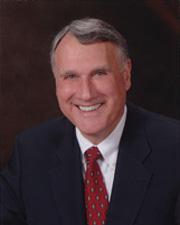 Sen. Jon Kyl (R-AZ)
Legislative Activity
Stay on top of the latest movement without scrolling through every action
Senate amendment submitted
April 22, 2009
View full timeline
Senate amendment submitted
April 22, 2009
Senate amendment proposed (on the floor): Amendment SA 985 proposed by Senator Kyl.(consideration: CR S4539-4540, S4543; text: CR S4539)
April 22, 2009
Senate amendment agreed to: Amendment SA 985 agreed to in Senate by Yea-Nay Vote. 94 - 1. Record Vote Number: 160.
April 22, 2009
Roll call votes on amendments in Senate: Amendment SA 985 agreed to in Senate by Yea-Nay Vote. 94 - 1. Record Vote Number: 160.
April 22, 2009
Amendment SA 985 proposed by Senator Kyl. (consideration: CR S4539-4540, S4543; text: CR S4539) To modify the definition of the term "obligation".
April 22, 2009
Amendment SA 985 agreed to in Senate by Yea-Nay Vote. 94 - 1. Record Vote Number: 160.
April 22, 2009
Votes
1 roll call on this amendment
Text
Proposed
FRAUD ENFORCEMENT AND RECOVERY ACT OF 2009

The PRESIDING OFFICER. Under the previous order, the Senate will
proceed to the consideration of S. 386, which the clerk will report by
title.
The bill clerk read as follows:

A bill (S. 386) to improve enforcement of mortgage fraud,
securities fraud, financial institution fraud, and other
frauds related to federal assistance and relief programs, for
the recovery of funds lost to these frauds, and for other
purposes.

The Senate proceeded to consider the bill, which had been reported
from the Committee on the Judiciary with an amendment to strike all
after the enacting clause and insert in lieu thereof the following:

SECTION 1. SHORT TITLE.

This Act may be cited as the ``Fraud Enforcement and
Recovery Act of 2009'' or ``FERA''.

SEC. 2. AMENDMENTS TO IMPROVE MORTGAGE, SECURITIES, AND
FINANCIAL FRAUD RECOVERY AND ENFORCEMENT.

(a) Definition of Financial Institution Amended To Include
Mortgage Lending Business.--Section 20 of title 18, United
States Code, is amended--
(1) in paragraph (8), by striking ``or'' after the
semicolon;
(2) in paragraph (9), by striking the period and inserting
``; or''; and
(3) by inserting at the end the following:
``(10) a mortgage lending business (as defined in section
27 of this title) or any person or entity that makes in whole
or in part a federally related mortgage loan as defined in 12
U.S.C. 2602(1).''.
(b) Mortgage Lending Business Defined.--
(1) In general.--Chapter 1 of title 18, United States Code,
is amended by inserting after section 26 the following:

``Sec. 27. Mortgage lending business defined.

``In this title, the term `mortgage lending business' means
an organization which finances or refinances any debt secured
by an interest in real estate, including private mortgage
companies and any subsidiaries of such organizations, and
whose activities affect interstate or foreign commerce.''.
(2) Chapter analysis.--The chapter analysis for chapter 1
of title 18, United States Code, is amended by adding at the
end the following:

``27. Mortgage lending business defined.''.

(c) False Statements in Mortgage Applications Amended To
Include False Statements by Mortgage Brokers and Agents of
Mortgage Lending Businesses.--Section 1014 of title 18,
United States Code, is amended by--
(1) striking ``or'' after ``the International Banking Act
of 1978),''; and
(2) inserting after ``section 25(a) of the Federal Reserve
Act'' the following: ``or a mortgage lending business whose
activities affect interstate or foreign commerce, or any
person or entity that makes in whole or in part a federally
related mortgage loan as defined in 12 U.S.C. 2602(1)''.
(d) Major Fraud Against the Government Amended To Include
Economic Relief and Troubled Asset Relief Program Funds.--
Section 1031(a) of title 18, United States Code, is amended
by--
(1) inserting after ``or promises, in'' the following:
``any grant, contract, subcontract, subsidy, loan, guarantee,
insurance or other form of Federal assistance, including
through the Troubled Assets Relief Program, an economic
stimulus, recovery or rescue plan provided by the Government,
or the Government's purchase of any preferred stock in a
company, or''; and
(2) striking ``the contract, subcontract'' and inserting
``such grant, contract, subcontract, subsidy, loan,
guarantee, insurance or other form of Federal assistance,''.
(e) Securities Fraud Amended To Include Fraud Involving
Options and Futures in Commodities.--
(1) In general.--Section 1348 of title 18, United States
Code, is amended--
(A) in the caption, by inserting ``and commodities'' after
``Securities'';
(B) by inserting ``any commodity for future delivery, or
any option on a commodity for future delivery, or'' after
``any person in connection with''; and
(C) by inserting ``any commodity for future delivery, or
any option on a commodity for future delivery, or'' after
``in connection with the purchase or sale of''.
(2) Chapter analysis.--The item for section 1348 in the
chapter analysis for chapter 63 of title 18, United States
Code, is amended by inserting ``and commodities'' after
``Securities''.
(f) Money Laundering Amended To Define Proceeds of
Specified Unlawful Activity.--
(1) Money laundering.--Section 1956(c) of title 18, United
States Code, is amended--
(A) in paragraph (8), by striking the period and inserting
``; and''; and
(B) by inserting at the end the following:
``(9) the term `proceeds' means any property derived from
or obtained or retained, directly or indirectly, through some
form of unlawful activity, including the gross receipts of
such activity.''.
(2) Monetary transactions.--Section 1957(f) of title 18,
United States Code, is amended by striking paragraph (3) and
inserting the following:
``(3) the terms `specified unlawful activity' and
`proceeds' shall have the meaning given those terms in
section 1956 of this title.''.
(g) Making the International Money Laundering Statute Apply
to Tax Evasion.--Section 1956(a)(2)(A) of title 18, United
States Code, is amended by--
(1) inserting ``(i)'' before ``with the intent to
promote''; and
(2) adding at the end the following:
``(ii) with the intent to engage in conduct constituting a
violation of section 7201 or 7206 of the Internal Revenue
Code of 1986; or''.

SEC. 3. ADDITIONAL FUNDING FOR INVESTIGATORS AND PROSECUTORS
FOR MORTGAGE FRAUD, SECURITIES FRAUD, AND OTHER
CASES INVOLVING FEDERAL ECONOMIC ASSISTANCE.

(a) In General.--
(1) Authorization.--There is authorized to be appropriated
to the Attorney General, to remain available until expended,
$165,000,000 for each of the fiscal years 2010 and 2011, for
the purposes of investigations, prosecutions, and civil
proceedings involving Federal assistance programs and
financial institutions, including financial institutions to
which this Act and amendments made by this Act apply.
(2) Allocations.--With respect to fiscal years 2010 and
2011, the amount authorized to be appropriated under
paragraph (1) shall be allocated as follows:
(A) Federal Bureau of Investigation: $75,000,000 for fiscal
year 2010 and $65,000,000 for fiscal year 2011.
(B) The offices of the United States Attorneys:
$50,000,000.
(C) The criminal division of the Department of Justice:
$20,000,000.
(D) The civil division of the Department of Justice:
$15,000,000.
(E) The tax division of the Department of Justice:
$5,000,000.
(b) Additional Appropriations for the Postal Inspection
Service.--There is authorized to be appropriated to the
Postal Inspection Service of the United States Postal
Service, $30,000,000 for each of the fiscal years 2010 and
2011 for investigations involving Federal assistance programs
and financial institutions, including financial institutions
to which this Act and amendments made by this Act apply.
(c) Additional Appropriations for the Inspector General for
the Department of Housing and Urban Development.--There is
authorized to be appropriated to the Inspector General of the
Department of Housing and Urban Development, $30,000,000 for
each of the fiscal years 2010 and 2011 for investigations
involving Federal assistance programs and financial
institutions, including financial institutions to which this
Act and amendments made by this Act apply.
(d) Additional Appropriations for the United States Secret
Service.--There is authorized to be appropriated to the
United States Secret Service of the Department of Homeland
Security, $20,000,000 for each of the fiscal years 2010 and
2011 for investigations involving Federal assistance programs
and financial institutions, including financial institutions
to which this Act and amendments made by this Act apply.
(e) Use of Funds.--The funds authorized to be appropriated
under subsections (a), (b), (c), and (d) shall be limited to
cover the costs of each listed agency or department for
investigating possible criminal, civil, or administrative
violations and for prosecuting criminal, civil, or
administrative proceedings involving financial crimes and
crimes against Federal assistance programs, including
mortgage fraud, securities fraud, financial institution
fraud, and other frauds related to Federal assistance and
relief programs.
(f) Report to Congress.--Following the final expenditure of
all funds appropriated under this section that were
authorized by subsections (a), (b), (c), and (d) the Attorney
General, in consultation with the United States Postal
Inspection Service, the Inspector General for the Department
of Housing and Urban Development, and the Secretary of
Homeland Security, shall submit a joint report to Congress
identifying--
(1) the amounts expended under subsections (a), (b), (c),
and (d) and a certification of compliance with the
requirements listed in subsection (e); and
(2) the amounts recovered as a result of criminal or civil
restitution, fines, penalties, and other monetary recoveries
resulting from criminal, civil, or administrative proceedings
and settlements undertaken with funds authorized by this Act.

SEC. 4. CLARIFICATIONS TO THE FALSE CLAIMS ACT TO REFLECT THE
ORIGINAL INTENT OF THE LAW.

(a) Clarification of the False Claims Act.--Section 3729 of
title 31, United States Code, is amended--
(1) by striking subsection (a) and inserting the following:
``(a) Liability for Certain Acts.--
``(1) In general.--Subject to paragraph (2), any person
who--
``(A) knowingly presents, or causes to be presented, a
false or fraudulent claim for payment or approval;
``(B) knowingly makes, uses, or causes to be made or used,
a false record or statement material to a false or fraudulent
claim;
``(C) conspires to commit a violation of subparagraph (A),
(B), (D), (E), (F), or (G);
``(D) has possession, custody, or control of property or
money used, or to be used, by the Government and knowingly
delivers, or causes to be delivered, less than all of that
money or property;
``(E) is authorized to make or deliver a document
certifying receipt of property used, or to be used, by the
Government and, intending to defraud the Government, makes or
delivers the receipt without completely knowing that the
information on the receipt is true;
``(F) knowingly buys, or receives as a pledge of an
obligation or debt, public property from an officer or
employee of the Government, or a member of the Armed Forces,
who lawfully may not sell or pledge property; or

[[Page S4532]]

``(G) knowingly makes, uses, or causes to be made or used,
a false record or statement material to an obligation to pay
or transmit money or property to the Government, or knowingly
conceals or knowingly and improperly avoids or decreases an
obligation to pay or transmit money or property to the
Government,

is liable to the United States Government for a civil penalty
of not less than $5,000 and not more than $10,000, as
adjusted by the Federal Civil Penalties Inflation Adjustment
Act of 1990 (28 U.S.C. 2461 note; Public Law 104-410), plus 3
times the amount of damages which the Government sustains
because of the act of that person.
``(2) Reduced damages.--If the court finds that--
``(A) the person committing the violation of this
subsection furnished officials of the United States
responsible for investigating false claims violations with
all information known to such person about the violation
within 30 days after the date on which the defendant first
obtained the information;
``(B) such person fully cooperated with any Government
investigation of such violation; and
``(C) at the time such person furnished the United States
with the information about the violation, no criminal
prosecution, civil action, or administrative action had
commenced under this title with respect to such violation,
and the person did not have actual knowledge of the existence
of an investigation into such violation,

the court may assess not less than 2 times the amount of
damages which the Government sustains because of the act of
that person.
``(3) Costs of civil actions.--A person violating this
subsection shall also be liable to the United States
Government for the costs of a civil action brought to recover
any such penalty or damages.'';
(2) by striking subsections (b) and (c) and inserting the
following:
``(b) Definitions.--For purposes of this section--
``(1) the terms `knowing' and `knowingly'--
``(A) mean that a person, with respect to information--
``(i) has actual knowledge of the information;
``(ii) acts in deliberate ignorance of the truth or falsity
of the information; or
``(iii) acts in reckless disregard of the truth or falsity
of the information; and
``(B) require no proof of specific intent to defraud;
``(2) the term `claim'--
``(A) means any request or demand, whether under a contract
or otherwise, for money or property and whether or not the
United States has title to the money or property, that--
``(i) is presented to an officer, employee, or agent of the
United States; or
``(ii) is made to a contractor, grantee, or other
recipient, if the money or property is to be spent or used on
the Government's behalf or to advance a Government program or
interest, and if the United States Government--

``(I) provides or has provided any portion of the money or
property requested or demanded; or
``(II) will reimburse such contractor, grantee, or other
recipient for any portion of the money or property which is
requested or demanded; and

``(B) does not include requests or demands for money or
property that the Government has paid to an individual as
compensation for Federal employment or as an income subsidy
with no restrictions on that individual's use of the money or
property;
``(3) the term `obligation' means a fixed duty, or a
contingent duty arising from an express or implied
contractual, quasi-contractual, grantor-grantee, licensor-
licensee, statutory, fee-based, or similar relationship, and
the retention of any overpayment; and
``(4) the term `material' means having a natural tendency
to influence, or be capable of influencing, the payment or
receipt of money or property.'';
(3) by redesignating subsections (d) and (e) as subsections
(c) and (d), respectively; and
(4) in subsection (c), as redesignated, by striking
``subparagraphs (A) through (C) of subsection (a)'' and
inserting ``subsection (a)(2)''.
(b) Effective Date and Application.--The amendments made by
this section shall take effect on the date of enactment of
this Act and shall apply to conduct on or after the date of
enactment, except that subparagraph (B) of section 3729(a)(1)
of title 31, United States Code, as added by subsection
(a)(1), shall take effect as if enacted on June 7, 2008, and
apply to all claims under the False Claims Act (31 U.S.C.
3729 et seq.) that are pending on or after that date.

Mr. LEAHY. Mr. President, I suggest the absence of a quorum.
The PRESIDING OFFICER. The clerk will call the roll.
The bill clerk proceeded to call the roll.
Mr. LEAHY. Mr. President, I ask unanimous consent that the order for
the quorum call be rescinded.
The PRESIDING OFFICER. Without objection, it is so ordered.
Mr. LEAHY. Mr. President, I understand the distinguished Senator from
Pennsylvania is about to come to the floor. As each of us probably have
times we are going to have to be on and off the floor, I am going to
begin my comments now.
I said Monday at the outset of this debate on the motion to proceed
to the fraud enforcement bill that I hoped the objection to proceeding
and any filibuster effort against this bill would be short lived. I am
glad to see that cooler heads have prevailed. That actually happens in
the Senate now and then.
After being delayed 2 days, we have agreement to turn to the Leahy-
Grassley Fraud Enforcement and Recovery Act. I thank the majority
leader for his persistence. I regret that the weeks we spent reaching
across the aisle for a time agreement on this bill were unavailing. The
majority leader was required to file cloture to get us to this point.
We are talking about going after people who defrauded American
taxpayers, and the sooner we can go after them, the better we all are.
I commend Senators Grassley and Kaufman, Klobuchar, Dorgan, and Shaheen
for their statements to the Senate on Monday in support of this fraud
enforcement bill. Their strong statements no doubt contributed to the
reversal of the position that now allows us to proceed to what is a
bipartisan fraud enforcement bill. In total, six Senators spoke in
favor of the bill on Monday and no one spoke against. Each of us who
spoke on Monday is a cosponsor. The bipartisan group of 16 Senators who
have cosponsored this bill include, Senators Schumer, Murray, Bayh,
Specter, Snowe, Harkin, Levin, Whitehouse, Rockefeller, and Sanders.
On Monday, as the Senate debated the motion to proceed to the Leahy-
Grassley fraud enforcement bill, the Obama administration issued a
Statement of Administration Policy on the bill.
I ask unanimous consent to have a copy of the Statement of
Administration Policy printed in the Record at the conclusion of my
statement.
The PRESIDING OFFICER. Without objection, it is so ordered.
(See exhibit 1.)
Mr. LEAHY. This statement begins:

The Administration strongly supports enactment of S. 386.
Its provisions would provide Federal investigators and
prosecutors with significant new criminal and civil tools and
resources that would assist in holding accountable those who
have committed financial fraud.

I thank the President and the administration for their strong
support.
The statement continues:

[The] legislation would benefit U.S. taxpayers by both
addressing existing fraud and deterring waste, fraud and
abuse of public funds.

That is something we all should be in favor of. They went on to add
that it ``would provide needed resources to strained law enforcement
agencies.'' Of course, pointing out what we all know, these additional
resources will far more than pay for themselves through fines and
penalties, restitution, damages, and forfeitures.
But there is more of a human thing in here. We have families losing
their homes, defrauded, and losing their life savings. People are
defrauding them and getting away with it. I want to not only get the
people who did it, but I want to deter others from doing it in the
future.
I said on Monday that the Justice Department and the FBI, the Secret
Service, the special inspector general for TARP, law enforcement
officers, and many good-government advocates supported the bill.
As we continue our debate, I ask unanimous consent to have printed in
the Record at the conclusion of my statement a number of editorials and
news articles favorable to the legislation.
The PRESIDING OFFICER. Without objection, it is so ordered.
(See exhibit 2.)
Mr. LEAHY. Just this weekend, the New York Times wrote that fraud
enforcement must be one of our priorities as we rebuild our economy,
not only to hold accountable those who committed fraud and contributed
to these hard times but to protect our efforts to stabilize the banking
system and to jump-start the economy. They wrote:

While Washington is spending billions to shore up the
financial system, it is doing far too little to strengthen
the federal government's ability to investigate and prosecute
the sort of corporate and mortgage frauds that helped cause
the economic collapse.
Those efforts--never fully adequate--have suffered in
recent years as money and people were shifted from white-
collar fraud to anti-terrorist activities.

That is precisely what law enforcement officials from the Justice
Department and the FBI and the special inspector general for the
Troubled Asset Relief Program told us in their testimony before the
Judiciary Committee.

[[Page S4533]]

As the Times wrote, referring to the Fraud Enforcement and Recovery
Act:

A bipartisan measure newly approved by the Senate Judiciary
Committee and now coming before the full Senate would begin
to close the enforcement gap . . . and strengthen existing
federal fraud and money-laundering provisions, updating the
definition of ``financial institution'' in federal fraud
statutes to include largely unregulated mortgage businesses,
for example, and reversing flawed court decisions that have
undermined the effectiveness of the False Claims Act, one of
the most potent weapons against government fraud.
Like a similar enforcement buildup in response to the
savings and loan crises of the 1980s, this one will
contribute far more than it costs to the federal Treasury
through restitutions and asset recoveries. . . .Senators
should not be asking if the expenditure is affordable, but
whether it is enough.

Every prosecutor I have talked to says they need this. I am willing
to bet that every person who has been defrauded by some of these
unregulated mortgage companies would give anything to have had this on
the books and these people there 6 months or a year ago before they
lost their life savings, before they lost their homes, their chance for
their children to go to college, and before they lost the chance for
retirement. But there are still millions of Americans at risk. Let's
protect them. Let's show that we are against such crime and that we
will provide the tools to stop it.
One of the things every prosecutor knows and learns is, if you ask
people if they are against crime, everybody is against crime. If you
ask legislative bodies: Are you willing to pass resolutions against
crime, of course they are. But then you ask the real question: Will you
give us the tools to fight crime? That is where everybody goes: Well,
let's see.
Here are the tools to fight crime.
This is something supported across the political spectrum. Look at
the Washington Times, a very conservative newspaper. They raised very
similar concerns about the need to fight fraud and protect the
taxpayers' money being spent on the economic stimulus. In an editorial
on March 26 entitled ``Stimulus Spending Ripe for Fraud,'' the
Washington Times called for fraud enforcement. In commenting on an
Energy Department official who was concerned with waste, fraud, and
abuse in stimulus funding, they wrote:

The same attitude must be adopted by all agencies
overseeing the implementation of the massive spending
measure.

Well, they are right. They went on to say that simply having a Web
site to provide greater transparency, while a good thing, is not
enough. They said:

[E]ven an unprecedented level of post-spending transparency
will do only so much to ensure waste is kept to a minimum. .
. . It will take more than a new Web site and the sort of
staff training the administration has implemented to turn an
understanding of the problem into real accountability. . . .

The administration is, in fact, doing more than creating the most
transparent Government in history. They are supporting this bill and
its aggressive response to fraud enforcement. The bill will actually
translate rhetoric into reality, a reality that can save billions. It
is just the kind of action these editorials from the right to the left
have asked for.
Look at a front page article of March 12, entitled ``Financial Fraud
Is the Focus of Prosecutors.'' The New York Times reported that fraud
was surging, particularly mortgage fraud cases.
It is very interesting. We talk about tough enforcement. The chairman
of the House Banking Committee said, ``Rules don't work if people have
no fear of them.'' Anybody in law enforcement can tell us that. Every
State has laws against burglary, for example. But put two warehouses on
the same street, one with a rusty lock on the door and no alarm system,
no lights, one with a state-of-the-art alarm system, lights, the
ability to call police immediately, and which one gets broken into? The
law is the same. You are going to break into the one that is easy. You
can have all the laws in the world on mortgage fraud, and if people
think they are not going to be enforced, they are going to break those
laws. If you believe the worst that will happen is you might get a
fine, if you have a $100 million fraud operation going and you might
get a $5 million fine, gee-whiz, that is the cost of doing business. If
you find out, however, that you might go to prison, that in all
likelihood you will go to prison as well as losing the money you
defrauded from people and allow that money to go back to them, then you
are going to think twice.
Neil Barofsky, the special inspector general for the Troubled Assets
Relief Program, issued a 250-page report warning yet again that the
bank bailout funds are particularly vulnerable to fraud. He talked
about protecting American taxpayers. He testified about similar
concerns when he appeared before the Judiciary Committee in support of
the bill.
Strengthening fraud enforcement is a key priority for the President.
During the campaign, President Obama promised to ``crack down on
mortgage fraud professionals found guilty of fraud by increasing
enforcement [but also] creating new criminal penalties.'' The
President, in his budget to Congress, called for additional FBI agents
``to investigate mortgage fraud and white collar crime,'' as well as
hiring more Federal prosecutors and civil attorneys ``to protect
investors, the market, and the Federal Government's investment of
resources in the financial crisis, and the American public.''
Additional money was included in the initial recovery package for the
FBI, but it was cut out during negotiations that led to its passage.
This bill is our chance to authorize the necessary resources.
I can't state enough, it is not enough to have a law on the books
that says: Thou shalt not commit crime. It works only if people think
they are going to get caught and they are going to lose the money they
have stolen and they are going to go to jail on top of that. As long as
people carrying out these frauds and these scams think they will never
get caught, will never get prosecuted, the laws aren't tough enough,
they are in an unregulated industry, nobody is going to go after them,
why not keep trying. The worst that could happen is somewhere along the
line you might have to give a little bit of the money back and keep
scamming people, keep ruining people's lives, keep taking people's
homes away from them, keep taking people's retirement accounts, keep
taking the money they have saved for their kids to go to college. If
all you think you might get is a little slap on the wrist or in all
likelihood you will get away with it completely, what is to stop you?
Obviously not a sense of morality, as we saw with Bernie Madoff and
others. We have to have laws to stop them. We have to have enforcement
of the laws. We have to have people go to prison for stealing
retirement accounts and stealing children's money being saved for
college and stealing homes through mortgages scams. We should pass
this.
I see the distinguished Senator from Pennsylvania in the Chamber. He
is a man with a distinguished career, first as a prosecutor before he
came here and now a man who has been both chairman and ranking member
of the Senate Judiciary Committee. He understands this.
I yield the floor.

Exhibit 1

Statement of Administration Policy

S. 386--FRAUD ENFORCEMENT AND RECOVERY ACT OF 2009

(Sen. Leahy (D) Vermont and 4 cosponsors, Apr. 20, 2009)

The Administration strongly supports enactment of S. 386.
Its provisions would provide Federal investigators and
prosecutors with significant new criminal and civil tools and
resources that would assist in holding accountable those who
have committed financial fraud.
Specifically, the legislative enhancements would help the
Department of Justice to combat mortgage fraud, securities
and commodities fraud, money laundering and related offenses,
and to protect taxpayer money that has been expended on
recent economic stimulus and rescue packages. Further, the
legislation would amend the False Claims Act (FCA) in several
important respects so that the FCA remains a potent and
useful weapon against the misuse of taxpayer funds. In
general, this legislation would benefit U.S. taxpayers by
both addressing existing fraud and deterring waste, fraud,
and abuse of public funds. Moreover, S. 386 would provide
needed resources to strained law enforcement agencies and
prosecutors that would enable the Department and its partners
to advance the pace and reach of the enforcement response to
the current economic crisis. These additional resources will
provide a return on investment through additional fines,
penalties, restitution, damages, and forfeitures. With the
tools and resources that S. 386 provides, the Department of
Justice and others would be better equipped to address the
challenges that face this Nation in difficult economic times
and to do their part to help the Nation respond to this
challenge.

[[Page S4534]]

Exhibit 2

[From the New York Times, Apr. 18, 2009]

Fraud Factor

While Washington is spending billions to shore up the
financial system, it is doing far too little to strengthen
the federal government's ability to investigate and prosecute
the sort of corporate and mortgage frauds that helped cause
the economic collapse.
Those efforts--never fully adequate--have suffered in
recent years as money and people were shifted from white-
collar fraud to anti-terrorist activities. Over time, the
ranks of fraud investigators and prosecutors were
dramatically thinned, leaving the F.B.I. and the larger
Justice Department ill prepared to keep pace with a
skyrocketing number of serious fraud allegations. Now they
are ill equipped to police the vast infusion of federal money
into the economy.
A bipartisan measure newly approved by the Senate Judiciary
Committee and now coming before the full Senate would begin
to close the enforcement gap.
Sponsored by Senators Patrick Leahy of Vermont and Edward
Kaufman of Delaware, both Democrats, and Senator Charles
Grassley, Republican of Iowa, the Fraud Enforcement and
Recovery Act of 2009 would significantly expand the number of
prosecutors, agents and analysts devoted to pursuing
financial crimes.
It would strengthen existing federal fraud and money-
laundering provisions, updating the definition of ``financial
institution'' in federal fraud statutes to include largely
unregulated mortgage businesses, for example, and reversing
flawed court decisions that have undermined the effectiveness
of the False Claims Act, one of the most potent weapons
against government fraud.
The measure envisions spending $490 million over the next
two fiscal years. Like a similar enforcement buildup in
response to the savings and loan crisis of the 1980s, this
one will contribute far more than it costs to the federal
Treasury through restitutions and asset recoveries, according
to the Congressional Budget Office forecast. Senators should
not be asking if the expenditure is affordable, but whether
it is enough.
____

[From the Washington Times, Mar. 26, 2009]

Stimulus Spending Remains Ripe for Fraud

The many billions shoveled to the Energy Department as part
of the $787 billion stimulus package recently signed into law
may provide a cautionary tale about potential abuse, judging
from a recent Energy Inspector General's warning.
As if on cue, FBI Director Robert Mueller told Congress
yesterday that he, too, expects a surge in stimulus-related
fraud. ``Our expectation is that economic crimes will
continue to skyrocket,'' he said. ``. . . The unprecedented
level of financial resources committed by the federal
government . . . will lead to an inevitable increase in
economic crime and public corruption cases.''
Undaunted, President Obama earlier this week continued his
intense promotion of the stimulus package, ignoring the great
potential for significant fraud as federal agencies rush to
dispense the money. He hyped the $59 billion for clean energy
and related tax incentives in the stimulus bill as a down
payment on an additional $150 billion in Energy Department
spending in his 2010 budget. He didn't seem to get the recent
warnings from Energy Inspector General Gregory Friedman about
the high probability for fraud and waste in distributing
stimulus dollars, which call into question the agency's
ability to even distribute the stimulus money effectively.
Most importantly, Friedman, a Clinton-era appointee,
highlighted the need for a level of proactive accountability
historically absent in the federal bureaucracy. As reported
by Congress Daily, Friedman's memo last week to Energy
Secretary Steven Chu and other department officials argues
that the massive increase in funding going through the agency
will strain and fundamentally change the agency's mission
while creating the potential for rampant abuse. The stimulus
provides the agency over $38 billion in funding along with
authority over energy loans totaling $127 billion, spending
that dwarfs the $27 billion provided in the agency's 2009
budget.
Friedman reportedly notes that during regular agency
operations misuse of funds, falsification of data, kickbacks,
bribes and other forms of fraud happen with ``troubling''
frequency. He also argues, correctly, that anti-corruption
oversight should be a priority. Friedman's laudable honesty
exposes both the unintended consequences inherent in the
quickly passed package and the daunting task faced.
The same attitude must be adopted by all agencies
overseeing the implementation of the massive spending
measure. What is true, or likely, at Energy is very likely
true or likely at other departments and agencies as well.
Exhibit ``A'' is the continued lax oversight and lack of
transparency seen with the Treasury Department's handing of
the banking industry bailout. The White House is yet to be
convincing that it is adequately addressing the potential of
a major waste of taxpayer funds.
Recovery Accountability and Transparency Board chairman
Earl Devaney, who is functionally the chief auditor of the
stimulus package, told a House panel last week that some
fraud is inevitable. But he also expressed horror that
accounting industry standards for fraud acceptability is 7
percent, or $55 billion in taxpayer money. Devaney, who
has a reputation for vigilance, promised a zero tolerance
approach. That is very good to hear.
With over 40 states launching websites intended to track
stimulus spending, Devaney's board will oversee the Web site
Recovery.gov, aimed at maintaining public access to the Fed's
spending records. The board aims to change the fact that the
federal government has never been particularly successful in
the timely and reliable tracking of spending data.
But even an unprecedented level of post-spending
transparency will only do so much to ensure waste is kept to
a minimum. Perusing the data online only comes after the
fact. It will take more than a new Web site and the sort of
staff training the administration has implemented to turn an
understanding of the problem into real accountability.
While some degree of waste is almost inevitable from any
government endeavor, the degree must not reach the level of
finding 7 percent fraud--$55 billion in the case of the
entire package--an acceptable figure. The White House is
saying the right thing by indicating zero is the goal, not
$55 billion. We can only hope their rhetoric translates into
additional action that defies history and saves billions.
____

[From the New York Times, Mar. 12, 2009]

Financial Fraud Is Focus of Attack by Prosecutors

(By David Segal)

Spurred by rising public anger, federal and state
investigators are preparing for a surge of prosecutions of
financial fraud.
Across the country, attorneys general have already begun
indicting dozens of loan processors, mortgage brokers and
bank officers. Last week alone, there were guilty pleas in
Minnesota, Delaware, North Carolina and Connecticut and
sentences in Florida and Vermont--all stemming from home loan
scams.
With the Obama administration focused on stabilizing the
banks and restoring confidence in the stock market, it has
said little about federal civil or criminal charges. But its
proposed budget contains hints that it will add to this
weight of litigation, including money for more F.B.I. agents
to investigate mortgage fraud and white-collar crime, and a
13 percent raise for the Securities and Exchange Commission.
Officials at the Justice Department have not said much in
public about their plans. But people who have met with
Attorney General Eric H. Holder Jr. say he is weighing a
range of strategies.
``It's clear that he and other top-level members of the
Obama administration want to seize the opportunity to send a
message of zero tolerance for mortgage fraud,'' said
Connecticut's attorney general, Richard Blumenthal, who
attended a meeting with Mr. Holder and other state attorneys
general last week in Washington. ``The only question is when
and how they will do it.''
One person who had discussed the matter with Mr. Holder,
but declined to be identified because he was not authorized
to speak for the Justice Department, said that the attorney
general was deciding whether to form a task force to
centralize the effort or allow state attorneys general to
develop cases on their own.
A Justice Department spokesman, Matthew A. Miller, would
not comment, other than to write by e-mail, ``It will be a
top priority of the Justice Department to hold accountable
executives who have engaged in fraudulent activities.''
At the low end of the mortgage transaction ladder, state
prosecutors have had a relatively easy time prevailing, but
recent history suggests that the government's odds of winning
drop when they go after Wall Street executives. Some high-
profile convictions have been won in the last decade, but
several of the Enron-related prosecutions and some cases
brought by Eliot Spitzer when he was New York's attorney
general fell apart or were overturned on appeal.
As federal authorities decide on a course of action,
Congress is becoming impatient. Representative Barney Frank,
chairman of the House Financial Services Committee, announced
plans last week for a hearing on March 20, inviting Mr.
Holder, bank regulators and leaders of the S.E.C. to answer
questions about their enforcement plans.
``Rules don't work if people have no fear of them,'' Mr.
Frank, Democrat of Massachusetts, said. State and local
prosecutors, it seems, do not need the nudge. Last week, the
district attorney's office in Brooklyn announced the creation
of a real estate fraud unit, with 12 employees and a mandate
to ``address the recent flood of mortgage fraud cases
plaguing New Yorkers.'' In late February, Maryland unveiled a
mortgage fraud task force, bringing together 17 agencies to
streamline investigations.
With all the state activity and portents of a new resolve
at the federal level, lawyers who defend white-collar clients
sense growing momentum to perp walk and prosecute executives
involved in the mortgage crisis.
``It's going to be open season,'' says Daniel M.
Petrocelli, a lawyer whose clients include Jeffrey K.
Skilling, the former chief executive of Enron. ``You'll see a
lot of indictments down the road, and you'll see a lot of
prosecutions that rely on vague theories of `deprivation of
honest services.' ''
Many financial executives have hired lawyers in the last
few months, either through

[[Page S4535]]

internal counsels or, more discreetly, on their own, several
lawyers who defend white-collar clients said.
While assorted Wall Street executives have been prosecuted
over the years, any concerted legal attack on the financial
sector would have little precedent. After the Depression,
Congress formed what became known as the Pecora Commission,
which grilled top financiers. But the point was mostly to
embarrass them, and the upshot was to set the stage for
stricter regulations. The most indelible image of the
commission's hearings was a photo of J.P. Morgan Jr. with a
midget who had been plopped in his lap by an opportunistic
publicist.
The question behind any cases brought against Wall Street
will boil down to this: Was the worst economic crisis in
decades caused by law-breaking or some terrible, but
noncriminal, mix of greed, naivete and blunders? The
challenge for the Obama administration will be to prove that
it was the former, said Michael F. Buchanan, a partner at
Jenner & Block and a former United States attorney in New
Jersey.
``We punish people for intentional misconduct, we don't
punish them for stupidity or innocent mistakes,'' he said.
``If you're a prosecutor, you want evidence that shows real
dishonesty. You want something that shows that these people
were doing something wrong, and they knew it.''
That nearly all of the banking industry acted the same,
possibly reckless, way could actually help any executive who
lands in court, lawyers said. The herdlike behavior suggested
that bankers were competing for business using widely shared
assumptions, rather than trying to get away with a crime. It
would be hard to prove that anyone broke the rules, these
lawyers said, since regulations in the riskiest parts of the
mortgage industry were so lax.
One defense lawyer said he expected to argue that either
his clients did not understand the financial instruments they
were marketing, or were not warned of the dangers by
underlings.
``We'll all sing the stupidity song,'' said the lawyer, who
said he feared that speaking publicly by name would deter
potential clients. ``We'll all sing the `These guys never
told me' song.''
But for government lawyers, the environment for corporate
fraud cases could scarcely be more inviting. It is not just
that the public's zeal for Wall Street pelts is high. The
resources are there, too, because some of the money once used
to fight terrorism is being shifted to fighting financial
fraud. And in recent years the use of wire fraud statutes has
expanded, allowing prosecutors to turn virtually anything
said or sent by e-mail in private into a federal crime, if it
contradicts what investors were told in public disclosures.
Wire fraud charges were among those against two former Bear
Stearns managers who were arrested in June, accused of
praising their hedge fund to clients as they worried about it
to colleagues. Federal sentencing guidelines also link the
length of a prison term to the size of the financial loss to
the public. Given that so many billions have vaporized
recently, convictions could easily lead to life sentences,
defense lawyers said, and the mere threat of such sentences
gives prosecutors enormous leverage in settlement talks.
``There are executives now getting sentences longer than
murderers and rapists,'' said Mr. Petrocelli, the lawyer,
referring to white-collar prosecutions in recent years,
including that of Mr. Skilling of Enron, who is now serving a
24-year sentence for securities fraud and other crimes.
Why has there not been a batch of subpoenas at the federal
level already? The Department of Justice is missing important
staff members, says Reid H. Weingarten, a defense lawyer and
former trial lawyer for the Justice Department. Former
members of the Justice Department say that prosecutors and
regulators are reluctant to act while the markets are in such
disarray for fear of further unnerving investors and the
public.
Lawyers for white-collar clients say they expect to be
busy, but not all of them predict that means they will be
earning huge fees. In the past, the legal bills of Wall
Street higher-ups were paid by insurers that indemnified
them. But that is not necessarily the case with banks that
have gone bankrupt or disappeared.
``I know bankers are not now evoking much sympathy from the
public at large,'' Mr. Weingarten said. ``But these days many
Wall Street types are struggling mightily with mortgage
payments, tuition bills and health insurance. It's a very
different world out there now.''

The PRESIDING OFFICER. The Senator from Pennsylvania.
Mr. SPECTER. Mr. President, I have sought recognition to comment on
the Fraud Enforcement Recovery Act, the legislation which is currently
on the floor. Before the distinguished chairman leaves the Chamber, if
I could have his attention, I agree with him about the importance of
having strong law enforcement on crimes involving business fraud and on
white-collar crimes. We are dealing with a financial situation where
there are billions of dollars at stake, if not trillions. It is hard to
know exactly how many zeros to add on. We are faced with a very
desperate--strong word but understated if anything--challenge as to
what to do with the economy worldwide. We had a $700 billion program
proposed by President Bush for companies in trouble and a twin brother
proposed by President Obama, $787 billion.
As I travel through my State, all I hear are questions. I don't hear
any commendations. The Congress is not exactly held in high esteem. And
the questions are: Why are we bailing out companies which made bad
business judgments? If somebody makes a bad business judgment, why
shouldn't they sustain the loss instead of coming to the taxpayers for
a bailout?

You have these fancy Wall Street instruments. What is a derivative?
Then there is the explanation about how no longer do you have mortgages
with simply a home buyer and a banker, but you have all of these
commercial papers lumped together and securitized. I do not know how
long the word ``securitized'' has been in the dictionary. In fact, I am
not sure it is in the dictionary, and most Americans are trying to find
out what it means.
You slice them up, and they are securitized, and they are sold around
the world. Much of the time, they are filled with misrepresentations to
the extent that they become fraud. Fraud is a crime, and you have
prosecutions which are brought which involve extraordinary sums of
money, and then there is a fine which looks big in the newspapers but
not when compared to what has been involved. It is a license to do
business or, perhaps more accurately, a license to steal. But if you
have criminal prosecutions and you have jail sentences, that is
meaningful.
Mr. President, may I direct a question to the distinguished chairman.
I say to the Senator, I believe you were a prosecuting attorney in
Vermont. What experience did the Senator have on the difference between
a fine and a tough jail sentence?
Mr. LEAHY. Well, Mr. President, I suspect my experience is probably
similar to that of the distinguished Senator from Pennsylvania. Fines,
especially in these commercial fraud type things, were seen as the cost
of doing business. If you steal $100 million, and you get a $5 million
fine, then you stole $95 million. But if they think they are going to
go to prison, that is when they think twice. We saw this after Enron
and other things that when people actually believe they are going to go
to prison, then they start thinking twice.
I am sure this was the experience the Senator from Pennsylvania had.
It is the experience I had. Nothing focuses the attention of somebody
who is going to want to defraud someone if they think they are going to
spend years in a tiny cell. That focuses their attention, and suddenly
it is not worth the effort. That is what we want to do here because the
people who are being defrauded are the most defenseless. They are the
people who have lost their retirement. They are the people who have
lost their homes. They are the people who have lost the ability to pay
for their kids to go to college.
The Senator from Pennsylvania is absolutely right.
(Mrs. GILLIBRAND assumed the chair.)
Mr. SPECTER. Madam President, may the Record show the Presiding
Officer has changed while I was looking at Senator Leahy. I concur with
what Prosecutor Leahy said. It bears out the experience I had when I
was a prosecuting attorney myself: that jail sentences are important in
the way to deal with this kind of crime.
When I have been questioned by my constituents on my travels through
Pennsylvania about who is going to be held accountable, and I tell them
that the prospects for jail sentences are real, they are somewhat
assuaged.
Madam President, I note the distinguished Republican leader has come
to the floor. If I may have his attention and make an inquiry. If he
cares to take precedence--he is busier than I am, although I am very
busy--I would be glad to yield to Senator McConnell.
Mr. McCONNELL. Madam President, I was not seeking the floor. I was
going to talk to the Senator from Pennsylvania when he finishes his
remarks. So I am not seeking recognition.
Mr. SPECTER. Well, I thank Senator McConnell for those comments.
The statute which is on the floor--the bill which is on the floor,
proposed statute--is a very important legislative

[[Page S4536]]

piece. It will strengthen law enforcement being directed against
precisely the kinds of white-collar crime we are talking about.
The bill authorizes $165 million a year for hiring fraud prosecutors
in the Department of Justice, including $75 million for the FBI to
bring on 190 additional special agents and more than 200 professional
staff. The bill includes $50 million a year for the U.S. Attorneys'
Offices to staff those strike forces. The bill authorizes $80 million a
year over the next 2 years for the U.S. Postal Inspection Service, the
Inspector General, the Secret Service, and the office of Housing and
Urban Development.
It amends the definition of ``financial institution'' to extend
Federal fraud laws to mortgage lending businesses that are not directly
regulated or insured by the Federal Government. These companies were
responsible for nearly half of the residential mortgage market before
the economic collapse, yet they remain today largely unregulated and
outside the scope of traditional Federal fraud statutes. This bill will
correct that.
It amends the major fraud statute to protect funds expended under
TARP, the Troubled Asset Relief Program, and the economic stimulus
package. So we are providing criminal sanctions for the people who are
going to misuse the moneys which have been appropriated in the past
year.
It amends the Federal securities crime statute to cover fraud schemes
involving commodities futures and options, including derivatives
involving the mortgage-backed securities that caused such damage to our
banking system.
It also amends the Federal money laundering statutes to cover not
only profits but proceeds. The Supreme Court interpreted the statutes
so narrowly that it needs modification. And there were also judicial
interpretations of the False Claims Act which this legislation will
correct.
So this is a very important bill. That is a very short statement of
the bill and its purpose. It is my hope anyone who has amendments would
come to the floor to offer them. I believe this is a bill which will
get very widespread support in the Senate. We have a great many
important legislative matters behind it, so it would be my hope we
could move this bill through expeditiously, giving people an
opportunity to offer amendments if they have some. We would be looking
for a time agreement as soon as we could construct one. So I urge my
colleagues to come to the floor to help on this process.
I yield the floor.
The PRESIDING OFFICER. The Senator from Delaware.
Mr. KAUFMAN. Madam President, I want to say, the Senator from
Pennsylvania is someone who, when I was growing up in Philadelphia, was
the district attorney there and known to be a tough and good
prosecutor. So having Senator Specter speak to this bill says a lot
about the bill and about the underpinnings of it.
I want to make a few comments. This bill is important. The American
people are upset and outraged with the abuses that have rocked the
financial sector, and which has especially put so many Americans into
dire financial straits.
It is a good bill, plain and simple. I wish to run through some of
the reasons why I think this bill is important and why I think it is
one of the easiest votes a Member will make in this session of the
Congress.
First, this bill is a critical step to restoring investor confidence
in the financial markets by assuring the public that criminal behavior
by unscrupulous mortgage brokers and corrupt financiers will be
prosecuted and punished.
When I travel around and talk to people, they feel no one is paying a
price for this--except the hard-working people out around America who
have been hit so hard by this financial crisis. They do not feel as
though the people on Wall Street, the people who did this, the people
involved and the mortgage brokers are paying a price. Therefore, very
importantly, they do not feel it is time to get back into the markets.
They are concerned the markets are not fair and the markets are not on
the up and up.
So what we are going to do with this legislation is assure the public
that criminal behavior by unscrupulous mortgage brokers and corrupt
financiers will be prosecuted and punished.
Second, this bill is a deterrent. Prosecuting white-collar crime
today sends a message to those who would be tempted to cheat and
defraud again. I do not want to be a party to the fact that 5, 10, 15,
20 years from now people will be ready to make a financial deal and
someone will say: This is breaking the law. We are doing something here
that is against the law. And someone else will say: Well, they did that
back in 2007, 2008, 2009, and no one ever was prosecuted for it. These
are very complicated financial dealings. If we do this, we are going to
be just fine because, remember, nobody went to jail for what happened.
Frankly, if we do not add more FBI agents, more prosecutors, and more
financial training, that is exactly what could happen.
Third, this bill rebalances law enforcement resources. If you go back
to September 11, many Federal agents were rightly redeployed from
criminal work to counterterrorism. Counterterrorism was the key thing.
We had to do something about this. We had to find the people who
perpetrated 9/11. We had to find the people who could think about doing
us harm in the future. So, rightfully, we moved FBI agents away from
financial fraud and on to counterterrorism. But the problem is, we
never replaced those agents.
In 2008, we had less financial fraud cases brought than we had in
2001. It is incredible to believe that in this environment we had less
criminal cases brought in 2008 than in 2001. So what we have to do is
rebalance law enforcement resources. That is what this bill does. It
allows us to get more Federal agents, more prosecutors, and more
training back to where it was before.
We have about 240 FBI agents now working on financial fraud. At the
height of the savings and loan crisis, we had over 1,000. So we want to
get back to that level. We want to get the FBI agents back, get them
the training they need, and get the prosecutors and the training they
need. So this is a wonderful way to rebalance law enforcement
resources.
Fourth, this bill helps ensure that sophisticated criminals cannot
cover their tracks and escape liability. Unless we get more agents
working on these cases soon, the trails may go cold.
I know many people in America watch ``Law & Order.'' They know if you
do not catch a criminal usually within the first 24 hours, it is very
difficult to ever catch them. I think in this case that is what is
going on here. This is one of the reasons why we have to pass this
bill, and pass this bill soon. Because when you have these complicated
financial cases, the sooner you get to the case--before people can
cover their tracks, before people can go back and clean up what they
have done--the better. We need the FBI agents on the job gathering the
data and gathering the information.
Another point is, this bill modernizes several areas of Federal fraud
law. Among other things, it updates the definition of ``financial
institution'' to cover mortgage lending businesses that are not
directly regulated or insured by the Federal Government.
Remember, much of the things that went on, much of our problem had to
do with the mortgage lending business. The fact is, people went out and
searched for and had people take out mortgages, many of whom were not
qualified to have the mortgages; then they bundled up the mortgages and
securitized them and then went off and sold them. In this area, there
is enough anecdotal evidence to indicate there was some kind of fraud
going on with this.

What this bill does is it makes financial fraud--it moves the
mortgage lending businesses under the definition of ``financial
institution'' so we can go after these folks.
Sixth, this bill is money well spent. Taxpayers have paid billions
for bailouts. We should spend the millions it would take to find and
prosecute all those who should be in jail. Again, taxpayers have paid
billions in bailouts. No American whom I talk to--no American in my
home State of Delaware--can understand why we would not spend the money
we need to spend to prosecute these people for the crimes they have
committed. It sends the wrong signal to the American people if, in
fact, we do not get these folks

[[Page S4537]]

and if we do not take the money and prosecute all those who were
involved in this financial fraud.
Next, this bill is an investment. This is easy. As I said, this is
the easiest vote anyone will cast in this session of Congress. History
tells us funds spent on fraud enforcement net money for the Government
at a rate of $15 recovered for every dollar spent. I have heard from
some people concerned about spending this money. I think I have gone
through the points on why we should spend the money, but if you are
fiscally and financially conservative and if you basically believe
there is nothing the Federal Government should spend money on, there is
one thing that even you will agree with, and that is spending $1 to get
back $15. That is the most fiscally conservative program that has ever
been invented in the history of the Federal Government. We have a
program where we will have to spend some money, but we know we are
going to get the money back but many times over.
Finally, and I think most importantly, this bill will make it clear
to all Americans that we hold Wall Street to the same standards as Main
Street. We have to have people believe--it is essential to our system--
that if you break the law, you will suffer the consequences. Keep in
mind that many banks and mortgage brokers avoided the subprime market
and acted responsibly. Respect for the rule of law demands that we
identify, investigate, and punish those who self-dealt millions of
dollars to line their own pockets while leaving investors in the dark.
However, we have to be careful about whom we are trying and whom we are
prosecuting. This is not a witch hunt. We are not out to get everybody
and nail everybody in this business, but we need the FBI agents and the
prosecutors to make sure we get the right people and that they are
prosecuted to the full extent of the law.
I think the American people--I know the American people--are looking
for swift action to restore faith in our financial markets and the rule
of law. This bill is a great opportunity to do that.
I suggest the absence of a quorum.
The PRESIDING OFFICER. The clerk will call the roll.
The assistant legislative clerk proceeded to call the roll.
Mr. KAUFMAN. Madam President, I ask unanimous consent that the order
for the quorum call be rescinded.
The PRESIDING OFFICER. Without objection, it is so ordered.
Mr. KAUFMAN. Madam President, I ask unanimous consent to speak as in
morning business for 6 minutes for the purpose of introducing a bill.
The PRESIDING OFFICER. Without objection, it is so ordered.
The Senator from Delaware is recognized.
Mr. KAUFMAN. I thank the Chair.
(The remarks of Mr. Kaufman pertaining to the introduction of S. 853
are printed in today's Record under ``Statements on Introduced Bills
and Joint Resolutions.'')
Mr. KAUFMAN. Madam President, I note the absence of a quorum.
The PRESIDING OFFICER. The clerk will call the roll.
The assistant legislative clerk proceeded to call the roll.
Mrs. GILLIBRAND. Mr. President, I ask unanimous consent that the
order for the quorum call be rescinded.
The PRESIDING OFFICER (Mr. Kaufman). Without objection, it is so
ordered.

Earth Day

Mrs. GILLIBRAND. Mr. President, in honor of Earth Day, I want to
share with you some of the experiences I had this week when I was in
New York. I met with a number of students from the New York Harbor
School. Robert Kennedy, Jr., joined me. We were celebrating the
achievements and efforts this school has made to make a difference for
our future. The school is focusing on teaching the next generation
about the environment and offering an environmental education so that
we can create the stewards of our air and water into the next
generation.
I was pleased to stand with Bobby Kennedy and these outstanding young
people to discuss the importance of progressive environmental policy. I
will partner with them and be a strong advocate for a greener New York
and country.
What was so exciting about these children is that they were telling
me about the work they were doing to ensure a cleaner Hudson River,
what they were doing to make sure we can have a cleaner environment and
air. Their curiosity was extremely compelling and inspiring. We talked
about how the work they were doing would allow for their communities to
be safer, to be able to have a clean Hudson River so they can eat fish
out of it someday, and to have air that is cleaner. They really did
understand the relationship between the communities around them and
what they could do to have an impact in the future.
I met with Murray Fisher, the founder of the New York Harbor School.
I met with him in Washington, and then I talked with him and his
students in New York. The Harbor School brings innovative environmental
and maritime-focused learning to the Bushwick neighborhood of
Brooklyn--taking graduation rates from 20 percent, before their program
began, to 75 percent this year. The student body of the school
represents the most at-risk young people--80 percent come from
households that are actually under the poverty line.
The skills these children have been learning--measuring water quality
and studying aquaculture--will enable them to be part of a green
future, part of the energy revolution. It was inspiring not only to see
young people so engaged and enthusiastic about environmental education
but realizing in speaking with them that they now understand what it
takes to have a cleaner New York and the impact it can have in their
own lives. I asked a young girl what she hoped to do when she
graduated. She said she wants to be a marine biologist. I asked a young
man if this is something he thought could make a difference. He said: I
think so because it can change the quality of water and air that we
have. They see a future for themselves to be the stewards of our
environment.
Too often, the young people of low-income New York neighborhoods live
with the risks of polluted environments. There are many brownfields
sites across New York City, and the majority are located within the
low-income people-of-color communities. Brownfields are clustered in
these communities due to a history of industrial use, illegal dumping,
or improper storage and handling of commercial products. These
incidents have led to health hazards that further diminish the limited
opportunities afforded many New Yorkers. For example, in the Bronx, we
have the Nation's leading rate of asthma. In the Bronx neighborhood of
Hunts Point, for example, we have one in four elementary children who
suffers from asthma. I have been to the Bronx and to the community
health center there, and I have met with parents. They do worry because
the air quality is poor, and they have this historical environmental
degradation.
We need to do better by our communities and make sure every child in
America has a chance to achieve his or her God-given potential. That
means having clean air to breathe, safe water to drink, and a community
that is healthy.
When we bring our environmental education into our schools, such as
the Harbor School, we are teaching children that they can have an
impact on their environment and that it actually creates opportunities
for them.
The current economic challenges we face in New York and around the
country are significant, but the programs that are offered by the New
York Harbor School can really make a difference. Unfortunately, many of
these programs are in jeopardy due to budget cuts, and schools are
being forced to scale back environmental education. No Child Left
Inside, introduced by Senator Jack Reed this week, would provide for
environmental education in schools; it would provide the critical
funding that is necessary to ensure our children receive the kinds of
hands-on education that connects them with the environment and prepares
them for our future.
Despite all of the economic challenges our country is facing, we must
not lose our focus on the important investments that are required to
assure New York's and our Nation's leadership in the years to come. The
environmental problems that many of our communities face are also
opportunities for the young people of the Harbor

[[Page S4538]]

School to be the problem-solvers of the future and to be able to make a
difference in their own communities.
Bobby Kennedy recognized early on that State and Federal
environmental legislation cannot only be positive for air, land, and
water, but also good for the economy and job creation. He said to me:

We can turn every American into an energy entrepreneur,
every home into a power plant, and fuel our country through
our own energy initiatives, rather than Saudi oil.

I thought that statement was extremely inspiring. He is saying that
through energy entrepreneurialism and innovation, we can transform this
economy not only into a green economy but into an energy revolution
where we are creating not only the products through energy sources--
whether it is fuel cells, hydropower, wind, solar, biofuel, or
cellulosic ethanol--but we have the opportunity to transform
manufacturing in this country to create the new products that are going
to run on these new energy sources. It is a recognition that there is
extraordinary opportunity here to make an opportunity for every
individual, every home, and every business to be part of the energy
solution.
As a country, we have undertaken infrastructure projects with the
understanding that once the upfront costs were incurred and building
was completed, private investment would follow, creating lucrative
paths of commerce. This has been seen throughout New York's history. In
the early days of America, we had one very audacious building project
called the Erie Canal. It was going to connect Lake Erie to the Hudson
River, opening markets of the eastern seaboard to inland goods. Even
some visionaries, such as Thomas Jefferson, didn't think it was a very
good idea, calling it ``a little short of lunacy,'' and ultimately it
fell on New York State, under Gov. Dewitt Clinton's leadership, to fund
the project. The Erie Canal contributed immensely to the economic
growth and wealth of New York. From New York City through Buffalo, it
made an enormous difference to open Upstate New York and western New
York to commerce, and that legacy continues to be with us today.
That is why the vision of President Obama on new infrastructure is so
important. Today, we have high-speed rail, which is a great opportunity
for mass transit. If we can have high-speed rail from New York City to
Niagara, again it would open not only downstate to upstate but upstate
to the rest of the eastern seaboard. It is very exciting to be able to
create these opportunities for long-term economic growth.
The same thing is true with the power grid. When T. Boone Pickens
talks about his windmills, he cannot build them if he doesn't have
anyplace to plug in. We cannot have electric cars that can transform
the entire automotive industry if we don't have a place to plug in.
That is what President Obama's vision is in terms of building the new
electric grid, so we can have sustainable, renewable energy and be able
to use the new technologies and innovations to drive a new economy.
New York is in the enviable position to lead the Nation's green
movement. We have had a history of energy independence. We have had
hydropower for well over 100 years, whether you are talking about the
Hudson River Valley or Niagara Falls. We have some of the greatest
agriculture in the whole Nation, so we can be a source for cellulosic
ethanol and other biofuels. We have some of the greatest entrepreneurs
of this generation, from fantastic SUNY schools to terrific engineering
schools, including engineering students from RPI, where we are at the
forefront of photovoltaic energy, wind, and solar. We are in a position
to lead the Nation's recovery through energy independence.
I celebrate Earth Day today by commending the great work of the
Harbor School and the extraordinary leadership of Robert F. Kennedy,
Jr., and also to talk about our future because when children are
interested in learning about the environment and they create a
relationship to the environment, whether it is through cleaner air or
cleaner water or being that young engineer who figures out how to build
an electric car for $25,000 so all of America can get the equivalent of
240 miles per gallon, that is a vision of the future that I see, and
that is the vision of how we are going to turn the economy around and
create jobs.
I will work with President Obama to make sure we create good-paying
jobs all across New York.
Thank you, Mr. President.
I suggest the absence of a quorum.
The PRESIDING OFFICER. The clerk will call the roll.
The assistant legislative clerk proceeded to call the roll.
Mr. REID. Madam President, I ask unanimous consent that the order for
the quorum call be rescinded.
The PRESIDING OFFICER (Mrs. Gillibrand). Without objection, it is so
ordered.
Mr. REID. Madam President, it is my understanding that we are on the
financial fraud legislation.
The PRESIDING OFFICER. That is correct.
Mr. REID. That vehicle is open for amendment, true?
The PRESIDING OFFICER. That is correct.

Amendment No. 984

Mr. REID. Madam President, I send an amendment to the desk.
The PRESIDING OFFICER. The clerk will report.
The assistant legislative clerk read as follows:

The Senator from Nevada [Mr. Reid] proposes an amendment
numbered 984.

Mr. REID. Madam President, I ask unanimous consent that reading of
the amendment be dispensed with.
The PRESIDING OFFICER. Without objection, it is so ordered.
The amendment is as follows:

(Purpose: To increase funding for certain HUD programs to assist
individuals to better withstand the current mortgage crisis)

At the appropriate place, insert the following:

SEC. ____. ADDITIONAL FUNDING FOR HUD PROGRAMS TO ASSIST
INDIVIDUALS TO BETTER WITHSTAND THE CURRENT
MORTGAGE CRISIS.

(a) Additional Appropriations for Advertising in Support of
HUD Programs.--There is authorized to be appropriated to the
Secretary of Housing and Urban Development, to remain
available until expended, $10,000,000 for each of the fiscal
years 2010 and 2011 for purposes of providing additional
resources to be used for advertising in support of HUD
programs and approved counseling agencies, provided that such
amounts are used to advertise in the 50 metropolitan
statistical areas with the highest incidence of home
foreclosures per capita, and provided, further that at least
$5,000,000 of such amounts are used for Spanish-language
advertisements.
(b) Additional Appropriations for the Housing Counseling
Assistance Program.--There is authorized to be appropriated
to the Secretary of Housing and Urban Development, to remain
available until expended, $50,000,000 for each of the fiscal
years 2010 and 2011 to carry out the Housing Counseling
Assistance Program established within the Department of
Housing and Urban Development, provided that such amounts are
used to fund HUD-certified housing-counseling agencies
located in the 50 metropolitan statistical areas with the
highest incidence of home foreclosures per capita for the
purpose of assisting homeowners with inquiries regarding
mortgage-modification assistance and mortgage scams.
(c) Additional Appropriations for Personnel at the Office
of Fair Housing and Equal Opportunity.--There is authorized
to be appropriated to the Secretary of Housing and Urban
Development, to remain available until expended, $5,000,000
for each of the fiscal years 2010 and 2011 for purposes of
hiring additional personnel at the Office of Fair Housing and
Equal Opportunity within the Department of Housing and Urban
Development, provided that such amounts are used to hire
personnel at the local branches of such Office located in the
50 metropolitan statistical areas with the highest incidence
of home foreclosures per capita.

Mr. REID. Madam President, what we hear on the morning news almost
every day--but today especially--is that there are problems in the
housing industry around America. Today, they listed the top 10 cities
for foreclosure. No. 1 is Las Vegas. We have a lot in common with nine
other cities. Many of the 10 are in California, and Phoenix, AZ, is
one, and there are places in Michigan and in Florida.
I hope this amendment can be worked out with the managers. It is an
amendment that authorizes money in three different areas: $10 million
to HUD for the purpose of providing resources to be used for
advertising in support of HUD programs and approved counseling agencies
in the 50 metropolitan statistical areas with the highest incidence of
home foreclosures per capita. At least half of those resources are to
be used for Spanish-language advertising. We have found that in Las

[[Page S4539]]

Vegas, which has a significant number of Spanish-speaking people, they
are being scammed by people who are trying to take advantage of them
and others. The rationale is that some of these metropolitan
statistical areas are being flooded with advertising from illegitimate
actors promising mortgage reductions and modifications for a fee. HUD
will use these funds to advertise HUD services, as well as to explain
the availability of HUD-approved counseling to homeowners to avoid some
of these scams.
No. 2 is the authorization of $50 million to be provided through the
Housing Counseling Program at the Department of Housing and Urban
Development to HUD-certified housing counseling agencies located in the
50 metropolitan statistical areas. These would be areas with the
highest incidence of home foreclosures per capita, for the purpose of
assisting homeowners with inquiries regarding mortgage modification
assistance and mortgage scams.
We have found in the economic recovery package, and in the housing
bill, that direct moneys went to these agencies--approved agencies--to
help them talk to people and counsel them as to what they can do to
avoid foreclosure. It has worked very well.

The 2008 housing bill and subsequent spending bills directed funds to
counseling agencies, but the metropolitan statistical areas that are
hardest hit--Las Vegas among those--still need more resources given the
depth of the problem.
Additional resources will allow HUD-certified agencies to staff up
and meet growing demand for their services, which will counterbalance
the increase in illegitimate agencies promising mortgage modification
services for a fee. These entities that are going to get this money
charge nothing.
Finally, Madam President, the authorization of $5 million to HUD's
Office of Fair Housing and Equal Opportunity will help to provide
additional personnel in HUD offices located in these 50 areas with the
highest incidence of foreclosure. The rationale, of course, is that
local HUD offices in these areas are understaffed and unable to meet
the demand for their services and expertise concerning mortgage scams.
Fair Housing Program personnel are trained to address these issues, and
they are badly needed.
I would hope the managers and those other Members who are interested
in this issue would review this matter. We believe strongly this is the
right direction. If people have a better idea, I would be happy to
visit with them. I will not call for a vote until people, of course,
have an opportunity to review this in detail.
The PRESIDING OFFICER. The Republican whip.

Amendment No. 985

Mr. KYL. Madam President, I ask unanimous consent to lay aside the
pending amendment for purposes of offering an amendment.
The PRESIDING OFFICER. Without objection, it is so ordered. The clerk
will report the amendment.
The assistant legislative clerk read as follows:

The Senator from Arizona [Mr. Kyl] proposes an amendment
numbered 985.

Mr. KYL. Madam President, I ask unanimous consent that further
reading of the amendment be dispensed with.
The PRESIDING OFFICER. Without objection, it is so ordered.
The amendment is as follows:

(Purpose: To modify the definition of the term ``obligation'')

On page 26, strike lines 1 through 5, and insert the
following:
``(3) the term `obligation' means an established duty,
whether or not fixed, arising from an express or implied
contractual, grantor-grantee, or licensor-licensee
relationship, from a fee-based or similar relationship, from
statute or regulation, or from the retention of any
overpayment; and

Mr. KYL. Madam President, let me describe this amendment briefly and
note that it is my understanding that when Senator Leahy is able to be
on the Senate floor, it is his intention to suggest that we take this
amendment by unanimous consent. It has been worked out with
representatives on both sides of the aisle, but I would like to
describe it briefly.
This is an amendment relating to section 4 of the bill, which amends
the False Claims Act. My amendment replaces the bill's proposed
definition of the word ``obligation,'' which has important implications
for the so-called ``reverse'' False Claims Act pursuant to which
private parties may be held liable for failing to pay an obligation due
to the United States.
This amendment originally grew out of concerns about the underlying
bill that were raised by the Chamber of Commerce and other business
groups. Having reviewed those concerns, I have concluded that some of
them could only arise under a strained reading of the bill.
The bill's new definition of the word ``obligation,'' in particular,
posed several problems. The original language spoke of ``contingent''
obligations. Such contingent or potential duties could include duties
to pay penalties or fines, which could arise--and at least become
``contingent'' obligations--as soon as the conduct that is the basis
for the fine has occurred.
Obviously, we don't want the Government or anyone else suing under
the False Claims Act to treble and enforce a fine before the duty to
pay that fine has been formally established. It is unlikely that
Justice would ever have brought suit to enforce a claim of this nature,
but the FCA can also be enforced by private realtors who often may be
motivated by personal gain and not always exercise the same good
judgment that the Government usually does.
To preclude such a reading of the act, my amendment strikes
contingent obligations from the FCA's new definition of ``obligation.''
My amendment also makes a few other housekeeping changes to the
definition of ``obligation.'' It removes the words ``quasi-contractual
relationship.'' A ``quasi-contract'' is a remedy for a breach of duty,
not an independent source of a duty. The amendment also makes clear
that the words ``similar relationship'' only modify the words ``fee-
based relationship'' and not the entire list of relationships that
precede that term.
Under some readings of the rule of the last antecedent, the comma in
the committee-reported bill that preceded the words ``or similar
relationship'' could be read to reverse the usual presumption of that
rule and have the words ``similar relationship'' modify all of the
words in that list. My amendment makes clear that ``similar
relationship'' only modifies ``fee-based relationship.''
As a result of discussions with the sponsors of the bill, I have also
agreed to allow my amendment to add duties arising out of regulations,
rather than just statutes, to the list of obligations made actionable
under the law. I declined, however, to also allow obligations to be
enforced that arise out of a mere rule. The term ``rule'' is defined at
section 551 of title V, and as that definition makes clear, the term is
far too broad. It can include all manner of rules of which defendants
would have no reasonable notice.
Regulations, on the other hand, are published in the Federal Register
in the Code of Federal Regulations, and so Congress can reasonably
expect participants in regulated industries to have notice of them.
Thus, as amended, the term ``obligation'' encompasses duties arising
out of statutes and out of formal regulations published in the CFR.
I might also say a few words about aspects of the definition of
obligation that I ultimately concluded that it was not necessary to
address in this amendment. At the Judiciary Committee's mark up of this
bill, I circulated an amendment that would limit obligations arising
out the retention of any overpayment so as to make clear that no
obligation arises if the defendant is pursuing some type of
administrative, judicial, or other process for reconciliation of
alleged overpayments. The sponsors of the bill raised the concern,
however, that such a safe harbor might immunize parties that
intentionally and maliciously obtain an overpayment, and then spend
years exhausting a reconciliation process, all in bad faith and knowing
full well that they must repay the money, but earning interest on the
overpayment in the interim. Apparently incidents like this have
occurred, in cases involving sums that allowed the defendant to earn
tens of millions of dollars in interest. The sponsors of the bill also
noted to me that, under subparagraph (G)'s modification of the reverse
False Claims

[[Page S4540]]

Act, avoiding or decreasing an obligation is only actionable, in
relevant part, if the defendant ``knowingly and improperly avoids or
decreases an obligation to pay or transmit money or property to the
Government.'' Therefore, a good-faith pursuit of a reconciliation
process would not be actionable.
I asked my staff to research the meaning of ``knowingly and
improperly'' to confirm that a person who pursues reconciliation of an
overpayment in good faith could not be held liable under the reverse
False Claims Act. The answer that I received is that the term
``knowingly and improperly,'' though infrequently used in the caselaw,
is consistently construed to mean that a person either acted with bad
intent or that he employed means that are inherently tortious or
illegal.
For example, the State of Massachusetts uses the standard of
``knowing and improper'' to determine whether a business competitor's
inducing a third party to breach a contract constitutes tortious
interference with contract. See Boyle v. Boston Foundation, Inc., 788
F.Supp. 627 (D. Mass. 1992); Restuccia v. Burk Technology, Inc., 1996
WL 1329386, at *3 (Aug. 13, 1996). And as the cases giving content to
the Massachusetts standard make clear, under that test the
``[d]efendant's liability may arise from improper motives or from the
use of improper means.'' United Truck Leasing Corp. v. Geltman, 406
Mass. 811, 816 (1990) (quoting Top Service Body Shop, Inc. v. Allstate
Ins. Co., 283 Or. 201, 209-210 (1978). See also United Truck Leasing at
pages 816-817, quoting other cases as construing this standard to
require an ``improper purpose or improper means.'' The Top Service Body
Shop case, quoted by the Massachusetts court, further elaborates, at
footnote 11, on what types of means constitute ``improper means.''
These are noted to commonly include ``violence, threats or other
intimidation, deceit or misrepresentation, bribery, unfounded
litigation, defamation, or disparaging falsehood.'' In the False Claim
Act context, this list may include other improper means, but ``improper
means'' must be means that are malum in se--that is, means that are
inherently wrongful and constitute an independent tort.
Though less carefully considered than the Massachusetts intentional-
interference jurisprudence, other judicial uses of the words ``knowing
and improper'' confirm that the term would not reach good-faith
exhaustion of procedures for reconciling an overpayment. In the Matter
of Banas, 144 N.J. 75, 81 (1996), for example, reprimands a lawyer for
``knowingly and improperly retaining--his client's--$5,000 payment.''
And the court makes clear that it bases this conclusion on a previous
finding that the lawyer ``knew from the beginning that the purpose of
the payment'' was to satisfy a condition that he had not met. See Banas
at 80. In another attorney-sanctions case, In re Aston-Nevada Limited
Partnership, 391 B.R. 84, 102 (D. Nev. 2006), the court found that the
lawyer ``repeatedly, knowingly, and improperly'' misused particular
words in his filings, and then emphasized that the lawyer's
``prevarications and misstatements were deliberate and not careless.''
Given that the words ``knowingly and improperly'' have a fixed
meaning that, at the very least, requires either improper motives or
inherently improper means, the changes made by this bill cannot be read
to make actionable the retention of an overpayment when the defendant
is pursuing in good-faith the exhaustion of a reconciliation procedure.
It is with this understanding that I have declined to insist on further
qualification of the bill's predication of liability on the retention
of an overpayment.
Finally, as a matter of usage, I would note that, contrary to the
wording of the bill's new definition of ``obligation,'' duties arise
from contracts and the like, not from ``relationships.'' The bill's
language is somewhat Oprahfied in this regard, but given that the
sponsors have accommodated me on other, more substantial issues, I did
not think it worth forcing a rewording of the provision to address this
problem.
Other groups have also suggested the bill's new definition of the
word ``claim,'' by encompassing situations where money is spent or used
``to advance a government program or interest,'' could make actionable
under the False Claims Act any garden-variety overbilling or
underpayment of a contractor by a subcontractor if some Federal money
is involved in the project. I think this is an unreasonable reading of
the bill that is precluded by the committee report, as well as by
common sense. The report makes clear that the purpose of the new
definition of ``claim'' is to overrule the Totten and Allison Engine
cases and preclude application of a formalistic presentment requirement
of an unnecessary intent requirement, and to restore the previous
understanding of the law. And that previous understanding, as well as
common sense, dictate that a particular transaction does not ``advance
a Government program or interest'' unless it is predominantly federal
in character--something that at least would require, as the report
notes in footnote 4, that the claim ultimately results in a loss to the
government. Obviously, the government does not intend to make
actionable under the FCA any garden-variety dispute between a general
contractor and a subcontractor simply because the general receives some
federal money. On the other hand, if the transaction is still
predominantly Federal in character, and the false claim results in a
loss to the government, recovery under the FCA should not be precluded
simply because the claim was not directly presented to the government,
or because the malfeasant did not specifically intend to defraud the
government.
Madam President, I ask unanimous consent to lay aside this amendment
for the purpose of calling up four other amendments pending at the
desk, and those numbers are 986, 987, 988, and 989.
Mr. KAUFMAN. Will the Senator please yield so we have a chance to
look at the amendments?
The PRESIDING OFFICER. Is there objection?
Mr. KAUFMAN. Object.
The PRESIDING OFFICER. Objection is heard.
Mr. KYL. I am happy to share these amendments with the other side,
but I was not aware the other side had a veto over amendments offered
by Members of this side of the aisle.
Mr. KAUFMAN. I would just like to----
Mr. KYL. I am happy to share the amendment, of course. I will
withhold for a moment so the Senator can see what the amendment is, and
perhaps we can move forward.
Mr. KAUFMAN. Madam President, I suggest the absence of a quorum.
The PRESIDING OFFICER. The clerk will call the roll.
The bill clerk proceeded to call the roll.
Mr. LEAHY. Madam President, I ask unanimous consent that the order
for the quorum call be rescinded.
The PRESIDING OFFICER (Mrs. Hagan). Without objection, it is so
ordered.
Mr. LEAHY. Madam President, I understand there is a pending
amendment?
The PRESIDING OFFICER. The Senator is correct.
Mr. LEAHY. I ask unanimous consent that the pending amendment be set
aside and it be in order for me to send an amendment to the desk.
The PRESIDING OFFICER. Without objection, it is so ordered.

Amendment No. 993

Mr. LEAHY. Madam President, I send to the desk an amendment on behalf
of myself and Senator Grassley. I ask for its immediate consideration.
The PRESIDING OFFICER. The clerk will report.
The bill clerk read as follows:

The Senator from Vermont [Mr. Leahy], for himself and Mr.
Grassley, proposes an amendment numbered 993.

Mr. LEAHY. I ask unanimous consent that the reading of the amendment
be dispensed with.
The PRESIDING OFFICER. Without objection, it is so ordered.
The amendment is as follows:

(Purpose: To clarify the amendments relating to major fraud)

On page 15, strike beginning with line 20 through page 16,
line 10, and insert the following:
(d) Major Fraud Against the Government Amended to Include
Economic Relief and Troubled Asset Relief Program Funds.--
Section 1031(a) of title 18, United States Code, is amended
by--
(1) inserting after ``or promises, in'' the following:
``any grant, contract, subcontract, subsidy, loan, guarantee,
insurance or other form of Federal assistance, including

[[Page S4541]]

through the Troubled Assets Relief Program, an economic
stimulus, recovery or rescue plan provided by the Government,
the Government's purchase of any troubled asset as defined in
the Emergency Economic Stabilization Act of 2008, or in'';
(2) striking ``the contract, subcontract'' and inserting
``such grant, contract, subcontract, subsidy, loan,
guarantee, insurance or other form of Federal assistance,'';
and
(3) striking ``for such property or services''.

Mr. LEAHY. Madam President, I rise to explain what this is, and then
I will try to schedule a vote on the Kyl amendment and the Grassley-
Leahy amendment at some time, I hope in the next few minutes.
As we begin consideration of the bill, Senator Grassley and I are
offering a brief managers' amendment. I was just explaining for
everybody that it makes two simple technical changes in the bill in
order to clarify the original intent of the bill and in order to avoid
any ambiguity in the statutory language. It makes sure the bill extends
the major fraud statute to all the funds being expended to stabilize
and strengthen our banking system.
The original language in the bill amended the major fraud statute to
protect against frauds related to many Government economic recovery
programs, including the purchase of ``preferred stock in a company'' by
the Government as part of our efforts to stabilize banks. The Justice
Department advises that this language may be too narrow, as recovery
efforts may include purchases of other types of stock or other troubled
assets. So the Justice Department, which supports the Leahy-Grassley
bill, has requested that the reference to ``any preferred stock in a
company'' be replaced with the phrase ``any troubled asset as defined
in the Emergency Economic Stabilization Act of 2008.'' This simple
change will make clear that all troubled assets purchased by the
Government as part of the recovery effort will be covered under the
major fraud statute. This change is consistent with the original intent
of the bill and simply provides greater assurances that taxpayers'
money will be protected to the full extent of the Federal law.
Second, the amendment strikes five words in the bill that could
create unintended ambiguity in the statute and could be used to limit
the effect of the bill. The phrase ``for such property or services''
appears in the original statute as a modifier of the kinds of contracts
or subcontracts covered by the major fraud statute. With the changes
included in the bill, the language is no longer applicable because the
transactions involved in our efforts to stabilize banks include grants,
loans, and purchases of assets that may not legally be characterized as
``property or services.'' If this phrase remained in the statute, it
could be used improperly to limit the scope of the major fraud statute
and undermine the intent of this legislation, which is to cover all of
the Government's efforts to rebuild our economy and restart our banking
system.
Frankly, when we send prosecutors out to get people for defrauding
Americans, I don't want to have something unintentionally in the
statute which may limit the ability of prosecutors to go after those
who are defrauding Americans.
These changes that have been requested and supported by the Justice
Department have the full support of Senator Grassley, the lead
Republican cosponsor of this bill and the Republican manager for this
bill. All Senators should support this bipartisan managers' amendment
which should protect our efforts to strengthen the banking system and
restart the economy.
What I am going to do, Madam President, I am going to suggest that
when Senator Kyl gets here and Senator Grassley gets back to the floor,
we accept this managers' amendment--I think it is noncontroversial--and
that we then have a vote as soon as he has had a chance to say what he
would like to on the Kyl amendment. In the meantime, we will leave the
managers' amendment the pending amendment just so Senators then can
understand, if we can work it that way, hopefully we will have a vote
relatively soon.
I suggest the absence of a quorum.
The PRESIDING OFFICER. The clerk will call the roll.
The bill clerk proceeded to call the roll.
Mr. SANDERS. Mr. President, I ask unanimous consent that the order
for the quorum call be rescinded.
The ACTING PRESIDENT pro tempore. Without objection, it is so
ordered.
(The remarks of Mr. Sanders are printed in today's Record under
``Morning Business.'')
Mr. SANDERS. Mr. President, I now wish to speak in support of S. 386,
the Trade Enforcement Recovery Act. I commend Senator Leahy, my
colleague from Vermont, the chairman of the Judiciary Committee, for
introducing this important piece of legislation.
As a result of the greed, recklessness and, in my view, illegal
behavior of a handful of executives on Wall Street, we are suffering
today from the most severe economic crisis that we have experienced
since the Great Depression.
Millions of people have lost their homes, their jobs, their life
savings, their ability to send their kids to college, and their sense
of hope that their children will follow the American dream and have a
higher standard of living than they do.
It is critical that we provide the FBI, the Justice Department, and
all our Federal agencies the tools and resources they need to hold
those responsible for the financial crisis accountable and throw those
who engaged in fraud in jail where they belong. That is what the Fraud
Enforcement and Recovery Act is all about. It is imperative we pass
this bill as soon as possible.
Under President Bush, the Federal Government basically turned a blind
eye to white-collar crime. After September 11, about 100 FBI white-
collar fraud investigators had their job responsibilities shifted to
focus on terrorism, which is understandable. But the problem is, they
were never replaced to do and continue the work on white-collar crime.
As a result, literally thousands of allegations of financial and
mortgage fraud are going unexamined this day.
Chairman Leahy's bill will turn this abysmal situation around by
providing the resources necessary for the FBI to hire 160 additional
special agents and more than 200 professional staff and forensic
analysts dedicated to investigating white-collar crime.
This bill also provides the resources necessary for the Justice
Department to add up to 200 prosecutors and civil enforcement attorneys
nationwide, as well as 100 support staff to focus on fighting fraud.
This bill provides the resources necessary for the U.S. Postal
Inspection Service, the U.S. Secret Service, and the inspector general
at HUD to hire several hundred additional fraud agents, analysts, and
investigators to combat fraud.
This bill is desperately needed. It is important that we take a very
aggressive look at the fraud that is going on in that area. I hope very
much that all our colleagues will support this legislation
With regard to this issue of what has been going on on Wall Street,
there is no question but that the American people are furious--and
rightly so. The American people want answers. What I wish to do now is
say a word above and beyond this legislation, some of the areas that I
think we have to go after we pass this bill. I think the American
people are demanding an investigation to understand how we got into
this financial crisis in the first place. Who are those people
responsible? Some people say: Well, it is all of us. We are all
responsible for this financial crisis. That simply is not accurate. The
truth of the matter is, there are probably a few hundred people who,
through their greed, their recklessness, their illegal behavior, have
pulled our Nation and much of the world into a deep recession.
We need to know who they are. We need to know what they did. We need
to make sure this never happens again. And where illegal activity has
taken place, we need to hold them accountable.
One other area I wished to touch on, to look at another issue that is
of concern to people in the State of Vermont--and I get e-mails on this
virtually every day, I know it is true nationwide--at the same time as
we are bailing out huge Wall Street financial institutions, at the same
time as these financial institutions are getting zero interest loans
from the Fed, you know what they are saying to the American people.
They are saying: Thanks,

[[Page S4542]]

chump. We appreciate all your help. Now we are going to charge you 20,
25, 30 percent interest rates on the credit cards we gave you.
Recently, I have been receiving many e-mails from people who have
seen the Bank of America, for no particular reason, doubling their
interest rates all over this country. People are using their credit
cards to pay for their groceries, to pay for basic needs. College kids,
they are using credit cards to pay college expenses, and they are being
charged outrageous rates.
The reality is, today in America, if you can believe it, one-third of
all credit card holders in this country are paying interest rates above
20 percent, and as high as 41 percent, which is more than double what
they paid in interest in 1990.
What we are looking at right here is a situation in which the
American people are bailing out these large institutions and in return
what we get are outrageously high interest rates. I have introduced,
along with Senators Durbin, Levin, Leahy, Harkin, and Whitehouse,
legislation that will require any lender in this country to immediately
cap all interest rates on consumer loans at 15 percent, including
credit cards.
The reason we have selected that number is, it is precisely what
credit unions all over the country are operating under and have
operated under for 30 years, and they have done well. They are not
coming to Washington for hundreds of billions of dollars in bailouts.
I think if it has worked well for the credit unions, it can work well
for financial institutions. I hope we can get that bill on the floor
and see it pass to protect millions of credit card holders all over
this country.
There is another issue I think we have to address. The reason
Congress has provided $700 billion to bail out Wall Street, against my
vote I should say but that is what happened, the reason the Fed has
lent out over $2 trillion to large financial institutions has a lot to
do with the phenomenon of ``too big to fail.''
The thought is, if a large financial institution goes under, it will
bring systemic damage to our entire economy, and it has to be propped
up. As I said on the floor of this Senate more than once, if an
institution is too big to fail, it is too big to exist.
I will be introducing legislation soon to require that the Federal
banking regulators examine every bank in this country to make sure no
bank is too big to fail over a reasonable period of time. In other
words, I think we have to take a look at what Teddy Roosevelt did 100
years ago, over 100 years ago. If an institution is too big to fail,
let's start breaking them up right now so we do not find ourselves back
in the same place some years from now.
It goes without saying, in another area, we have clearly got to end
the deregulation of banking laws that were passed over the last decade
that helped cause this crisis. There was a belief that if we let Wall
Street do all the wonderful things they are capable of doing, well,
they are going to provide and create prosperity, not only for their
people but all over our country.
Clearly, we have learned a lesson: When you leave Wall Street alone,
they will do what they do best; that is, act in a very greedy way to
maximize their profits. For them, 20 percent, 30 percent were not
enough. They needed 40 percent, they needed 50 percent rates of return.
Their CEOs needed not $20 million, not $50 million, in some cases they
needed $1 billion.
I think it is now widely understood that we have to reverse the
deregulation that took place over the last decade, and we have to move
forward with sensible regulation. That means we have to revisit
certainly Gramm-Leach-Bliley, we have to restore the firewalls that
were imposed by the Glass-Steagall Act in 1934 and that were repealed
as a result of deregulation.
On another issue, I think there is growing concern that the Federal
Reserve has taken on new responsibilities and that there is a clear
lack of transparency in the Fed. The American people have a right to
know what is going on there, and today we are kept in the dark.
Regardless of one's views on the merits of the $700 billion financial
rescue package that was signed into law by President Bush on October 3,
one thing we can say is that if the taxpayers and the citizens of this
country want to know who received this money, all they have to do is go
to a Web site and they can find that.
On the other hand, if you want to know who received $2.2 trillion
from the Fed, if you want to know what the terms are of those
agreements, you will not find any information whatsoever. All of that
information has been kept secret from the American people.
I am grateful that as part of the budget debate, the Senate voted 59
to 39 in favor of an amendment I offered to the budget resolution with
Senators Bunning, Webb, and Feingold, calling on the Fed to release
this information. In my view, it is time for the Fed to listen to the
will of the Senate and the American people and release this information
as soon as possible.
Let me conclude by simply saying I think today we are debating a very
important piece of legislation, the Fraud Enforcement and Recovery Act,
introduced by my colleague from Vermont. This is an extremely important
legislation. Let's get it passed as soon as possible with as large a
vote as we can.
After we do that, let's start turning our attention to other aspects
of this Wall Street crisis so we can respond to the frustration and the
anger of the American people, create a new Wall Street, create
accountability, lower interest rates, and do many of the things the
American people want to us to do.
I yield the floor.
The ACTING PRESIDENT pro tempore. The Senator from Vermont.
Mr. LEAHY. Mr. President, I have been in discussions with the
distinguished Republican deputy leader, Senator Kyl. We do not have a
formal agreement but what we are looking toward doing, in the next 10
minutes or so, is having acceptance of the managers' technical
amendment and then going to a rollcall vote on Senator Kyl's amendment,
which I will support.
I suggest the absence of a quorum.
The ACTING PRESIDENT pro tempore. The clerk will call the roll.
The bill clerk proceeded to call the roll.
Mr. LEAHY. I ask unanimous consent that the order for the quorum call
be rescinded.
The ACTING PRESIDENT pro tempore. Without objection, it is so
ordered.

Amendment No. 993, As Modified

Mr. LEAHY. Mr. President, I ask unanimous consent to modify the
Leahy-Grassley amendment at the request of the Justice Department to
add the word ``or'' after the comma at page 2, line 1. I send the
modification to the desk.
The ACTING PRESIDENT pro tempore. The Senator has that right. The
amendment is so modified.
The amendment, as modified, is as follows:

On page 15, strike beginning with line 20 through page 16,
line 10, and insert the following:
(d) Major Fraud Against the Government Amended to Include
Economic Relief and Troubled Asset Relief Program Funds.--
Section 1031(a) of title 18, United States Code, is amended
by--
(1) inserting after ``or promises, in'' the following:
``any grant, contract, subcontract, subsidy, loan, guarantee,
insurance or other form of Federal assistance, including
through the Troubled Assets Relief Program, an economic
stimulus, recovery or rescue plan provided by the Government,
or the Government's purchase of any troubled asset as defined
in the Emergency Economic Stabilization Act of 2008, or in'';
(2) striking ``the contract, subcontract'' and inserting
``such grant, contract, subcontract, subsidy, loan,
guarantee, insurance or other form of Federal assistance,'';
and
(3) striking ``for such property or services''.

The ACTING PRESIDENT pro tempore. The Senator from Oklahoma.
Mr. COBURN. I ask unanimous consent to be recognized until Senator
Kyl returns to the floor or for a shorter period of time, whichever may
be the shortest.
The ACTING PRESIDENT pro tempore. Without objection, it is so
ordered.
Mr. COBURN. Mr. President, nobody disputes the intent that we ought
to go after the fraud that has been associated with the mortgage
industry and some of the problems thereof. We passed the stimulus bill
that had a lot of money for the Justice Department in it. We didn't
tell them they should

[[Page S4543]]

use the money on this. We passed an omnibus bill, none of which did we
put money in. We put $10 million in for the FBI. Now we come before the
Senate wanting to authorize $500 million more for a bill in a
department, the Justice Department, that will end this fiscal year with
over $2 billion in the bank. Since I have been a Senator, they have had
over $2 billion at the end of the year. There is something unique about
the Justice Department. The Justice Department is the only Federal
agency that doesn't ultimately have to send its unspent money back to
the Treasury. They get to keep it.
In a time where we are spending money to the tune of $112 billion a
day every day we have been in session so far in this 111th Congress, to
say that we ought to send another $500 million to an agency that is
going to have $2 billion left over at the end of this year and the next
few years to come tells us we are not good money managers, but most of
the American people know that already.
On fiscal grounds, what we are doing is, we are authorizing money.
And that is what will be the response to this debate: It is just an
authorization. The fact is, if you are authorizing, you intend to spend
it. You are going to try to get another $500 million appropriated on
this bill.
Secondly, we don't have ex post facto laws. So everything this bill
does has no application in terms of a statute change to any of the
crimes committed, either the fraud or money laundering or anything
else. It has no application. None of it will apply to misdeeds and
infractions of the law that happened that got us into this crisis.
Additionally, every act that was committed that broke a law under the
statutes we have today, both Federal mail fraud and wire fraud, can be
prosecuted already. What is going on? What is going on is, we are going
to pass a bill in reaction to a problem that Congress created in the
first place by incentivizing poor behavior at Fannie Mae and Freddie
Mac, by not doing oversight, and we are going to make everybody feel
better because we reacted to it. We don't need new laws on the books.
What we need to do is enforce the laws we have today. It may be true
that the Justice Department might need additional moneys. But where is
the oversight?
We released a report earlier this year that showed $10 billion over
the last 5 years of waste in the Justice Department. Here is a
department that has wasted $10 billion over the last 5 years, has $2
billion at the end of this year with which they could fund this. We
didn't fund any of it except $10 million in the stimulus bill or the
omnibus bill, and we are adding new laws to the books that we don't
need to prosecute the people who broke the law. It is a typical
congressional reaction when what we should be doing is enforcing the
laws already on the books and supplying on a priority basis the funding
for the Justice Department to prosecute that.
I see Senator Kyl is here. I will continue my comments later.
I yield the floor.
The ACTING PRESIDENT pro tempore. The Senator from Vermont.
Mr. LEAHY. Mr. President, we have the Leahy-Grassley technical
amendment. I ask for its passage.
The ACTING PRESIDENT pro tempore. Is there further debate on the
pending amendment?
Hearing no further debate, without objection, the amendment, as
modified, is agreed to.
The amendment (No. 993), as modified, was agreed to.
Mr. LEAHY. Mr. President, I move to reconsider the vote.
Mr. KYL. I move to lay that motion on the table.
The motion to lay on the table was agreed to.

Amendment No. 985

Mr. LEAHY. I believe it would be in order now to bring up the Kyl
amendment; is that correct?
The ACTING PRESIDENT pro tempore. That is the pending amendment.
Mr. LEAHY. I ask for the yeas and nays on the Kyl amendment.
The ACTING PRESIDENT pro tempore. Is there a sufficient second?
There appears to be a sufficient second.
The yeas and nays were ordered.
The ACTING PRESIDENT pro tempore. The Senator from Arizona.
Mr. KYL. Mr. President, I will describe this amendment in one
sentence so as not to be more confusing than it otherwise would be. It
is clearly a technical amendment and has strong support on both sides.
It modifies the bill's definition of the term ``obligation'' as used in
the reverse False Claims Act to exclude contingent obligations, thus
precluding the possibility that conduct that makes a defendant liable
for a penalty or a fine could become actionable under this law before
that fine is actually established or assessed. I believe the amendment
is agreed to on both sides.
The ACTING PRESIDENT pro tempore. The Senator from Vermont.
Mr. LEAHY. Mr. President, I thank the Senator from Arizona. He worked
with me and Senator Grassley. We both support his amendment. I will
vote for it.
The ACTING PRESIDENT pro tempore. If there is no further debate on
the amendment, the question is on agreeing to amendment No. 985.
The yeas and nays are ordered.
The clerk will call the roll.
The legislative clerk called the roll.
Mr. DURBIN. I announce that the Senator from Massachusetts (Mr.
Kennedy), the Senator from Massachusetts (Mr. Kerry), and the Senator
from West Virginia (Mr. Rockefeller) are necessarily absent.
Mr. KYL. The following Senator is necessarily absent: the Senator
from Kansas (Mr. Roberts).
The ACTING PRESIDENT pro tempore. Are there any other Senators in the
Chamber desiring to vote?
The result was announced--yeas 94, nays 1, as follows:

[Rollcall Vote No. 160 Leg.]

YEAS--94

Akaka
Alexander
Barrasso
Baucus
Bayh
Begich
Bennet
Bennett
Bingaman
Bond
Boxer
Brown
Brownback
Bunning
Burr
Burris
Byrd
Cantwell
Cardin
Carper
Casey
Chambliss
Coburn
Cochran
Collins
Conrad
Corker
Cornyn
Crapo
DeMint
Dodd
Dorgan
Durbin
Ensign
Enzi
Feingold
Feinstein
Gillibrand
Graham
Grassley
Gregg
Hagan
Harkin
Hatch
Hutchison
Inhofe
Inouye
Isakson
Johanns
Johnson
Kaufman
Klobuchar
Kohl
Kyl
Landrieu
Lautenberg
Leahy
Levin
Lieberman
Lincoln
Lugar
Martinez
McCain
McCaskill
McConnell
Menendez
Merkley
Mikulski
Murkowski
Murray
Nelson (NE)
Nelson (FL)
Pryor
Reed
Reid
Risch
Schumer
Sessions
Shaheen
Shelby
Snowe
Specter
Stabenow
Tester
Thune
Udall (CO)
Udall (NM)
Vitter
Voinovich
Warner
Webb
Whitehouse
Wicker
Wyden

NAYS--1

Sanders

NOT VOTING--4

Kennedy
Kerry
Roberts
Rockefeller
The amendment (No. 985) was agreed to.

Amendment No. 995

(Purpose: To establish the Financial Markets Commission, and for other
purposes)

The ACTING PRESIDENT pro tempore. The Senator from Georgia is
recognized.
Mr. ISAKSON. Mr. President, I ask unanimous consent that the pending
amendment be set aside and the clerk call up amendment No. 995.
The ACTING PRESIDENT pro tempore. Is there objection? Without
objection, it is so ordered.
The clerk will report.
The legislative clerk read as follows:

The Senator from Georgia [Mr. Isakson] proposes an
amendment numbered 995.

(The amendment is printed in today's Record under ``Text of
Amendments.'')
Mr. ISAKSON. Mr. President, I ask unanimous consent to speak for 5
minutes.
The ACTING PRESIDENT pro tempore. Without objection, it is so
ordered.
Mr. ISAKSON. Mr. President, I am honored to be introducing this
amendment today on this piece of legislation. I am particularly pleased
to have worked for the past 3\1/2\ months with the Senator from North
Dakota, Mr. Conrad, who is the principal cosponsor on what is known as
the Financial Markets Commission.
In the last year, the people of the United States have seen the value
of their homes decline, the value of their

[[Page S4544]]

529 savings accounts for their kids' college decline, their mutual
funds, and their investments in whatever category. Declines that
started out to be a hiccup became colossal and we now find ourselves in
a position where we are deleveraging and we are deflating in the United
States of America.
There should be some answers. Quite frankly, there is plenty of blame
to go around, but we need some answers. We need some guidance. We need
to ensure that my grandchildren and my children and yours don't ever go
through the experiences we have gone through and we have shared with
the American people in the last 12 months.
The only way to get an objective evaluation of what went wrong and
where mistakes were made is to create an independent commission of
recognized people of experience to look into the financial markets, the
rating agencies, Freddie Mac, Fannie Mae, investment bankers, hedge
fund operators, commodities traders--everybody--and FASB and say: What
went right, what went wrong, and what could we have done better to have
prevented this from going on?
I have a lot of suggestions. I could drop a lot of bills right now,
including transparency for hedge funds and changing who compensates the
rating agencies from the seller securities to the buyer securities. But
we need a forensic audit of the laws of the United States as it relates
to the financial markets, the Federal Reserve, and every aspect, so
whatever did go wrong that could have been avoided is avoided.
This Commission is designed to operate for 18 months. It has a budget
of $5 million and subpoena powers and it is directed to report back to
the Congress of the United States its findings. It is specific in every
regard so that anybody who could have been a part of what happened in
this financial collapse is subject to investigation, is subject to
scrutiny, and is subject to the sunshine that is necessary to get
answers.
I think we owe it to the American people. I know I owe it to my
children and grandchildren and to those people who voted for me to find
out what went wrong and try and make it right.
Senator Conrad has been diligent in his effort to help. He has made
very constructive suggestions concerning the amendments to this
legislation. Jointly with him, we worked with the Banking Committee
members, the ranking member, and the chairman to try to incorporate the
ideas of everyone and to make sure we don't miss the mark, that we stay
on focus, and we get what the American people deserve; that is, answers
to what caused the financial collapse that has decreased the value of
their homes, the value of their savings accounts, protracted their
retirement, and brought about the uncertainty that we have today in the
economy of the United States of America.
With that, I thank the Senator from North Dakota for his help. I
thank the chairman and ranking member of the Banking Committee.
I yield the floor.
The PRESIDING OFFICER (Mr. Merkley). The Senator from North Dakota is
recognized.
Mr. CONRAD. I thank Senator Isakson for his leadership in this
matter. It has been exemplary. I have truly enjoyed working with
Senator Isakson and his staff. They are the leads on this legislation,
which I think is one of the more important pieces of legislation we
will consider this year.
We have had two extraordinary tragedies in this country in the last
period of time: September 11, when this country was attacked, and also
what was very close, I believe, to a global financial meltdown. In
fact, I will never forget as long as I live when, last fall, being
called to a special urgent meeting in the leader's office with the
chairman of the Federal Reserve and the Secretary of the Treasury of
the previous administration and being told they were going to take over
AIG the next day and they believed if they did not do it, we could
suffer irreparable damage to the economy of the United States and, in
fact, we could face a global economic meltdown.
After 9/11, we put into place a commission--bipartisan, nonpartisan--
to review what happened, why it happened, and what could be done to
prevent it from ever happening again.
That is precisely what we must do now with respect to the economic
crisis that is upon us. We have an obligation to the people of this
country and to our colleagues to put into place a commission, which is
separate from partisan politics, to do a careful review of what
happened, why it happened, and how it could be avoided from ever
happening again.
All across America, millions of people are wondering about their
retirement. They are wondering if they will be able to retire. They are
wondering what the quality of their life is going to be in retirement.
They are wondering how their 401(k) became a 201(k). How did their
retirement savings get cut in half? What occurred and who is
responsible and what could be done to prevent it from happening again?
This Commission will have 10 members appointed by the majority and
minority leaders of the Senate, the speaker and minority leader in the
House of Representatives, the chairman and ranking members of the
Senate Banking Committee and the House Financial Services Committee. It
will be charged with reporting back to the President, the Congress, and
the American people by the end of next year. The Commission will also
have the authority to refer evidence of criminal wrongdoing to the
Justice Department and State attorneys general for prosecution.
I believe this Commission is absolutely essential to determine, in a
nonpartisan way, how this financial crisis occurred. Where were the
mistakes made? Were there failures of regulation? Were there failures
in the regulatory agencies? Were there failures in the private sector?
I think we all know the answer to every one of those questions is
yes. There were failures in the Congress of the United States and in
the administration. This is not a finger-pointing exercise; this is an
exercise to determine, on a fair and objective basis, what occurred and
what can be done to prevent it from happening again. That is the goal
of the legislation introduced by Senator Isakson, which I am proud to
cosponsor.
Let me conclude by saying that working with Senator Isakson has been
a delight. He is a fairminded, serious legislator who has spent an
enormous amount of time doing this legislation--and, let me say, doing
it right, talking directly to the committees of jurisdiction, trying to
get their input, their assessment, and also talking to other colleagues
and preparing something that I think is fair, balanced, and is
completely intended to be objective in its outcome.
I think all of us have a responsibility to see this through to the
end, so that at some future date the American people will be able to
look back and find out, on an objective basis, what were the failures
of fiscal policy, what were the failures of monetary policy, what were
the failures of the private sector, what were the failures of
Government regulation and the policymakers in the Congress of the
United States and in the administration? What could be done to prevent
it from ever happening again? We have that obligation to the American
people.
Again, I thank Senator Isakson for his leadership on this important
matter.
I yield the floor.
The PRESIDING OFFICER. The Senator from Vermont is recognized.
Mr. LEAHY. Mr. President, I have listened to some of the things being
said. I agree with the distinguished Senator from Georgia, who said we
should find out what went wrong and try to make it right. The
distinguished Senator from North Dakota said we should find out what
happened and why it happened and make sure it never happens again. And
it should be a nonpartisan effort, not finger pointing.
I find myself closely aligned with this. I said the same thing about
having an accountability commission on what happened in areas including
torture, the OLC memos that twisted statutes and policy, and with White
House interference in prosecutions and law enforcement. And I have been
making such a recommendation for some time, so that we can find out
just what happened. As we now found, opinions were written that were
totally contrary to the law. We find such things as the Bybee memo. I
hope that Judge Bybee, now that that memo has become public, will do
the honest thing, the moral thing, the right thing, and resign from

[[Page S4545]]

the bench. We find out about more and more of these alarming issues,
but we still do not have all the facts.
I think we should have some type of a nonpartisan commission, as the
Senator said--not for finger-pointing, as he said--but to find out what
happened and why it happened and to make sure it never happens again.
We must find out what happened in order to try to make it right, as the
Senator has also said.
I am tempted to offer, as a second-degree amendment to this one, an
amendment to include an examination of everything that went on during
the last administration with regard to the manipulation of prosecutors,
the manipulation of the law, and those who wrote memos saying basically
that certain people in the Government are above the law, cannot be
affected by the law, and cannot be held accountable to the law. Those
individuals even went so far as to say that the President could simply
decide the law does not apply to him, which, of course, would be the
first time in this Nation's history that any binding Executive branch
memo has ever claimed a President has that authority that I am aware
of. All the arguments made by the Senator from North Dakota, which I
believe were good arguments, could be made, for my commission proposal.
On the question of why people decide not to follow our laws, how they
convinced themselves to do that, and how they managed to get lawyers to
write twisted memos to justify the idea that they did not have to
follow the law: we had a certain cadre of such people within the White
House and within the administration. And they apparently believed they
could automatically excuse themselves from following the law.
As I have said, there is the temptation to offer this as a second-
degree amendment. I will not. But I simply point out that if it is
applicable here, it is certainly applicable in those areas where people
were not just trying to steal money, they were trying to steal the
Constitution of the United States. And they are trying to steal the
laws of the United States. I think that should be looked into just as
much as somebody who might want to steal money from the United States.
Money can be paid back and should be paid back. Once you lose honor,
once you lose your integrity, once you lose credibility, once you lose
adherence to our Constitution, that takes a lot longer to get back.
Mr. President, I suggest the absence of a quorum.
The PRESIDING OFFICER. The clerk will call the roll.
The assistant legislative clerk proceeded to call the roll.
Mr. GRASSLEY. Mr. President, I ask unanimous consent that the order
for the quorum call be rescinded.
The PRESIDING OFFICER. Without objection, it is so ordered.
Mr. GRASSLEY. I will speak on a provisions of the bill dealing with
money laundering. This section of the bill that I am referring to would
amend the criminal money laundering statute to make clear that the
proceeds of specified unlawful activity include the gross receipts of
illegal activity and not just the profits of that illegal activity.
The money laundering statutes make it an offense to conduct financial
transactions involving the ``proceeds'' of a crime, sometimes referred
to as ``specific unlawful activity'' in the statutes.
These statutes, however, do not define what the term ``proceeds''
amounts to. Instead, the term has been left to definition by our
courts.
For 22 years, since the money laundering statute was enacted in 1986,
courts have construed ``proceeds'' to mean ``gross receipts'' and not
``net profits'' of illegal activities consistent with the original
intent of Congress.
However, last year, the Supreme Court entered into it and, of course,
reverses the definition in a case called United States v. Santos.
The Supreme Court suggested that the term ``proceeds'' was
``ambiguous''--that is their word--and as a result, under the rule of
lenity, the Court gave the term a much narrower definition.
In this decision, the Court mistakenly limited the term ``proceeds''
to the ``profits'' of a crime, not the more global word ``receipts.''
As a result, the Court's decision has limited the money laundering
statutes to only profitable crimes. It gives criminal defendants an
argument against their criminal conduct by forcing the Government to
prove that they actually made a profit, regardless of the criminal
activity.
This decision of the Court is contrary to the intent of Congress in
passing the money laundering statutes and weakens one of the Federal
Government's primary tools used to recover the proceeds of illegal
activity, including mortgages and securities fraud.
For example, these are some of the problems created by the Santos
decision.
If a drug dealer committed a financial transaction with the proceeds
of illegal drug dealing but the money was only used to purchase drugs,
then they could not be prosecuted for money laundering. I know,
everybody hears that, and they say common sense dictates otherwise. But
the Supreme Court interpretation puts us in that sense that is contrary
to common opinion.
Another example: If a fraudulent broker, such as a mortgage broker,
intentionally overvalued the fair market of a home for purposes of a
mortgage, that broker could only be charged for money laundering
related to any fees or potential profit made in the fraudulent
transaction, not based on the full value of the house.
Another example: An executive who committed security fraud could not
be charged with money laundering if the fraud were unsuccessful in
making a profit even though there was a fully completed financial
transaction.
Those are just three of many examples I could give about how Santos
very narrowly construes the possible prosecution and limits the
prosecution of certain unlawful activity in the area of money
laundering.
This legislation corrects the Santos decision and moves us forward so
that profit or not, there is money laundering actually going on, we
will have an opportunity to prosecute and hopefully succeed in the
prosecution.
I yield the floor and suggest the absence of a quorum.
The PRESIDING OFFICER. The clerk will call the roll.
The assistant legislative clerk proceeded to call the roll.
Mr. DORGAN. Mr. President, I ask unanimous consent that the order for
the quorum call be rescinded.
The PRESIDING OFFICER. Without objection, it is so ordered.
Mr. DORGAN. Mr. President, I will in a period of time offer an
amendment with my colleague, Senator McCain, dealing with a select
committee of the Senate. We are waiting for Senator Dodd, and as soon
as Senator Dodd arrives I will relinquish the floor so he might
proceed.
As we are waiting, I wish to commend my colleagues, Senator Isakson
and Senator Conrad, on the legislation they have introduced dealing
with a commission. The formulation of a commission seems to me to make
some sense.
I offered something called the Taxpayer Protection Act in late
January of this year. One of the five provisions of that act called for
the creation of such a commission. Frankly, Senator Isakson and Senator
Conrad have substantially improved on that idea. Their amendment is
very well done. It is something I very strongly support and I think
will advance the interests of the Congress and the American people in
trying to understand what exactly has happened here.
I do want to mention that the amendment I will offer following a
discussion in a few minutes by Senator Dodd will be an amendment that
relates to S. Res. 62, a Senate resolution Senator McCain and I jointly
submitted about 2 months ago calling for the creation of a select
committee to investigate, through the use of subpoenas and other
approaches, the narrative of what has happened. While I think a
commission is valuable in making recommendations, having some of the
best minds around the country serving on an independent commission, I
also believe there is a responsibility in the Senate for a select
committee of the type that has existed in history on a number of
occasions to do the work to understand what is the master narrative
here, what has happened to cause this unbelievable financial crisis. I
will talk more about the

[[Page S4546]]

issue and the need for the establishment of a select committee when I
introduce the amendment, but for the moment I wanted to say a couple of
things.

One, I believe this issue of a commission that my colleagues have
advanced is something very worth supporting. Both my colleagues,
Senator Isakson and Senator Conrad, have done a lot of work on this,
and it is very good work and it deserves, in my judgment, our support.
I also want to say, in the context of these discussions, that before
our colleague, Senator Dodd, who is coming to the floor in a bit, and
who is chairman of the Senate Banking Committee, now lies the task of
trying to put together the pieces of this puzzle and to find out how
all of this works. He has done an enormous number of hearings. What
Senator Dodd is doing in these hearings in the committee and under his
leadership is trying to figure out how do you lift this country out of
the ditch? How do you put this system back together? How do you fix
what is wrong in this banking system? How do you put the pieces
together so they fit and represent the public interest so this doesn't
happen again?
Senator Dodd has done so many hearings on this in the recent months.
Very few Members of the Senate, I think, understand the hours it has
taken Senators Dodd and Shelby, leading that committee. But I must say
again, they are forward looking to try to figure it all out. This
country is in a huge hole. We have a banking system in chaos. We have a
financial crisis. How do you get out of this hole? How do you lift this
country? How do you put the pieces back together? How do you fix what
is wrong in order to make it right so we can provide for recovery in
this country?
I want to say again that our colleague, Senator Dodd, and let me also
say the ranking member of that committee, has an enormous burden. Under
Senator Dodd's leadership, I think they have done an extraordinary job
and they are at that work even today as I speak.
As we talk here on the floor about these issues, I don't want anybody
to misunderstand the responsibilities of the committee and what that
committee is trying to do. I don't serve on that committee, but we have
some awfully good Senators who do--Republicans and Democrats--and we
have a good chairman--who are all trying to figure out how you put this
together going forward.
You know, this country has not seen this kind of financial collapse
for a long time--the first time in my lifetime, certainly. It is a
collapse of the sort that harkens back to the Great Depression. And the
question isn't whether this country will recover--it will. This is a
great country, very resourceful, and full of great people who want to
lift this country up. We need to do that work together. The question
isn't whether; the question is when and how we will effect this
recovery. And that is part of what all of us are grappling with, most
notably, of course, the Senate Banking Committee. The discussions that
are underway this afternoon are discussions about a commission, a
committee, and so on. They are very important.
Let me make one other point. The legislation that is the subject of
amendment is legislation brought to us on a bipartisan basis by Senator
Leahy and Senator Grassley and others. That is a piece of legislation
that is very important as well, and I will speak more about that at
some later point. But the underlying legislation is another piece of
trying to grapple with something that should never have happened but
now must be fixed. They are talking about providing the resources
necessary for the investigators, for the prosecutors, for the law
enforcement functions that need to be exercised here to find
accountability--who did what. We don't know.
It is interesting, there are a lot of things that have caused us
problems and that steered this country into a financial ditch--a lot of
them. Debt, deregulation, and dark money are just three, and I could
describe all of them at great length. But our colleagues, Senator Leahy
and Senator Grassley and others, on a bipartisan basis, are bringing
something to the floor that says let us have the resources to go after
some of these kinds of practices.
Let me show you something. I went to the Internet today. This is on
the Internet today. This is an advertisement: You want to get a loan?
These folks want to give you a loan. It is called speedy bad credit
loans. Isn't that unbelievable? With all this country has faced, you
can go to a company called speedybadcreditloans.com. You have bad
credit? They say that is okay. You have no credit? Well, that is OK
too. If you have been bankrupt, that is no problem. Come to us, we will
give you some money. These are the same shysters who have been involved
in this and who ran this country into the ditch.
I was wondering if I should spell that word. Maybe I shouldn't have
used the word, but the fact is it is the same kind of folks who ran
this country into the ditch in the first place by putting out subprime
mortgages and saying: If you have bad credit, come to us. No credit,
slow pay, no pay? Come to us. Doesn't matter. We want to give you some
money. It is unbelievable to me.
So here on the Internet today--bad credit mortgage, no credit, bad
credit, bankruptcy, no downpayments, no delays. You certainly don't
need delays if you don't have a good credit rating. You want to get
some money from somebody? By the way, these folks are making a fortune.
They put money out there on the street and then they would securitize
it, pass the risk on up, and everybody was making a bunch of money.
My colleagues, Senators Leahy and Grassley and others, are saying:
You know what, the resources needed to go after these kinds of people
and prosecute this bad behavior and hold people accountable, those
resources need to be passed by this Congress. And I agree with that.
Here is another on the Internet today. CC&G Financial Group working
together to build your dreams. Bad credit? Poor credit? We can get you
in your dream home. In fact, we will finance the current home that you
have. Isn't that something? CC&G Financial Group says, you have bad
credit? You have poor credit? Hey, we have a deal for you. Borrow some
money from us.
Let me tell you the little trick these folks have been doing. They
put you into a mortgage with a teaser loan. They say: You know what,
you are paying way too much on your monthly payment. We will give you a
loan with a 2-percent interest rate. We can cut that monthly payment by
hundreds and hundreds of dollars a month. Oh, they don't tell you that
it will reset; and yes, that 2-percent interest rate that gets that
payment way down in about 2 or 3 years will reset to 10 percent or 12
percent, and then you won't be able to afford to make the payment. And
by the way, we will lock in something called a prepayment penalty--
which you will never hear about. It means you can never repay it.
Now, why do they do that? So they could pack these up like sausages.
They used to pack sawdust in sausages for filler. They would pack them
up like sausages with sawdust, and then slice them and dice them and
sell them as securitized loans. And they say to these hedge funds,
investment banks, and others that wanted to buy all this nonsense, all
this investment trash, they would say, we have a good deal for you. We
have a bunch of loans in here with prepayment penalties, so they can't
get out of it, and by the way, the yield is good. All these smart
people in the room didn't understand that nobody was going to be able
to repay those loans.
They also say: Do you want a loan with no documentation of your
income? It is called a no doc. No documentation. We will give you a
loan on your home and you don't even have to document your income. We
don't care. No doc. You want a loan you don't have to pay any principal
on, just the interest? If that is not good enough, you can't pay the
interest even? We will do this for you. You don't have to pay any
principal, or all the interest. We will wrap it around the back side of
the mortgage. Or even better, we don't have to document your income,
you don't have to pay any principal, any interest, and we will make the
first 12 payments for you.
That is how lucrative this business was. You got bad credit, can't
pay your bills, are you a bad risk? Come to us. The biggest mortgage
company in the country--Countrywide Mortgage--here

[[Page S4547]]

is what they said--the biggest mortgage company in the country. And by
the way, they went belly up, and the folks at the top of that company
went home with hundreds of millions of dollars--hundreds of millions of
dollars. Here is what the biggest mortgage company in the country said
in the middle of all this. They said: Do you have less than perfect
credit? Do you have late mortgage payments? Have you been denied by
other lenders? Call us. We consider you a buddy, because we can make a
bunch of money off of you.
Well, Mr. President, I will discuss more about this later. I have
been waiting for my colleague from Connecticut, who I indicated was on
his way, and I wish to yield the floor now, and following my
colleague's presentation, at that point I wish to offer an amendment
with my colleague from Arizona.
The PRESIDING OFFICER. The Senator from Arizona.
Mr. McCAIN. Mr. President, I see my colleague from Connecticut is
waiting, so I will be brief. There is not much I can add to the words
of my friend and colleague Senator Dorgan of North Dakota, whom I have
had the privilege of working with in the past on a number of issues,
especially the investigation of a scandal that is still ongoing, as a
matter of fact, concerning Mr. Abramoff and his corrupting effect on
both sides of the aisle.
All of us just came back from a recess. All of us had an extended
opportunity to visit with our constituents. In Arizona, I had that
opportunity. Traveling around my State, I saw that there is confusion,
there is frustration, and there is justified anger. People are not able
to stay in their homes, and they are unable to keep their jobs, with
unemployment continuing to go up. A State such as mine was hurt very
badly because we were on the crest of the wave of the housing and the
crashdown in the most dramatic fashion. So I understand and appreciate
and sympathize with the fear and anger and frustration people feel
about what is going on in America's economy today, and they want
answers.
Actually, they want two things: They want answers and they want
relief. But they also want to know what are we going to do to prevent a
crisis of this nature from ever happening again. So far we haven't
given them any real good answers. That is why the proposal of Senator
Dorgan, which I am pleased to join in, is so important at this time.
The American people deserve to know what caused this crash, what caused
this catastrophe which caused them to lose their homes, their families,
their jobs, and futures.
A select committee could get to work right away. We could be in
business for a year. I have been on select committees before, including
the one on POW and MIA issues. We were able to resolve the issue to a
significant degree in a bipartisan fashion. I have no doubt this could
be a bipartisan select committee. There have been select committees in
the past and there may be select committees in the future, but this is
vital to Americans now because they lack confidence in our economy
today and in their future.
Americans deserve to know what happened, to apportion
responsibilities, and most importantly to know this will never befall
them again. So I urge my colleagues to act and act quickly. We can talk
about a commission. I have no objection to commissions. Some have been
successful, some have not. The 9/11 Commission, which I was proud to
sponsor, had magnificent results. The Commission on Social Security and
Medicare disappeared like a stone.
I understand there are various areas of jurisdiction. The
distinguished chairman of the Judiciary Committee is here, the
distinguished chairman of the Banking Committee is here, and I know
they are working hard, and I know they are going into their areas of
responsibility. But I would allege that these areas of examination
include economic, financial, banking, housing, trade, and a broad range
of issues which are not under the jurisdiction of a specific committee.
I understand jurisdictional proprietorship. I also understand some
people may view this as some kind of encroachment upon their
responsibilities. But another thing about a select committee is that it
gets the kind of attention that select committees get. I have been
around the Congress long enough to see that when there is a crisis,
select committees get the kind of attention and the kind of results
that can lead to the kinds of reforms that are necessary.
We are in the greatest economic crisis since the Great Depression.
Everyone knows that. The American people deserve to know what happened,
who caused it, and what we are going to do about it.
It does not just lie under the jurisdiction of one committee. It
crosses all lines, and it should be composed, frankly, of the most
qualified people and staff we can come up with. So I urge my
colleagues, in the interest not of specific committee jurisdiction but
in the argument that this crisis, in its size and severity, is nearly
unprecedented in American history and requires extraordinary actions.
That is not business as usual.
I urge my colleagues to set aside any partisan or jurisdictional
differences and vote in favor of an immediate appointment of a select
committee to immediately address this crisis which has affected the
United States of America in the most painful fashion.
I thank my colleague from North Dakota, who fits the best and finest
and most admirable definition of a prairie populist. I thank him and I
yield the floor.
The PRESIDING OFFICER. The Senator from Vermont is recognized.
Mr. LEAHY. Mr. President, on the particular matter, the distinguished
Senator from Arizona and the distinguished Senator from North Dakota
have spoken about the jurisdiction of the Judiciary Committee, and I
assume the chairman of the Rules Committee will speak about it. I also
understand that Senators Schumer and Coburn have amendments. I urge
them to come to the floor because there has been a request for a vote
on the Isakson-Conrad amendment. I will not make a unanimous consent
request at the moment, but it is our intent to have a vote on that
around 4:20, 4:30--on the Isakson-Conrad amendment.
I understand, because of budget matters that come up tomorrow, there
is an intent to try to finish this bill tonight. We can finish this
bill tonight. I hope we could finish it before 6 or 7 or 8 o'clock.
Having an Irish father and Italian mother, I come with a hopeful
attitude by nature. But I note we will have a vote around 4:30, 4:20 or
4:30.
There are a number of matters. I see the distinguished and able
chairman of the Banking Committee here. There are a number of matters
within the jurisdiction of the Banking Committee. I will let him speak
to that.
I urge Senators who have amendments to bring them to the floor
because as soon as we have no amendments apparently here, we are going
to try to move to final passage.
I yield the floor.
The PRESIDING OFFICER. The Senator from Connecticut.
Mr. DODD. Mr. President, let me, first of all, commend our colleague
from Vermont for his work on the underlying subject matter, which is of
great importance not only to the Senate but to the American people, to
deal with issues of fraud and related matters. I think it is
tremendously helpful.
I was not on the floor. I apologize to my colleague from Georgia,
Senator Isakson, and to Senator Conrad, with whom I have joined in
offering their proposal to establish a commission to examine, as the
Senator from Arizona has accurately pointed out, and the Senator from
North Dakota pointed out, the most serious economic crisis in the last
100 years of our Nation. This is a matter that not only deserves our
attention, in terms of what steps we take as legislators to avoid the
kind of problems we are witnessing today, but also, I think
importantly, to look back as to how we ended up in this situation over
the last several years.
Going back, it all didn't begin a year ago or 2 years ago, but
decisions that were made as many as 20 years ago--15, 10 years ago--had
an awful lot to do with the problems that emerged, particularly in the
area of residential mortgage foreclosures that became the root cause of
the economic collapse.
There is no debate about whether we ought to look back. At least I
don't see any. I think it is critically important, as other Congresses
at other moments in our Nation's history when confronted with other
crises have done. Whether it was the great Civil War, the

[[Page S4548]]

sinking of the Titanic, the so-called Pecora Commission--which was
named for the legal counsel of the Senate Banking Committee during the
Great Depression, looking back, obviously, the 9/11 Commission. There
is example after example. The only question that remains for us to
decide here is what is the best way to do this.
Senator Isakson, Senator Conrad, myself, and others who may join us,
believe the outside commission is probably the best alternative, given
the magnitude of the problem that must be examined. I think it will
take a significant amount of hard work by some very talented and
knowledgeable people over the next year, year and a half or so to do
the job. Or do we engage in the same effort internally in this body
with a select committee made up of Members of the Senate who would have
to pretty much dedicate almost their entire time, in my view, to that
subject matter at the very time we are trying to step forward with some
answers that will provide some solutions as to how we avoid pitfalls.
Obviously, we were not waiting in the Banking Committee. Senator
Shelby and I, my very able and competent former chairman of the
committee and today ranking member, have already had, I think, some 15
or 16 hearings just since the end of January on the subject matter--the
Presiding Officer is a distinguished member of our committee--on how we
create the architecture to go forward and fill in the gaps so we don't
end up with the same kind of problems that created the situation we are
in. We cannot wait until the next Congress to do that. I believe it
incumbent on us to come up with some answers to that in this Congress.
We are working very hard on exactly that effort. There are some other
matters we have to pay attention to, but that, I would argue, is the
principal job of our committee in this the 111th Congress.
I know other committees are deeply involved. The Finance Committee is
deeply involved in health care. Senator Max Baucus and Senator Chuck
Grassley are going to be spending virtually every waking hour over the
next several months, along with Senator Kennedy and Senator Enzi, on
the Health and Education, Labor, and Pensions Committee, not to mention
others, dealing with that issue.
We have the climate change issues. We have the budgetary matters.
Senator Conrad and his committee, along with Judd Gregg from New
Hampshire, are deeply involved in the budgetary questions.
When you start talking about forming a select committee made up of
Members of this body, some of the very people on the Finance Committee,
the Banking Committee, the Budget Committee, are already consumed with
major responsibilities. The likelihood that a group of ourselves here
could dedicate the time and the effort that needs to be dedicated to
the examination of this issue while simultaneously trying to get our
economy back on its feet again, I think is asking an awful lot.
My disagreement with my very good friend, and he knows this, my close
friend from North Dakota, along with John McCain, with whom I have had
a very good and positive relationship over the years, is not about
whether we ought to do this--there is no debate about that--but where
is the best venue for this to occur.
Let me make a second argument to my colleagues. This has already been
a pretty acrimonious debate regrettably, but it has turned into that.
There was a lot of finger-pointing going on. None of us may like that
individually, but it is what it is. I think to the extent we can ask
the body, that is a political body in nature, to kind of do the job
without engaging in some of that ``blame the other guy for the problems
we have'' is unavoidable. I don't think any of us objectively believe
that is a very good way to proceed. We are not going to get very much
out of it if that becomes what happens in these select committees,
making sure someone else gets responsibility for the difficulty.
Believe me, there is a lot of responsibility to go around.

But I believe if you end up having that kind of framework you are
inviting that kind of environment and I think the last thing this body
needs at this hour is to be seen as engaging in nothing more than the
politics of the blame game.
I argue, again, that an outside commission made up of people who are
knowledgeable, coming from the world of finance, academia, labor,
consumers, others, who could dedicate the time and effort along with a
competent staff to work with them and reporting back to us, the
committees that have jurisdiction, as they uncover evidence or ideas
that would help us fill in these gaps that we need to do legislatively,
makes more sense. For that reason, I commend Senator Isakson, who is
the principal author of this. Senator Conrad has joined him, as I have
and my staff. We worked together over the last number of days. Senator
Shelby's staff has also been tremendously constructive and positive
trying to put together this idea that would make sense to our
colleagues.
That is the difference. Do we go with a select committee made up of
ourselves--and certainly every committee that has some jurisdiction on
this would want some members on the committee. The idea that we would
ask a group of us who have nothing to do with the subject matter to
become part of the select committee also works counter to what we are
trying to achieve, and so the Members who have jurisdiction, I assume,
would insist on being a part of it.
Which subcommittee chairs it? How do you decide how big that
committee is? All these are matters which could end up dividing us,
when our job ought primarily to be to find out what went on and utilize
a means that would help us achieve that and then, more importantly, to
do our jobs to make sure the very problems and gaps that existed to
allow this problem to emerge are taken in so we plug those, in effect,
or mend those in a way and help create that architecture that would
allow our economy to grow, the confidence to be restored, and the sense
of optimism to come back to our country.
I am very complimentary of my colleague from North Dakota for talking
some weeks ago. He is not a Johnny-come-lately to the issue. He argued
for this idea of looking back. I thought about it a lot and have been
trying to determine which way is the best for us to proceed. It is
always with some regret when you disagree with a friend--not about the
goals. In that there is an absolutely common interest. But which of the
methods should we use to help us achieve those goals? I believe our
colleague from Georgia and our colleague, ironically, from North Dakota
as well--the two Senators from North Dakota are kind of on opposite
ideas of this issue. Not on the issue of what we ought to achieve but
rather----
Mr. DORGAN. Would the Senator yield on that point?
Mr. DODD. I will be happy to yield.
Mr. DORGAN. We are not on opposite sides, necessarily. I said I
support the Isakson-Conrad-Dodd Commission; I don't think it is a case
of either/or. I think it is a case where both are necessary. But I wish
to make the point I am not at odds with my colleague from my State or
Senator Dodd or Senator Isakson on this issue.
Mr. DODD. I stand corrected on that point. I appreciate my colleague
making that correction.
That is my case, basically. I don't know what my colleague from
Georgia, Senator Isakson, or my colleague, Senator Conrad, had to say
about this, about how this might have to be constructed, but this may
be a choice we have to make in the coming half-hour or an hour or so,
as to which of these ideas we will use. The idea that we do both gets a
little complicated but, nonetheless, sometimes as an institution we are
inclined to take the course or the path of least resistance on these
matters, which sometimes can even add to more difficulties down the
road.
But I urge my colleagues to support the Isakson-Conrad-Dodd proposal.
We think it makes a great deal of sense to achieve that very important
goal while simultaneously allowing this institution to perform the
function many would expect us to fill and that is to start crafting the
structures that would allow the modernization of our financial
institutions in a responsible and thoughtful manner. That work alone,
as the Presiding Officer knows, is going to be almost all consuming in
the coming weeks.
With that, I yield the floor and thank my colleagues for their
attention on this matter.
The PRESIDING OFFICER. The Senator from North Dakota is recognized.

[[Page S4549]]

Mr. DORGAN. Mr. President, I, too, rise in support, as I have
indicated earlier, in support of the proposal that was offered by my
colleagues, Senator Isakson, Senator Conrad, Senator Dodd. I think it
is a worthy thing. As I indicated, I offered a Taxpayer Protection Act
in late January that included a commission involved in that 5-step
proposal. But I think they have dramatically improved on that. I think
this bill they have offered is one worthy of support, and I certainly
support it. I think an outside commission makes a great deal of sense.
But as I indicated, it is not either/or. It cannot and should not be
either/or. This notion that somehow this is too much politics in the
Congress to be evaluating what has happened here and what you need to
do about it--I don't know. John F. Kennedy used to say that every
mother kind of hopes her child might be able to grow up to be
President, as long as they don't have to be active in politics. Oh,
yeah? Politics is what we do. The political system is the system in
which we make decisions. I happen to agree--the New York Times wrote a
piece about this, and I agree with it fully:

The investigation should not be performed by outside
experts . . . whose report the Congress is free to accept or
reject. It should be a part of the Congressional process and
include an investigator with subpoena power and the right to
participate in the questioning of witnesses, as well as to
prep lawmakers for the hearings.

Let me make this point. This is not either/or. I support this
Commission. This Commission makes sense. My colleague from Georgia is
here, and I wish my colleague from North Dakota were here because, as I
read the proposal of theirs, they have done some good work. I strongly
support it.
But let me make this point. In addition to an outside commission
taking a look outside of this institution, it is this Congress that has
offered up $700 billion of funding to the Secretary of the Treasury.
That is what this Congress has done: Here is $700 billion. We are the
ones who appropriate the money. Accountability exists to do what is
necessary to find out what has happened, to do the master narrative of
what has occurred here and what are the things we can and must and
should learn from that.
Let me describe a select committee. Let me describe a committee in
1940 named the Truman Committee. Harry S. Truman on the floor of this
Senate, with a member of his own party in the White House, said there
is unbelievable waste and fraud going on in defense spending and we
ought to investigate it. They investigated for 7 years with a special
committee. They did 60 hearings a year. Think of that. The committee
spent $15,000 to be created and saved the taxpayers $15 billion over 7
years.
What an unbelievable value that was for the Senate to have done, the
Truman Committee. In fact, you know, I spoke a while back to Herman
Wouk, one of the great authors in America, the author of ``War and
Remembrance'' and so many other great works. He is in his nineties, one
of America's great authors. He is still writing, by the way.
One of the things he talked about, he said, I do not know a lot going
forward, but I know from about 1950 back, 1945 back.
He talked about the Truman Committee as a part of the history of what
the Senate has done in the middle of the Second World War, a special
committee established by the Senate, the Truman Committee, bipartisan,
subpoena power, 60 hearings a year, 7 years. Saved the taxpayers $15
billion, we are told.
Well, you know, I am on the floor with my colleague from Arizona,
Senator McCain, because both of us believe there is a requirement for a
select committee in this case. The Truman Committee, Kefauver Committee
on Organized Crime, Church Committee, Kerry-McCain on POWs-MIAs I mean
there have been a lot of examples of committees that have done some
extraordinary work here on very big issues.
I said before my colleague from Connecticut came in something that
will embarrass him, I am sure. I said the Banking Committee with my
colleagues Senator Dodd and Senator Shelby is doing extraordinary work
that most of us are not aware of, because we are not sitting over there
hour after hour after hour trying to put together the notions of what
are the solutions to get us out of this ditch.
The Banking Committee has done extraordinary work and continues to do
it and will be required to do that for months now to try to lift this
country. So my hat is off to the work of Senator Dodd, the leadership
he offers us, and all of those who are working on the Banking
Committee. This proposal for a select committee is not a reflection on
their work at all.
But I would say this: There is not one committee in the Congress--
that includes the Banking Committee--there is not one committee here
that has anything more than three or four or five investigators at
best. No committee has the capability that ought to exist and ought to
be required to discharge the responsibilities that fall on the
shoulders of this Congress and this Senate, in my judgment.
I know the Speaker of the House last week talked about a Pecora
committee. In fact, they called it a Pecora Commission. Pecora, that
was not a select committee, but that was right after the financial
collapse and the Great Depression. He held a lot of hearings, a lot of
hearings. He was I believe the chief counsel to the Senate Banking
Committee. History records the Pecora committee or Commission, the
Pecora effort. We remember it in 2009 it was so significant, because he
was looking back.
Senator Dodd does not have that luxury at the moment. We have got to
look forward and lift this country up and put the economy back
together. And we have got to do it in a hurry. We do not have 3 years
or 5 years. We have got to lift this country out of this ditch. This is
a financial crisis unlike anything we have seen since the Great
Depression. So they do not have a lot of luxury over in the Banking
Committee to say, you know what, we are going to spend a lot of time
looking in the rearview mirror. But I will tell you this: If we do not
fully understand the narrative of what has happened here, we are
destined someday to repeat it. We are destined to allow it to happen
again.
I said this, and this relates to the underlying bill on the floor
that Senators Leahy, Grassley, and others have brought here. Go to the
Internet today and take a look at this. This is one. I could have
brought many. This is a company who says--it is called
speedybadcreditloans.com.
After all we have faced and the financial collapse and the subprime
loan scandal, with a bunch of bad actors leaving with hundreds of
millions of dollars of ill-gotten gains and leaving victims in their
wake all over this country, massive foreclosures and the financial
collapse--after all of this, go to the Internet today, and find a
company that is called speedybadcreditloans. They say on the Internet:
Do you have bad credit? That is okay. Do you have no credit? That is
all right. Do you have bankruptcy? No problem. Come and get a loan from
us. Is that unbelievable? Just unbelievable.
There is one more, CC&G Financial Group. If you have bad credit, you
got poor credit--I could do 40 of these, by the way--come to us. We can
get you into your dream home, by the way. They say: With all of these
values due to foreclosures and short sales, now is the time. Got bad
credit, got an appetite to get a new home.
I wonder if they are doing what those mortgage companies did that
steered us into the ditch to say to potential borrowers: Hey, come over
here. You are paying $700 a month house payments. You know what, we
will give you a mortgage to pay $200 a month. Why should you pay more
than triple what you ought to pay? You get a mortgage from us, $200 a
month. Oh, by the way, you do not even have to document your income. We
do not care. We will charge you an extra quarter percent, but you do
not have to document it. Well, maybe 2.25 percent will be your new
mortgage, maybe $210 a month. We are going to put a little deal in
there, it is going to reset in 3 years, it is going to be 12 percent.
That may be a problem, but do not worry, that home value is going like
that. You can sell it if there is a problem. But we are going to allow
that to reset. And we are not going to mention this to you. We are
going to put a prepayment penalty in it so you cannot get out of this.

[[Page S4550]]

Then what we are going to do is we are going to wrap it into a big
piece of sausage, like they used to fill sausage with filler. Then we
are going to chop it up and we are going to sell it. We have got hedge
funds and investment banks that are yearning for these kinds of
instruments. So we sell the risk. I am a big old mortgage company that
advertises: We want bankrupt people to come to us. We want people with
bad credit to come borrow with us, because, you know what, we are not
going to sit across the desk and look into their eyeballs to see
whether they can repay this loan. No, we are not going to do that. We
are going to sell the risk. So we do not have to do what is called
underwriting. That means sitting across the desk, and the lender
evaluates whether the borrower can actually repay it. It is the old way
you used to do things, not the modern way. It is the old way. You do
not have to underwrite if you are going to sell the risk. In fact, sell
it two or three times.
Then, by the way, when someone is being foreclosed upon, the new
technique is to say in court: Show us the original mortgage. And they
are having a devil of a time trying to find an original mortgage
because it has been sold upstream. Disconnect the borrower and the
lender from the risk--well, not the borrower, but the lender from the
risk. And meanwhile they are all making massive amounts of money.
You know, the year before last, I looked up to see who was the
biggest income earner in the country in the middle of this unbelievable
avalanche of financial good news. Who earned the biggest income in the
country, individually?
Well, a guy who ran a hedge fund earned the biggest income, $3.6
billion. Now, that person earned in 3.5 minutes what the average worker
in America earned in a year. When that person comes home and says: I
had a pretty good day, and the spouse says: Well, honey, how are you
feeling?
Well, I made $10 million today.
Mr. President, $10 million every day. How is it that people were
working those kinds of stratospheric incomes, $3.6 billion, or even
much lower, a CEO from one of the biggest mortgage banks in the country
that went belly up, and he left with a couple of hundred million
dollars, much lower income? How is it they ended up with all of this
money? They ended up with all of this money by creating all kinds of
fancy instruments and getting payments by moving all kinds of money
around and a lot of victims in their wake. So the question is, what do
you do about all of this? Well, the first thing to try to understand
here is what has happened. I am talking now about subprime mortgages.
But you know what, that is one piece. It is like a book with several
chapters, many chapters. It is one piece. But I am describing how
unbelievable this piece is. So the question is, what do we know at this
point? What really do we know about what has happened that has caused
this collapse?
I talked about dark money a bit ago. Debt helped cause this collapse.
Some of that is here. Federal budget debt. Federal trade debt, by the
way, $800 billion a year trade debt. That is money we owe to other
countries, $800 billion a year.
So debt, part of our responsibility. Somebody said to me, well, it is
the Federal Government that is spending more than it has. I said: Oh,
really, have you taken a look at credit card debt and household debt?
Doubled in a reasonably short period of time. Corporate debt. Take a
look at household and credit card and corporate debt. Dramatic
increases. Take a look at Federal debt by the Congress. Substantial
increases. Trade debt. Debt is a problem. We know that.

Deregulation. You decide, you know what, we are going to loosen the
rules and not look. We will hire regulators who want to boast that they
do not have the foggiest interest in seeing what is happening. Boy,
that is a recipe for disaster. And yet that is exactly the case. Dark
money, all of this money.
Did anybody know I wrote a piece in 1994, 1994, that was the cover
story for the Washington Monthly magazine? My article was the cover
story for the Washington Monthly magazine 15 years ago that was titled:
``Very Risky Business.'' It was about the notion that at that point
there were $40 to $50 trillion dollars of notional value of derivatives
in this country. So there is a lot to discuss about the narrative of
what has happened with this financial crisis. Some take the position
that we should do only a commission and they oppose a select committee
of the Senate. I support a commission because I think that would
provide another view, another way of outside experts. I think as I said
before my colleague from Georgia came in, Senator Isakson and Senator
Conrad have produced a piece of legislation that I think is very
smartly done, very well crafted, makes a lot of sense. I stand here to
strongly support it.
But I disagree with my other colleague who seemed to suggest that it
is an either/or. Doing an outside commission does not absolve the
responsibility of the Congress, in, I think, one of the most
significant and momentous events of our lifetime, that is, the
financial collapse that has, at its root, so many different causes.
It does not absolve us of the responsibility to do what is necessary
to investigate that cause, understand it, and make sure it can never
happen again.
Again, let me read from the editorial I started with from the New
York Times:

Investigation needs to be a part of the Congressional
process, and include an investigator with subpoena power and
the right to participate in the questioning of witnesses, as
well as to prep lawmakers for the hearings [and so on.]

We have done that in the past with the Watergate hearings. We have
done it in the past with the Church hearings. We have done it in the
past with the Truman Committee, which I think is a shrine to what this
Congress can and should do when it puts its mind to it.
If we decide we cannot do it now and should not do it now, we will
have missed a very significant opportunity, and we will have abrogated
a significant responsibility of this Congress. It is our job as well.
So I stand here to say, I strongly support the commission proposal. We
will vote for it. I am very pleased my colleagues have offered it.
But I also believe, as Senator McCain does, that there is more to do
and there is a responsibility that cannot be delegated. And that
responsibility that cannot be delegated is our responsibility to
empanel a select committee to do what is necessary to investigate from
the standpoint of the Congress what has happened to cause this very
substantial financial crisis.
I ask unanimous consent to lay aside the pending amendment, and I
offer the amendment I have described.
The PRESIDING OFFICER (Mr. Burris). Without objection, it is so
ordered.
Mr. DORGAN. Let me withhold my request.
The PRESIDING OFFICER. The request is withdrawn.
Mr. DORGAN. I will withhold that request for a moment. While I am
waiting, let me say that the underlying bill we are dealing with is a
piece of legislation that will address the opportunity to prosecute,
which is another issue, prosecute wrongdoing and illegal behavior and
some of these financial shenanigans that we have seen and that I have
discussed.
The underlying bill as well as a piece of legislation is something I
would strongly support.
The PRESIDING OFFICER. The Senator from Georgia.
Mr. ISAKSON. Mr. President, I thank the Senator from North Dakota for
his comments with regard to the commission. I want to reiterate what I
said in my earlier speech. When I thought about this, when I watched my
kids' 529s, when I watched my own savings for retirement, when I saw
what was happening to men and women across the United States, I felt
this was a situation that needed a forensic audit, maybe even an
autopsy. The damage had already been done. There were multiple factors
that led to it. I am not smart enough--I don't know that anybody is--to
put a finger on exactly where the blame lies, but I know this: To not
find the problems and cure them would be a mistake on the part of the
Senate.
Without talking about the select committee as a pro or a con, I want
to say why I didn't go that route with this legislation. We are part of
what needs to be scrutinized--the Senate. We are part of what needs to
be seen. If we left this just strictly to a select committee,

[[Page S4551]]

it would be like appointing the board of directors to AIG to tell us
what went wrong with AIG. It wouldn't be a good autopsy. It wouldn't be
objective. Senator Conrad and I have tried to put together a piece of
legislation that no one could say is partisan, that no one could say is
loaded, that is objective, that gives subpoena power to individuals who
have the credibility, the knowledge, and the past experience to
evaluate the highly technical derivatives, the highly technical hedge
funds, and the rules of trading on the Securities and Exchange
Commission.
We may need a select committee for oversight if our committees can't
do oversight. But we do not need a select committee to investigate the
collapse that has happened. We need an independent body, independent of
this body. We need them to have the power and the funds necessary to
get the answers to the problem so we can objectively say we exposed
ourselves to the same scrutiny to which we wish to expose everybody
else. We will have the recommendations of what went wrong, who might
have done wrong, and if there were criminal acts on the part of
somebody, referrals to the Justice Department.
This is a clean, targeted, bipartisan, specific approach to address
the No. 1 financial problem the American people are facing today, and
that is the collapse of their savings and the retirement and college
education funds of millions of Americans.
I appreciate the endorsement of the Senator from North Dakota, but I
want to make sure we understand that a select committee would be no
substitute for this independent commission at this time.
I yield the floor.
The PRESIDING OFFICER. The Senator from Oregon.
Mr. MERKLEY. Mr. President, I rise to speak in strong support of the
underlying bill, the Fraud Enforcement and Recovery Act of 2009, and in
particular about its impact on detecting fraud in the housing industry.
First, however, let me offer my appreciation to the senior Senator from
Vermont for bringing forward this important piece of legislation for
our consideration. We all know the grave nature of the economic crisis
we are in. Oregon has been hit particularly hard. The unemployment rate
in Oregon is 12.1 percent. It has nearly doubled in just over 6 months,
the second highest unemployment rate in the Nation. Oregonians are
going into foreclosure at record rates. This legislation, by giving law
enforcement additional tools, will help stop the bleeding and begin the
process of addressing an underlying problem that caused this crisis,
deceptive practices in the mortgage industry.
The bill before us today is straightforward but important. It gives
the Government the extra tools and resources it needs to combat,
identify, and prosecute financial fraud. As the Federal Government
spends billions to bring stability to the economy, the modest amount of
money authorized in this bill will go a long way to protect our
investments and return money to the taxpayer.
Let me highlight just how important this effort is in the area of
housing. A lot of attention has been paid to the rising number of
foreclosures and the havoc these foreclosures are wreaking on the
housing market. But not so much attention has been paid to the role
fraud has played in causing these foreclosures.
Just last month, HUD's interim report on the root causes of the
foreclosure crisis found that 1 in 10 delinquencies in this crisis has
been associated with some form of fraud. That means this week alone
5,000 families will lose their homes to foreclosure as a result of
fraud. That is 5,000 families too many.
Mortgage fraud is at an all-time high. The Mortgage Asset Research
Institute has found that mortgage fraud increased by 26 percent from
2007 to 2008. Sadly, this number is only growing as new schemes come
forward seeking to defraud Americans of the financial foundation of
their future.
Let me give a couple of examples. In one widespread fraud, buyers
with stolen identities bought homes. If the value of the homes went up,
they sold the homes and cashed in. If the value of the homes went down,
they walked away, leaving not only a vacant home but leaving the
unsuspecting victim of identity theft in a very difficult situation.
In another case identified by HUD, defrauders inflated home values
through bogus appraisals, fabricated borrowed deposit amounts,
falsified loan documents to obtain FHA-insured mortgages, and HUD lost
$2.3 million on just 30 mortgages. Over 9,000 FHA loans have entered
into default after no or only one payment, a particular sign of fraud.
HUD's inspector general has done much to address this. The office
captured $2 billion in questionable expenses, obtained $80 million in
restitution money, and closed over 1,000 cases. That is a significant
effort. But it is only the tip of the iceberg. That is why this fraud
act we are considering today is so important. It takes a significant
step in restoring an investigative unit that was largely dismantled in
2003 under the Bush administration. It expands the inspector general's
staff. It takes an important step to restore investigative capabilities
which are so important to protecting the vital nature of the American
housing market. In these extraordinary economic times, we need to be
especially vigilant against new forms of fraud.
I am thinking now of the predatory foreclosure scams that so many of
my Oregon constituents have been talking about. These scams engage in
deeply deceptive practices and sometimes outright fraud. The worst of
these schemes falsely promised homeowners a way out of foreclosure if
they put up a small fee of several thousand dollars. In one such scam--
I will call the couple John and Mary who were affected. They are 70
years old and 66 years old, respectively, hard-working Oregonians. John
is a self-employed trucker. Most of his business is generated from
hauling debris from the demolition of houses. His business has declined
with the fall-off of new construction.
In the course of things, John and Mary struggled to keep up their
mortgage payments. They reached out to their servicer--at the time it
was Countrywide--to explore their options but couldn't connect and get
anyone to work with them on their mortgage. But telemarketers started
calling with offers to help them modify their mortgage for $2,000 or
$3,000. It is fortunate that John and Mary didn't sign any of these
contracts but instead contacted my office. We connected them with a
HUD-approved housing counselor who was able to help them modify their
loan and get back on a straight path.
Let me tell my colleagues what might have happened; that is, a scam
in which not only is the family facing foreclosure asked to put up a
fee, but they are asked to sign over their house to the firm, and then
they are converted into being a renter. When they miss a rent payment,
they are evicted from their house. So not only do they lose their
investment, they lose a place to live. They can go from a homeowner in
slight trouble to homeless in short order.
These scams are unacceptable. It is our job to step forward and
protect the American people. We must fireproof our mortgage lending
business and ban deceptive and risky practices. In the coming days, I
and others will be offering and working on legislation to reestablish
sound practices in the mortgage finance markets. But today we consider
a significant act that empowers our officials to lay down a firebreak
against the most blatant forms of fraud. I encourage colleagues to
support it. It is an important step. Let's work together to protect
American homeowners.
I yield the floor and suggest the absence of a quorum.
The PRESIDING OFFICER. The clerk will call the roll.
The legislative clerk proceeded to call the roll.
Mr. LEAHY. I ask unanimous consent that the order for the quorum call
be rescinded.
The PRESIDING OFFICER. Without objection, it is so ordered.
Mr. LEAHY. Mr. President, I ask unanimous consent that the Senate
proceed to vote in relation to amendment No. 995 at 4:32 p.m. today and
that the 4 minutes immediately prior to the vote be equally divided and
controlled between myself and Senator Isakson or our designees; that no
amendment be in order to the amendment prior to a vote in relation
thereto; and upon disposition of amendment

[[Page S4552]]

No. 995, Senator Dorgan be recognized to offer his select committee
amendment.
The PRESIDING OFFICER. Without objection, it is so ordered.
The Senator from Georgia.
Mr. ISAKSON. I thank the chairman for the 2 minutes.
Mr. President, Senator Conrad and I have worked very diligently for
3\1/2\ months to create a platform in which we can get the answers the
American people deserve and need with regard to the financial collapse
that happened to this country. We have created a bipartisan commission
that has no elected officials on it--all experts are within their
chosen fields--a commission that has both subpoena power and the
funding necessary to do precisely what the 9/11 Commission did. It is
structured in the same way except targeted on the investigation of the
financial markets, the securities markets, the commodities markets,
Freddie Mac, Fannie Mae, the financial services market, the hedge
funds, and every other institution that had a part in what has been a
collapse of our economic system and a great decline in the value of
equity for our people, college savings for their children, and
retirement for their future.
I urge colleagues to vote favorably on the creation of the Financial
Markets Commission.
I retain the remainder of my time.
The PRESIDING OFFICER. Who yields time?
The Senator from Vermont.
Mr. LEAHY. Mr. President, has the Senator from Georgia requested a
rollcall vote?
Mr. ISAKSON. Mr. President, I consulted with Senator Dodd and Senator
Conrad, both of whom want a rollcall.
Mr. LEAHY. Mr. President, I ask for the yeas and nays.
The PRESIDING OFFICER. Is there a sufficient second?
There appears to be a sufficient second.
Mr. LEAHY. Mr. President, I yield back all time and ask that the
rollcall vote start now.
The PRESIDING OFFICER. If all time is yielded back, the question is
on agreeing to amendment No. 995.
The clerk will call the roll.
The legislative clerk called the roll.
Mr. DURBIN. I announce that the Senator from Massachusetts (Mr.
Kennedy) and the Senator from West Virginia (Mr. Rockefeller) are
necessarily absent.
Mr. KYL. The following Senator is necessarily absent: the Senator
from Kansas (Mr. Roberts).
The PRESIDING OFFICER. Are there any other Senators in the Chamber
desiring to vote?
The result was announced--yeas 92, nays 4, as follows:

[Rollcall Vote No. 161 Leg.]

YEAS--92

Akaka
Alexander
Barrasso
Baucus
Bayh
Begich
Bennet
Bennett
Bingaman
Bond
Boxer
Brown
Brownback
Burr
Burris
Byrd
Cantwell
Cardin
Carper
Casey
Chambliss
Coburn
Cochran
Collins
Conrad
Corker
Cornyn
Crapo
DeMint
Dodd
Dorgan
Durbin
Ensign
Enzi
Feingold
Feinstein
Gillibrand
Graham
Gregg
Hagan
Harkin
Hatch
Hutchison
Inhofe
Inouye
Isakson
Johanns
Johnson
Kaufman
Kerry
Klobuchar
Kohl
Landrieu
Lautenberg
Leahy
Levin
Lieberman
Lincoln
Lugar
Martinez
McCaskill
McConnell
Menendez
Merkley
Mikulski
Murkowski
Murray
Nelson (NE)
Nelson (FL)
Pryor
Reed
Reid
Risch
Sanders
Schumer
Sessions
Shaheen
Shelby
Snowe
Specter
Stabenow
Tester
Thune
Udall (CO)
Udall (NM)
Vitter
Voinovich
Warner
Webb
Whitehouse
Wicker
Wyden

NAYS--4

Bunning
Grassley
Kyl
McCain

NOT VOTING--3

Kennedy
Roberts
Rockefeller
The amendment (No. 995) was agreed to.
The PRESIDING OFFICER. The majority leader.
Mr. REID. Mr. President, it is my understanding that the Senator from
North Dakota, Mr. Dorgan, is offering an amendment. We are not going to
have any more votes tonight. If there is a vote required, we will add
it to whatever we have to vote on tomorrow morning. The managers are
here, willing to take whatever amendments they think are appropriate
tonight.
As I have indicated to the Republican leader, we are going to finish
this bill this week, and we are going to finish the budget, getting it
to conference this week. We hope we can do it in a real short week;
otherwise, we will have to work into the weekend, which we don't want
to do and there is no reason to do that. I have a couple of meetings I
have to attend tonight involving the Speaker and the President, so we
can't have any more votes tonight. I apologize to everyone if they
wanted to vote late tonight. I don't think we will be able to do that.
Mr. LEAHY. Mr. President, will the Senator yield?
Mr. REID. Yes.
The PRESIDING OFFICER. The Senator from Vermont.
Mr. LEAHY. Mr. President, I appreciate the comments of the Senator
from Nevada, the distinguished majority leader. I will stay here for a
few minutes, if there are some amendments pending. If there are some
amendments pending that we could take by voice vote, I am perfectly
willing to do that tonight. If there are rollcalls, if there are
amendments people think will need rollcalls, I don't know what time the
distinguished leader wants to go back on the bill in the morning, but I
would suggest that if we start early on that----
Mr. REID. If my friend would yield, we will have no morning business
tomorrow, so we will go to this bill early. But sometime tomorrow we
are going to have to go to the budget and conference, so we should, by
1 or 2 o'clock, do our best to finish this bill.
Mr. LEAHY. Then if I might further inquire of the leader--and I think
that is perfectly fair--I intend that at such time as there are no
amendments pending, or no amendments pending that people actually
expect to go forward, we will go to final passage.
This is a bill that saves taxpayers' money but more importantly
protects a lot of people who are being preyed upon by people wanting to
defraud them out of their homes, out of their retirement, out of the
money they have saved for their children to go to college. So I think,
with what is happening--and it has been proven--all of these frauds
that have taken place all over the country, the last thing in the world
the American people want to see is us delay it.
I thank the distinguished leader for bringing up this bill this week.
It is my intention--my hope, anyway--to have it finished by noon
tomorrow.
The PRESIDING OFFICER. The majority leader.
Mr. REID. Mr. President, I would also say to my friend that he
covered everything except that this is a bipartisan bill, it is as
bipartisan as any bill could be, and there shouldn't be any problem. If
people have amendments, the managers of the bill have been ready for
those amendments all day.
Mr. LEAHY. I would note further to the leader that Senator Grassley,
who is not only the chief sponsor, but we have a dozen or so sponsors
on both sides of the aisle--Senator Grassley and I worked very closely
with a number of Senators to work out amendments. The first amendment
we brought up was one we worked on with Senator Kyl on, and I think
that passed 95 to 1, or something like that. So we are ready to work
with people, but we will finish this bill soon.
Thank you. I yield the floor.
The PRESIDING OFFICER. Under the previous order, the Senator from
North Dakota is recognized.

Amendment No. 999

(Purpose: To establish a select committee of the Senate to make a
thorough and complete study and investigation of the facts and
circumstances giving rise to the economic crisis facing the United
States and to make recommendations to prevent a future recurrence of
such a crisis)

Mr. DORGAN. Mr. President, I ask unanimous consent that the pending
amendment be set aside so that I can offer an amendment.
The PRESIDING OFFICER. Without objection, it is so ordered.
The clerk will report.
The legislative clerk read as follows:

The Senator from North Dakota [Mr. Dorgan], for himself and
Mr. McCain, proposes an amendment numbered 999.

Mr. DORGAN. Mr. President, I ask unanimous consent that the reading
of the amendment be dispensed with.

[[Page S4553]]

The PRESIDING OFFICER. Without objection, it is so ordered.
(The amendment is printed in today's Record under ``Text of
Amendments.'')
Mr. DORGAN. Mr. President, I have spoken on this amendment
previously. I have spoken of the underlying bill Senator Leahy and
Senator Grassley and others have brought to the floor and my admiration
for that bill. That bill falls right in with what the responsibility of
the Senate should be at this point. I commend them for that. It is not
my intention, nor would it be the intention of my colleague, Senator
McCain, as we offer this amendment to in any way interrupt the
legislation on the floor. We believe our amendment enhances it.
Second, let me say to my colleague, Senator Dodd, the chairman of the
Banking Committee, I have spoken at length about what they are doing to
try to put the pieces together to lift this country out of the ditch
and try to figure out how to put this financial system together in a
way that makes it work again.
Having said all of that, I indicated earlier that I offered an
amendment with my colleague, Senator McCain, that would establish a
select committee of the Senate, in the tradition of the Truman
Committee and the Watergate Committee and other select committees, to
try to do a narrative of what has happened with respect to the
financial crisis. I believe that a commission is fine, but we cannot
delegate all responsibility. There is a responsibility for Congress to
do comprehensive oversight on this issue, which I think is the largest
financial issue we have faced--the financial crisis, the financial
collapse--since the Great Depression.
Mr. LEAHY. Will the Senator yield for a question?
Mr. DORGAN. I am happy to yield.
Mr. LEAHY. Mr. President, I understand there is a request for a
rollcall on the Senator's amendment. I was not going to ask for one, as
he knows. I wonder if he would have any problem with a unanimous
consent agreement that when we come back on the bill in the morning,
his amendment will be the pending amendment and there be 10 minutes a
side, and we then proceed to a vote on it.
I am throwing this out as a suggestion, so my colleagues will hear
it. For one thing, rather than spend several hours on the same
amendment in the morning, or tonight, perhaps we will be able to do
this: I say to the floor staff that this is a unanimous consent request
that I will be making. I do not intend to make a unanimous consent
request at this time. I will soon make this request.
Mr. DORGAN. Mr. President, I would certainly agree with that. It is a
fair request. Let me finish so my colleague, Senator McCain, can say a
few words as well.
This amendment doesn't do a disservice to the underlying bill. It is
exactly in the tradition of what the Senate ought to do. We cannot
delegate the responsibility. This financial crisis has imposed an
enormous burden on this country. All of us hope and pray that we can
lift this country out of this difficulty. We are all working to do
everything we can.
Do you know what. We need to understand what is the dimension, the
narrative of what happened, what caused all of this, and make sure we
put into place things that will prevent it from happening again. That
is our responsibility. In the grand tradition of the Senate of select
committees on big issues, this ought to be a bipartisan select
committee with subpoena power to understand what happened and to make
sure it can never happen again. That is why I have offered this with
Senator McCain.
I have one final point. I hope we will be able to get you to take
this without a recorded vote. Maybe only one person in the Senate has
suggested maybe a recorded vote is necessary. We can talk to this
person, and we can talk to that person. Whatever the request will be by
the chairman, I will be amenable to it.
I yield the floor so that my colleague from Arizona may speak.
The PRESIDING OFFICER. The Senator from Arizona is recognized.
Mr. McCAIN. Mr. President, I also thank the chairman of the Judiciary
Committee and floor manager for his cooperation. We are trying to get
the request for a recorded vote vitiated. Right now, there is a request
on this side for a recorded vote. Whatever, I know the distinguished
manager wants to move forward with the bill. We are ready to dispense
with it as quickly as possible. Senator Dorgan and I have spoken at
sufficient length.
I thank Senator Dorgan again for this very important legislation. Why
is it important? Mr. President, America is in the midst of the greatest
economic crisis of our lifetime. The American people are angry and
confused. They have a right to know what caused this. But, most of all,
they have a right to know the path out so that we can prevent it from
ever happening again to the American people.
All the cards have to be put on the table. Everything that happened
that caused this--somebody called it a ``house of cards'' that
collapsed. Many Americans lost homes, jobs, health insurance, and their
very futures. They deserve to know. The most effective way to do that,
in my view, is a select committee.
I have seen select committees in action before. They have been
efficient and effective. The American people have a right to know what
caused this train wreck and how we can prevent it from ever happening
again. I hope my colleagues cannot only voice-vote it but put enough
pressure on so that we could act immediately with the appointment of
this select committee with subpoena powers, which I am confident will
have bipartisan participation, bipartisan support, and the nonpartisan
support of the American people.
I suggest the absence of a quorum.
The PRESIDING OFFICER. The clerk will call the roll.
The assistant legislative clerk proceeded to call the roll.
Mr. DORGAN. Mr. President, I ask unanimous consent that the order for
the quorum call be rescinded.
The PRESIDING OFFICER. Without objection, it is so ordered.
Mr. DORGAN. Mr. President, let me just make another brief comment
about the amendment that is pending. I will be mercifully brief. I
mentioned earlier the grand tradition of the Senate, as demonstrated by
the Truman committee, Harry Truman, a former Member of this body, who
had a select committee established in 1940 to investigate waste and
abuse and fraud with respect to defense contracting. When I talked
about the Truman committee, I said I had talked to one of America's
great authors, Herman Wouk. I mentioned his book, ``War and
Remembrance.'' He also wrote ``Winds of War'' and ``Caine Mutiny.'' He
is an unbelievably wonderful man who is now 92 or 93 years old. I had
the opportunity, last year and the year before, to visit with him. He
is still writing; he is writing a new work. He talked about the Truman
committee. He said something interesting because he wrote so much about
especially the Second World War.
He said, ``I don't know much beyond 1945, but I know everything just
before 1945.'' He put it in his wonderful books. Then he talked about
the contracting going on in Iraq and the stories of waste, fraud, and
abuse--perhaps the greatest waste, fraud, and abuse in this country--
those are my words. He said, ``You ought to create a Truman
committee.'' He described to me the select committee headed by Harry
Truman.
I went back and read the record of what they did in 1940--Truman with
a member of his own party in the White House. He traveled around the
country to military installations and met with contractors on military
bases, and he concluded there needed to be an investigation. They put
together a bipartisan committee with subpoena power. It cost $15,000 to
create a select committee and it met for 7 years and held 60 hearings a
year and it saved the taxpayers by cutting down on the waste and abuse
in defense contracting. They did it in the middle of a war. Think of
it.
My point earlier, when I mentioned Herman Wouk, was to describe the
Truman committee in the grand tradition of what the Senate can do when
it should do what is necessary to make certain that the economy works
and the taxpayers' money is spent effectively. So now we find ourselves
in a circumstance unlike any we faced in my lifetime--an unbelievable
financial wreck that has occurred. The victims of that wreck are all
over. We have lots of folks--millions--looking for a job.

[[Page S4554]]

Can you imagine one person coming home--just one--saying: Honey, I have
lost my job today. I worked there for 20 years, and I have done a good
job. It is not my fault. I have tried hard, but I don't have a job
anymore because I was told they are laying off at the office or plant.
Think of that conversation--to tell the kids that dad or mom doesn't
have a job anymore. Not just one time or 100,000 times--think about the
millions of times that it happened in recent months; 3.6 million people
since the recession began have had to come home and say: I have lost my
job.
These are people who want to work. It describes why it is so
important for an economy to expand and lift opportunity in this great
country.
We have been blessed for a long time. It is not some inherent right
of ours to live in an economy that grows in an unrelenting way. That is
not an inherent right. This economy will grow and will produce expanded
opportunities for the American people if we do the right things. We
have been through a period where a lot of people in very important
positions did a lot of wrong things, trading a lot of paper that didn't
have any value at all, making money on both sides, buying things they
never had from people who will never get it, and making money on both
sides of the trade. That is not real finance. That is not real
investment, real productivity. That is a paper economy that is built on
speculation and is destined to come down.
I described a while ago just the subprime loan scandal. That is just
a part of it. I described it, and it almost makes me sick to see the
greed and avarice that existed under the name of responsible business.
Shame on all of those people who were making a lot of money. They were
making so much they could not count it, and they were leaving victims
in their wake. They created this circumstance where the economy
collapsed.
Our job is to find out what happened and try to lift it back up. You
have to put the pieces of the puzzle together and decide and understand
what happened. We owe it to ourselves and the American people to
understand all of what happened to make sure we never allow it to
happen again.
We cannot delegate that responsibility. I supported the commission,
and I complement my colleagues who offered it. Having an outside group
of experts to look at this and make recommendations, that makes sense.
But we cannot delegate our responsibility. It is our responsibility.
That is why this amendment I have offered with Senator McCain is so
important.
Finally, the underlying bill to which we are talking about amendments
is so important because it is part of the solution--to say those folks
who have been doing those things--there has to be a responsibility and
funding for prosecutors and investigators to get to the bottom of that
and make people accountable for the actions and behavior that steered
the economy into a ditch.
I have great hope for the future of this country if we do the right
thing. I believe we can. The step offered by Senator Leahy is a step in
that direction.
I yield the floor.
Mr. LEAHY. Mr. President, I ask unanimous consent that on Thursday,
April 23, after the Senate resumes consideration of S. 386, the time
until 10 a.m. be for debate with respect to Dorgan-McCain amendment No.
999, with the time equally divided and controlled between Senators
Dorgan and myself, or our designees; that no amendments be in order to
the amendment prior to a vote in relation thereto; that at 10 a.m., the
Senate proceed to a vote in relation to the amendment.
The PRESIDING OFFICER. Is there objection? Without objection, it is
so ordered.
Mr. LEAHY. Mr. President, I suggest the absence of a quorum.
The PRESIDING OFFICER. The clerk will call the roll.
The assistant legislative clerk proceeded to call the roll.
Mr. INHOFE. Mr. President, I ask unanimous consent that the order for
the quorum call be rescinded.
The PRESIDING OFFICER. Without objection, it is so ordered.

Amendment No. 996 to Amendment No. 984

Mr. INHOFE. Mr. President, I ask for the regular order so that I may
offer a second-degree amendment to the Reid amendment.
The PRESIDING OFFICER. The regular order is the amendment.
Mr. INHOFE. At this point, I wish to offer a second-degree amendment.
The PRESIDING OFFICER. The clerk will report.
The legislative clerk read as follows:

The Senator from Oklahoma [Mr. Inhofe], for himself, Mr.
DeMint, and Mr. Vitter, and Mr. Alexander, proposes an
amendment numbered 996 to amendment No. 984.

Mr. INHOFE. Mr. President, I ask unanimous consent that the reading
of the amendment be dispensed with.
The PRESIDING OFFICER. Without objection, it is so ordered.
The amendment is as follows:

(Purpose: To amend title 4, United States Code, to declare English as
the national language of the Government of the United States)

On page 3, after line 8, add the following:
(d) Amendment to Title 4.--
(1) In general.--Title 4, United States Code, is amended by
adding at the end the following:

``CHAPTER 6--LANGUAGE OF THE GOVERNMENT

``Sec.
``161. Declaration of national language.
``162. Preserving and enhancing the role of the national language.
``163. Use of language other than English.

``Sec. 161. Declaration of national language

``English shall be the national language of the Government
of the United States.

``Sec. 162. Preserving and enhancing the role of the national
language

``(a) In General.--The Government of the United States
shall preserve and enhance the role of English as the
national language of the United States.
``(b) Exception.--Unless specifically provided by statute,
no person has a right, entitlement, or claim to have the
Government of the United States or any of its officials or
representatives act, communicate, perform or provide
services, or provide materials in any language other than
English. If an exception is made with respect to the use of a
language other than English, the exception does not create a
legal entitlement to additional services in that language or
any language other than English.
``(c) Forms.--If any form is issued by the Federal
Government in a language other than English (or such form is
completed in a language other than English), the English
language version of the form is the sole authority for all
legal purposes.

``Sec. 163. Use of language other than English

``Nothing in this chapter shall prohibit the use of a
language other than English.''.
(2) Conforming amendment.--The table of chapters for title
4, United States Code, is amended by adding at the end the
following new item:
``6. Language of the Government..............................161''.....

Mr. INHOFE. Mr. President, today I am offering an amendment that I
have offered on two other occasions. It is called the National Language
Act of 2009. I offer it as an amendment to the Reid amendment No. 984.
This legislation recognizes the practical reality of the role of
English as our national language. It makes English the national
language of the U.S. Government, a status in law it has not had before,
and it calls on Government to preserve and enhance the role of English
as the national language. It clarifies that there is no entitlement to
receive Federal documents in languages other than the English language
unless required by statutory law, recognizing decades of unbroken court
opinions that civil rights laws protecting against national origin
discrimination do not create rights to Government services and
materials in languages other than English.
Let me be clear, there is nothing in the amendment that prohibits the
use of a language other than the English language. When I offered this
before, I remember several times people would stand up and object and
the basis of that objection was that we were not able to use other
languages. We can use other languages. I have spoken languages, such as
the Spanish language, on the floor of this Senate. It has nothing to do
with that.
There is no prohibition against giving Medicare services, for
example, or any other Government services in languages other than
English. All this amendment does is simply say there is no entitlement
unless Congress has explicitly provided so. This bill does not ban
translation services being offered by Federal employees who have the
language skills to do so. Instead, it eliminates the notion that once
one translation is provided to someone in one language, a legal
entitlement has been created to provide translations to anyone in any
language they wish.
The aim is to prohibit class action lawsuits based upon perceived
entitlements that some individuals claim.

[[Page S4555]]

The National Language Act is an attempt to legislate a common sense
language policy that a nation of immigrants needs one national
language. Our nation was settled by a group of people with a common
vision. As our population has grown, our cultural diversity has grown
as well. This diversity is part of what makes our nation great.
However, we must be able to communicate with one another so that we can
appreciate our differences. When members of our society cannot speak a
common language, misunderstandings arise. Furthermore, the individuals
who do not speak the language of the majority miss out on many
opportunities to advance in society and achieve the American dream. By
establishing that there is no entitlement to receive documents or
services in languages other than English, we set the precedent that
English is a common to us all in the public forum of government.
I want to empower new immigrants coming to our Nation by helping them
understand and become successful in their new home. I believe that one
of the most important ways immigrants can achieve success is by
learning English.
There is enormous popular support for English as the national
language, according to polling that has taken place over the last few
years. Eighty-seven percent of Americans support making English the
official language of the United States. Seventy-seven percent of
Hispanics believe English should be the official language of government
operations. Eighty-two percent of Americans support legislation that
would require the Federal Government to conduct business solely in
English. Seventy-four percent of Americans support all election ballots
and other government documents being printed in English. This polling
data refers to making English an ``official'' language of the United
States, or further creating an affirmative responsibility on the part
of government to conduct its operations in English. While I have
drafted legislation that accomplishes this as well, the National
Language Act is more measured, simply stating that no entitlement shall
arise to government documents or services.
OMB reported in 2002 that they could not accurately endorse any
single cost estimate of providing materials and services to Limited
English Proficiency--LEP--persons, but that the estimate ``may be less
than $2 billion, and perhaps less than $1 billion.'' When talking about
dollar amounts of this magnitude, we know the cost is high regardless
of the OMB's ability to accurately calculate, and it is likely becoming
higher. If we are spending all this taxpayer money for services in a
foreign language, we need to at least clarify that there is no legal
entitlement to such.
My colleagues who have followed this debate will remember that the
National Language Act of 2009 is identical to S. 2715 from the 110th
Congress. It is also the same as the English amendment that passed the
Senate in 2007 as Senate amendment No. 1151, and in 2006 as Senate
amendment No. 4064, each being part of the Comprehensive Immigration
Reform Act of each respective Congress. Senate amendment No. 1151 was
agreed to in the Senate by a vote of 64 to 33. Senate amendment No.
4064 was agreed to in the Senate by a vote of 62 to 35. As you can see,
there is widespread and bipartisan support for this legislation, and I
hope that you will join me this Congress in supporting the National
Language Act of 2009.
This is one of the few things that comes along that everyone is for.
The lowest percentage we have from polling in the last 3 years as to
people's acceptance of English as the national language is 87 percent.
Interestingly enough, we even have polls showing that 71 percent of
Hispanics would rather have English as the national language.
It is interesting, I have been around quite a bit, around the African
countries quite a bit. Several of the African countries, including
Ghana in West Africa, have English as their national language. When you
try to explain to people in the real world--when you get out of
Washington and get back to Illinois or the State of Oklahoma, you find
people ask the question: Why is it some 52 countries have English as
the national language and we don't here? There is no logical reason.
It probably enjoys a larger popularity than any amendment we have had
in recent years. I ask that it be considered as a second-degree
amendment to the Reid amendment.
The PRESIDING OFFICER. The amendment is pending.
Mr. INHOFE. I ask the Chair, at such time as we take up the Reid
amendment, I will offer this as a second-degree amendment.
The PRESIDING OFFICER. Amendment No. 996 has been offered.
Mr. INHOFE. I ask unanimous consent to set aside this amendment for
the purpose of offering an amendment to S. 386.
The PRESIDING OFFICER. I object.
Mr. INHOFE. I understand and appreciate that.
I suggest the absence of a quorum.
The PRESIDING OFFICER. The clerk will call the roll.
The assistant legislative clerk proceeded to call the roll.
Mr. VITTER. Mr. President, I ask unanimous consent that the order for
the quorum call be rescinded.
The PRESIDING OFFICER. Without objection, it is so ordered.

Amendment No. 991

Mr. VITTER. Mr. President, I ask unanimous consent to set aside the
pending amendment and call up the Vitter amendment No. 991.
The PRESIDING OFFICER. Without objection, it is so ordered. The clerk
will report.
The assistant legislative clerk read as follows:

The Senator from Louisiana [Mr. Vitter] proposes an
amendment numbered 991.

Mr. VITTER. Mr. President, I ask unanimous consent that the reading
of the amendment be dispensed with.
The PRESIDING OFFICER. Without objection, it is so ordered.
The amendment is as follows:

(Purpose: To authorize and remove impediments to the repayment of funds
received under the Troubled Asset Relief Program, and for other
purposes)

At the appropriate place, insert the following:

SEC. __. REPAYMENT OF TARP FUNDS.

Section 111(g) of the Emergency Economic Stabilization Act
of 2008 (12 U.S.C. 5221(g)) is amended--
(1) by striking ``Subject to'' and inserting the following:
``(1) Repayment permitted.--Subject to'';
(2) by inserting ``if, subsequent to such repayment, the
TARP recipient is well capitalized (as determined by the
appropriate Federal banking agency having supervisory
authority over the TARP recipient)'' after ``waiting
period,'';
(3) by striking ``, and when such assistance is repaid, the
Secretary shall liquidate warrants associated with such
assistance at the current market price''; and
(4) by adding at the end the following:
``(2) No repayment precondition for warrants.--A TARP
recipient that exercises the repayment authority under
paragraph (1) shall not be required to repurchase warrants
from the Federal Government as a condition of repayment of
assistance provided under the TARP. The Secretary shall, at
the request of the relevant TARP recipient, repay the
proceeds of warrants repurchased before the date of enactment
of this paragraph.''.

Mr. VITTER. Mr. President, this amendment is very simple. It is
regarding the TARP program, and it simply allows banks that want to
repay taxpayer dollars back to the Government, back into the program,
to do so. It is a pretty simple idea. It only allows it if the bank is
going to be financially stable and meet all the applicable capital
requirements without the money. Again, it is a pretty simple idea. Yet
this amendment is clearly necessary in order to allow banks to do that
without having Washington bureaucrats veto that decision, which should
rest with those private financial institutions.
As this body knows, I have been a cynic and critic of TARP from the
very beginning. I voted against it last year under President Bush.
Unfortunately, many of my greatest fears about its weaknesses and how
it would develop have come to pass. But there is one recent trend with
regard to the program that I find enormously promising, and that trend
is that more and more banks that got the taxpayer money want to pay it
back, want to exit the program and have nothing more to do with it as
soon as possible.
I am happy to say that positive trend was begun in Louisiana. It was
begun by a significant Louisiana bank named Iberia Bank of Lafayette
which became the first bank in the country to try to repay its TARP
money. Of course, the Iberia Bank did eventually get to repay

[[Page S4556]]

that money. The bank said that being a recipient of TARP funds, it
realized, after some experience, placed it at an ``unacceptable
competitive disadvantage.''
I think it is very important to underscore that this was not an issue
of executive compensation or bonuses. Iberia Bank is in Lafayette, LA,
not Wall Street, New York City, NY. It had nobody in its structure that
would have been limited in terms of compensation by the rules Congress
placed with regard to that. Executive compensation wasn't the issue
with them at all. However, they feared a couple of things. They saw the
increasing role of government in the boardroom of banks that had
accepted TARP money, they saw what they considered a contract with
regard to the TARP money between the bank and the taxpayer being
unilaterally changed by Federal bureaucrats every week, and they saw
that as a very clear building trend. So they decided they wanted out
because they feared they were going to be more and more hamstrung by
Federal bureaucrats and the government growing to become their senior
partner, rather than as the original role of a junior partner. They saw
the government becoming more and more involved in how their bank was
run, and they wanted out. And as they said very directly, they then
considered having the TARP funds as an ``unacceptable competitive
disadvantage.''
Seven banks in all have reached that same conclusion and have been
able to repay TARP funds to the program. That repayment has totaled
about half a trillion. Iberia Bank of Lafayette, LA, was the first to
start this trend, but they were followed by Bank of Maine Bankcorp, Old
National Bankcorp, Signature Bank, Sun Bankcorp, Shore Bancshares, and
Centra Financial Holding, Inc. All of these banks said: We want out. We
think this is a real problem. The government is getting more and more
into how we run our business. We want to repay and get out of the
program. And these banks were allowed to repay TARP funds back to the
government and withdraw from TARP.
Mr. President, you might say: Well, if these banks were allowed to do
it, what is the problem? The problem is that Secretary Geithner and the
Treasury Department have made it clear that while they allowed
repayment in those cases, they may well not allow it in other cases,
particularly in the case of much larger institutions. Again, this is
very clear from recent discussion and recent testimony from Secretary
Geithner. In the last few days, Secretary Geithner has testified on
Capitol Hill, and the main message from that testimony with regard to
the ever evolving TARP program and how precisely it is going to be
operated in the future is that we are not sure. We are not sure about
guidelines for repayment. Stay tuned.
On the one hand, the Secretary indicated a willingness to allow banks
to repay, but at the same time, on the other hand, he indicated clearly
that it will largely depend on the credit needs of the broader economy
and not simply the health of that individual bank.
Yesterday's Wall Street Journal confirmed exactly this, because it
reported an interview with Secretary Geithner where he indicated ``that
the health of individual banks won't be the sole criterion for whether
financial firms will be allowed to repay bailout funds.'' So in other
words, the Secretary is taking the position that he wants to maintain a
veto over any repayment beyond the issue of whether that single bank,
that particular financial institution, would be perfectly sound and
healthy without holding on to that TARP money.
I think that is unacceptable. I think that is offensive, in fact.
That is a government bureaucrat saying: No, no, no, no. I know this is
your business, but we know best. I know you have decided this is best
for you, but we have a veto over this because of our general concerns
about the broader economy. That is unacceptable.
So again, we come back to my amendment--Vitter amendment No. 991--
which is necessary in light of this stance of Secretary Geithner and
the Treasury Department. Again, my amendment is very simple. It ensures
the immediate repayment of TARP funds for banks that want to repay, but
only in a few circumstances. First, the government must be repaid
everything it is owed. The government has to be repaid everything it is
owed, although it does prohibit the government from requiring a company
to repurchase its warrants.
My amendment also ensures that TARP recipients be well capitalized,
meet all the soundness and safety and capitalization liquidity
requirements after the repayment. So my amendment wouldn't allow a
repayment if that repayment would sink a bank to a position of not
being well capitalized, of not meeting the normal capitalization
liquidity requirements to ensure safety and soundness. Those
requirements are spelled out by the regulators, as they have always
been. So my amendment does not threaten that at all. It requires that
those capitalization requirements be adhered to and a repayment only
happen if the bank meets those capitalization and liquidity
requirements after the repayment.
I hope this amendment not only passes but gets overwhelming
bipartisan support. After all, why shouldn't it? This amendment is
simply saying that a private business will be in control of its own
destiny; that a private business can pay back TARP money, with
interest, with everything that is required to the government, if it
decides that is the best thing for that business to do, as long as that
repayment does not affect the safety and soundness of the institution
and make it dip below already established guidelines with regard to
capitalization and liquidity.
Again, I believe this idea and this amendment should not only pass,
it should have overwhelming bipartisan support because it seems to me
those who oppose this amendment--presumably including Secretary
Geithner--have to be saying one of two things, or maybe both: No. 1,
they have to be saying, in a very arrogant way: No, we know better. No,
you may run your business, you may be aware of all aspects of it, but
we know better so we have to have a veto, or they have to be saying and
acting on the basis of: We are now involved in your business. You have
the government as a dominant partner, and we are not going to let go
because letting go means loss of power and control as well as your
repaying the money.
I encourage all of our colleagues, Democrats and Republicans, to come
together and support this very reasonable commonsense amendment. Banks
that can afford to repay the TARP money and that want to repay the TARP
money certainly should have the absolute unquestioned right to repay
the TARP money. It is as simple as that. We shouldn't stand here on the
Senate floor or in the Department of the Treasury and say: No, we know
better. And we certainly shouldn't stand here on the Senate floor or in
the Department of the Treasury and say: No, the government has now sunk
its claws into you and we are not letting go. We like the control. We
like the takeover. We like the authority and we are not giving that up.
That is a very dangerous statement for the government to get out, and
it is quite frankly what so many Americans are fearful of--that these
emergency measures in the midst of the financial crisis are really a
dramatic, long-term expansion of the authority and role of the Federal
Government in the free market.
With that, Mr. President, I look forward to further debate and a vote
on this amendment tomorrow.
I yield the floor, and I suggest the absence of a quorum.
The PRESIDING OFFICER. Will the Senator withhold his request for a
quorum call?
Mr. VITTER. Certainly.
The PRESIDING OFFICER. The Senator from California.

Amendment No. 1000

Mrs. BOXER. Mr. President, I know we are waiting to see if I can send
an amendment to the desk, and ask that the pending amendment be set
aside. It would be my intention to do so when we can get the clearance
on the other side.
This is a bipartisan amendment. I think it is important that people
understand it is with Senator Corker, Senator Snowe, and Democratic
Senator Jeff Merkley. What we are trying to do is make sure that in the
TARP program, when these toxic assets are sold off, there are no
kickbacks between the seller of the asset and the private party. What
we would

[[Page S4557]]

do is make sure that the inspector general has enough funds to go after
that type of conflict of interest.
Mr. President, I ask unanimous consent to set aside the pending
amendment, and I understand the clerk has my amendment at the desk, if
he would read it.
The PRESIDING OFFICER. Is there objection?
Without objection, it is so ordered.
The clerk will report.
The assistant legislative clerk read as follows:

The Senator from California [Mrs. Boxer], for herself, Ms.
Snowe, Mr. Corker, and Mr. Merkley, proposes an amendment
numbered 1000.

Mrs. BOXER. Mr. President, I ask unanimous consent that the reading
be dispensed with, because I have described it.
The PRESIDING OFFICER. Without objection, it is so ordered.
The amendment is as follows:

(Purpose: To authorize monies for the Special Inspector General for the
Troubled Asset Relief Program to audit and investigate recipients of
non-recourse Federal loans under the Public Private Investment Program
and the Term Asset Loan Facility)

On page 20, between lines 11 and 12, insert the following:
``(e) Additional Appropriations for the Special Inspector
General for the Troubled Asset Relief Program.--
``(1) In general.--There is authorized to be appropriated
to the Special Inspector General of the Troubled Asset Relief
Program (in this subsection referred to as the Special
Inspector General), $15,000,000 for fiscal year 2010.
``(2) Priorities.--In utilizing funds made available under
this subsection, the Special Inspector General shall
prioritize the performance of audits or investigations of
recipients of non-recourse Federal loans made under the
Public Private Investment Program established by the
Secretary of the Treasury or the Term Asset Loan Facility
established by the Board of Governors of the Federal Reserve
System, to the extent that such priority is consistent with
other aspects of the mission of the Special Inspector
General. Such audits or investigations shall determine the
existence of any collusion between the loan recipient and the
seller or originator of the asset used as loan collateral, or
any other conflict of interest that may have led the loan
recipient to deliberately overstate the value of the asset
used as loan collateral.''.

Mrs. BOXER. Mr. President, I thank Chairman Leahy. I know he is so
anxious to get this bill through, and it is not my intention to slow
anything up. I do think I stand here as a former stockbroker, and I
know we need integrity in the system, and I know that is the purpose of
this bill, so I feel this bipartisan amendment would add quality to his
already excellent bill.
Mr. President, I yield the floor, and it is my understanding that my
amendment would be pending. I ask the Presiding Officer if that is the
case.
The PRESIDING OFFICER. It is currently pending.
Mrs. BOXER. I thank the Chair, and I suggest the absence of a quorum.
The PRESIDING OFFICER. The clerk will call the roll.
The assistant legislative clerk proceeded to call the roll.
Mr. BARRASSO. Mr. President, I ask unanimous consent that the order
for the quorum call be rescinded.
The PRESIDING OFFICER. Without objection, it is so ordered.
Mr. BARRASSO. Mr. President, I ask to be able to speak as in morning
business.
The PRESIDING OFFICER. Without objection, it is so ordered.

A Doomsday Solution

Mr. BARRASSO. Mr. President, I come to the floor today because the
Environmental Protection Agency has issued a proposal, a proposal
finding that greenhouse gas emissions pose a danger to the public's
health and welfare. The Washington Post has referred to this as a
``determination that could trigger a series of sweeping regulations
affecting everything from vehicles to coal-fired power plants.''
According to legal experts, the scope of these regulations could cover
hospitals, schools, farms, commercial buildings, and even nursing
homes.
EPA Administrator Lisa Jackson said that the EPA was not looking for
a doomsday solution. Well, I have news for the administrator--this is
one. In fact, this endangerment finding, once finalized, could cover
any source that emits more than 250 tons per year of carbon dioxide.
This is the limit expressly mentioned in the Clean Air Act. Hospitals,
schools, farms, commercial buildings, and nursing homes will be
required to obtain preconstruction permits for their activities.
Further, according to the legal scholars, the statutory language is
mandatory and does not leave any room for the EPA to exercise
discretion or to create exemptions.
The economic consequences of this will be great. According to the
U.S. Chamber of Commerce, one-fifth of all food service businesses,
one-third of all health care businesses, one-half of the entire lodging
industry--all of those could be covered under the scope of the Clean
Air Act. According to the Heritage Foundation, such regulations would
lead to job losses that would exceed 800,000 jobs. I thought this
administration was interested in creating jobs, not killing them. But
that is what this ruling says. The gross domestic product lost to the
country could be $7 trillion by the year 2029.
In short, unless Congress acts, this administration is taking an
enormous risk, an enormous economic gamble with the future of the
American people. It is a bad bet, with no hope for any temperature
reductions--which is what they are trying to do.
The EPA Administrator has stated that she wants to avoid a regulatory
thicket. If this approach is such a bad option, let's take it off the
table. Why would the administration deliberately leave a bad option, a
regulatory thicket for Americans, on the table? It makes no sense. It
is for that reason that today I have sent a letter to President Obama
asking that he take this option off the table. He must urge the Senate
leadership and the House leadership right here to pass legislation to
exempt the Clean Air Act from becoming a climate change tool. It is a
bad option for Americans, and it is no option for America.
The Administrator of the EPA has stated that, if necessary, she is
poised to be specific on what we regulate and on what schedule. I asked
the EPA nominee, who will oversee the Clean Air Act, how this would be
done. She responded that President George W. Bush's advance notice of
proposed rulemaking laid out the options. This is the same advance
notice of proposed rulemaking that has been so roundly criticized by
the majority.
I asked how the EPA would handle losing court challenges if the
department tried to exempt farms and schools and hospitals and nursing
homes and small businesses from the reach of the Clean Air Act. The
nominee responded again that President Bush's rulemaking ``explored a
number of possible ways of streamlining'' the Clean Air Act. This is
not an answer at all. The American people need to know how they will be
protected from the long arm of Washington.
The EPA Administrator admits that a better option is to have Congress
pass legislation to deal with climate change. The option on the table
today is the President's energy tax. The President's energy tax is
moving in the House of Representatives. It is called the American Clean
Energy and Security Act of 2009. The President's energy tax will fund a
trillion-dollar climate bailout scheme--a bailout scheme that will not
reduce global temperatures by even a single degree. Moving forward with
a $1 trillion climate bailout scheme to avoid the Clean Air Act
regulations is the legislative equivalent of moving the American
taxpayers from the frying pan into the fire.
This President's cap-and-trade scheme will dramatically raise prices
on businesses as well as on consumers. It is bad for consumers, it is
bad for jobs, and it is bad for our economy.
We have passed numerous bailout bills over the past 6 months. We
passed a $787 billion stimulus package for an economic bailout intended
to save or create jobs. This is money we have been borrowing from
China. They have such concerns they are not so interested in lending it
to us anymore.
The American people already have bailout and borrowing fatigue. We
all know our deficits are soaring. We have saddled future generations
with this debt for years to come. I hear that when I go to the schools
and talk to the high school students.
Spending trillions of additional dollars to address climate change
through an untested cap-and-trade scheme is an unnecessarily risky
approach. It, too, is a regulatory nightmare. This approach will cost
thousands of jobs in the very same sectors that will be hit

[[Page S4558]]

under the Clean Air Act. It is not a viable option, and it is not a
responsible option.
I call on the Senate leadership to expedite legislation to the
President that takes the Clean Air Act out of the business of
regulating the climate. Let us come together and find a solution to our
Nation's energy needs. With all seriousness, we need all of it, we need
all the sources of energy because we will continue to use it all. We
need a solution that makes American energy as clean as we can, as fast
as we can, and without hurting our economy.
It is time for the Environmental Protection Agency to get that
message.
I yield the floor.
The PRESIDING OFFICER (Mr. Bennet.) The Senator from Arizona is
recognized.
Mr. KYL. Mr. President, I ask unanimous consent to lay aside the
pending amendment for the purpose of offering four amendments.
The PRESIDING OFFICER. In my capacity as the Senator from Illinois, I
object.

Amendment No. 986

Mr. KYL. Mr. President, I will offer one amendment at this time.
The PRESIDING OFFICER. Without objection, it is so ordered.
Mr. KYL. Mr. President, amendment No. 986 is at the desk. I call it
up for its consideration.
The PRESIDING OFFICER. The clerk will report.
The bill clerk read as follows:

The Senator from Arizona [Mr. Kyl] proposes an amendment
numbered 986.

Mr. KYL. Mr. President, I ask unanimous consent that the reading of
the amendment be dispensed with.
The PRESIDING OFFICER. Without objection, it is so ordered.
The amendment is as follows:

(Purpose: To limit the amount that may be deducted from proceeds due to
the United States under the False Claims Act for purposes of
compensating private intervenors to the greater of $50,000,000 or 300
percent of the expenses and costs of the intervenor)

On page 26, after line 22, insert the following:

SEC. 5. LIMITATION ON AWARDS TO CERTAIN INTERVENORS.

Section 3730(d) of title 31, United States Code, is
amended--
(1) in paragraph (1)--
(A) in the first sentence, by inserting ``but in no event
more than the greater of $50,000,000 or 300 percent of the
expenses, fees, and costs awarded to such person under the
fourth sentence of this paragraph'' after ``prosecution of
the action''; and
(B) in the second sentence--
(i) by striking ``Government Accounting Office'' and
inserting ``Government Accountability Office'';
(ii) by inserting ``but in no event more than the greater
of $50,000,000 or 300 percent of the expenses, fees, and
costs awarded to such person under the fourth sentence of
this paragraph'' after ``advancing the case to litigation'';
and
(2) in paragraph (2), by striking the second sentence and
inserting ``The amount, which shall be paid out of the
proceeds of the action or settlement, shall be not less than
25 percent and not more than 30 percent of the amount of such
proceeds, but in no event more than the greater of
$50,000,000 or 300 percent of the expenses, fees, and costs
awarded to such person under the third sentence of this
paragraph''.

Mr. KYL. I will explain. The other three amendments are precisely the
same, except they have a different dollar amount in them. I will ask
for their consideration later, or for their introduction at a later
time.
At this point, I defer to the Senator from Oklahoma if he is ready.
The PRESIDING OFFICER. The Senator from Oklahoma is recognized.
Mr. COBURN. Mr. President, I rise today to discuss S. 386, the Fraud
Enforcement and Recovery Act of 2009. Although I certainly support the
well-intended purpose of this bill, I have concerns about the proposal
that I would like to explain today.
S. 386 aims to ``beef up'' the Government's efforts to combat fraud,
particularly in the mortgage industry and Federal assistance programs.
To that end, the bill creates a host of new criminal provisions and
authorizes nearly half a billion dollars in spending over the next 2
years.
As a threshold matter, I am concerned about the necessity of these
new criminal provisions. In my mind, Congress should have a compelling
reason for adding to the already monstrous Federal criminal code. With
more than 4,400 Federal offenses already on the books, it is hard to
imagine there being conduct the Government cannot reach.
The Federal criminal code is often criticized for being overly broad,
and legislators on both sides of the aisle have been known to bemoan
its growth. Yet when ``tough-on-crime'' bills come before Congress,
nobody wants to stand in their way and risk political consequences.
This is a truly unfortunate trend.
Turning back the tables on over-criminalization isn't a partisan
issue. Legislators from both sides of the aisle have seen first-hand
the sometimes devastating unintended consequences that flow from the
application of Federal law. Democrats and Republicans could be working
together to reevaluate some of these provisions; instead, we are doing
business as usual, responding to every crisis by further littering the
criminal code.
With respect to S. 386, two prominent organizations, the National
Association of Criminal Defense Lawyers (NACDL) and the Heritage
Foundation, formed an unlikely alliance in opposition to the bill. Both
organizations believe that S. 386 contributes to overcriminalization,
and their concerns are detailed specifically in a joint letter that
describes the new criminal proposals as ``redundant and risks
overreaching.''It notes that within the 4,450 offenses already in
criminal law, prosecutors have all the tools needed to reach crimes
associated with fraud. In general, it points to the Federal mail and
wire fraud statutes as being sufficiently broad to cover mortgage fraud
and other related crimes. As further evidence, it references an FBI
press release identifying nine existing Federal criminal statutes that
can be used to prosecute mortgage fraud.
Because it is not my intention to prevent law enforcement from
pursuing truly criminal conduct, I studied the issue to determine
whether there are any insufficiencies within existing law that would
give perpetrators of fraud safe haven. I have found no examples of
conduct or entities outside the reach of current law.
It is true that not every provision of the criminal code reaches
certain fraudulent acts. It is also true that not every entity in the
mortgage industry is regulated by the Federal Government. It is not
true, however, that the conduct or entities targeted by this bill are
currently going unpunished. Prosecutors have successfully used other
laws, particularly the mail and wire fraud statutes, to aggressively
prosecute these crimes at the Federal level.
The FBI's recent successes serve to demonstrate this point. The FBI
has handled mortgage fraud since 1989 and is actively pursuing these
crimes now. It has 65 mortgage fraud task forces and working groups
across the country that coordinate federal, state and local law
enforcement officials. The FBI has 180 agents devoted to the sector.
They are handling more than 2,000 investigations, and have opened 734
cases this year. In fiscal year 2008, they obtained 560 indictments/
informations and 338 convictions. Last year, one operation resulted in
the roundup of more than 400 people accused of inflicting more than $1
billion in losses, who were caught up in a nationwide sweep named
Operation Malicious Mortgage.
The Secret Service has also been working hard to combat fraud
directed at financial institutions. It has an established network of 35
financial crimes task forces and 24 electronic crimes task forces. The
Secret Service also partners with U.S. Attorney's Offices across the
country to participate in mortgage fraud working groups. In fiscal year
2008 alone, the Secret Service indicted and arrested 5,633 individuals
responsible for $442 million in fraud losses.
These impressive statistics, from both the FBI and the Secret
Service, suggest that Federal criminal law is more than sufficient to
address crimes of fraud associated with the ongoing economic crisis.
Federal prosecutors are not alone in pursuing mortgage fraud. Just
last month, the New York Times ran an article saying, ``Across the
country, attorneys general have already begun indicting dozens of loan
processors, mortgage brokers and bank officers. Last week alone, there
were guilty pleas in Minnesota, Delaware, North Carolina and
Connecticut and sentences in Florida and Vermont, all stemming from
home loan scams.'' The article gave specific examples of State actions
being taken to address the crisis:

[[Page S4559]]

State and local prosecutors, it seems, do not need the
nudge. Last week, the district attorney's office in Brooklyn
announced the creation of a real estate fraud unit, with 12
employees and a mandate to ``address the recent flood of
mortgage fraud cases plaguing New Yorkers.'' In late
February, Maryland unveiled a mortgage fraud task force,
bringing together 17 agencies to streamline investigations.

As the joint letter from the Heritage Foundation and the National
Association of Criminal Defense Lawyers correctly notes, States are the
``primary regulators of mortgage brokers and the insurance industry.
State governments are also closest to the people and are well-
situated to detect and prosecute these crimes. Aided by the recent
allocation of nearly $5 billion in Federal funding for State and local
law enforcement, states should be able to continue and enhance their
existing efforts to pursue mortgage fraud.
In short, both Federal and State criminal law is sufficient to combat
mortgage and other financial fraud crimes. Congress should resist the
temptation to overreach on this issue by enacting new criminal laws,
and instead focus its efforts on enforcing existing law.
Enforcing existing law, of course, requires resources. In addition to
the significant resources already being expended by the Federal
Government to address fraud, S. 386 authorizes $490 million for fiscal
years 2009 and 2010. CBO has scored the bill and estimates that
implementing it would cost the full amount over the 2010-2014 period.
Proponents argue that the recent influx of Federal dollars into the
economy is sure to invite fraud. I do not disagree, but this problem
did not develop overnight. Surely Congress realized the possibility for
fraud when it wrote these checks just months ago? Instead of taking
time to include safeguards in the bill or otherwise ensure responsible,
effective allocation of hard-earned taxpayer dollars, Congress rushed
the bills out the door at break-neck speed. In doing so, Congress
created an environment ripe for fraud.
The answer to this problem is, of course, to ask the taxpayers to
shoulder even more of the burden. The 111th Congress has now spent more
than $1.5 trillion, yet it has somehow neglected to fund a priority as
important as combating fraud. The omnibus appropriations bill, passed
just weeks ago, only contained $10 million for the FBI to pursue
mortgage fraud. The stimulus bill, which provided $4 billion for State
and local law enforcement, amid nearly $1 trillion in spending, failed
to provide any money specific to fraud enforcement. Why, when
opportunities to address this problem arose, did Congress not do the
right thing and prioritize the funding authorized by S. 386?
In this time of economic crisis, Congress no longer has the luxury of
spending money haphazardly. We must learn to set priorities and make
sacrifices, and perhaps even think creatively about how to stretch
limited resources to meet our needs.
For example, the Department of Justice has access to ``unobligated
balances,'' which are unspent dollars that have been appropriated but
not obligated during a fiscal year. Such money is typically required to
be returned to the U.S. Treasury, but the Justice Department has unique
authority to retain and carry over its unobligated funds for use in the
following year. Fiscal year 2007, DOJ had almost $2.9 billion in
unobligated balances, and it is estimated to have had nearly $2.3
billion at the end of fiscal year 2008, and to have $2 billion at the
end of fiscal year 2009. This excess would be a good source of funding
for priorities such as investigating and prosecuting mortgage fraud
during a housing crisis.
Moreover, the Department of Justice has become infamous for its
wasteful spending. Last year, I released a report titled, ``Justice
Denied: Waste & Mismanagement at the Department of Justice,'' which
identified more than $10 billion in wasteful spending. The Justice
Department should be required to make more responsible use of the funds
currently within its authority before Congress entrusts it with even
more of the taxpayers' hard-earned money.
Unfortunately, many of the dollars wasted at the Department of
Justice are done by way of congressional earmarks. Earmarks consume
scarce resources and prevent experts at DOJ from allocating money to
areas with the most pressing need. Congress should allow DOJ officials
to reprogram existing earmarks so that higher priority needs, like
combating mortgage fraud, can be met.
One thing is certain, the American taxpayer has already paid too high
a price for irresponsible governance. Continuing ``business-as-usual,''
by funding parochial pet projects before we take care of legitimate
business, cannot continue.
While I surely support the legislation's goal of addressing fraud,
especially in the mortgage industry, I do not believe S. 386 is either
necessary or prudent at this time of economic crisis. Our national debt
is more than $11 trillion, and CBO recently set this year's deficit at
$1.7 trillion, projected to rise to $1.845 trillion by year's end. I
believe Government can and should prioritize spending to fulfill its
responsibilities without asking more of the American people. I also
believe that State and Federal criminal law are sufficient to address
fraud and would father see efforts focused on enforcing those existing
laws, rather than on creating new ones.

Amendment No. 982

Mr. COBURN. I ask unanimous consent that the pending amendment be set
aside and amendment No. 982 be called up.
The PRESIDING OFFICER. Without objection, it is so ordered. The clerk
will report.
The bill clerk read as follows:

The Senator from Oklahoma [Mr. Coburn] proposes an
amendment numbered 982.

Mr. COBURN. Mr. President, I ask unanimous consent that the reading
of the amendment be dispensed with.
The PRESIDING OFFICER. Without objection, it is so ordered.
The amendment is as follows:

(Purpose: To authorize the use of TARP funds to cover the costs of the
bill)

At the end of the bill, add the following:

SEC. 5. USE OF TARP FUNDS TO PAY FOR ADDITIONAL EXPENDITURES.

Effective upon the date of enactment of this Act, of the
amounts of authority made available pursuant to paragraphs
(1) and (2) of section 115(a) of the Emergency Economic
Stabilization Act of 2008 (Public Law 110-343) to purchase
troubled assets that remain unused as of such date of
enactment, such amounts as may be necessary shall be
available, notwithstanding any provision of such Act, to
provide the amounts authorized under subsections (a), (b),
(c), and (d) of section 3.

Mr. COBURN. Earlier today, I spoke for a short period of time on this
bill. I wish to retrace some of that before I talk about this
amendment. It is important that the American people understand what
this bill is doing.
All of us wish to get rid of the fraud, the money laundering, we wish
to punish the people who have, in fact, helped cause part of this
problem. I would tell you the biggest person or group of people
responsible for the problem we face today is the Congress, this body
and the House of Representatives.
We failed to do our job on oversight. We incentivized and socialized
housing, we incentivized Fannie Mae and Freddie Mac to do things that
were inappropriate, to take risks they should not have done, and then
we did not have the regulatory mechanisms in place, nor did we do the
oversight to see what was going on.
This bill, however, is attempting to fix a problem with a statute,
criminal statute. Most people know we do not need more criminal
statutes. The fact is, nobody can name an act that occurred on any of
this fraud or any of this money laundering that is not prosecutable
under the Criminal Code we have today.
Off the record, when we asked some pertinent people from the Justice
Department, they laughed when asked if we needed these new criminal
statutes. The other point I would make is, none of this, with the
exception of the false claim portion, has any application to what has
already happened because you cannot apply a new law to a crime that
already existed under our Constitution.
So what are we doing? What we are doing is trying to make the
American public think we are doing something now that, in essence, does
not need to be done. We may need to fund the Justice Department at a
greater level because we did not do what we should have done earlier.
It is the typical knee-jerk reaction. We have plenty of laws on the
books. As a matter of fact, the new penalties in some of this stuff are
greater for fraud and mortgage than for manslaughter under the Federal
Code.

[[Page S4560]]

We need to be very careful as we approach this. I am not saying we
should not go after all those people. I am not saying we should not put
in the resources to do that. But when we put the resource there, we
ought to make sure they are used just for that.
No. 2, we ought to look at the Justice Department and how they spend
money. Late last year I released a report on the $10 billion worth of
waste in the Justice Department over the previous 5 years, $10 billion
that was wasted over the previous 5 years.
Nobody disputed it. I mean, the Justice Department did not even
answer it and say, that is not right, because they knew it was right.
The fact is we refuse to make priorities.
This amendment is very simple. If we are going to appropriate a half
billion dollars in increased funding to go after the fraud and money
laundering associated with this financial situation that the Congress
created and incentivized individuals, should we take it from the
American taxpayers or should we take it out of money that we have
already allocated?
The Justice Department is different than every other agency in the
Federal Government, because at the end of the year, every other
department's unexpended balances, unobligated balances eventually
filter back to the Treasury. Not so at the Justice Department. They
actually get to keep theirs. They are the only agency that gets to keep
it.
Now, what have they averaged over the last 5 years in unobligated and
unexpended balances? Over $2 billion a year. So here is an agency with
$2 billion that they have not spent, and we are going to give them
another $500 million, and their incentive is not to spend the money on
the things we need to do; it is to keep it to do with what they want
out of the direction of those that control the purse strings.
What this amendment says is we have already allocated money in terms
of TARP funds; that if, in fact, we are going to send more money, which
I do not think we should--I think we ought to spend it from the money
we have--but if we are going to do it, let's take it from the money we
have already taken from the American taxpayer, and it is not the
American taxpayer; it is their grandkids, and let us use some of that
money because the return on that money will be far greater than the
return we are going to get on any TARP money.
It is very simple, very straightforward as a funding treatment. What
we will use is money that has already been appropriated in the TARP
funds, which they have a significant balance--in the billions--and we
will take, over the next 2 years, $250 million or so to give to the
Justice Department, if we agree we should be giving it to the Justice
Department. Do not be fooled by the typical Washington turnaround that
happens all the time up here, the sleight of hand that says: We are
fixing a problem. We tend to fix problems that are not broken and not
fix the problems that are broken. The mess we are in demonstrates that
very straight forwardly.
We are going to have a $2 trillion deficit this year. We are going to
double the national debt in 5 years. We are going to triple it in 10
under the Obama budget. Should not we be about priorities? Should not
we be about holding the agencies accountable? Should not we be about
making sure the money is spent properly?
If we are going to spend new money, try to get it from areas we
already are not spending the money in but it has been appropriated. The
American people would agree with that. I hope my colleagues will as
well.
Mr. DODD. Mr. President, let me begin by complimenting the authors of
the bill before the Senate today. The Fraud Enforcement and Recovery
Act, or FERA, provides important tools to the Departments of Justice,
Homeland Security and Housing and Urban Development to investigate and
prosecute mortgage fraud. I am afraid that our government must be
particularly vigilant today, as criminals seek to exploit people's
economic hardships, and as some persons harmed by the downturn resort
to fraud as a desperate measure.
This problem is grave, and it is getting worse by the day. Last year,
financial institutions reported that mortgage loan fraud increased by
44 percent from the previous year. And this year, mortgage loan fraud
is reportedly increasing even more--26 percent over last year. And
still, disappointingly, many incidents of fraud go unnoticed. While
this bill appropriately addresses the problem by providing additional
resources to bring criminals to justice, including 400 new prosecutors
and agents, I believe that efforts to arrest this alarming trend must
also focus on preventing frauds from even being perpetrated in the
first place.
Fortunately, the Obama administration is doing just that. Earlier
this month, a new initiative was announced targeting mortgage loan
modification fraud and foreclosure rescue scams. This effort, led by
the Department of the Treasury's Financial Crimes Enforcement and
Network, or FinCEN, is coordinating efforts across Federal and State
governments as well as the private sector to share intelligence and
identify criminal enterprises and deceptive schemes. Once such scams
were identified, FinCEN is issuing ``early warnings'' to law
enforcement, regulatory agencies, and the consumer protection community
to watch for tell-tale signs of such scams. Already, FinCEN reports
that this information is providing critical leads to protect consumers
from falling victim to fraud. In addition, FinCEN is helping private
industry perform their own due diligence, issuing advisories to alert
financial institutions to the risks of emerging schemes by describing
what they call ``red flags,'' that typify loan modification or
foreclosure rescue scams. Banks, in turn are thus advised on how to
file suspicious activity reports to Treasury, to ensure that law
enforcement authorities may stay up-to-date in tracking potential fraud
activity.
As the industry publication, American Banker, reported last week,
increases in the filing of suspicious activity reports this year may be
demonstrating a rise in fraud. In any case, in my estimation, these
filings indicate that cases of fraud are being taken very seriously
both by the government and industry. For that reason, I believe that,
if implemented appropriately, the FinCEN-led Foreclosure Rescue Scams &
Loan Modification effort will help both law enforcement combat fraud
and consumers avoid scams.
I appreciate the Obama administration's efforts, and I urge every law
enforcement agency, including the Department of Justice, to coordinate
with FinCEN as we attempt to safeguard our financial system from fraud
and prosecute those who break the law. I support the bill currently
before the Senate, which I believe will greatly complement Treasury's
programs to combat financial crimes.

Anti-Money Laundering

Mr. LEVIN. Mr. President, as chairman of the Permanent Subcommittee
on Investigations, I have conducted a series of hearings and issued
reports on various issues pertaining to money-laundering and tax
havens, and I appreciate the benefit of the Banking Committee
chairman's insight on these matters.
The Fraud Enforcement and Recovery Act of 2009 before us importantly
modifies the money laundering statute to include tax evasion. I believe
that we should also expand anti-money laundering laws to apply to other
entities involved in financial transactions.
In particular, hedge funds, other private investment vehicles, and
company formation agents are not subject to the same anti-money
laundering regulations as others who play roles in the financial
services world. Currently, unregistered investment companies, such as
hedge funds and private equity funds, have limited responsibilities
under the Bank Secrecy Act. For example, hedge funds themselves are not
required to establish Know Your Customer programs or file suspicious
activity reports. Suspicious activity and tax evasion by clients may go
unnoticed by appropriate authorities. Indeed, offshore tax abuses cost
the U.S. Treasury an estimated $100 billion each year.
Complicating the Government's ability to establish and enforce AML
regulations for this industry is the fact that many private investment
funds and company formation agents have largely escaped general
regulatory oversight. For example, when the Securities and Exchange
Commission attempted to require hedge funds to register, the Court of
Appeals for the District of Columbia Circuit found that

[[Page S4561]]

the SEC, lacked the appropriate authority. I believe that the SEC's
attempts were well-intentioned, but the court's findings indicate that
clearer authority must be established for key sectors of the financial
services industry, including hedge funds and company formation agents.
Because hedge funds, private equity funds, and company formation
agents are as vulnerable as other financial institutions to money
launderers seeking entry into the U.S. financial system, there is no
reason why they should continue to serve as pathways into the U.S.
financial system for substantial funds of unknown origin. We need to
establish a clear statutory mandate for these entities to implement
sound anti-money laundering programs and to report on suspicious
activities.
Mr. DODD. I appreciate Senator Levin's and his subcommittee's hard
investigative work on this very difficult subject matter. I share his
conviction that America's regulatory system must be reformed to address
challenges posed by business practices surrounding 21st century
financial products. The United States cannot afford to have investment
vehicles used to engage in abusive practices of fraud, illicit
activity, and tax evasion. As the Banking Committee undertakes a
comprehensive effort to modernize the securities and banking system, I
will look forward to engaging the senior Senator from Michigan on
issues of particular importance to him, including anti-money laundering
measures.
Mr. REID. Mr. President, this housing crisis is the root of our
larger economic crisis. As the mortgage mess rapidly worsens--and
hurting more hardworking families--the implications for every other
part of our economy are disastrous.
Today we learned that the number of American families at risk of
losing their homes skyrocketed in the past few months. The problem is
significantly worse at the beginning of this year than it was at the
same time last year. In Las Vegas alone, 1 in every 22 homes received a
foreclosure notice between January and March. That's seven times the
national average.
The American people know we must do more. The people of Nevada
certainly know this--families in my State lose their homes at the worst
rate in the Nation. They know we must act now, before this emergency
spins even further out of control.
But the declining health of our housing market comes with serious
side effects. As foreclosures rise, so do reports of fraud. According
to one report, the Nevada Bureau of Consumer Protection now receives
100 complaints each month from homeowners identifying possible mortgage
scams. One Nevada scam recently offered a 100-percent money-back
guarantee. The scammer, unsurprisingly, didn't hold up his end of the
bargain. Another scheme charged homeowners heavy upfront fee and
monthly charges on top of that--only later did they learn they were not
getting any services in return.
While we are working to help the millions of desperate homeowners who
need to modify their mortgages, countless swindlers are working to take
advantage of them. And the way the system works now, we can't keep up.
The mortgage and corporate fraud bill will strengthen our ability to
stop those who game the system on the backs of families who play by the
rules and make an honest living. It gives law enforcement the necessary
tools to probe, prosecute, and punish those responsible for the frauds
that exploit hardworking homeowners and endanger our economy.
It is a strong start to solving a critical component of this crisis.
But if we are going to protect families, it is not enough to punish the
perpetrators--we must also stop the scams before they start. That is
what the amendment I have submitted today does.
My Amendment No. 984 complements the larger effort in the underlying
bill in three important ways, with each component focusing on the areas
where foreclosures are the highest:
First, we will authorize more resources for advertising to help
people avoid the mortgage rescue scams that bilk homeowners of
thousands of dollars by raising awareness of the problem and
encouraging the use of legitimate, free counseling agencies there to
help. Because many of these areas have large Latino populations, at
least half of those resources will be used for Spanish language
advertising.
Second, we will increase resources for HUD-certified housing-
counseling agencies in those hardest-hit areas. Las Vegas, Reno and
other reeling regions still need more help as this problem gets worse.
This amendment will help the agencies staff up and meet the growing
demand for their services.
Third, we will send well-trained and experienced HUD officials to
further support those agencies and other efforts by the Federal
Government to combat the foreclosure crisis and prevent scams.
Hardworking Americans have lost enough in this storm. They need not
give thousands of dollars to con artists who will leave them with
struggling with the same mortgage and even less money to pay it. They
need not be duped into turning over the keys to their home only to be
evicted later.
To stabilize the economy, we must build on the administration's and
our own prior efforts to stabilize the housing market. To do that, we
must start by stopping fraud. Yes, we must put away the swindlers, but
we must also do more to stop the vultures before they can prey on the
most vulnerable.
I yield the floor and I suggest the absence of a quorum.
The PRESIDING OFFICER. The clerk will call the roll.
The bill clerk proceeded to call the roll.
Mr. BEGICH. Mr. President, I ask unanimous consent that the order for
the quorum call be rescinded.
The PRESIDING OFFICER. Without objection, it is so ordered.

Amendment No. 999

Mr. BEGICH. Mr. President, I ask unanimous consent that the order
with respect to a vote in relation to amendment No. 999 be vitiated,
that the amendment be agreed to, and the motion to reconsider be laid
upon the table.
The PRESIDING OFFICER. Is there objection?
Without objection, the amendment is agreed to.
The amendment (No. 999) was agreed to.
The PRESIDING OFFICER. The motion to reconsider is laid upon the
table.

____________________