To express the sense of the Senate on the North Atlantic Treaty Organization.
What it does: Adds SEC. 1243. SENSE OF SENATE ON THE NORTH ATLANTIC TREATY ORGANIZATION at the end of subtitle C of title XII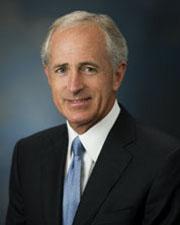 Sen. Bob Corker (R-TN)
What it changes
1 change to S. 1867 · shown in the bill's text
Adds SEC. 1243. SENSE OF SENATE ON THE NORTH ATLANTIC TREATY ORGANIZATION at the end of subtitle C of title XII
Adds a sectionIn S. 1867 · Placed on Calendar Senate
(6) An assessment by the Comptroller General of the United States of the effectiveness of the activities under the State Partnership Program in meeting the objectives of the program.
Inserted: SEC. 1243. SENSE OF SENATE ON THE NORTH ATLANTIC TREATY ORGANIZATION.
Inserted: (a) Findings.--The Senate makes the following findings:
Inserted: (1) The North Atlantic Treaty Organization (NATO) historically set a target commitment for member states to spend two percent of their gross domestic product on their defense expenditures.
Inserted: (2) In 2010, the North Atlantic Treaty Organization identified only 5 member states meeting this target for defense expenditures, including the United States, Albania, France, Greece, and the United Kingdom, leaving 23 member states short of meeting the target.
Inserted: (3) Secretary of Defense Robert Gates made the following statement on the North Atlantic Treaty Organization on October 14, 2010, in a conversation with reporters: "[m]y worry is that the more our allies cut their capabilities, the more people will look to the United States to cover whatever gaps are created. . . And at a time when we're facing stringencies of our own, that's a concern for me".
Inserted: (4) Secretary of State Hillary Clinton, in an interview with the BBC on October 15, 2010, stated that "NATO has been the most successful alliance for defensive purposes in the history of the world, I guess, but it has to be maintained. Now each country has to be able to make its appropriate contributions".
Inserted: (5) On March 30, 2011, Admiral James G. Stavridis stated in a hearing before the Committee on Armed Services of the House of Representatives that "[w]e need to be emphatic with our European allies that they should spend at least the minimum NATO 2 percent".
Inserted: (6) In a speech delivered in Brussels on June 10, 2011, Secretary of Defense Gates further stated that "[i]n the past, I've worried openly about NATO turning into a two-tiered alliance: Between members who specialize in 'soft' humanitarian, development, peacekeeping, and talking tasks, and those conducting the 'hard' combat missions. Between those willing and able to pay the price and bear the burdens of alliance commitments, and those who enjoy the benefits of NATO membership - be they security guarantees or headquarters billets - but don't want to share the risks and the costs. This is no longer a hypothetical worry. We are there today. And it is unacceptable".
Inserted: (7) In that same speech on June 10, 2011, Secretary of Defense Gates added that "I am the latest in a string of U.S. defense secretaries who have urged allies privately and publicly, often with exasperation, to meet agreed-upon NATO benchmarks for defense spending. However, fiscal, political and demographic realities make this unlikely to happen anytime soon, as even military stalwarts like the U.K have been forced to ratchet back with major cuts to force structure. Today, just five of 28 allies - the U.S., U.K., France, Greece, along with Albania - exceed the agreed 2% of GDP spending on defense".
Inserted: (8) Secretary of Defense Gates also stated that "[t]he blunt reality is that there will be dwindling appetite and patience in the U.S. Congress - and in the American body politic writ large - to expend increasingly precious funds on behalf of nations that are apparently unwilling to devote the necessary resources or make the necessary changes to be serious and capable partners in their own defense. Nations apparently willing and eager for American taxpayers to assume the growing security burden left by reductions in European defense budgets".
Inserted: (b) Sense of Senate.--It is the sense of the Senate--
Inserted: (1) to commend the North Atlantic Treaty Organization for historically providing an extension to the United States security capabilities; and
Show 3 more inserted paragraphsShow less
Inserted: (2) to call upon the President--
Inserted: (A) to engage each of the member states of the North Atlantic Treaty Organization in a dialogue about the long-term health of the North Atlantic Alliance and strongly encourage each of the member states to make a serious effort to protect defense budgets from further reductions, better allocate and coordinate the resources presently available, and recommit to spending at least two percent of gross domestic product on defense; and
Inserted: (B) to examine and report to Congress on recommendations that will lead to a stronger North Atlantic Alliance in terms of military capability and readiness across the 28 member states, with particular focus on the smaller member states.
Original wording
At the end of subtitle C of title XII, add the following:
Read automatically from the Congressional Record. Check the original before relying on it.
As printed
At the end of subtitle C of title XII, add the following:
SEC. 1243. SENSE OF SENATE ON THE NORTH ATLANTIC TREATY ORGANIZATION.
(a) Findings.--The Senate makes the following findings:
(1) The North Atlantic Treaty Organization (NATO) historically set a target commitment for member states to spend two percent of their gross domestic product on their defense expenditures.
(2) In 2010, the North Atlantic Treaty Organization identified only 5 member states meeting this target for defense expenditures, including the United States, Albania, France, Greece, and the United Kingdom, leaving 23 member states short of meeting the target.
(3) Secretary of Defense Robert Gates made the following statement on the North Atlantic Treaty Organization on October 14, 2010, in a conversation with reporters: “[m]y worry is that the more our allies cut their capabilities, the more people will look to the United States to cover whatever gaps are created. . . And at a time when we're facing stringencies of our own, that's a concern for me”.
(4) Secretary of State Hillary Clinton, in an interview with the BBC on October 15, 2010, stated that “NATO has been the most successful alliance for defensive purposes in the history of the world, I guess, but it has to be maintained. Now each country has to be able to make its appropriate contributions”.
(5) On March 30, 2011, Admiral James G. Stavridis stated in a hearing before the Committee on Armed Services of the House of Representatives that “[w]e need to be emphatic with our European allies that they should spend at least the minimum NATO 2 percent”.
(6) In a speech delivered in Brussels on June 10, 2011, Secretary of Defense Gates further stated that “[i]n the past, I've worried openly about NATO turning into a two-tiered alliance: Between members who specialize in ‘soft' humanitarian, development, peacekeeping, and talking tasks, and those conducting the ‘hard' combat missions. Between those willing and able to pay the price and bear the burdens of alliance commitments, and those who enjoy the benefits of NATO membership - be they security guarantees or headquarters billets - but don't want to share the risks and the costs. This is no longer a hypothetical worry. We are there today. And it is unacceptable”.
(7) In that same speech on June 10, 2011, Secretary of Defense Gates added that “I am the latest in a string of U.S. defense secretaries who have urged allies privately and publicly, often with exasperation, to meet agreed-upon NATO benchmarks for defense spending. However, fiscal, political and demographic realities make this unlikely to happen anytime soon, as even military stalwarts like the U.K have been forced to ratchet back with major cuts to force structure. Today, just five of 28 allies - the U.S., U.K., France, Greece, along with Albania - exceed the agreed 2% of GDP spending on defense”.
(8) Secretary of Defense Gates also stated that “[t]he blunt reality is that there will be dwindling appetite and patience in the U.S. Congress - and in the American body politic writ large - to expend increasingly precious funds on behalf of nations that are apparently unwilling to devote the necessary resources or make the necessary changes to be serious and capable partners in their own defense. Nations apparently willing and eager for American taxpayers to assume the growing security burden left by reductions in European defense budgets”.
(b) Sense of Senate.--It is the sense of the Senate--
(1) to commend the North Atlantic Treaty Organization for historically providing an extension to the United States security capabilities; and
(2) to call upon the President--
(A) to engage each of the member states of the North Atlantic Treaty Organization in a dialogue about the long-term health of the North Atlantic Alliance and strongly encourage each of the member states to make a serious effort to protect defense budgets from further reductions, better allocate and coordinate the resources presently available, and recommit to spending at least two percent of gross domestic product on defense; and
(B) to examine and report to Congress on recommendations that will lead to a stronger North Atlantic Alliance in terms of military capability and readiness across the 28 member states, with particular focus on the smaller member states.
Legislative Activity
Stay on top of the latest movement without scrolling through every action
Considered by Senate. (consideration: CR S8095)
December 1, 2011
View full timeline
Considered by Senate. (consideration: CR S8095)
December 1, 2011
Point of order that the amendment violates Rule XXII raised in Senate with respect to amendment SA 1173.
December 1, 2011
Amendment SA 1173 ruled non-germane by the chair.
December 1, 2011
Considered by Senate. (consideration: CR S8013)
November 30, 2011
Considered by Senate. (consideration: CR S7943)
November 29, 2011
Considered by Senate. (consideration: CR S7885)
November 28, 2011
Senate amendment proposed (on the floor): Amendment SA 1173 proposed by Senator McCain for Senator Corker.
November 18, 2011
Amendment SA 1173 proposed by Senator McCain for Senator Corker. (consideration: CR S7794; text: CR S7794) To express the sense of the Senate on the North Atlantic Treaty Organization.
November 18, 2011
Senate amendment submitted
November 17, 2011