To prohibit earmarks.
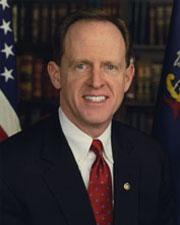 Sen. Patrick J. Toomey (R-PA)
Legislative Activity
Stay on top of the latest movement without scrolling through every action
Senate amendment not agreed to: Amendment SA 1472, under the order of 2/2/2012, not having achieved 60 votes in the affirmative, was not agreed to in Senate by Yea-Nay Vote. 40 - 59. Record Vote Number: 8.
February 2, 2012
View full timeline
Senate amendment not agreed to: Amendment SA 1472, under the order of 2/2/2012, not having achieved 60 votes in the affirmative, was not agreed to in Senate by Yea-Nay Vote. 40 - 59. Record Vote Number: 8.
February 2, 2012
Roll call votes on amendments in Senate: Amendment SA 1472, under the order of 2/2/2012, not having achieved 60 votes in the affirmative, was not agreed to in Senate by Yea-Nay Vote. 40 - 59. Record Vote Number: 8.
February 2, 2012
Considered by Senate. (consideration: CR S290, S291-292, S302-304)
February 2, 2012
Amendment SA 1472, under the order of 2/2/2012, not having achieved 60 votes in the affirmative, was not agreed to in Senate by Yea-Nay Vote. 40 - 59. Record Vote Number: 8.
February 2, 2012
Considered by Senate. (consideration: CR S238)
February 1, 2012
Senate amendment proposed (on the floor): Amendment SA 1472 proposed by Senator Toomey to Amendment SA 1470.(consideration: CR S182, S197-199; text: CR S182)
January 31, 2012
Amendment SA 1472 proposed by Senator Toomey to Amendment SA 1470. (consideration: CR S182, S197-199; text: CR S182) To prohibit earmarks.
January 31, 2012
Senate amendment submitted
January 30, 2012
Votes
1 roll call on this amendment
Amendments
1 amendmentOffered to this amendment
Amendments
1 amendmentOffered to this amendment
Text
Proposed
STOP TRADING ON CONGRESSIONAL KNOWLEDGE ACT OF 2012

The PRESIDING OFFICER. Under the previous order, the Senate will
resume consideration of the motion to proceed to S. 2038, which the
clerk will report.
The assistant legislative clerk read as follows:

Motion to proceed to the consideration of S. 2038, a bill
to prohibit Members of Congress and employees of Congress
from using nonpublic information derived from their official
positions for personal benefit, and for other purposes.

The PRESIDING OFFICER. The question is on agreeing to the motion to
proceed to S. 2038.
The motion was agreed to.
The PRESIDING OFFICER. The clerk will report the bill.
The assistant legislative clerk read as follows:

A bill (S. 2038) to prohibit Members of Congress and
employees of Congress from using nonpublic information
derived from their official positions for personal benefit,
and for other purposes.

Amendment No. 1470

(Purpose: In the nature of a substitute)

Mr. REID. Mr. President, I have a substitute amendment at the desk.
The PRESIDING OFFICER. The clerk will report.
The assistant legislative clerk read as follows:

The Senator from Nevada [Mr. Reid], for himself, Mr. Brown
of Massachusetts, Mr. Lieberman, Ms. Collins, Mrs.
Gillibrand, Mr. Levin, and Mr. Franken, proposes an amendment
numbered 1470.

Mr. REID. Mr. President, I ask unanimous consent that reading of the
amendment be dispensed with.
The PRESIDING OFFICER. Without objection, it is so ordered.
(The amendment is printed in the Record of Monday, January 30, 2012,
under ``Text of Amendments.'')

Amendment No. 1482 to Amendment No. 1470

Mr. REID. Mr. President, on behalf of Senator Lieberman, I call up an
amendment, which is at the desk.
The PRESIDING OFFICER. The clerk will report.
The assistant legislative clerk read as follows:

The Senator from Nevada [Mr. Reid], for Mr. Lieberman,
proposes an amendment numbered 1482 to amendment No. 1470.

Mr. REID. Mr. President, I ask unanimous consent that reading of the
amendment be dispensed with.
The PRESIDING OFFICER. Without objection, it is so ordered.
The amendment is as follows:

(Purpose: To make a technical amendment to a reporting requirement)

On page 7, line 22, after ``Reform'' insert ``and the
Committee on the Judiciary''.

The PRESIDING OFFICER. The Senator from Ohio.

Amendment No. 1478 to Amendment No. 1470

Mr. BROWN of Ohio. Mr. President, I ask unanimous consent that the
pending amendment be set aside.
The PRESIDING OFFICER. Without objection, it is so ordered.
Mr. BROWN of Ohio. Mr. President, I call up amendment No. 1478.
The PRESIDING OFFICER. The clerk will report.
The assistant legislative clerk read as follows:

The Senator from Ohio [Mr. Brown] proposes an amendment
numbered 1478 to amendment No. 1470.

Mr. BROWN of Ohio. Mr. President, I ask unanimous consent that
reading of the amendment be dispensed with.
The PRESIDING OFFICER. Without objection, it is so ordered.
The amendment is as follows:

(Purpose: To change the reporting requirement to 10 days)

On page 6, strike lines 12 through 15, and insert the
following:
``(j) After any transaction required to be reported under
section 102(a)(5)(B), a Member of Congress or officer or
employee of Congress shall file a report of the transaction
not later than 10 days following the day on which the subject
transaction has been executed.''.
On page 9, line 17, strike ``30'' and insert ``10''.

Amendment No. 1481 to Amendment No. 1470

Mr. BROWN of Ohio. Mr. President, I ask unanimous consent that the
pending amendment be set aside.
The PRESIDING OFFICER. Is there objection?
Without objection, it is so ordered.
Mr. BROWN of Ohio. Mr. President, I call up my amendment No. 1481.
The PRESIDING OFFICER. The clerk will report.
The assistant legislative clerk read as follows:

The Senator from Ohio [Mr. Brown] for himself and Mr.
Merkley, proposes an amendment numbered 1481 to amendment No.
1470.

Mr. BROWN of Ohio. Mr. President, I ask unanimous consent that
reading of the amendment be dispensed with.
The PRESIDING OFFICER. Without objection, it is so ordered.
The amendment is as follows:

(Purpose: To prohibit financial conflicts of interest by Senators and
staff)

At the appropriate place, insert the following:

SEC. __. PUTTING THE PEOPLE'S INTERESTS FIRST ACT OF 2012.

(a) Short Title.--This section may be cited as the
``Putting the People's Interests First Act of 2012''.
(b) Eliminating Financial Conflicts of Interest for Members
of the Senate.--A covered person shall be prohibited from
holding and shall divest themselves of any covered
transaction that is directly and reasonably foreseeably
affected by the official actions of such covered person, to
avoid any conflict of interest, or the appearance thereof.
Any divestiture shall occur within a reasonable period of
time.
(c) Definitions.--In this section:
(1) Securities.--The term ``securities'' has the same
meaning as in section 3 of the Securities Exchange Act of
1934 (15 U.S.C. 78c).
(2) Covered person.--The term ``covered person'' means a
Member, officer, or employee of the Senate, their spouse, and
their dependents.
(3) Covered transaction.--The term ``covered transaction''
means investment in securities in any company, any comparable
economic interest acquired through synthetic means such as
the use of derivatives, or short selling any publicly traded
securities.
(4) Short selling.--The term ``short selling'' means
entering into a transaction that has the effect of creating a
net short position in a publicly traded company.
(d) Exception.--Nothing in this section shall preclude a
covered person from investing in broad-based investments,
such as diversified mutual funds and unit investment trusts,
sector mutual funds, or employee benefit plans, even if a
portion of the funds are invested in a security, so long as
the covered person has no control over or knowledge of the
management of the investment, other than information made
available to the public by the mutual fund.
(e) Trusts.--
(1) In general.--On a case-by-case basis, the Select
Committee on Ethics may authorize a covered person to place
their securities holdings in a qualified blind trust approved
by the committee under section 102(f) of the Ethics in
Government Act of 1978.
(2) Blind trust.--A blind trust permitted under this
subsection shall meet the criteria in section 102(f)(4)(B) of
the Ethics in Government Act of 1978, unless an alternative
arrangement is approved by the Select Committee on Ethics.
(f) Application.--This section does not apply to an
individual employed by the Secretary of the Senate, Sergeant
at Arms, the Architect of the Capitol, or the Capital Police.

The PRESIDING OFFICER. The Senator from Maine.
Ms. COLLINS. Mr. President, I thought we had a tentative, informal
agreement that we were going to go

[[Page S182]]

back and forth, alternating to make amendments pending, and that we
would do one from the Democratic side, then one from the Republican
side, and go back and forth.
The PRESIDING OFFICER. The Senator from Ohio.
Mr. BROWN of Ohio. Mr. President, I appreciate the comments from the
Senator from Maine. I was just asking that they be offered. I was going
to speak on them together, but I am certainly willing for a Republican
to go next and then I speak about my two amendments together--whatever
the Senator from Maine would like.
The PRESIDING OFFICER. The Senator from Maine.
Ms. COLLINS. I thank the Senator.
Mr. President, I, then, ask unanimous consent that we proceed with
amendments so that we do alternate from side to side, since there are a
number of amendments that have been filed, and I think that would be
the fairest way to proceed to make them pending.
The PRESIDING OFFICER. Is there objection?
Without objection, it is so ordered.
The Senator from Pennsylvania.

Amendment No. 1472 to Amendment No. 1470

Mr. TOOMEY. Mr. President, I ask unanimous consent to set aside the
pending amendment.
The PRESIDING OFFICER. Without objection, it is so ordered.
Mr. TOOMEY. Mr. President, I call up amendment No. 1472, my amendment
with Senator McCaskill.
The PRESIDING OFFICER. The clerk will report.
The assistant legislative clerk read as follows:

The Senator from Pennsylvania [Mr. Toomey], for himself,
Mrs. McCaskill, Mr. DeMint, Mr. Udall of Colorado, Mr. Rubio,
Ms. Ayotte, Mr. Portman, Mr. Thune, and Mr. Johanns, proposes
an amendment numbered 1472 to amendment No. 1470.

Mr. TOOMEY. Mr. President, I ask unanimous consent that reading of
the amendment be dispensed with.
The PRESIDING OFFICER. Without objection, it is so ordered.
The amendment is as follows:

(Purpose: To prohibit earmarks)

At the appropriate place, insert the following:

SEC. __. EARMARK ELIMINATION ACT OF 2012.

(a) Short Title.--This Act may be cited as the ``Earmark
Elimination Act of 2011''.
(b) Prohibition on Earmarks.--
(1) Bills and joint resolutions, amendments, amendments
between the houses, and conference reports.--
(A) In general.--It shall not be in order in the Senate to
consider a bill or resolution introduced in the Senate or the
House of Representatives, amendment, amendment between the
Houses, or conference report that includes an earmark.
(B) Procedure.--Upon a point of order being made by any
Senator pursuant to subparagraph (A) against an earmark, and
such point of order being sustained, such earmark shall be
deemed stricken.
(2) Conference report and amendment between the houses
procedure.--When the Senate is considering a conference
report on, or an amendment between the Houses, upon a point
of order being made by any Senator pursuant to paragraph (1),
and such point of order being sustained, such material
contained in such conference report shall be deemed stricken,
and the Senate shall proceed to consider the question of
whether the Senate shall recede from its amendment and concur
with a further amendment, or concur in the House amendment
with a further amendment, as the case may be, which further
amendment shall consist of only that portion of the
conference report or House amendment, as the case may be, not
so stricken. Any such motion in the Senate shall be debatable
under the same conditions as was the conference report. In
any case in which such point of order is sustained against a
conference report (or Senate amendment derived from such
conference report by operation of this subsection), no
further amendment shall be in order.
(3) Waiver.--Any Senator may move to waive any or all
points of order under this section by an affirmative vote of
two-thirds of the Members, duly chosen and sworn.
(4) Definitions.--
(A) Earmark.--For the purpose of this section, the term
``earmark'' means a provision or report language included
primarily at the request of a Senator or Member of the House
of Representatives as certified under paragraph 1(a)(1) of
rule XLIV of the Standing Rules of the Senate--
(i) providing, authorizing, or recommending a specific
amount of discretionary budget authority, credit authority,
or other spending authority for a contract, loan, loan
guarantee, grant, loan authority, or other expenditure with
or to an entity, or targeted to a specific State, locality or
Congressional district, other than through a statutory or
administrative formula-driven or competitive award process;
(ii) that--

(I) provides a Federal tax deduction, credit, exclusion, or
preference to a particular beneficiary or limited group of
beneficiaries under the Internal Revenue Code of 1986; and
(II) contains eligibility criteria that are not uniform in
application with respect to potential beneficiaries of such
provision; or

(iii) modifying the Harmonized Tariff Schedule of the
United States in a manner that benefits 10 or fewer entities.
(B) Determination by the senate.--In the event the Chair is
unable to ascertain whether or not the offending provision
constitutes an earmark as defined in this subsection, the
question of whether the provision constitutes an earmark
shall be submitted to the Senate and be decided without
debate by an affirmative vote of two-thirds of the Members,
duly chosen and sworn
(5) Application.--This section shall not apply to any
authorization of appropriations to a Federal entity if such
authorization is not specifically targeted to a State,
locality or congressional district.

Mr. TOOMEY. Mr. President, I would like to make some comments about
this amendment, but I will do that at a later time when time is more
available.
I thank my colleague from Maine and my colleague from Ohio for their
helpful cooperation in this process.
The PRESIDING OFFICER. The Senator from Ohio.
Mr. BROWN of Ohio. Mr. President, I thank both the Senator from
Pennsylvania and the Senator from Maine.

Amendments Nos. 1478 and 1481

I will speak in more detail about my amendments later, but now I want
to say a few words about each of them.
First, they are consistent with the spirit of the underlying bill--a
version of which I cosponsored. I am particularly appreciative to
Senator Gillibrand for her good work on this overall issue.
The underlying STOCK Act clarifies that insider trading laws apply
the same way to Members of Congress as they do to the rest of the
country, pure and simple. It makes sense.
My amendments would also extend generally applicable laws to Members
of Congress.
One amendment would apply financial trade disclosure rules to Members
in the same way they apply to others, such as corporate insiders,
financial advisers, SEC employees. It would narrow the window for
disclosure from 30 days down to 10 days. It would make Member
disclosure more consistent with rules that require timely disclosure of
transactions by corporate directors, officers, and large shareholders.
We should do the same more strictly than we have in the past to do the
same as they do. Let's hold ourselves to the same standard of openness
and shine the light of transparency on our financial trades, if we make
them.
The second amendment would extend to Senators the same conflict of
interest rules that currently apply to committee staff and executive
branch officials. This amendment, which is No. 1481, is coauthored by
Senator Merkley of Oregon.
Members of the Senate and staff would be prohibited from owning or
short-selling individual stock in companies affected by their official
duties. We would still be permitted to invest in broad-based funds or
place our assets in blind trusts, as permitted by the Select Armed
Services Committee--SASC--rule and Federal regulations.
When asked about the fact that the SASC conflict of interest rules
apply to staff and DOD appointees, President George W. Bush's Deputy
Secretary of Defense, Gordon England, said:

I think Congress should live by the rules they impose on
other people.

That is why I am offering these two amendments. It is pretty simple.
We vote on a whole range of very important issues in this country. We
should not only not benefit from our votes on investments we might
have, but it is important that the perception be that when we make
decisions, we make them for the good of the country, not for our own
financial interests. That is something the public finds pretty
distasteful. These two amendments together will help fix that.
I yield the floor.
I suggest the absence of a quorum.
The PRESIDING OFFICER. The clerk will call the roll.
The assistant legislative clerk proceeded to call the roll.
Mr. BROWN of Massachusetts. Mr. President, I ask unanimous consent
that the order for the quorum call be rescinded.
The PRESIDING OFFICER. Without objection, it is so ordered.

[[Page S183]]

Mr. BROWN of Massachusetts. Mr. President, I know we are starting to
get the intake of amendments. I want to reiterate what we talked about
yesterday, about having relevant amendments filed. This is a very
specific issue we are addressing, which is to deal with perceived
insider trading and/or Members of Congress having an unfair advantage
and having obviously nonpublic information, confidential information
that would ultimately be used for financial gain.
As we are reviewing some of the amendments or hearing discussions of
others that may be forthcoming, I want to remind the Members that this
is something that forces outside this building may not want to happen.
I feel very strongly that this is something we need to do and use to
reestablish the trust with the American citizens and Members of
Congress.
That being said, as our Members are listening or their staffs are
proposing amendments that are forthcoming, I hope they would be
relevant to the issue at hand and not get sidetracked into a discussion
that would take us away from what we are trying to do here.
Again, I am looking forward to the amendments. I know Senators
Lieberman, Gillibrand, Collins, and I will be managing the floor today
to try to make sure that happens and convince our Members to stay
focused on this very important issue.
I yield the floor, and I suggest the absence of a quorum.
The PRESIDING OFFICER. The clerk will call the roll.
The bill clerk proceeded to call the roll.
Mr. THUNE. Mr. President, I ask unanimous consent that the order for
the quorum call be rescinded.
The PRESIDING OFFICER. Without objection, it is so ordered.
Mr. THUNE. Mr. President, I ask unanimous consent to set aside the
pending amendment.
The PRESIDING OFFICER. Without objection, it is so ordered.

Amendment No. 1477 to Amendment No. 1470

Mr. THUNE. Mr. President, I ask unanimous consent to call up
amendment No. 1477.
The PRESIDING OFFICER. The clerk will report.
The bill clerk read as follows:

The Senator from South Dakota [Mr. Thune] proposes an
amendment numbered 1477 to amendment No. 1470.

Mr. THUNE. Mr. President, I ask unanimous consent that the reading of
the amendment be dispensed with.
The PRESIDING OFFICER. Without objection, it is so ordered.
The amendment is as follows:

(Purpose: To direct the Securities and Exchange Commission to eliminate
the prohibition against general solicitation as a requirement for a
certain exemption under Regulation D)

At the appropriate place, insert the following:

SEC. _. MODIFICATION OF EXEMPTION.

(a) Removal of Restriction.--Section 4(2) of the Securities
Act of 1933 (15 U.S.C. 77d(2)) is amended by inserting before
the period at the end the following: ``, whether or not such
transactions involve general solicitation or general
advertising''.
(b) Modification of Rules.--Not later than 90 days after
the date of enactment of this Act, the Securities and
Exchange Commission shall revise its rules issued in section
230.506 of title 17, Code of Federal Regulations, to provide
that the prohibition against general solicitation or general
advertising contained in section 230.502(c) of such title
shall not apply to offers and sales of securities made
pursuant to section 230.506, provided that all purchasers of
the securities are accredited investors. Such rules shall
require the issuer to take reasonable steps to verify that
purchasers of the securities are accredited investors, using
such methods as determined by the Commission.

Mr. THUNE. Mr. President, this amendment would make it easier for
small business to better access capital in order to expand and create
jobs. On November 3, 2011, the House of Representatives passed a
companion measure, which was introduced by Representative Kevin
McCarthy, on a near unanimous vote of 413 to 11; 175 Democrats in the
House supported this legislation. We have an opportunity here to show
the American people that we are serious about creating jobs and to pass
this amendment here in the Senate.
This amendment would remove a regulatory roadblock in order to make
it easier for small businesses to access needed capital to expand and
create jobs. Current SEC registration exemption rules severely hamper
the ability of small businesses to raise capital by allowing them to
raise capital only from investors with whom they have a preexisting
relationship.
By modernizing this rule, small businesses and startups would be able
to more easily raise capital from accredited investors nationwide.
According to the Small Business and Entrepreneurship Council:

This is a long overdue solution that will widen the pool of
potential funders for entrepreneurs. Our economy will improve
once entrepreneurs are provided the tools, opportunities and
incentives that they need to hire and invest.

Earlier this month, the SEC Small Business Advisory Committee on
Small and Emerging Companies recommended that the agency ``relax or
modify'' the general solicitation prohibition as a good policy to
increase the amount of capital available to small businesses.
In his State of the Union Address last week, President Obama called
on Congress to pass legislation that will help startups and small
businesses access capital in order to expand and create jobs. The
President said:

Most new jobs are created in start-ups and small
businesses. So let's pass an agenda that helps them succeed.
Tear down regulations that prevent entrepreneurs from getting
the financing to grow. Both parties agree on these ideas. So
put them in a bill and get it on my desk this year.

This is exactly what this amendment will do. And it has support from
investors and entrepreneurs alike. When you have unemployment hovering
around 9 percent, we need to pass legislation that will enable our job
creators to expand and create jobs. As I said, this legislation
received overwhelming bipartisan support in the House of
Representatives. I hope we can do the same here in the Senate by
passing this amendment.
We all talk about the importance of making it easier, making it less
costly, less difficult for our small businesses and entrepreneurs to
get access to capital so they can create jobs and get the economy
growing again. So many times these are contentious, they are
controversial differences of opinion about how best to do that. We
fight over regulations, we fight over taxes. This is something where
there is broad bipartisan support, almost unanimous support in the
House of Representatives, a vote of 413 to 11 in support of this
legislation when it was voted on in the House of Representatives.
We have an opportunity to do something that is very straightforward,
that is broadly supported by both Democrats and Republicans--at least
it was in the House of Representatives--that the President has
suggested we ought to be working on, looking for these types of
approaches to freeing up access to capital for our small businesses.
You have the folks out there in the business community overwhelmingly
supportive of doing away with the regulatory barrier, the regulatory
obstacle this particular regulation represents in terms of access to
capital for our small businesses. It seems like one of those issues on
which there should be no disagreement. I hope that will be the case. I
hope we can get a vote on this amendment, get this put into law and put
into effect so our small businesses and our entrepreneurs in this
country can do what they do best; that is, create jobs. They have to
have access to capital in order to do that. This makes that process
easier. It does away with some of these unnecessary regulations and
roadblocks and barriers that exist today.
I hope my colleagues in the Senate will support this amendment.
I yield the floor.
The PRESIDING OFFICER. The Senator from Maine.
Ms. COLLINS. Mr. President, earlier we agreed to alternate side to
side for the offering of amendments. However, I would say to the
Democratic floor manager that there do not appear to be any Democrats
right now who are seeking recognition. Therefore, I would ask unanimous
consent that the Senator from Arizona be permitted to proceed at this
time, given the absence of a Democrat on the floor.
The PRESIDING OFFICER. Without objection, it is so ordered.
The Senator from Arizona.

Amendment No. 1471 to Amendment No. 1470

Mr. McCAIN. Mr. President, I thank both the Senator from New York and
the Senator from Maine for their courtesy.

[[Page S184]]

I ask unanimous consent to set aside the pending amendment and call
up amendment No. 1471.
The PRESIDING OFFICER. Without objection, it is so ordered.
The clerk will report.
The bill clerk read as follows:

The Senator from Arizona [Mr. McCain], for himself, Mr.
Rockefeller, Mr. Enzi, Mrs. McCaskill, Mr. Johanns, Mr.
Barrasso, Mr. Blunt, and Mr. Graham, proposes an amendment
numbered 1471 to amendment No. 1470.

Mr. McCAIN. Mr. President, I ask unanimous consent that the reading
of the amendment be dispensed with.
The PRESIDING OFFICER. Without objection, it is so ordered.
The amendment is as follows:

(Purpose: To protect the American taxpayer by prohibiting bonuses for
Senior Executives at Fannie Mae and Freddie Mac while they are in
conservatorship)

At the appropriate place, insert the following:

SEC. __. LIMITATION ON BONUSES TO EXECUTIVES OF FANNIE MAE
AND FREDDIE MAC.

Notwithstanding any other provision in law, senior
executives at the Federal National Mortgage Association and
the Federal Home Loan Mortgage Corporation are prohibited
from receiving bonuses during any period of conservatorship
for those entities on or after the date of enactment of this
Act.

Mr. McCAIN. Mr. President, this bipartisan amendment is very simple.
It would prohibit bonuses for senior executives at Fannie Mae and
Freddie Mac while they are in a taxpayer-backed conservatorship. I am
joined in this effort by Senators Rockefeller, Enzi, McCaskill,
Johanns, Barrasso, Blunt, Graham, Coburn, and Thune.
Since they were placed in conservatorship in 2008, these two
government-sponsored entities have soaked the American taxpayer for
nearly $170 billion in bailouts. Recently Freddie Mac requested an
additional $6 billion and Fannie Mae requested an additional $7.8
billion. That is $13.8 billion more coming out of the pockets of hard-
working Americans, many of whom are underwater on their mortgages.
I wish to read an article from Politico from back in October entitled
``Fannie, Freddie dole out big bonuses.''

The Federal Housing Finance Agency, the government
regulator for Fannie and Freddie, approved $12.79 million in
bonus pay after 10 executives from the two government
sponsored corporations last year met modest performance
targets tied to modifying mortgages in jeopardy of
foreclosure.
The executives got the bonuses about two years after the
federally backed mortgage giants received nearly $170 billion
in taxpayer bailouts--and despite pledges by FHFA, the office
tasked with keeping them solvent, that it would adjust the
level of CEO-level pay after critics slammed huge
compensation packages paid out to former Fannie Mae CEO
Franklin Raines and others.
Securities and Exchange Commission documents show that Ed
Haldeman, who announced last week that he is stepping down as
Freddie Mac's CEO, received a base salary of $900,000 last
year, yet took home an additional $2.3 million in bonus pay.
Records show other Fannie and Freddie executives got similar
Wall Street-style compensation packages. Fannie Mae CEO
Michael Williams, for example, got $2.37 million in
performance bonuses.
Including Haldeman, the top five officers at Freddie banked
a combined $6.46 million in performance pay alone last year,
though a second bonus installment for 2010 has yet to be
reported to the SEC, according to agency records. Williams
and others at Fannie pocketed $6.33 million in incentives for
what SEC records described as meeting the primary goal of
providing ``liquidity, stability and affordability'' to the
national market.

I think it is important to ask the question, is it necessary for
these bonuses to be provided to these executives when we have men and
women who are literally in harm's way, who are compensated far less? Is
it possible that there aren't some patriotic Americans who would be
willing to serve and head up these organizations and try to get them
cleaned up?
The primary causes of the collapse of our economy still plague us to
this day.
I ask unanimous consent that an article from Politico be printed in
the Record.
There being no objection, the material was ordered to be printed in
the Record, as follows:

[From Politico, Oct. 31, 2011]

Fannie, Freddie Dole Out Big Bonuses

(By Josh Boak and Joseph Williams)

The Obama administration's efforts to fix the housing
crisis may have fallen well short of helping millions of
distressed mortgage holders, but they have led to seven-
figure paydays for some top executives at troubled mortgage
giants Fannie Mae and Freddie Mac.
The Federal Housing Finance Agency, the government
regulator for Fannie and Freddie, approved $12.79 million in
bonus pay after 10 executives from the two government-
sponsored corporations last year met modest performance
targets tied to modifying mortgages in jeopardy of
foreclosure.
The executives got the bonuses about two years after the
federally backed mortgage giants received nearly $170 billion
in taxpayer bailouts--and despite pledges by FHFA, the office
tasked with keeping them solvent, that it would adjust the
level of CEO-level pay after critics slammed huge
compensation packages paid out to former Fannie Mae CEO
Franklin Raines and others.
Securities and Exchange Commission documents show that Ed
Haldeman, who announced last week that he is stepping down as
Freddie Mac's CEO, received a base salary of $900,000 last
year yet took home an additional $2.3 million in bonus pay.
Records show other Fannie and Freddie executives got similar
Wall Street-style compensation packages; Fannie Mae CEO
Michael Williams, for example, got $2.37 million in
performance bonuses.
Including Haldeman, the top five officers at Freddie banked
a combined $6.46 million in performance pay alone last year,
though a second bonus installment for 2010 has yet to be
reported to the SEC, according to agency records. Williams
and others at Fannie pocketed $6.33 million in incentives for
what SEC records describe as meeting the primary goal of
providing ``liquidity, stability and affordability'' to the
national market.
``Freddie Mac has done a considerable amount on behalf of
the American taxpayers to support the housing finance market
since entering into conservatorship,'' Freddie spokesman
Michael Cosgrove, told POLITICO on Monday. ``We're providing
mortgage funding and continuous liquidity to the market.
Together with Fannie Mae, we've funded the large majority of
the nation's residential loans. We're insisting on
responsible lending.''
A Fannie Mae spokesman said it is currently in a ``quiet
period'' in advance of its third-quarter earnings report and
declined to comment.
Most analysts believe the financial implosion of 2008 was
fueled in part by Fannie Mae and Freddie Mac's zeal in
promoting homeownership and their backing of risky loans. And
critics say that the mortgage giants' deep backlog of
repossessed homes, and their struggle through government
conservatorship, is a staggering weight on a weak economy and
puts even more downward pressure on home values.
``Fannie and Freddie executives are being paid millions to
manage losses,'' Rep. Patrick McHenry (R-N.C.), a longtime
critic of the administration's programs to rescue the housing
market, told POLITICO. ``By these same standards, I should be
the starting forward for the Lakers. It's completely
absurd.''
``It is outrageous that senior executives at Fannie and
Freddie are receiving multimillion-dollar compensation
packages when they now rely on funding from U.S. taxpayers,
many of whom face foreclosure or whose homes are
underwater,'' Rep. Elijah Cummings of Maryland, who has led
House Democrats in efforts to ease Fannie and Freddie's
restrictions on restructuring loans or lowering payments for
mortgage holders who owe more than their homes are worth,
wrote in an email.
Compensation at Fannie and Freddie is, in fact, 40 percent
below pre-government takeover levels, according to the FHFA,
though those pay packages before conservatorship involved
stock awards, while the current payments are exclusively
cash. But compensation at both corporations, in particular
Fannie Mae, has been a contentious issue since long before
the 2008 financial meltdown, thanks to executives like Daniel
Mudd, who earned $12.2 million in base pay and bonuses while
heading Fannie, and Richard Syron, Freddie's CEO, who
pocketed $19.8 million in total compensation the year before
the organization went into conservatorship.
Both Fannie and Freddie have long argued that they have to
offer Wall Street-size paychecks to compete for the best
private-sector talent. House Financial Services Committee
Chairman Spencer Bachus (R-Ala.) introduced a bill in April
to place the executives on a government pay scale, but it has
yet to move out of committee.
A March report by FHFA's inspector general, however, found
the agency ``lacks key controls necessary to monitor''
executive compensation, nor has it developed written
procedures for evaluating those packages.
FHFA's acting director, Edward J. DeMarco, told Congress
last year that the managers who were at the helms of the
mortgage companies during the market collapse were dismissed
but also argued that generous pay helps lure ``experienced,
qualified'' executives able to manage upward of $5 trillion
in mortgage holdings amid market turmoil.
DeMarco told lawmakers he's concerned that suggestions to
apply ``a federal pay system to nonfederal employees'' could
put the companies in jeopardy of mismanagement and result in
another taxpayer bailout. He said the compensation packages
at Fannie and Freddie are part of the plan to return them to
solvency while reducing costs to taxpayers.

[[Page S185]]

An FHFA representative said the agency is installing pay
package recommendations outlined in the report. Currently,
she wrote, the agency ``carefully reviews all executive
officer pay requests and considers suitability and
comparability with market practice, after consulting with the
Treasury Department in certain circumstances.''
Since both companies' stock is worthless, bonuses are paid
in cash, deferred bonuses and incentive pay rather than stock
options. A key factor in determining those bonuses is how
Fannie and Freddie performed in the loan modification program
created by the administration, in addition to measures tied
to financial and accounting objectives.
For example, Freddie Mac helped a mere 160,000 homeowners
change their mortgages ``in support'' of the president's Home
Affordable Modification Program and contacted only 45 percent
of eligible borrowers, according to SEC filings. The company
itself has modified 134,282 of its own loans since the start
of the program. Those measures determined a significant
share--35 percent--of deferred bonus salary and, to a lesser
extent, ``target incentives'' for Freddie executives.
Fannie, which was involved in modifying 400,000 mortgages
last year, also assessed executive payments based in part on
how it administered HAMP.
President Barack Obama in the past has derided Wall Street
``fat cats'' for raking in seven-figure bonuses even though
their banks and finance companies needed billions of dollars
in government bailouts just to stay in business. Yet the
White House so far has remained largely silent about
comparable bonuses at Fannie Mae and Freddie Mac.
The congressional criticism over compensation follows other
charges that DeMarco has been unwilling to throw a lifeline
to homeowners plunged underwater when the market collapsed.
The government-sponsored firms have essentially filled the
vacuum caused by an exodus from private lenders. But critics
want the FHFA to embrace ``principal write-downs,'' in which
lenders and, by extension, Fannie and Freddie, would have to
forgive a significant portion of homeowners' outstanding
mortgages; the move, they argue, would be a major step toward
restoring housing market stability and boosting the economy
but would force the two companies to accept red ink on their
balance sheets.
DeMarco has resisted plans to modify troubled mortgages,
insisting it wasn't part of his legal mandate to bring Fannie
and Freddie to fiscal stability.
Both HAMP and a similar program, Home Affordable Refinance
Program, were seen as having the potential to modify at least
3 million government-backed mortgages and refinance 4 million
others. The results were disappointing, however: Just 1.7
million borrowers have been helped since the programs were
launched two years ago.
Last week, the White House announced a plan to relax
restrictions for the HARP refinance program, which lets
homeowners in good standing refinance their mortgages at
current rock-bottom interest rates. DeMarco, whom aides say
had been studying a similar proposal, gave the plan his
blessing--a rare point of agreement between him and the Obama
administration.

Mr. McCAIN. For decades, the American taxpayer has been the victim of
outright corruption and blatant abuse at the hands of Fannie Mae and
Freddie Mac. There have been countless warnings over the mismanagement
of both Freddie and Fannie over the years. In May 2006, after a 27-
month investigation into the corrupt corporate culture and accounting
practices at Fannie Mae, the Office of Federal Housing Enterprise
Oversight, the Federal regulator which oversees Fannie Mae, issued a
blistering 348-page report which stated in part that ``Fannie Mae
senior management promoted an image of the enterprise as one of the
lowest-risk financial institutions in the world, as ``best in class''
in terms of risk management financial reporting, internal control, and
corporate governance. The findings in this report show that risks at
Fannie Mae are greatly understated and the image was false.
During the period covered by that report, Fannie Mae reported
extremely smooth profit growth and had announced targets for earnings
per share precisely each quarter. Those achievements were illusions
deliberately and systematically created by the enterprise's senior
management with the aid of inappropriate accounting and improper
earnings management.
A large number of Fannie Mae's accounting policies and practices did
not comply with generally accepted accounting principles. The
enterprise also had serious problems with internal control and
corporate governance. These errors resulted in Fannie Mae overstating
reported income and capital by a currently estimated $10.6 billion.
By deliberately and intentionally manipulating accounting to hit
earnings targets, senior management maximized the bonuses and other
executive compensation they received at the expense of the
shareholders. Earnings management made a significant contribution to
the compensation of Fannie Mae chairman CEO Franklin Raines, which
totaled--Franklin Raines' bonus totaled over $90 million from 1998
through 2003. Of that total, over $52 million was directly tied to
achieving earnings per share targets, which turned out to be totally
false.
The list goes on and on. Mr. President, I recommend to my colleagues,
before I go too much further, this book. The title is ``Reckless
Endangerment,'' by Gretchen Morgenson, who happens to be a columnist
and writer for the New York Times, and Joshua Rosner. ``How Outside
Ambition, Greed and Corruption Led to Economic Armageddon.''
In this book it points the finger directly at Fannie and Freddie. I
will quote one part of it:

Because bonuses at Fannie Mae were largely based on per
share earnings growth, it was paramount to keep profits
escalating to guarantee bonus payouts. And in 1998, top
Fannie officials had begun manipulating the company's results
by dipping into various profit cookie jars to produce the
level of income necessary to generate bonus payouts to top
management.
Federal investigators later found that you could predict
what Fannie's earnings-per-share would be at year-end, almost
to the penny, if you knew the maximum earnings-per-share
bonus payout target set by management at the beginning of
each year. Between 1998 and 2002, actual earnings and the
bonus payout target differed only by a fraction of the cent,
the investigators found.
Investigators uncovered documents from 1998 detailing the
tactics used by Leanne Spencer, a finance official at Fannie,
to make the company's $2.48 per-share bonus payout target.
That year, Fannie Mae earned $2.4764 per share.
In a mid-November memo to her superiors, Spencer forecast
that the company was on track to earn $2.4744 per share, just
shy of what was needed to generate maximum bonus payments to
executives. She described various ways she could juice the
company's profits if need be.

It goes on and on, and then it says this:

That month, Thomas Nides, Fannie's executive vice president
for human resources, warned a swath of top managers that
earnings growth was coming in weak as the year-end
approached.
``You know that as a management group member, you help
drive the performance of the company,'' Nides wrote in a
memo. ``That's why your total compensation is tied to how
well Fannie Mae does each year.

In other words, he was jacking them up, telling them that they have
to cook the books some more.
It says:

The memo achieved the desired result. Fannie Mae executives
wound up exceeding their target in 1998 by accounting
improperly for low-income housing tax credits the company
received. The result: 547 people shared in $27.1 million in
bonuses. This was a record--the bonuses represented 0.79
percent of Fannie Mae's after-tax profits, more than ever
before in the company's history.

The list goes on and on. By the way, executive pay at Fannie Mae was
a well-kept secret, and the company successfully blocked some in
Congress, such as Congressman Richard Baker of Louisiana, from
receiving information about salaries and bonuses paid by the company.
It was only after Fannie was caught cooking its books that details of
the lavish pay came out.
The accounting fraud went undiscovered until 2005, when an
investigation by OFHEO unearthed it in a voluminous and detailed 2006
report. OFHEO noted that if Fannie Mae had used the appropriate
accounting methods in 1998, the company's performance would have
generated no executive bonuses at all. Although a highly kept secret at
the time, Johnson's bonus for 1998 was $1.9 million. Investigators
returned and it later emerged that the company made inaccurate
disclosures when it said Johnson earned a total of almost $7 million in
1998. In actuality, his total compensation that year was more like $21
million.
None of these people, to my knowledge, have ever been punished--ever.
It is one of the great scandals of our time. What steps were taken by
Congress at that time to punish Fannie Mae? None.
According to published reports, including Fannie Mae's own news
release, Daniel Mudd, the President and CEO of Fannie Mae at the time,
was awarded over $14.4 million in 2006 and over $12.2 million in 2007
in salary, bonuses, and stock, and Fannie Mae continued their risky
behavior, successfully posting profits of $4.1 billion in 2006.
Well, I fully understand that the corrupt individuals who cooked the
books

[[Page S186]]

in order to meet the targets necessary for maximum executive
compensation are no longer in place at Fannie Mae and Freddie Mac. For
that, we can be thankful. But let's be clear about one thing: the
structure for executive bonuses remains in place. There is
still incentives for executives at Fannie and Freddie to meet certain
goals in order to be rewarded with millions of dollars in bonuses.

I am not suggesting that either one of these GSEs is using fraudulent
accounting methods, but the taxpayer remains at risk if an unscrupulous
individual or a group of individuals decides to put their own self-
interests above that of the American people. It has happened at Fannie
and Freddie before, and it can happen again. It is unconscionable.
It has been proven time and again that Fannie Mae and Freddie Mac are
synonymous with mismanagement, waste, and outright corruption and
fraud, and their Federal regulator had the audacity to approve $12.8
million in executive bonuses to people who make $900,000 a year. This
body should be ashamed if we let this happen again, especially in these
tough economic times.
Every day more and more Americans are losing their jobs and their
homes, and we are allowing these people to take home annual salaries of
$900,000 and bonuses of $12.8 million, all while they ask the taxpayers
for $6 billion more in bailout money.
Many of my colleagues sent a letter to Edward DeMarco, the Acting
Director of the FHFA, asking for an explanation for his decision to
award millions in bonuses to executives at Fannie and Freddie. In his
response, Mr. DeMarco echoed what has become an increasingly popular
theme used to defend the big payouts. Essentially, Mr. DeMarco argues
that in order to get the best people in place, we need to pay them
outrageous amounts of taxpayer dollars. Well, I don't buy that
argument.
It is ridiculous to tell the American taxpayer: Look, we lost
hundreds of billions of your money, so we need to pay these smart guys
millions of dollars of your money so that we don't lose the rest of
your money. The American people are smart enough to see through that
sham logic and they are angry.
As I have previously stated on the Senate floor, I find it hard to
believe that we cannot find talented people with the skills necessary
to manage Fannie and Freddie for good money--$900,000--without the
incentive of multimillion-dollar bonuses. There are many examples of
intelligent, well-qualified, patriotic individuals working in our
Federal Government who make significantly less than the top executives
at Fannie and Freddie, with just as much responsibility.
For example, the basic pay for a four-star general is $179,700.
Including the basic allowance for housing, that figure rises to
$214,980. Chief Justice Roberts makes $223,500 a year. The President's
Cabinet Members make $199,700 a year. Today, to add a little insult to
injury--or a lot of insult to injury--here is today's story from NPR.

Freddie Mac, the taxpayer-owned mortgage giant, has placed
multibillion-dollar bets that pay off if homeowners stay
trapped in expensive mortgages with interest rates well above
current rates.

This is the same outfit we are paying all this money to in these
bonuses; so they decided to bet against the homeowners of America.

Freddie began increasing these bets dramatically in late
2010, the same time that the company was making it harder for
homeowners to get out of such high-interest mortgages.
No evidence has emerged that these decisions were
coordinated. The company is a key gatekeeper for home loans
but says its traders are ``walled off'' from the officials
who have restricted homeowners from taking advantage of
historically low interest rates by imposing higher fees and
new rules.
Freddie's charter calls for the company to make home loans
more accessible. Its chief executive, Charles Haldeman, Jr.,
recently told Congress that his company is ``helping
financially strapped families reduce their mortgage costs
through refinancing their mortgages.''
But the trades, uncovered for the first time in an
investigation by ProPublica and NPR, give Freddie a powerful
incentive to do the opposite, highlighting a conflict of
interest at the heart of the company.

Do we need this company around? Can't we find something better?

In addition to being an instrument of government policy
dedicated to making home loans more accessible, Freddie also
has giant investment portfolios and could lose substantial
amounts of money if too many borrowers refinance. . . .
Freddie Mac's trades, while perfectly legal, came during a
period when the company was supposed to be reducing its
investment portfolio, according to the terms of its
government takeover agreement. But these trades escalate the
risk of its portfolio, because the securities Freddie has
purchased are volatile and hard to sell, mortgage securities
experts say.
The financial crisis in 2008 was made worse when Wall
Street traders made bets against their customers and the
American people. Now, some see similar behavior, only this
time by traders at a government-owned company who are using
leverage, which increases the potential profits but also the
risk of big losses, and other Wall Street strategums. ``More
than three years into the government takeover, we have
Freddie Mac pursuing highly levered, complicated transactions
seemingly with the purpose of trading against homeowners,''
says Mayer. ``These are the kinds of things that got us into
trouble in the first place.''

You can't make it up. So it seems to me that the first thing we ought
to do, as I and others have recommended, is get these GSEs on the track
to going out of business as quickly as possible. Their track record is
outrageous. The second thing, let's not give millions of dollars in
bonuses to people who are betting against the homeowners of America.
I yield the floor.
The PRESIDING OFFICER. The Senator from Vermont.
Mr. LEAHY. Mr. President, I will shortly be offering, as an
amendment, an amendment to the substitute. It will be on behalf of
myself and Senator John Cornyn. I will ask consent in a moment to
suggest the absence of a quorum but, upon the rescission of the absence
of a quorum, that I be recognized for up to 3 minutes.
The PRESIDING OFFICER. Is there objection?
Without objection, it is so ordered.
Mr. LEAHY. Mr. President, I suggest the absence of a quorum.
The PRESIDING OFFICER. The clerk will call the roll.
The bill clerk proceeded to call the roll.
Mr. LEAHY. Mr. President, I ask unanimous consent that the order for
the quorum call be rescinded.
The PRESIDING OFFICER. Without objection, it is so ordered.

Amendment No. 1483 to Amendment No. 1470

(Purpose: To deter public corruption, and for other purposes)

Mr. LEAHY. Mr. President, I am soon going to offer an amendment to
the substitute. I am going to offer it on behalf of myself and Senator
Cornyn.
I hear Senators saying that with the public's opinion of Congress at
a low point, we need to take action to restore public confidence. I
think our amendment does that by closing loopholes in the laws that
have allowed corruption to escape accountability.
I believe we have to provide investigators and prosecutors the tools
they need to hold officials at all levels of government accountable
when they act corruptly.
This amendment, which reflects a bipartisan, bicameral agreement,
will strengthen and clarify key aspects of Federal criminal law and
help investigators and prosecutors attack public corruption nationwide.
I should note, the Senate Judiciary Committee has reported this bill
with bipartisan support in three successive Congresses, and I would
note that the House Judiciary Committee, under a Republican chairman,
recently reported a companion bill and did so unanimously. Every
Republican and every Democrat voted for it. So I believe it is time for
Congress to pass serious anticorruption legislation. We have
demonstrated that this is something that could bring both Republicans
and Democrats together, and we ought to pass it.
Public corruption erodes the trust the American people have in those
who are given the privilege--and it is a privilege--of public service.
Too often, loopholes in existing laws have meant corrupt conduct can go
unchecked. The stain of corruption has spread to all levels of
government, and that victimizes every American by chipping away at the
foundation of our democracy. The amendment, I believe, will help to
restore confidence in government by rooting out criminal corruption. It
includes a fix to reverse a major step backward in the fight against
crime and corruption.

[[Page S187]]

In Skilling v. United States, the Supreme Court sided with a former
executive from Enron and greatly narrowed the honest services fraud
statute, a law that has actually been used for decades in both
Republican and Democratic administrations as a crucial weapon to combat
public corruption and self-dealing. Unfortunately, whether intended,
the Court's decision leaves corrupt conduct unchecked. Most notably,
the Court's decision would leave open the opportunity for State and
Federal public officials to secretly act in their own financial self-
interest rather than in the interest of the public.
The amendment Senator Cornyn and I have put together would close this
gaping hole in our anticorruption laws. It includes several other
provisions designed to tighten existing law. It fixes the gratuities
statute to make clear that while the vast majority of public officials
are honest, those who are not cannot be bought. It reaffirms that
public officials may not accept anything worth more than $1,000, other
than what is permitted by existing rules and regulations, given to them
because of their official positions. It also appropriately clarifies
the definition of what it means for a public official to perform an
official act under the bribery statute. It will increase sentences for
serious corruption offenses. It will provide investigators and
prosecutors more time to pursue these challenging and complex cases. It
amends several key statutes to clarify their application in corruption
cases to prevent corrupt public officials and their accomplices from
evading prosecution based on legal ambiguities.
If we are serious about addressing the kinds of egregious misconduct
we have seen in some of these high-profile corruption cases, then let's
enact meaningful legislation. Let's give investigators and prosecutors
the tools they need to enforce our laws. It is one thing to have a law
on the books; it is another to have the tools to enforce it. So I hope
this bipartisan amendment will be adopted.
I suggest the absence of a quorum.
The PRESIDING OFFICER. The clerk will call the roll.
The bill clerk proceeded to call the roll.
Mr. LEAHY. Mr. President, I ask unanimous consent that the order for
the quorum call be rescinded.
The PRESIDING OFFICER. Without objection, it is so ordered.
Mr. LEAHY. Mr. President, I send to the desk an amendment to the
substitute proposed by myself and Senator Cornyn.
The PRESIDING OFFICER. Without objection, the pending amendment is
set aside.
The clerk will report.
The bill clerk read as follows:

The Senator from Vermont [Mr. Leahy], for himself and Mr.
Cornyn, proposes an amendment numbered 1483 to amendment No.
1470.

Mr. LEAHY. I ask unanimous consent that further reading of the
amendment be dispensed with.
The PRESIDING OFFICER. Without objection, it is so ordered.
(The text of the amendment is printed in today's Record under ``Text
of Amendments.'')
Mr. LEAHY. I yield the floor.
The PRESIDING OFFICER. The Senator from Maine.

____________________